window.__IS_SSR__=true
window.__INITIAL_STATE__={
"attachmentsReducer": {
"audio_0": {
"type": "attachments",
"id": "audio_0",
"imgSizes": {
"kqedFullSize": {
"file": "https://ww2.kqed.org/news/wp-content/themes/KQED-unified/img/audio_bgs/background0.jpg"
}
}
},
"audio_1": {
"type": "attachments",
"id": "audio_1",
"imgSizes": {
"kqedFullSize": {
"file": "https://ww2.kqed.org/news/wp-content/themes/KQED-unified/img/audio_bgs/background1.jpg"
}
}
},
"audio_2": {
"type": "attachments",
"id": "audio_2",
"imgSizes": {
"kqedFullSize": {
"file": "https://ww2.kqed.org/news/wp-content/themes/KQED-unified/img/audio_bgs/background2.jpg"
}
}
},
"audio_3": {
"type": "attachments",
"id": "audio_3",
"imgSizes": {
"kqedFullSize": {
"file": "https://ww2.kqed.org/news/wp-content/themes/KQED-unified/img/audio_bgs/background3.jpg"
}
}
},
"audio_4": {
"type": "attachments",
"id": "audio_4",
"imgSizes": {
"kqedFullSize": {
"file": "https://ww2.kqed.org/news/wp-content/themes/KQED-unified/img/audio_bgs/background4.jpg"
}
}
},
"placeholder": {
"type": "attachments",
"id": "placeholder",
"imgSizes": {
"thumbnail": {
"file": "https://cdn.kqed.org/wp-content/uploads/2024/12/KQED-Default-Image-816638274-2000x1333-1-160x107.jpg",
"width": 160,
"height": 107,
"mimeType": "image/jpeg"
},
"medium": {
"file": "https://cdn.kqed.org/wp-content/uploads/2024/12/KQED-Default-Image-816638274-2000x1333-1-800x533.jpg",
"width": 800,
"height": 533,
"mimeType": "image/jpeg"
},
"medium_large": {
"file": "https://cdn.kqed.org/wp-content/uploads/2024/12/KQED-Default-Image-816638274-2000x1333-1-768x512.jpg",
"width": 768,
"height": 512,
"mimeType": "image/jpeg"
},
"large": {
"file": "https://cdn.kqed.org/wp-content/uploads/2024/12/KQED-Default-Image-816638274-2000x1333-1-1020x680.jpg",
"width": 1020,
"height": 680,
"mimeType": "image/jpeg"
},
"1536x1536": {
"file": "https://cdn.kqed.org/wp-content/uploads/2024/12/KQED-Default-Image-816638274-2000x1333-1-1536x1024.jpg",
"width": 1536,
"height": 1024,
"mimeType": "image/jpeg"
},
"fd-lrg": {
"file": "https://cdn.kqed.org/wp-content/uploads/2024/12/KQED-Default-Image-816638274-2000x1333-1-1536x1024.jpg",
"width": 1536,
"height": 1024,
"mimeType": "image/jpeg"
},
"fd-med": {
"file": "https://cdn.kqed.org/wp-content/uploads/2024/12/KQED-Default-Image-816638274-2000x1333-1-1020x680.jpg",
"width": 1020,
"height": 680,
"mimeType": "image/jpeg"
},
"fd-sm": {
"file": "https://cdn.kqed.org/wp-content/uploads/2024/12/KQED-Default-Image-816638274-2000x1333-1-800x533.jpg",
"width": 800,
"height": 533,
"mimeType": "image/jpeg"
},
"post-thumbnail": {
"file": "https://cdn.kqed.org/wp-content/uploads/2024/12/KQED-Default-Image-816638274-2000x1333-1-672x372.jpg",
"width": 672,
"height": 372,
"mimeType": "image/jpeg"
},
"twentyfourteen-full-width": {
"file": "https://cdn.kqed.org/wp-content/uploads/2024/12/KQED-Default-Image-816638274-2000x1333-1-1038x576.jpg",
"width": 1038,
"height": 576,
"mimeType": "image/jpeg"
},
"xxsmall": {
"file": "https://cdn.kqed.org/wp-content/uploads/2024/12/KQED-Default-Image-816638274-2000x1333-1-160x107.jpg",
"width": 160,
"height": 107,
"mimeType": "image/jpeg"
},
"xsmall": {
"file": "https://cdn.kqed.org/wp-content/uploads/2024/12/KQED-Default-Image-816638274-2000x1333-1-672x372.jpg",
"width": 672,
"height": 372,
"mimeType": "image/jpeg"
},
"small": {
"file": "https://cdn.kqed.org/wp-content/uploads/2024/12/KQED-Default-Image-816638274-2000x1333-1-672x372.jpg",
"width": 672,
"height": 372,
"mimeType": "image/jpeg"
},
"xlarge": {
"file": "https://cdn.kqed.org/wp-content/uploads/2024/12/KQED-Default-Image-816638274-2000x1333-1-1020x680.jpg",
"width": 1020,
"height": 680,
"mimeType": "image/jpeg"
},
"full-width": {
"file": "https://cdn.kqed.org/wp-content/uploads/2024/12/KQED-Default-Image-816638274-2000x1333-1-1920x1280.jpg",
"width": 1920,
"height": 1280,
"mimeType": "image/jpeg"
},
"guest-author-32": {
"file": "https://cdn.kqed.org/wp-content/uploads/2025/01/KQED-Default-Image-816638274-1333x1333-1-160x160.jpg",
"width": 32,
"height": 32,
"mimeType": "image/jpeg"
},
"guest-author-50": {
"file": "https://cdn.kqed.org/wp-content/uploads/2025/01/KQED-Default-Image-816638274-1333x1333-1-160x160.jpg",
"width": 50,
"height": 50,
"mimeType": "image/jpeg"
},
"guest-author-64": {
"file": "https://cdn.kqed.org/wp-content/uploads/2025/01/KQED-Default-Image-816638274-1333x1333-1-160x160.jpg",
"width": 64,
"height": 64,
"mimeType": "image/jpeg"
},
"guest-author-96": {
"file": "https://cdn.kqed.org/wp-content/uploads/2025/01/KQED-Default-Image-816638274-1333x1333-1-160x160.jpg",
"width": 96,
"height": 96,
"mimeType": "image/jpeg"
},
"guest-author-128": {
"file": "https://cdn.kqed.org/wp-content/uploads/2025/01/KQED-Default-Image-816638274-1333x1333-1-160x160.jpg",
"width": 128,
"height": 128,
"mimeType": "image/jpeg"
},
"detail": {
"file": "https://cdn.kqed.org/wp-content/uploads/2025/01/KQED-Default-Image-816638274-1333x1333-1-160x160.jpg",
"width": 160,
"height": 160,
"mimeType": "image/jpeg"
},
"kqedFullSize": {
"file": "https://cdn.kqed.org/wp-content/uploads/2024/12/KQED-Default-Image-816638274-2000x1333-1.jpg",
"width": 2000,
"height": 1333
}
}
},
"science_1968871": {
"type": "attachments",
"id": "science_1968871",
"meta": {
"index": "attachments_1716263798",
"site": "science",
"id": "1968871",
"found": true
},
"title": "A redwood forest caught in the CZU Lightning Complex Fire on the Northern California coast.",
"publishDate": 1598385249,
"status": "inherit",
"parent": 1968870,
"modified": 1755904912,
"caption": "A forest burns as the CZU August Lightning Complex fire advances, Aug. 20, 2020, in Bonny Doon, California.",
"credit": "AP Photo/Marcio Jose Sanchez",
"altTag": null,
"description": null,
"imgSizes": {
"medium": {
"file": "https://cdn.kqed.org/wp-content/uploads/sites/35/2020/08/ap_20234112251700-web-c98ebb85f512e1267d60886e6cb6c12967731dfe-800x600.jpg",
"width": 800,
"height": 600,
"mimeType": "image/jpeg"
},
"large": {
"file": "https://cdn.kqed.org/wp-content/uploads/sites/35/2020/08/ap_20234112251700-web-c98ebb85f512e1267d60886e6cb6c12967731dfe-1020x765.jpg",
"width": 1020,
"height": 765,
"mimeType": "image/jpeg"
},
"thumbnail": {
"file": "https://cdn.kqed.org/wp-content/uploads/sites/35/2020/08/ap_20234112251700-web-c98ebb85f512e1267d60886e6cb6c12967731dfe-160x120.jpg",
"width": 160,
"height": 120,
"mimeType": "image/jpeg"
},
"medium_large": {
"file": "https://cdn.kqed.org/wp-content/uploads/sites/35/2020/08/ap_20234112251700-web-c98ebb85f512e1267d60886e6cb6c12967731dfe-768x576.jpg",
"width": 768,
"height": 576,
"mimeType": "image/jpeg"
},
"1536x1536": {
"file": "https://cdn.kqed.org/wp-content/uploads/sites/35/2020/08/ap_20234112251700-web-c98ebb85f512e1267d60886e6cb6c12967731dfe-1536x1151.jpg",
"width": 1536,
"height": 1151,
"mimeType": "image/jpeg"
},
"post-thumbnail": {
"file": "https://cdn.kqed.org/wp-content/uploads/sites/35/2020/08/ap_20234112251700-web-c98ebb85f512e1267d60886e6cb6c12967731dfe-672x372.jpg",
"width": 672,
"height": 372,
"mimeType": "image/jpeg"
},
"twentyfourteen-full-width": {
"file": "https://cdn.kqed.org/wp-content/uploads/sites/35/2020/08/ap_20234112251700-web-c98ebb85f512e1267d60886e6cb6c12967731dfe-1038x576.jpg",
"width": 1038,
"height": 576,
"mimeType": "image/jpeg"
},
"kqedFullSize": {
"file": "https://cdn.kqed.org/wp-content/uploads/sites/35/2020/08/ap_20234112251700-web-c98ebb85f512e1267d60886e6cb6c12967731dfe.jpg",
"width": 1705,
"height": 1278
}
},
"isLoading": false,
"fetchFailed": false
},
"science_1968798": {
"type": "attachments",
"id": "science_1968798",
"meta": {
"index": "attachments_1716263798",
"site": "science",
"id": "1968798",
"found": true
},
"parent": 1968783,
"imgSizes": {
"twentyfourteen-full-width": {
"file": "https://ww2.kqed.org/app/uploads/sites/35/2020/08/Farm-1-Tom-Walter-1038x576.jpg",
"width": 1038,
"mimeType": "image/jpeg",
"height": 576
},
"thumbnail": {
"file": "https://ww2.kqed.org/app/uploads/sites/35/2020/08/Farm-1-Tom-Walter-160x120.jpg",
"width": 160,
"mimeType": "image/jpeg",
"height": 120
},
"post-thumbnail": {
"file": "https://ww2.kqed.org/app/uploads/sites/35/2020/08/Farm-1-Tom-Walter-672x372.jpg",
"width": 672,
"mimeType": "image/jpeg",
"height": 372
},
"kqedFullSize": {
"file": "https://ww2.kqed.org/app/uploads/sites/35/2020/08/Farm-1-Tom-Walter-scaled.jpg",
"width": 2560,
"height": 1920
},
"2048x2048": {
"file": "https://ww2.kqed.org/app/uploads/sites/35/2020/08/Farm-1-Tom-Walter-2048x1536.jpg",
"width": 2048,
"mimeType": "image/jpeg",
"height": 1536
},
"large": {
"file": "https://ww2.kqed.org/app/uploads/sites/35/2020/08/Farm-1-Tom-Walter-1020x765.jpg",
"width": 1020,
"mimeType": "image/jpeg",
"height": 765
},
"1536x1536": {
"file": "https://ww2.kqed.org/app/uploads/sites/35/2020/08/Farm-1-Tom-Walter-1536x1152.jpg",
"width": 1536,
"mimeType": "image/jpeg",
"height": 1152
},
"full-width": {
"file": "https://ww2.kqed.org/app/uploads/sites/35/2020/08/Farm-1-Tom-Walter-1920x1440.jpg",
"width": 1920,
"mimeType": "image/jpeg",
"height": 1440
},
"medium": {
"file": "https://ww2.kqed.org/app/uploads/sites/35/2020/08/Farm-1-Tom-Walter-800x600.jpg",
"width": 800,
"mimeType": "image/jpeg",
"height": 600
},
"medium_large": {
"file": "https://ww2.kqed.org/app/uploads/sites/35/2020/08/Farm-1-Tom-Walter-768x576.jpg",
"width": 768,
"mimeType": "image/jpeg",
"height": 576
}
},
"publishDate": 1598294437,
"modified": 1598295035,
"caption": "Vacaville farm caretaker Tom Walter surveys the damage of La Ferme Soleil, an olive farm that was scorched by the LNU Lightning Complex fire.",
"description": null,
"title": "Farm 1 Tom Walter",
"credit": "Peter Arcuni/KQED",
"status": "inherit",
"isLoading": false,
"fetchFailed": false
},
"science_1968731": {
"type": "attachments",
"id": "science_1968731",
"meta": {
"index": "attachments_1716263798",
"site": "science",
"id": "1968731",
"found": true
},
"parent": 1968728,
"imgSizes": {
"twentyfourteen-full-width": {
"file": "https://ww2.kqed.org/app/uploads/sites/35/2020/08/RS44515_GettyImages-1009380292-qut-1038x576.jpg",
"width": 1038,
"mimeType": "image/jpeg",
"height": 576
},
"thumbnail": {
"file": "https://ww2.kqed.org/app/uploads/sites/35/2020/08/RS44515_GettyImages-1009380292-qut-160x111.jpg",
"width": 160,
"mimeType": "image/jpeg",
"height": 111
},
"post-thumbnail": {
"file": "https://ww2.kqed.org/app/uploads/sites/35/2020/08/RS44515_GettyImages-1009380292-qut-672x372.jpg",
"width": 672,
"mimeType": "image/jpeg",
"height": 372
},
"kqedFullSize": {
"file": "https://ww2.kqed.org/app/uploads/sites/35/2020/08/RS44515_GettyImages-1009380292-qut.jpg",
"width": 1920,
"height": 1336
},
"large": {
"file": "https://ww2.kqed.org/app/uploads/sites/35/2020/08/RS44515_GettyImages-1009380292-qut-1020x710.jpg",
"width": 1020,
"mimeType": "image/jpeg",
"height": 710
},
"1536x1536": {
"file": "https://ww2.kqed.org/app/uploads/sites/35/2020/08/RS44515_GettyImages-1009380292-qut-1536x1069.jpg",
"width": 1536,
"mimeType": "image/jpeg",
"height": 1069
},
"medium": {
"file": "https://ww2.kqed.org/app/uploads/sites/35/2020/08/RS44515_GettyImages-1009380292-qut-800x557.jpg",
"width": 800,
"mimeType": "image/jpeg",
"height": 557
},
"medium_large": {
"file": "https://ww2.kqed.org/app/uploads/sites/35/2020/08/RS44515_GettyImages-1009380292-qut-768x534.jpg",
"width": 768,
"mimeType": "image/jpeg",
"height": 534
}
},
"publishDate": 1598053956,
"modified": 1598292162,
"caption": "Inmate firefighters look on as a firefighting aircraft prepares to drop fire retardant ahead of the River Fire as it burns through a canyon on Aug. 1, 2018 in Lakeport, Calif. ",
"description": null,
"title": "Mendocino-Complex Fire Scorches 70,000 Acres In Northern California",
"credit": "Justin Sullivan/Getty Images",
"status": "inherit",
"isLoading": false,
"fetchFailed": false
},
"science_1968575": {
"type": "attachments",
"id": "science_1968575",
"meta": {
"index": "attachments_1716263798",
"site": "science",
"id": "1968575",
"found": true
},
"parent": 1968571,
"imgSizes": {
"twentyfourteen-full-width": {
"file": "https://ww2.kqed.org/app/uploads/sites/35/2020/08/Bay-Area-Wildfire-Smoke-1038x576.jpg",
"width": 1038,
"mimeType": "image/jpeg",
"height": 576
},
"thumbnail": {
"file": "https://ww2.kqed.org/app/uploads/sites/35/2020/08/Bay-Area-Wildfire-Smoke-160x107.jpg",
"width": 160,
"mimeType": "image/jpeg",
"height": 107
},
"post-thumbnail": {
"file": "https://ww2.kqed.org/app/uploads/sites/35/2020/08/Bay-Area-Wildfire-Smoke-672x372.jpg",
"width": 672,
"mimeType": "image/jpeg",
"height": 372
},
"kqedFullSize": {
"file": "https://ww2.kqed.org/app/uploads/sites/35/2020/08/Bay-Area-Wildfire-Smoke-scaled-e1597872508993.jpg",
"width": 1920,
"height": 1280
},
"2048x2048": {
"file": "https://ww2.kqed.org/app/uploads/sites/35/2020/08/Bay-Area-Wildfire-Smoke-2048x1365.jpg",
"width": 2048,
"mimeType": "image/jpeg",
"height": 1365
},
"large": {
"file": "https://ww2.kqed.org/app/uploads/sites/35/2020/08/Bay-Area-Wildfire-Smoke-1020x680.jpg",
"width": 1020,
"mimeType": "image/jpeg",
"height": 680
},
"1536x1536": {
"file": "https://ww2.kqed.org/app/uploads/sites/35/2020/08/Bay-Area-Wildfire-Smoke-1536x1024.jpg",
"width": 1536,
"mimeType": "image/jpeg",
"height": 1024
},
"full-width": {
"file": "https://ww2.kqed.org/app/uploads/sites/35/2020/08/Bay-Area-Wildfire-Smoke-1920x1280.jpg",
"width": 1920,
"mimeType": "image/jpeg",
"height": 1280
},
"medium": {
"file": "https://ww2.kqed.org/app/uploads/sites/35/2020/08/Bay-Area-Wildfire-Smoke-800x533.jpg",
"width": 800,
"mimeType": "image/jpeg",
"height": 533
},
"medium_large": {
"file": "https://ww2.kqed.org/app/uploads/sites/35/2020/08/Bay-Area-Wildfire-Smoke-768x512.jpg",
"width": 768,
"mimeType": "image/jpeg",
"height": 512
}
},
"publishDate": 1597872472,
"modified": 1597885768,
"caption": "Fire and smoke surround a boat rental shop in the Spanish Flat area of Napa, Calif., as flames rage through on Aug. 18, 2020. ",
"description": null,
"title": "US-FIRE-CALIFORNIA-WILDFIRE-NAPA",
"credit": "Josh Edelson/AFP via Getty Images",
"status": "inherit",
"isLoading": false,
"fetchFailed": false
},
"science_1968355": {
"type": "attachments",
"id": "science_1968355",
"meta": {
"index": "attachments_1716263798",
"site": "science",
"id": "1968355",
"found": true
},
"parent": 1968352,
"imgSizes": {
"twentyfourteen-full-width": {
"file": "https://ww2.kqed.org/app/uploads/sites/35/2020/08/RS44336_GettyImages-1160441691-qut-1038x576.jpg",
"width": 1038,
"mimeType": "image/jpeg",
"height": 576
},
"thumbnail": {
"file": "https://ww2.kqed.org/app/uploads/sites/35/2020/08/RS44336_GettyImages-1160441691-qut-160x106.jpg",
"width": 160,
"mimeType": "image/jpeg",
"height": 106
},
"post-thumbnail": {
"file": "https://ww2.kqed.org/app/uploads/sites/35/2020/08/RS44336_GettyImages-1160441691-qut-672x372.jpg",
"width": 672,
"mimeType": "image/jpeg",
"height": 372
},
"kqedFullSize": {
"file": "https://ww2.kqed.org/app/uploads/sites/35/2020/08/RS44336_GettyImages-1160441691-qut.jpg",
"width": 1920,
"height": 1273
},
"large": {
"file": "https://ww2.kqed.org/app/uploads/sites/35/2020/08/RS44336_GettyImages-1160441691-qut-1020x676.jpg",
"width": 1020,
"mimeType": "image/jpeg",
"height": 676
},
"1536x1536": {
"file": "https://ww2.kqed.org/app/uploads/sites/35/2020/08/RS44336_GettyImages-1160441691-qut-1536x1018.jpg",
"width": 1536,
"mimeType": "image/jpeg",
"height": 1018
},
"medium": {
"file": "https://ww2.kqed.org/app/uploads/sites/35/2020/08/RS44336_GettyImages-1160441691-qut-800x530.jpg",
"width": 800,
"mimeType": "image/jpeg",
"height": 530
},
"medium_large": {
"file": "https://ww2.kqed.org/app/uploads/sites/35/2020/08/RS44336_GettyImages-1160441691-qut-768x509.jpg",
"width": 768,
"mimeType": "image/jpeg",
"height": 509
}
},
"publishDate": 1597251739,
"modified": 1597259840,
"caption": "An onlooker views newly ruptured ground after a 7.1 magnitude earthquake struck in the area on July 6, 2019, near Ridgecrest, California. ",
"description": null,
"title": "Southern California Hit By Second Big Earthquake In Two Days",
"credit": "Mario Tama/Getty Images",
"status": "inherit",
"isLoading": false,
"fetchFailed": false
},
"science_1968105": {
"type": "attachments",
"id": "science_1968105",
"meta": {
"index": "attachments_1716263798",
"site": "science",
"id": "1968105",
"found": true
},
"parent": 1968101,
"imgSizes": {
"twentyfourteen-full-width": {
"file": "https://ww2.kqed.org/app/uploads/sites/35/2020/08/cymric-oil-field_julia-kane-924x576.jpg",
"width": 924,
"mimeType": "image/jpeg",
"height": 576
},
"thumbnail": {
"file": "https://ww2.kqed.org/app/uploads/sites/35/2020/08/cymric-oil-field_julia-kane-160x107.jpg",
"width": 160,
"mimeType": "image/jpeg",
"height": 107
},
"post-thumbnail": {
"file": "https://ww2.kqed.org/app/uploads/sites/35/2020/08/cymric-oil-field_julia-kane-672x372.jpg",
"width": 672,
"mimeType": "image/jpeg",
"height": 372
},
"kqedFullSize": {
"file": "https://ww2.kqed.org/app/uploads/sites/35/2020/08/cymric-oil-field_julia-kane.jpg",
"width": 924,
"height": 616
},
"medium": {
"file": "https://ww2.kqed.org/app/uploads/sites/35/2020/08/cymric-oil-field_julia-kane-800x533.jpg",
"width": 800,
"mimeType": "image/jpeg",
"height": 533
},
"medium_large": {
"file": "https://ww2.kqed.org/app/uploads/sites/35/2020/08/cymric-oil-field_julia-kane-768x512.jpg",
"width": 768,
"mimeType": "image/jpeg",
"height": 512
}
},
"publishDate": 1596737578,
"modified": 1596738136,
"caption": "The Cymric Oil Field, near Bakersfield, where pumpjacks stretch for miles, extracting heavy crude from thousands of feet below the Earth's surface.",
"description": "The Cymric Oil Field, near Bakersfield, where pumpjacks stretch for miles, extracting heavy crude from thousands of feet below the Earth's surface.",
"title": "cymric-oil-field_julia-kane",
"credit": "Julia Kane/InsideClimate News",
"status": "inherit",
"isLoading": false,
"fetchFailed": false
},
"science_1946768": {
"type": "attachments",
"id": "science_1946768",
"meta": {
"index": "attachments_1716263798",
"site": "science",
"id": "1946768",
"found": true
},
"parent": 1946766,
"imgSizes": {
"twentyfourteen-full-width": {
"file": "https://ww2.kqed.org/app/uploads/sites/35/2019/08/RS8259_IMG_4445-1038x576.jpg",
"width": 1038,
"mimeType": "image/jpeg",
"height": 576
},
"thumbnail": {
"file": "https://ww2.kqed.org/app/uploads/sites/35/2019/08/RS8259_IMG_4445-160x120.jpg",
"width": 160,
"mimeType": "image/jpeg",
"height": 120
},
"post-thumbnail": {
"file": "https://ww2.kqed.org/app/uploads/sites/35/2019/08/RS8259_IMG_4445-672x372.jpg",
"width": 672,
"mimeType": "image/jpeg",
"height": 372
},
"kqedFullSize": {
"file": "https://ww2.kqed.org/app/uploads/sites/35/2019/08/RS8259_IMG_4445-e1566606462465.jpg",
"width": 1925,
"height": 1444
},
"large": {
"file": "https://ww2.kqed.org/app/uploads/sites/35/2019/08/RS8259_IMG_4445-1020x765.jpg",
"width": 1020,
"mimeType": "image/jpeg",
"height": 765
},
"complete_open_graph": {
"file": "https://ww2.kqed.org/app/uploads/sites/35/2019/08/RS8259_IMG_4445-1200x900.jpg",
"width": 1200,
"mimeType": "image/jpeg",
"height": 900
},
"full-width": {
"file": "https://ww2.kqed.org/app/uploads/sites/35/2019/08/RS8259_IMG_4445-1920x1440.jpg",
"width": 1920,
"mimeType": "image/jpeg",
"height": 1440
},
"medium": {
"file": "https://ww2.kqed.org/app/uploads/sites/35/2019/08/RS8259_IMG_4445-800x600.jpg",
"width": 800,
"mimeType": "image/jpeg",
"height": 600
},
"medium_large": {
"file": "https://ww2.kqed.org/app/uploads/sites/35/2019/08/RS8259_IMG_4445-768x576.jpg",
"width": 768,
"mimeType": "image/jpeg",
"height": 576
}
},
"publishDate": 1566606443,
"modified": 1596665375,
"caption": "Poor air quality in December, 2013.",
"description": null,
"title": "RS8259_IMG_4445",
"credit": "Craig Miller/Vox Terra",
"status": "inherit",
"isLoading": false,
"fetchFailed": false
},
"science_1959770": {
"type": "attachments",
"id": "science_1959770",
"meta": {
"index": "attachments_1716263798",
"site": "science",
"id": "1959770",
"found": true
},
"parent": 1957877,
"imgSizes": {
"twentyfourteen-full-width": {
"file": "https://ww2.kqed.org/app/uploads/sites/35/2020/03/YOSE_0618-1038x576.jpeg",
"width": 1038,
"mimeType": "image/jpeg",
"height": 576
},
"thumbnail": {
"file": "https://ww2.kqed.org/app/uploads/sites/35/2020/03/YOSE_0618-160x120.jpeg",
"width": 160,
"mimeType": "image/jpeg",
"height": 120
},
"post-thumbnail": {
"file": "https://ww2.kqed.org/app/uploads/sites/35/2020/03/YOSE_0618-672x372.jpeg",
"width": 672,
"mimeType": "image/jpeg",
"height": 372
},
"kqedFullSize": {
"file": "https://ww2.kqed.org/app/uploads/sites/35/2020/03/YOSE_0618.jpeg",
"width": 1572,
"height": 1178
},
"large": {
"file": "https://ww2.kqed.org/app/uploads/sites/35/2020/03/YOSE_0618-1020x764.jpeg",
"width": 1020,
"mimeType": "image/jpeg",
"height": 764
},
"medium": {
"file": "https://ww2.kqed.org/app/uploads/sites/35/2020/03/YOSE_0618-800x599.jpeg",
"width": 800,
"mimeType": "image/jpeg",
"height": 599
},
"medium_large": {
"file": "https://ww2.kqed.org/app/uploads/sites/35/2020/03/YOSE_0618-768x576.jpeg",
"width": 768,
"mimeType": "image/jpeg",
"height": 576
}
},
"publishDate": 1584899565,
"modified": 1596575600,
"caption": "Yosemite is an iconic national park. ",
"description": null,
"title": "IMG_0618.JPG",
"credit": "Craig Miller/Vox Terra",
"status": "inherit",
"isLoading": false,
"fetchFailed": false
},
"science_1967858": {
"type": "attachments",
"id": "science_1967858",
"meta": {
"index": "attachments_1716263798",
"site": "science",
"id": "1967858",
"found": true
},
"parent": 1967842,
"imgSizes": {
"twentyfourteen-full-width": {
"file": "https://ww2.kqed.org/app/uploads/sites/35/2020/07/RamonCruz_Iwona-Alfred-1038x576.jpg",
"width": 1038,
"mimeType": "image/jpeg",
"height": 576
},
"thumbnail": {
"file": "https://ww2.kqed.org/app/uploads/sites/35/2020/07/RamonCruz_Iwona-Alfred-160x100.jpg",
"width": 160,
"mimeType": "image/jpeg",
"height": 100
},
"post-thumbnail": {
"file": "https://ww2.kqed.org/app/uploads/sites/35/2020/07/RamonCruz_Iwona-Alfred-672x372.jpg",
"width": 672,
"mimeType": "image/jpeg",
"height": 372
},
"kqedFullSize": {
"file": "https://ww2.kqed.org/app/uploads/sites/35/2020/07/RamonCruz_Iwona-Alfred.jpg",
"width": 1200,
"height": 750
},
"large": {
"file": "https://ww2.kqed.org/app/uploads/sites/35/2020/07/RamonCruz_Iwona-Alfred-1020x638.jpg",
"width": 1020,
"mimeType": "image/jpeg",
"height": 638
},
"medium": {
"file": "https://ww2.kqed.org/app/uploads/sites/35/2020/07/RamonCruz_Iwona-Alfred-800x500.jpg",
"width": 800,
"mimeType": "image/jpeg",
"height": 500
},
"medium_large": {
"file": "https://ww2.kqed.org/app/uploads/sites/35/2020/07/RamonCruz_Iwona-Alfred-768x480.jpg",
"width": 768,
"mimeType": "image/jpeg",
"height": 480
}
},
"publishDate": 1596128255,
"modified": 1596502151,
"caption": "Ramón Cruz, the first Latino president in the Sierra Club's century-long history.",
"description": "Ramón Cruz, the first Latino president in the Sierra Club's century-long history.",
"title": "RamonCruz_Iwona Alfred",
"credit": "Iwona Alfred via Sierra Club",
"status": "inherit",
"isLoading": false,
"fetchFailed": false
},
"science_1967901": {
"type": "attachments",
"id": "science_1967901",
"meta": {
"index": "attachments_1716263798",
"site": "science",
"id": "1967901",
"found": true
},
"parent": 1967895,
"imgSizes": {
"twentyfourteen-full-width": {
"file": "https://ww2.kqed.org/app/uploads/sites/35/2020/07/RS44152_GettyImages-1222675352-qut-1038x576.jpg",
"width": 1038,
"mimeType": "image/jpeg",
"height": 576
},
"thumbnail": {
"file": "https://ww2.kqed.org/app/uploads/sites/35/2020/07/RS44152_GettyImages-1222675352-qut-160x107.jpg",
"width": 160,
"mimeType": "image/jpeg",
"height": 107
},
"post-thumbnail": {
"file": "https://ww2.kqed.org/app/uploads/sites/35/2020/07/RS44152_GettyImages-1222675352-qut-672x372.jpg",
"width": 672,
"mimeType": "image/jpeg",
"height": 372
},
"kqedFullSize": {
"file": "https://ww2.kqed.org/app/uploads/sites/35/2020/07/RS44152_GettyImages-1222675352-qut.jpg",
"width": 1920,
"height": 1280
},
"large": {
"file": "https://ww2.kqed.org/app/uploads/sites/35/2020/07/RS44152_GettyImages-1222675352-qut-1020x680.jpg",
"width": 1020,
"mimeType": "image/jpeg",
"height": 680
},
"1536x1536": {
"file": "https://ww2.kqed.org/app/uploads/sites/35/2020/07/RS44152_GettyImages-1222675352-qut-1536x1024.jpg",
"width": 1536,
"mimeType": "image/jpeg",
"height": 1024
},
"medium": {
"file": "https://ww2.kqed.org/app/uploads/sites/35/2020/07/RS44152_GettyImages-1222675352-qut-800x533.jpg",
"width": 800,
"mimeType": "image/jpeg",
"height": 533
},
"medium_large": {
"file": "https://ww2.kqed.org/app/uploads/sites/35/2020/07/RS44152_GettyImages-1222675352-qut-768x512.jpg",
"width": 768,
"mimeType": "image/jpeg",
"height": 512
}
},
"publishDate": 1596150413,
"modified": 1596170731,
"caption": "A street is empty of traffic during the coronavirus pandemic on May 3, 2020, in San Francisco, California. ",
"description": null,
"title": "RS44152_GettyImages-1222675352-qut",
"credit": "Rich Fury/Getty Images",
"status": "inherit",
"isLoading": false,
"fetchFailed": false
},
"science_1967308": {
"type": "attachments",
"id": "science_1967308",
"meta": {
"index": "attachments_1716263798",
"site": "science",
"id": "1967308",
"found": true
},
"parent": 1966521,
"imgSizes": {
"twentyfourteen-full-width": {
"file": "https://ww2.kqed.org/app/uploads/sites/35/2020/06/DL715-Marquee-Two-shield-1038x576.jpg",
"width": 1038,
"mimeType": "image/jpeg",
"height": 576
},
"thumbnail": {
"file": "https://ww2.kqed.org/app/uploads/sites/35/2020/06/DL715-Marquee-Two-shield-160x90.jpg",
"width": 160,
"mimeType": "image/jpeg",
"height": 90
},
"post-thumbnail": {
"file": "https://ww2.kqed.org/app/uploads/sites/35/2020/06/DL715-Marquee-Two-shield-672x372.jpg",
"width": 672,
"mimeType": "image/jpeg",
"height": 372
},
"kqedFullSize": {
"file": "https://ww2.kqed.org/app/uploads/sites/35/2020/06/DL715-Marquee-Two-shield-scaled.jpg",
"width": 2560,
"height": 1440
},
"2048x2048": {
"file": "https://ww2.kqed.org/app/uploads/sites/35/2020/06/DL715-Marquee-Two-shield-2048x1152.jpg",
"width": 2048,
"mimeType": "image/jpeg",
"height": 1152
},
"large": {
"file": "https://ww2.kqed.org/app/uploads/sites/35/2020/06/DL715-Marquee-Two-shield-1020x574.jpg",
"width": 1020,
"mimeType": "image/jpeg",
"height": 574
},
"1536x1536": {
"file": "https://ww2.kqed.org/app/uploads/sites/35/2020/06/DL715-Marquee-Two-shield-1536x864.jpg",
"width": 1536,
"mimeType": "image/jpeg",
"height": 864
},
"full-width": {
"file": "https://ww2.kqed.org/app/uploads/sites/35/2020/06/DL715-Marquee-Two-shield-1920x1080.jpg",
"width": 1920,
"mimeType": "image/jpeg",
"height": 1080
},
"medium": {
"file": "https://ww2.kqed.org/app/uploads/sites/35/2020/06/DL715-Marquee-Two-shield-800x450.jpg",
"width": 800,
"mimeType": "image/jpeg",
"height": 450
},
"medium_large": {
"file": "https://ww2.kqed.org/app/uploads/sites/35/2020/06/DL715-Marquee-Two-shield-768x432.jpg",
"width": 768,
"mimeType": "image/jpeg",
"height": 432
}
},
"publishDate": 1595022019,
"modified": 1595022019,
"caption": null,
"description": null,
"title": "DL715-Marquee-Two---shield",
"credit": null,
"status": "inherit",
"isLoading": false,
"fetchFailed": false
},
"science_1967612": {
"type": "attachments",
"id": "science_1967612",
"meta": {
"index": "attachments_1716263798",
"site": "science",
"id": "1967612",
"found": true
},
"parent": 1967610,
"imgSizes": {
"twentyfourteen-full-width": {
"file": "https://ww2.kqed.org/app/uploads/sites/35/2020/07/RS44038_2017_04_07_Day__3_OA_Stills-184-qut-1038x576.jpg",
"width": 1038,
"mimeType": "image/jpeg",
"height": 576
},
"thumbnail": {
"file": "https://ww2.kqed.org/app/uploads/sites/35/2020/07/RS44038_2017_04_07_Day__3_OA_Stills-184-qut-160x107.jpg",
"width": 160,
"mimeType": "image/jpeg",
"height": 107
},
"post-thumbnail": {
"file": "https://ww2.kqed.org/app/uploads/sites/35/2020/07/RS44038_2017_04_07_Day__3_OA_Stills-184-qut-672x372.jpg",
"width": 672,
"mimeType": "image/jpeg",
"height": 372
},
"kqedFullSize": {
"file": "https://ww2.kqed.org/app/uploads/sites/35/2020/07/RS44038_2017_04_07_Day__3_OA_Stills-184-qut.jpg",
"width": 1920,
"height": 1280
},
"large": {
"file": "https://ww2.kqed.org/app/uploads/sites/35/2020/07/RS44038_2017_04_07_Day__3_OA_Stills-184-qut-1020x680.jpg",
"width": 1020,
"mimeType": "image/jpeg",
"height": 680
},
"1536x1536": {
"file": "https://ww2.kqed.org/app/uploads/sites/35/2020/07/RS44038_2017_04_07_Day__3_OA_Stills-184-qut-1536x1024.jpg",
"width": 1536,
"mimeType": "image/jpeg",
"height": 1024
},
"medium": {
"file": "https://ww2.kqed.org/app/uploads/sites/35/2020/07/RS44038_2017_04_07_Day__3_OA_Stills-184-qut-800x533.jpg",
"width": 800,
"mimeType": "image/jpeg",
"height": 533
},
"medium_large": {
"file": "https://ww2.kqed.org/app/uploads/sites/35/2020/07/RS44038_2017_04_07_Day__3_OA_Stills-184-qut-768x512.jpg",
"width": 768,
"mimeType": "image/jpeg",
"height": 512
}
},
"publishDate": 1595634439,
"modified": 1595634489,
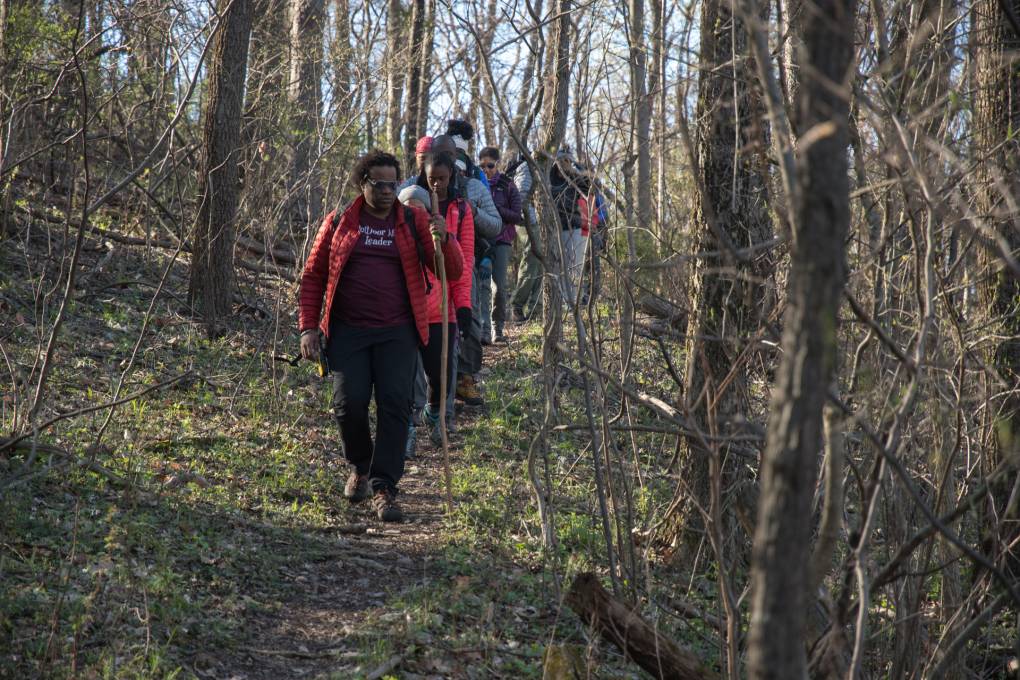
"caption": "A group of hikers with the Oakland-based environmental group Outdoor Afro. ",
"description": null,
"title": "RS44038_2017_04_07_Day__3_OA_Stills-184-qut",
"credit": "Courtesy of Outdoor Afro",
"status": "inherit",
"isLoading": false,
"fetchFailed": false
}
},
"audioPlayerReducer": {
"postId": "stream_live",
"isPaused": true,
"isPlaying": false,
"pfsActive": false,
"pledgeModalIsOpen": true,
"playerDrawerIsOpen": false,
"liveAudioPlayStartedAt": 0,
"liveAudioPlayContext": ""
},
"authorsReducer": {
"byline_science_1968870": {
"type": "authors",
"id": "byline_science_1968870",
"meta": {
"override": true
},
"slug": "byline_science_1968870",
"name": "Lauren Sommer \u003cbr />NPR\u003cbr>",
"isLoading": false
},
"byline_science_1968101": {
"type": "authors",
"id": "byline_science_1968101",
"meta": {
"override": true
},
"slug": "byline_science_1968101",
"name": "Julia Kane, InsideClimate News",
"isLoading": false
},
"byline_science_1968002": {
"type": "authors",
"id": "byline_science_1968002",
"meta": {
"override": true
},
"slug": "byline_science_1968002",
"name": "Darlene Superville\u003cbr />Associated Press",
"isLoading": false
},
"jennyoh": {
"type": "authors",
"id": "2100",
"meta": {
"index": "authors_1716337520",
"id": "2100",
"found": true
},
"name": "Jenny Oh",
"firstName": "Jenny",
"lastName": "Oh",
"slug": "jennyoh",
"email": "joh@kqed.org",
"display_author_email": false,
"staff_mastheads": [],
"title": "Audience Engagement Producer, Deep Look",
"bio": "Jenny is an Emmy Award-winning producer and is currently the Audience Engagement Producer for KQED Science's \u003cem>Deep Look\u003c/em> online video series. She was also a long-time contributor to Bay Area Bites, KQED's popular food blog. Jenny graduated with honors from New York University’s Tisch School of the Arts Film and Television program and has worked for WNET/PBS, The Learning Channel, Sundance Channel, HBO and the University of California.",
"avatar": "https://secure.gravatar.com/avatar/7ddda0ed657e46dbe66083f569967752?s=600&d=mm&r=g",
"twitter": null,
"facebook": null,
"instagram": null,
"linkedin": null,
"sites": [
{
"site": "arts",
"roles": []
},
{
"site": "pop",
"roles": []
},
{
"site": "about",
"roles": []
},
{
"site": "bayareabites",
"roles": []
},
{
"site": "science",
"roles": []
},
{
"site": "education",
"roles": []
},
{
"site": "quest",
"roles": []
},
{
"site": "food",
"roles": []
}
],
"headData": {
"title": "Jenny Oh | KQED",
"description": "Audience Engagement Producer, Deep Look",
"ogImgSrc": "https://secure.gravatar.com/avatar/7ddda0ed657e46dbe66083f569967752?s=600&d=mm&r=g",
"twImgSrc": "https://secure.gravatar.com/avatar/7ddda0ed657e46dbe66083f569967752?s=600&d=mm&r=g"
},
"isLoading": false,
"link": "/author/jennyoh"
},
"kqedscience": {
"type": "authors",
"id": "6387",
"meta": {
"index": "authors_1716337520",
"id": "6387",
"found": true
},
"name": "KQED Science",
"firstName": "KQED",
"lastName": "Science",
"slug": "kqedscience",
"email": "kqedscience@gmail.com",
"display_author_email": false,
"staff_mastheads": [],
"title": null,
"bio": "KQED Science brings you award-winning science and environment coverage from the Bay Area and beyond by the flagship Northern California PBS and NPR affiliate.",
"avatar": "https://secure.gravatar.com/avatar/5a295ff49cf82a8c0f30937d3f788b2f?s=600&d=blank&r=g",
"twitter": null,
"facebook": null,
"instagram": null,
"linkedin": null,
"sites": [
{
"site": "science",
"roles": [
"contributor"
]
},
{
"site": "quest",
"roles": [
"editor"
]
},
{
"site": "food",
"roles": [
"contributor"
]
}
],
"headData": {
"title": "KQED Science | KQED",
"description": null,
"ogImgSrc": "https://secure.gravatar.com/avatar/5a295ff49cf82a8c0f30937d3f788b2f?s=600&d=blank&r=g",
"twImgSrc": "https://secure.gravatar.com/avatar/5a295ff49cf82a8c0f30937d3f788b2f?s=600&d=blank&r=g"
},
"isLoading": false,
"link": "/author/kqedscience"
},
"parcuni": {
"type": "authors",
"id": "11368",
"meta": {
"index": "authors_1716337520",
"id": "11368",
"found": true
},
"name": "Peter Arcuni",
"firstName": "Peter",
"lastName": "Arcuni",
"slug": "parcuni",
"email": "parcuni@KQED.org",
"display_author_email": false,
"staff_mastheads": [
"science"
],
"title": "Reporter",
"bio": "Peter reports radio and online stories for \u003cem>KQED Science\u003c/em>. His work has also appeared on the \u003cem>The California Report\u003c/em> morning show and \u003cem>KQED News\u003c/em>. His production credits include \u003cem>The California Report, The California Report Magazine\u003c/em> and KQED's local news podcast \u003cem>The Bay\u003c/em>. Other credits include NPR's \u003cem>All Things Considered\u003c/em>, WNYC's \u003cem>Science Friday\u003c/em>, WBUR's \u003cem>Here & Now\u003c/em>, WIRED and SFGate. Peter graduated from Brown University and earned a master's degree in journalism from Stanford. He's covered everything from homelessness to wildfires, health, the environment, arts and Thanksgiving in San Quentin prison. In other lives, he played rock n roll music and studied neuroscience. You can email him at: parcuni@kqed.org",
"avatar": "https://secure.gravatar.com/avatar/d5032f6f27199d478af34ad2e1d98732?s=600&d=blank&r=g",
"twitter": "peterarcuni",
"facebook": null,
"instagram": null,
"linkedin": null,
"sites": [
{
"site": "news",
"roles": [
"editor"
]
},
{
"site": "science",
"roles": [
"editor"
]
}
],
"headData": {
"title": "Peter Arcuni | KQED",
"description": "Reporter",
"ogImgSrc": "https://secure.gravatar.com/avatar/d5032f6f27199d478af34ad2e1d98732?s=600&d=blank&r=g",
"twImgSrc": "https://secure.gravatar.com/avatar/d5032f6f27199d478af34ad2e1d98732?s=600&d=blank&r=g"
},
"isLoading": false,
"link": "/author/parcuni"
},
"kevinstark": {
"type": "authors",
"id": "11608",
"meta": {
"index": "authors_1716337520",
"id": "11608",
"found": true
},
"name": "Kevin Stark",
"firstName": "Kevin",
"lastName": "Stark",
"slug": "kevinstark",
"email": "kstark@kqed.org",
"display_author_email": true,
"staff_mastheads": [
"science"
],
"title": "Senior Editor",
"bio": "Kevin is a senior editor for KQED Science, managing the station's health and climate desks. His journalism career began in the Pacific Northwest, and he later became a lead reporter for the San Francisco Public Press. His work has appeared in Pacific Standard magazine, the Energy News Network, the Center for Investigative Reporting's Reveal and WBEZ in Chicago. Kevin joined KQED in 2019, and has covered issues related to energy, wildfire, climate change and the environment.",
"avatar": "https://secure.gravatar.com/avatar/365aaa4b597d3a8374f67504ff0facd323d7906e8eb4be0a7efd2427408e802c?s=600&d=blank&r=g",
"twitter": "starkkev",
"bluesky": null,
"facebook": null,
"instagram": null,
"linkedin": null,
"sites": [
{
"site": "",
"roles": [
"editor"
]
},
{
"site": "news",
"roles": [
"editor"
]
},
{
"site": "science",
"roles": [
"administrator"
]
}
],
"headData": {
"title": "Kevin Stark | KQED",
"description": "Senior Editor",
"ogImgSrc": "https://secure.gravatar.com/avatar/365aaa4b597d3a8374f67504ff0facd323d7906e8eb4be0a7efd2427408e802c?s=600&d=blank&r=g",
"twImgSrc": "https://secure.gravatar.com/avatar/365aaa4b597d3a8374f67504ff0facd323d7906e8eb4be0a7efd2427408e802c?s=600&d=blank&r=g"
},
"isLoading": false,
"link": "/author/kevinstark"
}
},
"pagesReducer": {
"science_category_environment": {
"type": "terms",
"id": "science_35",
"meta": {
"index": "terms_1716263798",
"site": "science",
"id": "35",
"score": 12.138271
},
"featImg": null,
"name": "Environment",
"description": null,
"taxonomy": "category",
"headData": {
"twImgId": null,
"twTitle": null,
"ogTitle": null,
"ogImgId": null,
"twDescription": null,
"description": null,
"title": "Environment Archives | KQED Science",
"ogDescription": null
},
"ttid": 37,
"slug": "environment",
"isLoading": false,
"title": "Environment",
"pageMeta": {
"site": "science",
"WpPageTemplate": "page-topic-editorial",
"currentPage": 32
},
"blocks": [
{
"blockName": "kqed/post-list",
"attrs": {
"layout": "cardArticle2",
"query": "posts/science?category=environment",
"seeMore": false,
"paginated": true,
"page": 32
}
},
{
"blockName": "kqed/ad"
}
]
}
},
"pfsSessionReducer": {},
"postsReducer": {
"stream_live": {
"type": "live",
"id": "stream_live",
"audioUrl": "https://streams.kqed.org/kqedradio",
"title": "Live Stream",
"excerpt": "Live Stream information currently unavailable.",
"link": "/radio",
"featImg": "",
"label": {
"name": "KQED Live",
"link": "/"
}
},
"stream_kqedNewscast": {
"type": "posts",
"id": "stream_kqedNewscast",
"audioUrl": "https://www.kqed.org/.stream/anon/radio/RDnews/newscast.mp3?_=1",
"title": "KQED Newscast",
"featImg": "",
"label": {
"name": "88.5 FM",
"link": "/"
}
},
"science_1968870": {
"type": "posts",
"id": "science_1968870",
"meta": {
"index": "posts_1716263798",
"site": "science",
"id": "1968870",
"score": null,
"sort": [
1598388305000
]
},
"parent": 0,
"labelTerm": {},
"blocks": [],
"publishDate": 1598388305,
"format": "standard",
"title": "California Wildfires Scorch Redwoods and Threaten Condors. But There's Still Hope",
"headTitle": "California Wildfires Scorch Redwoods and Threaten Condors. But There’s Still Hope | KQED",
"content": "\u003cp>At 3 a.m. on Friday morning, biologist Kelly Sorenson was awake, nervously watching the live webcam feed of a California condor nest on the Big Sur coast. He could see a 5-month-old chick, still unable to fly, as the flames of the Dolan Fire came into view.\u003c/p>\n\u003cp>“It was just terrifying,” Sorenson said. “Having the livestreaming webcams was both a blessing and a nightmare because we had to watch the fire as it burned through the canyon.”\u003c/p>\n\u003cp>California’s massive wildfires have burned more than \u003ca href=\"https://www.sfchronicle.com/projects/california-fire-map/\">1,000 homes and buildings\u003c/a> over the last week, destroying irreplaceable possessions and memories for some residents. At the same time, the fires are also threatening some of the state’s rare ecosystems and wildlife.\u003c/p>\n\u003cp>Biologists are watching closely as the blazes encroach on old-growth redwood trees in Northern and Central California, where some giants are more than 1,000 years old and are known by individual names. While some seem to have been spared, Big Basin State Park — the oldest state park in California — saw significant fire damage.\u003c/p>\n\u003cp>Still, biologists say there are reasons to be hopeful, because redwoods have incredibly thick bark that can withstand wildfires. Even fully charred trees can sprout again.\u003c/p>\n\u003cp>[ad fullwidth]\u003c/p>\n\u003cp>The larger question is whether ecosystems can fully bounce back after extreme fires given that the climate change, already driving the current wildfires, can also make recovery difficult through heat stress and drought.\u003c/p>\n\u003cp>For the endangered California condors, recovery is still tenuous. In 1987, \u003ca href=\"https://www.nps.gov/articles/california-condor-recovery.htm\">just 27 birds remained\u003c/a>. Scientists brought them into captivity to begin a breeding program. Today, there are about 100 condors free-flying on California’s Central Coast. The \u003ca href=\"https://www.ventanaws.org/california-condors.html\">Ventana Wildlife Society\u003c/a>, where Sorenson is executive director, has been carefully tracking and releasing them.\u003c/p>\n\u003cp>The massive birds, with a 9-foot wingspan, are still threatened by lead poisoning since they feed on the carcasses of animals that have lead bullet fragments from hunters.\u003c/p>\n\u003cp>Of the eight condor nests with chicks this year, Sorenson says five are within the fire zone.\u003c/p>\n\u003cp>“Even just four or five birds would be a huge loss,” said Sorenson. “It’s just really nerve-wracking now, not knowing.”\u003c/p>\n\u003cp>Still, Sorenson is hopeful some chicks made it. In 2008, condor chicks survived a wildfire in Big Sur, protected by the tall redwood trees they nested in.\u003c/p>\n\u003cp>“We were convinced there was no way the chicks could survive the fire,” he said. “Sure enough, a chick survived and we named it Phoenix.”\u003c/p>\n\u003cp>Redwood trees are built to survive fires, insulated by bark up to a foot thick. While lightning-caused fires aren’t as common in coastal redwood habitat as they are elsewhere in California, burning is still a natural cycle in the ecosystem. Native American tribes often set regular fires to shape the landscape and encourage certain plants to grow.\u003c/p>\n\u003cp>“Because of their resilience, I feel a lot more hopeful than super worried about the trees,” said Kristen Shive, director of science for \u003ca href=\"https://www.savetheredwoods.org/\">Save the Redwoods League\u003c/a>. “The trees really are so incredibly tough when it comes to fire. Most of them will persist and survive.”\u003c/p>\n\u003cp>Even trees that look significantly scorched are still alive and can regrow from their base. Many of the largest redwood trees growing today show burn scars.\u003c/p>\n\u003cp>“If a fire is hot enough to consume the entire crown of a tree, in a pine tree, that tree is most likely dead,” Shive said. “But in redwoods, they have these buds that lie dormant under their bark and they can sprout after the fire.”\u003c/p>\n\u003cp>Still, the younger generation of redwood trees may be more at risk. Around 95% of California’s redwoods were logged, so the majority growing today are newer, “second-growth” trees. Those forests tend to be denser, allowing wildfires to burn hotter and spread more easily.\u003c/p>\n\u003cp>Much like other California landscapes, vegetation in some redwood forests is heavier than it used to be. As wildfires were suppressed in the modern era of firefighting and Native American tribes were removed by settlers from their land, there were fewer regular fires to clear out the forest floor.\u003c/p>\n\u003cp>Shive says setting controlled or “prescribed” fires in redwood forests will be even more essential as the climate warms, to prevent wildfires from doing too much damage. While redwoods are able to bounce back, they’re already stressed by hotter temperatures and drought at the southern end of their range, potentially interfering with their recovery.\u003c/p>\n\u003cp>\u003c/p>\n\u003cp>“We still need to be setting these forests up to be as fire-resilient as possible, since, as we’ve seen in this last week, this warmer and drier future is already upon us and it’s going to get worse,” she said.\u003c/p>\n\u003cdiv class=\"fullattribution\">Copyright 2020 NPR. To see more, visit https://www.npr.org.\u003cimg decoding=\"async\" src=\"https://www.google-analytics.com/__utm.gif?utmac=UA-5828686-4&utmdt=Wildfires+Hit+California%27s+Redwoods+And+Condors%2C+But+There%27s+Still+Hope&utme=8(APIKey)9(MDAxOTAwOTE4MDEyMTkxMDAzNjczZDljZA004)\">\u003c/div>\n\n",
"stats": {
"hasVideo": false,
"hasChartOrMap": false,
"hasAudio": false,
"hasPolis": false,
"wordCount": 830,
"hasGoogleForm": false,
"hasGallery": false,
"hasHearkenModule": false,
"iframeSrcs": [],
"paragraphCount": 22
},
"modified": 1704847081,
"excerpt": "California's massive wildfires have not only burned more than 1,000 homes and buildings over the last week, they are also threatening some of the state's rare ecosystems and wildlife.",
"headData": {
"twImgId": "",
"twTitle": "",
"ogTitle": "",
"ogImgId": "",
"twDescription": "",
"description": "California's massive wildfires have not only burned more than 1,000 homes and buildings over the last week, they are also threatening some of the state's rare ecosystems and wildlife.",
"title": "California Wildfires Scorch Redwoods and Threaten Condors. But There's Still Hope | KQED",
"ogDescription": "",
"schema": {
"@context": "https://schema.org",
"@type": "Article",
"headline": "California Wildfires Scorch Redwoods and Threaten Condors. But There's Still Hope",
"datePublished": "2020-08-25T13:45:05-07:00",
"dateModified": "2024-01-09T16:38:01-08:00",
"image": "https://cdn.kqed.org/wp-content/uploads/2020/02/KQED-OG-Image@1x.png"
}
},
"guestAuthors": [],
"slug": "california-wildfires-scorch-redwoods-and-threaten-condors-but-theres-still-hope",
"status": "publish",
"nprApiLink": "http://api.npr.org/query?id=905268072&apiKey=MDAxOTAwOTE4MDEyMTkxMDAzNjczZDljZA004",
"nprByline": "Lauren Sommer \u003cbr />NPR\u003cbr>",
"nprStoryDate": "Sun, 23 Aug 2020 19:56:00 -0400",
"nprLastModifiedDate": "Sun, 23 Aug 2020 19:58:13 -0400",
"sticky": false,
"nprHtmlLink": "https://www.npr.org/2020/08/23/905268072/wildfires-hit-californias-redwoods-and-condors-but-there-s-still-hope?ft=nprml&f=905268072",
"nprImageAgency": "AP",
"nprImageCredit": "Marcio Jose Sanchez",
"source": "NPR",
"nprStoryId": "905268072",
"nprRetrievedStory": "1",
"nprPubDate": "Sun, 23 Aug 2020 19:56:00 -0400",
"path": "/science/1968870/california-wildfires-scorch-redwoods-and-threaten-condors-but-theres-still-hope",
"audioTrackLength": null,
"parsedContent": [
{
"type": "contentString",
"content": "\u003cdiv class=\"post-body\">\u003cp>\u003cp>At 3 a.m. on Friday morning, biologist Kelly Sorenson was awake, nervously watching the live webcam feed of a California condor nest on the Big Sur coast. He could see a 5-month-old chick, still unable to fly, as the flames of the Dolan Fire came into view.\u003c/p>\n\u003cp>“It was just terrifying,” Sorenson said. “Having the livestreaming webcams was both a blessing and a nightmare because we had to watch the fire as it burned through the canyon.”\u003c/p>\n\u003cp>California’s massive wildfires have burned more than \u003ca href=\"https://www.sfchronicle.com/projects/california-fire-map/\">1,000 homes and buildings\u003c/a> over the last week, destroying irreplaceable possessions and memories for some residents. At the same time, the fires are also threatening some of the state’s rare ecosystems and wildlife.\u003c/p>\n\u003cp>Biologists are watching closely as the blazes encroach on old-growth redwood trees in Northern and Central California, where some giants are more than 1,000 years old and are known by individual names. While some seem to have been spared, Big Basin State Park — the oldest state park in California — saw significant fire damage.\u003c/p>\n\u003cp>Still, biologists say there are reasons to be hopeful, because redwoods have incredibly thick bark that can withstand wildfires. Even fully charred trees can sprout again.\u003c/p>\n\u003cp>\u003c/p>\u003c/div>",
"attributes": {
"named": {},
"numeric": []
}
},
{
"type": "component",
"content": "",
"name": "ad",
"attributes": {
"named": {
"label": "fullwidth"
},
"numeric": [
"fullwidth"
]
}
},
{
"type": "contentString",
"content": "\u003cdiv class=\"post-body\">\u003cp>\u003c/p>\n\u003cp>The larger question is whether ecosystems can fully bounce back after extreme fires given that the climate change, already driving the current wildfires, can also make recovery difficult through heat stress and drought.\u003c/p>\n\u003cp>For the endangered California condors, recovery is still tenuous. In 1987, \u003ca href=\"https://www.nps.gov/articles/california-condor-recovery.htm\">just 27 birds remained\u003c/a>. Scientists brought them into captivity to begin a breeding program. Today, there are about 100 condors free-flying on California’s Central Coast. The \u003ca href=\"https://www.ventanaws.org/california-condors.html\">Ventana Wildlife Society\u003c/a>, where Sorenson is executive director, has been carefully tracking and releasing them.\u003c/p>\n\u003cp>The massive birds, with a 9-foot wingspan, are still threatened by lead poisoning since they feed on the carcasses of animals that have lead bullet fragments from hunters.\u003c/p>\n\u003cp>Of the eight condor nests with chicks this year, Sorenson says five are within the fire zone.\u003c/p>\n\u003cp>“Even just four or five birds would be a huge loss,” said Sorenson. “It’s just really nerve-wracking now, not knowing.”\u003c/p>\n\u003cp>Still, Sorenson is hopeful some chicks made it. In 2008, condor chicks survived a wildfire in Big Sur, protected by the tall redwood trees they nested in.\u003c/p>\n\u003cp>“We were convinced there was no way the chicks could survive the fire,” he said. “Sure enough, a chick survived and we named it Phoenix.”\u003c/p>\n\u003cp>Redwood trees are built to survive fires, insulated by bark up to a foot thick. While lightning-caused fires aren’t as common in coastal redwood habitat as they are elsewhere in California, burning is still a natural cycle in the ecosystem. Native American tribes often set regular fires to shape the landscape and encourage certain plants to grow.\u003c/p>\n\u003cp>“Because of their resilience, I feel a lot more hopeful than super worried about the trees,” said Kristen Shive, director of science for \u003ca href=\"https://www.savetheredwoods.org/\">Save the Redwoods League\u003c/a>. “The trees really are so incredibly tough when it comes to fire. Most of them will persist and survive.”\u003c/p>\n\u003cp>Even trees that look significantly scorched are still alive and can regrow from their base. Many of the largest redwood trees growing today show burn scars.\u003c/p>\n\u003cp>“If a fire is hot enough to consume the entire crown of a tree, in a pine tree, that tree is most likely dead,” Shive said. “But in redwoods, they have these buds that lie dormant under their bark and they can sprout after the fire.”\u003c/p>\n\u003cp>Still, the younger generation of redwood trees may be more at risk. Around 95% of California’s redwoods were logged, so the majority growing today are newer, “second-growth” trees. Those forests tend to be denser, allowing wildfires to burn hotter and spread more easily.\u003c/p>\n\u003cp>Much like other California landscapes, vegetation in some redwood forests is heavier than it used to be. As wildfires were suppressed in the modern era of firefighting and Native American tribes were removed by settlers from their land, there were fewer regular fires to clear out the forest floor.\u003c/p>\n\u003cp>Shive says setting controlled or “prescribed” fires in redwood forests will be even more essential as the climate warms, to prevent wildfires from doing too much damage. While redwoods are able to bounce back, they’re already stressed by hotter temperatures and drought at the southern end of their range, potentially interfering with their recovery.\u003c/p>\n\u003cp>\u003c/p>\n\u003cp>“We still need to be setting these forests up to be as fire-resilient as possible, since, as we’ve seen in this last week, this warmer and drier future is already upon us and it’s going to get worse,” she said.\u003c/p>\n\u003cdiv class=\"fullattribution\">Copyright 2020 NPR. To see more, visit https://www.npr.org.\u003cimg decoding=\"async\" src=\"https://www.google-analytics.com/__utm.gif?utmac=UA-5828686-4&utmdt=Wildfires+Hit+California%27s+Redwoods+And+Condors%2C+But+There%27s+Still+Hope&utme=8(APIKey)9(MDAxOTAwOTE4MDEyMTkxMDAzNjczZDljZA004)\">\u003c/div>\n\n\u003c/div>\u003c/p>",
"attributes": {
"named": {},
"numeric": []
}
}
],
"link": "/science/1968870/california-wildfires-scorch-redwoods-and-threaten-condors-but-theres-still-hope",
"authors": [
"byline_science_1968870"
],
"categories": [
"science_2874",
"science_31",
"science_35",
"science_40",
"science_4450",
"science_3730"
],
"tags": [
"science_4414",
"science_2936",
"science_113"
],
"featImg": "science_1968871",
"label": "source_science_1968870"
},
"science_1968783": {
"type": "posts",
"id": "science_1968783",
"meta": {
"index": "posts_1716263798",
"site": "science",
"id": "1968783",
"score": null,
"sort": [
1598297622000
]
},
"parent": 0,
"labelTerm": {},
"blocks": [],
"publishDate": 1598297622,
"format": "standard",
"title": "Caretaker Returns to Solano County Fire-Ravaged Farm: 'Like a War Zone'",
"headTitle": "Caretaker Returns to Solano County Fire-Ravaged Farm: ‘Like a War Zone’ | KQED",
"content": "\u003cp class=\"p1\">As the caretaker and resident of an organic olive farm in Vacaville, Tom Walter is no stranger to fire season. But as flames approached the property off Pleasants Valley Road sometime after midnight Wednesday, he felt this time was different.\u003c/p>\n\u003cp class=\"p1\">“I’ve never seen a fire move so quickly and so aggressively towards everything in its path,” Walter said.\u003c/p>\n\u003cfigure id=\"attachment_1968797\" class=\"wp-caption alignright\" style=\"max-width: 800px\">\u003cimg loading=\"lazy\" decoding=\"async\" class=\"wp-image-1968797 size-medium\" src=\"https://ww2.kqed.org/app/uploads/sites/35/2020/08/Farm-2-800x533.jpg\" alt=\"\" width=\"800\" height=\"533\">\u003cfigcaption class=\"wp-caption-text\">The main ranch house at La Ferme Soleil was leveled when the LNU Lightning Complex fire tore through Pleasants Valley Road in Vacaville in the early morning hours of Wednesday, Aug. 19, 2020. \u003ccite>(Peter Arcuni/KQED)\u003c/cite>\u003c/figcaption>\u003c/figure>\n\u003cp class=\"p1\">The Hennessey Fire, part of the 350,000-acre-plus \u003ca href=\"https://www.fire.ca.gov/incidents/2020/8/17/lnu-lightning-complex-includes-hennessey-gamble-15-10-spanish-markley-13-4-11-16/\">\u003cspan class=\"s1\">LNU Lightning Complex fire\u003c/span>\u003c/a>, was racing toward the north end of his ranch, while another blaze was approaching from the west.\u003c/p>\n\u003cp class=\"p3\">“I got everybody off the property, tried to get as much livestock,” Walter said, “Then I hung in there as long as I could and evacuated by about 1:30 in the morning.”\u003c/p>\n\u003cp class=\"p3\">A day later, with scattered embers still burning, Walter returned to survey the damage. Somehow, he says, the olive trees, which the farm harvests to produce organic olive oil under the label \u003ca href=\"http://www.lafermesoleil.com/\">\u003cspan class=\"s1\">La Ferme Soleil\u003c/span>\u003c/a>, were unscathed. But the fire had destroyed much of the rest of the farm.\u003c/p>\n\u003cp class=\"p3\">“The whole property, it looks like war, a war zone. That’s the only way to explain it,” Walter said, “I can’t put the words together. My heart is hurting. My mind is numb.”\u003c/p>\n\u003cp class=\"p3\">The 48-foot travel trailer Walter lived in was reduced to a heap of twisted, blackened metal, or “junk,” as he described it.\u003c/p>\n\u003cp class=\"p3\">“Everything I had was in here. Everything,” he said.\u003c/p>\n\u003cp class=\"p3\">The main ranch house, which had just been sold to new owners, was also leveled. A thick film of black soot covered the backyard pool.\u003c/p>\n\u003cfigure id=\"attachment_1968795\" class=\"wp-caption aligncenter\" style=\"max-width: 800px\">\u003cimg loading=\"lazy\" decoding=\"async\" class=\"wp-image-1968795 size-medium\" src=\"https://ww2.kqed.org/app/uploads/sites/35/2020/08/Farm-4-800x533.jpg\" alt=\"\" width=\"800\" height=\"533\" srcset=\"https://cdn.kqed.org/wp-content/uploads/sites/35/2020/08/Farm-4-800x533.jpg 800w, https://cdn.kqed.org/wp-content/uploads/sites/35/2020/08/Farm-4-1020x680.jpg 1020w, https://cdn.kqed.org/wp-content/uploads/sites/35/2020/08/Farm-4-160x107.jpg 160w, https://cdn.kqed.org/wp-content/uploads/sites/35/2020/08/Farm-4-768x512.jpg 768w, https://cdn.kqed.org/wp-content/uploads/sites/35/2020/08/Farm-4-1536x1024.jpg 1536w, https://cdn.kqed.org/wp-content/uploads/sites/35/2020/08/Farm-4-2048x1365.jpg 2048w, https://cdn.kqed.org/wp-content/uploads/sites/35/2020/08/Farm-4-1920x1280.jpg 1920w\" sizes=\"(max-width: 800px) 100vw, 800px\">\u003cfigcaption class=\"wp-caption-text\">The animal pen at La Ferme Soleil in Vacaville, along with sheep and goat, was lost to the LNU Lightning Complex fire. \u003ccite>(Peter Arcuni/KQED)\u003c/cite>\u003c/figcaption>\u003c/figure>\n\u003cp class=\"p4\">“The only thing standing was our guest house,” Walter said, “It’s a miracle because I have a place to stay, still.\u003ci>”\u003c/i>\u003c/p>\n\u003cp class=\"p3\">La Ferme Soleil also lost sheep and goat to the fire, and Walter is still searching for two lost horses.\u003c/p>\n\u003cp class=\"p3\">He says many farmers in the area are now scrambling to get back to their land to see what’s left of their homes and to look out for any animals left behind.\u003c/p>\n\u003cp class=\"p3\">On Thursday, police had blocked off access to Pleasants Valley Road, but were letting some cars through.\u003c/p>\n\u003cp class=\"p3\">Walter spent Thursday morning driving around, with his labrador retriever in tow, to check on properties for neighbors.\u003c/p>\n\u003cp class=\"p4\">“A lot of people still can’t come out here,” he said. “My biggest thing is trying to give good news to this devastation, and it’s hard right now.\u003c/p>\n\u003cp class=\"p3\">“When they’re asking me about their property or their homes, I either have good news or bad news. And the majority of it’s bad news.”\u003c/p>\n\u003cp>[ad fullwidth]\u003c/p>\n\u003cp>\u003c/p>\n",
"stats": {
"hasVideo": false,
"hasChartOrMap": false,
"hasAudio": false,
"hasPolis": false,
"wordCount": 526,
"hasGoogleForm": false,
"hasGallery": false,
"hasHearkenModule": false,
"iframeSrcs": [],
"paragraphCount": 2
},
"modified": 1704847086,
"excerpt": "As the caretaker and resident of an organic olive farm in Vacaville, Tom Walter is no stranger to fire season. But as flames approached the property, off Pleasants Valley Road, in the early hours of Wednesday morning, he felt this time was different.",
"headData": {
"twImgId": "",
"twTitle": "",
"ogTitle": "",
"ogImgId": "",
"twDescription": "",
"description": "As the caretaker and resident of an organic olive farm in Vacaville, Tom Walter is no stranger to fire season. But as flames approached the property, off Pleasants Valley Road, in the early hours of Wednesday morning, he felt this time was different.",
"title": "Caretaker Returns to Solano County Fire-Ravaged Farm: 'Like a War Zone' | KQED",
"ogDescription": "",
"schema": {
"@context": "https://schema.org",
"@type": "Article",
"headline": "Caretaker Returns to Solano County Fire-Ravaged Farm: 'Like a War Zone'",
"datePublished": "2020-08-24T12:33:42-07:00",
"dateModified": "2024-01-09T16:38:06-08:00",
"image": "https://cdn.kqed.org/wp-content/uploads/2020/02/KQED-OG-Image@1x.png"
}
},
"guestAuthors": [],
"slug": "caretaker-returns-to-solano-county-fire-ravaged-farm-like-a-war-zone",
"status": "publish",
"audioUrl": "https://traffic.omny.fm/d/clips/0af137ef-751e-4b19-a055-aaef00d2d578/ffca7e9f-6831-41c5-bcaf-aaef00f5a073/5bf70197-80d2-43da-bf1a-ac1e00efae2c/audio.mp3",
"sticky": false,
"source": "Wildfire",
"path": "/science/1968783/caretaker-returns-to-solano-county-fire-ravaged-farm-like-a-war-zone",
"audioTrackLength": null,
"parsedContent": [
{
"type": "contentString",
"content": "\u003cdiv class=\"post-body\">\u003cp>\u003cp class=\"p1\">As the caretaker and resident of an organic olive farm in Vacaville, Tom Walter is no stranger to fire season. But as flames approached the property off Pleasants Valley Road sometime after midnight Wednesday, he felt this time was different.\u003c/p>\n\u003cp class=\"p1\">“I’ve never seen a fire move so quickly and so aggressively towards everything in its path,” Walter said.\u003c/p>\n\u003cfigure id=\"attachment_1968797\" class=\"wp-caption alignright\" style=\"max-width: 800px\">\u003cimg loading=\"lazy\" decoding=\"async\" class=\"wp-image-1968797 size-medium\" src=\"https://ww2.kqed.org/app/uploads/sites/35/2020/08/Farm-2-800x533.jpg\" alt=\"\" width=\"800\" height=\"533\">\u003cfigcaption class=\"wp-caption-text\">The main ranch house at La Ferme Soleil was leveled when the LNU Lightning Complex fire tore through Pleasants Valley Road in Vacaville in the early morning hours of Wednesday, Aug. 19, 2020. \u003ccite>(Peter Arcuni/KQED)\u003c/cite>\u003c/figcaption>\u003c/figure>\n\u003cp class=\"p1\">The Hennessey Fire, part of the 350,000-acre-plus \u003ca href=\"https://www.fire.ca.gov/incidents/2020/8/17/lnu-lightning-complex-includes-hennessey-gamble-15-10-spanish-markley-13-4-11-16/\">\u003cspan class=\"s1\">LNU Lightning Complex fire\u003c/span>\u003c/a>, was racing toward the north end of his ranch, while another blaze was approaching from the west.\u003c/p>\n\u003cp class=\"p3\">“I got everybody off the property, tried to get as much livestock,” Walter said, “Then I hung in there as long as I could and evacuated by about 1:30 in the morning.”\u003c/p>\n\u003cp class=\"p3\">A day later, with scattered embers still burning, Walter returned to survey the damage. Somehow, he says, the olive trees, which the farm harvests to produce organic olive oil under the label \u003ca href=\"http://www.lafermesoleil.com/\">\u003cspan class=\"s1\">La Ferme Soleil\u003c/span>\u003c/a>, were unscathed. But the fire had destroyed much of the rest of the farm.\u003c/p>\n\u003cp class=\"p3\">“The whole property, it looks like war, a war zone. That’s the only way to explain it,” Walter said, “I can’t put the words together. My heart is hurting. My mind is numb.”\u003c/p>\n\u003cp class=\"p3\">The 48-foot travel trailer Walter lived in was reduced to a heap of twisted, blackened metal, or “junk,” as he described it.\u003c/p>\n\u003cp class=\"p3\">“Everything I had was in here. Everything,” he said.\u003c/p>\n\u003cp class=\"p3\">The main ranch house, which had just been sold to new owners, was also leveled. A thick film of black soot covered the backyard pool.\u003c/p>\n\u003cfigure id=\"attachment_1968795\" class=\"wp-caption aligncenter\" style=\"max-width: 800px\">\u003cimg loading=\"lazy\" decoding=\"async\" class=\"wp-image-1968795 size-medium\" src=\"https://ww2.kqed.org/app/uploads/sites/35/2020/08/Farm-4-800x533.jpg\" alt=\"\" width=\"800\" height=\"533\" srcset=\"https://cdn.kqed.org/wp-content/uploads/sites/35/2020/08/Farm-4-800x533.jpg 800w, https://cdn.kqed.org/wp-content/uploads/sites/35/2020/08/Farm-4-1020x680.jpg 1020w, https://cdn.kqed.org/wp-content/uploads/sites/35/2020/08/Farm-4-160x107.jpg 160w, https://cdn.kqed.org/wp-content/uploads/sites/35/2020/08/Farm-4-768x512.jpg 768w, https://cdn.kqed.org/wp-content/uploads/sites/35/2020/08/Farm-4-1536x1024.jpg 1536w, https://cdn.kqed.org/wp-content/uploads/sites/35/2020/08/Farm-4-2048x1365.jpg 2048w, https://cdn.kqed.org/wp-content/uploads/sites/35/2020/08/Farm-4-1920x1280.jpg 1920w\" sizes=\"(max-width: 800px) 100vw, 800px\">\u003cfigcaption class=\"wp-caption-text\">The animal pen at La Ferme Soleil in Vacaville, along with sheep and goat, was lost to the LNU Lightning Complex fire. \u003ccite>(Peter Arcuni/KQED)\u003c/cite>\u003c/figcaption>\u003c/figure>\n\u003cp class=\"p4\">“The only thing standing was our guest house,” Walter said, “It’s a miracle because I have a place to stay, still.\u003ci>”\u003c/i>\u003c/p>\n\u003cp class=\"p3\">La Ferme Soleil also lost sheep and goat to the fire, and Walter is still searching for two lost horses.\u003c/p>\n\u003cp class=\"p3\">He says many farmers in the area are now scrambling to get back to their land to see what’s left of their homes and to look out for any animals left behind.\u003c/p>\n\u003cp class=\"p3\">On Thursday, police had blocked off access to Pleasants Valley Road, but were letting some cars through.\u003c/p>\n\u003cp class=\"p3\">Walter spent Thursday morning driving around, with his labrador retriever in tow, to check on properties for neighbors.\u003c/p>\n\u003cp class=\"p4\">“A lot of people still can’t come out here,” he said. “My biggest thing is trying to give good news to this devastation, and it’s hard right now.\u003c/p>\n\u003cp class=\"p3\">“When they’re asking me about their property or their homes, I either have good news or bad news. And the majority of it’s bad news.”\u003c/p>\n\u003cp>\u003c/p>\u003c/div>",
"attributes": {
"named": {},
"numeric": []
}
},
{
"type": "component",
"content": "",
"name": "ad",
"attributes": {
"named": {
"label": "fullwidth"
},
"numeric": [
"fullwidth"
]
}
},
{
"type": "contentString",
"content": "\u003cdiv class=\"post-body\">\u003cp>\u003c/p>\n\u003cp>\u003c/p>\n\u003c/div>\u003c/p>",
"attributes": {
"named": {},
"numeric": []
}
}
],
"link": "/science/1968783/caretaker-returns-to-solano-county-fire-ravaged-farm-like-a-war-zone",
"authors": [
"11368"
],
"categories": [
"science_31",
"science_35",
"science_40",
"science_4450",
"science_3730"
],
"tags": [
"science_182",
"science_113"
],
"featImg": "science_1968798",
"label": "source_science_1968783"
},
"science_1968728": {
"type": "posts",
"id": "science_1968728",
"meta": {
"index": "posts_1716263798",
"site": "science",
"id": "1968728",
"score": null,
"sort": [
1598288276000
]
},
"parent": 0,
"labelTerm": {},
"blocks": [],
"publishDate": 1598288276,
"format": "standard",
"title": "Shortage of Inmate Firefighters Hampers Response in Bay Area",
"headTitle": "Shortage of Inmate Firefighters Hampers Response in Bay Area | KQED",
"content": "\u003cp>As wildfires continue to burn in every Bay Area county except San Francisco, the region is badly in need of firefighters.\u003c/p>\n\u003cp>One reason: far fewer prisoner crews. The shortage comes during a horrendous start to this year’s fire season, with tens of thousands of residents forced out of their homes after dry lightning strikes ignited three raging sets of fires, burning hundreds of thousands of acres since last Sunday. That’s a larger burn area than in all of California last year.\u003c/p>\n\u003cp>[pullquote citation=\"Cal Fire Chief Sean Kavanaugh\"]‘We are used to lots of resources. That is not where we are at today.’[/pullquote]While firefighters have mounted a heroic assault on fast-moving flames, risking their lives to protect numerous cities and towns, fire chiefs acknowledge that crews are severely understaffed, with only about 2,000 firefighters battling the North Bay and Santa Cruz fires combined going into last weekend. Last year, more than 5,000 firefighters fought to contain the Kincade Fire in Sonoma County, which burned a far smaller area.\u003c/p>\n\u003cp>“We have a very large-scale incident here,” said Cal Fire Chief Sean Kavanaugh, the commander in charge of the LNU Complex fire in the North Bay. Normally, “we are used to lots of resources. That is not where we are at today.”\u003c/p>\n\u003cp>The response has been hampered, in particular, by a lack of prisoner hand crews, each typically made up of 12 to 16 trained inmates who perform grueling chainsaw work, sweating through oppressive heat as they hack through thick coyote brush, manzanita and other coastal shrub to create containment perimeters around a fire.\u003c/p>\n\u003cp>[ad fullwidth]\u003c/p>\n\u003cp>“The demand for hand crews far surpasses the need,” said Jeremy Rahn, a Cal Fire public information officer for the North Bay fires, at a press conference Wednesday.\u003c/p>\n\u003cp>The shortage stems mainly from the large number of fires burning across the state \u003cem>—\u003c/em> well over 500. But thinning ranks in California’s inmate firefighting camps, the result of the state’s attempt to slow the spread of COVID-19 in the prison system, have exacerbated the need for replacements.\u003c/p>\n\u003cp>Just weeks ago, many incarcerated firefighters were isolated in lockdown after potential exposure to the coronavirus sidelined more than half of the inmate crews, depriving California of a key firefighting resource as it entered peak fire season.\u003c/p>\n\u003cp>Now, officials with the California Department of Corrections and and Rehabilitation say all fire camp inmates at the fire camps have been released from quarantine.\u003c/p>\n\u003cp>But since July 10, the state has sent home at least 700 inmates from the camps, including 331 firefighters and the rest in support roles, through an early-release order in the wake of COVID-19’s deadly spread through state prisons, including San Quentin in Marin County, resulting in thousands of infections and dozens of deaths.\u003c/p>\n\u003cp>Releasing the inmates has left the state with far fewer incarcerated firefighters than it could deploy in recent years. As of Aug. 20, more than 1,300 inmates from California’s state prison system were battling 19 different fires across the state, including the big complex blazes in the Bay Area. But in 2018, California had 3,500 firefighter inmates on hand, down from 4,300 two years before.\u003c/p>\n\u003cp>Gov. Gavin Newsom on Friday minimized the effect of the early prisoner releases on the state’s firefighting capacity.\u003c/p>\n\u003cp>“Precisely to address that issue, precisely to address that concern,” he said, in July he authorized $72 million for the hire of 858 seasonal firefighters as replacements for the freed inmates. “We did it in anticipation. We didn’t react.”\u003c/p>\n\u003cp>But Thom Porter, director of Cal Fire, acknowledged during a July press conference that the agency doesn’t “expect this season to make it to full capacity with inmate crews.”\u003c/p>\n\u003cp>David Fathi, director of the ACLU National Prison Project, says he’s especially concerned inmates will have to work “harder, longer” because of the reduced number of incarcerated fire crews.\u003c/p>\n\u003cp>“These are not people who are doing telemarketing or folding laundry,” he said. “This is dangerous work, working with very dangerous tools like chainsaws and axes, with longer hours and less rest. Fatigue obviously increases the risk of accidents.”\u003c/p>\n\u003cp>https://twitter.com/mike_dewald/status/1296970811622842368\u003c/p>\n\u003cp>Despite those risks and the backbreaking work, some prisoners have taken to the job.\u003c/p>\n\u003cp>For example, you can take Samantha Vetter out of prison fire camp early, but you can’t take the wildland firefighter out of Samantha Vetter.\u003c/p>\n\u003cp>The state paroled the inmate firefighter early, and now all she can think about is getting back to work. She arrived at the Puerta La Cruz Conservation Camp in Southern California in the spring, just as the coronavirus began to spread in prison facilities. She spent most of this fire season with an all-female inmate crew battling fires in Southern California. She was battling the Apple Fire, a 30,000 acre-plus blaze, when her release came through.\u003c/p>\n\u003cp>At various points, Vetter worked every position in her hand crew, which operates in a hook-line formation and is divided into cutting and scraping sections using chainsaws, shovels, rakes and other hand tools.\u003c/p>\n\u003cp>Now, she’s living at the Santa Cruz County Gemma Transitional House, a short drive from where she grew up in the San Lorenzo Valley, where fires are currently ripping through a dense forest that hasn’t burned in 50 years. Her mother and other family members have been evacuated from their homes in Ben Lomond and elsewhere. \u003c/p>\n\u003cp>“My hometown is on fire right now,” she said. “It’s hard sitting here knowing that the ash that’s raining down on me now is the redwoods that I grew up around, burning up.”\u003c/p>\n\u003cp>Criminal justice advocates have long criticized California’s use of prison labor to fight fires. Besides a pay rate that tops out at a few dollars a day, inmates face an uphill battle getting hired as firefighters after they’re released, due to their felony records.\u003c/p>\n\u003cp>Very few can get full-time firefighting jobs, says Sonja Tonnesen-Casalengo, deputy director of Root & Rebound, a prison reentry advocacy group, especially since county departments require hirees have their paramedic license.\u003c/p>\n\u003cp>“There needs to be a pathway to sustainable long-term careers as firefighters,” she said.\u003c/p>\n\u003cp>At first, Vetter says, she was motivated to go to fire camp to knock time off her sentence. But she loved the work, wants to continue fighting fires as a civilian and has enrolled in wildfire safety classes at a community college.\u003c/p>\n\u003cp>As fires ripped through the forests she frequented as a kid, Vetter called the Cal Fire stations in Santa Cruz to see if she could volunteer to help. Officials told her she could assist at an evacuation center, but they wouldn’t let her join the fire line.\u003c/p>\n\u003cp>[ad floatright]\u003c/p>\n\u003cp>“I’m just going to give it my best,” Vetter said. “If they don’t hire me, they don’t hire me.”\u003c/p>\n\n",
"stats": {
"hasVideo": false,
"hasChartOrMap": false,
"hasAudio": false,
"hasPolis": false,
"wordCount": 1209,
"hasGoogleForm": false,
"hasGallery": false,
"hasHearkenModule": false,
"iframeSrcs": [],
"paragraphCount": 30
},
"modified": 1704847088,
"excerpt": "As wildfires continue to burn in every Bay Area county except San Francisco, the region is badly in need of firefighters.",
"headData": {
"twImgId": "",
"twTitle": "",
"ogTitle": "",
"ogImgId": "",
"twDescription": "",
"description": "As wildfires continue to burn in every Bay Area county except San Francisco, the region is badly in need of firefighters.",
"title": "Shortage of Inmate Firefighters Hampers Response in Bay Area | KQED",
"ogDescription": "",
"schema": {
"@context": "https://schema.org",
"@type": "Article",
"headline": "Shortage of Inmate Firefighters Hampers Response in Bay Area",
"datePublished": "2020-08-24T09:57:56-07:00",
"dateModified": "2024-01-09T16:38:08-08:00",
"image": "https://cdn.kqed.org/wp-content/uploads/2020/02/KQED-OG-Image@1x.png"
}
},
"guestAuthors": [],
"slug": "shortage-of-inmate-firefighters-hampers-response-in-bay-area",
"status": "publish",
"sticky": false,
"source": "Wildfire",
"path": "/science/1968728/shortage-of-inmate-firefighters-hampers-response-in-bay-area",
"audioTrackLength": null,
"parsedContent": [
{
"type": "contentString",
"content": "\u003cdiv class=\"post-body\">\u003cp>\u003cp>As wildfires continue to burn in every Bay Area county except San Francisco, the region is badly in need of firefighters.\u003c/p>\n\u003cp>One reason: far fewer prisoner crews. The shortage comes during a horrendous start to this year’s fire season, with tens of thousands of residents forced out of their homes after dry lightning strikes ignited three raging sets of fires, burning hundreds of thousands of acres since last Sunday. That’s a larger burn area than in all of California last year.\u003c/p>\n\u003cp>\u003c/p>\u003c/div>",
"attributes": {
"named": {},
"numeric": []
}
},
{
"type": "component",
"content": "‘We are used to lots of resources. That is not where we are at today.’",
"name": "pullquote",
"attributes": {
"named": {
"citation": "Cal Fire Chief Sean Kavanaugh",
"label": ""
},
"numeric": []
}
},
{
"type": "contentString",
"content": "\u003cdiv class=\"post-body\">\u003cp>While firefighters have mounted a heroic assault on fast-moving flames, risking their lives to protect numerous cities and towns, fire chiefs acknowledge that crews are severely understaffed, with only about 2,000 firefighters battling the North Bay and Santa Cruz fires combined going into last weekend. Last year, more than 5,000 firefighters fought to contain the Kincade Fire in Sonoma County, which burned a far smaller area.\u003c/p>\n\u003cp>“We have a very large-scale incident here,” said Cal Fire Chief Sean Kavanaugh, the commander in charge of the LNU Complex fire in the North Bay. Normally, “we are used to lots of resources. That is not where we are at today.”\u003c/p>\n\u003cp>The response has been hampered, in particular, by a lack of prisoner hand crews, each typically made up of 12 to 16 trained inmates who perform grueling chainsaw work, sweating through oppressive heat as they hack through thick coyote brush, manzanita and other coastal shrub to create containment perimeters around a fire.\u003c/p>\n\u003cp>\u003c/p>\u003c/div>",
"attributes": {
"named": {},
"numeric": []
}
},
{
"type": "component",
"content": "",
"name": "ad",
"attributes": {
"named": {
"label": "fullwidth"
},
"numeric": [
"fullwidth"
]
}
},
{
"type": "contentString",
"content": "\u003cdiv class=\"post-body\">\u003cp>\u003c/p>\n\u003cp>“The demand for hand crews far surpasses the need,” said Jeremy Rahn, a Cal Fire public information officer for the North Bay fires, at a press conference Wednesday.\u003c/p>\n\u003cp>The shortage stems mainly from the large number of fires burning across the state \u003cem>—\u003c/em> well over 500. But thinning ranks in California’s inmate firefighting camps, the result of the state’s attempt to slow the spread of COVID-19 in the prison system, have exacerbated the need for replacements.\u003c/p>\n\u003cp>Just weeks ago, many incarcerated firefighters were isolated in lockdown after potential exposure to the coronavirus sidelined more than half of the inmate crews, depriving California of a key firefighting resource as it entered peak fire season.\u003c/p>\n\u003cp>Now, officials with the California Department of Corrections and and Rehabilitation say all fire camp inmates at the fire camps have been released from quarantine.\u003c/p>\n\u003cp>But since July 10, the state has sent home at least 700 inmates from the camps, including 331 firefighters and the rest in support roles, through an early-release order in the wake of COVID-19’s deadly spread through state prisons, including San Quentin in Marin County, resulting in thousands of infections and dozens of deaths.\u003c/p>\n\u003cp>Releasing the inmates has left the state with far fewer incarcerated firefighters than it could deploy in recent years. As of Aug. 20, more than 1,300 inmates from California’s state prison system were battling 19 different fires across the state, including the big complex blazes in the Bay Area. But in 2018, California had 3,500 firefighter inmates on hand, down from 4,300 two years before.\u003c/p>\n\u003cp>Gov. Gavin Newsom on Friday minimized the effect of the early prisoner releases on the state’s firefighting capacity.\u003c/p>\n\u003cp>“Precisely to address that issue, precisely to address that concern,” he said, in July he authorized $72 million for the hire of 858 seasonal firefighters as replacements for the freed inmates. “We did it in anticipation. We didn’t react.”\u003c/p>\n\u003cp>But Thom Porter, director of Cal Fire, acknowledged during a July press conference that the agency doesn’t “expect this season to make it to full capacity with inmate crews.”\u003c/p>\n\u003cp>David Fathi, director of the ACLU National Prison Project, says he’s especially concerned inmates will have to work “harder, longer” because of the reduced number of incarcerated fire crews.\u003c/p>\n\u003cp>“These are not people who are doing telemarketing or folding laundry,” he said. “This is dangerous work, working with very dangerous tools like chainsaws and axes, with longer hours and less rest. Fatigue obviously increases the risk of accidents.”\u003c/p>\u003c/p>\u003c/div>",
"attributes": {
"named": {},
"numeric": []
}
},
{
"type": "component",
"content": "",
"name": "singleTwitterStatus",
"attributes": {
"named": {
"id": "1296970811622842368"
},
"numeric": []
}
},
{
"type": "contentString",
"content": "\u003cdiv class=\"post-body\">\u003cp>\n\u003cp>Despite those risks and the backbreaking work, some prisoners have taken to the job.\u003c/p>\n\u003cp>For example, you can take Samantha Vetter out of prison fire camp early, but you can’t take the wildland firefighter out of Samantha Vetter.\u003c/p>\n\u003cp>The state paroled the inmate firefighter early, and now all she can think about is getting back to work. She arrived at the Puerta La Cruz Conservation Camp in Southern California in the spring, just as the coronavirus began to spread in prison facilities. She spent most of this fire season with an all-female inmate crew battling fires in Southern California. She was battling the Apple Fire, a 30,000 acre-plus blaze, when her release came through.\u003c/p>\n\u003cp>At various points, Vetter worked every position in her hand crew, which operates in a hook-line formation and is divided into cutting and scraping sections using chainsaws, shovels, rakes and other hand tools.\u003c/p>\n\u003cp>Now, she’s living at the Santa Cruz County Gemma Transitional House, a short drive from where she grew up in the San Lorenzo Valley, where fires are currently ripping through a dense forest that hasn’t burned in 50 years. Her mother and other family members have been evacuated from their homes in Ben Lomond and elsewhere. \u003c/p>\n\u003cp>“My hometown is on fire right now,” she said. “It’s hard sitting here knowing that the ash that’s raining down on me now is the redwoods that I grew up around, burning up.”\u003c/p>\n\u003cp>Criminal justice advocates have long criticized California’s use of prison labor to fight fires. Besides a pay rate that tops out at a few dollars a day, inmates face an uphill battle getting hired as firefighters after they’re released, due to their felony records.\u003c/p>\n\u003cp>Very few can get full-time firefighting jobs, says Sonja Tonnesen-Casalengo, deputy director of Root & Rebound, a prison reentry advocacy group, especially since county departments require hirees have their paramedic license.\u003c/p>\n\u003cp>“There needs to be a pathway to sustainable long-term careers as firefighters,” she said.\u003c/p>\n\u003cp>At first, Vetter says, she was motivated to go to fire camp to knock time off her sentence. But she loved the work, wants to continue fighting fires as a civilian and has enrolled in wildfire safety classes at a community college.\u003c/p>\n\u003cp>As fires ripped through the forests she frequented as a kid, Vetter called the Cal Fire stations in Santa Cruz to see if she could volunteer to help. Officials told her she could assist at an evacuation center, but they wouldn’t let her join the fire line.\u003c/p>\n\u003cp>\u003c/p>\u003c/div>",
"attributes": {
"named": {},
"numeric": []
}
},
{
"type": "component",
"content": "",
"name": "ad",
"attributes": {
"named": {
"label": "floatright"
},
"numeric": [
"floatright"
]
}
},
{
"type": "contentString",
"content": "\u003cdiv class=\"post-body\">\u003cp>\u003c/p>\n\u003cp>“I’m just going to give it my best,” Vetter said. “If they don’t hire me, they don’t hire me.”\u003c/p>\n\n\u003c/div>\u003c/p>",
"attributes": {
"named": {},
"numeric": []
}
}
],
"link": "/science/1968728/shortage-of-inmate-firefighters-hampers-response-in-bay-area",
"authors": [
"11608"
],
"categories": [
"science_31",
"science_35",
"science_40",
"science_4450",
"science_3730"
],
"tags": [
"science_4417",
"science_4414",
"science_113"
],
"featImg": "science_1968731",
"label": "source_science_1968728"
},
"science_1968573": {
"type": "posts",
"id": "science_1968573",
"meta": {
"index": "posts_1716263798",
"site": "science",
"id": "1968573",
"score": null,
"sort": [
1597883129000
]
},
"parent": 0,
"labelTerm": {},
"blocks": [],
"publishDate": 1597883129,
"format": "standard",
"title": "Bay Area Experiences Worst Air Quality in the World Due to Wildfires",
"headTitle": "Bay Area Experiences Worst Air Quality in the World Due to Wildfires | KQED",
"content": "\u003cp>\u003cem>Updated Aug. 21\u003c/em>\u003c/p>\n\u003cp>After months of following shelter-at-home orders due to the COVID-19 pandemic, Bay Area residents now have another reason to stay inside: dangerously poor air quality from a series of wildfires, which continue to burn out of control.\u003c/p>\n\u003cp>The \u003ca href=\"https://www.kqed.org/science/1930023/map-heres-your-daily-air-quality-report-for-the-bay-area\" target=\"_blank\" rel=\"noopener noreferrer\">Air Quality Index\u003c/a> in the region degenerated to \u003ca href=\"https://waqi.info/#/c/2.436/50.934/1.4z\" target=\"_blank\" rel=\"noopener noreferrer\">worst-in-the-world \u003c/a>status this week, with the unhealthiest conditions south, east and northeast of San Francisco, as smoke spread outward from the LNU, SCU and CZU Lightning Complex fires.\u003c/p>\n\u003cp>Officials are urging people in areas where the air is classified as “unhealthy” — displayed as red on color-coded maps — to stay indoors, particularly those with respiratory conditions such as asthma and COPD, as well as older adults, children and teens. For those who have to go out, the recommendation is to avoid strenuous outdoor activities or to shorten the amount of time outside.\u003c/p>\n\u003cp>The forecast calls for the air to stay unhealthy for sensitive groups, such as those with heart or lung disease, throughout the weekend.\u003c/p>\n\u003cp>[ad fullwidth]\u003c/p>\n\u003cp>The \u003ca href=\"https://www.lung.org/clean-air/emergencies-and-natural-disasters/wildfires\" target=\"_blank\" rel=\"noopener noreferrer\">American Lung Association in California\u003c/a> offered the following advice for local residents struggling with the simultaneous health risks of smoke, extreme heat and COVID-19:\u003c/p>\n\u003cul>\n\u003cli>Stay inside as much as possible, with doors, windows and fireplace dampers shut — and clean air circulating through air conditioners and/or air cleaners. Residents should use the recirculation setting on their home air conditioners to avoid outdoor air contamination. Using whole house fans is not recommended because they can allow unfiltered outside air into the home.\u003c/li>\n\u003cli>Those with chronic lung disease are encouraged to gather all their medications, delivery devices, prescriptions and insurance cards in one spot so they can quickly be transported in the event of an evacuation.\u003c/li>\n\u003cli>If evacuating, remember to continue to follow guidance around COVID-19 such as practicing social distancing, wearing a cloth face covering and using hand sanitizer.\u003c/li>\n\u003cli>Contact a physician immediately if lung disease symptoms worsen or are not relieved by the usual medicines. Seek medical attention if experiencing wheezing, shortness of breath, difficulty taking a full breath, chest heaviness, lightheadedness, and dizziness.\u003c/li>\n\u003cli>Avoid exercising outdoors, particularly if you smell smoke or experience eye or throat irritation.\u003c/li>\n\u003cli>For those returning to a fire-damaged home, limit exposure to ash by wearing protective clothing, gloves, goggles and a fitted N95 mask, if available. Note that a cloth mask, such as those often used to prevent the spread of COVID-19, will not adequately protect lungs from particles found in wildfire smoke.\u003c/li>\n\u003c/ul>\n\u003cp>Breathing particulate-heavy air could make people more susceptible to the novel coronavirus, says Dr. Madhavi Dandu, professor of medicine at UCSF.\u003c/p>\n\u003cp>“A\u003cspan data-pm-slice='1 1 [\"paragraph-wrapper\",null,\"paragraph\",null]'>ir pollution and all type of particulate matter, but especially the particulate 2.5 that we see in fires, can really impact both lung health as well as just general immune health,” Dandu said. “O\u003c/span>\u003cspan data-pm-slice='1 1 [\"paragraph-wrapper\",null,\"paragraph\",null]'>ne of the things that it does is destroy these little hairs that we call cilia that are in the lungs, which are ways to protect the lungs. They basically wipe off the germs, or spread off the germs, so that they don’t eventually get into the bloodstream.”\u003c/span>\u003c/p>\n\u003cp>Dandu says given the health risks associated with breathing in smoke, “staying out of the polluted air if at all possible is the safest thing to do.”\u003c/p>\n\u003cp>\u003cstrong> ‘A Very Complicated Situation’\u003c/strong>\u003c/p>\n\u003cp id=\"x_docs-internal-guid-f791b892-7fff-1715-bcab-9128ac424c34\" dir=\"ltr\">Considering the array of disasters the region is now facing, Solano County Health Officer Dr. Bela Matyas says, the choices for staying safe are no longer cut and dried, and the confluence of heat and wildfire smoke amid the backdrop of the coronavirus pandemic is making an already difficult situation worse, particularly for people with underlying health conditions.\u003c/p>\n\u003cp dir=\"ltr\">For instance, for the many people in the region without air conditioning, cooled public spaces like movie theaters, malls and libraries are closed due to the pandemic. So some people now face the hard trade-off between opening the windows to get relief from the heat and breathing in the smoke that it allows in.\u003c/p>\n\u003cp dir=\"ltr\">“This is a very complicated situation. There is no perfect solution here, because solutions for one exacerbate the other,” Matyas said. “And so the compromise of trying to protect against all of these multiple things happening at the same time is the best that we can do.”\u003c/p>\n\u003cp dir=\"ltr\">For people with a respiratory illness, breathing in wildfire smoke can be especially dangerous, he says. But those without underlying health concerns might consider opening the windows to cool their living space for a short time before closing them again.\u003c/p>\n\u003cp dir=\"ltr\">For the most vulnerable, the county is operating three combined cooling-evacuation centers, Matyas says.\u003c/p>\n\u003cp dir=\"ltr\">He called it “a little bit tricky, because as people are showing up, we need to screen them [for COVID-19]. But a lot of the symptoms that we screen for are actually created by the smoke. So a person shows up at an evacuation site coughing and short of breath, who’s just come from an evacuated zone within the fire. How do you know that it’s the smoke that did that as opposed to COVID?”\u003c/p>\n\u003cp dir=\"ltr\">As for facial coverings, he distinguished between the less protective masks people are using to slow the spread of the coronavirus with the N95s that filter out harmful smoke particles.\u003c/p>\n\u003cp dir=\"ltr\">“If you’re going to be going to a congregating environment like an evacuation center, by all means, bring your [anticoronavirus] mask so that when you’re indoors, you can maintain social distancing,” he said. “But I don’t think you can rely on masks as one of the elements of the strategy to protect against the smoke.\u003c/p>\n\u003cp dir=\"ltr\">“N95 would be an appropriate type of mask to wear to protect yourself from dust and smoke. But those masks aren’t available” because of a shortage caused by the pandemic.\u003c/p>\n\u003cp dir=\"ltr\">In San Francisco, which spent much of the day engulfed in air classified as “unhealthy,” either for sensitive groups or the general population, Mayor London Breed put the latest crises in the context of a warming globe.\u003c/p>\n\u003cp dir=\"ltr\">“The effects of climate change are already being felt,” she said, “and sadly we know events like these are only going to become more common with drier weather and hotter temperatures.”\u003c/p>\n\u003cp>[ad floatright]\u003c/p>\n\u003cp dir=\"ltr\">\u003cem>Jon Brooks and Danielle Venton contributed to this post.\u003c/em>\u003c/p>\n\n",
"stats": {
"hasVideo": false,
"hasChartOrMap": false,
"hasAudio": false,
"hasPolis": false,
"wordCount": 1083,
"hasGoogleForm": false,
"hasGallery": false,
"hasHearkenModule": false,
"iframeSrcs": [],
"paragraphCount": 11
},
"modified": 1704847091,
"excerpt": "After months of following shelter-at-home orders due to the COVID-19 pandemic, Bay Area residents now have another reason to stay inside: dangerously poor air quality from a series of wildfires.",
"headData": {
"twImgId": "",
"twTitle": "",
"ogTitle": "",
"ogImgId": "",
"twDescription": "",
"description": "After months of following shelter-at-home orders due to the COVID-19 pandemic, Bay Area residents now have another reason to stay inside: dangerously poor air quality from a series of wildfires.",
"title": "Bay Area Experiences Worst Air Quality in the World Due to Wildfires | KQED",
"ogDescription": "",
"schema": {
"@context": "https://schema.org",
"@type": "Article",
"headline": "Bay Area Experiences Worst Air Quality in the World Due to Wildfires",
"datePublished": "2020-08-19T17:25:29-07:00",
"dateModified": "2024-01-09T16:38:11-08:00",
"image": "https://cdn.kqed.org/wp-content/uploads/2020/02/KQED-OG-Image@1x.png"
}
},
"guestAuthors": [],
"slug": "unhealthy-air-expected-to-continue-as-wildfires-winds-persist",
"status": "publish",
"sticky": false,
"source": "Air Quality",
"path": "/science/1968573/unhealthy-air-expected-to-continue-as-wildfires-winds-persist",
"audioTrackLength": null,
"parsedContent": [
{
"type": "contentString",
"content": "\u003cdiv class=\"post-body\">\u003cp>\u003cp>\u003cem>Updated Aug. 21\u003c/em>\u003c/p>\n\u003cp>After months of following shelter-at-home orders due to the COVID-19 pandemic, Bay Area residents now have another reason to stay inside: dangerously poor air quality from a series of wildfires, which continue to burn out of control.\u003c/p>\n\u003cp>The \u003ca href=\"https://www.kqed.org/science/1930023/map-heres-your-daily-air-quality-report-for-the-bay-area\" target=\"_blank\" rel=\"noopener noreferrer\">Air Quality Index\u003c/a> in the region degenerated to \u003ca href=\"https://waqi.info/#/c/2.436/50.934/1.4z\" target=\"_blank\" rel=\"noopener noreferrer\">worst-in-the-world \u003c/a>status this week, with the unhealthiest conditions south, east and northeast of San Francisco, as smoke spread outward from the LNU, SCU and CZU Lightning Complex fires.\u003c/p>\n\u003cp>Officials are urging people in areas where the air is classified as “unhealthy” — displayed as red on color-coded maps — to stay indoors, particularly those with respiratory conditions such as asthma and COPD, as well as older adults, children and teens. For those who have to go out, the recommendation is to avoid strenuous outdoor activities or to shorten the amount of time outside.\u003c/p>\n\u003cp>The forecast calls for the air to stay unhealthy for sensitive groups, such as those with heart or lung disease, throughout the weekend.\u003c/p>\n\u003cp>\u003c/p>\u003c/div>",
"attributes": {
"named": {},
"numeric": []
}
},
{
"type": "component",
"content": "",
"name": "ad",
"attributes": {
"named": {
"label": "fullwidth"
},
"numeric": [
"fullwidth"
]
}
},
{
"type": "contentString",
"content": "\u003cdiv class=\"post-body\">\u003cp>\u003c/p>\n\u003cp>The \u003ca href=\"https://www.lung.org/clean-air/emergencies-and-natural-disasters/wildfires\" target=\"_blank\" rel=\"noopener noreferrer\">American Lung Association in California\u003c/a> offered the following advice for local residents struggling with the simultaneous health risks of smoke, extreme heat and COVID-19:\u003c/p>\n\u003cul>\n\u003cli>Stay inside as much as possible, with doors, windows and fireplace dampers shut — and clean air circulating through air conditioners and/or air cleaners. Residents should use the recirculation setting on their home air conditioners to avoid outdoor air contamination. Using whole house fans is not recommended because they can allow unfiltered outside air into the home.\u003c/li>\n\u003cli>Those with chronic lung disease are encouraged to gather all their medications, delivery devices, prescriptions and insurance cards in one spot so they can quickly be transported in the event of an evacuation.\u003c/li>\n\u003cli>If evacuating, remember to continue to follow guidance around COVID-19 such as practicing social distancing, wearing a cloth face covering and using hand sanitizer.\u003c/li>\n\u003cli>Contact a physician immediately if lung disease symptoms worsen or are not relieved by the usual medicines. Seek medical attention if experiencing wheezing, shortness of breath, difficulty taking a full breath, chest heaviness, lightheadedness, and dizziness.\u003c/li>\n\u003cli>Avoid exercising outdoors, particularly if you smell smoke or experience eye or throat irritation.\u003c/li>\n\u003cli>For those returning to a fire-damaged home, limit exposure to ash by wearing protective clothing, gloves, goggles and a fitted N95 mask, if available. Note that a cloth mask, such as those often used to prevent the spread of COVID-19, will not adequately protect lungs from particles found in wildfire smoke.\u003c/li>\n\u003c/ul>\n\u003cp>Breathing particulate-heavy air could make people more susceptible to the novel coronavirus, says Dr. Madhavi Dandu, professor of medicine at UCSF.\u003c/p>\n\u003cp>“A\u003cspan data-pm-slice='1 1 [\"paragraph-wrapper\",null,\"paragraph\",null]'>ir pollution and all type of particulate matter, but especially the particulate 2.5 that we see in fires, can really impact both lung health as well as just general immune health,” Dandu said. “O\u003c/span>\u003cspan data-pm-slice='1 1 [\"paragraph-wrapper\",null,\"paragraph\",null]'>ne of the things that it does is destroy these little hairs that we call cilia that are in the lungs, which are ways to protect the lungs. They basically wipe off the germs, or spread off the germs, so that they don’t eventually get into the bloodstream.”\u003c/span>\u003c/p>\n\u003cp>Dandu says given the health risks associated with breathing in smoke, “staying out of the polluted air if at all possible is the safest thing to do.”\u003c/p>\n\u003cp>\u003cstrong> ‘A Very Complicated Situation’\u003c/strong>\u003c/p>\n\u003cp id=\"x_docs-internal-guid-f791b892-7fff-1715-bcab-9128ac424c34\" dir=\"ltr\">Considering the array of disasters the region is now facing, Solano County Health Officer Dr. Bela Matyas says, the choices for staying safe are no longer cut and dried, and the confluence of heat and wildfire smoke amid the backdrop of the coronavirus pandemic is making an already difficult situation worse, particularly for people with underlying health conditions.\u003c/p>\n\u003cp dir=\"ltr\">For instance, for the many people in the region without air conditioning, cooled public spaces like movie theaters, malls and libraries are closed due to the pandemic. So some people now face the hard trade-off between opening the windows to get relief from the heat and breathing in the smoke that it allows in.\u003c/p>\n\u003cp dir=\"ltr\">“This is a very complicated situation. There is no perfect solution here, because solutions for one exacerbate the other,” Matyas said. “And so the compromise of trying to protect against all of these multiple things happening at the same time is the best that we can do.”\u003c/p>\n\u003cp dir=\"ltr\">For people with a respiratory illness, breathing in wildfire smoke can be especially dangerous, he says. But those without underlying health concerns might consider opening the windows to cool their living space for a short time before closing them again.\u003c/p>\n\u003cp dir=\"ltr\">For the most vulnerable, the county is operating three combined cooling-evacuation centers, Matyas says.\u003c/p>\n\u003cp dir=\"ltr\">He called it “a little bit tricky, because as people are showing up, we need to screen them [for COVID-19]. But a lot of the symptoms that we screen for are actually created by the smoke. So a person shows up at an evacuation site coughing and short of breath, who’s just come from an evacuated zone within the fire. How do you know that it’s the smoke that did that as opposed to COVID?”\u003c/p>\n\u003cp dir=\"ltr\">As for facial coverings, he distinguished between the less protective masks people are using to slow the spread of the coronavirus with the N95s that filter out harmful smoke particles.\u003c/p>\n\u003cp dir=\"ltr\">“If you’re going to be going to a congregating environment like an evacuation center, by all means, bring your [anticoronavirus] mask so that when you’re indoors, you can maintain social distancing,” he said. “But I don’t think you can rely on masks as one of the elements of the strategy to protect against the smoke.\u003c/p>\n\u003cp dir=\"ltr\">“N95 would be an appropriate type of mask to wear to protect yourself from dust and smoke. But those masks aren’t available” because of a shortage caused by the pandemic.\u003c/p>\n\u003cp dir=\"ltr\">In San Francisco, which spent much of the day engulfed in air classified as “unhealthy,” either for sensitive groups or the general population, Mayor London Breed put the latest crises in the context of a warming globe.\u003c/p>\n\u003cp dir=\"ltr\">“The effects of climate change are already being felt,” she said, “and sadly we know events like these are only going to become more common with drier weather and hotter temperatures.”\u003c/p>\n\u003cp>\u003c/p>\u003c/div>",
"attributes": {
"named": {},
"numeric": []
}
},
{
"type": "component",
"content": "",
"name": "ad",
"attributes": {
"named": {
"label": "floatright"
},
"numeric": [
"floatright"
]
}
},
{
"type": "contentString",
"content": "\u003cdiv class=\"post-body\">\u003cp>\u003c/p>\n\u003cp dir=\"ltr\">\u003cem>Jon Brooks and Danielle Venton contributed to this post.\u003c/em>\u003c/p>\n\n\u003c/div>\u003c/p>",
"attributes": {
"named": {},
"numeric": []
}
}
],
"link": "/science/1968573/unhealthy-air-expected-to-continue-as-wildfires-winds-persist",
"authors": [
"11368"
],
"categories": [
"science_35",
"science_39",
"science_40",
"science_4450",
"science_3730"
],
"tags": [
"science_524",
"science_4329",
"science_4368",
"science_3463",
"science_113"
],
"featImg": "science_1968575",
"label": "source_science_1968573"
},
"science_1968352": {
"type": "posts",
"id": "science_1968352",
"meta": {
"index": "posts_1716263798",
"site": "science",
"id": "1968352",
"score": null,
"sort": [
1597256134000
]
},
"parent": 0,
"labelTerm": {},
"blocks": [],
"publishDate": 1597256134,
"format": "standard",
"title": "Android Phones Will Now Automatically Receive California Earthquake Warnings",
"headTitle": "Android Phones Will Now Automatically Receive California Earthquake Warnings | KQED",
"content": "\u003cp>Bay Area tech giant Google, working with a team of seismologists from UC Berkeley and the United States Geological Survey, unveiled a pair of new smartphone products this week, one which extends the reach of California’s earthquake early-warning system and another that expands quake detection capabilities to phones around the world.\u003c/p>\n\u003cp>Android phones in use in California will now automatically receive quake warnings from ShakeAlert, a system that uses a network of 700 seismometers installed across the state by USGS, UC Berkeley, the California Institute of Technology, and the Governor’s Office of Emergency Services to quickly identify earthquakes. The system became active Tuesday.\u003c/p>\n\u003cp>Now, anyone with an Android phone will potentially gain a few extra moments to protect themselves from an imminent quake, says Richard Allen, the director of the UC Berkeley Seismology Lab, who worked with Google as a visiting researcher to develop the new products.\u003c/p>\n\u003cp>“It’s a very exciting development, because we’re going to suddenly be able to get those alerts to far more people across California,” he said.\u003c/p>\n\u003cp>The second new capability that is part of the launch this week is earthquake detection using tiny accelerometers that can pick up seismic activity around the world.\u003c/p>\n\u003cp>[ad fullwidth]\u003c/p>\n\u003cp>Now, Android phone users can opt in to a network of mini seismometers “that are looking for earthquakes,” said Marc Stogaitis, a Google engineer who helped develop what the company is calling the Android Earthquake Alerts System.\u003c/p>\n\u003cp>As an earthquake starts to propagate out, Stogaitis said, the phones closest to the epicenter detect the location of the shaking and send a signal to a Google server. The system can then “aggregate data from many folks to determine if an earthquake is happening and how big it is,” he said.\u003c/p>\n\u003cp>The public can access that information through Google search. For example, if someone who feels shaking in Oakland and types in “earthquake near me,” Google will retrieve the quake data collected by the network of phones.\u003c/p>\n\u003cp>The phones aren’t as accurate as a network of seismometers monitored by professional earthquake scientists who can pinpoint a quake’s epicenter and exact magnitude, but the phone data is available in real time. Previously, although users could see information from the USGS, it wasn’t available until several minutes after the quake.\u003c/p>\n\u003cp>Stogaitis said the goal is to eventually send this global quake data straight to people’s phones through alerts, as is now the case for California quakes.\u003c/p>\n\u003cp>“We’re essentially racing the speed of light (which is roughly the speed at which signals from a phone travel) against the speed of an earthquake,” Stogaitis wrote in a \u003ca href=\"https://blog.google/products/android/earthquake-detection-and-alerts\">blog\u003c/a> \u003ca href=\"https://blog.google/products/android/earthquake-detection-and-alerts\">post\u003c/a> announcing the new product. “And lucky for us, the speed of light is much faster.”\u003c/p>\n\u003cp>\u003cstrong>ShakeAlert\u003c/strong>\u003c/p>\n\u003cp>First publicly available in 2018, ShakeAlert delivered earthquake warnings to transit agencies and municipalities, but it was not available to the public until last October, when California \u003ca href=\"https://www.kqed.org/science/1949333/download-californias-new-earthquake-early-warning-app\">introduced\u003c/a> the cellphone app MyShake, the nation’s first statewide early warning system for the public.\u003c/p>\n\u003cp>MyShake downloads have been available for \u003ca href=\"https://apps.apple.com/app/id1467058529\" target=\"_blank\" rel=\"noopener noreferrer\">IOS users\u003c/a> through iTunes and through \u003ca href=\"https://play.google.com/store/apps/details?id=edu.berkeley.bsl.myshake&hl=en_US\" target=\"_blank\" rel=\"noopener noreferrer\">GooglePlay\u003c/a> stores for Android phones since October 2019.\u003c/p>\n\u003cp>Allen said users have downloaded the app “about a million” times.\u003c/p>\n\u003cp>\u003c/p>\n\u003cp>Now, he said, because the system will automatically push the alerts to phones, a much larger fraction of the population in California will benefit.\u003c/p>\n\n",
"stats": {
"hasVideo": false,
"hasChartOrMap": false,
"hasAudio": false,
"hasPolis": false,
"wordCount": 583,
"hasGoogleForm": false,
"hasGallery": false,
"hasHearkenModule": false,
"iframeSrcs": [],
"paragraphCount": 18
},
"modified": 1704847102,
"excerpt": "Android phones in California will now automatically receive quake warnings from ShakeAlert, a system that uses a network of 700 seismometers installed across the state.",
"headData": {
"twImgId": "",
"twTitle": "",
"ogTitle": "",
"ogImgId": "",
"twDescription": "",
"description": "Android phones in California will now automatically receive quake warnings from ShakeAlert, a system that uses a network of 700 seismometers installed across the state.",
"title": "Android Phones Will Now Automatically Receive California Earthquake Warnings | KQED",
"ogDescription": "",
"schema": {
"@context": "https://schema.org",
"@type": "Article",
"headline": "Android Phones Will Now Automatically Receive California Earthquake Warnings",
"datePublished": "2020-08-12T11:15:34-07:00",
"dateModified": "2024-01-09T16:38:22-08:00",
"image": "https://cdn.kqed.org/wp-content/uploads/2020/02/KQED-OG-Image@1x.png"
}
},
"guestAuthors": [],
"slug": "android-phones-will-now-automatically-receive-california-earthquake-warnings",
"status": "publish",
"sticky": false,
"source": "Earthquakes",
"path": "/science/1968352/android-phones-will-now-automatically-receive-california-earthquake-warnings",
"audioTrackLength": null,
"parsedContent": [
{
"type": "contentString",
"content": "\u003cdiv class=\"post-body\">\u003cp>\u003cp>Bay Area tech giant Google, working with a team of seismologists from UC Berkeley and the United States Geological Survey, unveiled a pair of new smartphone products this week, one which extends the reach of California’s earthquake early-warning system and another that expands quake detection capabilities to phones around the world.\u003c/p>\n\u003cp>Android phones in use in California will now automatically receive quake warnings from ShakeAlert, a system that uses a network of 700 seismometers installed across the state by USGS, UC Berkeley, the California Institute of Technology, and the Governor’s Office of Emergency Services to quickly identify earthquakes. The system became active Tuesday.\u003c/p>\n\u003cp>Now, anyone with an Android phone will potentially gain a few extra moments to protect themselves from an imminent quake, says Richard Allen, the director of the UC Berkeley Seismology Lab, who worked with Google as a visiting researcher to develop the new products.\u003c/p>\n\u003cp>“It’s a very exciting development, because we’re going to suddenly be able to get those alerts to far more people across California,” he said.\u003c/p>\n\u003cp>The second new capability that is part of the launch this week is earthquake detection using tiny accelerometers that can pick up seismic activity around the world.\u003c/p>\n\u003cp>\u003c/p>\u003c/div>",
"attributes": {
"named": {},
"numeric": []
}
},
{
"type": "component",
"content": "",
"name": "ad",
"attributes": {
"named": {
"label": "fullwidth"
},
"numeric": [
"fullwidth"
]
}
},
{
"type": "contentString",
"content": "\u003cdiv class=\"post-body\">\u003cp>\u003c/p>\n\u003cp>Now, Android phone users can opt in to a network of mini seismometers “that are looking for earthquakes,” said Marc Stogaitis, a Google engineer who helped develop what the company is calling the Android Earthquake Alerts System.\u003c/p>\n\u003cp>As an earthquake starts to propagate out, Stogaitis said, the phones closest to the epicenter detect the location of the shaking and send a signal to a Google server. The system can then “aggregate data from many folks to determine if an earthquake is happening and how big it is,” he said.\u003c/p>\n\u003cp>The public can access that information through Google search. For example, if someone who feels shaking in Oakland and types in “earthquake near me,” Google will retrieve the quake data collected by the network of phones.\u003c/p>\n\u003cp>The phones aren’t as accurate as a network of seismometers monitored by professional earthquake scientists who can pinpoint a quake’s epicenter and exact magnitude, but the phone data is available in real time. Previously, although users could see information from the USGS, it wasn’t available until several minutes after the quake.\u003c/p>\n\u003cp>Stogaitis said the goal is to eventually send this global quake data straight to people’s phones through alerts, as is now the case for California quakes.\u003c/p>\n\u003cp>“We’re essentially racing the speed of light (which is roughly the speed at which signals from a phone travel) against the speed of an earthquake,” Stogaitis wrote in a \u003ca href=\"https://blog.google/products/android/earthquake-detection-and-alerts\">blog\u003c/a> \u003ca href=\"https://blog.google/products/android/earthquake-detection-and-alerts\">post\u003c/a> announcing the new product. “And lucky for us, the speed of light is much faster.”\u003c/p>\n\u003cp>\u003cstrong>ShakeAlert\u003c/strong>\u003c/p>\n\u003cp>First publicly available in 2018, ShakeAlert delivered earthquake warnings to transit agencies and municipalities, but it was not available to the public until last October, when California \u003ca href=\"https://www.kqed.org/science/1949333/download-californias-new-earthquake-early-warning-app\">introduced\u003c/a> the cellphone app MyShake, the nation’s first statewide early warning system for the public.\u003c/p>\n\u003cp>MyShake downloads have been available for \u003ca href=\"https://apps.apple.com/app/id1467058529\" target=\"_blank\" rel=\"noopener noreferrer\">IOS users\u003c/a> through iTunes and through \u003ca href=\"https://play.google.com/store/apps/details?id=edu.berkeley.bsl.myshake&hl=en_US\" target=\"_blank\" rel=\"noopener noreferrer\">GooglePlay\u003c/a> stores for Android phones since October 2019.\u003c/p>\n\u003cp>Allen said users have downloaded the app “about a million” times.\u003c/p>\n\u003cp>\u003c/p>\n\u003cp>Now, he said, because the system will automatically push the alerts to phones, a much larger fraction of the population in California will benefit.\u003c/p>\n\n\u003c/div>\u003c/p>",
"attributes": {
"named": {},
"numeric": []
}
}
],
"link": "/science/1968352/android-phones-will-now-automatically-receive-california-earthquake-warnings",
"authors": [
"11608"
],
"categories": [
"science_35",
"science_38",
"science_40",
"science_4450"
],
"tags": [
"science_427"
],
"featImg": "science_1968355",
"label": "source_science_1968352"
},
"science_1968101": {
"type": "posts",
"id": "science_1968101",
"meta": {
"index": "posts_1716263798",
"site": "science",
"id": "1968101",
"score": null,
"sort": [
1596815104000
]
},
"parent": 0,
"labelTerm": {},
"blocks": [],
"publishDate": 1596815104,
"format": "standard",
"title": "Tired of Wells Threatening Residents’ Health, a Small California Town Takes on Big Oil",
"headTitle": "Tired of Wells Threatening Residents’ Health, a Small California Town Takes on Big Oil | KQED",
"content": "\u003cp>In Arvin, a small, agricultural town at the southern tip of the San Joaquin Valley, pollution is a pervasive part of life. Pesticides sprayed on industrial-scale farms, fumes drifting from the region’s ubiquitous oil and gas wells, exhaust from the trucks barreling down Interstate 5 — it all gets trapped in the valley, creating a thick haze.\u003c/p>\n\u003cp>Arvin’s residents are especially concerned by the oil and gas wells sprinkled throughout their community. These wells, sometimes drilled and operated in close proximity to neighborhoods, schools, and health care centers, release a toxic mix of pollutants into the air.\u003c/p>\n\u003cp>Studies have linked proximity to oil and gas extraction to a wide range of adverse health effects, including increased risk of asthma, respiratory illnesses, preterm birth, low birthweight and cancer. Yet California has no statewide rule on setbacks — a regulatory gap that is rare among the nation’s top oil producers.\u003c/p>\n\u003cp>The oil and gas industry wields considerable power here, and has consistently attempted to thwart new regulations, including public health protections. The \u003ca href=\"https://www.wspa.org/\">Western States Petroleum Association\u003c/a> and Chevron are currently the two top lobbying groups in the state.\u003c/p>\n\u003cp>But in Arvin, a small group of mostly low-income Latino residents is taking on the big oil companies in a David-versus-Goliath fight to protect the environment and their health. Their struggle is unusual in Kern County, where pumpjacks sucking heavy crude from the parched floor of the San Joaquin Valley stretch for miles.\u003c/p>\n\u003cp>[ad fullwidth]\u003c/p>\n\u003cp>Fresh off several local victories, a small environmental justice group called the \u003ca href=\"https://www.facebook.com/betterarvin/\">Committee for a Better Arvin\u003c/a> has united with other front-line community groups — including many in Los Angeles, a hub for urban drilling — to press California to create a statewide setback rule. Their slogan: “No drilling where we are living.” The coalition is urging state lawmakers to vote for a proposed law on setbacks, which has had trouble gaining traction, but which supporters say still may reach the Senate floor if an amended version comes to a vote in the Senate Committee on Natural Resources and Water next week.\u003c/p>\n\u003cp>\u003cstrong>‘How Could This Have Been Allowed to Happen?’\u003c/strong>\u003c/p>\n\u003cp>When Estela Escoto, president of the Committee for a Better Arvin, moved from Los Angeles to Arvin with her husband and three children in 2006, they hoped that it would be “a nice, peaceful place to live, kind of like a small town in Mexico,” Escoto said, speaking through a Spanish interpreter.\u003c/p>\n\u003cp>They soon learned that Arvin residents deal with some of the worst pollution in the country. Escoto joined the Committee for a Better Arvin, a newly-formed group of community members who wanted a cleaner, healthier city. They tackled water quality issues, pesticide use, and the odor from a nearby chicken manure composting facility, but for many years\u003cstrong>, \u003c/strong>despite the pollution from the wells, they left the oil and gas industry alone.\u003c/p>\n\u003cfigure id=\"attachment_1968159\" class=\"wp-caption aligncenter\" style=\"max-width: 640px\">\u003ca href=\"https://ww2.kqed.org/app/uploads/sites/35/2020/08/IMG_5783.jpeg\">\u003cimg loading=\"lazy\" decoding=\"async\" class=\"size-full wp-image-1968159\" src=\"https://ww2.kqed.org/app/uploads/sites/35/2020/08/IMG_5783.jpeg\" alt=\"Photo: Arvin, CA with pumpjack in foreground\" width=\"640\" height=\"427\" srcset=\"https://cdn.kqed.org/wp-content/uploads/sites/35/2020/08/IMG_5783.jpeg 640w, https://cdn.kqed.org/wp-content/uploads/sites/35/2020/08/IMG_5783-160x107.jpeg 160w\" sizes=\"(max-width: 640px) 100vw, 640px\">\u003c/a>\u003cfigcaption class=\"wp-caption-text\">A pumpjack looms near Arvin’s high school. \u003ccite>(Julia Kane/InsideClimate News)\u003c/cite>\u003c/figcaption>\u003c/figure>\n\u003cp>Then, in 2014, people on a residential street not far from Arvin’s high school began feeling sick. They smelled gas and experienced nosebleeds, headaches, dizziness and nausea. Air sampling from inside homes on the street revealed levels of toxic gas 13 times higher than what was deemed safe by the Environmental Protection Agency. The cause: a leaky pipeline operated by \u003ca href=\"https://www.shalexp.com/petro-capital-resources-llc\">Petro Capital Resources\u003c/a> that was used to carry raw natural gas. Eight families were forced to evacuate their homes, unable to return for eight months.\u003c/p>\n\u003cp>It was, for many Arvin residents, a tipping point. They began demanding answers. How could this have been allowed to happen?\u003c/p>\n\u003cp>For Jose Gurrola Jr., the Petro Capital Resources gas leak “really brought the issue of environmental justice and environmental racism to the forefront,” he said. A self-described “homegrown kid,” he decided to run for mayor in 2016 after realizing that “these things aren’t normal for every community, for every race,” he said.\u003c/p>\n\u003cp>Just over a year into Gurrola’s term, Arvin unveiled proposed updates to its oil and gas ordinance, which had been written in the 1960s. The changes the city sought were modest — among other protective measures, the proposed ordinance would prohibit new oil and gas drilling in residential zones and create a 300-foot buffer between new drilling and homes, schools and hospitals.\u003c/p>\n\u003cp>Kern County’s Board of Supervisors weighed in, discouraging Arvin from creating its own regulations. They advised the town to rely on a county ordinance and environmental impact report instead.\u003c/p>\n\u003cp>\u003ca href=\"https://ww2.kqed.org/app/uploads/sites/35/2020/08/CalifFrackingRegions750px.png\">\u003cimg loading=\"lazy\" decoding=\"async\" class=\"aligncenter size-full wp-image-1968153\" src=\"https://ww2.kqed.org/app/uploads/sites/35/2020/08/CalifFrackingRegions750px.png\" alt=\"Map: CA Fracking Areas\" width=\"648\" height=\"820\" srcset=\"https://cdn.kqed.org/wp-content/uploads/sites/35/2020/08/CalifFrackingRegions750px.png 648w, https://cdn.kqed.org/wp-content/uploads/sites/35/2020/08/CalifFrackingRegions750px-160x202.png 160w\" sizes=\"(max-width: 648px) 100vw, 648px\">\u003c/a>\u003c/p>\n\u003cp>But Kern County’s ordinance had a major flaw: The result of a deal with three oil and gas trade associations — the Western States Petroleum Association, the California Independent Petroleum Association, and the Independent Oil Producers’ Agency — it allowed regulators to rubber stamp permits for new oil and gas extraction based on a single blanket environmental impact report.\u003c/p>\n\u003cp>The Committee for a Better Arvin and other community and environmental groups sued the county. Three years later, the courts would rule in favor of the committee, but in 2017, as Arvin was considering its own oil and gas ordinance, the outcome of the lawsuit was still uncertain. Despite pressure from the industry groups and the county Board of Supervisors, Arvin forged ahead.\u003c/p>\n\u003cp>Members of the Committee for a Better Arvin began a grassroots campaign in support of Arvin’s proposed ordinance. “We walked down all the streets. We visited many homes so that we could explain the problems that were going on,” Escoto said.\u003c/p>\n\u003cfigure id=\"attachment_1968115\" class=\"wp-caption alignright\" style=\"max-width: 800px\">\u003ca href=\"https://ww2.kqed.org/app/uploads/sites/35/2020/08/Estela_and_Robert-estela-escoto.jpg\">\u003cimg loading=\"lazy\" decoding=\"async\" class=\"wp-image-1968115 size-medium\" src=\"https://ww2.kqed.org/app/uploads/sites/35/2020/08/Estela_and_Robert-estela-escoto-800x1067.jpg\" alt=\"Photo: Estela & Roberto Escoto\" width=\"800\" height=\"1067\" srcset=\"https://cdn.kqed.org/wp-content/uploads/sites/35/2020/08/Estela_and_Robert-estela-escoto-800x1067.jpg 800w, https://cdn.kqed.org/wp-content/uploads/sites/35/2020/08/Estela_and_Robert-estela-escoto-160x213.jpg 160w, https://cdn.kqed.org/wp-content/uploads/sites/35/2020/08/Estela_and_Robert-estela-escoto-768x1024.jpg 768w, https://cdn.kqed.org/wp-content/uploads/sites/35/2020/08/Estela_and_Robert-estela-escoto.jpg 924w\" sizes=\"(max-width: 800px) 100vw, 800px\">\u003c/a>\u003cfigcaption class=\"wp-caption-text\">Estela Escoto, president of the Committee for a Better Arvin, and her husband, Roberto. \u003ccite>(Estela Escoto)\u003c/cite>\u003c/figcaption>\u003c/figure>\n\u003cp>She and other activists showed their neighbors videos filmed using optical gas imaging, which made the invisible air pollution spewing from the wells near their homes suddenly visible.\u003c/p>\n\u003cp>The oil and gas industry groups fought back, but on July 17, 2018, the council passed the ordinance — the first of its kind in Kern County.\u003c/p>\n\u003cp>“It might seem like it’s small, only 300 feet, but for us, it was a really big accomplishment,” Escoto said.\u003c/p>\n\u003cp>As Arvin’s environmental justice movement gained momentum, a similar story was also playing out in the greater Los Angeles area. In Los Angeles County alone, over 1.5 million people live within 2,500 feet of an operational well — a majority of them non-white. There, organizations like Stand Together Against Neighborhood Drilling (\u003ca href=\"https://www.stand.la/\">STAND-L.A.\u003c/a>) also had been advocating for local setbacks.\u003c/p>\n\u003cp>An environmental justice group called the \u003ca href=\"https://crpe-ej.org/\">Center on Race, Poverty & the Environment\u003c/a> (CRPE) realized that people in the San Joaquin Valley and people in the greater Los Angeles area had a shared interest.\u003c/p>\n\u003cp>“We decided that we wanted to come together to define a statewide strategy and lead the fight on a setback to protect the health of frontline communities,” said Ingrid Brostrom, assistant director of CRPE.\u003c/p>\n\u003cp>Together with several other organizations, they approached Democratic Assemblyman Al Muratsuchi. He authored Assembly Bill 345, or \u003ca href=\"https://leginfo.legislature.ca.gov/faces/billTextClient.xhtml?bill_id=201920200AB345\">AB 345\u003c/a>, which mandates that California create a setback based on health and science data and environmental justice concerns by July 2022, and that it consider a 2,500-foot setback for schools, playgrounds and other public places where children are present.\u003c/p>\n\u003cp>Before the pandemic struck, Escoto traveled from her home in Arvin to join a group of front-line community members as they walked the halls of Sacramento, encouraging legislators to support the bill. “It’s very important that this law passes,” she told them. “We have a lot of people in my community who are sick because of the pollution.”\u003c/p>\n\u003cp>AB 345 passed in the California Assembly in January, but the legislation was voted down during a hearing in the state Senate Committee on Natural Resources on Wednesday, during which many of the bill’s supporters say they were unable to call in to register their support.\u003c/p>\n\u003cp>The bill’s sponsors are amending the proposed law, which the committee will likely reconsider on Aug. 12.\u003c/p>\n\u003cp>In California, “We’re often talking about how we are leading the nation in the fight against climate change and the fight for our environment,” Muratsuchi said. “And yet on these common sense proposals to protect low-income communities of color from the well-documented, adverse health impacts of oil and gas developments in their backyards, we are behind many other states and communities across the country.”\u003c/p>\n\u003cp>Escoto said she remains hopeful. All the successes the Committee for a Better Arvin has had are proof that grassroots action works, she said.\u003c/p>\n\u003cp>“We all have the right to live a healthy life, without all of this contamination,” she said. “I believe we all have that right.”\u003c/p>\n\u003cp>[ad floatright]\u003c/p>\n\u003cp>\u003cem>Read Julia Kane’s \u003ca href=\"https://insideclimatenews.org/news/02082020/california-big-oil-environmental-health\">full story\u003c/a>, originally published on Aug. 3, by \u003ca href=\"https://insideclimatenews.org/\">InsideClimate News\u003c/a>, a nonprofit, independent news organization that covers climate, energy and the environment. Sign up for the ICN newsletter \u003ca href=\"https://insideclimatenews.org/newsletter/icn-weekly\">here\u003c/a>.\u003c/em>\u003c/p>\n\n",
"stats": {
"hasVideo": false,
"hasChartOrMap": false,
"hasAudio": false,
"hasPolis": false,
"wordCount": 1522,
"hasGoogleForm": false,
"hasGallery": false,
"hasHearkenModule": false,
"iframeSrcs": [],
"paragraphCount": 34
},
"modified": 1704847116,
"excerpt": "The mostly low-income, Latino residents of Arvin have joined with other communities to demand setbacks for wells. Their slogan: “No drilling where we are living.”",
"headData": {
"twImgId": "",
"twTitle": "",
"ogTitle": "",
"ogImgId": "",
"twDescription": "",
"description": "The mostly low-income, Latino residents of Arvin have joined with other communities to demand setbacks for wells. Their slogan: “No drilling where we are living.”",
"title": "Tired of Wells Threatening Residents’ Health, a Small California Town Takes on Big Oil | KQED",
"ogDescription": "",
"schema": {
"@context": "https://schema.org",
"@type": "Article",
"headline": "Tired of Wells Threatening Residents’ Health, a Small California Town Takes on Big Oil",
"datePublished": "2020-08-07T08:45:04-07:00",
"dateModified": "2024-01-09T16:38:36-08:00",
"image": "https://cdn.kqed.org/wp-content/uploads/2020/02/KQED-OG-Image@1x.png"
}
},
"guestAuthors": [],
"slug": "tired-of-wells-threatening-residents-health-a-small-california-town-takes-on-big-oil",
"status": "publish",
"nprByline": "Julia Kane, InsideClimate News",
"sticky": false,
"source": "Environmental Justice",
"path": "/science/1968101/tired-of-wells-threatening-residents-health-a-small-california-town-takes-on-big-oil",
"audioTrackLength": null,
"parsedContent": [
{
"type": "contentString",
"content": "\u003cdiv class=\"post-body\">\u003cp>\u003cp>In Arvin, a small, agricultural town at the southern tip of the San Joaquin Valley, pollution is a pervasive part of life. Pesticides sprayed on industrial-scale farms, fumes drifting from the region’s ubiquitous oil and gas wells, exhaust from the trucks barreling down Interstate 5 — it all gets trapped in the valley, creating a thick haze.\u003c/p>\n\u003cp>Arvin’s residents are especially concerned by the oil and gas wells sprinkled throughout their community. These wells, sometimes drilled and operated in close proximity to neighborhoods, schools, and health care centers, release a toxic mix of pollutants into the air.\u003c/p>\n\u003cp>Studies have linked proximity to oil and gas extraction to a wide range of adverse health effects, including increased risk of asthma, respiratory illnesses, preterm birth, low birthweight and cancer. Yet California has no statewide rule on setbacks — a regulatory gap that is rare among the nation’s top oil producers.\u003c/p>\n\u003cp>The oil and gas industry wields considerable power here, and has consistently attempted to thwart new regulations, including public health protections. The \u003ca href=\"https://www.wspa.org/\">Western States Petroleum Association\u003c/a> and Chevron are currently the two top lobbying groups in the state.\u003c/p>\n\u003cp>But in Arvin, a small group of mostly low-income Latino residents is taking on the big oil companies in a David-versus-Goliath fight to protect the environment and their health. Their struggle is unusual in Kern County, where pumpjacks sucking heavy crude from the parched floor of the San Joaquin Valley stretch for miles.\u003c/p>\n\u003cp>\u003c/p>\u003c/div>",
"attributes": {
"named": {},
"numeric": []
}
},
{
"type": "component",
"content": "",
"name": "ad",
"attributes": {
"named": {
"label": "fullwidth"
},
"numeric": [
"fullwidth"
]
}
},
{
"type": "contentString",
"content": "\u003cdiv class=\"post-body\">\u003cp>\u003c/p>\n\u003cp>Fresh off several local victories, a small environmental justice group called the \u003ca href=\"https://www.facebook.com/betterarvin/\">Committee for a Better Arvin\u003c/a> has united with other front-line community groups — including many in Los Angeles, a hub for urban drilling — to press California to create a statewide setback rule. Their slogan: “No drilling where we are living.” The coalition is urging state lawmakers to vote for a proposed law on setbacks, which has had trouble gaining traction, but which supporters say still may reach the Senate floor if an amended version comes to a vote in the Senate Committee on Natural Resources and Water next week.\u003c/p>\n\u003cp>\u003cstrong>‘How Could This Have Been Allowed to Happen?’\u003c/strong>\u003c/p>\n\u003cp>When Estela Escoto, president of the Committee for a Better Arvin, moved from Los Angeles to Arvin with her husband and three children in 2006, they hoped that it would be “a nice, peaceful place to live, kind of like a small town in Mexico,” Escoto said, speaking through a Spanish interpreter.\u003c/p>\n\u003cp>They soon learned that Arvin residents deal with some of the worst pollution in the country. Escoto joined the Committee for a Better Arvin, a newly-formed group of community members who wanted a cleaner, healthier city. They tackled water quality issues, pesticide use, and the odor from a nearby chicken manure composting facility, but for many years\u003cstrong>, \u003c/strong>despite the pollution from the wells, they left the oil and gas industry alone.\u003c/p>\n\u003cfigure id=\"attachment_1968159\" class=\"wp-caption aligncenter\" style=\"max-width: 640px\">\u003ca href=\"https://ww2.kqed.org/app/uploads/sites/35/2020/08/IMG_5783.jpeg\">\u003cimg loading=\"lazy\" decoding=\"async\" class=\"size-full wp-image-1968159\" src=\"https://ww2.kqed.org/app/uploads/sites/35/2020/08/IMG_5783.jpeg\" alt=\"Photo: Arvin, CA with pumpjack in foreground\" width=\"640\" height=\"427\" srcset=\"https://cdn.kqed.org/wp-content/uploads/sites/35/2020/08/IMG_5783.jpeg 640w, https://cdn.kqed.org/wp-content/uploads/sites/35/2020/08/IMG_5783-160x107.jpeg 160w\" sizes=\"(max-width: 640px) 100vw, 640px\">\u003c/a>\u003cfigcaption class=\"wp-caption-text\">A pumpjack looms near Arvin’s high school. \u003ccite>(Julia Kane/InsideClimate News)\u003c/cite>\u003c/figcaption>\u003c/figure>\n\u003cp>Then, in 2014, people on a residential street not far from Arvin’s high school began feeling sick. They smelled gas and experienced nosebleeds, headaches, dizziness and nausea. Air sampling from inside homes on the street revealed levels of toxic gas 13 times higher than what was deemed safe by the Environmental Protection Agency. The cause: a leaky pipeline operated by \u003ca href=\"https://www.shalexp.com/petro-capital-resources-llc\">Petro Capital Resources\u003c/a> that was used to carry raw natural gas. Eight families were forced to evacuate their homes, unable to return for eight months.\u003c/p>\n\u003cp>It was, for many Arvin residents, a tipping point. They began demanding answers. How could this have been allowed to happen?\u003c/p>\n\u003cp>For Jose Gurrola Jr., the Petro Capital Resources gas leak “really brought the issue of environmental justice and environmental racism to the forefront,” he said. A self-described “homegrown kid,” he decided to run for mayor in 2016 after realizing that “these things aren’t normal for every community, for every race,” he said.\u003c/p>\n\u003cp>Just over a year into Gurrola’s term, Arvin unveiled proposed updates to its oil and gas ordinance, which had been written in the 1960s. The changes the city sought were modest — among other protective measures, the proposed ordinance would prohibit new oil and gas drilling in residential zones and create a 300-foot buffer between new drilling and homes, schools and hospitals.\u003c/p>\n\u003cp>Kern County’s Board of Supervisors weighed in, discouraging Arvin from creating its own regulations. They advised the town to rely on a county ordinance and environmental impact report instead.\u003c/p>\n\u003cp>\u003ca href=\"https://ww2.kqed.org/app/uploads/sites/35/2020/08/CalifFrackingRegions750px.png\">\u003cimg loading=\"lazy\" decoding=\"async\" class=\"aligncenter size-full wp-image-1968153\" src=\"https://ww2.kqed.org/app/uploads/sites/35/2020/08/CalifFrackingRegions750px.png\" alt=\"Map: CA Fracking Areas\" width=\"648\" height=\"820\" srcset=\"https://cdn.kqed.org/wp-content/uploads/sites/35/2020/08/CalifFrackingRegions750px.png 648w, https://cdn.kqed.org/wp-content/uploads/sites/35/2020/08/CalifFrackingRegions750px-160x202.png 160w\" sizes=\"(max-width: 648px) 100vw, 648px\">\u003c/a>\u003c/p>\n\u003cp>But Kern County’s ordinance had a major flaw: The result of a deal with three oil and gas trade associations — the Western States Petroleum Association, the California Independent Petroleum Association, and the Independent Oil Producers’ Agency — it allowed regulators to rubber stamp permits for new oil and gas extraction based on a single blanket environmental impact report.\u003c/p>\n\u003cp>The Committee for a Better Arvin and other community and environmental groups sued the county. Three years later, the courts would rule in favor of the committee, but in 2017, as Arvin was considering its own oil and gas ordinance, the outcome of the lawsuit was still uncertain. Despite pressure from the industry groups and the county Board of Supervisors, Arvin forged ahead.\u003c/p>\n\u003cp>Members of the Committee for a Better Arvin began a grassroots campaign in support of Arvin’s proposed ordinance. “We walked down all the streets. We visited many homes so that we could explain the problems that were going on,” Escoto said.\u003c/p>\n\u003cfigure id=\"attachment_1968115\" class=\"wp-caption alignright\" style=\"max-width: 800px\">\u003ca href=\"https://ww2.kqed.org/app/uploads/sites/35/2020/08/Estela_and_Robert-estela-escoto.jpg\">\u003cimg loading=\"lazy\" decoding=\"async\" class=\"wp-image-1968115 size-medium\" src=\"https://ww2.kqed.org/app/uploads/sites/35/2020/08/Estela_and_Robert-estela-escoto-800x1067.jpg\" alt=\"Photo: Estela & Roberto Escoto\" width=\"800\" height=\"1067\" srcset=\"https://cdn.kqed.org/wp-content/uploads/sites/35/2020/08/Estela_and_Robert-estela-escoto-800x1067.jpg 800w, https://cdn.kqed.org/wp-content/uploads/sites/35/2020/08/Estela_and_Robert-estela-escoto-160x213.jpg 160w, https://cdn.kqed.org/wp-content/uploads/sites/35/2020/08/Estela_and_Robert-estela-escoto-768x1024.jpg 768w, https://cdn.kqed.org/wp-content/uploads/sites/35/2020/08/Estela_and_Robert-estela-escoto.jpg 924w\" sizes=\"(max-width: 800px) 100vw, 800px\">\u003c/a>\u003cfigcaption class=\"wp-caption-text\">Estela Escoto, president of the Committee for a Better Arvin, and her husband, Roberto. \u003ccite>(Estela Escoto)\u003c/cite>\u003c/figcaption>\u003c/figure>\n\u003cp>She and other activists showed their neighbors videos filmed using optical gas imaging, which made the invisible air pollution spewing from the wells near their homes suddenly visible.\u003c/p>\n\u003cp>The oil and gas industry groups fought back, but on July 17, 2018, the council passed the ordinance — the first of its kind in Kern County.\u003c/p>\n\u003cp>“It might seem like it’s small, only 300 feet, but for us, it was a really big accomplishment,” Escoto said.\u003c/p>\n\u003cp>As Arvin’s environmental justice movement gained momentum, a similar story was also playing out in the greater Los Angeles area. In Los Angeles County alone, over 1.5 million people live within 2,500 feet of an operational well — a majority of them non-white. There, organizations like Stand Together Against Neighborhood Drilling (\u003ca href=\"https://www.stand.la/\">STAND-L.A.\u003c/a>) also had been advocating for local setbacks.\u003c/p>\n\u003cp>An environmental justice group called the \u003ca href=\"https://crpe-ej.org/\">Center on Race, Poverty & the Environment\u003c/a> (CRPE) realized that people in the San Joaquin Valley and people in the greater Los Angeles area had a shared interest.\u003c/p>\n\u003cp>“We decided that we wanted to come together to define a statewide strategy and lead the fight on a setback to protect the health of frontline communities,” said Ingrid Brostrom, assistant director of CRPE.\u003c/p>\n\u003cp>Together with several other organizations, they approached Democratic Assemblyman Al Muratsuchi. He authored Assembly Bill 345, or \u003ca href=\"https://leginfo.legislature.ca.gov/faces/billTextClient.xhtml?bill_id=201920200AB345\">AB 345\u003c/a>, which mandates that California create a setback based on health and science data and environmental justice concerns by July 2022, and that it consider a 2,500-foot setback for schools, playgrounds and other public places where children are present.\u003c/p>\n\u003cp>Before the pandemic struck, Escoto traveled from her home in Arvin to join a group of front-line community members as they walked the halls of Sacramento, encouraging legislators to support the bill. “It’s very important that this law passes,” she told them. “We have a lot of people in my community who are sick because of the pollution.”\u003c/p>\n\u003cp>AB 345 passed in the California Assembly in January, but the legislation was voted down during a hearing in the state Senate Committee on Natural Resources on Wednesday, during which many of the bill’s supporters say they were unable to call in to register their support.\u003c/p>\n\u003cp>The bill’s sponsors are amending the proposed law, which the committee will likely reconsider on Aug. 12.\u003c/p>\n\u003cp>In California, “We’re often talking about how we are leading the nation in the fight against climate change and the fight for our environment,” Muratsuchi said. “And yet on these common sense proposals to protect low-income communities of color from the well-documented, adverse health impacts of oil and gas developments in their backyards, we are behind many other states and communities across the country.”\u003c/p>\n\u003cp>Escoto said she remains hopeful. All the successes the Committee for a Better Arvin has had are proof that grassroots action works, she said.\u003c/p>\n\u003cp>“We all have the right to live a healthy life, without all of this contamination,” she said. “I believe we all have that right.”\u003c/p>\n\u003cp>\u003c/p>\u003c/div>",
"attributes": {
"named": {},
"numeric": []
}
},
{
"type": "component",
"content": "",
"name": "ad",
"attributes": {
"named": {
"label": "floatright"
},
"numeric": [
"floatright"
]
}
},
{
"type": "contentString",
"content": "\u003cdiv class=\"post-body\">\u003cp>\u003c/p>\n\u003cp>\u003cem>Read Julia Kane’s \u003ca href=\"https://insideclimatenews.org/news/02082020/california-big-oil-environmental-health\">full story\u003c/a>, originally published on Aug. 3, by \u003ca href=\"https://insideclimatenews.org/\">InsideClimate News\u003c/a>, a nonprofit, independent news organization that covers climate, energy and the environment. Sign up for the ICN newsletter \u003ca href=\"https://insideclimatenews.org/newsletter/icn-weekly\">here\u003c/a>.\u003c/em>\u003c/p>\n\n\u003c/div>\u003c/p>",
"attributes": {
"named": {},
"numeric": []
}
}
],
"link": "/science/1968101/tired-of-wells-threatening-residents-health-a-small-california-town-takes-on-big-oil",
"authors": [
"byline_science_1968101"
],
"categories": [
"science_33",
"science_35",
"science_40",
"science_4450"
],
"tags": [
"science_4414",
"science_2541",
"science_1487"
],
"featImg": "science_1968105",
"label": "source_science_1968101"
},
"science_1967987": {
"type": "posts",
"id": "science_1967987",
"meta": {
"index": "posts_1716263798",
"site": "science",
"id": "1967987",
"score": null,
"sort": [
1596636017000
]
},
"parent": 0,
"labelTerm": {},
"blocks": [],
"publishDate": 1596636017,
"format": "standard",
"title": "Cracking the Potentially Deadly Connection Between Air Quality and Coronavirus",
"headTitle": "Cracking the Potentially Deadly Connection Between Air Quality and Coronavirus | KQED",
"content": "\u003cp class=\"p1\">A possible link between air quality and the coronavirus is about to go under the microscope in a state-sponsored research effort.\u003c/p>\n\u003cp class=\"p1\">Since the early days of this pandemic, public health officials have suspected there is a direct link between dirty air and serious illness or even death from COVID-19.\u003c/p>\n\u003cp class=\"p1\">Air pollution damages the lungs and can cause inflammation and interfere with normal immune functions, two factors that could increase susceptibility to the virus.\u003c/p>\n\u003cp class=\"p1\">In April, researchers at Harvard released a \u003ca href=\"https://www.hsph.harvard.edu/news/hsph-in-the-news/air-pollution-linked-with-higher-covid-19-death-rates/\">\u003cspan class=\"s1\">nationwide study\u003c/span>\u003c/a> that found a large overlap between counties with long-term exposure to pollution and deaths from this coronavirus.\u003cspan class=\"Apple-converted-space\"> \u003c/span>\u003c/p>\n\u003cp>The research, published as a preprint study, concluded that COVID-19 patients in areas with high levels of air pollution before the pandemic are more likely to die from the virus than people who live in places with cleaner air.\u003c/p>\n\u003cp>[ad fullwidth]\u003c/p>\n\u003cp>In the months since the study was published, the virus has spread to all corners of California, which recently passed the grim milestone of being the first state in the nation with a half-million infections. Statistics \u003ca href=\"https://www.kqed.org/news/11813696/latinos-around-the-bay-area-are-disproportionately-affected-by-covid-19\">\u003cspan class=\"s1\">show\u003c/span>\u003c/a> the disease disproportionately affects communities of color.\u003c/p>\n\u003cp>Now, researchers with the \u003ca href=\"https://www.phi.org/\">\u003cspan class=\"s1\">Public Health Institute\u003c/span>\u003c/a>, an Oakland-based nonprofit health organization, and UCSF are launching a joint study funded by the California Air Resources Board to examine the link between dirty air and disparate health outcomes at the neighborhood level.\u003c/p>\n\u003cp>“It’s already evident that low-income communities of color in California are at disproportionate risk of getting COVID-19, and also at increased risk of hospitalization and death,” said \u003ca href=\"https://www.phi.org/experts/gina-solomon/\" target=\"_blank\" rel=\"noopener noreferrer\">Gina Solomon\u003c/a>, the lead researcher on the study.\u003cspan class=\"Apple-converted-space\"> \u003c/span>“That’s a stark and horrifying fact already from the data.”\u003c/p>\n\u003cp>An open question, she says, is the extent to which air pollution is contributing to these health impacts.\u003c/p>\n\u003cp>The Harvard study examined data at the county level, but research has shown that air quality can vary wildly among neighborhoods and even individual\u003ca href=\"https://www.kqed.org/science/1955755/a-fleet-of-cars-will-collect-bay-area-air-quality-data-block-by-block-24-7\">\u003cspan class=\"s1\"> city blocks\u003c/span>\u003c/a>.\u003c/p>\n\u003cp>Solomon says it’s important for researchers to examine the “differences in air quality and health vulnerabilities across the counties,” as well as to examine the impact of recent exposure to air pollution along with long-term exposure.\u003c/p>\n\u003cp class=\"p1\">Her team will be analyzing local air quality models and exposure to particulate matter, ozone, smog, nitrogen oxides from diesel trucks and other air pollutants.\u003c/p>\n\u003cp>“We’re already seeing higher rates of COVID in communities,” said Solomon. “For example, in the L.A. area, in Imperial County, Riverside County, where we see bad air locally.”\u003c/p>\n\u003cp class=\"p1\">The researchers will look closely at data in the neighborhoods of West Oakland, Bayview-Hunters Point, Richmond and other communities in the Bay Area with heavy diesel truck traffic and dirtier air.\u003c/p>\n\u003cp>\u003c/p>\n\u003cp>Solomon says the results of the study could be available as soon as the end of the year.\u003c/p>\n\n",
"stats": {
"hasVideo": false,
"hasChartOrMap": false,
"hasAudio": false,
"hasPolis": false,
"wordCount": 484,
"hasGoogleForm": false,
"hasGallery": false,
"hasHearkenModule": false,
"iframeSrcs": [],
"paragraphCount": 11
},
"modified": 1704847122,
"excerpt": "Researchers are launching a study to examine the link between dirty air and disparate health outcomes from COVID-19 in California. ",
"headData": {
"twImgId": "",
"twTitle": "",
"ogTitle": "",
"ogImgId": "",
"twDescription": "",
"description": "Researchers are launching a study to examine the link between dirty air and disparate health outcomes from COVID-19 in California. ",
"title": "Cracking the Potentially Deadly Connection Between Air Quality and Coronavirus | KQED",
"ogDescription": "",
"schema": {
"@context": "https://schema.org",
"@type": "Article",
"headline": "Cracking the Potentially Deadly Connection Between Air Quality and Coronavirus",
"datePublished": "2020-08-05T07:00:17-07:00",
"dateModified": "2024-01-09T16:38:42-08:00",
"image": "https://cdn.kqed.org/wp-content/uploads/2020/02/KQED-OG-Image@1x.png"
}
},
"guestAuthors": [],
"slug": "cracking-the-potentially-deadly-connection-between-air-quality-and-coronavirus",
"status": "publish",
"sticky": false,
"source": "Coronavirus",
"path": "/science/1967987/cracking-the-potentially-deadly-connection-between-air-quality-and-coronavirus",
"audioTrackLength": null,
"parsedContent": [
{
"type": "contentString",
"content": "\u003cdiv class=\"post-body\">\u003cp>\u003cp class=\"p1\">A possible link between air quality and the coronavirus is about to go under the microscope in a state-sponsored research effort.\u003c/p>\n\u003cp class=\"p1\">Since the early days of this pandemic, public health officials have suspected there is a direct link between dirty air and serious illness or even death from COVID-19.\u003c/p>\n\u003cp class=\"p1\">Air pollution damages the lungs and can cause inflammation and interfere with normal immune functions, two factors that could increase susceptibility to the virus.\u003c/p>\n\u003cp class=\"p1\">In April, researchers at Harvard released a \u003ca href=\"https://www.hsph.harvard.edu/news/hsph-in-the-news/air-pollution-linked-with-higher-covid-19-death-rates/\">\u003cspan class=\"s1\">nationwide study\u003c/span>\u003c/a> that found a large overlap between counties with long-term exposure to pollution and deaths from this coronavirus.\u003cspan class=\"Apple-converted-space\"> \u003c/span>\u003c/p>\n\u003cp>The research, published as a preprint study, concluded that COVID-19 patients in areas with high levels of air pollution before the pandemic are more likely to die from the virus than people who live in places with cleaner air.\u003c/p>\n\u003cp>\u003c/p>\u003c/div>",
"attributes": {
"named": {},
"numeric": []
}
},
{
"type": "component",
"content": "",
"name": "ad",
"attributes": {
"named": {
"label": "fullwidth"
},
"numeric": [
"fullwidth"
]
}
},
{
"type": "contentString",
"content": "\u003cdiv class=\"post-body\">\u003cp>\u003c/p>\n\u003cp>In the months since the study was published, the virus has spread to all corners of California, which recently passed the grim milestone of being the first state in the nation with a half-million infections. Statistics \u003ca href=\"https://www.kqed.org/news/11813696/latinos-around-the-bay-area-are-disproportionately-affected-by-covid-19\">\u003cspan class=\"s1\">show\u003c/span>\u003c/a> the disease disproportionately affects communities of color.\u003c/p>\n\u003cp>Now, researchers with the \u003ca href=\"https://www.phi.org/\">\u003cspan class=\"s1\">Public Health Institute\u003c/span>\u003c/a>, an Oakland-based nonprofit health organization, and UCSF are launching a joint study funded by the California Air Resources Board to examine the link between dirty air and disparate health outcomes at the neighborhood level.\u003c/p>\n\u003cp>“It’s already evident that low-income communities of color in California are at disproportionate risk of getting COVID-19, and also at increased risk of hospitalization and death,” said \u003ca href=\"https://www.phi.org/experts/gina-solomon/\" target=\"_blank\" rel=\"noopener noreferrer\">Gina Solomon\u003c/a>, the lead researcher on the study.\u003cspan class=\"Apple-converted-space\"> \u003c/span>“That’s a stark and horrifying fact already from the data.”\u003c/p>\n\u003cp>An open question, she says, is the extent to which air pollution is contributing to these health impacts.\u003c/p>\n\u003cp>The Harvard study examined data at the county level, but research has shown that air quality can vary wildly among neighborhoods and even individual\u003ca href=\"https://www.kqed.org/science/1955755/a-fleet-of-cars-will-collect-bay-area-air-quality-data-block-by-block-24-7\">\u003cspan class=\"s1\"> city blocks\u003c/span>\u003c/a>.\u003c/p>\n\u003cp>Solomon says it’s important for researchers to examine the “differences in air quality and health vulnerabilities across the counties,” as well as to examine the impact of recent exposure to air pollution along with long-term exposure.\u003c/p>\n\u003cp class=\"p1\">Her team will be analyzing local air quality models and exposure to particulate matter, ozone, smog, nitrogen oxides from diesel trucks and other air pollutants.\u003c/p>\n\u003cp>“We’re already seeing higher rates of COVID in communities,” said Solomon. “For example, in the L.A. area, in Imperial County, Riverside County, where we see bad air locally.”\u003c/p>\n\u003cp class=\"p1\">The researchers will look closely at data in the neighborhoods of West Oakland, Bayview-Hunters Point, Richmond and other communities in the Bay Area with heavy diesel truck traffic and dirtier air.\u003c/p>\n\u003cp>\u003c/p>\n\u003cp>Solomon says the results of the study could be available as soon as the end of the year.\u003c/p>\n\n\u003c/div>\u003c/p>",
"attributes": {
"named": {},
"numeric": []
}
}
],
"link": "/science/1967987/cracking-the-potentially-deadly-connection-between-air-quality-and-coronavirus",
"authors": [
"11608"
],
"categories": [
"science_35",
"science_39",
"science_3890",
"science_40",
"science_4450"
],
"tags": [
"science_505",
"science_4329",
"science_4414",
"science_5181"
],
"featImg": "science_1946768",
"label": "source_science_1967987"
},
"science_1968002": {
"type": "posts",
"id": "science_1968002",
"meta": {
"index": "posts_1716263798",
"site": "science",
"id": "1968002",
"score": null,
"sort": [
1596558977000
]
},
"parent": 0,
"labelTerm": {},
"blocks": [],
"publishDate": 1596558977,
"format": "standard",
"title": "Trump Signs Into Law $3 Billion Each Year for Conservation, Parks",
"headTitle": "Trump Signs Into Law $3 Billion Each Year for Conservation, Parks | KQED",
"content": "\u003cp>President Donald Trump on Tuesday signed into law legislation that will devote nearly $3 billion annually to conservation projects, outdoor recreation and maintenance of national parks and other public lands. The measure was overwhelmingly approved by Congress.\u003c/p>\n\u003cp>“There hasn’t been anything like this since Teddy Roosevelt, I suspect,” Trump said about the 26th president, who created many national parks, forests and monuments to preserve the nation’s natural resources.\u003c/p>\n\u003cp>Supporters say the Great American Outdoors Act is the most significant conservation legislation enacted in nearly half a century. Opponents counter that the money isn’t enough to cover the estimated $20 billion maintenance backlog on federally owned lands.\u003c/p>\n\u003cp>The law requires full, mandatory funding of the popular Land and Water Conservation Fund and addresses the maintenance backlog facing America’s national parks and public lands. The law would spend about $900 million a year — double current spending — on the conservation fund and another $1.9 billion per year on improvements at national parks, forests, wildlife refuges and range lands.\u003c/p>\n\u003cp>Supporters say the legislation will create at least 100,000 jobs, while restoring national parks and repairing trails and forest systems.\u003c/p>\n\u003cp>[ad fullwidth]\u003c/p>\n\u003cp>The park maintenance backlog has been a problem for decades, through Republican and Democratic administrations.\u003c/p>\n\u003cp>The House and the Senate cleared both bills by overwhelming bipartisan margins this summer.\u003c/p>\n\u003cp>Among the bills’ congressional champions are Republican Sens. Cory Gardner of Colorado and Steve Daines of Montana. Both are among the Senate’s most vulnerable incumbents, and each represents a state where the outdoor economy and tourism at sites such as the Rocky Mountain and Yellowstone national parks play an outsize role.\u003c/p>\n\u003cp>Daines and Gardner persuaded Trump to support the legislation at a White House meeting this year, even though Trump has repeatedly tried to slash spending for the Land and Water Conservation Fund in his budget proposals.\u003c/p>\n\u003cp>Ivanka Trump, the Republican president’s daughter and adviser, also supported the legislation.\u003c/p>\n\u003cp>The legislation’s opponents, mostly Republicans, complain it would not eliminate an estimated $20 billion maintenance backlog on 640 acres (259 hectares) of federally owned lands. The legislation authorizes $9.5 billion for maintenance over five years.\u003c/p>\n\u003cp>\u003c/p>\n\u003cp>Lawmakers from Gulf Coast states also complained that their states receive too small a share of revenue from offshore oil and gas drilling that is used to pay for the conservation fund.\u003c/p>\n\n",
"stats": {
"hasVideo": false,
"hasChartOrMap": false,
"hasAudio": false,
"hasPolis": false,
"wordCount": 404,
"hasGoogleForm": false,
"hasGallery": false,
"hasHearkenModule": false,
"iframeSrcs": [],
"paragraphCount": 14
},
"modified": 1704847125,
"excerpt": "Supporters say the Great American Outdoors Act is the most significant conservation legislation enacted in nearly half a century. Opponents counter that the money isn't enough to cover the estimated $20 billion maintenance backlog on federally owned lands.",
"headData": {
"twImgId": "",
"twTitle": "",
"ogTitle": "",
"ogImgId": "",
"twDescription": "",
"description": "Supporters say the Great American Outdoors Act is the most significant conservation legislation enacted in nearly half a century. Opponents counter that the money isn't enough to cover the estimated $20 billion maintenance backlog on federally owned lands.",
"title": "Trump Signs Into Law $3 Billion Each Year for Conservation, Parks | KQED",
"ogDescription": "",
"schema": {
"@context": "https://schema.org",
"@type": "Article",
"headline": "Trump Signs Into Law $3 Billion Each Year for Conservation, Parks",
"datePublished": "2020-08-04T09:36:17-07:00",
"dateModified": "2024-01-09T16:38:45-08:00",
"image": "https://cdn.kqed.org/wp-content/uploads/2020/02/KQED-OG-Image@1x.png"
}
},
"guestAuthors": [],
"slug": "trump-signs-into-law-annual-3-billion-for-conservation-parks",
"status": "publish",
"nprByline": "Darlene Superville\u003cbr />Associated Press",
"sticky": false,
"source": "Parks",
"path": "/science/1968002/trump-signs-into-law-annual-3-billion-for-conservation-parks",
"audioTrackLength": null,
"parsedContent": [
{
"type": "contentString",
"content": "\u003cdiv class=\"post-body\">\u003cp>\u003cp>President Donald Trump on Tuesday signed into law legislation that will devote nearly $3 billion annually to conservation projects, outdoor recreation and maintenance of national parks and other public lands. The measure was overwhelmingly approved by Congress.\u003c/p>\n\u003cp>“There hasn’t been anything like this since Teddy Roosevelt, I suspect,” Trump said about the 26th president, who created many national parks, forests and monuments to preserve the nation’s natural resources.\u003c/p>\n\u003cp>Supporters say the Great American Outdoors Act is the most significant conservation legislation enacted in nearly half a century. Opponents counter that the money isn’t enough to cover the estimated $20 billion maintenance backlog on federally owned lands.\u003c/p>\n\u003cp>The law requires full, mandatory funding of the popular Land and Water Conservation Fund and addresses the maintenance backlog facing America’s national parks and public lands. The law would spend about $900 million a year — double current spending — on the conservation fund and another $1.9 billion per year on improvements at national parks, forests, wildlife refuges and range lands.\u003c/p>\n\u003cp>Supporters say the legislation will create at least 100,000 jobs, while restoring national parks and repairing trails and forest systems.\u003c/p>\n\u003cp>\u003c/p>\u003c/div>",
"attributes": {
"named": {},
"numeric": []
}
},
{
"type": "component",
"content": "",
"name": "ad",
"attributes": {
"named": {
"label": "fullwidth"
},
"numeric": [
"fullwidth"
]
}
},
{
"type": "contentString",
"content": "\u003cdiv class=\"post-body\">\u003cp>\u003c/p>\n\u003cp>The park maintenance backlog has been a problem for decades, through Republican and Democratic administrations.\u003c/p>\n\u003cp>The House and the Senate cleared both bills by overwhelming bipartisan margins this summer.\u003c/p>\n\u003cp>Among the bills’ congressional champions are Republican Sens. Cory Gardner of Colorado and Steve Daines of Montana. Both are among the Senate’s most vulnerable incumbents, and each represents a state where the outdoor economy and tourism at sites such as the Rocky Mountain and Yellowstone national parks play an outsize role.\u003c/p>\n\u003cp>Daines and Gardner persuaded Trump to support the legislation at a White House meeting this year, even though Trump has repeatedly tried to slash spending for the Land and Water Conservation Fund in his budget proposals.\u003c/p>\n\u003cp>Ivanka Trump, the Republican president’s daughter and adviser, also supported the legislation.\u003c/p>\n\u003cp>The legislation’s opponents, mostly Republicans, complain it would not eliminate an estimated $20 billion maintenance backlog on 640 acres (259 hectares) of federally owned lands. The legislation authorizes $9.5 billion for maintenance over five years.\u003c/p>\n\u003cp>\u003c/p>\n\u003cp>Lawmakers from Gulf Coast states also complained that their states receive too small a share of revenue from offshore oil and gas drilling that is used to pay for the conservation fund.\u003c/p>\n\n\u003c/div>\u003c/p>",
"attributes": {
"named": {},
"numeric": []
}
}
],
"link": "/science/1968002/trump-signs-into-law-annual-3-billion-for-conservation-parks",
"authors": [
"byline_science_1968002"
],
"categories": [
"science_35",
"science_40",
"science_4450"
],
"tags": [
"science_4414"
],
"featImg": "science_1959770",
"label": "source_science_1968002"
},
"science_1967842": {
"type": "posts",
"id": "science_1967842",
"meta": {
"index": "posts_1716263798",
"site": "science",
"id": "1967842",
"score": null,
"sort": [
1596438113000
]
},
"parent": 0,
"labelTerm": {},
"blocks": [],
"publishDate": 1596438113,
"format": "standard",
"title": "Sierra Club President on John Muir and Racism in the Environmental Movement: We Want to Learn From History, Not Erase It",
"headTitle": "Sierra Club President on John Muir and Racism in the Environmental Movement: We Want to Learn From History, Not Erase It | KQED",
"content": "\u003cp>One of America’s most revered environmental groups is undergoing a radical self-examination, both earning applause and triggering pushback from its members.\u003c/p>\n\u003cp>In a recent open letter, Sierra Club Executive Director Michael Brune \u003ca href=\"https://www.kqed.org/science/1967610/as-us-racial-reckoning-escalates-reformers-target-environmental-icons\">confronts head-on\u003c/a> the racism embedded in the organization’s 128-year history.\u003c/p>\n\u003cp>The letter, explored \u003ca href=\"https://www.kqed.org/science/1967610/as-us-racial-reckoning-escalates-reformers-target-environmental-icons\">in this post\u003c/a> from KQED’s Kevin Stark, marks a seismic shift for the organization. It lays bare derogatory comments that founder and \u003ca href=\"https://vault.sierraclub.org/john_muir_exhibit/\">naturalist John Muir \u003c/a>made toward people of color and how some of the club’s founding members held white supremacist views.\u003c/p>\n\u003cp>Now, \u003cstrong>\u003ca href=\"https://www.sierraclub.org/articles/2020/05/ram-n-cruz-elected-first-latino-president-sierra-club\">Ramón Cruz\u003c/a>\u003c/strong>, the club’s newly elected national president and the first Latino to hold that position, weighs in on the controversy in a conversation with KQED’s Brian Watt.\u003c/p>\n\u003cp>\u003cem>This interview has been edited for length and clarity.\u003c/em>\u003c/p>\n\u003cp>\u003cstrong>What was your reaction to Michael Brune’s letter?\u003c/strong>\u003c/p>\n\u003cp>\u003cem>Ramón Cruz:\u003c/em> It’s long past time for the Sierra Club to own its history. We have been grappling with this for years, so it’s not something new to have open discussions among our staff, our volunteers and leaders about the true legacy of the people who founded this institution. We’re actively reevaluating figures from our past whose ideology caused immeasurable harm to oppressed groups, including John Muir, among several others. We see this as a long, transformative journey. And this is just the first step to look inside, to look at where we have exercised privilege, where we have caused harm, in order to also look into the future, as an organization, that is consistent with our values.\u003c/p>\n\u003cp>\u003cstrong>Has there been pushback on this first step?\u003c/strong>\u003c/p>\n\u003cp>Well, certainly. It’s part of this moment of reckoning the whole nation is going through with the movement for Black Lives. There are people who are well advanced into that journey of reexamination and introspection and recognizing where all our privileges play in. And certainly there are others for whom this is a difficult reality to accept. I mean, some of these figures, [like John Muir,] are sacred to many of us. So there is pushback. There are people who would prefer the Sierra Club to only deal with, say, saving nature, regardless of what it implies. But saving nature for whom to enjoy and to benefit? So, I think we have been on this journey for a number of years now, to center everything we do on equity and justice.\u003c/p>\n\u003cp>\u003cstrong>Sierra Club founder John Muir’s name is on so many things, especially in California. Should that name be removed from parks and high schools?\u003c/strong>\u003c/p>\n\u003cp>Right now, we’re not advocating for getting rid of one name or another. We are in this process of reexamining our history and exposing things. We don’t want to throw away or cancel John Muir. His writings about the sacredness of nature are still very important documents to learn from. But that’s no reason to pretend that he was a perfect hero without any flaws or refuse to acknowledge the harm to native and Indigenous peoples that the early conservationists were so directly connected with. So we’re not advocating to erase him from history. We don’t want to erase history. We want to learn from it.\u003c/p>\n\u003cp>We have been on this journey for many years. For example, in 2016, the Sierra Club asked the National Park Service to change the name of the \u003ca href=\"https://boomcalifornia.com/2018/11/05/the-golden-states-scientific-white-supremacist/\">Joseph LeConte\u003c/a> lodge in Yosemite. This was a friend of John Muir who was one of the early founders of the club. He was also one of the founders of the University of California, Berkeley. And basically, he was a proponent of eugenics. We asked the park service to \u003ca href=\"https://www.sierraclub.org/yosemite-heritage-center/history\">rename the lodge\u003c/a>. We cannot necessarily trace his own ideology to John Muir. But we do recognize that some of Muir’s writings, especially in the earlier part of his life, create conflict right now. They diminish African Americans and Indigenous people. That doesn’t mean he didn’t have a process of evolution through his life. But still, we have to recognize all that in order to move forward.\u003c/p>\n\u003cp>\u003cstrong>Should there be some effort made to make a note of this at the monuments, parks, and schools that bear his name?\u003c/strong>\u003c/p>\n\u003cp>That’s always a good exercise. I know that the people we may hold sacred right now, in the end they’re humans, and we just have to present them as they were — and of course, learn from that and correct wherever there has been harm. With these series of blogs and articles that the Sierra Club is going to have in the upcoming months, it’s a way to meditate on that. I like it when you go to a museum and it’s curated in a way that doesn’t editorialize, but presents that person as a whole. And I think certainly we should do that with a figure as important and relevant as John Muir.\u003c/p>\n\u003cp>\u003cstrong>By the time you encountered the environmental movement, could you still feel vestiges of racism?\u003c/strong>\u003c/p>\n\u003cp>Oh, certainly. Most of my career has been with big environmental organizations that tend to be whiter. And of course liberal and progressive, but that doesn’t mean that the world isn’t full of micro-aggressions and also racism and prejudice. I’m originally from Puerto Rico. Even though I speak several languages, English might not have been the one I express myself in best.\u003c/p>\n\u003cp>And so, it’s important to have these moments of reckoning, because then people can really think, what’s the importance of all this. You know, especially these past couple of months, we have been wrestling with that idea. And within our own membership, even, we have some people saying, ‘Let’s not go that far, let’s focus, stay in our lane.’ We are convinced that this is a problem that we have to tackle.\u003c/p>\n\u003cp>I think the fact that I have been able to develop a career in the last 20-25 years in this organization, I’m standing on the shoulders of so many people of color that struggled to get into these spaces. And the fact that I can be the first Latino president of an organization that is 128 eight years old is a reflection of that.\u003c/p>\n\u003cp>\u003cstrong>How is environmental justice tied to environmentalism?\u003c/strong>\u003c/p>\n\u003cp>One of my colleagues, Hop Hopkins, wrote a \u003ca href=\"https://www.sierraclub.org/sierra/racism-killing-planet\">great article\u003c/a> on how racism is killing the planet. I’m convinced we cannot deal with the climate crisis, with environmental degradation, unless we tear down racism and the concept of white supremacy or the concept of supremacy in general.\u003c/p>\n\u003cp>Because climate change and all the environmental degradation — the extraction of oil and fossil fuels — all come with the idea that you can have certain zones, certain areas, locations that can be sacrificed. But you cannot sacrifice those zones without having people in them that you conceive as ‘disposable,’ right? And you cannot have ‘disposable people’ without the concept of supremacy or without the concept of racism. So I’m convinced that we have to deal with racism in order to be effective environmental advocates and also to preserve nature for everybody, not just for a few selected ones.\u003c/p>\n\u003cp>The modern environmental movement since 1970 and the first Earth Day 50 years ago has been quite wealthy, quite privileged and more white. And sometimes it didn’t take into consideration the struggles of local communities, which are often environmental justice struggles.\u003c/p>\n\u003cp>For example, 20 years ago when many of the big environmental organizations were advocating for a national system of emissions trading to deal with climate change, many of the environmental justice organizations opposed it. This was because, ultimately, big environmental organizations were advocating to reduce the overall emissions of the country, but doing that by sacrificing some areas. What the environmental justice movement has done is basically say, ‘No, we have had enough. We are not disposable.’ We cannot have certain areas that enjoy privilege and enjoy clean water and clean air at the expense of others. So we need to ensure that everybody can get there.\u003c/p>\n\u003cp>The Sierra Club has been working on becoming better partners with environmental justice organizations. A few years ago, we adopted the \u003ca href=\"https://www.sierraclub.org/planet/2017/10/sierra-club-and-jemez-principles\">Jemez Principles for Democratic Organizing \u003c/a>as an approach for how to engage with other organizations. And these are basically a series of principles, or guidelines, on how to engage. So it’s about being inclusive, it’s about having an emphasis on bottom-up organizing. Also letting people speak for themselves, and not having an organization like the Sierra Club with its size and its relative power in the environmental movement speak for others. You know, we have to be invited. We have to work together in solidarity and mutuality. We have to build just relationships and also to commit to self-transformation.\u003c/p>\n\u003cp>The Sierra Club is by no means a perfect organization. There is a lot of work to be done. It’s an ongoing journey. I’m glad the Sierra Club is starting that journey; I’m part of that. We’re definitely committed to get there.\u003c/p>\n\u003cp>[ad fullwidth]\u003c/p>\n\u003cp>[ad floatright]\u003c/p>\n",
"stats": {
"hasVideo": false,
"hasChartOrMap": false,
"hasAudio": false,
"hasPolis": false,
"wordCount": 1587,
"hasGoogleForm": false,
"hasGallery": false,
"hasHearkenModule": false,
"iframeSrcs": [],
"paragraphCount": 27
},
"modified": 1704847128,
"excerpt": "Ramon Cruz, the group's first Latino president, talks about the organization owning its history and the connection between environmentalism and environmental justice.",
"headData": {
"twImgId": "",
"twTitle": "",
"ogTitle": "",
"ogImgId": "",
"twDescription": "",
"description": "Ramon Cruz, the group's first Latino president, talks about the organization owning its history and the connection between environmentalism and environmental justice.",
"title": "Sierra Club President on John Muir and Racism in the Environmental Movement: We Want to Learn From History, Not Erase It | KQED",
"ogDescription": "",
"schema": {
"@context": "https://schema.org",
"@type": "Article",
"headline": "Sierra Club President on John Muir and Racism in the Environmental Movement: We Want to Learn From History, Not Erase It",
"datePublished": "2020-08-03T00:01:53-07:00",
"dateModified": "2024-01-09T16:38:48-08:00",
"image": "https://cdn.kqed.org/wp-content/uploads/2020/02/KQED-OG-Image@1x.png"
}
},
"guestAuthors": [],
"slug": "sierra-club-president-on-john-muir-and-racism-in-the-environmental-movement-we-want-to-learn-from-history-not-erase-it",
"status": "publish",
"sticky": false,
"source": "Environmental Justice",
"path": "/science/1967842/sierra-club-president-on-john-muir-and-racism-in-the-environmental-movement-we-want-to-learn-from-history-not-erase-it",
"audioTrackLength": null,
"parsedContent": [
{
"type": "contentString",
"content": "\u003cdiv class=\"post-body\">\u003cp>\u003cp>One of America’s most revered environmental groups is undergoing a radical self-examination, both earning applause and triggering pushback from its members.\u003c/p>\n\u003cp>In a recent open letter, Sierra Club Executive Director Michael Brune \u003ca href=\"https://www.kqed.org/science/1967610/as-us-racial-reckoning-escalates-reformers-target-environmental-icons\">confronts head-on\u003c/a> the racism embedded in the organization’s 128-year history.\u003c/p>\n\u003cp>The letter, explored \u003ca href=\"https://www.kqed.org/science/1967610/as-us-racial-reckoning-escalates-reformers-target-environmental-icons\">in this post\u003c/a> from KQED’s Kevin Stark, marks a seismic shift for the organization. It lays bare derogatory comments that founder and \u003ca href=\"https://vault.sierraclub.org/john_muir_exhibit/\">naturalist John Muir \u003c/a>made toward people of color and how some of the club’s founding members held white supremacist views.\u003c/p>\n\u003cp>Now, \u003cstrong>\u003ca href=\"https://www.sierraclub.org/articles/2020/05/ram-n-cruz-elected-first-latino-president-sierra-club\">Ramón Cruz\u003c/a>\u003c/strong>, the club’s newly elected national president and the first Latino to hold that position, weighs in on the controversy in a conversation with KQED’s Brian Watt.\u003c/p>\n\u003cp>\u003cem>This interview has been edited for length and clarity.\u003c/em>\u003c/p>\n\u003cp>\u003cstrong>What was your reaction to Michael Brune’s letter?\u003c/strong>\u003c/p>\n\u003cp>\u003cem>Ramón Cruz:\u003c/em> It’s long past time for the Sierra Club to own its history. We have been grappling with this for years, so it’s not something new to have open discussions among our staff, our volunteers and leaders about the true legacy of the people who founded this institution. We’re actively reevaluating figures from our past whose ideology caused immeasurable harm to oppressed groups, including John Muir, among several others. We see this as a long, transformative journey. And this is just the first step to look inside, to look at where we have exercised privilege, where we have caused harm, in order to also look into the future, as an organization, that is consistent with our values.\u003c/p>\n\u003cp>\u003cstrong>Has there been pushback on this first step?\u003c/strong>\u003c/p>\n\u003cp>Well, certainly. It’s part of this moment of reckoning the whole nation is going through with the movement for Black Lives. There are people who are well advanced into that journey of reexamination and introspection and recognizing where all our privileges play in. And certainly there are others for whom this is a difficult reality to accept. I mean, some of these figures, [like John Muir,] are sacred to many of us. So there is pushback. There are people who would prefer the Sierra Club to only deal with, say, saving nature, regardless of what it implies. But saving nature for whom to enjoy and to benefit? So, I think we have been on this journey for a number of years now, to center everything we do on equity and justice.\u003c/p>\n\u003cp>\u003cstrong>Sierra Club founder John Muir’s name is on so many things, especially in California. Should that name be removed from parks and high schools?\u003c/strong>\u003c/p>\n\u003cp>Right now, we’re not advocating for getting rid of one name or another. We are in this process of reexamining our history and exposing things. We don’t want to throw away or cancel John Muir. His writings about the sacredness of nature are still very important documents to learn from. But that’s no reason to pretend that he was a perfect hero without any flaws or refuse to acknowledge the harm to native and Indigenous peoples that the early conservationists were so directly connected with. So we’re not advocating to erase him from history. We don’t want to erase history. We want to learn from it.\u003c/p>\n\u003cp>We have been on this journey for many years. For example, in 2016, the Sierra Club asked the National Park Service to change the name of the \u003ca href=\"https://boomcalifornia.com/2018/11/05/the-golden-states-scientific-white-supremacist/\">Joseph LeConte\u003c/a> lodge in Yosemite. This was a friend of John Muir who was one of the early founders of the club. He was also one of the founders of the University of California, Berkeley. And basically, he was a proponent of eugenics. We asked the park service to \u003ca href=\"https://www.sierraclub.org/yosemite-heritage-center/history\">rename the lodge\u003c/a>. We cannot necessarily trace his own ideology to John Muir. But we do recognize that some of Muir’s writings, especially in the earlier part of his life, create conflict right now. They diminish African Americans and Indigenous people. That doesn’t mean he didn’t have a process of evolution through his life. But still, we have to recognize all that in order to move forward.\u003c/p>\n\u003cp>\u003cstrong>Should there be some effort made to make a note of this at the monuments, parks, and schools that bear his name?\u003c/strong>\u003c/p>\n\u003cp>That’s always a good exercise. I know that the people we may hold sacred right now, in the end they’re humans, and we just have to present them as they were — and of course, learn from that and correct wherever there has been harm. With these series of blogs and articles that the Sierra Club is going to have in the upcoming months, it’s a way to meditate on that. I like it when you go to a museum and it’s curated in a way that doesn’t editorialize, but presents that person as a whole. And I think certainly we should do that with a figure as important and relevant as John Muir.\u003c/p>\n\u003cp>\u003cstrong>By the time you encountered the environmental movement, could you still feel vestiges of racism?\u003c/strong>\u003c/p>\n\u003cp>Oh, certainly. Most of my career has been with big environmental organizations that tend to be whiter. And of course liberal and progressive, but that doesn’t mean that the world isn’t full of micro-aggressions and also racism and prejudice. I’m originally from Puerto Rico. Even though I speak several languages, English might not have been the one I express myself in best.\u003c/p>\n\u003cp>And so, it’s important to have these moments of reckoning, because then people can really think, what’s the importance of all this. You know, especially these past couple of months, we have been wrestling with that idea. And within our own membership, even, we have some people saying, ‘Let’s not go that far, let’s focus, stay in our lane.’ We are convinced that this is a problem that we have to tackle.\u003c/p>\n\u003cp>I think the fact that I have been able to develop a career in the last 20-25 years in this organization, I’m standing on the shoulders of so many people of color that struggled to get into these spaces. And the fact that I can be the first Latino president of an organization that is 128 eight years old is a reflection of that.\u003c/p>\n\u003cp>\u003cstrong>How is environmental justice tied to environmentalism?\u003c/strong>\u003c/p>\n\u003cp>One of my colleagues, Hop Hopkins, wrote a \u003ca href=\"https://www.sierraclub.org/sierra/racism-killing-planet\">great article\u003c/a> on how racism is killing the planet. I’m convinced we cannot deal with the climate crisis, with environmental degradation, unless we tear down racism and the concept of white supremacy or the concept of supremacy in general.\u003c/p>\n\u003cp>Because climate change and all the environmental degradation — the extraction of oil and fossil fuels — all come with the idea that you can have certain zones, certain areas, locations that can be sacrificed. But you cannot sacrifice those zones without having people in them that you conceive as ‘disposable,’ right? And you cannot have ‘disposable people’ without the concept of supremacy or without the concept of racism. So I’m convinced that we have to deal with racism in order to be effective environmental advocates and also to preserve nature for everybody, not just for a few selected ones.\u003c/p>\n\u003cp>The modern environmental movement since 1970 and the first Earth Day 50 years ago has been quite wealthy, quite privileged and more white. And sometimes it didn’t take into consideration the struggles of local communities, which are often environmental justice struggles.\u003c/p>\n\u003cp>For example, 20 years ago when many of the big environmental organizations were advocating for a national system of emissions trading to deal with climate change, many of the environmental justice organizations opposed it. This was because, ultimately, big environmental organizations were advocating to reduce the overall emissions of the country, but doing that by sacrificing some areas. What the environmental justice movement has done is basically say, ‘No, we have had enough. We are not disposable.’ We cannot have certain areas that enjoy privilege and enjoy clean water and clean air at the expense of others. So we need to ensure that everybody can get there.\u003c/p>\n\u003cp>The Sierra Club has been working on becoming better partners with environmental justice organizations. A few years ago, we adopted the \u003ca href=\"https://www.sierraclub.org/planet/2017/10/sierra-club-and-jemez-principles\">Jemez Principles for Democratic Organizing \u003c/a>as an approach for how to engage with other organizations. And these are basically a series of principles, or guidelines, on how to engage. So it’s about being inclusive, it’s about having an emphasis on bottom-up organizing. Also letting people speak for themselves, and not having an organization like the Sierra Club with its size and its relative power in the environmental movement speak for others. You know, we have to be invited. We have to work together in solidarity and mutuality. We have to build just relationships and also to commit to self-transformation.\u003c/p>\n\u003cp>The Sierra Club is by no means a perfect organization. There is a lot of work to be done. It’s an ongoing journey. I’m glad the Sierra Club is starting that journey; I’m part of that. We’re definitely committed to get there.\u003c/p>\n\u003cp>\u003c/p>\u003c/div>",
"attributes": {
"named": {},
"numeric": []
}
},
{
"type": "component",
"content": "",
"name": "ad",
"attributes": {
"named": {
"label": "fullwidth"
},
"numeric": [
"fullwidth"
]
}
},
{
"type": "contentString",
"content": "\u003cdiv class=\"post-body\">\u003cp>\u003c/p>\n\u003cp>\u003c/p>\u003c/div>",
"attributes": {
"named": {},
"numeric": []
}
},
{
"type": "component",
"content": "",
"name": "ad",
"attributes": {
"named": {
"label": "floatright"
},
"numeric": [
"floatright"
]
}
},
{
"type": "contentString",
"content": "\u003cdiv class=\"post-body\">\u003cp>\u003c/p>\n\u003c/div>\u003c/p>",
"attributes": {
"named": {},
"numeric": []
}
}
],
"link": "/science/1967842/sierra-club-president-on-john-muir-and-racism-in-the-environmental-movement-we-want-to-learn-from-history-not-erase-it",
"authors": [
"6387"
],
"series": [
"science_3081"
],
"categories": [
"science_31",
"science_32",
"science_35",
"science_40",
"science_4450"
],
"tags": [
"science_1754",
"science_4414"
],
"featImg": "science_1967858",
"label": "source_science_1967842"
},
"science_1967895": {
"type": "posts",
"id": "science_1967895",
"meta": {
"index": "posts_1716263798",
"site": "science",
"id": "1967895",
"score": null,
"sort": [
1596151560000
]
},
"parent": 0,
"labelTerm": {},
"blocks": [],
"publishDate": 1596151560,
"format": "standard",
"title": "During Pandemic, Earthquake Scientists Detect Longest Period of Seismic Stillness on Record",
"headTitle": "During Pandemic, Earthquake Scientists Detect Longest Period of Seismic Stillness on Record | KQED",
"content": "\u003cp>As coronavirus cases spread across the globe, governments shut down businesses and humans retreated into their homes.\u003c/p>\n\u003cp>International shipping slowed, cruise ships docked and ocean noise was \u003ca href=\"https://www.npr.org/2020/07/20/891854646/whales-get-a-break-as-pandemic-creates-quieter-oceans\">measurably less\u003c/a>, giving relief to whales, which are highly sensitive to noise. California’s shelter-in-place order forced a huge number of cars off the streets, and bears lazily strolled across typically busy roads in \u003ca href=\"https://www.facebook.com/138795446168746/videos/254721205716091/\">Yosemite\u003c/a>.\u003c/p>\n\u003cp>The coronavirus pandemic and shelter-in-place orders offered a unique opportunity to study the natural world without the usual human cacophony.\u003c/p>\n\u003cp>An international team of 76 scientists from around the world has now quantified this moment of quiet, what some have called the “\u003ca href=\"https://www.technologyreview.com/2020/07/23/1005574/lockdown-was-the-longest-period-of-quiet-in-human-history/\">seismic silence\u003c/a>” and “\u003ca href=\"https://www.nature.com/articles/s41559-020-1237-z\">anthropause\u003c/a>.”\u003c/p>\n\u003cp>The geoscientists analyzed readings from more than 300 stations scattered around the globe and discovered that the shutdowns caused a period of seismic stillness that was longer and more sustained than anything their instruments had recorded before.\u003c/p>\n\u003cfigure id=\"attachment_1967904\" class=\"wp-caption alignnone\" style=\"max-width: 800px\">\u003cimg loading=\"lazy\" decoding=\"async\" class=\"wp-image-1967904 size-medium\" src=\"https://ww2.kqed.org/app/uploads/sites/35/2020/07/download-800x339.jpg\" alt=\"\" width=\"800\" height=\"339\" srcset=\"https://cdn.kqed.org/wp-content/uploads/sites/35/2020/07/download-800x339.jpg 800w, https://cdn.kqed.org/wp-content/uploads/sites/35/2020/07/download-1020x432.jpg 1020w, https://cdn.kqed.org/wp-content/uploads/sites/35/2020/07/download-160x68.jpg 160w, https://cdn.kqed.org/wp-content/uploads/sites/35/2020/07/download-768x325.jpg 768w, https://cdn.kqed.org/wp-content/uploads/sites/35/2020/07/download.jpg 1140w\" sizes=\"(max-width: 800px) 100vw, 800px\">\u003cfigcaption class=\"wp-caption-text\">(Courtesy of Rob Anthony/USGS)\u003c/figcaption>\u003c/figure>\n\u003cp>The group’s \u003ca href=\"https://science.sciencemag.org/content/early/2020/07/22/science.abd2438\">findings\u003c/a>, published this week in the journal \u003ci>Science\u003c/i>, show that lockdown rules meant to slow the spread of this coronavirus led to a global median reduction in observed seismic noise of up to 50% between March and May.\u003c/p>\n\u003cp>[ad fullwidth]\u003c/p>\n\u003cp>Thomas Lecocq, lead author and seismologist with the Royal Observatory of Belgium, told \u003ca href=\"https://www.nature.com/articles/d41586-020-00965-x\">\u003cem>Nature\u003c/em> \u003c/a>that the months of quiet created a unique moment for scientific observation. Suddenly, their sensitive equipment could detect activity from small earthquakes that normally would have been masked by human vibrations.\u003c/p>\n\u003cp>Earthquakes, of course, are a major — but not the only — source of seismic noise, the hum of activity vibrating the Earth’s crust. Seismometers can register the sound of cars on highways, barrelling trains, swiveling cranes and even feet stomping in a packed sports arena.\u003c/p>\n\u003cp>All of this “cultural noise,” has for years muddied the sound of small earthquakes quietly rumbling below Seattle, San Francisco, Los Angeles and other major cities that exist above active fault lines, according to Rob Anthony, a USGS scientist and a co-author of the study.\u003c/p>\n\u003cp>“These faults underneath cities are the most problematic,” he told KQED. “If they go off, they’re going to do the most damage to buildings because everyone’s living there.”\u003c/p>\n\u003cp>The data the group collected could potentially improve the ability to map many smaller earthquake faults that lie underneath these cities, improving building codes and emergency response in the process.\u003c/p>\n\u003cp>Taka’aki Taira, a research seismologist at UC Berkeley, also participated in the study. He says the Bay Area saw a “clear drop of human-generated seismic noise following the shelter-in-place order,” adding that his lab is “exploring our seismic data to see if we can detect signals from small earthquakes that are usually buried in noise.”\u003c/p>\n\u003cp>Many seismologists expected the lockdowns would cause a decrease in seismic noise, based on their observations of other moments when humans are less active.\u003c/p>\n\u003cp>“If you just look at seismic records, you see very strong day cycles and a large part of that is just that there’s less people and machinery moving around at night,” Anthony said. “On Christmas, the seismic noise drops substantially.”\u003c/p>\n\u003cp>The new seismic record is so interesting, he says, because it shows a stillness that begins in China and spreads to other countries, following the path of the coronavirus.\u003c/p>\n\u003cp>“China implemented lockdown measures the soonest, at some point in January,” recalls Anthony. “And then later, as other countries implemented lockdowns in March and April, when you could start to see it in other cities across the world.”\u003c/p>\n\u003cp>He credits the Royal Observatory’s Lecocq, who mobilized dozens of seismologists to work on the study and shared a uniform software code to coordinate everyone’s efforts.\u003c/p>\n\u003cp>\u003c/p>\n\u003cp>“When we were all stuck at home during this crisis,” says Anthony, “he provided open source code to seismologists across the world so that they could do this type of analysis on their own.”\u003c/p>\n\n",
"stats": {
"hasVideo": false,
"hasChartOrMap": false,
"hasAudio": false,
"hasPolis": false,
"wordCount": 683,
"hasGoogleForm": false,
"hasGallery": false,
"hasHearkenModule": false,
"iframeSrcs": [],
"paragraphCount": 20
},
"modified": 1704847136,
"excerpt": "The seismic hiatus began in China and spread to other countries, following the path of the coronavirus.",
"headData": {
"twImgId": "",
"twTitle": "",
"ogTitle": "",
"ogImgId": "",
"twDescription": "",
"description": "The seismic hiatus began in China and spread to other countries, following the path of the coronavirus.",
"title": "During Pandemic, Earthquake Scientists Detect Longest Period of Seismic Stillness on Record | KQED",
"ogDescription": "",
"schema": {
"@context": "https://schema.org",
"@type": "Article",
"headline": "During Pandemic, Earthquake Scientists Detect Longest Period of Seismic Stillness on Record",
"datePublished": "2020-07-30T16:26:00-07:00",
"dateModified": "2024-01-09T16:38:56-08:00",
"image": "https://cdn.kqed.org/wp-content/uploads/2020/02/KQED-OG-Image@1x.png"
}
},
"guestAuthors": [],
"slug": "during-pandemic-earthquake-scientists-detect-longest-period-of-seismic-stillness-on-record",
"status": "publish",
"sticky": false,
"source": "Coronavirus",
"path": "/science/1967895/during-pandemic-earthquake-scientists-detect-longest-period-of-seismic-stillness-on-record",
"audioTrackLength": null,
"parsedContent": [
{
"type": "contentString",
"content": "\u003cdiv class=\"post-body\">\u003cp>\u003cp>As coronavirus cases spread across the globe, governments shut down businesses and humans retreated into their homes.\u003c/p>\n\u003cp>International shipping slowed, cruise ships docked and ocean noise was \u003ca href=\"https://www.npr.org/2020/07/20/891854646/whales-get-a-break-as-pandemic-creates-quieter-oceans\">measurably less\u003c/a>, giving relief to whales, which are highly sensitive to noise. California’s shelter-in-place order forced a huge number of cars off the streets, and bears lazily strolled across typically busy roads in \u003ca href=\"https://www.facebook.com/138795446168746/videos/254721205716091/\">Yosemite\u003c/a>.\u003c/p>\n\u003cp>The coronavirus pandemic and shelter-in-place orders offered a unique opportunity to study the natural world without the usual human cacophony.\u003c/p>\n\u003cp>An international team of 76 scientists from around the world has now quantified this moment of quiet, what some have called the “\u003ca href=\"https://www.technologyreview.com/2020/07/23/1005574/lockdown-was-the-longest-period-of-quiet-in-human-history/\">seismic silence\u003c/a>” and “\u003ca href=\"https://www.nature.com/articles/s41559-020-1237-z\">anthropause\u003c/a>.”\u003c/p>\n\u003cp>The geoscientists analyzed readings from more than 300 stations scattered around the globe and discovered that the shutdowns caused a period of seismic stillness that was longer and more sustained than anything their instruments had recorded before.\u003c/p>\n\u003cfigure id=\"attachment_1967904\" class=\"wp-caption alignnone\" style=\"max-width: 800px\">\u003cimg loading=\"lazy\" decoding=\"async\" class=\"wp-image-1967904 size-medium\" src=\"https://ww2.kqed.org/app/uploads/sites/35/2020/07/download-800x339.jpg\" alt=\"\" width=\"800\" height=\"339\" srcset=\"https://cdn.kqed.org/wp-content/uploads/sites/35/2020/07/download-800x339.jpg 800w, https://cdn.kqed.org/wp-content/uploads/sites/35/2020/07/download-1020x432.jpg 1020w, https://cdn.kqed.org/wp-content/uploads/sites/35/2020/07/download-160x68.jpg 160w, https://cdn.kqed.org/wp-content/uploads/sites/35/2020/07/download-768x325.jpg 768w, https://cdn.kqed.org/wp-content/uploads/sites/35/2020/07/download.jpg 1140w\" sizes=\"(max-width: 800px) 100vw, 800px\">\u003cfigcaption class=\"wp-caption-text\">(Courtesy of Rob Anthony/USGS)\u003c/figcaption>\u003c/figure>\n\u003cp>The group’s \u003ca href=\"https://science.sciencemag.org/content/early/2020/07/22/science.abd2438\">findings\u003c/a>, published this week in the journal \u003ci>Science\u003c/i>, show that lockdown rules meant to slow the spread of this coronavirus led to a global median reduction in observed seismic noise of up to 50% between March and May.\u003c/p>\n\u003cp>\u003c/p>\u003c/div>",
"attributes": {
"named": {},
"numeric": []
}
},
{
"type": "component",
"content": "",
"name": "ad",
"attributes": {
"named": {
"label": "fullwidth"
},
"numeric": [
"fullwidth"
]
}
},
{
"type": "contentString",
"content": "\u003cdiv class=\"post-body\">\u003cp>\u003c/p>\n\u003cp>Thomas Lecocq, lead author and seismologist with the Royal Observatory of Belgium, told \u003ca href=\"https://www.nature.com/articles/d41586-020-00965-x\">\u003cem>Nature\u003c/em> \u003c/a>that the months of quiet created a unique moment for scientific observation. Suddenly, their sensitive equipment could detect activity from small earthquakes that normally would have been masked by human vibrations.\u003c/p>\n\u003cp>Earthquakes, of course, are a major — but not the only — source of seismic noise, the hum of activity vibrating the Earth’s crust. Seismometers can register the sound of cars on highways, barrelling trains, swiveling cranes and even feet stomping in a packed sports arena.\u003c/p>\n\u003cp>All of this “cultural noise,” has for years muddied the sound of small earthquakes quietly rumbling below Seattle, San Francisco, Los Angeles and other major cities that exist above active fault lines, according to Rob Anthony, a USGS scientist and a co-author of the study.\u003c/p>\n\u003cp>“These faults underneath cities are the most problematic,” he told KQED. “If they go off, they’re going to do the most damage to buildings because everyone’s living there.”\u003c/p>\n\u003cp>The data the group collected could potentially improve the ability to map many smaller earthquake faults that lie underneath these cities, improving building codes and emergency response in the process.\u003c/p>\n\u003cp>Taka’aki Taira, a research seismologist at UC Berkeley, also participated in the study. He says the Bay Area saw a “clear drop of human-generated seismic noise following the shelter-in-place order,” adding that his lab is “exploring our seismic data to see if we can detect signals from small earthquakes that are usually buried in noise.”\u003c/p>\n\u003cp>Many seismologists expected the lockdowns would cause a decrease in seismic noise, based on their observations of other moments when humans are less active.\u003c/p>\n\u003cp>“If you just look at seismic records, you see very strong day cycles and a large part of that is just that there’s less people and machinery moving around at night,” Anthony said. “On Christmas, the seismic noise drops substantially.”\u003c/p>\n\u003cp>The new seismic record is so interesting, he says, because it shows a stillness that begins in China and spreads to other countries, following the path of the coronavirus.\u003c/p>\n\u003cp>“China implemented lockdown measures the soonest, at some point in January,” recalls Anthony. “And then later, as other countries implemented lockdowns in March and April, when you could start to see it in other cities across the world.”\u003c/p>\n\u003cp>He credits the Royal Observatory’s Lecocq, who mobilized dozens of seismologists to work on the study and shared a uniform software code to coordinate everyone’s efforts.\u003c/p>\n\u003cp>\u003c/p>\n\u003cp>“When we were all stuck at home during this crisis,” says Anthony, “he provided open source code to seismologists across the world so that they could do this type of analysis on their own.”\u003c/p>\n\n\u003c/div>\u003c/p>",
"attributes": {
"named": {},
"numeric": []
}
}
],
"link": "/science/1967895/during-pandemic-earthquake-scientists-detect-longest-period-of-seismic-stillness-on-record",
"authors": [
"11608"
],
"categories": [
"science_35",
"science_38",
"science_40",
"science_4450"
],
"tags": [
"science_4329",
"science_4414",
"science_218"
],
"featImg": "science_1967901",
"label": "source_science_1967895"
},
"science_1966521": {
"type": "posts",
"id": "science_1966521",
"meta": {
"index": "posts_1716263798",
"site": "science",
"id": "1966521",
"score": null,
"sort": [
1595941754000
]
},
"guestAuthors": [],
"slug": "cape-sundews-trap-bugs-in-a-sticky-situation",
"title": "Cape Sundews Trap Bugs In A Sticky Situation",
"publishDate": 1595941754,
"format": "video",
"headTitle": "Cape Sundews Trap Bugs In A Sticky Situation | KQED",
"labelTerm": {
"term": 1935,
"site": "science"
},
"content": "\u003cp>[dl_subscribe]If you have houseplants, most of the time there’s not a lot of visible activity. They just quietly add some outdoor beauty to your indoor surroundings.\u003c/p>\n\u003cfigure id=\"attachment_1966546\" class=\"wp-caption alignleft\" style=\"max-width: 640px\">\u003cimg loading=\"lazy\" decoding=\"async\" class=\"size-large wp-image-1966546\" src=\"https://ww2.kqed.org/app/uploads/sites/35/2020/06/DL715_fly_trapped-1020x569.jpg\" alt=\"fly sundew\" width=\"640\" height=\"357\" srcset=\"https://cdn.kqed.org/wp-content/uploads/sites/35/2020/06/DL715_fly_trapped-1020x569.jpg 1020w, https://cdn.kqed.org/wp-content/uploads/sites/35/2020/06/DL715_fly_trapped-800x446.jpg 800w, https://cdn.kqed.org/wp-content/uploads/sites/35/2020/06/DL715_fly_trapped-160x89.jpg 160w, https://cdn.kqed.org/wp-content/uploads/sites/35/2020/06/DL715_fly_trapped-768x428.jpg 768w, https://cdn.kqed.org/wp-content/uploads/sites/35/2020/06/DL715_fly_trapped-1536x856.jpg 1536w, https://cdn.kqed.org/wp-content/uploads/sites/35/2020/06/DL715_fly_trapped-2048x1142.jpg 2048w, https://cdn.kqed.org/wp-content/uploads/sites/35/2020/06/DL715_fly_trapped-1920x1070.jpg 1920w\" sizes=\"auto, (max-width: 640px) 100vw, 640px\">\u003cfigcaption class=\"wp-caption-text\">A trapped insect is slowly digested by a Cape sundew plant. \u003ccite>(Josh Cassidy/KQED)\u003c/cite>\u003c/figcaption>\u003c/figure>\n\u003cp>But then there are carnivorous plants, like \u003ca href=\"https://carnivorousplantresource.com/the-plants/sundews/\">sundews\u003c/a>. They aren’t content to just sit still. Typically found in habitats where other plants usually can’t thrive — like bogs with nutrient-poor soil — they often need to supplement their diet with nutrients like nitrogen and phosphorus. Carnivorous plants have developed a way to obtain these key nutrients from another source: insects. Specifically, by consuming them.\u003c/p>\n\u003cp>Growing carnivorous plants at home has become more popular over the years, and some species of sundews are easy to maintain for beginners, like the \u003ca href=\"https://carnivorousplantresource.com/the-plants/drosera-capensis-narrow-leaf/?portfolioCats=86%2C180%2C91%2C162%2C179%2C173%2C83%2C10%2C324%2C729%2C34\">Cape sundew\u003c/a>. Several years ago, 33-year-old David Fefferman realized there wasn’t a comprehensive clearinghouse of information for other passionate hobbyists like himself, so he launched \u003ca href=\"https://carnivorousplantresource.com/\">Carnivorous Plants Resource\u003c/a>.\u003c/p>\n\u003cfigure id=\"attachment_1966548\" class=\"wp-caption alignright\" style=\"max-width: 476px\">\u003cimg loading=\"lazy\" decoding=\"async\" class=\"size-full wp-image-1966548\" src=\"https://ww2.kqed.org/app/uploads/sites/35/2020/06/David_cropped.jpg\" alt=\"David Fefferman\" width=\"476\" height=\"431\" srcset=\"https://cdn.kqed.org/wp-content/uploads/sites/35/2020/06/David_cropped.jpg 476w, https://cdn.kqed.org/wp-content/uploads/sites/35/2020/06/David_cropped-160x145.jpg 160w\" sizes=\"auto, (max-width: 476px) 100vw, 476px\">\u003cfigcaption class=\"wp-caption-text\">David Fefferman of Carnivorous Plants Resource holds one of the “Dichotoma Giant” forked sundews from his enormous personal collection. \u003ccite>(David Fefferman / CPR)\u003c/cite>\u003c/figcaption>\u003c/figure>\n\u003cp>The site is a thrill ride for lovers of carnivorous plants, with everything from growing tips for \u003ca href=\"https://carnivorousplantresource.com/the-plants/venus-flytrap/\">Venus flytraps\u003c/a> to group events to a marketplace where people can sell the plants and other items, like carnivorous plant-related art.\u003c/p>\n\u003cp>“Without doubt, it’s the most feature-rich carnivorous plant website around,” Fefferman said. “We’re definitely the most thorough and up-to-date site for the hobby.”\u003c/p>\n\u003cp>[ad fullwidth]\u003c/p>\n\u003cp>Fefferman, an Orange County resident, has been enamored with these unique plants from a very young age.\u003c/p>\n\u003cp>“I picked up my first carnivorous plant in elementary school after a friend brought in a Venus flytrap as part of his science fair project,” he said. “I was already primed for plant-learning since my own project was focused on photosynthesis, and I just fell in love with his weird little insect-eating plant. I asked my mom to take me to a ‘plant store’ to find one for myself, and the passion grew from there.”\u003c/p>\n\u003cp>His parents helped nurture his growing interest when they took him to the The Huntington Library, Art Museum, and Botanical Gardens in Los Angeles County to see the Amorphophallus titanum — one of the world’s largest flowers, commonly known as the \u003ca href=\"https://www.youtube.com/watch?v=ycUNj_Hv4_Y\">corpse flower\u003c/a> — in bloom.\u003c/p>\n\u003cfigure id=\"attachment_1966549\" class=\"wp-caption alignleft\" style=\"max-width: 640px\">\u003cimg loading=\"lazy\" decoding=\"async\" class=\"size-large wp-image-1966549\" src=\"https://ww2.kqed.org/app/uploads/sites/35/2020/06/DL715_weevil-1020x567.jpg\" alt=\"weevil\" width=\"640\" height=\"356\" srcset=\"https://cdn.kqed.org/wp-content/uploads/sites/35/2020/06/DL715_weevil-1020x567.jpg 1020w, https://cdn.kqed.org/wp-content/uploads/sites/35/2020/06/DL715_weevil-800x445.jpg 800w, https://cdn.kqed.org/wp-content/uploads/sites/35/2020/06/DL715_weevil-160x89.jpg 160w, https://cdn.kqed.org/wp-content/uploads/sites/35/2020/06/DL715_weevil-768x427.jpg 768w, https://cdn.kqed.org/wp-content/uploads/sites/35/2020/06/DL715_weevil-1536x855.jpg 1536w, https://cdn.kqed.org/wp-content/uploads/sites/35/2020/06/DL715_weevil-2048x1139.jpg 2048w, https://cdn.kqed.org/wp-content/uploads/sites/35/2020/06/DL715_weevil-1038x576.jpg 1038w, https://cdn.kqed.org/wp-content/uploads/sites/35/2020/06/DL715_weevil-1920x1068.jpg 1920w\" sizes=\"auto, (max-width: 640px) 100vw, 640px\">\u003cfigcaption class=\"wp-caption-text\">A hairy starthistle weevil is stuck on the sticky tentacles of a Cape sundew. \u003ccite>(Josh Cassidy/KQED)\u003c/cite>\u003c/figcaption>\u003c/figure>\n\u003cp>“The flower was incredible,” he said. “While at the gardens, I made a friend who had a huge collection of carnivores and really pushed me further into the hobby. Plants started showing up in the mail regularly, and my parents helped me pot them up and keep them happy.”\u003c/p>\n\u003cp>His appreciation for carnivorous plants hasn’t waned over the years.\u003c/p>\n\u003cp>“Even today, I’m just completely fascinated with their forms and trapping mechanisms,” he said. “They’re just so cool. I’ve also grown to love them as beautiful objects.”\u003c/p>\n\u003cp>When he’s not developing apps or building other websites for a living, Fefferman also maintains a huge personal collection of more than 10,000 plants, which he keeps indoors and outdoors.\u003c/p>\n\u003cp>Fortunately, even with all of these mouths to feed, all of his outdoor plants and greenhouse plants catch their own food.\u003c/p>\n\u003cfigure id=\"attachment_1966551\" class=\"wp-caption alignright\" style=\"max-width: 640px\">\u003cimg loading=\"lazy\" decoding=\"async\" class=\"wp-image-1966551 size-large\" src=\"https://ww2.kqed.org/app/uploads/sites/35/2020/06/venusflytrap-1020x561.jpg\" alt=\"\" width=\"640\" height=\"352\" srcset=\"https://cdn.kqed.org/wp-content/uploads/sites/35/2020/06/venusflytrap-1020x561.jpg 1020w, https://cdn.kqed.org/wp-content/uploads/sites/35/2020/06/venusflytrap-800x440.jpg 800w, https://cdn.kqed.org/wp-content/uploads/sites/35/2020/06/venusflytrap-160x88.jpg 160w, https://cdn.kqed.org/wp-content/uploads/sites/35/2020/06/venusflytrap-768x423.jpg 768w, https://cdn.kqed.org/wp-content/uploads/sites/35/2020/06/venusflytrap-1536x845.jpg 1536w, https://cdn.kqed.org/wp-content/uploads/sites/35/2020/06/venusflytrap-2048x1127.jpg 2048w, https://cdn.kqed.org/wp-content/uploads/sites/35/2020/06/venusflytrap-1920x1057.jpg 1920w\" sizes=\"auto, (max-width: 640px) 100vw, 640px\">\u003cfigcaption class=\"wp-caption-text\">A Venus flytrap waits for prey. \u003ccite>(Josh Cassidy/KQED)\u003c/cite>\u003c/figcaption>\u003c/figure>\n\u003cp>“The novelty of flytraps snagging prey never wore off, so I love to watch them do their thing,” Fefferman said. “At this point, it’s more thrilling to watch them catch prey naturally rather than hand-feeding them. Indoor seedlings get “fed” carefully-applied fertilizer.”\u003c/p>\n\u003cp>While it used to be difficult for people to buy carnivorous plants, they’re now readily available online and at local nurseries. And the plants pretty much take care of themselves once you understand a few basic tips for caretaking.\u003c/p>\n\u003cp>\u003c/p>\n\u003cp>“Unfortunately, there still seems to be this perception that the plants are difficult to care for, and that turns people away from getting started with the hobby,” he said. “Fear of killing a plant becomes the biggest challenge or hurdle for beginners, and it shouldn’t be. There are plenty of growing instructions and resources out there to help.”\u003c/p>\n\n",
"blocks": [],
"excerpt": "Cape sundews are carnivorous plants that grow in bogs, where they don't have access to many nutrients. So they exude sweet, shimmering droplets from their tentacles to lure in unsuspecting insects. Once their prey is hopelessly stuck, they wrap it up and dissolve it for a tasty meal. ",
"status": "publish",
"parent": 0,
"modified": 1738893673,
"stats": {
"hasAudio": false,
"hasVideo": false,
"hasChartOrMap": false,
"iframeSrcs": [],
"hasGoogleForm": false,
"hasGallery": false,
"hasHearkenModule": false,
"hasPolis": false,
"paragraphCount": 18,
"wordCount": 755
},
"headData": {
"title": "Cape Sundews Trap Bugs In A Sticky Situation | KQED",
"description": "Cape sundews are carnivorous plants that grow in bogs, where they don't have access to many nutrients. So they exude sweet, shimmering droplets from their tentacles to lure in unsuspecting insects. Once their prey is hopelessly stuck, they wrap it up and dissolve it for a tasty meal.",
"ogTitle": "",
"ogDescription": "",
"ogImgId": "",
"twTitle": "",
"twDescription": "",
"twImgId": "",
"socialDescription": "Cape sundews are carnivorous plants that grow in bogs, where they don't have access to many nutrients. So they exude sweet, shimmering droplets from their tentacles to lure in unsuspecting insects. Once their prey is hopelessly stuck, they wrap it up and dissolve it for a tasty meal.",
"schema": {
"@context": "https://schema.org",
"@type": "Article",
"headline": "Cape Sundews Trap Bugs In A Sticky Situation",
"datePublished": "2020-07-28T06:09:14-07:00",
"dateModified": "2025-02-06T18:01:13-08:00",
"image": "https://cdn.kqed.org/wp-content/uploads/2020/02/KQED-OG-Image@1x.png"
}
},
"videoEmbed": "https://youtu.be/D4kBrsyWhS4",
"pbsMediaId": "3045488740",
"sticky": false,
"excludeFromSiteSearch": "Include",
"articleAge": "0",
"path": "/science/1966521/cape-sundews-trap-bugs-in-a-sticky-situation",
"audioTrackLength": null,
"parsedContent": [
{
"type": "contentString",
"content": "\u003cdiv class=\"post-body\">\u003cp>\u003cp>\u003c/p>\u003c/div>",
"attributes": {
"named": {},
"numeric": []
}
},
{
"type": "component",
"content": "",
"name": "dl_subscribe",
"attributes": {
"named": {
"label": ""
},
"numeric": []
}
},
{
"type": "contentString",
"content": "\u003cdiv class=\"post-body\">\u003cp>If you have houseplants, most of the time there’s not a lot of visible activity. They just quietly add some outdoor beauty to your indoor surroundings.\u003c/p>\n\u003cfigure id=\"attachment_1966546\" class=\"wp-caption alignleft\" style=\"max-width: 640px\">\u003cimg loading=\"lazy\" decoding=\"async\" class=\"size-large wp-image-1966546\" src=\"https://ww2.kqed.org/app/uploads/sites/35/2020/06/DL715_fly_trapped-1020x569.jpg\" alt=\"fly sundew\" width=\"640\" height=\"357\" srcset=\"https://cdn.kqed.org/wp-content/uploads/sites/35/2020/06/DL715_fly_trapped-1020x569.jpg 1020w, https://cdn.kqed.org/wp-content/uploads/sites/35/2020/06/DL715_fly_trapped-800x446.jpg 800w, https://cdn.kqed.org/wp-content/uploads/sites/35/2020/06/DL715_fly_trapped-160x89.jpg 160w, https://cdn.kqed.org/wp-content/uploads/sites/35/2020/06/DL715_fly_trapped-768x428.jpg 768w, https://cdn.kqed.org/wp-content/uploads/sites/35/2020/06/DL715_fly_trapped-1536x856.jpg 1536w, https://cdn.kqed.org/wp-content/uploads/sites/35/2020/06/DL715_fly_trapped-2048x1142.jpg 2048w, https://cdn.kqed.org/wp-content/uploads/sites/35/2020/06/DL715_fly_trapped-1920x1070.jpg 1920w\" sizes=\"auto, (max-width: 640px) 100vw, 640px\">\u003cfigcaption class=\"wp-caption-text\">A trapped insect is slowly digested by a Cape sundew plant. \u003ccite>(Josh Cassidy/KQED)\u003c/cite>\u003c/figcaption>\u003c/figure>\n\u003cp>But then there are carnivorous plants, like \u003ca href=\"https://carnivorousplantresource.com/the-plants/sundews/\">sundews\u003c/a>. They aren’t content to just sit still. Typically found in habitats where other plants usually can’t thrive — like bogs with nutrient-poor soil — they often need to supplement their diet with nutrients like nitrogen and phosphorus. Carnivorous plants have developed a way to obtain these key nutrients from another source: insects. Specifically, by consuming them.\u003c/p>\n\u003cp>Growing carnivorous plants at home has become more popular over the years, and some species of sundews are easy to maintain for beginners, like the \u003ca href=\"https://carnivorousplantresource.com/the-plants/drosera-capensis-narrow-leaf/?portfolioCats=86%2C180%2C91%2C162%2C179%2C173%2C83%2C10%2C324%2C729%2C34\">Cape sundew\u003c/a>. Several years ago, 33-year-old David Fefferman realized there wasn’t a comprehensive clearinghouse of information for other passionate hobbyists like himself, so he launched \u003ca href=\"https://carnivorousplantresource.com/\">Carnivorous Plants Resource\u003c/a>.\u003c/p>\n\u003cfigure id=\"attachment_1966548\" class=\"wp-caption alignright\" style=\"max-width: 476px\">\u003cimg loading=\"lazy\" decoding=\"async\" class=\"size-full wp-image-1966548\" src=\"https://ww2.kqed.org/app/uploads/sites/35/2020/06/David_cropped.jpg\" alt=\"David Fefferman\" width=\"476\" height=\"431\" srcset=\"https://cdn.kqed.org/wp-content/uploads/sites/35/2020/06/David_cropped.jpg 476w, https://cdn.kqed.org/wp-content/uploads/sites/35/2020/06/David_cropped-160x145.jpg 160w\" sizes=\"auto, (max-width: 476px) 100vw, 476px\">\u003cfigcaption class=\"wp-caption-text\">David Fefferman of Carnivorous Plants Resource holds one of the “Dichotoma Giant” forked sundews from his enormous personal collection. \u003ccite>(David Fefferman / CPR)\u003c/cite>\u003c/figcaption>\u003c/figure>\n\u003cp>The site is a thrill ride for lovers of carnivorous plants, with everything from growing tips for \u003ca href=\"https://carnivorousplantresource.com/the-plants/venus-flytrap/\">Venus flytraps\u003c/a> to group events to a marketplace where people can sell the plants and other items, like carnivorous plant-related art.\u003c/p>\n\u003cp>“Without doubt, it’s the most feature-rich carnivorous plant website around,” Fefferman said. “We’re definitely the most thorough and up-to-date site for the hobby.”\u003c/p>\n\u003cp>\u003c/p>\u003c/div>",
"attributes": {
"named": {},
"numeric": []
}
},
{
"type": "component",
"content": "",
"name": "ad",
"attributes": {
"named": {
"label": "fullwidth"
},
"numeric": [
"fullwidth"
]
}
},
{
"type": "contentString",
"content": "\u003cdiv class=\"post-body\">\u003cp>\u003c/p>\n\u003cp>Fefferman, an Orange County resident, has been enamored with these unique plants from a very young age.\u003c/p>\n\u003cp>“I picked up my first carnivorous plant in elementary school after a friend brought in a Venus flytrap as part of his science fair project,” he said. “I was already primed for plant-learning since my own project was focused on photosynthesis, and I just fell in love with his weird little insect-eating plant. I asked my mom to take me to a ‘plant store’ to find one for myself, and the passion grew from there.”\u003c/p>\n\u003cp>His parents helped nurture his growing interest when they took him to the The Huntington Library, Art Museum, and Botanical Gardens in Los Angeles County to see the Amorphophallus titanum — one of the world’s largest flowers, commonly known as the \u003ca href=\"https://www.youtube.com/watch?v=ycUNj_Hv4_Y\">corpse flower\u003c/a> — in bloom.\u003c/p>\n\u003cfigure id=\"attachment_1966549\" class=\"wp-caption alignleft\" style=\"max-width: 640px\">\u003cimg loading=\"lazy\" decoding=\"async\" class=\"size-large wp-image-1966549\" src=\"https://ww2.kqed.org/app/uploads/sites/35/2020/06/DL715_weevil-1020x567.jpg\" alt=\"weevil\" width=\"640\" height=\"356\" srcset=\"https://cdn.kqed.org/wp-content/uploads/sites/35/2020/06/DL715_weevil-1020x567.jpg 1020w, https://cdn.kqed.org/wp-content/uploads/sites/35/2020/06/DL715_weevil-800x445.jpg 800w, https://cdn.kqed.org/wp-content/uploads/sites/35/2020/06/DL715_weevil-160x89.jpg 160w, https://cdn.kqed.org/wp-content/uploads/sites/35/2020/06/DL715_weevil-768x427.jpg 768w, https://cdn.kqed.org/wp-content/uploads/sites/35/2020/06/DL715_weevil-1536x855.jpg 1536w, https://cdn.kqed.org/wp-content/uploads/sites/35/2020/06/DL715_weevil-2048x1139.jpg 2048w, https://cdn.kqed.org/wp-content/uploads/sites/35/2020/06/DL715_weevil-1038x576.jpg 1038w, https://cdn.kqed.org/wp-content/uploads/sites/35/2020/06/DL715_weevil-1920x1068.jpg 1920w\" sizes=\"auto, (max-width: 640px) 100vw, 640px\">\u003cfigcaption class=\"wp-caption-text\">A hairy starthistle weevil is stuck on the sticky tentacles of a Cape sundew. \u003ccite>(Josh Cassidy/KQED)\u003c/cite>\u003c/figcaption>\u003c/figure>\n\u003cp>“The flower was incredible,” he said. “While at the gardens, I made a friend who had a huge collection of carnivores and really pushed me further into the hobby. Plants started showing up in the mail regularly, and my parents helped me pot them up and keep them happy.”\u003c/p>\n\u003cp>His appreciation for carnivorous plants hasn’t waned over the years.\u003c/p>\n\u003cp>“Even today, I’m just completely fascinated with their forms and trapping mechanisms,” he said. “They’re just so cool. I’ve also grown to love them as beautiful objects.”\u003c/p>\n\u003cp>When he’s not developing apps or building other websites for a living, Fefferman also maintains a huge personal collection of more than 10,000 plants, which he keeps indoors and outdoors.\u003c/p>\n\u003cp>Fortunately, even with all of these mouths to feed, all of his outdoor plants and greenhouse plants catch their own food.\u003c/p>\n\u003cfigure id=\"attachment_1966551\" class=\"wp-caption alignright\" style=\"max-width: 640px\">\u003cimg loading=\"lazy\" decoding=\"async\" class=\"wp-image-1966551 size-large\" src=\"https://ww2.kqed.org/app/uploads/sites/35/2020/06/venusflytrap-1020x561.jpg\" alt=\"\" width=\"640\" height=\"352\" srcset=\"https://cdn.kqed.org/wp-content/uploads/sites/35/2020/06/venusflytrap-1020x561.jpg 1020w, https://cdn.kqed.org/wp-content/uploads/sites/35/2020/06/venusflytrap-800x440.jpg 800w, https://cdn.kqed.org/wp-content/uploads/sites/35/2020/06/venusflytrap-160x88.jpg 160w, https://cdn.kqed.org/wp-content/uploads/sites/35/2020/06/venusflytrap-768x423.jpg 768w, https://cdn.kqed.org/wp-content/uploads/sites/35/2020/06/venusflytrap-1536x845.jpg 1536w, https://cdn.kqed.org/wp-content/uploads/sites/35/2020/06/venusflytrap-2048x1127.jpg 2048w, https://cdn.kqed.org/wp-content/uploads/sites/35/2020/06/venusflytrap-1920x1057.jpg 1920w\" sizes=\"auto, (max-width: 640px) 100vw, 640px\">\u003cfigcaption class=\"wp-caption-text\">A Venus flytrap waits for prey. \u003ccite>(Josh Cassidy/KQED)\u003c/cite>\u003c/figcaption>\u003c/figure>\n\u003cp>“The novelty of flytraps snagging prey never wore off, so I love to watch them do their thing,” Fefferman said. “At this point, it’s more thrilling to watch them catch prey naturally rather than hand-feeding them. Indoor seedlings get “fed” carefully-applied fertilizer.”\u003c/p>\n\u003cp>While it used to be difficult for people to buy carnivorous plants, they’re now readily available online and at local nurseries. And the plants pretty much take care of themselves once you understand a few basic tips for caretaking.\u003c/p>\n\u003cp>\u003c/p>\n\u003cp>“Unfortunately, there still seems to be this perception that the plants are difficult to care for, and that turns people away from getting started with the hobby,” he said. “Fear of killing a plant becomes the biggest challenge or hurdle for beginners, and it shouldn’t be. There are plenty of growing instructions and resources out there to help.”\u003c/p>\n\n\u003c/div>\u003c/p>",
"attributes": {
"named": {},
"numeric": []
}
}
],
"link": "/science/1966521/cape-sundews-trap-bugs-in-a-sticky-situation",
"authors": [
"2100"
],
"series": [
"science_1935"
],
"categories": [
"science_30",
"science_35",
"science_40",
"science_4450",
"science_86"
],
"tags": [
"science_1097"
],
"featImg": "science_1967308",
"label": "science_1935"
},
"science_1967610": {
"type": "posts",
"id": "science_1967610",
"meta": {
"index": "posts_1716263798",
"site": "science",
"id": "1967610",
"score": null,
"sort": [
1595884509000
]
},
"parent": 0,
"labelTerm": {},
"blocks": [],
"publishDate": 1595884509,
"format": "standard",
"title": "As US Racial Reckoning Escalates, Reformers Target Environmental Icons",
"headTitle": "As US Racial Reckoning Escalates, Reformers Target Environmental Icons | KQED",
"content": "\u003cp>The death of George Floyd has triggered a top-to-bottom house cleaning of the racial skeletons in America’s collective closet.\u003c/p>\n\u003cp>The broad push for racial justice has touched every aspect of American life and has caught up with a movement many people associate with progressiveness, not overt racism. Even the environmental icon, John Muir, a founding father of the nation’s national park system, isn’t beyond reproach.\u003c/p>\n\u003cp>Michael Brune, the executive director of the Sierra Club, one of the largest and oldest conservation groups in the U.S., circulated a \u003ca href=\"https://www.sierraclub.org/michael-brune/2020/07/john-muir-early-history-sierra-club\">detailed post\u003c/a> last week titled “Pulling Down Our Monuments.”\u003c/p>\n\u003cp>[pullquote align='right' citation='Michael Brune, Sierra Club']‘The whiteness and privilege of our early membership fed into a very dangerous idea. One that’s still circulating today. It’s the idea that exploring, enjoying, and protecting the outdoors can be separated from human affairs.’[/pullquote]\u003c/p>\n\u003cp>In the piece, Brune reckons with some of the racist statements and actions of the group’s founders, its early history of excluding people of color, and what he described as an ongoing resistance from current members who say the Sierra Club should “‘stay in our lane,’ and stop talking about issues of race, equity, and privilege.”\u003c/p>\n\u003cp>[ad fullwidth]\u003c/p>\n\u003cp>Brune wrote that as “defenders of Black life pull down Confederate monuments,” the conservation movement must also “take this moment to re-examine our past and our substantial role in perpetuating white supremacy.”\u003c/p>\n\u003cp>“It’s time to take down some of our own monuments, starting with some truth-telling about the Sierra Club’s early history,” he wrote.\u003c/p>\n\u003cp>The letter ignited an online conversation about the future of one of the nation’s most powerful environmental organizations and about the state of the conservation movement, where a new generation of reform-minded advocates have sought to create change.\u003c/p>\n\u003cp>They point to the fact that visitation at national parks \u003ca href=\"https://www.arcgis.com/apps/Cascade/index.html?appid=8eb4b125e53d4efeb36a6d0495fdddd0\">skews\u003c/a> \u003ca href=\"https://www.arcgis.com/apps/Cascade/index.html?appid=8eb4b125e53d4efeb36a6d0495fdddd0\">white\u003c/a>. They’re pressing for investment in city and county parks in communities of color and for better representation in powerful organizations like the Sierra Club and in the natural places the groups protect.\u003c/p>\n\u003cp>One of these reformers is Rue Mapp, the founder of Oakland-based Outdoor Afro, which seeks to challenge what she\u003ca href=\"https://www.kqed.org/news/10481490/african-american-hiking-group-turns-to-nature-for-beauty-and-community\" target=\"_blank\" rel=\"noopener noreferrer\"> calls\u003c/a> the myth that Black Americans don’t get out in nature\u003ca href=\"https://www.kqed.org/news/10481490/african-american-hiking-group-turns-to-nature-for-beauty-and-community\">.\u003c/a>\u003c/p>\n\u003cp>She says many Black people like herself have not always felt welcome in groups like the Sierra Club, which she learned from experience when she started Outdoor Afro and partnered with the organization (although Brune remains a friend and a member of her organization’s board).\u003c/p>\n\u003cp>“That’s a fundamental challenge that [Brune] must embrace in this moment; it is a culture of change,” she says. “It’s like turning around a big ship on a dime, nearly impossible. But we can’t deduct points for timing. And it’s not too late for organizations like the Sierra Club to shift and reinvent themselves.”\u003c/p>\n\u003cp>She says the letter is a good step forward, but that its arrival is overdue. Now it’s on the group’s membership to embrace a new vision of conservation that acknowledges the experience of people of color.\u003c/p>\n\u003cp>Damon Nagami, a senior attorney for the Natural Resources Defense Council and an advocate for environmental justice in conservation, agrees that it’s a reckoning “long overdue.”\u003c/p>\n\u003cp>“I was very glad to see Sierra Club taking its history head-on,” he says. “But it’s undeniable that environmentalism and the conservation field is predominantly white.”\u003c/p>\n\u003cp>A Japanese American, Nagami says it’s been “difficult at times to navigate this space.” He says a similar conversation is happening within his own powerful environmental organization.\u003c/p>\n\u003cp>\u003cstrong>Troubling Past\u003cbr>\n\u003c/strong>\u003c/p>\n\u003cp>Brune’s post examines the history of John Muir, founder of the Sierra Club and a towering figure in conservation circles, especially in California, where he fought to preserve some of the most grand and beautiful places in the Sierra Nevada.\u003c/p>\n\u003cp>But the “patron saint of the American wilderness” was a complicated person, Brune wrote. Muir not only described Black people and Native Americans using offensive and racist language, he maintained friendships with Joseph LeConte, David Starr Jordan and Henry Fairfield Osborn, leaders in the eugenics \u003ca href=\"https://www.newyorker.com/books/page-turner/the-forgotten-lessons-of-the-american-eugenics-movement\">movement\u003c/a>, which sought to prove the genetic superiority of white people. (Brune does not indicate that Muir personally espoused eugenics.)\u003c/p>\n\u003cp>During its early years, Brune said, the Sierra Club was “basically a mountaineering club for middle- and upper-class white people who worked to preserve the wilderness they hiked through — wilderness that had begun to need protection only a few decades earlier, when white settlers violently displaced the Indigenous peoples who had lived on and taken care of the land for thousands of years.”\u003c/p>\n\u003cp>The group’s composition was maintained by an exclusive membership program until the 1960s.\u003c/p>\n\u003cp>“Membership could only be granted through sponsorship from existing members, some of whom screened out any applicants of color,” Brune wrote.\u003c/p>\n\u003cp>“The whiteness and privilege of our early membership fed into a very dangerous idea,” he wrote. “One that’s still circulating today. It’s the idea that exploring, enjoying, and protecting the outdoors can be separated from human affairs.”\u003c/p>\n\u003cp>The group’s membership and views have evolved. Recently, the Sierra Club led the \u003ca href=\"https://content.sierraclub.org/coal/\" target=\"_blank\" rel=\"noopener noreferrer\">Beyond Coal\u003c/a> campaign, a successful effort to shutter hundreds of dirty and aging coal plants across the U.S. and Europe, with a focus on facilities surrounded by neighborhoods of color. The group’s organizers have often partnered with local environmental justice groups.\u003c/p>\n\u003cp>Nevertheless, Brune’s letter went on to highlight what he calls “willful ignorance” in the environmental movement, adding that this complacency “allows some people to shut their eyes to the reality that the wild places we love are also the ancestral homelands of Native peoples, forced off their lands in the decades or centuries before they became national parks.”\u003c/p>\n\u003cp>“It allows them to overlook, too, the fact that only people insulated from systemic racism and brutality can afford to focus solely on preserving wilderness,” he wrote. “Black communities, Indigenous communities, and communities of color continue to endure the traumatic burden of fighting for their right to a healthy environment while simultaneously fighting for freedom from discrimination and police violence.”\u003c/p>\n\u003cp>Brune’s post landed in the middle of a raging debate about whether historical figures should be considered by contemporary social standards, or in the context of the views of their time. Some \u003ca href=\"https://www.counterpunch.org/2020/07/23/beyond-john-muirs-racism-the-sierra-club-and-the-changing-face-of-environmentalism/\" target=\"_blank\" rel=\"noopener noreferrer\">argue\u003c/a> that parks named after John Muir should drop his name because of his racists comments, while others point to the fact that — as Brune notes — Muir’s views “evolved later in his life.”\u003c/p>\n\u003cp>Today, the John Muir Wilderness, the Muir Woods National Monument in Marin and many California schools are named after the mountaineer. Visitors to parks such as Yosemite, Sequoia and Kings Canyon will find trails with his name; his writing, which strove to describe the sacred aspects of the rugged wilderness, is quoted on postcards, in pamphlets and on \u003ca href=\"https://www.nps.gov/yose/learn/historyculture/muir.htm\">websites. \u003c/a>Theater groups routinely \u003ca href=\"https://www.johnmuirlive.com/\">perform\u003c/a> his story.\u003c/p>\n\u003cp>The board of John Muir Health, a health care system located in the East Bay, said it will “examine the history and legacy of the John Muir name” and consider “recommendations on this complex topic,” The Mercury News \u003ca href=\"https://www.mercurynews.com/2020/07/22/sierra-club-director-cancels-founder-john-muir-should-parks-schools-be-renamed/\">reported\u003c/a>.\u003c/p>\n\u003cp>\u003cstrong>New Legislation Brings Hope of Change\u003c/strong>\u003c/p>\n\u003cp>Brune’s manifesto arrived in the same week that Congress \u003ca href=\"https://www.kqed.org/science/1967495/the-most-significant-conservation-measure-in-50-years-is-now-headed-to-trumps-desk\">passed\u003c/a> the Great American Outdoors Act, which is being celebrated by Mapp, Nagami and other people of color who work in conservation and hope it can chart a future for the nation’s parklands that is more inclusive.\u003c/p>\n\u003cp>GreenLatinos, a national nonprofit watchdog for conservation issues that affect the U.S. Latino community, said in a statement that the bill “allows for more equitable access to outdoor spaces for Latinx communities” and called it “one of the most important environmental legislations in this country’s history.”\u003c/p>\n\u003cp>President Donald Trump supports the legislation and has said he will sign it. The bill includes $900 million a year — double the current spending — for the popular Land and Water Conservation Fund, and an additional $1.9 billion per year on improvements at parks across the country.\u003c/p>\n\u003cp>“Many communities of color don’t have access to parks or green space, so they don’t get the many proven benefits — physical, emotional and psychological — of being out in nature,” said the NRDC’s Nagami. “This act helps by creating a permanent funding source for our state and local parks, among other things, so we can build and maintain green spaces in the park-poor communities that need them.”\u003c/p>\n\u003cp>The act is also seen as a long-needed investment in basic park infrastructure.\u003c/p>\n\u003cp>“It’s literally like, how are we going to fix broken pipes and visitor centers and everything that needs updating,” says José González, founder of Latino Outdoors, a group that advocates for diversifying parks.\u003c/p>\n\u003cp>[ad floatright]\u003c/p>\n\u003cp>“With John Muir, it’s the cultural infrastructure,” he says. “How do we define conservation now and knowing that the nation’s parks weren’t designed for people of color? Given this brokenness, how do we construct something different and ideally better?”\u003c/p>\n\n",
"stats": {
"hasVideo": false,
"hasChartOrMap": false,
"hasAudio": false,
"hasPolis": false,
"wordCount": 1627,
"hasGoogleForm": false,
"hasGallery": false,
"hasHearkenModule": false,
"iframeSrcs": [],
"paragraphCount": 39
},
"modified": 1704847156,
"excerpt": "The broad push for racial justice has now come to the environmental movement.",
"headData": {
"twImgId": "",
"twTitle": "",
"ogTitle": "",
"ogImgId": "",
"twDescription": "",
"description": "The broad push for racial justice has now come to the environmental movement.",
"title": "As US Racial Reckoning Escalates, Reformers Target Environmental Icons | KQED",
"ogDescription": "",
"schema": {
"@context": "https://schema.org",
"@type": "Article",
"headline": "As US Racial Reckoning Escalates, Reformers Target Environmental Icons",
"datePublished": "2020-07-27T14:15:09-07:00",
"dateModified": "2024-01-09T16:39:16-08:00",
"image": "https://cdn.kqed.org/wp-content/uploads/2020/02/KQED-OG-Image@1x.png"
}
},
"guestAuthors": [],
"slug": "as-us-racial-reckoning-escalates-reformers-target-environmental-icons",
"status": "publish",
"sticky": false,
"source": "Environment",
"path": "/science/1967610/as-us-racial-reckoning-escalates-reformers-target-environmental-icons",
"audioTrackLength": null,
"parsedContent": [
{
"type": "contentString",
"content": "\u003cdiv class=\"post-body\">\u003cp>\u003cp>The death of George Floyd has triggered a top-to-bottom house cleaning of the racial skeletons in America’s collective closet.\u003c/p>\n\u003cp>The broad push for racial justice has touched every aspect of American life and has caught up with a movement many people associate with progressiveness, not overt racism. Even the environmental icon, John Muir, a founding father of the nation’s national park system, isn’t beyond reproach.\u003c/p>\n\u003cp>Michael Brune, the executive director of the Sierra Club, one of the largest and oldest conservation groups in the U.S., circulated a \u003ca href=\"https://www.sierraclub.org/michael-brune/2020/07/john-muir-early-history-sierra-club\">detailed post\u003c/a> last week titled “Pulling Down Our Monuments.”\u003c/p>\n\u003cp>\u003c/p>\u003c/div>",
"attributes": {
"named": {},
"numeric": []
}
},
{
"type": "component",
"content": "‘The whiteness and privilege of our early membership fed into a very dangerous idea. One that’s still circulating today. It’s the idea that exploring, enjoying, and protecting the outdoors can be separated from human affairs.’",
"name": "pullquote",
"attributes": {
"named": {
"align": "right",
"citation": "Michael Brune, Sierra Club",
"label": ""
},
"numeric": []
}
},
{
"type": "contentString",
"content": "\u003cdiv class=\"post-body\">\u003cp>\u003c/p>\n\u003cp>In the piece, Brune reckons with some of the racist statements and actions of the group’s founders, its early history of excluding people of color, and what he described as an ongoing resistance from current members who say the Sierra Club should “‘stay in our lane,’ and stop talking about issues of race, equity, and privilege.”\u003c/p>\n\u003cp>\u003c/p>\u003c/div>",
"attributes": {
"named": {},
"numeric": []
}
},
{
"type": "component",
"content": "",
"name": "ad",
"attributes": {
"named": {
"label": "fullwidth"
},
"numeric": [
"fullwidth"
]
}
},
{
"type": "contentString",
"content": "\u003cdiv class=\"post-body\">\u003cp>\u003c/p>\n\u003cp>Brune wrote that as “defenders of Black life pull down Confederate monuments,” the conservation movement must also “take this moment to re-examine our past and our substantial role in perpetuating white supremacy.”\u003c/p>\n\u003cp>“It’s time to take down some of our own monuments, starting with some truth-telling about the Sierra Club’s early history,” he wrote.\u003c/p>\n\u003cp>The letter ignited an online conversation about the future of one of the nation’s most powerful environmental organizations and about the state of the conservation movement, where a new generation of reform-minded advocates have sought to create change.\u003c/p>\n\u003cp>They point to the fact that visitation at national parks \u003ca href=\"https://www.arcgis.com/apps/Cascade/index.html?appid=8eb4b125e53d4efeb36a6d0495fdddd0\">skews\u003c/a> \u003ca href=\"https://www.arcgis.com/apps/Cascade/index.html?appid=8eb4b125e53d4efeb36a6d0495fdddd0\">white\u003c/a>. They’re pressing for investment in city and county parks in communities of color and for better representation in powerful organizations like the Sierra Club and in the natural places the groups protect.\u003c/p>\n\u003cp>One of these reformers is Rue Mapp, the founder of Oakland-based Outdoor Afro, which seeks to challenge what she\u003ca href=\"https://www.kqed.org/news/10481490/african-american-hiking-group-turns-to-nature-for-beauty-and-community\" target=\"_blank\" rel=\"noopener noreferrer\"> calls\u003c/a> the myth that Black Americans don’t get out in nature\u003ca href=\"https://www.kqed.org/news/10481490/african-american-hiking-group-turns-to-nature-for-beauty-and-community\">.\u003c/a>\u003c/p>\n\u003cp>She says many Black people like herself have not always felt welcome in groups like the Sierra Club, which she learned from experience when she started Outdoor Afro and partnered with the organization (although Brune remains a friend and a member of her organization’s board).\u003c/p>\n\u003cp>“That’s a fundamental challenge that [Brune] must embrace in this moment; it is a culture of change,” she says. “It’s like turning around a big ship on a dime, nearly impossible. But we can’t deduct points for timing. And it’s not too late for organizations like the Sierra Club to shift and reinvent themselves.”\u003c/p>\n\u003cp>She says the letter is a good step forward, but that its arrival is overdue. Now it’s on the group’s membership to embrace a new vision of conservation that acknowledges the experience of people of color.\u003c/p>\n\u003cp>Damon Nagami, a senior attorney for the Natural Resources Defense Council and an advocate for environmental justice in conservation, agrees that it’s a reckoning “long overdue.”\u003c/p>\n\u003cp>“I was very glad to see Sierra Club taking its history head-on,” he says. “But it’s undeniable that environmentalism and the conservation field is predominantly white.”\u003c/p>\n\u003cp>A Japanese American, Nagami says it’s been “difficult at times to navigate this space.” He says a similar conversation is happening within his own powerful environmental organization.\u003c/p>\n\u003cp>\u003cstrong>Troubling Past\u003cbr>\n\u003c/strong>\u003c/p>\n\u003cp>Brune’s post examines the history of John Muir, founder of the Sierra Club and a towering figure in conservation circles, especially in California, where he fought to preserve some of the most grand and beautiful places in the Sierra Nevada.\u003c/p>\n\u003cp>But the “patron saint of the American wilderness” was a complicated person, Brune wrote. Muir not only described Black people and Native Americans using offensive and racist language, he maintained friendships with Joseph LeConte, David Starr Jordan and Henry Fairfield Osborn, leaders in the eugenics \u003ca href=\"https://www.newyorker.com/books/page-turner/the-forgotten-lessons-of-the-american-eugenics-movement\">movement\u003c/a>, which sought to prove the genetic superiority of white people. (Brune does not indicate that Muir personally espoused eugenics.)\u003c/p>\n\u003cp>During its early years, Brune said, the Sierra Club was “basically a mountaineering club for middle- and upper-class white people who worked to preserve the wilderness they hiked through — wilderness that had begun to need protection only a few decades earlier, when white settlers violently displaced the Indigenous peoples who had lived on and taken care of the land for thousands of years.”\u003c/p>\n\u003cp>The group’s composition was maintained by an exclusive membership program until the 1960s.\u003c/p>\n\u003cp>“Membership could only be granted through sponsorship from existing members, some of whom screened out any applicants of color,” Brune wrote.\u003c/p>\n\u003cp>“The whiteness and privilege of our early membership fed into a very dangerous idea,” he wrote. “One that’s still circulating today. It’s the idea that exploring, enjoying, and protecting the outdoors can be separated from human affairs.”\u003c/p>\n\u003cp>The group’s membership and views have evolved. Recently, the Sierra Club led the \u003ca href=\"https://content.sierraclub.org/coal/\" target=\"_blank\" rel=\"noopener noreferrer\">Beyond Coal\u003c/a> campaign, a successful effort to shutter hundreds of dirty and aging coal plants across the U.S. and Europe, with a focus on facilities surrounded by neighborhoods of color. The group’s organizers have often partnered with local environmental justice groups.\u003c/p>\n\u003cp>Nevertheless, Brune’s letter went on to highlight what he calls “willful ignorance” in the environmental movement, adding that this complacency “allows some people to shut their eyes to the reality that the wild places we love are also the ancestral homelands of Native peoples, forced off their lands in the decades or centuries before they became national parks.”\u003c/p>\n\u003cp>“It allows them to overlook, too, the fact that only people insulated from systemic racism and brutality can afford to focus solely on preserving wilderness,” he wrote. “Black communities, Indigenous communities, and communities of color continue to endure the traumatic burden of fighting for their right to a healthy environment while simultaneously fighting for freedom from discrimination and police violence.”\u003c/p>\n\u003cp>Brune’s post landed in the middle of a raging debate about whether historical figures should be considered by contemporary social standards, or in the context of the views of their time. Some \u003ca href=\"https://www.counterpunch.org/2020/07/23/beyond-john-muirs-racism-the-sierra-club-and-the-changing-face-of-environmentalism/\" target=\"_blank\" rel=\"noopener noreferrer\">argue\u003c/a> that parks named after John Muir should drop his name because of his racists comments, while others point to the fact that — as Brune notes — Muir’s views “evolved later in his life.”\u003c/p>\n\u003cp>Today, the John Muir Wilderness, the Muir Woods National Monument in Marin and many California schools are named after the mountaineer. Visitors to parks such as Yosemite, Sequoia and Kings Canyon will find trails with his name; his writing, which strove to describe the sacred aspects of the rugged wilderness, is quoted on postcards, in pamphlets and on \u003ca href=\"https://www.nps.gov/yose/learn/historyculture/muir.htm\">websites. \u003c/a>Theater groups routinely \u003ca href=\"https://www.johnmuirlive.com/\">perform\u003c/a> his story.\u003c/p>\n\u003cp>The board of John Muir Health, a health care system located in the East Bay, said it will “examine the history and legacy of the John Muir name” and consider “recommendations on this complex topic,” The Mercury News \u003ca href=\"https://www.mercurynews.com/2020/07/22/sierra-club-director-cancels-founder-john-muir-should-parks-schools-be-renamed/\">reported\u003c/a>.\u003c/p>\n\u003cp>\u003cstrong>New Legislation Brings Hope of Change\u003c/strong>\u003c/p>\n\u003cp>Brune’s manifesto arrived in the same week that Congress \u003ca href=\"https://www.kqed.org/science/1967495/the-most-significant-conservation-measure-in-50-years-is-now-headed-to-trumps-desk\">passed\u003c/a> the Great American Outdoors Act, which is being celebrated by Mapp, Nagami and other people of color who work in conservation and hope it can chart a future for the nation’s parklands that is more inclusive.\u003c/p>\n\u003cp>GreenLatinos, a national nonprofit watchdog for conservation issues that affect the U.S. Latino community, said in a statement that the bill “allows for more equitable access to outdoor spaces for Latinx communities” and called it “one of the most important environmental legislations in this country’s history.”\u003c/p>\n\u003cp>President Donald Trump supports the legislation and has said he will sign it. The bill includes $900 million a year — double the current spending — for the popular Land and Water Conservation Fund, and an additional $1.9 billion per year on improvements at parks across the country.\u003c/p>\n\u003cp>“Many communities of color don’t have access to parks or green space, so they don’t get the many proven benefits — physical, emotional and psychological — of being out in nature,” said the NRDC’s Nagami. “This act helps by creating a permanent funding source for our state and local parks, among other things, so we can build and maintain green spaces in the park-poor communities that need them.”\u003c/p>\n\u003cp>The act is also seen as a long-needed investment in basic park infrastructure.\u003c/p>\n\u003cp>“It’s literally like, how are we going to fix broken pipes and visitor centers and everything that needs updating,” says José González, founder of Latino Outdoors, a group that advocates for diversifying parks.\u003c/p>\n\u003cp>\u003c/p>\u003c/div>",
"attributes": {
"named": {},
"numeric": []
}
},
{
"type": "component",
"content": "",
"name": "ad",
"attributes": {
"named": {
"label": "floatright"
},
"numeric": [
"floatright"
]
}
},
{
"type": "contentString",
"content": "\u003cdiv class=\"post-body\">\u003cp>\u003c/p>\n\u003cp>“With John Muir, it’s the cultural infrastructure,” he says. “How do we define conservation now and knowing that the nation’s parks weren’t designed for people of color? Given this brokenness, how do we construct something different and ideally better?”\u003c/p>\n\n\u003c/div>\u003c/p>",
"attributes": {
"named": {},
"numeric": []
}
}
],
"link": "/science/1967610/as-us-racial-reckoning-escalates-reformers-target-environmental-icons",
"authors": [
"11608"
],
"categories": [
"science_35",
"science_39",
"science_40",
"science_4450"
],
"tags": [
"science_192",
"science_448"
],
"featImg": "science_1967612",
"label": "source_science_1967610"
}
},
"podcastsReducer": {
"isFetching": false,
"fetchFailed": false,
"hasFetched": false,
"podcasts": {}
},
"radioProgramsReducer": {
"isFetching": false,
"fetchFailed": false,
"hasFetched": false,
"radioPrograms": {}
},
"radioSearchSegmentsReducer": {},
"programsReducer": {
"all-things-considered": {
"id": "all-things-considered",
"title": "All Things Considered",
"info": "Every weekday, \u003cem>All Things Considered\u003c/em> hosts Robert Siegel, Audie Cornish, Ari Shapiro, and Kelly McEvers present the program's trademark mix of news, interviews, commentaries, reviews, and offbeat features. Michel Martin hosts on the weekends.",
"airtime": "MON-FRI 1pm-2pm, 4:30pm-6:30pm\u003cbr />SAT-SUN 5pm-6pm",
"imageSrc": "https://cdn.kqed.org/wp-content/uploads/2024/04/All-Things-Considered-Podcast-Tile-360x360-1.jpg",
"officialWebsiteLink": "https://www.npr.org/programs/all-things-considered/",
"meta": {
"site": "news",
"source": "npr"
},
"link": "/radio/program/all-things-considered"
},
"american-suburb-podcast": {
"id": "american-suburb-podcast",
"title": "American Suburb: The Podcast",
"tagline": "The flip side of gentrification, told through one town",
"info": "Gentrification is changing cities across America, forcing people from neighborhoods they have long called home. Call them the displaced. Now those priced out of the Bay Area are looking for a better life in an unlikely place. American Suburb follows this migration to one California town along the Delta, 45 miles from San Francisco. But is this once sleepy suburb ready for them?",
"imageSrc": "https://cdn.kqed.org/wp-content/uploads/2024/04/American-Suburb-Podcast-Tile-703x703-1.jpg",
"officialWebsiteLink": "/news/series/american-suburb-podcast",
"meta": {
"site": "news",
"source": "kqed",
"order": 19
},
"link": "/news/series/american-suburb-podcast/",
"subscribe": {
"npr": "https://rpb3r.app.goo.gl/RBrW",
"apple": "https://itunes.apple.com/WebObjects/MZStore.woa/wa/viewPodcast?mt=2&id=1287748328",
"tuneIn": "https://tunein.com/radio/American-Suburb-p1086805/",
"rss": "https://ww2.kqed.org/news/series/american-suburb-podcast/feed/podcast",
"google": "https://podcasts.google.com/feed/aHR0cHM6Ly9mZWVkcy5tZWdhcGhvbmUuZm0vS1FJTkMzMDExODgxNjA5"
}
},
"baycurious": {
"id": "baycurious",
"title": "Bay Curious",
"tagline": "Exploring the Bay Area, one question at a time",
"info": "KQED’s new podcast, Bay Curious, gets to the bottom of the mysteries — both profound and peculiar — that give the Bay Area its unique identity. And we’ll do it with your help! You ask the questions. You decide what Bay Curious investigates. And you join us on the journey to find the answers.",
"imageSrc": "https://cdn.kqed.org/wp-content/uploads/2024/04/Bay-Curious-Podcast-Tile-703x703-1.jpg",
"imageAlt": "KQED Bay Curious",
"officialWebsiteLink": "/news/series/baycurious",
"meta": {
"site": "news",
"source": "kqed",
"order": 3
},
"link": "/podcasts/baycurious",
"subscribe": {
"apple": "https://podcasts.apple.com/us/podcast/bay-curious/id1172473406",
"npr": "https://www.npr.org/podcasts/500557090/bay-curious",
"rss": "https://ww2.kqed.org/news/category/bay-curious-podcast/feed/podcast",
"amazon": "https://music.amazon.com/podcasts/9a90d476-aa04-455d-9a4c-0871ed6216d4/bay-curious",
"stitcher": "https://www.stitcher.com/podcast/kqed/bay-curious",
"spotify": "https://open.spotify.com/show/6O76IdmhixfijmhTZLIJ8k"
}
},
"bbc-world-service": {
"id": "bbc-world-service",
"title": "BBC World Service",
"info": "The day's top stories from BBC News compiled twice daily in the week, once at weekends.",
"airtime": "MON-FRI 9pm-10pm, TUE-FRI 1am-2am",
"imageSrc": "https://cdn.kqed.org/wp-content/uploads/2024/04/BBC-World-Service-Podcast-Tile-360x360-1.jpg",
"officialWebsiteLink": "https://www.bbc.co.uk/sounds/play/live:bbc_world_service",
"meta": {
"site": "news",
"source": "BBC World Service"
},
"link": "/radio/program/bbc-world-service",
"subscribe": {
"apple": "https://itunes.apple.com/us/podcast/global-news-podcast/id135067274?mt=2",
"tuneIn": "https://tunein.com/radio/BBC-World-Service-p455581/",
"rss": "https://podcasts.files.bbci.co.uk/p02nq0gn.rss"
}
},
"californiareport": {
"id": "californiareport",
"title": "The California Report",
"tagline": "California, day by day",
"info": "KQED’s statewide radio news program providing daily coverage of issues, trends and public policy decisions.",
"imageSrc": "https://cdn.kqed.org/wp-content/uploads/2024/04/The-California-Report-Podcast-Tile-703x703-1.jpg",
"imageAlt": "KQED The California Report",
"officialWebsiteLink": "/californiareport",
"meta": {
"site": "news",
"source": "kqed",
"order": 8
},
"link": "/californiareport",
"subscribe": {
"apple": "https://podcasts.apple.com/us/podcast/kqeds-the-california-report/id79681292",
"amazon": "https://music.amazon.com/podcasts/26099305-72af-4542-9dde-ac1807fe36d5/kqed-s-the-california-report",
"npr": "https://www.npr.org/podcasts/432285393/the-california-report",
"stitcher": "https://www.stitcher.com/podcast/kqedfm-kqeds-the-california-report-podcast-8838",
"rss": "https://ww2.kqed.org/news/tag/tcram/feed/podcast"
}
},
"californiareportmagazine": {
"id": "californiareportmagazine",
"title": "The California Report Magazine",
"tagline": "Your state, your stories",
"info": "Every week, The California Report Magazine takes you on a road trip for the ears: to visit the places and meet the people who make California unique. The in-depth storytelling podcast from the California Report.",
"airtime": "FRI 4:30pm-5pm, 6:30pm-7pm, 11pm-11:30pm",
"imageSrc": "https://cdn.kqed.org/wp-content/uploads/2024/04/The-California-Report-Magazine-Podcast-Tile-703x703-1.jpg",
"imageAlt": "KQED The California Report Magazine",
"officialWebsiteLink": "/californiareportmagazine",
"meta": {
"site": "news",
"source": "kqed",
"order": 10
},
"link": "/californiareportmagazine",
"subscribe": {
"apple": "https://podcasts.apple.com/us/podcast/the-california-report-magazine/id1314750545",
"google": "https://podcasts.google.com/feed/aHR0cHM6Ly9mZWVkcy5tZWdhcGhvbmUuZm0vS1FJTkM3NjkwNjk1OTAz",
"npr": "https://www.npr.org/podcasts/564733126/the-california-report-magazine",
"stitcher": "https://www.stitcher.com/podcast/kqed/the-california-report-magazine",
"rss": "https://ww2.kqed.org/news/tag/tcrmag/feed/podcast"
}
},
"city-arts": {
"id": "city-arts",
"title": "City Arts & Lectures",
"info": "A one-hour radio program to hear celebrated writers, artists and thinkers address contemporary ideas and values, often discussing the creative process. Please note: tapes or transcripts are not available",
"imageSrc": "https://ww2.kqed.org/radio/wp-content/uploads/sites/50/2018/05/cityartsandlecture-300x300.jpg",
"officialWebsiteLink": "https://www.cityarts.net/",
"airtime": "SUN 1pm-2pm, TUE 10pm, WED 1am",
"meta": {
"site": "news",
"source": "City Arts & Lectures"
},
"link": "https://www.cityarts.net",
"subscribe": {
"tuneIn": "https://tunein.com/radio/City-Arts-and-Lectures-p692/",
"rss": "https://www.cityarts.net/feed/"
}
},
"closealltabs": {
"id": "closealltabs",
"title": "Close All Tabs",
"tagline": "Your irreverent guide to the trends redefining our world",
"info": "Close All Tabs breaks down how digital culture shapes our world through thoughtful insights and irreverent humor.",
"imageSrc": "https://cdn.kqed.org/wp-content/uploads/2025/02/CAT_2_Tile-scaled.jpg",
"imageAlt": "KQED Close All Tabs",
"officialWebsiteLink": "/podcasts/closealltabs",
"meta": {
"site": "news",
"source": "kqed",
"order": 1
},
"link": "/podcasts/closealltabs",
"subscribe": {
"apple": "https://podcasts.apple.com/us/podcast/close-all-tabs/id214663465",
"rss": "https://feeds.megaphone.fm/KQINC6993880386",
"amazon": "https://music.amazon.com/podcasts/92d9d4ac-67a3-4eed-b10a-fb45d45b1ef2/close-all-tabs",
"spotify": "https://open.spotify.com/show/6LAJFHnGK1pYXYzv6SIol6?si=deb0cae19813417c"
}
},
"code-switch-life-kit": {
"id": "code-switch-life-kit",
"title": "Code Switch / Life Kit",
"info": "\u003cem>Code Switch\u003c/em>, which listeners will hear in the first part of the hour, has fearless and much-needed conversations about race. Hosted by journalists of color, the show tackles the subject of race head-on, exploring how it impacts every part of society — from politics and pop culture to history, sports and more.\u003cbr />\u003cbr />\u003cem>Life Kit\u003c/em>, which will be in the second part of the hour, guides you through spaces and feelings no one prepares you for — from finances to mental health, from workplace microaggressions to imposter syndrome, from relationships to parenting. The show features experts with real world experience and shares their knowledge. Because everyone needs a little help being human.\u003cbr />\u003cbr />\u003ca href=\"https://www.npr.org/podcasts/510312/codeswitch\">\u003cem>Code Switch\u003c/em> offical site and podcast\u003c/a>\u003cbr />\u003ca href=\"https://www.npr.org/lifekit\">\u003cem>Life Kit\u003c/em> offical site and podcast\u003c/a>\u003cbr />",
"airtime": "SUN 9pm-10pm",
"imageSrc": "https://cdn.kqed.org/wp-content/uploads/2024/04/Code-Switch-Life-Kit-Podcast-Tile-360x360-1.jpg",
"meta": {
"site": "radio",
"source": "npr"
},
"link": "/radio/program/code-switch-life-kit",
"subscribe": {
"apple": "https://podcasts.apple.com/podcast/1112190608?mt=2&at=11l79Y&ct=nprdirectory",
"google": "https://podcasts.google.com/feed/aHR0cHM6Ly93d3cubnByLm9yZy9yc3MvcG9kY2FzdC5waHA_aWQ9NTEwMzEy",
"spotify": "https://open.spotify.com/show/3bExJ9JQpkwNhoHvaIIuyV",
"rss": "https://feeds.npr.org/510312/podcast.xml"
}
},
"commonwealth-club": {
"id": "commonwealth-club",
"title": "Commonwealth Club of California Podcast",
"info": "The Commonwealth Club of California is the nation's oldest and largest public affairs forum. As a non-partisan forum, The Club brings to the public airwaves diverse viewpoints on important topics. The Club's weekly radio broadcast - the oldest in the U.S., dating back to 1924 - is carried across the nation on public radio stations and is now podcasting. Our website archive features audio of our recent programs, as well as selected speeches from our long and distinguished history. This podcast feed is usually updated twice a week and is always un-edited.",
"airtime": "THU 10pm, FRI 1am",
"imageSrc": "https://cdn.kqed.org/wp-content/uploads/2024/04/Commonwealth-Club-Podcast-Tile-360x360-1.jpg",
"officialWebsiteLink": "https://www.commonwealthclub.org/podcasts",
"meta": {
"site": "news",
"source": "Commonwealth Club of California"
},
"link": "/radio/program/commonwealth-club",
"subscribe": {
"apple": "https://itunes.apple.com/us/podcast/commonwealth-club-of-california-podcast/id976334034?mt=2",
"google": "https://podcasts.google.com/feed/aHR0cDovL3d3dy5jb21tb253ZWFsdGhjbHViLm9yZy9hdWRpby9wb2RjYXN0L3dlZWtseS54bWw",
"tuneIn": "https://tunein.com/radio/Commonwealth-Club-of-California-p1060/"
}
},
"forum": {
"id": "forum",
"title": "Forum",
"tagline": "The conversation starts here",
"info": "KQED’s live call-in program discussing local, state, national and international issues, as well as in-depth interviews.",
"airtime": "MON-FRI 9am-11am, 10pm-11pm",
"imageSrc": "https://cdn.kqed.org/wp-content/uploads/2024/04/Forum-Podcast-Tile-703x703-1.jpg",
"imageAlt": "KQED Forum with Mina Kim and Alexis Madrigal",
"officialWebsiteLink": "/forum",
"meta": {
"site": "news",
"source": "kqed",
"order": 9
},
"link": "/forum",
"subscribe": {
"apple": "https://podcasts.apple.com/us/podcast/kqeds-forum/id73329719",
"google": "https://podcasts.google.com/feed/aHR0cHM6Ly9mZWVkcy5tZWdhcGhvbmUuZm0vS1FJTkM5NTU3MzgxNjMz",
"npr": "https://www.npr.org/podcasts/432307980/forum",
"stitcher": "https://www.stitcher.com/podcast/kqedfm-kqeds-forum-podcast",
"rss": "https://feeds.megaphone.fm/KQINC9557381633"
}
},
"freakonomics-radio": {
"id": "freakonomics-radio",
"title": "Freakonomics Radio",
"info": "Freakonomics Radio is a one-hour award-winning podcast and public-radio project hosted by Stephen Dubner, with co-author Steve Levitt as a regular guest. It is produced in partnership with WNYC.",
"imageSrc": "https://ww2.kqed.org/news/wp-content/uploads/sites/10/2018/05/freakonomicsRadio.png",
"officialWebsiteLink": "http://freakonomics.com/",
"airtime": "SUN 1am-2am, SAT 3pm-4pm",
"meta": {
"site": "radio",
"source": "WNYC"
},
"link": "/radio/program/freakonomics-radio",
"subscribe": {
"npr": "https://rpb3r.app.goo.gl/4s8b",
"apple": "https://itunes.apple.com/us/podcast/freakonomics-radio/id354668519",
"tuneIn": "https://tunein.com/podcasts/WNYC-Podcasts/Freakonomics-Radio-p272293/",
"rss": "https://feeds.feedburner.com/freakonomicsradio"
}
},
"fresh-air": {
"id": "fresh-air",
"title": "Fresh Air",
"info": "Hosted by Terry Gross, \u003cem>Fresh Air from WHYY\u003c/em> is the Peabody Award-winning weekday magazine of contemporary arts and issues. One of public radio's most popular programs, Fresh Air features intimate conversations with today's biggest luminaries.",
"airtime": "MON-FRI 7pm-8pm",
"imageSrc": "https://cdn.kqed.org/wp-content/uploads/2024/04/Fresh-Air-Podcast-Tile-360x360-1.jpg",
"officialWebsiteLink": "https://www.npr.org/programs/fresh-air/",
"meta": {
"site": "radio",
"source": "npr"
},
"link": "/radio/program/fresh-air",
"subscribe": {
"npr": "https://rpb3r.app.goo.gl/4s8b",
"apple": "https://itunes.apple.com/WebObjects/MZStore.woa/wa/viewPodcast?s=143441&mt=2&id=214089682&at=11l79Y&ct=nprdirectory",
"tuneIn": "https://tunein.com/radio/Fresh-Air-p17/",
"rss": "https://feeds.npr.org/381444908/podcast.xml"
}
},
"here-and-now": {
"id": "here-and-now",
"title": "Here & Now",
"info": "A live production of NPR and WBUR Boston, in collaboration with stations across the country, Here & Now reflects the fluid world of news as it's happening in the middle of the day, with timely, in-depth news, interviews and conversation. Hosted by Robin Young, Jeremy Hobson and Tonya Mosley.",
"airtime": "MON-THU 11am-12pm",
"imageSrc": "https://cdn.kqed.org/wp-content/uploads/2024/04/Here-And-Now-Podcast-Tile-360x360-1.jpg",
"officialWebsiteLink": "http://www.wbur.org/hereandnow",
"meta": {
"site": "news",
"source": "npr"
},
"link": "/radio/program/here-and-now",
"subsdcribe": {
"apple": "https://itunes.apple.com/WebObjects/MZStore.woa/wa/viewPodcast?mt=2&id=426698661",
"tuneIn": "https://tunein.com/radio/Here--Now-p211/",
"rss": "https://feeds.npr.org/510051/podcast.xml"
}
},
"hidden-brain": {
"id": "hidden-brain",
"title": "Hidden Brain",
"info": "Shankar Vedantam uses science and storytelling to reveal the unconscious patterns that drive human behavior, shape our choices and direct our relationships.",
"imageSrc": "https://ww2.kqed.org/radio/wp-content/uploads/sites/50/2018/05/hiddenbrain.jpg",
"officialWebsiteLink": "https://www.npr.org/series/423302056/hidden-brain",
"airtime": "SUN 7pm-8pm",
"meta": {
"site": "news",
"source": "NPR"
},
"link": "/radio/program/hidden-brain",
"subscribe": {
"apple": "https://itunes.apple.com/us/podcast/hidden-brain/id1028908750?mt=2",
"tuneIn": "https://tunein.com/podcasts/Science-Podcasts/Hidden-Brain-p787503/",
"rss": "https://feeds.npr.org/510308/podcast.xml"
}
},
"how-i-built-this": {
"id": "how-i-built-this",
"title": "How I Built This with Guy Raz",
"info": "Guy Raz dives into the stories behind some of the world's best known companies. How I Built This weaves a narrative journey about innovators, entrepreneurs and idealists—and the movements they built.",
"imageSrc": "https://ww2.kqed.org/news/wp-content/uploads/sites/10/2018/05/howIBuiltThis.png",
"officialWebsiteLink": "https://www.npr.org/podcasts/510313/how-i-built-this",
"airtime": "SUN 7:30pm-8pm",
"meta": {
"site": "news",
"source": "npr"
},
"link": "/radio/program/how-i-built-this",
"subscribe": {
"npr": "https://rpb3r.app.goo.gl/3zxy",
"apple": "https://itunes.apple.com/us/podcast/how-i-built-this-with-guy-raz/id1150510297?mt=2",
"tuneIn": "https://tunein.com/podcasts/Arts--Culture-Podcasts/How-I-Built-This-p910896/",
"rss": "https://feeds.npr.org/510313/podcast.xml"
}
},
"hyphenacion": {
"id": "hyphenacion",
"title": "Hyphenación",
"tagline": "Where conversation and cultura meet",
"info": "What kind of no sabo word is Hyphenación? For us, it’s about living within a hyphenation. Like being a third-gen Mexican-American from the Texas border now living that Bay Area Chicano life. Like Xorje! Each week we bring together a couple of hyphenated Latinos to talk all about personal life choices: family, careers, relationships, belonging … everything is on the table. ",
"imageSrc": "https://cdn.kqed.org/wp-content/uploads/2025/03/Hyphenacion_FinalAssets_PodcastTile.png",
"imageAlt": "KQED Hyphenación",
"officialWebsiteLink": "/podcasts/hyphenacion",
"meta": {
"site": "news",
"source": "kqed",
"order": 15
},
"link": "/podcasts/hyphenacion",
"subscribe": {
"apple": "https://podcasts.apple.com/us/podcast/hyphenaci%C3%B3n/id1191591838",
"spotify": "https://open.spotify.com/show/2p3Fifq96nw9BPcmFdIq0o?si=39209f7b25774f38",
"youtube": "https://www.youtube.com/c/kqedarts",
"amazon": "https://music.amazon.com/podcasts/6c3dd23c-93fb-4aab-97ba-1725fa6315f1/hyphenaci%C3%B3n",
"rss": "https://feeds.megaphone.fm/KQINC2275451163"
}
},
"jerrybrown": {
"id": "jerrybrown",
"title": "The Political Mind of Jerry Brown",
"tagline": "Lessons from a lifetime in politics",
"info": "The Political Mind of Jerry Brown brings listeners the wisdom of the former Governor, Mayor, and presidential candidate. Scott Shafer interviewed Brown for more than 40 hours, covering the former governor's life and half-century in the political game – and Brown has some lessons he'd like to share. ",
"imageSrc": "https://cdn.kqed.org/wp-content/uploads/2024/04/The-Political-Mind-of-Jerry-Brown-Podcast-Tile-703x703-1.jpg",
"imageAlt": "KQED The Political Mind of Jerry Brown",
"officialWebsiteLink": "/podcasts/jerrybrown",
"meta": {
"site": "news",
"source": "kqed",
"order": 18
},
"link": "/podcasts/jerrybrown",
"subscribe": {
"npr": "https://www.npr.org/podcasts/790253322/the-political-mind-of-jerry-brown",
"apple": "https://itunes.apple.com/us/podcast/id1492194549",
"rss": "https://ww2.kqed.org/news/series/jerrybrown/feed/podcast/",
"tuneIn": "http://tun.in/pjGcK",
"stitcher": "https://www.stitcher.com/podcast/kqed/the-political-mind-of-jerry-brown",
"spotify": "https://open.spotify.com/show/54C1dmuyFyKMFttY6X2j6r?si=K8SgRCoISNK6ZbjpXrX5-w",
"amazon": "https://music.amazon.com/podcasts/44420f75-3b0e-4301-ab3b-16da6b09e543/the-political-mind-of-jerry-brown"
}
},
"latino-usa": {
"id": "latino-usa",
"title": "Latino USA",
"airtime": "MON 1am-2am, SUN 6pm-7pm",
"info": "Latino USA, the radio journal of news and culture, is the only national, English-language radio program produced from a Latino perspective.",
"imageSrc": "https://ww2.kqed.org/radio/wp-content/uploads/sites/50/2018/04/latinoUsa.jpg",
"officialWebsiteLink": "http://latinousa.org/",
"meta": {
"site": "news",
"source": "npr"
},
"link": "/radio/program/latino-usa",
"subscribe": {
"npr": "https://rpb3r.app.goo.gl/xtTd",
"apple": "https://itunes.apple.com/WebObjects/MZStore.woa/wa/viewPodcast?s=143441&mt=2&id=79681317&at=11l79Y&ct=nprdirectory",
"tuneIn": "https://tunein.com/radio/Latino-USA-p621/",
"rss": "https://feeds.npr.org/510016/podcast.xml"
}
},
"marketplace": {
"id": "marketplace",
"title": "Marketplace",
"info": "Our flagship program, helmed by Kai Ryssdal, examines what the day in money delivered, through stories, conversations, newsworthy numbers and more. Updated Monday through Friday at about 3:30 p.m. PT.",
"airtime": "MON-FRI 4pm-4:30pm, MON-WED 6:30pm-7pm",
"imageSrc": "https://cdn.kqed.org/wp-content/uploads/2024/04/Marketplace-Podcast-Tile-360x360-1.jpg",
"officialWebsiteLink": "https://www.marketplace.org/",
"meta": {
"site": "news",
"source": "American Public Media"
},
"link": "/radio/program/marketplace",
"subscribe": {
"apple": "https://itunes.apple.com/WebObjects/MZStore.woa/wa/viewPodcast?s=143441&mt=2&id=201853034&at=11l79Y&ct=nprdirectory",
"tuneIn": "https://tunein.com/radio/APM-Marketplace-p88/",
"rss": "https://feeds.publicradio.org/public_feeds/marketplace-pm/rss/rss"
}
},
"masters-of-scale": {
"id": "masters-of-scale",
"title": "Masters of Scale",
"info": "Masters of Scale is an original podcast in which LinkedIn co-founder and Greylock Partner Reid Hoffman sets out to describe and prove theories that explain how great entrepreneurs take their companies from zero to a gazillion in ingenious fashion.",
"airtime": "Every other Wednesday June 12 through October 16 at 8pm (repeats Thursdays at 2am)",
"imageSrc": "https://cdn.kqed.org/wp-content/uploads/2024/04/Masters-of-Scale-Podcast-Tile-360x360-1.jpg",
"officialWebsiteLink": "https://mastersofscale.com/",
"meta": {
"site": "radio",
"source": "WaitWhat"
},
"link": "/radio/program/masters-of-scale",
"subscribe": {
"apple": "http://mastersofscale.app.link/",
"rss": "https://rss.art19.com/masters-of-scale"
}
},
"mindshift": {
"id": "mindshift",
"title": "MindShift",
"tagline": "A podcast about the future of learning and how we raise our kids",
"info": "The MindShift podcast explores the innovations in education that are shaping how kids learn. Hosts Ki Sung and Katrina Schwartz introduce listeners to educators, researchers, parents and students who are developing effective ways to improve how kids learn. We cover topics like how fed-up administrators are developing surprising tactics to deal with classroom disruptions; how listening to podcasts are helping kids develop reading skills; the consequences of overparenting; and why interdisciplinary learning can engage students on all ends of the traditional achievement spectrum. This podcast is part of the MindShift education site, a division of KQED News. KQED is an NPR/PBS member station based in San Francisco. You can also visit the MindShift website for episodes and supplemental blog posts or tweet us \u003ca href=\"https://twitter.com/MindShiftKQED\">@MindShiftKQED\u003c/a> or visit us at \u003ca href=\"/mindshift\">MindShift.KQED.org\u003c/a>",
"imageSrc": "https://cdn.kqed.org/wp-content/uploads/2024/04/Mindshift-Podcast-Tile-703x703-1.jpg",
"imageAlt": "KQED MindShift: How We Will Learn",
"officialWebsiteLink": "/mindshift/",
"meta": {
"site": "news",
"source": "kqed",
"order": 12
},
"link": "/podcasts/mindshift",
"subscribe": {
"apple": "https://podcasts.apple.com/us/podcast/mindshift-podcast/id1078765985",
"google": "https://podcasts.google.com/feed/aHR0cHM6Ly9mZWVkcy5tZWdhcGhvbmUuZm0vS1FJTkM1NzY0NjAwNDI5",
"npr": "https://www.npr.org/podcasts/464615685/mind-shift-podcast",
"stitcher": "https://www.stitcher.com/podcast/kqed/stories-teachers-share",
"spotify": "https://open.spotify.com/show/0MxSpNYZKNprFLCl7eEtyx"
}
},
"morning-edition": {
"id": "morning-edition",
"title": "Morning Edition",
"info": "\u003cem>Morning Edition\u003c/em> takes listeners around the country and the world with multi-faceted stories and commentaries every weekday. Hosts Steve Inskeep, David Greene and Rachel Martin bring you the latest breaking news and features to prepare you for the day.",
"airtime": "MON-FRI 3am-9am",
"imageSrc": "https://cdn.kqed.org/wp-content/uploads/2024/04/Morning-Edition-Podcast-Tile-360x360-1.jpg",
"officialWebsiteLink": "https://www.npr.org/programs/morning-edition/",
"meta": {
"site": "news",
"source": "npr"
},
"link": "/radio/program/morning-edition"
},
"onourwatch": {
"id": "onourwatch",
"title": "On Our Watch",
"tagline": "Deeply-reported investigative journalism",
"info": "For decades, the process for how police police themselves has been inconsistent – if not opaque. In some states, like California, these proceedings were completely hidden. After a new police transparency law unsealed scores of internal affairs files, our reporters set out to examine these cases and the shadow world of police discipline. On Our Watch brings listeners into the rooms where officers are questioned and witnesses are interrogated to find out who this system is really protecting. Is it the officers, or the public they've sworn to serve?",
"imageSrc": "https://cdn.kqed.org/wp-content/uploads/2024/04/On-Our-Watch-Podcast-Tile-703x703-1.jpg",
"imageAlt": "On Our Watch from NPR and KQED",
"officialWebsiteLink": "/podcasts/onourwatch",
"meta": {
"site": "news",
"source": "kqed",
"order": 11
},
"link": "/podcasts/onourwatch",
"subscribe": {
"apple": "https://podcasts.apple.com/podcast/id1567098962",
"google": "https://podcasts.google.com/feed/aHR0cHM6Ly9mZWVkcy5ucHIub3JnLzUxMDM2MC9wb2RjYXN0LnhtbD9zYz1nb29nbGVwb2RjYXN0cw",
"npr": "https://rpb3r.app.goo.gl/onourwatch",
"spotify": "https://open.spotify.com/show/0OLWoyizopu6tY1XiuX70x",
"tuneIn": "https://tunein.com/radio/On-Our-Watch-p1436229/",
"stitcher": "https://www.stitcher.com/show/on-our-watch",
"rss": "https://feeds.npr.org/510360/podcast.xml"
}
},
"on-the-media": {
"id": "on-the-media",
"title": "On The Media",
"info": "Our weekly podcast explores how the media 'sausage' is made, casts an incisive eye on fluctuations in the marketplace of ideas, and examines threats to the freedom of information and expression in America and abroad. For one hour a week, the show tries to lift the veil from the process of \"making media,\" especially news media, because it's through that lens that we see the world and the world sees us",
"airtime": "SUN 2pm-3pm, MON 12am-1am",
"imageSrc": "https://ww2.kqed.org/radio/wp-content/uploads/sites/50/2018/04/onTheMedia.png",
"officialWebsiteLink": "https://www.wnycstudios.org/shows/otm",
"meta": {
"site": "news",
"source": "wnyc"
},
"link": "/radio/program/on-the-media",
"subscribe": {
"apple": "https://itunes.apple.com/us/podcast/on-the-media/id73330715?mt=2",
"tuneIn": "https://tunein.com/radio/On-the-Media-p69/",
"rss": "http://feeds.wnyc.org/onthemedia"
}
},
"pbs-newshour": {
"id": "pbs-newshour",
"title": "PBS NewsHour",
"info": "Analysis, background reports and updates from the PBS NewsHour putting today's news in context.",
"airtime": "MON-FRI 3pm-4pm",
"imageSrc": "https://cdn.kqed.org/wp-content/uploads/2024/04/PBS-News-Hour-Podcast-Tile-360x360-1.jpg",
"officialWebsiteLink": "https://www.pbs.org/newshour/",
"meta": {
"site": "news",
"source": "pbs"
},
"link": "/radio/program/pbs-newshour",
"subscribe": {
"apple": "https://itunes.apple.com/us/podcast/pbs-newshour-full-show/id394432287?mt=2",
"tuneIn": "https://tunein.com/radio/PBS-NewsHour---Full-Show-p425698/",
"rss": "https://www.pbs.org/newshour/feeds/rss/podcasts/show"
}
},
"perspectives": {
"id": "perspectives",
"title": "Perspectives",
"tagline": "KQED's series of daily listener commentaries since 1991",
"info": "KQED's series of daily listener commentaries since 1991.",
"imageSrc": "https://cdn.kqed.org/wp-content/uploads/2025/01/Perspectives_Tile_Final.jpg",
"imageAlt": "KQED Perspectives",
"officialWebsiteLink": "/perspectives/",
"meta": {
"site": "radio",
"source": "kqed",
"order": 14
},
"link": "/perspectives",
"subscribe": {
"apple": "https://podcasts.apple.com/us/podcast/id73801135",
"npr": "https://www.npr.org/podcasts/432309616/perspectives",
"rss": "https://ww2.kqed.org/perspectives/category/perspectives/feed/",
"google": "https://podcasts.google.com/feed/aHR0cHM6Ly93dzIua3FlZC5vcmcvcGVyc3BlY3RpdmVzL2NhdGVnb3J5L3BlcnNwZWN0aXZlcy9mZWVkLw"
}
},
"planet-money": {
"id": "planet-money",
"title": "Planet Money",
"info": "The economy explained. Imagine you could call up a friend and say, Meet me at the bar and tell me what's going on with the economy. Now imagine that's actually a fun evening.",
"airtime": "SUN 3pm-4pm",
"imageSrc": "https://ww2.kqed.org/radio/wp-content/uploads/sites/50/2018/04/planetmoney.jpg",
"officialWebsiteLink": "https://www.npr.org/sections/money/",
"meta": {
"site": "news",
"source": "npr"
},
"link": "/radio/program/planet-money",
"subscribe": {
"npr": "https://rpb3r.app.goo.gl/M4f5",
"apple": "https://itunes.apple.com/us/podcast/planet-money/id290783428?mt=2",
"tuneIn": "https://tunein.com/podcasts/Business--Economics-Podcasts/Planet-Money-p164680/",
"rss": "https://feeds.npr.org/510289/podcast.xml"
}
},
"politicalbreakdown": {
"id": "politicalbreakdown",
"title": "Political Breakdown",
"tagline": "Politics from a personal perspective",
"info": "Political Breakdown is a new series that explores the political intersection of California and the nation. Each week hosts Scott Shafer and Marisa Lagos are joined with a new special guest to unpack politics -- with personality — and offer an insider’s glimpse at how politics happens.",
"airtime": "THU 6:30pm-7pm",
"imageSrc": "https://cdn.kqed.org/wp-content/uploads/2024/04/Political-Breakdown-2024-Podcast-Tile-703x703-1.jpg",
"imageAlt": "KQED Political Breakdown",
"officialWebsiteLink": "/podcasts/politicalbreakdown",
"meta": {
"site": "radio",
"source": "kqed",
"order": 5
},
"link": "/podcasts/politicalbreakdown",
"subscribe": {
"apple": "https://podcasts.apple.com/us/podcast/political-breakdown/id1327641087",
"amazon": "https://music.amazon.com/podcasts/e0c2d153-ad36-4c8d-901d-f1da6a724824/political-breakdown",
"npr": "https://www.npr.org/podcasts/572155894/political-breakdown",
"stitcher": "https://www.stitcher.com/podcast/kqed/political-breakdown",
"spotify": "https://open.spotify.com/show/07RVyIjIdk2WDuVehvBMoN",
"rss": "https://ww2.kqed.org/news/tag/political-breakdown/feed/podcast"
}
},
"possible": {
"id": "possible",
"title": "Possible",
"info": "Possible is hosted by entrepreneur Reid Hoffman and writer Aria Finger. Together in Possible, Hoffman and Finger lead enlightening discussions about building a brighter collective future. The show features interviews with visionary guests like Trevor Noah, Sam Altman and Janette Sadik-Khan. Possible paints an optimistic portrait of the world we can create through science, policy, business, art and our shared humanity. It asks: What if everything goes right for once? How can we get there? Each episode also includes a short fiction story generated by advanced AI GPT-4, serving as a thought-provoking springboard to speculate how humanity could leverage technology for good.",
"airtime": "SUN 2pm",
"imageSrc": "https://cdn.kqed.org/wp-content/uploads/2024/04/Possible-Podcast-Tile-360x360-1.jpg",
"officialWebsiteLink": "https://www.possible.fm/",
"meta": {
"site": "news",
"source": "Possible"
},
"link": "/radio/program/possible",
"subscribe": {
"apple": "https://podcasts.apple.com/us/podcast/possible/id1677184070",
"spotify": "https://open.spotify.com/show/730YpdUSNlMyPQwNnyjp4k"
}
},
"pri-the-world": {
"id": "pri-the-world",
"title": "PRI's The World: Latest Edition",
"info": "Each weekday, host Marco Werman and his team of producers bring you the world's most interesting stories in an hour of radio that reminds us just how small our planet really is.",
"airtime": "MON-FRI 2pm-3pm",
"imageSrc": "https://cdn.kqed.org/wp-content/uploads/2024/04/The-World-Podcast-Tile-360x360-1.jpg",
"officialWebsiteLink": "https://www.pri.org/programs/the-world",
"meta": {
"site": "news",
"source": "PRI"
},
"link": "/radio/program/pri-the-world",
"subscribe": {
"apple": "https://itunes.apple.com/us/podcast/pris-the-world-latest-edition/id278196007?mt=2",
"tuneIn": "https://tunein.com/podcasts/News--Politics-Podcasts/PRIs-The-World-p24/",
"rss": "http://feeds.feedburner.com/pri/theworld"
}
},
"radiolab": {
"id": "radiolab",
"title": "Radiolab",
"info": "A two-time Peabody Award-winner, Radiolab is an investigation told through sounds and stories, and centered around one big idea. In the Radiolab world, information sounds like music and science and culture collide. Hosted by Jad Abumrad and Robert Krulwich, the show is designed for listeners who demand skepticism, but appreciate wonder. WNYC Studios is the producer of other leading podcasts including Freakonomics Radio, Death, Sex & Money, On the Media and many more.",
"airtime": "SUN 12am-1am, SAT 2pm-3pm",
"imageSrc": "https://ww2.kqed.org/radio/wp-content/uploads/sites/50/2018/04/radiolab1400.png",
"officialWebsiteLink": "https://www.wnycstudios.org/shows/radiolab/",
"meta": {
"site": "science",
"source": "WNYC"
},
"link": "/radio/program/radiolab",
"subscribe": {
"apple": "https://itunes.apple.com/us/podcast/radiolab/id152249110?mt=2",
"tuneIn": "https://tunein.com/radio/RadioLab-p68032/",
"rss": "https://feeds.wnyc.org/radiolab"
}
},
"reveal": {
"id": "reveal",
"title": "Reveal",
"info": "Created by The Center for Investigative Reporting and PRX, Reveal is public radios first one-hour weekly radio show and podcast dedicated to investigative reporting. Credible, fact based and without a partisan agenda, Reveal combines the power and artistry of driveway moment storytelling with data-rich reporting on critically important issues. The result is stories that inform and inspire, arming our listeners with information to right injustices, hold the powerful accountable and improve lives.Reveal is hosted by Al Letson and showcases the award-winning work of CIR and newsrooms large and small across the nation. In a radio and podcast market crowded with choices, Reveal focuses on important and often surprising stories that illuminate the world for our listeners.",
"airtime": "SAT 4pm-5pm",
"imageSrc": "https://ww2.kqed.org/radio/wp-content/uploads/sites/50/2018/04/reveal300px.png",
"officialWebsiteLink": "https://www.revealnews.org/episodes/",
"meta": {
"site": "news",
"source": "npr"
},
"link": "/radio/program/reveal",
"subscribe": {
"apple": "https://itunes.apple.com/us/podcast/reveal/id886009669",
"tuneIn": "https://tunein.com/radio/Reveal-p679597/",
"rss": "http://feeds.revealradio.org/revealpodcast"
}
},
"rightnowish": {
"id": "rightnowish",
"title": "Rightnowish",
"tagline": "Art is where you find it",
"info": "Rightnowish digs into life in the Bay Area right now… ish. Journalist Pendarvis Harshaw takes us to galleries painted on the sides of liquor stores in West Oakland. We'll dance in warehouses in the Bayview, make smoothies with kids in South Berkeley, and listen to classical music in a 1984 Cutlass Supreme in Richmond. Every week, Pen talks to movers and shakers about how the Bay Area shapes what they create, and how they shape the place we call home.",
"imageSrc": "https://cdn.kqed.org/wp-content/uploads/2024/04/Rightnowish-Podcast-Tile-500x500-1.jpg",
"imageAlt": "KQED Rightnowish with Pendarvis Harshaw",
"officialWebsiteLink": "/podcasts/rightnowish",
"meta": {
"site": "arts",
"source": "kqed",
"order": 16
},
"link": "/podcasts/rightnowish",
"subscribe": {
"npr": "https://www.npr.org/podcasts/721590300/rightnowish",
"rss": "https://ww2.kqed.org/arts/programs/rightnowish/feed/podcast",
"apple": "https://podcasts.apple.com/us/podcast/rightnowish/id1482187648",
"stitcher": "https://www.stitcher.com/podcast/kqed/rightnowish",
"google": "https://podcasts.google.com/feed/aHR0cHM6Ly9mZWVkcy5tZWdhcGhvbmUuZm0vS1FJTkMxMjU5MTY3NDc4",
"spotify": "https://open.spotify.com/show/7kEJuafTzTVan7B78ttz1I"
}
},
"science-friday": {
"id": "science-friday",
"title": "Science Friday",
"info": "Science Friday is a weekly science talk show, broadcast live over public radio stations nationwide. Each week, the show focuses on science topics that are in the news and tries to bring an educated, balanced discussion to bear on the scientific issues at hand. Panels of expert guests join host Ira Flatow, a veteran science journalist, to discuss science and to take questions from listeners during the call-in portion of the program.",
"airtime": "FRI 11am-1pm",
"imageSrc": "https://cdn.kqed.org/wp-content/uploads/2024/04/Science-Friday-Podcast-Tile-360x360-1.jpg",
"officialWebsiteLink": "https://www.wnycstudios.org/shows/science-friday",
"meta": {
"site": "news",
"source": "npr"
},
"link": "/radio/program/science-friday",
"subscribe": {
"apple": "https://itunes.apple.com/WebObjects/MZStore.woa/wa/viewPodcast?s=143441&mt=2&id=73329284&at=11l79Y&ct=nprdirectory",
"tuneIn": "https://tunein.com/radio/Science-Friday-p394/",
"rss": "http://feeds.wnyc.org/science-friday"
}
},
"snap-judgment": {
"id": "snap-judgment",
"title": "Snap Judgment",
"tagline": "Real stories with killer beats",
"info": "The Snap Judgment radio show and podcast mixes real stories with killer beats to produce cinematic, dramatic radio. Snap's musical brand of storytelling dares listeners to see the world through the eyes of another. This is storytelling... with a BEAT!! Snap first aired on public radio stations nationwide in July 2010. Today, Snap Judgment airs on over 450 public radio stations and is brought to the airwaves by KQED & PRX.",
"airtime": "SAT 1pm-2pm, 9pm-10pm",
"imageSrc": "https://cdn.kqed.org/wp-content/uploads/2024/05/Snap-Judgment-Podcast-Tile-703x703-1.jpg",
"imageAlt": "KQED Snap Judgment",
"officialWebsiteLink": "https://snapjudgment.org",
"meta": {
"site": "arts",
"source": "kqed",
"order": 4
},
"link": "https://snapjudgment.org",
"subscribe": {
"apple": "https://podcasts.apple.com/us/podcast/snap-judgment/id283657561",
"npr": "https://www.npr.org/podcasts/449018144/snap-judgment",
"stitcher": "https://www.pandora.com/podcast/snap-judgment/PC:241?source=stitcher-sunset",
"spotify": "https://open.spotify.com/show/3Cct7ZWmxHNAtLgBTqjC5v",
"rss": "https://snap.feed.snapjudgment.org/"
}
},
"soldout": {
"id": "soldout",
"title": "SOLD OUT: Rethinking Housing in America",
"tagline": "A new future for housing",
"info": "Sold Out: Rethinking Housing in America",
"imageSrc": "https://cdn.kqed.org/wp-content/uploads/2024/04/Sold-Out-Podcast-Tile-703x703-1.jpg",
"imageAlt": "KQED Sold Out: Rethinking Housing in America",
"officialWebsiteLink": "/podcasts/soldout",
"meta": {
"site": "news",
"source": "kqed",
"order": 13
},
"link": "/podcasts/soldout",
"subscribe": {
"npr": "https://www.npr.org/podcasts/911586047/s-o-l-d-o-u-t-a-new-future-for-housing",
"apple": "https://podcasts.apple.com/us/podcast/introducing-sold-out-rethinking-housing-in-america/id1531354937",
"rss": "https://feeds.megaphone.fm/soldout",
"spotify": "https://open.spotify.com/show/38dTBSk2ISFoPiyYNoKn1X",
"stitcher": "https://www.stitcher.com/podcast/kqed/sold-out-rethinking-housing-in-america",
"tunein": "https://tunein.com/radio/SOLD-OUT-Rethinking-Housing-in-America-p1365871/"
}
},
"spooked": {
"id": "spooked",
"title": "Spooked",
"tagline": "True-life supernatural stories",
"info": "",
"imageSrc": "https://cdn.kqed.org/wp-content/uploads/2024/10/Spooked-Podcast-Tile-703x703-1.jpg",
"imageAlt": "KQED Spooked",
"officialWebsiteLink": "https://spookedpodcast.org/",
"meta": {
"site": "news",
"source": "kqed",
"order": 7
},
"link": "https://spookedpodcast.org/",
"subscribe": {
"apple": "https://podcasts.apple.com/us/podcast/spooked/id1279361017",
"npr": "https://www.npr.org/podcasts/549547848/snap-judgment-presents-spooked",
"spotify": "https://open.spotify.com/show/76571Rfl3m7PLJQZKQIGCT",
"rss": "https://feeds.simplecast.com/TBotaapn"
}
},
"tech-nation": {
"id": "tech-nation",
"title": "Tech Nation Radio Podcast",
"info": "Tech Nation is a weekly public radio program, hosted by Dr. Moira Gunn. Founded in 1993, it has grown from a simple interview show to a multi-faceted production, featuring conversations with noted technology and science leaders, and a weekly science and technology-related commentary.",
"airtime": "FRI 10pm",
"imageSrc": "https://cdn.kqed.org/wp-content/uploads/2024/04/Tech-Nation-Radio-Podcast-Tile-360x360-1.jpg",
"officialWebsiteLink": "http://technation.podomatic.com/",
"meta": {
"site": "science",
"source": "Tech Nation Media"
},
"link": "/radio/program/tech-nation",
"subscribe": {
"rss": "https://technation.podomatic.com/rss2.xml"
}
},
"ted-radio-hour": {
"id": "ted-radio-hour",
"title": "TED Radio Hour",
"info": "The TED Radio Hour is a journey through fascinating ideas, astonishing inventions, fresh approaches to old problems, and new ways to think and create.",
"airtime": "SUN 3pm-4pm, SAT 10pm-11pm",
"imageSrc": "https://ww2.kqed.org/radio/wp-content/uploads/sites/50/2018/04/tedRadioHour.jpg",
"officialWebsiteLink": "https://www.npr.org/programs/ted-radio-hour/?showDate=2018-06-22",
"meta": {
"site": "news",
"source": "npr"
},
"link": "/radio/program/ted-radio-hour",
"subscribe": {
"npr": "https://rpb3r.app.goo.gl/8vsS",
"apple": "https://itunes.apple.com/WebObjects/MZStore.woa/wa/viewPodcast?s=143441&mt=2&id=523121474&at=11l79Y&ct=nprdirectory",
"tuneIn": "https://tunein.com/radio/TED-Radio-Hour-p418021/",
"rss": "https://feeds.npr.org/510298/podcast.xml"
}
},
"thebay": {
"id": "thebay",
"title": "The Bay",
"tagline": "Local news to keep you rooted",
"info": "Host Devin Katayama walks you through the biggest story of the day with reporters and newsmakers.",
"imageSrc": "https://cdn.kqed.org/wp-content/uploads/2024/04/The-Bay-Podcast-Tile-703x703-1.jpg",
"imageAlt": "KQED The Bay",
"officialWebsiteLink": "/podcasts/thebay",
"meta": {
"site": "radio",
"source": "kqed",
"order": 2
},
"link": "/podcasts/thebay",
"subscribe": {
"apple": "https://podcasts.apple.com/us/podcast/the-bay/id1350043452",
"amazon": "https://music.amazon.com/podcasts/d800ea4c-7a2c-42f2-b861-edaf78a5db0b/the-bay",
"npr": "https://www.npr.org/podcasts/586725995/the-bay",
"stitcher": "https://www.stitcher.com/podcast/kqed/the-bay",
"spotify": "https://open.spotify.com/show/4BIKBKIujizLHlIlBNaAqQ",
"rss": "https://feeds.megaphone.fm/KQINC8259786327"
}
},
"thelatest": {
"id": "thelatest",
"title": "The Latest",
"tagline": "Trusted local news in real time",
"info": "",
"imageSrc": "https://cdn.kqed.org/wp-content/uploads/2025/05/The-Latest-2025-Podcast-Tile-703x703-1.jpg",
"imageAlt": "KQED The Latest",
"officialWebsiteLink": "/thelatest",
"meta": {
"site": "news",
"source": "kqed",
"order": 6
},
"link": "/thelatest",
"subscribe": {
"apple": "https://podcasts.apple.com/us/podcast/the-latest-from-kqed/id1197721799",
"npr": "https://www.npr.org/podcasts/1257949365/the-latest-from-k-q-e-d",
"spotify": "https://open.spotify.com/show/5KIIXMgM9GTi5AepwOYvIZ?si=bd3053fec7244dba",
"rss": "https://feeds.megaphone.fm/KQINC9137121918"
}
},
"theleap": {
"id": "theleap",
"title": "The Leap",
"tagline": "What if you closed your eyes, and jumped?",
"info": "Stories about people making dramatic, risky changes, told by award-winning public radio reporter Judy Campbell.",
"imageSrc": "https://cdn.kqed.org/wp-content/uploads/2024/04/The-Leap-Podcast-Tile-703x703-1.jpg",
"imageAlt": "KQED The Leap",
"officialWebsiteLink": "/podcasts/theleap",
"meta": {
"site": "news",
"source": "kqed",
"order": 17
},
"link": "/podcasts/theleap",
"subscribe": {
"apple": "https://podcasts.apple.com/us/podcast/the-leap/id1046668171",
"npr": "https://www.npr.org/podcasts/447248267/the-leap",
"stitcher": "https://www.stitcher.com/podcast/kqed/the-leap",
"spotify": "https://open.spotify.com/show/3sSlVHHzU0ytLwuGs1SD1U",
"rss": "https://ww2.kqed.org/news/programs/the-leap/feed/podcast"
}
},
"the-moth-radio-hour": {
"id": "the-moth-radio-hour",
"title": "The Moth Radio Hour",
"info": "Since its launch in 1997, The Moth has presented thousands of true stories, told live and without notes, to standing-room-only crowds worldwide. Moth storytellers stand alone, under a spotlight, with only a microphone and a roomful of strangers. The storyteller and the audience embark on a high-wire act of shared experience which is both terrifying and exhilarating. Since 2008, The Moth podcast has featured many of our favorite stories told live on Moth stages around the country. For information on all of our programs and live events, visit themoth.org.",
"airtime": "SAT 8pm-9pm and SUN 11am-12pm",
"imageSrc": "https://ww2.kqed.org/radio/wp-content/uploads/sites/50/2018/04/theMoth.jpg",
"officialWebsiteLink": "https://themoth.org/",
"meta": {
"site": "arts",
"source": "prx"
},
"link": "/radio/program/the-moth-radio-hour",
"subscribe": {
"apple": "https://itunes.apple.com/us/podcast/the-moth-podcast/id275699983?mt=2",
"tuneIn": "https://tunein.com/radio/The-Moth-p273888/",
"rss": "http://feeds.themoth.org/themothpodcast"
}
},
"the-new-yorker-radio-hour": {
"id": "the-new-yorker-radio-hour",
"title": "The New Yorker Radio Hour",
"info": "The New Yorker Radio Hour is a weekly program presented by the magazine's editor, David Remnick, and produced by WNYC Studios and The New Yorker. Each episode features a diverse mix of interviews, profiles, storytelling, and an occasional burst of humor inspired by the magazine, and shaped by its writers, artists, and editors. This isn't a radio version of a magazine, but something all its own, reflecting the rich possibilities of audio storytelling and conversation. Theme music for the show was composed and performed by Merrill Garbus of tUnE-YArDs.",
"airtime": "SAT 10am-11am",
"imageSrc": "https://cdn.kqed.org/wp-content/uploads/2024/04/The-New-Yorker-Podcast-Tile-360x360-1.jpg",
"officialWebsiteLink": "https://www.wnycstudios.org/shows/tnyradiohour",
"meta": {
"site": "arts",
"source": "WNYC"
},
"link": "/radio/program/the-new-yorker-radio-hour",
"subscribe": {
"apple": "https://itunes.apple.com/us/podcast/id1050430296",
"tuneIn": "https://tunein.com/podcasts/WNYC-Podcasts/New-Yorker-Radio-Hour-p803804/",
"rss": "https://feeds.feedburner.com/newyorkerradiohour"
}
},
"the-sam-sanders-show": {
"id": "the-sam-sanders-show",
"title": "The Sam Sanders Show",
"info": "One of public radio's most dynamic voices, Sam Sanders helped launch The NPR Politics Podcast and hosted NPR's hit show It's Been A Minute. Now, the award-winning host returns with something brand new, The Sam Sanders Show. Every week, Sam Sanders and friends dig into the culture that shapes our lives: what's driving the biggest trends, how artists really think, and even the memes you can't stop scrolling past. Sam is beloved for his way of unpacking the world and bringing you up close to fresh currents and engaging conversations. The Sam Sanders Show is smart, funny and always a good time.",
"airtime": "FRI 12-1pm AND SAT 11am-12pm",
"imageSrc": "https://cdn.kqed.org/wp-content/uploads/2025/11/The-Sam-Sanders-Show-Podcast-Tile-400x400-1.jpg",
"officialWebsiteLink": "https://www.kcrw.com/shows/the-sam-sanders-show/latest",
"meta": {
"site": "arts",
"source": "KCRW"
},
"link": "https://www.kcrw.com/shows/the-sam-sanders-show/latest",
"subscribe": {
"rss": "https://feed.cdnstream1.com/zjb/feed/download/ac/28/59/ac28594c-e1d0-4231-8728-61865cdc80e8.xml"
}
},
"the-splendid-table": {
"id": "the-splendid-table",
"title": "The Splendid Table",
"info": "\u003cem>The Splendid Table\u003c/em> hosts our nation's conversations about cooking, sustainability and food culture.",
"imageSrc": "https://cdn.kqed.org/wp-content/uploads/2024/04/The-Splendid-Table-Podcast-Tile-360x360-1.jpg",
"officialWebsiteLink": "https://www.splendidtable.org/",
"airtime": "SUN 10-11 pm",
"meta": {
"site": "radio",
"source": "npr"
},
"link": "/radio/program/the-splendid-table"
},
"this-american-life": {
"id": "this-american-life",
"title": "This American Life",
"info": "This American Life is a weekly public radio show, heard by 2.2 million people on more than 500 stations. Another 2.5 million people download the weekly podcast. It is hosted by Ira Glass, produced in collaboration with Chicago Public Media, delivered to stations by PRX The Public Radio Exchange, and has won all of the major broadcasting awards.",
"airtime": "SAT 12pm-1pm, 7pm-8pm",
"imageSrc": "https://ww2.kqed.org/radio/wp-content/uploads/sites/50/2018/04/thisAmericanLife.png",
"officialWebsiteLink": "https://www.thisamericanlife.org/",
"meta": {
"site": "news",
"source": "wbez"
},
"link": "/radio/program/this-american-life",
"subscribe": {
"apple": "https://itunes.apple.com/WebObjects/MZStore.woa/wa/viewPodcast?s=143441&mt=2&id=201671138&at=11l79Y&ct=nprdirectory",
"rss": "https://www.thisamericanlife.org/podcast/rss.xml"
}
},
"tinydeskradio": {
"id": "tinydeskradio",
"title": "Tiny Desk Radio",
"info": "We're bringing the best of Tiny Desk to the airwaves, only on public radio.",
"airtime": "SUN 8pm and SAT 9pm",
"imageSrc": "https://cdn.kqed.org/wp-content/uploads/2025/04/300x300-For-Member-Station-Logo-Tiny-Desk-Radio-@2x.png",
"officialWebsiteLink": "https://www.npr.org/series/g-s1-52030/tiny-desk-radio",
"meta": {
"site": "news",
"source": "npr"
},
"link": "/radio/program/tinydeskradio",
"subscribe": {
"rss": "https://feeds.npr.org/g-s1-52030/rss.xml"
}
},
"wait-wait-dont-tell-me": {
"id": "wait-wait-dont-tell-me",
"title": "Wait Wait... Don't Tell Me!",
"info": "Peter Sagal and Bill Kurtis host the weekly NPR News quiz show alongside some of the best and brightest news and entertainment personalities.",
"airtime": "SUN 10am-11am, SAT 11am-12pm, SAT 6pm-7pm",
"imageSrc": "https://cdn.kqed.org/wp-content/uploads/2024/04/Wait-Wait-Podcast-Tile-300x300-1.jpg",
"officialWebsiteLink": "https://www.npr.org/programs/wait-wait-dont-tell-me/",
"meta": {
"site": "news",
"source": "npr"
},
"link": "/radio/program/wait-wait-dont-tell-me",
"subscribe": {
"npr": "https://rpb3r.app.goo.gl/Xogv",
"apple": "https://itunes.apple.com/WebObjects/MZStore.woa/wa/viewPodcast?s=143441&mt=2&id=121493804&at=11l79Y&ct=nprdirectory",
"tuneIn": "https://tunein.com/radio/Wait-Wait-Dont-Tell-Me-p46/",
"rss": "https://feeds.npr.org/344098539/podcast.xml"
}
},
"weekend-edition-saturday": {
"id": "weekend-edition-saturday",
"title": "Weekend Edition Saturday",
"info": "Weekend Edition Saturday wraps up the week's news and offers a mix of analysis and features on a wide range of topics, including arts, sports, entertainment, and human interest stories. The two-hour program is hosted by NPR's Peabody Award-winning Scott Simon.",
"airtime": "SAT 5am-10am",
"imageSrc": "https://cdn.kqed.org/wp-content/uploads/2024/04/Weekend-Edition-Podcast-Tile-360x360-1.jpg",
"officialWebsiteLink": "https://www.npr.org/programs/weekend-edition-saturday/",
"meta": {
"site": "news",
"source": "npr"
},
"link": "/radio/program/weekend-edition-saturday"
},
"weekend-edition-sunday": {
"id": "weekend-edition-sunday",
"title": "Weekend Edition Sunday",
"info": "Weekend Edition Sunday features interviews with newsmakers, artists, scientists, politicians, musicians, writers, theologians and historians. The program has covered news events from Nelson Mandela's 1990 release from a South African prison to the capture of Saddam Hussein.",
"airtime": "SUN 5am-10am",
"imageSrc": "https://cdn.kqed.org/wp-content/uploads/2024/04/Weekend-Edition-Podcast-Tile-360x360-1.jpg",
"officialWebsiteLink": "https://www.npr.org/programs/weekend-edition-sunday/",
"meta": {
"site": "news",
"source": "npr"
},
"link": "/radio/program/weekend-edition-sunday"
}
},
"racesReducer": {},
"racesGenElectionReducer": {},
"racesGenElection2026Reducer": {},
"racesGenElection2026PresidentialReducer": {},
"radioSchedulesReducer": {},
"listsReducer": {
"posts/science?category=environment": {
"isFetching": false,
"latestQuery": {
"from": 372,
"size": 12
},
"vitalsOnly": false,
"totalRequested": 12,
"isLoading": false,
"isLoadingMore": true,
"total": {
"value": 2655,
"relation": "eq"
},
"items": [
"science_1968870",
"science_1968783",
"science_1968728",
"science_1968573",
"science_1968352",
"science_1968101",
"science_1967987",
"science_1968002",
"science_1967842",
"science_1967895",
"science_1966521",
"science_1967610"
],
"complete": true
}
},
"recallGuideReducer": {
"intros": {},
"policy": {},
"candidates": {}
},
"savedArticleReducer": {
"articles": [],
"status": {}
},
"newslettersReducer": {
"isFetching": false,
"fetchFailed": false,
"hasFetched": false,
"newsletters": {},
"isSubscribing": false,
"isUnsubscribing": false,
"subscribedNewsletters": {}
},
"termsReducer": {
"about": {
"name": "About",
"type": "terms",
"id": "about",
"slug": "about",
"link": "/about",
"taxonomy": "site"
},
"arts": {
"name": "Arts & Culture",
"grouping": [
"arts",
"pop",
"trulyca"
],
"description": "KQED Arts provides daily in-depth coverage of the Bay Area's music, art, film, performing arts, literature and arts news, as well as cultural commentary and criticism.",
"type": "terms",
"id": "arts",
"slug": "arts",
"link": "/arts",
"taxonomy": "site"
},
"artschool": {
"name": "Art School",
"parent": "arts",
"type": "terms",
"id": "artschool",
"slug": "artschool",
"link": "/artschool",
"taxonomy": "site"
},
"bayareabites": {
"name": "KQED food",
"grouping": [
"food",
"bayareabites",
"checkplease"
],
"parent": "food",
"type": "terms",
"id": "bayareabites",
"slug": "bayareabites",
"link": "/food",
"taxonomy": "site"
},
"bayareahiphop": {
"name": "Bay Area Hiphop",
"type": "terms",
"id": "bayareahiphop",
"slug": "bayareahiphop",
"link": "/bayareahiphop",
"taxonomy": "site"
},
"campaign21": {
"name": "Campaign 21",
"type": "terms",
"id": "campaign21",
"slug": "campaign21",
"link": "/campaign21",
"taxonomy": "site"
},
"careers": {
"name": "Careers",
"type": "terms",
"id": "careers",
"slug": "careers",
"link": "/careers",
"taxonomy": "site"
},
"checkplease": {
"name": "KQED food",
"grouping": [
"food",
"bayareabites",
"checkplease"
],
"parent": "food",
"type": "terms",
"id": "checkplease",
"slug": "checkplease",
"link": "/food",
"taxonomy": "site"
},
"education": {
"name": "Education",
"grouping": [
"education"
],
"type": "terms",
"id": "education",
"slug": "education",
"link": "/education",
"taxonomy": "site"
},
"elections": {
"name": "Elections",
"type": "terms",
"id": "elections",
"slug": "elections",
"link": "/elections",
"taxonomy": "site"
},
"events": {
"name": "Events",
"type": "terms",
"id": "events",
"slug": "events",
"link": "/events",
"taxonomy": "site"
},
"event": {
"name": "Event",
"alias": "events",
"type": "terms",
"id": "event",
"slug": "event",
"link": "/event",
"taxonomy": "site"
},
"filmschoolshorts": {
"name": "Film School Shorts",
"type": "terms",
"id": "filmschoolshorts",
"slug": "filmschoolshorts",
"link": "/filmschoolshorts",
"taxonomy": "site"
},
"food": {
"name": "KQED food",
"grouping": [
"food",
"bayareabites",
"checkplease"
],
"type": "terms",
"id": "food",
"slug": "food",
"link": "/food",
"taxonomy": "site"
},
"forum": {
"name": "Forum",
"relatedContentQuery": "posts/forum?",
"parent": "news",
"type": "terms",
"id": "forum",
"slug": "forum",
"link": "/forum",
"taxonomy": "site"
},
"futureofyou": {
"name": "Future of You",
"grouping": [
"science",
"futureofyou"
],
"parent": "science",
"type": "terms",
"id": "futureofyou",
"slug": "futureofyou",
"link": "/futureofyou",
"taxonomy": "site"
},
"jpepinheart": {
"name": "KQED food",
"relatedContentQuery": "posts/food,bayareabites,checkplease",
"parent": "food",
"type": "terms",
"id": "jpepinheart",
"slug": "jpepinheart",
"link": "/food",
"taxonomy": "site"
},
"liveblog": {
"name": "Live Blog",
"type": "terms",
"id": "liveblog",
"slug": "liveblog",
"link": "/liveblog",
"taxonomy": "site"
},
"livetv": {
"name": "Live TV",
"parent": "tv",
"type": "terms",
"id": "livetv",
"slug": "livetv",
"link": "/livetv",
"taxonomy": "site"
},
"lowdown": {
"name": "The Lowdown",
"relatedContentQuery": "posts/lowdown?",
"parent": "news",
"type": "terms",
"id": "lowdown",
"slug": "lowdown",
"link": "/lowdown",
"taxonomy": "site"
},
"mindshift": {
"name": "Mindshift",
"parent": "news",
"description": "MindShift explores the future of education by highlighting the innovative – and sometimes counterintuitive – ways educators and parents are helping all children succeed.",
"type": "terms",
"id": "mindshift",
"slug": "mindshift",
"link": "/mindshift",
"taxonomy": "site"
},
"news": {
"name": "News",
"grouping": [
"news",
"forum"
],
"type": "terms",
"id": "news",
"slug": "news",
"link": "/news",
"taxonomy": "site"
},
"newsletters": {
"name": "newsletters",
"type": "terms",
"id": "newsletters",
"slug": "newsletters",
"link": "/newsletters",
"taxonomy": "site"
},
"perspectives": {
"name": "Perspectives",
"parent": "radio",
"type": "terms",
"id": "perspectives",
"slug": "perspectives",
"link": "/perspectives",
"taxonomy": "site"
},
"podcasts": {
"name": "Podcasts",
"type": "terms",
"id": "podcasts",
"slug": "podcasts",
"link": "/podcasts",
"taxonomy": "site"
},
"pop": {
"name": "Pop",
"parent": "arts",
"type": "terms",
"id": "pop",
"slug": "pop",
"link": "/pop",
"taxonomy": "site"
},
"pressroom": {
"name": "Pressroom",
"type": "terms",
"id": "pressroom",
"slug": "pressroom",
"link": "/pressroom",
"taxonomy": "site"
},
"quest": {
"name": "Quest",
"parent": "science",
"type": "terms",
"id": "quest",
"slug": "quest",
"link": "/quest",
"taxonomy": "site"
},
"radio": {
"name": "Radio",
"grouping": [
"forum",
"perspectives"
],
"description": "Listen to KQED Public Radio – home of Forum and The California Report – on 88.5 FM in San Francisco, 89.3 FM in Sacramento, 88.3 FM in Santa Rosa and 88.1 FM in Martinez.",
"type": "terms",
"id": "radio",
"slug": "radio",
"link": "/radio",
"taxonomy": "site"
},
"root": {
"name": "KQED",
"image": "https://ww2.kqed.org/app/uploads/2020/02/KQED-OG-Image@1x.png",
"imageWidth": 1200,
"imageHeight": 630,
"headData": {
"title": "KQED | News, Radio, Podcasts, TV | Public Media for Northern California",
"description": "KQED provides public radio, television, and independent reporting on issues that matter to the Bay Area. We’re the NPR and PBS member station for Northern California."
},
"type": "terms",
"id": "root",
"slug": "root",
"link": "/root",
"taxonomy": "site"
},
"science": {
"name": "Science",
"grouping": [
"science",
"futureofyou"
],
"description": "KQED Science brings you award-winning science and environment coverage from the Bay Area and beyond.",
"type": "terms",
"id": "science",
"slug": "science",
"link": "/science",
"taxonomy": "site"
},
"stateofhealth": {
"name": "State of Health",
"parent": "science",
"type": "terms",
"id": "stateofhealth",
"slug": "stateofhealth",
"link": "/stateofhealth",
"taxonomy": "site"
},
"support": {
"name": "Support",
"type": "terms",
"id": "support",
"slug": "support",
"link": "/support",
"taxonomy": "site"
},
"thedolist": {
"name": "The Do List",
"parent": "arts",
"type": "terms",
"id": "thedolist",
"slug": "thedolist",
"link": "/thedolist",
"taxonomy": "site"
},
"trulyca": {
"name": "Truly CA",
"grouping": [
"arts",
"pop",
"trulyca"
],
"parent": "arts",
"type": "terms",
"id": "trulyca",
"slug": "trulyca",
"link": "/trulyca",
"taxonomy": "site"
},
"tv": {
"name": "TV",
"type": "terms",
"id": "tv",
"slug": "tv",
"link": "/tv",
"taxonomy": "site"
},
"voterguide": {
"name": "Voter Guide",
"parent": "elections",
"alias": "elections",
"type": "terms",
"id": "voterguide",
"slug": "voterguide",
"link": "/voterguide",
"taxonomy": "site"
},
"guiaelectoral": {
"name": "Guia Electoral",
"parent": "elections",
"alias": "elections",
"type": "terms",
"id": "guiaelectoral",
"slug": "guiaelectoral",
"link": "/guiaelectoral",
"taxonomy": "site"
},
"science_category_environment": {
"isLoading": true
},
"science_35": {
"type": "terms",
"id": "science_35",
"meta": {
"index": "terms_1716263798",
"site": "science",
"id": "35",
"found": true
},
"relationships": {},
"featImg": null,
"name": "Environment",
"description": null,
"taxonomy": "category",
"headData": {
"twImgId": null,
"twTitle": null,
"ogTitle": null,
"ogImgId": null,
"twDescription": null,
"description": null,
"title": "Environment Archives | KQED Science",
"ogDescription": null
},
"ttid": 37,
"slug": "environment",
"isLoading": false,
"link": "/science/category/environment"
},
"source_science_1968870": {
"type": "terms",
"id": "source_science_1968870",
"meta": {
"override": true
},
"name": "NPR",
"isLoading": false
},
"source_science_1968783": {
"type": "terms",
"id": "source_science_1968783",
"meta": {
"override": true
},
"name": "Wildfire",
"isLoading": false
},
"source_science_1968728": {
"type": "terms",
"id": "source_science_1968728",
"meta": {
"override": true
},
"name": "Wildfire",
"isLoading": false
},
"source_science_1968573": {
"type": "terms",
"id": "source_science_1968573",
"meta": {
"override": true
},
"name": "Air Quality",
"isLoading": false
},
"source_science_1968352": {
"type": "terms",
"id": "source_science_1968352",
"meta": {
"override": true
},
"name": "Earthquakes",
"isLoading": false
},
"source_science_1968101": {
"type": "terms",
"id": "source_science_1968101",
"meta": {
"override": true
},
"name": "Environmental Justice",
"isLoading": false
},
"source_science_1967987": {
"type": "terms",
"id": "source_science_1967987",
"meta": {
"override": true
},
"name": "Coronavirus",
"isLoading": false
},
"source_science_1968002": {
"type": "terms",
"id": "source_science_1968002",
"meta": {
"override": true
},
"name": "Parks",
"isLoading": false
},
"source_science_1967842": {
"type": "terms",
"id": "source_science_1967842",
"meta": {
"override": true
},
"name": "Environmental Justice",
"isLoading": false
},
"source_science_1967895": {
"type": "terms",
"id": "source_science_1967895",
"meta": {
"override": true
},
"name": "Coronavirus",
"isLoading": false
},
"source_science_1967610": {
"type": "terms",
"id": "source_science_1967610",
"meta": {
"override": true
},
"name": "Environment",
"isLoading": false
},
"science_2874": {
"type": "terms",
"id": "science_2874",
"meta": {
"index": "terms_1716263798",
"site": "science",
"id": "2874",
"found": true
},
"relationships": {},
"featImg": null,
"name": "Animals",
"description": null,
"taxonomy": "category",
"headData": {
"twImgId": null,
"twTitle": null,
"ogTitle": null,
"ogImgId": null,
"twDescription": null,
"description": null,
"title": "Animals Archives | KQED Science",
"ogDescription": null
},
"ttid": 2874,
"slug": "animals",
"isLoading": false,
"link": "/science/category/animals"
},
"science_31": {
"type": "terms",
"id": "science_31",
"meta": {
"index": "terms_1716263798",
"site": "science",
"id": "31",
"found": true
},
"relationships": {},
"featImg": null,
"name": "Climate",
"description": null,
"taxonomy": "category",
"headData": {
"twImgId": null,
"twTitle": null,
"ogTitle": null,
"ogImgId": null,
"twDescription": null,
"description": null,
"title": "Climate Archives | KQED Science",
"ogDescription": null
},
"ttid": 33,
"slug": "climate",
"isLoading": false,
"link": "/science/category/climate"
},
"science_40": {
"type": "terms",
"id": "science_40",
"meta": {
"index": "terms_1716263798",
"site": "science",
"id": "40",
"found": true
},
"relationships": {},
"featImg": null,
"name": "News",
"description": null,
"taxonomy": "category",
"headData": {
"twImgId": null,
"twTitle": null,
"ogTitle": null,
"ogImgId": null,
"twDescription": null,
"description": null,
"title": "News Archives | KQED Science",
"ogDescription": null
},
"ttid": 42,
"slug": "news",
"isLoading": false,
"link": "/science/category/news"
},
"science_4450": {
"type": "terms",
"id": "science_4450",
"meta": {
"index": "terms_1716263798",
"site": "science",
"id": "4450",
"found": true
},
"relationships": {},
"featImg": null,
"name": "Science",
"description": null,
"taxonomy": "category",
"headData": {
"twImgId": null,
"twTitle": null,
"ogTitle": null,
"ogImgId": null,
"twDescription": null,
"description": null,
"title": "Science Archives | KQED Science",
"ogDescription": null
},
"ttid": 4450,
"slug": "science",
"isLoading": false,
"link": "/science/category/science"
},
"science_3730": {
"type": "terms",
"id": "science_3730",
"meta": {
"index": "terms_1716263798",
"site": "science",
"id": "3730",
"found": true
},
"relationships": {},
"featImg": null,
"name": "Wildfires",
"description": null,
"taxonomy": "category",
"headData": {
"twImgId": null,
"twTitle": null,
"ogTitle": null,
"ogImgId": null,
"twDescription": null,
"description": null,
"title": "Wildfires Archives | KQED Science",
"ogDescription": null
},
"ttid": 3730,
"slug": "wildfires",
"isLoading": false,
"link": "/science/category/wildfires"
},
"science_4414": {
"type": "terms",
"id": "science_4414",
"meta": {
"index": "terms_1716263798",
"site": "science",
"id": "4414",
"found": true
},
"relationships": {},
"featImg": null,
"name": "featured-science",
"description": null,
"taxonomy": "tag",
"headData": {
"twImgId": null,
"twTitle": null,
"ogTitle": null,
"ogImgId": null,
"twDescription": null,
"description": null,
"title": "featured-science Archives | KQED Science",
"ogDescription": null
},
"ttid": 4414,
"slug": "featured-science",
"isLoading": false,
"link": "/science/tag/featured-science"
},
"science_2936": {
"type": "terms",
"id": "science_2936",
"meta": {
"index": "terms_1716263798",
"site": "science",
"id": "2936",
"found": true
},
"relationships": {},
"featImg": null,
"name": "NPR",
"description": null,
"taxonomy": "tag",
"headData": {
"twImgId": null,
"twTitle": null,
"ogTitle": null,
"ogImgId": null,
"twDescription": null,
"description": null,
"title": "NPR Archives | KQED Science",
"ogDescription": null
},
"ttid": 2936,
"slug": "npr",
"isLoading": false,
"link": "/science/tag/npr"
},
"science_113": {
"type": "terms",
"id": "science_113",
"meta": {
"index": "terms_1716263798",
"site": "science",
"id": "113",
"found": true
},
"relationships": {},
"featImg": null,
"name": "wildfire",
"description": null,
"taxonomy": "tag",
"headData": {
"twImgId": null,
"twTitle": null,
"ogTitle": null,
"ogImgId": null,
"twDescription": null,
"description": null,
"title": "wildfire Archives | KQED Science",
"ogDescription": null
},
"ttid": 117,
"slug": "wildfire",
"isLoading": false,
"link": "/science/tag/wildfire"
},
"science_182": {
"type": "terms",
"id": "science_182",
"meta": {
"index": "terms_1716263798",
"site": "science",
"id": "182",
"found": true
},
"relationships": {},
"featImg": null,
"name": "climate",
"description": null,
"taxonomy": "tag",
"headData": {
"twImgId": null,
"twTitle": null,
"ogTitle": null,
"ogImgId": null,
"twDescription": null,
"description": null,
"title": "climate Archives | KQED Science",
"ogDescription": null
},
"ttid": 186,
"slug": "climate-2",
"isLoading": false,
"link": "/science/tag/climate-2"
},
"science_4417": {
"type": "terms",
"id": "science_4417",
"meta": {
"index": "terms_1716263798",
"site": "science",
"id": "4417",
"found": true
},
"relationships": {},
"featImg": null,
"name": "featured-news",
"description": null,
"taxonomy": "tag",
"headData": {
"twImgId": null,
"twTitle": null,
"ogTitle": null,
"ogImgId": null,
"twDescription": null,
"description": null,
"title": "featured-news Archives | KQED Science",
"ogDescription": null
},
"ttid": 4417,
"slug": "featured-news",
"isLoading": false,
"link": "/science/tag/featured-news"
},
"science_39": {
"type": "terms",
"id": "science_39",
"meta": {
"index": "terms_1716263798",
"site": "science",
"id": "39",
"found": true
},
"relationships": {},
"featImg": null,
"name": "Health",
"description": null,
"taxonomy": "category",
"headData": {
"twImgId": null,
"twTitle": null,
"ogTitle": null,
"ogImgId": null,
"twDescription": null,
"description": null,
"title": "Health Archives | KQED Science",
"ogDescription": null
},
"ttid": 41,
"slug": "health",
"isLoading": false,
"link": "/science/category/health"
},
"science_524": {
"type": "terms",
"id": "science_524",
"meta": {
"index": "terms_1716263798",
"site": "science",
"id": "524",
"found": true
},
"relationships": {},
"featImg": null,
"name": "air quality",
"description": null,
"taxonomy": "tag",
"headData": {
"twImgId": null,
"twTitle": null,
"ogTitle": null,
"ogImgId": null,
"twDescription": null,
"description": null,
"title": "air quality Archives | KQED Science",
"ogDescription": null
},
"ttid": 530,
"slug": "air-quality",
"isLoading": false,
"link": "/science/tag/air-quality"
},
"science_4329": {
"type": "terms",
"id": "science_4329",
"meta": {
"index": "terms_1716263798",
"site": "science",
"id": "4329",
"found": true
},
"relationships": {},
"featImg": null,
"name": "Coronavirus",
"description": null,
"taxonomy": "tag",
"headData": {
"twImgId": null,
"twTitle": null,
"ogTitle": null,
"ogImgId": null,
"twDescription": null,
"description": null,
"title": "Coronavirus Archives | KQED Science",
"ogDescription": null
},
"ttid": 4329,
"slug": "coronavirus",
"isLoading": false,
"link": "/science/tag/coronavirus"
},
"science_4368": {
"type": "terms",
"id": "science_4368",
"meta": {
"index": "terms_1716263798",
"site": "science",
"id": "4368",
"found": true
},
"relationships": {},
"featImg": null,
"name": "COVID-19",
"description": null,
"taxonomy": "tag",
"headData": {
"twImgId": null,
"twTitle": null,
"ogTitle": null,
"ogImgId": null,
"twDescription": null,
"description": null,
"title": "COVID-19 Archives | KQED Science",
"ogDescription": null
},
"ttid": 4368,
"slug": "covid-19",
"isLoading": false,
"link": "/science/tag/covid-19"
},
"science_3463": {
"type": "terms",
"id": "science_3463",
"meta": {
"index": "terms_1716263798",
"site": "science",
"id": "3463",
"found": true
},
"relationships": {},
"featImg": null,
"name": "smoke",
"description": null,
"taxonomy": "tag",
"headData": {
"twImgId": null,
"twTitle": null,
"ogTitle": null,
"ogImgId": null,
"twDescription": null,
"description": null,
"title": "smoke Archives | KQED Science",
"ogDescription": null
},
"ttid": 3463,
"slug": "smoke",
"isLoading": false,
"link": "/science/tag/smoke"
},
"science_38": {
"type": "terms",
"id": "science_38",
"meta": {
"index": "terms_1716263798",
"site": "science",
"id": "38",
"found": true
},
"relationships": {},
"featImg": null,
"name": "Geology",
"description": null,
"taxonomy": "category",
"headData": {
"twImgId": null,
"twTitle": null,
"ogTitle": null,
"ogImgId": null,
"twDescription": null,
"description": null,
"title": "Geology Archives | KQED Science",
"ogDescription": null
},
"ttid": 40,
"slug": "geology",
"isLoading": false,
"link": "/science/category/geology"
},
"science_427": {
"type": "terms",
"id": "science_427",
"meta": {
"index": "terms_1716263798",
"site": "science",
"id": "427",
"found": true
},
"relationships": {},
"featImg": null,
"name": "earthquakes",
"description": null,
"taxonomy": "tag",
"headData": {
"twImgId": null,
"twTitle": null,
"ogTitle": null,
"ogImgId": null,
"twDescription": null,
"description": null,
"title": "earthquakes Archives | KQED Science",
"ogDescription": null
},
"ttid": 433,
"slug": "earthquakes",
"isLoading": false,
"link": "/science/tag/earthquakes"
},
"science_33": {
"type": "terms",
"id": "science_33",
"meta": {
"index": "terms_1716263798",
"site": "science",
"id": "33",
"found": true
},
"relationships": {},
"featImg": null,
"name": "Energy",
"description": null,
"taxonomy": "category",
"headData": {
"twImgId": null,
"twTitle": null,
"ogTitle": null,
"ogImgId": null,
"twDescription": null,
"description": null,
"title": "Energy Archives | KQED Science",
"ogDescription": null
},
"ttid": 35,
"slug": "energy",
"isLoading": false,
"link": "/science/category/energy"
},
"science_2541": {
"type": "terms",
"id": "science_2541",
"meta": {
"index": "terms_1716263798",
"site": "science",
"id": "2541",
"found": true
},
"relationships": {},
"featImg": null,
"name": "oil drilling",
"description": null,
"taxonomy": "tag",
"headData": {
"twImgId": null,
"twTitle": null,
"ogTitle": null,
"ogImgId": null,
"twDescription": null,
"description": null,
"title": "oil drilling Archives | KQED Science",
"ogDescription": null
},
"ttid": 2553,
"slug": "oil-drilling",
"isLoading": false,
"link": "/science/tag/oil-drilling"
},
"science_1487": {
"type": "terms",
"id": "science_1487",
"meta": {
"index": "terms_1716263798",
"site": "science",
"id": "1487",
"found": true
},
"relationships": {},
"featImg": null,
"name": "San Joaquin Valley",
"description": null,
"taxonomy": "tag",
"headData": {
"twImgId": null,
"twTitle": null,
"ogTitle": null,
"ogImgId": null,
"twDescription": null,
"description": null,
"title": "San Joaquin Valley Archives | KQED Science",
"ogDescription": null
},
"ttid": 1496,
"slug": "san-joaquin-valley",
"isLoading": false,
"link": "/science/tag/san-joaquin-valley"
},
"science_3890": {
"type": "terms",
"id": "science_3890",
"meta": {
"index": "terms_1716263798",
"site": "science",
"id": "3890",
"found": true
},
"relationships": {},
"featImg": null,
"name": "Medical Science",
"description": null,
"taxonomy": "category",
"headData": {
"twImgId": null,
"twTitle": null,
"ogTitle": null,
"ogImgId": null,
"twDescription": null,
"description": null,
"title": "Medical Science Archives | KQED Science",
"ogDescription": null
},
"ttid": 3890,
"slug": "medical-science",
"isLoading": false,
"link": "/science/category/medical-science"
},
"science_505": {
"type": "terms",
"id": "science_505",
"meta": {
"index": "terms_1716263798",
"site": "science",
"id": "505",
"found": true
},
"relationships": {},
"featImg": null,
"name": "air pollution",
"description": null,
"taxonomy": "tag",
"headData": {
"twImgId": null,
"twTitle": null,
"ogTitle": null,
"ogImgId": null,
"twDescription": null,
"description": null,
"title": "air pollution Archives | KQED Science",
"ogDescription": null
},
"ttid": 511,
"slug": "air-pollution",
"isLoading": false,
"link": "/science/tag/air-pollution"
},
"science_5181": {
"type": "terms",
"id": "science_5181",
"meta": {
"index": "terms_1716263798",
"site": "science",
"id": "5181",
"found": true
},
"relationships": {},
"featImg": null,
"name": "health",
"description": null,
"taxonomy": "tag",
"headData": {
"twImgId": null,
"twTitle": null,
"ogTitle": null,
"ogImgId": null,
"twDescription": null,
"description": null,
"title": "health Archives | KQED Science",
"ogDescription": null
},
"ttid": 5181,
"slug": "health",
"isLoading": false,
"link": "/science/tag/health"
},
"science_3081": {
"type": "terms",
"id": "science_3081",
"meta": {
"index": "terms_1716263798",
"site": "science",
"id": "3081",
"found": true
},
"relationships": {},
"featImg": null,
"name": "National Parks",
"description": null,
"taxonomy": "series",
"headData": {
"twImgId": null,
"twTitle": null,
"ogTitle": null,
"ogImgId": null,
"twDescription": null,
"description": null,
"title": "National Parks Archives | KQED Science",
"ogDescription": null
},
"ttid": 3081,
"slug": "national-parks",
"isLoading": false,
"link": "/science/series/national-parks"
},
"science_32": {
"type": "terms",
"id": "science_32",
"meta": {
"index": "terms_1716263798",
"site": "science",
"id": "32",
"found": true
},
"relationships": {},
"featImg": null,
"name": "Education",
"description": null,
"taxonomy": "category",
"headData": {
"twImgId": null,
"twTitle": null,
"ogTitle": null,
"ogImgId": null,
"twDescription": null,
"description": null,
"title": "Education Archives | KQED Science",
"ogDescription": null
},
"ttid": 34,
"slug": "education",
"isLoading": false,
"link": "/science/category/education"
},
"science_1754": {
"type": "terms",
"id": "science_1754",
"meta": {
"index": "terms_1716263798",
"site": "science",
"id": "1754",
"found": true
},
"relationships": {},
"featImg": null,
"name": "environmental justice",
"description": null,
"taxonomy": "tag",
"headData": {
"twImgId": null,
"twTitle": null,
"ogTitle": null,
"ogImgId": null,
"twDescription": null,
"description": null,
"title": "environmental justice Archives | KQED Science",
"ogDescription": null
},
"ttid": 1764,
"slug": "environmental-justice",
"isLoading": false,
"link": "/science/tag/environmental-justice"
},
"science_218": {
"type": "terms",
"id": "science_218",
"meta": {
"index": "terms_1716263798",
"site": "science",
"id": "218",
"found": true
},
"relationships": {},
"featImg": null,
"name": "geology",
"description": null,
"taxonomy": "tag",
"headData": {
"twImgId": null,
"twTitle": null,
"ogTitle": null,
"ogImgId": null,
"twDescription": null,
"description": null,
"title": "geology Archives | KQED Science",
"ogDescription": null
},
"ttid": 222,
"slug": "geology-2",
"isLoading": false,
"link": "/science/tag/geology-2"
},
"science_1935": {
"type": "terms",
"id": "science_1935",
"meta": {
"index": "terms_1716263798",
"site": "science",
"id": "1935",
"found": true
},
"relationships": {},
"featImg": null,
"name": "Deep Look",
"description": "[youtube https://www.youtube.com/watch?v=mpAc7SyETD4?rel=0&w=640&h=360]\r\n\r\n\u003cbr/>\r\n\r\n\u003ch2>About Deep Look\u003c/h2>\r\n\r\n[dl_subscribe]\r\n\r\n\u003cp>See the unseen at the very edge of our visible world. Get a new perspective on our place in the universe and meet extraordinary new friends. Explore big scientific mysteries by going incredibly small with Deep Look, a new ultra-HD (4K) short video series created by KQED San Francisco and presented by PBS Digital Studios.\u003c/p>\r\n\r\n\u003cp>Don't miss an episode! \u003ca href=\"http://goo.gl/8NwXqt\">SUBSCRIBE to Deep Look on YouTube.\u003c/a>\u003c/p>\r\n",
"taxonomy": "series",
"headData": {
"twImgId": null,
"twTitle": null,
"ogTitle": null,
"ogImgId": null,
"twDescription": null,
"description": "[youtube https://www.youtube.com/watch?v=mpAc7SyETD4?rel=0&w=640&h=360] About Deep Look [dl_subscribe] See the unseen at the very edge of our visible world. Get a new perspective on our place in the universe and meet extraordinary new friends. Explore big scientific mysteries by going incredibly small with Deep Look, a new ultra-HD (4K) short video series created by KQED San Francisco and presented by PBS Digital Studios. Don't miss an episode! SUBSCRIBE to Deep Look on YouTube.",
"title": "Deep Look Archives | KQED Science",
"ogDescription": null
},
"ttid": 1946,
"slug": "deep-look",
"isLoading": false,
"link": "/science/series/deep-look"
},
"science_30": {
"type": "terms",
"id": "science_30",
"meta": {
"index": "terms_1716263798",
"site": "science",
"id": "30",
"found": true
},
"relationships": {},
"featImg": null,
"name": "Biology",
"description": null,
"taxonomy": "category",
"headData": {
"twImgId": null,
"twTitle": null,
"ogTitle": null,
"ogImgId": null,
"twDescription": null,
"description": null,
"title": "Biology Archives | KQED Science",
"ogDescription": null
},
"ttid": 32,
"slug": "biology",
"isLoading": false,
"link": "/science/category/biology"
},
"science_86": {
"type": "terms",
"id": "science_86",
"meta": {
"index": "terms_1716263798",
"site": "science",
"id": "86",
"found": true
},
"relationships": {},
"featImg": null,
"name": "Video",
"description": null,
"taxonomy": "category",
"headData": {
"twImgId": null,
"twTitle": null,
"ogTitle": null,
"ogImgId": null,
"twDescription": null,
"description": null,
"title": "Video Archives | KQED Science",
"ogDescription": null
},
"ttid": 89,
"slug": "video",
"isLoading": false,
"link": "/science/category/video"
},
"science_1097": {
"type": "terms",
"id": "science_1097",
"meta": {
"index": "terms_1716263798",
"site": "science",
"id": "1097",
"found": true
},
"relationships": {},
"featImg": null,
"name": "Plants",
"description": null,
"taxonomy": "tag",
"headData": {
"twImgId": null,
"twTitle": null,
"ogTitle": null,
"ogImgId": null,
"twDescription": null,
"description": null,
"title": "Plants Archives | KQED Science",
"ogDescription": null
},
"ttid": 1105,
"slug": "plants",
"isLoading": false,
"link": "/science/tag/plants"
},
"science_192": {
"type": "terms",
"id": "science_192",
"meta": {
"index": "terms_1716263798",
"site": "science",
"id": "192",
"found": true
},
"relationships": {},
"featImg": null,
"name": "environment",
"description": null,
"taxonomy": "tag",
"headData": {
"twImgId": null,
"twTitle": null,
"ogTitle": null,
"ogImgId": null,
"twDescription": null,
"description": null,
"title": "environment Archives | KQED Science",
"ogDescription": null
},
"ttid": 196,
"slug": "environment-2",
"isLoading": false,
"link": "/science/tag/environment-2"
},
"science_448": {
"type": "terms",
"id": "science_448",
"meta": {
"index": "terms_1716263798",
"site": "science",
"id": "448",
"found": true
},
"relationships": {},
"featImg": null,
"name": "parks",
"description": null,
"taxonomy": "tag",
"headData": {
"twImgId": null,
"twTitle": null,
"ogTitle": null,
"ogImgId": null,
"twDescription": null,
"description": null,
"title": "parks Archives | KQED Science",
"ogDescription": null
},
"ttid": 454,
"slug": "parks",
"isLoading": false,
"link": "/science/tag/parks"
}
},
"userPermissionsReducer": {
"wpLoggedIn": false
},
"eventsReducer": {},
"fssReducer": {},
"tvDailyScheduleReducer": {},
"tvWeeklyScheduleReducer": {},
"tvPrimetimeScheduleReducer": {},
"tvMonthlyScheduleReducer": {},
"userAccountReducer": {
"user": {
"email": null,
"emailStatus": "EMAIL_UNVALIDATED",
"loggedStatus": "LOGGED_OUT",
"loggingChecked": false,
"articles": [],
"firstName": null,
"lastName": null,
"phoneNumber": null,
"fetchingMembership": false,
"membershipError": false,
"memberships": [
{
"id": null,
"startDate": null,
"firstName": null,
"lastName": null,
"familyNumber": null,
"memberNumber": null,
"memberSince": null,
"expirationDate": null,
"pfsEligible": false,
"isSustaining": false,
"membershipLevel": "Prospect",
"membershipStatus": "Non Member",
"lastGiftDate": null,
"renewalDate": null,
"lastDonationAmount": null
}
]
},
"authModal": {
"isOpen": false,
"view": "LANDING_VIEW"
},
"error": null
},
"youthMediaReducer": {},
"checkPleaseReducer": {
"filterData": {
"region": {
"key": "Restaurant Region",
"filters": [
"Any Region"
]
},
"cuisine": {
"key": "Restaurant Cuisine",
"filters": [
"Any Cuisine"
]
}
},
"restaurantDataById": {},
"restaurantIdsSorted": [],
"error": null
},
"userAgentReducer": {
"userAgent": "Mozilla/5.0 AppleWebKit/537.36 (KHTML, like Gecko; compatible; ClaudeBot/1.0; +claudebot@anthropic.com)",
"isBot": true
},
"requestOutcomesReducer": {
"notFound": []
}
}