window.__IS_SSR__=true
window.__INITIAL_STATE__={
"attachmentsReducer": {
"audio_0": {
"type": "attachments",
"id": "audio_0",
"imgSizes": {
"kqedFullSize": {
"file": "https://ww2.kqed.org/news/wp-content/themes/KQED-unified/img/audio_bgs/background0.jpg"
}
}
},
"audio_1": {
"type": "attachments",
"id": "audio_1",
"imgSizes": {
"kqedFullSize": {
"file": "https://ww2.kqed.org/news/wp-content/themes/KQED-unified/img/audio_bgs/background1.jpg"
}
}
},
"audio_2": {
"type": "attachments",
"id": "audio_2",
"imgSizes": {
"kqedFullSize": {
"file": "https://ww2.kqed.org/news/wp-content/themes/KQED-unified/img/audio_bgs/background2.jpg"
}
}
},
"audio_3": {
"type": "attachments",
"id": "audio_3",
"imgSizes": {
"kqedFullSize": {
"file": "https://ww2.kqed.org/news/wp-content/themes/KQED-unified/img/audio_bgs/background3.jpg"
}
}
},
"audio_4": {
"type": "attachments",
"id": "audio_4",
"imgSizes": {
"kqedFullSize": {
"file": "https://ww2.kqed.org/news/wp-content/themes/KQED-unified/img/audio_bgs/background4.jpg"
}
}
},
"placeholder": {
"type": "attachments",
"id": "placeholder",
"imgSizes": {
"thumbnail": {
"file": "https://cdn.kqed.org/wp-content/uploads/2024/12/KQED-Default-Image-816638274-2000x1333-1-160x107.jpg",
"width": 160,
"height": 107,
"mimeType": "image/jpeg"
},
"medium": {
"file": "https://cdn.kqed.org/wp-content/uploads/2024/12/KQED-Default-Image-816638274-2000x1333-1-800x533.jpg",
"width": 800,
"height": 533,
"mimeType": "image/jpeg"
},
"medium_large": {
"file": "https://cdn.kqed.org/wp-content/uploads/2024/12/KQED-Default-Image-816638274-2000x1333-1-768x512.jpg",
"width": 768,
"height": 512,
"mimeType": "image/jpeg"
},
"large": {
"file": "https://cdn.kqed.org/wp-content/uploads/2024/12/KQED-Default-Image-816638274-2000x1333-1-1020x680.jpg",
"width": 1020,
"height": 680,
"mimeType": "image/jpeg"
},
"1536x1536": {
"file": "https://cdn.kqed.org/wp-content/uploads/2024/12/KQED-Default-Image-816638274-2000x1333-1-1536x1024.jpg",
"width": 1536,
"height": 1024,
"mimeType": "image/jpeg"
},
"fd-lrg": {
"file": "https://cdn.kqed.org/wp-content/uploads/2024/12/KQED-Default-Image-816638274-2000x1333-1-1536x1024.jpg",
"width": 1536,
"height": 1024,
"mimeType": "image/jpeg"
},
"fd-med": {
"file": "https://cdn.kqed.org/wp-content/uploads/2024/12/KQED-Default-Image-816638274-2000x1333-1-1020x680.jpg",
"width": 1020,
"height": 680,
"mimeType": "image/jpeg"
},
"fd-sm": {
"file": "https://cdn.kqed.org/wp-content/uploads/2024/12/KQED-Default-Image-816638274-2000x1333-1-800x533.jpg",
"width": 800,
"height": 533,
"mimeType": "image/jpeg"
},
"post-thumbnail": {
"file": "https://cdn.kqed.org/wp-content/uploads/2024/12/KQED-Default-Image-816638274-2000x1333-1-672x372.jpg",
"width": 672,
"height": 372,
"mimeType": "image/jpeg"
},
"twentyfourteen-full-width": {
"file": "https://cdn.kqed.org/wp-content/uploads/2024/12/KQED-Default-Image-816638274-2000x1333-1-1038x576.jpg",
"width": 1038,
"height": 576,
"mimeType": "image/jpeg"
},
"xxsmall": {
"file": "https://cdn.kqed.org/wp-content/uploads/2024/12/KQED-Default-Image-816638274-2000x1333-1-160x107.jpg",
"width": 160,
"height": 107,
"mimeType": "image/jpeg"
},
"xsmall": {
"file": "https://cdn.kqed.org/wp-content/uploads/2024/12/KQED-Default-Image-816638274-2000x1333-1-672x372.jpg",
"width": 672,
"height": 372,
"mimeType": "image/jpeg"
},
"small": {
"file": "https://cdn.kqed.org/wp-content/uploads/2024/12/KQED-Default-Image-816638274-2000x1333-1-672x372.jpg",
"width": 672,
"height": 372,
"mimeType": "image/jpeg"
},
"xlarge": {
"file": "https://cdn.kqed.org/wp-content/uploads/2024/12/KQED-Default-Image-816638274-2000x1333-1-1020x680.jpg",
"width": 1020,
"height": 680,
"mimeType": "image/jpeg"
},
"full-width": {
"file": "https://cdn.kqed.org/wp-content/uploads/2024/12/KQED-Default-Image-816638274-2000x1333-1-1920x1280.jpg",
"width": 1920,
"height": 1280,
"mimeType": "image/jpeg"
},
"guest-author-32": {
"file": "https://cdn.kqed.org/wp-content/uploads/2025/01/KQED-Default-Image-816638274-1333x1333-1-160x160.jpg",
"width": 32,
"height": 32,
"mimeType": "image/jpeg"
},
"guest-author-50": {
"file": "https://cdn.kqed.org/wp-content/uploads/2025/01/KQED-Default-Image-816638274-1333x1333-1-160x160.jpg",
"width": 50,
"height": 50,
"mimeType": "image/jpeg"
},
"guest-author-64": {
"file": "https://cdn.kqed.org/wp-content/uploads/2025/01/KQED-Default-Image-816638274-1333x1333-1-160x160.jpg",
"width": 64,
"height": 64,
"mimeType": "image/jpeg"
},
"guest-author-96": {
"file": "https://cdn.kqed.org/wp-content/uploads/2025/01/KQED-Default-Image-816638274-1333x1333-1-160x160.jpg",
"width": 96,
"height": 96,
"mimeType": "image/jpeg"
},
"guest-author-128": {
"file": "https://cdn.kqed.org/wp-content/uploads/2025/01/KQED-Default-Image-816638274-1333x1333-1-160x160.jpg",
"width": 128,
"height": 128,
"mimeType": "image/jpeg"
},
"detail": {
"file": "https://cdn.kqed.org/wp-content/uploads/2025/01/KQED-Default-Image-816638274-1333x1333-1-160x160.jpg",
"width": 160,
"height": 160,
"mimeType": "image/jpeg"
},
"kqedFullSize": {
"file": "https://cdn.kqed.org/wp-content/uploads/2024/12/KQED-Default-Image-816638274-2000x1333-1.jpg",
"width": 2000,
"height": 1333
}
}
},
"science_1969948": {
"type": "attachments",
"id": "science_1969948",
"meta": {
"index": "attachments_1716263798",
"site": "science",
"id": "1969948",
"found": true
},
"parent": 1969944,
"imgSizes": {
"twentyfourteen-full-width": {
"file": "https://ww2.kqed.org/app/uploads/sites/35/2020/09/JohnBusterudBest-1038x576.jpg",
"width": 1038,
"mimeType": "image/jpeg",
"height": 576
},
"thumbnail": {
"file": "https://ww2.kqed.org/app/uploads/sites/35/2020/09/JohnBusterudBest-160x107.jpg",
"width": 160,
"mimeType": "image/jpeg",
"height": 107
},
"post-thumbnail": {
"file": "https://ww2.kqed.org/app/uploads/sites/35/2020/09/JohnBusterudBest-672x372.jpg",
"width": 672,
"mimeType": "image/jpeg",
"height": 372
},
"kqedFullSize": {
"file": "https://ww2.kqed.org/app/uploads/sites/35/2020/09/JohnBusterudBest.jpg",
"width": 1920,
"height": 1280
},
"large": {
"file": "https://ww2.kqed.org/app/uploads/sites/35/2020/09/JohnBusterudBest-1020x680.jpg",
"width": 1020,
"mimeType": "image/jpeg",
"height": 680
},
"1536x1536": {
"file": "https://ww2.kqed.org/app/uploads/sites/35/2020/09/JohnBusterudBest-1536x1024.jpg",
"width": 1536,
"mimeType": "image/jpeg",
"height": 1024
},
"medium": {
"file": "https://ww2.kqed.org/app/uploads/sites/35/2020/09/JohnBusterudBest-800x533.jpg",
"width": 800,
"mimeType": "image/jpeg",
"height": 533
},
"medium_large": {
"file": "https://ww2.kqed.org/app/uploads/sites/35/2020/09/JohnBusterudBest-768x512.jpg",
"width": 768,
"mimeType": "image/jpeg",
"height": 512
}
},
"publishDate": 1601493877,
"modified": 1601493898,
"caption": "John Busterud",
"description": null,
"title": "JohnBusterudBest",
"credit": "EPA",
"status": "inherit",
"isLoading": false,
"fetchFailed": false
},
"science_1947478": {
"type": "attachments",
"id": "science_1947478",
"meta": {
"index": "attachments_1716263798",
"site": "science",
"id": "1947478",
"found": true
},
"parent": 1947465,
"imgSizes": {
"twentyfourteen-full-width": {
"file": "https://ww2.kqed.org/app/uploads/sites/35/2040/09/Trump-California-waiver-1038x576.jpg",
"width": 1038,
"mimeType": "image/jpeg",
"height": 576
},
"thumbnail": {
"file": "https://ww2.kqed.org/app/uploads/sites/35/2040/09/Trump-California-waiver-160x107.jpg",
"width": 160,
"mimeType": "image/jpeg",
"height": 107
},
"post-thumbnail": {
"file": "https://ww2.kqed.org/app/uploads/sites/35/2040/09/Trump-California-waiver-672x372.jpg",
"width": 672,
"mimeType": "image/jpeg",
"height": 372
},
"kqedFullSize": {
"file": "https://ww2.kqed.org/app/uploads/sites/35/2040/09/Trump-California-waiver.jpg",
"width": 1920,
"height": 1279
},
"large": {
"file": "https://ww2.kqed.org/app/uploads/sites/35/2040/09/Trump-California-waiver-1020x679.jpg",
"width": 1020,
"mimeType": "image/jpeg",
"height": 679
},
"complete_open_graph": {
"file": "https://ww2.kqed.org/app/uploads/sites/35/2040/09/Trump-California-waiver-1200x799.jpg",
"width": 1200,
"mimeType": "image/jpeg",
"height": 799
},
"full-width": {
"file": "https://ww2.kqed.org/app/uploads/sites/35/2040/09/Trump-California-waiver-1920x1279.jpg",
"width": 1920,
"mimeType": "image/jpeg",
"height": 1279
},
"medium": {
"file": "https://ww2.kqed.org/app/uploads/sites/35/2040/09/Trump-California-waiver-800x533.jpg",
"width": 800,
"mimeType": "image/jpeg",
"height": 533
},
"medium_large": {
"file": "https://ww2.kqed.org/app/uploads/sites/35/2040/09/Trump-California-waiver-768x512.jpg",
"width": 768,
"mimeType": "image/jpeg",
"height": 512
}
},
"publishDate": 1568749948,
"modified": 1600883180,
"caption": "FILE PHOTO: Cars sit in a miles-long traffic jam on Highway 101 in 2014. ",
"description": null,
"title": "Trump-California-waiver",
"credit": "Justin Sullivan/Getty Images",
"status": "inherit",
"isLoading": false,
"fetchFailed": false
},
"science_1969740": {
"type": "attachments",
"id": "science_1969740",
"meta": {
"index": "attachments_1716263798",
"site": "science",
"id": "1969740",
"found": true
},
"parent": 1969739,
"imgSizes": {
"twentyfourteen-full-width": {
"file": "https://ww2.kqed.org/app/uploads/sites/35/2020/09/RS44992_GettyImages-1228427177-qut-1038x576.jpg",
"width": 1038,
"mimeType": "image/jpeg",
"height": 576
},
"thumbnail": {
"file": "https://ww2.kqed.org/app/uploads/sites/35/2020/09/RS44992_GettyImages-1228427177-qut-160x107.jpg",
"width": 160,
"mimeType": "image/jpeg",
"height": 107
},
"post-thumbnail": {
"file": "https://ww2.kqed.org/app/uploads/sites/35/2020/09/RS44992_GettyImages-1228427177-qut-672x372.jpg",
"width": 672,
"mimeType": "image/jpeg",
"height": 372
},
"kqedFullSize": {
"file": "https://ww2.kqed.org/app/uploads/sites/35/2020/09/RS44992_GettyImages-1228427177-qut.jpg",
"width": 1920,
"height": 1280
},
"large": {
"file": "https://ww2.kqed.org/app/uploads/sites/35/2020/09/RS44992_GettyImages-1228427177-qut-1020x680.jpg",
"width": 1020,
"mimeType": "image/jpeg",
"height": 680
},
"1536x1536": {
"file": "https://ww2.kqed.org/app/uploads/sites/35/2020/09/RS44992_GettyImages-1228427177-qut-1536x1024.jpg",
"width": 1536,
"mimeType": "image/jpeg",
"height": 1024
},
"medium": {
"file": "https://ww2.kqed.org/app/uploads/sites/35/2020/09/RS44992_GettyImages-1228427177-qut-800x533.jpg",
"width": 800,
"mimeType": "image/jpeg",
"height": 533
},
"medium_large": {
"file": "https://ww2.kqed.org/app/uploads/sites/35/2020/09/RS44992_GettyImages-1228427177-qut-768x512.jpg",
"width": 768,
"mimeType": "image/jpeg",
"height": 512
}
},
"publishDate": 1600731807,
"modified": 1600811275,
"caption": "An orange sky filled with wildfire smoke hangs above hiking trails at the Limeridge Open Space in Concord, Calif., on Sept. 9, 2020. ",
"description": null,
"title": "RS44992_GettyImages-1228427177-qut",
"credit": "Brittany Hosea-Small/AFP via Getty Images",
"status": "inherit",
"isLoading": false,
"fetchFailed": false
},
"science_1969575": {
"type": "attachments",
"id": "science_1969575",
"meta": {
"index": "attachments_1716263798",
"site": "science",
"id": "1969575",
"found": true
},
"title": "img_6898_slide-8e9d4545963201bab96b2487eccbc77cca4d6e7a",
"publishDate": 1600196324,
"status": "inherit",
"parent": 1969574,
"modified": 1600284639,
"caption": "Landfill workers bury all plastic except soda bottles and milk jugs at Rogue Disposal & Recycling in southern Oregon.",
"credit": "Laura Sullivan/NPR",
"altTag": null,
"description": null,
"imgSizes": {
"medium": {
"file": "https://cdn.kqed.org/wp-content/uploads/sites/35/2020/09/img_6898_slide-8e9d4545963201bab96b2487eccbc77cca4d6e7a-800x533.jpg",
"width": 800,
"height": 533,
"mimeType": "image/jpeg"
},
"large": {
"file": "https://cdn.kqed.org/wp-content/uploads/sites/35/2020/09/img_6898_slide-8e9d4545963201bab96b2487eccbc77cca4d6e7a-1020x680.jpg",
"width": 1020,
"height": 680,
"mimeType": "image/jpeg"
},
"thumbnail": {
"file": "https://cdn.kqed.org/wp-content/uploads/sites/35/2020/09/img_6898_slide-8e9d4545963201bab96b2487eccbc77cca4d6e7a-160x107.jpg",
"width": 160,
"height": 107,
"mimeType": "image/jpeg"
},
"medium_large": {
"file": "https://cdn.kqed.org/wp-content/uploads/sites/35/2020/09/img_6898_slide-8e9d4545963201bab96b2487eccbc77cca4d6e7a-768x512.jpg",
"width": 768,
"height": 512,
"mimeType": "image/jpeg"
},
"1536x1536": {
"file": "https://cdn.kqed.org/wp-content/uploads/sites/35/2020/09/img_6898_slide-8e9d4545963201bab96b2487eccbc77cca4d6e7a-1536x1024.jpg",
"width": 1536,
"height": 1024,
"mimeType": "image/jpeg"
},
"post-thumbnail": {
"file": "https://cdn.kqed.org/wp-content/uploads/sites/35/2020/09/img_6898_slide-8e9d4545963201bab96b2487eccbc77cca4d6e7a-672x372.jpg",
"width": 672,
"height": 372,
"mimeType": "image/jpeg"
},
"twentyfourteen-full-width": {
"file": "https://cdn.kqed.org/wp-content/uploads/sites/35/2020/09/img_6898_slide-8e9d4545963201bab96b2487eccbc77cca4d6e7a-1038x576.jpg",
"width": 1038,
"height": 576,
"mimeType": "image/jpeg"
},
"full-width": {
"file": "https://cdn.kqed.org/wp-content/uploads/sites/35/2020/09/img_6898_slide-8e9d4545963201bab96b2487eccbc77cca4d6e7a-1920x1280.jpg",
"width": 1920,
"height": 1280,
"mimeType": "image/jpeg"
},
"kqedFullSize": {
"file": "https://cdn.kqed.org/wp-content/uploads/sites/35/2020/09/img_6898_slide-8e9d4545963201bab96b2487eccbc77cca4d6e7a-e1763665558801.jpg",
"width": 2000,
"height": 1333
}
},
"isLoading": false,
"fetchFailed": false
},
"science_1969589": {
"type": "attachments",
"id": "science_1969589",
"meta": {
"index": "attachments_1716263798",
"site": "science",
"id": "1969589",
"found": true
},
"parent": 1969585,
"imgSizes": {
"twentyfourteen-full-width": {
"file": "https://ww2.kqed.org/app/uploads/sites/35/2020/09/20202591931_GOES17-ABI-psw-GEOCOLOR-1200x1200-1-1038x576.jpg",
"width": 1038,
"mimeType": "image/jpeg",
"height": 576
},
"thumbnail": {
"file": "https://ww2.kqed.org/app/uploads/sites/35/2020/09/20202591931_GOES17-ABI-psw-GEOCOLOR-1200x1200-1-160x160.jpg",
"width": 160,
"mimeType": "image/jpeg",
"height": 160
},
"post-thumbnail": {
"file": "https://ww2.kqed.org/app/uploads/sites/35/2020/09/20202591931_GOES17-ABI-psw-GEOCOLOR-1200x1200-1-672x372.jpg",
"width": 672,
"mimeType": "image/jpeg",
"height": 372
},
"kqedFullSize": {
"file": "https://ww2.kqed.org/app/uploads/sites/35/2020/09/20202591931_GOES17-ABI-psw-GEOCOLOR-1200x1200-1.jpg",
"width": 1200,
"height": 1200
},
"large": {
"file": "https://ww2.kqed.org/app/uploads/sites/35/2020/09/20202591931_GOES17-ABI-psw-GEOCOLOR-1200x1200-1-1020x1020.jpg",
"width": 1020,
"mimeType": "image/jpeg",
"height": 1020
},
"medium": {
"file": "https://ww2.kqed.org/app/uploads/sites/35/2020/09/20202591931_GOES17-ABI-psw-GEOCOLOR-1200x1200-1-800x800.jpg",
"width": 800,
"mimeType": "image/jpeg",
"height": 800
},
"medium_large": {
"file": "https://ww2.kqed.org/app/uploads/sites/35/2020/09/20202591931_GOES17-ABI-psw-GEOCOLOR-1200x1200-1-768x768.jpg",
"width": 768,
"mimeType": "image/jpeg",
"height": 768
}
},
"publishDate": 1600199115,
"modified": 1600199194,
"caption": "Satellite images show visibly lower smoke concentrations for large portions of the Bay Area.",
"description": null,
"title": "20202591931_GOES17-ABI-psw-GEOCOLOR-1200x1200",
"credit": "NOAA GOES-West Satellite",
"status": "inherit",
"isLoading": false,
"fetchFailed": false
},
"science_1969556": {
"type": "attachments",
"id": "science_1969556",
"meta": {
"index": "attachments_1716263798",
"site": "science",
"id": "1969556",
"found": true
},
"parent": 1969549,
"imgSizes": {
"twentyfourteen-full-width": {
"file": "https://ww2.kqed.org/app/uploads/sites/35/2020/09/RS44903_GettyImages-1228428683-qut-1038x576.jpg",
"width": 1038,
"mimeType": "image/jpeg",
"height": 576
},
"thumbnail": {
"file": "https://ww2.kqed.org/app/uploads/sites/35/2020/09/RS44903_GettyImages-1228428683-qut-160x107.jpg",
"width": 160,
"mimeType": "image/jpeg",
"height": 107
},
"post-thumbnail": {
"file": "https://ww2.kqed.org/app/uploads/sites/35/2020/09/RS44903_GettyImages-1228428683-qut-672x372.jpg",
"width": 672,
"mimeType": "image/jpeg",
"height": 372
},
"kqedFullSize": {
"file": "https://ww2.kqed.org/app/uploads/sites/35/2020/09/RS44903_GettyImages-1228428683-qut.jpg",
"width": 1920,
"height": 1280
},
"large": {
"file": "https://ww2.kqed.org/app/uploads/sites/35/2020/09/RS44903_GettyImages-1228428683-qut-1020x680.jpg",
"width": 1020,
"mimeType": "image/jpeg",
"height": 680
},
"1536x1536": {
"file": "https://ww2.kqed.org/app/uploads/sites/35/2020/09/RS44903_GettyImages-1228428683-qut-1536x1024.jpg",
"width": 1536,
"mimeType": "image/jpeg",
"height": 1024
},
"medium": {
"file": "https://ww2.kqed.org/app/uploads/sites/35/2020/09/RS44903_GettyImages-1228428683-qut-800x533.jpg",
"width": 800,
"mimeType": "image/jpeg",
"height": 533
},
"medium_large": {
"file": "https://ww2.kqed.org/app/uploads/sites/35/2020/09/RS44903_GettyImages-1228428683-qut-768x512.jpg",
"width": 768,
"mimeType": "image/jpeg",
"height": 512
}
},
"publishDate": 1600120850,
"modified": 1600190622,
"caption": "Cars drive along the Golden Gate Bridge under an orange, smoke-filled sky at midday in San Francisco on Sept. 9, 2020. ",
"description": null,
"title": "RS44903_GettyImages-1228428683-qut",
"credit": "Harold Postic/AFP",
"status": "inherit",
"isLoading": false,
"fetchFailed": false
},
"science_1969476": {
"type": "attachments",
"id": "science_1969476",
"meta": {
"index": "attachments_1716263798",
"site": "science",
"id": "1969476",
"found": true
},
"parent": 1969474,
"imgSizes": {
"twentyfourteen-full-width": {
"file": "https://ww2.kqed.org/app/uploads/sites/35/2020/09/RS44807_GettyImages-1211212859-qut-1038x576.jpg",
"width": 1038,
"mimeType": "image/jpeg",
"height": 576
},
"thumbnail": {
"file": "https://ww2.kqed.org/app/uploads/sites/35/2020/09/RS44807_GettyImages-1211212859-qut-160x107.jpg",
"width": 160,
"mimeType": "image/jpeg",
"height": 107
},
"post-thumbnail": {
"file": "https://ww2.kqed.org/app/uploads/sites/35/2020/09/RS44807_GettyImages-1211212859-qut-672x372.jpg",
"width": 672,
"mimeType": "image/jpeg",
"height": 372
},
"kqedFullSize": {
"file": "https://ww2.kqed.org/app/uploads/sites/35/2020/09/RS44807_GettyImages-1211212859-qut.jpg",
"width": 1920,
"height": 1280
},
"large": {
"file": "https://ww2.kqed.org/app/uploads/sites/35/2020/09/RS44807_GettyImages-1211212859-qut-1020x680.jpg",
"width": 1020,
"mimeType": "image/jpeg",
"height": 680
},
"1536x1536": {
"file": "https://ww2.kqed.org/app/uploads/sites/35/2020/09/RS44807_GettyImages-1211212859-qut-1536x1024.jpg",
"width": 1536,
"mimeType": "image/jpeg",
"height": 1024
},
"medium": {
"file": "https://ww2.kqed.org/app/uploads/sites/35/2020/09/RS44807_GettyImages-1211212859-qut-800x533.jpg",
"width": 800,
"mimeType": "image/jpeg",
"height": 533
},
"medium_large": {
"file": "https://ww2.kqed.org/app/uploads/sites/35/2020/09/RS44807_GettyImages-1211212859-qut-768x512.jpg",
"width": 768,
"mimeType": "image/jpeg",
"height": 512
}
},
"publishDate": 1599770925,
"modified": 1599771051,
"caption": "Jenni Morgan switches out an air filter in her salon as she prepares to open for business in Greeley, Colorado.",
"description": "Jenni Morgan switches out an air filter in her salon as she prepares to open for business in Greeley, Colorado.",
"title": "Colorado Begins To Reopen Some Businesses As Government Eases Economic Restrictions",
"credit": "Michael Ciaglo/Getty Images",
"status": "inherit",
"isLoading": false,
"fetchFailed": false
},
"science_1969496": {
"type": "attachments",
"id": "science_1969496",
"meta": {
"index": "attachments_1716263798",
"site": "science",
"id": "1969496",
"found": true
},
"parent": 1969495,
"imgSizes": {
"twentyfourteen-full-width": {
"file": "https://ww2.kqed.org/app/uploads/sites/35/2020/09/gettyimages-1228385733-220fd021fd357af0432e83f9c8881a2342e5b135-1-1038x576.jpg",
"width": 1038,
"mimeType": "image/jpeg",
"height": 576
},
"thumbnail": {
"file": "https://ww2.kqed.org/app/uploads/sites/35/2020/09/gettyimages-1228385733-220fd021fd357af0432e83f9c8881a2342e5b135-1-160x120.jpg",
"width": 160,
"mimeType": "image/jpeg",
"height": 120
},
"post-thumbnail": {
"file": "https://ww2.kqed.org/app/uploads/sites/35/2020/09/gettyimages-1228385733-220fd021fd357af0432e83f9c8881a2342e5b135-1-672x372.jpg",
"width": 672,
"mimeType": "image/jpeg",
"height": 372
},
"kqedFullSize": {
"file": "https://ww2.kqed.org/app/uploads/sites/35/2020/09/gettyimages-1228385733-220fd021fd357af0432e83f9c8881a2342e5b135-1.jpg",
"width": 1086,
"height": 814
},
"large": {
"file": "https://ww2.kqed.org/app/uploads/sites/35/2020/09/gettyimages-1228385733-220fd021fd357af0432e83f9c8881a2342e5b135-1-1020x765.jpg",
"width": 1020,
"mimeType": "image/jpeg",
"height": 765
},
"medium": {
"file": "https://ww2.kqed.org/app/uploads/sites/35/2020/09/gettyimages-1228385733-220fd021fd357af0432e83f9c8881a2342e5b135-1-800x600.jpg",
"width": 800,
"mimeType": "image/jpeg",
"height": 600
},
"medium_large": {
"file": "https://ww2.kqed.org/app/uploads/sites/35/2020/09/gettyimages-1228385733-220fd021fd357af0432e83f9c8881a2342e5b135-1-768x576.jpg",
"width": 768,
"mimeType": "image/jpeg",
"height": 576
}
},
"publishDate": 1599847504,
"modified": 1599858179,
"caption": "A firefighter works the scene as flames push toward homes during the Creek Fire in the Cascadel Woods area of unincorporated Madera County, Calif., on Sept. 7, 2020. ",
"description": null,
"title": "Wildfires across the West, such as the Creek Fire here in Madera County, Calif., are pushing firefighters to their limits.",
"credit": "Josh Edelson/AFP via Getty Images",
"status": "inherit",
"isLoading": false,
"fetchFailed": false
},
"science_1969414": {
"type": "attachments",
"id": "science_1969414",
"meta": {
"index": "attachments_1716263798",
"site": "science",
"id": "1969414",
"found": true
},
"parent": 1969409,
"imgSizes": {
"twentyfourteen-full-width": {
"file": "https://ww2.kqed.org/app/uploads/sites/35/2020/09/Image-from-iOS-1038x576.jpg",
"width": 1038,
"mimeType": "image/jpeg",
"height": 576
},
"thumbnail": {
"file": "https://ww2.kqed.org/app/uploads/sites/35/2020/09/Image-from-iOS-160x107.jpg",
"width": 160,
"mimeType": "image/jpeg",
"height": 107
},
"post-thumbnail": {
"file": "https://ww2.kqed.org/app/uploads/sites/35/2020/09/Image-from-iOS-672x372.jpg",
"width": 672,
"mimeType": "image/jpeg",
"height": 372
},
"kqedFullSize": {
"file": "https://ww2.kqed.org/app/uploads/sites/35/2020/09/Image-from-iOS.jpg",
"width": 1620,
"height": 1080
},
"large": {
"file": "https://ww2.kqed.org/app/uploads/sites/35/2020/09/Image-from-iOS-1020x680.jpg",
"width": 1020,
"mimeType": "image/jpeg",
"height": 680
},
"1536x1536": {
"file": "https://ww2.kqed.org/app/uploads/sites/35/2020/09/Image-from-iOS-1536x1024.jpg",
"width": 1536,
"mimeType": "image/jpeg",
"height": 1024
},
"medium": {
"file": "https://ww2.kqed.org/app/uploads/sites/35/2020/09/Image-from-iOS-800x533.jpg",
"width": 800,
"mimeType": "image/jpeg",
"height": 533
},
"medium_large": {
"file": "https://ww2.kqed.org/app/uploads/sites/35/2020/09/Image-from-iOS-768x512.jpg",
"width": 768,
"mimeType": "image/jpeg",
"height": 512
}
},
"publishDate": 1599671196,
"modified": 1599754694,
"caption": "The San Francisco skyline from Dolores Park at 9:30 a.m. on Sept. 9, 2020.",
"description": null,
"title": null,
"credit": "Beth LaBerge/KQED",
"status": "inherit",
"isLoading": false,
"fetchFailed": false
},
"science_1969020": {
"type": "attachments",
"id": "science_1969020",
"meta": {
"index": "attachments_1716263798",
"site": "science",
"id": "1969020",
"found": true
},
"parent": 0,
"imgSizes": {
"twentyfourteen-full-width": {
"file": "https://ww2.kqed.org/app/uploads/sites/35/2020/08/redwoods-1-1038x576.jpg",
"width": 1038,
"mimeType": "image/jpeg",
"height": 576
},
"thumbnail": {
"file": "https://ww2.kqed.org/app/uploads/sites/35/2020/08/redwoods-1-160x90.jpg",
"width": 160,
"mimeType": "image/jpeg",
"height": 90
},
"post-thumbnail": {
"file": "https://ww2.kqed.org/app/uploads/sites/35/2020/08/redwoods-1-672x372.jpg",
"width": 672,
"mimeType": "image/jpeg",
"height": 372
},
"kqedFullSize": {
"file": "https://ww2.kqed.org/app/uploads/sites/35/2020/08/redwoods-1.jpg",
"width": 1920,
"height": 1080
},
"large": {
"file": "https://ww2.kqed.org/app/uploads/sites/35/2020/08/redwoods-1-1020x574.jpg",
"width": 1020,
"mimeType": "image/jpeg",
"height": 574
},
"1536x1536": {
"file": "https://ww2.kqed.org/app/uploads/sites/35/2020/08/redwoods-1-1536x864.jpg",
"width": 1536,
"mimeType": "image/jpeg",
"height": 864
},
"medium": {
"file": "https://ww2.kqed.org/app/uploads/sites/35/2020/08/redwoods-1-800x450.jpg",
"width": 800,
"mimeType": "image/jpeg",
"height": 450
},
"medium_large": {
"file": "https://ww2.kqed.org/app/uploads/sites/35/2020/08/redwoods-1-768x432.jpg",
"width": 768,
"mimeType": "image/jpeg",
"height": 432
}
},
"publishDate": 1598562814,
"modified": 1598896828,
"caption": "Sprouts growing from redwood trees after the 2017 Chetco Bar Fire in Oregon. ",
"description": null,
"title": "redwoods",
"credit": "Courtesy of Steve Sillett ",
"status": "inherit",
"isLoading": false,
"fetchFailed": false
},
"science_1968866": {
"type": "attachments",
"id": "science_1968866",
"meta": {
"index": "attachments_1716263798",
"site": "science",
"id": "1968866",
"found": true
},
"parent": 1968863,
"imgSizes": {
"twentyfourteen-full-width": {
"file": "https://ww2.kqed.org/app/uploads/sites/35/2020/08/RS44585_alt_1023-1038x576.jpg",
"width": 1038,
"mimeType": "image/jpeg",
"height": 576
},
"thumbnail": {
"file": "https://ww2.kqed.org/app/uploads/sites/35/2020/08/RS44585_alt_1023-160x87.jpg",
"width": 160,
"mimeType": "image/jpeg",
"height": 87
},
"post-thumbnail": {
"file": "https://ww2.kqed.org/app/uploads/sites/35/2020/08/RS44585_alt_1023-672x372.jpg",
"width": 672,
"mimeType": "image/jpeg",
"height": 372
},
"kqedFullSize": {
"file": "https://ww2.kqed.org/app/uploads/sites/35/2020/08/RS44585_alt_1023-scaled.jpg",
"width": 2560,
"height": 1393
},
"2048x2048": {
"file": "https://ww2.kqed.org/app/uploads/sites/35/2020/08/RS44585_alt_1023-2048x1114.jpg",
"width": 2048,
"mimeType": "image/jpeg",
"height": 1114
},
"large": {
"file": "https://ww2.kqed.org/app/uploads/sites/35/2020/08/RS44585_alt_1023-1020x555.jpg",
"width": 1020,
"mimeType": "image/jpeg",
"height": 555
},
"1536x1536": {
"file": "https://ww2.kqed.org/app/uploads/sites/35/2020/08/RS44585_alt_1023-1536x836.jpg",
"width": 1536,
"mimeType": "image/jpeg",
"height": 836
},
"full-width": {
"file": "https://ww2.kqed.org/app/uploads/sites/35/2020/08/RS44585_alt_1023-1920x1045.jpg",
"width": 1920,
"mimeType": "image/jpeg",
"height": 1045
},
"medium": {
"file": "https://ww2.kqed.org/app/uploads/sites/35/2020/08/RS44585_alt_1023-800x435.jpg",
"width": 800,
"mimeType": "image/jpeg",
"height": 435
},
"medium_large": {
"file": "https://ww2.kqed.org/app/uploads/sites/35/2020/08/RS44585_alt_1023-768x418.jpg",
"width": 768,
"mimeType": "image/jpeg",
"height": 418
}
},
"publishDate": 1598381936,
"modified": 1598484705,
"caption": "Dani Cornejo, an educator with the Mycelium Youth Network, teaches young people how to make their own air purifiers out of a box fan and air filter at a climate change event in Oakland in January.",
"description": "Dani Cornejo, an educator with Mycelium Youth Network, teaches young people how to make their own air purifiers out of a box fan and air filter at a climate change event in Oakland in January.",
"title": "RS44585_alt_1023",
"credit": "Lil Milagro Henriquez/Mycelium Youth Network",
"status": "inherit",
"isLoading": false,
"fetchFailed": false
},
"science_1968917": {
"type": "attachments",
"id": "science_1968917",
"meta": {
"index": "attachments_1716263798",
"site": "science",
"id": "1968917",
"found": true
},
"parent": 1968913,
"imgSizes": {
"twentyfourteen-full-width": {
"file": "https://ww2.kqed.org/app/uploads/sites/35/2020/08/RS44588_GettyImages-1228132420-1-qut-1038x576.jpg",
"width": 1038,
"mimeType": "image/jpeg",
"height": 576
},
"thumbnail": {
"file": "https://ww2.kqed.org/app/uploads/sites/35/2020/08/RS44588_GettyImages-1228132420-1-qut-160x105.jpg",
"width": 160,
"mimeType": "image/jpeg",
"height": 105
},
"post-thumbnail": {
"file": "https://ww2.kqed.org/app/uploads/sites/35/2020/08/RS44588_GettyImages-1228132420-1-qut-672x372.jpg",
"width": 672,
"mimeType": "image/jpeg",
"height": 372
},
"kqedFullSize": {
"file": "https://ww2.kqed.org/app/uploads/sites/35/2020/08/RS44588_GettyImages-1228132420-1-qut.jpg",
"width": 1920,
"height": 1264
},
"large": {
"file": "https://ww2.kqed.org/app/uploads/sites/35/2020/08/RS44588_GettyImages-1228132420-1-qut-1020x672.jpg",
"width": 1020,
"mimeType": "image/jpeg",
"height": 672
},
"1536x1536": {
"file": "https://ww2.kqed.org/app/uploads/sites/35/2020/08/RS44588_GettyImages-1228132420-1-qut-1536x1011.jpg",
"width": 1536,
"mimeType": "image/jpeg",
"height": 1011
},
"medium": {
"file": "https://ww2.kqed.org/app/uploads/sites/35/2020/08/RS44588_GettyImages-1228132420-1-qut-800x527.jpg",
"width": 800,
"mimeType": "image/jpeg",
"height": 527
},
"medium_large": {
"file": "https://ww2.kqed.org/app/uploads/sites/35/2020/08/RS44588_GettyImages-1228132420-1-qut-768x506.jpg",
"width": 768,
"mimeType": "image/jpeg",
"height": 506
}
},
"publishDate": 1598398722,
"modified": 1598468047,
"caption": "People watch the Walbridge fire, part of the larger LNU Lightning Complex fire, from a vineyard in Healdsburg, Calif., on Aug. 20, 2020. ",
"description": null,
"title": "TOPSHOT-US-WILDFIRES-CALIFORNIA-fire-environment-weather",
"credit": "Josh Edelson/AFP via Getty Images",
"status": "inherit",
"isLoading": false,
"fetchFailed": false
}
},
"audioPlayerReducer": {
"postId": "stream_live",
"isPaused": true,
"isPlaying": false,
"pfsActive": false,
"pledgeModalIsOpen": true,
"playerDrawerIsOpen": false,
"liveAudioPlayStartedAt": 0,
"liveAudioPlayContext": ""
},
"authorsReducer": {
"byline_science_1969807": {
"type": "authors",
"id": "byline_science_1969807",
"meta": {
"override": true
},
"slug": "byline_science_1969807",
"name": "Adam Beam, Associated Press, and Kevin Stark, KQED",
"isLoading": false
},
"byline_science_1969574": {
"type": "authors",
"id": "byline_science_1969574",
"meta": {
"override": true
},
"slug": "byline_science_1969574",
"name": "Laura Sullivan \u003cbr />NPR\u003cbr>",
"isLoading": false
},
"byline_science_1969495": {
"type": "authors",
"id": "byline_science_1969495",
"meta": {
"override": true
},
"slug": "byline_science_1969495",
"name": "Lauren Sommer and Nathan Rott \u003cbr />NPR\u003cbr>",
"isLoading": false
},
"kqedscience": {
"type": "authors",
"id": "6387",
"meta": {
"index": "authors_1716337520",
"id": "6387",
"found": true
},
"name": "KQED Science",
"firstName": "KQED",
"lastName": "Science",
"slug": "kqedscience",
"email": "kqedscience@gmail.com",
"display_author_email": false,
"staff_mastheads": [],
"title": null,
"bio": "KQED Science brings you award-winning science and environment coverage from the Bay Area and beyond by the flagship Northern California PBS and NPR affiliate.",
"avatar": "https://secure.gravatar.com/avatar/5a295ff49cf82a8c0f30937d3f788b2f?s=600&d=blank&r=g",
"twitter": null,
"facebook": null,
"instagram": null,
"linkedin": null,
"sites": [
{
"site": "science",
"roles": [
"contributor"
]
},
{
"site": "quest",
"roles": [
"editor"
]
},
{
"site": "food",
"roles": [
"contributor"
]
}
],
"headData": {
"title": "KQED Science | KQED",
"description": null,
"ogImgSrc": "https://secure.gravatar.com/avatar/5a295ff49cf82a8c0f30937d3f788b2f?s=600&d=blank&r=g",
"twImgSrc": "https://secure.gravatar.com/avatar/5a295ff49cf82a8c0f30937d3f788b2f?s=600&d=blank&r=g"
},
"isLoading": false,
"link": "/author/kqedscience"
},
"lklivans": {
"type": "authors",
"id": "8648",
"meta": {
"index": "authors_1716337520",
"id": "8648",
"found": true
},
"name": "Laura Klivans",
"firstName": "Laura",
"lastName": "Klivans",
"slug": "lklivans",
"email": "lklivans@kqed.org",
"display_author_email": true,
"staff_mastheads": [
"news",
"science"
],
"title": "Reporter",
"bio": "Laura Klivans is an award-winning science reporter for KQED News, where she covers climate change with an eye on both groundbreaking progress and gaps in action. She is the former host of KQED's blockbuster video series about tiny, amazing animals, \u003cem>Deep Look\u003c/em>. Her work reaches national audiences through NPR, \u003cem>Here & Now, \u003c/em>PRI, and other major outlets. \r\n\r\nLaura’s won five Northern California Area Emmy Awards for Deep Look and First Place in the Greater Bay Area Journalism Awards for a podcast exploring how one Oakland neighborhood teamed up to reduce planet-heating pollution.\r\n\r\nBeyond her reporting, she hosts and moderates events. In the past, she taught audio storytelling at the UC Berkeley Graduate School of Journalism, led international education programs, worked with immigrants and refugees along the Thai-Burmese border, taught high schoolers sex ed, and was an actress. \r\n\r\nShe's a former UC Berkeley Human Rights Fellow, USC Center for Health Journalism's California Fellow and Coro Fellow in Public Affairs. Laura has a master’s in journalism from UC Berkeley, a master’s in education from Harvard, and an undergraduate degree from Northwestern University.\r\n\r\nShe loves trying to riddle the meaning out of vanity license plates.",
"avatar": "https://secure.gravatar.com/avatar/2d2ecd1550a494cc10ad4a503406965585902124739e775a9b3817eebf1d88be?s=600&d=blank&r=g",
"twitter": "lauraklivans",
"bluesky": null,
"facebook": null,
"instagram": null,
"linkedin": null,
"sites": [
{
"site": "news",
"roles": [
"editor"
]
},
{
"site": "stateofhealth",
"roles": [
"contributor",
"editor"
]
},
{
"site": "science",
"roles": [
"editor"
]
},
{
"site": "forum",
"roles": [
"editor"
]
}
],
"headData": {
"title": "Laura Klivans | KQED",
"description": "Reporter",
"ogImgSrc": "https://secure.gravatar.com/avatar/2d2ecd1550a494cc10ad4a503406965585902124739e775a9b3817eebf1d88be?s=600&d=blank&r=g",
"twImgSrc": "https://secure.gravatar.com/avatar/2d2ecd1550a494cc10ad4a503406965585902124739e775a9b3817eebf1d88be?s=600&d=blank&r=g"
},
"isLoading": false,
"link": "/author/lklivans"
},
"kevinstark": {
"type": "authors",
"id": "11608",
"meta": {
"index": "authors_1716337520",
"id": "11608",
"found": true
},
"name": "Kevin Stark",
"firstName": "Kevin",
"lastName": "Stark",
"slug": "kevinstark",
"email": "kstark@kqed.org",
"display_author_email": true,
"staff_mastheads": [
"science"
],
"title": "Senior Editor",
"bio": "Kevin is a senior editor for KQED Science, managing the station's health and climate desks. His journalism career began in the Pacific Northwest, and he later became a lead reporter for the San Francisco Public Press. His work has appeared in Pacific Standard magazine, the Energy News Network, the Center for Investigative Reporting's Reveal and WBEZ in Chicago. Kevin joined KQED in 2019, and has covered issues related to energy, wildfire, climate change and the environment.",
"avatar": "https://secure.gravatar.com/avatar/365aaa4b597d3a8374f67504ff0facd323d7906e8eb4be0a7efd2427408e802c?s=600&d=blank&r=g",
"twitter": "starkkev",
"bluesky": null,
"facebook": null,
"instagram": null,
"linkedin": null,
"sites": [
{
"site": "",
"roles": [
"editor"
]
},
{
"site": "news",
"roles": [
"editor"
]
},
{
"site": "science",
"roles": [
"administrator"
]
}
],
"headData": {
"title": "Kevin Stark | KQED",
"description": "Senior Editor",
"ogImgSrc": "https://secure.gravatar.com/avatar/365aaa4b597d3a8374f67504ff0facd323d7906e8eb4be0a7efd2427408e802c?s=600&d=blank&r=g",
"twImgSrc": "https://secure.gravatar.com/avatar/365aaa4b597d3a8374f67504ff0facd323d7906e8eb4be0a7efd2427408e802c?s=600&d=blank&r=g"
},
"isLoading": false,
"link": "/author/kevinstark"
}
},
"pagesReducer": {
"science_category_environment": {
"type": "terms",
"id": "science_35",
"meta": {
"index": "terms_1716263798",
"site": "science",
"id": "35",
"score": 12.138271
},
"featImg": null,
"name": "Environment",
"description": null,
"taxonomy": "category",
"headData": {
"twImgId": null,
"twTitle": null,
"ogTitle": null,
"ogImgId": null,
"twDescription": null,
"description": null,
"title": "Environment Archives | KQED Science",
"ogDescription": null
},
"ttid": 37,
"slug": "environment",
"isLoading": false,
"title": "Environment",
"pageMeta": {
"site": "science",
"WpPageTemplate": "page-topic-editorial",
"currentPage": 31
},
"blocks": [
{
"blockName": "kqed/post-list",
"attrs": {
"layout": "cardArticle2",
"query": "posts/science?category=environment",
"seeMore": false,
"paginated": true,
"page": 31
}
},
{
"blockName": "kqed/ad"
}
]
}
},
"pfsSessionReducer": {},
"postsReducer": {
"stream_live": {
"type": "live",
"id": "stream_live",
"audioUrl": "https://streams.kqed.org/kqedradio",
"title": "Live Stream",
"excerpt": "Live Stream information currently unavailable.",
"link": "/radio",
"featImg": "",
"label": {
"name": "KQED Live",
"link": "/"
}
},
"stream_kqedNewscast": {
"type": "posts",
"id": "stream_kqedNewscast",
"audioUrl": "https://www.kqed.org/.stream/anon/radio/RDnews/newscast.mp3?_=1",
"title": "KQED Newscast",
"featImg": "",
"label": {
"name": "88.5 FM",
"link": "/"
}
},
"science_1969944": {
"type": "posts",
"id": "science_1969944",
"meta": {
"index": "posts_1716263798",
"site": "science",
"id": "1969944",
"score": null,
"sort": [
1601514029000
]
},
"parent": 0,
"labelTerm": {},
"blocks": [],
"publishDate": 1601514029,
"format": "standard",
"title": "EPA's Top California Official 'Believes in Climate Change' But Mum on Newsom's Gasoline-Car Ban",
"headTitle": "EPA’s Top California Official ‘Believes in Climate Change’ But Mum on Newsom’s Gasoline-Car Ban | KQED",
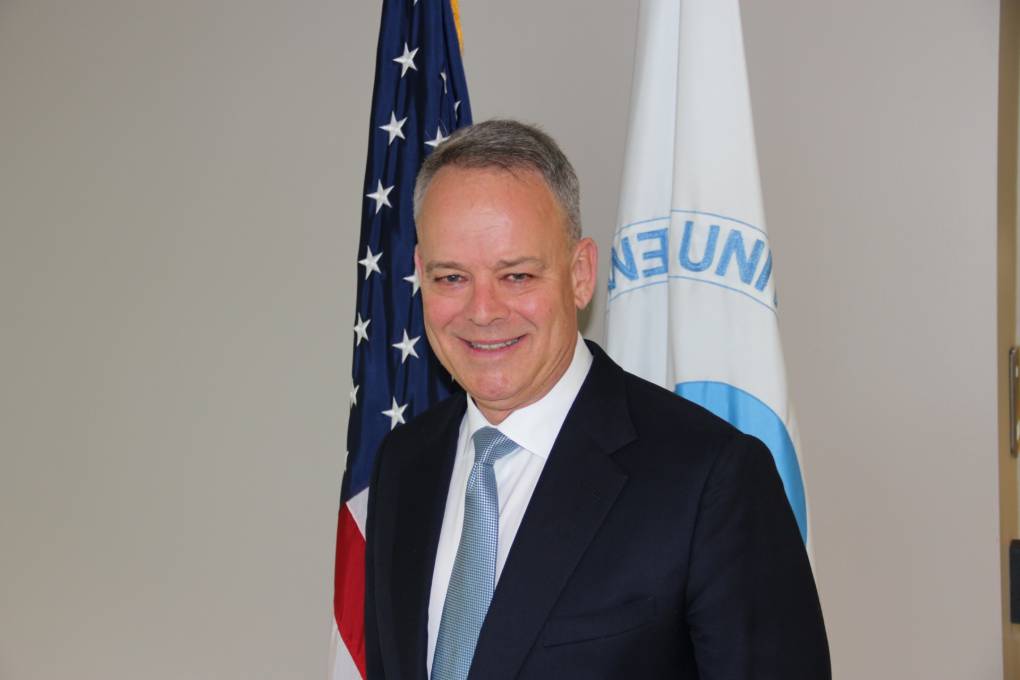
"content": "\u003cp class=\"p1\">As the head of the federal\u003cspan class=\"Apple-converted-space\"> \u003c/span>Environmental Protection Agency’s San Francisco office, John Busterud is the agency’s top federal regulator in the West.\u003c/p>\n\u003cp>He oversees 700 staff employees and environmental protection efforts across the agency’s Region 9. Those actions affect 50 million people living in California, other Western states, the Pacific Islands and tribal lands — at a time when California leaders continue to spar with Washington over pretty much every issue related to the environment\u003c/p>\n\u003cp class=\"p1\">That means he’s on the front lines of a battle between the Trump administration and California over climate change. Busterud, a former PG&E attorney, is more of a traditional Republican than a MAGA diehard.\u003c/p>\n\u003cp class=\"p1\">His publicly stated view about climate change differs from that of President Trump. Busterud tells KQED that he “believes in climate change and that humans play a part in it.”\u003c/p>\n\u003cp>Trump rejected the central findings of his own administration’s \u003ca href=\"https://science2017.globalchange.gov/\">\u003cspan class=\"s1\">National Climate Assessment\u003c/span>\u003c/a>, \u003ca href=\"https://www.kqed.org/science/1957088/donald-trump-climate-profile-this-president-is-all-about-fossil-fuels\">\u003cspan class=\"s1\">saying\u003c/span>\u003c/a>, “I don’t believe it. No, no, I don’t believe it.”\u003c/p>\n\u003cp>[ad fullwidth]\u003c/p>\n\u003cp class=\"p1\">Scientists from 13 federal agencies reviewed thousands of climate studies for the fourth volume of the assessment, released in 2018, and concluded that greenhouse gases released by human activity are causing lasting economic damage to the nation.\u003c/p>\n\u003cp>But Busterud defends Trump’s environmental policies and suggested to KQED that natural emission sources from wildfires could be playing a large role in warming the planet. “We have seen over the last month or so that that [human-caused emissions of planet warming gases] can be dwarfed by fire-related emissions, but perhaps climate has an impact on that as well.”\u003cbr>\n\u003cem>\u003cbr>\n\u003c/em>It’s true that wildfires emit greenhouse gases and destroy trees that would otherwise remove carbon dioxide from the air.\u003c/p>\n\u003cp>But the \u003ca href=\"https://insideclimatenews.org/news/23082018/extreme-wildfires-climate-change-global-warming-air-pollution-fire-management-black-carbon-co2\" target=\"_blank\" rel=\"noopener noreferrer\">leading cause of global warming remains\u003c/a> overwhelmingly the burning of fossil fuels. \u003ca href=\"https://www.epa.gov/ghgemissions/sources-greenhouse-gas-emissions#t1fn1\" target=\"_blank\" rel=\"noopener noreferrer\">According to the EPA,\u003c/a> “Human activities are responsible for almost all of the increase in greenhouse gases in the atmosphere over the last 150 years.”\u003c/p>\n\u003cp class=\"p1\">California \u003ca href=\"https://ww2.arb.ca.gov/wildfire-emissions\" target=\"_blank\" rel=\"noopener noreferrer\">tracks greenhouse gas emissions\u003c/a> from wildfires separately from those produced by cars, power plants and other human sources because they have a faster carbon cycle.\u003c/p>\n\u003cp>Busterud’s predecessor, Mike Stoker — a \u003ca href=\"https://www.kqed.org/science/1924459/new-chief-of-epa-region-9-has-deep-ties-to-industry\">\u003cspan class=\"s1\">former oil industry spokesperson,\u003c/span>\u003c/a> was fired after an internal watchdog investigation. EPA spokeswoman Corry Schiermeyer told KQED in a statement that Stoker was let go for “severe neglect and incompetent administration of his duties.”\u003c/p>\n\u003cp class=\"p1\">Emails obtained by KQED through a public document request show agency staff cheering Busterud’s appointment.\u003c/p>\n\u003cp>Steven Leonido-John, director of EPA’s Southern California field office, wrote that Busterud’s hiring “by all measures, seems to be a very positive thing” and described him as a “Republican of the old variety.”\u003c/p>\n\u003cp class=\"p1\">California officials, meanwhile, seem at least willing to give Busterud the benefit of the doubt.\u003c/p>\n\u003cp>Jared Blumenfeld, California’s top environmental regulator, \u003ca href=\"https://www.sfchronicle.com/environment/article/EPA-names-former-PG-E-attorney-to-head-West-Coast-15047582.php\">\u003cspan class=\"s1\">told\u003c/span>\u003c/a> the San Francisco Chronicle that Busterud “seems reasonable and generally thoughtful on the issues” and\u003cspan class=\"Apple-converted-space\"> \u003c/span>“has the potential to do a good job.”\u003c/p>\n\u003cp class=\"p1\">In the roughly six months that he’s been on the job, Busterud has avoided the spotlight and — at least publicly — California’s ongoing fight with the Trump administration over how to regulate pollution from cars and trucks.\u003c/p>\n\u003cp>Instead, he’s focused on administrative duties. For example, last week he \u003ca href=\"https://www.epa.gov/newsreleases/us-epa-selects-organizations-pacific-southwest-receive-pollution-prevention-grants\">\u003cspan class=\"s1\">awarded\u003c/span>\u003c/a> a grant to a UC Berkeley program to research alternatives to PFAs — so-called “forever” chemicals that cause health effects with continued exposure — used in carpet manufacturing and other industries.\u003c/p>\n\u003cp class=\"p1\">“We’re trying to make much more than the grant,” he said. “We’re trying to encourage further action.”\u003c/p>\n\u003cp>Busterud spoke with KQED last week about climate change and Trump’s baseless claim that San Francisco should be punished for allowing discarded needles to wash into the ocean. He was less than forthcoming about California’s \u003ca href=\"https://www.kqed.org/science/1969807/california-to-halt-sales-of-new-gas-cars-by-2035\" target=\"_blank\" rel=\"noopener noreferrer\">planned ban\u003c/a> on the sale of new internal-combustion cars.\u003c/p>\n\u003cp class=\"p1\">\u003cb>What is your response to Gov. Gavin Newsom’s executive order banning the sale of gasoline-powered cars in California by the year 2035?\u003c/b>\u003c/p>\n\u003cp class=\"p1\">That particular issue is one that is handled by headquarters and to one to which they will have to respond and they will respond. There is much coverage of the waiver issue. We’re certainly all familiar with it. But that decision is made at headquarters.\u003c/p>\n\u003cp>\u003cspan class=\"s2\">\u003cb>You are referring to an action taken by the \u003ca href=\"https://www.kqed.org/science/1947538/can-he-do-that-lawyers-doubt-trump-can-kill-californias-clean-air-powers\" target=\"_blank\" rel=\"noopener noreferrer\">EPA to revoke California’s waiver \u003c/a>to set its own tailpipe emission rules. California sued in response. State leaders say the Trump administration is weaponizing the EPA on this issue.\u003c/b>\u003c/span>\u003c/p>\n\u003cp class=\"p5\">I would certainly disagree with that choice of terminology. The waiver issue raises national consideration and a discussion about if [regulation of] certain emissions or certain technology should be a national approach as opposed to a patchwork state-by-state approach. But again, that’s something that headquarters is managing. There is a dialogue. I acknowledge that it’s a contentious issue and one that I hope is resolved over time.\u003c/p>\n\u003cp class=\"p5\">\u003cb>Do you understand the state’s frustration? EPA has provided the waiver for 50 years and is pushing California to clean up its air. But California’s tailpipe emission rules are the key policy tool the state employed to deal with smog.\u003c/b>\u003c/p>\n\u003cp class=\"p5\">Certainly. And I understand. We’re very much engaged in working with the air districts and with CARB (the California Air Resources Board) on attainment issues day in and day out. Mobile sources are the single largest source in California, as opposed to other states where other sectors are that are considerable. That’s all I can really say on that one at this point.\u003c/p>\n\u003cp class=\"p1\">\u003cb>Local officials have called President Trump’s argument that San Francisco improperly discharged feces, needles and wastewater into the ocean — absurd. EPA \u003c/b>\u003ca href=\"https://www.epa.gov/sites/production/files/2019-10/documents/sfpuc-npdes-violation-notice-2019-10-02.pdf\">\u003cspan class=\"s1\">\u003cb>issued\u003c/b>\u003c/span>\u003c/a>\u003cb> San Francisco\u003cspan class=\"Apple-converted-space\"> \u003c/span>a violation for “failure to properly operate and maintain the city’s sewage collection and treatment facilities.” \u003c/b>\u003c/p>\n\u003cp>\u003cb>Do you think that the involvement of your agency in this issue was politically motivated? Did your agency find anything that backed up the president’s claims?\u003c/b>\u003c/p>\n\u003cp class=\"p5\">You would expect that I would and should and will say that it’s an open and pending enforcement action and not one I can comment on. I will just say that this investigation of this matter and those issues started in 2015. If you … do the math, that perhaps responds in part to your question.\u003c/p>\n\u003cp class=\"p5\">\u003cb>You’re implying that the agency’s involvement was not politically motivated because it began in 2015 under the Obama administration?\u003c/b>\u003c/p>\n\u003cp class=\"p5\">The investigation began in 2015. And that’s the most I can or should say.\u003c/p>\n\u003cp class=\"p7\">\u003cb>Explain to me how that is an underreported story. \u003c/b>\u003c/p>\n\u003cp class=\"p7\">I think that perhaps in your question you are saying that, well, my predecessor didn’t agree with the consensus on climate change or that the agency shouldn’t regulate it. We do regulate greenhouse gas emissions, power plant emissions, but we regulate them at that facility level as provided under the act. Under the Clean Power Plan of the prior administration — that plan was enjoined by the Supreme Court at the time — that kind of economy wide regulation is not permitted by the act. And so what we do is focus on facilities, specific controls of those pollutants.\u003c/p>\n\u003cp class=\"p7\">\u003cb>It’s your view that the \u003ca href=\"https://www.kqed.org/science/163665/president-obama-unveils-new-power-plant-rules-in-clean-power-plan\" target=\"_blank\" rel=\"noopener noreferrer\">Clean Power Plan\u003c/a> was an overstep from what is allowed by the Clean Air Act? \u003c/b>\u003c/p>\n\u003cp>The Supreme Court did it. They didn’t ask my opinion.\u003c/p>\n\u003cp class=\"p7\">\u003cb>The EPA has rolled back enforcement of planet-warming gases. During President Trump’s visit to survey the wildfire damage, Wade Crowfoot, secretary of the state natural resources agency, pressed him, saying studies show climate change is a key driver of the state’s fires. Trump said “science doesn’t know.” \u003c/b>\u003c/p>\n\u003cp>I can’t really comment on the exchange that the president had. I wasn’t there.\u003c/p>\n\u003cp>[ad floatright]\u003c/p>\n\u003cp class=\"p1\">\n\u003c/p>\n",
"stats": {
"hasVideo": false,
"hasChartOrMap": false,
"hasAudio": false,
"hasPolis": false,
"wordCount": 1386,
"hasGoogleForm": false,
"hasGallery": false,
"hasHearkenModule": false,
"iframeSrcs": [],
"paragraphCount": 15
},
"modified": 1704847018,
"excerpt": "John Busterud concedes that human activity is a driver of climate change, while he defends Trump policies at the same time. ",
"headData": {
"twImgId": "",
"twTitle": "",
"ogTitle": "",
"ogImgId": "",
"twDescription": "",
"description": "Trump's regional EPA chief says he believes humans are a factor in climate change, but he defends Trump policies at the same time.",
"socialDescription": "Trump's regional EPA chief says he believes humans are a factor in climate change, but he defends Trump policies at the same time.",
"title": "EPA's Top California Official 'Believes in Climate Change' But Mum on Newsom's Gasoline-Car Ban | KQED",
"ogDescription": "",
"schema": {
"@context": "https://schema.org",
"@type": "Article",
"headline": "EPA's Top California Official 'Believes in Climate Change' But Mum on Newsom's Gasoline-Car Ban",
"datePublished": "2020-09-30T18:00:29-07:00",
"dateModified": "2024-01-09T16:36:58-08:00",
"image": "https://cdn.kqed.org/wp-content/uploads/2020/02/KQED-OG-Image@1x.png"
}
},
"guestAuthors": [],
"slug": "epas-top-california-official-believes-in-climate-change-but-mum-on-newsoms-gasoline-car-ban",
"status": "publish",
"sticky": false,
"source": "EPA",
"path": "/science/1969944/epas-top-california-official-believes-in-climate-change-but-mum-on-newsoms-gasoline-car-ban",
"audioTrackLength": null,
"parsedContent": [
{
"type": "contentString",
"content": "\u003cdiv class=\"post-body\">\u003cp>\u003cp class=\"p1\">As the head of the federal\u003cspan class=\"Apple-converted-space\"> \u003c/span>Environmental Protection Agency’s San Francisco office, John Busterud is the agency’s top federal regulator in the West.\u003c/p>\n\u003cp>He oversees 700 staff employees and environmental protection efforts across the agency’s Region 9. Those actions affect 50 million people living in California, other Western states, the Pacific Islands and tribal lands — at a time when California leaders continue to spar with Washington over pretty much every issue related to the environment\u003c/p>\n\u003cp class=\"p1\">That means he’s on the front lines of a battle between the Trump administration and California over climate change. Busterud, a former PG&E attorney, is more of a traditional Republican than a MAGA diehard.\u003c/p>\n\u003cp class=\"p1\">His publicly stated view about climate change differs from that of President Trump. Busterud tells KQED that he “believes in climate change and that humans play a part in it.”\u003c/p>\n\u003cp>Trump rejected the central findings of his own administration’s \u003ca href=\"https://science2017.globalchange.gov/\">\u003cspan class=\"s1\">National Climate Assessment\u003c/span>\u003c/a>, \u003ca href=\"https://www.kqed.org/science/1957088/donald-trump-climate-profile-this-president-is-all-about-fossil-fuels\">\u003cspan class=\"s1\">saying\u003c/span>\u003c/a>, “I don’t believe it. No, no, I don’t believe it.”\u003c/p>\n\u003cp>\u003c/p>\u003c/div>",
"attributes": {
"named": {},
"numeric": []
}
},
{
"type": "component",
"content": "",
"name": "ad",
"attributes": {
"named": {
"label": "fullwidth"
},
"numeric": [
"fullwidth"
]
}
},
{
"type": "contentString",
"content": "\u003cdiv class=\"post-body\">\u003cp>\u003c/p>\n\u003cp class=\"p1\">Scientists from 13 federal agencies reviewed thousands of climate studies for the fourth volume of the assessment, released in 2018, and concluded that greenhouse gases released by human activity are causing lasting economic damage to the nation.\u003c/p>\n\u003cp>But Busterud defends Trump’s environmental policies and suggested to KQED that natural emission sources from wildfires could be playing a large role in warming the planet. “We have seen over the last month or so that that [human-caused emissions of planet warming gases] can be dwarfed by fire-related emissions, but perhaps climate has an impact on that as well.”\u003cbr>\n\u003cem>\u003cbr>\n\u003c/em>It’s true that wildfires emit greenhouse gases and destroy trees that would otherwise remove carbon dioxide from the air.\u003c/p>\n\u003cp>But the \u003ca href=\"https://insideclimatenews.org/news/23082018/extreme-wildfires-climate-change-global-warming-air-pollution-fire-management-black-carbon-co2\" target=\"_blank\" rel=\"noopener noreferrer\">leading cause of global warming remains\u003c/a> overwhelmingly the burning of fossil fuels. \u003ca href=\"https://www.epa.gov/ghgemissions/sources-greenhouse-gas-emissions#t1fn1\" target=\"_blank\" rel=\"noopener noreferrer\">According to the EPA,\u003c/a> “Human activities are responsible for almost all of the increase in greenhouse gases in the atmosphere over the last 150 years.”\u003c/p>\n\u003cp class=\"p1\">California \u003ca href=\"https://ww2.arb.ca.gov/wildfire-emissions\" target=\"_blank\" rel=\"noopener noreferrer\">tracks greenhouse gas emissions\u003c/a> from wildfires separately from those produced by cars, power plants and other human sources because they have a faster carbon cycle.\u003c/p>\n\u003cp>Busterud’s predecessor, Mike Stoker — a \u003ca href=\"https://www.kqed.org/science/1924459/new-chief-of-epa-region-9-has-deep-ties-to-industry\">\u003cspan class=\"s1\">former oil industry spokesperson,\u003c/span>\u003c/a> was fired after an internal watchdog investigation. EPA spokeswoman Corry Schiermeyer told KQED in a statement that Stoker was let go for “severe neglect and incompetent administration of his duties.”\u003c/p>\n\u003cp class=\"p1\">Emails obtained by KQED through a public document request show agency staff cheering Busterud’s appointment.\u003c/p>\n\u003cp>Steven Leonido-John, director of EPA’s Southern California field office, wrote that Busterud’s hiring “by all measures, seems to be a very positive thing” and described him as a “Republican of the old variety.”\u003c/p>\n\u003cp class=\"p1\">California officials, meanwhile, seem at least willing to give Busterud the benefit of the doubt.\u003c/p>\n\u003cp>Jared Blumenfeld, California’s top environmental regulator, \u003ca href=\"https://www.sfchronicle.com/environment/article/EPA-names-former-PG-E-attorney-to-head-West-Coast-15047582.php\">\u003cspan class=\"s1\">told\u003c/span>\u003c/a> the San Francisco Chronicle that Busterud “seems reasonable and generally thoughtful on the issues” and\u003cspan class=\"Apple-converted-space\"> \u003c/span>“has the potential to do a good job.”\u003c/p>\n\u003cp class=\"p1\">In the roughly six months that he’s been on the job, Busterud has avoided the spotlight and — at least publicly — California’s ongoing fight with the Trump administration over how to regulate pollution from cars and trucks.\u003c/p>\n\u003cp>Instead, he’s focused on administrative duties. For example, last week he \u003ca href=\"https://www.epa.gov/newsreleases/us-epa-selects-organizations-pacific-southwest-receive-pollution-prevention-grants\">\u003cspan class=\"s1\">awarded\u003c/span>\u003c/a> a grant to a UC Berkeley program to research alternatives to PFAs — so-called “forever” chemicals that cause health effects with continued exposure — used in carpet manufacturing and other industries.\u003c/p>\n\u003cp class=\"p1\">“We’re trying to make much more than the grant,” he said. “We’re trying to encourage further action.”\u003c/p>\n\u003cp>Busterud spoke with KQED last week about climate change and Trump’s baseless claim that San Francisco should be punished for allowing discarded needles to wash into the ocean. He was less than forthcoming about California’s \u003ca href=\"https://www.kqed.org/science/1969807/california-to-halt-sales-of-new-gas-cars-by-2035\" target=\"_blank\" rel=\"noopener noreferrer\">planned ban\u003c/a> on the sale of new internal-combustion cars.\u003c/p>\n\u003cp class=\"p1\">\u003cb>What is your response to Gov. Gavin Newsom’s executive order banning the sale of gasoline-powered cars in California by the year 2035?\u003c/b>\u003c/p>\n\u003cp class=\"p1\">That particular issue is one that is handled by headquarters and to one to which they will have to respond and they will respond. There is much coverage of the waiver issue. We’re certainly all familiar with it. But that decision is made at headquarters.\u003c/p>\n\u003cp>\u003cspan class=\"s2\">\u003cb>You are referring to an action taken by the \u003ca href=\"https://www.kqed.org/science/1947538/can-he-do-that-lawyers-doubt-trump-can-kill-californias-clean-air-powers\" target=\"_blank\" rel=\"noopener noreferrer\">EPA to revoke California’s waiver \u003c/a>to set its own tailpipe emission rules. California sued in response. State leaders say the Trump administration is weaponizing the EPA on this issue.\u003c/b>\u003c/span>\u003c/p>\n\u003cp class=\"p5\">I would certainly disagree with that choice of terminology. The waiver issue raises national consideration and a discussion about if [regulation of] certain emissions or certain technology should be a national approach as opposed to a patchwork state-by-state approach. But again, that’s something that headquarters is managing. There is a dialogue. I acknowledge that it’s a contentious issue and one that I hope is resolved over time.\u003c/p>\n\u003cp class=\"p5\">\u003cb>Do you understand the state’s frustration? EPA has provided the waiver for 50 years and is pushing California to clean up its air. But California’s tailpipe emission rules are the key policy tool the state employed to deal with smog.\u003c/b>\u003c/p>\n\u003cp class=\"p5\">Certainly. And I understand. We’re very much engaged in working with the air districts and with CARB (the California Air Resources Board) on attainment issues day in and day out. Mobile sources are the single largest source in California, as opposed to other states where other sectors are that are considerable. That’s all I can really say on that one at this point.\u003c/p>\n\u003cp class=\"p1\">\u003cb>Local officials have called President Trump’s argument that San Francisco improperly discharged feces, needles and wastewater into the ocean — absurd. EPA \u003c/b>\u003ca href=\"https://www.epa.gov/sites/production/files/2019-10/documents/sfpuc-npdes-violation-notice-2019-10-02.pdf\">\u003cspan class=\"s1\">\u003cb>issued\u003c/b>\u003c/span>\u003c/a>\u003cb> San Francisco\u003cspan class=\"Apple-converted-space\"> \u003c/span>a violation for “failure to properly operate and maintain the city’s sewage collection and treatment facilities.” \u003c/b>\u003c/p>\n\u003cp>\u003cb>Do you think that the involvement of your agency in this issue was politically motivated? Did your agency find anything that backed up the president’s claims?\u003c/b>\u003c/p>\n\u003cp class=\"p5\">You would expect that I would and should and will say that it’s an open and pending enforcement action and not one I can comment on. I will just say that this investigation of this matter and those issues started in 2015. If you … do the math, that perhaps responds in part to your question.\u003c/p>\n\u003cp class=\"p5\">\u003cb>You’re implying that the agency’s involvement was not politically motivated because it began in 2015 under the Obama administration?\u003c/b>\u003c/p>\n\u003cp class=\"p5\">The investigation began in 2015. And that’s the most I can or should say.\u003c/p>\n\u003cp class=\"p7\">\u003cb>Explain to me how that is an underreported story. \u003c/b>\u003c/p>\n\u003cp class=\"p7\">I think that perhaps in your question you are saying that, well, my predecessor didn’t agree with the consensus on climate change or that the agency shouldn’t regulate it. We do regulate greenhouse gas emissions, power plant emissions, but we regulate them at that facility level as provided under the act. Under the Clean Power Plan of the prior administration — that plan was enjoined by the Supreme Court at the time — that kind of economy wide regulation is not permitted by the act. And so what we do is focus on facilities, specific controls of those pollutants.\u003c/p>\n\u003cp class=\"p7\">\u003cb>It’s your view that the \u003ca href=\"https://www.kqed.org/science/163665/president-obama-unveils-new-power-plant-rules-in-clean-power-plan\" target=\"_blank\" rel=\"noopener noreferrer\">Clean Power Plan\u003c/a> was an overstep from what is allowed by the Clean Air Act? \u003c/b>\u003c/p>\n\u003cp>The Supreme Court did it. They didn’t ask my opinion.\u003c/p>\n\u003cp class=\"p7\">\u003cb>The EPA has rolled back enforcement of planet-warming gases. During President Trump’s visit to survey the wildfire damage, Wade Crowfoot, secretary of the state natural resources agency, pressed him, saying studies show climate change is a key driver of the state’s fires. Trump said “science doesn’t know.” \u003c/b>\u003c/p>\n\u003cp>I can’t really comment on the exchange that the president had. I wasn’t there.\u003c/p>\n\u003cp>\u003c/p>\u003c/div>",
"attributes": {
"named": {},
"numeric": []
}
},
{
"type": "component",
"content": "",
"name": "ad",
"attributes": {
"named": {
"label": "floatright"
},
"numeric": [
"floatright"
]
}
},
{
"type": "contentString",
"content": "\u003cdiv class=\"post-body\">\u003cp>\u003c/p>\n\u003cp class=\"p1\">\n\u003c/p>\n\u003c/div>\u003c/p>",
"attributes": {
"named": {},
"numeric": []
}
}
],
"link": "/science/1969944/epas-top-california-official-believes-in-climate-change-but-mum-on-newsoms-gasoline-car-ban",
"authors": [
"11608"
],
"categories": [
"science_31",
"science_35",
"science_40",
"science_4450"
],
"tags": [
"science_2080",
"science_4414",
"science_3322"
],
"featImg": "science_1969948",
"label": "source_science_1969944"
},
"science_1969807": {
"type": "posts",
"id": "science_1969807",
"meta": {
"index": "posts_1716263798",
"site": "science",
"id": "1969807",
"score": null,
"sort": [
1600883400000
]
},
"parent": 0,
"labelTerm": {},
"blocks": [],
"publishDate": 1600883400,
"format": "aside",
"title": "Newsom Directs California to End Sales of New Gas-Powered Cars and Trucks",
"headTitle": "Newsom Directs California to End Sales of New Gas-Powered Cars and Trucks | KQED",
"content": "\u003cp>California will halt sales of new gasoline-powered passenger cars and trucks by 2035, Gov. Gavin Newsom announced Wednesday, a move he says will cut greenhouse gas emissions by 35% in the nation’s most populous state.\u003c/p>\n\u003cp>[pullquote]The executive order would not ban people from owning gas-powered cars or selling them on the used car market. But it would end the sales of all new gasoline-powered passenger cars and trucks in the state by 2035.[/pullquote]The \u003ca href=\"https://www.gov.ca.gov/wp-content/uploads/2020/09/9.23.2\" target=\"_blank\" rel=\"noopener noreferrer\">executive order\u003c/a> would not ban people from owning gas-powered cars or selling them on the used car market. But it would end the sales of all new gasoline-powered passenger cars and trucks in the state of nearly 40 million people.\u003c/p>\n\u003cp>Newsom’s order directs the California Air Resources Board to develop and approve regulations to meet the deadline, requiring “increasing volumes of new zero-emission vehicles sold in the state” until the 100% target in 2035. The governor also ordered the board to make a rule requiring that all medium and heavy-duty trucks be 100% zero-emission by 2045, “where feasible.”\u003c/p>\n\u003cp>“Pull away from the gas pumps,” Newsom said at a press conference. “Let us no longer be victims of geopolitical dictators that manipulate global supply chains and global markets.”\u003c/p>\n\u003cp>California and the roughly dozen states that follow its lead on auto emissions standards make up a significant part of the U.S. auto market, giving the day’s move huge potential impact for the U.S. automobile industry as well as for long-term efforts against pollution and climate change, which is driven by fossil-fuel emissions. It also is likely to meet opposition from President Trump, who wants to roll back tougher Obama-era auto emissions standards and is battling California to force it to comply.\u003c/p>\n\u003cp>After Newsom’s announcement, the White House signaled its displeasure with the move. Administration spokesman Judd Deere said Newsom’s order will hurt the economy and is “yet another example of how extreme the left has become. They want the government to dictate every aspect of every Americans’ life.”\u003c/p>\n\u003cp>\u003cem>Watch today’s announcement and press conference with Gov. Gavin Newsom\u003c/em>\u003c/p>\n\u003cp>https://youtu.be/yEkGlJWu864?t=897\u003c/p>\n\u003cp>California already has rules mandating that a certain percentage of new car sales be electric or zero-emission vehicles. The new rule, if implemented, would make California the first U.S. state with a plan to phase them out completely. The state has a goal of relying 100% on clean, renewable energy by 2045. Gasoline and diesel-powered cars and trucks are the biggest impediment to reaching that target, as they account for more than half of the state’s carbon pollution.\u003c/p>\n\u003cp>At least 15 other countries, including Germany, France and Norway, have made similar commitments to eliminating gas-powered vehicles.\u003c/p>\n\u003cp>In addition to the directive on cars and trucks, Newsom ordered state agencies to speed up development of charging stations across the state.\u003c/p>\n\u003cp>To accommodate all the new electric vehicles, California will certainly need to install many more charging stations, especially in places where people work, says Michael Wara, director of Stanford’s Climate and Energy Policy Program. The state should incentivize people to charge their cars during the day, he says, when solar energy is most abundant, and not at night, which is usually more convenient but will draw on more nonrenewable energy.\u003c/p>\n\u003cp>“If we can accomplish that goal, managing grid stability will not be a challenge,” Wara said.\u003c/p>\n\u003cp>While implementation of the order would help reduce pollution, says Fraser Shilling, co-director of the Road Ecology Center at UC Davis, production of all the new electric vehicles would still consume a significant amount of energy, including from fossil fuels.\u003c/p>\n\u003cp>“Electric vehicles have their own carbon footprint,” he said. “The popular thing from an environmental point of view is to say, ‘This is great, this will help us deal with climate change because we’re reducing gasoline and diesel burning vehicles on roads. But it’s also important to keep our eye on the ball that not all of transportation’s impacts on the environment are solved by electrification.”\u003c/p>\n\u003cp>John Bozzella, president of the Alliance for Automotive Innovation, an industry group, said in a statement that while car companies are “committed to expanding vehicle electrification … neither mandates nor bans build successful markets.”\u003c/p>\n\u003cp>Newsom’s executive order “will require increased infrastructure, incentives, fleet requirements, building codes, and much more,” Bozzella said.\u003c/p>\n\u003cp>Jessica Caldwell, executive director of insights at the Edmunds.com auto pricing site, said Newsom’s announcement “does seem like this is a significant shot fired against” the internal combustion engine.\u003c/p>\n\u003cp>She expects the California announcement to trigger high-level meetings at all the auto companies that were moving toward electric vehicles but didn’t expect a zero-emissions mandate in 15 years. Automakers may have to rethink manufacturing and capital spending plans because of the requirement, she said.\u003c/p>\n\u003cp>\u003cstrong>Gas Vehicles Still Dominate\u003c/strong>\u003c/p>\n\u003cp>California has more electric vehicles on the road than any other state, according to \u003ca href=\"https://afdc.energy.gov/data/10962\" target=\"_blank\" rel=\"noopener noreferrer\">federal data\u003c/a>, and Newsom said half of all U.S. electric cars are driven here. In the first quarter of 2020, an electric car, the Tesla Model 3, was the top selling new car model in California for the first time, edging out the Honda Civic, according to the \u003ca href=\"https://www.cncda.org/wp-content/uploads/Cal-Covering-1Q-20-REVISED.pdf\" target=\"_blank\" rel=\"noopener noreferrer\">California New Car Dealers Association.\u003c/a>\u003c/p>\n\u003cp>But despite the gains, combustion engines in cars and trucks still dominate the state’s highways and roads. California registered 99,704 new electric cars and trucks in 2019, which was 5.3% of the market, \u003ca href=\"https://www.cncda.org/wp-content/uploads/Cal-Covering-4Q-19.pdf\" target=\"_blank\" rel=\"noopener noreferrer\">according\u003c/a> to the car dealer association.\u003c/p>\n\u003cp>Last year, the state \u003ca class=\"c-link\" href=\"https://apnews.com/fd8f133957b8e6675035f41025635510\" target=\"_blank\" rel=\"noopener noreferrer\" data-stringify-link=\"https://apnews.com/fd8f133957b8e6675035f41025635510\" data-sk=\"tooltip_parent\">stopped\u003c/a> offering rebates for buyers of electric cars or plug-in hybrid vehicles that cost more than $60,000. State air regulators also reduced the standard rebate by $500 per vehicle, from $2,500 to $2,000 for all-electric cars. In addition, it eliminated rebates for plug-in hybrid cars with an electric-battery range of less than 35 miles.\u003c/p>\n\u003cp>When asked what incentives he plans for encouraging Californians to buy electric cars, Newsom said the state would continue “the tried and true policies” of encouraging adoption through credits, vouchers and rebates. He said electric vehicle use has “grown exponentially,” with “more models, more choice for consumers. The cost is beginning to decline, and we’re just a few years away from parity.”\u003c/p>\n\u003cp>Also on Wednesday, Newsom called on the Legislature to eliminate new fracking licenses by 2024.\u003c/p>\n\u003cp>Fracking is a technique that allows energy companies to extract huge volumes of oil and gas from shale rock deep underground. It involves injecting high-pressure mixtures of water, sand or gravel and chemicals into rock. Fracking opponents say the chemicals involved threaten water supplies and public health.\u003c/p>\n\u003cp>Kassie Siegel, director of the Center for Biological Diversity’s Climate Law Institute, called Newsom’s order “a big step,” but said it “provided rhetoric rather than real action on the other critical half of the climate problem — California’s dirty oil production.”\u003c/p>\n\u003cp>“Newsom can’t claim climate leadership while handing out permits to oil companies to drill and frack,” she said. “He has the power to protect Californians from oil industry pollution, and he needs to use it, not pass the buck.”\u003c/p>\n\u003cp>The order comes as massive wildfires have burned a record 5,600 square miles (14,500 square kilometers) in California this year. Experts say the size and intensity of the fires are aided by warmer temperatures and years of drought brought on by climate change.\u003c/p>\n\u003cp>[ad fullwidth]\u003c/p>\n\u003cp>[ad floatright]\u003c/p>\n",
"stats": {
"hasVideo": false,
"hasChartOrMap": false,
"hasAudio": false,
"hasPolis": false,
"wordCount": 1315,
"hasGoogleForm": false,
"hasGallery": false,
"hasHearkenModule": false,
"iframeSrcs": [],
"paragraphCount": 30
},
"modified": 1704847026,
"excerpt": "California will halt sales of new gasoline-powered passenger cars and trucks by 2035, Gov. Gavin Newsom announced Wednesday, a move he says will cut greenhouse gas emissions by 35% in the state.",
"headData": {
"twImgId": "",
"twTitle": "",
"ogTitle": "",
"ogImgId": "",
"twDescription": "",
"description": "California will halt sales of new gasoline-powered passenger cars and trucks by 2035, Gov. Gavin Newsom announced Wednesday, a move he says will cut greenhouse gas emissions by 35% in the state.",
"title": "Newsom Directs California to End Sales of New Gas-Powered Cars and Trucks | KQED",
"ogDescription": "",
"schema": {
"@context": "https://schema.org",
"@type": "Article",
"headline": "Newsom Directs California to End Sales of New Gas-Powered Cars and Trucks",
"datePublished": "2020-09-23T10:50:00-07:00",
"dateModified": "2024-01-09T16:37:06-08:00",
"image": "https://cdn.kqed.org/wp-content/uploads/2020/02/KQED-OG-Image@1x.png"
}
},
"guestAuthors": [],
"slug": "california-to-halt-sales-of-new-gas-cars-by-2035",
"status": "publish",
"nprByline": "Adam Beam, Associated Press, and Kevin Stark, KQED",
"sticky": false,
"source": "Climate",
"path": "/science/1969807/california-to-halt-sales-of-new-gas-cars-by-2035",
"audioTrackLength": null,
"parsedContent": [
{
"type": "contentString",
"content": "\u003cdiv class=\"post-body\">\u003cp>\u003cp>California will halt sales of new gasoline-powered passenger cars and trucks by 2035, Gov. Gavin Newsom announced Wednesday, a move he says will cut greenhouse gas emissions by 35% in the nation’s most populous state.\u003c/p>\n\u003cp>\u003c/p>\u003c/div>",
"attributes": {
"named": {},
"numeric": []
}
},
{
"type": "component",
"content": "The executive order would not ban people from owning gas-powered cars or selling them on the used car market. But it would end the sales of all new gasoline-powered passenger cars and trucks in the state by 2035.",
"name": "pullquote",
"attributes": {
"named": {
"label": ""
},
"numeric": []
}
},
{
"type": "contentString",
"content": "\u003cdiv class=\"post-body\">\u003cp>The \u003ca href=\"https://www.gov.ca.gov/wp-content/uploads/2020/09/9.23.2\" target=\"_blank\" rel=\"noopener noreferrer\">executive order\u003c/a> would not ban people from owning gas-powered cars or selling them on the used car market. But it would end the sales of all new gasoline-powered passenger cars and trucks in the state of nearly 40 million people.\u003c/p>\n\u003cp>Newsom’s order directs the California Air Resources Board to develop and approve regulations to meet the deadline, requiring “increasing volumes of new zero-emission vehicles sold in the state” until the 100% target in 2035. The governor also ordered the board to make a rule requiring that all medium and heavy-duty trucks be 100% zero-emission by 2045, “where feasible.”\u003c/p>\n\u003cp>“Pull away from the gas pumps,” Newsom said at a press conference. “Let us no longer be victims of geopolitical dictators that manipulate global supply chains and global markets.”\u003c/p>\n\u003cp>California and the roughly dozen states that follow its lead on auto emissions standards make up a significant part of the U.S. auto market, giving the day’s move huge potential impact for the U.S. automobile industry as well as for long-term efforts against pollution and climate change, which is driven by fossil-fuel emissions. It also is likely to meet opposition from President Trump, who wants to roll back tougher Obama-era auto emissions standards and is battling California to force it to comply.\u003c/p>\n\u003cp>After Newsom’s announcement, the White House signaled its displeasure with the move. Administration spokesman Judd Deere said Newsom’s order will hurt the economy and is “yet another example of how extreme the left has become. They want the government to dictate every aspect of every Americans’ life.”\u003c/p>\n\u003cp>\u003cem>Watch today’s announcement and press conference with Gov. Gavin Newsom\u003c/em>\u003c/p>\u003c/p>\u003cp>\u003cspan class='utils-parseShortcode-shortcodes-__youtubeShortcode__embedYoutube'>\n \u003cspan class='utils-parseShortcode-shortcodes-__youtubeShortcode__embedYoutubeInside'>\n \u003ciframe\n loading='lazy'\n class='utils-parseShortcode-shortcodes-__youtubeShortcode__youtubePlayer'\n type='text/html'\n src='//www.youtube.com/embed/yEkGlJWu864'\n title='//www.youtube.com/embed/yEkGlJWu864'\n allowfullscreen='true'\n style='border:0;'>\u003c/iframe>\n \u003c/span>\n \u003c/span>\u003c/p>\u003cp>\u003cp>California already has rules mandating that a certain percentage of new car sales be electric or zero-emission vehicles. The new rule, if implemented, would make California the first U.S. state with a plan to phase them out completely. The state has a goal of relying 100% on clean, renewable energy by 2045. Gasoline and diesel-powered cars and trucks are the biggest impediment to reaching that target, as they account for more than half of the state’s carbon pollution.\u003c/p>\n\u003cp>At least 15 other countries, including Germany, France and Norway, have made similar commitments to eliminating gas-powered vehicles.\u003c/p>\n\u003cp>In addition to the directive on cars and trucks, Newsom ordered state agencies to speed up development of charging stations across the state.\u003c/p>\n\u003cp>To accommodate all the new electric vehicles, California will certainly need to install many more charging stations, especially in places where people work, says Michael Wara, director of Stanford’s Climate and Energy Policy Program. The state should incentivize people to charge their cars during the day, he says, when solar energy is most abundant, and not at night, which is usually more convenient but will draw on more nonrenewable energy.\u003c/p>\n\u003cp>“If we can accomplish that goal, managing grid stability will not be a challenge,” Wara said.\u003c/p>\n\u003cp>While implementation of the order would help reduce pollution, says Fraser Shilling, co-director of the Road Ecology Center at UC Davis, production of all the new electric vehicles would still consume a significant amount of energy, including from fossil fuels.\u003c/p>\n\u003cp>“Electric vehicles have their own carbon footprint,” he said. “The popular thing from an environmental point of view is to say, ‘This is great, this will help us deal with climate change because we’re reducing gasoline and diesel burning vehicles on roads. But it’s also important to keep our eye on the ball that not all of transportation’s impacts on the environment are solved by electrification.”\u003c/p>\n\u003cp>John Bozzella, president of the Alliance for Automotive Innovation, an industry group, said in a statement that while car companies are “committed to expanding vehicle electrification … neither mandates nor bans build successful markets.”\u003c/p>\n\u003cp>Newsom’s executive order “will require increased infrastructure, incentives, fleet requirements, building codes, and much more,” Bozzella said.\u003c/p>\n\u003cp>Jessica Caldwell, executive director of insights at the Edmunds.com auto pricing site, said Newsom’s announcement “does seem like this is a significant shot fired against” the internal combustion engine.\u003c/p>\n\u003cp>She expects the California announcement to trigger high-level meetings at all the auto companies that were moving toward electric vehicles but didn’t expect a zero-emissions mandate in 15 years. Automakers may have to rethink manufacturing and capital spending plans because of the requirement, she said.\u003c/p>\n\u003cp>\u003cstrong>Gas Vehicles Still Dominate\u003c/strong>\u003c/p>\n\u003cp>California has more electric vehicles on the road than any other state, according to \u003ca href=\"https://afdc.energy.gov/data/10962\" target=\"_blank\" rel=\"noopener noreferrer\">federal data\u003c/a>, and Newsom said half of all U.S. electric cars are driven here. In the first quarter of 2020, an electric car, the Tesla Model 3, was the top selling new car model in California for the first time, edging out the Honda Civic, according to the \u003ca href=\"https://www.cncda.org/wp-content/uploads/Cal-Covering-1Q-20-REVISED.pdf\" target=\"_blank\" rel=\"noopener noreferrer\">California New Car Dealers Association.\u003c/a>\u003c/p>\n\u003cp>But despite the gains, combustion engines in cars and trucks still dominate the state’s highways and roads. California registered 99,704 new electric cars and trucks in 2019, which was 5.3% of the market, \u003ca href=\"https://www.cncda.org/wp-content/uploads/Cal-Covering-4Q-19.pdf\" target=\"_blank\" rel=\"noopener noreferrer\">according\u003c/a> to the car dealer association.\u003c/p>\n\u003cp>Last year, the state \u003ca class=\"c-link\" href=\"https://apnews.com/fd8f133957b8e6675035f41025635510\" target=\"_blank\" rel=\"noopener noreferrer\" data-stringify-link=\"https://apnews.com/fd8f133957b8e6675035f41025635510\" data-sk=\"tooltip_parent\">stopped\u003c/a> offering rebates for buyers of electric cars or plug-in hybrid vehicles that cost more than $60,000. State air regulators also reduced the standard rebate by $500 per vehicle, from $2,500 to $2,000 for all-electric cars. In addition, it eliminated rebates for plug-in hybrid cars with an electric-battery range of less than 35 miles.\u003c/p>\n\u003cp>When asked what incentives he plans for encouraging Californians to buy electric cars, Newsom said the state would continue “the tried and true policies” of encouraging adoption through credits, vouchers and rebates. He said electric vehicle use has “grown exponentially,” with “more models, more choice for consumers. The cost is beginning to decline, and we’re just a few years away from parity.”\u003c/p>\n\u003cp>Also on Wednesday, Newsom called on the Legislature to eliminate new fracking licenses by 2024.\u003c/p>\n\u003cp>Fracking is a technique that allows energy companies to extract huge volumes of oil and gas from shale rock deep underground. It involves injecting high-pressure mixtures of water, sand or gravel and chemicals into rock. Fracking opponents say the chemicals involved threaten water supplies and public health.\u003c/p>\n\u003cp>Kassie Siegel, director of the Center for Biological Diversity’s Climate Law Institute, called Newsom’s order “a big step,” but said it “provided rhetoric rather than real action on the other critical half of the climate problem — California’s dirty oil production.”\u003c/p>\n\u003cp>“Newsom can’t claim climate leadership while handing out permits to oil companies to drill and frack,” she said. “He has the power to protect Californians from oil industry pollution, and he needs to use it, not pass the buck.”\u003c/p>\n\u003cp>The order comes as massive wildfires have burned a record 5,600 square miles (14,500 square kilometers) in California this year. Experts say the size and intensity of the fires are aided by warmer temperatures and years of drought brought on by climate change.\u003c/p>\n\u003cp>\u003c/p>\u003c/div>",
"attributes": {
"named": {},
"numeric": []
}
},
{
"type": "component",
"content": "",
"name": "ad",
"attributes": {
"named": {
"label": "fullwidth"
},
"numeric": [
"fullwidth"
]
}
},
{
"type": "contentString",
"content": "\u003cdiv class=\"post-body\">\u003cp>\u003c/p>\n\u003cp>\u003c/p>\u003c/div>",
"attributes": {
"named": {},
"numeric": []
}
},
{
"type": "component",
"content": "",
"name": "ad",
"attributes": {
"named": {
"label": "floatright"
},
"numeric": [
"floatright"
]
}
},
{
"type": "contentString",
"content": "\u003cdiv class=\"post-body\">\u003cp>\u003c/p>\n\u003c/div>\u003c/p>",
"attributes": {
"named": {},
"numeric": []
}
}
],
"link": "/science/1969807/california-to-halt-sales-of-new-gas-cars-by-2035",
"authors": [
"byline_science_1969807"
],
"categories": [
"science_31",
"science_33",
"science_35",
"science_40",
"science_4450"
],
"featImg": "science_1947478",
"label": "source_science_1969807"
},
"science_1969739": {
"type": "posts",
"id": "science_1969739",
"meta": {
"index": "posts_1716263798",
"site": "science",
"id": "1969739",
"score": null,
"sort": [
1600797055000
]
},
"parent": 0,
"labelTerm": {},
"blocks": [],
"publishDate": 1600797055,
"format": "standard",
"title": "Smoke From California's Record Wildfires Is Its Own Disaster",
"headTitle": "Smoke From California’s Record Wildfires Is Its Own Disaster | KQED",
"content": "\u003cp class=\"p1\">Hundreds of wildfires have scorched over 3 million acres in California this year. That’s the most burned land for any year on record in the state, and we’re still only about halfway through the fire season.\u003c/p>\n\u003cp class=\"p3\">\u003cspan class=\"s1\">Smoke from those fires \u003c/span>polluted the air in the Bay Area for 30 straight days in August and September, prompting the Bay Area Air Quality Management District to issue the longest consecutive string of “Spare the Air” alerts in its history, more than doubling the previous record of 14, set during the Camp Fire in November 2018. Within the recent period of smoke inundation came the six worst air quality days in the Bay Area in 20 years.\u003c/p>\n\u003cp class=\"p3\">“Smoke is everywhere,” Wayne Kino, a pollution control officer with the regional air district, told the agency’s board last week. “Smoke generated at the fires, smoke lingering out at the ocean, is coming in. It’s some of the worst air quality we’ve experienced.”\u003c/p>\n\u003cp class=\"p5\">Emergency room doctors at Sutter’s Alta Bates Summit Medical Center in Oakland have begun to see patients sickened by\u003cspan class=\"Apple-converted-space\"> \u003c/span>the smoke, reporting a flare-up in asthma and emphysema-related admissions.\u003c/p>\n\u003cp>“We’re starting to see a cumulative effect,” said Ronn Berrol, medical director of Alta Bates’ emergency department. “Our numbers are going up — respiratory, throat irritation, coughing, chest pain, heart palpitations. A real gamut of things; the uptick is definitely noticeable.”\u003c/p>\n\u003cp class=\"p5\">In the South Bay, Dr. Mary Prunicki, director of air pollution and health research at Stanford’s allergy and asthma research center, analyzed hospital records during the fires and found admissions of patients with asthma attacks up 10%. For people with stroke-like symptoms, the increase was 23%, including 43% for seniors.\u003cbr>\n\u003cspan class=\"s2\">\u003cbr>\n“This is the first time the Bay Area has ever really experienced something like this,” Prunicki said, about the persistently degraded air quality, which she described as “remarkably bad.”\u003cbr>\n\u003c/span>\u003c/p>\n\u003cp>[ad fullwidth]\u003c/p>\n\u003cp class=\"p3\">\u003cb>A Choking Fog of Particulate Matter\u003c/b>\u003c/p>\n\u003cp class=\"p1\">While officials have been focused on the severe damage caused by the fires, the profusion of smoke is a disastrous event on its own, touching the lives of nearly every person breathing on the West Coast.\u003c/p>\n\u003cp class=\"p1\">At times the “smokestorm” was so thick, it obscured and filtered the sunlight, bathing the Bay Area in an orange hue reminiscent of one of the bleak sci-fi landscapes in\u003cspan class=\"Apple-converted-space\"> \u003c/span>“Blade Runner 2049.”\u003c/p>\n\u003cp class=\"p5\">Plumes of wildfire smoke blanketed the West Coast from Seattle to San Diego and beyond. Last week, an early-season storm blew the smoke clouds east across the continental U.S., shrouding the sun in faraway states like \u003ca href=\"https://twitter.com/NWSNewYorkNY/status/1305666259141312514?ref_src=twsrc%5Etfw%7Ctwcamp%5Etweetembed%7Ctwterm%5E1305666259141312514%7Ctwgr%5Eshare_3&ref_url=https%3A%2F%2Fwww.bbc.com%2Fnews%2Fworld-54173615\">\u003cspan class=\"s3\">New York\u003c/span>\u003c/a> and giving the Bay Area a much needed breather, literally, from the dirty air.\u003c/p>\n\u003cp>https://twitter.com/WMO/status/1307990230696431617?s=20\u003c/p>\n\u003cp>At a time when the coronavirus pandemic has prevented much indoor socializing, the wildfire smoke inhibited Californians’ already restricted access to the outdoors.\u003c/p>\n\u003cp class=\"p3\">The smokestorm could make the worst public health crisis in a century even worse, \u003cspan class=\"s5\">Prunicki says. \u003c/span>\u003c/p>\n\u003cp>“Exposure to smoke pollution will make you more susceptible to viruses,” she said. “And studies have shown that higher COVID-19 rates are associated with increased air pollution.”\u003c/p>\n\u003cp>Some research has also found exposure to wildfire smoke associated with \u003ca href=\"https://www.ncbi.nlm.nih.gov/pmc/articles/PMC3440113/\" target=\"_blank\" rel=\"noopener noreferrer\">slightly lower birth weights\u003c/a> and a greater risk of \u003ca href=\"https://www.ncbi.nlm.nih.gov/pmc/articles/PMC6801422/\" target=\"_blank\" rel=\"noopener noreferrer\">preterm birth\u003c/a>. An ongoing UC Davis \u003ca href=\"https://environmentalhealth.ucdavis.edu/wildfire-pregnancy-research-B-SAFE\" target=\"_blank\" rel=\"noopener noreferrer\">study\u003c/a> is looking at wildfire smoke’s effect on the health of pregnant women and their babies.\u003c/p>\n\u003cp>\u003cb>The Fall Wildfire Outlook Does Not Look Good\u003c/b>\u003c/p>\n\u003cp>The full consequences of the terrible air quality won’t be known until the fires — already existing and yet to come — stop burning.\u003c/p>\n\u003cp class=\"p1\">The table was set for this year’s record-breaking wildfires by a century of fire suppression that allowed vegetation to build up and feed the recent conflagrations, and a\u003ca href=\"https://twitter.com/CAgovernor/status/1305591609434796032?s=20\">\u003cspan class=\"s3\"> three-degree climb\u003c/span>\u003c/a> over two decades in California’s average summer temperatures.\u003c/p>\n\u003cp class=\"p1\">The warming temperatures, driven by climate change, exacerbated drought conditions and primed Sierra and North Coast forests to burn. When thunderstorms swept across the hillsides in August, thousands of dry lightning strikes sparked hundreds of fires.\u003c/p>\n\u003cp class=\"p3\">In recent years, Northern California’s biggest fires — like last year’s Kincade Fire in Sonoma County — occurred when Diablo winds ripped across dried-out hillsides full of tinder in the fall.\u003c/p>\n\u003cp>During a NOAA climate assessment briefing last week, federal meteorologist Brad Pugh said Northern California faces a worse-than-average autumn wildfire outlook.\u003c/p>\n\u003cp>“With expanding drought and above-normal temperatures during October, November, December, that elevates the chances for continued wildfire risk,” he said.\u003c/p>\n\u003cp>NOAA estimates the total cost of California’s August wildfires at a billion dollars, minimum.\u003c/p>\n\u003cp>\u003cem>Jon Brooks contributed to this report.\u003c/em>\u003c/p>\n\u003cp>\u003c/p>\n",
"stats": {
"hasVideo": false,
"hasChartOrMap": false,
"hasAudio": false,
"hasPolis": false,
"wordCount": 821,
"hasGoogleForm": false,
"hasGallery": false,
"hasHearkenModule": false,
"iframeSrcs": [],
"paragraphCount": 12
},
"modified": 1704847030,
"excerpt": "The recent inundation of wildfire smoke in the Bay Area was associated with an increased number of patients seeking treatment for respiratory conditions and other ailments.",
"headData": {
"twImgId": "",
"twTitle": "",
"ogTitle": "",
"ogImgId": "",
"twDescription": "",
"description": "The recent inundation of wildfire smoke in the Bay Area was associated with an increased number of patients seeking treatment for respiratory conditions and other ailments.",
"title": "Smoke From California's Record Wildfires Is Its Own Disaster | KQED",
"ogDescription": "",
"schema": {
"@context": "https://schema.org",
"@type": "Article",
"headline": "Smoke From California's Record Wildfires Is Its Own Disaster",
"datePublished": "2020-09-22T10:50:55-07:00",
"dateModified": "2024-01-09T16:37:10-08:00",
"image": "https://cdn.kqed.org/wp-content/uploads/2020/02/KQED-OG-Image@1x.png"
}
},
"guestAuthors": [],
"slug": "smoke-from-californias-record-wildfires-is-its-own-disaster",
"status": "publish",
"audioUrl": "https://traffic.omny.fm/d/clips/0af137ef-751e-4b19-a055-aaef00d2d578/ffca7e9f-6831-41c5-bcaf-aaef00f5a073/d640a3f2-07c4-48cd-b664-ac3e01240a5d/audio.mp3",
"sticky": false,
"source": "Air Quality",
"path": "/science/1969739/smoke-from-californias-record-wildfires-is-its-own-disaster",
"audioDuration": 417000,
"audioTrackLength": null,
"parsedContent": [
{
"type": "contentString",
"content": "\u003cdiv class=\"post-body\">\u003cp>\u003cp class=\"p1\">Hundreds of wildfires have scorched over 3 million acres in California this year. That’s the most burned land for any year on record in the state, and we’re still only about halfway through the fire season.\u003c/p>\n\u003cp class=\"p3\">\u003cspan class=\"s1\">Smoke from those fires \u003c/span>polluted the air in the Bay Area for 30 straight days in August and September, prompting the Bay Area Air Quality Management District to issue the longest consecutive string of “Spare the Air” alerts in its history, more than doubling the previous record of 14, set during the Camp Fire in November 2018. Within the recent period of smoke inundation came the six worst air quality days in the Bay Area in 20 years.\u003c/p>\n\u003cp class=\"p3\">“Smoke is everywhere,” Wayne Kino, a pollution control officer with the regional air district, told the agency’s board last week. “Smoke generated at the fires, smoke lingering out at the ocean, is coming in. It’s some of the worst air quality we’ve experienced.”\u003c/p>\n\u003cp class=\"p5\">Emergency room doctors at Sutter’s Alta Bates Summit Medical Center in Oakland have begun to see patients sickened by\u003cspan class=\"Apple-converted-space\"> \u003c/span>the smoke, reporting a flare-up in asthma and emphysema-related admissions.\u003c/p>\n\u003cp>“We’re starting to see a cumulative effect,” said Ronn Berrol, medical director of Alta Bates’ emergency department. “Our numbers are going up — respiratory, throat irritation, coughing, chest pain, heart palpitations. A real gamut of things; the uptick is definitely noticeable.”\u003c/p>\n\u003cp class=\"p5\">In the South Bay, Dr. Mary Prunicki, director of air pollution and health research at Stanford’s allergy and asthma research center, analyzed hospital records during the fires and found admissions of patients with asthma attacks up 10%. For people with stroke-like symptoms, the increase was 23%, including 43% for seniors.\u003cbr>\n\u003cspan class=\"s2\">\u003cbr>\n“This is the first time the Bay Area has ever really experienced something like this,” Prunicki said, about the persistently degraded air quality, which she described as “remarkably bad.”\u003cbr>\n\u003c/span>\u003c/p>\n\u003cp>\u003c/p>\u003c/div>",
"attributes": {
"named": {},
"numeric": []
}
},
{
"type": "component",
"content": "",
"name": "ad",
"attributes": {
"named": {
"label": "fullwidth"
},
"numeric": [
"fullwidth"
]
}
},
{
"type": "contentString",
"content": "\u003cdiv class=\"post-body\">\u003cp>\u003c/p>\n\u003cp class=\"p3\">\u003cb>A Choking Fog of Particulate Matter\u003c/b>\u003c/p>\n\u003cp class=\"p1\">While officials have been focused on the severe damage caused by the fires, the profusion of smoke is a disastrous event on its own, touching the lives of nearly every person breathing on the West Coast.\u003c/p>\n\u003cp class=\"p1\">At times the “smokestorm” was so thick, it obscured and filtered the sunlight, bathing the Bay Area in an orange hue reminiscent of one of the bleak sci-fi landscapes in\u003cspan class=\"Apple-converted-space\"> \u003c/span>“Blade Runner 2049.”\u003c/p>\n\u003cp class=\"p5\">Plumes of wildfire smoke blanketed the West Coast from Seattle to San Diego and beyond. Last week, an early-season storm blew the smoke clouds east across the continental U.S., shrouding the sun in faraway states like \u003ca href=\"https://twitter.com/NWSNewYorkNY/status/1305666259141312514?ref_src=twsrc%5Etfw%7Ctwcamp%5Etweetembed%7Ctwterm%5E1305666259141312514%7Ctwgr%5Eshare_3&ref_url=https%3A%2F%2Fwww.bbc.com%2Fnews%2Fworld-54173615\">\u003cspan class=\"s3\">New York\u003c/span>\u003c/a> and giving the Bay Area a much needed breather, literally, from the dirty air.\u003c/p>\u003c/p>\u003c/div>",
"attributes": {
"named": {},
"numeric": []
}
},
{
"type": "component",
"content": "",
"name": "singleTwitterStatus",
"attributes": {
"named": {
"id": "1307990230696431617"
},
"numeric": []
}
},
{
"type": "contentString",
"content": "\u003cdiv class=\"post-body\">\u003cp>\n\u003cp>At a time when the coronavirus pandemic has prevented much indoor socializing, the wildfire smoke inhibited Californians’ already restricted access to the outdoors.\u003c/p>\n\u003cp class=\"p3\">The smokestorm could make the worst public health crisis in a century even worse, \u003cspan class=\"s5\">Prunicki says. \u003c/span>\u003c/p>\n\u003cp>“Exposure to smoke pollution will make you more susceptible to viruses,” she said. “And studies have shown that higher COVID-19 rates are associated with increased air pollution.”\u003c/p>\n\u003cp>Some research has also found exposure to wildfire smoke associated with \u003ca href=\"https://www.ncbi.nlm.nih.gov/pmc/articles/PMC3440113/\" target=\"_blank\" rel=\"noopener noreferrer\">slightly lower birth weights\u003c/a> and a greater risk of \u003ca href=\"https://www.ncbi.nlm.nih.gov/pmc/articles/PMC6801422/\" target=\"_blank\" rel=\"noopener noreferrer\">preterm birth\u003c/a>. An ongoing UC Davis \u003ca href=\"https://environmentalhealth.ucdavis.edu/wildfire-pregnancy-research-B-SAFE\" target=\"_blank\" rel=\"noopener noreferrer\">study\u003c/a> is looking at wildfire smoke’s effect on the health of pregnant women and their babies.\u003c/p>\n\u003cp>\u003cb>The Fall Wildfire Outlook Does Not Look Good\u003c/b>\u003c/p>\n\u003cp>The full consequences of the terrible air quality won’t be known until the fires — already existing and yet to come — stop burning.\u003c/p>\n\u003cp class=\"p1\">The table was set for this year’s record-breaking wildfires by a century of fire suppression that allowed vegetation to build up and feed the recent conflagrations, and a\u003ca href=\"https://twitter.com/CAgovernor/status/1305591609434796032?s=20\">\u003cspan class=\"s3\"> three-degree climb\u003c/span>\u003c/a> over two decades in California’s average summer temperatures.\u003c/p>\n\u003cp class=\"p1\">The warming temperatures, driven by climate change, exacerbated drought conditions and primed Sierra and North Coast forests to burn. When thunderstorms swept across the hillsides in August, thousands of dry lightning strikes sparked hundreds of fires.\u003c/p>\n\u003cp class=\"p3\">In recent years, Northern California’s biggest fires — like last year’s Kincade Fire in Sonoma County — occurred when Diablo winds ripped across dried-out hillsides full of tinder in the fall.\u003c/p>\n\u003cp>During a NOAA climate assessment briefing last week, federal meteorologist Brad Pugh said Northern California faces a worse-than-average autumn wildfire outlook.\u003c/p>\n\u003cp>“With expanding drought and above-normal temperatures during October, November, December, that elevates the chances for continued wildfire risk,” he said.\u003c/p>\n\u003cp>NOAA estimates the total cost of California’s August wildfires at a billion dollars, minimum.\u003c/p>\n\u003cp>\u003cem>Jon Brooks contributed to this report.\u003c/em>\u003c/p>\n\u003cp>\u003c/p>\n\u003c/div>\u003c/p>",
"attributes": {
"named": {},
"numeric": []
}
}
],
"link": "/science/1969739/smoke-from-californias-record-wildfires-is-its-own-disaster",
"authors": [
"11608"
],
"categories": [
"science_35",
"science_39",
"science_40",
"science_4450",
"science_3730"
],
"tags": [
"science_113"
],
"featImg": "science_1969740",
"label": "source_science_1969739"
},
"science_1969574": {
"type": "posts",
"id": "science_1969574",
"meta": {
"index": "posts_1716263798",
"site": "science",
"id": "1969574",
"score": null,
"sort": [
1600208059000
]
},
"parent": 0,
"labelTerm": {},
"blocks": [],
"publishDate": 1600208059,
"format": "standard",
"title": "How the Oil Industry Misled the Public Into Thinking Plastic Would be Recycled",
"headTitle": "How the Oil Industry Misled the Public Into Thinking Plastic Would be Recycled | KQED",
"content": "\u003cp>\u003cem>\u003cstrong>Note: An audio version of this story aired on NPR’s Planet Money. \u003c/strong>\u003c/em>\u003ca href=\"https://www.npr.org/2020/09/11/912150085/waste-land\" target=\"_blank\" rel=\"noopener noreferrer\">\u003cem>\u003cstrong>Listen to the episode here. \u003c/strong>\u003c/em>\u003c/a>\u003c/p>\n\u003cp>Laura Leebrick, a manager at Rogue Disposal & Recycling in southern Oregon, is standing on the end of its landfill watching an avalanche of plastic trash pour out of a semitrailer: containers, bags, packaging, strawberry containers, yogurt cups.\u003c/p>\n\u003cp>None of this plastic will be turned into new plastic things. All of it is buried.\u003c/p>\n\u003cp>“To me that felt like it was a betrayal of the public trust,” she said. “I had been lying to people … unwittingly.”\u003c/p>\n\u003cp>Rogue, like most recycling companies, had been sending plastic trash to China, but when China shut its doors two years ago, Leebrick scoured the U.S. for buyers. She could find only someone who wanted white milk jugs. She sends the soda bottles to the state.\u003c/p>\n\u003cp>[ad fullwidth]\u003c/p>\n\u003cp>But when Leebrick tried to tell people the truth about burying all the other plastic, she says people didn’t want to hear it.\u003c/p>\n\u003cp>“I remember the first meeting where I actually told a city council that it was costing more to recycle than it was to dispose of the same material as garbage,” she says, “and it was like heresy had been spoken in the room: You’re lying. This is gold. We take the time to clean it, take the labels off, separate it and put it here. It’s gold. This is valuable.”\u003c/p>\n\u003cp>But it’s not valuable, and it never has been. And what’s more, the makers of plastic — the nation’s largest oil and gas companies — have known this all along, even as they spent millions of dollars telling the American public the opposite.\u003c/p>\n\u003cp>NPR and \u003ca href=\"https://www.pbs.org/wgbh/frontline/film/plastic-wars/\">PBS\u003cem> Frontline\u003c/em>\u003c/a> spent months digging into internal industry documents and interviewing top former officials. We found that the industry sold the public on an idea it knew wouldn’t work — that the majority of plastic could be, and would be, recycled — all while making billions of dollars selling the world new plastic.\u003c/p>\n\u003cp>The industry’s awareness that recycling wouldn’t keep plastic out of landfills and the environment dates to the program’s earliest days, we found. “There is serious doubt that [recycling plastic] can ever be made viable on an economic basis,” one industry insider wrote in a 1974 speech.\u003c/p>\n\u003cp>Yet the industry spent millions telling people to recycle, because, as one former top industry insider told NPR, selling recycling sold plastic, even if it wasn’t true.\u003c/p>\n\u003cp>“If the public thinks that recycling is working, then they are not going to be as concerned about the environment,” Larry Thomas, former president of the Society of the Plastics Industry, known today as the Plastics Industry Association and one of the industry’s most powerful trade groups in Washington, D.C., told NPR.\u003c/p>\n\u003cp>In response, industry representative Steve Russell, until recently the vice president of plastics for the trade group the American Chemistry Council, said the industry has never intentionally misled the public about recycling and is committed to ensuring all plastic is recycled.\u003c/p>\n\u003cp>“The proof is the dramatic amount of investment that is happening right now,” Russell said. “I do understand the skepticism, because it hasn’t happened in the past, but I think the pressure, the public commitments and, most important, the availability of technology is going to give us a different outcome.”\u003c/p>\n\u003cp>Here’s the basic problem: All used plastic can be turned into new things, but picking it up, sorting it out and melting it down is expensive. Plastic also degrades each time it is reused, meaning it can’t be reused more than once or twice.\u003c/p>\n\u003cp>On the other hand, new plastic is cheap. It’s made from oil and gas, and it’s almost always less expensive and of better quality to just start fresh.\u003c/p>\n\u003cp>All of these problems have existed for decades, no matter what new recycling technology or expensive machinery has been developed. In all that time, less than \u003ca href=\"https://www.epa.gov/facts-and-figures-about-materials-waste-and-recycling/plastics-material-specific-data\">10% of plastic\u003c/a> has ever been recycled. But the public has known little about these difficulties.\u003c/p>\n\u003cp>It could be because that’s not what they were told.\u003c/p>\n\u003cp>Starting in the 1990s, the public saw an increasing number of commercials and messaging about recycling plastic.\u003c/p>\n\u003cp>“The bottle may look empty, yet it’s anything but trash,” says \u003ca href=\"https://digital.hagley.org/VID_1995300_B01_ID02?solr_nav%5Bid%5D=0578c06f357879ed7125&solr_nav%5Bpage%5D=0&solr_nav%5Boffset%5D=0\">one ad from 1990\u003c/a> showing a plastic bottle bouncing out of a garbage truck. “It’s full of potential. … We’ve pioneered the country’s largest, most comprehensive plastic recycling program to help plastic fill valuable uses and roles.”\u003c/p>\n\u003cp>These commercials carried a distinct message: Plastic is special, and the consumer should recycle it.\u003c/p>\n\u003cp>It may have sounded like an environmentalist’s message, but the ads were paid for by the plastics industry, made up of companies like Exxon, Chevron, Dow, DuPont and their lobbying and trade organizations in Washington.\u003c/p>\n\u003cp>Industry companies spent tens of millions of dollars on these ads and ran them for years, promoting the benefits of a product that, for the most part, was buried, was burned or, in some cases, wound up in the ocean.\u003c/p>\n\u003cp>Documents show industry officials knew this reality about recycling plastic as far back as the 1970s.\u003c/p>\n\u003cp>Many of the industry’s old documents are housed in libraries, such as the one on the grounds of the first DuPont family home in Delaware. Others are with universities, where former industry leaders sent their records.\u003c/p>\n\u003cp>At Syracuse University, there are boxes of files from a former industry consultant. And inside one of them is a report written in April 1973 by scientists tasked with forecasting possible issues for top industry executives.\u003c/p>\n\u003cp>Recycling plastic, it told the executives, was unlikely to happen on a broad scale.\u003c/p>\n\u003cp>“There is no recovery from obsolete products,” it says.\u003c/p>\n\u003cp>It says pointedly: Plastic degrades with each turnover.\u003c/p>\n\u003cp>“A degradation of resin properties and performance occurs during the initial fabrication, through aging, and in any reclamation process,” the report told executives.\u003c/p>\n\u003cp>Recycling plastic is “costly,” it says, and sorting it, the report concludes, is “infeasible.”\u003c/p>\n\u003cp>And there are more documents, echoing decades of this knowledge, including one analysis from a top official at the industry’s most powerful trade group. “The costs of separating plastics … are high,” he tells colleagues, before noting that the cost of using oil to make plastic is so low that recycling plastic waste “can’t yet be justified economically.”\u003c/p>\n\u003cp>Larry Thomas, the former president of the Society of the Plastics Industry, worked side by side with top oil and plastics executives.\u003c/p>\n\u003cp>He’s retired now, on the coast of Florida where he likes to bike, and feels conflicted about the time he worked with the plastics industry.\u003c/p>\n\u003cp>“I did what the industry wanted me to do, that’s for sure,” he says. “But my personal views didn’t always jibe with the views I had to take as part of my job.”\u003c/p>\n\u003cp>Thomas took over back in the late 1980s, and back then, plastic was in a crisis. There was too much plastic trash. The public was getting upset.\u003c/p>\n\u003cfigure id=\"attachment_1969576\" class=\"wp-caption alignnone\" style=\"max-width: 2048px\">\u003cimg loading=\"lazy\" decoding=\"async\" class=\"wp-image-1969576 size-full\" src=\"https://ww2.kqed.org/app/uploads/sites/35/2020/09/img_6962_custom-53de701bffc6e83c4273e386c22726fbf363bdcd.jpg\" alt=\"\" width=\"2048\" height=\"1535\" srcset=\"https://cdn.kqed.org/wp-content/uploads/sites/35/2020/09/img_6962_custom-53de701bffc6e83c4273e386c22726fbf363bdcd.jpg 2048w, https://cdn.kqed.org/wp-content/uploads/sites/35/2020/09/img_6962_custom-53de701bffc6e83c4273e386c22726fbf363bdcd-800x600.jpg 800w, https://cdn.kqed.org/wp-content/uploads/sites/35/2020/09/img_6962_custom-53de701bffc6e83c4273e386c22726fbf363bdcd-1020x765.jpg 1020w, https://cdn.kqed.org/wp-content/uploads/sites/35/2020/09/img_6962_custom-53de701bffc6e83c4273e386c22726fbf363bdcd-160x120.jpg 160w, https://cdn.kqed.org/wp-content/uploads/sites/35/2020/09/img_6962_custom-53de701bffc6e83c4273e386c22726fbf363bdcd-768x576.jpg 768w, https://cdn.kqed.org/wp-content/uploads/sites/35/2020/09/img_6962_custom-53de701bffc6e83c4273e386c22726fbf363bdcd-1536x1151.jpg 1536w, https://cdn.kqed.org/wp-content/uploads/sites/35/2020/09/img_6962_custom-53de701bffc6e83c4273e386c22726fbf363bdcd-1920x1439.jpg 1920w\" sizes=\"(max-width: 2048px) 100vw, 2048px\">\u003cfigcaption class=\"wp-caption-text\">Garten Services, a recycling facility in Oregon, where paper and metals still have markets but most plastic is thrown away. All plastic must first go through a recycling facility like this one, but only a fraction of the plastic produced actually winds up getting recycled. \u003ccite>(Laura Sullivan/NPR)\u003c/cite>\u003c/figcaption>\u003c/figure>\n\u003cp>In one document from 1989, Thomas calls executives at Exxon, Chevron, Amoco, Dow, DuPont, Procter & Gamble and others to a private meeting at the Ritz-Carlton in Washington.\u003c/p>\n\u003cp>“The image of plastics is deteriorating at an alarming rate,” he wrote. “We are approaching a point of no return.”\u003c/p>\n\u003cp>He told the executives they needed to act.\u003c/p>\n\u003cp>The “viability of the industry and the profitability of your company” are at stake.\u003c/p>\n\u003cp>Thomas remembers now.\u003c/p>\n\u003cp>“The feeling was the plastics industry was under fire — we got to do what it takes to take the heat off, because we want to continue to make plastic products,” he says.\u003c/p>\n\u003cp>At this time, Thomas had a co-worker named Lew Freeman. He was a vice president of the lobbying group. He remembers many of the meetings like the one in Washington.\u003c/p>\n\u003cp>“The basic question on the table was, You guys as our trade association in the plastics industry aren’t doing enough — we need to do more,” Freeman says. “I remember this is one of those exchanges that sticks with me 35 years later or however long it’s been … and it was what we need to do is … advertise our way out of it. That was the idea thrown out.”\u003c/p>\n\u003cp>So began the plastics industry’s $50 million-a-year ad campaign promoting the benefits of plastic.\u003c/p>\n\u003cp>“Presenting the possibilities of plastic!” one iconic ad blared, showing kids in bike helmets and plastic bags floating in the air.\u003c/p>\n\u003cp>“This advertising was motivated first and foremost by legislation and other initiatives that were being introduced in state legislatures and sometimes in Congress,” Freeman says, “to ban or curb the use of plastics because of its performance in the waste stream.”\u003c/p>\n\u003cp>At the same time, the industry launched a number of feel-good projects, telling the public to recycle plastic. It funded sorting machines, recycling centers, nonprofits, even expensive benches outside grocery stores made out of plastic bags.\u003c/p>\n\u003cp>Few of these projects actually turned much plastic into new things.\u003c/p>\n\u003cp>NPR tracked down almost a dozen projects the industry publicized starting in 1989. All of them shuttered or failed by the mid-1990s. Mobil’s Massachusetts recycling facility lasted three years, for example. Amoco’s project to recycle plastic in New York schools lasted two. Dow and Huntsman’s highly publicized plan to recycle plastic in national parks made it to seven out of 419 parks before the companies cut funding.\u003c/p>\n\u003cp>None of them was able to get past the economics: Making new plastic out of oil is cheaper and easier than making it out of plastic trash.\u003c/p>\n\u003cp>Both Freeman and Thomas, the head of the lobbying group, say the executives all knew that.\u003c/p>\n\u003cp>“There was a lot of discussion about how difficult it was to recycle,” Thomas remembers. “They knew that the infrastructure wasn’t there to really have recycling amount to a whole lot.”\u003c/p>\n\u003cp>Even as the ads played and the projects got underway, Thomas and Freeman say industry officials wanted to get recycling plastic into people’s homes and outside on their curbs with blue bins.\u003c/p>\n\u003cp>The industry created a special group called the Council for Solid Waste Solutions and brought a man from DuPont, Ron Liesemer, over to run it.\u003c/p>\n\u003cp>Liesemer’s job was to at least try to make recycling work — because there was some hope, he said, however unlikely, that maybe if they could get recycling started, somehow the economics of it all would work itself out.\u003c/p>\n\u003cp>“I had no staff, but I had money,” Liesemer says. “Millions of dollars.”\u003c/p>\n\u003cp>Liesemer took those millions out to Minnesota and other places to start local plastic recycling programs.\u003c/p>\n\u003cp>But then he ran into the same problem all the industry documents found. Recycling plastic wasn’t making economic sense: There were too many different kinds of plastic, hundreds of them, and they can’t be melted down together. They have to be sorted out.\u003c/p>\n\u003cp>“Yes, it can be done,” Liesemer says, “but who’s going to pay for it? Because it goes into too many applications, it goes into too many structures that just would not be practical to recycle.”\u003c/p>\n\u003cp>Liesemer says he started as many programs as he could and hoped for the best.\u003c/p>\n\u003cp>“They were trying to keep their products on the shelves,” Liesemer says. “That’s what they were focused on. They weren’t thinking what lesson should we learn for the next 20 years. No. Solve today’s problem.”\u003c/p>\n\u003cp>And Thomas, who led the trade group, says all of these efforts started to have an effect: The message that plastic could be recycled was sinking in.\u003c/p>\n\u003cp>“I can only say that after a while, the atmosphere seemed to change,” he says. “I don’t know whether it was because people thought recycling had solved the problem or whether they were so in love with plastic products that they were willing to overlook the environmental concerns that were mounting up.”\u003c/p>\n\u003cp>But as the industry pushed those public strategies to get past the crisis, officials were also quietly launching a broader plan.\u003c/p>\n\u003cp>In the early 1990s, at a small recycling facility near San Diego, a man named Coy Smith was one of the first to see the industry’s new initiative.\u003c/p>\n\u003cp>Back then, Smith ran a recycling business. His customers were watching the ads and wanted to recycle plastic. So Smith allowed people to put two plastic items in their bins: soda bottles and milk jugs. He lost money on them, he says, but the aluminum, paper and steel from his regular business helped offset the costs.\u003c/p>\n\u003cp>But then, one day, almost overnight, his customers started putting all kinds of plastic in their bins.\u003c/p>\n\u003cp>“The symbols start showing up on the containers,” he explains.\u003c/p>\n\u003cp>Smith went out to the piles of plastic and started flipping over the containers. All of them were now stamped with the triangle of arrows — known as the international recycling symbol — with a number in the middle. He knew right away what was happening.\u003c/p>\n\u003cp>“All of a sudden, the consumer is looking at what’s on their soda bottle and they’re looking at what’s on their yogurt tub, and they say, ‘Oh well, they both have a symbol. Oh well, I guess they both go in,'” he says.\u003c/p>\n\u003cfigure id=\"attachment_1969577\" class=\"wp-caption alignnone\" style=\"max-width: 2048px\">\u003cimg loading=\"lazy\" decoding=\"async\" class=\"size-full wp-image-1969577\" src=\"https://ww2.kqed.org/app/uploads/sites/35/2020/09/img_6948_slide-0cfb37ad629b646bd74852187b68b6f1ac98e82f.jpg\" alt=\"\" width=\"2048\" height=\"1365\" srcset=\"https://cdn.kqed.org/wp-content/uploads/sites/35/2020/09/img_6948_slide-0cfb37ad629b646bd74852187b68b6f1ac98e82f.jpg 2048w, https://cdn.kqed.org/wp-content/uploads/sites/35/2020/09/img_6948_slide-0cfb37ad629b646bd74852187b68b6f1ac98e82f-800x533.jpg 800w, https://cdn.kqed.org/wp-content/uploads/sites/35/2020/09/img_6948_slide-0cfb37ad629b646bd74852187b68b6f1ac98e82f-1020x680.jpg 1020w, https://cdn.kqed.org/wp-content/uploads/sites/35/2020/09/img_6948_slide-0cfb37ad629b646bd74852187b68b6f1ac98e82f-160x107.jpg 160w, https://cdn.kqed.org/wp-content/uploads/sites/35/2020/09/img_6948_slide-0cfb37ad629b646bd74852187b68b6f1ac98e82f-768x512.jpg 768w, https://cdn.kqed.org/wp-content/uploads/sites/35/2020/09/img_6948_slide-0cfb37ad629b646bd74852187b68b6f1ac98e82f-1536x1024.jpg 1536w, https://cdn.kqed.org/wp-content/uploads/sites/35/2020/09/img_6948_slide-0cfb37ad629b646bd74852187b68b6f1ac98e82f-1920x1280.jpg 1920w\" sizes=\"(max-width: 2048px) 100vw, 2048px\">\u003cfigcaption class=\"wp-caption-text\">Unwanted used plastic sits outside Garten Services, a recycling facility in Oregon. \u003ccite>(Laura Sullivan/NPR)\u003c/cite>\u003c/figcaption>\u003c/figure>\n\u003cp>The bins were now full of trash he couldn’t sell. He called colleagues at recycling facilities all across the country. They reported having the same problem.\u003c/p>\n\u003cp>Industry documents from this time show that just a couple of years earlier, starting in 1989, oil and plastics executives began a quiet campaign to lobby almost 40 states to mandate that the symbol appear on all plastic — even if there was no way to economically recycle it. Some environmentalists also supported the symbol, thinking it would help separate plastic.\u003c/p>\n\u003cp>Smith said what it did was make all plastic look recyclable.\u003c/p>\n\u003cp>“The consumers were confused,” Smith says. “It totally undermined our credibility, undermined what we knew was the truth in our community, not the truth from a lobbying group out of D.C.”\u003c/p>\n\u003cp>But the lobbying group in D.C. knew the truth in Smith’s community too. A report given to top officials at the Society of the Plastics Industry in 1993 told them about the problems.\u003c/p>\n\u003cp>“The code is being misused,” it says bluntly. “Companies are using it as a ‘green’ marketing tool.”\u003c/p>\n\u003cp>The code is creating “unrealistic expectations” about how much plastic can actually be recycled, it told them.\u003c/p>\n\u003cp>Smith and his colleagues launched a national protest, started a working group and fought the industry for years to get the symbol removed or changed. They lost.\u003c/p>\n\u003cp>“We don’t have manpower to compete with this,” Smith says. “We just don’t. Even though we were all dedicated, it still was like, can we keep fighting a battle like this on and on and on from this massive industry that clearly has no end in sight of what they’re able to do and willing to do to keep their image the image they want.”\u003c/p>\n\u003cp>“It’s pure manipulation of the consumer,” he says.\u003c/p>\n\u003cp>In response, industry officials told NPR that the code was only ever meant to help recycling facilities sort plastic and was not intended to create any confusion.\u003c/p>\n\u003cp>Without question, plastic has been critical to the country’s success. It’s cheap and durable, and it’s a chemical marvel.\u003c/p>\n\u003cp>It’s also hugely profitable. The oil industry makes more than \u003ca href=\"https://www.plasticsindustry.org/sites/default/files/SizeAndImpactReport_Summary.pdf\">$400 billion a year\u003c/a> making plastic, and as demand for oil for cars and trucks declines, the industry is telling shareholders that future profits will increasingly come from plastic.\u003c/p>\n\u003cp>And if there was a sign of this future, it’s a brand-new chemical plant that rises from the flat skyline outside Sweeny, Texas. It’s so new that it’s still shiny, and inside the facility, the concrete is free from stains.\u003c/p>\n\u003cfigure id=\"attachment_1969578\" class=\"wp-caption alignright\" style=\"max-width: 1536px\">\u003cimg loading=\"lazy\" decoding=\"async\" class=\"size-full wp-image-1969578\" src=\"https://ww2.kqed.org/app/uploads/sites/35/2020/09/img_7522-0748d6ba7ae89aee8d80e3a91946b29cf2cb519a.jpg\" alt=\"\" width=\"1536\" height=\"1152\" srcset=\"https://cdn.kqed.org/wp-content/uploads/sites/35/2020/09/img_7522-0748d6ba7ae89aee8d80e3a91946b29cf2cb519a.jpg 1536w, https://cdn.kqed.org/wp-content/uploads/sites/35/2020/09/img_7522-0748d6ba7ae89aee8d80e3a91946b29cf2cb519a-800x600.jpg 800w, https://cdn.kqed.org/wp-content/uploads/sites/35/2020/09/img_7522-0748d6ba7ae89aee8d80e3a91946b29cf2cb519a-1020x765.jpg 1020w, https://cdn.kqed.org/wp-content/uploads/sites/35/2020/09/img_7522-0748d6ba7ae89aee8d80e3a91946b29cf2cb519a-160x120.jpg 160w, https://cdn.kqed.org/wp-content/uploads/sites/35/2020/09/img_7522-0748d6ba7ae89aee8d80e3a91946b29cf2cb519a-768x576.jpg 768w\" sizes=\"(max-width: 1536px) 100vw, 1536px\">\u003cfigcaption class=\"wp-caption-text\">Chevron Phillips Chemical’s new $6 billion plastic manufacturing plant rises from the skyline in Sweeny, Texas. Company officials say they see a bright future for their products as demand for plastic continues to rise. \u003ccite>(Laura Sullivan/NPR)\u003c/cite>\u003c/figcaption>\u003c/figure>\n\u003cp>This plant is Chevron Phillips Chemical’s $6 billion investment in new plastic.\u003c/p>\n\u003cp>“We see a very bright future for our products,” says Jim Becker, the vice president of sustainability for Chevron Phillips, inside a pristine new warehouse next to the plant.\u003c/p>\n\u003cp>“These are products the world needs and continues to need,” he says. “We’re very optimistic about future growth.”\u003c/p>\n\u003cp>With that growth, though, comes ever more plastic trash. But Becker says Chevron Phillips has a plan: It will recycle 100% of the plastic it makes by 2040.\u003c/p>\n\u003cp>Becker seems earnest. He tells a story about vacationing with his wife and being devastated by the plastic trash they saw. When asked how Chevron Phillips will recycle 100% of the plastic it makes, he doesn’t hesitate.\u003c/p>\n\u003cp>“Recycling has to get more efficient, more economic,” he says. “We’ve got to do a better job, collecting the waste, sorting it. That’s going to be a huge effort.”\u003c/p>\n\u003cp>Fix recycling is the industry’s message too, says Steve Russell, the industry’s recent spokesman.\u003c/p>\n\u003cp>“Fixing recycling is an imperative, and we’ve got to get it right,” he says. “I understand there is doubt and cynicism. That’s going to exist. But check back in. We’re there.”\u003c/p>\n\u003cp>Larry Thomas, Lew Freeman and Ron Liesemer, former industry executives, helped oil companies out of the first plastic crisis by getting people to believe something the industry knew then wasn’t true: That most plastic could be and would be recycled.\u003c/p>\n\u003cp>Russell says this time will be different.\u003c/p>\n\u003cp>“It didn’t get recycled because the system wasn’t up to par,” he says. “We hadn’t invested in the ability to sort it and there hadn’t been market signals that companies were willing to buy it, and both of those things exist today.”\u003c/p>\n\u003cp>But plastic today is harder to sort than ever: There are more kinds of plastic, it’s cheaper to make plastic out of oil than plastic trash and there is exponentially more of it than 30 years ago.\u003c/p>\n\u003cp>And during those 30 years, oil and plastic companies made billions of dollars in profit as the public consumed ever more quantities of plastic.\u003c/p>\n\u003cp>Russell doesn’t dispute that.\u003c/p>\n\u003cp>“And during that time, our members have invested in developing the technologies that have brought us where we are today,” he says. “We are going to be able to make all of our new plastic out of existing municipal solid waste in plastic.”\u003c/p>\n\u003cp>Recently, an industry advocacy group funded by the nation’s largest oil and plastic companies launched its most expensive effort yet to promote recycling and cleanup of plastic waste. There’s even a \u003ca href=\"https://endplasticwaste.org/wp-content/uploads/2020/07/The-World-We-Know.mp4\">new ad\u003c/a>.\u003c/p>\n\u003cfigure id=\"attachment_1969579\" class=\"wp-caption alignnone\" style=\"max-width: 2048px\">\u003cimg loading=\"lazy\" decoding=\"async\" class=\"size-full wp-image-1969579\" src=\"https://ww2.kqed.org/app/uploads/sites/35/2020/09/img_8725_slide-6bcbd5de006f7554e5b5cdf1a752dc702159c20c.jpg\" alt=\"\" width=\"2048\" height=\"1365\" srcset=\"https://cdn.kqed.org/wp-content/uploads/sites/35/2020/09/img_8725_slide-6bcbd5de006f7554e5b5cdf1a752dc702159c20c.jpg 2048w, https://cdn.kqed.org/wp-content/uploads/sites/35/2020/09/img_8725_slide-6bcbd5de006f7554e5b5cdf1a752dc702159c20c-800x533.jpg 800w, https://cdn.kqed.org/wp-content/uploads/sites/35/2020/09/img_8725_slide-6bcbd5de006f7554e5b5cdf1a752dc702159c20c-1020x680.jpg 1020w, https://cdn.kqed.org/wp-content/uploads/sites/35/2020/09/img_8725_slide-6bcbd5de006f7554e5b5cdf1a752dc702159c20c-160x107.jpg 160w, https://cdn.kqed.org/wp-content/uploads/sites/35/2020/09/img_8725_slide-6bcbd5de006f7554e5b5cdf1a752dc702159c20c-768x512.jpg 768w, https://cdn.kqed.org/wp-content/uploads/sites/35/2020/09/img_8725_slide-6bcbd5de006f7554e5b5cdf1a752dc702159c20c-1536x1024.jpg 1536w, https://cdn.kqed.org/wp-content/uploads/sites/35/2020/09/img_8725_slide-6bcbd5de006f7554e5b5cdf1a752dc702159c20c-1920x1280.jpg 1920w\" sizes=\"(max-width: 2048px) 100vw, 2048px\">\u003cfigcaption class=\"wp-caption-text\">New plastic bottles come off the line at a plastic manufacturing facility in Maryland. Plastic production is expected to triple by 2050. \u003ccite>(Laura Sullivan/NPR)\u003c/cite>\u003c/figcaption>\u003c/figure>\n\u003cp>“We have the people that can change the world,” it says to soaring music as people pick up plastic trash and as bottles get sorted in a recycling center.\u003c/p>\n\u003cp>Freeman, the former industry official, recently watched the ad.\u003c/p>\n\u003cp>“Déjà vu all over again,” he says as the ad finishes. “This is the same kind of thinking that ran in the ’90s. I don’t think this kind of advertising is, is helpful at all.”\u003c/p>\n\u003cp>Larry Thomas said the same.\u003c/p>\n\u003cp>“I don’t think anything has changed,” Thomas says. “Sounds exactly the same.”\u003c/p>\n\u003cp>These days as Thomas bikes down by the beach, he says he spends a lot of time thinking about the oceans and what will happen to them in 20 or 50 years, long after he is gone.\u003c/p>\n\u003cp>And as he thinks back to those years he spent in conference rooms with top executives from oil and plastic companies, what occurs to him now is something he says maybe should have been obvious all along.\u003c/p>\n\u003cp>He says what he saw was an industry that didn’t want recycling to work. Because if the job is to sell as much oil as you possibly can, any amount of recycled plastic is competition.\u003c/p>\n\u003cp>“You know, they were not interested in putting any real money or effort into recycling because they wanted to sell virgin material,” Thomas says. “Nobody that is producing a virgin product wants something to come along that is going to replace it. Produce more virgin material — that’s their business.”\u003c/p>\n\u003cp>[ad floatright]\u003c/p>\n\u003cp>And they are. Analysts now expect plastic production to triple by 2050.\u003c/p>\n\u003cdiv class=\"fullattribution\">Copyright 2020 NPR. To see more, visit https://www.npr.org.\u003cimg decoding=\"async\" src=\"https://www.google-analytics.com/__utm.gif?utmac=UA-5828686-4&utmdt=How+Big+Oil+Misled+The+Public+Into+Believing+Plastic+Would+Be+Recycled&utme=8(APIKey)9(MDAxOTAwOTE4MDEyMTkxMDAzNjczZDljZA004)\">\u003c/div>\n\n",
"stats": {
"hasVideo": false,
"hasChartOrMap": false,
"hasAudio": false,
"hasPolis": false,
"wordCount": 3742,
"hasGoogleForm": false,
"hasGallery": false,
"hasHearkenModule": false,
"iframeSrcs": [],
"paragraphCount": 113
},
"modified": 1704847043,
"excerpt": "An NPR and PBS \"Frontline\" investigation reveals how the oil and gas industry used the promise of recycling to sell more plastic, even when they knew it would never work on a large scale.",
"headData": {
"twImgId": "",
"twTitle": "",
"ogTitle": "",
"ogImgId": "",
"twDescription": "",
"description": "An NPR and PBS "Frontline" investigation reveals how the oil and gas industry used the promise of recycling to sell more plastic, even when they knew it would never work on a large scale.",
"title": "How the Oil Industry Misled the Public Into Thinking Plastic Would be Recycled | KQED",
"ogDescription": "",
"schema": {
"@context": "https://schema.org",
"@type": "Article",
"headline": "How the Oil Industry Misled the Public Into Thinking Plastic Would be Recycled",
"datePublished": "2020-09-15T15:14:19-07:00",
"dateModified": "2024-01-09T16:37:23-08:00",
"image": "https://cdn.kqed.org/wp-content/uploads/2020/02/KQED-OG-Image@1x.png"
}
},
"guestAuthors": [],
"slug": "how-the-oil-industry-misled-the-public-into-thinking-plastic-would-be-recycled-it-wasnt",
"status": "publish",
"nprApiLink": "http://api.npr.org/query?id=897692090&apiKey=MDAxOTAwOTE4MDEyMTkxMDAzNjczZDljZA004",
"nprByline": "Laura Sullivan \u003cbr />NPR\u003cbr>",
"nprStoryDate": "Fri, 11 Sep 2020 05:00:12 -0400",
"nprLastModifiedDate": "Fri, 11 Sep 2020 20:17:09 -0400",
"sticky": false,
"nprHtmlLink": "https://www.npr.org/2020/09/11/897692090/how-big-oil-misled-the-public-into-believing-plastic-would-be-recycled?ft=nprml&f=897692090",
"nprImageAgency": "NPR",
"nprImageCredit": "Laura Sullivan",
"source": "NPR",
"nprStoryId": "897692090",
"nprRetrievedStory": "1",
"nprPubDate": "Fri, 11 Sep 2020 20:17:00 -0400",
"path": "/science/1969574/how-the-oil-industry-misled-the-public-into-thinking-plastic-would-be-recycled-it-wasnt",
"audioTrackLength": null,
"parsedContent": [
{
"type": "contentString",
"content": "\u003cdiv class=\"post-body\">\u003cp>\u003cp>\u003cem>\u003cstrong>Note: An audio version of this story aired on NPR’s Planet Money. \u003c/strong>\u003c/em>\u003ca href=\"https://www.npr.org/2020/09/11/912150085/waste-land\" target=\"_blank\" rel=\"noopener noreferrer\">\u003cem>\u003cstrong>Listen to the episode here. \u003c/strong>\u003c/em>\u003c/a>\u003c/p>\n\u003cp>Laura Leebrick, a manager at Rogue Disposal & Recycling in southern Oregon, is standing on the end of its landfill watching an avalanche of plastic trash pour out of a semitrailer: containers, bags, packaging, strawberry containers, yogurt cups.\u003c/p>\n\u003cp>None of this plastic will be turned into new plastic things. All of it is buried.\u003c/p>\n\u003cp>“To me that felt like it was a betrayal of the public trust,” she said. “I had been lying to people … unwittingly.”\u003c/p>\n\u003cp>Rogue, like most recycling companies, had been sending plastic trash to China, but when China shut its doors two years ago, Leebrick scoured the U.S. for buyers. She could find only someone who wanted white milk jugs. She sends the soda bottles to the state.\u003c/p>\n\u003cp>\u003c/p>\u003c/div>",
"attributes": {
"named": {},
"numeric": []
}
},
{
"type": "component",
"content": "",
"name": "ad",
"attributes": {
"named": {
"label": "fullwidth"
},
"numeric": [
"fullwidth"
]
}
},
{
"type": "contentString",
"content": "\u003cdiv class=\"post-body\">\u003cp>\u003c/p>\n\u003cp>But when Leebrick tried to tell people the truth about burying all the other plastic, she says people didn’t want to hear it.\u003c/p>\n\u003cp>“I remember the first meeting where I actually told a city council that it was costing more to recycle than it was to dispose of the same material as garbage,” she says, “and it was like heresy had been spoken in the room: You’re lying. This is gold. We take the time to clean it, take the labels off, separate it and put it here. It’s gold. This is valuable.”\u003c/p>\n\u003cp>But it’s not valuable, and it never has been. And what’s more, the makers of plastic — the nation’s largest oil and gas companies — have known this all along, even as they spent millions of dollars telling the American public the opposite.\u003c/p>\n\u003cp>NPR and \u003ca href=\"https://www.pbs.org/wgbh/frontline/film/plastic-wars/\">PBS\u003cem> Frontline\u003c/em>\u003c/a> spent months digging into internal industry documents and interviewing top former officials. We found that the industry sold the public on an idea it knew wouldn’t work — that the majority of plastic could be, and would be, recycled — all while making billions of dollars selling the world new plastic.\u003c/p>\n\u003cp>The industry’s awareness that recycling wouldn’t keep plastic out of landfills and the environment dates to the program’s earliest days, we found. “There is serious doubt that [recycling plastic] can ever be made viable on an economic basis,” one industry insider wrote in a 1974 speech.\u003c/p>\n\u003cp>Yet the industry spent millions telling people to recycle, because, as one former top industry insider told NPR, selling recycling sold plastic, even if it wasn’t true.\u003c/p>\n\u003cp>“If the public thinks that recycling is working, then they are not going to be as concerned about the environment,” Larry Thomas, former president of the Society of the Plastics Industry, known today as the Plastics Industry Association and one of the industry’s most powerful trade groups in Washington, D.C., told NPR.\u003c/p>\n\u003cp>In response, industry representative Steve Russell, until recently the vice president of plastics for the trade group the American Chemistry Council, said the industry has never intentionally misled the public about recycling and is committed to ensuring all plastic is recycled.\u003c/p>\n\u003cp>“The proof is the dramatic amount of investment that is happening right now,” Russell said. “I do understand the skepticism, because it hasn’t happened in the past, but I think the pressure, the public commitments and, most important, the availability of technology is going to give us a different outcome.”\u003c/p>\n\u003cp>Here’s the basic problem: All used plastic can be turned into new things, but picking it up, sorting it out and melting it down is expensive. Plastic also degrades each time it is reused, meaning it can’t be reused more than once or twice.\u003c/p>\n\u003cp>On the other hand, new plastic is cheap. It’s made from oil and gas, and it’s almost always less expensive and of better quality to just start fresh.\u003c/p>\n\u003cp>All of these problems have existed for decades, no matter what new recycling technology or expensive machinery has been developed. In all that time, less than \u003ca href=\"https://www.epa.gov/facts-and-figures-about-materials-waste-and-recycling/plastics-material-specific-data\">10% of plastic\u003c/a> has ever been recycled. But the public has known little about these difficulties.\u003c/p>\n\u003cp>It could be because that’s not what they were told.\u003c/p>\n\u003cp>Starting in the 1990s, the public saw an increasing number of commercials and messaging about recycling plastic.\u003c/p>\n\u003cp>“The bottle may look empty, yet it’s anything but trash,” says \u003ca href=\"https://digital.hagley.org/VID_1995300_B01_ID02?solr_nav%5Bid%5D=0578c06f357879ed7125&solr_nav%5Bpage%5D=0&solr_nav%5Boffset%5D=0\">one ad from 1990\u003c/a> showing a plastic bottle bouncing out of a garbage truck. “It’s full of potential. … We’ve pioneered the country’s largest, most comprehensive plastic recycling program to help plastic fill valuable uses and roles.”\u003c/p>\n\u003cp>These commercials carried a distinct message: Plastic is special, and the consumer should recycle it.\u003c/p>\n\u003cp>It may have sounded like an environmentalist’s message, but the ads were paid for by the plastics industry, made up of companies like Exxon, Chevron, Dow, DuPont and their lobbying and trade organizations in Washington.\u003c/p>\n\u003cp>Industry companies spent tens of millions of dollars on these ads and ran them for years, promoting the benefits of a product that, for the most part, was buried, was burned or, in some cases, wound up in the ocean.\u003c/p>\n\u003cp>Documents show industry officials knew this reality about recycling plastic as far back as the 1970s.\u003c/p>\n\u003cp>Many of the industry’s old documents are housed in libraries, such as the one on the grounds of the first DuPont family home in Delaware. Others are with universities, where former industry leaders sent their records.\u003c/p>\n\u003cp>At Syracuse University, there are boxes of files from a former industry consultant. And inside one of them is a report written in April 1973 by scientists tasked with forecasting possible issues for top industry executives.\u003c/p>\n\u003cp>Recycling plastic, it told the executives, was unlikely to happen on a broad scale.\u003c/p>\n\u003cp>“There is no recovery from obsolete products,” it says.\u003c/p>\n\u003cp>It says pointedly: Plastic degrades with each turnover.\u003c/p>\n\u003cp>“A degradation of resin properties and performance occurs during the initial fabrication, through aging, and in any reclamation process,” the report told executives.\u003c/p>\n\u003cp>Recycling plastic is “costly,” it says, and sorting it, the report concludes, is “infeasible.”\u003c/p>\n\u003cp>And there are more documents, echoing decades of this knowledge, including one analysis from a top official at the industry’s most powerful trade group. “The costs of separating plastics … are high,” he tells colleagues, before noting that the cost of using oil to make plastic is so low that recycling plastic waste “can’t yet be justified economically.”\u003c/p>\n\u003cp>Larry Thomas, the former president of the Society of the Plastics Industry, worked side by side with top oil and plastics executives.\u003c/p>\n\u003cp>He’s retired now, on the coast of Florida where he likes to bike, and feels conflicted about the time he worked with the plastics industry.\u003c/p>\n\u003cp>“I did what the industry wanted me to do, that’s for sure,” he says. “But my personal views didn’t always jibe with the views I had to take as part of my job.”\u003c/p>\n\u003cp>Thomas took over back in the late 1980s, and back then, plastic was in a crisis. There was too much plastic trash. The public was getting upset.\u003c/p>\n\u003cfigure id=\"attachment_1969576\" class=\"wp-caption alignnone\" style=\"max-width: 2048px\">\u003cimg loading=\"lazy\" decoding=\"async\" class=\"wp-image-1969576 size-full\" src=\"https://ww2.kqed.org/app/uploads/sites/35/2020/09/img_6962_custom-53de701bffc6e83c4273e386c22726fbf363bdcd.jpg\" alt=\"\" width=\"2048\" height=\"1535\" srcset=\"https://cdn.kqed.org/wp-content/uploads/sites/35/2020/09/img_6962_custom-53de701bffc6e83c4273e386c22726fbf363bdcd.jpg 2048w, https://cdn.kqed.org/wp-content/uploads/sites/35/2020/09/img_6962_custom-53de701bffc6e83c4273e386c22726fbf363bdcd-800x600.jpg 800w, https://cdn.kqed.org/wp-content/uploads/sites/35/2020/09/img_6962_custom-53de701bffc6e83c4273e386c22726fbf363bdcd-1020x765.jpg 1020w, https://cdn.kqed.org/wp-content/uploads/sites/35/2020/09/img_6962_custom-53de701bffc6e83c4273e386c22726fbf363bdcd-160x120.jpg 160w, https://cdn.kqed.org/wp-content/uploads/sites/35/2020/09/img_6962_custom-53de701bffc6e83c4273e386c22726fbf363bdcd-768x576.jpg 768w, https://cdn.kqed.org/wp-content/uploads/sites/35/2020/09/img_6962_custom-53de701bffc6e83c4273e386c22726fbf363bdcd-1536x1151.jpg 1536w, https://cdn.kqed.org/wp-content/uploads/sites/35/2020/09/img_6962_custom-53de701bffc6e83c4273e386c22726fbf363bdcd-1920x1439.jpg 1920w\" sizes=\"(max-width: 2048px) 100vw, 2048px\">\u003cfigcaption class=\"wp-caption-text\">Garten Services, a recycling facility in Oregon, where paper and metals still have markets but most plastic is thrown away. All plastic must first go through a recycling facility like this one, but only a fraction of the plastic produced actually winds up getting recycled. \u003ccite>(Laura Sullivan/NPR)\u003c/cite>\u003c/figcaption>\u003c/figure>\n\u003cp>In one document from 1989, Thomas calls executives at Exxon, Chevron, Amoco, Dow, DuPont, Procter & Gamble and others to a private meeting at the Ritz-Carlton in Washington.\u003c/p>\n\u003cp>“The image of plastics is deteriorating at an alarming rate,” he wrote. “We are approaching a point of no return.”\u003c/p>\n\u003cp>He told the executives they needed to act.\u003c/p>\n\u003cp>The “viability of the industry and the profitability of your company” are at stake.\u003c/p>\n\u003cp>Thomas remembers now.\u003c/p>\n\u003cp>“The feeling was the plastics industry was under fire — we got to do what it takes to take the heat off, because we want to continue to make plastic products,” he says.\u003c/p>\n\u003cp>At this time, Thomas had a co-worker named Lew Freeman. He was a vice president of the lobbying group. He remembers many of the meetings like the one in Washington.\u003c/p>\n\u003cp>“The basic question on the table was, You guys as our trade association in the plastics industry aren’t doing enough — we need to do more,” Freeman says. “I remember this is one of those exchanges that sticks with me 35 years later or however long it’s been … and it was what we need to do is … advertise our way out of it. That was the idea thrown out.”\u003c/p>\n\u003cp>So began the plastics industry’s $50 million-a-year ad campaign promoting the benefits of plastic.\u003c/p>\n\u003cp>“Presenting the possibilities of plastic!” one iconic ad blared, showing kids in bike helmets and plastic bags floating in the air.\u003c/p>\n\u003cp>“This advertising was motivated first and foremost by legislation and other initiatives that were being introduced in state legislatures and sometimes in Congress,” Freeman says, “to ban or curb the use of plastics because of its performance in the waste stream.”\u003c/p>\n\u003cp>At the same time, the industry launched a number of feel-good projects, telling the public to recycle plastic. It funded sorting machines, recycling centers, nonprofits, even expensive benches outside grocery stores made out of plastic bags.\u003c/p>\n\u003cp>Few of these projects actually turned much plastic into new things.\u003c/p>\n\u003cp>NPR tracked down almost a dozen projects the industry publicized starting in 1989. All of them shuttered or failed by the mid-1990s. Mobil’s Massachusetts recycling facility lasted three years, for example. Amoco’s project to recycle plastic in New York schools lasted two. Dow and Huntsman’s highly publicized plan to recycle plastic in national parks made it to seven out of 419 parks before the companies cut funding.\u003c/p>\n\u003cp>None of them was able to get past the economics: Making new plastic out of oil is cheaper and easier than making it out of plastic trash.\u003c/p>\n\u003cp>Both Freeman and Thomas, the head of the lobbying group, say the executives all knew that.\u003c/p>\n\u003cp>“There was a lot of discussion about how difficult it was to recycle,” Thomas remembers. “They knew that the infrastructure wasn’t there to really have recycling amount to a whole lot.”\u003c/p>\n\u003cp>Even as the ads played and the projects got underway, Thomas and Freeman say industry officials wanted to get recycling plastic into people’s homes and outside on their curbs with blue bins.\u003c/p>\n\u003cp>The industry created a special group called the Council for Solid Waste Solutions and brought a man from DuPont, Ron Liesemer, over to run it.\u003c/p>\n\u003cp>Liesemer’s job was to at least try to make recycling work — because there was some hope, he said, however unlikely, that maybe if they could get recycling started, somehow the economics of it all would work itself out.\u003c/p>\n\u003cp>“I had no staff, but I had money,” Liesemer says. “Millions of dollars.”\u003c/p>\n\u003cp>Liesemer took those millions out to Minnesota and other places to start local plastic recycling programs.\u003c/p>\n\u003cp>But then he ran into the same problem all the industry documents found. Recycling plastic wasn’t making economic sense: There were too many different kinds of plastic, hundreds of them, and they can’t be melted down together. They have to be sorted out.\u003c/p>\n\u003cp>“Yes, it can be done,” Liesemer says, “but who’s going to pay for it? Because it goes into too many applications, it goes into too many structures that just would not be practical to recycle.”\u003c/p>\n\u003cp>Liesemer says he started as many programs as he could and hoped for the best.\u003c/p>\n\u003cp>“They were trying to keep their products on the shelves,” Liesemer says. “That’s what they were focused on. They weren’t thinking what lesson should we learn for the next 20 years. No. Solve today’s problem.”\u003c/p>\n\u003cp>And Thomas, who led the trade group, says all of these efforts started to have an effect: The message that plastic could be recycled was sinking in.\u003c/p>\n\u003cp>“I can only say that after a while, the atmosphere seemed to change,” he says. “I don’t know whether it was because people thought recycling had solved the problem or whether they were so in love with plastic products that they were willing to overlook the environmental concerns that were mounting up.”\u003c/p>\n\u003cp>But as the industry pushed those public strategies to get past the crisis, officials were also quietly launching a broader plan.\u003c/p>\n\u003cp>In the early 1990s, at a small recycling facility near San Diego, a man named Coy Smith was one of the first to see the industry’s new initiative.\u003c/p>\n\u003cp>Back then, Smith ran a recycling business. His customers were watching the ads and wanted to recycle plastic. So Smith allowed people to put two plastic items in their bins: soda bottles and milk jugs. He lost money on them, he says, but the aluminum, paper and steel from his regular business helped offset the costs.\u003c/p>\n\u003cp>But then, one day, almost overnight, his customers started putting all kinds of plastic in their bins.\u003c/p>\n\u003cp>“The symbols start showing up on the containers,” he explains.\u003c/p>\n\u003cp>Smith went out to the piles of plastic and started flipping over the containers. All of them were now stamped with the triangle of arrows — known as the international recycling symbol — with a number in the middle. He knew right away what was happening.\u003c/p>\n\u003cp>“All of a sudden, the consumer is looking at what’s on their soda bottle and they’re looking at what’s on their yogurt tub, and they say, ‘Oh well, they both have a symbol. Oh well, I guess they both go in,'” he says.\u003c/p>\n\u003cfigure id=\"attachment_1969577\" class=\"wp-caption alignnone\" style=\"max-width: 2048px\">\u003cimg loading=\"lazy\" decoding=\"async\" class=\"size-full wp-image-1969577\" src=\"https://ww2.kqed.org/app/uploads/sites/35/2020/09/img_6948_slide-0cfb37ad629b646bd74852187b68b6f1ac98e82f.jpg\" alt=\"\" width=\"2048\" height=\"1365\" srcset=\"https://cdn.kqed.org/wp-content/uploads/sites/35/2020/09/img_6948_slide-0cfb37ad629b646bd74852187b68b6f1ac98e82f.jpg 2048w, https://cdn.kqed.org/wp-content/uploads/sites/35/2020/09/img_6948_slide-0cfb37ad629b646bd74852187b68b6f1ac98e82f-800x533.jpg 800w, https://cdn.kqed.org/wp-content/uploads/sites/35/2020/09/img_6948_slide-0cfb37ad629b646bd74852187b68b6f1ac98e82f-1020x680.jpg 1020w, https://cdn.kqed.org/wp-content/uploads/sites/35/2020/09/img_6948_slide-0cfb37ad629b646bd74852187b68b6f1ac98e82f-160x107.jpg 160w, https://cdn.kqed.org/wp-content/uploads/sites/35/2020/09/img_6948_slide-0cfb37ad629b646bd74852187b68b6f1ac98e82f-768x512.jpg 768w, https://cdn.kqed.org/wp-content/uploads/sites/35/2020/09/img_6948_slide-0cfb37ad629b646bd74852187b68b6f1ac98e82f-1536x1024.jpg 1536w, https://cdn.kqed.org/wp-content/uploads/sites/35/2020/09/img_6948_slide-0cfb37ad629b646bd74852187b68b6f1ac98e82f-1920x1280.jpg 1920w\" sizes=\"(max-width: 2048px) 100vw, 2048px\">\u003cfigcaption class=\"wp-caption-text\">Unwanted used plastic sits outside Garten Services, a recycling facility in Oregon. \u003ccite>(Laura Sullivan/NPR)\u003c/cite>\u003c/figcaption>\u003c/figure>\n\u003cp>The bins were now full of trash he couldn’t sell. He called colleagues at recycling facilities all across the country. They reported having the same problem.\u003c/p>\n\u003cp>Industry documents from this time show that just a couple of years earlier, starting in 1989, oil and plastics executives began a quiet campaign to lobby almost 40 states to mandate that the symbol appear on all plastic — even if there was no way to economically recycle it. Some environmentalists also supported the symbol, thinking it would help separate plastic.\u003c/p>\n\u003cp>Smith said what it did was make all plastic look recyclable.\u003c/p>\n\u003cp>“The consumers were confused,” Smith says. “It totally undermined our credibility, undermined what we knew was the truth in our community, not the truth from a lobbying group out of D.C.”\u003c/p>\n\u003cp>But the lobbying group in D.C. knew the truth in Smith’s community too. A report given to top officials at the Society of the Plastics Industry in 1993 told them about the problems.\u003c/p>\n\u003cp>“The code is being misused,” it says bluntly. “Companies are using it as a ‘green’ marketing tool.”\u003c/p>\n\u003cp>The code is creating “unrealistic expectations” about how much plastic can actually be recycled, it told them.\u003c/p>\n\u003cp>Smith and his colleagues launched a national protest, started a working group and fought the industry for years to get the symbol removed or changed. They lost.\u003c/p>\n\u003cp>“We don’t have manpower to compete with this,” Smith says. “We just don’t. Even though we were all dedicated, it still was like, can we keep fighting a battle like this on and on and on from this massive industry that clearly has no end in sight of what they’re able to do and willing to do to keep their image the image they want.”\u003c/p>\n\u003cp>“It’s pure manipulation of the consumer,” he says.\u003c/p>\n\u003cp>In response, industry officials told NPR that the code was only ever meant to help recycling facilities sort plastic and was not intended to create any confusion.\u003c/p>\n\u003cp>Without question, plastic has been critical to the country’s success. It’s cheap and durable, and it’s a chemical marvel.\u003c/p>\n\u003cp>It’s also hugely profitable. The oil industry makes more than \u003ca href=\"https://www.plasticsindustry.org/sites/default/files/SizeAndImpactReport_Summary.pdf\">$400 billion a year\u003c/a> making plastic, and as demand for oil for cars and trucks declines, the industry is telling shareholders that future profits will increasingly come from plastic.\u003c/p>\n\u003cp>And if there was a sign of this future, it’s a brand-new chemical plant that rises from the flat skyline outside Sweeny, Texas. It’s so new that it’s still shiny, and inside the facility, the concrete is free from stains.\u003c/p>\n\u003cfigure id=\"attachment_1969578\" class=\"wp-caption alignright\" style=\"max-width: 1536px\">\u003cimg loading=\"lazy\" decoding=\"async\" class=\"size-full wp-image-1969578\" src=\"https://ww2.kqed.org/app/uploads/sites/35/2020/09/img_7522-0748d6ba7ae89aee8d80e3a91946b29cf2cb519a.jpg\" alt=\"\" width=\"1536\" height=\"1152\" srcset=\"https://cdn.kqed.org/wp-content/uploads/sites/35/2020/09/img_7522-0748d6ba7ae89aee8d80e3a91946b29cf2cb519a.jpg 1536w, https://cdn.kqed.org/wp-content/uploads/sites/35/2020/09/img_7522-0748d6ba7ae89aee8d80e3a91946b29cf2cb519a-800x600.jpg 800w, https://cdn.kqed.org/wp-content/uploads/sites/35/2020/09/img_7522-0748d6ba7ae89aee8d80e3a91946b29cf2cb519a-1020x765.jpg 1020w, https://cdn.kqed.org/wp-content/uploads/sites/35/2020/09/img_7522-0748d6ba7ae89aee8d80e3a91946b29cf2cb519a-160x120.jpg 160w, https://cdn.kqed.org/wp-content/uploads/sites/35/2020/09/img_7522-0748d6ba7ae89aee8d80e3a91946b29cf2cb519a-768x576.jpg 768w\" sizes=\"(max-width: 1536px) 100vw, 1536px\">\u003cfigcaption class=\"wp-caption-text\">Chevron Phillips Chemical’s new $6 billion plastic manufacturing plant rises from the skyline in Sweeny, Texas. Company officials say they see a bright future for their products as demand for plastic continues to rise. \u003ccite>(Laura Sullivan/NPR)\u003c/cite>\u003c/figcaption>\u003c/figure>\n\u003cp>This plant is Chevron Phillips Chemical’s $6 billion investment in new plastic.\u003c/p>\n\u003cp>“We see a very bright future for our products,” says Jim Becker, the vice president of sustainability for Chevron Phillips, inside a pristine new warehouse next to the plant.\u003c/p>\n\u003cp>“These are products the world needs and continues to need,” he says. “We’re very optimistic about future growth.”\u003c/p>\n\u003cp>With that growth, though, comes ever more plastic trash. But Becker says Chevron Phillips has a plan: It will recycle 100% of the plastic it makes by 2040.\u003c/p>\n\u003cp>Becker seems earnest. He tells a story about vacationing with his wife and being devastated by the plastic trash they saw. When asked how Chevron Phillips will recycle 100% of the plastic it makes, he doesn’t hesitate.\u003c/p>\n\u003cp>“Recycling has to get more efficient, more economic,” he says. “We’ve got to do a better job, collecting the waste, sorting it. That’s going to be a huge effort.”\u003c/p>\n\u003cp>Fix recycling is the industry’s message too, says Steve Russell, the industry’s recent spokesman.\u003c/p>\n\u003cp>“Fixing recycling is an imperative, and we’ve got to get it right,” he says. “I understand there is doubt and cynicism. That’s going to exist. But check back in. We’re there.”\u003c/p>\n\u003cp>Larry Thomas, Lew Freeman and Ron Liesemer, former industry executives, helped oil companies out of the first plastic crisis by getting people to believe something the industry knew then wasn’t true: That most plastic could be and would be recycled.\u003c/p>\n\u003cp>Russell says this time will be different.\u003c/p>\n\u003cp>“It didn’t get recycled because the system wasn’t up to par,” he says. “We hadn’t invested in the ability to sort it and there hadn’t been market signals that companies were willing to buy it, and both of those things exist today.”\u003c/p>\n\u003cp>But plastic today is harder to sort than ever: There are more kinds of plastic, it’s cheaper to make plastic out of oil than plastic trash and there is exponentially more of it than 30 years ago.\u003c/p>\n\u003cp>And during those 30 years, oil and plastic companies made billions of dollars in profit as the public consumed ever more quantities of plastic.\u003c/p>\n\u003cp>Russell doesn’t dispute that.\u003c/p>\n\u003cp>“And during that time, our members have invested in developing the technologies that have brought us where we are today,” he says. “We are going to be able to make all of our new plastic out of existing municipal solid waste in plastic.”\u003c/p>\n\u003cp>Recently, an industry advocacy group funded by the nation’s largest oil and plastic companies launched its most expensive effort yet to promote recycling and cleanup of plastic waste. There’s even a \u003ca href=\"https://endplasticwaste.org/wp-content/uploads/2020/07/The-World-We-Know.mp4\">new ad\u003c/a>.\u003c/p>\n\u003cfigure id=\"attachment_1969579\" class=\"wp-caption alignnone\" style=\"max-width: 2048px\">\u003cimg loading=\"lazy\" decoding=\"async\" class=\"size-full wp-image-1969579\" src=\"https://ww2.kqed.org/app/uploads/sites/35/2020/09/img_8725_slide-6bcbd5de006f7554e5b5cdf1a752dc702159c20c.jpg\" alt=\"\" width=\"2048\" height=\"1365\" srcset=\"https://cdn.kqed.org/wp-content/uploads/sites/35/2020/09/img_8725_slide-6bcbd5de006f7554e5b5cdf1a752dc702159c20c.jpg 2048w, https://cdn.kqed.org/wp-content/uploads/sites/35/2020/09/img_8725_slide-6bcbd5de006f7554e5b5cdf1a752dc702159c20c-800x533.jpg 800w, https://cdn.kqed.org/wp-content/uploads/sites/35/2020/09/img_8725_slide-6bcbd5de006f7554e5b5cdf1a752dc702159c20c-1020x680.jpg 1020w, https://cdn.kqed.org/wp-content/uploads/sites/35/2020/09/img_8725_slide-6bcbd5de006f7554e5b5cdf1a752dc702159c20c-160x107.jpg 160w, https://cdn.kqed.org/wp-content/uploads/sites/35/2020/09/img_8725_slide-6bcbd5de006f7554e5b5cdf1a752dc702159c20c-768x512.jpg 768w, https://cdn.kqed.org/wp-content/uploads/sites/35/2020/09/img_8725_slide-6bcbd5de006f7554e5b5cdf1a752dc702159c20c-1536x1024.jpg 1536w, https://cdn.kqed.org/wp-content/uploads/sites/35/2020/09/img_8725_slide-6bcbd5de006f7554e5b5cdf1a752dc702159c20c-1920x1280.jpg 1920w\" sizes=\"(max-width: 2048px) 100vw, 2048px\">\u003cfigcaption class=\"wp-caption-text\">New plastic bottles come off the line at a plastic manufacturing facility in Maryland. Plastic production is expected to triple by 2050. \u003ccite>(Laura Sullivan/NPR)\u003c/cite>\u003c/figcaption>\u003c/figure>\n\u003cp>“We have the people that can change the world,” it says to soaring music as people pick up plastic trash and as bottles get sorted in a recycling center.\u003c/p>\n\u003cp>Freeman, the former industry official, recently watched the ad.\u003c/p>\n\u003cp>“Déjà vu all over again,” he says as the ad finishes. “This is the same kind of thinking that ran in the ’90s. I don’t think this kind of advertising is, is helpful at all.”\u003c/p>\n\u003cp>Larry Thomas said the same.\u003c/p>\n\u003cp>“I don’t think anything has changed,” Thomas says. “Sounds exactly the same.”\u003c/p>\n\u003cp>These days as Thomas bikes down by the beach, he says he spends a lot of time thinking about the oceans and what will happen to them in 20 or 50 years, long after he is gone.\u003c/p>\n\u003cp>And as he thinks back to those years he spent in conference rooms with top executives from oil and plastic companies, what occurs to him now is something he says maybe should have been obvious all along.\u003c/p>\n\u003cp>He says what he saw was an industry that didn’t want recycling to work. Because if the job is to sell as much oil as you possibly can, any amount of recycled plastic is competition.\u003c/p>\n\u003cp>“You know, they were not interested in putting any real money or effort into recycling because they wanted to sell virgin material,” Thomas says. “Nobody that is producing a virgin product wants something to come along that is going to replace it. Produce more virgin material — that’s their business.”\u003c/p>\n\u003cp>\u003c/p>\u003c/div>",
"attributes": {
"named": {},
"numeric": []
}
},
{
"type": "component",
"content": "",
"name": "ad",
"attributes": {
"named": {
"label": "floatright"
},
"numeric": [
"floatright"
]
}
},
{
"type": "contentString",
"content": "\u003cdiv class=\"post-body\">\u003cp>\u003c/p>\n\u003cp>And they are. Analysts now expect plastic production to triple by 2050.\u003c/p>\n\u003cdiv class=\"fullattribution\">Copyright 2020 NPR. To see more, visit https://www.npr.org.\u003cimg decoding=\"async\" src=\"https://www.google-analytics.com/__utm.gif?utmac=UA-5828686-4&utmdt=How+Big+Oil+Misled+The+Public+Into+Believing+Plastic+Would+Be+Recycled&utme=8(APIKey)9(MDAxOTAwOTE4MDEyMTkxMDAzNjczZDljZA004)\">\u003c/div>\n\n\u003c/div>\u003c/p>",
"attributes": {
"named": {},
"numeric": []
}
}
],
"link": "/science/1969574/how-the-oil-industry-misled-the-public-into-thinking-plastic-would-be-recycled-it-wasnt",
"authors": [
"byline_science_1969574"
],
"categories": [
"science_35",
"science_40",
"science_2873",
"science_4450"
],
"tags": [
"science_4414",
"science_269"
],
"featImg": "science_1969575",
"label": "source_science_1969574"
},
"science_1969585": {
"type": "posts",
"id": "science_1969585",
"meta": {
"index": "posts_1716263798",
"site": "science",
"id": "1969585",
"score": null,
"sort": [
1600201493000
]
},
"parent": 0,
"labelTerm": {},
"blocks": [],
"publishDate": 1600201493,
"format": "aside",
"title": "Bay Area Air Quality Improves as Northern California's 'Smokestorm' Finally Eases",
"headTitle": "Bay Area Air Quality Improves as Northern California’s ‘Smokestorm’ Finally Eases | KQED",
"content": "\u003cp class=\"p1\">Millions of Bay Area residents have been living under hazy skies, breathing dense, smoky and frequently hazardous air. Now, the “smokestorm,” as some weather experts have \u003ca href=\"https://weatherwest.com/\" target=\"_blank\" rel=\"noopener noreferrer\">\u003cspan class=\"s1\">dubbed\u003c/span>\u003c/a> the choking fog of particulate matter blanketing the region this past week, could be coming to an end.\u003c/p>\n\u003cp class=\"p2\">\u003cspan class=\"s2\">Or at least a much needed intermission.\u003c/span>\u003c/p>\n\u003cp>The air in the Bay Area is starting to gradually improve after ranging from “unhealthy for sensitive groups” to “hazardous” across the region. Despite the clearer conditions, a Bay Area Air Quality Management District Spare the Air Alert will run through Wednesday, marking a record 30 consecutive days of poor to terrible air quality. The conditions have made outdoor activity potentially dangerous.\u003c/p>\n\u003cp class=\"p1\">On Tuesday, for the first time in almost a week, air district monitors displayed readings in the moderate, or yellow, range, and satellite images showed visibly lower smoke concentrations for large portions of the Bay Area.\u003c/p>\n\u003cp class=\"p1\">“The winds have cleared out some of the lingering smoke,” said Ralph Borrmann, a spokesman for the air district. “Air quality is showing some improvements faster than we anticipated, but there’s still smoke off the ocean, and that’s lingering there.”\u003c/p>\n\u003cp>https://twitter.com/NWSBayArea/status/1305941692210581505?s=20\u003c/p>\n\u003cp> \u003c/p>\n\u003cp>\u003cspan class=\"s4\">“We anticipate continuing unhealthy conditions in parts of the Bay Area today,” he said. “Although Sonoma and Marin counties, they are going to enjoy some of the cleanest air quality.”\u003c/span>\u003c/p>\n\u003cp>\u003cspan class=\"s4\">The National Weather Service \u003ca href=\"https://www.wrh.noaa.gov/total_forecast/getprod.php?afos=afdmtr&wfo=mtr&new\">\u003cspan class=\"s1\">forecasts\u003c/span>\u003c/a> a “gradual decrease” in smoke throughout the day as winds pick up from a low pressure system churning in the eastern Pacific. \u003c/span>\u003cbr>\n\u003cspan class=\"s5\">\u003cbr>\nCindy Palmer, a \u003c/span>meteorologist with the service, says winds from the early-season storm could push wildfire smoke out of the region by Thursday night.\u003c/p>\n\u003cp class=\"p1\">“There is still smoke out over the Pacific,” she said. “But we are coming — I don’t want to say quite to the back edge of it yet, because I can still see smoke out there — but it is definitely less in concentration from at least the appearance from satellite.”\u003c/p>\n\u003cp class=\"p2\">The reprieve may be short-lived, however, as the winds could kick up the August Complex and North Complex fires burning in Northern California, and a high pressure system could bring more smoke over the weekend, Palmer said.\u003c/p>\n\u003cp>https://twitter.com/ezraromero/status/1305662218135109633?s=20\u003c/p>\n\u003cp>[ad fullwidth]\u003c/p>\n\u003cp>\u003c/p>\n",
"stats": {
"hasVideo": false,
"hasChartOrMap": false,
"hasAudio": false,
"hasPolis": false,
"wordCount": 406,
"hasGoogleForm": false,
"hasGallery": false,
"hasHearkenModule": false,
"iframeSrcs": [],
"paragraphCount": 5
},
"modified": 1704847045,
"excerpt": "For the first time since last Wednesday, air district monitors display readings in the moderate range.",
"headData": {
"twImgId": "",
"twTitle": "",
"ogTitle": "",
"ogImgId": "",
"twDescription": "",
"description": "For the first time since last Wednesday, air district monitors display readings in the moderate range.",
"title": "Bay Area Air Quality Improves as Northern California's 'Smokestorm' Finally Eases | KQED",
"ogDescription": "",
"schema": {
"@context": "https://schema.org",
"@type": "Article",
"headline": "Bay Area Air Quality Improves as Northern California's 'Smokestorm' Finally Eases",
"datePublished": "2020-09-15T13:24:53-07:00",
"dateModified": "2024-01-09T16:37:25-08:00",
"image": "https://cdn.kqed.org/wp-content/uploads/2020/02/KQED-OG-Image@1x.png"
}
},
"guestAuthors": [],
"slug": "bay-area-air-quality-improves-as-northern-californias-smokestorm-finally-eases",
"status": "publish",
"sticky": false,
"source": "Air Quality",
"path": "/science/1969585/bay-area-air-quality-improves-as-northern-californias-smokestorm-finally-eases",
"audioTrackLength": null,
"parsedContent": [
{
"type": "contentString",
"content": "\u003cdiv class=\"post-body\">\u003cp>\u003cp class=\"p1\">Millions of Bay Area residents have been living under hazy skies, breathing dense, smoky and frequently hazardous air. Now, the “smokestorm,” as some weather experts have \u003ca href=\"https://weatherwest.com/\" target=\"_blank\" rel=\"noopener noreferrer\">\u003cspan class=\"s1\">dubbed\u003c/span>\u003c/a> the choking fog of particulate matter blanketing the region this past week, could be coming to an end.\u003c/p>\n\u003cp class=\"p2\">\u003cspan class=\"s2\">Or at least a much needed intermission.\u003c/span>\u003c/p>\n\u003cp>The air in the Bay Area is starting to gradually improve after ranging from “unhealthy for sensitive groups” to “hazardous” across the region. Despite the clearer conditions, a Bay Area Air Quality Management District Spare the Air Alert will run through Wednesday, marking a record 30 consecutive days of poor to terrible air quality. The conditions have made outdoor activity potentially dangerous.\u003c/p>\n\u003cp class=\"p1\">On Tuesday, for the first time in almost a week, air district monitors displayed readings in the moderate, or yellow, range, and satellite images showed visibly lower smoke concentrations for large portions of the Bay Area.\u003c/p>\n\u003cp class=\"p1\">“The winds have cleared out some of the lingering smoke,” said Ralph Borrmann, a spokesman for the air district. “Air quality is showing some improvements faster than we anticipated, but there’s still smoke off the ocean, and that’s lingering there.”\u003c/p>\u003c/p>\u003c/div>",
"attributes": {
"named": {},
"numeric": []
}
},
{
"type": "component",
"content": "",
"name": "singleTwitterStatus",
"attributes": {
"named": {
"id": "1305941692210581505"
},
"numeric": []
}
},
{
"type": "contentString",
"content": "\u003cdiv class=\"post-body\">\u003cp>\n\u003cp> \u003c/p>\n\u003cp>\u003cspan class=\"s4\">“We anticipate continuing unhealthy conditions in parts of the Bay Area today,” he said. “Although Sonoma and Marin counties, they are going to enjoy some of the cleanest air quality.”\u003c/span>\u003c/p>\n\u003cp>\u003cspan class=\"s4\">The National Weather Service \u003ca href=\"https://www.wrh.noaa.gov/total_forecast/getprod.php?afos=afdmtr&wfo=mtr&new\">\u003cspan class=\"s1\">forecasts\u003c/span>\u003c/a> a “gradual decrease” in smoke throughout the day as winds pick up from a low pressure system churning in the eastern Pacific. \u003c/span>\u003cbr>\n\u003cspan class=\"s5\">\u003cbr>\nCindy Palmer, a \u003c/span>meteorologist with the service, says winds from the early-season storm could push wildfire smoke out of the region by Thursday night.\u003c/p>\n\u003cp class=\"p1\">“There is still smoke out over the Pacific,” she said. “But we are coming — I don’t want to say quite to the back edge of it yet, because I can still see smoke out there — but it is definitely less in concentration from at least the appearance from satellite.”\u003c/p>\n\u003cp class=\"p2\">The reprieve may be short-lived, however, as the winds could kick up the August Complex and North Complex fires burning in Northern California, and a high pressure system could bring more smoke over the weekend, Palmer said.\u003c/p>\u003c/p>\u003c/div>",
"attributes": {
"named": {},
"numeric": []
}
},
{
"type": "component",
"content": "",
"name": "singleTwitterStatus",
"attributes": {
"named": {
"id": "1305662218135109633"
},
"numeric": []
}
},
{
"type": "contentString",
"content": "\u003cdiv class=\"post-body\">\u003cp>\n\u003cp>\u003c/p>\u003c/div>",
"attributes": {
"named": {},
"numeric": []
}
},
{
"type": "component",
"content": "",
"name": "ad",
"attributes": {
"named": {
"label": "fullwidth"
},
"numeric": [
"fullwidth"
]
}
},
{
"type": "contentString",
"content": "\u003cdiv class=\"post-body\">\u003cp>\u003c/p>\n\u003cp>\u003c/p>\n\u003c/div>\u003c/p>",
"attributes": {
"named": {},
"numeric": []
}
}
],
"link": "/science/1969585/bay-area-air-quality-improves-as-northern-californias-smokestorm-finally-eases",
"authors": [
"11608"
],
"categories": [
"science_31",
"science_35",
"science_40",
"science_4450",
"science_3730"
],
"tags": [
"science_182"
],
"featImg": "science_1969589",
"label": "source_science_1969585"
},
"science_1969549": {
"type": "posts",
"id": "science_1969549",
"meta": {
"index": "posts_1716263798",
"site": "science",
"id": "1969549",
"score": null,
"sort": [
1600124764000
]
},
"parent": 0,
"labelTerm": {},
"blocks": [],
"publishDate": 1600124764,
"format": "aside",
"title": "Biden Says California's Devastating Wildfires Show the 'Fury of Climate Change'",
"headTitle": "Biden Says California’s Devastating Wildfires Show the ‘Fury of Climate Change’ | KQED",
"content": "\u003cp>https://www.youtube.com/watch?v=2HReBiqgDfQ\u003c/p>\n\u003cp class=\"p1\">The fires burning California forests, the storms battering the coast of Florida and the droughts damaging wheat fields across the Midwest show the “fury of climate change everywhere, all this year and right now,” said Joe Biden on Monday in wide-ranging remarks on the climate crisis.\u003c/p>\n\u003cp>In a livestreamed speech from Wilmington, Delaware, Biden detailed how California’s record wildfire year is the latest example of extreme weather events touching all regions of the country driven by global heating.\u003c/p>\n\u003cp>“\u003cspan class=\"s1\">The last 10 years were the hottest decade ever recorded,” he said. “The arctic is literally melting. Parks are actually on fire. And what we are seeing in America and in our communities is connected to this.” \u003c/span>\u003c/p>\n\u003cp>Biden tied this message to his central critique of President Donald Trump, saying his administration has abdicated leadership on climate change — just as he charged Trump did with the worst pandemic in a century.\u003c/p>\n\u003cp>[ad fullwidth]\u003c/p>\n\u003cp class=\"p3\">“These interlocking crises of our time require action, not denial, require leadership, not scapegoating,” Biden said. “It requires the president to meet the threshold duty of the office, to care for everyone, to defend us from every attack seen and unseen, always and without exception.”\u003c/p>\n\u003cp>“Here’s the deal,” he continued. “Hurricanes don’t swerve to avoid red states and blue states, wildfires don’t skip towns that voted a certain way. The impacts of climate change don’t pick and choose. That’s because it’s not a partisan phenomenon. It’s science.\u003c/p>\n\u003cp>“But like with our federal response to COVID-19, the lack of a national strategy on climate change overall leaves us with a patchwork of solutions,” Biden said. “Matter of fact, it’s been made worse by the changes this administration has made.”\u003cspan class=\"s2\">\u003cbr>\n\u003c/span>\u003cbr>\nBiden made his remarks a short time before Trump landed at Sacramento McClellan Airport to receive a briefing from Gov. Gavin Newsom. California wildfires have burned more than 3.2 million acres, 4,200 buildings and homes and took the lives of 24 people this year.\u003c/p>\n\u003cp>Currently, 28 major wildfires are still burning across the state, and the air quality in the Bay Area has been dirtied by wildfire smoke for four straight weeks.\u003c/p>\n\u003cp>Speaking to reporters in front of Air Force One, Trump deflected a question from \u003ca href=\"https://twitter.com/1KatieOrr/status/1305638334639857664?s=20\" target=\"_blank\" rel=\"noopener noreferrer\">KQED’s Katie Orr\u003c/a> about the role climate change has played in California’s fires, repeating his well-worn assertion that all California needs to do is manage its forest lands.\u003c/p>\n\u003cp>\u003ci>“\u003c/i>There has to be good, strong forest management, which I’ve been talking about for three years with the state,” Trump said. “So, hopefully they’ll start doing that.”\u003c/p>\n\u003cp class=\"p3\">Trump did not mention that the U.S Forest Service and other federal authorities manage 57% of California’s forests. Trump refuses to acknowledge that climate change exists and has rolled back policies meant to combat warming.\u003c/p>\n\u003cp class=\"p3\">It’s true that big fires in California have been stoked by a century of fire suppression that has loaded the state’s forests with fuel. But that vegetation is baking in arid, dry temperatures driven by climate change.\u003c/p>\n\u003cp class=\"p3\">Many of California’s largest wildfires in recorded history have occurred in the last decade, with five of the state’s 20 largest fires burning this year, according to \u003ca href=\"https://www.fire.ca.gov/daily-wildfire-report/\">\u003cspan class=\"s3\">Cal Fire\u003c/span>\u003c/a>.\u003cspan class=\"Apple-converted-space\"> \u003c/span>\u003c/p>\n\u003cp>During an introductory session of UC Berkeley’s fall fire science seminar \u003ca href=\"https://frg.berkeley.edu/california-fire-science-seminar-series/\">\u003cspan class=\"s3\">series\u003c/span>\u003c/a>, Crystal Kolden, a fire scientist at UC Merced, detailed the many different ways that climate change has exacerbated wildfire conditions in California.\u003c/p>\n\u003cp class=\"p3\">“It is the incident of drought,” she said, during remarks last week. “It is associated with some of the beetles that are also contributing to vegetation mortality. And then, of course, what we’ve seen this year — and other recent years where we’ve had large events and fatal events — is extreme fire weather.”\u003c/p>\n\u003cp class=\"p3\">“The frequency of those things and the magnitude of those things has all been pretty clearly and demonstrably linked to anthropogenic climate change,” she said.\u003c/p>\n\u003cp class=\"p3\">Summer forest fires are pushing up the \u003ca href=\"https://www.kqed.org/science/1944993/study-climate-change-a-leading-driver-of-californias-wildfires\">\u003cspan class=\"s3\">annual burn rates \u003c/span>\u003c/a>across the state.\u003c/p>\n\u003cp>California has seen a five-fold increase in areas that burn in any given year, with an eight-fold increase in summer forest fires, according to research conducted last year by scientists at Columbia University’s Lamont-Doherty Earth Observatory.\u003c/p>\n\u003cp class=\"p3\">That \u003ca href=\"https://doi.org/10.1029/2019EF001210\">\u003cspan class=\"s3\">research\u003c/span>\u003c/a> suggests hot weather is drying out forests along the North Coast and Sierra Nevada, and the warming temperatures are leading to a steep rise in acres burned every year.\u003c/p>\n\u003cp>\u003c/p>\n\u003cp class=\"p3\">Millions of Californians have moved into forested areas in recent years. These people — and the power lines and infrastructure that support their communities — are igniting an increasing number of fires.\u003c/p>\n\n",
"stats": {
"hasVideo": true,
"hasChartOrMap": false,
"hasAudio": false,
"hasPolis": false,
"wordCount": 835,
"hasGoogleForm": false,
"hasGallery": false,
"hasHearkenModule": false,
"iframeSrcs": [],
"paragraphCount": 12
},
"modified": 1704847047,
"excerpt": "Biden said President Donald Trump has abdicated leadership on climate change. ",
"headData": {
"twImgId": "",
"twTitle": "",
"ogTitle": "",
"ogImgId": "",
"twDescription": "",
"description": "Biden said President Donald Trump has abdicated leadership on climate change. ",
"title": "Biden Says California's Devastating Wildfires Show the 'Fury of Climate Change' | KQED",
"ogDescription": "",
"schema": {
"@context": "https://schema.org",
"@type": "Article",
"headline": "Biden Says California's Devastating Wildfires Show the 'Fury of Climate Change'",
"datePublished": "2020-09-14T16:06:04-07:00",
"dateModified": "2024-01-09T16:37:27-08:00",
"image": "https://cdn.kqed.org/wp-content/uploads/2020/02/KQED-OG-Image@1x.png"
}
},
"guestAuthors": [],
"slug": "biden-says-californias-devastating-wildfires-show-the-fury-of-climate-change",
"status": "publish",
"sticky": false,
"source": "Wildfire",
"path": "/science/1969549/biden-says-californias-devastating-wildfires-show-the-fury-of-climate-change",
"audioTrackLength": null,
"parsedContent": [
{
"type": "contentString",
"content": "\u003cdiv class=\"post-body\">\u003cp>\u003c/p>\u003cp>\u003cspan class='utils-parseShortcode-shortcodes-__youtubeShortcode__embedYoutube'>\n \u003cspan class='utils-parseShortcode-shortcodes-__youtubeShortcode__embedYoutubeInside'>\n \u003ciframe\n loading='lazy'\n class='utils-parseShortcode-shortcodes-__youtubeShortcode__youtubePlayer'\n type='text/html'\n src='//www.youtube.com/embed/2HReBiqgDfQ'\n title='//www.youtube.com/embed/2HReBiqgDfQ'\n allowfullscreen='true'\n style='border:0;'>\u003c/iframe>\n \u003c/span>\n \u003c/span>\u003c/p>\u003cp>\u003cp class=\"p1\">The fires burning California forests, the storms battering the coast of Florida and the droughts damaging wheat fields across the Midwest show the “fury of climate change everywhere, all this year and right now,” said Joe Biden on Monday in wide-ranging remarks on the climate crisis.\u003c/p>\n\u003cp>In a livestreamed speech from Wilmington, Delaware, Biden detailed how California’s record wildfire year is the latest example of extreme weather events touching all regions of the country driven by global heating.\u003c/p>\n\u003cp>“\u003cspan class=\"s1\">The last 10 years were the hottest decade ever recorded,” he said. “The arctic is literally melting. Parks are actually on fire. And what we are seeing in America and in our communities is connected to this.” \u003c/span>\u003c/p>\n\u003cp>Biden tied this message to his central critique of President Donald Trump, saying his administration has abdicated leadership on climate change — just as he charged Trump did with the worst pandemic in a century.\u003c/p>\n\u003cp>\u003c/p>\u003c/div>",
"attributes": {
"named": {},
"numeric": []
}
},
{
"type": "component",
"content": "",
"name": "ad",
"attributes": {
"named": {
"label": "fullwidth"
},
"numeric": [
"fullwidth"
]
}
},
{
"type": "contentString",
"content": "\u003cdiv class=\"post-body\">\u003cp>\u003c/p>\n\u003cp class=\"p3\">“These interlocking crises of our time require action, not denial, require leadership, not scapegoating,” Biden said. “It requires the president to meet the threshold duty of the office, to care for everyone, to defend us from every attack seen and unseen, always and without exception.”\u003c/p>\n\u003cp>“Here’s the deal,” he continued. “Hurricanes don’t swerve to avoid red states and blue states, wildfires don’t skip towns that voted a certain way. The impacts of climate change don’t pick and choose. That’s because it’s not a partisan phenomenon. It’s science.\u003c/p>\n\u003cp>“But like with our federal response to COVID-19, the lack of a national strategy on climate change overall leaves us with a patchwork of solutions,” Biden said. “Matter of fact, it’s been made worse by the changes this administration has made.”\u003cspan class=\"s2\">\u003cbr>\n\u003c/span>\u003cbr>\nBiden made his remarks a short time before Trump landed at Sacramento McClellan Airport to receive a briefing from Gov. Gavin Newsom. California wildfires have burned more than 3.2 million acres, 4,200 buildings and homes and took the lives of 24 people this year.\u003c/p>\n\u003cp>Currently, 28 major wildfires are still burning across the state, and the air quality in the Bay Area has been dirtied by wildfire smoke for four straight weeks.\u003c/p>\n\u003cp>Speaking to reporters in front of Air Force One, Trump deflected a question from \u003ca href=\"https://twitter.com/1KatieOrr/status/1305638334639857664?s=20\" target=\"_blank\" rel=\"noopener noreferrer\">KQED’s Katie Orr\u003c/a> about the role climate change has played in California’s fires, repeating his well-worn assertion that all California needs to do is manage its forest lands.\u003c/p>\n\u003cp>\u003ci>“\u003c/i>There has to be good, strong forest management, which I’ve been talking about for three years with the state,” Trump said. “So, hopefully they’ll start doing that.”\u003c/p>\n\u003cp class=\"p3\">Trump did not mention that the U.S Forest Service and other federal authorities manage 57% of California’s forests. Trump refuses to acknowledge that climate change exists and has rolled back policies meant to combat warming.\u003c/p>\n\u003cp class=\"p3\">It’s true that big fires in California have been stoked by a century of fire suppression that has loaded the state’s forests with fuel. But that vegetation is baking in arid, dry temperatures driven by climate change.\u003c/p>\n\u003cp class=\"p3\">Many of California’s largest wildfires in recorded history have occurred in the last decade, with five of the state’s 20 largest fires burning this year, according to \u003ca href=\"https://www.fire.ca.gov/daily-wildfire-report/\">\u003cspan class=\"s3\">Cal Fire\u003c/span>\u003c/a>.\u003cspan class=\"Apple-converted-space\"> \u003c/span>\u003c/p>\n\u003cp>During an introductory session of UC Berkeley’s fall fire science seminar \u003ca href=\"https://frg.berkeley.edu/california-fire-science-seminar-series/\">\u003cspan class=\"s3\">series\u003c/span>\u003c/a>, Crystal Kolden, a fire scientist at UC Merced, detailed the many different ways that climate change has exacerbated wildfire conditions in California.\u003c/p>\n\u003cp class=\"p3\">“It is the incident of drought,” she said, during remarks last week. “It is associated with some of the beetles that are also contributing to vegetation mortality. And then, of course, what we’ve seen this year — and other recent years where we’ve had large events and fatal events — is extreme fire weather.”\u003c/p>\n\u003cp class=\"p3\">“The frequency of those things and the magnitude of those things has all been pretty clearly and demonstrably linked to anthropogenic climate change,” she said.\u003c/p>\n\u003cp class=\"p3\">Summer forest fires are pushing up the \u003ca href=\"https://www.kqed.org/science/1944993/study-climate-change-a-leading-driver-of-californias-wildfires\">\u003cspan class=\"s3\">annual burn rates \u003c/span>\u003c/a>across the state.\u003c/p>\n\u003cp>California has seen a five-fold increase in areas that burn in any given year, with an eight-fold increase in summer forest fires, according to research conducted last year by scientists at Columbia University’s Lamont-Doherty Earth Observatory.\u003c/p>\n\u003cp class=\"p3\">That \u003ca href=\"https://doi.org/10.1029/2019EF001210\">\u003cspan class=\"s3\">research\u003c/span>\u003c/a> suggests hot weather is drying out forests along the North Coast and Sierra Nevada, and the warming temperatures are leading to a steep rise in acres burned every year.\u003c/p>\n\u003cp>\u003c/p>\n\u003cp class=\"p3\">Millions of Californians have moved into forested areas in recent years. These people — and the power lines and infrastructure that support their communities — are igniting an increasing number of fires.\u003c/p>\n\n\u003c/div>\u003c/p>",
"attributes": {
"named": {},
"numeric": []
}
}
],
"link": "/science/1969549/biden-says-californias-devastating-wildfires-show-the-fury-of-climate-change",
"authors": [
"11608"
],
"categories": [
"science_31",
"science_35",
"science_40",
"science_4450",
"science_3730"
],
"tags": [
"science_182",
"science_2006",
"science_113"
],
"featImg": "science_1969556",
"label": "source_science_1969549"
},
"science_1969474": {
"type": "posts",
"id": "science_1969474",
"meta": {
"index": "posts_1716263798",
"site": "science",
"id": "1969474",
"score": null,
"sort": [
1599854785000
]
},
"parent": 0,
"labelTerm": {},
"blocks": [],
"publishDate": 1599854785,
"format": "audio",
"title": "The Air Quality's Terrible Out There. So How Can You Keep It Clean Indoors?",
"headTitle": "The Air Quality’s Terrible Out There. So How Can You Keep It Clean Indoors? | KQED",
"content": "\u003cp>As California and the Bay Area braces for what could be another severe fire season, we spoke to several scientists and engineers about how to keep our indoor air clean, both at home and in shared spaces.\u003c/p>\n\u003ch3>\u003cstrong>How to Handle All This Smoke\u003c/strong>\u003c/h3>\n\u003cp>\u003cstrong>What can we do to clean the air we breath inside our apartments and houses? \u003c/strong>\u003c/p>\n\u003cp>When we have wildfire smoke and the coronavirus, it’s best to keep our windows and doors closed and focus on cleaning the air inside our homes. You can do that with an air purifier that uses what’s called a HEPA filter; it’s a filter that actually cleans the air of both smoke and the particles that carry the coronavirus. These \u003ca href=\"https://www.nytimes.com/wirecutter/lists/get-better-indoor-air-quality/\" target=\"_blank\" rel=\"noopener noreferrer\">portable air purifiers\u003c/a> are good at cleaning the air in smaller spaces or individual rooms, and while these purifiers won’t remove all hazardous particles from the air, they do \u003ca href=\"https://ntrs.nasa.gov/citations/20170005166\" target=\"_blank\" rel=\"noopener noreferrer\">a very good job\u003c/a>.\u003c/p>\n\u003cp>Portable HEPA air purifiers can be purchased online and in stores. They range in price, and while many are very costly, \u003ca href=\"https://www.nytimes.com/wirecutter/reviews/best-air-purifier/\" target=\"_blank\" rel=\"noopener noreferrer\">you don’t have to spring for top price\u003c/a> to get top quality. Alternatively, some people are building \u003ca href=\"https://www.kqed.org/science/1968863/helping-kids-protect-themselves-from-dirty-air-one-diy-filter-at-a-time\" target=\"_blank\" rel=\"noopener noreferrer\">their own air purifiers\u003c/a> out of a box fan, a MERV filter and heavy-duty tape, for a price of roughly $50. University of Colorado Boulder chemistry professor \u003ca href=\"https://cires.colorado.edu/council-fellows/jose-luis-jimenez\" target=\"_blank\" rel=\"noopener noreferrer\">Jose-Luis Jimenez\u003c/a> says they really do work. It’s important not to leave these DIY air purifiers unattended, as it could be a fire hazard if the fan gets too hot, Jimenez says.\u003c/p>\n\u003cp>It’s also important to reduce the amount of indoor air pollution we create, says \u003ca href=\"https://wcec.ucdavis.edu/about/directory/theresa-pistochini/\" target=\"_blank\" rel=\"noopener noreferrer\">Theresa Pistochini\u003c/a>, engineering manager at the UC Davis Energy and Efficiency Institute and Western Cooling Efficiency Center.\u003c/p>\n\u003cp>[ad fullwidth]\u003c/p>\n\u003cp>“Avoid generating other pollutants indoors: temporarily avoid cooking on a gas stove, candles, incense, etc.,” she says. “Shut off kitchen and bathroom exhaust fans to reduce air exchange with outdoors.”\u003c/p>\n\u003cp>\u003cstrong>My school has a good filter, but we bring in outdoor air to make it safer for students, in the pandemic. We can’t do that when there is wildfire smoke. What then? \u003c/strong>\u003c/p>\n\u003cp>Smoke particles range in size hugely, and they can be ultra fine, smaller than the particles that carry the coronavirus. That means buildings with a MERV 13 filter will do a good job of capturing particles that carry the virus, but will only capture some wildfire smoke, says \u003ca href=\"https://www.pdx.edu/engineering/dean\" target=\"_blank\" rel=\"noopener noreferrer\">Richard Corsi\u003c/a>, dean of engineering and computer science at Portland State University. Some buildings have systems that can accommodate a stronger filter, like a MERV 14, 15, 16 or even a HEPA filter, but this is not the case for all buildings. A stronger filter would be more effective at cleaning the air of both hazards.\u003c/p>\n\u003cp>If buildings can’t accommodate stronger filters and therefore cannot increase ventilation due to wildfire smoke, Corsi advises significantly bringing down the number of people using the building, or closing the building for the time being.\u003c/p>\n\u003cp>Pistochini agrees. “We are stuck in an impossible situation,” she says. “The pandemic dictates we go outside, the wildfire dictates we go inside.”\u003c/p>\n\u003cp>“The only widely available technology I’m aware of that tackles both these things at once is filters,” she said. Considering we’re in a pandemic, Pistochini still recommends building operators draw in some air from the outside, especially if a building has at least a MERV13 filter.\u003c/p>\n\u003cp>Then, both Pistochini and Corsi agree, portable air filters will help with smoke and the virus.\u003c/p>\n\u003ch3>\u003cstrong>Turning to the Coronavirus Pandemic\u003c/strong>\u003c/h3>\n\u003cp>\u003cstrong>As we return to schools and offices, what practices should we be asking our schools and employers to adopt in these shared indoor environments? \u003c/strong>\u003c/p>\n\u003cul>\n\u003cli>\u003cstrong>Wear masks\u003c/strong> — even with physical distancing, says Corsi. To make this an easier pill to swallow, Corsi says give people breaks during the day during which they can go outside, physically distance, and take off their mask: a “mask break.” That is, assuming the air outside isn’t smoke-filled.\u003c/li>\n\u003cli>\u003cstrong>Distance.\u003c/strong> “We’ve done the design of every classroom assuming that people are wearing an inner tube with a three foot radius, so that you’ll always be 6 feet away from anybody,” Corsi says, referring to the setup of spaces at Portland State University.\u003c/li>\n\u003cli>\u003cstrong>Hold certain activities outside.\u003c/strong> Choir, playing wind instruments and group aerobic activities can cause more circulation of the virus because people are exhaling and inhaling at greater rates than they would be otherwise. Corsi suggests empty, above-ground parking structures.\u003c/li>\n\u003cli>\u003cstrong>Schedule creatively.\u003c/strong> Corsi encourages people to stagger their schedules at the office to limit the number of people in an enclosed space. For schools, he says to operate at a lower capacity for each space, and leave ample time between classes to avoid congestion in hallways.\u003c/li>\n\u003cli>\u003cstrong>Follow coronavirus etiquette.\u003c/strong> For shared spaces like elevators, Corsi says he practices “the new elevator etiquette”: mask on, just a few people in the elevator at a time, face away from one another, and no one talks.\u003c/li>\n\u003c/ul>\n\u003cp>\u003cstrong>How about the actual air we are breathing indoors?\u003c/strong>\u003c/p>\n\u003cp>When tackling potential coronavirus transmission indoors, atmospheric chemist at the Scripps Institution of Oceanography, \u003ca href=\"https://kprather.scrippsprofiles.ucsd.edu/\" target=\"_blank\" rel=\"noopener noreferrer\">Kim Prather\u003c/a>, says, “I’m advising people to make sure that the room they’re in is well ventilated.”\u003c/p>\n\u003cp>That means opening windows and doors when possible. When that is not possible, consider what kind of HVAC system the buildings have.\u003c/p>\n\u003cp>Pistochini says we all think of an HVAC system as providing heating and cooling, but, she says, “It should do two other things: it should filter the air and it should provide ventilation.” Ventilation means bringing outdoor air inside and exhausting indoor air.\u003c/p>\n\u003cp>In terms of the coronavirus, filtration can pull particles out of the air that may contain the virus. Ventilation will dilute the concentration of particles in the indoor air.\u003c/p>\n\u003cp>Pistochini says it’s hard to visualize this with the actual virus. so she suggests imagining “your kid went and dropped a gallon full of glitter in your swimming pool.” To remove the glitter (i.e. the virus), “you could pump it through a filter. Or you could change the water. Those two things are basically what HVAC systems do for air,” she says.\u003c/p>\n\u003cp>But you need three things in place for the HVAC system to work, she says: a fan that is actually on and running, a decent filter changed regularly, and for the outdoor air intake to be open.\u003c/p>\n\u003cp>The air filters used in HVAC systems have ratings. For the coronavirus, scientists recommend a MERV 13 filter or greater.\u003c/p>\n\u003cp>Prather says one way people can tell whether there is enough ventilation in their indoor spaces is to actually measure the carbon dioxide in the air with a monitor. Prather says a well ventilated room will have a carbon dioxide level of 800 or less. A room that is not well ventilated will have higher levels of carbon dioxide, which builds as humans exhale. She says she would like to see these monitors, which cost roughly $100, installed in classrooms so teachers have an understanding of their indoor air quality.\u003c/p>\n\u003cp>[ad floatright]\u003c/p>\n\u003cp>These details are very technical, so it may take a few tries to get the answers to what HVAC system and other safety measures your office or school has. It may be best to ask the facilities department, a building manager, or human resources.\u003c/p>\n\n",
"stats": {
"hasVideo": false,
"hasChartOrMap": false,
"hasAudio": false,
"hasPolis": false,
"wordCount": 1266,
"hasGoogleForm": false,
"hasGallery": false,
"hasHearkenModule": false,
"iframeSrcs": [],
"paragraphCount": 25
},
"modified": 1704847051,
"excerpt": "With the coronavirus, it's safer to be outside. With wildfire smoke, it's safer to be inside. We got some tips from the experts.",
"headData": {
"twImgId": "",
"twTitle": "",
"ogTitle": "",
"ogImgId": "",
"twDescription": "",
"description": "With the coronavirus, it's safer to be outside. With wildfire smoke, it's safer to be inside. We got some tips from the experts.",
"title": "The Air Quality's Terrible Out There. So How Can You Keep It Clean Indoors? | KQED",
"ogDescription": "",
"schema": {
"@context": "https://schema.org",
"@type": "Article",
"headline": "The Air Quality's Terrible Out There. So How Can You Keep It Clean Indoors?",
"datePublished": "2020-09-11T13:06:25-07:00",
"dateModified": "2024-01-09T16:37:31-08:00",
"image": "https://cdn.kqed.org/wp-content/uploads/2020/02/KQED-OG-Image@1x.png"
}
},
"guestAuthors": [],
"slug": "the-air-qualitys-terrible-out-there-so-how-can-you-keep-it-clean-indoors",
"status": "publish",
"audioUrl": "https://traffic.omny.fm/d/clips/0af137ef-751e-4b19-a055-aaef00d2d578/ffca7e9f-6831-41c5-bcaf-aaef00f5a073/476cd0a8-fe83-4207-b097-ac36012f6bff/audio.mp3",
"sticky": false,
"source": "Air Quality",
"path": "/science/1969474/the-air-qualitys-terrible-out-there-so-how-can-you-keep-it-clean-indoors",
"audioDuration": 412000,
"audioTrackLength": null,
"parsedContent": [
{
"type": "contentString",
"content": "\u003cdiv class=\"post-body\">\u003cp>\u003cp>As California and the Bay Area braces for what could be another severe fire season, we spoke to several scientists and engineers about how to keep our indoor air clean, both at home and in shared spaces.\u003c/p>\n\u003ch3>\u003cstrong>How to Handle All This Smoke\u003c/strong>\u003c/h3>\n\u003cp>\u003cstrong>What can we do to clean the air we breath inside our apartments and houses? \u003c/strong>\u003c/p>\n\u003cp>When we have wildfire smoke and the coronavirus, it’s best to keep our windows and doors closed and focus on cleaning the air inside our homes. You can do that with an air purifier that uses what’s called a HEPA filter; it’s a filter that actually cleans the air of both smoke and the particles that carry the coronavirus. These \u003ca href=\"https://www.nytimes.com/wirecutter/lists/get-better-indoor-air-quality/\" target=\"_blank\" rel=\"noopener noreferrer\">portable air purifiers\u003c/a> are good at cleaning the air in smaller spaces or individual rooms, and while these purifiers won’t remove all hazardous particles from the air, they do \u003ca href=\"https://ntrs.nasa.gov/citations/20170005166\" target=\"_blank\" rel=\"noopener noreferrer\">a very good job\u003c/a>.\u003c/p>\n\u003cp>Portable HEPA air purifiers can be purchased online and in stores. They range in price, and while many are very costly, \u003ca href=\"https://www.nytimes.com/wirecutter/reviews/best-air-purifier/\" target=\"_blank\" rel=\"noopener noreferrer\">you don’t have to spring for top price\u003c/a> to get top quality. Alternatively, some people are building \u003ca href=\"https://www.kqed.org/science/1968863/helping-kids-protect-themselves-from-dirty-air-one-diy-filter-at-a-time\" target=\"_blank\" rel=\"noopener noreferrer\">their own air purifiers\u003c/a> out of a box fan, a MERV filter and heavy-duty tape, for a price of roughly $50. University of Colorado Boulder chemistry professor \u003ca href=\"https://cires.colorado.edu/council-fellows/jose-luis-jimenez\" target=\"_blank\" rel=\"noopener noreferrer\">Jose-Luis Jimenez\u003c/a> says they really do work. It’s important not to leave these DIY air purifiers unattended, as it could be a fire hazard if the fan gets too hot, Jimenez says.\u003c/p>\n\u003cp>It’s also important to reduce the amount of indoor air pollution we create, says \u003ca href=\"https://wcec.ucdavis.edu/about/directory/theresa-pistochini/\" target=\"_blank\" rel=\"noopener noreferrer\">Theresa Pistochini\u003c/a>, engineering manager at the UC Davis Energy and Efficiency Institute and Western Cooling Efficiency Center.\u003c/p>\n\u003cp>\u003c/p>\u003c/div>",
"attributes": {
"named": {},
"numeric": []
}
},
{
"type": "component",
"content": "",
"name": "ad",
"attributes": {
"named": {
"label": "fullwidth"
},
"numeric": [
"fullwidth"
]
}
},
{
"type": "contentString",
"content": "\u003cdiv class=\"post-body\">\u003cp>\u003c/p>\n\u003cp>“Avoid generating other pollutants indoors: temporarily avoid cooking on a gas stove, candles, incense, etc.,” she says. “Shut off kitchen and bathroom exhaust fans to reduce air exchange with outdoors.”\u003c/p>\n\u003cp>\u003cstrong>My school has a good filter, but we bring in outdoor air to make it safer for students, in the pandemic. We can’t do that when there is wildfire smoke. What then? \u003c/strong>\u003c/p>\n\u003cp>Smoke particles range in size hugely, and they can be ultra fine, smaller than the particles that carry the coronavirus. That means buildings with a MERV 13 filter will do a good job of capturing particles that carry the virus, but will only capture some wildfire smoke, says \u003ca href=\"https://www.pdx.edu/engineering/dean\" target=\"_blank\" rel=\"noopener noreferrer\">Richard Corsi\u003c/a>, dean of engineering and computer science at Portland State University. Some buildings have systems that can accommodate a stronger filter, like a MERV 14, 15, 16 or even a HEPA filter, but this is not the case for all buildings. A stronger filter would be more effective at cleaning the air of both hazards.\u003c/p>\n\u003cp>If buildings can’t accommodate stronger filters and therefore cannot increase ventilation due to wildfire smoke, Corsi advises significantly bringing down the number of people using the building, or closing the building for the time being.\u003c/p>\n\u003cp>Pistochini agrees. “We are stuck in an impossible situation,” she says. “The pandemic dictates we go outside, the wildfire dictates we go inside.”\u003c/p>\n\u003cp>“The only widely available technology I’m aware of that tackles both these things at once is filters,” she said. Considering we’re in a pandemic, Pistochini still recommends building operators draw in some air from the outside, especially if a building has at least a MERV13 filter.\u003c/p>\n\u003cp>Then, both Pistochini and Corsi agree, portable air filters will help with smoke and the virus.\u003c/p>\n\u003ch3>\u003cstrong>Turning to the Coronavirus Pandemic\u003c/strong>\u003c/h3>\n\u003cp>\u003cstrong>As we return to schools and offices, what practices should we be asking our schools and employers to adopt in these shared indoor environments? \u003c/strong>\u003c/p>\n\u003cul>\n\u003cli>\u003cstrong>Wear masks\u003c/strong> — even with physical distancing, says Corsi. To make this an easier pill to swallow, Corsi says give people breaks during the day during which they can go outside, physically distance, and take off their mask: a “mask break.” That is, assuming the air outside isn’t smoke-filled.\u003c/li>\n\u003cli>\u003cstrong>Distance.\u003c/strong> “We’ve done the design of every classroom assuming that people are wearing an inner tube with a three foot radius, so that you’ll always be 6 feet away from anybody,” Corsi says, referring to the setup of spaces at Portland State University.\u003c/li>\n\u003cli>\u003cstrong>Hold certain activities outside.\u003c/strong> Choir, playing wind instruments and group aerobic activities can cause more circulation of the virus because people are exhaling and inhaling at greater rates than they would be otherwise. Corsi suggests empty, above-ground parking structures.\u003c/li>\n\u003cli>\u003cstrong>Schedule creatively.\u003c/strong> Corsi encourages people to stagger their schedules at the office to limit the number of people in an enclosed space. For schools, he says to operate at a lower capacity for each space, and leave ample time between classes to avoid congestion in hallways.\u003c/li>\n\u003cli>\u003cstrong>Follow coronavirus etiquette.\u003c/strong> For shared spaces like elevators, Corsi says he practices “the new elevator etiquette”: mask on, just a few people in the elevator at a time, face away from one another, and no one talks.\u003c/li>\n\u003c/ul>\n\u003cp>\u003cstrong>How about the actual air we are breathing indoors?\u003c/strong>\u003c/p>\n\u003cp>When tackling potential coronavirus transmission indoors, atmospheric chemist at the Scripps Institution of Oceanography, \u003ca href=\"https://kprather.scrippsprofiles.ucsd.edu/\" target=\"_blank\" rel=\"noopener noreferrer\">Kim Prather\u003c/a>, says, “I’m advising people to make sure that the room they’re in is well ventilated.”\u003c/p>\n\u003cp>That means opening windows and doors when possible. When that is not possible, consider what kind of HVAC system the buildings have.\u003c/p>\n\u003cp>Pistochini says we all think of an HVAC system as providing heating and cooling, but, she says, “It should do two other things: it should filter the air and it should provide ventilation.” Ventilation means bringing outdoor air inside and exhausting indoor air.\u003c/p>\n\u003cp>In terms of the coronavirus, filtration can pull particles out of the air that may contain the virus. Ventilation will dilute the concentration of particles in the indoor air.\u003c/p>\n\u003cp>Pistochini says it’s hard to visualize this with the actual virus. so she suggests imagining “your kid went and dropped a gallon full of glitter in your swimming pool.” To remove the glitter (i.e. the virus), “you could pump it through a filter. Or you could change the water. Those two things are basically what HVAC systems do for air,” she says.\u003c/p>\n\u003cp>But you need three things in place for the HVAC system to work, she says: a fan that is actually on and running, a decent filter changed regularly, and for the outdoor air intake to be open.\u003c/p>\n\u003cp>The air filters used in HVAC systems have ratings. For the coronavirus, scientists recommend a MERV 13 filter or greater.\u003c/p>\n\u003cp>Prather says one way people can tell whether there is enough ventilation in their indoor spaces is to actually measure the carbon dioxide in the air with a monitor. Prather says a well ventilated room will have a carbon dioxide level of 800 or less. A room that is not well ventilated will have higher levels of carbon dioxide, which builds as humans exhale. She says she would like to see these monitors, which cost roughly $100, installed in classrooms so teachers have an understanding of their indoor air quality.\u003c/p>\n\u003cp>\u003c/p>\u003c/div>",
"attributes": {
"named": {},
"numeric": []
}
},
{
"type": "component",
"content": "",
"name": "ad",
"attributes": {
"named": {
"label": "floatright"
},
"numeric": [
"floatright"
]
}
},
{
"type": "contentString",
"content": "\u003cdiv class=\"post-body\">\u003cp>\u003c/p>\n\u003cp>These details are very technical, so it may take a few tries to get the answers to what HVAC system and other safety measures your office or school has. It may be best to ask the facilities department, a building manager, or human resources.\u003c/p>\n\n\u003c/div>\u003c/p>",
"attributes": {
"named": {},
"numeric": []
}
}
],
"link": "/science/1969474/the-air-qualitys-terrible-out-there-so-how-can-you-keep-it-clean-indoors",
"authors": [
"8648"
],
"categories": [
"science_46",
"science_35",
"science_39",
"science_40",
"science_4450"
],
"tags": [
"science_4329",
"science_4414",
"science_5181",
"science_3693"
],
"featImg": "science_1969476",
"label": "source_science_1969474"
},
"science_1969495": {
"type": "posts",
"id": "science_1969495",
"meta": {
"index": "posts_1716263798",
"site": "science",
"id": "1969495",
"score": null,
"sort": [
1599849247000
]
},
"parent": 0,
"labelTerm": {},
"blocks": [],
"publishDate": 1599849247,
"format": "standard",
"title": "The West Can't Firefight Its Way Out of Yearly Mega-Fires",
"headTitle": "The West Can’t Firefight Its Way Out of Yearly Mega-Fires | KQED",
"content": "\u003cp>It’s become a near-annual occurrence. A massive wildfire forces thousands of people to flee their homes. Exhausted firefighters warn of its speed and intensity. Smoke smothers cities and states hundreds of miles away.\u003c/p>\n\u003cp>\u003ca href=\"https://www.npr.org/2020/08/24/905480961/record-setting-blazes-continue-to-rip-through-northern-california\">The yearly eruption of hundreds\u003c/a> of wildfires across the West is no longer surprising. What’s surprising is “our society’s ability to continue to tolerate” lives lost and billions of dollars in damages and firefighting costs, year after year, says Tom Harbour, the former director of fire and aviation at the U.S. Forest Service.\u003c/p>\n\u003cp>Especially, he says, when we know of ways to reduce the risk.\u003c/p>\n\u003cp>The wave of fires that erupted this week on the West Coast, like previous record-breaking blazes, are further validation of something forest ecologists and fire veterans have been saying for years: that no amount of firefighting resources will avert the next big wildfire. Nine of the top 10 largest wildfires in California history have occurred in the last decade despite \u003ca href=\"https://www.sacbee.com/news/politics-government/the-state-worker/article239166108.html\">massive investments\u003c/a> in \u003ca href=\"https://www.pressdemocrat.com/article/news/california-spends-nearly-300-million-on-helicopters-that-can-drop-water-on/\">new technology\u003c/a> and equipment.\u003c/p>\n\u003cp>“We can’t ‘one more engine, one more hand crew’ our way out of this,” Harbour said. “We’ve got ourselves into a big problem, and it’s taken some time. It’s going to take some time, energy and effort to get our way out.”\u003c/p>\n\u003cp>[ad fullwidth]\u003c/p>\n\u003cp>The nation needs to rethink its relationship with wildfire, ecologists and firefighters say. Instead of treating it as a threat to be swiftly extinguished, communities need to learn to live with fire, as people \u003ca href=\"https://www.npr.org/2020/08/24/899422710/to-manage-wildfire-california-looks-to-what-tribes-have-known-all-along\">have before\u003c/a>.\u003c/p>\n\u003cp>Increasingly, communities and homeowners are realizing that on their own. Flammable roofs are being replaced with more fire-resistant ones. Homeowners are clearing vegetation around their property to create buffers from flames. Prescribed fire is becoming \u003ca href=\"http://calag.ucanr.edu/archive/?article=ca.2018a0044\">more common\u003c/a>.\u003c/p>\n\u003cp>Fire experts warn that billions of dollars in federal, state and local investments will be needed to reduce the risk of wildfire substantially in the West. But the COVID-19 pandemic, coupled with the \u003ca href=\"https://www.nifc.gov/fireInfo/fireInfo_documents/SuppCosts.pdf\">soaring costs\u003c/a> of fire suppression, means that money is in short supply.\u003c/p>\n\u003cp>“Nationally, we’re faced with: What can we do to scale this up so that communities don’t have to struggle with it on their own?” said Jennifer Balch, fire scientist at the University of Colorado Boulder. “Because every homeowner expects firefighters to show up when there’s a fire that threatens their home, but they’re maxed out. There’s just no way they’re going to be able to fight every fire.”\u003c/p>\n\u003cp>\u003cstrong>A Wake-up Call\u003c/strong>\u003c/p>\n\u003cp>The truce between people and fire is being negotiated under challenging conditions. A century of suppression has left Western forests overgrown. Hotter temperatures stoked by climate change are drying out the vegetation and priming it to burn. And millions of people continue to move to forested areas, upping the stakes and putting more strain on already-stressed landscapes.\u003c/p>\n\u003cp>But when a fire sweeps into a community, it can be a wake-up call to reduce future risks. In 2003, the Old Fire burned more than 90,000 acres in Big Bear, a heavily forested town in the Southern California mountains.\u003c/p>\n\u003cp>“There were [300] or 400 houses that were lost,” said Jeff Willis, fire chief with the Big Bear Fire Department. “It was also during that fire that we evacuated the entire community for about a week period. So that was a big moment of recognition is what I would say.”\u003c/p>\n\u003cp>Afterward, the fire department took stock of the region’s vulnerabilities. The surrounding forests were dense and overgrown, potentially providing fuel for bigger fires. Many homes, built decades ago, had wood roofs that could ignite from embers blown far ahead of a fire.\u003c/p>\n\u003cp>The fire department passed a sweeping “\u003ca href=\"https://bigbearfire.com/community-wildfire-protection-plan-cwpp\">community wildfire protection plan\u003c/a>.” It inspected properties and enforced requirements to trim dry brush and trees around homes. It installed evacuation signs around town to guide residents in an emergency.\u003c/p>\n\u003cp>Over almost a decade, more than 1,000 wood roofs were replaced with fire-resistant materials, thanks to a grant program that offset the cost for homeowners. The fire department thinned out forests adjacent to residential areas, working alongside the U.S. Forest Service, which manages national forest land in the region.\u003c/p>\n\u003cp>“That was a heck of an effort,” Willis said. “Gradually over time, though it was initially controversial, I think we made tremendous strides.”\u003c/p>\n\u003cp>Big Bear was one of the first California communities to launch such a comprehensive effort. While it doesn’t guarantee homes and buildings will survive an extreme fire, it boosts their chances. The problem has been maintaining and expanding the safeguards.\u003c/p>\n\u003cp>Vegetation requires annual inspections and trimming. But Willis says the budget hasn’t kept up.\u003c/p>\n\u003cp>“The community risk reduction and fire prevention, all of that takes a second seat to the main mission, which is responding to emergency incidents,” he said. “What I would need, and I know I’m not alone from a fire chief’s perspective, we would need to double our budget.”\u003c/p>\n\u003cp>The Big Bear Fire Department has largely relied on state and federal grants, totaling more than $5 million since its prevention plan began. But with more communities vying for those dollars, they’re harder to get. This year, the department \u003ca href=\"https://www.bigbearfire.org/homepage/press-releases/215-curbside-chipping-program-suspended\">was turned down\u003c/a> for three out of four grants for a curbside vegetation chipping program, which helps homeowners break down the brush on their property.\u003c/p>\n\u003cp>The community also voted down a local tax measure in March that would have provided new funding. Now, the fire department is looking at cutting staff. “Unfortunately, there’s a lot more that we should do,” Willis says. “We are and were and still remain a community at risk.”\u003c/p>\n\u003cp>\u003cstrong>Reducing Risk\u003c/strong>\u003c/p>\n\u003cp>Funding has long been a problem for efforts to reduce wildfire risk.\u003c/p>\n\u003cp>In 2015, \u003ca href=\"https://www.fs.usda.gov/sites/default/files/2015-Fire-Budget-Report.pdf\">a report\u003c/a> published by the Forest Service warned: “As more and more of the agency’s resources are spent each year to provide the firefighters, aircraft, and other assets necessary to protect lives, property, and natural resources from catastrophic wildfires, fewer and fewer funds and resources are available to support other agency work — including the very programs and restoration projects that reduce the fire threat.”\u003c/p>\n\u003cp>Congress took a step to address that in 2018, passing a “\u003ca href=\"https://www.usda.gov/media/press-releases/2018/03/23/secretary-perdue-applauds-fire-funding-fix-omnibus\">fire funding fix\u003c/a>” that allows the Forest Service to tap federal emergency disaster funds when suppression costs exceeded its budget. The “fix” goes into effect this year, but fire veterans and ecologists are skeptical that it alone will address the underlying problems.\u003c/p>\n\u003cp>Nearly half of the agency’s $5.14 billion budget is still earmarked for fire suppression.\u003c/p>\n\u003cp>“There’s definitely not enough economic support,” said Crystal Kolden, a fire scientist at UC Merced. “How we have always addressed natural hazards as a nation is that we have invested in reducing risk with federal tax dollars because natural hazard reduction is a social good.”\u003c/p>\n\u003cp>Last month, Sens. Dianne Feinstein, D-Calif., and Steve Daines, R-Mont., proposed a \u003ca href=\"https://www.daines.senate.gov/imo/media/doc/FINAL%20Section%20by%20Section%20the%20Emergency%20Wildfire%20and%20Public%20Safety%20Act%20of%202020%20(002).pdf\">bipartisan bill\u003c/a> to clear roadblocks for vegetation removal projects. Critics say it would undermine existing environmental protections.\u003c/p>\n\u003cp>Earlier this year, California announced\u003ca href=\"https://www.gov.ca.gov/2020/08/13/california-u-s-forest-service-establish-shared-long-term-strategy-to-manage-forests-and-rangelands/\"> a new state-federal effort\u003c/a> to reduce wildfire risks. The goal is to treat 1 million acres of forest and wildland annually with prescribed fires and forest thinning projects.\u003c/p>\n\u003cp>Both initiatives address overgrown forests. But fire ecologists say it’s going to take a wider range of solutions to protect communities. What works in one place might not in another.\u003c/p>\n\u003cp>“What people tend to look for is a single bullet solution,” Kolden says. “And the reality is that fire is complex. All natural hazards are complex. And there is no single silver bullet solution.”\u003c/p>\n\u003cp>California lawmakers have made several unsuccessful attempts to set aside funding for some other solutions. Earlier this year, $1 billion was canceled for a house retrofit fund due to the state’s pandemic-related budget shortfall. State lawmakers tried last month to pass $3 billion for both emergency fire response and community preparedness, but the legislative session ended.\u003c/p>\n\u003cp>Without action, the drivers of extreme fire are only going to increase with time. People continue to move into forested areas. The climate continues to warm. And, even with adequate funding, community-based solutions will take decades to implement.\u003c/p>\n\u003cp>[ad floatright]\u003c/p>\n\u003cp>“As bad as it is, it’s going to get worse,” Harbour says. “And it’s going to get worse for another decade or two, even with us adopting some of these mitigations.”\u003c/p>\n\u003cdiv class=\"fullattribution\">Copyright 2020 NPR. To see more, visit https://www.npr.org.\u003cimg decoding=\"async\" src=\"https://www.google-analytics.com/__utm.gif?utmac=UA-5828686-4&utmdt=Why+Firefighting+Alone+Won%27t+Stop+Western+Mega-Fires&utme=8(APIKey)9(MDAxOTAwOTE4MDEyMTkxMDAzNjczZDljZA004)\">\u003c/div>\n\n",
"stats": {
"hasVideo": false,
"hasChartOrMap": false,
"hasAudio": false,
"hasPolis": false,
"wordCount": 1486,
"hasGoogleForm": false,
"hasGallery": false,
"hasHearkenModule": false,
"iframeSrcs": [],
"paragraphCount": 37
},
"modified": 1704847052,
"excerpt": "In another record-breaking year, communities are realizing the best way to survive wildfires is learning to live with them. ",
"headData": {
"twImgId": "",
"twTitle": "",
"ogTitle": "",
"ogImgId": "",
"twDescription": "",
"description": "In another record-breaking year, communities are realizing the best way to survive wildfires is learning to live with them. ",
"title": "The West Can't Firefight Its Way Out of Yearly Mega-Fires | KQED",
"ogDescription": "",
"schema": {
"@context": "https://schema.org",
"@type": "Article",
"headline": "The West Can't Firefight Its Way Out of Yearly Mega-Fires",
"datePublished": "2020-09-11T11:34:07-07:00",
"dateModified": "2024-01-09T16:37:32-08:00",
"image": "https://cdn.kqed.org/wp-content/uploads/2020/02/KQED-OG-Image@1x.png"
}
},
"guestAuthors": [],
"slug": "the-west-cant-firefight-its-way-out-of-yearly-mega-fires",
"status": "publish",
"nprApiLink": "http://api.npr.org/query?id=908929411&apiKey=MDAxOTAwOTE4MDEyMTkxMDAzNjczZDljZA004",
"nprByline": "Lauren Sommer and Nathan Rott \u003cbr />NPR\u003cbr>",
"nprStoryDate": "Fri, 11 Sep 2020 05:00:42 -0400",
"nprLastModifiedDate": "Fri, 11 Sep 2020 13:25:49 -0400",
"sticky": false,
"nprHtmlLink": "https://www.npr.org/2020/09/11/908929411/why-firefighting-alone-wont-stop-western-mega-fires?ft=nprml&f=908929411",
"nprImageAgency": "AFP via Getty Images",
"nprImageCredit": "Josh Edelson",
"source": "NPR",
"nprStoryId": "908929411",
"nprRetrievedStory": "1",
"nprPubDate": "Fri, 11 Sep 2020 13:25:00 -0400",
"path": "/science/1969495/the-west-cant-firefight-its-way-out-of-yearly-mega-fires",
"audioTrackLength": null,
"parsedContent": [
{
"type": "contentString",
"content": "\u003cdiv class=\"post-body\">\u003cp>\u003cp>It’s become a near-annual occurrence. A massive wildfire forces thousands of people to flee their homes. Exhausted firefighters warn of its speed and intensity. Smoke smothers cities and states hundreds of miles away.\u003c/p>\n\u003cp>\u003ca href=\"https://www.npr.org/2020/08/24/905480961/record-setting-blazes-continue-to-rip-through-northern-california\">The yearly eruption of hundreds\u003c/a> of wildfires across the West is no longer surprising. What’s surprising is “our society’s ability to continue to tolerate” lives lost and billions of dollars in damages and firefighting costs, year after year, says Tom Harbour, the former director of fire and aviation at the U.S. Forest Service.\u003c/p>\n\u003cp>Especially, he says, when we know of ways to reduce the risk.\u003c/p>\n\u003cp>The wave of fires that erupted this week on the West Coast, like previous record-breaking blazes, are further validation of something forest ecologists and fire veterans have been saying for years: that no amount of firefighting resources will avert the next big wildfire. Nine of the top 10 largest wildfires in California history have occurred in the last decade despite \u003ca href=\"https://www.sacbee.com/news/politics-government/the-state-worker/article239166108.html\">massive investments\u003c/a> in \u003ca href=\"https://www.pressdemocrat.com/article/news/california-spends-nearly-300-million-on-helicopters-that-can-drop-water-on/\">new technology\u003c/a> and equipment.\u003c/p>\n\u003cp>“We can’t ‘one more engine, one more hand crew’ our way out of this,” Harbour said. “We’ve got ourselves into a big problem, and it’s taken some time. It’s going to take some time, energy and effort to get our way out.”\u003c/p>\n\u003cp>\u003c/p>\u003c/div>",
"attributes": {
"named": {},
"numeric": []
}
},
{
"type": "component",
"content": "",
"name": "ad",
"attributes": {
"named": {
"label": "fullwidth"
},
"numeric": [
"fullwidth"
]
}
},
{
"type": "contentString",
"content": "\u003cdiv class=\"post-body\">\u003cp>\u003c/p>\n\u003cp>The nation needs to rethink its relationship with wildfire, ecologists and firefighters say. Instead of treating it as a threat to be swiftly extinguished, communities need to learn to live with fire, as people \u003ca href=\"https://www.npr.org/2020/08/24/899422710/to-manage-wildfire-california-looks-to-what-tribes-have-known-all-along\">have before\u003c/a>.\u003c/p>\n\u003cp>Increasingly, communities and homeowners are realizing that on their own. Flammable roofs are being replaced with more fire-resistant ones. Homeowners are clearing vegetation around their property to create buffers from flames. Prescribed fire is becoming \u003ca href=\"http://calag.ucanr.edu/archive/?article=ca.2018a0044\">more common\u003c/a>.\u003c/p>\n\u003cp>Fire experts warn that billions of dollars in federal, state and local investments will be needed to reduce the risk of wildfire substantially in the West. But the COVID-19 pandemic, coupled with the \u003ca href=\"https://www.nifc.gov/fireInfo/fireInfo_documents/SuppCosts.pdf\">soaring costs\u003c/a> of fire suppression, means that money is in short supply.\u003c/p>\n\u003cp>“Nationally, we’re faced with: What can we do to scale this up so that communities don’t have to struggle with it on their own?” said Jennifer Balch, fire scientist at the University of Colorado Boulder. “Because every homeowner expects firefighters to show up when there’s a fire that threatens their home, but they’re maxed out. There’s just no way they’re going to be able to fight every fire.”\u003c/p>\n\u003cp>\u003cstrong>A Wake-up Call\u003c/strong>\u003c/p>\n\u003cp>The truce between people and fire is being negotiated under challenging conditions. A century of suppression has left Western forests overgrown. Hotter temperatures stoked by climate change are drying out the vegetation and priming it to burn. And millions of people continue to move to forested areas, upping the stakes and putting more strain on already-stressed landscapes.\u003c/p>\n\u003cp>But when a fire sweeps into a community, it can be a wake-up call to reduce future risks. In 2003, the Old Fire burned more than 90,000 acres in Big Bear, a heavily forested town in the Southern California mountains.\u003c/p>\n\u003cp>“There were [300] or 400 houses that were lost,” said Jeff Willis, fire chief with the Big Bear Fire Department. “It was also during that fire that we evacuated the entire community for about a week period. So that was a big moment of recognition is what I would say.”\u003c/p>\n\u003cp>Afterward, the fire department took stock of the region’s vulnerabilities. The surrounding forests were dense and overgrown, potentially providing fuel for bigger fires. Many homes, built decades ago, had wood roofs that could ignite from embers blown far ahead of a fire.\u003c/p>\n\u003cp>The fire department passed a sweeping “\u003ca href=\"https://bigbearfire.com/community-wildfire-protection-plan-cwpp\">community wildfire protection plan\u003c/a>.” It inspected properties and enforced requirements to trim dry brush and trees around homes. It installed evacuation signs around town to guide residents in an emergency.\u003c/p>\n\u003cp>Over almost a decade, more than 1,000 wood roofs were replaced with fire-resistant materials, thanks to a grant program that offset the cost for homeowners. The fire department thinned out forests adjacent to residential areas, working alongside the U.S. Forest Service, which manages national forest land in the region.\u003c/p>\n\u003cp>“That was a heck of an effort,” Willis said. “Gradually over time, though it was initially controversial, I think we made tremendous strides.”\u003c/p>\n\u003cp>Big Bear was one of the first California communities to launch such a comprehensive effort. While it doesn’t guarantee homes and buildings will survive an extreme fire, it boosts their chances. The problem has been maintaining and expanding the safeguards.\u003c/p>\n\u003cp>Vegetation requires annual inspections and trimming. But Willis says the budget hasn’t kept up.\u003c/p>\n\u003cp>“The community risk reduction and fire prevention, all of that takes a second seat to the main mission, which is responding to emergency incidents,” he said. “What I would need, and I know I’m not alone from a fire chief’s perspective, we would need to double our budget.”\u003c/p>\n\u003cp>The Big Bear Fire Department has largely relied on state and federal grants, totaling more than $5 million since its prevention plan began. But with more communities vying for those dollars, they’re harder to get. This year, the department \u003ca href=\"https://www.bigbearfire.org/homepage/press-releases/215-curbside-chipping-program-suspended\">was turned down\u003c/a> for three out of four grants for a curbside vegetation chipping program, which helps homeowners break down the brush on their property.\u003c/p>\n\u003cp>The community also voted down a local tax measure in March that would have provided new funding. Now, the fire department is looking at cutting staff. “Unfortunately, there’s a lot more that we should do,” Willis says. “We are and were and still remain a community at risk.”\u003c/p>\n\u003cp>\u003cstrong>Reducing Risk\u003c/strong>\u003c/p>\n\u003cp>Funding has long been a problem for efforts to reduce wildfire risk.\u003c/p>\n\u003cp>In 2015, \u003ca href=\"https://www.fs.usda.gov/sites/default/files/2015-Fire-Budget-Report.pdf\">a report\u003c/a> published by the Forest Service warned: “As more and more of the agency’s resources are spent each year to provide the firefighters, aircraft, and other assets necessary to protect lives, property, and natural resources from catastrophic wildfires, fewer and fewer funds and resources are available to support other agency work — including the very programs and restoration projects that reduce the fire threat.”\u003c/p>\n\u003cp>Congress took a step to address that in 2018, passing a “\u003ca href=\"https://www.usda.gov/media/press-releases/2018/03/23/secretary-perdue-applauds-fire-funding-fix-omnibus\">fire funding fix\u003c/a>” that allows the Forest Service to tap federal emergency disaster funds when suppression costs exceeded its budget. The “fix” goes into effect this year, but fire veterans and ecologists are skeptical that it alone will address the underlying problems.\u003c/p>\n\u003cp>Nearly half of the agency’s $5.14 billion budget is still earmarked for fire suppression.\u003c/p>\n\u003cp>“There’s definitely not enough economic support,” said Crystal Kolden, a fire scientist at UC Merced. “How we have always addressed natural hazards as a nation is that we have invested in reducing risk with federal tax dollars because natural hazard reduction is a social good.”\u003c/p>\n\u003cp>Last month, Sens. Dianne Feinstein, D-Calif., and Steve Daines, R-Mont., proposed a \u003ca href=\"https://www.daines.senate.gov/imo/media/doc/FINAL%20Section%20by%20Section%20the%20Emergency%20Wildfire%20and%20Public%20Safety%20Act%20of%202020%20(002).pdf\">bipartisan bill\u003c/a> to clear roadblocks for vegetation removal projects. Critics say it would undermine existing environmental protections.\u003c/p>\n\u003cp>Earlier this year, California announced\u003ca href=\"https://www.gov.ca.gov/2020/08/13/california-u-s-forest-service-establish-shared-long-term-strategy-to-manage-forests-and-rangelands/\"> a new state-federal effort\u003c/a> to reduce wildfire risks. The goal is to treat 1 million acres of forest and wildland annually with prescribed fires and forest thinning projects.\u003c/p>\n\u003cp>Both initiatives address overgrown forests. But fire ecologists say it’s going to take a wider range of solutions to protect communities. What works in one place might not in another.\u003c/p>\n\u003cp>“What people tend to look for is a single bullet solution,” Kolden says. “And the reality is that fire is complex. All natural hazards are complex. And there is no single silver bullet solution.”\u003c/p>\n\u003cp>California lawmakers have made several unsuccessful attempts to set aside funding for some other solutions. Earlier this year, $1 billion was canceled for a house retrofit fund due to the state’s pandemic-related budget shortfall. State lawmakers tried last month to pass $3 billion for both emergency fire response and community preparedness, but the legislative session ended.\u003c/p>\n\u003cp>Without action, the drivers of extreme fire are only going to increase with time. People continue to move into forested areas. The climate continues to warm. And, even with adequate funding, community-based solutions will take decades to implement.\u003c/p>\n\u003cp>\u003c/p>\u003c/div>",
"attributes": {
"named": {},
"numeric": []
}
},
{
"type": "component",
"content": "",
"name": "ad",
"attributes": {
"named": {
"label": "floatright"
},
"numeric": [
"floatright"
]
}
},
{
"type": "contentString",
"content": "\u003cdiv class=\"post-body\">\u003cp>\u003c/p>\n\u003cp>“As bad as it is, it’s going to get worse,” Harbour says. “And it’s going to get worse for another decade or two, even with us adopting some of these mitigations.”\u003c/p>\n\u003cdiv class=\"fullattribution\">Copyright 2020 NPR. To see more, visit https://www.npr.org.\u003cimg decoding=\"async\" src=\"https://www.google-analytics.com/__utm.gif?utmac=UA-5828686-4&utmdt=Why+Firefighting+Alone+Won%27t+Stop+Western+Mega-Fires&utme=8(APIKey)9(MDAxOTAwOTE4MDEyMTkxMDAzNjczZDljZA004)\">\u003c/div>\n\n\u003c/div>\u003c/p>",
"attributes": {
"named": {},
"numeric": []
}
}
],
"link": "/science/1969495/the-west-cant-firefight-its-way-out-of-yearly-mega-fires",
"authors": [
"byline_science_1969495"
],
"categories": [
"science_35",
"science_39",
"science_40",
"science_4450",
"science_3730"
],
"tags": [
"science_5181",
"science_2936",
"science_113"
],
"featImg": "science_1969496",
"label": "source_science_1969495"
},
"science_1969409": {
"type": "posts",
"id": "science_1969409",
"meta": {
"index": "posts_1716263798",
"site": "science",
"id": "1969409",
"score": null,
"sort": [
1599675739000
]
},
"parent": 0,
"labelTerm": {},
"blocks": [],
"publishDate": 1599675739,
"format": "standard",
"title": "No, You Didn’t Wake Up to the Apocalypse. Wildfire Smoke Turns Bay Area Sky Orange and Dark",
"headTitle": "No, You Didn’t Wake Up to the Apocalypse. Wildfire Smoke Turns Bay Area Sky Orange and Dark | KQED",
"content": "\u003cp>\u003ca href=\"https://www.kqed.org/news/11837194/no-no-se-desperto-en-medio-del-apocalipsis-el-humo-de-los-incendios-forestales-oscurece-el-cielo-del-area-de-la-bahia-y-lo-vuelve-anaranjado\">\u003cem>Leer en español\u003c/em>\u003c/a>\u003c/p>\n\u003cp>In days of yore, when people looked to the heavens for omens of doom, waking up in the morning to an orange-tinged sky with only a hint of light filtering through may have been enough to signal the end of the world.\u003c/p>\n\u003cp>Today, it takes that plus massive wildfires, extreme heat, power shutoffs, filthy air and worldwide contagion to \u003ca href=\"https://twitter.com/search?q=apocalypse%20san%20francisco&src=typed_query\" target=\"_blank\" rel=\"noopener noreferrer\">do the trick\u003c/a>.\u003c/p>\n\u003cp>As of midmorning, it still looked, quite eerily, like dawn’s early light in the region. But if you’re thinking sign-of-apocalypse, that’s not the case.\u003c/p>\n\u003cp>[emailsignup newslettername='science' align='right'] Dense smoke plumes from several large wildfires burning in parts of Northern California and even Oregon are blocking out the sun, shrouding the Bay Area in an orange glow.\u003c/p>\n\u003cp>“We have multiple layers of clouds down near our regular marine layer,” said Jan Null, a meteorologist with Golden Gate Weather Services. “Up above, we have three or four different layers of smoke coming from a variety of fires as far away as Oregon; some fires to the east of Chico.”\u003c/p>\n\u003cp>Those layers, which cover most of the western two-thirds of California and are filtering out the sun, are made up of different densities of smoke. “In some cases, some of those plumes are 20 or 30,000 feet where they’re being risen up by the heat from these fires,” Null said.\u003c/p>\n\u003cp>https://twitter.com/ggweather/status/1303705734656348160?s=20\u003c/p>\n\u003cp>Smoke particles scatter blue light, so only yellow, orange and red light reach through, which is what’s causing the sky’s peculiar tinge right now.\u003c/p>\n\u003cp>Null says the conditions could last for another couple of days.\u003c/p>\n\u003cp>“We’re not really looking at a good sea breeze that’s going to help clear out the lower levels,” he said. “Until some of these bigger fires are contained — or we see a significant wind shift aloft — we’re going to wake up to these yellow mornings.”\u003c/p>\n\u003cp>The National Weather Service says there’s an unprecedented amount of smoke in the atmosphere as a record number of acres burn across California and the West.\u003c/p>\n\u003cp>https://twitter.com/NWSBayArea/status/1303720348605538305?s=20\u003c/p>\n\u003cp>\u003cspan style=\"font-weight: 400\">The smoke is high up in the air, and — right now — the air quality is not as bad.\u003c/span>\u003c/p>\n\u003cp>“This morning, we’re seeing mostly moderate air quality,” said Kristine Roselius, a spokesperson for the Bay Area Air Quality Management District. “But as the day goes on, that will deteriorate.” She said the North and East Bay especially could be affected.\u003c/p>\n\u003cp>The North Complex Fire is one of the main contributors of the smoke; that wildfire erupted near Lake Oroville in the Sierra Nevada on Tuesday and spread at a rate of 1,000 acres every 30 minutes, according to Jake Cagle, the fire’s operations section chief.\u003c/p>\n\u003cp>“We’ve had extreme fire behavior and extreme fire growth,” Cagle said.\u003c/p>\n\u003cp>\u003c!-- iframe plugin v.4.3 wordpress.org/plugins/iframe/ -->\u003cbr>\n\u003ciframe loading=\"lazy\" src=\"https://www.facebook.com/plugins/video.php?href=https%3A%2F%2Fwww.facebook.com%2FUSFSPlumas%2Fvideos%2F2783637955295346%2F&show_text=0&width=560\" width=\"560\" height=\"315\" style=\"border:none;overflow:hidden\" scrolling=\"no\" frameborder=\"0\" allowtransparency=\"true\" allowfullscreen=\"true\" class=\"iframe-class\">\u003c/iframe>\u003c/p>\n\u003cp>\u003cem>Jon Brooks contributed to this post.\u003c/em>\u003c/p>\n\u003cp>[ad fullwidth]\u003c/p>\n\u003cp>\u003c/p>\n",
"stats": {
"hasVideo": false,
"hasChartOrMap": false,
"hasAudio": false,
"hasPolis": false,
"wordCount": 524,
"hasGoogleForm": false,
"hasGallery": false,
"hasHearkenModule": false,
"iframeSrcs": [],
"paragraphCount": 19
},
"modified": 1704847057,
"excerpt": "Dense smoke plumes from several large wildfires are shrouding the Bay Area in eerie orange light. ",
"headData": {
"twImgId": "",
"twTitle": "",
"ogTitle": "",
"ogImgId": "",
"twDescription": "",
"description": "Dense smoke plumes from several large wildfires are shrouding the Bay Area in eerie orange light. ",
"title": "No, You Didn’t Wake Up to the Apocalypse. Wildfire Smoke Turns Bay Area Sky Orange and Dark | KQED",
"ogDescription": "",
"schema": {
"@context": "https://schema.org",
"@type": "Article",
"headline": "No, You Didn’t Wake Up to the Apocalypse. Wildfire Smoke Turns Bay Area Sky Orange and Dark",
"datePublished": "2020-09-09T11:22:19-07:00",
"dateModified": "2024-01-09T16:37:37-08:00",
"image": "https://cdn.kqed.org/wp-content/uploads/2020/02/KQED-OG-Image@1x.png"
}
},
"guestAuthors": [],
"slug": "no-you-didnt-wake-up-to-the-apocalypse-wildfire-smoke-turns-bay-area-sky-orange-and-dark",
"status": "publish",
"sticky": false,
"source": "Wildfire",
"path": "/science/1969409/no-you-didnt-wake-up-to-the-apocalypse-wildfire-smoke-turns-bay-area-sky-orange-and-dark",
"audioTrackLength": null,
"parsedContent": [
{
"type": "contentString",
"content": "\u003cdiv class=\"post-body\">\u003cp>\u003cp>\u003ca href=\"https://www.kqed.org/news/11837194/no-no-se-desperto-en-medio-del-apocalipsis-el-humo-de-los-incendios-forestales-oscurece-el-cielo-del-area-de-la-bahia-y-lo-vuelve-anaranjado\">\u003cem>Leer en español\u003c/em>\u003c/a>\u003c/p>\n\u003cp>In days of yore, when people looked to the heavens for omens of doom, waking up in the morning to an orange-tinged sky with only a hint of light filtering through may have been enough to signal the end of the world.\u003c/p>\n\u003cp>Today, it takes that plus massive wildfires, extreme heat, power shutoffs, filthy air and worldwide contagion to \u003ca href=\"https://twitter.com/search?q=apocalypse%20san%20francisco&src=typed_query\" target=\"_blank\" rel=\"noopener noreferrer\">do the trick\u003c/a>.\u003c/p>\n\u003cp>As of midmorning, it still looked, quite eerily, like dawn’s early light in the region. But if you’re thinking sign-of-apocalypse, that’s not the case.\u003c/p>\n\u003cp>\u003c/p>\u003c/div>",
"attributes": {
"named": {},
"numeric": []
}
},
{
"type": "component",
"content": "",
"name": "emailsignup",
"attributes": {
"named": {
"newslettername": "science",
"align": "right",
"label": ""
},
"numeric": []
}
},
{
"type": "contentString",
"content": "\u003cdiv class=\"post-body\">\u003cp> Dense smoke plumes from several large wildfires burning in parts of Northern California and even Oregon are blocking out the sun, shrouding the Bay Area in an orange glow.\u003c/p>\n\u003cp>“We have multiple layers of clouds down near our regular marine layer,” said Jan Null, a meteorologist with Golden Gate Weather Services. “Up above, we have three or four different layers of smoke coming from a variety of fires as far away as Oregon; some fires to the east of Chico.”\u003c/p>\n\u003cp>Those layers, which cover most of the western two-thirds of California and are filtering out the sun, are made up of different densities of smoke. “In some cases, some of those plumes are 20 or 30,000 feet where they’re being risen up by the heat from these fires,” Null said.\u003c/p>\u003c/p>\u003c/div>",
"attributes": {
"named": {},
"numeric": []
}
},
{
"type": "component",
"content": "",
"name": "singleTwitterStatus",
"attributes": {
"named": {
"id": "1303705734656348160"
},
"numeric": []
}
},
{
"type": "contentString",
"content": "\u003cdiv class=\"post-body\">\u003cp>\n\u003cp>Smoke particles scatter blue light, so only yellow, orange and red light reach through, which is what’s causing the sky’s peculiar tinge right now.\u003c/p>\n\u003cp>Null says the conditions could last for another couple of days.\u003c/p>\n\u003cp>“We’re not really looking at a good sea breeze that’s going to help clear out the lower levels,” he said. “Until some of these bigger fires are contained — or we see a significant wind shift aloft — we’re going to wake up to these yellow mornings.”\u003c/p>\n\u003cp>The National Weather Service says there’s an unprecedented amount of smoke in the atmosphere as a record number of acres burn across California and the West.\u003c/p>\u003c/p>\u003c/div>",
"attributes": {
"named": {},
"numeric": []
}
},
{
"type": "component",
"content": "",
"name": "singleTwitterStatus",
"attributes": {
"named": {
"id": "1303720348605538305"
},
"numeric": []
}
},
{
"type": "contentString",
"content": "\u003cdiv class=\"post-body\">\u003cp>\n\u003cp>\u003cspan style=\"font-weight: 400\">The smoke is high up in the air, and — right now — the air quality is not as bad.\u003c/span>\u003c/p>\n\u003cp>“This morning, we’re seeing mostly moderate air quality,” said Kristine Roselius, a spokesperson for the Bay Area Air Quality Management District. “But as the day goes on, that will deteriorate.” She said the North and East Bay especially could be affected.\u003c/p>\n\u003cp>The North Complex Fire is one of the main contributors of the smoke; that wildfire erupted near Lake Oroville in the Sierra Nevada on Tuesday and spread at a rate of 1,000 acres every 30 minutes, according to Jake Cagle, the fire’s operations section chief.\u003c/p>\n\u003cp>“We’ve had extreme fire behavior and extreme fire growth,” Cagle said.\u003c/p>\n\u003cp>\u003c!-- iframe plugin v.4.3 wordpress.org/plugins/iframe/ -->\u003cbr>\n\u003ciframe loading=\"lazy\" src=\"https://www.facebook.com/plugins/video.php?href=https%3A%2F%2Fwww.facebook.com%2FUSFSPlumas%2Fvideos%2F2783637955295346%2F&show_text=0&width=560\" width=\"560\" height=\"315\" style=\"border:none;overflow:hidden\" scrolling=\"no\" frameborder=\"0\" allowtransparency=\"true\" allowfullscreen=\"true\" class=\"iframe-class\">\u003c/iframe>\u003c/p>\n\u003cp>\u003cem>Jon Brooks contributed to this post.\u003c/em>\u003c/p>\n\u003cp>\u003c/p>\u003c/div>",
"attributes": {
"named": {},
"numeric": []
}
},
{
"type": "component",
"content": "",
"name": "ad",
"attributes": {
"named": {
"label": "fullwidth"
},
"numeric": [
"fullwidth"
]
}
},
{
"type": "contentString",
"content": "\u003cdiv class=\"post-body\">\u003cp>\u003c/p>\n\u003cp>\u003c/p>\n\u003c/div>\u003c/p>",
"attributes": {
"named": {},
"numeric": []
}
}
],
"link": "/science/1969409/no-you-didnt-wake-up-to-the-apocalypse-wildfire-smoke-turns-bay-area-sky-orange-and-dark",
"authors": [
"11608"
],
"categories": [
"science_35",
"science_40",
"science_4450",
"science_3730"
],
"tags": [
"science_524",
"science_4417",
"science_3463",
"science_113"
],
"featImg": "science_1969414",
"label": "source_science_1969409"
},
"science_1969016": {
"type": "posts",
"id": "science_1969016",
"meta": {
"index": "posts_1716263798",
"site": "science",
"id": "1969016",
"score": null,
"sort": [
1598654115000
]
},
"parent": 0,
"labelTerm": {},
"blocks": [],
"publishDate": 1598654115,
"format": "image",
"title": "Don't Worry About the Redwoods. They're Hella Tough",
"headTitle": "Don’t Worry About the Redwoods. They’re Hella Tough | KQED",
"content": "\u003cp>While Californians have been coping with massive wildfires, filthy air, extreme heat and a deadly pandemic, fire damage incurred by old-growth trees in Big Basin Redwoods State Park has hit a particular nerve, especially with \u003ca href=\"https://www.nytimes.com/2020/08/28/us/california-fires-big-basin-redwoods.html\" target=\"_blank\" rel=\"noopener noreferrer\">those\u003c/a> who have once stood gazing skyward at these majestic icons of California’s natural splendor.\u003c/p>\n\u003cp>But don’t mourn too hard. Most of the ancient trees, some of them 2,000 years old, have survived, in \u003ca href=\"https://apnews.com/efa48694b12c74a9700b03dbe3ffde30\" target=\"_blank\" rel=\"noopener noreferrer\">Big Basin\u003c/a> as well as in \u003ca href=\"https://www.sfchronicle.com/california-wildfires/article/Firefighters-save-1-400-year-old-redwood-at-15515268.php\" target=\"_blank\" rel=\"noopener noreferrer\">Armstrong Redwoods State Natural Reserve\u003c/a>. And redwoods, well, they are \u003cem>tough\u003c/em>. KQED recently spoke with \u003cstrong>\u003ca href=\"https://fwr.humboldt.edu/people/jeffrey-kane\" target=\"_blank\" rel=\"noopener noreferrer\">Jeffrey Kane\u003c/a>\u003c/strong>, associate professor of Fire Ecology and Fuels Management at Humboldt State University, about the species’ resilience after a wildfire.\u003c/p>\n\u003cp>The following excerpts have been edited for length and clarity.\u003c/p>\n\u003cp>\u003cstrong>How does fire actually affect redwoods?\u003c/strong>\u003c/p>\n\u003cp>\u003cstrong>\u003cem>Jeffrey Kane\u003c/em>:\u003c/strong> I’m struggling to think of a species as resistant and resilient as redwood. I always tell students, redwoods have belts and suspenders: They can deal with a lot of fire.\u003c/p>\n\u003cp>[pullquote]‘It is really hard to kill a redwood with fire. It can be done. But it’s pretty remarkable.’[/pullquote]They have one of the thickest barks of any tree species. For conifers, they have this unique ability to resprout both from the base and from the entire bowl and crown of the tree. So it is really hard to kill a redwood with fire. It can be done, but it’s pretty remarkable.\u003c/p>\n\u003cp>Fires provide a lot of benefits, too. They clean the understory. [The trees and plants that grow beneath a forest canopy.] They can help maintain the ecosystem composition. I went to look at the site of a fire in a redwood forest in Oregon; we saw lots of dead Douglas fir and also large redwoods resprouting. In the absence of fire, you get other species that come in, which start to become more common and compete with redwoods.\u003c/p>\n\u003cp>\u003cstrong>What would it take to kill a large redwood?\u003c/strong>\u003c/p>\n\u003cp>You’ve probably seen those big basal hollows, where fire gets inside the base of the tree and burns on up. I’ve actually been inside redwoods where you can see all the way up to a pinpoint of light at the top. And yet that tree is still alive. So they’re even pretty tolerant of that. Most of that wood in there is nonfunctioning, more structural. But if enough of that burns out, it can reduce the structural integrity of the tree, and then it may fall over because it doesn’t have enough strength to support its weight, or it may blow over in a windstorm. That happens in the absence of fire as well.\u003c/p>\n\u003cfigure id=\"attachment_1969023\" class=\"wp-caption aligncenter\" style=\"max-width: 1920px\">\u003ca href=\"https://ww2.kqed.org/app/uploads/sites/35/2029/08/Burnt-Redwoods-California-Fire-scaled-e1598563219379.jpg\">\u003cimg loading=\"lazy\" decoding=\"async\" class=\"wp-image-1969023 size-full\" src=\"https://ww2.kqed.org/app/uploads/sites/35/2029/08/Burnt-Redwoods-California-Fire-scaled-e1598563219379.jpg\" alt=\"\" width=\"1920\" height=\"1280\">\u003c/a>\u003cfigcaption class=\"wp-caption-text\">The Children’s Forest grove in Humboldt Redwoods State Park, photographed in 2018, shows its recovery from the 2003 Canoe Fire. \u003ccite>(\u003ca href=\"https://www.flickr.com/photos/132993563@N08/\">John Harvey\u003c/a>)\u003c/cite>\u003c/figcaption>\u003c/figure>\n\u003cp>\u003cstrong>Historically, how many fires have burned through old growth redwoods?\u003c/strong>\u003c/p>\n\u003cp>We have lots of good data on this from tree-ring scars throughout the redwood range. It can be as frequent as every two years, but on average, most redwood forests have burned once every nine to 25 years.\u003c/p>\n\u003cp>Over the life of a tree, that can be hundreds of fires. Since redwoods occur in the coastal fog belt for the most part, the belief among researchers is that there must have been a large contribution of Native American burning to promote that frequent of a fire regime. But as we’ve seen, lightning can spark fires, and that’s also part of the story. It could also have been that fires started in the drier interior before moving west into some redwood forests, especially during big wind events.\u003c/p>\n\u003cp>\u003cstrong>Might the forests be looking green and healthy again soon?\u003c/strong>\u003c/p>\n\u003cp>Yeah, definitely by next spring. I’ve seen them start to sprout just months after a fire.\u003c/p>\n\u003cp>Unless a large redwood topples, it’s going to sprout even from the base. I mean, it’s unlikely that a fire would be intense enough to kill all the growing tissues that are in the soil and the root ball. So you’re going to have very rapid regeneration from asexual reproduction, which is the resprouts. And that’s assuming that the aboveground tree dies, which again is kind of rare.\u003c/p>\n\u003cp>The other thing is if you go to a redwood forest and try to find a little seedling, you would be hard-pressed to find one, because they need bare mineral soil in order to germinate from seed [which are conditions created by fire]. So after a fire, you will get prolific regeneration from seed, where you probably wouldn’t otherwise see it.\u003c/p>\n\u003cp>\u003ca href=\"https://www.kqed.org/news/11835202/the-tallest-survivors\">\u003cimg loading=\"lazy\" decoding=\"async\" class=\"aligncenter wp-image-1969043\" src=\"https://ww2.kqed.org/app/uploads/sites/35/2029/08/bigbasin-redwood-trees-fiore-1020x2119.png\" alt=\"\" width=\"480\" height=\"997\" srcset=\"https://cdn.kqed.org/wp-content/uploads/sites/35/2029/08/bigbasin-redwood-trees-fiore-1020x2119.png 1020w, https://cdn.kqed.org/wp-content/uploads/sites/35/2029/08/bigbasin-redwood-trees-fiore-800x1662.png 800w, https://cdn.kqed.org/wp-content/uploads/sites/35/2029/08/bigbasin-redwood-trees-fiore-160x332.png 160w, https://cdn.kqed.org/wp-content/uploads/sites/35/2029/08/bigbasin-redwood-trees-fiore-768x1596.png 768w, https://cdn.kqed.org/wp-content/uploads/sites/35/2029/08/bigbasin-redwood-trees-fiore-739x1536.png 739w, https://cdn.kqed.org/wp-content/uploads/sites/35/2029/08/bigbasin-redwood-trees-fiore-986x2048.png 986w, https://cdn.kqed.org/wp-content/uploads/sites/35/2029/08/bigbasin-redwood-trees-fiore.png 1920w\" sizes=\"(max-width: 480px) 100vw, 480px\">\u003c/a>\u003c/p>\n\u003cp>[ad fullwidth]\u003c/p>\n\u003cp>\u003c/p>\n",
"stats": {
"hasVideo": false,
"hasChartOrMap": false,
"hasAudio": false,
"hasPolis": false,
"wordCount": 792,
"hasGoogleForm": false,
"hasGallery": false,
"hasHearkenModule": false,
"iframeSrcs": [],
"paragraphCount": 19
},
"modified": 1704847073,
"excerpt": "While Californians have been coping with massive wildfires, filthy air and a pandemic, fire damage incurred by old-growth redwood trees has hit a particular nerve. But don't stress -- redwoods are able to absorb the blow to sprout another day. ",
"headData": {
"twImgId": "",
"twTitle": "",
"ogTitle": "",
"ogImgId": "",
"twDescription": "",
"description": "While Californians have been coping with massive wildfires, filthy air and a pandemic, fire damage incurred by old-growth redwood trees has hit a particular nerve. But don't stress -- redwoods are able to absorb the blow to sprout another day. ",
"title": "Don't Worry About the Redwoods. They're Hella Tough | KQED",
"ogDescription": "",
"schema": {
"@context": "https://schema.org",
"@type": "Article",
"headline": "Don't Worry About the Redwoods. They're Hella Tough",
"datePublished": "2020-08-28T15:35:15-07:00",
"dateModified": "2024-01-09T16:37:53-08:00",
"image": "https://cdn.kqed.org/wp-content/uploads/2020/02/KQED-OG-Image@1x.png"
}
},
"guestAuthors": [],
"slug": "dont-worry-about-the-redwoods-theyre-hella-tough",
"status": "publish",
"audioUrl": "https://traffic.omny.fm/d/clips/0af137ef-751e-4b19-a055-aaef00d2d578/ffca7e9f-6831-41c5-bcaf-aaef00f5a073/de6b47f4-ad33-4cb0-b45e-ac28012a4338/audio.mp3 ",
"sticky": false,
"source": "Wildfire",
"path": "/science/1969016/dont-worry-about-the-redwoods-theyre-hella-tough",
"audioTrackLength": null,
"parsedContent": [
{
"type": "contentString",
"content": "\u003cdiv class=\"post-body\">\u003cp>\u003cp>While Californians have been coping with massive wildfires, filthy air, extreme heat and a deadly pandemic, fire damage incurred by old-growth trees in Big Basin Redwoods State Park has hit a particular nerve, especially with \u003ca href=\"https://www.nytimes.com/2020/08/28/us/california-fires-big-basin-redwoods.html\" target=\"_blank\" rel=\"noopener noreferrer\">those\u003c/a> who have once stood gazing skyward at these majestic icons of California’s natural splendor.\u003c/p>\n\u003cp>But don’t mourn too hard. Most of the ancient trees, some of them 2,000 years old, have survived, in \u003ca href=\"https://apnews.com/efa48694b12c74a9700b03dbe3ffde30\" target=\"_blank\" rel=\"noopener noreferrer\">Big Basin\u003c/a> as well as in \u003ca href=\"https://www.sfchronicle.com/california-wildfires/article/Firefighters-save-1-400-year-old-redwood-at-15515268.php\" target=\"_blank\" rel=\"noopener noreferrer\">Armstrong Redwoods State Natural Reserve\u003c/a>. And redwoods, well, they are \u003cem>tough\u003c/em>. KQED recently spoke with \u003cstrong>\u003ca href=\"https://fwr.humboldt.edu/people/jeffrey-kane\" target=\"_blank\" rel=\"noopener noreferrer\">Jeffrey Kane\u003c/a>\u003c/strong>, associate professor of Fire Ecology and Fuels Management at Humboldt State University, about the species’ resilience after a wildfire.\u003c/p>\n\u003cp>The following excerpts have been edited for length and clarity.\u003c/p>\n\u003cp>\u003cstrong>How does fire actually affect redwoods?\u003c/strong>\u003c/p>\n\u003cp>\u003cstrong>\u003cem>Jeffrey Kane\u003c/em>:\u003c/strong> I’m struggling to think of a species as resistant and resilient as redwood. I always tell students, redwoods have belts and suspenders: They can deal with a lot of fire.\u003c/p>\n\u003cp>\u003c/p>\u003c/div>",
"attributes": {
"named": {},
"numeric": []
}
},
{
"type": "component",
"content": "‘It is really hard to kill a redwood with fire. It can be done. But it’s pretty remarkable.’",
"name": "pullquote",
"attributes": {
"named": {
"label": ""
},
"numeric": []
}
},
{
"type": "contentString",
"content": "\u003cdiv class=\"post-body\">\u003cp>They have one of the thickest barks of any tree species. For conifers, they have this unique ability to resprout both from the base and from the entire bowl and crown of the tree. So it is really hard to kill a redwood with fire. It can be done, but it’s pretty remarkable.\u003c/p>\n\u003cp>Fires provide a lot of benefits, too. They clean the understory. [The trees and plants that grow beneath a forest canopy.] They can help maintain the ecosystem composition. I went to look at the site of a fire in a redwood forest in Oregon; we saw lots of dead Douglas fir and also large redwoods resprouting. In the absence of fire, you get other species that come in, which start to become more common and compete with redwoods.\u003c/p>\n\u003cp>\u003cstrong>What would it take to kill a large redwood?\u003c/strong>\u003c/p>\n\u003cp>You’ve probably seen those big basal hollows, where fire gets inside the base of the tree and burns on up. I’ve actually been inside redwoods where you can see all the way up to a pinpoint of light at the top. And yet that tree is still alive. So they’re even pretty tolerant of that. Most of that wood in there is nonfunctioning, more structural. But if enough of that burns out, it can reduce the structural integrity of the tree, and then it may fall over because it doesn’t have enough strength to support its weight, or it may blow over in a windstorm. That happens in the absence of fire as well.\u003c/p>\n\u003cfigure id=\"attachment_1969023\" class=\"wp-caption aligncenter\" style=\"max-width: 1920px\">\u003ca href=\"https://ww2.kqed.org/app/uploads/sites/35/2029/08/Burnt-Redwoods-California-Fire-scaled-e1598563219379.jpg\">\u003cimg loading=\"lazy\" decoding=\"async\" class=\"wp-image-1969023 size-full\" src=\"https://ww2.kqed.org/app/uploads/sites/35/2029/08/Burnt-Redwoods-California-Fire-scaled-e1598563219379.jpg\" alt=\"\" width=\"1920\" height=\"1280\">\u003c/a>\u003cfigcaption class=\"wp-caption-text\">The Children’s Forest grove in Humboldt Redwoods State Park, photographed in 2018, shows its recovery from the 2003 Canoe Fire. \u003ccite>(\u003ca href=\"https://www.flickr.com/photos/132993563@N08/\">John Harvey\u003c/a>)\u003c/cite>\u003c/figcaption>\u003c/figure>\n\u003cp>\u003cstrong>Historically, how many fires have burned through old growth redwoods?\u003c/strong>\u003c/p>\n\u003cp>We have lots of good data on this from tree-ring scars throughout the redwood range. It can be as frequent as every two years, but on average, most redwood forests have burned once every nine to 25 years.\u003c/p>\n\u003cp>Over the life of a tree, that can be hundreds of fires. Since redwoods occur in the coastal fog belt for the most part, the belief among researchers is that there must have been a large contribution of Native American burning to promote that frequent of a fire regime. But as we’ve seen, lightning can spark fires, and that’s also part of the story. It could also have been that fires started in the drier interior before moving west into some redwood forests, especially during big wind events.\u003c/p>\n\u003cp>\u003cstrong>Might the forests be looking green and healthy again soon?\u003c/strong>\u003c/p>\n\u003cp>Yeah, definitely by next spring. I’ve seen them start to sprout just months after a fire.\u003c/p>\n\u003cp>Unless a large redwood topples, it’s going to sprout even from the base. I mean, it’s unlikely that a fire would be intense enough to kill all the growing tissues that are in the soil and the root ball. So you’re going to have very rapid regeneration from asexual reproduction, which is the resprouts. And that’s assuming that the aboveground tree dies, which again is kind of rare.\u003c/p>\n\u003cp>The other thing is if you go to a redwood forest and try to find a little seedling, you would be hard-pressed to find one, because they need bare mineral soil in order to germinate from seed [which are conditions created by fire]. So after a fire, you will get prolific regeneration from seed, where you probably wouldn’t otherwise see it.\u003c/p>\n\u003cp>\u003ca href=\"https://www.kqed.org/news/11835202/the-tallest-survivors\">\u003cimg loading=\"lazy\" decoding=\"async\" class=\"aligncenter wp-image-1969043\" src=\"https://ww2.kqed.org/app/uploads/sites/35/2029/08/bigbasin-redwood-trees-fiore-1020x2119.png\" alt=\"\" width=\"480\" height=\"997\" srcset=\"https://cdn.kqed.org/wp-content/uploads/sites/35/2029/08/bigbasin-redwood-trees-fiore-1020x2119.png 1020w, https://cdn.kqed.org/wp-content/uploads/sites/35/2029/08/bigbasin-redwood-trees-fiore-800x1662.png 800w, https://cdn.kqed.org/wp-content/uploads/sites/35/2029/08/bigbasin-redwood-trees-fiore-160x332.png 160w, https://cdn.kqed.org/wp-content/uploads/sites/35/2029/08/bigbasin-redwood-trees-fiore-768x1596.png 768w, https://cdn.kqed.org/wp-content/uploads/sites/35/2029/08/bigbasin-redwood-trees-fiore-739x1536.png 739w, https://cdn.kqed.org/wp-content/uploads/sites/35/2029/08/bigbasin-redwood-trees-fiore-986x2048.png 986w, https://cdn.kqed.org/wp-content/uploads/sites/35/2029/08/bigbasin-redwood-trees-fiore.png 1920w\" sizes=\"(max-width: 480px) 100vw, 480px\">\u003c/a>\u003c/p>\n\u003cp>\u003c/p>\u003c/div>",
"attributes": {
"named": {},
"numeric": []
}
},
{
"type": "component",
"content": "",
"name": "ad",
"attributes": {
"named": {
"label": "fullwidth"
},
"numeric": [
"fullwidth"
]
}
},
{
"type": "contentString",
"content": "\u003cdiv class=\"post-body\">\u003cp>\u003c/p>\n\u003cp>\u003c/p>\n\u003c/div>\u003c/p>",
"attributes": {
"named": {},
"numeric": []
}
}
],
"link": "/science/1969016/dont-worry-about-the-redwoods-theyre-hella-tough",
"authors": [
"6387"
],
"categories": [
"science_35",
"science_40",
"science_4450",
"science_3730"
],
"tags": [
"science_4414",
"science_787",
"science_113"
],
"featImg": "science_1969020",
"label": "source_science_1969016"
},
"science_1968863": {
"type": "posts",
"id": "science_1968863",
"meta": {
"index": "posts_1716263798",
"site": "science",
"id": "1968863",
"score": null,
"sort": [
1598486640000
]
},
"parent": 0,
"labelTerm": {},
"blocks": [],
"publishDate": 1598486640,
"format": "audio",
"title": "Helping Kids Protect Themselves From Dirty Air, One DIY Filter at a Time",
"headTitle": "Helping Kids Protect Themselves From Dirty Air, One DIY Filter at a Time | KQED",
"content": "\u003cp>When the smoke clouds from the 2017 Northern California fires engulfed the Bay Area, Lil Milagro Henriquez found herself wrestling with one question:\u003c/p>\n\u003cp>“What can we teach young people about how to prepare for both our current reality, which is forest fires, as well as the escalating level of climate-related disasters that are guaranteed to come?”\u003c/p>\n\u003cp>[pullquote]HOW TO MAKE YOUR OWN AIR PURIFIER\u003c/p>\n\u003cp>Materials:\u003c/p>\n\u003cul>\n\u003cli>A new, 20″ box fan (the cord should come out of the bottom, not the center)\u003c/li>\n\u003cli>A 20″ x 20″ MERV 12 or 13 furnace/HVAC filter\u003c/li>\n\u003cli>Heavy-duty tape (clear plastic or duct tape)\u003c/li>\n\u003c/ul>\n\u003cp>Steps:\u003c/p>\n\u003col>\n\u003cli>Place the MERV filter on the back of the fan (the filter can be put on the front too, but it could stress the motor, experts say).\u003c/li>\n\u003cli>Make sure the filter is facing the correct direction for air to flow through.\u003c/li>\n\u003cli>Tape around the edges, making a seal between the box fan and the filter.\u003c/li>\n\u003c/ol>\n\u003cp>Cost: roughly $50[/pullquote]Her answer: founding the educational nonprofit\u003ca href=\"https://www.myceliumyouthnetwork.org/\" target=\"_blank\" rel=\"noopener noreferrer\"> Mycelium Youth Network\u003c/a>.\u003c/p>\n\u003cp>The organization’s goal is to prepare Bay Area youth for the challenges they face on a warming planet, providing them with the tools they need to cope with climate change.\u003c/p>\n\u003cp>While Mycelium works with all youth, Henriquez says, it prioritizes serving young people on the front lines. “Largely youth of color that are coming from low-income communities that are already under-resourced, already going through difficult environmental issues like water pollution or air pollution,” she said.\u003c/p>\n\u003cp>Just as the coronavirus pandemic and subsequent sputtering economy have thrown deep societal inequities into stark relief, it’s clear that a disparity exists around resources to mitigate the effects of climate change and air pollution.\u003c/p>\n\u003cp>As smoke once again blankets the Bay Area due to wildfires, those with wealth and connections may be able to flee to vacation homes, shelter with relatives, or outfit their homes with multiple air purifiers.\u003c/p>\n\u003cp>Henriquez’s work targets people without those options. Mycelium Youth Network educators work in a handful of Oakland and San Francisco schools, teaching classes on confronting the climate crisis.\u003c/p>\n\u003cp>One of the courses is “Clean Air is a Right,” in which students receive instruction on how to make their own air purifiers out of a new box fan, a furnace/HVAC filter and tape.\u003c/p>\n\u003cp>These materials cost around $50; that’s less than you’d pay for commercial air purifiers, which can cost up to hundreds of dollars.\u003c/p>\n\u003cp>But are these homemade purifiers effective?\u003c/p>\n\u003cp>“It works,” said \u003ca href=\"https://cires.colorado.edu/council-fellows/jose-luis-jimenez\" target=\"_blank\" rel=\"noopener noreferrer\">Jose-Luis Jimenez\u003c/a>, a professor of chemistry at the University of Colorado Boulder. He said the makeshift devices are “not rocket science,” and he’s been looking into how \u003ca href=\"https://www.nytimes.com/wirecutter/blog/how-to-diy-an-air-purifier/\" target=\"_blank\" rel=\"noopener noreferrer\">Do-It-Yourself purifiers\u003c/a> can help filter air from both COVID-19 and wildfires.\u003c/p>\n\u003cp>He points to a \u003ca href=\"https://www.sciencedirect.com/science/article/abs/pii/S0360132317305498?via%3Dihub\" target=\"_blank\" rel=\"noopener noreferrer\">peer-reviewed study\u003c/a> out of Singapore, which found similar DIY air filters removing around 75% of particulate matter.\u003c/p>\n\u003cp>The purifiers in that study pulled air from outside, something doctors and scientists recommend avoiding when thick wildfire smoke infiltrates indoors. Instead, they say, it’s better to keep the windows closed and to focus on cleaning the air that’s already in your home.\u003c/p>\n\u003cp>It’s also more effective to clean the air in a limited area, says \u003ca href=\"https://wcec.ucdavis.edu/about/directory/theresa-pistochini/\" target=\"_blank\" rel=\"noopener noreferrer\">Theresa Pistochini\u003c/a>, engineering manager at the UC Davis Energy Efficiency Institute and Western Cooling Efficiency Center.\u003c/p>\n\u003cp>“You want a smaller, enclosed space,” she said. “Like a bedroom that you’re trying to drop the smoke levels in. I mean, when it was really bad, a couple of us were sleeping in one room that we could manage to filter better,” she said, referring to her experience during the 2018 Camp Fire.\u003c/p>\n\u003cp>Jimenez and Pistochini both said that if you do make and use a DIY air purifier, there are a few things to keep in mind.\u003c/p>\n\u003col>\n\u003cli>\u003cstrong>Use a MERV 12 or 13 filter.\u003c/strong> “It matters what filters you use,” Jimenez said. While HEPA filters are the strongest, their thickness may cause the box fan to overheat or fail. On the other hand, you don’t want anything too flimsy, Jimenez says. “The MERV 13 is like a sweet spot in between. That’s a pretty good filter. But it doesn’t make that fan work so hard.” Placing the filter on the back of the fan reduces the filtration a little, but experts who have tested it say placing the filter on the front of the fan can tax the motor more.\u003c/li>\n\u003cli>\u003cstrong>Don’t leave the DIY purifier unattended.\u003c/strong> Jimenez and Pistochini both warn it could be a fire hazard if the fan gets too hot. Holmes, a make of box fans, says “Any other use not recommended by the manufacturer may cause fire, electric shock, or injury to persons.”\u003c/li>\n\u003cli>\u003cstrong>Place the DIY purifier in the middle of the room.\u003c/strong> You’ll want to keep it at a height midway between the floor and the ceiling, according to Jimenez.\u003c/li>\n\u003cli>\u003cstrong>Don’t expect the DIY purifier to last too long: \u003c/strong> They’re meant as a short-term solution, for a few months or so. “You can use the filter until it’s visibly obstructed with smoke/dirt and then replace [it],” Pistochini said.\u003c/li>\n\u003cli>\u003cstrong>Consult a doctor\u003c/strong> if you have lung or breathing challenges that may require more protection than what the DIY air purifier can provide.\u003c/li>\n\u003c/ol>\n\u003cp>Does having to create makeshift air purifiers sound a little bleak? Maybe. But Lil Milagro Henriquez of Mycelium Youth Network has a different perspective.\u003c/p>\n\u003cp>“The more that we can do now, knowing what is coming, the better young people could actually be prepared,” she said. “They can then take that information and that knowledge and do what young people do best, which is be creative, be visionary, be innovative.”\u003c/p>\n\u003cfigure id=\"attachment_1968882\" class=\"wp-caption aligncenter\" style=\"max-width: 720px\">\u003cimg loading=\"lazy\" decoding=\"async\" class=\"wp-image-1968882 size-full\" src=\"https://ww2.kqed.org/app/uploads/sites/35/2020/08/IMG_5296.jpg\" alt=\"An image publicizing Mycelium Youth Network's free online tutorial in how to make your own air purifier.\" width=\"720\" height=\"720\" srcset=\"https://cdn.kqed.org/wp-content/uploads/sites/35/2020/08/IMG_5296.jpg 720w, https://cdn.kqed.org/wp-content/uploads/sites/35/2020/08/IMG_5296-160x160.jpg 160w\" sizes=\"(max-width: 720px) 100vw, 720px\">\u003cfigcaption class=\"wp-caption-text\">An image publicizing Mycelium Youth Network’s free online tutorial in how to make your own air purifier. \u003ccite>(Courtesy Lil Milagro Henriquez/Mycelium Youth Network)\u003c/cite>\u003c/figcaption>\u003c/figure>\n\u003cp>[ad fullwidth]\u003c/p>\n\u003cp>\u003c/p>\n",
"stats": {
"hasVideo": false,
"hasChartOrMap": false,
"hasAudio": false,
"hasPolis": false,
"wordCount": 1032,
"hasGoogleForm": false,
"hasGallery": false,
"hasHearkenModule": false,
"iframeSrcs": [],
"paragraphCount": 24
},
"modified": 1704847074,
"excerpt": "The Mycelium Youth Network's goal is to help Bay Area youth face the challenges of a warming planet.",
"headData": {
"twImgId": "",
"twTitle": "",
"ogTitle": "",
"ogImgId": "",
"twDescription": "",
"description": "The Mycelium Youth Network's goal is to help Bay Area youth face the challenges of a warming planet.",
"title": "Helping Kids Protect Themselves From Dirty Air, One DIY Filter at a Time | KQED",
"ogDescription": "",
"schema": {
"@context": "https://schema.org",
"@type": "Article",
"headline": "Helping Kids Protect Themselves From Dirty Air, One DIY Filter at a Time",
"datePublished": "2020-08-26T17:04:00-07:00",
"dateModified": "2024-01-09T16:37:54-08:00",
"image": "https://cdn.kqed.org/wp-content/uploads/2020/02/KQED-OG-Image@1x.png"
}
},
"guestAuthors": [],
"slug": "helping-kids-protect-themselves-from-dirty-air-one-diy-filter-at-a-time",
"status": "publish",
"audioUrl": "https://traffic.omny.fm/d/clips/0af137ef-751e-4b19-a055-aaef00d2d578/ffca7e9f-6831-41c5-bcaf-aaef00f5a073/cf8071be-8c32-4602-9dca-ac23013ab434/audio.mp3",
"sticky": false,
"subhead": "How to Make your Own DIY Air Purifier",
"source": "Climate Change",
"path": "/science/1968863/helping-kids-protect-themselves-from-dirty-air-one-diy-filter-at-a-time",
"audioDuration": 240000,
"audioTrackLength": null,
"parsedContent": [
{
"type": "contentString",
"content": "\u003cdiv class=\"post-body\">\u003cp>\u003cp>When the smoke clouds from the 2017 Northern California fires engulfed the Bay Area, Lil Milagro Henriquez found herself wrestling with one question:\u003c/p>\n\u003cp>“What can we teach young people about how to prepare for both our current reality, which is forest fires, as well as the escalating level of climate-related disasters that are guaranteed to come?”\u003c/p>\n\u003cp>\u003c/p>\u003c/div>",
"attributes": {
"named": {},
"numeric": []
}
},
{
"type": "component",
"content": "HOW TO MAKE YOUR OWN AIR PURIFIER\u003c/p>\n\u003cp>Materials:\u003c/p>\n\u003cul>\n\u003cli>A new, 20″ box fan (the cord should come out of the bottom, not the center)\u003c/li>\n\u003cli>A 20″ x 20″ MERV 12 or 13 furnace/HVAC filter\u003c/li>\n\u003cli>Heavy-duty tape (clear plastic or duct tape)\u003c/li>\n\u003c/ul>\n\u003cp>Steps:\u003c/p>\n\u003col>\n\u003cli>Place the MERV filter on the back of the fan (the filter can be put on the front too, but it could stress the motor, experts say).\u003c/li>\n\u003cli>Make sure the filter is facing the correct direction for air to flow through.\u003c/li>\n\u003cli>Tape around the edges, making a seal between the box fan and the filter.\u003c/li>\n\u003c/ol>\n\u003cp>Cost: roughly $50",
"name": "pullquote",
"attributes": {
"named": {
"label": ""
},
"numeric": []
}
},
{
"type": "contentString",
"content": "\u003cdiv class=\"post-body\">\u003cp>Her answer: founding the educational nonprofit\u003ca href=\"https://www.myceliumyouthnetwork.org/\" target=\"_blank\" rel=\"noopener noreferrer\"> Mycelium Youth Network\u003c/a>.\u003c/p>\n\u003cp>The organization’s goal is to prepare Bay Area youth for the challenges they face on a warming planet, providing them with the tools they need to cope with climate change.\u003c/p>\n\u003cp>While Mycelium works with all youth, Henriquez says, it prioritizes serving young people on the front lines. “Largely youth of color that are coming from low-income communities that are already under-resourced, already going through difficult environmental issues like water pollution or air pollution,” she said.\u003c/p>\n\u003cp>Just as the coronavirus pandemic and subsequent sputtering economy have thrown deep societal inequities into stark relief, it’s clear that a disparity exists around resources to mitigate the effects of climate change and air pollution.\u003c/p>\n\u003cp>As smoke once again blankets the Bay Area due to wildfires, those with wealth and connections may be able to flee to vacation homes, shelter with relatives, or outfit their homes with multiple air purifiers.\u003c/p>\n\u003cp>Henriquez’s work targets people without those options. Mycelium Youth Network educators work in a handful of Oakland and San Francisco schools, teaching classes on confronting the climate crisis.\u003c/p>\n\u003cp>One of the courses is “Clean Air is a Right,” in which students receive instruction on how to make their own air purifiers out of a new box fan, a furnace/HVAC filter and tape.\u003c/p>\n\u003cp>These materials cost around $50; that’s less than you’d pay for commercial air purifiers, which can cost up to hundreds of dollars.\u003c/p>\n\u003cp>But are these homemade purifiers effective?\u003c/p>\n\u003cp>“It works,” said \u003ca href=\"https://cires.colorado.edu/council-fellows/jose-luis-jimenez\" target=\"_blank\" rel=\"noopener noreferrer\">Jose-Luis Jimenez\u003c/a>, a professor of chemistry at the University of Colorado Boulder. He said the makeshift devices are “not rocket science,” and he’s been looking into how \u003ca href=\"https://www.nytimes.com/wirecutter/blog/how-to-diy-an-air-purifier/\" target=\"_blank\" rel=\"noopener noreferrer\">Do-It-Yourself purifiers\u003c/a> can help filter air from both COVID-19 and wildfires.\u003c/p>\n\u003cp>He points to a \u003ca href=\"https://www.sciencedirect.com/science/article/abs/pii/S0360132317305498?via%3Dihub\" target=\"_blank\" rel=\"noopener noreferrer\">peer-reviewed study\u003c/a> out of Singapore, which found similar DIY air filters removing around 75% of particulate matter.\u003c/p>\n\u003cp>The purifiers in that study pulled air from outside, something doctors and scientists recommend avoiding when thick wildfire smoke infiltrates indoors. Instead, they say, it’s better to keep the windows closed and to focus on cleaning the air that’s already in your home.\u003c/p>\n\u003cp>It’s also more effective to clean the air in a limited area, says \u003ca href=\"https://wcec.ucdavis.edu/about/directory/theresa-pistochini/\" target=\"_blank\" rel=\"noopener noreferrer\">Theresa Pistochini\u003c/a>, engineering manager at the UC Davis Energy Efficiency Institute and Western Cooling Efficiency Center.\u003c/p>\n\u003cp>“You want a smaller, enclosed space,” she said. “Like a bedroom that you’re trying to drop the smoke levels in. I mean, when it was really bad, a couple of us were sleeping in one room that we could manage to filter better,” she said, referring to her experience during the 2018 Camp Fire.\u003c/p>\n\u003cp>Jimenez and Pistochini both said that if you do make and use a DIY air purifier, there are a few things to keep in mind.\u003c/p>\n\u003col>\n\u003cli>\u003cstrong>Use a MERV 12 or 13 filter.\u003c/strong> “It matters what filters you use,” Jimenez said. While HEPA filters are the strongest, their thickness may cause the box fan to overheat or fail. On the other hand, you don’t want anything too flimsy, Jimenez says. “The MERV 13 is like a sweet spot in between. That’s a pretty good filter. But it doesn’t make that fan work so hard.” Placing the filter on the back of the fan reduces the filtration a little, but experts who have tested it say placing the filter on the front of the fan can tax the motor more.\u003c/li>\n\u003cli>\u003cstrong>Don’t leave the DIY purifier unattended.\u003c/strong> Jimenez and Pistochini both warn it could be a fire hazard if the fan gets too hot. Holmes, a make of box fans, says “Any other use not recommended by the manufacturer may cause fire, electric shock, or injury to persons.”\u003c/li>\n\u003cli>\u003cstrong>Place the DIY purifier in the middle of the room.\u003c/strong> You’ll want to keep it at a height midway between the floor and the ceiling, according to Jimenez.\u003c/li>\n\u003cli>\u003cstrong>Don’t expect the DIY purifier to last too long: \u003c/strong> They’re meant as a short-term solution, for a few months or so. “You can use the filter until it’s visibly obstructed with smoke/dirt and then replace [it],” Pistochini said.\u003c/li>\n\u003cli>\u003cstrong>Consult a doctor\u003c/strong> if you have lung or breathing challenges that may require more protection than what the DIY air purifier can provide.\u003c/li>\n\u003c/ol>\n\u003cp>Does having to create makeshift air purifiers sound a little bleak? Maybe. But Lil Milagro Henriquez of Mycelium Youth Network has a different perspective.\u003c/p>\n\u003cp>“The more that we can do now, knowing what is coming, the better young people could actually be prepared,” she said. “They can then take that information and that knowledge and do what young people do best, which is be creative, be visionary, be innovative.”\u003c/p>\n\u003cfigure id=\"attachment_1968882\" class=\"wp-caption aligncenter\" style=\"max-width: 720px\">\u003cimg loading=\"lazy\" decoding=\"async\" class=\"wp-image-1968882 size-full\" src=\"https://ww2.kqed.org/app/uploads/sites/35/2020/08/IMG_5296.jpg\" alt=\"An image publicizing Mycelium Youth Network's free online tutorial in how to make your own air purifier.\" width=\"720\" height=\"720\" srcset=\"https://cdn.kqed.org/wp-content/uploads/sites/35/2020/08/IMG_5296.jpg 720w, https://cdn.kqed.org/wp-content/uploads/sites/35/2020/08/IMG_5296-160x160.jpg 160w\" sizes=\"(max-width: 720px) 100vw, 720px\">\u003cfigcaption class=\"wp-caption-text\">An image publicizing Mycelium Youth Network’s free online tutorial in how to make your own air purifier. \u003ccite>(Courtesy Lil Milagro Henriquez/Mycelium Youth Network)\u003c/cite>\u003c/figcaption>\u003c/figure>\n\u003cp>\u003c/p>\u003c/div>",
"attributes": {
"named": {},
"numeric": []
}
},
{
"type": "component",
"content": "",
"name": "ad",
"attributes": {
"named": {
"label": "fullwidth"
},
"numeric": [
"fullwidth"
]
}
},
{
"type": "contentString",
"content": "\u003cdiv class=\"post-body\">\u003cp>\u003c/p>\n\u003cp>\u003c/p>\n\u003c/div>\u003c/p>",
"attributes": {
"named": {},
"numeric": []
}
}
],
"link": "/science/1968863/helping-kids-protect-themselves-from-dirty-air-one-diy-filter-at-a-time",
"authors": [
"8648"
],
"categories": [
"science_31",
"science_32",
"science_35",
"science_40",
"science_4450"
],
"tags": [
"science_182",
"science_4368",
"science_4414",
"science_3693"
],
"featImg": "science_1968866",
"label": "source_science_1968863"
},
"science_1968913": {
"type": "posts",
"id": "science_1968913",
"meta": {
"index": "posts_1716263798",
"site": "science",
"id": "1968913",
"score": null,
"sort": [
1598466930000
]
},
"parent": 0,
"labelTerm": {},
"blocks": [],
"publishDate": 1598466930,
"format": "standard",
"title": "How Climate Change Is Contributing to California's Bad Fire Seasons",
"headTitle": "How Climate Change Is Contributing to California’s Bad Fire Seasons | KQED",
"content": "\u003cp>Addressing the Democratic National Convention last week via a \u003ca href=\"https://www.youtube.com/watch?v=jqGJlDwqNcw\" target=\"_blank\" rel=\"noopener noreferrer\">\u003cspan class=\"s1\">cellphone video\u003c/span>\u003c/a> shot in a redwood forest around Santa Cruz, about a mile from the CZU Lightning Complex fire, Gov. Gavin Newsom said the series of conflagrations ripping through the state have the fingerprints of climate change all over it.\u003c/p>\n\u003cp>“The hots are getting hotter, the drys are getting drier. Climate change is real,” he said. “If you are in denial about climate change, come to California.”\u003c/p>\n\u003cp>https://twitter.com/DemConvention/status/1296614745374629889?s=20\u003c/p>\n\u003cp>\u003cstrong>Daniel Swain\u003c/strong>, a climate scientist with UCLA and a prolific \u003ca href=\"https://weatherwest.com/\" target=\"_blank\" rel=\"noopener noreferrer\">\u003cspan class=\"s1\">chronicler \u003c/span>\u003c/a> of California’s increasingly \u003ca href=\"https://www.kqed.org/science/1922847/wilder-weather-swings-in-californias-future-could-spell-disaster\" target=\"_blank\" rel=\"noopener noreferrer\">\u003cspan class=\"s1\">wild weather\u003c/span>\u003c/a>, discussed the impact of climate change on wildfires on KQED’s Forum radio \u003ca href=\"https://www.kqed.org/forum/2010101879342/the-link-between-climate-change-and-wildfires\" target=\"_blank\" rel=\"noopener noreferrer\">program\u003c/a> on Tuesday. Swain and other scientists have conducted \u003cspan class=\"s1\">research\u003c/span> suggesting climate change is a key driver of more frequent wildfires in the state.\u003c/p>\n\u003cp>Below are some key points Swain made on the show, edited for length and clarity.\u003c/p>\n\u003cp class=\"p1\">\u003cb>What’s different about this series of fires?\u003c/b>\u003c/p>\n\u003cp class=\"p1\">\u003cem>Daniel Swain:\u003c/em> It’s not the total acreage burned that’s so astonishing. It’s the fact that it occurred in about a two-week period and just in Northern California. That’s a relatively small region in a very short period of time over which to see that kind of wildfire extent, even in a part of the world that has experienced quite severe wildfire activity over the past five or six years.\u003c/p>\n\u003cp class=\"p1\">What’s so surprising is how quickly the situation escalated. Often California sees its largest and fastest moving wildfires, especially in coastal areas, in the autumn, with offshore wind conditions \u003ci>—\u003c/i> the Diablo winds in the Bay Area and the Santa Ana winds in Southern California. In this case, there were no such offshore winds to speak of.\u003c/p>\n\u003cp class=\"p1\">\u003cb>What has the effect of climate change been on California wildfires?\u003c/b>\u003c/p>\n\u003cp class=\"p1\">My co-authors and I published a \u003ca href=\"https://iopscience.iop.org/article/10.1088/1748-9326/ab83a7\" target=\"_blank\" rel=\"noopener noreferrer\">study\u003c/a> recently focused on autumn fire risk in California and did indeed find that the number of extreme fire-weather days has already doubled due to climate change and is continuing to increase as warming continues.\u003c/p>\n\u003cp class=\"p1\">My same colleagues were involved in another study that came to the conclusion that there has been a very steep increase in the number of wildfire acres burned in California over the past several decades. And one of the key reasons for that is indeed the way the climate has changed.\u003c/p>\n\u003cp class=\"p1\">\u003cb>How has climate contributed to these bad fire seasons?\u003c/b>\u003c/p>\n\u003cp class=\"p1\">Climate change has increased fire risk by increasing vegetation aridity \u003ci>—\u003c/i> what’s known as fuel moisture \u003ci>—\u003c/i> over time; meaning vegetation becomes more flammable. Increasingly, dry vegetation burns more intensely, creates more intense and larger fires, which spread more quickly and are harder to fight.\u003ci> \u003c/i>\u003c/p>\n\u003cp class=\"p1\">What’s so striking this year is that we had sort of this classic sequence of events that you might expect to lead to a bad fire season. It started out with the dry winter in Northern California and then a particularly warm spring. July was actually pretty typical, which is to say, relatively mild and dry. But then we came to August and things changed very quickly. We had a very prolonged record heat wave and that big lightning event. [Lightning strikes ignited the recent series of fires in Northern California.] And then on top of that we have the legacy of climate change with this long-term dryness in the vegetation.\u003c/p>\n\u003cp class=\"p1\">All the other factors that normally play into fire risk in California are still relevant. Obviously, we still worry about strong winds, especially those strong offshore winds in autumn. We worry about dry winters. We worry about dry autumns because that extends our fire season. But on top of all of this, what really seems to matter is that when you do get extreme fire weather conditions by some other means, whether it’s the dry lightning outbreak or a strong wind outbreak or a big heat wave, there’s antecedent drying of vegetation that sets the stage for those fires to become even more extreme than they would have been otherwise under the circumstances.\u003ci> \u003c/i>\u003c/p>\n\u003cp>[ad fullwidth]\u003c/p>\n\u003cp>\u003c/p>\n",
"stats": {
"hasVideo": false,
"hasChartOrMap": false,
"hasAudio": false,
"hasPolis": false,
"wordCount": 700,
"hasGoogleForm": false,
"hasGallery": false,
"hasHearkenModule": false,
"iframeSrcs": [],
"paragraphCount": 6
},
"modified": 1704847078,
"excerpt": "UCLA climate scientist Daniel Swain discusses climate change as a key driver of more frequent and intense wildfires in California.",
"headData": {
"twImgId": "",
"twTitle": "",
"ogTitle": "",
"ogImgId": "",
"twDescription": "",
"description": "UCLA climate scientist Daniel Swain discusses climate change as a key driver of more frequent and intense wildfires in California.",
"title": "How Climate Change Is Contributing to California's Bad Fire Seasons | KQED",
"ogDescription": "",
"schema": {
"@context": "https://schema.org",
"@type": "Article",
"headline": "How Climate Change Is Contributing to California's Bad Fire Seasons",
"datePublished": "2020-08-26T11:35:30-07:00",
"dateModified": "2024-01-09T16:37:58-08:00",
"image": "https://cdn.kqed.org/wp-content/uploads/2020/02/KQED-OG-Image@1x.png"
}
},
"guestAuthors": [],
"slug": "how-climate-change-is-contributing-to-californias-bad-fire-seasons",
"status": "publish",
"sticky": false,
"source": "Climate Change",
"path": "/science/1968913/how-climate-change-is-contributing-to-californias-bad-fire-seasons",
"audioTrackLength": null,
"parsedContent": [
{
"type": "contentString",
"content": "\u003cdiv class=\"post-body\">\u003cp>\u003cp>Addressing the Democratic National Convention last week via a \u003ca href=\"https://www.youtube.com/watch?v=jqGJlDwqNcw\" target=\"_blank\" rel=\"noopener noreferrer\">\u003cspan class=\"s1\">cellphone video\u003c/span>\u003c/a> shot in a redwood forest around Santa Cruz, about a mile from the CZU Lightning Complex fire, Gov. Gavin Newsom said the series of conflagrations ripping through the state have the fingerprints of climate change all over it.\u003c/p>\n\u003cp>“The hots are getting hotter, the drys are getting drier. Climate change is real,” he said. “If you are in denial about climate change, come to California.”\u003c/p>\u003c/p>\u003c/div>",
"attributes": {
"named": {},
"numeric": []
}
},
{
"type": "component",
"content": "",
"name": "singleTwitterStatus",
"attributes": {
"named": {
"id": "1296614745374629889"
},
"numeric": []
}
},
{
"type": "contentString",
"content": "\u003cdiv class=\"post-body\">\u003cp>\n\u003cp>\u003cstrong>Daniel Swain\u003c/strong>, a climate scientist with UCLA and a prolific \u003ca href=\"https://weatherwest.com/\" target=\"_blank\" rel=\"noopener noreferrer\">\u003cspan class=\"s1\">chronicler \u003c/span>\u003c/a> of California’s increasingly \u003ca href=\"https://www.kqed.org/science/1922847/wilder-weather-swings-in-californias-future-could-spell-disaster\" target=\"_blank\" rel=\"noopener noreferrer\">\u003cspan class=\"s1\">wild weather\u003c/span>\u003c/a>, discussed the impact of climate change on wildfires on KQED’s Forum radio \u003ca href=\"https://www.kqed.org/forum/2010101879342/the-link-between-climate-change-and-wildfires\" target=\"_blank\" rel=\"noopener noreferrer\">program\u003c/a> on Tuesday. Swain and other scientists have conducted \u003cspan class=\"s1\">research\u003c/span> suggesting climate change is a key driver of more frequent wildfires in the state.\u003c/p>\n\u003cp>Below are some key points Swain made on the show, edited for length and clarity.\u003c/p>\n\u003cp class=\"p1\">\u003cb>What’s different about this series of fires?\u003c/b>\u003c/p>\n\u003cp class=\"p1\">\u003cem>Daniel Swain:\u003c/em> It’s not the total acreage burned that’s so astonishing. It’s the fact that it occurred in about a two-week period and just in Northern California. That’s a relatively small region in a very short period of time over which to see that kind of wildfire extent, even in a part of the world that has experienced quite severe wildfire activity over the past five or six years.\u003c/p>\n\u003cp class=\"p1\">What’s so surprising is how quickly the situation escalated. Often California sees its largest and fastest moving wildfires, especially in coastal areas, in the autumn, with offshore wind conditions \u003ci>—\u003c/i> the Diablo winds in the Bay Area and the Santa Ana winds in Southern California. In this case, there were no such offshore winds to speak of.\u003c/p>\n\u003cp class=\"p1\">\u003cb>What has the effect of climate change been on California wildfires?\u003c/b>\u003c/p>\n\u003cp class=\"p1\">My co-authors and I published a \u003ca href=\"https://iopscience.iop.org/article/10.1088/1748-9326/ab83a7\" target=\"_blank\" rel=\"noopener noreferrer\">study\u003c/a> recently focused on autumn fire risk in California and did indeed find that the number of extreme fire-weather days has already doubled due to climate change and is continuing to increase as warming continues.\u003c/p>\n\u003cp class=\"p1\">My same colleagues were involved in another study that came to the conclusion that there has been a very steep increase in the number of wildfire acres burned in California over the past several decades. And one of the key reasons for that is indeed the way the climate has changed.\u003c/p>\n\u003cp class=\"p1\">\u003cb>How has climate contributed to these bad fire seasons?\u003c/b>\u003c/p>\n\u003cp class=\"p1\">Climate change has increased fire risk by increasing vegetation aridity \u003ci>—\u003c/i> what’s known as fuel moisture \u003ci>—\u003c/i> over time; meaning vegetation becomes more flammable. Increasingly, dry vegetation burns more intensely, creates more intense and larger fires, which spread more quickly and are harder to fight.\u003ci> \u003c/i>\u003c/p>\n\u003cp class=\"p1\">What’s so striking this year is that we had sort of this classic sequence of events that you might expect to lead to a bad fire season. It started out with the dry winter in Northern California and then a particularly warm spring. July was actually pretty typical, which is to say, relatively mild and dry. But then we came to August and things changed very quickly. We had a very prolonged record heat wave and that big lightning event. [Lightning strikes ignited the recent series of fires in Northern California.] And then on top of that we have the legacy of climate change with this long-term dryness in the vegetation.\u003c/p>\n\u003cp class=\"p1\">All the other factors that normally play into fire risk in California are still relevant. Obviously, we still worry about strong winds, especially those strong offshore winds in autumn. We worry about dry winters. We worry about dry autumns because that extends our fire season. But on top of all of this, what really seems to matter is that when you do get extreme fire weather conditions by some other means, whether it’s the dry lightning outbreak or a strong wind outbreak or a big heat wave, there’s antecedent drying of vegetation that sets the stage for those fires to become even more extreme than they would have been otherwise under the circumstances.\u003ci> \u003c/i>\u003c/p>\n\u003cp>\u003c/p>\u003c/div>",
"attributes": {
"named": {},
"numeric": []
}
},
{
"type": "component",
"content": "",
"name": "ad",
"attributes": {
"named": {
"label": "fullwidth"
},
"numeric": [
"fullwidth"
]
}
},
{
"type": "contentString",
"content": "\u003cdiv class=\"post-body\">\u003cp>\u003c/p>\n\u003cp>\u003c/p>\n\u003c/div>\u003c/p>",
"attributes": {
"named": {},
"numeric": []
}
}
],
"link": "/science/1968913/how-climate-change-is-contributing-to-californias-bad-fire-seasons",
"authors": [
"6387"
],
"categories": [
"science_31",
"science_35",
"science_40",
"science_4450",
"science_3730"
],
"tags": [
"science_182",
"science_194"
],
"featImg": "science_1968917",
"label": "source_science_1968913"
}
},
"podcastsReducer": {
"isFetching": false,
"fetchFailed": false,
"hasFetched": false,
"podcasts": {}
},
"radioProgramsReducer": {
"isFetching": false,
"fetchFailed": false,
"hasFetched": false,
"radioPrograms": {}
},
"radioSearchSegmentsReducer": {},
"programsReducer": {
"all-things-considered": {
"id": "all-things-considered",
"title": "All Things Considered",
"info": "Every weekday, \u003cem>All Things Considered\u003c/em> hosts Robert Siegel, Audie Cornish, Ari Shapiro, and Kelly McEvers present the program's trademark mix of news, interviews, commentaries, reviews, and offbeat features. Michel Martin hosts on the weekends.",
"airtime": "MON-FRI 1pm-2pm, 4:30pm-6:30pm\u003cbr />SAT-SUN 5pm-6pm",
"imageSrc": "https://cdn.kqed.org/wp-content/uploads/2024/04/All-Things-Considered-Podcast-Tile-360x360-1.jpg",
"officialWebsiteLink": "https://www.npr.org/programs/all-things-considered/",
"meta": {
"site": "news",
"source": "npr"
},
"link": "/radio/program/all-things-considered"
},
"american-suburb-podcast": {
"id": "american-suburb-podcast",
"title": "American Suburb: The Podcast",
"tagline": "The flip side of gentrification, told through one town",
"info": "Gentrification is changing cities across America, forcing people from neighborhoods they have long called home. Call them the displaced. Now those priced out of the Bay Area are looking for a better life in an unlikely place. American Suburb follows this migration to one California town along the Delta, 45 miles from San Francisco. But is this once sleepy suburb ready for them?",
"imageSrc": "https://cdn.kqed.org/wp-content/uploads/2024/04/American-Suburb-Podcast-Tile-703x703-1.jpg",
"officialWebsiteLink": "/news/series/american-suburb-podcast",
"meta": {
"site": "news",
"source": "kqed",
"order": 19
},
"link": "/news/series/american-suburb-podcast/",
"subscribe": {
"npr": "https://rpb3r.app.goo.gl/RBrW",
"apple": "https://itunes.apple.com/WebObjects/MZStore.woa/wa/viewPodcast?mt=2&id=1287748328",
"tuneIn": "https://tunein.com/radio/American-Suburb-p1086805/",
"rss": "https://ww2.kqed.org/news/series/american-suburb-podcast/feed/podcast",
"google": "https://podcasts.google.com/feed/aHR0cHM6Ly9mZWVkcy5tZWdhcGhvbmUuZm0vS1FJTkMzMDExODgxNjA5"
}
},
"baycurious": {
"id": "baycurious",
"title": "Bay Curious",
"tagline": "Exploring the Bay Area, one question at a time",
"info": "KQED’s new podcast, Bay Curious, gets to the bottom of the mysteries — both profound and peculiar — that give the Bay Area its unique identity. And we’ll do it with your help! You ask the questions. You decide what Bay Curious investigates. And you join us on the journey to find the answers.",
"imageSrc": "https://cdn.kqed.org/wp-content/uploads/2024/04/Bay-Curious-Podcast-Tile-703x703-1.jpg",
"imageAlt": "KQED Bay Curious",
"officialWebsiteLink": "/news/series/baycurious",
"meta": {
"site": "news",
"source": "kqed",
"order": 3
},
"link": "/podcasts/baycurious",
"subscribe": {
"apple": "https://podcasts.apple.com/us/podcast/bay-curious/id1172473406",
"npr": "https://www.npr.org/podcasts/500557090/bay-curious",
"rss": "https://ww2.kqed.org/news/category/bay-curious-podcast/feed/podcast",
"amazon": "https://music.amazon.com/podcasts/9a90d476-aa04-455d-9a4c-0871ed6216d4/bay-curious",
"stitcher": "https://www.stitcher.com/podcast/kqed/bay-curious",
"spotify": "https://open.spotify.com/show/6O76IdmhixfijmhTZLIJ8k"
}
},
"bbc-world-service": {
"id": "bbc-world-service",
"title": "BBC World Service",
"info": "The day's top stories from BBC News compiled twice daily in the week, once at weekends.",
"airtime": "MON-FRI 9pm-10pm, TUE-FRI 1am-2am",
"imageSrc": "https://cdn.kqed.org/wp-content/uploads/2024/04/BBC-World-Service-Podcast-Tile-360x360-1.jpg",
"officialWebsiteLink": "https://www.bbc.co.uk/sounds/play/live:bbc_world_service",
"meta": {
"site": "news",
"source": "BBC World Service"
},
"link": "/radio/program/bbc-world-service",
"subscribe": {
"apple": "https://itunes.apple.com/us/podcast/global-news-podcast/id135067274?mt=2",
"tuneIn": "https://tunein.com/radio/BBC-World-Service-p455581/",
"rss": "https://podcasts.files.bbci.co.uk/p02nq0gn.rss"
}
},
"californiareport": {
"id": "californiareport",
"title": "The California Report",
"tagline": "California, day by day",
"info": "KQED’s statewide radio news program providing daily coverage of issues, trends and public policy decisions.",
"imageSrc": "https://cdn.kqed.org/wp-content/uploads/2024/04/The-California-Report-Podcast-Tile-703x703-1.jpg",
"imageAlt": "KQED The California Report",
"officialWebsiteLink": "/californiareport",
"meta": {
"site": "news",
"source": "kqed",
"order": 8
},
"link": "/californiareport",
"subscribe": {
"apple": "https://podcasts.apple.com/us/podcast/kqeds-the-california-report/id79681292",
"amazon": "https://music.amazon.com/podcasts/26099305-72af-4542-9dde-ac1807fe36d5/kqed-s-the-california-report",
"npr": "https://www.npr.org/podcasts/432285393/the-california-report",
"stitcher": "https://www.stitcher.com/podcast/kqedfm-kqeds-the-california-report-podcast-8838",
"rss": "https://ww2.kqed.org/news/tag/tcram/feed/podcast"
}
},
"californiareportmagazine": {
"id": "californiareportmagazine",
"title": "The California Report Magazine",
"tagline": "Your state, your stories",
"info": "Every week, The California Report Magazine takes you on a road trip for the ears: to visit the places and meet the people who make California unique. The in-depth storytelling podcast from the California Report.",
"airtime": "FRI 4:30pm-5pm, 6:30pm-7pm, 11pm-11:30pm",
"imageSrc": "https://cdn.kqed.org/wp-content/uploads/2024/04/The-California-Report-Magazine-Podcast-Tile-703x703-1.jpg",
"imageAlt": "KQED The California Report Magazine",
"officialWebsiteLink": "/californiareportmagazine",
"meta": {
"site": "news",
"source": "kqed",
"order": 10
},
"link": "/californiareportmagazine",
"subscribe": {
"apple": "https://podcasts.apple.com/us/podcast/the-california-report-magazine/id1314750545",
"google": "https://podcasts.google.com/feed/aHR0cHM6Ly9mZWVkcy5tZWdhcGhvbmUuZm0vS1FJTkM3NjkwNjk1OTAz",
"npr": "https://www.npr.org/podcasts/564733126/the-california-report-magazine",
"stitcher": "https://www.stitcher.com/podcast/kqed/the-california-report-magazine",
"rss": "https://ww2.kqed.org/news/tag/tcrmag/feed/podcast"
}
},
"city-arts": {
"id": "city-arts",
"title": "City Arts & Lectures",
"info": "A one-hour radio program to hear celebrated writers, artists and thinkers address contemporary ideas and values, often discussing the creative process. Please note: tapes or transcripts are not available",
"imageSrc": "https://ww2.kqed.org/radio/wp-content/uploads/sites/50/2018/05/cityartsandlecture-300x300.jpg",
"officialWebsiteLink": "https://www.cityarts.net/",
"airtime": "SUN 1pm-2pm, TUE 10pm, WED 1am",
"meta": {
"site": "news",
"source": "City Arts & Lectures"
},
"link": "https://www.cityarts.net",
"subscribe": {
"tuneIn": "https://tunein.com/radio/City-Arts-and-Lectures-p692/",
"rss": "https://www.cityarts.net/feed/"
}
},
"closealltabs": {
"id": "closealltabs",
"title": "Close All Tabs",
"tagline": "Your irreverent guide to the trends redefining our world",
"info": "Close All Tabs breaks down how digital culture shapes our world through thoughtful insights and irreverent humor.",
"imageSrc": "https://cdn.kqed.org/wp-content/uploads/2025/02/CAT_2_Tile-scaled.jpg",
"imageAlt": "KQED Close All Tabs",
"officialWebsiteLink": "/podcasts/closealltabs",
"meta": {
"site": "news",
"source": "kqed",
"order": 1
},
"link": "/podcasts/closealltabs",
"subscribe": {
"apple": "https://podcasts.apple.com/us/podcast/close-all-tabs/id214663465",
"rss": "https://feeds.megaphone.fm/KQINC6993880386",
"amazon": "https://music.amazon.com/podcasts/92d9d4ac-67a3-4eed-b10a-fb45d45b1ef2/close-all-tabs",
"spotify": "https://open.spotify.com/show/6LAJFHnGK1pYXYzv6SIol6?si=deb0cae19813417c"
}
},
"code-switch-life-kit": {
"id": "code-switch-life-kit",
"title": "Code Switch / Life Kit",
"info": "\u003cem>Code Switch\u003c/em>, which listeners will hear in the first part of the hour, has fearless and much-needed conversations about race. Hosted by journalists of color, the show tackles the subject of race head-on, exploring how it impacts every part of society — from politics and pop culture to history, sports and more.\u003cbr />\u003cbr />\u003cem>Life Kit\u003c/em>, which will be in the second part of the hour, guides you through spaces and feelings no one prepares you for — from finances to mental health, from workplace microaggressions to imposter syndrome, from relationships to parenting. The show features experts with real world experience and shares their knowledge. Because everyone needs a little help being human.\u003cbr />\u003cbr />\u003ca href=\"https://www.npr.org/podcasts/510312/codeswitch\">\u003cem>Code Switch\u003c/em> offical site and podcast\u003c/a>\u003cbr />\u003ca href=\"https://www.npr.org/lifekit\">\u003cem>Life Kit\u003c/em> offical site and podcast\u003c/a>\u003cbr />",
"airtime": "SUN 9pm-10pm",
"imageSrc": "https://cdn.kqed.org/wp-content/uploads/2024/04/Code-Switch-Life-Kit-Podcast-Tile-360x360-1.jpg",
"meta": {
"site": "radio",
"source": "npr"
},
"link": "/radio/program/code-switch-life-kit",
"subscribe": {
"apple": "https://podcasts.apple.com/podcast/1112190608?mt=2&at=11l79Y&ct=nprdirectory",
"google": "https://podcasts.google.com/feed/aHR0cHM6Ly93d3cubnByLm9yZy9yc3MvcG9kY2FzdC5waHA_aWQ9NTEwMzEy",
"spotify": "https://open.spotify.com/show/3bExJ9JQpkwNhoHvaIIuyV",
"rss": "https://feeds.npr.org/510312/podcast.xml"
}
},
"commonwealth-club": {
"id": "commonwealth-club",
"title": "Commonwealth Club of California Podcast",
"info": "The Commonwealth Club of California is the nation's oldest and largest public affairs forum. As a non-partisan forum, The Club brings to the public airwaves diverse viewpoints on important topics. The Club's weekly radio broadcast - the oldest in the U.S., dating back to 1924 - is carried across the nation on public radio stations and is now podcasting. Our website archive features audio of our recent programs, as well as selected speeches from our long and distinguished history. This podcast feed is usually updated twice a week and is always un-edited.",
"airtime": "THU 10pm, FRI 1am",
"imageSrc": "https://cdn.kqed.org/wp-content/uploads/2024/04/Commonwealth-Club-Podcast-Tile-360x360-1.jpg",
"officialWebsiteLink": "https://www.commonwealthclub.org/podcasts",
"meta": {
"site": "news",
"source": "Commonwealth Club of California"
},
"link": "/radio/program/commonwealth-club",
"subscribe": {
"apple": "https://itunes.apple.com/us/podcast/commonwealth-club-of-california-podcast/id976334034?mt=2",
"google": "https://podcasts.google.com/feed/aHR0cDovL3d3dy5jb21tb253ZWFsdGhjbHViLm9yZy9hdWRpby9wb2RjYXN0L3dlZWtseS54bWw",
"tuneIn": "https://tunein.com/radio/Commonwealth-Club-of-California-p1060/"
}
},
"forum": {
"id": "forum",
"title": "Forum",
"tagline": "The conversation starts here",
"info": "KQED’s live call-in program discussing local, state, national and international issues, as well as in-depth interviews.",
"airtime": "MON-FRI 9am-11am, 10pm-11pm",
"imageSrc": "https://cdn.kqed.org/wp-content/uploads/2024/04/Forum-Podcast-Tile-703x703-1.jpg",
"imageAlt": "KQED Forum with Mina Kim and Alexis Madrigal",
"officialWebsiteLink": "/forum",
"meta": {
"site": "news",
"source": "kqed",
"order": 9
},
"link": "/forum",
"subscribe": {
"apple": "https://podcasts.apple.com/us/podcast/kqeds-forum/id73329719",
"google": "https://podcasts.google.com/feed/aHR0cHM6Ly9mZWVkcy5tZWdhcGhvbmUuZm0vS1FJTkM5NTU3MzgxNjMz",
"npr": "https://www.npr.org/podcasts/432307980/forum",
"stitcher": "https://www.stitcher.com/podcast/kqedfm-kqeds-forum-podcast",
"rss": "https://feeds.megaphone.fm/KQINC9557381633"
}
},
"freakonomics-radio": {
"id": "freakonomics-radio",
"title": "Freakonomics Radio",
"info": "Freakonomics Radio is a one-hour award-winning podcast and public-radio project hosted by Stephen Dubner, with co-author Steve Levitt as a regular guest. It is produced in partnership with WNYC.",
"imageSrc": "https://ww2.kqed.org/news/wp-content/uploads/sites/10/2018/05/freakonomicsRadio.png",
"officialWebsiteLink": "http://freakonomics.com/",
"airtime": "SUN 1am-2am, SAT 3pm-4pm",
"meta": {
"site": "radio",
"source": "WNYC"
},
"link": "/radio/program/freakonomics-radio",
"subscribe": {
"npr": "https://rpb3r.app.goo.gl/4s8b",
"apple": "https://itunes.apple.com/us/podcast/freakonomics-radio/id354668519",
"tuneIn": "https://tunein.com/podcasts/WNYC-Podcasts/Freakonomics-Radio-p272293/",
"rss": "https://feeds.feedburner.com/freakonomicsradio"
}
},
"fresh-air": {
"id": "fresh-air",
"title": "Fresh Air",
"info": "Hosted by Terry Gross, \u003cem>Fresh Air from WHYY\u003c/em> is the Peabody Award-winning weekday magazine of contemporary arts and issues. One of public radio's most popular programs, Fresh Air features intimate conversations with today's biggest luminaries.",
"airtime": "MON-FRI 7pm-8pm",
"imageSrc": "https://cdn.kqed.org/wp-content/uploads/2024/04/Fresh-Air-Podcast-Tile-360x360-1.jpg",
"officialWebsiteLink": "https://www.npr.org/programs/fresh-air/",
"meta": {
"site": "radio",
"source": "npr"
},
"link": "/radio/program/fresh-air",
"subscribe": {
"npr": "https://rpb3r.app.goo.gl/4s8b",
"apple": "https://itunes.apple.com/WebObjects/MZStore.woa/wa/viewPodcast?s=143441&mt=2&id=214089682&at=11l79Y&ct=nprdirectory",
"tuneIn": "https://tunein.com/radio/Fresh-Air-p17/",
"rss": "https://feeds.npr.org/381444908/podcast.xml"
}
},
"here-and-now": {
"id": "here-and-now",
"title": "Here & Now",
"info": "A live production of NPR and WBUR Boston, in collaboration with stations across the country, Here & Now reflects the fluid world of news as it's happening in the middle of the day, with timely, in-depth news, interviews and conversation. Hosted by Robin Young, Jeremy Hobson and Tonya Mosley.",
"airtime": "MON-THU 11am-12pm",
"imageSrc": "https://cdn.kqed.org/wp-content/uploads/2024/04/Here-And-Now-Podcast-Tile-360x360-1.jpg",
"officialWebsiteLink": "http://www.wbur.org/hereandnow",
"meta": {
"site": "news",
"source": "npr"
},
"link": "/radio/program/here-and-now",
"subsdcribe": {
"apple": "https://itunes.apple.com/WebObjects/MZStore.woa/wa/viewPodcast?mt=2&id=426698661",
"tuneIn": "https://tunein.com/radio/Here--Now-p211/",
"rss": "https://feeds.npr.org/510051/podcast.xml"
}
},
"hidden-brain": {
"id": "hidden-brain",
"title": "Hidden Brain",
"info": "Shankar Vedantam uses science and storytelling to reveal the unconscious patterns that drive human behavior, shape our choices and direct our relationships.",
"imageSrc": "https://ww2.kqed.org/radio/wp-content/uploads/sites/50/2018/05/hiddenbrain.jpg",
"officialWebsiteLink": "https://www.npr.org/series/423302056/hidden-brain",
"airtime": "SUN 7pm-8pm",
"meta": {
"site": "news",
"source": "NPR"
},
"link": "/radio/program/hidden-brain",
"subscribe": {
"apple": "https://itunes.apple.com/us/podcast/hidden-brain/id1028908750?mt=2",
"tuneIn": "https://tunein.com/podcasts/Science-Podcasts/Hidden-Brain-p787503/",
"rss": "https://feeds.npr.org/510308/podcast.xml"
}
},
"how-i-built-this": {
"id": "how-i-built-this",
"title": "How I Built This with Guy Raz",
"info": "Guy Raz dives into the stories behind some of the world's best known companies. How I Built This weaves a narrative journey about innovators, entrepreneurs and idealists—and the movements they built.",
"imageSrc": "https://ww2.kqed.org/news/wp-content/uploads/sites/10/2018/05/howIBuiltThis.png",
"officialWebsiteLink": "https://www.npr.org/podcasts/510313/how-i-built-this",
"airtime": "SUN 7:30pm-8pm",
"meta": {
"site": "news",
"source": "npr"
},
"link": "/radio/program/how-i-built-this",
"subscribe": {
"npr": "https://rpb3r.app.goo.gl/3zxy",
"apple": "https://itunes.apple.com/us/podcast/how-i-built-this-with-guy-raz/id1150510297?mt=2",
"tuneIn": "https://tunein.com/podcasts/Arts--Culture-Podcasts/How-I-Built-This-p910896/",
"rss": "https://feeds.npr.org/510313/podcast.xml"
}
},
"hyphenacion": {
"id": "hyphenacion",
"title": "Hyphenación",
"tagline": "Where conversation and cultura meet",
"info": "What kind of no sabo word is Hyphenación? For us, it’s about living within a hyphenation. Like being a third-gen Mexican-American from the Texas border now living that Bay Area Chicano life. Like Xorje! Each week we bring together a couple of hyphenated Latinos to talk all about personal life choices: family, careers, relationships, belonging … everything is on the table. ",
"imageSrc": "https://cdn.kqed.org/wp-content/uploads/2025/03/Hyphenacion_FinalAssets_PodcastTile.png",
"imageAlt": "KQED Hyphenación",
"officialWebsiteLink": "/podcasts/hyphenacion",
"meta": {
"site": "news",
"source": "kqed",
"order": 15
},
"link": "/podcasts/hyphenacion",
"subscribe": {
"apple": "https://podcasts.apple.com/us/podcast/hyphenaci%C3%B3n/id1191591838",
"spotify": "https://open.spotify.com/show/2p3Fifq96nw9BPcmFdIq0o?si=39209f7b25774f38",
"youtube": "https://www.youtube.com/c/kqedarts",
"amazon": "https://music.amazon.com/podcasts/6c3dd23c-93fb-4aab-97ba-1725fa6315f1/hyphenaci%C3%B3n",
"rss": "https://feeds.megaphone.fm/KQINC2275451163"
}
},
"jerrybrown": {
"id": "jerrybrown",
"title": "The Political Mind of Jerry Brown",
"tagline": "Lessons from a lifetime in politics",
"info": "The Political Mind of Jerry Brown brings listeners the wisdom of the former Governor, Mayor, and presidential candidate. Scott Shafer interviewed Brown for more than 40 hours, covering the former governor's life and half-century in the political game – and Brown has some lessons he'd like to share. ",
"imageSrc": "https://cdn.kqed.org/wp-content/uploads/2024/04/The-Political-Mind-of-Jerry-Brown-Podcast-Tile-703x703-1.jpg",
"imageAlt": "KQED The Political Mind of Jerry Brown",
"officialWebsiteLink": "/podcasts/jerrybrown",
"meta": {
"site": "news",
"source": "kqed",
"order": 18
},
"link": "/podcasts/jerrybrown",
"subscribe": {
"npr": "https://www.npr.org/podcasts/790253322/the-political-mind-of-jerry-brown",
"apple": "https://itunes.apple.com/us/podcast/id1492194549",
"rss": "https://ww2.kqed.org/news/series/jerrybrown/feed/podcast/",
"tuneIn": "http://tun.in/pjGcK",
"stitcher": "https://www.stitcher.com/podcast/kqed/the-political-mind-of-jerry-brown",
"spotify": "https://open.spotify.com/show/54C1dmuyFyKMFttY6X2j6r?si=K8SgRCoISNK6ZbjpXrX5-w",
"amazon": "https://music.amazon.com/podcasts/44420f75-3b0e-4301-ab3b-16da6b09e543/the-political-mind-of-jerry-brown"
}
},
"latino-usa": {
"id": "latino-usa",
"title": "Latino USA",
"airtime": "MON 1am-2am, SUN 6pm-7pm",
"info": "Latino USA, the radio journal of news and culture, is the only national, English-language radio program produced from a Latino perspective.",
"imageSrc": "https://ww2.kqed.org/radio/wp-content/uploads/sites/50/2018/04/latinoUsa.jpg",
"officialWebsiteLink": "http://latinousa.org/",
"meta": {
"site": "news",
"source": "npr"
},
"link": "/radio/program/latino-usa",
"subscribe": {
"npr": "https://rpb3r.app.goo.gl/xtTd",
"apple": "https://itunes.apple.com/WebObjects/MZStore.woa/wa/viewPodcast?s=143441&mt=2&id=79681317&at=11l79Y&ct=nprdirectory",
"tuneIn": "https://tunein.com/radio/Latino-USA-p621/",
"rss": "https://feeds.npr.org/510016/podcast.xml"
}
},
"marketplace": {
"id": "marketplace",
"title": "Marketplace",
"info": "Our flagship program, helmed by Kai Ryssdal, examines what the day in money delivered, through stories, conversations, newsworthy numbers and more. Updated Monday through Friday at about 3:30 p.m. PT.",
"airtime": "MON-FRI 4pm-4:30pm, MON-WED 6:30pm-7pm",
"imageSrc": "https://cdn.kqed.org/wp-content/uploads/2024/04/Marketplace-Podcast-Tile-360x360-1.jpg",
"officialWebsiteLink": "https://www.marketplace.org/",
"meta": {
"site": "news",
"source": "American Public Media"
},
"link": "/radio/program/marketplace",
"subscribe": {
"apple": "https://itunes.apple.com/WebObjects/MZStore.woa/wa/viewPodcast?s=143441&mt=2&id=201853034&at=11l79Y&ct=nprdirectory",
"tuneIn": "https://tunein.com/radio/APM-Marketplace-p88/",
"rss": "https://feeds.publicradio.org/public_feeds/marketplace-pm/rss/rss"
}
},
"masters-of-scale": {
"id": "masters-of-scale",
"title": "Masters of Scale",
"info": "Masters of Scale is an original podcast in which LinkedIn co-founder and Greylock Partner Reid Hoffman sets out to describe and prove theories that explain how great entrepreneurs take their companies from zero to a gazillion in ingenious fashion.",
"airtime": "Every other Wednesday June 12 through October 16 at 8pm (repeats Thursdays at 2am)",
"imageSrc": "https://cdn.kqed.org/wp-content/uploads/2024/04/Masters-of-Scale-Podcast-Tile-360x360-1.jpg",
"officialWebsiteLink": "https://mastersofscale.com/",
"meta": {
"site": "radio",
"source": "WaitWhat"
},
"link": "/radio/program/masters-of-scale",
"subscribe": {
"apple": "http://mastersofscale.app.link/",
"rss": "https://rss.art19.com/masters-of-scale"
}
},
"mindshift": {
"id": "mindshift",
"title": "MindShift",
"tagline": "A podcast about the future of learning and how we raise our kids",
"info": "The MindShift podcast explores the innovations in education that are shaping how kids learn. Hosts Ki Sung and Katrina Schwartz introduce listeners to educators, researchers, parents and students who are developing effective ways to improve how kids learn. We cover topics like how fed-up administrators are developing surprising tactics to deal with classroom disruptions; how listening to podcasts are helping kids develop reading skills; the consequences of overparenting; and why interdisciplinary learning can engage students on all ends of the traditional achievement spectrum. This podcast is part of the MindShift education site, a division of KQED News. KQED is an NPR/PBS member station based in San Francisco. You can also visit the MindShift website for episodes and supplemental blog posts or tweet us \u003ca href=\"https://twitter.com/MindShiftKQED\">@MindShiftKQED\u003c/a> or visit us at \u003ca href=\"/mindshift\">MindShift.KQED.org\u003c/a>",
"imageSrc": "https://cdn.kqed.org/wp-content/uploads/2024/04/Mindshift-Podcast-Tile-703x703-1.jpg",
"imageAlt": "KQED MindShift: How We Will Learn",
"officialWebsiteLink": "/mindshift/",
"meta": {
"site": "news",
"source": "kqed",
"order": 12
},
"link": "/podcasts/mindshift",
"subscribe": {
"apple": "https://podcasts.apple.com/us/podcast/mindshift-podcast/id1078765985",
"google": "https://podcasts.google.com/feed/aHR0cHM6Ly9mZWVkcy5tZWdhcGhvbmUuZm0vS1FJTkM1NzY0NjAwNDI5",
"npr": "https://www.npr.org/podcasts/464615685/mind-shift-podcast",
"stitcher": "https://www.stitcher.com/podcast/kqed/stories-teachers-share",
"spotify": "https://open.spotify.com/show/0MxSpNYZKNprFLCl7eEtyx"
}
},
"morning-edition": {
"id": "morning-edition",
"title": "Morning Edition",
"info": "\u003cem>Morning Edition\u003c/em> takes listeners around the country and the world with multi-faceted stories and commentaries every weekday. Hosts Steve Inskeep, David Greene and Rachel Martin bring you the latest breaking news and features to prepare you for the day.",
"airtime": "MON-FRI 3am-9am",
"imageSrc": "https://cdn.kqed.org/wp-content/uploads/2024/04/Morning-Edition-Podcast-Tile-360x360-1.jpg",
"officialWebsiteLink": "https://www.npr.org/programs/morning-edition/",
"meta": {
"site": "news",
"source": "npr"
},
"link": "/radio/program/morning-edition"
},
"onourwatch": {
"id": "onourwatch",
"title": "On Our Watch",
"tagline": "Deeply-reported investigative journalism",
"info": "For decades, the process for how police police themselves has been inconsistent – if not opaque. In some states, like California, these proceedings were completely hidden. After a new police transparency law unsealed scores of internal affairs files, our reporters set out to examine these cases and the shadow world of police discipline. On Our Watch brings listeners into the rooms where officers are questioned and witnesses are interrogated to find out who this system is really protecting. Is it the officers, or the public they've sworn to serve?",
"imageSrc": "https://cdn.kqed.org/wp-content/uploads/2024/04/On-Our-Watch-Podcast-Tile-703x703-1.jpg",
"imageAlt": "On Our Watch from NPR and KQED",
"officialWebsiteLink": "/podcasts/onourwatch",
"meta": {
"site": "news",
"source": "kqed",
"order": 11
},
"link": "/podcasts/onourwatch",
"subscribe": {
"apple": "https://podcasts.apple.com/podcast/id1567098962",
"google": "https://podcasts.google.com/feed/aHR0cHM6Ly9mZWVkcy5ucHIub3JnLzUxMDM2MC9wb2RjYXN0LnhtbD9zYz1nb29nbGVwb2RjYXN0cw",
"npr": "https://rpb3r.app.goo.gl/onourwatch",
"spotify": "https://open.spotify.com/show/0OLWoyizopu6tY1XiuX70x",
"tuneIn": "https://tunein.com/radio/On-Our-Watch-p1436229/",
"stitcher": "https://www.stitcher.com/show/on-our-watch",
"rss": "https://feeds.npr.org/510360/podcast.xml"
}
},
"on-the-media": {
"id": "on-the-media",
"title": "On The Media",
"info": "Our weekly podcast explores how the media 'sausage' is made, casts an incisive eye on fluctuations in the marketplace of ideas, and examines threats to the freedom of information and expression in America and abroad. For one hour a week, the show tries to lift the veil from the process of \"making media,\" especially news media, because it's through that lens that we see the world and the world sees us",
"airtime": "SUN 2pm-3pm, MON 12am-1am",
"imageSrc": "https://ww2.kqed.org/radio/wp-content/uploads/sites/50/2018/04/onTheMedia.png",
"officialWebsiteLink": "https://www.wnycstudios.org/shows/otm",
"meta": {
"site": "news",
"source": "wnyc"
},
"link": "/radio/program/on-the-media",
"subscribe": {
"apple": "https://itunes.apple.com/us/podcast/on-the-media/id73330715?mt=2",
"tuneIn": "https://tunein.com/radio/On-the-Media-p69/",
"rss": "http://feeds.wnyc.org/onthemedia"
}
},
"pbs-newshour": {
"id": "pbs-newshour",
"title": "PBS NewsHour",
"info": "Analysis, background reports and updates from the PBS NewsHour putting today's news in context.",
"airtime": "MON-FRI 3pm-4pm",
"imageSrc": "https://cdn.kqed.org/wp-content/uploads/2024/04/PBS-News-Hour-Podcast-Tile-360x360-1.jpg",
"officialWebsiteLink": "https://www.pbs.org/newshour/",
"meta": {
"site": "news",
"source": "pbs"
},
"link": "/radio/program/pbs-newshour",
"subscribe": {
"apple": "https://itunes.apple.com/us/podcast/pbs-newshour-full-show/id394432287?mt=2",
"tuneIn": "https://tunein.com/radio/PBS-NewsHour---Full-Show-p425698/",
"rss": "https://www.pbs.org/newshour/feeds/rss/podcasts/show"
}
},
"perspectives": {
"id": "perspectives",
"title": "Perspectives",
"tagline": "KQED's series of daily listener commentaries since 1991",
"info": "KQED's series of daily listener commentaries since 1991.",
"imageSrc": "https://cdn.kqed.org/wp-content/uploads/2025/01/Perspectives_Tile_Final.jpg",
"imageAlt": "KQED Perspectives",
"officialWebsiteLink": "/perspectives/",
"meta": {
"site": "radio",
"source": "kqed",
"order": 14
},
"link": "/perspectives",
"subscribe": {
"apple": "https://podcasts.apple.com/us/podcast/id73801135",
"npr": "https://www.npr.org/podcasts/432309616/perspectives",
"rss": "https://ww2.kqed.org/perspectives/category/perspectives/feed/",
"google": "https://podcasts.google.com/feed/aHR0cHM6Ly93dzIua3FlZC5vcmcvcGVyc3BlY3RpdmVzL2NhdGVnb3J5L3BlcnNwZWN0aXZlcy9mZWVkLw"
}
},
"planet-money": {
"id": "planet-money",
"title": "Planet Money",
"info": "The economy explained. Imagine you could call up a friend and say, Meet me at the bar and tell me what's going on with the economy. Now imagine that's actually a fun evening.",
"airtime": "SUN 3pm-4pm",
"imageSrc": "https://ww2.kqed.org/radio/wp-content/uploads/sites/50/2018/04/planetmoney.jpg",
"officialWebsiteLink": "https://www.npr.org/sections/money/",
"meta": {
"site": "news",
"source": "npr"
},
"link": "/radio/program/planet-money",
"subscribe": {
"npr": "https://rpb3r.app.goo.gl/M4f5",
"apple": "https://itunes.apple.com/us/podcast/planet-money/id290783428?mt=2",
"tuneIn": "https://tunein.com/podcasts/Business--Economics-Podcasts/Planet-Money-p164680/",
"rss": "https://feeds.npr.org/510289/podcast.xml"
}
},
"politicalbreakdown": {
"id": "politicalbreakdown",
"title": "Political Breakdown",
"tagline": "Politics from a personal perspective",
"info": "Political Breakdown is a new series that explores the political intersection of California and the nation. Each week hosts Scott Shafer and Marisa Lagos are joined with a new special guest to unpack politics -- with personality — and offer an insider’s glimpse at how politics happens.",
"airtime": "THU 6:30pm-7pm",
"imageSrc": "https://cdn.kqed.org/wp-content/uploads/2024/04/Political-Breakdown-2024-Podcast-Tile-703x703-1.jpg",
"imageAlt": "KQED Political Breakdown",
"officialWebsiteLink": "/podcasts/politicalbreakdown",
"meta": {
"site": "radio",
"source": "kqed",
"order": 5
},
"link": "/podcasts/politicalbreakdown",
"subscribe": {
"apple": "https://podcasts.apple.com/us/podcast/political-breakdown/id1327641087",
"amazon": "https://music.amazon.com/podcasts/e0c2d153-ad36-4c8d-901d-f1da6a724824/political-breakdown",
"npr": "https://www.npr.org/podcasts/572155894/political-breakdown",
"stitcher": "https://www.stitcher.com/podcast/kqed/political-breakdown",
"spotify": "https://open.spotify.com/show/07RVyIjIdk2WDuVehvBMoN",
"rss": "https://ww2.kqed.org/news/tag/political-breakdown/feed/podcast"
}
},
"possible": {
"id": "possible",
"title": "Possible",
"info": "Possible is hosted by entrepreneur Reid Hoffman and writer Aria Finger. Together in Possible, Hoffman and Finger lead enlightening discussions about building a brighter collective future. The show features interviews with visionary guests like Trevor Noah, Sam Altman and Janette Sadik-Khan. Possible paints an optimistic portrait of the world we can create through science, policy, business, art and our shared humanity. It asks: What if everything goes right for once? How can we get there? Each episode also includes a short fiction story generated by advanced AI GPT-4, serving as a thought-provoking springboard to speculate how humanity could leverage technology for good.",
"airtime": "SUN 2pm",
"imageSrc": "https://cdn.kqed.org/wp-content/uploads/2024/04/Possible-Podcast-Tile-360x360-1.jpg",
"officialWebsiteLink": "https://www.possible.fm/",
"meta": {
"site": "news",
"source": "Possible"
},
"link": "/radio/program/possible",
"subscribe": {
"apple": "https://podcasts.apple.com/us/podcast/possible/id1677184070",
"spotify": "https://open.spotify.com/show/730YpdUSNlMyPQwNnyjp4k"
}
},
"pri-the-world": {
"id": "pri-the-world",
"title": "PRI's The World: Latest Edition",
"info": "Each weekday, host Marco Werman and his team of producers bring you the world's most interesting stories in an hour of radio that reminds us just how small our planet really is.",
"airtime": "MON-FRI 2pm-3pm",
"imageSrc": "https://cdn.kqed.org/wp-content/uploads/2024/04/The-World-Podcast-Tile-360x360-1.jpg",
"officialWebsiteLink": "https://www.pri.org/programs/the-world",
"meta": {
"site": "news",
"source": "PRI"
},
"link": "/radio/program/pri-the-world",
"subscribe": {
"apple": "https://itunes.apple.com/us/podcast/pris-the-world-latest-edition/id278196007?mt=2",
"tuneIn": "https://tunein.com/podcasts/News--Politics-Podcasts/PRIs-The-World-p24/",
"rss": "http://feeds.feedburner.com/pri/theworld"
}
},
"radiolab": {
"id": "radiolab",
"title": "Radiolab",
"info": "A two-time Peabody Award-winner, Radiolab is an investigation told through sounds and stories, and centered around one big idea. In the Radiolab world, information sounds like music and science and culture collide. Hosted by Jad Abumrad and Robert Krulwich, the show is designed for listeners who demand skepticism, but appreciate wonder. WNYC Studios is the producer of other leading podcasts including Freakonomics Radio, Death, Sex & Money, On the Media and many more.",
"airtime": "SUN 12am-1am, SAT 2pm-3pm",
"imageSrc": "https://ww2.kqed.org/radio/wp-content/uploads/sites/50/2018/04/radiolab1400.png",
"officialWebsiteLink": "https://www.wnycstudios.org/shows/radiolab/",
"meta": {
"site": "science",
"source": "WNYC"
},
"link": "/radio/program/radiolab",
"subscribe": {
"apple": "https://itunes.apple.com/us/podcast/radiolab/id152249110?mt=2",
"tuneIn": "https://tunein.com/radio/RadioLab-p68032/",
"rss": "https://feeds.wnyc.org/radiolab"
}
},
"reveal": {
"id": "reveal",
"title": "Reveal",
"info": "Created by The Center for Investigative Reporting and PRX, Reveal is public radios first one-hour weekly radio show and podcast dedicated to investigative reporting. Credible, fact based and without a partisan agenda, Reveal combines the power and artistry of driveway moment storytelling with data-rich reporting on critically important issues. The result is stories that inform and inspire, arming our listeners with information to right injustices, hold the powerful accountable and improve lives.Reveal is hosted by Al Letson and showcases the award-winning work of CIR and newsrooms large and small across the nation. In a radio and podcast market crowded with choices, Reveal focuses on important and often surprising stories that illuminate the world for our listeners.",
"airtime": "SAT 4pm-5pm",
"imageSrc": "https://ww2.kqed.org/radio/wp-content/uploads/sites/50/2018/04/reveal300px.png",
"officialWebsiteLink": "https://www.revealnews.org/episodes/",
"meta": {
"site": "news",
"source": "npr"
},
"link": "/radio/program/reveal",
"subscribe": {
"apple": "https://itunes.apple.com/us/podcast/reveal/id886009669",
"tuneIn": "https://tunein.com/radio/Reveal-p679597/",
"rss": "http://feeds.revealradio.org/revealpodcast"
}
},
"rightnowish": {
"id": "rightnowish",
"title": "Rightnowish",
"tagline": "Art is where you find it",
"info": "Rightnowish digs into life in the Bay Area right now… ish. Journalist Pendarvis Harshaw takes us to galleries painted on the sides of liquor stores in West Oakland. We'll dance in warehouses in the Bayview, make smoothies with kids in South Berkeley, and listen to classical music in a 1984 Cutlass Supreme in Richmond. Every week, Pen talks to movers and shakers about how the Bay Area shapes what they create, and how they shape the place we call home.",
"imageSrc": "https://cdn.kqed.org/wp-content/uploads/2024/04/Rightnowish-Podcast-Tile-500x500-1.jpg",
"imageAlt": "KQED Rightnowish with Pendarvis Harshaw",
"officialWebsiteLink": "/podcasts/rightnowish",
"meta": {
"site": "arts",
"source": "kqed",
"order": 16
},
"link": "/podcasts/rightnowish",
"subscribe": {
"npr": "https://www.npr.org/podcasts/721590300/rightnowish",
"rss": "https://ww2.kqed.org/arts/programs/rightnowish/feed/podcast",
"apple": "https://podcasts.apple.com/us/podcast/rightnowish/id1482187648",
"stitcher": "https://www.stitcher.com/podcast/kqed/rightnowish",
"google": "https://podcasts.google.com/feed/aHR0cHM6Ly9mZWVkcy5tZWdhcGhvbmUuZm0vS1FJTkMxMjU5MTY3NDc4",
"spotify": "https://open.spotify.com/show/7kEJuafTzTVan7B78ttz1I"
}
},
"science-friday": {
"id": "science-friday",
"title": "Science Friday",
"info": "Science Friday is a weekly science talk show, broadcast live over public radio stations nationwide. Each week, the show focuses on science topics that are in the news and tries to bring an educated, balanced discussion to bear on the scientific issues at hand. Panels of expert guests join host Ira Flatow, a veteran science journalist, to discuss science and to take questions from listeners during the call-in portion of the program.",
"airtime": "FRI 11am-1pm",
"imageSrc": "https://cdn.kqed.org/wp-content/uploads/2024/04/Science-Friday-Podcast-Tile-360x360-1.jpg",
"officialWebsiteLink": "https://www.wnycstudios.org/shows/science-friday",
"meta": {
"site": "news",
"source": "npr"
},
"link": "/radio/program/science-friday",
"subscribe": {
"apple": "https://itunes.apple.com/WebObjects/MZStore.woa/wa/viewPodcast?s=143441&mt=2&id=73329284&at=11l79Y&ct=nprdirectory",
"tuneIn": "https://tunein.com/radio/Science-Friday-p394/",
"rss": "http://feeds.wnyc.org/science-friday"
}
},
"snap-judgment": {
"id": "snap-judgment",
"title": "Snap Judgment",
"tagline": "Real stories with killer beats",
"info": "The Snap Judgment radio show and podcast mixes real stories with killer beats to produce cinematic, dramatic radio. Snap's musical brand of storytelling dares listeners to see the world through the eyes of another. This is storytelling... with a BEAT!! Snap first aired on public radio stations nationwide in July 2010. Today, Snap Judgment airs on over 450 public radio stations and is brought to the airwaves by KQED & PRX.",
"airtime": "SAT 1pm-2pm, 9pm-10pm",
"imageSrc": "https://cdn.kqed.org/wp-content/uploads/2024/05/Snap-Judgment-Podcast-Tile-703x703-1.jpg",
"imageAlt": "KQED Snap Judgment",
"officialWebsiteLink": "https://snapjudgment.org",
"meta": {
"site": "arts",
"source": "kqed",
"order": 4
},
"link": "https://snapjudgment.org",
"subscribe": {
"apple": "https://podcasts.apple.com/us/podcast/snap-judgment/id283657561",
"npr": "https://www.npr.org/podcasts/449018144/snap-judgment",
"stitcher": "https://www.pandora.com/podcast/snap-judgment/PC:241?source=stitcher-sunset",
"spotify": "https://open.spotify.com/show/3Cct7ZWmxHNAtLgBTqjC5v",
"rss": "https://snap.feed.snapjudgment.org/"
}
},
"soldout": {
"id": "soldout",
"title": "SOLD OUT: Rethinking Housing in America",
"tagline": "A new future for housing",
"info": "Sold Out: Rethinking Housing in America",
"imageSrc": "https://cdn.kqed.org/wp-content/uploads/2024/04/Sold-Out-Podcast-Tile-703x703-1.jpg",
"imageAlt": "KQED Sold Out: Rethinking Housing in America",
"officialWebsiteLink": "/podcasts/soldout",
"meta": {
"site": "news",
"source": "kqed",
"order": 13
},
"link": "/podcasts/soldout",
"subscribe": {
"npr": "https://www.npr.org/podcasts/911586047/s-o-l-d-o-u-t-a-new-future-for-housing",
"apple": "https://podcasts.apple.com/us/podcast/introducing-sold-out-rethinking-housing-in-america/id1531354937",
"rss": "https://feeds.megaphone.fm/soldout",
"spotify": "https://open.spotify.com/show/38dTBSk2ISFoPiyYNoKn1X",
"stitcher": "https://www.stitcher.com/podcast/kqed/sold-out-rethinking-housing-in-america",
"tunein": "https://tunein.com/radio/SOLD-OUT-Rethinking-Housing-in-America-p1365871/"
}
},
"spooked": {
"id": "spooked",
"title": "Spooked",
"tagline": "True-life supernatural stories",
"info": "",
"imageSrc": "https://cdn.kqed.org/wp-content/uploads/2024/10/Spooked-Podcast-Tile-703x703-1.jpg",
"imageAlt": "KQED Spooked",
"officialWebsiteLink": "https://spookedpodcast.org/",
"meta": {
"site": "news",
"source": "kqed",
"order": 7
},
"link": "https://spookedpodcast.org/",
"subscribe": {
"apple": "https://podcasts.apple.com/us/podcast/spooked/id1279361017",
"npr": "https://www.npr.org/podcasts/549547848/snap-judgment-presents-spooked",
"spotify": "https://open.spotify.com/show/76571Rfl3m7PLJQZKQIGCT",
"rss": "https://feeds.simplecast.com/TBotaapn"
}
},
"tech-nation": {
"id": "tech-nation",
"title": "Tech Nation Radio Podcast",
"info": "Tech Nation is a weekly public radio program, hosted by Dr. Moira Gunn. Founded in 1993, it has grown from a simple interview show to a multi-faceted production, featuring conversations with noted technology and science leaders, and a weekly science and technology-related commentary.",
"airtime": "FRI 10pm",
"imageSrc": "https://cdn.kqed.org/wp-content/uploads/2024/04/Tech-Nation-Radio-Podcast-Tile-360x360-1.jpg",
"officialWebsiteLink": "http://technation.podomatic.com/",
"meta": {
"site": "science",
"source": "Tech Nation Media"
},
"link": "/radio/program/tech-nation",
"subscribe": {
"rss": "https://technation.podomatic.com/rss2.xml"
}
},
"ted-radio-hour": {
"id": "ted-radio-hour",
"title": "TED Radio Hour",
"info": "The TED Radio Hour is a journey through fascinating ideas, astonishing inventions, fresh approaches to old problems, and new ways to think and create.",
"airtime": "SUN 3pm-4pm, SAT 10pm-11pm",
"imageSrc": "https://ww2.kqed.org/radio/wp-content/uploads/sites/50/2018/04/tedRadioHour.jpg",
"officialWebsiteLink": "https://www.npr.org/programs/ted-radio-hour/?showDate=2018-06-22",
"meta": {
"site": "news",
"source": "npr"
},
"link": "/radio/program/ted-radio-hour",
"subscribe": {
"npr": "https://rpb3r.app.goo.gl/8vsS",
"apple": "https://itunes.apple.com/WebObjects/MZStore.woa/wa/viewPodcast?s=143441&mt=2&id=523121474&at=11l79Y&ct=nprdirectory",
"tuneIn": "https://tunein.com/radio/TED-Radio-Hour-p418021/",
"rss": "https://feeds.npr.org/510298/podcast.xml"
}
},
"thebay": {
"id": "thebay",
"title": "The Bay",
"tagline": "Local news to keep you rooted",
"info": "Host Devin Katayama walks you through the biggest story of the day with reporters and newsmakers.",
"imageSrc": "https://cdn.kqed.org/wp-content/uploads/2024/04/The-Bay-Podcast-Tile-703x703-1.jpg",
"imageAlt": "KQED The Bay",
"officialWebsiteLink": "/podcasts/thebay",
"meta": {
"site": "radio",
"source": "kqed",
"order": 2
},
"link": "/podcasts/thebay",
"subscribe": {
"apple": "https://podcasts.apple.com/us/podcast/the-bay/id1350043452",
"amazon": "https://music.amazon.com/podcasts/d800ea4c-7a2c-42f2-b861-edaf78a5db0b/the-bay",
"npr": "https://www.npr.org/podcasts/586725995/the-bay",
"stitcher": "https://www.stitcher.com/podcast/kqed/the-bay",
"spotify": "https://open.spotify.com/show/4BIKBKIujizLHlIlBNaAqQ",
"rss": "https://feeds.megaphone.fm/KQINC8259786327"
}
},
"thelatest": {
"id": "thelatest",
"title": "The Latest",
"tagline": "Trusted local news in real time",
"info": "",
"imageSrc": "https://cdn.kqed.org/wp-content/uploads/2025/05/The-Latest-2025-Podcast-Tile-703x703-1.jpg",
"imageAlt": "KQED The Latest",
"officialWebsiteLink": "/thelatest",
"meta": {
"site": "news",
"source": "kqed",
"order": 6
},
"link": "/thelatest",
"subscribe": {
"apple": "https://podcasts.apple.com/us/podcast/the-latest-from-kqed/id1197721799",
"npr": "https://www.npr.org/podcasts/1257949365/the-latest-from-k-q-e-d",
"spotify": "https://open.spotify.com/show/5KIIXMgM9GTi5AepwOYvIZ?si=bd3053fec7244dba",
"rss": "https://feeds.megaphone.fm/KQINC9137121918"
}
},
"theleap": {
"id": "theleap",
"title": "The Leap",
"tagline": "What if you closed your eyes, and jumped?",
"info": "Stories about people making dramatic, risky changes, told by award-winning public radio reporter Judy Campbell.",
"imageSrc": "https://cdn.kqed.org/wp-content/uploads/2024/04/The-Leap-Podcast-Tile-703x703-1.jpg",
"imageAlt": "KQED The Leap",
"officialWebsiteLink": "/podcasts/theleap",
"meta": {
"site": "news",
"source": "kqed",
"order": 17
},
"link": "/podcasts/theleap",
"subscribe": {
"apple": "https://podcasts.apple.com/us/podcast/the-leap/id1046668171",
"npr": "https://www.npr.org/podcasts/447248267/the-leap",
"stitcher": "https://www.stitcher.com/podcast/kqed/the-leap",
"spotify": "https://open.spotify.com/show/3sSlVHHzU0ytLwuGs1SD1U",
"rss": "https://ww2.kqed.org/news/programs/the-leap/feed/podcast"
}
},
"the-moth-radio-hour": {
"id": "the-moth-radio-hour",
"title": "The Moth Radio Hour",
"info": "Since its launch in 1997, The Moth has presented thousands of true stories, told live and without notes, to standing-room-only crowds worldwide. Moth storytellers stand alone, under a spotlight, with only a microphone and a roomful of strangers. The storyteller and the audience embark on a high-wire act of shared experience which is both terrifying and exhilarating. Since 2008, The Moth podcast has featured many of our favorite stories told live on Moth stages around the country. For information on all of our programs and live events, visit themoth.org.",
"airtime": "SAT 8pm-9pm and SUN 11am-12pm",
"imageSrc": "https://ww2.kqed.org/radio/wp-content/uploads/sites/50/2018/04/theMoth.jpg",
"officialWebsiteLink": "https://themoth.org/",
"meta": {
"site": "arts",
"source": "prx"
},
"link": "/radio/program/the-moth-radio-hour",
"subscribe": {
"apple": "https://itunes.apple.com/us/podcast/the-moth-podcast/id275699983?mt=2",
"tuneIn": "https://tunein.com/radio/The-Moth-p273888/",
"rss": "http://feeds.themoth.org/themothpodcast"
}
},
"the-new-yorker-radio-hour": {
"id": "the-new-yorker-radio-hour",
"title": "The New Yorker Radio Hour",
"info": "The New Yorker Radio Hour is a weekly program presented by the magazine's editor, David Remnick, and produced by WNYC Studios and The New Yorker. Each episode features a diverse mix of interviews, profiles, storytelling, and an occasional burst of humor inspired by the magazine, and shaped by its writers, artists, and editors. This isn't a radio version of a magazine, but something all its own, reflecting the rich possibilities of audio storytelling and conversation. Theme music for the show was composed and performed by Merrill Garbus of tUnE-YArDs.",
"airtime": "SAT 10am-11am",
"imageSrc": "https://cdn.kqed.org/wp-content/uploads/2024/04/The-New-Yorker-Podcast-Tile-360x360-1.jpg",
"officialWebsiteLink": "https://www.wnycstudios.org/shows/tnyradiohour",
"meta": {
"site": "arts",
"source": "WNYC"
},
"link": "/radio/program/the-new-yorker-radio-hour",
"subscribe": {
"apple": "https://itunes.apple.com/us/podcast/id1050430296",
"tuneIn": "https://tunein.com/podcasts/WNYC-Podcasts/New-Yorker-Radio-Hour-p803804/",
"rss": "https://feeds.feedburner.com/newyorkerradiohour"
}
},
"the-sam-sanders-show": {
"id": "the-sam-sanders-show",
"title": "The Sam Sanders Show",
"info": "One of public radio's most dynamic voices, Sam Sanders helped launch The NPR Politics Podcast and hosted NPR's hit show It's Been A Minute. Now, the award-winning host returns with something brand new, The Sam Sanders Show. Every week, Sam Sanders and friends dig into the culture that shapes our lives: what's driving the biggest trends, how artists really think, and even the memes you can't stop scrolling past. Sam is beloved for his way of unpacking the world and bringing you up close to fresh currents and engaging conversations. The Sam Sanders Show is smart, funny and always a good time.",
"airtime": "FRI 12-1pm AND SAT 11am-12pm",
"imageSrc": "https://cdn.kqed.org/wp-content/uploads/2025/11/The-Sam-Sanders-Show-Podcast-Tile-400x400-1.jpg",
"officialWebsiteLink": "https://www.kcrw.com/shows/the-sam-sanders-show/latest",
"meta": {
"site": "arts",
"source": "KCRW"
},
"link": "https://www.kcrw.com/shows/the-sam-sanders-show/latest",
"subscribe": {
"rss": "https://feed.cdnstream1.com/zjb/feed/download/ac/28/59/ac28594c-e1d0-4231-8728-61865cdc80e8.xml"
}
},
"the-splendid-table": {
"id": "the-splendid-table",
"title": "The Splendid Table",
"info": "\u003cem>The Splendid Table\u003c/em> hosts our nation's conversations about cooking, sustainability and food culture.",
"imageSrc": "https://cdn.kqed.org/wp-content/uploads/2024/04/The-Splendid-Table-Podcast-Tile-360x360-1.jpg",
"officialWebsiteLink": "https://www.splendidtable.org/",
"airtime": "SUN 10-11 pm",
"meta": {
"site": "radio",
"source": "npr"
},
"link": "/radio/program/the-splendid-table"
},
"this-american-life": {
"id": "this-american-life",
"title": "This American Life",
"info": "This American Life is a weekly public radio show, heard by 2.2 million people on more than 500 stations. Another 2.5 million people download the weekly podcast. It is hosted by Ira Glass, produced in collaboration with Chicago Public Media, delivered to stations by PRX The Public Radio Exchange, and has won all of the major broadcasting awards.",
"airtime": "SAT 12pm-1pm, 7pm-8pm",
"imageSrc": "https://ww2.kqed.org/radio/wp-content/uploads/sites/50/2018/04/thisAmericanLife.png",
"officialWebsiteLink": "https://www.thisamericanlife.org/",
"meta": {
"site": "news",
"source": "wbez"
},
"link": "/radio/program/this-american-life",
"subscribe": {
"apple": "https://itunes.apple.com/WebObjects/MZStore.woa/wa/viewPodcast?s=143441&mt=2&id=201671138&at=11l79Y&ct=nprdirectory",
"rss": "https://www.thisamericanlife.org/podcast/rss.xml"
}
},
"tinydeskradio": {
"id": "tinydeskradio",
"title": "Tiny Desk Radio",
"info": "We're bringing the best of Tiny Desk to the airwaves, only on public radio.",
"airtime": "SUN 8pm and SAT 9pm",
"imageSrc": "https://cdn.kqed.org/wp-content/uploads/2025/04/300x300-For-Member-Station-Logo-Tiny-Desk-Radio-@2x.png",
"officialWebsiteLink": "https://www.npr.org/series/g-s1-52030/tiny-desk-radio",
"meta": {
"site": "news",
"source": "npr"
},
"link": "/radio/program/tinydeskradio",
"subscribe": {
"rss": "https://feeds.npr.org/g-s1-52030/rss.xml"
}
},
"wait-wait-dont-tell-me": {
"id": "wait-wait-dont-tell-me",
"title": "Wait Wait... Don't Tell Me!",
"info": "Peter Sagal and Bill Kurtis host the weekly NPR News quiz show alongside some of the best and brightest news and entertainment personalities.",
"airtime": "SUN 10am-11am, SAT 11am-12pm, SAT 6pm-7pm",
"imageSrc": "https://cdn.kqed.org/wp-content/uploads/2024/04/Wait-Wait-Podcast-Tile-300x300-1.jpg",
"officialWebsiteLink": "https://www.npr.org/programs/wait-wait-dont-tell-me/",
"meta": {
"site": "news",
"source": "npr"
},
"link": "/radio/program/wait-wait-dont-tell-me",
"subscribe": {
"npr": "https://rpb3r.app.goo.gl/Xogv",
"apple": "https://itunes.apple.com/WebObjects/MZStore.woa/wa/viewPodcast?s=143441&mt=2&id=121493804&at=11l79Y&ct=nprdirectory",
"tuneIn": "https://tunein.com/radio/Wait-Wait-Dont-Tell-Me-p46/",
"rss": "https://feeds.npr.org/344098539/podcast.xml"
}
},
"weekend-edition-saturday": {
"id": "weekend-edition-saturday",
"title": "Weekend Edition Saturday",
"info": "Weekend Edition Saturday wraps up the week's news and offers a mix of analysis and features on a wide range of topics, including arts, sports, entertainment, and human interest stories. The two-hour program is hosted by NPR's Peabody Award-winning Scott Simon.",
"airtime": "SAT 5am-10am",
"imageSrc": "https://cdn.kqed.org/wp-content/uploads/2024/04/Weekend-Edition-Podcast-Tile-360x360-1.jpg",
"officialWebsiteLink": "https://www.npr.org/programs/weekend-edition-saturday/",
"meta": {
"site": "news",
"source": "npr"
},
"link": "/radio/program/weekend-edition-saturday"
},
"weekend-edition-sunday": {
"id": "weekend-edition-sunday",
"title": "Weekend Edition Sunday",
"info": "Weekend Edition Sunday features interviews with newsmakers, artists, scientists, politicians, musicians, writers, theologians and historians. The program has covered news events from Nelson Mandela's 1990 release from a South African prison to the capture of Saddam Hussein.",
"airtime": "SUN 5am-10am",
"imageSrc": "https://cdn.kqed.org/wp-content/uploads/2024/04/Weekend-Edition-Podcast-Tile-360x360-1.jpg",
"officialWebsiteLink": "https://www.npr.org/programs/weekend-edition-sunday/",
"meta": {
"site": "news",
"source": "npr"
},
"link": "/radio/program/weekend-edition-sunday"
}
},
"racesReducer": {},
"racesGenElectionReducer": {},
"racesGenElection2026Reducer": {},
"racesGenElection2026PresidentialReducer": {},
"radioSchedulesReducer": {},
"listsReducer": {
"posts/science?category=environment": {
"isFetching": false,
"latestQuery": {
"from": 360,
"size": 12
},
"vitalsOnly": false,
"totalRequested": 12,
"isLoading": false,
"isLoadingMore": true,
"total": {
"value": 2655,
"relation": "eq"
},
"items": [
"science_1969944",
"science_1969807",
"science_1969739",
"science_1969574",
"science_1969585",
"science_1969549",
"science_1969474",
"science_1969495",
"science_1969409",
"science_1969016",
"science_1968863",
"science_1968913"
],
"complete": true
}
},
"recallGuideReducer": {
"intros": {},
"policy": {},
"candidates": {}
},
"savedArticleReducer": {
"articles": [],
"status": {}
},
"newslettersReducer": {
"isFetching": false,
"fetchFailed": false,
"hasFetched": false,
"newsletters": {},
"isSubscribing": false,
"isUnsubscribing": false,
"subscribedNewsletters": {}
},
"termsReducer": {
"about": {
"name": "About",
"type": "terms",
"id": "about",
"slug": "about",
"link": "/about",
"taxonomy": "site"
},
"arts": {
"name": "Arts & Culture",
"grouping": [
"arts",
"pop",
"trulyca"
],
"description": "KQED Arts provides daily in-depth coverage of the Bay Area's music, art, film, performing arts, literature and arts news, as well as cultural commentary and criticism.",
"type": "terms",
"id": "arts",
"slug": "arts",
"link": "/arts",
"taxonomy": "site"
},
"artschool": {
"name": "Art School",
"parent": "arts",
"type": "terms",
"id": "artschool",
"slug": "artschool",
"link": "/artschool",
"taxonomy": "site"
},
"bayareabites": {
"name": "KQED food",
"grouping": [
"food",
"bayareabites",
"checkplease"
],
"parent": "food",
"type": "terms",
"id": "bayareabites",
"slug": "bayareabites",
"link": "/food",
"taxonomy": "site"
},
"bayareahiphop": {
"name": "Bay Area Hiphop",
"type": "terms",
"id": "bayareahiphop",
"slug": "bayareahiphop",
"link": "/bayareahiphop",
"taxonomy": "site"
},
"campaign21": {
"name": "Campaign 21",
"type": "terms",
"id": "campaign21",
"slug": "campaign21",
"link": "/campaign21",
"taxonomy": "site"
},
"careers": {
"name": "Careers",
"type": "terms",
"id": "careers",
"slug": "careers",
"link": "/careers",
"taxonomy": "site"
},
"checkplease": {
"name": "KQED food",
"grouping": [
"food",
"bayareabites",
"checkplease"
],
"parent": "food",
"type": "terms",
"id": "checkplease",
"slug": "checkplease",
"link": "/food",
"taxonomy": "site"
},
"education": {
"name": "Education",
"grouping": [
"education"
],
"type": "terms",
"id": "education",
"slug": "education",
"link": "/education",
"taxonomy": "site"
},
"elections": {
"name": "Elections",
"type": "terms",
"id": "elections",
"slug": "elections",
"link": "/elections",
"taxonomy": "site"
},
"events": {
"name": "Events",
"type": "terms",
"id": "events",
"slug": "events",
"link": "/events",
"taxonomy": "site"
},
"event": {
"name": "Event",
"alias": "events",
"type": "terms",
"id": "event",
"slug": "event",
"link": "/event",
"taxonomy": "site"
},
"filmschoolshorts": {
"name": "Film School Shorts",
"type": "terms",
"id": "filmschoolshorts",
"slug": "filmschoolshorts",
"link": "/filmschoolshorts",
"taxonomy": "site"
},
"food": {
"name": "KQED food",
"grouping": [
"food",
"bayareabites",
"checkplease"
],
"type": "terms",
"id": "food",
"slug": "food",
"link": "/food",
"taxonomy": "site"
},
"forum": {
"name": "Forum",
"relatedContentQuery": "posts/forum?",
"parent": "news",
"type": "terms",
"id": "forum",
"slug": "forum",
"link": "/forum",
"taxonomy": "site"
},
"futureofyou": {
"name": "Future of You",
"grouping": [
"science",
"futureofyou"
],
"parent": "science",
"type": "terms",
"id": "futureofyou",
"slug": "futureofyou",
"link": "/futureofyou",
"taxonomy": "site"
},
"jpepinheart": {
"name": "KQED food",
"relatedContentQuery": "posts/food,bayareabites,checkplease",
"parent": "food",
"type": "terms",
"id": "jpepinheart",
"slug": "jpepinheart",
"link": "/food",
"taxonomy": "site"
},
"liveblog": {
"name": "Live Blog",
"type": "terms",
"id": "liveblog",
"slug": "liveblog",
"link": "/liveblog",
"taxonomy": "site"
},
"livetv": {
"name": "Live TV",
"parent": "tv",
"type": "terms",
"id": "livetv",
"slug": "livetv",
"link": "/livetv",
"taxonomy": "site"
},
"lowdown": {
"name": "The Lowdown",
"relatedContentQuery": "posts/lowdown?",
"parent": "news",
"type": "terms",
"id": "lowdown",
"slug": "lowdown",
"link": "/lowdown",
"taxonomy": "site"
},
"mindshift": {
"name": "Mindshift",
"parent": "news",
"description": "MindShift explores the future of education by highlighting the innovative – and sometimes counterintuitive – ways educators and parents are helping all children succeed.",
"type": "terms",
"id": "mindshift",
"slug": "mindshift",
"link": "/mindshift",
"taxonomy": "site"
},
"news": {
"name": "News",
"grouping": [
"news",
"forum"
],
"type": "terms",
"id": "news",
"slug": "news",
"link": "/news",
"taxonomy": "site"
},
"newsletters": {
"name": "newsletters",
"type": "terms",
"id": "newsletters",
"slug": "newsletters",
"link": "/newsletters",
"taxonomy": "site"
},
"perspectives": {
"name": "Perspectives",
"parent": "radio",
"type": "terms",
"id": "perspectives",
"slug": "perspectives",
"link": "/perspectives",
"taxonomy": "site"
},
"podcasts": {
"name": "Podcasts",
"type": "terms",
"id": "podcasts",
"slug": "podcasts",
"link": "/podcasts",
"taxonomy": "site"
},
"pop": {
"name": "Pop",
"parent": "arts",
"type": "terms",
"id": "pop",
"slug": "pop",
"link": "/pop",
"taxonomy": "site"
},
"pressroom": {
"name": "Pressroom",
"type": "terms",
"id": "pressroom",
"slug": "pressroom",
"link": "/pressroom",
"taxonomy": "site"
},
"quest": {
"name": "Quest",
"parent": "science",
"type": "terms",
"id": "quest",
"slug": "quest",
"link": "/quest",
"taxonomy": "site"
},
"radio": {
"name": "Radio",
"grouping": [
"forum",
"perspectives"
],
"description": "Listen to KQED Public Radio – home of Forum and The California Report – on 88.5 FM in San Francisco, 89.3 FM in Sacramento, 88.3 FM in Santa Rosa and 88.1 FM in Martinez.",
"type": "terms",
"id": "radio",
"slug": "radio",
"link": "/radio",
"taxonomy": "site"
},
"root": {
"name": "KQED",
"image": "https://ww2.kqed.org/app/uploads/2020/02/KQED-OG-Image@1x.png",
"imageWidth": 1200,
"imageHeight": 630,
"headData": {
"title": "KQED | News, Radio, Podcasts, TV | Public Media for Northern California",
"description": "KQED provides public radio, television, and independent reporting on issues that matter to the Bay Area. We’re the NPR and PBS member station for Northern California."
},
"type": "terms",
"id": "root",
"slug": "root",
"link": "/root",
"taxonomy": "site"
},
"science": {
"name": "Science",
"grouping": [
"science",
"futureofyou"
],
"description": "KQED Science brings you award-winning science and environment coverage from the Bay Area and beyond.",
"type": "terms",
"id": "science",
"slug": "science",
"link": "/science",
"taxonomy": "site"
},
"stateofhealth": {
"name": "State of Health",
"parent": "science",
"type": "terms",
"id": "stateofhealth",
"slug": "stateofhealth",
"link": "/stateofhealth",
"taxonomy": "site"
},
"support": {
"name": "Support",
"type": "terms",
"id": "support",
"slug": "support",
"link": "/support",
"taxonomy": "site"
},
"thedolist": {
"name": "The Do List",
"parent": "arts",
"type": "terms",
"id": "thedolist",
"slug": "thedolist",
"link": "/thedolist",
"taxonomy": "site"
},
"trulyca": {
"name": "Truly CA",
"grouping": [
"arts",
"pop",
"trulyca"
],
"parent": "arts",
"type": "terms",
"id": "trulyca",
"slug": "trulyca",
"link": "/trulyca",
"taxonomy": "site"
},
"tv": {
"name": "TV",
"type": "terms",
"id": "tv",
"slug": "tv",
"link": "/tv",
"taxonomy": "site"
},
"voterguide": {
"name": "Voter Guide",
"parent": "elections",
"alias": "elections",
"type": "terms",
"id": "voterguide",
"slug": "voterguide",
"link": "/voterguide",
"taxonomy": "site"
},
"guiaelectoral": {
"name": "Guia Electoral",
"parent": "elections",
"alias": "elections",
"type": "terms",
"id": "guiaelectoral",
"slug": "guiaelectoral",
"link": "/guiaelectoral",
"taxonomy": "site"
},
"science_category_environment": {
"isLoading": true
},
"science_35": {
"type": "terms",
"id": "science_35",
"meta": {
"index": "terms_1716263798",
"site": "science",
"id": "35",
"found": true
},
"relationships": {},
"featImg": null,
"name": "Environment",
"description": null,
"taxonomy": "category",
"headData": {
"twImgId": null,
"twTitle": null,
"ogTitle": null,
"ogImgId": null,
"twDescription": null,
"description": null,
"title": "Environment Archives | KQED Science",
"ogDescription": null
},
"ttid": 37,
"slug": "environment",
"isLoading": false,
"link": "/science/category/environment"
},
"source_science_1969944": {
"type": "terms",
"id": "source_science_1969944",
"meta": {
"override": true
},
"name": "EPA",
"isLoading": false
},
"source_science_1969807": {
"type": "terms",
"id": "source_science_1969807",
"meta": {
"override": true
},
"name": "Climate",
"isLoading": false
},
"source_science_1969739": {
"type": "terms",
"id": "source_science_1969739",
"meta": {
"override": true
},
"name": "Air Quality",
"isLoading": false
},
"source_science_1969574": {
"type": "terms",
"id": "source_science_1969574",
"meta": {
"override": true
},
"name": "NPR",
"isLoading": false
},
"source_science_1969585": {
"type": "terms",
"id": "source_science_1969585",
"meta": {
"override": true
},
"name": "Air Quality",
"isLoading": false
},
"source_science_1969549": {
"type": "terms",
"id": "source_science_1969549",
"meta": {
"override": true
},
"name": "Wildfire",
"isLoading": false
},
"source_science_1969474": {
"type": "terms",
"id": "source_science_1969474",
"meta": {
"override": true
},
"name": "Air Quality",
"isLoading": false
},
"source_science_1969495": {
"type": "terms",
"id": "source_science_1969495",
"meta": {
"override": true
},
"name": "NPR",
"isLoading": false
},
"source_science_1969409": {
"type": "terms",
"id": "source_science_1969409",
"meta": {
"override": true
},
"name": "Wildfire",
"isLoading": false
},
"source_science_1969016": {
"type": "terms",
"id": "source_science_1969016",
"meta": {
"override": true
},
"name": "Wildfire",
"isLoading": false
},
"source_science_1968863": {
"type": "terms",
"id": "source_science_1968863",
"meta": {
"override": true
},
"name": "Climate Change",
"isLoading": false
},
"source_science_1968913": {
"type": "terms",
"id": "source_science_1968913",
"meta": {
"override": true
},
"name": "Climate Change",
"isLoading": false
},
"science_31": {
"type": "terms",
"id": "science_31",
"meta": {
"index": "terms_1716263798",
"site": "science",
"id": "31",
"found": true
},
"relationships": {},
"featImg": null,
"name": "Climate",
"description": null,
"taxonomy": "category",
"headData": {
"twImgId": null,
"twTitle": null,
"ogTitle": null,
"ogImgId": null,
"twDescription": null,
"description": null,
"title": "Climate Archives | KQED Science",
"ogDescription": null
},
"ttid": 33,
"slug": "climate",
"isLoading": false,
"link": "/science/category/climate"
},
"science_40": {
"type": "terms",
"id": "science_40",
"meta": {
"index": "terms_1716263798",
"site": "science",
"id": "40",
"found": true
},
"relationships": {},
"featImg": null,
"name": "News",
"description": null,
"taxonomy": "category",
"headData": {
"twImgId": null,
"twTitle": null,
"ogTitle": null,
"ogImgId": null,
"twDescription": null,
"description": null,
"title": "News Archives | KQED Science",
"ogDescription": null
},
"ttid": 42,
"slug": "news",
"isLoading": false,
"link": "/science/category/news"
},
"science_4450": {
"type": "terms",
"id": "science_4450",
"meta": {
"index": "terms_1716263798",
"site": "science",
"id": "4450",
"found": true
},
"relationships": {},
"featImg": null,
"name": "Science",
"description": null,
"taxonomy": "category",
"headData": {
"twImgId": null,
"twTitle": null,
"ogTitle": null,
"ogImgId": null,
"twDescription": null,
"description": null,
"title": "Science Archives | KQED Science",
"ogDescription": null
},
"ttid": 4450,
"slug": "science",
"isLoading": false,
"link": "/science/category/science"
},
"science_2080": {
"type": "terms",
"id": "science_2080",
"meta": {
"index": "terms_1716263798",
"site": "science",
"id": "2080",
"found": true
},
"relationships": {},
"featImg": null,
"name": "EPA",
"description": null,
"taxonomy": "tag",
"headData": {
"twImgId": null,
"twTitle": null,
"ogTitle": null,
"ogImgId": null,
"twDescription": null,
"description": null,
"title": "EPA Archives | KQED Science",
"ogDescription": null
},
"ttid": 2091,
"slug": "epa",
"isLoading": false,
"link": "/science/tag/epa"
},
"science_4414": {
"type": "terms",
"id": "science_4414",
"meta": {
"index": "terms_1716263798",
"site": "science",
"id": "4414",
"found": true
},
"relationships": {},
"featImg": null,
"name": "featured-science",
"description": null,
"taxonomy": "tag",
"headData": {
"twImgId": null,
"twTitle": null,
"ogTitle": null,
"ogImgId": null,
"twDescription": null,
"description": null,
"title": "featured-science Archives | KQED Science",
"ogDescription": null
},
"ttid": 4414,
"slug": "featured-science",
"isLoading": false,
"link": "/science/tag/featured-science"
},
"science_3322": {
"type": "terms",
"id": "science_3322",
"meta": {
"index": "terms_1716263798",
"site": "science",
"id": "3322",
"found": true
},
"relationships": {},
"featImg": null,
"name": "Trump",
"description": null,
"taxonomy": "tag",
"headData": {
"twImgId": null,
"twTitle": null,
"ogTitle": null,
"ogImgId": null,
"twDescription": null,
"description": null,
"title": "Trump Archives | KQED Science",
"ogDescription": null
},
"ttid": 3322,
"slug": "trump",
"isLoading": false,
"link": "/science/tag/trump"
},
"science_33": {
"type": "terms",
"id": "science_33",
"meta": {
"index": "terms_1716263798",
"site": "science",
"id": "33",
"found": true
},
"relationships": {},
"featImg": null,
"name": "Energy",
"description": null,
"taxonomy": "category",
"headData": {
"twImgId": null,
"twTitle": null,
"ogTitle": null,
"ogImgId": null,
"twDescription": null,
"description": null,
"title": "Energy Archives | KQED Science",
"ogDescription": null
},
"ttid": 35,
"slug": "energy",
"isLoading": false,
"link": "/science/category/energy"
},
"science_39": {
"type": "terms",
"id": "science_39",
"meta": {
"index": "terms_1716263798",
"site": "science",
"id": "39",
"found": true
},
"relationships": {},
"featImg": null,
"name": "Health",
"description": null,
"taxonomy": "category",
"headData": {
"twImgId": null,
"twTitle": null,
"ogTitle": null,
"ogImgId": null,
"twDescription": null,
"description": null,
"title": "Health Archives | KQED Science",
"ogDescription": null
},
"ttid": 41,
"slug": "health",
"isLoading": false,
"link": "/science/category/health"
},
"science_3730": {
"type": "terms",
"id": "science_3730",
"meta": {
"index": "terms_1716263798",
"site": "science",
"id": "3730",
"found": true
},
"relationships": {},
"featImg": null,
"name": "Wildfires",
"description": null,
"taxonomy": "category",
"headData": {
"twImgId": null,
"twTitle": null,
"ogTitle": null,
"ogImgId": null,
"twDescription": null,
"description": null,
"title": "Wildfires Archives | KQED Science",
"ogDescription": null
},
"ttid": 3730,
"slug": "wildfires",
"isLoading": false,
"link": "/science/category/wildfires"
},
"science_113": {
"type": "terms",
"id": "science_113",
"meta": {
"index": "terms_1716263798",
"site": "science",
"id": "113",
"found": true
},
"relationships": {},
"featImg": null,
"name": "wildfire",
"description": null,
"taxonomy": "tag",
"headData": {
"twImgId": null,
"twTitle": null,
"ogTitle": null,
"ogImgId": null,
"twDescription": null,
"description": null,
"title": "wildfire Archives | KQED Science",
"ogDescription": null
},
"ttid": 117,
"slug": "wildfire",
"isLoading": false,
"link": "/science/tag/wildfire"
},
"science_2873": {
"type": "terms",
"id": "science_2873",
"meta": {
"index": "terms_1716263798",
"site": "science",
"id": "2873",
"found": true
},
"relationships": {},
"featImg": null,
"name": "Oceans",
"description": null,
"taxonomy": "category",
"headData": {
"twImgId": null,
"twTitle": null,
"ogTitle": null,
"ogImgId": null,
"twDescription": null,
"description": null,
"title": "Oceans Archives | KQED Science",
"ogDescription": null
},
"ttid": 2873,
"slug": "oceans",
"isLoading": false,
"link": "/science/category/oceans"
},
"science_269": {
"type": "terms",
"id": "science_269",
"meta": {
"index": "terms_1716263798",
"site": "science",
"id": "269",
"found": true
},
"relationships": {},
"featImg": null,
"name": "recycling",
"description": null,
"taxonomy": "tag",
"headData": {
"twImgId": null,
"twTitle": null,
"ogTitle": null,
"ogImgId": null,
"twDescription": null,
"description": null,
"title": "recycling Archives | KQED Science",
"ogDescription": null
},
"ttid": 273,
"slug": "recycling",
"isLoading": false,
"link": "/science/tag/recycling"
},
"science_182": {
"type": "terms",
"id": "science_182",
"meta": {
"index": "terms_1716263798",
"site": "science",
"id": "182",
"found": true
},
"relationships": {},
"featImg": null,
"name": "climate",
"description": null,
"taxonomy": "tag",
"headData": {
"twImgId": null,
"twTitle": null,
"ogTitle": null,
"ogImgId": null,
"twDescription": null,
"description": null,
"title": "climate Archives | KQED Science",
"ogDescription": null
},
"ttid": 186,
"slug": "climate-2",
"isLoading": false,
"link": "/science/tag/climate-2"
},
"science_2006": {
"type": "terms",
"id": "science_2006",
"meta": {
"index": "terms_1716263798",
"site": "science",
"id": "2006",
"found": true
},
"relationships": {},
"featImg": null,
"name": "election",
"description": null,
"taxonomy": "tag",
"headData": {
"twImgId": null,
"twTitle": null,
"ogTitle": null,
"ogImgId": null,
"twDescription": null,
"description": null,
"title": "election Archives | KQED Science",
"ogDescription": null
},
"ttid": 2017,
"slug": "election",
"isLoading": false,
"link": "/science/tag/election"
},
"science_46": {
"type": "terms",
"id": "science_46",
"meta": {
"index": "terms_1716263798",
"site": "science",
"id": "46",
"found": true
},
"relationships": {},
"featImg": null,
"name": "Audio",
"description": null,
"taxonomy": "category",
"headData": {
"twImgId": null,
"twTitle": null,
"ogTitle": null,
"ogImgId": null,
"twDescription": null,
"description": null,
"title": "Audio Archives | KQED Science",
"ogDescription": null
},
"ttid": 48,
"slug": "audio",
"isLoading": false,
"link": "/science/category/audio"
},
"science_4329": {
"type": "terms",
"id": "science_4329",
"meta": {
"index": "terms_1716263798",
"site": "science",
"id": "4329",
"found": true
},
"relationships": {},
"featImg": null,
"name": "Coronavirus",
"description": null,
"taxonomy": "tag",
"headData": {
"twImgId": null,
"twTitle": null,
"ogTitle": null,
"ogImgId": null,
"twDescription": null,
"description": null,
"title": "Coronavirus Archives | KQED Science",
"ogDescription": null
},
"ttid": 4329,
"slug": "coronavirus",
"isLoading": false,
"link": "/science/tag/coronavirus"
},
"science_5181": {
"type": "terms",
"id": "science_5181",
"meta": {
"index": "terms_1716263798",
"site": "science",
"id": "5181",
"found": true
},
"relationships": {},
"featImg": null,
"name": "health",
"description": null,
"taxonomy": "tag",
"headData": {
"twImgId": null,
"twTitle": null,
"ogTitle": null,
"ogImgId": null,
"twDescription": null,
"description": null,
"title": "health Archives | KQED Science",
"ogDescription": null
},
"ttid": 5181,
"slug": "health",
"isLoading": false,
"link": "/science/tag/health"
},
"science_3693": {
"type": "terms",
"id": "science_3693",
"meta": {
"index": "terms_1716263798",
"site": "science",
"id": "3693",
"found": true
},
"relationships": {},
"featImg": null,
"name": "wildfire smoke",
"description": null,
"taxonomy": "tag",
"headData": {
"twImgId": null,
"twTitle": null,
"ogTitle": null,
"ogImgId": null,
"twDescription": null,
"description": null,
"title": "wildfire smoke Archives | KQED Science",
"ogDescription": null
},
"ttid": 3693,
"slug": "wildfire-smoke",
"isLoading": false,
"link": "/science/tag/wildfire-smoke"
},
"science_2936": {
"type": "terms",
"id": "science_2936",
"meta": {
"index": "terms_1716263798",
"site": "science",
"id": "2936",
"found": true
},
"relationships": {},
"featImg": null,
"name": "NPR",
"description": null,
"taxonomy": "tag",
"headData": {
"twImgId": null,
"twTitle": null,
"ogTitle": null,
"ogImgId": null,
"twDescription": null,
"description": null,
"title": "NPR Archives | KQED Science",
"ogDescription": null
},
"ttid": 2936,
"slug": "npr",
"isLoading": false,
"link": "/science/tag/npr"
},
"science_524": {
"type": "terms",
"id": "science_524",
"meta": {
"index": "terms_1716263798",
"site": "science",
"id": "524",
"found": true
},
"relationships": {},
"featImg": null,
"name": "air quality",
"description": null,
"taxonomy": "tag",
"headData": {
"twImgId": null,
"twTitle": null,
"ogTitle": null,
"ogImgId": null,
"twDescription": null,
"description": null,
"title": "air quality Archives | KQED Science",
"ogDescription": null
},
"ttid": 530,
"slug": "air-quality",
"isLoading": false,
"link": "/science/tag/air-quality"
},
"science_4417": {
"type": "terms",
"id": "science_4417",
"meta": {
"index": "terms_1716263798",
"site": "science",
"id": "4417",
"found": true
},
"relationships": {},
"featImg": null,
"name": "featured-news",
"description": null,
"taxonomy": "tag",
"headData": {
"twImgId": null,
"twTitle": null,
"ogTitle": null,
"ogImgId": null,
"twDescription": null,
"description": null,
"title": "featured-news Archives | KQED Science",
"ogDescription": null
},
"ttid": 4417,
"slug": "featured-news",
"isLoading": false,
"link": "/science/tag/featured-news"
},
"science_3463": {
"type": "terms",
"id": "science_3463",
"meta": {
"index": "terms_1716263798",
"site": "science",
"id": "3463",
"found": true
},
"relationships": {},
"featImg": null,
"name": "smoke",
"description": null,
"taxonomy": "tag",
"headData": {
"twImgId": null,
"twTitle": null,
"ogTitle": null,
"ogImgId": null,
"twDescription": null,
"description": null,
"title": "smoke Archives | KQED Science",
"ogDescription": null
},
"ttid": 3463,
"slug": "smoke",
"isLoading": false,
"link": "/science/tag/smoke"
},
"science_787": {
"type": "terms",
"id": "science_787",
"meta": {
"index": "terms_1716263798",
"site": "science",
"id": "787",
"found": true
},
"relationships": {},
"featImg": null,
"name": "trees",
"description": null,
"taxonomy": "tag",
"headData": {
"twImgId": null,
"twTitle": null,
"ogTitle": null,
"ogImgId": null,
"twDescription": null,
"description": null,
"title": "trees Archives | KQED Science",
"ogDescription": null
},
"ttid": 794,
"slug": "trees",
"isLoading": false,
"link": "/science/tag/trees"
},
"science_32": {
"type": "terms",
"id": "science_32",
"meta": {
"index": "terms_1716263798",
"site": "science",
"id": "32",
"found": true
},
"relationships": {},
"featImg": null,
"name": "Education",
"description": null,
"taxonomy": "category",
"headData": {
"twImgId": null,
"twTitle": null,
"ogTitle": null,
"ogImgId": null,
"twDescription": null,
"description": null,
"title": "Education Archives | KQED Science",
"ogDescription": null
},
"ttid": 34,
"slug": "education",
"isLoading": false,
"link": "/science/category/education"
},
"science_4368": {
"type": "terms",
"id": "science_4368",
"meta": {
"index": "terms_1716263798",
"site": "science",
"id": "4368",
"found": true
},
"relationships": {},
"featImg": null,
"name": "COVID-19",
"description": null,
"taxonomy": "tag",
"headData": {
"twImgId": null,
"twTitle": null,
"ogTitle": null,
"ogImgId": null,
"twDescription": null,
"description": null,
"title": "COVID-19 Archives | KQED Science",
"ogDescription": null
},
"ttid": 4368,
"slug": "covid-19",
"isLoading": false,
"link": "/science/tag/covid-19"
},
"science_194": {
"type": "terms",
"id": "science_194",
"meta": {
"index": "terms_1716263798",
"site": "science",
"id": "194",
"found": true
},
"relationships": {},
"featImg": null,
"name": "climate change",
"description": null,
"taxonomy": "tag",
"headData": {
"twImgId": null,
"twTitle": null,
"ogTitle": null,
"ogImgId": null,
"twDescription": null,
"description": null,
"title": "climate change Archives | KQED Science",
"ogDescription": null
},
"ttid": 198,
"slug": "climate-change",
"isLoading": false,
"link": "/science/tag/climate-change"
}
},
"userPermissionsReducer": {
"wpLoggedIn": false
},
"eventsReducer": {},
"fssReducer": {},
"tvDailyScheduleReducer": {},
"tvWeeklyScheduleReducer": {},
"tvPrimetimeScheduleReducer": {},
"tvMonthlyScheduleReducer": {},
"userAccountReducer": {
"user": {
"email": null,
"emailStatus": "EMAIL_UNVALIDATED",
"loggedStatus": "LOGGED_OUT",
"loggingChecked": false,
"articles": [],
"firstName": null,
"lastName": null,
"phoneNumber": null,
"fetchingMembership": false,
"membershipError": false,
"memberships": [
{
"id": null,
"startDate": null,
"firstName": null,
"lastName": null,
"familyNumber": null,
"memberNumber": null,
"memberSince": null,
"expirationDate": null,
"pfsEligible": false,
"isSustaining": false,
"membershipLevel": "Prospect",
"membershipStatus": "Non Member",
"lastGiftDate": null,
"renewalDate": null,
"lastDonationAmount": null
}
]
},
"authModal": {
"isOpen": false,
"view": "LANDING_VIEW"
},
"error": null
},
"youthMediaReducer": {},
"checkPleaseReducer": {
"filterData": {
"region": {
"key": "Restaurant Region",
"filters": [
"Any Region"
]
},
"cuisine": {
"key": "Restaurant Cuisine",
"filters": [
"Any Cuisine"
]
}
},
"restaurantDataById": {},
"restaurantIdsSorted": [],
"error": null
},
"userAgentReducer": {
"userAgent": "Mozilla/5.0 AppleWebKit/537.36 (KHTML, like Gecko; compatible; ClaudeBot/1.0; +claudebot@anthropic.com)",
"isBot": true
},
"requestOutcomesReducer": {
"notFound": []
}
}