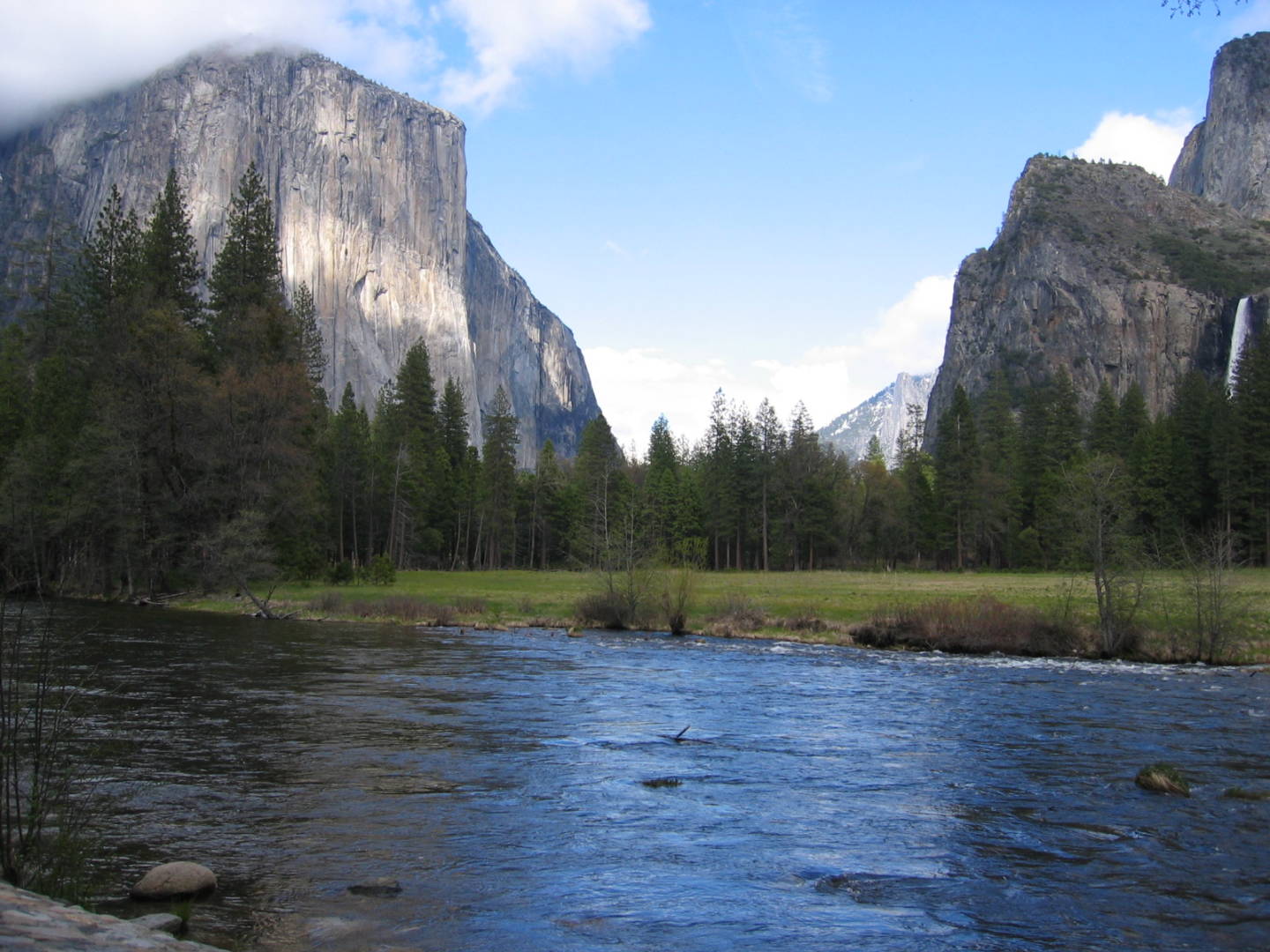
window.__IS_SSR__=true
window.__INITIAL_STATE__={
"attachmentsReducer": {
"audio_0": {
"type": "attachments",
"id": "audio_0",
"imgSizes": {
"kqedFullSize": {
"file": "https://ww2.kqed.org/news/wp-content/themes/KQED-unified/img/audio_bgs/background0.jpg"
}
}
},
"audio_1": {
"type": "attachments",
"id": "audio_1",
"imgSizes": {
"kqedFullSize": {
"file": "https://ww2.kqed.org/news/wp-content/themes/KQED-unified/img/audio_bgs/background1.jpg"
}
}
},
"audio_2": {
"type": "attachments",
"id": "audio_2",
"imgSizes": {
"kqedFullSize": {
"file": "https://ww2.kqed.org/news/wp-content/themes/KQED-unified/img/audio_bgs/background2.jpg"
}
}
},
"audio_3": {
"type": "attachments",
"id": "audio_3",
"imgSizes": {
"kqedFullSize": {
"file": "https://ww2.kqed.org/news/wp-content/themes/KQED-unified/img/audio_bgs/background3.jpg"
}
}
},
"audio_4": {
"type": "attachments",
"id": "audio_4",
"imgSizes": {
"kqedFullSize": {
"file": "https://ww2.kqed.org/news/wp-content/themes/KQED-unified/img/audio_bgs/background4.jpg"
}
}
},
"placeholder": {
"type": "attachments",
"id": "placeholder",
"imgSizes": {
"thumbnail": {
"file": "https://cdn.kqed.org/wp-content/uploads/2024/12/KQED-Default-Image-816638274-2000x1333-1-160x107.jpg",
"width": 160,
"height": 107,
"mimeType": "image/jpeg"
},
"medium": {
"file": "https://cdn.kqed.org/wp-content/uploads/2024/12/KQED-Default-Image-816638274-2000x1333-1-800x533.jpg",
"width": 800,
"height": 533,
"mimeType": "image/jpeg"
},
"medium_large": {
"file": "https://cdn.kqed.org/wp-content/uploads/2024/12/KQED-Default-Image-816638274-2000x1333-1-768x512.jpg",
"width": 768,
"height": 512,
"mimeType": "image/jpeg"
},
"large": {
"file": "https://cdn.kqed.org/wp-content/uploads/2024/12/KQED-Default-Image-816638274-2000x1333-1-1020x680.jpg",
"width": 1020,
"height": 680,
"mimeType": "image/jpeg"
},
"1536x1536": {
"file": "https://cdn.kqed.org/wp-content/uploads/2024/12/KQED-Default-Image-816638274-2000x1333-1-1536x1024.jpg",
"width": 1536,
"height": 1024,
"mimeType": "image/jpeg"
},
"fd-lrg": {
"file": "https://cdn.kqed.org/wp-content/uploads/2024/12/KQED-Default-Image-816638274-2000x1333-1-1536x1024.jpg",
"width": 1536,
"height": 1024,
"mimeType": "image/jpeg"
},
"fd-med": {
"file": "https://cdn.kqed.org/wp-content/uploads/2024/12/KQED-Default-Image-816638274-2000x1333-1-1020x680.jpg",
"width": 1020,
"height": 680,
"mimeType": "image/jpeg"
},
"fd-sm": {
"file": "https://cdn.kqed.org/wp-content/uploads/2024/12/KQED-Default-Image-816638274-2000x1333-1-800x533.jpg",
"width": 800,
"height": 533,
"mimeType": "image/jpeg"
},
"post-thumbnail": {
"file": "https://cdn.kqed.org/wp-content/uploads/2024/12/KQED-Default-Image-816638274-2000x1333-1-672x372.jpg",
"width": 672,
"height": 372,
"mimeType": "image/jpeg"
},
"twentyfourteen-full-width": {
"file": "https://cdn.kqed.org/wp-content/uploads/2024/12/KQED-Default-Image-816638274-2000x1333-1-1038x576.jpg",
"width": 1038,
"height": 576,
"mimeType": "image/jpeg"
},
"xxsmall": {
"file": "https://cdn.kqed.org/wp-content/uploads/2024/12/KQED-Default-Image-816638274-2000x1333-1-160x107.jpg",
"width": 160,
"height": 107,
"mimeType": "image/jpeg"
},
"xsmall": {
"file": "https://cdn.kqed.org/wp-content/uploads/2024/12/KQED-Default-Image-816638274-2000x1333-1-672x372.jpg",
"width": 672,
"height": 372,
"mimeType": "image/jpeg"
},
"small": {
"file": "https://cdn.kqed.org/wp-content/uploads/2024/12/KQED-Default-Image-816638274-2000x1333-1-672x372.jpg",
"width": 672,
"height": 372,
"mimeType": "image/jpeg"
},
"xlarge": {
"file": "https://cdn.kqed.org/wp-content/uploads/2024/12/KQED-Default-Image-816638274-2000x1333-1-1020x680.jpg",
"width": 1020,
"height": 680,
"mimeType": "image/jpeg"
},
"full-width": {
"file": "https://cdn.kqed.org/wp-content/uploads/2024/12/KQED-Default-Image-816638274-2000x1333-1-1920x1280.jpg",
"width": 1920,
"height": 1280,
"mimeType": "image/jpeg"
},
"guest-author-32": {
"file": "https://cdn.kqed.org/wp-content/uploads/2025/01/KQED-Default-Image-816638274-1333x1333-1-160x160.jpg",
"width": 32,
"height": 32,
"mimeType": "image/jpeg"
},
"guest-author-50": {
"file": "https://cdn.kqed.org/wp-content/uploads/2025/01/KQED-Default-Image-816638274-1333x1333-1-160x160.jpg",
"width": 50,
"height": 50,
"mimeType": "image/jpeg"
},
"guest-author-64": {
"file": "https://cdn.kqed.org/wp-content/uploads/2025/01/KQED-Default-Image-816638274-1333x1333-1-160x160.jpg",
"width": 64,
"height": 64,
"mimeType": "image/jpeg"
},
"guest-author-96": {
"file": "https://cdn.kqed.org/wp-content/uploads/2025/01/KQED-Default-Image-816638274-1333x1333-1-160x160.jpg",
"width": 96,
"height": 96,
"mimeType": "image/jpeg"
},
"guest-author-128": {
"file": "https://cdn.kqed.org/wp-content/uploads/2025/01/KQED-Default-Image-816638274-1333x1333-1-160x160.jpg",
"width": 128,
"height": 128,
"mimeType": "image/jpeg"
},
"detail": {
"file": "https://cdn.kqed.org/wp-content/uploads/2025/01/KQED-Default-Image-816638274-1333x1333-1-160x160.jpg",
"width": 160,
"height": 160,
"mimeType": "image/jpeg"
},
"kqedFullSize": {
"file": "https://cdn.kqed.org/wp-content/uploads/2024/12/KQED-Default-Image-816638274-2000x1333-1.jpg",
"width": 2000,
"height": 1333
}
}
},
"science_1959770": {
"type": "attachments",
"id": "science_1959770",
"meta": {
"index": "attachments_1716263798",
"site": "science",
"id": "1959770",
"found": true
},
"parent": 1957877,
"imgSizes": {
"twentyfourteen-full-width": {
"file": "https://ww2.kqed.org/app/uploads/sites/35/2020/03/YOSE_0618-1038x576.jpeg",
"width": 1038,
"mimeType": "image/jpeg",
"height": 576
},
"thumbnail": {
"file": "https://ww2.kqed.org/app/uploads/sites/35/2020/03/YOSE_0618-160x120.jpeg",
"width": 160,
"mimeType": "image/jpeg",
"height": 120
},
"post-thumbnail": {
"file": "https://ww2.kqed.org/app/uploads/sites/35/2020/03/YOSE_0618-672x372.jpeg",
"width": 672,
"mimeType": "image/jpeg",
"height": 372
},
"kqedFullSize": {
"file": "https://ww2.kqed.org/app/uploads/sites/35/2020/03/YOSE_0618.jpeg",
"width": 1572,
"height": 1178
},
"large": {
"file": "https://ww2.kqed.org/app/uploads/sites/35/2020/03/YOSE_0618-1020x764.jpeg",
"width": 1020,
"mimeType": "image/jpeg",
"height": 764
},
"medium": {
"file": "https://ww2.kqed.org/app/uploads/sites/35/2020/03/YOSE_0618-800x599.jpeg",
"width": 800,
"mimeType": "image/jpeg",
"height": 599
},
"medium_large": {
"file": "https://ww2.kqed.org/app/uploads/sites/35/2020/03/YOSE_0618-768x576.jpeg",
"width": 768,
"mimeType": "image/jpeg",
"height": 576
}
},
"publishDate": 1584899565,
"modified": 1596575600,
"caption": "Yosemite is an iconic national park. ",
"description": null,
"title": "IMG_0618.JPG",
"credit": "Craig Miller/Vox Terra",
"status": "inherit",
"isLoading": false,
"fetchFailed": false
},
"science_1967410": {
"type": "attachments",
"id": "science_1967410",
"meta": {
"index": "attachments_1716263798",
"site": "science",
"id": "1967410",
"found": true
},
"parent": 1967293,
"imgSizes": {
"twentyfourteen-full-width": {
"file": "https://ww2.kqed.org/app/uploads/sites/35/2020/07/Garden-Cacti-1038x576.jpg",
"width": 1038,
"mimeType": "image/jpeg",
"height": 576
},
"thumbnail": {
"file": "https://ww2.kqed.org/app/uploads/sites/35/2020/07/Garden-Cacti-160x107.jpg",
"width": 160,
"mimeType": "image/jpeg",
"height": 107
},
"post-thumbnail": {
"file": "https://ww2.kqed.org/app/uploads/sites/35/2020/07/Garden-Cacti-672x372.jpg",
"width": 672,
"mimeType": "image/jpeg",
"height": 372
},
"kqedFullSize": {
"file": "https://ww2.kqed.org/app/uploads/sites/35/2020/07/Garden-Cacti.jpg",
"width": 1500,
"height": 1000
},
"large": {
"file": "https://ww2.kqed.org/app/uploads/sites/35/2020/07/Garden-Cacti-1020x680.jpg",
"width": 1020,
"mimeType": "image/jpeg",
"height": 680
},
"medium": {
"file": "https://ww2.kqed.org/app/uploads/sites/35/2020/07/Garden-Cacti-800x533.jpg",
"width": 800,
"mimeType": "image/jpeg",
"height": 533
},
"medium_large": {
"file": "https://ww2.kqed.org/app/uploads/sites/35/2020/07/Garden-Cacti-768x512.jpg",
"width": 768,
"mimeType": "image/jpeg",
"height": 512
}
},
"publishDate": 1595270049,
"modified": 1595281261,
"caption": "The succulents garden at the San Francisco Botanical Garden, which is home to more than 9,000 different kinds of plants from around the world.",
"description": null,
"title": "holt_286_6307.tif",
"credit": "Courtesy of S.F. Botanical Garden",
"status": "inherit",
"isLoading": false,
"fetchFailed": false
},
"science_1967317": {
"type": "attachments",
"id": "science_1967317",
"meta": {
"index": "attachments_1716263798",
"site": "science",
"id": "1967317",
"found": true
},
"parent": 1967315,
"imgSizes": {
"twentyfourteen-full-width": {
"file": "https://ww2.kqed.org/app/uploads/sites/35/2020/07/RS43989_GettyImages-1219233550-qut-1038x576.jpg",
"width": 1038,
"mimeType": "image/jpeg",
"height": 576
},
"thumbnail": {
"file": "https://ww2.kqed.org/app/uploads/sites/35/2020/07/RS43989_GettyImages-1219233550-qut-160x104.jpg",
"width": 160,
"mimeType": "image/jpeg",
"height": 104
},
"post-thumbnail": {
"file": "https://ww2.kqed.org/app/uploads/sites/35/2020/07/RS43989_GettyImages-1219233550-qut-672x372.jpg",
"width": 672,
"mimeType": "image/jpeg",
"height": 372
},
"kqedFullSize": {
"file": "https://ww2.kqed.org/app/uploads/sites/35/2020/07/RS43989_GettyImages-1219233550-qut.jpg",
"width": 1920,
"height": 1242
},
"large": {
"file": "https://ww2.kqed.org/app/uploads/sites/35/2020/07/RS43989_GettyImages-1219233550-qut-1020x660.jpg",
"width": 1020,
"mimeType": "image/jpeg",
"height": 660
},
"1536x1536": {
"file": "https://ww2.kqed.org/app/uploads/sites/35/2020/07/RS43989_GettyImages-1219233550-qut-1536x994.jpg",
"width": 1536,
"mimeType": "image/jpeg",
"height": 994
},
"medium": {
"file": "https://ww2.kqed.org/app/uploads/sites/35/2020/07/RS43989_GettyImages-1219233550-qut-800x518.jpg",
"width": 800,
"mimeType": "image/jpeg",
"height": 518
},
"medium_large": {
"file": "https://ww2.kqed.org/app/uploads/sites/35/2020/07/RS43989_GettyImages-1219233550-qut-768x497.jpg",
"width": 768,
"mimeType": "image/jpeg",
"height": 497
}
},
"publishDate": 1595028720,
"modified": 1595033382,
"caption": "A driver wears a face mask and gloves as Uber and Lyft drivers with Rideshare Drivers United and the Transport Workers Union of America conduct a \"caravan protest\" outside the California Labor Commissioner’s Office amid the coronavirus pandemic on April 16, 2020, in Los Angeles, California. ",
"description": null,
"title": "Transportation Union And Rideshare Drivers United Members Hold Rolling Vehicle Protest Calling On State To Enforce AB5",
"credit": "Mario Tama/Getty Images",
"status": "inherit",
"isLoading": false,
"fetchFailed": false
},
"science_1967004": {
"type": "attachments",
"id": "science_1967004",
"meta": {
"index": "attachments_1716263798",
"site": "science",
"id": "1967004",
"found": true
},
"parent": 1966998,
"imgSizes": {
"twentyfourteen-full-width": {
"file": "https://ww2.kqed.org/app/uploads/sites/35/2020/07/GettyImages-467979700-1038x576.jpg",
"width": 1038,
"mimeType": "image/jpeg",
"height": 576
},
"thumbnail": {
"file": "https://ww2.kqed.org/app/uploads/sites/35/2020/07/GettyImages-467979700-160x104.jpg",
"width": 160,
"mimeType": "image/jpeg",
"height": 104
},
"post-thumbnail": {
"file": "https://ww2.kqed.org/app/uploads/sites/35/2020/07/GettyImages-467979700-672x372.jpg",
"width": 672,
"mimeType": "image/jpeg",
"height": 372
},
"kqedFullSize": {
"file": "https://ww2.kqed.org/app/uploads/sites/35/2020/07/GettyImages-467979700-scaled.jpg",
"width": 2560,
"height": 1669
},
"2048x2048": {
"file": "https://ww2.kqed.org/app/uploads/sites/35/2020/07/GettyImages-467979700-2048x1335.jpg",
"width": 2048,
"mimeType": "image/jpeg",
"height": 1335
},
"large": {
"file": "https://ww2.kqed.org/app/uploads/sites/35/2020/07/GettyImages-467979700-1020x665.jpg",
"width": 1020,
"mimeType": "image/jpeg",
"height": 665
},
"1536x1536": {
"file": "https://ww2.kqed.org/app/uploads/sites/35/2020/07/GettyImages-467979700-1536x1001.jpg",
"width": 1536,
"mimeType": "image/jpeg",
"height": 1001
},
"full-width": {
"file": "https://ww2.kqed.org/app/uploads/sites/35/2020/07/GettyImages-467979700-1920x1252.jpg",
"width": 1920,
"mimeType": "image/jpeg",
"height": 1252
},
"medium": {
"file": "https://ww2.kqed.org/app/uploads/sites/35/2020/07/GettyImages-467979700-800x522.jpg",
"width": 800,
"mimeType": "image/jpeg",
"height": 522
},
"medium_large": {
"file": "https://ww2.kqed.org/app/uploads/sites/35/2020/07/GettyImages-467979700-768x501.jpg",
"width": 768,
"mimeType": "image/jpeg",
"height": 501
}
},
"publishDate": 1594336763,
"modified": 1594752221,
"caption": "A boat navigates the waters of Lake Powell on March 28, 2015, in Page, Arizona. ",
"description": null,
"title": "Severe Drought Drains Colorado River Basin",
"credit": "Justin Sullivan/Getty Images",
"status": "inherit",
"isLoading": false,
"fetchFailed": false
},
"science_1966835": {
"type": "attachments",
"id": "science_1966835",
"meta": {
"index": "attachments_1716263798",
"site": "science",
"id": "1966835",
"found": true
},
"parent": 1966832,
"imgSizes": {
"twentyfourteen-full-width": {
"file": "https://ww2.kqed.org/app/uploads/sites/35/2020/07/RS43864_james-edward-mills-by-anna-belle-peevey-924x576.png",
"width": 924,
"mimeType": "image/png",
"height": 576
},
"thumbnail": {
"file": "https://ww2.kqed.org/app/uploads/sites/35/2020/07/RS43864_james-edward-mills-by-anna-belle-peevey-160x100.png",
"width": 160,
"mimeType": "image/png",
"height": 100
},
"post-thumbnail": {
"file": "https://ww2.kqed.org/app/uploads/sites/35/2020/07/RS43864_james-edward-mills-by-anna-belle-peevey-672x372.png",
"width": 672,
"mimeType": "image/png",
"height": 372
},
"kqedFullSize": {
"file": "https://ww2.kqed.org/app/uploads/sites/35/2020/07/RS43864_james-edward-mills-by-anna-belle-peevey.png",
"width": 924,
"height": 579
},
"medium": {
"file": "https://ww2.kqed.org/app/uploads/sites/35/2020/07/RS43864_james-edward-mills-by-anna-belle-peevey-800x501.png",
"width": 800,
"mimeType": "image/png",
"height": 501
},
"medium_large": {
"file": "https://ww2.kqed.org/app/uploads/sites/35/2020/07/RS43864_james-edward-mills-by-anna-belle-peevey-768x481.png",
"width": 768,
"mimeType": "image/png",
"height": 481
}
},
"publishDate": 1594051455,
"modified": 1594053473,
"caption": "James Edward Mills, a Black freelance journalist in Madison, Wisconsin, is the author of “\u003ca href=\"https://www.amazon.com/Adventure-Gap-Changing-Face-Outdoors/dp/1594858683\" target=\"_blank\" rel=\"noopener noreferrer\">The Adventure Gap: Changing the Face of the Outdoors\u003c/a>” ",
"description": null,
"title": "RS43864_james-edward-mills-by-anna-belle-peevey",
"credit": "Anna Belle Peevey/InsideClimate News",
"status": "inherit",
"isLoading": false,
"fetchFailed": false
},
"science_1966796": {
"type": "attachments",
"id": "science_1966796",
"meta": {
"index": "attachments_1716263798",
"site": "science",
"id": "1966796",
"found": true
},
"parent": 1966794,
"imgSizes": {
"twentyfourteen-full-width": {
"file": "https://ww2.kqed.org/app/uploads/sites/35/2020/07/RS43855_GettyImages-1073936772-qut-1038x576.jpg",
"width": 1038,
"mimeType": "image/jpeg",
"height": 576
},
"thumbnail": {
"file": "https://ww2.kqed.org/app/uploads/sites/35/2020/07/RS43855_GettyImages-1073936772-qut-160x107.jpg",
"width": 160,
"mimeType": "image/jpeg",
"height": 107
},
"post-thumbnail": {
"file": "https://ww2.kqed.org/app/uploads/sites/35/2020/07/RS43855_GettyImages-1073936772-qut-672x372.jpg",
"width": 672,
"mimeType": "image/jpeg",
"height": 372
},
"kqedFullSize": {
"file": "https://ww2.kqed.org/app/uploads/sites/35/2020/07/RS43855_GettyImages-1073936772-qut.jpg",
"width": 1920,
"height": 1280
},
"large": {
"file": "https://ww2.kqed.org/app/uploads/sites/35/2020/07/RS43855_GettyImages-1073936772-qut-1020x680.jpg",
"width": 1020,
"mimeType": "image/jpeg",
"height": 680
},
"1536x1536": {
"file": "https://ww2.kqed.org/app/uploads/sites/35/2020/07/RS43855_GettyImages-1073936772-qut-1536x1024.jpg",
"width": 1536,
"mimeType": "image/jpeg",
"height": 1024
},
"medium": {
"file": "https://ww2.kqed.org/app/uploads/sites/35/2020/07/RS43855_GettyImages-1073936772-qut-800x533.jpg",
"width": 800,
"mimeType": "image/jpeg",
"height": 533
},
"medium_large": {
"file": "https://ww2.kqed.org/app/uploads/sites/35/2020/07/RS43855_GettyImages-1073936772-qut-768x512.jpg",
"width": 768,
"mimeType": "image/jpeg",
"height": 512
}
},
"publishDate": 1593733734,
"modified": 1594059266,
"caption": "U.S. House Minority Leader Rep. Nancy Pelosi, fourth from left, speaks to members of the media as Rep. Adam Schiff, left, Rep. John Lewis, Rep. Eric Swalwell, Rep. Joyce Beatty, Rep. Kathy Castor, Rep. Joe Kennedy and Rep.-elect Ann Kirkpatrick listen in the lobby of the Longworth House Office Building on Nov. 28, 2018, in Washington, D.C. ",
"description": null,
"title": "House Democrats Elect New Leaders",
"credit": "Alex Wong/Getty Images",
"status": "inherit",
"isLoading": false,
"fetchFailed": false
},
"science_1945908": {
"type": "attachments",
"id": "science_1945908",
"meta": {
"index": "attachments_1716263798",
"site": "science",
"id": "1945908",
"found": true
},
"parent": 1945905,
"imgSizes": {
"twentyfourteen-full-width": {
"file": "https://ww2.kqed.org/app/uploads/sites/35/2019/07/RS27160_GettyImages-463198440-qut-1038x576.jpg",
"width": 1038,
"mimeType": "image/jpeg",
"height": 576
},
"thumbnail": {
"file": "https://ww2.kqed.org/app/uploads/sites/35/2019/07/RS27160_GettyImages-463198440-qut-160x110.jpg",
"width": 160,
"mimeType": "image/jpeg",
"height": 110
},
"post-thumbnail": {
"file": "https://ww2.kqed.org/app/uploads/sites/35/2019/07/RS27160_GettyImages-463198440-qut-672x372.jpg",
"width": 672,
"mimeType": "image/jpeg",
"height": 372
},
"kqedFullSize": {
"file": "https://ww2.kqed.org/app/uploads/sites/35/2019/07/RS27160_GettyImages-463198440-qut.jpg",
"width": 1920,
"height": 1320
},
"large": {
"file": "https://ww2.kqed.org/app/uploads/sites/35/2019/07/RS27160_GettyImages-463198440-qut-1020x701.jpg",
"width": 1020,
"mimeType": "image/jpeg",
"height": 701
},
"complete_open_graph": {
"file": "https://ww2.kqed.org/app/uploads/sites/35/2019/07/RS27160_GettyImages-463198440-qut-1200x825.jpg",
"width": 1200,
"mimeType": "image/jpeg",
"height": 825
},
"full-width": {
"file": "https://ww2.kqed.org/app/uploads/sites/35/2019/07/RS27160_GettyImages-463198440-qut-1920x1320.jpg",
"width": 1920,
"mimeType": "image/jpeg",
"height": 1320
},
"medium": {
"file": "https://ww2.kqed.org/app/uploads/sites/35/2019/07/RS27160_GettyImages-463198440-qut-800x550.jpg",
"width": 800,
"mimeType": "image/jpeg",
"height": 550
},
"medium_large": {
"file": "https://ww2.kqed.org/app/uploads/sites/35/2019/07/RS27160_GettyImages-463198440-qut-768x528.jpg",
"width": 768,
"mimeType": "image/jpeg",
"height": 528
}
},
"publishDate": 1564611195,
"modified": 1593193023,
"caption": "Trucks line up to enter a berth at the Port of Oakland on Feb. 11, 2015, in Oakland, California. ",
"description": null,
"title": null,
"credit": "Justin Sullivan/Getty Images",
"status": "inherit",
"isLoading": false,
"fetchFailed": false
},
"science_1966165": {
"type": "attachments",
"id": "science_1966165",
"meta": {
"index": "attachments_1716263798",
"site": "science",
"id": "1966165",
"found": true
},
"parent": 1966164,
"imgSizes": {
"twentyfourteen-full-width": {
"file": "https://ww2.kqed.org/app/uploads/sites/35/2020/06/RS40465_AGU2019_009-qut-1038x576.jpg",
"width": 1038,
"mimeType": "image/jpeg",
"height": 576
},
"thumbnail": {
"file": "https://ww2.kqed.org/app/uploads/sites/35/2020/06/RS40465_AGU2019_009-qut-160x107.jpg",
"width": 160,
"mimeType": "image/jpeg",
"height": 107
},
"post-thumbnail": {
"file": "https://ww2.kqed.org/app/uploads/sites/35/2020/06/RS40465_AGU2019_009-qut-672x372.jpg",
"width": 672,
"mimeType": "image/jpeg",
"height": 372
},
"kqedFullSize": {
"file": "https://ww2.kqed.org/app/uploads/sites/35/2020/06/RS40465_AGU2019_009-qut.jpg",
"width": 1920,
"height": 1280
},
"large": {
"file": "https://ww2.kqed.org/app/uploads/sites/35/2020/06/RS40465_AGU2019_009-qut-1020x680.jpg",
"width": 1020,
"mimeType": "image/jpeg",
"height": 680
},
"full-width": {
"file": "https://ww2.kqed.org/app/uploads/sites/35/2020/06/RS40465_AGU2019_009-qut-1920x1280.jpg",
"width": 1920,
"mimeType": "image/jpeg",
"height": 1280
},
"medium": {
"file": "https://ww2.kqed.org/app/uploads/sites/35/2020/06/RS40465_AGU2019_009-qut-800x533.jpg",
"width": 800,
"mimeType": "image/jpeg",
"height": 533
},
"medium_large": {
"file": "https://ww2.kqed.org/app/uploads/sites/35/2020/06/RS40465_AGU2019_009-qut-768x512.jpg",
"width": 768,
"mimeType": "image/jpeg",
"height": 512
}
},
"publishDate": 1592520693,
"modified": 1592607455,
"caption": "Pictures of the AGU Fall Centennial Conference at the Moscone Center in San Francisco, which took place from Dec. 9-13, 2019.",
"description": null,
"title": "RS40465_AGU2019_009-qut",
"credit": "Lindsey Moore/KQED",
"status": "inherit",
"isLoading": false,
"fetchFailed": false
},
"science_1035310": {
"type": "attachments",
"id": "science_1035310",
"meta": {
"index": "attachments_1716263798",
"site": "science",
"id": "1035310",
"found": true
},
"title": "RS1447_IMG_0627",
"publishDate": 1475180838,
"status": "inherit",
"parent": 1035198,
"modified": 1742580604,
"caption": "El Capitan in Yosemite National Park. ",
"credit": "Craig Miller/KQED",
"altTag": null,
"description": "El Capitan in Yosemite National Park.",
"imgSizes": {
"thumbnail": {
"file": "https://cdn.kqed.org/wp-content/uploads/sites/35/2016/09/RS1447_IMG_0627-400x300.jpg",
"width": 400,
"height": 300,
"mimeType": "image/jpeg"
},
"medium": {
"file": "https://cdn.kqed.org/wp-content/uploads/sites/35/2016/09/RS1447_IMG_0627-800x600.jpg",
"width": 800,
"height": 600,
"mimeType": "image/jpeg"
},
"medium_large": {
"file": "https://cdn.kqed.org/wp-content/uploads/sites/35/2016/09/RS1447_IMG_0627-768x576.jpg",
"width": 768,
"height": 576,
"mimeType": "image/jpeg"
},
"large": {
"file": "https://cdn.kqed.org/wp-content/uploads/sites/35/2016/09/RS1447_IMG_0627-1440x1080.jpg",
"width": 1440,
"height": 1080,
"mimeType": "image/jpeg"
},
"fd-med": {
"file": "https://cdn.kqed.org/wp-content/uploads/sites/35/2016/09/RS1447_IMG_0627-1180x885.jpg",
"width": 1180,
"height": 885,
"mimeType": "image/jpeg"
},
"fd-sm": {
"file": "https://cdn.kqed.org/wp-content/uploads/sites/35/2016/09/RS1447_IMG_0627-960x720.jpg",
"width": 960,
"height": 720,
"mimeType": "image/jpeg"
},
"post-thumbnail": {
"file": "https://cdn.kqed.org/wp-content/uploads/sites/35/2016/09/RS1447_IMG_0627-672x372.jpg",
"width": 672,
"height": 372,
"mimeType": "image/jpeg"
},
"twentyfourteen-full-width": {
"file": "https://cdn.kqed.org/wp-content/uploads/sites/35/2016/09/RS1447_IMG_0627-1038x576.jpg",
"width": 1038,
"height": 576,
"mimeType": "image/jpeg"
},
"guest-author-32": {
"file": "https://cdn.kqed.org/wp-content/uploads/sites/35/2016/09/RS1447_IMG_0627-32x32.jpg",
"width": 32,
"height": 32,
"mimeType": "image/jpeg"
},
"guest-author-50": {
"file": "https://cdn.kqed.org/wp-content/uploads/sites/35/2016/09/RS1447_IMG_0627-50x50.jpg",
"width": 50,
"height": 50,
"mimeType": "image/jpeg"
},
"guest-author-64": {
"file": "https://cdn.kqed.org/wp-content/uploads/sites/35/2016/09/RS1447_IMG_0627-64x64.jpg",
"width": 64,
"height": 64,
"mimeType": "image/jpeg"
},
"guest-author-96": {
"file": "https://cdn.kqed.org/wp-content/uploads/sites/35/2016/09/RS1447_IMG_0627-96x96.jpg",
"width": 96,
"height": 96,
"mimeType": "image/jpeg"
},
"guest-author-128": {
"file": "https://cdn.kqed.org/wp-content/uploads/sites/35/2016/09/RS1447_IMG_0627-128x128.jpg",
"width": 128,
"height": 128,
"mimeType": "image/jpeg"
},
"detail": {
"file": "https://cdn.kqed.org/wp-content/uploads/sites/35/2016/09/RS1447_IMG_0627-150x150.jpg",
"width": 150,
"height": 150,
"mimeType": "image/jpeg"
},
"kqedFullSize": {
"file": "https://cdn.kqed.org/wp-content/uploads/sites/35/2016/09/RS1447_IMG_0627.jpg",
"width": 1600,
"height": 1200
}
},
"isLoading": false,
"fetchFailed": false
},
"science_1924239": {
"type": "attachments",
"id": "science_1924239",
"meta": {
"index": "attachments_1716263798",
"site": "science",
"id": "1924239",
"found": true
},
"parent": 1924223,
"imgSizes": {
"small": {
"file": "https://ww2.kqed.org/app/uploads/sites/35/2018/05/RS2769_Download090427-054-520x364.jpg",
"width": 520,
"mimeType": "image/jpeg",
"height": 364
},
"twentyfourteen-full-width": {
"file": "https://ww2.kqed.org/app/uploads/sites/35/2018/05/RS2769_Download090427-054-1038x576.jpg",
"width": 1038,
"mimeType": "image/jpeg",
"height": 576
},
"thumbnail": {
"file": "https://ww2.kqed.org/app/uploads/sites/35/2018/05/RS2769_Download090427-054-160x112.jpg",
"width": 160,
"mimeType": "image/jpeg",
"height": 112
},
"fd-sm": {
"file": "https://ww2.kqed.org/app/uploads/sites/35/2018/05/RS2769_Download090427-054-960x672.jpg",
"width": 960,
"mimeType": "image/jpeg",
"height": 672
},
"post-thumbnail": {
"file": "https://ww2.kqed.org/app/uploads/sites/35/2018/05/RS2769_Download090427-054-672x372.jpg",
"width": 672,
"mimeType": "image/jpeg",
"height": 372
},
"xsmall": {
"file": "https://ww2.kqed.org/app/uploads/sites/35/2018/05/RS2769_Download090427-054-375x263.jpg",
"width": 375,
"mimeType": "image/jpeg",
"height": 263
},
"kqedFullSize": {
"file": "https://ww2.kqed.org/app/uploads/sites/35/2018/05/RS2769_Download090427-054.jpg",
"width": 2000,
"height": 1400
},
"large": {
"file": "https://ww2.kqed.org/app/uploads/sites/35/2018/05/RS2769_Download090427-054-1020x714.jpg",
"width": 1020,
"mimeType": "image/jpeg",
"height": 714
},
"xlarge": {
"file": "https://ww2.kqed.org/app/uploads/sites/35/2018/05/RS2769_Download090427-054-1180x826.jpg",
"width": 1180,
"mimeType": "image/jpeg",
"height": 826
},
"complete_open_graph": {
"file": "https://ww2.kqed.org/app/uploads/sites/35/2018/05/RS2769_Download090427-054-1200x840.jpg",
"width": 1200,
"mimeType": "image/jpeg",
"height": 840
},
"guest-author-50": {
"file": "https://ww2.kqed.org/app/uploads/sites/35/2018/05/RS2769_Download090427-054-50x50.jpg",
"width": 50,
"mimeType": "image/jpeg",
"height": 50
},
"guest-author-96": {
"file": "https://ww2.kqed.org/app/uploads/sites/35/2018/05/RS2769_Download090427-054-96x96.jpg",
"width": 96,
"mimeType": "image/jpeg",
"height": 96
},
"medium": {
"file": "https://ww2.kqed.org/app/uploads/sites/35/2018/05/RS2769_Download090427-054-800x560.jpg",
"width": 800,
"mimeType": "image/jpeg",
"height": 560
},
"guest-author-64": {
"file": "https://ww2.kqed.org/app/uploads/sites/35/2018/05/RS2769_Download090427-054-64x64.jpg",
"width": 64,
"mimeType": "image/jpeg",
"height": 64
},
"guest-author-32": {
"file": "https://ww2.kqed.org/app/uploads/sites/35/2018/05/RS2769_Download090427-054-32x32.jpg",
"width": 32,
"mimeType": "image/jpeg",
"height": 32
},
"fd-lrg": {
"file": "https://ww2.kqed.org/app/uploads/sites/35/2018/05/RS2769_Download090427-054-1920x1344.jpg",
"width": 1920,
"mimeType": "image/jpeg",
"height": 1344
},
"fd-med": {
"file": "https://ww2.kqed.org/app/uploads/sites/35/2018/05/RS2769_Download090427-054-1180x826.jpg",
"width": 1180,
"mimeType": "image/jpeg",
"height": 826
},
"full-width": {
"file": "https://ww2.kqed.org/app/uploads/sites/35/2018/05/RS2769_Download090427-054-1920x1344.jpg",
"width": 1920,
"mimeType": "image/jpeg",
"height": 1344
},
"detail": {
"file": "https://ww2.kqed.org/app/uploads/sites/35/2018/05/RS2769_Download090427-054-150x150.jpg",
"width": 150,
"mimeType": "image/jpeg",
"height": 150
},
"medium_large": {
"file": "https://ww2.kqed.org/app/uploads/sites/35/2018/05/RS2769_Download090427-054-768x538.jpg",
"width": 768,
"mimeType": "image/jpeg",
"height": 538
},
"guest-author-128": {
"file": "https://ww2.kqed.org/app/uploads/sites/35/2018/05/RS2769_Download090427-054-128x128.jpg",
"width": 128,
"mimeType": "image/jpeg",
"height": 128
},
"xxsmall": {
"file": "https://ww2.kqed.org/app/uploads/sites/35/2018/05/RS2769_Download090427-054-240x168.jpg",
"width": 240,
"mimeType": "image/jpeg",
"height": 168
}
},
"publishDate": 1526939621,
"modified": 1590770474,
"caption": "The Phillips 66 refinery in Rodeo. ",
"description": null,
"title": "RS2769_Download090427-054",
"credit": "Craig Miller/KQED",
"status": "inherit",
"isLoading": false,
"fetchFailed": false
},
"science_1964533": {
"type": "attachments",
"id": "science_1964533",
"meta": {
"index": "attachments_1716263798",
"site": "science",
"id": "1964533",
"found": true
},
"parent": 1964529,
"imgSizes": {
"thumbnail": {
"file": "https://ww2.kqed.org/app/uploads/sites/35/2020/05/Falconsbandedlegs750-160x107.jpg",
"width": 160,
"mimeType": "image/jpeg",
"height": 107
},
"post-thumbnail": {
"file": "https://ww2.kqed.org/app/uploads/sites/35/2020/05/Falconsbandedlegs750-672x372.jpg",
"width": 672,
"mimeType": "image/jpeg",
"height": 372
},
"kqedFullSize": {
"file": "https://ww2.kqed.org/app/uploads/sites/35/2020/05/Falconsbandedlegs750.jpg",
"width": 750,
"height": 500
}
},
"publishDate": 1589834032,
"modified": 1589834059,
"caption": null,
"description": null,
"title": "Falconsbandedlegs750",
"credit": "Mary Malec/UC Berkeley",
"status": "inherit",
"isLoading": false,
"fetchFailed": false
},
"science_1956452": {
"type": "attachments",
"id": "science_1956452",
"meta": {
"index": "attachments_1716263798",
"site": "science",
"id": "1956452",
"found": true
},
"parent": 1956446,
"imgSizes": {
"twentyfourteen-full-width": {
"file": "https://ww2.kqed.org/app/uploads/sites/35/2020/02/N3-Ranch-_-Photography-67-1280x852-1038x576.jpeg",
"width": 1038,
"mimeType": "image/jpeg",
"height": 576
},
"thumbnail": {
"file": "https://ww2.kqed.org/app/uploads/sites/35/2020/02/N3-Ranch-_-Photography-67-1280x852-160x107.jpeg",
"width": 160,
"mimeType": "image/jpeg",
"height": 107
},
"post-thumbnail": {
"file": "https://ww2.kqed.org/app/uploads/sites/35/2020/02/N3-Ranch-_-Photography-67-1280x852-672x372.jpeg",
"width": 672,
"mimeType": "image/jpeg",
"height": 372
},
"kqedFullSize": {
"file": "https://ww2.kqed.org/app/uploads/sites/35/2020/02/N3-Ranch-_-Photography-67-1280x852.jpeg",
"width": 1280,
"height": 852
},
"large": {
"file": "https://ww2.kqed.org/app/uploads/sites/35/2020/02/N3-Ranch-_-Photography-67-1280x852-1020x679.jpeg",
"width": 1020,
"mimeType": "image/jpeg",
"height": 679
},
"medium": {
"file": "https://ww2.kqed.org/app/uploads/sites/35/2020/02/N3-Ranch-_-Photography-67-1280x852-800x533.jpeg",
"width": 800,
"mimeType": "image/jpeg",
"height": 533
},
"medium_large": {
"file": "https://ww2.kqed.org/app/uploads/sites/35/2020/02/N3-Ranch-_-Photography-67-1280x852-768x511.jpeg",
"width": 768,
"mimeType": "image/jpeg",
"height": 511
}
},
"publishDate": 1580774505,
"modified": 1589590145,
"caption": "The N3 Cattle Company Ranch in Livermore, 45 miles east of San Francisco, is a possible location for the first new state park in a decade.",
"description": null,
"title": "N3-Ranch-_-Photography-67-1280x852",
"credit": "California Outdoor Properties",
"status": "inherit",
"isLoading": false,
"fetchFailed": false
}
},
"audioPlayerReducer": {
"postId": "stream_live",
"isPaused": true,
"isPlaying": false,
"pfsActive": false,
"pledgeModalIsOpen": true,
"playerDrawerIsOpen": false,
"liveAudioPlayStartedAt": 0,
"liveAudioPlayContext": ""
},
"authorsReducer": {
"byline_science_1967495": {
"type": "authors",
"id": "byline_science_1967495",
"meta": {
"override": true
},
"slug": "byline_science_1967495",
"name": "Matthew Daly\u003cbr />Associated Press",
"isLoading": false
},
"byline_science_1966998": {
"type": "authors",
"id": "byline_science_1966998",
"meta": {
"override": true
},
"slug": "byline_science_1966998",
"name": " Judy Fahys \u003cbr />InsideClimate News\u003cbr>",
"isLoading": false
},
"byline_science_1966832": {
"type": "authors",
"id": "byline_science_1966832",
"meta": {
"override": true
},
"slug": "byline_science_1966832",
"name": "Anna Belle Peevey, InsideClimate News",
"isLoading": false
},
"byline_science_1966794": {
"type": "authors",
"id": "byline_science_1966794",
"meta": {
"override": true
},
"slug": "byline_science_1966794",
"name": "Marianne Lavelle \u003cbr />InsideClimate News\u003cbr>",
"isLoading": false
},
"kqedscience": {
"type": "authors",
"id": "6387",
"meta": {
"index": "authors_1716337520",
"id": "6387",
"found": true
},
"name": "KQED Science",
"firstName": "KQED",
"lastName": "Science",
"slug": "kqedscience",
"email": "kqedscience@gmail.com",
"display_author_email": false,
"staff_mastheads": [],
"title": null,
"bio": "KQED Science brings you award-winning science and environment coverage from the Bay Area and beyond by the flagship Northern California PBS and NPR affiliate.",
"avatar": "https://secure.gravatar.com/avatar/5a295ff49cf82a8c0f30937d3f788b2f?s=600&d=blank&r=g",
"twitter": null,
"facebook": null,
"instagram": null,
"linkedin": null,
"sites": [
{
"site": "science",
"roles": [
"contributor"
]
},
{
"site": "quest",
"roles": [
"editor"
]
},
{
"site": "food",
"roles": [
"contributor"
]
}
],
"headData": {
"title": "KQED Science | KQED",
"description": null,
"ogImgSrc": "https://secure.gravatar.com/avatar/5a295ff49cf82a8c0f30937d3f788b2f?s=600&d=blank&r=g",
"twImgSrc": "https://secure.gravatar.com/avatar/5a295ff49cf82a8c0f30937d3f788b2f?s=600&d=blank&r=g"
},
"isLoading": false,
"link": "/author/kqedscience"
},
"parcuni": {
"type": "authors",
"id": "11368",
"meta": {
"index": "authors_1716337520",
"id": "11368",
"found": true
},
"name": "Peter Arcuni",
"firstName": "Peter",
"lastName": "Arcuni",
"slug": "parcuni",
"email": "parcuni@KQED.org",
"display_author_email": false,
"staff_mastheads": [
"science"
],
"title": "Reporter",
"bio": "Peter reports radio and online stories for \u003cem>KQED Science\u003c/em>. His work has also appeared on the \u003cem>The California Report\u003c/em> morning show and \u003cem>KQED News\u003c/em>. His production credits include \u003cem>The California Report, The California Report Magazine\u003c/em> and KQED's local news podcast \u003cem>The Bay\u003c/em>. Other credits include NPR's \u003cem>All Things Considered\u003c/em>, WNYC's \u003cem>Science Friday\u003c/em>, WBUR's \u003cem>Here & Now\u003c/em>, WIRED and SFGate. Peter graduated from Brown University and earned a master's degree in journalism from Stanford. He's covered everything from homelessness to wildfires, health, the environment, arts and Thanksgiving in San Quentin prison. In other lives, he played rock n roll music and studied neuroscience. You can email him at: parcuni@kqed.org",
"avatar": "https://secure.gravatar.com/avatar/d5032f6f27199d478af34ad2e1d98732?s=600&d=blank&r=g",
"twitter": "peterarcuni",
"facebook": null,
"instagram": null,
"linkedin": null,
"sites": [
{
"site": "news",
"roles": [
"editor"
]
},
{
"site": "science",
"roles": [
"editor"
]
}
],
"headData": {
"title": "Peter Arcuni | KQED",
"description": "Reporter",
"ogImgSrc": "https://secure.gravatar.com/avatar/d5032f6f27199d478af34ad2e1d98732?s=600&d=blank&r=g",
"twImgSrc": "https://secure.gravatar.com/avatar/d5032f6f27199d478af34ad2e1d98732?s=600&d=blank&r=g"
},
"isLoading": false,
"link": "/author/parcuni"
},
"kevinstark": {
"type": "authors",
"id": "11608",
"meta": {
"index": "authors_1716337520",
"id": "11608",
"found": true
},
"name": "Kevin Stark",
"firstName": "Kevin",
"lastName": "Stark",
"slug": "kevinstark",
"email": "kstark@kqed.org",
"display_author_email": true,
"staff_mastheads": [
"science"
],
"title": "Senior Editor",
"bio": "Kevin is a senior editor for KQED Science, managing the station's health and climate desks. His journalism career began in the Pacific Northwest, and he later became a lead reporter for the San Francisco Public Press. His work has appeared in Pacific Standard magazine, the Energy News Network, the Center for Investigative Reporting's Reveal and WBEZ in Chicago. Kevin joined KQED in 2019, and has covered issues related to energy, wildfire, climate change and the environment.",
"avatar": "https://secure.gravatar.com/avatar/365aaa4b597d3a8374f67504ff0facd323d7906e8eb4be0a7efd2427408e802c?s=600&d=blank&r=g",
"twitter": "starkkev",
"bluesky": null,
"facebook": null,
"instagram": null,
"linkedin": null,
"sites": [
{
"site": "",
"roles": [
"editor"
]
},
{
"site": "news",
"roles": [
"editor"
]
},
{
"site": "science",
"roles": [
"administrator"
]
}
],
"headData": {
"title": "Kevin Stark | KQED",
"description": "Senior Editor",
"ogImgSrc": "https://secure.gravatar.com/avatar/365aaa4b597d3a8374f67504ff0facd323d7906e8eb4be0a7efd2427408e802c?s=600&d=blank&r=g",
"twImgSrc": "https://secure.gravatar.com/avatar/365aaa4b597d3a8374f67504ff0facd323d7906e8eb4be0a7efd2427408e802c?s=600&d=blank&r=g"
},
"isLoading": false,
"link": "/author/kevinstark"
}
},
"pagesReducer": {
"science_category_environment": {
"type": "terms",
"id": "science_35",
"meta": {
"index": "terms_1716263798",
"site": "science",
"id": "35",
"score": 12.13823
},
"featImg": null,
"name": "Environment",
"description": null,
"taxonomy": "category",
"headData": {
"twImgId": null,
"twTitle": null,
"ogTitle": null,
"ogImgId": null,
"twDescription": null,
"description": null,
"title": "Environment Archives | KQED Science",
"ogDescription": null
},
"ttid": 37,
"slug": "environment",
"isLoading": false,
"title": "Environment",
"pageMeta": {
"site": "science",
"WpPageTemplate": "page-topic-editorial",
"currentPage": 33
},
"blocks": [
{
"blockName": "kqed/post-list",
"attrs": {
"layout": "cardArticle2",
"query": "posts/science?category=environment",
"seeMore": false,
"paginated": true,
"page": 33
}
},
{
"blockName": "kqed/ad"
}
]
}
},
"pfsSessionReducer": {},
"postsReducer": {
"stream_live": {
"type": "live",
"id": "stream_live",
"audioUrl": "https://streams.kqed.org/kqedradio",
"title": "Live Stream",
"excerpt": "Live Stream information currently unavailable.",
"link": "/radio",
"featImg": "",
"label": {
"name": "KQED Live",
"link": "/"
}
},
"stream_kqedNewscast": {
"type": "posts",
"id": "stream_kqedNewscast",
"audioUrl": "https://www.kqed.org/.stream/anon/radio/RDnews/newscast.mp3?_=1",
"title": "KQED Newscast",
"featImg": "",
"label": {
"name": "88.5 FM",
"link": "/"
}
},
"science_1967495": {
"type": "posts",
"id": "science_1967495",
"meta": {
"index": "posts_1716263798",
"site": "science",
"id": "1967495",
"score": null,
"sort": [
1595455791000
]
},
"parent": 0,
"labelTerm": {},
"blocks": [],
"publishDate": 1595455791,
"format": "standard",
"title": "The Most Significant Conservation Measure in 50 Years Is Now Headed to Trump's Desk",
"headTitle": "The Most Significant Conservation Measure in 50 Years Is Now Headed to Trump’s Desk | KQED",
"content": "\u003cp>A bipartisan bill that would spend nearly $3 billion on conservation projects, outdoor recreation and maintenance of national parks and other public lands is on its way to the president’s desk after winning final legislative approval.\u003c/p>\n\u003cdiv class=\"Raw-slyvem-0 kRDbto\">\n\u003cp>Supporters say the measure, known as the Great American Outdoors Act, would be the most significant conservation legislation enacted in nearly half a century.\u003c/p>\n\u003c/div>\n\u003cdiv class=\"Raw-slyvem-0 kRDbto\">\n\u003cp>The House approved the bill 310-107 on Wednesday, weeks after it won overwhelming approval in the Senate. The bill now goes to President Donald Trump, who is expected to sign it.\u003c/p>\n\u003c/div>\n\u003cdiv class=\"Raw-slyvem-0 kRDbto\">\n\u003cp>Trump’s daughter, Ivanka, urged passage of the bill in a tweet. The younger Trump, a senior adviser to her father, is expected to celebrate the bill’s passage at events in \u003ca href=\"https://www.usnews.com/news/best-states/colorado\">Colorado\u003c/a> this week with Interior Secretary David Bernhardt and Sen. Cory Gardner, one of the bill’s sponsors.\u003c/p>\n\u003c/div>\n\u003cdiv class=\"Raw-slyvem-0 kRDbto\">\n\u003cp>The bill would spend about $900 million a year — double current spending — on the popular Land and Water Conservation Fund, and an additional $1.9 billion per year on improvements at national parks, forests, wildlife refuges and rangelands.\u003c/p>\n\u003c/div>\n\u003cdiv class=\"Raw-slyvem-0 kRDbto\">\n\u003cp>\u003ca href=\"https://www.usnews.com/news/best-states/arizona\">Arizona\u003c/a> Rep. Raul Grijalva, chairman of the House Natural Resources Committee, called the bill “one of the biggest wins for conservation in decades.”\u003c/p>\n\u003c/div>\n\u003cdiv class=\"Raw-slyvem-0 kRDbto\">\n\u003cp>“We have a generational opportunity to ensure America’s crown jewels are protected,” he said, adding that the bill would ensure all tools available are used to help the nation respond to the climate crisis and protect landscapes, clean water and clean air.\u003c/p>\n\u003c/div>\n\u003cdiv class=\"Raw-slyvem-0 kRDbto\">\n\u003cp>At a time of intense partisan disagreements, “it is perhaps more necessary that ever to demonstrate we can still bridge the divide … and work together to find common ground,” said Grijalva, a Democrat. “This bill goes beyond politics. It’s about ensuring that we pass along a legacy of public lands.”\u003c/p>\n\u003c/div>\n\u003cdiv class=\"Raw-slyvem-0 kRDbto\">\n\u003cp>Supporters say the bill will create at least 100,000 jobs, while restoring national parks and repairing trails and forest systems.\u003c/p>\n\u003c/div>\n\u003cdiv class=\"Raw-slyvem-0 kRDbto\">\n\u003cp>“At a time when our country needs to create jobs and rebuild local economies while also protecting nature and places where everyone can recreate outdoors, the Great American Outdoors Act answers the call on all fronts,” said Jennifer Morris, CEO of The Nature Conservancy, an advocacy group.\u003c/p>\n\u003c/div>\n\u003cdiv class=\"Box-w0dun1-0 placeAds__InArticleSpace-sc-1q5ympa-1 hIqQMB Hide-kg09cx-0 wTbeK\" data-ad-collide=\"false\">\n\u003cdiv class=\"Box-w0dun1-0 placeAds__InArticleAd-sc-1q5ympa-0 lbDnxr\">\n\u003cdiv class=\"Ad__Container-sc-1ah7c5n-0 UueCe\">\n\u003cdiv id=\"inart_1\" class=\"ad lazy \" data-component=\"ad\" data-id=\"inart_1\" data-type=\"inart\" data-sizes=\"1x1,fluid\" data-lazy=\"true\" data-bidders=\"true\" data-media-types=\"banner,video,instream\" data-exclude-bidders=\"\" data-ad-unit-path=\"/4020/usn.news/civic/beststates/article/apstates\" data-auto-refresh=\"false\" data-scroll-refresh=\"false\" data-view-height-refresh=\"false\" data-collision-refresh=\"false\" data-pos=\"inart_1\" data-google-query-id=\"CK3l1pfr4eoCFUhkfgodm-UIWw\">\n\u003cdiv class=\"Raw-slyvem-0 kRDbto\">\n\u003cp>“There couldn’t be a more important time than now to improve parks, protect birds and wildlife, and create jobs in every state across the country,” added Sarah Greenberger, senior vice president for conservation policy of the National Audubon Society.\u003c/p>\n\u003c/div>\n\u003cdiv class=\"Raw-slyvem-0 kRDbto\">\n\u003cp>While bipartisan, the bill was led in the Senate by Gardner and fellow GOP Sen. Steve Daines of \u003ca href=\"https://www.usnews.com/news/best-states/montana\">Montana\u003c/a>. Gardner and Daines are among the Senate’s most vulnerable incumbents, and each represents a state where the outdoor economy and tourism at sites such as Rocky Mountain and Yellowstone national parks play an outsize role.\u003c/p>\n\u003c/div>\n\u003cdiv class=\"Raw-slyvem-0 kRDbto\">\n\u003cp>Daines and Gardner persuaded the president to support the bill at a White House meeting this year, even though Trump has repeatedly tried to slash spending for the Land and Water Conservation Fund in his budget proposals. Trump soon tweeted his support for the bill, saying it “will be HISTORIC for our beautiful public lands.″\u003c/p>\n\u003c/div>\n\u003cdiv class=\"Raw-slyvem-0 kRDbto\">\n\u003cp>Sen. Martin Heinrich, D-N.M., said permanently and fully funding the conservation program “will be a monumental victory for conservation and the places where we all get outside.″ He cited studies showing that each dollar spent by the fund creates an additional four dollars in economic value.\u003c/p>\n\u003c/div>\n\u003cdiv class=\"Raw-slyvem-0 kRDbto\">\n\u003cp>Visitors cannot enjoy national parks such as Yellowstone and Yosemite “if the bathrooms don’t work, if the trails and campgrounds aren’t open, or if the roads are in disrepair,″ Heinrich said. “These places that we all cherish deserve better.″\u003c/p>\n\u003c/div>\n\u003cdiv class=\"Raw-slyvem-0 kRDbto\">\n\u003cp>The bill’s opponents, mostly Republicans, complained that it would not eliminate an estimated $20 billion maintenance backlog on 640 million acres of federally owned lands. The bill authorizes $9.5 billion for maintenance over five years.\u003c/p>\n\u003c/div>\n\u003cdiv class=\"Raw-slyvem-0 kRDbto\">\n\u003cp>“The Great American Outdoors Act is a perfect example of Washington playing political games,” said \u003ca href=\"https://www.usnews.com/news/best-states/utah\">Utah\u003c/a> Rep. Rob Bishop, the top Republican on the natural resources panel. He accused the bill’s supporters of taking “a bipartisan and popular idea to fix our parks and spur job creation” and combining it with “a divisive measure” on land and water conservation “that will increase our debt” and do little for economic recovery.\u003c/p>\n\u003c/div>\n\u003cdiv class=\"Raw-slyvem-0 kRDbto\">\n\u003cp>“At a time when America is putting a record amount of debt on the backs of future generations to cope with COVID-19, now is not the time for reckless spending or new mandatory programs that have nothing to do with the pandemic or stimulating growth,” Bishop said.\u003c/p>\n\u003c/div>\n\u003cdiv class=\"Raw-slyvem-0 kRDbto\">\n\u003cp>Copyright 2020 The \u003ca href=\"http://www.ap.org/\" target=\"_blank\" rel=\"noopener noreferrer\">Associated Press\u003c/a>. All rights reserved.\u003c/p>\n\u003c/div>\n\u003c/div>\n\u003c/div>\n\u003c/div>\n\u003c/div>\n\u003cp>[ad fullwidth]\u003c/p>\u003cp>\u003c/p>\n",
"stats": {
"hasVideo": false,
"hasChartOrMap": false,
"hasAudio": false,
"hasPolis": false,
"wordCount": 823,
"hasGoogleForm": false,
"hasGallery": false,
"hasHearkenModule": false,
"iframeSrcs": [],
"paragraphCount": 21
},
"modified": 1704847165,
"excerpt": "The House on Wednesday joined the Senate in passing the bipartisan Great American Outdoors Act, a bill allocating nearly $3 billion for conservation projects, outdoor recreation and maintenance of national parks and other public lands. ",
"headData": {
"twImgId": "",
"twTitle": "",
"ogTitle": "",
"ogImgId": "",
"twDescription": "",
"description": "The House on Wednesday joined the Senate in passing the bipartisan Great American Outdoors Act, a bill allocating nearly $3 billion for conservation projects, outdoor recreation and maintenance of national parks and other public lands. ",
"title": "The Most Significant Conservation Measure in 50 Years Is Now Headed to Trump's Desk | KQED",
"ogDescription": "",
"schema": {
"@context": "https://schema.org",
"@type": "Article",
"headline": "The Most Significant Conservation Measure in 50 Years Is Now Headed to Trump's Desk",
"datePublished": "2020-07-22T15:09:51-07:00",
"dateModified": "2024-01-09T16:39:25-08:00",
"image": "https://cdn.kqed.org/wp-content/uploads/2020/02/KQED-OG-Image@1x.png"
}
},
"guestAuthors": [],
"slug": "the-most-significant-conservation-measure-in-50-years-is-now-headed-to-trumps-desk",
"status": "publish",
"nprByline": "Matthew Daly\u003cbr />Associated Press",
"sticky": false,
"source": "Conservation",
"path": "/science/1967495/the-most-significant-conservation-measure-in-50-years-is-now-headed-to-trumps-desk",
"audioTrackLength": null,
"parsedContent": [
{
"type": "contentString",
"content": "\u003cdiv class=\"post-body\">\u003cp>\u003cp>A bipartisan bill that would spend nearly $3 billion on conservation projects, outdoor recreation and maintenance of national parks and other public lands is on its way to the president’s desk after winning final legislative approval.\u003c/p>\n\u003cdiv class=\"Raw-slyvem-0 kRDbto\">\n\u003cp>Supporters say the measure, known as the Great American Outdoors Act, would be the most significant conservation legislation enacted in nearly half a century.\u003c/p>\n\u003c/div>\n\u003cdiv class=\"Raw-slyvem-0 kRDbto\">\n\u003cp>The House approved the bill 310-107 on Wednesday, weeks after it won overwhelming approval in the Senate. The bill now goes to President Donald Trump, who is expected to sign it.\u003c/p>\n\u003c/div>\n\u003cdiv class=\"Raw-slyvem-0 kRDbto\">\n\u003cp>Trump’s daughter, Ivanka, urged passage of the bill in a tweet. The younger Trump, a senior adviser to her father, is expected to celebrate the bill’s passage at events in \u003ca href=\"https://www.usnews.com/news/best-states/colorado\">Colorado\u003c/a> this week with Interior Secretary David Bernhardt and Sen. Cory Gardner, one of the bill’s sponsors.\u003c/p>\n\u003c/div>\n\u003cdiv class=\"Raw-slyvem-0 kRDbto\">\n\u003cp>The bill would spend about $900 million a year — double current spending — on the popular Land and Water Conservation Fund, and an additional $1.9 billion per year on improvements at national parks, forests, wildlife refuges and rangelands.\u003c/p>\n\u003c/div>\n\u003cdiv class=\"Raw-slyvem-0 kRDbto\">\n\u003cp>\u003ca href=\"https://www.usnews.com/news/best-states/arizona\">Arizona\u003c/a> Rep. Raul Grijalva, chairman of the House Natural Resources Committee, called the bill “one of the biggest wins for conservation in decades.”\u003c/p>\n\u003c/div>\n\u003cdiv class=\"Raw-slyvem-0 kRDbto\">\n\u003cp>“We have a generational opportunity to ensure America’s crown jewels are protected,” he said, adding that the bill would ensure all tools available are used to help the nation respond to the climate crisis and protect landscapes, clean water and clean air.\u003c/p>\n\u003c/div>\n\u003cdiv class=\"Raw-slyvem-0 kRDbto\">\n\u003cp>At a time of intense partisan disagreements, “it is perhaps more necessary that ever to demonstrate we can still bridge the divide … and work together to find common ground,” said Grijalva, a Democrat. “This bill goes beyond politics. It’s about ensuring that we pass along a legacy of public lands.”\u003c/p>\n\u003c/div>\n\u003cdiv class=\"Raw-slyvem-0 kRDbto\">\n\u003cp>Supporters say the bill will create at least 100,000 jobs, while restoring national parks and repairing trails and forest systems.\u003c/p>\n\u003c/div>\n\u003cdiv class=\"Raw-slyvem-0 kRDbto\">\n\u003cp>“At a time when our country needs to create jobs and rebuild local economies while also protecting nature and places where everyone can recreate outdoors, the Great American Outdoors Act answers the call on all fronts,” said Jennifer Morris, CEO of The Nature Conservancy, an advocacy group.\u003c/p>\n\u003c/div>\n\u003cdiv class=\"Box-w0dun1-0 placeAds__InArticleSpace-sc-1q5ympa-1 hIqQMB Hide-kg09cx-0 wTbeK\" data-ad-collide=\"false\">\n\u003cdiv class=\"Box-w0dun1-0 placeAds__InArticleAd-sc-1q5ympa-0 lbDnxr\">\n\u003cdiv class=\"Ad__Container-sc-1ah7c5n-0 UueCe\">\n\u003cdiv id=\"inart_1\" class=\"ad lazy \" data-component=\"ad\" data-id=\"inart_1\" data-type=\"inart\" data-sizes=\"1x1,fluid\" data-lazy=\"true\" data-bidders=\"true\" data-media-types=\"banner,video,instream\" data-exclude-bidders=\"\" data-ad-unit-path=\"/4020/usn.news/civic/beststates/article/apstates\" data-auto-refresh=\"false\" data-scroll-refresh=\"false\" data-view-height-refresh=\"false\" data-collision-refresh=\"false\" data-pos=\"inart_1\" data-google-query-id=\"CK3l1pfr4eoCFUhkfgodm-UIWw\">\n\u003cdiv class=\"Raw-slyvem-0 kRDbto\">\n\u003cp>“There couldn’t be a more important time than now to improve parks, protect birds and wildlife, and create jobs in every state across the country,” added Sarah Greenberger, senior vice president for conservation policy of the National Audubon Society.\u003c/p>\n\u003c/div>\n\u003cdiv class=\"Raw-slyvem-0 kRDbto\">\n\u003cp>While bipartisan, the bill was led in the Senate by Gardner and fellow GOP Sen. Steve Daines of \u003ca href=\"https://www.usnews.com/news/best-states/montana\">Montana\u003c/a>. Gardner and Daines are among the Senate’s most vulnerable incumbents, and each represents a state where the outdoor economy and tourism at sites such as Rocky Mountain and Yellowstone national parks play an outsize role.\u003c/p>\n\u003c/div>\n\u003cdiv class=\"Raw-slyvem-0 kRDbto\">\n\u003cp>Daines and Gardner persuaded the president to support the bill at a White House meeting this year, even though Trump has repeatedly tried to slash spending for the Land and Water Conservation Fund in his budget proposals. Trump soon tweeted his support for the bill, saying it “will be HISTORIC for our beautiful public lands.″\u003c/p>\n\u003c/div>\n\u003cdiv class=\"Raw-slyvem-0 kRDbto\">\n\u003cp>Sen. Martin Heinrich, D-N.M., said permanently and fully funding the conservation program “will be a monumental victory for conservation and the places where we all get outside.″ He cited studies showing that each dollar spent by the fund creates an additional four dollars in economic value.\u003c/p>\n\u003c/div>\n\u003cdiv class=\"Raw-slyvem-0 kRDbto\">\n\u003cp>Visitors cannot enjoy national parks such as Yellowstone and Yosemite “if the bathrooms don’t work, if the trails and campgrounds aren’t open, or if the roads are in disrepair,″ Heinrich said. “These places that we all cherish deserve better.″\u003c/p>\n\u003c/div>\n\u003cdiv class=\"Raw-slyvem-0 kRDbto\">\n\u003cp>The bill’s opponents, mostly Republicans, complained that it would not eliminate an estimated $20 billion maintenance backlog on 640 million acres of federally owned lands. The bill authorizes $9.5 billion for maintenance over five years.\u003c/p>\n\u003c/div>\n\u003cdiv class=\"Raw-slyvem-0 kRDbto\">\n\u003cp>“The Great American Outdoors Act is a perfect example of Washington playing political games,” said \u003ca href=\"https://www.usnews.com/news/best-states/utah\">Utah\u003c/a> Rep. Rob Bishop, the top Republican on the natural resources panel. He accused the bill’s supporters of taking “a bipartisan and popular idea to fix our parks and spur job creation” and combining it with “a divisive measure” on land and water conservation “that will increase our debt” and do little for economic recovery.\u003c/p>\n\u003c/div>\n\u003cdiv class=\"Raw-slyvem-0 kRDbto\">\n\u003cp>“At a time when America is putting a record amount of debt on the backs of future generations to cope with COVID-19, now is not the time for reckless spending or new mandatory programs that have nothing to do with the pandemic or stimulating growth,” Bishop said.\u003c/p>\n\u003c/div>\n\u003cdiv class=\"Raw-slyvem-0 kRDbto\">\n\u003cp>Copyright 2020 The \u003ca href=\"http://www.ap.org/\" target=\"_blank\" rel=\"noopener noreferrer\">Associated Press\u003c/a>. All rights reserved.\u003c/p>\n\u003c/div>\n\u003c/div>\n\u003c/div>\n\u003c/div>\n\u003c/div>\n\u003cp>\u003c/p>\u003c/div>",
"attributes": {
"named": {},
"numeric": []
}
},
{
"type": "component",
"content": "",
"name": "ad",
"attributes": {
"named": {
"label": "fullwidth"
},
"numeric": [
"fullwidth"
]
}
},
{
"type": "contentString",
"content": "\u003cdiv class=\"post-body\">\u003cp>\u003c/p>\u003cp>\u003c/p>\n\u003c/div>\u003c/p>",
"attributes": {
"named": {},
"numeric": []
}
}
],
"link": "/science/1967495/the-most-significant-conservation-measure-in-50-years-is-now-headed-to-trumps-desk",
"authors": [
"byline_science_1967495"
],
"categories": [
"science_35",
"science_40",
"science_4450"
],
"tags": [
"science_4209",
"science_192"
],
"featImg": "science_1959770",
"label": "source_science_1967495"
},
"science_1967293": {
"type": "posts",
"id": "science_1967293",
"meta": {
"index": "posts_1716263798",
"site": "science",
"id": "1967293",
"score": null,
"sort": [
1595250017000
]
},
"guestAuthors": [],
"slug": "meet-the-plants-sf-botanical-garden-is-a-refuge-for-rare-and-disappearing-flora",
"title": "Meet the Plants! SF Botanical Garden Looks Like Willy Wonka's Chocolate Factory for Flora",
"publishDate": 1595250017,
"format": "audio",
"headTitle": "Meet the Plants! SF Botanical Garden Looks Like Willy Wonka’s Chocolate Factory for Flora | KQED",
"labelTerm": {},
"content": "\u003cp>Stepping onto the 55-acre grounds of the \u003ca href=\"https://www.sfbg.org/\" target=\"_blank\" rel=\"noopener noreferrer\">San Francisco Botanical Garden\u003c/a> feels a bit like entering the \u003ca href=\"https://www.google.com/search?q=willy+wonka+chocolate+room&rlz=1C5CHFA_enUS713US713&sxsrf=ALeKk00S0TQAe5qnyjx1nlMRJMht0PP7Aw:1595006275195&tbm=isch&source=iu&ictx=1&fir=neWbfqjFQpbtyM%252CXDtTsL3n2vNpnM%252C_&vet=1&usg=AI4_-kSqV4eGiK9f39dAzPlcnNkeZeKEyA&sa=X&ved=2ahUKEwiU5smz5dTqAhUDgp4KHZE5C34Q_h0wAXoECAkQBA&biw=1583&bih=935\" target=\"_blank\" rel=\"noopener noreferrer\">chocolate room\u003c/a> at Willy Wonka’s factory, if that storybook setting were bursting with real plants instead of ones made of candy.\u003c/p>\n\u003cp>Located in the heart of Golden Gate Park, just blocks away from bustling city life (though not as bustling during these days of the pandemic), the garden is home to an astounding array of more than 9,000 types of flowers, plants and trees from across the globe. When not subject to various levels of quarantine, roughly 400,000 visitors a year tour the grounds, which are open seven days a week and are free to city residents. Horticulturist John McLaren, the Golden Gate Park superintendent for over 50 years, first devised plans for the garden in the late 1800s. But funding problems prevented an official opening until 1940.\u003c/p>\n\u003cfigure id=\"attachment_1967325\" class=\"wp-caption alignright\" style=\"max-width: 800px\">\u003cimg loading=\"lazy\" decoding=\"async\" class=\"size-full wp-image-1967325\" src=\"https://ww2.kqed.org/app/uploads/sites/35/2020/07/Magnolia-1978.jpg\" alt=\"\" width=\"800\" height=\"535\" srcset=\"https://cdn.kqed.org/wp-content/uploads/sites/35/2020/07/Magnolia-1978.jpg 800w, https://cdn.kqed.org/wp-content/uploads/sites/35/2020/07/Magnolia-1978-160x107.jpg 160w, https://cdn.kqed.org/wp-content/uploads/sites/35/2020/07/Magnolia-1978-768x514.jpg 768w\" sizes=\"(max-width: 800px) 100vw, 800px\">\u003cfigcaption class=\"wp-caption-text\">Artist Patricia Forrester painting magnolias in the garden in 1978. \u003ccite>(Courtesy of the SF Botanical Garden)\u003c/cite>\u003c/figcaption>\u003c/figure>\n\u003cp>Here they can take in velvety pink and magenta flowering magnolias from the Himalayas; endangered South African proteas that grow on a single mountain; and something called a monkey puzzle tree, a rare evergreen from Chile with \u003ca href=\"https://images-na.ssl-images-amazon.com/images/I/718%2BFoHyN6L._AC_SL1000_.jpg\" target=\"_blank\" rel=\"noopener noreferrer\">limbs of sharp, succulent-like leaves\u003c/a> unfolding from its trunk. As for native species, the garden hosts everything from California lilac to giant sequoias.\u003c/p>\n\u003cp>In this 150th year of Golden Gate Park and 80th of the Botanical Garden, the garden has unveiled plans for a brand new nursery to advance its mission of preserving endangered plants increasingly threatened by climate change.\u003c/p>\n\u003cp>\u003cb>From Big Beach to Big Garden\u003c/b>\u003c/p>\n\u003cp>Staring out at the sanctuary’s lush lawns and winding forested foot trails, it’s hard to imagine this was all once nothing but sand dunes.\u003c/p>\n\u003cp>Before Golden Gate Park was established in 1870, the dunes stretched out over its thousand-acres, extending east from Ocean Beach, where San Francisco meets the Pacific at the edge of the continent.\u003c/p>\n\u003cfigure id=\"attachment_1967328\" class=\"wp-caption alignnone\" style=\"max-width: 800px\">\u003cimg loading=\"lazy\" decoding=\"async\" class=\"size-full wp-image-1967328\" src=\"https://ww2.kqed.org/app/uploads/sites/35/2020/07/Sand-dunes.jpg\" alt=\"\" width=\"800\" height=\"320\" srcset=\"https://cdn.kqed.org/wp-content/uploads/sites/35/2020/07/Sand-dunes.jpg 800w, https://cdn.kqed.org/wp-content/uploads/sites/35/2020/07/Sand-dunes-160x64.jpg 160w, https://cdn.kqed.org/wp-content/uploads/sites/35/2020/07/Sand-dunes-768x307.jpg 768w\" sizes=\"(max-width: 800px) 100vw, 800px\">\u003cfigcaption class=\"wp-caption-text\">Golden Gate Park, as pictured in the late 1800s, was once sand dunes stretching east from Ocean Beach. \u003ccite>(Courtesy of SF Botanical Garden)\u003c/cite>\u003c/figcaption>\u003c/figure>\n\u003cp>“This was just a big dune all the way out. If you dig down 2 feet anywhere here, it’s gonna be sand,” said garden docent Kyle Pierce, while leading a tour in late February, just weeks before the pandemic shut the garden down for several months. It reopened in June, with safety protocols requiring masks and a capacity limit of 2,500 people.\u003c/p>\n\u003cp>To transform the terrain from beach to garden, he says, the city plowed in horse manure and nutrient-rich soil, so plants could take root and thrive.\u003c/p>\n\u003cfigure id=\"attachment_1967327\" class=\"wp-caption alignright\" style=\"max-width: 800px\">\u003cimg loading=\"lazy\" decoding=\"async\" class=\"size-full wp-image-1967327\" src=\"https://ww2.kqed.org/app/uploads/sites/35/2020/07/Magnolia-Campbelli.jpg\" alt=\"\" width=\"800\" height=\"522\" srcset=\"https://cdn.kqed.org/wp-content/uploads/sites/35/2020/07/Magnolia-Campbelli.jpg 800w, https://cdn.kqed.org/wp-content/uploads/sites/35/2020/07/Magnolia-Campbelli-160x104.jpg 160w, https://cdn.kqed.org/wp-content/uploads/sites/35/2020/07/Magnolia-Campbelli-768x501.jpg 768w\" sizes=\"(max-width: 800px) 100vw, 800px\">\u003cfigcaption class=\"wp-caption-text\">Eric Walther, the garden’s first director, pictured next to a blooming Magnolia campbellii, his favorite plant, in the 1940s. \u003ccite>(Courtesy of the SF Botanical Garden)\u003c/cite>\u003c/figcaption>\u003c/figure>\n\u003cp>“If you amend it enough, you can grow anything,” he said. “By 1879 they’d already planted 150,000 trees.”\u003c/p>\n\u003cp>Many of the initial Monterey cypress, Monterey pine and blue gum eucalyptus trees remain in the park today, 150 years later. The species were chosen, Pierce says, to serve as a windbreak for other plants to grow.\u003c/p>\n\u003cp>\u003cb>Preserving Flora From Across the Globe \u003c/b>\u003c/p>\n\u003cp>Over time, the garden has become a refuge for threatened plants from all over the world. One of its main attractions is a collection of more than a hundred different types of \u003ca href=\"https://www.sfbg.org/magnolias\" target=\"_blank\" rel=\"noopener noreferrer\">magnolia trees\u003c/a>, which bloom for three months at the start of each year.\u003c/p>\n\u003cp>These trees have been dubbed the most significant collection of magnolias for the purposes of conservation outside of China by \u003ca href=\"https://www.bgci.org/\" target=\"_blank\" rel=\"noopener noreferrer\">Botanic Garden Conservation International\u003c/a>, a global plant preservation society.\u003c/p>\n\u003cfigure id=\"attachment_1967300\" class=\"wp-caption alignright\" style=\"max-width: 800px\">\u003cimg loading=\"lazy\" decoding=\"async\" class=\"size-medium wp-image-1967300\" src=\"https://ww2.kqed.org/app/uploads/sites/35/2020/07/Zen-Magnolia-2-800x600.jpg\" alt=\"\" width=\"800\" height=\"600\" srcset=\"https://cdn.kqed.org/wp-content/uploads/sites/35/2020/07/Zen-Magnolia-2-800x600.jpg 800w, https://cdn.kqed.org/wp-content/uploads/sites/35/2020/07/Zen-Magnolia-2-1020x765.jpg 1020w, https://cdn.kqed.org/wp-content/uploads/sites/35/2020/07/Zen-Magnolia-2-160x120.jpg 160w, https://cdn.kqed.org/wp-content/uploads/sites/35/2020/07/Zen-Magnolia-2-768x576.jpg 768w, https://cdn.kqed.org/wp-content/uploads/sites/35/2020/07/Zen-Magnolia-2-1536x1152.jpg 1536w, https://cdn.kqed.org/wp-content/uploads/sites/35/2020/07/Zen-Magnolia-2-2048x1536.jpg 2048w, https://cdn.kqed.org/wp-content/uploads/sites/35/2020/07/Zen-Magnolia-2-1920x1440.jpg 1920w\" sizes=\"(max-width: 800px) 100vw, 800px\">\u003cfigcaption class=\"wp-caption-text\">A zen magnolia blossoming at the San Francisco Botanical Garden in February 2020. Less than 20 of these trees are left in the wild. \u003ccite>(Peter Arcuni/KQED)\u003c/cite>\u003c/figcaption>\u003c/figure>\n\u003cp>On our walk, Pierce points out the distinct cup-and-saucer arrangement of one magnolia’s pink-hued petals. This \u003ci>Magnolia campbellii\u003c/i>, a native to Himalayan valleys, became the first of its kind to blossom in the U.S. back when the garden opened in the winter of 1940.\u003c/p>\n\u003cp>The rarest tree of the bunch is the \u003ci>Magnolia zenii\u003c/i>, or the zen magnolia. Its flowers, snowy white with purple stripes, are smaller and more delicate than the others we passed.\u003c/p>\n\u003cp>“Only 18 individuals exist in the wild within one province in China, with no sign of regeneration,” Pierce said. “A lot of the garden’s magnolias are wild-collected. So they’re preserving a DNA of wild species.”\u003c/p>\n\u003cp>The San Francisco Botanical Garden and \u003ca href=\"https://www.kqed.org/science/1926500/a-glimpse-into-the-future-of-northern-california-plantlife\" target=\"_blank\" rel=\"noopener noreferrer\">other created havens\u003c/a> for flora play a critical role in protecting plants that are at risk of extinction due to climate change and deforestation.\u003c/p>\n\u003cp>“Botanical gardens, public gardens, are a key mechanism in making sure those plants don’t disappear from humanity,” said the San Francisco garden’s director, Matthew Stephens. “Because what the research suggests is that they probably won’t be wherever they’re growing now in 150 or 200 years.”\u003c/p>\n\u003cfigure id=\"attachment_1967324\" class=\"wp-caption alignright\" style=\"max-width: 800px\">\u003cimg loading=\"lazy\" decoding=\"async\" class=\"size-medium wp-image-1967324\" src=\"https://ww2.kqed.org/app/uploads/sites/35/2020/07/Greenhouse-1-800x533.jpg\" alt=\"\" width=\"800\" height=\"533\" srcset=\"https://cdn.kqed.org/wp-content/uploads/sites/35/2020/07/Greenhouse-1-800x533.jpg 800w, https://cdn.kqed.org/wp-content/uploads/sites/35/2020/07/Greenhouse-1-1020x680.jpg 1020w, https://cdn.kqed.org/wp-content/uploads/sites/35/2020/07/Greenhouse-1-160x107.jpg 160w, https://cdn.kqed.org/wp-content/uploads/sites/35/2020/07/Greenhouse-1-768x512.jpg 768w, https://cdn.kqed.org/wp-content/uploads/sites/35/2020/07/Greenhouse-1-1536x1024.jpg 1536w, https://cdn.kqed.org/wp-content/uploads/sites/35/2020/07/Greenhouse-1-2048x1365.jpg 2048w, https://cdn.kqed.org/wp-content/uploads/sites/35/2020/07/Greenhouse-1-1920x1280.jpg 1920w\" sizes=\"(max-width: 800px) 100vw, 800px\">\u003cfigcaption class=\"wp-caption-text\">In the greenhouse, horticulturists raise plants from seeds or seedlings until they’re ready to move to the garden outside. \u003ccite>(Peter Arcuni/KQED)\u003c/cite>\u003c/figcaption>\u003c/figure>\n\u003cp>To protect threatened species, he says, the garden partners with greenhouses, nonprofits and governments from around the world. The hope is that preserving a population across a network of different gardens will act as insurance against the extinction of a species in decline.\u003c/p>\n\u003cp>“The core function of the nursery is to be a pipeline for plants into the garden,” Stephens said. “Through our network of collaborators, new plants arrive at the garden all the time.”\u003c/p>\n\u003cp>Ethically sourced seeds and seedlings are reared in the greenhouse until they’re hardy enough for planting in the garden outside. Earlier this year, garden officials announced a nearly $7 million project for a new climate-controlled greenhouse and outdoor nursery to replace the current facility, which is more than 50 years old and was originally envisioned as a temporary structure.\u003c/p>\n\u003cp>“With a new modern nursery,” Stephens said, “it enables us to bring a more sophisticated approach to that new wave, new pipeline of plants for today, but also for future generations.”\u003c/p>\n\u003cfigure id=\"attachment_1967326\" class=\"wp-caption alignright\" style=\"max-width: 800px\">\u003cimg loading=\"lazy\" decoding=\"async\" class=\"size-medium wp-image-1967326\" src=\"https://ww2.kqed.org/app/uploads/sites/35/2020/07/New-Nursery-Rendering-Siegel-and-Strai-800x508.jpg\" alt=\"\" width=\"800\" height=\"508\" srcset=\"https://cdn.kqed.org/wp-content/uploads/sites/35/2020/07/New-Nursery-Rendering-Siegel-and-Strai-800x508.jpg 800w, https://cdn.kqed.org/wp-content/uploads/sites/35/2020/07/New-Nursery-Rendering-Siegel-and-Strai-1020x648.jpg 1020w, https://cdn.kqed.org/wp-content/uploads/sites/35/2020/07/New-Nursery-Rendering-Siegel-and-Strai-160x102.jpg 160w, https://cdn.kqed.org/wp-content/uploads/sites/35/2020/07/New-Nursery-Rendering-Siegel-and-Strai-768x488.jpg 768w, https://cdn.kqed.org/wp-content/uploads/sites/35/2020/07/New-Nursery-Rendering-Siegel-and-Strai.jpg 1489w\" sizes=\"(max-width: 800px) 100vw, 800px\">\u003cfigcaption class=\"wp-caption-text\">The garden has plans to break ground on a new climate-controlled greenhouse and outdoor plant nursery in 2021. \u003ccite>(Courtesy of the SF Botanical Garden)\u003c/cite>\u003c/figcaption>\u003c/figure>\n\u003cp>\u003cb>From High Altitude Cloud Forests to San Francisco Fog\u003c/b>\u003c/p>\n\u003cp>The successful conservation of rare flora in gardens like this often depends on how well the environment matches the plants’ wild conditions. A species that thrives in San Francisco, for instance, may not do well in \u003ca href=\"https://botanicalgarden.berkeley.edu/\">Berkeley\u003c/a>, even though it’s just across the bay.\u003c/p>\n\u003cp>“We are blessed with this very cool, foggy, mild climate here in San Francisco,” said garden curator Ryan Guillou. “So we can grow a lot of things that most other gardens can’t.”\u003c/p>\n\u003cp>In particular, he says, these year-round conditions make the botanical garden a refuge for plants from the cool, high-elevation cloud forests of Africa and South America.\u003c/p>\n\u003cp>Guillou says less than 1% of the world’s land surface has the right climate to support cloud forest flora, and with climate change, even that small number will decline.\u003c/p>\n\u003cp>“Their habitat is definitely shrinking because these plants can’t move fast enough up the mountain to stay cool and they’re disappearing,” he said.\u003c/p>\n\u003cfigure id=\"attachment_1967298\" class=\"wp-caption alignright\" style=\"max-width: 800px\">\u003cimg loading=\"lazy\" decoding=\"async\" class=\"size-medium wp-image-1967298\" src=\"https://ww2.kqed.org/app/uploads/sites/35/2020/07/Andean-Wax-Palm-1-800x608.jpg\" alt=\"\" width=\"800\" height=\"608\" srcset=\"https://cdn.kqed.org/wp-content/uploads/sites/35/2020/07/Andean-Wax-Palm-1-800x608.jpg 800w, https://cdn.kqed.org/wp-content/uploads/sites/35/2020/07/Andean-Wax-Palm-1-1020x775.jpg 1020w, https://cdn.kqed.org/wp-content/uploads/sites/35/2020/07/Andean-Wax-Palm-1-160x122.jpg 160w, https://cdn.kqed.org/wp-content/uploads/sites/35/2020/07/Andean-Wax-Palm-1-768x583.jpg 768w, https://cdn.kqed.org/wp-content/uploads/sites/35/2020/07/Andean-Wax-Palm-1-1536x1167.jpg 1536w, https://cdn.kqed.org/wp-content/uploads/sites/35/2020/07/Andean-Wax-Palm-1-2048x1556.jpg 2048w, https://cdn.kqed.org/wp-content/uploads/sites/35/2020/07/Andean-Wax-Palm-1-1920x1459.jpg 1920w\" sizes=\"(max-width: 800px) 100vw, 800px\">\u003cfigcaption class=\"wp-caption-text\">Two towering specimens of Ceroxylon quindiuense, or Andean wax palm. Plants from the mountainous cloud forests of South America are under increasing threat from climate change. \u003ccite>(Peter Arcuni/KQED)\u003c/cite>\u003c/figcaption>\u003c/figure>\n\u003cp>A prominent feature of the garden’s Andean Cloud Forest collection are two side-by-side specimens of \u003ci>Ceroxylon quindiuense,\u003c/i> or the Andean wax palm. These towering trees grow at elevations higher than any palm species in the world. They’re also the tallest palm trees, growing up to 200 feet in the wild. The bark is chalky white with charcoal-colored rings extending up the trunk, impressions left by falling leaves as the tree grew.\u003c/p>\n\u003cp>During my visit, I helped Guillou plant another palm species that came to the nursery as a seedling six years ago from the highlands of Colombia. The baby \u003ci>Ceroxylon alpinum\u003c/i>, or alpine wax palm, may look like an ordinary house plant now, but Guillou says over the next hundred years it will sprout up 60 feet, and its leaves will develop a glowing silvery sheen.\u003c/p>\n\u003cp>“These guys are actually one of the more endangered species of the \u003ci>Ceroxylon\u003c/i> group,\u003ci>” \u003c/i>Guillou said while covering the palm’s roots with soil. “It’s one of the classic examples of species that has to grow here. And if they go extinct in the wild, where else are they going to grow?”\u003c/p>\n\u003cfigure id=\"attachment_1967302\" class=\"wp-caption alignnone\" style=\"max-width: 800px\">\u003cimg loading=\"lazy\" decoding=\"async\" class=\"size-medium wp-image-1967302\" src=\"https://ww2.kqed.org/app/uploads/sites/35/2020/07/alpine-palm-2-800x533.jpg\" alt=\"\" width=\"800\" height=\"533\" srcset=\"https://cdn.kqed.org/wp-content/uploads/sites/35/2020/07/alpine-palm-2-800x533.jpg 800w, https://cdn.kqed.org/wp-content/uploads/sites/35/2020/07/alpine-palm-2-1020x680.jpg 1020w, https://cdn.kqed.org/wp-content/uploads/sites/35/2020/07/alpine-palm-2-160x107.jpg 160w, https://cdn.kqed.org/wp-content/uploads/sites/35/2020/07/alpine-palm-2-768x512.jpg 768w, https://cdn.kqed.org/wp-content/uploads/sites/35/2020/07/alpine-palm-2-1536x1024.jpg 1536w, https://cdn.kqed.org/wp-content/uploads/sites/35/2020/07/alpine-palm-2-2048x1365.jpg 2048w, https://cdn.kqed.org/wp-content/uploads/sites/35/2020/07/alpine-palm-2-1920x1280.jpg 1920w\" sizes=\"(max-width: 800px) 100vw, 800px\">\u003cfigcaption class=\"wp-caption-text\">San Francisco Botanical Garden curator Ryan Guillou adds the ID tag to a newly planted endangered Alpine wax palm. \u003ccite>(Peter Arcuni/KQED)\u003c/cite>\u003c/figcaption>\u003c/figure>\n\u003cp>\u003cb>Coping With COVID-19\u003c/b>\u003c/p>\n\u003cp>The three-month coronavirus shutdown cost the Botanical Garden roughly a million dollars in revenue. The garden, which is managed jointly by the San Francisco Recreation and Park Department and the San Francisco Botanical Garden Society, laid off 25 staff (12 of whom were hired back upon reopening). Dozens of programs and special events had to be canceled.\u003c/p>\n\u003cfigure id=\"attachment_1967369\" class=\"wp-caption alignright\" style=\"max-width: 800px\">\u003cimg loading=\"lazy\" decoding=\"async\" class=\"size-medium wp-image-1967369\" src=\"https://ww2.kqed.org/app/uploads/sites/35/2020/07/Magnolia-x-color-corrected-800x533.jpg\" alt=\"\" width=\"800\" height=\"533\" srcset=\"https://cdn.kqed.org/wp-content/uploads/sites/35/2020/07/Magnolia-x-color-corrected-800x533.jpg 800w, https://cdn.kqed.org/wp-content/uploads/sites/35/2020/07/Magnolia-x-color-corrected-1020x680.jpg 1020w, https://cdn.kqed.org/wp-content/uploads/sites/35/2020/07/Magnolia-x-color-corrected-160x107.jpg 160w, https://cdn.kqed.org/wp-content/uploads/sites/35/2020/07/Magnolia-x-color-corrected-768x512.jpg 768w, https://cdn.kqed.org/wp-content/uploads/sites/35/2020/07/Magnolia-x-color-corrected-1536x1024.jpg 1536w, https://cdn.kqed.org/wp-content/uploads/sites/35/2020/07/Magnolia-x-color-corrected-2048x1365.jpg 2048w, https://cdn.kqed.org/wp-content/uploads/sites/35/2020/07/Magnolia-x-color-corrected-1920x1280.jpg 1920w\" sizes=\"(max-width: 800px) 100vw, 800px\">\u003cfigcaption class=\"wp-caption-text\">A Magnolia x veitchii flower blooms at the San Francisco Botanical Garden in February 2020. \u003ccite>(Peter Arcuni/KQED)\u003c/cite>\u003c/figcaption>\u003c/figure>\n\u003cp>But despite the closure, Executive Director Stephanie Linder says plantings and other critical projects have continued, including preparations for the new greenhouse and nursery. Garden officials say plans to break ground on the project in 2021 are still on track.\u003c/p>\n\u003cp>With the garden now reopened to the public, Linder hopes it can be not only a refuge for plants, but for people who can connect with nature again after being trapped at home for so long.\u003c/p>\n\u003cp>“We’ve known for quite some time that there is scientific evidence that time spent outdoors in nature boosts immunity, lowers stress hormones, lowers blood pressure, just gives people a sense of well-being, reflection,” Linder said. “And all of those things are needed now more than ever.”\u003c/p>\n\u003cp>If recent attendance is any indication, Linder is right. The garden welcomed roughly 50,000 visitors in June, a 40 percent jump from last year.\u003c/p>\n\u003cfigure id=\"attachment_1967329\" class=\"wp-caption alignnone\" style=\"max-width: 800px\">\u003cimg loading=\"lazy\" decoding=\"async\" class=\"size-full wp-image-1967329\" src=\"https://ww2.kqed.org/app/uploads/sites/35/2020/07/Map-1970s.jpg\" alt=\"\" width=\"800\" height=\"486\" srcset=\"https://cdn.kqed.org/wp-content/uploads/sites/35/2020/07/Map-1970s.jpg 800w, https://cdn.kqed.org/wp-content/uploads/sites/35/2020/07/Map-1970s-160x97.jpg 160w, https://cdn.kqed.org/wp-content/uploads/sites/35/2020/07/Map-1970s-768x467.jpg 768w\" sizes=\"(max-width: 800px) 100vw, 800px\">\u003cfigcaption class=\"wp-caption-text\">A hand-illustrated map of the garden from the 1970s. \u003ccite>(Courtesy of the SF Botanical Garden)\u003c/cite>\u003c/figcaption>\u003c/figure>\n\u003cp>[ad fullwidth]\u003c/p>\n\u003cp>[ad floatright]\u003c/p>\n",
"blocks": [],
"excerpt": "From rare magnolias to towering palm trees, the San Francisco Botanical Garden is a haven for plants threatened by climate change and deforestation around the globe.",
"status": "publish",
"parent": 0,
"modified": 1727135464,
"stats": {
"hasAudio": false,
"hasVideo": false,
"hasChartOrMap": false,
"iframeSrcs": [],
"hasGoogleForm": false,
"hasGallery": false,
"hasHearkenModule": false,
"hasPolis": false,
"paragraphCount": 40,
"wordCount": 1773
},
"headData": {
"title": "Meet the Plants! SF Botanical Garden Looks Like Willy Wonka's Chocolate Factory for Flora | KQED",
"description": "From rare magnolias to towering palm trees, the San Francisco Botanical Garden is a haven for plants threatened by climate change and deforestation around the globe.",
"ogTitle": "",
"ogDescription": "",
"ogImgId": "",
"twTitle": "",
"twDescription": "",
"twImgId": "",
"schema": {
"@context": "https://schema.org",
"@type": "Article",
"headline": "Meet the Plants! SF Botanical Garden Looks Like Willy Wonka's Chocolate Factory for Flora",
"datePublished": "2020-07-20T06:00:17-07:00",
"dateModified": "2024-09-23T16:51:04-07:00",
"image": "https://cdn.kqed.org/wp-content/uploads/2020/02/KQED-OG-Image@1x.png"
}
},
"source": "Environment",
"audioUrl": "https://traffic.omny.fm/d/clips/0af137ef-751e-4b19-a055-aaef00d2d578/ffca7e9f-6831-41c5-bcaf-aaef00f5a073/2263d083-bb2f-48ac-820c-abff0128a255/audio.mp3",
"sticky": false,
"templateType": "standard",
"featuredImageType": "standard",
"path": "/science/1967293/meet-the-plants-sf-botanical-garden-is-a-refuge-for-rare-and-disappearing-flora",
"audioDuration": 282000,
"audioTrackLength": null,
"parsedContent": [
{
"type": "contentString",
"content": "\u003cdiv class=\"post-body\">\u003cp>\u003cp>Stepping onto the 55-acre grounds of the \u003ca href=\"https://www.sfbg.org/\" target=\"_blank\" rel=\"noopener noreferrer\">San Francisco Botanical Garden\u003c/a> feels a bit like entering the \u003ca href=\"https://www.google.com/search?q=willy+wonka+chocolate+room&rlz=1C5CHFA_enUS713US713&sxsrf=ALeKk00S0TQAe5qnyjx1nlMRJMht0PP7Aw:1595006275195&tbm=isch&source=iu&ictx=1&fir=neWbfqjFQpbtyM%252CXDtTsL3n2vNpnM%252C_&vet=1&usg=AI4_-kSqV4eGiK9f39dAzPlcnNkeZeKEyA&sa=X&ved=2ahUKEwiU5smz5dTqAhUDgp4KHZE5C34Q_h0wAXoECAkQBA&biw=1583&bih=935\" target=\"_blank\" rel=\"noopener noreferrer\">chocolate room\u003c/a> at Willy Wonka’s factory, if that storybook setting were bursting with real plants instead of ones made of candy.\u003c/p>\n\u003cp>Located in the heart of Golden Gate Park, just blocks away from bustling city life (though not as bustling during these days of the pandemic), the garden is home to an astounding array of more than 9,000 types of flowers, plants and trees from across the globe. When not subject to various levels of quarantine, roughly 400,000 visitors a year tour the grounds, which are open seven days a week and are free to city residents. Horticulturist John McLaren, the Golden Gate Park superintendent for over 50 years, first devised plans for the garden in the late 1800s. But funding problems prevented an official opening until 1940.\u003c/p>\n\u003cfigure id=\"attachment_1967325\" class=\"wp-caption alignright\" style=\"max-width: 800px\">\u003cimg loading=\"lazy\" decoding=\"async\" class=\"size-full wp-image-1967325\" src=\"https://ww2.kqed.org/app/uploads/sites/35/2020/07/Magnolia-1978.jpg\" alt=\"\" width=\"800\" height=\"535\" srcset=\"https://cdn.kqed.org/wp-content/uploads/sites/35/2020/07/Magnolia-1978.jpg 800w, https://cdn.kqed.org/wp-content/uploads/sites/35/2020/07/Magnolia-1978-160x107.jpg 160w, https://cdn.kqed.org/wp-content/uploads/sites/35/2020/07/Magnolia-1978-768x514.jpg 768w\" sizes=\"(max-width: 800px) 100vw, 800px\">\u003cfigcaption class=\"wp-caption-text\">Artist Patricia Forrester painting magnolias in the garden in 1978. \u003ccite>(Courtesy of the SF Botanical Garden)\u003c/cite>\u003c/figcaption>\u003c/figure>\n\u003cp>Here they can take in velvety pink and magenta flowering magnolias from the Himalayas; endangered South African proteas that grow on a single mountain; and something called a monkey puzzle tree, a rare evergreen from Chile with \u003ca href=\"https://images-na.ssl-images-amazon.com/images/I/718%2BFoHyN6L._AC_SL1000_.jpg\" target=\"_blank\" rel=\"noopener noreferrer\">limbs of sharp, succulent-like leaves\u003c/a> unfolding from its trunk. As for native species, the garden hosts everything from California lilac to giant sequoias.\u003c/p>\n\u003cp>In this 150th year of Golden Gate Park and 80th of the Botanical Garden, the garden has unveiled plans for a brand new nursery to advance its mission of preserving endangered plants increasingly threatened by climate change.\u003c/p>\n\u003cp>\u003cb>From Big Beach to Big Garden\u003c/b>\u003c/p>\n\u003cp>Staring out at the sanctuary’s lush lawns and winding forested foot trails, it’s hard to imagine this was all once nothing but sand dunes.\u003c/p>\n\u003cp>Before Golden Gate Park was established in 1870, the dunes stretched out over its thousand-acres, extending east from Ocean Beach, where San Francisco meets the Pacific at the edge of the continent.\u003c/p>\n\u003cfigure id=\"attachment_1967328\" class=\"wp-caption alignnone\" style=\"max-width: 800px\">\u003cimg loading=\"lazy\" decoding=\"async\" class=\"size-full wp-image-1967328\" src=\"https://ww2.kqed.org/app/uploads/sites/35/2020/07/Sand-dunes.jpg\" alt=\"\" width=\"800\" height=\"320\" srcset=\"https://cdn.kqed.org/wp-content/uploads/sites/35/2020/07/Sand-dunes.jpg 800w, https://cdn.kqed.org/wp-content/uploads/sites/35/2020/07/Sand-dunes-160x64.jpg 160w, https://cdn.kqed.org/wp-content/uploads/sites/35/2020/07/Sand-dunes-768x307.jpg 768w\" sizes=\"(max-width: 800px) 100vw, 800px\">\u003cfigcaption class=\"wp-caption-text\">Golden Gate Park, as pictured in the late 1800s, was once sand dunes stretching east from Ocean Beach. \u003ccite>(Courtesy of SF Botanical Garden)\u003c/cite>\u003c/figcaption>\u003c/figure>\n\u003cp>“This was just a big dune all the way out. If you dig down 2 feet anywhere here, it’s gonna be sand,” said garden docent Kyle Pierce, while leading a tour in late February, just weeks before the pandemic shut the garden down for several months. It reopened in June, with safety protocols requiring masks and a capacity limit of 2,500 people.\u003c/p>\n\u003cp>To transform the terrain from beach to garden, he says, the city plowed in horse manure and nutrient-rich soil, so plants could take root and thrive.\u003c/p>\n\u003cfigure id=\"attachment_1967327\" class=\"wp-caption alignright\" style=\"max-width: 800px\">\u003cimg loading=\"lazy\" decoding=\"async\" class=\"size-full wp-image-1967327\" src=\"https://ww2.kqed.org/app/uploads/sites/35/2020/07/Magnolia-Campbelli.jpg\" alt=\"\" width=\"800\" height=\"522\" srcset=\"https://cdn.kqed.org/wp-content/uploads/sites/35/2020/07/Magnolia-Campbelli.jpg 800w, https://cdn.kqed.org/wp-content/uploads/sites/35/2020/07/Magnolia-Campbelli-160x104.jpg 160w, https://cdn.kqed.org/wp-content/uploads/sites/35/2020/07/Magnolia-Campbelli-768x501.jpg 768w\" sizes=\"(max-width: 800px) 100vw, 800px\">\u003cfigcaption class=\"wp-caption-text\">Eric Walther, the garden’s first director, pictured next to a blooming Magnolia campbellii, his favorite plant, in the 1940s. \u003ccite>(Courtesy of the SF Botanical Garden)\u003c/cite>\u003c/figcaption>\u003c/figure>\n\u003cp>“If you amend it enough, you can grow anything,” he said. “By 1879 they’d already planted 150,000 trees.”\u003c/p>\n\u003cp>Many of the initial Monterey cypress, Monterey pine and blue gum eucalyptus trees remain in the park today, 150 years later. The species were chosen, Pierce says, to serve as a windbreak for other plants to grow.\u003c/p>\n\u003cp>\u003cb>Preserving Flora From Across the Globe \u003c/b>\u003c/p>\n\u003cp>Over time, the garden has become a refuge for threatened plants from all over the world. One of its main attractions is a collection of more than a hundred different types of \u003ca href=\"https://www.sfbg.org/magnolias\" target=\"_blank\" rel=\"noopener noreferrer\">magnolia trees\u003c/a>, which bloom for three months at the start of each year.\u003c/p>\n\u003cp>These trees have been dubbed the most significant collection of magnolias for the purposes of conservation outside of China by \u003ca href=\"https://www.bgci.org/\" target=\"_blank\" rel=\"noopener noreferrer\">Botanic Garden Conservation International\u003c/a>, a global plant preservation society.\u003c/p>\n\u003cfigure id=\"attachment_1967300\" class=\"wp-caption alignright\" style=\"max-width: 800px\">\u003cimg loading=\"lazy\" decoding=\"async\" class=\"size-medium wp-image-1967300\" src=\"https://ww2.kqed.org/app/uploads/sites/35/2020/07/Zen-Magnolia-2-800x600.jpg\" alt=\"\" width=\"800\" height=\"600\" srcset=\"https://cdn.kqed.org/wp-content/uploads/sites/35/2020/07/Zen-Magnolia-2-800x600.jpg 800w, https://cdn.kqed.org/wp-content/uploads/sites/35/2020/07/Zen-Magnolia-2-1020x765.jpg 1020w, https://cdn.kqed.org/wp-content/uploads/sites/35/2020/07/Zen-Magnolia-2-160x120.jpg 160w, https://cdn.kqed.org/wp-content/uploads/sites/35/2020/07/Zen-Magnolia-2-768x576.jpg 768w, https://cdn.kqed.org/wp-content/uploads/sites/35/2020/07/Zen-Magnolia-2-1536x1152.jpg 1536w, https://cdn.kqed.org/wp-content/uploads/sites/35/2020/07/Zen-Magnolia-2-2048x1536.jpg 2048w, https://cdn.kqed.org/wp-content/uploads/sites/35/2020/07/Zen-Magnolia-2-1920x1440.jpg 1920w\" sizes=\"(max-width: 800px) 100vw, 800px\">\u003cfigcaption class=\"wp-caption-text\">A zen magnolia blossoming at the San Francisco Botanical Garden in February 2020. Less than 20 of these trees are left in the wild. \u003ccite>(Peter Arcuni/KQED)\u003c/cite>\u003c/figcaption>\u003c/figure>\n\u003cp>On our walk, Pierce points out the distinct cup-and-saucer arrangement of one magnolia’s pink-hued petals. This \u003ci>Magnolia campbellii\u003c/i>, a native to Himalayan valleys, became the first of its kind to blossom in the U.S. back when the garden opened in the winter of 1940.\u003c/p>\n\u003cp>The rarest tree of the bunch is the \u003ci>Magnolia zenii\u003c/i>, or the zen magnolia. Its flowers, snowy white with purple stripes, are smaller and more delicate than the others we passed.\u003c/p>\n\u003cp>“Only 18 individuals exist in the wild within one province in China, with no sign of regeneration,” Pierce said. “A lot of the garden’s magnolias are wild-collected. So they’re preserving a DNA of wild species.”\u003c/p>\n\u003cp>The San Francisco Botanical Garden and \u003ca href=\"https://www.kqed.org/science/1926500/a-glimpse-into-the-future-of-northern-california-plantlife\" target=\"_blank\" rel=\"noopener noreferrer\">other created havens\u003c/a> for flora play a critical role in protecting plants that are at risk of extinction due to climate change and deforestation.\u003c/p>\n\u003cp>“Botanical gardens, public gardens, are a key mechanism in making sure those plants don’t disappear from humanity,” said the San Francisco garden’s director, Matthew Stephens. “Because what the research suggests is that they probably won’t be wherever they’re growing now in 150 or 200 years.”\u003c/p>\n\u003cfigure id=\"attachment_1967324\" class=\"wp-caption alignright\" style=\"max-width: 800px\">\u003cimg loading=\"lazy\" decoding=\"async\" class=\"size-medium wp-image-1967324\" src=\"https://ww2.kqed.org/app/uploads/sites/35/2020/07/Greenhouse-1-800x533.jpg\" alt=\"\" width=\"800\" height=\"533\" srcset=\"https://cdn.kqed.org/wp-content/uploads/sites/35/2020/07/Greenhouse-1-800x533.jpg 800w, https://cdn.kqed.org/wp-content/uploads/sites/35/2020/07/Greenhouse-1-1020x680.jpg 1020w, https://cdn.kqed.org/wp-content/uploads/sites/35/2020/07/Greenhouse-1-160x107.jpg 160w, https://cdn.kqed.org/wp-content/uploads/sites/35/2020/07/Greenhouse-1-768x512.jpg 768w, https://cdn.kqed.org/wp-content/uploads/sites/35/2020/07/Greenhouse-1-1536x1024.jpg 1536w, https://cdn.kqed.org/wp-content/uploads/sites/35/2020/07/Greenhouse-1-2048x1365.jpg 2048w, https://cdn.kqed.org/wp-content/uploads/sites/35/2020/07/Greenhouse-1-1920x1280.jpg 1920w\" sizes=\"(max-width: 800px) 100vw, 800px\">\u003cfigcaption class=\"wp-caption-text\">In the greenhouse, horticulturists raise plants from seeds or seedlings until they’re ready to move to the garden outside. \u003ccite>(Peter Arcuni/KQED)\u003c/cite>\u003c/figcaption>\u003c/figure>\n\u003cp>To protect threatened species, he says, the garden partners with greenhouses, nonprofits and governments from around the world. The hope is that preserving a population across a network of different gardens will act as insurance against the extinction of a species in decline.\u003c/p>\n\u003cp>“The core function of the nursery is to be a pipeline for plants into the garden,” Stephens said. “Through our network of collaborators, new plants arrive at the garden all the time.”\u003c/p>\n\u003cp>Ethically sourced seeds and seedlings are reared in the greenhouse until they’re hardy enough for planting in the garden outside. Earlier this year, garden officials announced a nearly $7 million project for a new climate-controlled greenhouse and outdoor nursery to replace the current facility, which is more than 50 years old and was originally envisioned as a temporary structure.\u003c/p>\n\u003cp>“With a new modern nursery,” Stephens said, “it enables us to bring a more sophisticated approach to that new wave, new pipeline of plants for today, but also for future generations.”\u003c/p>\n\u003cfigure id=\"attachment_1967326\" class=\"wp-caption alignright\" style=\"max-width: 800px\">\u003cimg loading=\"lazy\" decoding=\"async\" class=\"size-medium wp-image-1967326\" src=\"https://ww2.kqed.org/app/uploads/sites/35/2020/07/New-Nursery-Rendering-Siegel-and-Strai-800x508.jpg\" alt=\"\" width=\"800\" height=\"508\" srcset=\"https://cdn.kqed.org/wp-content/uploads/sites/35/2020/07/New-Nursery-Rendering-Siegel-and-Strai-800x508.jpg 800w, https://cdn.kqed.org/wp-content/uploads/sites/35/2020/07/New-Nursery-Rendering-Siegel-and-Strai-1020x648.jpg 1020w, https://cdn.kqed.org/wp-content/uploads/sites/35/2020/07/New-Nursery-Rendering-Siegel-and-Strai-160x102.jpg 160w, https://cdn.kqed.org/wp-content/uploads/sites/35/2020/07/New-Nursery-Rendering-Siegel-and-Strai-768x488.jpg 768w, https://cdn.kqed.org/wp-content/uploads/sites/35/2020/07/New-Nursery-Rendering-Siegel-and-Strai.jpg 1489w\" sizes=\"(max-width: 800px) 100vw, 800px\">\u003cfigcaption class=\"wp-caption-text\">The garden has plans to break ground on a new climate-controlled greenhouse and outdoor plant nursery in 2021. \u003ccite>(Courtesy of the SF Botanical Garden)\u003c/cite>\u003c/figcaption>\u003c/figure>\n\u003cp>\u003cb>From High Altitude Cloud Forests to San Francisco Fog\u003c/b>\u003c/p>\n\u003cp>The successful conservation of rare flora in gardens like this often depends on how well the environment matches the plants’ wild conditions. A species that thrives in San Francisco, for instance, may not do well in \u003ca href=\"https://botanicalgarden.berkeley.edu/\">Berkeley\u003c/a>, even though it’s just across the bay.\u003c/p>\n\u003cp>“We are blessed with this very cool, foggy, mild climate here in San Francisco,” said garden curator Ryan Guillou. “So we can grow a lot of things that most other gardens can’t.”\u003c/p>\n\u003cp>In particular, he says, these year-round conditions make the botanical garden a refuge for plants from the cool, high-elevation cloud forests of Africa and South America.\u003c/p>\n\u003cp>Guillou says less than 1% of the world’s land surface has the right climate to support cloud forest flora, and with climate change, even that small number will decline.\u003c/p>\n\u003cp>“Their habitat is definitely shrinking because these plants can’t move fast enough up the mountain to stay cool and they’re disappearing,” he said.\u003c/p>\n\u003cfigure id=\"attachment_1967298\" class=\"wp-caption alignright\" style=\"max-width: 800px\">\u003cimg loading=\"lazy\" decoding=\"async\" class=\"size-medium wp-image-1967298\" src=\"https://ww2.kqed.org/app/uploads/sites/35/2020/07/Andean-Wax-Palm-1-800x608.jpg\" alt=\"\" width=\"800\" height=\"608\" srcset=\"https://cdn.kqed.org/wp-content/uploads/sites/35/2020/07/Andean-Wax-Palm-1-800x608.jpg 800w, https://cdn.kqed.org/wp-content/uploads/sites/35/2020/07/Andean-Wax-Palm-1-1020x775.jpg 1020w, https://cdn.kqed.org/wp-content/uploads/sites/35/2020/07/Andean-Wax-Palm-1-160x122.jpg 160w, https://cdn.kqed.org/wp-content/uploads/sites/35/2020/07/Andean-Wax-Palm-1-768x583.jpg 768w, https://cdn.kqed.org/wp-content/uploads/sites/35/2020/07/Andean-Wax-Palm-1-1536x1167.jpg 1536w, https://cdn.kqed.org/wp-content/uploads/sites/35/2020/07/Andean-Wax-Palm-1-2048x1556.jpg 2048w, https://cdn.kqed.org/wp-content/uploads/sites/35/2020/07/Andean-Wax-Palm-1-1920x1459.jpg 1920w\" sizes=\"(max-width: 800px) 100vw, 800px\">\u003cfigcaption class=\"wp-caption-text\">Two towering specimens of Ceroxylon quindiuense, or Andean wax palm. Plants from the mountainous cloud forests of South America are under increasing threat from climate change. \u003ccite>(Peter Arcuni/KQED)\u003c/cite>\u003c/figcaption>\u003c/figure>\n\u003cp>A prominent feature of the garden’s Andean Cloud Forest collection are two side-by-side specimens of \u003ci>Ceroxylon quindiuense,\u003c/i> or the Andean wax palm. These towering trees grow at elevations higher than any palm species in the world. They’re also the tallest palm trees, growing up to 200 feet in the wild. The bark is chalky white with charcoal-colored rings extending up the trunk, impressions left by falling leaves as the tree grew.\u003c/p>\n\u003cp>During my visit, I helped Guillou plant another palm species that came to the nursery as a seedling six years ago from the highlands of Colombia. The baby \u003ci>Ceroxylon alpinum\u003c/i>, or alpine wax palm, may look like an ordinary house plant now, but Guillou says over the next hundred years it will sprout up 60 feet, and its leaves will develop a glowing silvery sheen.\u003c/p>\n\u003cp>“These guys are actually one of the more endangered species of the \u003ci>Ceroxylon\u003c/i> group,\u003ci>” \u003c/i>Guillou said while covering the palm’s roots with soil. “It’s one of the classic examples of species that has to grow here. And if they go extinct in the wild, where else are they going to grow?”\u003c/p>\n\u003cfigure id=\"attachment_1967302\" class=\"wp-caption alignnone\" style=\"max-width: 800px\">\u003cimg loading=\"lazy\" decoding=\"async\" class=\"size-medium wp-image-1967302\" src=\"https://ww2.kqed.org/app/uploads/sites/35/2020/07/alpine-palm-2-800x533.jpg\" alt=\"\" width=\"800\" height=\"533\" srcset=\"https://cdn.kqed.org/wp-content/uploads/sites/35/2020/07/alpine-palm-2-800x533.jpg 800w, https://cdn.kqed.org/wp-content/uploads/sites/35/2020/07/alpine-palm-2-1020x680.jpg 1020w, https://cdn.kqed.org/wp-content/uploads/sites/35/2020/07/alpine-palm-2-160x107.jpg 160w, https://cdn.kqed.org/wp-content/uploads/sites/35/2020/07/alpine-palm-2-768x512.jpg 768w, https://cdn.kqed.org/wp-content/uploads/sites/35/2020/07/alpine-palm-2-1536x1024.jpg 1536w, https://cdn.kqed.org/wp-content/uploads/sites/35/2020/07/alpine-palm-2-2048x1365.jpg 2048w, https://cdn.kqed.org/wp-content/uploads/sites/35/2020/07/alpine-palm-2-1920x1280.jpg 1920w\" sizes=\"(max-width: 800px) 100vw, 800px\">\u003cfigcaption class=\"wp-caption-text\">San Francisco Botanical Garden curator Ryan Guillou adds the ID tag to a newly planted endangered Alpine wax palm. \u003ccite>(Peter Arcuni/KQED)\u003c/cite>\u003c/figcaption>\u003c/figure>\n\u003cp>\u003cb>Coping With COVID-19\u003c/b>\u003c/p>\n\u003cp>The three-month coronavirus shutdown cost the Botanical Garden roughly a million dollars in revenue. The garden, which is managed jointly by the San Francisco Recreation and Park Department and the San Francisco Botanical Garden Society, laid off 25 staff (12 of whom were hired back upon reopening). Dozens of programs and special events had to be canceled.\u003c/p>\n\u003cfigure id=\"attachment_1967369\" class=\"wp-caption alignright\" style=\"max-width: 800px\">\u003cimg loading=\"lazy\" decoding=\"async\" class=\"size-medium wp-image-1967369\" src=\"https://ww2.kqed.org/app/uploads/sites/35/2020/07/Magnolia-x-color-corrected-800x533.jpg\" alt=\"\" width=\"800\" height=\"533\" srcset=\"https://cdn.kqed.org/wp-content/uploads/sites/35/2020/07/Magnolia-x-color-corrected-800x533.jpg 800w, https://cdn.kqed.org/wp-content/uploads/sites/35/2020/07/Magnolia-x-color-corrected-1020x680.jpg 1020w, https://cdn.kqed.org/wp-content/uploads/sites/35/2020/07/Magnolia-x-color-corrected-160x107.jpg 160w, https://cdn.kqed.org/wp-content/uploads/sites/35/2020/07/Magnolia-x-color-corrected-768x512.jpg 768w, https://cdn.kqed.org/wp-content/uploads/sites/35/2020/07/Magnolia-x-color-corrected-1536x1024.jpg 1536w, https://cdn.kqed.org/wp-content/uploads/sites/35/2020/07/Magnolia-x-color-corrected-2048x1365.jpg 2048w, https://cdn.kqed.org/wp-content/uploads/sites/35/2020/07/Magnolia-x-color-corrected-1920x1280.jpg 1920w\" sizes=\"(max-width: 800px) 100vw, 800px\">\u003cfigcaption class=\"wp-caption-text\">A Magnolia x veitchii flower blooms at the San Francisco Botanical Garden in February 2020. \u003ccite>(Peter Arcuni/KQED)\u003c/cite>\u003c/figcaption>\u003c/figure>\n\u003cp>But despite the closure, Executive Director Stephanie Linder says plantings and other critical projects have continued, including preparations for the new greenhouse and nursery. Garden officials say plans to break ground on the project in 2021 are still on track.\u003c/p>\n\u003cp>With the garden now reopened to the public, Linder hopes it can be not only a refuge for plants, but for people who can connect with nature again after being trapped at home for so long.\u003c/p>\n\u003cp>“We’ve known for quite some time that there is scientific evidence that time spent outdoors in nature boosts immunity, lowers stress hormones, lowers blood pressure, just gives people a sense of well-being, reflection,” Linder said. “And all of those things are needed now more than ever.”\u003c/p>\n\u003cp>If recent attendance is any indication, Linder is right. The garden welcomed roughly 50,000 visitors in June, a 40 percent jump from last year.\u003c/p>\n\u003cfigure id=\"attachment_1967329\" class=\"wp-caption alignnone\" style=\"max-width: 800px\">\u003cimg loading=\"lazy\" decoding=\"async\" class=\"size-full wp-image-1967329\" src=\"https://ww2.kqed.org/app/uploads/sites/35/2020/07/Map-1970s.jpg\" alt=\"\" width=\"800\" height=\"486\" srcset=\"https://cdn.kqed.org/wp-content/uploads/sites/35/2020/07/Map-1970s.jpg 800w, https://cdn.kqed.org/wp-content/uploads/sites/35/2020/07/Map-1970s-160x97.jpg 160w, https://cdn.kqed.org/wp-content/uploads/sites/35/2020/07/Map-1970s-768x467.jpg 768w\" sizes=\"(max-width: 800px) 100vw, 800px\">\u003cfigcaption class=\"wp-caption-text\">A hand-illustrated map of the garden from the 1970s. \u003ccite>(Courtesy of the SF Botanical Garden)\u003c/cite>\u003c/figcaption>\u003c/figure>\n\u003cp>\u003c/p>\u003c/div>",
"attributes": {
"named": {},
"numeric": []
}
},
{
"type": "component",
"content": "",
"name": "ad",
"attributes": {
"named": {
"label": "fullwidth"
},
"numeric": [
"fullwidth"
]
}
},
{
"type": "contentString",
"content": "\u003cdiv class=\"post-body\">\u003cp>\u003c/p>\n\u003cp>\u003c/p>\u003c/div>",
"attributes": {
"named": {},
"numeric": []
}
},
{
"type": "component",
"content": "",
"name": "ad",
"attributes": {
"named": {
"label": "floatright"
},
"numeric": [
"floatright"
]
}
},
{
"type": "contentString",
"content": "\u003cdiv class=\"post-body\">\u003cp>\u003c/p>\n\u003c/div>\u003c/p>",
"attributes": {
"named": {},
"numeric": []
}
}
],
"link": "/science/1967293/meet-the-plants-sf-botanical-garden-is-a-refuge-for-rare-and-disappearing-flora",
"authors": [
"11368"
],
"programs": [
"science_5376"
],
"categories": [
"science_31",
"science_35",
"science_40",
"science_5141",
"science_4450",
"science_3423"
],
"tags": [
"science_194",
"science_4414",
"science_2377",
"science_1097",
"science_787"
],
"featImg": "science_1967410",
"label": "source_science_1967293"
},
"science_1967315": {
"type": "posts",
"id": "science_1967315",
"meta": {
"index": "posts_1716263798",
"site": "science",
"id": "1967315",
"score": null,
"sort": [
1595032124000
]
},
"parent": 0,
"labelTerm": {},
"blocks": [],
"publishDate": 1595032124,
"format": "standard",
"title": "California Dials Back Plan to Require Uber, Lyft Go Electric",
"headTitle": "California Dials Back Plan to Require Uber, Lyft Go Electric | KQED",
"content": "\u003cp>California on Friday scaled back a proposal to mandate Lyft and Uber to use more electric vehicles on their platforms, with regulators acknowledging that demand for ride-hailing services has cratered during the coronavirus pandemic.\u003c/p>\n\u003cp>The California Air Resources Board now wants to require that electric or zero-emission vehicles provide 60% of the miles driven on ride-service trips by 2030, agency staff \u003ca href=\"https://ww2.arb.ca.gov/sites/default/files/2020-07/CMS%20Workshop%205_Public%20.pdf\">announced\u003c/a> during a livestreamed workshop Friday. That’s down from 70%-80%, the figure stipulated in early draft regulations.\u003c/p>\n\u003cp>The state hopes requiring cleaner cars on ride-hailing platforms will spur innovation in electric vehicles and reduce the emissions of planet-warming gases in a small but rapidly growing part of the state’s transportation sector.\u003c/p>\n\u003cp>Vehicles driving for Transportation Network Company, as companies like Lyft and Uber are called in California, represented about 1% of greenhouse gas emissions from small vehicles driving on state roads in 2018, according to \u003ca href=\"https://content.govdelivery.com/accounts/CARB/bulletins/2959d74\" target=\"_blank\" rel=\"noopener noreferrer\">CARB\u003c/a>.\u003c/p>\n\u003cp>But Lyft and Uber are weathering a storm of events that have ravaged their businesses: the coronavirus pandemic, the ensuing recession and people’s fear of riding in a car with a stranger while the coronavirus continues to rapidly spread in many communities across California and the U.S.\u003c/p>\n\u003cp>[ad fullwidth]\u003c/p>\n\u003cp>Regulators cited a projection that demand for Uber and Lyft rides won’t rebound to previous levels until 2023.\u003c/p>\n\u003cp>People driving for Lyft and Uber use newer and more efficient cars than are owned by the public at large, but \u003ca href=\"https://www.ucsusa.org/sites/default/files/2020-02/Ride-Hailing%27s-Climate-Risks.pdf\">research\u003c/a> has shown that the average ride-hailing trip emits several times the amount of greenhouse gas emissions compared to the transportation it supplants, mostly because of all the miles driven between pickups.\u003c/p>\n\u003cp>Substituting an electric vehicle for a conventional car or truck used in the ride-hailing business can achieve nearly three times the reduction in carbon emissions of an electric vehicle that replaces a private car, according to \u003ca href=\"https://www.nature.com/articles/s41560-020-0632-7?proof=trueIn\">research\u003c/a> from UC Davis published in the journal \u003cem>Nature Energy\u003c/em>. \u003cem> \u003c/em>\u003c/p>\n\u003cp>\u003c/p>\n\u003cp>Lyft recently \u003ca href=\"https://www.kqed.org/science/1966119/lyft-sets-target-for-electric-vehicles-ahead-of-a-clean-air-mandate\">said\u003c/a> it wants every vehicle on its platform to be electric by 2030, but critics \u003ca href=\"https://medium.com/@adam.winer/lyft-announcement-on-electrification-shows-why-consumers-need-stronger-state-standards-60c4074bb2bc\">point\u003c/a> \u003ca href=\"https://medium.com/@adam.winer/lyft-announcement-on-electrification-shows-why-consumers-need-stronger-state-standards-60c4074bb2bc\">out\u003c/a> the goal is nonbinding, and Lyft’s leaders have been noncommittal about actually blocking gasoline-powered vehicles on its platform.\u003c/p>\n\n",
"stats": {
"hasVideo": false,
"hasChartOrMap": false,
"hasAudio": false,
"hasPolis": false,
"wordCount": 372,
"hasGoogleForm": false,
"hasGallery": false,
"hasHearkenModule": false,
"iframeSrcs": [],
"paragraphCount": 11
},
"modified": 1704847174,
"excerpt": "The state hopes requiring cleaner cars on ride-hailing platforms will reduce the emissions of planet-warming gases. ",
"headData": {
"twImgId": "",
"twTitle": "",
"ogTitle": "",
"ogImgId": "",
"twDescription": "",
"description": "The state hopes requiring cleaner cars on ride-hailing platforms will reduce the emissions of planet-warming gases. ",
"title": "California Dials Back Plan to Require Uber, Lyft Go Electric | KQED",
"ogDescription": "",
"schema": {
"@context": "https://schema.org",
"@type": "Article",
"headline": "California Dials Back Plan to Require Uber, Lyft Go Electric",
"datePublished": "2020-07-17T17:28:44-07:00",
"dateModified": "2024-01-09T16:39:34-08:00",
"image": "https://cdn.kqed.org/wp-content/uploads/2020/02/KQED-OG-Image@1x.png"
}
},
"guestAuthors": [],
"slug": "california-dials-back-plan-to-require-uber-lyft-go-electric",
"status": "publish",
"sticky": false,
"source": "Climate Change",
"path": "/science/1967315/california-dials-back-plan-to-require-uber-lyft-go-electric",
"audioTrackLength": null,
"parsedContent": [
{
"type": "contentString",
"content": "\u003cdiv class=\"post-body\">\u003cp>\u003cp>California on Friday scaled back a proposal to mandate Lyft and Uber to use more electric vehicles on their platforms, with regulators acknowledging that demand for ride-hailing services has cratered during the coronavirus pandemic.\u003c/p>\n\u003cp>The California Air Resources Board now wants to require that electric or zero-emission vehicles provide 60% of the miles driven on ride-service trips by 2030, agency staff \u003ca href=\"https://ww2.arb.ca.gov/sites/default/files/2020-07/CMS%20Workshop%205_Public%20.pdf\">announced\u003c/a> during a livestreamed workshop Friday. That’s down from 70%-80%, the figure stipulated in early draft regulations.\u003c/p>\n\u003cp>The state hopes requiring cleaner cars on ride-hailing platforms will spur innovation in electric vehicles and reduce the emissions of planet-warming gases in a small but rapidly growing part of the state’s transportation sector.\u003c/p>\n\u003cp>Vehicles driving for Transportation Network Company, as companies like Lyft and Uber are called in California, represented about 1% of greenhouse gas emissions from small vehicles driving on state roads in 2018, according to \u003ca href=\"https://content.govdelivery.com/accounts/CARB/bulletins/2959d74\" target=\"_blank\" rel=\"noopener noreferrer\">CARB\u003c/a>.\u003c/p>\n\u003cp>But Lyft and Uber are weathering a storm of events that have ravaged their businesses: the coronavirus pandemic, the ensuing recession and people’s fear of riding in a car with a stranger while the coronavirus continues to rapidly spread in many communities across California and the U.S.\u003c/p>\n\u003cp>\u003c/p>\u003c/div>",
"attributes": {
"named": {},
"numeric": []
}
},
{
"type": "component",
"content": "",
"name": "ad",
"attributes": {
"named": {
"label": "fullwidth"
},
"numeric": [
"fullwidth"
]
}
},
{
"type": "contentString",
"content": "\u003cdiv class=\"post-body\">\u003cp>\u003c/p>\n\u003cp>Regulators cited a projection that demand for Uber and Lyft rides won’t rebound to previous levels until 2023.\u003c/p>\n\u003cp>People driving for Lyft and Uber use newer and more efficient cars than are owned by the public at large, but \u003ca href=\"https://www.ucsusa.org/sites/default/files/2020-02/Ride-Hailing%27s-Climate-Risks.pdf\">research\u003c/a> has shown that the average ride-hailing trip emits several times the amount of greenhouse gas emissions compared to the transportation it supplants, mostly because of all the miles driven between pickups.\u003c/p>\n\u003cp>Substituting an electric vehicle for a conventional car or truck used in the ride-hailing business can achieve nearly three times the reduction in carbon emissions of an electric vehicle that replaces a private car, according to \u003ca href=\"https://www.nature.com/articles/s41560-020-0632-7?proof=trueIn\">research\u003c/a> from UC Davis published in the journal \u003cem>Nature Energy\u003c/em>. \u003cem> \u003c/em>\u003c/p>\n\u003cp>\u003c/p>\n\u003cp>Lyft recently \u003ca href=\"https://www.kqed.org/science/1966119/lyft-sets-target-for-electric-vehicles-ahead-of-a-clean-air-mandate\">said\u003c/a> it wants every vehicle on its platform to be electric by 2030, but critics \u003ca href=\"https://medium.com/@adam.winer/lyft-announcement-on-electrification-shows-why-consumers-need-stronger-state-standards-60c4074bb2bc\">point\u003c/a> \u003ca href=\"https://medium.com/@adam.winer/lyft-announcement-on-electrification-shows-why-consumers-need-stronger-state-standards-60c4074bb2bc\">out\u003c/a> the goal is nonbinding, and Lyft’s leaders have been noncommittal about actually blocking gasoline-powered vehicles on its platform.\u003c/p>\n\n\u003c/div>\u003c/p>",
"attributes": {
"named": {},
"numeric": []
}
}
],
"link": "/science/1967315/california-dials-back-plan-to-require-uber-lyft-go-electric",
"authors": [
"11608"
],
"categories": [
"science_31",
"science_35",
"science_40",
"science_4450"
],
"tags": [
"science_5178",
"science_4093",
"science_194"
],
"featImg": "science_1967317",
"label": "source_science_1967315"
},
"science_1966998": {
"type": "posts",
"id": "science_1966998",
"meta": {
"index": "posts_1716263798",
"site": "science",
"id": "1966998",
"score": null,
"sort": [
1594596733000
]
},
"parent": 0,
"labelTerm": {},
"blocks": [],
"publishDate": 1594596733,
"format": "standard",
"title": "The Modest Fish at the Center of the Mighty Colorado River Water Rights Battle",
"headTitle": "The Modest Fish at the Center of the Mighty Colorado River Water Rights Battle | KQED",
"content": "\u003cp style=\"font-weight: 400\">Charismatic is hardly the best word to describe the humpback chub, a fish with a frowny eel face jammed onto a sportfish body in a way that suggests evolution has a sense of humor. Nor did tastiness build a fan base for this “trash fish” across its natural habitat throughout the Colorado River Basin. But, in 1973, the humpback chub became famous by winning federal protection under the \u003ca href=\"https://www.coloradoriverrecovery.org/general-information/the-fish/humpback-chub.html\" target=\"_blank\" rel=\"noopener noreferrer\">Endangered Species Act\u003c/a>.\u003c/p>\n\u003cp style=\"font-weight: 400\">Researchers in the Grand Canyon now spend weeks at a time, several times a year, monitoring humpback chub, which has become central to an ecosystem science program with implications for millions of Westerners who rely on Colorado River water.\u003c/p>\n\u003cp style=\"font-weight: 400\">Dennis Harris, who guides an electrofishing boat for a research contractor, is part of the science crew that briefed me last year at the world’s largest known humpback chub hangout, just below the confluence of the Little Colorado River with the Colorado in Arizona. He spun a yarn about what fish say upon their return to home waters — how they survived an alien abduction.\u003c/p>\n\u003cp>“They scooped me up in a net and took me to the Mother Ship and stuck me with a piece of glass and brought me back here,'” Harris said, throwing his head back and splaying his arms to imitate fish stunned by the electric current.\u003c/p>\n\u003cp>\u003cimg loading=\"lazy\" decoding=\"async\" class=\"size-full wp-image-1967000 alignnone\" src=\"https://ww2.kqed.org/app/uploads/sites/35/2020/07/HumpbackChubColoradoRiver.png\" alt=\"\" width=\"700\" height=\"712\" srcset=\"https://cdn.kqed.org/wp-content/uploads/sites/35/2020/07/HumpbackChubColoradoRiver.png 700w, https://cdn.kqed.org/wp-content/uploads/sites/35/2020/07/HumpbackChubColoradoRiver-160x163.png 160w\" sizes=\"(max-width: 700px) 100vw, 700px\">\u003c/p>\n\u003cp>[ad fullwidth]\u003c/p>\n\u003cp>“And all their friends go, ‘Yeah, right.'”\u003c/p>\n\u003cp style=\"font-weight: 400\">Funny as that sounds, the humpback chub’s experience is surprisingly meaningful now, as its river habitat deep in the iconic, redrock canyon becomes the subject of new scrutiny. New negotiations about the Colorado’s future begin later this year in a world that has fundamentally changed since foundational water agreements were drawn up, back when the river was flush and the entire basin was treated like a giant network of irrigation ditches.\u003c/p>\n\u003cp style=\"font-weight: 400\">Now, nearly a century after the original Colorado River Compact was forged, river stakeholders also find themselves in alien terrain as they try to reconcile an old management scheme with new realities, such as tribal rights, environmental protection and, especially, climate change.\u003c/p>\n\u003cp>\u003cstrong>‘The Pie is Getting Smaller’\u003c/strong>\u003c/p>\n\u003cp style=\"font-weight: 400\">About 40 million people in seven states and Mexico rely on the Colorado River for irrigation, drinking and even hydropower. Most of the water is used in agriculture to irrigate more than 5.5 million acres.\u003c/p>\n\u003cp style=\"font-weight: 400\">Meanwhile, the Colorado is shrinking. Average river flows have dropped \u003ca href=\"https://agupubs.onlinelibrary.wiley.com/doi/full/10.1002/2016WR019638\" target=\"_blank\" rel=\"noopener noreferrer\">19% \u003c/a>over the last century. About half of the decline is blamed on global warming, and scientists project that unchecked climate change could nearly triple flow reductions by the century’s end. Meanwhile, basin tribes want to tap into allocations they haven’t been able to use because they lack means to store and pipe the water.\u003c/p>\n\u003cp style=\"font-weight: 400\">And thanks to research mandated by the 1992 Grand Canyon Protection Act, the fate of the chub and the canyon ecology are factors that will also need to be considered in the yet-to-be-scheduled negotiations. Ultimately, everyone’s worried about losing their share of the Colorado River, of going home with partly empty buckets because there’s just not enough water to go around.\u003c/p>\n\u003cp style=\"font-weight: 400\">“The pie is getting smaller,” said Jack Schmidt, director of Utah State University’s \u003ca href=\"https://qcnr.usu.edu/coloradoriver/\" target=\"_blank\" rel=\"noopener noreferrer\">Center for Colorado River Studies\u003c/a>, noting that more users sharing less water increases pressure to revamp water agreements.\u003c/p>\n\u003cp style=\"font-weight: 400\">To understand what he means, here’s a quick primer on Colorado River allocations beginning with the term “acre feet.” It’s roughly the water needed to fill a football field a foot deep or about 326,000 gallons.\u003c/p>\n\u003cp style=\"font-weight: 400\">Under original agreements, including the Colorado River Compact, Schmidt’s “pie” amounted to 17.5 million acre feet of water, which has proven to be an overestimation of “average” flows because the calculation was made when the river was unusually full. So over the last two decades, thanks in part to climate change and drought, the size of that pie has shrunk to an average annual flow of about 12.5 million acre feet. In short, the pie is about one-third smaller on average than when water users divvied up the river.\u003c/p>\n\u003cp style=\"font-weight: 400\">“People have to come to terms with the fact that they can’t keep the size of that [accustomed] slice when the whole pie is getting smaller,” said Schmidt.\u003cbr>\n\u003cimg loading=\"lazy\" decoding=\"async\" class=\"size-full wp-image-1967001 alignright\" src=\"https://ww2.kqed.org/app/uploads/sites/35/2020/07/ColoradoRiverBasinDrought.png\" alt=\"\" width=\"529\" height=\"821\" srcset=\"https://cdn.kqed.org/wp-content/uploads/sites/35/2020/07/ColoradoRiverBasinDrought.png 529w, https://cdn.kqed.org/wp-content/uploads/sites/35/2020/07/ColoradoRiverBasinDrought-160x248.png 160w\" sizes=\"(max-width: 529px) 100vw, 529px\">\u003c/p>\n\u003cp>Having once led the humpback chub “alien abductions” and the rest of the scientific program at the U.S. Geological Survey’s Grand Canyon Monitoring and Research Center, Schmidt is now studying how climate change might affect not just the endangered fish species and the basin environment overall, but also traditional river flows and hydropower output. And, although he says environmental concerns in the canyon typically have been “an afterthought” in how the river is managed, he hopes the research becomes central during upcoming negotiations.\u003c/p>\n\u003cp style=\"font-weight: 400\">Opportunities to tinker with river management plans are coming up fast.\u003c/p>\n\u003cp>\u003cstrong>Water Rights: A Dramatic Struggle\u003c/strong>\u003c/p>\n\u003cp style=\"font-weight: 400\">The U.S. Interior Department must begin updating plans for managing the river, and convene all the states that rely on it, by the end of the year under the \u003ca href=\"https://www.usbr.gov/lc/region/programs/strategies.html\" target=\"_blank\" rel=\"noopener noreferrer\">Colorado River Interim Guidelines\u003c/a>, one of the agreements that determine how much water is allocated for each stakeholder to use or develop.\u003c/p>\n\u003cp style=\"font-weight: 400\">Like everything about Colorado River management, it’s legally complex and controlled by a deeply entrenched power structure involving the seven basin states, the federal Bureau of Reclamation, and established users in agriculture and municipalities that have assigned positions in the line to the spigot — spots known as “water rights.” Dry as it might sound, it’s dramatic stuff, grist for a neo-noir thriller like the 1974 film, “\u003ca href=\"https://www.rottentomatoes.com/m/chinatown\" target=\"_blank\" rel=\"noopener noreferrer\">Chinatown\u003c/a>.”\u003c/p>\n\u003cp style=\"font-weight: 400\">But even the guidelines, which were implemented in 2007, have fallen short in the new, drier West. Last year, Congress approved a pair of \u003ca href=\"https://www.usbr.gov/dcp/index.html\" target=\"_blank\" rel=\"noopener noreferrer\">Drought Contingency Plans\u003c/a>, requiring varying levels of conservation to be implemented, state-by-state, whenever water levels sank too low at Lake Powell or Lake Mead, the ginormous storage reservoirs for Colorado River water. Both lakes dropped to emergency levels within months.\u003c/p>\n\u003cp style=\"font-weight: 400\">The original compact guarantees certain water volumes to the lower basin states — Arizona, Nevada and California. The upper basin states — Wyoming, Utah, Colorado and New Mexico — historically haven’t used all of their allocations, but plan to develop theirs, too. For example, Utah is pressing forward with a \u003ca href=\"https://lpputah.org/?utm_source=Online&utm_medium=Google%20AdWords&utm_campaign=LPP2020\" target=\"_blank\" rel=\"noopener noreferrer\">multibillion-dollar project\u003c/a> to pipe 86,000 acre feet halfway across the state to the fast-growing southwestern part of the state. A diversion of water from the Utah-Wyoming border to Colorado’s populous Front Range — killed and resurrected so many times it’s called the \u003ca href=\"https://www.greeleytribune.com/2019/01/06/a-zombie-pipeline-rises-from-the-dead-in-effort-to-bring-more-water-to-front-range/\" target=\"_blank\" rel=\"noopener noreferrer\">“zombie pipeline” \u003c/a>— would use 55,000 acre feet.\u003c/p>\n\u003cp style=\"font-weight: 400\">Still, Schmidt said: “I am actually very hopeful. I believe that climate change and the real need to renegotiate agreements have brought us together.”\u003c/p>\n\u003cp style=\"font-weight: 400\">The role of global warming as a motivator for revisiting the water allocations probably can’t be overstated. The average temperature in the Southwest has already risen twice as fast as the global average and future temperatures are projected to increase as much as \u003ca href=\"https://source.colostate.edu/climate-change-shrinking-colorado-river/\">9.5 degrees\u003c/a> Fahrenheit by 2100.\u003c/p>\n\u003cp style=\"font-weight: 400\">Climate change is just one reason Daryl Vigil, water director for the Jicarilla Apache Nation and interim director of the Ten Tribes Partnership, is determined to see tribes \u003ca href=\"https://indiancountrytoday.com/opinion/water-is-life-it-s-time-5Qzqa2pSRku-hfrYiYjEDg\">at the table\u003c/a> in the next round of negotiations. He says the 29 basin tribes have priority rights to about 20 percent of the Colorado River’s water, but were snubbed by current users from past Colorado River talks.\u003c/p>\n\u003cp style=\"font-weight: 400\">\u003cimg loading=\"lazy\" decoding=\"async\" class=\"size-full wp-image-1966999 alignleft\" src=\"https://ww2.kqed.org/app/uploads/sites/35/2020/07/ColoradoRiverBasinTribes.png\" alt=\"\" width=\"529\" height=\"723\" srcset=\"https://cdn.kqed.org/wp-content/uploads/sites/35/2020/07/ColoradoRiverBasinTribes.png 529w, https://cdn.kqed.org/wp-content/uploads/sites/35/2020/07/ColoradoRiverBasinTribes-160x219.png 160w\" sizes=\"(max-width: 529px) 100vw, 529px\">“The system is going to protect itself, to perpetuate what it already does because it benefits those who already are doing OK” he said. “Familiar story, right?”\u003c/p>\n\u003cp style=\"font-weight: 400\">The exclusion, which amounts to environmental racism, means tens of thousands of indigenous people have not been able to access their water and tap into the associated economic opportunities, such as selling their water rights and using the water for energy projects, he said. Instead, other stakeholders are using tribal water without paying for it.\u003c/p>\n\u003cp style=\"font-weight: 400\">Another reason the tribes should be part of the decision making, he said, is because of their experience — thousands of years of dealing with water scarcity in the region — and their cultural views about the environment belong in any critical conversations about the Colorado. Otherwise the future looks “pretty catastrophic to us,” Vigil told High Country News this spring.\u003c/p>\n\u003cp style=\"font-weight: 400\">“When we start talking about climate change,” he said, “absolutely pushing to make sure that we’re thinking about a mindset of how we fit into nature, rather than nature fitting into us.”\u003c/p>\n\u003cp>\u003cstrong>Humpback Chub Science Informs Decision\u003c/strong>\u003c/p>\n\u003cp style=\"font-weight: 400\">The humpback chub helps illustrate Vigil’s point that water is living, that the river basin is more than a plumbing system.\u003c/p>\n\u003cp style=\"font-weight: 400\">Preserving the chub’s DNA — and data about what’s enabled the fish to survive 3 million to 5 million years of life in the basin — did not become a priority until the 1992 Grand Canyon Protection Act. Experimental releases at Glen Canyon Dam, studies about predation, water chemistry, temperature changes and insects have helped revive populations, and now the U.S. Fish and Wildlife Service is proposing to \u003ca href=\"https://www.federalregister.gov/documents/2020/01/22/2020-00512/endangered-and-threatened-wildlife-and-plants-reclassification-of-the-humpback-chub-from-endangered\">downlist\u003c/a> the humpback chub from endangered to threatened status.\u003c/p>\n\u003cp style=\"font-weight: 400\">The U.S. Geological Survey’s Grand Canyon Research and Monitoring Center, directed by Scott VanderKooi, has led efforts to monitor environmental balance while dam operations continue to generate energy and regulate reservoir levels.\u003c/p>\n\u003cp style=\"font-weight: 400\">When the pandemic prompted the closure of the river to boating this spring, several scientific trips had to be scrapped or postponed, he explained. They included cultural resource monitoring, the juvenile humpback chub “abductions” and an important three-year test of ways to boost insect life along the river.\u003c/p>\n\u003cp style=\"font-weight: 400\">“For short-term changes, we’re missing some data,” VanderKooi said. “But for looking at these longer-term trends, we’re confident that we’ll have enough information to determine whether or not the experiment was successful and whether we were able to instigate those changes in the aquatic ecosystem that we believe will occur by altering these flows.”\u003c/p>\n\u003cp style=\"font-weight: 400\">John Fleck described a long history of ignoring science in managing basin water in the recent book, “Science Be Dammed: How Ignoring Inconvenient Science Drained the Colorado River,” co-authored with Eric Kuhn.\u003c/p>\n\u003cfigure id=\"attachment_1967002\" class=\"wp-caption alignnone\" style=\"max-width: 924px\">\u003cimg loading=\"lazy\" decoding=\"async\" class=\"size-full wp-image-1967002\" src=\"https://ww2.kqed.org/app/uploads/sites/35/2020/07/HumpbackChub.USFWS__0.png\" alt=\"\" width=\"924\" height=\"355\" srcset=\"https://cdn.kqed.org/wp-content/uploads/sites/35/2020/07/HumpbackChub.USFWS__0.png 924w, https://cdn.kqed.org/wp-content/uploads/sites/35/2020/07/HumpbackChub.USFWS__0-800x307.png 800w, https://cdn.kqed.org/wp-content/uploads/sites/35/2020/07/HumpbackChub.USFWS__0-160x61.png 160w, https://cdn.kqed.org/wp-content/uploads/sites/35/2020/07/HumpbackChub.USFWS__0-768x295.png 768w\" sizes=\"(max-width: 924px) 100vw, 924px\">\u003cfigcaption class=\"wp-caption-text\">Populations of humpback chub have stabilized in the Colorado River Basin, and earlier this year the U.S. Fish and Wildlife Service proposed changing the legal status from “endangered” to “threatened.” The fate of this species is tied to operations of the Glen Canyon Dam which irrigates 5.5 million acres of farmland and provides water to around 40 million people. \u003ccite>(U.S. Fish and Wildlife Service)\u003c/cite>\u003c/figcaption>\u003c/figure>\n\u003cp style=\"font-weight: 400\">“We’re in the midst of this huge experiment that’s really open-ended in terms of how we manage this river going forward, and we need all of this science to inform it,” he said. “You can’t just … say, ‘Well, we’re going to ignore that piece,’ because you’re going to have these unintended consequences.”\u003c/p>\n\u003cp style=\"font-weight: 400\">Fleck said the people deciding the basin’s fate need information about the trade-offs. And data from Grand Canyon research will help them understand not only how to preserve a “sacred space” in American culture but also how to continue relying on a resource essential to the West.\u003c/p>\n\u003cp style=\"font-weight: 400\">It’s hard to imagine that those funny-faced fish have much to teach us. But, in a sense, they already have. Those “alien abductions” of humpback chub deep in the redrock canyon have generated scientific understanding that we’ve used to slow the species’ slide toward extinction.\u003c/p>\n\u003cp style=\"font-weight: 400\">The chub’s story shows how probing natural systems on a small scale can lead to workable solutions. Now the question is whether that lesson will be scaled up and how well the next Colorado River management plan takes climate into account. In the end, research can only bring focus to the Colorado’s real-world questions.\u003c/p>\n\u003cp style=\"font-weight: 400\">Data alone won’t decide the river’s future. Only people can do that.\u003c/p>\n\u003cp>\u003cem>\u003ca href=\"https://insideclimatenews.org/\" target=\"_blank\" rel=\"noopener noreferrer\">InsideClimate News\u003c/a> is a nonprofit, independent news organization that covers climate, energy and the environment. Sign up for the ICN newsletter \u003ca href=\"https://insideclimatenews.org/newsletter/icn-weekly\" target=\"_blank\" rel=\"noopener noreferrer\">here\u003c/a>.\u003c/em>\u003c/p>\n\u003cp>[ad floatright]\u003c/p>\n\u003cp style=\"font-weight: 400\">\u003ci>\u003cem>This story is part of a project covering the Colorado River basin and water in the West, and was produced by InsideClimate News in collaboration with public radio station KUNC.\u003c/em>\u003c/i>\u003c/p>\n\n",
"stats": {
"hasVideo": false,
"hasChartOrMap": false,
"hasAudio": false,
"hasPolis": false,
"wordCount": 2186,
"hasGoogleForm": false,
"hasGallery": false,
"hasHearkenModule": false,
"iframeSrcs": [],
"paragraphCount": 10
},
"modified": 1704847196,
"excerpt": "Why the frowny, eel-faced \"trash fish\" is at the heart of upcoming water rights negotiations.",
"headData": {
"twImgId": "",
"twTitle": "",
"ogTitle": "",
"ogImgId": "",
"twDescription": "",
"description": "Why the frowny, eel-faced "trash fish" is at the heart of upcoming water rights negotiations.",
"title": "The Modest Fish at the Center of the Mighty Colorado River Water Rights Battle | KQED",
"ogDescription": "",
"schema": {
"@context": "https://schema.org",
"@type": "Article",
"headline": "The Modest Fish at the Center of the Mighty Colorado River Water Rights Battle",
"datePublished": "2020-07-12T16:32:13-07:00",
"dateModified": "2024-01-09T16:39:56-08:00",
"image": "https://cdn.kqed.org/wp-content/uploads/2020/02/KQED-OG-Image@1x.png"
}
},
"guestAuthors": [],
"slug": "the-frowny-fish-at-the-center-of-the-mighty-colorado-river-water-rights-battle",
"status": "publish",
"nprByline": " Judy Fahys \u003cbr />InsideClimate News\u003cbr>",
"sticky": false,
"source": "InsideClimate News",
"path": "/science/1966998/the-frowny-fish-at-the-center-of-the-mighty-colorado-river-water-rights-battle",
"audioTrackLength": null,
"parsedContent": [
{
"type": "contentString",
"content": "\u003cdiv class=\"post-body\">\u003cp>\u003cp style=\"font-weight: 400\">Charismatic is hardly the best word to describe the humpback chub, a fish with a frowny eel face jammed onto a sportfish body in a way that suggests evolution has a sense of humor. Nor did tastiness build a fan base for this “trash fish” across its natural habitat throughout the Colorado River Basin. But, in 1973, the humpback chub became famous by winning federal protection under the \u003ca href=\"https://www.coloradoriverrecovery.org/general-information/the-fish/humpback-chub.html\" target=\"_blank\" rel=\"noopener noreferrer\">Endangered Species Act\u003c/a>.\u003c/p>\n\u003cp style=\"font-weight: 400\">Researchers in the Grand Canyon now spend weeks at a time, several times a year, monitoring humpback chub, which has become central to an ecosystem science program with implications for millions of Westerners who rely on Colorado River water.\u003c/p>\n\u003cp style=\"font-weight: 400\">Dennis Harris, who guides an electrofishing boat for a research contractor, is part of the science crew that briefed me last year at the world’s largest known humpback chub hangout, just below the confluence of the Little Colorado River with the Colorado in Arizona. He spun a yarn about what fish say upon their return to home waters — how they survived an alien abduction.\u003c/p>\n\u003cp>“They scooped me up in a net and took me to the Mother Ship and stuck me with a piece of glass and brought me back here,'” Harris said, throwing his head back and splaying his arms to imitate fish stunned by the electric current.\u003c/p>\n\u003cp>\u003cimg loading=\"lazy\" decoding=\"async\" class=\"size-full wp-image-1967000 alignnone\" src=\"https://ww2.kqed.org/app/uploads/sites/35/2020/07/HumpbackChubColoradoRiver.png\" alt=\"\" width=\"700\" height=\"712\" srcset=\"https://cdn.kqed.org/wp-content/uploads/sites/35/2020/07/HumpbackChubColoradoRiver.png 700w, https://cdn.kqed.org/wp-content/uploads/sites/35/2020/07/HumpbackChubColoradoRiver-160x163.png 160w\" sizes=\"(max-width: 700px) 100vw, 700px\">\u003c/p>\n\u003cp>\u003c/p>\u003c/div>",
"attributes": {
"named": {},
"numeric": []
}
},
{
"type": "component",
"content": "",
"name": "ad",
"attributes": {
"named": {
"label": "fullwidth"
},
"numeric": [
"fullwidth"
]
}
},
{
"type": "contentString",
"content": "\u003cdiv class=\"post-body\">\u003cp>\u003c/p>\n\u003cp>“And all their friends go, ‘Yeah, right.'”\u003c/p>\n\u003cp style=\"font-weight: 400\">Funny as that sounds, the humpback chub’s experience is surprisingly meaningful now, as its river habitat deep in the iconic, redrock canyon becomes the subject of new scrutiny. New negotiations about the Colorado’s future begin later this year in a world that has fundamentally changed since foundational water agreements were drawn up, back when the river was flush and the entire basin was treated like a giant network of irrigation ditches.\u003c/p>\n\u003cp style=\"font-weight: 400\">Now, nearly a century after the original Colorado River Compact was forged, river stakeholders also find themselves in alien terrain as they try to reconcile an old management scheme with new realities, such as tribal rights, environmental protection and, especially, climate change.\u003c/p>\n\u003cp>\u003cstrong>‘The Pie is Getting Smaller’\u003c/strong>\u003c/p>\n\u003cp style=\"font-weight: 400\">About 40 million people in seven states and Mexico rely on the Colorado River for irrigation, drinking and even hydropower. Most of the water is used in agriculture to irrigate more than 5.5 million acres.\u003c/p>\n\u003cp style=\"font-weight: 400\">Meanwhile, the Colorado is shrinking. Average river flows have dropped \u003ca href=\"https://agupubs.onlinelibrary.wiley.com/doi/full/10.1002/2016WR019638\" target=\"_blank\" rel=\"noopener noreferrer\">19% \u003c/a>over the last century. About half of the decline is blamed on global warming, and scientists project that unchecked climate change could nearly triple flow reductions by the century’s end. Meanwhile, basin tribes want to tap into allocations they haven’t been able to use because they lack means to store and pipe the water.\u003c/p>\n\u003cp style=\"font-weight: 400\">And thanks to research mandated by the 1992 Grand Canyon Protection Act, the fate of the chub and the canyon ecology are factors that will also need to be considered in the yet-to-be-scheduled negotiations. Ultimately, everyone’s worried about losing their share of the Colorado River, of going home with partly empty buckets because there’s just not enough water to go around.\u003c/p>\n\u003cp style=\"font-weight: 400\">“The pie is getting smaller,” said Jack Schmidt, director of Utah State University’s \u003ca href=\"https://qcnr.usu.edu/coloradoriver/\" target=\"_blank\" rel=\"noopener noreferrer\">Center for Colorado River Studies\u003c/a>, noting that more users sharing less water increases pressure to revamp water agreements.\u003c/p>\n\u003cp style=\"font-weight: 400\">To understand what he means, here’s a quick primer on Colorado River allocations beginning with the term “acre feet.” It’s roughly the water needed to fill a football field a foot deep or about 326,000 gallons.\u003c/p>\n\u003cp style=\"font-weight: 400\">Under original agreements, including the Colorado River Compact, Schmidt’s “pie” amounted to 17.5 million acre feet of water, which has proven to be an overestimation of “average” flows because the calculation was made when the river was unusually full. So over the last two decades, thanks in part to climate change and drought, the size of that pie has shrunk to an average annual flow of about 12.5 million acre feet. In short, the pie is about one-third smaller on average than when water users divvied up the river.\u003c/p>\n\u003cp style=\"font-weight: 400\">“People have to come to terms with the fact that they can’t keep the size of that [accustomed] slice when the whole pie is getting smaller,” said Schmidt.\u003cbr>\n\u003cimg loading=\"lazy\" decoding=\"async\" class=\"size-full wp-image-1967001 alignright\" src=\"https://ww2.kqed.org/app/uploads/sites/35/2020/07/ColoradoRiverBasinDrought.png\" alt=\"\" width=\"529\" height=\"821\" srcset=\"https://cdn.kqed.org/wp-content/uploads/sites/35/2020/07/ColoradoRiverBasinDrought.png 529w, https://cdn.kqed.org/wp-content/uploads/sites/35/2020/07/ColoradoRiverBasinDrought-160x248.png 160w\" sizes=\"(max-width: 529px) 100vw, 529px\">\u003c/p>\n\u003cp>Having once led the humpback chub “alien abductions” and the rest of the scientific program at the U.S. Geological Survey’s Grand Canyon Monitoring and Research Center, Schmidt is now studying how climate change might affect not just the endangered fish species and the basin environment overall, but also traditional river flows and hydropower output. And, although he says environmental concerns in the canyon typically have been “an afterthought” in how the river is managed, he hopes the research becomes central during upcoming negotiations.\u003c/p>\n\u003cp style=\"font-weight: 400\">Opportunities to tinker with river management plans are coming up fast.\u003c/p>\n\u003cp>\u003cstrong>Water Rights: A Dramatic Struggle\u003c/strong>\u003c/p>\n\u003cp style=\"font-weight: 400\">The U.S. Interior Department must begin updating plans for managing the river, and convene all the states that rely on it, by the end of the year under the \u003ca href=\"https://www.usbr.gov/lc/region/programs/strategies.html\" target=\"_blank\" rel=\"noopener noreferrer\">Colorado River Interim Guidelines\u003c/a>, one of the agreements that determine how much water is allocated for each stakeholder to use or develop.\u003c/p>\n\u003cp style=\"font-weight: 400\">Like everything about Colorado River management, it’s legally complex and controlled by a deeply entrenched power structure involving the seven basin states, the federal Bureau of Reclamation, and established users in agriculture and municipalities that have assigned positions in the line to the spigot — spots known as “water rights.” Dry as it might sound, it’s dramatic stuff, grist for a neo-noir thriller like the 1974 film, “\u003ca href=\"https://www.rottentomatoes.com/m/chinatown\" target=\"_blank\" rel=\"noopener noreferrer\">Chinatown\u003c/a>.”\u003c/p>\n\u003cp style=\"font-weight: 400\">But even the guidelines, which were implemented in 2007, have fallen short in the new, drier West. Last year, Congress approved a pair of \u003ca href=\"https://www.usbr.gov/dcp/index.html\" target=\"_blank\" rel=\"noopener noreferrer\">Drought Contingency Plans\u003c/a>, requiring varying levels of conservation to be implemented, state-by-state, whenever water levels sank too low at Lake Powell or Lake Mead, the ginormous storage reservoirs for Colorado River water. Both lakes dropped to emergency levels within months.\u003c/p>\n\u003cp style=\"font-weight: 400\">The original compact guarantees certain water volumes to the lower basin states — Arizona, Nevada and California. The upper basin states — Wyoming, Utah, Colorado and New Mexico — historically haven’t used all of their allocations, but plan to develop theirs, too. For example, Utah is pressing forward with a \u003ca href=\"https://lpputah.org/?utm_source=Online&utm_medium=Google%20AdWords&utm_campaign=LPP2020\" target=\"_blank\" rel=\"noopener noreferrer\">multibillion-dollar project\u003c/a> to pipe 86,000 acre feet halfway across the state to the fast-growing southwestern part of the state. A diversion of water from the Utah-Wyoming border to Colorado’s populous Front Range — killed and resurrected so many times it’s called the \u003ca href=\"https://www.greeleytribune.com/2019/01/06/a-zombie-pipeline-rises-from-the-dead-in-effort-to-bring-more-water-to-front-range/\" target=\"_blank\" rel=\"noopener noreferrer\">“zombie pipeline” \u003c/a>— would use 55,000 acre feet.\u003c/p>\n\u003cp style=\"font-weight: 400\">Still, Schmidt said: “I am actually very hopeful. I believe that climate change and the real need to renegotiate agreements have brought us together.”\u003c/p>\n\u003cp style=\"font-weight: 400\">The role of global warming as a motivator for revisiting the water allocations probably can’t be overstated. The average temperature in the Southwest has already risen twice as fast as the global average and future temperatures are projected to increase as much as \u003ca href=\"https://source.colostate.edu/climate-change-shrinking-colorado-river/\">9.5 degrees\u003c/a> Fahrenheit by 2100.\u003c/p>\n\u003cp style=\"font-weight: 400\">Climate change is just one reason Daryl Vigil, water director for the Jicarilla Apache Nation and interim director of the Ten Tribes Partnership, is determined to see tribes \u003ca href=\"https://indiancountrytoday.com/opinion/water-is-life-it-s-time-5Qzqa2pSRku-hfrYiYjEDg\">at the table\u003c/a> in the next round of negotiations. He says the 29 basin tribes have priority rights to about 20 percent of the Colorado River’s water, but were snubbed by current users from past Colorado River talks.\u003c/p>\n\u003cp style=\"font-weight: 400\">\u003cimg loading=\"lazy\" decoding=\"async\" class=\"size-full wp-image-1966999 alignleft\" src=\"https://ww2.kqed.org/app/uploads/sites/35/2020/07/ColoradoRiverBasinTribes.png\" alt=\"\" width=\"529\" height=\"723\" srcset=\"https://cdn.kqed.org/wp-content/uploads/sites/35/2020/07/ColoradoRiverBasinTribes.png 529w, https://cdn.kqed.org/wp-content/uploads/sites/35/2020/07/ColoradoRiverBasinTribes-160x219.png 160w\" sizes=\"(max-width: 529px) 100vw, 529px\">“The system is going to protect itself, to perpetuate what it already does because it benefits those who already are doing OK” he said. “Familiar story, right?”\u003c/p>\n\u003cp style=\"font-weight: 400\">The exclusion, which amounts to environmental racism, means tens of thousands of indigenous people have not been able to access their water and tap into the associated economic opportunities, such as selling their water rights and using the water for energy projects, he said. Instead, other stakeholders are using tribal water without paying for it.\u003c/p>\n\u003cp style=\"font-weight: 400\">Another reason the tribes should be part of the decision making, he said, is because of their experience — thousands of years of dealing with water scarcity in the region — and their cultural views about the environment belong in any critical conversations about the Colorado. Otherwise the future looks “pretty catastrophic to us,” Vigil told High Country News this spring.\u003c/p>\n\u003cp style=\"font-weight: 400\">“When we start talking about climate change,” he said, “absolutely pushing to make sure that we’re thinking about a mindset of how we fit into nature, rather than nature fitting into us.”\u003c/p>\n\u003cp>\u003cstrong>Humpback Chub Science Informs Decision\u003c/strong>\u003c/p>\n\u003cp style=\"font-weight: 400\">The humpback chub helps illustrate Vigil’s point that water is living, that the river basin is more than a plumbing system.\u003c/p>\n\u003cp style=\"font-weight: 400\">Preserving the chub’s DNA — and data about what’s enabled the fish to survive 3 million to 5 million years of life in the basin — did not become a priority until the 1992 Grand Canyon Protection Act. Experimental releases at Glen Canyon Dam, studies about predation, water chemistry, temperature changes and insects have helped revive populations, and now the U.S. Fish and Wildlife Service is proposing to \u003ca href=\"https://www.federalregister.gov/documents/2020/01/22/2020-00512/endangered-and-threatened-wildlife-and-plants-reclassification-of-the-humpback-chub-from-endangered\">downlist\u003c/a> the humpback chub from endangered to threatened status.\u003c/p>\n\u003cp style=\"font-weight: 400\">The U.S. Geological Survey’s Grand Canyon Research and Monitoring Center, directed by Scott VanderKooi, has led efforts to monitor environmental balance while dam operations continue to generate energy and regulate reservoir levels.\u003c/p>\n\u003cp style=\"font-weight: 400\">When the pandemic prompted the closure of the river to boating this spring, several scientific trips had to be scrapped or postponed, he explained. They included cultural resource monitoring, the juvenile humpback chub “abductions” and an important three-year test of ways to boost insect life along the river.\u003c/p>\n\u003cp style=\"font-weight: 400\">“For short-term changes, we’re missing some data,” VanderKooi said. “But for looking at these longer-term trends, we’re confident that we’ll have enough information to determine whether or not the experiment was successful and whether we were able to instigate those changes in the aquatic ecosystem that we believe will occur by altering these flows.”\u003c/p>\n\u003cp style=\"font-weight: 400\">John Fleck described a long history of ignoring science in managing basin water in the recent book, “Science Be Dammed: How Ignoring Inconvenient Science Drained the Colorado River,” co-authored with Eric Kuhn.\u003c/p>\n\u003cfigure id=\"attachment_1967002\" class=\"wp-caption alignnone\" style=\"max-width: 924px\">\u003cimg loading=\"lazy\" decoding=\"async\" class=\"size-full wp-image-1967002\" src=\"https://ww2.kqed.org/app/uploads/sites/35/2020/07/HumpbackChub.USFWS__0.png\" alt=\"\" width=\"924\" height=\"355\" srcset=\"https://cdn.kqed.org/wp-content/uploads/sites/35/2020/07/HumpbackChub.USFWS__0.png 924w, https://cdn.kqed.org/wp-content/uploads/sites/35/2020/07/HumpbackChub.USFWS__0-800x307.png 800w, https://cdn.kqed.org/wp-content/uploads/sites/35/2020/07/HumpbackChub.USFWS__0-160x61.png 160w, https://cdn.kqed.org/wp-content/uploads/sites/35/2020/07/HumpbackChub.USFWS__0-768x295.png 768w\" sizes=\"(max-width: 924px) 100vw, 924px\">\u003cfigcaption class=\"wp-caption-text\">Populations of humpback chub have stabilized in the Colorado River Basin, and earlier this year the U.S. Fish and Wildlife Service proposed changing the legal status from “endangered” to “threatened.” The fate of this species is tied to operations of the Glen Canyon Dam which irrigates 5.5 million acres of farmland and provides water to around 40 million people. \u003ccite>(U.S. Fish and Wildlife Service)\u003c/cite>\u003c/figcaption>\u003c/figure>\n\u003cp style=\"font-weight: 400\">“We’re in the midst of this huge experiment that’s really open-ended in terms of how we manage this river going forward, and we need all of this science to inform it,” he said. “You can’t just … say, ‘Well, we’re going to ignore that piece,’ because you’re going to have these unintended consequences.”\u003c/p>\n\u003cp style=\"font-weight: 400\">Fleck said the people deciding the basin’s fate need information about the trade-offs. And data from Grand Canyon research will help them understand not only how to preserve a “sacred space” in American culture but also how to continue relying on a resource essential to the West.\u003c/p>\n\u003cp style=\"font-weight: 400\">It’s hard to imagine that those funny-faced fish have much to teach us. But, in a sense, they already have. Those “alien abductions” of humpback chub deep in the redrock canyon have generated scientific understanding that we’ve used to slow the species’ slide toward extinction.\u003c/p>\n\u003cp style=\"font-weight: 400\">The chub’s story shows how probing natural systems on a small scale can lead to workable solutions. Now the question is whether that lesson will be scaled up and how well the next Colorado River management plan takes climate into account. In the end, research can only bring focus to the Colorado’s real-world questions.\u003c/p>\n\u003cp style=\"font-weight: 400\">Data alone won’t decide the river’s future. Only people can do that.\u003c/p>\n\u003cp>\u003cem>\u003ca href=\"https://insideclimatenews.org/\" target=\"_blank\" rel=\"noopener noreferrer\">InsideClimate News\u003c/a> is a nonprofit, independent news organization that covers climate, energy and the environment. Sign up for the ICN newsletter \u003ca href=\"https://insideclimatenews.org/newsletter/icn-weekly\" target=\"_blank\" rel=\"noopener noreferrer\">here\u003c/a>.\u003c/em>\u003c/p>\n\u003cp>\u003c/p>\u003c/div>",
"attributes": {
"named": {},
"numeric": []
}
},
{
"type": "component",
"content": "",
"name": "ad",
"attributes": {
"named": {
"label": "floatright"
},
"numeric": [
"floatright"
]
}
},
{
"type": "contentString",
"content": "\u003cdiv class=\"post-body\">\u003cp>\u003c/p>\n\u003cp style=\"font-weight: 400\">\u003ci>\u003cem>This story is part of a project covering the Colorado River basin and water in the West, and was produced by InsideClimate News in collaboration with public radio station KUNC.\u003c/em>\u003c/i>\u003c/p>\n\n\u003c/div>\u003c/p>",
"attributes": {
"named": {},
"numeric": []
}
}
],
"link": "/science/1966998/the-frowny-fish-at-the-center-of-the-mighty-colorado-river-water-rights-battle",
"authors": [
"byline_science_1966998"
],
"categories": [
"science_2874",
"science_31",
"science_35",
"science_40",
"science_4450",
"science_98"
],
"featImg": "science_1967004",
"label": "source_science_1966998"
},
"science_1966832": {
"type": "posts",
"id": "science_1966832",
"meta": {
"index": "posts_1716263798",
"site": "science",
"id": "1966832",
"score": null,
"sort": [
1594087241000
]
},
"parent": 0,
"labelTerm": {},
"blocks": [],
"publishDate": 1594087241,
"format": "standard",
"title": "VIDEO: Access to Nature Is About Environmental Justice",
"headTitle": "VIDEO: Access to Nature Is About Environmental Justice | KQED",
"content": "\u003cp style=\"font-weight: 400\">\u003cem>\u003ca href=\"https://protect-us.mimecast.com/s/Neq_CwpkPvsGmMG7hVOy7A?domain=insideclimatenews.org\" target=\"_blank\" rel=\"noopener noreferrer\">InsideClimate News\u003c/a> is a nonprofit, independent news organization that covers climate, energy and the environment. Sign up for the ICN newsletter \u003ca href=\"https://protect-us.mimecast.com/s/pD-rCxklQwf1V61yTviMEq?domain=insideclimatenews.org\" target=\"_blank\" rel=\"noopener noreferrer\">here\u003c/a>.\u003c/em>\u003c/p>\n\u003cp style=\"font-weight: 400\">When a viral video showed a white woman calling the police on Christian Cooper, a Black man, as he was birding in New York City’s Central Park this past Memorial Day, it highlighted yet another danger facing African Americans: the notion that people of color don’t belong in the great outdoors.\u003c/p>\n\u003cp>\u003cspan style=\"font-weight: 400\">[aside postID='science_877072,news_10481490' label='National Parks Have Some Work To Do To Become Parks for All'\u003c/span>\u003cspan style=\"font-weight: 400\">]\u003c/span>\u003c/p>\n\u003cp style=\"font-weight: 400\">It’s a perception that James Edward Mills has been fighting for years. Mills, a Black freelance journalist in Madison, Wisconsin, is the author of “The Adventure Gap: Changing The Face of the Outdoors.” The book is an account of the first-ever all African-American summit attempt on Denali in 2013, but also looks deep into the challenges Black people have faced in America’s wide-open spaces. Outdoor recreation, according to Mills “is one more of the many things that people of color in this country are underrepresented in.”\u003c/p>\n\u003cp>\u003c!-- iframe plugin v.4.3 wordpress.org/plugins/iframe/ -->\u003cbr>\n\u003ciframe loading=\"lazy\" width=\"560\" height=\"315\" src=\"https://www.youtube.com/embed/jl0El0iruOY\" frameborder=\"0\" allow=\"accelerometer; autoplay; encrypted-media; gyroscope; picture-in-picture\" scrolling=\"yes\" class=\"iframe-class\">\u003c/iframe>\u003c/p>\n\u003cp style=\"font-weight: 400\">That could trickle down into weaker protections for the nation’s climate and environment.\u003c/p>\n\u003cp style=\"font-weight: 400\">People of color, in general, are more supportive of environmental protections than the U.S. population at large, and a higher percentage of them believe in human-driven climate change than the nation’s white population. According to a \u003cb>\u003ca href=\"https://climatecommunication.yale.edu/publications/race-and-climate-change/\">recent study\u003c/a>\u003c/b> put out by the Yale Program on Climate Change Communication, people of color are more concerned about climate change than their white counterparts, with 57 percent of African Americans being “alarmed” or “concerned” about global warming compared to 49 percent of whites. And Black communities are \u003cb>\u003ca href=\"https://thehill.com/opinion/energy-environment/405753-young-voters-and-voters-of-color-are-key-to-halting-climate-change\">big voting blocs\u003c/a>\u003c/b> when it comes to environmental issues. With 2010 census data estimating that the U.S. will be a “majority minority” \u003cb>\u003ca href=\"https://www.brookings.edu/blog/the-avenue/2018/03/14/the-us-will-become-minority-white-in-2045-census-projects/\">population by 2045\u003c/a>\u003c/b>, Mills argues the need to have people of color involved in the outdoors is not only a justice issue, but critical to the nation’s environmental protections.\u003c/p>\n\u003cp style=\"font-weight: 400\">“What happens if a majority of our nation has no affinity for nature?” he asks. “How long will Yosemite last?”\u003c/p>\n\u003cp style=\"font-weight: 400\">[pullquote citation='James Edward Mills, Black journalist and author']I think that in many ways, spending time in the outdoors — going camping, going climbing, going skiing — is a profound act of defiance.’[/pullquote]Misperceptions that Black people don’t appreciate the outdoors or care about environmental protections is a reflection of the nation’s racist past, he says.\u003c/p>\n\u003cp style=\"font-weight: 400\">“The conceit is that people of color don’t like spending time in nature,” Mills said, but that notion is “culturally designed.” For much of the 20th century, racist housing policies such as \u003cb>\u003ca href=\"https://www.washingtonpost.com/news/wonk/wp/2018/03/28/redlining-was-banned-50-years-ago-its-still-hurting-minorities-today/\">redlining\u003c/a>\u003c/b> denied people of color mortgages and the opportunity to own their homes, and cut off African Americans from housing in desirable neighborhoods near open spaces. In fact, the deeds for many suburban homes across the U.S. specified that the residences couldn’t be sold to Black people.\u003c/p>\n\u003cp style=\"font-weight: 400\">“There were people … literally forced to live in cities because they couldn’t live anyplace else,” Mills said. Although outlawed 50 years ago, the policies’ ramifications persist today.\u003c/p>\n\u003cp>[ad fullwidth]\u003c/p>\n\u003cp style=\"font-weight: 400\">“You can’t create the intergenerational wealth that the baby boomers used to put their kids through college,” Mills said. “The notion of going outside, in its inception, is incredibly privileged. So much so that up until the ’50s, really only middle-class white people could go into the outdoors.”\u003c/p>\n\u003cp style=\"font-weight: 400\">Traditionally, the outdoor industry has long favored white people. Before Mills turned to journalism, he worked for outdoor brands like North Face and REI. “Through the course of my professional career,” he said, “there weren’t very many people who look like me.”\u003c/p>\n\u003cp style=\"font-weight: 400\">Carolyn Finney, cultural geographer and author of “Black Faces, White Spaces,” \u003cb>\u003ca href=\"https://uncpress.org/book/9781469614489/black-faces-white-spaces/\">studied\u003c/a>\u003c/b> issues of Outside magazine over the 10 years from 1991 to 2001 and found that out of 4,600 faces, only 103 were non-white.\u003c/p>\n\u003cp style=\"font-weight: 400\">Outdoor spaces, including national parks, were segregated up until the 1950s, alongside restaurants and public transportation. Half a century later, the legacy of such exclusion persists. A \u003cb>\u003ca href=\"https://irma.nps.gov/DataStore/DownloadFile/495294\">2014 report\u003c/a>\u003c/b> released by the National Park Service estimated that white people accounted for an overwhelming 95 percent of its visitors. Mills notes that, to some degree, low visitation numbers to national parks reflect the fact that African Americans sometimes don’t feel safe in them. Another \u003cb>\u003ca href=\"https://mylearning.nps.gov/wp-content/uploads/2016/08/Racial-and-Ethnic-Diversity-of-National-Park-System-Visitors-and-Non-Visitors-2008-2009.pdf\">NPS report from 2011\u003c/a>\u003c/b> found that Black people were more than three times more likely to find parks unsafe than were white visitors.\u003c/p>\n\u003cp style=\"font-weight: 400\">While people of color have largely been excluded from the mainstream veneer of outdoor recreation, they have a long history in environmental protection, exploration and adventure sports. There are countless stories of Black people in the outdoors, and Mills maintains that it is these stories that can help change the narrative. The \u003cb>\u003ca href=\"https://www.nps.gov/yose/learn/historyculture/buffalo-soldiers.htm\">Buffalo Soldiers\u003c/a>\u003c/b>, originally members of the 101st Cavalry Regiment of the U.S. Army after the Civil War, went on to become some of the nation’s first park rangers. \u003cb>\u003ca href=\"https://joytripproject.com/in-memory-of-charles-m-crenchaw/\">Charles Crenchaw\u003c/a>\u003c/b>, one of the original Tuskegee Airmen, became the first Black man to summit Denali (then Mount McKinley) in 1964. \u003cb>\u003ca href=\"https://www.nationalgeographic.com/adventure/adventure-blog/2014/02/28/the-legacy-of-arctic-explorer-matthew-henson/\">Matthew Henson\u003c/a>\u003c/b> is credited by many as the first person to reach the North Pole in 1909. \u003cb>\u003ca href=\"https://barbarahillary.com/\">Barbara Hillary\u003c/a>\u003c/b> became the first Black woman to reach the North Pole at age 75, and the South Pole at age 79.\u003c/p>\n\u003cp style=\"font-weight: 400\">“The stories of people doing these things are not in the magazines, they’re not on television, they’re not in the movies,” Mills said. “It’s really not until you deliberately dismantle the image by creating a new one, by creating a new set of role models, by creating a new narrative based on authentic, genuine characters having real experiences in real environments.”\u003c/p>\n\u003cp style=\"font-weight: 400\">In the wake of the Christian Cooper’s harassment in Central Park, new groups have formed to do just that, Black Birder Week and Black AF in STEM among them. They join an already active network of groups aimed at engaging people of color in the outdoors, including Oakland-based \u003cb>\u003ca href=\"https://outdoorafro.com/\">Outdoor Afro\u003c/a>\u003c/b>, the \u003cb>\u003ca href=\"http://www.nbs.org/\">National Brotherhood of Skiers\u003c/a>\u003c/b> and \u003cb>\u003ca href=\"https://www.melaninbasecamp.com/\">Melanin Base Camp, which \u003c/a>\u003c/b>have been reaching out and organizing outdoor adventures for people of color for years.\u003c/p>\n\u003cp style=\"font-weight: 400\">For Mills, being a person of color in the outdoors can also be symbolic. “I think that in many ways, spending time in the outdoors — going camping, going climbing, going skiing — is a profound act of defiance,” he said. “You are basically telling them that ‘I know, you think that I don’t belong here, but I’m telling you that I do. And I’m going to be here anyway.'”\u003c/p>\n\u003cp>[ad floatright]\u003c/p>\n",
"stats": {
"hasVideo": true,
"hasChartOrMap": false,
"hasAudio": false,
"hasPolis": false,
"wordCount": 1207,
"hasGoogleForm": false,
"hasGallery": false,
"hasHearkenModule": false,
"iframeSrcs": [],
"paragraphCount": 4
},
"modified": 1704847205,
"excerpt": "Misperceptions that Black people don't appreciate the outdoors or care about environmental protections are reflections of the nation's racist past, says book author James Edward Mills.",
"headData": {
"twImgId": "",
"twTitle": "",
"ogTitle": "",
"ogImgId": "",
"twDescription": "",
"description": "Misperceptions that Black people don't appreciate the outdoors or care about environmental protections are reflections of the nation's racist past, says book author James Edward Mills.",
"title": "VIDEO: Access to Nature Is About Environmental Justice | KQED",
"ogDescription": "",
"schema": {
"@context": "https://schema.org",
"@type": "Article",
"headline": "VIDEO: Access to Nature Is About Environmental Justice",
"datePublished": "2020-07-06T19:00:41-07:00",
"dateModified": "2024-01-09T16:40:05-08:00",
"image": "https://cdn.kqed.org/wp-content/uploads/2020/02/KQED-OG-Image@1x.png"
}
},
"guestAuthors": [],
"slug": "video-access-to-nature-is-about-environmental-justice",
"status": "publish",
"templateType": "standard",
"nprByline": "Anna Belle Peevey, InsideClimate News",
"featuredImageType": "standard",
"sticky": false,
"source": "InsideClimate News",
"path": "/science/1966832/video-access-to-nature-is-about-environmental-justice",
"audioTrackLength": null,
"parsedContent": [
{
"type": "contentString",
"content": "\u003cdiv class=\"post-body\">\u003cp>\u003cp style=\"font-weight: 400\">\u003cem>\u003ca href=\"https://protect-us.mimecast.com/s/Neq_CwpkPvsGmMG7hVOy7A?domain=insideclimatenews.org\" target=\"_blank\" rel=\"noopener noreferrer\">InsideClimate News\u003c/a> is a nonprofit, independent news organization that covers climate, energy and the environment. Sign up for the ICN newsletter \u003ca href=\"https://protect-us.mimecast.com/s/pD-rCxklQwf1V61yTviMEq?domain=insideclimatenews.org\" target=\"_blank\" rel=\"noopener noreferrer\">here\u003c/a>.\u003c/em>\u003c/p>\n\u003cp style=\"font-weight: 400\">When a viral video showed a white woman calling the police on Christian Cooper, a Black man, as he was birding in New York City’s Central Park this past Memorial Day, it highlighted yet another danger facing African Americans: the notion that people of color don’t belong in the great outdoors.\u003c/p>\n\u003cp>\u003cspan style=\"font-weight: 400\">\u003c/p>\u003c/div>",
"attributes": {
"named": {},
"numeric": []
}
},
{
"type": "component",
"content": "",
"name": "aside",
"attributes": {
"named": {
"postid": "science_877072,news_10481490",
"label": "label='National Parks Have Some Work To Do To Become Parks for All'\u003c/span>\u003cspan style=\"font-weight: 400\">"
},
"numeric": [
"label='National",
"Parks",
"Have",
"Some",
"Work",
"To",
"Do",
"To",
"Become",
"Parks",
"for",
"All'\u003c/span>\u003cspan",
"style=\"font-weight:",
"400\">"
]
}
},
{
"type": "contentString",
"content": "\u003cdiv class=\"post-body\">\u003cp>\u003c/span>\u003c/p>\n\u003cp style=\"font-weight: 400\">It’s a perception that James Edward Mills has been fighting for years. Mills, a Black freelance journalist in Madison, Wisconsin, is the author of “The Adventure Gap: Changing The Face of the Outdoors.” The book is an account of the first-ever all African-American summit attempt on Denali in 2013, but also looks deep into the challenges Black people have faced in America’s wide-open spaces. Outdoor recreation, according to Mills “is one more of the many things that people of color in this country are underrepresented in.”\u003c/p>\n\u003cp>\u003c!-- iframe plugin v.4.3 wordpress.org/plugins/iframe/ -->\u003cbr>\n\u003ciframe loading=\"lazy\" width=\"560\" height=\"315\" src=\"https://www.youtube.com/embed/jl0El0iruOY\" frameborder=\"0\" allow=\"accelerometer; autoplay; encrypted-media; gyroscope; picture-in-picture\" scrolling=\"yes\" class=\"iframe-class\">\u003c/iframe>\u003c/p>\n\u003cp style=\"font-weight: 400\">That could trickle down into weaker protections for the nation’s climate and environment.\u003c/p>\n\u003cp style=\"font-weight: 400\">People of color, in general, are more supportive of environmental protections than the U.S. population at large, and a higher percentage of them believe in human-driven climate change than the nation’s white population. According to a \u003cb>\u003ca href=\"https://climatecommunication.yale.edu/publications/race-and-climate-change/\">recent study\u003c/a>\u003c/b> put out by the Yale Program on Climate Change Communication, people of color are more concerned about climate change than their white counterparts, with 57 percent of African Americans being “alarmed” or “concerned” about global warming compared to 49 percent of whites. And Black communities are \u003cb>\u003ca href=\"https://thehill.com/opinion/energy-environment/405753-young-voters-and-voters-of-color-are-key-to-halting-climate-change\">big voting blocs\u003c/a>\u003c/b> when it comes to environmental issues. With 2010 census data estimating that the U.S. will be a “majority minority” \u003cb>\u003ca href=\"https://www.brookings.edu/blog/the-avenue/2018/03/14/the-us-will-become-minority-white-in-2045-census-projects/\">population by 2045\u003c/a>\u003c/b>, Mills argues the need to have people of color involved in the outdoors is not only a justice issue, but critical to the nation’s environmental protections.\u003c/p>\n\u003cp style=\"font-weight: 400\">“What happens if a majority of our nation has no affinity for nature?” he asks. “How long will Yosemite last?”\u003c/p>\n\u003cp style=\"font-weight: 400\">\u003c/p>\u003c/div>",
"attributes": {
"named": {},
"numeric": []
}
},
{
"type": "component",
"content": "I think that in many ways, spending time in the outdoors — going camping, going climbing, going skiing — is a profound act of defiance.’",
"name": "pullquote",
"attributes": {
"named": {
"citation": "James Edward Mills, Black journalist and author",
"label": ""
},
"numeric": []
}
},
{
"type": "contentString",
"content": "\u003cdiv class=\"post-body\">\u003cp>Misperceptions that Black people don’t appreciate the outdoors or care about environmental protections is a reflection of the nation’s racist past, he says.\u003c/p>\n\u003cp style=\"font-weight: 400\">“The conceit is that people of color don’t like spending time in nature,” Mills said, but that notion is “culturally designed.” For much of the 20th century, racist housing policies such as \u003cb>\u003ca href=\"https://www.washingtonpost.com/news/wonk/wp/2018/03/28/redlining-was-banned-50-years-ago-its-still-hurting-minorities-today/\">redlining\u003c/a>\u003c/b> denied people of color mortgages and the opportunity to own their homes, and cut off African Americans from housing in desirable neighborhoods near open spaces. In fact, the deeds for many suburban homes across the U.S. specified that the residences couldn’t be sold to Black people.\u003c/p>\n\u003cp style=\"font-weight: 400\">“There were people … literally forced to live in cities because they couldn’t live anyplace else,” Mills said. Although outlawed 50 years ago, the policies’ ramifications persist today.\u003c/p>\n\u003cp>\u003c/p>\u003c/div>",
"attributes": {
"named": {},
"numeric": []
}
},
{
"type": "component",
"content": "",
"name": "ad",
"attributes": {
"named": {
"label": "fullwidth"
},
"numeric": [
"fullwidth"
]
}
},
{
"type": "contentString",
"content": "\u003cdiv class=\"post-body\">\u003cp>\u003c/p>\n\u003cp style=\"font-weight: 400\">“You can’t create the intergenerational wealth that the baby boomers used to put their kids through college,” Mills said. “The notion of going outside, in its inception, is incredibly privileged. So much so that up until the ’50s, really only middle-class white people could go into the outdoors.”\u003c/p>\n\u003cp style=\"font-weight: 400\">Traditionally, the outdoor industry has long favored white people. Before Mills turned to journalism, he worked for outdoor brands like North Face and REI. “Through the course of my professional career,” he said, “there weren’t very many people who look like me.”\u003c/p>\n\u003cp style=\"font-weight: 400\">Carolyn Finney, cultural geographer and author of “Black Faces, White Spaces,” \u003cb>\u003ca href=\"https://uncpress.org/book/9781469614489/black-faces-white-spaces/\">studied\u003c/a>\u003c/b> issues of Outside magazine over the 10 years from 1991 to 2001 and found that out of 4,600 faces, only 103 were non-white.\u003c/p>\n\u003cp style=\"font-weight: 400\">Outdoor spaces, including national parks, were segregated up until the 1950s, alongside restaurants and public transportation. Half a century later, the legacy of such exclusion persists. A \u003cb>\u003ca href=\"https://irma.nps.gov/DataStore/DownloadFile/495294\">2014 report\u003c/a>\u003c/b> released by the National Park Service estimated that white people accounted for an overwhelming 95 percent of its visitors. Mills notes that, to some degree, low visitation numbers to national parks reflect the fact that African Americans sometimes don’t feel safe in them. Another \u003cb>\u003ca href=\"https://mylearning.nps.gov/wp-content/uploads/2016/08/Racial-and-Ethnic-Diversity-of-National-Park-System-Visitors-and-Non-Visitors-2008-2009.pdf\">NPS report from 2011\u003c/a>\u003c/b> found that Black people were more than three times more likely to find parks unsafe than were white visitors.\u003c/p>\n\u003cp style=\"font-weight: 400\">While people of color have largely been excluded from the mainstream veneer of outdoor recreation, they have a long history in environmental protection, exploration and adventure sports. There are countless stories of Black people in the outdoors, and Mills maintains that it is these stories that can help change the narrative. The \u003cb>\u003ca href=\"https://www.nps.gov/yose/learn/historyculture/buffalo-soldiers.htm\">Buffalo Soldiers\u003c/a>\u003c/b>, originally members of the 101st Cavalry Regiment of the U.S. Army after the Civil War, went on to become some of the nation’s first park rangers. \u003cb>\u003ca href=\"https://joytripproject.com/in-memory-of-charles-m-crenchaw/\">Charles Crenchaw\u003c/a>\u003c/b>, one of the original Tuskegee Airmen, became the first Black man to summit Denali (then Mount McKinley) in 1964. \u003cb>\u003ca href=\"https://www.nationalgeographic.com/adventure/adventure-blog/2014/02/28/the-legacy-of-arctic-explorer-matthew-henson/\">Matthew Henson\u003c/a>\u003c/b> is credited by many as the first person to reach the North Pole in 1909. \u003cb>\u003ca href=\"https://barbarahillary.com/\">Barbara Hillary\u003c/a>\u003c/b> became the first Black woman to reach the North Pole at age 75, and the South Pole at age 79.\u003c/p>\n\u003cp style=\"font-weight: 400\">“The stories of people doing these things are not in the magazines, they’re not on television, they’re not in the movies,” Mills said. “It’s really not until you deliberately dismantle the image by creating a new one, by creating a new set of role models, by creating a new narrative based on authentic, genuine characters having real experiences in real environments.”\u003c/p>\n\u003cp style=\"font-weight: 400\">In the wake of the Christian Cooper’s harassment in Central Park, new groups have formed to do just that, Black Birder Week and Black AF in STEM among them. They join an already active network of groups aimed at engaging people of color in the outdoors, including Oakland-based \u003cb>\u003ca href=\"https://outdoorafro.com/\">Outdoor Afro\u003c/a>\u003c/b>, the \u003cb>\u003ca href=\"http://www.nbs.org/\">National Brotherhood of Skiers\u003c/a>\u003c/b> and \u003cb>\u003ca href=\"https://www.melaninbasecamp.com/\">Melanin Base Camp, which \u003c/a>\u003c/b>have been reaching out and organizing outdoor adventures for people of color for years.\u003c/p>\n\u003cp style=\"font-weight: 400\">For Mills, being a person of color in the outdoors can also be symbolic. “I think that in many ways, spending time in the outdoors — going camping, going climbing, going skiing — is a profound act of defiance,” he said. “You are basically telling them that ‘I know, you think that I don’t belong here, but I’m telling you that I do. And I’m going to be here anyway.'”\u003c/p>\n\u003cp>\u003c/p>\u003c/div>",
"attributes": {
"named": {},
"numeric": []
}
},
{
"type": "component",
"content": "",
"name": "ad",
"attributes": {
"named": {
"label": "floatright"
},
"numeric": [
"floatright"
]
}
},
{
"type": "contentString",
"content": "\u003cdiv class=\"post-body\">\u003cp>\u003c/p>\n\u003c/div>\u003c/p>",
"attributes": {
"named": {},
"numeric": []
}
}
],
"link": "/science/1966832/video-access-to-nature-is-about-environmental-justice",
"authors": [
"byline_science_1966832"
],
"categories": [
"science_35",
"science_39",
"science_40",
"science_4450",
"science_86"
],
"tags": [
"science_192",
"science_4414",
"science_4122"
],
"featImg": "science_1966835",
"label": "source_science_1966832"
},
"science_1966794": {
"type": "posts",
"id": "science_1966794",
"meta": {
"index": "posts_1716263798",
"site": "science",
"id": "1966794",
"score": null,
"sort": [
1593983195000
]
},
"parent": 0,
"labelTerm": {},
"blocks": [],
"publishDate": 1593983195,
"format": "standard",
"title": "Here’s What’s Inside House Democrats’ New Climate Plan",
"headTitle": "Here’s What’s Inside House Democrats’ New Climate Plan | KQED",
"content": "\u003cp style=\"font-weight: 400\">House Democrats unveiled a sweeping plan for climate action last week that embraces much of the ambition of the Green New Deal, while avoiding the use of the name and steering clear of calls for abrupt bans on fossil fuel development.\u003c/p>\n\u003cp style=\"font-weight: 400\">[pullquote size='medium' citation='U.S. Rep. Kathy Castor, D-Fla.']‘To the young people who have urged us to act fearlessly, we have heard you.’[/pullquote]Instead, the package of more than 120 pieces of legislation seeks to drive a transition to net zero carbon emissions by 2050, achieved by reaching into every corner of the U.S. economy with new investments, standards and incentives favoring clean energy, jobs creation, lands protection and environmental justice.\u003c/p>\n\u003cp style=\"font-weight: 400\">The report drew criticism both from those who want to see a more rapid retreat from fossil fuels, and those who think the Democrats should have sought more common ground with the GOP. While the plan has no chance of coming to fruition in the current Congress, its endorsement by House Speaker Nancy Pelosi and moderate Democrats sets a marker for what is possible if the Democrats gain control of the government next year.\u003c/p>\n\u003cp style=\"font-weight: 400\">“To the young people who have urged us to act fearlessly, we have heard you,” said U.S. Rep. Kathy Castor, D-Fla., chair of the House Select Committee on the Climate Crisis, who led development of the 500-page report by the panel’s Democrats. Castor and panel member Rep. A. Donald McEachin, D-Va., are both members of a task force appointed by former Vice President Joe Biden, the Democrats’ presumed presidential nominee, to advise him and party platform writers on climate policy this summer.\u003c/p>\n\u003cp style=\"font-weight: 400\">In an indication of how far the Democratic Party’s center of gravity on climate has moved in two years, the report won some praise from the youth-led Sunrise Movement, which had been critical of Pelosi and skeptical that Castor’s committee would have sufficient power.\u003c/p>\n\u003cp>[ad fullwidth]\u003c/p>\n\u003cp style=\"font-weight: 400\">The plan is “a real sign that young people are changing politics in this country and the establishment is scrambling to catch up,” said Lauren Maunus, Sunrise’s legislative manager, in a prepared statement. “This plan is more ambitious than anything we have seen from Democratic leadership so far, but it still needs to go further to match the full scale of the crisis.”\u003c/p>\n\u003cp style=\"font-weight: 400\">Although Sunrise didn’t get into specifics, other groups on the left said they would have liked to see a ban on fracking, a ban on exports and imports of fossil fuels, and an immediate halt to new fossil fuel infrastructure such as pipelines.\u003c/p>\n\u003cp style=\"font-weight: 400\">“This climate proposal inexplicably and inexcusably fails to call for a halt to the extraction of fossil fuels,” said Mitch Jones, policy director of Food & Water Action. “It is simply not an adequate attempt to deal with the crisis we actually face.”\u003c/p>\n\u003cp style=\"font-weight: 400\">The road map, which draws on information gathered in more than 100 hearings by Castor’s panel and other House committees, calls for all cars sold in the U.S. to be electric by 2035 and electricity to be net-zero emissions by 2040. The plan calls for massive jobs programs, including a Civilian Conservation Corps, investments in infrastructure and the cleanup of abandoned mines, as well as tax credits to spur more manufacturing of clean energy components domestically.\u003c/p>\n\u003cp style=\"font-weight: 400\">Attention to the disproportionate effects of climate change and environmental hazards on minority communities is an underlying theme of the report.\u003c/p>\n\u003cp style=\"font-weight: 400\">The plan would aim a surge of environmental enforcement actions at overburdened communities of color. It would also include enactment of a clean and efficient energy overhaul of the nation’s public housing, a $180 billion, 10-year program introduced in Congress late last year by Rep. Alexandria Ocasio-Cortez, D-N.Y., the avatar of the Green New Deal.\u003c/p>\n\u003cp style=\"font-weight: 400\">The report calls for a price on carbon, but asserts that carbon pricings would be insufficient on its own. “Carbon pricing is not a silver bullet,” the report said. The report said that low- and moderate-income communities would need to benefit from any carbon pricing policy, and that a carbon market should be paired with policy to “achieve measurable air pollution reductions from facilities located in environmental justice (EJ) communities.”\u003c/p>\n\u003cp style=\"font-weight: 400\">House Democrats also made clear their opposition to political trade-offs that would weaken the hand of those coping with the fallout of global warming damages. For example, the report said Congress should not give liability protection to fossil fuel companies in return for their support of a climate bill. That issue is especially salient nationally, with more than 20 lawsuits underway by state and local governments and others over climate damages, including \u003ca href=\"https://insideclimatenews.org/news/24062020/minnesota-climate-change-lawsuit-exxon-mobil-api-koch-industries\" target=\"_blank\" rel=\"noopener noreferrer\">actions filed in the past week\u003c/a> by Minnesota and the District of Columbia.\u003c/p>\n\u003cp style=\"font-weight: 400\">Some critics took aim at the Democrats for putting out a report that no Republican members of the committee had signed onto. Rich Powell, executive director of ClearPath Action, a group that is supportive of nuclear energy, carbon capture investments, and other climate action ideas that could win Republican support, said the House majority missed an opportunity for bipartisanship. Powell said the report was “effectively a rewrite of the Green New Deal, leading us further away from real, practical solutions.”\u003c/p>\n\u003cp style=\"font-weight: 400\">But Castor said that she believed that many of the ideas in the report — including investments in next-generation nuclear technology and carbon removal technology — would have GOP support. But, she said she expected that the Republican members of the climate committee would be producing their own report.\u003c/p>\n\u003cp style=\"font-weight: 400\">“It would make it a lot easier to make bipartisan progress if our Republican colleagues would accept the imperative of breaking from fossil fuels,” added Rep. Jared Huffman, D-Calif., another committee member. “There continues to be a bit of a disconnect here, where they say that they are ready to talk about climate, but the ideas they put on the table revolve around fossil fuel, and the science is quite clear, we’ve got to make a dramatic break from fossil fuel.”\u003c/p>\n\u003cp style=\"font-weight: 400\">Another committee member, Rep. Sean Casten, D-Ill., a former energy efficiency entrepreneur and \u003ca href=\"https://insideclimatenews.org/news/12112018/election-congress-climate-change-environment-activists-osasio-cortez-casten-tlaib-escobar-levin\" target=\"_blank\" rel=\"noopener noreferrer\">one of several scientists who won office in 2018\u003c/a>, said he believes that bipartisanship should not be the goal.\u003c/p>\n\u003cp>[ad floatright]\u003c/p>\n\u003cp style=\"font-weight: 400\">“What we set out to do was to solve the problem as is scientifically necessary,” he said. “It is tragic that the answer to that question is not synonymous with what can be done on a bipartisan basis. But our kids, our grandkids do not give a damn about whether it was bipartisan. They care about whether we gave them a planet that is habitable.”\u003c/p>\n\n",
"stats": {
"hasVideo": false,
"hasChartOrMap": false,
"hasAudio": false,
"hasPolis": false,
"wordCount": 1147,
"hasGoogleForm": false,
"hasGallery": false,
"hasHearkenModule": false,
"iframeSrcs": [],
"paragraphCount": 2
},
"modified": 1704847214,
"excerpt": "Critics on the left wanted a faster retreat from fossil fuels. Some Republicans faulted House leaders for failing to forge bipartisan consensus.",
"headData": {
"twImgId": "",
"twTitle": "",
"ogTitle": "",
"ogImgId": "",
"twDescription": "",
"description": "Critics on the left wanted a faster retreat from fossil fuels. Some Republicans faulted House leaders for failing to forge bipartisan consensus.",
"title": "Here’s What’s Inside House Democrats’ New Climate Plan | KQED",
"ogDescription": "",
"schema": {
"@context": "https://schema.org",
"@type": "Article",
"headline": "Here’s What’s Inside House Democrats’ New Climate Plan",
"datePublished": "2020-07-05T14:06:35-07:00",
"dateModified": "2024-01-09T16:40:14-08:00",
"image": "https://cdn.kqed.org/wp-content/uploads/2020/02/KQED-OG-Image@1x.png"
}
},
"guestAuthors": [],
"slug": "heres-whats-inside-house-democrats-new-climate-plan",
"status": "publish",
"nprByline": "Marianne Lavelle \u003cbr />InsideClimate News\u003cbr>",
"sticky": false,
"source": "InsideClimate News",
"path": "/science/1966794/heres-whats-inside-house-democrats-new-climate-plan",
"audioTrackLength": null,
"parsedContent": [
{
"type": "contentString",
"content": "\u003cdiv class=\"post-body\">\u003cp>\u003cp style=\"font-weight: 400\">House Democrats unveiled a sweeping plan for climate action last week that embraces much of the ambition of the Green New Deal, while avoiding the use of the name and steering clear of calls for abrupt bans on fossil fuel development.\u003c/p>\n\u003cp style=\"font-weight: 400\">\u003c/p>\u003c/div>",
"attributes": {
"named": {},
"numeric": []
}
},
{
"type": "component",
"content": "‘To the young people who have urged us to act fearlessly, we have heard you.’",
"name": "pullquote",
"attributes": {
"named": {
"size": "medium",
"citation": "U.S. Rep. Kathy Castor, D-Fla.",
"label": ""
},
"numeric": []
}
},
{
"type": "contentString",
"content": "\u003cdiv class=\"post-body\">\u003cp>Instead, the package of more than 120 pieces of legislation seeks to drive a transition to net zero carbon emissions by 2050, achieved by reaching into every corner of the U.S. economy with new investments, standards and incentives favoring clean energy, jobs creation, lands protection and environmental justice.\u003c/p>\n\u003cp style=\"font-weight: 400\">The report drew criticism both from those who want to see a more rapid retreat from fossil fuels, and those who think the Democrats should have sought more common ground with the GOP. While the plan has no chance of coming to fruition in the current Congress, its endorsement by House Speaker Nancy Pelosi and moderate Democrats sets a marker for what is possible if the Democrats gain control of the government next year.\u003c/p>\n\u003cp style=\"font-weight: 400\">“To the young people who have urged us to act fearlessly, we have heard you,” said U.S. Rep. Kathy Castor, D-Fla., chair of the House Select Committee on the Climate Crisis, who led development of the 500-page report by the panel’s Democrats. Castor and panel member Rep. A. Donald McEachin, D-Va., are both members of a task force appointed by former Vice President Joe Biden, the Democrats’ presumed presidential nominee, to advise him and party platform writers on climate policy this summer.\u003c/p>\n\u003cp style=\"font-weight: 400\">In an indication of how far the Democratic Party’s center of gravity on climate has moved in two years, the report won some praise from the youth-led Sunrise Movement, which had been critical of Pelosi and skeptical that Castor’s committee would have sufficient power.\u003c/p>\n\u003cp>\u003c/p>\u003c/div>",
"attributes": {
"named": {},
"numeric": []
}
},
{
"type": "component",
"content": "",
"name": "ad",
"attributes": {
"named": {
"label": "fullwidth"
},
"numeric": [
"fullwidth"
]
}
},
{
"type": "contentString",
"content": "\u003cdiv class=\"post-body\">\u003cp>\u003c/p>\n\u003cp style=\"font-weight: 400\">The plan is “a real sign that young people are changing politics in this country and the establishment is scrambling to catch up,” said Lauren Maunus, Sunrise’s legislative manager, in a prepared statement. “This plan is more ambitious than anything we have seen from Democratic leadership so far, but it still needs to go further to match the full scale of the crisis.”\u003c/p>\n\u003cp style=\"font-weight: 400\">Although Sunrise didn’t get into specifics, other groups on the left said they would have liked to see a ban on fracking, a ban on exports and imports of fossil fuels, and an immediate halt to new fossil fuel infrastructure such as pipelines.\u003c/p>\n\u003cp style=\"font-weight: 400\">“This climate proposal inexplicably and inexcusably fails to call for a halt to the extraction of fossil fuels,” said Mitch Jones, policy director of Food & Water Action. “It is simply not an adequate attempt to deal with the crisis we actually face.”\u003c/p>\n\u003cp style=\"font-weight: 400\">The road map, which draws on information gathered in more than 100 hearings by Castor’s panel and other House committees, calls for all cars sold in the U.S. to be electric by 2035 and electricity to be net-zero emissions by 2040. The plan calls for massive jobs programs, including a Civilian Conservation Corps, investments in infrastructure and the cleanup of abandoned mines, as well as tax credits to spur more manufacturing of clean energy components domestically.\u003c/p>\n\u003cp style=\"font-weight: 400\">Attention to the disproportionate effects of climate change and environmental hazards on minority communities is an underlying theme of the report.\u003c/p>\n\u003cp style=\"font-weight: 400\">The plan would aim a surge of environmental enforcement actions at overburdened communities of color. It would also include enactment of a clean and efficient energy overhaul of the nation’s public housing, a $180 billion, 10-year program introduced in Congress late last year by Rep. Alexandria Ocasio-Cortez, D-N.Y., the avatar of the Green New Deal.\u003c/p>\n\u003cp style=\"font-weight: 400\">The report calls for a price on carbon, but asserts that carbon pricings would be insufficient on its own. “Carbon pricing is not a silver bullet,” the report said. The report said that low- and moderate-income communities would need to benefit from any carbon pricing policy, and that a carbon market should be paired with policy to “achieve measurable air pollution reductions from facilities located in environmental justice (EJ) communities.”\u003c/p>\n\u003cp style=\"font-weight: 400\">House Democrats also made clear their opposition to political trade-offs that would weaken the hand of those coping with the fallout of global warming damages. For example, the report said Congress should not give liability protection to fossil fuel companies in return for their support of a climate bill. That issue is especially salient nationally, with more than 20 lawsuits underway by state and local governments and others over climate damages, including \u003ca href=\"https://insideclimatenews.org/news/24062020/minnesota-climate-change-lawsuit-exxon-mobil-api-koch-industries\" target=\"_blank\" rel=\"noopener noreferrer\">actions filed in the past week\u003c/a> by Minnesota and the District of Columbia.\u003c/p>\n\u003cp style=\"font-weight: 400\">Some critics took aim at the Democrats for putting out a report that no Republican members of the committee had signed onto. Rich Powell, executive director of ClearPath Action, a group that is supportive of nuclear energy, carbon capture investments, and other climate action ideas that could win Republican support, said the House majority missed an opportunity for bipartisanship. Powell said the report was “effectively a rewrite of the Green New Deal, leading us further away from real, practical solutions.”\u003c/p>\n\u003cp style=\"font-weight: 400\">But Castor said that she believed that many of the ideas in the report — including investments in next-generation nuclear technology and carbon removal technology — would have GOP support. But, she said she expected that the Republican members of the climate committee would be producing their own report.\u003c/p>\n\u003cp style=\"font-weight: 400\">“It would make it a lot easier to make bipartisan progress if our Republican colleagues would accept the imperative of breaking from fossil fuels,” added Rep. Jared Huffman, D-Calif., another committee member. “There continues to be a bit of a disconnect here, where they say that they are ready to talk about climate, but the ideas they put on the table revolve around fossil fuel, and the science is quite clear, we’ve got to make a dramatic break from fossil fuel.”\u003c/p>\n\u003cp style=\"font-weight: 400\">Another committee member, Rep. Sean Casten, D-Ill., a former energy efficiency entrepreneur and \u003ca href=\"https://insideclimatenews.org/news/12112018/election-congress-climate-change-environment-activists-osasio-cortez-casten-tlaib-escobar-levin\" target=\"_blank\" rel=\"noopener noreferrer\">one of several scientists who won office in 2018\u003c/a>, said he believes that bipartisanship should not be the goal.\u003c/p>\n\u003cp>\u003c/p>\u003c/div>",
"attributes": {
"named": {},
"numeric": []
}
},
{
"type": "component",
"content": "",
"name": "ad",
"attributes": {
"named": {
"label": "floatright"
},
"numeric": [
"floatright"
]
}
},
{
"type": "contentString",
"content": "\u003cdiv class=\"post-body\">\u003cp>\u003c/p>\n\u003cp style=\"font-weight: 400\">“What we set out to do was to solve the problem as is scientifically necessary,” he said. “It is tragic that the answer to that question is not synonymous with what can be done on a bipartisan basis. But our kids, our grandkids do not give a damn about whether it was bipartisan. They care about whether we gave them a planet that is habitable.”\u003c/p>\n\n\u003c/div>\u003c/p>",
"attributes": {
"named": {},
"numeric": []
}
}
],
"link": "/science/1966794/heres-whats-inside-house-democrats-new-climate-plan",
"authors": [
"byline_science_1966794"
],
"categories": [
"science_31",
"science_35",
"science_39",
"science_40",
"science_4450"
],
"tags": [
"science_182",
"science_4122"
],
"featImg": "science_1966796",
"label": "source_science_1966794"
},
"science_1966447": {
"type": "posts",
"id": "science_1966447",
"meta": {
"index": "posts_1716263798",
"site": "science",
"id": "1966447",
"score": null,
"sort": [
1593188746000
]
},
"guestAuthors": [],
"slug": "california-requires-electric-truck-sales-in-first-of-its-kind-in-the-world-regulations",
"title": "California Requires Electric Truck Sales in 'First in the World' Regulations",
"publishDate": 1593188746,
"format": "standard",
"headTitle": "California Requires Electric Truck Sales in ‘First in the World’ Regulations | KQED",
"labelTerm": {},
"content": "\u003cp>The California Air Resources Board on Thursday adopted a suite of unprecedented manufacturing rules meant to create a parade of electric pickup trucks, delivery vans and big rigs riding California’s roads within the next 15 years.\u003c/p>\n\u003cp>The new regulations require manufacturers to sell electric vehicles as a small part of their total sales beginning in 2024. The percentage will then increase annually until the year 2035, when 55% of all new sales of noncommercial vans and full-size pickup trucks must be electric, along with 75% of buses and commercial delivery vans. The mandate calls for 40% of big-rig tractor sales to be electric by 2035, as well.\u003c/p>\n\u003cp>\u003cspan style=\"font-weight: 400;\">[pullquote align='right' citation='Diane Takvorian, CARB board member']‘We should make no mistake, this rule advances racial justice. We need to recognize that these types of heavy-duty vehicles disproportionately impact communities of color and communities around ports, and this rule is going to give some relief.’[/pullquote]\u003c/span>\u003c/p>\n\u003cp class=\"p1\">The air resources board \u003ca href=\"https://ww3.arb.ca.gov/board/books/2020/062520/20-6-3-pres.pdf?_ga=2.150124982.167134424.1592239121-482190456.1584483701\">\u003cspan class=\"s1\">estimates\u003c/span>\u003c/a> the rules will save 17.9 million metric tons of greenhouse gases from spewing into the atmosphere through the year 2040.\u003c/p>\n\u003cp class=\"p1\">Both CARB, in a \u003ca href=\"https://ww2.arb.ca.gov/news/california-takes-bold-step-reduce-truck-pollution\" target=\"_blank\" rel=\"noopener noreferrer\">press release\u003c/a>, and agency chair Mary Nichols called the new rule the first of its kind in the world.\u003c/p>\n\u003cp class=\"p1\">Gov. Gavin Newsom said in a statement that “Even in the midst of a global pandemic, climate change is still an existential threat — both to our way of life and our children’s health . Communities and children of color are often forced to breathe our most polluted air, and today’s vote moves us closer toward a healthier future for all of our kids.”\u003c/p>\n\u003cp class=\"p1\">CARB officials say the rules will curb pollution, especially in Richmond, West Oakland, the Inland Empire and other valley neighborhoods that surround California’s busiest ports and lie underneath its interstate freeways, where the most impacted people are \u003ca href=\"https://www.ucsusa.org/resources/ready-work?_ga=2.195482220.1352884747.1593111906-615557934.1587499328&_gac=1.27930574.1589928995.CjwKCAjwh472BRAGEiwAvHVfGtdO5xRYx0dIdwlCC0umFn1siHThWGPay6ooeH4URkwlDVmpYk5ErhoClHYQAvD_BwE\" target=\"_blank\" rel=\"noopener noreferrer\">\u003cspan class=\"s1\">disproportionately\u003c/span>\u003c/a> immigrants, African Americans and other people of color.\u003cspan class=\"Apple-converted-space\"> \u003c/span>\u003c/p>\n\u003cp class=\"p3\">The rules are also designed to help California meet its goals of reducing greenhouse gas emissions by 40% from\u003cspan class=\"Apple-converted-space\"> \u003c/span>1990 levels by 2030 and 80% by 2050.\u003c/p>\n\u003cp class=\"p3\">California met its 2020 climate goal early, but the state is behind in its efforts to reach the next targets, which will require steep cuts in emissions from the transportation sector — one of the most difficult areas to decarbonize, especially in California, the most populous state in the nation, marked by sprawling suburbs and grueling commutes.\u003c/p>\n\u003cp>A third of U.S. vegetables and two-thirds of U.S. fruits and nuts are \u003ca href=\"https://www.cdfa.ca.gov/statistics/#:~:text=California's%20agricultural%20abundance%20includes%20more,the%20nation's%20total%20agricultural%20value.\">\u003cspan class=\"s1\">grown\u003c/span>\u003c/a> in the state for distribution across the country, often on freight lines and with trucks powered by diesel fuel.\u003c/p>\n\u003cp class=\"p3\">“An electric truck charged on today’s grid in California has 80% lower greenhouse gas emissions when compared with a diesel truck,” said Jimmy O’Dea, an analyst with the Union of Concerned Scientists. “That’s a big impact. We know the grid is getting cleaner; we have policies in place for that.”\u003c/p>\n\u003cp>CARB set a new goal of all new trucks sold in California be zero-emission by the year 2045.\u003c/p>\n\u003cp class=\"p1\">\u003cb>Toxic Smog\u003c/b>\u003c/p>\n\u003cp class=\"p3\">The vast majority of California’s smog-forming pollutants —about 80% — come from cars, trucks and a range of off-road equipment, as do almost all of its toxic diesel emissions and half of the state’s greenhouse gas emissions, according to CARB.\u003c/p>\n\u003cp class=\"p3\">Sooty diesel emissions from trucks accumulate in the lungs, causing asthma, cancer and other diseases.\u003c/p>\n\u003cp>Karla Briceño, 30, lives in San Bernardino, a few blocks away from the \u003ca href=\"https://www.aqmd.gov/docs/default-source/ab-617-ab-134/steering-committees/san-bernardino/cerp/ch-5e-railyards-discussion.pdf?sfvrsn=14\">\u003cspan class=\"s1\">BNSF railyard\u003c/span>\u003c/a> and a 10-minute walk from Interstate 215. She says large trucks are the backdrop to her life, and she advocated for the board to pass the rules. She worries about the long-term health of her 1-year-old and 5-year-old boys, who have breathing troubles and use inhalers.\u003c/p>\n\u003cfigure id=\"attachment_1966456\" class=\"wp-caption alignright\" style=\"max-width: 1920px\">\u003cimg loading=\"lazy\" decoding=\"async\" class=\"size-full wp-image-1966456\" src=\"https://ww2.kqed.org/app/uploads/sites/35/2020/06/RS43816_Karla_1-qut.jpg\" alt=\"\" width=\"1920\" height=\"1280\" srcset=\"https://cdn.kqed.org/wp-content/uploads/sites/35/2020/06/RS43816_Karla_1-qut.jpg 1920w, https://cdn.kqed.org/wp-content/uploads/sites/35/2020/06/RS43816_Karla_1-qut-800x533.jpg 800w, https://cdn.kqed.org/wp-content/uploads/sites/35/2020/06/RS43816_Karla_1-qut-1020x680.jpg 1020w, https://cdn.kqed.org/wp-content/uploads/sites/35/2020/06/RS43816_Karla_1-qut-160x107.jpg 160w, https://cdn.kqed.org/wp-content/uploads/sites/35/2020/06/RS43816_Karla_1-qut-768x512.jpg 768w, https://cdn.kqed.org/wp-content/uploads/sites/35/2020/06/RS43816_Karla_1-qut-1536x1024.jpg 1536w\" sizes=\"(max-width: 1920px) 100vw, 1920px\">\u003cfigcaption class=\"wp-caption-text\">Karla Briceño \u003ccite>(Courtesy of Karla Briceño)\u003c/cite>\u003c/figcaption>\u003c/figure>\n\u003cp>“How sad is it that my first born has to use an inhaler to go outside and play?” she said. “And we all have to act like this is something that’s normal. This should not be normal for any kid. They should be able to breathe on their own, and (they) should be able to enjoy the air outside and (they) should be able to play in their yards.”\u003cbr>\n\u003cb>\u003c/b>\u003c/p>\n\u003cp class=\"p3\">\u003cb>‘This Rule Advances Racial Justice’\u003c/b>\u003c/p>\n\u003cp class=\"p3\">CARB’s rulemaking, which has taken place over two years, has been closely followed by community advocates, environmentalists, industry groups and other states. There were five hours of public comments in advance of the much-anticipated vote.\u003c/p>\n\u003cp class=\"p3\">“It’s not just about the technology change,” said Andrea Vidaurre, a policy analyst for the Center for Community Action and Environmental Justice. “It really is rooted in decades of community members saying that what was placed in their communities is endangering their health — the diesel pollution coming from these trucks, the supply chain, goods movement, freight, however you want to call it, whatever gets your package to your door, whatever gets the food to the shelf.”\u003c/p>\n\u003cp>“We should make no mistake, this rule advances racial justice,” said board member Diane Takvorian. “We need to recognize that these types of heavy-duty vehicles disproportionately impact communities of color and communities around ports, and this rule is going to give some relief.”\u003c/p>\n\u003cp>[ad fullwidth]\u003c/p>\n\u003cp>\u003cb>Industry Offers Mixed Support\u003c/b>\u003c/p>\n\u003cp class=\"p3\">Volvo, GM and other industry manufacturers offered qualified \u003ca href=\"https://www.arb.ca.gov/lists/com-attach/153-act2019-BW0FYlY7WGcAKFMj.pdf\">\u003cspan class=\"s1\">support\u003c/span>\u003c/a> for the rules and said they embrace a vision of an all-electric future, while expressing concern that the agency is moving too fast.\u003c/p>\n\u003cp>“We are confident in our ability to manufacture sufficient numbers of ZEV trucks, but we doubt the market’s readiness to absorb the volumes proposed in this regulation,” said Dawn Fenton, vice president of government relations for Volvo.\u003c/p>\n\u003cp class=\"p3\">Other industry groups like the Truck and Engine Manufacturers Association \u003ca href=\"https://www.ttnews.com/articles/carb-board-hears-public-comment-plan-electric-truck-future\">\u003cspan class=\"s1\">say\u003c/span>\u003c/a> they support electric vehicles, but argue that the agency is overreaching. They recommended focussing on delivery trucks before making requirements of larger manufacturers, especially during an economic recession caused by the coronavirus.\u003c/p>\n\u003cp>In a letter to CARB dated March 23, Jed Mandel, the group’s president, asked the agency to delay a decision on the truck rules, saying it’s “imperative that CARB take account of the incredible adverse impacts on manufacturers that have occurred, and that continue to evolve, as a direct result of the COVID-19 crisis.”\u003c/p>\n\u003cp>[ad floatright]\u003c/p>\n",
"blocks": [],
"excerpt": "The new rules require manufacturers to sell electric vehicles as a small part of their total sales beginning in 2024, with the mandate ratcheting up to 55% in 2035.",
"status": "publish",
"parent": 0,
"modified": 1725577893,
"stats": {
"hasAudio": false,
"hasVideo": false,
"hasChartOrMap": false,
"iframeSrcs": [],
"hasGoogleForm": false,
"hasGallery": false,
"hasHearkenModule": false,
"hasPolis": false,
"paragraphCount": 13,
"wordCount": 1109
},
"headData": {
"title": "California Requires Electric Truck Sales in 'First in the World' Regulations | KQED",
"description": "The new rules require manufacturers to sell electric vehicles as a small part of their total sales beginning in 2024, with the mandate ratcheting up to 55% in 2035.",
"ogTitle": "",
"ogDescription": "",
"ogImgId": "",
"twTitle": "",
"twDescription": "",
"twImgId": "",
"schema": {
"@context": "https://schema.org",
"@type": "Article",
"headline": "California Requires Electric Truck Sales in 'First in the World' Regulations",
"datePublished": "2020-06-26T09:25:46-07:00",
"dateModified": "2024-09-05T16:11:33-07:00",
"image": "https://cdn.kqed.org/wp-content/uploads/2020/02/KQED-OG-Image@1x.png"
}
},
"source": "Climate Change",
"sticky": false,
"path": "/science/1966447/california-requires-electric-truck-sales-in-first-of-its-kind-in-the-world-regulations",
"audioTrackLength": null,
"parsedContent": [
{
"type": "contentString",
"content": "\u003cdiv class=\"post-body\">\u003cp>\u003cp>The California Air Resources Board on Thursday adopted a suite of unprecedented manufacturing rules meant to create a parade of electric pickup trucks, delivery vans and big rigs riding California’s roads within the next 15 years.\u003c/p>\n\u003cp>The new regulations require manufacturers to sell electric vehicles as a small part of their total sales beginning in 2024. The percentage will then increase annually until the year 2035, when 55% of all new sales of noncommercial vans and full-size pickup trucks must be electric, along with 75% of buses and commercial delivery vans. The mandate calls for 40% of big-rig tractor sales to be electric by 2035, as well.\u003c/p>\n\u003cp>\u003cspan style=\"font-weight: 400;\">\u003c/p>\u003c/div>",
"attributes": {
"named": {},
"numeric": []
}
},
{
"type": "component",
"content": "‘We should make no mistake, this rule advances racial justice. We need to recognize that these types of heavy-duty vehicles disproportionately impact communities of color and communities around ports, and this rule is going to give some relief.’",
"name": "pullquote",
"attributes": {
"named": {
"align": "right",
"citation": "Diane Takvorian, CARB board member",
"label": ""
},
"numeric": []
}
},
{
"type": "contentString",
"content": "\u003cdiv class=\"post-body\">\u003cp>\u003c/span>\u003c/p>\n\u003cp class=\"p1\">The air resources board \u003ca href=\"https://ww3.arb.ca.gov/board/books/2020/062520/20-6-3-pres.pdf?_ga=2.150124982.167134424.1592239121-482190456.1584483701\">\u003cspan class=\"s1\">estimates\u003c/span>\u003c/a> the rules will save 17.9 million metric tons of greenhouse gases from spewing into the atmosphere through the year 2040.\u003c/p>\n\u003cp class=\"p1\">Both CARB, in a \u003ca href=\"https://ww2.arb.ca.gov/news/california-takes-bold-step-reduce-truck-pollution\" target=\"_blank\" rel=\"noopener noreferrer\">press release\u003c/a>, and agency chair Mary Nichols called the new rule the first of its kind in the world.\u003c/p>\n\u003cp class=\"p1\">Gov. Gavin Newsom said in a statement that “Even in the midst of a global pandemic, climate change is still an existential threat — both to our way of life and our children’s health . Communities and children of color are often forced to breathe our most polluted air, and today’s vote moves us closer toward a healthier future for all of our kids.”\u003c/p>\n\u003cp class=\"p1\">CARB officials say the rules will curb pollution, especially in Richmond, West Oakland, the Inland Empire and other valley neighborhoods that surround California’s busiest ports and lie underneath its interstate freeways, where the most impacted people are \u003ca href=\"https://www.ucsusa.org/resources/ready-work?_ga=2.195482220.1352884747.1593111906-615557934.1587499328&_gac=1.27930574.1589928995.CjwKCAjwh472BRAGEiwAvHVfGtdO5xRYx0dIdwlCC0umFn1siHThWGPay6ooeH4URkwlDVmpYk5ErhoClHYQAvD_BwE\" target=\"_blank\" rel=\"noopener noreferrer\">\u003cspan class=\"s1\">disproportionately\u003c/span>\u003c/a> immigrants, African Americans and other people of color.\u003cspan class=\"Apple-converted-space\"> \u003c/span>\u003c/p>\n\u003cp class=\"p3\">The rules are also designed to help California meet its goals of reducing greenhouse gas emissions by 40% from\u003cspan class=\"Apple-converted-space\"> \u003c/span>1990 levels by 2030 and 80% by 2050.\u003c/p>\n\u003cp class=\"p3\">California met its 2020 climate goal early, but the state is behind in its efforts to reach the next targets, which will require steep cuts in emissions from the transportation sector — one of the most difficult areas to decarbonize, especially in California, the most populous state in the nation, marked by sprawling suburbs and grueling commutes.\u003c/p>\n\u003cp>A third of U.S. vegetables and two-thirds of U.S. fruits and nuts are \u003ca href=\"https://www.cdfa.ca.gov/statistics/#:~:text=California's%20agricultural%20abundance%20includes%20more,the%20nation's%20total%20agricultural%20value.\">\u003cspan class=\"s1\">grown\u003c/span>\u003c/a> in the state for distribution across the country, often on freight lines and with trucks powered by diesel fuel.\u003c/p>\n\u003cp class=\"p3\">“An electric truck charged on today’s grid in California has 80% lower greenhouse gas emissions when compared with a diesel truck,” said Jimmy O’Dea, an analyst with the Union of Concerned Scientists. “That’s a big impact. We know the grid is getting cleaner; we have policies in place for that.”\u003c/p>\n\u003cp>CARB set a new goal of all new trucks sold in California be zero-emission by the year 2045.\u003c/p>\n\u003cp class=\"p1\">\u003cb>Toxic Smog\u003c/b>\u003c/p>\n\u003cp class=\"p3\">The vast majority of California’s smog-forming pollutants —about 80% — come from cars, trucks and a range of off-road equipment, as do almost all of its toxic diesel emissions and half of the state’s greenhouse gas emissions, according to CARB.\u003c/p>\n\u003cp class=\"p3\">Sooty diesel emissions from trucks accumulate in the lungs, causing asthma, cancer and other diseases.\u003c/p>\n\u003cp>Karla Briceño, 30, lives in San Bernardino, a few blocks away from the \u003ca href=\"https://www.aqmd.gov/docs/default-source/ab-617-ab-134/steering-committees/san-bernardino/cerp/ch-5e-railyards-discussion.pdf?sfvrsn=14\">\u003cspan class=\"s1\">BNSF railyard\u003c/span>\u003c/a> and a 10-minute walk from Interstate 215. She says large trucks are the backdrop to her life, and she advocated for the board to pass the rules. She worries about the long-term health of her 1-year-old and 5-year-old boys, who have breathing troubles and use inhalers.\u003c/p>\n\u003cfigure id=\"attachment_1966456\" class=\"wp-caption alignright\" style=\"max-width: 1920px\">\u003cimg loading=\"lazy\" decoding=\"async\" class=\"size-full wp-image-1966456\" src=\"https://ww2.kqed.org/app/uploads/sites/35/2020/06/RS43816_Karla_1-qut.jpg\" alt=\"\" width=\"1920\" height=\"1280\" srcset=\"https://cdn.kqed.org/wp-content/uploads/sites/35/2020/06/RS43816_Karla_1-qut.jpg 1920w, https://cdn.kqed.org/wp-content/uploads/sites/35/2020/06/RS43816_Karla_1-qut-800x533.jpg 800w, https://cdn.kqed.org/wp-content/uploads/sites/35/2020/06/RS43816_Karla_1-qut-1020x680.jpg 1020w, https://cdn.kqed.org/wp-content/uploads/sites/35/2020/06/RS43816_Karla_1-qut-160x107.jpg 160w, https://cdn.kqed.org/wp-content/uploads/sites/35/2020/06/RS43816_Karla_1-qut-768x512.jpg 768w, https://cdn.kqed.org/wp-content/uploads/sites/35/2020/06/RS43816_Karla_1-qut-1536x1024.jpg 1536w\" sizes=\"(max-width: 1920px) 100vw, 1920px\">\u003cfigcaption class=\"wp-caption-text\">Karla Briceño \u003ccite>(Courtesy of Karla Briceño)\u003c/cite>\u003c/figcaption>\u003c/figure>\n\u003cp>“How sad is it that my first born has to use an inhaler to go outside and play?” she said. “And we all have to act like this is something that’s normal. This should not be normal for any kid. They should be able to breathe on their own, and (they) should be able to enjoy the air outside and (they) should be able to play in their yards.”\u003cbr>\n\u003cb>\u003c/b>\u003c/p>\n\u003cp class=\"p3\">\u003cb>‘This Rule Advances Racial Justice’\u003c/b>\u003c/p>\n\u003cp class=\"p3\">CARB’s rulemaking, which has taken place over two years, has been closely followed by community advocates, environmentalists, industry groups and other states. There were five hours of public comments in advance of the much-anticipated vote.\u003c/p>\n\u003cp class=\"p3\">“It’s not just about the technology change,” said Andrea Vidaurre, a policy analyst for the Center for Community Action and Environmental Justice. “It really is rooted in decades of community members saying that what was placed in their communities is endangering their health — the diesel pollution coming from these trucks, the supply chain, goods movement, freight, however you want to call it, whatever gets your package to your door, whatever gets the food to the shelf.”\u003c/p>\n\u003cp>“We should make no mistake, this rule advances racial justice,” said board member Diane Takvorian. “We need to recognize that these types of heavy-duty vehicles disproportionately impact communities of color and communities around ports, and this rule is going to give some relief.”\u003c/p>\n\u003cp>\u003c/p>\u003c/div>",
"attributes": {
"named": {},
"numeric": []
}
},
{
"type": "component",
"content": "",
"name": "ad",
"attributes": {
"named": {
"label": "fullwidth"
},
"numeric": [
"fullwidth"
]
}
},
{
"type": "contentString",
"content": "\u003cdiv class=\"post-body\">\u003cp>\u003c/p>\n\u003cp>\u003cb>Industry Offers Mixed Support\u003c/b>\u003c/p>\n\u003cp class=\"p3\">Volvo, GM and other industry manufacturers offered qualified \u003ca href=\"https://www.arb.ca.gov/lists/com-attach/153-act2019-BW0FYlY7WGcAKFMj.pdf\">\u003cspan class=\"s1\">support\u003c/span>\u003c/a> for the rules and said they embrace a vision of an all-electric future, while expressing concern that the agency is moving too fast.\u003c/p>\n\u003cp>“We are confident in our ability to manufacture sufficient numbers of ZEV trucks, but we doubt the market’s readiness to absorb the volumes proposed in this regulation,” said Dawn Fenton, vice president of government relations for Volvo.\u003c/p>\n\u003cp class=\"p3\">Other industry groups like the Truck and Engine Manufacturers Association \u003ca href=\"https://www.ttnews.com/articles/carb-board-hears-public-comment-plan-electric-truck-future\">\u003cspan class=\"s1\">say\u003c/span>\u003c/a> they support electric vehicles, but argue that the agency is overreaching. They recommended focussing on delivery trucks before making requirements of larger manufacturers, especially during an economic recession caused by the coronavirus.\u003c/p>\n\u003cp>In a letter to CARB dated March 23, Jed Mandel, the group’s president, asked the agency to delay a decision on the truck rules, saying it’s “imperative that CARB take account of the incredible adverse impacts on manufacturers that have occurred, and that continue to evolve, as a direct result of the COVID-19 crisis.”\u003c/p>\n\u003cp>\u003c/p>\u003c/div>",
"attributes": {
"named": {},
"numeric": []
}
},
{
"type": "component",
"content": "",
"name": "ad",
"attributes": {
"named": {
"label": "floatright"
},
"numeric": [
"floatright"
]
}
},
{
"type": "contentString",
"content": "\u003cdiv class=\"post-body\">\u003cp>\u003c/p>\n\u003c/div>\u003c/p>",
"attributes": {
"named": {},
"numeric": []
}
}
],
"link": "/science/1966447/california-requires-electric-truck-sales-in-first-of-its-kind-in-the-world-regulations",
"authors": [
"11608"
],
"categories": [
"science_31",
"science_33",
"science_35",
"science_39",
"science_40",
"science_4450"
],
"tags": [
"science_194"
],
"featImg": "science_1945908",
"label": "source_science_1966447"
},
"science_1966164": {
"type": "posts",
"id": "science_1966164",
"meta": {
"index": "posts_1716263798",
"site": "science",
"id": "1966164",
"score": null,
"sort": [
1592602746000
]
},
"parent": 0,
"labelTerm": {},
"blocks": [],
"publishDate": 1592602746,
"format": "standard",
"title": "Conference Travel and Carbon Emissions: In the Midst of COVID-19, Some People Are Doing the Math",
"headTitle": "Conference Travel and Carbon Emissions: In the Midst of COVID-19, Some People Are Doing the Math | KQED",
"content": "\u003cp class=\"p1\">Add the American Geophysical Union’s annual Fall Meeting to the list of events going virtual only this year due to COVID-19.\u003c/p>\n\u003cp class=\"p1\">Last week, AGU \u003ca href=\"https://fromtheprow.agu.org/agu-fall-meeting-is-virtual-mostly-and-remains-global-always/\" target=\"_blank\" rel=\"noopener noreferrer\">\u003cspan class=\"s1\">announced\u003c/span>\u003c/a> that thousands of Earth scientists, geologists, researchers and science writers will attend the meeting online instead of descending on San Francisco’s Moscone Center. The conference, which will take place Dec. 7-11, is one of the largest annual scientific gatherings, usually featuring over 1,000 sessions on topics ranging from oceans to outer space.\u003c/p>\n\u003cp>[pullquote citation=\"Kim Cobb, Georgia Tech climate scientist, on AGU's annual Fall Meeting\"]‘You’re talking about a conference that’s responsible for thousands and thousands of tons of carbon in five days. It’s something that we’re going to have to come to grips with.’[/pullquote]\u003c/p>\n\u003cp class=\"p1\">The AGU joins the \u003ca href=\"https://meetings.aaas.org/aaas-annual-meeting-update/\" target=\"_blank\" rel=\"noopener noreferrer\">\u003cspan class=\"s1\">American Association for the Advancement of Science\u003c/span>\u003c/a>, the \u003ca href=\"https://aas.org/posts/news/2020/04/how-aas-will-organize-virtual-scientific-conference\" target=\"_blank\" rel=\"noopener noreferrer\">\u003cspan class=\"s1\">American Astronomical Society\u003c/span>\u003c/a>, the \u003ca href=\"https://www.sciencemag.org/news/2020/03/we-had-act-how-coronavirus-fears-forced-physics-society-nix-giant-meeting\" target=\"_blank\" rel=\"noopener noreferrer\">\u003cspan class=\"s1\">American Physical Society\u003c/span>\u003c/a>, and \u003ca href=\"https://www.latimes.com/business/story/2020-03-02/coronavirus-cancelled-conferences-list\" target=\"_blank\" rel=\"noopener noreferrer\">\u003cspan class=\"s1\">hundreds of other\u003c/span>\u003c/a> scientific organizations eschewing big in-person meetings in order to stop the spread of the coronavirus.\u003c/p>\n\u003cp class=\"p1\">AGU’s organizers say if they get the go-ahead from San Francisco’s health officers, AGU may host a smaller regional gathering. But participants should still expect networking and poster hall presentations to occur in the digital realm, while sessions and talks will be recorded for attendees to enjoy “on demand” or to “binge watch,” according to the announcement.\u003c/p>\n\u003cp class=\"p2\">Tens of thousands of people attend AGU each year, not only for the scientific presentations, but to go on field trips to local labs, visit \u003ca href=\"https://www.kqed.org/science/1951470/take-a-google-earth-tour-of-the-bay-areas-most-epic-rock-formations\" target=\"_blank\" rel=\"noopener noreferrer\">\u003cspan class=\"s1\">stunning geologic formations\u003c/span>\u003c/a>, meet with colleagues and mentors, and socialize at parties and happy hours hosted by academic journals.\u003c/p>\n\u003cp>These aspects of conferences like AGU are especially important for early-career scientists, who are meeting future collaborators and looking for jobs.\u003c/p>\n\u003cp>\u003cstrong>Rethinking Large Events\u003c/strong>\u003c/p>\n\u003cp class=\"p2\">\u003cb>\u003c/b>The shift to online gatherings is part of a larger trend in reimagining experiences centered on human interaction at a time when large gatherings are mostly banned.\u003c/p>\n\u003cp class=\"p2\">The pandemic provided a window into a world of diminished driving, as well as speculation about unnecessary office space. In California, stay-at-home orders\u003cspan class=\"s2\"> \u003ca href=\"https://www.kqed.org/science/1963716/coronavirus-forces-huge-number-of-californians-off-road-as-tele-everything-becomes-new-climate-option\" target=\"_blank\" rel=\"noopener noreferrer\">\u003cspan class=\"s1\">pushed so many drivers off the road \u003c/span>\u003c/a>\u003c/span>that vehicle emissions dropped by as much as 75%, according to a UC Davis\u003cspan class=\"s2\"> \u003ca href=\"https://roadecology.ucdavis.edu/files/content/projects/COVID_CHIPs_Impacts_updated_430.pdf\" target=\"_blank\" rel=\"noopener noreferrer\">\u003cspan class=\"s1\">estimate\u003c/span>\u003c/a>\u003c/span>.\u003c/p>\n\u003cp>While people are starting to \u003ca href=\"https://www.kqed.org/news/11820003/charts-traffic-is-still-way-down-across-the-bay-area-but-its-making-a-comeback\" target=\"_blank\" rel=\"noopener noreferrer\">\u003cspan class=\"s1\">return to the roads\u003c/span>\u003c/a>, state leaders and researchers \u003ca href=\"https://www.kqed.org/science/1963716/coronavirus-forces-huge-number-of-californians-off-road-as-tele-everything-becomes-new-climate-option\" target=\"_blank\" rel=\"noopener noreferrer\">\u003cspan class=\"s1\">hope\u003c/span>\u003c/a> investments in high-speed internet deployment and the transfer of more government functions online — virtual DMV \u003ca href=\"https://www.dmv.ca.gov/portal/dmv-online/\" target=\"_blank\" rel=\"noopener noreferrer\">visits\u003c/a>, anyone? — can help California decarbonize transportation. Bay Area technology firms like \u003ca href=\"https://www.vox.com/recode/2020/5/21/21266570/facebook-remote-work-from-home-mark-zuckerberg-twitter-covid-19-coronavirus\" target=\"_blank\" rel=\"noopener noreferrer\">\u003cspan class=\"s1\">Facebook \u003c/span>\u003c/a>and \u003ca href=\"https://blog.twitter.com/en_us/topics/company/2020/keeping-our-employees-and-partners-safe-during-coronavirus.html\" target=\"_blank\" rel=\"noopener noreferrer\">\u003cspan class=\"s1\">Twitter \u003c/span>\u003c/a>that have expanded work-from-home options in the face of the pandemic could be bellwethers for making physical attendance at the office obsolete.\u003c/p>\n\u003cp>[ad fullwidth]\u003c/p>\n\u003cp>\u003cb>‘A Bleep Ton’ of Emissions\u003c/b>\u003c/p>\n\u003cp>This year’s conference, promoted with the social media hashtag #AGU20, will be a test of the virtual conference experience. And hold the carbon emissions, please.\u003c/p>\n\u003cp class=\"p2\">“Virtual participation in scientific meetings has great potential to increase access, reduce carbon footprints and diversify meeting attendance to the benefit of all participants — and to take attendees beyond conventional meeting spaces, into laboratories or remote field sites,” said Susan Lozier, \u003cspan class=\"s3\">AGU’s \u003c/span>president-elect and council chair.\u003c/p>\n\u003cp>Lozier didn’t say if any changes to the conference will be permanent. But the organization acknowledged in its announcement that the virtual meeting will mean “\u003cspan class=\"s2\">our carbon footprint will be less than ever before,” and it noted an emissions calculator would be placed on its website. \u003c/span>\u003c/p>\n\u003cp>Calculating the carbon footprint of a conference like AGU is tricky, but in 2019, one academic \u003ca href=\"https://twitter.com/milankloewer/status/1204383697165856768\" target=\"_blank\" rel=\"noopener noreferrer\">\u003cspan class=\"s1\">estimated\u003c/span>\u003c/a> that to get to the annual meeting and back, roughly 28,000 scientists traveled a combined 151 million miles resulting in 69,300 metric tonnes of carbon dioxide released into the atmosphere.\u003c/p>\n\u003cp>That amount of CO2 is the equivalent of the combined yearly carbon output of 1,443 \u003ca href=\"http://css.umich.edu/factsheets/carbon-footprint-factsheet#:~:text=A%20typical%20U.S.%20household%20has,t%20CO2e%2Fyr.\" target=\"_blank\" rel=\"noopener noreferrer\">\u003cspan class=\"s1\">average American families\u003c/span>\u003c/a>.\u003c/p>\n\u003cp class=\"p2\">\u003cspan class=\"s4\">“That’s a bleep ton, really just a staggering number,” said \u003c/span>Kim Cobb, a climate scientist with Georgia Tech, who has long advocated for conferences like AGU taking steps to reduce the need to travel long distances.\u003c/p>\n\u003cp class=\"p2\">“You’re talking about a conference that’s responsible for thousands and thousands of tons of carbon in five days,” she said. “It’s something that we’re going to have to come to grips with.”\u003c/p>\n\u003cp>She hopes that science meetings improve virtual participation, consider holding major in-person gatherings biennially instead of annually, and organize smaller satellite gatherings instead of one central conference.\u003c/p>\n\u003cp class=\"p2\">The pandemic, she says, is providing an opportunity to think about a “vision for conferences that could be done partly remotely or fully remotely.”\u003c/p>\n\u003cp>Of course, scaling back live meetings would have an economic impact, especially for cities like San Francisco.\u003c/p>\n\u003cp>During AGU, the cafes, restaurants, hotels and other businesses in the South of Market neighborhood where the conference is located brim with attendees toting conference badges and spending money. An Oxford Economic \u003ca href=\"https://insights.eventscouncil.org/Full-Article/ArtMID/398/ArticleID/1445/2018-Global-Economic-Significance-of-Business-Events\" target=\"_blank\" rel=\"noopener noreferrer\">\u003cspan class=\"s1\">study\u003c/span>\u003c/a> commissioned by the Events Industry Council estimates that billions of people attend conferences worldwide annually, spending over a trillion dollars.\u003c/p>\n\u003cp class=\"p3\">A group of 12 academics \u003ca href=\"https://www.insidehighered.com/views/2019/04/18/12-scholars-share-ideas-reducing-carbon-emissions-academic-travel-opinion\" target=\"_blank\" rel=\"noopener noreferrer\">\u003cspan class=\"s1\">noted\u003c/span>\u003c/a> last year that the footprint of a traveling scholar is likely larger than that of the average person, calling on research institutions to limit emissions.\u003c/p>\n\u003cp>“Our institutional practices should shift to reduce academic air travel,” they wrote. “To be clear, we aren’t calling for a moratorium on flying, and specific personal and professional situations will inevitably require some of us to travel more than others. But even modest changes could significantly reduce the carbon footprint of our professional practice. To that end, we’re calling on academic associations, societies and other organizations to require less flying.”\u003c/p>\n\u003cp>One of the authors, Heidi Roop, a climate science at the University of Washington, said while some conferences livestream talks and other events, they don’t put everything online. She hopes the pandemic will change that.\u003c/p>\n\u003cp>“There isn’t yet a pick-your-own-adventure conference virtually, where you could be in-person or virtual,” she said. “My hope is we start thinking seriously about it, not just because of the pandemic, but because of our carbon footprint and the environmental impact of all the traveling.”\u003c/p>\n\u003cp>\u003cb>Presenting a Paper … Over Zoom \u003c/b>\u003c/p>\n\u003cp>Earth scientist Chris Field took his first Stanford research appointment at the Carnegie Institution for Science in 1984. He estimates traveling as much as a third of the year to conduct climate research, meet with collaborators and attend conferences. The pace has declined, but he still takes two to four trips a month.\u003c/p>\n\u003cp>For the most part, all that travel is powered by fossil fuels.\u003c/p>\n\u003cp>Being forced to work remotely has been “transformative,” he said. He’s more productive, and he doesn’t have to battle jet lag and late-night flights.\u003c/p>\n\u003cp>“I was not tuned in to the fraction of my time that I was going to the airport, hanging out in the airport, waiting in traffic and checking into the hotel, doing whatever,” he said. \u003cspan class=\"s4\">“That’s not rocket science to figure that out. But it is impactful.” \u003c/span>\u003c/p>\n\u003cp class=\"p2\">He says the experience of presenting science online is better than inside a cavernous conference hall. “I’ve done a number of presentations and webinars and conversations, and it is easier in some ways; nobody’s sitting at the back of the room and can’t see the slides. And you have control over where the pointer is on the slide and all that stuff.”\u003c/p>\n\u003cp>While the presentations may be better, it certainly cannot replace the tangible and intangible benefits of personal interaction with colleagues, competitors, mentors and students.\u003c/p>\n\u003cp class=\"p2\">\u003ci>“\u003c/i>One of the next frontiers that we’ll have to address as we think about a new way of doing business is how do you cement the pieces of personal interaction,” he said. “They are really important.”\u003c/p>\n\u003cp>AGU says it will soon announce a variety of online tools meant to enable personal interaction between scientists at this year’s meeting. These “will also serve as the foundation for the future of AGU Fall Meetings.”\u003cbr>\n\u003cb>\u003cbr>\nStay-at-Home, Forever\u003c/b>\u003c/p>\n\u003cp class=\"p2\">While stay-at-home orders have catalyzed a movement of what is sometimes called distributed or remote work, it’s not a new idea — \u003ca href=\"https://about.gitlab.com/\" target=\"_blank\" rel=\"noopener noreferrer\">\u003cspan class=\"s1\">GitLab\u003c/span>\u003c/a>, \u003ca href=\"https://www.invisionapp.com/\" target=\"_blank\" rel=\"noopener noreferrer\">\u003cspan class=\"s1\">InVision\u003c/span>\u003c/a>, and \u003ca href=\"https://buffer.com/\" target=\"_blank\" rel=\"noopener noreferrer\">\u003cspan class=\"s1\">Buffer\u003c/span>\u003c/a> are just a few companies that operate with no central office and employees spread all over the world.\u003c/p>\n\u003cp>Matt Mullenweg, the founder of the content management program WordPress, which hosts this website and many others, now runs a fully distributed company called Automattic, and long before the coronavirus swept the world, he argued, “\u003ca href=\"https://distributed.blog/\" target=\"_blank\" rel=\"noopener noreferrer\">\u003cspan class=\"s1\">Distributed is the future of work\u003c/span>\u003c/a>.”\u003c/p>\n\u003cp class=\"p2\">Mullenweg, recently penned a kind of victory \u003ca href=\"https://ma.tt/2020/05/gradually-then-suddenly/\" target=\"_blank\" rel=\"noopener noreferrer\">\u003cspan class=\"s1\">blog post\u003c/span>\u003c/a> — titled “Gradually, then suddenly” —\u003cspan class=\"Apple-converted-space\"> \u003c/span>in response to the host of top-shelf tech companies announcing they would transition their workplaces for more remote work.\u003c/p>\n\u003cp class=\"p2\">“What’s going to be newsworthy by the end of the year is not technology companies saying they’re embracing distributed work, but those that aren’t,” Mullenweg said. “Those who thought this couldn’t work have been forced by the pandemic to do it anyway, and they’ve now seen that it’s possible.”\u003c/p>\n\u003cp>[ad floatright]\u003c/p>\n",
"stats": {
"hasVideo": false,
"hasChartOrMap": false,
"hasAudio": false,
"hasPolis": false,
"wordCount": 1606,
"hasGoogleForm": false,
"hasGallery": false,
"hasHearkenModule": false,
"iframeSrcs": [],
"paragraphCount": 25
},
"modified": 1704847283,
"excerpt": "This year’s AGU conference will present a test of the virtual conference experience, and hold the greenhouse gases, please.",
"headData": {
"twImgId": "",
"twTitle": "",
"ogTitle": "",
"ogImgId": "",
"twDescription": "",
"description": "This year’s AGU conference will present a test of the virtual conference experience, and hold the greenhouse gases, please.",
"title": "Conference Travel and Carbon Emissions: In the Midst of COVID-19, Some People Are Doing the Math | KQED",
"ogDescription": "",
"schema": {
"@context": "https://schema.org",
"@type": "Article",
"headline": "Conference Travel and Carbon Emissions: In the Midst of COVID-19, Some People Are Doing the Math",
"datePublished": "2020-06-19T14:39:06-07:00",
"dateModified": "2024-01-09T16:41:23-08:00",
"image": "https://cdn.kqed.org/wp-content/uploads/2020/02/KQED-OG-Image@1x.png"
}
},
"guestAuthors": [],
"slug": "covid-19-is-pushing-scientific-conferences-online-maybe-thats-where-they-belong",
"status": "publish",
"sticky": false,
"source": "Climate",
"path": "/science/1966164/covid-19-is-pushing-scientific-conferences-online-maybe-thats-where-they-belong",
"audioTrackLength": null,
"parsedContent": [
{
"type": "contentString",
"content": "\u003cdiv class=\"post-body\">\u003cp>\u003cp class=\"p1\">Add the American Geophysical Union’s annual Fall Meeting to the list of events going virtual only this year due to COVID-19.\u003c/p>\n\u003cp class=\"p1\">Last week, AGU \u003ca href=\"https://fromtheprow.agu.org/agu-fall-meeting-is-virtual-mostly-and-remains-global-always/\" target=\"_blank\" rel=\"noopener noreferrer\">\u003cspan class=\"s1\">announced\u003c/span>\u003c/a> that thousands of Earth scientists, geologists, researchers and science writers will attend the meeting online instead of descending on San Francisco’s Moscone Center. The conference, which will take place Dec. 7-11, is one of the largest annual scientific gatherings, usually featuring over 1,000 sessions on topics ranging from oceans to outer space.\u003c/p>\n\u003cp>\u003c/p>\u003c/div>",
"attributes": {
"named": {},
"numeric": []
}
},
{
"type": "component",
"content": "‘You’re talking about a conference that’s responsible for thousands and thousands of tons of carbon in five days. It’s something that we’re going to have to come to grips with.’",
"name": "pullquote",
"attributes": {
"named": {
"citation": "Kim Cobb, Georgia Tech climate scientist, on AGU's annual Fall Meeting",
"label": ""
},
"numeric": []
}
},
{
"type": "contentString",
"content": "\u003cdiv class=\"post-body\">\u003cp>\u003c/p>\n\u003cp class=\"p1\">The AGU joins the \u003ca href=\"https://meetings.aaas.org/aaas-annual-meeting-update/\" target=\"_blank\" rel=\"noopener noreferrer\">\u003cspan class=\"s1\">American Association for the Advancement of Science\u003c/span>\u003c/a>, the \u003ca href=\"https://aas.org/posts/news/2020/04/how-aas-will-organize-virtual-scientific-conference\" target=\"_blank\" rel=\"noopener noreferrer\">\u003cspan class=\"s1\">American Astronomical Society\u003c/span>\u003c/a>, the \u003ca href=\"https://www.sciencemag.org/news/2020/03/we-had-act-how-coronavirus-fears-forced-physics-society-nix-giant-meeting\" target=\"_blank\" rel=\"noopener noreferrer\">\u003cspan class=\"s1\">American Physical Society\u003c/span>\u003c/a>, and \u003ca href=\"https://www.latimes.com/business/story/2020-03-02/coronavirus-cancelled-conferences-list\" target=\"_blank\" rel=\"noopener noreferrer\">\u003cspan class=\"s1\">hundreds of other\u003c/span>\u003c/a> scientific organizations eschewing big in-person meetings in order to stop the spread of the coronavirus.\u003c/p>\n\u003cp class=\"p1\">AGU’s organizers say if they get the go-ahead from San Francisco’s health officers, AGU may host a smaller regional gathering. But participants should still expect networking and poster hall presentations to occur in the digital realm, while sessions and talks will be recorded for attendees to enjoy “on demand” or to “binge watch,” according to the announcement.\u003c/p>\n\u003cp class=\"p2\">Tens of thousands of people attend AGU each year, not only for the scientific presentations, but to go on field trips to local labs, visit \u003ca href=\"https://www.kqed.org/science/1951470/take-a-google-earth-tour-of-the-bay-areas-most-epic-rock-formations\" target=\"_blank\" rel=\"noopener noreferrer\">\u003cspan class=\"s1\">stunning geologic formations\u003c/span>\u003c/a>, meet with colleagues and mentors, and socialize at parties and happy hours hosted by academic journals.\u003c/p>\n\u003cp>These aspects of conferences like AGU are especially important for early-career scientists, who are meeting future collaborators and looking for jobs.\u003c/p>\n\u003cp>\u003cstrong>Rethinking Large Events\u003c/strong>\u003c/p>\n\u003cp class=\"p2\">\u003cb>\u003c/b>The shift to online gatherings is part of a larger trend in reimagining experiences centered on human interaction at a time when large gatherings are mostly banned.\u003c/p>\n\u003cp class=\"p2\">The pandemic provided a window into a world of diminished driving, as well as speculation about unnecessary office space. In California, stay-at-home orders\u003cspan class=\"s2\"> \u003ca href=\"https://www.kqed.org/science/1963716/coronavirus-forces-huge-number-of-californians-off-road-as-tele-everything-becomes-new-climate-option\" target=\"_blank\" rel=\"noopener noreferrer\">\u003cspan class=\"s1\">pushed so many drivers off the road \u003c/span>\u003c/a>\u003c/span>that vehicle emissions dropped by as much as 75%, according to a UC Davis\u003cspan class=\"s2\"> \u003ca href=\"https://roadecology.ucdavis.edu/files/content/projects/COVID_CHIPs_Impacts_updated_430.pdf\" target=\"_blank\" rel=\"noopener noreferrer\">\u003cspan class=\"s1\">estimate\u003c/span>\u003c/a>\u003c/span>.\u003c/p>\n\u003cp>While people are starting to \u003ca href=\"https://www.kqed.org/news/11820003/charts-traffic-is-still-way-down-across-the-bay-area-but-its-making-a-comeback\" target=\"_blank\" rel=\"noopener noreferrer\">\u003cspan class=\"s1\">return to the roads\u003c/span>\u003c/a>, state leaders and researchers \u003ca href=\"https://www.kqed.org/science/1963716/coronavirus-forces-huge-number-of-californians-off-road-as-tele-everything-becomes-new-climate-option\" target=\"_blank\" rel=\"noopener noreferrer\">\u003cspan class=\"s1\">hope\u003c/span>\u003c/a> investments in high-speed internet deployment and the transfer of more government functions online — virtual DMV \u003ca href=\"https://www.dmv.ca.gov/portal/dmv-online/\" target=\"_blank\" rel=\"noopener noreferrer\">visits\u003c/a>, anyone? — can help California decarbonize transportation. Bay Area technology firms like \u003ca href=\"https://www.vox.com/recode/2020/5/21/21266570/facebook-remote-work-from-home-mark-zuckerberg-twitter-covid-19-coronavirus\" target=\"_blank\" rel=\"noopener noreferrer\">\u003cspan class=\"s1\">Facebook \u003c/span>\u003c/a>and \u003ca href=\"https://blog.twitter.com/en_us/topics/company/2020/keeping-our-employees-and-partners-safe-during-coronavirus.html\" target=\"_blank\" rel=\"noopener noreferrer\">\u003cspan class=\"s1\">Twitter \u003c/span>\u003c/a>that have expanded work-from-home options in the face of the pandemic could be bellwethers for making physical attendance at the office obsolete.\u003c/p>\n\u003cp>\u003c/p>\u003c/div>",
"attributes": {
"named": {},
"numeric": []
}
},
{
"type": "component",
"content": "",
"name": "ad",
"attributes": {
"named": {
"label": "fullwidth"
},
"numeric": [
"fullwidth"
]
}
},
{
"type": "contentString",
"content": "\u003cdiv class=\"post-body\">\u003cp>\u003c/p>\n\u003cp>\u003cb>‘A Bleep Ton’ of Emissions\u003c/b>\u003c/p>\n\u003cp>This year’s conference, promoted with the social media hashtag #AGU20, will be a test of the virtual conference experience. And hold the carbon emissions, please.\u003c/p>\n\u003cp class=\"p2\">“Virtual participation in scientific meetings has great potential to increase access, reduce carbon footprints and diversify meeting attendance to the benefit of all participants — and to take attendees beyond conventional meeting spaces, into laboratories or remote field sites,” said Susan Lozier, \u003cspan class=\"s3\">AGU’s \u003c/span>president-elect and council chair.\u003c/p>\n\u003cp>Lozier didn’t say if any changes to the conference will be permanent. But the organization acknowledged in its announcement that the virtual meeting will mean “\u003cspan class=\"s2\">our carbon footprint will be less than ever before,” and it noted an emissions calculator would be placed on its website. \u003c/span>\u003c/p>\n\u003cp>Calculating the carbon footprint of a conference like AGU is tricky, but in 2019, one academic \u003ca href=\"https://twitter.com/milankloewer/status/1204383697165856768\" target=\"_blank\" rel=\"noopener noreferrer\">\u003cspan class=\"s1\">estimated\u003c/span>\u003c/a> that to get to the annual meeting and back, roughly 28,000 scientists traveled a combined 151 million miles resulting in 69,300 metric tonnes of carbon dioxide released into the atmosphere.\u003c/p>\n\u003cp>That amount of CO2 is the equivalent of the combined yearly carbon output of 1,443 \u003ca href=\"http://css.umich.edu/factsheets/carbon-footprint-factsheet#:~:text=A%20typical%20U.S.%20household%20has,t%20CO2e%2Fyr.\" target=\"_blank\" rel=\"noopener noreferrer\">\u003cspan class=\"s1\">average American families\u003c/span>\u003c/a>.\u003c/p>\n\u003cp class=\"p2\">\u003cspan class=\"s4\">“That’s a bleep ton, really just a staggering number,” said \u003c/span>Kim Cobb, a climate scientist with Georgia Tech, who has long advocated for conferences like AGU taking steps to reduce the need to travel long distances.\u003c/p>\n\u003cp class=\"p2\">“You’re talking about a conference that’s responsible for thousands and thousands of tons of carbon in five days,” she said. “It’s something that we’re going to have to come to grips with.”\u003c/p>\n\u003cp>She hopes that science meetings improve virtual participation, consider holding major in-person gatherings biennially instead of annually, and organize smaller satellite gatherings instead of one central conference.\u003c/p>\n\u003cp class=\"p2\">The pandemic, she says, is providing an opportunity to think about a “vision for conferences that could be done partly remotely or fully remotely.”\u003c/p>\n\u003cp>Of course, scaling back live meetings would have an economic impact, especially for cities like San Francisco.\u003c/p>\n\u003cp>During AGU, the cafes, restaurants, hotels and other businesses in the South of Market neighborhood where the conference is located brim with attendees toting conference badges and spending money. An Oxford Economic \u003ca href=\"https://insights.eventscouncil.org/Full-Article/ArtMID/398/ArticleID/1445/2018-Global-Economic-Significance-of-Business-Events\" target=\"_blank\" rel=\"noopener noreferrer\">\u003cspan class=\"s1\">study\u003c/span>\u003c/a> commissioned by the Events Industry Council estimates that billions of people attend conferences worldwide annually, spending over a trillion dollars.\u003c/p>\n\u003cp class=\"p3\">A group of 12 academics \u003ca href=\"https://www.insidehighered.com/views/2019/04/18/12-scholars-share-ideas-reducing-carbon-emissions-academic-travel-opinion\" target=\"_blank\" rel=\"noopener noreferrer\">\u003cspan class=\"s1\">noted\u003c/span>\u003c/a> last year that the footprint of a traveling scholar is likely larger than that of the average person, calling on research institutions to limit emissions.\u003c/p>\n\u003cp>“Our institutional practices should shift to reduce academic air travel,” they wrote. “To be clear, we aren’t calling for a moratorium on flying, and specific personal and professional situations will inevitably require some of us to travel more than others. But even modest changes could significantly reduce the carbon footprint of our professional practice. To that end, we’re calling on academic associations, societies and other organizations to require less flying.”\u003c/p>\n\u003cp>One of the authors, Heidi Roop, a climate science at the University of Washington, said while some conferences livestream talks and other events, they don’t put everything online. She hopes the pandemic will change that.\u003c/p>\n\u003cp>“There isn’t yet a pick-your-own-adventure conference virtually, where you could be in-person or virtual,” she said. “My hope is we start thinking seriously about it, not just because of the pandemic, but because of our carbon footprint and the environmental impact of all the traveling.”\u003c/p>\n\u003cp>\u003cb>Presenting a Paper … Over Zoom \u003c/b>\u003c/p>\n\u003cp>Earth scientist Chris Field took his first Stanford research appointment at the Carnegie Institution for Science in 1984. He estimates traveling as much as a third of the year to conduct climate research, meet with collaborators and attend conferences. The pace has declined, but he still takes two to four trips a month.\u003c/p>\n\u003cp>For the most part, all that travel is powered by fossil fuels.\u003c/p>\n\u003cp>Being forced to work remotely has been “transformative,” he said. He’s more productive, and he doesn’t have to battle jet lag and late-night flights.\u003c/p>\n\u003cp>“I was not tuned in to the fraction of my time that I was going to the airport, hanging out in the airport, waiting in traffic and checking into the hotel, doing whatever,” he said. \u003cspan class=\"s4\">“That’s not rocket science to figure that out. But it is impactful.” \u003c/span>\u003c/p>\n\u003cp class=\"p2\">He says the experience of presenting science online is better than inside a cavernous conference hall. “I’ve done a number of presentations and webinars and conversations, and it is easier in some ways; nobody’s sitting at the back of the room and can’t see the slides. And you have control over where the pointer is on the slide and all that stuff.”\u003c/p>\n\u003cp>While the presentations may be better, it certainly cannot replace the tangible and intangible benefits of personal interaction with colleagues, competitors, mentors and students.\u003c/p>\n\u003cp class=\"p2\">\u003ci>“\u003c/i>One of the next frontiers that we’ll have to address as we think about a new way of doing business is how do you cement the pieces of personal interaction,” he said. “They are really important.”\u003c/p>\n\u003cp>AGU says it will soon announce a variety of online tools meant to enable personal interaction between scientists at this year’s meeting. These “will also serve as the foundation for the future of AGU Fall Meetings.”\u003cbr>\n\u003cb>\u003cbr>\nStay-at-Home, Forever\u003c/b>\u003c/p>\n\u003cp class=\"p2\">While stay-at-home orders have catalyzed a movement of what is sometimes called distributed or remote work, it’s not a new idea — \u003ca href=\"https://about.gitlab.com/\" target=\"_blank\" rel=\"noopener noreferrer\">\u003cspan class=\"s1\">GitLab\u003c/span>\u003c/a>, \u003ca href=\"https://www.invisionapp.com/\" target=\"_blank\" rel=\"noopener noreferrer\">\u003cspan class=\"s1\">InVision\u003c/span>\u003c/a>, and \u003ca href=\"https://buffer.com/\" target=\"_blank\" rel=\"noopener noreferrer\">\u003cspan class=\"s1\">Buffer\u003c/span>\u003c/a> are just a few companies that operate with no central office and employees spread all over the world.\u003c/p>\n\u003cp>Matt Mullenweg, the founder of the content management program WordPress, which hosts this website and many others, now runs a fully distributed company called Automattic, and long before the coronavirus swept the world, he argued, “\u003ca href=\"https://distributed.blog/\" target=\"_blank\" rel=\"noopener noreferrer\">\u003cspan class=\"s1\">Distributed is the future of work\u003c/span>\u003c/a>.”\u003c/p>\n\u003cp class=\"p2\">Mullenweg, recently penned a kind of victory \u003ca href=\"https://ma.tt/2020/05/gradually-then-suddenly/\" target=\"_blank\" rel=\"noopener noreferrer\">\u003cspan class=\"s1\">blog post\u003c/span>\u003c/a> — titled “Gradually, then suddenly” —\u003cspan class=\"Apple-converted-space\"> \u003c/span>in response to the host of top-shelf tech companies announcing they would transition their workplaces for more remote work.\u003c/p>\n\u003cp class=\"p2\">“What’s going to be newsworthy by the end of the year is not technology companies saying they’re embracing distributed work, but those that aren’t,” Mullenweg said. “Those who thought this couldn’t work have been forced by the pandemic to do it anyway, and they’ve now seen that it’s possible.”\u003c/p>\n\u003cp>\u003c/p>\u003c/div>",
"attributes": {
"named": {},
"numeric": []
}
},
{
"type": "component",
"content": "",
"name": "ad",
"attributes": {
"named": {
"label": "floatright"
},
"numeric": [
"floatright"
]
}
},
{
"type": "contentString",
"content": "\u003cdiv class=\"post-body\">\u003cp>\u003c/p>\n\u003c/div>\u003c/p>",
"attributes": {
"named": {},
"numeric": []
}
}
],
"link": "/science/1966164/covid-19-is-pushing-scientific-conferences-online-maybe-thats-where-they-belong",
"authors": [
"11608"
],
"categories": [
"science_31",
"science_35",
"science_38",
"science_40",
"science_4450"
],
"tags": [
"science_194"
],
"featImg": "science_1966165",
"label": "source_science_1966164"
},
"science_1964880": {
"type": "posts",
"id": "science_1964880",
"meta": {
"index": "posts_1716263798",
"site": "science",
"id": "1964880",
"score": null,
"sort": [
1591650103000
]
},
"guestAuthors": [],
"slug": "yosemite-national-park-plans-to-reopen-but-its-not-going-to-be-the-same-heres-what-we-know",
"title": "Yosemite National Park to Reopen. You Can Make Reservations Starting Tuesday",
"publishDate": 1591650103,
"format": "audio",
"headTitle": "Yosemite National Park to Reopen. You Can Make Reservations Starting Tuesday | KQED",
"labelTerm": {},
"content": "\u003cp>\u003cstrong>Update Monday, June 8, 2020\u003c/strong>\u003c/p>\n\u003cp>Yosemite National Park will reopen to the public at 7 a.m. on Thursday. Visitors coming for just the day will have to \u003ca href=\"http://www.recreation.gov/\" target=\"_blank\" rel=\"noopener noreferrer\">make a reservation online\u003c/a>.\u003c/p>\n\u003cp>Those looking to visit the park in June and July can reserve spaces starting at 7 a.m., Tuesday. The park will limit the number of daily passes it issues to 1,700 in an effort to keep attendance to about half of the seasonal norm, in order to allow for social distancing. “(A)nother 1,900 vehicles are expected for people with overnight reservations for hotels and camping in the park,” according to KQED’s Paul Rogers, writing for \u003ca href=\"https://www.mercurynews.com/2020/06/08/yosemite-national-park-announces-reopening-date/\" target=\"_blank\" rel=\"noopener noreferrer\">The Mercury News\u003c/a>.\u003c/p>\n\u003cp>See the park’s \u003cstrong>\u003ca href=\"https://www.nps.gov/yose/planyourvisit/covid19.htm\" target=\"_blank\" rel=\"noopener noreferrer\">FAQ page\u003c/a>\u003c/strong> for more details. The park says the new system will remain in place through at least October, pending public health guidance. Upon resumption of normal operations, the requirement for day-use reservations for day use will cease.\u003c/p>\n\u003cp>[ad fullwidth]\u003c/p>\n\u003cp>\u003cem>Original post May 24, 2020\u003c/em>\u003c/p>\n\u003cp>\u003ca href=\"https://www.nps.gov/yose/index.htm\">\u003cspan style=\"font-weight: 400;\">Yosemite National Park\u003c/span>\u003c/a>\u003cspan style=\"font-weight: 400;\"> officials have drafted a plan to reopen as early as June. The famous Sierra Nevada landmark, which drew 4.4 million visitors last year, has been closed since March 20 due to the coronavirus pandemic.\u003c/span>\u003c/p>\n\u003cp>\u003cspan style=\"font-weight: 400;\">The plan to reopen hasn’t officially been made public yet, but it calls for opening the park some time in the next few weeks, with some significant changes. KQED’s Mina Kim spoke with \u003cstrong>Paul Rogers\u003c/strong>, the managing editor of KQED Science and a reporter on environmental issues for the Mercury News, about what people might expect when the park is open again. \u003cem>(Edited for length and clarity)\u003c/em>\u003c/span>\u003c/p>\n\u003cp>\u003cb>What still needs to happen for Yosemite to reopen?\u003c/b>\u003c/p>\n\u003cp>\u003ci>\u003cspan style=\"font-weight: 400;\">Paul Rogers: \u003c/span>\u003c/i>\u003cspan style=\"font-weight: 400;\">Yosemite’s acting superintendent, Cicely Muldoon, has said she hopes to open again sometime in the next few weeks, but she doesn’t have an exact date because she still needs to get approval from the U.S. Department of the Interior. She’s also rolling the plan out among local officials to get feedback. \u003c/span>\u003c/p>\n\u003cp>\u003cspan style=\"font-weight: 400;\">Muldoon has told park employees that Yosemite couldn’t really open until nearby local counties moved to stage three in Gov. Gavin Newsom’s four-stage plan for reopening. Many of those counties are nearing that stage now. Stage three involves opening things like movie theaters and nonessential businesses as well as allowing more travel over longer distances. \u003c/span>\u003c/p>\n\u003cp>\u003cb>How will things be different at Yosemite?\u003c/b>\u003cb>\u003c/b>\u003c/p>\n\u003cp>\u003cspan style=\"font-weight: 400;\">The waterfalls and the bears will still be there, but in a lot of ways it won’t be the same Yosemite, at least not at first. Many of the trails will be one-way. There won’t be any shuttle buses due to concerns from local health officials about people crowding together.\u003c/span>\u003c/p>\n\u003cp>\u003cspan style=\"font-weight: 400;\">Some of the hotels, like the \u003c/span>\u003cspan style=\"font-weight: 400;\">Ahwahnee\u003c/span>\u003cspan style=\"font-weight: 400;\"> and \u003c/span>\u003cspan style=\"font-weight: 400;\">Yosemite Valley Lodge\u003c/span>\u003cspan style=\"font-weight: 400;\">, would fully reopen. Only two of the campgrounds and Yosemite Valley would reopen. \u003c/span>\u003c/p>\n\u003cp>\u003cspan style=\"font-weight: 400;\">Curry Village\u003c/span>\u003cspan style=\"font-weight: 400;\"> would reopen at about half capacity, and \u003c/span>\u003cspan style=\"font-weight: 400;\">Housekeeping Camp\u003c/span>\u003cspan style=\"font-weight: 400;\"> would remain closed. Also, rangers and park employees are likely to be wearing masks. Bathrooms will be cleaned a lot more frequently. Park visitors are going to be encouraged, but not ordered, to wear masks. \u003c/span>\u003c/p>\n\u003cp>\u003cspan style=\"font-weight: 400;\">People with overnight reservations at hotels or campgrounds inside the park would be able to enter without buying a ticket ahead of time. \u003c/span>\u003c/p>\n\u003cp>\u003cspan style=\"font-weight: 400;\">But, all visitors who want to visit the park \u003c/span>\u003cspan style=\"font-weight: 400;\">for just the day\u003c/span>\u003cspan style=\"font-weight: 400;\"> will have to go online first and buy a \u003c/span>\u003cspan style=\"font-weight: 400;\">ticket\u003c/span>\u003cspan style=\"font-weight: 400;\">. (Sales of all entry tickets are currently suspended.) \u003c/span>If people don’t buy a day pass ahead of time, they could be turned around if they show up at the gates.\u003c/p>\n\u003cp>The plan is to sell only enough reservations each day to keep attendance this summer to about half of last year’s. This means up to about 1,700 passes per day would be sold, at $35 per vehicle. Adding an estimated 1,900 vehicles per day to account for people with overnight reservations at hotels and campgrounds, the park is planning on roughly half of the 7,700 vehicles a day that entered the park on average last June, before the coronavirus pandemic.\u003c/p>\n\u003cp>https://www.youtube.com/watch?v=htyJsYeW3Lw\u003c/p>\n\u003cp>\u003cb>What other national parks have reopened?\u003c/b>\u003c/p>\n\u003cp>\u003cspan style=\"font-weight: 400;\">Many of America’s roughly 400 national parks are still closed, but they have been slowly reopening. Denali in Alaska, the Everglades in Florida and Zion in Bryce Canyon in Utah have reopened. In recent days, Yellowstone, Grand Canyon and Joshua Tree have reopened. But in most of these places, the hotels, restaurants and visitor centers are closed. \u003c/span>\u003c/p>\n\u003cp>\u003cb>How do the rural communities around Yosemite feel about the park reopening, considering they don’t have a lot of medical facilities?\u003c/b>\u003c/p>\n\u003cp>\u003cspan style=\"font-weight: 400;\">Mariposa, Madera, Tuolumne and Mono counties border the park. Local elected officials in Mariposa County have told me they’re nervous but generally supportive because their economy is nearly completely based on tourism, and it’s been decimated. \u003c/span>\u003c/p>\n\u003cp>\u003cspan style=\"font-weight: 400;\">Yosemite normally receives about 4 million to 5 million visitors every year. Those visitors spend about half a billion dollars annually. And that money supports more than 6,000 jobs in these local counties. We’re talking restaurants, gas stations, hotels, gift shops; they all depend on visitors to Yosemite National Park. At the same time, these communities don’t have a lot of hospitals and other medical facilities. They have a lot of retirees who are at higher risk for the coronavirus. So it’s definitely a balancing act. \u003c/span>\u003c/p>\n\u003cp>\u003cb>What advice do you have for people who want to go to Yosemite this summer?\u003c/b>\u003c/p>\n\u003cp>\u003cspan style=\"font-weight: 400;\">Check the \u003ca href=\"https://www.nps.gov/yose/index.htm\" target=\"_blank\" rel=\"noopener noreferrer\">park website\u003c/a> first, because these rules could be changing week to week. Don’t go without a day reservation. And remember, the day reservation system hasn’t started yet, because the park hasn’t officially announced this new plan. \u003c/span>\u003c/p>\n\u003cp>\u003cspan style=\"font-weight: 400;\">When you get there, don’t congregate in groups, follow the rules, and heed what the rangers say. Parks officials tell me they plan to educate people rather than issuing lots of fines for violators. But they say if people are acting in ways that increase the risk of the spread of the coronavirus, they’re going to shut areas down again. It’s also important to remember that there are lots of state and county parks around California that remain open, if you’re not quite ready to go to Yosemite.\u003c/span>\u003c/p>\n\u003cp>[ad floatright]\u003c/p>\n",
"blocks": [],
"excerpt": "Yosemite National Park will reopen at 7 a.m. on Thursday, but things won't be like they were pre-pandemic.",
"status": "publish",
"parent": 0,
"modified": 1727135485,
"stats": {
"hasAudio": false,
"hasVideo": true,
"hasChartOrMap": false,
"iframeSrcs": [],
"hasGoogleForm": false,
"hasGallery": false,
"hasHearkenModule": false,
"hasPolis": false,
"paragraphCount": 27,
"wordCount": 1096
},
"headData": {
"title": "Yosemite National Park to Reopen. You Can Make Reservations Starting Tuesday | KQED",
"description": "Yosemite National Park will reopen at 7 a.m. on Thursday, but things won't be like they were pre-pandemic.",
"ogTitle": "",
"ogDescription": "",
"ogImgId": "",
"twTitle": "",
"twDescription": "",
"twImgId": "",
"schema": {
"@context": "https://schema.org",
"@type": "Article",
"headline": "Yosemite National Park to Reopen. You Can Make Reservations Starting Tuesday",
"datePublished": "2020-06-08T14:01:43-07:00",
"dateModified": "2024-09-23T16:51:25-07:00",
"image": "https://cdn.kqed.org/wp-content/uploads/2020/02/KQED-OG-Image@1x.png"
}
},
"source": "Food",
"sourceUrl": "https://www.kqed.org/food",
"sticky": false,
"path": "/science/1964880/yosemite-national-park-plans-to-reopen-but-its-not-going-to-be-the-same-heres-what-we-know",
"audioTrackLength": null,
"parsedContent": [
{
"type": "contentString",
"content": "\u003cdiv class=\"post-body\">\u003cp>\u003cp>\u003cstrong>Update Monday, June 8, 2020\u003c/strong>\u003c/p>\n\u003cp>Yosemite National Park will reopen to the public at 7 a.m. on Thursday. Visitors coming for just the day will have to \u003ca href=\"http://www.recreation.gov/\" target=\"_blank\" rel=\"noopener noreferrer\">make a reservation online\u003c/a>.\u003c/p>\n\u003cp>Those looking to visit the park in June and July can reserve spaces starting at 7 a.m., Tuesday. The park will limit the number of daily passes it issues to 1,700 in an effort to keep attendance to about half of the seasonal norm, in order to allow for social distancing. “(A)nother 1,900 vehicles are expected for people with overnight reservations for hotels and camping in the park,” according to KQED’s Paul Rogers, writing for \u003ca href=\"https://www.mercurynews.com/2020/06/08/yosemite-national-park-announces-reopening-date/\" target=\"_blank\" rel=\"noopener noreferrer\">The Mercury News\u003c/a>.\u003c/p>\n\u003cp>See the park’s \u003cstrong>\u003ca href=\"https://www.nps.gov/yose/planyourvisit/covid19.htm\" target=\"_blank\" rel=\"noopener noreferrer\">FAQ page\u003c/a>\u003c/strong> for more details. The park says the new system will remain in place through at least October, pending public health guidance. Upon resumption of normal operations, the requirement for day-use reservations for day use will cease.\u003c/p>\n\u003cp>\u003c/p>\u003c/div>",
"attributes": {
"named": {},
"numeric": []
}
},
{
"type": "component",
"content": "",
"name": "ad",
"attributes": {
"named": {
"label": "fullwidth"
},
"numeric": [
"fullwidth"
]
}
},
{
"type": "contentString",
"content": "\u003cdiv class=\"post-body\">\u003cp>\u003c/p>\n\u003cp>\u003cem>Original post May 24, 2020\u003c/em>\u003c/p>\n\u003cp>\u003ca href=\"https://www.nps.gov/yose/index.htm\">\u003cspan style=\"font-weight: 400;\">Yosemite National Park\u003c/span>\u003c/a>\u003cspan style=\"font-weight: 400;\"> officials have drafted a plan to reopen as early as June. The famous Sierra Nevada landmark, which drew 4.4 million visitors last year, has been closed since March 20 due to the coronavirus pandemic.\u003c/span>\u003c/p>\n\u003cp>\u003cspan style=\"font-weight: 400;\">The plan to reopen hasn’t officially been made public yet, but it calls for opening the park some time in the next few weeks, with some significant changes. KQED’s Mina Kim spoke with \u003cstrong>Paul Rogers\u003c/strong>, the managing editor of KQED Science and a reporter on environmental issues for the Mercury News, about what people might expect when the park is open again. \u003cem>(Edited for length and clarity)\u003c/em>\u003c/span>\u003c/p>\n\u003cp>\u003cb>What still needs to happen for Yosemite to reopen?\u003c/b>\u003c/p>\n\u003cp>\u003ci>\u003cspan style=\"font-weight: 400;\">Paul Rogers: \u003c/span>\u003c/i>\u003cspan style=\"font-weight: 400;\">Yosemite’s acting superintendent, Cicely Muldoon, has said she hopes to open again sometime in the next few weeks, but she doesn’t have an exact date because she still needs to get approval from the U.S. Department of the Interior. She’s also rolling the plan out among local officials to get feedback. \u003c/span>\u003c/p>\n\u003cp>\u003cspan style=\"font-weight: 400;\">Muldoon has told park employees that Yosemite couldn’t really open until nearby local counties moved to stage three in Gov. Gavin Newsom’s four-stage plan for reopening. Many of those counties are nearing that stage now. Stage three involves opening things like movie theaters and nonessential businesses as well as allowing more travel over longer distances. \u003c/span>\u003c/p>\n\u003cp>\u003cb>How will things be different at Yosemite?\u003c/b>\u003cb>\u003c/b>\u003c/p>\n\u003cp>\u003cspan style=\"font-weight: 400;\">The waterfalls and the bears will still be there, but in a lot of ways it won’t be the same Yosemite, at least not at first. Many of the trails will be one-way. There won’t be any shuttle buses due to concerns from local health officials about people crowding together.\u003c/span>\u003c/p>\n\u003cp>\u003cspan style=\"font-weight: 400;\">Some of the hotels, like the \u003c/span>\u003cspan style=\"font-weight: 400;\">Ahwahnee\u003c/span>\u003cspan style=\"font-weight: 400;\"> and \u003c/span>\u003cspan style=\"font-weight: 400;\">Yosemite Valley Lodge\u003c/span>\u003cspan style=\"font-weight: 400;\">, would fully reopen. Only two of the campgrounds and Yosemite Valley would reopen. \u003c/span>\u003c/p>\n\u003cp>\u003cspan style=\"font-weight: 400;\">Curry Village\u003c/span>\u003cspan style=\"font-weight: 400;\"> would reopen at about half capacity, and \u003c/span>\u003cspan style=\"font-weight: 400;\">Housekeeping Camp\u003c/span>\u003cspan style=\"font-weight: 400;\"> would remain closed. Also, rangers and park employees are likely to be wearing masks. Bathrooms will be cleaned a lot more frequently. Park visitors are going to be encouraged, but not ordered, to wear masks. \u003c/span>\u003c/p>\n\u003cp>\u003cspan style=\"font-weight: 400;\">People with overnight reservations at hotels or campgrounds inside the park would be able to enter without buying a ticket ahead of time. \u003c/span>\u003c/p>\n\u003cp>\u003cspan style=\"font-weight: 400;\">But, all visitors who want to visit the park \u003c/span>\u003cspan style=\"font-weight: 400;\">for just the day\u003c/span>\u003cspan style=\"font-weight: 400;\"> will have to go online first and buy a \u003c/span>\u003cspan style=\"font-weight: 400;\">ticket\u003c/span>\u003cspan style=\"font-weight: 400;\">. (Sales of all entry tickets are currently suspended.) \u003c/span>If people don’t buy a day pass ahead of time, they could be turned around if they show up at the gates.\u003c/p>\n\u003cp>The plan is to sell only enough reservations each day to keep attendance this summer to about half of last year’s. This means up to about 1,700 passes per day would be sold, at $35 per vehicle. Adding an estimated 1,900 vehicles per day to account for people with overnight reservations at hotels and campgrounds, the park is planning on roughly half of the 7,700 vehicles a day that entered the park on average last June, before the coronavirus pandemic.\u003c/p>\u003c/p>\u003cp>\u003cspan class='utils-parseShortcode-shortcodes-__youtubeShortcode__embedYoutube'>\n \u003cspan class='utils-parseShortcode-shortcodes-__youtubeShortcode__embedYoutubeInside'>\n \u003ciframe\n loading='lazy'\n class='utils-parseShortcode-shortcodes-__youtubeShortcode__youtubePlayer'\n type='text/html'\n src='//www.youtube.com/embed/htyJsYeW3Lw'\n title='//www.youtube.com/embed/htyJsYeW3Lw'\n allowfullscreen='true'\n style='border:0;'>\u003c/iframe>\n \u003c/span>\n \u003c/span>\u003c/p>\u003cp>\u003cp>\u003cb>What other national parks have reopened?\u003c/b>\u003c/p>\n\u003cp>\u003cspan style=\"font-weight: 400;\">Many of America’s roughly 400 national parks are still closed, but they have been slowly reopening. Denali in Alaska, the Everglades in Florida and Zion in Bryce Canyon in Utah have reopened. In recent days, Yellowstone, Grand Canyon and Joshua Tree have reopened. But in most of these places, the hotels, restaurants and visitor centers are closed. \u003c/span>\u003c/p>\n\u003cp>\u003cb>How do the rural communities around Yosemite feel about the park reopening, considering they don’t have a lot of medical facilities?\u003c/b>\u003c/p>\n\u003cp>\u003cspan style=\"font-weight: 400;\">Mariposa, Madera, Tuolumne and Mono counties border the park. Local elected officials in Mariposa County have told me they’re nervous but generally supportive because their economy is nearly completely based on tourism, and it’s been decimated. \u003c/span>\u003c/p>\n\u003cp>\u003cspan style=\"font-weight: 400;\">Yosemite normally receives about 4 million to 5 million visitors every year. Those visitors spend about half a billion dollars annually. And that money supports more than 6,000 jobs in these local counties. We’re talking restaurants, gas stations, hotels, gift shops; they all depend on visitors to Yosemite National Park. At the same time, these communities don’t have a lot of hospitals and other medical facilities. They have a lot of retirees who are at higher risk for the coronavirus. So it’s definitely a balancing act. \u003c/span>\u003c/p>\n\u003cp>\u003cb>What advice do you have for people who want to go to Yosemite this summer?\u003c/b>\u003c/p>\n\u003cp>\u003cspan style=\"font-weight: 400;\">Check the \u003ca href=\"https://www.nps.gov/yose/index.htm\" target=\"_blank\" rel=\"noopener noreferrer\">park website\u003c/a> first, because these rules could be changing week to week. Don’t go without a day reservation. And remember, the day reservation system hasn’t started yet, because the park hasn’t officially announced this new plan. \u003c/span>\u003c/p>\n\u003cp>\u003cspan style=\"font-weight: 400;\">When you get there, don’t congregate in groups, follow the rules, and heed what the rangers say. Parks officials tell me they plan to educate people rather than issuing lots of fines for violators. But they say if people are acting in ways that increase the risk of the spread of the coronavirus, they’re going to shut areas down again. It’s also important to remember that there are lots of state and county parks around California that remain open, if you’re not quite ready to go to Yosemite.\u003c/span>\u003c/p>\n\u003cp>\u003c/p>\u003c/div>",
"attributes": {
"named": {},
"numeric": []
}
},
{
"type": "component",
"content": "",
"name": "ad",
"attributes": {
"named": {
"label": "floatright"
},
"numeric": [
"floatright"
]
}
},
{
"type": "contentString",
"content": "\u003cdiv class=\"post-body\">\u003cp>\u003c/p>\n\u003c/div>\u003c/p>",
"attributes": {
"named": {},
"numeric": []
}
}
],
"link": "/science/1964880/yosemite-national-park-plans-to-reopen-but-its-not-going-to-be-the-same-heres-what-we-know",
"authors": [
"6387"
],
"programs": [
"science_5376"
],
"categories": [
"science_35",
"science_5141",
"science_4450",
"science_3423"
],
"tags": [
"science_4329"
],
"featImg": "science_1035310",
"label": "source_science_1964880"
},
"science_1965124": {
"type": "posts",
"id": "science_1965124",
"meta": {
"index": "posts_1716263798",
"site": "science",
"id": "1965124",
"score": null,
"sort": [
1590713786000
]
},
"parent": 0,
"labelTerm": {},
"blocks": [],
"publishDate": 1590713786,
"format": "standard",
"title": "California’s Cap-and-Trade Program Generates Severely Reduced Revenue",
"headTitle": "California’s Cap-and-Trade Program Generates Severely Reduced Revenue | KQED",
"content": "\u003cp class=\"p1\">With demand for fossil fuels down across the state, California’s latest quarterly cap-and-trade auction generated very little money for the state to spend on key environmental programs.\u003c/p>\n\u003cp>The auction results are another sign that industrial activity in California has been severely weakened by the statewide shelter-in-place order meant to slow the spread of the coronavirus that causes COVID-19.\u003c/p>\n\u003cp>The state’s cap-and-trade program aims to limit greenhouse gases, which cause climate change, by capping industry emissions and allowing businesses to buy and sell credits at auction on a state-sponsored marketplace.\u003cspan class=\"Apple-converted-space\"> \u003c/span>\u003c/p>\n\u003cp>The money generated from those sales is then used by the state for environmental programs.\u003c/p>\n\u003cp class=\"p1\">The latest auction produced just $25 million in revenue, significantly less than the $600 million to $850 million raised at similar auctions during the last three years.\u003c/p>\n\u003cp>[ad fullwidth]\u003c/p>\n\u003cp>California sold only 37% of its allowances at the auction, which was held May 20. That was the lowest percentage since August 2016, when 35% of allowances were sold.\u003c/p>\n\u003cp>The California Air Resources Board, which oversees the program, released the \u003ca href=\"https://ww3.arb.ca.gov/cc/capandtrade/auction/results_summary.pdf\" target=\"_blank\" rel=\"noopener noreferrer\">\u003cspan class=\"s1\">results\u003c/span>\u003c/a> Thursday.\u003c/p>\n\u003cp>\u003cb>Demand for Fossil Fuels Plummets\u003c/b>\u003c/p>\n\u003cp>California’s economy has rapidly constricted during the coronavirus pandemic, as a statewide stay-at-home order severely reduced business activity.\u003c/p>\n\u003cp class=\"p1\">Refinery operations have contracted due to travel restrictions and reduced demand for gas. According to the \u003ca href=\"https://www.energy.ca.gov/sites/default/files/2020-05/Energy_Insights_ada.pdf\" target=\"_blank\" rel=\"noopener noreferrer\">\u003cspan class=\"s1\">state’s energy commission\u003c/span>\u003c/a>, gasoline production in California declined 47.5% between March and April.\u003c/p>\n\u003cp>Jet fuel production declined 68.3% during that time, and diesel production fell 33.2%.\u003c/p>\n\u003cp class=\"p1\">Demand for natural gas has actually been higher during the pandemic compared to the same time period last year, likely due to colder weather rather than any impacts from the coronavirus. Commercial power usage has been way down, but with people sheltering at home, residential usage has been up.\u003c/p>\n\u003cp class=\"p1\">With emissions reduced, businesses appear to find little need to buy credits that allow them to release more.\u003c/p>\n\u003cp>“I think that’s mainly what’s going on here,” said Chris Field, an earth scientist at Stanford. “Cap-and-trade is still a very effective way to drive emissions down. At the same time, it can generate revenues from important processes. It’s important not to overinterpret any mismatch between supply and demand during this really challenging period.”\u003c/p>\n\u003cp>\u003cb>Weaknesses in the Program?\u003c/b>\u003c/p>\n\u003cp>But an undersold market could also signal that the state’s market is bloated with more allowances than are necessary, given the paucity of economic activity in the state. \u003cspan class=\"Apple-converted-space\"> \u003c/span>\u003c/p>\n\u003cp>“It’s basically the worst-case result,” said Danny Cullenward, an energy economist and lecturer at Stanford, referring to the latest auction. “Almost no revenue is coming into the state.\u003c/p>\n\u003cp>“The bad outcome will get blamed on COVID, but is much more the product of a weak program design that was vulnerable to surprises, with way too many allowances,” he said.\u003c/p>\n\u003cp>Field agrees the program might need to be adjusted, but he said it’s too soon to tell. As the state allows businesses to reopen, economic activity is expected to increase.\u003c/p>\n\u003cp>“It may be a long-term consequence of the pandemic is an opportunity to decarbonize more rapidly,” Field said. “I hope that’s the case, but I don’t think we should take a hit to the economy to indicate that.”\u003c/p>\n\u003cp>Katelyn Roedner Sutter, U.S. climate program manager for the Environmental Defense Fund, which co-sponsored legislation to create the cap-and-trade program in 2006, wrote in a \u003ca href=\"http://blogs.edf.org/climate411/author/kroedner/\" target=\"_blank\" rel=\"noopener noreferrer\">\u003cspan class=\"s1\">blog post\u003c/span>\u003c/a> that the results “demonstrate the durability of cap-and-trade” because even when the program is underfunded, it still “\u003cspan class=\"s2\">provides a critical backstop, ensuring California’s targets for reductions in climate pollution are achieved.”\u003c/span>\u003c/p>\n\u003cp>\u003cimg loading=\"lazy\" decoding=\"async\" class=\"alignright wp-image-1965133 size-full\" src=\"https://ww2.kqed.org/app/uploads/sites/35/2020/05/Image-5-28-20-at-12.53-PM.jpg\" alt=\"\" width=\"795\" height=\"498\" srcset=\"https://cdn.kqed.org/wp-content/uploads/sites/35/2020/05/Image-5-28-20-at-12.53-PM.jpg 795w, https://cdn.kqed.org/wp-content/uploads/sites/35/2020/05/Image-5-28-20-at-12.53-PM-160x100.jpg 160w, https://cdn.kqed.org/wp-content/uploads/sites/35/2020/05/Image-5-28-20-at-12.53-PM-768x481.jpg 768w\" sizes=\"(max-width: 795px) 100vw, 795px\">\u003c/p>\n\u003cp>But the auction illustrates the “need to diversify funding for complementary climate investments,” she acknowledged. “Rather than relying solely on a program specifically designed to \u003ci>reduce\u003c/i> emissions and lower mitigation costs (and therefore revenue), California should move toward ensuring climate priorities are a core part of the state’s long-term fiscal priorities.”\u003c/p>\n\u003cp>Twice in 2016 and once in 2017, California’s quarterly auction generated similarly low revenue. But for the last three years, the market has been stable.\u003cspan class=\"Apple-converted-space\"> \u003c/span>\u003c/p>\n\u003cp>\u003cb>Cuts to Environmental Programs\u003c/b>\u003c/p>\n\u003cp>Because the state’s climate program is not generating revenue as expected, many of the state’s climate programs are facing the prospect of budget cuts.\u003c/p>\n\u003cp>California uses the money to clean dirty drinking water, encourage electric vehicles use and create programs that reduce emissions.\u003c/p>\n\u003cp>Gov. Gavin Newsom signaled uncertainty about cap-and-trade when he released his May revision to the state budget. The governor proposed a $965 million budget for the program, down from $1.4 billion last year.\u003c/p>\n\u003cp>But he acknowledged that California does not know how much revenue the program will generate this year and proposed spending the money as it comes in.\u003c/p>\n\u003cp class=\"p1\">Jared Blumenfeld, secretary of California’s Environmental Protection Agency, said the agency would not be able to maintain current funding levels. “We are going to have to make hard decisions,” he said.\u003c/p>\n\u003cp>\u003c/p>\n\u003cp class=\"p1\">He said the state will prioritize initiatives to improve air quality in disadvantaged communities, fire prevention, and a program to clean up contaminated drinking water across the state.\u003c/p>\n\n",
"stats": {
"hasVideo": false,
"hasChartOrMap": false,
"hasAudio": false,
"hasPolis": false,
"wordCount": 910,
"hasGoogleForm": false,
"hasGallery": false,
"hasHearkenModule": false,
"iframeSrcs": [],
"paragraphCount": 26
},
"modified": 1704847361,
"excerpt": "The program's May auction produced just $25 million in revenue, significantly less than the $600 to $850 million raised at similar auctions the last three years. That means state environmental programs now face budget cuts.",
"headData": {
"twImgId": "",
"twTitle": "",
"ogTitle": "",
"ogImgId": "",
"twDescription": "",
"description": "The program's May auction produced just $25 million in revenue, significantly less than the $600 to $850 million raised at similar auctions the last three years. That means state environmental programs now face budget cuts.",
"title": "California’s Cap-and-Trade Program Generates Severely Reduced Revenue | KQED",
"ogDescription": "",
"schema": {
"@context": "https://schema.org",
"@type": "Article",
"headline": "California’s Cap-and-Trade Program Generates Severely Reduced Revenue",
"datePublished": "2020-05-28T17:56:26-07:00",
"dateModified": "2024-01-09T16:42:41-08:00",
"image": "https://cdn.kqed.org/wp-content/uploads/2020/02/KQED-OG-Image@1x.png"
}
},
"guestAuthors": [],
"slug": "californias-cap-and-trade-program-generates-severely-reduced-revenue",
"status": "publish",
"audioUrl": "https://traffic.omny.fm/d/clips/0af137ef-751e-4b19-a055-aaef00d2d578/ffca7e9f-6831-41c5-bcaf-aaef00f5a073/ca13a634-ba4b-4347-8729-abca010ffbde/audio.mp3",
"sticky": false,
"source": "Climate",
"path": "/science/1965124/californias-cap-and-trade-program-generates-severely-reduced-revenue",
"audioTrackLength": null,
"parsedContent": [
{
"type": "contentString",
"content": "\u003cdiv class=\"post-body\">\u003cp>\u003cp class=\"p1\">With demand for fossil fuels down across the state, California’s latest quarterly cap-and-trade auction generated very little money for the state to spend on key environmental programs.\u003c/p>\n\u003cp>The auction results are another sign that industrial activity in California has been severely weakened by the statewide shelter-in-place order meant to slow the spread of the coronavirus that causes COVID-19.\u003c/p>\n\u003cp>The state’s cap-and-trade program aims to limit greenhouse gases, which cause climate change, by capping industry emissions and allowing businesses to buy and sell credits at auction on a state-sponsored marketplace.\u003cspan class=\"Apple-converted-space\"> \u003c/span>\u003c/p>\n\u003cp>The money generated from those sales is then used by the state for environmental programs.\u003c/p>\n\u003cp class=\"p1\">The latest auction produced just $25 million in revenue, significantly less than the $600 million to $850 million raised at similar auctions during the last three years.\u003c/p>\n\u003cp>\u003c/p>\u003c/div>",
"attributes": {
"named": {},
"numeric": []
}
},
{
"type": "component",
"content": "",
"name": "ad",
"attributes": {
"named": {
"label": "fullwidth"
},
"numeric": [
"fullwidth"
]
}
},
{
"type": "contentString",
"content": "\u003cdiv class=\"post-body\">\u003cp>\u003c/p>\n\u003cp>California sold only 37% of its allowances at the auction, which was held May 20. That was the lowest percentage since August 2016, when 35% of allowances were sold.\u003c/p>\n\u003cp>The California Air Resources Board, which oversees the program, released the \u003ca href=\"https://ww3.arb.ca.gov/cc/capandtrade/auction/results_summary.pdf\" target=\"_blank\" rel=\"noopener noreferrer\">\u003cspan class=\"s1\">results\u003c/span>\u003c/a> Thursday.\u003c/p>\n\u003cp>\u003cb>Demand for Fossil Fuels Plummets\u003c/b>\u003c/p>\n\u003cp>California’s economy has rapidly constricted during the coronavirus pandemic, as a statewide stay-at-home order severely reduced business activity.\u003c/p>\n\u003cp class=\"p1\">Refinery operations have contracted due to travel restrictions and reduced demand for gas. According to the \u003ca href=\"https://www.energy.ca.gov/sites/default/files/2020-05/Energy_Insights_ada.pdf\" target=\"_blank\" rel=\"noopener noreferrer\">\u003cspan class=\"s1\">state’s energy commission\u003c/span>\u003c/a>, gasoline production in California declined 47.5% between March and April.\u003c/p>\n\u003cp>Jet fuel production declined 68.3% during that time, and diesel production fell 33.2%.\u003c/p>\n\u003cp class=\"p1\">Demand for natural gas has actually been higher during the pandemic compared to the same time period last year, likely due to colder weather rather than any impacts from the coronavirus. Commercial power usage has been way down, but with people sheltering at home, residential usage has been up.\u003c/p>\n\u003cp class=\"p1\">With emissions reduced, businesses appear to find little need to buy credits that allow them to release more.\u003c/p>\n\u003cp>“I think that’s mainly what’s going on here,” said Chris Field, an earth scientist at Stanford. “Cap-and-trade is still a very effective way to drive emissions down. At the same time, it can generate revenues from important processes. It’s important not to overinterpret any mismatch between supply and demand during this really challenging period.”\u003c/p>\n\u003cp>\u003cb>Weaknesses in the Program?\u003c/b>\u003c/p>\n\u003cp>But an undersold market could also signal that the state’s market is bloated with more allowances than are necessary, given the paucity of economic activity in the state. \u003cspan class=\"Apple-converted-space\"> \u003c/span>\u003c/p>\n\u003cp>“It’s basically the worst-case result,” said Danny Cullenward, an energy economist and lecturer at Stanford, referring to the latest auction. “Almost no revenue is coming into the state.\u003c/p>\n\u003cp>“The bad outcome will get blamed on COVID, but is much more the product of a weak program design that was vulnerable to surprises, with way too many allowances,” he said.\u003c/p>\n\u003cp>Field agrees the program might need to be adjusted, but he said it’s too soon to tell. As the state allows businesses to reopen, economic activity is expected to increase.\u003c/p>\n\u003cp>“It may be a long-term consequence of the pandemic is an opportunity to decarbonize more rapidly,” Field said. “I hope that’s the case, but I don’t think we should take a hit to the economy to indicate that.”\u003c/p>\n\u003cp>Katelyn Roedner Sutter, U.S. climate program manager for the Environmental Defense Fund, which co-sponsored legislation to create the cap-and-trade program in 2006, wrote in a \u003ca href=\"http://blogs.edf.org/climate411/author/kroedner/\" target=\"_blank\" rel=\"noopener noreferrer\">\u003cspan class=\"s1\">blog post\u003c/span>\u003c/a> that the results “demonstrate the durability of cap-and-trade” because even when the program is underfunded, it still “\u003cspan class=\"s2\">provides a critical backstop, ensuring California’s targets for reductions in climate pollution are achieved.”\u003c/span>\u003c/p>\n\u003cp>\u003cimg loading=\"lazy\" decoding=\"async\" class=\"alignright wp-image-1965133 size-full\" src=\"https://ww2.kqed.org/app/uploads/sites/35/2020/05/Image-5-28-20-at-12.53-PM.jpg\" alt=\"\" width=\"795\" height=\"498\" srcset=\"https://cdn.kqed.org/wp-content/uploads/sites/35/2020/05/Image-5-28-20-at-12.53-PM.jpg 795w, https://cdn.kqed.org/wp-content/uploads/sites/35/2020/05/Image-5-28-20-at-12.53-PM-160x100.jpg 160w, https://cdn.kqed.org/wp-content/uploads/sites/35/2020/05/Image-5-28-20-at-12.53-PM-768x481.jpg 768w\" sizes=\"(max-width: 795px) 100vw, 795px\">\u003c/p>\n\u003cp>But the auction illustrates the “need to diversify funding for complementary climate investments,” she acknowledged. “Rather than relying solely on a program specifically designed to \u003ci>reduce\u003c/i> emissions and lower mitigation costs (and therefore revenue), California should move toward ensuring climate priorities are a core part of the state’s long-term fiscal priorities.”\u003c/p>\n\u003cp>Twice in 2016 and once in 2017, California’s quarterly auction generated similarly low revenue. But for the last three years, the market has been stable.\u003cspan class=\"Apple-converted-space\"> \u003c/span>\u003c/p>\n\u003cp>\u003cb>Cuts to Environmental Programs\u003c/b>\u003c/p>\n\u003cp>Because the state’s climate program is not generating revenue as expected, many of the state’s climate programs are facing the prospect of budget cuts.\u003c/p>\n\u003cp>California uses the money to clean dirty drinking water, encourage electric vehicles use and create programs that reduce emissions.\u003c/p>\n\u003cp>Gov. Gavin Newsom signaled uncertainty about cap-and-trade when he released his May revision to the state budget. The governor proposed a $965 million budget for the program, down from $1.4 billion last year.\u003c/p>\n\u003cp>But he acknowledged that California does not know how much revenue the program will generate this year and proposed spending the money as it comes in.\u003c/p>\n\u003cp class=\"p1\">Jared Blumenfeld, secretary of California’s Environmental Protection Agency, said the agency would not be able to maintain current funding levels. “We are going to have to make hard decisions,” he said.\u003c/p>\n\u003cp>\u003c/p>\n\u003cp class=\"p1\">He said the state will prioritize initiatives to improve air quality in disadvantaged communities, fire prevention, and a program to clean up contaminated drinking water across the state.\u003c/p>\n\n\u003c/div>\u003c/p>",
"attributes": {
"named": {},
"numeric": []
}
}
],
"link": "/science/1965124/californias-cap-and-trade-program-generates-severely-reduced-revenue",
"authors": [
"11608"
],
"categories": [
"science_31",
"science_33",
"science_35",
"science_40"
],
"tags": [
"science_194",
"science_4414"
],
"featImg": "science_1924239",
"label": "source_science_1965124"
},
"science_1964529": {
"type": "posts",
"id": "science_1964529",
"meta": {
"index": "posts_1716263798",
"site": "science",
"id": "1964529",
"score": null,
"sort": [
1589837885000
]
},
"parent": 0,
"labelTerm": {},
"blocks": [],
"publishDate": 1589837885,
"format": "aside",
"title": "Voting Is Open To Name Three Peregrine Falcon Chicks at Cal",
"headTitle": "Voting Is Open To Name Three Peregrine Falcon Chicks at Cal | KQED",
"content": "\u003cp>https://www.youtube.com/watch?v=k_ghtsndkf4&feature=youtu.be\u003c/p>\n\u003cp class=\"p1\">Among the finalists in UC Berkeley’s annual competition to name peregrine falcon chicks born atop the Campanile are noteworthy California medical pioneers, iconic state flora, some of the tallest peaks in the Bay Area, and the three spell-casting heroes of Harry Potter.\u003c/p>\n\u003cp>UC Berkeley crowdsourced name ideas using social media accounts set up to promote Annie and Grinnell, the peregrine falcons who made a home on the Campanile in 2016 and began raising chicks there the following year.\u003c/p>\n\u003cp class=\"p1\">In April, two male chicks and one female hatched — every chirp and wing flap captured by Cal Falcon \u003ca href=\"https://calfalcons.berkeley.edu/webcams/\">\u003cspan class=\"s1\">webcams\u003c/span>\u003c/a>, the popular live streaming video cameras trained on the falcons.\u003c/p>\n\u003cp>https://twitter.com/CalFalconCam/status/1262205712689586176?s=20\u003c/p>\n\u003cp>[ad fullwidth]\u003c/p>\n\u003cp class=\"p1\">“It’s pretty much the Chick Show at the tower,” said Sean Peterson, a Berkeley Ph.D. student who runs the \u003ca href=\"https://calfalcons.berkeley.edu/\">\u003cspan class=\"s2\">Cal Falcons social media project\u003c/span>\u003c/a> with Lynn Schofield, in a release. “Annie and Grinnell are both there and keeping their eye on the chicks, but because the chicks aggressively ask for food, even if they’ve eaten, the parents sometimes hide.”\u003c/p>\n\u003cp class=\"p1\">You can vote for your favorite names until noon on Tuesday, May 19 \u003ca href=\"https://calfalcons.berkeley.edu/names/\">\u003cspan class=\"s1\">here\u003c/span>\u003c/a>; the winner will be announced later in the day.\u003c/p>\n\u003cp>\u003c/p>\n\u003cp class=\"p1\">Here are more details on the names, from a university \u003ca href=\"https://news.berkeley.edu/2020/05/15/naming-contest-for-uc-berkeleys-peregrine-falcon-chicks-starts-tomorrow/\">\u003cspan class=\"s1\">release\u003c/span>\u003c/a>:\u003c/p>\n\u003cul class=\"ul1\">\n\u003cli class=\"li5\">\u003cb>Doe, Moffitt and Koshland,\u003c/b> after the campus libraries named for San Francisco financier and philanthropist Charles F. Doe, UC alumnus and Regent James K. Moffitt and immunologist and educator Marian Koshland.\u003c/li>\n\u003cli class=\"li5\">\u003cb>Poppy, Sequoia and Redwood\u003c/b>, for the state flower, the perennial California poppy, and the two official state trees. In 1951, to settle confusion over the California Legislature’s decision in 1937 to name the native redwood as the official state tree, California’s attorney general ruled that Sequoia \u003cem>sempervirens\u003c/em> (coast redwood) and \u003cem>Sequoiadendron giganteum\u003c/em> (giant Sequoia) both qualified for the title.\u003c/li>\n\u003cli class=\"li5\">\u003cb>Ron, Harry and Hermione\u003c/b>, good friends in J.K. Rowling’s Harry Potter series. These names received the top vote among suggestions from children.\u003c/li>\n\u003cli class=\"li5\">\u003cb>Hamilton, Tamalpais and Diablo\u003c/b>, after the three main peaks that surround the Bay Area — Mount Tamalpais to the north, in Marin County; Mount Diablo to the east, in the Diablo Range in Contra Costa County; and Mount Hamilton, to the south, in the Diablo Range in Santa Clara County.\u003c/li>\n\u003cli class=\"li5\">\u003cb>Morgan, Scrivner and Diamond\u003c/b>. Several of these names were suggested by multiple people, as Berkeley is celebrating the 150th anniversary of women being admitted to the university. In 1904, alumna and architect Julia Morgan became the first female licensed architect in California; Rosa Scrivner, Cal’s first female graduate, received her Bachelor of Philosophy in agriculture in 1874; and Marian Diamond, a founder of modern neuroscience and the first to show that the brain can change with experience and improve with enrichment. She was a Berkeley professor emerita when she died in 2017.\u003c/li>\n\u003cli class=\"li5\">\u003cb>Hippocrates, Edward and Florence\u003c/b>, for the Greek physician known as the founder of medicine; Dr. Edward Jenner, founder of the field of virology and a pioneer of the smallpox vaccine; and Florence Nightingale, a nurse and social reformer who raised standards for nursing and educating nurses.\u003c/li>\n\u003c/ul>\n\n",
"stats": {
"hasVideo": true,
"hasChartOrMap": false,
"hasAudio": false,
"hasPolis": false,
"wordCount": 543,
"hasGoogleForm": false,
"hasGallery": false,
"hasHearkenModule": false,
"iframeSrcs": [],
"paragraphCount": 3
},
"modified": 1704847411,
"excerpt": "Poppy, Sequoia, and Redwood? Vote for your favorite names until noon on Tuesday, May 19.",
"headData": {
"twImgId": "",
"twTitle": "",
"ogTitle": "",
"ogImgId": "",
"twDescription": "",
"description": "Poppy, Sequoia, and Redwood? Vote for your favorite names until noon on Tuesday, May 19.",
"title": "Voting Is Open To Name Three Peregrine Falcon Chicks at Cal | KQED",
"ogDescription": "",
"schema": {
"@context": "https://schema.org",
"@type": "Article",
"headline": "Voting Is Open To Name Three Peregrine Falcon Chicks at Cal",
"datePublished": "2020-05-18T14:38:05-07:00",
"dateModified": "2024-01-09T16:43:31-08:00",
"image": "https://cdn.kqed.org/wp-content/uploads/2020/02/KQED-OG-Image@1x.png"
}
},
"guestAuthors": [],
"slug": "voting-is-open-to-name-three-peregrine-falcon-chicks-at-cal",
"status": "publish",
"sticky": false,
"source": "Animals",
"path": "/science/1964529/voting-is-open-to-name-three-peregrine-falcon-chicks-at-cal",
"audioTrackLength": null,
"parsedContent": [
{
"type": "contentString",
"content": "\u003cdiv class=\"post-body\">\u003cp>\u003c/p>\u003cp>\u003cspan class='utils-parseShortcode-shortcodes-__youtubeShortcode__embedYoutube'>\n \u003cspan class='utils-parseShortcode-shortcodes-__youtubeShortcode__embedYoutubeInside'>\n \u003ciframe\n loading='lazy'\n class='utils-parseShortcode-shortcodes-__youtubeShortcode__youtubePlayer'\n type='text/html'\n src='//www.youtube.com/embed/k_ghtsndkf4'\n title='//www.youtube.com/embed/k_ghtsndkf4'\n allowfullscreen='true'\n style='border:0;'>\u003c/iframe>\n \u003c/span>\n \u003c/span>\u003c/p>\u003cp>\u003cp class=\"p1\">Among the finalists in UC Berkeley’s annual competition to name peregrine falcon chicks born atop the Campanile are noteworthy California medical pioneers, iconic state flora, some of the tallest peaks in the Bay Area, and the three spell-casting heroes of Harry Potter.\u003c/p>\n\u003cp>UC Berkeley crowdsourced name ideas using social media accounts set up to promote Annie and Grinnell, the peregrine falcons who made a home on the Campanile in 2016 and began raising chicks there the following year.\u003c/p>\n\u003cp class=\"p1\">In April, two male chicks and one female hatched — every chirp and wing flap captured by Cal Falcon \u003ca href=\"https://calfalcons.berkeley.edu/webcams/\">\u003cspan class=\"s1\">webcams\u003c/span>\u003c/a>, the popular live streaming video cameras trained on the falcons.\u003c/p>\u003c/p>\u003c/div>",
"attributes": {
"named": {},
"numeric": []
}
},
{
"type": "component",
"content": "",
"name": "singleTwitterStatus",
"attributes": {
"named": {
"id": "1262205712689586176"
},
"numeric": []
}
},
{
"type": "contentString",
"content": "\u003cdiv class=\"post-body\">\u003cp>\n\u003cp>\u003c/p>\u003c/div>",
"attributes": {
"named": {},
"numeric": []
}
},
{
"type": "component",
"content": "",
"name": "ad",
"attributes": {
"named": {
"label": "fullwidth"
},
"numeric": [
"fullwidth"
]
}
},
{
"type": "contentString",
"content": "\u003cdiv class=\"post-body\">\u003cp>\u003c/p>\n\u003cp class=\"p1\">“It’s pretty much the Chick Show at the tower,” said Sean Peterson, a Berkeley Ph.D. student who runs the \u003ca href=\"https://calfalcons.berkeley.edu/\">\u003cspan class=\"s2\">Cal Falcons social media project\u003c/span>\u003c/a> with Lynn Schofield, in a release. “Annie and Grinnell are both there and keeping their eye on the chicks, but because the chicks aggressively ask for food, even if they’ve eaten, the parents sometimes hide.”\u003c/p>\n\u003cp class=\"p1\">You can vote for your favorite names until noon on Tuesday, May 19 \u003ca href=\"https://calfalcons.berkeley.edu/names/\">\u003cspan class=\"s1\">here\u003c/span>\u003c/a>; the winner will be announced later in the day.\u003c/p>\n\u003cp>\u003c/p>\n\u003cp class=\"p1\">Here are more details on the names, from a university \u003ca href=\"https://news.berkeley.edu/2020/05/15/naming-contest-for-uc-berkeleys-peregrine-falcon-chicks-starts-tomorrow/\">\u003cspan class=\"s1\">release\u003c/span>\u003c/a>:\u003c/p>\n\u003cul class=\"ul1\">\n\u003cli class=\"li5\">\u003cb>Doe, Moffitt and Koshland,\u003c/b> after the campus libraries named for San Francisco financier and philanthropist Charles F. Doe, UC alumnus and Regent James K. Moffitt and immunologist and educator Marian Koshland.\u003c/li>\n\u003cli class=\"li5\">\u003cb>Poppy, Sequoia and Redwood\u003c/b>, for the state flower, the perennial California poppy, and the two official state trees. In 1951, to settle confusion over the California Legislature’s decision in 1937 to name the native redwood as the official state tree, California’s attorney general ruled that Sequoia \u003cem>sempervirens\u003c/em> (coast redwood) and \u003cem>Sequoiadendron giganteum\u003c/em> (giant Sequoia) both qualified for the title.\u003c/li>\n\u003cli class=\"li5\">\u003cb>Ron, Harry and Hermione\u003c/b>, good friends in J.K. Rowling’s Harry Potter series. These names received the top vote among suggestions from children.\u003c/li>\n\u003cli class=\"li5\">\u003cb>Hamilton, Tamalpais and Diablo\u003c/b>, after the three main peaks that surround the Bay Area — Mount Tamalpais to the north, in Marin County; Mount Diablo to the east, in the Diablo Range in Contra Costa County; and Mount Hamilton, to the south, in the Diablo Range in Santa Clara County.\u003c/li>\n\u003cli class=\"li5\">\u003cb>Morgan, Scrivner and Diamond\u003c/b>. Several of these names were suggested by multiple people, as Berkeley is celebrating the 150th anniversary of women being admitted to the university. In 1904, alumna and architect Julia Morgan became the first female licensed architect in California; Rosa Scrivner, Cal’s first female graduate, received her Bachelor of Philosophy in agriculture in 1874; and Marian Diamond, a founder of modern neuroscience and the first to show that the brain can change with experience and improve with enrichment. She was a Berkeley professor emerita when she died in 2017.\u003c/li>\n\u003cli class=\"li5\">\u003cb>Hippocrates, Edward and Florence\u003c/b>, for the Greek physician known as the founder of medicine; Dr. Edward Jenner, founder of the field of virology and a pioneer of the smallpox vaccine; and Florence Nightingale, a nurse and social reformer who raised standards for nursing and educating nurses.\u003c/li>\n\u003c/ul>\n\n\u003c/div>\u003c/p>",
"attributes": {
"named": {},
"numeric": []
}
}
],
"link": "/science/1964529/voting-is-open-to-name-three-peregrine-falcon-chicks-at-cal",
"authors": [
"11608"
],
"categories": [
"science_2874",
"science_35",
"science_40",
"science_4450"
],
"tags": [
"science_1120"
],
"featImg": "science_1964533",
"label": "source_science_1964529"
},
"science_1964420": {
"type": "posts",
"id": "science_1964420",
"meta": {
"index": "posts_1716263798",
"site": "science",
"id": "1964420",
"score": null,
"sort": [
1589591329000
]
},
"parent": 0,
"labelTerm": {},
"blocks": [],
"publishDate": 1589591329,
"format": "standard",
"title": "New State Park in East Bay Hangs on ... Barely ... in Newsom Budget",
"headTitle": "New State Park in East Bay Hangs on … Barely … in Newsom Budget | KQED",
"content": "\u003cp class=\"p1\">Gov. Gavin Newsom outlined a revised budget Thursday that shaves \u003ca href=\"https://www.kqed.org/news/11818289/newsoms-revised-budget-cancels-6-billion-in-planned-program-expansions\" target=\"_blank\" rel=\"noopener noreferrer\">\u003cspan class=\"s1\">$19 billion\u003c/span>\u003c/a> from his January proposal, makes painful cuts to \u003ca href=\"https://www.kqed.org/science/1964349/newsom-proposes-huge-cuts-to-environmental-programs-in-latest-budget\" target=\"_blank\" rel=\"noopener noreferrer\">\u003cspan class=\"s1\">environmental priorities\u003c/span>\u003c/a> and \u003ca href=\"https://www.kqed.org/news/11818524/governor-proposes-painful-cuts-to-health-care-programs-to-close-budget-shortfall\" target=\"_blank\" rel=\"noopener noreferrer\">\u003cspan class=\"s1\">health care\u003c/span>\u003c/a>, and \u003ca href=\"https://www.kqed.org/news/11818462/newsoms-budget-puts-new-focus-on-buying-hotels-to-house-homeless\" target=\"_blank\" rel=\"noopener noreferrer\">\u003cspan class=\"s1\">scales back\u003c/span>\u003c/a> a plan to address the housing crisis.\u003c/p>\n\u003cp class=\"p1\">But, Newsom didn’t entirely kill the prospect of state funding for a new park.\u003c/p>\n\u003cp class=\"p1\">The governor hasn’t said where exactly the new park would be — he said the cost of the land might spike if he shared that information — but a group of Bay Area lawmakers \u003ca href=\"https://sd07.senate.ca.gov/news/2020-01-08-17-bay-area-caucus-members-urge-governor-legislative-leaders-provide-funding-acquire\" target=\"_blank\" rel=\"noopener noreferrer\">\u003cspan class=\"s1\">signaled\u003c/span>\u003c/a> it could be a 50,000-acre \u003ca href=\"https://www.californiaoutdoorproperties.com/listing/n3-cattle-company\" target=\"_blank\" rel=\"noopener noreferrer\">\u003cspan class=\"s1\">ranch\u003c/span>\u003c/a> that’s for sale, spanning Santa Clara, Alameda, San Joaquin and Stanislaus counties.\u003c/p>\n\u003cp>If approved, the park outside of Livermore would be the first new park in more than a decade.\u003c/p>\n\u003cp>When Newsom outlined his budget proposal in January, he included $20 million to help secure \u003ca href=\"https://www.kqed.org/science/1956446/state-park-plan-is-conservationists-dream-but-reformers-want-focus-on-park-poor-neighborhoods\" target=\"_blank\" rel=\"noopener noreferrer\">a parks deal\u003c/a>. That was before a statewide stay-at-home order iced the booming California economy.\u003cspan class=\"Apple-converted-space\"> \u003c/span>\u003c/p>\n\u003cp>[ad fullwidth]\u003c/p>\n\u003cp>The governor’s latest budget proposal scales that line item to just $5 million, a\u003cspan class=\"s2\"> fraction of the ranch’s $68 million \u003ca href=\"https://www.californiaoutdoorproperties.com/listing/n3-cattle-company\" target=\"_blank\" rel=\"noopener noreferrer\">\u003cspan class=\"s1\">listing price\u003c/span>\u003c/a>.\u003c/span>\u003c/p>\n\u003cp>But it’s enough money to signal that the state wanted to “keep that opportunity alive,” said Wade Crowfoot, state secretary for Natural Resources, in a phone call with reporters.\u003c/p>\n\u003cp>\u003cspan class=\"s2\">The Nature Conservancy and The Trust for Public Land have pledged a total of $30 million to acquire the ranch.\u003c/span>\u003c/p>\n\u003cp class=\"p4\">“We’re happy that state parks remain a priority for the governor in these challenging times and heartened to see the support the administration continues to give toward parks and nature,” said Jay Ziegler, director of external affairs and policy at The Nature Conservancy in California, in an email.\u003c/p>\n\u003cp>Guillermo Rodriguez, state director of The Trust for Public Land, thanked Newsom for “continued support for expanding state parks” in a similarly measured statement.\u003c/p>\n\u003cp>“We look forward to working with him and the Legislature to ensure more Californians have access to state parks and public lands,” he said.\u003c/p>\n\u003cp class=\"p4\">\u003cspan class=\"s2\">\u003cb>Conservation Groups Will Likely Need to Raise More Money\u003cspan class=\"Apple-converted-space\"> \u003c/span>\u003c/b>\u003c/span>\u003c/p>\n\u003cp>If a deal is to be made, California and the conservation groups will need to drum up more money from foundations and private individuals, or negotiate with the seller.\u003cspan class=\"Apple-converted-space\"> \u003c/span>\u003c/p>\n\u003cp>The ranch has been owned by the Vickers and Naftzger families for nearly a century. Two surviving sisters put the property up for sale in July.\u003cspan class=\"Apple-converted-space\"> \u003c/span>\u003c/p>\n\u003cp>Land broker Todd Renfrew says a potential deal for a new state park is still very much alive, and the owners would prefer to see the land go to a conservation group.\u003c/p>\n\u003cp>“They’d like to see it preserved the way it is,” he said. “You know, it’s been in their family for 85 years and they’d like to see it protected and still have cows running on it, still have hunters hunting on it.”\u003c/p>\n\u003cp>But he acknowledged that the sprawling ranch could go to a private buyer.\u003c/p>\n\u003cp class=\"p1\">“Whether the conservation groups get it or a private buyer gets it, someone is going to buy it,” he said. “There’s that much interest.”\u003c/p>\n\u003cp class=\"p1\">The ranch is mostly undeveloped, but there are 200 miles of private roads that could be transformed into hiking and mountain biking trails, and 14 hunting camps with cabins that could be used as Yosemite-style backpacking huts.\u003c/p>\n\u003cp>Tule elk, deer, quail and other animals roam forests of evergreen and native oak trees, bay laurel, California buckeye, and gray and coulter pine, according to the listing.\u003c/p>\n\u003cp>\u003c/p>\n\u003cp>Newsom’s budget proposal — and the state’s share of park money — must still be approved by lawmakers.\u003c/p>\n\n",
"stats": {
"hasVideo": false,
"hasChartOrMap": false,
"hasAudio": false,
"hasPolis": false,
"wordCount": 629,
"hasGoogleForm": false,
"hasGallery": false,
"hasHearkenModule": false,
"iframeSrcs": [],
"paragraphCount": 16
},
"modified": 1704847416,
"excerpt": "Despite California's economic downturn, the governor signals support for the first new state park in more than a decade.",
"headData": {
"twImgId": "",
"twTitle": "",
"ogTitle": "",
"ogImgId": "",
"twDescription": "",
"description": "Despite California's economic downturn, the governor signals support for the first new state park in more than a decade.",
"title": "New State Park in East Bay Hangs on ... Barely ... in Newsom Budget | KQED",
"ogDescription": "",
"schema": {
"@context": "https://schema.org",
"@type": "Article",
"headline": "New State Park in East Bay Hangs on ... Barely ... in Newsom Budget",
"datePublished": "2020-05-15T18:08:49-07:00",
"dateModified": "2024-01-09T16:43:36-08:00",
"image": "https://cdn.kqed.org/wp-content/uploads/2020/02/KQED-OG-Image@1x.png"
}
},
"guestAuthors": [],
"slug": "new-state-park-in-east-bay-hangs-on-barely-in-newsom-budget",
"status": "publish",
"sticky": false,
"source": "Environment",
"path": "/science/1964420/new-state-park-in-east-bay-hangs-on-barely-in-newsom-budget",
"audioTrackLength": null,
"parsedContent": [
{
"type": "contentString",
"content": "\u003cdiv class=\"post-body\">\u003cp>\u003cp class=\"p1\">Gov. Gavin Newsom outlined a revised budget Thursday that shaves \u003ca href=\"https://www.kqed.org/news/11818289/newsoms-revised-budget-cancels-6-billion-in-planned-program-expansions\" target=\"_blank\" rel=\"noopener noreferrer\">\u003cspan class=\"s1\">$19 billion\u003c/span>\u003c/a> from his January proposal, makes painful cuts to \u003ca href=\"https://www.kqed.org/science/1964349/newsom-proposes-huge-cuts-to-environmental-programs-in-latest-budget\" target=\"_blank\" rel=\"noopener noreferrer\">\u003cspan class=\"s1\">environmental priorities\u003c/span>\u003c/a> and \u003ca href=\"https://www.kqed.org/news/11818524/governor-proposes-painful-cuts-to-health-care-programs-to-close-budget-shortfall\" target=\"_blank\" rel=\"noopener noreferrer\">\u003cspan class=\"s1\">health care\u003c/span>\u003c/a>, and \u003ca href=\"https://www.kqed.org/news/11818462/newsoms-budget-puts-new-focus-on-buying-hotels-to-house-homeless\" target=\"_blank\" rel=\"noopener noreferrer\">\u003cspan class=\"s1\">scales back\u003c/span>\u003c/a> a plan to address the housing crisis.\u003c/p>\n\u003cp class=\"p1\">But, Newsom didn’t entirely kill the prospect of state funding for a new park.\u003c/p>\n\u003cp class=\"p1\">The governor hasn’t said where exactly the new park would be — he said the cost of the land might spike if he shared that information — but a group of Bay Area lawmakers \u003ca href=\"https://sd07.senate.ca.gov/news/2020-01-08-17-bay-area-caucus-members-urge-governor-legislative-leaders-provide-funding-acquire\" target=\"_blank\" rel=\"noopener noreferrer\">\u003cspan class=\"s1\">signaled\u003c/span>\u003c/a> it could be a 50,000-acre \u003ca href=\"https://www.californiaoutdoorproperties.com/listing/n3-cattle-company\" target=\"_blank\" rel=\"noopener noreferrer\">\u003cspan class=\"s1\">ranch\u003c/span>\u003c/a> that’s for sale, spanning Santa Clara, Alameda, San Joaquin and Stanislaus counties.\u003c/p>\n\u003cp>If approved, the park outside of Livermore would be the first new park in more than a decade.\u003c/p>\n\u003cp>When Newsom outlined his budget proposal in January, he included $20 million to help secure \u003ca href=\"https://www.kqed.org/science/1956446/state-park-plan-is-conservationists-dream-but-reformers-want-focus-on-park-poor-neighborhoods\" target=\"_blank\" rel=\"noopener noreferrer\">a parks deal\u003c/a>. That was before a statewide stay-at-home order iced the booming California economy.\u003cspan class=\"Apple-converted-space\"> \u003c/span>\u003c/p>\n\u003cp>\u003c/p>\u003c/div>",
"attributes": {
"named": {},
"numeric": []
}
},
{
"type": "component",
"content": "",
"name": "ad",
"attributes": {
"named": {
"label": "fullwidth"
},
"numeric": [
"fullwidth"
]
}
},
{
"type": "contentString",
"content": "\u003cdiv class=\"post-body\">\u003cp>\u003c/p>\n\u003cp>The governor’s latest budget proposal scales that line item to just $5 million, a\u003cspan class=\"s2\"> fraction of the ranch’s $68 million \u003ca href=\"https://www.californiaoutdoorproperties.com/listing/n3-cattle-company\" target=\"_blank\" rel=\"noopener noreferrer\">\u003cspan class=\"s1\">listing price\u003c/span>\u003c/a>.\u003c/span>\u003c/p>\n\u003cp>But it’s enough money to signal that the state wanted to “keep that opportunity alive,” said Wade Crowfoot, state secretary for Natural Resources, in a phone call with reporters.\u003c/p>\n\u003cp>\u003cspan class=\"s2\">The Nature Conservancy and The Trust for Public Land have pledged a total of $30 million to acquire the ranch.\u003c/span>\u003c/p>\n\u003cp class=\"p4\">“We’re happy that state parks remain a priority for the governor in these challenging times and heartened to see the support the administration continues to give toward parks and nature,” said Jay Ziegler, director of external affairs and policy at The Nature Conservancy in California, in an email.\u003c/p>\n\u003cp>Guillermo Rodriguez, state director of The Trust for Public Land, thanked Newsom for “continued support for expanding state parks” in a similarly measured statement.\u003c/p>\n\u003cp>“We look forward to working with him and the Legislature to ensure more Californians have access to state parks and public lands,” he said.\u003c/p>\n\u003cp class=\"p4\">\u003cspan class=\"s2\">\u003cb>Conservation Groups Will Likely Need to Raise More Money\u003cspan class=\"Apple-converted-space\"> \u003c/span>\u003c/b>\u003c/span>\u003c/p>\n\u003cp>If a deal is to be made, California and the conservation groups will need to drum up more money from foundations and private individuals, or negotiate with the seller.\u003cspan class=\"Apple-converted-space\"> \u003c/span>\u003c/p>\n\u003cp>The ranch has been owned by the Vickers and Naftzger families for nearly a century. Two surviving sisters put the property up for sale in July.\u003cspan class=\"Apple-converted-space\"> \u003c/span>\u003c/p>\n\u003cp>Land broker Todd Renfrew says a potential deal for a new state park is still very much alive, and the owners would prefer to see the land go to a conservation group.\u003c/p>\n\u003cp>“They’d like to see it preserved the way it is,” he said. “You know, it’s been in their family for 85 years and they’d like to see it protected and still have cows running on it, still have hunters hunting on it.”\u003c/p>\n\u003cp>But he acknowledged that the sprawling ranch could go to a private buyer.\u003c/p>\n\u003cp class=\"p1\">“Whether the conservation groups get it or a private buyer gets it, someone is going to buy it,” he said. “There’s that much interest.”\u003c/p>\n\u003cp class=\"p1\">The ranch is mostly undeveloped, but there are 200 miles of private roads that could be transformed into hiking and mountain biking trails, and 14 hunting camps with cabins that could be used as Yosemite-style backpacking huts.\u003c/p>\n\u003cp>Tule elk, deer, quail and other animals roam forests of evergreen and native oak trees, bay laurel, California buckeye, and gray and coulter pine, according to the listing.\u003c/p>\n\u003cp>\u003c/p>\n\u003cp>Newsom’s budget proposal — and the state’s share of park money — must still be approved by lawmakers.\u003c/p>\n\n\u003c/div>\u003c/p>",
"attributes": {
"named": {},
"numeric": []
}
}
],
"link": "/science/1964420/new-state-park-in-east-bay-hangs-on-barely-in-newsom-budget",
"authors": [
"11608"
],
"categories": [
"science_35",
"science_40",
"science_4450"
],
"tags": [
"science_4329",
"science_4414"
],
"featImg": "science_1956452",
"label": "source_science_1964420"
}
},
"podcastsReducer": {
"isFetching": false,
"fetchFailed": false,
"hasFetched": false,
"podcasts": {}
},
"radioProgramsReducer": {
"isFetching": false,
"fetchFailed": false,
"hasFetched": false,
"radioPrograms": {}
},
"radioSearchSegmentsReducer": {},
"programsReducer": {
"all-things-considered": {
"id": "all-things-considered",
"title": "All Things Considered",
"info": "Every weekday, \u003cem>All Things Considered\u003c/em> hosts Robert Siegel, Audie Cornish, Ari Shapiro, and Kelly McEvers present the program's trademark mix of news, interviews, commentaries, reviews, and offbeat features. Michel Martin hosts on the weekends.",
"airtime": "MON-FRI 1pm-2pm, 4:30pm-6:30pm\u003cbr />SAT-SUN 5pm-6pm",
"imageSrc": "https://cdn.kqed.org/wp-content/uploads/2024/04/All-Things-Considered-Podcast-Tile-360x360-1.jpg",
"officialWebsiteLink": "https://www.npr.org/programs/all-things-considered/",
"meta": {
"site": "news",
"source": "npr"
},
"link": "/radio/program/all-things-considered"
},
"american-suburb-podcast": {
"id": "american-suburb-podcast",
"title": "American Suburb: The Podcast",
"tagline": "The flip side of gentrification, told through one town",
"info": "Gentrification is changing cities across America, forcing people from neighborhoods they have long called home. Call them the displaced. Now those priced out of the Bay Area are looking for a better life in an unlikely place. American Suburb follows this migration to one California town along the Delta, 45 miles from San Francisco. But is this once sleepy suburb ready for them?",
"imageSrc": "https://cdn.kqed.org/wp-content/uploads/2024/04/American-Suburb-Podcast-Tile-703x703-1.jpg",
"officialWebsiteLink": "/news/series/american-suburb-podcast",
"meta": {
"site": "news",
"source": "kqed",
"order": 19
},
"link": "/news/series/american-suburb-podcast/",
"subscribe": {
"npr": "https://rpb3r.app.goo.gl/RBrW",
"apple": "https://itunes.apple.com/WebObjects/MZStore.woa/wa/viewPodcast?mt=2&id=1287748328",
"tuneIn": "https://tunein.com/radio/American-Suburb-p1086805/",
"rss": "https://ww2.kqed.org/news/series/american-suburb-podcast/feed/podcast",
"google": "https://podcasts.google.com/feed/aHR0cHM6Ly9mZWVkcy5tZWdhcGhvbmUuZm0vS1FJTkMzMDExODgxNjA5"
}
},
"baycurious": {
"id": "baycurious",
"title": "Bay Curious",
"tagline": "Exploring the Bay Area, one question at a time",
"info": "KQED’s new podcast, Bay Curious, gets to the bottom of the mysteries — both profound and peculiar — that give the Bay Area its unique identity. And we’ll do it with your help! You ask the questions. You decide what Bay Curious investigates. And you join us on the journey to find the answers.",
"imageSrc": "https://cdn.kqed.org/wp-content/uploads/2024/04/Bay-Curious-Podcast-Tile-703x703-1.jpg",
"imageAlt": "KQED Bay Curious",
"officialWebsiteLink": "/news/series/baycurious",
"meta": {
"site": "news",
"source": "kqed",
"order": 3
},
"link": "/podcasts/baycurious",
"subscribe": {
"apple": "https://podcasts.apple.com/us/podcast/bay-curious/id1172473406",
"npr": "https://www.npr.org/podcasts/500557090/bay-curious",
"rss": "https://ww2.kqed.org/news/category/bay-curious-podcast/feed/podcast",
"amazon": "https://music.amazon.com/podcasts/9a90d476-aa04-455d-9a4c-0871ed6216d4/bay-curious",
"stitcher": "https://www.stitcher.com/podcast/kqed/bay-curious",
"spotify": "https://open.spotify.com/show/6O76IdmhixfijmhTZLIJ8k"
}
},
"bbc-world-service": {
"id": "bbc-world-service",
"title": "BBC World Service",
"info": "The day's top stories from BBC News compiled twice daily in the week, once at weekends.",
"airtime": "MON-FRI 9pm-10pm, TUE-FRI 1am-2am",
"imageSrc": "https://cdn.kqed.org/wp-content/uploads/2024/04/BBC-World-Service-Podcast-Tile-360x360-1.jpg",
"officialWebsiteLink": "https://www.bbc.co.uk/sounds/play/live:bbc_world_service",
"meta": {
"site": "news",
"source": "BBC World Service"
},
"link": "/radio/program/bbc-world-service",
"subscribe": {
"apple": "https://itunes.apple.com/us/podcast/global-news-podcast/id135067274?mt=2",
"tuneIn": "https://tunein.com/radio/BBC-World-Service-p455581/",
"rss": "https://podcasts.files.bbci.co.uk/p02nq0gn.rss"
}
},
"californiareport": {
"id": "californiareport",
"title": "The California Report",
"tagline": "California, day by day",
"info": "KQED’s statewide radio news program providing daily coverage of issues, trends and public policy decisions.",
"imageSrc": "https://cdn.kqed.org/wp-content/uploads/2024/04/The-California-Report-Podcast-Tile-703x703-1.jpg",
"imageAlt": "KQED The California Report",
"officialWebsiteLink": "/californiareport",
"meta": {
"site": "news",
"source": "kqed",
"order": 8
},
"link": "/californiareport",
"subscribe": {
"apple": "https://podcasts.apple.com/us/podcast/kqeds-the-california-report/id79681292",
"amazon": "https://music.amazon.com/podcasts/26099305-72af-4542-9dde-ac1807fe36d5/kqed-s-the-california-report",
"npr": "https://www.npr.org/podcasts/432285393/the-california-report",
"stitcher": "https://www.stitcher.com/podcast/kqedfm-kqeds-the-california-report-podcast-8838",
"rss": "https://ww2.kqed.org/news/tag/tcram/feed/podcast"
}
},
"californiareportmagazine": {
"id": "californiareportmagazine",
"title": "The California Report Magazine",
"tagline": "Your state, your stories",
"info": "Every week, The California Report Magazine takes you on a road trip for the ears: to visit the places and meet the people who make California unique. The in-depth storytelling podcast from the California Report.",
"airtime": "FRI 4:30pm-5pm, 6:30pm-7pm, 11pm-11:30pm",
"imageSrc": "https://cdn.kqed.org/wp-content/uploads/2024/04/The-California-Report-Magazine-Podcast-Tile-703x703-1.jpg",
"imageAlt": "KQED The California Report Magazine",
"officialWebsiteLink": "/californiareportmagazine",
"meta": {
"site": "news",
"source": "kqed",
"order": 10
},
"link": "/californiareportmagazine",
"subscribe": {
"apple": "https://podcasts.apple.com/us/podcast/the-california-report-magazine/id1314750545",
"google": "https://podcasts.google.com/feed/aHR0cHM6Ly9mZWVkcy5tZWdhcGhvbmUuZm0vS1FJTkM3NjkwNjk1OTAz",
"npr": "https://www.npr.org/podcasts/564733126/the-california-report-magazine",
"stitcher": "https://www.stitcher.com/podcast/kqed/the-california-report-magazine",
"rss": "https://ww2.kqed.org/news/tag/tcrmag/feed/podcast"
}
},
"city-arts": {
"id": "city-arts",
"title": "City Arts & Lectures",
"info": "A one-hour radio program to hear celebrated writers, artists and thinkers address contemporary ideas and values, often discussing the creative process. Please note: tapes or transcripts are not available",
"imageSrc": "https://ww2.kqed.org/radio/wp-content/uploads/sites/50/2018/05/cityartsandlecture-300x300.jpg",
"officialWebsiteLink": "https://www.cityarts.net/",
"airtime": "SUN 1pm-2pm, TUE 10pm, WED 1am",
"meta": {
"site": "news",
"source": "City Arts & Lectures"
},
"link": "https://www.cityarts.net",
"subscribe": {
"tuneIn": "https://tunein.com/radio/City-Arts-and-Lectures-p692/",
"rss": "https://www.cityarts.net/feed/"
}
},
"closealltabs": {
"id": "closealltabs",
"title": "Close All Tabs",
"tagline": "Your irreverent guide to the trends redefining our world",
"info": "Close All Tabs breaks down how digital culture shapes our world through thoughtful insights and irreverent humor.",
"imageSrc": "https://cdn.kqed.org/wp-content/uploads/2025/02/CAT_2_Tile-scaled.jpg",
"imageAlt": "KQED Close All Tabs",
"officialWebsiteLink": "/podcasts/closealltabs",
"meta": {
"site": "news",
"source": "kqed",
"order": 1
},
"link": "/podcasts/closealltabs",
"subscribe": {
"apple": "https://podcasts.apple.com/us/podcast/close-all-tabs/id214663465",
"rss": "https://feeds.megaphone.fm/KQINC6993880386",
"amazon": "https://music.amazon.com/podcasts/92d9d4ac-67a3-4eed-b10a-fb45d45b1ef2/close-all-tabs",
"spotify": "https://open.spotify.com/show/6LAJFHnGK1pYXYzv6SIol6?si=deb0cae19813417c"
}
},
"code-switch-life-kit": {
"id": "code-switch-life-kit",
"title": "Code Switch / Life Kit",
"info": "\u003cem>Code Switch\u003c/em>, which listeners will hear in the first part of the hour, has fearless and much-needed conversations about race. Hosted by journalists of color, the show tackles the subject of race head-on, exploring how it impacts every part of society — from politics and pop culture to history, sports and more.\u003cbr />\u003cbr />\u003cem>Life Kit\u003c/em>, which will be in the second part of the hour, guides you through spaces and feelings no one prepares you for — from finances to mental health, from workplace microaggressions to imposter syndrome, from relationships to parenting. The show features experts with real world experience and shares their knowledge. Because everyone needs a little help being human.\u003cbr />\u003cbr />\u003ca href=\"https://www.npr.org/podcasts/510312/codeswitch\">\u003cem>Code Switch\u003c/em> offical site and podcast\u003c/a>\u003cbr />\u003ca href=\"https://www.npr.org/lifekit\">\u003cem>Life Kit\u003c/em> offical site and podcast\u003c/a>\u003cbr />",
"airtime": "SUN 9pm-10pm",
"imageSrc": "https://cdn.kqed.org/wp-content/uploads/2024/04/Code-Switch-Life-Kit-Podcast-Tile-360x360-1.jpg",
"meta": {
"site": "radio",
"source": "npr"
},
"link": "/radio/program/code-switch-life-kit",
"subscribe": {
"apple": "https://podcasts.apple.com/podcast/1112190608?mt=2&at=11l79Y&ct=nprdirectory",
"google": "https://podcasts.google.com/feed/aHR0cHM6Ly93d3cubnByLm9yZy9yc3MvcG9kY2FzdC5waHA_aWQ9NTEwMzEy",
"spotify": "https://open.spotify.com/show/3bExJ9JQpkwNhoHvaIIuyV",
"rss": "https://feeds.npr.org/510312/podcast.xml"
}
},
"commonwealth-club": {
"id": "commonwealth-club",
"title": "Commonwealth Club of California Podcast",
"info": "The Commonwealth Club of California is the nation's oldest and largest public affairs forum. As a non-partisan forum, The Club brings to the public airwaves diverse viewpoints on important topics. The Club's weekly radio broadcast - the oldest in the U.S., dating back to 1924 - is carried across the nation on public radio stations and is now podcasting. Our website archive features audio of our recent programs, as well as selected speeches from our long and distinguished history. This podcast feed is usually updated twice a week and is always un-edited.",
"airtime": "THU 10pm, FRI 1am",
"imageSrc": "https://cdn.kqed.org/wp-content/uploads/2024/04/Commonwealth-Club-Podcast-Tile-360x360-1.jpg",
"officialWebsiteLink": "https://www.commonwealthclub.org/podcasts",
"meta": {
"site": "news",
"source": "Commonwealth Club of California"
},
"link": "/radio/program/commonwealth-club",
"subscribe": {
"apple": "https://itunes.apple.com/us/podcast/commonwealth-club-of-california-podcast/id976334034?mt=2",
"google": "https://podcasts.google.com/feed/aHR0cDovL3d3dy5jb21tb253ZWFsdGhjbHViLm9yZy9hdWRpby9wb2RjYXN0L3dlZWtseS54bWw",
"tuneIn": "https://tunein.com/radio/Commonwealth-Club-of-California-p1060/"
}
},
"forum": {
"id": "forum",
"title": "Forum",
"tagline": "The conversation starts here",
"info": "KQED’s live call-in program discussing local, state, national and international issues, as well as in-depth interviews.",
"airtime": "MON-FRI 9am-11am, 10pm-11pm",
"imageSrc": "https://cdn.kqed.org/wp-content/uploads/2024/04/Forum-Podcast-Tile-703x703-1.jpg",
"imageAlt": "KQED Forum with Mina Kim and Alexis Madrigal",
"officialWebsiteLink": "/forum",
"meta": {
"site": "news",
"source": "kqed",
"order": 9
},
"link": "/forum",
"subscribe": {
"apple": "https://podcasts.apple.com/us/podcast/kqeds-forum/id73329719",
"google": "https://podcasts.google.com/feed/aHR0cHM6Ly9mZWVkcy5tZWdhcGhvbmUuZm0vS1FJTkM5NTU3MzgxNjMz",
"npr": "https://www.npr.org/podcasts/432307980/forum",
"stitcher": "https://www.stitcher.com/podcast/kqedfm-kqeds-forum-podcast",
"rss": "https://feeds.megaphone.fm/KQINC9557381633"
}
},
"freakonomics-radio": {
"id": "freakonomics-radio",
"title": "Freakonomics Radio",
"info": "Freakonomics Radio is a one-hour award-winning podcast and public-radio project hosted by Stephen Dubner, with co-author Steve Levitt as a regular guest. It is produced in partnership with WNYC.",
"imageSrc": "https://ww2.kqed.org/news/wp-content/uploads/sites/10/2018/05/freakonomicsRadio.png",
"officialWebsiteLink": "http://freakonomics.com/",
"airtime": "SUN 1am-2am, SAT 3pm-4pm",
"meta": {
"site": "radio",
"source": "WNYC"
},
"link": "/radio/program/freakonomics-radio",
"subscribe": {
"npr": "https://rpb3r.app.goo.gl/4s8b",
"apple": "https://itunes.apple.com/us/podcast/freakonomics-radio/id354668519",
"tuneIn": "https://tunein.com/podcasts/WNYC-Podcasts/Freakonomics-Radio-p272293/",
"rss": "https://feeds.feedburner.com/freakonomicsradio"
}
},
"fresh-air": {
"id": "fresh-air",
"title": "Fresh Air",
"info": "Hosted by Terry Gross, \u003cem>Fresh Air from WHYY\u003c/em> is the Peabody Award-winning weekday magazine of contemporary arts and issues. One of public radio's most popular programs, Fresh Air features intimate conversations with today's biggest luminaries.",
"airtime": "MON-FRI 7pm-8pm",
"imageSrc": "https://cdn.kqed.org/wp-content/uploads/2024/04/Fresh-Air-Podcast-Tile-360x360-1.jpg",
"officialWebsiteLink": "https://www.npr.org/programs/fresh-air/",
"meta": {
"site": "radio",
"source": "npr"
},
"link": "/radio/program/fresh-air",
"subscribe": {
"npr": "https://rpb3r.app.goo.gl/4s8b",
"apple": "https://itunes.apple.com/WebObjects/MZStore.woa/wa/viewPodcast?s=143441&mt=2&id=214089682&at=11l79Y&ct=nprdirectory",
"tuneIn": "https://tunein.com/radio/Fresh-Air-p17/",
"rss": "https://feeds.npr.org/381444908/podcast.xml"
}
},
"here-and-now": {
"id": "here-and-now",
"title": "Here & Now",
"info": "A live production of NPR and WBUR Boston, in collaboration with stations across the country, Here & Now reflects the fluid world of news as it's happening in the middle of the day, with timely, in-depth news, interviews and conversation. Hosted by Robin Young, Jeremy Hobson and Tonya Mosley.",
"airtime": "MON-THU 11am-12pm",
"imageSrc": "https://cdn.kqed.org/wp-content/uploads/2024/04/Here-And-Now-Podcast-Tile-360x360-1.jpg",
"officialWebsiteLink": "http://www.wbur.org/hereandnow",
"meta": {
"site": "news",
"source": "npr"
},
"link": "/radio/program/here-and-now",
"subsdcribe": {
"apple": "https://itunes.apple.com/WebObjects/MZStore.woa/wa/viewPodcast?mt=2&id=426698661",
"tuneIn": "https://tunein.com/radio/Here--Now-p211/",
"rss": "https://feeds.npr.org/510051/podcast.xml"
}
},
"hidden-brain": {
"id": "hidden-brain",
"title": "Hidden Brain",
"info": "Shankar Vedantam uses science and storytelling to reveal the unconscious patterns that drive human behavior, shape our choices and direct our relationships.",
"imageSrc": "https://ww2.kqed.org/radio/wp-content/uploads/sites/50/2018/05/hiddenbrain.jpg",
"officialWebsiteLink": "https://www.npr.org/series/423302056/hidden-brain",
"airtime": "SUN 7pm-8pm",
"meta": {
"site": "news",
"source": "NPR"
},
"link": "/radio/program/hidden-brain",
"subscribe": {
"apple": "https://itunes.apple.com/us/podcast/hidden-brain/id1028908750?mt=2",
"tuneIn": "https://tunein.com/podcasts/Science-Podcasts/Hidden-Brain-p787503/",
"rss": "https://feeds.npr.org/510308/podcast.xml"
}
},
"how-i-built-this": {
"id": "how-i-built-this",
"title": "How I Built This with Guy Raz",
"info": "Guy Raz dives into the stories behind some of the world's best known companies. How I Built This weaves a narrative journey about innovators, entrepreneurs and idealists—and the movements they built.",
"imageSrc": "https://ww2.kqed.org/news/wp-content/uploads/sites/10/2018/05/howIBuiltThis.png",
"officialWebsiteLink": "https://www.npr.org/podcasts/510313/how-i-built-this",
"airtime": "SUN 7:30pm-8pm",
"meta": {
"site": "news",
"source": "npr"
},
"link": "/radio/program/how-i-built-this",
"subscribe": {
"npr": "https://rpb3r.app.goo.gl/3zxy",
"apple": "https://itunes.apple.com/us/podcast/how-i-built-this-with-guy-raz/id1150510297?mt=2",
"tuneIn": "https://tunein.com/podcasts/Arts--Culture-Podcasts/How-I-Built-This-p910896/",
"rss": "https://feeds.npr.org/510313/podcast.xml"
}
},
"hyphenacion": {
"id": "hyphenacion",
"title": "Hyphenación",
"tagline": "Where conversation and cultura meet",
"info": "What kind of no sabo word is Hyphenación? For us, it’s about living within a hyphenation. Like being a third-gen Mexican-American from the Texas border now living that Bay Area Chicano life. Like Xorje! Each week we bring together a couple of hyphenated Latinos to talk all about personal life choices: family, careers, relationships, belonging … everything is on the table. ",
"imageSrc": "https://cdn.kqed.org/wp-content/uploads/2025/03/Hyphenacion_FinalAssets_PodcastTile.png",
"imageAlt": "KQED Hyphenación",
"officialWebsiteLink": "/podcasts/hyphenacion",
"meta": {
"site": "news",
"source": "kqed",
"order": 15
},
"link": "/podcasts/hyphenacion",
"subscribe": {
"apple": "https://podcasts.apple.com/us/podcast/hyphenaci%C3%B3n/id1191591838",
"spotify": "https://open.spotify.com/show/2p3Fifq96nw9BPcmFdIq0o?si=39209f7b25774f38",
"youtube": "https://www.youtube.com/c/kqedarts",
"amazon": "https://music.amazon.com/podcasts/6c3dd23c-93fb-4aab-97ba-1725fa6315f1/hyphenaci%C3%B3n",
"rss": "https://feeds.megaphone.fm/KQINC2275451163"
}
},
"jerrybrown": {
"id": "jerrybrown",
"title": "The Political Mind of Jerry Brown",
"tagline": "Lessons from a lifetime in politics",
"info": "The Political Mind of Jerry Brown brings listeners the wisdom of the former Governor, Mayor, and presidential candidate. Scott Shafer interviewed Brown for more than 40 hours, covering the former governor's life and half-century in the political game – and Brown has some lessons he'd like to share. ",
"imageSrc": "https://cdn.kqed.org/wp-content/uploads/2024/04/The-Political-Mind-of-Jerry-Brown-Podcast-Tile-703x703-1.jpg",
"imageAlt": "KQED The Political Mind of Jerry Brown",
"officialWebsiteLink": "/podcasts/jerrybrown",
"meta": {
"site": "news",
"source": "kqed",
"order": 18
},
"link": "/podcasts/jerrybrown",
"subscribe": {
"npr": "https://www.npr.org/podcasts/790253322/the-political-mind-of-jerry-brown",
"apple": "https://itunes.apple.com/us/podcast/id1492194549",
"rss": "https://ww2.kqed.org/news/series/jerrybrown/feed/podcast/",
"tuneIn": "http://tun.in/pjGcK",
"stitcher": "https://www.stitcher.com/podcast/kqed/the-political-mind-of-jerry-brown",
"spotify": "https://open.spotify.com/show/54C1dmuyFyKMFttY6X2j6r?si=K8SgRCoISNK6ZbjpXrX5-w",
"amazon": "https://music.amazon.com/podcasts/44420f75-3b0e-4301-ab3b-16da6b09e543/the-political-mind-of-jerry-brown"
}
},
"latino-usa": {
"id": "latino-usa",
"title": "Latino USA",
"airtime": "MON 1am-2am, SUN 6pm-7pm",
"info": "Latino USA, the radio journal of news and culture, is the only national, English-language radio program produced from a Latino perspective.",
"imageSrc": "https://ww2.kqed.org/radio/wp-content/uploads/sites/50/2018/04/latinoUsa.jpg",
"officialWebsiteLink": "http://latinousa.org/",
"meta": {
"site": "news",
"source": "npr"
},
"link": "/radio/program/latino-usa",
"subscribe": {
"npr": "https://rpb3r.app.goo.gl/xtTd",
"apple": "https://itunes.apple.com/WebObjects/MZStore.woa/wa/viewPodcast?s=143441&mt=2&id=79681317&at=11l79Y&ct=nprdirectory",
"tuneIn": "https://tunein.com/radio/Latino-USA-p621/",
"rss": "https://feeds.npr.org/510016/podcast.xml"
}
},
"marketplace": {
"id": "marketplace",
"title": "Marketplace",
"info": "Our flagship program, helmed by Kai Ryssdal, examines what the day in money delivered, through stories, conversations, newsworthy numbers and more. Updated Monday through Friday at about 3:30 p.m. PT.",
"airtime": "MON-FRI 4pm-4:30pm, MON-WED 6:30pm-7pm",
"imageSrc": "https://cdn.kqed.org/wp-content/uploads/2024/04/Marketplace-Podcast-Tile-360x360-1.jpg",
"officialWebsiteLink": "https://www.marketplace.org/",
"meta": {
"site": "news",
"source": "American Public Media"
},
"link": "/radio/program/marketplace",
"subscribe": {
"apple": "https://itunes.apple.com/WebObjects/MZStore.woa/wa/viewPodcast?s=143441&mt=2&id=201853034&at=11l79Y&ct=nprdirectory",
"tuneIn": "https://tunein.com/radio/APM-Marketplace-p88/",
"rss": "https://feeds.publicradio.org/public_feeds/marketplace-pm/rss/rss"
}
},
"masters-of-scale": {
"id": "masters-of-scale",
"title": "Masters of Scale",
"info": "Masters of Scale is an original podcast in which LinkedIn co-founder and Greylock Partner Reid Hoffman sets out to describe and prove theories that explain how great entrepreneurs take their companies from zero to a gazillion in ingenious fashion.",
"airtime": "Every other Wednesday June 12 through October 16 at 8pm (repeats Thursdays at 2am)",
"imageSrc": "https://cdn.kqed.org/wp-content/uploads/2024/04/Masters-of-Scale-Podcast-Tile-360x360-1.jpg",
"officialWebsiteLink": "https://mastersofscale.com/",
"meta": {
"site": "radio",
"source": "WaitWhat"
},
"link": "/radio/program/masters-of-scale",
"subscribe": {
"apple": "http://mastersofscale.app.link/",
"rss": "https://rss.art19.com/masters-of-scale"
}
},
"mindshift": {
"id": "mindshift",
"title": "MindShift",
"tagline": "A podcast about the future of learning and how we raise our kids",
"info": "The MindShift podcast explores the innovations in education that are shaping how kids learn. Hosts Ki Sung and Katrina Schwartz introduce listeners to educators, researchers, parents and students who are developing effective ways to improve how kids learn. We cover topics like how fed-up administrators are developing surprising tactics to deal with classroom disruptions; how listening to podcasts are helping kids develop reading skills; the consequences of overparenting; and why interdisciplinary learning can engage students on all ends of the traditional achievement spectrum. This podcast is part of the MindShift education site, a division of KQED News. KQED is an NPR/PBS member station based in San Francisco. You can also visit the MindShift website for episodes and supplemental blog posts or tweet us \u003ca href=\"https://twitter.com/MindShiftKQED\">@MindShiftKQED\u003c/a> or visit us at \u003ca href=\"/mindshift\">MindShift.KQED.org\u003c/a>",
"imageSrc": "https://cdn.kqed.org/wp-content/uploads/2024/04/Mindshift-Podcast-Tile-703x703-1.jpg",
"imageAlt": "KQED MindShift: How We Will Learn",
"officialWebsiteLink": "/mindshift/",
"meta": {
"site": "news",
"source": "kqed",
"order": 12
},
"link": "/podcasts/mindshift",
"subscribe": {
"apple": "https://podcasts.apple.com/us/podcast/mindshift-podcast/id1078765985",
"google": "https://podcasts.google.com/feed/aHR0cHM6Ly9mZWVkcy5tZWdhcGhvbmUuZm0vS1FJTkM1NzY0NjAwNDI5",
"npr": "https://www.npr.org/podcasts/464615685/mind-shift-podcast",
"stitcher": "https://www.stitcher.com/podcast/kqed/stories-teachers-share",
"spotify": "https://open.spotify.com/show/0MxSpNYZKNprFLCl7eEtyx"
}
},
"morning-edition": {
"id": "morning-edition",
"title": "Morning Edition",
"info": "\u003cem>Morning Edition\u003c/em> takes listeners around the country and the world with multi-faceted stories and commentaries every weekday. Hosts Steve Inskeep, David Greene and Rachel Martin bring you the latest breaking news and features to prepare you for the day.",
"airtime": "MON-FRI 3am-9am",
"imageSrc": "https://cdn.kqed.org/wp-content/uploads/2024/04/Morning-Edition-Podcast-Tile-360x360-1.jpg",
"officialWebsiteLink": "https://www.npr.org/programs/morning-edition/",
"meta": {
"site": "news",
"source": "npr"
},
"link": "/radio/program/morning-edition"
},
"onourwatch": {
"id": "onourwatch",
"title": "On Our Watch",
"tagline": "Deeply-reported investigative journalism",
"info": "For decades, the process for how police police themselves has been inconsistent – if not opaque. In some states, like California, these proceedings were completely hidden. After a new police transparency law unsealed scores of internal affairs files, our reporters set out to examine these cases and the shadow world of police discipline. On Our Watch brings listeners into the rooms where officers are questioned and witnesses are interrogated to find out who this system is really protecting. Is it the officers, or the public they've sworn to serve?",
"imageSrc": "https://cdn.kqed.org/wp-content/uploads/2024/04/On-Our-Watch-Podcast-Tile-703x703-1.jpg",
"imageAlt": "On Our Watch from NPR and KQED",
"officialWebsiteLink": "/podcasts/onourwatch",
"meta": {
"site": "news",
"source": "kqed",
"order": 11
},
"link": "/podcasts/onourwatch",
"subscribe": {
"apple": "https://podcasts.apple.com/podcast/id1567098962",
"google": "https://podcasts.google.com/feed/aHR0cHM6Ly9mZWVkcy5ucHIub3JnLzUxMDM2MC9wb2RjYXN0LnhtbD9zYz1nb29nbGVwb2RjYXN0cw",
"npr": "https://rpb3r.app.goo.gl/onourwatch",
"spotify": "https://open.spotify.com/show/0OLWoyizopu6tY1XiuX70x",
"tuneIn": "https://tunein.com/radio/On-Our-Watch-p1436229/",
"stitcher": "https://www.stitcher.com/show/on-our-watch",
"rss": "https://feeds.npr.org/510360/podcast.xml"
}
},
"on-the-media": {
"id": "on-the-media",
"title": "On The Media",
"info": "Our weekly podcast explores how the media 'sausage' is made, casts an incisive eye on fluctuations in the marketplace of ideas, and examines threats to the freedom of information and expression in America and abroad. For one hour a week, the show tries to lift the veil from the process of \"making media,\" especially news media, because it's through that lens that we see the world and the world sees us",
"airtime": "SUN 2pm-3pm, MON 12am-1am",
"imageSrc": "https://ww2.kqed.org/radio/wp-content/uploads/sites/50/2018/04/onTheMedia.png",
"officialWebsiteLink": "https://www.wnycstudios.org/shows/otm",
"meta": {
"site": "news",
"source": "wnyc"
},
"link": "/radio/program/on-the-media",
"subscribe": {
"apple": "https://itunes.apple.com/us/podcast/on-the-media/id73330715?mt=2",
"tuneIn": "https://tunein.com/radio/On-the-Media-p69/",
"rss": "http://feeds.wnyc.org/onthemedia"
}
},
"pbs-newshour": {
"id": "pbs-newshour",
"title": "PBS NewsHour",
"info": "Analysis, background reports and updates from the PBS NewsHour putting today's news in context.",
"airtime": "MON-FRI 3pm-4pm",
"imageSrc": "https://cdn.kqed.org/wp-content/uploads/2024/04/PBS-News-Hour-Podcast-Tile-360x360-1.jpg",
"officialWebsiteLink": "https://www.pbs.org/newshour/",
"meta": {
"site": "news",
"source": "pbs"
},
"link": "/radio/program/pbs-newshour",
"subscribe": {
"apple": "https://itunes.apple.com/us/podcast/pbs-newshour-full-show/id394432287?mt=2",
"tuneIn": "https://tunein.com/radio/PBS-NewsHour---Full-Show-p425698/",
"rss": "https://www.pbs.org/newshour/feeds/rss/podcasts/show"
}
},
"perspectives": {
"id": "perspectives",
"title": "Perspectives",
"tagline": "KQED's series of daily listener commentaries since 1991",
"info": "KQED's series of daily listener commentaries since 1991.",
"imageSrc": "https://cdn.kqed.org/wp-content/uploads/2025/01/Perspectives_Tile_Final.jpg",
"imageAlt": "KQED Perspectives",
"officialWebsiteLink": "/perspectives/",
"meta": {
"site": "radio",
"source": "kqed",
"order": 14
},
"link": "/perspectives",
"subscribe": {
"apple": "https://podcasts.apple.com/us/podcast/id73801135",
"npr": "https://www.npr.org/podcasts/432309616/perspectives",
"rss": "https://ww2.kqed.org/perspectives/category/perspectives/feed/",
"google": "https://podcasts.google.com/feed/aHR0cHM6Ly93dzIua3FlZC5vcmcvcGVyc3BlY3RpdmVzL2NhdGVnb3J5L3BlcnNwZWN0aXZlcy9mZWVkLw"
}
},
"planet-money": {
"id": "planet-money",
"title": "Planet Money",
"info": "The economy explained. Imagine you could call up a friend and say, Meet me at the bar and tell me what's going on with the economy. Now imagine that's actually a fun evening.",
"airtime": "SUN 3pm-4pm",
"imageSrc": "https://ww2.kqed.org/radio/wp-content/uploads/sites/50/2018/04/planetmoney.jpg",
"officialWebsiteLink": "https://www.npr.org/sections/money/",
"meta": {
"site": "news",
"source": "npr"
},
"link": "/radio/program/planet-money",
"subscribe": {
"npr": "https://rpb3r.app.goo.gl/M4f5",
"apple": "https://itunes.apple.com/us/podcast/planet-money/id290783428?mt=2",
"tuneIn": "https://tunein.com/podcasts/Business--Economics-Podcasts/Planet-Money-p164680/",
"rss": "https://feeds.npr.org/510289/podcast.xml"
}
},
"politicalbreakdown": {
"id": "politicalbreakdown",
"title": "Political Breakdown",
"tagline": "Politics from a personal perspective",
"info": "Political Breakdown is a new series that explores the political intersection of California and the nation. Each week hosts Scott Shafer and Marisa Lagos are joined with a new special guest to unpack politics -- with personality — and offer an insider’s glimpse at how politics happens.",
"airtime": "THU 6:30pm-7pm",
"imageSrc": "https://cdn.kqed.org/wp-content/uploads/2024/04/Political-Breakdown-2024-Podcast-Tile-703x703-1.jpg",
"imageAlt": "KQED Political Breakdown",
"officialWebsiteLink": "/podcasts/politicalbreakdown",
"meta": {
"site": "radio",
"source": "kqed",
"order": 5
},
"link": "/podcasts/politicalbreakdown",
"subscribe": {
"apple": "https://podcasts.apple.com/us/podcast/political-breakdown/id1327641087",
"amazon": "https://music.amazon.com/podcasts/e0c2d153-ad36-4c8d-901d-f1da6a724824/political-breakdown",
"npr": "https://www.npr.org/podcasts/572155894/political-breakdown",
"stitcher": "https://www.stitcher.com/podcast/kqed/political-breakdown",
"spotify": "https://open.spotify.com/show/07RVyIjIdk2WDuVehvBMoN",
"rss": "https://ww2.kqed.org/news/tag/political-breakdown/feed/podcast"
}
},
"possible": {
"id": "possible",
"title": "Possible",
"info": "Possible is hosted by entrepreneur Reid Hoffman and writer Aria Finger. Together in Possible, Hoffman and Finger lead enlightening discussions about building a brighter collective future. The show features interviews with visionary guests like Trevor Noah, Sam Altman and Janette Sadik-Khan. Possible paints an optimistic portrait of the world we can create through science, policy, business, art and our shared humanity. It asks: What if everything goes right for once? How can we get there? Each episode also includes a short fiction story generated by advanced AI GPT-4, serving as a thought-provoking springboard to speculate how humanity could leverage technology for good.",
"airtime": "SUN 2pm",
"imageSrc": "https://cdn.kqed.org/wp-content/uploads/2024/04/Possible-Podcast-Tile-360x360-1.jpg",
"officialWebsiteLink": "https://www.possible.fm/",
"meta": {
"site": "news",
"source": "Possible"
},
"link": "/radio/program/possible",
"subscribe": {
"apple": "https://podcasts.apple.com/us/podcast/possible/id1677184070",
"spotify": "https://open.spotify.com/show/730YpdUSNlMyPQwNnyjp4k"
}
},
"pri-the-world": {
"id": "pri-the-world",
"title": "PRI's The World: Latest Edition",
"info": "Each weekday, host Marco Werman and his team of producers bring you the world's most interesting stories in an hour of radio that reminds us just how small our planet really is.",
"airtime": "MON-FRI 2pm-3pm",
"imageSrc": "https://cdn.kqed.org/wp-content/uploads/2024/04/The-World-Podcast-Tile-360x360-1.jpg",
"officialWebsiteLink": "https://www.pri.org/programs/the-world",
"meta": {
"site": "news",
"source": "PRI"
},
"link": "/radio/program/pri-the-world",
"subscribe": {
"apple": "https://itunes.apple.com/us/podcast/pris-the-world-latest-edition/id278196007?mt=2",
"tuneIn": "https://tunein.com/podcasts/News--Politics-Podcasts/PRIs-The-World-p24/",
"rss": "http://feeds.feedburner.com/pri/theworld"
}
},
"radiolab": {
"id": "radiolab",
"title": "Radiolab",
"info": "A two-time Peabody Award-winner, Radiolab is an investigation told through sounds and stories, and centered around one big idea. In the Radiolab world, information sounds like music and science and culture collide. Hosted by Jad Abumrad and Robert Krulwich, the show is designed for listeners who demand skepticism, but appreciate wonder. WNYC Studios is the producer of other leading podcasts including Freakonomics Radio, Death, Sex & Money, On the Media and many more.",
"airtime": "SUN 12am-1am, SAT 2pm-3pm",
"imageSrc": "https://ww2.kqed.org/radio/wp-content/uploads/sites/50/2018/04/radiolab1400.png",
"officialWebsiteLink": "https://www.wnycstudios.org/shows/radiolab/",
"meta": {
"site": "science",
"source": "WNYC"
},
"link": "/radio/program/radiolab",
"subscribe": {
"apple": "https://itunes.apple.com/us/podcast/radiolab/id152249110?mt=2",
"tuneIn": "https://tunein.com/radio/RadioLab-p68032/",
"rss": "https://feeds.wnyc.org/radiolab"
}
},
"reveal": {
"id": "reveal",
"title": "Reveal",
"info": "Created by The Center for Investigative Reporting and PRX, Reveal is public radios first one-hour weekly radio show and podcast dedicated to investigative reporting. Credible, fact based and without a partisan agenda, Reveal combines the power and artistry of driveway moment storytelling with data-rich reporting on critically important issues. The result is stories that inform and inspire, arming our listeners with information to right injustices, hold the powerful accountable and improve lives.Reveal is hosted by Al Letson and showcases the award-winning work of CIR and newsrooms large and small across the nation. In a radio and podcast market crowded with choices, Reveal focuses on important and often surprising stories that illuminate the world for our listeners.",
"airtime": "SAT 4pm-5pm",
"imageSrc": "https://ww2.kqed.org/radio/wp-content/uploads/sites/50/2018/04/reveal300px.png",
"officialWebsiteLink": "https://www.revealnews.org/episodes/",
"meta": {
"site": "news",
"source": "npr"
},
"link": "/radio/program/reveal",
"subscribe": {
"apple": "https://itunes.apple.com/us/podcast/reveal/id886009669",
"tuneIn": "https://tunein.com/radio/Reveal-p679597/",
"rss": "http://feeds.revealradio.org/revealpodcast"
}
},
"rightnowish": {
"id": "rightnowish",
"title": "Rightnowish",
"tagline": "Art is where you find it",
"info": "Rightnowish digs into life in the Bay Area right now… ish. Journalist Pendarvis Harshaw takes us to galleries painted on the sides of liquor stores in West Oakland. We'll dance in warehouses in the Bayview, make smoothies with kids in South Berkeley, and listen to classical music in a 1984 Cutlass Supreme in Richmond. Every week, Pen talks to movers and shakers about how the Bay Area shapes what they create, and how they shape the place we call home.",
"imageSrc": "https://cdn.kqed.org/wp-content/uploads/2024/04/Rightnowish-Podcast-Tile-500x500-1.jpg",
"imageAlt": "KQED Rightnowish with Pendarvis Harshaw",
"officialWebsiteLink": "/podcasts/rightnowish",
"meta": {
"site": "arts",
"source": "kqed",
"order": 16
},
"link": "/podcasts/rightnowish",
"subscribe": {
"npr": "https://www.npr.org/podcasts/721590300/rightnowish",
"rss": "https://ww2.kqed.org/arts/programs/rightnowish/feed/podcast",
"apple": "https://podcasts.apple.com/us/podcast/rightnowish/id1482187648",
"stitcher": "https://www.stitcher.com/podcast/kqed/rightnowish",
"google": "https://podcasts.google.com/feed/aHR0cHM6Ly9mZWVkcy5tZWdhcGhvbmUuZm0vS1FJTkMxMjU5MTY3NDc4",
"spotify": "https://open.spotify.com/show/7kEJuafTzTVan7B78ttz1I"
}
},
"science-friday": {
"id": "science-friday",
"title": "Science Friday",
"info": "Science Friday is a weekly science talk show, broadcast live over public radio stations nationwide. Each week, the show focuses on science topics that are in the news and tries to bring an educated, balanced discussion to bear on the scientific issues at hand. Panels of expert guests join host Ira Flatow, a veteran science journalist, to discuss science and to take questions from listeners during the call-in portion of the program.",
"airtime": "FRI 11am-1pm",
"imageSrc": "https://cdn.kqed.org/wp-content/uploads/2024/04/Science-Friday-Podcast-Tile-360x360-1.jpg",
"officialWebsiteLink": "https://www.wnycstudios.org/shows/science-friday",
"meta": {
"site": "news",
"source": "npr"
},
"link": "/radio/program/science-friday",
"subscribe": {
"apple": "https://itunes.apple.com/WebObjects/MZStore.woa/wa/viewPodcast?s=143441&mt=2&id=73329284&at=11l79Y&ct=nprdirectory",
"tuneIn": "https://tunein.com/radio/Science-Friday-p394/",
"rss": "http://feeds.wnyc.org/science-friday"
}
},
"snap-judgment": {
"id": "snap-judgment",
"title": "Snap Judgment",
"tagline": "Real stories with killer beats",
"info": "The Snap Judgment radio show and podcast mixes real stories with killer beats to produce cinematic, dramatic radio. Snap's musical brand of storytelling dares listeners to see the world through the eyes of another. This is storytelling... with a BEAT!! Snap first aired on public radio stations nationwide in July 2010. Today, Snap Judgment airs on over 450 public radio stations and is brought to the airwaves by KQED & PRX.",
"airtime": "SAT 1pm-2pm, 9pm-10pm",
"imageSrc": "https://cdn.kqed.org/wp-content/uploads/2024/05/Snap-Judgment-Podcast-Tile-703x703-1.jpg",
"imageAlt": "KQED Snap Judgment",
"officialWebsiteLink": "https://snapjudgment.org",
"meta": {
"site": "arts",
"source": "kqed",
"order": 4
},
"link": "https://snapjudgment.org",
"subscribe": {
"apple": "https://podcasts.apple.com/us/podcast/snap-judgment/id283657561",
"npr": "https://www.npr.org/podcasts/449018144/snap-judgment",
"stitcher": "https://www.pandora.com/podcast/snap-judgment/PC:241?source=stitcher-sunset",
"spotify": "https://open.spotify.com/show/3Cct7ZWmxHNAtLgBTqjC5v",
"rss": "https://snap.feed.snapjudgment.org/"
}
},
"soldout": {
"id": "soldout",
"title": "SOLD OUT: Rethinking Housing in America",
"tagline": "A new future for housing",
"info": "Sold Out: Rethinking Housing in America",
"imageSrc": "https://cdn.kqed.org/wp-content/uploads/2024/04/Sold-Out-Podcast-Tile-703x703-1.jpg",
"imageAlt": "KQED Sold Out: Rethinking Housing in America",
"officialWebsiteLink": "/podcasts/soldout",
"meta": {
"site": "news",
"source": "kqed",
"order": 13
},
"link": "/podcasts/soldout",
"subscribe": {
"npr": "https://www.npr.org/podcasts/911586047/s-o-l-d-o-u-t-a-new-future-for-housing",
"apple": "https://podcasts.apple.com/us/podcast/introducing-sold-out-rethinking-housing-in-america/id1531354937",
"rss": "https://feeds.megaphone.fm/soldout",
"spotify": "https://open.spotify.com/show/38dTBSk2ISFoPiyYNoKn1X",
"stitcher": "https://www.stitcher.com/podcast/kqed/sold-out-rethinking-housing-in-america",
"tunein": "https://tunein.com/radio/SOLD-OUT-Rethinking-Housing-in-America-p1365871/"
}
},
"spooked": {
"id": "spooked",
"title": "Spooked",
"tagline": "True-life supernatural stories",
"info": "",
"imageSrc": "https://cdn.kqed.org/wp-content/uploads/2024/10/Spooked-Podcast-Tile-703x703-1.jpg",
"imageAlt": "KQED Spooked",
"officialWebsiteLink": "https://spookedpodcast.org/",
"meta": {
"site": "news",
"source": "kqed",
"order": 7
},
"link": "https://spookedpodcast.org/",
"subscribe": {
"apple": "https://podcasts.apple.com/us/podcast/spooked/id1279361017",
"npr": "https://www.npr.org/podcasts/549547848/snap-judgment-presents-spooked",
"spotify": "https://open.spotify.com/show/76571Rfl3m7PLJQZKQIGCT",
"rss": "https://feeds.simplecast.com/TBotaapn"
}
},
"tech-nation": {
"id": "tech-nation",
"title": "Tech Nation Radio Podcast",
"info": "Tech Nation is a weekly public radio program, hosted by Dr. Moira Gunn. Founded in 1993, it has grown from a simple interview show to a multi-faceted production, featuring conversations with noted technology and science leaders, and a weekly science and technology-related commentary.",
"airtime": "FRI 10pm",
"imageSrc": "https://cdn.kqed.org/wp-content/uploads/2024/04/Tech-Nation-Radio-Podcast-Tile-360x360-1.jpg",
"officialWebsiteLink": "http://technation.podomatic.com/",
"meta": {
"site": "science",
"source": "Tech Nation Media"
},
"link": "/radio/program/tech-nation",
"subscribe": {
"rss": "https://technation.podomatic.com/rss2.xml"
}
},
"ted-radio-hour": {
"id": "ted-radio-hour",
"title": "TED Radio Hour",
"info": "The TED Radio Hour is a journey through fascinating ideas, astonishing inventions, fresh approaches to old problems, and new ways to think and create.",
"airtime": "SUN 3pm-4pm, SAT 10pm-11pm",
"imageSrc": "https://ww2.kqed.org/radio/wp-content/uploads/sites/50/2018/04/tedRadioHour.jpg",
"officialWebsiteLink": "https://www.npr.org/programs/ted-radio-hour/?showDate=2018-06-22",
"meta": {
"site": "news",
"source": "npr"
},
"link": "/radio/program/ted-radio-hour",
"subscribe": {
"npr": "https://rpb3r.app.goo.gl/8vsS",
"apple": "https://itunes.apple.com/WebObjects/MZStore.woa/wa/viewPodcast?s=143441&mt=2&id=523121474&at=11l79Y&ct=nprdirectory",
"tuneIn": "https://tunein.com/radio/TED-Radio-Hour-p418021/",
"rss": "https://feeds.npr.org/510298/podcast.xml"
}
},
"thebay": {
"id": "thebay",
"title": "The Bay",
"tagline": "Local news to keep you rooted",
"info": "Host Devin Katayama walks you through the biggest story of the day with reporters and newsmakers.",
"imageSrc": "https://cdn.kqed.org/wp-content/uploads/2024/04/The-Bay-Podcast-Tile-703x703-1.jpg",
"imageAlt": "KQED The Bay",
"officialWebsiteLink": "/podcasts/thebay",
"meta": {
"site": "radio",
"source": "kqed",
"order": 2
},
"link": "/podcasts/thebay",
"subscribe": {
"apple": "https://podcasts.apple.com/us/podcast/the-bay/id1350043452",
"amazon": "https://music.amazon.com/podcasts/d800ea4c-7a2c-42f2-b861-edaf78a5db0b/the-bay",
"npr": "https://www.npr.org/podcasts/586725995/the-bay",
"stitcher": "https://www.stitcher.com/podcast/kqed/the-bay",
"spotify": "https://open.spotify.com/show/4BIKBKIujizLHlIlBNaAqQ",
"rss": "https://feeds.megaphone.fm/KQINC8259786327"
}
},
"thelatest": {
"id": "thelatest",
"title": "The Latest",
"tagline": "Trusted local news in real time",
"info": "",
"imageSrc": "https://cdn.kqed.org/wp-content/uploads/2025/05/The-Latest-2025-Podcast-Tile-703x703-1.jpg",
"imageAlt": "KQED The Latest",
"officialWebsiteLink": "/thelatest",
"meta": {
"site": "news",
"source": "kqed",
"order": 6
},
"link": "/thelatest",
"subscribe": {
"apple": "https://podcasts.apple.com/us/podcast/the-latest-from-kqed/id1197721799",
"npr": "https://www.npr.org/podcasts/1257949365/the-latest-from-k-q-e-d",
"spotify": "https://open.spotify.com/show/5KIIXMgM9GTi5AepwOYvIZ?si=bd3053fec7244dba",
"rss": "https://feeds.megaphone.fm/KQINC9137121918"
}
},
"theleap": {
"id": "theleap",
"title": "The Leap",
"tagline": "What if you closed your eyes, and jumped?",
"info": "Stories about people making dramatic, risky changes, told by award-winning public radio reporter Judy Campbell.",
"imageSrc": "https://cdn.kqed.org/wp-content/uploads/2024/04/The-Leap-Podcast-Tile-703x703-1.jpg",
"imageAlt": "KQED The Leap",
"officialWebsiteLink": "/podcasts/theleap",
"meta": {
"site": "news",
"source": "kqed",
"order": 17
},
"link": "/podcasts/theleap",
"subscribe": {
"apple": "https://podcasts.apple.com/us/podcast/the-leap/id1046668171",
"npr": "https://www.npr.org/podcasts/447248267/the-leap",
"stitcher": "https://www.stitcher.com/podcast/kqed/the-leap",
"spotify": "https://open.spotify.com/show/3sSlVHHzU0ytLwuGs1SD1U",
"rss": "https://ww2.kqed.org/news/programs/the-leap/feed/podcast"
}
},
"the-moth-radio-hour": {
"id": "the-moth-radio-hour",
"title": "The Moth Radio Hour",
"info": "Since its launch in 1997, The Moth has presented thousands of true stories, told live and without notes, to standing-room-only crowds worldwide. Moth storytellers stand alone, under a spotlight, with only a microphone and a roomful of strangers. The storyteller and the audience embark on a high-wire act of shared experience which is both terrifying and exhilarating. Since 2008, The Moth podcast has featured many of our favorite stories told live on Moth stages around the country. For information on all of our programs and live events, visit themoth.org.",
"airtime": "SAT 8pm-9pm and SUN 11am-12pm",
"imageSrc": "https://ww2.kqed.org/radio/wp-content/uploads/sites/50/2018/04/theMoth.jpg",
"officialWebsiteLink": "https://themoth.org/",
"meta": {
"site": "arts",
"source": "prx"
},
"link": "/radio/program/the-moth-radio-hour",
"subscribe": {
"apple": "https://itunes.apple.com/us/podcast/the-moth-podcast/id275699983?mt=2",
"tuneIn": "https://tunein.com/radio/The-Moth-p273888/",
"rss": "http://feeds.themoth.org/themothpodcast"
}
},
"the-new-yorker-radio-hour": {
"id": "the-new-yorker-radio-hour",
"title": "The New Yorker Radio Hour",
"info": "The New Yorker Radio Hour is a weekly program presented by the magazine's editor, David Remnick, and produced by WNYC Studios and The New Yorker. Each episode features a diverse mix of interviews, profiles, storytelling, and an occasional burst of humor inspired by the magazine, and shaped by its writers, artists, and editors. This isn't a radio version of a magazine, but something all its own, reflecting the rich possibilities of audio storytelling and conversation. Theme music for the show was composed and performed by Merrill Garbus of tUnE-YArDs.",
"airtime": "SAT 10am-11am",
"imageSrc": "https://cdn.kqed.org/wp-content/uploads/2024/04/The-New-Yorker-Podcast-Tile-360x360-1.jpg",
"officialWebsiteLink": "https://www.wnycstudios.org/shows/tnyradiohour",
"meta": {
"site": "arts",
"source": "WNYC"
},
"link": "/radio/program/the-new-yorker-radio-hour",
"subscribe": {
"apple": "https://itunes.apple.com/us/podcast/id1050430296",
"tuneIn": "https://tunein.com/podcasts/WNYC-Podcasts/New-Yorker-Radio-Hour-p803804/",
"rss": "https://feeds.feedburner.com/newyorkerradiohour"
}
},
"the-sam-sanders-show": {
"id": "the-sam-sanders-show",
"title": "The Sam Sanders Show",
"info": "One of public radio's most dynamic voices, Sam Sanders helped launch The NPR Politics Podcast and hosted NPR's hit show It's Been A Minute. Now, the award-winning host returns with something brand new, The Sam Sanders Show. Every week, Sam Sanders and friends dig into the culture that shapes our lives: what's driving the biggest trends, how artists really think, and even the memes you can't stop scrolling past. Sam is beloved for his way of unpacking the world and bringing you up close to fresh currents and engaging conversations. The Sam Sanders Show is smart, funny and always a good time.",
"airtime": "FRI 12-1pm AND SAT 11am-12pm",
"imageSrc": "https://cdn.kqed.org/wp-content/uploads/2025/11/The-Sam-Sanders-Show-Podcast-Tile-400x400-1.jpg",
"officialWebsiteLink": "https://www.kcrw.com/shows/the-sam-sanders-show/latest",
"meta": {
"site": "arts",
"source": "KCRW"
},
"link": "https://www.kcrw.com/shows/the-sam-sanders-show/latest",
"subscribe": {
"rss": "https://feed.cdnstream1.com/zjb/feed/download/ac/28/59/ac28594c-e1d0-4231-8728-61865cdc80e8.xml"
}
},
"the-splendid-table": {
"id": "the-splendid-table",
"title": "The Splendid Table",
"info": "\u003cem>The Splendid Table\u003c/em> hosts our nation's conversations about cooking, sustainability and food culture.",
"imageSrc": "https://cdn.kqed.org/wp-content/uploads/2024/04/The-Splendid-Table-Podcast-Tile-360x360-1.jpg",
"officialWebsiteLink": "https://www.splendidtable.org/",
"airtime": "SUN 10-11 pm",
"meta": {
"site": "radio",
"source": "npr"
},
"link": "/radio/program/the-splendid-table"
},
"this-american-life": {
"id": "this-american-life",
"title": "This American Life",
"info": "This American Life is a weekly public radio show, heard by 2.2 million people on more than 500 stations. Another 2.5 million people download the weekly podcast. It is hosted by Ira Glass, produced in collaboration with Chicago Public Media, delivered to stations by PRX The Public Radio Exchange, and has won all of the major broadcasting awards.",
"airtime": "SAT 12pm-1pm, 7pm-8pm",
"imageSrc": "https://ww2.kqed.org/radio/wp-content/uploads/sites/50/2018/04/thisAmericanLife.png",
"officialWebsiteLink": "https://www.thisamericanlife.org/",
"meta": {
"site": "news",
"source": "wbez"
},
"link": "/radio/program/this-american-life",
"subscribe": {
"apple": "https://itunes.apple.com/WebObjects/MZStore.woa/wa/viewPodcast?s=143441&mt=2&id=201671138&at=11l79Y&ct=nprdirectory",
"rss": "https://www.thisamericanlife.org/podcast/rss.xml"
}
},
"tinydeskradio": {
"id": "tinydeskradio",
"title": "Tiny Desk Radio",
"info": "We're bringing the best of Tiny Desk to the airwaves, only on public radio.",
"airtime": "SUN 8pm and SAT 9pm",
"imageSrc": "https://cdn.kqed.org/wp-content/uploads/2025/04/300x300-For-Member-Station-Logo-Tiny-Desk-Radio-@2x.png",
"officialWebsiteLink": "https://www.npr.org/series/g-s1-52030/tiny-desk-radio",
"meta": {
"site": "news",
"source": "npr"
},
"link": "/radio/program/tinydeskradio",
"subscribe": {
"rss": "https://feeds.npr.org/g-s1-52030/rss.xml"
}
},
"wait-wait-dont-tell-me": {
"id": "wait-wait-dont-tell-me",
"title": "Wait Wait... Don't Tell Me!",
"info": "Peter Sagal and Bill Kurtis host the weekly NPR News quiz show alongside some of the best and brightest news and entertainment personalities.",
"airtime": "SUN 10am-11am, SAT 11am-12pm, SAT 6pm-7pm",
"imageSrc": "https://cdn.kqed.org/wp-content/uploads/2024/04/Wait-Wait-Podcast-Tile-300x300-1.jpg",
"officialWebsiteLink": "https://www.npr.org/programs/wait-wait-dont-tell-me/",
"meta": {
"site": "news",
"source": "npr"
},
"link": "/radio/program/wait-wait-dont-tell-me",
"subscribe": {
"npr": "https://rpb3r.app.goo.gl/Xogv",
"apple": "https://itunes.apple.com/WebObjects/MZStore.woa/wa/viewPodcast?s=143441&mt=2&id=121493804&at=11l79Y&ct=nprdirectory",
"tuneIn": "https://tunein.com/radio/Wait-Wait-Dont-Tell-Me-p46/",
"rss": "https://feeds.npr.org/344098539/podcast.xml"
}
},
"weekend-edition-saturday": {
"id": "weekend-edition-saturday",
"title": "Weekend Edition Saturday",
"info": "Weekend Edition Saturday wraps up the week's news and offers a mix of analysis and features on a wide range of topics, including arts, sports, entertainment, and human interest stories. The two-hour program is hosted by NPR's Peabody Award-winning Scott Simon.",
"airtime": "SAT 5am-10am",
"imageSrc": "https://cdn.kqed.org/wp-content/uploads/2024/04/Weekend-Edition-Podcast-Tile-360x360-1.jpg",
"officialWebsiteLink": "https://www.npr.org/programs/weekend-edition-saturday/",
"meta": {
"site": "news",
"source": "npr"
},
"link": "/radio/program/weekend-edition-saturday"
},
"weekend-edition-sunday": {
"id": "weekend-edition-sunday",
"title": "Weekend Edition Sunday",
"info": "Weekend Edition Sunday features interviews with newsmakers, artists, scientists, politicians, musicians, writers, theologians and historians. The program has covered news events from Nelson Mandela's 1990 release from a South African prison to the capture of Saddam Hussein.",
"airtime": "SUN 5am-10am",
"imageSrc": "https://cdn.kqed.org/wp-content/uploads/2024/04/Weekend-Edition-Podcast-Tile-360x360-1.jpg",
"officialWebsiteLink": "https://www.npr.org/programs/weekend-edition-sunday/",
"meta": {
"site": "news",
"source": "npr"
},
"link": "/radio/program/weekend-edition-sunday"
}
},
"racesReducer": {},
"racesGenElectionReducer": {},
"racesGenElection2026Reducer": {},
"racesGenElection2026PresidentialReducer": {},
"radioSchedulesReducer": {},
"listsReducer": {
"posts/science?category=environment": {
"isFetching": false,
"latestQuery": {
"from": 384,
"size": 12
},
"vitalsOnly": false,
"totalRequested": 12,
"isLoading": false,
"isLoadingMore": true,
"total": {
"value": 2655,
"relation": "eq"
},
"items": [
"science_1967495",
"science_1967293",
"science_1967315",
"science_1966998",
"science_1966832",
"science_1966794",
"science_1966447",
"science_1966164",
"science_1964880",
"science_1965124",
"science_1964529",
"science_1964420"
],
"complete": true
}
},
"recallGuideReducer": {
"intros": {},
"policy": {},
"candidates": {}
},
"savedArticleReducer": {
"articles": [],
"status": {}
},
"newslettersReducer": {
"isFetching": false,
"fetchFailed": false,
"hasFetched": false,
"newsletters": {},
"isSubscribing": false,
"isUnsubscribing": false,
"subscribedNewsletters": {}
},
"termsReducer": {
"about": {
"name": "About",
"type": "terms",
"id": "about",
"slug": "about",
"link": "/about",
"taxonomy": "site"
},
"arts": {
"name": "Arts & Culture",
"grouping": [
"arts",
"pop",
"trulyca"
],
"description": "KQED Arts provides daily in-depth coverage of the Bay Area's music, art, film, performing arts, literature and arts news, as well as cultural commentary and criticism.",
"type": "terms",
"id": "arts",
"slug": "arts",
"link": "/arts",
"taxonomy": "site"
},
"artschool": {
"name": "Art School",
"parent": "arts",
"type": "terms",
"id": "artschool",
"slug": "artschool",
"link": "/artschool",
"taxonomy": "site"
},
"bayareabites": {
"name": "KQED food",
"grouping": [
"food",
"bayareabites",
"checkplease"
],
"parent": "food",
"type": "terms",
"id": "bayareabites",
"slug": "bayareabites",
"link": "/food",
"taxonomy": "site"
},
"bayareahiphop": {
"name": "Bay Area Hiphop",
"type": "terms",
"id": "bayareahiphop",
"slug": "bayareahiphop",
"link": "/bayareahiphop",
"taxonomy": "site"
},
"campaign21": {
"name": "Campaign 21",
"type": "terms",
"id": "campaign21",
"slug": "campaign21",
"link": "/campaign21",
"taxonomy": "site"
},
"careers": {
"name": "Careers",
"type": "terms",
"id": "careers",
"slug": "careers",
"link": "/careers",
"taxonomy": "site"
},
"checkplease": {
"name": "KQED food",
"grouping": [
"food",
"bayareabites",
"checkplease"
],
"parent": "food",
"type": "terms",
"id": "checkplease",
"slug": "checkplease",
"link": "/food",
"taxonomy": "site"
},
"education": {
"name": "Education",
"grouping": [
"education"
],
"type": "terms",
"id": "education",
"slug": "education",
"link": "/education",
"taxonomy": "site"
},
"elections": {
"name": "Elections",
"type": "terms",
"id": "elections",
"slug": "elections",
"link": "/elections",
"taxonomy": "site"
},
"events": {
"name": "Events",
"type": "terms",
"id": "events",
"slug": "events",
"link": "/events",
"taxonomy": "site"
},
"event": {
"name": "Event",
"alias": "events",
"type": "terms",
"id": "event",
"slug": "event",
"link": "/event",
"taxonomy": "site"
},
"filmschoolshorts": {
"name": "Film School Shorts",
"type": "terms",
"id": "filmschoolshorts",
"slug": "filmschoolshorts",
"link": "/filmschoolshorts",
"taxonomy": "site"
},
"food": {
"name": "KQED food",
"grouping": [
"food",
"bayareabites",
"checkplease"
],
"type": "terms",
"id": "food",
"slug": "food",
"link": "/food",
"taxonomy": "site"
},
"forum": {
"name": "Forum",
"relatedContentQuery": "posts/forum?",
"parent": "news",
"type": "terms",
"id": "forum",
"slug": "forum",
"link": "/forum",
"taxonomy": "site"
},
"futureofyou": {
"name": "Future of You",
"grouping": [
"science",
"futureofyou"
],
"parent": "science",
"type": "terms",
"id": "futureofyou",
"slug": "futureofyou",
"link": "/futureofyou",
"taxonomy": "site"
},
"jpepinheart": {
"name": "KQED food",
"relatedContentQuery": "posts/food,bayareabites,checkplease",
"parent": "food",
"type": "terms",
"id": "jpepinheart",
"slug": "jpepinheart",
"link": "/food",
"taxonomy": "site"
},
"liveblog": {
"name": "Live Blog",
"type": "terms",
"id": "liveblog",
"slug": "liveblog",
"link": "/liveblog",
"taxonomy": "site"
},
"livetv": {
"name": "Live TV",
"parent": "tv",
"type": "terms",
"id": "livetv",
"slug": "livetv",
"link": "/livetv",
"taxonomy": "site"
},
"lowdown": {
"name": "The Lowdown",
"relatedContentQuery": "posts/lowdown?",
"parent": "news",
"type": "terms",
"id": "lowdown",
"slug": "lowdown",
"link": "/lowdown",
"taxonomy": "site"
},
"mindshift": {
"name": "Mindshift",
"parent": "news",
"description": "MindShift explores the future of education by highlighting the innovative – and sometimes counterintuitive – ways educators and parents are helping all children succeed.",
"type": "terms",
"id": "mindshift",
"slug": "mindshift",
"link": "/mindshift",
"taxonomy": "site"
},
"news": {
"name": "News",
"grouping": [
"news",
"forum"
],
"type": "terms",
"id": "news",
"slug": "news",
"link": "/news",
"taxonomy": "site"
},
"newsletters": {
"name": "newsletters",
"type": "terms",
"id": "newsletters",
"slug": "newsletters",
"link": "/newsletters",
"taxonomy": "site"
},
"perspectives": {
"name": "Perspectives",
"parent": "radio",
"type": "terms",
"id": "perspectives",
"slug": "perspectives",
"link": "/perspectives",
"taxonomy": "site"
},
"podcasts": {
"name": "Podcasts",
"type": "terms",
"id": "podcasts",
"slug": "podcasts",
"link": "/podcasts",
"taxonomy": "site"
},
"pop": {
"name": "Pop",
"parent": "arts",
"type": "terms",
"id": "pop",
"slug": "pop",
"link": "/pop",
"taxonomy": "site"
},
"pressroom": {
"name": "Pressroom",
"type": "terms",
"id": "pressroom",
"slug": "pressroom",
"link": "/pressroom",
"taxonomy": "site"
},
"quest": {
"name": "Quest",
"parent": "science",
"type": "terms",
"id": "quest",
"slug": "quest",
"link": "/quest",
"taxonomy": "site"
},
"radio": {
"name": "Radio",
"grouping": [
"forum",
"perspectives"
],
"description": "Listen to KQED Public Radio – home of Forum and The California Report – on 88.5 FM in San Francisco, 89.3 FM in Sacramento, 88.3 FM in Santa Rosa and 88.1 FM in Martinez.",
"type": "terms",
"id": "radio",
"slug": "radio",
"link": "/radio",
"taxonomy": "site"
},
"root": {
"name": "KQED",
"image": "https://ww2.kqed.org/app/uploads/2020/02/KQED-OG-Image@1x.png",
"imageWidth": 1200,
"imageHeight": 630,
"headData": {
"title": "KQED | News, Radio, Podcasts, TV | Public Media for Northern California",
"description": "KQED provides public radio, television, and independent reporting on issues that matter to the Bay Area. We’re the NPR and PBS member station for Northern California."
},
"type": "terms",
"id": "root",
"slug": "root",
"link": "/root",
"taxonomy": "site"
},
"science": {
"name": "Science",
"grouping": [
"science",
"futureofyou"
],
"description": "KQED Science brings you award-winning science and environment coverage from the Bay Area and beyond.",
"type": "terms",
"id": "science",
"slug": "science",
"link": "/science",
"taxonomy": "site"
},
"stateofhealth": {
"name": "State of Health",
"parent": "science",
"type": "terms",
"id": "stateofhealth",
"slug": "stateofhealth",
"link": "/stateofhealth",
"taxonomy": "site"
},
"support": {
"name": "Support",
"type": "terms",
"id": "support",
"slug": "support",
"link": "/support",
"taxonomy": "site"
},
"thedolist": {
"name": "The Do List",
"parent": "arts",
"type": "terms",
"id": "thedolist",
"slug": "thedolist",
"link": "/thedolist",
"taxonomy": "site"
},
"trulyca": {
"name": "Truly CA",
"grouping": [
"arts",
"pop",
"trulyca"
],
"parent": "arts",
"type": "terms",
"id": "trulyca",
"slug": "trulyca",
"link": "/trulyca",
"taxonomy": "site"
},
"tv": {
"name": "TV",
"type": "terms",
"id": "tv",
"slug": "tv",
"link": "/tv",
"taxonomy": "site"
},
"voterguide": {
"name": "Voter Guide",
"parent": "elections",
"alias": "elections",
"type": "terms",
"id": "voterguide",
"slug": "voterguide",
"link": "/voterguide",
"taxonomy": "site"
},
"guiaelectoral": {
"name": "Guia Electoral",
"parent": "elections",
"alias": "elections",
"type": "terms",
"id": "guiaelectoral",
"slug": "guiaelectoral",
"link": "/guiaelectoral",
"taxonomy": "site"
},
"science_category_environment": {
"isLoading": true
},
"science_35": {
"type": "terms",
"id": "science_35",
"meta": {
"index": "terms_1716263798",
"site": "science",
"id": "35",
"found": true
},
"relationships": {},
"featImg": null,
"name": "Environment",
"description": null,
"taxonomy": "category",
"headData": {
"twImgId": null,
"twTitle": null,
"ogTitle": null,
"ogImgId": null,
"twDescription": null,
"description": null,
"title": "Environment Archives | KQED Science",
"ogDescription": null
},
"ttid": 37,
"slug": "environment",
"isLoading": false,
"link": "/science/category/environment"
},
"source_science_1967495": {
"type": "terms",
"id": "source_science_1967495",
"meta": {
"override": true
},
"name": "Conservation",
"isLoading": false
},
"source_science_1967293": {
"type": "terms",
"id": "source_science_1967293",
"meta": {
"override": true
},
"name": "Environment",
"isLoading": false
},
"source_science_1967315": {
"type": "terms",
"id": "source_science_1967315",
"meta": {
"override": true
},
"name": "Climate Change",
"isLoading": false
},
"source_science_1966998": {
"type": "terms",
"id": "source_science_1966998",
"meta": {
"override": true
},
"name": "InsideClimate News",
"isLoading": false
},
"source_science_1966832": {
"type": "terms",
"id": "source_science_1966832",
"meta": {
"override": true
},
"name": "InsideClimate News",
"isLoading": false
},
"source_science_1966794": {
"type": "terms",
"id": "source_science_1966794",
"meta": {
"override": true
},
"name": "InsideClimate News",
"isLoading": false
},
"source_science_1966447": {
"type": "terms",
"id": "source_science_1966447",
"meta": {
"override": true
},
"name": "Climate Change",
"isLoading": false
},
"source_science_1966164": {
"type": "terms",
"id": "source_science_1966164",
"meta": {
"override": true
},
"name": "Climate",
"isLoading": false
},
"source_science_1964880": {
"type": "terms",
"id": "source_science_1964880",
"meta": {
"override": true
},
"name": "Food",
"link": "https://www.kqed.org/food",
"isLoading": false
},
"source_science_1965124": {
"type": "terms",
"id": "source_science_1965124",
"meta": {
"override": true
},
"name": "Climate",
"isLoading": false
},
"source_science_1964529": {
"type": "terms",
"id": "source_science_1964529",
"meta": {
"override": true
},
"name": "Animals",
"isLoading": false
},
"source_science_1964420": {
"type": "terms",
"id": "source_science_1964420",
"meta": {
"override": true
},
"name": "Environment",
"isLoading": false
},
"science_40": {
"type": "terms",
"id": "science_40",
"meta": {
"index": "terms_1716263798",
"site": "science",
"id": "40",
"found": true
},
"relationships": {},
"featImg": null,
"name": "News",
"description": null,
"taxonomy": "category",
"headData": {
"twImgId": null,
"twTitle": null,
"ogTitle": null,
"ogImgId": null,
"twDescription": null,
"description": null,
"title": "News Archives | KQED Science",
"ogDescription": null
},
"ttid": 42,
"slug": "news",
"isLoading": false,
"link": "/science/category/news"
},
"science_4450": {
"type": "terms",
"id": "science_4450",
"meta": {
"index": "terms_1716263798",
"site": "science",
"id": "4450",
"found": true
},
"relationships": {},
"featImg": null,
"name": "Science",
"description": null,
"taxonomy": "category",
"headData": {
"twImgId": null,
"twTitle": null,
"ogTitle": null,
"ogImgId": null,
"twDescription": null,
"description": null,
"title": "Science Archives | KQED Science",
"ogDescription": null
},
"ttid": 4450,
"slug": "science",
"isLoading": false,
"link": "/science/category/science"
},
"science_4209": {
"type": "terms",
"id": "science_4209",
"meta": {
"index": "terms_1716263798",
"site": "science",
"id": "4209",
"found": true
},
"relationships": {},
"featImg": null,
"name": "AP",
"description": null,
"taxonomy": "tag",
"headData": {
"twImgId": null,
"twTitle": null,
"ogTitle": null,
"ogImgId": null,
"twDescription": null,
"description": null,
"title": "AP Archives | KQED Science",
"ogDescription": null
},
"ttid": 4209,
"slug": "ap",
"isLoading": false,
"link": "/science/tag/ap"
},
"science_192": {
"type": "terms",
"id": "science_192",
"meta": {
"index": "terms_1716263798",
"site": "science",
"id": "192",
"found": true
},
"relationships": {},
"featImg": null,
"name": "environment",
"description": null,
"taxonomy": "tag",
"headData": {
"twImgId": null,
"twTitle": null,
"ogTitle": null,
"ogImgId": null,
"twDescription": null,
"description": null,
"title": "environment Archives | KQED Science",
"ogDescription": null
},
"ttid": 196,
"slug": "environment-2",
"isLoading": false,
"link": "/science/tag/environment-2"
},
"science_5376": {
"type": "terms",
"id": "science_5376",
"meta": {
"index": "terms_1716263798",
"site": "science",
"id": "5376",
"found": true
},
"relationships": {},
"name": "Science Podcast",
"slug": "science-podcast",
"taxonomy": "program",
"description": null,
"featImg": null,
"headData": {
"title": "Science Podcast | KQED Science",
"description": null,
"ogTitle": null,
"ogDescription": null,
"ogImgId": null,
"twTitle": null,
"twDescription": null,
"twImgId": null
},
"ttid": 5376,
"isLoading": false,
"link": "/science/program/science-podcast"
},
"science_31": {
"type": "terms",
"id": "science_31",
"meta": {
"index": "terms_1716263798",
"site": "science",
"id": "31",
"found": true
},
"relationships": {},
"featImg": null,
"name": "Climate",
"description": null,
"taxonomy": "category",
"headData": {
"twImgId": null,
"twTitle": null,
"ogTitle": null,
"ogImgId": null,
"twDescription": null,
"description": null,
"title": "Climate Archives | KQED Science",
"ogDescription": null
},
"ttid": 33,
"slug": "climate",
"isLoading": false,
"link": "/science/category/climate"
},
"science_5141": {
"type": "terms",
"id": "science_5141",
"meta": {
"index": "terms_1716263798",
"site": "science",
"id": "5141",
"found": true
},
"relationships": {},
"featImg": null,
"name": "Podcast",
"description": null,
"taxonomy": "category",
"headData": {
"twImgId": null,
"twTitle": null,
"ogTitle": null,
"ogImgId": null,
"twDescription": null,
"description": null,
"title": "Podcast Archives | KQED Science",
"ogDescription": null
},
"ttid": 5141,
"slug": "podcast",
"isLoading": false,
"link": "/science/category/podcast"
},
"science_3423": {
"type": "terms",
"id": "science_3423",
"meta": {
"index": "terms_1716263798",
"site": "science",
"id": "3423",
"found": true
},
"relationships": {},
"featImg": null,
"name": "Science Podcast",
"description": null,
"taxonomy": "category",
"headData": {
"twImgId": null,
"twTitle": null,
"socialTitle": "Bay Area Science: Stories & Insights with KQED's Science Podcasts",
"ogTitle": null,
"ogImgId": null,
"twDescription": null,
"description": "Our captivating podcasts take you on a journey through the Bay Area's vibrant scientific landscape. Discover groundbreaking research & hear expert insights.",
"title": "Bay Area Science: Stories & Insights with KQED's Science Podcasts",
"ogDescription": null
},
"ttid": 3423,
"slug": "science-podcast",
"isLoading": false,
"link": "/science/category/science-podcast"
},
"science_194": {
"type": "terms",
"id": "science_194",
"meta": {
"index": "terms_1716263798",
"site": "science",
"id": "194",
"found": true
},
"relationships": {},
"featImg": null,
"name": "climate change",
"description": null,
"taxonomy": "tag",
"headData": {
"twImgId": null,
"twTitle": null,
"ogTitle": null,
"ogImgId": null,
"twDescription": null,
"description": null,
"title": "climate change Archives | KQED Science",
"ogDescription": null
},
"ttid": 198,
"slug": "climate-change",
"isLoading": false,
"link": "/science/tag/climate-change"
},
"science_4414": {
"type": "terms",
"id": "science_4414",
"meta": {
"index": "terms_1716263798",
"site": "science",
"id": "4414",
"found": true
},
"relationships": {},
"featImg": null,
"name": "featured-science",
"description": null,
"taxonomy": "tag",
"headData": {
"twImgId": null,
"twTitle": null,
"ogTitle": null,
"ogImgId": null,
"twDescription": null,
"description": null,
"title": "featured-science Archives | KQED Science",
"ogDescription": null
},
"ttid": 4414,
"slug": "featured-science",
"isLoading": false,
"link": "/science/tag/featured-science"
},
"science_2377": {
"type": "terms",
"id": "science_2377",
"meta": {
"index": "terms_1716263798",
"site": "science",
"id": "2377",
"found": true
},
"relationships": {},
"featImg": null,
"name": "flowers",
"description": null,
"taxonomy": "tag",
"headData": {
"twImgId": null,
"twTitle": null,
"ogTitle": null,
"ogImgId": null,
"twDescription": null,
"description": null,
"title": "flowers Archives | KQED Science",
"ogDescription": null
},
"ttid": 2389,
"slug": "flowers",
"isLoading": false,
"link": "/science/tag/flowers"
},
"science_1097": {
"type": "terms",
"id": "science_1097",
"meta": {
"index": "terms_1716263798",
"site": "science",
"id": "1097",
"found": true
},
"relationships": {},
"featImg": null,
"name": "Plants",
"description": null,
"taxonomy": "tag",
"headData": {
"twImgId": null,
"twTitle": null,
"ogTitle": null,
"ogImgId": null,
"twDescription": null,
"description": null,
"title": "Plants Archives | KQED Science",
"ogDescription": null
},
"ttid": 1105,
"slug": "plants",
"isLoading": false,
"link": "/science/tag/plants"
},
"science_787": {
"type": "terms",
"id": "science_787",
"meta": {
"index": "terms_1716263798",
"site": "science",
"id": "787",
"found": true
},
"relationships": {},
"featImg": null,
"name": "trees",
"description": null,
"taxonomy": "tag",
"headData": {
"twImgId": null,
"twTitle": null,
"ogTitle": null,
"ogImgId": null,
"twDescription": null,
"description": null,
"title": "trees Archives | KQED Science",
"ogDescription": null
},
"ttid": 794,
"slug": "trees",
"isLoading": false,
"link": "/science/tag/trees"
},
"science_5178": {
"type": "terms",
"id": "science_5178",
"meta": {
"index": "terms_1716263798",
"site": "science",
"id": "5178",
"found": true
},
"relationships": {},
"featImg": null,
"name": "California",
"description": null,
"taxonomy": "tag",
"headData": {
"twImgId": null,
"twTitle": null,
"ogTitle": null,
"ogImgId": null,
"twDescription": null,
"description": null,
"title": "California Archives | KQED Science",
"ogDescription": null
},
"ttid": 5178,
"slug": "california",
"isLoading": false,
"link": "/science/tag/california"
},
"science_4093": {
"type": "terms",
"id": "science_4093",
"meta": {
"index": "terms_1716263798",
"site": "science",
"id": "4093",
"found": true
},
"relationships": {},
"featImg": null,
"name": "CARB",
"description": null,
"taxonomy": "tag",
"headData": {
"twImgId": null,
"twTitle": null,
"ogTitle": null,
"ogImgId": null,
"twDescription": null,
"description": null,
"title": "CARB Archives | KQED Science",
"ogDescription": null
},
"ttid": 4093,
"slug": "carb",
"isLoading": false,
"link": "/science/tag/carb"
},
"science_2874": {
"type": "terms",
"id": "science_2874",
"meta": {
"index": "terms_1716263798",
"site": "science",
"id": "2874",
"found": true
},
"relationships": {},
"featImg": null,
"name": "Animals",
"description": null,
"taxonomy": "category",
"headData": {
"twImgId": null,
"twTitle": null,
"ogTitle": null,
"ogImgId": null,
"twDescription": null,
"description": null,
"title": "Animals Archives | KQED Science",
"ogDescription": null
},
"ttid": 2874,
"slug": "animals",
"isLoading": false,
"link": "/science/category/animals"
},
"science_98": {
"type": "terms",
"id": "science_98",
"meta": {
"index": "terms_1716263798",
"site": "science",
"id": "98",
"found": true
},
"relationships": {},
"featImg": null,
"name": "Water",
"description": null,
"taxonomy": "category",
"headData": {
"twImgId": null,
"twTitle": null,
"ogTitle": null,
"ogImgId": null,
"twDescription": null,
"description": null,
"title": "Water Archives | KQED Science",
"ogDescription": null
},
"ttid": 102,
"slug": "water",
"isLoading": false,
"link": "/science/category/water"
},
"science_39": {
"type": "terms",
"id": "science_39",
"meta": {
"index": "terms_1716263798",
"site": "science",
"id": "39",
"found": true
},
"relationships": {},
"featImg": null,
"name": "Health",
"description": null,
"taxonomy": "category",
"headData": {
"twImgId": null,
"twTitle": null,
"ogTitle": null,
"ogImgId": null,
"twDescription": null,
"description": null,
"title": "Health Archives | KQED Science",
"ogDescription": null
},
"ttid": 41,
"slug": "health",
"isLoading": false,
"link": "/science/category/health"
},
"science_86": {
"type": "terms",
"id": "science_86",
"meta": {
"index": "terms_1716263798",
"site": "science",
"id": "86",
"found": true
},
"relationships": {},
"featImg": null,
"name": "Video",
"description": null,
"taxonomy": "category",
"headData": {
"twImgId": null,
"twTitle": null,
"ogTitle": null,
"ogImgId": null,
"twDescription": null,
"description": null,
"title": "Video Archives | KQED Science",
"ogDescription": null
},
"ttid": 89,
"slug": "video",
"isLoading": false,
"link": "/science/category/video"
},
"science_4122": {
"type": "terms",
"id": "science_4122",
"meta": {
"index": "terms_1716263798",
"site": "science",
"id": "4122",
"found": true
},
"relationships": {},
"featImg": null,
"name": "InsideClimate News",
"description": null,
"taxonomy": "tag",
"headData": {
"twImgId": null,
"twTitle": null,
"ogTitle": null,
"ogImgId": null,
"twDescription": null,
"description": null,
"title": "InsideClimate News Archives | KQED Science",
"ogDescription": null
},
"ttid": 4122,
"slug": "insideclimate-news",
"isLoading": false,
"link": "/science/tag/insideclimate-news"
},
"science_182": {
"type": "terms",
"id": "science_182",
"meta": {
"index": "terms_1716263798",
"site": "science",
"id": "182",
"found": true
},
"relationships": {},
"featImg": null,
"name": "climate",
"description": null,
"taxonomy": "tag",
"headData": {
"twImgId": null,
"twTitle": null,
"ogTitle": null,
"ogImgId": null,
"twDescription": null,
"description": null,
"title": "climate Archives | KQED Science",
"ogDescription": null
},
"ttid": 186,
"slug": "climate-2",
"isLoading": false,
"link": "/science/tag/climate-2"
},
"science_33": {
"type": "terms",
"id": "science_33",
"meta": {
"index": "terms_1716263798",
"site": "science",
"id": "33",
"found": true
},
"relationships": {},
"featImg": null,
"name": "Energy",
"description": null,
"taxonomy": "category",
"headData": {
"twImgId": null,
"twTitle": null,
"ogTitle": null,
"ogImgId": null,
"twDescription": null,
"description": null,
"title": "Energy Archives | KQED Science",
"ogDescription": null
},
"ttid": 35,
"slug": "energy",
"isLoading": false,
"link": "/science/category/energy"
},
"science_38": {
"type": "terms",
"id": "science_38",
"meta": {
"index": "terms_1716263798",
"site": "science",
"id": "38",
"found": true
},
"relationships": {},
"featImg": null,
"name": "Geology",
"description": null,
"taxonomy": "category",
"headData": {
"twImgId": null,
"twTitle": null,
"ogTitle": null,
"ogImgId": null,
"twDescription": null,
"description": null,
"title": "Geology Archives | KQED Science",
"ogDescription": null
},
"ttid": 40,
"slug": "geology",
"isLoading": false,
"link": "/science/category/geology"
},
"science_4329": {
"type": "terms",
"id": "science_4329",
"meta": {
"index": "terms_1716263798",
"site": "science",
"id": "4329",
"found": true
},
"relationships": {},
"featImg": null,
"name": "Coronavirus",
"description": null,
"taxonomy": "tag",
"headData": {
"twImgId": null,
"twTitle": null,
"ogTitle": null,
"ogImgId": null,
"twDescription": null,
"description": null,
"title": "Coronavirus Archives | KQED Science",
"ogDescription": null
},
"ttid": 4329,
"slug": "coronavirus",
"isLoading": false,
"link": "/science/tag/coronavirus"
},
"science_1120": {
"type": "terms",
"id": "science_1120",
"meta": {
"index": "terms_1716263798",
"site": "science",
"id": "1120",
"found": true
},
"relationships": {},
"featImg": null,
"name": "animals",
"description": null,
"taxonomy": "tag",
"headData": {
"twImgId": null,
"twTitle": null,
"ogTitle": null,
"ogImgId": null,
"twDescription": null,
"description": null,
"title": "animals Archives | KQED Science",
"ogDescription": null
},
"ttid": 1128,
"slug": "animals",
"isLoading": false,
"link": "/science/tag/animals"
}
},
"userPermissionsReducer": {
"wpLoggedIn": false
},
"eventsReducer": {},
"fssReducer": {},
"tvDailyScheduleReducer": {},
"tvWeeklyScheduleReducer": {},
"tvPrimetimeScheduleReducer": {},
"tvMonthlyScheduleReducer": {},
"userAccountReducer": {
"user": {
"email": null,
"emailStatus": "EMAIL_UNVALIDATED",
"loggedStatus": "LOGGED_OUT",
"loggingChecked": false,
"articles": [],
"firstName": null,
"lastName": null,
"phoneNumber": null,
"fetchingMembership": false,
"membershipError": false,
"memberships": [
{
"id": null,
"startDate": null,
"firstName": null,
"lastName": null,
"familyNumber": null,
"memberNumber": null,
"memberSince": null,
"expirationDate": null,
"pfsEligible": false,
"isSustaining": false,
"membershipLevel": "Prospect",
"membershipStatus": "Non Member",
"lastGiftDate": null,
"renewalDate": null,
"lastDonationAmount": null
}
]
},
"authModal": {
"isOpen": false,
"view": "LANDING_VIEW"
},
"error": null
},
"youthMediaReducer": {},
"checkPleaseReducer": {
"filterData": {
"region": {
"key": "Restaurant Region",
"filters": [
"Any Region"
]
},
"cuisine": {
"key": "Restaurant Cuisine",
"filters": [
"Any Cuisine"
]
}
},
"restaurantDataById": {},
"restaurantIdsSorted": [],
"error": null
},
"userAgentReducer": {
"userAgent": "Mozilla/5.0 AppleWebKit/537.36 (KHTML, like Gecko; compatible; ClaudeBot/1.0; +claudebot@anthropic.com)",
"isBot": true
},
"requestOutcomesReducer": {
"notFound": []
}
}