window.__IS_SSR__=true
window.__INITIAL_STATE__={
"attachmentsReducer": {
"audio_0": {
"type": "attachments",
"id": "audio_0",
"imgSizes": {
"kqedFullSize": {
"file": "https://ww2.kqed.org/news/wp-content/themes/KQED-unified/img/audio_bgs/background0.jpg"
}
}
},
"audio_1": {
"type": "attachments",
"id": "audio_1",
"imgSizes": {
"kqedFullSize": {
"file": "https://ww2.kqed.org/news/wp-content/themes/KQED-unified/img/audio_bgs/background1.jpg"
}
}
},
"audio_2": {
"type": "attachments",
"id": "audio_2",
"imgSizes": {
"kqedFullSize": {
"file": "https://ww2.kqed.org/news/wp-content/themes/KQED-unified/img/audio_bgs/background2.jpg"
}
}
},
"audio_3": {
"type": "attachments",
"id": "audio_3",
"imgSizes": {
"kqedFullSize": {
"file": "https://ww2.kqed.org/news/wp-content/themes/KQED-unified/img/audio_bgs/background3.jpg"
}
}
},
"audio_4": {
"type": "attachments",
"id": "audio_4",
"imgSizes": {
"kqedFullSize": {
"file": "https://ww2.kqed.org/news/wp-content/themes/KQED-unified/img/audio_bgs/background4.jpg"
}
}
},
"placeholder": {
"type": "attachments",
"id": "placeholder",
"imgSizes": {
"thumbnail": {
"file": "https://cdn.kqed.org/wp-content/uploads/2024/12/KQED-Default-Image-816638274-2000x1333-1-160x107.jpg",
"width": 160,
"height": 107,
"mimeType": "image/jpeg"
},
"medium": {
"file": "https://cdn.kqed.org/wp-content/uploads/2024/12/KQED-Default-Image-816638274-2000x1333-1-800x533.jpg",
"width": 800,
"height": 533,
"mimeType": "image/jpeg"
},
"medium_large": {
"file": "https://cdn.kqed.org/wp-content/uploads/2024/12/KQED-Default-Image-816638274-2000x1333-1-768x512.jpg",
"width": 768,
"height": 512,
"mimeType": "image/jpeg"
},
"large": {
"file": "https://cdn.kqed.org/wp-content/uploads/2024/12/KQED-Default-Image-816638274-2000x1333-1-1020x680.jpg",
"width": 1020,
"height": 680,
"mimeType": "image/jpeg"
},
"1536x1536": {
"file": "https://cdn.kqed.org/wp-content/uploads/2024/12/KQED-Default-Image-816638274-2000x1333-1-1536x1024.jpg",
"width": 1536,
"height": 1024,
"mimeType": "image/jpeg"
},
"fd-lrg": {
"file": "https://cdn.kqed.org/wp-content/uploads/2024/12/KQED-Default-Image-816638274-2000x1333-1-1536x1024.jpg",
"width": 1536,
"height": 1024,
"mimeType": "image/jpeg"
},
"fd-med": {
"file": "https://cdn.kqed.org/wp-content/uploads/2024/12/KQED-Default-Image-816638274-2000x1333-1-1020x680.jpg",
"width": 1020,
"height": 680,
"mimeType": "image/jpeg"
},
"fd-sm": {
"file": "https://cdn.kqed.org/wp-content/uploads/2024/12/KQED-Default-Image-816638274-2000x1333-1-800x533.jpg",
"width": 800,
"height": 533,
"mimeType": "image/jpeg"
},
"post-thumbnail": {
"file": "https://cdn.kqed.org/wp-content/uploads/2024/12/KQED-Default-Image-816638274-2000x1333-1-672x372.jpg",
"width": 672,
"height": 372,
"mimeType": "image/jpeg"
},
"twentyfourteen-full-width": {
"file": "https://cdn.kqed.org/wp-content/uploads/2024/12/KQED-Default-Image-816638274-2000x1333-1-1038x576.jpg",
"width": 1038,
"height": 576,
"mimeType": "image/jpeg"
},
"xxsmall": {
"file": "https://cdn.kqed.org/wp-content/uploads/2024/12/KQED-Default-Image-816638274-2000x1333-1-160x107.jpg",
"width": 160,
"height": 107,
"mimeType": "image/jpeg"
},
"xsmall": {
"file": "https://cdn.kqed.org/wp-content/uploads/2024/12/KQED-Default-Image-816638274-2000x1333-1-672x372.jpg",
"width": 672,
"height": 372,
"mimeType": "image/jpeg"
},
"small": {
"file": "https://cdn.kqed.org/wp-content/uploads/2024/12/KQED-Default-Image-816638274-2000x1333-1-672x372.jpg",
"width": 672,
"height": 372,
"mimeType": "image/jpeg"
},
"xlarge": {
"file": "https://cdn.kqed.org/wp-content/uploads/2024/12/KQED-Default-Image-816638274-2000x1333-1-1020x680.jpg",
"width": 1020,
"height": 680,
"mimeType": "image/jpeg"
},
"full-width": {
"file": "https://cdn.kqed.org/wp-content/uploads/2024/12/KQED-Default-Image-816638274-2000x1333-1-1920x1280.jpg",
"width": 1920,
"height": 1280,
"mimeType": "image/jpeg"
},
"guest-author-32": {
"file": "https://cdn.kqed.org/wp-content/uploads/2025/01/KQED-Default-Image-816638274-1333x1333-1-160x160.jpg",
"width": 32,
"height": 32,
"mimeType": "image/jpeg"
},
"guest-author-50": {
"file": "https://cdn.kqed.org/wp-content/uploads/2025/01/KQED-Default-Image-816638274-1333x1333-1-160x160.jpg",
"width": 50,
"height": 50,
"mimeType": "image/jpeg"
},
"guest-author-64": {
"file": "https://cdn.kqed.org/wp-content/uploads/2025/01/KQED-Default-Image-816638274-1333x1333-1-160x160.jpg",
"width": 64,
"height": 64,
"mimeType": "image/jpeg"
},
"guest-author-96": {
"file": "https://cdn.kqed.org/wp-content/uploads/2025/01/KQED-Default-Image-816638274-1333x1333-1-160x160.jpg",
"width": 96,
"height": 96,
"mimeType": "image/jpeg"
},
"guest-author-128": {
"file": "https://cdn.kqed.org/wp-content/uploads/2025/01/KQED-Default-Image-816638274-1333x1333-1-160x160.jpg",
"width": 128,
"height": 128,
"mimeType": "image/jpeg"
},
"detail": {
"file": "https://cdn.kqed.org/wp-content/uploads/2025/01/KQED-Default-Image-816638274-1333x1333-1-160x160.jpg",
"width": 160,
"height": 160,
"mimeType": "image/jpeg"
},
"kqedFullSize": {
"file": "https://cdn.kqed.org/wp-content/uploads/2024/12/KQED-Default-Image-816638274-2000x1333-1.jpg",
"width": 2000,
"height": 1333
}
}
},
"science_1944149": {
"type": "attachments",
"id": "science_1944149",
"meta": {
"index": "attachments_1716263798",
"site": "science",
"id": "1944149",
"found": true
},
"parent": 1944148,
"imgSizes": {
"twentyfourteen-full-width": {
"file": "https://ww2.kqed.org/app/uploads/sites/35/2019/06/red-tide-788x576.jpg",
"width": 788,
"mimeType": "image/jpeg",
"height": 576
},
"thumbnail": {
"file": "https://ww2.kqed.org/app/uploads/sites/35/2019/06/red-tide-160x120.jpg",
"width": 160,
"mimeType": "image/jpeg",
"height": 120
},
"post-thumbnail": {
"file": "https://ww2.kqed.org/app/uploads/sites/35/2019/06/red-tide-672x372.jpg",
"width": 672,
"mimeType": "image/jpeg",
"height": 372
},
"kqedFullSize": {
"file": "https://ww2.kqed.org/app/uploads/sites/35/2019/06/red-tide.jpg",
"width": 788,
"height": 590
},
"medium_large": {
"file": "https://ww2.kqed.org/app/uploads/sites/35/2019/06/red-tide-768x575.jpg",
"width": 768,
"mimeType": "image/jpeg",
"height": 575
}
},
"publishDate": 1561764499,
"modified": 1561765597,
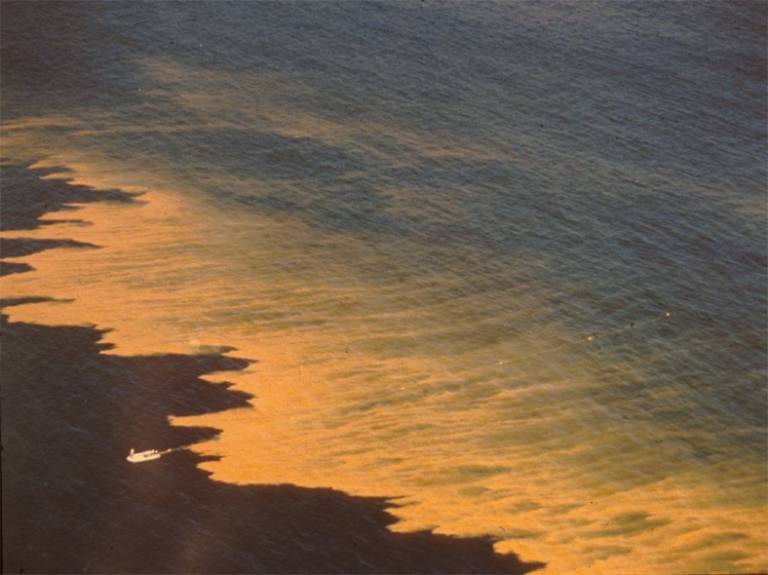
"caption": "A red tide off the coast of California. Algal blooms are especially common during the summer months, and are the cause of the state’s annual mussel quarantine. ",
"description": null,
"title": null,
"credit": "Peter Franks/Scripps Institution of Oceanography",
"status": "inherit",
"isLoading": false,
"fetchFailed": false
},
"science_1944215": {
"type": "attachments",
"id": "science_1944215",
"meta": {
"index": "attachments_1716263798",
"site": "science",
"id": "1944215",
"found": true
},
"parent": 1944050,
"imgSizes": {
"twentyfourteen-full-width": {
"file": "https://ww2.kqed.org/app/uploads/sites/35/2019/06/GettyImages-1152459663-1038x576.jpg",
"width": 1038,
"mimeType": "image/jpeg",
"height": 576
},
"thumbnail": {
"file": "https://ww2.kqed.org/app/uploads/sites/35/2019/06/GettyImages-1152459663-160x106.jpg",
"width": 160,
"mimeType": "image/jpeg",
"height": 106
},
"post-thumbnail": {
"file": "https://ww2.kqed.org/app/uploads/sites/35/2019/06/GettyImages-1152459663-672x372.jpg",
"width": 672,
"mimeType": "image/jpeg",
"height": 372
},
"kqedFullSize": {
"file": "https://ww2.kqed.org/app/uploads/sites/35/2019/06/GettyImages-1152459663.jpg",
"width": 2048,
"height": 1354
},
"large": {
"file": "https://ww2.kqed.org/app/uploads/sites/35/2019/06/GettyImages-1152459663-1020x674.jpg",
"width": 1020,
"mimeType": "image/jpeg",
"height": 674
},
"complete_open_graph": {
"file": "https://ww2.kqed.org/app/uploads/sites/35/2019/06/GettyImages-1152459663-1200x793.jpg",
"width": 1200,
"mimeType": "image/jpeg",
"height": 793
},
"full-width": {
"file": "https://ww2.kqed.org/app/uploads/sites/35/2019/06/GettyImages-1152459663-1920x1269.jpg",
"width": 1920,
"mimeType": "image/jpeg",
"height": 1269
},
"medium": {
"file": "https://ww2.kqed.org/app/uploads/sites/35/2019/06/GettyImages-1152459663-800x529.jpg",
"width": 800,
"mimeType": "image/jpeg",
"height": 529
},
"medium_large": {
"file": "https://ww2.kqed.org/app/uploads/sites/35/2019/06/GettyImages-1152459663-768x508.jpg",
"width": 768,
"mimeType": "image/jpeg",
"height": 508
}
},
"publishDate": 1561771341,
"modified": 1561838438,
"caption": "Democratic presidential hopeful US Senator for California Kamala Harris speaks with MSNBC host Chris Matthews (out of frame) in the Spin Room after the second Democratic primary debate of the 2020 presidential campaign season hosted by NBC News at the Adrienne Arsht Center for the Performing Arts in Miami, Florida, June 27, 2019.",
"description": null,
"title": "US-VOTE-2020-DEMOCRATS-DEBATE",
"credit": "Photo by SAUL LOEB / AFP /Getty",
"status": "inherit",
"isLoading": false,
"fetchFailed": false
},
"science_1943891": {
"type": "attachments",
"id": "science_1943891",
"meta": {
"index": "attachments_1716263798",
"site": "science",
"id": "1943891",
"found": true
},
"parent": 1943888,
"imgSizes": {
"twentyfourteen-full-width": {
"file": "https://ww2.kqed.org/app/uploads/sites/35/2019/06/iStock-948400656-1038x576.jpg",
"width": 1038,
"mimeType": "image/jpeg",
"height": 576
},
"thumbnail": {
"file": "https://ww2.kqed.org/app/uploads/sites/35/2019/06/iStock-948400656-160x99.jpg",
"width": 160,
"mimeType": "image/jpeg",
"height": 99
},
"post-thumbnail": {
"file": "https://ww2.kqed.org/app/uploads/sites/35/2019/06/iStock-948400656-672x372.jpg",
"width": 672,
"mimeType": "image/jpeg",
"height": 372
},
"kqedFullSize": {
"file": "https://ww2.kqed.org/app/uploads/sites/35/2019/06/iStock-948400656.jpg",
"width": 2048,
"height": 1263
},
"large": {
"file": "https://ww2.kqed.org/app/uploads/sites/35/2019/06/iStock-948400656-1020x629.jpg",
"width": 1020,
"mimeType": "image/jpeg",
"height": 629
},
"complete_open_graph": {
"file": "https://ww2.kqed.org/app/uploads/sites/35/2019/06/iStock-948400656-1200x740.jpg",
"width": 1200,
"mimeType": "image/jpeg",
"height": 740
},
"full-width": {
"file": "https://ww2.kqed.org/app/uploads/sites/35/2019/06/iStock-948400656-1920x1184.jpg",
"width": 1920,
"mimeType": "image/jpeg",
"height": 1184
},
"medium": {
"file": "https://ww2.kqed.org/app/uploads/sites/35/2019/06/iStock-948400656-800x493.jpg",
"width": 800,
"mimeType": "image/jpeg",
"height": 493
},
"medium_large": {
"file": "https://ww2.kqed.org/app/uploads/sites/35/2019/06/iStock-948400656-768x474.jpg",
"width": 768,
"mimeType": "image/jpeg",
"height": 474
}
},
"publishDate": 1561420512,
"modified": 1561420593,
"caption": null,
"description": null,
"title": "Reading Book on Beach",
"credit": "Sefa Ozel/IStock",
"status": "inherit",
"isLoading": false,
"fetchFailed": false
},
"science_1943757": {
"type": "attachments",
"id": "science_1943757",
"meta": {
"index": "attachments_1716263798",
"site": "science",
"id": "1943757",
"found": true
},
"parent": 1943671,
"imgSizes": {
"twentyfourteen-full-width": {
"file": "https://ww2.kqed.org/app/uploads/sites/35/2019/06/Burroughs_005-1038x576.jpg",
"width": 1038,
"mimeType": "image/jpeg",
"height": 576
},
"thumbnail": {
"file": "https://ww2.kqed.org/app/uploads/sites/35/2019/06/Burroughs_005-160x110.jpg",
"width": 160,
"mimeType": "image/jpeg",
"height": 110
},
"post-thumbnail": {
"file": "https://ww2.kqed.org/app/uploads/sites/35/2019/06/Burroughs_005-672x372.jpg",
"width": 672,
"mimeType": "image/jpeg",
"height": 372
},
"kqedFullSize": {
"file": "https://ww2.kqed.org/app/uploads/sites/35/2019/06/Burroughs_005.jpg",
"width": 1920,
"height": 1325
},
"large": {
"file": "https://ww2.kqed.org/app/uploads/sites/35/2019/06/Burroughs_005-1020x704.jpg",
"width": 1020,
"mimeType": "image/jpeg",
"height": 704
},
"complete_open_graph": {
"file": "https://ww2.kqed.org/app/uploads/sites/35/2019/06/Burroughs_005-1200x828.jpg",
"width": 1200,
"mimeType": "image/jpeg",
"height": 828
},
"full-width": {
"file": "https://ww2.kqed.org/app/uploads/sites/35/2019/06/Burroughs_005-1920x1325.jpg",
"width": 1920,
"mimeType": "image/jpeg",
"height": 1325
},
"medium": {
"file": "https://ww2.kqed.org/app/uploads/sites/35/2019/06/Burroughs_005-800x552.jpg",
"width": 800,
"mimeType": "image/jpeg",
"height": 552
},
"medium_large": {
"file": "https://ww2.kqed.org/app/uploads/sites/35/2019/06/Burroughs_005-768x530.jpg",
"width": 768,
"mimeType": "image/jpeg",
"height": 530
}
},
"publishDate": 1561252951,
"modified": 1561253109,
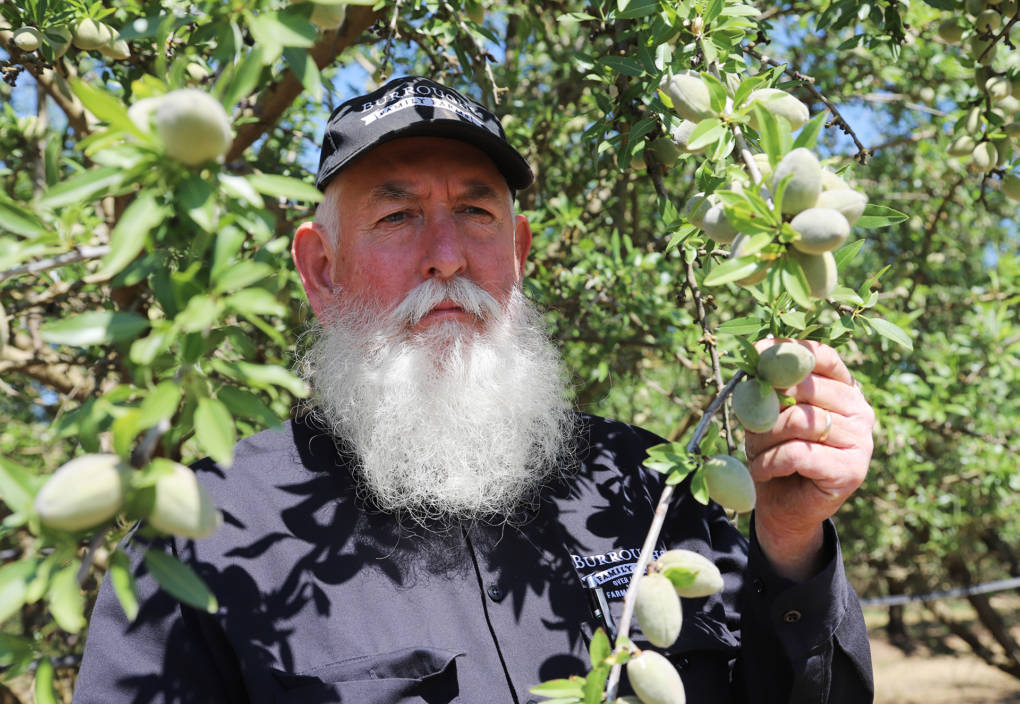
"caption": "Ward Burroughs, of Burroughs Family Farms in Denair, holds a branch full of his organic almonds that will be ready to harvest in the next few months. ",
"description": null,
"title": "Burroughs_005",
"credit": "Lindsey Moore/KQED",
"status": "inherit",
"isLoading": false,
"fetchFailed": false
},
"science_1941174": {
"type": "attachments",
"id": "science_1941174",
"meta": {
"index": "attachments_1716263798",
"site": "science",
"id": "1941174",
"found": true
},
"parent": 1941092,
"imgSizes": {
"twentyfourteen-full-width": {
"file": "https://ww2.kqed.org/app/uploads/sites/35/2019/05/GettyImages-1137863066-1038x576.jpg",
"width": 1038,
"mimeType": "image/jpeg",
"height": 576
},
"thumbnail": {
"file": "https://ww2.kqed.org/app/uploads/sites/35/2019/05/GettyImages-1137863066-160x107.jpg",
"width": 160,
"mimeType": "image/jpeg",
"height": 107
},
"post-thumbnail": {
"file": "https://ww2.kqed.org/app/uploads/sites/35/2019/05/GettyImages-1137863066-672x372.jpg",
"width": 672,
"mimeType": "image/jpeg",
"height": 372
},
"kqedFullSize": {
"file": "https://ww2.kqed.org/app/uploads/sites/35/2019/05/GettyImages-1137863066.jpg",
"width": 2048,
"height": 1365
},
"large": {
"file": "https://ww2.kqed.org/app/uploads/sites/35/2019/05/GettyImages-1137863066-1020x680.jpg",
"width": 1020,
"mimeType": "image/jpeg",
"height": 680
},
"complete_open_graph": {
"file": "https://ww2.kqed.org/app/uploads/sites/35/2019/05/GettyImages-1137863066-1200x800.jpg",
"width": 1200,
"mimeType": "image/jpeg",
"height": 800
},
"full-width": {
"file": "https://ww2.kqed.org/app/uploads/sites/35/2019/05/GettyImages-1137863066-1920x1280.jpg",
"width": 1920,
"mimeType": "image/jpeg",
"height": 1280
},
"medium": {
"file": "https://ww2.kqed.org/app/uploads/sites/35/2019/05/GettyImages-1137863066-800x533.jpg",
"width": 800,
"mimeType": "image/jpeg",
"height": 533
},
"medium_large": {
"file": "https://ww2.kqed.org/app/uploads/sites/35/2019/05/GettyImages-1137863066-768x512.jpg",
"width": 768,
"mimeType": "image/jpeg",
"height": 512
}
},
"publishDate": 1556908037,
"modified": 1556908205,
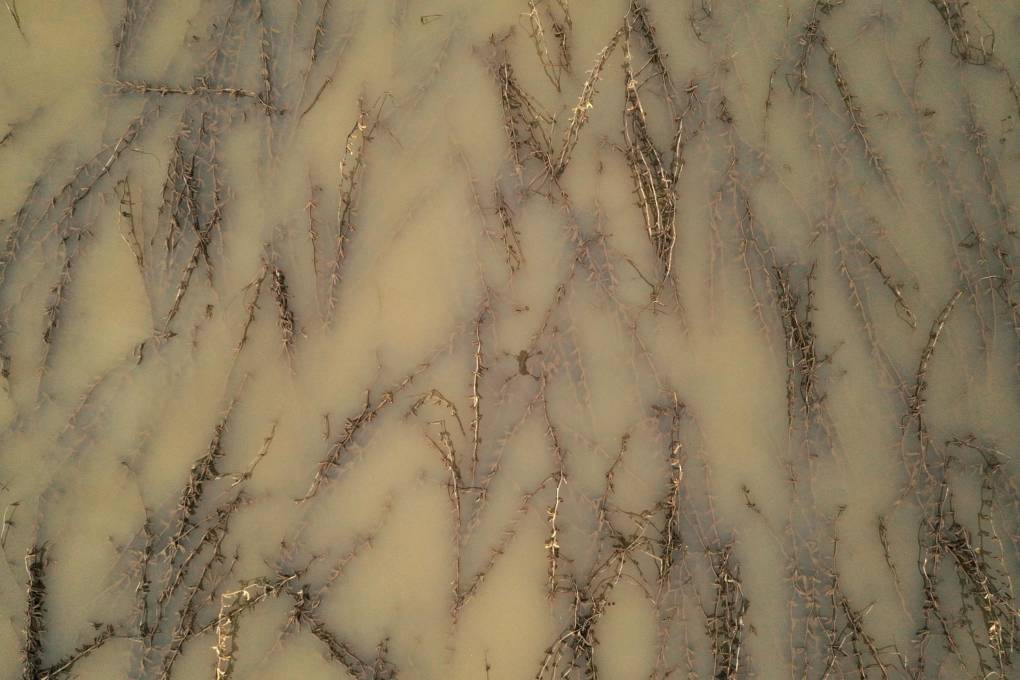
"caption": "A Nebraska soybean field is covered in floodwater this March, as rain and snow melt from the recent \"bomb cyclone\" inundated rivers and streams. Damage estimates from flooding in Nebraska top $1 billion. Climate change makes extreme weather events more likely.",
"description": null,
"title": "Flooding Continues To Cause Devastation Across Midwest",
"credit": "Scott Olson/Getty Images",
"status": "inherit",
"isLoading": false,
"fetchFailed": false
},
"science_1943599": {
"type": "attachments",
"id": "science_1943599",
"meta": {
"index": "attachments_1716263798",
"site": "science",
"id": "1943599",
"found": true
},
"parent": 1943595,
"imgSizes": {
"twentyfourteen-full-width": {
"file": "https://ww2.kqed.org/app/uploads/sites/35/2019/06/satellite_091418_final-1180x745-1038x576.jpg",
"width": 1038,
"mimeType": "image/jpeg",
"height": 576
},
"thumbnail": {
"file": "https://ww2.kqed.org/app/uploads/sites/35/2019/06/satellite_091418_final-1180x745-160x101.jpg",
"width": 160,
"mimeType": "image/jpeg",
"height": 101
},
"post-thumbnail": {
"file": "https://ww2.kqed.org/app/uploads/sites/35/2019/06/satellite_091418_final-1180x745-672x372.jpg",
"width": 672,
"mimeType": "image/jpeg",
"height": 372
},
"kqedFullSize": {
"file": "https://ww2.kqed.org/app/uploads/sites/35/2019/06/satellite_091418_final-1180x745.jpg",
"width": 1180,
"height": 745
},
"large": {
"file": "https://ww2.kqed.org/app/uploads/sites/35/2019/06/satellite_091418_final-1180x745-1020x644.jpg",
"width": 1020,
"mimeType": "image/jpeg",
"height": 644
},
"medium": {
"file": "https://ww2.kqed.org/app/uploads/sites/35/2019/06/satellite_091418_final-1180x745-800x505.jpg",
"width": 800,
"mimeType": "image/jpeg",
"height": 505
},
"medium_large": {
"file": "https://ww2.kqed.org/app/uploads/sites/35/2019/06/satellite_091418_final-1180x745-768x485.jpg",
"width": 768,
"mimeType": "image/jpeg",
"height": 485
}
},
"publishDate": 1560980095,
"modified": 1560980095,
"caption": null,
"description": null,
"title": "satellite_091418_final-1180x745",
"credit": null,
"status": "inherit",
"isLoading": false,
"fetchFailed": false
},
"science_1943580": {
"type": "attachments",
"id": "science_1943580",
"meta": {
"index": "attachments_1716263798",
"site": "science",
"id": "1943580",
"found": true
},
"parent": 1943578,
"imgSizes": {
"twentyfourteen-full-width": {
"file": "https://ww2.kqed.org/app/uploads/sites/35/2019/06/GettyImages-603968516-1038x576.jpg",
"width": 1038,
"mimeType": "image/jpeg",
"height": 576
},
"thumbnail": {
"file": "https://ww2.kqed.org/app/uploads/sites/35/2019/06/GettyImages-603968516-160x106.jpg",
"width": 160,
"mimeType": "image/jpeg",
"height": 106
},
"post-thumbnail": {
"file": "https://ww2.kqed.org/app/uploads/sites/35/2019/06/GettyImages-603968516-672x372.jpg",
"width": 672,
"mimeType": "image/jpeg",
"height": 372
},
"kqedFullSize": {
"file": "https://ww2.kqed.org/app/uploads/sites/35/2019/06/GettyImages-603968516.jpg",
"width": 2048,
"height": 1363
},
"large": {
"file": "https://ww2.kqed.org/app/uploads/sites/35/2019/06/GettyImages-603968516-1020x679.jpg",
"width": 1020,
"mimeType": "image/jpeg",
"height": 679
},
"complete_open_graph": {
"file": "https://ww2.kqed.org/app/uploads/sites/35/2019/06/GettyImages-603968516-1200x799.jpg",
"width": 1200,
"mimeType": "image/jpeg",
"height": 799
},
"full-width": {
"file": "https://ww2.kqed.org/app/uploads/sites/35/2019/06/GettyImages-603968516-1920x1278.jpg",
"width": 1920,
"mimeType": "image/jpeg",
"height": 1278
},
"medium": {
"file": "https://ww2.kqed.org/app/uploads/sites/35/2019/06/GettyImages-603968516-800x532.jpg",
"width": 800,
"mimeType": "image/jpeg",
"height": 532
},
"medium_large": {
"file": "https://ww2.kqed.org/app/uploads/sites/35/2019/06/GettyImages-603968516-768x511.jpg",
"width": 768,
"mimeType": "image/jpeg",
"height": 511
}
},
"publishDate": 1560965989,
"modified": 1560966033,
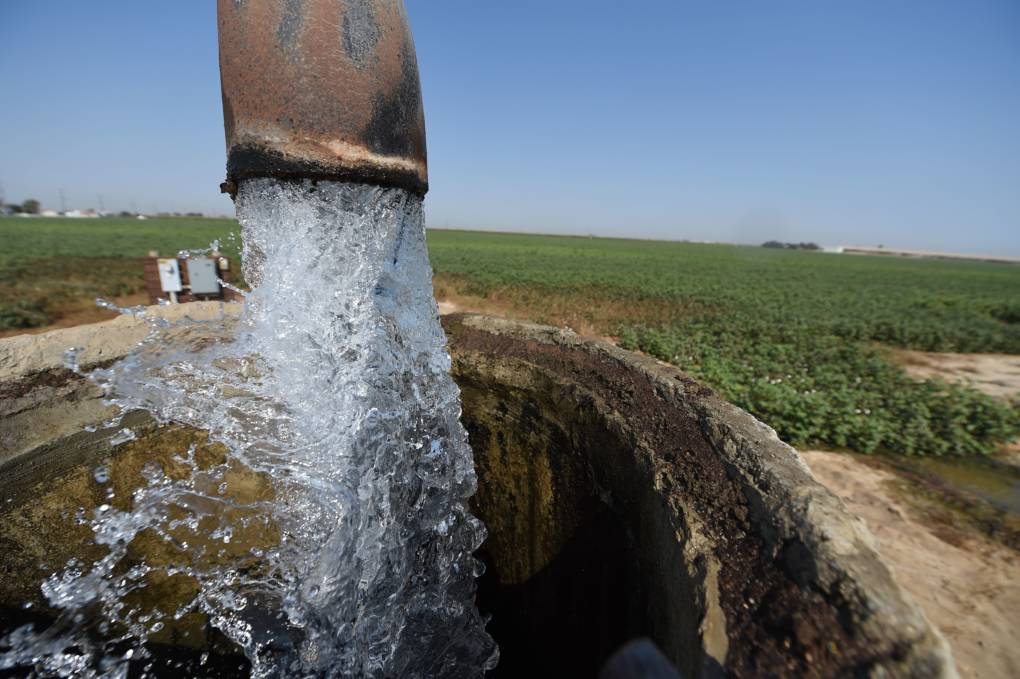
"caption": "Irrigation water at a cotton field in Porterville, California August 24, 2016. \nAgricultural fertilizers as well as cow manure from dairy farms have led to domestic wells in California's Central Valley having dangerously high levels of nitrates making it unsafe to drink. ",
"description": null,
"title": "GettyImages-603968516",
"credit": "ROBYN BECK/AFP/Getty Images",
"status": "inherit",
"isLoading": false,
"fetchFailed": false
},
"science_1943573": {
"type": "attachments",
"id": "science_1943573",
"meta": {
"index": "attachments_1716263798",
"site": "science",
"id": "1943573",
"found": true
},
"parent": 1943570,
"imgSizes": {
"twentyfourteen-full-width": {
"file": "https://ww2.kqed.org/app/uploads/sites/35/2019/06/coal-power-plant-capitol-1038x576.jpg",
"width": 1038,
"mimeType": "image/jpeg",
"height": 576
},
"thumbnail": {
"file": "https://ww2.kqed.org/app/uploads/sites/35/2019/06/coal-power-plant-capitol-160x91.jpg",
"width": 160,
"mimeType": "image/jpeg",
"height": 91
},
"post-thumbnail": {
"file": "https://ww2.kqed.org/app/uploads/sites/35/2019/06/coal-power-plant-capitol-672x372.jpg",
"width": 672,
"mimeType": "image/jpeg",
"height": 372
},
"kqedFullSize": {
"file": "https://ww2.kqed.org/app/uploads/sites/35/2019/06/coal-power-plant-capitol.jpg",
"width": 2048,
"height": 1168
},
"large": {
"file": "https://ww2.kqed.org/app/uploads/sites/35/2019/06/coal-power-plant-capitol-1020x582.jpg",
"width": 1020,
"mimeType": "image/jpeg",
"height": 582
},
"complete_open_graph": {
"file": "https://ww2.kqed.org/app/uploads/sites/35/2019/06/coal-power-plant-capitol-1200x685.jpg",
"width": 1200,
"mimeType": "image/jpeg",
"height": 685
},
"full-width": {
"file": "https://ww2.kqed.org/app/uploads/sites/35/2019/06/coal-power-plant-capitol-1920x1095.jpg",
"width": 1920,
"mimeType": "image/jpeg",
"height": 1095
},
"medium": {
"file": "https://ww2.kqed.org/app/uploads/sites/35/2019/06/coal-power-plant-capitol-800x456.jpg",
"width": 800,
"mimeType": "image/jpeg",
"height": 456
},
"medium_large": {
"file": "https://ww2.kqed.org/app/uploads/sites/35/2019/06/coal-power-plant-capitol-768x438.jpg",
"width": 768,
"mimeType": "image/jpeg",
"height": 438
}
},
"publishDate": 1560958299,
"modified": 1560958380,
"caption": "The chimney stacks of the Capitol Power Plant, a natural gas and coal burning power plant, is seen near the U.S. Capitol in Washington, DC, August 22, 2018.",
"description": null,
"title": "US-GOVERNMENT-CAPITOL-PLANT",
"credit": "SAUL LOEB/AFP/Getty Images",
"status": "inherit",
"isLoading": false,
"fetchFailed": false
},
"science_1943337": {
"type": "attachments",
"id": "science_1943337",
"meta": {
"index": "attachments_1716263798",
"site": "science",
"id": "1943337",
"found": true
},
"parent": 1943331,
"imgSizes": {
"twentyfourteen-full-width": {
"file": "https://ww2.kqed.org/app/uploads/sites/35/2019/06/RS7666_IMG_5021-1038x576.jpg",
"width": 1038,
"mimeType": "image/jpeg",
"height": 576
},
"thumbnail": {
"file": "https://ww2.kqed.org/app/uploads/sites/35/2019/06/RS7666_IMG_5021-160x90.jpg",
"width": 160,
"mimeType": "image/jpeg",
"height": 90
},
"post-thumbnail": {
"file": "https://ww2.kqed.org/app/uploads/sites/35/2019/06/RS7666_IMG_5021-672x372.jpg",
"width": 672,
"mimeType": "image/jpeg",
"height": 372
},
"kqedFullSize": {
"file": "https://ww2.kqed.org/app/uploads/sites/35/2019/06/RS7666_IMG_5021.jpg",
"width": 2048,
"height": 1152
},
"large": {
"file": "https://ww2.kqed.org/app/uploads/sites/35/2019/06/RS7666_IMG_5021-1020x574.jpg",
"width": 1020,
"mimeType": "image/jpeg",
"height": 574
},
"complete_open_graph": {
"file": "https://ww2.kqed.org/app/uploads/sites/35/2019/06/RS7666_IMG_5021-1200x675.jpg",
"width": 1200,
"mimeType": "image/jpeg",
"height": 675
},
"full-width": {
"file": "https://ww2.kqed.org/app/uploads/sites/35/2019/06/RS7666_IMG_5021-1920x1080.jpg",
"width": 1920,
"mimeType": "image/jpeg",
"height": 1080
},
"medium": {
"file": "https://ww2.kqed.org/app/uploads/sites/35/2019/06/RS7666_IMG_5021-800x450.jpg",
"width": 800,
"mimeType": "image/jpeg",
"height": 450
},
"medium_large": {
"file": "https://ww2.kqed.org/app/uploads/sites/35/2019/06/RS7666_IMG_5021-768x432.jpg",
"width": 768,
"mimeType": "image/jpeg",
"height": 432
}
},
"publishDate": 1560376197,
"modified": 1560376235,
"caption": "Forest Service firefighters work a prescribed burn in the Shasta National Forest.",
"description": null,
"title": "RS7666_IMG_5021",
"credit": "Molly Samuel/KQED",
"status": "inherit",
"isLoading": false,
"fetchFailed": false
},
"science_1943211": {
"type": "attachments",
"id": "science_1943211",
"meta": {
"index": "attachments_1716263798",
"site": "science",
"id": "1943211",
"found": true
},
"parent": 1943180,
"imgSizes": {
"twentyfourteen-full-width": {
"file": "https://ww2.kqed.org/app/uploads/sites/35/2019/06/California-fire-insurance-1038x576.jpg",
"width": 1038,
"mimeType": "image/jpeg",
"height": 576
},
"thumbnail": {
"file": "https://ww2.kqed.org/app/uploads/sites/35/2019/06/California-fire-insurance-160x99.jpg",
"width": 160,
"mimeType": "image/jpeg",
"height": 99
},
"post-thumbnail": {
"file": "https://ww2.kqed.org/app/uploads/sites/35/2019/06/California-fire-insurance-672x372.jpg",
"width": 672,
"mimeType": "image/jpeg",
"height": 372
},
"kqedFullSize": {
"file": "https://ww2.kqed.org/app/uploads/sites/35/2019/06/California-fire-insurance.jpg",
"width": 2048,
"height": 1273
},
"large": {
"file": "https://ww2.kqed.org/app/uploads/sites/35/2019/06/California-fire-insurance-1020x634.jpg",
"width": 1020,
"mimeType": "image/jpeg",
"height": 634
},
"complete_open_graph": {
"file": "https://ww2.kqed.org/app/uploads/sites/35/2019/06/California-fire-insurance-1200x746.jpg",
"width": 1200,
"mimeType": "image/jpeg",
"height": 746
},
"full-width": {
"file": "https://ww2.kqed.org/app/uploads/sites/35/2019/06/California-fire-insurance-1920x1193.jpg",
"width": 1920,
"mimeType": "image/jpeg",
"height": 1193
},
"medium": {
"file": "https://ww2.kqed.org/app/uploads/sites/35/2019/06/California-fire-insurance-800x497.jpg",
"width": 800,
"mimeType": "image/jpeg",
"height": 497
},
"medium_large": {
"file": "https://ww2.kqed.org/app/uploads/sites/35/2019/06/California-fire-insurance-768x477.jpg",
"width": 768,
"mimeType": "image/jpeg",
"height": 477
}
},
"publishDate": 1560210296,
"modified": 1560210701,
"caption": "A firefighter, seen here in the distance, right side, is watering down burning embers on a hillside overlooking homes in West Hills, California, during the Woolsey Fire of November 2018.",
"description": null,
"title": "US-FIRE-CALIFORNIA-ENVIRONMENT-WEATHER",
"credit": "Frederic J. Brown/AFP/Getty Images",
"status": "inherit",
"isLoading": false,
"fetchFailed": false
},
"science_1943159": {
"type": "attachments",
"id": "science_1943159",
"meta": {
"index": "attachments_1716263798",
"site": "science",
"id": "1943159",
"found": true
},
"parent": 1943152,
"imgSizes": {
"twentyfourteen-full-width": {
"file": "https://ww2.kqed.org/app/uploads/sites/35/2019/06/RS14373_interstate5-qut-1038x576.jpg",
"width": 1038,
"mimeType": "image/jpeg",
"height": 576
},
"thumbnail": {
"file": "https://ww2.kqed.org/app/uploads/sites/35/2019/06/RS14373_interstate5-qut-160x104.jpg",
"width": 160,
"mimeType": "image/jpeg",
"height": 104
},
"post-thumbnail": {
"file": "https://ww2.kqed.org/app/uploads/sites/35/2019/06/RS14373_interstate5-qut-672x372.jpg",
"width": 672,
"mimeType": "image/jpeg",
"height": 372
},
"kqedFullSize": {
"file": "https://ww2.kqed.org/app/uploads/sites/35/2019/06/RS14373_interstate5-qut.jpg",
"width": 1920,
"height": 1251
},
"large": {
"file": "https://ww2.kqed.org/app/uploads/sites/35/2019/06/RS14373_interstate5-qut-1020x665.jpg",
"width": 1020,
"mimeType": "image/jpeg",
"height": 665
},
"complete_open_graph": {
"file": "https://ww2.kqed.org/app/uploads/sites/35/2019/06/RS14373_interstate5-qut-1200x782.jpg",
"width": 1200,
"mimeType": "image/jpeg",
"height": 782
},
"full-width": {
"file": "https://ww2.kqed.org/app/uploads/sites/35/2019/06/RS14373_interstate5-qut-1920x1251.jpg",
"width": 1920,
"mimeType": "image/jpeg",
"height": 1251
},
"medium": {
"file": "https://ww2.kqed.org/app/uploads/sites/35/2019/06/RS14373_interstate5-qut-800x521.jpg",
"width": 800,
"mimeType": "image/jpeg",
"height": 521
},
"medium_large": {
"file": "https://ww2.kqed.org/app/uploads/sites/35/2019/06/RS14373_interstate5-qut-768x500.jpg",
"width": 768,
"mimeType": "image/jpeg",
"height": 500
}
},
"publishDate": 1560186044,
"modified": 1560186144,
"caption": "Traffic rolls along Interstate 5 just west of the Merced County town of Gustine.",
"description": null,
"title": "RS14373_interstate5-qut",
"credit": "Dan Brekke/KQED",
"status": "inherit",
"isLoading": false,
"fetchFailed": false
},
"science_1943071": {
"type": "attachments",
"id": "science_1943071",
"meta": {
"index": "attachments_1716263798",
"site": "science",
"id": "1943071",
"found": true
},
"parent": 1943058,
"imgSizes": {
"twentyfourteen-full-width": {
"file": "https://ww2.kqed.org/app/uploads/sites/35/2019/06/defensible-space-1038x576.jpg",
"width": 1038,
"mimeType": "image/jpeg",
"height": 576
},
"thumbnail": {
"file": "https://ww2.kqed.org/app/uploads/sites/35/2019/06/defensible-space-160x90.jpg",
"width": 160,
"mimeType": "image/jpeg",
"height": 90
},
"post-thumbnail": {
"file": "https://ww2.kqed.org/app/uploads/sites/35/2019/06/defensible-space-672x372.jpg",
"width": 672,
"mimeType": "image/jpeg",
"height": 372
},
"kqedFullSize": {
"file": "https://ww2.kqed.org/app/uploads/sites/35/2019/06/defensible-space.jpg",
"width": 1920,
"height": 1080
},
"large": {
"file": "https://ww2.kqed.org/app/uploads/sites/35/2019/06/defensible-space-1020x574.jpg",
"width": 1020,
"mimeType": "image/jpeg",
"height": 574
},
"complete_open_graph": {
"file": "https://ww2.kqed.org/app/uploads/sites/35/2019/06/defensible-space-1200x675.jpg",
"width": 1200,
"mimeType": "image/jpeg",
"height": 675
},
"full-width": {
"file": "https://ww2.kqed.org/app/uploads/sites/35/2019/06/defensible-space-1920x1080.jpg",
"width": 1920,
"mimeType": "image/jpeg",
"height": 1080
},
"medium": {
"file": "https://ww2.kqed.org/app/uploads/sites/35/2019/06/defensible-space-800x450.jpg",
"width": 800,
"mimeType": "image/jpeg",
"height": 450
},
"medium_large": {
"file": "https://ww2.kqed.org/app/uploads/sites/35/2019/06/defensible-space-768x432.jpg",
"width": 768,
"mimeType": "image/jpeg",
"height": 432
}
},
"publishDate": 1559945241,
"modified": 1560144309,
"caption": "Flames from the Rocky Fire approach a house in Lower Lake, California, in 2015. ",
"description": null,
"title": "Wildfire Grows Rapidly In California's Lake County",
"credit": "Justin Sullivan/Getty Images",
"status": "inherit",
"isLoading": false,
"fetchFailed": false
}
},
"audioPlayerReducer": {
"postId": "stream_live",
"isPaused": true,
"isPlaying": false,
"pfsActive": false,
"pledgeModalIsOpen": true,
"playerDrawerIsOpen": false,
"liveAudioPlayStartedAt": 0,
"liveAudioPlayContext": ""
},
"authorsReducer": {
"byline_science_1943888": {
"type": "authors",
"id": "byline_science_1943888",
"meta": {
"override": true
},
"slug": "byline_science_1943888",
"name": "Sarah Mupo \u003cbr/> STAT News \u003cbr>",
"isLoading": false
},
"byline_science_1943671": {
"type": "authors",
"id": "byline_science_1943671",
"meta": {
"override": true
},
"slug": "byline_science_1943671",
"name": "\u003cstrong>Mark Schapiro\u003c/strong>",
"isLoading": false
},
"byline_science_1941092": {
"type": "authors",
"id": "byline_science_1941092",
"meta": {
"override": true
},
"slug": "byline_science_1941092",
"name": "\u003cstrong>Mark Schapiro\u003c/strong>",
"isLoading": false
},
"byline_science_1943570": {
"type": "authors",
"id": "byline_science_1943570",
"meta": {
"override": true
},
"slug": "byline_science_1943570",
"name": "Ellen Knickmeyer \u003cbr />Associated Press",
"isLoading": false
},
"byline_science_1943331": {
"type": "authors",
"id": "byline_science_1943331",
"meta": {
"override": true
},
"slug": "byline_science_1943331",
"name": "Kirk Siegler \u003cbr/> NPR \u003cbr>",
"isLoading": false
},
"byline_science_1943152": {
"type": "authors",
"id": "byline_science_1943152",
"meta": {
"override": true
},
"slug": "byline_science_1943152",
"name": "Julie Cart \u003cbr/> CALmatters \u003cbr>",
"isLoading": false
},
"laurensommer": {
"type": "authors",
"id": "239",
"meta": {
"index": "authors_1716337520",
"id": "239",
"found": true
},
"name": "Lauren Sommer",
"firstName": "Lauren",
"lastName": "Sommer",
"slug": "laurensommer",
"email": "lsommer@kqed.org",
"display_author_email": false,
"staff_mastheads": [],
"title": "KQED Contributor",
"bio": "Lauren is a radio reporter formerly covering environment, water, and energy for KQED Science. As part of her day job, she has scaled Sierra Nevada peaks, run from charging elephant seals, and desperately tried to get her sea legs - all in pursuit of good radio. Her work has appeared on Marketplace, Living on Earth, Science Friday and NPR's Morning Edition and All Things Considered. You can find her on Twitter at \u003ca href=\"https://twitter.com/lesommer\">@lesommer\u003c/a>.",
"avatar": "https://secure.gravatar.com/avatar/33aa3772bb86c6ad45b8aca6a238bbdf?s=600&d=blank&r=g",
"twitter": null,
"facebook": null,
"instagram": null,
"linkedin": null,
"sites": [
{
"site": "news",
"roles": [
"author"
]
},
{
"site": "science",
"roles": [
"editor",
"manage_content_types",
"manage_taxonomies"
]
},
{
"site": "quest",
"roles": [
"editor"
]
}
],
"headData": {
"title": "Lauren Sommer | KQED",
"description": "KQED Contributor",
"ogImgSrc": "https://secure.gravatar.com/avatar/33aa3772bb86c6ad45b8aca6a238bbdf?s=600&d=blank&r=g",
"twImgSrc": "https://secure.gravatar.com/avatar/33aa3772bb86c6ad45b8aca6a238bbdf?s=600&d=blank&r=g"
},
"isLoading": false,
"link": "/author/laurensommer"
},
"mlagos": {
"type": "authors",
"id": "3239",
"meta": {
"index": "authors_1716337520",
"id": "3239",
"found": true
},
"name": "Marisa Lagos",
"firstName": "Marisa",
"lastName": "Lagos",
"slug": "mlagos",
"email": "mlagos@kqed.org",
"display_author_email": false,
"staff_mastheads": [
"news"
],
"title": "KQED Contributor",
"bio": "Marisa Lagos is a correspondent for KQED’s California Politics and Government Desk and co-hosts the award-winning show and podcast, Political Breakdown. At KQED, Lagos also conducts reporting, analysis and investigations into state, local and national politics for radio, TV, online and onstage. In 2022, she and co-host, Scott Shafer, moderated the only gubernatorial debate in California. In 2020, the \u003ci>Washington Post\u003c/i> named her one of the top political journalists in California; she was nominated for a Peabody and won several other awards for her work investigating the 2017 California wildfires. She has worked at the \u003ci>San Francisco Chronicle\u003c/i>, \u003ci>San Francisco Examiner\u003c/i> and \u003ci>Los Angeles Times\u003c/i>. A UC Santa Barbara graduate, she lives in San Francisco with her two sons and husband.",
"avatar": "https://secure.gravatar.com/avatar/a261a0d3696fc066871ef96b85b5e7d2?s=600&d=blank&r=g",
"twitter": "@mlagos",
"facebook": null,
"instagram": null,
"linkedin": null,
"sites": [
{
"site": "arts",
"roles": [
"author"
]
},
{
"site": "news",
"roles": [
"editor"
]
},
{
"site": "science",
"roles": [
"editor"
]
},
{
"site": "forum",
"roles": [
"author"
]
},
{
"site": "liveblog",
"roles": [
"author"
]
}
],
"headData": {
"title": "Marisa Lagos | KQED",
"description": "KQED Contributor",
"ogImgSrc": "https://secure.gravatar.com/avatar/a261a0d3696fc066871ef96b85b5e7d2?s=600&d=blank&r=g",
"twImgSrc": "https://secure.gravatar.com/avatar/a261a0d3696fc066871ef96b85b5e7d2?s=600&d=blank&r=g"
},
"isLoading": false,
"link": "/author/mlagos"
},
"kevinstark": {
"type": "authors",
"id": "11608",
"meta": {
"index": "authors_1716337520",
"id": "11608",
"found": true
},
"name": "Kevin Stark",
"firstName": "Kevin",
"lastName": "Stark",
"slug": "kevinstark",
"email": "kstark@kqed.org",
"display_author_email": true,
"staff_mastheads": [
"science"
],
"title": "Senior Editor",
"bio": "Kevin is a senior editor for KQED Science, managing the station's health and climate desks. His journalism career began in the Pacific Northwest, and he later became a lead reporter for the San Francisco Public Press. His work has appeared in Pacific Standard magazine, the Energy News Network, the Center for Investigative Reporting's Reveal and WBEZ in Chicago. Kevin joined KQED in 2019, and has covered issues related to energy, wildfire, climate change and the environment.",
"avatar": "https://secure.gravatar.com/avatar/365aaa4b597d3a8374f67504ff0facd323d7906e8eb4be0a7efd2427408e802c?s=600&d=blank&r=g",
"twitter": "starkkev",
"bluesky": null,
"facebook": null,
"instagram": null,
"linkedin": null,
"sites": [
{
"site": "",
"roles": [
"editor"
]
},
{
"site": "news",
"roles": [
"editor"
]
},
{
"site": "science",
"roles": [
"administrator"
]
}
],
"headData": {
"title": "Kevin Stark | KQED",
"description": "Senior Editor",
"ogImgSrc": "https://secure.gravatar.com/avatar/365aaa4b597d3a8374f67504ff0facd323d7906e8eb4be0a7efd2427408e802c?s=600&d=blank&r=g",
"twImgSrc": "https://secure.gravatar.com/avatar/365aaa4b597d3a8374f67504ff0facd323d7906e8eb4be0a7efd2427408e802c?s=600&d=blank&r=g"
},
"isLoading": false,
"link": "/author/kevinstark"
},
"adicorato": {
"type": "authors",
"id": "11615",
"meta": {
"index": "authors_1716337520",
"id": "11615",
"found": true
},
"name": "Allessandra DiCorato",
"firstName": "Allessandra",
"lastName": "DiCorato",
"slug": "adicorato",
"email": "adicorato@kqed.org",
"display_author_email": false,
"staff_mastheads": [],
"title": "KQED Contributor",
"bio": "Allessandra is the 2019 AAAS Mass Media Fellow at KQED Science. She is currently a PhD candidate at Northwestern University, where she studies how nanomaterials interact with soft biological tissue in contexts ranging from sea urchins to cancer cells. Allessandra graduated from Cornell University in 2015, where she studied chemistry, creative writing, and biomedical engineering.",
"avatar": "https://secure.gravatar.com/avatar/f725f664da1ae7668ca873d0b97d5bbb?s=600&d=blank&r=g",
"twitter": null,
"facebook": null,
"instagram": null,
"linkedin": null,
"sites": [
{
"site": "science",
"roles": []
}
],
"headData": {
"title": "Allessandra DiCorato | KQED",
"description": "KQED Contributor",
"ogImgSrc": "https://secure.gravatar.com/avatar/f725f664da1ae7668ca873d0b97d5bbb?s=600&d=blank&r=g",
"twImgSrc": "https://secure.gravatar.com/avatar/f725f664da1ae7668ca873d0b97d5bbb?s=600&d=blank&r=g"
},
"isLoading": false,
"link": "/author/adicorato"
}
},
"pagesReducer": {
"science_category_climate": {
"type": "terms",
"id": "science_31",
"meta": {
"index": "terms_1716263798",
"site": "science",
"id": "31",
"score": 11.062157
},
"featImg": null,
"name": "Climate",
"description": null,
"taxonomy": "category",
"headData": {
"twImgId": null,
"twTitle": null,
"ogTitle": null,
"ogImgId": null,
"twDescription": null,
"description": null,
"title": "Climate Archives | KQED Science",
"ogDescription": null
},
"ttid": 33,
"slug": "climate",
"isLoading": false,
"title": "Climate",
"pageMeta": {
"site": "science",
"WpPageTemplate": "page-topic-editorial",
"currentPage": 59
},
"blocks": [
{
"blockName": "kqed/post-list",
"attrs": {
"layout": "cardArticle2",
"query": "posts/science?category=climate",
"seeMore": false,
"paginated": true,
"page": 59
}
},
{
"blockName": "kqed/ad"
}
]
}
},
"pfsSessionReducer": {},
"postsReducer": {
"stream_live": {
"type": "live",
"id": "stream_live",
"audioUrl": "https://streams.kqed.org/kqedradio",
"title": "Live Stream",
"excerpt": "Live Stream information currently unavailable.",
"link": "/radio",
"featImg": "",
"label": {
"name": "KQED Live",
"link": "/"
}
},
"stream_kqedNewscast": {
"type": "posts",
"id": "stream_kqedNewscast",
"audioUrl": "https://www.kqed.org/.stream/anon/radio/RDnews/newscast.mp3?_=1",
"title": "KQED Newscast",
"featImg": "",
"label": {
"name": "88.5 FM",
"link": "/"
}
},
"science_1944148": {
"type": "posts",
"id": "science_1944148",
"meta": {
"index": "posts_1716263798",
"site": "science",
"id": "1944148",
"score": null,
"sort": [
1562166030000
]
},
"parent": 0,
"labelTerm": {
"site": "science"
},
"blocks": [],
"publishDate": 1562166030,
"format": "standard",
"title": "How Scientists Detect the Most Lethal Shellfish Toxin You've Never Heard Of",
"headTitle": "How Scientists Detect the Most Lethal Shellfish Toxin You’ve Never Heard Of | KQED",
"content": "\u003cp>There is a weapon that is released by algae around the world and concentrated, invisible, in the flesh of shellfish. An amount the size of a poppy seed is enough to kill a grown person.\u003c/p>\n\u003cp>It’s part of an onslaught from which we’ve defended ourselves for decades, which might be why you’ve never heard of it.\u003c/p>\n\u003cp>Saxitoxin is lethal at concentrations 1,000 times lower than is cyanide. It is a powerful neurotoxin released by plankton in algal blooms. Saxitoxin is so potent, in fact, that it was the only marine toxin declared a \u003ca href=\"http://disarmament.un.org/treaties/t/cwc/text\">chemical weapon\u003c/a> by the 1993 international treaty known as the Chemical Weapons Convention, and bears a long and complex history with the U.S. government in particular.\u003c/p>\n\u003cp>The CIA \u003ca href=\"https://www.eucom.mil/media-library/article/23319/this-week-in-eucom-history-april-30-may-6\">reportedly gave\u003c/a> pilots of U-2 reconnaissance planes a coin containing saxitoxin that they could use to commit suicide if they were captured. President Nixon ultimately banned the military’s use of biological weapons, including saxitoxin, in 1969, but the CIA neglected to destroy a stockpile of 10 grams of the substance that it had distilled from butter clams. The supply was rediscovered in a storage facility and distributed to scientists at NIH after a pharmacologist begged the CIA not to destroy the cache. He predicted, correctly, that the toxin’s potency offered enormous potential for medical research.\u003c/p>\n\u003cfigure id=\"attachment_1946490\" class=\"wp-caption alignleft\" style=\"max-width: 500px\">\u003cimg loading=\"lazy\" decoding=\"async\" class=\"wp-image-1946490\" src=\"https://ww2.kqed.org/science/wp-content/uploads/sites/35/2019/07/mussels_GettyImages-150458709-800x532.jpg\" alt=\"\" width=\"500\" height=\"333\" srcset=\"https://cdn.kqed.org/wp-content/uploads/sites/35/2019/07/mussels_GettyImages-150458709-800x532.jpg 800w, https://cdn.kqed.org/wp-content/uploads/sites/35/2019/07/mussels_GettyImages-150458709-160x106.jpg 160w, https://cdn.kqed.org/wp-content/uploads/sites/35/2019/07/mussels_GettyImages-150458709-768x511.jpg 768w, https://cdn.kqed.org/wp-content/uploads/sites/35/2019/07/mussels_GettyImages-150458709-1020x679.jpg 1020w, https://cdn.kqed.org/wp-content/uploads/sites/35/2019/07/mussels_GettyImages-150458709-1200x798.jpg 1200w, https://cdn.kqed.org/wp-content/uploads/sites/35/2019/07/mussels_GettyImages-150458709-1920x1278.jpg 1920w, https://cdn.kqed.org/wp-content/uploads/sites/35/2019/07/mussels_GettyImages-150458709.jpg 2048w\" sizes=\"(max-width: 500px) 100vw, 500px\">\u003cfigcaption class=\"wp-caption-text\">Washing or heating does not make saxitoxin-contaminated shellfish safe to eat. \u003ccite>(Fadel Senna/AFP/GettyImages)\u003c/cite>\u003c/figcaption>\u003c/figure>\n\u003cp>In both marine and freshwater systems, shellfish accumulate saxitoxin and concentrate it into doses dangerous to humans, fish, birds and marine mammals, although the shellfish themselves remain unharmed. The toxin is undetectable by sight or smell and is heat-stable, which means that even a pan-seared toxic mussel is still a toxic mussel.\u003c/p>\n\u003cp>When ingested by humans, saxitoxin causes paralytic shellfish poisoning, or PSP, symptoms of which include tingling, numbness, and, if consumed in high enough quantities, paralysis, asphyxiation and death. There is no known cure for saxitoxin poisoning.\u003c/p>\n\u003cp>\u003cstrong>California’s History of Toxin Monitoring\u003c/strong>\u003c/p>\n\u003cp>So why haven’t you heard of this potent algal toxin? Thank state health officials. In California, risk is managed by the diligent monitoring of the California Department of Public Health. Every year, CDPH issues a \u003ca href=\"https://www.cdph.ca.gov/Programs/CEH/DRSEM/Pages/EMB/Shellfish/Annual-Mussel-Quarantine.aspx\">mussel quarantine\u003c/a> for all coastal areas from Oregon to the Mexican border between May 1 and Oct. 31, adjusting its window according to changes in saxitoxin concentration. When concentrations are dangerously high, the state prohibits all recreational harvesting of mussels.\u003c/p>\n\u003cp>The public health department requires commercial seafood harvesters to submit shellfish samples at least weekly to retain their certification, which is one reason shellfish are available even when bans are in place. However, no commercial shellfish harvest occurs in San Francisco Bay, and that’s because, while coastal shellfish are monitored for paralytic shellfish toxins, \u003ca href=\"https://www.sciencedirect.com/science/article/pii/S1568988318300258\">no such monitoring \u003c/a>occurs in the bay.\u003c/p>\n\u003cp>Some of the earliest recorded instances of saxitoxin poisoning occurred in San Francisco, before seasonal bans were commonplace, even before scientists knew what was poisoning their coast. In 1927, more than 100 people fell ill and six people died from paralytic shellfish poisoning. Panic spread. Public health workers quickly posted warning signs and scientists worked to identify the source of the widespread sickness. No cases were reported the following year, perhaps, as noted in a scientific paper published in 1937, because “people showed little desire, after the experience of 1927, to gather shell-fish.”\u003c/p>\n\u003cp>For the most part, the monitoring that began in 1927 has kept poisoning numbers low; Dr. Eddie Garcia, a fellow in medical toxicology at UCSF and the California Poison Control Center, says that in 2017, only 117 cases were reported across the entire United States, none of them fatal.\u003c/p>\n\u003cp>\u003cstrong>Why Saxitoxin is Relevant Now\u003c/strong>\u003c/p>\n\u003cfigure id=\"attachment_1944161\" class=\"wp-caption alignright\" style=\"max-width: 640px\">\u003ca href=\"https://ww2.kqed.org/science/wp-content/uploads/sites/35/2019/06/psp-e1562172091893.jpg\">\u003cimg loading=\"lazy\" decoding=\"async\" class=\"size-complete_open_graph wp-image-1944161\" src=\"https://ww2.kqed.org/science/wp-content/uploads/sites/35/2019/06/psp-1200x1129.jpg\" alt=\"\" width=\"640\" height=\"602\">\u003c/a>\u003cfigcaption class=\"wp-caption-text\">Recorded cases of PSP in 1970 and 2018. Scientists say that we’ve only recently begun to understand the full extent of how common PSP really is. \u003ccite>(US National Office for Harmful Algal Blooms)\u003c/cite>\u003c/figcaption>\u003c/figure>\n\u003cp>Scientists agree it’s critically important to have infallible toxin detection methods, particularly in the coming years. For one thing, experts say algal blooms are becoming more common, likely due to pollution and climate change, among other reasons. And even with decent monitoring already in place, some people are still getting sick.\u003c/p>\n\u003cp>“In a sense, it’s like a bad intersection where, if you put up some good traffic lights, you can improve it a lot,” said Don Anderson, a biologist at the Woods Hole Oceanographic Institute, who has spent more than 40 years studying harmful algal blooms. “It’s the people who don’t obey the restrictions, whether it be a stop light or a closure, that get sick.”\u003c/p>\n\u003cp>In 2014, for instance, a family vacationing on the coast of Washington made a soup out of mussels. It was midnight, too dark to read the signs that might have warned them not to eat shellfish they had caught themselves, and all seven ended up in the emergency room. One woman lost the ability to stand. The next day, the Washington Department of Health detected a saxitoxin concentration over 75 times the alert level.\u003c/p>\n\u003cp>Even in daylight, not every Californian might be aware of the quarantine; some may not be able to read signs because of a language barrier, or they may think different rules apply. If you’re relying on the old adage that you can’t eat mussels in months without the letter ‘r’, for example, it’s time to update your guidelines — this belief can be traced all the way back to at least 1599, when a \u003ca href=\"https://quod.lib.umich.edu/e/eebo/A17373.0001.001/1:12.19?rgn=div2;view=fulltext\">cookbook\u003c/a> warned against consuming oysters during summer months, most likely because bacteria were especially rampant during summer heat without refrigeration.\u003c/p>\n\u003cfigure id=\"attachment_1944164\" class=\"wp-caption alignleft\" style=\"max-width: 290px\">\u003cimg loading=\"lazy\" decoding=\"async\" class=\"wp-image-1944164\" src=\"https://ww2.kqed.org/science/wp-content/uploads/sites/35/2019/06/warning-sign.jpg\" alt=\"\" width=\"290\" height=\"441\" srcset=\"https://cdn.kqed.org/wp-content/uploads/sites/35/2019/06/warning-sign.jpg 547w, https://cdn.kqed.org/wp-content/uploads/sites/35/2019/06/warning-sign-160x243.jpg 160w\" sizes=\"(max-width: 290px) 100vw, 290px\">\u003cfigcaption class=\"wp-caption-text\">An example of a warning sign posted in San Mateo County. \u003ccite>(San Mateo County Health)\u003c/cite>\u003c/figcaption>\u003c/figure>\n\u003cp>Although widely performed, saxitoxin testing is not terribly humane. In order to determine saxitoxin concentration, the most popular of three FDA-approved methods is to inject a mouse with a small amount of liquid containing an expected toxin, wait for the mouse to die, and record the time of its last breath. According to Maggie Broadwater, acting Harmful Algal Bloom Program Manager at NOAA, this mouse test is still used by CDPH to monitor toxin levels. Other methods do exist, but they involve transporting samples back to a laboratory and days of testing.\u003c/p>\n\u003cp>As algal blooms become more frequent and we begin to better understand how saxitoxin levels change, new methods have emerged that may transform the dynamics of our relationship with toxins — how we detect them, how we treat them, and how we learn from them.\u003c/p>\n\u003cp>\u003cstrong>A Lesson from the Bullfrog\u003cbr>\n\u003c/strong>\u003c/p>\n\u003cp>The future of saxitoxin detection may come from an unlikely source: the common bullfrog. Researchers at UCSF published a \u003ca href=\"https://www.ucsf.edu/news/2019/06/414716/frog-protein-may-mitigate-dangers-posed-toxic-marine-microbes-fueled-climate\">recent study\u003c/a> describing the structure of a protein called \u003ca href=\"https://advances.sciencemag.org/content/5/6/eaax2650\">saxiphilin\u003c/a>. It’s found in the heart and blood of the American bullfrog, which is resistant to saxitoxin poisoning. Using x-ray crystallography, researchers in the laboratory of Daniel Minor, professor at the Cardiovascular Research Institute, identified a pocket-like region in this protein that binds to saxitoxin. Scientists think that the bullfrog’s store of saxiphilin naturally reduces the concentration of saxitoxin in its bloodstream, giving the liver time to destroy the toxin.\u003c/p>\n\u003cp>Structurally, the protein and its binding pocket look a lot like transferrin — that’s a family of proteins that bind to iron and ferry it around the body. Saxiphilin is so similar, in fact, that Minor believes the two proteins must share a common origin.\u003c/p>\n\u003cp>“This is really evolution at work: repurposing a protein scaffold to do something else,” he said.\u003c/p>\n\u003cp>The ability to bind to saxitoxin could also someday lead to a treatment for shellfish poisoning. It might provide scientists with a blueprint for developing synthetic molecules that could be administered to patients who digest the toxin, to prevent paralysis.\u003c/p>\n\u003cp>\u003cstrong>A New Vision for Monitoring Shellfish\u003cbr>\n\u003c/strong>\u003c/p>\n\u003cp>Scientists are also designing new-generation detection methods to improve coastal monitoring efforts. A hundred miles south of UCSF, scientists are developing a robotic technology that could replace the mouse-poison test. A team of researchers at the Monterey Bay Aquarium Research Institute has a device they affectionately call “lab in a trashcan,” or more officially, \u003ca href=\"https://www.mbari.org/technology/emerging-current-tools/instruments/environmental-sample-processor-esp/\">Environmental Sample Processor\u003c/a>. [pullquote size='medium' align='left' citation='Daniel Minor, UCSF']‘This is really evolution at work: repurposing a protein scaffold to do something else.’[/pullquote]\u003c/p>\n\u003cp>When submerged in seawater, the substances in these devices sense algae toxin levels and can provide health officials with real-time data. Some are already being tested \u003ca href=\"http://science.whoi.edu/esp/fieldcelldata\">across the country\u003c/a>, and researchers have their sights set on a next-generation sample processor, shaped like a torpedo, which could move across the ocean floor, monitoring toxin levels as it goes.\u003c/p>\n\u003cp>But scientists at the Monterey Bay Aquarium Research Institute say the sensor elements, particularly those that detect saxitoxin, could still be improved by a greater knowledge of what governs the toxin’s binding behavior.\u003c/p>\n\u003cfigure id=\"attachment_1944186\" class=\"wp-caption alignright\" style=\"max-width: 424px\">\u003cimg loading=\"lazy\" decoding=\"async\" class=\"wp-image-1944186\" src=\"https://ww2.kqed.org/science/wp-content/uploads/sites/35/2019/06/esp1-800x532.jpg\" alt=\"\" width=\"424\" height=\"282\" srcset=\"https://cdn.kqed.org/wp-content/uploads/sites/35/2019/06/esp1-800x532.jpg 800w, https://cdn.kqed.org/wp-content/uploads/sites/35/2019/06/esp1-160x106.jpg 160w, https://cdn.kqed.org/wp-content/uploads/sites/35/2019/06/esp1-768x511.jpg 768w, https://cdn.kqed.org/wp-content/uploads/sites/35/2019/06/esp1-1020x679.jpg 1020w, https://cdn.kqed.org/wp-content/uploads/sites/35/2019/06/esp1-1200x799.jpg 1200w, https://cdn.kqed.org/wp-content/uploads/sites/35/2019/06/esp1-1920x1278.jpg 1920w, https://cdn.kqed.org/wp-content/uploads/sites/35/2019/06/esp1.jpg 2048w\" sizes=\"(max-width: 424px) 100vw, 424px\">\u003cfigcaption class=\"wp-caption-text\">Robotic sensors, called Environmental Sample Processors, are designed by Chris Scholin and colleagues at the Monterey Bay Aquarium Research Institute. ESPs could be the future of toxin detection, leading to more dynamic monitoring systems informing shellfish bans. \u003ccite>(Woods Hole Oceanographic Institute)\u003c/cite>\u003c/figcaption>\u003c/figure>\n\u003cp>“To have that information, the structural information, and to potentially synthesize that, is really a pretty big step,” said Greg Doucette, a research oceanographer at NOAA who works on the ESPs. “[It’s] something that might provide us with another tool that we could use on instruments like the ESP to detect the toxins.”\u003c/p>\n\u003cp>Researchers like Don Anderson are excited by the potential of a toxin-binding blueprint to impact new detection methods. Anderson dreams of a future, maybe only 5 to 10 years away, in which coasts are lined with robotic sensors like the ESP.\u003c/p>\n\u003cp>States could then lift mussel consumption bans for portions of the coast. Families could make soup with shellfish. It’s possible that, in this imagined future, a little frog protein would be the key to opening the coast again.\u003c/p>\n\u003cp>\u003cem>Editor’s Note: A previous version of this story stated that the saxitoxin coin was given to pilots of spy planes during WWII. That is incorrect; during WWII, pilots had a pill they could take to commit suicide if they were shot down. The CIA developed saxitoxin in a search for a replacement for the pill.\u003c/em>\u003c/p>\n\u003cp> \u003c/p>\n\u003cp>[ad fullwidth]\u003c/p>\n\u003cp>[ad floatright]\u003c/p>\n",
"stats": {
"hasVideo": false,
"hasChartOrMap": false,
"hasAudio": false,
"hasPolis": false,
"wordCount": 1774,
"hasGoogleForm": false,
"hasGallery": false,
"hasHearkenModule": false,
"iframeSrcs": [],
"paragraphCount": 33
},
"modified": 1704848539,
"excerpt": "Saxitoxin is a potent neurotoxin released by shellfish all around the world. So why haven't you heard of it?",
"headData": {
"twImgId": "",
"twTitle": "",
"ogTitle": "",
"ogImgId": "",
"twDescription": "",
"description": "Saxitoxin is a potent neurotoxin released by shellfish all around the world. So why haven't you heard of it?",
"title": "How Scientists Detect the Most Lethal Shellfish Toxin You've Never Heard Of | KQED",
"ogDescription": "",
"schema": {
"@context": "https://schema.org",
"@type": "Article",
"headline": "How Scientists Detect the Most Lethal Shellfish Toxin You've Never Heard Of",
"datePublished": "2019-07-03T08:00:30-07:00",
"dateModified": "2024-01-09T17:02:19-08:00",
"image": "https://cdn.kqed.org/wp-content/uploads/2020/02/KQED-OG-Image@1x.png"
}
},
"guestAuthors": [],
"slug": "how-scientists-detect-the-most-lethal-shellfish-toxin-youve-never-heard-of",
"status": "publish",
"sticky": false,
"path": "/science/1944148/how-scientists-detect-the-most-lethal-shellfish-toxin-youve-never-heard-of",
"audioTrackLength": null,
"parsedContent": [
{
"type": "contentString",
"content": "\u003cdiv class=\"post-body\">\u003cp>\u003cp>There is a weapon that is released by algae around the world and concentrated, invisible, in the flesh of shellfish. An amount the size of a poppy seed is enough to kill a grown person.\u003c/p>\n\u003cp>It’s part of an onslaught from which we’ve defended ourselves for decades, which might be why you’ve never heard of it.\u003c/p>\n\u003cp>Saxitoxin is lethal at concentrations 1,000 times lower than is cyanide. It is a powerful neurotoxin released by plankton in algal blooms. Saxitoxin is so potent, in fact, that it was the only marine toxin declared a \u003ca href=\"http://disarmament.un.org/treaties/t/cwc/text\">chemical weapon\u003c/a> by the 1993 international treaty known as the Chemical Weapons Convention, and bears a long and complex history with the U.S. government in particular.\u003c/p>\n\u003cp>The CIA \u003ca href=\"https://www.eucom.mil/media-library/article/23319/this-week-in-eucom-history-april-30-may-6\">reportedly gave\u003c/a> pilots of U-2 reconnaissance planes a coin containing saxitoxin that they could use to commit suicide if they were captured. President Nixon ultimately banned the military’s use of biological weapons, including saxitoxin, in 1969, but the CIA neglected to destroy a stockpile of 10 grams of the substance that it had distilled from butter clams. The supply was rediscovered in a storage facility and distributed to scientists at NIH after a pharmacologist begged the CIA not to destroy the cache. He predicted, correctly, that the toxin’s potency offered enormous potential for medical research.\u003c/p>\n\u003cfigure id=\"attachment_1946490\" class=\"wp-caption alignleft\" style=\"max-width: 500px\">\u003cimg loading=\"lazy\" decoding=\"async\" class=\"wp-image-1946490\" src=\"https://ww2.kqed.org/science/wp-content/uploads/sites/35/2019/07/mussels_GettyImages-150458709-800x532.jpg\" alt=\"\" width=\"500\" height=\"333\" srcset=\"https://cdn.kqed.org/wp-content/uploads/sites/35/2019/07/mussels_GettyImages-150458709-800x532.jpg 800w, https://cdn.kqed.org/wp-content/uploads/sites/35/2019/07/mussels_GettyImages-150458709-160x106.jpg 160w, https://cdn.kqed.org/wp-content/uploads/sites/35/2019/07/mussels_GettyImages-150458709-768x511.jpg 768w, https://cdn.kqed.org/wp-content/uploads/sites/35/2019/07/mussels_GettyImages-150458709-1020x679.jpg 1020w, https://cdn.kqed.org/wp-content/uploads/sites/35/2019/07/mussels_GettyImages-150458709-1200x798.jpg 1200w, https://cdn.kqed.org/wp-content/uploads/sites/35/2019/07/mussels_GettyImages-150458709-1920x1278.jpg 1920w, https://cdn.kqed.org/wp-content/uploads/sites/35/2019/07/mussels_GettyImages-150458709.jpg 2048w\" sizes=\"(max-width: 500px) 100vw, 500px\">\u003cfigcaption class=\"wp-caption-text\">Washing or heating does not make saxitoxin-contaminated shellfish safe to eat. \u003ccite>(Fadel Senna/AFP/GettyImages)\u003c/cite>\u003c/figcaption>\u003c/figure>\n\u003cp>In both marine and freshwater systems, shellfish accumulate saxitoxin and concentrate it into doses dangerous to humans, fish, birds and marine mammals, although the shellfish themselves remain unharmed. The toxin is undetectable by sight or smell and is heat-stable, which means that even a pan-seared toxic mussel is still a toxic mussel.\u003c/p>\n\u003cp>When ingested by humans, saxitoxin causes paralytic shellfish poisoning, or PSP, symptoms of which include tingling, numbness, and, if consumed in high enough quantities, paralysis, asphyxiation and death. There is no known cure for saxitoxin poisoning.\u003c/p>\n\u003cp>\u003cstrong>California’s History of Toxin Monitoring\u003c/strong>\u003c/p>\n\u003cp>So why haven’t you heard of this potent algal toxin? Thank state health officials. In California, risk is managed by the diligent monitoring of the California Department of Public Health. Every year, CDPH issues a \u003ca href=\"https://www.cdph.ca.gov/Programs/CEH/DRSEM/Pages/EMB/Shellfish/Annual-Mussel-Quarantine.aspx\">mussel quarantine\u003c/a> for all coastal areas from Oregon to the Mexican border between May 1 and Oct. 31, adjusting its window according to changes in saxitoxin concentration. When concentrations are dangerously high, the state prohibits all recreational harvesting of mussels.\u003c/p>\n\u003cp>The public health department requires commercial seafood harvesters to submit shellfish samples at least weekly to retain their certification, which is one reason shellfish are available even when bans are in place. However, no commercial shellfish harvest occurs in San Francisco Bay, and that’s because, while coastal shellfish are monitored for paralytic shellfish toxins, \u003ca href=\"https://www.sciencedirect.com/science/article/pii/S1568988318300258\">no such monitoring \u003c/a>occurs in the bay.\u003c/p>\n\u003cp>Some of the earliest recorded instances of saxitoxin poisoning occurred in San Francisco, before seasonal bans were commonplace, even before scientists knew what was poisoning their coast. In 1927, more than 100 people fell ill and six people died from paralytic shellfish poisoning. Panic spread. Public health workers quickly posted warning signs and scientists worked to identify the source of the widespread sickness. No cases were reported the following year, perhaps, as noted in a scientific paper published in 1937, because “people showed little desire, after the experience of 1927, to gather shell-fish.”\u003c/p>\n\u003cp>For the most part, the monitoring that began in 1927 has kept poisoning numbers low; Dr. Eddie Garcia, a fellow in medical toxicology at UCSF and the California Poison Control Center, says that in 2017, only 117 cases were reported across the entire United States, none of them fatal.\u003c/p>\n\u003cp>\u003cstrong>Why Saxitoxin is Relevant Now\u003c/strong>\u003c/p>\n\u003cfigure id=\"attachment_1944161\" class=\"wp-caption alignright\" style=\"max-width: 640px\">\u003ca href=\"https://ww2.kqed.org/science/wp-content/uploads/sites/35/2019/06/psp-e1562172091893.jpg\">\u003cimg loading=\"lazy\" decoding=\"async\" class=\"size-complete_open_graph wp-image-1944161\" src=\"https://ww2.kqed.org/science/wp-content/uploads/sites/35/2019/06/psp-1200x1129.jpg\" alt=\"\" width=\"640\" height=\"602\">\u003c/a>\u003cfigcaption class=\"wp-caption-text\">Recorded cases of PSP in 1970 and 2018. Scientists say that we’ve only recently begun to understand the full extent of how common PSP really is. \u003ccite>(US National Office for Harmful Algal Blooms)\u003c/cite>\u003c/figcaption>\u003c/figure>\n\u003cp>Scientists agree it’s critically important to have infallible toxin detection methods, particularly in the coming years. For one thing, experts say algal blooms are becoming more common, likely due to pollution and climate change, among other reasons. And even with decent monitoring already in place, some people are still getting sick.\u003c/p>\n\u003cp>“In a sense, it’s like a bad intersection where, if you put up some good traffic lights, you can improve it a lot,” said Don Anderson, a biologist at the Woods Hole Oceanographic Institute, who has spent more than 40 years studying harmful algal blooms. “It’s the people who don’t obey the restrictions, whether it be a stop light or a closure, that get sick.”\u003c/p>\n\u003cp>In 2014, for instance, a family vacationing on the coast of Washington made a soup out of mussels. It was midnight, too dark to read the signs that might have warned them not to eat shellfish they had caught themselves, and all seven ended up in the emergency room. One woman lost the ability to stand. The next day, the Washington Department of Health detected a saxitoxin concentration over 75 times the alert level.\u003c/p>\n\u003cp>Even in daylight, not every Californian might be aware of the quarantine; some may not be able to read signs because of a language barrier, or they may think different rules apply. If you’re relying on the old adage that you can’t eat mussels in months without the letter ‘r’, for example, it’s time to update your guidelines — this belief can be traced all the way back to at least 1599, when a \u003ca href=\"https://quod.lib.umich.edu/e/eebo/A17373.0001.001/1:12.19?rgn=div2;view=fulltext\">cookbook\u003c/a> warned against consuming oysters during summer months, most likely because bacteria were especially rampant during summer heat without refrigeration.\u003c/p>\n\u003cfigure id=\"attachment_1944164\" class=\"wp-caption alignleft\" style=\"max-width: 290px\">\u003cimg loading=\"lazy\" decoding=\"async\" class=\"wp-image-1944164\" src=\"https://ww2.kqed.org/science/wp-content/uploads/sites/35/2019/06/warning-sign.jpg\" alt=\"\" width=\"290\" height=\"441\" srcset=\"https://cdn.kqed.org/wp-content/uploads/sites/35/2019/06/warning-sign.jpg 547w, https://cdn.kqed.org/wp-content/uploads/sites/35/2019/06/warning-sign-160x243.jpg 160w\" sizes=\"(max-width: 290px) 100vw, 290px\">\u003cfigcaption class=\"wp-caption-text\">An example of a warning sign posted in San Mateo County. \u003ccite>(San Mateo County Health)\u003c/cite>\u003c/figcaption>\u003c/figure>\n\u003cp>Although widely performed, saxitoxin testing is not terribly humane. In order to determine saxitoxin concentration, the most popular of three FDA-approved methods is to inject a mouse with a small amount of liquid containing an expected toxin, wait for the mouse to die, and record the time of its last breath. According to Maggie Broadwater, acting Harmful Algal Bloom Program Manager at NOAA, this mouse test is still used by CDPH to monitor toxin levels. Other methods do exist, but they involve transporting samples back to a laboratory and days of testing.\u003c/p>\n\u003cp>As algal blooms become more frequent and we begin to better understand how saxitoxin levels change, new methods have emerged that may transform the dynamics of our relationship with toxins — how we detect them, how we treat them, and how we learn from them.\u003c/p>\n\u003cp>\u003cstrong>A Lesson from the Bullfrog\u003cbr>\n\u003c/strong>\u003c/p>\n\u003cp>The future of saxitoxin detection may come from an unlikely source: the common bullfrog. Researchers at UCSF published a \u003ca href=\"https://www.ucsf.edu/news/2019/06/414716/frog-protein-may-mitigate-dangers-posed-toxic-marine-microbes-fueled-climate\">recent study\u003c/a> describing the structure of a protein called \u003ca href=\"https://advances.sciencemag.org/content/5/6/eaax2650\">saxiphilin\u003c/a>. It’s found in the heart and blood of the American bullfrog, which is resistant to saxitoxin poisoning. Using x-ray crystallography, researchers in the laboratory of Daniel Minor, professor at the Cardiovascular Research Institute, identified a pocket-like region in this protein that binds to saxitoxin. Scientists think that the bullfrog’s store of saxiphilin naturally reduces the concentration of saxitoxin in its bloodstream, giving the liver time to destroy the toxin.\u003c/p>\n\u003cp>Structurally, the protein and its binding pocket look a lot like transferrin — that’s a family of proteins that bind to iron and ferry it around the body. Saxiphilin is so similar, in fact, that Minor believes the two proteins must share a common origin.\u003c/p>\n\u003cp>“This is really evolution at work: repurposing a protein scaffold to do something else,” he said.\u003c/p>\n\u003cp>The ability to bind to saxitoxin could also someday lead to a treatment for shellfish poisoning. It might provide scientists with a blueprint for developing synthetic molecules that could be administered to patients who digest the toxin, to prevent paralysis.\u003c/p>\n\u003cp>\u003cstrong>A New Vision for Monitoring Shellfish\u003cbr>\n\u003c/strong>\u003c/p>\n\u003cp>Scientists are also designing new-generation detection methods to improve coastal monitoring efforts. A hundred miles south of UCSF, scientists are developing a robotic technology that could replace the mouse-poison test. A team of researchers at the Monterey Bay Aquarium Research Institute has a device they affectionately call “lab in a trashcan,” or more officially, \u003ca href=\"https://www.mbari.org/technology/emerging-current-tools/instruments/environmental-sample-processor-esp/\">Environmental Sample Processor\u003c/a>. \u003c/p>\u003c/div>",
"attributes": {
"named": {},
"numeric": []
}
},
{
"type": "component",
"content": "‘This is really evolution at work: repurposing a protein scaffold to do something else.’",
"name": "pullquote",
"attributes": {
"named": {
"size": "medium",
"align": "left",
"citation": "Daniel Minor, UCSF",
"label": ""
},
"numeric": []
}
},
{
"type": "contentString",
"content": "\u003cdiv class=\"post-body\">\u003cp>\u003c/p>\n\u003cp>When submerged in seawater, the substances in these devices sense algae toxin levels and can provide health officials with real-time data. Some are already being tested \u003ca href=\"http://science.whoi.edu/esp/fieldcelldata\">across the country\u003c/a>, and researchers have their sights set on a next-generation sample processor, shaped like a torpedo, which could move across the ocean floor, monitoring toxin levels as it goes.\u003c/p>\n\u003cp>But scientists at the Monterey Bay Aquarium Research Institute say the sensor elements, particularly those that detect saxitoxin, could still be improved by a greater knowledge of what governs the toxin’s binding behavior.\u003c/p>\n\u003cfigure id=\"attachment_1944186\" class=\"wp-caption alignright\" style=\"max-width: 424px\">\u003cimg loading=\"lazy\" decoding=\"async\" class=\"wp-image-1944186\" src=\"https://ww2.kqed.org/science/wp-content/uploads/sites/35/2019/06/esp1-800x532.jpg\" alt=\"\" width=\"424\" height=\"282\" srcset=\"https://cdn.kqed.org/wp-content/uploads/sites/35/2019/06/esp1-800x532.jpg 800w, https://cdn.kqed.org/wp-content/uploads/sites/35/2019/06/esp1-160x106.jpg 160w, https://cdn.kqed.org/wp-content/uploads/sites/35/2019/06/esp1-768x511.jpg 768w, https://cdn.kqed.org/wp-content/uploads/sites/35/2019/06/esp1-1020x679.jpg 1020w, https://cdn.kqed.org/wp-content/uploads/sites/35/2019/06/esp1-1200x799.jpg 1200w, https://cdn.kqed.org/wp-content/uploads/sites/35/2019/06/esp1-1920x1278.jpg 1920w, https://cdn.kqed.org/wp-content/uploads/sites/35/2019/06/esp1.jpg 2048w\" sizes=\"(max-width: 424px) 100vw, 424px\">\u003cfigcaption class=\"wp-caption-text\">Robotic sensors, called Environmental Sample Processors, are designed by Chris Scholin and colleagues at the Monterey Bay Aquarium Research Institute. ESPs could be the future of toxin detection, leading to more dynamic monitoring systems informing shellfish bans. \u003ccite>(Woods Hole Oceanographic Institute)\u003c/cite>\u003c/figcaption>\u003c/figure>\n\u003cp>“To have that information, the structural information, and to potentially synthesize that, is really a pretty big step,” said Greg Doucette, a research oceanographer at NOAA who works on the ESPs. “[It’s] something that might provide us with another tool that we could use on instruments like the ESP to detect the toxins.”\u003c/p>\n\u003cp>Researchers like Don Anderson are excited by the potential of a toxin-binding blueprint to impact new detection methods. Anderson dreams of a future, maybe only 5 to 10 years away, in which coasts are lined with robotic sensors like the ESP.\u003c/p>\n\u003cp>States could then lift mussel consumption bans for portions of the coast. Families could make soup with shellfish. It’s possible that, in this imagined future, a little frog protein would be the key to opening the coast again.\u003c/p>\n\u003cp>\u003cem>Editor’s Note: A previous version of this story stated that the saxitoxin coin was given to pilots of spy planes during WWII. That is incorrect; during WWII, pilots had a pill they could take to commit suicide if they were shot down. The CIA developed saxitoxin in a search for a replacement for the pill.\u003c/em>\u003c/p>\n\u003cp> \u003c/p>\n\u003cp>\u003c/p>\u003c/div>",
"attributes": {
"named": {},
"numeric": []
}
},
{
"type": "component",
"content": "",
"name": "ad",
"attributes": {
"named": {
"label": "fullwidth"
},
"numeric": [
"fullwidth"
]
}
},
{
"type": "contentString",
"content": "\u003cdiv class=\"post-body\">\u003cp>\u003c/p>\n\u003cp>\u003c/p>\u003c/div>",
"attributes": {
"named": {},
"numeric": []
}
},
{
"type": "component",
"content": "",
"name": "ad",
"attributes": {
"named": {
"label": "floatright"
},
"numeric": [
"floatright"
]
}
},
{
"type": "contentString",
"content": "\u003cdiv class=\"post-body\">\u003cp>\u003c/p>\n\u003c/div>\u003c/p>",
"attributes": {
"named": {},
"numeric": []
}
}
],
"link": "/science/1944148/how-scientists-detect-the-most-lethal-shellfish-toxin-youve-never-heard-of",
"authors": [
"11615"
],
"categories": [
"science_2874",
"science_30",
"science_29",
"science_31",
"science_35",
"science_39",
"science_40"
],
"tags": [
"science_3840",
"science_3370",
"science_3832",
"science_3834",
"science_5155",
"science_997"
],
"featImg": "science_1944149",
"label": "science"
},
"science_1944050": {
"type": "posts",
"id": "science_1944050",
"meta": {
"index": "posts_1716263798",
"site": "science",
"id": "1944050",
"score": null,
"sort": [
1561839372000
]
},
"parent": 0,
"labelTerm": {},
"blocks": [],
"publishDate": 1561839372,
"format": "standard",
"title": "Here's What Each Democratic Candidate Said About Climate Change During the Debates",
"headTitle": "Here’s What Each Democratic Candidate Said About Climate Change During the Debates | KQED",
"content": "\u003cp>Kamala Harris\u003ca href=\"https://www.kqed.org/news/11757814/kamala-harris-swings-at-joe-biden-while-eric-swalwell-strives-to-stand-out-in-democratic-debate\"> taking a swing\u003c/a> at Joe Biden on racial issues is one of the standout moments of the first two Democratic presidential primary debates.\u003c/p>\n\u003cp>But what about climate change?\u003c/p>\n\u003cp>Nothing similar.\u003c/p>\n\u003cp>The candidates spent about \u003ca href=\"https://psmag.com/environment/democrats-spent-15-minutes-talking-about-climate-change-at-the-primary-debates\" target=\"_blank\" rel=\"noopener\">15 minutes\u003c/a> over both nights discussing the issue, disappointing many Democratic activists who have increased \u003ca href=\"https://www.vox.com/policy-and-politics/2019/6/28/18906968/democratic-debate-2019-climate-change\" target=\"_blank\" rel=\"noopener\">calls\u003c/a> for a debate focused only on climate, an issue, they say, that’s just too big and complicated to unpack during a short debate segment.\u003c/p>\n\u003cp>Pundits and writers, including the Atlantic’s Robinson Meyer,\u003ca href=\"https://www.theatlantic.com/science/archive/2019/06/democrats-still-dont-know-how-to-talk-about-climate-change/592711/\" target=\"_blank\" rel=\"noopener\"> harangued \u003c/a>Democrats for their shortcomings in how they talk about the issue.\u003c/p>\n\u003cp>[ad fullwidth]\u003c/p>\n\u003cp>But while they may struggle on a debate stage, many have published detailed climate plans (Vox outlined those \u003ca href=\"https://www.vox.com/2019/6/25/18715447/green-new-deal-climate-change-first-democrat-debate\">here\u003c/a>), most notably Washington Gov. Jay Inslee, who has made climate the central priority of his campaign.\u003c/p>\n\u003cp>How candidates frame the issue of climate change is important, according to Leah Stokes, a political scientist who works on environmental policy at the University of California, Santa Barbara. For one thing, it’s a mistake for candidates to frame the issue in terms of “doomsday,” she says.\u003c/p>\n\u003cp>“That’s not actually a great way to communicate on climate change and definitely not for a politician running for president,” she said. “You have to create a vision for people, you have to give them hope. You can’t just lead with devastation and a question mark.”\u003c/p>\n\u003cp>Candidates should talk about a “climate crisis” and convey the scope of the problem, rather than using language like “climate change” or “global warming.” This is something that some \u003ca href=\"https://www.google.com/search?q=%22climate+crisis%22\" target=\"_blank\" rel=\"noopener\">media organizations\u003c/a> have started to do.\u003c/p>\n\u003cp>“‘Climate crisis’ resonates with people on an emotional level,” she said.\u003c/p>\n\u003cp>Another challenge for candidates is to bring a measure of hope into their message, and include the possibility of innovation, economic opportunity and job creation. “There are ways that you can talk about climate change that makes the stakes clear for people but don’t leave them in a state of fear,” she said.\u003c/p>\n\u003cp>So what \u003cem>did\u003c/em> the candidates say? Below is how each of the participants who talked about climate framed the issue, and the plans they cited for addressing it.\u003c/p>\n\u003cp>Not every candidate was asked about climate change, but several, including Sen. Elizabeth Warren, brought it up on their own.\u003c/p>\n\u003cp>Other candidates, like Sen. Michael Bennet and Andrew Yang, the tech entrepreneur, mentioned climate change briefly in a response to a lightning-round style question about the first issue of their presidency. (The New York Times has charts with how much time each candidate spent talking about each issue in both the \u003ca href=\"https://www.nytimes.com/interactive/2019/06/26/us/elections/debate-speaking-time.html\" target=\"_blank\" rel=\"noopener\">first\u003c/a> and \u003ca href=\"https://www.nytimes.com/interactive/2019/06/27/us/elections/debate-speaking-time.html\" target=\"_blank\" rel=\"noopener\">second\u003c/a> debates).\u003c/p>\n\u003cp>\u003cstrong>Washington Gov. Jay Inslee\u003c/strong>\u003c/p>\n\u003cp>\u003cem>Climate framing\u003c/em>: “Our towns are burning, our fields are flooding, Miami is inundated … this is a climate crisis, an emergency and it is our last chance.”\u003c/p>\n\u003cp>\u003cem>Key argument\u003c/em>: “\u003cb>\u003c/b>I am the candidate, and the only one to say this has to be the top priority of the United States. The organizing principle to mobilize the United States so that we can do what we’ve always done, lead the world and invent the future and put 8 million people to work.”\u003c/p>\n\u003cp>\u003cstrong>Former Rep. Beto O’Rourke \u003c/strong>\u003c/p>\n\u003cp>\u003cem>Climate framing\u003c/em>: “You have to bring everybody in on the decisions and the solutions to the challenges that we face … We were in Pacific Junction, a town that had never meaningfully flooded before, just up against the Missouri River in Iowa. Every home in that community had flooded\u003ci>.”\u003cbr>\n\u003c/i>\u003c/p>\n\u003cp>\u003cem>Key argument\u003c/em>: “\u003cb>\u003c/b>We are going to fund resiliency in those communities…that are on the front lines of climate change today. We’re going to mobilize $5 trillion in this economy over the next 10 years to free ourselves from a dependence on fossil fuels, and we’re to put farmers and ranchers in the driver’s seat.”\u003c/p>\n\u003cp>\u003cstrong>Former HUD Secretary Julián Castro\u003c/strong>\u003c/p>\n\u003cp>\u003cem>Climate framing\u003c/em>: “\u003cb>\u003c/b>My first visit after I announced my candidacy wasn’t to Iowa or New Hampshire, it was to San Juan, Puerto Rico.” [Devastated by a hurricane in 2017].\u003cbr>\n\u003cb>\u003c/b>\u003c/p>\n\u003cp>“People should know that if I’m elected president everybody will count.”\u003c/p>\n\u003cp>\u003cem>Key Argument:\u003c/em> “I’m one of the few candidates in this race with executive experience with a track record of getting things done. When I was mayor of San Antonio, we moved our local public utility. We began to shift it from coal-fired plants to solar and other renewables and also created more than 800 jobs doing that.”\u003c/p>\n\u003cp>\u003cstrong>Sen. Elizabeth Warren\u003c/strong>\u003c/p>\n\u003cp>Warren wasn’t asked about climate, but she tied the issue to an argument about the U.S. economy, which she says only works for people at the top.\u003c/p>\n\u003cp>\u003cem>Key argument\u003c/em>: “Who is this economy really working for? … It’s doing great for giant oil companies that want to drill everywhere, just not for the rest of us who are watching climate change bear down upon us.”\u003c/p>\n\u003cp>\u003cstrong>Rep. Tim Ryan\u003c/strong>\u003c/p>\n\u003cp>\u003cem>Climate framing\u003c/em>: “If we don’t address that fundamental problem with our connection to workers — white, black, brown, gay, straight working-class people — none of this is going to get done.”\u003c/p>\n\u003cdiv>\u003cem>Key argument\u003c/em>: “We are not connecting to the middle-class people. We have got to hinge the center of gravity from being coastal and elitist and Ivy League … to getting those workers back on our side so we can say: ‘we are going to build solar, we are going to build electric vehicles.'”\u003c/div>\n\u003cp>\u003cstrong>\u003cbr>\nFormer Rep. John Delaney\u003c/strong>\u003c/p>\n\u003cp>Delaney wasn’t asked about climate change, but he interjected to make a point about using a tax to fight it.\u003c/p>\n\u003cp>\u003cem>Key argument\u003c/em>: “All the economist agree that a carbon pricing mechanism works. You just have to do it right. You can’t put a price on carbon, raise energy prices and not give the money back to the American people. My proposal, which is put a price on carbon, give a dividend back to the American people — it goes out one pocket, back in the other.”\u003c/p>\n\u003cp>\u003cstrong>Sen. Kamala Harris\u003c/strong>\u003c/p>\n\u003cp>\u003cem>Climate framing\u003c/em>: “I don’t even call it climate change, it is the climate crisis. It represents an existential threat to us as a species.”\u003c/p>\n\u003cp>\u003cem>Key Argument\u003c/em>: “I\u003cb>\u003c/b>t is a critical issue that is about what we must do to confront what is immediate and before us right now. That is why I support a Green New Deal. It is why I believe on day one, as president I will re-enter us in the Paris agreement.”\u003c/p>\n\u003cp>\u003cstrong>Mayor Pete Buttigieg\u003c/strong>\u003c/p>\n\u003cp>\u003cem>Climate framing\u003c/em>: “This is not just happening on the Arctic ice caps. This is happening in the middle of the country, and we’ve got to be dramatically more aggressive moving forward … R\u003cb>\u003c/b>ural America can be part of the solution instead of being told they’re part of the problem.”\u003c/p>\n\u003cp>\u003cem>Key argument\u003c/em>: “We need to begin adapting right away. But we also can’t skip a beat on preventing climate change from getting even worse … That’s why we need to do a carbon tax and dividend. But I would propose we do it in a way that is rebated out to the American people in a progressive fashion so that most Americans are made more than whole.”\u003c/p>\n\u003cp>\u003cstrong>Former Gov. John Hickenlooper\u003c/strong>\u003c/p>\n\u003cp>\u003cem>Climate framing\u003c/em>: “\u003cb>\u003c/b>I recognize that we are within 10 or 12 years of actually suffering irreversible damage.”\u003c/p>\n\u003cp>\u003cem>Key argument\u003c/em>: “We can’t demonize every business, we’ve got to bring them together to be partners. Ultimately, if we’re not able to do that, we will be doomed to failure. We have no way of doing this without bringing everyone together.”\u003c/p>\n\u003cp>\u003cstrong>Former Vice President Joe Biden\u003c/strong>\u003cb>\u003c/b>\u003c/p>\n\u003cp>\u003cem>Climate framing\u003c/em>: “We make up 15 percent of the problem. Eighty-five percent of the world makes up the rest.”\u003c/p>\n\u003cp>\u003cem>Key argument\u003c/em>: “\u003cb>\u003c/b>Our administration, we built the largest wind farm in the world, the largest solar energy facility in the world. We drove down the competitive price of both of those renewable sources … W\u003cb>\u003c/b>e have to have someone who knows how to corral the rest of the world, bring them together and get something done like we did in our administration.”\u003c/p>\n\u003cp>\u003cstrong>Sen. Bernie Sanders\u003c/strong>\u003c/p>\n\u003cp>\u003cb>\u003c/b>\u003cem>Climate framing\u003c/em>: “The old ways are no longer relevant. The scientists tell us we have 12 years before [there] is an irreparable damage to this planet. This is a global issue.”\u003c/p>\n\u003cp>[ad floatright]\u003c/p>\n\u003cp>\u003cem>Key argument\u003c/em>: “\u003cb>\u003c/b>What the president of the United States should do is not deny the reality of climate change but tell the rest of the world that instead of spending a trillion-and-a-half dollars on weapons of destruction, let us get together with a common enemy. And that is to transform the world energy system away from fossil fuel to energy efficiency and sustainable energy.”\u003c/p>\n\n",
"stats": {
"hasVideo": false,
"hasChartOrMap": false,
"hasAudio": false,
"hasPolis": false,
"wordCount": 1551,
"hasGoogleForm": false,
"hasGallery": false,
"hasHearkenModule": false,
"iframeSrcs": [],
"paragraphCount": 49
},
"modified": 1704848549,
"excerpt": "The candidates spent about 15 minutes over both nights discussing the issue, disappointing many Democratic activists who are calling for a debate focused only on climate. Here's how each candidate talked about the issue.",
"headData": {
"twImgId": "",
"twTitle": "",
"ogTitle": "",
"ogImgId": "",
"twDescription": "",
"description": "The candidates spent about 15 minutes over both nights discussing the issue, disappointing many Democratic activists who are calling for a debate focused only on climate. Here's how each candidate talked about the issue.",
"title": "Here's What Each Democratic Candidate Said About Climate Change During the Debates | KQED",
"ogDescription": "",
"schema": {
"@context": "https://schema.org",
"@type": "Article",
"headline": "Here's What Each Democratic Candidate Said About Climate Change During the Debates",
"datePublished": "2019-06-29T13:16:12-07:00",
"dateModified": "2024-01-09T17:02:29-08:00",
"image": "https://cdn.kqed.org/wp-content/uploads/2020/02/KQED-OG-Image@1x.png"
}
},
"guestAuthors": [],
"slug": "heres-what-democratic-candidates-said-about-climate-change-during-the-debates",
"status": "publish",
"sticky": false,
"source": "Climate change",
"path": "/science/1944050/heres-what-democratic-candidates-said-about-climate-change-during-the-debates",
"audioTrackLength": null,
"parsedContent": [
{
"type": "contentString",
"content": "\u003cdiv class=\"post-body\">\u003cp>\u003cp>Kamala Harris\u003ca href=\"https://www.kqed.org/news/11757814/kamala-harris-swings-at-joe-biden-while-eric-swalwell-strives-to-stand-out-in-democratic-debate\"> taking a swing\u003c/a> at Joe Biden on racial issues is one of the standout moments of the first two Democratic presidential primary debates.\u003c/p>\n\u003cp>But what about climate change?\u003c/p>\n\u003cp>Nothing similar.\u003c/p>\n\u003cp>The candidates spent about \u003ca href=\"https://psmag.com/environment/democrats-spent-15-minutes-talking-about-climate-change-at-the-primary-debates\" target=\"_blank\" rel=\"noopener\">15 minutes\u003c/a> over both nights discussing the issue, disappointing many Democratic activists who have increased \u003ca href=\"https://www.vox.com/policy-and-politics/2019/6/28/18906968/democratic-debate-2019-climate-change\" target=\"_blank\" rel=\"noopener\">calls\u003c/a> for a debate focused only on climate, an issue, they say, that’s just too big and complicated to unpack during a short debate segment.\u003c/p>\n\u003cp>Pundits and writers, including the Atlantic’s Robinson Meyer,\u003ca href=\"https://www.theatlantic.com/science/archive/2019/06/democrats-still-dont-know-how-to-talk-about-climate-change/592711/\" target=\"_blank\" rel=\"noopener\"> harangued \u003c/a>Democrats for their shortcomings in how they talk about the issue.\u003c/p>\n\u003cp>\u003c/p>\u003c/div>",
"attributes": {
"named": {},
"numeric": []
}
},
{
"type": "component",
"content": "",
"name": "ad",
"attributes": {
"named": {
"label": "fullwidth"
},
"numeric": [
"fullwidth"
]
}
},
{
"type": "contentString",
"content": "\u003cdiv class=\"post-body\">\u003cp>\u003c/p>\n\u003cp>But while they may struggle on a debate stage, many have published detailed climate plans (Vox outlined those \u003ca href=\"https://www.vox.com/2019/6/25/18715447/green-new-deal-climate-change-first-democrat-debate\">here\u003c/a>), most notably Washington Gov. Jay Inslee, who has made climate the central priority of his campaign.\u003c/p>\n\u003cp>How candidates frame the issue of climate change is important, according to Leah Stokes, a political scientist who works on environmental policy at the University of California, Santa Barbara. For one thing, it’s a mistake for candidates to frame the issue in terms of “doomsday,” she says.\u003c/p>\n\u003cp>“That’s not actually a great way to communicate on climate change and definitely not for a politician running for president,” she said. “You have to create a vision for people, you have to give them hope. You can’t just lead with devastation and a question mark.”\u003c/p>\n\u003cp>Candidates should talk about a “climate crisis” and convey the scope of the problem, rather than using language like “climate change” or “global warming.” This is something that some \u003ca href=\"https://www.google.com/search?q=%22climate+crisis%22\" target=\"_blank\" rel=\"noopener\">media organizations\u003c/a> have started to do.\u003c/p>\n\u003cp>“‘Climate crisis’ resonates with people on an emotional level,” she said.\u003c/p>\n\u003cp>Another challenge for candidates is to bring a measure of hope into their message, and include the possibility of innovation, economic opportunity and job creation. “There are ways that you can talk about climate change that makes the stakes clear for people but don’t leave them in a state of fear,” she said.\u003c/p>\n\u003cp>So what \u003cem>did\u003c/em> the candidates say? Below is how each of the participants who talked about climate framed the issue, and the plans they cited for addressing it.\u003c/p>\n\u003cp>Not every candidate was asked about climate change, but several, including Sen. Elizabeth Warren, brought it up on their own.\u003c/p>\n\u003cp>Other candidates, like Sen. Michael Bennet and Andrew Yang, the tech entrepreneur, mentioned climate change briefly in a response to a lightning-round style question about the first issue of their presidency. (The New York Times has charts with how much time each candidate spent talking about each issue in both the \u003ca href=\"https://www.nytimes.com/interactive/2019/06/26/us/elections/debate-speaking-time.html\" target=\"_blank\" rel=\"noopener\">first\u003c/a> and \u003ca href=\"https://www.nytimes.com/interactive/2019/06/27/us/elections/debate-speaking-time.html\" target=\"_blank\" rel=\"noopener\">second\u003c/a> debates).\u003c/p>\n\u003cp>\u003cstrong>Washington Gov. Jay Inslee\u003c/strong>\u003c/p>\n\u003cp>\u003cem>Climate framing\u003c/em>: “Our towns are burning, our fields are flooding, Miami is inundated … this is a climate crisis, an emergency and it is our last chance.”\u003c/p>\n\u003cp>\u003cem>Key argument\u003c/em>: “\u003cb>\u003c/b>I am the candidate, and the only one to say this has to be the top priority of the United States. The organizing principle to mobilize the United States so that we can do what we’ve always done, lead the world and invent the future and put 8 million people to work.”\u003c/p>\n\u003cp>\u003cstrong>Former Rep. Beto O’Rourke \u003c/strong>\u003c/p>\n\u003cp>\u003cem>Climate framing\u003c/em>: “You have to bring everybody in on the decisions and the solutions to the challenges that we face … We were in Pacific Junction, a town that had never meaningfully flooded before, just up against the Missouri River in Iowa. Every home in that community had flooded\u003ci>.”\u003cbr>\n\u003c/i>\u003c/p>\n\u003cp>\u003cem>Key argument\u003c/em>: “\u003cb>\u003c/b>We are going to fund resiliency in those communities…that are on the front lines of climate change today. We’re going to mobilize $5 trillion in this economy over the next 10 years to free ourselves from a dependence on fossil fuels, and we’re to put farmers and ranchers in the driver’s seat.”\u003c/p>\n\u003cp>\u003cstrong>Former HUD Secretary Julián Castro\u003c/strong>\u003c/p>\n\u003cp>\u003cem>Climate framing\u003c/em>: “\u003cb>\u003c/b>My first visit after I announced my candidacy wasn’t to Iowa or New Hampshire, it was to San Juan, Puerto Rico.” [Devastated by a hurricane in 2017].\u003cbr>\n\u003cb>\u003c/b>\u003c/p>\n\u003cp>“People should know that if I’m elected president everybody will count.”\u003c/p>\n\u003cp>\u003cem>Key Argument:\u003c/em> “I’m one of the few candidates in this race with executive experience with a track record of getting things done. When I was mayor of San Antonio, we moved our local public utility. We began to shift it from coal-fired plants to solar and other renewables and also created more than 800 jobs doing that.”\u003c/p>\n\u003cp>\u003cstrong>Sen. Elizabeth Warren\u003c/strong>\u003c/p>\n\u003cp>Warren wasn’t asked about climate, but she tied the issue to an argument about the U.S. economy, which she says only works for people at the top.\u003c/p>\n\u003cp>\u003cem>Key argument\u003c/em>: “Who is this economy really working for? … It’s doing great for giant oil companies that want to drill everywhere, just not for the rest of us who are watching climate change bear down upon us.”\u003c/p>\n\u003cp>\u003cstrong>Rep. Tim Ryan\u003c/strong>\u003c/p>\n\u003cp>\u003cem>Climate framing\u003c/em>: “If we don’t address that fundamental problem with our connection to workers — white, black, brown, gay, straight working-class people — none of this is going to get done.”\u003c/p>\n\u003cdiv>\u003cem>Key argument\u003c/em>: “We are not connecting to the middle-class people. We have got to hinge the center of gravity from being coastal and elitist and Ivy League … to getting those workers back on our side so we can say: ‘we are going to build solar, we are going to build electric vehicles.'”\u003c/div>\n\u003cp>\u003cstrong>\u003cbr>\nFormer Rep. John Delaney\u003c/strong>\u003c/p>\n\u003cp>Delaney wasn’t asked about climate change, but he interjected to make a point about using a tax to fight it.\u003c/p>\n\u003cp>\u003cem>Key argument\u003c/em>: “All the economist agree that a carbon pricing mechanism works. You just have to do it right. You can’t put a price on carbon, raise energy prices and not give the money back to the American people. My proposal, which is put a price on carbon, give a dividend back to the American people — it goes out one pocket, back in the other.”\u003c/p>\n\u003cp>\u003cstrong>Sen. Kamala Harris\u003c/strong>\u003c/p>\n\u003cp>\u003cem>Climate framing\u003c/em>: “I don’t even call it climate change, it is the climate crisis. It represents an existential threat to us as a species.”\u003c/p>\n\u003cp>\u003cem>Key Argument\u003c/em>: “I\u003cb>\u003c/b>t is a critical issue that is about what we must do to confront what is immediate and before us right now. That is why I support a Green New Deal. It is why I believe on day one, as president I will re-enter us in the Paris agreement.”\u003c/p>\n\u003cp>\u003cstrong>Mayor Pete Buttigieg\u003c/strong>\u003c/p>\n\u003cp>\u003cem>Climate framing\u003c/em>: “This is not just happening on the Arctic ice caps. This is happening in the middle of the country, and we’ve got to be dramatically more aggressive moving forward … R\u003cb>\u003c/b>ural America can be part of the solution instead of being told they’re part of the problem.”\u003c/p>\n\u003cp>\u003cem>Key argument\u003c/em>: “We need to begin adapting right away. But we also can’t skip a beat on preventing climate change from getting even worse … That’s why we need to do a carbon tax and dividend. But I would propose we do it in a way that is rebated out to the American people in a progressive fashion so that most Americans are made more than whole.”\u003c/p>\n\u003cp>\u003cstrong>Former Gov. John Hickenlooper\u003c/strong>\u003c/p>\n\u003cp>\u003cem>Climate framing\u003c/em>: “\u003cb>\u003c/b>I recognize that we are within 10 or 12 years of actually suffering irreversible damage.”\u003c/p>\n\u003cp>\u003cem>Key argument\u003c/em>: “We can’t demonize every business, we’ve got to bring them together to be partners. Ultimately, if we’re not able to do that, we will be doomed to failure. We have no way of doing this without bringing everyone together.”\u003c/p>\n\u003cp>\u003cstrong>Former Vice President Joe Biden\u003c/strong>\u003cb>\u003c/b>\u003c/p>\n\u003cp>\u003cem>Climate framing\u003c/em>: “We make up 15 percent of the problem. Eighty-five percent of the world makes up the rest.”\u003c/p>\n\u003cp>\u003cem>Key argument\u003c/em>: “\u003cb>\u003c/b>Our administration, we built the largest wind farm in the world, the largest solar energy facility in the world. We drove down the competitive price of both of those renewable sources … W\u003cb>\u003c/b>e have to have someone who knows how to corral the rest of the world, bring them together and get something done like we did in our administration.”\u003c/p>\n\u003cp>\u003cstrong>Sen. Bernie Sanders\u003c/strong>\u003c/p>\n\u003cp>\u003cb>\u003c/b>\u003cem>Climate framing\u003c/em>: “The old ways are no longer relevant. The scientists tell us we have 12 years before [there] is an irreparable damage to this planet. This is a global issue.”\u003c/p>\n\u003cp>\u003c/p>\u003c/div>",
"attributes": {
"named": {},
"numeric": []
}
},
{
"type": "component",
"content": "",
"name": "ad",
"attributes": {
"named": {
"label": "floatright"
},
"numeric": [
"floatright"
]
}
},
{
"type": "contentString",
"content": "\u003cdiv class=\"post-body\">\u003cp>\u003c/p>\n\u003cp>\u003cem>Key argument\u003c/em>: “\u003cb>\u003c/b>What the president of the United States should do is not deny the reality of climate change but tell the rest of the world that instead of spending a trillion-and-a-half dollars on weapons of destruction, let us get together with a common enemy. And that is to transform the world energy system away from fossil fuel to energy efficiency and sustainable energy.”\u003c/p>\n\n\u003c/div>\u003c/p>",
"attributes": {
"named": {},
"numeric": []
}
}
],
"link": "/science/1944050/heres-what-democratic-candidates-said-about-climate-change-during-the-debates",
"authors": [
"11608"
],
"categories": [
"science_31",
"science_33",
"science_35",
"science_40",
"science_98",
"science_3730"
],
"tags": [
"science_194",
"science_3840",
"science_3370",
"science_3830"
],
"featImg": "science_1944215",
"label": "source_science_1944050"
},
"science_1943888": {
"type": "posts",
"id": "science_1943888",
"meta": {
"index": "posts_1716263798",
"site": "science",
"id": "1943888",
"score": null,
"sort": [
1561555840000
]
},
"parent": 0,
"labelTerm": {},
"blocks": [],
"publishDate": 1561555840,
"format": "standard",
"title": "The Best Health and Science Books to Dip Into This Summer",
"headTitle": "The Best Health and Science Books to Dip Into This Summer | KQED",
"content": "\u003cp>\u003cspan class=\"big-cap-wrap\">\u003cspan class=\"big-cap\">T\u003c/span>\u003c/span>he first day of summer has arrived, and so has STAT’s annual book list of great reads in health, science, and medicine.\u003c/p>\n\u003cp>Read on for recommendations from CRISPR pioneer Jennifer Doudna and CDC Director Robert Redfield. Plus, STAT readers from Boston to Ireland to Australia share their picks, in addition to our staff. Enjoy!\u003c/p>\n\u003cp>\u003cstrong>Notable Figures\u003c/strong>\u003c/p>\n\u003cp>\u003cstrong>\u003ca href=\"https://www.amazon.com/gp/product/0805071806/ref=as_li_tl?ie=UTF8&camp=1789&creative=9325&creativeASIN=0805071806&linkCode=as2&tag=stat03d-20&linkId=7bf123ab6184f5cac33d58beddbb56f6\" target=\"_blank\" rel=\"noopener\">“Scientific Conversations: Interviews on Science from The New York Times”\u003c/a>\u003c/strong>\u003cbr>\n\u003cem>By Claudia Dreifus\u003c/em>\u003cbr>\nThis is an awesome collection of 38 interviews, published originally in the Science Times section of the New York Times, that captures the wonder and excitement of scientific discovery. As an outstanding journalist and a relative outsider to science, Dreifus elicits from her subjects the passion, frustration, inspiration and, ultimately, the joy of doing science. Her writing reminds me of the work of John McPhee: deep and expansive with a sense of fun. A great read!\u003cbr>\n\u003cem>— Jennifer Doudna, professor and HHMI Investigator, UC Berkeley; director, Innovative Genomics Institute of UC Berkeley/UCSF/Gladstone Institutes\u003c/em>\u003c/p>\n\u003cp>\u003cstrong>\u003ca href=\"https://www.amazon.com/gp/product/006122796X/ref=as_li_tl?ie=UTF8&camp=1789&creative=9325&creativeASIN=006122796X&linkCode=as2&tag=stat03d-20&linkId=7cfcc6b0801cc1e4c567331d7f105411\" target=\"_blank\" rel=\"noopener\">“Vaccinated: One Man’s Quest to Defeat the World’s Deadliest Diseases”\u003c/a>\u003c/strong>\u003cbr>\n\u003cem>By Paul A. Offit\u003c/em>\u003cbr>\nPhysicians, parents, and public health professionals seeking credible, timely information about the safety and effectiveness of vaccines will find those answers in Dr. Offit’s “Vaccinated.” He writes a compelling narrative, sharing the underlying science and historical context behind the vaccine regimen recommended today. This fact-based retrospective dispels myths and underscores the importance of immunization for children and adults alike. Readers will have a better understanding of the science-based reasoning to embrace vaccination for themselves, their families, and their communities.\u003cbr>\n\u003cem>— Dr. Robert R. Redfield, director of the Centers for Disease Control and Prevention\u003c/em>\u003c/p>\n\u003cp>[ad fullwidth]\u003c/p>\n\u003cp>\u003cstrong>\u003ca href=\"https://www.amazon.com/gp/product/0520229134/ref=as_li_tl?ie=UTF8&camp=1789&creative=9325&creativeASIN=0520229134&linkCode=as2&tag=stat03d-20&linkId=f6872536969b6885c29cba642778c5ca\" target=\"_blank\" rel=\"noopener\">“Infections and Inequalities: The Modern Plagues”\u003c/a>\u003c/strong>\u003cbr>\n\u003cem>By Paul Farmer\u003c/em>\u003cbr>\nThis book highlights so well the very inception of the Bill and Melinda Gates Medical Research Institute itself and our mission to develop treatments and preventive agents for diseases burdening the world’s poorest people. Tenderly, Farmer tells the stories of those who suffer, offering their complex circumstances in the face of overwhelming data. The Partners in Health co-founder challenges those determined to care for the most vulnerable to challenge the status quo. Although written 20 years ago, the stories ring truer than ever. Inequities in health have only become magnified and are now manifest in our own backyard. Although sobering, it is also inspiring and may make the reader leap to other resources such as “The Age of Living Machines” by Susan Hockfield, who posits that convergence across scientific disciplines led to the current technological capabilities. Can these not be leveraged with know-how and fortitude to meaningfully address inequities in health?\u003cbr>\n\u003cem>— Dr. Penny Heaton, CEO of the Bill and Melinda Gates Medical Research Institute\u003c/em>\u003c/p>\n\u003cp>\u003cstrong>\u003ca href=\"https://www.amazon.com/gp/product/1845291557/ref=as_li_tl?ie=UTF8&camp=1789&creative=9325&creativeASIN=1845291557&linkCode=as2&tag=stat03d-20&linkId=424b9e11f98c4fb76b3a018ce157005a\" target=\"_blank\" rel=\"noopener\">“A Brief History of Medicine: from Hippocrates to Gene Therapy”\u003c/a>\u003cbr>\n\u003c/strong>\u003cem>By Paul Strathern\u003cbr>\n\u003c/em>Among the many histories of medicine, Paul Strathern’s narrative stands out for its lively prose and colorful portraits of figures who broke with dogma and proved new paradigms. Even the expert reader will find much that is novel and nuanced, not only in stories about prominent characters like Galen and Harvey, but less well known individuals like the Venerable Bede, an English monk who revived Greek and Roman knowledge during the Dark Ages, and Al-Razi, an Islamic scholar who challenged Aristotle’s prevailing notions with experimental data and showed that pediatric disorders need not be viewed as untreatable and hopeless. Each chapter offers a rich tableau depicting advances in medical thinking based on astute observation and rigorous induction. Strathern brilliantly succeeds in both educating and entertaining his reader, a perfect blend for a summer treat.\u003cbr>\n\u003cem>— Dr. Jerome Groopman, New Yorker staff writer and author; Recanati Professor of Medicine, Harvard Medical School\u003c/em>\u003c/p>\n\u003cp>\u003cstrong>\u003ca href=\"https://www.amazon.com/gp/product/0345804570/ref=as_li_tl?ie=UTF8&camp=1789&creative=9325&creativeASIN=0345804570&linkCode=as2&tag=stat03d-20&linkId=137ae7f66e5eee834172c881aa8f1b7a\" target=\"_blank\" rel=\"noopener\">“The Evolution of Beauty: How Darwin’s Forgotten Theory of Mate Choice Shapes the Animal World—and Us”\u003c/a>\u003c/strong>\u003cbr>\n\u003cem>By Richard Prum\u003c/em>\u003cbr>\nWhether you agree with Prum or not, his case for renewed attention to Darwin’s theory of sexual selection — that considerations of beauty, and not just functional adaptation, shape evolution — is eye-opening. The book also reminds us that politics (in this case, 19th-century disapproval of Darwin’s views on female mate choice) can influence what we are taught about science. Even if you are skeptical, Prum will make you think twice about the natural world, and will definitely change how you look at ducks.\u003cbr>\n\u003cem>— Ron Klain, President Obama’s Ebola czar during the West African outbreak\u003c/em>\u003c/p>\n\u003cp>\u003ca href=\"https://www.amazon.com/gp/product/0062338781/ref=as_li_tl?ie=UTF8&camp=1789&creative=9325&creativeASIN=0062338781&linkCode=as2&tag=stat03d-20&linkId=a08377a6dbaebf506ffcb6efb996c457\" target=\"_blank\" rel=\"noopener\">\u003cstrong>“Bottle of Lies: The Inside Story of the Generic Drug Boom”\u003c/strong>\u003c/a>\u003cbr>\n\u003cem>By Katherine Eban\u003cbr>\n\u003c/em>In her fierce and fearless book, “Bottle of Lies,” the investigative journalist Katherine Eban takes us on a journey through the loosely regulated and often corrupt manufacture of generic drugs. Weaving together the story of a terrified but determined whistleblower from India, shady drug producers from China, and a notably timid FDA, Eban’s compelling book should serve as cautionary tale and a wake-up call for consumers, manufacturers, and physicians — “should” being the operative word.\u003cbr>\n\u003cem>— Deborah Blum, author of “The Poison Squad: One Chemist’s Single-Minded Crusade for Food Safety at the Turn of the Twentieth Century” and director of the Knight Science Journalism Program at MIT\u003c/em>\u003c/p>\n\u003cp>\u003cstrong>STAT Readers\u003c/strong>\u003c/p>\n\u003cp>\u003ca href=\"https://www.amazon.com/gp/product/0735224153/ref=as_li_tl?ie=UTF8&camp=1789&creative=9325&creativeASIN=0735224153&linkCode=as2&tag=stat03d-20&linkId=e88ba9aa97ec231e13dcca5e20cbc7bf\" target=\"_blank\" rel=\"noopener\">\u003cstrong>“How to Change Your Mind: What the New Science of Psychedelics Teaches Us About Consciousness, Dying, Addiction, Depression, and Transcendence”\u003c/strong>\u003c/a>\u003cbr>\n\u003cem>By Michael Pollan\u003c/em>\u003cbr>\nWith cannabis medicine now getting the attention it deserves, Michael Pollan has done a tremendous job at digging into the history of psychedelic use, both recreationally and in therapy, together with his own observations as a new psychedelic experimenter at the age of 60. All in all, a comprehensive history of the topic, together with interviews from key psychedelic researchers, and a call for serious researchers to think twice about hasty judgments surrounding this interesting compound.\u003cbr>\n\u003cem>— Jon Calder, Belfast, Northern Ireland\u003c/em>\u003c/p>\n\u003cp>\u003ca href=\"https://www.amazon.com/gp/product/006289627X/ref=as_li_tl?ie=UTF8&camp=1789&creative=9325&creativeASIN=006289627X&linkCode=as2&tag=stat03d-20&linkId=ea6fc765acd3cc5ad1ccd85342cb04ae\" target=\"_blank\" rel=\"noopener\">\u003cstrong>“Bitten: The Secret History of Lyme Disease and Biological Weapons”\u003c/strong>\u003c/a>\u003cbr>\n\u003cem>By Kris Newby\u003c/em>\u003cbr>\n“Bitten” is a riveting narrative that digs into the origins of the Lyme disease epidemic. It connects many dots with compelling evidence and page-turning storytelling that point to the likelihood that a bio-weaponized tick program gone awry could have contributed to the more virulent forms of tick-borne illnesses that have been wreaking havoc on unwitting people for the past five decades. Doctors are not well-trained on tick-borne illness, diagnostics are inadequate, and there are no career tracks in the field other than a few courageous pioneers. Biotech is largely on the sidelines. Yet millions of people are being disabled. Perhaps this book will help stir some action. After all, we all are just one bite away from a nightmare illness.\u003cbr>\n\u003cem>— Nancy Dougherty, Boston\u003c/em>\u003c/p>\n\u003cp>\u003ca href=\"https://www.amazon.com/gp/product/0544114515/ref=as_li_tl?ie=UTF8&camp=1789&creative=9325&creativeASIN=0544114515&linkCode=as2&tag=stat03d-20&linkId=4f6ff933051d07a5d66bb8d7906db1a2\" target=\"_blank\" rel=\"noopener\">\u003cstrong>“How Dogs Love Us: A Neuroscientist and His Adopted Dog Decode the Canine Brain”\u003c/strong>\u003c/a>\u003cbr>\n\u003cem>By Gregory Berns\u003c/em>\u003cbr>\nFabulous book for anyone interested in the realities of research. Getting MRI data on dogs to confirm the similarities in where dogs and human brains respond to stimuli sounds like a good idea. Getting permission to get the dogs into the places where there are MRIs, getting the dogs used to the MRI, selecting real-life animals, and the implications for the experimental conclusions is very different from what usually shows up in methods and results.\u003cbr>\n\u003cem>— Joanna Haas, Boston\u003c/em>\u003c/p>\n\u003cp>\u003ca href=\"https://www.amazon.com/gp/product/0316418080/ref=as_li_tl?ie=UTF8&camp=1789&creative=9325&creativeASIN=0316418080&linkCode=as2&tag=stat03d-20&linkId=ab87c536d62f16a84be8997dbe897c72\" target=\"_blank\" rel=\"noopener\">\u003cstrong>“The Perfect Predator: A Scientist’s Race to Save Her Husband from a Deadly Superbug”\u003c/strong>\u003c/a>\u003cbr>\n\u003cem>By Steffanie Strathdee and Thomas Patterson\u003cbr>\n\u003c/em>Riveting account of a scientist trying to save her husband through a combination of sheer will, determination, and cutting-edge science. It’s an amazing blend of mystery, thriller, and microbiology.\u003cbr>\n\u003cem>— Mallory Johnson, Berkeley, Calif.\u003c/em>\u003c/p>\n\u003cp>\u003ca href=\"https://www.amazon.com/gp/product/0671510576/ref=as_li_tl?ie=UTF8&camp=1789&creative=9325&creativeASIN=0671510576&linkCode=as2&tag=stat03d-20&linkId=cb77504e40e1a9467241ae7547ca194a\" target=\"_blank\" rel=\"noopener\">\u003cstrong>“The Billion Dollar Molecule: One Company’s Quest for the Perfect Drug”\u003c/strong>\u003c/a>\u003cbr>\n\u003cem>By Barry Werth\u003c/em>\u003cbr>\n“Billion Dollar Molecule” is a thrilling story about the development of a now powerful pharmaceutical company, its revolutionary approach in structure-based drug development, and how closely it came to failing along the way. At a time when people doubt the justifications of pricing for pharmaceutical drugs, peeking at the risks involved in development and the arduous journeys of the scientists involved through this story could add nuance to the conversation.\u003cbr>\n\u003cem>— Eric Kishel, Buffalo, N.Y.\u003c/em>\u003c/p>\n\u003cp>\u003ca href=\"https://www.amazon.com/gp/product/0190916834/ref=as_li_tl?ie=UTF8&camp=1789&creative=9325&creativeASIN=0190916834&linkCode=as2&tag=stat03d-20&linkId=4c465b27e88b48c0879f78555b17f6ef\" target=\"_blank\" rel=\"noopener\">\u003cstrong>“Well: What We Need to Talk About When We Talk About Health”\u003c/strong>\u003c/a>\u003cbr>\n\u003cem>By Sandro Galea\u003c/em>\u003cbr>\n“Well” moves beyond talk of health disparities as simply numbers and statistics, dissecting the factors that influence health and well-being. This is an excellent read for health professionals or anyone interested in better understanding all the variables that impact our decisions and behaviors, like power, politics, and luck.\u003cbr>\n\u003cem>— Jamie Klufts, Boston\u003c/em>\u003c/p>\n\u003cp>\u003ca href=\"https://www.amazon.com/gp/product/0312430000/ref=as_li_tl?ie=UTF8&camp=1789&creative=9325&creativeASIN=0312430000&linkCode=as2&tag=stat03d-20&linkId=35421e550159f565498198501246b2c1\" target=\"_blank\" rel=\"noopener\">\u003cstrong>“The Checklist Manifesto: How to Get Things Right”\u003c/strong>\u003c/a>\u003cbr>\n\u003cem>By Atul Gawande\u003c/em>\u003cbr>\nYears after reading it, the message and themes of this book still resonate with me. One for everyone involved in health.\u003cbr>\n\u003cem>— Eliza Metcalfe, Melbourne, Australia \u003c/em>\u003c/p>\n\u003cp>\u003ca href=\"https://www.amazon.com/gp/product/154164414X/ref=as_li_tl?ie=UTF8&camp=1789&creative=9325&creativeASIN=154164414X&linkCode=as2&tag=stat03d-20&linkId=9df8ac5f5bb7af175e206e2ce490fcfb\" target=\"_blank\" rel=\"noopener\">\u003cstrong>“Rigor Mortis: How Sloppy Science Creates Worthless Cures, Crushes Hope, and Wastes Billions”\u003c/strong>\u003c/a>\u003cbr>\n\u003cem>By Richard Harris\u003c/em>\u003cbr>\n“Rigor Mortis” delves into data reproducibility and scientific rigor in biomedical research. Using deft anecdotes and commentary, Harris explores how sociocultural forces and perverse incentives in funding mechanisms can conspire to create a dirge of confidence in the research process. Anyone interested in learning about how flawed science undermines medicine should pick up this book for a relatively quick and incisive read.\u003cbr>\n\u003cem>— Kyle Penrod, Providence, R.I.\u003c/em>\u003c/p>\n\u003cp>\u003ca href=\"https://www.amazon.com/gp/product/0316051632/ref=as_li_tl?ie=UTF8&camp=1789&creative=9325&creativeASIN=0316051632&linkCode=as2&tag=stat03d-20&linkId=102a5090c27ba3b32e74ee3014fa30fc\" target=\"_blank\" rel=\"noopener\">\u003cstrong>“The Disappearing Spoon: And Other True Tales of Madness, Love, and the History of the World from the Periodic Table of the Elements”\u003c/strong>\u003c/a>\u003cbr>\n\u003cem>By Sam Kean\u003c/em>\u003cbr>\nThis book is an entertaining and amazing look at the history of the periodic table and the discovery of the elements. Kean writes in a narrative fashion that gripped me from the very first page. This book is a must for lovers of science, history, and science history.\u003cbr>\n\u003cem>— Katie Reeves, Augusta, Ga.\u003c/em>\u003c/p>\n\u003cp>\u003cstrong>STAT Reporters\u003c/strong>\u003c/p>\n\u003cp>\u003ca href=\"https://www.amazon.com/gp/product/1608192075/ref=as_li_tl?ie=UTF8&camp=1789&creative=9325&creativeASIN=1608192075&linkCode=as2&tag=stat03d-20&linkId=7aa079684701270fecebca869fe0c79e\" target=\"_blank\" rel=\"noopener\">\u003cstrong>“Methland: The Death and Life of an American Small Town”\u003c/strong>\u003c/a>\u003cbr>\n\u003cem>By Nick Reding\u003c/em>\u003cbr>\nThe 2016 election sparked a national obsession with reporting from “flyover country” — a hasty attempt from the national media to remember the forgotten swathes of land between the coasts. But some of the resulting coverage was so full of caricatures it seemed like just another version of flying over. Stumbling across “Methland” in the public library provided a strong antidote to those datelines without depth. Nick Reding’s portraits of small-town Iowans who are cooking, using, or working against meth are so deeply reported that you feel as if you’ve met these people in the flesh. The details are striking — kids mixing “crank” in soda bottles as they tootle around on their bikes, a dealer investing in car selling and horse racing as fronts for her drug empire — but the book also has an impressive sweep: It chronicles rural economies overtaken by agricultural behemoths, towns left behind by everyone with the means to leave, and public health and existential crises ensnaring the people who remain.\u003cbr>\n\u003cem>— Eric Boodman, reporter\u003c/em>\u003c/p>\n\u003cp>\u003ca href=\"https://www.amazon.com/gp/product/1568585810/ref=as_li_tl?ie=UTF8&camp=1789&creative=9325&creativeASIN=1568585810&linkCode=as2&tag=stat03d-20&linkId=c7392af7e5427afc8fbd10e2f028fc99\" target=\"_blank\" rel=\"noopener\">\u003cstrong>“Ask Me About My Uterus: A Quest to Make Doctors Believe in Women’s Pain”\u003c/strong>\u003c/a>\u003cbr>\n\u003cem>By Abby Norman\u003c/em>\u003cbr>\nAny woman whose pain has been dismissed as being “part of what it means to be a woman” will highly relate to this book. “Ask Me About My Uterus” is the story of Abby Norman, whose long and frustrating journey of finding out what was causing her excruciating pain, unexplainable weight loss, and a host of other symptoms meant she had to drop out of college her freshman year. Norman describes how relationships and hobbies all fell by the wayside as the constant pain kept her at home. Only after she got a job at a hospital and spent hours educating herself did Norman finally get a diagnosis of endometriosis. The book weaves together Norman’s own story as well as research and evidence to indicate how medicine continues to ignore women’s pain. I learned a lot of things, but how to be more assertive when I visit with a physician is at the top of the list!\u003cbr>\n\u003cem>— Shraddha Chakradhar, reporter and Morning Rounds writer\u003c/em>\u003c/p>\n\u003cp>\u003ca href=\"https://www.amazon.com/gp/product/B07DP6MSJG/ref=as_li_tl?ie=UTF8&camp=1789&creative=9325&creativeASIN=B07DP6MSJG&linkCode=as2&tag=stat03d-20&linkId=169853d1a860b739e89a5805d07eee17\" target=\"_blank\" rel=\"noopener\">\u003cstrong>“Good to Go: What the Athlete in All of us Can Learn From the Strange Science of Recovery”\u003c/strong>\u003c/a>\u003cbr>\n\u003cem>By Christie Aschwanden\u003c/em>\u003cbr>\nLike many who live life with a daily dose of sweat, I’m always on the lookout for the best ways to recover from exercise and get myself back out the door. In her new book, science journalist and athlete Christie Aschwanden deftly unravels the complex web of science, pseudoscience, and downright bogus claims in the world of exercise recovery. She takes the reader into infrared saunas, ice baths, and float spas and tests techniques I’d never heard of (meditation headbands are a thing?) meant to help athletes bounce back from their hard efforts.\u003cbr>\n\u003cem>— Brittany Flaherty, news intern\u003c/em>\u003c/p>\n\u003cp>\u003ca href=\"https://www.amazon.com/gp/product/0812997417/ref=as_li_tl?ie=UTF8&camp=1789&creative=9325&creativeASIN=0812997417&linkCode=as2&tag=stat03d-20&linkId=3df4e39b8793e8725667e7c8b16161f3\" target=\"_blank\" rel=\"noopener\">\u003cstrong>“Lake Success”\u003c/strong>\u003c/a>\u003cbr>\n\u003cem>By Gary Shteyngart\u003c/em>\u003cbr>\n“Lake Success” is the story of Barry Cohen, a superlatively successful hedge fund manager whose enviable Manhattan life comes hideously unglued after he makes an ill-advised bet on what is clearly a stand-in for Valeant Pharmaceuticals. What ensues is a never sanguine, always empathetic, reliably funny portrait of a fabulously wealthy person who seems to have forgotten the concept of failure. It’s also a fascinating character study for those of us biotech schnooks who looked at alleged insider traders like Mathew Martoma and wondered how on earth they thought they’d get away with it all. Plus there’s fancy watches, generational angst, and a meditation on the creeping financialization of everything that promises to bring about a new Gilded Age. You know, beach stuff.\u003cbr>\n\u003cem>— Damian Garde, national biotech reporter\u003c/em>\u003c/p>\n\u003cp>\u003ca href=\"https://www.amazon.com/gp/product/1524732710/ref=as_li_tl?ie=UTF8&camp=1789&creative=9325&creativeASIN=1524732710&linkCode=as2&tag=stat03d-20&linkId=f0f49695f97eea1f87af0be2c561a5fe\" target=\"_blank\" rel=\"noopener\">\u003cstrong>“Inheritance: A Memoir of Genealogy, Paternity, and Love”\u003c/strong>\u003c/a>\u003cbr>\n\u003cem>By Dani Shapiro\u003c/em>\u003cbr>\nWherever she speaks during her book tour for “Inheritance,” memoirist Dani Shapiro is approached by people who, like her, discovered through a DNA spit test that their biological father is not who they thought he was, and that their family history is a lot more twisted than they realized. Indeed, when I heard her in Boston, a man stood up during the Q&A and announced he’d learned he was the product of a sperm donor who turned out to be a fertility doctor who’d fathered dozens of children. Shapiro’s book is a very personal story, but clearly one that resonates broadly in our DNA-obsessed age.\u003cbr>\n\u003cem>— Gideon Gil, managing editor\u003c/em>\u003c/p>\n\u003cp>\u003ca href=\"https://www.amazon.com/gp/product/1501168681/ref=as_li_tl?ie=UTF8&camp=1789&creative=9325&creativeASIN=1501168681&linkCode=as2&tag=stat03d-20&linkId=22c75b403593e8a3a77e635029a3d63f\" target=\"_blank\" rel=\"noopener\">\u003cstrong>“The Pioneers: The Heroic Story of the Settlers Who Brought The American Ideal West”\u003c/strong>\u003c/a>\u003cbr>\n\u003cem>By David McCullough\u003c/em>\u003cbr>\nA great way to gain perspective on the impact of modern medicine is to consider life before it arrived. McCullough’s account of the pioneers who settled America’s Northwest Territory — an area that includes the states of Ohio, Indiana, Illinois, Michigan, and Wisconsin — offers a window into the ruggedness required of both doctors and patients who stared down deadly illnesses in the unbroken wilderness with few defenses. Episodic disease outbreaks swept across the frontier like wildfire, often decimating settlements and taking the lives of multiple children in the same family. As a father living in present-day Ohio, it is hard to imagine the panic this must have instilled, and the resolve required to push forward despite the heart-wrenching costs. But this book has given me fresh insight and a few reasons to reconsider my own grievances in the relative utopia we’ve carved out of the Wild West.\u003cbr>\n\u003cem>— Casey Ross, national technology correspondent\u003c/em>\u003c/p>\n\u003cp>\u003ca href=\"https://www.amazon.com/gp/product/0812982525/ref=as_li_tl?ie=UTF8&camp=1789&creative=9325&creativeASIN=0812982525&linkCode=as2&tag=stat03d-20&linkId=ca6e6c07db5238906a40e5ea31a25d71\" target=\"_blank\" rel=\"noopener\">\u003cstrong>“Patient H.M.: A Story of Memory, Madness, and Family Secrets”\u003c/strong>\u003c/a>\u003cbr>\n\u003cem>By Luke Dittrich\u003c/em>\u003cbr>\nThe book weaves the neuroscience legend of Henry Molaison with author Luke Dittrich’s own family dramas. After Dittrich’s grandfather operated on Molaison’s brain in an effort to treat his debilitating epilepsy, he wasn’t able to form any short-term memories. For decades after the surgery, researchers worked with Molaison to better understand how human memory works. Patient H.M.’s story is interesting enough. But when the story is mentioned, the surgeon is usually a minor player. This time, Dittrich brings his grandfather to life — and uses his family’s own history to explore some of the darker chapters in neuroscience history.\u003cbr>\n\u003cem>— Kate Sheridan, reporter\u003c/em>\u003c/p>\n\u003cp>\u003ca href=\"https://www.amazon.com/gp/product/0525552960/ref=as_li_tl?ie=UTF8&camp=1789&creative=9325&creativeASIN=0525552960&linkCode=as2&tag=stat03d-20&linkId=0abcda54b107dd77066adae0db4d637f\" target=\"_blank\" rel=\"noopener\">\u003cstrong>“Darius The Great is Not Okay”\u003c/strong>\u003c/a>\u003cbr>\n\u003cem>By Adib Khorram\u003c/em>\u003cbr>\nAdib Khorram’s debut novel is about many things: identity, immigration, family, friendship. It’s also about living with clinical depression as a teen, and being a teen with a parent who has depression. Khorram is able to give readers a window into living with mental illness without making it the sole focus of the characters or their stories. And while it’s technically a young adult book, I’d recommend it to adults of all ages.\u003cbr>\n\u003cem>— Megan Thielking, reporter\u003c/em>\u003c/p>\n\u003cp>[ad floatright]\u003c/p>\n\u003cp>\u003cem>This \u003ca href=\"https://www.statnews.com/2019/05/01/from-protegee-to-whistleblower-a-former-theranos-scientist-says-elizabeth-holmes-should-come-forward-and-apologize/\">story\u003c/a> was originally published by \u003ca href=\"https://www.statnews.com/\">STAT\u003c/a>, an online publication of Boston Globe Media that covers health, medicine, and scientific discovery.\u003c/em>\u003c/p>\n\n",
"stats": {
"hasVideo": false,
"hasChartOrMap": false,
"hasAudio": false,
"hasPolis": false,
"wordCount": 2935,
"hasGoogleForm": false,
"hasGallery": false,
"hasHearkenModule": false,
"iframeSrcs": [],
"paragraphCount": 31
},
"modified": 1704848559,
"excerpt": "A collection of the best science books for summer produced by the health and medicine news site STAT.",
"headData": {
"twImgId": "",
"twTitle": "",
"ogTitle": "",
"ogImgId": "",
"twDescription": "",
"description": "A collection of the best science books for summer produced by the health and medicine news site STAT.",
"title": "The Best Health and Science Books to Dip Into This Summer | KQED",
"ogDescription": "",
"schema": {
"@context": "https://schema.org",
"@type": "Article",
"headline": "The Best Health and Science Books to Dip Into This Summer",
"datePublished": "2019-06-26T06:30:40-07:00",
"dateModified": "2024-01-09T17:02:39-08:00",
"image": "https://cdn.kqed.org/wp-content/uploads/2020/02/KQED-OG-Image@1x.png"
}
},
"guestAuthors": [],
"slug": "the-best-health-and-science-books-to-dip-into-this-summer",
"status": "publish",
"nprByline": "Sarah Mupo \u003cbr/> STAT News \u003cbr>",
"sticky": false,
"source": "STAT News",
"path": "/science/1943888/the-best-health-and-science-books-to-dip-into-this-summer",
"audioTrackLength": null,
"parsedContent": [
{
"type": "contentString",
"content": "\u003cdiv class=\"post-body\">\u003cp>\u003cp>\u003cspan class=\"big-cap-wrap\">\u003cspan class=\"big-cap\">T\u003c/span>\u003c/span>he first day of summer has arrived, and so has STAT’s annual book list of great reads in health, science, and medicine.\u003c/p>\n\u003cp>Read on for recommendations from CRISPR pioneer Jennifer Doudna and CDC Director Robert Redfield. Plus, STAT readers from Boston to Ireland to Australia share their picks, in addition to our staff. Enjoy!\u003c/p>\n\u003cp>\u003cstrong>Notable Figures\u003c/strong>\u003c/p>\n\u003cp>\u003cstrong>\u003ca href=\"https://www.amazon.com/gp/product/0805071806/ref=as_li_tl?ie=UTF8&camp=1789&creative=9325&creativeASIN=0805071806&linkCode=as2&tag=stat03d-20&linkId=7bf123ab6184f5cac33d58beddbb56f6\" target=\"_blank\" rel=\"noopener\">“Scientific Conversations: Interviews on Science from The New York Times”\u003c/a>\u003c/strong>\u003cbr>\n\u003cem>By Claudia Dreifus\u003c/em>\u003cbr>\nThis is an awesome collection of 38 interviews, published originally in the Science Times section of the New York Times, that captures the wonder and excitement of scientific discovery. As an outstanding journalist and a relative outsider to science, Dreifus elicits from her subjects the passion, frustration, inspiration and, ultimately, the joy of doing science. Her writing reminds me of the work of John McPhee: deep and expansive with a sense of fun. A great read!\u003cbr>\n\u003cem>— Jennifer Doudna, professor and HHMI Investigator, UC Berkeley; director, Innovative Genomics Institute of UC Berkeley/UCSF/Gladstone Institutes\u003c/em>\u003c/p>\n\u003cp>\u003cstrong>\u003ca href=\"https://www.amazon.com/gp/product/006122796X/ref=as_li_tl?ie=UTF8&camp=1789&creative=9325&creativeASIN=006122796X&linkCode=as2&tag=stat03d-20&linkId=7cfcc6b0801cc1e4c567331d7f105411\" target=\"_blank\" rel=\"noopener\">“Vaccinated: One Man’s Quest to Defeat the World’s Deadliest Diseases”\u003c/a>\u003c/strong>\u003cbr>\n\u003cem>By Paul A. Offit\u003c/em>\u003cbr>\nPhysicians, parents, and public health professionals seeking credible, timely information about the safety and effectiveness of vaccines will find those answers in Dr. Offit’s “Vaccinated.” He writes a compelling narrative, sharing the underlying science and historical context behind the vaccine regimen recommended today. This fact-based retrospective dispels myths and underscores the importance of immunization for children and adults alike. Readers will have a better understanding of the science-based reasoning to embrace vaccination for themselves, their families, and their communities.\u003cbr>\n\u003cem>— Dr. Robert R. Redfield, director of the Centers for Disease Control and Prevention\u003c/em>\u003c/p>\n\u003cp>\u003c/p>\u003c/div>",
"attributes": {
"named": {},
"numeric": []
}
},
{
"type": "component",
"content": "",
"name": "ad",
"attributes": {
"named": {
"label": "fullwidth"
},
"numeric": [
"fullwidth"
]
}
},
{
"type": "contentString",
"content": "\u003cdiv class=\"post-body\">\u003cp>\u003c/p>\n\u003cp>\u003cstrong>\u003ca href=\"https://www.amazon.com/gp/product/0520229134/ref=as_li_tl?ie=UTF8&camp=1789&creative=9325&creativeASIN=0520229134&linkCode=as2&tag=stat03d-20&linkId=f6872536969b6885c29cba642778c5ca\" target=\"_blank\" rel=\"noopener\">“Infections and Inequalities: The Modern Plagues”\u003c/a>\u003c/strong>\u003cbr>\n\u003cem>By Paul Farmer\u003c/em>\u003cbr>\nThis book highlights so well the very inception of the Bill and Melinda Gates Medical Research Institute itself and our mission to develop treatments and preventive agents for diseases burdening the world’s poorest people. Tenderly, Farmer tells the stories of those who suffer, offering their complex circumstances in the face of overwhelming data. The Partners in Health co-founder challenges those determined to care for the most vulnerable to challenge the status quo. Although written 20 years ago, the stories ring truer than ever. Inequities in health have only become magnified and are now manifest in our own backyard. Although sobering, it is also inspiring and may make the reader leap to other resources such as “The Age of Living Machines” by Susan Hockfield, who posits that convergence across scientific disciplines led to the current technological capabilities. Can these not be leveraged with know-how and fortitude to meaningfully address inequities in health?\u003cbr>\n\u003cem>— Dr. Penny Heaton, CEO of the Bill and Melinda Gates Medical Research Institute\u003c/em>\u003c/p>\n\u003cp>\u003cstrong>\u003ca href=\"https://www.amazon.com/gp/product/1845291557/ref=as_li_tl?ie=UTF8&camp=1789&creative=9325&creativeASIN=1845291557&linkCode=as2&tag=stat03d-20&linkId=424b9e11f98c4fb76b3a018ce157005a\" target=\"_blank\" rel=\"noopener\">“A Brief History of Medicine: from Hippocrates to Gene Therapy”\u003c/a>\u003cbr>\n\u003c/strong>\u003cem>By Paul Strathern\u003cbr>\n\u003c/em>Among the many histories of medicine, Paul Strathern’s narrative stands out for its lively prose and colorful portraits of figures who broke with dogma and proved new paradigms. Even the expert reader will find much that is novel and nuanced, not only in stories about prominent characters like Galen and Harvey, but less well known individuals like the Venerable Bede, an English monk who revived Greek and Roman knowledge during the Dark Ages, and Al-Razi, an Islamic scholar who challenged Aristotle’s prevailing notions with experimental data and showed that pediatric disorders need not be viewed as untreatable and hopeless. Each chapter offers a rich tableau depicting advances in medical thinking based on astute observation and rigorous induction. Strathern brilliantly succeeds in both educating and entertaining his reader, a perfect blend for a summer treat.\u003cbr>\n\u003cem>— Dr. Jerome Groopman, New Yorker staff writer and author; Recanati Professor of Medicine, Harvard Medical School\u003c/em>\u003c/p>\n\u003cp>\u003cstrong>\u003ca href=\"https://www.amazon.com/gp/product/0345804570/ref=as_li_tl?ie=UTF8&camp=1789&creative=9325&creativeASIN=0345804570&linkCode=as2&tag=stat03d-20&linkId=137ae7f66e5eee834172c881aa8f1b7a\" target=\"_blank\" rel=\"noopener\">“The Evolution of Beauty: How Darwin’s Forgotten Theory of Mate Choice Shapes the Animal World—and Us”\u003c/a>\u003c/strong>\u003cbr>\n\u003cem>By Richard Prum\u003c/em>\u003cbr>\nWhether you agree with Prum or not, his case for renewed attention to Darwin’s theory of sexual selection — that considerations of beauty, and not just functional adaptation, shape evolution — is eye-opening. The book also reminds us that politics (in this case, 19th-century disapproval of Darwin’s views on female mate choice) can influence what we are taught about science. Even if you are skeptical, Prum will make you think twice about the natural world, and will definitely change how you look at ducks.\u003cbr>\n\u003cem>— Ron Klain, President Obama’s Ebola czar during the West African outbreak\u003c/em>\u003c/p>\n\u003cp>\u003ca href=\"https://www.amazon.com/gp/product/0062338781/ref=as_li_tl?ie=UTF8&camp=1789&creative=9325&creativeASIN=0062338781&linkCode=as2&tag=stat03d-20&linkId=a08377a6dbaebf506ffcb6efb996c457\" target=\"_blank\" rel=\"noopener\">\u003cstrong>“Bottle of Lies: The Inside Story of the Generic Drug Boom”\u003c/strong>\u003c/a>\u003cbr>\n\u003cem>By Katherine Eban\u003cbr>\n\u003c/em>In her fierce and fearless book, “Bottle of Lies,” the investigative journalist Katherine Eban takes us on a journey through the loosely regulated and often corrupt manufacture of generic drugs. Weaving together the story of a terrified but determined whistleblower from India, shady drug producers from China, and a notably timid FDA, Eban’s compelling book should serve as cautionary tale and a wake-up call for consumers, manufacturers, and physicians — “should” being the operative word.\u003cbr>\n\u003cem>— Deborah Blum, author of “The Poison Squad: One Chemist’s Single-Minded Crusade for Food Safety at the Turn of the Twentieth Century” and director of the Knight Science Journalism Program at MIT\u003c/em>\u003c/p>\n\u003cp>\u003cstrong>STAT Readers\u003c/strong>\u003c/p>\n\u003cp>\u003ca href=\"https://www.amazon.com/gp/product/0735224153/ref=as_li_tl?ie=UTF8&camp=1789&creative=9325&creativeASIN=0735224153&linkCode=as2&tag=stat03d-20&linkId=e88ba9aa97ec231e13dcca5e20cbc7bf\" target=\"_blank\" rel=\"noopener\">\u003cstrong>“How to Change Your Mind: What the New Science of Psychedelics Teaches Us About Consciousness, Dying, Addiction, Depression, and Transcendence”\u003c/strong>\u003c/a>\u003cbr>\n\u003cem>By Michael Pollan\u003c/em>\u003cbr>\nWith cannabis medicine now getting the attention it deserves, Michael Pollan has done a tremendous job at digging into the history of psychedelic use, both recreationally and in therapy, together with his own observations as a new psychedelic experimenter at the age of 60. All in all, a comprehensive history of the topic, together with interviews from key psychedelic researchers, and a call for serious researchers to think twice about hasty judgments surrounding this interesting compound.\u003cbr>\n\u003cem>— Jon Calder, Belfast, Northern Ireland\u003c/em>\u003c/p>\n\u003cp>\u003ca href=\"https://www.amazon.com/gp/product/006289627X/ref=as_li_tl?ie=UTF8&camp=1789&creative=9325&creativeASIN=006289627X&linkCode=as2&tag=stat03d-20&linkId=ea6fc765acd3cc5ad1ccd85342cb04ae\" target=\"_blank\" rel=\"noopener\">\u003cstrong>“Bitten: The Secret History of Lyme Disease and Biological Weapons”\u003c/strong>\u003c/a>\u003cbr>\n\u003cem>By Kris Newby\u003c/em>\u003cbr>\n“Bitten” is a riveting narrative that digs into the origins of the Lyme disease epidemic. It connects many dots with compelling evidence and page-turning storytelling that point to the likelihood that a bio-weaponized tick program gone awry could have contributed to the more virulent forms of tick-borne illnesses that have been wreaking havoc on unwitting people for the past five decades. Doctors are not well-trained on tick-borne illness, diagnostics are inadequate, and there are no career tracks in the field other than a few courageous pioneers. Biotech is largely on the sidelines. Yet millions of people are being disabled. Perhaps this book will help stir some action. After all, we all are just one bite away from a nightmare illness.\u003cbr>\n\u003cem>— Nancy Dougherty, Boston\u003c/em>\u003c/p>\n\u003cp>\u003ca href=\"https://www.amazon.com/gp/product/0544114515/ref=as_li_tl?ie=UTF8&camp=1789&creative=9325&creativeASIN=0544114515&linkCode=as2&tag=stat03d-20&linkId=4f6ff933051d07a5d66bb8d7906db1a2\" target=\"_blank\" rel=\"noopener\">\u003cstrong>“How Dogs Love Us: A Neuroscientist and His Adopted Dog Decode the Canine Brain”\u003c/strong>\u003c/a>\u003cbr>\n\u003cem>By Gregory Berns\u003c/em>\u003cbr>\nFabulous book for anyone interested in the realities of research. Getting MRI data on dogs to confirm the similarities in where dogs and human brains respond to stimuli sounds like a good idea. Getting permission to get the dogs into the places where there are MRIs, getting the dogs used to the MRI, selecting real-life animals, and the implications for the experimental conclusions is very different from what usually shows up in methods and results.\u003cbr>\n\u003cem>— Joanna Haas, Boston\u003c/em>\u003c/p>\n\u003cp>\u003ca href=\"https://www.amazon.com/gp/product/0316418080/ref=as_li_tl?ie=UTF8&camp=1789&creative=9325&creativeASIN=0316418080&linkCode=as2&tag=stat03d-20&linkId=ab87c536d62f16a84be8997dbe897c72\" target=\"_blank\" rel=\"noopener\">\u003cstrong>“The Perfect Predator: A Scientist’s Race to Save Her Husband from a Deadly Superbug”\u003c/strong>\u003c/a>\u003cbr>\n\u003cem>By Steffanie Strathdee and Thomas Patterson\u003cbr>\n\u003c/em>Riveting account of a scientist trying to save her husband through a combination of sheer will, determination, and cutting-edge science. It’s an amazing blend of mystery, thriller, and microbiology.\u003cbr>\n\u003cem>— Mallory Johnson, Berkeley, Calif.\u003c/em>\u003c/p>\n\u003cp>\u003ca href=\"https://www.amazon.com/gp/product/0671510576/ref=as_li_tl?ie=UTF8&camp=1789&creative=9325&creativeASIN=0671510576&linkCode=as2&tag=stat03d-20&linkId=cb77504e40e1a9467241ae7547ca194a\" target=\"_blank\" rel=\"noopener\">\u003cstrong>“The Billion Dollar Molecule: One Company’s Quest for the Perfect Drug”\u003c/strong>\u003c/a>\u003cbr>\n\u003cem>By Barry Werth\u003c/em>\u003cbr>\n“Billion Dollar Molecule” is a thrilling story about the development of a now powerful pharmaceutical company, its revolutionary approach in structure-based drug development, and how closely it came to failing along the way. At a time when people doubt the justifications of pricing for pharmaceutical drugs, peeking at the risks involved in development and the arduous journeys of the scientists involved through this story could add nuance to the conversation.\u003cbr>\n\u003cem>— Eric Kishel, Buffalo, N.Y.\u003c/em>\u003c/p>\n\u003cp>\u003ca href=\"https://www.amazon.com/gp/product/0190916834/ref=as_li_tl?ie=UTF8&camp=1789&creative=9325&creativeASIN=0190916834&linkCode=as2&tag=stat03d-20&linkId=4c465b27e88b48c0879f78555b17f6ef\" target=\"_blank\" rel=\"noopener\">\u003cstrong>“Well: What We Need to Talk About When We Talk About Health”\u003c/strong>\u003c/a>\u003cbr>\n\u003cem>By Sandro Galea\u003c/em>\u003cbr>\n“Well” moves beyond talk of health disparities as simply numbers and statistics, dissecting the factors that influence health and well-being. This is an excellent read for health professionals or anyone interested in better understanding all the variables that impact our decisions and behaviors, like power, politics, and luck.\u003cbr>\n\u003cem>— Jamie Klufts, Boston\u003c/em>\u003c/p>\n\u003cp>\u003ca href=\"https://www.amazon.com/gp/product/0312430000/ref=as_li_tl?ie=UTF8&camp=1789&creative=9325&creativeASIN=0312430000&linkCode=as2&tag=stat03d-20&linkId=35421e550159f565498198501246b2c1\" target=\"_blank\" rel=\"noopener\">\u003cstrong>“The Checklist Manifesto: How to Get Things Right”\u003c/strong>\u003c/a>\u003cbr>\n\u003cem>By Atul Gawande\u003c/em>\u003cbr>\nYears after reading it, the message and themes of this book still resonate with me. One for everyone involved in health.\u003cbr>\n\u003cem>— Eliza Metcalfe, Melbourne, Australia \u003c/em>\u003c/p>\n\u003cp>\u003ca href=\"https://www.amazon.com/gp/product/154164414X/ref=as_li_tl?ie=UTF8&camp=1789&creative=9325&creativeASIN=154164414X&linkCode=as2&tag=stat03d-20&linkId=9df8ac5f5bb7af175e206e2ce490fcfb\" target=\"_blank\" rel=\"noopener\">\u003cstrong>“Rigor Mortis: How Sloppy Science Creates Worthless Cures, Crushes Hope, and Wastes Billions”\u003c/strong>\u003c/a>\u003cbr>\n\u003cem>By Richard Harris\u003c/em>\u003cbr>\n“Rigor Mortis” delves into data reproducibility and scientific rigor in biomedical research. Using deft anecdotes and commentary, Harris explores how sociocultural forces and perverse incentives in funding mechanisms can conspire to create a dirge of confidence in the research process. Anyone interested in learning about how flawed science undermines medicine should pick up this book for a relatively quick and incisive read.\u003cbr>\n\u003cem>— Kyle Penrod, Providence, R.I.\u003c/em>\u003c/p>\n\u003cp>\u003ca href=\"https://www.amazon.com/gp/product/0316051632/ref=as_li_tl?ie=UTF8&camp=1789&creative=9325&creativeASIN=0316051632&linkCode=as2&tag=stat03d-20&linkId=102a5090c27ba3b32e74ee3014fa30fc\" target=\"_blank\" rel=\"noopener\">\u003cstrong>“The Disappearing Spoon: And Other True Tales of Madness, Love, and the History of the World from the Periodic Table of the Elements”\u003c/strong>\u003c/a>\u003cbr>\n\u003cem>By Sam Kean\u003c/em>\u003cbr>\nThis book is an entertaining and amazing look at the history of the periodic table and the discovery of the elements. Kean writes in a narrative fashion that gripped me from the very first page. This book is a must for lovers of science, history, and science history.\u003cbr>\n\u003cem>— Katie Reeves, Augusta, Ga.\u003c/em>\u003c/p>\n\u003cp>\u003cstrong>STAT Reporters\u003c/strong>\u003c/p>\n\u003cp>\u003ca href=\"https://www.amazon.com/gp/product/1608192075/ref=as_li_tl?ie=UTF8&camp=1789&creative=9325&creativeASIN=1608192075&linkCode=as2&tag=stat03d-20&linkId=7aa079684701270fecebca869fe0c79e\" target=\"_blank\" rel=\"noopener\">\u003cstrong>“Methland: The Death and Life of an American Small Town”\u003c/strong>\u003c/a>\u003cbr>\n\u003cem>By Nick Reding\u003c/em>\u003cbr>\nThe 2016 election sparked a national obsession with reporting from “flyover country” — a hasty attempt from the national media to remember the forgotten swathes of land between the coasts. But some of the resulting coverage was so full of caricatures it seemed like just another version of flying over. Stumbling across “Methland” in the public library provided a strong antidote to those datelines without depth. Nick Reding’s portraits of small-town Iowans who are cooking, using, or working against meth are so deeply reported that you feel as if you’ve met these people in the flesh. The details are striking — kids mixing “crank” in soda bottles as they tootle around on their bikes, a dealer investing in car selling and horse racing as fronts for her drug empire — but the book also has an impressive sweep: It chronicles rural economies overtaken by agricultural behemoths, towns left behind by everyone with the means to leave, and public health and existential crises ensnaring the people who remain.\u003cbr>\n\u003cem>— Eric Boodman, reporter\u003c/em>\u003c/p>\n\u003cp>\u003ca href=\"https://www.amazon.com/gp/product/1568585810/ref=as_li_tl?ie=UTF8&camp=1789&creative=9325&creativeASIN=1568585810&linkCode=as2&tag=stat03d-20&linkId=c7392af7e5427afc8fbd10e2f028fc99\" target=\"_blank\" rel=\"noopener\">\u003cstrong>“Ask Me About My Uterus: A Quest to Make Doctors Believe in Women’s Pain”\u003c/strong>\u003c/a>\u003cbr>\n\u003cem>By Abby Norman\u003c/em>\u003cbr>\nAny woman whose pain has been dismissed as being “part of what it means to be a woman” will highly relate to this book. “Ask Me About My Uterus” is the story of Abby Norman, whose long and frustrating journey of finding out what was causing her excruciating pain, unexplainable weight loss, and a host of other symptoms meant she had to drop out of college her freshman year. Norman describes how relationships and hobbies all fell by the wayside as the constant pain kept her at home. Only after she got a job at a hospital and spent hours educating herself did Norman finally get a diagnosis of endometriosis. The book weaves together Norman’s own story as well as research and evidence to indicate how medicine continues to ignore women’s pain. I learned a lot of things, but how to be more assertive when I visit with a physician is at the top of the list!\u003cbr>\n\u003cem>— Shraddha Chakradhar, reporter and Morning Rounds writer\u003c/em>\u003c/p>\n\u003cp>\u003ca href=\"https://www.amazon.com/gp/product/B07DP6MSJG/ref=as_li_tl?ie=UTF8&camp=1789&creative=9325&creativeASIN=B07DP6MSJG&linkCode=as2&tag=stat03d-20&linkId=169853d1a860b739e89a5805d07eee17\" target=\"_blank\" rel=\"noopener\">\u003cstrong>“Good to Go: What the Athlete in All of us Can Learn From the Strange Science of Recovery”\u003c/strong>\u003c/a>\u003cbr>\n\u003cem>By Christie Aschwanden\u003c/em>\u003cbr>\nLike many who live life with a daily dose of sweat, I’m always on the lookout for the best ways to recover from exercise and get myself back out the door. In her new book, science journalist and athlete Christie Aschwanden deftly unravels the complex web of science, pseudoscience, and downright bogus claims in the world of exercise recovery. She takes the reader into infrared saunas, ice baths, and float spas and tests techniques I’d never heard of (meditation headbands are a thing?) meant to help athletes bounce back from their hard efforts.\u003cbr>\n\u003cem>— Brittany Flaherty, news intern\u003c/em>\u003c/p>\n\u003cp>\u003ca href=\"https://www.amazon.com/gp/product/0812997417/ref=as_li_tl?ie=UTF8&camp=1789&creative=9325&creativeASIN=0812997417&linkCode=as2&tag=stat03d-20&linkId=3df4e39b8793e8725667e7c8b16161f3\" target=\"_blank\" rel=\"noopener\">\u003cstrong>“Lake Success”\u003c/strong>\u003c/a>\u003cbr>\n\u003cem>By Gary Shteyngart\u003c/em>\u003cbr>\n“Lake Success” is the story of Barry Cohen, a superlatively successful hedge fund manager whose enviable Manhattan life comes hideously unglued after he makes an ill-advised bet on what is clearly a stand-in for Valeant Pharmaceuticals. What ensues is a never sanguine, always empathetic, reliably funny portrait of a fabulously wealthy person who seems to have forgotten the concept of failure. It’s also a fascinating character study for those of us biotech schnooks who looked at alleged insider traders like Mathew Martoma and wondered how on earth they thought they’d get away with it all. Plus there’s fancy watches, generational angst, and a meditation on the creeping financialization of everything that promises to bring about a new Gilded Age. You know, beach stuff.\u003cbr>\n\u003cem>— Damian Garde, national biotech reporter\u003c/em>\u003c/p>\n\u003cp>\u003ca href=\"https://www.amazon.com/gp/product/1524732710/ref=as_li_tl?ie=UTF8&camp=1789&creative=9325&creativeASIN=1524732710&linkCode=as2&tag=stat03d-20&linkId=f0f49695f97eea1f87af0be2c561a5fe\" target=\"_blank\" rel=\"noopener\">\u003cstrong>“Inheritance: A Memoir of Genealogy, Paternity, and Love”\u003c/strong>\u003c/a>\u003cbr>\n\u003cem>By Dani Shapiro\u003c/em>\u003cbr>\nWherever she speaks during her book tour for “Inheritance,” memoirist Dani Shapiro is approached by people who, like her, discovered through a DNA spit test that their biological father is not who they thought he was, and that their family history is a lot more twisted than they realized. Indeed, when I heard her in Boston, a man stood up during the Q&A and announced he’d learned he was the product of a sperm donor who turned out to be a fertility doctor who’d fathered dozens of children. Shapiro’s book is a very personal story, but clearly one that resonates broadly in our DNA-obsessed age.\u003cbr>\n\u003cem>— Gideon Gil, managing editor\u003c/em>\u003c/p>\n\u003cp>\u003ca href=\"https://www.amazon.com/gp/product/1501168681/ref=as_li_tl?ie=UTF8&camp=1789&creative=9325&creativeASIN=1501168681&linkCode=as2&tag=stat03d-20&linkId=22c75b403593e8a3a77e635029a3d63f\" target=\"_blank\" rel=\"noopener\">\u003cstrong>“The Pioneers: The Heroic Story of the Settlers Who Brought The American Ideal West”\u003c/strong>\u003c/a>\u003cbr>\n\u003cem>By David McCullough\u003c/em>\u003cbr>\nA great way to gain perspective on the impact of modern medicine is to consider life before it arrived. McCullough’s account of the pioneers who settled America’s Northwest Territory — an area that includes the states of Ohio, Indiana, Illinois, Michigan, and Wisconsin — offers a window into the ruggedness required of both doctors and patients who stared down deadly illnesses in the unbroken wilderness with few defenses. Episodic disease outbreaks swept across the frontier like wildfire, often decimating settlements and taking the lives of multiple children in the same family. As a father living in present-day Ohio, it is hard to imagine the panic this must have instilled, and the resolve required to push forward despite the heart-wrenching costs. But this book has given me fresh insight and a few reasons to reconsider my own grievances in the relative utopia we’ve carved out of the Wild West.\u003cbr>\n\u003cem>— Casey Ross, national technology correspondent\u003c/em>\u003c/p>\n\u003cp>\u003ca href=\"https://www.amazon.com/gp/product/0812982525/ref=as_li_tl?ie=UTF8&camp=1789&creative=9325&creativeASIN=0812982525&linkCode=as2&tag=stat03d-20&linkId=ca6e6c07db5238906a40e5ea31a25d71\" target=\"_blank\" rel=\"noopener\">\u003cstrong>“Patient H.M.: A Story of Memory, Madness, and Family Secrets”\u003c/strong>\u003c/a>\u003cbr>\n\u003cem>By Luke Dittrich\u003c/em>\u003cbr>\nThe book weaves the neuroscience legend of Henry Molaison with author Luke Dittrich’s own family dramas. After Dittrich’s grandfather operated on Molaison’s brain in an effort to treat his debilitating epilepsy, he wasn’t able to form any short-term memories. For decades after the surgery, researchers worked with Molaison to better understand how human memory works. Patient H.M.’s story is interesting enough. But when the story is mentioned, the surgeon is usually a minor player. This time, Dittrich brings his grandfather to life — and uses his family’s own history to explore some of the darker chapters in neuroscience history.\u003cbr>\n\u003cem>— Kate Sheridan, reporter\u003c/em>\u003c/p>\n\u003cp>\u003ca href=\"https://www.amazon.com/gp/product/0525552960/ref=as_li_tl?ie=UTF8&camp=1789&creative=9325&creativeASIN=0525552960&linkCode=as2&tag=stat03d-20&linkId=0abcda54b107dd77066adae0db4d637f\" target=\"_blank\" rel=\"noopener\">\u003cstrong>“Darius The Great is Not Okay”\u003c/strong>\u003c/a>\u003cbr>\n\u003cem>By Adib Khorram\u003c/em>\u003cbr>\nAdib Khorram’s debut novel is about many things: identity, immigration, family, friendship. It’s also about living with clinical depression as a teen, and being a teen with a parent who has depression. Khorram is able to give readers a window into living with mental illness without making it the sole focus of the characters or their stories. And while it’s technically a young adult book, I’d recommend it to adults of all ages.\u003cbr>\n\u003cem>— Megan Thielking, reporter\u003c/em>\u003c/p>\n\u003cp>\u003c/p>\u003c/div>",
"attributes": {
"named": {},
"numeric": []
}
},
{
"type": "component",
"content": "",
"name": "ad",
"attributes": {
"named": {
"label": "floatright"
},
"numeric": [
"floatright"
]
}
},
{
"type": "contentString",
"content": "\u003cdiv class=\"post-body\">\u003cp>\u003c/p>\n\u003cp>\u003cem>This \u003ca href=\"https://www.statnews.com/2019/05/01/from-protegee-to-whistleblower-a-former-theranos-scientist-says-elizabeth-holmes-should-come-forward-and-apologize/\">story\u003c/a> was originally published by \u003ca href=\"https://www.statnews.com/\">STAT\u003c/a>, an online publication of Boston Globe Media that covers health, medicine, and scientific discovery.\u003c/em>\u003c/p>\n\n\u003c/div>\u003c/p>",
"attributes": {
"named": {},
"numeric": []
}
}
],
"link": "/science/1943888/the-best-health-and-science-books-to-dip-into-this-summer",
"authors": [
"byline_science_1943888"
],
"categories": [
"science_2874",
"science_28",
"science_30",
"science_29",
"science_31",
"science_32",
"science_33",
"science_89",
"science_35",
"science_38",
"science_39",
"science_3890",
"science_40",
"science_2873",
"science_42",
"science_3947",
"science_98",
"science_3730"
],
"tags": [
"science_3838",
"science_309"
],
"featImg": "science_1943891",
"label": "source_science_1943888"
},
"science_1943671": {
"type": "posts",
"id": "science_1943671",
"meta": {
"index": "posts_1716263798",
"site": "science",
"id": "1943671",
"score": null,
"sort": [
1561273299000
]
},
"parent": 0,
"labelTerm": {},
"blocks": [],
"publishDate": 1561273299,
"format": "standard",
"title": "'Centers of Insurrection': Central Valley Farmers Reckon With Climate Change",
"headTitle": "‘Centers of Insurrection’: Central Valley Farmers Reckon With Climate Change | KQED",
"content": "\u003cp>\u003cem>“Reckoning in the Central Valley” is a collaboration between \u003ca href=\"https://baynature.org\" target=\"_blank\" rel=\"noopener\">Bay Nature\u003c/a> magazine and \u003ca href=\"https://www.kqed.org/science\" target=\"_blank\" rel=\"noopener\">KQED Science\u003c/a> examining how climate change is laying bare the vulnerabilities of California agriculture. \u003c/em>\u003c/p>\n\u003cp>\u003cspan style=\"font-size: 4.6875em;float: left;line-height: 0.733em;padding: 0.05em 0.1em 0 0;font-family: times, serif, georgia\">O\u003c/span>n an average day on the Burroughs farm outside of Denair, about an hour’s drive southeast of Modesto, you might witness the surprising sight of cows wandering amidst the almond trees. Chickens might peck their way by. And most definitely there will be plenty of free-spirited birds and bees and insects flickering across the scene, not to mention flowers and grasses unbound on the ground, making for a thick undermat amidst the rows of trees.\u003c/p>\n\u003cp>[aside label='Reckoning in the Central Valley' link1='https://baynature.org/article/a-time-of-reckoning-in-the-central-valley/,How a Hotter, Drier, Saltier Central Valley Is Upending Ag and Spurring Conservation' link2='https://baynature.org/2019/06/21/photos-climate-change-arrives-in-the-central-valley/,Photo Essay: Climate Change Arrives in the Central Valley' hero='https://ww2.kqed.org/science/wp-content/uploads/sites/35/2019/06/BAY20NATURE20LOGO20SUMMER-no20tag.jpg']\u003c/p>\n\u003cp>This scene on the eastern edge of the Central Valley in remote Stanislaus County is almost jarring, so unlike any of the other almond groves in the area, which are mostly barren of undergrowth — the telltale sign of herbicides like glyphosate sprayed abundantly in these parts. But here at the Burroughs Family Farm is an outpost of what Nina Ichikawa, director of the Berkeley Food Institute at UC Berkeley, describes as “centers of insurrection” spreading slowly but steadily across the Valley — test cases in how to cope with the instability of climate change.\u003c/p>\n\u003cp>The climate in the Central Valley is, like that in other food-growing regions of the earth, bouncing on an unpredictable axis — rising temperatures, followed by drought, followed by heavy rains, followed by intense sun, followed by ferocious winds, and then again, though not necessarily in that order. Such volatility presents a particular challenge to the crops that have swept through the Valley over the last decade — namely, almonds and other tree crops.\u003c/p>\n\u003cp>[pullquote size='medium' citation='Ward Burroughs, Burroughs Family Farm']‘Because we’re concentrating on soil health, we’re set up to be much more resilient.’[/pullquote]In a time of unprecedented changes in growing conditions, trees can’t move. You just can’t pack up an almond orchard and head somewhere with your trees.\u003c/p>\n\u003cp>“It’s bonkers right now with nuts in the Central Valley,” said Charlie Brummer, director of the Plant Breeding Center at UC Davis. “Two issues: Their genetic diversity is very low and they are less adaptable to climate changes.”\u003c/p>\n\u003cp>Burroughs and other such centers of insurrection are offering us something like an experiment in real time, to see what kinds of agriculture will survive the accelerating stresses being wrought by disequilibrium in the atmosphere. In the decade before 2017, according to the USDA, the number of acres devoted to organic agriculture nearly doubled, to 58,486 acres, in four of the Valley’s largest counties — Merced, Tulare, San Joaquin and Stanislaus. That’s tiny when compared to the five million-plus acres under cultivation in the Central Valley, but it’s steady and it’s growing.\u003c/p>\n\u003cfigure id=\"attachment_1943759\" class=\"wp-caption alignleft\" style=\"max-width: 1920px\">\u003ca href=\"https://ww2.kqed.org/science/wp-content/uploads/sites/35/2019/06/Burroughs_015.jpg\">\u003cimg loading=\"lazy\" decoding=\"async\" class=\"size-full wp-image-1943759\" src=\"https://ww2.kqed.org/science/wp-content/uploads/sites/35/2019/06/Burroughs_015.jpg\" alt=\"\" width=\"1920\" height=\"1306\" srcset=\"https://cdn.kqed.org/wp-content/uploads/sites/35/2019/06/Burroughs_015.jpg 1920w, https://cdn.kqed.org/wp-content/uploads/sites/35/2019/06/Burroughs_015-160x109.jpg 160w, https://cdn.kqed.org/wp-content/uploads/sites/35/2019/06/Burroughs_015-800x544.jpg 800w, https://cdn.kqed.org/wp-content/uploads/sites/35/2019/06/Burroughs_015-768x522.jpg 768w, https://cdn.kqed.org/wp-content/uploads/sites/35/2019/06/Burroughs_015-1020x694.jpg 1020w, https://cdn.kqed.org/wp-content/uploads/sites/35/2019/06/Burroughs_015-1200x816.jpg 1200w\" sizes=\"(max-width: 1920px) 100vw, 1920px\">\u003c/a>\u003cfigcaption class=\"wp-caption-text\">Rosie and Ward Burroughs, of Burroughs Family Farms in Denair, stand in the cover crops in their organic almond orchard. The cover crops will soon be mowed down in preparation for the harvest. These plants and grasses under the almond grove bring a variety of microbes to the soil, which enhances the health of the soil and growth of the trees. \u003ccite>(Lindsey Moore/KQED)\u003c/cite>\u003c/figcaption>\u003c/figure>\n\u003cp>\u003cstrong>Growing a Stronger Tree\u003c/strong>\u003c/p>\n\u003cp>\u003cspan style=\"font-size: 4.6875em;float: left;line-height: 0.733em;padding: 0.05em 0.1em 0 0;font-family: times, serif, georgia\">T\u003c/span>he Burroughs Family Farm supports three generations of Burroughs with a combination of organic almonds, cheese, olive oil, chickens, turkey, beef and pork, and a few vegetable crops.\u003c/p>\n\u003cp>Ward Burroughs and his wife, Rosie, were farming conventional until about 15 years ago, when they started transitioning to organic. They saw that, as Ward put it, applying the cocktail of chemicals required for conventional almond farming “meant destroying biology someplace, above or below the ground.”\u003c/p>\n\u003cp>In a test plot, their organic almond trees seemed stronger than the conventional trees, Burroughs told me. He noticed that a troublesome pest, the mite, attacked conventional trees more consistently than organic trees — which he surmised was because pesticides killed the mite’s natural predators. So the couple withdrew several hundred acres from cultivation for three years to cleanse the land of chemicals, and began planting new trees block by block. In 2009, the USDA certified the orchard as organic.\u003c/p>\n\u003cp>[aside label='Reckoning in the Central Valley' link1='https://wp.me/p6iq8L-89Dx,Centers of Insurrection: Central Valley Farmers Reckon With Climate Change' link2='https://ww2.kqed.org/science/2019/06/23/the-disrupters-meet-the-disruption-how-tech-aims-to-save-big-ag-from-climate-change,The Disrupters Meet the Disruption: How Tech Aims to Save Big Ag From Climate Change' hero='https://ww2.kqed.org/science/wp-content/uploads/sites/35/2019/06/kqed-logo-black.jpg']The scene on the Burroughs farm could not contrast more with the almond orchards that surround it, and which spread for miles in every direction. The ground under his trees burst with life — wildflowers and cover crops like radishes and mustard plants (good for bees), and grasses like rye, foxtails and philaree, all of which are excellent sources of nutrients and help sustain microorganisms in the soil.\u003c/p>\n\u003cp>“When we quit spraying herbicides,” said Burroughs, “the ground just springs up — grow, grow, grow.”\u003c/p>\n\u003cp>The land serves not only to grow almonds but as habitat for multiple species of birds, small mammals and insects, many of which prey on pests. It is also far more absorbent than it once was, he says, making him less dependent on irrigation or access to groundwater which, soon enough, will be curtailed.\u003c/p>\n\u003cp>There is, he says, more labor involved with these practices. A yearly ritual on the farm illustrates the difference. A common pest on almond and other nut trees is the naval almond worm, which leaves its young to hatch in discarded nut shells.\u003c/p>\n\u003cfigure id=\"attachment_1943761\" class=\"wp-caption aligncenter\" style=\"max-width: 1920px\">\u003ca href=\"https://ww2.kqed.org/science/wp-content/uploads/sites/35/2019/06/Burroughs_001.jpg\">\u003cimg loading=\"lazy\" decoding=\"async\" class=\"size-full wp-image-1943761\" src=\"https://ww2.kqed.org/science/wp-content/uploads/sites/35/2019/06/Burroughs_001.jpg\" alt=\"\" width=\"1920\" height=\"1346\" srcset=\"https://cdn.kqed.org/wp-content/uploads/sites/35/2019/06/Burroughs_001.jpg 1920w, https://cdn.kqed.org/wp-content/uploads/sites/35/2019/06/Burroughs_001-160x112.jpg 160w, https://cdn.kqed.org/wp-content/uploads/sites/35/2019/06/Burroughs_001-800x561.jpg 800w, https://cdn.kqed.org/wp-content/uploads/sites/35/2019/06/Burroughs_001-768x538.jpg 768w, https://cdn.kqed.org/wp-content/uploads/sites/35/2019/06/Burroughs_001-1020x715.jpg 1020w, https://cdn.kqed.org/wp-content/uploads/sites/35/2019/06/Burroughs_001-1200x841.jpg 1200w\" sizes=\"(max-width: 1920px) 100vw, 1920px\">\u003c/a>\u003cfigcaption class=\"wp-caption-text\">Ward Burroughs, of Burroughs Family Farms, holds a handful of the compost he and Rosie make for their farm. They buy cow manure and get onion and garlic skins from a local processing plant, add water and let it sit while microorganisms such as bacteria and fungi turn it into this rich, dark compost. It will be spread throughout his orchards to enhance the health of the soil and growth of his almond trees. \u003ccite>(Lindsey Moore/KQED)\u003c/cite>\u003c/figcaption>\u003c/figure>\n\u003cp>Conventional farmers apply pesticides to kill them before they hatch. But Burroughs, after each harvest, sends a machine through his fields that shakes the trees — that’s how almond trees are harvested — and collects the empty shells, denying the pest a hatching location. “We break the nuts and kill the worms,” he says. That requires several days of time-consuming tree-by-tree labor.\u003c/p>\n\u003cp>[pullquote size='medium' citation='Jeffrey Mitchell, UC Cooperative Extension']It’s that cover-cropped field ‘that is the real disrupter here.’[/pullquote]Yet Burroughs is convinced that his approach — often referred to broadly as “regenerative agriculture,” because it regenerates rather than depletes the soil — is more than compensated for by his soil’s greater water absorption and the farm’s enhanced ability to withstand the changing water and climate patterns.\u003c/p>\n\u003cp>“Because we’re concentrating on soil health,” he said, “we’re set up to be much more resilient.”\u003c/p>\n\u003cp>His yields don’t usually match those of his conventional counterparts, he concedes, but his net revenues are roughly the same because he doesn’t have to buy expensive chemicals or the machines that apply them.\u003c/p>\n\u003cp>\u003cstrong>Laying Bare the Vulnerabilities\u003c/strong>\u003c/p>\n\u003cp>\u003cspan style=\"font-size: 4.6875em;float: left;line-height: 0.733em;padding: 0.05em 0.1em 0 0;font-family: times, serif, georgia\">I\u003c/span>t could be these methods are just what’s needed as climatic shifts hit the Valley at an unprecedented rate of volatility. Valley temperatures are \u003ca href=\"http://climate.calcommons.org/article/central-valley-change\" target=\"_blank\" rel=\"noopener\">predicted to rise\u003c/a> five to six degrees Fahrenheit by the end of the century, while periods of extreme heat are expected to more than double to \u003ca href=\"http://climate.calcommons.org/article/central-valley-change\" target=\"_blank\" rel=\"noopener\">50 days\u003c/a> a year or more over that time. Irrigation water is becoming saltier, too, as desperate farmers drilling ever-deeper wells are pumping up ever-saltier water.\u003c/p>\n\u003cfigure id=\"attachment_1943776\" class=\"wp-caption alignleft\" style=\"max-width: 1920px\">\u003ca href=\"https://ww2.kqed.org/science/wp-content/uploads/sites/35/2019/06/Ichikawa_001.jpg\">\u003cimg loading=\"lazy\" decoding=\"async\" class=\"size-full wp-image-1943776\" src=\"https://ww2.kqed.org/science/wp-content/uploads/sites/35/2019/06/Ichikawa_001.jpg\" alt=\"\" width=\"1920\" height=\"1406\" srcset=\"https://cdn.kqed.org/wp-content/uploads/sites/35/2019/06/Ichikawa_001.jpg 1920w, https://cdn.kqed.org/wp-content/uploads/sites/35/2019/06/Ichikawa_001-160x117.jpg 160w, https://cdn.kqed.org/wp-content/uploads/sites/35/2019/06/Ichikawa_001-800x586.jpg 800w, https://cdn.kqed.org/wp-content/uploads/sites/35/2019/06/Ichikawa_001-768x562.jpg 768w, https://cdn.kqed.org/wp-content/uploads/sites/35/2019/06/Ichikawa_001-1020x747.jpg 1020w, https://cdn.kqed.org/wp-content/uploads/sites/35/2019/06/Ichikawa_001-1200x879.jpg 1200w\" sizes=\"(max-width: 1920px) 100vw, 1920px\">\u003c/a>\u003cfigcaption class=\"wp-caption-text\">Nina Ichikawa, the interim executive director at the Berkeley Food Institute, with some of her inspirations for growing food that is sustainable and accessible to people of all income levels. \u003ccite>(Lindsey Moore/KQED)\u003c/cite>\u003c/figcaption>\u003c/figure>\n\u003cp>During winter, it’s often not cold enough to permit trees’ metabolism to slow down, a process critical to the spring flowering that produces fruits and nuts later in the season. Those all-important tree “chill” hours have \u003ca href=\"https://journals.plos.org/plosone/article?id=10.1371/journal.pone.0006166\" target=\"_blank\" rel=\"noopener\">declined\u003c/a> by as much as 30 percent since 1950, according to the California Department of Food and Agriculture. Which means the tree cannot slow its metabolism and preserve its energy for the spring blooms that deliver fruit and nuts.\u003c/p>\n\u003cp>“If trees haven’t had that low-chill period when they wake up in the spring,” said Mae Culumber, a UC cooperative extension agent based in Fresno, “it’s like being up all night and then trying to go to work.”\u003c/p>\n\u003cp>Last year, scientists at UC Merced published \u003ca href=\"https://www.mdpi.com/2073-4395/8/3/25/htm\" target=\"_blank\" rel=\"noopener\">a paper\u003c/a> in agronomy suggesting that the climatic shifts underway ultimately challenge the Central Valley’s long-term life span as an agricultural powerhouse. The researchers foresaw more heat, drought and flooding. They predicted declines of more than 40 percent in avocado yields, and as much as 20 percent in oranges, grapes, walnuts and almonds. More heat-sensitive crops such as strawberries, grapes and cherries also face shrinking yields.\u003c/p>\n\u003cp>For the Central Valley, climate change is revealing the vulnerabilities of an industrial agriculture system that relies on predictability — which is rapidly unravelling — and shining a light on alternative growing practices that are potentially far more resilient to the onrushing changes.\u003c/p>\n\u003cfigure id=\"attachment_1943777\" class=\"wp-caption aligncenter\" style=\"max-width: 1920px\">\u003ca href=\"https://ww2.kqed.org/science/wp-content/uploads/sites/35/2019/06/Mitchell_006.jpg\">\u003cimg loading=\"lazy\" decoding=\"async\" class=\"size-full wp-image-1943777\" src=\"https://ww2.kqed.org/science/wp-content/uploads/sites/35/2019/06/Mitchell_006.jpg\" alt=\"\" width=\"1920\" height=\"1351\" srcset=\"https://cdn.kqed.org/wp-content/uploads/sites/35/2019/06/Mitchell_006.jpg 1920w, https://cdn.kqed.org/wp-content/uploads/sites/35/2019/06/Mitchell_006-160x113.jpg 160w, https://cdn.kqed.org/wp-content/uploads/sites/35/2019/06/Mitchell_006-800x563.jpg 800w, https://cdn.kqed.org/wp-content/uploads/sites/35/2019/06/Mitchell_006-768x540.jpg 768w, https://cdn.kqed.org/wp-content/uploads/sites/35/2019/06/Mitchell_006-1020x718.jpg 1020w, https://cdn.kqed.org/wp-content/uploads/sites/35/2019/06/Mitchell_006-1200x844.jpg 1200w\" sizes=\"(max-width: 1920px) 100vw, 1920px\">\u003c/a>\u003cfigcaption class=\"wp-caption-text\">Jeff Mitchell, a UC Cooperative Extension cropping systems specialist, oversees a UC Berkeley research area that compares different agriculture practices. Mitchell is in a field where cover crops such as triticale, vetch and mustard have grown in between the tomatoes and melons that were originally planted. \u003ccite>(Lindsey Moore/KQED)\u003c/cite>\u003c/figcaption>\u003c/figure>\n\u003cp>The lessons learned, or not learned, here at the Burroughs farm and across the Valley have implications for ag centers from the American Midwest to Central America to North Africa, southern Europe and southwest China — breadbaskets everywhere that are experiencing similar extremes of heat, drought and flood, and the new pests and diseases that follow them.\u003c/p>\n\u003cp>\u003cstrong>Cover Crops: ‘The Real Disruptor’\u003c/strong>\u003c/p>\n\u003cp>\u003cspan style=\"font-size: 4.6875em;float: left;line-height: 0.733em;padding: 0.05em 0.1em 0 0;font-family: times, serif, georgia\">J\u003c/span>ust off the town of Five Points, on the southern edge of Fresno County, a dusty crossroads at the junction between the single lane highways 145 and 269, I visited what could be characterized as the research hub for those ‘centers of insurrection’ — the West Side Research and Extension Center, a sprawl of fields and a couple of Quonset-like huts used for soil testing.\u003c/p>\n\u003cp>[pullquote size='medium' citation='Renata Brillinger, California Climate and Agriculture Network']‘It is healthy soil that is the actual source of a field’s fertility.’[/pullquote]Jeffrey Mitchell, an agricultural extension agent with UC Davis, has been experimenting for two decades with different ways of enriching the soil to enhance crop health. I looked out on his narrow test plots, stretching side-by-side for about 100 yards: tilling without cover crops; tilling with cover crops; no-till without cover crops; and no-till with cover crops. No-till farming seeks to avoid disrupting the soil ecosystem and to avoid the loss of valuable topsoil by not running a plow through fields. Cover crops are plants grown to enrich the soil, including mustard, fava beans and radishes.\u003c/p>\n\u003cp>It’s that cover-cropped field, Mitchell said, “that is the real disrupter here.”\u003c/p>\n\u003cp>The soil in it, he says, is loaded with far more organic nutrients than soil from the other fields. It absorbs water better and is thus more resilient to drier conditions. The wealth of plant and soil life in that experimental field means it also absorbs more carbon from the atmosphere than conventionally grown fields. That factor alone has become a high priority for the state, which aims to be carbon neutral by 2045.\u003c/p>\n\u003cfigure id=\"attachment_1943778\" class=\"wp-caption alignleft\" style=\"max-width: 585px\">\u003ca href=\"https://ww2.kqed.org/science/wp-content/uploads/sites/35/2019/06/Mitchell_002.jpg\">\u003cimg loading=\"lazy\" decoding=\"async\" class=\" wp-image-1943778\" src=\"https://ww2.kqed.org/science/wp-content/uploads/sites/35/2019/06/Mitchell_002.jpg\" alt=\"\" width=\"585\" height=\"423\" srcset=\"https://cdn.kqed.org/wp-content/uploads/sites/35/2019/06/Mitchell_002.jpg 1920w, https://cdn.kqed.org/wp-content/uploads/sites/35/2019/06/Mitchell_002-160x116.jpg 160w, https://cdn.kqed.org/wp-content/uploads/sites/35/2019/06/Mitchell_002-800x579.jpg 800w, https://cdn.kqed.org/wp-content/uploads/sites/35/2019/06/Mitchell_002-768x556.jpg 768w, https://cdn.kqed.org/wp-content/uploads/sites/35/2019/06/Mitchell_002-1020x738.jpg 1020w, https://cdn.kqed.org/wp-content/uploads/sites/35/2019/06/Mitchell_002-1200x868.jpg 1200w\" sizes=\"(max-width: 585px) 100vw, 585px\">\u003c/a>\u003cfigcaption class=\"wp-caption-text\">Jeff Mitchell, a UC Cooperative Extension cropping systems specialist, says the soil where the food crops and cover crops grow together is healthier, containing more beneficial microorganisms. \u003ccite>(Lindsey Moore/KQED)\u003c/cite>\u003c/figcaption>\u003c/figure>\n\u003cp>Conventional agriculture is linked to as much as \u003ca href=\"http://www.planetexperts.com/how-much-does-agriculture-contribute-to-global-warming/\" target=\"_blank\" rel=\"noopener\">18 percent\u003c/a> of total global greenhouse gas emissions — farms emit nitrous oxide from fertilizers and other synthetic substances, methane from animal waste and from tilling, and CO2 from the processing and transport of agricultural inputs and food. Twenty percent of the state’s carbon targets could, according to a \u003ca href=\"https://www.arb.ca.gov/cc/scopingplan/scoping_plan_2017.pdf?_ga=2.63385903.123425279.1561083206-859760894.1394303073\" target=\"_blank\" rel=\"noopener\">state climate plan\u003c/a>, be accomplished through forestry and agriculture. Soils enriched with organic compost, including cattle waste and other organic material, have the potential to turn farms from greenhouse gas emitters into greenhouse gas sinks.\u003c/p>\n\u003cp>Mitchell and his colleagues are also finding that fields with cover crops host a higher proportion of micro-organisms that strengthen plants’ immune systems, enabling them to fight off diseases, and of \u003ca href=\"https://www.sciencedirect.com/science/article/abs/pii/S0038071716303819?via%3Dihub\" target=\"_blank\" rel=\"noopener\">bacteriovores and fungivores\u003c/a> — organisms, like those abundant in the undergrowth on the Burroughs farm, that eat the bacteria and fungi that harm crops. This all translates to a reduced need for chemical biocides, and stabilizes soil so it doesn’t blow away as easily in the increasing windstorms.\u003c/p>\n\u003cp>Crops grown in such soil may also be more nutritious.\u003c/p>\n\u003cp>“What you see in Five Points,” said Daphne Miller, a physician who studies the links between the health of the foods we eat and the soil in which they’re grown, “is that the plots with the greatest diversity of cover crops had the most diverse microbiome in the soil.”\u003c/p>\n\u003cp>[pullquote]From 2003 to 2017 — 15 years — an average 2.4 million acre feet of water was coming out of the ground every year without getting replenished.[/pullquote]A recent \u003ca href=\"https://medcraveonline.com/MOJFPT/MOJFPT-06-00165\" target=\"_blank\" rel=\"noopener\">study\u003c/a> in Food Processing and Technology points to beneficial minerals like potassium and antioxidant enzymes in significantly higher concentrations in organic oats, tomatoes and peppers — the latter two of which are prominent veggie crops in the Central Valley — than in their conventional counterparts.\u003c/p>\n\u003cp>The most immediate benefit of cover crops and no-till may be how they reduce the need for irrigation. To demonstrate, Mitchell filled a long translucent tube with water, then dropped in dirt from the conventional field. In another water-filled tube, he dropped dirt from the no-till, cover-cropped field. Soil from the cover-cropped field congealed into a fist-sized mulch, suggesting that the water was absorbed, while the conventional soil dispersed quickly like so much dust. Healthy soil \u003ca href=\"http://calag.ucanr.edu/archive/?type=pdf&article=ca.v070n02p53\" target=\"_blank\" rel=\"noopener\">reduces\u003c/a> water evaporation levels by four to five inches annually, Mitchell has found. If widely adopted, these practices could reduce water use throughout the valley by millions of acre-feet per year.\u003c/p>\n\u003cfigure id=\"attachment_1930528\" class=\"wp-caption aligncenter\" style=\"max-width: 5145px\">\u003ca href=\"https://ww2.kqed.org/science/wp-content/uploads/sites/35/2018/08/gettyimages-584513988_slide-a6d7e2ff98a0e2e97a0abc6eb80e6a56b9a1ca5c.jpg\">\u003cimg loading=\"lazy\" decoding=\"async\" class=\"size-full wp-image-1930528\" src=\"https://ww2.kqed.org/science/wp-content/uploads/sites/35/2018/08/gettyimages-584513988_slide-a6d7e2ff98a0e2e97a0abc6eb80e6a56b9a1ca5c.jpg\" alt=\"\" width=\"5145\" height=\"3430\" srcset=\"https://cdn.kqed.org/wp-content/uploads/sites/35/2018/08/gettyimages-584513988_slide-a6d7e2ff98a0e2e97a0abc6eb80e6a56b9a1ca5c.jpg 5145w, https://cdn.kqed.org/wp-content/uploads/sites/35/2018/08/gettyimages-584513988_slide-a6d7e2ff98a0e2e97a0abc6eb80e6a56b9a1ca5c-160x107.jpg 160w, https://cdn.kqed.org/wp-content/uploads/sites/35/2018/08/gettyimages-584513988_slide-a6d7e2ff98a0e2e97a0abc6eb80e6a56b9a1ca5c-800x533.jpg 800w, https://cdn.kqed.org/wp-content/uploads/sites/35/2018/08/gettyimages-584513988_slide-a6d7e2ff98a0e2e97a0abc6eb80e6a56b9a1ca5c-768x512.jpg 768w, https://cdn.kqed.org/wp-content/uploads/sites/35/2018/08/gettyimages-584513988_slide-a6d7e2ff98a0e2e97a0abc6eb80e6a56b9a1ca5c-1020x680.jpg 1020w, https://cdn.kqed.org/wp-content/uploads/sites/35/2018/08/gettyimages-584513988_slide-a6d7e2ff98a0e2e97a0abc6eb80e6a56b9a1ca5c-1200x800.jpg 1200w, https://cdn.kqed.org/wp-content/uploads/sites/35/2018/08/gettyimages-584513988_slide-a6d7e2ff98a0e2e97a0abc6eb80e6a56b9a1ca5c-1920x1280.jpg 1920w, https://cdn.kqed.org/wp-content/uploads/sites/35/2018/08/gettyimages-584513988_slide-a6d7e2ff98a0e2e97a0abc6eb80e6a56b9a1ca5c-1180x787.jpg 1180w, https://cdn.kqed.org/wp-content/uploads/sites/35/2018/08/gettyimages-584513988_slide-a6d7e2ff98a0e2e97a0abc6eb80e6a56b9a1ca5c-960x640.jpg 960w, https://cdn.kqed.org/wp-content/uploads/sites/35/2018/08/gettyimages-584513988_slide-a6d7e2ff98a0e2e97a0abc6eb80e6a56b9a1ca5c-240x160.jpg 240w, https://cdn.kqed.org/wp-content/uploads/sites/35/2018/08/gettyimages-584513988_slide-a6d7e2ff98a0e2e97a0abc6eb80e6a56b9a1ca5c-375x250.jpg 375w, https://cdn.kqed.org/wp-content/uploads/sites/35/2018/08/gettyimages-584513988_slide-a6d7e2ff98a0e2e97a0abc6eb80e6a56b9a1ca5c-520x347.jpg 520w\" sizes=\"(max-width: 5145px) 100vw, 5145px\">\u003c/a>\u003cfigcaption class=\"wp-caption-text\">As the climate warms, drought is killing large numbers of trees in California. Scientists are looking to the past to try and understand how the ecosystems of today may be changing. \u003ccite>(Ashley Cooper/Getty Images)\u003c/cite>\u003c/figcaption>\u003c/figure>\n\u003cp>That would be a significant step given the pressures just ahead on the water supply. California’s $17 billion agriculture behemoth and its epic network of dams, pumps and canals were built on fragile assumptions: That the snow would keep falling on the Sierras in the winter and melt in the spring, just in time for the dry season in the south; and that farmers could always pump groundwater from one of the nation’s largest aquifers when those sources went dry.\u003c/p>\n\u003cp>But the snow has not been falling like it used to, and that groundwater is getting sucked from underground at unsustainable rates. The aquifer, for a time, “buffered farmers from the impacts of climate change,” said Charlie Brummer, at UC Davis. Not any more. Farmers made relentless runs at the aquifer when the aqueduct ran dry. From 2003 to 2017 — 15 years — an average \u003ca href=\"https://www.ppic.org/wp-content/uploads/water-and-the-future-of-the-san-joaquin-valley-february-2019.pdf\" target=\"_blank\" rel=\"noopener\">2.4 million\u003c/a> acre-feet of water was coming out of the ground every year without getting replenished.\u003c/p>\n\u003cp>One of the state’s efforts to reverse precipitous groundwater declines is the 2014 Sustainable Groundwater Management Act, an effort to restrict the water taken out of the aquifer. As water allotments for farmers drop, the Public Policy Institute estimates it could mean the loss of at least 500,000 acres of Valley farmland.\u003c/p>\n\u003cfigure id=\"attachment_1943780\" class=\"wp-caption aligncenter\" style=\"max-width: 1920px\">\u003ca href=\"https://ww2.kqed.org/science/wp-content/uploads/sites/35/2019/06/Guzman_001.jpg\">\u003cimg loading=\"lazy\" decoding=\"async\" class=\"size-full wp-image-1943780\" src=\"https://ww2.kqed.org/science/wp-content/uploads/sites/35/2019/06/Guzman_001.jpg\" alt=\"\" width=\"1920\" height=\"1406\" srcset=\"https://cdn.kqed.org/wp-content/uploads/sites/35/2019/06/Guzman_001.jpg 1920w, https://cdn.kqed.org/wp-content/uploads/sites/35/2019/06/Guzman_001-160x117.jpg 160w, https://cdn.kqed.org/wp-content/uploads/sites/35/2019/06/Guzman_001-800x586.jpg 800w, https://cdn.kqed.org/wp-content/uploads/sites/35/2019/06/Guzman_001-768x562.jpg 768w, https://cdn.kqed.org/wp-content/uploads/sites/35/2019/06/Guzman_001-1020x747.jpg 1020w, https://cdn.kqed.org/wp-content/uploads/sites/35/2019/06/Guzman_001-1200x879.jpg 1200w\" sizes=\"(max-width: 1920px) 100vw, 1920px\">\u003c/a>\u003cfigcaption class=\"wp-caption-text\">Aidee Guzman, a graduate student getting her Ph.D. at UC Berkeley, is leading a research project of the biodiversity of small farms in the Central Valley. She collects samples of soil and roots from the farms and studies their health. Here she looks at slides of root systems and organisms that attach to root systems. \u003ccite>(Lindsey Moore/KQED)\u003c/cite>\u003c/figcaption>\u003c/figure>\n\u003cp>The state’s Healthy Soils program is aiming to entice farmers to integrate water conservation practices before that happens. It has awarded farmers some $20 million in subsidies over the last two years to facilitate the adoption of cover crops and other soil-enriching, water-conserving, and carbon-absorbing, practices.\u003c/p>\n\u003cp>“It’s a different way of thinking about soil,” said Renata Brillinger, executive director of the California Climate and Agriculture Network. The program challenges the common assumption that “soil is just the thing that holds the plant up,” she said. “It is healthy soil that is the actual source of a field’s fertility.”\u003c/p>\n\u003cp>\u003cstrong>More Practices for Survival\u003c/strong>\u003c/p>\n\u003cp>\u003cspan style=\"font-size: 4.6875em;float: left;line-height: 0.733em;padding: 0.05em 0.1em 0 0;font-family: times, serif, georgia\">A\u003c/span>lthough the Valley can appear like one huge monochrome blur seen through a car window while speeding down I-5, it’s actually showing signs of diversity, and ingenious responses to the pressures that are impacting agriculture. You just have to know when to pull off. Fresno County is dotted with small and highly diversified farms, most of them run by immigrant families originally from Laos and Mexico.\u003c/p>\n\u003cp>“A lot of people think of Fresno as nothing but big-ag, but I see farmers tipping in another direction,” said Aidee Guzman, a Ph.D.-track researcher at UC Berkeley who grew up in the San Joaquin Valley and has been working with Central Valley farm communities.\u003c/p>\n\u003cp>These farms may have been cultivated as survival strategies for immigrants who knew nothing other than farming when they arrived here from Laos or Mexico, but they are now testing survival strategies for farmers who face accelerating changes in growing conditions.\u003c/p>\n\u003cfigure id=\"attachment_1943781\" class=\"wp-caption alignleft\" style=\"max-width: 800px\">\u003ca href=\"https://ww2.kqed.org/science/wp-content/uploads/sites/35/2019/06/Guzman_004.jpg\">\u003cimg loading=\"lazy\" decoding=\"async\" class=\"size-medium wp-image-1943781\" src=\"https://ww2.kqed.org/science/wp-content/uploads/sites/35/2019/06/Guzman_004-800x576.jpg\" alt=\"\" width=\"800\" height=\"576\" srcset=\"https://cdn.kqed.org/wp-content/uploads/sites/35/2019/06/Guzman_004-800x576.jpg 800w, https://cdn.kqed.org/wp-content/uploads/sites/35/2019/06/Guzman_004-160x115.jpg 160w, https://cdn.kqed.org/wp-content/uploads/sites/35/2019/06/Guzman_004-768x553.jpg 768w, https://cdn.kqed.org/wp-content/uploads/sites/35/2019/06/Guzman_004-1020x734.jpg 1020w, https://cdn.kqed.org/wp-content/uploads/sites/35/2019/06/Guzman_004-1200x864.jpg 1200w, https://cdn.kqed.org/wp-content/uploads/sites/35/2019/06/Guzman_004.jpg 1920w\" sizes=\"(max-width: 800px) 100vw, 800px\">\u003c/a>\u003cfigcaption class=\"wp-caption-text\">Aidee Guzman, a graduate student getting her PhD at UC Berkeley, is leading a research project on the biodiversity of small farms in the Central Valley. She collects samples of soil and roots from the farms and studies their health. Here, the detailed networks that make up the root systems can be seen under her microscope. \u003ccite>(Lindsey Moore/KQED)\u003c/cite>\u003c/figcaption>\u003c/figure>\n\u003cp>Thus far, Guzman’s research shows a number of correlations between these working farms and Jeff Mitchell’s findings on his experimental plots: higher populations of bees and other pollinators, and richer microbial activity below the surface. One detail — for plant scientists get deep into the details: Guzman says she’s found higher rates of colonization on crop roots of a fungus that helps plants to obtain nutrients from the soil. It appears the fungi send filaments further into the soil that pick up more nitrogen and phosphorous beyond the reach of roots and pass them along to the plant. They also help the plant to be more resistant to drought by retaining water.\u003c/p>\n\u003cp>Much of the bounty from these small farms — perhaps a couple of hundred across Fresno county, — comes into the farmers markets of the Bay Area and Sacramento, as well as to local ethnic markets. That includes some fruits like maringa, native to the Philippines and JuJuBe, native to China and Southeast Asia.\u003c/p>\n\u003cp>The farms appear to be seriously resistant to shortages of water that are becoming ever more common in the southern end of the Valley, says Ruth Dahlquist-Willard, a Fresno-based Small Farms Adviser for the UC Cooperative Extension Service. Many of the farms, she says, have from 40 to 50 different crops on them at a time — including daikon radishes, Asian eggplants, and numerous spices such as turmeric, ginger, and lemongrass.\u003c/p>\n\u003cp>“They know how to keep these crops going,” she said. “They never grow the same thing on the same piece of ground right after one another. They rotate, one year squash, the next year who knows what it could be.”\u003c/p>\n\u003cp>Many brought such practices with them from their ancestral homes. And scientists like Guzman and Mitchell, and farmers like the Burroughs, are discovering in these real-time experiments that such principles may actually aid farmers’ ability to ride out and survive the accelerating climate storm.\u003c/p>\n\u003cp>\u003cem>Mark Schapiro is an investigative journalist specializing in the environment. His most recent book is “\u003ca href=\"https://www.amazon.com/Seeds-Resistance-Fight-Save-Supply/dp/1510705767/ref=sr_1_1?keywords=Seeds+of+Resistance%2C+Mark+Schapiro&qid=1561401325&s=books&sr=1-1\" target=\"_blank\" rel=\"noopener\">Seeds of Resistance: The Fight To Save Our Food Supply,\u003c/a>” an investigation into the seeds needed to survive climate disruption and the fight to control them. His previous book, “\u003ca href=\"https://www.amazon.com/End-Stationarity-Searching-Normal-Carbon/dp/1603586806/ref=tmm_pap_swatch_0?_encoding=UTF8&qid=1561403133&sr=1-1\" target=\"_blank\" rel=\"noopener\">The End of Stationarity: Searching for the New Normal in the Age of Carbon Shock” \u003c/a>reveals the hidden costs of climate change. Schapiro is also a lecturer at the UC Berkeley Graduate School of Journalism. You can find him on Twitter \u003ca href=\"https://twitter.com/schapiro\" target=\"_blank\" rel=\"noopener\">@schapiro\u003c/a>.\u003c/em>\u003c/p>\n\u003cp>\u003c/p>\u003cp>\n\u003cem>‘Centers of Insurrection:’ Central Valley Farmers Reckon With Climate Change has been partially excerpted from Bay Nature magazine. You can find Mark Schapiro’s full Bay Nature story\u003ca href=\"https://baynature.org/article/a-time-of-reckoning-in-the-central-valley/\" target=\"_blank\" rel=\"noopener\"> here\u003c/a>.\u003c/em>\u003c/p>\n\u003cp>\u003cem>“Reckoning in the Central Valley” is a collaboration between KQED Science and Bay Nature magazine, examining how climate change is laying bare the vulnerabilities of California agriculture. \u003ca href=\"http://www.baynature.org/\">Bay Nature\u003c/a> is an independent, nonprofit publication that reports on the environment in the greater Bay Area.\u003cem>\u003c/em>\u003c/em>\u003c/p>\n\u003cp>[ad fullwidth]\u003c/p>\n\u003cp>[ad floatright]\u003c/p>\n",
"stats": {
"hasVideo": false,
"hasChartOrMap": false,
"hasAudio": false,
"hasPolis": false,
"wordCount": 3747,
"hasGoogleForm": false,
"hasGallery": false,
"hasHearkenModule": false,
"iframeSrcs": [],
"paragraphCount": 58
},
"modified": 1704848575,
"excerpt": "These farmers are finding ways to help their crops survive some of the ravages of climate change: drought, heat, and salty soil. And some of their newest ideas are actually the oldest.",
"headData": {
"twImgId": "",
"twTitle": "",
"ogTitle": "",
"ogImgId": "",
"twDescription": "",
"description": "These farmers are finding ways to help their crops survive some of the ravages of climate change: drought, heat, and salty soil. And some of their newest ideas are actually the oldest.",
"title": "'Centers of Insurrection': Central Valley Farmers Reckon With Climate Change | KQED",
"ogDescription": "",
"schema": {
"@context": "https://schema.org",
"@type": "Article",
"headline": "'Centers of Insurrection': Central Valley Farmers Reckon With Climate Change",
"datePublished": "2019-06-23T00:01:39-07:00",
"dateModified": "2024-01-09T17:02:55-08:00",
"image": "https://cdn.kqed.org/wp-content/uploads/2020/02/KQED-OG-Image@1x.png"
}
},
"guestAuthors": [],
"slug": "centers-of-insurrection-central-valley-farmers-reckon-with-climate-change",
"status": "publish",
"nprByline": "\u003cstrong>Mark Schapiro\u003c/strong>",
"sticky": false,
"source": "Climate",
"WpOldSlug": "salty-water-parched-earth-searing-heat-central-valley-farmers-reckon-with-climate-change",
"path": "/science/1943671/centers-of-insurrection-central-valley-farmers-reckon-with-climate-change",
"audioTrackLength": null,
"parsedContent": [
{
"type": "contentString",
"content": "\u003cdiv class=\"post-body\">\u003cp>\u003cp>\u003cem>“Reckoning in the Central Valley” is a collaboration between \u003ca href=\"https://baynature.org\" target=\"_blank\" rel=\"noopener\">Bay Nature\u003c/a> magazine and \u003ca href=\"https://www.kqed.org/science\" target=\"_blank\" rel=\"noopener\">KQED Science\u003c/a> examining how climate change is laying bare the vulnerabilities of California agriculture. \u003c/em>\u003c/p>\n\u003cp>\u003cspan style=\"font-size: 4.6875em;float: left;line-height: 0.733em;padding: 0.05em 0.1em 0 0;font-family: times, serif, georgia\">O\u003c/span>n an average day on the Burroughs farm outside of Denair, about an hour’s drive southeast of Modesto, you might witness the surprising sight of cows wandering amidst the almond trees. Chickens might peck their way by. And most definitely there will be plenty of free-spirited birds and bees and insects flickering across the scene, not to mention flowers and grasses unbound on the ground, making for a thick undermat amidst the rows of trees.\u003c/p>\n\u003cp>\u003c/p>\u003c/div>",
"attributes": {
"named": {},
"numeric": []
}
},
{
"type": "component",
"content": "",
"name": "aside",
"attributes": {
"named": {
"label": "Reckoning in the Central Valley ",
"link1": "https://baynature.org/article/a-time-of-reckoning-in-the-central-valley/,How a Hotter, Drier, Saltier Central Valley Is Upending Ag and Spurring Conservation",
"link2": "https://baynature.org/2019/06/21/photos-climate-change-arrives-in-the-central-valley/,Photo Essay: Climate Change Arrives in the Central Valley",
"hero": "https://ww2.kqed.org/science/wp-content/uploads/sites/35/2019/06/BAY20NATURE20LOGO20SUMMER-no20tag.jpg"
},
"numeric": []
}
},
{
"type": "contentString",
"content": "\u003cdiv class=\"post-body\">\u003cp>\u003c/p>\n\u003cp>This scene on the eastern edge of the Central Valley in remote Stanislaus County is almost jarring, so unlike any of the other almond groves in the area, which are mostly barren of undergrowth — the telltale sign of herbicides like glyphosate sprayed abundantly in these parts. But here at the Burroughs Family Farm is an outpost of what Nina Ichikawa, director of the Berkeley Food Institute at UC Berkeley, describes as “centers of insurrection” spreading slowly but steadily across the Valley — test cases in how to cope with the instability of climate change.\u003c/p>\n\u003cp>The climate in the Central Valley is, like that in other food-growing regions of the earth, bouncing on an unpredictable axis — rising temperatures, followed by drought, followed by heavy rains, followed by intense sun, followed by ferocious winds, and then again, though not necessarily in that order. Such volatility presents a particular challenge to the crops that have swept through the Valley over the last decade — namely, almonds and other tree crops.\u003c/p>\n\u003cp>\u003c/p>\u003c/div>",
"attributes": {
"named": {},
"numeric": []
}
},
{
"type": "component",
"content": "‘Because we’re concentrating on soil health, we’re set up to be much more resilient.’",
"name": "pullquote",
"attributes": {
"named": {
"size": "medium",
"citation": "Ward Burroughs, Burroughs Family Farm",
"label": ""
},
"numeric": []
}
},
{
"type": "contentString",
"content": "\u003cdiv class=\"post-body\">\u003cp>In a time of unprecedented changes in growing conditions, trees can’t move. You just can’t pack up an almond orchard and head somewhere with your trees.\u003c/p>\n\u003cp>“It’s bonkers right now with nuts in the Central Valley,” said Charlie Brummer, director of the Plant Breeding Center at UC Davis. “Two issues: Their genetic diversity is very low and they are less adaptable to climate changes.”\u003c/p>\n\u003cp>Burroughs and other such centers of insurrection are offering us something like an experiment in real time, to see what kinds of agriculture will survive the accelerating stresses being wrought by disequilibrium in the atmosphere. In the decade before 2017, according to the USDA, the number of acres devoted to organic agriculture nearly doubled, to 58,486 acres, in four of the Valley’s largest counties — Merced, Tulare, San Joaquin and Stanislaus. That’s tiny when compared to the five million-plus acres under cultivation in the Central Valley, but it’s steady and it’s growing.\u003c/p>\n\u003cfigure id=\"attachment_1943759\" class=\"wp-caption alignleft\" style=\"max-width: 1920px\">\u003ca href=\"https://ww2.kqed.org/science/wp-content/uploads/sites/35/2019/06/Burroughs_015.jpg\">\u003cimg loading=\"lazy\" decoding=\"async\" class=\"size-full wp-image-1943759\" src=\"https://ww2.kqed.org/science/wp-content/uploads/sites/35/2019/06/Burroughs_015.jpg\" alt=\"\" width=\"1920\" height=\"1306\" srcset=\"https://cdn.kqed.org/wp-content/uploads/sites/35/2019/06/Burroughs_015.jpg 1920w, https://cdn.kqed.org/wp-content/uploads/sites/35/2019/06/Burroughs_015-160x109.jpg 160w, https://cdn.kqed.org/wp-content/uploads/sites/35/2019/06/Burroughs_015-800x544.jpg 800w, https://cdn.kqed.org/wp-content/uploads/sites/35/2019/06/Burroughs_015-768x522.jpg 768w, https://cdn.kqed.org/wp-content/uploads/sites/35/2019/06/Burroughs_015-1020x694.jpg 1020w, https://cdn.kqed.org/wp-content/uploads/sites/35/2019/06/Burroughs_015-1200x816.jpg 1200w\" sizes=\"(max-width: 1920px) 100vw, 1920px\">\u003c/a>\u003cfigcaption class=\"wp-caption-text\">Rosie and Ward Burroughs, of Burroughs Family Farms in Denair, stand in the cover crops in their organic almond orchard. The cover crops will soon be mowed down in preparation for the harvest. These plants and grasses under the almond grove bring a variety of microbes to the soil, which enhances the health of the soil and growth of the trees. \u003ccite>(Lindsey Moore/KQED)\u003c/cite>\u003c/figcaption>\u003c/figure>\n\u003cp>\u003cstrong>Growing a Stronger Tree\u003c/strong>\u003c/p>\n\u003cp>\u003cspan style=\"font-size: 4.6875em;float: left;line-height: 0.733em;padding: 0.05em 0.1em 0 0;font-family: times, serif, georgia\">T\u003c/span>he Burroughs Family Farm supports three generations of Burroughs with a combination of organic almonds, cheese, olive oil, chickens, turkey, beef and pork, and a few vegetable crops.\u003c/p>\n\u003cp>Ward Burroughs and his wife, Rosie, were farming conventional until about 15 years ago, when they started transitioning to organic. They saw that, as Ward put it, applying the cocktail of chemicals required for conventional almond farming “meant destroying biology someplace, above or below the ground.”\u003c/p>\n\u003cp>In a test plot, their organic almond trees seemed stronger than the conventional trees, Burroughs told me. He noticed that a troublesome pest, the mite, attacked conventional trees more consistently than organic trees — which he surmised was because pesticides killed the mite’s natural predators. So the couple withdrew several hundred acres from cultivation for three years to cleanse the land of chemicals, and began planting new trees block by block. In 2009, the USDA certified the orchard as organic.\u003c/p>\n\u003cp>\u003c/p>\u003c/div>",
"attributes": {
"named": {},
"numeric": []
}
},
{
"type": "component",
"content": "",
"name": "aside",
"attributes": {
"named": {
"label": "Reckoning in the Central Valley ",
"link1": "https://wp.me/p6iq8L-89Dx,Centers of Insurrection: Central Valley Farmers Reckon With Climate Change",
"link2": "https://ww2.kqed.org/science/2019/06/23/the-disrupters-meet-the-disruption-how-tech-aims-to-save-big-ag-from-climate-change,The Disrupters Meet the Disruption: How Tech Aims to Save Big Ag From Climate Change",
"hero": "https://ww2.kqed.org/science/wp-content/uploads/sites/35/2019/06/kqed-logo-black.jpg"
},
"numeric": []
}
},
{
"type": "contentString",
"content": "\u003cdiv class=\"post-body\">\u003cp>The scene on the Burroughs farm could not contrast more with the almond orchards that surround it, and which spread for miles in every direction. The ground under his trees burst with life — wildflowers and cover crops like radishes and mustard plants (good for bees), and grasses like rye, foxtails and philaree, all of which are excellent sources of nutrients and help sustain microorganisms in the soil.\u003c/p>\n\u003cp>“When we quit spraying herbicides,” said Burroughs, “the ground just springs up — grow, grow, grow.”\u003c/p>\n\u003cp>The land serves not only to grow almonds but as habitat for multiple species of birds, small mammals and insects, many of which prey on pests. It is also far more absorbent than it once was, he says, making him less dependent on irrigation or access to groundwater which, soon enough, will be curtailed.\u003c/p>\n\u003cp>There is, he says, more labor involved with these practices. A yearly ritual on the farm illustrates the difference. A common pest on almond and other nut trees is the naval almond worm, which leaves its young to hatch in discarded nut shells.\u003c/p>\n\u003cfigure id=\"attachment_1943761\" class=\"wp-caption aligncenter\" style=\"max-width: 1920px\">\u003ca href=\"https://ww2.kqed.org/science/wp-content/uploads/sites/35/2019/06/Burroughs_001.jpg\">\u003cimg loading=\"lazy\" decoding=\"async\" class=\"size-full wp-image-1943761\" src=\"https://ww2.kqed.org/science/wp-content/uploads/sites/35/2019/06/Burroughs_001.jpg\" alt=\"\" width=\"1920\" height=\"1346\" srcset=\"https://cdn.kqed.org/wp-content/uploads/sites/35/2019/06/Burroughs_001.jpg 1920w, https://cdn.kqed.org/wp-content/uploads/sites/35/2019/06/Burroughs_001-160x112.jpg 160w, https://cdn.kqed.org/wp-content/uploads/sites/35/2019/06/Burroughs_001-800x561.jpg 800w, https://cdn.kqed.org/wp-content/uploads/sites/35/2019/06/Burroughs_001-768x538.jpg 768w, https://cdn.kqed.org/wp-content/uploads/sites/35/2019/06/Burroughs_001-1020x715.jpg 1020w, https://cdn.kqed.org/wp-content/uploads/sites/35/2019/06/Burroughs_001-1200x841.jpg 1200w\" sizes=\"(max-width: 1920px) 100vw, 1920px\">\u003c/a>\u003cfigcaption class=\"wp-caption-text\">Ward Burroughs, of Burroughs Family Farms, holds a handful of the compost he and Rosie make for their farm. They buy cow manure and get onion and garlic skins from a local processing plant, add water and let it sit while microorganisms such as bacteria and fungi turn it into this rich, dark compost. It will be spread throughout his orchards to enhance the health of the soil and growth of his almond trees. \u003ccite>(Lindsey Moore/KQED)\u003c/cite>\u003c/figcaption>\u003c/figure>\n\u003cp>Conventional farmers apply pesticides to kill them before they hatch. But Burroughs, after each harvest, sends a machine through his fields that shakes the trees — that’s how almond trees are harvested — and collects the empty shells, denying the pest a hatching location. “We break the nuts and kill the worms,” he says. That requires several days of time-consuming tree-by-tree labor.\u003c/p>\n\u003cp>\u003c/p>\u003c/div>",
"attributes": {
"named": {},
"numeric": []
}
},
{
"type": "component",
"content": "It’s that cover-cropped field ‘that is the real disrupter here.’",
"name": "pullquote",
"attributes": {
"named": {
"size": "medium",
"citation": "Jeffrey Mitchell, UC Cooperative Extension",
"label": ""
},
"numeric": []
}
},
{
"type": "contentString",
"content": "\u003cdiv class=\"post-body\">\u003cp>Yet Burroughs is convinced that his approach — often referred to broadly as “regenerative agriculture,” because it regenerates rather than depletes the soil — is more than compensated for by his soil’s greater water absorption and the farm’s enhanced ability to withstand the changing water and climate patterns.\u003c/p>\n\u003cp>“Because we’re concentrating on soil health,” he said, “we’re set up to be much more resilient.”\u003c/p>\n\u003cp>His yields don’t usually match those of his conventional counterparts, he concedes, but his net revenues are roughly the same because he doesn’t have to buy expensive chemicals or the machines that apply them.\u003c/p>\n\u003cp>\u003cstrong>Laying Bare the Vulnerabilities\u003c/strong>\u003c/p>\n\u003cp>\u003cspan style=\"font-size: 4.6875em;float: left;line-height: 0.733em;padding: 0.05em 0.1em 0 0;font-family: times, serif, georgia\">I\u003c/span>t could be these methods are just what’s needed as climatic shifts hit the Valley at an unprecedented rate of volatility. Valley temperatures are \u003ca href=\"http://climate.calcommons.org/article/central-valley-change\" target=\"_blank\" rel=\"noopener\">predicted to rise\u003c/a> five to six degrees Fahrenheit by the end of the century, while periods of extreme heat are expected to more than double to \u003ca href=\"http://climate.calcommons.org/article/central-valley-change\" target=\"_blank\" rel=\"noopener\">50 days\u003c/a> a year or more over that time. Irrigation water is becoming saltier, too, as desperate farmers drilling ever-deeper wells are pumping up ever-saltier water.\u003c/p>\n\u003cfigure id=\"attachment_1943776\" class=\"wp-caption alignleft\" style=\"max-width: 1920px\">\u003ca href=\"https://ww2.kqed.org/science/wp-content/uploads/sites/35/2019/06/Ichikawa_001.jpg\">\u003cimg loading=\"lazy\" decoding=\"async\" class=\"size-full wp-image-1943776\" src=\"https://ww2.kqed.org/science/wp-content/uploads/sites/35/2019/06/Ichikawa_001.jpg\" alt=\"\" width=\"1920\" height=\"1406\" srcset=\"https://cdn.kqed.org/wp-content/uploads/sites/35/2019/06/Ichikawa_001.jpg 1920w, https://cdn.kqed.org/wp-content/uploads/sites/35/2019/06/Ichikawa_001-160x117.jpg 160w, https://cdn.kqed.org/wp-content/uploads/sites/35/2019/06/Ichikawa_001-800x586.jpg 800w, https://cdn.kqed.org/wp-content/uploads/sites/35/2019/06/Ichikawa_001-768x562.jpg 768w, https://cdn.kqed.org/wp-content/uploads/sites/35/2019/06/Ichikawa_001-1020x747.jpg 1020w, https://cdn.kqed.org/wp-content/uploads/sites/35/2019/06/Ichikawa_001-1200x879.jpg 1200w\" sizes=\"(max-width: 1920px) 100vw, 1920px\">\u003c/a>\u003cfigcaption class=\"wp-caption-text\">Nina Ichikawa, the interim executive director at the Berkeley Food Institute, with some of her inspirations for growing food that is sustainable and accessible to people of all income levels. \u003ccite>(Lindsey Moore/KQED)\u003c/cite>\u003c/figcaption>\u003c/figure>\n\u003cp>During winter, it’s often not cold enough to permit trees’ metabolism to slow down, a process critical to the spring flowering that produces fruits and nuts later in the season. Those all-important tree “chill” hours have \u003ca href=\"https://journals.plos.org/plosone/article?id=10.1371/journal.pone.0006166\" target=\"_blank\" rel=\"noopener\">declined\u003c/a> by as much as 30 percent since 1950, according to the California Department of Food and Agriculture. Which means the tree cannot slow its metabolism and preserve its energy for the spring blooms that deliver fruit and nuts.\u003c/p>\n\u003cp>“If trees haven’t had that low-chill period when they wake up in the spring,” said Mae Culumber, a UC cooperative extension agent based in Fresno, “it’s like being up all night and then trying to go to work.”\u003c/p>\n\u003cp>Last year, scientists at UC Merced published \u003ca href=\"https://www.mdpi.com/2073-4395/8/3/25/htm\" target=\"_blank\" rel=\"noopener\">a paper\u003c/a> in agronomy suggesting that the climatic shifts underway ultimately challenge the Central Valley’s long-term life span as an agricultural powerhouse. The researchers foresaw more heat, drought and flooding. They predicted declines of more than 40 percent in avocado yields, and as much as 20 percent in oranges, grapes, walnuts and almonds. More heat-sensitive crops such as strawberries, grapes and cherries also face shrinking yields.\u003c/p>\n\u003cp>For the Central Valley, climate change is revealing the vulnerabilities of an industrial agriculture system that relies on predictability — which is rapidly unravelling — and shining a light on alternative growing practices that are potentially far more resilient to the onrushing changes.\u003c/p>\n\u003cfigure id=\"attachment_1943777\" class=\"wp-caption aligncenter\" style=\"max-width: 1920px\">\u003ca href=\"https://ww2.kqed.org/science/wp-content/uploads/sites/35/2019/06/Mitchell_006.jpg\">\u003cimg loading=\"lazy\" decoding=\"async\" class=\"size-full wp-image-1943777\" src=\"https://ww2.kqed.org/science/wp-content/uploads/sites/35/2019/06/Mitchell_006.jpg\" alt=\"\" width=\"1920\" height=\"1351\" srcset=\"https://cdn.kqed.org/wp-content/uploads/sites/35/2019/06/Mitchell_006.jpg 1920w, https://cdn.kqed.org/wp-content/uploads/sites/35/2019/06/Mitchell_006-160x113.jpg 160w, https://cdn.kqed.org/wp-content/uploads/sites/35/2019/06/Mitchell_006-800x563.jpg 800w, https://cdn.kqed.org/wp-content/uploads/sites/35/2019/06/Mitchell_006-768x540.jpg 768w, https://cdn.kqed.org/wp-content/uploads/sites/35/2019/06/Mitchell_006-1020x718.jpg 1020w, https://cdn.kqed.org/wp-content/uploads/sites/35/2019/06/Mitchell_006-1200x844.jpg 1200w\" sizes=\"(max-width: 1920px) 100vw, 1920px\">\u003c/a>\u003cfigcaption class=\"wp-caption-text\">Jeff Mitchell, a UC Cooperative Extension cropping systems specialist, oversees a UC Berkeley research area that compares different agriculture practices. Mitchell is in a field where cover crops such as triticale, vetch and mustard have grown in between the tomatoes and melons that were originally planted. \u003ccite>(Lindsey Moore/KQED)\u003c/cite>\u003c/figcaption>\u003c/figure>\n\u003cp>The lessons learned, or not learned, here at the Burroughs farm and across the Valley have implications for ag centers from the American Midwest to Central America to North Africa, southern Europe and southwest China — breadbaskets everywhere that are experiencing similar extremes of heat, drought and flood, and the new pests and diseases that follow them.\u003c/p>\n\u003cp>\u003cstrong>Cover Crops: ‘The Real Disruptor’\u003c/strong>\u003c/p>\n\u003cp>\u003cspan style=\"font-size: 4.6875em;float: left;line-height: 0.733em;padding: 0.05em 0.1em 0 0;font-family: times, serif, georgia\">J\u003c/span>ust off the town of Five Points, on the southern edge of Fresno County, a dusty crossroads at the junction between the single lane highways 145 and 269, I visited what could be characterized as the research hub for those ‘centers of insurrection’ — the West Side Research and Extension Center, a sprawl of fields and a couple of Quonset-like huts used for soil testing.\u003c/p>\n\u003cp>\u003c/p>\u003c/div>",
"attributes": {
"named": {},
"numeric": []
}
},
{
"type": "component",
"content": "‘It is healthy soil that is the actual source of a field’s fertility.’",
"name": "pullquote",
"attributes": {
"named": {
"size": "medium",
"citation": "Renata Brillinger, California Climate and Agriculture Network",
"label": ""
},
"numeric": []
}
},
{
"type": "contentString",
"content": "\u003cdiv class=\"post-body\">\u003cp>Jeffrey Mitchell, an agricultural extension agent with UC Davis, has been experimenting for two decades with different ways of enriching the soil to enhance crop health. I looked out on his narrow test plots, stretching side-by-side for about 100 yards: tilling without cover crops; tilling with cover crops; no-till without cover crops; and no-till with cover crops. No-till farming seeks to avoid disrupting the soil ecosystem and to avoid the loss of valuable topsoil by not running a plow through fields. Cover crops are plants grown to enrich the soil, including mustard, fava beans and radishes.\u003c/p>\n\u003cp>It’s that cover-cropped field, Mitchell said, “that is the real disrupter here.”\u003c/p>\n\u003cp>The soil in it, he says, is loaded with far more organic nutrients than soil from the other fields. It absorbs water better and is thus more resilient to drier conditions. The wealth of plant and soil life in that experimental field means it also absorbs more carbon from the atmosphere than conventionally grown fields. That factor alone has become a high priority for the state, which aims to be carbon neutral by 2045.\u003c/p>\n\u003cfigure id=\"attachment_1943778\" class=\"wp-caption alignleft\" style=\"max-width: 585px\">\u003ca href=\"https://ww2.kqed.org/science/wp-content/uploads/sites/35/2019/06/Mitchell_002.jpg\">\u003cimg loading=\"lazy\" decoding=\"async\" class=\" wp-image-1943778\" src=\"https://ww2.kqed.org/science/wp-content/uploads/sites/35/2019/06/Mitchell_002.jpg\" alt=\"\" width=\"585\" height=\"423\" srcset=\"https://cdn.kqed.org/wp-content/uploads/sites/35/2019/06/Mitchell_002.jpg 1920w, https://cdn.kqed.org/wp-content/uploads/sites/35/2019/06/Mitchell_002-160x116.jpg 160w, https://cdn.kqed.org/wp-content/uploads/sites/35/2019/06/Mitchell_002-800x579.jpg 800w, https://cdn.kqed.org/wp-content/uploads/sites/35/2019/06/Mitchell_002-768x556.jpg 768w, https://cdn.kqed.org/wp-content/uploads/sites/35/2019/06/Mitchell_002-1020x738.jpg 1020w, https://cdn.kqed.org/wp-content/uploads/sites/35/2019/06/Mitchell_002-1200x868.jpg 1200w\" sizes=\"(max-width: 585px) 100vw, 585px\">\u003c/a>\u003cfigcaption class=\"wp-caption-text\">Jeff Mitchell, a UC Cooperative Extension cropping systems specialist, says the soil where the food crops and cover crops grow together is healthier, containing more beneficial microorganisms. \u003ccite>(Lindsey Moore/KQED)\u003c/cite>\u003c/figcaption>\u003c/figure>\n\u003cp>Conventional agriculture is linked to as much as \u003ca href=\"http://www.planetexperts.com/how-much-does-agriculture-contribute-to-global-warming/\" target=\"_blank\" rel=\"noopener\">18 percent\u003c/a> of total global greenhouse gas emissions — farms emit nitrous oxide from fertilizers and other synthetic substances, methane from animal waste and from tilling, and CO2 from the processing and transport of agricultural inputs and food. Twenty percent of the state’s carbon targets could, according to a \u003ca href=\"https://www.arb.ca.gov/cc/scopingplan/scoping_plan_2017.pdf?_ga=2.63385903.123425279.1561083206-859760894.1394303073\" target=\"_blank\" rel=\"noopener\">state climate plan\u003c/a>, be accomplished through forestry and agriculture. Soils enriched with organic compost, including cattle waste and other organic material, have the potential to turn farms from greenhouse gas emitters into greenhouse gas sinks.\u003c/p>\n\u003cp>Mitchell and his colleagues are also finding that fields with cover crops host a higher proportion of micro-organisms that strengthen plants’ immune systems, enabling them to fight off diseases, and of \u003ca href=\"https://www.sciencedirect.com/science/article/abs/pii/S0038071716303819?via%3Dihub\" target=\"_blank\" rel=\"noopener\">bacteriovores and fungivores\u003c/a> — organisms, like those abundant in the undergrowth on the Burroughs farm, that eat the bacteria and fungi that harm crops. This all translates to a reduced need for chemical biocides, and stabilizes soil so it doesn’t blow away as easily in the increasing windstorms.\u003c/p>\n\u003cp>Crops grown in such soil may also be more nutritious.\u003c/p>\n\u003cp>“What you see in Five Points,” said Daphne Miller, a physician who studies the links between the health of the foods we eat and the soil in which they’re grown, “is that the plots with the greatest diversity of cover crops had the most diverse microbiome in the soil.”\u003c/p>\n\u003cp>\u003c/p>\u003c/div>",
"attributes": {
"named": {},
"numeric": []
}
},
{
"type": "component",
"content": "From 2003 to 2017 — 15 years — an average 2.4 million acre feet of water was coming out of the ground every year without getting replenished.",
"name": "pullquote",
"attributes": {
"named": {
"label": ""
},
"numeric": []
}
},
{
"type": "contentString",
"content": "\u003cdiv class=\"post-body\">\u003cp>A recent \u003ca href=\"https://medcraveonline.com/MOJFPT/MOJFPT-06-00165\" target=\"_blank\" rel=\"noopener\">study\u003c/a> in Food Processing and Technology points to beneficial minerals like potassium and antioxidant enzymes in significantly higher concentrations in organic oats, tomatoes and peppers — the latter two of which are prominent veggie crops in the Central Valley — than in their conventional counterparts.\u003c/p>\n\u003cp>The most immediate benefit of cover crops and no-till may be how they reduce the need for irrigation. To demonstrate, Mitchell filled a long translucent tube with water, then dropped in dirt from the conventional field. In another water-filled tube, he dropped dirt from the no-till, cover-cropped field. Soil from the cover-cropped field congealed into a fist-sized mulch, suggesting that the water was absorbed, while the conventional soil dispersed quickly like so much dust. Healthy soil \u003ca href=\"http://calag.ucanr.edu/archive/?type=pdf&article=ca.v070n02p53\" target=\"_blank\" rel=\"noopener\">reduces\u003c/a> water evaporation levels by four to five inches annually, Mitchell has found. If widely adopted, these practices could reduce water use throughout the valley by millions of acre-feet per year.\u003c/p>\n\u003cfigure id=\"attachment_1930528\" class=\"wp-caption aligncenter\" style=\"max-width: 5145px\">\u003ca href=\"https://ww2.kqed.org/science/wp-content/uploads/sites/35/2018/08/gettyimages-584513988_slide-a6d7e2ff98a0e2e97a0abc6eb80e6a56b9a1ca5c.jpg\">\u003cimg loading=\"lazy\" decoding=\"async\" class=\"size-full wp-image-1930528\" src=\"https://ww2.kqed.org/science/wp-content/uploads/sites/35/2018/08/gettyimages-584513988_slide-a6d7e2ff98a0e2e97a0abc6eb80e6a56b9a1ca5c.jpg\" alt=\"\" width=\"5145\" height=\"3430\" srcset=\"https://cdn.kqed.org/wp-content/uploads/sites/35/2018/08/gettyimages-584513988_slide-a6d7e2ff98a0e2e97a0abc6eb80e6a56b9a1ca5c.jpg 5145w, https://cdn.kqed.org/wp-content/uploads/sites/35/2018/08/gettyimages-584513988_slide-a6d7e2ff98a0e2e97a0abc6eb80e6a56b9a1ca5c-160x107.jpg 160w, https://cdn.kqed.org/wp-content/uploads/sites/35/2018/08/gettyimages-584513988_slide-a6d7e2ff98a0e2e97a0abc6eb80e6a56b9a1ca5c-800x533.jpg 800w, https://cdn.kqed.org/wp-content/uploads/sites/35/2018/08/gettyimages-584513988_slide-a6d7e2ff98a0e2e97a0abc6eb80e6a56b9a1ca5c-768x512.jpg 768w, https://cdn.kqed.org/wp-content/uploads/sites/35/2018/08/gettyimages-584513988_slide-a6d7e2ff98a0e2e97a0abc6eb80e6a56b9a1ca5c-1020x680.jpg 1020w, https://cdn.kqed.org/wp-content/uploads/sites/35/2018/08/gettyimages-584513988_slide-a6d7e2ff98a0e2e97a0abc6eb80e6a56b9a1ca5c-1200x800.jpg 1200w, https://cdn.kqed.org/wp-content/uploads/sites/35/2018/08/gettyimages-584513988_slide-a6d7e2ff98a0e2e97a0abc6eb80e6a56b9a1ca5c-1920x1280.jpg 1920w, https://cdn.kqed.org/wp-content/uploads/sites/35/2018/08/gettyimages-584513988_slide-a6d7e2ff98a0e2e97a0abc6eb80e6a56b9a1ca5c-1180x787.jpg 1180w, https://cdn.kqed.org/wp-content/uploads/sites/35/2018/08/gettyimages-584513988_slide-a6d7e2ff98a0e2e97a0abc6eb80e6a56b9a1ca5c-960x640.jpg 960w, https://cdn.kqed.org/wp-content/uploads/sites/35/2018/08/gettyimages-584513988_slide-a6d7e2ff98a0e2e97a0abc6eb80e6a56b9a1ca5c-240x160.jpg 240w, https://cdn.kqed.org/wp-content/uploads/sites/35/2018/08/gettyimages-584513988_slide-a6d7e2ff98a0e2e97a0abc6eb80e6a56b9a1ca5c-375x250.jpg 375w, https://cdn.kqed.org/wp-content/uploads/sites/35/2018/08/gettyimages-584513988_slide-a6d7e2ff98a0e2e97a0abc6eb80e6a56b9a1ca5c-520x347.jpg 520w\" sizes=\"(max-width: 5145px) 100vw, 5145px\">\u003c/a>\u003cfigcaption class=\"wp-caption-text\">As the climate warms, drought is killing large numbers of trees in California. Scientists are looking to the past to try and understand how the ecosystems of today may be changing. \u003ccite>(Ashley Cooper/Getty Images)\u003c/cite>\u003c/figcaption>\u003c/figure>\n\u003cp>That would be a significant step given the pressures just ahead on the water supply. California’s $17 billion agriculture behemoth and its epic network of dams, pumps and canals were built on fragile assumptions: That the snow would keep falling on the Sierras in the winter and melt in the spring, just in time for the dry season in the south; and that farmers could always pump groundwater from one of the nation’s largest aquifers when those sources went dry.\u003c/p>\n\u003cp>But the snow has not been falling like it used to, and that groundwater is getting sucked from underground at unsustainable rates. The aquifer, for a time, “buffered farmers from the impacts of climate change,” said Charlie Brummer, at UC Davis. Not any more. Farmers made relentless runs at the aquifer when the aqueduct ran dry. From 2003 to 2017 — 15 years — an average \u003ca href=\"https://www.ppic.org/wp-content/uploads/water-and-the-future-of-the-san-joaquin-valley-february-2019.pdf\" target=\"_blank\" rel=\"noopener\">2.4 million\u003c/a> acre-feet of water was coming out of the ground every year without getting replenished.\u003c/p>\n\u003cp>One of the state’s efforts to reverse precipitous groundwater declines is the 2014 Sustainable Groundwater Management Act, an effort to restrict the water taken out of the aquifer. As water allotments for farmers drop, the Public Policy Institute estimates it could mean the loss of at least 500,000 acres of Valley farmland.\u003c/p>\n\u003cfigure id=\"attachment_1943780\" class=\"wp-caption aligncenter\" style=\"max-width: 1920px\">\u003ca href=\"https://ww2.kqed.org/science/wp-content/uploads/sites/35/2019/06/Guzman_001.jpg\">\u003cimg loading=\"lazy\" decoding=\"async\" class=\"size-full wp-image-1943780\" src=\"https://ww2.kqed.org/science/wp-content/uploads/sites/35/2019/06/Guzman_001.jpg\" alt=\"\" width=\"1920\" height=\"1406\" srcset=\"https://cdn.kqed.org/wp-content/uploads/sites/35/2019/06/Guzman_001.jpg 1920w, https://cdn.kqed.org/wp-content/uploads/sites/35/2019/06/Guzman_001-160x117.jpg 160w, https://cdn.kqed.org/wp-content/uploads/sites/35/2019/06/Guzman_001-800x586.jpg 800w, https://cdn.kqed.org/wp-content/uploads/sites/35/2019/06/Guzman_001-768x562.jpg 768w, https://cdn.kqed.org/wp-content/uploads/sites/35/2019/06/Guzman_001-1020x747.jpg 1020w, https://cdn.kqed.org/wp-content/uploads/sites/35/2019/06/Guzman_001-1200x879.jpg 1200w\" sizes=\"(max-width: 1920px) 100vw, 1920px\">\u003c/a>\u003cfigcaption class=\"wp-caption-text\">Aidee Guzman, a graduate student getting her Ph.D. at UC Berkeley, is leading a research project of the biodiversity of small farms in the Central Valley. She collects samples of soil and roots from the farms and studies their health. Here she looks at slides of root systems and organisms that attach to root systems. \u003ccite>(Lindsey Moore/KQED)\u003c/cite>\u003c/figcaption>\u003c/figure>\n\u003cp>The state’s Healthy Soils program is aiming to entice farmers to integrate water conservation practices before that happens. It has awarded farmers some $20 million in subsidies over the last two years to facilitate the adoption of cover crops and other soil-enriching, water-conserving, and carbon-absorbing, practices.\u003c/p>\n\u003cp>“It’s a different way of thinking about soil,” said Renata Brillinger, executive director of the California Climate and Agriculture Network. The program challenges the common assumption that “soil is just the thing that holds the plant up,” she said. “It is healthy soil that is the actual source of a field’s fertility.”\u003c/p>\n\u003cp>\u003cstrong>More Practices for Survival\u003c/strong>\u003c/p>\n\u003cp>\u003cspan style=\"font-size: 4.6875em;float: left;line-height: 0.733em;padding: 0.05em 0.1em 0 0;font-family: times, serif, georgia\">A\u003c/span>lthough the Valley can appear like one huge monochrome blur seen through a car window while speeding down I-5, it’s actually showing signs of diversity, and ingenious responses to the pressures that are impacting agriculture. You just have to know when to pull off. Fresno County is dotted with small and highly diversified farms, most of them run by immigrant families originally from Laos and Mexico.\u003c/p>\n\u003cp>“A lot of people think of Fresno as nothing but big-ag, but I see farmers tipping in another direction,” said Aidee Guzman, a Ph.D.-track researcher at UC Berkeley who grew up in the San Joaquin Valley and has been working with Central Valley farm communities.\u003c/p>\n\u003cp>These farms may have been cultivated as survival strategies for immigrants who knew nothing other than farming when they arrived here from Laos or Mexico, but they are now testing survival strategies for farmers who face accelerating changes in growing conditions.\u003c/p>\n\u003cfigure id=\"attachment_1943781\" class=\"wp-caption alignleft\" style=\"max-width: 800px\">\u003ca href=\"https://ww2.kqed.org/science/wp-content/uploads/sites/35/2019/06/Guzman_004.jpg\">\u003cimg loading=\"lazy\" decoding=\"async\" class=\"size-medium wp-image-1943781\" src=\"https://ww2.kqed.org/science/wp-content/uploads/sites/35/2019/06/Guzman_004-800x576.jpg\" alt=\"\" width=\"800\" height=\"576\" srcset=\"https://cdn.kqed.org/wp-content/uploads/sites/35/2019/06/Guzman_004-800x576.jpg 800w, https://cdn.kqed.org/wp-content/uploads/sites/35/2019/06/Guzman_004-160x115.jpg 160w, https://cdn.kqed.org/wp-content/uploads/sites/35/2019/06/Guzman_004-768x553.jpg 768w, https://cdn.kqed.org/wp-content/uploads/sites/35/2019/06/Guzman_004-1020x734.jpg 1020w, https://cdn.kqed.org/wp-content/uploads/sites/35/2019/06/Guzman_004-1200x864.jpg 1200w, https://cdn.kqed.org/wp-content/uploads/sites/35/2019/06/Guzman_004.jpg 1920w\" sizes=\"(max-width: 800px) 100vw, 800px\">\u003c/a>\u003cfigcaption class=\"wp-caption-text\">Aidee Guzman, a graduate student getting her PhD at UC Berkeley, is leading a research project on the biodiversity of small farms in the Central Valley. She collects samples of soil and roots from the farms and studies their health. Here, the detailed networks that make up the root systems can be seen under her microscope. \u003ccite>(Lindsey Moore/KQED)\u003c/cite>\u003c/figcaption>\u003c/figure>\n\u003cp>Thus far, Guzman’s research shows a number of correlations between these working farms and Jeff Mitchell’s findings on his experimental plots: higher populations of bees and other pollinators, and richer microbial activity below the surface. One detail — for plant scientists get deep into the details: Guzman says she’s found higher rates of colonization on crop roots of a fungus that helps plants to obtain nutrients from the soil. It appears the fungi send filaments further into the soil that pick up more nitrogen and phosphorous beyond the reach of roots and pass them along to the plant. They also help the plant to be more resistant to drought by retaining water.\u003c/p>\n\u003cp>Much of the bounty from these small farms — perhaps a couple of hundred across Fresno county, — comes into the farmers markets of the Bay Area and Sacramento, as well as to local ethnic markets. That includes some fruits like maringa, native to the Philippines and JuJuBe, native to China and Southeast Asia.\u003c/p>\n\u003cp>The farms appear to be seriously resistant to shortages of water that are becoming ever more common in the southern end of the Valley, says Ruth Dahlquist-Willard, a Fresno-based Small Farms Adviser for the UC Cooperative Extension Service. Many of the farms, she says, have from 40 to 50 different crops on them at a time — including daikon radishes, Asian eggplants, and numerous spices such as turmeric, ginger, and lemongrass.\u003c/p>\n\u003cp>“They know how to keep these crops going,” she said. “They never grow the same thing on the same piece of ground right after one another. They rotate, one year squash, the next year who knows what it could be.”\u003c/p>\n\u003cp>Many brought such practices with them from their ancestral homes. And scientists like Guzman and Mitchell, and farmers like the Burroughs, are discovering in these real-time experiments that such principles may actually aid farmers’ ability to ride out and survive the accelerating climate storm.\u003c/p>\n\u003cp>\u003cem>Mark Schapiro is an investigative journalist specializing in the environment. His most recent book is “\u003ca href=\"https://www.amazon.com/Seeds-Resistance-Fight-Save-Supply/dp/1510705767/ref=sr_1_1?keywords=Seeds+of+Resistance%2C+Mark+Schapiro&qid=1561401325&s=books&sr=1-1\" target=\"_blank\" rel=\"noopener\">Seeds of Resistance: The Fight To Save Our Food Supply,\u003c/a>” an investigation into the seeds needed to survive climate disruption and the fight to control them. His previous book, “\u003ca href=\"https://www.amazon.com/End-Stationarity-Searching-Normal-Carbon/dp/1603586806/ref=tmm_pap_swatch_0?_encoding=UTF8&qid=1561403133&sr=1-1\" target=\"_blank\" rel=\"noopener\">The End of Stationarity: Searching for the New Normal in the Age of Carbon Shock” \u003c/a>reveals the hidden costs of climate change. Schapiro is also a lecturer at the UC Berkeley Graduate School of Journalism. You can find him on Twitter \u003ca href=\"https://twitter.com/schapiro\" target=\"_blank\" rel=\"noopener\">@schapiro\u003c/a>.\u003c/em>\u003c/p>\n\u003cp>\u003c/p>\u003cp>\n\u003cem>‘Centers of Insurrection:’ Central Valley Farmers Reckon With Climate Change has been partially excerpted from Bay Nature magazine. You can find Mark Schapiro’s full Bay Nature story\u003ca href=\"https://baynature.org/article/a-time-of-reckoning-in-the-central-valley/\" target=\"_blank\" rel=\"noopener\"> here\u003c/a>.\u003c/em>\u003c/p>\n\u003cp>\u003cem>“Reckoning in the Central Valley” is a collaboration between KQED Science and Bay Nature magazine, examining how climate change is laying bare the vulnerabilities of California agriculture. \u003ca href=\"http://www.baynature.org/\">Bay Nature\u003c/a> is an independent, nonprofit publication that reports on the environment in the greater Bay Area.\u003cem>\u003c/em>\u003c/em>\u003c/p>\n\u003cp>\u003c/p>\u003c/div>",
"attributes": {
"named": {},
"numeric": []
}
},
{
"type": "component",
"content": "",
"name": "ad",
"attributes": {
"named": {
"label": "fullwidth"
},
"numeric": [
"fullwidth"
]
}
},
{
"type": "contentString",
"content": "\u003cdiv class=\"post-body\">\u003cp>\u003c/p>\n\u003cp>\u003c/p>\u003c/div>",
"attributes": {
"named": {},
"numeric": []
}
},
{
"type": "component",
"content": "",
"name": "ad",
"attributes": {
"named": {
"label": "floatright"
},
"numeric": [
"floatright"
]
}
},
{
"type": "contentString",
"content": "\u003cdiv class=\"post-body\">\u003cp>\u003c/p>\n\u003c/div>\u003c/p>",
"attributes": {
"named": {},
"numeric": []
}
}
],
"link": "/science/1943671/centers-of-insurrection-central-valley-farmers-reckon-with-climate-change",
"authors": [
"byline_science_1943671"
],
"categories": [
"science_30",
"science_31",
"science_36",
"science_40"
],
"tags": [
"science_392",
"science_194",
"science_4203",
"science_3832",
"science_507",
"science_3834"
],
"featImg": "science_1943757",
"label": "source_science_1943671"
},
"science_1941092": {
"type": "posts",
"id": "science_1941092",
"meta": {
"index": "posts_1716263798",
"site": "science",
"id": "1941092",
"score": null,
"sort": [
1561273268000
]
},
"parent": 0,
"labelTerm": {},
"blocks": [],
"publishDate": 1561273268,
"format": "image",
"title": "How Tech Aims to Save Big Ag From Climate Change",
"headTitle": "How Tech Aims to Save Big Ag From Climate Change | KQED",
"content": "\u003cp>\u003cem>“Reckoning in the Central Valley” is a collaboration between \u003ca href=\"https://baynature.org\" target=\"_blank\" rel=\"noopener\">Bay Nature\u003c/a> magazine and \u003ca href=\"https://www.kqed.org/science\" target=\"_blank\" rel=\"noopener\">KQED Science\u003c/a> examining how climate change is laying bare the vulnerabilities of California agriculture. \u003c/em>\u003c/p>\n\u003cp>\u003cspan style=\"font-size: 4.6875em;float: left;line-height: 0.733em;padding: 0.05em 0.1em 0 0;font-family: times, serif, georgia\">T\u003c/span>he disrupters of Silicon Valley and its tributaries have trained their GPS on the most fundamental of all human needs — food. In San Francisco earlier this spring, 1,300 venture capitalists, gene scientists, bio-tech visionaries and startup aspirants gathered to probe what they consider to be the nearly digitally virgin terrain of agriculture. It’s a terrain that’s being profoundly transformed by the biggest disrupter of all: climate change.\u003c/p>\n\u003cp>[pullquote size='medium' citation='Howard Yana-Shapiro, Mars Corporation']‘Nothing we knew in the past is a fact today.’[/pullquote]As attendees at the fifth annual World Agri-Tech Innovation Summit trooped from ballroom to ballroom at the Hilton, plotting the future of agriculture, more than half a million acres of Central Valley fields, once filled with tomatoes, lettuce, almonds, and other crops sat empty for another day of nothing happening. They are fields out of commission, fallowed by two symptoms of climate volatility that are challenging the agricultural practices in the Central Valley and across the country — too little water, or water that’s too salty for cultivating crops.\u003c/p>\n\u003cp>[aside label='Reckoning in the Central Valley' link1='https://baynature.org/article/a-time-of-reckoning-in-the-central-valley/,How a Hotter, Drier, Saltier Central Valley Is Upending Ag and Spurring Conservation' link2='https://baynature.org/2019/06/21/photos-climate-change-arrives-in-the-central-valley/,Photo Essay: Climate Change Arrives in the Central Valley' hero='https://ww2.kqed.org/science/wp-content/uploads/sites/35/2019/06/BAY20NATURE20LOGO20SUMMER-no20tag.jpg']\u003c/p>\n\u003cp>Everyone at the summit, who paid almost $2,400 to be there for two days, is well aware that climate change is reshaping agriculture: Temperature, rainfall and the imbalances that lead to extreme weather are all in a kind of atmospheric free-for-all, as greenhouse gases accumulate and volatility accelerates. And that’s just the beginning, as the federal government’s \u003ca href=\"https://nca2018.globalchange.gov/chapter/10/\" target=\"_blank\" rel=\"noopener\">National Climate Assessment\u003c/a> told us last year: There is more turbulence to come. Losses will likely \u003ca href=\"https://www.pnas.org/content/114/12/E2285\" target=\"_blank\" rel=\"noopener\">accelerate\u003c/a> as the weather changes; new pests and diseases that were wholly unanticipated a decade ago are heading north across the US, following the heat; extreme destructive events multiply in their number and intensity.\u003c/p>\n\u003cp>As the summit convened, the Midwest was reeling from a \u003ca href=\"https://www.reuters.com/article/us-usa-weather-floods-exclusive/exclusive-more-than-1-million-acres-of-us-cropland-ravaged-by-floods-idUSKCN1RA2AW\" target=\"_blank\" rel=\"noopener\">devastating cyclone \u003c/a>that left hundreds of thousand of acres underwater. A team of scientists of scientists from UC Merced \u003ca href=\"https://www.mdpi.com/2073-4395/8/3/25/htm\" target=\"_blank\" rel=\"noopener\">sounded the alarm\u003c/a> last year in the peer-reviewed journal\u003ca href=\"https://www.mdpi.com/journal/agronomy\" target=\"_blank\" rel=\"noopener\"> agronomy\u003c/a>: “Adaptation,” they said, “was a matter of the utmost urgency.” For farmers in California, they warned, there is accelerating volatility — year after year of never-before-experienced deviations from what had been the norms of heat and rain.\u003c/p>\n\u003cp>Or, as Howard Yana-Shapiro, chief Agricultural Officer for the Mars Corporation, put it in an interview at the Hilton, “Nothing we knew in the past is a fact today.”\u003c/p>\n\u003cfigure id=\"attachment_1943790\" class=\"wp-caption aligncenter\" style=\"max-width: 2048px\">\u003ca href=\"https://ww2.kqed.org/science/wp-content/uploads/sites/35/2019/06/GettyImages-649472306.jpg\">\u003cimg loading=\"lazy\" decoding=\"async\" class=\"size-full wp-image-1943790\" src=\"https://ww2.kqed.org/science/wp-content/uploads/sites/35/2019/06/GettyImages-649472306.jpg\" alt=\"\" width=\"2048\" height=\"1365\" srcset=\"https://cdn.kqed.org/wp-content/uploads/sites/35/2019/06/GettyImages-649472306.jpg 2048w, https://cdn.kqed.org/wp-content/uploads/sites/35/2019/06/GettyImages-649472306-160x107.jpg 160w, https://cdn.kqed.org/wp-content/uploads/sites/35/2019/06/GettyImages-649472306-800x533.jpg 800w, https://cdn.kqed.org/wp-content/uploads/sites/35/2019/06/GettyImages-649472306-768x512.jpg 768w, https://cdn.kqed.org/wp-content/uploads/sites/35/2019/06/GettyImages-649472306-1020x680.jpg 1020w, https://cdn.kqed.org/wp-content/uploads/sites/35/2019/06/GettyImages-649472306-1200x800.jpg 1200w, https://cdn.kqed.org/wp-content/uploads/sites/35/2019/06/GettyImages-649472306-1920x1280.jpg 1920w\" sizes=\"(max-width: 2048px) 100vw, 2048px\">\u003c/a>\u003cfigcaption class=\"wp-caption-text\">Women work in a cacao beans workshop in Soubre, Ivory Coast, in 2017. \u003ccite>(SIA KAMBOU/AFP/Getty Images)\u003c/cite>\u003c/figcaption>\u003c/figure>\n\u003cp>That’s sobering news for Big Ag, which requires predictability above all. Mainstream food production counts on using the same seeds across vastly different ecological zones, sustained by a set of identical and reproducible chemical inputs. But the rate of disruption in the fundamental elements that foster food growth\u003cspan style=\"font-weight: 400\"> — \u003c/span>sun, rain, soil\u003cspan style=\"font-weight: 400\"> — \u003c/span>is \u003ca href=\"https://www.nature.com/articles/nclimate3061\" target=\"_blank\" rel=\"noopener\">outpacing\u003c/a> the ability of even major seed breeders to keep up.\u003c/p>\n\u003cp>It’s not knowing what’s coming that haunts the attendees at the Ag-Tech Summit. Mars was at the summit because the three main ingredients the company relies on for its candy — peanuts, \u003ca href=\"https://impactforestry.org/2016/09/13/the-ivory-coast-a-case-study-on-climate-change-and-the-chocolate-we-eat/\" target=\"_blank\" rel=\"noopener\">cacao\u003c/a> and mint — are experiencing devastating losses, and Yana-Shapiro is running test plots in Davis to find more resilient ways of growing them. Land O’Lakes was there because \u003ca href=\"http://theconversation.com/how-climate-change-will-affect-dairy-cows-and-milk-production-in-the-uk-new-study-101843\" target=\"_blank\" rel=\"noopener\">dairy farmers\u003c/a> face a combination of plunging prices and shifting conditions for the silage they grow for their cows. Driscoll’s was there out of concern for how much water they’ll be able to supply for their berries. And two giant grain traders, Cargill and ADM, were anxious about destabilization of their cereal and grain supplies.\u003c/p>\n\u003cp>[aside label='Reckoning in the Central Valley' link1='https://wp.me/p6iq8L-89Dx,Centers of Insurrection: Central Valley Farmers Reckon With Climate Change' link2='https://ww2.kqed.org/science/2019/06/23/the-disrupters-meet-the-disruption-how-tech-aims-to-save-big-ag-from-climate-change,The Disrupters Meet the Disruption: How Tech Aims to Save Big Ag From Climate Change' hero='https://ww2.kqed.org/science/wp-content/uploads/sites/35/2019/06/kqed-logo-black.jpg']\u003cb>How, Then, Will We Grow Food?\u003c/b>\u003c/p>\n\u003cp>\u003cspan style=\"font-size: 4.6875em;float: left;line-height: 0.733em;padding: 0.05em 0.1em 0 0;font-family: times, serif, georgia\">I\u003c/span>nto this whirlpool of disruption come the disrupters.\u003c/p>\n\u003cp>It’s about a hundred miles from the Hilton in San Francisco to the heart of the Central Valley, around Modesto, but it might as well be a million. There was barely a farmer in sight, among the men and women boasting name tags like Amazon Web Services, Google Launchpad, Rabo AgriFinance (a bank), Lazard (financiers), Microsoft, Immarsat (satellites that provide ag-related imagery), IBM, Wells Fargo, and Evogene (specializing in gene sequencing).\u003c/p>\n\u003cp>The self-titled Captain of Moonshots Astro Teller, who is CEO of X, the company in charge of Google’s advanced technology division, launched the proceedings with a brief staccato call for a ‘moonshot’ for agriculture. He wasn’t overly specific as to what that would be — it was a roomful of potential competitors and start-ups seeking cash — but he came to the Continental Ballroom with a portfolio of already-launched initiatives by X of what the company calls “computational agriculture.” That means applying \u003ca href=\"https://www.technologyreview.com/s/610549/exclusive-alphabet-x-is-exploring-new-ways-to-use-ai-in-food-production/?utm_source=twitter.com&utm_medium=social&utm_content=2018-03-27&utm_campaign=Technology+Review\" target=\"_blank\" rel=\"noopener\">artificial intelligence\u003c/a> to the hurly-burly hard work of conjuring food from the earth — from sensors that can signal the prime time for harvest to autonomous vehicles capable of harvesting crops or applying pesticides at record-breaking speeds.\u003c/p>\n\u003cp>The thing about food, you start talking about the moon but you always end up closer to Earth. In the hallways of the Hilton, under the wannabe chandeliers, came the buzzwords, like mantras: sustainability, resilience, good for the planet, ROI (return on investment), and, soon enough, win-win.\u003c/p>\n\u003cp>[pullquote size='medium' citation='Charles Baron, Farmers Business Network']‘A real ‘disruption’ would be if your seed doesn’t need to be blanketed with glyphosate.’[/pullquote]Prowling the conversations and presentations, never seen but omnipresent, was the “unicorn,” the billion dollar company-to-be that would transform farm fields and enable them to withstand the onrushing changes — the way Uber transformed the taxi business.\u003c/p>\n\u003cp>Was the unicorn a new robot capable of traversing apple orchards and plucking fruit without human intervention? Could it be the new hyper-sensitive pest monitor which can provide a stream of acre-by-acre data about pest populations and narrow the target for spraying insecticides? Or was it the microbe dropped into the soil that encourages crop-friendly nematodes (aka, worms) to reproduce and populate the fields, but kills the nematodes hostile to crops?\u003c/p>\n\u003cp>Maybe it’s the new genetic interventions that can sterilize pest populations and \u003cem>— Hey! — genetic interventions could even someday allow plants to flourish in a drought!\u003c/em> (This one is nowhere near any horizon, however distant, due to the complex genetics of how plants integrate and use water — but this was a conference of relentless optimists.)\u003c/p>\n\u003cp>Top of the list was more data.\u003c/p>\n\u003cp>“Imagine if all of the data we have access to today is a grain of sand,” Matt Crisp, Vice President of Benson Hill Bio Systems, a leading bio-tech firm, intoned from the dais. “Then in 10 years we’ll be walking on the beach.”\u003c/p>\n\u003cfigure id=\"attachment_1943800\" class=\"wp-caption aligncenter\" style=\"max-width: 2048px\">\u003ca href=\"https://ww2.kqed.org/science/wp-content/uploads/sites/35/2019/06/GettyImages-471007868.jpg\">\u003cimg loading=\"lazy\" decoding=\"async\" class=\"size-full wp-image-1943800\" src=\"https://ww2.kqed.org/science/wp-content/uploads/sites/35/2019/06/GettyImages-471007868.jpg\" alt=\"\" width=\"2048\" height=\"1355\" srcset=\"https://cdn.kqed.org/wp-content/uploads/sites/35/2019/06/GettyImages-471007868.jpg 2048w, https://cdn.kqed.org/wp-content/uploads/sites/35/2019/06/GettyImages-471007868-160x106.jpg 160w, https://cdn.kqed.org/wp-content/uploads/sites/35/2019/06/GettyImages-471007868-800x529.jpg 800w, https://cdn.kqed.org/wp-content/uploads/sites/35/2019/06/GettyImages-471007868-768x508.jpg 768w, https://cdn.kqed.org/wp-content/uploads/sites/35/2019/06/GettyImages-471007868-1020x675.jpg 1020w, https://cdn.kqed.org/wp-content/uploads/sites/35/2019/06/GettyImages-471007868-1200x794.jpg 1200w, https://cdn.kqed.org/wp-content/uploads/sites/35/2019/06/GettyImages-471007868-1920x1270.jpg 1920w\" sizes=\"(max-width: 2048px) 100vw, 2048px\">\u003c/a>\u003cfigcaption class=\"wp-caption-text\">A worker digs a ditch next to a fallow field in 2015 in Hanford, about 35 miles south of Fresno. As California entered its fourth year of severe drought, farmers in the Central Valley struggled to keep crops watered as wells run dry and government water allocations were reduced or terminated. Many opted to leave acres of their fields fallow. \u003ccite>(Justin Sullivan/Getty Images)\u003c/cite>\u003c/figcaption>\u003c/figure>\n\u003cp>For example: Install pest-tracking sensors that use an algorithm to identify which insect species in a field threaten the crop, and which don’t. Insert sensors into the soil to monitor water absorption, and identify where additional irrigation might be essential. Or, suggested an executive at the European airplane manufacturer Airbus: Hire our satellite fleet to capture photos that can tell you where fields are drying and whether cover crops are enriching soils.\u003c/p>\n\u003cp>Some of the more advanced ideas actually signaled a return to earlier knowledge: the soil. After a half a century in which soil has been treated as a kind of platform for an environment constructed from synthetic agri-chemicals, attention is returning to how plant crops might draw what they need from soil itself. In other words, a 10,000-year-old idea dating to the domestication of agriculture is in vogue once again, with a Silicon Valley bio-tech twist.\u003c/p>\n\u003cp>“Biology is the next building material to solve the challenges of agriculture,” Karsten Temme, CEO and co-founder of Pivot-Bio, commented in an interview.\u003c/p>\n\u003cp>\u003ca href=\"https://www.pivotbio.com/\" target=\"_blank\" rel=\"noopener\">Pivot-Bio\u003c/a> has looked inside the genomes of microbes that spend their life in soil, and figured out a way to unlock their ability to turn nitrogen into mineral nourishment for plants. Which means unlocking capacities they used to have before industrial agriculture.\u003c/p>\n\u003cp>“When modern fertilizers came along,” Temme said, “the microbes lost their ability to metabolize nitrogen in a way that was beneficial to the plants. They went into hibernation.”\u003c/p>\n\u003cp>His genetic intervention is aimed at triggering that nascent function back into action.\u003c/p>\n\u003cp>\u003cb>Who is Disrupting What? \u003c/b>\u003c/p>\n\u003cp>\u003cspan style=\"font-size: 4.6875em;float: left;line-height: 0.733em;padding: 0.05em 0.1em 0 0;font-family: times, serif, georgia\">O\u003c/span>ver the two days, a question hung in the air: What precisely are the disrupters aiming to disrupt?\u003c/p>\n\u003cp>There were promises of small-scale disruption to be sure, including those non-chemical soil treatments designed to short-circuit the reproductive capacity of nematodes\u003cspan style=\"font-weight: 400\"> — \u003c/span>aka, worms\u003cspan style=\"font-weight: 400\"> — \u003c/span>that attack crops; the sensors for identifying already moist areas in fields and thus guide more targeted irrigation; and Pivot Bio’s nitrogen stimulant for micro-organisms, reducing the need for synthetic nitrogen fertilizer applications. All could conceivably reduce the need for synthetic chemicals and ensure less wasted water.\u003c/p>\n\u003cp>In his keynote, Neal Gutterson, the Chief Technology Officer of Corteva, the agri-chemical division of the two merged chemical giants DowDuPont, offered five company goals on PowerPoint\u003cspan style=\"font-weight: 400\"> — \u003c/span>aphorisms for agriculture.\u003c/p>\n\u003cp>“Our job,” he said, “is simplifying the life of farmers and consumers. Consumers want cleaner labels, less waste, environmental sustainability, increasing yields, and to reduce our environmental footprint.” For America’s largest agri-chemical company, that meant, for one, more efficient ways of delivering the company’s agri-chemicals. For example, more use of drones to identify areas of insect infestation — and thus target the application of pesticides. It also meant more active bio-tech initiatives, including genome alterations aimed at increasing yields. Gutterson highlighted the company’s development of a new herbicide, called Enlist Duo, that he claimed is less “prone to drift” onto a neighbor’s field than the herbicides of their competitors, such as the glyphosate weedkiller produced by competitors like Monsanto.\u003c/p>\n\u003cp>But there’s a bigger picture. Climate change strains the half-century of agricultural practices that are based on fighting nature, breeding seeds that require pesticides to survive, or geoengineering them to enable resistance to the company’s own herbicides, as in the case with glyphosate, hence insulating the seed through chemical interventions from the environment around them. It’s a system heavily dependent on fossil fuels, synthetic fertilizers and mono-cropping, and contributes greenhouse gases into the atmosphere.\u003c/p>\n\u003cp>The world’s three dominant agri-chemical companies — Monsanto/Bayer, Corteva (the renamed agricultural chemical and seed division of the merged DowDuPont), and Syngenta, now owned by ChemChina, the largest chemical company in China — were among the ‘Platinum’ sponsors of the conference, their logos plastered behind the speakers on the dais, speakers who were there to consider how to shake up the status quo that those companies contributed mightily to creating over the last half-century.\u003c/p>\n\u003cp>Indeed, several big disruptions were already happening far from the Hilton and independent of any of the initiatives suggested there. The \u003ca href=\"https://www.reuters.com/article/us-usa-weather/historic-floods-hit-nebraska-after-bomb-cyclone-storm-idUSKCN1QY00Y\">‘bomb cyclone’\u003c/a> that hit Nebraska and elsewhere in the Midwest left hundreds of thousands of acres of farm fields and crops underwater, demonstrating the fragile status of the Midwest’s commodity agriculture.\u003c/p>\n\u003cp>And on the very same day the summit commenced at the Hilton, a federal judge in San Francisco, in a courtroom barely a mile from the Hilton, declared Monsanto’s corporate parent Bayer liable for the cancer caused by its weedkiller Roundup to a 70-year-old man who had applied it to his property outside Santa Rosa for several decades. That verdict presents a direct threat to the financial stability of Monsanto’s new corporate parent, and to the practice of tying a seed so closely to a chemical. (One week later, the court ruled that the man, Charles Hardeman, was entitled to \u003ca href=\"https://www.npr.org/2019/03/27/707439575/jury-awards-80-million-in-damages-in-roundup-weed-killer-cancer-trial\" target=\"_blank\" rel=\"noopener\">$80 million\u003c/a>) in damages. Bayer/Monsanto is appealing the verdict.\u003c/p>\n\u003cp>“A real ‘disruption’ would be if your seed doesn’t need to be blanketed with glyphosate,” quipped Charles Baron, a co-founder and Vice President of the \u003ca href=\"https://www.fbn.com/\" target=\"_blank\" rel=\"noopener\">Farmers Business Network\u003c/a>, which provides data to farmers independent of the major seed and chemical companies.\u003c/p>\n\u003cp>In the face of the biggest climate disruption in recorded history, the billions of dollars in the room and the sharpest technical minds were thinking of how to bulletproof the status quo with greater and greater levels of technological intervention.\u003c/p>\n\u003cp>The conference, like the phenomenon we all face, had a poignant ring of sci-fi — as some of the world’s most sophisticated players in agriculture, high-tech, and venture capital, accustomed to a playing field they can shape, contended with a new global playing field already shifting in a million ways they cannot guide and over which they have little control.\u003c/p>\n\u003cp>For its part, Bayer celebrated its participation in the summit by announcing its latest innovation — a newly hybridized broccoli with a higher crown that simplifies the machine harvesting of broccoli. It’s name: High-Rise broccoli.\u003c/p>\n\u003cp>The summit ended. The search for the unicorn continued.\u003c/p>\n\u003cp>\u003cem>Mark Schapiro is an investigative journalist specializing in the environment. His most recent book is “\u003ca href=\"https://www.amazon.com/Seeds-Resistance-Fight-Save-Supply/dp/1510705767/ref=sr_1_1?keywords=Seeds+of+Resistance%2C+Mark+Schapiro&qid=1561401325&s=books&sr=1-1\" target=\"_blank\" rel=\"noopener\">Seeds of Resistance: The Fight To Save Our Food Supply,\u003c/a>” \u003ci>an investigation into the \u003c/i>\u003ci>seeds needed to survive climate disruption and the fight to control them. His previous book, “\u003ca href=\"https://www.amazon.com/End-Stationarity-Searching-Normal-Carbon/dp/1603586806/ref=tmm_pap_swatch_0?_encoding=UTF8&qid=1561403133&sr=1-1\" target=\"_blank\" rel=\"noopener\">The End of Stationarity: \u003c/a>\u003c/i>\u003ci>Searching for the New Normal in the Age of Carbon Shock” \u003c/i>\u003ci>reveals the hidden costs of climate change. Schapiro\u003c/i> is also a lecturer at the UC Berkeley Graduate School of Journalism. You can find him on Twitter, @schapiro.\u003c/em>\u003c/p>\n\u003cp>\u003cem>“Reckoning in the Central Valley” is a collaboration between KQED Science and Bay Nature magazine, examining how climate change is laying bare the vulnerabilities of California agriculture. \u003c/em>\u003cem>\u003ca href=\"http://www.baynature.org/\" target=\"_blank\" rel=\"noopener\">Bay Nature magazine\u003c/a> is an independent, nonprofit publication that reports on the environment in the greater Bay Area.\u003c/em>\u003c/p>\n\u003cp>[ad fullwidth]\u003c/p>\n\u003cp>[ad floatright]\u003c/p>\n",
"stats": {
"hasVideo": false,
"hasChartOrMap": false,
"hasAudio": false,
"hasPolis": false,
"wordCount": 2632,
"hasGoogleForm": false,
"hasGallery": false,
"hasHearkenModule": false,
"iframeSrcs": [],
"paragraphCount": 43
},
"modified": 1704848577,
"excerpt": "In the face of the biggest climate disruption in recorded history, the sharpest technical minds of Silicon Valley gathered with venture capitalists and agriculture CEOs to search for a great idea.",
"headData": {
"twImgId": "",
"twTitle": "",
"ogTitle": "",
"ogImgId": "",
"twDescription": "",
"description": "In the face of the biggest climate disruption in recorded history, the sharpest technical minds of Silicon Valley gathered with venture capitalists and agriculture CEOs to search for a great idea.",
"title": "How Tech Aims to Save Big Ag From Climate Change | KQED",
"ogDescription": "",
"schema": {
"@context": "https://schema.org",
"@type": "Article",
"headline": "How Tech Aims to Save Big Ag From Climate Change",
"datePublished": "2019-06-23T00:01:08-07:00",
"dateModified": "2024-01-09T17:02:57-08:00",
"image": "https://cdn.kqed.org/wp-content/uploads/2020/02/KQED-OG-Image@1x.png"
}
},
"guestAuthors": [],
"slug": "the-disrupters-meet-the-disruption-how-tech-aims-to-save-big-ag-from-climate-change",
"status": "publish",
"nprByline": "\u003cstrong>Mark Schapiro\u003c/strong>",
"sticky": false,
"source": "Climate",
"path": "/science/1941092/the-disrupters-meet-the-disruption-how-tech-aims-to-save-big-ag-from-climate-change",
"audioTrackLength": null,
"parsedContent": [
{
"type": "contentString",
"content": "\u003cdiv class=\"post-body\">\u003cp>\u003cp>\u003cem>“Reckoning in the Central Valley” is a collaboration between \u003ca href=\"https://baynature.org\" target=\"_blank\" rel=\"noopener\">Bay Nature\u003c/a> magazine and \u003ca href=\"https://www.kqed.org/science\" target=\"_blank\" rel=\"noopener\">KQED Science\u003c/a> examining how climate change is laying bare the vulnerabilities of California agriculture. \u003c/em>\u003c/p>\n\u003cp>\u003cspan style=\"font-size: 4.6875em;float: left;line-height: 0.733em;padding: 0.05em 0.1em 0 0;font-family: times, serif, georgia\">T\u003c/span>he disrupters of Silicon Valley and its tributaries have trained their GPS on the most fundamental of all human needs — food. In San Francisco earlier this spring, 1,300 venture capitalists, gene scientists, bio-tech visionaries and startup aspirants gathered to probe what they consider to be the nearly digitally virgin terrain of agriculture. It’s a terrain that’s being profoundly transformed by the biggest disrupter of all: climate change.\u003c/p>\n\u003cp>\u003c/p>\u003c/div>",
"attributes": {
"named": {},
"numeric": []
}
},
{
"type": "component",
"content": "‘Nothing we knew in the past is a fact today.’",
"name": "pullquote",
"attributes": {
"named": {
"size": "medium",
"citation": "Howard Yana-Shapiro, Mars Corporation",
"label": ""
},
"numeric": []
}
},
{
"type": "contentString",
"content": "\u003cdiv class=\"post-body\">\u003cp>As attendees at the fifth annual World Agri-Tech Innovation Summit trooped from ballroom to ballroom at the Hilton, plotting the future of agriculture, more than half a million acres of Central Valley fields, once filled with tomatoes, lettuce, almonds, and other crops sat empty for another day of nothing happening. They are fields out of commission, fallowed by two symptoms of climate volatility that are challenging the agricultural practices in the Central Valley and across the country — too little water, or water that’s too salty for cultivating crops.\u003c/p>\n\u003cp>\u003c/p>\u003c/div>",
"attributes": {
"named": {},
"numeric": []
}
},
{
"type": "component",
"content": "",
"name": "aside",
"attributes": {
"named": {
"label": "Reckoning in the Central Valley ",
"link1": "https://baynature.org/article/a-time-of-reckoning-in-the-central-valley/,How a Hotter, Drier, Saltier Central Valley Is Upending Ag and Spurring Conservation",
"link2": "https://baynature.org/2019/06/21/photos-climate-change-arrives-in-the-central-valley/,Photo Essay: Climate Change Arrives in the Central Valley",
"hero": "https://ww2.kqed.org/science/wp-content/uploads/sites/35/2019/06/BAY20NATURE20LOGO20SUMMER-no20tag.jpg"
},
"numeric": []
}
},
{
"type": "contentString",
"content": "\u003cdiv class=\"post-body\">\u003cp>\u003c/p>\n\u003cp>Everyone at the summit, who paid almost $2,400 to be there for two days, is well aware that climate change is reshaping agriculture: Temperature, rainfall and the imbalances that lead to extreme weather are all in a kind of atmospheric free-for-all, as greenhouse gases accumulate and volatility accelerates. And that’s just the beginning, as the federal government’s \u003ca href=\"https://nca2018.globalchange.gov/chapter/10/\" target=\"_blank\" rel=\"noopener\">National Climate Assessment\u003c/a> told us last year: There is more turbulence to come. Losses will likely \u003ca href=\"https://www.pnas.org/content/114/12/E2285\" target=\"_blank\" rel=\"noopener\">accelerate\u003c/a> as the weather changes; new pests and diseases that were wholly unanticipated a decade ago are heading north across the US, following the heat; extreme destructive events multiply in their number and intensity.\u003c/p>\n\u003cp>As the summit convened, the Midwest was reeling from a \u003ca href=\"https://www.reuters.com/article/us-usa-weather-floods-exclusive/exclusive-more-than-1-million-acres-of-us-cropland-ravaged-by-floods-idUSKCN1RA2AW\" target=\"_blank\" rel=\"noopener\">devastating cyclone \u003c/a>that left hundreds of thousand of acres underwater. A team of scientists of scientists from UC Merced \u003ca href=\"https://www.mdpi.com/2073-4395/8/3/25/htm\" target=\"_blank\" rel=\"noopener\">sounded the alarm\u003c/a> last year in the peer-reviewed journal\u003ca href=\"https://www.mdpi.com/journal/agronomy\" target=\"_blank\" rel=\"noopener\"> agronomy\u003c/a>: “Adaptation,” they said, “was a matter of the utmost urgency.” For farmers in California, they warned, there is accelerating volatility — year after year of never-before-experienced deviations from what had been the norms of heat and rain.\u003c/p>\n\u003cp>Or, as Howard Yana-Shapiro, chief Agricultural Officer for the Mars Corporation, put it in an interview at the Hilton, “Nothing we knew in the past is a fact today.”\u003c/p>\n\u003cfigure id=\"attachment_1943790\" class=\"wp-caption aligncenter\" style=\"max-width: 2048px\">\u003ca href=\"https://ww2.kqed.org/science/wp-content/uploads/sites/35/2019/06/GettyImages-649472306.jpg\">\u003cimg loading=\"lazy\" decoding=\"async\" class=\"size-full wp-image-1943790\" src=\"https://ww2.kqed.org/science/wp-content/uploads/sites/35/2019/06/GettyImages-649472306.jpg\" alt=\"\" width=\"2048\" height=\"1365\" srcset=\"https://cdn.kqed.org/wp-content/uploads/sites/35/2019/06/GettyImages-649472306.jpg 2048w, https://cdn.kqed.org/wp-content/uploads/sites/35/2019/06/GettyImages-649472306-160x107.jpg 160w, https://cdn.kqed.org/wp-content/uploads/sites/35/2019/06/GettyImages-649472306-800x533.jpg 800w, https://cdn.kqed.org/wp-content/uploads/sites/35/2019/06/GettyImages-649472306-768x512.jpg 768w, https://cdn.kqed.org/wp-content/uploads/sites/35/2019/06/GettyImages-649472306-1020x680.jpg 1020w, https://cdn.kqed.org/wp-content/uploads/sites/35/2019/06/GettyImages-649472306-1200x800.jpg 1200w, https://cdn.kqed.org/wp-content/uploads/sites/35/2019/06/GettyImages-649472306-1920x1280.jpg 1920w\" sizes=\"(max-width: 2048px) 100vw, 2048px\">\u003c/a>\u003cfigcaption class=\"wp-caption-text\">Women work in a cacao beans workshop in Soubre, Ivory Coast, in 2017. \u003ccite>(SIA KAMBOU/AFP/Getty Images)\u003c/cite>\u003c/figcaption>\u003c/figure>\n\u003cp>That’s sobering news for Big Ag, which requires predictability above all. Mainstream food production counts on using the same seeds across vastly different ecological zones, sustained by a set of identical and reproducible chemical inputs. But the rate of disruption in the fundamental elements that foster food growth\u003cspan style=\"font-weight: 400\"> — \u003c/span>sun, rain, soil\u003cspan style=\"font-weight: 400\"> — \u003c/span>is \u003ca href=\"https://www.nature.com/articles/nclimate3061\" target=\"_blank\" rel=\"noopener\">outpacing\u003c/a> the ability of even major seed breeders to keep up.\u003c/p>\n\u003cp>It’s not knowing what’s coming that haunts the attendees at the Ag-Tech Summit. Mars was at the summit because the three main ingredients the company relies on for its candy — peanuts, \u003ca href=\"https://impactforestry.org/2016/09/13/the-ivory-coast-a-case-study-on-climate-change-and-the-chocolate-we-eat/\" target=\"_blank\" rel=\"noopener\">cacao\u003c/a> and mint — are experiencing devastating losses, and Yana-Shapiro is running test plots in Davis to find more resilient ways of growing them. Land O’Lakes was there because \u003ca href=\"http://theconversation.com/how-climate-change-will-affect-dairy-cows-and-milk-production-in-the-uk-new-study-101843\" target=\"_blank\" rel=\"noopener\">dairy farmers\u003c/a> face a combination of plunging prices and shifting conditions for the silage they grow for their cows. Driscoll’s was there out of concern for how much water they’ll be able to supply for their berries. And two giant grain traders, Cargill and ADM, were anxious about destabilization of their cereal and grain supplies.\u003c/p>\n\u003cp>\u003c/p>\u003c/div>",
"attributes": {
"named": {},
"numeric": []
}
},
{
"type": "component",
"content": "",
"name": "aside",
"attributes": {
"named": {
"label": "Reckoning in the Central Valley ",
"link1": "https://wp.me/p6iq8L-89Dx,Centers of Insurrection: Central Valley Farmers Reckon With Climate Change",
"link2": "https://ww2.kqed.org/science/2019/06/23/the-disrupters-meet-the-disruption-how-tech-aims-to-save-big-ag-from-climate-change,The Disrupters Meet the Disruption: How Tech Aims to Save Big Ag From Climate Change",
"hero": "https://ww2.kqed.org/science/wp-content/uploads/sites/35/2019/06/kqed-logo-black.jpg"
},
"numeric": []
}
},
{
"type": "contentString",
"content": "\u003cdiv class=\"post-body\">\u003cp>\u003cb>How, Then, Will We Grow Food?\u003c/b>\u003c/p>\n\u003cp>\u003cspan style=\"font-size: 4.6875em;float: left;line-height: 0.733em;padding: 0.05em 0.1em 0 0;font-family: times, serif, georgia\">I\u003c/span>nto this whirlpool of disruption come the disrupters.\u003c/p>\n\u003cp>It’s about a hundred miles from the Hilton in San Francisco to the heart of the Central Valley, around Modesto, but it might as well be a million. There was barely a farmer in sight, among the men and women boasting name tags like Amazon Web Services, Google Launchpad, Rabo AgriFinance (a bank), Lazard (financiers), Microsoft, Immarsat (satellites that provide ag-related imagery), IBM, Wells Fargo, and Evogene (specializing in gene sequencing).\u003c/p>\n\u003cp>The self-titled Captain of Moonshots Astro Teller, who is CEO of X, the company in charge of Google’s advanced technology division, launched the proceedings with a brief staccato call for a ‘moonshot’ for agriculture. He wasn’t overly specific as to what that would be — it was a roomful of potential competitors and start-ups seeking cash — but he came to the Continental Ballroom with a portfolio of already-launched initiatives by X of what the company calls “computational agriculture.” That means applying \u003ca href=\"https://www.technologyreview.com/s/610549/exclusive-alphabet-x-is-exploring-new-ways-to-use-ai-in-food-production/?utm_source=twitter.com&utm_medium=social&utm_content=2018-03-27&utm_campaign=Technology+Review\" target=\"_blank\" rel=\"noopener\">artificial intelligence\u003c/a> to the hurly-burly hard work of conjuring food from the earth — from sensors that can signal the prime time for harvest to autonomous vehicles capable of harvesting crops or applying pesticides at record-breaking speeds.\u003c/p>\n\u003cp>The thing about food, you start talking about the moon but you always end up closer to Earth. In the hallways of the Hilton, under the wannabe chandeliers, came the buzzwords, like mantras: sustainability, resilience, good for the planet, ROI (return on investment), and, soon enough, win-win.\u003c/p>\n\u003cp>\u003c/p>\u003c/div>",
"attributes": {
"named": {},
"numeric": []
}
},
{
"type": "component",
"content": "‘A real ‘disruption’ would be if your seed doesn’t need to be blanketed with glyphosate.’",
"name": "pullquote",
"attributes": {
"named": {
"size": "medium",
"citation": "Charles Baron, Farmers Business Network",
"label": ""
},
"numeric": []
}
},
{
"type": "contentString",
"content": "\u003cdiv class=\"post-body\">\u003cp>Prowling the conversations and presentations, never seen but omnipresent, was the “unicorn,” the billion dollar company-to-be that would transform farm fields and enable them to withstand the onrushing changes — the way Uber transformed the taxi business.\u003c/p>\n\u003cp>Was the unicorn a new robot capable of traversing apple orchards and plucking fruit without human intervention? Could it be the new hyper-sensitive pest monitor which can provide a stream of acre-by-acre data about pest populations and narrow the target for spraying insecticides? Or was it the microbe dropped into the soil that encourages crop-friendly nematodes (aka, worms) to reproduce and populate the fields, but kills the nematodes hostile to crops?\u003c/p>\n\u003cp>Maybe it’s the new genetic interventions that can sterilize pest populations and \u003cem>— Hey! — genetic interventions could even someday allow plants to flourish in a drought!\u003c/em> (This one is nowhere near any horizon, however distant, due to the complex genetics of how plants integrate and use water — but this was a conference of relentless optimists.)\u003c/p>\n\u003cp>Top of the list was more data.\u003c/p>\n\u003cp>“Imagine if all of the data we have access to today is a grain of sand,” Matt Crisp, Vice President of Benson Hill Bio Systems, a leading bio-tech firm, intoned from the dais. “Then in 10 years we’ll be walking on the beach.”\u003c/p>\n\u003cfigure id=\"attachment_1943800\" class=\"wp-caption aligncenter\" style=\"max-width: 2048px\">\u003ca href=\"https://ww2.kqed.org/science/wp-content/uploads/sites/35/2019/06/GettyImages-471007868.jpg\">\u003cimg loading=\"lazy\" decoding=\"async\" class=\"size-full wp-image-1943800\" src=\"https://ww2.kqed.org/science/wp-content/uploads/sites/35/2019/06/GettyImages-471007868.jpg\" alt=\"\" width=\"2048\" height=\"1355\" srcset=\"https://cdn.kqed.org/wp-content/uploads/sites/35/2019/06/GettyImages-471007868.jpg 2048w, https://cdn.kqed.org/wp-content/uploads/sites/35/2019/06/GettyImages-471007868-160x106.jpg 160w, https://cdn.kqed.org/wp-content/uploads/sites/35/2019/06/GettyImages-471007868-800x529.jpg 800w, https://cdn.kqed.org/wp-content/uploads/sites/35/2019/06/GettyImages-471007868-768x508.jpg 768w, https://cdn.kqed.org/wp-content/uploads/sites/35/2019/06/GettyImages-471007868-1020x675.jpg 1020w, https://cdn.kqed.org/wp-content/uploads/sites/35/2019/06/GettyImages-471007868-1200x794.jpg 1200w, https://cdn.kqed.org/wp-content/uploads/sites/35/2019/06/GettyImages-471007868-1920x1270.jpg 1920w\" sizes=\"(max-width: 2048px) 100vw, 2048px\">\u003c/a>\u003cfigcaption class=\"wp-caption-text\">A worker digs a ditch next to a fallow field in 2015 in Hanford, about 35 miles south of Fresno. As California entered its fourth year of severe drought, farmers in the Central Valley struggled to keep crops watered as wells run dry and government water allocations were reduced or terminated. Many opted to leave acres of their fields fallow. \u003ccite>(Justin Sullivan/Getty Images)\u003c/cite>\u003c/figcaption>\u003c/figure>\n\u003cp>For example: Install pest-tracking sensors that use an algorithm to identify which insect species in a field threaten the crop, and which don’t. Insert sensors into the soil to monitor water absorption, and identify where additional irrigation might be essential. Or, suggested an executive at the European airplane manufacturer Airbus: Hire our satellite fleet to capture photos that can tell you where fields are drying and whether cover crops are enriching soils.\u003c/p>\n\u003cp>Some of the more advanced ideas actually signaled a return to earlier knowledge: the soil. After a half a century in which soil has been treated as a kind of platform for an environment constructed from synthetic agri-chemicals, attention is returning to how plant crops might draw what they need from soil itself. In other words, a 10,000-year-old idea dating to the domestication of agriculture is in vogue once again, with a Silicon Valley bio-tech twist.\u003c/p>\n\u003cp>“Biology is the next building material to solve the challenges of agriculture,” Karsten Temme, CEO and co-founder of Pivot-Bio, commented in an interview.\u003c/p>\n\u003cp>\u003ca href=\"https://www.pivotbio.com/\" target=\"_blank\" rel=\"noopener\">Pivot-Bio\u003c/a> has looked inside the genomes of microbes that spend their life in soil, and figured out a way to unlock their ability to turn nitrogen into mineral nourishment for plants. Which means unlocking capacities they used to have before industrial agriculture.\u003c/p>\n\u003cp>“When modern fertilizers came along,” Temme said, “the microbes lost their ability to metabolize nitrogen in a way that was beneficial to the plants. They went into hibernation.”\u003c/p>\n\u003cp>His genetic intervention is aimed at triggering that nascent function back into action.\u003c/p>\n\u003cp>\u003cb>Who is Disrupting What? \u003c/b>\u003c/p>\n\u003cp>\u003cspan style=\"font-size: 4.6875em;float: left;line-height: 0.733em;padding: 0.05em 0.1em 0 0;font-family: times, serif, georgia\">O\u003c/span>ver the two days, a question hung in the air: What precisely are the disrupters aiming to disrupt?\u003c/p>\n\u003cp>There were promises of small-scale disruption to be sure, including those non-chemical soil treatments designed to short-circuit the reproductive capacity of nematodes\u003cspan style=\"font-weight: 400\"> — \u003c/span>aka, worms\u003cspan style=\"font-weight: 400\"> — \u003c/span>that attack crops; the sensors for identifying already moist areas in fields and thus guide more targeted irrigation; and Pivot Bio’s nitrogen stimulant for micro-organisms, reducing the need for synthetic nitrogen fertilizer applications. All could conceivably reduce the need for synthetic chemicals and ensure less wasted water.\u003c/p>\n\u003cp>In his keynote, Neal Gutterson, the Chief Technology Officer of Corteva, the agri-chemical division of the two merged chemical giants DowDuPont, offered five company goals on PowerPoint\u003cspan style=\"font-weight: 400\"> — \u003c/span>aphorisms for agriculture.\u003c/p>\n\u003cp>“Our job,” he said, “is simplifying the life of farmers and consumers. Consumers want cleaner labels, less waste, environmental sustainability, increasing yields, and to reduce our environmental footprint.” For America’s largest agri-chemical company, that meant, for one, more efficient ways of delivering the company’s agri-chemicals. For example, more use of drones to identify areas of insect infestation — and thus target the application of pesticides. It also meant more active bio-tech initiatives, including genome alterations aimed at increasing yields. Gutterson highlighted the company’s development of a new herbicide, called Enlist Duo, that he claimed is less “prone to drift” onto a neighbor’s field than the herbicides of their competitors, such as the glyphosate weedkiller produced by competitors like Monsanto.\u003c/p>\n\u003cp>But there’s a bigger picture. Climate change strains the half-century of agricultural practices that are based on fighting nature, breeding seeds that require pesticides to survive, or geoengineering them to enable resistance to the company’s own herbicides, as in the case with glyphosate, hence insulating the seed through chemical interventions from the environment around them. It’s a system heavily dependent on fossil fuels, synthetic fertilizers and mono-cropping, and contributes greenhouse gases into the atmosphere.\u003c/p>\n\u003cp>The world’s three dominant agri-chemical companies — Monsanto/Bayer, Corteva (the renamed agricultural chemical and seed division of the merged DowDuPont), and Syngenta, now owned by ChemChina, the largest chemical company in China — were among the ‘Platinum’ sponsors of the conference, their logos plastered behind the speakers on the dais, speakers who were there to consider how to shake up the status quo that those companies contributed mightily to creating over the last half-century.\u003c/p>\n\u003cp>Indeed, several big disruptions were already happening far from the Hilton and independent of any of the initiatives suggested there. The \u003ca href=\"https://www.reuters.com/article/us-usa-weather/historic-floods-hit-nebraska-after-bomb-cyclone-storm-idUSKCN1QY00Y\">‘bomb cyclone’\u003c/a> that hit Nebraska and elsewhere in the Midwest left hundreds of thousands of acres of farm fields and crops underwater, demonstrating the fragile status of the Midwest’s commodity agriculture.\u003c/p>\n\u003cp>And on the very same day the summit commenced at the Hilton, a federal judge in San Francisco, in a courtroom barely a mile from the Hilton, declared Monsanto’s corporate parent Bayer liable for the cancer caused by its weedkiller Roundup to a 70-year-old man who had applied it to his property outside Santa Rosa for several decades. That verdict presents a direct threat to the financial stability of Monsanto’s new corporate parent, and to the practice of tying a seed so closely to a chemical. (One week later, the court ruled that the man, Charles Hardeman, was entitled to \u003ca href=\"https://www.npr.org/2019/03/27/707439575/jury-awards-80-million-in-damages-in-roundup-weed-killer-cancer-trial\" target=\"_blank\" rel=\"noopener\">$80 million\u003c/a>) in damages. Bayer/Monsanto is appealing the verdict.\u003c/p>\n\u003cp>“A real ‘disruption’ would be if your seed doesn’t need to be blanketed with glyphosate,” quipped Charles Baron, a co-founder and Vice President of the \u003ca href=\"https://www.fbn.com/\" target=\"_blank\" rel=\"noopener\">Farmers Business Network\u003c/a>, which provides data to farmers independent of the major seed and chemical companies.\u003c/p>\n\u003cp>In the face of the biggest climate disruption in recorded history, the billions of dollars in the room and the sharpest technical minds were thinking of how to bulletproof the status quo with greater and greater levels of technological intervention.\u003c/p>\n\u003cp>The conference, like the phenomenon we all face, had a poignant ring of sci-fi — as some of the world’s most sophisticated players in agriculture, high-tech, and venture capital, accustomed to a playing field they can shape, contended with a new global playing field already shifting in a million ways they cannot guide and over which they have little control.\u003c/p>\n\u003cp>For its part, Bayer celebrated its participation in the summit by announcing its latest innovation — a newly hybridized broccoli with a higher crown that simplifies the machine harvesting of broccoli. It’s name: High-Rise broccoli.\u003c/p>\n\u003cp>The summit ended. The search for the unicorn continued.\u003c/p>\n\u003cp>\u003cem>Mark Schapiro is an investigative journalist specializing in the environment. His most recent book is “\u003ca href=\"https://www.amazon.com/Seeds-Resistance-Fight-Save-Supply/dp/1510705767/ref=sr_1_1?keywords=Seeds+of+Resistance%2C+Mark+Schapiro&qid=1561401325&s=books&sr=1-1\" target=\"_blank\" rel=\"noopener\">Seeds of Resistance: The Fight To Save Our Food Supply,\u003c/a>” \u003ci>an investigation into the \u003c/i>\u003ci>seeds needed to survive climate disruption and the fight to control them. His previous book, “\u003ca href=\"https://www.amazon.com/End-Stationarity-Searching-Normal-Carbon/dp/1603586806/ref=tmm_pap_swatch_0?_encoding=UTF8&qid=1561403133&sr=1-1\" target=\"_blank\" rel=\"noopener\">The End of Stationarity: \u003c/a>\u003c/i>\u003ci>Searching for the New Normal in the Age of Carbon Shock” \u003c/i>\u003ci>reveals the hidden costs of climate change. Schapiro\u003c/i> is also a lecturer at the UC Berkeley Graduate School of Journalism. You can find him on Twitter, @schapiro.\u003c/em>\u003c/p>\n\u003cp>\u003cem>“Reckoning in the Central Valley” is a collaboration between KQED Science and Bay Nature magazine, examining how climate change is laying bare the vulnerabilities of California agriculture. \u003c/em>\u003cem>\u003ca href=\"http://www.baynature.org/\" target=\"_blank\" rel=\"noopener\">Bay Nature magazine\u003c/a> is an independent, nonprofit publication that reports on the environment in the greater Bay Area.\u003c/em>\u003c/p>\n\u003cp>\u003c/p>\u003c/div>",
"attributes": {
"named": {},
"numeric": []
}
},
{
"type": "component",
"content": "",
"name": "ad",
"attributes": {
"named": {
"label": "fullwidth"
},
"numeric": [
"fullwidth"
]
}
},
{
"type": "contentString",
"content": "\u003cdiv class=\"post-body\">\u003cp>\u003c/p>\n\u003cp>\u003c/p>\u003c/div>",
"attributes": {
"named": {},
"numeric": []
}
},
{
"type": "component",
"content": "",
"name": "ad",
"attributes": {
"named": {
"label": "floatright"
},
"numeric": [
"floatright"
]
}
},
{
"type": "contentString",
"content": "\u003cdiv class=\"post-body\">\u003cp>\u003c/p>\n\u003c/div>\u003c/p>",
"attributes": {
"named": {},
"numeric": []
}
}
],
"link": "/science/1941092/the-disrupters-meet-the-disruption-how-tech-aims-to-save-big-ag-from-climate-change",
"authors": [
"byline_science_1941092"
],
"categories": [
"science_31",
"science_35",
"science_36",
"science_40"
],
"tags": [
"science_392",
"science_194",
"science_4203",
"science_3370",
"science_3832",
"science_3834",
"science_968",
"science_461"
],
"featImg": "science_1941174",
"label": "source_science_1941092"
},
"science_1943595": {
"type": "posts",
"id": "science_1943595",
"meta": {
"index": "posts_1716263798",
"site": "science",
"id": "1943595",
"score": null,
"sort": [
1560988724000
]
},
"parent": 0,
"labelTerm": {},
"blocks": [],
"publishDate": 1560988724,
"format": "standard",
"title": "Newsom Pursuing His Own 'Damn Satellite'",
"headTitle": "Newsom Pursuing His Own ‘Damn Satellite’ | KQED",
"content": "\u003cp>Whatever happened to Jerry Brown’s satellite?\u003c/p>\n\u003cp>The former governor delighted activists at the \u003ca href=\"https://www.kqed.org/science/tag/global-climate-action-summit\" target=\"_blank\" rel=\"noopener\">Global Climate Action Summit\u003c/a> last September when he announced that if President Trump stops funding for climate research, California would launch “its own damn satellite” to monitor methane emissions.\u003c/p>\n\u003cp>What became known as “the damn satellite” plan around Sacramento is now in the hands of Kate Gordon, Gov. Gavin Newsom’s senior adviser on climate.\u003c/p>\n\u003cp>Newsom’s administration is moving forward with its own version of the damn satellite, Gordon told the crowd at Bloomberg’s “Data for Good Exchange” in San Francisco’s Financial District Tuesday night. The event this year focused on using data science to tackle California’s water crisis.\u003c/p>\n\u003cp>Gordon said the idea behind the satellite is for the data to be widely shared, “especially as the federal government steps back from capturing climate data.”\u003c/p>\n\u003cp>[ad fullwidth]\u003c/p>\n\u003cp>After the event, Gordon said methane emissions are important to track, but that there are a “fairly small number of actors in California that emit most of the unregulated methane.”\u003c/p>\n\u003cp>Meaning, it’s not really a matter of detection but regulation. Still, the satellites can be useful in other ways, she said. “There are all these other things that satellites can do, and the technology works on a micro scale.”\u003c/p>\n\u003cp>For example, the state can use the satellite to determine chlorophyll levels in vegetation, which can help identify if a parched forest is a wildfire risk. “How close is the vegetation to the built infrastructure? Where do we need to harden those structures or do vegetation management? That’s huge. That’s fire management, basically.”\u003c/p>\n\u003cp>PG&E, the state’s largest electrical utility, now uses NASA’s Aqua, Terra and VIIRS satellites in its \u003ca href=\"https://www.kqed.org/science/1942292/pge-wants-to-make-a-massive-investment-in-weather-stations-heres-why\">effort\u003c/a> to prevent catastrophic wildfires.\u003c/p>\n\u003cp>Brown originally mentioned the satellite during a barn burner of a speech at the American Geophysical Union conference in San Francisco in 2016. His comments were in response to reports that Trump could end NASA’s role in climate research.\u003c/p>\n\u003cp>“If Trump turns off the satellites, California will launch it’s own damn satellite,” he roared. “We’re going to collect that data.”\u003c/p>\n\u003cp>[youtube https://www.youtube.com/watch?v=5MLHWFO6DwE]\u003c/p>\n\u003cp>Last year, Brown’s office told \u003ca href=\"https://www.nbcnews.com/news/us-news/california-gov-jerry-brown-launch-satellite-track-greenhouse-gas-emissions-n909811\">reporters\u003c/a> the satellite would be developed in conjunction with San Francisco-based Planet Labs and launched by 2021. A representative of the company said it is still involved in the project but did not have any updates, beyond what it wrote in a blog \u003ca href=\"https://www.planet.com/pulse/state-of-california-and-planet-announce-groundbreaking-initiative-to-support-action-on-climate-change/\">post\u003c/a> last September.\u003c/p>\n\u003cp>“The partnership aims to achieve a long-term, sustainable model for developing satellite technologies that would enable us to collect certain climate data to encourage better decision-making,” the company wrote. “With accurate measurement of and greater transparency on climate data, governments, businesses, scientists, and citizens around the world can develop more targeted and effective mitigation strategies.”\u003c/p>\n\u003cp>In an email, Jenn Phillips, a senior scientist with the Governor’s Office of Planning and Research, said the project is being paid for by \u003ca href=\"https://www.overlookinternational.org/\" target=\"_blank\" rel=\"noopener\">Overlook International Foundation\u003c/a> and the \u003ca href=\"http://www.granthamfoundation.org/\">Grantham Foundation\u003c/a>, but “costs are difficult to estimate at this stage.”\u003c/p>\n\u003cp>“It will be a very compact unit (about the size of a shoebox),” she wrote. “The cost of these smaller satellites is orders of magnitude lower than the older much larger satellites (and rockets) that were common even a decade ago.”\u003c/p>\n\u003cp>Gordon said the state has yet to fund the satellite beyond paying for time to research its potential.\u003c/p>\n\u003cp>The data a satellite would provide is more important than ever, Gordon told the Bloomberg audience, as California is dealing with a range of climate-related crises, from contaminated drinking water to catastrophic wildfires.\u003c/p>\n\u003cp>\u003c/p>\n\u003cp>“Today, the state is dealing with the liability, the risk, the cost,” of climate change, she said.\u003c/p>\n\n",
"stats": {
"hasVideo": true,
"hasChartOrMap": false,
"hasAudio": false,
"hasPolis": false,
"wordCount": 676,
"hasGoogleForm": false,
"hasGallery": false,
"hasHearkenModule": false,
"iframeSrcs": [],
"paragraphCount": 21
},
"modified": 1704848583,
"excerpt": "What became known as Jerry Brown's 'damn satellite' plan around Sacramento has been inherited by the Newsom administration, which plans to use funding from two environmentally focused foundations. ",
"headData": {
"twImgId": "",
"twTitle": "",
"ogTitle": "",
"ogImgId": "",
"twDescription": "",
"description": "What became known as Jerry Brown's 'damn satellite' plan around Sacramento has been inherited by the Newsom administration, which plans to use funding from two environmentally focused foundations. ",
"title": "Newsom Pursuing His Own 'Damn Satellite' | KQED",
"ogDescription": "",
"schema": {
"@context": "https://schema.org",
"@type": "Article",
"headline": "Newsom Pursuing His Own 'Damn Satellite'",
"datePublished": "2019-06-19T16:58:44-07:00",
"dateModified": "2024-01-09T17:03:03-08:00",
"image": "https://cdn.kqed.org/wp-content/uploads/2020/02/KQED-OG-Image@1x.png"
}
},
"guestAuthors": [],
"slug": "newsom-pursuing-his-own-damn-satellite",
"status": "publish",
"audioUrl": "https://www.kqed.org/.stream/anon/radio/RDnews/2019/06/StarkWattSatellite.mp3",
"sticky": false,
"audioTrackLength": 192,
"source": "Climate",
"path": "/science/1943595/newsom-pursuing-his-own-damn-satellite",
"audioDuration": 192000,
"parsedContent": [
{
"type": "contentString",
"content": "\u003cdiv class=\"post-body\">\u003cp>\u003cp>Whatever happened to Jerry Brown’s satellite?\u003c/p>\n\u003cp>The former governor delighted activists at the \u003ca href=\"https://www.kqed.org/science/tag/global-climate-action-summit\" target=\"_blank\" rel=\"noopener\">Global Climate Action Summit\u003c/a> last September when he announced that if President Trump stops funding for climate research, California would launch “its own damn satellite” to monitor methane emissions.\u003c/p>\n\u003cp>What became known as “the damn satellite” plan around Sacramento is now in the hands of Kate Gordon, Gov. Gavin Newsom’s senior adviser on climate.\u003c/p>\n\u003cp>Newsom’s administration is moving forward with its own version of the damn satellite, Gordon told the crowd at Bloomberg’s “Data for Good Exchange” in San Francisco’s Financial District Tuesday night. The event this year focused on using data science to tackle California’s water crisis.\u003c/p>\n\u003cp>Gordon said the idea behind the satellite is for the data to be widely shared, “especially as the federal government steps back from capturing climate data.”\u003c/p>\n\u003cp>\u003c/p>\u003c/div>",
"attributes": {
"named": {},
"numeric": []
}
},
{
"type": "component",
"content": "",
"name": "ad",
"attributes": {
"named": {
"label": "fullwidth"
},
"numeric": [
"fullwidth"
]
}
},
{
"type": "contentString",
"content": "\u003cdiv class=\"post-body\">\u003cp>\u003c/p>\n\u003cp>After the event, Gordon said methane emissions are important to track, but that there are a “fairly small number of actors in California that emit most of the unregulated methane.”\u003c/p>\n\u003cp>Meaning, it’s not really a matter of detection but regulation. Still, the satellites can be useful in other ways, she said. “There are all these other things that satellites can do, and the technology works on a micro scale.”\u003c/p>\n\u003cp>For example, the state can use the satellite to determine chlorophyll levels in vegetation, which can help identify if a parched forest is a wildfire risk. “How close is the vegetation to the built infrastructure? Where do we need to harden those structures or do vegetation management? That’s huge. That’s fire management, basically.”\u003c/p>\n\u003cp>PG&E, the state’s largest electrical utility, now uses NASA’s Aqua, Terra and VIIRS satellites in its \u003ca href=\"https://www.kqed.org/science/1942292/pge-wants-to-make-a-massive-investment-in-weather-stations-heres-why\">effort\u003c/a> to prevent catastrophic wildfires.\u003c/p>\n\u003cp>Brown originally mentioned the satellite during a barn burner of a speech at the American Geophysical Union conference in San Francisco in 2016. His comments were in response to reports that Trump could end NASA’s role in climate research.\u003c/p>\n\u003cp>“If Trump turns off the satellites, California will launch it’s own damn satellite,” he roared. “We’re going to collect that data.”\u003c/p>\n\u003cp>\u003c/p>\u003cp>\u003cspan class='utils-parseShortcode-shortcodes-__youtubeShortcode__embedYoutube'>\n \u003cspan class='utils-parseShortcode-shortcodes-__youtubeShortcode__embedYoutubeInside'>\n \u003ciframe\n loading='lazy'\n class='utils-parseShortcode-shortcodes-__youtubeShortcode__youtubePlayer'\n type='text/html'\n src='//www.youtube.com/embed/5MLHWFO6DwE'\n title='//www.youtube.com/embed/5MLHWFO6DwE'\n allowfullscreen='true'\n style='border:0;'>\u003c/iframe>\n \u003c/span>\n \u003c/span>\u003c/p>\u003cp>\u003c/p>\n\u003cp>Last year, Brown’s office told \u003ca href=\"https://www.nbcnews.com/news/us-news/california-gov-jerry-brown-launch-satellite-track-greenhouse-gas-emissions-n909811\">reporters\u003c/a> the satellite would be developed in conjunction with San Francisco-based Planet Labs and launched by 2021. A representative of the company said it is still involved in the project but did not have any updates, beyond what it wrote in a blog \u003ca href=\"https://www.planet.com/pulse/state-of-california-and-planet-announce-groundbreaking-initiative-to-support-action-on-climate-change/\">post\u003c/a> last September.\u003c/p>\n\u003cp>“The partnership aims to achieve a long-term, sustainable model for developing satellite technologies that would enable us to collect certain climate data to encourage better decision-making,” the company wrote. “With accurate measurement of and greater transparency on climate data, governments, businesses, scientists, and citizens around the world can develop more targeted and effective mitigation strategies.”\u003c/p>\n\u003cp>In an email, Jenn Phillips, a senior scientist with the Governor’s Office of Planning and Research, said the project is being paid for by \u003ca href=\"https://www.overlookinternational.org/\" target=\"_blank\" rel=\"noopener\">Overlook International Foundation\u003c/a> and the \u003ca href=\"http://www.granthamfoundation.org/\">Grantham Foundation\u003c/a>, but “costs are difficult to estimate at this stage.”\u003c/p>\n\u003cp>“It will be a very compact unit (about the size of a shoebox),” she wrote. “The cost of these smaller satellites is orders of magnitude lower than the older much larger satellites (and rockets) that were common even a decade ago.”\u003c/p>\n\u003cp>Gordon said the state has yet to fund the satellite beyond paying for time to research its potential.\u003c/p>\n\u003cp>The data a satellite would provide is more important than ever, Gordon told the Bloomberg audience, as California is dealing with a range of climate-related crises, from contaminated drinking water to catastrophic wildfires.\u003c/p>\n\u003cp>\u003c/p>\n\u003cp>“Today, the state is dealing with the liability, the risk, the cost,” of climate change, she said.\u003c/p>\n\n\u003c/div>\u003c/p>",
"attributes": {
"named": {},
"numeric": []
}
}
],
"link": "/science/1943595/newsom-pursuing-his-own-damn-satellite",
"authors": [
"11608"
],
"categories": [
"science_31",
"science_35",
"science_40",
"science_3947",
"science_3730"
],
"tags": [
"science_194",
"science_3840",
"science_3370",
"science_4008",
"science_3830"
],
"featImg": "science_1943599",
"label": "source_science_1943595"
},
"science_1943578": {
"type": "posts",
"id": "science_1943578",
"meta": {
"index": "posts_1716263798",
"site": "science",
"id": "1943578",
"score": null,
"sort": [
1560974843000
]
},
"guestAuthors": [],
"slug": "climate-funds-for-clean-water-democrats-enviro-groups-are-split",
"title": "Newsom Catches Heat for Using Climate Funds on Drinking Water Plan",
"publishDate": 1560974843,
"format": "standard",
"headTitle": "Newsom Catches Heat for Using Climate Funds on Drinking Water Plan | KQED",
"labelTerm": {},
"content": "\u003cp>California lawmakers are poised to fund the cleanup of dirty drinking water in the state’s poorest communities — a problem most everyone agrees needs to be addressed.\u003c/p>\n\u003cp>[pullquote align=\"right\" citation=\"State Sen. Bob Wieckowski, D-Fremont\" size=\"small\"]‘I would caution that every worthy cause should not be financed through this fund.’[/pullquote] Not everyone, however, agrees on where the money should come from to pay for it.\u003c/p>\n\u003cp>The issue? The Legislature wants to use revenue from California’s cap-and-trade climate change program, which was created to reduce greenhouse gases in the atmosphere by making companies pay for the right to emit them.\u003c/p>\n\u003cp>The money the program generates is required by law to go toward programs that reduce the planet-warming gases. While that mandate hasn’t stopped lawmakers in the past from allocating funds to projects that are, arguably, only marginally related to greenhouse gas reduction, it could leave the funding for water cleanup open to a legal challenge.\u003c/p>\n\u003cp>State attorneys made that clear to the Legislature last year in a legal opinion asserting cap-and trade money can, for the time being, only be spent “for purposes that reasonably relate to the reduction of [greenhouse gas] emissions.”\u003c/p>\n\u003cp>[ad fullwidth]\u003c/p>\n\u003cp>The Legislative Counsel prepared the opinion for state Sen. Bob Wieckowski, the chair of the subcommittee that oversees the cap-and-trade program.\u003c/p>\n\u003cp>He voiced his frustration with the state’s plan to spend the funds on water cleanup on the Senate floor last week, saying it “further weakens the integrity of our Greenhouse Gas Reduction Fund.”\u003c/p>\n\u003cp>“AB 32 requires the Governor and the Legislature to only use revenues from the auctions of Cap and Trade for programs that reduce carbon emissions into our atmosphere,” Wieckowski said. AB 32 is California’s landmark climate change law, which sets targets for reductions in the state’s greenhouse gas emissions.\u003c/p>\n\u003cp>“Obviously, this does not bode well for future GGRF budgets,” he said.\u003c/p>\n\u003cp>\u003cspan style=\"font-weight: 400\">While AB 32 was set to expire in 2020, the \u003c/span>\u003cspan style=\"font-weight: 400\">Legislature\u003c/span>\u003cspan style=\"font-weight: 400\"> passed an \u003c/span>\u003ca href=\"https://www.kqed.org/news/11593491/brown-schwarzenegger-celebrate-extension-of-cap-and-trade\">\u003cspan style=\"font-weight: 400\">extension\u003c/span>\u003c/a> through 2030 \u003cspan style=\"font-weight: 400\">two years ago.\u003c/span>\u003c/p>\n\u003cp>\u003cspan style=\"font-weight: 400\">That bill, AB 398, also removes the limits on how cap-and-trade money is spent \u003c/span>\u003cspan style=\"font-weight: 400\">as of Jan. 1, 2021, according to the Legislative Counsel’s opinion. The analysis attributes the freeing of those funds to the way AB 398 was written and because of its passage by a supermajority, both of which transformed cap-and-trade revenue from a fee, designated for specific use, into a tax, available for general spending. \u003c/span>\u003c/p>\n\u003cp>\u003cspan style=\"font-weight: 400\">Wieckowski said on the Senate floor he was worried about how cap-and-trade money might be “broadened to include other uses” after 2021. \u003c/span>\u003cspan style=\"font-weight: 400\">\u003cbr>\n\u003c/span>\u003cspan style=\"font-weight: 400\">\u003cbr>\n\u003c/span>“I would caution that every worthy cause should not be financed through this fund,” he said. “We have been instructed by the scientific community that our window is closing, and we may even be at the point of no return on permanent, irreversible climate consequences.”\u003c/p>\n\u003cp>But the Newsom administration doesn’t see it that way.\u003c/p>\n\u003cp>Kate Gordon, director of the Governor’s Office of Planning and Research, said it’s time for California to stop thinking about climate issues in a “segregated budget box” with separate policies for reducing emissions and addressing climate impacts.\u003c/p>\n\u003cp>She said the administration is looking to integrate climate considerations into housing, fire management and water policy. “I don’t think that’s a bad thing,” she said.\u003c/p>\n\u003cp>“The governor’s focus on putting new funds into the infill infrastructure fund is a climate policy, because it’s about building housing in denser areas so people drive less,” she said. “That’s climate policy. How do we think about fire management as a climate policy? How do we think about water movement as a climate policy?”\u003c/p>\n\u003cp>\u003cstrong>Clean Drinking Water\u003c/strong>\u003c/p>\n\u003cp>Across California, about a million people lack access to safe drinking water, even though the state has spent $3 billion since 2010 to solve the problem.\u003c/p>\n\u003cp>For years, state lawmakers have fought over plans to address the issue.\u003c/p>\n\u003cp>Earlier this year, Gov. Gavin Newsom proposed a tax on water bills that would fund programs to rebuild broken drinking water infrastructure in some of the state’s poorest communities.\u003c/p>\n\u003cp>But the Legislature didn’t approve the plan, with some lawmakers worried that their constituents wouldn’t accept a new monthly tax given the state’s huge budget surplus. (The political peril entailed in voting for new taxes was driven home last June, when Orange County voters \u003ca href=\"https://voiceofoc.org/2018/06/josh-newman-is-recalled-ending-democrats-supermajority-in-state-senate/\" target=\"_blank\" rel=\"noopener\">recalled\u003c/a> Democratic state Sen. Josh Newman after his vote to increase the gas tax.)\u003c/p>\n\u003cp>So instead of the new water tax, lawmakers crafted a compromise that includes $100 million from cap-and-trade revenue and $33.4 million from the general fund. A trailer bill also seeks to use 5% of the cap-and-trade proceeds, up to $130 million annually, for clean water projects until 2030.\u003c/p>\n\u003cp>Danny Cullenward, an energy economist and a member of the cap-and-trade oversight committee, said the new plan marks a “real shift,” and not for the good.\u003c/p>\n\u003cp>“We are moving towards something that very clearly is not about climate,” he said. “It’s about water quality and it’s about water access. It’s not really about reducing greenhouse gas emissions.”\u003c/p>\n\u003cp>The Newsom administration originally argued the expenditure on the water plan is in compliance with the cap-and-trade directive because trucks will no longer have to deliver bottled water to people whose tap water is undrinkable, and so will reduce emissions.\u003c/p>\n\u003cp>Cullenward, who in addition to being on the cap-and-trade oversight committee is the policy director for the climate group \u003ca href=\"http://www.nearzero.org/\" target=\"_blank\" rel=\"noopener\">Near Zero\u003c/a>, said that’s a stretch.\u003c/p>\n\u003cp>“This is getting much closer to the line, if it’s not over the line,” he said.\u003c/p>\n\u003cp>But Gordon, who also advises Newsom on climate issues, said the water plan would also replace the existing water delivery system with one that’s more energy efficient.\u003c/p>\n\u003cp>“A massive amount of our energy goes into moving water, and making that more efficient would have a huge impact,” she said. “If you’re not resilient, then your systems fall apart. We have a climate impact that’s creating this situation and we need to solve this situation in a way that reduces emissions.”\u003c/p>\n\u003cp>The water expenditure is just the latest appropriation to rile critics of the way cap-and-trade money is spent. Former Gov. Jerry Brown drew \u003ca href=\"https://sacramento.cbslocal.com/2014/01/10/critics-uniting-against-california-high-speed-rail-funding-plan/\" target=\"_blank\" rel=\"noopener\">criticism\u003c/a> when he spent more than $1 billion from the fund on the state’s beleaguered high-speed rail project. More questionable was Brown’s 2013 \u003ca href=\"https://www.eenews.net/stories/1059992624\" target=\"_blank\" rel=\"noopener\">diver\u003c/a>\u003ca href=\"https://www.eenews.net/stories/1059992624\">sion\u003c/a> of $500 million cap-and-trade dollars to help balance the state’s budget, although the money was eventually repaid. Last week the Los Angeles Times published an \u003ca href=\"https://www.latimes.com/opinion/editorials/la-ed-cap-and-trade-safe-drinking-water-budget-20190614-story.html\" target=\"_blank\" rel=\"noopener\">editorial\u003c/a> saying that lawmakers are turning cap-and-trade revenue into a “slush fund.”\u003c/p>\n\u003cp>\u003cstrong>Enviro Groups Split\u003c/strong>\u003c/p>\n\u003cp>The debate over using cap-and-trade funds on clean drinking water has \u003ca href=\"https://calmatters.org/articles/california-clean-drinking-water-funding-greenhouse-gas-fund-climate-change/\">split\u003c/a> \u003ca href=\"https://calmatters.org/articles/california-clean-drinking-water-funding-greenhouse-gas-fund-climate-change/\">the\u003c/a> \u003ca href=\"https://calmatters.org/articles/california-clean-drinking-water-funding-greenhouse-gas-fund-climate-change/\" target=\"_blank\" rel=\"noopener\">environmental\u003c/a> \u003ca href=\"https://calmatters.org/articles/california-clean-drinking-water-funding-greenhouse-gas-fund-climate-change/\">community\u003c/a>.\u003c/p>\n\u003cp>Some of the state’s largest environmental groups, such as the Sierra Club, argue that the program should primarily be used to stave off the worst impacts of climate change by curbing emissions. Kathryn Phillips, director of the Sierra Club California, told \u003ca href=\"https://calmatters.org/articles/california-clean-drinking-water-funding-greenhouse-gas-fund-climate-change/\" target=\"_blank\" rel=\"noopener\">CALmatters\u003c/a> that the money for the water project should have been taken out of the general fund instead of cap-and-trade.\u003c/p>\n\u003cp>But environmental justice groups have fought cap and trade for years, arguing that it allows industry to pay to pollute in communities already burdened with pollution. These groups have also advocated that any funds from the program be used to meet the needs of communities most impacted by dirty air.\u003c/p>\n\u003cp>“That includes places like Fresno and the Central Valley, where they are struggling not only with toxic drinking water, but also some of the worst air quality in the state,” said Marie Choi, spokesperson for Asian Pacific Environmental Network. “For us, solutions aren’t about carbon counting, it’s about making our neighborhoods and people healthy and whole again.”\u003c/p>\n\u003cp>For the last three years, Leadership Counsel for Justice and Accountability, an advocacy group for lower-income communities, pushed state lawmakers to approve a water tax, with the money going to pay for clean water programs in the San Joaquin and Coachella valleys, among other areas.\u003c/p>\n\u003cp>These places are most impacted by the hot, dry conditions exacerbated by climate change, the group argues, and in light of the tax plan’s failure, the group wants to see the current proposal to use cap-and-trade money enacted.\u003c/p>\n\u003cp>“Drought in particular has impacted drinking water quantity and quality,” said Phoebe Seaton, the group’s co-director. “We have seen since the Greenhouse Gas Reduction Fund’s inception the link between drinking water and climate, from an adaptation side and from a climate mitigation side,”\u003c/p>\n\u003cp>When Newsom \u003ca href=\"https://www.kqed.org/science/1941438/millions-for-climate-environmental-priorities-in-newsoms-may-budget\" target=\"_blank\" rel=\"noopener\">presented\u003c/a> his May budget revision, he defended his proposed tax on water bills, saying it would be a “proud day, when the Legislature and the governor can align on providing a basic fundamental right. That’s clean and drinkable water at an affordable price for the most vulnerable Californians.”\u003c/p>\n\u003cp>[ad floatright]\u003c/p>\n\u003cp>But even then, he signaled an openness to alternatives. “I’m not consumed by process, but by outcome,” he said in answer to a reporter’s question. “But we will get to a solution.”\u003c/p>\n\n",
"blocks": [],
"excerpt": "Everyone agrees that California's dirty drinking water is a crisis. Not everyone agrees on how to pay to clean it up. ",
"status": "publish",
"parent": 0,
"modified": 1725578038,
"stats": {
"hasAudio": false,
"hasVideo": false,
"hasChartOrMap": false,
"iframeSrcs": [],
"hasGoogleForm": false,
"hasGallery": false,
"hasHearkenModule": false,
"hasPolis": false,
"paragraphCount": 42,
"wordCount": 1642
},
"headData": {
"title": "Newsom Catches Heat for Using Climate Funds on Drinking Water Plan | KQED",
"description": "Everyone agrees that California's dirty drinking water is a crisis. Not everyone agrees on how to pay to clean it up. ",
"ogTitle": "",
"ogDescription": "",
"ogImgId": "",
"twTitle": "",
"twDescription": "",
"twImgId": "",
"schema": {
"@context": "https://schema.org",
"@type": "Article",
"headline": "Newsom Catches Heat for Using Climate Funds on Drinking Water Plan",
"datePublished": "2019-06-19T13:07:23-07:00",
"dateModified": "2024-09-05T16:13:58-07:00",
"image": "https://cdn.kqed.org/wp-content/uploads/2020/02/KQED-OG-Image@1x.png"
}
},
"source": "Polluted water",
"audioUrl": "https://www.kqed.org/.stream/anon/radio/RDnews/2019/06/CamhiStarkWater.mp3",
"sticky": false,
"path": "/science/1943578/climate-funds-for-clean-water-democrats-enviro-groups-are-split",
"audioTrackLength": null,
"parsedContent": [
{
"type": "contentString",
"content": "\u003cdiv class=\"post-body\">\u003cp>\u003cp>California lawmakers are poised to fund the cleanup of dirty drinking water in the state’s poorest communities — a problem most everyone agrees needs to be addressed.\u003c/p>\n\u003cp>\u003c/p>\u003c/div>",
"attributes": {
"named": {},
"numeric": []
}
},
{
"type": "component",
"content": "‘I would caution that every worthy cause should not be financed through this fund.’",
"name": "pullquote",
"attributes": {
"named": {
"align": "right",
"citation": "State Sen. Bob Wieckowski, D-Fremont",
"size": "small",
"label": ""
},
"numeric": []
}
},
{
"type": "contentString",
"content": "\u003cdiv class=\"post-body\">\u003cp> Not everyone, however, agrees on where the money should come from to pay for it.\u003c/p>\n\u003cp>The issue? The Legislature wants to use revenue from California’s cap-and-trade climate change program, which was created to reduce greenhouse gases in the atmosphere by making companies pay for the right to emit them.\u003c/p>\n\u003cp>The money the program generates is required by law to go toward programs that reduce the planet-warming gases. While that mandate hasn’t stopped lawmakers in the past from allocating funds to projects that are, arguably, only marginally related to greenhouse gas reduction, it could leave the funding for water cleanup open to a legal challenge.\u003c/p>\n\u003cp>State attorneys made that clear to the Legislature last year in a legal opinion asserting cap-and trade money can, for the time being, only be spent “for purposes that reasonably relate to the reduction of [greenhouse gas] emissions.”\u003c/p>\n\u003cp>\u003c/p>\u003c/div>",
"attributes": {
"named": {},
"numeric": []
}
},
{
"type": "component",
"content": "",
"name": "ad",
"attributes": {
"named": {
"label": "fullwidth"
},
"numeric": [
"fullwidth"
]
}
},
{
"type": "contentString",
"content": "\u003cdiv class=\"post-body\">\u003cp>\u003c/p>\n\u003cp>The Legislative Counsel prepared the opinion for state Sen. Bob Wieckowski, the chair of the subcommittee that oversees the cap-and-trade program.\u003c/p>\n\u003cp>He voiced his frustration with the state’s plan to spend the funds on water cleanup on the Senate floor last week, saying it “further weakens the integrity of our Greenhouse Gas Reduction Fund.”\u003c/p>\n\u003cp>“AB 32 requires the Governor and the Legislature to only use revenues from the auctions of Cap and Trade for programs that reduce carbon emissions into our atmosphere,” Wieckowski said. AB 32 is California’s landmark climate change law, which sets targets for reductions in the state’s greenhouse gas emissions.\u003c/p>\n\u003cp>“Obviously, this does not bode well for future GGRF budgets,” he said.\u003c/p>\n\u003cp>\u003cspan style=\"font-weight: 400\">While AB 32 was set to expire in 2020, the \u003c/span>\u003cspan style=\"font-weight: 400\">Legislature\u003c/span>\u003cspan style=\"font-weight: 400\"> passed an \u003c/span>\u003ca href=\"https://www.kqed.org/news/11593491/brown-schwarzenegger-celebrate-extension-of-cap-and-trade\">\u003cspan style=\"font-weight: 400\">extension\u003c/span>\u003c/a> through 2030 \u003cspan style=\"font-weight: 400\">two years ago.\u003c/span>\u003c/p>\n\u003cp>\u003cspan style=\"font-weight: 400\">That bill, AB 398, also removes the limits on how cap-and-trade money is spent \u003c/span>\u003cspan style=\"font-weight: 400\">as of Jan. 1, 2021, according to the Legislative Counsel’s opinion. The analysis attributes the freeing of those funds to the way AB 398 was written and because of its passage by a supermajority, both of which transformed cap-and-trade revenue from a fee, designated for specific use, into a tax, available for general spending. \u003c/span>\u003c/p>\n\u003cp>\u003cspan style=\"font-weight: 400\">Wieckowski said on the Senate floor he was worried about how cap-and-trade money might be “broadened to include other uses” after 2021. \u003c/span>\u003cspan style=\"font-weight: 400\">\u003cbr>\n\u003c/span>\u003cspan style=\"font-weight: 400\">\u003cbr>\n\u003c/span>“I would caution that every worthy cause should not be financed through this fund,” he said. “We have been instructed by the scientific community that our window is closing, and we may even be at the point of no return on permanent, irreversible climate consequences.”\u003c/p>\n\u003cp>But the Newsom administration doesn’t see it that way.\u003c/p>\n\u003cp>Kate Gordon, director of the Governor’s Office of Planning and Research, said it’s time for California to stop thinking about climate issues in a “segregated budget box” with separate policies for reducing emissions and addressing climate impacts.\u003c/p>\n\u003cp>She said the administration is looking to integrate climate considerations into housing, fire management and water policy. “I don’t think that’s a bad thing,” she said.\u003c/p>\n\u003cp>“The governor’s focus on putting new funds into the infill infrastructure fund is a climate policy, because it’s about building housing in denser areas so people drive less,” she said. “That’s climate policy. How do we think about fire management as a climate policy? How do we think about water movement as a climate policy?”\u003c/p>\n\u003cp>\u003cstrong>Clean Drinking Water\u003c/strong>\u003c/p>\n\u003cp>Across California, about a million people lack access to safe drinking water, even though the state has spent $3 billion since 2010 to solve the problem.\u003c/p>\n\u003cp>For years, state lawmakers have fought over plans to address the issue.\u003c/p>\n\u003cp>Earlier this year, Gov. Gavin Newsom proposed a tax on water bills that would fund programs to rebuild broken drinking water infrastructure in some of the state’s poorest communities.\u003c/p>\n\u003cp>But the Legislature didn’t approve the plan, with some lawmakers worried that their constituents wouldn’t accept a new monthly tax given the state’s huge budget surplus. (The political peril entailed in voting for new taxes was driven home last June, when Orange County voters \u003ca href=\"https://voiceofoc.org/2018/06/josh-newman-is-recalled-ending-democrats-supermajority-in-state-senate/\" target=\"_blank\" rel=\"noopener\">recalled\u003c/a> Democratic state Sen. Josh Newman after his vote to increase the gas tax.)\u003c/p>\n\u003cp>So instead of the new water tax, lawmakers crafted a compromise that includes $100 million from cap-and-trade revenue and $33.4 million from the general fund. A trailer bill also seeks to use 5% of the cap-and-trade proceeds, up to $130 million annually, for clean water projects until 2030.\u003c/p>\n\u003cp>Danny Cullenward, an energy economist and a member of the cap-and-trade oversight committee, said the new plan marks a “real shift,” and not for the good.\u003c/p>\n\u003cp>“We are moving towards something that very clearly is not about climate,” he said. “It’s about water quality and it’s about water access. It’s not really about reducing greenhouse gas emissions.”\u003c/p>\n\u003cp>The Newsom administration originally argued the expenditure on the water plan is in compliance with the cap-and-trade directive because trucks will no longer have to deliver bottled water to people whose tap water is undrinkable, and so will reduce emissions.\u003c/p>\n\u003cp>Cullenward, who in addition to being on the cap-and-trade oversight committee is the policy director for the climate group \u003ca href=\"http://www.nearzero.org/\" target=\"_blank\" rel=\"noopener\">Near Zero\u003c/a>, said that’s a stretch.\u003c/p>\n\u003cp>“This is getting much closer to the line, if it’s not over the line,” he said.\u003c/p>\n\u003cp>But Gordon, who also advises Newsom on climate issues, said the water plan would also replace the existing water delivery system with one that’s more energy efficient.\u003c/p>\n\u003cp>“A massive amount of our energy goes into moving water, and making that more efficient would have a huge impact,” she said. “If you’re not resilient, then your systems fall apart. We have a climate impact that’s creating this situation and we need to solve this situation in a way that reduces emissions.”\u003c/p>\n\u003cp>The water expenditure is just the latest appropriation to rile critics of the way cap-and-trade money is spent. Former Gov. Jerry Brown drew \u003ca href=\"https://sacramento.cbslocal.com/2014/01/10/critics-uniting-against-california-high-speed-rail-funding-plan/\" target=\"_blank\" rel=\"noopener\">criticism\u003c/a> when he spent more than $1 billion from the fund on the state’s beleaguered high-speed rail project. More questionable was Brown’s 2013 \u003ca href=\"https://www.eenews.net/stories/1059992624\" target=\"_blank\" rel=\"noopener\">diver\u003c/a>\u003ca href=\"https://www.eenews.net/stories/1059992624\">sion\u003c/a> of $500 million cap-and-trade dollars to help balance the state’s budget, although the money was eventually repaid. Last week the Los Angeles Times published an \u003ca href=\"https://www.latimes.com/opinion/editorials/la-ed-cap-and-trade-safe-drinking-water-budget-20190614-story.html\" target=\"_blank\" rel=\"noopener\">editorial\u003c/a> saying that lawmakers are turning cap-and-trade revenue into a “slush fund.”\u003c/p>\n\u003cp>\u003cstrong>Enviro Groups Split\u003c/strong>\u003c/p>\n\u003cp>The debate over using cap-and-trade funds on clean drinking water has \u003ca href=\"https://calmatters.org/articles/california-clean-drinking-water-funding-greenhouse-gas-fund-climate-change/\">split\u003c/a> \u003ca href=\"https://calmatters.org/articles/california-clean-drinking-water-funding-greenhouse-gas-fund-climate-change/\">the\u003c/a> \u003ca href=\"https://calmatters.org/articles/california-clean-drinking-water-funding-greenhouse-gas-fund-climate-change/\" target=\"_blank\" rel=\"noopener\">environmental\u003c/a> \u003ca href=\"https://calmatters.org/articles/california-clean-drinking-water-funding-greenhouse-gas-fund-climate-change/\">community\u003c/a>.\u003c/p>\n\u003cp>Some of the state’s largest environmental groups, such as the Sierra Club, argue that the program should primarily be used to stave off the worst impacts of climate change by curbing emissions. Kathryn Phillips, director of the Sierra Club California, told \u003ca href=\"https://calmatters.org/articles/california-clean-drinking-water-funding-greenhouse-gas-fund-climate-change/\" target=\"_blank\" rel=\"noopener\">CALmatters\u003c/a> that the money for the water project should have been taken out of the general fund instead of cap-and-trade.\u003c/p>\n\u003cp>But environmental justice groups have fought cap and trade for years, arguing that it allows industry to pay to pollute in communities already burdened with pollution. These groups have also advocated that any funds from the program be used to meet the needs of communities most impacted by dirty air.\u003c/p>\n\u003cp>“That includes places like Fresno and the Central Valley, where they are struggling not only with toxic drinking water, but also some of the worst air quality in the state,” said Marie Choi, spokesperson for Asian Pacific Environmental Network. “For us, solutions aren’t about carbon counting, it’s about making our neighborhoods and people healthy and whole again.”\u003c/p>\n\u003cp>For the last three years, Leadership Counsel for Justice and Accountability, an advocacy group for lower-income communities, pushed state lawmakers to approve a water tax, with the money going to pay for clean water programs in the San Joaquin and Coachella valleys, among other areas.\u003c/p>\n\u003cp>These places are most impacted by the hot, dry conditions exacerbated by climate change, the group argues, and in light of the tax plan’s failure, the group wants to see the current proposal to use cap-and-trade money enacted.\u003c/p>\n\u003cp>“Drought in particular has impacted drinking water quantity and quality,” said Phoebe Seaton, the group’s co-director. “We have seen since the Greenhouse Gas Reduction Fund’s inception the link between drinking water and climate, from an adaptation side and from a climate mitigation side,”\u003c/p>\n\u003cp>When Newsom \u003ca href=\"https://www.kqed.org/science/1941438/millions-for-climate-environmental-priorities-in-newsoms-may-budget\" target=\"_blank\" rel=\"noopener\">presented\u003c/a> his May budget revision, he defended his proposed tax on water bills, saying it would be a “proud day, when the Legislature and the governor can align on providing a basic fundamental right. That’s clean and drinkable water at an affordable price for the most vulnerable Californians.”\u003c/p>\n\u003cp>\u003c/p>\u003c/div>",
"attributes": {
"named": {},
"numeric": []
}
},
{
"type": "component",
"content": "",
"name": "ad",
"attributes": {
"named": {
"label": "floatright"
},
"numeric": [
"floatright"
]
}
},
{
"type": "contentString",
"content": "\u003cdiv class=\"post-body\">\u003cp>\u003c/p>\n\u003cp>But even then, he signaled an openness to alternatives. “I’m not consumed by process, but by outcome,” he said in answer to a reporter’s question. “But we will get to a solution.”\u003c/p>\n\n\u003c/div>\u003c/p>",
"attributes": {
"named": {},
"numeric": []
}
}
],
"link": "/science/1943578/climate-funds-for-clean-water-democrats-enviro-groups-are-split",
"authors": [
"11608"
],
"categories": [
"science_31",
"science_33",
"science_35",
"science_39",
"science_40",
"science_98",
"science_3730"
],
"tags": [
"science_121",
"science_194",
"science_3832",
"science_554",
"science_3830"
],
"featImg": "science_1943580",
"label": "source_science_1943578"
},
"science_1943570": {
"type": "posts",
"id": "science_1943570",
"meta": {
"index": "posts_1716263798",
"site": "science",
"id": "1943570",
"score": null,
"sort": [
1560958521000
]
},
"parent": 0,
"labelTerm": {},
"blocks": [],
"publishDate": 1560958521,
"format": "standard",
"title": "Trump Administration Guts Obama Rule on Coal-Fired Power Plants",
"headTitle": "Trump Administration Guts Obama Rule on Coal-Fired Power Plants | KQED",
"content": "\u003cp>The Trump administration has rolled back a landmark Obama-era rule that sought to wean the nation’s electrical grid off coal-fired power plants and their climate-damaging pollution.\u003c/p>\n\u003cp>Its replacement gives individual states wide discretion to decide whether to require limited efficiency upgrades at individual coal-fired power plants.\u003c/p>\n\u003cp>Environmental Protection Agency chief Andrew Wheeler calls it a sign that “fossil fuels will continue to be an important part of the mix” in the U.S. energy supply.\u003c/p>\n\u003cp>Joseph Goffman, an EPA official under President Barack Obama, said he feared that the Trump administration was trying to set a legal precedent that the Clean Air Act gives the federal government “next to no authority to do anything” about climate-changing emissions from the country’s power grid. The Obama rule, adopted in 2015, sought to reshape the country’s power system by encouraging utilities to rely less on dirtier-burning coal-fired power plants and more on electricity from natural gas, solar, wind and other lower or no-carbon sources.\u003c/p>\n\u003cp>Burning of fossil fuels for electricity, transportation and heat is the main human source of heat-trapping carbon emissions.\u003c/p>\n\u003cp>[ad fullwidth]\u003c/p>\n\u003cp>Supporters of the revised rule say the Obama-era plan overstepped the EPA’s authority.\u003c/p>\n\u003cp>“This action is recalibrating EPA so it aligns with being the agency to protect public health and the environment in a way that respects the limits of the law,” said Mandy Gunasekara, a former senior official at the EPA who helped write the replacement rule. She now runs a nonprofit, Energy45, that supports President Donald Trump’s energy initiatives.\u003c/p>\n\u003cp>“The Clean Power Plan was designed largely to put coal out of business,” Gunasekara said. Trump’s overhaul is meant to let states “figure out what is best for their mission in terms of meeting modern environmental standards” and providing affordable energy, she said.\u003c/p>\n\u003cp>Democrats and environmentalists say the Trump administration has repeatedly sought to use the power of government to protect the sagging U.S. coal industry from competition against cheaper, cleaner-burning natural gas and solar and wind power while ignoring scientific warnings about climate change.\u003c/p>\n\u003cp>With coal miners at his side , Trump signed an order in March 2017 directing the EPA to scrap the Obama rule. It was one of the first acts of his presidency.\u003c/p>\n\u003cp>His pledge to roll back regulation for the coal industry helped cement support from owners and workers in the coal industry, and others. Despite his promise, market forces have frustrated Trump’s efforts . Competition from cheaper natural gas and renewable fuel has continued a yearslong trend driving U.S. coal plant closings to near-record levels last year, according to the U.S. Energy Information Administration.\u003c/p>\n\u003cp>The final rule is expected to closely follow the draft released in August.\u003c/p>\n\u003cp>By encouraging utilities to consider spending money to upgrade aging coal plants, environmental groups argue, the Trump rule could prompt the companies to run existing coal plants harder and longer rather than retiring them.\u003c/p>\n\u003cp>“It’s a rule to increase emissions because it’s a rule to extend the life of coal plants,” said Conrad Schneider, advocacy director of the Clean Air Task Force. “You invest in updating an old coal plant, it makes it more economic” to run it more to pay off that investment.\u003c/p>\n\u003cp>An Associated Press analysis Tuesday of federal air data showed U.S. progress on cleaning the air may be stagnating after decades of improvement. There were 15% more days with unhealthy air in America both last year and the year before than there were on average from 2013 through 2016, the four years when America had its fewest number of those days since at least 1980.\u003c/p>\n\u003cp>Trump has repeatedly claimed just the opposite, saying earlier this month in Ireland: “We have the cleanest air in the world, in the United States, and it’s gotten better since I’m president.”\u003c/p>\n\u003cp>Along with an initiative requiring tougher mileage standards for cars and light trucks, the Clean Power Plan was one of Obama’s two legacy efforts to slow climate change. The Trump administration also is proposing to roll back the Obama-era mileage standards, with a final rule expected shortly. Environmental groups promise court challenges to both rollbacks.\u003c/p>\n\u003cp>\u003c/p>\n\u003cp>Trump has rejected scientific warnings on climate change, including a report this year from scientists at more than a dozen federal agencies noting that global warming from fossil fuels “presents growing challenges to human health and quality of life.”\u003cbr>\nEPA’s own regulatory analysis last year estimated that Trump’s replacement ACE rule would kill an extra 300 to 1,500 people each year by 2030, owing to additional air pollution from the power grid.\u003c/p>\n\n",
"stats": {
"hasVideo": false,
"hasChartOrMap": false,
"hasAudio": false,
"hasPolis": false,
"wordCount": 815,
"hasGoogleForm": false,
"hasGallery": false,
"hasHearkenModule": false,
"iframeSrcs": [],
"paragraphCount": 20
},
"modified": 1704848587,
"excerpt": "The replacement rule gives individual states wide discretion to decide whether to require limited efficiency upgrades at individual coal-fired power plants.",
"headData": {
"twImgId": "",
"twTitle": "",
"ogTitle": "",
"ogImgId": "",
"twDescription": "",
"description": "The replacement rule gives individual states wide discretion to decide whether to require limited efficiency upgrades at individual coal-fired power plants.",
"title": "Trump Administration Guts Obama Rule on Coal-Fired Power Plants | KQED",
"ogDescription": "",
"schema": {
"@context": "https://schema.org",
"@type": "Article",
"headline": "Trump Administration Guts Obama Rule on Coal-Fired Power Plants",
"datePublished": "2019-06-19T08:35:21-07:00",
"dateModified": "2024-01-09T17:03:07-08:00",
"image": "https://cdn.kqed.org/wp-content/uploads/2020/02/KQED-OG-Image@1x.png"
}
},
"guestAuthors": [],
"slug": "trump-administration-guts-obama-rule-on-coal-fired-power-plants",
"status": "publish",
"audioUrl": "https://www.kqed.org/.stream/anon/radio/tcr/2019/06/VentonCACleanEnergy.mp3",
"nprByline": "Ellen Knickmeyer \u003cbr />Associated Press",
"sticky": false,
"audioTrackLength": 82,
"source": "Associated Press",
"path": "/science/1943570/trump-administration-guts-obama-rule-on-coal-fired-power-plants",
"audioDuration": 82000,
"parsedContent": [
{
"type": "contentString",
"content": "\u003cdiv class=\"post-body\">\u003cp>\u003cp>The Trump administration has rolled back a landmark Obama-era rule that sought to wean the nation’s electrical grid off coal-fired power plants and their climate-damaging pollution.\u003c/p>\n\u003cp>Its replacement gives individual states wide discretion to decide whether to require limited efficiency upgrades at individual coal-fired power plants.\u003c/p>\n\u003cp>Environmental Protection Agency chief Andrew Wheeler calls it a sign that “fossil fuels will continue to be an important part of the mix” in the U.S. energy supply.\u003c/p>\n\u003cp>Joseph Goffman, an EPA official under President Barack Obama, said he feared that the Trump administration was trying to set a legal precedent that the Clean Air Act gives the federal government “next to no authority to do anything” about climate-changing emissions from the country’s power grid. The Obama rule, adopted in 2015, sought to reshape the country’s power system by encouraging utilities to rely less on dirtier-burning coal-fired power plants and more on electricity from natural gas, solar, wind and other lower or no-carbon sources.\u003c/p>\n\u003cp>Burning of fossil fuels for electricity, transportation and heat is the main human source of heat-trapping carbon emissions.\u003c/p>\n\u003cp>\u003c/p>\u003c/div>",
"attributes": {
"named": {},
"numeric": []
}
},
{
"type": "component",
"content": "",
"name": "ad",
"attributes": {
"named": {
"label": "fullwidth"
},
"numeric": [
"fullwidth"
]
}
},
{
"type": "contentString",
"content": "\u003cdiv class=\"post-body\">\u003cp>\u003c/p>\n\u003cp>Supporters of the revised rule say the Obama-era plan overstepped the EPA’s authority.\u003c/p>\n\u003cp>“This action is recalibrating EPA so it aligns with being the agency to protect public health and the environment in a way that respects the limits of the law,” said Mandy Gunasekara, a former senior official at the EPA who helped write the replacement rule. She now runs a nonprofit, Energy45, that supports President Donald Trump’s energy initiatives.\u003c/p>\n\u003cp>“The Clean Power Plan was designed largely to put coal out of business,” Gunasekara said. Trump’s overhaul is meant to let states “figure out what is best for their mission in terms of meeting modern environmental standards” and providing affordable energy, she said.\u003c/p>\n\u003cp>Democrats and environmentalists say the Trump administration has repeatedly sought to use the power of government to protect the sagging U.S. coal industry from competition against cheaper, cleaner-burning natural gas and solar and wind power while ignoring scientific warnings about climate change.\u003c/p>\n\u003cp>With coal miners at his side , Trump signed an order in March 2017 directing the EPA to scrap the Obama rule. It was one of the first acts of his presidency.\u003c/p>\n\u003cp>His pledge to roll back regulation for the coal industry helped cement support from owners and workers in the coal industry, and others. Despite his promise, market forces have frustrated Trump’s efforts . Competition from cheaper natural gas and renewable fuel has continued a yearslong trend driving U.S. coal plant closings to near-record levels last year, according to the U.S. Energy Information Administration.\u003c/p>\n\u003cp>The final rule is expected to closely follow the draft released in August.\u003c/p>\n\u003cp>By encouraging utilities to consider spending money to upgrade aging coal plants, environmental groups argue, the Trump rule could prompt the companies to run existing coal plants harder and longer rather than retiring them.\u003c/p>\n\u003cp>“It’s a rule to increase emissions because it’s a rule to extend the life of coal plants,” said Conrad Schneider, advocacy director of the Clean Air Task Force. “You invest in updating an old coal plant, it makes it more economic” to run it more to pay off that investment.\u003c/p>\n\u003cp>An Associated Press analysis Tuesday of federal air data showed U.S. progress on cleaning the air may be stagnating after decades of improvement. There were 15% more days with unhealthy air in America both last year and the year before than there were on average from 2013 through 2016, the four years when America had its fewest number of those days since at least 1980.\u003c/p>\n\u003cp>Trump has repeatedly claimed just the opposite, saying earlier this month in Ireland: “We have the cleanest air in the world, in the United States, and it’s gotten better since I’m president.”\u003c/p>\n\u003cp>Along with an initiative requiring tougher mileage standards for cars and light trucks, the Clean Power Plan was one of Obama’s two legacy efforts to slow climate change. The Trump administration also is proposing to roll back the Obama-era mileage standards, with a final rule expected shortly. Environmental groups promise court challenges to both rollbacks.\u003c/p>\n\u003cp>\u003c/p>\n\u003cp>Trump has rejected scientific warnings on climate change, including a report this year from scientists at more than a dozen federal agencies noting that global warming from fossil fuels “presents growing challenges to human health and quality of life.”\u003cbr>\nEPA’s own regulatory analysis last year estimated that Trump’s replacement ACE rule would kill an extra 300 to 1,500 people each year by 2030, owing to additional air pollution from the power grid.\u003c/p>\n\n\u003c/div>\u003c/p>",
"attributes": {
"named": {},
"numeric": []
}
}
],
"link": "/science/1943570/trump-administration-guts-obama-rule-on-coal-fired-power-plants",
"authors": [
"byline_science_1943570"
],
"categories": [
"science_31",
"science_40"
],
"tags": [
"science_3370",
"science_3838"
],
"featImg": "science_1943573",
"label": "source_science_1943570"
},
"science_1943331": {
"type": "posts",
"id": "science_1943331",
"meta": {
"index": "posts_1716263798",
"site": "science",
"id": "1943331",
"score": null,
"sort": [
1560529206000
]
},
"parent": 0,
"labelTerm": {},
"blocks": [],
"publishDate": 1560529206,
"format": "standard",
"title": "Federal Government Wants to Accelerate Wildfire Protections",
"headTitle": "Federal Government Wants to Accelerate Wildfire Protections | KQED",
"content": "\u003cp>Federal land managers on Wednesday proposed sweeping rule changes to a landmark environmental law that would allow them to fast-track certain forest management projects, including logging and prescribed burning.\u003c/p>\n\u003cp>The U.S. Forest Service, under Chief Vicki Christiansen, is proposing revisions to its National Environmental Policy Act regulations that could limit environmental review and public input on projects ranging from forest health and wildfire mitigation to infrastructure upgrades to commercial logging on federal land.\u003c/p>\n\u003cp>“We do more analysis than we need, we take more time than we need and we slow down important work to protect communities,” Christiansen told NPR.\u003c/p>\n\u003cp>The proposed rule changes include an expansion of “categorical exclusions.” These are often billed as tools that give land managers the discretion to \u003ca href=\"https://www.npr.org/2018/11/28/671572816/fast-tracking-logging-on-federal-lands-may-not-lessen-wildfire-risk\">bypass full-blown environmental studies\u003c/a> in places where they can demonstrate there would be no severe impacts or degradation to the land.\u003c/p>\n\u003cp>John Gale, with the conservation group \u003ca href=\"https://www.backcountryhunters.org/\">Backcountry Hunters & Anglers\u003c/a>, says that if applied carefully and narrowly to certain projects, these exclusions could help lower the fire risk. But he’s skeptical because the administration recently rolled back \u003ca href=\"https://www.npr.org/2019/04/15/713616827/trump-administration-moves-forward-with-proposal-to-re-define-waterway-protectio\">protections for clean water and wildlife\u003c/a>.\u003c/p>\n\u003cp>[ad fullwidth]\u003c/p>\n\u003cp>“We also don’t want to see this become the Trojan horse for unchecked resource extraction,” Gale says.\u003c/p>\n\u003cp>The Forest Service insists this is not about ramping up commercial logging in public forests. On average, according to Christiansen, it can take big restoration projects that generally have broad support as long as two years to approve. She predicts that time could be cut by more than half if the rule changes move forward.\u003c/p>\n\u003cp>“Let me be clear that the Forest Service will continue to deliver high-quality, science-based analysis,” she said. “We’re proposing more efficiency, not shortcutting. In fact, [we’re] enhancing, where we can, public involvement.”\u003c/p>\n\u003cp>Federal agencies have long complained of “analysis paralysis” when it comes to getting large landscape-scale projects approved. Policymakers frequently decry what they call frivolous lawsuits by litigious-minded environmental groups who \u003ca href=\"https://www.sidneyherald.com/national/news/environmental-groups-challenge-bridger-mountains-logging-project/article_b1fdc1a4-347d-53e8-ae29-104aa2c6177e.html\">use the courts to try to stop logging\u003c/a> on public land.\u003c/p>\n\u003cp>But according to the government’s \u003ca href=\"https://www.gao.gov/products/GAO-10-337\">own analysis\u003c/a> — the last done in 2010 during the Obama administration — fewer than one-fifth of all timber and forest projects are appealed by citizens or environmental groups. A bigger holdup is budget cuts, particularly in the Forest Service, where money has been diverted away from wildlife, habitat and forestry programs to pay for the skyrocketing costs of wildfire suppression.\u003c/p>\n\u003cp>\u003c/p>\n\u003cp>The proposed rule changes are subject to a 60-day public comment period. Barring litigation or other holdups, the Forest Service hopes to finalize them by summer of next year.\u003c/p>\n\u003cdiv class=\"fullattribution\">Copyright 2019 NPR. To see more, visit https://www.npr.org.\u003cimg decoding=\"async\" src=\"https://www.google-analytics.com/__utm.gif?utmac=UA-5828686-4&utmdt=Trump+Administration+Seeking+To+Overhaul+Forest+Management+Rules+&utme=8(APIKey)9(MDAxOTAwOTE4MDEyMTkxMDAzNjczZDljZA004)\">\u003c/div>\n\n",
"stats": {
"hasVideo": false,
"hasChartOrMap": false,
"hasAudio": false,
"hasPolis": false,
"wordCount": 470,
"hasGoogleForm": false,
"hasGallery": false,
"hasHearkenModule": false,
"iframeSrcs": [],
"paragraphCount": 13
},
"modified": 1704848596,
"excerpt": "The U.S. Forest Service is proposing changes to a landmark environmental law that would allow it to fast-track some forest management projects, including logging and prescribed burning.",
"headData": {
"twImgId": "",
"twTitle": "",
"ogTitle": "",
"ogImgId": "",
"twDescription": "",
"description": "The U.S. Forest Service is proposing changes to a landmark environmental law that would allow it to fast-track some forest management projects, including logging and prescribed burning.",
"title": "Federal Government Wants to Accelerate Wildfire Protections | KQED",
"ogDescription": "",
"schema": {
"@context": "https://schema.org",
"@type": "Article",
"headline": "Federal Government Wants to Accelerate Wildfire Protections",
"datePublished": "2019-06-14T09:20:06-07:00",
"dateModified": "2024-01-09T17:03:16-08:00",
"image": "https://cdn.kqed.org/wp-content/uploads/2020/02/KQED-OG-Image@1x.png"
}
},
"guestAuthors": [],
"slug": "federal-government-wants-to-accelerate-wildfire-protections",
"status": "publish",
"nprApiLink": "http://api.npr.org/query?id=731713229&apiKey=MDAxOTAwOTE4MDEyMTkxMDAzNjczZDljZA004",
"nprByline": "Kirk Siegler \u003cbr/> NPR \u003cbr>",
"nprStoryDate": "Wed, 12 Jun 2019 12:30:56 -0400",
"nprLastModifiedDate": "Wed, 12 Jun 2019 16:39:01 -0400",
"sticky": false,
"nprHtmlLink": "https://www.npr.org/2019/06/12/731713229/trump-administration-seeking-to-overhaul-forest-management-rules?ft=nprml&f=731713229",
"nprImageAgency": "AP",
"nprImageCredit": "Don Ryan",
"source": "NPR",
"nprStoryId": "731713229",
"nprRetrievedStory": "1",
"nprPubDate": "Wed, 12 Jun 2019 16:39:00 -0400",
"path": "/science/1943331/federal-government-wants-to-accelerate-wildfire-protections",
"audioTrackLength": null,
"parsedContent": [
{
"type": "contentString",
"content": "\u003cdiv class=\"post-body\">\u003cp>\u003cp>Federal land managers on Wednesday proposed sweeping rule changes to a landmark environmental law that would allow them to fast-track certain forest management projects, including logging and prescribed burning.\u003c/p>\n\u003cp>The U.S. Forest Service, under Chief Vicki Christiansen, is proposing revisions to its National Environmental Policy Act regulations that could limit environmental review and public input on projects ranging from forest health and wildfire mitigation to infrastructure upgrades to commercial logging on federal land.\u003c/p>\n\u003cp>“We do more analysis than we need, we take more time than we need and we slow down important work to protect communities,” Christiansen told NPR.\u003c/p>\n\u003cp>The proposed rule changes include an expansion of “categorical exclusions.” These are often billed as tools that give land managers the discretion to \u003ca href=\"https://www.npr.org/2018/11/28/671572816/fast-tracking-logging-on-federal-lands-may-not-lessen-wildfire-risk\">bypass full-blown environmental studies\u003c/a> in places where they can demonstrate there would be no severe impacts or degradation to the land.\u003c/p>\n\u003cp>John Gale, with the conservation group \u003ca href=\"https://www.backcountryhunters.org/\">Backcountry Hunters & Anglers\u003c/a>, says that if applied carefully and narrowly to certain projects, these exclusions could help lower the fire risk. But he’s skeptical because the administration recently rolled back \u003ca href=\"https://www.npr.org/2019/04/15/713616827/trump-administration-moves-forward-with-proposal-to-re-define-waterway-protectio\">protections for clean water and wildlife\u003c/a>.\u003c/p>\n\u003cp>\u003c/p>\u003c/div>",
"attributes": {
"named": {},
"numeric": []
}
},
{
"type": "component",
"content": "",
"name": "ad",
"attributes": {
"named": {
"label": "fullwidth"
},
"numeric": [
"fullwidth"
]
}
},
{
"type": "contentString",
"content": "\u003cdiv class=\"post-body\">\u003cp>\u003c/p>\n\u003cp>“We also don’t want to see this become the Trojan horse for unchecked resource extraction,” Gale says.\u003c/p>\n\u003cp>The Forest Service insists this is not about ramping up commercial logging in public forests. On average, according to Christiansen, it can take big restoration projects that generally have broad support as long as two years to approve. She predicts that time could be cut by more than half if the rule changes move forward.\u003c/p>\n\u003cp>“Let me be clear that the Forest Service will continue to deliver high-quality, science-based analysis,” she said. “We’re proposing more efficiency, not shortcutting. In fact, [we’re] enhancing, where we can, public involvement.”\u003c/p>\n\u003cp>Federal agencies have long complained of “analysis paralysis” when it comes to getting large landscape-scale projects approved. Policymakers frequently decry what they call frivolous lawsuits by litigious-minded environmental groups who \u003ca href=\"https://www.sidneyherald.com/national/news/environmental-groups-challenge-bridger-mountains-logging-project/article_b1fdc1a4-347d-53e8-ae29-104aa2c6177e.html\">use the courts to try to stop logging\u003c/a> on public land.\u003c/p>\n\u003cp>But according to the government’s \u003ca href=\"https://www.gao.gov/products/GAO-10-337\">own analysis\u003c/a> — the last done in 2010 during the Obama administration — fewer than one-fifth of all timber and forest projects are appealed by citizens or environmental groups. A bigger holdup is budget cuts, particularly in the Forest Service, where money has been diverted away from wildlife, habitat and forestry programs to pay for the skyrocketing costs of wildfire suppression.\u003c/p>\n\u003cp>\u003c/p>\n\u003cp>The proposed rule changes are subject to a 60-day public comment period. Barring litigation or other holdups, the Forest Service hopes to finalize them by summer of next year.\u003c/p>\n\u003cdiv class=\"fullattribution\">Copyright 2019 NPR. To see more, visit https://www.npr.org.\u003cimg decoding=\"async\" src=\"https://www.google-analytics.com/__utm.gif?utmac=UA-5828686-4&utmdt=Trump+Administration+Seeking+To+Overhaul+Forest+Management+Rules+&utme=8(APIKey)9(MDAxOTAwOTE4MDEyMTkxMDAzNjczZDljZA004)\">\u003c/div>\n\n\u003c/div>\u003c/p>",
"attributes": {
"named": {},
"numeric": []
}
}
],
"link": "/science/1943331/federal-government-wants-to-accelerate-wildfire-protections",
"authors": [
"byline_science_1943331"
],
"categories": [
"science_31",
"science_35",
"science_40",
"science_3730"
],
"tags": [
"science_3514",
"science_113"
],
"featImg": "science_1943337",
"label": "source_science_1943331"
},
"science_1943180": {
"type": "posts",
"id": "science_1943180",
"meta": {
"index": "posts_1716263798",
"site": "science",
"id": "1943180",
"score": null,
"sort": [
1560247208000
]
},
"guestAuthors": [],
"slug": "increasingly-unavailable-and-unaffordable-home-insurance-threatened-amid-wildfire-crisis",
"title": "'Increasingly Unavailable and Unaffordable': Home Insurance Threatened Amid Wildfire Crisis",
"publishDate": 1560247208,
"format": "audio",
"headTitle": "‘Increasingly Unavailable and Unaffordable’: Home Insurance Threatened Amid Wildfire Crisis | KQED",
"labelTerm": {},
"content": "\u003cp>David Bevacqua never had trouble insuring a home in California, but he was in for a rude surprise after recently buying a house in Bass Lake, in the Sierra Nevada foothills.\u003c/p>\n\u003cp>[pullquote align=\"right\" size=\"small\" citation=\"California homeowner David Bevacqua\"]‘I’m paying twice as much as I expected, and now I have to deal with three separate policies on this one house.’[/pullquote] “None of the insurance companies would quote me,” he said. “I didn’t know what was going on.”\u003c/p>\n\u003cp>Bevacqua is not alone. As more and more destructive wildfires have whipped through the state in recent years, Californians living in areas considered a high wildfire risk are seeing their insurance rates creep up \u003cem>—\u003c/em> or in cases like Bevacqua’s, having insurers simply pull out of some communities altogether.\u003c/p>\n\u003cp>Between 2015 and 2016 alone, according to the state insurance commissioner’s office, there was a 15 percent increase in “insurer initiated non-renewals” in fire-prone areas. That means homeowners wanted to keep their insurance but the companies refused to renew their policies.\u003c/p>\n\u003cp>Since Bevacqua couldn’t get a policy on the “admitted” market, where rates are regulated by the state, he ended up going with an alternative known as the FAIR Plan. Created in the 1960s, it’s a very limited, expensive option-of-last resort for consumers who cannot find insurance elsewhere.\u003c/p>\n\u003cp>[ad fullwidth]\u003c/p>\n\u003cp>“I’m paying twice as much as I expected, and now I have to deal with three separate policies on this one house,” he said, referring to yet another policy he bought covering earthquakes.\u003c/p>\n\u003cp>Ah, California.\u003c/p>\n\u003cp>Stories like Bevacqua’s have caught the attention of policymakers in Sacramento, who have made a number of tweaks to laws governing personal property insurance in recent years, including legislation prohibiting insurers from canceling policies after a home burns down, and laws aimed at making sure people understand their policies and are not underinsured.\u003c/p>\n\u003cp>[pullquote align=\"right\" size=\"small\" citation=\"Mark Sektnan, American Property Casualty Insurance Association\"]‘Wildfire is the one catastrophe where you may take all the correct actions, but if none of your neighbors do, the effectiveness of your own mitigations are not as good.’[/pullquote]But more sweeping insurance reforms have died under pressure from the insurance industry, and as of yet, no one seems to be ready to completely overhaul the state’s insurance market. According to the industry, 98 percent of Californians with home insurance are still covered by the traditional, regulated market, with the other 2% using the FAIR Plan and other policies not regulated by the state.\u003c/p>\n\u003cp>“The reason I hesitate about rethinking the entire insurance industry is that in California — despite these fires, despite the challenges — we have a robust market,” said California Insurance Commissioner Ricardo Lara. “We still feel comfortable that our insurance market is strong and healthy enough to be able to pay out claims.”\u003c/p>\n\u003cp>Mark Sektnan, of the American Property Casualty Insurance Association, agrees.\u003c/p>\n\u003cp>“Overall we still see the market as very competitive, very viable,” he said. “But we do understand that homeowners in certain areas may be facing challenges.”\u003c/p>\n\u003cp>\u003cb>‘Increasingly Unavailable and Unaffordable’\u003c/b>\u003c/p>\n\u003cp>California actually has some of the most consumer-friendly insurance laws in the nation, thanks to a 30-year-old ballot measure that set the rules still in effect today.\u003c/p>\n\u003cp>[aside postID='science_1943266,science_1943058'] [/aside]Those rules require insurance companies participating in the regulated market to base insurance rates on a customer’s individual level of risk.\u003c/p>\n\u003cp>And while the state insurance commissioner must approve the amount insurers can charge, he can’t force them to offer insurance if they think the risk is too high.\u003c/p>\n\u003cp>Those restrictions make sense, Lara said, to ensure that the insurance market stays financially healthy. So while he is concerned about the cost and availability of insurance in wildfire-prone areas, he said that basing prices on the level of risk that a home poses makes sense, even if it is driving up costs for those who are the most vulnerable.\u003c/p>\n\u003cp>The Commission on Catastrophic Wildfire Cost and Recovery, set up by the state Legislature and governor to study wildfire costs, agreed with Lara, warning that if California “artificially masks” expensive insurance in high-risk regions by subsidizing rates, it will incentivize risky behavior and make insurance more expensive for people in other parts of the state where wildfires are not a threat.\u003c/p>\n\u003cp>Still, the commission’s recent report said that while “the home insurance market is not in crisis yet,” the state is “marching toward a future where home insurance will be increasingly unavailable and/or unaffordable” for Californians in high-risk fire areas.\u003c/p>\n\u003cp>The commission focused on areas known as the wildland urban interface, or WUI, which refers to regions where homes are built near forests or other wildlands threatened by wildfire.\u003c/p>\n\u003cp>“In evaluating whether to subsidize homeowners insurance in the WUI, policymakers need to consider whether the state wants to encourage more people to move into the WUI,” the report states. “We believe doing so will lead to more deaths and injuries of both residents and first responders, destruction of property, loss of homes, more damages to be paid by utilities … consequent costs to shareholders and utility ratepayers, and more costs for local, state and federal governments and taxpayers.”\u003c/p>\n\u003cp>\u003cstrong>Discounts for Clearing Brush?\u003c/strong>\u003c/p>\n\u003cp>Consumer advocate Amy Bach, executive director of the insurance consumer group United Policyholders, agrees that the current risk-based system should not be changed.\u003c/p>\n\u003cp>That’s because at its core, she says, insurance is “basically just a very kind of informed gambling.”\u003c/p>\n\u003cp>“When you buy insurance, you’re basically transferring your risk onto the insurance company,” she said. “The insurance company looks at you and says, ‘OK what is this person’s risk profile? How old are they? How responsible are they? What’s their history? … ‘ They’re just deciding, what is this risk worth that I’m taking on, and what am I going to charge this person?”\u003c/p>\n\u003cp>Lara, the insurance commissioner, said he is trying to figure out how to “incentivize more of the admitted market insurers to stay in” high-risk areas to ensure lower prices and consumer protections.\u003c/p>\n\u003cp>“I know that’s a lot to ask in some of these communities,” he said.\u003c/p>\n\u003cp>But he noted that California is the largest market in the country.\u003c/p>\n\u003cp>“It is a massive market for the insurance companies. I don’t think it behooves them to leave the market. But also we have to figure out how we learn to coexist and how do we ensure that the market is robust so that they can pay out the claims and we can continue with our daily lives.”\u003c/p>\n\u003cp>One way to do that could be requiring insurance companies to offer lower prices to individuals and communities that invest in materials and initiatives that make them less vulnerable to fire. That could include \u003ca href=\"https://www.kqed.org/science/1943058/whos-checking-homes-for-flammable-brush-in-some-high-risk-areas-maybe-no-one\" target=\"_blank\" rel=\"noopener\">clearing the area\u003c/a> around a home of dangerous brush that can ignite during a wildfire, or building homes with more fire-resistant materials.\u003c/p>\n\u003cp>Lara said his office is pushing insurance companies to consider those sorts of discounts, similar to the discounts they give good drivers, for example. He said the industry is open to the concept.\u003c/p>\n\u003cp>The industry is indeed exploring the idea, says Mark Sektnan, of the American Property Casualty Insurance Association. But to make it work, companies would need entire communities to participate in reducing a wildfire threat, because fires come with a uniquely unfortunate risk compared to other natural disasters.\u003c/p>\n\u003cp>“If you mitigate your house for a hurricane or earthquake — whatever you do for your house directly benefits you, whatever your neighbors don’t do, doesn’t negatively impact you,” Sektnan said. “Wildfire is the one catastrophe where you may take all the correct actions, but if none of your neighbors do, the effectiveness of your own mitigations are not as good.”\u003c/p>\n\u003cp>Sektnan said this kind of communitywide approach is already being taken in at least one market, where the county of Boulder in Colorado is partnering with insurers to bring down everyone’s rates.\u003c/p>\n\u003cp>Lara agreed that collective action is key, saying the state now needs to think about how to ensure communities work together to harden themselves against wildfire.\u003c/p>\n\u003cp>He also wants to simplify insurance contracts so that consumers have a better idea of their coverage ahead of a disaster.\u003c/p>\n\u003cp>“How do we create smarter contracts so that people can clearly understand what they’re covered [for], what they’re paying?” he said.\u003c/p>\n\u003cp>\u003cstrong>Climate Questions Loom\u003c/strong>\u003c/p>\n\u003cp>Of course, personal property insurance isn’t the only insurance question looming over California, as climate change is not only making wildfires more destructive, but it’s raising broader questions about the state’s resilience.\u003c/p>\n\u003cp>For one, state firefighting costs have exploded in recent years, so Lara is pushing legislation that would let the state take out insurance to cover those cost overruns.\u003c/p>\n\u003cp>State leaders are also debating the possibility of a multibillion dollar wildfire insurance fund that would help protect the state’s utilities against financial ruin when they’re found liable for fires.\u003c/p>\n\u003cp>And Lara is also exploring more out-of-the-box ideas, such as taking out insurance policies on natural resource like wetlands or forests that are threatened by climate change but whose existence actually helps mitigate its effects.\u003c/p>\n\u003cp>Lara, a former state lawmaker, authored legislation in 2018 to create a working group to address the broader question of climate change and insurance; that group will start meeting soon.\u003c/p>\n\u003cp>“Where are we most vulnerable as a state? Where are we most at risk? ” he said. “We know, for example in the Bay Area, the wetlands around the bay are critical, and we have to make sure that they’re strong and they’re thriving so that we could defend against potential flooding or sea level rise.”\u003c/p>\n\u003cp>In other parts of the world, this is already happening. For example, a coral reef off the coast of Cancun, Mexico, was recently insured in a collaboration between the government and nongovernmental organizations.\u003c/p>\n\u003cp>“The world’s already starting to figure out how do we bring in the insurance industry in our united front against climate change,” Lara said.\u003c/p>\n\u003cp>Now, California must do the same.\u003c/p>\n\u003cp>[ad floatright]\u003c/p>\n\u003cp>\u003cem>Jon Brooks contributed to this post.\u003c/em>\u003c/p>\n\n",
"blocks": [],
"excerpt": "Despite an increase in insurance companies dropping coverage in fire-prone areas, nobody's ready to blow up the entire system yet. But some reforms may be on the way.",
"status": "publish",
"parent": 0,
"modified": 1727135582,
"stats": {
"hasAudio": false,
"hasVideo": false,
"hasChartOrMap": false,
"iframeSrcs": [],
"hasGoogleForm": false,
"hasGallery": false,
"hasHearkenModule": false,
"hasPolis": false,
"paragraphCount": 50,
"wordCount": 1811
},
"headData": {
"title": "'Increasingly Unavailable and Unaffordable': Home Insurance Threatened Amid Wildfire Crisis | KQED",
"description": "Despite an increase in insurance companies dropping coverage in fire-prone areas, nobody's ready to blow up the entire system yet. But some reforms may be on the way.",
"ogTitle": "",
"ogDescription": "",
"ogImgId": "",
"twTitle": "",
"twDescription": "",
"twImgId": "",
"schema": {
"@context": "https://schema.org",
"@type": "Article",
"headline": "'Increasingly Unavailable and Unaffordable': Home Insurance Threatened Amid Wildfire Crisis",
"datePublished": "2019-06-11T03:00:08-07:00",
"dateModified": "2024-09-23T16:53:02-07:00",
"image": "https://cdn.kqed.org/wp-content/uploads/2020/02/KQED-OG-Image@1x.png"
}
},
"source": "Living With Wildfire",
"sourceUrl": "https://www.kqed.org/wildfires",
"audioUrl": "https://www.kqed.org/.stream/anon/radio/science/2019/06/LagosLwWInsurance.mp3",
"sticky": false,
"audioTrackLength": 431,
"templateType": "standard",
"featuredImageType": "standard",
"excludeFromSiteSearch": "Include",
"articleAge": "0",
"path": "/science/1943180/increasingly-unavailable-and-unaffordable-home-insurance-threatened-amid-wildfire-crisis",
"audioDuration": 431000,
"parsedContent": [
{
"type": "contentString",
"content": "\u003cdiv class=\"post-body\">\u003cp>\u003cp>David Bevacqua never had trouble insuring a home in California, but he was in for a rude surprise after recently buying a house in Bass Lake, in the Sierra Nevada foothills.\u003c/p>\n\u003cp>\u003c/p>\u003c/div>",
"attributes": {
"named": {},
"numeric": []
}
},
{
"type": "component",
"content": "‘I’m paying twice as much as I expected, and now I have to deal with three separate policies on this one house.’",
"name": "pullquote",
"attributes": {
"named": {
"align": "right",
"size": "small",
"citation": "California homeowner David Bevacqua",
"label": ""
},
"numeric": []
}
},
{
"type": "contentString",
"content": "\u003cdiv class=\"post-body\">\u003cp> “None of the insurance companies would quote me,” he said. “I didn’t know what was going on.”\u003c/p>\n\u003cp>Bevacqua is not alone. As more and more destructive wildfires have whipped through the state in recent years, Californians living in areas considered a high wildfire risk are seeing their insurance rates creep up \u003cem>—\u003c/em> or in cases like Bevacqua’s, having insurers simply pull out of some communities altogether.\u003c/p>\n\u003cp>Between 2015 and 2016 alone, according to the state insurance commissioner’s office, there was a 15 percent increase in “insurer initiated non-renewals” in fire-prone areas. That means homeowners wanted to keep their insurance but the companies refused to renew their policies.\u003c/p>\n\u003cp>Since Bevacqua couldn’t get a policy on the “admitted” market, where rates are regulated by the state, he ended up going with an alternative known as the FAIR Plan. Created in the 1960s, it’s a very limited, expensive option-of-last resort for consumers who cannot find insurance elsewhere.\u003c/p>\n\u003cp>\u003c/p>\u003c/div>",
"attributes": {
"named": {},
"numeric": []
}
},
{
"type": "component",
"content": "",
"name": "ad",
"attributes": {
"named": {
"label": "fullwidth"
},
"numeric": [
"fullwidth"
]
}
},
{
"type": "contentString",
"content": "\u003cdiv class=\"post-body\">\u003cp>\u003c/p>\n\u003cp>“I’m paying twice as much as I expected, and now I have to deal with three separate policies on this one house,” he said, referring to yet another policy he bought covering earthquakes.\u003c/p>\n\u003cp>Ah, California.\u003c/p>\n\u003cp>Stories like Bevacqua’s have caught the attention of policymakers in Sacramento, who have made a number of tweaks to laws governing personal property insurance in recent years, including legislation prohibiting insurers from canceling policies after a home burns down, and laws aimed at making sure people understand their policies and are not underinsured.\u003c/p>\n\u003cp>\u003c/p>\u003c/div>",
"attributes": {
"named": {},
"numeric": []
}
},
{
"type": "component",
"content": "‘Wildfire is the one catastrophe where you may take all the correct actions, but if none of your neighbors do, the effectiveness of your own mitigations are not as good.’",
"name": "pullquote",
"attributes": {
"named": {
"align": "right",
"size": "small",
"citation": "Mark Sektnan, American Property Casualty Insurance Association",
"label": ""
},
"numeric": []
}
},
{
"type": "contentString",
"content": "\u003cdiv class=\"post-body\">\u003cp>But more sweeping insurance reforms have died under pressure from the insurance industry, and as of yet, no one seems to be ready to completely overhaul the state’s insurance market. According to the industry, 98 percent of Californians with home insurance are still covered by the traditional, regulated market, with the other 2% using the FAIR Plan and other policies not regulated by the state.\u003c/p>\n\u003cp>“The reason I hesitate about rethinking the entire insurance industry is that in California — despite these fires, despite the challenges — we have a robust market,” said California Insurance Commissioner Ricardo Lara. “We still feel comfortable that our insurance market is strong and healthy enough to be able to pay out claims.”\u003c/p>\n\u003cp>Mark Sektnan, of the American Property Casualty Insurance Association, agrees.\u003c/p>\n\u003cp>“Overall we still see the market as very competitive, very viable,” he said. “But we do understand that homeowners in certain areas may be facing challenges.”\u003c/p>\n\u003cp>\u003cb>‘Increasingly Unavailable and Unaffordable’\u003c/b>\u003c/p>\n\u003cp>California actually has some of the most consumer-friendly insurance laws in the nation, thanks to a 30-year-old ballot measure that set the rules still in effect today.\u003c/p>\n\u003cp>\u003c/p>\u003c/div>",
"attributes": {
"named": {},
"numeric": []
}
},
{
"type": "component",
"content": " ",
"name": "aside",
"attributes": {
"named": {
"postid": "science_1943266,science_1943058",
"label": ""
},
"numeric": []
}
},
{
"type": "contentString",
"content": "\u003cdiv class=\"post-body\">\u003cp>Those rules require insurance companies participating in the regulated market to base insurance rates on a customer’s individual level of risk.\u003c/p>\n\u003cp>And while the state insurance commissioner must approve the amount insurers can charge, he can’t force them to offer insurance if they think the risk is too high.\u003c/p>\n\u003cp>Those restrictions make sense, Lara said, to ensure that the insurance market stays financially healthy. So while he is concerned about the cost and availability of insurance in wildfire-prone areas, he said that basing prices on the level of risk that a home poses makes sense, even if it is driving up costs for those who are the most vulnerable.\u003c/p>\n\u003cp>The Commission on Catastrophic Wildfire Cost and Recovery, set up by the state Legislature and governor to study wildfire costs, agreed with Lara, warning that if California “artificially masks” expensive insurance in high-risk regions by subsidizing rates, it will incentivize risky behavior and make insurance more expensive for people in other parts of the state where wildfires are not a threat.\u003c/p>\n\u003cp>Still, the commission’s recent report said that while “the home insurance market is not in crisis yet,” the state is “marching toward a future where home insurance will be increasingly unavailable and/or unaffordable” for Californians in high-risk fire areas.\u003c/p>\n\u003cp>The commission focused on areas known as the wildland urban interface, or WUI, which refers to regions where homes are built near forests or other wildlands threatened by wildfire.\u003c/p>\n\u003cp>“In evaluating whether to subsidize homeowners insurance in the WUI, policymakers need to consider whether the state wants to encourage more people to move into the WUI,” the report states. “We believe doing so will lead to more deaths and injuries of both residents and first responders, destruction of property, loss of homes, more damages to be paid by utilities … consequent costs to shareholders and utility ratepayers, and more costs for local, state and federal governments and taxpayers.”\u003c/p>\n\u003cp>\u003cstrong>Discounts for Clearing Brush?\u003c/strong>\u003c/p>\n\u003cp>Consumer advocate Amy Bach, executive director of the insurance consumer group United Policyholders, agrees that the current risk-based system should not be changed.\u003c/p>\n\u003cp>That’s because at its core, she says, insurance is “basically just a very kind of informed gambling.”\u003c/p>\n\u003cp>“When you buy insurance, you’re basically transferring your risk onto the insurance company,” she said. “The insurance company looks at you and says, ‘OK what is this person’s risk profile? How old are they? How responsible are they? What’s their history? … ‘ They’re just deciding, what is this risk worth that I’m taking on, and what am I going to charge this person?”\u003c/p>\n\u003cp>Lara, the insurance commissioner, said he is trying to figure out how to “incentivize more of the admitted market insurers to stay in” high-risk areas to ensure lower prices and consumer protections.\u003c/p>\n\u003cp>“I know that’s a lot to ask in some of these communities,” he said.\u003c/p>\n\u003cp>But he noted that California is the largest market in the country.\u003c/p>\n\u003cp>“It is a massive market for the insurance companies. I don’t think it behooves them to leave the market. But also we have to figure out how we learn to coexist and how do we ensure that the market is robust so that they can pay out the claims and we can continue with our daily lives.”\u003c/p>\n\u003cp>One way to do that could be requiring insurance companies to offer lower prices to individuals and communities that invest in materials and initiatives that make them less vulnerable to fire. That could include \u003ca href=\"https://www.kqed.org/science/1943058/whos-checking-homes-for-flammable-brush-in-some-high-risk-areas-maybe-no-one\" target=\"_blank\" rel=\"noopener\">clearing the area\u003c/a> around a home of dangerous brush that can ignite during a wildfire, or building homes with more fire-resistant materials.\u003c/p>\n\u003cp>Lara said his office is pushing insurance companies to consider those sorts of discounts, similar to the discounts they give good drivers, for example. He said the industry is open to the concept.\u003c/p>\n\u003cp>The industry is indeed exploring the idea, says Mark Sektnan, of the American Property Casualty Insurance Association. But to make it work, companies would need entire communities to participate in reducing a wildfire threat, because fires come with a uniquely unfortunate risk compared to other natural disasters.\u003c/p>\n\u003cp>“If you mitigate your house for a hurricane or earthquake — whatever you do for your house directly benefits you, whatever your neighbors don’t do, doesn’t negatively impact you,” Sektnan said. “Wildfire is the one catastrophe where you may take all the correct actions, but if none of your neighbors do, the effectiveness of your own mitigations are not as good.”\u003c/p>\n\u003cp>Sektnan said this kind of communitywide approach is already being taken in at least one market, where the county of Boulder in Colorado is partnering with insurers to bring down everyone’s rates.\u003c/p>\n\u003cp>Lara agreed that collective action is key, saying the state now needs to think about how to ensure communities work together to harden themselves against wildfire.\u003c/p>\n\u003cp>He also wants to simplify insurance contracts so that consumers have a better idea of their coverage ahead of a disaster.\u003c/p>\n\u003cp>“How do we create smarter contracts so that people can clearly understand what they’re covered [for], what they’re paying?” he said.\u003c/p>\n\u003cp>\u003cstrong>Climate Questions Loom\u003c/strong>\u003c/p>\n\u003cp>Of course, personal property insurance isn’t the only insurance question looming over California, as climate change is not only making wildfires more destructive, but it’s raising broader questions about the state’s resilience.\u003c/p>\n\u003cp>For one, state firefighting costs have exploded in recent years, so Lara is pushing legislation that would let the state take out insurance to cover those cost overruns.\u003c/p>\n\u003cp>State leaders are also debating the possibility of a multibillion dollar wildfire insurance fund that would help protect the state’s utilities against financial ruin when they’re found liable for fires.\u003c/p>\n\u003cp>And Lara is also exploring more out-of-the-box ideas, such as taking out insurance policies on natural resource like wetlands or forests that are threatened by climate change but whose existence actually helps mitigate its effects.\u003c/p>\n\u003cp>Lara, a former state lawmaker, authored legislation in 2018 to create a working group to address the broader question of climate change and insurance; that group will start meeting soon.\u003c/p>\n\u003cp>“Where are we most vulnerable as a state? Where are we most at risk? ” he said. “We know, for example in the Bay Area, the wetlands around the bay are critical, and we have to make sure that they’re strong and they’re thriving so that we could defend against potential flooding or sea level rise.”\u003c/p>\n\u003cp>In other parts of the world, this is already happening. For example, a coral reef off the coast of Cancun, Mexico, was recently insured in a collaboration between the government and nongovernmental organizations.\u003c/p>\n\u003cp>“The world’s already starting to figure out how do we bring in the insurance industry in our united front against climate change,” Lara said.\u003c/p>\n\u003cp>Now, California must do the same.\u003c/p>\n\u003cp>\u003c/p>\u003c/div>",
"attributes": {
"named": {},
"numeric": []
}
},
{
"type": "component",
"content": "",
"name": "ad",
"attributes": {
"named": {
"label": "floatright"
},
"numeric": [
"floatright"
]
}
},
{
"type": "contentString",
"content": "\u003cdiv class=\"post-body\">\u003cp>\u003c/p>\n\u003cp>\u003cem>Jon Brooks contributed to this post.\u003c/em>\u003c/p>\n\n\u003c/div>\u003c/p>",
"attributes": {
"named": {},
"numeric": []
}
}
],
"link": "/science/1943180/increasingly-unavailable-and-unaffordable-home-insurance-threatened-amid-wildfire-crisis",
"authors": [
"3239"
],
"programs": [
"science_5376"
],
"categories": [
"science_31",
"science_40",
"science_5141",
"science_3423",
"science_3730"
],
"tags": [
"science_194",
"science_3832",
"science_3988"
],
"featImg": "science_1943211",
"label": "source_science_1943180"
},
"science_1943152": {
"type": "posts",
"id": "science_1943152",
"meta": {
"index": "posts_1716263798",
"site": "science",
"id": "1943152",
"score": null,
"sort": [
1560193090000
]
},
"parent": 0,
"labelTerm": {},
"blocks": [],
"publishDate": 1560193090,
"format": "standard",
"title": "The Path to Zero-Emission Transportation Means \u003ci>Everything\u003c/i> Must Go Electric",
"headTitle": "The Path to Zero-Emission Transportation Means Everything Must Go Electric | KQED",
"content": "\u003cp class=\"dropcap\">Work used to be much simpler for the California Department of Transportation: Widen highways, fill potholes, build new freeways.\u003c/p>\n\u003cp>Alas, those quaint days are gone.\u003c/p>\n\u003cp>To get an idea of what planners must prepare for, state officials recently hosted a demonstration of a drone air taxi that will require devising a “highway above the ground,” said Reza Navai, a Caltrans transportation planner. “If you think transportation on the ground is complex.…”\u003c/p>\n\u003cp>Such sci-fi-like transit is one of many high-tech changes coming as California implements its planned electrification of transportation to radically reduce greenhouse-gas \u003ca href=\"https://calmatters.org/articles/californias-climate-fight-gets-harder-soon-big-culprit-cars/\" target=\"_blank\" rel=\"noopener\">emissions\u003c/a>. The path to zero, as in \u003ca href=\"https://calmatters.org/articles/will-california-ban-gas-powered-cars/\" target=\"_blank\" rel=\"noopener\">zero-emission vehicles\u003c/a>, extends well beyond flying taxis and the 5 million electric cars the state hopes will be on its roads by 2030. Everything—\u003cem>everything\u003c/em>—will be replaced with an electric analog: from boats, planes and trains to delivery vans to farm tractors and even forklifts. The to-do list stretches as long as California’s seemingly endless blacktop, with freight as a major challenge.\u003c/p>\n\u003cp>The state’s transportation gurus envision technology that will ping driverless vehicles with an automated message when they stray from their lanes, “smart” roads that charge electric cars and trucks as they pass and an electrified Interstate 5, the West Coast’s main freight corridor. California has already widened its painted lane stripes to six inches from four so self-driving vehicles can better “see” the road. Ultimately, the highways themselves will be redesigned and constructed with different materials.\u003c/p>\n\u003cp>[ad fullwidth]\u003c/p>\n\u003cp>California’s transportation agency, which updates its master plan every five years, is currently preparing a look at 2050. While officials cannot predict each new technological wrinkle, Reza said, “We must be able to consider all the possibilities.”\u003c/p>\n\u003cp>To achieve a\u003ca href=\"https://calmatters.org/articles/california-rising-vehicle-emissions-despite-growth-in-electric-cars/\" target=\"_blank\" rel=\"noopener\"> carbon-free transportation\u003c/a> future, California will need to cover a lot more ground in a short time.\u003c/p>\n\u003cp>“If California’s trying to be a leader, we have to go as fast as possible,” said Lew Fulton, who studies sustainable transportation at UC Davis’ Institute of Transportation Studies. “Policies are critical to try to speed this up and try to push the envelope, and get all the manufacturers scared enough that they start producing what we need. Carrots and sticks. Carrots being pricing and incentives, sticks being regulatory.”\u003c/p>\n\u003cp>The state has spent more than \u003ca href=\"http://www.caclimateinvestments.ca.gov/press-releases/2018/10/25/carb-approves-483-million-funding-plan-for-clean-transportation-investments\" target=\"_blank\" rel=\"noopener\">$1 billion\u003c/a> dollars in the last five years to encourage research, subsidize the exchange of internal combustion vehicles for zero-emission options, formulate cleaner fuels and expand vital charging infrastructure.\u003c/p>\n\u003cp>It is working with technology firms to clean up heavily polluting marine fuels belching from container ships at California ports. And state funds are helping Central Valley farmers, who are on a waiting list to crush their aging farm equipment and receive rebates to replace it with fuel-efficient models.\u003c/p>\n\u003cp>Such projects may get a boost from California’s Tesla-owner governor, Gavin Newsom, as budget negotiations wrap up this month. His proposed spending plan includes nearly $24 billion for all aspects of transportation, a 6% increase.\u003c/p>\n\u003cp>In addition, a group of legislators has \u003ca href=\"https://calmatters.org/wp-content/uploads/CALSTARTletter.pdf\" target=\"_blank\" rel=\"noopener\">expressed support\u003c/a> for a nonprofit organization’s proposal that 15% of annual revenue from cap-and-trade auctions go to programs to clean up emissions from trucks, buses and off-road vehicles.\u003c/p>\n\u003cdiv class=\"infogram-embed\">\n\u003cp>\u003ca href=\"https://infogram.com/transportationtrucking-facts-1hmr6g3dgvo34nl\">https://infogram.com/transportationtrucking-facts-1hmr6g3dgvo34nl\u003c/a>\u003c/p>\n\u003c/div>\n\u003cp>Few transportation modes have clean-engine options as advanced as those for passenger cars. Buses are the exception. The Chinese company BYD, manufacturing electric buses in Lancaster, is the largest in North America and has produced more than 300 buses, including nearly half of the Antelope Valley Transit Authority’s pool.\u003c/p>\n\u003cp>The city of Los Angeles has \u003ca href=\"https://thesource.metro.net/2017/07/27/as-metro-pursues-electric-bus-fleet-by-2030-three-bus-contracts-go-to-board-on-thursday/\" target=\"_blank\" rel=\"noopener\">pledged\u003c/a> to convert its bus fleet—second-largest in the country—to electric by 2030, though mechanical and performance \u003ca href=\"https://www.latimes.com/local/lanow/la-me-electric-buses-20180520-story.html\" target=\"_blank\" rel=\"noopener\">problems\u003c/a> plagued the rollout of its BYD vehicles. Many other transit districts have similar goals and include school buses. The financial burden of those commitments is softened by state \u003ca href=\"https://www.californiahvip.org/\" target=\"_blank\" rel=\"noopener\">vouchers\u003c/a> for up to $200,000 toward the purchase of each zero-emission bus.\u003c/p>\n\u003cp>The availability of some electric all-terrain recreational vehicles, farm machinery and specialty equipment such as cherry-pickers and front-end loaders has produced niche markets. Generally, though, the readily available transportation technology stops where the road ends: Electrification of trains, planes and ships is less advanced.\u003c/p>\n\u003cp>A state \u003ca href=\"https://www.arb.ca.gov/msprog/tech/techreport/ogv_tech_report.pdf?_ga=2.214068434.430973912.1559599041-177476988.1546391733\" target=\"_blank\" rel=\"noopener\">analysis\u003c/a> found that ocean-going vessels still depend on heavily polluting marine fuels and, aside from nuclear powered-engines for military use, zero- and near-zero technologies are not currently available. Among smaller vessels, the famed Red and White \u003ca href=\"https://www.nbclosangeles.com/news/california/We-Can-Go-Greener-San-Francisco-Tour-Boat-Company-Launches-Hybrid-Electric-Ferry-510888701.html\" target=\"_blank\" rel=\"noopener\">fleet\u003c/a> that tours San Francisco Bay added a new hybrid-electric ferry this week. And electric-battery passenger \u003ca href=\"https://www.axios.com/passenger-ferries-are-going-electric-cb70b29f-fb19-4a10-bf53-24df0d9985bd.html\" target=\"_blank\" rel=\"noopener\">ferries\u003c/a> may soon operate in Washington state.\u003c/p>\n\u003cp>Ships docking in California’s ports frequently forgo using diesel generators to operate and instead plug into shore-side electric power. But even when stationary, big vessels have a massive appetite: A nine-cylinder ship engine—five-stories tall and weighing 1,500 tons—can produce enough power to run 30,000 homes for a year.\u003c/p>\n\u003cp>The state’s busy docks teem with those ships. About 40% of containerized goods that come into the United States enter through California, said the state’s Environmental Protection Secretary Jared Blumenfeld. Their sulfur-based fuel “has to be heated up before you can use it—very energy-intensive.”\u003c/p>\n\u003cp>Soot belching from Pacific vessels has been detected as far inland as Oklahoma, he said. When Blumenfeld was regional director of the federal Environmental Protection Agency, it pushed through rules that require ships to switch to low-sulfur fuel 200 miles from the coast by next year.\u003c/p>\n\u003cp>But trucking is the major freight challenge for California. More than 97% of the state’s big rigs operate on diesel fuel, which is highly polluting and a significant contributor to detrimental health effects on those residing near transit corridors. Currently only a handful of electric or hybrid heavy-duty truck options exists, mostly prototypes.\u003c/p>\n\u003cfigure id=\"attachment_1943158\" class=\"wp-caption alignright\" style=\"max-width: 800px\">\u003cimg loading=\"lazy\" decoding=\"async\" class=\"size-medium wp-image-1943158\" src=\"https://ww2.kqed.org/science/wp-content/uploads/sites/35/2019/06/RS13356_459889074-qut-800x533.jpg\" alt=\"\" width=\"800\" height=\"533\" srcset=\"https://cdn.kqed.org/wp-content/uploads/sites/35/2019/06/RS13356_459889074-qut-800x533.jpg 800w, https://cdn.kqed.org/wp-content/uploads/sites/35/2019/06/RS13356_459889074-qut-160x107.jpg 160w, https://cdn.kqed.org/wp-content/uploads/sites/35/2019/06/RS13356_459889074-qut-768x512.jpg 768w, https://cdn.kqed.org/wp-content/uploads/sites/35/2019/06/RS13356_459889074-qut-1020x680.jpg 1020w, https://cdn.kqed.org/wp-content/uploads/sites/35/2019/06/RS13356_459889074-qut-1200x800.jpg 1200w, https://cdn.kqed.org/wp-content/uploads/sites/35/2019/06/RS13356_459889074-qut.jpg 1440w\" sizes=\"(max-width: 800px) 100vw, 800px\">\u003cfigcaption class=\"wp-caption-text\">Cars sit in miles-long traffic jam on southbound highway 101 as they approach a flooded section of the freeway on December 3, 2014 in Mill Valley, California. \u003ccite>(Justin Sullivan/Getty)\u003c/cite>\u003c/figcaption>\u003c/figure>\n\u003cp>“I see 100% electrification as being far off; there just aren’t any of those trucks on the road,” said Brandon Taylor, director of transportation for GSC Logistics, a freight company operating at the Port of Oakland.\u003c/p>\n\u003cp>GSC is testing a prototype electric semi. “We know electric is going to be the future, but the technology is not there yet. It’s going to be a huge challenge, but not an insurmountable one.”\u003c/p>\n\u003cp>Freight represents a transportation problem somewhat of our own making: We desire—and order online—more and more stuff, for delivery \u003cem>right now.\u003c/em> With each mouse click, delivery vans and trucks flood the state’s highways and neighborhood streets, dispatched to cover what supply-chain planners call “the last mile” of residential delivery.\u003c/p>\n\u003cp>About 20% of trips in the United States \u003ca href=\"https://nhts.ornl.gov/vehicle-trips\" target=\"_blank\" rel=\"noopener\">are\u003c/a>, in fact, less than a mile. But it’s too late to shut off the merchandise-delivery tap, and freight accounts for about a \u003ca href=\"http://www.dot.ca.gov/hq/tpp/offices/ogm/cs_freight_action_plan/Documents/CSFAP_Main%20Document_FINAL_07272016.pdf\" target=\"_blank\" rel=\"noopener\">third \u003c/a>of the California Gross Domestic Product\u003cstrong>.\u003c/strong>\u003c/p>\n\u003cp>The influx of these trucks and vans runs counter to one of California’s bottom-line goals: to reduce not just the number of vehicles on roads but also, and more critically, the miles they travel. The mid-sized delivery vans taking the package handoff from heavy-duty trucks are turning over odometers at a dizzying rate; in Southern California, an \u003ca href=\"http://media.metro.net/projects_studies/sr_710/images/sr_710_faqs_goods_movement.pdf\" target=\"_blank\" rel=\"noopener\">estimated \u003c/a>85% of truck traffic is dedicated to local deliveries and short hops.\u003c/p>\n\u003cp>The future is likely to include on-demand trucking. Predictably, there’s an app for that, Uber Freight, which launched in California in 2017. It’s one of a handful of load-matching apps that connect shippers with smaller, more nimble trucks plying local routes. The system is intended to increase efficiency and decrease total miles driven. Additionally, electric trucks can return to a home base at night to be recharged.\u003c/p>\n\u003cp>The same applies to another innovation expected to ease this delivery-vehicle Sigalert: Widespread adoption of 3D printers that will construct products closer to where consumers live, shrinking delivery areas.\u003c/p>\n\u003cp>Big rigs in California not subject to the smog inspections that have \u003ca href=\"https://www.bar.ca.gov/Consumer/Smog_Check_Program_History.html\" target=\"_blank\" rel=\"noopener\">applied to cars\u003c/a> since 1982, partly due to early pushback from trucking companies and insurmountable complexities involved in regulating out-of-state vehicles. But that could change: A \u003ca href=\"https://leginfo.legislature.ca.gov/faces/billNavClient.xhtml?bill_id=201920200SB210\" target=\"_blank\" rel=\"noopener\">bill \u003c/a>advancing in the Legislature would create smog checks for big diesel trucks.\u003c/p>\n\u003cp>Even more efficient parking, with real-time information about empty spots, would allow drivers to use 25% less fuel to find them, according to a recent Caltrans plan.\u003c/p>\n\u003cp>The state will need to retrofit highways to allow charging of electric freight trucks, which some experts say may still be a decade away. Planners are examining exactly what an electric-truck stop would require: Big trucks need big batteries and very large charging infrastructure.\u003c/p>\n\u003cp>Utility companies in California, Oregon and Washington are underwriting a study that will examine how to provide electric charging and hydrogen fueling along the entirety of Interstate 5, with bays for next-generation semi-trucks running on batteries or hydrogen gas.\u003c/p>\n\u003cp>The state air board contributed $41 million to a test program at the port of Los Angeles, which two years ago set aside a mile of highway with an overhead charging system to refuel prototype electric trucks, much like electric cable cars operate. Ten big rigs that run on hydrogen-electric hybrid engines are coming next year, added to 16,000 trucks that work the port every year.\u003c/p>\n\u003cp>Currently there is only a handful of electric or hybrid heavy-duty trucks, and those are prototypes. State regulators recognize that innovation doesn’t always align with government goals and deadlines and is planning for clean technology where feasible. Like everything else, it’s not going to be cheap.\u003c/p>\n\u003cp>The cost of an electric semi-tractor trailer, $300,000 and more, is more than twice that of a traditional diesel truck. That can be a burden on mom and pop companies, 90% of whose fleets contain six or fewer trucks and who operate on relatively tight margins.\u003c/p>\n\u003cp>“It’s going to be tough,” even with state subsidies, said Chris Shimoda, lobbyist for the California Trucking Association.\u003c/p>\n\u003cp>Shimoda said his members don’t care what type of fuel the state requires. “Everybody knows this is the direction California is going,” he said. “It’s easy to say we have a goal of eliminating fossil fuels, but as I think everyone would admit, the details of how to get there are important.”\u003c/p>\n\u003cp>At the Port of Oakland, with freight-train horns blaring in the background, Taylor said by phone that it’s eerie to see—but not hear—his company’s electric big-rig pull into one of the loading bays. “It kind of sneaks up on you,” he said.\u003c/p>\n\u003cp>The company has been testing the truck for more than a year, underwritten partly by a state grant, and expects delivery of two more in the fall. Taylor uses the truck to move containers around the port but has yet to put it on the road, echoing the “range anxiety” associated with electric cars. His truck’s battery runs out and needs recharging after 120 miles.\u003c/p>\n\u003cp>The steep cost of replacing entire trucking fleets with electric vehicles, even with subsidies, may be a burden on small companies, he acknowledged. But improving air quality is a worthy goal.\u003c/p>\n\u003cp>“I’ve seen myself the difference as the diesel engines have gotten cleaner and cleaner,” Taylor said. “It used to be that with all the trucks working the port, I’d get a headache after an hour or two.” Now he doesn’t.\u003c/p>\n\u003cp>“I guess it can only get better with electrics,” he said. “I’m not sure how it’s all going to work, but it’s happening.”\u003c/p>\n\u003cp>[ad floatright]\u003c/p>\n\u003cp>\u003cem>CALmatters.org is a nonprofit, nonpartisan media venture explaining California policies and politics.\u003c/em>\u003c/p>\n\n",
"stats": {
"hasVideo": false,
"hasChartOrMap": false,
"hasAudio": false,
"hasPolis": false,
"wordCount": 2112,
"hasGoogleForm": false,
"hasGallery": false,
"hasHearkenModule": false,
"iframeSrcs": [],
"paragraphCount": 43
},
"modified": 1704848614,
"excerpt": "California's transportation planners are looking to replace cars, boats, trains planes, delivery vans, farm tractors and even forklifts with an electric analog. Trucks could present a special problem ...",
"headData": {
"twImgId": "",
"twTitle": "",
"ogTitle": "",
"ogImgId": "",
"twDescription": "",
"description": "California's transportation planners are looking to replace cars, boats, trains planes, delivery vans, farm tractors and even forklifts with an electric analog. Trucks could present a special problem ...",
"title": "The Path to Zero-Emission Transportation Means \u003ci>Everything\u003c/i> Must Go Electric | KQED",
"ogDescription": "",
"schema": {
"@context": "https://schema.org",
"@type": "Article",
"headline": "The Path to Zero-Emission Transportation Means \u003ci>Everything\u003c/i> Must Go Electric",
"datePublished": "2019-06-10T11:58:10-07:00",
"dateModified": "2024-01-09T17:03:34-08:00",
"image": "https://cdn.kqed.org/wp-content/uploads/2020/02/KQED-OG-Image@1x.png"
}
},
"guestAuthors": [],
"slug": "the-path-to-zero-emission-transportation-everything-everything-must-go-electric",
"status": "publish",
"nprByline": "Julie Cart \u003cbr/> CALmatters \u003cbr>",
"sticky": false,
"source": "CALMATTERS",
"path": "/science/1943152/the-path-to-zero-emission-transportation-everything-everything-must-go-electric",
"audioTrackLength": null,
"parsedContent": [
{
"type": "contentString",
"content": "\u003cdiv class=\"post-body\">\u003cp>\u003cp class=\"dropcap\">Work used to be much simpler for the California Department of Transportation: Widen highways, fill potholes, build new freeways.\u003c/p>\n\u003cp>Alas, those quaint days are gone.\u003c/p>\n\u003cp>To get an idea of what planners must prepare for, state officials recently hosted a demonstration of a drone air taxi that will require devising a “highway above the ground,” said Reza Navai, a Caltrans transportation planner. “If you think transportation on the ground is complex.…”\u003c/p>\n\u003cp>Such sci-fi-like transit is one of many high-tech changes coming as California implements its planned electrification of transportation to radically reduce greenhouse-gas \u003ca href=\"https://calmatters.org/articles/californias-climate-fight-gets-harder-soon-big-culprit-cars/\" target=\"_blank\" rel=\"noopener\">emissions\u003c/a>. The path to zero, as in \u003ca href=\"https://calmatters.org/articles/will-california-ban-gas-powered-cars/\" target=\"_blank\" rel=\"noopener\">zero-emission vehicles\u003c/a>, extends well beyond flying taxis and the 5 million electric cars the state hopes will be on its roads by 2030. Everything—\u003cem>everything\u003c/em>—will be replaced with an electric analog: from boats, planes and trains to delivery vans to farm tractors and even forklifts. The to-do list stretches as long as California’s seemingly endless blacktop, with freight as a major challenge.\u003c/p>\n\u003cp>The state’s transportation gurus envision technology that will ping driverless vehicles with an automated message when they stray from their lanes, “smart” roads that charge electric cars and trucks as they pass and an electrified Interstate 5, the West Coast’s main freight corridor. California has already widened its painted lane stripes to six inches from four so self-driving vehicles can better “see” the road. Ultimately, the highways themselves will be redesigned and constructed with different materials.\u003c/p>\n\u003cp>\u003c/p>\u003c/div>",
"attributes": {
"named": {},
"numeric": []
}
},
{
"type": "component",
"content": "",
"name": "ad",
"attributes": {
"named": {
"label": "fullwidth"
},
"numeric": [
"fullwidth"
]
}
},
{
"type": "contentString",
"content": "\u003cdiv class=\"post-body\">\u003cp>\u003c/p>\n\u003cp>California’s transportation agency, which updates its master plan every five years, is currently preparing a look at 2050. While officials cannot predict each new technological wrinkle, Reza said, “We must be able to consider all the possibilities.”\u003c/p>\n\u003cp>To achieve a\u003ca href=\"https://calmatters.org/articles/california-rising-vehicle-emissions-despite-growth-in-electric-cars/\" target=\"_blank\" rel=\"noopener\"> carbon-free transportation\u003c/a> future, California will need to cover a lot more ground in a short time.\u003c/p>\n\u003cp>“If California’s trying to be a leader, we have to go as fast as possible,” said Lew Fulton, who studies sustainable transportation at UC Davis’ Institute of Transportation Studies. “Policies are critical to try to speed this up and try to push the envelope, and get all the manufacturers scared enough that they start producing what we need. Carrots and sticks. Carrots being pricing and incentives, sticks being regulatory.”\u003c/p>\n\u003cp>The state has spent more than \u003ca href=\"http://www.caclimateinvestments.ca.gov/press-releases/2018/10/25/carb-approves-483-million-funding-plan-for-clean-transportation-investments\" target=\"_blank\" rel=\"noopener\">$1 billion\u003c/a> dollars in the last five years to encourage research, subsidize the exchange of internal combustion vehicles for zero-emission options, formulate cleaner fuels and expand vital charging infrastructure.\u003c/p>\n\u003cp>It is working with technology firms to clean up heavily polluting marine fuels belching from container ships at California ports. And state funds are helping Central Valley farmers, who are on a waiting list to crush their aging farm equipment and receive rebates to replace it with fuel-efficient models.\u003c/p>\n\u003cp>Such projects may get a boost from California’s Tesla-owner governor, Gavin Newsom, as budget negotiations wrap up this month. His proposed spending plan includes nearly $24 billion for all aspects of transportation, a 6% increase.\u003c/p>\n\u003cp>In addition, a group of legislators has \u003ca href=\"https://calmatters.org/wp-content/uploads/CALSTARTletter.pdf\" target=\"_blank\" rel=\"noopener\">expressed support\u003c/a> for a nonprofit organization’s proposal that 15% of annual revenue from cap-and-trade auctions go to programs to clean up emissions from trucks, buses and off-road vehicles.\u003c/p>\n\u003cdiv class=\"infogram-embed\">\n\u003cp>\u003ca href=\"https://infogram.com/transportationtrucking-facts-1hmr6g3dgvo34nl\">https://infogram.com/transportationtrucking-facts-1hmr6g3dgvo34nl\u003c/a>\u003c/p>\n\u003c/div>\n\u003cp>Few transportation modes have clean-engine options as advanced as those for passenger cars. Buses are the exception. The Chinese company BYD, manufacturing electric buses in Lancaster, is the largest in North America and has produced more than 300 buses, including nearly half of the Antelope Valley Transit Authority’s pool.\u003c/p>\n\u003cp>The city of Los Angeles has \u003ca href=\"https://thesource.metro.net/2017/07/27/as-metro-pursues-electric-bus-fleet-by-2030-three-bus-contracts-go-to-board-on-thursday/\" target=\"_blank\" rel=\"noopener\">pledged\u003c/a> to convert its bus fleet—second-largest in the country—to electric by 2030, though mechanical and performance \u003ca href=\"https://www.latimes.com/local/lanow/la-me-electric-buses-20180520-story.html\" target=\"_blank\" rel=\"noopener\">problems\u003c/a> plagued the rollout of its BYD vehicles. Many other transit districts have similar goals and include school buses. The financial burden of those commitments is softened by state \u003ca href=\"https://www.californiahvip.org/\" target=\"_blank\" rel=\"noopener\">vouchers\u003c/a> for up to $200,000 toward the purchase of each zero-emission bus.\u003c/p>\n\u003cp>The availability of some electric all-terrain recreational vehicles, farm machinery and specialty equipment such as cherry-pickers and front-end loaders has produced niche markets. Generally, though, the readily available transportation technology stops where the road ends: Electrification of trains, planes and ships is less advanced.\u003c/p>\n\u003cp>A state \u003ca href=\"https://www.arb.ca.gov/msprog/tech/techreport/ogv_tech_report.pdf?_ga=2.214068434.430973912.1559599041-177476988.1546391733\" target=\"_blank\" rel=\"noopener\">analysis\u003c/a> found that ocean-going vessels still depend on heavily polluting marine fuels and, aside from nuclear powered-engines for military use, zero- and near-zero technologies are not currently available. Among smaller vessels, the famed Red and White \u003ca href=\"https://www.nbclosangeles.com/news/california/We-Can-Go-Greener-San-Francisco-Tour-Boat-Company-Launches-Hybrid-Electric-Ferry-510888701.html\" target=\"_blank\" rel=\"noopener\">fleet\u003c/a> that tours San Francisco Bay added a new hybrid-electric ferry this week. And electric-battery passenger \u003ca href=\"https://www.axios.com/passenger-ferries-are-going-electric-cb70b29f-fb19-4a10-bf53-24df0d9985bd.html\" target=\"_blank\" rel=\"noopener\">ferries\u003c/a> may soon operate in Washington state.\u003c/p>\n\u003cp>Ships docking in California’s ports frequently forgo using diesel generators to operate and instead plug into shore-side electric power. But even when stationary, big vessels have a massive appetite: A nine-cylinder ship engine—five-stories tall and weighing 1,500 tons—can produce enough power to run 30,000 homes for a year.\u003c/p>\n\u003cp>The state’s busy docks teem with those ships. About 40% of containerized goods that come into the United States enter through California, said the state’s Environmental Protection Secretary Jared Blumenfeld. Their sulfur-based fuel “has to be heated up before you can use it—very energy-intensive.”\u003c/p>\n\u003cp>Soot belching from Pacific vessels has been detected as far inland as Oklahoma, he said. When Blumenfeld was regional director of the federal Environmental Protection Agency, it pushed through rules that require ships to switch to low-sulfur fuel 200 miles from the coast by next year.\u003c/p>\n\u003cp>But trucking is the major freight challenge for California. More than 97% of the state’s big rigs operate on diesel fuel, which is highly polluting and a significant contributor to detrimental health effects on those residing near transit corridors. Currently only a handful of electric or hybrid heavy-duty truck options exists, mostly prototypes.\u003c/p>\n\u003cfigure id=\"attachment_1943158\" class=\"wp-caption alignright\" style=\"max-width: 800px\">\u003cimg loading=\"lazy\" decoding=\"async\" class=\"size-medium wp-image-1943158\" src=\"https://ww2.kqed.org/science/wp-content/uploads/sites/35/2019/06/RS13356_459889074-qut-800x533.jpg\" alt=\"\" width=\"800\" height=\"533\" srcset=\"https://cdn.kqed.org/wp-content/uploads/sites/35/2019/06/RS13356_459889074-qut-800x533.jpg 800w, https://cdn.kqed.org/wp-content/uploads/sites/35/2019/06/RS13356_459889074-qut-160x107.jpg 160w, https://cdn.kqed.org/wp-content/uploads/sites/35/2019/06/RS13356_459889074-qut-768x512.jpg 768w, https://cdn.kqed.org/wp-content/uploads/sites/35/2019/06/RS13356_459889074-qut-1020x680.jpg 1020w, https://cdn.kqed.org/wp-content/uploads/sites/35/2019/06/RS13356_459889074-qut-1200x800.jpg 1200w, https://cdn.kqed.org/wp-content/uploads/sites/35/2019/06/RS13356_459889074-qut.jpg 1440w\" sizes=\"(max-width: 800px) 100vw, 800px\">\u003cfigcaption class=\"wp-caption-text\">Cars sit in miles-long traffic jam on southbound highway 101 as they approach a flooded section of the freeway on December 3, 2014 in Mill Valley, California. \u003ccite>(Justin Sullivan/Getty)\u003c/cite>\u003c/figcaption>\u003c/figure>\n\u003cp>“I see 100% electrification as being far off; there just aren’t any of those trucks on the road,” said Brandon Taylor, director of transportation for GSC Logistics, a freight company operating at the Port of Oakland.\u003c/p>\n\u003cp>GSC is testing a prototype electric semi. “We know electric is going to be the future, but the technology is not there yet. It’s going to be a huge challenge, but not an insurmountable one.”\u003c/p>\n\u003cp>Freight represents a transportation problem somewhat of our own making: We desire—and order online—more and more stuff, for delivery \u003cem>right now.\u003c/em> With each mouse click, delivery vans and trucks flood the state’s highways and neighborhood streets, dispatched to cover what supply-chain planners call “the last mile” of residential delivery.\u003c/p>\n\u003cp>About 20% of trips in the United States \u003ca href=\"https://nhts.ornl.gov/vehicle-trips\" target=\"_blank\" rel=\"noopener\">are\u003c/a>, in fact, less than a mile. But it’s too late to shut off the merchandise-delivery tap, and freight accounts for about a \u003ca href=\"http://www.dot.ca.gov/hq/tpp/offices/ogm/cs_freight_action_plan/Documents/CSFAP_Main%20Document_FINAL_07272016.pdf\" target=\"_blank\" rel=\"noopener\">third \u003c/a>of the California Gross Domestic Product\u003cstrong>.\u003c/strong>\u003c/p>\n\u003cp>The influx of these trucks and vans runs counter to one of California’s bottom-line goals: to reduce not just the number of vehicles on roads but also, and more critically, the miles they travel. The mid-sized delivery vans taking the package handoff from heavy-duty trucks are turning over odometers at a dizzying rate; in Southern California, an \u003ca href=\"http://media.metro.net/projects_studies/sr_710/images/sr_710_faqs_goods_movement.pdf\" target=\"_blank\" rel=\"noopener\">estimated \u003c/a>85% of truck traffic is dedicated to local deliveries and short hops.\u003c/p>\n\u003cp>The future is likely to include on-demand trucking. Predictably, there’s an app for that, Uber Freight, which launched in California in 2017. It’s one of a handful of load-matching apps that connect shippers with smaller, more nimble trucks plying local routes. The system is intended to increase efficiency and decrease total miles driven. Additionally, electric trucks can return to a home base at night to be recharged.\u003c/p>\n\u003cp>The same applies to another innovation expected to ease this delivery-vehicle Sigalert: Widespread adoption of 3D printers that will construct products closer to where consumers live, shrinking delivery areas.\u003c/p>\n\u003cp>Big rigs in California not subject to the smog inspections that have \u003ca href=\"https://www.bar.ca.gov/Consumer/Smog_Check_Program_History.html\" target=\"_blank\" rel=\"noopener\">applied to cars\u003c/a> since 1982, partly due to early pushback from trucking companies and insurmountable complexities involved in regulating out-of-state vehicles. But that could change: A \u003ca href=\"https://leginfo.legislature.ca.gov/faces/billNavClient.xhtml?bill_id=201920200SB210\" target=\"_blank\" rel=\"noopener\">bill \u003c/a>advancing in the Legislature would create smog checks for big diesel trucks.\u003c/p>\n\u003cp>Even more efficient parking, with real-time information about empty spots, would allow drivers to use 25% less fuel to find them, according to a recent Caltrans plan.\u003c/p>\n\u003cp>The state will need to retrofit highways to allow charging of electric freight trucks, which some experts say may still be a decade away. Planners are examining exactly what an electric-truck stop would require: Big trucks need big batteries and very large charging infrastructure.\u003c/p>\n\u003cp>Utility companies in California, Oregon and Washington are underwriting a study that will examine how to provide electric charging and hydrogen fueling along the entirety of Interstate 5, with bays for next-generation semi-trucks running on batteries or hydrogen gas.\u003c/p>\n\u003cp>The state air board contributed $41 million to a test program at the port of Los Angeles, which two years ago set aside a mile of highway with an overhead charging system to refuel prototype electric trucks, much like electric cable cars operate. Ten big rigs that run on hydrogen-electric hybrid engines are coming next year, added to 16,000 trucks that work the port every year.\u003c/p>\n\u003cp>Currently there is only a handful of electric or hybrid heavy-duty trucks, and those are prototypes. State regulators recognize that innovation doesn’t always align with government goals and deadlines and is planning for clean technology where feasible. Like everything else, it’s not going to be cheap.\u003c/p>\n\u003cp>The cost of an electric semi-tractor trailer, $300,000 and more, is more than twice that of a traditional diesel truck. That can be a burden on mom and pop companies, 90% of whose fleets contain six or fewer trucks and who operate on relatively tight margins.\u003c/p>\n\u003cp>“It’s going to be tough,” even with state subsidies, said Chris Shimoda, lobbyist for the California Trucking Association.\u003c/p>\n\u003cp>Shimoda said his members don’t care what type of fuel the state requires. “Everybody knows this is the direction California is going,” he said. “It’s easy to say we have a goal of eliminating fossil fuels, but as I think everyone would admit, the details of how to get there are important.”\u003c/p>\n\u003cp>At the Port of Oakland, with freight-train horns blaring in the background, Taylor said by phone that it’s eerie to see—but not hear—his company’s electric big-rig pull into one of the loading bays. “It kind of sneaks up on you,” he said.\u003c/p>\n\u003cp>The company has been testing the truck for more than a year, underwritten partly by a state grant, and expects delivery of two more in the fall. Taylor uses the truck to move containers around the port but has yet to put it on the road, echoing the “range anxiety” associated with electric cars. His truck’s battery runs out and needs recharging after 120 miles.\u003c/p>\n\u003cp>The steep cost of replacing entire trucking fleets with electric vehicles, even with subsidies, may be a burden on small companies, he acknowledged. But improving air quality is a worthy goal.\u003c/p>\n\u003cp>“I’ve seen myself the difference as the diesel engines have gotten cleaner and cleaner,” Taylor said. “It used to be that with all the trucks working the port, I’d get a headache after an hour or two.” Now he doesn’t.\u003c/p>\n\u003cp>“I guess it can only get better with electrics,” he said. “I’m not sure how it’s all going to work, but it’s happening.”\u003c/p>\n\u003cp>\u003c/p>\u003c/div>",
"attributes": {
"named": {},
"numeric": []
}
},
{
"type": "component",
"content": "",
"name": "ad",
"attributes": {
"named": {
"label": "floatright"
},
"numeric": [
"floatright"
]
}
},
{
"type": "contentString",
"content": "\u003cdiv class=\"post-body\">\u003cp>\u003c/p>\n\u003cp>\u003cem>CALmatters.org is a nonprofit, nonpartisan media venture explaining California policies and politics.\u003c/em>\u003c/p>\n\n\u003c/div>\u003c/p>",
"attributes": {
"named": {},
"numeric": []
}
}
],
"link": "/science/1943152/the-path-to-zero-emission-transportation-everything-everything-must-go-electric",
"authors": [
"byline_science_1943152"
],
"categories": [
"science_31",
"science_33",
"science_35",
"science_40"
],
"tags": [
"science_524",
"science_2889",
"science_1133",
"science_3838"
],
"featImg": "science_1943159",
"label": "source_science_1943152"
},
"science_1943058": {
"type": "posts",
"id": "science_1943058",
"meta": {
"index": "posts_1716263798",
"site": "science",
"id": "1943058",
"score": null,
"sort": [
1560150075000
]
},
"parent": 0,
"labelTerm": {},
"blocks": [],
"publishDate": 1560150075,
"format": "image",
"title": "Who’s Checking Your Neighborhood for Flammable Brush? Maybe No One",
"headTitle": "Who’s Checking Your Neighborhood for Flammable Brush? Maybe No One | KQED",
"content": "\u003cp>It’s one of the most confounding sights of California’s recent firestorms: One home is completely destroyed, and another right next door is still standing, even untouched.\u003c/p>\n\u003cp>[pullquote size=\"small\"]Cal Fire inspected just 17% of properties in 2018 in areas where the agency is responsible for checking defensible space, according to a KQED analysis of almost a half-million inspection records. That is just over half of the agency’s 33% goal.[/pullquote]Might be luck. Or it could be because that homeowner took care of the property’s “defensible space,” an area around the building where flammable brush and grass have been cut back, depriving the fire of fuel.\u003c/p>\n\u003cp>Experts say even a few homes surrounded by too much growth can put an entire neighborhood at risk. So in many parts of the state, inspectors go door to door, checking a home’s defensible space and issuing citations for violations.\u003c/p>\n\u003cp>But a KQED investigation has found homes and buildings in Northern California, in some of the most at-risk fire areas in the state, are rarely inspected \u003cspan style=\"font-weight: 400;\">by Cal Fire, the state firefighting agency responsible for checking defensible space in much of California\u003c/span>.\u003c/p>\n\u003cp>In one Cal Fire region in the Sierra Nevada, just 6% of properties were inspected in 2018. In the Bay Area, Cal Fire inspected just 12% of properties in its jurisdiction that includes Napa and Sonoma counties.\u003c/p>\n\u003cp>Meanwhile, in Southern California coastal counties, county fire departments are checking homes at much higher rates, with some counties looking at 100% of properties and sending homeowners multiple reminders to make their houses safer.\u003c/p>\n\u003cp>“We should be doing more, doing better,” said Max Moritz, a wildfire specialist with the University of California Cooperative Extension, after reviewing the findings. “We need to have more people aware they live on a fire-prone landscape and taking action.”\u003c/p>\n\u003cp>[pullquote size=\"small\" citation=\"Assemblymember Laura Friedman, D-Glendale\"]‘Having one property that’s badly out of compliance can put an entire neighborhood at risk.’[/pullquote]Cal Fire, for its part, says it’s struggling to meet its inspection goals due to a lack of inspectors and resources.\u003c/p>\n\u003cp>For many Californians, a defensible space inspection will be the only exposure to wildfire planning they get.\u003c/p>\n\u003cp>“There’s not too many other ways people will learn about the vulnerability of their own home other than having an inspector or firefighter at their property,” Moritz said.\u003c/p>\n\u003cp>\u003cstrong>Lake County: Many Fires, Few Inspections\u003c/strong>\u003c/p>\n\u003cp>One place struggling to enforce defensible space is also one of the hardest hit by wildfires in recent years: Lake County, just north of the Bay Area.\u003c/p>\n\u003cp>The Cal Fire unit that covers Lake County inspected just 12% of properties in its overall region in 2018. Local fire departments have also tried to do inspections, but have been busy with the catastrophic fires of recent years.\u003c/p>\n\u003cp>In 2015, the \u003ca href=\"http://cdfdata.fire.ca.gov/incidents/incidents_details_info?incident_id=1226\">\u003cspan style=\"font-weight: 400;\">Valley Fire\u003c/span>\u003c/a>\u003cspan style=\"font-weight: 400;\"> burned almost 2,000 homes and structures in the county. Then came the \u003c/span>\u003ca href=\"http://cdfdata.fire.ca.gov/incidents/incidents_details_info?incident_id=1390\">\u003cspan style=\"font-weight: 400;\">Clayton Fire\u003c/span>\u003c/a>\u003cspan style=\"font-weight: 400;\"> in 2016, the \u003c/span>\u003ca href=\"http://cdfdata.fire.ca.gov/incidents/incidents_details_info?incident_id=1876\">\u003cspan style=\"font-weight: 400;\">Sulphur Fire\u003c/span>\u003c/a>\u003cspan style=\"font-weight: 400;\"> in 2017 and the \u003c/span>\u003ca href=\"https://inciweb.nwcg.gov/incident/6073/\">\u003cspan style=\"font-weight: 400;\">Mendocino Complex\u003c/span>\u003c/a>\u003cspan style=\"font-weight: 400;\"> in 2018. That four-county blaze was the largest in state history, scorching 717 square miles, a bigger area than is taken up by the cities of Houston or Phoenix.\u003c/span>\u003c/p>\n\u003cp>\u003cimg loading=\"lazy\" decoding=\"async\" class=\"aligncenter size-medium wp-image-1943083\" src=\"https://ww2.kqed.org/science/wp-content/uploads/sites/35/2019/06/KQEDScience_Defensible_190607C.jpg\" alt=\"\" width=\"800\" height=\"450\">\u003c/p>\n\u003cp>“We’ve burned up about 45 percent of our county land mass,” said Willie Sapeta, fire chief for the Lake County Fire Protection District. “Lake County as a whole is suffering from PTSD just because everyone is so traumatized by it.”\u003c/p>\n\u003cp>Sapeta has seen first-hand the difference that maintaining defensible space can make. In 2015, the Clayton Fire was racing through tall grass and brush on the outskirts of the town of Lower Lake. But it slowed down when it approached the Lower Lake Historic Schoolhouse Museum; there, the grasses had been mowed within 100 feet of the wooden building, creating a buffer. The shrubs around the museum also had large gaps between them, another important defensible space tactic.\u003c/p>\n\u003cp>The museum, and the buildings behind it, were left untouched by the fire.\u003c/p>\n\u003cp>“Definitely a big part of Lower Lake was saved by having that defensible space in place,” Sapeta said.\u003c/p>\n\u003cp>Today, the hills remain covered with dead, blackened trees, but the undergrowth has sprung back, fed by this winter’s abundant rain.\u003c/p>\n\u003cp>Even with the scars of wildfire still visible, Sapeta says, many homeowners still haven’t cleared their defensible space.\u003c/p>\n\u003cp>“Life happens,” he said. “They’ve got kids. They’ve got jobs. And then all of a sudden they don’t realize we’re in June and all that brush is right up against their home.”\u003c/p>\n\u003cp>The firefighters in Sapeta’s fire district, one of several covering the county, try to make defensible space inspections when they can. But mostly they’re responding to emergency calls like fires, car crashes and heart attacks.\u003c/p>\n\u003cfigure id=\"attachment_1943085\" class=\"wp-caption alignleft\" style=\"max-width: 800px\">\u003cimg loading=\"lazy\" decoding=\"async\" class=\"size-medium wp-image-1943085\" src=\"https://ww2.kqed.org/science/wp-content/uploads/sites/35/2019/06/lake-county-800x752.jpg\" alt=\"\" width=\"800\" height=\"752\" srcset=\"https://cdn.kqed.org/wp-content/uploads/sites/35/2019/06/lake-county-800x752.jpg 800w, https://cdn.kqed.org/wp-content/uploads/sites/35/2019/06/lake-county-160x150.jpg 160w, https://cdn.kqed.org/wp-content/uploads/sites/35/2019/06/lake-county-768x722.jpg 768w, https://cdn.kqed.org/wp-content/uploads/sites/35/2019/06/lake-county-1020x959.jpg 1020w, https://cdn.kqed.org/wp-content/uploads/sites/35/2019/06/lake-county.jpg 1200w\" sizes=\"(max-width: 800px) 100vw, 800px\">\u003cfigcaption class=\"wp-caption-text\">Lake County, where Willie Sapeta leads the fire protection district, passed a defensible space ordinance for the first time this year. \u003ccite>(Lauren Sommer/KQED)\u003c/cite>\u003c/figcaption>\u003c/figure>\n\u003cp>To really educate homeowners and enforce the rules, Sapeta says, he needs dedicated inspectors.\u003c/p>\n\u003cp>“I would love to have a fire prevention program where I’ve got a staff of six or eight people,” he said. “Nothing more in the world I’d love, to be able to do that.”\u003c/p>\n\u003cp>He says the funds, however, aren’t there. “It takes everything we have just to keep our doors open. The small rural counties just don’t have the resources.”\u003c/p>\n\u003cp>Lake County’s Board of Supervisors passed its first defensible space ordinance earlier this year, despite the opposition of some members of the public concerned about the cost of clearing their properties.\u003c/p>\n\u003cp>Now, even without additional funding, inspectors are visiting homes for the first time. To do that, the planning department is temporarily pulling building inspectors off their jobs to focus on vegetation.\u003c/p>\n\u003cp>“Other counties are in the same boat, particularly like Butte and Shasta counties,” said Mary Jane Montana, Lake County’s chief building official. “None of us have a lot money, and we’re faced with the same thing. So, we kind of just had to say, ‘We’re doing it this year.’ ”\u003c/p>\n\u003cp>\u003cstrong>‘Everybody Wants to Save Their Community’\u003c/strong>\u003c/p>\n\u003cp>Fire safety is very different in other parts of California.\u003c/p>\n\u003cp>[pullquote size=\"small\" citation=\"Fire Protection District Chief Willie Sapeta, on the lack of defensible space inspections in Lake County\"]‘It takes everything we have just to keep our doors open. The small rural counties just don’t have the resources.’[/pullquote]“All these homes have chimneys,” said Charles Butler, code enforcement officer for San Diego Fire-Rescue, squinting at a row of suburban homes. “Another thing I look for is tree canopy up over the chimney. That is a violation.”\u003c/p>\n\u003cp>Butler enters the information on an iPad, something he does at thousands of homes every year. He’s one of five inspectors responsible for about 45,000 homes in San Diego’s wildland-urban interface, where houses are nestled against open space or rugged canyons.\u003c/p>\n\u003cp>When he finds dead brush or tall weeds, he leaves the homeowner a notice about what to fix, with several weeks to comply. The city then does another inspection, and if the work still isn’t complete, follows up a third time.\u003c/p>\n\u003cp>If problems persist, the city hires a contractor to clear the brush. The owner is then on the hook for the cost, and a lien is put on their property. The city has to resort to this process, called “forced abatement,” on a few dozen properties each year, often at \u003ca href=\"https://www.voiceofsandiego.org/topics/science-environment/this-company-will-clear-fire-hazards-from-your-property-whether-you-asked-it-to-or-not/\" target=\"_blank\" rel=\"noopener\">considerable cost \u003c/a>to the owner.\u003c/p>\n\u003cp>Most people who don’t follow the rules are elderly or financially burdened, says Marcy Garcia\u003cstrong>,\u003c/strong> San Diego Fire-Rescue’s code compliance supervisor. In those cases, the city tries to connect violators with local fire-safe councils, the community-led groups that have \u003ca href=\"http://firesafesdcounty.org/dsap/\" target=\"_blank\" rel=\"noopener\">grants or have other resources\u003c/a> available to help get the work done.\u003c/p>\n\u003cfigure id=\"attachment_1943081\" class=\"wp-caption alignright\" style=\"max-width: 800px\">\u003cimg loading=\"lazy\" decoding=\"async\" class=\"size-medium wp-image-1943081\" src=\"https://ww2.kqed.org/science/wp-content/uploads/sites/35/2019/06/san-diego-fire-800x714.jpg\" alt=\"\" width=\"800\" height=\"714\" srcset=\"https://cdn.kqed.org/wp-content/uploads/sites/35/2019/06/san-diego-fire-800x714.jpg 800w, https://cdn.kqed.org/wp-content/uploads/sites/35/2019/06/san-diego-fire-160x143.jpg 160w, https://cdn.kqed.org/wp-content/uploads/sites/35/2019/06/san-diego-fire-768x685.jpg 768w, https://cdn.kqed.org/wp-content/uploads/sites/35/2019/06/san-diego-fire-1020x910.jpg 1020w, https://cdn.kqed.org/wp-content/uploads/sites/35/2019/06/san-diego-fire.jpg 1200w\" sizes=\"(max-width: 800px) 100vw, 800px\">\u003cfigcaption class=\"wp-caption-text\">San Diego code enforcement officer Charles Butler enters defensible space inspection data. \u003ccite>(Lauren Sommer/KQED)\u003c/cite>\u003c/figcaption>\u003c/figure>\n\u003cp>Garcia says the overall compliance rate is high because the city provides crucial reminders to homeowners who may care about fire safety but haven’t gotten around to fixing their property.\u003c/p>\n\u003cp>“Especially in the areas where there have been fires before, they’re very receptive to it,” said Garcia. “Everybody wants to save their community.”\u003c/p>\n\u003cp>\u003cstrong>Cal Fire Struggling\u003c/strong>\u003c/p>\n\u003cp>In addition to local governments, Cal Fire is also responsible for enforcing defensible space regulations, for more than 750,000 homes and buildings within 31 million acres that fall outside city and town limits.\u003c/p>\n\u003cp>But across that territory, Cal Fire is struggling to meet its inspection goals, especially in rural Northern California.\u003c/p>\n\u003cp>A defensible space law, passed in 2005, \u003ca href=\"http://calfire.ca.gov/communications/communications_firesafety_100feet\" target=\"_blank\" rel=\"noopener\">requires a 100-foot buffer\u003c/a> around homes in fire zones. From zero to 30 feet, homeowners must create a “lean and green” zone by trimming trees so they don’t hang over roofs and clearing dead grass and brush. Between 30 and 100 feet, they must keep shrubs spaced apart and grasses mowed to 4 inches or less.\u003c/p>\n\u003cp>“Our goal is to inspect every property in our responsibility area every three years,” said Steven Hawks, deputy chief for Cal Fire’s wildland fire-prevention engineering program. “Defensible space is a critical component to a home surviving a wildland fire.”\u003c/p>\n\u003cp>Cal Fire reports it’s close to its goal. From July 2017 through June 2018, it completed 217,666 inspections.\u003c/p>\n\u003cp>But doesn’t mean Cal Fire visited 217,666 properties.\u003c/p>\n\u003cp>A KQED analysis of almost a half- million inspection records shows the agency’s inspection rate was just 17% of properties in 2018, far below the agency’s 33% goal.\u003c/p>\n\u003cp>One reason for the discrepancy is that Cal Fire includes multiple trips to the same properties that failed a first inspection.\u003c/p>\n\u003cp>It also includes visits in areas where responsibility for inspections has been handed to county fire departments. And those rates are dramatically higher than Cal Fire’s.\u003c/p>\n\u003cp>The Orange County and Ventura County fire departments each inspect 100% of properties in risky fire zones every year. The Los Angeles County and Santa Barbara County fire departments get to around 60%.\u003c/p>\n\u003cp>While Cal Fire sends money to those counties, as well as Marin and Kern, because they do their own firefighting, it generally doesn’t cover the costs of their entire defensible space programs.\u003c/p>\n\u003cfigure id=\"attachment_1943088\" class=\"wp-caption alignright\" style=\"max-width: 750px\">\u003cimg loading=\"lazy\" decoding=\"async\" class=\"size-full wp-image-1943088\" src=\"https://ww2.kqed.org/science/wp-content/uploads/sites/35/2019/06/KQEDScience_Defensible_SideBar_190607B.jpg\" alt=\"\" width=\"750\" height=\"1050\" srcset=\"https://cdn.kqed.org/wp-content/uploads/sites/35/2019/06/KQEDScience_Defensible_SideBar_190607B.jpg 750w, https://cdn.kqed.org/wp-content/uploads/sites/35/2019/06/KQEDScience_Defensible_SideBar_190607B-160x224.jpg 160w\" sizes=\"(max-width: 750px) 100vw, 750px\">\u003cfigcaption class=\"wp-caption-text\">California’s defensible space law requires managing vegetation 100 feet around structures. \u003ccite>(Teodros Hailye/KQED)\u003c/cite>\u003c/figcaption>\u003c/figure>\n\u003cp>Achieving those high inspection rates takes substantial county investment. Some county fire departments have dedicated teams of year-round inspectors, while others rely on firefighting engine crews.\u003c/p>\n\u003cp>“It does take resources and commitment, but we do it because it’s one of the most important programs in the department,” says Ventura County Fire Marshal Massoud Araghi. “This is what we believe will save structures and will help our firefighters be safe.”\u003c/p>\n\u003cp>Araghi estimated a 99.9% compliance rate from the county’s homeowners, something he attributes to annual inspections.\u003c/p>\n\u003cp>“It’s very important the time period is consistent,” he said. “Everyone knows they have to have it clean by a certain time. If you have long periods of time in between, you won’t be successful.”\u003c/p>\n\u003cp>\u003cstrong>Resources Lacking\u003c/strong>\u003c/p>\n\u003cp>In some high-risk fire areas where Cal Fire does inspections, properties receive dramatically few inspections.\u003c/p>\n\u003cp>At the low end, just 6% of properties received inspections in 2018 by the Cal Fire unit that covers the Sierra Nevada counties of Amador, El Dorado, Sacramento and Alpine. At that rate, which has remained mostly consistent since 2010, each property would be visited about once every 16 years.\u003c/p>\n\u003cp>The same pattern is found in the nearby rural counties of Nevada, Yuba, Placer, Sierra and Sutter, where 7% of properties were inspected in 2018.\u003c/p>\n\u003cp>Even in Sonoma, Napa and Lake counties, where recent fires have been historically devastating, Cal Fire inspected just 12% of properties last year.\u003c/p>\n\u003cp>Cal Fire gives several reasons for the low numbers.\u003c/p>\n\u003cp>Every year, the agency hires between four and six defensible space inspectors in each of its 21 units throughout the state, but those inspectors are only funded to work three months.\u003c/p>\n\u003cp>Beginning in 2011, that money came from a $152 annual fee on homeowners within Cal Fire’s jurisdiction\u003cstrong>. \u003c/strong>But the levy was opposed by many in rural counties who saw it as an added tax, and in 2017, Gov. Jerry Brown signed a bill to suspend it.\u003c/p>\n\u003cp>Since then, Cal Fire’s defensible space funding has come from revenue generated by the state’s cap-and-trade program, designed to lower carbon emissions.\u003c/p>\n\u003cp>Without more funding, Cal Fire Deputy Chief Hawks says, it will be tough to increase the inspection rate.\u003c/p>\n\u003cp>Another issue is that inspectors are not distributed in proportion to the number of properties in each region. A Cal Fire unit that covers 35,000 properties has four seasonal inspectors, for example, but one with double that number has just six.\u003c/p>\n\u003cfigure id=\"attachment_1943091\" class=\"wp-caption alignleft\" style=\"max-width: 800px\">\u003cimg loading=\"lazy\" decoding=\"async\" class=\"size-medium wp-image-1943091\" src=\"https://ww2.kqed.org/science/wp-content/uploads/sites/35/2019/06/Cal-fire-edited-800x657.jpg\" alt=\"\" width=\"800\" height=\"657\" srcset=\"https://cdn.kqed.org/wp-content/uploads/sites/35/2019/06/Cal-fire-edited-800x657.jpg 800w, https://cdn.kqed.org/wp-content/uploads/sites/35/2019/06/Cal-fire-edited-160x131.jpg 160w, https://cdn.kqed.org/wp-content/uploads/sites/35/2019/06/Cal-fire-edited-768x630.jpg 768w, https://cdn.kqed.org/wp-content/uploads/sites/35/2019/06/Cal-fire-edited-1020x837.jpg 1020w, https://cdn.kqed.org/wp-content/uploads/sites/35/2019/06/Cal-fire-edited.jpg 1200w\" sizes=\"(max-width: 800px) 100vw, 800px\">\u003cfigcaption class=\"wp-caption-text\">Cal Fire firefighter Tony Kochis discusses defensible space with a homeowner in Yountville, California in 2014. \u003ccite>(Justin Sullivan/Getty Images)\u003c/cite>\u003c/figcaption>\u003c/figure>\n\u003cp>“We should look at the numbers like you’re looking at them,” Hawks told KQED. “We may have some units that have a larger number of parcels than others, and they should get more of the resources.”\u003c/p>\n\u003cp>Cal Fire has the power to hire contractors to clean up properties when homeowners don’t comply, but it’s not something the agency currently does.\u003c/p>\n\u003cp>“We don’t really have the staff to accomplish that mission,” Hawks said.\u003c/p>\n\u003cp>In general, Hawks says, Cal Fire hasn’t been able to hire enough people to take care of its defensible space responsibilities.\u003c/p>\n\u003cp>“We have not been able to fill our defensible space inspectors in every unit every year,” he said. “So having enough qualified people on the list to fill our positions is important.” Hawks could not provide numbers for how many positions have gone unfilled or the reasons why.\u003c/p>\n\u003cp>Typically, some inspections are done by the agency’s firefighters during down times. But with fire seasons getting longer and more intense, there hasn’t been much of that in recent years.\u003c/p>\n\u003cp>“It’s difficult with the fire seasons being the way they’ve been,” Hawks said.\u003c/p>\n\u003cp>[ad fullwidth]\u003c/p>\n\u003cp>\u003cstrong>Doubling Inspections\u003c/strong>\u003c/p>\n\u003cp>Lawmakers in Sacramento are now considering a bill, \u003ca href=\"https://leginfo.legislature.ca.gov/faces/billTextClient.xhtml?bill_id=201920200AB1516\" target=\"_blank\" rel=\"noopener\">AB 1516\u003c/a>, that mandates Cal Fire do inspections at a rate double what it does now. The bill requires the agency to inspect properties once every three years, beginning in 2021.\u003c/p>\n\u003cp>“We have to change the way that we think about clearing the foliage off of private property,” said the bill’s sponsor, Assemblymember Laura Friedman, D-Glendale. “Having one property that’s badly out of compliance can put an entire neighborhood at risk.”\u003c/p>\n\u003cp>The bill would also create new defensible space rules specifically for the zone within five feet of a building, something many defensible space experts recommend. Cal Fire would be responsible for identifying which kinds of plants homeowners aren’t allowed to grow in that zone.\u003c/p>\n\u003cp>“I would say absolutely the zero-to-5 feet is the most important place to focus on,” said Alexandra Syphard, chief scientist at Sage Underwriters, a company that evaluates the fire risk of homes for the insurance industry. “The things that tend to be the most important are those things that are right up against the house: trees overhanging your roof, vegetation that’s touching the structure.”\u003c/p>\n\u003cp>Many homes are ignited by embers that are blown ahead of a wildfire as opposed to actually being lit by flames. If a tree or bush next to a house catches fire that way, it can spread to the house.\u003c/p>\n\u003cp>Defensible space can reduce that risk and also give firefighters the necessary space to maneuver and defend a home.\u003c/p>\n\u003cp>“It doesn’t have to be drastic,” said Syphard. “You can still have a lot of vegetation on your property, but reducing it by at least 20% is a critical threshold where you do significantly improve survival chances.”\u003c/p>\n\u003cp>Still, she cautions that there’s no guarantee a home will be spared.\u003c/p>\n\u003cp>“A lot of homes with more defensible space than is even required are still destroyed by fires.”\u003c/p>\n\u003cp>With many Californians struggling to get fire insurance policies, there’s also a push for insurance companies to consider the maintenance of defensible space when setting rates.\u003c/p>\n\u003cp>“We have to look at how do we allow Californians to get maybe a discount for mitigating wildfire risk, for hardening their home … similar to what we give in terms of discounts for good drivers,” said Ricardo Lara, California’s insurance commissioner. “We’re pushing insurance companies now, and surprisingly they’re coming to the table.”\u003c/p>\n\u003cp>Cal Fire has not said what doubling inspections would cost, but if AB 1516 passes, the agency would request the funding as part of its annual budget.\u003c/p>\n\u003cp>“We do need more resources for Cal Fire,” said Assemblymember Friedman. “I do believe that Governor Newsom is very serious about investing to make our communities more resilient to fire and he’ll see the wisdom in investing in these kinds of programs.”\u003c/p>\n\u003cp>\u003c!-- iframe plugin v.4.3 wordpress.org/plugins/iframe/ -->\u003cbr>\n\u003ciframe loading=\"lazy\" width=\"100%\" height=\"780\" frameborder=\"0\" src=\"https://kqednews.carto.com/builder/eb7d93a3-2cc8-410e-826a-22d3e7e97721/embed\" scrolling=\"yes\" class=\"iframe-class\">\u003c/iframe>\u003c/p>\n\u003cp>[ad floatright]\u003c/p>\n",
"stats": {
"hasVideo": false,
"hasChartOrMap": true,
"hasAudio": false,
"hasPolis": false,
"wordCount": 3016,
"hasGoogleForm": false,
"hasGallery": false,
"hasHearkenModule": false,
"iframeSrcs": [
"https://kqednews.carto.com/builder/eb7d93a3-2cc8-410e-826a-22d3e7e97721/embed"
],
"paragraphCount": 89
},
"modified": 1704848619,
"excerpt": "A KQED investigation found homes and buildings in rural parts of Northern California, in some of the state's most fire-prone areas, are rarely inspected for brush and grass that can ignite and put whole neighborhoods in jeopardy.",
"headData": {
"twImgId": "",
"twTitle": "",
"ogTitle": "",
"ogImgId": "",
"twDescription": "",
"description": "A KQED investigation found homes and buildings in rural parts of Northern California, in some of the state's most fire-prone areas, are rarely inspected for brush and grass that can ignite and put whole neighborhoods in jeopardy.",
"title": "Who’s Checking Your Neighborhood for Flammable Brush? Maybe No One | KQED",
"ogDescription": "",
"schema": {
"@context": "https://schema.org",
"@type": "Article",
"headline": "Who’s Checking Your Neighborhood for Flammable Brush? Maybe No One",
"datePublished": "2019-06-10T00:01:15-07:00",
"dateModified": "2024-01-09T17:03:39-08:00",
"image": "https://cdn.kqed.org/wp-content/uploads/2020/02/KQED-OG-Image@1x.png"
}
},
"guestAuthors": [],
"slug": "whos-checking-homes-for-flammable-brush-in-some-high-risk-areas-maybe-no-one",
"status": "publish",
"audioUrl": "https://www.kqed.org/.stream/anon/radio/science/2019/06/SommerDefensibleSpace.mp3",
"sticky": false,
"audioTrackLength": 425,
"source": "Living With Wildfire",
"path": "/science/1943058/whos-checking-homes-for-flammable-brush-in-some-high-risk-areas-maybe-no-one",
"parsedContent": [
{
"type": "contentString",
"content": "\u003cdiv class=\"post-body\">\u003cp>\u003cp>It’s one of the most confounding sights of California’s recent firestorms: One home is completely destroyed, and another right next door is still standing, even untouched.\u003c/p>\n\u003cp>\u003c/p>\u003c/div>",
"attributes": {
"named": {},
"numeric": []
}
},
{
"type": "component",
"content": "Cal Fire inspected just 17% of properties in 2018 in areas where the agency is responsible for checking defensible space, according to a KQED analysis of almost a half-million inspection records. That is just over half of the agency’s 33% goal.",
"name": "pullquote",
"attributes": {
"named": {
"size": "small",
"label": ""
},
"numeric": []
}
},
{
"type": "contentString",
"content": "\u003cdiv class=\"post-body\">\u003cp>Might be luck. Or it could be because that homeowner took care of the property’s “defensible space,” an area around the building where flammable brush and grass have been cut back, depriving the fire of fuel.\u003c/p>\n\u003cp>Experts say even a few homes surrounded by too much growth can put an entire neighborhood at risk. So in many parts of the state, inspectors go door to door, checking a home’s defensible space and issuing citations for violations.\u003c/p>\n\u003cp>But a KQED investigation has found homes and buildings in Northern California, in some of the most at-risk fire areas in the state, are rarely inspected \u003cspan style=\"font-weight: 400;\">by Cal Fire, the state firefighting agency responsible for checking defensible space in much of California\u003c/span>.\u003c/p>\n\u003cp>In one Cal Fire region in the Sierra Nevada, just 6% of properties were inspected in 2018. In the Bay Area, Cal Fire inspected just 12% of properties in its jurisdiction that includes Napa and Sonoma counties.\u003c/p>\n\u003cp>Meanwhile, in Southern California coastal counties, county fire departments are checking homes at much higher rates, with some counties looking at 100% of properties and sending homeowners multiple reminders to make their houses safer.\u003c/p>\n\u003cp>“We should be doing more, doing better,” said Max Moritz, a wildfire specialist with the University of California Cooperative Extension, after reviewing the findings. “We need to have more people aware they live on a fire-prone landscape and taking action.”\u003c/p>\n\u003cp>\u003c/p>\u003c/div>",
"attributes": {
"named": {},
"numeric": []
}
},
{
"type": "component",
"content": "‘Having one property that’s badly out of compliance can put an entire neighborhood at risk.’",
"name": "pullquote",
"attributes": {
"named": {
"size": "small",
"citation": "Assemblymember Laura Friedman, D-Glendale",
"label": ""
},
"numeric": []
}
},
{
"type": "contentString",
"content": "\u003cdiv class=\"post-body\">\u003cp>Cal Fire, for its part, says it’s struggling to meet its inspection goals due to a lack of inspectors and resources.\u003c/p>\n\u003cp>For many Californians, a defensible space inspection will be the only exposure to wildfire planning they get.\u003c/p>\n\u003cp>“There’s not too many other ways people will learn about the vulnerability of their own home other than having an inspector or firefighter at their property,” Moritz said.\u003c/p>\n\u003cp>\u003cstrong>Lake County: Many Fires, Few Inspections\u003c/strong>\u003c/p>\n\u003cp>One place struggling to enforce defensible space is also one of the hardest hit by wildfires in recent years: Lake County, just north of the Bay Area.\u003c/p>\n\u003cp>The Cal Fire unit that covers Lake County inspected just 12% of properties in its overall region in 2018. Local fire departments have also tried to do inspections, but have been busy with the catastrophic fires of recent years.\u003c/p>\n\u003cp>In 2015, the \u003ca href=\"http://cdfdata.fire.ca.gov/incidents/incidents_details_info?incident_id=1226\">\u003cspan style=\"font-weight: 400;\">Valley Fire\u003c/span>\u003c/a>\u003cspan style=\"font-weight: 400;\"> burned almost 2,000 homes and structures in the county. Then came the \u003c/span>\u003ca href=\"http://cdfdata.fire.ca.gov/incidents/incidents_details_info?incident_id=1390\">\u003cspan style=\"font-weight: 400;\">Clayton Fire\u003c/span>\u003c/a>\u003cspan style=\"font-weight: 400;\"> in 2016, the \u003c/span>\u003ca href=\"http://cdfdata.fire.ca.gov/incidents/incidents_details_info?incident_id=1876\">\u003cspan style=\"font-weight: 400;\">Sulphur Fire\u003c/span>\u003c/a>\u003cspan style=\"font-weight: 400;\"> in 2017 and the \u003c/span>\u003ca href=\"https://inciweb.nwcg.gov/incident/6073/\">\u003cspan style=\"font-weight: 400;\">Mendocino Complex\u003c/span>\u003c/a>\u003cspan style=\"font-weight: 400;\"> in 2018. That four-county blaze was the largest in state history, scorching 717 square miles, a bigger area than is taken up by the cities of Houston or Phoenix.\u003c/span>\u003c/p>\n\u003cp>\u003cimg loading=\"lazy\" decoding=\"async\" class=\"aligncenter size-medium wp-image-1943083\" src=\"https://ww2.kqed.org/science/wp-content/uploads/sites/35/2019/06/KQEDScience_Defensible_190607C.jpg\" alt=\"\" width=\"800\" height=\"450\">\u003c/p>\n\u003cp>“We’ve burned up about 45 percent of our county land mass,” said Willie Sapeta, fire chief for the Lake County Fire Protection District. “Lake County as a whole is suffering from PTSD just because everyone is so traumatized by it.”\u003c/p>\n\u003cp>Sapeta has seen first-hand the difference that maintaining defensible space can make. In 2015, the Clayton Fire was racing through tall grass and brush on the outskirts of the town of Lower Lake. But it slowed down when it approached the Lower Lake Historic Schoolhouse Museum; there, the grasses had been mowed within 100 feet of the wooden building, creating a buffer. The shrubs around the museum also had large gaps between them, another important defensible space tactic.\u003c/p>\n\u003cp>The museum, and the buildings behind it, were left untouched by the fire.\u003c/p>\n\u003cp>“Definitely a big part of Lower Lake was saved by having that defensible space in place,” Sapeta said.\u003c/p>\n\u003cp>Today, the hills remain covered with dead, blackened trees, but the undergrowth has sprung back, fed by this winter’s abundant rain.\u003c/p>\n\u003cp>Even with the scars of wildfire still visible, Sapeta says, many homeowners still haven’t cleared their defensible space.\u003c/p>\n\u003cp>“Life happens,” he said. “They’ve got kids. They’ve got jobs. And then all of a sudden they don’t realize we’re in June and all that brush is right up against their home.”\u003c/p>\n\u003cp>The firefighters in Sapeta’s fire district, one of several covering the county, try to make defensible space inspections when they can. But mostly they’re responding to emergency calls like fires, car crashes and heart attacks.\u003c/p>\n\u003cfigure id=\"attachment_1943085\" class=\"wp-caption alignleft\" style=\"max-width: 800px\">\u003cimg loading=\"lazy\" decoding=\"async\" class=\"size-medium wp-image-1943085\" src=\"https://ww2.kqed.org/science/wp-content/uploads/sites/35/2019/06/lake-county-800x752.jpg\" alt=\"\" width=\"800\" height=\"752\" srcset=\"https://cdn.kqed.org/wp-content/uploads/sites/35/2019/06/lake-county-800x752.jpg 800w, https://cdn.kqed.org/wp-content/uploads/sites/35/2019/06/lake-county-160x150.jpg 160w, https://cdn.kqed.org/wp-content/uploads/sites/35/2019/06/lake-county-768x722.jpg 768w, https://cdn.kqed.org/wp-content/uploads/sites/35/2019/06/lake-county-1020x959.jpg 1020w, https://cdn.kqed.org/wp-content/uploads/sites/35/2019/06/lake-county.jpg 1200w\" sizes=\"(max-width: 800px) 100vw, 800px\">\u003cfigcaption class=\"wp-caption-text\">Lake County, where Willie Sapeta leads the fire protection district, passed a defensible space ordinance for the first time this year. \u003ccite>(Lauren Sommer/KQED)\u003c/cite>\u003c/figcaption>\u003c/figure>\n\u003cp>To really educate homeowners and enforce the rules, Sapeta says, he needs dedicated inspectors.\u003c/p>\n\u003cp>“I would love to have a fire prevention program where I’ve got a staff of six or eight people,” he said. “Nothing more in the world I’d love, to be able to do that.”\u003c/p>\n\u003cp>He says the funds, however, aren’t there. “It takes everything we have just to keep our doors open. The small rural counties just don’t have the resources.”\u003c/p>\n\u003cp>Lake County’s Board of Supervisors passed its first defensible space ordinance earlier this year, despite the opposition of some members of the public concerned about the cost of clearing their properties.\u003c/p>\n\u003cp>Now, even without additional funding, inspectors are visiting homes for the first time. To do that, the planning department is temporarily pulling building inspectors off their jobs to focus on vegetation.\u003c/p>\n\u003cp>“Other counties are in the same boat, particularly like Butte and Shasta counties,” said Mary Jane Montana, Lake County’s chief building official. “None of us have a lot money, and we’re faced with the same thing. So, we kind of just had to say, ‘We’re doing it this year.’ ”\u003c/p>\n\u003cp>\u003cstrong>‘Everybody Wants to Save Their Community’\u003c/strong>\u003c/p>\n\u003cp>Fire safety is very different in other parts of California.\u003c/p>\n\u003cp>\u003c/p>\u003c/div>",
"attributes": {
"named": {},
"numeric": []
}
},
{
"type": "component",
"content": "‘It takes everything we have just to keep our doors open. The small rural counties just don’t have the resources.’",
"name": "pullquote",
"attributes": {
"named": {
"size": "small",
"citation": "Fire Protection District Chief Willie Sapeta, on the lack of defensible space inspections in Lake County",
"label": ""
},
"numeric": []
}
},
{
"type": "contentString",
"content": "\u003cdiv class=\"post-body\">\u003cp>“All these homes have chimneys,” said Charles Butler, code enforcement officer for San Diego Fire-Rescue, squinting at a row of suburban homes. “Another thing I look for is tree canopy up over the chimney. That is a violation.”\u003c/p>\n\u003cp>Butler enters the information on an iPad, something he does at thousands of homes every year. He’s one of five inspectors responsible for about 45,000 homes in San Diego’s wildland-urban interface, where houses are nestled against open space or rugged canyons.\u003c/p>\n\u003cp>When he finds dead brush or tall weeds, he leaves the homeowner a notice about what to fix, with several weeks to comply. The city then does another inspection, and if the work still isn’t complete, follows up a third time.\u003c/p>\n\u003cp>If problems persist, the city hires a contractor to clear the brush. The owner is then on the hook for the cost, and a lien is put on their property. The city has to resort to this process, called “forced abatement,” on a few dozen properties each year, often at \u003ca href=\"https://www.voiceofsandiego.org/topics/science-environment/this-company-will-clear-fire-hazards-from-your-property-whether-you-asked-it-to-or-not/\" target=\"_blank\" rel=\"noopener\">considerable cost \u003c/a>to the owner.\u003c/p>\n\u003cp>Most people who don’t follow the rules are elderly or financially burdened, says Marcy Garcia\u003cstrong>,\u003c/strong> San Diego Fire-Rescue’s code compliance supervisor. In those cases, the city tries to connect violators with local fire-safe councils, the community-led groups that have \u003ca href=\"http://firesafesdcounty.org/dsap/\" target=\"_blank\" rel=\"noopener\">grants or have other resources\u003c/a> available to help get the work done.\u003c/p>\n\u003cfigure id=\"attachment_1943081\" class=\"wp-caption alignright\" style=\"max-width: 800px\">\u003cimg loading=\"lazy\" decoding=\"async\" class=\"size-medium wp-image-1943081\" src=\"https://ww2.kqed.org/science/wp-content/uploads/sites/35/2019/06/san-diego-fire-800x714.jpg\" alt=\"\" width=\"800\" height=\"714\" srcset=\"https://cdn.kqed.org/wp-content/uploads/sites/35/2019/06/san-diego-fire-800x714.jpg 800w, https://cdn.kqed.org/wp-content/uploads/sites/35/2019/06/san-diego-fire-160x143.jpg 160w, https://cdn.kqed.org/wp-content/uploads/sites/35/2019/06/san-diego-fire-768x685.jpg 768w, https://cdn.kqed.org/wp-content/uploads/sites/35/2019/06/san-diego-fire-1020x910.jpg 1020w, https://cdn.kqed.org/wp-content/uploads/sites/35/2019/06/san-diego-fire.jpg 1200w\" sizes=\"(max-width: 800px) 100vw, 800px\">\u003cfigcaption class=\"wp-caption-text\">San Diego code enforcement officer Charles Butler enters defensible space inspection data. \u003ccite>(Lauren Sommer/KQED)\u003c/cite>\u003c/figcaption>\u003c/figure>\n\u003cp>Garcia says the overall compliance rate is high because the city provides crucial reminders to homeowners who may care about fire safety but haven’t gotten around to fixing their property.\u003c/p>\n\u003cp>“Especially in the areas where there have been fires before, they’re very receptive to it,” said Garcia. “Everybody wants to save their community.”\u003c/p>\n\u003cp>\u003cstrong>Cal Fire Struggling\u003c/strong>\u003c/p>\n\u003cp>In addition to local governments, Cal Fire is also responsible for enforcing defensible space regulations, for more than 750,000 homes and buildings within 31 million acres that fall outside city and town limits.\u003c/p>\n\u003cp>But across that territory, Cal Fire is struggling to meet its inspection goals, especially in rural Northern California.\u003c/p>\n\u003cp>A defensible space law, passed in 2005, \u003ca href=\"http://calfire.ca.gov/communications/communications_firesafety_100feet\" target=\"_blank\" rel=\"noopener\">requires a 100-foot buffer\u003c/a> around homes in fire zones. From zero to 30 feet, homeowners must create a “lean and green” zone by trimming trees so they don’t hang over roofs and clearing dead grass and brush. Between 30 and 100 feet, they must keep shrubs spaced apart and grasses mowed to 4 inches or less.\u003c/p>\n\u003cp>“Our goal is to inspect every property in our responsibility area every three years,” said Steven Hawks, deputy chief for Cal Fire’s wildland fire-prevention engineering program. “Defensible space is a critical component to a home surviving a wildland fire.”\u003c/p>\n\u003cp>Cal Fire reports it’s close to its goal. From July 2017 through June 2018, it completed 217,666 inspections.\u003c/p>\n\u003cp>But doesn’t mean Cal Fire visited 217,666 properties.\u003c/p>\n\u003cp>A KQED analysis of almost a half- million inspection records shows the agency’s inspection rate was just 17% of properties in 2018, far below the agency’s 33% goal.\u003c/p>\n\u003cp>One reason for the discrepancy is that Cal Fire includes multiple trips to the same properties that failed a first inspection.\u003c/p>\n\u003cp>It also includes visits in areas where responsibility for inspections has been handed to county fire departments. And those rates are dramatically higher than Cal Fire’s.\u003c/p>\n\u003cp>The Orange County and Ventura County fire departments each inspect 100% of properties in risky fire zones every year. The Los Angeles County and Santa Barbara County fire departments get to around 60%.\u003c/p>\n\u003cp>While Cal Fire sends money to those counties, as well as Marin and Kern, because they do their own firefighting, it generally doesn’t cover the costs of their entire defensible space programs.\u003c/p>\n\u003cfigure id=\"attachment_1943088\" class=\"wp-caption alignright\" style=\"max-width: 750px\">\u003cimg loading=\"lazy\" decoding=\"async\" class=\"size-full wp-image-1943088\" src=\"https://ww2.kqed.org/science/wp-content/uploads/sites/35/2019/06/KQEDScience_Defensible_SideBar_190607B.jpg\" alt=\"\" width=\"750\" height=\"1050\" srcset=\"https://cdn.kqed.org/wp-content/uploads/sites/35/2019/06/KQEDScience_Defensible_SideBar_190607B.jpg 750w, https://cdn.kqed.org/wp-content/uploads/sites/35/2019/06/KQEDScience_Defensible_SideBar_190607B-160x224.jpg 160w\" sizes=\"(max-width: 750px) 100vw, 750px\">\u003cfigcaption class=\"wp-caption-text\">California’s defensible space law requires managing vegetation 100 feet around structures. \u003ccite>(Teodros Hailye/KQED)\u003c/cite>\u003c/figcaption>\u003c/figure>\n\u003cp>Achieving those high inspection rates takes substantial county investment. Some county fire departments have dedicated teams of year-round inspectors, while others rely on firefighting engine crews.\u003c/p>\n\u003cp>“It does take resources and commitment, but we do it because it’s one of the most important programs in the department,” says Ventura County Fire Marshal Massoud Araghi. “This is what we believe will save structures and will help our firefighters be safe.”\u003c/p>\n\u003cp>Araghi estimated a 99.9% compliance rate from the county’s homeowners, something he attributes to annual inspections.\u003c/p>\n\u003cp>“It’s very important the time period is consistent,” he said. “Everyone knows they have to have it clean by a certain time. If you have long periods of time in between, you won’t be successful.”\u003c/p>\n\u003cp>\u003cstrong>Resources Lacking\u003c/strong>\u003c/p>\n\u003cp>In some high-risk fire areas where Cal Fire does inspections, properties receive dramatically few inspections.\u003c/p>\n\u003cp>At the low end, just 6% of properties received inspections in 2018 by the Cal Fire unit that covers the Sierra Nevada counties of Amador, El Dorado, Sacramento and Alpine. At that rate, which has remained mostly consistent since 2010, each property would be visited about once every 16 years.\u003c/p>\n\u003cp>The same pattern is found in the nearby rural counties of Nevada, Yuba, Placer, Sierra and Sutter, where 7% of properties were inspected in 2018.\u003c/p>\n\u003cp>Even in Sonoma, Napa and Lake counties, where recent fires have been historically devastating, Cal Fire inspected just 12% of properties last year.\u003c/p>\n\u003cp>Cal Fire gives several reasons for the low numbers.\u003c/p>\n\u003cp>Every year, the agency hires between four and six defensible space inspectors in each of its 21 units throughout the state, but those inspectors are only funded to work three months.\u003c/p>\n\u003cp>Beginning in 2011, that money came from a $152 annual fee on homeowners within Cal Fire’s jurisdiction\u003cstrong>. \u003c/strong>But the levy was opposed by many in rural counties who saw it as an added tax, and in 2017, Gov. Jerry Brown signed a bill to suspend it.\u003c/p>\n\u003cp>Since then, Cal Fire’s defensible space funding has come from revenue generated by the state’s cap-and-trade program, designed to lower carbon emissions.\u003c/p>\n\u003cp>Without more funding, Cal Fire Deputy Chief Hawks says, it will be tough to increase the inspection rate.\u003c/p>\n\u003cp>Another issue is that inspectors are not distributed in proportion to the number of properties in each region. A Cal Fire unit that covers 35,000 properties has four seasonal inspectors, for example, but one with double that number has just six.\u003c/p>\n\u003cfigure id=\"attachment_1943091\" class=\"wp-caption alignleft\" style=\"max-width: 800px\">\u003cimg loading=\"lazy\" decoding=\"async\" class=\"size-medium wp-image-1943091\" src=\"https://ww2.kqed.org/science/wp-content/uploads/sites/35/2019/06/Cal-fire-edited-800x657.jpg\" alt=\"\" width=\"800\" height=\"657\" srcset=\"https://cdn.kqed.org/wp-content/uploads/sites/35/2019/06/Cal-fire-edited-800x657.jpg 800w, https://cdn.kqed.org/wp-content/uploads/sites/35/2019/06/Cal-fire-edited-160x131.jpg 160w, https://cdn.kqed.org/wp-content/uploads/sites/35/2019/06/Cal-fire-edited-768x630.jpg 768w, https://cdn.kqed.org/wp-content/uploads/sites/35/2019/06/Cal-fire-edited-1020x837.jpg 1020w, https://cdn.kqed.org/wp-content/uploads/sites/35/2019/06/Cal-fire-edited.jpg 1200w\" sizes=\"(max-width: 800px) 100vw, 800px\">\u003cfigcaption class=\"wp-caption-text\">Cal Fire firefighter Tony Kochis discusses defensible space with a homeowner in Yountville, California in 2014. \u003ccite>(Justin Sullivan/Getty Images)\u003c/cite>\u003c/figcaption>\u003c/figure>\n\u003cp>“We should look at the numbers like you’re looking at them,” Hawks told KQED. “We may have some units that have a larger number of parcels than others, and they should get more of the resources.”\u003c/p>\n\u003cp>Cal Fire has the power to hire contractors to clean up properties when homeowners don’t comply, but it’s not something the agency currently does.\u003c/p>\n\u003cp>“We don’t really have the staff to accomplish that mission,” Hawks said.\u003c/p>\n\u003cp>In general, Hawks says, Cal Fire hasn’t been able to hire enough people to take care of its defensible space responsibilities.\u003c/p>\n\u003cp>“We have not been able to fill our defensible space inspectors in every unit every year,” he said. “So having enough qualified people on the list to fill our positions is important.” Hawks could not provide numbers for how many positions have gone unfilled or the reasons why.\u003c/p>\n\u003cp>Typically, some inspections are done by the agency’s firefighters during down times. But with fire seasons getting longer and more intense, there hasn’t been much of that in recent years.\u003c/p>\n\u003cp>“It’s difficult with the fire seasons being the way they’ve been,” Hawks said.\u003c/p>\n\u003cp>\u003c/p>\u003c/div>",
"attributes": {
"named": {},
"numeric": []
}
},
{
"type": "component",
"content": "",
"name": "ad",
"attributes": {
"named": {
"label": "fullwidth"
},
"numeric": [
"fullwidth"
]
}
},
{
"type": "contentString",
"content": "\u003cdiv class=\"post-body\">\u003cp>\u003c/p>\n\u003cp>\u003cstrong>Doubling Inspections\u003c/strong>\u003c/p>\n\u003cp>Lawmakers in Sacramento are now considering a bill, \u003ca href=\"https://leginfo.legislature.ca.gov/faces/billTextClient.xhtml?bill_id=201920200AB1516\" target=\"_blank\" rel=\"noopener\">AB 1516\u003c/a>, that mandates Cal Fire do inspections at a rate double what it does now. The bill requires the agency to inspect properties once every three years, beginning in 2021.\u003c/p>\n\u003cp>“We have to change the way that we think about clearing the foliage off of private property,” said the bill’s sponsor, Assemblymember Laura Friedman, D-Glendale. “Having one property that’s badly out of compliance can put an entire neighborhood at risk.”\u003c/p>\n\u003cp>The bill would also create new defensible space rules specifically for the zone within five feet of a building, something many defensible space experts recommend. Cal Fire would be responsible for identifying which kinds of plants homeowners aren’t allowed to grow in that zone.\u003c/p>\n\u003cp>“I would say absolutely the zero-to-5 feet is the most important place to focus on,” said Alexandra Syphard, chief scientist at Sage Underwriters, a company that evaluates the fire risk of homes for the insurance industry. “The things that tend to be the most important are those things that are right up against the house: trees overhanging your roof, vegetation that’s touching the structure.”\u003c/p>\n\u003cp>Many homes are ignited by embers that are blown ahead of a wildfire as opposed to actually being lit by flames. If a tree or bush next to a house catches fire that way, it can spread to the house.\u003c/p>\n\u003cp>Defensible space can reduce that risk and also give firefighters the necessary space to maneuver and defend a home.\u003c/p>\n\u003cp>“It doesn’t have to be drastic,” said Syphard. “You can still have a lot of vegetation on your property, but reducing it by at least 20% is a critical threshold where you do significantly improve survival chances.”\u003c/p>\n\u003cp>Still, she cautions that there’s no guarantee a home will be spared.\u003c/p>\n\u003cp>“A lot of homes with more defensible space than is even required are still destroyed by fires.”\u003c/p>\n\u003cp>With many Californians struggling to get fire insurance policies, there’s also a push for insurance companies to consider the maintenance of defensible space when setting rates.\u003c/p>\n\u003cp>“We have to look at how do we allow Californians to get maybe a discount for mitigating wildfire risk, for hardening their home … similar to what we give in terms of discounts for good drivers,” said Ricardo Lara, California’s insurance commissioner. “We’re pushing insurance companies now, and surprisingly they’re coming to the table.”\u003c/p>\n\u003cp>Cal Fire has not said what doubling inspections would cost, but if AB 1516 passes, the agency would request the funding as part of its annual budget.\u003c/p>\n\u003cp>“We do need more resources for Cal Fire,” said Assemblymember Friedman. “I do believe that Governor Newsom is very serious about investing to make our communities more resilient to fire and he’ll see the wisdom in investing in these kinds of programs.”\u003c/p>\n\u003cp>\u003c!-- iframe plugin v.4.3 wordpress.org/plugins/iframe/ -->\u003cbr>\n\u003ciframe loading=\"lazy\" width=\"100%\" height=\"780\" frameborder=\"0\" src=\"https://kqednews.carto.com/builder/eb7d93a3-2cc8-410e-826a-22d3e7e97721/embed\" scrolling=\"yes\" class=\"iframe-class\">\u003c/iframe>\u003c/p>\n\u003cp>\u003c/p>\u003c/div>",
"attributes": {
"named": {},
"numeric": []
}
},
{
"type": "component",
"content": "",
"name": "ad",
"attributes": {
"named": {
"label": "floatright"
},
"numeric": [
"floatright"
]
}
},
{
"type": "contentString",
"content": "\u003cdiv class=\"post-body\">\u003cp>\u003c/p>\n\u003c/div>\u003c/p>",
"attributes": {
"named": {},
"numeric": []
}
}
],
"link": "/science/1943058/whos-checking-homes-for-flammable-brush-in-some-high-risk-areas-maybe-no-one",
"authors": [
"239"
],
"categories": [
"science_46",
"science_31",
"science_35",
"science_40",
"science_3730"
],
"tags": [
"science_3370",
"science_3833",
"science_3988",
"science_3830"
],
"featImg": "science_1943071",
"label": "source_science_1943058"
}
},
"podcastsReducer": {
"isFetching": false,
"fetchFailed": false,
"hasFetched": false,
"podcasts": {}
},
"radioProgramsReducer": {
"isFetching": false,
"fetchFailed": false,
"hasFetched": false,
"radioPrograms": {}
},
"radioSearchSegmentsReducer": {},
"programsReducer": {
"all-things-considered": {
"id": "all-things-considered",
"title": "All Things Considered",
"info": "Every weekday, \u003cem>All Things Considered\u003c/em> hosts Robert Siegel, Audie Cornish, Ari Shapiro, and Kelly McEvers present the program's trademark mix of news, interviews, commentaries, reviews, and offbeat features. Michel Martin hosts on the weekends.",
"airtime": "MON-FRI 1pm-2pm, 4:30pm-6:30pm\u003cbr />SAT-SUN 5pm-6pm",
"imageSrc": "https://cdn.kqed.org/wp-content/uploads/2024/04/All-Things-Considered-Podcast-Tile-360x360-1.jpg",
"officialWebsiteLink": "https://www.npr.org/programs/all-things-considered/",
"meta": {
"site": "news",
"source": "npr"
},
"link": "/radio/program/all-things-considered"
},
"american-suburb-podcast": {
"id": "american-suburb-podcast",
"title": "American Suburb: The Podcast",
"tagline": "The flip side of gentrification, told through one town",
"info": "Gentrification is changing cities across America, forcing people from neighborhoods they have long called home. Call them the displaced. Now those priced out of the Bay Area are looking for a better life in an unlikely place. American Suburb follows this migration to one California town along the Delta, 45 miles from San Francisco. But is this once sleepy suburb ready for them?",
"imageSrc": "https://cdn.kqed.org/wp-content/uploads/2024/04/American-Suburb-Podcast-Tile-703x703-1.jpg",
"officialWebsiteLink": "/news/series/american-suburb-podcast",
"meta": {
"site": "news",
"source": "kqed",
"order": 19
},
"link": "/news/series/american-suburb-podcast/",
"subscribe": {
"npr": "https://rpb3r.app.goo.gl/RBrW",
"apple": "https://itunes.apple.com/WebObjects/MZStore.woa/wa/viewPodcast?mt=2&id=1287748328",
"tuneIn": "https://tunein.com/radio/American-Suburb-p1086805/",
"rss": "https://ww2.kqed.org/news/series/american-suburb-podcast/feed/podcast",
"google": "https://podcasts.google.com/feed/aHR0cHM6Ly9mZWVkcy5tZWdhcGhvbmUuZm0vS1FJTkMzMDExODgxNjA5"
}
},
"baycurious": {
"id": "baycurious",
"title": "Bay Curious",
"tagline": "Exploring the Bay Area, one question at a time",
"info": "KQED’s new podcast, Bay Curious, gets to the bottom of the mysteries — both profound and peculiar — that give the Bay Area its unique identity. And we’ll do it with your help! You ask the questions. You decide what Bay Curious investigates. And you join us on the journey to find the answers.",
"imageSrc": "https://cdn.kqed.org/wp-content/uploads/2024/04/Bay-Curious-Podcast-Tile-703x703-1.jpg",
"imageAlt": "KQED Bay Curious",
"officialWebsiteLink": "/news/series/baycurious",
"meta": {
"site": "news",
"source": "kqed",
"order": 3
},
"link": "/podcasts/baycurious",
"subscribe": {
"apple": "https://podcasts.apple.com/us/podcast/bay-curious/id1172473406",
"npr": "https://www.npr.org/podcasts/500557090/bay-curious",
"rss": "https://ww2.kqed.org/news/category/bay-curious-podcast/feed/podcast",
"amazon": "https://music.amazon.com/podcasts/9a90d476-aa04-455d-9a4c-0871ed6216d4/bay-curious",
"stitcher": "https://www.stitcher.com/podcast/kqed/bay-curious",
"spotify": "https://open.spotify.com/show/6O76IdmhixfijmhTZLIJ8k"
}
},
"bbc-world-service": {
"id": "bbc-world-service",
"title": "BBC World Service",
"info": "The day's top stories from BBC News compiled twice daily in the week, once at weekends.",
"airtime": "MON-FRI 9pm-10pm, TUE-FRI 1am-2am",
"imageSrc": "https://cdn.kqed.org/wp-content/uploads/2024/04/BBC-World-Service-Podcast-Tile-360x360-1.jpg",
"officialWebsiteLink": "https://www.bbc.co.uk/sounds/play/live:bbc_world_service",
"meta": {
"site": "news",
"source": "BBC World Service"
},
"link": "/radio/program/bbc-world-service",
"subscribe": {
"apple": "https://itunes.apple.com/us/podcast/global-news-podcast/id135067274?mt=2",
"tuneIn": "https://tunein.com/radio/BBC-World-Service-p455581/",
"rss": "https://podcasts.files.bbci.co.uk/p02nq0gn.rss"
}
},
"californiareport": {
"id": "californiareport",
"title": "The California Report",
"tagline": "California, day by day",
"info": "KQED’s statewide radio news program providing daily coverage of issues, trends and public policy decisions.",
"imageSrc": "https://cdn.kqed.org/wp-content/uploads/2024/04/The-California-Report-Podcast-Tile-703x703-1.jpg",
"imageAlt": "KQED The California Report",
"officialWebsiteLink": "/californiareport",
"meta": {
"site": "news",
"source": "kqed",
"order": 8
},
"link": "/californiareport",
"subscribe": {
"apple": "https://podcasts.apple.com/us/podcast/kqeds-the-california-report/id79681292",
"amazon": "https://music.amazon.com/podcasts/26099305-72af-4542-9dde-ac1807fe36d5/kqed-s-the-california-report",
"npr": "https://www.npr.org/podcasts/432285393/the-california-report",
"stitcher": "https://www.stitcher.com/podcast/kqedfm-kqeds-the-california-report-podcast-8838",
"rss": "https://ww2.kqed.org/news/tag/tcram/feed/podcast"
}
},
"californiareportmagazine": {
"id": "californiareportmagazine",
"title": "The California Report Magazine",
"tagline": "Your state, your stories",
"info": "Every week, The California Report Magazine takes you on a road trip for the ears: to visit the places and meet the people who make California unique. The in-depth storytelling podcast from the California Report.",
"airtime": "FRI 4:30pm-5pm, 6:30pm-7pm, 11pm-11:30pm",
"imageSrc": "https://cdn.kqed.org/wp-content/uploads/2024/04/The-California-Report-Magazine-Podcast-Tile-703x703-1.jpg",
"imageAlt": "KQED The California Report Magazine",
"officialWebsiteLink": "/californiareportmagazine",
"meta": {
"site": "news",
"source": "kqed",
"order": 10
},
"link": "/californiareportmagazine",
"subscribe": {
"apple": "https://podcasts.apple.com/us/podcast/the-california-report-magazine/id1314750545",
"google": "https://podcasts.google.com/feed/aHR0cHM6Ly9mZWVkcy5tZWdhcGhvbmUuZm0vS1FJTkM3NjkwNjk1OTAz",
"npr": "https://www.npr.org/podcasts/564733126/the-california-report-magazine",
"stitcher": "https://www.stitcher.com/podcast/kqed/the-california-report-magazine",
"rss": "https://ww2.kqed.org/news/tag/tcrmag/feed/podcast"
}
},
"city-arts": {
"id": "city-arts",
"title": "City Arts & Lectures",
"info": "A one-hour radio program to hear celebrated writers, artists and thinkers address contemporary ideas and values, often discussing the creative process. Please note: tapes or transcripts are not available",
"imageSrc": "https://ww2.kqed.org/radio/wp-content/uploads/sites/50/2018/05/cityartsandlecture-300x300.jpg",
"officialWebsiteLink": "https://www.cityarts.net/",
"airtime": "SUN 1pm-2pm, TUE 10pm, WED 1am",
"meta": {
"site": "news",
"source": "City Arts & Lectures"
},
"link": "https://www.cityarts.net",
"subscribe": {
"tuneIn": "https://tunein.com/radio/City-Arts-and-Lectures-p692/",
"rss": "https://www.cityarts.net/feed/"
}
},
"closealltabs": {
"id": "closealltabs",
"title": "Close All Tabs",
"tagline": "Your irreverent guide to the trends redefining our world",
"info": "Close All Tabs breaks down how digital culture shapes our world through thoughtful insights and irreverent humor.",
"imageSrc": "https://cdn.kqed.org/wp-content/uploads/2025/02/CAT_2_Tile-scaled.jpg",
"imageAlt": "KQED Close All Tabs",
"officialWebsiteLink": "/podcasts/closealltabs",
"meta": {
"site": "news",
"source": "kqed",
"order": 1
},
"link": "/podcasts/closealltabs",
"subscribe": {
"apple": "https://podcasts.apple.com/us/podcast/close-all-tabs/id214663465",
"rss": "https://feeds.megaphone.fm/KQINC6993880386",
"amazon": "https://music.amazon.com/podcasts/92d9d4ac-67a3-4eed-b10a-fb45d45b1ef2/close-all-tabs",
"spotify": "https://open.spotify.com/show/6LAJFHnGK1pYXYzv6SIol6?si=deb0cae19813417c"
}
},
"code-switch-life-kit": {
"id": "code-switch-life-kit",
"title": "Code Switch / Life Kit",
"info": "\u003cem>Code Switch\u003c/em>, which listeners will hear in the first part of the hour, has fearless and much-needed conversations about race. Hosted by journalists of color, the show tackles the subject of race head-on, exploring how it impacts every part of society — from politics and pop culture to history, sports and more.\u003cbr />\u003cbr />\u003cem>Life Kit\u003c/em>, which will be in the second part of the hour, guides you through spaces and feelings no one prepares you for — from finances to mental health, from workplace microaggressions to imposter syndrome, from relationships to parenting. The show features experts with real world experience and shares their knowledge. Because everyone needs a little help being human.\u003cbr />\u003cbr />\u003ca href=\"https://www.npr.org/podcasts/510312/codeswitch\">\u003cem>Code Switch\u003c/em> offical site and podcast\u003c/a>\u003cbr />\u003ca href=\"https://www.npr.org/lifekit\">\u003cem>Life Kit\u003c/em> offical site and podcast\u003c/a>\u003cbr />",
"airtime": "SUN 9pm-10pm",
"imageSrc": "https://cdn.kqed.org/wp-content/uploads/2024/04/Code-Switch-Life-Kit-Podcast-Tile-360x360-1.jpg",
"meta": {
"site": "radio",
"source": "npr"
},
"link": "/radio/program/code-switch-life-kit",
"subscribe": {
"apple": "https://podcasts.apple.com/podcast/1112190608?mt=2&at=11l79Y&ct=nprdirectory",
"google": "https://podcasts.google.com/feed/aHR0cHM6Ly93d3cubnByLm9yZy9yc3MvcG9kY2FzdC5waHA_aWQ9NTEwMzEy",
"spotify": "https://open.spotify.com/show/3bExJ9JQpkwNhoHvaIIuyV",
"rss": "https://feeds.npr.org/510312/podcast.xml"
}
},
"commonwealth-club": {
"id": "commonwealth-club",
"title": "Commonwealth Club of California Podcast",
"info": "The Commonwealth Club of California is the nation's oldest and largest public affairs forum. As a non-partisan forum, The Club brings to the public airwaves diverse viewpoints on important topics. The Club's weekly radio broadcast - the oldest in the U.S., dating back to 1924 - is carried across the nation on public radio stations and is now podcasting. Our website archive features audio of our recent programs, as well as selected speeches from our long and distinguished history. This podcast feed is usually updated twice a week and is always un-edited.",
"airtime": "THU 10pm, FRI 1am",
"imageSrc": "https://cdn.kqed.org/wp-content/uploads/2024/04/Commonwealth-Club-Podcast-Tile-360x360-1.jpg",
"officialWebsiteLink": "https://www.commonwealthclub.org/podcasts",
"meta": {
"site": "news",
"source": "Commonwealth Club of California"
},
"link": "/radio/program/commonwealth-club",
"subscribe": {
"apple": "https://itunes.apple.com/us/podcast/commonwealth-club-of-california-podcast/id976334034?mt=2",
"google": "https://podcasts.google.com/feed/aHR0cDovL3d3dy5jb21tb253ZWFsdGhjbHViLm9yZy9hdWRpby9wb2RjYXN0L3dlZWtseS54bWw",
"tuneIn": "https://tunein.com/radio/Commonwealth-Club-of-California-p1060/"
}
},
"forum": {
"id": "forum",
"title": "Forum",
"tagline": "The conversation starts here",
"info": "KQED’s live call-in program discussing local, state, national and international issues, as well as in-depth interviews.",
"airtime": "MON-FRI 9am-11am, 10pm-11pm",
"imageSrc": "https://cdn.kqed.org/wp-content/uploads/2024/04/Forum-Podcast-Tile-703x703-1.jpg",
"imageAlt": "KQED Forum with Mina Kim and Alexis Madrigal",
"officialWebsiteLink": "/forum",
"meta": {
"site": "news",
"source": "kqed",
"order": 9
},
"link": "/forum",
"subscribe": {
"apple": "https://podcasts.apple.com/us/podcast/kqeds-forum/id73329719",
"google": "https://podcasts.google.com/feed/aHR0cHM6Ly9mZWVkcy5tZWdhcGhvbmUuZm0vS1FJTkM5NTU3MzgxNjMz",
"npr": "https://www.npr.org/podcasts/432307980/forum",
"stitcher": "https://www.stitcher.com/podcast/kqedfm-kqeds-forum-podcast",
"rss": "https://feeds.megaphone.fm/KQINC9557381633"
}
},
"freakonomics-radio": {
"id": "freakonomics-radio",
"title": "Freakonomics Radio",
"info": "Freakonomics Radio is a one-hour award-winning podcast and public-radio project hosted by Stephen Dubner, with co-author Steve Levitt as a regular guest. It is produced in partnership with WNYC.",
"imageSrc": "https://ww2.kqed.org/news/wp-content/uploads/sites/10/2018/05/freakonomicsRadio.png",
"officialWebsiteLink": "http://freakonomics.com/",
"airtime": "SUN 1am-2am, SAT 3pm-4pm",
"meta": {
"site": "radio",
"source": "WNYC"
},
"link": "/radio/program/freakonomics-radio",
"subscribe": {
"npr": "https://rpb3r.app.goo.gl/4s8b",
"apple": "https://itunes.apple.com/us/podcast/freakonomics-radio/id354668519",
"tuneIn": "https://tunein.com/podcasts/WNYC-Podcasts/Freakonomics-Radio-p272293/",
"rss": "https://feeds.feedburner.com/freakonomicsradio"
}
},
"fresh-air": {
"id": "fresh-air",
"title": "Fresh Air",
"info": "Hosted by Terry Gross, \u003cem>Fresh Air from WHYY\u003c/em> is the Peabody Award-winning weekday magazine of contemporary arts and issues. One of public radio's most popular programs, Fresh Air features intimate conversations with today's biggest luminaries.",
"airtime": "MON-FRI 7pm-8pm",
"imageSrc": "https://cdn.kqed.org/wp-content/uploads/2024/04/Fresh-Air-Podcast-Tile-360x360-1.jpg",
"officialWebsiteLink": "https://www.npr.org/programs/fresh-air/",
"meta": {
"site": "radio",
"source": "npr"
},
"link": "/radio/program/fresh-air",
"subscribe": {
"npr": "https://rpb3r.app.goo.gl/4s8b",
"apple": "https://itunes.apple.com/WebObjects/MZStore.woa/wa/viewPodcast?s=143441&mt=2&id=214089682&at=11l79Y&ct=nprdirectory",
"tuneIn": "https://tunein.com/radio/Fresh-Air-p17/",
"rss": "https://feeds.npr.org/381444908/podcast.xml"
}
},
"here-and-now": {
"id": "here-and-now",
"title": "Here & Now",
"info": "A live production of NPR and WBUR Boston, in collaboration with stations across the country, Here & Now reflects the fluid world of news as it's happening in the middle of the day, with timely, in-depth news, interviews and conversation. Hosted by Robin Young, Jeremy Hobson and Tonya Mosley.",
"airtime": "MON-THU 11am-12pm",
"imageSrc": "https://cdn.kqed.org/wp-content/uploads/2024/04/Here-And-Now-Podcast-Tile-360x360-1.jpg",
"officialWebsiteLink": "http://www.wbur.org/hereandnow",
"meta": {
"site": "news",
"source": "npr"
},
"link": "/radio/program/here-and-now",
"subsdcribe": {
"apple": "https://itunes.apple.com/WebObjects/MZStore.woa/wa/viewPodcast?mt=2&id=426698661",
"tuneIn": "https://tunein.com/radio/Here--Now-p211/",
"rss": "https://feeds.npr.org/510051/podcast.xml"
}
},
"hidden-brain": {
"id": "hidden-brain",
"title": "Hidden Brain",
"info": "Shankar Vedantam uses science and storytelling to reveal the unconscious patterns that drive human behavior, shape our choices and direct our relationships.",
"imageSrc": "https://ww2.kqed.org/radio/wp-content/uploads/sites/50/2018/05/hiddenbrain.jpg",
"officialWebsiteLink": "https://www.npr.org/series/423302056/hidden-brain",
"airtime": "SUN 7pm-8pm",
"meta": {
"site": "news",
"source": "NPR"
},
"link": "/radio/program/hidden-brain",
"subscribe": {
"apple": "https://itunes.apple.com/us/podcast/hidden-brain/id1028908750?mt=2",
"tuneIn": "https://tunein.com/podcasts/Science-Podcasts/Hidden-Brain-p787503/",
"rss": "https://feeds.npr.org/510308/podcast.xml"
}
},
"how-i-built-this": {
"id": "how-i-built-this",
"title": "How I Built This with Guy Raz",
"info": "Guy Raz dives into the stories behind some of the world's best known companies. How I Built This weaves a narrative journey about innovators, entrepreneurs and idealists—and the movements they built.",
"imageSrc": "https://ww2.kqed.org/news/wp-content/uploads/sites/10/2018/05/howIBuiltThis.png",
"officialWebsiteLink": "https://www.npr.org/podcasts/510313/how-i-built-this",
"airtime": "SUN 7:30pm-8pm",
"meta": {
"site": "news",
"source": "npr"
},
"link": "/radio/program/how-i-built-this",
"subscribe": {
"npr": "https://rpb3r.app.goo.gl/3zxy",
"apple": "https://itunes.apple.com/us/podcast/how-i-built-this-with-guy-raz/id1150510297?mt=2",
"tuneIn": "https://tunein.com/podcasts/Arts--Culture-Podcasts/How-I-Built-This-p910896/",
"rss": "https://feeds.npr.org/510313/podcast.xml"
}
},
"hyphenacion": {
"id": "hyphenacion",
"title": "Hyphenación",
"tagline": "Where conversation and cultura meet",
"info": "What kind of no sabo word is Hyphenación? For us, it’s about living within a hyphenation. Like being a third-gen Mexican-American from the Texas border now living that Bay Area Chicano life. Like Xorje! Each week we bring together a couple of hyphenated Latinos to talk all about personal life choices: family, careers, relationships, belonging … everything is on the table. ",
"imageSrc": "https://cdn.kqed.org/wp-content/uploads/2025/03/Hyphenacion_FinalAssets_PodcastTile.png",
"imageAlt": "KQED Hyphenación",
"officialWebsiteLink": "/podcasts/hyphenacion",
"meta": {
"site": "news",
"source": "kqed",
"order": 15
},
"link": "/podcasts/hyphenacion",
"subscribe": {
"apple": "https://podcasts.apple.com/us/podcast/hyphenaci%C3%B3n/id1191591838",
"spotify": "https://open.spotify.com/show/2p3Fifq96nw9BPcmFdIq0o?si=39209f7b25774f38",
"youtube": "https://www.youtube.com/c/kqedarts",
"amazon": "https://music.amazon.com/podcasts/6c3dd23c-93fb-4aab-97ba-1725fa6315f1/hyphenaci%C3%B3n",
"rss": "https://feeds.megaphone.fm/KQINC2275451163"
}
},
"jerrybrown": {
"id": "jerrybrown",
"title": "The Political Mind of Jerry Brown",
"tagline": "Lessons from a lifetime in politics",
"info": "The Political Mind of Jerry Brown brings listeners the wisdom of the former Governor, Mayor, and presidential candidate. Scott Shafer interviewed Brown for more than 40 hours, covering the former governor's life and half-century in the political game – and Brown has some lessons he'd like to share. ",
"imageSrc": "https://cdn.kqed.org/wp-content/uploads/2024/04/The-Political-Mind-of-Jerry-Brown-Podcast-Tile-703x703-1.jpg",
"imageAlt": "KQED The Political Mind of Jerry Brown",
"officialWebsiteLink": "/podcasts/jerrybrown",
"meta": {
"site": "news",
"source": "kqed",
"order": 18
},
"link": "/podcasts/jerrybrown",
"subscribe": {
"npr": "https://www.npr.org/podcasts/790253322/the-political-mind-of-jerry-brown",
"apple": "https://itunes.apple.com/us/podcast/id1492194549",
"rss": "https://ww2.kqed.org/news/series/jerrybrown/feed/podcast/",
"tuneIn": "http://tun.in/pjGcK",
"stitcher": "https://www.stitcher.com/podcast/kqed/the-political-mind-of-jerry-brown",
"spotify": "https://open.spotify.com/show/54C1dmuyFyKMFttY6X2j6r?si=K8SgRCoISNK6ZbjpXrX5-w",
"amazon": "https://music.amazon.com/podcasts/44420f75-3b0e-4301-ab3b-16da6b09e543/the-political-mind-of-jerry-brown"
}
},
"latino-usa": {
"id": "latino-usa",
"title": "Latino USA",
"airtime": "MON 1am-2am, SUN 6pm-7pm",
"info": "Latino USA, the radio journal of news and culture, is the only national, English-language radio program produced from a Latino perspective.",
"imageSrc": "https://ww2.kqed.org/radio/wp-content/uploads/sites/50/2018/04/latinoUsa.jpg",
"officialWebsiteLink": "http://latinousa.org/",
"meta": {
"site": "news",
"source": "npr"
},
"link": "/radio/program/latino-usa",
"subscribe": {
"npr": "https://rpb3r.app.goo.gl/xtTd",
"apple": "https://itunes.apple.com/WebObjects/MZStore.woa/wa/viewPodcast?s=143441&mt=2&id=79681317&at=11l79Y&ct=nprdirectory",
"tuneIn": "https://tunein.com/radio/Latino-USA-p621/",
"rss": "https://feeds.npr.org/510016/podcast.xml"
}
},
"marketplace": {
"id": "marketplace",
"title": "Marketplace",
"info": "Our flagship program, helmed by Kai Ryssdal, examines what the day in money delivered, through stories, conversations, newsworthy numbers and more. Updated Monday through Friday at about 3:30 p.m. PT.",
"airtime": "MON-FRI 4pm-4:30pm, MON-WED 6:30pm-7pm",
"imageSrc": "https://cdn.kqed.org/wp-content/uploads/2024/04/Marketplace-Podcast-Tile-360x360-1.jpg",
"officialWebsiteLink": "https://www.marketplace.org/",
"meta": {
"site": "news",
"source": "American Public Media"
},
"link": "/radio/program/marketplace",
"subscribe": {
"apple": "https://itunes.apple.com/WebObjects/MZStore.woa/wa/viewPodcast?s=143441&mt=2&id=201853034&at=11l79Y&ct=nprdirectory",
"tuneIn": "https://tunein.com/radio/APM-Marketplace-p88/",
"rss": "https://feeds.publicradio.org/public_feeds/marketplace-pm/rss/rss"
}
},
"masters-of-scale": {
"id": "masters-of-scale",
"title": "Masters of Scale",
"info": "Masters of Scale is an original podcast in which LinkedIn co-founder and Greylock Partner Reid Hoffman sets out to describe and prove theories that explain how great entrepreneurs take their companies from zero to a gazillion in ingenious fashion.",
"airtime": "Every other Wednesday June 12 through October 16 at 8pm (repeats Thursdays at 2am)",
"imageSrc": "https://cdn.kqed.org/wp-content/uploads/2024/04/Masters-of-Scale-Podcast-Tile-360x360-1.jpg",
"officialWebsiteLink": "https://mastersofscale.com/",
"meta": {
"site": "radio",
"source": "WaitWhat"
},
"link": "/radio/program/masters-of-scale",
"subscribe": {
"apple": "http://mastersofscale.app.link/",
"rss": "https://rss.art19.com/masters-of-scale"
}
},
"mindshift": {
"id": "mindshift",
"title": "MindShift",
"tagline": "A podcast about the future of learning and how we raise our kids",
"info": "The MindShift podcast explores the innovations in education that are shaping how kids learn. Hosts Ki Sung and Katrina Schwartz introduce listeners to educators, researchers, parents and students who are developing effective ways to improve how kids learn. We cover topics like how fed-up administrators are developing surprising tactics to deal with classroom disruptions; how listening to podcasts are helping kids develop reading skills; the consequences of overparenting; and why interdisciplinary learning can engage students on all ends of the traditional achievement spectrum. This podcast is part of the MindShift education site, a division of KQED News. KQED is an NPR/PBS member station based in San Francisco. You can also visit the MindShift website for episodes and supplemental blog posts or tweet us \u003ca href=\"https://twitter.com/MindShiftKQED\">@MindShiftKQED\u003c/a> or visit us at \u003ca href=\"/mindshift\">MindShift.KQED.org\u003c/a>",
"imageSrc": "https://cdn.kqed.org/wp-content/uploads/2024/04/Mindshift-Podcast-Tile-703x703-1.jpg",
"imageAlt": "KQED MindShift: How We Will Learn",
"officialWebsiteLink": "/mindshift/",
"meta": {
"site": "news",
"source": "kqed",
"order": 12
},
"link": "/podcasts/mindshift",
"subscribe": {
"apple": "https://podcasts.apple.com/us/podcast/mindshift-podcast/id1078765985",
"google": "https://podcasts.google.com/feed/aHR0cHM6Ly9mZWVkcy5tZWdhcGhvbmUuZm0vS1FJTkM1NzY0NjAwNDI5",
"npr": "https://www.npr.org/podcasts/464615685/mind-shift-podcast",
"stitcher": "https://www.stitcher.com/podcast/kqed/stories-teachers-share",
"spotify": "https://open.spotify.com/show/0MxSpNYZKNprFLCl7eEtyx"
}
},
"morning-edition": {
"id": "morning-edition",
"title": "Morning Edition",
"info": "\u003cem>Morning Edition\u003c/em> takes listeners around the country and the world with multi-faceted stories and commentaries every weekday. Hosts Steve Inskeep, David Greene and Rachel Martin bring you the latest breaking news and features to prepare you for the day.",
"airtime": "MON-FRI 3am-9am",
"imageSrc": "https://cdn.kqed.org/wp-content/uploads/2024/04/Morning-Edition-Podcast-Tile-360x360-1.jpg",
"officialWebsiteLink": "https://www.npr.org/programs/morning-edition/",
"meta": {
"site": "news",
"source": "npr"
},
"link": "/radio/program/morning-edition"
},
"onourwatch": {
"id": "onourwatch",
"title": "On Our Watch",
"tagline": "Deeply-reported investigative journalism",
"info": "For decades, the process for how police police themselves has been inconsistent – if not opaque. In some states, like California, these proceedings were completely hidden. After a new police transparency law unsealed scores of internal affairs files, our reporters set out to examine these cases and the shadow world of police discipline. On Our Watch brings listeners into the rooms where officers are questioned and witnesses are interrogated to find out who this system is really protecting. Is it the officers, or the public they've sworn to serve?",
"imageSrc": "https://cdn.kqed.org/wp-content/uploads/2024/04/On-Our-Watch-Podcast-Tile-703x703-1.jpg",
"imageAlt": "On Our Watch from NPR and KQED",
"officialWebsiteLink": "/podcasts/onourwatch",
"meta": {
"site": "news",
"source": "kqed",
"order": 11
},
"link": "/podcasts/onourwatch",
"subscribe": {
"apple": "https://podcasts.apple.com/podcast/id1567098962",
"google": "https://podcasts.google.com/feed/aHR0cHM6Ly9mZWVkcy5ucHIub3JnLzUxMDM2MC9wb2RjYXN0LnhtbD9zYz1nb29nbGVwb2RjYXN0cw",
"npr": "https://rpb3r.app.goo.gl/onourwatch",
"spotify": "https://open.spotify.com/show/0OLWoyizopu6tY1XiuX70x",
"tuneIn": "https://tunein.com/radio/On-Our-Watch-p1436229/",
"stitcher": "https://www.stitcher.com/show/on-our-watch",
"rss": "https://feeds.npr.org/510360/podcast.xml"
}
},
"on-the-media": {
"id": "on-the-media",
"title": "On The Media",
"info": "Our weekly podcast explores how the media 'sausage' is made, casts an incisive eye on fluctuations in the marketplace of ideas, and examines threats to the freedom of information and expression in America and abroad. For one hour a week, the show tries to lift the veil from the process of \"making media,\" especially news media, because it's through that lens that we see the world and the world sees us",
"airtime": "SUN 2pm-3pm, MON 12am-1am",
"imageSrc": "https://ww2.kqed.org/radio/wp-content/uploads/sites/50/2018/04/onTheMedia.png",
"officialWebsiteLink": "https://www.wnycstudios.org/shows/otm",
"meta": {
"site": "news",
"source": "wnyc"
},
"link": "/radio/program/on-the-media",
"subscribe": {
"apple": "https://itunes.apple.com/us/podcast/on-the-media/id73330715?mt=2",
"tuneIn": "https://tunein.com/radio/On-the-Media-p69/",
"rss": "http://feeds.wnyc.org/onthemedia"
}
},
"pbs-newshour": {
"id": "pbs-newshour",
"title": "PBS NewsHour",
"info": "Analysis, background reports and updates from the PBS NewsHour putting today's news in context.",
"airtime": "MON-FRI 3pm-4pm",
"imageSrc": "https://cdn.kqed.org/wp-content/uploads/2024/04/PBS-News-Hour-Podcast-Tile-360x360-1.jpg",
"officialWebsiteLink": "https://www.pbs.org/newshour/",
"meta": {
"site": "news",
"source": "pbs"
},
"link": "/radio/program/pbs-newshour",
"subscribe": {
"apple": "https://itunes.apple.com/us/podcast/pbs-newshour-full-show/id394432287?mt=2",
"tuneIn": "https://tunein.com/radio/PBS-NewsHour---Full-Show-p425698/",
"rss": "https://www.pbs.org/newshour/feeds/rss/podcasts/show"
}
},
"perspectives": {
"id": "perspectives",
"title": "Perspectives",
"tagline": "KQED's series of daily listener commentaries since 1991",
"info": "KQED's series of daily listener commentaries since 1991.",
"imageSrc": "https://cdn.kqed.org/wp-content/uploads/2025/01/Perspectives_Tile_Final.jpg",
"imageAlt": "KQED Perspectives",
"officialWebsiteLink": "/perspectives/",
"meta": {
"site": "radio",
"source": "kqed",
"order": 14
},
"link": "/perspectives",
"subscribe": {
"apple": "https://podcasts.apple.com/us/podcast/id73801135",
"npr": "https://www.npr.org/podcasts/432309616/perspectives",
"rss": "https://ww2.kqed.org/perspectives/category/perspectives/feed/",
"google": "https://podcasts.google.com/feed/aHR0cHM6Ly93dzIua3FlZC5vcmcvcGVyc3BlY3RpdmVzL2NhdGVnb3J5L3BlcnNwZWN0aXZlcy9mZWVkLw"
}
},
"planet-money": {
"id": "planet-money",
"title": "Planet Money",
"info": "The economy explained. Imagine you could call up a friend and say, Meet me at the bar and tell me what's going on with the economy. Now imagine that's actually a fun evening.",
"airtime": "SUN 3pm-4pm",
"imageSrc": "https://ww2.kqed.org/radio/wp-content/uploads/sites/50/2018/04/planetmoney.jpg",
"officialWebsiteLink": "https://www.npr.org/sections/money/",
"meta": {
"site": "news",
"source": "npr"
},
"link": "/radio/program/planet-money",
"subscribe": {
"npr": "https://rpb3r.app.goo.gl/M4f5",
"apple": "https://itunes.apple.com/us/podcast/planet-money/id290783428?mt=2",
"tuneIn": "https://tunein.com/podcasts/Business--Economics-Podcasts/Planet-Money-p164680/",
"rss": "https://feeds.npr.org/510289/podcast.xml"
}
},
"politicalbreakdown": {
"id": "politicalbreakdown",
"title": "Political Breakdown",
"tagline": "Politics from a personal perspective",
"info": "Political Breakdown is a new series that explores the political intersection of California and the nation. Each week hosts Scott Shafer and Marisa Lagos are joined with a new special guest to unpack politics -- with personality — and offer an insider’s glimpse at how politics happens.",
"airtime": "THU 6:30pm-7pm",
"imageSrc": "https://cdn.kqed.org/wp-content/uploads/2024/04/Political-Breakdown-2024-Podcast-Tile-703x703-1.jpg",
"imageAlt": "KQED Political Breakdown",
"officialWebsiteLink": "/podcasts/politicalbreakdown",
"meta": {
"site": "radio",
"source": "kqed",
"order": 5
},
"link": "/podcasts/politicalbreakdown",
"subscribe": {
"apple": "https://podcasts.apple.com/us/podcast/political-breakdown/id1327641087",
"amazon": "https://music.amazon.com/podcasts/e0c2d153-ad36-4c8d-901d-f1da6a724824/political-breakdown",
"npr": "https://www.npr.org/podcasts/572155894/political-breakdown",
"stitcher": "https://www.stitcher.com/podcast/kqed/political-breakdown",
"spotify": "https://open.spotify.com/show/07RVyIjIdk2WDuVehvBMoN",
"rss": "https://ww2.kqed.org/news/tag/political-breakdown/feed/podcast"
}
},
"possible": {
"id": "possible",
"title": "Possible",
"info": "Possible is hosted by entrepreneur Reid Hoffman and writer Aria Finger. Together in Possible, Hoffman and Finger lead enlightening discussions about building a brighter collective future. The show features interviews with visionary guests like Trevor Noah, Sam Altman and Janette Sadik-Khan. Possible paints an optimistic portrait of the world we can create through science, policy, business, art and our shared humanity. It asks: What if everything goes right for once? How can we get there? Each episode also includes a short fiction story generated by advanced AI GPT-4, serving as a thought-provoking springboard to speculate how humanity could leverage technology for good.",
"airtime": "SUN 2pm",
"imageSrc": "https://cdn.kqed.org/wp-content/uploads/2024/04/Possible-Podcast-Tile-360x360-1.jpg",
"officialWebsiteLink": "https://www.possible.fm/",
"meta": {
"site": "news",
"source": "Possible"
},
"link": "/radio/program/possible",
"subscribe": {
"apple": "https://podcasts.apple.com/us/podcast/possible/id1677184070",
"spotify": "https://open.spotify.com/show/730YpdUSNlMyPQwNnyjp4k"
}
},
"pri-the-world": {
"id": "pri-the-world",
"title": "PRI's The World: Latest Edition",
"info": "Each weekday, host Marco Werman and his team of producers bring you the world's most interesting stories in an hour of radio that reminds us just how small our planet really is.",
"airtime": "MON-FRI 2pm-3pm",
"imageSrc": "https://cdn.kqed.org/wp-content/uploads/2024/04/The-World-Podcast-Tile-360x360-1.jpg",
"officialWebsiteLink": "https://www.pri.org/programs/the-world",
"meta": {
"site": "news",
"source": "PRI"
},
"link": "/radio/program/pri-the-world",
"subscribe": {
"apple": "https://itunes.apple.com/us/podcast/pris-the-world-latest-edition/id278196007?mt=2",
"tuneIn": "https://tunein.com/podcasts/News--Politics-Podcasts/PRIs-The-World-p24/",
"rss": "http://feeds.feedburner.com/pri/theworld"
}
},
"radiolab": {
"id": "radiolab",
"title": "Radiolab",
"info": "A two-time Peabody Award-winner, Radiolab is an investigation told through sounds and stories, and centered around one big idea. In the Radiolab world, information sounds like music and science and culture collide. Hosted by Jad Abumrad and Robert Krulwich, the show is designed for listeners who demand skepticism, but appreciate wonder. WNYC Studios is the producer of other leading podcasts including Freakonomics Radio, Death, Sex & Money, On the Media and many more.",
"airtime": "SUN 12am-1am, SAT 2pm-3pm",
"imageSrc": "https://ww2.kqed.org/radio/wp-content/uploads/sites/50/2018/04/radiolab1400.png",
"officialWebsiteLink": "https://www.wnycstudios.org/shows/radiolab/",
"meta": {
"site": "science",
"source": "WNYC"
},
"link": "/radio/program/radiolab",
"subscribe": {
"apple": "https://itunes.apple.com/us/podcast/radiolab/id152249110?mt=2",
"tuneIn": "https://tunein.com/radio/RadioLab-p68032/",
"rss": "https://feeds.wnyc.org/radiolab"
}
},
"reveal": {
"id": "reveal",
"title": "Reveal",
"info": "Created by The Center for Investigative Reporting and PRX, Reveal is public radios first one-hour weekly radio show and podcast dedicated to investigative reporting. Credible, fact based and without a partisan agenda, Reveal combines the power and artistry of driveway moment storytelling with data-rich reporting on critically important issues. The result is stories that inform and inspire, arming our listeners with information to right injustices, hold the powerful accountable and improve lives.Reveal is hosted by Al Letson and showcases the award-winning work of CIR and newsrooms large and small across the nation. In a radio and podcast market crowded with choices, Reveal focuses on important and often surprising stories that illuminate the world for our listeners.",
"airtime": "SAT 4pm-5pm",
"imageSrc": "https://ww2.kqed.org/radio/wp-content/uploads/sites/50/2018/04/reveal300px.png",
"officialWebsiteLink": "https://www.revealnews.org/episodes/",
"meta": {
"site": "news",
"source": "npr"
},
"link": "/radio/program/reveal",
"subscribe": {
"apple": "https://itunes.apple.com/us/podcast/reveal/id886009669",
"tuneIn": "https://tunein.com/radio/Reveal-p679597/",
"rss": "http://feeds.revealradio.org/revealpodcast"
}
},
"rightnowish": {
"id": "rightnowish",
"title": "Rightnowish",
"tagline": "Art is where you find it",
"info": "Rightnowish digs into life in the Bay Area right now… ish. Journalist Pendarvis Harshaw takes us to galleries painted on the sides of liquor stores in West Oakland. We'll dance in warehouses in the Bayview, make smoothies with kids in South Berkeley, and listen to classical music in a 1984 Cutlass Supreme in Richmond. Every week, Pen talks to movers and shakers about how the Bay Area shapes what they create, and how they shape the place we call home.",
"imageSrc": "https://cdn.kqed.org/wp-content/uploads/2024/04/Rightnowish-Podcast-Tile-500x500-1.jpg",
"imageAlt": "KQED Rightnowish with Pendarvis Harshaw",
"officialWebsiteLink": "/podcasts/rightnowish",
"meta": {
"site": "arts",
"source": "kqed",
"order": 16
},
"link": "/podcasts/rightnowish",
"subscribe": {
"npr": "https://www.npr.org/podcasts/721590300/rightnowish",
"rss": "https://ww2.kqed.org/arts/programs/rightnowish/feed/podcast",
"apple": "https://podcasts.apple.com/us/podcast/rightnowish/id1482187648",
"stitcher": "https://www.stitcher.com/podcast/kqed/rightnowish",
"google": "https://podcasts.google.com/feed/aHR0cHM6Ly9mZWVkcy5tZWdhcGhvbmUuZm0vS1FJTkMxMjU5MTY3NDc4",
"spotify": "https://open.spotify.com/show/7kEJuafTzTVan7B78ttz1I"
}
},
"science-friday": {
"id": "science-friday",
"title": "Science Friday",
"info": "Science Friday is a weekly science talk show, broadcast live over public radio stations nationwide. Each week, the show focuses on science topics that are in the news and tries to bring an educated, balanced discussion to bear on the scientific issues at hand. Panels of expert guests join host Ira Flatow, a veteran science journalist, to discuss science and to take questions from listeners during the call-in portion of the program.",
"airtime": "FRI 11am-1pm",
"imageSrc": "https://cdn.kqed.org/wp-content/uploads/2024/04/Science-Friday-Podcast-Tile-360x360-1.jpg",
"officialWebsiteLink": "https://www.wnycstudios.org/shows/science-friday",
"meta": {
"site": "news",
"source": "npr"
},
"link": "/radio/program/science-friday",
"subscribe": {
"apple": "https://itunes.apple.com/WebObjects/MZStore.woa/wa/viewPodcast?s=143441&mt=2&id=73329284&at=11l79Y&ct=nprdirectory",
"tuneIn": "https://tunein.com/radio/Science-Friday-p394/",
"rss": "http://feeds.wnyc.org/science-friday"
}
},
"snap-judgment": {
"id": "snap-judgment",
"title": "Snap Judgment",
"tagline": "Real stories with killer beats",
"info": "The Snap Judgment radio show and podcast mixes real stories with killer beats to produce cinematic, dramatic radio. Snap's musical brand of storytelling dares listeners to see the world through the eyes of another. This is storytelling... with a BEAT!! Snap first aired on public radio stations nationwide in July 2010. Today, Snap Judgment airs on over 450 public radio stations and is brought to the airwaves by KQED & PRX.",
"airtime": "SAT 1pm-2pm, 9pm-10pm",
"imageSrc": "https://cdn.kqed.org/wp-content/uploads/2024/05/Snap-Judgment-Podcast-Tile-703x703-1.jpg",
"imageAlt": "KQED Snap Judgment",
"officialWebsiteLink": "https://snapjudgment.org",
"meta": {
"site": "arts",
"source": "kqed",
"order": 4
},
"link": "https://snapjudgment.org",
"subscribe": {
"apple": "https://podcasts.apple.com/us/podcast/snap-judgment/id283657561",
"npr": "https://www.npr.org/podcasts/449018144/snap-judgment",
"stitcher": "https://www.pandora.com/podcast/snap-judgment/PC:241?source=stitcher-sunset",
"spotify": "https://open.spotify.com/show/3Cct7ZWmxHNAtLgBTqjC5v",
"rss": "https://snap.feed.snapjudgment.org/"
}
},
"soldout": {
"id": "soldout",
"title": "SOLD OUT: Rethinking Housing in America",
"tagline": "A new future for housing",
"info": "Sold Out: Rethinking Housing in America",
"imageSrc": "https://cdn.kqed.org/wp-content/uploads/2024/04/Sold-Out-Podcast-Tile-703x703-1.jpg",
"imageAlt": "KQED Sold Out: Rethinking Housing in America",
"officialWebsiteLink": "/podcasts/soldout",
"meta": {
"site": "news",
"source": "kqed",
"order": 13
},
"link": "/podcasts/soldout",
"subscribe": {
"npr": "https://www.npr.org/podcasts/911586047/s-o-l-d-o-u-t-a-new-future-for-housing",
"apple": "https://podcasts.apple.com/us/podcast/introducing-sold-out-rethinking-housing-in-america/id1531354937",
"rss": "https://feeds.megaphone.fm/soldout",
"spotify": "https://open.spotify.com/show/38dTBSk2ISFoPiyYNoKn1X",
"stitcher": "https://www.stitcher.com/podcast/kqed/sold-out-rethinking-housing-in-america",
"tunein": "https://tunein.com/radio/SOLD-OUT-Rethinking-Housing-in-America-p1365871/"
}
},
"spooked": {
"id": "spooked",
"title": "Spooked",
"tagline": "True-life supernatural stories",
"info": "",
"imageSrc": "https://cdn.kqed.org/wp-content/uploads/2024/10/Spooked-Podcast-Tile-703x703-1.jpg",
"imageAlt": "KQED Spooked",
"officialWebsiteLink": "https://spookedpodcast.org/",
"meta": {
"site": "news",
"source": "kqed",
"order": 7
},
"link": "https://spookedpodcast.org/",
"subscribe": {
"apple": "https://podcasts.apple.com/us/podcast/spooked/id1279361017",
"npr": "https://www.npr.org/podcasts/549547848/snap-judgment-presents-spooked",
"spotify": "https://open.spotify.com/show/76571Rfl3m7PLJQZKQIGCT",
"rss": "https://feeds.simplecast.com/TBotaapn"
}
},
"tech-nation": {
"id": "tech-nation",
"title": "Tech Nation Radio Podcast",
"info": "Tech Nation is a weekly public radio program, hosted by Dr. Moira Gunn. Founded in 1993, it has grown from a simple interview show to a multi-faceted production, featuring conversations with noted technology and science leaders, and a weekly science and technology-related commentary.",
"airtime": "FRI 10pm",
"imageSrc": "https://cdn.kqed.org/wp-content/uploads/2024/04/Tech-Nation-Radio-Podcast-Tile-360x360-1.jpg",
"officialWebsiteLink": "http://technation.podomatic.com/",
"meta": {
"site": "science",
"source": "Tech Nation Media"
},
"link": "/radio/program/tech-nation",
"subscribe": {
"rss": "https://technation.podomatic.com/rss2.xml"
}
},
"ted-radio-hour": {
"id": "ted-radio-hour",
"title": "TED Radio Hour",
"info": "The TED Radio Hour is a journey through fascinating ideas, astonishing inventions, fresh approaches to old problems, and new ways to think and create.",
"airtime": "SUN 3pm-4pm, SAT 10pm-11pm",
"imageSrc": "https://ww2.kqed.org/radio/wp-content/uploads/sites/50/2018/04/tedRadioHour.jpg",
"officialWebsiteLink": "https://www.npr.org/programs/ted-radio-hour/?showDate=2018-06-22",
"meta": {
"site": "news",
"source": "npr"
},
"link": "/radio/program/ted-radio-hour",
"subscribe": {
"npr": "https://rpb3r.app.goo.gl/8vsS",
"apple": "https://itunes.apple.com/WebObjects/MZStore.woa/wa/viewPodcast?s=143441&mt=2&id=523121474&at=11l79Y&ct=nprdirectory",
"tuneIn": "https://tunein.com/radio/TED-Radio-Hour-p418021/",
"rss": "https://feeds.npr.org/510298/podcast.xml"
}
},
"thebay": {
"id": "thebay",
"title": "The Bay",
"tagline": "Local news to keep you rooted",
"info": "Host Devin Katayama walks you through the biggest story of the day with reporters and newsmakers.",
"imageSrc": "https://cdn.kqed.org/wp-content/uploads/2024/04/The-Bay-Podcast-Tile-703x703-1.jpg",
"imageAlt": "KQED The Bay",
"officialWebsiteLink": "/podcasts/thebay",
"meta": {
"site": "radio",
"source": "kqed",
"order": 2
},
"link": "/podcasts/thebay",
"subscribe": {
"apple": "https://podcasts.apple.com/us/podcast/the-bay/id1350043452",
"amazon": "https://music.amazon.com/podcasts/d800ea4c-7a2c-42f2-b861-edaf78a5db0b/the-bay",
"npr": "https://www.npr.org/podcasts/586725995/the-bay",
"stitcher": "https://www.stitcher.com/podcast/kqed/the-bay",
"spotify": "https://open.spotify.com/show/4BIKBKIujizLHlIlBNaAqQ",
"rss": "https://feeds.megaphone.fm/KQINC8259786327"
}
},
"thelatest": {
"id": "thelatest",
"title": "The Latest",
"tagline": "Trusted local news in real time",
"info": "",
"imageSrc": "https://cdn.kqed.org/wp-content/uploads/2025/05/The-Latest-2025-Podcast-Tile-703x703-1.jpg",
"imageAlt": "KQED The Latest",
"officialWebsiteLink": "/thelatest",
"meta": {
"site": "news",
"source": "kqed",
"order": 6
},
"link": "/thelatest",
"subscribe": {
"apple": "https://podcasts.apple.com/us/podcast/the-latest-from-kqed/id1197721799",
"npr": "https://www.npr.org/podcasts/1257949365/the-latest-from-k-q-e-d",
"spotify": "https://open.spotify.com/show/5KIIXMgM9GTi5AepwOYvIZ?si=bd3053fec7244dba",
"rss": "https://feeds.megaphone.fm/KQINC9137121918"
}
},
"theleap": {
"id": "theleap",
"title": "The Leap",
"tagline": "What if you closed your eyes, and jumped?",
"info": "Stories about people making dramatic, risky changes, told by award-winning public radio reporter Judy Campbell.",
"imageSrc": "https://cdn.kqed.org/wp-content/uploads/2024/04/The-Leap-Podcast-Tile-703x703-1.jpg",
"imageAlt": "KQED The Leap",
"officialWebsiteLink": "/podcasts/theleap",
"meta": {
"site": "news",
"source": "kqed",
"order": 17
},
"link": "/podcasts/theleap",
"subscribe": {
"apple": "https://podcasts.apple.com/us/podcast/the-leap/id1046668171",
"npr": "https://www.npr.org/podcasts/447248267/the-leap",
"stitcher": "https://www.stitcher.com/podcast/kqed/the-leap",
"spotify": "https://open.spotify.com/show/3sSlVHHzU0ytLwuGs1SD1U",
"rss": "https://ww2.kqed.org/news/programs/the-leap/feed/podcast"
}
},
"the-moth-radio-hour": {
"id": "the-moth-radio-hour",
"title": "The Moth Radio Hour",
"info": "Since its launch in 1997, The Moth has presented thousands of true stories, told live and without notes, to standing-room-only crowds worldwide. Moth storytellers stand alone, under a spotlight, with only a microphone and a roomful of strangers. The storyteller and the audience embark on a high-wire act of shared experience which is both terrifying and exhilarating. Since 2008, The Moth podcast has featured many of our favorite stories told live on Moth stages around the country. For information on all of our programs and live events, visit themoth.org.",
"airtime": "SAT 8pm-9pm and SUN 11am-12pm",
"imageSrc": "https://ww2.kqed.org/radio/wp-content/uploads/sites/50/2018/04/theMoth.jpg",
"officialWebsiteLink": "https://themoth.org/",
"meta": {
"site": "arts",
"source": "prx"
},
"link": "/radio/program/the-moth-radio-hour",
"subscribe": {
"apple": "https://itunes.apple.com/us/podcast/the-moth-podcast/id275699983?mt=2",
"tuneIn": "https://tunein.com/radio/The-Moth-p273888/",
"rss": "http://feeds.themoth.org/themothpodcast"
}
},
"the-new-yorker-radio-hour": {
"id": "the-new-yorker-radio-hour",
"title": "The New Yorker Radio Hour",
"info": "The New Yorker Radio Hour is a weekly program presented by the magazine's editor, David Remnick, and produced by WNYC Studios and The New Yorker. Each episode features a diverse mix of interviews, profiles, storytelling, and an occasional burst of humor inspired by the magazine, and shaped by its writers, artists, and editors. This isn't a radio version of a magazine, but something all its own, reflecting the rich possibilities of audio storytelling and conversation. Theme music for the show was composed and performed by Merrill Garbus of tUnE-YArDs.",
"airtime": "SAT 10am-11am",
"imageSrc": "https://cdn.kqed.org/wp-content/uploads/2024/04/The-New-Yorker-Podcast-Tile-360x360-1.jpg",
"officialWebsiteLink": "https://www.wnycstudios.org/shows/tnyradiohour",
"meta": {
"site": "arts",
"source": "WNYC"
},
"link": "/radio/program/the-new-yorker-radio-hour",
"subscribe": {
"apple": "https://itunes.apple.com/us/podcast/id1050430296",
"tuneIn": "https://tunein.com/podcasts/WNYC-Podcasts/New-Yorker-Radio-Hour-p803804/",
"rss": "https://feeds.feedburner.com/newyorkerradiohour"
}
},
"the-sam-sanders-show": {
"id": "the-sam-sanders-show",
"title": "The Sam Sanders Show",
"info": "One of public radio's most dynamic voices, Sam Sanders helped launch The NPR Politics Podcast and hosted NPR's hit show It's Been A Minute. Now, the award-winning host returns with something brand new, The Sam Sanders Show. Every week, Sam Sanders and friends dig into the culture that shapes our lives: what's driving the biggest trends, how artists really think, and even the memes you can't stop scrolling past. Sam is beloved for his way of unpacking the world and bringing you up close to fresh currents and engaging conversations. The Sam Sanders Show is smart, funny and always a good time.",
"airtime": "FRI 12-1pm AND SAT 11am-12pm",
"imageSrc": "https://cdn.kqed.org/wp-content/uploads/2025/11/The-Sam-Sanders-Show-Podcast-Tile-400x400-1.jpg",
"officialWebsiteLink": "https://www.kcrw.com/shows/the-sam-sanders-show/latest",
"meta": {
"site": "arts",
"source": "KCRW"
},
"link": "https://www.kcrw.com/shows/the-sam-sanders-show/latest",
"subscribe": {
"rss": "https://feed.cdnstream1.com/zjb/feed/download/ac/28/59/ac28594c-e1d0-4231-8728-61865cdc80e8.xml"
}
},
"the-splendid-table": {
"id": "the-splendid-table",
"title": "The Splendid Table",
"info": "\u003cem>The Splendid Table\u003c/em> hosts our nation's conversations about cooking, sustainability and food culture.",
"imageSrc": "https://cdn.kqed.org/wp-content/uploads/2024/04/The-Splendid-Table-Podcast-Tile-360x360-1.jpg",
"officialWebsiteLink": "https://www.splendidtable.org/",
"airtime": "SUN 10-11 pm",
"meta": {
"site": "radio",
"source": "npr"
},
"link": "/radio/program/the-splendid-table"
},
"this-american-life": {
"id": "this-american-life",
"title": "This American Life",
"info": "This American Life is a weekly public radio show, heard by 2.2 million people on more than 500 stations. Another 2.5 million people download the weekly podcast. It is hosted by Ira Glass, produced in collaboration with Chicago Public Media, delivered to stations by PRX The Public Radio Exchange, and has won all of the major broadcasting awards.",
"airtime": "SAT 12pm-1pm, 7pm-8pm",
"imageSrc": "https://ww2.kqed.org/radio/wp-content/uploads/sites/50/2018/04/thisAmericanLife.png",
"officialWebsiteLink": "https://www.thisamericanlife.org/",
"meta": {
"site": "news",
"source": "wbez"
},
"link": "/radio/program/this-american-life",
"subscribe": {
"apple": "https://itunes.apple.com/WebObjects/MZStore.woa/wa/viewPodcast?s=143441&mt=2&id=201671138&at=11l79Y&ct=nprdirectory",
"rss": "https://www.thisamericanlife.org/podcast/rss.xml"
}
},
"tinydeskradio": {
"id": "tinydeskradio",
"title": "Tiny Desk Radio",
"info": "We're bringing the best of Tiny Desk to the airwaves, only on public radio.",
"airtime": "SUN 8pm and SAT 9pm",
"imageSrc": "https://cdn.kqed.org/wp-content/uploads/2025/04/300x300-For-Member-Station-Logo-Tiny-Desk-Radio-@2x.png",
"officialWebsiteLink": "https://www.npr.org/series/g-s1-52030/tiny-desk-radio",
"meta": {
"site": "news",
"source": "npr"
},
"link": "/radio/program/tinydeskradio",
"subscribe": {
"rss": "https://feeds.npr.org/g-s1-52030/rss.xml"
}
},
"wait-wait-dont-tell-me": {
"id": "wait-wait-dont-tell-me",
"title": "Wait Wait... Don't Tell Me!",
"info": "Peter Sagal and Bill Kurtis host the weekly NPR News quiz show alongside some of the best and brightest news and entertainment personalities.",
"airtime": "SUN 10am-11am, SAT 11am-12pm, SAT 6pm-7pm",
"imageSrc": "https://cdn.kqed.org/wp-content/uploads/2024/04/Wait-Wait-Podcast-Tile-300x300-1.jpg",
"officialWebsiteLink": "https://www.npr.org/programs/wait-wait-dont-tell-me/",
"meta": {
"site": "news",
"source": "npr"
},
"link": "/radio/program/wait-wait-dont-tell-me",
"subscribe": {
"npr": "https://rpb3r.app.goo.gl/Xogv",
"apple": "https://itunes.apple.com/WebObjects/MZStore.woa/wa/viewPodcast?s=143441&mt=2&id=121493804&at=11l79Y&ct=nprdirectory",
"tuneIn": "https://tunein.com/radio/Wait-Wait-Dont-Tell-Me-p46/",
"rss": "https://feeds.npr.org/344098539/podcast.xml"
}
},
"weekend-edition-saturday": {
"id": "weekend-edition-saturday",
"title": "Weekend Edition Saturday",
"info": "Weekend Edition Saturday wraps up the week's news and offers a mix of analysis and features on a wide range of topics, including arts, sports, entertainment, and human interest stories. The two-hour program is hosted by NPR's Peabody Award-winning Scott Simon.",
"airtime": "SAT 5am-10am",
"imageSrc": "https://cdn.kqed.org/wp-content/uploads/2024/04/Weekend-Edition-Podcast-Tile-360x360-1.jpg",
"officialWebsiteLink": "https://www.npr.org/programs/weekend-edition-saturday/",
"meta": {
"site": "news",
"source": "npr"
},
"link": "/radio/program/weekend-edition-saturday"
},
"weekend-edition-sunday": {
"id": "weekend-edition-sunday",
"title": "Weekend Edition Sunday",
"info": "Weekend Edition Sunday features interviews with newsmakers, artists, scientists, politicians, musicians, writers, theologians and historians. The program has covered news events from Nelson Mandela's 1990 release from a South African prison to the capture of Saddam Hussein.",
"airtime": "SUN 5am-10am",
"imageSrc": "https://cdn.kqed.org/wp-content/uploads/2024/04/Weekend-Edition-Podcast-Tile-360x360-1.jpg",
"officialWebsiteLink": "https://www.npr.org/programs/weekend-edition-sunday/",
"meta": {
"site": "news",
"source": "npr"
},
"link": "/radio/program/weekend-edition-sunday"
}
},
"racesReducer": {},
"racesGenElectionReducer": {},
"racesGenElection2026Reducer": {},
"radioSchedulesReducer": {},
"listsReducer": {
"posts/science?category=climate": {
"isFetching": false,
"latestQuery": {
"from": 696,
"size": 12
},
"vitalsOnly": false,
"totalRequested": 12,
"isLoading": false,
"isLoadingMore": true,
"total": {
"value": 1586,
"relation": "eq"
},
"items": [
"science_1944148",
"science_1944050",
"science_1943888",
"science_1943671",
"science_1941092",
"science_1943595",
"science_1943578",
"science_1943570",
"science_1943331",
"science_1943180",
"science_1943152",
"science_1943058"
],
"complete": true
}
},
"recallGuideReducer": {
"intros": {},
"policy": {},
"candidates": {}
},
"savedArticleReducer": {
"articles": [],
"status": {}
},
"newslettersReducer": {
"isFetching": false,
"fetchFailed": false,
"hasFetched": false,
"newsletters": {},
"isSubscribing": false,
"isUnsubscribing": false,
"subscribedNewsletters": {}
},
"termsReducer": {
"about": {
"name": "About",
"type": "terms",
"id": "about",
"slug": "about",
"link": "/about",
"taxonomy": "site"
},
"arts": {
"name": "Arts & Culture",
"grouping": [
"arts",
"pop",
"trulyca"
],
"description": "KQED Arts provides daily in-depth coverage of the Bay Area's music, art, film, performing arts, literature and arts news, as well as cultural commentary and criticism.",
"type": "terms",
"id": "arts",
"slug": "arts",
"link": "/arts",
"taxonomy": "site"
},
"artschool": {
"name": "Art School",
"parent": "arts",
"type": "terms",
"id": "artschool",
"slug": "artschool",
"link": "/artschool",
"taxonomy": "site"
},
"bayareabites": {
"name": "KQED food",
"grouping": [
"food",
"bayareabites",
"checkplease"
],
"parent": "food",
"type": "terms",
"id": "bayareabites",
"slug": "bayareabites",
"link": "/food",
"taxonomy": "site"
},
"bayareahiphop": {
"name": "Bay Area Hiphop",
"type": "terms",
"id": "bayareahiphop",
"slug": "bayareahiphop",
"link": "/bayareahiphop",
"taxonomy": "site"
},
"campaign21": {
"name": "Campaign 21",
"type": "terms",
"id": "campaign21",
"slug": "campaign21",
"link": "/campaign21",
"taxonomy": "site"
},
"careers": {
"name": "Careers",
"type": "terms",
"id": "careers",
"slug": "careers",
"link": "/careers",
"taxonomy": "site"
},
"checkplease": {
"name": "KQED food",
"grouping": [
"food",
"bayareabites",
"checkplease"
],
"parent": "food",
"type": "terms",
"id": "checkplease",
"slug": "checkplease",
"link": "/food",
"taxonomy": "site"
},
"education": {
"name": "Education",
"grouping": [
"education"
],
"type": "terms",
"id": "education",
"slug": "education",
"link": "/education",
"taxonomy": "site"
},
"elections": {
"name": "Elections",
"type": "terms",
"id": "elections",
"slug": "elections",
"link": "/elections",
"taxonomy": "site"
},
"events": {
"name": "Events",
"type": "terms",
"id": "events",
"slug": "events",
"link": "/events",
"taxonomy": "site"
},
"event": {
"name": "Event",
"alias": "events",
"type": "terms",
"id": "event",
"slug": "event",
"link": "/event",
"taxonomy": "site"
},
"filmschoolshorts": {
"name": "Film School Shorts",
"type": "terms",
"id": "filmschoolshorts",
"slug": "filmschoolshorts",
"link": "/filmschoolshorts",
"taxonomy": "site"
},
"food": {
"name": "KQED food",
"grouping": [
"food",
"bayareabites",
"checkplease"
],
"type": "terms",
"id": "food",
"slug": "food",
"link": "/food",
"taxonomy": "site"
},
"forum": {
"name": "Forum",
"relatedContentQuery": "posts/forum?",
"parent": "news",
"type": "terms",
"id": "forum",
"slug": "forum",
"link": "/forum",
"taxonomy": "site"
},
"futureofyou": {
"name": "Future of You",
"grouping": [
"science",
"futureofyou"
],
"parent": "science",
"type": "terms",
"id": "futureofyou",
"slug": "futureofyou",
"link": "/futureofyou",
"taxonomy": "site"
},
"jpepinheart": {
"name": "KQED food",
"relatedContentQuery": "posts/food,bayareabites,checkplease",
"parent": "food",
"type": "terms",
"id": "jpepinheart",
"slug": "jpepinheart",
"link": "/food",
"taxonomy": "site"
},
"liveblog": {
"name": "Live Blog",
"type": "terms",
"id": "liveblog",
"slug": "liveblog",
"link": "/liveblog",
"taxonomy": "site"
},
"livetv": {
"name": "Live TV",
"parent": "tv",
"type": "terms",
"id": "livetv",
"slug": "livetv",
"link": "/livetv",
"taxonomy": "site"
},
"lowdown": {
"name": "The Lowdown",
"relatedContentQuery": "posts/lowdown?",
"parent": "news",
"type": "terms",
"id": "lowdown",
"slug": "lowdown",
"link": "/lowdown",
"taxonomy": "site"
},
"mindshift": {
"name": "Mindshift",
"parent": "news",
"description": "MindShift explores the future of education by highlighting the innovative – and sometimes counterintuitive – ways educators and parents are helping all children succeed.",
"type": "terms",
"id": "mindshift",
"slug": "mindshift",
"link": "/mindshift",
"taxonomy": "site"
},
"news": {
"name": "News",
"grouping": [
"news",
"forum"
],
"type": "terms",
"id": "news",
"slug": "news",
"link": "/news",
"taxonomy": "site"
},
"newsletters": {
"name": "newsletters",
"type": "terms",
"id": "newsletters",
"slug": "newsletters",
"link": "/newsletters",
"taxonomy": "site"
},
"perspectives": {
"name": "Perspectives",
"parent": "radio",
"type": "terms",
"id": "perspectives",
"slug": "perspectives",
"link": "/perspectives",
"taxonomy": "site"
},
"podcasts": {
"name": "Podcasts",
"type": "terms",
"id": "podcasts",
"slug": "podcasts",
"link": "/podcasts",
"taxonomy": "site"
},
"pop": {
"name": "Pop",
"parent": "arts",
"type": "terms",
"id": "pop",
"slug": "pop",
"link": "/pop",
"taxonomy": "site"
},
"pressroom": {
"name": "Pressroom",
"type": "terms",
"id": "pressroom",
"slug": "pressroom",
"link": "/pressroom",
"taxonomy": "site"
},
"quest": {
"name": "Quest",
"parent": "science",
"type": "terms",
"id": "quest",
"slug": "quest",
"link": "/quest",
"taxonomy": "site"
},
"radio": {
"name": "Radio",
"grouping": [
"forum",
"perspectives"
],
"description": "Listen to KQED Public Radio – home of Forum and The California Report – on 88.5 FM in San Francisco, 89.3 FM in Sacramento, 88.3 FM in Santa Rosa and 88.1 FM in Martinez.",
"type": "terms",
"id": "radio",
"slug": "radio",
"link": "/radio",
"taxonomy": "site"
},
"root": {
"name": "KQED",
"image": "https://ww2.kqed.org/app/uploads/2020/02/KQED-OG-Image@1x.png",
"imageWidth": 1200,
"imageHeight": 630,
"headData": {
"title": "KQED | News, Radio, Podcasts, TV | Public Media for Northern California",
"description": "KQED provides public radio, television, and independent reporting on issues that matter to the Bay Area. We’re the NPR and PBS member station for Northern California."
},
"type": "terms",
"id": "root",
"slug": "root",
"link": "/root",
"taxonomy": "site"
},
"science": {
"name": "Science",
"grouping": [
"science",
"futureofyou"
],
"description": "KQED Science brings you award-winning science and environment coverage from the Bay Area and beyond.",
"type": "terms",
"id": "science",
"slug": "science",
"link": "/science",
"taxonomy": "site"
},
"stateofhealth": {
"name": "State of Health",
"parent": "science",
"type": "terms",
"id": "stateofhealth",
"slug": "stateofhealth",
"link": "/stateofhealth",
"taxonomy": "site"
},
"support": {
"name": "Support",
"type": "terms",
"id": "support",
"slug": "support",
"link": "/support",
"taxonomy": "site"
},
"thedolist": {
"name": "The Do List",
"parent": "arts",
"type": "terms",
"id": "thedolist",
"slug": "thedolist",
"link": "/thedolist",
"taxonomy": "site"
},
"trulyca": {
"name": "Truly CA",
"grouping": [
"arts",
"pop",
"trulyca"
],
"parent": "arts",
"type": "terms",
"id": "trulyca",
"slug": "trulyca",
"link": "/trulyca",
"taxonomy": "site"
},
"tv": {
"name": "TV",
"type": "terms",
"id": "tv",
"slug": "tv",
"link": "/tv",
"taxonomy": "site"
},
"voterguide": {
"name": "Voter Guide",
"parent": "elections",
"alias": "elections",
"type": "terms",
"id": "voterguide",
"slug": "voterguide",
"link": "/voterguide",
"taxonomy": "site"
},
"guiaelectoral": {
"name": "Guia Electoral",
"parent": "elections",
"alias": "elections",
"type": "terms",
"id": "guiaelectoral",
"slug": "guiaelectoral",
"link": "/guiaelectoral",
"taxonomy": "site"
},
"science_category_climate": {
"isLoading": true
},
"science_31": {
"type": "terms",
"id": "science_31",
"meta": {
"index": "terms_1716263798",
"site": "science",
"id": "31",
"found": true
},
"relationships": {},
"featImg": null,
"name": "Climate",
"description": null,
"taxonomy": "category",
"headData": {
"twImgId": null,
"twTitle": null,
"ogTitle": null,
"ogImgId": null,
"twDescription": null,
"description": null,
"title": "Climate Archives | KQED Science",
"ogDescription": null
},
"ttid": 33,
"slug": "climate",
"isLoading": false,
"link": "/science/category/climate"
},
"source_science_1944050": {
"type": "terms",
"id": "source_science_1944050",
"meta": {
"override": true
},
"name": "Climate change",
"isLoading": false
},
"source_science_1943888": {
"type": "terms",
"id": "source_science_1943888",
"meta": {
"override": true
},
"name": "STAT News",
"isLoading": false
},
"source_science_1943671": {
"type": "terms",
"id": "source_science_1943671",
"meta": {
"override": true
},
"name": "Climate",
"isLoading": false
},
"source_science_1941092": {
"type": "terms",
"id": "source_science_1941092",
"meta": {
"override": true
},
"name": "Climate",
"isLoading": false
},
"source_science_1943595": {
"type": "terms",
"id": "source_science_1943595",
"meta": {
"override": true
},
"name": "Climate",
"isLoading": false
},
"source_science_1943578": {
"type": "terms",
"id": "source_science_1943578",
"meta": {
"override": true
},
"name": "Polluted water",
"isLoading": false
},
"source_science_1943570": {
"type": "terms",
"id": "source_science_1943570",
"meta": {
"override": true
},
"name": "Associated Press",
"isLoading": false
},
"source_science_1943331": {
"type": "terms",
"id": "source_science_1943331",
"meta": {
"override": true
},
"name": "NPR",
"isLoading": false
},
"source_science_1943180": {
"type": "terms",
"id": "source_science_1943180",
"meta": {
"override": true
},
"name": "Living With Wildfire",
"link": "https://www.kqed.org/wildfires",
"isLoading": false
},
"source_science_1943152": {
"type": "terms",
"id": "source_science_1943152",
"meta": {
"override": true
},
"name": "CALMATTERS",
"isLoading": false
},
"source_science_1943058": {
"type": "terms",
"id": "source_science_1943058",
"meta": {
"override": true
},
"name": "Living With Wildfire",
"isLoading": false
},
"science_2874": {
"type": "terms",
"id": "science_2874",
"meta": {
"index": "terms_1716263798",
"site": "science",
"id": "2874",
"found": true
},
"relationships": {},
"featImg": null,
"name": "Animals",
"description": null,
"taxonomy": "category",
"headData": {
"twImgId": null,
"twTitle": null,
"ogTitle": null,
"ogImgId": null,
"twDescription": null,
"description": null,
"title": "Animals Archives | KQED Science",
"ogDescription": null
},
"ttid": 2874,
"slug": "animals",
"isLoading": false,
"link": "/science/category/animals"
},
"science_30": {
"type": "terms",
"id": "science_30",
"meta": {
"index": "terms_1716263798",
"site": "science",
"id": "30",
"found": true
},
"relationships": {},
"featImg": null,
"name": "Biology",
"description": null,
"taxonomy": "category",
"headData": {
"twImgId": null,
"twTitle": null,
"ogTitle": null,
"ogImgId": null,
"twDescription": null,
"description": null,
"title": "Biology Archives | KQED Science",
"ogDescription": null
},
"ttid": 32,
"slug": "biology",
"isLoading": false,
"link": "/science/category/biology"
},
"science_29": {
"type": "terms",
"id": "science_29",
"meta": {
"index": "terms_1716263798",
"site": "science",
"id": "29",
"found": true
},
"relationships": {},
"featImg": null,
"name": "Chemistry",
"description": null,
"taxonomy": "category",
"headData": {
"twImgId": null,
"twTitle": null,
"ogTitle": null,
"ogImgId": null,
"twDescription": null,
"description": null,
"title": "Chemistry Archives | KQED Science",
"ogDescription": null
},
"ttid": 31,
"slug": "chemistry",
"isLoading": false,
"link": "/science/category/chemistry"
},
"science_35": {
"type": "terms",
"id": "science_35",
"meta": {
"index": "terms_1716263798",
"site": "science",
"id": "35",
"found": true
},
"relationships": {},
"featImg": null,
"name": "Environment",
"description": null,
"taxonomy": "category",
"headData": {
"twImgId": null,
"twTitle": null,
"ogTitle": null,
"ogImgId": null,
"twDescription": null,
"description": null,
"title": "Environment Archives | KQED Science",
"ogDescription": null
},
"ttid": 37,
"slug": "environment",
"isLoading": false,
"link": "/science/category/environment"
},
"science_39": {
"type": "terms",
"id": "science_39",
"meta": {
"index": "terms_1716263798",
"site": "science",
"id": "39",
"found": true
},
"relationships": {},
"featImg": null,
"name": "Health",
"description": null,
"taxonomy": "category",
"headData": {
"twImgId": null,
"twTitle": null,
"ogTitle": null,
"ogImgId": null,
"twDescription": null,
"description": null,
"title": "Health Archives | KQED Science",
"ogDescription": null
},
"ttid": 41,
"slug": "health",
"isLoading": false,
"link": "/science/category/health"
},
"science_40": {
"type": "terms",
"id": "science_40",
"meta": {
"index": "terms_1716263798",
"site": "science",
"id": "40",
"found": true
},
"relationships": {},
"featImg": null,
"name": "News",
"description": null,
"taxonomy": "category",
"headData": {
"twImgId": null,
"twTitle": null,
"ogTitle": null,
"ogImgId": null,
"twDescription": null,
"description": null,
"title": "News Archives | KQED Science",
"ogDescription": null
},
"ttid": 42,
"slug": "news",
"isLoading": false,
"link": "/science/category/news"
},
"science_3840": {
"type": "terms",
"id": "science_3840",
"meta": {
"index": "terms_1716263798",
"site": "science",
"id": "3840",
"found": true
},
"relationships": {},
"featImg": null,
"name": "daily",
"description": null,
"taxonomy": "tag",
"headData": {
"twImgId": null,
"twTitle": null,
"ogTitle": null,
"ogImgId": null,
"twDescription": null,
"description": null,
"title": "daily Archives | KQED Science",
"ogDescription": null
},
"ttid": 3840,
"slug": "daily",
"isLoading": false,
"link": "/science/tag/daily"
},
"science_3370": {
"type": "terms",
"id": "science_3370",
"meta": {
"index": "terms_1716263798",
"site": "science",
"id": "3370",
"found": true
},
"relationships": {},
"featImg": null,
"name": "featured",
"description": null,
"taxonomy": "tag",
"headData": {
"twImgId": null,
"twTitle": null,
"ogTitle": null,
"ogImgId": null,
"twDescription": null,
"description": null,
"title": "featured Archives | KQED Science",
"ogDescription": null
},
"ttid": 3370,
"slug": "featured",
"isLoading": false,
"link": "/science/tag/featured"
},
"science_3832": {
"type": "terms",
"id": "science_3832",
"meta": {
"index": "terms_1716263798",
"site": "science",
"id": "3832",
"found": true
},
"relationships": {},
"featImg": null,
"name": "FeatureText",
"description": null,
"taxonomy": "tag",
"headData": {
"twImgId": null,
"twTitle": null,
"ogTitle": null,
"ogImgId": null,
"twDescription": null,
"description": null,
"title": "FeatureText Archives | KQED Science",
"ogDescription": null
},
"ttid": 3832,
"slug": "featuretext",
"isLoading": false,
"link": "/science/tag/featuretext"
},
"science_3834": {
"type": "terms",
"id": "science_3834",
"meta": {
"index": "terms_1716263798",
"site": "science",
"id": "3834",
"found": true
},
"relationships": {},
"featImg": null,
"name": "Freelance",
"description": null,
"taxonomy": "tag",
"headData": {
"twImgId": null,
"twTitle": null,
"ogTitle": null,
"ogImgId": null,
"twDescription": null,
"description": null,
"title": "Freelance Archives | KQED Science",
"ogDescription": null
},
"ttid": 3834,
"slug": "freelance",
"isLoading": false,
"link": "/science/tag/freelance"
},
"science_5155": {
"type": "terms",
"id": "science_5155",
"meta": {
"index": "terms_1716263798",
"site": "science",
"id": "5155",
"found": true
},
"relationships": {},
"featImg": null,
"name": "UCSF",
"description": null,
"taxonomy": "tag",
"headData": {
"twImgId": null,
"twTitle": null,
"ogTitle": null,
"ogImgId": null,
"twDescription": null,
"description": null,
"title": "UCSF Archives | KQED Science",
"ogDescription": null
},
"ttid": 5155,
"slug": "ucsf",
"isLoading": false,
"link": "/science/tag/ucsf"
},
"science_997": {
"type": "terms",
"id": "science_997",
"meta": {
"index": "terms_1716263798",
"site": "science",
"id": "997",
"found": true
},
"relationships": {},
"featImg": null,
"name": "water quality",
"description": null,
"taxonomy": "tag",
"headData": {
"twImgId": null,
"twTitle": null,
"ogTitle": null,
"ogImgId": null,
"twDescription": null,
"description": null,
"title": "water quality Archives | KQED Science",
"ogDescription": null
},
"ttid": 1005,
"slug": "water-quality",
"isLoading": false,
"link": "/science/tag/water-quality"
},
"science_33": {
"type": "terms",
"id": "science_33",
"meta": {
"index": "terms_1716263798",
"site": "science",
"id": "33",
"found": true
},
"relationships": {},
"featImg": null,
"name": "Energy",
"description": null,
"taxonomy": "category",
"headData": {
"twImgId": null,
"twTitle": null,
"ogTitle": null,
"ogImgId": null,
"twDescription": null,
"description": null,
"title": "Energy Archives | KQED Science",
"ogDescription": null
},
"ttid": 35,
"slug": "energy",
"isLoading": false,
"link": "/science/category/energy"
},
"science_98": {
"type": "terms",
"id": "science_98",
"meta": {
"index": "terms_1716263798",
"site": "science",
"id": "98",
"found": true
},
"relationships": {},
"featImg": null,
"name": "Water",
"description": null,
"taxonomy": "category",
"headData": {
"twImgId": null,
"twTitle": null,
"ogTitle": null,
"ogImgId": null,
"twDescription": null,
"description": null,
"title": "Water Archives | KQED Science",
"ogDescription": null
},
"ttid": 102,
"slug": "water",
"isLoading": false,
"link": "/science/category/water"
},
"science_3730": {
"type": "terms",
"id": "science_3730",
"meta": {
"index": "terms_1716263798",
"site": "science",
"id": "3730",
"found": true
},
"relationships": {},
"featImg": null,
"name": "Wildfires",
"description": null,
"taxonomy": "category",
"headData": {
"twImgId": null,
"twTitle": null,
"ogTitle": null,
"ogImgId": null,
"twDescription": null,
"description": null,
"title": "Wildfires Archives | KQED Science",
"ogDescription": null
},
"ttid": 3730,
"slug": "wildfires",
"isLoading": false,
"link": "/science/category/wildfires"
},
"science_194": {
"type": "terms",
"id": "science_194",
"meta": {
"index": "terms_1716263798",
"site": "science",
"id": "194",
"found": true
},
"relationships": {},
"featImg": null,
"name": "climate change",
"description": null,
"taxonomy": "tag",
"headData": {
"twImgId": null,
"twTitle": null,
"ogTitle": null,
"ogImgId": null,
"twDescription": null,
"description": null,
"title": "climate change Archives | KQED Science",
"ogDescription": null
},
"ttid": 198,
"slug": "climate-change",
"isLoading": false,
"link": "/science/tag/climate-change"
},
"science_3830": {
"type": "terms",
"id": "science_3830",
"meta": {
"index": "terms_1716263798",
"site": "science",
"id": "3830",
"found": true
},
"relationships": {},
"featImg": null,
"name": "Staff",
"description": null,
"taxonomy": "tag",
"headData": {
"twImgId": null,
"twTitle": null,
"ogTitle": null,
"ogImgId": null,
"twDescription": null,
"description": null,
"title": "Staff Archives | KQED Science",
"ogDescription": null
},
"ttid": 3830,
"slug": "staff",
"isLoading": false,
"link": "/science/tag/staff"
},
"science_28": {
"type": "terms",
"id": "science_28",
"meta": {
"index": "terms_1716263798",
"site": "science",
"id": "28",
"found": true
},
"relationships": {},
"featImg": null,
"name": "Astronomy",
"description": "Explore the universe with KQED Science! Dive into the latest astronomy news, discover celestial events, and unravel the mysteries of outer space.",
"taxonomy": "category",
"headData": {
"twImgId": null,
"twTitle": null,
"ogTitle": null,
"ogImgId": null,
"twDescription": null,
"description": "Explore the universe with KQED Science! Dive into the latest astronomy news, discover celestial events, and unravel the mysteries of outer space.",
"title": "Astronomy Articles | KQED Science",
"ogDescription": null
},
"ttid": 30,
"slug": "astronomy",
"isLoading": false,
"link": "/science/category/astronomy"
},
"science_32": {
"type": "terms",
"id": "science_32",
"meta": {
"index": "terms_1716263798",
"site": "science",
"id": "32",
"found": true
},
"relationships": {},
"featImg": null,
"name": "Education",
"description": null,
"taxonomy": "category",
"headData": {
"twImgId": null,
"twTitle": null,
"ogTitle": null,
"ogImgId": null,
"twDescription": null,
"description": null,
"title": "Education Archives | KQED Science",
"ogDescription": null
},
"ttid": 34,
"slug": "education",
"isLoading": false,
"link": "/science/category/education"
},
"science_89": {
"type": "terms",
"id": "science_89",
"meta": {
"index": "terms_1716263798",
"site": "science",
"id": "89",
"found": true
},
"relationships": {},
"featImg": null,
"name": "Engineering",
"description": null,
"taxonomy": "category",
"headData": {
"twImgId": null,
"twTitle": null,
"ogTitle": null,
"ogImgId": null,
"twDescription": null,
"description": null,
"title": "Engineering Archives | KQED Science",
"ogDescription": null
},
"ttid": 92,
"slug": "engineering",
"isLoading": false,
"link": "/science/category/engineering"
},
"science_38": {
"type": "terms",
"id": "science_38",
"meta": {
"index": "terms_1716263798",
"site": "science",
"id": "38",
"found": true
},
"relationships": {},
"featImg": null,
"name": "Geology",
"description": null,
"taxonomy": "category",
"headData": {
"twImgId": null,
"twTitle": null,
"ogTitle": null,
"ogImgId": null,
"twDescription": null,
"description": null,
"title": "Geology Archives | KQED Science",
"ogDescription": null
},
"ttid": 40,
"slug": "geology",
"isLoading": false,
"link": "/science/category/geology"
},
"science_3890": {
"type": "terms",
"id": "science_3890",
"meta": {
"index": "terms_1716263798",
"site": "science",
"id": "3890",
"found": true
},
"relationships": {},
"featImg": null,
"name": "Medical Science",
"description": null,
"taxonomy": "category",
"headData": {
"twImgId": null,
"twTitle": null,
"ogTitle": null,
"ogImgId": null,
"twDescription": null,
"description": null,
"title": "Medical Science Archives | KQED Science",
"ogDescription": null
},
"ttid": 3890,
"slug": "medical-science",
"isLoading": false,
"link": "/science/category/medical-science"
},
"science_2873": {
"type": "terms",
"id": "science_2873",
"meta": {
"index": "terms_1716263798",
"site": "science",
"id": "2873",
"found": true
},
"relationships": {},
"featImg": null,
"name": "Oceans",
"description": null,
"taxonomy": "category",
"headData": {
"twImgId": null,
"twTitle": null,
"ogTitle": null,
"ogImgId": null,
"twDescription": null,
"description": null,
"title": "Oceans Archives | KQED Science",
"ogDescription": null
},
"ttid": 2873,
"slug": "oceans",
"isLoading": false,
"link": "/science/category/oceans"
},
"science_42": {
"type": "terms",
"id": "science_42",
"meta": {
"index": "terms_1716263798",
"site": "science",
"id": "42",
"found": true
},
"relationships": {},
"featImg": null,
"name": "Physics",
"description": null,
"taxonomy": "category",
"headData": {
"twImgId": null,
"twTitle": null,
"ogTitle": null,
"ogImgId": null,
"twDescription": null,
"description": null,
"title": "Physics Archives | KQED Science",
"ogDescription": null
},
"ttid": 44,
"slug": "physics",
"isLoading": false,
"link": "/science/category/physics"
},
"science_3947": {
"type": "terms",
"id": "science_3947",
"meta": {
"index": "terms_1716263798",
"site": "science",
"id": "3947",
"found": true
},
"relationships": {},
"featImg": null,
"name": "Space",
"description": null,
"taxonomy": "category",
"headData": {
"twImgId": null,
"twTitle": null,
"ogTitle": null,
"ogImgId": null,
"twDescription": null,
"description": null,
"title": "Space Archives | KQED Science",
"ogDescription": null
},
"ttid": 3947,
"slug": "space",
"isLoading": false,
"link": "/science/category/space"
},
"science_3838": {
"type": "terms",
"id": "science_3838",
"meta": {
"index": "terms_1716263798",
"site": "science",
"id": "3838",
"found": true
},
"relationships": {},
"featImg": null,
"name": "ingest",
"description": null,
"taxonomy": "tag",
"headData": {
"twImgId": null,
"twTitle": null,
"ogTitle": null,
"ogImgId": null,
"twDescription": null,
"description": null,
"title": "ingest Archives | KQED Science",
"ogDescription": null
},
"ttid": 3838,
"slug": "ingest",
"isLoading": false,
"link": "/science/tag/ingest"
},
"science_309": {
"type": "terms",
"id": "science_309",
"meta": {
"index": "terms_1716263798",
"site": "science",
"id": "309",
"found": true
},
"relationships": {},
"featImg": null,
"name": "science",
"description": null,
"taxonomy": "tag",
"headData": {
"twImgId": null,
"twTitle": null,
"ogTitle": null,
"ogImgId": null,
"twDescription": null,
"description": null,
"title": "science Archives | KQED Science",
"ogDescription": null
},
"ttid": 314,
"slug": "science",
"isLoading": false,
"link": "/science/tag/science"
},
"science_36": {
"type": "terms",
"id": "science_36",
"meta": {
"index": "terms_1716263798",
"site": "science",
"id": "36",
"found": true
},
"relationships": {},
"featImg": null,
"name": "Food",
"description": null,
"taxonomy": "category",
"headData": {
"twImgId": null,
"twTitle": null,
"ogTitle": null,
"ogImgId": null,
"twDescription": null,
"description": null,
"title": "Food Archives | KQED Science",
"ogDescription": null
},
"ttid": 38,
"slug": "food",
"isLoading": false,
"link": "/science/category/food"
},
"science_392": {
"type": "terms",
"id": "science_392",
"meta": {
"index": "terms_1716263798",
"site": "science",
"id": "392",
"found": true
},
"relationships": {},
"featImg": null,
"name": "agriculture",
"description": null,
"taxonomy": "tag",
"headData": {
"twImgId": null,
"twTitle": null,
"ogTitle": null,
"ogImgId": null,
"twDescription": null,
"description": null,
"title": "agriculture Archives | KQED Science",
"ogDescription": null
},
"ttid": 398,
"slug": "agriculture",
"isLoading": false,
"link": "/science/tag/agriculture"
},
"science_4203": {
"type": "terms",
"id": "science_4203",
"meta": {
"index": "terms_1716263798",
"site": "science",
"id": "4203",
"found": true
},
"relationships": {},
"featImg": null,
"name": "Covering Climate Now",
"description": null,
"taxonomy": "tag",
"headData": {
"twImgId": null,
"twTitle": null,
"ogTitle": null,
"ogImgId": null,
"twDescription": null,
"description": null,
"title": "Covering Climate Now Archives | KQED Science",
"ogDescription": null
},
"ttid": 4203,
"slug": "covering-climate-now",
"isLoading": false,
"link": "/science/tag/covering-climate-now"
},
"science_507": {
"type": "terms",
"id": "science_507",
"meta": {
"index": "terms_1716263798",
"site": "science",
"id": "507",
"found": true
},
"relationships": {},
"featImg": null,
"name": "food",
"description": null,
"taxonomy": "tag",
"headData": {
"twImgId": null,
"twTitle": null,
"ogTitle": null,
"ogImgId": null,
"twDescription": null,
"description": null,
"title": "food Archives | KQED Science",
"ogDescription": null
},
"ttid": 513,
"slug": "food-2",
"isLoading": false,
"link": "/science/tag/food-2"
},
"science_968": {
"type": "terms",
"id": "science_968",
"meta": {
"index": "terms_1716263798",
"site": "science",
"id": "968",
"found": true
},
"relationships": {},
"featImg": null,
"name": "silicon valley",
"description": null,
"taxonomy": "tag",
"headData": {
"twImgId": null,
"twTitle": null,
"ogTitle": null,
"ogImgId": null,
"twDescription": null,
"description": null,
"title": "silicon valley Archives | KQED Science",
"ogDescription": null
},
"ttid": 975,
"slug": "silicon-valley",
"isLoading": false,
"link": "/science/tag/silicon-valley"
},
"science_461": {
"type": "terms",
"id": "science_461",
"meta": {
"index": "terms_1716263798",
"site": "science",
"id": "461",
"found": true
},
"relationships": {},
"featImg": null,
"name": "technology",
"description": null,
"taxonomy": "tag",
"headData": {
"twImgId": null,
"twTitle": null,
"ogTitle": null,
"ogImgId": null,
"twDescription": null,
"description": null,
"title": "technology Archives | KQED Science",
"ogDescription": null
},
"ttid": 467,
"slug": "technology",
"isLoading": false,
"link": "/science/tag/technology"
},
"science_4008": {
"type": "terms",
"id": "science_4008",
"meta": {
"index": "terms_1716263798",
"site": "science",
"id": "4008",
"found": true
},
"relationships": {},
"featImg": null,
"name": "Gov. Gavin Newsom",
"description": null,
"taxonomy": "tag",
"headData": {
"twImgId": null,
"twTitle": null,
"ogTitle": null,
"ogImgId": null,
"twDescription": null,
"description": null,
"title": "Gov. Gavin Newsom Archives | KQED Science",
"ogDescription": null
},
"ttid": 4008,
"slug": "gov-gavin-newsom",
"isLoading": false,
"link": "/science/tag/gov-gavin-newsom"
},
"science_121": {
"type": "terms",
"id": "science_121",
"meta": {
"index": "terms_1716263798",
"site": "science",
"id": "121",
"found": true
},
"relationships": {},
"featImg": null,
"name": "cap and trade",
"description": null,
"taxonomy": "tag",
"headData": {
"twImgId": null,
"twTitle": null,
"ogTitle": null,
"ogImgId": null,
"twDescription": null,
"description": null,
"title": "cap and trade Archives | KQED Science",
"ogDescription": null
},
"ttid": 125,
"slug": "cap-and-trade",
"isLoading": false,
"link": "/science/tag/cap-and-trade"
},
"science_554": {
"type": "terms",
"id": "science_554",
"meta": {
"index": "terms_1716263798",
"site": "science",
"id": "554",
"found": true
},
"relationships": {},
"featImg": null,
"name": "pollution",
"description": null,
"taxonomy": "tag",
"headData": {
"twImgId": null,
"twTitle": null,
"ogTitle": null,
"ogImgId": null,
"twDescription": null,
"description": null,
"title": "pollution Archives | KQED Science",
"ogDescription": null
},
"ttid": 560,
"slug": "pollution",
"isLoading": false,
"link": "/science/tag/pollution"
},
"science_3514": {
"type": "terms",
"id": "science_3514",
"meta": {
"index": "terms_1716263798",
"site": "science",
"id": "3514",
"found": true
},
"relationships": {},
"featImg": null,
"name": "Trump Administration",
"description": null,
"taxonomy": "tag",
"headData": {
"twImgId": null,
"twTitle": null,
"ogTitle": null,
"ogImgId": null,
"twDescription": null,
"description": null,
"title": "Trump Administration Archives | KQED Science",
"ogDescription": null
},
"ttid": 3514,
"slug": "trump-administration",
"isLoading": false,
"link": "/science/tag/trump-administration"
},
"science_113": {
"type": "terms",
"id": "science_113",
"meta": {
"index": "terms_1716263798",
"site": "science",
"id": "113",
"found": true
},
"relationships": {},
"featImg": null,
"name": "wildfire",
"description": null,
"taxonomy": "tag",
"headData": {
"twImgId": null,
"twTitle": null,
"ogTitle": null,
"ogImgId": null,
"twDescription": null,
"description": null,
"title": "wildfire Archives | KQED Science",
"ogDescription": null
},
"ttid": 117,
"slug": "wildfire",
"isLoading": false,
"link": "/science/tag/wildfire"
},
"science_5376": {
"type": "terms",
"id": "science_5376",
"meta": {
"index": "terms_1716263798",
"site": "science",
"id": "5376",
"found": true
},
"relationships": {},
"name": "Science Podcast",
"slug": "science-podcast",
"taxonomy": "program",
"description": null,
"featImg": null,
"headData": {
"title": "Science Podcast | KQED Science",
"description": null,
"ogTitle": null,
"ogDescription": null,
"ogImgId": null,
"twTitle": null,
"twDescription": null,
"twImgId": null
},
"ttid": 5376,
"isLoading": false,
"link": "/science/program/science-podcast"
},
"science_5141": {
"type": "terms",
"id": "science_5141",
"meta": {
"index": "terms_1716263798",
"site": "science",
"id": "5141",
"found": true
},
"relationships": {},
"featImg": null,
"name": "Podcast",
"description": null,
"taxonomy": "category",
"headData": {
"twImgId": null,
"twTitle": null,
"ogTitle": null,
"ogImgId": null,
"twDescription": null,
"description": null,
"title": "Podcast Archives | KQED Science",
"ogDescription": null
},
"ttid": 5141,
"slug": "podcast",
"isLoading": false,
"link": "/science/category/podcast"
},
"science_3423": {
"type": "terms",
"id": "science_3423",
"meta": {
"index": "terms_1716263798",
"site": "science",
"id": "3423",
"found": true
},
"relationships": {},
"featImg": null,
"name": "Science Podcast",
"description": null,
"taxonomy": "category",
"headData": {
"twImgId": null,
"twTitle": null,
"socialTitle": "Bay Area Science: Stories & Insights with KQED's Science Podcasts",
"ogTitle": null,
"ogImgId": null,
"twDescription": null,
"description": "Our captivating podcasts take you on a journey through the Bay Area's vibrant scientific landscape. Discover groundbreaking research & hear expert insights.",
"title": "Bay Area Science: Stories & Insights with KQED's Science Podcasts",
"ogDescription": null
},
"ttid": 3423,
"slug": "science-podcast",
"isLoading": false,
"link": "/science/category/science-podcast"
},
"science_3988": {
"type": "terms",
"id": "science_3988",
"meta": {
"index": "terms_1716263798",
"site": "science",
"id": "3988",
"found": true
},
"relationships": {},
"featImg": null,
"name": "livingwithwildfire",
"description": null,
"taxonomy": "tag",
"headData": {
"twImgId": null,
"twTitle": null,
"ogTitle": null,
"ogImgId": null,
"twDescription": null,
"description": null,
"title": "livingwithwildfire Archives | KQED Science",
"ogDescription": null
},
"ttid": 3988,
"slug": "livingwithwildfire",
"isLoading": false,
"link": "/science/tag/livingwithwildfire"
},
"science_524": {
"type": "terms",
"id": "science_524",
"meta": {
"index": "terms_1716263798",
"site": "science",
"id": "524",
"found": true
},
"relationships": {},
"featImg": null,
"name": "air quality",
"description": null,
"taxonomy": "tag",
"headData": {
"twImgId": null,
"twTitle": null,
"ogTitle": null,
"ogImgId": null,
"twDescription": null,
"description": null,
"title": "air quality Archives | KQED Science",
"ogDescription": null
},
"ttid": 530,
"slug": "air-quality",
"isLoading": false,
"link": "/science/tag/air-quality"
},
"science_2889": {
"type": "terms",
"id": "science_2889",
"meta": {
"index": "terms_1716263798",
"site": "science",
"id": "2889",
"found": true
},
"relationships": {},
"featImg": null,
"name": "clean energy",
"description": null,
"taxonomy": "tag",
"headData": {
"twImgId": null,
"twTitle": null,
"ogTitle": null,
"ogImgId": null,
"twDescription": null,
"description": null,
"title": "clean energy Archives | KQED Science",
"ogDescription": null
},
"ttid": 2889,
"slug": "clean-energy",
"isLoading": false,
"link": "/science/tag/clean-energy"
},
"science_1133": {
"type": "terms",
"id": "science_1133",
"meta": {
"index": "terms_1716263798",
"site": "science",
"id": "1133",
"found": true
},
"relationships": {},
"featImg": null,
"name": "electric vehicles",
"description": null,
"taxonomy": "tag",
"headData": {
"twImgId": null,
"twTitle": null,
"ogTitle": null,
"ogImgId": null,
"twDescription": null,
"description": null,
"title": "electric vehicles Archives | KQED Science",
"ogDescription": null
},
"ttid": 1141,
"slug": "electric-vehicles",
"isLoading": false,
"link": "/science/tag/electric-vehicles"
},
"science_46": {
"type": "terms",
"id": "science_46",
"meta": {
"index": "terms_1716263798",
"site": "science",
"id": "46",
"found": true
},
"relationships": {},
"featImg": null,
"name": "Audio",
"description": null,
"taxonomy": "category",
"headData": {
"twImgId": null,
"twTitle": null,
"ogTitle": null,
"ogImgId": null,
"twDescription": null,
"description": null,
"title": "Audio Archives | KQED Science",
"ogDescription": null
},
"ttid": 48,
"slug": "audio",
"isLoading": false,
"link": "/science/category/audio"
},
"science_3833": {
"type": "terms",
"id": "science_3833",
"meta": {
"index": "terms_1716263798",
"site": "science",
"id": "3833",
"found": true
},
"relationships": {},
"featImg": null,
"name": "FeatureRadio",
"description": null,
"taxonomy": "tag",
"headData": {
"twImgId": null,
"twTitle": null,
"ogTitle": null,
"ogImgId": null,
"twDescription": null,
"description": null,
"title": "FeatureRadio Archives | KQED Science",
"ogDescription": null
},
"ttid": 3833,
"slug": "featureradio",
"isLoading": false,
"link": "/science/tag/featureradio"
}
},
"userPermissionsReducer": {
"wpLoggedIn": false
},
"eventsReducer": {},
"fssReducer": {},
"tvDailyScheduleReducer": {},
"tvWeeklyScheduleReducer": {},
"tvPrimetimeScheduleReducer": {},
"tvMonthlyScheduleReducer": {},
"userAccountReducer": {
"user": {
"email": null,
"emailStatus": "EMAIL_UNVALIDATED",
"loggedStatus": "LOGGED_OUT",
"loggingChecked": false,
"articles": [],
"firstName": null,
"lastName": null,
"phoneNumber": null,
"fetchingMembership": false,
"membershipError": false,
"memberships": [
{
"id": null,
"startDate": null,
"firstName": null,
"lastName": null,
"familyNumber": null,
"memberNumber": null,
"memberSince": null,
"expirationDate": null,
"pfsEligible": false,
"isSustaining": false,
"membershipLevel": "Prospect",
"membershipStatus": "Non Member",
"lastGiftDate": null,
"renewalDate": null,
"lastDonationAmount": null
}
]
},
"authModal": {
"isOpen": false,
"view": "LANDING_VIEW"
},
"error": null
},
"youthMediaReducer": {},
"checkPleaseReducer": {
"filterData": {
"region": {
"key": "Restaurant Region",
"filters": [
"Any Region"
]
},
"cuisine": {
"key": "Restaurant Cuisine",
"filters": [
"Any Cuisine"
]
}
},
"restaurantDataById": {},
"restaurantIdsSorted": [],
"error": null
},
"userAgentReducer": {
"userAgent": "Mozilla/5.0 AppleWebKit/537.36 (KHTML, like Gecko; compatible; ClaudeBot/1.0; +claudebot@anthropic.com)",
"isBot": true
},
"requestOutcomesReducer": {
"notFound": []
}
}