window.__IS_SSR__=true
window.__INITIAL_STATE__={
"attachmentsReducer": {
"audio_0": {
"type": "attachments",
"id": "audio_0",
"imgSizes": {
"kqedFullSize": {
"file": "https://ww2.kqed.org/news/wp-content/themes/KQED-unified/img/audio_bgs/background0.jpg"
}
}
},
"audio_1": {
"type": "attachments",
"id": "audio_1",
"imgSizes": {
"kqedFullSize": {
"file": "https://ww2.kqed.org/news/wp-content/themes/KQED-unified/img/audio_bgs/background1.jpg"
}
}
},
"audio_2": {
"type": "attachments",
"id": "audio_2",
"imgSizes": {
"kqedFullSize": {
"file": "https://ww2.kqed.org/news/wp-content/themes/KQED-unified/img/audio_bgs/background2.jpg"
}
}
},
"audio_3": {
"type": "attachments",
"id": "audio_3",
"imgSizes": {
"kqedFullSize": {
"file": "https://ww2.kqed.org/news/wp-content/themes/KQED-unified/img/audio_bgs/background3.jpg"
}
}
},
"audio_4": {
"type": "attachments",
"id": "audio_4",
"imgSizes": {
"kqedFullSize": {
"file": "https://ww2.kqed.org/news/wp-content/themes/KQED-unified/img/audio_bgs/background4.jpg"
}
}
},
"placeholder": {
"type": "attachments",
"id": "placeholder",
"imgSizes": {
"thumbnail": {
"file": "https://cdn.kqed.org/wp-content/uploads/2024/12/KQED-Default-Image-816638274-2000x1333-1-160x107.jpg",
"width": 160,
"height": 107,
"mimeType": "image/jpeg"
},
"medium": {
"file": "https://cdn.kqed.org/wp-content/uploads/2024/12/KQED-Default-Image-816638274-2000x1333-1-800x533.jpg",
"width": 800,
"height": 533,
"mimeType": "image/jpeg"
},
"medium_large": {
"file": "https://cdn.kqed.org/wp-content/uploads/2024/12/KQED-Default-Image-816638274-2000x1333-1-768x512.jpg",
"width": 768,
"height": 512,
"mimeType": "image/jpeg"
},
"large": {
"file": "https://cdn.kqed.org/wp-content/uploads/2024/12/KQED-Default-Image-816638274-2000x1333-1-1020x680.jpg",
"width": 1020,
"height": 680,
"mimeType": "image/jpeg"
},
"1536x1536": {
"file": "https://cdn.kqed.org/wp-content/uploads/2024/12/KQED-Default-Image-816638274-2000x1333-1-1536x1024.jpg",
"width": 1536,
"height": 1024,
"mimeType": "image/jpeg"
},
"fd-lrg": {
"file": "https://cdn.kqed.org/wp-content/uploads/2024/12/KQED-Default-Image-816638274-2000x1333-1-1536x1024.jpg",
"width": 1536,
"height": 1024,
"mimeType": "image/jpeg"
},
"fd-med": {
"file": "https://cdn.kqed.org/wp-content/uploads/2024/12/KQED-Default-Image-816638274-2000x1333-1-1020x680.jpg",
"width": 1020,
"height": 680,
"mimeType": "image/jpeg"
},
"fd-sm": {
"file": "https://cdn.kqed.org/wp-content/uploads/2024/12/KQED-Default-Image-816638274-2000x1333-1-800x533.jpg",
"width": 800,
"height": 533,
"mimeType": "image/jpeg"
},
"post-thumbnail": {
"file": "https://cdn.kqed.org/wp-content/uploads/2024/12/KQED-Default-Image-816638274-2000x1333-1-672x372.jpg",
"width": 672,
"height": 372,
"mimeType": "image/jpeg"
},
"twentyfourteen-full-width": {
"file": "https://cdn.kqed.org/wp-content/uploads/2024/12/KQED-Default-Image-816638274-2000x1333-1-1038x576.jpg",
"width": 1038,
"height": 576,
"mimeType": "image/jpeg"
},
"xxsmall": {
"file": "https://cdn.kqed.org/wp-content/uploads/2024/12/KQED-Default-Image-816638274-2000x1333-1-160x107.jpg",
"width": 160,
"height": 107,
"mimeType": "image/jpeg"
},
"xsmall": {
"file": "https://cdn.kqed.org/wp-content/uploads/2024/12/KQED-Default-Image-816638274-2000x1333-1-672x372.jpg",
"width": 672,
"height": 372,
"mimeType": "image/jpeg"
},
"small": {
"file": "https://cdn.kqed.org/wp-content/uploads/2024/12/KQED-Default-Image-816638274-2000x1333-1-672x372.jpg",
"width": 672,
"height": 372,
"mimeType": "image/jpeg"
},
"xlarge": {
"file": "https://cdn.kqed.org/wp-content/uploads/2024/12/KQED-Default-Image-816638274-2000x1333-1-1020x680.jpg",
"width": 1020,
"height": 680,
"mimeType": "image/jpeg"
},
"full-width": {
"file": "https://cdn.kqed.org/wp-content/uploads/2024/12/KQED-Default-Image-816638274-2000x1333-1-1920x1280.jpg",
"width": 1920,
"height": 1280,
"mimeType": "image/jpeg"
},
"guest-author-32": {
"file": "https://cdn.kqed.org/wp-content/uploads/2025/01/KQED-Default-Image-816638274-1333x1333-1-160x160.jpg",
"width": 32,
"height": 32,
"mimeType": "image/jpeg"
},
"guest-author-50": {
"file": "https://cdn.kqed.org/wp-content/uploads/2025/01/KQED-Default-Image-816638274-1333x1333-1-160x160.jpg",
"width": 50,
"height": 50,
"mimeType": "image/jpeg"
},
"guest-author-64": {
"file": "https://cdn.kqed.org/wp-content/uploads/2025/01/KQED-Default-Image-816638274-1333x1333-1-160x160.jpg",
"width": 64,
"height": 64,
"mimeType": "image/jpeg"
},
"guest-author-96": {
"file": "https://cdn.kqed.org/wp-content/uploads/2025/01/KQED-Default-Image-816638274-1333x1333-1-160x160.jpg",
"width": 96,
"height": 96,
"mimeType": "image/jpeg"
},
"guest-author-128": {
"file": "https://cdn.kqed.org/wp-content/uploads/2025/01/KQED-Default-Image-816638274-1333x1333-1-160x160.jpg",
"width": 128,
"height": 128,
"mimeType": "image/jpeg"
},
"detail": {
"file": "https://cdn.kqed.org/wp-content/uploads/2025/01/KQED-Default-Image-816638274-1333x1333-1-160x160.jpg",
"width": 160,
"height": 160,
"mimeType": "image/jpeg"
},
"kqedFullSize": {
"file": "https://cdn.kqed.org/wp-content/uploads/2024/12/KQED-Default-Image-816638274-2000x1333-1.jpg",
"width": 2000,
"height": 1333
}
}
},
"science_1994156": {
"type": "attachments",
"id": "science_1994156",
"meta": {
"index": "attachments_1716263798",
"site": "science",
"id": "1994156",
"found": true
},
"title": "DL716_Is_a_Spiders_Web_a_Part_of_Its_Mind_KQED-alt-reverse",
"publishDate": 1725555713,
"status": "inherit",
"parent": 1969661,
"modified": 1725555713,
"caption": null,
"credit": null,
"altTag": null,
"description": null,
"imgSizes": {
"medium": {
"file": "https://cdn.kqed.org/wp-content/uploads/sites/35/2020/09/DL716_Is_a_Spiders_Web_a_Part_of_Its_Mind_KQED-alt-reverse-800x450.jpg",
"width": 800,
"height": 450,
"mimeType": "image/jpeg"
},
"large": {
"file": "https://cdn.kqed.org/wp-content/uploads/sites/35/2020/09/DL716_Is_a_Spiders_Web_a_Part_of_Its_Mind_KQED-alt-reverse-1020x574.jpg",
"width": 1020,
"height": 574,
"mimeType": "image/jpeg"
},
"thumbnail": {
"file": "https://cdn.kqed.org/wp-content/uploads/sites/35/2020/09/DL716_Is_a_Spiders_Web_a_Part_of_Its_Mind_KQED-alt-reverse-160x90.jpg",
"width": 160,
"height": 90,
"mimeType": "image/jpeg"
},
"medium_large": {
"file": "https://cdn.kqed.org/wp-content/uploads/sites/35/2020/09/DL716_Is_a_Spiders_Web_a_Part_of_Its_Mind_KQED-alt-reverse-768x432.jpg",
"width": 768,
"height": 432,
"mimeType": "image/jpeg"
},
"1536x1536": {
"file": "https://cdn.kqed.org/wp-content/uploads/sites/35/2020/09/DL716_Is_a_Spiders_Web_a_Part_of_Its_Mind_KQED-alt-reverse-1536x864.jpg",
"width": 1536,
"height": 864,
"mimeType": "image/jpeg"
},
"post-thumbnail": {
"file": "https://cdn.kqed.org/wp-content/uploads/sites/35/2020/09/DL716_Is_a_Spiders_Web_a_Part_of_Its_Mind_KQED-alt-reverse-672x372.jpg",
"width": 672,
"height": 372,
"mimeType": "image/jpeg"
},
"twentyfourteen-full-width": {
"file": "https://cdn.kqed.org/wp-content/uploads/sites/35/2020/09/DL716_Is_a_Spiders_Web_a_Part_of_Its_Mind_KQED-alt-reverse-1038x576.jpg",
"width": 1038,
"height": 576,
"mimeType": "image/jpeg"
},
"kqedFullSize": {
"file": "https://cdn.kqed.org/wp-content/uploads/sites/35/2020/09/DL716_Is_a_Spiders_Web_a_Part_of_Its_Mind_KQED-alt-reverse.jpg",
"width": 1920,
"height": 1080
}
},
"isLoading": false,
"fetchFailed": false
},
"science_1968871": {
"type": "attachments",
"id": "science_1968871",
"meta": {
"index": "attachments_1716263798",
"site": "science",
"id": "1968871",
"found": true
},
"title": "A redwood forest caught in the CZU Lightning Complex Fire on the Northern California coast.",
"publishDate": 1598385249,
"status": "inherit",
"parent": 1968870,
"modified": 1755904912,
"caption": "A forest burns as the CZU August Lightning Complex fire advances, Aug. 20, 2020, in Bonny Doon, California.",
"credit": "AP Photo/Marcio Jose Sanchez",
"altTag": null,
"description": null,
"imgSizes": {
"medium": {
"file": "https://cdn.kqed.org/wp-content/uploads/sites/35/2020/08/ap_20234112251700-web-c98ebb85f512e1267d60886e6cb6c12967731dfe-800x600.jpg",
"width": 800,
"height": 600,
"mimeType": "image/jpeg"
},
"large": {
"file": "https://cdn.kqed.org/wp-content/uploads/sites/35/2020/08/ap_20234112251700-web-c98ebb85f512e1267d60886e6cb6c12967731dfe-1020x765.jpg",
"width": 1020,
"height": 765,
"mimeType": "image/jpeg"
},
"thumbnail": {
"file": "https://cdn.kqed.org/wp-content/uploads/sites/35/2020/08/ap_20234112251700-web-c98ebb85f512e1267d60886e6cb6c12967731dfe-160x120.jpg",
"width": 160,
"height": 120,
"mimeType": "image/jpeg"
},
"medium_large": {
"file": "https://cdn.kqed.org/wp-content/uploads/sites/35/2020/08/ap_20234112251700-web-c98ebb85f512e1267d60886e6cb6c12967731dfe-768x576.jpg",
"width": 768,
"height": 576,
"mimeType": "image/jpeg"
},
"1536x1536": {
"file": "https://cdn.kqed.org/wp-content/uploads/sites/35/2020/08/ap_20234112251700-web-c98ebb85f512e1267d60886e6cb6c12967731dfe-1536x1151.jpg",
"width": 1536,
"height": 1151,
"mimeType": "image/jpeg"
},
"post-thumbnail": {
"file": "https://cdn.kqed.org/wp-content/uploads/sites/35/2020/08/ap_20234112251700-web-c98ebb85f512e1267d60886e6cb6c12967731dfe-672x372.jpg",
"width": 672,
"height": 372,
"mimeType": "image/jpeg"
},
"twentyfourteen-full-width": {
"file": "https://cdn.kqed.org/wp-content/uploads/sites/35/2020/08/ap_20234112251700-web-c98ebb85f512e1267d60886e6cb6c12967731dfe-1038x576.jpg",
"width": 1038,
"height": 576,
"mimeType": "image/jpeg"
},
"kqedFullSize": {
"file": "https://cdn.kqed.org/wp-content/uploads/sites/35/2020/08/ap_20234112251700-web-c98ebb85f512e1267d60886e6cb6c12967731dfe.jpg",
"width": 1705,
"height": 1278
}
},
"isLoading": false,
"fetchFailed": false
},
"science_1994157": {
"type": "attachments",
"id": "science_1994157",
"meta": {
"index": "attachments_1716263798",
"site": "science",
"id": "1994157",
"found": true
},
"title": "DEEP_714_TN_What_Actually_Makes_Water_Roll_Off_a_Ducks_Back_KQEDV2",
"publishDate": 1725555800,
"status": "inherit",
"parent": 1968261,
"modified": 1725555800,
"caption": null,
"credit": null,
"altTag": null,
"description": null,
"imgSizes": {
"medium": {
"file": "https://cdn.kqed.org/wp-content/uploads/sites/35/2020/08/DEEP_714_TN_What_Actually_Makes_Water_Roll_Off_a_Ducks_Back_KQEDV2-800x450.jpg",
"width": 800,
"height": 450,
"mimeType": "image/jpeg"
},
"large": {
"file": "https://cdn.kqed.org/wp-content/uploads/sites/35/2020/08/DEEP_714_TN_What_Actually_Makes_Water_Roll_Off_a_Ducks_Back_KQEDV2-1020x574.jpg",
"width": 1020,
"height": 574,
"mimeType": "image/jpeg"
},
"thumbnail": {
"file": "https://cdn.kqed.org/wp-content/uploads/sites/35/2020/08/DEEP_714_TN_What_Actually_Makes_Water_Roll_Off_a_Ducks_Back_KQEDV2-160x90.jpg",
"width": 160,
"height": 90,
"mimeType": "image/jpeg"
},
"medium_large": {
"file": "https://cdn.kqed.org/wp-content/uploads/sites/35/2020/08/DEEP_714_TN_What_Actually_Makes_Water_Roll_Off_a_Ducks_Back_KQEDV2-768x432.jpg",
"width": 768,
"height": 432,
"mimeType": "image/jpeg"
},
"1536x1536": {
"file": "https://cdn.kqed.org/wp-content/uploads/sites/35/2020/08/DEEP_714_TN_What_Actually_Makes_Water_Roll_Off_a_Ducks_Back_KQEDV2-1536x864.jpg",
"width": 1536,
"height": 864,
"mimeType": "image/jpeg"
},
"post-thumbnail": {
"file": "https://cdn.kqed.org/wp-content/uploads/sites/35/2020/08/DEEP_714_TN_What_Actually_Makes_Water_Roll_Off_a_Ducks_Back_KQEDV2-672x372.jpg",
"width": 672,
"height": 372,
"mimeType": "image/jpeg"
},
"twentyfourteen-full-width": {
"file": "https://cdn.kqed.org/wp-content/uploads/sites/35/2020/08/DEEP_714_TN_What_Actually_Makes_Water_Roll_Off_a_Ducks_Back_KQEDV2-1038x576.jpg",
"width": 1038,
"height": 576,
"mimeType": "image/jpeg"
},
"kqedFullSize": {
"file": "https://cdn.kqed.org/wp-content/uploads/sites/35/2020/08/DEEP_714_TN_What_Actually_Makes_Water_Roll_Off_a_Ducks_Back_KQEDV2.jpg",
"width": 1920,
"height": 1080
}
},
"isLoading": false,
"fetchFailed": false
},
"science_1967243": {
"type": "attachments",
"id": "science_1967243",
"meta": {
"index": "attachments_1716263798",
"site": "science",
"id": "1967243",
"found": true
},
"parent": 1967241,
"imgSizes": {
"twentyfourteen-full-width": {
"file": "https://ww2.kqed.org/app/uploads/sites/35/2020/07/RS25578_Bison_3-1038x576.jpg",
"width": 1038,
"mimeType": "image/jpeg",
"height": 576
},
"thumbnail": {
"file": "https://ww2.kqed.org/app/uploads/sites/35/2020/07/RS25578_Bison_3-160x90.jpg",
"width": 160,
"mimeType": "image/jpeg",
"height": 90
},
"post-thumbnail": {
"file": "https://ww2.kqed.org/app/uploads/sites/35/2020/07/RS25578_Bison_3-672x372.jpg",
"width": 672,
"mimeType": "image/jpeg",
"height": 372
},
"kqedFullSize": {
"file": "https://ww2.kqed.org/app/uploads/sites/35/2020/07/RS25578_Bison_3.jpg",
"width": 1920,
"height": 1080
},
"large": {
"file": "https://ww2.kqed.org/app/uploads/sites/35/2020/07/RS25578_Bison_3-1020x574.jpg",
"width": 1020,
"mimeType": "image/jpeg",
"height": 574
},
"1536x1536": {
"file": "https://ww2.kqed.org/app/uploads/sites/35/2020/07/RS25578_Bison_3-1536x864.jpg",
"width": 1536,
"mimeType": "image/jpeg",
"height": 864
},
"medium": {
"file": "https://ww2.kqed.org/app/uploads/sites/35/2020/07/RS25578_Bison_3-800x450.jpg",
"width": 800,
"mimeType": "image/jpeg",
"height": 450
},
"medium_large": {
"file": "https://ww2.kqed.org/app/uploads/sites/35/2020/07/RS25578_Bison_3-768x432.jpg",
"width": 768,
"mimeType": "image/jpeg",
"height": 432
}
},
"publishDate": 1594923425,
"modified": 1594923507,
"caption": "Six bison live in San Francisco's Golden Gate Park. The city has been replenishing the herd since the late 1800s.",
"description": null,
"title": "RS25578_Bison_3",
"credit": "Newsimage/Erasmo Martinez",
"status": "inherit",
"isLoading": false,
"fetchFailed": false
},
"science_1966952": {
"type": "attachments",
"id": "science_1966952",
"meta": {
"index": "attachments_1716263798",
"site": "science",
"id": "1966952",
"found": true
},
"parent": 1966949,
"imgSizes": {
"twentyfourteen-full-width": {
"file": "https://ww2.kqed.org/app/uploads/sites/35/2020/07/105877865_10220595876799886_2813941297378797039_o-1038x576.jpg",
"width": 1038,
"mimeType": "image/jpeg",
"height": 576
},
"thumbnail": {
"file": "https://ww2.kqed.org/app/uploads/sites/35/2020/07/105877865_10220595876799886_2813941297378797039_o-160x90.jpg",
"width": 160,
"mimeType": "image/jpeg",
"height": 90
},
"post-thumbnail": {
"file": "https://ww2.kqed.org/app/uploads/sites/35/2020/07/105877865_10220595876799886_2813941297378797039_o-672x372.jpg",
"width": 672,
"mimeType": "image/jpeg",
"height": 372
},
"kqedFullSize": {
"file": "https://ww2.kqed.org/app/uploads/sites/35/2020/07/105877865_10220595876799886_2813941297378797039_o.jpg",
"width": 1280,
"height": 720
},
"large": {
"file": "https://ww2.kqed.org/app/uploads/sites/35/2020/07/105877865_10220595876799886_2813941297378797039_o-1020x574.jpg",
"width": 1020,
"mimeType": "image/jpeg",
"height": 574
},
"medium": {
"file": "https://ww2.kqed.org/app/uploads/sites/35/2020/07/105877865_10220595876799886_2813941297378797039_o-800x450.jpg",
"width": 800,
"mimeType": "image/jpeg",
"height": 450
},
"medium_large": {
"file": "https://ww2.kqed.org/app/uploads/sites/35/2020/07/105877865_10220595876799886_2813941297378797039_o-768x432.jpg",
"width": 768,
"mimeType": "image/jpeg",
"height": 432
}
},
"publishDate": 1594249006,
"modified": 1594426059,
"caption": null,
"description": null,
"title": "105877865_10220595876799886_2813941297378797039_o",
"credit": "Jasmine Garnett/KQED",
"status": "inherit",
"isLoading": false,
"fetchFailed": false
},
"science_1967004": {
"type": "attachments",
"id": "science_1967004",
"meta": {
"index": "attachments_1716263798",
"site": "science",
"id": "1967004",
"found": true
},
"parent": 1966998,
"imgSizes": {
"twentyfourteen-full-width": {
"file": "https://ww2.kqed.org/app/uploads/sites/35/2020/07/GettyImages-467979700-1038x576.jpg",
"width": 1038,
"mimeType": "image/jpeg",
"height": 576
},
"thumbnail": {
"file": "https://ww2.kqed.org/app/uploads/sites/35/2020/07/GettyImages-467979700-160x104.jpg",
"width": 160,
"mimeType": "image/jpeg",
"height": 104
},
"post-thumbnail": {
"file": "https://ww2.kqed.org/app/uploads/sites/35/2020/07/GettyImages-467979700-672x372.jpg",
"width": 672,
"mimeType": "image/jpeg",
"height": 372
},
"kqedFullSize": {
"file": "https://ww2.kqed.org/app/uploads/sites/35/2020/07/GettyImages-467979700-scaled.jpg",
"width": 2560,
"height": 1669
},
"2048x2048": {
"file": "https://ww2.kqed.org/app/uploads/sites/35/2020/07/GettyImages-467979700-2048x1335.jpg",
"width": 2048,
"mimeType": "image/jpeg",
"height": 1335
},
"large": {
"file": "https://ww2.kqed.org/app/uploads/sites/35/2020/07/GettyImages-467979700-1020x665.jpg",
"width": 1020,
"mimeType": "image/jpeg",
"height": 665
},
"1536x1536": {
"file": "https://ww2.kqed.org/app/uploads/sites/35/2020/07/GettyImages-467979700-1536x1001.jpg",
"width": 1536,
"mimeType": "image/jpeg",
"height": 1001
},
"full-width": {
"file": "https://ww2.kqed.org/app/uploads/sites/35/2020/07/GettyImages-467979700-1920x1252.jpg",
"width": 1920,
"mimeType": "image/jpeg",
"height": 1252
},
"medium": {
"file": "https://ww2.kqed.org/app/uploads/sites/35/2020/07/GettyImages-467979700-800x522.jpg",
"width": 800,
"mimeType": "image/jpeg",
"height": 522
},
"medium_large": {
"file": "https://ww2.kqed.org/app/uploads/sites/35/2020/07/GettyImages-467979700-768x501.jpg",
"width": 768,
"mimeType": "image/jpeg",
"height": 501
}
},
"publishDate": 1594336763,
"modified": 1594752221,
"caption": "A boat navigates the waters of Lake Powell on March 28, 2015, in Page, Arizona. ",
"description": null,
"title": "Severe Drought Drains Colorado River Basin",
"credit": "Justin Sullivan/Getty Images",
"status": "inherit",
"isLoading": false,
"fetchFailed": false
},
"science_1966212": {
"type": "attachments",
"id": "science_1966212",
"meta": {
"index": "attachments_1716263798",
"site": "science",
"id": "1966212",
"found": true
},
"parent": 1966211,
"imgSizes": {
"twentyfourteen-full-width": {
"file": "https://ww2.kqed.org/app/uploads/sites/35/2020/06/DEEP_712_TN_These_Sneaky_Ensatina_Salamanders_Are_Heading_For_a_Family_Split_shield-1038x576.jpg",
"width": 1038,
"mimeType": "image/jpeg",
"height": 576
},
"thumbnail": {
"file": "https://ww2.kqed.org/app/uploads/sites/35/2020/06/DEEP_712_TN_These_Sneaky_Ensatina_Salamanders_Are_Heading_For_a_Family_Split_shield-160x90.jpg",
"width": 160,
"mimeType": "image/jpeg",
"height": 90
},
"post-thumbnail": {
"file": "https://ww2.kqed.org/app/uploads/sites/35/2020/06/DEEP_712_TN_These_Sneaky_Ensatina_Salamanders_Are_Heading_For_a_Family_Split_shield-672x372.jpg",
"width": 672,
"mimeType": "image/jpeg",
"height": 372
},
"kqedFullSize": {
"file": "https://ww2.kqed.org/app/uploads/sites/35/2020/06/DEEP_712_TN_These_Sneaky_Ensatina_Salamanders_Are_Heading_For_a_Family_Split_shield.jpg",
"width": 3841,
"height": 2161
},
"large": {
"file": "https://ww2.kqed.org/app/uploads/sites/35/2020/06/DEEP_712_TN_These_Sneaky_Ensatina_Salamanders_Are_Heading_For_a_Family_Split_shield-1020x574.jpg",
"width": 1020,
"mimeType": "image/jpeg",
"height": 574
},
"full-width": {
"file": "https://ww2.kqed.org/app/uploads/sites/35/2020/06/DEEP_712_TN_These_Sneaky_Ensatina_Salamanders_Are_Heading_For_a_Family_Split_shield-1920x1080.jpg",
"width": 1920,
"mimeType": "image/jpeg",
"height": 1080
},
"medium": {
"file": "https://ww2.kqed.org/app/uploads/sites/35/2020/06/DEEP_712_TN_These_Sneaky_Ensatina_Salamanders_Are_Heading_For_a_Family_Split_shield-800x450.jpg",
"width": 800,
"mimeType": "image/jpeg",
"height": 450
},
"medium_large": {
"file": "https://ww2.kqed.org/app/uploads/sites/35/2020/06/DEEP_712_TN_These_Sneaky_Ensatina_Salamanders_Are_Heading_For_a_Family_Split_shield-768x432.jpg",
"width": 768,
"mimeType": "image/jpeg",
"height": 432
}
},
"publishDate": 1592600702,
"modified": 1592600868,
"caption": "A yellow-eyed ensatina salamander (Ensatina eschscholtzii xanthoptica).",
"description": "A yellow-eyed ensatina salamander (Ensatina eschscholtzii xanthoptica).",
"title": "DEEP_712_TN_These_Sneaky_Ensatina_Salamanders_Are_Heading_For_a_Family_Split_shield",
"credit": "Mike Seely/KQED",
"status": "inherit",
"isLoading": false,
"fetchFailed": false
},
"science_1965680": {
"type": "attachments",
"id": "science_1965680",
"meta": {
"index": "attachments_1716263798",
"site": "science",
"id": "1965680",
"found": true
},
"parent": 1965505,
"imgSizes": {
"thumbnail": {
"file": "https://ww2.kqed.org/app/uploads/sites/35/2020/06/FalconsRedwood750-160x107.jpg",
"width": 160,
"mimeType": "image/jpeg",
"height": 107
},
"post-thumbnail": {
"file": "https://ww2.kqed.org/app/uploads/sites/35/2020/06/FalconsRedwood750-672x372.jpg",
"width": 672,
"mimeType": "image/jpeg",
"height": 372
},
"kqedFullSize": {
"file": "https://ww2.kqed.org/app/uploads/sites/35/2020/06/FalconsRedwood750.jpg",
"width": 750,
"height": 500
}
},
"publishDate": 1591730078,
"modified": 1591730102,
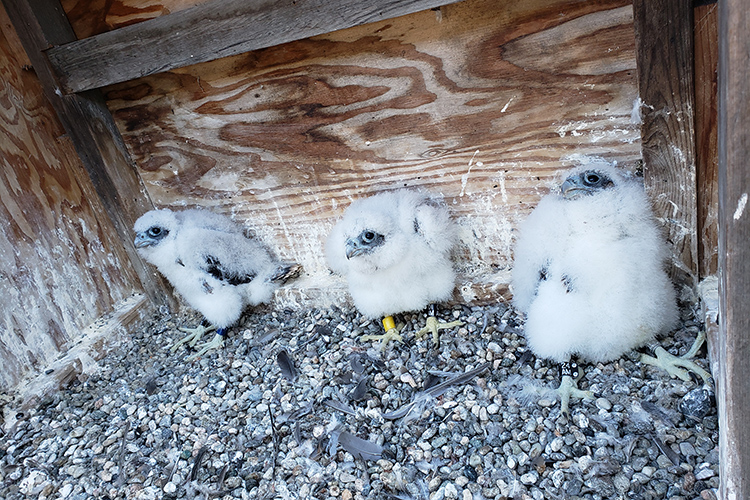
"caption": "Redwood, one of three falcons born in April to UC Berkeley falcon parents Annie and Grinnell, comes in for a landing on the Campanile. He flew for the first time, and a bit ahead of his siblings, on Saturday, May 30.",
"description": null,
"title": "FalconsRedwood750",
"credit": "UC Berkeley",
"status": "inherit",
"isLoading": false,
"fetchFailed": false
},
"science_1964455": {
"type": "attachments",
"id": "science_1964455",
"meta": {
"index": "attachments_1716263798",
"site": "science",
"id": "1964455",
"found": true
},
"parent": 1964051,
"imgSizes": {
"twentyfourteen-full-width": {
"file": "https://ww2.kqed.org/app/uploads/sites/35/2020/05/DEEP_709_KQED_marquee-1038x576.jpg",
"width": 1038,
"mimeType": "image/jpeg",
"height": 576
},
"thumbnail": {
"file": "https://ww2.kqed.org/app/uploads/sites/35/2020/05/DEEP_709_KQED_marquee-160x90.jpg",
"width": 160,
"mimeType": "image/jpeg",
"height": 90
},
"post-thumbnail": {
"file": "https://ww2.kqed.org/app/uploads/sites/35/2020/05/DEEP_709_KQED_marquee-672x372.jpg",
"width": 672,
"mimeType": "image/jpeg",
"height": 372
},
"kqedFullSize": {
"file": "https://ww2.kqed.org/app/uploads/sites/35/2020/05/DEEP_709_KQED_marquee.jpg",
"width": 1921,
"height": 1081
},
"large": {
"file": "https://ww2.kqed.org/app/uploads/sites/35/2020/05/DEEP_709_KQED_marquee-1020x574.jpg",
"width": 1020,
"mimeType": "image/jpeg",
"height": 574
},
"full-width": {
"file": "https://ww2.kqed.org/app/uploads/sites/35/2020/05/DEEP_709_KQED_marquee-1920x1080.jpg",
"width": 1920,
"mimeType": "image/jpeg",
"height": 1080
},
"medium": {
"file": "https://ww2.kqed.org/app/uploads/sites/35/2020/05/DEEP_709_KQED_marquee-800x450.jpg",
"width": 800,
"mimeType": "image/jpeg",
"height": 450
},
"medium_large": {
"file": "https://ww2.kqed.org/app/uploads/sites/35/2020/05/DEEP_709_KQED_marquee-768x432.jpg",
"width": 768,
"mimeType": "image/jpeg",
"height": 432
}
},
"publishDate": 1589586935,
"modified": 1589586984,
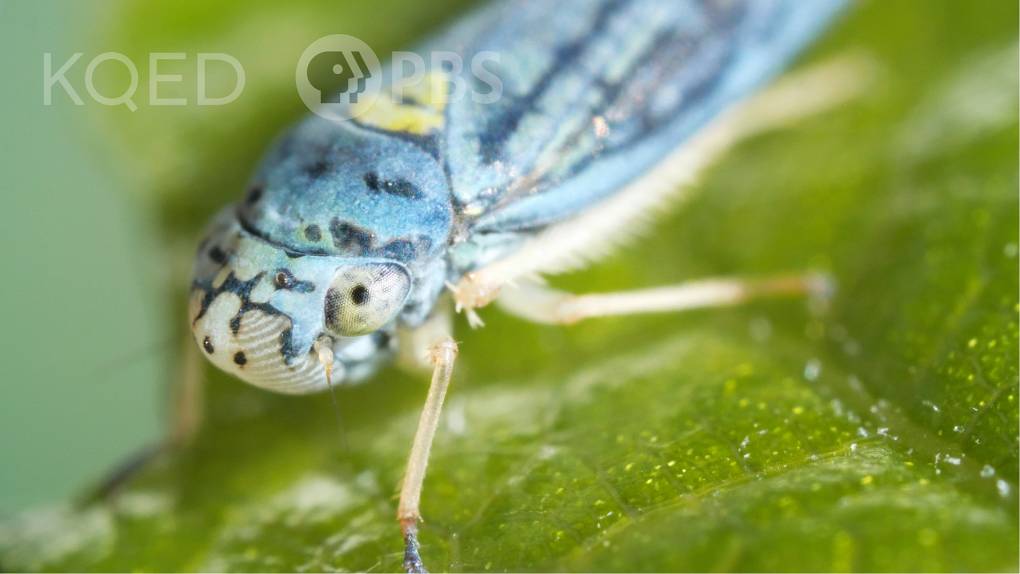
"caption": "A blue-green sharpshooter on a grapevine. The insects transmit Pierce's disease, which kills grapevines.",
"description": null,
"title": "DEEP_709_KQED_marquee",
"credit": "Josh Cassidy/KQED",
"status": "inherit",
"isLoading": false,
"fetchFailed": false
},
"science_1964533": {
"type": "attachments",
"id": "science_1964533",
"meta": {
"index": "attachments_1716263798",
"site": "science",
"id": "1964533",
"found": true
},
"parent": 1964529,
"imgSizes": {
"thumbnail": {
"file": "https://ww2.kqed.org/app/uploads/sites/35/2020/05/Falconsbandedlegs750-160x107.jpg",
"width": 160,
"mimeType": "image/jpeg",
"height": 107
},
"post-thumbnail": {
"file": "https://ww2.kqed.org/app/uploads/sites/35/2020/05/Falconsbandedlegs750-672x372.jpg",
"width": 672,
"mimeType": "image/jpeg",
"height": 372
},
"kqedFullSize": {
"file": "https://ww2.kqed.org/app/uploads/sites/35/2020/05/Falconsbandedlegs750.jpg",
"width": 750,
"height": 500
}
},
"publishDate": 1589834032,
"modified": 1589834059,
"caption": null,
"description": null,
"title": "Falconsbandedlegs750",
"credit": "Mary Malec/UC Berkeley",
"status": "inherit",
"isLoading": false,
"fetchFailed": false
},
"science_1964143": {
"type": "attachments",
"id": "science_1964143",
"meta": {
"index": "attachments_1716263798",
"site": "science",
"id": "1964143",
"found": true
},
"parent": 1964122,
"imgSizes": {
"twentyfourteen-full-width": {
"file": "https://ww2.kqed.org/app/uploads/sites/35/2020/05/RS43167_Foulquié_amplexus-qut-1038x576.jpg",
"width": 1038,
"mimeType": "image/jpeg",
"height": 576
},
"thumbnail": {
"file": "https://ww2.kqed.org/app/uploads/sites/35/2020/05/RS43167_Foulquié_amplexus-qut-160x107.jpg",
"width": 160,
"mimeType": "image/jpeg",
"height": 107
},
"post-thumbnail": {
"file": "https://ww2.kqed.org/app/uploads/sites/35/2020/05/RS43167_Foulquié_amplexus-qut-672x372.jpg",
"width": 672,
"mimeType": "image/jpeg",
"height": 372
},
"kqedFullSize": {
"file": "https://ww2.kqed.org/app/uploads/sites/35/2020/05/RS43167_Foulquié_amplexus-qut.jpg",
"width": 1920,
"height": 1280
},
"large": {
"file": "https://ww2.kqed.org/app/uploads/sites/35/2020/05/RS43167_Foulquié_amplexus-qut-1020x680.jpg",
"width": 1020,
"mimeType": "image/jpeg",
"height": 680
},
"full-width": {
"file": "https://ww2.kqed.org/app/uploads/sites/35/2020/05/RS43167_Foulquié_amplexus-qut-1920x1280.jpg",
"width": 1920,
"mimeType": "image/jpeg",
"height": 1280
},
"medium": {
"file": "https://ww2.kqed.org/app/uploads/sites/35/2020/05/RS43167_Foulquié_amplexus-qut-800x533.jpg",
"width": 800,
"mimeType": "image/jpeg",
"height": 533
},
"medium_large": {
"file": "https://ww2.kqed.org/app/uploads/sites/35/2020/05/RS43167_Foulquié_amplexus-qut-768x512.jpg",
"width": 768,
"mimeType": "image/jpeg",
"height": 512
}
},
"publishDate": 1589324422,
"modified": 1589324487,
"caption": "Hold on Tight ",
"description": null,
"title": "RS43167_Foulquié_amplexus-qut",
"credit": "Mathieu Foulquié/Aquatic Life Finalist",
"status": "inherit",
"isLoading": false,
"fetchFailed": false
},
"science_1962972": {
"type": "attachments",
"id": "science_1962972",
"meta": {
"index": "attachments_1716263798",
"site": "science",
"id": "1962972",
"found": true
},
"parent": 1962956,
"imgSizes": {
"twentyfourteen-full-width": {
"file": "https://ww2.kqed.org/app/uploads/sites/35/2020/04/Animal-plant-collections-1038x576.png",
"width": 1038,
"mimeType": "image/png",
"height": 576
},
"thumbnail": {
"file": "https://ww2.kqed.org/app/uploads/sites/35/2020/04/Animal-plant-collections-160x73.png",
"width": 160,
"mimeType": "image/png",
"height": 73
},
"post-thumbnail": {
"file": "https://ww2.kqed.org/app/uploads/sites/35/2020/04/Animal-plant-collections-672x372.png",
"width": 672,
"mimeType": "image/png",
"height": 372
},
"kqedFullSize": {
"file": "https://ww2.kqed.org/app/uploads/sites/35/2020/04/Animal-plant-collections.png",
"width": 1600,
"height": 732
},
"large": {
"file": "https://ww2.kqed.org/app/uploads/sites/35/2020/04/Animal-plant-collections-1020x467.png",
"width": 1020,
"mimeType": "image/png",
"height": 467
},
"medium": {
"file": "https://ww2.kqed.org/app/uploads/sites/35/2020/04/Animal-plant-collections-800x366.png",
"width": 800,
"mimeType": "image/png",
"height": 366
},
"medium_large": {
"file": "https://ww2.kqed.org/app/uploads/sites/35/2020/04/Animal-plant-collections-768x351.png",
"width": 768,
"mimeType": "image/png",
"height": 351
}
},
"publishDate": 1587755198,
"modified": 1587755213,
"caption": null,
"description": null,
"title": "Animal plant collections",
"credit": "The Conversation",
"status": "inherit",
"isLoading": false,
"fetchFailed": false
}
},
"audioPlayerReducer": {
"postId": "stream_live",
"isPaused": true,
"isPlaying": false,
"pfsActive": false,
"pledgeModalIsOpen": true,
"playerDrawerIsOpen": false,
"liveAudioPlayStartedAt": 0,
"liveAudioPlayContext": ""
},
"authorsReducer": {
"byline_science_1968870": {
"type": "authors",
"id": "byline_science_1968870",
"meta": {
"override": true
},
"slug": "byline_science_1968870",
"name": "Lauren Sommer \u003cbr />NPR\u003cbr>",
"isLoading": false
},
"byline_science_1966998": {
"type": "authors",
"id": "byline_science_1966998",
"meta": {
"override": true
},
"slug": "byline_science_1966998",
"name": " Judy Fahys \u003cbr />InsideClimate News\u003cbr>",
"isLoading": false
},
"byline_science_1964122": {
"type": "authors",
"id": "byline_science_1964122",
"meta": {
"override": true
},
"slug": "byline_science_1964122",
"name": "bioGraphic",
"isLoading": false
},
"byline_science_1962956": {
"type": "authors",
"id": "byline_science_1962956",
"meta": {
"override": true
},
"slug": "byline_science_1962956",
"name": "Matt Kasson, Brian Lovett and Rita Rio, West Virginia University\u003cbr />The Conversation",
"isLoading": false
},
"gabriela-quiros": {
"type": "authors",
"id": "6186",
"meta": {
"index": "authors_1716337520",
"id": "6186",
"found": true
},
"name": "Gabriela Quirós",
"firstName": "Gabriela",
"lastName": "Quirós",
"slug": "gabriela-quiros",
"email": "gquiros@kqed.org",
"display_author_email": false,
"staff_mastheads": [],
"title": "Supervising Producer",
"bio": "Gabriela Quirós is the \u003cstrong>supervising producer for KQED's web science video series \u003ca href=\"https://www.kqed.org/deeplook\">Deep Look\u003c/a>\u003c/strong>. She joined KQED as a TV producer when its science series QUEST started in 2006 and has covered everything from Alzheimer’s to bee die-offs to dark energy.\r\n\r\nShe won a 2022 AAAS Kavli Science Journalism Award with a team of her Deep Look colleagues. She has won six regional Emmys as a video producer and has shared eight more as the coordinating producer of Deep Look. The episode she produced about \u003ca href=\"https://www.kqed.org/science/728086/how-mosquitoes-use-six-needles-to-suck-your-blood\">How Mosquitoes Use Six Needles to Suck Your Blood\u003c/a> won a Webby \"People's Voice\" award. She has also earned awards from the Jackson Hole Wildlife Film Festival, the Society of Professional Journalists and the Society of Environmental Journalists.\r\n\r\nHer videos for KQED have also aired on NOVA scienceNOW and the PBS NewsHour, and appeared on NPR.org.\r\n\r\nAs an independent filmmaker, she produced and directed the hour-long documentary \u003ca href=\"http://lpbp.org/beautiful-sin-qa-with-producer-gabriela-quiros/\">\u003cem>Beautiful Sin\u003c/em>\u003c/a>, about the surprising story of how Costa Rica became the only country in the world to outlaw in vitro fertilization. The film aired in 2015 on public television stations throughout the U.S., and in Costa Rica.\r\n\r\nShe started her journalism career as a newspaper reporter in Costa Rica, where she grew up. She won the National Science Journalism Award there for a series of articles about organic agriculture, and developed a life-long interest in health reporting. She moved to the Bay Area in 1996 to study documentary filmmaking at the University of California, Berkeley, where she received master’s degrees in journalism and Latin American studies.",
"avatar": "https://secure.gravatar.com/avatar/6d82c20152affd1b434c31a904c40809?s=600&d=blank&r=g",
"twitter": "gabrielaquirosr",
"facebook": null,
"instagram": null,
"linkedin": null,
"sites": [
{
"site": "science",
"roles": []
},
{
"site": "quest",
"roles": [
"ef_view_calendar",
"ef_view_story_budget"
]
}
],
"headData": {
"title": "Gabriela Quirós | KQED",
"description": "Supervising Producer",
"ogImgSrc": "https://secure.gravatar.com/avatar/6d82c20152affd1b434c31a904c40809?s=600&d=blank&r=g",
"twImgSrc": "https://secure.gravatar.com/avatar/6d82c20152affd1b434c31a904c40809?s=600&d=blank&r=g"
},
"isLoading": false,
"link": "/author/gabriela-quiros"
},
"joshua-cassidy": {
"type": "authors",
"id": "6219",
"meta": {
"index": "authors_1716337520",
"id": "6219",
"found": true
},
"name": "Josh Cassidy",
"firstName": "Josh",
"lastName": "Cassidy",
"slug": "joshua-cassidy",
"email": "jcassidy@kqed.org",
"display_author_email": false,
"staff_mastheads": [
"science"
],
"title": "Digital Video Producer",
"bio": "Josh is a Senior Video Producer for KQED Science, and the Lead Producer and Cinematographer for Deep Look. After receiving his BS in Wildlife Biology from Ohio University, he went on to participate in marine mammal research for NOAA, USGS and the Intersea Foundation. He also served as the president of The Pacific Cetacean Group, a nonprofit organization dedicated to teaching students K-6 about whales. Josh studied science and natural history filmmaking at San Francisco State University and Montana State University.",
"avatar": "https://secure.gravatar.com/avatar/f2582a0801a35af53b734d56bcac2bbe?s=600&d=blank&r=g",
"twitter": null,
"facebook": null,
"instagram": null,
"linkedin": null,
"sites": [
{
"site": "science",
"roles": [
"editor"
]
},
{
"site": "quest",
"roles": [
"author",
"edit_others_posts"
]
}
],
"headData": {
"title": "Josh Cassidy | KQED",
"description": "Digital Video Producer",
"ogImgSrc": "https://secure.gravatar.com/avatar/f2582a0801a35af53b734d56bcac2bbe?s=600&d=blank&r=g",
"twImgSrc": "https://secure.gravatar.com/avatar/f2582a0801a35af53b734d56bcac2bbe?s=600&d=blank&r=g"
},
"isLoading": false,
"link": "/author/joshua-cassidy"
},
"mseely": {
"type": "authors",
"id": "11095",
"meta": {
"index": "authors_1716337520",
"id": "11095",
"found": true
},
"name": "Mike Seely",
"firstName": "Mike",
"lastName": "Seely",
"slug": "mseely",
"email": "mseely@kqed.org",
"display_author_email": false,
"staff_mastheads": [
"science"
],
"title": "Producer",
"bio": "Mike is a Digital Media Producer for KQED Science and Post Production Coordinator for \u003ca href=\"https://www.youtube.com/user/KQEDDeepLook\" target=\"_blank\" rel=\"noopener noreferrer\">Deep Look\u003c/a>. Prior to his work at KQED, he worked independently for 15 years as a director, producer and cinematographer of documentary films about art, science, and social issues, collaborating with independent directors, corporate clients, non-profits, digital and broadcast networks. Previous to filmmaking life, he majored in biology as an undergrad at Oberlin College, and worked as a wildlife biologist on bird and seal population studies in California. He also holds an M.A. in Documentary Film Production from Stanford University.",
"avatar": "https://secure.gravatar.com/avatar/f9c5c6f7135a7c3fc0ce85114f7b05dd18e0b71af78a2d6770a1b09a921d8425?s=600&d=blank&r=g",
"twitter": null,
"bluesky": null,
"facebook": null,
"instagram": null,
"linkedin": null,
"sites": [
{
"site": "arts",
"roles": [
"subscriber"
]
},
{
"site": "science",
"roles": [
"author"
]
}
],
"headData": {
"title": "Mike Seely | KQED",
"description": "Producer",
"ogImgSrc": "https://secure.gravatar.com/avatar/f9c5c6f7135a7c3fc0ce85114f7b05dd18e0b71af78a2d6770a1b09a921d8425?s=600&d=blank&r=g",
"twImgSrc": "https://secure.gravatar.com/avatar/f9c5c6f7135a7c3fc0ce85114f7b05dd18e0b71af78a2d6770a1b09a921d8425?s=600&d=blank&r=g"
},
"isLoading": false,
"link": "/author/mseely"
},
"jasminegarnett": {
"type": "authors",
"id": "11530",
"meta": {
"index": "authors_1716337520",
"id": "11530",
"found": true
},
"name": "Jasmine Garnett",
"firstName": "Jasmine",
"lastName": "Garnett",
"slug": "jasminegarnett",
"email": "JGarnett@KQED.org",
"display_author_email": false,
"staff_mastheads": [
"news"
],
"title": "Senior Engagement Platforms Producer",
"bio": "Jasmine is a Senior Engagement Platforms Producer on the KQED News team. She is also a freelance writer, with work appearing in KQED, Bitch Media, and Kotaku among others. Jasmine graduated from UC Berkeley with a degree in Media Studies, where she was also an Arts and Entertainment reporter at the Daily Californian.",
"avatar": "https://secure.gravatar.com/avatar/a6ea8b0641874311533b7401bee15c8e?s=600&d=blank&r=g",
"twitter": "JFLGarnett",
"facebook": null,
"instagram": null,
"linkedin": null,
"sites": [
{
"site": "arts",
"roles": [
"author"
]
},
{
"site": "news",
"roles": [
"editor"
]
},
{
"site": "about",
"roles": [
"editor"
]
},
{
"site": "science",
"roles": [
"editor"
]
},
{
"site": "forum",
"roles": [
"editor"
]
},
{
"site": "pressroom",
"roles": [
"editor"
]
}
],
"headData": {
"title": "Jasmine Garnett | KQED",
"description": "Senior Engagement Platforms Producer",
"ogImgSrc": "https://secure.gravatar.com/avatar/a6ea8b0641874311533b7401bee15c8e?s=600&d=blank&r=g",
"twImgSrc": "https://secure.gravatar.com/avatar/a6ea8b0641874311533b7401bee15c8e?s=600&d=blank&r=g"
},
"isLoading": false,
"link": "/author/jasminegarnett"
},
"kevinstark": {
"type": "authors",
"id": "11608",
"meta": {
"index": "authors_1716337520",
"id": "11608",
"found": true
},
"name": "Kevin Stark",
"firstName": "Kevin",
"lastName": "Stark",
"slug": "kevinstark",
"email": "kstark@kqed.org",
"display_author_email": true,
"staff_mastheads": [
"science"
],
"title": "Senior Editor",
"bio": "Kevin is a senior editor for KQED Science, managing the station's health and climate desks. His journalism career began in the Pacific Northwest, and he later became a lead reporter for the San Francisco Public Press. His work has appeared in Pacific Standard magazine, the Energy News Network, the Center for Investigative Reporting's Reveal and WBEZ in Chicago. Kevin joined KQED in 2019, and has covered issues related to energy, wildfire, climate change and the environment.",
"avatar": "https://secure.gravatar.com/avatar/365aaa4b597d3a8374f67504ff0facd323d7906e8eb4be0a7efd2427408e802c?s=600&d=blank&r=g",
"twitter": "starkkev",
"bluesky": null,
"facebook": null,
"instagram": null,
"linkedin": null,
"sites": [
{
"site": "",
"roles": [
"editor"
]
},
{
"site": "news",
"roles": [
"editor"
]
},
{
"site": "science",
"roles": [
"administrator"
]
}
],
"headData": {
"title": "Kevin Stark | KQED",
"description": "Senior Editor",
"ogImgSrc": "https://secure.gravatar.com/avatar/365aaa4b597d3a8374f67504ff0facd323d7906e8eb4be0a7efd2427408e802c?s=600&d=blank&r=g",
"twImgSrc": "https://secure.gravatar.com/avatar/365aaa4b597d3a8374f67504ff0facd323d7906e8eb4be0a7efd2427408e802c?s=600&d=blank&r=g"
},
"isLoading": false,
"link": "/author/kevinstark"
},
"aremmel": {
"type": "authors",
"id": "11653",
"meta": {
"index": "authors_1716337520",
"id": "11653",
"found": true
},
"name": "Ariana Remmel",
"firstName": "Ariana",
"lastName": "Remmel",
"slug": "aremmel",
"email": "aremmel@kqed.org",
"display_author_email": false,
"staff_mastheads": [],
"title": null,
"bio": null,
"avatar": "https://secure.gravatar.com/avatar/88d31419d97c3f81993d2d8db8608039?s=600&d=blank&r=g",
"twitter": null,
"facebook": null,
"instagram": null,
"linkedin": null,
"sites": [
{
"site": "science",
"roles": [
"editor"
]
}
],
"headData": {
"title": "Ariana Remmel | KQED",
"description": null,
"ogImgSrc": "https://secure.gravatar.com/avatar/88d31419d97c3f81993d2d8db8608039?s=600&d=blank&r=g",
"twImgSrc": "https://secure.gravatar.com/avatar/88d31419d97c3f81993d2d8db8608039?s=600&d=blank&r=g"
},
"isLoading": false,
"link": "/author/aremmel"
}
},
"pagesReducer": {
"science_category_animals": {
"type": "terms",
"id": "science_2874",
"meta": {
"index": "terms_1716263798",
"site": "science",
"id": "2874",
"score": 12.286945
},
"featImg": null,
"name": "Animals",
"description": null,
"taxonomy": "category",
"headData": {
"twImgId": null,
"twTitle": null,
"ogTitle": null,
"ogImgId": null,
"twDescription": null,
"description": null,
"title": "Animals Archives | KQED Science",
"ogDescription": null
},
"ttid": 2874,
"slug": "animals",
"isLoading": false,
"title": "Animals",
"pageMeta": {
"site": "science",
"WpPageTemplate": "page-topic-editorial",
"currentPage": 14
},
"blocks": [
{
"blockName": "kqed/post-list",
"attrs": {
"layout": "cardArticle2",
"query": "posts/science?category=animals",
"seeMore": false,
"paginated": true,
"page": 14
}
},
{
"blockName": "kqed/ad"
}
]
}
},
"pfsSessionReducer": {},
"postsReducer": {
"stream_live": {
"type": "live",
"id": "stream_live",
"audioUrl": "https://streams.kqed.org/kqedradio",
"title": "Live Stream",
"excerpt": "Live Stream information currently unavailable.",
"link": "/radio",
"featImg": "",
"label": {
"name": "KQED Live",
"link": "/"
}
},
"stream_kqedNewscast": {
"type": "posts",
"id": "stream_kqedNewscast",
"audioUrl": "https://www.kqed.org/.stream/anon/radio/RDnews/newscast.mp3?_=1",
"title": "KQED Newscast",
"featImg": "",
"label": {
"name": "88.5 FM",
"link": "/"
}
},
"science_1969661": {
"type": "posts",
"id": "science_1969661",
"meta": {
"index": "posts_1716263798",
"site": "science",
"id": "1969661",
"score": null,
"sort": [
1600693209000
]
},
"guestAuthors": [],
"slug": "is-a-spiders-web-a-part-of-its-mind",
"title": "Is a Spider's Web a Part of Its Mind?",
"publishDate": 1600693209,
"format": "video",
"headTitle": "Is a Spider’s Web a Part of Its Mind? | KQED",
"labelTerm": {
"term": 1935,
"site": "science"
},
"content": "\u003cp>[dl_subscribe]Next time you see a big spider sitting in the middle of its web, before you scream, run away or squash it, maybe pause and consider for a moment all of the wondrous things it can do with that itsy-bitsy brain. Most spiders have a brain no larger than a poppy seed, but with this modest cerebral endowment, they not only construct intricate insect traps, they expertly expand their senses far beyond the limits of their bodies, using their webs as a physical extension of their perceptual abilities.\u003c/p>\n\u003cp>“Imagine if you were able to extend microphones out, radiating from your ears, extending the capability of your hearing,” said Francis Windram, a Ph.D. candidate and expert in spider foraging at Imperial College London.\u003c/p>\n\u003cp>The more than 48,000 spider species have done well for themselves, evolutionarily speaking. They create a wide variety of web styles, though some — like jumping spiders — don’t spin webs at all. There are over 4,000 different species of orb weaver spiders alone; these are the eight-legged spinners that create the famous spiral-shaped webs.\u003c/p>\n\u003cfigure id=\"attachment_1969756\" class=\"wp-caption alignright\" style=\"max-width: 590px\">\u003cimg loading=\"lazy\" decoding=\"async\" class=\"size-full wp-image-1969756\" src=\"https://ww2.kqed.org/app/uploads/sites/35/2020/09/DL716_juvenile_cross_orb_weaver.gif\" alt=\"\" width=\"590\" height=\"331\">\u003cfigcaption class=\"wp-caption-text\">A juvenile cross orb weaver. Even though they are extremely small, orb weavers are born with the ability to spin intricate, spiral-shaped webs. \u003ccite>(Mike Seely/KQED)\u003c/cite>\u003c/figcaption>\u003c/figure>\n\u003cp>Anyone who’s watched orb weavers in action has seen them use their exquisite creations to deftly ensnare flying insects. Impressive as this, the webs function as much more than deadly traps.\u003c/p>\n\u003cp>Mostly nocturnal, orb weavers also happen to be almost completely blind. These species are only able to see light, dark and a little movement, but they are somehow able to quickly navigate their webs, pinpointing their unlucky victims and binding them in silk, a meal saved for later.\u003c/p>\n\u003cp>[ad fullwidth]\u003c/p>\n\u003cp>Webs play an integral role in everything an orb weaver does. Many species every day eat their silk, recycle it inside their body, and reconstruct the web overnight. When spiders are hungry, they can tighten the web’s strands and even adjust its size and shape, depending on what size of prey they’re in the mood for.\u003c/p>\n\u003cp>Knowing that beetles and moths use pheromones to communicate, UC Berkeley Ph.D. candidate Ashley Adams wondered whether spiders could use chemical cues to distinguish the webs of their own species from those of other types of spiders.\u003c/p>\n\u003cp>To make sure they weren’t just checking the web by feel, she soaked cotton threads in solutions made from extracts of webs spun by different species.\u003c/p>\n\u003cp>The male long-jawed orb weaver spiders in her lab consistently chose the threads treated with extracts from their own species, avoiding those doused with web extracts from other kinds of spiders, suggesting they do sense chemicals with their legs.\u003c/p>\n\u003cfigure id=\"attachment_1969753\" class=\"wp-caption alignleft\" style=\"max-width: 800px\">\u003cimg loading=\"lazy\" decoding=\"async\" class=\"size-medium wp-image-1969753\" src=\"https://ww2.kqed.org/app/uploads/sites/35/2020/09/DL716_cross_orb_weaver5-800x450.jpg\" alt=\"\" width=\"800\" height=\"450\" srcset=\"https://cdn.kqed.org/wp-content/uploads/sites/35/2020/09/DL716_cross_orb_weaver5-800x450.jpg 800w, https://cdn.kqed.org/wp-content/uploads/sites/35/2020/09/DL716_cross_orb_weaver5-1020x574.jpg 1020w, https://cdn.kqed.org/wp-content/uploads/sites/35/2020/09/DL716_cross_orb_weaver5-160x90.jpg 160w, https://cdn.kqed.org/wp-content/uploads/sites/35/2020/09/DL716_cross_orb_weaver5-768x432.jpg 768w, https://cdn.kqed.org/wp-content/uploads/sites/35/2020/09/DL716_cross_orb_weaver5-1536x864.jpg 1536w, https://cdn.kqed.org/wp-content/uploads/sites/35/2020/09/DL716_cross_orb_weaver5-2048x1152.jpg 2048w, https://cdn.kqed.org/wp-content/uploads/sites/35/2020/09/DL716_cross_orb_weaver5-1920x1080.jpg 1920w\" sizes=\"auto, (max-width: 800px) 100vw, 800px\">\u003cfigcaption class=\"wp-caption-text\">An adult cross orb weaver spider lying in wait at the center of its web. \u003ccite>(Josh Cassidy/KQED)\u003c/cite>\u003c/figcaption>\u003c/figure>\n\u003cp>Adams’ soon-to-be-published study adds to the already impressive list of complex behaviors for these tiny-brained animals. We know that many mammals and birds seem to be able to construct a mental representation of space, but it’s rare for invertebrates (bees, octopuses and cuttlefish are exceptions). Orb weavers can do so much with their miniscule brains, some researchers ask the question: Is a spider’s web an extension of its mind?\u003c/p>\n\u003cp>Adams agrees that “at least from a neurological perspective, [the web] is this extremely effective extension of their senses that has helped them succeed in the environment and become so prevalent.”\u003c/p>\n\u003cp>But others, like biologist Hilton Japyassú of the Federal University of Bahia, Brazil, takes this idea a step further, suggesting that orb weavers use their webs as a form of extended cognition, outsourcing advanced mental tasks like problem-solving and memory. For example, once they have killed and wrapped their prey, a spider can store the prey for later, then easily find it again. The way they relocate the insects they have killed looks an awful lot like they are remembering, Japyassú says.\u003c/p>\n\u003cp>Recently, he and his colleagues set up an experiment in which they manipulated the web and removed prey the spider had wrapped up in silk to see how the spider reacted. By limiting the way the animals sensed the world around them, the scientists were able to directly test the “thinking web” idea. They found that when the webs were manipulated, the spiders changed their behavior. For one, they searched for the prey taken by the researchers. Also, if their webs were altered, or they encountered different-sized prey, they could adjust their foraging behavior by changing their capturing technique.\u003c/p>\n\u003cp>The researchers concluded that this two-way connection between the web and the spider’s behavior suggests that the web is indeed a way for the spider to process information\u003cb>, \u003c/b>reserving precious brain power for other necessary and complex tasks like the actual capture of prey. For tasks that are more memory-intensive, like navigating or relocating prey, they don’t need to remember every single thread they have spun — just a few previous steps.\u003c/p>\n\u003cfigure id=\"attachment_1969758\" class=\"wp-caption alignright\" style=\"max-width: 590px\">\u003cimg loading=\"lazy\" decoding=\"async\" class=\"size-full wp-image-1969758\" src=\"https://ww2.kqed.org/app/uploads/sites/35/2020/09/DL716_cross_orb_weaver_prey_capture2.gif\" alt=\"Cross orb weaver prey capture\" width=\"590\" height=\"331\">\u003cfigcaption class=\"wp-caption-text\">A cross orb weaver spider quickly wraps its prey after paralyzing it with a dose of venom. Orb weavers are mostly blind, but they use their webs to help remember where they keep their wrapped-up food. \u003ccite>(Mike Seely/KQED)\u003c/cite>\u003c/figcaption>\u003c/figure>\n\u003cp>The idea of extended cognition — that tools like writing, computers, or phones are extensions of our thought processes — is not new to philosophers or scientists. But if you start defining cognition in the traditional sense, “there is no possibility to expand [it] to anywhere else outside of human experience,” Japyassú said. “I prefer to define it in a very simple way; that … cognition helps you to survive, and it’s related to information processing.” By this definition, the web is an extension of the spider’s thought processes.\u003c/p>\n\u003cp>Researchers don’t all fully agree that the webs actually are a part of a spider’s thinking. How do you tell that the spider has an actual plan, or if it is just exhibiting instinctual behavior when it builds its web? With current technology, we can’t see inside the tiny working brain of the orb weaver, so we are left with what behavioral observation can tell us.\u003c/p>\n\u003cp>Although some philosophers have a problem with the idea that an animal has a mind at all, Japyassú says scientists researching animal cognition “are more open-minded because they can observe such different ways of thinking in other animals.”\u003c/p>\n\u003cp>Spider researchers, said Japyassú, “see these spiders doing things that would seem impossible for a tiny animal.”\u003c/p>\n\u003cp>So, he says, the logical place to look for where all that thinking is happening is in the web.\u003c/p>\n\u003cfigure id=\"attachment_1969757\" class=\"wp-caption aligncenter\" style=\"max-width: 590px\">\u003cimg loading=\"lazy\" decoding=\"async\" class=\"size-full wp-image-1969757\" src=\"https://ww2.kqed.org/app/uploads/sites/35/2020/09/DL716_orb_web_sunlight.gif\" alt=\"\" width=\"590\" height=\"331\">\u003cfigcaption class=\"wp-caption-text\">The signature spiral-shaped webs of the orb weaver extend the senses of a spider far beyond the limits of its body. \u003ccite>(Mike Seely/KQED)\u003c/cite>\u003c/figcaption>\u003c/figure>\n\u003cp>[ad floatright]\u003c/p>\n\u003cp> \u003c/p>\n\n",
"blocks": [],
"excerpt": "Most spiders have a brain no larger than a poppy seed, but with this modest cerebral endowment, they not only construct intricate insect traps, they expertly expand their senses far beyond the limits of their bodies.",
"status": "publish",
"parent": 0,
"modified": 1738893383,
"stats": {
"hasAudio": false,
"hasVideo": false,
"hasChartOrMap": false,
"iframeSrcs": [],
"hasGoogleForm": false,
"hasGallery": false,
"hasHearkenModule": false,
"hasPolis": false,
"paragraphCount": 21,
"wordCount": 1177
},
"headData": {
"title": "Is a Spider's Web a Part of Its Mind? | KQED",
"description": "Orb weaver spiders build exquisite spiral webs not only to catch insects, but to extend their senses. Once they shrink-wrap their prey with silk, the nearly blind spiders can store them for later, and read their web's silky strands as a kind of memory map to guide them back.",
"ogTitle": "",
"ogDescription": "",
"ogImgId": "",
"twTitle": "",
"twDescription": "",
"twImgId": "",
"socialDescription": "Orb weaver spiders build exquisite spiral webs not only to catch insects, but to extend their senses. Once they shrink-wrap their prey with silk, the nearly blind spiders can store them for later, and read their web's silky strands as a kind of memory map to guide them back.",
"schema": {
"@context": "https://schema.org",
"@type": "Article",
"headline": "Is a Spider's Web a Part of Its Mind?",
"datePublished": "2020-09-21T06:00:09-07:00",
"dateModified": "2025-02-06T17:56:23-08:00",
"image": "https://cdn.kqed.org/wp-content/uploads/2020/02/KQED-OG-Image@1x.png"
}
},
"videoEmbed": "https://youtu.be/rpwkgMX4IlQ",
"pbsMediaId": "3049845438",
"sticky": false,
"excludeFromSiteSearch": "Include",
"articleAge": "0",
"path": "/science/1969661/is-a-spiders-web-a-part-of-its-mind",
"audioTrackLength": null,
"parsedContent": [
{
"type": "contentString",
"content": "\u003cdiv class=\"post-body\">\u003cp>\u003cp>\u003c/p>\u003c/div>",
"attributes": {
"named": {},
"numeric": []
}
},
{
"type": "component",
"content": "",
"name": "dl_subscribe",
"attributes": {
"named": {
"label": ""
},
"numeric": []
}
},
{
"type": "contentString",
"content": "\u003cdiv class=\"post-body\">\u003cp>Next time you see a big spider sitting in the middle of its web, before you scream, run away or squash it, maybe pause and consider for a moment all of the wondrous things it can do with that itsy-bitsy brain. Most spiders have a brain no larger than a poppy seed, but with this modest cerebral endowment, they not only construct intricate insect traps, they expertly expand their senses far beyond the limits of their bodies, using their webs as a physical extension of their perceptual abilities.\u003c/p>\n\u003cp>“Imagine if you were able to extend microphones out, radiating from your ears, extending the capability of your hearing,” said Francis Windram, a Ph.D. candidate and expert in spider foraging at Imperial College London.\u003c/p>\n\u003cp>The more than 48,000 spider species have done well for themselves, evolutionarily speaking. They create a wide variety of web styles, though some — like jumping spiders — don’t spin webs at all. There are over 4,000 different species of orb weaver spiders alone; these are the eight-legged spinners that create the famous spiral-shaped webs.\u003c/p>\n\u003cfigure id=\"attachment_1969756\" class=\"wp-caption alignright\" style=\"max-width: 590px\">\u003cimg loading=\"lazy\" decoding=\"async\" class=\"size-full wp-image-1969756\" src=\"https://ww2.kqed.org/app/uploads/sites/35/2020/09/DL716_juvenile_cross_orb_weaver.gif\" alt=\"\" width=\"590\" height=\"331\">\u003cfigcaption class=\"wp-caption-text\">A juvenile cross orb weaver. Even though they are extremely small, orb weavers are born with the ability to spin intricate, spiral-shaped webs. \u003ccite>(Mike Seely/KQED)\u003c/cite>\u003c/figcaption>\u003c/figure>\n\u003cp>Anyone who’s watched orb weavers in action has seen them use their exquisite creations to deftly ensnare flying insects. Impressive as this, the webs function as much more than deadly traps.\u003c/p>\n\u003cp>Mostly nocturnal, orb weavers also happen to be almost completely blind. These species are only able to see light, dark and a little movement, but they are somehow able to quickly navigate their webs, pinpointing their unlucky victims and binding them in silk, a meal saved for later.\u003c/p>\n\u003cp>\u003c/p>\u003c/div>",
"attributes": {
"named": {},
"numeric": []
}
},
{
"type": "component",
"content": "",
"name": "ad",
"attributes": {
"named": {
"label": "fullwidth"
},
"numeric": [
"fullwidth"
]
}
},
{
"type": "contentString",
"content": "\u003cdiv class=\"post-body\">\u003cp>\u003c/p>\n\u003cp>Webs play an integral role in everything an orb weaver does. Many species every day eat their silk, recycle it inside their body, and reconstruct the web overnight. When spiders are hungry, they can tighten the web’s strands and even adjust its size and shape, depending on what size of prey they’re in the mood for.\u003c/p>\n\u003cp>Knowing that beetles and moths use pheromones to communicate, UC Berkeley Ph.D. candidate Ashley Adams wondered whether spiders could use chemical cues to distinguish the webs of their own species from those of other types of spiders.\u003c/p>\n\u003cp>To make sure they weren’t just checking the web by feel, she soaked cotton threads in solutions made from extracts of webs spun by different species.\u003c/p>\n\u003cp>The male long-jawed orb weaver spiders in her lab consistently chose the threads treated with extracts from their own species, avoiding those doused with web extracts from other kinds of spiders, suggesting they do sense chemicals with their legs.\u003c/p>\n\u003cfigure id=\"attachment_1969753\" class=\"wp-caption alignleft\" style=\"max-width: 800px\">\u003cimg loading=\"lazy\" decoding=\"async\" class=\"size-medium wp-image-1969753\" src=\"https://ww2.kqed.org/app/uploads/sites/35/2020/09/DL716_cross_orb_weaver5-800x450.jpg\" alt=\"\" width=\"800\" height=\"450\" srcset=\"https://cdn.kqed.org/wp-content/uploads/sites/35/2020/09/DL716_cross_orb_weaver5-800x450.jpg 800w, https://cdn.kqed.org/wp-content/uploads/sites/35/2020/09/DL716_cross_orb_weaver5-1020x574.jpg 1020w, https://cdn.kqed.org/wp-content/uploads/sites/35/2020/09/DL716_cross_orb_weaver5-160x90.jpg 160w, https://cdn.kqed.org/wp-content/uploads/sites/35/2020/09/DL716_cross_orb_weaver5-768x432.jpg 768w, https://cdn.kqed.org/wp-content/uploads/sites/35/2020/09/DL716_cross_orb_weaver5-1536x864.jpg 1536w, https://cdn.kqed.org/wp-content/uploads/sites/35/2020/09/DL716_cross_orb_weaver5-2048x1152.jpg 2048w, https://cdn.kqed.org/wp-content/uploads/sites/35/2020/09/DL716_cross_orb_weaver5-1920x1080.jpg 1920w\" sizes=\"auto, (max-width: 800px) 100vw, 800px\">\u003cfigcaption class=\"wp-caption-text\">An adult cross orb weaver spider lying in wait at the center of its web. \u003ccite>(Josh Cassidy/KQED)\u003c/cite>\u003c/figcaption>\u003c/figure>\n\u003cp>Adams’ soon-to-be-published study adds to the already impressive list of complex behaviors for these tiny-brained animals. We know that many mammals and birds seem to be able to construct a mental representation of space, but it’s rare for invertebrates (bees, octopuses and cuttlefish are exceptions). Orb weavers can do so much with their miniscule brains, some researchers ask the question: Is a spider’s web an extension of its mind?\u003c/p>\n\u003cp>Adams agrees that “at least from a neurological perspective, [the web] is this extremely effective extension of their senses that has helped them succeed in the environment and become so prevalent.”\u003c/p>\n\u003cp>But others, like biologist Hilton Japyassú of the Federal University of Bahia, Brazil, takes this idea a step further, suggesting that orb weavers use their webs as a form of extended cognition, outsourcing advanced mental tasks like problem-solving and memory. For example, once they have killed and wrapped their prey, a spider can store the prey for later, then easily find it again. The way they relocate the insects they have killed looks an awful lot like they are remembering, Japyassú says.\u003c/p>\n\u003cp>Recently, he and his colleagues set up an experiment in which they manipulated the web and removed prey the spider had wrapped up in silk to see how the spider reacted. By limiting the way the animals sensed the world around them, the scientists were able to directly test the “thinking web” idea. They found that when the webs were manipulated, the spiders changed their behavior. For one, they searched for the prey taken by the researchers. Also, if their webs were altered, or they encountered different-sized prey, they could adjust their foraging behavior by changing their capturing technique.\u003c/p>\n\u003cp>The researchers concluded that this two-way connection between the web and the spider’s behavior suggests that the web is indeed a way for the spider to process information\u003cb>, \u003c/b>reserving precious brain power for other necessary and complex tasks like the actual capture of prey. For tasks that are more memory-intensive, like navigating or relocating prey, they don’t need to remember every single thread they have spun — just a few previous steps.\u003c/p>\n\u003cfigure id=\"attachment_1969758\" class=\"wp-caption alignright\" style=\"max-width: 590px\">\u003cimg loading=\"lazy\" decoding=\"async\" class=\"size-full wp-image-1969758\" src=\"https://ww2.kqed.org/app/uploads/sites/35/2020/09/DL716_cross_orb_weaver_prey_capture2.gif\" alt=\"Cross orb weaver prey capture\" width=\"590\" height=\"331\">\u003cfigcaption class=\"wp-caption-text\">A cross orb weaver spider quickly wraps its prey after paralyzing it with a dose of venom. Orb weavers are mostly blind, but they use their webs to help remember where they keep their wrapped-up food. \u003ccite>(Mike Seely/KQED)\u003c/cite>\u003c/figcaption>\u003c/figure>\n\u003cp>The idea of extended cognition — that tools like writing, computers, or phones are extensions of our thought processes — is not new to philosophers or scientists. But if you start defining cognition in the traditional sense, “there is no possibility to expand [it] to anywhere else outside of human experience,” Japyassú said. “I prefer to define it in a very simple way; that … cognition helps you to survive, and it’s related to information processing.” By this definition, the web is an extension of the spider’s thought processes.\u003c/p>\n\u003cp>Researchers don’t all fully agree that the webs actually are a part of a spider’s thinking. How do you tell that the spider has an actual plan, or if it is just exhibiting instinctual behavior when it builds its web? With current technology, we can’t see inside the tiny working brain of the orb weaver, so we are left with what behavioral observation can tell us.\u003c/p>\n\u003cp>Although some philosophers have a problem with the idea that an animal has a mind at all, Japyassú says scientists researching animal cognition “are more open-minded because they can observe such different ways of thinking in other animals.”\u003c/p>\n\u003cp>Spider researchers, said Japyassú, “see these spiders doing things that would seem impossible for a tiny animal.”\u003c/p>\n\u003cp>So, he says, the logical place to look for where all that thinking is happening is in the web.\u003c/p>\n\u003cfigure id=\"attachment_1969757\" class=\"wp-caption aligncenter\" style=\"max-width: 590px\">\u003cimg loading=\"lazy\" decoding=\"async\" class=\"size-full wp-image-1969757\" src=\"https://ww2.kqed.org/app/uploads/sites/35/2020/09/DL716_orb_web_sunlight.gif\" alt=\"\" width=\"590\" height=\"331\">\u003cfigcaption class=\"wp-caption-text\">The signature spiral-shaped webs of the orb weaver extend the senses of a spider far beyond the limits of its body. \u003ccite>(Mike Seely/KQED)\u003c/cite>\u003c/figcaption>\u003c/figure>\n\u003cp>\u003c/p>\u003c/div>",
"attributes": {
"named": {},
"numeric": []
}
},
{
"type": "component",
"content": "",
"name": "ad",
"attributes": {
"named": {
"label": "floatright"
},
"numeric": [
"floatright"
]
}
},
{
"type": "contentString",
"content": "\u003cdiv class=\"post-body\">\u003cp>\u003c/p>\n\u003cp> \u003c/p>\n\n\u003c/div>\u003c/p>",
"attributes": {
"named": {},
"numeric": []
}
}
],
"link": "/science/1969661/is-a-spiders-web-a-part-of-its-mind",
"authors": [
"11095"
],
"series": [
"science_1935"
],
"categories": [
"science_2874",
"science_30",
"science_40",
"science_4450",
"science_86"
],
"tags": [
"science_5196",
"science_4414",
"science_157"
],
"featImg": "science_1994156",
"label": "science_1935"
},
"science_1968870": {
"type": "posts",
"id": "science_1968870",
"meta": {
"index": "posts_1716263798",
"site": "science",
"id": "1968870",
"score": null,
"sort": [
1598388305000
]
},
"parent": 0,
"labelTerm": {},
"blocks": [],
"publishDate": 1598388305,
"format": "standard",
"title": "California Wildfires Scorch Redwoods and Threaten Condors. But There's Still Hope",
"headTitle": "California Wildfires Scorch Redwoods and Threaten Condors. But There’s Still Hope | KQED",
"content": "\u003cp>At 3 a.m. on Friday morning, biologist Kelly Sorenson was awake, nervously watching the live webcam feed of a California condor nest on the Big Sur coast. He could see a 5-month-old chick, still unable to fly, as the flames of the Dolan Fire came into view.\u003c/p>\n\u003cp>“It was just terrifying,” Sorenson said. “Having the livestreaming webcams was both a blessing and a nightmare because we had to watch the fire as it burned through the canyon.”\u003c/p>\n\u003cp>California’s massive wildfires have burned more than \u003ca href=\"https://www.sfchronicle.com/projects/california-fire-map/\">1,000 homes and buildings\u003c/a> over the last week, destroying irreplaceable possessions and memories for some residents. At the same time, the fires are also threatening some of the state’s rare ecosystems and wildlife.\u003c/p>\n\u003cp>Biologists are watching closely as the blazes encroach on old-growth redwood trees in Northern and Central California, where some giants are more than 1,000 years old and are known by individual names. While some seem to have been spared, Big Basin State Park — the oldest state park in California — saw significant fire damage.\u003c/p>\n\u003cp>Still, biologists say there are reasons to be hopeful, because redwoods have incredibly thick bark that can withstand wildfires. Even fully charred trees can sprout again.\u003c/p>\n\u003cp>[ad fullwidth]\u003c/p>\n\u003cp>The larger question is whether ecosystems can fully bounce back after extreme fires given that the climate change, already driving the current wildfires, can also make recovery difficult through heat stress and drought.\u003c/p>\n\u003cp>For the endangered California condors, recovery is still tenuous. In 1987, \u003ca href=\"https://www.nps.gov/articles/california-condor-recovery.htm\">just 27 birds remained\u003c/a>. Scientists brought them into captivity to begin a breeding program. Today, there are about 100 condors free-flying on California’s Central Coast. The \u003ca href=\"https://www.ventanaws.org/california-condors.html\">Ventana Wildlife Society\u003c/a>, where Sorenson is executive director, has been carefully tracking and releasing them.\u003c/p>\n\u003cp>The massive birds, with a 9-foot wingspan, are still threatened by lead poisoning since they feed on the carcasses of animals that have lead bullet fragments from hunters.\u003c/p>\n\u003cp>Of the eight condor nests with chicks this year, Sorenson says five are within the fire zone.\u003c/p>\n\u003cp>“Even just four or five birds would be a huge loss,” said Sorenson. “It’s just really nerve-wracking now, not knowing.”\u003c/p>\n\u003cp>Still, Sorenson is hopeful some chicks made it. In 2008, condor chicks survived a wildfire in Big Sur, protected by the tall redwood trees they nested in.\u003c/p>\n\u003cp>“We were convinced there was no way the chicks could survive the fire,” he said. “Sure enough, a chick survived and we named it Phoenix.”\u003c/p>\n\u003cp>Redwood trees are built to survive fires, insulated by bark up to a foot thick. While lightning-caused fires aren’t as common in coastal redwood habitat as they are elsewhere in California, burning is still a natural cycle in the ecosystem. Native American tribes often set regular fires to shape the landscape and encourage certain plants to grow.\u003c/p>\n\u003cp>“Because of their resilience, I feel a lot more hopeful than super worried about the trees,” said Kristen Shive, director of science for \u003ca href=\"https://www.savetheredwoods.org/\">Save the Redwoods League\u003c/a>. “The trees really are so incredibly tough when it comes to fire. Most of them will persist and survive.”\u003c/p>\n\u003cp>Even trees that look significantly scorched are still alive and can regrow from their base. Many of the largest redwood trees growing today show burn scars.\u003c/p>\n\u003cp>“If a fire is hot enough to consume the entire crown of a tree, in a pine tree, that tree is most likely dead,” Shive said. “But in redwoods, they have these buds that lie dormant under their bark and they can sprout after the fire.”\u003c/p>\n\u003cp>Still, the younger generation of redwood trees may be more at risk. Around 95% of California’s redwoods were logged, so the majority growing today are newer, “second-growth” trees. Those forests tend to be denser, allowing wildfires to burn hotter and spread more easily.\u003c/p>\n\u003cp>Much like other California landscapes, vegetation in some redwood forests is heavier than it used to be. As wildfires were suppressed in the modern era of firefighting and Native American tribes were removed by settlers from their land, there were fewer regular fires to clear out the forest floor.\u003c/p>\n\u003cp>Shive says setting controlled or “prescribed” fires in redwood forests will be even more essential as the climate warms, to prevent wildfires from doing too much damage. While redwoods are able to bounce back, they’re already stressed by hotter temperatures and drought at the southern end of their range, potentially interfering with their recovery.\u003c/p>\n\u003cp>\u003c/p>\n\u003cp>“We still need to be setting these forests up to be as fire-resilient as possible, since, as we’ve seen in this last week, this warmer and drier future is already upon us and it’s going to get worse,” she said.\u003c/p>\n\u003cdiv class=\"fullattribution\">Copyright 2020 NPR. To see more, visit https://www.npr.org.\u003cimg decoding=\"async\" src=\"https://www.google-analytics.com/__utm.gif?utmac=UA-5828686-4&utmdt=Wildfires+Hit+California%27s+Redwoods+And+Condors%2C+But+There%27s+Still+Hope&utme=8(APIKey)9(MDAxOTAwOTE4MDEyMTkxMDAzNjczZDljZA004)\">\u003c/div>\n\n",
"stats": {
"hasVideo": false,
"hasChartOrMap": false,
"hasAudio": false,
"hasPolis": false,
"wordCount": 830,
"hasGoogleForm": false,
"hasGallery": false,
"hasHearkenModule": false,
"iframeSrcs": [],
"paragraphCount": 22
},
"modified": 1704847081,
"excerpt": "California's massive wildfires have not only burned more than 1,000 homes and buildings over the last week, they are also threatening some of the state's rare ecosystems and wildlife.",
"headData": {
"twImgId": "",
"twTitle": "",
"ogTitle": "",
"ogImgId": "",
"twDescription": "",
"description": "California's massive wildfires have not only burned more than 1,000 homes and buildings over the last week, they are also threatening some of the state's rare ecosystems and wildlife.",
"title": "California Wildfires Scorch Redwoods and Threaten Condors. But There's Still Hope | KQED",
"ogDescription": "",
"schema": {
"@context": "https://schema.org",
"@type": "Article",
"headline": "California Wildfires Scorch Redwoods and Threaten Condors. But There's Still Hope",
"datePublished": "2020-08-25T13:45:05-07:00",
"dateModified": "2024-01-09T16:38:01-08:00",
"image": "https://cdn.kqed.org/wp-content/uploads/2020/02/KQED-OG-Image@1x.png"
}
},
"guestAuthors": [],
"slug": "california-wildfires-scorch-redwoods-and-threaten-condors-but-theres-still-hope",
"status": "publish",
"nprApiLink": "http://api.npr.org/query?id=905268072&apiKey=MDAxOTAwOTE4MDEyMTkxMDAzNjczZDljZA004",
"nprByline": "Lauren Sommer \u003cbr />NPR\u003cbr>",
"nprStoryDate": "Sun, 23 Aug 2020 19:56:00 -0400",
"nprLastModifiedDate": "Sun, 23 Aug 2020 19:58:13 -0400",
"sticky": false,
"nprHtmlLink": "https://www.npr.org/2020/08/23/905268072/wildfires-hit-californias-redwoods-and-condors-but-there-s-still-hope?ft=nprml&f=905268072",
"nprImageAgency": "AP",
"nprImageCredit": "Marcio Jose Sanchez",
"source": "NPR",
"nprStoryId": "905268072",
"nprRetrievedStory": "1",
"nprPubDate": "Sun, 23 Aug 2020 19:56:00 -0400",
"path": "/science/1968870/california-wildfires-scorch-redwoods-and-threaten-condors-but-theres-still-hope",
"audioTrackLength": null,
"parsedContent": [
{
"type": "contentString",
"content": "\u003cdiv class=\"post-body\">\u003cp>\u003cp>At 3 a.m. on Friday morning, biologist Kelly Sorenson was awake, nervously watching the live webcam feed of a California condor nest on the Big Sur coast. He could see a 5-month-old chick, still unable to fly, as the flames of the Dolan Fire came into view.\u003c/p>\n\u003cp>“It was just terrifying,” Sorenson said. “Having the livestreaming webcams was both a blessing and a nightmare because we had to watch the fire as it burned through the canyon.”\u003c/p>\n\u003cp>California’s massive wildfires have burned more than \u003ca href=\"https://www.sfchronicle.com/projects/california-fire-map/\">1,000 homes and buildings\u003c/a> over the last week, destroying irreplaceable possessions and memories for some residents. At the same time, the fires are also threatening some of the state’s rare ecosystems and wildlife.\u003c/p>\n\u003cp>Biologists are watching closely as the blazes encroach on old-growth redwood trees in Northern and Central California, where some giants are more than 1,000 years old and are known by individual names. While some seem to have been spared, Big Basin State Park — the oldest state park in California — saw significant fire damage.\u003c/p>\n\u003cp>Still, biologists say there are reasons to be hopeful, because redwoods have incredibly thick bark that can withstand wildfires. Even fully charred trees can sprout again.\u003c/p>\n\u003cp>\u003c/p>\u003c/div>",
"attributes": {
"named": {},
"numeric": []
}
},
{
"type": "component",
"content": "",
"name": "ad",
"attributes": {
"named": {
"label": "fullwidth"
},
"numeric": [
"fullwidth"
]
}
},
{
"type": "contentString",
"content": "\u003cdiv class=\"post-body\">\u003cp>\u003c/p>\n\u003cp>The larger question is whether ecosystems can fully bounce back after extreme fires given that the climate change, already driving the current wildfires, can also make recovery difficult through heat stress and drought.\u003c/p>\n\u003cp>For the endangered California condors, recovery is still tenuous. In 1987, \u003ca href=\"https://www.nps.gov/articles/california-condor-recovery.htm\">just 27 birds remained\u003c/a>. Scientists brought them into captivity to begin a breeding program. Today, there are about 100 condors free-flying on California’s Central Coast. The \u003ca href=\"https://www.ventanaws.org/california-condors.html\">Ventana Wildlife Society\u003c/a>, where Sorenson is executive director, has been carefully tracking and releasing them.\u003c/p>\n\u003cp>The massive birds, with a 9-foot wingspan, are still threatened by lead poisoning since they feed on the carcasses of animals that have lead bullet fragments from hunters.\u003c/p>\n\u003cp>Of the eight condor nests with chicks this year, Sorenson says five are within the fire zone.\u003c/p>\n\u003cp>“Even just four or five birds would be a huge loss,” said Sorenson. “It’s just really nerve-wracking now, not knowing.”\u003c/p>\n\u003cp>Still, Sorenson is hopeful some chicks made it. In 2008, condor chicks survived a wildfire in Big Sur, protected by the tall redwood trees they nested in.\u003c/p>\n\u003cp>“We were convinced there was no way the chicks could survive the fire,” he said. “Sure enough, a chick survived and we named it Phoenix.”\u003c/p>\n\u003cp>Redwood trees are built to survive fires, insulated by bark up to a foot thick. While lightning-caused fires aren’t as common in coastal redwood habitat as they are elsewhere in California, burning is still a natural cycle in the ecosystem. Native American tribes often set regular fires to shape the landscape and encourage certain plants to grow.\u003c/p>\n\u003cp>“Because of their resilience, I feel a lot more hopeful than super worried about the trees,” said Kristen Shive, director of science for \u003ca href=\"https://www.savetheredwoods.org/\">Save the Redwoods League\u003c/a>. “The trees really are so incredibly tough when it comes to fire. Most of them will persist and survive.”\u003c/p>\n\u003cp>Even trees that look significantly scorched are still alive and can regrow from their base. Many of the largest redwood trees growing today show burn scars.\u003c/p>\n\u003cp>“If a fire is hot enough to consume the entire crown of a tree, in a pine tree, that tree is most likely dead,” Shive said. “But in redwoods, they have these buds that lie dormant under their bark and they can sprout after the fire.”\u003c/p>\n\u003cp>Still, the younger generation of redwood trees may be more at risk. Around 95% of California’s redwoods were logged, so the majority growing today are newer, “second-growth” trees. Those forests tend to be denser, allowing wildfires to burn hotter and spread more easily.\u003c/p>\n\u003cp>Much like other California landscapes, vegetation in some redwood forests is heavier than it used to be. As wildfires were suppressed in the modern era of firefighting and Native American tribes were removed by settlers from their land, there were fewer regular fires to clear out the forest floor.\u003c/p>\n\u003cp>Shive says setting controlled or “prescribed” fires in redwood forests will be even more essential as the climate warms, to prevent wildfires from doing too much damage. While redwoods are able to bounce back, they’re already stressed by hotter temperatures and drought at the southern end of their range, potentially interfering with their recovery.\u003c/p>\n\u003cp>\u003c/p>\n\u003cp>“We still need to be setting these forests up to be as fire-resilient as possible, since, as we’ve seen in this last week, this warmer and drier future is already upon us and it’s going to get worse,” she said.\u003c/p>\n\u003cdiv class=\"fullattribution\">Copyright 2020 NPR. To see more, visit https://www.npr.org.\u003cimg decoding=\"async\" src=\"https://www.google-analytics.com/__utm.gif?utmac=UA-5828686-4&utmdt=Wildfires+Hit+California%27s+Redwoods+And+Condors%2C+But+There%27s+Still+Hope&utme=8(APIKey)9(MDAxOTAwOTE4MDEyMTkxMDAzNjczZDljZA004)\">\u003c/div>\n\n\u003c/div>\u003c/p>",
"attributes": {
"named": {},
"numeric": []
}
}
],
"link": "/science/1968870/california-wildfires-scorch-redwoods-and-threaten-condors-but-theres-still-hope",
"authors": [
"byline_science_1968870"
],
"categories": [
"science_2874",
"science_31",
"science_35",
"science_40",
"science_4450",
"science_3730"
],
"tags": [
"science_4414",
"science_2936",
"science_113"
],
"featImg": "science_1968871",
"label": "source_science_1968870"
},
"science_1968261": {
"type": "posts",
"id": "science_1968261",
"meta": {
"index": "posts_1716263798",
"site": "science",
"id": "1968261",
"score": null,
"sort": [
1597755616000
]
},
"guestAuthors": [],
"slug": "what-actually-makes-water-roll-off-a-ducks-back",
"title": "What Actually Makes Water Roll Off a Duck's Back?",
"publishDate": 1597755616,
"format": "video",
"headTitle": "What Actually Makes Water Roll Off a Duck’s Back? | KQED",
"labelTerm": {
"term": 1935,
"site": "science"
},
"content": "\u003cp>[dl_subscribe]Video by Josh Cassidy\u003cbr>\nArticle by Annie Roth\u003c/p>\n\u003cp>Summer is a great time to be a bird watcher in California. Ducks, geese, and many other species of aquatic birds come to California to breed, build nests and raise broods. If you go to your local pond right now, chances are good that you will see a mallard or Canada goose paddling along with a gaggle of its offspring in tow.\u003c/p>\n\u003cp>But watch for too long and you might find yourself wondering “how do these birds stay warm and dry in the water?”\u003c/p>\n\u003cp>It’s a question that \u003ca href=\"https://www.calacademy.org/learn-explore/science-heroes/jack-dumbacher\">Jack Dumbacher\u003c/a>, curator of ornithology and mammalogy at the California Academy of Sciences in San Francisco has been asked many times.\u003c/p>\n\u003cp>The secret to waterproof waterfowl, it turns out, lies in their feathers.\u003c/p>\n\u003cp>[ad fullwidth]\u003c/p>\n\u003cp>“Aquatic bird feathers are really different than those of other birds,” Dumbacher said.\u003c/p>\n\u003cp>All birds have feathers. Their size, shape, and structure vary widely, but all feathers fit into one of two categories: down or contour.\u003c/p>\n\u003cp>Contour feathers, which include flight and tail feathers, are the long, rigid feathers that give birds their shape and color. As the outermost layer, contour feathers serve as a bird’s first line of defense against the elements.\u003c/p>\n\u003cfigure id=\"attachment_1968283\" class=\"wp-caption aligncenter\" style=\"max-width: 500px\">\u003ca href=\"https://ww2.kqed.org/app/uploads/sites/35/2020/08/DL714_vaned_down.gif\">\u003cimg loading=\"lazy\" decoding=\"async\" class=\"wp-image-1968283 size-full\" src=\"https://ww2.kqed.org/app/uploads/sites/35/2020/08/DL714_vaned_down.gif\" alt=\"\" width=\"500\" height=\"281\">\u003c/a>\u003cfigcaption class=\"wp-caption-text\">Vaned feathers help birds fly, provide the contour to their bodies, and keep water out. Down feathers are fuzzier and hold a layer of warm air next to the bird’s skin below the vaned feathers. Some vaned feathers have some down feathers at their base. \u003ccite>(Josh Cassidy/KQED)\u003c/cite>\u003c/figcaption>\u003c/figure>\n\u003cp>Down feathers, by contrast, are the soft, fluffy feathers that sit closest to the bird’s skin. These keep birds warm by trapping a layer of air next to their skin and are used to make comforters, pillows, jackets, and other products.\u003c/p>\n\u003cp>Every feather has a central hollow shaft, known as the rachis, and a flat area known as the vane. The vane is made up of hundreds of branches known as barbs. Branching from these barbs are structures known as barbules, some of which are tapered with tiny hooks known as barbibcles.\u003c/p>\n\u003cfigure id=\"attachment_1968301\" class=\"wp-caption aligncenter\" style=\"max-width: 500px\">\u003ca href=\"https://ww2.kqed.org/app/uploads/sites/35/2020/08/DL714_duck_rachis_barbs.gif\">\u003cimg loading=\"lazy\" decoding=\"async\" class=\"wp-image-1968301 size-full\" src=\"https://ww2.kqed.org/app/uploads/sites/35/2020/08/DL714_duck_rachis_barbs.gif\" alt=\"\" width=\"500\" height=\"281\">\u003c/a>\u003cfigcaption class=\"wp-caption-text\">Barbs extend out from the central rachis on this vaned duck feather. \u003ccite>(Josh Cassidy/KQED)\u003c/cite>\u003c/figcaption>\u003c/figure>\n\u003cp>Unlike down feathers, contour feathers are loaded with barbicels that interlock the neighboring barbs together like Velcro to form a wind and water-resistant barrier.\u003c/p>\n\u003cfigure id=\"attachment_1968303\" class=\"wp-caption aligncenter\" style=\"max-width: 640px\">\u003ca href=\"https://ww2.kqed.org/app/uploads/sites/35/2020/08/DL714__duck_feather_barbicles_SEM_labeled-scaled.jpg\">\u003cimg loading=\"lazy\" decoding=\"async\" class=\"size-large wp-image-1968303\" src=\"https://ww2.kqed.org/app/uploads/sites/35/2020/08/DL714__duck_feather_barbicles_SEM_labeled-1020x574.jpg\" alt=\"\" width=\"640\" height=\"360\" srcset=\"https://cdn.kqed.org/wp-content/uploads/sites/35/2020/08/DL714__duck_feather_barbicles_SEM_labeled-1020x574.jpg 1020w, https://cdn.kqed.org/wp-content/uploads/sites/35/2020/08/DL714__duck_feather_barbicles_SEM_labeled-800x450.jpg 800w, https://cdn.kqed.org/wp-content/uploads/sites/35/2020/08/DL714__duck_feather_barbicles_SEM_labeled-160x90.jpg 160w, https://cdn.kqed.org/wp-content/uploads/sites/35/2020/08/DL714__duck_feather_barbicles_SEM_labeled-768x432.jpg 768w, https://cdn.kqed.org/wp-content/uploads/sites/35/2020/08/DL714__duck_feather_barbicles_SEM_labeled-1536x864.jpg 1536w, https://cdn.kqed.org/wp-content/uploads/sites/35/2020/08/DL714__duck_feather_barbicles_SEM_labeled-2048x1152.jpg 2048w, https://cdn.kqed.org/wp-content/uploads/sites/35/2020/08/DL714__duck_feather_barbicles_SEM_labeled-1920x1080.jpg 1920w\" sizes=\"auto, (max-width: 640px) 100vw, 640px\">\u003c/a>\u003cfigcaption class=\"wp-caption-text\">Some barbules have hooked barbicels at their tips allowing them to hook onto the barbules of the neighboring barbs. \u003ccite>(Christopher Gilpin/Purdue University)\u003c/cite>\u003c/figcaption>\u003c/figure>\n\u003cp>The strain of flight and locomotion can sometimes force barbules out of alignment. When this happens, the vane of the feather splits, allowing air and water to pass through. To prevent this from happening, birds tend to their feathers regularly, in a process known as preening.\u003c/p>\n\u003cp>Birds preen by brushing their feathers with their bill. This process allows birds to keep their feathers clean, smooth, and free of parasites.\u003c/p>\n\u003cfigure id=\"attachment_1968307\" class=\"wp-caption aligncenter\" style=\"max-width: 500px\">\u003ca href=\"https://ww2.kqed.org/app/uploads/sites/35/2020/08/DL714_duck_preen.gif\">\u003cimg loading=\"lazy\" decoding=\"async\" class=\"size-full wp-image-1968307\" src=\"https://ww2.kqed.org/app/uploads/sites/35/2020/08/DL714_duck_preen.gif\" alt=\"\" width=\"500\" height=\"281\">\u003c/a>\u003cfigcaption class=\"wp-caption-text\">A domestic duck preens its feathers to reconnect the barbs and spread wax on the surfaces. \u003ccite>(Josh Cassidy/KQED)\u003c/cite>\u003c/figcaption>\u003c/figure>\n\u003cp>Having well-groomed feathers grants all birds some degree of water resistance, but aquatic birds take it to another level.\u003c/p>\n\u003cp>According to a 2016 \u003ca href=\"https://besjournals.onlinelibrary.wiley.com/doi/full/10.1111/1365-2435.12820\">study\u003c/a> by scientists at the University of Debrecen in Hungary, aquatic birds like ducks and geese not only have feathers with denser, more tightly knit microstructures than their terrestrial counterparts, but they also have more of them.\u003c/p>\n\u003cp>“In aquatic species, the density of the feathers is much, much greater than in terrestrial species of similar body size,” said \u003ca href=\"https://avianimmunoecology.wordpress.com/orsolya-vincze/\">Orsolya Vincze\u003c/a>, a research fellow at the Hungarian Academy of Sciences who helped conduct the study. “The barbule density is also much higher.”\u003c/p>\n\u003cp>Having super-dense plumage makes aquatic birds far more water-resistant than their terrestrial cousins, but it doesn’t make them waterproof.\u003c/p>\n\u003cp>To achieve that, aquatic birds coat their feathers with an oily substance known as preen oil, which is secreted from a gland on their rumps, above their tail feathers. This gland, known as the uropygial or preen gland, is present in nearly all birds, but its shape and size varies among species.\u003c/p>\n\u003cp>According to Dumbacher, aquatic birds tend to have much larger and more developed preen glands than terrestrial birds, which isn’t surprising because “they have to apply oil more regularly,” he said.\u003c/p>\n\u003cfigure id=\"attachment_1968308\" class=\"wp-caption aligncenter\" style=\"max-width: 500px\">\u003ca href=\"https://ww2.kqed.org/app/uploads/sites/35/2020/08/DL714_preen_gland_white.gif\">\u003cimg loading=\"lazy\" decoding=\"async\" class=\"size-full wp-image-1968308\" src=\"https://ww2.kqed.org/app/uploads/sites/35/2020/08/DL714_preen_gland_white.gif\" alt=\"\" width=\"500\" height=\"281\">\u003c/a>\u003cfigcaption class=\"wp-caption-text\">Most birds have a preen gland on their rump right above their tail feathers. It’s usually covered in stubby feathers that soak up the greasy wax that the gland produces. \u003ccite>(Josh Cassidy/KQED)\u003c/cite>\u003c/figcaption>\u003c/figure>\n\u003cp>When preening, birds rub their beaks against their preen gland to collect oil and then rub it over their feathers. The oil from their preen gland coats the interlocking barbules of their feathers, rendering them waterproof.\u003c/p>\n\u003cp>It’s hard work. Some species will spend up to \u003ca href=\"https://www.jstor.org/stable/4535237?seq=1\">25% of their waking hours preening\u003c/a>.\u003c/p>\n\u003cp>However, preening isn’t just about waterproofing. Preening also rids birds of parasites and moisturizes their feathers so they can stay flexible, strong, and ready for flight.\u003c/p>\n\u003cp>Although the dense microstructure of their feathers and applying copious amounts of preen oil each help insulate aquatic birds from the elements, “it’s really the combination of the two,” that allows them to stay warm and dry even in the chilliest of ponds, said Dumbacher.\u003c/p>\n\u003cp>If you want to see the wonder of waterproof feathers in person, Dumbacher recommends heading down to your local pond to watch some ducks.\u003c/p>\n\u003cp>\u003c/p>\n\u003cp>“It’s fun to see how water just flips off the back of a duck,” Dumbacher said.\u003c/p>\n\n",
"blocks": [],
"excerpt": "Ducks and geese spend *a lot* of time preening their all-weather feathers. This obsessive grooming – and a little styling wax from a hidden spot on their back side – maintains the microscopic feather structure that keeps them warm and dry in frigid waters. ",
"status": "publish",
"parent": 0,
"modified": 1738893565,
"stats": {
"hasAudio": false,
"hasVideo": false,
"hasChartOrMap": false,
"iframeSrcs": [],
"hasGoogleForm": false,
"hasGallery": false,
"hasHearkenModule": false,
"hasPolis": false,
"paragraphCount": 27,
"wordCount": 936
},
"headData": {
"title": "What Actually Makes Water Roll Off a Duck's Back? | KQED",
"description": "Ducks and geese spend *a lot* of time preening their all-weather feathers. This obsessive grooming – and a little styling wax from a hidden spot on their back side – maintains the microscopic feather structure that keeps them warm and dry in frigid waters. ",
"ogTitle": "",
"ogDescription": "",
"ogImgId": "",
"twTitle": "",
"twDescription": "",
"twImgId": "",
"schema": {
"@context": "https://schema.org",
"@type": "Article",
"headline": "What Actually Makes Water Roll Off a Duck's Back?",
"datePublished": "2020-08-18T06:00:16-07:00",
"dateModified": "2025-02-06T17:59:25-08:00",
"image": "https://cdn.kqed.org/wp-content/uploads/2020/02/KQED-OG-Image@1x.png"
}
},
"videoEmbed": "https://youtu.be/Q-8GXk9r0ik",
"pbsMediaId": "3049843788",
"sticky": false,
"excludeFromSiteSearch": "Include",
"articleAge": "0",
"path": "/science/1968261/what-actually-makes-water-roll-off-a-ducks-back",
"audioTrackLength": null,
"parsedContent": [
{
"type": "contentString",
"content": "\u003cdiv class=\"post-body\">\u003cp>\u003cp>\u003c/p>\u003c/div>",
"attributes": {
"named": {},
"numeric": []
}
},
{
"type": "component",
"content": "",
"name": "dl_subscribe",
"attributes": {
"named": {
"label": ""
},
"numeric": []
}
},
{
"type": "contentString",
"content": "\u003cdiv class=\"post-body\">\u003cp>Video by Josh Cassidy\u003cbr>\nArticle by Annie Roth\u003c/p>\n\u003cp>Summer is a great time to be a bird watcher in California. Ducks, geese, and many other species of aquatic birds come to California to breed, build nests and raise broods. If you go to your local pond right now, chances are good that you will see a mallard or Canada goose paddling along with a gaggle of its offspring in tow.\u003c/p>\n\u003cp>But watch for too long and you might find yourself wondering “how do these birds stay warm and dry in the water?”\u003c/p>\n\u003cp>It’s a question that \u003ca href=\"https://www.calacademy.org/learn-explore/science-heroes/jack-dumbacher\">Jack Dumbacher\u003c/a>, curator of ornithology and mammalogy at the California Academy of Sciences in San Francisco has been asked many times.\u003c/p>\n\u003cp>The secret to waterproof waterfowl, it turns out, lies in their feathers.\u003c/p>\n\u003cp>\u003c/p>\u003c/div>",
"attributes": {
"named": {},
"numeric": []
}
},
{
"type": "component",
"content": "",
"name": "ad",
"attributes": {
"named": {
"label": "fullwidth"
},
"numeric": [
"fullwidth"
]
}
},
{
"type": "contentString",
"content": "\u003cdiv class=\"post-body\">\u003cp>\u003c/p>\n\u003cp>“Aquatic bird feathers are really different than those of other birds,” Dumbacher said.\u003c/p>\n\u003cp>All birds have feathers. Their size, shape, and structure vary widely, but all feathers fit into one of two categories: down or contour.\u003c/p>\n\u003cp>Contour feathers, which include flight and tail feathers, are the long, rigid feathers that give birds their shape and color. As the outermost layer, contour feathers serve as a bird’s first line of defense against the elements.\u003c/p>\n\u003cfigure id=\"attachment_1968283\" class=\"wp-caption aligncenter\" style=\"max-width: 500px\">\u003ca href=\"https://ww2.kqed.org/app/uploads/sites/35/2020/08/DL714_vaned_down.gif\">\u003cimg loading=\"lazy\" decoding=\"async\" class=\"wp-image-1968283 size-full\" src=\"https://ww2.kqed.org/app/uploads/sites/35/2020/08/DL714_vaned_down.gif\" alt=\"\" width=\"500\" height=\"281\">\u003c/a>\u003cfigcaption class=\"wp-caption-text\">Vaned feathers help birds fly, provide the contour to their bodies, and keep water out. Down feathers are fuzzier and hold a layer of warm air next to the bird’s skin below the vaned feathers. Some vaned feathers have some down feathers at their base. \u003ccite>(Josh Cassidy/KQED)\u003c/cite>\u003c/figcaption>\u003c/figure>\n\u003cp>Down feathers, by contrast, are the soft, fluffy feathers that sit closest to the bird’s skin. These keep birds warm by trapping a layer of air next to their skin and are used to make comforters, pillows, jackets, and other products.\u003c/p>\n\u003cp>Every feather has a central hollow shaft, known as the rachis, and a flat area known as the vane. The vane is made up of hundreds of branches known as barbs. Branching from these barbs are structures known as barbules, some of which are tapered with tiny hooks known as barbibcles.\u003c/p>\n\u003cfigure id=\"attachment_1968301\" class=\"wp-caption aligncenter\" style=\"max-width: 500px\">\u003ca href=\"https://ww2.kqed.org/app/uploads/sites/35/2020/08/DL714_duck_rachis_barbs.gif\">\u003cimg loading=\"lazy\" decoding=\"async\" class=\"wp-image-1968301 size-full\" src=\"https://ww2.kqed.org/app/uploads/sites/35/2020/08/DL714_duck_rachis_barbs.gif\" alt=\"\" width=\"500\" height=\"281\">\u003c/a>\u003cfigcaption class=\"wp-caption-text\">Barbs extend out from the central rachis on this vaned duck feather. \u003ccite>(Josh Cassidy/KQED)\u003c/cite>\u003c/figcaption>\u003c/figure>\n\u003cp>Unlike down feathers, contour feathers are loaded with barbicels that interlock the neighboring barbs together like Velcro to form a wind and water-resistant barrier.\u003c/p>\n\u003cfigure id=\"attachment_1968303\" class=\"wp-caption aligncenter\" style=\"max-width: 640px\">\u003ca href=\"https://ww2.kqed.org/app/uploads/sites/35/2020/08/DL714__duck_feather_barbicles_SEM_labeled-scaled.jpg\">\u003cimg loading=\"lazy\" decoding=\"async\" class=\"size-large wp-image-1968303\" src=\"https://ww2.kqed.org/app/uploads/sites/35/2020/08/DL714__duck_feather_barbicles_SEM_labeled-1020x574.jpg\" alt=\"\" width=\"640\" height=\"360\" srcset=\"https://cdn.kqed.org/wp-content/uploads/sites/35/2020/08/DL714__duck_feather_barbicles_SEM_labeled-1020x574.jpg 1020w, https://cdn.kqed.org/wp-content/uploads/sites/35/2020/08/DL714__duck_feather_barbicles_SEM_labeled-800x450.jpg 800w, https://cdn.kqed.org/wp-content/uploads/sites/35/2020/08/DL714__duck_feather_barbicles_SEM_labeled-160x90.jpg 160w, https://cdn.kqed.org/wp-content/uploads/sites/35/2020/08/DL714__duck_feather_barbicles_SEM_labeled-768x432.jpg 768w, https://cdn.kqed.org/wp-content/uploads/sites/35/2020/08/DL714__duck_feather_barbicles_SEM_labeled-1536x864.jpg 1536w, https://cdn.kqed.org/wp-content/uploads/sites/35/2020/08/DL714__duck_feather_barbicles_SEM_labeled-2048x1152.jpg 2048w, https://cdn.kqed.org/wp-content/uploads/sites/35/2020/08/DL714__duck_feather_barbicles_SEM_labeled-1920x1080.jpg 1920w\" sizes=\"auto, (max-width: 640px) 100vw, 640px\">\u003c/a>\u003cfigcaption class=\"wp-caption-text\">Some barbules have hooked barbicels at their tips allowing them to hook onto the barbules of the neighboring barbs. \u003ccite>(Christopher Gilpin/Purdue University)\u003c/cite>\u003c/figcaption>\u003c/figure>\n\u003cp>The strain of flight and locomotion can sometimes force barbules out of alignment. When this happens, the vane of the feather splits, allowing air and water to pass through. To prevent this from happening, birds tend to their feathers regularly, in a process known as preening.\u003c/p>\n\u003cp>Birds preen by brushing their feathers with their bill. This process allows birds to keep their feathers clean, smooth, and free of parasites.\u003c/p>\n\u003cfigure id=\"attachment_1968307\" class=\"wp-caption aligncenter\" style=\"max-width: 500px\">\u003ca href=\"https://ww2.kqed.org/app/uploads/sites/35/2020/08/DL714_duck_preen.gif\">\u003cimg loading=\"lazy\" decoding=\"async\" class=\"size-full wp-image-1968307\" src=\"https://ww2.kqed.org/app/uploads/sites/35/2020/08/DL714_duck_preen.gif\" alt=\"\" width=\"500\" height=\"281\">\u003c/a>\u003cfigcaption class=\"wp-caption-text\">A domestic duck preens its feathers to reconnect the barbs and spread wax on the surfaces. \u003ccite>(Josh Cassidy/KQED)\u003c/cite>\u003c/figcaption>\u003c/figure>\n\u003cp>Having well-groomed feathers grants all birds some degree of water resistance, but aquatic birds take it to another level.\u003c/p>\n\u003cp>According to a 2016 \u003ca href=\"https://besjournals.onlinelibrary.wiley.com/doi/full/10.1111/1365-2435.12820\">study\u003c/a> by scientists at the University of Debrecen in Hungary, aquatic birds like ducks and geese not only have feathers with denser, more tightly knit microstructures than their terrestrial counterparts, but they also have more of them.\u003c/p>\n\u003cp>“In aquatic species, the density of the feathers is much, much greater than in terrestrial species of similar body size,” said \u003ca href=\"https://avianimmunoecology.wordpress.com/orsolya-vincze/\">Orsolya Vincze\u003c/a>, a research fellow at the Hungarian Academy of Sciences who helped conduct the study. “The barbule density is also much higher.”\u003c/p>\n\u003cp>Having super-dense plumage makes aquatic birds far more water-resistant than their terrestrial cousins, but it doesn’t make them waterproof.\u003c/p>\n\u003cp>To achieve that, aquatic birds coat their feathers with an oily substance known as preen oil, which is secreted from a gland on their rumps, above their tail feathers. This gland, known as the uropygial or preen gland, is present in nearly all birds, but its shape and size varies among species.\u003c/p>\n\u003cp>According to Dumbacher, aquatic birds tend to have much larger and more developed preen glands than terrestrial birds, which isn’t surprising because “they have to apply oil more regularly,” he said.\u003c/p>\n\u003cfigure id=\"attachment_1968308\" class=\"wp-caption aligncenter\" style=\"max-width: 500px\">\u003ca href=\"https://ww2.kqed.org/app/uploads/sites/35/2020/08/DL714_preen_gland_white.gif\">\u003cimg loading=\"lazy\" decoding=\"async\" class=\"size-full wp-image-1968308\" src=\"https://ww2.kqed.org/app/uploads/sites/35/2020/08/DL714_preen_gland_white.gif\" alt=\"\" width=\"500\" height=\"281\">\u003c/a>\u003cfigcaption class=\"wp-caption-text\">Most birds have a preen gland on their rump right above their tail feathers. It’s usually covered in stubby feathers that soak up the greasy wax that the gland produces. \u003ccite>(Josh Cassidy/KQED)\u003c/cite>\u003c/figcaption>\u003c/figure>\n\u003cp>When preening, birds rub their beaks against their preen gland to collect oil and then rub it over their feathers. The oil from their preen gland coats the interlocking barbules of their feathers, rendering them waterproof.\u003c/p>\n\u003cp>It’s hard work. Some species will spend up to \u003ca href=\"https://www.jstor.org/stable/4535237?seq=1\">25% of their waking hours preening\u003c/a>.\u003c/p>\n\u003cp>However, preening isn’t just about waterproofing. Preening also rids birds of parasites and moisturizes their feathers so they can stay flexible, strong, and ready for flight.\u003c/p>\n\u003cp>Although the dense microstructure of their feathers and applying copious amounts of preen oil each help insulate aquatic birds from the elements, “it’s really the combination of the two,” that allows them to stay warm and dry even in the chilliest of ponds, said Dumbacher.\u003c/p>\n\u003cp>If you want to see the wonder of waterproof feathers in person, Dumbacher recommends heading down to your local pond to watch some ducks.\u003c/p>\n\u003cp>\u003c/p>\n\u003cp>“It’s fun to see how water just flips off the back of a duck,” Dumbacher said.\u003c/p>\n\n\u003c/div>\u003c/p>",
"attributes": {
"named": {},
"numeric": []
}
}
],
"link": "/science/1968261/what-actually-makes-water-roll-off-a-ducks-back",
"authors": [
"6219",
"11695"
],
"series": [
"science_1935"
],
"categories": [
"science_2874",
"science_30",
"science_40",
"science_4450",
"science_86"
],
"featImg": "science_1994157",
"label": "science_1935"
},
"science_1967241": {
"type": "posts",
"id": "science_1967241",
"meta": {
"index": "posts_1716263798",
"site": "science",
"id": "1967241",
"score": null,
"sort": [
1594930805000
]
},
"parent": 0,
"labelTerm": {},
"blocks": [],
"publishDate": 1594930805,
"format": "aside",
"title": "Channel the Golden Gate Park Bisons’ Relentless Chill With New Webcam",
"headTitle": "Channel the Golden Gate Park Bisons’ Relentless Chill With New Webcam | KQED",
"content": "\u003cp>\u003cspan style=\"font-weight: 400\">You probably know about the \u003c/span>\u003ca href=\"https://calfalcons.berkeley.edu/webcams/\">\u003cspan style=\"font-weight: 400\">falcon webcam\u003c/span>\u003c/a>\u003cspan style=\"font-weight: 400\">, and you may even be aware of the \u003c/span>\u003ca href=\"https://www.montereybayaquarium.org/animals/live-cams/sea-otter-cam\" target=\"_blank\" rel=\"noopener noreferrer\">\u003cspan style=\"font-weight: 400\">sea otter webcam\u003c/span>\u003c/a>. But we’re betting that a lot of you have yet to check out the\u003cspan style=\"font-weight: 400\"> \u003c/span>\u003ca href=\"https://www.goldengatepark150.com/bison\">\u003cspan style=\"font-weight: 400\">bison webcam\u003c/span>\u003c/a>\u003cspan style=\"font-weight: 400\">. Yep, Golden Gate Park last month started livestreaming from its bison paddock …\u003c/span>\u003c/p>\n\u003cp>https://www.youtube.com/watch?v=snLO4WSmLaA&feature=youtu.be\u003c/p>\n\u003cp>\u003cspan style=\"font-weight: 400\">The original idea behind Golden Gate Park was to re-create the Wild West — thus, the bison. \u003c/span>\u003cspan style=\"font-weight: 400\">The first bison was brought to the park in 1891\u003c/span>\u003cspan style=\"font-weight: 400\">, according to KQED’s \u003ca href=\"https://www.kqed.org/news/11495697/whats-with-the-bison-in-golden-gate-park\" target=\"_blank\" rel=\"noopener noreferrer\">Bay Curious\u003c/a>, and it was soon joined by fellow members of the species procured from public and private herds.\u003c/span>\u003c/p>\n\u003cp>https://www.youtube.com/watch?v=9sThG9DspD4&feature=youtu.be\u003c/p>\n\u003cp>\u003cspan style=\"font-weight: 400\">In March, the park welcomed five new 1-year-old bison to commemorate its 150th anniversary, b\u003c/span>\u003cspan style=\"font-weight: 400\">ringing the total number in the paddock to 10. \u003c/span>\u003c/p>\n\u003cp>[ad fullwidth]\u003c/p>\n\u003cp>\u003cspan style=\"font-weight: 400\">The new webcam — two of them, actually — is a chance for fans to watch as the five longtime residents, Buttercup, Bambi, Bellatrix, Bailey and Betsy, get to know their new roommates. \u003c/span>\u003c/p>\n\u003cp>\u003c/p>\n\u003cp>\u003cspan style=\"font-weight: 400\">And if you’ve recommitted yourself to at-home activities due to the surging coronavirus, you can at least vicariously live the life of creatures blissfully unaware of everything going on in the \u003cem>human\u003c/em> world. \u003c/span>\u003c/p>\n\n",
"stats": {
"hasVideo": true,
"hasChartOrMap": false,
"hasAudio": false,
"hasPolis": false,
"wordCount": 222,
"hasGoogleForm": false,
"hasGallery": false,
"hasHearkenModule": false,
"iframeSrcs": [],
"paragraphCount": 7
},
"modified": 1704847177,
"excerpt": "The new webcam -- two of them, actually -- is a chance for fans to watch as the five longtime residents, Buttercup, Bambi, Bellatrix, Bailey and Betsy, get to know their new roommates in the bison paddock.",
"headData": {
"twImgId": "",
"twTitle": "",
"ogTitle": "",
"ogImgId": "",
"twDescription": "",
"description": "The new webcam -- two of them, actually -- is a chance for fans to watch as the five longtime residents, Buttercup, Bambi, Bellatrix, Bailey and Betsy, get to know their new roommates in the bison paddock.",
"title": "Channel the Golden Gate Park Bisons’ Relentless Chill With New Webcam | KQED",
"ogDescription": "",
"schema": {
"@context": "https://schema.org",
"@type": "Article",
"headline": "Channel the Golden Gate Park Bisons’ Relentless Chill With New Webcam",
"datePublished": "2020-07-16T13:20:05-07:00",
"dateModified": "2024-01-09T16:39:37-08:00",
"image": "https://cdn.kqed.org/wp-content/uploads/2020/02/KQED-OG-Image@1x.png"
}
},
"guestAuthors": [],
"slug": "channel-the-golden-gate-park-bisons-relentless-chill-with-new-webcam",
"status": "publish",
"sticky": false,
"source": "Animals",
"path": "/science/1967241/channel-the-golden-gate-park-bisons-relentless-chill-with-new-webcam",
"audioTrackLength": null,
"parsedContent": [
{
"type": "contentString",
"content": "\u003cdiv class=\"post-body\">\u003cp>\u003cp>\u003cspan style=\"font-weight: 400\">You probably know about the \u003c/span>\u003ca href=\"https://calfalcons.berkeley.edu/webcams/\">\u003cspan style=\"font-weight: 400\">falcon webcam\u003c/span>\u003c/a>\u003cspan style=\"font-weight: 400\">, and you may even be aware of the \u003c/span>\u003ca href=\"https://www.montereybayaquarium.org/animals/live-cams/sea-otter-cam\" target=\"_blank\" rel=\"noopener noreferrer\">\u003cspan style=\"font-weight: 400\">sea otter webcam\u003c/span>\u003c/a>. But we’re betting that a lot of you have yet to check out the\u003cspan style=\"font-weight: 400\"> \u003c/span>\u003ca href=\"https://www.goldengatepark150.com/bison\">\u003cspan style=\"font-weight: 400\">bison webcam\u003c/span>\u003c/a>\u003cspan style=\"font-weight: 400\">. Yep, Golden Gate Park last month started livestreaming from its bison paddock …\u003c/span>\u003c/p>\u003c/p>\u003cp>\u003cspan class='utils-parseShortcode-shortcodes-__youtubeShortcode__embedYoutube'>\n \u003cspan class='utils-parseShortcode-shortcodes-__youtubeShortcode__embedYoutubeInside'>\n \u003ciframe\n loading='lazy'\n class='utils-parseShortcode-shortcodes-__youtubeShortcode__youtubePlayer'\n type='text/html'\n src='//www.youtube.com/embed/snLO4WSmLaA'\n title='//www.youtube.com/embed/snLO4WSmLaA'\n allowfullscreen='true'\n style='border:0;'>\u003c/iframe>\n \u003c/span>\n \u003c/span>\u003c/p>\u003cp>\u003cp>\u003cspan style=\"font-weight: 400\">The original idea behind Golden Gate Park was to re-create the Wild West — thus, the bison. \u003c/span>\u003cspan style=\"font-weight: 400\">The first bison was brought to the park in 1891\u003c/span>\u003cspan style=\"font-weight: 400\">, according to KQED’s \u003ca href=\"https://www.kqed.org/news/11495697/whats-with-the-bison-in-golden-gate-park\" target=\"_blank\" rel=\"noopener noreferrer\">Bay Curious\u003c/a>, and it was soon joined by fellow members of the species procured from public and private herds.\u003c/span>\u003c/p>\u003c/p>\u003cp>\u003cspan class='utils-parseShortcode-shortcodes-__youtubeShortcode__embedYoutube'>\n \u003cspan class='utils-parseShortcode-shortcodes-__youtubeShortcode__embedYoutubeInside'>\n \u003ciframe\n loading='lazy'\n class='utils-parseShortcode-shortcodes-__youtubeShortcode__youtubePlayer'\n type='text/html'\n src='//www.youtube.com/embed/9sThG9DspD4'\n title='//www.youtube.com/embed/9sThG9DspD4'\n allowfullscreen='true'\n style='border:0;'>\u003c/iframe>\n \u003c/span>\n \u003c/span>\u003c/p>\u003cp>\u003cp>\u003cspan style=\"font-weight: 400\">In March, the park welcomed five new 1-year-old bison to commemorate its 150th anniversary, b\u003c/span>\u003cspan style=\"font-weight: 400\">ringing the total number in the paddock to 10. \u003c/span>\u003c/p>\n\u003cp>\u003c/p>\u003c/div>",
"attributes": {
"named": {},
"numeric": []
}
},
{
"type": "component",
"content": "",
"name": "ad",
"attributes": {
"named": {
"label": "fullwidth"
},
"numeric": [
"fullwidth"
]
}
},
{
"type": "contentString",
"content": "\u003cdiv class=\"post-body\">\u003cp>\u003c/p>\n\u003cp>\u003cspan style=\"font-weight: 400\">The new webcam — two of them, actually — is a chance for fans to watch as the five longtime residents, Buttercup, Bambi, Bellatrix, Bailey and Betsy, get to know their new roommates. \u003c/span>\u003c/p>\n\u003cp>\u003c/p>\n\u003cp>\u003cspan style=\"font-weight: 400\">And if you’ve recommitted yourself to at-home activities due to the surging coronavirus, you can at least vicariously live the life of creatures blissfully unaware of everything going on in the \u003cem>human\u003c/em> world. \u003c/span>\u003c/p>\n\n\u003c/div>\u003c/p>",
"attributes": {
"named": {},
"numeric": []
}
}
],
"link": "/science/1967241/channel-the-golden-gate-park-bisons-relentless-chill-with-new-webcam",
"authors": [
"11530"
],
"categories": [
"science_2874",
"science_4450"
],
"featImg": "science_1967243",
"label": "source_science_1967241"
},
"science_1966949": {
"type": "posts",
"id": "science_1966949",
"meta": {
"index": "posts_1716263798",
"site": "science",
"id": "1966949",
"score": null,
"sort": [
1594748739000
]
},
"parent": 0,
"labelTerm": {
"site": "science"
},
"blocks": [],
"publishDate": 1594748739,
"format": "standard",
"title": "Yes! You Can See These New 'Animal Crossing' Critters IRL",
"headTitle": "Yes! You Can See These New ‘Animal Crossing’ Critters IRL | KQED",
"content": "\u003cp>\u003cspan style=\"font-weight: 400;\">The video game “Animal Crossing: New Horizons” has been a welcome escape for many families during shelter-in-place rules, when a lot of us haven’t been able to spend as much time outside as we’d like. A big part of gameplay is catching various bugs and fish that visit your island — and good news! The company recently announced a slew of \u003c/span>\u003ca href=\"https://www.polygon.com/animal-crossing-new-horizons-switch-acnh-guide/2020/7/1/21308233/new-fish-bug-critters-critterpedia-list-july\">\u003cspan style=\"font-weight: 400;\">new bugs and fish\u003c/span>\u003c/a>\u003cspan style=\"font-weight: 400;\"> available to catch in Northern Hemisphere islands.\u003c/span>\u003c/p>\n\u003cp>\u003cspan style=\"font-weight: 400;\">But for those looking to grab a mask and venture outside now that it’s warmer, you can find a few of the new additions right in the Bay Area. Read on to learn when to catch some of the new creatures in “Animal Crossing” — and also find them \u003cem>IRL\u003c/em>\u003c/span>\u003ci>\u003cspan style=\"font-weight: 400;\">.\u003c/span>\u003c/i>\u003c/p>\n\u003cp>\u003cstrong>Ocean Sunfish\u003c/strong>\u003c/p>\n\u003cfigure id=\"attachment_1966950\" class=\"wp-caption alignright\" style=\"max-width: 460px\">\u003ca href=\"https://ww2.kqed.org/app/uploads/sites/35/2020/07/iStock-876689722.jpg\">\u003cimg loading=\"lazy\" decoding=\"async\" class=\" wp-image-1966950\" src=\"https://ww2.kqed.org/app/uploads/sites/35/2020/07/iStock-876689722.jpg\" alt=\"Sunfish swimming in Walvis Bay, Namibia\" width=\"460\" height=\"306\" srcset=\"https://cdn.kqed.org/wp-content/uploads/sites/35/2020/07/iStock-876689722.jpg 725w, https://cdn.kqed.org/wp-content/uploads/sites/35/2020/07/iStock-876689722-160x106.jpg 160w\" sizes=\"(max-width: 460px) 100vw, 460px\">\u003c/a>\u003cfigcaption class=\"wp-caption-text\">Sunfish swimming in Walvis Bay, Namibia. \u003ccite>(iStock)\u003c/cite>\u003c/figcaption>\u003c/figure>\n\u003cp>\u003cspan style=\"font-weight: 400;\">Also called the \u003c/span>\u003ci>\u003cspan style=\"font-weight: 400;\">Mola mola\u003c/span>\u003c/i>\u003cspan style=\"font-weight: 400;\">, this giant fish is sure to be the centerpiece of the collection you’re creating for your museum. You can find it on your island between 4 a.m. and 9 p.m. — it’ll be recognizable by its distinctive fin!\u003c/span>\u003c/p>\n\u003cp>\u003cspan style=\"font-weight: 400;\">Its real-life counterpart can be found in the waters of the Gulf of the Farallones. Apart from sharks and rays, it’s the \u003c/span>\u003ca href=\"https://blog.nature.org/science/2017/11/27/meet-the-magnificently-weird-mola-mola/\">\u003cspan style=\"font-weight: 400;\">heaviest of all the bony fish;\u003c/span>\u003c/a>\u003cspan style=\"font-weight: 400;\"> the average \u003cem>Mola mola\u003c/em> weighs about 2,200 pounds. According to Bay Nature, their common name comes from “their affinity for \u003c/span>\u003ca href=\"https://baynature.org/article/holy-mola/\">\u003cspan style=\"font-weight: 400;\">basking in the sun\u003c/span>\u003c/a>\u003cspan style=\"font-weight: 400;\"> at the water’s surface — where they are often spotted bobbing on their sides like giant, round life rafts.” Relatable.\u003c/span>\u003c/p>\n\u003cp>\u003cstrong>Walking Stick\u003c/strong>\u003c/p>\n\u003cfigure id=\"attachment_1966953\" class=\"wp-caption alignright\" style=\"max-width: 800px\">\u003ca href=\"https://ww2.kqed.org/app/uploads/sites/35/2020/07/DL707_walking_stick_nymph.jpg\">\u003cimg loading=\"lazy\" decoding=\"async\" class=\"size-medium wp-image-1966953\" src=\"https://ww2.kqed.org/app/uploads/sites/35/2020/07/DL707_walking_stick_nymph-800x450.jpg\" alt=\"\" width=\"800\" height=\"450\" srcset=\"https://cdn.kqed.org/wp-content/uploads/sites/35/2020/07/DL707_walking_stick_nymph-800x450.jpg 800w, https://cdn.kqed.org/wp-content/uploads/sites/35/2020/07/DL707_walking_stick_nymph-1020x574.jpg 1020w, https://cdn.kqed.org/wp-content/uploads/sites/35/2020/07/DL707_walking_stick_nymph-160x90.jpg 160w, https://cdn.kqed.org/wp-content/uploads/sites/35/2020/07/DL707_walking_stick_nymph-768x432.jpg 768w, https://cdn.kqed.org/wp-content/uploads/sites/35/2020/07/DL707_walking_stick_nymph.jpg 1024w\" sizes=\"(max-width: 800px) 100vw, 800px\">\u003c/a>\u003cfigcaption class=\"wp-caption-text\">Josh Cassidy/KQED \u003ccite>(Josh Cassidy/KQED)\u003c/cite>\u003c/figcaption>\u003c/figure>\n\u003cp>\u003cspan style=\"font-weight: 400;\">You’ll be able to catch a walking stick on trees from 4-8 a.m. and 5-7 p.m., and they’re plentiful in the real world — and specifically California — as well!\u003c/span>\u003c/p>\n\u003cp>“I can’t think of any other insect as effective as they are in remaining hidden in plain sight,” said Edward Ramirez, an undergraduate researcher at the University of California, Berkeley who is currently studying the genetics of walking sticks. KQED Science’s Jenny Oh spoke to him for a Deep Look episode all about how these insects use their expert \u003ca href=\"https://www.kqed.org/science/1958912/walking-sticks-stop-drop-and-clone-to-survive/\">\u003cspan style=\"font-weight: 400;\">camouflage to hide\u003c/span>\u003c/a> from predators.\u003c/p>\n\u003cp>https://www.youtube.com/watch?v=Nxs0Q7ktaKU&feature=emb_title\u003c/p>\n\u003cp>\u003cstrong>Grasshopper\u003c/strong>\u003c/p>\n\u003cfigure id=\"attachment_1966954\" class=\"wp-caption alignright\" style=\"max-width: 683px\">\u003ca href=\"https://ww2.kqed.org/app/uploads/sites/35/2020/07/iStock-1182540111.jpg\">\u003cimg loading=\"lazy\" decoding=\"async\" class=\"size-full wp-image-1966954\" src=\"https://ww2.kqed.org/app/uploads/sites/35/2020/07/iStock-1182540111.jpg\" alt=\"\" width=\"683\" height=\"512\" srcset=\"https://cdn.kqed.org/wp-content/uploads/sites/35/2020/07/iStock-1182540111.jpg 683w, https://cdn.kqed.org/wp-content/uploads/sites/35/2020/07/iStock-1182540111-160x120.jpg 160w\" sizes=\"(max-width: 683px) 100vw, 683px\">\u003c/a>\u003cfigcaption class=\"wp-caption-text\">iStock \u003ccite>(iStock)\u003c/cite>\u003c/figcaption>\u003c/figure>\n\u003cp>\u003cspan style=\"font-weight: 400;\">Grasshoppers will be around your island from 8 a.m. to 5 p.m. \u003c/span>\u003c/p>\n\u003cp>\u003cspan style=\"font-weight: 400;\">You might have to run to nab them, but you can also see these creatures in the Bay Area. The California Rose-Winged Grasshopper is common between southwestern Oregon and northern Baja California. \u003c/span>\u003c/p>\n\u003cp>\u003cspan style=\"font-weight: 400;\">Just like in “Animal Crossing,” you can catch them in \u003c/span>\u003ca href=\"https://bugguide.net/node/view/170309\">\u003cspan style=\"font-weight: 400;\">grassland and rocky soil\u003c/span>\u003c/a>\u003cspan style=\"font-weight: 400;\">.\u003c/span>\u003c/p>\n\u003cp>\u003cstrong>Walking Leaf\u003c/strong>\u003c/p>\n\u003cp>\u003cspan style=\"font-weight: 400;\">Just like in the real world, the walking leaf in your game is going to be doing its best to stay out of sight. They’ll be on your island all day, but you’ll have to look carefully to spot them since they’ll be disguised as a regular AC furniture leaf.\u003c/span>\u003c/p>\n\u003cfigure id=\"attachment_1966955\" class=\"wp-caption alignright\" style=\"max-width: 800px\">\u003ca href=\"https://ww2.kqed.org/app/uploads/sites/35/2020/07/DL617_nymph.jpg\">\u003cimg loading=\"lazy\" decoding=\"async\" class=\"size-medium wp-image-1966955\" src=\"https://ww2.kqed.org/app/uploads/sites/35/2020/07/DL617_nymph-800x449.jpg\" alt=\"\" width=\"800\" height=\"449\" srcset=\"https://cdn.kqed.org/wp-content/uploads/sites/35/2020/07/DL617_nymph-800x449.jpg 800w, https://cdn.kqed.org/wp-content/uploads/sites/35/2020/07/DL617_nymph-1020x573.jpg 1020w, https://cdn.kqed.org/wp-content/uploads/sites/35/2020/07/DL617_nymph-160x90.jpg 160w, https://cdn.kqed.org/wp-content/uploads/sites/35/2020/07/DL617_nymph-768x431.jpg 768w, https://cdn.kqed.org/wp-content/uploads/sites/35/2020/07/DL617_nymph.jpg 1024w\" sizes=\"(max-width: 800px) 100vw, 800px\">\u003c/a>\u003cfigcaption class=\"wp-caption-text\">Josh Cassidy/KQED \u003ccite>(Josh Cassidy/KQED)\u003c/cite>\u003c/figcaption>\u003c/figure>\n\u003cp> \u003c/p>\n\u003cp>\u003cspan style=\"font-weight: 400;\">You won’t be able to see these in person for now, but walking leaves are housed at the California Academy of Sciences in Golden Gate Park. \u003c/span>\u003c/p>\n\u003cp>\u003cspan style=\"font-weight: 400;\">Just like their virtual counterparts, they’re experts at disguise. “If these insects are caught in a breeze, they’ll even sway back and forth along with the surrounding foliage to enhance their disguise,” said Patrick Lee, one of the museum’s animal care managers. \u003c/span>\u003c/p>\n\u003cp>\u003cspan style=\"font-weight: 400;\">If you’re thinking about adopting one, forget it — they’re hard to get a hold of. “They’re not available as pets and are regulated by the USDA,” Lee said. “You must have a permit in order to display and house this species.”\u003c/span>\u003c/p>\n\u003cp>https://www.youtube.com/watch?v=QjPInsEYDLs&feature=emb_title\u003c/p>\n\u003cp>\u003cspan style=\"font-weight: 400;\">And if you want to wear your KQED pride virtually, download a design from KQED’s Social Media Associate Chris Cox:\u003c/span>\u003c/p>\n\u003cp>\u003cimg loading=\"lazy\" decoding=\"async\" class=\"alignnone wp-image-1966957 size-medium\" src=\"https://ww2.kqed.org/app/uploads/sites/35/2020/07/slack-imgs-800x450.jpg\" alt=\"\" width=\"800\" height=\"450\" srcset=\"https://cdn.kqed.org/wp-content/uploads/sites/35/2020/07/slack-imgs-800x450.jpg 800w, https://cdn.kqed.org/wp-content/uploads/sites/35/2020/07/slack-imgs-1020x574.jpg 1020w, https://cdn.kqed.org/wp-content/uploads/sites/35/2020/07/slack-imgs-160x90.jpg 160w, https://cdn.kqed.org/wp-content/uploads/sites/35/2020/07/slack-imgs-768x432.jpg 768w, https://cdn.kqed.org/wp-content/uploads/sites/35/2020/07/slack-imgs.jpg 1200w\" sizes=\"(max-width: 800px) 100vw, 800px\">\u003c/p>\n\u003cp>[ad fullwidth]\u003c/p>\n\u003cp>\u003c/p>\n",
"stats": {
"hasVideo": true,
"hasChartOrMap": false,
"hasAudio": false,
"hasPolis": false,
"wordCount": 700,
"hasGoogleForm": false,
"hasGallery": false,
"hasHearkenModule": false,
"iframeSrcs": [],
"paragraphCount": 21
},
"modified": 1704847188,
"excerpt": "Some KQED parents say they like the game as much as their kids. Well, here's how your family can search for the new animals indoors and out. ",
"headData": {
"twImgId": "",
"twTitle": "",
"ogTitle": "",
"ogImgId": "",
"twDescription": "",
"description": "Some KQED parents say they like the game as much as their kids. Well, here's how your family can search for the new animals indoors and out. ",
"title": "Yes! You Can See These New 'Animal Crossing' Critters IRL | KQED",
"ogDescription": "",
"schema": {
"@context": "https://schema.org",
"@type": "Article",
"headline": "Yes! You Can See These New 'Animal Crossing' Critters IRL",
"datePublished": "2020-07-14T10:45:39-07:00",
"dateModified": "2024-01-09T16:39:48-08:00",
"image": "https://cdn.kqed.org/wp-content/uploads/2020/02/KQED-OG-Image@1x.png"
}
},
"guestAuthors": [],
"slug": "yes-you-can-see-these-new-animal-crossing-critters-irl",
"status": "publish",
"sticky": false,
"path": "/science/1966949/yes-you-can-see-these-new-animal-crossing-critters-irl",
"audioTrackLength": null,
"parsedContent": [
{
"type": "contentString",
"content": "\u003cdiv class=\"post-body\">\u003cp>\u003cp>\u003cspan style=\"font-weight: 400;\">The video game “Animal Crossing: New Horizons” has been a welcome escape for many families during shelter-in-place rules, when a lot of us haven’t been able to spend as much time outside as we’d like. A big part of gameplay is catching various bugs and fish that visit your island — and good news! The company recently announced a slew of \u003c/span>\u003ca href=\"https://www.polygon.com/animal-crossing-new-horizons-switch-acnh-guide/2020/7/1/21308233/new-fish-bug-critters-critterpedia-list-july\">\u003cspan style=\"font-weight: 400;\">new bugs and fish\u003c/span>\u003c/a>\u003cspan style=\"font-weight: 400;\"> available to catch in Northern Hemisphere islands.\u003c/span>\u003c/p>\n\u003cp>\u003cspan style=\"font-weight: 400;\">But for those looking to grab a mask and venture outside now that it’s warmer, you can find a few of the new additions right in the Bay Area. Read on to learn when to catch some of the new creatures in “Animal Crossing” — and also find them \u003cem>IRL\u003c/em>\u003c/span>\u003ci>\u003cspan style=\"font-weight: 400;\">.\u003c/span>\u003c/i>\u003c/p>\n\u003cp>\u003cstrong>Ocean Sunfish\u003c/strong>\u003c/p>\n\u003cfigure id=\"attachment_1966950\" class=\"wp-caption alignright\" style=\"max-width: 460px\">\u003ca href=\"https://ww2.kqed.org/app/uploads/sites/35/2020/07/iStock-876689722.jpg\">\u003cimg loading=\"lazy\" decoding=\"async\" class=\" wp-image-1966950\" src=\"https://ww2.kqed.org/app/uploads/sites/35/2020/07/iStock-876689722.jpg\" alt=\"Sunfish swimming in Walvis Bay, Namibia\" width=\"460\" height=\"306\" srcset=\"https://cdn.kqed.org/wp-content/uploads/sites/35/2020/07/iStock-876689722.jpg 725w, https://cdn.kqed.org/wp-content/uploads/sites/35/2020/07/iStock-876689722-160x106.jpg 160w\" sizes=\"(max-width: 460px) 100vw, 460px\">\u003c/a>\u003cfigcaption class=\"wp-caption-text\">Sunfish swimming in Walvis Bay, Namibia. \u003ccite>(iStock)\u003c/cite>\u003c/figcaption>\u003c/figure>\n\u003cp>\u003cspan style=\"font-weight: 400;\">Also called the \u003c/span>\u003ci>\u003cspan style=\"font-weight: 400;\">Mola mola\u003c/span>\u003c/i>\u003cspan style=\"font-weight: 400;\">, this giant fish is sure to be the centerpiece of the collection you’re creating for your museum. You can find it on your island between 4 a.m. and 9 p.m. — it’ll be recognizable by its distinctive fin!\u003c/span>\u003c/p>\n\u003cp>\u003cspan style=\"font-weight: 400;\">Its real-life counterpart can be found in the waters of the Gulf of the Farallones. Apart from sharks and rays, it’s the \u003c/span>\u003ca href=\"https://blog.nature.org/science/2017/11/27/meet-the-magnificently-weird-mola-mola/\">\u003cspan style=\"font-weight: 400;\">heaviest of all the bony fish;\u003c/span>\u003c/a>\u003cspan style=\"font-weight: 400;\"> the average \u003cem>Mola mola\u003c/em> weighs about 2,200 pounds. According to Bay Nature, their common name comes from “their affinity for \u003c/span>\u003ca href=\"https://baynature.org/article/holy-mola/\">\u003cspan style=\"font-weight: 400;\">basking in the sun\u003c/span>\u003c/a>\u003cspan style=\"font-weight: 400;\"> at the water’s surface — where they are often spotted bobbing on their sides like giant, round life rafts.” Relatable.\u003c/span>\u003c/p>\n\u003cp>\u003cstrong>Walking Stick\u003c/strong>\u003c/p>\n\u003cfigure id=\"attachment_1966953\" class=\"wp-caption alignright\" style=\"max-width: 800px\">\u003ca href=\"https://ww2.kqed.org/app/uploads/sites/35/2020/07/DL707_walking_stick_nymph.jpg\">\u003cimg loading=\"lazy\" decoding=\"async\" class=\"size-medium wp-image-1966953\" src=\"https://ww2.kqed.org/app/uploads/sites/35/2020/07/DL707_walking_stick_nymph-800x450.jpg\" alt=\"\" width=\"800\" height=\"450\" srcset=\"https://cdn.kqed.org/wp-content/uploads/sites/35/2020/07/DL707_walking_stick_nymph-800x450.jpg 800w, https://cdn.kqed.org/wp-content/uploads/sites/35/2020/07/DL707_walking_stick_nymph-1020x574.jpg 1020w, https://cdn.kqed.org/wp-content/uploads/sites/35/2020/07/DL707_walking_stick_nymph-160x90.jpg 160w, https://cdn.kqed.org/wp-content/uploads/sites/35/2020/07/DL707_walking_stick_nymph-768x432.jpg 768w, https://cdn.kqed.org/wp-content/uploads/sites/35/2020/07/DL707_walking_stick_nymph.jpg 1024w\" sizes=\"(max-width: 800px) 100vw, 800px\">\u003c/a>\u003cfigcaption class=\"wp-caption-text\">Josh Cassidy/KQED \u003ccite>(Josh Cassidy/KQED)\u003c/cite>\u003c/figcaption>\u003c/figure>\n\u003cp>\u003cspan style=\"font-weight: 400;\">You’ll be able to catch a walking stick on trees from 4-8 a.m. and 5-7 p.m., and they’re plentiful in the real world — and specifically California — as well!\u003c/span>\u003c/p>\n\u003cp>“I can’t think of any other insect as effective as they are in remaining hidden in plain sight,” said Edward Ramirez, an undergraduate researcher at the University of California, Berkeley who is currently studying the genetics of walking sticks. KQED Science’s Jenny Oh spoke to him for a Deep Look episode all about how these insects use their expert \u003ca href=\"https://www.kqed.org/science/1958912/walking-sticks-stop-drop-and-clone-to-survive/\">\u003cspan style=\"font-weight: 400;\">camouflage to hide\u003c/span>\u003c/a> from predators.\u003c/p>\u003c/p>\u003cp>\u003cspan class='utils-parseShortcode-shortcodes-__youtubeShortcode__embedYoutube'>\n \u003cspan class='utils-parseShortcode-shortcodes-__youtubeShortcode__embedYoutubeInside'>\n \u003ciframe\n loading='lazy'\n class='utils-parseShortcode-shortcodes-__youtubeShortcode__youtubePlayer'\n type='text/html'\n src='//www.youtube.com/embed/Nxs0Q7ktaKU'\n title='//www.youtube.com/embed/Nxs0Q7ktaKU'\n allowfullscreen='true'\n style='border:0;'>\u003c/iframe>\n \u003c/span>\n \u003c/span>\u003c/p>\u003cp>\u003cp>\u003cstrong>Grasshopper\u003c/strong>\u003c/p>\n\u003cfigure id=\"attachment_1966954\" class=\"wp-caption alignright\" style=\"max-width: 683px\">\u003ca href=\"https://ww2.kqed.org/app/uploads/sites/35/2020/07/iStock-1182540111.jpg\">\u003cimg loading=\"lazy\" decoding=\"async\" class=\"size-full wp-image-1966954\" src=\"https://ww2.kqed.org/app/uploads/sites/35/2020/07/iStock-1182540111.jpg\" alt=\"\" width=\"683\" height=\"512\" srcset=\"https://cdn.kqed.org/wp-content/uploads/sites/35/2020/07/iStock-1182540111.jpg 683w, https://cdn.kqed.org/wp-content/uploads/sites/35/2020/07/iStock-1182540111-160x120.jpg 160w\" sizes=\"(max-width: 683px) 100vw, 683px\">\u003c/a>\u003cfigcaption class=\"wp-caption-text\">iStock \u003ccite>(iStock)\u003c/cite>\u003c/figcaption>\u003c/figure>\n\u003cp>\u003cspan style=\"font-weight: 400;\">Grasshoppers will be around your island from 8 a.m. to 5 p.m. \u003c/span>\u003c/p>\n\u003cp>\u003cspan style=\"font-weight: 400;\">You might have to run to nab them, but you can also see these creatures in the Bay Area. The California Rose-Winged Grasshopper is common between southwestern Oregon and northern Baja California. \u003c/span>\u003c/p>\n\u003cp>\u003cspan style=\"font-weight: 400;\">Just like in “Animal Crossing,” you can catch them in \u003c/span>\u003ca href=\"https://bugguide.net/node/view/170309\">\u003cspan style=\"font-weight: 400;\">grassland and rocky soil\u003c/span>\u003c/a>\u003cspan style=\"font-weight: 400;\">.\u003c/span>\u003c/p>\n\u003cp>\u003cstrong>Walking Leaf\u003c/strong>\u003c/p>\n\u003cp>\u003cspan style=\"font-weight: 400;\">Just like in the real world, the walking leaf in your game is going to be doing its best to stay out of sight. They’ll be on your island all day, but you’ll have to look carefully to spot them since they’ll be disguised as a regular AC furniture leaf.\u003c/span>\u003c/p>\n\u003cfigure id=\"attachment_1966955\" class=\"wp-caption alignright\" style=\"max-width: 800px\">\u003ca href=\"https://ww2.kqed.org/app/uploads/sites/35/2020/07/DL617_nymph.jpg\">\u003cimg loading=\"lazy\" decoding=\"async\" class=\"size-medium wp-image-1966955\" src=\"https://ww2.kqed.org/app/uploads/sites/35/2020/07/DL617_nymph-800x449.jpg\" alt=\"\" width=\"800\" height=\"449\" srcset=\"https://cdn.kqed.org/wp-content/uploads/sites/35/2020/07/DL617_nymph-800x449.jpg 800w, https://cdn.kqed.org/wp-content/uploads/sites/35/2020/07/DL617_nymph-1020x573.jpg 1020w, https://cdn.kqed.org/wp-content/uploads/sites/35/2020/07/DL617_nymph-160x90.jpg 160w, https://cdn.kqed.org/wp-content/uploads/sites/35/2020/07/DL617_nymph-768x431.jpg 768w, https://cdn.kqed.org/wp-content/uploads/sites/35/2020/07/DL617_nymph.jpg 1024w\" sizes=\"(max-width: 800px) 100vw, 800px\">\u003c/a>\u003cfigcaption class=\"wp-caption-text\">Josh Cassidy/KQED \u003ccite>(Josh Cassidy/KQED)\u003c/cite>\u003c/figcaption>\u003c/figure>\n\u003cp> \u003c/p>\n\u003cp>\u003cspan style=\"font-weight: 400;\">You won’t be able to see these in person for now, but walking leaves are housed at the California Academy of Sciences in Golden Gate Park. \u003c/span>\u003c/p>\n\u003cp>\u003cspan style=\"font-weight: 400;\">Just like their virtual counterparts, they’re experts at disguise. “If these insects are caught in a breeze, they’ll even sway back and forth along with the surrounding foliage to enhance their disguise,” said Patrick Lee, one of the museum’s animal care managers. \u003c/span>\u003c/p>\n\u003cp>\u003cspan style=\"font-weight: 400;\">If you’re thinking about adopting one, forget it — they’re hard to get a hold of. “They’re not available as pets and are regulated by the USDA,” Lee said. “You must have a permit in order to display and house this species.”\u003c/span>\u003c/p>\u003c/p>\u003cp>\u003cspan class='utils-parseShortcode-shortcodes-__youtubeShortcode__embedYoutube'>\n \u003cspan class='utils-parseShortcode-shortcodes-__youtubeShortcode__embedYoutubeInside'>\n \u003ciframe\n loading='lazy'\n class='utils-parseShortcode-shortcodes-__youtubeShortcode__youtubePlayer'\n type='text/html'\n src='//www.youtube.com/embed/QjPInsEYDLs'\n title='//www.youtube.com/embed/QjPInsEYDLs'\n allowfullscreen='true'\n style='border:0;'>\u003c/iframe>\n \u003c/span>\n \u003c/span>\u003c/p>\u003cp>\u003cp>\u003cspan style=\"font-weight: 400;\">And if you want to wear your KQED pride virtually, download a design from KQED’s Social Media Associate Chris Cox:\u003c/span>\u003c/p>\n\u003cp>\u003cimg loading=\"lazy\" decoding=\"async\" class=\"alignnone wp-image-1966957 size-medium\" src=\"https://ww2.kqed.org/app/uploads/sites/35/2020/07/slack-imgs-800x450.jpg\" alt=\"\" width=\"800\" height=\"450\" srcset=\"https://cdn.kqed.org/wp-content/uploads/sites/35/2020/07/slack-imgs-800x450.jpg 800w, https://cdn.kqed.org/wp-content/uploads/sites/35/2020/07/slack-imgs-1020x574.jpg 1020w, https://cdn.kqed.org/wp-content/uploads/sites/35/2020/07/slack-imgs-160x90.jpg 160w, https://cdn.kqed.org/wp-content/uploads/sites/35/2020/07/slack-imgs-768x432.jpg 768w, https://cdn.kqed.org/wp-content/uploads/sites/35/2020/07/slack-imgs.jpg 1200w\" sizes=\"(max-width: 800px) 100vw, 800px\">\u003c/p>\n\u003cp>\u003c/p>\u003c/div>",
"attributes": {
"named": {},
"numeric": []
}
},
{
"type": "component",
"content": "",
"name": "ad",
"attributes": {
"named": {
"label": "fullwidth"
},
"numeric": [
"fullwidth"
]
}
},
{
"type": "contentString",
"content": "\u003cdiv class=\"post-body\">\u003cp>\u003c/p>\n\u003cp>\u003c/p>\n\u003c/div>\u003c/p>",
"attributes": {
"named": {},
"numeric": []
}
}
],
"link": "/science/1966949/yes-you-can-see-these-new-animal-crossing-critters-irl",
"authors": [
"11530"
],
"categories": [
"science_2874",
"science_4450"
],
"tags": [
"science_309"
],
"featImg": "science_1966952",
"label": "science"
},
"science_1966998": {
"type": "posts",
"id": "science_1966998",
"meta": {
"index": "posts_1716263798",
"site": "science",
"id": "1966998",
"score": null,
"sort": [
1594596733000
]
},
"parent": 0,
"labelTerm": {},
"blocks": [],
"publishDate": 1594596733,
"format": "standard",
"title": "The Modest Fish at the Center of the Mighty Colorado River Water Rights Battle",
"headTitle": "The Modest Fish at the Center of the Mighty Colorado River Water Rights Battle | KQED",
"content": "\u003cp style=\"font-weight: 400\">Charismatic is hardly the best word to describe the humpback chub, a fish with a frowny eel face jammed onto a sportfish body in a way that suggests evolution has a sense of humor. Nor did tastiness build a fan base for this “trash fish” across its natural habitat throughout the Colorado River Basin. But, in 1973, the humpback chub became famous by winning federal protection under the \u003ca href=\"https://www.coloradoriverrecovery.org/general-information/the-fish/humpback-chub.html\" target=\"_blank\" rel=\"noopener noreferrer\">Endangered Species Act\u003c/a>.\u003c/p>\n\u003cp style=\"font-weight: 400\">Researchers in the Grand Canyon now spend weeks at a time, several times a year, monitoring humpback chub, which has become central to an ecosystem science program with implications for millions of Westerners who rely on Colorado River water.\u003c/p>\n\u003cp style=\"font-weight: 400\">Dennis Harris, who guides an electrofishing boat for a research contractor, is part of the science crew that briefed me last year at the world’s largest known humpback chub hangout, just below the confluence of the Little Colorado River with the Colorado in Arizona. He spun a yarn about what fish say upon their return to home waters — how they survived an alien abduction.\u003c/p>\n\u003cp>“They scooped me up in a net and took me to the Mother Ship and stuck me with a piece of glass and brought me back here,'” Harris said, throwing his head back and splaying his arms to imitate fish stunned by the electric current.\u003c/p>\n\u003cp>\u003cimg loading=\"lazy\" decoding=\"async\" class=\"size-full wp-image-1967000 alignnone\" src=\"https://ww2.kqed.org/app/uploads/sites/35/2020/07/HumpbackChubColoradoRiver.png\" alt=\"\" width=\"700\" height=\"712\" srcset=\"https://cdn.kqed.org/wp-content/uploads/sites/35/2020/07/HumpbackChubColoradoRiver.png 700w, https://cdn.kqed.org/wp-content/uploads/sites/35/2020/07/HumpbackChubColoradoRiver-160x163.png 160w\" sizes=\"(max-width: 700px) 100vw, 700px\">\u003c/p>\n\u003cp>[ad fullwidth]\u003c/p>\n\u003cp>“And all their friends go, ‘Yeah, right.'”\u003c/p>\n\u003cp style=\"font-weight: 400\">Funny as that sounds, the humpback chub’s experience is surprisingly meaningful now, as its river habitat deep in the iconic, redrock canyon becomes the subject of new scrutiny. New negotiations about the Colorado’s future begin later this year in a world that has fundamentally changed since foundational water agreements were drawn up, back when the river was flush and the entire basin was treated like a giant network of irrigation ditches.\u003c/p>\n\u003cp style=\"font-weight: 400\">Now, nearly a century after the original Colorado River Compact was forged, river stakeholders also find themselves in alien terrain as they try to reconcile an old management scheme with new realities, such as tribal rights, environmental protection and, especially, climate change.\u003c/p>\n\u003cp>\u003cstrong>‘The Pie is Getting Smaller’\u003c/strong>\u003c/p>\n\u003cp style=\"font-weight: 400\">About 40 million people in seven states and Mexico rely on the Colorado River for irrigation, drinking and even hydropower. Most of the water is used in agriculture to irrigate more than 5.5 million acres.\u003c/p>\n\u003cp style=\"font-weight: 400\">Meanwhile, the Colorado is shrinking. Average river flows have dropped \u003ca href=\"https://agupubs.onlinelibrary.wiley.com/doi/full/10.1002/2016WR019638\" target=\"_blank\" rel=\"noopener noreferrer\">19% \u003c/a>over the last century. About half of the decline is blamed on global warming, and scientists project that unchecked climate change could nearly triple flow reductions by the century’s end. Meanwhile, basin tribes want to tap into allocations they haven’t been able to use because they lack means to store and pipe the water.\u003c/p>\n\u003cp style=\"font-weight: 400\">And thanks to research mandated by the 1992 Grand Canyon Protection Act, the fate of the chub and the canyon ecology are factors that will also need to be considered in the yet-to-be-scheduled negotiations. Ultimately, everyone’s worried about losing their share of the Colorado River, of going home with partly empty buckets because there’s just not enough water to go around.\u003c/p>\n\u003cp style=\"font-weight: 400\">“The pie is getting smaller,” said Jack Schmidt, director of Utah State University’s \u003ca href=\"https://qcnr.usu.edu/coloradoriver/\" target=\"_blank\" rel=\"noopener noreferrer\">Center for Colorado River Studies\u003c/a>, noting that more users sharing less water increases pressure to revamp water agreements.\u003c/p>\n\u003cp style=\"font-weight: 400\">To understand what he means, here’s a quick primer on Colorado River allocations beginning with the term “acre feet.” It’s roughly the water needed to fill a football field a foot deep or about 326,000 gallons.\u003c/p>\n\u003cp style=\"font-weight: 400\">Under original agreements, including the Colorado River Compact, Schmidt’s “pie” amounted to 17.5 million acre feet of water, which has proven to be an overestimation of “average” flows because the calculation was made when the river was unusually full. So over the last two decades, thanks in part to climate change and drought, the size of that pie has shrunk to an average annual flow of about 12.5 million acre feet. In short, the pie is about one-third smaller on average than when water users divvied up the river.\u003c/p>\n\u003cp style=\"font-weight: 400\">“People have to come to terms with the fact that they can’t keep the size of that [accustomed] slice when the whole pie is getting smaller,” said Schmidt.\u003cbr>\n\u003cimg loading=\"lazy\" decoding=\"async\" class=\"size-full wp-image-1967001 alignright\" src=\"https://ww2.kqed.org/app/uploads/sites/35/2020/07/ColoradoRiverBasinDrought.png\" alt=\"\" width=\"529\" height=\"821\" srcset=\"https://cdn.kqed.org/wp-content/uploads/sites/35/2020/07/ColoradoRiverBasinDrought.png 529w, https://cdn.kqed.org/wp-content/uploads/sites/35/2020/07/ColoradoRiverBasinDrought-160x248.png 160w\" sizes=\"(max-width: 529px) 100vw, 529px\">\u003c/p>\n\u003cp>Having once led the humpback chub “alien abductions” and the rest of the scientific program at the U.S. Geological Survey’s Grand Canyon Monitoring and Research Center, Schmidt is now studying how climate change might affect not just the endangered fish species and the basin environment overall, but also traditional river flows and hydropower output. And, although he says environmental concerns in the canyon typically have been “an afterthought” in how the river is managed, he hopes the research becomes central during upcoming negotiations.\u003c/p>\n\u003cp style=\"font-weight: 400\">Opportunities to tinker with river management plans are coming up fast.\u003c/p>\n\u003cp>\u003cstrong>Water Rights: A Dramatic Struggle\u003c/strong>\u003c/p>\n\u003cp style=\"font-weight: 400\">The U.S. Interior Department must begin updating plans for managing the river, and convene all the states that rely on it, by the end of the year under the \u003ca href=\"https://www.usbr.gov/lc/region/programs/strategies.html\" target=\"_blank\" rel=\"noopener noreferrer\">Colorado River Interim Guidelines\u003c/a>, one of the agreements that determine how much water is allocated for each stakeholder to use or develop.\u003c/p>\n\u003cp style=\"font-weight: 400\">Like everything about Colorado River management, it’s legally complex and controlled by a deeply entrenched power structure involving the seven basin states, the federal Bureau of Reclamation, and established users in agriculture and municipalities that have assigned positions in the line to the spigot — spots known as “water rights.” Dry as it might sound, it’s dramatic stuff, grist for a neo-noir thriller like the 1974 film, “\u003ca href=\"https://www.rottentomatoes.com/m/chinatown\" target=\"_blank\" rel=\"noopener noreferrer\">Chinatown\u003c/a>.”\u003c/p>\n\u003cp style=\"font-weight: 400\">But even the guidelines, which were implemented in 2007, have fallen short in the new, drier West. Last year, Congress approved a pair of \u003ca href=\"https://www.usbr.gov/dcp/index.html\" target=\"_blank\" rel=\"noopener noreferrer\">Drought Contingency Plans\u003c/a>, requiring varying levels of conservation to be implemented, state-by-state, whenever water levels sank too low at Lake Powell or Lake Mead, the ginormous storage reservoirs for Colorado River water. Both lakes dropped to emergency levels within months.\u003c/p>\n\u003cp style=\"font-weight: 400\">The original compact guarantees certain water volumes to the lower basin states — Arizona, Nevada and California. The upper basin states — Wyoming, Utah, Colorado and New Mexico — historically haven’t used all of their allocations, but plan to develop theirs, too. For example, Utah is pressing forward with a \u003ca href=\"https://lpputah.org/?utm_source=Online&utm_medium=Google%20AdWords&utm_campaign=LPP2020\" target=\"_blank\" rel=\"noopener noreferrer\">multibillion-dollar project\u003c/a> to pipe 86,000 acre feet halfway across the state to the fast-growing southwestern part of the state. A diversion of water from the Utah-Wyoming border to Colorado’s populous Front Range — killed and resurrected so many times it’s called the \u003ca href=\"https://www.greeleytribune.com/2019/01/06/a-zombie-pipeline-rises-from-the-dead-in-effort-to-bring-more-water-to-front-range/\" target=\"_blank\" rel=\"noopener noreferrer\">“zombie pipeline” \u003c/a>— would use 55,000 acre feet.\u003c/p>\n\u003cp style=\"font-weight: 400\">Still, Schmidt said: “I am actually very hopeful. I believe that climate change and the real need to renegotiate agreements have brought us together.”\u003c/p>\n\u003cp style=\"font-weight: 400\">The role of global warming as a motivator for revisiting the water allocations probably can’t be overstated. The average temperature in the Southwest has already risen twice as fast as the global average and future temperatures are projected to increase as much as \u003ca href=\"https://source.colostate.edu/climate-change-shrinking-colorado-river/\">9.5 degrees\u003c/a> Fahrenheit by 2100.\u003c/p>\n\u003cp style=\"font-weight: 400\">Climate change is just one reason Daryl Vigil, water director for the Jicarilla Apache Nation and interim director of the Ten Tribes Partnership, is determined to see tribes \u003ca href=\"https://indiancountrytoday.com/opinion/water-is-life-it-s-time-5Qzqa2pSRku-hfrYiYjEDg\">at the table\u003c/a> in the next round of negotiations. He says the 29 basin tribes have priority rights to about 20 percent of the Colorado River’s water, but were snubbed by current users from past Colorado River talks.\u003c/p>\n\u003cp style=\"font-weight: 400\">\u003cimg loading=\"lazy\" decoding=\"async\" class=\"size-full wp-image-1966999 alignleft\" src=\"https://ww2.kqed.org/app/uploads/sites/35/2020/07/ColoradoRiverBasinTribes.png\" alt=\"\" width=\"529\" height=\"723\" srcset=\"https://cdn.kqed.org/wp-content/uploads/sites/35/2020/07/ColoradoRiverBasinTribes.png 529w, https://cdn.kqed.org/wp-content/uploads/sites/35/2020/07/ColoradoRiverBasinTribes-160x219.png 160w\" sizes=\"(max-width: 529px) 100vw, 529px\">“The system is going to protect itself, to perpetuate what it already does because it benefits those who already are doing OK” he said. “Familiar story, right?”\u003c/p>\n\u003cp style=\"font-weight: 400\">The exclusion, which amounts to environmental racism, means tens of thousands of indigenous people have not been able to access their water and tap into the associated economic opportunities, such as selling their water rights and using the water for energy projects, he said. Instead, other stakeholders are using tribal water without paying for it.\u003c/p>\n\u003cp style=\"font-weight: 400\">Another reason the tribes should be part of the decision making, he said, is because of their experience — thousands of years of dealing with water scarcity in the region — and their cultural views about the environment belong in any critical conversations about the Colorado. Otherwise the future looks “pretty catastrophic to us,” Vigil told High Country News this spring.\u003c/p>\n\u003cp style=\"font-weight: 400\">“When we start talking about climate change,” he said, “absolutely pushing to make sure that we’re thinking about a mindset of how we fit into nature, rather than nature fitting into us.”\u003c/p>\n\u003cp>\u003cstrong>Humpback Chub Science Informs Decision\u003c/strong>\u003c/p>\n\u003cp style=\"font-weight: 400\">The humpback chub helps illustrate Vigil’s point that water is living, that the river basin is more than a plumbing system.\u003c/p>\n\u003cp style=\"font-weight: 400\">Preserving the chub’s DNA — and data about what’s enabled the fish to survive 3 million to 5 million years of life in the basin — did not become a priority until the 1992 Grand Canyon Protection Act. Experimental releases at Glen Canyon Dam, studies about predation, water chemistry, temperature changes and insects have helped revive populations, and now the U.S. Fish and Wildlife Service is proposing to \u003ca href=\"https://www.federalregister.gov/documents/2020/01/22/2020-00512/endangered-and-threatened-wildlife-and-plants-reclassification-of-the-humpback-chub-from-endangered\">downlist\u003c/a> the humpback chub from endangered to threatened status.\u003c/p>\n\u003cp style=\"font-weight: 400\">The U.S. Geological Survey’s Grand Canyon Research and Monitoring Center, directed by Scott VanderKooi, has led efforts to monitor environmental balance while dam operations continue to generate energy and regulate reservoir levels.\u003c/p>\n\u003cp style=\"font-weight: 400\">When the pandemic prompted the closure of the river to boating this spring, several scientific trips had to be scrapped or postponed, he explained. They included cultural resource monitoring, the juvenile humpback chub “abductions” and an important three-year test of ways to boost insect life along the river.\u003c/p>\n\u003cp style=\"font-weight: 400\">“For short-term changes, we’re missing some data,” VanderKooi said. “But for looking at these longer-term trends, we’re confident that we’ll have enough information to determine whether or not the experiment was successful and whether we were able to instigate those changes in the aquatic ecosystem that we believe will occur by altering these flows.”\u003c/p>\n\u003cp style=\"font-weight: 400\">John Fleck described a long history of ignoring science in managing basin water in the recent book, “Science Be Dammed: How Ignoring Inconvenient Science Drained the Colorado River,” co-authored with Eric Kuhn.\u003c/p>\n\u003cfigure id=\"attachment_1967002\" class=\"wp-caption alignnone\" style=\"max-width: 924px\">\u003cimg loading=\"lazy\" decoding=\"async\" class=\"size-full wp-image-1967002\" src=\"https://ww2.kqed.org/app/uploads/sites/35/2020/07/HumpbackChub.USFWS__0.png\" alt=\"\" width=\"924\" height=\"355\" srcset=\"https://cdn.kqed.org/wp-content/uploads/sites/35/2020/07/HumpbackChub.USFWS__0.png 924w, https://cdn.kqed.org/wp-content/uploads/sites/35/2020/07/HumpbackChub.USFWS__0-800x307.png 800w, https://cdn.kqed.org/wp-content/uploads/sites/35/2020/07/HumpbackChub.USFWS__0-160x61.png 160w, https://cdn.kqed.org/wp-content/uploads/sites/35/2020/07/HumpbackChub.USFWS__0-768x295.png 768w\" sizes=\"(max-width: 924px) 100vw, 924px\">\u003cfigcaption class=\"wp-caption-text\">Populations of humpback chub have stabilized in the Colorado River Basin, and earlier this year the U.S. Fish and Wildlife Service proposed changing the legal status from “endangered” to “threatened.” The fate of this species is tied to operations of the Glen Canyon Dam which irrigates 5.5 million acres of farmland and provides water to around 40 million people. \u003ccite>(U.S. Fish and Wildlife Service)\u003c/cite>\u003c/figcaption>\u003c/figure>\n\u003cp style=\"font-weight: 400\">“We’re in the midst of this huge experiment that’s really open-ended in terms of how we manage this river going forward, and we need all of this science to inform it,” he said. “You can’t just … say, ‘Well, we’re going to ignore that piece,’ because you’re going to have these unintended consequences.”\u003c/p>\n\u003cp style=\"font-weight: 400\">Fleck said the people deciding the basin’s fate need information about the trade-offs. And data from Grand Canyon research will help them understand not only how to preserve a “sacred space” in American culture but also how to continue relying on a resource essential to the West.\u003c/p>\n\u003cp style=\"font-weight: 400\">It’s hard to imagine that those funny-faced fish have much to teach us. But, in a sense, they already have. Those “alien abductions” of humpback chub deep in the redrock canyon have generated scientific understanding that we’ve used to slow the species’ slide toward extinction.\u003c/p>\n\u003cp style=\"font-weight: 400\">The chub’s story shows how probing natural systems on a small scale can lead to workable solutions. Now the question is whether that lesson will be scaled up and how well the next Colorado River management plan takes climate into account. In the end, research can only bring focus to the Colorado’s real-world questions.\u003c/p>\n\u003cp style=\"font-weight: 400\">Data alone won’t decide the river’s future. Only people can do that.\u003c/p>\n\u003cp>\u003cem>\u003ca href=\"https://insideclimatenews.org/\" target=\"_blank\" rel=\"noopener noreferrer\">InsideClimate News\u003c/a> is a nonprofit, independent news organization that covers climate, energy and the environment. Sign up for the ICN newsletter \u003ca href=\"https://insideclimatenews.org/newsletter/icn-weekly\" target=\"_blank\" rel=\"noopener noreferrer\">here\u003c/a>.\u003c/em>\u003c/p>\n\u003cp>[ad floatright]\u003c/p>\n\u003cp style=\"font-weight: 400\">\u003ci>\u003cem>This story is part of a project covering the Colorado River basin and water in the West, and was produced by InsideClimate News in collaboration with public radio station KUNC.\u003c/em>\u003c/i>\u003c/p>\n\n",
"stats": {
"hasVideo": false,
"hasChartOrMap": false,
"hasAudio": false,
"hasPolis": false,
"wordCount": 2186,
"hasGoogleForm": false,
"hasGallery": false,
"hasHearkenModule": false,
"iframeSrcs": [],
"paragraphCount": 10
},
"modified": 1704847196,
"excerpt": "Why the frowny, eel-faced \"trash fish\" is at the heart of upcoming water rights negotiations.",
"headData": {
"twImgId": "",
"twTitle": "",
"ogTitle": "",
"ogImgId": "",
"twDescription": "",
"description": "Why the frowny, eel-faced "trash fish" is at the heart of upcoming water rights negotiations.",
"title": "The Modest Fish at the Center of the Mighty Colorado River Water Rights Battle | KQED",
"ogDescription": "",
"schema": {
"@context": "https://schema.org",
"@type": "Article",
"headline": "The Modest Fish at the Center of the Mighty Colorado River Water Rights Battle",
"datePublished": "2020-07-12T16:32:13-07:00",
"dateModified": "2024-01-09T16:39:56-08:00",
"image": "https://cdn.kqed.org/wp-content/uploads/2020/02/KQED-OG-Image@1x.png"
}
},
"guestAuthors": [],
"slug": "the-frowny-fish-at-the-center-of-the-mighty-colorado-river-water-rights-battle",
"status": "publish",
"nprByline": " Judy Fahys \u003cbr />InsideClimate News\u003cbr>",
"sticky": false,
"source": "InsideClimate News",
"path": "/science/1966998/the-frowny-fish-at-the-center-of-the-mighty-colorado-river-water-rights-battle",
"audioTrackLength": null,
"parsedContent": [
{
"type": "contentString",
"content": "\u003cdiv class=\"post-body\">\u003cp>\u003cp style=\"font-weight: 400\">Charismatic is hardly the best word to describe the humpback chub, a fish with a frowny eel face jammed onto a sportfish body in a way that suggests evolution has a sense of humor. Nor did tastiness build a fan base for this “trash fish” across its natural habitat throughout the Colorado River Basin. But, in 1973, the humpback chub became famous by winning federal protection under the \u003ca href=\"https://www.coloradoriverrecovery.org/general-information/the-fish/humpback-chub.html\" target=\"_blank\" rel=\"noopener noreferrer\">Endangered Species Act\u003c/a>.\u003c/p>\n\u003cp style=\"font-weight: 400\">Researchers in the Grand Canyon now spend weeks at a time, several times a year, monitoring humpback chub, which has become central to an ecosystem science program with implications for millions of Westerners who rely on Colorado River water.\u003c/p>\n\u003cp style=\"font-weight: 400\">Dennis Harris, who guides an electrofishing boat for a research contractor, is part of the science crew that briefed me last year at the world’s largest known humpback chub hangout, just below the confluence of the Little Colorado River with the Colorado in Arizona. He spun a yarn about what fish say upon their return to home waters — how they survived an alien abduction.\u003c/p>\n\u003cp>“They scooped me up in a net and took me to the Mother Ship and stuck me with a piece of glass and brought me back here,'” Harris said, throwing his head back and splaying his arms to imitate fish stunned by the electric current.\u003c/p>\n\u003cp>\u003cimg loading=\"lazy\" decoding=\"async\" class=\"size-full wp-image-1967000 alignnone\" src=\"https://ww2.kqed.org/app/uploads/sites/35/2020/07/HumpbackChubColoradoRiver.png\" alt=\"\" width=\"700\" height=\"712\" srcset=\"https://cdn.kqed.org/wp-content/uploads/sites/35/2020/07/HumpbackChubColoradoRiver.png 700w, https://cdn.kqed.org/wp-content/uploads/sites/35/2020/07/HumpbackChubColoradoRiver-160x163.png 160w\" sizes=\"(max-width: 700px) 100vw, 700px\">\u003c/p>\n\u003cp>\u003c/p>\u003c/div>",
"attributes": {
"named": {},
"numeric": []
}
},
{
"type": "component",
"content": "",
"name": "ad",
"attributes": {
"named": {
"label": "fullwidth"
},
"numeric": [
"fullwidth"
]
}
},
{
"type": "contentString",
"content": "\u003cdiv class=\"post-body\">\u003cp>\u003c/p>\n\u003cp>“And all their friends go, ‘Yeah, right.'”\u003c/p>\n\u003cp style=\"font-weight: 400\">Funny as that sounds, the humpback chub’s experience is surprisingly meaningful now, as its river habitat deep in the iconic, redrock canyon becomes the subject of new scrutiny. New negotiations about the Colorado’s future begin later this year in a world that has fundamentally changed since foundational water agreements were drawn up, back when the river was flush and the entire basin was treated like a giant network of irrigation ditches.\u003c/p>\n\u003cp style=\"font-weight: 400\">Now, nearly a century after the original Colorado River Compact was forged, river stakeholders also find themselves in alien terrain as they try to reconcile an old management scheme with new realities, such as tribal rights, environmental protection and, especially, climate change.\u003c/p>\n\u003cp>\u003cstrong>‘The Pie is Getting Smaller’\u003c/strong>\u003c/p>\n\u003cp style=\"font-weight: 400\">About 40 million people in seven states and Mexico rely on the Colorado River for irrigation, drinking and even hydropower. Most of the water is used in agriculture to irrigate more than 5.5 million acres.\u003c/p>\n\u003cp style=\"font-weight: 400\">Meanwhile, the Colorado is shrinking. Average river flows have dropped \u003ca href=\"https://agupubs.onlinelibrary.wiley.com/doi/full/10.1002/2016WR019638\" target=\"_blank\" rel=\"noopener noreferrer\">19% \u003c/a>over the last century. About half of the decline is blamed on global warming, and scientists project that unchecked climate change could nearly triple flow reductions by the century’s end. Meanwhile, basin tribes want to tap into allocations they haven’t been able to use because they lack means to store and pipe the water.\u003c/p>\n\u003cp style=\"font-weight: 400\">And thanks to research mandated by the 1992 Grand Canyon Protection Act, the fate of the chub and the canyon ecology are factors that will also need to be considered in the yet-to-be-scheduled negotiations. Ultimately, everyone’s worried about losing their share of the Colorado River, of going home with partly empty buckets because there’s just not enough water to go around.\u003c/p>\n\u003cp style=\"font-weight: 400\">“The pie is getting smaller,” said Jack Schmidt, director of Utah State University’s \u003ca href=\"https://qcnr.usu.edu/coloradoriver/\" target=\"_blank\" rel=\"noopener noreferrer\">Center for Colorado River Studies\u003c/a>, noting that more users sharing less water increases pressure to revamp water agreements.\u003c/p>\n\u003cp style=\"font-weight: 400\">To understand what he means, here’s a quick primer on Colorado River allocations beginning with the term “acre feet.” It’s roughly the water needed to fill a football field a foot deep or about 326,000 gallons.\u003c/p>\n\u003cp style=\"font-weight: 400\">Under original agreements, including the Colorado River Compact, Schmidt’s “pie” amounted to 17.5 million acre feet of water, which has proven to be an overestimation of “average” flows because the calculation was made when the river was unusually full. So over the last two decades, thanks in part to climate change and drought, the size of that pie has shrunk to an average annual flow of about 12.5 million acre feet. In short, the pie is about one-third smaller on average than when water users divvied up the river.\u003c/p>\n\u003cp style=\"font-weight: 400\">“People have to come to terms with the fact that they can’t keep the size of that [accustomed] slice when the whole pie is getting smaller,” said Schmidt.\u003cbr>\n\u003cimg loading=\"lazy\" decoding=\"async\" class=\"size-full wp-image-1967001 alignright\" src=\"https://ww2.kqed.org/app/uploads/sites/35/2020/07/ColoradoRiverBasinDrought.png\" alt=\"\" width=\"529\" height=\"821\" srcset=\"https://cdn.kqed.org/wp-content/uploads/sites/35/2020/07/ColoradoRiverBasinDrought.png 529w, https://cdn.kqed.org/wp-content/uploads/sites/35/2020/07/ColoradoRiverBasinDrought-160x248.png 160w\" sizes=\"(max-width: 529px) 100vw, 529px\">\u003c/p>\n\u003cp>Having once led the humpback chub “alien abductions” and the rest of the scientific program at the U.S. Geological Survey’s Grand Canyon Monitoring and Research Center, Schmidt is now studying how climate change might affect not just the endangered fish species and the basin environment overall, but also traditional river flows and hydropower output. And, although he says environmental concerns in the canyon typically have been “an afterthought” in how the river is managed, he hopes the research becomes central during upcoming negotiations.\u003c/p>\n\u003cp style=\"font-weight: 400\">Opportunities to tinker with river management plans are coming up fast.\u003c/p>\n\u003cp>\u003cstrong>Water Rights: A Dramatic Struggle\u003c/strong>\u003c/p>\n\u003cp style=\"font-weight: 400\">The U.S. Interior Department must begin updating plans for managing the river, and convene all the states that rely on it, by the end of the year under the \u003ca href=\"https://www.usbr.gov/lc/region/programs/strategies.html\" target=\"_blank\" rel=\"noopener noreferrer\">Colorado River Interim Guidelines\u003c/a>, one of the agreements that determine how much water is allocated for each stakeholder to use or develop.\u003c/p>\n\u003cp style=\"font-weight: 400\">Like everything about Colorado River management, it’s legally complex and controlled by a deeply entrenched power structure involving the seven basin states, the federal Bureau of Reclamation, and established users in agriculture and municipalities that have assigned positions in the line to the spigot — spots known as “water rights.” Dry as it might sound, it’s dramatic stuff, grist for a neo-noir thriller like the 1974 film, “\u003ca href=\"https://www.rottentomatoes.com/m/chinatown\" target=\"_blank\" rel=\"noopener noreferrer\">Chinatown\u003c/a>.”\u003c/p>\n\u003cp style=\"font-weight: 400\">But even the guidelines, which were implemented in 2007, have fallen short in the new, drier West. Last year, Congress approved a pair of \u003ca href=\"https://www.usbr.gov/dcp/index.html\" target=\"_blank\" rel=\"noopener noreferrer\">Drought Contingency Plans\u003c/a>, requiring varying levels of conservation to be implemented, state-by-state, whenever water levels sank too low at Lake Powell or Lake Mead, the ginormous storage reservoirs for Colorado River water. Both lakes dropped to emergency levels within months.\u003c/p>\n\u003cp style=\"font-weight: 400\">The original compact guarantees certain water volumes to the lower basin states — Arizona, Nevada and California. The upper basin states — Wyoming, Utah, Colorado and New Mexico — historically haven’t used all of their allocations, but plan to develop theirs, too. For example, Utah is pressing forward with a \u003ca href=\"https://lpputah.org/?utm_source=Online&utm_medium=Google%20AdWords&utm_campaign=LPP2020\" target=\"_blank\" rel=\"noopener noreferrer\">multibillion-dollar project\u003c/a> to pipe 86,000 acre feet halfway across the state to the fast-growing southwestern part of the state. A diversion of water from the Utah-Wyoming border to Colorado’s populous Front Range — killed and resurrected so many times it’s called the \u003ca href=\"https://www.greeleytribune.com/2019/01/06/a-zombie-pipeline-rises-from-the-dead-in-effort-to-bring-more-water-to-front-range/\" target=\"_blank\" rel=\"noopener noreferrer\">“zombie pipeline” \u003c/a>— would use 55,000 acre feet.\u003c/p>\n\u003cp style=\"font-weight: 400\">Still, Schmidt said: “I am actually very hopeful. I believe that climate change and the real need to renegotiate agreements have brought us together.”\u003c/p>\n\u003cp style=\"font-weight: 400\">The role of global warming as a motivator for revisiting the water allocations probably can’t be overstated. The average temperature in the Southwest has already risen twice as fast as the global average and future temperatures are projected to increase as much as \u003ca href=\"https://source.colostate.edu/climate-change-shrinking-colorado-river/\">9.5 degrees\u003c/a> Fahrenheit by 2100.\u003c/p>\n\u003cp style=\"font-weight: 400\">Climate change is just one reason Daryl Vigil, water director for the Jicarilla Apache Nation and interim director of the Ten Tribes Partnership, is determined to see tribes \u003ca href=\"https://indiancountrytoday.com/opinion/water-is-life-it-s-time-5Qzqa2pSRku-hfrYiYjEDg\">at the table\u003c/a> in the next round of negotiations. He says the 29 basin tribes have priority rights to about 20 percent of the Colorado River’s water, but were snubbed by current users from past Colorado River talks.\u003c/p>\n\u003cp style=\"font-weight: 400\">\u003cimg loading=\"lazy\" decoding=\"async\" class=\"size-full wp-image-1966999 alignleft\" src=\"https://ww2.kqed.org/app/uploads/sites/35/2020/07/ColoradoRiverBasinTribes.png\" alt=\"\" width=\"529\" height=\"723\" srcset=\"https://cdn.kqed.org/wp-content/uploads/sites/35/2020/07/ColoradoRiverBasinTribes.png 529w, https://cdn.kqed.org/wp-content/uploads/sites/35/2020/07/ColoradoRiverBasinTribes-160x219.png 160w\" sizes=\"(max-width: 529px) 100vw, 529px\">“The system is going to protect itself, to perpetuate what it already does because it benefits those who already are doing OK” he said. “Familiar story, right?”\u003c/p>\n\u003cp style=\"font-weight: 400\">The exclusion, which amounts to environmental racism, means tens of thousands of indigenous people have not been able to access their water and tap into the associated economic opportunities, such as selling their water rights and using the water for energy projects, he said. Instead, other stakeholders are using tribal water without paying for it.\u003c/p>\n\u003cp style=\"font-weight: 400\">Another reason the tribes should be part of the decision making, he said, is because of their experience — thousands of years of dealing with water scarcity in the region — and their cultural views about the environment belong in any critical conversations about the Colorado. Otherwise the future looks “pretty catastrophic to us,” Vigil told High Country News this spring.\u003c/p>\n\u003cp style=\"font-weight: 400\">“When we start talking about climate change,” he said, “absolutely pushing to make sure that we’re thinking about a mindset of how we fit into nature, rather than nature fitting into us.”\u003c/p>\n\u003cp>\u003cstrong>Humpback Chub Science Informs Decision\u003c/strong>\u003c/p>\n\u003cp style=\"font-weight: 400\">The humpback chub helps illustrate Vigil’s point that water is living, that the river basin is more than a plumbing system.\u003c/p>\n\u003cp style=\"font-weight: 400\">Preserving the chub’s DNA — and data about what’s enabled the fish to survive 3 million to 5 million years of life in the basin — did not become a priority until the 1992 Grand Canyon Protection Act. Experimental releases at Glen Canyon Dam, studies about predation, water chemistry, temperature changes and insects have helped revive populations, and now the U.S. Fish and Wildlife Service is proposing to \u003ca href=\"https://www.federalregister.gov/documents/2020/01/22/2020-00512/endangered-and-threatened-wildlife-and-plants-reclassification-of-the-humpback-chub-from-endangered\">downlist\u003c/a> the humpback chub from endangered to threatened status.\u003c/p>\n\u003cp style=\"font-weight: 400\">The U.S. Geological Survey’s Grand Canyon Research and Monitoring Center, directed by Scott VanderKooi, has led efforts to monitor environmental balance while dam operations continue to generate energy and regulate reservoir levels.\u003c/p>\n\u003cp style=\"font-weight: 400\">When the pandemic prompted the closure of the river to boating this spring, several scientific trips had to be scrapped or postponed, he explained. They included cultural resource monitoring, the juvenile humpback chub “abductions” and an important three-year test of ways to boost insect life along the river.\u003c/p>\n\u003cp style=\"font-weight: 400\">“For short-term changes, we’re missing some data,” VanderKooi said. “But for looking at these longer-term trends, we’re confident that we’ll have enough information to determine whether or not the experiment was successful and whether we were able to instigate those changes in the aquatic ecosystem that we believe will occur by altering these flows.”\u003c/p>\n\u003cp style=\"font-weight: 400\">John Fleck described a long history of ignoring science in managing basin water in the recent book, “Science Be Dammed: How Ignoring Inconvenient Science Drained the Colorado River,” co-authored with Eric Kuhn.\u003c/p>\n\u003cfigure id=\"attachment_1967002\" class=\"wp-caption alignnone\" style=\"max-width: 924px\">\u003cimg loading=\"lazy\" decoding=\"async\" class=\"size-full wp-image-1967002\" src=\"https://ww2.kqed.org/app/uploads/sites/35/2020/07/HumpbackChub.USFWS__0.png\" alt=\"\" width=\"924\" height=\"355\" srcset=\"https://cdn.kqed.org/wp-content/uploads/sites/35/2020/07/HumpbackChub.USFWS__0.png 924w, https://cdn.kqed.org/wp-content/uploads/sites/35/2020/07/HumpbackChub.USFWS__0-800x307.png 800w, https://cdn.kqed.org/wp-content/uploads/sites/35/2020/07/HumpbackChub.USFWS__0-160x61.png 160w, https://cdn.kqed.org/wp-content/uploads/sites/35/2020/07/HumpbackChub.USFWS__0-768x295.png 768w\" sizes=\"(max-width: 924px) 100vw, 924px\">\u003cfigcaption class=\"wp-caption-text\">Populations of humpback chub have stabilized in the Colorado River Basin, and earlier this year the U.S. Fish and Wildlife Service proposed changing the legal status from “endangered” to “threatened.” The fate of this species is tied to operations of the Glen Canyon Dam which irrigates 5.5 million acres of farmland and provides water to around 40 million people. \u003ccite>(U.S. Fish and Wildlife Service)\u003c/cite>\u003c/figcaption>\u003c/figure>\n\u003cp style=\"font-weight: 400\">“We’re in the midst of this huge experiment that’s really open-ended in terms of how we manage this river going forward, and we need all of this science to inform it,” he said. “You can’t just … say, ‘Well, we’re going to ignore that piece,’ because you’re going to have these unintended consequences.”\u003c/p>\n\u003cp style=\"font-weight: 400\">Fleck said the people deciding the basin’s fate need information about the trade-offs. And data from Grand Canyon research will help them understand not only how to preserve a “sacred space” in American culture but also how to continue relying on a resource essential to the West.\u003c/p>\n\u003cp style=\"font-weight: 400\">It’s hard to imagine that those funny-faced fish have much to teach us. But, in a sense, they already have. Those “alien abductions” of humpback chub deep in the redrock canyon have generated scientific understanding that we’ve used to slow the species’ slide toward extinction.\u003c/p>\n\u003cp style=\"font-weight: 400\">The chub’s story shows how probing natural systems on a small scale can lead to workable solutions. Now the question is whether that lesson will be scaled up and how well the next Colorado River management plan takes climate into account. In the end, research can only bring focus to the Colorado’s real-world questions.\u003c/p>\n\u003cp style=\"font-weight: 400\">Data alone won’t decide the river’s future. Only people can do that.\u003c/p>\n\u003cp>\u003cem>\u003ca href=\"https://insideclimatenews.org/\" target=\"_blank\" rel=\"noopener noreferrer\">InsideClimate News\u003c/a> is a nonprofit, independent news organization that covers climate, energy and the environment. Sign up for the ICN newsletter \u003ca href=\"https://insideclimatenews.org/newsletter/icn-weekly\" target=\"_blank\" rel=\"noopener noreferrer\">here\u003c/a>.\u003c/em>\u003c/p>\n\u003cp>\u003c/p>\u003c/div>",
"attributes": {
"named": {},
"numeric": []
}
},
{
"type": "component",
"content": "",
"name": "ad",
"attributes": {
"named": {
"label": "floatright"
},
"numeric": [
"floatright"
]
}
},
{
"type": "contentString",
"content": "\u003cdiv class=\"post-body\">\u003cp>\u003c/p>\n\u003cp style=\"font-weight: 400\">\u003ci>\u003cem>This story is part of a project covering the Colorado River basin and water in the West, and was produced by InsideClimate News in collaboration with public radio station KUNC.\u003c/em>\u003c/i>\u003c/p>\n\n\u003c/div>\u003c/p>",
"attributes": {
"named": {},
"numeric": []
}
}
],
"link": "/science/1966998/the-frowny-fish-at-the-center-of-the-mighty-colorado-river-water-rights-battle",
"authors": [
"byline_science_1966998"
],
"categories": [
"science_2874",
"science_31",
"science_35",
"science_40",
"science_4450",
"science_98"
],
"featImg": "science_1967004",
"label": "source_science_1966998"
},
"science_1966227": {
"type": "posts",
"id": "science_1966227",
"meta": {
"index": "posts_1716263798",
"site": "science",
"id": "1966227",
"score": null,
"sort": [
1593522036000
]
},
"guestAuthors": [],
"slug": "these-sneaky-ensatina-salamanders-are-heading-for-a-family-split",
"title": "Ensatina Salamanders Are Heading For a Family Split",
"publishDate": 1593522036,
"format": "video",
"headTitle": "Ensatina Salamanders Are Heading For a Family Split | KQED",
"labelTerm": {
"term": 1935,
"site": "science"
},
"content": "\u003cp>[dl_subscribe]Graduate student Regina Spranger walked just off the path on the UC Santa Cruz campus and flipped a log over to reveal a reddish-brown salamander.\u003c/p>\n\u003cp>She picked up the squirmy amphibian, about as long as her hand, and revealed a translucent orange underbelly.\u003c/p>\n\u003cp>“There’s an egg right there, see it?” Spranger said.\u003c/p>\n\u003cp>The startled critter, a yellow-eyed ensatina, is more than a colorful campus local. It is also an example of what researchers say is “evolution in real time” — not something that happened millions of years ago and recorded in a dusty textbook, but instead a living, breathing demonstration of how species change to adapt and prosper in their surroundings.\u003c/p>\n\u003cp>The little yellow-eyed salamander is one subspecies of a sprawling clan of highly variable ensatina salamanders that have evolved an extraordinary range of strategies for avoiding predators.\u003c/p>\n\u003cfigure id=\"attachment_1966475\" class=\"wp-caption alignleft\" style=\"max-width: 800px\">\u003cimg loading=\"lazy\" decoding=\"async\" class=\"wp-image-1966475 size-medium\" src=\"https://ww2.kqed.org/app/uploads/sites/35/2025/06/DL712_Ensatina_Salamanders_newt_comparison-800x450.jpg\" alt=\"\" width=\"800\" height=\"450\" srcset=\"https://cdn.kqed.org/wp-content/uploads/sites/35/2025/06/DL712_Ensatina_Salamanders_newt_comparison-800x450.jpg 800w, https://cdn.kqed.org/wp-content/uploads/sites/35/2025/06/DL712_Ensatina_Salamanders_newt_comparison-1020x574.jpg 1020w, https://cdn.kqed.org/wp-content/uploads/sites/35/2025/06/DL712_Ensatina_Salamanders_newt_comparison-160x90.jpg 160w, https://cdn.kqed.org/wp-content/uploads/sites/35/2025/06/DL712_Ensatina_Salamanders_newt_comparison-768x432.jpg 768w, https://cdn.kqed.org/wp-content/uploads/sites/35/2025/06/DL712_Ensatina_Salamanders_newt_comparison-1536x864.jpg 1536w, https://cdn.kqed.org/wp-content/uploads/sites/35/2025/06/DL712_Ensatina_Salamanders_newt_comparison.jpg 1920w\" sizes=\"auto, (max-width: 800px) 100vw, 800px\">\u003cfigcaption class=\"wp-caption-text\">The markings of the harmless yellow-eyed ensatina salamander (bottom) mimic those of its Northern California neighbor – the extremely toxic California newt (top). Researchers think this disguise has helped this type of ensatinas avoid predators. \u003ccite>(Josh Cassidy, Mike Seely/KQED)\u003c/cite>\u003c/figcaption>\u003c/figure>\n\u003cp>This type evolved its yellow eyes and brightly colored belly to look very much like the California newt — its extremely toxic neighbor in these Northern California forests. Amazingly, when threatened by a predator, the yellow-eyed subspecies even mimics the anti-predator behavior of the newts — arching its back, and walking slowly — as if to say “eat me at your own risk.” But if a scrub jay or a garter snake were to actually test their luck and swallow an ensatina, these phonies might be a sticky mouthful, but harmless to the predator.\u003c/p>\n\u003cp>[ad fullwidth]\u003c/p>\n\u003cp>It turns out that the trick of mimicking its toxic neighbor is only one anti-predator strategy they have evolved over the millennia. Some varieties of ensatinas along the California coast developed convincing camouflage to seamlessly blend in with their surroundings, while others in the Sierra Nevada mountain range adopted disruptive patterning — displaying high-contrast splotches of color to break up the outlines of their bodies against the forest floor.\u003c/p>\n\u003cp>Spranger is collecting individuals like this one and housing them temporarily (before rereleasing them) at UC Santa Cruz’s Coastal Science Campus. During COVID-19 times, the “army of undergraduates” that usually help out are not on campus, so she has been the only one caring for the animals, heading to the lab daily, dutifully tracking their complicated feeding and watering charts pasted to the doors of the climate-controlled rooms.\u003c/p>\n\u003cp>Spranger, and her adviser, ecologist Barry Sinervo at UC Santa Cruz, are studying the effects of climate change on ensatina behavior. The species is a favorite for scientists studying how animals adapt and evolve for good reason.\u003c/p>\n\u003cfigure id=\"attachment_1966477\" class=\"wp-caption alignright\" style=\"max-width: 800px\">\u003cimg loading=\"lazy\" decoding=\"async\" class=\"wp-image-1966477 size-medium\" src=\"https://ww2.kqed.org/app/uploads/sites/35/2025/06/DL712_Ensatina_Salamanders_ring_species-800x450.jpg\" alt=\"\" width=\"800\" height=\"450\" srcset=\"https://cdn.kqed.org/wp-content/uploads/sites/35/2025/06/DL712_Ensatina_Salamanders_ring_species-800x450.jpg 800w, https://cdn.kqed.org/wp-content/uploads/sites/35/2025/06/DL712_Ensatina_Salamanders_ring_species-1020x574.jpg 1020w, https://cdn.kqed.org/wp-content/uploads/sites/35/2025/06/DL712_Ensatina_Salamanders_ring_species-160x90.jpg 160w, https://cdn.kqed.org/wp-content/uploads/sites/35/2025/06/DL712_Ensatina_Salamanders_ring_species-768x432.jpg 768w, https://cdn.kqed.org/wp-content/uploads/sites/35/2025/06/DL712_Ensatina_Salamanders_ring_species-1536x864.jpg 1536w, https://cdn.kqed.org/wp-content/uploads/sites/35/2025/06/DL712_Ensatina_Salamanders_ring_species.jpg 1920w\" sizes=\"auto, (max-width: 800px) 100vw, 800px\">\u003cfigcaption class=\"wp-caption-text\">Ensatina salamanders are considered a “ring species” – an animal that spreads and adapts around a geographic barrier – in this case the dry California Central Valley. \u003ccite>(Graphic by Kia Simon/KQED)\u003c/cite>\u003c/figcaption>\u003c/figure>\n\u003cp>Though they form a motley crew spread out across the Western coastal states and sporting different colors and behaviors, they are still considered one species. That is because all types of ensatinas are able to mate and have offspring with each of their neighbors.\u003c/p>\n\u003cp>But when researchers look more closely, the two types of ensatinas at the southern tips of their range — the Monterey ensatina and the large-blotched ensatina — only rarely mate and have offspring where their populations overlap. Some combination of genetic differences, habitat preference and behavior are keeping the lineages separate.\u003c/p>\n\u003cp>This makes ensatina salamanders a rare example of a “ring species” — an animal that spread and adapted around a geographic barrier — in this case, California’s dry Central Valley — only to come back together millions of years later as near strangers.\u003c/p>\n\u003cp>A ring species like the ensatina is unique in that it neatly illustrates the rich story of evolution — an idea that English biologist Charles Darwin and others have supported with countless studies over the past 161 years, since Darwin published his landmark book “On the Origin of Species.”\u003c/p>\n\u003cp>Typically, the in-between versions of species die out long before we can observe them. Although most species only provide pieces of the story, a ring species reveals more of the steps it has taken along the evolutionary path. “Extinction has not done it’s dirty deed on the ensatina yet, so that we see a lineage in full bloom,” said biologist David Wake, of UC Berkeley, who has studied ensatinas for over 50 years.\u003c/p>\n\u003cp>“If extinction had come along for them, we’d argue about who was the closest relative of whom and who has evolved from what. But here we see they’re all part of the same fabric — that’s what’s so unusual about a ring species.”\u003c/p>\n\u003cfigure id=\"attachment_1966522\" class=\"wp-caption alignleft\" style=\"max-width: 589px\">\u003cimg loading=\"lazy\" decoding=\"async\" class=\"wp-image-1966522 size-full\" src=\"https://ww2.kqed.org/app/uploads/sites/35/2025/06/DL712_Sierra_Nevada_Ensatina_MS_walking.gif\" alt=\"\" width=\"589\" height=\"331\">\u003cfigcaption class=\"wp-caption-text\">The Sierra Nevada ensatina salamander (E. eschscholtzii platensis) is just one variety of ensatina, a sprawling group of colorful salamanders, each one with different strategies for avoiding predators. \u003ccite>(Mike Seely/KQED)\u003c/cite>\u003c/figcaption>\u003c/figure>\n\u003cp>It is rare to find a real-time glimpse of how one species becomes many, so evolutionary scientists like Wake and Sinervo are looking at ensatinas to build on Darwin’s original ideas about how species form; and as a way to help understand biodiversity all across the planet.\u003c/p>\n\u003cp>Wake encourages his students not to get stuck on the concept that species are fixed entities that suddenly spring into existence. “There’s almost an element of magic in the way some people think about species,” he said. When looking at a species, Wake sees “a continuum of change” — a kind of collage of ancestral lineages, flowing in a river of time.\u003c/p>\n\u003cp>The eclectic family tree of the ensatina also provides an insight into our own recent evolution.\u003c/p>\n\u003cp>“I think humans are really a wonderful example of long-term changes in species through time and across space,” Wake said. “As the lineage has evolved, we’ve picked up useful genes from Neanderthals, from Denisovans and probably from other groups we have yet to learn about.”\u003c/p>\n\u003cp>Six million years ago, around the time the human lineage (Homo sapiens) split from chimpanzees, ensatinas had already been developing variations within their own species, adapting to their habitats and predators.\u003c/p>\n\u003cfigure id=\"attachment_1966528\" class=\"wp-caption alignright\" style=\"max-width: 800px\">\u003cimg loading=\"lazy\" decoding=\"async\" class=\"wp-image-1966528 size-medium\" src=\"https://ww2.kqed.org/app/uploads/sites/35/2025/06/DL712_Ensatina_Salamanders_SierraNevada_offspring1_crop-800x450.jpg\" alt=\"\" width=\"800\" height=\"450\" srcset=\"https://cdn.kqed.org/wp-content/uploads/sites/35/2025/06/DL712_Ensatina_Salamanders_SierraNevada_offspring1_crop-800x450.jpg 800w, https://cdn.kqed.org/wp-content/uploads/sites/35/2025/06/DL712_Ensatina_Salamanders_SierraNevada_offspring1_crop-1020x574.jpg 1020w, https://cdn.kqed.org/wp-content/uploads/sites/35/2025/06/DL712_Ensatina_Salamanders_SierraNevada_offspring1_crop-160x90.jpg 160w, https://cdn.kqed.org/wp-content/uploads/sites/35/2025/06/DL712_Ensatina_Salamanders_SierraNevada_offspring1_crop-768x432.jpg 768w, https://cdn.kqed.org/wp-content/uploads/sites/35/2025/06/DL712_Ensatina_Salamanders_SierraNevada_offspring1_crop.jpg 1280w\" sizes=\"auto, (max-width: 800px) 100vw, 800px\">\u003cfigcaption class=\"wp-caption-text\">A Sierra Nevada ensatina salamander and its offspring. \u003ccite>(Mike Seely/KQED)\u003c/cite>\u003c/figcaption>\u003c/figure>\n\u003cp>Since 1859, when Darwin published “On the Origin of Species,” his ideas of natural selection and how species form have stood the test of time. Darwin had a broad understanding of species formation: that they form gradually over time.\u003c/p>\n\u003cp>“We think that Darwin’s way of looking at things was really pretty much spot on,” Wake said, “and we don’t see any reason to question that.”\u003c/p>\n\u003cp>But today, because of generations of research into animal behavior, ecology and genetics, scientists have a much more complete picture of the complex forces at play in evolution, and how it relates to biodiversity — the incredible variability of life on Earth.\u003c/p>\n\u003cp>Darwin introduced the idea that some species survive and some would go extinct through a process of competition among individuals in the environment, but he had not tackled the question of why our planet is home to such an astonishing array of life-forms.\u003c/p>\n\u003cp>“He knew he had only a partial view,” Wake said. “You never get just two individuals sort of competing head-to-head with each other. You have to think about all of the other things they’re doing and all the other organisms they’re interacting with.”\u003c/p>\n\u003cp>For Sinervo, the story of the ensatina embodies the complex forces that give us biodiversity on Earth.\u003c/p>\n\u003cp>Over millions of years, the yellow-eyed ensatinas interacted with California newts, which they mimic. At the same time, the newts were also co-evolving with garter snakes and birds, predators that learned newts are toxic, which in turn reinforces the success of the yellow-eyed ensatina’s disguise.\u003c/p>\n\u003cp>Other types of local ensatinas (like the more cryptic Monterey ensatina) co-evolved with birds and snakes as well, but using a different strategy — stealth. All of these forces are continuously at play, balancing against each other as the species’ branch and evolve over time.\u003c/p>\n\u003cfigure id=\"attachment_1966533\" class=\"wp-caption alignleft\" style=\"max-width: 800px\">\u003cimg loading=\"lazy\" decoding=\"async\" class=\"wp-image-1966533 size-medium\" src=\"https://ww2.kqed.org/app/uploads/sites/35/2025/06/DL712_Ensatina_Salamanders_yellow-eyed_MW1-800x450.jpg\" alt=\"\" width=\"800\" height=\"450\" srcset=\"https://cdn.kqed.org/wp-content/uploads/sites/35/2025/06/DL712_Ensatina_Salamanders_yellow-eyed_MW1-800x450.jpg 800w, https://cdn.kqed.org/wp-content/uploads/sites/35/2025/06/DL712_Ensatina_Salamanders_yellow-eyed_MW1-1020x574.jpg 1020w, https://cdn.kqed.org/wp-content/uploads/sites/35/2025/06/DL712_Ensatina_Salamanders_yellow-eyed_MW1-160x90.jpg 160w, https://cdn.kqed.org/wp-content/uploads/sites/35/2025/06/DL712_Ensatina_Salamanders_yellow-eyed_MW1-768x432.jpg 768w, https://cdn.kqed.org/wp-content/uploads/sites/35/2025/06/DL712_Ensatina_Salamanders_yellow-eyed_MW1-1536x864.jpg 1536w, https://cdn.kqed.org/wp-content/uploads/sites/35/2025/06/DL712_Ensatina_Salamanders_yellow-eyed_MW1.jpg 1920w\" sizes=\"auto, (max-width: 800px) 100vw, 800px\">\u003cfigcaption class=\"wp-caption-text\">The yellow-eyed ensatina salamander evolved mimicry as an anti-predator strategy. \u003ccite>(Mike Seely/KQED)\u003c/cite>\u003c/figcaption>\u003c/figure>\n\u003cp>“We need historical perspective. You wouldn’t understand anything about ensatinas unless you understood the 15 million years of evolution and co-evolution with newts.”\u003c/p>\n\u003cp>It’s less a one-on-one competition, and more like the dynamic of the game “rock, paper, scissors” where more players have a chance to win, resulting in a more diverse system. “That game stabilizes the whole ecosystem,” Sinervo said.\u003c/p>\n\u003cp>The big mystery of ensatinas, evolution and biodiversity is only partially solved. But one issue researchers tend to agree on is that change is inevitable. “Change itself is a constant,” Wake said. The big challenge for scientists, is that “when you look at a species, the minute you take your attention away from it, it’s changed a little bit.” Like the ensatina, you just can’t pin a species down. They are as squirmy with their identity as they are in person.\u003c/p>\n\u003cp>There is still so much more to discover, he adds, even after devoting half a century of research to the ensatina. For example, there is a lot that scientists do not know about how and why the ensatina developed their varied mimicry system, and they only have a basic understanding of what is keeping the two southern-most ensatina types apart in the places they overlap. Also, a Mexican biologist recently found the salamanders in coastal lava tubes at the southern-most tip of the ensatina range in Baja California, despite them being mostly “a mountain animal that is supposed to be adaptively colored. What’s it doing at sea level where it gets maybe six, seven inches of rain a year? That’s absolutely crazy.”\u003c/p>\n\u003cp>But instead of keeping him up at night, these unanswered questions are why he stays fascinated by his work.\u003c/p>\n\u003cp>“I despise textbooks because instead of saying what’s not known, they always say, ‘This is it,’” Wake said. “I want to know the real stuff, I want surprises.”\u003c/p>\n\u003cp>Further viewing:\u003c/p>\n\u003cp>[ad floatright]\u003c/p>\n\u003cp>To learn more about Barry Sinervo’s work, check out Deep Look’s episode from a few years back: “\u003ca href=\"https://www.youtube.com/watch?v=rafdHxBwIbQ\">These Lizards Have Been Playing Rock-Paper-Scissors for 15 Million Years\u003c/a>”\u003c/p>\n\u003cfigure id=\"attachment_1966536\" class=\"wp-caption alignright\" style=\"max-width: 800px\">\u003cimg loading=\"lazy\" decoding=\"async\" class=\"wp-image-1966536 size-medium\" src=\"https://ww2.kqed.org/app/uploads/sites/35/2025/06/DL712_Ensatina_Salamanders_SierraNevada_MW1-800x450.jpg\" alt=\"\" width=\"800\" height=\"450\" srcset=\"https://cdn.kqed.org/wp-content/uploads/sites/35/2025/06/DL712_Ensatina_Salamanders_SierraNevada_MW1-800x450.jpg 800w, https://cdn.kqed.org/wp-content/uploads/sites/35/2025/06/DL712_Ensatina_Salamanders_SierraNevada_MW1-1020x574.jpg 1020w, https://cdn.kqed.org/wp-content/uploads/sites/35/2025/06/DL712_Ensatina_Salamanders_SierraNevada_MW1-160x90.jpg 160w, https://cdn.kqed.org/wp-content/uploads/sites/35/2025/06/DL712_Ensatina_Salamanders_SierraNevada_MW1-768x432.jpg 768w, https://cdn.kqed.org/wp-content/uploads/sites/35/2025/06/DL712_Ensatina_Salamanders_SierraNevada_MW1-1536x864.jpg 1536w, https://cdn.kqed.org/wp-content/uploads/sites/35/2025/06/DL712_Ensatina_Salamanders_SierraNevada_MW1-2048x1152.jpg 2048w, https://cdn.kqed.org/wp-content/uploads/sites/35/2025/06/DL712_Ensatina_Salamanders_SierraNevada_MW1-1920x1080.jpg 1920w\" sizes=\"auto, (max-width: 800px) 100vw, 800px\">\u003cfigcaption class=\"wp-caption-text\">The Sierra Nevada ensatina salamander (E. eschscholtzii platensis). \u003ccite>(Mike Seely/KQED)\u003c/cite>\u003c/figcaption>\u003c/figure>\n\n",
"blocks": [],
"excerpt": null,
"status": "publish",
"parent": 0,
"modified": 1738908542,
"stats": {
"hasAudio": false,
"hasVideo": false,
"hasChartOrMap": false,
"iframeSrcs": [],
"hasGoogleForm": false,
"hasGallery": false,
"hasHearkenModule": false,
"hasPolis": false,
"paragraphCount": 38,
"wordCount": 1842
},
"headData": {
"title": "Ensatina Salamanders Are Heading For a Family Split | KQED",
"description": "Ensatinas are a sprawling group of colorful salamanders, each one with different strategies for avoiding predators, from bold warning colors to confusing camouflage. Their diverse family tree offers us a rare snapshot of millions of years of evolution – how one species becomes many.",
"ogTitle": "",
"ogDescription": "",
"ogImgId": "",
"twTitle": "",
"twDescription": "",
"twImgId": "",
"socialDescription": "Ensatinas are a sprawling group of colorful salamanders, each one with different strategies for avoiding predators, from bold warning colors to confusing camouflage. Their diverse family tree offers us a rare snapshot of millions of years of evolution – how one species becomes many.",
"schema": {
"@context": "https://schema.org",
"@type": "Article",
"headline": "Ensatina Salamanders Are Heading For a Family Split",
"datePublished": "2020-06-30T06:00:36-07:00",
"dateModified": "2025-02-06T22:09:02-08:00",
"image": "https://cdn.kqed.org/wp-content/uploads/2020/02/KQED-OG-Image@1x.png"
}
},
"videoEmbed": "https://www.youtube.com/watch?v=GppCj4Al7Rg",
"pbsMediaId": "3045531497",
"sticky": false,
"excludeFromSiteSearch": "Include",
"articleAge": "0",
"path": "/science/1966227/these-sneaky-ensatina-salamanders-are-heading-for-a-family-split",
"audioTrackLength": null,
"parsedContent": [
{
"type": "contentString",
"content": "\u003cdiv class=\"post-body\">\u003cp>\u003cp>\u003c/p>\u003c/div>",
"attributes": {
"named": {},
"numeric": []
}
},
{
"type": "component",
"content": "",
"name": "dl_subscribe",
"attributes": {
"named": {
"label": ""
},
"numeric": []
}
},
{
"type": "contentString",
"content": "\u003cdiv class=\"post-body\">\u003cp>Graduate student Regina Spranger walked just off the path on the UC Santa Cruz campus and flipped a log over to reveal a reddish-brown salamander.\u003c/p>\n\u003cp>She picked up the squirmy amphibian, about as long as her hand, and revealed a translucent orange underbelly.\u003c/p>\n\u003cp>“There’s an egg right there, see it?” Spranger said.\u003c/p>\n\u003cp>The startled critter, a yellow-eyed ensatina, is more than a colorful campus local. It is also an example of what researchers say is “evolution in real time” — not something that happened millions of years ago and recorded in a dusty textbook, but instead a living, breathing demonstration of how species change to adapt and prosper in their surroundings.\u003c/p>\n\u003cp>The little yellow-eyed salamander is one subspecies of a sprawling clan of highly variable ensatina salamanders that have evolved an extraordinary range of strategies for avoiding predators.\u003c/p>\n\u003cfigure id=\"attachment_1966475\" class=\"wp-caption alignleft\" style=\"max-width: 800px\">\u003cimg loading=\"lazy\" decoding=\"async\" class=\"wp-image-1966475 size-medium\" src=\"https://ww2.kqed.org/app/uploads/sites/35/2025/06/DL712_Ensatina_Salamanders_newt_comparison-800x450.jpg\" alt=\"\" width=\"800\" height=\"450\" srcset=\"https://cdn.kqed.org/wp-content/uploads/sites/35/2025/06/DL712_Ensatina_Salamanders_newt_comparison-800x450.jpg 800w, https://cdn.kqed.org/wp-content/uploads/sites/35/2025/06/DL712_Ensatina_Salamanders_newt_comparison-1020x574.jpg 1020w, https://cdn.kqed.org/wp-content/uploads/sites/35/2025/06/DL712_Ensatina_Salamanders_newt_comparison-160x90.jpg 160w, https://cdn.kqed.org/wp-content/uploads/sites/35/2025/06/DL712_Ensatina_Salamanders_newt_comparison-768x432.jpg 768w, https://cdn.kqed.org/wp-content/uploads/sites/35/2025/06/DL712_Ensatina_Salamanders_newt_comparison-1536x864.jpg 1536w, https://cdn.kqed.org/wp-content/uploads/sites/35/2025/06/DL712_Ensatina_Salamanders_newt_comparison.jpg 1920w\" sizes=\"auto, (max-width: 800px) 100vw, 800px\">\u003cfigcaption class=\"wp-caption-text\">The markings of the harmless yellow-eyed ensatina salamander (bottom) mimic those of its Northern California neighbor – the extremely toxic California newt (top). Researchers think this disguise has helped this type of ensatinas avoid predators. \u003ccite>(Josh Cassidy, Mike Seely/KQED)\u003c/cite>\u003c/figcaption>\u003c/figure>\n\u003cp>This type evolved its yellow eyes and brightly colored belly to look very much like the California newt — its extremely toxic neighbor in these Northern California forests. Amazingly, when threatened by a predator, the yellow-eyed subspecies even mimics the anti-predator behavior of the newts — arching its back, and walking slowly — as if to say “eat me at your own risk.” But if a scrub jay or a garter snake were to actually test their luck and swallow an ensatina, these phonies might be a sticky mouthful, but harmless to the predator.\u003c/p>\n\u003cp>\u003c/p>\u003c/div>",
"attributes": {
"named": {},
"numeric": []
}
},
{
"type": "component",
"content": "",
"name": "ad",
"attributes": {
"named": {
"label": "fullwidth"
},
"numeric": [
"fullwidth"
]
}
},
{
"type": "contentString",
"content": "\u003cdiv class=\"post-body\">\u003cp>\u003c/p>\n\u003cp>It turns out that the trick of mimicking its toxic neighbor is only one anti-predator strategy they have evolved over the millennia. Some varieties of ensatinas along the California coast developed convincing camouflage to seamlessly blend in with their surroundings, while others in the Sierra Nevada mountain range adopted disruptive patterning — displaying high-contrast splotches of color to break up the outlines of their bodies against the forest floor.\u003c/p>\n\u003cp>Spranger is collecting individuals like this one and housing them temporarily (before rereleasing them) at UC Santa Cruz’s Coastal Science Campus. During COVID-19 times, the “army of undergraduates” that usually help out are not on campus, so she has been the only one caring for the animals, heading to the lab daily, dutifully tracking their complicated feeding and watering charts pasted to the doors of the climate-controlled rooms.\u003c/p>\n\u003cp>Spranger, and her adviser, ecologist Barry Sinervo at UC Santa Cruz, are studying the effects of climate change on ensatina behavior. The species is a favorite for scientists studying how animals adapt and evolve for good reason.\u003c/p>\n\u003cfigure id=\"attachment_1966477\" class=\"wp-caption alignright\" style=\"max-width: 800px\">\u003cimg loading=\"lazy\" decoding=\"async\" class=\"wp-image-1966477 size-medium\" src=\"https://ww2.kqed.org/app/uploads/sites/35/2025/06/DL712_Ensatina_Salamanders_ring_species-800x450.jpg\" alt=\"\" width=\"800\" height=\"450\" srcset=\"https://cdn.kqed.org/wp-content/uploads/sites/35/2025/06/DL712_Ensatina_Salamanders_ring_species-800x450.jpg 800w, https://cdn.kqed.org/wp-content/uploads/sites/35/2025/06/DL712_Ensatina_Salamanders_ring_species-1020x574.jpg 1020w, https://cdn.kqed.org/wp-content/uploads/sites/35/2025/06/DL712_Ensatina_Salamanders_ring_species-160x90.jpg 160w, https://cdn.kqed.org/wp-content/uploads/sites/35/2025/06/DL712_Ensatina_Salamanders_ring_species-768x432.jpg 768w, https://cdn.kqed.org/wp-content/uploads/sites/35/2025/06/DL712_Ensatina_Salamanders_ring_species-1536x864.jpg 1536w, https://cdn.kqed.org/wp-content/uploads/sites/35/2025/06/DL712_Ensatina_Salamanders_ring_species.jpg 1920w\" sizes=\"auto, (max-width: 800px) 100vw, 800px\">\u003cfigcaption class=\"wp-caption-text\">Ensatina salamanders are considered a “ring species” – an animal that spreads and adapts around a geographic barrier – in this case the dry California Central Valley. \u003ccite>(Graphic by Kia Simon/KQED)\u003c/cite>\u003c/figcaption>\u003c/figure>\n\u003cp>Though they form a motley crew spread out across the Western coastal states and sporting different colors and behaviors, they are still considered one species. That is because all types of ensatinas are able to mate and have offspring with each of their neighbors.\u003c/p>\n\u003cp>But when researchers look more closely, the two types of ensatinas at the southern tips of their range — the Monterey ensatina and the large-blotched ensatina — only rarely mate and have offspring where their populations overlap. Some combination of genetic differences, habitat preference and behavior are keeping the lineages separate.\u003c/p>\n\u003cp>This makes ensatina salamanders a rare example of a “ring species” — an animal that spread and adapted around a geographic barrier — in this case, California’s dry Central Valley — only to come back together millions of years later as near strangers.\u003c/p>\n\u003cp>A ring species like the ensatina is unique in that it neatly illustrates the rich story of evolution — an idea that English biologist Charles Darwin and others have supported with countless studies over the past 161 years, since Darwin published his landmark book “On the Origin of Species.”\u003c/p>\n\u003cp>Typically, the in-between versions of species die out long before we can observe them. Although most species only provide pieces of the story, a ring species reveals more of the steps it has taken along the evolutionary path. “Extinction has not done it’s dirty deed on the ensatina yet, so that we see a lineage in full bloom,” said biologist David Wake, of UC Berkeley, who has studied ensatinas for over 50 years.\u003c/p>\n\u003cp>“If extinction had come along for them, we’d argue about who was the closest relative of whom and who has evolved from what. But here we see they’re all part of the same fabric — that’s what’s so unusual about a ring species.”\u003c/p>\n\u003cfigure id=\"attachment_1966522\" class=\"wp-caption alignleft\" style=\"max-width: 589px\">\u003cimg loading=\"lazy\" decoding=\"async\" class=\"wp-image-1966522 size-full\" src=\"https://ww2.kqed.org/app/uploads/sites/35/2025/06/DL712_Sierra_Nevada_Ensatina_MS_walking.gif\" alt=\"\" width=\"589\" height=\"331\">\u003cfigcaption class=\"wp-caption-text\">The Sierra Nevada ensatina salamander (E. eschscholtzii platensis) is just one variety of ensatina, a sprawling group of colorful salamanders, each one with different strategies for avoiding predators. \u003ccite>(Mike Seely/KQED)\u003c/cite>\u003c/figcaption>\u003c/figure>\n\u003cp>It is rare to find a real-time glimpse of how one species becomes many, so evolutionary scientists like Wake and Sinervo are looking at ensatinas to build on Darwin’s original ideas about how species form; and as a way to help understand biodiversity all across the planet.\u003c/p>\n\u003cp>Wake encourages his students not to get stuck on the concept that species are fixed entities that suddenly spring into existence. “There’s almost an element of magic in the way some people think about species,” he said. When looking at a species, Wake sees “a continuum of change” — a kind of collage of ancestral lineages, flowing in a river of time.\u003c/p>\n\u003cp>The eclectic family tree of the ensatina also provides an insight into our own recent evolution.\u003c/p>\n\u003cp>“I think humans are really a wonderful example of long-term changes in species through time and across space,” Wake said. “As the lineage has evolved, we’ve picked up useful genes from Neanderthals, from Denisovans and probably from other groups we have yet to learn about.”\u003c/p>\n\u003cp>Six million years ago, around the time the human lineage (Homo sapiens) split from chimpanzees, ensatinas had already been developing variations within their own species, adapting to their habitats and predators.\u003c/p>\n\u003cfigure id=\"attachment_1966528\" class=\"wp-caption alignright\" style=\"max-width: 800px\">\u003cimg loading=\"lazy\" decoding=\"async\" class=\"wp-image-1966528 size-medium\" src=\"https://ww2.kqed.org/app/uploads/sites/35/2025/06/DL712_Ensatina_Salamanders_SierraNevada_offspring1_crop-800x450.jpg\" alt=\"\" width=\"800\" height=\"450\" srcset=\"https://cdn.kqed.org/wp-content/uploads/sites/35/2025/06/DL712_Ensatina_Salamanders_SierraNevada_offspring1_crop-800x450.jpg 800w, https://cdn.kqed.org/wp-content/uploads/sites/35/2025/06/DL712_Ensatina_Salamanders_SierraNevada_offspring1_crop-1020x574.jpg 1020w, https://cdn.kqed.org/wp-content/uploads/sites/35/2025/06/DL712_Ensatina_Salamanders_SierraNevada_offspring1_crop-160x90.jpg 160w, https://cdn.kqed.org/wp-content/uploads/sites/35/2025/06/DL712_Ensatina_Salamanders_SierraNevada_offspring1_crop-768x432.jpg 768w, https://cdn.kqed.org/wp-content/uploads/sites/35/2025/06/DL712_Ensatina_Salamanders_SierraNevada_offspring1_crop.jpg 1280w\" sizes=\"auto, (max-width: 800px) 100vw, 800px\">\u003cfigcaption class=\"wp-caption-text\">A Sierra Nevada ensatina salamander and its offspring. \u003ccite>(Mike Seely/KQED)\u003c/cite>\u003c/figcaption>\u003c/figure>\n\u003cp>Since 1859, when Darwin published “On the Origin of Species,” his ideas of natural selection and how species form have stood the test of time. Darwin had a broad understanding of species formation: that they form gradually over time.\u003c/p>\n\u003cp>“We think that Darwin’s way of looking at things was really pretty much spot on,” Wake said, “and we don’t see any reason to question that.”\u003c/p>\n\u003cp>But today, because of generations of research into animal behavior, ecology and genetics, scientists have a much more complete picture of the complex forces at play in evolution, and how it relates to biodiversity — the incredible variability of life on Earth.\u003c/p>\n\u003cp>Darwin introduced the idea that some species survive and some would go extinct through a process of competition among individuals in the environment, but he had not tackled the question of why our planet is home to such an astonishing array of life-forms.\u003c/p>\n\u003cp>“He knew he had only a partial view,” Wake said. “You never get just two individuals sort of competing head-to-head with each other. You have to think about all of the other things they’re doing and all the other organisms they’re interacting with.”\u003c/p>\n\u003cp>For Sinervo, the story of the ensatina embodies the complex forces that give us biodiversity on Earth.\u003c/p>\n\u003cp>Over millions of years, the yellow-eyed ensatinas interacted with California newts, which they mimic. At the same time, the newts were also co-evolving with garter snakes and birds, predators that learned newts are toxic, which in turn reinforces the success of the yellow-eyed ensatina’s disguise.\u003c/p>\n\u003cp>Other types of local ensatinas (like the more cryptic Monterey ensatina) co-evolved with birds and snakes as well, but using a different strategy — stealth. All of these forces are continuously at play, balancing against each other as the species’ branch and evolve over time.\u003c/p>\n\u003cfigure id=\"attachment_1966533\" class=\"wp-caption alignleft\" style=\"max-width: 800px\">\u003cimg loading=\"lazy\" decoding=\"async\" class=\"wp-image-1966533 size-medium\" src=\"https://ww2.kqed.org/app/uploads/sites/35/2025/06/DL712_Ensatina_Salamanders_yellow-eyed_MW1-800x450.jpg\" alt=\"\" width=\"800\" height=\"450\" srcset=\"https://cdn.kqed.org/wp-content/uploads/sites/35/2025/06/DL712_Ensatina_Salamanders_yellow-eyed_MW1-800x450.jpg 800w, https://cdn.kqed.org/wp-content/uploads/sites/35/2025/06/DL712_Ensatina_Salamanders_yellow-eyed_MW1-1020x574.jpg 1020w, https://cdn.kqed.org/wp-content/uploads/sites/35/2025/06/DL712_Ensatina_Salamanders_yellow-eyed_MW1-160x90.jpg 160w, https://cdn.kqed.org/wp-content/uploads/sites/35/2025/06/DL712_Ensatina_Salamanders_yellow-eyed_MW1-768x432.jpg 768w, https://cdn.kqed.org/wp-content/uploads/sites/35/2025/06/DL712_Ensatina_Salamanders_yellow-eyed_MW1-1536x864.jpg 1536w, https://cdn.kqed.org/wp-content/uploads/sites/35/2025/06/DL712_Ensatina_Salamanders_yellow-eyed_MW1.jpg 1920w\" sizes=\"auto, (max-width: 800px) 100vw, 800px\">\u003cfigcaption class=\"wp-caption-text\">The yellow-eyed ensatina salamander evolved mimicry as an anti-predator strategy. \u003ccite>(Mike Seely/KQED)\u003c/cite>\u003c/figcaption>\u003c/figure>\n\u003cp>“We need historical perspective. You wouldn’t understand anything about ensatinas unless you understood the 15 million years of evolution and co-evolution with newts.”\u003c/p>\n\u003cp>It’s less a one-on-one competition, and more like the dynamic of the game “rock, paper, scissors” where more players have a chance to win, resulting in a more diverse system. “That game stabilizes the whole ecosystem,” Sinervo said.\u003c/p>\n\u003cp>The big mystery of ensatinas, evolution and biodiversity is only partially solved. But one issue researchers tend to agree on is that change is inevitable. “Change itself is a constant,” Wake said. The big challenge for scientists, is that “when you look at a species, the minute you take your attention away from it, it’s changed a little bit.” Like the ensatina, you just can’t pin a species down. They are as squirmy with their identity as they are in person.\u003c/p>\n\u003cp>There is still so much more to discover, he adds, even after devoting half a century of research to the ensatina. For example, there is a lot that scientists do not know about how and why the ensatina developed their varied mimicry system, and they only have a basic understanding of what is keeping the two southern-most ensatina types apart in the places they overlap. Also, a Mexican biologist recently found the salamanders in coastal lava tubes at the southern-most tip of the ensatina range in Baja California, despite them being mostly “a mountain animal that is supposed to be adaptively colored. What’s it doing at sea level where it gets maybe six, seven inches of rain a year? That’s absolutely crazy.”\u003c/p>\n\u003cp>But instead of keeping him up at night, these unanswered questions are why he stays fascinated by his work.\u003c/p>\n\u003cp>“I despise textbooks because instead of saying what’s not known, they always say, ‘This is it,’” Wake said. “I want to know the real stuff, I want surprises.”\u003c/p>\n\u003cp>Further viewing:\u003c/p>\n\u003cp>\u003c/p>\u003c/div>",
"attributes": {
"named": {},
"numeric": []
}
},
{
"type": "component",
"content": "",
"name": "ad",
"attributes": {
"named": {
"label": "floatright"
},
"numeric": [
"floatright"
]
}
},
{
"type": "contentString",
"content": "\u003cdiv class=\"post-body\">\u003cp>\u003c/p>\n\u003cp>To learn more about Barry Sinervo’s work, check out Deep Look’s episode from a few years back: “\u003ca href=\"https://www.youtube.com/watch?v=rafdHxBwIbQ\">These Lizards Have Been Playing Rock-Paper-Scissors for 15 Million Years\u003c/a>”\u003c/p>\n\u003cfigure id=\"attachment_1966536\" class=\"wp-caption alignright\" style=\"max-width: 800px\">\u003cimg loading=\"lazy\" decoding=\"async\" class=\"wp-image-1966536 size-medium\" src=\"https://ww2.kqed.org/app/uploads/sites/35/2025/06/DL712_Ensatina_Salamanders_SierraNevada_MW1-800x450.jpg\" alt=\"\" width=\"800\" height=\"450\" srcset=\"https://cdn.kqed.org/wp-content/uploads/sites/35/2025/06/DL712_Ensatina_Salamanders_SierraNevada_MW1-800x450.jpg 800w, https://cdn.kqed.org/wp-content/uploads/sites/35/2025/06/DL712_Ensatina_Salamanders_SierraNevada_MW1-1020x574.jpg 1020w, https://cdn.kqed.org/wp-content/uploads/sites/35/2025/06/DL712_Ensatina_Salamanders_SierraNevada_MW1-160x90.jpg 160w, https://cdn.kqed.org/wp-content/uploads/sites/35/2025/06/DL712_Ensatina_Salamanders_SierraNevada_MW1-768x432.jpg 768w, https://cdn.kqed.org/wp-content/uploads/sites/35/2025/06/DL712_Ensatina_Salamanders_SierraNevada_MW1-1536x864.jpg 1536w, https://cdn.kqed.org/wp-content/uploads/sites/35/2025/06/DL712_Ensatina_Salamanders_SierraNevada_MW1-2048x1152.jpg 2048w, https://cdn.kqed.org/wp-content/uploads/sites/35/2025/06/DL712_Ensatina_Salamanders_SierraNevada_MW1-1920x1080.jpg 1920w\" sizes=\"auto, (max-width: 800px) 100vw, 800px\">\u003cfigcaption class=\"wp-caption-text\">The Sierra Nevada ensatina salamander (E. eschscholtzii platensis). \u003ccite>(Mike Seely/KQED)\u003c/cite>\u003c/figcaption>\u003c/figure>\n\n\u003c/div>\u003c/p>",
"attributes": {
"named": {},
"numeric": []
}
}
],
"link": "/science/1966227/these-sneaky-ensatina-salamanders-are-heading-for-a-family-split",
"authors": [
"11095"
],
"series": [
"science_1935"
],
"categories": [
"science_2874",
"science_30",
"science_40",
"science_4450",
"science_86"
],
"featImg": "science_1966212",
"label": "science_1935"
},
"science_1965505": {
"type": "posts",
"id": "science_1965505",
"meta": {
"index": "posts_1716263798",
"site": "science",
"id": "1965505",
"score": null,
"sort": [
1591725864000
]
},
"parent": 0,
"labelTerm": {},
"blocks": [],
"publishDate": 1591725864,
"format": "aside",
"title": "Video: Flight of the Cal Falcons",
"headTitle": "Video: Flight of the Cal Falcons | KQED",
"content": "\u003cp>https://www.youtube.com/watch?v=07daNUWsVHk\u003c/p>\n\u003cp class=\"p1\">In the midst of the pandemic, many Bay Area residents were enthralled by a pair of peregrine falcons raising three fuzzy chicks named Poppy, Redwood and Sequoia atop UC Berkeley’s Campanile. This is the fourth year the falcon pair raised babies in this same spot, but only the second time that their nest was streamed live on the \u003ca href=\"https://calfalcons.berkeley.edu/webcams/\" target=\"_blank\" rel=\"noopener noreferrer\">\u003cspan class=\"s1\">Cal Falcon Cam\u003c/span>\u003c/a>. On May 30, Redwood was the first chick to fledge — taking his first flight from the nest. His siblings Sequoia and Poppy followed soon after.\u003c/p>\n\u003cp class=\"p1\">“[The cam is] a great opportunity for us to take [viewers] from ‘Here’s the nesting story’ to ‘Come see the migration story’ in the Marin Headlands,” said Allen Fish, director of the \u003ca href=\"https://www.parksconservancy.org/programs/golden-gate-raptor-observatory\" target=\"_blank\" rel=\"noopener noreferrer\">\u003cspan class=\"s1\">Golden Gate Raptor Observatory\u003c/span>\u003c/a>, one of five partners that oversee the cam.\u003c/p>\n\u003cp class=\"p1\">Between August and December, the \u003cspan class=\"s1\">Golden Gate Raptor Observatory\u003c/span> typically organizes hundreds of citizen scientists who contribute more than 40,000 volunteer hours to count eagles, falcons, hawks and other birds of prey as they head over to the Marin Headlands near Sausalito, the largest raptor migration in California. The observatory logs around 20,000 bird sightings each fall, and it can help scientists understand the health of raptor populations as they disperse across the Western states.\u003c/p>\n\u003cp class=\"p1\">Though the observatory is currently in the offseason, this time of year would normally be dedicated to recruiting and training volunteers for the fall migration. Before the coronavirus pandemic, the Cal Falcon Cam was an important recruiting tool.\u003c/p>\n\u003cp class=\"p1\">But with fewer volunteers and anticipated changes to the migration survey to accommodate social distancing, Fish worries this year will result in a significant gap in this ongoing research.\u003c/p>\n\u003cp>https://www.youtube.com/watch?v=viYgoAo382o\u003c/p>\n\u003cp class=\"p1\">“This is a scientific study done in a repeatable fashion for 35 years,” said Fish. “You can’t just suddenly change that methodology and expect to get the same kind of data.”\u003c/p>\n\u003cp class=\"p1\">Even though the chicks have fledged and are now learning to hunt on their own, all three will likely hang around the Campanile for a couple months while their parents continue to feed them. The Falcon Cam still shows common landing areas where people can keep an eye on the young birds.\u003c/p>\n\u003cp class=\"p1\">Eventually, the birds will disperse and establish their own territories. At least one chick from a previous clutch is now nesting on Alcatraz. But there are many perils for young raptors in urban environments. In 2017, one of the falcon chicks died shortly after fledging, when it flew into a window.\u003c/p>\n\u003cp class=\"p1\">Ashley Quick, executive director of the \u003ca href=\"https://www.werc-ca.org/\" target=\"_blank\" rel=\"noopener noreferrer\">\u003cspan class=\"s1\">Wildlife Education and Rehabilitation Center \u003c/span>\u003c/a>in Morgan Hill, says her organization often cares for sick or injured birds of prey. “We get car strikes, we get poisonings, we get all sorts of things,” she said.\u003c/p>\n\u003cp>https://www.youtube.com/watch?v=6sEl1ZoPczE\u003c/p>\n\u003cp class=\"p1\">Rat poison is a particular danger. Birds will often ingest it through rodents and other animals who have become lethargic and are easy prey after consuming the toxic substances.\u003c/p>\n\u003cp class=\"p1\">“It’s a slow and excruciating death because [the birds] hemorrhage from the inside,” Quick explained.\u003c/p>\n\u003cp class=\"p1\">But there are plenty of opportunities to see healthy birds of prey in urban and natural environments alike. Walter Kitundu, a MacArthur Fellow and accomplished raptor photographer, said the San Francisco Bay Area can be a great place to see urban birds. The Golden Gate Raptor Observatory has used some of his photos to track a red-tailed hawk in the wild whose band number was visible in them.\u003c/p>\n\u003cp class=\"p1\">Kitundu says that you don’t need fancy equipment to enjoy watching the birds. “I think the most important thing is just being out there, paying attention, and learning to put yourself in the right places,” he said. “And it’s the birds that teach you that.”\u003c/p>\n\u003cp class=\"p1\">Fish hopes that people following the Cal falcons will be inspired to participate in citizen science through apps like \u003ca href=\"https://www.inaturalist.org/\" target=\"_blank\" rel=\"noopener noreferrer\">\u003cspan class=\"s1\">iNaturalist\u003c/span>\u003c/a> and \u003ca href=\"https://ebird.org/home\" target=\"_blank\" rel=\"noopener noreferrer\">\u003cspan class=\"s1\">eBird\u003c/span>\u003c/a>. And he has a tip for seeing Poppy, Redwood and Sequoia: The best place to see them now, he says, is from the base of the Campanile.\u003c/p>\n\u003cp>[ad fullwidth]\u003c/p>\n\u003cp>\u003c/p>\n",
"stats": {
"hasVideo": true,
"hasChartOrMap": false,
"hasAudio": false,
"hasPolis": false,
"wordCount": 711,
"hasGoogleForm": false,
"hasGallery": false,
"hasHearkenModule": false,
"iframeSrcs": [],
"paragraphCount": 2
},
"modified": 1704847321,
"excerpt": "On May 30, a falcon chick named Redwood fledged, embarking on his first flight from a nest atop UC Berkeley's Campanile. His siblings Sequoia and Poppy soon followed suit.",
"headData": {
"twImgId": "",
"twTitle": "",
"ogTitle": "",
"ogImgId": "",
"twDescription": "",
"description": "On May 30, a falcon chick named Redwood fledged, embarking on his first flight from a nest atop UC Berkeley's Campanile. His siblings Sequoia and Poppy soon followed suit.",
"title": "Video: Flight of the Cal Falcons | KQED",
"ogDescription": "",
"schema": {
"@context": "https://schema.org",
"@type": "Article",
"headline": "Video: Flight of the Cal Falcons",
"datePublished": "2020-06-09T11:04:24-07:00",
"dateModified": "2024-01-09T16:42:01-08:00",
"image": "https://cdn.kqed.org/wp-content/uploads/2020/02/KQED-OG-Image@1x.png"
}
},
"guestAuthors": [],
"slug": "uc-berkeleys-peregrine-falcons-take-flight",
"status": "publish",
"sticky": false,
"source": "Animals",
"path": "/science/1965505/uc-berkeleys-peregrine-falcons-take-flight",
"audioTrackLength": null,
"parsedContent": [
{
"type": "contentString",
"content": "\u003cdiv class=\"post-body\">\u003cp>\u003c/p>\u003cp>\u003cspan class='utils-parseShortcode-shortcodes-__youtubeShortcode__embedYoutube'>\n \u003cspan class='utils-parseShortcode-shortcodes-__youtubeShortcode__embedYoutubeInside'>\n \u003ciframe\n loading='lazy'\n class='utils-parseShortcode-shortcodes-__youtubeShortcode__youtubePlayer'\n type='text/html'\n src='//www.youtube.com/embed/07daNUWsVHk'\n title='//www.youtube.com/embed/07daNUWsVHk'\n allowfullscreen='true'\n style='border:0;'>\u003c/iframe>\n \u003c/span>\n \u003c/span>\u003c/p>\u003cp>\u003cp class=\"p1\">In the midst of the pandemic, many Bay Area residents were enthralled by a pair of peregrine falcons raising three fuzzy chicks named Poppy, Redwood and Sequoia atop UC Berkeley’s Campanile. This is the fourth year the falcon pair raised babies in this same spot, but only the second time that their nest was streamed live on the \u003ca href=\"https://calfalcons.berkeley.edu/webcams/\" target=\"_blank\" rel=\"noopener noreferrer\">\u003cspan class=\"s1\">Cal Falcon Cam\u003c/span>\u003c/a>. On May 30, Redwood was the first chick to fledge — taking his first flight from the nest. His siblings Sequoia and Poppy followed soon after.\u003c/p>\n\u003cp class=\"p1\">“[The cam is] a great opportunity for us to take [viewers] from ‘Here’s the nesting story’ to ‘Come see the migration story’ in the Marin Headlands,” said Allen Fish, director of the \u003ca href=\"https://www.parksconservancy.org/programs/golden-gate-raptor-observatory\" target=\"_blank\" rel=\"noopener noreferrer\">\u003cspan class=\"s1\">Golden Gate Raptor Observatory\u003c/span>\u003c/a>, one of five partners that oversee the cam.\u003c/p>\n\u003cp class=\"p1\">Between August and December, the \u003cspan class=\"s1\">Golden Gate Raptor Observatory\u003c/span> typically organizes hundreds of citizen scientists who contribute more than 40,000 volunteer hours to count eagles, falcons, hawks and other birds of prey as they head over to the Marin Headlands near Sausalito, the largest raptor migration in California. The observatory logs around 20,000 bird sightings each fall, and it can help scientists understand the health of raptor populations as they disperse across the Western states.\u003c/p>\n\u003cp class=\"p1\">Though the observatory is currently in the offseason, this time of year would normally be dedicated to recruiting and training volunteers for the fall migration. Before the coronavirus pandemic, the Cal Falcon Cam was an important recruiting tool.\u003c/p>\n\u003cp class=\"p1\">But with fewer volunteers and anticipated changes to the migration survey to accommodate social distancing, Fish worries this year will result in a significant gap in this ongoing research.\u003c/p>\u003c/p>\u003cp>\u003cspan class='utils-parseShortcode-shortcodes-__youtubeShortcode__embedYoutube'>\n \u003cspan class='utils-parseShortcode-shortcodes-__youtubeShortcode__embedYoutubeInside'>\n \u003ciframe\n loading='lazy'\n class='utils-parseShortcode-shortcodes-__youtubeShortcode__youtubePlayer'\n type='text/html'\n src='//www.youtube.com/embed/viYgoAo382o'\n title='//www.youtube.com/embed/viYgoAo382o'\n allowfullscreen='true'\n style='border:0;'>\u003c/iframe>\n \u003c/span>\n \u003c/span>\u003c/p>\u003cp>\u003cp class=\"p1\">“This is a scientific study done in a repeatable fashion for 35 years,” said Fish. “You can’t just suddenly change that methodology and expect to get the same kind of data.”\u003c/p>\n\u003cp class=\"p1\">Even though the chicks have fledged and are now learning to hunt on their own, all three will likely hang around the Campanile for a couple months while their parents continue to feed them. The Falcon Cam still shows common landing areas where people can keep an eye on the young birds.\u003c/p>\n\u003cp class=\"p1\">Eventually, the birds will disperse and establish their own territories. At least one chick from a previous clutch is now nesting on Alcatraz. But there are many perils for young raptors in urban environments. In 2017, one of the falcon chicks died shortly after fledging, when it flew into a window.\u003c/p>\n\u003cp class=\"p1\">Ashley Quick, executive director of the \u003ca href=\"https://www.werc-ca.org/\" target=\"_blank\" rel=\"noopener noreferrer\">\u003cspan class=\"s1\">Wildlife Education and Rehabilitation Center \u003c/span>\u003c/a>in Morgan Hill, says her organization often cares for sick or injured birds of prey. “We get car strikes, we get poisonings, we get all sorts of things,” she said.\u003c/p>\u003c/p>\u003cp>\u003cspan class='utils-parseShortcode-shortcodes-__youtubeShortcode__embedYoutube'>\n \u003cspan class='utils-parseShortcode-shortcodes-__youtubeShortcode__embedYoutubeInside'>\n \u003ciframe\n loading='lazy'\n class='utils-parseShortcode-shortcodes-__youtubeShortcode__youtubePlayer'\n type='text/html'\n src='//www.youtube.com/embed/6sEl1ZoPczE'\n title='//www.youtube.com/embed/6sEl1ZoPczE'\n allowfullscreen='true'\n style='border:0;'>\u003c/iframe>\n \u003c/span>\n \u003c/span>\u003c/p>\u003cp>\u003cp class=\"p1\">Rat poison is a particular danger. Birds will often ingest it through rodents and other animals who have become lethargic and are easy prey after consuming the toxic substances.\u003c/p>\n\u003cp class=\"p1\">“It’s a slow and excruciating death because [the birds] hemorrhage from the inside,” Quick explained.\u003c/p>\n\u003cp class=\"p1\">But there are plenty of opportunities to see healthy birds of prey in urban and natural environments alike. Walter Kitundu, a MacArthur Fellow and accomplished raptor photographer, said the San Francisco Bay Area can be a great place to see urban birds. The Golden Gate Raptor Observatory has used some of his photos to track a red-tailed hawk in the wild whose band number was visible in them.\u003c/p>\n\u003cp class=\"p1\">Kitundu says that you don’t need fancy equipment to enjoy watching the birds. “I think the most important thing is just being out there, paying attention, and learning to put yourself in the right places,” he said. “And it’s the birds that teach you that.”\u003c/p>\n\u003cp class=\"p1\">Fish hopes that people following the Cal falcons will be inspired to participate in citizen science through apps like \u003ca href=\"https://www.inaturalist.org/\" target=\"_blank\" rel=\"noopener noreferrer\">\u003cspan class=\"s1\">iNaturalist\u003c/span>\u003c/a> and \u003ca href=\"https://ebird.org/home\" target=\"_blank\" rel=\"noopener noreferrer\">\u003cspan class=\"s1\">eBird\u003c/span>\u003c/a>. And he has a tip for seeing Poppy, Redwood and Sequoia: The best place to see them now, he says, is from the base of the Campanile.\u003c/p>\n\u003cp>\u003c/p>\u003c/div>",
"attributes": {
"named": {},
"numeric": []
}
},
{
"type": "component",
"content": "",
"name": "ad",
"attributes": {
"named": {
"label": "fullwidth"
},
"numeric": [
"fullwidth"
]
}
},
{
"type": "contentString",
"content": "\u003cdiv class=\"post-body\">\u003cp>\u003c/p>\n\u003cp>\u003c/p>\n\u003c/div>\u003c/p>",
"attributes": {
"named": {},
"numeric": []
}
}
],
"link": "/science/1965505/uc-berkeleys-peregrine-falcons-take-flight",
"authors": [
"11653"
],
"categories": [
"science_2874",
"science_40",
"science_4450"
],
"featImg": "science_1965680",
"label": "source_science_1965505"
},
"science_1964051": {
"type": "posts",
"id": "science_1964051",
"meta": {
"index": "posts_1716263798",
"site": "science",
"id": "1964051",
"score": null,
"sort": [
1589893202000
]
},
"guestAuthors": [],
"slug": "sharpshooter-insects-sexy-vibrations-spell-trouble-in-the-vineyard",
"title": "Sharpshooter Insects’ Sexy Vibrations Spell Trouble in the Vineyard",
"publishDate": 1589893202,
"format": "video",
"headTitle": "Sharpshooter Insects’ Sexy Vibrations Spell Trouble in the Vineyard | KQED",
"labelTerm": {},
"content": "\u003cp>[dl_subscribe]Entomologist \u003ca href=\"https://www.ars.usda.gov/people-locations/person/?person-id=41697\">Rodrigo Krugner\u003c/a> has spent days on end listening to insects’ intimate conversations. This esoteric and painstaking bit of spy work is for a good cause: protecting your glass of California wine and bunch of table grapes.\u003c/p>\n\u003cp>Krugner studies the mating calls of sap-sucking insects called sharpshooters at the U.S. Department of Agriculture’s research facility in Parlier, near Fresno. As it turns out, the insects’ pillow talk is pretty entertaining.\u003c/p>\n\u003cp>“They have harmonics and some are beautiful,” Krugner said. “Some sound like a baby crying, some sound like a motorcycle.”\u003c/p>\n\u003cfigure id=\"attachment_1964445\" class=\"wp-caption aligncenter\" style=\"max-width: 500px\">\u003ca href=\"https://ww2.kqed.org/app/uploads/sites/35/2020/05/DL709_Glassy-winged_sharpshooter_male_vibrates_abdomen.gif\">\u003cimg loading=\"lazy\" decoding=\"async\" class=\"size-full wp-image-1964445\" src=\"https://ww2.kqed.org/app/uploads/sites/35/2020/05/DL709_Glassy-winged_sharpshooter_male_vibrates_abdomen.gif\" alt=\"\" width=\"500\" height=\"281\">\u003c/a>\u003cfigcaption class=\"wp-caption-text\">A male glassy-winged sharpshooter vibrates its abdomen to call a potential mate. The insect slams its wings against its body to add some energy to its call. To hear this call – which sounds like a revving engine – click on the video above. \u003ccite>(Josh Cassidy/KQED)\u003c/cite>\u003c/figcaption>\u003c/figure>\n\u003cp>Sharpshooters make a living hopping around plants like grapevines and feeding on their sap. They dig their mouthpart into a grapevine’s xylem, the tissue that carries up water and small amounts of sugars and minerals from the roots and distributes this sap throughout the plant. To get enough of the nutritious stuff, some sharpshooters drink up to 300 times their bodyweight each day. They shoot out the excess liquid, known as “insect honeydew,” from their rear ends — folks standing near a grapevine might feel a refreshing mist.\u003c/p>\n\u003cfigure id=\"attachment_1964458\" class=\"wp-caption aligncenter\" style=\"max-width: 1920px\">\u003ca href=\"https://ww2.kqed.org/app/uploads/sites/35/2020/05/DL709_Glassy-winged_sharpshooter_stylet_1920.jpg\">\u003cimg loading=\"lazy\" decoding=\"async\" class=\"size-full wp-image-1964458\" src=\"https://ww2.kqed.org/app/uploads/sites/35/2020/05/DL709_Glassy-winged_sharpshooter_stylet_1920.jpg\" alt=\"\" width=\"1920\" height=\"1080\" srcset=\"https://cdn.kqed.org/wp-content/uploads/sites/35/2020/05/DL709_Glassy-winged_sharpshooter_stylet_1920.jpg 1920w, https://cdn.kqed.org/wp-content/uploads/sites/35/2020/05/DL709_Glassy-winged_sharpshooter_stylet_1920-160x90.jpg 160w, https://cdn.kqed.org/wp-content/uploads/sites/35/2020/05/DL709_Glassy-winged_sharpshooter_stylet_1920-800x450.jpg 800w, https://cdn.kqed.org/wp-content/uploads/sites/35/2020/05/DL709_Glassy-winged_sharpshooter_stylet_1920-768x432.jpg 768w, https://cdn.kqed.org/wp-content/uploads/sites/35/2020/05/DL709_Glassy-winged_sharpshooter_stylet_1920-1020x574.jpg 1020w\" sizes=\"auto, (max-width: 1920px) 100vw, 1920px\">\u003c/a>\u003cfigcaption class=\"wp-caption-text\">A female glassy-winged sharpshooter has inserted its mouthpart – called a stylet – into a grapevine stem to drink the plant’s sap. The white dot on its wing is protein that the insect will rub onto its eggs after laying them. \u003ccite>(Josh Cassidy/KQED)\u003c/cite>\u003c/figcaption>\u003c/figure>\n\u003cp>The problem for grape growers is that while sharpshooters stuff themselves, they inject a bacterium called \u003cem>Xylella fastidiosa\u003c/em> into grapevines, which makes their leaves turn yellow and eventually kills them.\u003c/p>\n\u003cp>[ad fullwidth]\u003c/p>\n\u003cp>“The complete details aren’t sorted out,” said UC Berkeley plant pathologist \u003ca href=\"https://nature.berkeley.edu/almeidalab/members/rodrigo-almeida/\">Rodrigo Almeida\u003c/a>, “but it kills the plant sort of by dehydration.”\u003c/p>\n\u003cp>Known as Pierce’s disease, this infection costs California more than $100 million each year in lost grapevines and efforts to combat it, according to \u003ca href=\"http://calag.ucanr.edu/archive/?type=pdf&article=ca.v068n01p20\">a 2014 report\u003c/a>. In Napa and Sonoma valleys and along the coast, the most recent outbreak of Pierce’s disease — which started in 2013 and is just starting to wane — caused some vineyards to lose 50% to 60% of their grapevines, said \u003ca href=\"http://cenapa.ucanr.edu/about/contact/?facultyid=4979\">Monica Cooper\u003c/a>, a University of California farm adviser based in Napa.\u003c/p>\n\u003cfigure id=\"attachment_1964459\" class=\"wp-caption aligncenter\" style=\"max-width: 1920px\">\u003ca href=\"https://ww2.kqed.org/app/uploads/sites/35/2020/05/DL709_Grapevines_damaged_by_Pierces_disease_USDA_1920.jpg\">\u003cimg loading=\"lazy\" decoding=\"async\" class=\"wp-image-1964459 size-full\" src=\"https://ww2.kqed.org/app/uploads/sites/35/2020/05/DL709_Grapevines_damaged_by_Pierces_disease_USDA_1920.jpg\" alt=\"\" width=\"1920\" height=\"1080\" srcset=\"https://cdn.kqed.org/wp-content/uploads/sites/35/2020/05/DL709_Grapevines_damaged_by_Pierces_disease_USDA_1920.jpg 1920w, https://cdn.kqed.org/wp-content/uploads/sites/35/2020/05/DL709_Grapevines_damaged_by_Pierces_disease_USDA_1920-160x90.jpg 160w, https://cdn.kqed.org/wp-content/uploads/sites/35/2020/05/DL709_Grapevines_damaged_by_Pierces_disease_USDA_1920-800x450.jpg 800w, https://cdn.kqed.org/wp-content/uploads/sites/35/2020/05/DL709_Grapevines_damaged_by_Pierces_disease_USDA_1920-768x432.jpg 768w, https://cdn.kqed.org/wp-content/uploads/sites/35/2020/05/DL709_Grapevines_damaged_by_Pierces_disease_USDA_1920-1020x574.jpg 1020w\" sizes=\"auto, (max-width: 1920px) 100vw, 1920px\">\u003c/a>\u003cfigcaption class=\"wp-caption-text\">While they feed on grapevines, sharpshooters unwillingly inject a bacterium into the plants that causes Pierce’s disease. The pathogen makes the vines dry out and eventually kills them. \u003ccite>(Lindsey Burbank/USDA)\u003c/cite>\u003c/figcaption>\u003c/figure>\n\u003cp>Different types of sharpshooters transmit Pierce’s disease in different parts of the state. In Napa and Sonoma and on the coast, the native blue-green sharpshooter is the main culprit. In Southern California and the San Joaquin Valley, the invasive glassy-winged sharpshooter — a larger red and brown insect — spreads the disease.\u003c/p>\n\u003cfigure id=\"attachment_1964444\" class=\"wp-caption aligncenter\" style=\"max-width: 500px\">\u003ca href=\"https://ww2.kqed.org/app/uploads/sites/35/2020/05/DL709_Blue-green_sharpshooter_male_jumps.gif\">\u003cimg loading=\"lazy\" decoding=\"async\" class=\"size-full wp-image-1964444\" src=\"https://ww2.kqed.org/app/uploads/sites/35/2020/05/DL709_Blue-green_sharpshooter_male_jumps.gif\" alt=\"\" width=\"500\" height=\"281\">\u003c/a>\u003cfigcaption class=\"wp-caption-text\">A blue-green sharpshooter jumps on a grapevine in a U.S. Department of Agriculture research facility in Parlier, near Fresno. Blue-green sharpshooters transmit a bacterium that kills grapevines in the Napa and Sonoma valleys and along the coast. \u003ccite>(Josh Cassidy/KQED)\u003c/cite>\u003c/figcaption>\u003c/figure>\n\u003cp>To keep down sharpshooter populations, growers spray vines with pesticides or with a clay that discourages the insects from feeding and laying eggs. When spraying insecticides isn’t possible, such as in residential areas and on organic farms, a tiny insect is released that lays its eggs inside the sharpshooters’ eggs and kills them. And because blue-green sharpshooters spend the winter feeding on vegetation along rivers and creeks, pulling out invasive plants like the Himalayan blackberry along the Napa River has also helped keep their populations down, Cooper said.\u003c/p>\n\u003cp>Krugner has been researching a different approach. He has found a way to turn sharpshooters’ sexual habits against them to dissuade them from reproducing.\u003c/p>\n\u003cp>Sharpshooters vibrate their abdominal muscles to call out to potential mates on grapevines.\u003c/p>\n\u003cfigure id=\"attachment_1964471\" class=\"wp-caption aligncenter\" style=\"max-width: 500px\">\u003ca href=\"https://ww2.kqed.org/app/uploads/sites/35/2020/05/DL709_Blue-green_sharpshooter_calls.gif\">\u003cimg loading=\"lazy\" decoding=\"async\" class=\"wp-image-1964471 size-full\" src=\"https://ww2.kqed.org/app/uploads/sites/35/2020/05/DL709_Blue-green_sharpshooter_calls.gif\" alt=\"\" width=\"500\" height=\"281\">\u003c/a>\u003cfigcaption class=\"wp-caption-text\">A blue-green sharpshooter climbs a grapevine and calls out to a potential mate that’s standing under a grape leaf. The red dot on the leaf is a laser that USDA entomologist Rodrigo Krugner uses to hear the insects calling each other. To hear what this sounds like click on the video above. \u003ccite>(Josh Cassidy/KQED)\u003c/cite>\u003c/figcaption>\u003c/figure>\n\u003cp>While other insects, such as cicadas, have air sacs that help them communicate, sharpshooters use their entire bodies as noisemakers.\u003c/p>\n\u003cp>“Insects aren’t one solid piece,” Krugner said. “The source of the signal is the muscles. Once they vibrate the muscles, the exoskeleton moves. Every tiny bit moves.”\u003c/p>\n\u003cp>The sharpshooters’ vibrations travel down to the roots and from one vine to another.\u003c/p>\n\u003cp>Normally, humans can’t hear any of these shenanigans. But Krugner can point a laser beam at a grapevine where sharpshooters are calling out and amplify their vibrations using a computer.\u003c/p>\n\u003cfigure id=\"attachment_1964476\" class=\"wp-caption aligncenter\" style=\"max-width: 1920px\">\u003ca href=\"https://ww2.kqed.org/app/uploads/sites/35/2020/05/DL709_Rodrigo_Krugner_1920.jpg\">\u003cimg loading=\"lazy\" decoding=\"async\" class=\"size-full wp-image-1964476\" src=\"https://ww2.kqed.org/app/uploads/sites/35/2020/05/DL709_Rodrigo_Krugner_1920.jpg\" alt=\"\" width=\"1920\" height=\"1080\" srcset=\"https://cdn.kqed.org/wp-content/uploads/sites/35/2020/05/DL709_Rodrigo_Krugner_1920.jpg 1920w, https://cdn.kqed.org/wp-content/uploads/sites/35/2020/05/DL709_Rodrigo_Krugner_1920-160x90.jpg 160w, https://cdn.kqed.org/wp-content/uploads/sites/35/2020/05/DL709_Rodrigo_Krugner_1920-800x450.jpg 800w, https://cdn.kqed.org/wp-content/uploads/sites/35/2020/05/DL709_Rodrigo_Krugner_1920-768x432.jpg 768w, https://cdn.kqed.org/wp-content/uploads/sites/35/2020/05/DL709_Rodrigo_Krugner_1920-1020x574.jpg 1020w\" sizes=\"auto, (max-width: 1920px) 100vw, 1920px\">\u003c/a>\u003cfigcaption class=\"wp-caption-text\">USDA entomologist Rodrigo Krugner points a laser at a grapevine to listen in on the mating calls of sharpshooter insects. \u003ccite>(Josh Cassidy/KQED)\u003c/cite>\u003c/figcaption>\u003c/figure>\n\u003cp>When he plays back the vibrations as sound waves, a raucous concert comes alive. Blue-green sharpshooters’ calls sound like howling monkeys or clucking chickens. Glassy-winged sharpshooters make a sound more like revving engines.\u003c/p>\n\u003cp>Male and female sharpshooters first call out to identify a potential mate of their same species. Once a related male and female are on the same plant, they play a version of the Marco Polo game to find each other — that’s how they make up for the fact that they don’t see very well. When they’re finally near each other, they perform a courtship call, then join their rear ends and copulate for two to four hours, depending on the species.\u003c/p>\n\u003cp>Krugner observed that if several female sharpshooters were seeking a mate, one of them would sing longer and stronger and establish herself as the dominant female. All the other females quieted down and only the dominant one mated with the male. He saw the potential to use this information to halt reproduction in the grapevine by confusing insects out searching for action. He played back a recording of a dominant female’s call throughout vineyard rows by vibrating a metallic electromagnetic shaker he hung from a trellis. This made the grapevines vibrate and broadcast the fake female’s call to the insects.\u003c/p>\n\u003cp>“I thought ‘I’m going to be the dominant female out there. That way I can just shut up all the real ones on the vine,’” Krugner said. “And sure enough, that’s what happened.”\u003c/p>\n\u003cp>The males ignored the real female sharpshooters on the grapevine and ended up not mating at all.\u003c/p>\n\u003cfigure id=\"attachment_1964477\" class=\"wp-caption aligncenter\" style=\"max-width: 1920px\">\u003ca href=\"https://ww2.kqed.org/app/uploads/sites/35/2020/05/DL709_Electromagnetic_shaker_1920.jpg\">\u003cimg loading=\"lazy\" decoding=\"async\" class=\"size-full wp-image-1964477\" src=\"https://ww2.kqed.org/app/uploads/sites/35/2020/05/DL709_Electromagnetic_shaker_1920.jpg\" alt=\"\" width=\"1920\" height=\"1080\" srcset=\"https://cdn.kqed.org/wp-content/uploads/sites/35/2020/05/DL709_Electromagnetic_shaker_1920.jpg 1920w, https://cdn.kqed.org/wp-content/uploads/sites/35/2020/05/DL709_Electromagnetic_shaker_1920-160x90.jpg 160w, https://cdn.kqed.org/wp-content/uploads/sites/35/2020/05/DL709_Electromagnetic_shaker_1920-800x450.jpg 800w, https://cdn.kqed.org/wp-content/uploads/sites/35/2020/05/DL709_Electromagnetic_shaker_1920-768x432.jpg 768w, https://cdn.kqed.org/wp-content/uploads/sites/35/2020/05/DL709_Electromagnetic_shaker_1920-1020x574.jpg 1020w\" sizes=\"auto, (max-width: 1920px) 100vw, 1920px\">\u003c/a>\u003cfigcaption class=\"wp-caption-text\">Krugner got sharpshooters to stop mating by playing back a recording of a dominant female’s call using metallic electromagnetic shakers hanging on a trellis. He played the call back by vibrating the shakers. This made the grapevines vibrate and broadcast the fake female’s call to the insects. The males ignored the real female sharpshooters on the grapevine and ended up not mating at all. \u003ccite>(Josh Cassidy/KQED)\u003c/cite>\u003c/figcaption>\u003c/figure>\n\u003cp>Krugner’s mating-disruption electromagnetic shaker, which he developed using glassy-winged sharpshooters as his model, is still in the prototype phase and hasn’t been adopted by growers yet. But he sees a lot of potential. His idea is to make it possible for a grower to play back the calls of several different pests they want to control.\u003c/p>\n\u003cp>“It would be like iTunes,” he said.\u003c/p>\n\u003cp>In addition to studying sharpshooters and a related pest, the variegated leafhopper, Krugner is also investigating the vibrations that black widow spiders make on their spider webs to keep other black widows away. These arachnids can live on table grapes and be mistakenly packed in with the fruit when it’s harvested into plastic bags.\u003c/p>\n\u003cp>“There’s a number of other pests of grapevines that use vibrational communication, and if I’m using my shakers out there, why not hit them all?” Krugner said. “But to hit them, you need to know what they’re saying to each other.”\u003c/p>\n\u003cp>[ad floatright]\u003c/p>\n\u003cp>And so his spying continues.\u003c/p>\n\n",
"blocks": [],
"excerpt": "When it’s time to mate, these pests of grapevines shake their abdomens to make strange calls that sound like a clucking chicken, a howling monkey or a revving engine. Now scientists have found a way to use the insects’ songs against them. ",
"status": "publish",
"parent": 0,
"modified": 1738909013,
"stats": {
"hasAudio": false,
"hasVideo": false,
"hasChartOrMap": false,
"iframeSrcs": [],
"hasGoogleForm": false,
"hasGallery": false,
"hasHearkenModule": false,
"hasPolis": false,
"paragraphCount": 27,
"wordCount": 1417
},
"headData": {
"title": "Sharpshooter Insects’ Sexy Vibrations Spell Trouble in the Vineyard | KQED",
"description": "When it’s time to mate, these pests of grapevines shake their abdomens to make strange calls that sound like a clucking chicken, a howling monkey or a revving engine. Now scientists have found a way to use the insects’ songs against them. ",
"ogTitle": "",
"ogDescription": "",
"ogImgId": "",
"twTitle": "",
"twDescription": "",
"twImgId": "",
"schema": {
"@context": "https://schema.org",
"@type": "Article",
"headline": "Sharpshooter Insects’ Sexy Vibrations Spell Trouble in the Vineyard",
"datePublished": "2020-05-19T06:00:02-07:00",
"dateModified": "2025-02-06T22:16:53-08:00",
"image": "https://cdn.kqed.org/wp-content/uploads/2020/02/KQED-OG-Image@1x.png"
}
},
"videoEmbed": "https://youtu.be/uFA614SEDMQ",
"pbsMediaId": "3045528560",
"source": "Food",
"sticky": false,
"excludeFromSiteSearch": "Include",
"articleAge": "0",
"path": "/science/1964051/sharpshooter-insects-sexy-vibrations-spell-trouble-in-the-vineyard",
"audioTrackLength": null,
"parsedContent": [
{
"type": "contentString",
"content": "\u003cdiv class=\"post-body\">\u003cp>\u003cp>\u003c/p>\u003c/div>",
"attributes": {
"named": {},
"numeric": []
}
},
{
"type": "component",
"content": "",
"name": "dl_subscribe",
"attributes": {
"named": {
"label": ""
},
"numeric": []
}
},
{
"type": "contentString",
"content": "\u003cdiv class=\"post-body\">\u003cp>Entomologist \u003ca href=\"https://www.ars.usda.gov/people-locations/person/?person-id=41697\">Rodrigo Krugner\u003c/a> has spent days on end listening to insects’ intimate conversations. This esoteric and painstaking bit of spy work is for a good cause: protecting your glass of California wine and bunch of table grapes.\u003c/p>\n\u003cp>Krugner studies the mating calls of sap-sucking insects called sharpshooters at the U.S. Department of Agriculture’s research facility in Parlier, near Fresno. As it turns out, the insects’ pillow talk is pretty entertaining.\u003c/p>\n\u003cp>“They have harmonics and some are beautiful,” Krugner said. “Some sound like a baby crying, some sound like a motorcycle.”\u003c/p>\n\u003cfigure id=\"attachment_1964445\" class=\"wp-caption aligncenter\" style=\"max-width: 500px\">\u003ca href=\"https://ww2.kqed.org/app/uploads/sites/35/2020/05/DL709_Glassy-winged_sharpshooter_male_vibrates_abdomen.gif\">\u003cimg loading=\"lazy\" decoding=\"async\" class=\"size-full wp-image-1964445\" src=\"https://ww2.kqed.org/app/uploads/sites/35/2020/05/DL709_Glassy-winged_sharpshooter_male_vibrates_abdomen.gif\" alt=\"\" width=\"500\" height=\"281\">\u003c/a>\u003cfigcaption class=\"wp-caption-text\">A male glassy-winged sharpshooter vibrates its abdomen to call a potential mate. The insect slams its wings against its body to add some energy to its call. To hear this call – which sounds like a revving engine – click on the video above. \u003ccite>(Josh Cassidy/KQED)\u003c/cite>\u003c/figcaption>\u003c/figure>\n\u003cp>Sharpshooters make a living hopping around plants like grapevines and feeding on their sap. They dig their mouthpart into a grapevine’s xylem, the tissue that carries up water and small amounts of sugars and minerals from the roots and distributes this sap throughout the plant. To get enough of the nutritious stuff, some sharpshooters drink up to 300 times their bodyweight each day. They shoot out the excess liquid, known as “insect honeydew,” from their rear ends — folks standing near a grapevine might feel a refreshing mist.\u003c/p>\n\u003cfigure id=\"attachment_1964458\" class=\"wp-caption aligncenter\" style=\"max-width: 1920px\">\u003ca href=\"https://ww2.kqed.org/app/uploads/sites/35/2020/05/DL709_Glassy-winged_sharpshooter_stylet_1920.jpg\">\u003cimg loading=\"lazy\" decoding=\"async\" class=\"size-full wp-image-1964458\" src=\"https://ww2.kqed.org/app/uploads/sites/35/2020/05/DL709_Glassy-winged_sharpshooter_stylet_1920.jpg\" alt=\"\" width=\"1920\" height=\"1080\" srcset=\"https://cdn.kqed.org/wp-content/uploads/sites/35/2020/05/DL709_Glassy-winged_sharpshooter_stylet_1920.jpg 1920w, https://cdn.kqed.org/wp-content/uploads/sites/35/2020/05/DL709_Glassy-winged_sharpshooter_stylet_1920-160x90.jpg 160w, https://cdn.kqed.org/wp-content/uploads/sites/35/2020/05/DL709_Glassy-winged_sharpshooter_stylet_1920-800x450.jpg 800w, https://cdn.kqed.org/wp-content/uploads/sites/35/2020/05/DL709_Glassy-winged_sharpshooter_stylet_1920-768x432.jpg 768w, https://cdn.kqed.org/wp-content/uploads/sites/35/2020/05/DL709_Glassy-winged_sharpshooter_stylet_1920-1020x574.jpg 1020w\" sizes=\"auto, (max-width: 1920px) 100vw, 1920px\">\u003c/a>\u003cfigcaption class=\"wp-caption-text\">A female glassy-winged sharpshooter has inserted its mouthpart – called a stylet – into a grapevine stem to drink the plant’s sap. The white dot on its wing is protein that the insect will rub onto its eggs after laying them. \u003ccite>(Josh Cassidy/KQED)\u003c/cite>\u003c/figcaption>\u003c/figure>\n\u003cp>The problem for grape growers is that while sharpshooters stuff themselves, they inject a bacterium called \u003cem>Xylella fastidiosa\u003c/em> into grapevines, which makes their leaves turn yellow and eventually kills them.\u003c/p>\n\u003cp>\u003c/p>\u003c/div>",
"attributes": {
"named": {},
"numeric": []
}
},
{
"type": "component",
"content": "",
"name": "ad",
"attributes": {
"named": {
"label": "fullwidth"
},
"numeric": [
"fullwidth"
]
}
},
{
"type": "contentString",
"content": "\u003cdiv class=\"post-body\">\u003cp>\u003c/p>\n\u003cp>“The complete details aren’t sorted out,” said UC Berkeley plant pathologist \u003ca href=\"https://nature.berkeley.edu/almeidalab/members/rodrigo-almeida/\">Rodrigo Almeida\u003c/a>, “but it kills the plant sort of by dehydration.”\u003c/p>\n\u003cp>Known as Pierce’s disease, this infection costs California more than $100 million each year in lost grapevines and efforts to combat it, according to \u003ca href=\"http://calag.ucanr.edu/archive/?type=pdf&article=ca.v068n01p20\">a 2014 report\u003c/a>. In Napa and Sonoma valleys and along the coast, the most recent outbreak of Pierce’s disease — which started in 2013 and is just starting to wane — caused some vineyards to lose 50% to 60% of their grapevines, said \u003ca href=\"http://cenapa.ucanr.edu/about/contact/?facultyid=4979\">Monica Cooper\u003c/a>, a University of California farm adviser based in Napa.\u003c/p>\n\u003cfigure id=\"attachment_1964459\" class=\"wp-caption aligncenter\" style=\"max-width: 1920px\">\u003ca href=\"https://ww2.kqed.org/app/uploads/sites/35/2020/05/DL709_Grapevines_damaged_by_Pierces_disease_USDA_1920.jpg\">\u003cimg loading=\"lazy\" decoding=\"async\" class=\"wp-image-1964459 size-full\" src=\"https://ww2.kqed.org/app/uploads/sites/35/2020/05/DL709_Grapevines_damaged_by_Pierces_disease_USDA_1920.jpg\" alt=\"\" width=\"1920\" height=\"1080\" srcset=\"https://cdn.kqed.org/wp-content/uploads/sites/35/2020/05/DL709_Grapevines_damaged_by_Pierces_disease_USDA_1920.jpg 1920w, https://cdn.kqed.org/wp-content/uploads/sites/35/2020/05/DL709_Grapevines_damaged_by_Pierces_disease_USDA_1920-160x90.jpg 160w, https://cdn.kqed.org/wp-content/uploads/sites/35/2020/05/DL709_Grapevines_damaged_by_Pierces_disease_USDA_1920-800x450.jpg 800w, https://cdn.kqed.org/wp-content/uploads/sites/35/2020/05/DL709_Grapevines_damaged_by_Pierces_disease_USDA_1920-768x432.jpg 768w, https://cdn.kqed.org/wp-content/uploads/sites/35/2020/05/DL709_Grapevines_damaged_by_Pierces_disease_USDA_1920-1020x574.jpg 1020w\" sizes=\"auto, (max-width: 1920px) 100vw, 1920px\">\u003c/a>\u003cfigcaption class=\"wp-caption-text\">While they feed on grapevines, sharpshooters unwillingly inject a bacterium into the plants that causes Pierce’s disease. The pathogen makes the vines dry out and eventually kills them. \u003ccite>(Lindsey Burbank/USDA)\u003c/cite>\u003c/figcaption>\u003c/figure>\n\u003cp>Different types of sharpshooters transmit Pierce’s disease in different parts of the state. In Napa and Sonoma and on the coast, the native blue-green sharpshooter is the main culprit. In Southern California and the San Joaquin Valley, the invasive glassy-winged sharpshooter — a larger red and brown insect — spreads the disease.\u003c/p>\n\u003cfigure id=\"attachment_1964444\" class=\"wp-caption aligncenter\" style=\"max-width: 500px\">\u003ca href=\"https://ww2.kqed.org/app/uploads/sites/35/2020/05/DL709_Blue-green_sharpshooter_male_jumps.gif\">\u003cimg loading=\"lazy\" decoding=\"async\" class=\"size-full wp-image-1964444\" src=\"https://ww2.kqed.org/app/uploads/sites/35/2020/05/DL709_Blue-green_sharpshooter_male_jumps.gif\" alt=\"\" width=\"500\" height=\"281\">\u003c/a>\u003cfigcaption class=\"wp-caption-text\">A blue-green sharpshooter jumps on a grapevine in a U.S. Department of Agriculture research facility in Parlier, near Fresno. Blue-green sharpshooters transmit a bacterium that kills grapevines in the Napa and Sonoma valleys and along the coast. \u003ccite>(Josh Cassidy/KQED)\u003c/cite>\u003c/figcaption>\u003c/figure>\n\u003cp>To keep down sharpshooter populations, growers spray vines with pesticides or with a clay that discourages the insects from feeding and laying eggs. When spraying insecticides isn’t possible, such as in residential areas and on organic farms, a tiny insect is released that lays its eggs inside the sharpshooters’ eggs and kills them. And because blue-green sharpshooters spend the winter feeding on vegetation along rivers and creeks, pulling out invasive plants like the Himalayan blackberry along the Napa River has also helped keep their populations down, Cooper said.\u003c/p>\n\u003cp>Krugner has been researching a different approach. He has found a way to turn sharpshooters’ sexual habits against them to dissuade them from reproducing.\u003c/p>\n\u003cp>Sharpshooters vibrate their abdominal muscles to call out to potential mates on grapevines.\u003c/p>\n\u003cfigure id=\"attachment_1964471\" class=\"wp-caption aligncenter\" style=\"max-width: 500px\">\u003ca href=\"https://ww2.kqed.org/app/uploads/sites/35/2020/05/DL709_Blue-green_sharpshooter_calls.gif\">\u003cimg loading=\"lazy\" decoding=\"async\" class=\"wp-image-1964471 size-full\" src=\"https://ww2.kqed.org/app/uploads/sites/35/2020/05/DL709_Blue-green_sharpshooter_calls.gif\" alt=\"\" width=\"500\" height=\"281\">\u003c/a>\u003cfigcaption class=\"wp-caption-text\">A blue-green sharpshooter climbs a grapevine and calls out to a potential mate that’s standing under a grape leaf. The red dot on the leaf is a laser that USDA entomologist Rodrigo Krugner uses to hear the insects calling each other. To hear what this sounds like click on the video above. \u003ccite>(Josh Cassidy/KQED)\u003c/cite>\u003c/figcaption>\u003c/figure>\n\u003cp>While other insects, such as cicadas, have air sacs that help them communicate, sharpshooters use their entire bodies as noisemakers.\u003c/p>\n\u003cp>“Insects aren’t one solid piece,” Krugner said. “The source of the signal is the muscles. Once they vibrate the muscles, the exoskeleton moves. Every tiny bit moves.”\u003c/p>\n\u003cp>The sharpshooters’ vibrations travel down to the roots and from one vine to another.\u003c/p>\n\u003cp>Normally, humans can’t hear any of these shenanigans. But Krugner can point a laser beam at a grapevine where sharpshooters are calling out and amplify their vibrations using a computer.\u003c/p>\n\u003cfigure id=\"attachment_1964476\" class=\"wp-caption aligncenter\" style=\"max-width: 1920px\">\u003ca href=\"https://ww2.kqed.org/app/uploads/sites/35/2020/05/DL709_Rodrigo_Krugner_1920.jpg\">\u003cimg loading=\"lazy\" decoding=\"async\" class=\"size-full wp-image-1964476\" src=\"https://ww2.kqed.org/app/uploads/sites/35/2020/05/DL709_Rodrigo_Krugner_1920.jpg\" alt=\"\" width=\"1920\" height=\"1080\" srcset=\"https://cdn.kqed.org/wp-content/uploads/sites/35/2020/05/DL709_Rodrigo_Krugner_1920.jpg 1920w, https://cdn.kqed.org/wp-content/uploads/sites/35/2020/05/DL709_Rodrigo_Krugner_1920-160x90.jpg 160w, https://cdn.kqed.org/wp-content/uploads/sites/35/2020/05/DL709_Rodrigo_Krugner_1920-800x450.jpg 800w, https://cdn.kqed.org/wp-content/uploads/sites/35/2020/05/DL709_Rodrigo_Krugner_1920-768x432.jpg 768w, https://cdn.kqed.org/wp-content/uploads/sites/35/2020/05/DL709_Rodrigo_Krugner_1920-1020x574.jpg 1020w\" sizes=\"auto, (max-width: 1920px) 100vw, 1920px\">\u003c/a>\u003cfigcaption class=\"wp-caption-text\">USDA entomologist Rodrigo Krugner points a laser at a grapevine to listen in on the mating calls of sharpshooter insects. \u003ccite>(Josh Cassidy/KQED)\u003c/cite>\u003c/figcaption>\u003c/figure>\n\u003cp>When he plays back the vibrations as sound waves, a raucous concert comes alive. Blue-green sharpshooters’ calls sound like howling monkeys or clucking chickens. Glassy-winged sharpshooters make a sound more like revving engines.\u003c/p>\n\u003cp>Male and female sharpshooters first call out to identify a potential mate of their same species. Once a related male and female are on the same plant, they play a version of the Marco Polo game to find each other — that’s how they make up for the fact that they don’t see very well. When they’re finally near each other, they perform a courtship call, then join their rear ends and copulate for two to four hours, depending on the species.\u003c/p>\n\u003cp>Krugner observed that if several female sharpshooters were seeking a mate, one of them would sing longer and stronger and establish herself as the dominant female. All the other females quieted down and only the dominant one mated with the male. He saw the potential to use this information to halt reproduction in the grapevine by confusing insects out searching for action. He played back a recording of a dominant female’s call throughout vineyard rows by vibrating a metallic electromagnetic shaker he hung from a trellis. This made the grapevines vibrate and broadcast the fake female’s call to the insects.\u003c/p>\n\u003cp>“I thought ‘I’m going to be the dominant female out there. That way I can just shut up all the real ones on the vine,’” Krugner said. “And sure enough, that’s what happened.”\u003c/p>\n\u003cp>The males ignored the real female sharpshooters on the grapevine and ended up not mating at all.\u003c/p>\n\u003cfigure id=\"attachment_1964477\" class=\"wp-caption aligncenter\" style=\"max-width: 1920px\">\u003ca href=\"https://ww2.kqed.org/app/uploads/sites/35/2020/05/DL709_Electromagnetic_shaker_1920.jpg\">\u003cimg loading=\"lazy\" decoding=\"async\" class=\"size-full wp-image-1964477\" src=\"https://ww2.kqed.org/app/uploads/sites/35/2020/05/DL709_Electromagnetic_shaker_1920.jpg\" alt=\"\" width=\"1920\" height=\"1080\" srcset=\"https://cdn.kqed.org/wp-content/uploads/sites/35/2020/05/DL709_Electromagnetic_shaker_1920.jpg 1920w, https://cdn.kqed.org/wp-content/uploads/sites/35/2020/05/DL709_Electromagnetic_shaker_1920-160x90.jpg 160w, https://cdn.kqed.org/wp-content/uploads/sites/35/2020/05/DL709_Electromagnetic_shaker_1920-800x450.jpg 800w, https://cdn.kqed.org/wp-content/uploads/sites/35/2020/05/DL709_Electromagnetic_shaker_1920-768x432.jpg 768w, https://cdn.kqed.org/wp-content/uploads/sites/35/2020/05/DL709_Electromagnetic_shaker_1920-1020x574.jpg 1020w\" sizes=\"auto, (max-width: 1920px) 100vw, 1920px\">\u003c/a>\u003cfigcaption class=\"wp-caption-text\">Krugner got sharpshooters to stop mating by playing back a recording of a dominant female’s call using metallic electromagnetic shakers hanging on a trellis. He played the call back by vibrating the shakers. This made the grapevines vibrate and broadcast the fake female’s call to the insects. The males ignored the real female sharpshooters on the grapevine and ended up not mating at all. \u003ccite>(Josh Cassidy/KQED)\u003c/cite>\u003c/figcaption>\u003c/figure>\n\u003cp>Krugner’s mating-disruption electromagnetic shaker, which he developed using glassy-winged sharpshooters as his model, is still in the prototype phase and hasn’t been adopted by growers yet. But he sees a lot of potential. His idea is to make it possible for a grower to play back the calls of several different pests they want to control.\u003c/p>\n\u003cp>“It would be like iTunes,” he said.\u003c/p>\n\u003cp>In addition to studying sharpshooters and a related pest, the variegated leafhopper, Krugner is also investigating the vibrations that black widow spiders make on their spider webs to keep other black widows away. These arachnids can live on table grapes and be mistakenly packed in with the fruit when it’s harvested into plastic bags.\u003c/p>\n\u003cp>“There’s a number of other pests of grapevines that use vibrational communication, and if I’m using my shakers out there, why not hit them all?” Krugner said. “But to hit them, you need to know what they’re saying to each other.”\u003c/p>\n\u003cp>\u003c/p>\u003c/div>",
"attributes": {
"named": {},
"numeric": []
}
},
{
"type": "component",
"content": "",
"name": "ad",
"attributes": {
"named": {
"label": "floatright"
},
"numeric": [
"floatright"
]
}
},
{
"type": "contentString",
"content": "\u003cdiv class=\"post-body\">\u003cp>\u003c/p>\n\u003cp>And so his spying continues.\u003c/p>\n\n\u003c/div>\u003c/p>",
"attributes": {
"named": {},
"numeric": []
}
}
],
"link": "/science/1964051/sharpshooter-insects-sexy-vibrations-spell-trouble-in-the-vineyard",
"authors": [
"6186"
],
"series": [
"science_1935"
],
"categories": [
"science_2874",
"science_30",
"science_36",
"science_40",
"science_4450",
"science_86"
],
"tags": [
"science_4414",
"science_393"
],
"featImg": "science_1964455",
"label": "source_science_1964051"
},
"science_1964529": {
"type": "posts",
"id": "science_1964529",
"meta": {
"index": "posts_1716263798",
"site": "science",
"id": "1964529",
"score": null,
"sort": [
1589837885000
]
},
"parent": 0,
"labelTerm": {},
"blocks": [],
"publishDate": 1589837885,
"format": "aside",
"title": "Voting Is Open To Name Three Peregrine Falcon Chicks at Cal",
"headTitle": "Voting Is Open To Name Three Peregrine Falcon Chicks at Cal | KQED",
"content": "\u003cp>https://www.youtube.com/watch?v=k_ghtsndkf4&feature=youtu.be\u003c/p>\n\u003cp class=\"p1\">Among the finalists in UC Berkeley’s annual competition to name peregrine falcon chicks born atop the Campanile are noteworthy California medical pioneers, iconic state flora, some of the tallest peaks in the Bay Area, and the three spell-casting heroes of Harry Potter.\u003c/p>\n\u003cp>UC Berkeley crowdsourced name ideas using social media accounts set up to promote Annie and Grinnell, the peregrine falcons who made a home on the Campanile in 2016 and began raising chicks there the following year.\u003c/p>\n\u003cp class=\"p1\">In April, two male chicks and one female hatched — every chirp and wing flap captured by Cal Falcon \u003ca href=\"https://calfalcons.berkeley.edu/webcams/\">\u003cspan class=\"s1\">webcams\u003c/span>\u003c/a>, the popular live streaming video cameras trained on the falcons.\u003c/p>\n\u003cp>https://twitter.com/CalFalconCam/status/1262205712689586176?s=20\u003c/p>\n\u003cp>[ad fullwidth]\u003c/p>\n\u003cp class=\"p1\">“It’s pretty much the Chick Show at the tower,” said Sean Peterson, a Berkeley Ph.D. student who runs the \u003ca href=\"https://calfalcons.berkeley.edu/\">\u003cspan class=\"s2\">Cal Falcons social media project\u003c/span>\u003c/a> with Lynn Schofield, in a release. “Annie and Grinnell are both there and keeping their eye on the chicks, but because the chicks aggressively ask for food, even if they’ve eaten, the parents sometimes hide.”\u003c/p>\n\u003cp class=\"p1\">You can vote for your favorite names until noon on Tuesday, May 19 \u003ca href=\"https://calfalcons.berkeley.edu/names/\">\u003cspan class=\"s1\">here\u003c/span>\u003c/a>; the winner will be announced later in the day.\u003c/p>\n\u003cp>\u003c/p>\n\u003cp class=\"p1\">Here are more details on the names, from a university \u003ca href=\"https://news.berkeley.edu/2020/05/15/naming-contest-for-uc-berkeleys-peregrine-falcon-chicks-starts-tomorrow/\">\u003cspan class=\"s1\">release\u003c/span>\u003c/a>:\u003c/p>\n\u003cul class=\"ul1\">\n\u003cli class=\"li5\">\u003cb>Doe, Moffitt and Koshland,\u003c/b> after the campus libraries named for San Francisco financier and philanthropist Charles F. Doe, UC alumnus and Regent James K. Moffitt and immunologist and educator Marian Koshland.\u003c/li>\n\u003cli class=\"li5\">\u003cb>Poppy, Sequoia and Redwood\u003c/b>, for the state flower, the perennial California poppy, and the two official state trees. In 1951, to settle confusion over the California Legislature’s decision in 1937 to name the native redwood as the official state tree, California’s attorney general ruled that Sequoia \u003cem>sempervirens\u003c/em> (coast redwood) and \u003cem>Sequoiadendron giganteum\u003c/em> (giant Sequoia) both qualified for the title.\u003c/li>\n\u003cli class=\"li5\">\u003cb>Ron, Harry and Hermione\u003c/b>, good friends in J.K. Rowling’s Harry Potter series. These names received the top vote among suggestions from children.\u003c/li>\n\u003cli class=\"li5\">\u003cb>Hamilton, Tamalpais and Diablo\u003c/b>, after the three main peaks that surround the Bay Area — Mount Tamalpais to the north, in Marin County; Mount Diablo to the east, in the Diablo Range in Contra Costa County; and Mount Hamilton, to the south, in the Diablo Range in Santa Clara County.\u003c/li>\n\u003cli class=\"li5\">\u003cb>Morgan, Scrivner and Diamond\u003c/b>. Several of these names were suggested by multiple people, as Berkeley is celebrating the 150th anniversary of women being admitted to the university. In 1904, alumna and architect Julia Morgan became the first female licensed architect in California; Rosa Scrivner, Cal’s first female graduate, received her Bachelor of Philosophy in agriculture in 1874; and Marian Diamond, a founder of modern neuroscience and the first to show that the brain can change with experience and improve with enrichment. She was a Berkeley professor emerita when she died in 2017.\u003c/li>\n\u003cli class=\"li5\">\u003cb>Hippocrates, Edward and Florence\u003c/b>, for the Greek physician known as the founder of medicine; Dr. Edward Jenner, founder of the field of virology and a pioneer of the smallpox vaccine; and Florence Nightingale, a nurse and social reformer who raised standards for nursing and educating nurses.\u003c/li>\n\u003c/ul>\n\n",
"stats": {
"hasVideo": true,
"hasChartOrMap": false,
"hasAudio": false,
"hasPolis": false,
"wordCount": 543,
"hasGoogleForm": false,
"hasGallery": false,
"hasHearkenModule": false,
"iframeSrcs": [],
"paragraphCount": 3
},
"modified": 1704847411,
"excerpt": "Poppy, Sequoia, and Redwood? Vote for your favorite names until noon on Tuesday, May 19.",
"headData": {
"twImgId": "",
"twTitle": "",
"ogTitle": "",
"ogImgId": "",
"twDescription": "",
"description": "Poppy, Sequoia, and Redwood? Vote for your favorite names until noon on Tuesday, May 19.",
"title": "Voting Is Open To Name Three Peregrine Falcon Chicks at Cal | KQED",
"ogDescription": "",
"schema": {
"@context": "https://schema.org",
"@type": "Article",
"headline": "Voting Is Open To Name Three Peregrine Falcon Chicks at Cal",
"datePublished": "2020-05-18T14:38:05-07:00",
"dateModified": "2024-01-09T16:43:31-08:00",
"image": "https://cdn.kqed.org/wp-content/uploads/2020/02/KQED-OG-Image@1x.png"
}
},
"guestAuthors": [],
"slug": "voting-is-open-to-name-three-peregrine-falcon-chicks-at-cal",
"status": "publish",
"sticky": false,
"source": "Animals",
"path": "/science/1964529/voting-is-open-to-name-three-peregrine-falcon-chicks-at-cal",
"audioTrackLength": null,
"parsedContent": [
{
"type": "contentString",
"content": "\u003cdiv class=\"post-body\">\u003cp>\u003c/p>\u003cp>\u003cspan class='utils-parseShortcode-shortcodes-__youtubeShortcode__embedYoutube'>\n \u003cspan class='utils-parseShortcode-shortcodes-__youtubeShortcode__embedYoutubeInside'>\n \u003ciframe\n loading='lazy'\n class='utils-parseShortcode-shortcodes-__youtubeShortcode__youtubePlayer'\n type='text/html'\n src='//www.youtube.com/embed/k_ghtsndkf4'\n title='//www.youtube.com/embed/k_ghtsndkf4'\n allowfullscreen='true'\n style='border:0;'>\u003c/iframe>\n \u003c/span>\n \u003c/span>\u003c/p>\u003cp>\u003cp class=\"p1\">Among the finalists in UC Berkeley’s annual competition to name peregrine falcon chicks born atop the Campanile are noteworthy California medical pioneers, iconic state flora, some of the tallest peaks in the Bay Area, and the three spell-casting heroes of Harry Potter.\u003c/p>\n\u003cp>UC Berkeley crowdsourced name ideas using social media accounts set up to promote Annie and Grinnell, the peregrine falcons who made a home on the Campanile in 2016 and began raising chicks there the following year.\u003c/p>\n\u003cp class=\"p1\">In April, two male chicks and one female hatched — every chirp and wing flap captured by Cal Falcon \u003ca href=\"https://calfalcons.berkeley.edu/webcams/\">\u003cspan class=\"s1\">webcams\u003c/span>\u003c/a>, the popular live streaming video cameras trained on the falcons.\u003c/p>\u003c/p>\u003c/div>",
"attributes": {
"named": {},
"numeric": []
}
},
{
"type": "component",
"content": "",
"name": "singleTwitterStatus",
"attributes": {
"named": {
"id": "1262205712689586176"
},
"numeric": []
}
},
{
"type": "contentString",
"content": "\u003cdiv class=\"post-body\">\u003cp>\n\u003cp>\u003c/p>\u003c/div>",
"attributes": {
"named": {},
"numeric": []
}
},
{
"type": "component",
"content": "",
"name": "ad",
"attributes": {
"named": {
"label": "fullwidth"
},
"numeric": [
"fullwidth"
]
}
},
{
"type": "contentString",
"content": "\u003cdiv class=\"post-body\">\u003cp>\u003c/p>\n\u003cp class=\"p1\">“It’s pretty much the Chick Show at the tower,” said Sean Peterson, a Berkeley Ph.D. student who runs the \u003ca href=\"https://calfalcons.berkeley.edu/\">\u003cspan class=\"s2\">Cal Falcons social media project\u003c/span>\u003c/a> with Lynn Schofield, in a release. “Annie and Grinnell are both there and keeping their eye on the chicks, but because the chicks aggressively ask for food, even if they’ve eaten, the parents sometimes hide.”\u003c/p>\n\u003cp class=\"p1\">You can vote for your favorite names until noon on Tuesday, May 19 \u003ca href=\"https://calfalcons.berkeley.edu/names/\">\u003cspan class=\"s1\">here\u003c/span>\u003c/a>; the winner will be announced later in the day.\u003c/p>\n\u003cp>\u003c/p>\n\u003cp class=\"p1\">Here are more details on the names, from a university \u003ca href=\"https://news.berkeley.edu/2020/05/15/naming-contest-for-uc-berkeleys-peregrine-falcon-chicks-starts-tomorrow/\">\u003cspan class=\"s1\">release\u003c/span>\u003c/a>:\u003c/p>\n\u003cul class=\"ul1\">\n\u003cli class=\"li5\">\u003cb>Doe, Moffitt and Koshland,\u003c/b> after the campus libraries named for San Francisco financier and philanthropist Charles F. Doe, UC alumnus and Regent James K. Moffitt and immunologist and educator Marian Koshland.\u003c/li>\n\u003cli class=\"li5\">\u003cb>Poppy, Sequoia and Redwood\u003c/b>, for the state flower, the perennial California poppy, and the two official state trees. In 1951, to settle confusion over the California Legislature’s decision in 1937 to name the native redwood as the official state tree, California’s attorney general ruled that Sequoia \u003cem>sempervirens\u003c/em> (coast redwood) and \u003cem>Sequoiadendron giganteum\u003c/em> (giant Sequoia) both qualified for the title.\u003c/li>\n\u003cli class=\"li5\">\u003cb>Ron, Harry and Hermione\u003c/b>, good friends in J.K. Rowling’s Harry Potter series. These names received the top vote among suggestions from children.\u003c/li>\n\u003cli class=\"li5\">\u003cb>Hamilton, Tamalpais and Diablo\u003c/b>, after the three main peaks that surround the Bay Area — Mount Tamalpais to the north, in Marin County; Mount Diablo to the east, in the Diablo Range in Contra Costa County; and Mount Hamilton, to the south, in the Diablo Range in Santa Clara County.\u003c/li>\n\u003cli class=\"li5\">\u003cb>Morgan, Scrivner and Diamond\u003c/b>. Several of these names were suggested by multiple people, as Berkeley is celebrating the 150th anniversary of women being admitted to the university. In 1904, alumna and architect Julia Morgan became the first female licensed architect in California; Rosa Scrivner, Cal’s first female graduate, received her Bachelor of Philosophy in agriculture in 1874; and Marian Diamond, a founder of modern neuroscience and the first to show that the brain can change with experience and improve with enrichment. She was a Berkeley professor emerita when she died in 2017.\u003c/li>\n\u003cli class=\"li5\">\u003cb>Hippocrates, Edward and Florence\u003c/b>, for the Greek physician known as the founder of medicine; Dr. Edward Jenner, founder of the field of virology and a pioneer of the smallpox vaccine; and Florence Nightingale, a nurse and social reformer who raised standards for nursing and educating nurses.\u003c/li>\n\u003c/ul>\n\n\u003c/div>\u003c/p>",
"attributes": {
"named": {},
"numeric": []
}
}
],
"link": "/science/1964529/voting-is-open-to-name-three-peregrine-falcon-chicks-at-cal",
"authors": [
"11608"
],
"categories": [
"science_2874",
"science_35",
"science_40",
"science_4450"
],
"tags": [
"science_1120"
],
"featImg": "science_1964533",
"label": "source_science_1964529"
},
"science_1964122": {
"type": "posts",
"id": "science_1964122",
"meta": {
"index": "posts_1716263798",
"site": "science",
"id": "1964122",
"score": null,
"sort": [
1589389859000
]
},
"parent": 0,
"labelTerm": {},
"blocks": [],
"publishDate": 1589389859,
"format": "aside",
"title": "See Winning Photos From Cal Academy's Nature and Conservation Photo Competition",
"headTitle": "See Winning Photos From Cal Academy’s Nature and Conservation Photo Competition | KQED",
"content": "\u003cp>Each year, the California Academy of Sciences’ renowned \u003ca href=\"https://www.bigpicturecompetition.org/\" target=\"_blank\" rel=\"noopener noreferrer\">BigPicture Photography Competition\u003c/a> celebrates some of the world’s best photographers and the year’s most striking images. Judged by an esteemed panel of nature and conservation photography experts, including \u003ca href=\"https://www.biographic.com/contributor/suzi-eszterhas/\" target=\"_blank\" rel=\"noopener noreferrer\">Suzi Eszterhas\u003c/a>, \u003ca href=\"https://www.biographic.com/contributor/tony-wu/\" target=\"_blank\" rel=\"noopener noreferrer\">Tony Wu\u003c/a>, and bioGraphic contributing photo editor \u003ca href=\"https://www.biographic.com/contributor/sophie-stafford/\" target=\"_blank\" rel=\"noopener noreferrer\">Sophie Stafford\u003c/a>, the competition’s winning images and finalists highlight Earth’s biodiversity and illustrate the many threats that our planet faces. Each photo, in its own way, inspires viewers to protect and conserve the remarkable diversity of life on Earth.\u003c/p>\n\u003cp>Below, are a few of the winners. You can see more photos on the bioGraphic \u003ca href=\"https://www.biographic.com/the-big-picture-2020/\" target=\"_blank\" rel=\"noopener noreferrer\">site\u003c/a>.\u003c/p>\n\u003cp>\u003cstrong>Hold on Tight \u003c/strong>\u003cstrong>by \u003c/strong>\u003cstrong>Mathieu Foulquié\u003cbr>\n\u003c/strong>\u003cem>Aquatic Life Finalist\u003c/em>\u003c/p>\n\u003cp>\u003cimg loading=\"lazy\" decoding=\"async\" class=\"size-full wp-image-1964143\" src=\"https://ww2.kqed.org/app/uploads/sites/35/2020/05/RS43167_Foulqui%C3%A9_amplexus-qut.jpg\" alt=\"\" width=\"1920\" height=\"1280\">\u003cimg loading=\"lazy\" decoding=\"async\" class=\"alignnone size-full wp-image-1964224\" src=\"https://ww2.kqed.org/app/uploads/sites/35/2020/05/RS43167_Foulquie%CC%81_amplexus-qut-1.jpg\" alt=\"\" width=\"1920\" height=\"1280\" srcset=\"https://cdn.kqed.org/wp-content/uploads/sites/35/2020/05/RS43167_Foulquié_amplexus-qut-1.jpg 1920w, https://cdn.kqed.org/wp-content/uploads/sites/35/2020/05/RS43167_Foulquié_amplexus-qut-1-160x107.jpg 160w, https://cdn.kqed.org/wp-content/uploads/sites/35/2020/05/RS43167_Foulquié_amplexus-qut-1-800x533.jpg 800w, https://cdn.kqed.org/wp-content/uploads/sites/35/2020/05/RS43167_Foulquié_amplexus-qut-1-768x512.jpg 768w, https://cdn.kqed.org/wp-content/uploads/sites/35/2020/05/RS43167_Foulquié_amplexus-qut-1-1020x680.jpg 1020w\" sizes=\"(max-width: 1920px) 100vw, 1920px\">\u003c/p>\n\u003cp>Beneath the turbulence of a small waterfall in France’s Lez River, a male common toad (\u003cem>Bufo bufo\u003c/em>) holds on for dear life. Not his own life, though — the male is helping to ensure his species’ survival by fertilizing his female companion’s eggs as she lays them. Known as amplexus — Latin for “embrace” — this mating behavior is common among amphibians and other animals whose eggs must be fertilized externally. Males temporarily develop glands on their toes, known as nuptial pads, to help them grip the swollen abdomens of the females. Then, as the female releases thousands of eggs in pearly, gelatinous strands, the male coats them with sperm.\u003c/p>\n\u003cp>Scores of toads seeking partners for this ancient dance of procreation are killed each spring by motor vehicles. Fortunately, some European communities have built canals and even enlisted toad-shuttling volunteers to help them cross roads and reach their mates.\u003c/p>\n\u003cp>\u003cstrong>Guardians of the Giraffes \u003c/strong>\u003cstrong>by Ami Vitale\u003cbr>\n\u003c/strong>\u003cem>Photo Story Winner (one of six images)\u003c/em>\u003c/p>\n\u003cp>\u003cem>\u003cimg loading=\"lazy\" decoding=\"async\" class=\"alignnone size-full wp-image-1964144\" src=\"https://ww2.kqed.org/app/uploads/sites/35/2020/05/RS43168_Vitale_giraffe-qut.jpg\" alt=\"\" width=\"1920\" height=\"1278\" srcset=\"https://cdn.kqed.org/wp-content/uploads/sites/35/2020/05/RS43168_Vitale_giraffe-qut.jpg 1920w, https://cdn.kqed.org/wp-content/uploads/sites/35/2020/05/RS43168_Vitale_giraffe-qut-160x107.jpg 160w, https://cdn.kqed.org/wp-content/uploads/sites/35/2020/05/RS43168_Vitale_giraffe-qut-800x533.jpg 800w, https://cdn.kqed.org/wp-content/uploads/sites/35/2020/05/RS43168_Vitale_giraffe-qut-768x511.jpg 768w, https://cdn.kqed.org/wp-content/uploads/sites/35/2020/05/RS43168_Vitale_giraffe-qut-1020x679.jpg 1020w\" sizes=\"(max-width: 1920px) 100vw, 1920px\">\u003c/em>\u003c/p>\n\u003cp>Too often, says Ami Vitale, nature photography excludes the humans whose lives are intertwined with the natural world. Her decadelong project documenting the bonds between Samburu people and wildlife in northern Kenya reverses this oversight, telling the story of how Samburu people became advocates for wild animals and their habitat.\u003c/p>\n\u003cp>For as long as Samburu people have grazed livestock, their livelihood has been seemingly at odds with the elephants, rhinos, giraffes, and other large mammals with whom they share their homeland. But as poachers decimated elephant (\u003cem>Mammalia p\u003c/em>\u003cem>roboscidea)\u003c/em> populations in recent decades, Samburu herders realized their cattle were also suffering. Elephants promote grass growth by clearing brush and small trees, so as their numbers shrink, there’s less grass for cows to graze on. In response, the Samburu launched a sanctuary to rehabilitate orphaned elephants, along with other conservation programs that benefit threatened species like the reticulated giraffe (\u003cem>Giraffa camelopardalis reticulata\u003c/em>), shown here. These efforts are changing long-standing Samburu attitudes toward wildlife, and show how the health of human and animal communities are connected. “Indigenous communities hold the key to saving Africa’s great animals,” says Vitale. “Where these communities are intact, poaching has dramatically decreased.”\u003c/p>\n\u003cp>\u003cstrong>Shelter in Place \u003c/strong>\u003cstrong>by Andy Parkinson\u003c/strong>\u003cbr>\n\u003cem>Grand Prize Winner\u003cbr>\n\u003c/em>\u003c/p>\n\u003cp>\u003cimg loading=\"lazy\" decoding=\"async\" class=\"alignnone size-full wp-image-1964145\" src=\"https://ww2.kqed.org/app/uploads/sites/35/2020/05/RS43169_Parkinson_hare-qut.jpg\" alt=\"\" width=\"1920\" height=\"1379\" srcset=\"https://cdn.kqed.org/wp-content/uploads/sites/35/2020/05/RS43169_Parkinson_hare-qut.jpg 1920w, https://cdn.kqed.org/wp-content/uploads/sites/35/2020/05/RS43169_Parkinson_hare-qut-160x115.jpg 160w, https://cdn.kqed.org/wp-content/uploads/sites/35/2020/05/RS43169_Parkinson_hare-qut-800x575.jpg 800w, https://cdn.kqed.org/wp-content/uploads/sites/35/2020/05/RS43169_Parkinson_hare-qut-768x552.jpg 768w, https://cdn.kqed.org/wp-content/uploads/sites/35/2020/05/RS43169_Parkinson_hare-qut-1020x733.jpg 1020w\" sizes=\"(max-width: 1920px) 100vw, 1920px\">\u003c/p>\n\u003cp>To get this intimate shot of a mountain hare \u003cem>(Lepus timidus)\u003c/em> curled up against a Scottish winter storm, Andy Parkinson endured weeks of ferocious cold and wind that drove shards of ice into his face. Britain’s only native rabbit species, on the other hand, is utterly at home in these inhospitable conditions. Groups of 20 or more hares gather each winter to nibble heather on leeward slopes, where the snow tends to be shallower. Before resting, they jump away from their tracks to confuse predators. And while some ride out storms in burrows or depressions, this female created her own shelter, tucking herself into a ball to conserve heat and minimize exposure to the elements. It’s a nifty strategy for surviving the kind of weather that drives most creatures indoors or underground.\u003c/p>\n\u003cp>Despite their fortitude, mountain hares are Britain’s fastest-declining mammal, due to unregulated hunting and habitat loss. Parkinson hopes that calling attention to these remarkable rabbits will convince legislators to protect them.\u003c/p>\n\u003cp>\u003cstrong>Mushroom Magic \u003c/strong>\u003cstrong>by Agorastos Papatsanis\u003c/strong>\u003cbr>\n\u003cem>Landscapes, Waterscapes, & Flora Finalist\u003c/em>\u003c/p>\n\u003cp>\u003cimg loading=\"lazy\" decoding=\"async\" class=\"alignnone size-full wp-image-1964146\" src=\"https://ww2.kqed.org/app/uploads/sites/35/2020/05/RS43170_Papatsanis_mushroom-qut.jpg\" alt=\"\" width=\"1920\" height=\"1282\" srcset=\"https://cdn.kqed.org/wp-content/uploads/sites/35/2020/05/RS43170_Papatsanis_mushroom-qut.jpg 1920w, https://cdn.kqed.org/wp-content/uploads/sites/35/2020/05/RS43170_Papatsanis_mushroom-qut-160x107.jpg 160w, https://cdn.kqed.org/wp-content/uploads/sites/35/2020/05/RS43170_Papatsanis_mushroom-qut-800x534.jpg 800w, https://cdn.kqed.org/wp-content/uploads/sites/35/2020/05/RS43170_Papatsanis_mushroom-qut-768x513.jpg 768w, https://cdn.kqed.org/wp-content/uploads/sites/35/2020/05/RS43170_Papatsanis_mushroom-qut-1020x681.jpg 1020w\" sizes=\"(max-width: 1920px) 100vw, 1920px\">\u003c/p>\n\u003cp>Despite the ethereal appearance of this photo, these edible mushrooms (\u003cem>Macrolepiota procera\u003c/em>) won’t induce any hallucinations. But that doesn’t mean they aren’t magical. Indeed, the more we learn about mushrooms, the more magic they seem to harbor. From \u003ca href=\"https://link.springer.com/chapter/10.1007/978-3-319-75596-0_10\">helping trees communicate\u003c/a> to \u003ca href=\"https://www.sciencedirect.com/science/article/abs/pii/S0308814613000526\">producing cancer-fighting metabolites\u003c/a>, scientists have only begun to uncover the fantastic features of fungi.\u003c/p>\n\u003cp>At the root of many of these capabilities is the unique role that mushrooms play in the environment. As primary decomposers, mushrooms break down the organic matter of dead plants and animals. In return, the fungi become flush with essential nutrients and minerals, a number of which can confer antioxidant, antimicrobial, and anticancer benefits to humans. This same ability also makes mushrooms \u003ca href=\"https://www.researchgate.net/publication/257992155_Uses_of_mushrooms_in_bioremediation_A_Review\">exceptional environmental remediators\u003c/a>, ingesting the toxins and heavy metals that various industrial practices have leached into the soil.\u003c/p>\n\u003cp>\u003cstrong>Pond Skim \u003c/strong>\u003cstrong>by Piotr Naskrecki\u003c/strong>\u003cbr>\n\u003cem>Winged Life Winner\u003c/em>\u003c/p>\n\u003cp>\u003cimg loading=\"lazy\" decoding=\"async\" class=\"alignnone size-full wp-image-1964148\" src=\"https://ww2.kqed.org/app/uploads/sites/35/2020/05/RS43171_Naskrecki_bat-qut.jpg\" alt=\"\" width=\"1920\" height=\"1281\" srcset=\"https://cdn.kqed.org/wp-content/uploads/sites/35/2020/05/RS43171_Naskrecki_bat-qut.jpg 1920w, https://cdn.kqed.org/wp-content/uploads/sites/35/2020/05/RS43171_Naskrecki_bat-qut-160x107.jpg 160w, https://cdn.kqed.org/wp-content/uploads/sites/35/2020/05/RS43171_Naskrecki_bat-qut-800x534.jpg 800w, https://cdn.kqed.org/wp-content/uploads/sites/35/2020/05/RS43171_Naskrecki_bat-qut-768x512.jpg 768w, https://cdn.kqed.org/wp-content/uploads/sites/35/2020/05/RS43171_Naskrecki_bat-qut-1020x681.jpg 1020w\" sizes=\"(max-width: 1920px) 100vw, 1920px\">\u003c/p>\n\u003cp>In Gorongosa National Park, at the southern tip of Africa’s Great Rift Valley, water breathes with the seasons. Lakes and rivers that overflow during the winter months are reduced to puddles and trickles come summer. For many species — including the Mozambique long-fingered bat (\u003cem>Miniopterus mossambicus\u003c/em>) — the dry season means longer journeys for a much-needed sip of water.\u003c/p>\n\u003cp>As our planet warms and droughts increase in both frequency and intensity, the seasonal oases that bats depend on are drying up. Without adequate water, healthy bats begin to weaken, making them more susceptible to diseases that are already devastating populations around the world. Those that survive are sometimes forced to drink from human-made bodies of water — a boon for bats, but a potential risk for people who drink from those same water sources, since bats carry a host of zoonotic diseases. It’s often at these interspecies interfaces that killers like Ebola and the novel coronavirus emerge.\u003c/p>\n\u003cp>\u003cstrong>Speed and Strategy \u003c/strong>\u003cstrong>by Yi Liu\u003c/strong>\u003cbr>\n\u003cem>Terrestrial Wildlife Winner\u003c/em>\u003c/p>\n\u003cp>\u003cimg loading=\"lazy\" decoding=\"async\" class=\"alignnone size-full wp-image-1964149\" src=\"https://ww2.kqed.org/app/uploads/sites/35/2020/05/RS43172_Liu_cheetah-qut.jpg\" alt=\"\" width=\"1920\" height=\"1080\" srcset=\"https://cdn.kqed.org/wp-content/uploads/sites/35/2020/05/RS43172_Liu_cheetah-qut.jpg 1920w, https://cdn.kqed.org/wp-content/uploads/sites/35/2020/05/RS43172_Liu_cheetah-qut-160x90.jpg 160w, https://cdn.kqed.org/wp-content/uploads/sites/35/2020/05/RS43172_Liu_cheetah-qut-800x450.jpg 800w, https://cdn.kqed.org/wp-content/uploads/sites/35/2020/05/RS43172_Liu_cheetah-qut-768x432.jpg 768w, https://cdn.kqed.org/wp-content/uploads/sites/35/2020/05/RS43172_Liu_cheetah-qut-1020x574.jpg 1020w\" sizes=\"(max-width: 1920px) 100vw, 1920px\">\u003c/p>\n\u003cp>Although they’re the fastest land animals in the world, catching prey is no easy feat for a cheetah (\u003cem>Acinonyx jubatus\u003c/em>). The mostly treeless terrain of the African savanna gives antelopes, impalas, and other ungulates ample time to spot approaching predators, and even a slight head start can be the difference between life and death. To avoid alerting their prey, cheetahs start out hunting low to the ground, where their spotted coat helps them blend into the terrain. When they get within 60 meters (200 feet) of their target, cheetahs accelerate at a blistering pace, reaching 95 kilometers (60 miles) per hour in a matter of seconds. But the feline predators still have to account for the speed of their prey — in this case an impala (\u003cem>Aepyceros melampus\u003c/em>), which can zigzag at upward of 80 kilometers (50 miles) per hour. To close the gap, this cheetah tripped its quarry as it attempted to escape, proving that sometimes, strategy is just as important as speed.\u003c/p>\n\u003cp>\u003cstrong>The Cost of Cats \u003c/strong>\u003cstrong>by Jak Wonderly\u003c/strong>\u003cbr>\n\u003cem>Human/Nature Winner\u003c/em>\u003c/p>\n\u003cp>\u003cimg loading=\"lazy\" decoding=\"async\" class=\"alignnone size-full wp-image-1964151\" src=\"https://ww2.kqed.org/app/uploads/sites/35/2020/05/RS43173_Wonderly_birds-qut.jpg\" alt=\"\" width=\"1920\" height=\"1360\" srcset=\"https://cdn.kqed.org/wp-content/uploads/sites/35/2020/05/RS43173_Wonderly_birds-qut.jpg 1920w, https://cdn.kqed.org/wp-content/uploads/sites/35/2020/05/RS43173_Wonderly_birds-qut-160x113.jpg 160w, https://cdn.kqed.org/wp-content/uploads/sites/35/2020/05/RS43173_Wonderly_birds-qut-800x567.jpg 800w, https://cdn.kqed.org/wp-content/uploads/sites/35/2020/05/RS43173_Wonderly_birds-qut-768x544.jpg 768w, https://cdn.kqed.org/wp-content/uploads/sites/35/2020/05/RS43173_Wonderly_birds-qut-1020x723.jpg 1020w\" sizes=\"(max-width: 1920px) 100vw, 1920px\">\u003c/p>\n\u003cp>Every year, the staff at WildCare, a California animal rescue organization, is tasked with rehabilitating hundreds of birds and other wild animals mauled by outdoor house cats. The 200 pictured here did not survive. “I wanted to create an image to show some of the impacts our pets have on the wildlife around our homes,” says Jak Wonderly.\u003c/p>\n\u003cp>One of those impacts is a world with less birdsong. In the United States alone, more than 2 billion birds are killed by cats annually. Other nations, including Australia and New Zealand, have tried to protect native wildlife by imposing restrictions on cat owners, such as “cat curfews” that require cats to be indoors after dark. But because such measures are unlikely to gain traction in North America, Wonderly took this devastating photo. By illustrating the suffering that free-roaming house cats cause, he hopes to spark discussion about alternative solutions for reducing the death toll caused by our pets.\u003c/p>\n\u003cp>\u003cem>This story comes from \u003ca href=\"http://biographic.com/\" target=\"_blank\" rel=\"noopener noreferrer\">bioGraphic\u003c/a>, an online magazine published by San Francisco’s \u003ca href=\"http://www.calacademy.org/\" target=\"_blank\" rel=\"noopener noreferrer\">California Academy of Sciences\u003c/a>.\u003c/em>\u003c/p>\n\u003cp>[ad fullwidth]\u003c/p>\n\u003cp>[ad floatright]\u003c/p>\n",
"stats": {
"hasVideo": false,
"hasChartOrMap": false,
"hasAudio": false,
"hasPolis": false,
"wordCount": 1369,
"hasGoogleForm": false,
"hasGallery": false,
"hasHearkenModule": false,
"iframeSrcs": [],
"paragraphCount": 32
},
"modified": 1704847426,
"excerpt": "From the beautiful to the bizarre, this photographic showcase of life on Earth shines a light on some of our planet's most amazing species and places.",
"headData": {
"twImgId": "",
"twTitle": "",
"ogTitle": "",
"ogImgId": "",
"twDescription": "",
"description": "From the beautiful to the bizarre, this photographic showcase of life on Earth shines a light on some of our planet's most amazing species and places.",
"title": "See Winning Photos From Cal Academy's Nature and Conservation Photo Competition | KQED",
"ogDescription": "",
"schema": {
"@context": "https://schema.org",
"@type": "Article",
"headline": "See Winning Photos From Cal Academy's Nature and Conservation Photo Competition",
"datePublished": "2020-05-13T10:10:59-07:00",
"dateModified": "2024-01-09T16:43:46-08:00",
"image": "https://cdn.kqed.org/wp-content/uploads/2020/02/KQED-OG-Image@1x.png"
}
},
"guestAuthors": [],
"slug": "see-winning-photos-from-cal-academys-nature-and-conservation-photo-competition",
"status": "publish",
"nprByline": "bioGraphic",
"sticky": false,
"source": "Animals",
"path": "/science/1964122/see-winning-photos-from-cal-academys-nature-and-conservation-photo-competition",
"audioTrackLength": null,
"parsedContent": [
{
"type": "contentString",
"content": "\u003cdiv class=\"post-body\">\u003cp>\u003cp>Each year, the California Academy of Sciences’ renowned \u003ca href=\"https://www.bigpicturecompetition.org/\" target=\"_blank\" rel=\"noopener noreferrer\">BigPicture Photography Competition\u003c/a> celebrates some of the world’s best photographers and the year’s most striking images. Judged by an esteemed panel of nature and conservation photography experts, including \u003ca href=\"https://www.biographic.com/contributor/suzi-eszterhas/\" target=\"_blank\" rel=\"noopener noreferrer\">Suzi Eszterhas\u003c/a>, \u003ca href=\"https://www.biographic.com/contributor/tony-wu/\" target=\"_blank\" rel=\"noopener noreferrer\">Tony Wu\u003c/a>, and bioGraphic contributing photo editor \u003ca href=\"https://www.biographic.com/contributor/sophie-stafford/\" target=\"_blank\" rel=\"noopener noreferrer\">Sophie Stafford\u003c/a>, the competition’s winning images and finalists highlight Earth’s biodiversity and illustrate the many threats that our planet faces. Each photo, in its own way, inspires viewers to protect and conserve the remarkable diversity of life on Earth.\u003c/p>\n\u003cp>Below, are a few of the winners. You can see more photos on the bioGraphic \u003ca href=\"https://www.biographic.com/the-big-picture-2020/\" target=\"_blank\" rel=\"noopener noreferrer\">site\u003c/a>.\u003c/p>\n\u003cp>\u003cstrong>Hold on Tight \u003c/strong>\u003cstrong>by \u003c/strong>\u003cstrong>Mathieu Foulquié\u003cbr>\n\u003c/strong>\u003cem>Aquatic Life Finalist\u003c/em>\u003c/p>\n\u003cp>\u003cimg loading=\"lazy\" decoding=\"async\" class=\"size-full wp-image-1964143\" src=\"https://ww2.kqed.org/app/uploads/sites/35/2020/05/RS43167_Foulqui%C3%A9_amplexus-qut.jpg\" alt=\"\" width=\"1920\" height=\"1280\">\u003cimg loading=\"lazy\" decoding=\"async\" class=\"alignnone size-full wp-image-1964224\" src=\"https://ww2.kqed.org/app/uploads/sites/35/2020/05/RS43167_Foulquie%CC%81_amplexus-qut-1.jpg\" alt=\"\" width=\"1920\" height=\"1280\" srcset=\"https://cdn.kqed.org/wp-content/uploads/sites/35/2020/05/RS43167_Foulquié_amplexus-qut-1.jpg 1920w, https://cdn.kqed.org/wp-content/uploads/sites/35/2020/05/RS43167_Foulquié_amplexus-qut-1-160x107.jpg 160w, https://cdn.kqed.org/wp-content/uploads/sites/35/2020/05/RS43167_Foulquié_amplexus-qut-1-800x533.jpg 800w, https://cdn.kqed.org/wp-content/uploads/sites/35/2020/05/RS43167_Foulquié_amplexus-qut-1-768x512.jpg 768w, https://cdn.kqed.org/wp-content/uploads/sites/35/2020/05/RS43167_Foulquié_amplexus-qut-1-1020x680.jpg 1020w\" sizes=\"(max-width: 1920px) 100vw, 1920px\">\u003c/p>\n\u003cp>Beneath the turbulence of a small waterfall in France’s Lez River, a male common toad (\u003cem>Bufo bufo\u003c/em>) holds on for dear life. Not his own life, though — the male is helping to ensure his species’ survival by fertilizing his female companion’s eggs as she lays them. Known as amplexus — Latin for “embrace” — this mating behavior is common among amphibians and other animals whose eggs must be fertilized externally. Males temporarily develop glands on their toes, known as nuptial pads, to help them grip the swollen abdomens of the females. Then, as the female releases thousands of eggs in pearly, gelatinous strands, the male coats them with sperm.\u003c/p>\n\u003cp>Scores of toads seeking partners for this ancient dance of procreation are killed each spring by motor vehicles. Fortunately, some European communities have built canals and even enlisted toad-shuttling volunteers to help them cross roads and reach their mates.\u003c/p>\n\u003cp>\u003cstrong>Guardians of the Giraffes \u003c/strong>\u003cstrong>by Ami Vitale\u003cbr>\n\u003c/strong>\u003cem>Photo Story Winner (one of six images)\u003c/em>\u003c/p>\n\u003cp>\u003cem>\u003cimg loading=\"lazy\" decoding=\"async\" class=\"alignnone size-full wp-image-1964144\" src=\"https://ww2.kqed.org/app/uploads/sites/35/2020/05/RS43168_Vitale_giraffe-qut.jpg\" alt=\"\" width=\"1920\" height=\"1278\" srcset=\"https://cdn.kqed.org/wp-content/uploads/sites/35/2020/05/RS43168_Vitale_giraffe-qut.jpg 1920w, https://cdn.kqed.org/wp-content/uploads/sites/35/2020/05/RS43168_Vitale_giraffe-qut-160x107.jpg 160w, https://cdn.kqed.org/wp-content/uploads/sites/35/2020/05/RS43168_Vitale_giraffe-qut-800x533.jpg 800w, https://cdn.kqed.org/wp-content/uploads/sites/35/2020/05/RS43168_Vitale_giraffe-qut-768x511.jpg 768w, https://cdn.kqed.org/wp-content/uploads/sites/35/2020/05/RS43168_Vitale_giraffe-qut-1020x679.jpg 1020w\" sizes=\"(max-width: 1920px) 100vw, 1920px\">\u003c/em>\u003c/p>\n\u003cp>Too often, says Ami Vitale, nature photography excludes the humans whose lives are intertwined with the natural world. Her decadelong project documenting the bonds between Samburu people and wildlife in northern Kenya reverses this oversight, telling the story of how Samburu people became advocates for wild animals and their habitat.\u003c/p>\n\u003cp>For as long as Samburu people have grazed livestock, their livelihood has been seemingly at odds with the elephants, rhinos, giraffes, and other large mammals with whom they share their homeland. But as poachers decimated elephant (\u003cem>Mammalia p\u003c/em>\u003cem>roboscidea)\u003c/em> populations in recent decades, Samburu herders realized their cattle were also suffering. Elephants promote grass growth by clearing brush and small trees, so as their numbers shrink, there’s less grass for cows to graze on. In response, the Samburu launched a sanctuary to rehabilitate orphaned elephants, along with other conservation programs that benefit threatened species like the reticulated giraffe (\u003cem>Giraffa camelopardalis reticulata\u003c/em>), shown here. These efforts are changing long-standing Samburu attitudes toward wildlife, and show how the health of human and animal communities are connected. “Indigenous communities hold the key to saving Africa’s great animals,” says Vitale. “Where these communities are intact, poaching has dramatically decreased.”\u003c/p>\n\u003cp>\u003cstrong>Shelter in Place \u003c/strong>\u003cstrong>by Andy Parkinson\u003c/strong>\u003cbr>\n\u003cem>Grand Prize Winner\u003cbr>\n\u003c/em>\u003c/p>\n\u003cp>\u003cimg loading=\"lazy\" decoding=\"async\" class=\"alignnone size-full wp-image-1964145\" src=\"https://ww2.kqed.org/app/uploads/sites/35/2020/05/RS43169_Parkinson_hare-qut.jpg\" alt=\"\" width=\"1920\" height=\"1379\" srcset=\"https://cdn.kqed.org/wp-content/uploads/sites/35/2020/05/RS43169_Parkinson_hare-qut.jpg 1920w, https://cdn.kqed.org/wp-content/uploads/sites/35/2020/05/RS43169_Parkinson_hare-qut-160x115.jpg 160w, https://cdn.kqed.org/wp-content/uploads/sites/35/2020/05/RS43169_Parkinson_hare-qut-800x575.jpg 800w, https://cdn.kqed.org/wp-content/uploads/sites/35/2020/05/RS43169_Parkinson_hare-qut-768x552.jpg 768w, https://cdn.kqed.org/wp-content/uploads/sites/35/2020/05/RS43169_Parkinson_hare-qut-1020x733.jpg 1020w\" sizes=\"(max-width: 1920px) 100vw, 1920px\">\u003c/p>\n\u003cp>To get this intimate shot of a mountain hare \u003cem>(Lepus timidus)\u003c/em> curled up against a Scottish winter storm, Andy Parkinson endured weeks of ferocious cold and wind that drove shards of ice into his face. Britain’s only native rabbit species, on the other hand, is utterly at home in these inhospitable conditions. Groups of 20 or more hares gather each winter to nibble heather on leeward slopes, where the snow tends to be shallower. Before resting, they jump away from their tracks to confuse predators. And while some ride out storms in burrows or depressions, this female created her own shelter, tucking herself into a ball to conserve heat and minimize exposure to the elements. It’s a nifty strategy for surviving the kind of weather that drives most creatures indoors or underground.\u003c/p>\n\u003cp>Despite their fortitude, mountain hares are Britain’s fastest-declining mammal, due to unregulated hunting and habitat loss. Parkinson hopes that calling attention to these remarkable rabbits will convince legislators to protect them.\u003c/p>\n\u003cp>\u003cstrong>Mushroom Magic \u003c/strong>\u003cstrong>by Agorastos Papatsanis\u003c/strong>\u003cbr>\n\u003cem>Landscapes, Waterscapes, & Flora Finalist\u003c/em>\u003c/p>\n\u003cp>\u003cimg loading=\"lazy\" decoding=\"async\" class=\"alignnone size-full wp-image-1964146\" src=\"https://ww2.kqed.org/app/uploads/sites/35/2020/05/RS43170_Papatsanis_mushroom-qut.jpg\" alt=\"\" width=\"1920\" height=\"1282\" srcset=\"https://cdn.kqed.org/wp-content/uploads/sites/35/2020/05/RS43170_Papatsanis_mushroom-qut.jpg 1920w, https://cdn.kqed.org/wp-content/uploads/sites/35/2020/05/RS43170_Papatsanis_mushroom-qut-160x107.jpg 160w, https://cdn.kqed.org/wp-content/uploads/sites/35/2020/05/RS43170_Papatsanis_mushroom-qut-800x534.jpg 800w, https://cdn.kqed.org/wp-content/uploads/sites/35/2020/05/RS43170_Papatsanis_mushroom-qut-768x513.jpg 768w, https://cdn.kqed.org/wp-content/uploads/sites/35/2020/05/RS43170_Papatsanis_mushroom-qut-1020x681.jpg 1020w\" sizes=\"(max-width: 1920px) 100vw, 1920px\">\u003c/p>\n\u003cp>Despite the ethereal appearance of this photo, these edible mushrooms (\u003cem>Macrolepiota procera\u003c/em>) won’t induce any hallucinations. But that doesn’t mean they aren’t magical. Indeed, the more we learn about mushrooms, the more magic they seem to harbor. From \u003ca href=\"https://link.springer.com/chapter/10.1007/978-3-319-75596-0_10\">helping trees communicate\u003c/a> to \u003ca href=\"https://www.sciencedirect.com/science/article/abs/pii/S0308814613000526\">producing cancer-fighting metabolites\u003c/a>, scientists have only begun to uncover the fantastic features of fungi.\u003c/p>\n\u003cp>At the root of many of these capabilities is the unique role that mushrooms play in the environment. As primary decomposers, mushrooms break down the organic matter of dead plants and animals. In return, the fungi become flush with essential nutrients and minerals, a number of which can confer antioxidant, antimicrobial, and anticancer benefits to humans. This same ability also makes mushrooms \u003ca href=\"https://www.researchgate.net/publication/257992155_Uses_of_mushrooms_in_bioremediation_A_Review\">exceptional environmental remediators\u003c/a>, ingesting the toxins and heavy metals that various industrial practices have leached into the soil.\u003c/p>\n\u003cp>\u003cstrong>Pond Skim \u003c/strong>\u003cstrong>by Piotr Naskrecki\u003c/strong>\u003cbr>\n\u003cem>Winged Life Winner\u003c/em>\u003c/p>\n\u003cp>\u003cimg loading=\"lazy\" decoding=\"async\" class=\"alignnone size-full wp-image-1964148\" src=\"https://ww2.kqed.org/app/uploads/sites/35/2020/05/RS43171_Naskrecki_bat-qut.jpg\" alt=\"\" width=\"1920\" height=\"1281\" srcset=\"https://cdn.kqed.org/wp-content/uploads/sites/35/2020/05/RS43171_Naskrecki_bat-qut.jpg 1920w, https://cdn.kqed.org/wp-content/uploads/sites/35/2020/05/RS43171_Naskrecki_bat-qut-160x107.jpg 160w, https://cdn.kqed.org/wp-content/uploads/sites/35/2020/05/RS43171_Naskrecki_bat-qut-800x534.jpg 800w, https://cdn.kqed.org/wp-content/uploads/sites/35/2020/05/RS43171_Naskrecki_bat-qut-768x512.jpg 768w, https://cdn.kqed.org/wp-content/uploads/sites/35/2020/05/RS43171_Naskrecki_bat-qut-1020x681.jpg 1020w\" sizes=\"(max-width: 1920px) 100vw, 1920px\">\u003c/p>\n\u003cp>In Gorongosa National Park, at the southern tip of Africa’s Great Rift Valley, water breathes with the seasons. Lakes and rivers that overflow during the winter months are reduced to puddles and trickles come summer. For many species — including the Mozambique long-fingered bat (\u003cem>Miniopterus mossambicus\u003c/em>) — the dry season means longer journeys for a much-needed sip of water.\u003c/p>\n\u003cp>As our planet warms and droughts increase in both frequency and intensity, the seasonal oases that bats depend on are drying up. Without adequate water, healthy bats begin to weaken, making them more susceptible to diseases that are already devastating populations around the world. Those that survive are sometimes forced to drink from human-made bodies of water — a boon for bats, but a potential risk for people who drink from those same water sources, since bats carry a host of zoonotic diseases. It’s often at these interspecies interfaces that killers like Ebola and the novel coronavirus emerge.\u003c/p>\n\u003cp>\u003cstrong>Speed and Strategy \u003c/strong>\u003cstrong>by Yi Liu\u003c/strong>\u003cbr>\n\u003cem>Terrestrial Wildlife Winner\u003c/em>\u003c/p>\n\u003cp>\u003cimg loading=\"lazy\" decoding=\"async\" class=\"alignnone size-full wp-image-1964149\" src=\"https://ww2.kqed.org/app/uploads/sites/35/2020/05/RS43172_Liu_cheetah-qut.jpg\" alt=\"\" width=\"1920\" height=\"1080\" srcset=\"https://cdn.kqed.org/wp-content/uploads/sites/35/2020/05/RS43172_Liu_cheetah-qut.jpg 1920w, https://cdn.kqed.org/wp-content/uploads/sites/35/2020/05/RS43172_Liu_cheetah-qut-160x90.jpg 160w, https://cdn.kqed.org/wp-content/uploads/sites/35/2020/05/RS43172_Liu_cheetah-qut-800x450.jpg 800w, https://cdn.kqed.org/wp-content/uploads/sites/35/2020/05/RS43172_Liu_cheetah-qut-768x432.jpg 768w, https://cdn.kqed.org/wp-content/uploads/sites/35/2020/05/RS43172_Liu_cheetah-qut-1020x574.jpg 1020w\" sizes=\"(max-width: 1920px) 100vw, 1920px\">\u003c/p>\n\u003cp>Although they’re the fastest land animals in the world, catching prey is no easy feat for a cheetah (\u003cem>Acinonyx jubatus\u003c/em>). The mostly treeless terrain of the African savanna gives antelopes, impalas, and other ungulates ample time to spot approaching predators, and even a slight head start can be the difference between life and death. To avoid alerting their prey, cheetahs start out hunting low to the ground, where their spotted coat helps them blend into the terrain. When they get within 60 meters (200 feet) of their target, cheetahs accelerate at a blistering pace, reaching 95 kilometers (60 miles) per hour in a matter of seconds. But the feline predators still have to account for the speed of their prey — in this case an impala (\u003cem>Aepyceros melampus\u003c/em>), which can zigzag at upward of 80 kilometers (50 miles) per hour. To close the gap, this cheetah tripped its quarry as it attempted to escape, proving that sometimes, strategy is just as important as speed.\u003c/p>\n\u003cp>\u003cstrong>The Cost of Cats \u003c/strong>\u003cstrong>by Jak Wonderly\u003c/strong>\u003cbr>\n\u003cem>Human/Nature Winner\u003c/em>\u003c/p>\n\u003cp>\u003cimg loading=\"lazy\" decoding=\"async\" class=\"alignnone size-full wp-image-1964151\" src=\"https://ww2.kqed.org/app/uploads/sites/35/2020/05/RS43173_Wonderly_birds-qut.jpg\" alt=\"\" width=\"1920\" height=\"1360\" srcset=\"https://cdn.kqed.org/wp-content/uploads/sites/35/2020/05/RS43173_Wonderly_birds-qut.jpg 1920w, https://cdn.kqed.org/wp-content/uploads/sites/35/2020/05/RS43173_Wonderly_birds-qut-160x113.jpg 160w, https://cdn.kqed.org/wp-content/uploads/sites/35/2020/05/RS43173_Wonderly_birds-qut-800x567.jpg 800w, https://cdn.kqed.org/wp-content/uploads/sites/35/2020/05/RS43173_Wonderly_birds-qut-768x544.jpg 768w, https://cdn.kqed.org/wp-content/uploads/sites/35/2020/05/RS43173_Wonderly_birds-qut-1020x723.jpg 1020w\" sizes=\"(max-width: 1920px) 100vw, 1920px\">\u003c/p>\n\u003cp>Every year, the staff at WildCare, a California animal rescue organization, is tasked with rehabilitating hundreds of birds and other wild animals mauled by outdoor house cats. The 200 pictured here did not survive. “I wanted to create an image to show some of the impacts our pets have on the wildlife around our homes,” says Jak Wonderly.\u003c/p>\n\u003cp>One of those impacts is a world with less birdsong. In the United States alone, more than 2 billion birds are killed by cats annually. Other nations, including Australia and New Zealand, have tried to protect native wildlife by imposing restrictions on cat owners, such as “cat curfews” that require cats to be indoors after dark. But because such measures are unlikely to gain traction in North America, Wonderly took this devastating photo. By illustrating the suffering that free-roaming house cats cause, he hopes to spark discussion about alternative solutions for reducing the death toll caused by our pets.\u003c/p>\n\u003cp>\u003cem>This story comes from \u003ca href=\"http://biographic.com/\" target=\"_blank\" rel=\"noopener noreferrer\">bioGraphic\u003c/a>, an online magazine published by San Francisco’s \u003ca href=\"http://www.calacademy.org/\" target=\"_blank\" rel=\"noopener noreferrer\">California Academy of Sciences\u003c/a>.\u003c/em>\u003c/p>\n\u003cp>\u003c/p>\u003c/div>",
"attributes": {
"named": {},
"numeric": []
}
},
{
"type": "component",
"content": "",
"name": "ad",
"attributes": {
"named": {
"label": "fullwidth"
},
"numeric": [
"fullwidth"
]
}
},
{
"type": "contentString",
"content": "\u003cdiv class=\"post-body\">\u003cp>\u003c/p>\n\u003cp>\u003c/p>\u003c/div>",
"attributes": {
"named": {},
"numeric": []
}
},
{
"type": "component",
"content": "",
"name": "ad",
"attributes": {
"named": {
"label": "floatright"
},
"numeric": [
"floatright"
]
}
},
{
"type": "contentString",
"content": "\u003cdiv class=\"post-body\">\u003cp>\u003c/p>\n\u003c/div>\u003c/p>",
"attributes": {
"named": {},
"numeric": []
}
}
],
"link": "/science/1964122/see-winning-photos-from-cal-academys-nature-and-conservation-photo-competition",
"authors": [
"byline_science_1964122"
],
"categories": [
"science_2874",
"science_35",
"science_40",
"science_2873",
"science_4450",
"science_98"
],
"featImg": "science_1964143",
"label": "source_science_1964122"
},
"science_1962956": {
"type": "posts",
"id": "science_1962956",
"meta": {
"index": "posts_1716263798",
"site": "science",
"id": "1962956",
"score": null,
"sort": [
1587755349000
]
},
"parent": 0,
"labelTerm": {},
"blocks": [],
"publishDate": 1587755349,
"format": "aside",
"title": "Video: Scientists Scramble to Keep Fungi, Mammal, Plant Collections Alive During Pandemic",
"headTitle": "Video: Scientists Scramble to Keep Fungi, Mammal, Plant Collections Alive During Pandemic | KQED",
"content": "\u003cp>https://www.youtube.com/watch?v=VSCM-GYmCsE&feature=youtu.be\u003c/p>\n\u003cp>During World War II, a devoted group of botanists guarded \u003ca href=\"https://www.atlasobscura.com/places/vavilov-research-institute-of-plant-industry\" target=\"_blank\" rel=\"noopener noreferrer\">the world’s oldest collection of plants\u003c/a> over the 28-month-long siege of Leningrad. Nearly a dozen of them starved to death, valuing the survival of the collection over their temptation to eat seeds.\u003c/p>\n\u003cp>These scientists at the Vavilov Institute of Plant Industry in what is today St. Petersburg, Russia displayed extraordinary dedication to ensure an invaluable biological collection had a future, even when they did not.\u003c/p>\n\u003cp>This tragic story resonates with many scientists today who have dedicated careers to cataloging and preserving Earth’s biological diversity. Many are risking their personal health during the coronavirus pandemic to ensure the survival of awe-inspiring assemblages of algae, arthropods, bacteria, fungi, mammals, plants, viruses and fishes.\u003c/p>\n\u003cp>Staying on top of these collections is time-consuming during the best of times, and this task becomes even more complex in the age of social distancing. Yet hundreds of scientists across the United States are doing just that, maintaining everything from crickets, to tissue cultures, mice, powdery mildews, nematodes, psyllids, zebrafish and even rust fungi.\u003c/p>\n\u003cp>[ad fullwidth]\u003c/p>\n\u003cp>\u003cstrong>Worth the Risk\u003c/strong>\u003c/p>\n\u003cp>Like a beloved backyard garden, these collections must be constantly nurtured. They need to be ready to accommodate new specimens but also relinquish those that are no longer viable. Such collections have taken lifetimes to build, as specimens are painstakingly acquired and undergo observation, purification and scrutiny of genetics and measurable traits.\u003c/p>\n\u003cp>\u003ca href=\"https://scholar.google.com/citations?user=cg6LRZYAAAAJ&hl=en&oi=sra\">Scientists\u003c/a> \u003ca href=\"https://scholar.google.com/citations?user=8NN2ZEUAAAAJ&hl=en&oi=ao\" target=\"_blank\" rel=\"noopener noreferrer\">like\u003c/a> \u003ca href=\"https://www.lovettbr.com/about\">us\u003c/a> collect what we do partly because these organisms inspire our research and capture our imaginations. But just as importantly, these collections are significant to society and its advancement.\u003c/p>\n\u003cp>Seed vaults, like the St. Petersburg plant collection, safely store bygone seeds with unique traits that can be plucked from dormancy and bred with modern varieties to improve them. Within other collections, similar secrets await discovery with potential insights into human disease, microbiology and food biosecurity. As modern science techniques like genome sequencing continue to advance, researchers will certainly learn more from these living collections and further increase their value to humanity.\u003c/p>\n\u003cp>Living collections are typically housed within academic or government labs but are generally accessible to the broader scientific community. Funding for maintenance often comes from the public, with many collections relying on the U.S. Department of Agriculture, National Science Foundation and National Institutes of Health for support.\u003c/p>\n\u003cp>The hidden costs of living collections are often shouldered by collections managers and staff. No one sees the days or even months curators and technical workers spend cultivating a single unique organism or colony, the holidays spent setting up cages, the weekends changing food, providing water, and, yes, picking up waste.\u003c/p>\n\u003cp>It takes a lot of labor and technical skill to keep collections alive and solvent.\u003c/p>\n\u003cp>\u003cstrong>Our Own Living Collections\u003c/strong>\u003c/p>\n\u003cp>During a global pandemic, this unassuming work becomes even more difficult. Many scientists have been left scrambling to justify the importance of their collections to their administrations in order to gain laboratory access during social distancing restrictions. We know this because we’re spending our time maintaining living collections of our own here at \u003ca href=\"https://www.wvu.edu/\" target=\"_blank\" rel=\"noopener noreferrer\">West Virginia University\u003c/a>.\u003c/p>\n\u003cp>We maintain \u003ca href=\"https://invam.wvu.edu/\" target=\"_blank\" rel=\"noopener noreferrer\">INVAM\u003c/a>, the world’s largest collection of arbuscular mycorrhizal fungi. These are fungi that have formed an intimate beneficial partnership with plant roots – so intimate that they can be cultured only on a living plant.\u003c/p>\n\u003cp>To maintain our collection of more than 900 individual strains, these fungi must be individually partnered with their plant hosts. Then the plants must be maintained in greenhouses for several months each year. With 250 to 300 isolates cultured every three months and watered daily, this is a serious time commitment. We also need to support commercial sales, which are part of the collection, problematic cultures that need special attention, and research projects that require additional space, labor and maintenance.\u003c/p>\n\u003cp>Despite the many challenges, it is worth this effort because our collection provides scientists with an unparalleled resource to ask questions about how these close partnerships evolve and how they can be leveraged to grow healthier food and fitter crops now and under our changing environment now and in the near future.\u003c/p>\n\u003cp>Elsewhere on campus, the \u003ca href=\"http://www.as.wvu.edu/~rrio/Site/Welcome.html\">Rio lab\u003c/a> maintains one of only two tsetse fly colonies in the United States. These bloodthirsty flies transmit parasites that cause some of the most devastating neglected diseases. These colonies are critical to advancing scientists’ understanding of fly biology and parasite interactions and \u003ca href=\"https://www.who.int/trypanosomiasis_african/disease/vector/en/\">for devising novel pest control strategies\u003c/a>.\u003c/p>\n\u003cp>These finicky insects are constantly in search of blood and require feeding multiple times a week, no matter what is happening in the world. Like people, individual tsetse flies have a low number of offspring. This means it’s important to keep tsetse fly numbers high in colonies to promote genetic diversity.\u003c/p>\n\u003cp>\u003cstrong>Keeping Collections Alive During a Pandemic\u003c/strong>\u003c/p>\n\u003cp>To keep collections going while observing social distancing rules, scientists seem to have taken two approaches: Put collections into “hibernation” or bring them home.\u003c/p>\n\u003cp>For regulatory and logistical reasons, we could not bring our collections home, so we’ve carefully planned the minimum required maintenance to limit personnel required and the number of visits to the university. Our goal is simply to usher as many fungal strains or flies through this human public health crisis as possible without conducting experiments or growing our collections.\u003c/p>\n\u003cp>To accomplish this, we’ve had to justify our status as essential employees to our university. We go in wearing masks and scrupulously disinfect shared surfaces. We not only coordinate with other essential personnel to ensure that we’re on campus at different times, but use different routes through the building. We do this to protect our communities, while also protecting scientific resources that have consumed considerable time and effort to amass.\u003c/p>\n\u003cp>The other option is to bring collections home. This works for organisms that take up little space and can leave the confines of a laboratory, unlike permit-regulated tsetse flies, and can handle the conditions of our households.\u003c/p>\n\u003cp>https://www.instagram.com/p/B-Ib4RQnl7a/?utm_source=ig_web_button_share_sheet\u003c/p>\n\u003cp>This short-term solution allows more effective social distancing but presents new logistical challenges. Imagine sharing your home with \u003ca href=\"https://twitter.com/StegoSteven/status/1248386916455600129?s=20\">a few hundred social spiders\u003c/a>, \u003ca href=\"https://twitter.com/prairie_rex/status/1248456728481370113?s=20\">400 overwintering Boisduval’s butterflies\u003c/a> or even \u003ca href=\"https://twitter.com/AndiFischer10/status/1248750956960813056?s=20\">1,500 widow spiders\u003c/a>.\u003c/p>\n\u003cp>Though their scientist caretakers are well suited to deal with the challenges of rearing these organisms at home, they’re still faced with difficult questions. Where do you store them? How will you secure enough food to weather this ambiguous period of self-isolation? How do you keep your cats or kids out of \u003ca href=\"https://twitter.com/LehmanWeiss/status/1248677843569004545?s=20\">incubators full of flour beetles\u003c/a>?\u003c/p>\n\u003cp>The imposition of bringing a colony of insects home or jumping through risky hoops to visit collections living in the lab is well worth it for scientists like us. The effort necessary during this pandemic to literally keep science alive is justified by the value these collections provide to researchers and society.\u003c/p>\n\u003cp>[ad floatright]\u003c/p>\n\u003cp>\u003cem>This article is republished from \u003ca href=\"http://theconversation.com/\">The Conversation\u003c/a> under a Creative Commons license. Read the \u003ca href=\"https://theconversation.com/scientists-are-working-to-protect-invaluable-living-collections-during-coronavirus-lockdowns-136108\" target=\"_blank\" rel=\"noopener noreferrer\">original article\u003c/a>.\u003c/em>\u003c/p>\n\n",
"stats": {
"hasVideo": true,
"hasChartOrMap": false,
"hasAudio": false,
"hasPolis": false,
"wordCount": 1208,
"hasGoogleForm": false,
"hasGallery": false,
"hasHearkenModule": false,
"iframeSrcs": [],
"paragraphCount": 29
},
"modified": 1704847530,
"excerpt": "Scientists are working to protect invaluable living collections during coronavirus lockdowns.",
"headData": {
"twImgId": "",
"twTitle": "",
"ogTitle": "",
"ogImgId": "",
"twDescription": "",
"description": "Scientists are working to protect invaluable living collections during coronavirus lockdowns.",
"title": "Video: Scientists Scramble to Keep Fungi, Mammal, Plant Collections Alive During Pandemic | KQED",
"ogDescription": "",
"schema": {
"@context": "https://schema.org",
"@type": "Article",
"headline": "Video: Scientists Scramble to Keep Fungi, Mammal, Plant Collections Alive During Pandemic",
"datePublished": "2020-04-24T12:09:09-07:00",
"dateModified": "2024-01-09T16:45:30-08:00",
"image": "https://cdn.kqed.org/wp-content/uploads/2020/02/KQED-OG-Image@1x.png"
}
},
"guestAuthors": [],
"slug": "video-scientists-scramble-to-keep-fungi-mammal-plant-collections-alive-during-pandemic",
"status": "publish",
"nprByline": "Matt Kasson, Brian Lovett and Rita Rio, West Virginia University\u003cbr />The Conversation",
"sticky": false,
"source": "The Conversation",
"path": "/science/1962956/video-scientists-scramble-to-keep-fungi-mammal-plant-collections-alive-during-pandemic",
"audioTrackLength": null,
"parsedContent": [
{
"type": "contentString",
"content": "\u003cdiv class=\"post-body\">\u003cp>\u003c/p>\u003cp>\u003cspan class='utils-parseShortcode-shortcodes-__youtubeShortcode__embedYoutube'>\n \u003cspan class='utils-parseShortcode-shortcodes-__youtubeShortcode__embedYoutubeInside'>\n \u003ciframe\n loading='lazy'\n class='utils-parseShortcode-shortcodes-__youtubeShortcode__youtubePlayer'\n type='text/html'\n src='//www.youtube.com/embed/VSCM-GYmCsE'\n title='//www.youtube.com/embed/VSCM-GYmCsE'\n allowfullscreen='true'\n style='border:0;'>\u003c/iframe>\n \u003c/span>\n \u003c/span>\u003c/p>\u003cp>\u003cp>During World War II, a devoted group of botanists guarded \u003ca href=\"https://www.atlasobscura.com/places/vavilov-research-institute-of-plant-industry\" target=\"_blank\" rel=\"noopener noreferrer\">the world’s oldest collection of plants\u003c/a> over the 28-month-long siege of Leningrad. Nearly a dozen of them starved to death, valuing the survival of the collection over their temptation to eat seeds.\u003c/p>\n\u003cp>These scientists at the Vavilov Institute of Plant Industry in what is today St. Petersburg, Russia displayed extraordinary dedication to ensure an invaluable biological collection had a future, even when they did not.\u003c/p>\n\u003cp>This tragic story resonates with many scientists today who have dedicated careers to cataloging and preserving Earth’s biological diversity. Many are risking their personal health during the coronavirus pandemic to ensure the survival of awe-inspiring assemblages of algae, arthropods, bacteria, fungi, mammals, plants, viruses and fishes.\u003c/p>\n\u003cp>Staying on top of these collections is time-consuming during the best of times, and this task becomes even more complex in the age of social distancing. Yet hundreds of scientists across the United States are doing just that, maintaining everything from crickets, to tissue cultures, mice, powdery mildews, nematodes, psyllids, zebrafish and even rust fungi.\u003c/p>\n\u003cp>\u003c/p>\u003c/div>",
"attributes": {
"named": {},
"numeric": []
}
},
{
"type": "component",
"content": "",
"name": "ad",
"attributes": {
"named": {
"label": "fullwidth"
},
"numeric": [
"fullwidth"
]
}
},
{
"type": "contentString",
"content": "\u003cdiv class=\"post-body\">\u003cp>\u003c/p>\n\u003cp>\u003cstrong>Worth the Risk\u003c/strong>\u003c/p>\n\u003cp>Like a beloved backyard garden, these collections must be constantly nurtured. They need to be ready to accommodate new specimens but also relinquish those that are no longer viable. Such collections have taken lifetimes to build, as specimens are painstakingly acquired and undergo observation, purification and scrutiny of genetics and measurable traits.\u003c/p>\n\u003cp>\u003ca href=\"https://scholar.google.com/citations?user=cg6LRZYAAAAJ&hl=en&oi=sra\">Scientists\u003c/a> \u003ca href=\"https://scholar.google.com/citations?user=8NN2ZEUAAAAJ&hl=en&oi=ao\" target=\"_blank\" rel=\"noopener noreferrer\">like\u003c/a> \u003ca href=\"https://www.lovettbr.com/about\">us\u003c/a> collect what we do partly because these organisms inspire our research and capture our imaginations. But just as importantly, these collections are significant to society and its advancement.\u003c/p>\n\u003cp>Seed vaults, like the St. Petersburg plant collection, safely store bygone seeds with unique traits that can be plucked from dormancy and bred with modern varieties to improve them. Within other collections, similar secrets await discovery with potential insights into human disease, microbiology and food biosecurity. As modern science techniques like genome sequencing continue to advance, researchers will certainly learn more from these living collections and further increase their value to humanity.\u003c/p>\n\u003cp>Living collections are typically housed within academic or government labs but are generally accessible to the broader scientific community. Funding for maintenance often comes from the public, with many collections relying on the U.S. Department of Agriculture, National Science Foundation and National Institutes of Health for support.\u003c/p>\n\u003cp>The hidden costs of living collections are often shouldered by collections managers and staff. No one sees the days or even months curators and technical workers spend cultivating a single unique organism or colony, the holidays spent setting up cages, the weekends changing food, providing water, and, yes, picking up waste.\u003c/p>\n\u003cp>It takes a lot of labor and technical skill to keep collections alive and solvent.\u003c/p>\n\u003cp>\u003cstrong>Our Own Living Collections\u003c/strong>\u003c/p>\n\u003cp>During a global pandemic, this unassuming work becomes even more difficult. Many scientists have been left scrambling to justify the importance of their collections to their administrations in order to gain laboratory access during social distancing restrictions. We know this because we’re spending our time maintaining living collections of our own here at \u003ca href=\"https://www.wvu.edu/\" target=\"_blank\" rel=\"noopener noreferrer\">West Virginia University\u003c/a>.\u003c/p>\n\u003cp>We maintain \u003ca href=\"https://invam.wvu.edu/\" target=\"_blank\" rel=\"noopener noreferrer\">INVAM\u003c/a>, the world’s largest collection of arbuscular mycorrhizal fungi. These are fungi that have formed an intimate beneficial partnership with plant roots – so intimate that they can be cultured only on a living plant.\u003c/p>\n\u003cp>To maintain our collection of more than 900 individual strains, these fungi must be individually partnered with their plant hosts. Then the plants must be maintained in greenhouses for several months each year. With 250 to 300 isolates cultured every three months and watered daily, this is a serious time commitment. We also need to support commercial sales, which are part of the collection, problematic cultures that need special attention, and research projects that require additional space, labor and maintenance.\u003c/p>\n\u003cp>Despite the many challenges, it is worth this effort because our collection provides scientists with an unparalleled resource to ask questions about how these close partnerships evolve and how they can be leveraged to grow healthier food and fitter crops now and under our changing environment now and in the near future.\u003c/p>\n\u003cp>Elsewhere on campus, the \u003ca href=\"http://www.as.wvu.edu/~rrio/Site/Welcome.html\">Rio lab\u003c/a> maintains one of only two tsetse fly colonies in the United States. These bloodthirsty flies transmit parasites that cause some of the most devastating neglected diseases. These colonies are critical to advancing scientists’ understanding of fly biology and parasite interactions and \u003ca href=\"https://www.who.int/trypanosomiasis_african/disease/vector/en/\">for devising novel pest control strategies\u003c/a>.\u003c/p>\n\u003cp>These finicky insects are constantly in search of blood and require feeding multiple times a week, no matter what is happening in the world. Like people, individual tsetse flies have a low number of offspring. This means it’s important to keep tsetse fly numbers high in colonies to promote genetic diversity.\u003c/p>\n\u003cp>\u003cstrong>Keeping Collections Alive During a Pandemic\u003c/strong>\u003c/p>\n\u003cp>To keep collections going while observing social distancing rules, scientists seem to have taken two approaches: Put collections into “hibernation” or bring them home.\u003c/p>\n\u003cp>For regulatory and logistical reasons, we could not bring our collections home, so we’ve carefully planned the minimum required maintenance to limit personnel required and the number of visits to the university. Our goal is simply to usher as many fungal strains or flies through this human public health crisis as possible without conducting experiments or growing our collections.\u003c/p>\n\u003cp>To accomplish this, we’ve had to justify our status as essential employees to our university. We go in wearing masks and scrupulously disinfect shared surfaces. We not only coordinate with other essential personnel to ensure that we’re on campus at different times, but use different routes through the building. We do this to protect our communities, while also protecting scientific resources that have consumed considerable time and effort to amass.\u003c/p>\n\u003cp>The other option is to bring collections home. This works for organisms that take up little space and can leave the confines of a laboratory, unlike permit-regulated tsetse flies, and can handle the conditions of our households.\u003c/p>\u003c/p>\u003c/div>",
"attributes": {
"named": {},
"numeric": []
}
},
{
"type": "component",
"content": "",
"name": "instagramLink",
"attributes": {
"named": {
"instagramUrl": "https://www.instagram.com/p/B-Ib4RQnl7a/?utm_source=ig_web_button_share_sheet"
},
"numeric": []
}
},
{
"type": "contentString",
"content": "\u003cdiv class=\"post-body\">\u003cp>\u003cp>This short-term solution allows more effective social distancing but presents new logistical challenges. Imagine sharing your home with \u003ca href=\"https://twitter.com/StegoSteven/status/1248386916455600129?s=20\">a few hundred social spiders\u003c/a>, \u003ca href=\"https://twitter.com/prairie_rex/status/1248456728481370113?s=20\">400 overwintering Boisduval’s butterflies\u003c/a> or even \u003ca href=\"https://twitter.com/AndiFischer10/status/1248750956960813056?s=20\">1,500 widow spiders\u003c/a>.\u003c/p>\n\u003cp>Though their scientist caretakers are well suited to deal with the challenges of rearing these organisms at home, they’re still faced with difficult questions. Where do you store them? How will you secure enough food to weather this ambiguous period of self-isolation? How do you keep your cats or kids out of \u003ca href=\"https://twitter.com/LehmanWeiss/status/1248677843569004545?s=20\">incubators full of flour beetles\u003c/a>?\u003c/p>\n\u003cp>The imposition of bringing a colony of insects home or jumping through risky hoops to visit collections living in the lab is well worth it for scientists like us. The effort necessary during this pandemic to literally keep science alive is justified by the value these collections provide to researchers and society.\u003c/p>\n\u003cp>\u003c/p>\u003c/div>",
"attributes": {
"named": {},
"numeric": []
}
},
{
"type": "component",
"content": "",
"name": "ad",
"attributes": {
"named": {
"label": "floatright"
},
"numeric": [
"floatright"
]
}
},
{
"type": "contentString",
"content": "\u003cdiv class=\"post-body\">\u003cp>\u003c/p>\n\u003cp>\u003cem>This article is republished from \u003ca href=\"http://theconversation.com/\">The Conversation\u003c/a> under a Creative Commons license. Read the \u003ca href=\"https://theconversation.com/scientists-are-working-to-protect-invaluable-living-collections-during-coronavirus-lockdowns-136108\" target=\"_blank\" rel=\"noopener noreferrer\">original article\u003c/a>.\u003c/em>\u003c/p>\n\n\u003c/div>\u003c/p>",
"attributes": {
"named": {},
"numeric": []
}
}
],
"link": "/science/1962956/video-scientists-scramble-to-keep-fungi-mammal-plant-collections-alive-during-pandemic",
"authors": [
"byline_science_1962956"
],
"categories": [
"science_2874",
"science_35",
"science_40",
"science_4450"
],
"tags": [
"science_4329"
],
"featImg": "science_1962972",
"label": "source_science_1962956"
}
},
"podcastsReducer": {
"isFetching": false,
"fetchFailed": false,
"hasFetched": false,
"podcasts": {}
},
"radioProgramsReducer": {
"isFetching": false,
"fetchFailed": false,
"hasFetched": false,
"radioPrograms": {}
},
"radioSearchSegmentsReducer": {},
"programsReducer": {
"all-things-considered": {
"id": "all-things-considered",
"title": "All Things Considered",
"info": "Every weekday, \u003cem>All Things Considered\u003c/em> hosts Robert Siegel, Audie Cornish, Ari Shapiro, and Kelly McEvers present the program's trademark mix of news, interviews, commentaries, reviews, and offbeat features. Michel Martin hosts on the weekends.",
"airtime": "MON-FRI 1pm-2pm, 4:30pm-6:30pm\u003cbr />SAT-SUN 5pm-6pm",
"imageSrc": "https://cdn.kqed.org/wp-content/uploads/2024/04/All-Things-Considered-Podcast-Tile-360x360-1.jpg",
"officialWebsiteLink": "https://www.npr.org/programs/all-things-considered/",
"meta": {
"site": "news",
"source": "npr"
},
"link": "/radio/program/all-things-considered"
},
"american-suburb-podcast": {
"id": "american-suburb-podcast",
"title": "American Suburb: The Podcast",
"tagline": "The flip side of gentrification, told through one town",
"info": "Gentrification is changing cities across America, forcing people from neighborhoods they have long called home. Call them the displaced. Now those priced out of the Bay Area are looking for a better life in an unlikely place. American Suburb follows this migration to one California town along the Delta, 45 miles from San Francisco. But is this once sleepy suburb ready for them?",
"imageSrc": "https://cdn.kqed.org/wp-content/uploads/2024/04/American-Suburb-Podcast-Tile-703x703-1.jpg",
"officialWebsiteLink": "/news/series/american-suburb-podcast",
"meta": {
"site": "news",
"source": "kqed",
"order": 19
},
"link": "/news/series/american-suburb-podcast/",
"subscribe": {
"npr": "https://rpb3r.app.goo.gl/RBrW",
"apple": "https://itunes.apple.com/WebObjects/MZStore.woa/wa/viewPodcast?mt=2&id=1287748328",
"tuneIn": "https://tunein.com/radio/American-Suburb-p1086805/",
"rss": "https://ww2.kqed.org/news/series/american-suburb-podcast/feed/podcast",
"google": "https://podcasts.google.com/feed/aHR0cHM6Ly9mZWVkcy5tZWdhcGhvbmUuZm0vS1FJTkMzMDExODgxNjA5"
}
},
"baycurious": {
"id": "baycurious",
"title": "Bay Curious",
"tagline": "Exploring the Bay Area, one question at a time",
"info": "KQED’s new podcast, Bay Curious, gets to the bottom of the mysteries — both profound and peculiar — that give the Bay Area its unique identity. And we’ll do it with your help! You ask the questions. You decide what Bay Curious investigates. And you join us on the journey to find the answers.",
"imageSrc": "https://cdn.kqed.org/wp-content/uploads/2024/04/Bay-Curious-Podcast-Tile-703x703-1.jpg",
"imageAlt": "KQED Bay Curious",
"officialWebsiteLink": "/news/series/baycurious",
"meta": {
"site": "news",
"source": "kqed",
"order": 3
},
"link": "/podcasts/baycurious",
"subscribe": {
"apple": "https://podcasts.apple.com/us/podcast/bay-curious/id1172473406",
"npr": "https://www.npr.org/podcasts/500557090/bay-curious",
"rss": "https://ww2.kqed.org/news/category/bay-curious-podcast/feed/podcast",
"amazon": "https://music.amazon.com/podcasts/9a90d476-aa04-455d-9a4c-0871ed6216d4/bay-curious",
"stitcher": "https://www.stitcher.com/podcast/kqed/bay-curious",
"spotify": "https://open.spotify.com/show/6O76IdmhixfijmhTZLIJ8k"
}
},
"bbc-world-service": {
"id": "bbc-world-service",
"title": "BBC World Service",
"info": "The day's top stories from BBC News compiled twice daily in the week, once at weekends.",
"airtime": "MON-FRI 9pm-10pm, TUE-FRI 1am-2am",
"imageSrc": "https://cdn.kqed.org/wp-content/uploads/2024/04/BBC-World-Service-Podcast-Tile-360x360-1.jpg",
"officialWebsiteLink": "https://www.bbc.co.uk/sounds/play/live:bbc_world_service",
"meta": {
"site": "news",
"source": "BBC World Service"
},
"link": "/radio/program/bbc-world-service",
"subscribe": {
"apple": "https://itunes.apple.com/us/podcast/global-news-podcast/id135067274?mt=2",
"tuneIn": "https://tunein.com/radio/BBC-World-Service-p455581/",
"rss": "https://podcasts.files.bbci.co.uk/p02nq0gn.rss"
}
},
"californiareport": {
"id": "californiareport",
"title": "The California Report",
"tagline": "California, day by day",
"info": "KQED’s statewide radio news program providing daily coverage of issues, trends and public policy decisions.",
"imageSrc": "https://cdn.kqed.org/wp-content/uploads/2024/04/The-California-Report-Podcast-Tile-703x703-1.jpg",
"imageAlt": "KQED The California Report",
"officialWebsiteLink": "/californiareport",
"meta": {
"site": "news",
"source": "kqed",
"order": 8
},
"link": "/californiareport",
"subscribe": {
"apple": "https://podcasts.apple.com/us/podcast/kqeds-the-california-report/id79681292",
"amazon": "https://music.amazon.com/podcasts/26099305-72af-4542-9dde-ac1807fe36d5/kqed-s-the-california-report",
"npr": "https://www.npr.org/podcasts/432285393/the-california-report",
"stitcher": "https://www.stitcher.com/podcast/kqedfm-kqeds-the-california-report-podcast-8838",
"rss": "https://ww2.kqed.org/news/tag/tcram/feed/podcast"
}
},
"californiareportmagazine": {
"id": "californiareportmagazine",
"title": "The California Report Magazine",
"tagline": "Your state, your stories",
"info": "Every week, The California Report Magazine takes you on a road trip for the ears: to visit the places and meet the people who make California unique. The in-depth storytelling podcast from the California Report.",
"airtime": "FRI 4:30pm-5pm, 6:30pm-7pm, 11pm-11:30pm",
"imageSrc": "https://cdn.kqed.org/wp-content/uploads/2024/04/The-California-Report-Magazine-Podcast-Tile-703x703-1.jpg",
"imageAlt": "KQED The California Report Magazine",
"officialWebsiteLink": "/californiareportmagazine",
"meta": {
"site": "news",
"source": "kqed",
"order": 10
},
"link": "/californiareportmagazine",
"subscribe": {
"apple": "https://podcasts.apple.com/us/podcast/the-california-report-magazine/id1314750545",
"google": "https://podcasts.google.com/feed/aHR0cHM6Ly9mZWVkcy5tZWdhcGhvbmUuZm0vS1FJTkM3NjkwNjk1OTAz",
"npr": "https://www.npr.org/podcasts/564733126/the-california-report-magazine",
"stitcher": "https://www.stitcher.com/podcast/kqed/the-california-report-magazine",
"rss": "https://ww2.kqed.org/news/tag/tcrmag/feed/podcast"
}
},
"city-arts": {
"id": "city-arts",
"title": "City Arts & Lectures",
"info": "A one-hour radio program to hear celebrated writers, artists and thinkers address contemporary ideas and values, often discussing the creative process. Please note: tapes or transcripts are not available",
"imageSrc": "https://ww2.kqed.org/radio/wp-content/uploads/sites/50/2018/05/cityartsandlecture-300x300.jpg",
"officialWebsiteLink": "https://www.cityarts.net/",
"airtime": "SUN 1pm-2pm, TUE 10pm, WED 1am",
"meta": {
"site": "news",
"source": "City Arts & Lectures"
},
"link": "https://www.cityarts.net",
"subscribe": {
"tuneIn": "https://tunein.com/radio/City-Arts-and-Lectures-p692/",
"rss": "https://www.cityarts.net/feed/"
}
},
"closealltabs": {
"id": "closealltabs",
"title": "Close All Tabs",
"tagline": "Your irreverent guide to the trends redefining our world",
"info": "Close All Tabs breaks down how digital culture shapes our world through thoughtful insights and irreverent humor.",
"imageSrc": "https://cdn.kqed.org/wp-content/uploads/2025/02/CAT_2_Tile-scaled.jpg",
"imageAlt": "KQED Close All Tabs",
"officialWebsiteLink": "/podcasts/closealltabs",
"meta": {
"site": "news",
"source": "kqed",
"order": 1
},
"link": "/podcasts/closealltabs",
"subscribe": {
"apple": "https://podcasts.apple.com/us/podcast/close-all-tabs/id214663465",
"rss": "https://feeds.megaphone.fm/KQINC6993880386",
"amazon": "https://music.amazon.com/podcasts/92d9d4ac-67a3-4eed-b10a-fb45d45b1ef2/close-all-tabs",
"spotify": "https://open.spotify.com/show/6LAJFHnGK1pYXYzv6SIol6?si=deb0cae19813417c"
}
},
"code-switch-life-kit": {
"id": "code-switch-life-kit",
"title": "Code Switch / Life Kit",
"info": "\u003cem>Code Switch\u003c/em>, which listeners will hear in the first part of the hour, has fearless and much-needed conversations about race. Hosted by journalists of color, the show tackles the subject of race head-on, exploring how it impacts every part of society — from politics and pop culture to history, sports and more.\u003cbr />\u003cbr />\u003cem>Life Kit\u003c/em>, which will be in the second part of the hour, guides you through spaces and feelings no one prepares you for — from finances to mental health, from workplace microaggressions to imposter syndrome, from relationships to parenting. The show features experts with real world experience and shares their knowledge. Because everyone needs a little help being human.\u003cbr />\u003cbr />\u003ca href=\"https://www.npr.org/podcasts/510312/codeswitch\">\u003cem>Code Switch\u003c/em> offical site and podcast\u003c/a>\u003cbr />\u003ca href=\"https://www.npr.org/lifekit\">\u003cem>Life Kit\u003c/em> offical site and podcast\u003c/a>\u003cbr />",
"airtime": "SUN 9pm-10pm",
"imageSrc": "https://cdn.kqed.org/wp-content/uploads/2024/04/Code-Switch-Life-Kit-Podcast-Tile-360x360-1.jpg",
"meta": {
"site": "radio",
"source": "npr"
},
"link": "/radio/program/code-switch-life-kit",
"subscribe": {
"apple": "https://podcasts.apple.com/podcast/1112190608?mt=2&at=11l79Y&ct=nprdirectory",
"google": "https://podcasts.google.com/feed/aHR0cHM6Ly93d3cubnByLm9yZy9yc3MvcG9kY2FzdC5waHA_aWQ9NTEwMzEy",
"spotify": "https://open.spotify.com/show/3bExJ9JQpkwNhoHvaIIuyV",
"rss": "https://feeds.npr.org/510312/podcast.xml"
}
},
"commonwealth-club": {
"id": "commonwealth-club",
"title": "Commonwealth Club of California Podcast",
"info": "The Commonwealth Club of California is the nation's oldest and largest public affairs forum. As a non-partisan forum, The Club brings to the public airwaves diverse viewpoints on important topics. The Club's weekly radio broadcast - the oldest in the U.S., dating back to 1924 - is carried across the nation on public radio stations and is now podcasting. Our website archive features audio of our recent programs, as well as selected speeches from our long and distinguished history. This podcast feed is usually updated twice a week and is always un-edited.",
"airtime": "THU 10pm, FRI 1am",
"imageSrc": "https://cdn.kqed.org/wp-content/uploads/2024/04/Commonwealth-Club-Podcast-Tile-360x360-1.jpg",
"officialWebsiteLink": "https://www.commonwealthclub.org/podcasts",
"meta": {
"site": "news",
"source": "Commonwealth Club of California"
},
"link": "/radio/program/commonwealth-club",
"subscribe": {
"apple": "https://itunes.apple.com/us/podcast/commonwealth-club-of-california-podcast/id976334034?mt=2",
"google": "https://podcasts.google.com/feed/aHR0cDovL3d3dy5jb21tb253ZWFsdGhjbHViLm9yZy9hdWRpby9wb2RjYXN0L3dlZWtseS54bWw",
"tuneIn": "https://tunein.com/radio/Commonwealth-Club-of-California-p1060/"
}
},
"forum": {
"id": "forum",
"title": "Forum",
"tagline": "The conversation starts here",
"info": "KQED’s live call-in program discussing local, state, national and international issues, as well as in-depth interviews.",
"airtime": "MON-FRI 9am-11am, 10pm-11pm",
"imageSrc": "https://cdn.kqed.org/wp-content/uploads/2024/04/Forum-Podcast-Tile-703x703-1.jpg",
"imageAlt": "KQED Forum with Mina Kim and Alexis Madrigal",
"officialWebsiteLink": "/forum",
"meta": {
"site": "news",
"source": "kqed",
"order": 9
},
"link": "/forum",
"subscribe": {
"apple": "https://podcasts.apple.com/us/podcast/kqeds-forum/id73329719",
"google": "https://podcasts.google.com/feed/aHR0cHM6Ly9mZWVkcy5tZWdhcGhvbmUuZm0vS1FJTkM5NTU3MzgxNjMz",
"npr": "https://www.npr.org/podcasts/432307980/forum",
"stitcher": "https://www.stitcher.com/podcast/kqedfm-kqeds-forum-podcast",
"rss": "https://feeds.megaphone.fm/KQINC9557381633"
}
},
"freakonomics-radio": {
"id": "freakonomics-radio",
"title": "Freakonomics Radio",
"info": "Freakonomics Radio is a one-hour award-winning podcast and public-radio project hosted by Stephen Dubner, with co-author Steve Levitt as a regular guest. It is produced in partnership with WNYC.",
"imageSrc": "https://ww2.kqed.org/news/wp-content/uploads/sites/10/2018/05/freakonomicsRadio.png",
"officialWebsiteLink": "http://freakonomics.com/",
"airtime": "SUN 1am-2am, SAT 3pm-4pm",
"meta": {
"site": "radio",
"source": "WNYC"
},
"link": "/radio/program/freakonomics-radio",
"subscribe": {
"npr": "https://rpb3r.app.goo.gl/4s8b",
"apple": "https://itunes.apple.com/us/podcast/freakonomics-radio/id354668519",
"tuneIn": "https://tunein.com/podcasts/WNYC-Podcasts/Freakonomics-Radio-p272293/",
"rss": "https://feeds.feedburner.com/freakonomicsradio"
}
},
"fresh-air": {
"id": "fresh-air",
"title": "Fresh Air",
"info": "Hosted by Terry Gross, \u003cem>Fresh Air from WHYY\u003c/em> is the Peabody Award-winning weekday magazine of contemporary arts and issues. One of public radio's most popular programs, Fresh Air features intimate conversations with today's biggest luminaries.",
"airtime": "MON-FRI 7pm-8pm",
"imageSrc": "https://cdn.kqed.org/wp-content/uploads/2024/04/Fresh-Air-Podcast-Tile-360x360-1.jpg",
"officialWebsiteLink": "https://www.npr.org/programs/fresh-air/",
"meta": {
"site": "radio",
"source": "npr"
},
"link": "/radio/program/fresh-air",
"subscribe": {
"npr": "https://rpb3r.app.goo.gl/4s8b",
"apple": "https://itunes.apple.com/WebObjects/MZStore.woa/wa/viewPodcast?s=143441&mt=2&id=214089682&at=11l79Y&ct=nprdirectory",
"tuneIn": "https://tunein.com/radio/Fresh-Air-p17/",
"rss": "https://feeds.npr.org/381444908/podcast.xml"
}
},
"here-and-now": {
"id": "here-and-now",
"title": "Here & Now",
"info": "A live production of NPR and WBUR Boston, in collaboration with stations across the country, Here & Now reflects the fluid world of news as it's happening in the middle of the day, with timely, in-depth news, interviews and conversation. Hosted by Robin Young, Jeremy Hobson and Tonya Mosley.",
"airtime": "MON-THU 11am-12pm",
"imageSrc": "https://cdn.kqed.org/wp-content/uploads/2024/04/Here-And-Now-Podcast-Tile-360x360-1.jpg",
"officialWebsiteLink": "http://www.wbur.org/hereandnow",
"meta": {
"site": "news",
"source": "npr"
},
"link": "/radio/program/here-and-now",
"subsdcribe": {
"apple": "https://itunes.apple.com/WebObjects/MZStore.woa/wa/viewPodcast?mt=2&id=426698661",
"tuneIn": "https://tunein.com/radio/Here--Now-p211/",
"rss": "https://feeds.npr.org/510051/podcast.xml"
}
},
"hidden-brain": {
"id": "hidden-brain",
"title": "Hidden Brain",
"info": "Shankar Vedantam uses science and storytelling to reveal the unconscious patterns that drive human behavior, shape our choices and direct our relationships.",
"imageSrc": "https://ww2.kqed.org/radio/wp-content/uploads/sites/50/2018/05/hiddenbrain.jpg",
"officialWebsiteLink": "https://www.npr.org/series/423302056/hidden-brain",
"airtime": "SUN 7pm-8pm",
"meta": {
"site": "news",
"source": "NPR"
},
"link": "/radio/program/hidden-brain",
"subscribe": {
"apple": "https://itunes.apple.com/us/podcast/hidden-brain/id1028908750?mt=2",
"tuneIn": "https://tunein.com/podcasts/Science-Podcasts/Hidden-Brain-p787503/",
"rss": "https://feeds.npr.org/510308/podcast.xml"
}
},
"how-i-built-this": {
"id": "how-i-built-this",
"title": "How I Built This with Guy Raz",
"info": "Guy Raz dives into the stories behind some of the world's best known companies. How I Built This weaves a narrative journey about innovators, entrepreneurs and idealists—and the movements they built.",
"imageSrc": "https://ww2.kqed.org/news/wp-content/uploads/sites/10/2018/05/howIBuiltThis.png",
"officialWebsiteLink": "https://www.npr.org/podcasts/510313/how-i-built-this",
"airtime": "SUN 7:30pm-8pm",
"meta": {
"site": "news",
"source": "npr"
},
"link": "/radio/program/how-i-built-this",
"subscribe": {
"npr": "https://rpb3r.app.goo.gl/3zxy",
"apple": "https://itunes.apple.com/us/podcast/how-i-built-this-with-guy-raz/id1150510297?mt=2",
"tuneIn": "https://tunein.com/podcasts/Arts--Culture-Podcasts/How-I-Built-This-p910896/",
"rss": "https://feeds.npr.org/510313/podcast.xml"
}
},
"hyphenacion": {
"id": "hyphenacion",
"title": "Hyphenación",
"tagline": "Where conversation and cultura meet",
"info": "What kind of no sabo word is Hyphenación? For us, it’s about living within a hyphenation. Like being a third-gen Mexican-American from the Texas border now living that Bay Area Chicano life. Like Xorje! Each week we bring together a couple of hyphenated Latinos to talk all about personal life choices: family, careers, relationships, belonging … everything is on the table. ",
"imageSrc": "https://cdn.kqed.org/wp-content/uploads/2025/03/Hyphenacion_FinalAssets_PodcastTile.png",
"imageAlt": "KQED Hyphenación",
"officialWebsiteLink": "/podcasts/hyphenacion",
"meta": {
"site": "news",
"source": "kqed",
"order": 15
},
"link": "/podcasts/hyphenacion",
"subscribe": {
"apple": "https://podcasts.apple.com/us/podcast/hyphenaci%C3%B3n/id1191591838",
"spotify": "https://open.spotify.com/show/2p3Fifq96nw9BPcmFdIq0o?si=39209f7b25774f38",
"youtube": "https://www.youtube.com/c/kqedarts",
"amazon": "https://music.amazon.com/podcasts/6c3dd23c-93fb-4aab-97ba-1725fa6315f1/hyphenaci%C3%B3n",
"rss": "https://feeds.megaphone.fm/KQINC2275451163"
}
},
"jerrybrown": {
"id": "jerrybrown",
"title": "The Political Mind of Jerry Brown",
"tagline": "Lessons from a lifetime in politics",
"info": "The Political Mind of Jerry Brown brings listeners the wisdom of the former Governor, Mayor, and presidential candidate. Scott Shafer interviewed Brown for more than 40 hours, covering the former governor's life and half-century in the political game – and Brown has some lessons he'd like to share. ",
"imageSrc": "https://cdn.kqed.org/wp-content/uploads/2024/04/The-Political-Mind-of-Jerry-Brown-Podcast-Tile-703x703-1.jpg",
"imageAlt": "KQED The Political Mind of Jerry Brown",
"officialWebsiteLink": "/podcasts/jerrybrown",
"meta": {
"site": "news",
"source": "kqed",
"order": 18
},
"link": "/podcasts/jerrybrown",
"subscribe": {
"npr": "https://www.npr.org/podcasts/790253322/the-political-mind-of-jerry-brown",
"apple": "https://itunes.apple.com/us/podcast/id1492194549",
"rss": "https://ww2.kqed.org/news/series/jerrybrown/feed/podcast/",
"tuneIn": "http://tun.in/pjGcK",
"stitcher": "https://www.stitcher.com/podcast/kqed/the-political-mind-of-jerry-brown",
"spotify": "https://open.spotify.com/show/54C1dmuyFyKMFttY6X2j6r?si=K8SgRCoISNK6ZbjpXrX5-w",
"amazon": "https://music.amazon.com/podcasts/44420f75-3b0e-4301-ab3b-16da6b09e543/the-political-mind-of-jerry-brown"
}
},
"latino-usa": {
"id": "latino-usa",
"title": "Latino USA",
"airtime": "MON 1am-2am, SUN 6pm-7pm",
"info": "Latino USA, the radio journal of news and culture, is the only national, English-language radio program produced from a Latino perspective.",
"imageSrc": "https://ww2.kqed.org/radio/wp-content/uploads/sites/50/2018/04/latinoUsa.jpg",
"officialWebsiteLink": "http://latinousa.org/",
"meta": {
"site": "news",
"source": "npr"
},
"link": "/radio/program/latino-usa",
"subscribe": {
"npr": "https://rpb3r.app.goo.gl/xtTd",
"apple": "https://itunes.apple.com/WebObjects/MZStore.woa/wa/viewPodcast?s=143441&mt=2&id=79681317&at=11l79Y&ct=nprdirectory",
"tuneIn": "https://tunein.com/radio/Latino-USA-p621/",
"rss": "https://feeds.npr.org/510016/podcast.xml"
}
},
"marketplace": {
"id": "marketplace",
"title": "Marketplace",
"info": "Our flagship program, helmed by Kai Ryssdal, examines what the day in money delivered, through stories, conversations, newsworthy numbers and more. Updated Monday through Friday at about 3:30 p.m. PT.",
"airtime": "MON-FRI 4pm-4:30pm, MON-WED 6:30pm-7pm",
"imageSrc": "https://cdn.kqed.org/wp-content/uploads/2024/04/Marketplace-Podcast-Tile-360x360-1.jpg",
"officialWebsiteLink": "https://www.marketplace.org/",
"meta": {
"site": "news",
"source": "American Public Media"
},
"link": "/radio/program/marketplace",
"subscribe": {
"apple": "https://itunes.apple.com/WebObjects/MZStore.woa/wa/viewPodcast?s=143441&mt=2&id=201853034&at=11l79Y&ct=nprdirectory",
"tuneIn": "https://tunein.com/radio/APM-Marketplace-p88/",
"rss": "https://feeds.publicradio.org/public_feeds/marketplace-pm/rss/rss"
}
},
"masters-of-scale": {
"id": "masters-of-scale",
"title": "Masters of Scale",
"info": "Masters of Scale is an original podcast in which LinkedIn co-founder and Greylock Partner Reid Hoffman sets out to describe and prove theories that explain how great entrepreneurs take their companies from zero to a gazillion in ingenious fashion.",
"airtime": "Every other Wednesday June 12 through October 16 at 8pm (repeats Thursdays at 2am)",
"imageSrc": "https://cdn.kqed.org/wp-content/uploads/2024/04/Masters-of-Scale-Podcast-Tile-360x360-1.jpg",
"officialWebsiteLink": "https://mastersofscale.com/",
"meta": {
"site": "radio",
"source": "WaitWhat"
},
"link": "/radio/program/masters-of-scale",
"subscribe": {
"apple": "http://mastersofscale.app.link/",
"rss": "https://rss.art19.com/masters-of-scale"
}
},
"mindshift": {
"id": "mindshift",
"title": "MindShift",
"tagline": "A podcast about the future of learning and how we raise our kids",
"info": "The MindShift podcast explores the innovations in education that are shaping how kids learn. Hosts Ki Sung and Katrina Schwartz introduce listeners to educators, researchers, parents and students who are developing effective ways to improve how kids learn. We cover topics like how fed-up administrators are developing surprising tactics to deal with classroom disruptions; how listening to podcasts are helping kids develop reading skills; the consequences of overparenting; and why interdisciplinary learning can engage students on all ends of the traditional achievement spectrum. This podcast is part of the MindShift education site, a division of KQED News. KQED is an NPR/PBS member station based in San Francisco. You can also visit the MindShift website for episodes and supplemental blog posts or tweet us \u003ca href=\"https://twitter.com/MindShiftKQED\">@MindShiftKQED\u003c/a> or visit us at \u003ca href=\"/mindshift\">MindShift.KQED.org\u003c/a>",
"imageSrc": "https://cdn.kqed.org/wp-content/uploads/2024/04/Mindshift-Podcast-Tile-703x703-1.jpg",
"imageAlt": "KQED MindShift: How We Will Learn",
"officialWebsiteLink": "/mindshift/",
"meta": {
"site": "news",
"source": "kqed",
"order": 12
},
"link": "/podcasts/mindshift",
"subscribe": {
"apple": "https://podcasts.apple.com/us/podcast/mindshift-podcast/id1078765985",
"google": "https://podcasts.google.com/feed/aHR0cHM6Ly9mZWVkcy5tZWdhcGhvbmUuZm0vS1FJTkM1NzY0NjAwNDI5",
"npr": "https://www.npr.org/podcasts/464615685/mind-shift-podcast",
"stitcher": "https://www.stitcher.com/podcast/kqed/stories-teachers-share",
"spotify": "https://open.spotify.com/show/0MxSpNYZKNprFLCl7eEtyx"
}
},
"morning-edition": {
"id": "morning-edition",
"title": "Morning Edition",
"info": "\u003cem>Morning Edition\u003c/em> takes listeners around the country and the world with multi-faceted stories and commentaries every weekday. Hosts Steve Inskeep, David Greene and Rachel Martin bring you the latest breaking news and features to prepare you for the day.",
"airtime": "MON-FRI 3am-9am",
"imageSrc": "https://cdn.kqed.org/wp-content/uploads/2024/04/Morning-Edition-Podcast-Tile-360x360-1.jpg",
"officialWebsiteLink": "https://www.npr.org/programs/morning-edition/",
"meta": {
"site": "news",
"source": "npr"
},
"link": "/radio/program/morning-edition"
},
"onourwatch": {
"id": "onourwatch",
"title": "On Our Watch",
"tagline": "Deeply-reported investigative journalism",
"info": "For decades, the process for how police police themselves has been inconsistent – if not opaque. In some states, like California, these proceedings were completely hidden. After a new police transparency law unsealed scores of internal affairs files, our reporters set out to examine these cases and the shadow world of police discipline. On Our Watch brings listeners into the rooms where officers are questioned and witnesses are interrogated to find out who this system is really protecting. Is it the officers, or the public they've sworn to serve?",
"imageSrc": "https://cdn.kqed.org/wp-content/uploads/2024/04/On-Our-Watch-Podcast-Tile-703x703-1.jpg",
"imageAlt": "On Our Watch from NPR and KQED",
"officialWebsiteLink": "/podcasts/onourwatch",
"meta": {
"site": "news",
"source": "kqed",
"order": 11
},
"link": "/podcasts/onourwatch",
"subscribe": {
"apple": "https://podcasts.apple.com/podcast/id1567098962",
"google": "https://podcasts.google.com/feed/aHR0cHM6Ly9mZWVkcy5ucHIub3JnLzUxMDM2MC9wb2RjYXN0LnhtbD9zYz1nb29nbGVwb2RjYXN0cw",
"npr": "https://rpb3r.app.goo.gl/onourwatch",
"spotify": "https://open.spotify.com/show/0OLWoyizopu6tY1XiuX70x",
"tuneIn": "https://tunein.com/radio/On-Our-Watch-p1436229/",
"stitcher": "https://www.stitcher.com/show/on-our-watch",
"rss": "https://feeds.npr.org/510360/podcast.xml"
}
},
"on-the-media": {
"id": "on-the-media",
"title": "On The Media",
"info": "Our weekly podcast explores how the media 'sausage' is made, casts an incisive eye on fluctuations in the marketplace of ideas, and examines threats to the freedom of information and expression in America and abroad. For one hour a week, the show tries to lift the veil from the process of \"making media,\" especially news media, because it's through that lens that we see the world and the world sees us",
"airtime": "SUN 2pm-3pm, MON 12am-1am",
"imageSrc": "https://ww2.kqed.org/radio/wp-content/uploads/sites/50/2018/04/onTheMedia.png",
"officialWebsiteLink": "https://www.wnycstudios.org/shows/otm",
"meta": {
"site": "news",
"source": "wnyc"
},
"link": "/radio/program/on-the-media",
"subscribe": {
"apple": "https://itunes.apple.com/us/podcast/on-the-media/id73330715?mt=2",
"tuneIn": "https://tunein.com/radio/On-the-Media-p69/",
"rss": "http://feeds.wnyc.org/onthemedia"
}
},
"pbs-newshour": {
"id": "pbs-newshour",
"title": "PBS NewsHour",
"info": "Analysis, background reports and updates from the PBS NewsHour putting today's news in context.",
"airtime": "MON-FRI 3pm-4pm",
"imageSrc": "https://cdn.kqed.org/wp-content/uploads/2024/04/PBS-News-Hour-Podcast-Tile-360x360-1.jpg",
"officialWebsiteLink": "https://www.pbs.org/newshour/",
"meta": {
"site": "news",
"source": "pbs"
},
"link": "/radio/program/pbs-newshour",
"subscribe": {
"apple": "https://itunes.apple.com/us/podcast/pbs-newshour-full-show/id394432287?mt=2",
"tuneIn": "https://tunein.com/radio/PBS-NewsHour---Full-Show-p425698/",
"rss": "https://www.pbs.org/newshour/feeds/rss/podcasts/show"
}
},
"perspectives": {
"id": "perspectives",
"title": "Perspectives",
"tagline": "KQED's series of daily listener commentaries since 1991",
"info": "KQED's series of daily listener commentaries since 1991.",
"imageSrc": "https://cdn.kqed.org/wp-content/uploads/2025/01/Perspectives_Tile_Final.jpg",
"imageAlt": "KQED Perspectives",
"officialWebsiteLink": "/perspectives/",
"meta": {
"site": "radio",
"source": "kqed",
"order": 14
},
"link": "/perspectives",
"subscribe": {
"apple": "https://podcasts.apple.com/us/podcast/id73801135",
"npr": "https://www.npr.org/podcasts/432309616/perspectives",
"rss": "https://ww2.kqed.org/perspectives/category/perspectives/feed/",
"google": "https://podcasts.google.com/feed/aHR0cHM6Ly93dzIua3FlZC5vcmcvcGVyc3BlY3RpdmVzL2NhdGVnb3J5L3BlcnNwZWN0aXZlcy9mZWVkLw"
}
},
"planet-money": {
"id": "planet-money",
"title": "Planet Money",
"info": "The economy explained. Imagine you could call up a friend and say, Meet me at the bar and tell me what's going on with the economy. Now imagine that's actually a fun evening.",
"airtime": "SUN 3pm-4pm",
"imageSrc": "https://ww2.kqed.org/radio/wp-content/uploads/sites/50/2018/04/planetmoney.jpg",
"officialWebsiteLink": "https://www.npr.org/sections/money/",
"meta": {
"site": "news",
"source": "npr"
},
"link": "/radio/program/planet-money",
"subscribe": {
"npr": "https://rpb3r.app.goo.gl/M4f5",
"apple": "https://itunes.apple.com/us/podcast/planet-money/id290783428?mt=2",
"tuneIn": "https://tunein.com/podcasts/Business--Economics-Podcasts/Planet-Money-p164680/",
"rss": "https://feeds.npr.org/510289/podcast.xml"
}
},
"politicalbreakdown": {
"id": "politicalbreakdown",
"title": "Political Breakdown",
"tagline": "Politics from a personal perspective",
"info": "Political Breakdown is a new series that explores the political intersection of California and the nation. Each week hosts Scott Shafer and Marisa Lagos are joined with a new special guest to unpack politics -- with personality — and offer an insider’s glimpse at how politics happens.",
"airtime": "THU 6:30pm-7pm",
"imageSrc": "https://cdn.kqed.org/wp-content/uploads/2024/04/Political-Breakdown-2024-Podcast-Tile-703x703-1.jpg",
"imageAlt": "KQED Political Breakdown",
"officialWebsiteLink": "/podcasts/politicalbreakdown",
"meta": {
"site": "radio",
"source": "kqed",
"order": 5
},
"link": "/podcasts/politicalbreakdown",
"subscribe": {
"apple": "https://podcasts.apple.com/us/podcast/political-breakdown/id1327641087",
"amazon": "https://music.amazon.com/podcasts/e0c2d153-ad36-4c8d-901d-f1da6a724824/political-breakdown",
"npr": "https://www.npr.org/podcasts/572155894/political-breakdown",
"stitcher": "https://www.stitcher.com/podcast/kqed/political-breakdown",
"spotify": "https://open.spotify.com/show/07RVyIjIdk2WDuVehvBMoN",
"rss": "https://ww2.kqed.org/news/tag/political-breakdown/feed/podcast"
}
},
"possible": {
"id": "possible",
"title": "Possible",
"info": "Possible is hosted by entrepreneur Reid Hoffman and writer Aria Finger. Together in Possible, Hoffman and Finger lead enlightening discussions about building a brighter collective future. The show features interviews with visionary guests like Trevor Noah, Sam Altman and Janette Sadik-Khan. Possible paints an optimistic portrait of the world we can create through science, policy, business, art and our shared humanity. It asks: What if everything goes right for once? How can we get there? Each episode also includes a short fiction story generated by advanced AI GPT-4, serving as a thought-provoking springboard to speculate how humanity could leverage technology for good.",
"airtime": "SUN 2pm",
"imageSrc": "https://cdn.kqed.org/wp-content/uploads/2024/04/Possible-Podcast-Tile-360x360-1.jpg",
"officialWebsiteLink": "https://www.possible.fm/",
"meta": {
"site": "news",
"source": "Possible"
},
"link": "/radio/program/possible",
"subscribe": {
"apple": "https://podcasts.apple.com/us/podcast/possible/id1677184070",
"spotify": "https://open.spotify.com/show/730YpdUSNlMyPQwNnyjp4k"
}
},
"pri-the-world": {
"id": "pri-the-world",
"title": "PRI's The World: Latest Edition",
"info": "Each weekday, host Marco Werman and his team of producers bring you the world's most interesting stories in an hour of radio that reminds us just how small our planet really is.",
"airtime": "MON-FRI 2pm-3pm",
"imageSrc": "https://cdn.kqed.org/wp-content/uploads/2024/04/The-World-Podcast-Tile-360x360-1.jpg",
"officialWebsiteLink": "https://www.pri.org/programs/the-world",
"meta": {
"site": "news",
"source": "PRI"
},
"link": "/radio/program/pri-the-world",
"subscribe": {
"apple": "https://itunes.apple.com/us/podcast/pris-the-world-latest-edition/id278196007?mt=2",
"tuneIn": "https://tunein.com/podcasts/News--Politics-Podcasts/PRIs-The-World-p24/",
"rss": "http://feeds.feedburner.com/pri/theworld"
}
},
"radiolab": {
"id": "radiolab",
"title": "Radiolab",
"info": "A two-time Peabody Award-winner, Radiolab is an investigation told through sounds and stories, and centered around one big idea. In the Radiolab world, information sounds like music and science and culture collide. Hosted by Jad Abumrad and Robert Krulwich, the show is designed for listeners who demand skepticism, but appreciate wonder. WNYC Studios is the producer of other leading podcasts including Freakonomics Radio, Death, Sex & Money, On the Media and many more.",
"airtime": "SUN 12am-1am, SAT 2pm-3pm",
"imageSrc": "https://ww2.kqed.org/radio/wp-content/uploads/sites/50/2018/04/radiolab1400.png",
"officialWebsiteLink": "https://www.wnycstudios.org/shows/radiolab/",
"meta": {
"site": "science",
"source": "WNYC"
},
"link": "/radio/program/radiolab",
"subscribe": {
"apple": "https://itunes.apple.com/us/podcast/radiolab/id152249110?mt=2",
"tuneIn": "https://tunein.com/radio/RadioLab-p68032/",
"rss": "https://feeds.wnyc.org/radiolab"
}
},
"reveal": {
"id": "reveal",
"title": "Reveal",
"info": "Created by The Center for Investigative Reporting and PRX, Reveal is public radios first one-hour weekly radio show and podcast dedicated to investigative reporting. Credible, fact based and without a partisan agenda, Reveal combines the power and artistry of driveway moment storytelling with data-rich reporting on critically important issues. The result is stories that inform and inspire, arming our listeners with information to right injustices, hold the powerful accountable and improve lives.Reveal is hosted by Al Letson and showcases the award-winning work of CIR and newsrooms large and small across the nation. In a radio and podcast market crowded with choices, Reveal focuses on important and often surprising stories that illuminate the world for our listeners.",
"airtime": "SAT 4pm-5pm",
"imageSrc": "https://ww2.kqed.org/radio/wp-content/uploads/sites/50/2018/04/reveal300px.png",
"officialWebsiteLink": "https://www.revealnews.org/episodes/",
"meta": {
"site": "news",
"source": "npr"
},
"link": "/radio/program/reveal",
"subscribe": {
"apple": "https://itunes.apple.com/us/podcast/reveal/id886009669",
"tuneIn": "https://tunein.com/radio/Reveal-p679597/",
"rss": "http://feeds.revealradio.org/revealpodcast"
}
},
"rightnowish": {
"id": "rightnowish",
"title": "Rightnowish",
"tagline": "Art is where you find it",
"info": "Rightnowish digs into life in the Bay Area right now… ish. Journalist Pendarvis Harshaw takes us to galleries painted on the sides of liquor stores in West Oakland. We'll dance in warehouses in the Bayview, make smoothies with kids in South Berkeley, and listen to classical music in a 1984 Cutlass Supreme in Richmond. Every week, Pen talks to movers and shakers about how the Bay Area shapes what they create, and how they shape the place we call home.",
"imageSrc": "https://cdn.kqed.org/wp-content/uploads/2024/04/Rightnowish-Podcast-Tile-500x500-1.jpg",
"imageAlt": "KQED Rightnowish with Pendarvis Harshaw",
"officialWebsiteLink": "/podcasts/rightnowish",
"meta": {
"site": "arts",
"source": "kqed",
"order": 16
},
"link": "/podcasts/rightnowish",
"subscribe": {
"npr": "https://www.npr.org/podcasts/721590300/rightnowish",
"rss": "https://ww2.kqed.org/arts/programs/rightnowish/feed/podcast",
"apple": "https://podcasts.apple.com/us/podcast/rightnowish/id1482187648",
"stitcher": "https://www.stitcher.com/podcast/kqed/rightnowish",
"google": "https://podcasts.google.com/feed/aHR0cHM6Ly9mZWVkcy5tZWdhcGhvbmUuZm0vS1FJTkMxMjU5MTY3NDc4",
"spotify": "https://open.spotify.com/show/7kEJuafTzTVan7B78ttz1I"
}
},
"science-friday": {
"id": "science-friday",
"title": "Science Friday",
"info": "Science Friday is a weekly science talk show, broadcast live over public radio stations nationwide. Each week, the show focuses on science topics that are in the news and tries to bring an educated, balanced discussion to bear on the scientific issues at hand. Panels of expert guests join host Ira Flatow, a veteran science journalist, to discuss science and to take questions from listeners during the call-in portion of the program.",
"airtime": "FRI 11am-1pm",
"imageSrc": "https://cdn.kqed.org/wp-content/uploads/2024/04/Science-Friday-Podcast-Tile-360x360-1.jpg",
"officialWebsiteLink": "https://www.wnycstudios.org/shows/science-friday",
"meta": {
"site": "news",
"source": "npr"
},
"link": "/radio/program/science-friday",
"subscribe": {
"apple": "https://itunes.apple.com/WebObjects/MZStore.woa/wa/viewPodcast?s=143441&mt=2&id=73329284&at=11l79Y&ct=nprdirectory",
"tuneIn": "https://tunein.com/radio/Science-Friday-p394/",
"rss": "http://feeds.wnyc.org/science-friday"
}
},
"snap-judgment": {
"id": "snap-judgment",
"title": "Snap Judgment",
"tagline": "Real stories with killer beats",
"info": "The Snap Judgment radio show and podcast mixes real stories with killer beats to produce cinematic, dramatic radio. Snap's musical brand of storytelling dares listeners to see the world through the eyes of another. This is storytelling... with a BEAT!! Snap first aired on public radio stations nationwide in July 2010. Today, Snap Judgment airs on over 450 public radio stations and is brought to the airwaves by KQED & PRX.",
"airtime": "SAT 1pm-2pm, 9pm-10pm",
"imageSrc": "https://cdn.kqed.org/wp-content/uploads/2024/05/Snap-Judgment-Podcast-Tile-703x703-1.jpg",
"imageAlt": "KQED Snap Judgment",
"officialWebsiteLink": "https://snapjudgment.org",
"meta": {
"site": "arts",
"source": "kqed",
"order": 4
},
"link": "https://snapjudgment.org",
"subscribe": {
"apple": "https://podcasts.apple.com/us/podcast/snap-judgment/id283657561",
"npr": "https://www.npr.org/podcasts/449018144/snap-judgment",
"stitcher": "https://www.pandora.com/podcast/snap-judgment/PC:241?source=stitcher-sunset",
"spotify": "https://open.spotify.com/show/3Cct7ZWmxHNAtLgBTqjC5v",
"rss": "https://snap.feed.snapjudgment.org/"
}
},
"soldout": {
"id": "soldout",
"title": "SOLD OUT: Rethinking Housing in America",
"tagline": "A new future for housing",
"info": "Sold Out: Rethinking Housing in America",
"imageSrc": "https://cdn.kqed.org/wp-content/uploads/2024/04/Sold-Out-Podcast-Tile-703x703-1.jpg",
"imageAlt": "KQED Sold Out: Rethinking Housing in America",
"officialWebsiteLink": "/podcasts/soldout",
"meta": {
"site": "news",
"source": "kqed",
"order": 13
},
"link": "/podcasts/soldout",
"subscribe": {
"npr": "https://www.npr.org/podcasts/911586047/s-o-l-d-o-u-t-a-new-future-for-housing",
"apple": "https://podcasts.apple.com/us/podcast/introducing-sold-out-rethinking-housing-in-america/id1531354937",
"rss": "https://feeds.megaphone.fm/soldout",
"spotify": "https://open.spotify.com/show/38dTBSk2ISFoPiyYNoKn1X",
"stitcher": "https://www.stitcher.com/podcast/kqed/sold-out-rethinking-housing-in-america",
"tunein": "https://tunein.com/radio/SOLD-OUT-Rethinking-Housing-in-America-p1365871/"
}
},
"spooked": {
"id": "spooked",
"title": "Spooked",
"tagline": "True-life supernatural stories",
"info": "",
"imageSrc": "https://cdn.kqed.org/wp-content/uploads/2024/10/Spooked-Podcast-Tile-703x703-1.jpg",
"imageAlt": "KQED Spooked",
"officialWebsiteLink": "https://spookedpodcast.org/",
"meta": {
"site": "news",
"source": "kqed",
"order": 7
},
"link": "https://spookedpodcast.org/",
"subscribe": {
"apple": "https://podcasts.apple.com/us/podcast/spooked/id1279361017",
"npr": "https://www.npr.org/podcasts/549547848/snap-judgment-presents-spooked",
"spotify": "https://open.spotify.com/show/76571Rfl3m7PLJQZKQIGCT",
"rss": "https://feeds.simplecast.com/TBotaapn"
}
},
"tech-nation": {
"id": "tech-nation",
"title": "Tech Nation Radio Podcast",
"info": "Tech Nation is a weekly public radio program, hosted by Dr. Moira Gunn. Founded in 1993, it has grown from a simple interview show to a multi-faceted production, featuring conversations with noted technology and science leaders, and a weekly science and technology-related commentary.",
"airtime": "FRI 10pm",
"imageSrc": "https://cdn.kqed.org/wp-content/uploads/2024/04/Tech-Nation-Radio-Podcast-Tile-360x360-1.jpg",
"officialWebsiteLink": "http://technation.podomatic.com/",
"meta": {
"site": "science",
"source": "Tech Nation Media"
},
"link": "/radio/program/tech-nation",
"subscribe": {
"rss": "https://technation.podomatic.com/rss2.xml"
}
},
"ted-radio-hour": {
"id": "ted-radio-hour",
"title": "TED Radio Hour",
"info": "The TED Radio Hour is a journey through fascinating ideas, astonishing inventions, fresh approaches to old problems, and new ways to think and create.",
"airtime": "SUN 3pm-4pm, SAT 10pm-11pm",
"imageSrc": "https://ww2.kqed.org/radio/wp-content/uploads/sites/50/2018/04/tedRadioHour.jpg",
"officialWebsiteLink": "https://www.npr.org/programs/ted-radio-hour/?showDate=2018-06-22",
"meta": {
"site": "news",
"source": "npr"
},
"link": "/radio/program/ted-radio-hour",
"subscribe": {
"npr": "https://rpb3r.app.goo.gl/8vsS",
"apple": "https://itunes.apple.com/WebObjects/MZStore.woa/wa/viewPodcast?s=143441&mt=2&id=523121474&at=11l79Y&ct=nprdirectory",
"tuneIn": "https://tunein.com/radio/TED-Radio-Hour-p418021/",
"rss": "https://feeds.npr.org/510298/podcast.xml"
}
},
"thebay": {
"id": "thebay",
"title": "The Bay",
"tagline": "Local news to keep you rooted",
"info": "Host Devin Katayama walks you through the biggest story of the day with reporters and newsmakers.",
"imageSrc": "https://cdn.kqed.org/wp-content/uploads/2024/04/The-Bay-Podcast-Tile-703x703-1.jpg",
"imageAlt": "KQED The Bay",
"officialWebsiteLink": "/podcasts/thebay",
"meta": {
"site": "radio",
"source": "kqed",
"order": 2
},
"link": "/podcasts/thebay",
"subscribe": {
"apple": "https://podcasts.apple.com/us/podcast/the-bay/id1350043452",
"amazon": "https://music.amazon.com/podcasts/d800ea4c-7a2c-42f2-b861-edaf78a5db0b/the-bay",
"npr": "https://www.npr.org/podcasts/586725995/the-bay",
"stitcher": "https://www.stitcher.com/podcast/kqed/the-bay",
"spotify": "https://open.spotify.com/show/4BIKBKIujizLHlIlBNaAqQ",
"rss": "https://feeds.megaphone.fm/KQINC8259786327"
}
},
"thelatest": {
"id": "thelatest",
"title": "The Latest",
"tagline": "Trusted local news in real time",
"info": "",
"imageSrc": "https://cdn.kqed.org/wp-content/uploads/2025/05/The-Latest-2025-Podcast-Tile-703x703-1.jpg",
"imageAlt": "KQED The Latest",
"officialWebsiteLink": "/thelatest",
"meta": {
"site": "news",
"source": "kqed",
"order": 6
},
"link": "/thelatest",
"subscribe": {
"apple": "https://podcasts.apple.com/us/podcast/the-latest-from-kqed/id1197721799",
"npr": "https://www.npr.org/podcasts/1257949365/the-latest-from-k-q-e-d",
"spotify": "https://open.spotify.com/show/5KIIXMgM9GTi5AepwOYvIZ?si=bd3053fec7244dba",
"rss": "https://feeds.megaphone.fm/KQINC9137121918"
}
},
"theleap": {
"id": "theleap",
"title": "The Leap",
"tagline": "What if you closed your eyes, and jumped?",
"info": "Stories about people making dramatic, risky changes, told by award-winning public radio reporter Judy Campbell.",
"imageSrc": "https://cdn.kqed.org/wp-content/uploads/2024/04/The-Leap-Podcast-Tile-703x703-1.jpg",
"imageAlt": "KQED The Leap",
"officialWebsiteLink": "/podcasts/theleap",
"meta": {
"site": "news",
"source": "kqed",
"order": 17
},
"link": "/podcasts/theleap",
"subscribe": {
"apple": "https://podcasts.apple.com/us/podcast/the-leap/id1046668171",
"npr": "https://www.npr.org/podcasts/447248267/the-leap",
"stitcher": "https://www.stitcher.com/podcast/kqed/the-leap",
"spotify": "https://open.spotify.com/show/3sSlVHHzU0ytLwuGs1SD1U",
"rss": "https://ww2.kqed.org/news/programs/the-leap/feed/podcast"
}
},
"the-moth-radio-hour": {
"id": "the-moth-radio-hour",
"title": "The Moth Radio Hour",
"info": "Since its launch in 1997, The Moth has presented thousands of true stories, told live and without notes, to standing-room-only crowds worldwide. Moth storytellers stand alone, under a spotlight, with only a microphone and a roomful of strangers. The storyteller and the audience embark on a high-wire act of shared experience which is both terrifying and exhilarating. Since 2008, The Moth podcast has featured many of our favorite stories told live on Moth stages around the country. For information on all of our programs and live events, visit themoth.org.",
"airtime": "SAT 8pm-9pm and SUN 11am-12pm",
"imageSrc": "https://ww2.kqed.org/radio/wp-content/uploads/sites/50/2018/04/theMoth.jpg",
"officialWebsiteLink": "https://themoth.org/",
"meta": {
"site": "arts",
"source": "prx"
},
"link": "/radio/program/the-moth-radio-hour",
"subscribe": {
"apple": "https://itunes.apple.com/us/podcast/the-moth-podcast/id275699983?mt=2",
"tuneIn": "https://tunein.com/radio/The-Moth-p273888/",
"rss": "http://feeds.themoth.org/themothpodcast"
}
},
"the-new-yorker-radio-hour": {
"id": "the-new-yorker-radio-hour",
"title": "The New Yorker Radio Hour",
"info": "The New Yorker Radio Hour is a weekly program presented by the magazine's editor, David Remnick, and produced by WNYC Studios and The New Yorker. Each episode features a diverse mix of interviews, profiles, storytelling, and an occasional burst of humor inspired by the magazine, and shaped by its writers, artists, and editors. This isn't a radio version of a magazine, but something all its own, reflecting the rich possibilities of audio storytelling and conversation. Theme music for the show was composed and performed by Merrill Garbus of tUnE-YArDs.",
"airtime": "SAT 10am-11am",
"imageSrc": "https://cdn.kqed.org/wp-content/uploads/2024/04/The-New-Yorker-Podcast-Tile-360x360-1.jpg",
"officialWebsiteLink": "https://www.wnycstudios.org/shows/tnyradiohour",
"meta": {
"site": "arts",
"source": "WNYC"
},
"link": "/radio/program/the-new-yorker-radio-hour",
"subscribe": {
"apple": "https://itunes.apple.com/us/podcast/id1050430296",
"tuneIn": "https://tunein.com/podcasts/WNYC-Podcasts/New-Yorker-Radio-Hour-p803804/",
"rss": "https://feeds.feedburner.com/newyorkerradiohour"
}
},
"the-sam-sanders-show": {
"id": "the-sam-sanders-show",
"title": "The Sam Sanders Show",
"info": "One of public radio's most dynamic voices, Sam Sanders helped launch The NPR Politics Podcast and hosted NPR's hit show It's Been A Minute. Now, the award-winning host returns with something brand new, The Sam Sanders Show. Every week, Sam Sanders and friends dig into the culture that shapes our lives: what's driving the biggest trends, how artists really think, and even the memes you can't stop scrolling past. Sam is beloved for his way of unpacking the world and bringing you up close to fresh currents and engaging conversations. The Sam Sanders Show is smart, funny and always a good time.",
"airtime": "FRI 12-1pm AND SAT 11am-12pm",
"imageSrc": "https://cdn.kqed.org/wp-content/uploads/2025/11/The-Sam-Sanders-Show-Podcast-Tile-400x400-1.jpg",
"officialWebsiteLink": "https://www.kcrw.com/shows/the-sam-sanders-show/latest",
"meta": {
"site": "arts",
"source": "KCRW"
},
"link": "https://www.kcrw.com/shows/the-sam-sanders-show/latest",
"subscribe": {
"rss": "https://feed.cdnstream1.com/zjb/feed/download/ac/28/59/ac28594c-e1d0-4231-8728-61865cdc80e8.xml"
}
},
"the-splendid-table": {
"id": "the-splendid-table",
"title": "The Splendid Table",
"info": "\u003cem>The Splendid Table\u003c/em> hosts our nation's conversations about cooking, sustainability and food culture.",
"imageSrc": "https://cdn.kqed.org/wp-content/uploads/2024/04/The-Splendid-Table-Podcast-Tile-360x360-1.jpg",
"officialWebsiteLink": "https://www.splendidtable.org/",
"airtime": "SUN 10-11 pm",
"meta": {
"site": "radio",
"source": "npr"
},
"link": "/radio/program/the-splendid-table"
},
"this-american-life": {
"id": "this-american-life",
"title": "This American Life",
"info": "This American Life is a weekly public radio show, heard by 2.2 million people on more than 500 stations. Another 2.5 million people download the weekly podcast. It is hosted by Ira Glass, produced in collaboration with Chicago Public Media, delivered to stations by PRX The Public Radio Exchange, and has won all of the major broadcasting awards.",
"airtime": "SAT 12pm-1pm, 7pm-8pm",
"imageSrc": "https://ww2.kqed.org/radio/wp-content/uploads/sites/50/2018/04/thisAmericanLife.png",
"officialWebsiteLink": "https://www.thisamericanlife.org/",
"meta": {
"site": "news",
"source": "wbez"
},
"link": "/radio/program/this-american-life",
"subscribe": {
"apple": "https://itunes.apple.com/WebObjects/MZStore.woa/wa/viewPodcast?s=143441&mt=2&id=201671138&at=11l79Y&ct=nprdirectory",
"rss": "https://www.thisamericanlife.org/podcast/rss.xml"
}
},
"tinydeskradio": {
"id": "tinydeskradio",
"title": "Tiny Desk Radio",
"info": "We're bringing the best of Tiny Desk to the airwaves, only on public radio.",
"airtime": "SUN 8pm and SAT 9pm",
"imageSrc": "https://cdn.kqed.org/wp-content/uploads/2025/04/300x300-For-Member-Station-Logo-Tiny-Desk-Radio-@2x.png",
"officialWebsiteLink": "https://www.npr.org/series/g-s1-52030/tiny-desk-radio",
"meta": {
"site": "news",
"source": "npr"
},
"link": "/radio/program/tinydeskradio",
"subscribe": {
"rss": "https://feeds.npr.org/g-s1-52030/rss.xml"
}
},
"wait-wait-dont-tell-me": {
"id": "wait-wait-dont-tell-me",
"title": "Wait Wait... Don't Tell Me!",
"info": "Peter Sagal and Bill Kurtis host the weekly NPR News quiz show alongside some of the best and brightest news and entertainment personalities.",
"airtime": "SUN 10am-11am, SAT 11am-12pm, SAT 6pm-7pm",
"imageSrc": "https://cdn.kqed.org/wp-content/uploads/2024/04/Wait-Wait-Podcast-Tile-300x300-1.jpg",
"officialWebsiteLink": "https://www.npr.org/programs/wait-wait-dont-tell-me/",
"meta": {
"site": "news",
"source": "npr"
},
"link": "/radio/program/wait-wait-dont-tell-me",
"subscribe": {
"npr": "https://rpb3r.app.goo.gl/Xogv",
"apple": "https://itunes.apple.com/WebObjects/MZStore.woa/wa/viewPodcast?s=143441&mt=2&id=121493804&at=11l79Y&ct=nprdirectory",
"tuneIn": "https://tunein.com/radio/Wait-Wait-Dont-Tell-Me-p46/",
"rss": "https://feeds.npr.org/344098539/podcast.xml"
}
},
"weekend-edition-saturday": {
"id": "weekend-edition-saturday",
"title": "Weekend Edition Saturday",
"info": "Weekend Edition Saturday wraps up the week's news and offers a mix of analysis and features on a wide range of topics, including arts, sports, entertainment, and human interest stories. The two-hour program is hosted by NPR's Peabody Award-winning Scott Simon.",
"airtime": "SAT 5am-10am",
"imageSrc": "https://cdn.kqed.org/wp-content/uploads/2024/04/Weekend-Edition-Podcast-Tile-360x360-1.jpg",
"officialWebsiteLink": "https://www.npr.org/programs/weekend-edition-saturday/",
"meta": {
"site": "news",
"source": "npr"
},
"link": "/radio/program/weekend-edition-saturday"
},
"weekend-edition-sunday": {
"id": "weekend-edition-sunday",
"title": "Weekend Edition Sunday",
"info": "Weekend Edition Sunday features interviews with newsmakers, artists, scientists, politicians, musicians, writers, theologians and historians. The program has covered news events from Nelson Mandela's 1990 release from a South African prison to the capture of Saddam Hussein.",
"airtime": "SUN 5am-10am",
"imageSrc": "https://cdn.kqed.org/wp-content/uploads/2024/04/Weekend-Edition-Podcast-Tile-360x360-1.jpg",
"officialWebsiteLink": "https://www.npr.org/programs/weekend-edition-sunday/",
"meta": {
"site": "news",
"source": "npr"
},
"link": "/radio/program/weekend-edition-sunday"
}
},
"racesReducer": {},
"racesGenElectionReducer": {},
"racesGenElection2026Reducer": {},
"racesGenElection2026PresidentialReducer": {},
"radioSchedulesReducer": {},
"listsReducer": {
"posts/science?category=animals": {
"isFetching": false,
"latestQuery": {
"from": 156,
"size": 12
},
"vitalsOnly": false,
"totalRequested": 12,
"isLoading": false,
"isLoadingMore": true,
"total": {
"value": 476,
"relation": "eq"
},
"items": [
"science_1969661",
"science_1968870",
"science_1968261",
"science_1967241",
"science_1966949",
"science_1966998",
"science_1966227",
"science_1965505",
"science_1964051",
"science_1964529",
"science_1964122",
"science_1962956"
],
"complete": true
}
},
"recallGuideReducer": {
"intros": {},
"policy": {},
"candidates": {}
},
"savedArticleReducer": {
"articles": [],
"status": {}
},
"newslettersReducer": {
"isFetching": false,
"fetchFailed": false,
"hasFetched": false,
"newsletters": {},
"isSubscribing": false,
"isUnsubscribing": false,
"subscribedNewsletters": {}
},
"termsReducer": {
"about": {
"name": "About",
"type": "terms",
"id": "about",
"slug": "about",
"link": "/about",
"taxonomy": "site"
},
"arts": {
"name": "Arts & Culture",
"grouping": [
"arts",
"pop",
"trulyca"
],
"description": "KQED Arts provides daily in-depth coverage of the Bay Area's music, art, film, performing arts, literature and arts news, as well as cultural commentary and criticism.",
"type": "terms",
"id": "arts",
"slug": "arts",
"link": "/arts",
"taxonomy": "site"
},
"artschool": {
"name": "Art School",
"parent": "arts",
"type": "terms",
"id": "artschool",
"slug": "artschool",
"link": "/artschool",
"taxonomy": "site"
},
"bayareabites": {
"name": "KQED food",
"grouping": [
"food",
"bayareabites",
"checkplease"
],
"parent": "food",
"type": "terms",
"id": "bayareabites",
"slug": "bayareabites",
"link": "/food",
"taxonomy": "site"
},
"bayareahiphop": {
"name": "Bay Area Hiphop",
"type": "terms",
"id": "bayareahiphop",
"slug": "bayareahiphop",
"link": "/bayareahiphop",
"taxonomy": "site"
},
"campaign21": {
"name": "Campaign 21",
"type": "terms",
"id": "campaign21",
"slug": "campaign21",
"link": "/campaign21",
"taxonomy": "site"
},
"careers": {
"name": "Careers",
"type": "terms",
"id": "careers",
"slug": "careers",
"link": "/careers",
"taxonomy": "site"
},
"checkplease": {
"name": "KQED food",
"grouping": [
"food",
"bayareabites",
"checkplease"
],
"parent": "food",
"type": "terms",
"id": "checkplease",
"slug": "checkplease",
"link": "/food",
"taxonomy": "site"
},
"education": {
"name": "Education",
"grouping": [
"education"
],
"type": "terms",
"id": "education",
"slug": "education",
"link": "/education",
"taxonomy": "site"
},
"elections": {
"name": "Elections",
"type": "terms",
"id": "elections",
"slug": "elections",
"link": "/elections",
"taxonomy": "site"
},
"events": {
"name": "Events",
"type": "terms",
"id": "events",
"slug": "events",
"link": "/events",
"taxonomy": "site"
},
"event": {
"name": "Event",
"alias": "events",
"type": "terms",
"id": "event",
"slug": "event",
"link": "/event",
"taxonomy": "site"
},
"filmschoolshorts": {
"name": "Film School Shorts",
"type": "terms",
"id": "filmschoolshorts",
"slug": "filmschoolshorts",
"link": "/filmschoolshorts",
"taxonomy": "site"
},
"food": {
"name": "KQED food",
"grouping": [
"food",
"bayareabites",
"checkplease"
],
"type": "terms",
"id": "food",
"slug": "food",
"link": "/food",
"taxonomy": "site"
},
"forum": {
"name": "Forum",
"relatedContentQuery": "posts/forum?",
"parent": "news",
"type": "terms",
"id": "forum",
"slug": "forum",
"link": "/forum",
"taxonomy": "site"
},
"futureofyou": {
"name": "Future of You",
"grouping": [
"science",
"futureofyou"
],
"parent": "science",
"type": "terms",
"id": "futureofyou",
"slug": "futureofyou",
"link": "/futureofyou",
"taxonomy": "site"
},
"jpepinheart": {
"name": "KQED food",
"relatedContentQuery": "posts/food,bayareabites,checkplease",
"parent": "food",
"type": "terms",
"id": "jpepinheart",
"slug": "jpepinheart",
"link": "/food",
"taxonomy": "site"
},
"liveblog": {
"name": "Live Blog",
"type": "terms",
"id": "liveblog",
"slug": "liveblog",
"link": "/liveblog",
"taxonomy": "site"
},
"livetv": {
"name": "Live TV",
"parent": "tv",
"type": "terms",
"id": "livetv",
"slug": "livetv",
"link": "/livetv",
"taxonomy": "site"
},
"lowdown": {
"name": "The Lowdown",
"relatedContentQuery": "posts/lowdown?",
"parent": "news",
"type": "terms",
"id": "lowdown",
"slug": "lowdown",
"link": "/lowdown",
"taxonomy": "site"
},
"mindshift": {
"name": "Mindshift",
"parent": "news",
"description": "MindShift explores the future of education by highlighting the innovative – and sometimes counterintuitive – ways educators and parents are helping all children succeed.",
"type": "terms",
"id": "mindshift",
"slug": "mindshift",
"link": "/mindshift",
"taxonomy": "site"
},
"news": {
"name": "News",
"grouping": [
"news",
"forum"
],
"type": "terms",
"id": "news",
"slug": "news",
"link": "/news",
"taxonomy": "site"
},
"newsletters": {
"name": "newsletters",
"type": "terms",
"id": "newsletters",
"slug": "newsletters",
"link": "/newsletters",
"taxonomy": "site"
},
"perspectives": {
"name": "Perspectives",
"parent": "radio",
"type": "terms",
"id": "perspectives",
"slug": "perspectives",
"link": "/perspectives",
"taxonomy": "site"
},
"podcasts": {
"name": "Podcasts",
"type": "terms",
"id": "podcasts",
"slug": "podcasts",
"link": "/podcasts",
"taxonomy": "site"
},
"pop": {
"name": "Pop",
"parent": "arts",
"type": "terms",
"id": "pop",
"slug": "pop",
"link": "/pop",
"taxonomy": "site"
},
"pressroom": {
"name": "Pressroom",
"type": "terms",
"id": "pressroom",
"slug": "pressroom",
"link": "/pressroom",
"taxonomy": "site"
},
"quest": {
"name": "Quest",
"parent": "science",
"type": "terms",
"id": "quest",
"slug": "quest",
"link": "/quest",
"taxonomy": "site"
},
"radio": {
"name": "Radio",
"grouping": [
"forum",
"perspectives"
],
"description": "Listen to KQED Public Radio – home of Forum and The California Report – on 88.5 FM in San Francisco, 89.3 FM in Sacramento, 88.3 FM in Santa Rosa and 88.1 FM in Martinez.",
"type": "terms",
"id": "radio",
"slug": "radio",
"link": "/radio",
"taxonomy": "site"
},
"root": {
"name": "KQED",
"image": "https://ww2.kqed.org/app/uploads/2020/02/KQED-OG-Image@1x.png",
"imageWidth": 1200,
"imageHeight": 630,
"headData": {
"title": "KQED | News, Radio, Podcasts, TV | Public Media for Northern California",
"description": "KQED provides public radio, television, and independent reporting on issues that matter to the Bay Area. We’re the NPR and PBS member station for Northern California."
},
"type": "terms",
"id": "root",
"slug": "root",
"link": "/root",
"taxonomy": "site"
},
"science": {
"name": "Science",
"grouping": [
"science",
"futureofyou"
],
"description": "KQED Science brings you award-winning science and environment coverage from the Bay Area and beyond.",
"type": "terms",
"id": "science",
"slug": "science",
"link": "/science",
"taxonomy": "site"
},
"stateofhealth": {
"name": "State of Health",
"parent": "science",
"type": "terms",
"id": "stateofhealth",
"slug": "stateofhealth",
"link": "/stateofhealth",
"taxonomy": "site"
},
"support": {
"name": "Support",
"type": "terms",
"id": "support",
"slug": "support",
"link": "/support",
"taxonomy": "site"
},
"thedolist": {
"name": "The Do List",
"parent": "arts",
"type": "terms",
"id": "thedolist",
"slug": "thedolist",
"link": "/thedolist",
"taxonomy": "site"
},
"trulyca": {
"name": "Truly CA",
"grouping": [
"arts",
"pop",
"trulyca"
],
"parent": "arts",
"type": "terms",
"id": "trulyca",
"slug": "trulyca",
"link": "/trulyca",
"taxonomy": "site"
},
"tv": {
"name": "TV",
"type": "terms",
"id": "tv",
"slug": "tv",
"link": "/tv",
"taxonomy": "site"
},
"voterguide": {
"name": "Voter Guide",
"parent": "elections",
"alias": "elections",
"type": "terms",
"id": "voterguide",
"slug": "voterguide",
"link": "/voterguide",
"taxonomy": "site"
},
"guiaelectoral": {
"name": "Guia Electoral",
"parent": "elections",
"alias": "elections",
"type": "terms",
"id": "guiaelectoral",
"slug": "guiaelectoral",
"link": "/guiaelectoral",
"taxonomy": "site"
},
"science_category_animals": {
"isLoading": true
},
"science_2874": {
"type": "terms",
"id": "science_2874",
"meta": {
"index": "terms_1716263798",
"site": "science",
"id": "2874",
"found": true
},
"relationships": {},
"featImg": null,
"name": "Animals",
"description": null,
"taxonomy": "category",
"headData": {
"twImgId": null,
"twTitle": null,
"ogTitle": null,
"ogImgId": null,
"twDescription": null,
"description": null,
"title": "Animals Archives | KQED Science",
"ogDescription": null
},
"ttid": 2874,
"slug": "animals",
"isLoading": false,
"link": "/science/category/animals"
},
"source_science_1968870": {
"type": "terms",
"id": "source_science_1968870",
"meta": {
"override": true
},
"name": "NPR",
"isLoading": false
},
"source_science_1967241": {
"type": "terms",
"id": "source_science_1967241",
"meta": {
"override": true
},
"name": "Animals",
"isLoading": false
},
"source_science_1966998": {
"type": "terms",
"id": "source_science_1966998",
"meta": {
"override": true
},
"name": "InsideClimate News",
"isLoading": false
},
"source_science_1965505": {
"type": "terms",
"id": "source_science_1965505",
"meta": {
"override": true
},
"name": "Animals",
"isLoading": false
},
"source_science_1964051": {
"type": "terms",
"id": "source_science_1964051",
"meta": {
"override": true
},
"name": "Food",
"isLoading": false
},
"source_science_1964529": {
"type": "terms",
"id": "source_science_1964529",
"meta": {
"override": true
},
"name": "Animals",
"isLoading": false
},
"source_science_1964122": {
"type": "terms",
"id": "source_science_1964122",
"meta": {
"override": true
},
"name": "Animals",
"isLoading": false
},
"source_science_1962956": {
"type": "terms",
"id": "source_science_1962956",
"meta": {
"override": true
},
"name": "The Conversation",
"isLoading": false
},
"science_1935": {
"type": "terms",
"id": "science_1935",
"meta": {
"index": "terms_1716263798",
"site": "science",
"id": "1935",
"found": true
},
"relationships": {},
"featImg": null,
"name": "Deep Look",
"description": "[youtube https://www.youtube.com/watch?v=mpAc7SyETD4?rel=0&w=640&h=360]\r\n\r\n\u003cbr/>\r\n\r\n\u003ch2>About Deep Look\u003c/h2>\r\n\r\n[dl_subscribe]\r\n\r\n\u003cp>See the unseen at the very edge of our visible world. Get a new perspective on our place in the universe and meet extraordinary new friends. Explore big scientific mysteries by going incredibly small with Deep Look, a new ultra-HD (4K) short video series created by KQED San Francisco and presented by PBS Digital Studios.\u003c/p>\r\n\r\n\u003cp>Don't miss an episode! \u003ca href=\"http://goo.gl/8NwXqt\">SUBSCRIBE to Deep Look on YouTube.\u003c/a>\u003c/p>\r\n",
"taxonomy": "series",
"headData": {
"twImgId": null,
"twTitle": null,
"ogTitle": null,
"ogImgId": null,
"twDescription": null,
"description": "[youtube https://www.youtube.com/watch?v=mpAc7SyETD4?rel=0&w=640&h=360] About Deep Look [dl_subscribe] See the unseen at the very edge of our visible world. Get a new perspective on our place in the universe and meet extraordinary new friends. Explore big scientific mysteries by going incredibly small with Deep Look, a new ultra-HD (4K) short video series created by KQED San Francisco and presented by PBS Digital Studios. Don't miss an episode! SUBSCRIBE to Deep Look on YouTube.",
"title": "Deep Look Archives | KQED Science",
"ogDescription": null
},
"ttid": 1946,
"slug": "deep-look",
"isLoading": false,
"link": "/science/series/deep-look"
},
"science_30": {
"type": "terms",
"id": "science_30",
"meta": {
"index": "terms_1716263798",
"site": "science",
"id": "30",
"found": true
},
"relationships": {},
"featImg": null,
"name": "Biology",
"description": null,
"taxonomy": "category",
"headData": {
"twImgId": null,
"twTitle": null,
"ogTitle": null,
"ogImgId": null,
"twDescription": null,
"description": null,
"title": "Biology Archives | KQED Science",
"ogDescription": null
},
"ttid": 32,
"slug": "biology",
"isLoading": false,
"link": "/science/category/biology"
},
"science_40": {
"type": "terms",
"id": "science_40",
"meta": {
"index": "terms_1716263798",
"site": "science",
"id": "40",
"found": true
},
"relationships": {},
"featImg": null,
"name": "News",
"description": null,
"taxonomy": "category",
"headData": {
"twImgId": null,
"twTitle": null,
"ogTitle": null,
"ogImgId": null,
"twDescription": null,
"description": null,
"title": "News Archives | KQED Science",
"ogDescription": null
},
"ttid": 42,
"slug": "news",
"isLoading": false,
"link": "/science/category/news"
},
"science_4450": {
"type": "terms",
"id": "science_4450",
"meta": {
"index": "terms_1716263798",
"site": "science",
"id": "4450",
"found": true
},
"relationships": {},
"featImg": null,
"name": "Science",
"description": null,
"taxonomy": "category",
"headData": {
"twImgId": null,
"twTitle": null,
"ogTitle": null,
"ogImgId": null,
"twDescription": null,
"description": null,
"title": "Science Archives | KQED Science",
"ogDescription": null
},
"ttid": 4450,
"slug": "science",
"isLoading": false,
"link": "/science/category/science"
},
"science_86": {
"type": "terms",
"id": "science_86",
"meta": {
"index": "terms_1716263798",
"site": "science",
"id": "86",
"found": true
},
"relationships": {},
"featImg": null,
"name": "Video",
"description": null,
"taxonomy": "category",
"headData": {
"twImgId": null,
"twTitle": null,
"ogTitle": null,
"ogImgId": null,
"twDescription": null,
"description": null,
"title": "Video Archives | KQED Science",
"ogDescription": null
},
"ttid": 89,
"slug": "video",
"isLoading": false,
"link": "/science/category/video"
},
"science_5196": {
"type": "terms",
"id": "science_5196",
"meta": {
"index": "terms_1716263798",
"site": "science",
"id": "5196",
"found": true
},
"relationships": {},
"featImg": null,
"name": "biology",
"description": null,
"taxonomy": "tag",
"headData": {
"twImgId": null,
"twTitle": null,
"ogTitle": null,
"ogImgId": null,
"twDescription": null,
"description": null,
"title": "biology Archives | KQED Science",
"ogDescription": null
},
"ttid": 5196,
"slug": "biology",
"isLoading": false,
"link": "/science/tag/biology"
},
"science_4414": {
"type": "terms",
"id": "science_4414",
"meta": {
"index": "terms_1716263798",
"site": "science",
"id": "4414",
"found": true
},
"relationships": {},
"featImg": null,
"name": "featured-science",
"description": null,
"taxonomy": "tag",
"headData": {
"twImgId": null,
"twTitle": null,
"ogTitle": null,
"ogImgId": null,
"twDescription": null,
"description": null,
"title": "featured-science Archives | KQED Science",
"ogDescription": null
},
"ttid": 4414,
"slug": "featured-science",
"isLoading": false,
"link": "/science/tag/featured-science"
},
"science_157": {
"type": "terms",
"id": "science_157",
"meta": {
"index": "terms_1716263798",
"site": "science",
"id": "157",
"found": true
},
"relationships": {},
"featImg": null,
"name": "insects",
"description": null,
"taxonomy": "tag",
"headData": {
"twImgId": null,
"twTitle": null,
"ogTitle": null,
"ogImgId": null,
"twDescription": null,
"description": null,
"title": "insects Archives | KQED Science",
"ogDescription": null
},
"ttid": 161,
"slug": "insects",
"isLoading": false,
"link": "/science/tag/insects"
},
"science_31": {
"type": "terms",
"id": "science_31",
"meta": {
"index": "terms_1716263798",
"site": "science",
"id": "31",
"found": true
},
"relationships": {},
"featImg": null,
"name": "Climate",
"description": null,
"taxonomy": "category",
"headData": {
"twImgId": null,
"twTitle": null,
"ogTitle": null,
"ogImgId": null,
"twDescription": null,
"description": null,
"title": "Climate Archives | KQED Science",
"ogDescription": null
},
"ttid": 33,
"slug": "climate",
"isLoading": false,
"link": "/science/category/climate"
},
"science_35": {
"type": "terms",
"id": "science_35",
"meta": {
"index": "terms_1716263798",
"site": "science",
"id": "35",
"found": true
},
"relationships": {},
"featImg": null,
"name": "Environment",
"description": null,
"taxonomy": "category",
"headData": {
"twImgId": null,
"twTitle": null,
"ogTitle": null,
"ogImgId": null,
"twDescription": null,
"description": null,
"title": "Environment Archives | KQED Science",
"ogDescription": null
},
"ttid": 37,
"slug": "environment",
"isLoading": false,
"link": "/science/category/environment"
},
"science_3730": {
"type": "terms",
"id": "science_3730",
"meta": {
"index": "terms_1716263798",
"site": "science",
"id": "3730",
"found": true
},
"relationships": {},
"featImg": null,
"name": "Wildfires",
"description": null,
"taxonomy": "category",
"headData": {
"twImgId": null,
"twTitle": null,
"ogTitle": null,
"ogImgId": null,
"twDescription": null,
"description": null,
"title": "Wildfires Archives | KQED Science",
"ogDescription": null
},
"ttid": 3730,
"slug": "wildfires",
"isLoading": false,
"link": "/science/category/wildfires"
},
"science_2936": {
"type": "terms",
"id": "science_2936",
"meta": {
"index": "terms_1716263798",
"site": "science",
"id": "2936",
"found": true
},
"relationships": {},
"featImg": null,
"name": "NPR",
"description": null,
"taxonomy": "tag",
"headData": {
"twImgId": null,
"twTitle": null,
"ogTitle": null,
"ogImgId": null,
"twDescription": null,
"description": null,
"title": "NPR Archives | KQED Science",
"ogDescription": null
},
"ttid": 2936,
"slug": "npr",
"isLoading": false,
"link": "/science/tag/npr"
},
"science_113": {
"type": "terms",
"id": "science_113",
"meta": {
"index": "terms_1716263798",
"site": "science",
"id": "113",
"found": true
},
"relationships": {},
"featImg": null,
"name": "wildfire",
"description": null,
"taxonomy": "tag",
"headData": {
"twImgId": null,
"twTitle": null,
"ogTitle": null,
"ogImgId": null,
"twDescription": null,
"description": null,
"title": "wildfire Archives | KQED Science",
"ogDescription": null
},
"ttid": 117,
"slug": "wildfire",
"isLoading": false,
"link": "/science/tag/wildfire"
},
"science_309": {
"type": "terms",
"id": "science_309",
"meta": {
"index": "terms_1716263798",
"site": "science",
"id": "309",
"found": true
},
"relationships": {},
"featImg": null,
"name": "science",
"description": null,
"taxonomy": "tag",
"headData": {
"twImgId": null,
"twTitle": null,
"ogTitle": null,
"ogImgId": null,
"twDescription": null,
"description": null,
"title": "science Archives | KQED Science",
"ogDescription": null
},
"ttid": 314,
"slug": "science",
"isLoading": false,
"link": "/science/tag/science"
},
"science_98": {
"type": "terms",
"id": "science_98",
"meta": {
"index": "terms_1716263798",
"site": "science",
"id": "98",
"found": true
},
"relationships": {},
"featImg": null,
"name": "Water",
"description": null,
"taxonomy": "category",
"headData": {
"twImgId": null,
"twTitle": null,
"ogTitle": null,
"ogImgId": null,
"twDescription": null,
"description": null,
"title": "Water Archives | KQED Science",
"ogDescription": null
},
"ttid": 102,
"slug": "water",
"isLoading": false,
"link": "/science/category/water"
},
"science_36": {
"type": "terms",
"id": "science_36",
"meta": {
"index": "terms_1716263798",
"site": "science",
"id": "36",
"found": true
},
"relationships": {},
"featImg": null,
"name": "Food",
"description": null,
"taxonomy": "category",
"headData": {
"twImgId": null,
"twTitle": null,
"ogTitle": null,
"ogImgId": null,
"twDescription": null,
"description": null,
"title": "Food Archives | KQED Science",
"ogDescription": null
},
"ttid": 38,
"slug": "food",
"isLoading": false,
"link": "/science/category/food"
},
"science_393": {
"type": "terms",
"id": "science_393",
"meta": {
"index": "terms_1716263798",
"site": "science",
"id": "393",
"found": true
},
"relationships": {},
"featImg": null,
"name": "wine",
"description": null,
"taxonomy": "tag",
"headData": {
"twImgId": null,
"twTitle": null,
"ogTitle": null,
"ogImgId": null,
"twDescription": null,
"description": null,
"title": "wine Archives | KQED Science",
"ogDescription": null
},
"ttid": 399,
"slug": "wine",
"isLoading": false,
"link": "/science/tag/wine"
},
"science_1120": {
"type": "terms",
"id": "science_1120",
"meta": {
"index": "terms_1716263798",
"site": "science",
"id": "1120",
"found": true
},
"relationships": {},
"featImg": null,
"name": "animals",
"description": null,
"taxonomy": "tag",
"headData": {
"twImgId": null,
"twTitle": null,
"ogTitle": null,
"ogImgId": null,
"twDescription": null,
"description": null,
"title": "animals Archives | KQED Science",
"ogDescription": null
},
"ttid": 1128,
"slug": "animals",
"isLoading": false,
"link": "/science/tag/animals"
},
"science_2873": {
"type": "terms",
"id": "science_2873",
"meta": {
"index": "terms_1716263798",
"site": "science",
"id": "2873",
"found": true
},
"relationships": {},
"featImg": null,
"name": "Oceans",
"description": null,
"taxonomy": "category",
"headData": {
"twImgId": null,
"twTitle": null,
"ogTitle": null,
"ogImgId": null,
"twDescription": null,
"description": null,
"title": "Oceans Archives | KQED Science",
"ogDescription": null
},
"ttid": 2873,
"slug": "oceans",
"isLoading": false,
"link": "/science/category/oceans"
},
"science_4329": {
"type": "terms",
"id": "science_4329",
"meta": {
"index": "terms_1716263798",
"site": "science",
"id": "4329",
"found": true
},
"relationships": {},
"featImg": null,
"name": "Coronavirus",
"description": null,
"taxonomy": "tag",
"headData": {
"twImgId": null,
"twTitle": null,
"ogTitle": null,
"ogImgId": null,
"twDescription": null,
"description": null,
"title": "Coronavirus Archives | KQED Science",
"ogDescription": null
},
"ttid": 4329,
"slug": "coronavirus",
"isLoading": false,
"link": "/science/tag/coronavirus"
}
},
"userPermissionsReducer": {
"wpLoggedIn": false
},
"eventsReducer": {},
"fssReducer": {},
"tvDailyScheduleReducer": {},
"tvWeeklyScheduleReducer": {},
"tvPrimetimeScheduleReducer": {},
"tvMonthlyScheduleReducer": {},
"userAccountReducer": {
"user": {
"email": null,
"emailStatus": "EMAIL_UNVALIDATED",
"loggedStatus": "LOGGED_OUT",
"loggingChecked": false,
"articles": [],
"firstName": null,
"lastName": null,
"phoneNumber": null,
"fetchingMembership": false,
"membershipError": false,
"memberships": [
{
"id": null,
"startDate": null,
"firstName": null,
"lastName": null,
"familyNumber": null,
"memberNumber": null,
"memberSince": null,
"expirationDate": null,
"pfsEligible": false,
"isSustaining": false,
"membershipLevel": "Prospect",
"membershipStatus": "Non Member",
"lastGiftDate": null,
"renewalDate": null,
"lastDonationAmount": null
}
]
},
"authModal": {
"isOpen": false,
"view": "LANDING_VIEW"
},
"error": null
},
"youthMediaReducer": {},
"checkPleaseReducer": {
"filterData": {
"region": {
"key": "Restaurant Region",
"filters": [
"Any Region"
]
},
"cuisine": {
"key": "Restaurant Cuisine",
"filters": [
"Any Cuisine"
]
}
},
"restaurantDataById": {},
"restaurantIdsSorted": [],
"error": null
},
"userAgentReducer": {
"userAgent": "Mozilla/5.0 AppleWebKit/537.36 (KHTML, like Gecko; compatible; ClaudeBot/1.0; +claudebot@anthropic.com)",
"isBot": true
},
"requestOutcomesReducer": {
"notFound": []
}
}