window.__IS_SSR__=true
window.__INITIAL_STATE__={
"attachmentsReducer": {
"audio_0": {
"type": "attachments",
"id": "audio_0",
"imgSizes": {
"kqedFullSize": {
"file": "https://ww2.kqed.org/news/wp-content/themes/KQED-unified/img/audio_bgs/background0.jpg"
}
}
},
"audio_1": {
"type": "attachments",
"id": "audio_1",
"imgSizes": {
"kqedFullSize": {
"file": "https://ww2.kqed.org/news/wp-content/themes/KQED-unified/img/audio_bgs/background1.jpg"
}
}
},
"audio_2": {
"type": "attachments",
"id": "audio_2",
"imgSizes": {
"kqedFullSize": {
"file": "https://ww2.kqed.org/news/wp-content/themes/KQED-unified/img/audio_bgs/background2.jpg"
}
}
},
"audio_3": {
"type": "attachments",
"id": "audio_3",
"imgSizes": {
"kqedFullSize": {
"file": "https://ww2.kqed.org/news/wp-content/themes/KQED-unified/img/audio_bgs/background3.jpg"
}
}
},
"audio_4": {
"type": "attachments",
"id": "audio_4",
"imgSizes": {
"kqedFullSize": {
"file": "https://ww2.kqed.org/news/wp-content/themes/KQED-unified/img/audio_bgs/background4.jpg"
}
}
},
"placeholder": {
"type": "attachments",
"id": "placeholder",
"imgSizes": {
"thumbnail": {
"file": "https://cdn.kqed.org/wp-content/uploads/2024/12/KQED-Default-Image-816638274-2000x1333-1-160x107.jpg",
"width": 160,
"height": 107,
"mimeType": "image/jpeg"
},
"medium": {
"file": "https://cdn.kqed.org/wp-content/uploads/2024/12/KQED-Default-Image-816638274-2000x1333-1-800x533.jpg",
"width": 800,
"height": 533,
"mimeType": "image/jpeg"
},
"medium_large": {
"file": "https://cdn.kqed.org/wp-content/uploads/2024/12/KQED-Default-Image-816638274-2000x1333-1-768x512.jpg",
"width": 768,
"height": 512,
"mimeType": "image/jpeg"
},
"large": {
"file": "https://cdn.kqed.org/wp-content/uploads/2024/12/KQED-Default-Image-816638274-2000x1333-1-1020x680.jpg",
"width": 1020,
"height": 680,
"mimeType": "image/jpeg"
},
"1536x1536": {
"file": "https://cdn.kqed.org/wp-content/uploads/2024/12/KQED-Default-Image-816638274-2000x1333-1-1536x1024.jpg",
"width": 1536,
"height": 1024,
"mimeType": "image/jpeg"
},
"fd-lrg": {
"file": "https://cdn.kqed.org/wp-content/uploads/2024/12/KQED-Default-Image-816638274-2000x1333-1-1536x1024.jpg",
"width": 1536,
"height": 1024,
"mimeType": "image/jpeg"
},
"fd-med": {
"file": "https://cdn.kqed.org/wp-content/uploads/2024/12/KQED-Default-Image-816638274-2000x1333-1-1020x680.jpg",
"width": 1020,
"height": 680,
"mimeType": "image/jpeg"
},
"fd-sm": {
"file": "https://cdn.kqed.org/wp-content/uploads/2024/12/KQED-Default-Image-816638274-2000x1333-1-800x533.jpg",
"width": 800,
"height": 533,
"mimeType": "image/jpeg"
},
"post-thumbnail": {
"file": "https://cdn.kqed.org/wp-content/uploads/2024/12/KQED-Default-Image-816638274-2000x1333-1-672x372.jpg",
"width": 672,
"height": 372,
"mimeType": "image/jpeg"
},
"twentyfourteen-full-width": {
"file": "https://cdn.kqed.org/wp-content/uploads/2024/12/KQED-Default-Image-816638274-2000x1333-1-1038x576.jpg",
"width": 1038,
"height": 576,
"mimeType": "image/jpeg"
},
"xxsmall": {
"file": "https://cdn.kqed.org/wp-content/uploads/2024/12/KQED-Default-Image-816638274-2000x1333-1-160x107.jpg",
"width": 160,
"height": 107,
"mimeType": "image/jpeg"
},
"xsmall": {
"file": "https://cdn.kqed.org/wp-content/uploads/2024/12/KQED-Default-Image-816638274-2000x1333-1-672x372.jpg",
"width": 672,
"height": 372,
"mimeType": "image/jpeg"
},
"small": {
"file": "https://cdn.kqed.org/wp-content/uploads/2024/12/KQED-Default-Image-816638274-2000x1333-1-672x372.jpg",
"width": 672,
"height": 372,
"mimeType": "image/jpeg"
},
"xlarge": {
"file": "https://cdn.kqed.org/wp-content/uploads/2024/12/KQED-Default-Image-816638274-2000x1333-1-1020x680.jpg",
"width": 1020,
"height": 680,
"mimeType": "image/jpeg"
},
"full-width": {
"file": "https://cdn.kqed.org/wp-content/uploads/2024/12/KQED-Default-Image-816638274-2000x1333-1-1920x1280.jpg",
"width": 1920,
"height": 1280,
"mimeType": "image/jpeg"
},
"guest-author-32": {
"file": "https://cdn.kqed.org/wp-content/uploads/2025/01/KQED-Default-Image-816638274-1333x1333-1-160x160.jpg",
"width": 32,
"height": 32,
"mimeType": "image/jpeg"
},
"guest-author-50": {
"file": "https://cdn.kqed.org/wp-content/uploads/2025/01/KQED-Default-Image-816638274-1333x1333-1-160x160.jpg",
"width": 50,
"height": 50,
"mimeType": "image/jpeg"
},
"guest-author-64": {
"file": "https://cdn.kqed.org/wp-content/uploads/2025/01/KQED-Default-Image-816638274-1333x1333-1-160x160.jpg",
"width": 64,
"height": 64,
"mimeType": "image/jpeg"
},
"guest-author-96": {
"file": "https://cdn.kqed.org/wp-content/uploads/2025/01/KQED-Default-Image-816638274-1333x1333-1-160x160.jpg",
"width": 96,
"height": 96,
"mimeType": "image/jpeg"
},
"guest-author-128": {
"file": "https://cdn.kqed.org/wp-content/uploads/2025/01/KQED-Default-Image-816638274-1333x1333-1-160x160.jpg",
"width": 128,
"height": 128,
"mimeType": "image/jpeg"
},
"detail": {
"file": "https://cdn.kqed.org/wp-content/uploads/2025/01/KQED-Default-Image-816638274-1333x1333-1-160x160.jpg",
"width": 160,
"height": 160,
"mimeType": "image/jpeg"
},
"kqedFullSize": {
"file": "https://cdn.kqed.org/wp-content/uploads/2024/12/KQED-Default-Image-816638274-2000x1333-1.jpg",
"width": 2000,
"height": 1333
}
}
},
"science_1973220": {
"type": "attachments",
"id": "science_1973220",
"meta": {
"index": "attachments_1716263798",
"site": "science",
"id": "1973220",
"found": true
},
"parent": 1973217,
"imgSizes": {
"twentyfourteen-full-width": {
"file": "https://ww2.kqed.org/app/uploads/sites/35/2021/03/sea-otter-urchin-med-1038x576.jpg",
"width": 1038,
"mimeType": "image/jpeg",
"height": 576
},
"thumbnail": {
"file": "https://ww2.kqed.org/app/uploads/sites/35/2021/03/sea-otter-urchin-med-160x107.jpg",
"width": 160,
"mimeType": "image/jpeg",
"height": 107
},
"post-thumbnail": {
"file": "https://ww2.kqed.org/app/uploads/sites/35/2021/03/sea-otter-urchin-med-672x372.jpg",
"width": 672,
"mimeType": "image/jpeg",
"height": 372
},
"kqedFullSize": {
"file": "https://ww2.kqed.org/app/uploads/sites/35/2021/03/sea-otter-urchin-med-scaled.jpg",
"width": 2560,
"height": 1707
},
"2048x2048": {
"file": "https://ww2.kqed.org/app/uploads/sites/35/2021/03/sea-otter-urchin-med-2048x1366.jpg",
"width": 2048,
"mimeType": "image/jpeg",
"height": 1366
},
"large": {
"file": "https://ww2.kqed.org/app/uploads/sites/35/2021/03/sea-otter-urchin-med-1020x680.jpg",
"width": 1020,
"mimeType": "image/jpeg",
"height": 680
},
"1536x1536": {
"file": "https://ww2.kqed.org/app/uploads/sites/35/2021/03/sea-otter-urchin-med-1536x1024.jpg",
"width": 1536,
"mimeType": "image/jpeg",
"height": 1024
},
"full-width": {
"file": "https://ww2.kqed.org/app/uploads/sites/35/2021/03/sea-otter-urchin-med-1920x1280.jpg",
"width": 1920,
"mimeType": "image/jpeg",
"height": 1280
},
"medium": {
"file": "https://ww2.kqed.org/app/uploads/sites/35/2021/03/sea-otter-urchin-med-800x533.jpg",
"width": 800,
"mimeType": "image/jpeg",
"height": 533
},
"medium_large": {
"file": "https://ww2.kqed.org/app/uploads/sites/35/2021/03/sea-otter-urchin-med-768x512.jpg",
"width": 768,
"mimeType": "image/jpeg",
"height": 512
}
},
"publishDate": 1615833630,
"modified": 1615833788,
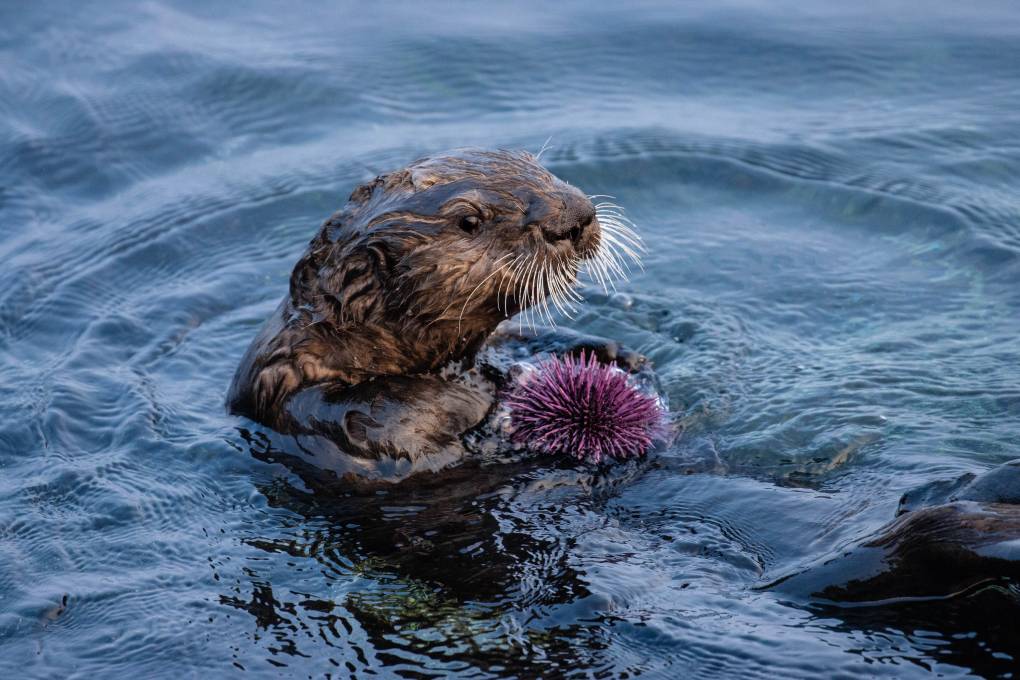
"caption": "A southern sea otter with a purple sea urchin in Monterey Bay,\nCalifornia.",
"description": null,
"title": "sea-otter-urchin-med",
"credit": "Morgan Rector",
"status": "inherit",
"altTag": null,
"isLoading": false,
"fetchFailed": false
},
"science_1973136": {
"type": "attachments",
"id": "science_1973136",
"meta": {
"index": "attachments_1716263798",
"site": "science",
"id": "1973136",
"found": true
},
"parent": 1973052,
"imgSizes": {
"twentyfourteen-full-width": {
"file": "https://ww2.kqed.org/app/uploads/sites/35/2021/03/DEEP_805_Born_Pregnant_Aphids_Invade_with_an_Onslaught_of_Clones_KQED-1-1038x576.jpg",
"width": 1038,
"mimeType": "image/jpeg",
"height": 576
},
"thumbnail": {
"file": "https://ww2.kqed.org/app/uploads/sites/35/2021/03/DEEP_805_Born_Pregnant_Aphids_Invade_with_an_Onslaught_of_Clones_KQED-1-160x90.jpg",
"width": 160,
"mimeType": "image/jpeg",
"height": 90
},
"post-thumbnail": {
"file": "https://ww2.kqed.org/app/uploads/sites/35/2021/03/DEEP_805_Born_Pregnant_Aphids_Invade_with_an_Onslaught_of_Clones_KQED-1-672x372.jpg",
"width": 672,
"mimeType": "image/jpeg",
"height": 372
},
"kqedFullSize": {
"file": "https://ww2.kqed.org/app/uploads/sites/35/2021/03/DEEP_805_Born_Pregnant_Aphids_Invade_with_an_Onslaught_of_Clones_KQED-1.jpg",
"width": 1920,
"height": 1080
},
"large": {
"file": "https://ww2.kqed.org/app/uploads/sites/35/2021/03/DEEP_805_Born_Pregnant_Aphids_Invade_with_an_Onslaught_of_Clones_KQED-1-1020x574.jpg",
"width": 1020,
"mimeType": "image/jpeg",
"height": 574
},
"1536x1536": {
"file": "https://ww2.kqed.org/app/uploads/sites/35/2021/03/DEEP_805_Born_Pregnant_Aphids_Invade_with_an_Onslaught_of_Clones_KQED-1-1536x864.jpg",
"width": 1536,
"mimeType": "image/jpeg",
"height": 864
},
"medium": {
"file": "https://ww2.kqed.org/app/uploads/sites/35/2021/03/DEEP_805_Born_Pregnant_Aphids_Invade_with_an_Onslaught_of_Clones_KQED-1-800x450.jpg",
"width": 800,
"mimeType": "image/jpeg",
"height": 450
},
"medium_large": {
"file": "https://ww2.kqed.org/app/uploads/sites/35/2021/03/DEEP_805_Born_Pregnant_Aphids_Invade_with_an_Onslaught_of_Clones_KQED-1-768x432.jpg",
"width": 768,
"mimeType": "image/jpeg",
"height": 432
}
},
"publishDate": 1615264973,
"modified": 1615265062,
"caption": null,
"description": "Timy plump green translucent insect with long legs and antennae, on dark green leaf with it's newly-emerged nymph",
"title": "DEEP_805_Born_Pregnant_Aphids_Invade_with_an_Onslaught_of_Clones_KQED",
"credit": null,
"status": "inherit",
"altTag": "Timy plump green translucent insect with long legs and antennae, on dark green leaf with it's newly-emerged nymph",
"isLoading": false,
"fetchFailed": false
},
"science_1972736": {
"type": "attachments",
"id": "science_1972736",
"meta": {
"index": "attachments_1716263798",
"site": "science",
"id": "1972736",
"found": true
},
"parent": 1972713,
"imgSizes": {
"thumbnail": {
"file": "https://ww2.kqed.org/app/uploads/sites/35/2021/02/pinesiskin-160x108.jpg",
"width": 160,
"mimeType": "image/jpeg",
"height": 108
},
"post-thumbnail": {
"file": "https://ww2.kqed.org/app/uploads/sites/35/2021/02/pinesiskin-638x372.jpg",
"width": 638,
"mimeType": "image/jpeg",
"height": 372
},
"kqedFullSize": {
"file": "https://ww2.kqed.org/app/uploads/sites/35/2021/02/pinesiskin.jpg",
"width": 638,
"height": 431
}
},
"publishDate": 1613174243,
"modified": 1613174243,
"caption": null,
"description": null,
"title": "pinesiskin",
"credit": null,
"status": "inherit",
"altTag": null,
"isLoading": false,
"fetchFailed": false
},
"science_1972561": {
"type": "attachments",
"id": "science_1972561",
"meta": {
"index": "attachments_1716263798",
"site": "science",
"id": "1972561",
"found": true
},
"parent": 1972559,
"imgSizes": {
"twentyfourteen-full-width": {
"file": "https://ww2.kqed.org/app/uploads/sites/35/2021/02/DEEP_803_These_Acrobatic_Beach_Hoppers_Shred_All_Night_Long_KQED-1038x576.jpg",
"width": 1038,
"mimeType": "image/jpeg",
"height": 576
},
"thumbnail": {
"file": "https://ww2.kqed.org/app/uploads/sites/35/2021/02/DEEP_803_These_Acrobatic_Beach_Hoppers_Shred_All_Night_Long_KQED-160x90.jpg",
"width": 160,
"mimeType": "image/jpeg",
"height": 90
},
"post-thumbnail": {
"file": "https://ww2.kqed.org/app/uploads/sites/35/2021/02/DEEP_803_These_Acrobatic_Beach_Hoppers_Shred_All_Night_Long_KQED-672x372.jpg",
"width": 672,
"mimeType": "image/jpeg",
"height": 372
},
"kqedFullSize": {
"file": "https://ww2.kqed.org/app/uploads/sites/35/2021/02/DEEP_803_These_Acrobatic_Beach_Hoppers_Shred_All_Night_Long_KQED.jpg",
"width": 1920,
"height": 1080
},
"large": {
"file": "https://ww2.kqed.org/app/uploads/sites/35/2021/02/DEEP_803_These_Acrobatic_Beach_Hoppers_Shred_All_Night_Long_KQED-1020x574.jpg",
"width": 1020,
"mimeType": "image/jpeg",
"height": 574
},
"1536x1536": {
"file": "https://ww2.kqed.org/app/uploads/sites/35/2021/02/DEEP_803_These_Acrobatic_Beach_Hoppers_Shred_All_Night_Long_KQED-1536x864.jpg",
"width": 1536,
"mimeType": "image/jpeg",
"height": 864
},
"medium": {
"file": "https://ww2.kqed.org/app/uploads/sites/35/2021/02/DEEP_803_These_Acrobatic_Beach_Hoppers_Shred_All_Night_Long_KQED-800x450.jpg",
"width": 800,
"mimeType": "image/jpeg",
"height": 450
},
"medium_large": {
"file": "https://ww2.kqed.org/app/uploads/sites/35/2021/02/DEEP_803_These_Acrobatic_Beach_Hoppers_Shred_All_Night_Long_KQED-768x432.jpg",
"width": 768,
"mimeType": "image/jpeg",
"height": 432
}
},
"publishDate": 1612294886,
"modified": 1612295090,
"caption": null,
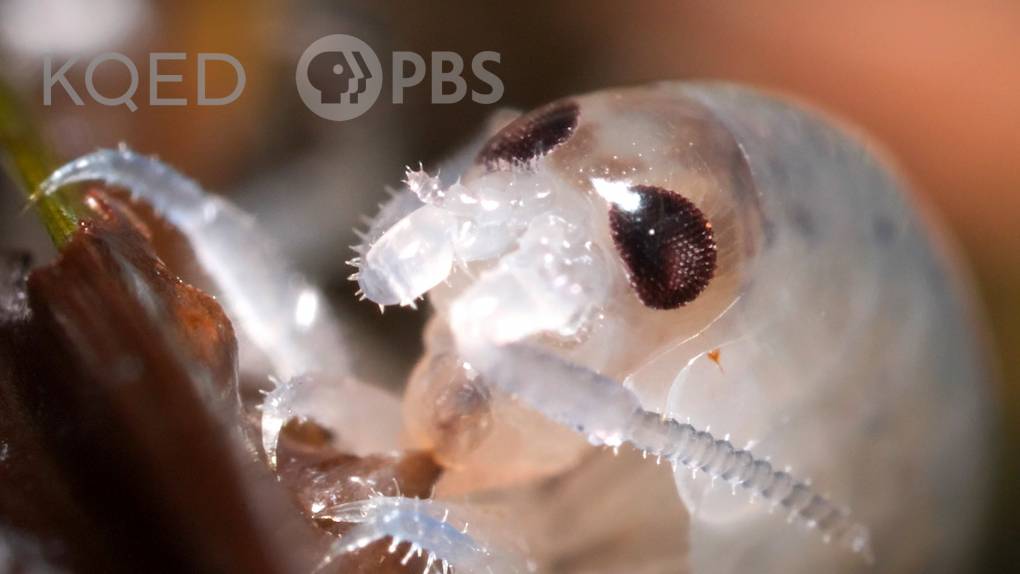
"description": "A long-horned beach hopper (Megalorchestia californiana) eating kelp, it's favorite food. Beach hoppers play a crucial ecological role, breaking down beach wrack on coastlines around the world.",
"title": "DEEP_803_These_Acrobatic_Beach_Hoppers_Shred_All_Night_Long_KQED",
"credit": "Josh Cassidy/KQED",
"status": "inherit",
"altTag": "Extreme close-up of a Long-horned beach hopper eating kelp",
"isLoading": false,
"fetchFailed": false
},
"science_1972207": {
"type": "attachments",
"id": "science_1972207",
"meta": {
"index": "attachments_1716263798",
"site": "science",
"id": "1972207",
"found": true
},
"parent": 1972204,
"imgSizes": {
"twentyfourteen-full-width": {
"file": "https://ww2.kqed.org/app/uploads/sites/35/2021/01/01_SAC_DMK_WildHorses-1038x576.jpeg",
"width": 1038,
"mimeType": "image/jpeg",
"height": 576
},
"thumbnail": {
"file": "https://ww2.kqed.org/app/uploads/sites/35/2021/01/01_SAC_DMK_WildHorses-160x107.jpeg",
"width": 160,
"mimeType": "image/jpeg",
"height": 107
},
"post-thumbnail": {
"file": "https://ww2.kqed.org/app/uploads/sites/35/2021/01/01_SAC_DMK_WildHorses-672x372.jpeg",
"width": 672,
"mimeType": "image/jpeg",
"height": 372
},
"kqedFullSize": {
"file": "https://ww2.kqed.org/app/uploads/sites/35/2021/01/01_SAC_DMK_WildHorses.jpeg",
"width": 1140,
"height": 759
},
"large": {
"file": "https://ww2.kqed.org/app/uploads/sites/35/2021/01/01_SAC_DMK_WildHorses-1020x679.jpeg",
"width": 1020,
"mimeType": "image/jpeg",
"height": 679
},
"medium": {
"file": "https://ww2.kqed.org/app/uploads/sites/35/2021/01/01_SAC_DMK_WildHorses-800x533.jpeg",
"width": 800,
"mimeType": "image/jpeg",
"height": 533
},
"medium_large": {
"file": "https://ww2.kqed.org/app/uploads/sites/35/2021/01/01_SAC_DMK_WildHorses-768x511.jpeg",
"width": 768,
"mimeType": "image/jpeg",
"height": 511
}
},
"publishDate": 1610505383,
"modified": 1611100805,
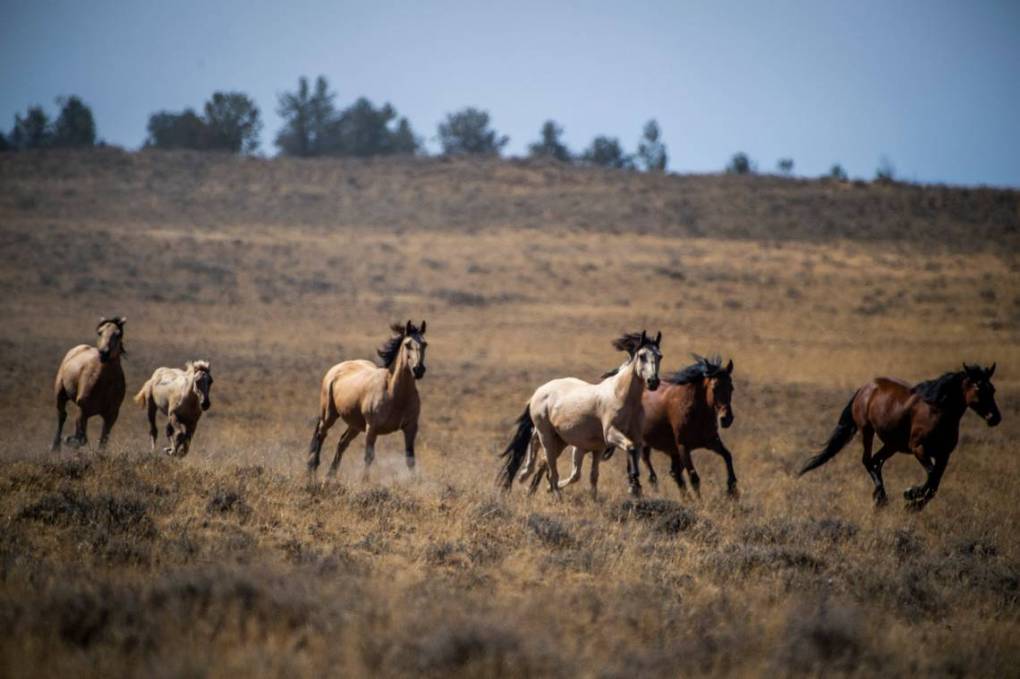
"caption": "Wild horses are herded up Sept. 10, 2020, in Devil’s Garden in the Modoc National Forest. ",
"description": "Horses run through a field.",
"title": "01_SAC_DMK_WildHorses",
"credit": "Daniel Kim/Sacramento Bee (used with permission)",
"status": "inherit",
"altTag": null,
"isLoading": false,
"fetchFailed": false
},
"science_1972089": {
"type": "attachments",
"id": "science_1972089",
"meta": {
"index": "attachments_1716263798",
"site": "science",
"id": "1972089",
"found": true
},
"parent": 1972082,
"imgSizes": {
"twentyfourteen-full-width": {
"file": "https://ww2.kqed.org/app/uploads/sites/35/2021/01/DEEP_801_These_Silk-swinging_Caterpillars_Will_Ruin_Your_Picnic_KQED-1038x576.jpg",
"width": 1038,
"mimeType": "image/jpeg",
"height": 576
},
"thumbnail": {
"file": "https://ww2.kqed.org/app/uploads/sites/35/2021/01/DEEP_801_These_Silk-swinging_Caterpillars_Will_Ruin_Your_Picnic_KQED-160x90.jpg",
"width": 160,
"mimeType": "image/jpeg",
"height": 90
},
"post-thumbnail": {
"file": "https://ww2.kqed.org/app/uploads/sites/35/2021/01/DEEP_801_These_Silk-swinging_Caterpillars_Will_Ruin_Your_Picnic_KQED-672x372.jpg",
"width": 672,
"mimeType": "image/jpeg",
"height": 372
},
"kqedFullSize": {
"file": "https://ww2.kqed.org/app/uploads/sites/35/2021/01/DEEP_801_These_Silk-swinging_Caterpillars_Will_Ruin_Your_Picnic_KQED.jpg",
"width": 1920,
"height": 1080
},
"large": {
"file": "https://ww2.kqed.org/app/uploads/sites/35/2021/01/DEEP_801_These_Silk-swinging_Caterpillars_Will_Ruin_Your_Picnic_KQED-1020x574.jpg",
"width": 1020,
"mimeType": "image/jpeg",
"height": 574
},
"1536x1536": {
"file": "https://ww2.kqed.org/app/uploads/sites/35/2021/01/DEEP_801_These_Silk-swinging_Caterpillars_Will_Ruin_Your_Picnic_KQED-1536x864.jpg",
"width": 1536,
"mimeType": "image/jpeg",
"height": 864
},
"medium": {
"file": "https://ww2.kqed.org/app/uploads/sites/35/2021/01/DEEP_801_These_Silk-swinging_Caterpillars_Will_Ruin_Your_Picnic_KQED-800x450.jpg",
"width": 800,
"mimeType": "image/jpeg",
"height": 450
},
"medium_large": {
"file": "https://ww2.kqed.org/app/uploads/sites/35/2021/01/DEEP_801_These_Silk-swinging_Caterpillars_Will_Ruin_Your_Picnic_KQED-768x432.jpg",
"width": 768,
"mimeType": "image/jpeg",
"height": 432
}
},
"publishDate": 1610051790,
"modified": 1610051859,
"caption": null,
"description": "Close-up shot of a small yellow caterpillar peeking out from behind vibrant green oak leaf.",
"title": "DEEP_801_These_Silk-swinging_Caterpillars_Will_Ruin_Your_Picnic_KQED",
"credit": null,
"status": "inherit",
"altTag": "Close-up shot of a small yellow caterpillar peeking out from behind vibrant green oak leaf.",
"isLoading": false,
"fetchFailed": false
},
"science_1971199": {
"type": "attachments",
"id": "science_1971199",
"meta": {
"index": "attachments_1716263798",
"site": "science",
"id": "1971199",
"found": true
},
"parent": 1971058,
"imgSizes": {
"twentyfourteen-full-width": {
"file": "https://ww2.kqed.org/app/uploads/sites/35/2020/11/DEEP_720_Heres_How_That_Annoying_Fly_Dodges_Your_Swatter_shield_KQED-1038x576.jpg",
"width": 1038,
"mimeType": "image/jpeg",
"height": 576
},
"thumbnail": {
"file": "https://ww2.kqed.org/app/uploads/sites/35/2020/11/DEEP_720_Heres_How_That_Annoying_Fly_Dodges_Your_Swatter_shield_KQED-160x90.jpg",
"width": 160,
"mimeType": "image/jpeg",
"height": 90
},
"post-thumbnail": {
"file": "https://ww2.kqed.org/app/uploads/sites/35/2020/11/DEEP_720_Heres_How_That_Annoying_Fly_Dodges_Your_Swatter_shield_KQED-672x372.jpg",
"width": 672,
"mimeType": "image/jpeg",
"height": 372
},
"kqedFullSize": {
"file": "https://ww2.kqed.org/app/uploads/sites/35/2020/11/DEEP_720_Heres_How_That_Annoying_Fly_Dodges_Your_Swatter_shield_KQED.jpg",
"width": 1920,
"height": 1080
},
"large": {
"file": "https://ww2.kqed.org/app/uploads/sites/35/2020/11/DEEP_720_Heres_How_That_Annoying_Fly_Dodges_Your_Swatter_shield_KQED-1020x574.jpg",
"width": 1020,
"mimeType": "image/jpeg",
"height": 574
},
"1536x1536": {
"file": "https://ww2.kqed.org/app/uploads/sites/35/2020/11/DEEP_720_Heres_How_That_Annoying_Fly_Dodges_Your_Swatter_shield_KQED-1536x864.jpg",
"width": 1536,
"mimeType": "image/jpeg",
"height": 864
},
"medium": {
"file": "https://ww2.kqed.org/app/uploads/sites/35/2020/11/DEEP_720_Heres_How_That_Annoying_Fly_Dodges_Your_Swatter_shield_KQED-800x450.jpg",
"width": 800,
"mimeType": "image/jpeg",
"height": 450
},
"medium_large": {
"file": "https://ww2.kqed.org/app/uploads/sites/35/2020/11/DEEP_720_Heres_How_That_Annoying_Fly_Dodges_Your_Swatter_shield_KQED-768x432.jpg",
"width": 768,
"mimeType": "image/jpeg",
"height": 432
}
},
"publishDate": 1606011682,
"modified": 1606011717,
"caption": null,
"description": "A green bottle fly.",
"title": "DEEP_720_Heres_How_That_Annoying_Fly_Dodges_Your_Swatter_shield_KQED",
"credit": "Josh Cassidy/KQED",
"status": "inherit",
"isLoading": false,
"fetchFailed": false
},
"science_1994153": {
"type": "attachments",
"id": "science_1994153",
"meta": {
"index": "attachments_1716263798",
"site": "science",
"id": "1994153",
"found": true
},
"title": "YoutTube Thumbnail2",
"publishDate": 1725494399,
"status": "inherit",
"parent": 1970711,
"modified": 1725494399,
"caption": null,
"credit": null,
"altTag": null,
"description": null,
"imgSizes": {
"medium": {
"file": "https://cdn.kqed.org/wp-content/uploads/sites/35/2020/11/YouTube-Thumbnail-2022_KQED-PBS-4K-light-dark-template-copy-800x450.jpg",
"width": 800,
"height": 450,
"mimeType": "image/jpeg"
},
"large": {
"file": "https://cdn.kqed.org/wp-content/uploads/sites/35/2020/11/YouTube-Thumbnail-2022_KQED-PBS-4K-light-dark-template-copy-1020x574.jpg",
"width": 1020,
"height": 574,
"mimeType": "image/jpeg"
},
"thumbnail": {
"file": "https://cdn.kqed.org/wp-content/uploads/sites/35/2020/11/YouTube-Thumbnail-2022_KQED-PBS-4K-light-dark-template-copy-160x90.jpg",
"width": 160,
"height": 90,
"mimeType": "image/jpeg"
},
"medium_large": {
"file": "https://cdn.kqed.org/wp-content/uploads/sites/35/2020/11/YouTube-Thumbnail-2022_KQED-PBS-4K-light-dark-template-copy-768x432.jpg",
"width": 768,
"height": 432,
"mimeType": "image/jpeg"
},
"1536x1536": {
"file": "https://cdn.kqed.org/wp-content/uploads/sites/35/2020/11/YouTube-Thumbnail-2022_KQED-PBS-4K-light-dark-template-copy-1536x864.jpg",
"width": 1536,
"height": 864,
"mimeType": "image/jpeg"
},
"2048x2048": {
"file": "https://cdn.kqed.org/wp-content/uploads/sites/35/2020/11/YouTube-Thumbnail-2022_KQED-PBS-4K-light-dark-template-copy-2048x1152.jpg",
"width": 2048,
"height": 1152,
"mimeType": "image/jpeg"
},
"post-thumbnail": {
"file": "https://cdn.kqed.org/wp-content/uploads/sites/35/2020/11/YouTube-Thumbnail-2022_KQED-PBS-4K-light-dark-template-copy-672x372.jpg",
"width": 672,
"height": 372,
"mimeType": "image/jpeg"
},
"twentyfourteen-full-width": {
"file": "https://cdn.kqed.org/wp-content/uploads/sites/35/2020/11/YouTube-Thumbnail-2022_KQED-PBS-4K-light-dark-template-copy-1038x576.jpg",
"width": 1038,
"height": 576,
"mimeType": "image/jpeg"
},
"full-width": {
"file": "https://cdn.kqed.org/wp-content/uploads/sites/35/2020/11/YouTube-Thumbnail-2022_KQED-PBS-4K-light-dark-template-copy-1920x1080.jpg",
"width": 1920,
"height": 1080,
"mimeType": "image/jpeg"
},
"kqedFullSize": {
"file": "https://cdn.kqed.org/wp-content/uploads/sites/35/2020/11/YouTube-Thumbnail-2022_KQED-PBS-4K-light-dark-template-copy-scaled.jpg",
"width": 2560,
"height": 1440
}
},
"isLoading": false,
"fetchFailed": false
},
"science_1946327": {
"type": "attachments",
"id": "science_1946327",
"meta": {
"index": "attachments_1716263798",
"site": "science",
"id": "1946327",
"found": true
},
"parent": 1946325,
"imgSizes": {
"twentyfourteen-full-width": {
"file": "https://ww2.kqed.org/app/uploads/sites/35/2019/08/RS15482_GettyImages-470387040-qut-1038x576.jpg",
"width": 1038,
"mimeType": "image/jpeg",
"height": 576
},
"thumbnail": {
"file": "https://ww2.kqed.org/app/uploads/sites/35/2019/08/RS15482_GettyImages-470387040-qut-160x104.jpg",
"width": 160,
"mimeType": "image/jpeg",
"height": 104
},
"post-thumbnail": {
"file": "https://ww2.kqed.org/app/uploads/sites/35/2019/08/RS15482_GettyImages-470387040-qut-672x372.jpg",
"width": 672,
"mimeType": "image/jpeg",
"height": 372
},
"kqedFullSize": {
"file": "https://ww2.kqed.org/app/uploads/sites/35/2019/08/RS15482_GettyImages-470387040-qut.jpg",
"width": 1920,
"height": 1245
},
"large": {
"file": "https://ww2.kqed.org/app/uploads/sites/35/2019/08/RS15482_GettyImages-470387040-qut-1020x661.jpg",
"width": 1020,
"mimeType": "image/jpeg",
"height": 661
},
"complete_open_graph": {
"file": "https://ww2.kqed.org/app/uploads/sites/35/2019/08/RS15482_GettyImages-470387040-qut-1200x778.jpg",
"width": 1200,
"mimeType": "image/jpeg",
"height": 778
},
"full-width": {
"file": "https://ww2.kqed.org/app/uploads/sites/35/2019/08/RS15482_GettyImages-470387040-qut-1920x1245.jpg",
"width": 1920,
"mimeType": "image/jpeg",
"height": 1245
},
"medium": {
"file": "https://ww2.kqed.org/app/uploads/sites/35/2019/08/RS15482_GettyImages-470387040-qut-800x519.jpg",
"width": 800,
"mimeType": "image/jpeg",
"height": 519
},
"medium_large": {
"file": "https://ww2.kqed.org/app/uploads/sites/35/2019/08/RS15482_GettyImages-470387040-qut-768x498.jpg",
"width": 768,
"mimeType": "image/jpeg",
"height": 498
}
},
"publishDate": 1565372070,
"modified": 1603298576,
"caption": "Tule elk graze on grass in a field at Point Reyes National Seashore Elk Preserve on April 19, 2015, in Point Reyes Station, California. ",
"description": null,
"title": "RS15482_GettyImages-470387040-qut",
"credit": "Justin Sullivan/Getty Images",
"status": "inherit",
"isLoading": false,
"fetchFailed": false
},
"science_1994155": {
"type": "attachments",
"id": "science_1994155",
"meta": {
"index": "attachments_1716263798",
"site": "science",
"id": "1994155",
"found": true
},
"title": "YoutTube Thumbnail2",
"publishDate": 1725555353,
"status": "inherit",
"parent": 1970271,
"modified": 1725555353,
"caption": null,
"credit": null,
"altTag": null,
"description": null,
"imgSizes": {
"medium": {
"file": "https://cdn.kqed.org/wp-content/uploads/sites/35/2020/10/DL718_Ever_See_a_Starfish_Gallop_KQED-800x450.jpg",
"width": 800,
"height": 450,
"mimeType": "image/jpeg"
},
"large": {
"file": "https://cdn.kqed.org/wp-content/uploads/sites/35/2020/10/DL718_Ever_See_a_Starfish_Gallop_KQED-1020x574.jpg",
"width": 1020,
"height": 574,
"mimeType": "image/jpeg"
},
"thumbnail": {
"file": "https://cdn.kqed.org/wp-content/uploads/sites/35/2020/10/DL718_Ever_See_a_Starfish_Gallop_KQED-160x90.jpg",
"width": 160,
"height": 90,
"mimeType": "image/jpeg"
},
"medium_large": {
"file": "https://cdn.kqed.org/wp-content/uploads/sites/35/2020/10/DL718_Ever_See_a_Starfish_Gallop_KQED-768x432.jpg",
"width": 768,
"height": 432,
"mimeType": "image/jpeg"
},
"1536x1536": {
"file": "https://cdn.kqed.org/wp-content/uploads/sites/35/2020/10/DL718_Ever_See_a_Starfish_Gallop_KQED-1536x864.jpg",
"width": 1536,
"height": 864,
"mimeType": "image/jpeg"
},
"2048x2048": {
"file": "https://cdn.kqed.org/wp-content/uploads/sites/35/2020/10/DL718_Ever_See_a_Starfish_Gallop_KQED-2048x1152.jpg",
"width": 2048,
"height": 1152,
"mimeType": "image/jpeg"
},
"post-thumbnail": {
"file": "https://cdn.kqed.org/wp-content/uploads/sites/35/2020/10/DL718_Ever_See_a_Starfish_Gallop_KQED-672x372.jpg",
"width": 672,
"height": 372,
"mimeType": "image/jpeg"
},
"twentyfourteen-full-width": {
"file": "https://cdn.kqed.org/wp-content/uploads/sites/35/2020/10/DL718_Ever_See_a_Starfish_Gallop_KQED-1038x576.jpg",
"width": 1038,
"height": 576,
"mimeType": "image/jpeg"
},
"full-width": {
"file": "https://cdn.kqed.org/wp-content/uploads/sites/35/2020/10/DL718_Ever_See_a_Starfish_Gallop_KQED-1920x1080.jpg",
"width": 1920,
"height": 1080,
"mimeType": "image/jpeg"
},
"kqedFullSize": {
"file": "https://cdn.kqed.org/wp-content/uploads/sites/35/2020/10/DL718_Ever_See_a_Starfish_Gallop_KQED-scaled.jpg",
"width": 2560,
"height": 1440
}
},
"isLoading": false,
"fetchFailed": false
},
"science_1970192": {
"type": "attachments",
"id": "science_1970192",
"meta": {
"index": "attachments_1716263798",
"site": "science",
"id": "1970192",
"found": true
},
"parent": 1969927,
"imgSizes": {
"thumbnail": {
"file": "https://ww2.kqed.org/app/uploads/sites/35/2020/10/747-face-turned-160x90.jpg",
"width": 160,
"mimeType": "image/jpeg",
"height": 90
},
"post-thumbnail": {
"file": "https://ww2.kqed.org/app/uploads/sites/35/2020/10/747-face-turned-672x372.jpg",
"width": 672,
"mimeType": "image/jpeg",
"height": 372
},
"kqedFullSize": {
"file": "https://ww2.kqed.org/app/uploads/sites/35/2020/10/747-face-turned.jpg",
"width": 960,
"height": 540
},
"medium": {
"file": "https://ww2.kqed.org/app/uploads/sites/35/2020/10/747-face-turned-800x450.jpg",
"width": 800,
"mimeType": "image/jpeg",
"height": 450
},
"medium_large": {
"file": "https://ww2.kqed.org/app/uploads/sites/35/2020/10/747-face-turned-768x432.jpg",
"width": 768,
"mimeType": "image/jpeg",
"height": 432
}
},
"publishDate": 1602117751,
"modified": 1602269236,
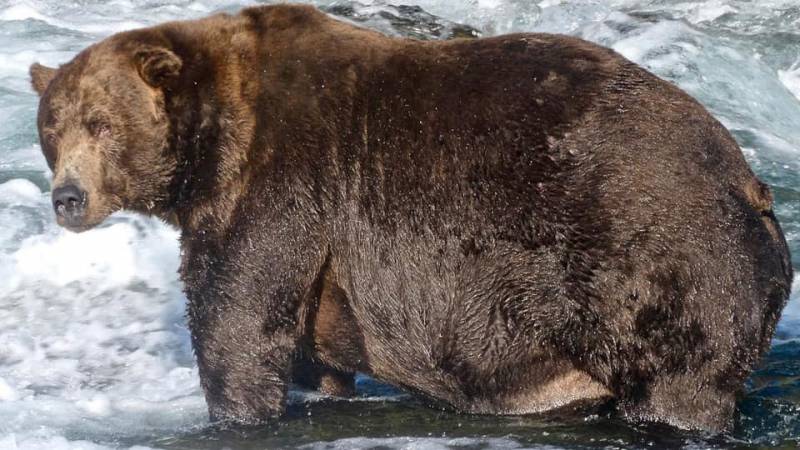
"caption": "Brown bear 747 received 47,055 votes in his championship matchup against 32 Chunk.",
"description": null,
"title": "747-face-turned",
"credit": "National Park Service/N. Boak",
"status": "inherit",
"isLoading": false,
"fetchFailed": false
},
"science_1970062": {
"type": "attachments",
"id": "science_1970062",
"meta": {
"index": "attachments_1716263798",
"site": "science",
"id": "1970062",
"found": true
},
"parent": 1969983,
"imgSizes": {
"twentyfourteen-full-width": {
"file": "https://ww2.kqed.org/app/uploads/sites/35/2020/10/DEEP_717_Raising-Peregrine-Falcon-Chicks-is-a-Real-Cliff-hanger_shield_KQED-1038x576.jpg",
"width": 1038,
"mimeType": "image/jpeg",
"height": 576
},
"thumbnail": {
"file": "https://ww2.kqed.org/app/uploads/sites/35/2020/10/DEEP_717_Raising-Peregrine-Falcon-Chicks-is-a-Real-Cliff-hanger_shield_KQED-160x90.jpg",
"width": 160,
"mimeType": "image/jpeg",
"height": 90
},
"post-thumbnail": {
"file": "https://ww2.kqed.org/app/uploads/sites/35/2020/10/DEEP_717_Raising-Peregrine-Falcon-Chicks-is-a-Real-Cliff-hanger_shield_KQED-672x372.jpg",
"width": 672,
"mimeType": "image/jpeg",
"height": 372
},
"kqedFullSize": {
"file": "https://ww2.kqed.org/app/uploads/sites/35/2020/10/DEEP_717_Raising-Peregrine-Falcon-Chicks-is-a-Real-Cliff-hanger_shield_KQED.jpg",
"width": 1920,
"height": 1080
},
"large": {
"file": "https://ww2.kqed.org/app/uploads/sites/35/2020/10/DEEP_717_Raising-Peregrine-Falcon-Chicks-is-a-Real-Cliff-hanger_shield_KQED-1020x574.jpg",
"width": 1020,
"mimeType": "image/jpeg",
"height": 574
},
"1536x1536": {
"file": "https://ww2.kqed.org/app/uploads/sites/35/2020/10/DEEP_717_Raising-Peregrine-Falcon-Chicks-is-a-Real-Cliff-hanger_shield_KQED-1536x864.jpg",
"width": 1536,
"mimeType": "image/jpeg",
"height": 864
},
"medium": {
"file": "https://ww2.kqed.org/app/uploads/sites/35/2020/10/DEEP_717_Raising-Peregrine-Falcon-Chicks-is-a-Real-Cliff-hanger_shield_KQED-800x450.jpg",
"width": 800,
"mimeType": "image/jpeg",
"height": 450
},
"medium_large": {
"file": "https://ww2.kqed.org/app/uploads/sites/35/2020/10/DEEP_717_Raising-Peregrine-Falcon-Chicks-is-a-Real-Cliff-hanger_shield_KQED-768x432.jpg",
"width": 768,
"mimeType": "image/jpeg",
"height": 432
}
},
"publishDate": 1601688972,
"modified": 1601688972,
"caption": null,
"description": null,
"title": "DEEP_717_Raising-Peregrine-Falcon-Chicks-is-a-Real-Cliff-hanger_shield_KQED",
"credit": null,
"status": "inherit",
"isLoading": false,
"fetchFailed": false
}
},
"audioPlayerReducer": {
"postId": "stream_live",
"isPaused": true,
"isPlaying": false,
"pfsActive": false,
"pledgeModalIsOpen": true,
"playerDrawerIsOpen": false,
"liveAudioPlayStartedAt": 0,
"liveAudioPlayContext": ""
},
"authorsReducer": {
"byline_science_1970500": {
"type": "authors",
"id": "byline_science_1970500",
"meta": {
"override": true
},
"slug": "byline_science_1970500",
"name": "Katelyn Weisbrod \u003cbr />InsideClimate News\u003cbr>",
"isLoading": false
},
"astupi": {
"type": "authors",
"id": "70",
"meta": {
"index": "authors_1716337520",
"id": "70",
"found": true
},
"name": "Amanda Stupi",
"firstName": "Amanda",
"lastName": "Stupi",
"slug": "astupi",
"email": "astupi@kqed.org",
"display_author_email": false,
"staff_mastheads": [],
"title": "Senior Engagement Producer",
"bio": "Amanda joined KQED Science’s engagement team as a Senior Audience Engagement Strategist in the spring of 2019. She has helped craft messaging around wildfires, the coronavirus pandemic, climate change and many other stories. She has also brought KQED Science to new platforms such as Reddit’s Ask Me Anything series. Prior to joining KQED Science, Amanda spent seven years as an engagement producer with Forum, KQED’s daily live call-in show. She got her start in radio at KALW's weekly call in show, City Visions, before going on to an internship and stint at NPR's Talk of the Nation.\r\n\r\nPrior to journalism, Amanda taught English at Lowell High School. She's a native of Petaluma and currently lives under the \"South San Francisco the Industrial City\" sign in South City. She believes that engagement is vital to news’s future and that good journalism listens as much as it asks questions.",
"avatar": "https://secure.gravatar.com/avatar/e981c503e5c162da701dcaccfbf87e35?s=600&d=blank&r=g",
"twitter": null,
"facebook": null,
"instagram": null,
"linkedin": null,
"sites": [
{
"site": "arts",
"roles": [
"Contributor"
]
},
{
"site": "news",
"roles": [
"editor"
]
},
{
"site": "pop",
"roles": [
"contributor"
]
},
{
"site": "stateofhealth",
"roles": [
"editor"
]
},
{
"site": "science",
"roles": []
},
{
"site": "perspectives",
"roles": [
"editor"
]
}
],
"headData": {
"title": "Amanda Stupi | KQED",
"description": "Senior Engagement Producer",
"ogImgSrc": "https://secure.gravatar.com/avatar/e981c503e5c162da701dcaccfbf87e35?s=600&d=blank&r=g",
"twImgSrc": "https://secure.gravatar.com/avatar/e981c503e5c162da701dcaccfbf87e35?s=600&d=blank&r=g"
},
"isLoading": false,
"link": "/author/astupi"
},
"gabriela-quiros": {
"type": "authors",
"id": "6186",
"meta": {
"index": "authors_1716337520",
"id": "6186",
"found": true
},
"name": "Gabriela Quirós",
"firstName": "Gabriela",
"lastName": "Quirós",
"slug": "gabriela-quiros",
"email": "gquiros@kqed.org",
"display_author_email": false,
"staff_mastheads": [],
"title": "Supervising Producer",
"bio": "Gabriela Quirós is the \u003cstrong>supervising producer for KQED's web science video series \u003ca href=\"https://www.kqed.org/deeplook\">Deep Look\u003c/a>\u003c/strong>. She joined KQED as a TV producer when its science series QUEST started in 2006 and has covered everything from Alzheimer’s to bee die-offs to dark energy.\r\n\r\nShe won a 2022 AAAS Kavli Science Journalism Award with a team of her Deep Look colleagues. She has won six regional Emmys as a video producer and has shared eight more as the coordinating producer of Deep Look. The episode she produced about \u003ca href=\"https://www.kqed.org/science/728086/how-mosquitoes-use-six-needles-to-suck-your-blood\">How Mosquitoes Use Six Needles to Suck Your Blood\u003c/a> won a Webby \"People's Voice\" award. She has also earned awards from the Jackson Hole Wildlife Film Festival, the Society of Professional Journalists and the Society of Environmental Journalists.\r\n\r\nHer videos for KQED have also aired on NOVA scienceNOW and the PBS NewsHour, and appeared on NPR.org.\r\n\r\nAs an independent filmmaker, she produced and directed the hour-long documentary \u003ca href=\"http://lpbp.org/beautiful-sin-qa-with-producer-gabriela-quiros/\">\u003cem>Beautiful Sin\u003c/em>\u003c/a>, about the surprising story of how Costa Rica became the only country in the world to outlaw in vitro fertilization. The film aired in 2015 on public television stations throughout the U.S., and in Costa Rica.\r\n\r\nShe started her journalism career as a newspaper reporter in Costa Rica, where she grew up. She won the National Science Journalism Award there for a series of articles about organic agriculture, and developed a life-long interest in health reporting. She moved to the Bay Area in 1996 to study documentary filmmaking at the University of California, Berkeley, where she received master’s degrees in journalism and Latin American studies.",
"avatar": "https://secure.gravatar.com/avatar/6d82c20152affd1b434c31a904c40809?s=600&d=blank&r=g",
"twitter": "gabrielaquirosr",
"facebook": null,
"instagram": null,
"linkedin": null,
"sites": [
{
"site": "science",
"roles": []
},
{
"site": "quest",
"roles": [
"ef_view_calendar",
"ef_view_story_budget"
]
}
],
"headData": {
"title": "Gabriela Quirós | KQED",
"description": "Supervising Producer",
"ogImgSrc": "https://secure.gravatar.com/avatar/6d82c20152affd1b434c31a904c40809?s=600&d=blank&r=g",
"twImgSrc": "https://secure.gravatar.com/avatar/6d82c20152affd1b434c31a904c40809?s=600&d=blank&r=g"
},
"isLoading": false,
"link": "/author/gabriela-quiros"
},
"joshua-cassidy": {
"type": "authors",
"id": "6219",
"meta": {
"index": "authors_1716337520",
"id": "6219",
"found": true
},
"name": "Josh Cassidy",
"firstName": "Josh",
"lastName": "Cassidy",
"slug": "joshua-cassidy",
"email": "jcassidy@kqed.org",
"display_author_email": false,
"staff_mastheads": [
"science"
],
"title": "Digital Video Producer",
"bio": "Josh is a Senior Video Producer for KQED Science, and the Lead Producer and Cinematographer for Deep Look. After receiving his BS in Wildlife Biology from Ohio University, he went on to participate in marine mammal research for NOAA, USGS and the Intersea Foundation. He also served as the president of The Pacific Cetacean Group, a nonprofit organization dedicated to teaching students K-6 about whales. Josh studied science and natural history filmmaking at San Francisco State University and Montana State University.",
"avatar": "https://secure.gravatar.com/avatar/f2582a0801a35af53b734d56bcac2bbe?s=600&d=blank&r=g",
"twitter": null,
"facebook": null,
"instagram": null,
"linkedin": null,
"sites": [
{
"site": "science",
"roles": [
"editor"
]
},
{
"site": "quest",
"roles": [
"author",
"edit_others_posts"
]
}
],
"headData": {
"title": "Josh Cassidy | KQED",
"description": "Digital Video Producer",
"ogImgSrc": "https://secure.gravatar.com/avatar/f2582a0801a35af53b734d56bcac2bbe?s=600&d=blank&r=g",
"twImgSrc": "https://secure.gravatar.com/avatar/f2582a0801a35af53b734d56bcac2bbe?s=600&d=blank&r=g"
},
"isLoading": false,
"link": "/author/joshua-cassidy"
},
"kqedscience": {
"type": "authors",
"id": "6387",
"meta": {
"index": "authors_1716337520",
"id": "6387",
"found": true
},
"name": "KQED Science",
"firstName": "KQED",
"lastName": "Science",
"slug": "kqedscience",
"email": "kqedscience@gmail.com",
"display_author_email": false,
"staff_mastheads": [],
"title": null,
"bio": "KQED Science brings you award-winning science and environment coverage from the Bay Area and beyond by the flagship Northern California PBS and NPR affiliate.",
"avatar": "https://secure.gravatar.com/avatar/5a295ff49cf82a8c0f30937d3f788b2f?s=600&d=blank&r=g",
"twitter": null,
"facebook": null,
"instagram": null,
"linkedin": null,
"sites": [
{
"site": "science",
"roles": [
"contributor"
]
},
{
"site": "quest",
"roles": [
"editor"
]
},
{
"site": "food",
"roles": [
"contributor"
]
}
],
"headData": {
"title": "KQED Science | KQED",
"description": null,
"ogImgSrc": "https://secure.gravatar.com/avatar/5a295ff49cf82a8c0f30937d3f788b2f?s=600&d=blank&r=g",
"twImgSrc": "https://secure.gravatar.com/avatar/5a295ff49cf82a8c0f30937d3f788b2f?s=600&d=blank&r=g"
},
"isLoading": false,
"link": "/author/kqedscience"
},
"mseely": {
"type": "authors",
"id": "11095",
"meta": {
"index": "authors_1716337520",
"id": "11095",
"found": true
},
"name": "Mike Seely",
"firstName": "Mike",
"lastName": "Seely",
"slug": "mseely",
"email": "mseely@kqed.org",
"display_author_email": false,
"staff_mastheads": [
"science"
],
"title": "Producer",
"bio": "Mike is a Digital Media Producer for KQED Science and Post Production Coordinator for \u003ca href=\"https://www.youtube.com/user/KQEDDeepLook\" target=\"_blank\" rel=\"noopener noreferrer\">Deep Look\u003c/a>. Prior to his work at KQED, he worked independently for 15 years as a director, producer and cinematographer of documentary films about art, science, and social issues, collaborating with independent directors, corporate clients, non-profits, digital and broadcast networks. Previous to filmmaking life, he majored in biology as an undergrad at Oberlin College, and worked as a wildlife biologist on bird and seal population studies in California. He also holds an M.A. in Documentary Film Production from Stanford University.",
"avatar": "https://secure.gravatar.com/avatar/f9c5c6f7135a7c3fc0ce85114f7b05dd18e0b71af78a2d6770a1b09a921d8425?s=600&d=blank&r=g",
"twitter": null,
"bluesky": null,
"facebook": null,
"instagram": null,
"linkedin": null,
"sites": [
{
"site": "arts",
"roles": [
"subscriber"
]
},
{
"site": "science",
"roles": [
"author"
]
}
],
"headData": {
"title": "Mike Seely | KQED",
"description": "Producer",
"ogImgSrc": "https://secure.gravatar.com/avatar/f9c5c6f7135a7c3fc0ce85114f7b05dd18e0b71af78a2d6770a1b09a921d8425?s=600&d=blank&r=g",
"twImgSrc": "https://secure.gravatar.com/avatar/f9c5c6f7135a7c3fc0ce85114f7b05dd18e0b71af78a2d6770a1b09a921d8425?s=600&d=blank&r=g"
},
"isLoading": false,
"link": "/author/mseely"
},
"parcuni": {
"type": "authors",
"id": "11368",
"meta": {
"index": "authors_1716337520",
"id": "11368",
"found": true
},
"name": "Peter Arcuni",
"firstName": "Peter",
"lastName": "Arcuni",
"slug": "parcuni",
"email": "parcuni@KQED.org",
"display_author_email": false,
"staff_mastheads": [
"science"
],
"title": "Reporter",
"bio": "Peter reports radio and online stories for \u003cem>KQED Science\u003c/em>. His work has also appeared on the \u003cem>The California Report\u003c/em> morning show and \u003cem>KQED News\u003c/em>. His production credits include \u003cem>The California Report, The California Report Magazine\u003c/em> and KQED's local news podcast \u003cem>The Bay\u003c/em>. Other credits include NPR's \u003cem>All Things Considered\u003c/em>, WNYC's \u003cem>Science Friday\u003c/em>, WBUR's \u003cem>Here & Now\u003c/em>, WIRED and SFGate. Peter graduated from Brown University and earned a master's degree in journalism from Stanford. He's covered everything from homelessness to wildfires, health, the environment, arts and Thanksgiving in San Quentin prison. In other lives, he played rock n roll music and studied neuroscience. You can email him at: parcuni@kqed.org",
"avatar": "https://secure.gravatar.com/avatar/d5032f6f27199d478af34ad2e1d98732?s=600&d=blank&r=g",
"twitter": "peterarcuni",
"facebook": null,
"instagram": null,
"linkedin": null,
"sites": [
{
"site": "news",
"roles": [
"editor"
]
},
{
"site": "science",
"roles": [
"editor"
]
}
],
"headData": {
"title": "Peter Arcuni | KQED",
"description": "Reporter",
"ogImgSrc": "https://secure.gravatar.com/avatar/d5032f6f27199d478af34ad2e1d98732?s=600&d=blank&r=g",
"twImgSrc": "https://secure.gravatar.com/avatar/d5032f6f27199d478af34ad2e1d98732?s=600&d=blank&r=g"
},
"isLoading": false,
"link": "/author/parcuni"
},
"mfharvin": {
"type": "authors",
"id": "11583",
"meta": {
"index": "authors_1716337520",
"id": "11583",
"found": true
},
"name": "Mary Franklin Harvin",
"firstName": "Mary Franklin",
"lastName": "Harvin",
"slug": "mfharvin",
"email": "mfharvin@KQED.org",
"display_author_email": false,
"staff_mastheads": [
"news"
],
"title": "KQED Contributor",
"bio": null,
"avatar": "https://secure.gravatar.com/avatar/0e53510a7d48cfbdebfc9b11357d845f?s=600&d=blank&r=g",
"twitter": "EmEffHarvin",
"facebook": null,
"instagram": null,
"linkedin": null,
"sites": [
{
"site": "news",
"roles": [
"author",
"edit_others_posts"
]
},
{
"site": "science",
"roles": [
"editor"
]
}
],
"headData": {
"title": "Mary Franklin Harvin | KQED",
"description": "KQED Contributor",
"ogImgSrc": "https://secure.gravatar.com/avatar/0e53510a7d48cfbdebfc9b11357d845f?s=600&d=blank&r=g",
"twImgSrc": "https://secure.gravatar.com/avatar/0e53510a7d48cfbdebfc9b11357d845f?s=600&d=blank&r=g"
},
"isLoading": false,
"link": "/author/mfharvin"
}
},
"pagesReducer": {
"science_category_animals": {
"type": "terms",
"id": "science_2874",
"meta": {
"index": "terms_1716263798",
"site": "science",
"id": "2874",
"score": 12.286945
},
"featImg": null,
"name": "Animals",
"description": null,
"taxonomy": "category",
"headData": {
"twImgId": null,
"twTitle": null,
"ogTitle": null,
"ogImgId": null,
"twDescription": null,
"description": null,
"title": "Animals Archives | KQED Science",
"ogDescription": null
},
"ttid": 2874,
"slug": "animals",
"isLoading": false,
"title": "Animals",
"pageMeta": {
"site": "science",
"WpPageTemplate": "page-topic-editorial",
"currentPage": 13
},
"blocks": [
{
"blockName": "kqed/post-list",
"attrs": {
"layout": "cardArticle2",
"query": "posts/science?category=animals",
"seeMore": false,
"paginated": true,
"page": 13
}
},
{
"blockName": "kqed/ad"
}
]
}
},
"pfsSessionReducer": {},
"postsReducer": {
"stream_live": {
"type": "live",
"id": "stream_live",
"audioUrl": "https://streams.kqed.org/kqedradio",
"title": "Live Stream",
"excerpt": "Live Stream information currently unavailable.",
"link": "/radio",
"featImg": "",
"label": {
"name": "KQED Live",
"link": "/"
}
},
"stream_kqedNewscast": {
"type": "posts",
"id": "stream_kqedNewscast",
"audioUrl": "https://www.kqed.org/.stream/anon/radio/RDnews/newscast.mp3?_=1",
"title": "KQED Newscast",
"featImg": "",
"label": {
"name": "88.5 FM",
"link": "/"
}
},
"science_1973217": {
"type": "posts",
"id": "science_1973217",
"meta": {
"index": "posts_1716263798",
"site": "science",
"id": "1973217",
"score": null,
"sort": [
1615850446000
]
},
"guestAuthors": [],
"slug": "in-central-california-sea-otters-feast-on-purple-urchins-and-thats-good-for-kelp",
"title": "Kelp, Sea Otters and Urchins. Who's Eating Who in Monterey Bay",
"publishDate": 1615850446,
"format": "audio",
"headTitle": "Kelp, Sea Otters and Urchins. Who’s Eating Who in Monterey Bay | KQED",
"labelTerm": {},
"content": "\u003cp class=\"p1\">Marine scientists have observed a \u003ca href=\"https://www.kqed.org/science/1949757/massive-california-kelp-decline-linked-to-ocean-heat-wave-voracious-sea-urchins\">\u003cspan class=\"s1\">massive decline\u003c/span>\u003c/a> of California’s underwater kelp forests in recent years. Studies have linked the die-off to a host of factors including an ocean heat wave, a deadly sea star virus, and an influx of voracious kelp-eating sea urchins.\u003c/p>\n\u003cp class=\"p1\">Kelp’s long flat leaves and bulbous stems provide habitat for marine mammals, fish and invertebrates in tidal regions along California’s coast. In many regions where kelp once flourished, the ocean floor is now carpeted with spiny purple sea urchins and there’s no kelp to be found. Scientists call these zones the urchin barrens.\u003c/p>\n\u003cp class=\"p1\">A new study out of UC Santa Cruz reveals more about the disappearance of California’s kelp forests, finding the leafy green seaweed is faring better in places where sea otters, a natural urchin predator, are thriving.\u003c/p>\n\u003cfigure id=\"attachment_1973221\" class=\"wp-caption alignright\" style=\"max-width: 800px\">\u003cimg loading=\"lazy\" decoding=\"async\" class=\"size-medium wp-image-1973221\" src=\"https://ww2.kqed.org/app/uploads/sites/35/2021/03/urchin-barren-800x600.jpg\" alt=\"\" width=\"800\" height=\"600\" srcset=\"https://cdn.kqed.org/wp-content/uploads/sites/35/2021/03/urchin-barren-800x600.jpg 800w, https://cdn.kqed.org/wp-content/uploads/sites/35/2021/03/urchin-barren-1020x765.jpg 1020w, https://cdn.kqed.org/wp-content/uploads/sites/35/2021/03/urchin-barren-160x120.jpg 160w, https://cdn.kqed.org/wp-content/uploads/sites/35/2021/03/urchin-barren-768x576.jpg 768w, https://cdn.kqed.org/wp-content/uploads/sites/35/2021/03/urchin-barren-1536x1152.jpg 1536w, https://cdn.kqed.org/wp-content/uploads/sites/35/2021/03/urchin-barren-2048x1536.jpg 2048w, https://cdn.kqed.org/wp-content/uploads/sites/35/2021/03/urchin-barren-1920x1440.jpg 1920w\" sizes=\"(max-width: 800px) 100vw, 800px\">\u003cfigcaption class=\"wp-caption-text\">Most of the kelp forest ecosystem in Northern California has been replaced by urchin barrens dominated by purple sea urchins. \u003ccite>(Katie Sowul/CDFW)\u003c/cite>\u003c/figcaption>\u003c/figure>\n\u003cp class=\"p1\">Several studies have documented the collapse of the kelp ecosystem in California. The story goes something like this: A giant, warm-water “blob” first observed by scientists off the Washington coast in 2013 combined with an El Nino weather event from the south resulted in a prolonged marine heatwave in California from 2014-16. Kelp thrives in colder tidal waters, which have the nutrients it needs to survive. Faced with warmer water, the kelp essentially starved.\u003c/p>\n\u003cp class=\"p1\">The historically hardy plant, which can grow up to 2 feet per day, could have bounced back from the heat wave, but for a disease that that nearly eradicated sunflower stars along the West Coast. This large, 24-limbed starfish feeds on purple sea urchins; without stars around, urchin populations swelled and changed their typical hunting behavior. Instead of merely grazing on fallen kelp leaves, the urchins began gobbling up the kelp’s stalks and seed pods as well.\u003c/p>\n\u003cp class=\"p1\">In Northern California, satellite images have revealed a roughly 95% decline in kelp forest canopy as a result of these events. But in Central California waters, kelp has fared somewhat better.\u003c/p>\n\u003cp class=\"p1\">The Central Coast saw a similar urchin outbreak in 2014, says Joshua Smith, a Ph.D. candidate and kelp forest researcher at UC Santa Cruz. “But what was different here was that instead of having this widespread kelp deforestation, we actually had this patchy mosaic of kelp forests interspersed with these patches of sea urchin barrens\u003ci>,” \u003c/i>he said.\u003c/p>\n\u003cfigure id=\"attachment_1973227\" class=\"wp-caption alignnone\" style=\"max-width: 800px\">\u003cimg loading=\"lazy\" decoding=\"async\" class=\"size-medium wp-image-1973227\" src=\"https://ww2.kqed.org/app/uploads/sites/35/2021/03/Healthy-Kelp-2-800x533.jpg\" alt=\"\" width=\"800\" height=\"533\" srcset=\"https://cdn.kqed.org/wp-content/uploads/sites/35/2021/03/Healthy-Kelp-2-800x533.jpg 800w, https://cdn.kqed.org/wp-content/uploads/sites/35/2021/03/Healthy-Kelp-2-1020x680.jpg 1020w, https://cdn.kqed.org/wp-content/uploads/sites/35/2021/03/Healthy-Kelp-2-160x107.jpg 160w, https://cdn.kqed.org/wp-content/uploads/sites/35/2021/03/Healthy-Kelp-2-768x512.jpg 768w, https://cdn.kqed.org/wp-content/uploads/sites/35/2021/03/Healthy-Kelp-2-1536x1024.jpg 1536w, https://cdn.kqed.org/wp-content/uploads/sites/35/2021/03/Healthy-Kelp-2-2048x1365.jpg 2048w, https://cdn.kqed.org/wp-content/uploads/sites/35/2021/03/Healthy-Kelp-2-1920x1280.jpg 1920w\" sizes=\"(max-width: 800px) 100vw, 800px\">\u003cfigcaption class=\"wp-caption-text\">A healthy forest of giant kelp, Macrocystis pyrifera, in Monterey Bay. \u003ccite>(Michael Langhans)\u003c/cite>\u003c/figcaption>\u003c/figure>\n\u003cp class=\"p1\">Smith says this unique phenomenon gave his group an opportunity to look closer at the factors driving the kelp decline and its potential for recovery.\u003c/p>\n\u003cp class=\"p1\">The \u003ca href=\"https://www.pnas.org/content/118/11/e2012493118\">\u003cspan class=\"s1\">study\u003c/span>\u003c/a>, published this week in \u003cspan class=\"s2\">Proceedings of the National Academy of Sciences\u003c/span>, links the presence of sea otters in Monterey Bay to patches of lush, healthy kelp forest.\u003c/p>\n\u003cp class=\"p3\">Smith called Monterey Bay “sea otter country,” pointing out more of the species inhabited the area than any other in the state.\u003c/p>\n\u003cp class=\"p3\">\u003ci>“\u003c/i>This is a sea otter country,” Smith said. “We have the highest abundance of sea otters here in Monterey Bay than anywhere else in the state\u003ci>.”\u003c/i>\u003c/p>\n\u003cp class=\"p3\">Sea otters, like sunflower stars, are a natural predator of sea urchins. \u003ci> \u003c/i>\u003c/p>\n\u003cp class=\"p3\">“The key finding of what this actually means is that otters are so important for this ecosystem because they are maintaining these remnant patches of kelp forests,” Smith said, “And those patches of kelp are the ultimate source populations to help replenish those barren patches.”\u003c/p>\n\u003cp class=\"p3\">The study shows that the sea otter population in Monterey Bay grew in the wake of the urchin boom, with an increased survival rate for pups.\u003c/p>\n\u003cp class=\"p3\">While scientists can’t say for sure, the lack of sea otters and other urchin predators north of the San Francisco Bay may help explain why Northern California’s kelp forests have suffered more than on other parts of the coast.\u003c/p>\n\u003cfigure id=\"attachment_1973226\" class=\"wp-caption alignnone\" style=\"max-width: 800px\">\u003cimg loading=\"lazy\" decoding=\"async\" class=\"size-medium wp-image-1973226\" src=\"https://ww2.kqed.org/app/uploads/sites/35/2021/03/Urchin-on-Kelp-800x533.jpg\" alt=\"\" width=\"800\" height=\"533\" srcset=\"https://cdn.kqed.org/wp-content/uploads/sites/35/2021/03/Urchin-on-Kelp-800x533.jpg 800w, https://cdn.kqed.org/wp-content/uploads/sites/35/2021/03/Urchin-on-Kelp-1020x680.jpg 1020w, https://cdn.kqed.org/wp-content/uploads/sites/35/2021/03/Urchin-on-Kelp-160x107.jpg 160w, https://cdn.kqed.org/wp-content/uploads/sites/35/2021/03/Urchin-on-Kelp-768x512.jpg 768w, https://cdn.kqed.org/wp-content/uploads/sites/35/2021/03/Urchin-on-Kelp-1536x1024.jpg 1536w, https://cdn.kqed.org/wp-content/uploads/sites/35/2021/03/Urchin-on-Kelp-2048x1365.jpg 2048w, https://cdn.kqed.org/wp-content/uploads/sites/35/2021/03/Urchin-on-Kelp-1920x1280.jpg 1920w\" sizes=\"(max-width: 800px) 100vw, 800px\">\u003cfigcaption class=\"wp-caption-text\">Purple sea urchins feeding on kelp. \u003ccite>(Michael Langhans)\u003c/cite>\u003c/figcaption>\u003c/figure>\n\u003cp class=\"p4\">Sea otters haven’t been spotted on the North Coast since the 1800s, says Meredith McPherson, a UC Santa Cruz marine scientist who recently published \u003ca href=\"https://www.nature.com/articles/s42003-021-01827-6\">\u003cspan class=\"s1\">a separate study\u003c/span>\u003c/a> on Northern California’s kelp decline. “From what we observed in the satellite data from the last 35 years, the kelp had been doing well without sea otters as long as we still had sunflower stars. Once they were gone, there were no urchin predators left in the system.”\u003c/p>\n\u003cp class=\"p4\">Without natural predators, McPherson says, scuba divers are helping maintain what’s left of the region’s kelp forests by plucking out interloping urchins. But while ocean temperatures and nutrient levels have normalized some since the 2014-16 heat waves, she says kelp haven’t seen any significant rebound.\u003c/p>\n\u003cp class=\"p4\">“There seems to be some evidence that some patches of kelp have reemerged in certain areas, but it’s nothing to the extent that we would expect from the historical data,” she said. “The concentrations of urchins are still really high and [are] creating the strong grazing pressure on any kind of recovery.”\u003c/p>\n\u003cp class=\"p4\">McPherson says while the urchin barrens persist, a full-scale kelp recovery is unlikely. Even without kelp to eat, urchins have shown resilience.\u003c/p>\n\u003cp class=\"p4\">“That’s where some people have used the term zombie urchin,” Smith said. “These urchins are remarkable in that they can persist in this starved state in the sea urchin barrens for years.”\u003c/p>\n\u003cp class=\"p4\">Smith’s study revealed that otters largely ignore urchins in the barrens, as they lack the nutritional value of those that have kelp to forage on. Scientists say another environmental event will likely be needed to reduce urchin populations and tip the scales in favor of kelp.\u003c/p>\n\u003cp class=\"p4\">“A number of things could take out the urchins.” Smith said. “It could be urchin disease or it could be a bottom-scouring swell that physically wipes sea urchins off the reef.”\u003c/p>\n\u003cp class=\"p4\">In the meantime, otters may be key to kelp’s chance for a long-term recovery.\u003c/p>\n\u003cp>[ad fullwidth]\u003c/p>\n\u003cp>\u003c/p>\n",
"blocks": [],
"excerpt": "California's underwater kelp forests are suffering massive declines. But a new study shows that sea otters are helping to preserve kelp off the Central Coast.",
"status": "publish",
"parent": 0,
"modified": 1727135430,
"stats": {
"hasAudio": false,
"hasVideo": false,
"hasChartOrMap": false,
"iframeSrcs": [],
"hasGoogleForm": false,
"hasGallery": false,
"hasHearkenModule": false,
"hasPolis": false,
"paragraphCount": 2,
"wordCount": 1032
},
"headData": {
"title": "Kelp, Sea Otters and Urchins. Who's Eating Who in Monterey Bay | KQED",
"description": "California's underwater kelp forests are suffering massive declines. But a new study shows that sea otters are helping to preserve kelp off the Central Coast.",
"ogTitle": "",
"ogDescription": "",
"ogImgId": "",
"twTitle": "",
"twDescription": "",
"twImgId": "",
"schema": {
"@context": "https://schema.org",
"@type": "Article",
"headline": "Kelp, Sea Otters and Urchins. Who's Eating Who in Monterey Bay",
"datePublished": "2021-03-15T16:20:46-07:00",
"dateModified": "2024-09-23T16:50:30-07:00",
"image": "https://cdn.kqed.org/wp-content/uploads/2020/02/KQED-OG-Image@1x.png"
}
},
"source": "Oceans",
"audioUrl": "https://traffic.omny.fm/d/clips/0af137ef-751e-4b19-a055-aaef00d2d578/ffca7e9f-6831-4[…]f-aaef00f5a073/d251c616-163b-4359-bf5c-ace6012b11a8/audio.mp3",
"sticky": false,
"path": "/science/1973217/in-central-california-sea-otters-feast-on-purple-urchins-and-thats-good-for-kelp",
"audioDuration": 281000,
"audioTrackLength": null,
"parsedContent": [
{
"type": "contentString",
"content": "\u003cdiv class=\"post-body\">\u003cp>\u003cp class=\"p1\">Marine scientists have observed a \u003ca href=\"https://www.kqed.org/science/1949757/massive-california-kelp-decline-linked-to-ocean-heat-wave-voracious-sea-urchins\">\u003cspan class=\"s1\">massive decline\u003c/span>\u003c/a> of California’s underwater kelp forests in recent years. Studies have linked the die-off to a host of factors including an ocean heat wave, a deadly sea star virus, and an influx of voracious kelp-eating sea urchins.\u003c/p>\n\u003cp class=\"p1\">Kelp’s long flat leaves and bulbous stems provide habitat for marine mammals, fish and invertebrates in tidal regions along California’s coast. In many regions where kelp once flourished, the ocean floor is now carpeted with spiny purple sea urchins and there’s no kelp to be found. Scientists call these zones the urchin barrens.\u003c/p>\n\u003cp class=\"p1\">A new study out of UC Santa Cruz reveals more about the disappearance of California’s kelp forests, finding the leafy green seaweed is faring better in places where sea otters, a natural urchin predator, are thriving.\u003c/p>\n\u003cfigure id=\"attachment_1973221\" class=\"wp-caption alignright\" style=\"max-width: 800px\">\u003cimg loading=\"lazy\" decoding=\"async\" class=\"size-medium wp-image-1973221\" src=\"https://ww2.kqed.org/app/uploads/sites/35/2021/03/urchin-barren-800x600.jpg\" alt=\"\" width=\"800\" height=\"600\" srcset=\"https://cdn.kqed.org/wp-content/uploads/sites/35/2021/03/urchin-barren-800x600.jpg 800w, https://cdn.kqed.org/wp-content/uploads/sites/35/2021/03/urchin-barren-1020x765.jpg 1020w, https://cdn.kqed.org/wp-content/uploads/sites/35/2021/03/urchin-barren-160x120.jpg 160w, https://cdn.kqed.org/wp-content/uploads/sites/35/2021/03/urchin-barren-768x576.jpg 768w, https://cdn.kqed.org/wp-content/uploads/sites/35/2021/03/urchin-barren-1536x1152.jpg 1536w, https://cdn.kqed.org/wp-content/uploads/sites/35/2021/03/urchin-barren-2048x1536.jpg 2048w, https://cdn.kqed.org/wp-content/uploads/sites/35/2021/03/urchin-barren-1920x1440.jpg 1920w\" sizes=\"(max-width: 800px) 100vw, 800px\">\u003cfigcaption class=\"wp-caption-text\">Most of the kelp forest ecosystem in Northern California has been replaced by urchin barrens dominated by purple sea urchins. \u003ccite>(Katie Sowul/CDFW)\u003c/cite>\u003c/figcaption>\u003c/figure>\n\u003cp class=\"p1\">Several studies have documented the collapse of the kelp ecosystem in California. The story goes something like this: A giant, warm-water “blob” first observed by scientists off the Washington coast in 2013 combined with an El Nino weather event from the south resulted in a prolonged marine heatwave in California from 2014-16. Kelp thrives in colder tidal waters, which have the nutrients it needs to survive. Faced with warmer water, the kelp essentially starved.\u003c/p>\n\u003cp class=\"p1\">The historically hardy plant, which can grow up to 2 feet per day, could have bounced back from the heat wave, but for a disease that that nearly eradicated sunflower stars along the West Coast. This large, 24-limbed starfish feeds on purple sea urchins; without stars around, urchin populations swelled and changed their typical hunting behavior. Instead of merely grazing on fallen kelp leaves, the urchins began gobbling up the kelp’s stalks and seed pods as well.\u003c/p>\n\u003cp class=\"p1\">In Northern California, satellite images have revealed a roughly 95% decline in kelp forest canopy as a result of these events. But in Central California waters, kelp has fared somewhat better.\u003c/p>\n\u003cp class=\"p1\">The Central Coast saw a similar urchin outbreak in 2014, says Joshua Smith, a Ph.D. candidate and kelp forest researcher at UC Santa Cruz. “But what was different here was that instead of having this widespread kelp deforestation, we actually had this patchy mosaic of kelp forests interspersed with these patches of sea urchin barrens\u003ci>,” \u003c/i>he said.\u003c/p>\n\u003cfigure id=\"attachment_1973227\" class=\"wp-caption alignnone\" style=\"max-width: 800px\">\u003cimg loading=\"lazy\" decoding=\"async\" class=\"size-medium wp-image-1973227\" src=\"https://ww2.kqed.org/app/uploads/sites/35/2021/03/Healthy-Kelp-2-800x533.jpg\" alt=\"\" width=\"800\" height=\"533\" srcset=\"https://cdn.kqed.org/wp-content/uploads/sites/35/2021/03/Healthy-Kelp-2-800x533.jpg 800w, https://cdn.kqed.org/wp-content/uploads/sites/35/2021/03/Healthy-Kelp-2-1020x680.jpg 1020w, https://cdn.kqed.org/wp-content/uploads/sites/35/2021/03/Healthy-Kelp-2-160x107.jpg 160w, https://cdn.kqed.org/wp-content/uploads/sites/35/2021/03/Healthy-Kelp-2-768x512.jpg 768w, https://cdn.kqed.org/wp-content/uploads/sites/35/2021/03/Healthy-Kelp-2-1536x1024.jpg 1536w, https://cdn.kqed.org/wp-content/uploads/sites/35/2021/03/Healthy-Kelp-2-2048x1365.jpg 2048w, https://cdn.kqed.org/wp-content/uploads/sites/35/2021/03/Healthy-Kelp-2-1920x1280.jpg 1920w\" sizes=\"(max-width: 800px) 100vw, 800px\">\u003cfigcaption class=\"wp-caption-text\">A healthy forest of giant kelp, Macrocystis pyrifera, in Monterey Bay. \u003ccite>(Michael Langhans)\u003c/cite>\u003c/figcaption>\u003c/figure>\n\u003cp class=\"p1\">Smith says this unique phenomenon gave his group an opportunity to look closer at the factors driving the kelp decline and its potential for recovery.\u003c/p>\n\u003cp class=\"p1\">The \u003ca href=\"https://www.pnas.org/content/118/11/e2012493118\">\u003cspan class=\"s1\">study\u003c/span>\u003c/a>, published this week in \u003cspan class=\"s2\">Proceedings of the National Academy of Sciences\u003c/span>, links the presence of sea otters in Monterey Bay to patches of lush, healthy kelp forest.\u003c/p>\n\u003cp class=\"p3\">Smith called Monterey Bay “sea otter country,” pointing out more of the species inhabited the area than any other in the state.\u003c/p>\n\u003cp class=\"p3\">\u003ci>“\u003c/i>This is a sea otter country,” Smith said. “We have the highest abundance of sea otters here in Monterey Bay than anywhere else in the state\u003ci>.”\u003c/i>\u003c/p>\n\u003cp class=\"p3\">Sea otters, like sunflower stars, are a natural predator of sea urchins. \u003ci> \u003c/i>\u003c/p>\n\u003cp class=\"p3\">“The key finding of what this actually means is that otters are so important for this ecosystem because they are maintaining these remnant patches of kelp forests,” Smith said, “And those patches of kelp are the ultimate source populations to help replenish those barren patches.”\u003c/p>\n\u003cp class=\"p3\">The study shows that the sea otter population in Monterey Bay grew in the wake of the urchin boom, with an increased survival rate for pups.\u003c/p>\n\u003cp class=\"p3\">While scientists can’t say for sure, the lack of sea otters and other urchin predators north of the San Francisco Bay may help explain why Northern California’s kelp forests have suffered more than on other parts of the coast.\u003c/p>\n\u003cfigure id=\"attachment_1973226\" class=\"wp-caption alignnone\" style=\"max-width: 800px\">\u003cimg loading=\"lazy\" decoding=\"async\" class=\"size-medium wp-image-1973226\" src=\"https://ww2.kqed.org/app/uploads/sites/35/2021/03/Urchin-on-Kelp-800x533.jpg\" alt=\"\" width=\"800\" height=\"533\" srcset=\"https://cdn.kqed.org/wp-content/uploads/sites/35/2021/03/Urchin-on-Kelp-800x533.jpg 800w, https://cdn.kqed.org/wp-content/uploads/sites/35/2021/03/Urchin-on-Kelp-1020x680.jpg 1020w, https://cdn.kqed.org/wp-content/uploads/sites/35/2021/03/Urchin-on-Kelp-160x107.jpg 160w, https://cdn.kqed.org/wp-content/uploads/sites/35/2021/03/Urchin-on-Kelp-768x512.jpg 768w, https://cdn.kqed.org/wp-content/uploads/sites/35/2021/03/Urchin-on-Kelp-1536x1024.jpg 1536w, https://cdn.kqed.org/wp-content/uploads/sites/35/2021/03/Urchin-on-Kelp-2048x1365.jpg 2048w, https://cdn.kqed.org/wp-content/uploads/sites/35/2021/03/Urchin-on-Kelp-1920x1280.jpg 1920w\" sizes=\"(max-width: 800px) 100vw, 800px\">\u003cfigcaption class=\"wp-caption-text\">Purple sea urchins feeding on kelp. \u003ccite>(Michael Langhans)\u003c/cite>\u003c/figcaption>\u003c/figure>\n\u003cp class=\"p4\">Sea otters haven’t been spotted on the North Coast since the 1800s, says Meredith McPherson, a UC Santa Cruz marine scientist who recently published \u003ca href=\"https://www.nature.com/articles/s42003-021-01827-6\">\u003cspan class=\"s1\">a separate study\u003c/span>\u003c/a> on Northern California’s kelp decline. “From what we observed in the satellite data from the last 35 years, the kelp had been doing well without sea otters as long as we still had sunflower stars. Once they were gone, there were no urchin predators left in the system.”\u003c/p>\n\u003cp class=\"p4\">Without natural predators, McPherson says, scuba divers are helping maintain what’s left of the region’s kelp forests by plucking out interloping urchins. But while ocean temperatures and nutrient levels have normalized some since the 2014-16 heat waves, she says kelp haven’t seen any significant rebound.\u003c/p>\n\u003cp class=\"p4\">“There seems to be some evidence that some patches of kelp have reemerged in certain areas, but it’s nothing to the extent that we would expect from the historical data,” she said. “The concentrations of urchins are still really high and [are] creating the strong grazing pressure on any kind of recovery.”\u003c/p>\n\u003cp class=\"p4\">McPherson says while the urchin barrens persist, a full-scale kelp recovery is unlikely. Even without kelp to eat, urchins have shown resilience.\u003c/p>\n\u003cp class=\"p4\">“That’s where some people have used the term zombie urchin,” Smith said. “These urchins are remarkable in that they can persist in this starved state in the sea urchin barrens for years.”\u003c/p>\n\u003cp class=\"p4\">Smith’s study revealed that otters largely ignore urchins in the barrens, as they lack the nutritional value of those that have kelp to forage on. Scientists say another environmental event will likely be needed to reduce urchin populations and tip the scales in favor of kelp.\u003c/p>\n\u003cp class=\"p4\">“A number of things could take out the urchins.” Smith said. “It could be urchin disease or it could be a bottom-scouring swell that physically wipes sea urchins off the reef.”\u003c/p>\n\u003cp class=\"p4\">In the meantime, otters may be key to kelp’s chance for a long-term recovery.\u003c/p>\n\u003cp>\u003c/p>\u003c/div>",
"attributes": {
"named": {},
"numeric": []
}
},
{
"type": "component",
"content": "",
"name": "ad",
"attributes": {
"named": {
"label": "fullwidth"
},
"numeric": [
"fullwidth"
]
}
},
{
"type": "contentString",
"content": "\u003cdiv class=\"post-body\">\u003cp>\u003c/p>\n\u003cp>\u003c/p>\n\u003c/div>\u003c/p>",
"attributes": {
"named": {},
"numeric": []
}
}
],
"link": "/science/1973217/in-central-california-sea-otters-feast-on-purple-urchins-and-thats-good-for-kelp",
"authors": [
"11368"
],
"programs": [
"science_5376"
],
"categories": [
"science_2874",
"science_46",
"science_31",
"science_35",
"science_40",
"science_2873",
"science_5141",
"science_43",
"science_4450",
"science_3423"
],
"tags": [
"science_194",
"science_371",
"science_3265",
"science_324",
"science_3266"
],
"featImg": "science_1973220",
"label": "source_science_1973217"
},
"science_1973052": {
"type": "posts",
"id": "science_1973052",
"meta": {
"index": "posts_1716263798",
"site": "science",
"id": "1973052",
"score": null,
"sort": [
1615298442000
]
},
"guestAuthors": [],
"slug": "born-pregnant-aphids-invade-with-an-onslaught-of-clones",
"title": "Born Pregnant: Aphids Invade with an Onslaught of Clones",
"publishDate": 1615298442,
"format": "video",
"headTitle": "Born Pregnant: Aphids Invade with an Onslaught of Clones | KQED",
"labelTerm": {
"term": 1935,
"site": "science"
},
"content": "\u003cp>[dl_subscribe]\u003cem>Female aphids are the matriarchs of a successful family operation — taking over your garden. But don’t lose hope; these pests have some serious predators and creepy parasites looking to take them down. \u003c/em>\u003c/p>\n\u003ch3>TRANSCRIPT\u003c/h3>\n\u003cp>Got a plant? There’s probably an aphid for that.\u003c/p>\n\u003cp>They’re a nightmare for anyone growing veggies.\u003c/p>\n\u003cp>There are thousands of types, with all kinds of looks.\u003c/p>\n\u003cp>And they seem to pop up overnight.\u003c/p>\n\u003cp>[ad fullwidth]\u003c/p>\n\u003cp>Before you know it they’re everywhere.\u003c/p>\n\u003cp>Ugh!\u003c/p>\n\u003cp>They pierce leaves and stems with their stylet, and suck out sugary sap, leaving the plant yellow and wilted.\u003c/p>\n\u003cp>[pullquote]\u003cbr>\nAdditional Resources\u003c/p>\n\u003cli>Entomologist \u003ca href=\"https://entomology.ucdavis.edu/people/ian-grettenberger\">Ian Grettenberger\u003c/a> studies agricultural pests at UC Davis.\u003c/li>\n\u003cli>\u003ca href=\"http://cemerced.ucanr.edu/about/contact/?facultyid=26917\">Jhalendra Rijal\u003c/a> is an integrative pest management advisor with UC Cooperative Extension in Modesto, Calif.\u003c/li>\n\u003cli>Information about garden and landscape pests like \u003ca href=\"http://ipm.ucanr.edu/PMG/PESTNOTES/pn7404.html\">aphids\u003c/a> comes from the UC Statewide Integrated Pest Management Program (UC IPM).\u003c/li>\n\u003cp>[/pullquote]\u003c/p>\n\u003cp>While they’re not particularly fast or well-armored … aphids are highly skilled at one thing.\u003c/p>\n\u003cp>Making babies.\u003c/p>\n\u003cp>Most of the time they give birth to live young instead of laying eggs.\u003c/p>\n\u003cp>That’s different from most other insects.\u003c/p>\n\u003cp>Aw. She’s got her mother’s eyes.\u003c/p>\n\u003cp>An aphid mom can push out five or six nymphs a day, sometimes more.\u003c/p>\n\u003cp>And she doesn’t need to find a mate to do it.\u003c/p>\n\u003cp>Most of the time, aphids just clone themselves.\u003c/p>\n\u003cp>You can see the eyes of her clones growing inside her.\u003c/p>\n\u003cp>And here’s the really wild part …\u003c/p>\n\u003cp>Her babies are born already pregnant.\u003c/p>\n\u003cp>In a week or two, they’ll start giving birth to clones of their own.\u003c/p>\n\u003cp>That’s why it only takes a single aphid to infest your greenhouse or garden.\u003c/p>\n\u003cp>When the buffet starts getting crowded and it looks like their food might run out, aphids switch gears.\u003c/p>\n\u003cp>They produce a different kind of clone.\u003c/p>\n\u003cp>See those light gray shoulder pads on the one on the right?\u003c/p>\n\u003cp>They unfurl into wings.\u003c/p>\n\u003cp>Yup, winged clones called alates.\u003c/p>\n\u003cp>They look different, but they’re still genetically identical to their mothers.\u003c/p>\n\u003cp>When they’re ready, the alates take to the air to search out new plants to colonize.\u003c/p>\n\u003cp>A gathering this big attracts some hungry party crashers.\u003c/p>\n\u003cp>Like this ladybug.\u003c/p>\n\u003cp>So some aphids strike a deal … with ants.\u003c/p>\n\u003cp>The ants treat aphids like dairy cows, looking after them and guarding them from predators.\u003c/p>\n\u003cp>When these ranchers are thirsty, they tap on the aphids with their antennae.\u003c/p>\n\u003cp>But instead of milk, these ant ranchers are looking for a tall drink of sweet aphid honeydew.\u003c/p>\n\u003cp>That’s the sugary waste that comes out of an aphid’s uh, backside.\u003c/p>\n\u003cp>So is there anything that can stop these aggravating … endlessly self-replicating pests?\u003c/p>\n\u003cp>Some growers use oils or insecticides.\u003c/p>\n\u003cp>Others sic even more predators on them, like lacewing larvae.\u003c/p>\n\u003cp>Or even unleash parasites like these wasps.\u003c/p>\n\u003cp>The female wasp uses her sharp ovipositor to inject an egg into the slow-moving aphids.\u003c/p>\n\u003cp>When the wasp egg inside hatches, the larva eats and eats, hollowing out its host and turning it into a little mummy.\u003c/p>\n\u003cp>When it’s ready, the adult wasp chews its way out to start the cycle again.\u003c/p>\n\u003cp>These tiny mummies are a gruesome sight.\u003c/p>\n\u003cp>\u003c/p>\n\u003cp>But they’re one that lets gardeners breathe a sigh of relief.\u003c/p>\n\n",
"blocks": [],
"excerpt": "Female aphids are the matriarchs of a successful family operation — taking over your garden. But don’t lose hope; these pests have some serious predators and creepy parasites looking to take them down. ",
"status": "publish",
"parent": 0,
"modified": 1738875940,
"stats": {
"hasAudio": false,
"hasVideo": false,
"hasChartOrMap": false,
"iframeSrcs": [],
"hasGoogleForm": false,
"hasGallery": false,
"hasHearkenModule": false,
"hasPolis": false,
"paragraphCount": 48,
"wordCount": 567
},
"headData": {
"title": "Born Pregnant: Aphids Invade with an Onslaught of Clones | KQED",
"description": "Female aphids are the matriarchs of a successful family operation — taking over your garden. But don’t lose hope; these pests have some serious predators and creepy parasites looking to take them down. ",
"ogTitle": "",
"ogDescription": "",
"ogImgId": "",
"twTitle": "",
"twDescription": "",
"twImgId": "",
"schema": {
"@context": "https://schema.org",
"@type": "Article",
"headline": "Born Pregnant: Aphids Invade with an Onslaught of Clones",
"datePublished": "2021-03-09T06:00:42-08:00",
"dateModified": "2025-02-06T13:05:40-08:00",
"image": "https://cdn.kqed.org/wp-content/uploads/2020/02/KQED-OG-Image@1x.png"
}
},
"videoEmbed": "https://youtu.be/vrzalLssomg",
"pbsMediaId": "3052797097/",
"sticky": false,
"excludeFromSiteSearch": "Include",
"articleAge": "0",
"path": "/science/1973052/born-pregnant-aphids-invade-with-an-onslaught-of-clones",
"audioTrackLength": null,
"parsedContent": [
{
"type": "contentString",
"content": "\u003cdiv class=\"post-body\">\u003cp>\u003cp>\u003c/p>\u003c/div>",
"attributes": {
"named": {},
"numeric": []
}
},
{
"type": "component",
"content": "",
"name": "dl_subscribe",
"attributes": {
"named": {
"label": ""
},
"numeric": []
}
},
{
"type": "contentString",
"content": "\u003cdiv class=\"post-body\">\u003cp>\u003cem>Female aphids are the matriarchs of a successful family operation — taking over your garden. But don’t lose hope; these pests have some serious predators and creepy parasites looking to take them down. \u003c/em>\u003c/p>\n\u003ch3>TRANSCRIPT\u003c/h3>\n\u003cp>Got a plant? There’s probably an aphid for that.\u003c/p>\n\u003cp>They’re a nightmare for anyone growing veggies.\u003c/p>\n\u003cp>There are thousands of types, with all kinds of looks.\u003c/p>\n\u003cp>And they seem to pop up overnight.\u003c/p>\n\u003cp>\u003c/p>\u003c/div>",
"attributes": {
"named": {},
"numeric": []
}
},
{
"type": "component",
"content": "",
"name": "ad",
"attributes": {
"named": {
"label": "fullwidth"
},
"numeric": [
"fullwidth"
]
}
},
{
"type": "contentString",
"content": "\u003cdiv class=\"post-body\">\u003cp>\u003c/p>\n\u003cp>Before you know it they’re everywhere.\u003c/p>\n\u003cp>Ugh!\u003c/p>\n\u003cp>They pierce leaves and stems with their stylet, and suck out sugary sap, leaving the plant yellow and wilted.\u003c/p>\n\u003cp>\u003c/p>\u003c/div>",
"attributes": {
"named": {},
"numeric": []
}
},
{
"type": "component",
"content": "\u003cbr>\nAdditional Resources\u003c/p>\n\u003cli>Entomologist \u003ca href=\"https://entomology.ucdavis.edu/people/ian-grettenberger\">Ian Grettenberger\u003c/a> studies agricultural pests at UC Davis.\u003c/li>\n\u003cli>\u003ca href=\"http://cemerced.ucanr.edu/about/contact/?facultyid=26917\">Jhalendra Rijal\u003c/a> is an integrative pest management advisor with UC Cooperative Extension in Modesto, Calif.\u003c/li>\n\u003cli>Information about garden and landscape pests like \u003ca href=\"http://ipm.ucanr.edu/PMG/PESTNOTES/pn7404.html\">aphids\u003c/a> comes from the UC Statewide Integrated Pest Management Program (UC IPM).\u003c/li>\n\u003cp>",
"name": "pullquote",
"attributes": {
"named": {
"label": ""
},
"numeric": []
}
},
{
"type": "contentString",
"content": "\u003cdiv class=\"post-body\">\u003cp>\u003c/p>\n\u003cp>While they’re not particularly fast or well-armored … aphids are highly skilled at one thing.\u003c/p>\n\u003cp>Making babies.\u003c/p>\n\u003cp>Most of the time they give birth to live young instead of laying eggs.\u003c/p>\n\u003cp>That’s different from most other insects.\u003c/p>\n\u003cp>Aw. She’s got her mother’s eyes.\u003c/p>\n\u003cp>An aphid mom can push out five or six nymphs a day, sometimes more.\u003c/p>\n\u003cp>And she doesn’t need to find a mate to do it.\u003c/p>\n\u003cp>Most of the time, aphids just clone themselves.\u003c/p>\n\u003cp>You can see the eyes of her clones growing inside her.\u003c/p>\n\u003cp>And here’s the really wild part …\u003c/p>\n\u003cp>Her babies are born already pregnant.\u003c/p>\n\u003cp>In a week or two, they’ll start giving birth to clones of their own.\u003c/p>\n\u003cp>That’s why it only takes a single aphid to infest your greenhouse or garden.\u003c/p>\n\u003cp>When the buffet starts getting crowded and it looks like their food might run out, aphids switch gears.\u003c/p>\n\u003cp>They produce a different kind of clone.\u003c/p>\n\u003cp>See those light gray shoulder pads on the one on the right?\u003c/p>\n\u003cp>They unfurl into wings.\u003c/p>\n\u003cp>Yup, winged clones called alates.\u003c/p>\n\u003cp>They look different, but they’re still genetically identical to their mothers.\u003c/p>\n\u003cp>When they’re ready, the alates take to the air to search out new plants to colonize.\u003c/p>\n\u003cp>A gathering this big attracts some hungry party crashers.\u003c/p>\n\u003cp>Like this ladybug.\u003c/p>\n\u003cp>So some aphids strike a deal … with ants.\u003c/p>\n\u003cp>The ants treat aphids like dairy cows, looking after them and guarding them from predators.\u003c/p>\n\u003cp>When these ranchers are thirsty, they tap on the aphids with their antennae.\u003c/p>\n\u003cp>But instead of milk, these ant ranchers are looking for a tall drink of sweet aphid honeydew.\u003c/p>\n\u003cp>That’s the sugary waste that comes out of an aphid’s uh, backside.\u003c/p>\n\u003cp>So is there anything that can stop these aggravating … endlessly self-replicating pests?\u003c/p>\n\u003cp>Some growers use oils or insecticides.\u003c/p>\n\u003cp>Others sic even more predators on them, like lacewing larvae.\u003c/p>\n\u003cp>Or even unleash parasites like these wasps.\u003c/p>\n\u003cp>The female wasp uses her sharp ovipositor to inject an egg into the slow-moving aphids.\u003c/p>\n\u003cp>When the wasp egg inside hatches, the larva eats and eats, hollowing out its host and turning it into a little mummy.\u003c/p>\n\u003cp>When it’s ready, the adult wasp chews its way out to start the cycle again.\u003c/p>\n\u003cp>These tiny mummies are a gruesome sight.\u003c/p>\n\u003cp>\u003c/p>\n\u003cp>But they’re one that lets gardeners breathe a sigh of relief.\u003c/p>\n\n\u003c/div>\u003c/p>",
"attributes": {
"named": {},
"numeric": []
}
}
],
"link": "/science/1973052/born-pregnant-aphids-invade-with-an-onslaught-of-clones",
"authors": [
"6219"
],
"series": [
"science_1935"
],
"categories": [
"science_2874",
"science_30",
"science_4450",
"science_86"
],
"tags": [
"science_4414"
],
"featImg": "science_1973136",
"label": "science_1935"
},
"science_1972713": {
"type": "posts",
"id": "science_1972713",
"meta": {
"index": "posts_1716263798",
"site": "science",
"id": "1972713",
"score": null,
"sort": [
1613177327000
]
},
"parent": 0,
"labelTerm": {},
"blocks": [],
"publishDate": 1613177327,
"format": "aside",
"title": "Buzzkill for Bird Feeders: Bacteria Strikes Finches in California",
"headTitle": "Buzzkill for Bird Feeders: Bacteria Strikes Finches in California | KQED",
"content": "\u003cp>A disease caused by salmonella bacteria that spread through bird feeders and birdbaths is killing songbirds across California, the California Department of Fish & Wildlife \u003ca href=\"https://cdfgnews.wordpress.com/2021/02/08/salmonellosis-outbreak-causing-songbird-deaths/\" target=\"_blank\" rel=\"noopener noreferrer\">warned this week\u003c/a>.\u003c/p>\n\u003cp>Salmonellosis is striking down mostly \u003ca href=\"https://www.audubon.org/field-guide/bird/pine-siskin\" target=\"_blank\" rel=\"noopener noreferrer\">pine siskins\u003c/a>, a species of finch that migrates from Canada. Smaller numbers of lesser goldfinches and American goldfinches have also been stricken with the disease. Most sightings of these sick or dead birds have been in the Bay Area, Central Coast and Sierra Nevada.\u003c/p>\n\u003cp>Pine siskin are an “irruptive” species, says, Krysta Rogers, a senior environmental scientist at CDFW, because their migration patterns are sporadic and heavily dictated by where they can find food.\u003c/p>\n\u003cfigure id=\"attachment_1972736\" class=\"wp-caption alignright\" style=\"max-width: 638px\">\u003ca href=\"https://ww2.kqed.org/app/uploads/sites/35/2021/02/pinesiskin.jpg\">\u003cimg loading=\"lazy\" decoding=\"async\" class=\"wp-image-1972736 size-full\" src=\"https://ww2.kqed.org/app/uploads/sites/35/2021/02/pinesiskin.jpg\" alt=\"\" width=\"638\" height=\"431\" srcset=\"https://cdn.kqed.org/wp-content/uploads/sites/35/2021/02/pinesiskin.jpg 638w, https://cdn.kqed.org/wp-content/uploads/sites/35/2021/02/pinesiskin-160x108.jpg 160w\" sizes=\"(max-width: 638px) 100vw, 638px\">\u003c/a>\u003cfigcaption class=\"wp-caption-text\">A pine siskin in Kodiak Island, Alaska. A species of bacteria is killing the birds in California around birdbaths and other places birds congregate. (U.S. Department of Fish and Wildlife)\u003c/figcaption>\u003c/figure>\n\u003cp>She said when birds move to this type of alternative food source, it’s often due to “high reproductive success.”\u003c/p>\n\u003cp>“So there’s lots of new birds in the population and then maybe some depleted food resources in their breeding areas,” Rogers said. “And so they move to find food.”\u003c/p>\n\u003cp>And often, they’ll start using bird feeders, which is where the trouble starts. Intestinal bacteria spreads through feces, so areas where birds congregate are a problem. When the birds poop in platform bird feeders or in a birdbath, Rogers said, “the next bird that comes along and either takes a drink out of that water or eats seeds that might be contaminated with the feces can get infected that way.”\u003c/p>\n\u003cp>Rogers says salmonella bacteria can live for days or even months, so no amount of cleaning will be able to keep pace with the spread.\u003c/p>\n\u003cp>The safest thing people can do is take down the feeders, she says, at least until the birds clear out, which usually happens in March and April.\u003c/p>\n\u003cp>Until then, keep an eye out for finches gathering around your feeders.\u003c/p>\n\u003cp>[ad fullwidth]\u003c/p>\n\u003cp>\u003c/p>\n",
"stats": {
"hasVideo": false,
"hasChartOrMap": false,
"hasAudio": false,
"hasPolis": false,
"wordCount": 338,
"hasGoogleForm": false,
"hasGallery": false,
"hasHearkenModule": false,
"iframeSrcs": [],
"paragraphCount": 11
},
"modified": 1704846762,
"excerpt": "A species of bacteria that spreads through bird feeders and birdbaths is killing songbirds across California, the California Department of Fish & Wildlife warned this week.",
"headData": {
"twImgId": "",
"twTitle": "",
"ogTitle": "",
"ogImgId": "",
"twDescription": "",
"description": "A species of bacteria that spreads through bird feeders and birdbaths is killing songbirds across California, the California Department of Fish & Wildlife warned this week.",
"title": "Buzzkill for Bird Feeders: Bacteria Strikes Finches in California | KQED",
"ogDescription": "",
"schema": {
"@context": "https://schema.org",
"@type": "Article",
"headline": "Buzzkill for Bird Feeders: Bacteria Strikes Finches in California",
"datePublished": "2021-02-12T16:48:47-08:00",
"dateModified": "2024-01-09T16:32:42-08:00",
"image": "https://cdn.kqed.org/wp-content/uploads/2020/02/KQED-OG-Image@1x.png"
}
},
"guestAuthors": [],
"slug": "buzzkill-for-bird-feeders-bacteria-strikes-finches-in-california",
"status": "publish",
"sticky": false,
"source": "Animals",
"path": "/science/1972713/buzzkill-for-bird-feeders-bacteria-strikes-finches-in-california",
"audioTrackLength": null,
"parsedContent": [
{
"type": "contentString",
"content": "\u003cdiv class=\"post-body\">\u003cp>\u003cp>A disease caused by salmonella bacteria that spread through bird feeders and birdbaths is killing songbirds across California, the California Department of Fish & Wildlife \u003ca href=\"https://cdfgnews.wordpress.com/2021/02/08/salmonellosis-outbreak-causing-songbird-deaths/\" target=\"_blank\" rel=\"noopener noreferrer\">warned this week\u003c/a>.\u003c/p>\n\u003cp>Salmonellosis is striking down mostly \u003ca href=\"https://www.audubon.org/field-guide/bird/pine-siskin\" target=\"_blank\" rel=\"noopener noreferrer\">pine siskins\u003c/a>, a species of finch that migrates from Canada. Smaller numbers of lesser goldfinches and American goldfinches have also been stricken with the disease. Most sightings of these sick or dead birds have been in the Bay Area, Central Coast and Sierra Nevada.\u003c/p>\n\u003cp>Pine siskin are an “irruptive” species, says, Krysta Rogers, a senior environmental scientist at CDFW, because their migration patterns are sporadic and heavily dictated by where they can find food.\u003c/p>\n\u003cfigure id=\"attachment_1972736\" class=\"wp-caption alignright\" style=\"max-width: 638px\">\u003ca href=\"https://ww2.kqed.org/app/uploads/sites/35/2021/02/pinesiskin.jpg\">\u003cimg loading=\"lazy\" decoding=\"async\" class=\"wp-image-1972736 size-full\" src=\"https://ww2.kqed.org/app/uploads/sites/35/2021/02/pinesiskin.jpg\" alt=\"\" width=\"638\" height=\"431\" srcset=\"https://cdn.kqed.org/wp-content/uploads/sites/35/2021/02/pinesiskin.jpg 638w, https://cdn.kqed.org/wp-content/uploads/sites/35/2021/02/pinesiskin-160x108.jpg 160w\" sizes=\"(max-width: 638px) 100vw, 638px\">\u003c/a>\u003cfigcaption class=\"wp-caption-text\">A pine siskin in Kodiak Island, Alaska. A species of bacteria is killing the birds in California around birdbaths and other places birds congregate. (U.S. Department of Fish and Wildlife)\u003c/figcaption>\u003c/figure>\n\u003cp>She said when birds move to this type of alternative food source, it’s often due to “high reproductive success.”\u003c/p>\n\u003cp>“So there’s lots of new birds in the population and then maybe some depleted food resources in their breeding areas,” Rogers said. “And so they move to find food.”\u003c/p>\n\u003cp>And often, they’ll start using bird feeders, which is where the trouble starts. Intestinal bacteria spreads through feces, so areas where birds congregate are a problem. When the birds poop in platform bird feeders or in a birdbath, Rogers said, “the next bird that comes along and either takes a drink out of that water or eats seeds that might be contaminated with the feces can get infected that way.”\u003c/p>\n\u003cp>Rogers says salmonella bacteria can live for days or even months, so no amount of cleaning will be able to keep pace with the spread.\u003c/p>\n\u003cp>The safest thing people can do is take down the feeders, she says, at least until the birds clear out, which usually happens in March and April.\u003c/p>\n\u003cp>Until then, keep an eye out for finches gathering around your feeders.\u003c/p>\n\u003cp>\u003c/p>\u003c/div>",
"attributes": {
"named": {},
"numeric": []
}
},
{
"type": "component",
"content": "",
"name": "ad",
"attributes": {
"named": {
"label": "fullwidth"
},
"numeric": [
"fullwidth"
]
}
},
{
"type": "contentString",
"content": "\u003cdiv class=\"post-body\">\u003cp>\u003c/p>\n\u003cp>\u003c/p>\n\u003c/div>\u003c/p>",
"attributes": {
"named": {},
"numeric": []
}
}
],
"link": "/science/1972713/buzzkill-for-bird-feeders-bacteria-strikes-finches-in-california",
"authors": [
"11583"
],
"categories": [
"science_2874",
"science_40",
"science_4450"
],
"featImg": "science_1972736",
"label": "source_science_1972713"
},
"science_1972559": {
"type": "posts",
"id": "science_1972559",
"meta": {
"index": "posts_1716263798",
"site": "science",
"id": "1972559",
"score": null,
"sort": [
1612879213000
]
},
"guestAuthors": [],
"slug": "these-acrobatic-beach-hoppers-shred-all-night-long",
"title": "These Acrobatic Beach Hoppers Shred All Night Long",
"publishDate": 1612879213,
"format": "video",
"headTitle": "These Acrobatic Beach Hoppers Shred All Night Long | KQED",
"labelTerm": {
"term": 1935,
"site": "science"
},
"content": "\u003cp>[dl_subscribe]\u003cem>As the sun sets, hordes of tiny crustaceans called beach hoppers — also known as sand hoppers — emerge from underground burrows to frolic and feast. They eat so much decaying seaweed and other beach wrack that by morning all that’s left are ghostly outlines in the sand.\u003c/em>\u003c/p>\n\u003ch3>TRANSCRIPT\u003c/h3>\n\u003cp>As the sun sinks behind the waves, these performers awaken and get ready for their all-night show.\u003c/p>\n\u003cp>They take cues from the tides, the moon, and their appetite, emerging from sandy underground burrows.\u003c/p>\n\u003cp>You might know them as sand fleas, but they don’t bite and they aren’t fleas. They’re called beach hoppers.\u003c/p>\n\u003cp>These crustaceans are as small as an ant or as large as a cricket.\u003c/p>\n\u003cp>[ad fullwidth]\u003c/p>\n\u003cp>Their eyes are made up of hundreds of cells called ommatidia, but they don’t see much detail — just blurry shapes, light and dark.\u003c/p>\n\u003cp>[pullquote]\u003c/p>\n\u003cp>\u003cstrong>ADDITIONAL RESOURCES\u003c/strong>\u003c/p>\n\u003cdiv data-pm-slice=\"1 1 []\" data-en-clipboard=\"true\">Read more about \u003ca href=\"https://escholarship.org/uc/item/0w1024x6\">the ecological value of beach wrack\u003c/a> and how regular mechanical beach grooming affects the sandy beach ecosystem.\u003c/div>\n\u003cdiv data-pm-slice=\"1 1 []\" data-en-clipboard=\"true\">\u003c/div>\n\u003cdiv data-pm-slice=\"1 1 []\" data-en-clipboard=\"true\">\u003ca href=\"https://explorebeaches.msi.ucsb.edu/\">Learn more about sandy beach ecosystems\u003c/a>, and the important role that beach hoppers play in the food web.\u003c/div>\n\u003cp>[/pullquote]\u003c/p>\n\u003cp>They’re drawn toward shadowy blobs on the horizon. They hope it’s kelp, their favorite food.\u003c/p>\n\u003cp>When they find it, they eat and eat.\u003c/p>\n\u003cp>Sometimes they even eat one another.\u003c/p>\n\u003cp>This large beach hopper is piercing the other right behind its eye, holding it in place with its claws.\u003c/p>\n\u003cp>For protection, they dig burrows about a foot deep where the sand is damp and cool.\u003c/p>\n\u003cp>And males will fight over control of burrows, especially if there are females inside.\u003c/p>\n\u003cp>Deep in the night, the beach hopper acrobatics build into a dazzling show.\u003c/p>\n\u003cp>A powerful flick of their curled-up tail launches them skyward.\u003c/p>\n\u003cp>They do not stick the landing.\u003c/p>\n\u003cp>A beach hopper can jump as high as your knees, dozens of times the length of its body.\u003c/p>\n\u003cp>It’s a quick way to travel — toward food or mates. Or to get out of harm’s way.\u003c/p>\n\u003cp>Beach hoppers’ diets are mostly beach wrack — anything natural that washes ashore. Wrack is an essential source of nutrients for sandy beach ecosystems.\u003c/p>\n\u003cp>These shredders break down the wrack into smaller parts. It’s the first step in sending nutrients into the food chain.\u003c/p>\n\u003cp>When predators like shorebirds or insects eat beach hoppers, they can carry these nutrients further inland.\u003c/p>\n\u003cp>Without these hungry acrobats, beaches the world over would be strewn with rotting seaweed.\u003c/p>\n\u003cp>After a night of fighting and feasting, they leave only silhouettes behind.\u003c/p>\n\u003cp>As the sun rises, the beach hoppers retreat to their burrows, just beyond the tide’s reach.\u003c/p>\n\u003cp>The performers need their rest.\u003c/p>\n\u003cp>\u003c/p>\n\u003cp>Another spectacle is just a night away.\u003c/p>\n\n",
"blocks": [],
"excerpt": null,
"status": "publish",
"parent": 0,
"modified": 1738875688,
"stats": {
"hasAudio": false,
"hasVideo": false,
"hasChartOrMap": false,
"iframeSrcs": [],
"hasGoogleForm": false,
"hasGallery": false,
"hasHearkenModule": false,
"hasPolis": false,
"paragraphCount": 30,
"wordCount": 466
},
"headData": {
"title": "These Acrobatic Beach Hoppers Shred All Night Long | KQED",
"description": "As the sun sets, hordes of tiny crustaceans called beach hoppers — also known as sand hoppers — emerge from underground burrows to frolic and feast. They eat so much decaying seaweed and other beach wrack that by morning all that’s left are ghostly outlines in the sand. TRANSCRIPT As the sun sinks behind the waves, these performers awaken and get ready for their all-night show. They take cues from the tides, the moon, and their appetite, emerging from sandy underground burrows. You might know them as sand fleas, but they don't bite and they aren't fleas. They're called beach",
"ogTitle": "",
"ogDescription": "",
"ogImgId": "",
"twTitle": "",
"twDescription": "",
"twImgId": "",
"schema": {
"@context": "https://schema.org",
"@type": "Article",
"headline": "These Acrobatic Beach Hoppers Shred All Night Long",
"datePublished": "2021-02-09T06:00:13-08:00",
"dateModified": "2025-02-06T13:01:28-08:00",
"image": "https://cdn.kqed.org/wp-content/uploads/2020/02/KQED-OG-Image@1x.png"
}
},
"videoEmbed": "https://youtu.be/zz8P8ig459g",
"pbsMediaId": "3051999368",
"sticky": false,
"excludeFromSiteSearch": "Include",
"articleAge": "0",
"path": "/science/1972559/these-acrobatic-beach-hoppers-shred-all-night-long",
"audioTrackLength": null,
"parsedContent": [
{
"type": "contentString",
"content": "\u003cdiv class=\"post-body\">\u003cp>\u003cp>\u003c/p>\u003c/div>",
"attributes": {
"named": {},
"numeric": []
}
},
{
"type": "component",
"content": "",
"name": "dl_subscribe",
"attributes": {
"named": {
"label": ""
},
"numeric": []
}
},
{
"type": "contentString",
"content": "\u003cdiv class=\"post-body\">\u003cp>\u003cem>As the sun sets, hordes of tiny crustaceans called beach hoppers — also known as sand hoppers — emerge from underground burrows to frolic and feast. They eat so much decaying seaweed and other beach wrack that by morning all that’s left are ghostly outlines in the sand.\u003c/em>\u003c/p>\n\u003ch3>TRANSCRIPT\u003c/h3>\n\u003cp>As the sun sinks behind the waves, these performers awaken and get ready for their all-night show.\u003c/p>\n\u003cp>They take cues from the tides, the moon, and their appetite, emerging from sandy underground burrows.\u003c/p>\n\u003cp>You might know them as sand fleas, but they don’t bite and they aren’t fleas. They’re called beach hoppers.\u003c/p>\n\u003cp>These crustaceans are as small as an ant or as large as a cricket.\u003c/p>\n\u003cp>\u003c/p>\u003c/div>",
"attributes": {
"named": {},
"numeric": []
}
},
{
"type": "component",
"content": "",
"name": "ad",
"attributes": {
"named": {
"label": "fullwidth"
},
"numeric": [
"fullwidth"
]
}
},
{
"type": "contentString",
"content": "\u003cdiv class=\"post-body\">\u003cp>\u003c/p>\n\u003cp>Their eyes are made up of hundreds of cells called ommatidia, but they don’t see much detail — just blurry shapes, light and dark.\u003c/p>\n\u003cp>\u003c/p>\u003c/div>",
"attributes": {
"named": {},
"numeric": []
}
},
{
"type": "component",
"content": "\u003c/p>\n\u003cp>\u003cstrong>ADDITIONAL RESOURCES\u003c/strong>\u003c/p>\n\u003cdiv data-pm-slice=\"1 1 []\" data-en-clipboard=\"true\">Read more about \u003ca href=\"https://escholarship.org/uc/item/0w1024x6\">the ecological value of beach wrack\u003c/a> and how regular mechanical beach grooming affects the sandy beach ecosystem.\u003c/div>\n\u003cdiv data-pm-slice=\"1 1 []\" data-en-clipboard=\"true\">\u003c/div>\n\u003cdiv data-pm-slice=\"1 1 []\" data-en-clipboard=\"true\">\u003ca href=\"https://explorebeaches.msi.ucsb.edu/\">Learn more about sandy beach ecosystems\u003c/a>, and the important role that beach hoppers play in the food web.\u003c/div>\n\u003cp>",
"name": "pullquote",
"attributes": {
"named": {
"label": ""
},
"numeric": []
}
},
{
"type": "contentString",
"content": "\u003cdiv class=\"post-body\">\u003cp>\u003c/p>\n\u003cp>They’re drawn toward shadowy blobs on the horizon. They hope it’s kelp, their favorite food.\u003c/p>\n\u003cp>When they find it, they eat and eat.\u003c/p>\n\u003cp>Sometimes they even eat one another.\u003c/p>\n\u003cp>This large beach hopper is piercing the other right behind its eye, holding it in place with its claws.\u003c/p>\n\u003cp>For protection, they dig burrows about a foot deep where the sand is damp and cool.\u003c/p>\n\u003cp>And males will fight over control of burrows, especially if there are females inside.\u003c/p>\n\u003cp>Deep in the night, the beach hopper acrobatics build into a dazzling show.\u003c/p>\n\u003cp>A powerful flick of their curled-up tail launches them skyward.\u003c/p>\n\u003cp>They do not stick the landing.\u003c/p>\n\u003cp>A beach hopper can jump as high as your knees, dozens of times the length of its body.\u003c/p>\n\u003cp>It’s a quick way to travel — toward food or mates. Or to get out of harm’s way.\u003c/p>\n\u003cp>Beach hoppers’ diets are mostly beach wrack — anything natural that washes ashore. Wrack is an essential source of nutrients for sandy beach ecosystems.\u003c/p>\n\u003cp>These shredders break down the wrack into smaller parts. It’s the first step in sending nutrients into the food chain.\u003c/p>\n\u003cp>When predators like shorebirds or insects eat beach hoppers, they can carry these nutrients further inland.\u003c/p>\n\u003cp>Without these hungry acrobats, beaches the world over would be strewn with rotting seaweed.\u003c/p>\n\u003cp>After a night of fighting and feasting, they leave only silhouettes behind.\u003c/p>\n\u003cp>As the sun rises, the beach hoppers retreat to their burrows, just beyond the tide’s reach.\u003c/p>\n\u003cp>The performers need their rest.\u003c/p>\n\u003cp>\u003c/p>\n\u003cp>Another spectacle is just a night away.\u003c/p>\n\n\u003c/div>\u003c/p>",
"attributes": {
"named": {},
"numeric": []
}
}
],
"link": "/science/1972559/these-acrobatic-beach-hoppers-shred-all-night-long",
"authors": [
"11095"
],
"series": [
"science_1935"
],
"categories": [
"science_2874",
"science_30",
"science_2873",
"science_4450",
"science_86"
],
"tags": [
"science_314",
"science_804"
],
"featImg": "science_1972561",
"label": "science_1935"
},
"science_1972204": {
"type": "posts",
"id": "science_1972204",
"meta": {
"index": "posts_1716263798",
"site": "science",
"id": "1972204",
"score": null,
"sort": [
1611094702000
]
},
"parent": 0,
"labelTerm": {},
"blocks": [],
"publishDate": 1611094702,
"format": "image",
"title": "Wild Horses, Part of Romantic West, Are Causing Havoc in Northeast California",
"headTitle": "Wild Horses, Part of Romantic West, Are Causing Havoc in Northeast California | KQED",
"content": "\u003cp>In the northeast corner of California, feral horses roam in an area of the Modoc National Forest known as Devil’s Garden. The high desert plateau in the northeastern corner of the state is filled with juniper trees, sage brush, and not quite enough grass for all the grazing animals that live there. A fight over how to manage the horses shifted recently when Congress funded a plan to reduce herds on federal lands. KQED’s Brian Watt recently spoke with \u003cstrong>Sacramento Bee reporter Ryan Sabalow\u003c/strong>, who covered the Devil’s Garden horses in his series, “\u003ca href=\"https://www.sacbee.com/article247934210.html\" target=\"_blank\" rel=\"noopener noreferrer\">Nothing Wild.\u003c/a>”\u003c/p>\n\u003cp>The following has been edited for length and clarity.\u003c/p>\n\u003cp>\u003cstrong>How did these horses come to be living in the wild?\u003c/strong>\u003c/p>\n\u003cp>\u003cem>Ryan Sabalow\u003c/em>: Some of these horses in the West can trace their ancestry back to the Spanish settlers in the 16th and 17th centuries. The difference with the Devil’s Garden herd is these horses are much more newcomers. They’ve been around since about the \u003ca href=\"https://www.oregonencyclopedia.org/articles/modoc_war\" target=\"_blank\" rel=\"noopener noreferrer\">Modoc War\u003c/a>, which was in the 1800s.[pullquote]‘You can’t find a piece of California, really, that hasn’t been fundamentally altered by humans since the Gold Rush. Yet there’s this huge romantic notion that if we just leave these places alone, they’ll re-wild themselves.[/pullquote]\u003c/p>\n\u003cp>The Devil’s Garden herd is unique in that it’s managed by the U.S. Forest Service instead of the Bureau of Land Management. The BLM manages about 100,000 wild horses on millions of acres.\u003c/p>\n\u003cp>The issue is that wild horses are not a native species. The federal government is trying to figure out a way to reduce their numbers to try to benefit all these other animals that are out there, while still allowing cattle ranchers to make a living.\u003c/p>\n\u003cp>\u003cstrong>These horses are wrapped up in a romantic narrative about freedom in the Old West. So what’s at stake here?\u003c/strong>\u003c/p>\n\u003cp>There’s a deep, deep, emotional connection to wild horses that advocates have. And there’s a really kind of troubling history of how horses were managed, particularly on these BLM lands, for the first half of the last century.\u003c/p>\n\u003cfigure id=\"attachment_1972212\" class=\"wp-caption alignnone\" style=\"max-width: 768px\">\u003cimg loading=\"lazy\" decoding=\"async\" class=\"wp-image-1972212 size-full\" src=\"https://ww2.kqed.org/app/uploads/sites/35/2040/01/03_SAC_DMK_Wildhorses.jpeg\" alt=\"\" width=\"768\" height=\"465\" srcset=\"https://cdn.kqed.org/wp-content/uploads/sites/35/2040/01/03_SAC_DMK_Wildhorses.jpeg 768w, https://cdn.kqed.org/wp-content/uploads/sites/35/2040/01/03_SAC_DMK_Wildhorses-160x97.jpeg 160w\" sizes=\"(max-width: 768px) 100vw, 768px\">\u003cfigcaption class=\"wp-caption-text\">A herd of wild horses are corralled into a holding pen in Devil’s Garden in the Modoc National Forest on Sept. 10, 2020. \u003ccite>(Daniel Kim/Sacramento Bee (used with permission))\u003c/cite>\u003c/figcaption>\u003c/figure>\n\u003cp>They were basically rounded up, sent to slaughter for dog food and glue. They were shipped overseas to fight in World War I. They were treated like livestock.\u003c/p>\n\u003cp>After World War II, there was a fundamental shift in how we viewed wild horses. The horse population in the West was going down, and that coincided with the romance of the American West that was basically all over TV and Hollywood.\u003c/p>\n\u003cp>Then, in 1971, President Richard Nixon passed a law that protected wild horses, basically saying they are a fundamental part of the American West and they deserve to be protected just like our wildlife. What that basically set in stone was a policy where the federal government can’t kill these animals, and it has created all kinds of headaches for land managers ever since, because horses are prolific breeders. And in many of these areas, they’re breeding to the point where they’re overwhelming the ecosystems they’re in.\u003c/p>\n\u003cp>\u003cstrong>What effect are the horses having on the landscape?\u003c/strong>\u003c/p>\n\u003cp>The area is struggling with a lot of ecological stressors right now. The entire base of the food chain is filled with these invasive grasses that have come in over the last few decades; you have juniper trees growing everywhere, and in places where they shouldn’t be. On top of this, you have cattle and wild horses being raised on these lands.\u003c/p>\n\u003cp>Native species are suffering. Sage-grouse numbers have declined precipitously. There used to be like 14,000 of these animals in the Devil’s Garden. They’re now down to like five; just a couple of years ago they counted five grouse in the middle of their breeding area. The local deer herd numbers are in decline. There used to be tens of thousands in what’s known as the Interstate Deer Herd. Just a couple of years ago they counted under 5,000.\u003c/p>\n\u003cp>The horse advocates would say, well, if we just removed some of the cows from these areas, the horses would have ample feed. The government says: We don’t allow the cattle to be out there all year long. They’re only allowed to forage for a certain amount of time per year, so the ranchers have to make sure they leave a certain amount of feed available for the wildlife.\u003c/p>\n\u003cp>But the horses are out there year-round. I actually went out to one of these protected springs in the Devil’s Garden, which is a really formidable place — it’s called Devil’s Garden for a reason. It’s a high desert, extremely cold, extremely hot, depending on time of year. Lava rocks everywhere.\u003c/p>\n\u003cp>What you get are these critically important springs that bubble up from the lava rock. I went to one of these places where cattle ranchers are supposed to put a fence around the spring. And the horses, because they need to get to the green grass and that fresh clean water that bubbles up, they just tear the fence right down.\u003c/p>\n\u003cfigure id=\"attachment_1972209\" class=\"wp-caption alignleft\" style=\"max-width: 800px\">\u003cimg loading=\"lazy\" decoding=\"async\" class=\"wp-image-1972209 size-medium\" src=\"https://ww2.kqed.org/app/uploads/sites/35/2040/01/Sanduskyatthespring-800x538.jpg\" alt=\"\" width=\"800\" height=\"538\" srcset=\"https://cdn.kqed.org/wp-content/uploads/sites/35/2040/01/Sanduskyatthespring-800x538.jpg 800w, https://cdn.kqed.org/wp-content/uploads/sites/35/2040/01/Sanduskyatthespring-1020x686.jpg 1020w, https://cdn.kqed.org/wp-content/uploads/sites/35/2040/01/Sanduskyatthespring-160x108.jpg 160w, https://cdn.kqed.org/wp-content/uploads/sites/35/2040/01/Sanduskyatthespring-768x517.jpg 768w, https://cdn.kqed.org/wp-content/uploads/sites/35/2040/01/Sanduskyatthespring.jpg 1140w\" sizes=\"(max-width: 800px) 100vw, 800px\">\u003cfigcaption class=\"wp-caption-text\">“It should be a little oasis. And it’s gone.” — Ken Sandusky, a spokesman for the Modoc National Forest, at a headwaters spring where the native grasses were trampled and eaten by horses on Sept. 11, 2020. \u003ccite>(Ryan Sabalow/Sacramento Bee (used with permission))\u003c/cite>\u003c/figcaption>\u003c/figure>\n\u003cp>This place should have been this lush meadow, fenced off from cows, that the deer and the antelope could get into. And it was mowed down; basically it looked like a putting-green covered in horse apples … just completely stomped down.\u003c/p>\n\u003cp>The folks at the Forest Service tell me there are other springs that the horses had got in and trampled to the point that the water stopped flowing. If you’re a native animal that needs that to survive, that’s bad news; that’s your feed that they’re eating. That’s the water you need to survive.\u003c/p>\n\u003cp>Wild horses are also very aggressive. There have been studies that show they’ll chase away deer and elk and other animals that come in and try to get into these springs.\u003c/p>\n\u003cp>\u003cstrong>The omnibus bill Congress approved last month includes money for the Bureau of Land Management to cut herd sizes. How does that gets accomplished?\u003c/strong>\u003c/p>\n\u003cp>The current method that’s used just about everywhere is to pay these helicopter cowboys. They set up temporary holding corrals, and they have helicopters that come out, and they try to push as many horses into these corrals as possible to try to reduce the numbers.\u003c/p>\n\u003cp>The government then puts the horses up for adoption, but not all are adoptable. Unadopted animals have ended up in permanent BLM corrals or private wild horse sanctuaries across the country. There’s been some talk of using either surgical sterilization or birth control, but right now the primary focus is helicopters.\u003c/p>\n\u003cp>https://www.youtube.com/watch?v=_4nl4HKSZt4&feature=youtu.be\u003c/p>\n\u003cp>\u003cstrong>Does that get us closer to any solution to the problem?\u003c/strong>\u003c/p>\n\u003cp>Back in 2016, they had about 2,200 horses in the Devil’s Garden herd. They’ve done three years of these roundups, and they figure they’ve got about 1,000 adult horses out there now. That’s still twice what the federal government says the land can sustainably support.\u003c/p>\n\u003cp>Those numbers could also be undercounts, because it’s really hard to keep track. You’ve got these animals living out in these vast places. There are a lot of juniper trees and little canyons and things that the horses can get lost in when counters are trying to count them.\u003c/p>\n\u003cp>Horse advocates say, however, those numbers are inflated and that the government is doing these roundups to appease the cattle ranchers; there’s that side of things as well.\u003c/p>\n\u003cp>\u003cstrong>In the series, you wrote that disagreements over managing wildlife in this region are emblematic of larger divisions within the country. What do you mean by that?\u003c/strong>\u003c/p>\n\u003cp>I wanted to get into this idea that you can’t find a piece of California, really, that hasn’t been fundamentally altered by humans since the Gold Rush. Yet there’s this huge romantic notion that if we just leave these places alone, they’ll re-wild themselves.\u003c/p>\n\u003cp>And I argue that this northeastern corner of California is so fundamentally changed, that’s basically impossible. And it’s not fair to cut out the small rural communities that rely on these places for their livelihoods. How do we split the difference to try to save what’s left?\u003c/p>\n\u003cp>As part of that, I explore this concept of saving things to death. Every environmental issue with any sort of controversy is [the subject of lawsuits] by the varying factions, sometimes multiple times. These varying groups oftentimes have noble intentions. But it leads to very little innovation by public land managers to act quickly to save species and habitats, because basically, agencies right now are constantly in lawsuit-prevention mode. On the wild horse issue, the ranchers have sued the federal government over too many horses, and the horse advocates have sued over the horse management plan that’s tied to these roundups, because they feel it’s inhumane to remove these animals like the federal government’s doing.\u003c/p>\n\u003cp>So you’ve got these intense ideals just bashing each other constantly.\u003c/p>\n\u003cfigure id=\"attachment_1972214\" class=\"wp-caption alignright\" style=\"max-width: 800px\">\u003cimg loading=\"lazy\" decoding=\"async\" class=\"wp-image-1972214 size-medium\" src=\"https://ww2.kqed.org/app/uploads/sites/35/2040/01/6928686564_074a5d9260_b-800x772.jpg\" alt=\"\" width=\"800\" height=\"772\" srcset=\"https://cdn.kqed.org/wp-content/uploads/sites/35/2040/01/6928686564_074a5d9260_b-800x772.jpg 800w, https://cdn.kqed.org/wp-content/uploads/sites/35/2040/01/6928686564_074a5d9260_b-1020x984.jpg 1020w, https://cdn.kqed.org/wp-content/uploads/sites/35/2040/01/6928686564_074a5d9260_b-160x154.jpg 160w, https://cdn.kqed.org/wp-content/uploads/sites/35/2040/01/6928686564_074a5d9260_b-768x741.jpg 768w, https://cdn.kqed.org/wp-content/uploads/sites/35/2040/01/6928686564_074a5d9260_b.jpg 1024w\" sizes=\"(max-width: 800px) 100vw, 800px\">\u003cfigcaption class=\"wp-caption-text\">A male greater sage-grouse struts to attract females at a lek (breeding or dancing ground) near Bodie, California. Once in the 19th century, sage-grouse were so numerous that hungry European settlers ate them to survive as they expanded across the American West. \u003ccite>(Jeannie Stafford/USFWS)\u003c/cite>\u003c/figcaption>\u003c/figure>\n\u003cp>The series also explores how every once in a while people of goodwill will come together and come up with an environmental compromise that tries to save species and habitats while allowing people to continue to make a living on these habitats, and then hardliners come in and kill it.\u003c/p>\n\u003cp>Two of my stories mention these compromises around trying to save the sage-grouse in this area, as well as another big compromise that tried to share water, allowing the Klamath River to save salmon, farmers to farm, fishermen to fish. What has ended up happening is hard-liners have come in and basically spiked those agreements through the courts, or just through inaction.\u003c/p>\n\u003cp>A scientist I spoke to said one of the challenges around this issue in Devil’s Garden is this romantic notion about wild horses: They are so tied to our notions of what the West is. But he said the problem with that is that you often lose the ecological piece of what’s going on. One of the things he wishes is that instead of giving every little kid a My Little Pony, we give them a My Little Sage-grouse.\u003c/p>\n\u003cp>[ad fullwidth]\u003c/p>\n\u003cp>[ad floatright]\u003c/p>\n",
"stats": {
"hasVideo": true,
"hasChartOrMap": false,
"hasAudio": false,
"hasPolis": false,
"wordCount": 1915,
"hasGoogleForm": false,
"hasGallery": false,
"hasHearkenModule": false,
"iframeSrcs": [],
"paragraphCount": 37
},
"modified": 1704846824,
"excerpt": "Feral horses evoke romantic notions of a Wild West to many a horse lover, but in the Modoc Naional Forest, the animals are breeding out of control, damaging landscapes and harming native species such as sage-grouse and deer.",
"headData": {
"twImgId": "",
"twTitle": "",
"ogTitle": "",
"ogImgId": "",
"twDescription": "",
"description": "Feral horses evoke romantic notions of a Wild West to many a horse lover, but in the Modoc Naional Forest, the animals are breeding out of control, damaging landscapes and harming native species such as sage-grouse and deer.",
"title": "Wild Horses, Part of Romantic West, Are Causing Havoc in Northeast California | KQED",
"ogDescription": "",
"schema": {
"@context": "https://schema.org",
"@type": "Article",
"headline": "Wild Horses, Part of Romantic West, Are Causing Havoc in Northeast California",
"datePublished": "2021-01-19T14:18:22-08:00",
"dateModified": "2024-01-09T16:33:44-08:00",
"image": "https://cdn.kqed.org/wp-content/uploads/2020/02/KQED-OG-Image@1x.png"
}
},
"guestAuthors": [],
"slug": "wild-horses-part-of-romantic-west-are-causing-havoc-in-northeast-california",
"status": "publish",
"audioUrl": "https://traffic.omny.fm/d/clips/0af137ef-751e-4b19-a055-aaef00d2d578/ffca7e9f-6831-4[…]f-aaef00f5a073/8180f56b-d88a-4743-ad30-acd701221c50/audio.mp3",
"sticky": false,
"source": "Animals",
"path": "/science/1972204/wild-horses-part-of-romantic-west-are-causing-havoc-in-northeast-california",
"audioTrackLength": null,
"parsedContent": [
{
"type": "contentString",
"content": "\u003cdiv class=\"post-body\">\u003cp>\u003cp>In the northeast corner of California, feral horses roam in an area of the Modoc National Forest known as Devil’s Garden. The high desert plateau in the northeastern corner of the state is filled with juniper trees, sage brush, and not quite enough grass for all the grazing animals that live there. A fight over how to manage the horses shifted recently when Congress funded a plan to reduce herds on federal lands. KQED’s Brian Watt recently spoke with \u003cstrong>Sacramento Bee reporter Ryan Sabalow\u003c/strong>, who covered the Devil’s Garden horses in his series, “\u003ca href=\"https://www.sacbee.com/article247934210.html\" target=\"_blank\" rel=\"noopener noreferrer\">Nothing Wild.\u003c/a>”\u003c/p>\n\u003cp>The following has been edited for length and clarity.\u003c/p>\n\u003cp>\u003cstrong>How did these horses come to be living in the wild?\u003c/strong>\u003c/p>\n\u003cp>\u003cem>Ryan Sabalow\u003c/em>: Some of these horses in the West can trace their ancestry back to the Spanish settlers in the 16th and 17th centuries. The difference with the Devil’s Garden herd is these horses are much more newcomers. They’ve been around since about the \u003ca href=\"https://www.oregonencyclopedia.org/articles/modoc_war\" target=\"_blank\" rel=\"noopener noreferrer\">Modoc War\u003c/a>, which was in the 1800s.\u003c/p>\u003c/div>",
"attributes": {
"named": {},
"numeric": []
}
},
{
"type": "component",
"content": "‘You can’t find a piece of California, really, that hasn’t been fundamentally altered by humans since the Gold Rush. Yet there’s this huge romantic notion that if we just leave these places alone, they’ll re-wild themselves.",
"name": "pullquote",
"attributes": {
"named": {
"label": ""
},
"numeric": []
}
},
{
"type": "contentString",
"content": "\u003cdiv class=\"post-body\">\u003cp>\u003c/p>\n\u003cp>The Devil’s Garden herd is unique in that it’s managed by the U.S. Forest Service instead of the Bureau of Land Management. The BLM manages about 100,000 wild horses on millions of acres.\u003c/p>\n\u003cp>The issue is that wild horses are not a native species. The federal government is trying to figure out a way to reduce their numbers to try to benefit all these other animals that are out there, while still allowing cattle ranchers to make a living.\u003c/p>\n\u003cp>\u003cstrong>These horses are wrapped up in a romantic narrative about freedom in the Old West. So what’s at stake here?\u003c/strong>\u003c/p>\n\u003cp>There’s a deep, deep, emotional connection to wild horses that advocates have. And there’s a really kind of troubling history of how horses were managed, particularly on these BLM lands, for the first half of the last century.\u003c/p>\n\u003cfigure id=\"attachment_1972212\" class=\"wp-caption alignnone\" style=\"max-width: 768px\">\u003cimg loading=\"lazy\" decoding=\"async\" class=\"wp-image-1972212 size-full\" src=\"https://ww2.kqed.org/app/uploads/sites/35/2040/01/03_SAC_DMK_Wildhorses.jpeg\" alt=\"\" width=\"768\" height=\"465\" srcset=\"https://cdn.kqed.org/wp-content/uploads/sites/35/2040/01/03_SAC_DMK_Wildhorses.jpeg 768w, https://cdn.kqed.org/wp-content/uploads/sites/35/2040/01/03_SAC_DMK_Wildhorses-160x97.jpeg 160w\" sizes=\"(max-width: 768px) 100vw, 768px\">\u003cfigcaption class=\"wp-caption-text\">A herd of wild horses are corralled into a holding pen in Devil’s Garden in the Modoc National Forest on Sept. 10, 2020. \u003ccite>(Daniel Kim/Sacramento Bee (used with permission))\u003c/cite>\u003c/figcaption>\u003c/figure>\n\u003cp>They were basically rounded up, sent to slaughter for dog food and glue. They were shipped overseas to fight in World War I. They were treated like livestock.\u003c/p>\n\u003cp>After World War II, there was a fundamental shift in how we viewed wild horses. The horse population in the West was going down, and that coincided with the romance of the American West that was basically all over TV and Hollywood.\u003c/p>\n\u003cp>Then, in 1971, President Richard Nixon passed a law that protected wild horses, basically saying they are a fundamental part of the American West and they deserve to be protected just like our wildlife. What that basically set in stone was a policy where the federal government can’t kill these animals, and it has created all kinds of headaches for land managers ever since, because horses are prolific breeders. And in many of these areas, they’re breeding to the point where they’re overwhelming the ecosystems they’re in.\u003c/p>\n\u003cp>\u003cstrong>What effect are the horses having on the landscape?\u003c/strong>\u003c/p>\n\u003cp>The area is struggling with a lot of ecological stressors right now. The entire base of the food chain is filled with these invasive grasses that have come in over the last few decades; you have juniper trees growing everywhere, and in places where they shouldn’t be. On top of this, you have cattle and wild horses being raised on these lands.\u003c/p>\n\u003cp>Native species are suffering. Sage-grouse numbers have declined precipitously. There used to be like 14,000 of these animals in the Devil’s Garden. They’re now down to like five; just a couple of years ago they counted five grouse in the middle of their breeding area. The local deer herd numbers are in decline. There used to be tens of thousands in what’s known as the Interstate Deer Herd. Just a couple of years ago they counted under 5,000.\u003c/p>\n\u003cp>The horse advocates would say, well, if we just removed some of the cows from these areas, the horses would have ample feed. The government says: We don’t allow the cattle to be out there all year long. They’re only allowed to forage for a certain amount of time per year, so the ranchers have to make sure they leave a certain amount of feed available for the wildlife.\u003c/p>\n\u003cp>But the horses are out there year-round. I actually went out to one of these protected springs in the Devil’s Garden, which is a really formidable place — it’s called Devil’s Garden for a reason. It’s a high desert, extremely cold, extremely hot, depending on time of year. Lava rocks everywhere.\u003c/p>\n\u003cp>What you get are these critically important springs that bubble up from the lava rock. I went to one of these places where cattle ranchers are supposed to put a fence around the spring. And the horses, because they need to get to the green grass and that fresh clean water that bubbles up, they just tear the fence right down.\u003c/p>\n\u003cfigure id=\"attachment_1972209\" class=\"wp-caption alignleft\" style=\"max-width: 800px\">\u003cimg loading=\"lazy\" decoding=\"async\" class=\"wp-image-1972209 size-medium\" src=\"https://ww2.kqed.org/app/uploads/sites/35/2040/01/Sanduskyatthespring-800x538.jpg\" alt=\"\" width=\"800\" height=\"538\" srcset=\"https://cdn.kqed.org/wp-content/uploads/sites/35/2040/01/Sanduskyatthespring-800x538.jpg 800w, https://cdn.kqed.org/wp-content/uploads/sites/35/2040/01/Sanduskyatthespring-1020x686.jpg 1020w, https://cdn.kqed.org/wp-content/uploads/sites/35/2040/01/Sanduskyatthespring-160x108.jpg 160w, https://cdn.kqed.org/wp-content/uploads/sites/35/2040/01/Sanduskyatthespring-768x517.jpg 768w, https://cdn.kqed.org/wp-content/uploads/sites/35/2040/01/Sanduskyatthespring.jpg 1140w\" sizes=\"(max-width: 800px) 100vw, 800px\">\u003cfigcaption class=\"wp-caption-text\">“It should be a little oasis. And it’s gone.” — Ken Sandusky, a spokesman for the Modoc National Forest, at a headwaters spring where the native grasses were trampled and eaten by horses on Sept. 11, 2020. \u003ccite>(Ryan Sabalow/Sacramento Bee (used with permission))\u003c/cite>\u003c/figcaption>\u003c/figure>\n\u003cp>This place should have been this lush meadow, fenced off from cows, that the deer and the antelope could get into. And it was mowed down; basically it looked like a putting-green covered in horse apples … just completely stomped down.\u003c/p>\n\u003cp>The folks at the Forest Service tell me there are other springs that the horses had got in and trampled to the point that the water stopped flowing. If you’re a native animal that needs that to survive, that’s bad news; that’s your feed that they’re eating. That’s the water you need to survive.\u003c/p>\n\u003cp>Wild horses are also very aggressive. There have been studies that show they’ll chase away deer and elk and other animals that come in and try to get into these springs.\u003c/p>\n\u003cp>\u003cstrong>The omnibus bill Congress approved last month includes money for the Bureau of Land Management to cut herd sizes. How does that gets accomplished?\u003c/strong>\u003c/p>\n\u003cp>The current method that’s used just about everywhere is to pay these helicopter cowboys. They set up temporary holding corrals, and they have helicopters that come out, and they try to push as many horses into these corrals as possible to try to reduce the numbers.\u003c/p>\n\u003cp>The government then puts the horses up for adoption, but not all are adoptable. Unadopted animals have ended up in permanent BLM corrals or private wild horse sanctuaries across the country. There’s been some talk of using either surgical sterilization or birth control, but right now the primary focus is helicopters.\u003c/p>\u003c/p>\u003cp>\u003cspan class='utils-parseShortcode-shortcodes-__youtubeShortcode__embedYoutube'>\n \u003cspan class='utils-parseShortcode-shortcodes-__youtubeShortcode__embedYoutubeInside'>\n \u003ciframe\n loading='lazy'\n class='utils-parseShortcode-shortcodes-__youtubeShortcode__youtubePlayer'\n type='text/html'\n src='//www.youtube.com/embed/_4nl4HKSZt4'\n title='//www.youtube.com/embed/_4nl4HKSZt4'\n allowfullscreen='true'\n style='border:0;'>\u003c/iframe>\n \u003c/span>\n \u003c/span>\u003c/p>\u003cp>\u003cp>\u003cstrong>Does that get us closer to any solution to the problem?\u003c/strong>\u003c/p>\n\u003cp>Back in 2016, they had about 2,200 horses in the Devil’s Garden herd. They’ve done three years of these roundups, and they figure they’ve got about 1,000 adult horses out there now. That’s still twice what the federal government says the land can sustainably support.\u003c/p>\n\u003cp>Those numbers could also be undercounts, because it’s really hard to keep track. You’ve got these animals living out in these vast places. There are a lot of juniper trees and little canyons and things that the horses can get lost in when counters are trying to count them.\u003c/p>\n\u003cp>Horse advocates say, however, those numbers are inflated and that the government is doing these roundups to appease the cattle ranchers; there’s that side of things as well.\u003c/p>\n\u003cp>\u003cstrong>In the series, you wrote that disagreements over managing wildlife in this region are emblematic of larger divisions within the country. What do you mean by that?\u003c/strong>\u003c/p>\n\u003cp>I wanted to get into this idea that you can’t find a piece of California, really, that hasn’t been fundamentally altered by humans since the Gold Rush. Yet there’s this huge romantic notion that if we just leave these places alone, they’ll re-wild themselves.\u003c/p>\n\u003cp>And I argue that this northeastern corner of California is so fundamentally changed, that’s basically impossible. And it’s not fair to cut out the small rural communities that rely on these places for their livelihoods. How do we split the difference to try to save what’s left?\u003c/p>\n\u003cp>As part of that, I explore this concept of saving things to death. Every environmental issue with any sort of controversy is [the subject of lawsuits] by the varying factions, sometimes multiple times. These varying groups oftentimes have noble intentions. But it leads to very little innovation by public land managers to act quickly to save species and habitats, because basically, agencies right now are constantly in lawsuit-prevention mode. On the wild horse issue, the ranchers have sued the federal government over too many horses, and the horse advocates have sued over the horse management plan that’s tied to these roundups, because they feel it’s inhumane to remove these animals like the federal government’s doing.\u003c/p>\n\u003cp>So you’ve got these intense ideals just bashing each other constantly.\u003c/p>\n\u003cfigure id=\"attachment_1972214\" class=\"wp-caption alignright\" style=\"max-width: 800px\">\u003cimg loading=\"lazy\" decoding=\"async\" class=\"wp-image-1972214 size-medium\" src=\"https://ww2.kqed.org/app/uploads/sites/35/2040/01/6928686564_074a5d9260_b-800x772.jpg\" alt=\"\" width=\"800\" height=\"772\" srcset=\"https://cdn.kqed.org/wp-content/uploads/sites/35/2040/01/6928686564_074a5d9260_b-800x772.jpg 800w, https://cdn.kqed.org/wp-content/uploads/sites/35/2040/01/6928686564_074a5d9260_b-1020x984.jpg 1020w, https://cdn.kqed.org/wp-content/uploads/sites/35/2040/01/6928686564_074a5d9260_b-160x154.jpg 160w, https://cdn.kqed.org/wp-content/uploads/sites/35/2040/01/6928686564_074a5d9260_b-768x741.jpg 768w, https://cdn.kqed.org/wp-content/uploads/sites/35/2040/01/6928686564_074a5d9260_b.jpg 1024w\" sizes=\"(max-width: 800px) 100vw, 800px\">\u003cfigcaption class=\"wp-caption-text\">A male greater sage-grouse struts to attract females at a lek (breeding or dancing ground) near Bodie, California. Once in the 19th century, sage-grouse were so numerous that hungry European settlers ate them to survive as they expanded across the American West. \u003ccite>(Jeannie Stafford/USFWS)\u003c/cite>\u003c/figcaption>\u003c/figure>\n\u003cp>The series also explores how every once in a while people of goodwill will come together and come up with an environmental compromise that tries to save species and habitats while allowing people to continue to make a living on these habitats, and then hardliners come in and kill it.\u003c/p>\n\u003cp>Two of my stories mention these compromises around trying to save the sage-grouse in this area, as well as another big compromise that tried to share water, allowing the Klamath River to save salmon, farmers to farm, fishermen to fish. What has ended up happening is hard-liners have come in and basically spiked those agreements through the courts, or just through inaction.\u003c/p>\n\u003cp>A scientist I spoke to said one of the challenges around this issue in Devil’s Garden is this romantic notion about wild horses: They are so tied to our notions of what the West is. But he said the problem with that is that you often lose the ecological piece of what’s going on. One of the things he wishes is that instead of giving every little kid a My Little Pony, we give them a My Little Sage-grouse.\u003c/p>\n\u003cp>\u003c/p>\u003c/div>",
"attributes": {
"named": {},
"numeric": []
}
},
{
"type": "component",
"content": "",
"name": "ad",
"attributes": {
"named": {
"label": "fullwidth"
},
"numeric": [
"fullwidth"
]
}
},
{
"type": "contentString",
"content": "\u003cdiv class=\"post-body\">\u003cp>\u003c/p>\n\u003cp>\u003c/p>\u003c/div>",
"attributes": {
"named": {},
"numeric": []
}
},
{
"type": "component",
"content": "",
"name": "ad",
"attributes": {
"named": {
"label": "floatright"
},
"numeric": [
"floatright"
]
}
},
{
"type": "contentString",
"content": "\u003cdiv class=\"post-body\">\u003cp>\u003c/p>\n\u003c/div>\u003c/p>",
"attributes": {
"named": {},
"numeric": []
}
}
],
"link": "/science/1972204/wild-horses-part-of-romantic-west-are-causing-havoc-in-northeast-california",
"authors": [
"6387"
],
"categories": [
"science_2874",
"science_40",
"science_4450"
],
"tags": [
"science_4414"
],
"featImg": "science_1972207",
"label": "source_science_1972204"
},
"science_1972082": {
"type": "posts",
"id": "science_1972082",
"meta": {
"index": "posts_1716263798",
"site": "science",
"id": "1972082",
"score": null,
"sort": [
1610460016000
]
},
"guestAuthors": [],
"slug": "these-silk-swinging-caterpillars-will-ruin-your-picnic",
"title": "These Silk-Swinging Caterpillars Will Ruin Your Picnic",
"publishDate": 1610460016,
"format": "video",
"headTitle": "These Silk-Swinging Caterpillars Will Ruin Your Picnic | KQED",
"labelTerm": {
"term": 1935,
"site": "science"
},
"content": "\u003cp>[dl_subscribe]\u003cem>California oak moth caterpillars eat all the leaves on an oak, leaving a brown skeleton. Then they rappel down on a strand of silk, twirling and swinging. If you were enjoying the shade, good luck getting out of their way. For the oak, the caterpillars are a bigger deal – will the tree survive? \u003c/em>\u003c/p>\n\u003ch3>TRANSCRIPT\u003c/h3>\n\u003cp>Ahh. Time for a spring nap under this peaceful oak … unless that oak is under siege by clouds of amorous moths.\u003c/p>\n\u003cp>Unlike most moths, which are nocturnal, these California oak moths take over in daylight. \u003c/p>\n\u003cp>This female frantically beats her wings to spread her scent.\u003c/p>\n\u003cp>A male picks up the signal with his feathered antennae.\u003c/p>\n\u003cp>[ad fullwidth]\u003c/p>\n\u003cp>Every few years, the moths seem to appear out of nowhere and get down to business.\u003c/p>\n\u003cp>Once they lay their eggs, the oak is in trouble.\u003cbr>\n[pullquote]\u003c/p>\n\u003cp>\u003cstrong>ADDITIONAL RESOURCES\u003c/strong>\u003c/p>\n\u003cp>Read about how California oak moth caterpillars descended on the UC Berkeley campus in \u003ca href=\"https://essig.berkeley.edu/research/oakmoth/\">this article\u003c/a> by Peter Oboyski, executive director of the university’s \u003ca href=\"https://essig.berkeley.edu/\">Essig Museum of Entomology\u003c/a>.\u003c/p>\n\u003cp>Learn more about the \u003ca href=\"http://ipm.ucanr.edu/PMG/PESTNOTES/pn7422.html\">California oak moth’s lifecycle\u003c/a> from the UC’s statewide integrated pest management program.\u003cbr>\n[/pullquote]\u003cbr>\nBy summer, oak moth caterpillars cover its leaves. And they’re ravenous.\u003c/p>\n\u003cp>That bulbous head has powerful mouthparts that chew through the tough oak leaves.\u003c/p>\n\u003cp>The caterpillars eat and eat. They outgrow their skin six times.\u003c/p>\n\u003cp>They stuff themselves in the daytime, when birds and other predators can spot them easily. Their bright colors may signal a gnarly taste that keeps enemies away.\u003c/p>\n\u003cp>The caterpillars leave something behind: tough poop pellets called frass … a little fertilizer that will eventually fall to the ground. At least these gluttons give something back.\u003c/p>\n\u003cp>When they’re done eating, in a month or two, what’s left of the tree is a brown skeleton. \u003c/p>\n\u003cp>With full bellies, the caterpillars rappel down from the branches on long silky strands.\u003c/p>\n\u003cp>Sometimes they swing on their silk, Tarzan like, to get that laaast bite.\u003c/p>\n\u003cp>And down they go.\u003c/p>\n\u003cp>If you’re sitting below, you might just be in their way.\u003c/p>\n\u003cp>The caterpillar’s goal is to quickly attach to a hard surface and turn into a pupa.\u003c/p>\n\u003cp>In this moment of stillness, these destroyers become vulnerable to predators. \u003c/p>\n\u003cp>A wasp pierces the pupa to inject its own egg inside. \u003c/p>\n\u003cp>The wasp larva will feed on the developing moth … because in nature, one day you’re the diner and the next, you’re the meal.\u003c/p>\n\u003cp>And the oak? It’s tougher than it looks. It almost always survives. \u003c/p>\n\u003cp>\u003c/p>\n\u003cp>In a month or two it grows new leaves. And if it’s lucky, these pernicious guests will stay away … at least for a few years.\u003c/p>\n\n",
"blocks": [],
"excerpt": null,
"status": "publish",
"parent": 0,
"modified": 1738875116,
"stats": {
"hasAudio": false,
"hasVideo": false,
"hasChartOrMap": false,
"iframeSrcs": [],
"hasGoogleForm": false,
"hasGallery": false,
"hasHearkenModule": false,
"hasPolis": false,
"paragraphCount": 27,
"wordCount": 462
},
"headData": {
"title": "These Silk-Swinging Caterpillars Will Ruin Your Picnic | KQED",
"description": "California oak moth caterpillars eat all the leaves on an oak, leaving a brown skeleton. Then they rappel down on a strand of silk, twirling and swinging. If you were enjoying the shade, good luck getting out of their way. For the oak, the caterpillars are a bigger deal – will the tree survive? TRANSCRIPT Ahh. Time for a spring nap under this peaceful oak … unless that oak is under siege by clouds of amorous moths. Unlike most moths, which are nocturnal, these California oak moths take over in daylight. This female frantically beats her wings to spread her",
"ogTitle": "",
"ogDescription": "",
"ogImgId": "",
"twTitle": "",
"twDescription": "",
"twImgId": "",
"schema": {
"@context": "https://schema.org",
"@type": "Article",
"headline": "These Silk-Swinging Caterpillars Will Ruin Your Picnic",
"datePublished": "2021-01-12T06:00:16-08:00",
"dateModified": "2025-02-06T12:51:56-08:00",
"image": "https://cdn.kqed.org/wp-content/uploads/2020/02/KQED-OG-Image@1x.png"
}
},
"videoEmbed": "https://youtu.be/fv16qtBBdJI",
"pbsMediaId": "3050826307",
"sticky": false,
"excludeFromSiteSearch": "Include",
"articleAge": "0",
"path": "/science/1972082/these-silk-swinging-caterpillars-will-ruin-your-picnic",
"audioTrackLength": null,
"parsedContent": [
{
"type": "contentString",
"content": "\u003cdiv class=\"post-body\">\u003cp>\u003cp>\u003c/p>\u003c/div>",
"attributes": {
"named": {},
"numeric": []
}
},
{
"type": "component",
"content": "",
"name": "dl_subscribe",
"attributes": {
"named": {
"label": ""
},
"numeric": []
}
},
{
"type": "contentString",
"content": "\u003cdiv class=\"post-body\">\u003cp>\u003cem>California oak moth caterpillars eat all the leaves on an oak, leaving a brown skeleton. Then they rappel down on a strand of silk, twirling and swinging. If you were enjoying the shade, good luck getting out of their way. For the oak, the caterpillars are a bigger deal – will the tree survive? \u003c/em>\u003c/p>\n\u003ch3>TRANSCRIPT\u003c/h3>\n\u003cp>Ahh. Time for a spring nap under this peaceful oak … unless that oak is under siege by clouds of amorous moths.\u003c/p>\n\u003cp>Unlike most moths, which are nocturnal, these California oak moths take over in daylight. \u003c/p>\n\u003cp>This female frantically beats her wings to spread her scent.\u003c/p>\n\u003cp>A male picks up the signal with his feathered antennae.\u003c/p>\n\u003cp>\u003c/p>\u003c/div>",
"attributes": {
"named": {},
"numeric": []
}
},
{
"type": "component",
"content": "",
"name": "ad",
"attributes": {
"named": {
"label": "fullwidth"
},
"numeric": [
"fullwidth"
]
}
},
{
"type": "contentString",
"content": "\u003cdiv class=\"post-body\">\u003cp>\u003c/p>\n\u003cp>Every few years, the moths seem to appear out of nowhere and get down to business.\u003c/p>\n\u003cp>Once they lay their eggs, the oak is in trouble.\u003cbr>\n\u003c/p>\u003c/div>",
"attributes": {
"named": {},
"numeric": []
}
},
{
"type": "component",
"content": "\u003c/p>\n\u003cp>\u003cstrong>ADDITIONAL RESOURCES\u003c/strong>\u003c/p>\n\u003cp>Read about how California oak moth caterpillars descended on the UC Berkeley campus in \u003ca href=\"https://essig.berkeley.edu/research/oakmoth/\">this article\u003c/a> by Peter Oboyski, executive director of the university’s \u003ca href=\"https://essig.berkeley.edu/\">Essig Museum of Entomology\u003c/a>.\u003c/p>\n\u003cp>Learn more about the \u003ca href=\"http://ipm.ucanr.edu/PMG/PESTNOTES/pn7422.html\">California oak moth’s lifecycle\u003c/a> from the UC’s statewide integrated pest management program.\u003cbr>\n",
"name": "pullquote",
"attributes": {
"named": {
"label": ""
},
"numeric": []
}
},
{
"type": "contentString",
"content": "\u003cdiv class=\"post-body\">\u003cp>\u003cbr>\nBy summer, oak moth caterpillars cover its leaves. And they’re ravenous.\u003c/p>\n\u003cp>That bulbous head has powerful mouthparts that chew through the tough oak leaves.\u003c/p>\n\u003cp>The caterpillars eat and eat. They outgrow their skin six times.\u003c/p>\n\u003cp>They stuff themselves in the daytime, when birds and other predators can spot them easily. Their bright colors may signal a gnarly taste that keeps enemies away.\u003c/p>\n\u003cp>The caterpillars leave something behind: tough poop pellets called frass … a little fertilizer that will eventually fall to the ground. At least these gluttons give something back.\u003c/p>\n\u003cp>When they’re done eating, in a month or two, what’s left of the tree is a brown skeleton. \u003c/p>\n\u003cp>With full bellies, the caterpillars rappel down from the branches on long silky strands.\u003c/p>\n\u003cp>Sometimes they swing on their silk, Tarzan like, to get that laaast bite.\u003c/p>\n\u003cp>And down they go.\u003c/p>\n\u003cp>If you’re sitting below, you might just be in their way.\u003c/p>\n\u003cp>The caterpillar’s goal is to quickly attach to a hard surface and turn into a pupa.\u003c/p>\n\u003cp>In this moment of stillness, these destroyers become vulnerable to predators. \u003c/p>\n\u003cp>A wasp pierces the pupa to inject its own egg inside. \u003c/p>\n\u003cp>The wasp larva will feed on the developing moth … because in nature, one day you’re the diner and the next, you’re the meal.\u003c/p>\n\u003cp>And the oak? It’s tougher than it looks. It almost always survives. \u003c/p>\n\u003cp>\u003c/p>\n\u003cp>In a month or two it grows new leaves. And if it’s lucky, these pernicious guests will stay away … at least for a few years.\u003c/p>\n\n\u003c/div>\u003c/p>",
"attributes": {
"named": {},
"numeric": []
}
}
],
"link": "/science/1972082/these-silk-swinging-caterpillars-will-ruin-your-picnic",
"authors": [
"6186"
],
"series": [
"science_1935"
],
"categories": [
"science_2874",
"science_30",
"science_86"
],
"tags": [
"science_312"
],
"featImg": "science_1972089",
"label": "science_1935"
},
"science_1971058": {
"type": "posts",
"id": "science_1971058",
"meta": {
"index": "posts_1716263798",
"site": "science",
"id": "1971058",
"score": null,
"sort": [
1606226434000
]
},
"guestAuthors": [],
"slug": "heres-how-that-annoying-fly-dodges-your-swatter",
"title": "Here’s How That Annoying Fly Dodges Your Swatter",
"publishDate": 1606226434,
"format": "video",
"headTitle": "Here’s How That Annoying Fly Dodges Your Swatter | KQED",
"labelTerm": {
"term": 1935,
"site": "science"
},
"content": "\u003cp>[dl_subscribe]If an outdoors, socially-distanced gathering is part of your Thanksgiving plans, beware of uninvited guests. I don’t mean friendly neighbors who might invite themselves to a piece of pie.\u003c/p>\n\u003cfigure id=\"attachment_1971201\" class=\"wp-caption aligncenter\" style=\"max-width: 500px\">\u003ca href=\"https://ww2.kqed.org/app/uploads/sites/35/2020/11/DL720_Fly_eats_apple.gif\">\u003cimg loading=\"lazy\" decoding=\"async\" class=\"size-full wp-image-1971201\" src=\"https://ww2.kqed.org/app/uploads/sites/35/2020/11/DL720_Fly_eats_apple.gif\" alt=\"\" width=\"500\" height=\"281\">\u003c/a>\u003cfigcaption class=\"wp-caption-text\">A blowfly feeds on an apple with its straw-like proboscis. \u003ccite>(Josh Cassidy/KQED)\u003c/cite>\u003c/figcaption>\u003c/figure>\n\u003cp>I’m talking about flies. Buzzing around curiously, they’ll help themselves to whatever food you leave unattended. As they walk all around they could spread hundreds of types of bacteria they carry on their legs.\u003c/p>\n\u003cp>So you try sneaking up on one and it skedaddles. Why, oh why, is it so hard to swat a fly?\u003c/p>\n\u003cfigure id=\"attachment_1971202\" class=\"wp-caption aligncenter\" style=\"max-width: 500px\">\u003ca href=\"https://ww2.kqed.org/app/uploads/sites/35/2020/11/DL720_Fly_escapes_swatter.gif\">\u003cimg loading=\"lazy\" decoding=\"async\" class=\"size-full wp-image-1971202\" src=\"https://ww2.kqed.org/app/uploads/sites/35/2020/11/DL720_Fly_escapes_swatter.gif\" alt=\"\" width=\"500\" height=\"281\">\u003c/a>\u003cfigcaption class=\"wp-caption-text\">Now you see me, now you don’t. A blowfly escapes a swatter in the nick of time. \u003ccite>(Josh Cassidy/KQED)\u003c/cite>\u003c/figcaption>\u003c/figure>\n\u003cp>Flies are formidable opponents, with an arsenal of tools they carry all over their bodies.\u003c/p>\n\u003cp>For starters, their hair and antennae help a fly sense us as we walk up to them.\u003c/p>\n\u003cp>[ad fullwidth]\u003c/p>\n\u003cp>“They have sensory hairs all over their body that help them detect air currents,” said entomologist Jessica Fox, who studies flies’ shenanigans at Case Western Reserve University in Ohio.\u003c/p>\n\u003cfigure id=\"attachment_1971203\" class=\"wp-caption aligncenter\" style=\"max-width: 500px\">\u003ca href=\"https://ww2.kqed.org/app/uploads/sites/35/2020/11/DL720_Fly_cleans_eyes.gif\">\u003cimg loading=\"lazy\" decoding=\"async\" class=\"size-full wp-image-1971203\" src=\"https://ww2.kqed.org/app/uploads/sites/35/2020/11/DL720_Fly_cleans_eyes.gif\" alt=\"\" width=\"500\" height=\"281\">\u003c/a>\u003cfigcaption class=\"wp-caption-text\">A fly can see you coming from nearly every angle. \u003ccite>(Josh Cassidy/KQED)\u003c/cite>\u003c/figcaption>\u003c/figure>\n\u003cp>Not only can they feel us, they can see us too.\u003c/p>\n\u003cp>“They have a very small blind spot in the back of their head,” Fox said, “but a lot of flies can see almost 360 degrees around their heads.”\u003c/p>\n\u003cp>And a fly’s eyes and tiny brain process information 10 times faster than human eyes and brains.\u003c/p>\n\u003cp>“Compared to flies, humans are slow and sluggish creatures,” said Sanjay Sane, who researches flies at the National Centre for Biological Sciences at the Tata Institute of Fundamental Research in Bangalore, India.\u003c/p>\n\u003cfigure id=\"attachment_1971204\" class=\"wp-caption aligncenter\" style=\"max-width: 500px\">\u003ca href=\"https://ww2.kqed.org/app/uploads/sites/35/2020/11/DL720_Fly_makes_sharp_turns.gif\">\u003cimg loading=\"lazy\" decoding=\"async\" class=\"size-full wp-image-1971204\" src=\"https://ww2.kqed.org/app/uploads/sites/35/2020/11/DL720_Fly_makes_sharp_turns.gif\" alt=\"\" width=\"500\" height=\"281\">\u003c/a>\u003cfigcaption class=\"wp-caption-text\">Quick, sharp turns help a fly dodge your swatter. These aerobatics are possible thanks to a pair of tiny club-shaped limbs called halteres, nestled below the fly’s two wings. \u003ccite>(Josh Cassidy/KQED)\u003c/cite>\u003c/figcaption>\u003c/figure>\n\u003cp>Once the fly escapes your swatter and is in the air, it’s in its element and your job is even tougher. Seen up close and slowed down, a fly’s aerobatics are impressive: It makes razor-sharp turns with ease and at great speed.\u003c/p>\n\u003cp>What makes this possible is a pair of modified wings called halteres, a Greek word for dumbbell, which describes their shape. All of the 200,000 species of flies that scientists have described have a pair of halteres and a pair of wings. (That includes mosquitoes, which, wouldn’t you know it, are flies too.) Most other insects — bees, butterflies, dragonflies — have four wings and no halteres.\u003c/p>\n\u003cfigure id=\"attachment_1971205\" class=\"wp-caption aligncenter\" style=\"max-width: 500px\">\u003ca href=\"https://ww2.kqed.org/app/uploads/sites/35/2020/11/DL720_Halteres_of_crane_fly_Fox.gif\">\u003cimg loading=\"lazy\" decoding=\"async\" class=\"size-full wp-image-1971205\" src=\"https://ww2.kqed.org/app/uploads/sites/35/2020/11/DL720_Halteres_of_crane_fly_Fox.gif\" alt=\"\" width=\"500\" height=\"281\">\u003c/a>\u003cfigcaption class=\"wp-caption-text\">The relatively large halteres of a crane fly are easier to spot than most. The halteres are the small, club-shaped parts beating below the fly’s wings. \u003ccite>(Jessica Fox/Case Western Reserve University)\u003c/cite>\u003c/figcaption>\u003c/figure>\n\u003cp>As a fly turns, its halteres sense the rotation. In a split second, neurons at the base of the halteres send information to the fly’s muscles to steer its wings and keep its head steady.\u003c/p>\n\u003cp>“Houseflies flap their wings about 200 times per second, which means they really only have five milliseconds to figure out what the next wingbeat is going to be like. And if you’re using vision that takes too long to do,” Fox said. “They really need a mechanical receptor in order to be able to sense their body rotations and correct them on the timescale that they need.”\u003c/p>\n\u003cp>Though flies are a pesky pest and we are constantly in their pursuit, they likely evolved halteres to escape other animals besides us.\u003c/p>\n\u003cp>“Flies hang out on the backs of cows,” said Sane. “The tail of a cow trying to flick insects off, it’s likely to kill the fly if it doesn’t fly off fast.” Lizard tongues are also quick-moving threats.\u003c/p>\n\u003cp>And then there’s flies themselves. In lightning-fast chases, males compete for the ability to mate.\u003c/p>\n\u003cp>“These chases are among the most aerobatic chases that I’ve ever seen; there’s nothing that comes even close,” said Sane. “And if flies did not turn very fast they’ll get caught and slammed to the ground.”\u003c/p>\n\u003cp>When researchers remove a fly’s halteres, it can no longer control its flight. It loses all sense of where its body is in space. In slowed-down videos, flies without halteres give the impression of being drunk.\u003c/p>\n\u003cfigure id=\"attachment_1971206\" class=\"wp-caption aligncenter\" style=\"max-width: 500px\">\u003ca href=\"https://ww2.kqed.org/app/uploads/sites/35/2020/11/DL720_Fly_without_halteres_falls_Fox.gif\">\u003cimg loading=\"lazy\" decoding=\"async\" class=\"size-full wp-image-1971206\" src=\"https://ww2.kqed.org/app/uploads/sites/35/2020/11/DL720_Fly_without_halteres_falls_Fox.gif\" alt=\"\" width=\"500\" height=\"281\">\u003c/a>\u003cfigcaption class=\"wp-caption-text\">A fly whose halteres have been removed by researchers can’t control its flight and falls down. \u003ccite>(Katie Jordan, Alex Yarger and Jessica Fox/Case Western Reserve University)\u003c/cite>\u003c/figcaption>\u003c/figure>\n\u003cp>“They don’t seem to know; they just keep flapping,” said Fox. “They just keep pitching and rolling and eventually they fall. We’ve got a lot of great videos of these flies comedically falling out of the sky.” \u003cem>(You can see more examples in the Deep Look video embedded in this story.)\u003c/em>\u003c/p>\n\u003cp>If a fly gets inside your house, its halteres will help it do a fly’s signature move: the ceiling landing.\u003c/p>\n\u003cfigure id=\"attachment_1971207\" class=\"wp-caption aligncenter\" style=\"max-width: 500px\">\u003ca href=\"https://ww2.kqed.org/app/uploads/sites/35/2020/11/DL720_Fly_walks_on_ceiling.gif\">\u003cimg loading=\"lazy\" decoding=\"async\" class=\"size-full wp-image-1971207\" src=\"https://ww2.kqed.org/app/uploads/sites/35/2020/11/DL720_Fly_walks_on_ceiling.gif\" alt=\"\" width=\"500\" height=\"281\">\u003c/a>\u003cfigcaption class=\"wp-caption-text\">A fly can stay out of reach by hanging upside down on the ceiling. \u003ccite>(Josh Cassidy/KQED)\u003c/cite>\u003c/figcaption>\u003c/figure>\n\u003cp>It hangs there with tiny hooks and sticky pads on its feet. The pads, called pulvilli, have microscopic hairs that excrete a liquid that sticks to the surface under pressure, sort of like suction. Hooks on the fly’s feet also help it stay put, by attaching to microscopic imperfections on the surface of the ceiling.\u003c/p>\n\u003cfigure id=\"attachment_1971208\" class=\"wp-caption aligncenter\" style=\"max-width: 1920px\">\u003ca href=\"https://ww2.kqed.org/app/uploads/sites/35/2020/11/DL720_pulvilli_1920.jpg\">\u003cimg loading=\"lazy\" decoding=\"async\" class=\"size-full wp-image-1971208\" src=\"https://ww2.kqed.org/app/uploads/sites/35/2020/11/DL720_pulvilli_1920.jpg\" alt=\"\" width=\"1920\" height=\"1080\" srcset=\"https://cdn.kqed.org/wp-content/uploads/sites/35/2020/11/DL720_pulvilli_1920.jpg 1920w, https://cdn.kqed.org/wp-content/uploads/sites/35/2020/11/DL720_pulvilli_1920-800x450.jpg 800w, https://cdn.kqed.org/wp-content/uploads/sites/35/2020/11/DL720_pulvilli_1920-1020x574.jpg 1020w, https://cdn.kqed.org/wp-content/uploads/sites/35/2020/11/DL720_pulvilli_1920-160x90.jpg 160w, https://cdn.kqed.org/wp-content/uploads/sites/35/2020/11/DL720_pulvilli_1920-768x432.jpg 768w, https://cdn.kqed.org/wp-content/uploads/sites/35/2020/11/DL720_pulvilli_1920-1536x864.jpg 1536w\" sizes=\"auto, (max-width: 1920px) 100vw, 1920px\">\u003c/a>\u003cfigcaption class=\"wp-caption-text\">The pads on a fly’s feet, called pulvilli, have microscopic hairs that excrete a liquid that sticks to the surface. The photo on the right shows an extreme close-up of the hairs. \u003ccite>(Stanislav Gorb/University of Kiel, Germany)\u003c/cite>\u003c/figcaption>\u003c/figure>\n\u003cp>Despite the fly’s slick tools, Sane recommends one trick next time you try to nab one.\u003c/p>\n\u003cp>“Flies process information about moving objects but they cannot process static objects,” he explained. “Thus, the best way to approach a fly is in small, quasi-static steps such that they do not see you as a moving object.”\u003c/p>\n\u003cp>If you go very slowly, and then pounce, you might stand a chance.\u003c/p>\n\u003cp>[ad floatright]\u003c/p>\n\u003cp>“Good luck, though,” he said, “because flies are spectacularly fast.”\u003c/p>\n\n",
"blocks": [],
"excerpt": "A fly has a pair of tiny, dumbbell-shaped limbs called halteres that were once a second pair of wings. They wield them to make razor-sharp turns and land out of reach on your ceiling. But don't despair – there *is* a trick to smacking these infuriating insects.",
"status": "publish",
"parent": 0,
"modified": 1738884061,
"stats": {
"hasAudio": false,
"hasVideo": false,
"hasChartOrMap": false,
"iframeSrcs": [],
"hasGoogleForm": false,
"hasGallery": false,
"hasHearkenModule": false,
"hasPolis": false,
"paragraphCount": 28,
"wordCount": 1088
},
"headData": {
"title": "Here’s How That Annoying Fly Dodges Your Swatter | KQED",
"description": "A fly has a pair of tiny, dumbbell-shaped limbs called halteres that were once a second pair of wings. They wield them to make razor-sharp turns and land out of reach on your ceiling. But don't despair – there *is* a trick to smacking these infuriating insects.",
"ogTitle": "",
"ogDescription": "",
"ogImgId": "",
"twTitle": "",
"twDescription": "",
"twImgId": "",
"schema": {
"@context": "https://schema.org",
"@type": "Article",
"headline": "Here’s How That Annoying Fly Dodges Your Swatter",
"datePublished": "2020-11-24T06:00:34-08:00",
"dateModified": "2025-02-06T15:21:01-08:00",
"image": "https://cdn.kqed.org/wp-content/uploads/2020/02/KQED-OG-Image@1x.png"
}
},
"videoEmbed": "https://youtu.be/jBPFCvEhv9Y",
"pbsMediaId": "3049913951",
"sticky": false,
"excludeFromSiteSearch": "Include",
"articleAge": "0",
"path": "/science/1971058/heres-how-that-annoying-fly-dodges-your-swatter",
"audioTrackLength": null,
"parsedContent": [
{
"type": "contentString",
"content": "\u003cdiv class=\"post-body\">\u003cp>\u003cp>\u003c/p>\u003c/div>",
"attributes": {
"named": {},
"numeric": []
}
},
{
"type": "component",
"content": "",
"name": "dl_subscribe",
"attributes": {
"named": {
"label": ""
},
"numeric": []
}
},
{
"type": "contentString",
"content": "\u003cdiv class=\"post-body\">\u003cp>If an outdoors, socially-distanced gathering is part of your Thanksgiving plans, beware of uninvited guests. I don’t mean friendly neighbors who might invite themselves to a piece of pie.\u003c/p>\n\u003cfigure id=\"attachment_1971201\" class=\"wp-caption aligncenter\" style=\"max-width: 500px\">\u003ca href=\"https://ww2.kqed.org/app/uploads/sites/35/2020/11/DL720_Fly_eats_apple.gif\">\u003cimg loading=\"lazy\" decoding=\"async\" class=\"size-full wp-image-1971201\" src=\"https://ww2.kqed.org/app/uploads/sites/35/2020/11/DL720_Fly_eats_apple.gif\" alt=\"\" width=\"500\" height=\"281\">\u003c/a>\u003cfigcaption class=\"wp-caption-text\">A blowfly feeds on an apple with its straw-like proboscis. \u003ccite>(Josh Cassidy/KQED)\u003c/cite>\u003c/figcaption>\u003c/figure>\n\u003cp>I’m talking about flies. Buzzing around curiously, they’ll help themselves to whatever food you leave unattended. As they walk all around they could spread hundreds of types of bacteria they carry on their legs.\u003c/p>\n\u003cp>So you try sneaking up on one and it skedaddles. Why, oh why, is it so hard to swat a fly?\u003c/p>\n\u003cfigure id=\"attachment_1971202\" class=\"wp-caption aligncenter\" style=\"max-width: 500px\">\u003ca href=\"https://ww2.kqed.org/app/uploads/sites/35/2020/11/DL720_Fly_escapes_swatter.gif\">\u003cimg loading=\"lazy\" decoding=\"async\" class=\"size-full wp-image-1971202\" src=\"https://ww2.kqed.org/app/uploads/sites/35/2020/11/DL720_Fly_escapes_swatter.gif\" alt=\"\" width=\"500\" height=\"281\">\u003c/a>\u003cfigcaption class=\"wp-caption-text\">Now you see me, now you don’t. A blowfly escapes a swatter in the nick of time. \u003ccite>(Josh Cassidy/KQED)\u003c/cite>\u003c/figcaption>\u003c/figure>\n\u003cp>Flies are formidable opponents, with an arsenal of tools they carry all over their bodies.\u003c/p>\n\u003cp>For starters, their hair and antennae help a fly sense us as we walk up to them.\u003c/p>\n\u003cp>\u003c/p>\u003c/div>",
"attributes": {
"named": {},
"numeric": []
}
},
{
"type": "component",
"content": "",
"name": "ad",
"attributes": {
"named": {
"label": "fullwidth"
},
"numeric": [
"fullwidth"
]
}
},
{
"type": "contentString",
"content": "\u003cdiv class=\"post-body\">\u003cp>\u003c/p>\n\u003cp>“They have sensory hairs all over their body that help them detect air currents,” said entomologist Jessica Fox, who studies flies’ shenanigans at Case Western Reserve University in Ohio.\u003c/p>\n\u003cfigure id=\"attachment_1971203\" class=\"wp-caption aligncenter\" style=\"max-width: 500px\">\u003ca href=\"https://ww2.kqed.org/app/uploads/sites/35/2020/11/DL720_Fly_cleans_eyes.gif\">\u003cimg loading=\"lazy\" decoding=\"async\" class=\"size-full wp-image-1971203\" src=\"https://ww2.kqed.org/app/uploads/sites/35/2020/11/DL720_Fly_cleans_eyes.gif\" alt=\"\" width=\"500\" height=\"281\">\u003c/a>\u003cfigcaption class=\"wp-caption-text\">A fly can see you coming from nearly every angle. \u003ccite>(Josh Cassidy/KQED)\u003c/cite>\u003c/figcaption>\u003c/figure>\n\u003cp>Not only can they feel us, they can see us too.\u003c/p>\n\u003cp>“They have a very small blind spot in the back of their head,” Fox said, “but a lot of flies can see almost 360 degrees around their heads.”\u003c/p>\n\u003cp>And a fly’s eyes and tiny brain process information 10 times faster than human eyes and brains.\u003c/p>\n\u003cp>“Compared to flies, humans are slow and sluggish creatures,” said Sanjay Sane, who researches flies at the National Centre for Biological Sciences at the Tata Institute of Fundamental Research in Bangalore, India.\u003c/p>\n\u003cfigure id=\"attachment_1971204\" class=\"wp-caption aligncenter\" style=\"max-width: 500px\">\u003ca href=\"https://ww2.kqed.org/app/uploads/sites/35/2020/11/DL720_Fly_makes_sharp_turns.gif\">\u003cimg loading=\"lazy\" decoding=\"async\" class=\"size-full wp-image-1971204\" src=\"https://ww2.kqed.org/app/uploads/sites/35/2020/11/DL720_Fly_makes_sharp_turns.gif\" alt=\"\" width=\"500\" height=\"281\">\u003c/a>\u003cfigcaption class=\"wp-caption-text\">Quick, sharp turns help a fly dodge your swatter. These aerobatics are possible thanks to a pair of tiny club-shaped limbs called halteres, nestled below the fly’s two wings. \u003ccite>(Josh Cassidy/KQED)\u003c/cite>\u003c/figcaption>\u003c/figure>\n\u003cp>Once the fly escapes your swatter and is in the air, it’s in its element and your job is even tougher. Seen up close and slowed down, a fly’s aerobatics are impressive: It makes razor-sharp turns with ease and at great speed.\u003c/p>\n\u003cp>What makes this possible is a pair of modified wings called halteres, a Greek word for dumbbell, which describes their shape. All of the 200,000 species of flies that scientists have described have a pair of halteres and a pair of wings. (That includes mosquitoes, which, wouldn’t you know it, are flies too.) Most other insects — bees, butterflies, dragonflies — have four wings and no halteres.\u003c/p>\n\u003cfigure id=\"attachment_1971205\" class=\"wp-caption aligncenter\" style=\"max-width: 500px\">\u003ca href=\"https://ww2.kqed.org/app/uploads/sites/35/2020/11/DL720_Halteres_of_crane_fly_Fox.gif\">\u003cimg loading=\"lazy\" decoding=\"async\" class=\"size-full wp-image-1971205\" src=\"https://ww2.kqed.org/app/uploads/sites/35/2020/11/DL720_Halteres_of_crane_fly_Fox.gif\" alt=\"\" width=\"500\" height=\"281\">\u003c/a>\u003cfigcaption class=\"wp-caption-text\">The relatively large halteres of a crane fly are easier to spot than most. The halteres are the small, club-shaped parts beating below the fly’s wings. \u003ccite>(Jessica Fox/Case Western Reserve University)\u003c/cite>\u003c/figcaption>\u003c/figure>\n\u003cp>As a fly turns, its halteres sense the rotation. In a split second, neurons at the base of the halteres send information to the fly’s muscles to steer its wings and keep its head steady.\u003c/p>\n\u003cp>“Houseflies flap their wings about 200 times per second, which means they really only have five milliseconds to figure out what the next wingbeat is going to be like. And if you’re using vision that takes too long to do,” Fox said. “They really need a mechanical receptor in order to be able to sense their body rotations and correct them on the timescale that they need.”\u003c/p>\n\u003cp>Though flies are a pesky pest and we are constantly in their pursuit, they likely evolved halteres to escape other animals besides us.\u003c/p>\n\u003cp>“Flies hang out on the backs of cows,” said Sane. “The tail of a cow trying to flick insects off, it’s likely to kill the fly if it doesn’t fly off fast.” Lizard tongues are also quick-moving threats.\u003c/p>\n\u003cp>And then there’s flies themselves. In lightning-fast chases, males compete for the ability to mate.\u003c/p>\n\u003cp>“These chases are among the most aerobatic chases that I’ve ever seen; there’s nothing that comes even close,” said Sane. “And if flies did not turn very fast they’ll get caught and slammed to the ground.”\u003c/p>\n\u003cp>When researchers remove a fly’s halteres, it can no longer control its flight. It loses all sense of where its body is in space. In slowed-down videos, flies without halteres give the impression of being drunk.\u003c/p>\n\u003cfigure id=\"attachment_1971206\" class=\"wp-caption aligncenter\" style=\"max-width: 500px\">\u003ca href=\"https://ww2.kqed.org/app/uploads/sites/35/2020/11/DL720_Fly_without_halteres_falls_Fox.gif\">\u003cimg loading=\"lazy\" decoding=\"async\" class=\"size-full wp-image-1971206\" src=\"https://ww2.kqed.org/app/uploads/sites/35/2020/11/DL720_Fly_without_halteres_falls_Fox.gif\" alt=\"\" width=\"500\" height=\"281\">\u003c/a>\u003cfigcaption class=\"wp-caption-text\">A fly whose halteres have been removed by researchers can’t control its flight and falls down. \u003ccite>(Katie Jordan, Alex Yarger and Jessica Fox/Case Western Reserve University)\u003c/cite>\u003c/figcaption>\u003c/figure>\n\u003cp>“They don’t seem to know; they just keep flapping,” said Fox. “They just keep pitching and rolling and eventually they fall. We’ve got a lot of great videos of these flies comedically falling out of the sky.” \u003cem>(You can see more examples in the Deep Look video embedded in this story.)\u003c/em>\u003c/p>\n\u003cp>If a fly gets inside your house, its halteres will help it do a fly’s signature move: the ceiling landing.\u003c/p>\n\u003cfigure id=\"attachment_1971207\" class=\"wp-caption aligncenter\" style=\"max-width: 500px\">\u003ca href=\"https://ww2.kqed.org/app/uploads/sites/35/2020/11/DL720_Fly_walks_on_ceiling.gif\">\u003cimg loading=\"lazy\" decoding=\"async\" class=\"size-full wp-image-1971207\" src=\"https://ww2.kqed.org/app/uploads/sites/35/2020/11/DL720_Fly_walks_on_ceiling.gif\" alt=\"\" width=\"500\" height=\"281\">\u003c/a>\u003cfigcaption class=\"wp-caption-text\">A fly can stay out of reach by hanging upside down on the ceiling. \u003ccite>(Josh Cassidy/KQED)\u003c/cite>\u003c/figcaption>\u003c/figure>\n\u003cp>It hangs there with tiny hooks and sticky pads on its feet. The pads, called pulvilli, have microscopic hairs that excrete a liquid that sticks to the surface under pressure, sort of like suction. Hooks on the fly’s feet also help it stay put, by attaching to microscopic imperfections on the surface of the ceiling.\u003c/p>\n\u003cfigure id=\"attachment_1971208\" class=\"wp-caption aligncenter\" style=\"max-width: 1920px\">\u003ca href=\"https://ww2.kqed.org/app/uploads/sites/35/2020/11/DL720_pulvilli_1920.jpg\">\u003cimg loading=\"lazy\" decoding=\"async\" class=\"size-full wp-image-1971208\" src=\"https://ww2.kqed.org/app/uploads/sites/35/2020/11/DL720_pulvilli_1920.jpg\" alt=\"\" width=\"1920\" height=\"1080\" srcset=\"https://cdn.kqed.org/wp-content/uploads/sites/35/2020/11/DL720_pulvilli_1920.jpg 1920w, https://cdn.kqed.org/wp-content/uploads/sites/35/2020/11/DL720_pulvilli_1920-800x450.jpg 800w, https://cdn.kqed.org/wp-content/uploads/sites/35/2020/11/DL720_pulvilli_1920-1020x574.jpg 1020w, https://cdn.kqed.org/wp-content/uploads/sites/35/2020/11/DL720_pulvilli_1920-160x90.jpg 160w, https://cdn.kqed.org/wp-content/uploads/sites/35/2020/11/DL720_pulvilli_1920-768x432.jpg 768w, https://cdn.kqed.org/wp-content/uploads/sites/35/2020/11/DL720_pulvilli_1920-1536x864.jpg 1536w\" sizes=\"auto, (max-width: 1920px) 100vw, 1920px\">\u003c/a>\u003cfigcaption class=\"wp-caption-text\">The pads on a fly’s feet, called pulvilli, have microscopic hairs that excrete a liquid that sticks to the surface. The photo on the right shows an extreme close-up of the hairs. \u003ccite>(Stanislav Gorb/University of Kiel, Germany)\u003c/cite>\u003c/figcaption>\u003c/figure>\n\u003cp>Despite the fly’s slick tools, Sane recommends one trick next time you try to nab one.\u003c/p>\n\u003cp>“Flies process information about moving objects but they cannot process static objects,” he explained. “Thus, the best way to approach a fly is in small, quasi-static steps such that they do not see you as a moving object.”\u003c/p>\n\u003cp>If you go very slowly, and then pounce, you might stand a chance.\u003c/p>\n\u003cp>\u003c/p>\u003c/div>",
"attributes": {
"named": {},
"numeric": []
}
},
{
"type": "component",
"content": "",
"name": "ad",
"attributes": {
"named": {
"label": "floatright"
},
"numeric": [
"floatright"
]
}
},
{
"type": "contentString",
"content": "\u003cdiv class=\"post-body\">\u003cp>\u003c/p>\n\u003cp>“Good luck, though,” he said, “because flies are spectacularly fast.”\u003c/p>\n\n\u003c/div>\u003c/p>",
"attributes": {
"named": {},
"numeric": []
}
}
],
"link": "/science/1971058/heres-how-that-annoying-fly-dodges-your-swatter",
"authors": [
"6186"
],
"series": [
"science_1935"
],
"categories": [
"science_2874",
"science_30",
"science_39",
"science_40",
"science_4450",
"science_86"
],
"tags": [
"science_4414"
],
"featImg": "science_1971199",
"label": "science_1935"
},
"science_1970711": {
"type": "posts",
"id": "science_1970711",
"meta": {
"index": "posts_1716263798",
"site": "science",
"id": "1970711",
"score": null,
"sort": [
1605016830000
]
},
"guestAuthors": [],
"slug": "sea-hares-scrub-seagrass-by-the-seashore",
"title": "See Sea Slugs Scour Seagrass by the Seashore",
"publishDate": 1605016830,
"format": "video",
"headTitle": "See Sea Slugs Scour Seagrass by the Seashore | KQED",
"labelTerm": {
"term": 1935,
"site": "science"
},
"content": "\u003cp>[dl_subscribe]\u003cspan style=\"font-weight: 400\">“They’re so majestic,” ecologist Brent Hughes says as he looks out across Elkhorn Slough, a large winding estuary off the Monterey Bay coastline. He’s not talking about whales or pelicans. He’s talking about a tiny, slimy, aquatic slug — the eelgrass sea hare. Donning his wetsuit, Hughes hops into his kayak and paddles off toward a section of water where the sea hares live, in an underwater meadow of seagrass.\u003c/span>\u003c/p>\n\u003cp>\u003cspan style=\"font-weight: 400\">Also known as the Taylor’s sea hare, these humble, zebra-striped slices of green jello are actually crucial to the health of their eelgrass meadow ecosystem.\u003c/span>\u003c/p>\n\u003cp>\u003cspan style=\"font-weight: 400\">Eelgrass sea hares — named for the bunny-like tentacles on top of their heads — can be found munching on the microscopic algae that grow on the surface of eelgrass, a type of marine seagrass. They don’t eat the grass itself; instead they help the meadows grow by clearing the way for sunlight to reach the plants, scraping the blades of grass clean with their rows of tiny teeth. The seagrass, in turn, serves as a safe haven to lay their eggs, and protection from predators like crabs and fish.\u003c/span>\u003c/p>\n\u003cfigure id=\"attachment_1970800\" class=\"wp-caption alignright\" style=\"max-width: 590px\">\u003cimg loading=\"lazy\" decoding=\"async\" class=\"wp-image-1970800 size-full\" src=\"https://ww2.kqed.org/app/uploads/sites/35/2020/11/DL719_eelgrass_sea_hare_slide.gif\" alt=\"\" width=\"590\" height=\"331\">\u003cfigcaption class=\"wp-caption-text\">Eelgrass sea hares symbiotically co-evolved with eelgrass, a type of seagrass found near coastlines worldwide. \u003ccite>(Josh Cassidy /KQED)\u003c/cite>\u003c/figcaption>\u003c/figure>\n\u003cp>\u003cspan style=\"font-weight: 400\">The blades of grass also protect more than just these voracious little cleaners. At Elkhorn Slough off of the Monterey Bay, the eelgrass beds form a habitat for a diverse community of animals and plant life, which includes sea otters, Dungeness crabs, clams, skeleton shrimp and various fish.\u003c/span>\u003c/p>\n\u003cp>\u003cspan style=\"font-weight: 400\">“Eelgrass is like the ugly duckling of the charismatic habitat world,” says biologist Grace Ha of UC Davis, who studied the camouflage of the Taylor’s sea hare. “Seagrasses are among the most productive habitats in the world, if you compare them to rainforest or coral reefs, but most people don’t even know what eelgrass is.”\u003c/span>\u003c/p>\n\u003cp>[ad fullwidth]\u003c/p>\n\u003cp>\u003cspan style=\"font-weight: 400\">Eelgrass forms submarine meadows in shallow seawater, estuaries and salt marshes across the Northern Hemisphere. Seagrasses absorb carbon from the atmosphere and prevent coastal erosion, but climate change, and human activities like large-scale agriculture threaten their existence worldwide. Biologists compare the steady decline of seagrass beds to the global crises of disappearing rainforests and coral reefs.\u003c/span>\u003c/p>\n\u003cp>\u003cspan style=\"font-weight: 400\">For decades, the eelgrass meadows of Elkhorn Slough were also disappearing. Since the 1950s nitrogen-based fertilizers from farms in the Salinas Valley have drained into the estuary, overloading the water with nutrients, causing massive algae blooms. Too much algae living on the surface of the water blocks the sunlight necessary for eelgrass meadows to grow, and the grasses begin to die out. \u003c/span>\u003c/p>\n\u003cfigure id=\"attachment_1970796\" class=\"wp-caption alignleft\" style=\"max-width: 800px\">\u003cimg loading=\"lazy\" decoding=\"async\" class=\"wp-image-1970796 size-medium\" src=\"https://ww2.kqed.org/app/uploads/sites/35/2020/11/DL719_eelgrass_sea_hare_MW2-800x450.jpg\" alt=\"\" width=\"800\" height=\"450\" srcset=\"https://cdn.kqed.org/wp-content/uploads/sites/35/2020/11/DL719_eelgrass_sea_hare_MW2-800x450.jpg 800w, https://cdn.kqed.org/wp-content/uploads/sites/35/2020/11/DL719_eelgrass_sea_hare_MW2-1020x574.jpg 1020w, https://cdn.kqed.org/wp-content/uploads/sites/35/2020/11/DL719_eelgrass_sea_hare_MW2-160x90.jpg 160w, https://cdn.kqed.org/wp-content/uploads/sites/35/2020/11/DL719_eelgrass_sea_hare_MW2-768x432.jpg 768w, https://cdn.kqed.org/wp-content/uploads/sites/35/2020/11/DL719_eelgrass_sea_hare_MW2-1536x864.jpg 1536w, https://cdn.kqed.org/wp-content/uploads/sites/35/2020/11/DL719_eelgrass_sea_hare_MW2-2048x1152.jpg 2048w, https://cdn.kqed.org/wp-content/uploads/sites/35/2020/11/DL719_eelgrass_sea_hare_MW2-1920x1080.jpg 1920w\" sizes=\"auto, (max-width: 800px) 100vw, 800px\">\u003cfigcaption class=\"wp-caption-text\">Eelgrass sea hares clean the eelgrass of the microscopic algae that coats it. Seagrass meadows help absorb carbon from the atmosphere and control erosion. \u003ccite>(Josh Cassidy/KQED)\u003c/cite>\u003c/figcaption>\u003c/figure>\n\u003cp>\u003cspan style=\"font-weight: 400\">In 2013, Hughes, now at Sonoma State University, published the results of a surprising discovery. He noticed that the eelgrass in Elkhorn Slough was actually rebounding, despite the extreme algal blooms. Strangely, his data showed, this was happening right around the time sea otters were reintroduced to the area.\u003c/span>\u003c/p>\n\u003cp>\u003cspan style=\"font-weight: 400\">Sea otters had been totally missing from the estuary ecosystem since the early 20\u003c/span>\u003cspan style=\"font-weight: 400\">th\u003c/span>\u003cspan style=\"font-weight: 400\"> century. By that time, fur traders had hunted otters almost to extinction along the California coast. But in the late 1980s, the Monterey Bay Aquarium rereleased a small population of sea otters back into the slough, and their numbers have steadily increased.\u003c/span>\u003c/p>\n\u003cp>\u003cspan style=\"font-weight: 400\">Hughes’ research established that the hungry otters were eating copious amounts of local crabs, a natural predator of Taylor’s sea hares. “The otters recovering allowed for an explosion of sea hares that really kind of facilitated the resilience of that seagrass.”\u003c/span>\u003c/p>\n\u003cfigure id=\"attachment_1970797\" class=\"wp-caption alignright\" style=\"max-width: 800px\">\u003cimg loading=\"lazy\" decoding=\"async\" class=\"size-medium wp-image-1970797\" src=\"https://ww2.kqed.org/app/uploads/sites/35/2020/11/DL719_Eelgrass_Sea_Hare_sea_otter2-800x450.jpg\" alt=\"\" width=\"800\" height=\"450\" srcset=\"https://cdn.kqed.org/wp-content/uploads/sites/35/2020/11/DL719_Eelgrass_Sea_Hare_sea_otter2-800x450.jpg 800w, https://cdn.kqed.org/wp-content/uploads/sites/35/2020/11/DL719_Eelgrass_Sea_Hare_sea_otter2-1020x574.jpg 1020w, https://cdn.kqed.org/wp-content/uploads/sites/35/2020/11/DL719_Eelgrass_Sea_Hare_sea_otter2-160x90.jpg 160w, https://cdn.kqed.org/wp-content/uploads/sites/35/2020/11/DL719_Eelgrass_Sea_Hare_sea_otter2-768x432.jpg 768w, https://cdn.kqed.org/wp-content/uploads/sites/35/2020/11/DL719_Eelgrass_Sea_Hare_sea_otter2-1536x864.jpg 1536w, https://cdn.kqed.org/wp-content/uploads/sites/35/2020/11/DL719_Eelgrass_Sea_Hare_sea_otter2.jpg 1920w\" sizes=\"auto, (max-width: 800px) 100vw, 800px\">\u003cfigcaption class=\"wp-caption-text\">When sea otters were reintroduced to Elkhorn Slough, they started eating the crabs that eat the sea hares. This meant the sea hares could get back to work cleaning the eelgrass of excessive algae, enabling the eelgrass to grow again. Researchers call this a trophic cascade, when a top predator, like a sea otter, has a balancing effect on the ecosystem. \u003ccite>(Mike Seely/KQED)\u003c/cite>\u003c/figcaption>\u003c/figure>\n\u003cp>\u003cspan style=\"font-weight: 400\">Hughes and his colleagues had uncovered a trophic cascade in which the reintroduction of a top predator (in this case the sea otter) results in a balancing effect on the food web.\u003c/span>\u003c/p>\n\u003cp>\u003cspan style=\"font-weight: 400\">In an eelgrass ecosystem like Elkhorn Slough, where nutrient-polluted waters cause regular extreme algal blooms, the “grazers just become really, really important for controlling that algal overgrowth.” When otters were missing and not eating crabs, the crab population grew and ate too many sea hares, so the eelgrass had less help dealing with the suffocating algae growth.\u003c/span>\u003c/p>\n\u003cp>\u003cspan style=\"font-weight: 400\">“The remarkable thing is that the nutrients are still climbing,” Hughes said. “It’s insane how high the nutrients are in that system.” Despite this continued stress on the ecosystem, the eelgrass meadows in Elkhorn Slough have in fact steadily expanded over the past three decades. Hughes credits the otters and their trophic cascade relationship with the sea hares. \u003c/span>\u003c/p>\n\u003cfigure id=\"attachment_1970798\" class=\"wp-caption alignleft\" style=\"max-width: 800px\">\u003cimg loading=\"lazy\" decoding=\"async\" class=\"size-medium wp-image-1970798\" src=\"https://ww2.kqed.org/app/uploads/sites/35/2020/11/DL719_Elkhorn_Slough_algal_bloom-800x600.jpg\" alt=\"\" width=\"800\" height=\"600\" srcset=\"https://cdn.kqed.org/wp-content/uploads/sites/35/2020/11/DL719_Elkhorn_Slough_algal_bloom-800x600.jpg 800w, https://cdn.kqed.org/wp-content/uploads/sites/35/2020/11/DL719_Elkhorn_Slough_algal_bloom-1020x765.jpg 1020w, https://cdn.kqed.org/wp-content/uploads/sites/35/2020/11/DL719_Elkhorn_Slough_algal_bloom-160x120.jpg 160w, https://cdn.kqed.org/wp-content/uploads/sites/35/2020/11/DL719_Elkhorn_Slough_algal_bloom-768x576.jpg 768w, https://cdn.kqed.org/wp-content/uploads/sites/35/2020/11/DL719_Elkhorn_Slough_algal_bloom-1536x1152.jpg 1536w, https://cdn.kqed.org/wp-content/uploads/sites/35/2020/11/DL719_Elkhorn_Slough_algal_bloom-1920x1440.jpg 1920w, https://cdn.kqed.org/wp-content/uploads/sites/35/2020/11/DL719_Elkhorn_Slough_algal_bloom.jpg 2048w\" sizes=\"auto, (max-width: 800px) 100vw, 800px\">\u003cfigcaption class=\"wp-caption-text\">Runoff from farms carries excessive nutrients into Elkhorn Slough, which spurs the growth of thick mats of algae. Left unchecked, these algal blooms block sunlight from reaching the eelgrass, and cause them to die. The eelgrass sea hare’s constant appetite for algae helps to counterbalance these harmful effects. \u003ccite>(Brent Hughes/Sonoma State University)\u003c/cite>\u003c/figcaption>\u003c/figure>\n\u003cp>\u003cspan style=\"font-weight: 400\">“These grazers are so abundant in Elkhorn Slough, you just have to reach over and grab some seagrass and you’ll end up grabbing a few sea hares too.”\u003c/span>\u003c/p>\n\u003cp>\u003cspan style=\"font-weight: 400\">Further north, in the San Francisco Bay, Kathy Boyer has been working for years to restore native eelgrass ecosystems. Eelgrass sea hares had also been easy to find in the meadows she was restoring, until recently.\u003c/span>\u003c/p>\n\u003cp>\u003cspan style=\"font-weight: 400\">2017 was an extremely wet winter and spring for the San Francisco Bay Area. Storm after storm brought so much fresh water to the bay that salinity dropped well below the usual level (below ten parts per thousand). Very soon after this dramatic drop in salinity, Boyer and her colleagues noticed that the Taylor’s sea hare (and another symbiotic grazer called the eelgrass isopod) had disappeared from the meadows in the bay. The sea hares had simply vanished from the eight eelgrass restoration sites she and her team had been monitoring.\u003c/span>\u003c/p>\n\u003cp>\u003cspan style=\"font-weight: 400\">“It was shocking,” she says. “We’ve definitely seen fluctuations in invertebrate populations, but we’ve never seen the complete loss of species.”\u003c/span>\u003c/p>\n\u003cfigure id=\"attachment_1970799\" class=\"wp-caption alignright\" style=\"max-width: 700px\">\u003cimg loading=\"lazy\" decoding=\"async\" class=\"size-full wp-image-1970799\" src=\"https://ww2.kqed.org/app/uploads/sites/35/2020/11/DL719_Eelgrass_Sea_Hare_bunny_edit.gif\" alt=\"\" width=\"700\" height=\"393\">\u003cfigcaption class=\"wp-caption-text\">Sea hares get their name from the bunny-ear-like tentacles on top of their heads called rhinophores, which they use to sense temperature, water movement and smell. \u003ccite>(Mike Seely/KQED)\u003c/cite>\u003c/figcaption>\u003c/figure>\n\u003cp>\u003cspan style=\"font-weight: 400\">Boyer and her team realized at that moment that the only places in the San Francisco Bay with living Taylor’s sea hares were the experimental holding tanks where she does most of her eelgrass restoration studies, at San Francisco State University’s Estuary and Ocean Science Center in Tiburon.\u003c/span>\u003c/p>\n\u003cp>\u003cspan style=\"font-weight: 400\">Boyer immediately recognized the importance of the animals in her tanks. “We’ve got to try to keep these guys alive, because it’s all that’s left of this population.”\u003c/span>\u003c/p>\n\u003cp>\u003cspan style=\"font-weight: 400\">She hopes to grow the population, and eventually reestablish them throughout eelgrass meadows in the bay. The good news is “they’re reproducing like crazy, they’re really happy in the tanks. They’ve got no predators, so they’re just doing their thing.”\u003c/span>\u003c/p>\n\u003cp>\u003cspan style=\"font-weight: 400\">Having worked in ecosystem restoration for years, Boyer intimately understands the complexities inherent to the work. \u003c/span>\u003c/p>\n\u003cp>\u003cspan style=\"font-weight: 400\">“There’s lots of interest in just going out and restoring a bunch of eelgrass, but the grass doesn’t live in a vacuum out there in the bay. It interacts with all these other species. It brings up lots of questions about ‘What are restoration best practices?’”\u003c/span>\u003c/p>\n\u003cfigure id=\"attachment_1970795\" class=\"wp-caption alignleft\" style=\"max-width: 800px\">\u003cimg loading=\"lazy\" decoding=\"async\" class=\"size-medium wp-image-1970795\" src=\"https://ww2.kqed.org/app/uploads/sites/35/2020/11/DL719_eelgrass_sea_hare_baby-800x450.jpg\" alt=\"\" width=\"800\" height=\"450\" srcset=\"https://cdn.kqed.org/wp-content/uploads/sites/35/2020/11/DL719_eelgrass_sea_hare_baby-800x450.jpg 800w, https://cdn.kqed.org/wp-content/uploads/sites/35/2020/11/DL719_eelgrass_sea_hare_baby-1020x574.jpg 1020w, https://cdn.kqed.org/wp-content/uploads/sites/35/2020/11/DL719_eelgrass_sea_hare_baby-160x90.jpg 160w, https://cdn.kqed.org/wp-content/uploads/sites/35/2020/11/DL719_eelgrass_sea_hare_baby-768x432.jpg 768w, https://cdn.kqed.org/wp-content/uploads/sites/35/2020/11/DL719_eelgrass_sea_hare_baby-1536x864.jpg 1536w, https://cdn.kqed.org/wp-content/uploads/sites/35/2020/11/DL719_eelgrass_sea_hare_baby-2048x1152.jpg 2048w, https://cdn.kqed.org/wp-content/uploads/sites/35/2020/11/DL719_eelgrass_sea_hare_baby-1920x1080.jpg 1920w\" sizes=\"auto, (max-width: 800px) 100vw, 800px\">\u003cfigcaption class=\"wp-caption-text\">Eelgrass meadows provide a safe haven for sea hare eggs and protection for their young. \u003ccite>(Josh Cassidy/KQED)\u003c/cite>\u003c/figcaption>\u003c/figure>\n\u003cp>\u003cspan style=\"font-weight: 400\">The disappearance of the sea hares offers a rare opportunity to observe what happens when a species suddenly vanishes from an ecosystem. “Sometimes you don’t know what you have until you lose a bit of it,” Boyer said.\u003c/span>\u003c/p>\n\u003cp>\u003cspan style=\"font-weight: 400\"> \u003c/span>\u003cspan style=\"font-weight: 400\">Also, Elkhorn Slough has sea otters, but the San Francisco Bay does not, which translates to a big difference in how the food webs function in each location.\u003c/span>\u003c/p>\n\u003cp>\u003cspan style=\"font-weight: 400\">“Whether the trophic cascade will have the same levels, and effect, as Brent is seeing down in Elkhorn, we really have no idea,” says Boyer.\u003c/span>\u003c/p>\n\u003cp>\u003cspan style=\"font-weight: 400\">There are different sets of animals in the food web in the San Francisco Bay, but it seems that reintroducing otters is a real possibility. Because their populations have been so scarce over the past century, scientists had assumed sea otters lived primarily in ocean waters.\u003c/span>\u003c/p>\n\u003cfigure id=\"attachment_1970801\" class=\"wp-caption alignright\" style=\"max-width: 590px\">\u003cimg loading=\"lazy\" decoding=\"async\" class=\"size-full wp-image-1970801\" src=\"https://ww2.kqed.org/app/uploads/sites/35/2020/11/DL719_eelgrass_sea_hare_XCU1.gif\" alt=\"\" width=\"590\" height=\"331\">\u003cfigcaption class=\"wp-caption-text\">Eelgrass sea hares symbiotically co-evolved with eelgrass, a type of seagrass found near coastlines worldwide. Their patterning helps them bland seamlessly into their grassy home. \u003ccite>(Mike Seely/KQED)\u003c/cite>\u003c/figcaption>\u003c/figure>\n\u003cp>\u003cspan style=\"font-weight: 400\">“The amazing thing with the otters is that as they’re recovering, they’re revealing their true range of habitats that they can use right now,” Hughes says, citing the recent success of the Elkhorn Slough otter population. \u003c/span>\u003c/p>\n\u003cp>\u003cspan style=\"font-weight: 400\">“Now researchers are focusing on these estuaries as areas for sea otter recovery, in areas away from predators, away from big waves that you might experience in a kelp forest, somewhat removed from human influence”\u003c/span>\u003c/p>\n\u003cp>\u003cspan style=\"font-weight: 400\">Both Boyer and Hughes are co-authors of a research paper suggesting that if properly reintroduced, the San Francisco Bay could be home to as many as 6,000 sea otters, effectively tripling the current population of sea otters in California.\u003c/span>\u003c/p>\n\u003cp>\u003cspan style=\"font-weight: 400\">Whether or not sea otters should be a part of the Taylor’s sea hare reintroduction plan in the San Francisco Bay is still an open question, but it is definitely on Boyer’s mind as she wrestles with the complex decisions of when and how to bring the sea hares back to the bay’s meadows.\u003c/span>\u003c/p>\n\u003cp>\u003cspan style=\"font-weight: 400\">Despite the challenges of eelgrass ecosystem restoration, Hughes remains inspired by the example of the Taylor’s sea hares. He says Elkhorn Slough is “a gold mine in terms of scientific discoveries. It’s a story of recovery, of conservation, and it involves not only the imperiled species, the sea otter, but these imperiled habitats that they’re returning to, such as seagrasses and salt marshes.”\u003c/span>\u003c/p>\n\u003cp>\u003cspan style=\"font-weight: 400\"> \u003c/span>\u003cspan style=\"font-weight: 400\">It’s also a story of how even a little green slug can be so much more important than its modest appearance might, at first, suggest.\u003c/span>\u003c/p>\n\u003cp>[ad floatright]\u003c/p>\n\u003cp> \u003c/p>\n\n",
"blocks": [],
"excerpt": "These sea slugs may look like lazy spoonfuls of jello, but they are actually environmental heroes.",
"status": "publish",
"parent": 0,
"modified": 1738893147,
"stats": {
"hasAudio": false,
"hasVideo": false,
"hasChartOrMap": false,
"iframeSrcs": [],
"hasGoogleForm": false,
"hasGallery": false,
"hasHearkenModule": false,
"hasPolis": false,
"paragraphCount": 32,
"wordCount": 1818
},
"headData": {
"title": "See Sea Slugs Scour Seagrass by the Seashore | KQED",
"description": "These sea slugs may look like lazy, zebra-striped spoonfuls of jello, but eelgrass sea hares are actually environmental heroes. Their voracious appetite for algae helps keep underwater meadow ecosystems in balance – which is great news for sea otters.",
"ogTitle": "",
"ogDescription": "",
"ogImgId": "",
"twTitle": "",
"twDescription": "",
"twImgId": "",
"socialDescription": "These sea slugs may look like lazy, zebra-striped spoonfuls of jello, but eelgrass sea hares are actually environmental heroes. Their voracious appetite for algae helps keep underwater meadow ecosystems in balance – which is great news for sea otters.",
"schema": {
"@context": "https://schema.org",
"@type": "Article",
"headline": "See Sea Slugs Scour Seagrass by the Seashore",
"datePublished": "2020-11-10T06:00:30-08:00",
"dateModified": "2025-02-06T17:52:27-08:00",
"image": "https://cdn.kqed.org/wp-content/uploads/2020/02/KQED-OG-Image@1x.png"
}
},
"videoEmbed": "https://youtu.be/kjvhVVu5uqE",
"pbsMediaId": "3048948764",
"sticky": false,
"excludeFromSiteSearch": "Include",
"articleAge": "0",
"path": "/science/1970711/sea-hares-scrub-seagrass-by-the-seashore",
"audioTrackLength": null,
"parsedContent": [
{
"type": "contentString",
"content": "\u003cdiv class=\"post-body\">\u003cp>\u003cp>\u003c/p>\u003c/div>",
"attributes": {
"named": {},
"numeric": []
}
},
{
"type": "component",
"content": "",
"name": "dl_subscribe",
"attributes": {
"named": {
"label": ""
},
"numeric": []
}
},
{
"type": "contentString",
"content": "\u003cdiv class=\"post-body\">\u003cp>\u003cspan style=\"font-weight: 400\">“They’re so majestic,” ecologist Brent Hughes says as he looks out across Elkhorn Slough, a large winding estuary off the Monterey Bay coastline. He’s not talking about whales or pelicans. He’s talking about a tiny, slimy, aquatic slug — the eelgrass sea hare. Donning his wetsuit, Hughes hops into his kayak and paddles off toward a section of water where the sea hares live, in an underwater meadow of seagrass.\u003c/span>\u003c/p>\n\u003cp>\u003cspan style=\"font-weight: 400\">Also known as the Taylor’s sea hare, these humble, zebra-striped slices of green jello are actually crucial to the health of their eelgrass meadow ecosystem.\u003c/span>\u003c/p>\n\u003cp>\u003cspan style=\"font-weight: 400\">Eelgrass sea hares — named for the bunny-like tentacles on top of their heads — can be found munching on the microscopic algae that grow on the surface of eelgrass, a type of marine seagrass. They don’t eat the grass itself; instead they help the meadows grow by clearing the way for sunlight to reach the plants, scraping the blades of grass clean with their rows of tiny teeth. The seagrass, in turn, serves as a safe haven to lay their eggs, and protection from predators like crabs and fish.\u003c/span>\u003c/p>\n\u003cfigure id=\"attachment_1970800\" class=\"wp-caption alignright\" style=\"max-width: 590px\">\u003cimg loading=\"lazy\" decoding=\"async\" class=\"wp-image-1970800 size-full\" src=\"https://ww2.kqed.org/app/uploads/sites/35/2020/11/DL719_eelgrass_sea_hare_slide.gif\" alt=\"\" width=\"590\" height=\"331\">\u003cfigcaption class=\"wp-caption-text\">Eelgrass sea hares symbiotically co-evolved with eelgrass, a type of seagrass found near coastlines worldwide. \u003ccite>(Josh Cassidy /KQED)\u003c/cite>\u003c/figcaption>\u003c/figure>\n\u003cp>\u003cspan style=\"font-weight: 400\">The blades of grass also protect more than just these voracious little cleaners. At Elkhorn Slough off of the Monterey Bay, the eelgrass beds form a habitat for a diverse community of animals and plant life, which includes sea otters, Dungeness crabs, clams, skeleton shrimp and various fish.\u003c/span>\u003c/p>\n\u003cp>\u003cspan style=\"font-weight: 400\">“Eelgrass is like the ugly duckling of the charismatic habitat world,” says biologist Grace Ha of UC Davis, who studied the camouflage of the Taylor’s sea hare. “Seagrasses are among the most productive habitats in the world, if you compare them to rainforest or coral reefs, but most people don’t even know what eelgrass is.”\u003c/span>\u003c/p>\n\u003cp>\u003c/p>\u003c/div>",
"attributes": {
"named": {},
"numeric": []
}
},
{
"type": "component",
"content": "",
"name": "ad",
"attributes": {
"named": {
"label": "fullwidth"
},
"numeric": [
"fullwidth"
]
}
},
{
"type": "contentString",
"content": "\u003cdiv class=\"post-body\">\u003cp>\u003c/p>\n\u003cp>\u003cspan style=\"font-weight: 400\">Eelgrass forms submarine meadows in shallow seawater, estuaries and salt marshes across the Northern Hemisphere. Seagrasses absorb carbon from the atmosphere and prevent coastal erosion, but climate change, and human activities like large-scale agriculture threaten their existence worldwide. Biologists compare the steady decline of seagrass beds to the global crises of disappearing rainforests and coral reefs.\u003c/span>\u003c/p>\n\u003cp>\u003cspan style=\"font-weight: 400\">For decades, the eelgrass meadows of Elkhorn Slough were also disappearing. Since the 1950s nitrogen-based fertilizers from farms in the Salinas Valley have drained into the estuary, overloading the water with nutrients, causing massive algae blooms. Too much algae living on the surface of the water blocks the sunlight necessary for eelgrass meadows to grow, and the grasses begin to die out. \u003c/span>\u003c/p>\n\u003cfigure id=\"attachment_1970796\" class=\"wp-caption alignleft\" style=\"max-width: 800px\">\u003cimg loading=\"lazy\" decoding=\"async\" class=\"wp-image-1970796 size-medium\" src=\"https://ww2.kqed.org/app/uploads/sites/35/2020/11/DL719_eelgrass_sea_hare_MW2-800x450.jpg\" alt=\"\" width=\"800\" height=\"450\" srcset=\"https://cdn.kqed.org/wp-content/uploads/sites/35/2020/11/DL719_eelgrass_sea_hare_MW2-800x450.jpg 800w, https://cdn.kqed.org/wp-content/uploads/sites/35/2020/11/DL719_eelgrass_sea_hare_MW2-1020x574.jpg 1020w, https://cdn.kqed.org/wp-content/uploads/sites/35/2020/11/DL719_eelgrass_sea_hare_MW2-160x90.jpg 160w, https://cdn.kqed.org/wp-content/uploads/sites/35/2020/11/DL719_eelgrass_sea_hare_MW2-768x432.jpg 768w, https://cdn.kqed.org/wp-content/uploads/sites/35/2020/11/DL719_eelgrass_sea_hare_MW2-1536x864.jpg 1536w, https://cdn.kqed.org/wp-content/uploads/sites/35/2020/11/DL719_eelgrass_sea_hare_MW2-2048x1152.jpg 2048w, https://cdn.kqed.org/wp-content/uploads/sites/35/2020/11/DL719_eelgrass_sea_hare_MW2-1920x1080.jpg 1920w\" sizes=\"auto, (max-width: 800px) 100vw, 800px\">\u003cfigcaption class=\"wp-caption-text\">Eelgrass sea hares clean the eelgrass of the microscopic algae that coats it. Seagrass meadows help absorb carbon from the atmosphere and control erosion. \u003ccite>(Josh Cassidy/KQED)\u003c/cite>\u003c/figcaption>\u003c/figure>\n\u003cp>\u003cspan style=\"font-weight: 400\">In 2013, Hughes, now at Sonoma State University, published the results of a surprising discovery. He noticed that the eelgrass in Elkhorn Slough was actually rebounding, despite the extreme algal blooms. Strangely, his data showed, this was happening right around the time sea otters were reintroduced to the area.\u003c/span>\u003c/p>\n\u003cp>\u003cspan style=\"font-weight: 400\">Sea otters had been totally missing from the estuary ecosystem since the early 20\u003c/span>\u003cspan style=\"font-weight: 400\">th\u003c/span>\u003cspan style=\"font-weight: 400\"> century. By that time, fur traders had hunted otters almost to extinction along the California coast. But in the late 1980s, the Monterey Bay Aquarium rereleased a small population of sea otters back into the slough, and their numbers have steadily increased.\u003c/span>\u003c/p>\n\u003cp>\u003cspan style=\"font-weight: 400\">Hughes’ research established that the hungry otters were eating copious amounts of local crabs, a natural predator of Taylor’s sea hares. “The otters recovering allowed for an explosion of sea hares that really kind of facilitated the resilience of that seagrass.”\u003c/span>\u003c/p>\n\u003cfigure id=\"attachment_1970797\" class=\"wp-caption alignright\" style=\"max-width: 800px\">\u003cimg loading=\"lazy\" decoding=\"async\" class=\"size-medium wp-image-1970797\" src=\"https://ww2.kqed.org/app/uploads/sites/35/2020/11/DL719_Eelgrass_Sea_Hare_sea_otter2-800x450.jpg\" alt=\"\" width=\"800\" height=\"450\" srcset=\"https://cdn.kqed.org/wp-content/uploads/sites/35/2020/11/DL719_Eelgrass_Sea_Hare_sea_otter2-800x450.jpg 800w, https://cdn.kqed.org/wp-content/uploads/sites/35/2020/11/DL719_Eelgrass_Sea_Hare_sea_otter2-1020x574.jpg 1020w, https://cdn.kqed.org/wp-content/uploads/sites/35/2020/11/DL719_Eelgrass_Sea_Hare_sea_otter2-160x90.jpg 160w, https://cdn.kqed.org/wp-content/uploads/sites/35/2020/11/DL719_Eelgrass_Sea_Hare_sea_otter2-768x432.jpg 768w, https://cdn.kqed.org/wp-content/uploads/sites/35/2020/11/DL719_Eelgrass_Sea_Hare_sea_otter2-1536x864.jpg 1536w, https://cdn.kqed.org/wp-content/uploads/sites/35/2020/11/DL719_Eelgrass_Sea_Hare_sea_otter2.jpg 1920w\" sizes=\"auto, (max-width: 800px) 100vw, 800px\">\u003cfigcaption class=\"wp-caption-text\">When sea otters were reintroduced to Elkhorn Slough, they started eating the crabs that eat the sea hares. This meant the sea hares could get back to work cleaning the eelgrass of excessive algae, enabling the eelgrass to grow again. Researchers call this a trophic cascade, when a top predator, like a sea otter, has a balancing effect on the ecosystem. \u003ccite>(Mike Seely/KQED)\u003c/cite>\u003c/figcaption>\u003c/figure>\n\u003cp>\u003cspan style=\"font-weight: 400\">Hughes and his colleagues had uncovered a trophic cascade in which the reintroduction of a top predator (in this case the sea otter) results in a balancing effect on the food web.\u003c/span>\u003c/p>\n\u003cp>\u003cspan style=\"font-weight: 400\">In an eelgrass ecosystem like Elkhorn Slough, where nutrient-polluted waters cause regular extreme algal blooms, the “grazers just become really, really important for controlling that algal overgrowth.” When otters were missing and not eating crabs, the crab population grew and ate too many sea hares, so the eelgrass had less help dealing with the suffocating algae growth.\u003c/span>\u003c/p>\n\u003cp>\u003cspan style=\"font-weight: 400\">“The remarkable thing is that the nutrients are still climbing,” Hughes said. “It’s insane how high the nutrients are in that system.” Despite this continued stress on the ecosystem, the eelgrass meadows in Elkhorn Slough have in fact steadily expanded over the past three decades. Hughes credits the otters and their trophic cascade relationship with the sea hares. \u003c/span>\u003c/p>\n\u003cfigure id=\"attachment_1970798\" class=\"wp-caption alignleft\" style=\"max-width: 800px\">\u003cimg loading=\"lazy\" decoding=\"async\" class=\"size-medium wp-image-1970798\" src=\"https://ww2.kqed.org/app/uploads/sites/35/2020/11/DL719_Elkhorn_Slough_algal_bloom-800x600.jpg\" alt=\"\" width=\"800\" height=\"600\" srcset=\"https://cdn.kqed.org/wp-content/uploads/sites/35/2020/11/DL719_Elkhorn_Slough_algal_bloom-800x600.jpg 800w, https://cdn.kqed.org/wp-content/uploads/sites/35/2020/11/DL719_Elkhorn_Slough_algal_bloom-1020x765.jpg 1020w, https://cdn.kqed.org/wp-content/uploads/sites/35/2020/11/DL719_Elkhorn_Slough_algal_bloom-160x120.jpg 160w, https://cdn.kqed.org/wp-content/uploads/sites/35/2020/11/DL719_Elkhorn_Slough_algal_bloom-768x576.jpg 768w, https://cdn.kqed.org/wp-content/uploads/sites/35/2020/11/DL719_Elkhorn_Slough_algal_bloom-1536x1152.jpg 1536w, https://cdn.kqed.org/wp-content/uploads/sites/35/2020/11/DL719_Elkhorn_Slough_algal_bloom-1920x1440.jpg 1920w, https://cdn.kqed.org/wp-content/uploads/sites/35/2020/11/DL719_Elkhorn_Slough_algal_bloom.jpg 2048w\" sizes=\"auto, (max-width: 800px) 100vw, 800px\">\u003cfigcaption class=\"wp-caption-text\">Runoff from farms carries excessive nutrients into Elkhorn Slough, which spurs the growth of thick mats of algae. Left unchecked, these algal blooms block sunlight from reaching the eelgrass, and cause them to die. The eelgrass sea hare’s constant appetite for algae helps to counterbalance these harmful effects. \u003ccite>(Brent Hughes/Sonoma State University)\u003c/cite>\u003c/figcaption>\u003c/figure>\n\u003cp>\u003cspan style=\"font-weight: 400\">“These grazers are so abundant in Elkhorn Slough, you just have to reach over and grab some seagrass and you’ll end up grabbing a few sea hares too.”\u003c/span>\u003c/p>\n\u003cp>\u003cspan style=\"font-weight: 400\">Further north, in the San Francisco Bay, Kathy Boyer has been working for years to restore native eelgrass ecosystems. Eelgrass sea hares had also been easy to find in the meadows she was restoring, until recently.\u003c/span>\u003c/p>\n\u003cp>\u003cspan style=\"font-weight: 400\">2017 was an extremely wet winter and spring for the San Francisco Bay Area. Storm after storm brought so much fresh water to the bay that salinity dropped well below the usual level (below ten parts per thousand). Very soon after this dramatic drop in salinity, Boyer and her colleagues noticed that the Taylor’s sea hare (and another symbiotic grazer called the eelgrass isopod) had disappeared from the meadows in the bay. The sea hares had simply vanished from the eight eelgrass restoration sites she and her team had been monitoring.\u003c/span>\u003c/p>\n\u003cp>\u003cspan style=\"font-weight: 400\">“It was shocking,” she says. “We’ve definitely seen fluctuations in invertebrate populations, but we’ve never seen the complete loss of species.”\u003c/span>\u003c/p>\n\u003cfigure id=\"attachment_1970799\" class=\"wp-caption alignright\" style=\"max-width: 700px\">\u003cimg loading=\"lazy\" decoding=\"async\" class=\"size-full wp-image-1970799\" src=\"https://ww2.kqed.org/app/uploads/sites/35/2020/11/DL719_Eelgrass_Sea_Hare_bunny_edit.gif\" alt=\"\" width=\"700\" height=\"393\">\u003cfigcaption class=\"wp-caption-text\">Sea hares get their name from the bunny-ear-like tentacles on top of their heads called rhinophores, which they use to sense temperature, water movement and smell. \u003ccite>(Mike Seely/KQED)\u003c/cite>\u003c/figcaption>\u003c/figure>\n\u003cp>\u003cspan style=\"font-weight: 400\">Boyer and her team realized at that moment that the only places in the San Francisco Bay with living Taylor’s sea hares were the experimental holding tanks where she does most of her eelgrass restoration studies, at San Francisco State University’s Estuary and Ocean Science Center in Tiburon.\u003c/span>\u003c/p>\n\u003cp>\u003cspan style=\"font-weight: 400\">Boyer immediately recognized the importance of the animals in her tanks. “We’ve got to try to keep these guys alive, because it’s all that’s left of this population.”\u003c/span>\u003c/p>\n\u003cp>\u003cspan style=\"font-weight: 400\">She hopes to grow the population, and eventually reestablish them throughout eelgrass meadows in the bay. The good news is “they’re reproducing like crazy, they’re really happy in the tanks. They’ve got no predators, so they’re just doing their thing.”\u003c/span>\u003c/p>\n\u003cp>\u003cspan style=\"font-weight: 400\">Having worked in ecosystem restoration for years, Boyer intimately understands the complexities inherent to the work. \u003c/span>\u003c/p>\n\u003cp>\u003cspan style=\"font-weight: 400\">“There’s lots of interest in just going out and restoring a bunch of eelgrass, but the grass doesn’t live in a vacuum out there in the bay. It interacts with all these other species. It brings up lots of questions about ‘What are restoration best practices?’”\u003c/span>\u003c/p>\n\u003cfigure id=\"attachment_1970795\" class=\"wp-caption alignleft\" style=\"max-width: 800px\">\u003cimg loading=\"lazy\" decoding=\"async\" class=\"size-medium wp-image-1970795\" src=\"https://ww2.kqed.org/app/uploads/sites/35/2020/11/DL719_eelgrass_sea_hare_baby-800x450.jpg\" alt=\"\" width=\"800\" height=\"450\" srcset=\"https://cdn.kqed.org/wp-content/uploads/sites/35/2020/11/DL719_eelgrass_sea_hare_baby-800x450.jpg 800w, https://cdn.kqed.org/wp-content/uploads/sites/35/2020/11/DL719_eelgrass_sea_hare_baby-1020x574.jpg 1020w, https://cdn.kqed.org/wp-content/uploads/sites/35/2020/11/DL719_eelgrass_sea_hare_baby-160x90.jpg 160w, https://cdn.kqed.org/wp-content/uploads/sites/35/2020/11/DL719_eelgrass_sea_hare_baby-768x432.jpg 768w, https://cdn.kqed.org/wp-content/uploads/sites/35/2020/11/DL719_eelgrass_sea_hare_baby-1536x864.jpg 1536w, https://cdn.kqed.org/wp-content/uploads/sites/35/2020/11/DL719_eelgrass_sea_hare_baby-2048x1152.jpg 2048w, https://cdn.kqed.org/wp-content/uploads/sites/35/2020/11/DL719_eelgrass_sea_hare_baby-1920x1080.jpg 1920w\" sizes=\"auto, (max-width: 800px) 100vw, 800px\">\u003cfigcaption class=\"wp-caption-text\">Eelgrass meadows provide a safe haven for sea hare eggs and protection for their young. \u003ccite>(Josh Cassidy/KQED)\u003c/cite>\u003c/figcaption>\u003c/figure>\n\u003cp>\u003cspan style=\"font-weight: 400\">The disappearance of the sea hares offers a rare opportunity to observe what happens when a species suddenly vanishes from an ecosystem. “Sometimes you don’t know what you have until you lose a bit of it,” Boyer said.\u003c/span>\u003c/p>\n\u003cp>\u003cspan style=\"font-weight: 400\"> \u003c/span>\u003cspan style=\"font-weight: 400\">Also, Elkhorn Slough has sea otters, but the San Francisco Bay does not, which translates to a big difference in how the food webs function in each location.\u003c/span>\u003c/p>\n\u003cp>\u003cspan style=\"font-weight: 400\">“Whether the trophic cascade will have the same levels, and effect, as Brent is seeing down in Elkhorn, we really have no idea,” says Boyer.\u003c/span>\u003c/p>\n\u003cp>\u003cspan style=\"font-weight: 400\">There are different sets of animals in the food web in the San Francisco Bay, but it seems that reintroducing otters is a real possibility. Because their populations have been so scarce over the past century, scientists had assumed sea otters lived primarily in ocean waters.\u003c/span>\u003c/p>\n\u003cfigure id=\"attachment_1970801\" class=\"wp-caption alignright\" style=\"max-width: 590px\">\u003cimg loading=\"lazy\" decoding=\"async\" class=\"size-full wp-image-1970801\" src=\"https://ww2.kqed.org/app/uploads/sites/35/2020/11/DL719_eelgrass_sea_hare_XCU1.gif\" alt=\"\" width=\"590\" height=\"331\">\u003cfigcaption class=\"wp-caption-text\">Eelgrass sea hares symbiotically co-evolved with eelgrass, a type of seagrass found near coastlines worldwide. Their patterning helps them bland seamlessly into their grassy home. \u003ccite>(Mike Seely/KQED)\u003c/cite>\u003c/figcaption>\u003c/figure>\n\u003cp>\u003cspan style=\"font-weight: 400\">“The amazing thing with the otters is that as they’re recovering, they’re revealing their true range of habitats that they can use right now,” Hughes says, citing the recent success of the Elkhorn Slough otter population. \u003c/span>\u003c/p>\n\u003cp>\u003cspan style=\"font-weight: 400\">“Now researchers are focusing on these estuaries as areas for sea otter recovery, in areas away from predators, away from big waves that you might experience in a kelp forest, somewhat removed from human influence”\u003c/span>\u003c/p>\n\u003cp>\u003cspan style=\"font-weight: 400\">Both Boyer and Hughes are co-authors of a research paper suggesting that if properly reintroduced, the San Francisco Bay could be home to as many as 6,000 sea otters, effectively tripling the current population of sea otters in California.\u003c/span>\u003c/p>\n\u003cp>\u003cspan style=\"font-weight: 400\">Whether or not sea otters should be a part of the Taylor’s sea hare reintroduction plan in the San Francisco Bay is still an open question, but it is definitely on Boyer’s mind as she wrestles with the complex decisions of when and how to bring the sea hares back to the bay’s meadows.\u003c/span>\u003c/p>\n\u003cp>\u003cspan style=\"font-weight: 400\">Despite the challenges of eelgrass ecosystem restoration, Hughes remains inspired by the example of the Taylor’s sea hares. He says Elkhorn Slough is “a gold mine in terms of scientific discoveries. It’s a story of recovery, of conservation, and it involves not only the imperiled species, the sea otter, but these imperiled habitats that they’re returning to, such as seagrasses and salt marshes.”\u003c/span>\u003c/p>\n\u003cp>\u003cspan style=\"font-weight: 400\"> \u003c/span>\u003cspan style=\"font-weight: 400\">It’s also a story of how even a little green slug can be so much more important than its modest appearance might, at first, suggest.\u003c/span>\u003c/p>\n\u003cp>\u003c/p>\u003c/div>",
"attributes": {
"named": {},
"numeric": []
}
},
{
"type": "component",
"content": "",
"name": "ad",
"attributes": {
"named": {
"label": "floatright"
},
"numeric": [
"floatright"
]
}
},
{
"type": "contentString",
"content": "\u003cdiv class=\"post-body\">\u003cp>\u003c/p>\n\u003cp> \u003c/p>\n\n\u003c/div>\u003c/p>",
"attributes": {
"named": {},
"numeric": []
}
}
],
"link": "/science/1970711/sea-hares-scrub-seagrass-by-the-seashore",
"authors": [
"11095"
],
"series": [
"science_1935"
],
"categories": [
"science_2874",
"science_30",
"science_35",
"science_4550",
"science_40",
"science_4450",
"science_86"
],
"tags": [
"science_314",
"science_192"
],
"featImg": "science_1994153",
"label": "science_1935"
},
"science_1970500": {
"type": "posts",
"id": "science_1970500",
"meta": {
"index": "posts_1716263798",
"site": "science",
"id": "1970500",
"score": null,
"sort": [
1603237239000
]
},
"parent": 0,
"labelTerm": {},
"blocks": [],
"publishDate": 1603237239,
"format": "standard",
"title": "Tule Elk Decision Looms: Pt. Reyes Could Soon Renew Ranch Leases and Thin Elk Herds",
"headTitle": "Tule Elk Decision Looms: Pt. Reyes Could Soon Renew Ranch Leases and Thin Elk Herds | KQED",
"content": "\u003cp style=\"font-weight: 400;\">Known for its seaside bluffs and dense summer fog, Point Reyes National Seashore is a landscape of rolling coastal prairie blending into forests and marshlands, a sanctuary for hundreds of plants and animals and a destination for migrating birds and marine life.\u003c/p>\n\u003cp style=\"font-weight: 400;\">Just a one-hour drive from San Francisco, the 71,000-acre peninsula serves as a haven for native California species like snowy plovers, red-legged frogs, coho salmon and tule elk.\u003c/p>\n\u003cp style=\"font-weight: 400;\">The tule elk are one of the primary attractions of the park, which sees over 2 million visitors annually, and they can be easy to spot in the zones where they’re preserved.\u003c/p>\n\u003cp style=\"font-weight: 400;\">The elks’ beauty and majesty is hard to miss; one frequent visitor to the park described their strange, \u003ca href=\"https://www.youtube.com/watch?v=7SR2OTFtlUM\" target=\"_blank\" rel=\"noopener noreferrer\">high-pitched bugle\u003c/a> as “otherworldly.” Once on the brink of extinction, tule elk were reintroduced into Point Reyes in 1978. Now, hundreds of elk live in three herds throughout the park.\u003c/p>\n\u003cp style=\"font-weight: 400;\">But Point Reyes is also home to about 20 ranches that have operated in the park since the mid-1800s. And the tule elk are at the center of a major battle between ranchers, who say the elk are overpopulated and disruptive to their operations, and animal and environmental activists, who think that ranching has degraded the land, leaving it to resemble a “lunar landscape,” as one activist said. The park, the activists argue, should prohibit ranching and preserve the land entirely as wilderness to protect the elk and other species.\u003c/p>\n\u003cp>[ad fullwidth]\u003c/p>\n\u003cp style=\"font-weight: 400;\">Conflict between ranchers and environmentalists is not uncommon in the West, where wildlife and agriculture often collide. \u003ca href=\"https://www.wyomingpublicmedia.org/post/record-population-boom-wild-horses-raises-hackles-among-ranchers-advocates#stream/0\" target=\"_blank\" rel=\"noopener noreferrer\">Wild horses \u003c/a>\u003ca href=\"https://www.wyomingpublicmedia.org/post/record-population-boom-wild-horses-raises-hackles-among-ranchers-advocates#stream/0\">in \u003c/a>Utah compete with cattle for resources; black-tailed prairie dogs in Wyoming \u003ca href=\"https://www.fs.usda.gov/Internet/FSE_DOCUMENTS/fseprd493991.pdf\" target=\"_blank\" rel=\"noopener noreferrer\">are shot and poisoned\u003c/a> by ranchers who consider them “pests”; and wolves, reintroduced in Western states in the 1980s, are often blamed by ranchers for \u003ca href=\"https://www.hcn.org/issues/50.12/wolves-when-cattle-go-missing-in-wolf-territory-who-should-pay-the-price\" target=\"_blank\" rel=\"noopener noreferrer\">killing\u003c/a> livestock.\u003c/p>\n\u003cp style=\"font-weight: 400;\">The tule elk in Point Reyes have virtually no natural predators, so management of their population is left up to the National Park Service, which is in the process of implementing a wildlife management plan that includes killing elk in one of the three herds to control their numbers, a process known as culling.\u003c/p>\n\u003cp style=\"font-weight: 400;\">One of the prime considerations for how to manage the tule elk is how their numbers affect the ranchers, who sold their land to the government when the park was established in 1962. Many stayed on the land and continued ranching under renewable five-year permits.\u003c/p>\n\u003cp style=\"font-weight: 400;\">Environmental groups \u003ca href=\"https://www.mercurynews.com/2016/02/10/point-reyes-lawsuit-challenges-historic-ranching-operations-at-iconic-park/\" target=\"_blank\" rel=\"noopener noreferrer\">sued\u003c/a> the National Park Service in 2016 for planning to extend leases for the ranchers from five to 20 years without analyzing the environmental impact, as required under the National Environmental Policy Act. The groups reached a \u003ca href=\"https://www.nps.gov/pore/getinvolved/planning_ranch_cmp_settlement_faq.htm#CP_JUMP_5580712\" target=\"_blank\" rel=\"noopener noreferrer\">settlement agreement\u003c/a> in 2017 that required the park service to solicit public input and amend its 1980 general management plan with an Environmental Impact Statement before issuing any 20-year leases.\u003c/p>\n\u003cp style=\"font-weight: 400;\">The park service considered six alternatives for its amended plan, ranging from eliminating ranching in the park altogether — an option favored \u003ca href=\"https://restoreptreyesseashore.org/comments-to-draft-plan/\" target=\"_blank\" rel=\"noopener noreferrer\">in over 90%\u003c/a> of the 7,600 public comments submitted to the agency — to the plan the park service says it prefers, which includes extending ranchers’ leases and limiting the population of the Drakes Beach herd of elk to 120 animals to prevent them from eating cattle feed, bothering cows and causing other disturbances. If the population were to exceed 120, the park service would begin culling. At the end of 2019, there were 138 tule elk in the Drakes Beach population.\u003c/p>\n\u003cp style=\"font-weight: 400;\">On Sept. 18, 2020, the park service released its \u003ca href=\"https://www.nps.gov/pore/getinvolved/planning_gmp_amendment_feis.htm\" target=\"_blank\" rel=\"noopener noreferrer\">final Environmental Impact Statement\u003c/a>, officially announcing its decision to go with its preferred option. That initiated a 30-day waiting period for the park service to conduct its final consultations with other agencies. That period ends on Sunday, after which a “Record of Decision” can be issued, finalizing the amended management plan and allowing leases to be extended and culling to begin.\u003c/p>\n\u003cp>\u003cstrong>A Serengeti of Wildlife\u003c/strong>\u003c/p>\n\u003cp style=\"font-weight: 400;\">Laura Cunningham, a wildlife biologist and California director at Western Watersheds Project, likes to picture what the Point Reyes peninsula might have been like 500 years ago: filled with huge herds of tule elk grazing on lush green coastal prairies while coho salmon swam in the creeks and pods of whales passed by off the coast.\u003c/p>\n\u003cp style=\"font-weight: 400;\">“I imagine it as a place of just riches of biodiversity,” she said. “It must have been just a Serengeti of wildlife.”\u003c/p>\n\u003cp style=\"font-weight: 400;\">In the late 1800s, tule elk were thought to no longer exist, hunted into extinction by settlers. But in 1874, a rancher discovered a herd of fewer than 30 tule elk on his land near Bakersfield, California. The herd was preserved, and now 5,700 tule elk live in about 22 herds around the state.\u003c/p>\n\u003cp style=\"font-weight: 400;\">In 1978, 10 tule elk were introduced into Point Reyes National Seashore, fenced in at Tomales Point on the northernmost end of the peninsula to keep them off ranches. Twenty years later, 28 elk from the Tomales Point herd were relocated to Limantour Beach, about 20 miles south of Tomales Point on the east side of Drakes Estero, a large estuary in the center of the peninsula, establishing a second, free-ranging herd. From there, several of the elk migrated to Drakes Beach, on the west side of Drakes Estero, where a third herd of tule elk in Point Reyes now live. \u003cimg loading=\"lazy\" decoding=\"async\" class=\"size-full wp-image-1970502 alignleft\" src=\"https://ww2.kqed.org/app/uploads/sites/35/2020/10/TuleElkPointReyesCA529px_0.png\" alt=\"\" width=\"529\" height=\"740\" srcset=\"https://cdn.kqed.org/wp-content/uploads/sites/35/2020/10/TuleElkPointReyesCA529px_0.png 529w, https://cdn.kqed.org/wp-content/uploads/sites/35/2020/10/TuleElkPointReyesCA529px_0-160x224.png 160w\" sizes=\"(max-width: 529px) 100vw, 529px\">\u003c/p>\n\u003cp style=\"font-weight: 400;\">The 2020 Environmental Impact Statement addresses how to manage the Limantour Beach and Drakes Beach herds, including the Drakes Beach culling plan.\u003c/p>\n\u003cp style=\"font-weight: 400;\">The National Park Service looked into moving the elk somewhere else before settling on a lethal solution for reducing the population, said Melanie Gunn, park service outreach coordinator for Point Reyes National Seashore. The park service considered relocating individuals from the Drakes Beach herd to somewhere outside of Point Reyes, but tule elk within the park are known to have \u003ca href=\"https://johnes.org/deer-elk/faqs/\" target=\"_blank\" rel=\"noopener noreferrer\">Johne’s disease \u003c/a>— a highly contagious and fatal bacterial infection that occurs among ruminant animals. The symptoms of the disease often do not appear until several months after an animal is infected. The elk could not be relocated without risking the spread of the disease to herds outside the park. Tule elk \u003ca href=\"https://www.nps.gov/pore/learn/management/upload/planning_tule_elk_mp_ea_1998.pdf\" target=\"_blank\" rel=\"noopener noreferrer\">may have\u003c/a> caught the disease from cattle in Point Reyes, and they can only be effectively tested for it after death.\u003c/p>\n\u003cp style=\"font-weight: 400;\">When culling does begin — and it will, unless the Record of Decision does not come through — it will be conducted by the National Park Service and other conservation officials to ensure that genetic diversity and sex ratio are taken into account when selecting which individual elk to kill, especially considering the entire population descended from fewer than 30 individuals.\u003c/p>\n\u003cp style=\"font-weight: 400;\">“It will be specific, not random,” Gunn said.\u003c/p>\n\u003cp>\u003cstrong>Elk Trouble\u003c/strong>\u003c/p>\n\u003cp style=\"font-weight: 400;\">Driving through the ranching district — 22,000 acres designated as a national historic district on the National Register of Historic Places — the smell of cow feces is distinctive. In some parts of the park during mid-October, scrub grass coats the landscape in a golden brown color; in other parts, hundreds of cattle stand on muddy land devoid of much vegetation.\u003c/p>\n\u003cp style=\"font-weight: 400;\">Ranchers operate in the park under one of two types of leasing agreements: a special permit that limits their tenancy to five years, or a so-called reservation of use and occupancy, which gives ranchers use of the land for up to 25 years or, in some cases, for as long as the rancher is alive.\u003c/p>\n\u003cp style=\"font-weight: 400;\">Bill Niman, who operates a beef ranch with about 300 cattle at the southern end of Point Reyes, has a lease that extends for the rest of his life. The deal is similar to ownership, in that he pays property taxes and maintains his facilities, but has some restrictions; for example, he can’t sell the property.\u003c/p>\n\u003cfigure id=\"attachment_1970503\" class=\"wp-caption alignright\" style=\"max-width: 648px\">\u003cimg loading=\"lazy\" decoding=\"async\" class=\"size-full wp-image-1970503\" src=\"https://ww2.kqed.org/app/uploads/sites/35/2020/10/niman-1.jpeg\" alt=\"\" width=\"648\" height=\"432\" srcset=\"https://cdn.kqed.org/wp-content/uploads/sites/35/2020/10/niman-1.jpeg 648w, https://cdn.kqed.org/wp-content/uploads/sites/35/2020/10/niman-1-160x107.jpeg 160w\" sizes=\"(max-width: 648px) 100vw, 648px\">\u003cfigcaption class=\"wp-caption-text\">Bill Niman operates a regenerative beef ranch of about 300 cattle in the south end of Point Reyes. \u003ccite>( Julie Kane/InsideClimate News)\u003c/cite>\u003c/figcaption>\u003c/figure>\n\u003cp style=\"font-weight: 400;\">Niman and his wife, Nicolette Hahn Niman, a former environmental lawyer and the author of a book defending small-scale, grass-fed beef farms, practice rotational grazing on their land. The couple move their cattle from one patch of land to another to allow time for the land to rest between grazing periods. This keeps the landscape full of diverse plants and helps the soil sequester carbon, they said.\u003c/p>\n\u003cp style=\"font-weight: 400;\">“What we’re trying to do is mirror nature and manage the land in the way that nature would if humans were not interfering,” Niman said.\u003c/p>\n\u003cp style=\"font-weight: 400;\">Located just north of Bolinas on the south end of the park, far from any tule elk herd, Hahn Niman said they don’t have an issue with elk on their ranch, thanks to park management.\u003c/p>\n\u003cp style=\"font-weight: 400;\">But on some ranches, elk consume grass and supplemental cattle feed, like hay and alfalfa. Some ranchers have reported elk eating this supplemental food, but “it has not yet been identified as a significant or widespread problem,” the final Environmental Impact Statement said.\u003c/p>\n\u003cp style=\"font-weight: 400;\">And Hahn Niman said she has heard about cases of elk creating more serious disturbance, with dozens of the animals entering barns and eating cattle feed, or acting aggressively toward cows. She spoke publicly on behalf of ranchers during the 2016 lawsuit.\u003c/p>\n\u003cp style=\"font-weight: 400;\">“[Ranchers] have had a number of their heifers that have been injured or even had to be put down because they were mounted by large male tule elk,” Hahn Niman said. “It’s weird stuff like this that I didn’t understand until I talked directly with ranchers involved.”\u003c/p>\n\u003cp style=\"font-weight: 400;\">She emphasized that ranchers love seeing tule elk and other wildlife in the park. Ranchers, she said, wanted the park to be established, and without the ranchers, the land, so near the Bay Area, would have instead been developed into prime real estate. But without wolves and bears and hardly any mountain lions, she said, the elk have to be managed and their population needs to be controlled.\u003c/p>\n\u003cp style=\"font-weight: 400;\">“You don’t have the robust population of natural predators that once existed here; they’re almost entirely gone,” she said. “The only remaining predator really is the human.”\u003c/p>\n\u003cp>\u003cstrong>A Banned Volunteer\u003c/strong>\u003c/p>\n\u003cp>Diana Oppenheim volunteered for three years in Point Reyes National Seashore — a place she calls “literal magic.” She guided a monthly group that would start the day removing invasive species from the park’s sandy coastal dunes, and then led the group in a yoga class on the beach.\u003c/p>\n\u003cp style=\"font-weight: 400;\">Oppenheim said she was shocked when she started to hear rumors that the National Park Service was planning to cull the Drakes Beach herd.\u003c/p>\n\u003cp style=\"font-weight: 400;\">“I was a very heavily involved volunteer; I was there all the time and I didn’t know this was happening,” Oppenheim said. “There was a big lack of public awareness around this issue, and I felt like if people knew, we could change the course of what was going to happen.”\u003c/p>\n\u003cp style=\"font-weight: 400;\">She started \u003ca href=\"https://www.forelk.org/\" target=\"_blank\" rel=\"noopener noreferrer\">ForElk.org\u003c/a> to increase awareness of the park service’s management plan, putting up tables at grocery stores and farmers markets and approaching visitors at the park. Soon, Oppenheim was organizing protests. In August 2019, the park service opened its 45-day public comment period.\u003c/p>\n\u003cp style=\"font-weight: 400;\">As the momentum of the movement accelerated, Oppenheim also made her views clear on her social media accounts. The National Park Service, she said, asked her to remove all references to her working as a volunteer in Point Reyes, in order to protect the agency’s neutrality on the issue. When she refused, Oppenheim — once named the park’s “volunteer of the year” — was banned from volunteering in Point Reyes National Seashore, she said.\u003c/p>\n\u003cp style=\"font-weight: 400;\">“That only fueled my fire,” Oppenheim added.\u003c/p>\n\u003cp style=\"font-weight: 400;\">In late September, she and other activists in the Bay Area banded together to organize a \u003ca href=\"https://www.idausa.org/campaign/wild-animals-and-habitats/latest-news/plan-to-kill-wild-elk-and-expand-ranching-in-ca-national-park-draws-record-300-demonstrators/\">demonstration\u003c/a>. Nearly 300 people showed up to protest the culling plan and call for the ranches to be removed from the park.\u003c/p>\n\u003cp style=\"font-weight: 400;\">“They’re going to actually kill these elk that have been brought back from extinction in order to appease these ranchers,” Oppenheim said.\u003c/p>\n\u003cp>\u003cstrong>A Crucial Role\u003c/strong>\u003c/p>\n\u003cp style=\"font-weight: 400;\">The purpose of Point Reyes National Seashore — stated at the top of the legislation \u003ca href=\"https://www.nps.gov/pore/learn/management/upload/lawsandpolicies_usc16sec459c_enablingleg.pdf\">that created it \u003c/a>— is to “save and preserve, for purposes of public recreation, benefit and inspiration” the undeveloped seashore.\u003c/p>\n\u003cp style=\"font-weight: 400;\">Nowhere, activists say, does it mention the preservation of ranching. In fact, said Jack Gescheidt, an activist with the \u003ca href=\"https://treespiritproject.com/\" target=\"_blank\" rel=\"noopener noreferrer\">TreeSpirit Project,\u003c/a> ranching is contradictory to the park’s purpose.\u003c/p>\n\u003cp style=\"font-weight: 400;\">“You can either have large scale dairy and cattle operations in an area, or a national park,” he said, “you can’t have both.”\u003c/p>\n\u003cp style=\"font-weight: 400;\">Gunn, however, disagreed. She said the park and the ranches have coexisted since the park’s establishment in 1962, and they will continue to do so.\u003c/p>\n\u003cp style=\"font-weight: 400;\">In 2019, a \u003ca href=\"https://www.congress.gov/congressional-report/116th-congress/house-report/9/1?overview=closed\" target=\"_blank\" rel=\"noopener noreferrer\">congressional statement\u003c/a> said multigenerational ranching is important economically and ecologically in Point Reyes and is “fully consistent with Congress’s intent for the management of Point Reyes National Seashore.”\u003c/p>\n\u003cp style=\"font-weight: 400;\">Ranching, Gunn said, has been recognized by Congress as being “part of the fabric of Point Reyes National Seashore. It’s part of our responsibility to maintain.”\u003c/p>\n\u003cp style=\"font-weight: 400;\">Hahn Niman said ranching can and should coexist with all wildlife in Point Reyes through regenerative practices.\u003c/p>\n\u003cp style=\"font-weight: 400;\">“Ranching should be minimizing the use of chemicals and should be always attentive to mirroring natural systems,” she said, adding that ranchers should be “creating a vibrant space here for countless wild animals that are in fact living here.”\u003c/p>\n\u003cp style=\"font-weight: 400;\">Elk biologist Julie Phillips said that tule elk are a vital part of the Point Reyes ecosystem, and can be considered a keystone species, because plants in the ecosystem rely on them to disperse seeds and maintain the native environment.\u003c/p>\n\u003cp style=\"font-weight: 400;\">Phillips — who is opposed to ranching in Point Reyes — said she has observed native grasses return and landscapes restored after tule elk have been reintroduced in other areas around California.\u003c/p>\n\u003cp style=\"font-weight: 400;\">If cattle are removed from Point Reyes, Phillips said, tule elk “will help restore that degraded land, and the elk will play a critical role in bringing back native habitat.”\u003c/p>\n\u003cp style=\"font-weight: 400;\">Unlike so many species that went extinct after European settlement, tule elk got a second chance at survival. In an era where climate change is \u003ca href=\"https://insideclimatenews.org/news/07042020/global-warming-ecosystem-biodiversity-rising-heat-species\" target=\"_blank\" rel=\"noopener noreferrer\">threatening to demolish\u003c/a> Earth’s ecosystems, Oppenheim said, a biological hot spot like Point Reyes should be easy to protect.\u003c/p>\n\u003cp style=\"font-weight: 400;\">“We’re facing a severe loss of biodiversity on the planet,” Oppenheim said, and preservation “should be a no brainer in some of the most protected lands of the world.”\u003c/p>\n\u003cp style=\"font-weight: 400;\">She added: “Point Reyes is a gem and should absolutely be protected and restored.”\u003c/p>\n\u003cp>[ad floatright]\u003c/p>\n\u003cp>\u003cem>\u003ca href=\"https://insideclimatenews.org/\" target=\"_blank\" rel=\"noopener noreferrer\">InsideClimate News\u003c/a> is a nonprofit, independent news organization that covers climate, energy and the environment. Sign up for the ICN newsletter \u003ca href=\"https://insideclimatenews.org/newsletter\" target=\"_blank\" rel=\"noopener noreferrer\">here\u003c/a>.\u003c/em>\u003c/p>\n\n",
"stats": {
"hasVideo": false,
"hasChartOrMap": false,
"hasAudio": false,
"hasPolis": false,
"wordCount": 2563,
"hasGoogleForm": false,
"hasGallery": false,
"hasHearkenModule": false,
"iframeSrcs": [],
"paragraphCount": 8
},
"modified": 1704846981,
"excerpt": "The elk are a main attraction in Point Reyes. But ranchers who share the park say the elks’ numbers create problems.",
"headData": {
"twImgId": "",
"twTitle": "",
"ogTitle": "",
"ogImgId": "",
"twDescription": "",
"description": "The elk are a main attraction in Point Reyes. But ranchers who share the park say the elks’ numbers create problems.",
"title": "Tule Elk Decision Looms: Pt. Reyes Could Soon Renew Ranch Leases and Thin Elk Herds | KQED",
"ogDescription": "",
"schema": {
"@context": "https://schema.org",
"@type": "Article",
"headline": "Tule Elk Decision Looms: Pt. Reyes Could Soon Renew Ranch Leases and Thin Elk Herds",
"datePublished": "2020-10-20T16:40:39-07:00",
"dateModified": "2024-01-09T16:36:21-08:00",
"image": "https://cdn.kqed.org/wp-content/uploads/2020/02/KQED-OG-Image@1x.png"
}
},
"guestAuthors": [],
"slug": "tule-elk-decision-looms-pt-reyes-could-soon-renew-ranch-leases-and-thin-elk-herds",
"status": "publish",
"nprByline": "Katelyn Weisbrod \u003cbr />InsideClimate News\u003cbr>",
"sticky": false,
"source": "InsideClimate News",
"path": "/science/1970500/tule-elk-decision-looms-pt-reyes-could-soon-renew-ranch-leases-and-thin-elk-herds",
"audioTrackLength": null,
"parsedContent": [
{
"type": "contentString",
"content": "\u003cdiv class=\"post-body\">\u003cp>\u003cp style=\"font-weight: 400;\">Known for its seaside bluffs and dense summer fog, Point Reyes National Seashore is a landscape of rolling coastal prairie blending into forests and marshlands, a sanctuary for hundreds of plants and animals and a destination for migrating birds and marine life.\u003c/p>\n\u003cp style=\"font-weight: 400;\">Just a one-hour drive from San Francisco, the 71,000-acre peninsula serves as a haven for native California species like snowy plovers, red-legged frogs, coho salmon and tule elk.\u003c/p>\n\u003cp style=\"font-weight: 400;\">The tule elk are one of the primary attractions of the park, which sees over 2 million visitors annually, and they can be easy to spot in the zones where they’re preserved.\u003c/p>\n\u003cp style=\"font-weight: 400;\">The elks’ beauty and majesty is hard to miss; one frequent visitor to the park described their strange, \u003ca href=\"https://www.youtube.com/watch?v=7SR2OTFtlUM\" target=\"_blank\" rel=\"noopener noreferrer\">high-pitched bugle\u003c/a> as “otherworldly.” Once on the brink of extinction, tule elk were reintroduced into Point Reyes in 1978. Now, hundreds of elk live in three herds throughout the park.\u003c/p>\n\u003cp style=\"font-weight: 400;\">But Point Reyes is also home to about 20 ranches that have operated in the park since the mid-1800s. And the tule elk are at the center of a major battle between ranchers, who say the elk are overpopulated and disruptive to their operations, and animal and environmental activists, who think that ranching has degraded the land, leaving it to resemble a “lunar landscape,” as one activist said. The park, the activists argue, should prohibit ranching and preserve the land entirely as wilderness to protect the elk and other species.\u003c/p>\n\u003cp>\u003c/p>\u003c/div>",
"attributes": {
"named": {},
"numeric": []
}
},
{
"type": "component",
"content": "",
"name": "ad",
"attributes": {
"named": {
"label": "fullwidth"
},
"numeric": [
"fullwidth"
]
}
},
{
"type": "contentString",
"content": "\u003cdiv class=\"post-body\">\u003cp>\u003c/p>\n\u003cp style=\"font-weight: 400;\">Conflict between ranchers and environmentalists is not uncommon in the West, where wildlife and agriculture often collide. \u003ca href=\"https://www.wyomingpublicmedia.org/post/record-population-boom-wild-horses-raises-hackles-among-ranchers-advocates#stream/0\" target=\"_blank\" rel=\"noopener noreferrer\">Wild horses \u003c/a>\u003ca href=\"https://www.wyomingpublicmedia.org/post/record-population-boom-wild-horses-raises-hackles-among-ranchers-advocates#stream/0\">in \u003c/a>Utah compete with cattle for resources; black-tailed prairie dogs in Wyoming \u003ca href=\"https://www.fs.usda.gov/Internet/FSE_DOCUMENTS/fseprd493991.pdf\" target=\"_blank\" rel=\"noopener noreferrer\">are shot and poisoned\u003c/a> by ranchers who consider them “pests”; and wolves, reintroduced in Western states in the 1980s, are often blamed by ranchers for \u003ca href=\"https://www.hcn.org/issues/50.12/wolves-when-cattle-go-missing-in-wolf-territory-who-should-pay-the-price\" target=\"_blank\" rel=\"noopener noreferrer\">killing\u003c/a> livestock.\u003c/p>\n\u003cp style=\"font-weight: 400;\">The tule elk in Point Reyes have virtually no natural predators, so management of their population is left up to the National Park Service, which is in the process of implementing a wildlife management plan that includes killing elk in one of the three herds to control their numbers, a process known as culling.\u003c/p>\n\u003cp style=\"font-weight: 400;\">One of the prime considerations for how to manage the tule elk is how their numbers affect the ranchers, who sold their land to the government when the park was established in 1962. Many stayed on the land and continued ranching under renewable five-year permits.\u003c/p>\n\u003cp style=\"font-weight: 400;\">Environmental groups \u003ca href=\"https://www.mercurynews.com/2016/02/10/point-reyes-lawsuit-challenges-historic-ranching-operations-at-iconic-park/\" target=\"_blank\" rel=\"noopener noreferrer\">sued\u003c/a> the National Park Service in 2016 for planning to extend leases for the ranchers from five to 20 years without analyzing the environmental impact, as required under the National Environmental Policy Act. The groups reached a \u003ca href=\"https://www.nps.gov/pore/getinvolved/planning_ranch_cmp_settlement_faq.htm#CP_JUMP_5580712\" target=\"_blank\" rel=\"noopener noreferrer\">settlement agreement\u003c/a> in 2017 that required the park service to solicit public input and amend its 1980 general management plan with an Environmental Impact Statement before issuing any 20-year leases.\u003c/p>\n\u003cp style=\"font-weight: 400;\">The park service considered six alternatives for its amended plan, ranging from eliminating ranching in the park altogether — an option favored \u003ca href=\"https://restoreptreyesseashore.org/comments-to-draft-plan/\" target=\"_blank\" rel=\"noopener noreferrer\">in over 90%\u003c/a> of the 7,600 public comments submitted to the agency — to the plan the park service says it prefers, which includes extending ranchers’ leases and limiting the population of the Drakes Beach herd of elk to 120 animals to prevent them from eating cattle feed, bothering cows and causing other disturbances. If the population were to exceed 120, the park service would begin culling. At the end of 2019, there were 138 tule elk in the Drakes Beach population.\u003c/p>\n\u003cp style=\"font-weight: 400;\">On Sept. 18, 2020, the park service released its \u003ca href=\"https://www.nps.gov/pore/getinvolved/planning_gmp_amendment_feis.htm\" target=\"_blank\" rel=\"noopener noreferrer\">final Environmental Impact Statement\u003c/a>, officially announcing its decision to go with its preferred option. That initiated a 30-day waiting period for the park service to conduct its final consultations with other agencies. That period ends on Sunday, after which a “Record of Decision” can be issued, finalizing the amended management plan and allowing leases to be extended and culling to begin.\u003c/p>\n\u003cp>\u003cstrong>A Serengeti of Wildlife\u003c/strong>\u003c/p>\n\u003cp style=\"font-weight: 400;\">Laura Cunningham, a wildlife biologist and California director at Western Watersheds Project, likes to picture what the Point Reyes peninsula might have been like 500 years ago: filled with huge herds of tule elk grazing on lush green coastal prairies while coho salmon swam in the creeks and pods of whales passed by off the coast.\u003c/p>\n\u003cp style=\"font-weight: 400;\">“I imagine it as a place of just riches of biodiversity,” she said. “It must have been just a Serengeti of wildlife.”\u003c/p>\n\u003cp style=\"font-weight: 400;\">In the late 1800s, tule elk were thought to no longer exist, hunted into extinction by settlers. But in 1874, a rancher discovered a herd of fewer than 30 tule elk on his land near Bakersfield, California. The herd was preserved, and now 5,700 tule elk live in about 22 herds around the state.\u003c/p>\n\u003cp style=\"font-weight: 400;\">In 1978, 10 tule elk were introduced into Point Reyes National Seashore, fenced in at Tomales Point on the northernmost end of the peninsula to keep them off ranches. Twenty years later, 28 elk from the Tomales Point herd were relocated to Limantour Beach, about 20 miles south of Tomales Point on the east side of Drakes Estero, a large estuary in the center of the peninsula, establishing a second, free-ranging herd. From there, several of the elk migrated to Drakes Beach, on the west side of Drakes Estero, where a third herd of tule elk in Point Reyes now live. \u003cimg loading=\"lazy\" decoding=\"async\" class=\"size-full wp-image-1970502 alignleft\" src=\"https://ww2.kqed.org/app/uploads/sites/35/2020/10/TuleElkPointReyesCA529px_0.png\" alt=\"\" width=\"529\" height=\"740\" srcset=\"https://cdn.kqed.org/wp-content/uploads/sites/35/2020/10/TuleElkPointReyesCA529px_0.png 529w, https://cdn.kqed.org/wp-content/uploads/sites/35/2020/10/TuleElkPointReyesCA529px_0-160x224.png 160w\" sizes=\"(max-width: 529px) 100vw, 529px\">\u003c/p>\n\u003cp style=\"font-weight: 400;\">The 2020 Environmental Impact Statement addresses how to manage the Limantour Beach and Drakes Beach herds, including the Drakes Beach culling plan.\u003c/p>\n\u003cp style=\"font-weight: 400;\">The National Park Service looked into moving the elk somewhere else before settling on a lethal solution for reducing the population, said Melanie Gunn, park service outreach coordinator for Point Reyes National Seashore. The park service considered relocating individuals from the Drakes Beach herd to somewhere outside of Point Reyes, but tule elk within the park are known to have \u003ca href=\"https://johnes.org/deer-elk/faqs/\" target=\"_blank\" rel=\"noopener noreferrer\">Johne’s disease \u003c/a>— a highly contagious and fatal bacterial infection that occurs among ruminant animals. The symptoms of the disease often do not appear until several months after an animal is infected. The elk could not be relocated without risking the spread of the disease to herds outside the park. Tule elk \u003ca href=\"https://www.nps.gov/pore/learn/management/upload/planning_tule_elk_mp_ea_1998.pdf\" target=\"_blank\" rel=\"noopener noreferrer\">may have\u003c/a> caught the disease from cattle in Point Reyes, and they can only be effectively tested for it after death.\u003c/p>\n\u003cp style=\"font-weight: 400;\">When culling does begin — and it will, unless the Record of Decision does not come through — it will be conducted by the National Park Service and other conservation officials to ensure that genetic diversity and sex ratio are taken into account when selecting which individual elk to kill, especially considering the entire population descended from fewer than 30 individuals.\u003c/p>\n\u003cp style=\"font-weight: 400;\">“It will be specific, not random,” Gunn said.\u003c/p>\n\u003cp>\u003cstrong>Elk Trouble\u003c/strong>\u003c/p>\n\u003cp style=\"font-weight: 400;\">Driving through the ranching district — 22,000 acres designated as a national historic district on the National Register of Historic Places — the smell of cow feces is distinctive. In some parts of the park during mid-October, scrub grass coats the landscape in a golden brown color; in other parts, hundreds of cattle stand on muddy land devoid of much vegetation.\u003c/p>\n\u003cp style=\"font-weight: 400;\">Ranchers operate in the park under one of two types of leasing agreements: a special permit that limits their tenancy to five years, or a so-called reservation of use and occupancy, which gives ranchers use of the land for up to 25 years or, in some cases, for as long as the rancher is alive.\u003c/p>\n\u003cp style=\"font-weight: 400;\">Bill Niman, who operates a beef ranch with about 300 cattle at the southern end of Point Reyes, has a lease that extends for the rest of his life. The deal is similar to ownership, in that he pays property taxes and maintains his facilities, but has some restrictions; for example, he can’t sell the property.\u003c/p>\n\u003cfigure id=\"attachment_1970503\" class=\"wp-caption alignright\" style=\"max-width: 648px\">\u003cimg loading=\"lazy\" decoding=\"async\" class=\"size-full wp-image-1970503\" src=\"https://ww2.kqed.org/app/uploads/sites/35/2020/10/niman-1.jpeg\" alt=\"\" width=\"648\" height=\"432\" srcset=\"https://cdn.kqed.org/wp-content/uploads/sites/35/2020/10/niman-1.jpeg 648w, https://cdn.kqed.org/wp-content/uploads/sites/35/2020/10/niman-1-160x107.jpeg 160w\" sizes=\"(max-width: 648px) 100vw, 648px\">\u003cfigcaption class=\"wp-caption-text\">Bill Niman operates a regenerative beef ranch of about 300 cattle in the south end of Point Reyes. \u003ccite>( Julie Kane/InsideClimate News)\u003c/cite>\u003c/figcaption>\u003c/figure>\n\u003cp style=\"font-weight: 400;\">Niman and his wife, Nicolette Hahn Niman, a former environmental lawyer and the author of a book defending small-scale, grass-fed beef farms, practice rotational grazing on their land. The couple move their cattle from one patch of land to another to allow time for the land to rest between grazing periods. This keeps the landscape full of diverse plants and helps the soil sequester carbon, they said.\u003c/p>\n\u003cp style=\"font-weight: 400;\">“What we’re trying to do is mirror nature and manage the land in the way that nature would if humans were not interfering,” Niman said.\u003c/p>\n\u003cp style=\"font-weight: 400;\">Located just north of Bolinas on the south end of the park, far from any tule elk herd, Hahn Niman said they don’t have an issue with elk on their ranch, thanks to park management.\u003c/p>\n\u003cp style=\"font-weight: 400;\">But on some ranches, elk consume grass and supplemental cattle feed, like hay and alfalfa. Some ranchers have reported elk eating this supplemental food, but “it has not yet been identified as a significant or widespread problem,” the final Environmental Impact Statement said.\u003c/p>\n\u003cp style=\"font-weight: 400;\">And Hahn Niman said she has heard about cases of elk creating more serious disturbance, with dozens of the animals entering barns and eating cattle feed, or acting aggressively toward cows. She spoke publicly on behalf of ranchers during the 2016 lawsuit.\u003c/p>\n\u003cp style=\"font-weight: 400;\">“[Ranchers] have had a number of their heifers that have been injured or even had to be put down because they were mounted by large male tule elk,” Hahn Niman said. “It’s weird stuff like this that I didn’t understand until I talked directly with ranchers involved.”\u003c/p>\n\u003cp style=\"font-weight: 400;\">She emphasized that ranchers love seeing tule elk and other wildlife in the park. Ranchers, she said, wanted the park to be established, and without the ranchers, the land, so near the Bay Area, would have instead been developed into prime real estate. But without wolves and bears and hardly any mountain lions, she said, the elk have to be managed and their population needs to be controlled.\u003c/p>\n\u003cp style=\"font-weight: 400;\">“You don’t have the robust population of natural predators that once existed here; they’re almost entirely gone,” she said. “The only remaining predator really is the human.”\u003c/p>\n\u003cp>\u003cstrong>A Banned Volunteer\u003c/strong>\u003c/p>\n\u003cp>Diana Oppenheim volunteered for three years in Point Reyes National Seashore — a place she calls “literal magic.” She guided a monthly group that would start the day removing invasive species from the park’s sandy coastal dunes, and then led the group in a yoga class on the beach.\u003c/p>\n\u003cp style=\"font-weight: 400;\">Oppenheim said she was shocked when she started to hear rumors that the National Park Service was planning to cull the Drakes Beach herd.\u003c/p>\n\u003cp style=\"font-weight: 400;\">“I was a very heavily involved volunteer; I was there all the time and I didn’t know this was happening,” Oppenheim said. “There was a big lack of public awareness around this issue, and I felt like if people knew, we could change the course of what was going to happen.”\u003c/p>\n\u003cp style=\"font-weight: 400;\">She started \u003ca href=\"https://www.forelk.org/\" target=\"_blank\" rel=\"noopener noreferrer\">ForElk.org\u003c/a> to increase awareness of the park service’s management plan, putting up tables at grocery stores and farmers markets and approaching visitors at the park. Soon, Oppenheim was organizing protests. In August 2019, the park service opened its 45-day public comment period.\u003c/p>\n\u003cp style=\"font-weight: 400;\">As the momentum of the movement accelerated, Oppenheim also made her views clear on her social media accounts. The National Park Service, she said, asked her to remove all references to her working as a volunteer in Point Reyes, in order to protect the agency’s neutrality on the issue. When she refused, Oppenheim — once named the park’s “volunteer of the year” — was banned from volunteering in Point Reyes National Seashore, she said.\u003c/p>\n\u003cp style=\"font-weight: 400;\">“That only fueled my fire,” Oppenheim added.\u003c/p>\n\u003cp style=\"font-weight: 400;\">In late September, she and other activists in the Bay Area banded together to organize a \u003ca href=\"https://www.idausa.org/campaign/wild-animals-and-habitats/latest-news/plan-to-kill-wild-elk-and-expand-ranching-in-ca-national-park-draws-record-300-demonstrators/\">demonstration\u003c/a>. Nearly 300 people showed up to protest the culling plan and call for the ranches to be removed from the park.\u003c/p>\n\u003cp style=\"font-weight: 400;\">“They’re going to actually kill these elk that have been brought back from extinction in order to appease these ranchers,” Oppenheim said.\u003c/p>\n\u003cp>\u003cstrong>A Crucial Role\u003c/strong>\u003c/p>\n\u003cp style=\"font-weight: 400;\">The purpose of Point Reyes National Seashore — stated at the top of the legislation \u003ca href=\"https://www.nps.gov/pore/learn/management/upload/lawsandpolicies_usc16sec459c_enablingleg.pdf\">that created it \u003c/a>— is to “save and preserve, for purposes of public recreation, benefit and inspiration” the undeveloped seashore.\u003c/p>\n\u003cp style=\"font-weight: 400;\">Nowhere, activists say, does it mention the preservation of ranching. In fact, said Jack Gescheidt, an activist with the \u003ca href=\"https://treespiritproject.com/\" target=\"_blank\" rel=\"noopener noreferrer\">TreeSpirit Project,\u003c/a> ranching is contradictory to the park’s purpose.\u003c/p>\n\u003cp style=\"font-weight: 400;\">“You can either have large scale dairy and cattle operations in an area, or a national park,” he said, “you can’t have both.”\u003c/p>\n\u003cp style=\"font-weight: 400;\">Gunn, however, disagreed. She said the park and the ranches have coexisted since the park’s establishment in 1962, and they will continue to do so.\u003c/p>\n\u003cp style=\"font-weight: 400;\">In 2019, a \u003ca href=\"https://www.congress.gov/congressional-report/116th-congress/house-report/9/1?overview=closed\" target=\"_blank\" rel=\"noopener noreferrer\">congressional statement\u003c/a> said multigenerational ranching is important economically and ecologically in Point Reyes and is “fully consistent with Congress’s intent for the management of Point Reyes National Seashore.”\u003c/p>\n\u003cp style=\"font-weight: 400;\">Ranching, Gunn said, has been recognized by Congress as being “part of the fabric of Point Reyes National Seashore. It’s part of our responsibility to maintain.”\u003c/p>\n\u003cp style=\"font-weight: 400;\">Hahn Niman said ranching can and should coexist with all wildlife in Point Reyes through regenerative practices.\u003c/p>\n\u003cp style=\"font-weight: 400;\">“Ranching should be minimizing the use of chemicals and should be always attentive to mirroring natural systems,” she said, adding that ranchers should be “creating a vibrant space here for countless wild animals that are in fact living here.”\u003c/p>\n\u003cp style=\"font-weight: 400;\">Elk biologist Julie Phillips said that tule elk are a vital part of the Point Reyes ecosystem, and can be considered a keystone species, because plants in the ecosystem rely on them to disperse seeds and maintain the native environment.\u003c/p>\n\u003cp style=\"font-weight: 400;\">Phillips — who is opposed to ranching in Point Reyes — said she has observed native grasses return and landscapes restored after tule elk have been reintroduced in other areas around California.\u003c/p>\n\u003cp style=\"font-weight: 400;\">If cattle are removed from Point Reyes, Phillips said, tule elk “will help restore that degraded land, and the elk will play a critical role in bringing back native habitat.”\u003c/p>\n\u003cp style=\"font-weight: 400;\">Unlike so many species that went extinct after European settlement, tule elk got a second chance at survival. In an era where climate change is \u003ca href=\"https://insideclimatenews.org/news/07042020/global-warming-ecosystem-biodiversity-rising-heat-species\" target=\"_blank\" rel=\"noopener noreferrer\">threatening to demolish\u003c/a> Earth’s ecosystems, Oppenheim said, a biological hot spot like Point Reyes should be easy to protect.\u003c/p>\n\u003cp style=\"font-weight: 400;\">“We’re facing a severe loss of biodiversity on the planet,” Oppenheim said, and preservation “should be a no brainer in some of the most protected lands of the world.”\u003c/p>\n\u003cp style=\"font-weight: 400;\">She added: “Point Reyes is a gem and should absolutely be protected and restored.”\u003c/p>\n\u003cp>\u003c/p>\u003c/div>",
"attributes": {
"named": {},
"numeric": []
}
},
{
"type": "component",
"content": "",
"name": "ad",
"attributes": {
"named": {
"label": "floatright"
},
"numeric": [
"floatright"
]
}
},
{
"type": "contentString",
"content": "\u003cdiv class=\"post-body\">\u003cp>\u003c/p>\n\u003cp>\u003cem>\u003ca href=\"https://insideclimatenews.org/\" target=\"_blank\" rel=\"noopener noreferrer\">InsideClimate News\u003c/a> is a nonprofit, independent news organization that covers climate, energy and the environment. Sign up for the ICN newsletter \u003ca href=\"https://insideclimatenews.org/newsletter\" target=\"_blank\" rel=\"noopener noreferrer\">here\u003c/a>.\u003c/em>\u003c/p>\n\n\u003c/div>\u003c/p>",
"attributes": {
"named": {},
"numeric": []
}
}
],
"link": "/science/1970500/tule-elk-decision-looms-pt-reyes-could-soon-renew-ranch-leases-and-thin-elk-herds",
"authors": [
"byline_science_1970500"
],
"categories": [
"science_2874",
"science_35",
"science_40",
"science_4450"
],
"tags": [
"science_4122"
],
"featImg": "science_1946327",
"label": "source_science_1970500"
},
"science_1970271": {
"type": "posts",
"id": "science_1970271",
"meta": {
"index": "posts_1716263798",
"site": "science",
"id": "1970271",
"score": null,
"sort": [
1603198843000
]
},
"guestAuthors": [],
"slug": "starfish-gallop-with-hundreds-of-tubular-feet",
"title": "Ever Seen a Starfish Gallop?",
"publishDate": 1603198843,
"format": "video",
"headTitle": "Ever Seen a Starfish Gallop? | KQED",
"labelTerm": {
"term": 1935,
"site": "science"
},
"content": "\u003cp>[dl_subscribe]On an extended research visit to a friend’s lab in Tokyo, marine biologists \u003ca href=\"https://www.bowdoin.edu/profiles/faculty/ajohnson/index.html\">Amy Johnson\u003c/a> and \u003ca href=\"https://www.bowdoin.edu/profiles/faculty/oellers/index.html\">Olaf Ellers\u003c/a> witnessed something they’d never seen before. The starfish in Tatsuo Motokawa’s lab weren’t content slowly gliding across the floor of their tank, they bounced and galloped, zooming around their enclosure.\u003c/p>\n\u003cp>For one of the most familiar animals in the sea, this was a new behavior, never before described in the scientific literature.\u003c/p>\n\u003cp>“It was an absolute epiphany,” said Johnson who studies how sea stars move and teaches marine biology along with Ellers at Bowdoin College in Maine. “That moment we first saw them go faster by bouncing completely transformed everything we were planning to do with our research.”\u003c/p>\n\u003cp>Since then, Johnson and Ellers have worked to change the way we understand these animals, who have successfully made a home on this planet for at least 450 million years.\u003c/p>\n\u003cp>As part of this mission, the two scientists joined a bicoastal collaboration that may one day lead to robots that could move around like starfish to search shipwrecks, clean oceangoing vessels and explore the seafloor.\u003c/p>\n\u003cfigure id=\"attachment_1970340\" class=\"wp-caption aligncenter\" style=\"max-width: 500px\">\u003ca href=\"https://ww2.kqed.org/app/uploads/sites/35/2020/10/DL718_Luidia_bounce.gif\">\u003cimg loading=\"lazy\" decoding=\"async\" class=\"wp-image-1970340 size-full\" src=\"https://ww2.kqed.org/app/uploads/sites/35/2020/10/DL718_Luidia_bounce.gif\" alt=\"\" width=\"500\" height=\"281\">\u003c/a>\u003cfigcaption class=\"wp-caption-text\">Starfish only bounce like this if they’re in a hurry.\u003c/figcaption>\u003c/figure>\n\u003cp>\u003cstrong>What Has Five Arms and Hundreds of Feet?\u003c/strong>\u003c/p>\n\u003cp>[ad fullwidth]\u003c/p>\n\u003cp>Starfish, also called sea stars, are one of the most recognizable and familiar animals in the sea. But most people have never seen them do anything more than clamp down on a rock, motionless, as they wait out a low tide.\u003c/p>\n\u003cp>Starfish are actually voracious predators that scour the seafloors of oceans all around the world searching for prey.\u003c/p>\n\u003cp>Most sea stars have five arms, though some have more — up to 25 in some species. On the undersides of the arms are hundreds, sometimes thousands, of tiny tube feet called podia.\u003c/p>\n\u003cp>The long slender tube feet are hollow and full of water, like miniature water balloons. Each tube foot is connected to its own tiny sac called an ampulla, that sits inside the body of the starfish.\u003c/p>\n\u003cp>When the starfish squeezes the ampulla it extends the tube foot in the direction it wants to go.\u003c/p>\n\u003cfigure id=\"attachment_1970344\" class=\"wp-caption aligncenter\" style=\"max-width: 500px\">\u003ca href=\"https://ww2.kqed.org/app/uploads/sites/35/2020/10/DL718_water_vascular_system_animation.gif\">\u003cimg loading=\"lazy\" decoding=\"async\" class=\"size-full wp-image-1970344\" src=\"https://ww2.kqed.org/app/uploads/sites/35/2020/10/DL718_water_vascular_system_animation.gif\" alt=\"\" width=\"500\" height=\"281\">\u003c/a>\u003cfigcaption class=\"wp-caption-text\">The starfish’s tube feet and ampullae are connected to a series of internal canals called the water vascular system, which carefully controls water pressure to power the feet. \u003ccite>(Teodros Hailye/KQED)\u003c/cite>\u003c/figcaption>\u003c/figure>\n\u003cp>A disc at the far end of the tube foot secretes a glue that sticks to whatever surface the starfish is moving across. Then muscles that run along the length of the tube contract, squeezing water back into the ampulla and shortening the tube foot. All those tiny tube feet contracting is what drags the starfish along.\u003c/p>\n\u003cfigure id=\"attachment_1970345\" class=\"wp-caption aligncenter\" style=\"max-width: 500px\">\u003ca href=\"https://ww2.kqed.org/app/uploads/sites/35/2020/10/DL718_tube_feet_ampullae_animation.gif\">\u003cimg loading=\"lazy\" decoding=\"async\" class=\"size-full wp-image-1970345\" src=\"https://ww2.kqed.org/app/uploads/sites/35/2020/10/DL718_tube_feet_ampullae_animation.gif\" alt=\"\" width=\"500\" height=\"281\">\u003c/a>\u003cfigcaption class=\"wp-caption-text\">During their usual crawling gate, starfish tube feet extend, connect to the substrate and then contract to slowly drag the starfish forward.\u003c/figcaption>\u003c/figure>\n\u003cp>“Normally, they either sit around or they glide very slowly,” Ellers said. “If you want to see them bounce, you have to get them excited about something.”\u003c/p>\n\u003cp>Johnson and Ellers use tasty mussels to coax the starfish in their lab to gallop. In the wild, starfish might also gallop to flee predators.\u003c/p>\n\u003cp>The two researchers record videos from different angles of starfish moving across an aquarium in order to keep track of their numerous tube feet. By painstakingly studying the footage and using computer-assisted motion tracking of the tube feet, the pair has been able to identify the two distinct ways that starfish move.\u003c/p>\n\u003cp>When starfish are in a hurry, their tube feet don’t just move faster. Instead of just elongating and contracting as they do during their regular crawl, the tube feet lengthen and stiffen in the middle of the step.\u003c/p>\n\u003cp>“It’s like running compared to walking,” said Johnson. “They kind of vault themselves forward.”\u003c/p>\n\u003cfigure id=\"attachment_1970347\" class=\"wp-caption aligncenter\" style=\"max-width: 500px\">\u003ca href=\"https://ww2.kqed.org/app/uploads/sites/35/2020/10/DL718_bounce_animation.gif\">\u003cimg loading=\"lazy\" decoding=\"async\" class=\"size-full wp-image-1970347\" src=\"https://ww2.kqed.org/app/uploads/sites/35/2020/10/DL718_bounce_animation.gif\" alt=\"\" width=\"500\" height=\"281\">\u003c/a>\u003cfigcaption class=\"wp-caption-text\">Starfish only bounce when enough tube feet stiffen at the same time. \u003ccite>(Teodros Hailye/KQED)\u003c/cite>\u003c/figcaption>\u003c/figure>\n\u003cp>When enough tube feet step and stiffen at the same time, it lifts the starfish up slightly as the tube feet vault over themselves. That’s what causes the bounce.\u003c/p>\n\u003cp>But how do each of the hundreds of tube feet know when it’s their turn to go?\u003c/p>\n\u003cp>\u003cstrong>Alright, Who’s in Charge Around Here?\u003c/strong>\u003c/p>\n\u003cp>Instead of having a central brain that tells each foot when to move, starfish leave most of the decision-making to the individual feet.\u003c/p>\n\u003cp>Each tube foot is able to use smell, taste and touch to understand the world around it. The long delicate tube feet at the tips of the arms are particularly sensitive.\u003c/p>\n\u003cfigure id=\"attachment_1970349\" class=\"wp-caption aligncenter\" style=\"max-width: 500px\">\u003ca href=\"https://ww2.kqed.org/app/uploads/sites/35/2020/10/DL718_bat_star_sensory_tube_feet.gif\">\u003cimg loading=\"lazy\" decoding=\"async\" class=\"wp-image-1970349 size-full\" src=\"https://ww2.kqed.org/app/uploads/sites/35/2020/10/DL718_bat_star_sensory_tube_feet.gif\" alt=\"\" width=\"500\" height=\"281\">\u003c/a>\u003cfigcaption class=\"wp-caption-text\">The sensory tube feet at the tips of the starfish’s arms are extra sensitive, but provide little power toward locomotion. \u003ccite>(Josh Cassidy/KQED)\u003c/cite>\u003c/figcaption>\u003c/figure>\n\u003cp>It’s up to each one of the tube feet to figure out which way to go and how to get there.\u003c/p>\n\u003cp>When a group of neighboring tube feet start heading in the same direction they eventually get the entire arm headed in the same direction. Any of the starfish’s arms can take the lead at any time.\u003c/p>\n\u003cp>“I think tube feet are amazing,” said \u003ca href=\"https://viterbi.usc.edu/directory/faculty/Kanso/Eva\">Eva Kanso\u003c/a>, a professor of mechanical engineering at the University of Southern California where she studies the physics of animal movement. “Every single one of them is both a sensor and an actuator that does the work.”\u003c/p>\n\u003cp>“Being a tube foot, you don’t need to know what other tube feet are doing to decide whether you need to extend or contract or whether you need to attach or detach.”\u003c/p>\n\u003cp>Kanso had been working with biologist Matt McHenry at UC Irvine to develop a mathematical model of the way starfish control their tube feet, when she learned about Johnson and Ellers’ work.\u003c/p>\n\u003cp>[youtube https://www.youtube.com/watch?v=lDEAbeScVjE&w=560&h=315]\u003c/p>\n\u003cp>Kanso’s model matches the movement of the sea stars filmed by Johnson and Ellers.\u003c/p>\n\u003cp>“Biology has evolved a beautiful way of acting on the environment, and in robotics systems we’re still clumsy in how we do the actuation,” said Kanso, who hopes her model will lead to the development of soft-bodied underwater robots.\u003c/p>\n\u003cp>“So we teamed up,” Kanso said, “to try to understand how does the nervous system actually control the movements and how does this bounce mode come about.”\u003c/p>\n\u003cp>“If the sea star needed to know what everything each one of its tube foot is doing, it’s a lot of information to keep track of,” said Kanso. And without a brain, there’s no way for the starfish to keep track. “So it seems that every single one of those tube feet has some autonomy.”\u003c/p>\n\u003cp>But that only explains the starfish’s crawling gate. How do they manage to time up their tube feet during the bouncing gallop that Johnson and Ellers filmed?\u003c/p>\n\u003cp>\u003ca href=\"https://royalsocietypublishing.org/doi/10.1098/rsif.2019.0700\">The team of researchers have found\u003c/a> the bounce occurs when a few tube feet happen to match up their steps and the feet around them find it easier to move when their neighbors move since they’re all connected to the same flexible starfish. Pretty soon, more tube feet feel the push and pull, and fall in line.\u003c/p>\n\u003cp>“The pattern emerges from noise,” said Kanso. “It kind of reminds me of how sometimes if people applaud after a show for a long time the claps start to synch up.” No one individual is setting the pace. Researchers call that an emergent pattern.\u003c/p>\n\u003cp>It’s similar to a classic physics demonstration using analog metronomes. First, place several metronomes on a board and put the board on top of two cylinders. Set each metronome to its own beat. Because the board is on top of the cylinders it has a bit of give while staying rigid. After a short time the metronomes that were once randomly timed start to match each other’s beat. No one metronome is setting the tempo. It’s an emergent pattern just like the bounce of the starfish.\u003c/p>\n\u003cp>[youtube https://www.youtube.com/watch?v=T58lGKREubo&w=560&h=315]\u003c/p>\n\u003cp>\u003cstrong>An Afternoon at the Edge of the Sea\u003c/strong>\u003c/p>\n\u003cp>So where can you go to see a sea star yourself?\u003c/p>\n\u003cp>“What’s amazing about tide pools is that they’re unavailable most of the time, so they’re kind of like a little secret that only some people know about,” said \u003ca href=\"https://www.cabrillo.edu/salsa/listing.php?staffId=1712\">Allison Gong\u003c/a>, a professor at Cabrillo College who also teaches UC Santa Cruz students about tide pool animals . This episode of Deep Look would not have been possible without her contribution of time and knowledge.\u003c/p>\n\u003cp>One of Gong’s favorite tide pool denizens are sea stars. “We humans have the bias that the way we do things is the best way to do things. But there is an incredible beauty and elegance in simplicity, which is not appreciated by most people.”\u003c/p>\n\u003cp>The fact that sea stars haven’t changed their basic body plan for a few hundred million years just means that it’s an outstanding plan.\u003c/p>\n\u003cp>“So the fact that these animals with no brain live life the way they do, finding food, like finding a place to live, and avoiding being eaten by predators. They do everything we do, but they have different tools to use.”\u003c/p>\n\u003cp>Gong has a few suggestions for visitors to the tide pools. Always go with someone else. The rocks can be very slippery and you don’t want to be alone if you take a spill. And don’t turn your back on the ocean. Rogue waves can sneak up on an unwary visitor. Also watch where you step and avoid damaging the life that calls the intertidal zone home.\u003c/p>\n\u003cp>[ad floatright]\u003c/p>\n\u003cp>Lastly, Gong recommends taking your time and exercising patience. “Just find a good spot and sit there quietly for fifteen minutes and watch everything that happens. Because when you do, all the little animals get used to your presence and they start doing their thing instead of just hiding, waiting for you to leave.”\u003c/p>\n\n",
"blocks": [],
"excerpt": "They may look cute and colorful, but starfish are actually voracious predators. To sniff out and capture their prey, they rely on hundreds of water-propelled tube feet, each with a fiercely independent streak. ",
"status": "publish",
"parent": 0,
"modified": 1738893232,
"stats": {
"hasAudio": false,
"hasVideo": true,
"hasChartOrMap": false,
"iframeSrcs": [],
"hasGoogleForm": false,
"hasGallery": false,
"hasHearkenModule": false,
"hasPolis": false,
"paragraphCount": 47,
"wordCount": 1723
},
"headData": {
"title": "Ever Seen a Starfish Gallop? | KQED",
"description": "They may look cute and colorful, but starfish are actually voracious predators. To sniff out and capture their prey, they rely on hundreds of water-propelled tube feet, each with a fiercely independent streak. ",
"ogTitle": "",
"ogDescription": "",
"ogImgId": "",
"twTitle": "",
"twDescription": "",
"twImgId": "",
"schema": {
"@context": "https://schema.org",
"@type": "Article",
"headline": "Ever Seen a Starfish Gallop?",
"datePublished": "2020-10-20T06:00:43-07:00",
"dateModified": "2025-02-06T17:53:52-08:00",
"image": "https://cdn.kqed.org/wp-content/uploads/2020/02/KQED-OG-Image@1x.png"
}
},
"videoEmbed": "https://youtu.be/9rxf_2EgwfE",
"pbsMediaId": "3049891423",
"sticky": false,
"excludeFromSiteSearch": "Include",
"articleAge": "0",
"path": "/science/1970271/starfish-gallop-with-hundreds-of-tubular-feet",
"audioTrackLength": null,
"parsedContent": [
{
"type": "contentString",
"content": "\u003cdiv class=\"post-body\">\u003cp>\u003cp>\u003c/p>\u003c/div>",
"attributes": {
"named": {},
"numeric": []
}
},
{
"type": "component",
"content": "",
"name": "dl_subscribe",
"attributes": {
"named": {
"label": ""
},
"numeric": []
}
},
{
"type": "contentString",
"content": "\u003cdiv class=\"post-body\">\u003cp>On an extended research visit to a friend’s lab in Tokyo, marine biologists \u003ca href=\"https://www.bowdoin.edu/profiles/faculty/ajohnson/index.html\">Amy Johnson\u003c/a> and \u003ca href=\"https://www.bowdoin.edu/profiles/faculty/oellers/index.html\">Olaf Ellers\u003c/a> witnessed something they’d never seen before. The starfish in Tatsuo Motokawa’s lab weren’t content slowly gliding across the floor of their tank, they bounced and galloped, zooming around their enclosure.\u003c/p>\n\u003cp>For one of the most familiar animals in the sea, this was a new behavior, never before described in the scientific literature.\u003c/p>\n\u003cp>“It was an absolute epiphany,” said Johnson who studies how sea stars move and teaches marine biology along with Ellers at Bowdoin College in Maine. “That moment we first saw them go faster by bouncing completely transformed everything we were planning to do with our research.”\u003c/p>\n\u003cp>Since then, Johnson and Ellers have worked to change the way we understand these animals, who have successfully made a home on this planet for at least 450 million years.\u003c/p>\n\u003cp>As part of this mission, the two scientists joined a bicoastal collaboration that may one day lead to robots that could move around like starfish to search shipwrecks, clean oceangoing vessels and explore the seafloor.\u003c/p>\n\u003cfigure id=\"attachment_1970340\" class=\"wp-caption aligncenter\" style=\"max-width: 500px\">\u003ca href=\"https://ww2.kqed.org/app/uploads/sites/35/2020/10/DL718_Luidia_bounce.gif\">\u003cimg loading=\"lazy\" decoding=\"async\" class=\"wp-image-1970340 size-full\" src=\"https://ww2.kqed.org/app/uploads/sites/35/2020/10/DL718_Luidia_bounce.gif\" alt=\"\" width=\"500\" height=\"281\">\u003c/a>\u003cfigcaption class=\"wp-caption-text\">Starfish only bounce like this if they’re in a hurry.\u003c/figcaption>\u003c/figure>\n\u003cp>\u003cstrong>What Has Five Arms and Hundreds of Feet?\u003c/strong>\u003c/p>\n\u003cp>\u003c/p>\u003c/div>",
"attributes": {
"named": {},
"numeric": []
}
},
{
"type": "component",
"content": "",
"name": "ad",
"attributes": {
"named": {
"label": "fullwidth"
},
"numeric": [
"fullwidth"
]
}
},
{
"type": "contentString",
"content": "\u003cdiv class=\"post-body\">\u003cp>\u003c/p>\n\u003cp>Starfish, also called sea stars, are one of the most recognizable and familiar animals in the sea. But most people have never seen them do anything more than clamp down on a rock, motionless, as they wait out a low tide.\u003c/p>\n\u003cp>Starfish are actually voracious predators that scour the seafloors of oceans all around the world searching for prey.\u003c/p>\n\u003cp>Most sea stars have five arms, though some have more — up to 25 in some species. On the undersides of the arms are hundreds, sometimes thousands, of tiny tube feet called podia.\u003c/p>\n\u003cp>The long slender tube feet are hollow and full of water, like miniature water balloons. Each tube foot is connected to its own tiny sac called an ampulla, that sits inside the body of the starfish.\u003c/p>\n\u003cp>When the starfish squeezes the ampulla it extends the tube foot in the direction it wants to go.\u003c/p>\n\u003cfigure id=\"attachment_1970344\" class=\"wp-caption aligncenter\" style=\"max-width: 500px\">\u003ca href=\"https://ww2.kqed.org/app/uploads/sites/35/2020/10/DL718_water_vascular_system_animation.gif\">\u003cimg loading=\"lazy\" decoding=\"async\" class=\"size-full wp-image-1970344\" src=\"https://ww2.kqed.org/app/uploads/sites/35/2020/10/DL718_water_vascular_system_animation.gif\" alt=\"\" width=\"500\" height=\"281\">\u003c/a>\u003cfigcaption class=\"wp-caption-text\">The starfish’s tube feet and ampullae are connected to a series of internal canals called the water vascular system, which carefully controls water pressure to power the feet. \u003ccite>(Teodros Hailye/KQED)\u003c/cite>\u003c/figcaption>\u003c/figure>\n\u003cp>A disc at the far end of the tube foot secretes a glue that sticks to whatever surface the starfish is moving across. Then muscles that run along the length of the tube contract, squeezing water back into the ampulla and shortening the tube foot. All those tiny tube feet contracting is what drags the starfish along.\u003c/p>\n\u003cfigure id=\"attachment_1970345\" class=\"wp-caption aligncenter\" style=\"max-width: 500px\">\u003ca href=\"https://ww2.kqed.org/app/uploads/sites/35/2020/10/DL718_tube_feet_ampullae_animation.gif\">\u003cimg loading=\"lazy\" decoding=\"async\" class=\"size-full wp-image-1970345\" src=\"https://ww2.kqed.org/app/uploads/sites/35/2020/10/DL718_tube_feet_ampullae_animation.gif\" alt=\"\" width=\"500\" height=\"281\">\u003c/a>\u003cfigcaption class=\"wp-caption-text\">During their usual crawling gate, starfish tube feet extend, connect to the substrate and then contract to slowly drag the starfish forward.\u003c/figcaption>\u003c/figure>\n\u003cp>“Normally, they either sit around or they glide very slowly,” Ellers said. “If you want to see them bounce, you have to get them excited about something.”\u003c/p>\n\u003cp>Johnson and Ellers use tasty mussels to coax the starfish in their lab to gallop. In the wild, starfish might also gallop to flee predators.\u003c/p>\n\u003cp>The two researchers record videos from different angles of starfish moving across an aquarium in order to keep track of their numerous tube feet. By painstakingly studying the footage and using computer-assisted motion tracking of the tube feet, the pair has been able to identify the two distinct ways that starfish move.\u003c/p>\n\u003cp>When starfish are in a hurry, their tube feet don’t just move faster. Instead of just elongating and contracting as they do during their regular crawl, the tube feet lengthen and stiffen in the middle of the step.\u003c/p>\n\u003cp>“It’s like running compared to walking,” said Johnson. “They kind of vault themselves forward.”\u003c/p>\n\u003cfigure id=\"attachment_1970347\" class=\"wp-caption aligncenter\" style=\"max-width: 500px\">\u003ca href=\"https://ww2.kqed.org/app/uploads/sites/35/2020/10/DL718_bounce_animation.gif\">\u003cimg loading=\"lazy\" decoding=\"async\" class=\"size-full wp-image-1970347\" src=\"https://ww2.kqed.org/app/uploads/sites/35/2020/10/DL718_bounce_animation.gif\" alt=\"\" width=\"500\" height=\"281\">\u003c/a>\u003cfigcaption class=\"wp-caption-text\">Starfish only bounce when enough tube feet stiffen at the same time. \u003ccite>(Teodros Hailye/KQED)\u003c/cite>\u003c/figcaption>\u003c/figure>\n\u003cp>When enough tube feet step and stiffen at the same time, it lifts the starfish up slightly as the tube feet vault over themselves. That’s what causes the bounce.\u003c/p>\n\u003cp>But how do each of the hundreds of tube feet know when it’s their turn to go?\u003c/p>\n\u003cp>\u003cstrong>Alright, Who’s in Charge Around Here?\u003c/strong>\u003c/p>\n\u003cp>Instead of having a central brain that tells each foot when to move, starfish leave most of the decision-making to the individual feet.\u003c/p>\n\u003cp>Each tube foot is able to use smell, taste and touch to understand the world around it. The long delicate tube feet at the tips of the arms are particularly sensitive.\u003c/p>\n\u003cfigure id=\"attachment_1970349\" class=\"wp-caption aligncenter\" style=\"max-width: 500px\">\u003ca href=\"https://ww2.kqed.org/app/uploads/sites/35/2020/10/DL718_bat_star_sensory_tube_feet.gif\">\u003cimg loading=\"lazy\" decoding=\"async\" class=\"wp-image-1970349 size-full\" src=\"https://ww2.kqed.org/app/uploads/sites/35/2020/10/DL718_bat_star_sensory_tube_feet.gif\" alt=\"\" width=\"500\" height=\"281\">\u003c/a>\u003cfigcaption class=\"wp-caption-text\">The sensory tube feet at the tips of the starfish’s arms are extra sensitive, but provide little power toward locomotion. \u003ccite>(Josh Cassidy/KQED)\u003c/cite>\u003c/figcaption>\u003c/figure>\n\u003cp>It’s up to each one of the tube feet to figure out which way to go and how to get there.\u003c/p>\n\u003cp>When a group of neighboring tube feet start heading in the same direction they eventually get the entire arm headed in the same direction. Any of the starfish’s arms can take the lead at any time.\u003c/p>\n\u003cp>“I think tube feet are amazing,” said \u003ca href=\"https://viterbi.usc.edu/directory/faculty/Kanso/Eva\">Eva Kanso\u003c/a>, a professor of mechanical engineering at the University of Southern California where she studies the physics of animal movement. “Every single one of them is both a sensor and an actuator that does the work.”\u003c/p>\n\u003cp>“Being a tube foot, you don’t need to know what other tube feet are doing to decide whether you need to extend or contract or whether you need to attach or detach.”\u003c/p>\n\u003cp>Kanso had been working with biologist Matt McHenry at UC Irvine to develop a mathematical model of the way starfish control their tube feet, when she learned about Johnson and Ellers’ work.\u003c/p>\n\u003cp>\u003c/p>\u003cp>\u003cspan class='utils-parseShortcode-shortcodes-__youtubeShortcode__embedYoutube'>\n \u003cspan class='utils-parseShortcode-shortcodes-__youtubeShortcode__embedYoutubeInside'>\n \u003ciframe\n loading='lazy'\n class='utils-parseShortcode-shortcodes-__youtubeShortcode__youtubePlayer'\n type='text/html'\n src='//www.youtube.com/embed/lDEAbeScVjE'\n title='//www.youtube.com/embed/lDEAbeScVjE'\n allowfullscreen='true'\n style='border:0;'>\u003c/iframe>\n \u003c/span>\n \u003c/span>\u003c/p>\u003cp>\u003c/p>\n\u003cp>Kanso’s model matches the movement of the sea stars filmed by Johnson and Ellers.\u003c/p>\n\u003cp>“Biology has evolved a beautiful way of acting on the environment, and in robotics systems we’re still clumsy in how we do the actuation,” said Kanso, who hopes her model will lead to the development of soft-bodied underwater robots.\u003c/p>\n\u003cp>“So we teamed up,” Kanso said, “to try to understand how does the nervous system actually control the movements and how does this bounce mode come about.”\u003c/p>\n\u003cp>“If the sea star needed to know what everything each one of its tube foot is doing, it’s a lot of information to keep track of,” said Kanso. And without a brain, there’s no way for the starfish to keep track. “So it seems that every single one of those tube feet has some autonomy.”\u003c/p>\n\u003cp>But that only explains the starfish’s crawling gate. How do they manage to time up their tube feet during the bouncing gallop that Johnson and Ellers filmed?\u003c/p>\n\u003cp>\u003ca href=\"https://royalsocietypublishing.org/doi/10.1098/rsif.2019.0700\">The team of researchers have found\u003c/a> the bounce occurs when a few tube feet happen to match up their steps and the feet around them find it easier to move when their neighbors move since they’re all connected to the same flexible starfish. Pretty soon, more tube feet feel the push and pull, and fall in line.\u003c/p>\n\u003cp>“The pattern emerges from noise,” said Kanso. “It kind of reminds me of how sometimes if people applaud after a show for a long time the claps start to synch up.” No one individual is setting the pace. Researchers call that an emergent pattern.\u003c/p>\n\u003cp>It’s similar to a classic physics demonstration using analog metronomes. First, place several metronomes on a board and put the board on top of two cylinders. Set each metronome to its own beat. Because the board is on top of the cylinders it has a bit of give while staying rigid. After a short time the metronomes that were once randomly timed start to match each other’s beat. No one metronome is setting the tempo. It’s an emergent pattern just like the bounce of the starfish.\u003c/p>\n\u003cp>\u003c/p>\u003cp>\u003cspan class='utils-parseShortcode-shortcodes-__youtubeShortcode__embedYoutube'>\n \u003cspan class='utils-parseShortcode-shortcodes-__youtubeShortcode__embedYoutubeInside'>\n \u003ciframe\n loading='lazy'\n class='utils-parseShortcode-shortcodes-__youtubeShortcode__youtubePlayer'\n type='text/html'\n src='//www.youtube.com/embed/T58lGKREubo'\n title='//www.youtube.com/embed/T58lGKREubo'\n allowfullscreen='true'\n style='border:0;'>\u003c/iframe>\n \u003c/span>\n \u003c/span>\u003c/p>\u003cp>\u003c/p>\n\u003cp>\u003cstrong>An Afternoon at the Edge of the Sea\u003c/strong>\u003c/p>\n\u003cp>So where can you go to see a sea star yourself?\u003c/p>\n\u003cp>“What’s amazing about tide pools is that they’re unavailable most of the time, so they’re kind of like a little secret that only some people know about,” said \u003ca href=\"https://www.cabrillo.edu/salsa/listing.php?staffId=1712\">Allison Gong\u003c/a>, a professor at Cabrillo College who also teaches UC Santa Cruz students about tide pool animals . This episode of Deep Look would not have been possible without her contribution of time and knowledge.\u003c/p>\n\u003cp>One of Gong’s favorite tide pool denizens are sea stars. “We humans have the bias that the way we do things is the best way to do things. But there is an incredible beauty and elegance in simplicity, which is not appreciated by most people.”\u003c/p>\n\u003cp>The fact that sea stars haven’t changed their basic body plan for a few hundred million years just means that it’s an outstanding plan.\u003c/p>\n\u003cp>“So the fact that these animals with no brain live life the way they do, finding food, like finding a place to live, and avoiding being eaten by predators. They do everything we do, but they have different tools to use.”\u003c/p>\n\u003cp>Gong has a few suggestions for visitors to the tide pools. Always go with someone else. The rocks can be very slippery and you don’t want to be alone if you take a spill. And don’t turn your back on the ocean. Rogue waves can sneak up on an unwary visitor. Also watch where you step and avoid damaging the life that calls the intertidal zone home.\u003c/p>\n\u003cp>\u003c/p>\u003c/div>",
"attributes": {
"named": {},
"numeric": []
}
},
{
"type": "component",
"content": "",
"name": "ad",
"attributes": {
"named": {
"label": "floatright"
},
"numeric": [
"floatright"
]
}
},
{
"type": "contentString",
"content": "\u003cdiv class=\"post-body\">\u003cp>\u003c/p>\n\u003cp>Lastly, Gong recommends taking your time and exercising patience. “Just find a good spot and sit there quietly for fifteen minutes and watch everything that happens. Because when you do, all the little animals get used to your presence and they start doing their thing instead of just hiding, waiting for you to leave.”\u003c/p>\n\n\u003c/div>\u003c/p>",
"attributes": {
"named": {},
"numeric": []
}
}
],
"link": "/science/1970271/starfish-gallop-with-hundreds-of-tubular-feet",
"authors": [
"6219"
],
"series": [
"science_1935"
],
"categories": [
"science_2874",
"science_30",
"science_40",
"science_4450",
"science_86"
],
"featImg": "science_1994155",
"label": "science_1935"
},
"science_1969927": {
"type": "posts",
"id": "science_1969927",
"meta": {
"index": "posts_1716263798",
"site": "science",
"id": "1969927",
"score": null,
"sort": [
1602262843000
]
},
"parent": 0,
"labelTerm": {},
"blocks": [],
"publishDate": 1602262843,
"format": "standard",
"title": "There Can Be Only One Fattest Bear, and Now We Know Who It is",
"headTitle": "There Can Be Only One Fattest Bear, and Now We Know Who It is | KQED",
"content": "\u003cp>\u003cstrong>Update Wednesday, Oct 7, 2020\u003c/strong>\u003c/p>\n\u003cp>There can be only one.\u003c/p>\n\u003cp>And this year the one is 747, who bested 32 Chunk to win Fat Bear Week 2020.\u003c/p>\n\u003cblockquote class=\"twitter-tweet\">\n\u003cp dir=\"ltr\" lang=\"en\">Introducing 747, the jumbo jet, 👑 king chonk. Congrats on electing the fattest of the fats for \u003ca href=\"https://twitter.com/hashtag/FatBearWeek?src=hash&ref_src=twsrc%5Etfw\">#FatBearWeek\u003c/a>. Photo by Mike Fitz. \u003ca href=\"https://t.co/eL9ZmQVUZM\">pic.twitter.com/eL9ZmQVUZM\u003c/a>\u003c/p>\n\u003cp>— explore.org (@exploreorg) \u003ca href=\"https://twitter.com/exploreorg/status/1313660334155149312?ref_src=twsrc%5Etfw\">October 7, 2020\u003c/a>\u003c/p>\u003c/blockquote>\n\u003cp>\u003ca href=\"https://platform.twitter.com/widgets.js\">https://platform.twitter.com/widgets.js\u003c/a>\u003c/p>\n\u003cp>Full disclosure, our newsroom was pulling for Chunk. However, we nod our collective caps to 747, a bear that “typically keeps his status by sheer size alone” according to tournament organizers. And this year he seemed particularly proficient at piling on the pounds.\u003c/p>\n\u003cp>\u003ca href=\"https://explore.org/meet-the-bears\">\u003cimg loading=\"lazy\" decoding=\"async\" class=\"alignleft size-medium wp-image-1970185\" src=\"https://ww2.kqed.org/app/uploads/sites/35/2020/10/747-before-and-after-800x1118.png\" alt=\"A before and after pair of photos showing brown bears 747 weight gain.\" width=\"800\" height=\"1118\" srcset=\"https://cdn.kqed.org/wp-content/uploads/sites/35/2020/10/747-before-and-after-800x1118.png 800w, https://cdn.kqed.org/wp-content/uploads/sites/35/2020/10/747-before-and-after-160x224.png 160w, https://cdn.kqed.org/wp-content/uploads/sites/35/2020/10/747-before-and-after-768x1073.png 768w, https://cdn.kqed.org/wp-content/uploads/sites/35/2020/10/747-before-and-after.png 896w\" sizes=\"(max-width: 800px) 100vw, 800px\">\u003c/a>\u003c/p>\n\u003cp>What is 747 going to do now that he has been crowned the fattest of them all? More salmon snacking and then, sleep. Good call 747, good call.\u003c/p>\n\u003cp>https://twitter.com/exploreorg/status/1313828720000536576?s=20\u003c/p>\n\u003cp>For those of us who can’t hibernate through the rest of 2020, the bear cams stream on. Until next year, fellow fat bear fans!\u003c/p>\n\u003cp>[youtube https://www.youtube.com/watch?v=IcWTPFnqOLo]\u003c/p>\n\u003cp>\u003cstrong>Original Post\u003c/strong>\u003c/p>\n\u003cp>The events of 2020 have not only stripped our lives of routine, but also of celebrations \u003ci>—\u003c/i> the parties and traditions that can help us shake off an interminable workweek or even a bad mood, or mark the transition from one season to another.\u003c/p>\n\u003cp>But there is one event that 2020 can’t touch (knock, nay pound our fists on wood): Fat Bear Week, a competition that, as it turns out, is the ideal event in a pandemic: The contestants are animals, the activities are online and the objective is survival. The competition celebrates brown bears’ efforts to prepare for hibernation \u003ci>—\u003c/i> they must eat a year’s worth of food in six months, and though salmon are plentiful, so is the competition.\u003c/p>\n\u003cp>Here’s what you need to know about this year’s event:\u003c/p>\n\u003cp>\u003cstrong>When is it:\u003c/strong>\u003cbr>\nWednesday, Sept. 30, to Tuesday, Oct. 6. \u003ca href=\"https://explore.org/fat-bear-week#vote\" target=\"_blank\" rel=\"noopener noreferrer\">Voting\u003c/a> is open daily 9 a.m. – 7 p.m. Pacific.\u003c/p>\n\u003cp>\u003cstrong>What it is\u003c/strong>\u003cbr>\nFat Bear Week is a single-elimination tournament (think March Madness) featuring the brown bears of Brooks River in Katmai National Park in daily online matchups. The public votes for the bear that they think is the fattest or has the potential to become the fattest. The winner of Fat Bear Week is crowned on Fat Tuesday, naturally.\u003c/p>\n\u003cblockquote class=\"twitter-tweet\">\n\u003cp dir=\"ltr\" lang=\"en\">The second matchup of \u003ca href=\"https://twitter.com/hashtag/FatBearWeek?src=hash&ref_src=twsrc%5Etfw\">#FatBearWeek\u003c/a> is a familial fight to the finish, as the fledgling 812 faces off with his famed multitasking mom 402. Can 812’s learned fishing skills propel him to the finish line, or will 402’s mom-entum make her a winner?\u003c/p>\n\u003cp>Vote Here: \u003ca href=\"https://t.co/NvXCYNigTJ\">https://t.co/NvXCYNigTJ\u003c/a>\u003c/p>\n\u003cp>\u003ca href=\"https://t.co/cvy6q18Arz\">pic.twitter.com/cvy6q18Arz\u003c/a>\u003c/p>\n\u003cp>— Katmai National Park (@KatmaiNPS) \u003ca href=\"https://twitter.com/KatmaiNPS/status/1311395392274264070?ref_src=twsrc%5Etfw\">September 30, 2020\u003c/a>\u003c/p>\u003c/blockquote>\n\u003cp>\u003ca href=\"https://platform.twitter.com/widgets.js\">https://platform.twitter.com/widgets.js\u003c/a>\u003c/p>\n\u003cp>\u003cstrong>What to do:\u003c/strong>\u003cbr>\n\u003ca href=\"https://explore.org/meet-the-bears\" target=\"_blank\" rel=\"noopener noreferrer\">Learn about the 12 contestants.\u003c/a> Half are identified by numbers only, and the other half also have names. There’s 747 who “typically keeps his status by sheer size alone”; defending champ and quintessential momma bear, 435 Holly; and 32 Chunk, an 1,100-pound enigma who will “wait patiently to scavenge leftover salmon.” Each of the 12 has advantages ( like size), disadvantages (age, injury) and charms (fuzzy ears).\u003c/p>\n\u003cp>Once you know the bears a bit, \u003ca href=\"https://explore.org/fat-bear-week#bracket\">fill out a bracket\u003c/a> and \u003ca href=\"https://explore.org/fat-bear-week#bracket\">vote every day.\u003c/a> You must enter an email to vote, a security measure to prevent miscreants from casting multiple votes on the same day. Don’t mess with the integrity of Fat Bear Week, lest the wrath of the entire nature-loving internet reign down upon thee. I mean, c’mon, give us this one nice thing!\u003c/p>\n\u003cp>[youtube https://www.youtube.com/watch?v=c3sfTvciVd8]\u003c/p>\n\u003cp>\u003ca href=\"https://explore.org/livecams/brown-bears\" target=\"_blank\" rel=\"noopener noreferrer\">Watch the Brooks River webcams\u003c/a>. Fat Bear Week’s main attraction. You’ll see bears fish, swim and, well, chill. You’ll see salmon jump, gulls twitter. There’s even an underwater camera. Sometimes you’ll log on and no bears will be present at the falls, but you’ll find yourself exhaling at the serenity of flowing water and an open sky. Other times you’ll find a bear lumbering up the river, and you’ll lean into your screen, hypnotized by the rhythmic motion of their massive haunches.\u003c/p>\n\u003cp>\u003ca href=\"https://www.nps.gov/katm/learn/photosmultimedia/brown-bear-frequently-asked-questions.htm#1\" target=\"_blank\" rel=\"noopener noreferrer\">Devour the exhaustive bear FAQ\u003c/a> at the Katmai National Park website and attend one of the live Q & A sessions \u003ca href=\"https://www.youtube.com/watch?v=IcWTPFnqOLo\" target=\"_blank\" rel=\"noopener noreferrer\">on YouTube\u003c/a> with Katmai National Park rangers. Questions about “bears, salmon, and Katmai” are welcome.\u003c/p>\n\u003cblockquote class=\"twitter-tweet\">\n\u003cp dir=\"ltr\" lang=\"en\">5/ A Salmon in Every Paw (Holly), by Kyle Brittain \u003ca href=\"https://t.co/a7PcSrgK4v\">pic.twitter.com/a7PcSrgK4v\u003c/a>\u003c/p>\n\u003cp>— explore.org (@exploreorg) \u003ca href=\"https://twitter.com/exploreorg/status/1310684475320229888?ref_src=twsrc%5Etfw\">September 28, 2020\u003c/a>\u003c/p>\u003c/blockquote>\n\u003cp>\u003ca href=\"https://platform.twitter.com/widgets.js\">https://platform.twitter.com/widgets.js\u003c/a>\u003c/p>\n\u003cp>A full schedule of events is pinned to the top of the comments section \u003ca href=\"https://explore.org/livecams/brown-bears\">on the Explore.org web cam.\u003c/a>\u003c/p>\n\u003cp>To get the most out of Fat Bear Week, join the water cooler conversation by following the hashtags #FatBearWeek and #BearCam and \u003ca href=\"https://twitter.com/exploreorg\" target=\"_blank\" rel=\"noopener noreferrer\">Explore.org\u003c/a> and \u003ca href=\"https://twitter.com/KatmaiNPS\" target=\"_blank\" rel=\"noopener noreferrer\">Katmai National Park\u003c/a> on social media. You can also chat in the comments section on the live bearcam, the internet version of a trailside scrum of humans observing a rarely seen animal in the distance, everyone stopped in communal awe.\u003c/p>\n\u003cp>[ad fullwidth]\u003c/p>\n\u003cp>\u003c/p>\n",
"stats": {
"hasVideo": true,
"hasChartOrMap": false,
"hasAudio": false,
"hasPolis": false,
"wordCount": 885,
"hasGoogleForm": false,
"hasGallery": false,
"hasHearkenModule": false,
"iframeSrcs": [],
"paragraphCount": 28
},
"modified": 1704847004,
"excerpt": "747 bested 32 Chunk to win Fat Bear Week 2020. ",
"headData": {
"twImgId": "",
"twTitle": "",
"ogTitle": "",
"ogImgId": "",
"twDescription": "",
"description": "747 bested 32 Chunk to win Fat Bear Week 2020. ",
"title": "There Can Be Only One Fattest Bear, and Now We Know Who It is | KQED",
"ogDescription": "",
"schema": {
"@context": "https://schema.org",
"@type": "Article",
"headline": "There Can Be Only One Fattest Bear, and Now We Know Who It is",
"datePublished": "2020-10-09T10:00:43-07:00",
"dateModified": "2024-01-09T16:36:44-08:00",
"image": "https://cdn.kqed.org/wp-content/uploads/2020/02/KQED-OG-Image@1x.png"
}
},
"guestAuthors": [],
"slug": "fat-bear-week-2020-the-essential-info",
"status": "publish",
"sticky": false,
"source": "It's Fat Bear Week!",
"path": "/science/1969927/fat-bear-week-2020-the-essential-info",
"audioTrackLength": null,
"parsedContent": [
{
"type": "contentString",
"content": "\u003cdiv class=\"post-body\">\u003cp>\u003cp>\u003cstrong>Update Wednesday, Oct 7, 2020\u003c/strong>\u003c/p>\n\u003cp>There can be only one.\u003c/p>\n\u003cp>And this year the one is 747, who bested 32 Chunk to win Fat Bear Week 2020.\u003c/p>\n\u003cblockquote class=\"twitter-tweet\">\n\u003cp dir=\"ltr\" lang=\"en\">Introducing 747, the jumbo jet, 👑 king chonk. Congrats on electing the fattest of the fats for \u003ca href=\"https://twitter.com/hashtag/FatBearWeek?src=hash&ref_src=twsrc%5Etfw\">#FatBearWeek\u003c/a>. Photo by Mike Fitz. \u003ca href=\"https://t.co/eL9ZmQVUZM\">pic.twitter.com/eL9ZmQVUZM\u003c/a>\u003c/p>\n\u003cp>— explore.org (@exploreorg) \u003ca href=\"https://twitter.com/exploreorg/status/1313660334155149312?ref_src=twsrc%5Etfw\">October 7, 2020\u003c/a>\u003c/p>\u003c/blockquote>\n\u003cp>\u003ca href=\"https://platform.twitter.com/widgets.js\">https://platform.twitter.com/widgets.js\u003c/a>\u003c/p>\n\u003cp>Full disclosure, our newsroom was pulling for Chunk. However, we nod our collective caps to 747, a bear that “typically keeps his status by sheer size alone” according to tournament organizers. And this year he seemed particularly proficient at piling on the pounds.\u003c/p>\n\u003cp>\u003ca href=\"https://explore.org/meet-the-bears\">\u003cimg loading=\"lazy\" decoding=\"async\" class=\"alignleft size-medium wp-image-1970185\" src=\"https://ww2.kqed.org/app/uploads/sites/35/2020/10/747-before-and-after-800x1118.png\" alt=\"A before and after pair of photos showing brown bears 747 weight gain.\" width=\"800\" height=\"1118\" srcset=\"https://cdn.kqed.org/wp-content/uploads/sites/35/2020/10/747-before-and-after-800x1118.png 800w, https://cdn.kqed.org/wp-content/uploads/sites/35/2020/10/747-before-and-after-160x224.png 160w, https://cdn.kqed.org/wp-content/uploads/sites/35/2020/10/747-before-and-after-768x1073.png 768w, https://cdn.kqed.org/wp-content/uploads/sites/35/2020/10/747-before-and-after.png 896w\" sizes=\"(max-width: 800px) 100vw, 800px\">\u003c/a>\u003c/p>\n\u003cp>What is 747 going to do now that he has been crowned the fattest of them all? More salmon snacking and then, sleep. Good call 747, good call.\u003c/p>\u003c/p>\u003c/div>",
"attributes": {
"named": {},
"numeric": []
}
},
{
"type": "component",
"content": "",
"name": "singleTwitterStatus",
"attributes": {
"named": {
"id": "1313828720000536576"
},
"numeric": []
}
},
{
"type": "contentString",
"content": "\u003cdiv class=\"post-body\">\u003cp>\n\u003cp>For those of us who can’t hibernate through the rest of 2020, the bear cams stream on. Until next year, fellow fat bear fans!\u003c/p>\n\u003cp>\u003c/p>\u003cp>\u003cspan class='utils-parseShortcode-shortcodes-__youtubeShortcode__embedYoutube'>\n \u003cspan class='utils-parseShortcode-shortcodes-__youtubeShortcode__embedYoutubeInside'>\n \u003ciframe\n loading='lazy'\n class='utils-parseShortcode-shortcodes-__youtubeShortcode__youtubePlayer'\n type='text/html'\n src='//www.youtube.com/embed/IcWTPFnqOLo'\n title='//www.youtube.com/embed/IcWTPFnqOLo'\n allowfullscreen='true'\n style='border:0;'>\u003c/iframe>\n \u003c/span>\n \u003c/span>\u003c/p>\u003cp>\u003c/p>\n\u003cp>\u003cstrong>Original Post\u003c/strong>\u003c/p>\n\u003cp>The events of 2020 have not only stripped our lives of routine, but also of celebrations \u003ci>—\u003c/i> the parties and traditions that can help us shake off an interminable workweek or even a bad mood, or mark the transition from one season to another.\u003c/p>\n\u003cp>But there is one event that 2020 can’t touch (knock, nay pound our fists on wood): Fat Bear Week, a competition that, as it turns out, is the ideal event in a pandemic: The contestants are animals, the activities are online and the objective is survival. The competition celebrates brown bears’ efforts to prepare for hibernation \u003ci>—\u003c/i> they must eat a year’s worth of food in six months, and though salmon are plentiful, so is the competition.\u003c/p>\n\u003cp>Here’s what you need to know about this year’s event:\u003c/p>\n\u003cp>\u003cstrong>When is it:\u003c/strong>\u003cbr>\nWednesday, Sept. 30, to Tuesday, Oct. 6. \u003ca href=\"https://explore.org/fat-bear-week#vote\" target=\"_blank\" rel=\"noopener noreferrer\">Voting\u003c/a> is open daily 9 a.m. – 7 p.m. Pacific.\u003c/p>\n\u003cp>\u003cstrong>What it is\u003c/strong>\u003cbr>\nFat Bear Week is a single-elimination tournament (think March Madness) featuring the brown bears of Brooks River in Katmai National Park in daily online matchups. The public votes for the bear that they think is the fattest or has the potential to become the fattest. The winner of Fat Bear Week is crowned on Fat Tuesday, naturally.\u003c/p>\n\u003cblockquote class=\"twitter-tweet\">\n\u003cp dir=\"ltr\" lang=\"en\">The second matchup of \u003ca href=\"https://twitter.com/hashtag/FatBearWeek?src=hash&ref_src=twsrc%5Etfw\">#FatBearWeek\u003c/a> is a familial fight to the finish, as the fledgling 812 faces off with his famed multitasking mom 402. Can 812’s learned fishing skills propel him to the finish line, or will 402’s mom-entum make her a winner?\u003c/p>\n\u003cp>Vote Here: \u003ca href=\"https://t.co/NvXCYNigTJ\">https://t.co/NvXCYNigTJ\u003c/a>\u003c/p>\n\u003cp>\u003ca href=\"https://t.co/cvy6q18Arz\">pic.twitter.com/cvy6q18Arz\u003c/a>\u003c/p>\n\u003cp>— Katmai National Park (@KatmaiNPS) \u003ca href=\"https://twitter.com/KatmaiNPS/status/1311395392274264070?ref_src=twsrc%5Etfw\">September 30, 2020\u003c/a>\u003c/p>\u003c/blockquote>\n\u003cp>\u003ca href=\"https://platform.twitter.com/widgets.js\">https://platform.twitter.com/widgets.js\u003c/a>\u003c/p>\n\u003cp>\u003cstrong>What to do:\u003c/strong>\u003cbr>\n\u003ca href=\"https://explore.org/meet-the-bears\" target=\"_blank\" rel=\"noopener noreferrer\">Learn about the 12 contestants.\u003c/a> Half are identified by numbers only, and the other half also have names. There’s 747 who “typically keeps his status by sheer size alone”; defending champ and quintessential momma bear, 435 Holly; and 32 Chunk, an 1,100-pound enigma who will “wait patiently to scavenge leftover salmon.” Each of the 12 has advantages ( like size), disadvantages (age, injury) and charms (fuzzy ears).\u003c/p>\n\u003cp>Once you know the bears a bit, \u003ca href=\"https://explore.org/fat-bear-week#bracket\">fill out a bracket\u003c/a> and \u003ca href=\"https://explore.org/fat-bear-week#bracket\">vote every day.\u003c/a> You must enter an email to vote, a security measure to prevent miscreants from casting multiple votes on the same day. Don’t mess with the integrity of Fat Bear Week, lest the wrath of the entire nature-loving internet reign down upon thee. I mean, c’mon, give us this one nice thing!\u003c/p>\n\u003cp>\u003c/p>\u003cp>\u003cspan class='utils-parseShortcode-shortcodes-__youtubeShortcode__embedYoutube'>\n \u003cspan class='utils-parseShortcode-shortcodes-__youtubeShortcode__embedYoutubeInside'>\n \u003ciframe\n loading='lazy'\n class='utils-parseShortcode-shortcodes-__youtubeShortcode__youtubePlayer'\n type='text/html'\n src='//www.youtube.com/embed/c3sfTvciVd8'\n title='//www.youtube.com/embed/c3sfTvciVd8'\n allowfullscreen='true'\n style='border:0;'>\u003c/iframe>\n \u003c/span>\n \u003c/span>\u003c/p>\u003cp>\u003c/p>\n\u003cp>\u003ca href=\"https://explore.org/livecams/brown-bears\" target=\"_blank\" rel=\"noopener noreferrer\">Watch the Brooks River webcams\u003c/a>. Fat Bear Week’s main attraction. You’ll see bears fish, swim and, well, chill. You’ll see salmon jump, gulls twitter. There’s even an underwater camera. Sometimes you’ll log on and no bears will be present at the falls, but you’ll find yourself exhaling at the serenity of flowing water and an open sky. Other times you’ll find a bear lumbering up the river, and you’ll lean into your screen, hypnotized by the rhythmic motion of their massive haunches.\u003c/p>\n\u003cp>\u003ca href=\"https://www.nps.gov/katm/learn/photosmultimedia/brown-bear-frequently-asked-questions.htm#1\" target=\"_blank\" rel=\"noopener noreferrer\">Devour the exhaustive bear FAQ\u003c/a> at the Katmai National Park website and attend one of the live Q & A sessions \u003ca href=\"https://www.youtube.com/watch?v=IcWTPFnqOLo\" target=\"_blank\" rel=\"noopener noreferrer\">on YouTube\u003c/a> with Katmai National Park rangers. Questions about “bears, salmon, and Katmai” are welcome.\u003c/p>\n\u003cblockquote class=\"twitter-tweet\">\n\u003cp dir=\"ltr\" lang=\"en\">5/ A Salmon in Every Paw (Holly), by Kyle Brittain \u003ca href=\"https://t.co/a7PcSrgK4v\">pic.twitter.com/a7PcSrgK4v\u003c/a>\u003c/p>\n\u003cp>— explore.org (@exploreorg) \u003ca href=\"https://twitter.com/exploreorg/status/1310684475320229888?ref_src=twsrc%5Etfw\">September 28, 2020\u003c/a>\u003c/p>\u003c/blockquote>\n\u003cp>\u003ca href=\"https://platform.twitter.com/widgets.js\">https://platform.twitter.com/widgets.js\u003c/a>\u003c/p>\n\u003cp>A full schedule of events is pinned to the top of the comments section \u003ca href=\"https://explore.org/livecams/brown-bears\">on the Explore.org web cam.\u003c/a>\u003c/p>\n\u003cp>To get the most out of Fat Bear Week, join the water cooler conversation by following the hashtags #FatBearWeek and #BearCam and \u003ca href=\"https://twitter.com/exploreorg\" target=\"_blank\" rel=\"noopener noreferrer\">Explore.org\u003c/a> and \u003ca href=\"https://twitter.com/KatmaiNPS\" target=\"_blank\" rel=\"noopener noreferrer\">Katmai National Park\u003c/a> on social media. You can also chat in the comments section on the live bearcam, the internet version of a trailside scrum of humans observing a rarely seen animal in the distance, everyone stopped in communal awe.\u003c/p>\n\u003cp>\u003c/p>\u003c/div>",
"attributes": {
"named": {},
"numeric": []
}
},
{
"type": "component",
"content": "",
"name": "ad",
"attributes": {
"named": {
"label": "fullwidth"
},
"numeric": [
"fullwidth"
]
}
},
{
"type": "contentString",
"content": "\u003cdiv class=\"post-body\">\u003cp>\u003c/p>\n\u003cp>\u003c/p>\n\u003c/div>\u003c/p>",
"attributes": {
"named": {},
"numeric": []
}
}
],
"link": "/science/1969927/fat-bear-week-2020-the-essential-info",
"authors": [
"70"
],
"categories": [
"science_2874",
"science_4450"
],
"featImg": "science_1970192",
"label": "source_science_1969927"
},
"science_1969983": {
"type": "posts",
"id": "science_1969983",
"meta": {
"index": "posts_1716263798",
"site": "science",
"id": "1969983",
"score": null,
"sort": [
1601989208000
]
},
"guestAuthors": [],
"slug": "raising-peregrine-falcon-chicks-is-a-real-cliff-hanger",
"title": "Watch These Peregrine Falcons Become Fierce Parents",
"publishDate": 1601989208,
"format": "video",
"headTitle": "Watch These Peregrine Falcons Become Fierce Parents | KQED",
"labelTerm": {
"term": 1935,
"site": "science"
},
"content": "\u003cp>[dl_subscribe]\u003c/p>\n\u003cp>Grinnell, a male peregrine falcon, looked up from his nest and started screaming. It was late March and he was taking a turn warming the four eggs he and his partner, Annie, were caring for in their home atop the bell tower at UC Berkeley. A young female peregrine falcon, quite a bit larger than Grinnell, was lurking on the ledge above him. Young peregrine falcons will often come around the site where a pair is already nesting to check it out and plot a possible takeover. She walked right up to Grinnell in the nest and shrieked almost in his face. Grinnell spread his wings wide and swiftly chased her off the tower.\u003c/p>\n\u003cp>Grinnell had reason to be territorial. He and Annie have been raising chicks on \u003ca href=\"https://visit.berkeley.edu/campus-tourscampanile-tour/\">this 307-foot tower\u003c/a> since 2017.\u003c/p>\n\u003cfigure id=\"attachment_1970077\" class=\"wp-caption aligncenter\" style=\"max-width: 500px\">\u003ca href=\"https://ww2.kqed.org/app/uploads/sites/35/2020/10/DL717_Grinnell_pushes_peregrine_falcon_away.gif\">\u003cimg loading=\"lazy\" decoding=\"async\" class=\"wp-image-1970077 size-full\" src=\"https://ww2.kqed.org/app/uploads/sites/35/2020/10/DL717_Grinnell_pushes_peregrine_falcon_away.gif\" alt=\"\" width=\"500\" height=\"281\">\u003c/a>\u003cfigcaption class=\"wp-caption-text\">Grinnell (right) pushes away a young female peregrine falcon who checked out the bell tower while Grinnell was keeping his eggs warm. \u003ccite>(Cal Falcons)\u003c/cite>\u003c/figcaption>\u003c/figure>\n\u003cp>\u003cstrong>Peregrine Falcons Love Cities\u003c/strong>\u003c/p>\n\u003cp>Peregrine falcons \u003ca href=\"https://www.kqed.org/science/1944037/peregrine-falcons-are-feathered-fighter-jets-basically\">are the fastest animals in the world\u003c/a>: When in hot pursuit of a pigeon or other bird to pluck from midair they can reach 240 miles per hour — faster than a single engine plane. But even these raptor superstars need to settle down with a mate and have some babies to whom they can pass on their love for meat. When they do, they often pick a tall building in a city. Peregrine falcons regularly make their homes in cities across the United States, from \u003ca href=\"https://www.dec.ny.gov/animals/7059.html#:~:text=Peregrine%20falcons%20are%20listed%20as,DDE)%20residues%20in%20their%20prey.&text=Peregrines%20first%20returned%20to%20nest,New%20York%20City%20in%201983.\">New York\u003c/a> to \u003ca href=\"https://chicagoperegrineprogram.squarespace.com/\">Chicago\u003c/a> to \u003ca href=\"https://www.pge.com/en_US/residential/in-your-community/local-environment/peregrine-falcons/peregrine-falcons.page\">San Francisco\u003c/a>.\u003c/p>\n\u003cfigure id=\"attachment_1970084\" class=\"wp-caption aligncenter\" style=\"max-width: 1920px\">\u003ca href=\"https://ww2.kqed.org/app/uploads/sites/35/2020/10/DL717_Campanile_Pedal_Born_Pictures_1920.jpg\">\u003cimg loading=\"lazy\" decoding=\"async\" class=\"size-full wp-image-1970084\" src=\"https://ww2.kqed.org/app/uploads/sites/35/2020/10/DL717_Campanile_Pedal_Born_Pictures_1920.jpg\" alt=\"\" width=\"1920\" height=\"1080\" srcset=\"https://cdn.kqed.org/wp-content/uploads/sites/35/2020/10/DL717_Campanile_Pedal_Born_Pictures_1920.jpg 1920w, https://cdn.kqed.org/wp-content/uploads/sites/35/2020/10/DL717_Campanile_Pedal_Born_Pictures_1920-800x450.jpg 800w, https://cdn.kqed.org/wp-content/uploads/sites/35/2020/10/DL717_Campanile_Pedal_Born_Pictures_1920-1020x574.jpg 1020w, https://cdn.kqed.org/wp-content/uploads/sites/35/2020/10/DL717_Campanile_Pedal_Born_Pictures_1920-160x90.jpg 160w, https://cdn.kqed.org/wp-content/uploads/sites/35/2020/10/DL717_Campanile_Pedal_Born_Pictures_1920-768x432.jpg 768w, https://cdn.kqed.org/wp-content/uploads/sites/35/2020/10/DL717_Campanile_Pedal_Born_Pictures_1920-1536x864.jpg 1536w\" sizes=\"auto, (max-width: 1920px) 100vw, 1920px\">\u003c/a>\u003cfigcaption class=\"wp-caption-text\">Peregrine falcons love tall buildings, which mimic the cliffs they nest on in the wild. Peregrine pair Annie and Grinnell live atop the 307-foot bell tower on the UC Berkeley campus, affectionately known as the Campanile. \u003ccite>(Pedal Born Pictures)\u003c/cite>\u003c/figcaption>\u003c/figure>\n\u003cp>“It’s serendipity that cities mimic what peregrines need and are looking for in a habitat,” said bird biologist Sean Peterson, a Ph.D. student at UC Berkeley who helped set up \u003ca href=\"https://www.youtube.com/channel/UCmjo8Rlp6q98TZlG8TDF4GQ\">video cameras atop the bell tower\u003c/a> last year to monitor Annie and Grinnell and share their comings and goings with the public live on the web. “Cities have a lot of prey animals — pigeons especially. And then they have a lot of fake cliff faces for them to nest on: all these tall buildings. And that gives them protection from predators and lots of places for them to hunt.”\u003c/p>\n\u003cfigure id=\"attachment_1970078\" class=\"wp-caption aligncenter\" style=\"max-width: 500px\">\u003ca href=\"https://ww2.kqed.org/app/uploads/sites/35/2020/10/DL717_Grinnell_flies_off_bell_tower.gif\">\u003cimg loading=\"lazy\" decoding=\"async\" class=\"size-full wp-image-1970078\" src=\"https://ww2.kqed.org/app/uploads/sites/35/2020/10/DL717_Grinnell_flies_off_bell_tower.gif\" alt=\"\" width=\"500\" height=\"281\">\u003c/a>\u003cfigcaption class=\"wp-caption-text\">Male peregrine falcon Grinnell flies off the Campanile on the UC Berkeley campus. Tall buildings give peregrines a perch from which to hunt small birds like pigeons. \u003ccite>(Cal Falcons)\u003c/cite>\u003c/figcaption>\u003c/figure>\n\u003cp>When peregrines nest in the wild, they look for a ledge high up on a cliff.\u003c/p>\n\u003cp>[ad fullwidth]\u003c/p>\n\u003cp>“There might be a shelf that’s 500 feet off of the ground and 300 feet down from the top, and no mammal’s going to get to it,” said raptor expert Doug Bell, wildlife program manager at the East Bay Regional Park District and, together with Peterson, part of a \u003ca href=\"https://calfalcons.berkeley.edu/people/\">small team\u003c/a> that has been giving Annie and Grinnell a helping hand. “No fisher, no raccoon, no bobcat is going to be able to get to the site.”\u003c/p>\n\u003cp>Grinnell and Annie have raised four groups of chicks, called clutches, on the bell tower, affectionately known as the Campanile (camp-ah-NEE-lee), starting in 2017. That’s when Bell, Peterson, his wife, bird biologist Lynn Schofield, and volunteer raptor nest monitor Mary Malec discovered Annie nesting at the top of the tower on a wet sandbag and built her a nest out of a plastic tray filled with pea gravel. Gravel is similar to the pebbles or sandy soil they lay their eggs on in the wild and drains well, which allows the parents to keep their eggs warm. Though two eggs were lost by the time nest construction took place, two chicks were born from the eggs that survived.\u003c/p>\n\u003cp>\u003cstrong>Annie and Grinnell Put on a Show\u003c/strong>\u003c/p>\n\u003cp>Last year the team started operating two \u003ca href=\"https://www.youtube.com/channel/UCmjo8Rlp6q98TZlG8TDF4GQ\">video cameras that broadcast the pair’s parenting live through the web\u003c/a>. Peterson and Schofield share the happenings in the nest via the \u003ca href=\"https://calfalcons.berkeley.edu/\">Cal Falcons\u003c/a> channel on YouTube and on social media. The raising of Annie and Grinnell’s two chicks last year and three chicks this year drew avid fans and tens of thousands of views.\u003c/p>\n\u003cfigure id=\"attachment_1970079\" class=\"wp-caption aligncenter\" style=\"max-width: 500px\">\u003ca href=\"https://ww2.kqed.org/app/uploads/sites/35/2020/10/DL717_Annie_and_Grinnell_mate.gif\">\u003cimg loading=\"lazy\" decoding=\"async\" class=\"size-full wp-image-1970079\" src=\"https://ww2.kqed.org/app/uploads/sites/35/2020/10/DL717_Annie_and_Grinnell_mate.gif\" alt=\"\" width=\"500\" height=\"281\">\u003c/a>\u003cfigcaption class=\"wp-caption-text\">In early March, Grinnell mated with Annie atop the Campanile. The male lands on the female’s back, trying to keep his large talons from hurting her and they mate for a few seconds. \u003ccite>(Cal Falcons)\u003c/cite>\u003c/figcaption>\u003c/figure>\n\u003cp>The cameras beam the birds’ behaviors directly to scientists, complementing the information they can gather by patiently watching a cliff all day with a pair of binoculars.\u003c/p>\n\u003cp>“You start to get a better window into what is going on at the nest,” said Bell.\u003c/p>\n\u003cp>Researchers can watch peregrines laying their eggs, for example, and they can know more precisely what small birds they feed their young.\u003c/p>\n\u003cp>This year, Annie and Grinnell cemented their celebrity status by performing in a three-camera, rather than two-camera, reality show, with one video feed documenting their every move in the nest.\u003c/p>\n\u003cfigure id=\"attachment_1970085\" class=\"wp-caption aligncenter\" style=\"max-width: 1920px\">\u003ca href=\"https://ww2.kqed.org/app/uploads/sites/35/2020/10/DL717_Peregrine_falcons_three_cameras_Cal_Falcons_1920.jpg\">\u003cimg loading=\"lazy\" decoding=\"async\" class=\"size-full wp-image-1970085\" src=\"https://ww2.kqed.org/app/uploads/sites/35/2020/10/DL717_Peregrine_falcons_three_cameras_Cal_Falcons_1920.jpg\" alt=\"\" width=\"1920\" height=\"1080\" srcset=\"https://cdn.kqed.org/wp-content/uploads/sites/35/2020/10/DL717_Peregrine_falcons_three_cameras_Cal_Falcons_1920.jpg 1920w, https://cdn.kqed.org/wp-content/uploads/sites/35/2020/10/DL717_Peregrine_falcons_three_cameras_Cal_Falcons_1920-800x450.jpg 800w, https://cdn.kqed.org/wp-content/uploads/sites/35/2020/10/DL717_Peregrine_falcons_three_cameras_Cal_Falcons_1920-1020x574.jpg 1020w, https://cdn.kqed.org/wp-content/uploads/sites/35/2020/10/DL717_Peregrine_falcons_three_cameras_Cal_Falcons_1920-160x90.jpg 160w, https://cdn.kqed.org/wp-content/uploads/sites/35/2020/10/DL717_Peregrine_falcons_three_cameras_Cal_Falcons_1920-768x432.jpg 768w, https://cdn.kqed.org/wp-content/uploads/sites/35/2020/10/DL717_Peregrine_falcons_three_cameras_Cal_Falcons_1920-1536x864.jpg 1536w\" sizes=\"auto, (max-width: 1920px) 100vw, 1920px\">\u003c/a>\u003cfigcaption class=\"wp-caption-text\">Scientists have set up three cameras atop UC Berkeley’s Campanile to watch peregrine falcon pair Grinnell (left, in his nest) and Annie (top right, with the campus and the cities of Berkeley and Albany in the background) and their chicks. In the right bottom photo, Annie (in the back) and two of the three chicks she raised this year. \u003ccite>(Cal Falcons)\u003c/cite>\u003c/figcaption>\u003c/figure>\n\u003cp>Annie’s first egg \u003ca href=\"https://youtu.be/Nfq9LMrmscs\">plopped right out of her\u003c/a> in early March. In the wild, peregrines don’t build a nest of twigs and leaves; they lay their eggs on a ledge in a cliff into which the female has scratched a bowl-shaped depression called a scrape to prevent her eggs from rolling away. Fans had watched Annie do the same thing.\u003c/p>\n\u003cp>“It’s really cool to see,” said Bell. “She’ll lay with her breast down and she pushes herself into the soil, and you can see her take her feet and she’ll literally scrape the soil out from underneath her and push it towards her tail.”\u003c/p>\n\u003cp>\u003cstrong>Detective Work Leads to a Success Story\u003c/strong>\u003c/p>\n\u003cp>The four eggs Annie laid in March tell an extraordinary story when you consider that 60 years ago these raptors were on the brink of extinction. In the 1950s and 1960s, they nearly disappeared from the United States.\u003c/p>\n\u003cp>Scientists had to do some sleuthing to figure out the cause — and they zeroed in on the eggs. Rachel Carson’s book “Silent Spring,” in 1962, raised the specter that the pesticide DDT harmed eggs. With their rusty-red mottled patterns, peregrines’ eggs are so beautiful that private collectors had been taking them from nests as far back as the 19th century. Many of those eggs ended up in museums.\u003c/p>\n\u003cfigure id=\"attachment_1970086\" class=\"wp-caption aligncenter\" style=\"max-width: 1920px\">\u003ca href=\"https://ww2.kqed.org/app/uploads/sites/35/2020/10/DL717_Peregrine_falcon_eggs_at_Museum_Vertebrate_Zoology_1920.jpg\">\u003cimg loading=\"lazy\" decoding=\"async\" class=\"size-full wp-image-1970086\" src=\"https://ww2.kqed.org/app/uploads/sites/35/2020/10/DL717_Peregrine_falcon_eggs_at_Museum_Vertebrate_Zoology_1920.jpg\" alt=\"\" width=\"1920\" height=\"1080\" srcset=\"https://cdn.kqed.org/wp-content/uploads/sites/35/2020/10/DL717_Peregrine_falcon_eggs_at_Museum_Vertebrate_Zoology_1920.jpg 1920w, https://cdn.kqed.org/wp-content/uploads/sites/35/2020/10/DL717_Peregrine_falcon_eggs_at_Museum_Vertebrate_Zoology_1920-800x450.jpg 800w, https://cdn.kqed.org/wp-content/uploads/sites/35/2020/10/DL717_Peregrine_falcon_eggs_at_Museum_Vertebrate_Zoology_1920-1020x574.jpg 1020w, https://cdn.kqed.org/wp-content/uploads/sites/35/2020/10/DL717_Peregrine_falcon_eggs_at_Museum_Vertebrate_Zoology_1920-160x90.jpg 160w, https://cdn.kqed.org/wp-content/uploads/sites/35/2020/10/DL717_Peregrine_falcon_eggs_at_Museum_Vertebrate_Zoology_1920-768x432.jpg 768w, https://cdn.kqed.org/wp-content/uploads/sites/35/2020/10/DL717_Peregrine_falcon_eggs_at_Museum_Vertebrate_Zoology_1920-1536x864.jpg 1536w\" sizes=\"auto, (max-width: 1920px) 100vw, 1920px\">\u003c/a>\u003cfigcaption class=\"wp-caption-text\">Peregrine falcon eggs in the collection of the Museum of Vertebrate Zoology at UC Berkeley. \u003ccite>(Josh Cassidy/KQED)\u003c/cite>\u003c/figcaption>\u003c/figure>\n\u003cp>By measuring the calcium content and thickness of eggshells in museum collections, they were able to determine that eggs were thinning and that the culprit was likely DDT.\u003c/p>\n\u003cp>“Our specimens go back to the late 1800s, early 1900s, so you have this historical material to be able to compare the eggs before and after the introduction of DDT,” said Carla Cicero, curator of birds at the \u003ca href=\"https://mvz.berkeley.edu/\">Museum of Vertebrate Zoology\u003c/a> at UC Berkeley, one of the institutions whose collections contributed to the research.\u003c/p>\n\u003cfigure id=\"attachment_1970089\" class=\"wp-caption aligncenter\" style=\"max-width: 1920px\">\u003ca href=\"https://ww2.kqed.org/app/uploads/sites/35/2020/10/DL717_Broken_peregrine_falcon_egg_Museum_Vertebrate_Zoology_1920.jpg\">\u003cimg loading=\"lazy\" decoding=\"async\" class=\"size-full wp-image-1970089\" src=\"https://ww2.kqed.org/app/uploads/sites/35/2020/10/DL717_Broken_peregrine_falcon_egg_Museum_Vertebrate_Zoology_1920.jpg\" alt=\"\" width=\"1920\" height=\"1080\" srcset=\"https://cdn.kqed.org/wp-content/uploads/sites/35/2020/10/DL717_Broken_peregrine_falcon_egg_Museum_Vertebrate_Zoology_1920.jpg 1920w, https://cdn.kqed.org/wp-content/uploads/sites/35/2020/10/DL717_Broken_peregrine_falcon_egg_Museum_Vertebrate_Zoology_1920-800x450.jpg 800w, https://cdn.kqed.org/wp-content/uploads/sites/35/2020/10/DL717_Broken_peregrine_falcon_egg_Museum_Vertebrate_Zoology_1920-1020x574.jpg 1020w, https://cdn.kqed.org/wp-content/uploads/sites/35/2020/10/DL717_Broken_peregrine_falcon_egg_Museum_Vertebrate_Zoology_1920-160x90.jpg 160w, https://cdn.kqed.org/wp-content/uploads/sites/35/2020/10/DL717_Broken_peregrine_falcon_egg_Museum_Vertebrate_Zoology_1920-768x432.jpg 768w, https://cdn.kqed.org/wp-content/uploads/sites/35/2020/10/DL717_Broken_peregrine_falcon_egg_Museum_Vertebrate_Zoology_1920-1536x864.jpg 1536w\" sizes=\"auto, (max-width: 1920px) 100vw, 1920px\">\u003c/a>\u003cfigcaption class=\"wp-caption-text\">A broken peregrine falcon egg at the Museum of Vertebrate Zoology at UC Berkeley. \u003ccite>(Josh Cassidy/KQED)\u003c/cite>\u003c/figcaption>\u003c/figure>\n\u003cp>The pesticide DDT, used heavily in the 1940s and until 1972 to control mosquitoes, bed bugs and agricultural pests, accumulated in peregrine’s bodies. It thwarted the development of embryos in the eggs. And it reduced the amount of calcium in the females, which resulted in eggshells so thin that they broke when parents sat on them.\u003c/p>\n\u003cp>“Other times, they were just so fragile that even just a small rock within the nest site or some debris would cause a hole in the egg,” said raptor ecologist Joel “Jeep” Pagel, who as a peregrine falcon specialist for the U.S. Forest Service starting in the early 1980s, and later for the U.S. Fish and Wildlife Service, worked throughout the western U.S. to help their numbers rebound.\u003c/p>\n\u003cfigure id=\"attachment_1970080\" class=\"wp-caption aligncenter\" style=\"max-width: 500px\">\u003ca href=\"https://ww2.kqed.org/app/uploads/sites/35/2020/10/DL717_Peregrine_falcon_flies_towards_Joel_Pagel.gif\">\u003cimg loading=\"lazy\" decoding=\"async\" class=\"size-full wp-image-1970080\" src=\"https://ww2.kqed.org/app/uploads/sites/35/2020/10/DL717_Peregrine_falcon_flies_towards_Joel_Pagel.gif\" alt=\"\" width=\"500\" height=\"281\">\u003c/a>\u003cfigcaption class=\"wp-caption-text\">Raptor ecologist Joel “Jeep” Pagel puts up his hand to keep back a peregrine that flew toward him. Pagel was placing bands with ID numbers on the peregrine’s chicks in a nest outside Cabrillo National Monument in San Diego in 2015. \u003ccite>(National Park Service)\u003c/cite>\u003c/figcaption>\u003c/figure>\n\u003cp>Pagel would rappel down cliffs, removed eggs from their parents and replaced them with plaster of Paris replicas for them to incubate. Alarmed peregrine parents would sometimes attack Pagel, shredding his T-shirt and scratching his back, shoulders and even his face with their large talons. He placed the eggs carefully into \u003ca href=\"https://www.fs.usda.gov/inside-fs/incubator-helped-saved-peregrine-falcons-extinction\">an incubator\u003c/a> and took them to different research institutions to be hatched in captivity. When the chicks hatched, he returned to nests and placed them with their own parents or with fosters.\u003c/p>\n\u003cp>“It worked so well that oftentimes the adults were bringing prey items into the nest site to the chicks even before my rope was all the way up the cliff,” said Pagel. “There was never an instance where this type of fostering did not take. The birds were very efficient and they raised those youngsters as if they were their own, and those youngsters fledged and helped increase the population.”\u003c/p>\n\u003cfigure id=\"attachment_1970087\" class=\"wp-caption aligncenter\" style=\"max-width: 1920px\">\u003ca href=\"https://ww2.kqed.org/app/uploads/sites/35/2020/10/DL717_Peregrine_falcon_chicks_banded_at_Cabrillo_1920.jpg\">\u003cimg loading=\"lazy\" decoding=\"async\" class=\"size-full wp-image-1970087\" src=\"https://ww2.kqed.org/app/uploads/sites/35/2020/10/DL717_Peregrine_falcon_chicks_banded_at_Cabrillo_1920.jpg\" alt=\"\" width=\"1920\" height=\"1080\" srcset=\"https://cdn.kqed.org/wp-content/uploads/sites/35/2020/10/DL717_Peregrine_falcon_chicks_banded_at_Cabrillo_1920.jpg 1920w, https://cdn.kqed.org/wp-content/uploads/sites/35/2020/10/DL717_Peregrine_falcon_chicks_banded_at_Cabrillo_1920-800x450.jpg 800w, https://cdn.kqed.org/wp-content/uploads/sites/35/2020/10/DL717_Peregrine_falcon_chicks_banded_at_Cabrillo_1920-1020x574.jpg 1020w, https://cdn.kqed.org/wp-content/uploads/sites/35/2020/10/DL717_Peregrine_falcon_chicks_banded_at_Cabrillo_1920-160x90.jpg 160w, https://cdn.kqed.org/wp-content/uploads/sites/35/2020/10/DL717_Peregrine_falcon_chicks_banded_at_Cabrillo_1920-768x432.jpg 768w, https://cdn.kqed.org/wp-content/uploads/sites/35/2020/10/DL717_Peregrine_falcon_chicks_banded_at_Cabrillo_1920-1536x864.jpg 1536w\" sizes=\"auto, (max-width: 1920px) 100vw, 1920px\">\u003c/a>\u003cfigcaption class=\"wp-caption-text\">Raptor ecologist Joel “Jeep” Pagel placed a band with an ID on a peregrine falcon chick in a nest outside Cabrillo National Monument in San Diego in 2015. \u003ccite>(National Park Service)\u003c/cite>\u003c/figcaption>\u003c/figure>\n\u003cp>“It’s a real success story,” said Bell.\u003c/p>\n\u003cp>In 1999, the U.S. government took peregrine falcons off the federal endangered species list, though the raptors continue to be protected in California and elsewhere.\u003c/p>\n\u003cp>Back at the Campanile nest, it’s Annie who usually sits on the eggs, keeping them at 103 degrees Fahrenheit. Grinnell brings meat to her — pigeons, mourning doves — and takes a turn keeping the eggs warm while she eats.\u003c/p>\n\u003cp>Of their four eggs this year, one broke, which Bell said could be the result of lingering effects of DDT and its breakdown product, DDE.\u003c/p>\n\u003cp>“Although it is much diluted, there are still some areas with fairly high concentrations in sediments that may resurface from time to time in our bays and coastal areas,” said Bell. “So it is conceivable that a falcon or fish could still get an occasional dose that would have a physiological effect.”\u003c/p>\n\u003cp>\u003cstrong>Noisy Chicks Demand Their Meat\u003c/strong>\u003c/p>\n\u003cp>After incubating for about a month, three white chicks hatched in April and they were hungry. In one early feeding caught on camera, Annie fed them tiny bits of meat that she plucked from a pigeon carcass and placed in their mouths. Grinnell hunts and stashes carcasses near the nest for Annie. So when the chicks are hungry, she disappears briefly and comes back with a chunk of meat, which Grinnell has already de-feathered. At mealtime, \u003ca href=\"https://youtu.be/1dNIuNUNoBI\">chicks scream nonstop\u003c/a>, making mealtime a raucous affair.\u003c/p>\n\u003cfigure id=\"attachment_1970081\" class=\"wp-caption aligncenter\" style=\"max-width: 500px\">\u003ca href=\"https://ww2.kqed.org/app/uploads/sites/35/2020/10/DL717_Annie_feeds_chicks.gif\">\u003cimg loading=\"lazy\" decoding=\"async\" class=\"size-full wp-image-1970081\" src=\"https://ww2.kqed.org/app/uploads/sites/35/2020/10/DL717_Annie_feeds_chicks.gif\" alt=\"\" width=\"500\" height=\"281\">\u003c/a>\u003cfigcaption class=\"wp-caption-text\">Annie feeds her three chicks, which were only a few days old, small pieces of pigeon meat on April 21. \u003ccite>(Cal Falcons)\u003c/cite>\u003c/figcaption>\u003c/figure>\n\u003cp>“Whereas with other smaller birds they try to keep quiet and not be noticed by predators, peregrines are in this situation where they basically don’t get penalized for making noise and bringing attention to themselves,” said Peterson. “So they can beg constantly for their parents to give them food.”\u003c/p>\n\u003cp>And beg they did. Their parents obliged, making sure not to feed them bones or feathers, which chicks can’t digest. But by the time they were 10 days old, the chicks had fully developed a muscular organ called the crop, which crushes bones and feathers into little bits. The proof was a brown ball called a pellet that one of the chicks coughed up on prime time YouTube.\u003c/p>\n\u003cfigure id=\"attachment_1970082\" class=\"wp-caption aligncenter\" style=\"max-width: 500px\">\u003ca href=\"https://ww2.kqed.org/app/uploads/sites/35/2020/10/DL717_Chick_coughs_up_pellet.gif\">\u003cimg loading=\"lazy\" decoding=\"async\" class=\"size-full wp-image-1970082\" src=\"https://ww2.kqed.org/app/uploads/sites/35/2020/10/DL717_Chick_coughs_up_pellet.gif\" alt=\"\" width=\"500\" height=\"281\">\u003c/a>\u003cfigcaption class=\"wp-caption-text\">One of Annie and Grinnell’s 10-day-old chicks coughs up a pellet made of bits of feather and bone from the birds that its parents fed it. \u003ccite>(Cal Falcons)\u003c/cite>\u003c/figcaption>\u003c/figure>\n\u003cp>The chicks grew quickly. They went through an awkward phase in which they had white feathers mixed in with the new brown ones. They practiced beating their large wings, fought noisily over food and \u003ca href=\"https://youtu.be/7TCkU0J_wLs\">chased moths together\u003c/a>.\u003c/p>\n\u003cp>And then at the end of May, when they were about 40 days old, they took turns flying off the tower for the first time, a group of noisy fans waiting for them below to cheer them on and make sure they didn’t hurt themselves on the way down. One of Grinnell and Annie’s two chicks born in 2017 died when it hit a window on campus and another chick got stuck inside a building and needed to be rescued, Peterson said.\u003c/p>\n\u003cfigure id=\"attachment_1970083\" class=\"wp-caption aligncenter\" style=\"max-width: 500px\">\u003ca href=\"https://ww2.kqed.org/app/uploads/sites/35/2020/10/DL717_Annie_feeds_one_of_her_young.gif\">\u003cimg loading=\"lazy\" decoding=\"async\" class=\"size-full wp-image-1970083\" src=\"https://ww2.kqed.org/app/uploads/sites/35/2020/10/DL717_Annie_feeds_one_of_her_young.gif\" alt=\"\" width=\"500\" height=\"281\">\u003c/a>\u003cfigcaption class=\"wp-caption-text\">Female peregrine falcon Annie (right) feeds her 6-week-old daughter, Poppy, in early June. Even though Poppy had recently taken her first flight off the Campanile, she returned to visit her parents and demand a meal. Young peregrine falcons hang out around their parents’ nest for a month or longer after they fledge. \u003ccite>(Cal Falcons)\u003c/cite>\u003c/figcaption>\u003c/figure>\n\u003cp>This year, all three chicks fledged successfully. Because each one has been given a small band with a visible ID number, bird watchers can report sightings of the young and follow their journey. One of Annie and Grinnell’s 10 offspring, a female called Lawrencium, born in 2018, is known to be living on some prime Bay Area real estate: Alcatraz.\u003c/p>\n\u003cp>[ad floatright]\u003c/p>\n\u003cp>“She just had her first chicks this year,” said Peterson. “So Annie and Grinnell, we know, are grandparents now.”\u003c/p>\n\n",
"blocks": [],
"excerpt": "High up in their 300-foot tower penthouse in Berkeley, falcon stars Annie and Grinnell's romance quickly gets real, as they face the tough demands of raising a family. The four eggs Annie lays tell a poignant story of the recovery of a species from the brink of extinction.",
"status": "publish",
"parent": 0,
"modified": 1738893312,
"stats": {
"hasAudio": false,
"hasVideo": false,
"hasChartOrMap": false,
"iframeSrcs": [],
"hasGoogleForm": false,
"hasGallery": false,
"hasHearkenModule": false,
"hasPolis": false,
"paragraphCount": 41,
"wordCount": 2361
},
"headData": {
"title": "Watch These Peregrine Falcons Become Fierce Parents | KQED",
"description": "High up in their 300-foot tower penthouse in Berkeley, falcon stars Annie and Grinnell's romance quickly gets real, as they face the tough demands of raising a family. The four eggs Annie lays tell a poignant story of the recovery of a species from the brink of extinction.",
"ogTitle": "",
"ogDescription": "",
"ogImgId": "",
"twTitle": "",
"twDescription": "",
"twImgId": "",
"schema": {
"@context": "https://schema.org",
"@type": "Article",
"headline": "Watch These Peregrine Falcons Become Fierce Parents",
"datePublished": "2020-10-06T06:00:08-07:00",
"dateModified": "2025-02-06T17:55:12-08:00",
"image": "https://cdn.kqed.org/wp-content/uploads/2020/02/KQED-OG-Image@1x.png"
}
},
"videoEmbed": "https://youtu.be/RTNZmnD27is",
"pbsMediaId": "3049882119",
"sticky": false,
"excludeFromSiteSearch": "Include",
"articleAge": "0",
"path": "/science/1969983/raising-peregrine-falcon-chicks-is-a-real-cliff-hanger",
"audioTrackLength": null,
"parsedContent": [
{
"type": "contentString",
"content": "\u003cdiv class=\"post-body\">\u003cp>\u003cp>\u003c/p>\u003c/div>",
"attributes": {
"named": {},
"numeric": []
}
},
{
"type": "component",
"content": "",
"name": "dl_subscribe",
"attributes": {
"named": {
"label": ""
},
"numeric": []
}
},
{
"type": "contentString",
"content": "\u003cdiv class=\"post-body\">\u003cp>\u003c/p>\n\u003cp>Grinnell, a male peregrine falcon, looked up from his nest and started screaming. It was late March and he was taking a turn warming the four eggs he and his partner, Annie, were caring for in their home atop the bell tower at UC Berkeley. A young female peregrine falcon, quite a bit larger than Grinnell, was lurking on the ledge above him. Young peregrine falcons will often come around the site where a pair is already nesting to check it out and plot a possible takeover. She walked right up to Grinnell in the nest and shrieked almost in his face. Grinnell spread his wings wide and swiftly chased her off the tower.\u003c/p>\n\u003cp>Grinnell had reason to be territorial. He and Annie have been raising chicks on \u003ca href=\"https://visit.berkeley.edu/campus-tourscampanile-tour/\">this 307-foot tower\u003c/a> since 2017.\u003c/p>\n\u003cfigure id=\"attachment_1970077\" class=\"wp-caption aligncenter\" style=\"max-width: 500px\">\u003ca href=\"https://ww2.kqed.org/app/uploads/sites/35/2020/10/DL717_Grinnell_pushes_peregrine_falcon_away.gif\">\u003cimg loading=\"lazy\" decoding=\"async\" class=\"wp-image-1970077 size-full\" src=\"https://ww2.kqed.org/app/uploads/sites/35/2020/10/DL717_Grinnell_pushes_peregrine_falcon_away.gif\" alt=\"\" width=\"500\" height=\"281\">\u003c/a>\u003cfigcaption class=\"wp-caption-text\">Grinnell (right) pushes away a young female peregrine falcon who checked out the bell tower while Grinnell was keeping his eggs warm. \u003ccite>(Cal Falcons)\u003c/cite>\u003c/figcaption>\u003c/figure>\n\u003cp>\u003cstrong>Peregrine Falcons Love Cities\u003c/strong>\u003c/p>\n\u003cp>Peregrine falcons \u003ca href=\"https://www.kqed.org/science/1944037/peregrine-falcons-are-feathered-fighter-jets-basically\">are the fastest animals in the world\u003c/a>: When in hot pursuit of a pigeon or other bird to pluck from midair they can reach 240 miles per hour — faster than a single engine plane. But even these raptor superstars need to settle down with a mate and have some babies to whom they can pass on their love for meat. When they do, they often pick a tall building in a city. Peregrine falcons regularly make their homes in cities across the United States, from \u003ca href=\"https://www.dec.ny.gov/animals/7059.html#:~:text=Peregrine%20falcons%20are%20listed%20as,DDE)%20residues%20in%20their%20prey.&text=Peregrines%20first%20returned%20to%20nest,New%20York%20City%20in%201983.\">New York\u003c/a> to \u003ca href=\"https://chicagoperegrineprogram.squarespace.com/\">Chicago\u003c/a> to \u003ca href=\"https://www.pge.com/en_US/residential/in-your-community/local-environment/peregrine-falcons/peregrine-falcons.page\">San Francisco\u003c/a>.\u003c/p>\n\u003cfigure id=\"attachment_1970084\" class=\"wp-caption aligncenter\" style=\"max-width: 1920px\">\u003ca href=\"https://ww2.kqed.org/app/uploads/sites/35/2020/10/DL717_Campanile_Pedal_Born_Pictures_1920.jpg\">\u003cimg loading=\"lazy\" decoding=\"async\" class=\"size-full wp-image-1970084\" src=\"https://ww2.kqed.org/app/uploads/sites/35/2020/10/DL717_Campanile_Pedal_Born_Pictures_1920.jpg\" alt=\"\" width=\"1920\" height=\"1080\" srcset=\"https://cdn.kqed.org/wp-content/uploads/sites/35/2020/10/DL717_Campanile_Pedal_Born_Pictures_1920.jpg 1920w, https://cdn.kqed.org/wp-content/uploads/sites/35/2020/10/DL717_Campanile_Pedal_Born_Pictures_1920-800x450.jpg 800w, https://cdn.kqed.org/wp-content/uploads/sites/35/2020/10/DL717_Campanile_Pedal_Born_Pictures_1920-1020x574.jpg 1020w, https://cdn.kqed.org/wp-content/uploads/sites/35/2020/10/DL717_Campanile_Pedal_Born_Pictures_1920-160x90.jpg 160w, https://cdn.kqed.org/wp-content/uploads/sites/35/2020/10/DL717_Campanile_Pedal_Born_Pictures_1920-768x432.jpg 768w, https://cdn.kqed.org/wp-content/uploads/sites/35/2020/10/DL717_Campanile_Pedal_Born_Pictures_1920-1536x864.jpg 1536w\" sizes=\"auto, (max-width: 1920px) 100vw, 1920px\">\u003c/a>\u003cfigcaption class=\"wp-caption-text\">Peregrine falcons love tall buildings, which mimic the cliffs they nest on in the wild. Peregrine pair Annie and Grinnell live atop the 307-foot bell tower on the UC Berkeley campus, affectionately known as the Campanile. \u003ccite>(Pedal Born Pictures)\u003c/cite>\u003c/figcaption>\u003c/figure>\n\u003cp>“It’s serendipity that cities mimic what peregrines need and are looking for in a habitat,” said bird biologist Sean Peterson, a Ph.D. student at UC Berkeley who helped set up \u003ca href=\"https://www.youtube.com/channel/UCmjo8Rlp6q98TZlG8TDF4GQ\">video cameras atop the bell tower\u003c/a> last year to monitor Annie and Grinnell and share their comings and goings with the public live on the web. “Cities have a lot of prey animals — pigeons especially. And then they have a lot of fake cliff faces for them to nest on: all these tall buildings. And that gives them protection from predators and lots of places for them to hunt.”\u003c/p>\n\u003cfigure id=\"attachment_1970078\" class=\"wp-caption aligncenter\" style=\"max-width: 500px\">\u003ca href=\"https://ww2.kqed.org/app/uploads/sites/35/2020/10/DL717_Grinnell_flies_off_bell_tower.gif\">\u003cimg loading=\"lazy\" decoding=\"async\" class=\"size-full wp-image-1970078\" src=\"https://ww2.kqed.org/app/uploads/sites/35/2020/10/DL717_Grinnell_flies_off_bell_tower.gif\" alt=\"\" width=\"500\" height=\"281\">\u003c/a>\u003cfigcaption class=\"wp-caption-text\">Male peregrine falcon Grinnell flies off the Campanile on the UC Berkeley campus. Tall buildings give peregrines a perch from which to hunt small birds like pigeons. \u003ccite>(Cal Falcons)\u003c/cite>\u003c/figcaption>\u003c/figure>\n\u003cp>When peregrines nest in the wild, they look for a ledge high up on a cliff.\u003c/p>\n\u003cp>\u003c/p>\u003c/div>",
"attributes": {
"named": {},
"numeric": []
}
},
{
"type": "component",
"content": "",
"name": "ad",
"attributes": {
"named": {
"label": "fullwidth"
},
"numeric": [
"fullwidth"
]
}
},
{
"type": "contentString",
"content": "\u003cdiv class=\"post-body\">\u003cp>\u003c/p>\n\u003cp>“There might be a shelf that’s 500 feet off of the ground and 300 feet down from the top, and no mammal’s going to get to it,” said raptor expert Doug Bell, wildlife program manager at the East Bay Regional Park District and, together with Peterson, part of a \u003ca href=\"https://calfalcons.berkeley.edu/people/\">small team\u003c/a> that has been giving Annie and Grinnell a helping hand. “No fisher, no raccoon, no bobcat is going to be able to get to the site.”\u003c/p>\n\u003cp>Grinnell and Annie have raised four groups of chicks, called clutches, on the bell tower, affectionately known as the Campanile (camp-ah-NEE-lee), starting in 2017. That’s when Bell, Peterson, his wife, bird biologist Lynn Schofield, and volunteer raptor nest monitor Mary Malec discovered Annie nesting at the top of the tower on a wet sandbag and built her a nest out of a plastic tray filled with pea gravel. Gravel is similar to the pebbles or sandy soil they lay their eggs on in the wild and drains well, which allows the parents to keep their eggs warm. Though two eggs were lost by the time nest construction took place, two chicks were born from the eggs that survived.\u003c/p>\n\u003cp>\u003cstrong>Annie and Grinnell Put on a Show\u003c/strong>\u003c/p>\n\u003cp>Last year the team started operating two \u003ca href=\"https://www.youtube.com/channel/UCmjo8Rlp6q98TZlG8TDF4GQ\">video cameras that broadcast the pair’s parenting live through the web\u003c/a>. Peterson and Schofield share the happenings in the nest via the \u003ca href=\"https://calfalcons.berkeley.edu/\">Cal Falcons\u003c/a> channel on YouTube and on social media. The raising of Annie and Grinnell’s two chicks last year and three chicks this year drew avid fans and tens of thousands of views.\u003c/p>\n\u003cfigure id=\"attachment_1970079\" class=\"wp-caption aligncenter\" style=\"max-width: 500px\">\u003ca href=\"https://ww2.kqed.org/app/uploads/sites/35/2020/10/DL717_Annie_and_Grinnell_mate.gif\">\u003cimg loading=\"lazy\" decoding=\"async\" class=\"size-full wp-image-1970079\" src=\"https://ww2.kqed.org/app/uploads/sites/35/2020/10/DL717_Annie_and_Grinnell_mate.gif\" alt=\"\" width=\"500\" height=\"281\">\u003c/a>\u003cfigcaption class=\"wp-caption-text\">In early March, Grinnell mated with Annie atop the Campanile. The male lands on the female’s back, trying to keep his large talons from hurting her and they mate for a few seconds. \u003ccite>(Cal Falcons)\u003c/cite>\u003c/figcaption>\u003c/figure>\n\u003cp>The cameras beam the birds’ behaviors directly to scientists, complementing the information they can gather by patiently watching a cliff all day with a pair of binoculars.\u003c/p>\n\u003cp>“You start to get a better window into what is going on at the nest,” said Bell.\u003c/p>\n\u003cp>Researchers can watch peregrines laying their eggs, for example, and they can know more precisely what small birds they feed their young.\u003c/p>\n\u003cp>This year, Annie and Grinnell cemented their celebrity status by performing in a three-camera, rather than two-camera, reality show, with one video feed documenting their every move in the nest.\u003c/p>\n\u003cfigure id=\"attachment_1970085\" class=\"wp-caption aligncenter\" style=\"max-width: 1920px\">\u003ca href=\"https://ww2.kqed.org/app/uploads/sites/35/2020/10/DL717_Peregrine_falcons_three_cameras_Cal_Falcons_1920.jpg\">\u003cimg loading=\"lazy\" decoding=\"async\" class=\"size-full wp-image-1970085\" src=\"https://ww2.kqed.org/app/uploads/sites/35/2020/10/DL717_Peregrine_falcons_three_cameras_Cal_Falcons_1920.jpg\" alt=\"\" width=\"1920\" height=\"1080\" srcset=\"https://cdn.kqed.org/wp-content/uploads/sites/35/2020/10/DL717_Peregrine_falcons_three_cameras_Cal_Falcons_1920.jpg 1920w, https://cdn.kqed.org/wp-content/uploads/sites/35/2020/10/DL717_Peregrine_falcons_three_cameras_Cal_Falcons_1920-800x450.jpg 800w, https://cdn.kqed.org/wp-content/uploads/sites/35/2020/10/DL717_Peregrine_falcons_three_cameras_Cal_Falcons_1920-1020x574.jpg 1020w, https://cdn.kqed.org/wp-content/uploads/sites/35/2020/10/DL717_Peregrine_falcons_three_cameras_Cal_Falcons_1920-160x90.jpg 160w, https://cdn.kqed.org/wp-content/uploads/sites/35/2020/10/DL717_Peregrine_falcons_three_cameras_Cal_Falcons_1920-768x432.jpg 768w, https://cdn.kqed.org/wp-content/uploads/sites/35/2020/10/DL717_Peregrine_falcons_three_cameras_Cal_Falcons_1920-1536x864.jpg 1536w\" sizes=\"auto, (max-width: 1920px) 100vw, 1920px\">\u003c/a>\u003cfigcaption class=\"wp-caption-text\">Scientists have set up three cameras atop UC Berkeley’s Campanile to watch peregrine falcon pair Grinnell (left, in his nest) and Annie (top right, with the campus and the cities of Berkeley and Albany in the background) and their chicks. In the right bottom photo, Annie (in the back) and two of the three chicks she raised this year. \u003ccite>(Cal Falcons)\u003c/cite>\u003c/figcaption>\u003c/figure>\n\u003cp>Annie’s first egg \u003ca href=\"https://youtu.be/Nfq9LMrmscs\">plopped right out of her\u003c/a> in early March. In the wild, peregrines don’t build a nest of twigs and leaves; they lay their eggs on a ledge in a cliff into which the female has scratched a bowl-shaped depression called a scrape to prevent her eggs from rolling away. Fans had watched Annie do the same thing.\u003c/p>\n\u003cp>“It’s really cool to see,” said Bell. “She’ll lay with her breast down and she pushes herself into the soil, and you can see her take her feet and she’ll literally scrape the soil out from underneath her and push it towards her tail.”\u003c/p>\n\u003cp>\u003cstrong>Detective Work Leads to a Success Story\u003c/strong>\u003c/p>\n\u003cp>The four eggs Annie laid in March tell an extraordinary story when you consider that 60 years ago these raptors were on the brink of extinction. In the 1950s and 1960s, they nearly disappeared from the United States.\u003c/p>\n\u003cp>Scientists had to do some sleuthing to figure out the cause — and they zeroed in on the eggs. Rachel Carson’s book “Silent Spring,” in 1962, raised the specter that the pesticide DDT harmed eggs. With their rusty-red mottled patterns, peregrines’ eggs are so beautiful that private collectors had been taking them from nests as far back as the 19th century. Many of those eggs ended up in museums.\u003c/p>\n\u003cfigure id=\"attachment_1970086\" class=\"wp-caption aligncenter\" style=\"max-width: 1920px\">\u003ca href=\"https://ww2.kqed.org/app/uploads/sites/35/2020/10/DL717_Peregrine_falcon_eggs_at_Museum_Vertebrate_Zoology_1920.jpg\">\u003cimg loading=\"lazy\" decoding=\"async\" class=\"size-full wp-image-1970086\" src=\"https://ww2.kqed.org/app/uploads/sites/35/2020/10/DL717_Peregrine_falcon_eggs_at_Museum_Vertebrate_Zoology_1920.jpg\" alt=\"\" width=\"1920\" height=\"1080\" srcset=\"https://cdn.kqed.org/wp-content/uploads/sites/35/2020/10/DL717_Peregrine_falcon_eggs_at_Museum_Vertebrate_Zoology_1920.jpg 1920w, https://cdn.kqed.org/wp-content/uploads/sites/35/2020/10/DL717_Peregrine_falcon_eggs_at_Museum_Vertebrate_Zoology_1920-800x450.jpg 800w, https://cdn.kqed.org/wp-content/uploads/sites/35/2020/10/DL717_Peregrine_falcon_eggs_at_Museum_Vertebrate_Zoology_1920-1020x574.jpg 1020w, https://cdn.kqed.org/wp-content/uploads/sites/35/2020/10/DL717_Peregrine_falcon_eggs_at_Museum_Vertebrate_Zoology_1920-160x90.jpg 160w, https://cdn.kqed.org/wp-content/uploads/sites/35/2020/10/DL717_Peregrine_falcon_eggs_at_Museum_Vertebrate_Zoology_1920-768x432.jpg 768w, https://cdn.kqed.org/wp-content/uploads/sites/35/2020/10/DL717_Peregrine_falcon_eggs_at_Museum_Vertebrate_Zoology_1920-1536x864.jpg 1536w\" sizes=\"auto, (max-width: 1920px) 100vw, 1920px\">\u003c/a>\u003cfigcaption class=\"wp-caption-text\">Peregrine falcon eggs in the collection of the Museum of Vertebrate Zoology at UC Berkeley. \u003ccite>(Josh Cassidy/KQED)\u003c/cite>\u003c/figcaption>\u003c/figure>\n\u003cp>By measuring the calcium content and thickness of eggshells in museum collections, they were able to determine that eggs were thinning and that the culprit was likely DDT.\u003c/p>\n\u003cp>“Our specimens go back to the late 1800s, early 1900s, so you have this historical material to be able to compare the eggs before and after the introduction of DDT,” said Carla Cicero, curator of birds at the \u003ca href=\"https://mvz.berkeley.edu/\">Museum of Vertebrate Zoology\u003c/a> at UC Berkeley, one of the institutions whose collections contributed to the research.\u003c/p>\n\u003cfigure id=\"attachment_1970089\" class=\"wp-caption aligncenter\" style=\"max-width: 1920px\">\u003ca href=\"https://ww2.kqed.org/app/uploads/sites/35/2020/10/DL717_Broken_peregrine_falcon_egg_Museum_Vertebrate_Zoology_1920.jpg\">\u003cimg loading=\"lazy\" decoding=\"async\" class=\"size-full wp-image-1970089\" src=\"https://ww2.kqed.org/app/uploads/sites/35/2020/10/DL717_Broken_peregrine_falcon_egg_Museum_Vertebrate_Zoology_1920.jpg\" alt=\"\" width=\"1920\" height=\"1080\" srcset=\"https://cdn.kqed.org/wp-content/uploads/sites/35/2020/10/DL717_Broken_peregrine_falcon_egg_Museum_Vertebrate_Zoology_1920.jpg 1920w, https://cdn.kqed.org/wp-content/uploads/sites/35/2020/10/DL717_Broken_peregrine_falcon_egg_Museum_Vertebrate_Zoology_1920-800x450.jpg 800w, https://cdn.kqed.org/wp-content/uploads/sites/35/2020/10/DL717_Broken_peregrine_falcon_egg_Museum_Vertebrate_Zoology_1920-1020x574.jpg 1020w, https://cdn.kqed.org/wp-content/uploads/sites/35/2020/10/DL717_Broken_peregrine_falcon_egg_Museum_Vertebrate_Zoology_1920-160x90.jpg 160w, https://cdn.kqed.org/wp-content/uploads/sites/35/2020/10/DL717_Broken_peregrine_falcon_egg_Museum_Vertebrate_Zoology_1920-768x432.jpg 768w, https://cdn.kqed.org/wp-content/uploads/sites/35/2020/10/DL717_Broken_peregrine_falcon_egg_Museum_Vertebrate_Zoology_1920-1536x864.jpg 1536w\" sizes=\"auto, (max-width: 1920px) 100vw, 1920px\">\u003c/a>\u003cfigcaption class=\"wp-caption-text\">A broken peregrine falcon egg at the Museum of Vertebrate Zoology at UC Berkeley. \u003ccite>(Josh Cassidy/KQED)\u003c/cite>\u003c/figcaption>\u003c/figure>\n\u003cp>The pesticide DDT, used heavily in the 1940s and until 1972 to control mosquitoes, bed bugs and agricultural pests, accumulated in peregrine’s bodies. It thwarted the development of embryos in the eggs. And it reduced the amount of calcium in the females, which resulted in eggshells so thin that they broke when parents sat on them.\u003c/p>\n\u003cp>“Other times, they were just so fragile that even just a small rock within the nest site or some debris would cause a hole in the egg,” said raptor ecologist Joel “Jeep” Pagel, who as a peregrine falcon specialist for the U.S. Forest Service starting in the early 1980s, and later for the U.S. Fish and Wildlife Service, worked throughout the western U.S. to help their numbers rebound.\u003c/p>\n\u003cfigure id=\"attachment_1970080\" class=\"wp-caption aligncenter\" style=\"max-width: 500px\">\u003ca href=\"https://ww2.kqed.org/app/uploads/sites/35/2020/10/DL717_Peregrine_falcon_flies_towards_Joel_Pagel.gif\">\u003cimg loading=\"lazy\" decoding=\"async\" class=\"size-full wp-image-1970080\" src=\"https://ww2.kqed.org/app/uploads/sites/35/2020/10/DL717_Peregrine_falcon_flies_towards_Joel_Pagel.gif\" alt=\"\" width=\"500\" height=\"281\">\u003c/a>\u003cfigcaption class=\"wp-caption-text\">Raptor ecologist Joel “Jeep” Pagel puts up his hand to keep back a peregrine that flew toward him. Pagel was placing bands with ID numbers on the peregrine’s chicks in a nest outside Cabrillo National Monument in San Diego in 2015. \u003ccite>(National Park Service)\u003c/cite>\u003c/figcaption>\u003c/figure>\n\u003cp>Pagel would rappel down cliffs, removed eggs from their parents and replaced them with plaster of Paris replicas for them to incubate. Alarmed peregrine parents would sometimes attack Pagel, shredding his T-shirt and scratching his back, shoulders and even his face with their large talons. He placed the eggs carefully into \u003ca href=\"https://www.fs.usda.gov/inside-fs/incubator-helped-saved-peregrine-falcons-extinction\">an incubator\u003c/a> and took them to different research institutions to be hatched in captivity. When the chicks hatched, he returned to nests and placed them with their own parents or with fosters.\u003c/p>\n\u003cp>“It worked so well that oftentimes the adults were bringing prey items into the nest site to the chicks even before my rope was all the way up the cliff,” said Pagel. “There was never an instance where this type of fostering did not take. The birds were very efficient and they raised those youngsters as if they were their own, and those youngsters fledged and helped increase the population.”\u003c/p>\n\u003cfigure id=\"attachment_1970087\" class=\"wp-caption aligncenter\" style=\"max-width: 1920px\">\u003ca href=\"https://ww2.kqed.org/app/uploads/sites/35/2020/10/DL717_Peregrine_falcon_chicks_banded_at_Cabrillo_1920.jpg\">\u003cimg loading=\"lazy\" decoding=\"async\" class=\"size-full wp-image-1970087\" src=\"https://ww2.kqed.org/app/uploads/sites/35/2020/10/DL717_Peregrine_falcon_chicks_banded_at_Cabrillo_1920.jpg\" alt=\"\" width=\"1920\" height=\"1080\" srcset=\"https://cdn.kqed.org/wp-content/uploads/sites/35/2020/10/DL717_Peregrine_falcon_chicks_banded_at_Cabrillo_1920.jpg 1920w, https://cdn.kqed.org/wp-content/uploads/sites/35/2020/10/DL717_Peregrine_falcon_chicks_banded_at_Cabrillo_1920-800x450.jpg 800w, https://cdn.kqed.org/wp-content/uploads/sites/35/2020/10/DL717_Peregrine_falcon_chicks_banded_at_Cabrillo_1920-1020x574.jpg 1020w, https://cdn.kqed.org/wp-content/uploads/sites/35/2020/10/DL717_Peregrine_falcon_chicks_banded_at_Cabrillo_1920-160x90.jpg 160w, https://cdn.kqed.org/wp-content/uploads/sites/35/2020/10/DL717_Peregrine_falcon_chicks_banded_at_Cabrillo_1920-768x432.jpg 768w, https://cdn.kqed.org/wp-content/uploads/sites/35/2020/10/DL717_Peregrine_falcon_chicks_banded_at_Cabrillo_1920-1536x864.jpg 1536w\" sizes=\"auto, (max-width: 1920px) 100vw, 1920px\">\u003c/a>\u003cfigcaption class=\"wp-caption-text\">Raptor ecologist Joel “Jeep” Pagel placed a band with an ID on a peregrine falcon chick in a nest outside Cabrillo National Monument in San Diego in 2015. \u003ccite>(National Park Service)\u003c/cite>\u003c/figcaption>\u003c/figure>\n\u003cp>“It’s a real success story,” said Bell.\u003c/p>\n\u003cp>In 1999, the U.S. government took peregrine falcons off the federal endangered species list, though the raptors continue to be protected in California and elsewhere.\u003c/p>\n\u003cp>Back at the Campanile nest, it’s Annie who usually sits on the eggs, keeping them at 103 degrees Fahrenheit. Grinnell brings meat to her — pigeons, mourning doves — and takes a turn keeping the eggs warm while she eats.\u003c/p>\n\u003cp>Of their four eggs this year, one broke, which Bell said could be the result of lingering effects of DDT and its breakdown product, DDE.\u003c/p>\n\u003cp>“Although it is much diluted, there are still some areas with fairly high concentrations in sediments that may resurface from time to time in our bays and coastal areas,” said Bell. “So it is conceivable that a falcon or fish could still get an occasional dose that would have a physiological effect.”\u003c/p>\n\u003cp>\u003cstrong>Noisy Chicks Demand Their Meat\u003c/strong>\u003c/p>\n\u003cp>After incubating for about a month, three white chicks hatched in April and they were hungry. In one early feeding caught on camera, Annie fed them tiny bits of meat that she plucked from a pigeon carcass and placed in their mouths. Grinnell hunts and stashes carcasses near the nest for Annie. So when the chicks are hungry, she disappears briefly and comes back with a chunk of meat, which Grinnell has already de-feathered. At mealtime, \u003ca href=\"https://youtu.be/1dNIuNUNoBI\">chicks scream nonstop\u003c/a>, making mealtime a raucous affair.\u003c/p>\n\u003cfigure id=\"attachment_1970081\" class=\"wp-caption aligncenter\" style=\"max-width: 500px\">\u003ca href=\"https://ww2.kqed.org/app/uploads/sites/35/2020/10/DL717_Annie_feeds_chicks.gif\">\u003cimg loading=\"lazy\" decoding=\"async\" class=\"size-full wp-image-1970081\" src=\"https://ww2.kqed.org/app/uploads/sites/35/2020/10/DL717_Annie_feeds_chicks.gif\" alt=\"\" width=\"500\" height=\"281\">\u003c/a>\u003cfigcaption class=\"wp-caption-text\">Annie feeds her three chicks, which were only a few days old, small pieces of pigeon meat on April 21. \u003ccite>(Cal Falcons)\u003c/cite>\u003c/figcaption>\u003c/figure>\n\u003cp>“Whereas with other smaller birds they try to keep quiet and not be noticed by predators, peregrines are in this situation where they basically don’t get penalized for making noise and bringing attention to themselves,” said Peterson. “So they can beg constantly for their parents to give them food.”\u003c/p>\n\u003cp>And beg they did. Their parents obliged, making sure not to feed them bones or feathers, which chicks can’t digest. But by the time they were 10 days old, the chicks had fully developed a muscular organ called the crop, which crushes bones and feathers into little bits. The proof was a brown ball called a pellet that one of the chicks coughed up on prime time YouTube.\u003c/p>\n\u003cfigure id=\"attachment_1970082\" class=\"wp-caption aligncenter\" style=\"max-width: 500px\">\u003ca href=\"https://ww2.kqed.org/app/uploads/sites/35/2020/10/DL717_Chick_coughs_up_pellet.gif\">\u003cimg loading=\"lazy\" decoding=\"async\" class=\"size-full wp-image-1970082\" src=\"https://ww2.kqed.org/app/uploads/sites/35/2020/10/DL717_Chick_coughs_up_pellet.gif\" alt=\"\" width=\"500\" height=\"281\">\u003c/a>\u003cfigcaption class=\"wp-caption-text\">One of Annie and Grinnell’s 10-day-old chicks coughs up a pellet made of bits of feather and bone from the birds that its parents fed it. \u003ccite>(Cal Falcons)\u003c/cite>\u003c/figcaption>\u003c/figure>\n\u003cp>The chicks grew quickly. They went through an awkward phase in which they had white feathers mixed in with the new brown ones. They practiced beating their large wings, fought noisily over food and \u003ca href=\"https://youtu.be/7TCkU0J_wLs\">chased moths together\u003c/a>.\u003c/p>\n\u003cp>And then at the end of May, when they were about 40 days old, they took turns flying off the tower for the first time, a group of noisy fans waiting for them below to cheer them on and make sure they didn’t hurt themselves on the way down. One of Grinnell and Annie’s two chicks born in 2017 died when it hit a window on campus and another chick got stuck inside a building and needed to be rescued, Peterson said.\u003c/p>\n\u003cfigure id=\"attachment_1970083\" class=\"wp-caption aligncenter\" style=\"max-width: 500px\">\u003ca href=\"https://ww2.kqed.org/app/uploads/sites/35/2020/10/DL717_Annie_feeds_one_of_her_young.gif\">\u003cimg loading=\"lazy\" decoding=\"async\" class=\"size-full wp-image-1970083\" src=\"https://ww2.kqed.org/app/uploads/sites/35/2020/10/DL717_Annie_feeds_one_of_her_young.gif\" alt=\"\" width=\"500\" height=\"281\">\u003c/a>\u003cfigcaption class=\"wp-caption-text\">Female peregrine falcon Annie (right) feeds her 6-week-old daughter, Poppy, in early June. Even though Poppy had recently taken her first flight off the Campanile, she returned to visit her parents and demand a meal. Young peregrine falcons hang out around their parents’ nest for a month or longer after they fledge. \u003ccite>(Cal Falcons)\u003c/cite>\u003c/figcaption>\u003c/figure>\n\u003cp>This year, all three chicks fledged successfully. Because each one has been given a small band with a visible ID number, bird watchers can report sightings of the young and follow their journey. One of Annie and Grinnell’s 10 offspring, a female called Lawrencium, born in 2018, is known to be living on some prime Bay Area real estate: Alcatraz.\u003c/p>\n\u003cp>\u003c/p>\u003c/div>",
"attributes": {
"named": {},
"numeric": []
}
},
{
"type": "component",
"content": "",
"name": "ad",
"attributes": {
"named": {
"label": "floatright"
},
"numeric": [
"floatright"
]
}
},
{
"type": "contentString",
"content": "\u003cdiv class=\"post-body\">\u003cp>\u003c/p>\n\u003cp>“She just had her first chicks this year,” said Peterson. “So Annie and Grinnell, we know, are grandparents now.”\u003c/p>\n\n\u003c/div>\u003c/p>",
"attributes": {
"named": {},
"numeric": []
}
}
],
"link": "/science/1969983/raising-peregrine-falcon-chicks-is-a-real-cliff-hanger",
"authors": [
"6186"
],
"series": [
"science_1935"
],
"categories": [
"science_2874",
"science_30",
"science_35",
"science_40",
"science_4450",
"science_86"
],
"tags": [
"science_4414"
],
"featImg": "science_1970062",
"label": "science_1935"
}
},
"podcastsReducer": {
"isFetching": false,
"fetchFailed": false,
"hasFetched": false,
"podcasts": {}
},
"radioProgramsReducer": {
"isFetching": false,
"fetchFailed": false,
"hasFetched": false,
"radioPrograms": {}
},
"radioSearchSegmentsReducer": {},
"programsReducer": {
"all-things-considered": {
"id": "all-things-considered",
"title": "All Things Considered",
"info": "Every weekday, \u003cem>All Things Considered\u003c/em> hosts Robert Siegel, Audie Cornish, Ari Shapiro, and Kelly McEvers present the program's trademark mix of news, interviews, commentaries, reviews, and offbeat features. Michel Martin hosts on the weekends.",
"airtime": "MON-FRI 1pm-2pm, 4:30pm-6:30pm\u003cbr />SAT-SUN 5pm-6pm",
"imageSrc": "https://cdn.kqed.org/wp-content/uploads/2024/04/All-Things-Considered-Podcast-Tile-360x360-1.jpg",
"officialWebsiteLink": "https://www.npr.org/programs/all-things-considered/",
"meta": {
"site": "news",
"source": "npr"
},
"link": "/radio/program/all-things-considered"
},
"american-suburb-podcast": {
"id": "american-suburb-podcast",
"title": "American Suburb: The Podcast",
"tagline": "The flip side of gentrification, told through one town",
"info": "Gentrification is changing cities across America, forcing people from neighborhoods they have long called home. Call them the displaced. Now those priced out of the Bay Area are looking for a better life in an unlikely place. American Suburb follows this migration to one California town along the Delta, 45 miles from San Francisco. But is this once sleepy suburb ready for them?",
"imageSrc": "https://cdn.kqed.org/wp-content/uploads/2024/04/American-Suburb-Podcast-Tile-703x703-1.jpg",
"officialWebsiteLink": "/news/series/american-suburb-podcast",
"meta": {
"site": "news",
"source": "kqed",
"order": 19
},
"link": "/news/series/american-suburb-podcast/",
"subscribe": {
"npr": "https://rpb3r.app.goo.gl/RBrW",
"apple": "https://itunes.apple.com/WebObjects/MZStore.woa/wa/viewPodcast?mt=2&id=1287748328",
"tuneIn": "https://tunein.com/radio/American-Suburb-p1086805/",
"rss": "https://ww2.kqed.org/news/series/american-suburb-podcast/feed/podcast",
"google": "https://podcasts.google.com/feed/aHR0cHM6Ly9mZWVkcy5tZWdhcGhvbmUuZm0vS1FJTkMzMDExODgxNjA5"
}
},
"baycurious": {
"id": "baycurious",
"title": "Bay Curious",
"tagline": "Exploring the Bay Area, one question at a time",
"info": "KQED’s new podcast, Bay Curious, gets to the bottom of the mysteries — both profound and peculiar — that give the Bay Area its unique identity. And we’ll do it with your help! You ask the questions. You decide what Bay Curious investigates. And you join us on the journey to find the answers.",
"imageSrc": "https://cdn.kqed.org/wp-content/uploads/2024/04/Bay-Curious-Podcast-Tile-703x703-1.jpg",
"imageAlt": "KQED Bay Curious",
"officialWebsiteLink": "/news/series/baycurious",
"meta": {
"site": "news",
"source": "kqed",
"order": 3
},
"link": "/podcasts/baycurious",
"subscribe": {
"apple": "https://podcasts.apple.com/us/podcast/bay-curious/id1172473406",
"npr": "https://www.npr.org/podcasts/500557090/bay-curious",
"rss": "https://ww2.kqed.org/news/category/bay-curious-podcast/feed/podcast",
"amazon": "https://music.amazon.com/podcasts/9a90d476-aa04-455d-9a4c-0871ed6216d4/bay-curious",
"stitcher": "https://www.stitcher.com/podcast/kqed/bay-curious",
"spotify": "https://open.spotify.com/show/6O76IdmhixfijmhTZLIJ8k"
}
},
"bbc-world-service": {
"id": "bbc-world-service",
"title": "BBC World Service",
"info": "The day's top stories from BBC News compiled twice daily in the week, once at weekends.",
"airtime": "MON-FRI 9pm-10pm, TUE-FRI 1am-2am",
"imageSrc": "https://cdn.kqed.org/wp-content/uploads/2024/04/BBC-World-Service-Podcast-Tile-360x360-1.jpg",
"officialWebsiteLink": "https://www.bbc.co.uk/sounds/play/live:bbc_world_service",
"meta": {
"site": "news",
"source": "BBC World Service"
},
"link": "/radio/program/bbc-world-service",
"subscribe": {
"apple": "https://itunes.apple.com/us/podcast/global-news-podcast/id135067274?mt=2",
"tuneIn": "https://tunein.com/radio/BBC-World-Service-p455581/",
"rss": "https://podcasts.files.bbci.co.uk/p02nq0gn.rss"
}
},
"californiareport": {
"id": "californiareport",
"title": "The California Report",
"tagline": "California, day by day",
"info": "KQED’s statewide radio news program providing daily coverage of issues, trends and public policy decisions.",
"imageSrc": "https://cdn.kqed.org/wp-content/uploads/2024/04/The-California-Report-Podcast-Tile-703x703-1.jpg",
"imageAlt": "KQED The California Report",
"officialWebsiteLink": "/californiareport",
"meta": {
"site": "news",
"source": "kqed",
"order": 8
},
"link": "/californiareport",
"subscribe": {
"apple": "https://podcasts.apple.com/us/podcast/kqeds-the-california-report/id79681292",
"amazon": "https://music.amazon.com/podcasts/26099305-72af-4542-9dde-ac1807fe36d5/kqed-s-the-california-report",
"npr": "https://www.npr.org/podcasts/432285393/the-california-report",
"stitcher": "https://www.stitcher.com/podcast/kqedfm-kqeds-the-california-report-podcast-8838",
"rss": "https://ww2.kqed.org/news/tag/tcram/feed/podcast"
}
},
"californiareportmagazine": {
"id": "californiareportmagazine",
"title": "The California Report Magazine",
"tagline": "Your state, your stories",
"info": "Every week, The California Report Magazine takes you on a road trip for the ears: to visit the places and meet the people who make California unique. The in-depth storytelling podcast from the California Report.",
"airtime": "FRI 4:30pm-5pm, 6:30pm-7pm, 11pm-11:30pm",
"imageSrc": "https://cdn.kqed.org/wp-content/uploads/2024/04/The-California-Report-Magazine-Podcast-Tile-703x703-1.jpg",
"imageAlt": "KQED The California Report Magazine",
"officialWebsiteLink": "/californiareportmagazine",
"meta": {
"site": "news",
"source": "kqed",
"order": 10
},
"link": "/californiareportmagazine",
"subscribe": {
"apple": "https://podcasts.apple.com/us/podcast/the-california-report-magazine/id1314750545",
"google": "https://podcasts.google.com/feed/aHR0cHM6Ly9mZWVkcy5tZWdhcGhvbmUuZm0vS1FJTkM3NjkwNjk1OTAz",
"npr": "https://www.npr.org/podcasts/564733126/the-california-report-magazine",
"stitcher": "https://www.stitcher.com/podcast/kqed/the-california-report-magazine",
"rss": "https://ww2.kqed.org/news/tag/tcrmag/feed/podcast"
}
},
"city-arts": {
"id": "city-arts",
"title": "City Arts & Lectures",
"info": "A one-hour radio program to hear celebrated writers, artists and thinkers address contemporary ideas and values, often discussing the creative process. Please note: tapes or transcripts are not available",
"imageSrc": "https://ww2.kqed.org/radio/wp-content/uploads/sites/50/2018/05/cityartsandlecture-300x300.jpg",
"officialWebsiteLink": "https://www.cityarts.net/",
"airtime": "SUN 1pm-2pm, TUE 10pm, WED 1am",
"meta": {
"site": "news",
"source": "City Arts & Lectures"
},
"link": "https://www.cityarts.net",
"subscribe": {
"tuneIn": "https://tunein.com/radio/City-Arts-and-Lectures-p692/",
"rss": "https://www.cityarts.net/feed/"
}
},
"closealltabs": {
"id": "closealltabs",
"title": "Close All Tabs",
"tagline": "Your irreverent guide to the trends redefining our world",
"info": "Close All Tabs breaks down how digital culture shapes our world through thoughtful insights and irreverent humor.",
"imageSrc": "https://cdn.kqed.org/wp-content/uploads/2025/02/CAT_2_Tile-scaled.jpg",
"imageAlt": "KQED Close All Tabs",
"officialWebsiteLink": "/podcasts/closealltabs",
"meta": {
"site": "news",
"source": "kqed",
"order": 1
},
"link": "/podcasts/closealltabs",
"subscribe": {
"apple": "https://podcasts.apple.com/us/podcast/close-all-tabs/id214663465",
"rss": "https://feeds.megaphone.fm/KQINC6993880386",
"amazon": "https://music.amazon.com/podcasts/92d9d4ac-67a3-4eed-b10a-fb45d45b1ef2/close-all-tabs",
"spotify": "https://open.spotify.com/show/6LAJFHnGK1pYXYzv6SIol6?si=deb0cae19813417c"
}
},
"code-switch-life-kit": {
"id": "code-switch-life-kit",
"title": "Code Switch / Life Kit",
"info": "\u003cem>Code Switch\u003c/em>, which listeners will hear in the first part of the hour, has fearless and much-needed conversations about race. Hosted by journalists of color, the show tackles the subject of race head-on, exploring how it impacts every part of society — from politics and pop culture to history, sports and more.\u003cbr />\u003cbr />\u003cem>Life Kit\u003c/em>, which will be in the second part of the hour, guides you through spaces and feelings no one prepares you for — from finances to mental health, from workplace microaggressions to imposter syndrome, from relationships to parenting. The show features experts with real world experience and shares their knowledge. Because everyone needs a little help being human.\u003cbr />\u003cbr />\u003ca href=\"https://www.npr.org/podcasts/510312/codeswitch\">\u003cem>Code Switch\u003c/em> offical site and podcast\u003c/a>\u003cbr />\u003ca href=\"https://www.npr.org/lifekit\">\u003cem>Life Kit\u003c/em> offical site and podcast\u003c/a>\u003cbr />",
"airtime": "SUN 9pm-10pm",
"imageSrc": "https://cdn.kqed.org/wp-content/uploads/2024/04/Code-Switch-Life-Kit-Podcast-Tile-360x360-1.jpg",
"meta": {
"site": "radio",
"source": "npr"
},
"link": "/radio/program/code-switch-life-kit",
"subscribe": {
"apple": "https://podcasts.apple.com/podcast/1112190608?mt=2&at=11l79Y&ct=nprdirectory",
"google": "https://podcasts.google.com/feed/aHR0cHM6Ly93d3cubnByLm9yZy9yc3MvcG9kY2FzdC5waHA_aWQ9NTEwMzEy",
"spotify": "https://open.spotify.com/show/3bExJ9JQpkwNhoHvaIIuyV",
"rss": "https://feeds.npr.org/510312/podcast.xml"
}
},
"commonwealth-club": {
"id": "commonwealth-club",
"title": "Commonwealth Club of California Podcast",
"info": "The Commonwealth Club of California is the nation's oldest and largest public affairs forum. As a non-partisan forum, The Club brings to the public airwaves diverse viewpoints on important topics. The Club's weekly radio broadcast - the oldest in the U.S., dating back to 1924 - is carried across the nation on public radio stations and is now podcasting. Our website archive features audio of our recent programs, as well as selected speeches from our long and distinguished history. This podcast feed is usually updated twice a week and is always un-edited.",
"airtime": "THU 10pm, FRI 1am",
"imageSrc": "https://cdn.kqed.org/wp-content/uploads/2024/04/Commonwealth-Club-Podcast-Tile-360x360-1.jpg",
"officialWebsiteLink": "https://www.commonwealthclub.org/podcasts",
"meta": {
"site": "news",
"source": "Commonwealth Club of California"
},
"link": "/radio/program/commonwealth-club",
"subscribe": {
"apple": "https://itunes.apple.com/us/podcast/commonwealth-club-of-california-podcast/id976334034?mt=2",
"google": "https://podcasts.google.com/feed/aHR0cDovL3d3dy5jb21tb253ZWFsdGhjbHViLm9yZy9hdWRpby9wb2RjYXN0L3dlZWtseS54bWw",
"tuneIn": "https://tunein.com/radio/Commonwealth-Club-of-California-p1060/"
}
},
"forum": {
"id": "forum",
"title": "Forum",
"tagline": "The conversation starts here",
"info": "KQED’s live call-in program discussing local, state, national and international issues, as well as in-depth interviews.",
"airtime": "MON-FRI 9am-11am, 10pm-11pm",
"imageSrc": "https://cdn.kqed.org/wp-content/uploads/2024/04/Forum-Podcast-Tile-703x703-1.jpg",
"imageAlt": "KQED Forum with Mina Kim and Alexis Madrigal",
"officialWebsiteLink": "/forum",
"meta": {
"site": "news",
"source": "kqed",
"order": 9
},
"link": "/forum",
"subscribe": {
"apple": "https://podcasts.apple.com/us/podcast/kqeds-forum/id73329719",
"google": "https://podcasts.google.com/feed/aHR0cHM6Ly9mZWVkcy5tZWdhcGhvbmUuZm0vS1FJTkM5NTU3MzgxNjMz",
"npr": "https://www.npr.org/podcasts/432307980/forum",
"stitcher": "https://www.stitcher.com/podcast/kqedfm-kqeds-forum-podcast",
"rss": "https://feeds.megaphone.fm/KQINC9557381633"
}
},
"freakonomics-radio": {
"id": "freakonomics-radio",
"title": "Freakonomics Radio",
"info": "Freakonomics Radio is a one-hour award-winning podcast and public-radio project hosted by Stephen Dubner, with co-author Steve Levitt as a regular guest. It is produced in partnership with WNYC.",
"imageSrc": "https://ww2.kqed.org/news/wp-content/uploads/sites/10/2018/05/freakonomicsRadio.png",
"officialWebsiteLink": "http://freakonomics.com/",
"airtime": "SUN 1am-2am, SAT 3pm-4pm",
"meta": {
"site": "radio",
"source": "WNYC"
},
"link": "/radio/program/freakonomics-radio",
"subscribe": {
"npr": "https://rpb3r.app.goo.gl/4s8b",
"apple": "https://itunes.apple.com/us/podcast/freakonomics-radio/id354668519",
"tuneIn": "https://tunein.com/podcasts/WNYC-Podcasts/Freakonomics-Radio-p272293/",
"rss": "https://feeds.feedburner.com/freakonomicsradio"
}
},
"fresh-air": {
"id": "fresh-air",
"title": "Fresh Air",
"info": "Hosted by Terry Gross, \u003cem>Fresh Air from WHYY\u003c/em> is the Peabody Award-winning weekday magazine of contemporary arts and issues. One of public radio's most popular programs, Fresh Air features intimate conversations with today's biggest luminaries.",
"airtime": "MON-FRI 7pm-8pm",
"imageSrc": "https://cdn.kqed.org/wp-content/uploads/2024/04/Fresh-Air-Podcast-Tile-360x360-1.jpg",
"officialWebsiteLink": "https://www.npr.org/programs/fresh-air/",
"meta": {
"site": "radio",
"source": "npr"
},
"link": "/radio/program/fresh-air",
"subscribe": {
"npr": "https://rpb3r.app.goo.gl/4s8b",
"apple": "https://itunes.apple.com/WebObjects/MZStore.woa/wa/viewPodcast?s=143441&mt=2&id=214089682&at=11l79Y&ct=nprdirectory",
"tuneIn": "https://tunein.com/radio/Fresh-Air-p17/",
"rss": "https://feeds.npr.org/381444908/podcast.xml"
}
},
"here-and-now": {
"id": "here-and-now",
"title": "Here & Now",
"info": "A live production of NPR and WBUR Boston, in collaboration with stations across the country, Here & Now reflects the fluid world of news as it's happening in the middle of the day, with timely, in-depth news, interviews and conversation. Hosted by Robin Young, Jeremy Hobson and Tonya Mosley.",
"airtime": "MON-THU 11am-12pm",
"imageSrc": "https://cdn.kqed.org/wp-content/uploads/2024/04/Here-And-Now-Podcast-Tile-360x360-1.jpg",
"officialWebsiteLink": "http://www.wbur.org/hereandnow",
"meta": {
"site": "news",
"source": "npr"
},
"link": "/radio/program/here-and-now",
"subsdcribe": {
"apple": "https://itunes.apple.com/WebObjects/MZStore.woa/wa/viewPodcast?mt=2&id=426698661",
"tuneIn": "https://tunein.com/radio/Here--Now-p211/",
"rss": "https://feeds.npr.org/510051/podcast.xml"
}
},
"hidden-brain": {
"id": "hidden-brain",
"title": "Hidden Brain",
"info": "Shankar Vedantam uses science and storytelling to reveal the unconscious patterns that drive human behavior, shape our choices and direct our relationships.",
"imageSrc": "https://ww2.kqed.org/radio/wp-content/uploads/sites/50/2018/05/hiddenbrain.jpg",
"officialWebsiteLink": "https://www.npr.org/series/423302056/hidden-brain",
"airtime": "SUN 7pm-8pm",
"meta": {
"site": "news",
"source": "NPR"
},
"link": "/radio/program/hidden-brain",
"subscribe": {
"apple": "https://itunes.apple.com/us/podcast/hidden-brain/id1028908750?mt=2",
"tuneIn": "https://tunein.com/podcasts/Science-Podcasts/Hidden-Brain-p787503/",
"rss": "https://feeds.npr.org/510308/podcast.xml"
}
},
"how-i-built-this": {
"id": "how-i-built-this",
"title": "How I Built This with Guy Raz",
"info": "Guy Raz dives into the stories behind some of the world's best known companies. How I Built This weaves a narrative journey about innovators, entrepreneurs and idealists—and the movements they built.",
"imageSrc": "https://ww2.kqed.org/news/wp-content/uploads/sites/10/2018/05/howIBuiltThis.png",
"officialWebsiteLink": "https://www.npr.org/podcasts/510313/how-i-built-this",
"airtime": "SUN 7:30pm-8pm",
"meta": {
"site": "news",
"source": "npr"
},
"link": "/radio/program/how-i-built-this",
"subscribe": {
"npr": "https://rpb3r.app.goo.gl/3zxy",
"apple": "https://itunes.apple.com/us/podcast/how-i-built-this-with-guy-raz/id1150510297?mt=2",
"tuneIn": "https://tunein.com/podcasts/Arts--Culture-Podcasts/How-I-Built-This-p910896/",
"rss": "https://feeds.npr.org/510313/podcast.xml"
}
},
"hyphenacion": {
"id": "hyphenacion",
"title": "Hyphenación",
"tagline": "Where conversation and cultura meet",
"info": "What kind of no sabo word is Hyphenación? For us, it’s about living within a hyphenation. Like being a third-gen Mexican-American from the Texas border now living that Bay Area Chicano life. Like Xorje! Each week we bring together a couple of hyphenated Latinos to talk all about personal life choices: family, careers, relationships, belonging … everything is on the table. ",
"imageSrc": "https://cdn.kqed.org/wp-content/uploads/2025/03/Hyphenacion_FinalAssets_PodcastTile.png",
"imageAlt": "KQED Hyphenación",
"officialWebsiteLink": "/podcasts/hyphenacion",
"meta": {
"site": "news",
"source": "kqed",
"order": 15
},
"link": "/podcasts/hyphenacion",
"subscribe": {
"apple": "https://podcasts.apple.com/us/podcast/hyphenaci%C3%B3n/id1191591838",
"spotify": "https://open.spotify.com/show/2p3Fifq96nw9BPcmFdIq0o?si=39209f7b25774f38",
"youtube": "https://www.youtube.com/c/kqedarts",
"amazon": "https://music.amazon.com/podcasts/6c3dd23c-93fb-4aab-97ba-1725fa6315f1/hyphenaci%C3%B3n",
"rss": "https://feeds.megaphone.fm/KQINC2275451163"
}
},
"jerrybrown": {
"id": "jerrybrown",
"title": "The Political Mind of Jerry Brown",
"tagline": "Lessons from a lifetime in politics",
"info": "The Political Mind of Jerry Brown brings listeners the wisdom of the former Governor, Mayor, and presidential candidate. Scott Shafer interviewed Brown for more than 40 hours, covering the former governor's life and half-century in the political game – and Brown has some lessons he'd like to share. ",
"imageSrc": "https://cdn.kqed.org/wp-content/uploads/2024/04/The-Political-Mind-of-Jerry-Brown-Podcast-Tile-703x703-1.jpg",
"imageAlt": "KQED The Political Mind of Jerry Brown",
"officialWebsiteLink": "/podcasts/jerrybrown",
"meta": {
"site": "news",
"source": "kqed",
"order": 18
},
"link": "/podcasts/jerrybrown",
"subscribe": {
"npr": "https://www.npr.org/podcasts/790253322/the-political-mind-of-jerry-brown",
"apple": "https://itunes.apple.com/us/podcast/id1492194549",
"rss": "https://ww2.kqed.org/news/series/jerrybrown/feed/podcast/",
"tuneIn": "http://tun.in/pjGcK",
"stitcher": "https://www.stitcher.com/podcast/kqed/the-political-mind-of-jerry-brown",
"spotify": "https://open.spotify.com/show/54C1dmuyFyKMFttY6X2j6r?si=K8SgRCoISNK6ZbjpXrX5-w",
"amazon": "https://music.amazon.com/podcasts/44420f75-3b0e-4301-ab3b-16da6b09e543/the-political-mind-of-jerry-brown"
}
},
"latino-usa": {
"id": "latino-usa",
"title": "Latino USA",
"airtime": "MON 1am-2am, SUN 6pm-7pm",
"info": "Latino USA, the radio journal of news and culture, is the only national, English-language radio program produced from a Latino perspective.",
"imageSrc": "https://ww2.kqed.org/radio/wp-content/uploads/sites/50/2018/04/latinoUsa.jpg",
"officialWebsiteLink": "http://latinousa.org/",
"meta": {
"site": "news",
"source": "npr"
},
"link": "/radio/program/latino-usa",
"subscribe": {
"npr": "https://rpb3r.app.goo.gl/xtTd",
"apple": "https://itunes.apple.com/WebObjects/MZStore.woa/wa/viewPodcast?s=143441&mt=2&id=79681317&at=11l79Y&ct=nprdirectory",
"tuneIn": "https://tunein.com/radio/Latino-USA-p621/",
"rss": "https://feeds.npr.org/510016/podcast.xml"
}
},
"marketplace": {
"id": "marketplace",
"title": "Marketplace",
"info": "Our flagship program, helmed by Kai Ryssdal, examines what the day in money delivered, through stories, conversations, newsworthy numbers and more. Updated Monday through Friday at about 3:30 p.m. PT.",
"airtime": "MON-FRI 4pm-4:30pm, MON-WED 6:30pm-7pm",
"imageSrc": "https://cdn.kqed.org/wp-content/uploads/2024/04/Marketplace-Podcast-Tile-360x360-1.jpg",
"officialWebsiteLink": "https://www.marketplace.org/",
"meta": {
"site": "news",
"source": "American Public Media"
},
"link": "/radio/program/marketplace",
"subscribe": {
"apple": "https://itunes.apple.com/WebObjects/MZStore.woa/wa/viewPodcast?s=143441&mt=2&id=201853034&at=11l79Y&ct=nprdirectory",
"tuneIn": "https://tunein.com/radio/APM-Marketplace-p88/",
"rss": "https://feeds.publicradio.org/public_feeds/marketplace-pm/rss/rss"
}
},
"masters-of-scale": {
"id": "masters-of-scale",
"title": "Masters of Scale",
"info": "Masters of Scale is an original podcast in which LinkedIn co-founder and Greylock Partner Reid Hoffman sets out to describe and prove theories that explain how great entrepreneurs take their companies from zero to a gazillion in ingenious fashion.",
"airtime": "Every other Wednesday June 12 through October 16 at 8pm (repeats Thursdays at 2am)",
"imageSrc": "https://cdn.kqed.org/wp-content/uploads/2024/04/Masters-of-Scale-Podcast-Tile-360x360-1.jpg",
"officialWebsiteLink": "https://mastersofscale.com/",
"meta": {
"site": "radio",
"source": "WaitWhat"
},
"link": "/radio/program/masters-of-scale",
"subscribe": {
"apple": "http://mastersofscale.app.link/",
"rss": "https://rss.art19.com/masters-of-scale"
}
},
"mindshift": {
"id": "mindshift",
"title": "MindShift",
"tagline": "A podcast about the future of learning and how we raise our kids",
"info": "The MindShift podcast explores the innovations in education that are shaping how kids learn. Hosts Ki Sung and Katrina Schwartz introduce listeners to educators, researchers, parents and students who are developing effective ways to improve how kids learn. We cover topics like how fed-up administrators are developing surprising tactics to deal with classroom disruptions; how listening to podcasts are helping kids develop reading skills; the consequences of overparenting; and why interdisciplinary learning can engage students on all ends of the traditional achievement spectrum. This podcast is part of the MindShift education site, a division of KQED News. KQED is an NPR/PBS member station based in San Francisco. You can also visit the MindShift website for episodes and supplemental blog posts or tweet us \u003ca href=\"https://twitter.com/MindShiftKQED\">@MindShiftKQED\u003c/a> or visit us at \u003ca href=\"/mindshift\">MindShift.KQED.org\u003c/a>",
"imageSrc": "https://cdn.kqed.org/wp-content/uploads/2024/04/Mindshift-Podcast-Tile-703x703-1.jpg",
"imageAlt": "KQED MindShift: How We Will Learn",
"officialWebsiteLink": "/mindshift/",
"meta": {
"site": "news",
"source": "kqed",
"order": 12
},
"link": "/podcasts/mindshift",
"subscribe": {
"apple": "https://podcasts.apple.com/us/podcast/mindshift-podcast/id1078765985",
"google": "https://podcasts.google.com/feed/aHR0cHM6Ly9mZWVkcy5tZWdhcGhvbmUuZm0vS1FJTkM1NzY0NjAwNDI5",
"npr": "https://www.npr.org/podcasts/464615685/mind-shift-podcast",
"stitcher": "https://www.stitcher.com/podcast/kqed/stories-teachers-share",
"spotify": "https://open.spotify.com/show/0MxSpNYZKNprFLCl7eEtyx"
}
},
"morning-edition": {
"id": "morning-edition",
"title": "Morning Edition",
"info": "\u003cem>Morning Edition\u003c/em> takes listeners around the country and the world with multi-faceted stories and commentaries every weekday. Hosts Steve Inskeep, David Greene and Rachel Martin bring you the latest breaking news and features to prepare you for the day.",
"airtime": "MON-FRI 3am-9am",
"imageSrc": "https://cdn.kqed.org/wp-content/uploads/2024/04/Morning-Edition-Podcast-Tile-360x360-1.jpg",
"officialWebsiteLink": "https://www.npr.org/programs/morning-edition/",
"meta": {
"site": "news",
"source": "npr"
},
"link": "/radio/program/morning-edition"
},
"onourwatch": {
"id": "onourwatch",
"title": "On Our Watch",
"tagline": "Deeply-reported investigative journalism",
"info": "For decades, the process for how police police themselves has been inconsistent – if not opaque. In some states, like California, these proceedings were completely hidden. After a new police transparency law unsealed scores of internal affairs files, our reporters set out to examine these cases and the shadow world of police discipline. On Our Watch brings listeners into the rooms where officers are questioned and witnesses are interrogated to find out who this system is really protecting. Is it the officers, or the public they've sworn to serve?",
"imageSrc": "https://cdn.kqed.org/wp-content/uploads/2024/04/On-Our-Watch-Podcast-Tile-703x703-1.jpg",
"imageAlt": "On Our Watch from NPR and KQED",
"officialWebsiteLink": "/podcasts/onourwatch",
"meta": {
"site": "news",
"source": "kqed",
"order": 11
},
"link": "/podcasts/onourwatch",
"subscribe": {
"apple": "https://podcasts.apple.com/podcast/id1567098962",
"google": "https://podcasts.google.com/feed/aHR0cHM6Ly9mZWVkcy5ucHIub3JnLzUxMDM2MC9wb2RjYXN0LnhtbD9zYz1nb29nbGVwb2RjYXN0cw",
"npr": "https://rpb3r.app.goo.gl/onourwatch",
"spotify": "https://open.spotify.com/show/0OLWoyizopu6tY1XiuX70x",
"tuneIn": "https://tunein.com/radio/On-Our-Watch-p1436229/",
"stitcher": "https://www.stitcher.com/show/on-our-watch",
"rss": "https://feeds.npr.org/510360/podcast.xml"
}
},
"on-the-media": {
"id": "on-the-media",
"title": "On The Media",
"info": "Our weekly podcast explores how the media 'sausage' is made, casts an incisive eye on fluctuations in the marketplace of ideas, and examines threats to the freedom of information and expression in America and abroad. For one hour a week, the show tries to lift the veil from the process of \"making media,\" especially news media, because it's through that lens that we see the world and the world sees us",
"airtime": "SUN 2pm-3pm, MON 12am-1am",
"imageSrc": "https://ww2.kqed.org/radio/wp-content/uploads/sites/50/2018/04/onTheMedia.png",
"officialWebsiteLink": "https://www.wnycstudios.org/shows/otm",
"meta": {
"site": "news",
"source": "wnyc"
},
"link": "/radio/program/on-the-media",
"subscribe": {
"apple": "https://itunes.apple.com/us/podcast/on-the-media/id73330715?mt=2",
"tuneIn": "https://tunein.com/radio/On-the-Media-p69/",
"rss": "http://feeds.wnyc.org/onthemedia"
}
},
"pbs-newshour": {
"id": "pbs-newshour",
"title": "PBS NewsHour",
"info": "Analysis, background reports and updates from the PBS NewsHour putting today's news in context.",
"airtime": "MON-FRI 3pm-4pm",
"imageSrc": "https://cdn.kqed.org/wp-content/uploads/2024/04/PBS-News-Hour-Podcast-Tile-360x360-1.jpg",
"officialWebsiteLink": "https://www.pbs.org/newshour/",
"meta": {
"site": "news",
"source": "pbs"
},
"link": "/radio/program/pbs-newshour",
"subscribe": {
"apple": "https://itunes.apple.com/us/podcast/pbs-newshour-full-show/id394432287?mt=2",
"tuneIn": "https://tunein.com/radio/PBS-NewsHour---Full-Show-p425698/",
"rss": "https://www.pbs.org/newshour/feeds/rss/podcasts/show"
}
},
"perspectives": {
"id": "perspectives",
"title": "Perspectives",
"tagline": "KQED's series of daily listener commentaries since 1991",
"info": "KQED's series of daily listener commentaries since 1991.",
"imageSrc": "https://cdn.kqed.org/wp-content/uploads/2025/01/Perspectives_Tile_Final.jpg",
"imageAlt": "KQED Perspectives",
"officialWebsiteLink": "/perspectives/",
"meta": {
"site": "radio",
"source": "kqed",
"order": 14
},
"link": "/perspectives",
"subscribe": {
"apple": "https://podcasts.apple.com/us/podcast/id73801135",
"npr": "https://www.npr.org/podcasts/432309616/perspectives",
"rss": "https://ww2.kqed.org/perspectives/category/perspectives/feed/",
"google": "https://podcasts.google.com/feed/aHR0cHM6Ly93dzIua3FlZC5vcmcvcGVyc3BlY3RpdmVzL2NhdGVnb3J5L3BlcnNwZWN0aXZlcy9mZWVkLw"
}
},
"planet-money": {
"id": "planet-money",
"title": "Planet Money",
"info": "The economy explained. Imagine you could call up a friend and say, Meet me at the bar and tell me what's going on with the economy. Now imagine that's actually a fun evening.",
"airtime": "SUN 3pm-4pm",
"imageSrc": "https://ww2.kqed.org/radio/wp-content/uploads/sites/50/2018/04/planetmoney.jpg",
"officialWebsiteLink": "https://www.npr.org/sections/money/",
"meta": {
"site": "news",
"source": "npr"
},
"link": "/radio/program/planet-money",
"subscribe": {
"npr": "https://rpb3r.app.goo.gl/M4f5",
"apple": "https://itunes.apple.com/us/podcast/planet-money/id290783428?mt=2",
"tuneIn": "https://tunein.com/podcasts/Business--Economics-Podcasts/Planet-Money-p164680/",
"rss": "https://feeds.npr.org/510289/podcast.xml"
}
},
"politicalbreakdown": {
"id": "politicalbreakdown",
"title": "Political Breakdown",
"tagline": "Politics from a personal perspective",
"info": "Political Breakdown is a new series that explores the political intersection of California and the nation. Each week hosts Scott Shafer and Marisa Lagos are joined with a new special guest to unpack politics -- with personality — and offer an insider’s glimpse at how politics happens.",
"airtime": "THU 6:30pm-7pm",
"imageSrc": "https://cdn.kqed.org/wp-content/uploads/2024/04/Political-Breakdown-2024-Podcast-Tile-703x703-1.jpg",
"imageAlt": "KQED Political Breakdown",
"officialWebsiteLink": "/podcasts/politicalbreakdown",
"meta": {
"site": "radio",
"source": "kqed",
"order": 5
},
"link": "/podcasts/politicalbreakdown",
"subscribe": {
"apple": "https://podcasts.apple.com/us/podcast/political-breakdown/id1327641087",
"amazon": "https://music.amazon.com/podcasts/e0c2d153-ad36-4c8d-901d-f1da6a724824/political-breakdown",
"npr": "https://www.npr.org/podcasts/572155894/political-breakdown",
"stitcher": "https://www.stitcher.com/podcast/kqed/political-breakdown",
"spotify": "https://open.spotify.com/show/07RVyIjIdk2WDuVehvBMoN",
"rss": "https://ww2.kqed.org/news/tag/political-breakdown/feed/podcast"
}
},
"possible": {
"id": "possible",
"title": "Possible",
"info": "Possible is hosted by entrepreneur Reid Hoffman and writer Aria Finger. Together in Possible, Hoffman and Finger lead enlightening discussions about building a brighter collective future. The show features interviews with visionary guests like Trevor Noah, Sam Altman and Janette Sadik-Khan. Possible paints an optimistic portrait of the world we can create through science, policy, business, art and our shared humanity. It asks: What if everything goes right for once? How can we get there? Each episode also includes a short fiction story generated by advanced AI GPT-4, serving as a thought-provoking springboard to speculate how humanity could leverage technology for good.",
"airtime": "SUN 2pm",
"imageSrc": "https://cdn.kqed.org/wp-content/uploads/2024/04/Possible-Podcast-Tile-360x360-1.jpg",
"officialWebsiteLink": "https://www.possible.fm/",
"meta": {
"site": "news",
"source": "Possible"
},
"link": "/radio/program/possible",
"subscribe": {
"apple": "https://podcasts.apple.com/us/podcast/possible/id1677184070",
"spotify": "https://open.spotify.com/show/730YpdUSNlMyPQwNnyjp4k"
}
},
"pri-the-world": {
"id": "pri-the-world",
"title": "PRI's The World: Latest Edition",
"info": "Each weekday, host Marco Werman and his team of producers bring you the world's most interesting stories in an hour of radio that reminds us just how small our planet really is.",
"airtime": "MON-FRI 2pm-3pm",
"imageSrc": "https://cdn.kqed.org/wp-content/uploads/2024/04/The-World-Podcast-Tile-360x360-1.jpg",
"officialWebsiteLink": "https://www.pri.org/programs/the-world",
"meta": {
"site": "news",
"source": "PRI"
},
"link": "/radio/program/pri-the-world",
"subscribe": {
"apple": "https://itunes.apple.com/us/podcast/pris-the-world-latest-edition/id278196007?mt=2",
"tuneIn": "https://tunein.com/podcasts/News--Politics-Podcasts/PRIs-The-World-p24/",
"rss": "http://feeds.feedburner.com/pri/theworld"
}
},
"radiolab": {
"id": "radiolab",
"title": "Radiolab",
"info": "A two-time Peabody Award-winner, Radiolab is an investigation told through sounds and stories, and centered around one big idea. In the Radiolab world, information sounds like music and science and culture collide. Hosted by Jad Abumrad and Robert Krulwich, the show is designed for listeners who demand skepticism, but appreciate wonder. WNYC Studios is the producer of other leading podcasts including Freakonomics Radio, Death, Sex & Money, On the Media and many more.",
"airtime": "SUN 12am-1am, SAT 2pm-3pm",
"imageSrc": "https://ww2.kqed.org/radio/wp-content/uploads/sites/50/2018/04/radiolab1400.png",
"officialWebsiteLink": "https://www.wnycstudios.org/shows/radiolab/",
"meta": {
"site": "science",
"source": "WNYC"
},
"link": "/radio/program/radiolab",
"subscribe": {
"apple": "https://itunes.apple.com/us/podcast/radiolab/id152249110?mt=2",
"tuneIn": "https://tunein.com/radio/RadioLab-p68032/",
"rss": "https://feeds.wnyc.org/radiolab"
}
},
"reveal": {
"id": "reveal",
"title": "Reveal",
"info": "Created by The Center for Investigative Reporting and PRX, Reveal is public radios first one-hour weekly radio show and podcast dedicated to investigative reporting. Credible, fact based and without a partisan agenda, Reveal combines the power and artistry of driveway moment storytelling with data-rich reporting on critically important issues. The result is stories that inform and inspire, arming our listeners with information to right injustices, hold the powerful accountable and improve lives.Reveal is hosted by Al Letson and showcases the award-winning work of CIR and newsrooms large and small across the nation. In a radio and podcast market crowded with choices, Reveal focuses on important and often surprising stories that illuminate the world for our listeners.",
"airtime": "SAT 4pm-5pm",
"imageSrc": "https://ww2.kqed.org/radio/wp-content/uploads/sites/50/2018/04/reveal300px.png",
"officialWebsiteLink": "https://www.revealnews.org/episodes/",
"meta": {
"site": "news",
"source": "npr"
},
"link": "/radio/program/reveal",
"subscribe": {
"apple": "https://itunes.apple.com/us/podcast/reveal/id886009669",
"tuneIn": "https://tunein.com/radio/Reveal-p679597/",
"rss": "http://feeds.revealradio.org/revealpodcast"
}
},
"rightnowish": {
"id": "rightnowish",
"title": "Rightnowish",
"tagline": "Art is where you find it",
"info": "Rightnowish digs into life in the Bay Area right now… ish. Journalist Pendarvis Harshaw takes us to galleries painted on the sides of liquor stores in West Oakland. We'll dance in warehouses in the Bayview, make smoothies with kids in South Berkeley, and listen to classical music in a 1984 Cutlass Supreme in Richmond. Every week, Pen talks to movers and shakers about how the Bay Area shapes what they create, and how they shape the place we call home.",
"imageSrc": "https://cdn.kqed.org/wp-content/uploads/2024/04/Rightnowish-Podcast-Tile-500x500-1.jpg",
"imageAlt": "KQED Rightnowish with Pendarvis Harshaw",
"officialWebsiteLink": "/podcasts/rightnowish",
"meta": {
"site": "arts",
"source": "kqed",
"order": 16
},
"link": "/podcasts/rightnowish",
"subscribe": {
"npr": "https://www.npr.org/podcasts/721590300/rightnowish",
"rss": "https://ww2.kqed.org/arts/programs/rightnowish/feed/podcast",
"apple": "https://podcasts.apple.com/us/podcast/rightnowish/id1482187648",
"stitcher": "https://www.stitcher.com/podcast/kqed/rightnowish",
"google": "https://podcasts.google.com/feed/aHR0cHM6Ly9mZWVkcy5tZWdhcGhvbmUuZm0vS1FJTkMxMjU5MTY3NDc4",
"spotify": "https://open.spotify.com/show/7kEJuafTzTVan7B78ttz1I"
}
},
"science-friday": {
"id": "science-friday",
"title": "Science Friday",
"info": "Science Friday is a weekly science talk show, broadcast live over public radio stations nationwide. Each week, the show focuses on science topics that are in the news and tries to bring an educated, balanced discussion to bear on the scientific issues at hand. Panels of expert guests join host Ira Flatow, a veteran science journalist, to discuss science and to take questions from listeners during the call-in portion of the program.",
"airtime": "FRI 11am-1pm",
"imageSrc": "https://cdn.kqed.org/wp-content/uploads/2024/04/Science-Friday-Podcast-Tile-360x360-1.jpg",
"officialWebsiteLink": "https://www.wnycstudios.org/shows/science-friday",
"meta": {
"site": "news",
"source": "npr"
},
"link": "/radio/program/science-friday",
"subscribe": {
"apple": "https://itunes.apple.com/WebObjects/MZStore.woa/wa/viewPodcast?s=143441&mt=2&id=73329284&at=11l79Y&ct=nprdirectory",
"tuneIn": "https://tunein.com/radio/Science-Friday-p394/",
"rss": "http://feeds.wnyc.org/science-friday"
}
},
"snap-judgment": {
"id": "snap-judgment",
"title": "Snap Judgment",
"tagline": "Real stories with killer beats",
"info": "The Snap Judgment radio show and podcast mixes real stories with killer beats to produce cinematic, dramatic radio. Snap's musical brand of storytelling dares listeners to see the world through the eyes of another. This is storytelling... with a BEAT!! Snap first aired on public radio stations nationwide in July 2010. Today, Snap Judgment airs on over 450 public radio stations and is brought to the airwaves by KQED & PRX.",
"airtime": "SAT 1pm-2pm, 9pm-10pm",
"imageSrc": "https://cdn.kqed.org/wp-content/uploads/2024/05/Snap-Judgment-Podcast-Tile-703x703-1.jpg",
"imageAlt": "KQED Snap Judgment",
"officialWebsiteLink": "https://snapjudgment.org",
"meta": {
"site": "arts",
"source": "kqed",
"order": 4
},
"link": "https://snapjudgment.org",
"subscribe": {
"apple": "https://podcasts.apple.com/us/podcast/snap-judgment/id283657561",
"npr": "https://www.npr.org/podcasts/449018144/snap-judgment",
"stitcher": "https://www.pandora.com/podcast/snap-judgment/PC:241?source=stitcher-sunset",
"spotify": "https://open.spotify.com/show/3Cct7ZWmxHNAtLgBTqjC5v",
"rss": "https://snap.feed.snapjudgment.org/"
}
},
"soldout": {
"id": "soldout",
"title": "SOLD OUT: Rethinking Housing in America",
"tagline": "A new future for housing",
"info": "Sold Out: Rethinking Housing in America",
"imageSrc": "https://cdn.kqed.org/wp-content/uploads/2024/04/Sold-Out-Podcast-Tile-703x703-1.jpg",
"imageAlt": "KQED Sold Out: Rethinking Housing in America",
"officialWebsiteLink": "/podcasts/soldout",
"meta": {
"site": "news",
"source": "kqed",
"order": 13
},
"link": "/podcasts/soldout",
"subscribe": {
"npr": "https://www.npr.org/podcasts/911586047/s-o-l-d-o-u-t-a-new-future-for-housing",
"apple": "https://podcasts.apple.com/us/podcast/introducing-sold-out-rethinking-housing-in-america/id1531354937",
"rss": "https://feeds.megaphone.fm/soldout",
"spotify": "https://open.spotify.com/show/38dTBSk2ISFoPiyYNoKn1X",
"stitcher": "https://www.stitcher.com/podcast/kqed/sold-out-rethinking-housing-in-america",
"tunein": "https://tunein.com/radio/SOLD-OUT-Rethinking-Housing-in-America-p1365871/"
}
},
"spooked": {
"id": "spooked",
"title": "Spooked",
"tagline": "True-life supernatural stories",
"info": "",
"imageSrc": "https://cdn.kqed.org/wp-content/uploads/2024/10/Spooked-Podcast-Tile-703x703-1.jpg",
"imageAlt": "KQED Spooked",
"officialWebsiteLink": "https://spookedpodcast.org/",
"meta": {
"site": "news",
"source": "kqed",
"order": 7
},
"link": "https://spookedpodcast.org/",
"subscribe": {
"apple": "https://podcasts.apple.com/us/podcast/spooked/id1279361017",
"npr": "https://www.npr.org/podcasts/549547848/snap-judgment-presents-spooked",
"spotify": "https://open.spotify.com/show/76571Rfl3m7PLJQZKQIGCT",
"rss": "https://feeds.simplecast.com/TBotaapn"
}
},
"tech-nation": {
"id": "tech-nation",
"title": "Tech Nation Radio Podcast",
"info": "Tech Nation is a weekly public radio program, hosted by Dr. Moira Gunn. Founded in 1993, it has grown from a simple interview show to a multi-faceted production, featuring conversations with noted technology and science leaders, and a weekly science and technology-related commentary.",
"airtime": "FRI 10pm",
"imageSrc": "https://cdn.kqed.org/wp-content/uploads/2024/04/Tech-Nation-Radio-Podcast-Tile-360x360-1.jpg",
"officialWebsiteLink": "http://technation.podomatic.com/",
"meta": {
"site": "science",
"source": "Tech Nation Media"
},
"link": "/radio/program/tech-nation",
"subscribe": {
"rss": "https://technation.podomatic.com/rss2.xml"
}
},
"ted-radio-hour": {
"id": "ted-radio-hour",
"title": "TED Radio Hour",
"info": "The TED Radio Hour is a journey through fascinating ideas, astonishing inventions, fresh approaches to old problems, and new ways to think and create.",
"airtime": "SUN 3pm-4pm, SAT 10pm-11pm",
"imageSrc": "https://ww2.kqed.org/radio/wp-content/uploads/sites/50/2018/04/tedRadioHour.jpg",
"officialWebsiteLink": "https://www.npr.org/programs/ted-radio-hour/?showDate=2018-06-22",
"meta": {
"site": "news",
"source": "npr"
},
"link": "/radio/program/ted-radio-hour",
"subscribe": {
"npr": "https://rpb3r.app.goo.gl/8vsS",
"apple": "https://itunes.apple.com/WebObjects/MZStore.woa/wa/viewPodcast?s=143441&mt=2&id=523121474&at=11l79Y&ct=nprdirectory",
"tuneIn": "https://tunein.com/radio/TED-Radio-Hour-p418021/",
"rss": "https://feeds.npr.org/510298/podcast.xml"
}
},
"thebay": {
"id": "thebay",
"title": "The Bay",
"tagline": "Local news to keep you rooted",
"info": "Host Devin Katayama walks you through the biggest story of the day with reporters and newsmakers.",
"imageSrc": "https://cdn.kqed.org/wp-content/uploads/2024/04/The-Bay-Podcast-Tile-703x703-1.jpg",
"imageAlt": "KQED The Bay",
"officialWebsiteLink": "/podcasts/thebay",
"meta": {
"site": "radio",
"source": "kqed",
"order": 2
},
"link": "/podcasts/thebay",
"subscribe": {
"apple": "https://podcasts.apple.com/us/podcast/the-bay/id1350043452",
"amazon": "https://music.amazon.com/podcasts/d800ea4c-7a2c-42f2-b861-edaf78a5db0b/the-bay",
"npr": "https://www.npr.org/podcasts/586725995/the-bay",
"stitcher": "https://www.stitcher.com/podcast/kqed/the-bay",
"spotify": "https://open.spotify.com/show/4BIKBKIujizLHlIlBNaAqQ",
"rss": "https://feeds.megaphone.fm/KQINC8259786327"
}
},
"thelatest": {
"id": "thelatest",
"title": "The Latest",
"tagline": "Trusted local news in real time",
"info": "",
"imageSrc": "https://cdn.kqed.org/wp-content/uploads/2025/05/The-Latest-2025-Podcast-Tile-703x703-1.jpg",
"imageAlt": "KQED The Latest",
"officialWebsiteLink": "/thelatest",
"meta": {
"site": "news",
"source": "kqed",
"order": 6
},
"link": "/thelatest",
"subscribe": {
"apple": "https://podcasts.apple.com/us/podcast/the-latest-from-kqed/id1197721799",
"npr": "https://www.npr.org/podcasts/1257949365/the-latest-from-k-q-e-d",
"spotify": "https://open.spotify.com/show/5KIIXMgM9GTi5AepwOYvIZ?si=bd3053fec7244dba",
"rss": "https://feeds.megaphone.fm/KQINC9137121918"
}
},
"theleap": {
"id": "theleap",
"title": "The Leap",
"tagline": "What if you closed your eyes, and jumped?",
"info": "Stories about people making dramatic, risky changes, told by award-winning public radio reporter Judy Campbell.",
"imageSrc": "https://cdn.kqed.org/wp-content/uploads/2024/04/The-Leap-Podcast-Tile-703x703-1.jpg",
"imageAlt": "KQED The Leap",
"officialWebsiteLink": "/podcasts/theleap",
"meta": {
"site": "news",
"source": "kqed",
"order": 17
},
"link": "/podcasts/theleap",
"subscribe": {
"apple": "https://podcasts.apple.com/us/podcast/the-leap/id1046668171",
"npr": "https://www.npr.org/podcasts/447248267/the-leap",
"stitcher": "https://www.stitcher.com/podcast/kqed/the-leap",
"spotify": "https://open.spotify.com/show/3sSlVHHzU0ytLwuGs1SD1U",
"rss": "https://ww2.kqed.org/news/programs/the-leap/feed/podcast"
}
},
"the-moth-radio-hour": {
"id": "the-moth-radio-hour",
"title": "The Moth Radio Hour",
"info": "Since its launch in 1997, The Moth has presented thousands of true stories, told live and without notes, to standing-room-only crowds worldwide. Moth storytellers stand alone, under a spotlight, with only a microphone and a roomful of strangers. The storyteller and the audience embark on a high-wire act of shared experience which is both terrifying and exhilarating. Since 2008, The Moth podcast has featured many of our favorite stories told live on Moth stages around the country. For information on all of our programs and live events, visit themoth.org.",
"airtime": "SAT 8pm-9pm and SUN 11am-12pm",
"imageSrc": "https://ww2.kqed.org/radio/wp-content/uploads/sites/50/2018/04/theMoth.jpg",
"officialWebsiteLink": "https://themoth.org/",
"meta": {
"site": "arts",
"source": "prx"
},
"link": "/radio/program/the-moth-radio-hour",
"subscribe": {
"apple": "https://itunes.apple.com/us/podcast/the-moth-podcast/id275699983?mt=2",
"tuneIn": "https://tunein.com/radio/The-Moth-p273888/",
"rss": "http://feeds.themoth.org/themothpodcast"
}
},
"the-new-yorker-radio-hour": {
"id": "the-new-yorker-radio-hour",
"title": "The New Yorker Radio Hour",
"info": "The New Yorker Radio Hour is a weekly program presented by the magazine's editor, David Remnick, and produced by WNYC Studios and The New Yorker. Each episode features a diverse mix of interviews, profiles, storytelling, and an occasional burst of humor inspired by the magazine, and shaped by its writers, artists, and editors. This isn't a radio version of a magazine, but something all its own, reflecting the rich possibilities of audio storytelling and conversation. Theme music for the show was composed and performed by Merrill Garbus of tUnE-YArDs.",
"airtime": "SAT 10am-11am",
"imageSrc": "https://cdn.kqed.org/wp-content/uploads/2024/04/The-New-Yorker-Podcast-Tile-360x360-1.jpg",
"officialWebsiteLink": "https://www.wnycstudios.org/shows/tnyradiohour",
"meta": {
"site": "arts",
"source": "WNYC"
},
"link": "/radio/program/the-new-yorker-radio-hour",
"subscribe": {
"apple": "https://itunes.apple.com/us/podcast/id1050430296",
"tuneIn": "https://tunein.com/podcasts/WNYC-Podcasts/New-Yorker-Radio-Hour-p803804/",
"rss": "https://feeds.feedburner.com/newyorkerradiohour"
}
},
"the-sam-sanders-show": {
"id": "the-sam-sanders-show",
"title": "The Sam Sanders Show",
"info": "One of public radio's most dynamic voices, Sam Sanders helped launch The NPR Politics Podcast and hosted NPR's hit show It's Been A Minute. Now, the award-winning host returns with something brand new, The Sam Sanders Show. Every week, Sam Sanders and friends dig into the culture that shapes our lives: what's driving the biggest trends, how artists really think, and even the memes you can't stop scrolling past. Sam is beloved for his way of unpacking the world and bringing you up close to fresh currents and engaging conversations. The Sam Sanders Show is smart, funny and always a good time.",
"airtime": "FRI 12-1pm AND SAT 11am-12pm",
"imageSrc": "https://cdn.kqed.org/wp-content/uploads/2025/11/The-Sam-Sanders-Show-Podcast-Tile-400x400-1.jpg",
"officialWebsiteLink": "https://www.kcrw.com/shows/the-sam-sanders-show/latest",
"meta": {
"site": "arts",
"source": "KCRW"
},
"link": "https://www.kcrw.com/shows/the-sam-sanders-show/latest",
"subscribe": {
"rss": "https://feed.cdnstream1.com/zjb/feed/download/ac/28/59/ac28594c-e1d0-4231-8728-61865cdc80e8.xml"
}
},
"the-splendid-table": {
"id": "the-splendid-table",
"title": "The Splendid Table",
"info": "\u003cem>The Splendid Table\u003c/em> hosts our nation's conversations about cooking, sustainability and food culture.",
"imageSrc": "https://cdn.kqed.org/wp-content/uploads/2024/04/The-Splendid-Table-Podcast-Tile-360x360-1.jpg",
"officialWebsiteLink": "https://www.splendidtable.org/",
"airtime": "SUN 10-11 pm",
"meta": {
"site": "radio",
"source": "npr"
},
"link": "/radio/program/the-splendid-table"
},
"this-american-life": {
"id": "this-american-life",
"title": "This American Life",
"info": "This American Life is a weekly public radio show, heard by 2.2 million people on more than 500 stations. Another 2.5 million people download the weekly podcast. It is hosted by Ira Glass, produced in collaboration with Chicago Public Media, delivered to stations by PRX The Public Radio Exchange, and has won all of the major broadcasting awards.",
"airtime": "SAT 12pm-1pm, 7pm-8pm",
"imageSrc": "https://ww2.kqed.org/radio/wp-content/uploads/sites/50/2018/04/thisAmericanLife.png",
"officialWebsiteLink": "https://www.thisamericanlife.org/",
"meta": {
"site": "news",
"source": "wbez"
},
"link": "/radio/program/this-american-life",
"subscribe": {
"apple": "https://itunes.apple.com/WebObjects/MZStore.woa/wa/viewPodcast?s=143441&mt=2&id=201671138&at=11l79Y&ct=nprdirectory",
"rss": "https://www.thisamericanlife.org/podcast/rss.xml"
}
},
"tinydeskradio": {
"id": "tinydeskradio",
"title": "Tiny Desk Radio",
"info": "We're bringing the best of Tiny Desk to the airwaves, only on public radio.",
"airtime": "SUN 8pm and SAT 9pm",
"imageSrc": "https://cdn.kqed.org/wp-content/uploads/2025/04/300x300-For-Member-Station-Logo-Tiny-Desk-Radio-@2x.png",
"officialWebsiteLink": "https://www.npr.org/series/g-s1-52030/tiny-desk-radio",
"meta": {
"site": "news",
"source": "npr"
},
"link": "/radio/program/tinydeskradio",
"subscribe": {
"rss": "https://feeds.npr.org/g-s1-52030/rss.xml"
}
},
"wait-wait-dont-tell-me": {
"id": "wait-wait-dont-tell-me",
"title": "Wait Wait... Don't Tell Me!",
"info": "Peter Sagal and Bill Kurtis host the weekly NPR News quiz show alongside some of the best and brightest news and entertainment personalities.",
"airtime": "SUN 10am-11am, SAT 11am-12pm, SAT 6pm-7pm",
"imageSrc": "https://cdn.kqed.org/wp-content/uploads/2024/04/Wait-Wait-Podcast-Tile-300x300-1.jpg",
"officialWebsiteLink": "https://www.npr.org/programs/wait-wait-dont-tell-me/",
"meta": {
"site": "news",
"source": "npr"
},
"link": "/radio/program/wait-wait-dont-tell-me",
"subscribe": {
"npr": "https://rpb3r.app.goo.gl/Xogv",
"apple": "https://itunes.apple.com/WebObjects/MZStore.woa/wa/viewPodcast?s=143441&mt=2&id=121493804&at=11l79Y&ct=nprdirectory",
"tuneIn": "https://tunein.com/radio/Wait-Wait-Dont-Tell-Me-p46/",
"rss": "https://feeds.npr.org/344098539/podcast.xml"
}
},
"weekend-edition-saturday": {
"id": "weekend-edition-saturday",
"title": "Weekend Edition Saturday",
"info": "Weekend Edition Saturday wraps up the week's news and offers a mix of analysis and features on a wide range of topics, including arts, sports, entertainment, and human interest stories. The two-hour program is hosted by NPR's Peabody Award-winning Scott Simon.",
"airtime": "SAT 5am-10am",
"imageSrc": "https://cdn.kqed.org/wp-content/uploads/2024/04/Weekend-Edition-Podcast-Tile-360x360-1.jpg",
"officialWebsiteLink": "https://www.npr.org/programs/weekend-edition-saturday/",
"meta": {
"site": "news",
"source": "npr"
},
"link": "/radio/program/weekend-edition-saturday"
},
"weekend-edition-sunday": {
"id": "weekend-edition-sunday",
"title": "Weekend Edition Sunday",
"info": "Weekend Edition Sunday features interviews with newsmakers, artists, scientists, politicians, musicians, writers, theologians and historians. The program has covered news events from Nelson Mandela's 1990 release from a South African prison to the capture of Saddam Hussein.",
"airtime": "SUN 5am-10am",
"imageSrc": "https://cdn.kqed.org/wp-content/uploads/2024/04/Weekend-Edition-Podcast-Tile-360x360-1.jpg",
"officialWebsiteLink": "https://www.npr.org/programs/weekend-edition-sunday/",
"meta": {
"site": "news",
"source": "npr"
},
"link": "/radio/program/weekend-edition-sunday"
}
},
"racesReducer": {},
"racesGenElectionReducer": {},
"racesGenElection2026Reducer": {},
"racesGenElection2026PresidentialReducer": {},
"radioSchedulesReducer": {},
"listsReducer": {
"posts/science?category=animals": {
"isFetching": false,
"latestQuery": {
"from": 144,
"size": 12
},
"vitalsOnly": false,
"totalRequested": 12,
"isLoading": false,
"isLoadingMore": true,
"total": {
"value": 476,
"relation": "eq"
},
"items": [
"science_1973217",
"science_1973052",
"science_1972713",
"science_1972559",
"science_1972204",
"science_1972082",
"science_1971058",
"science_1970711",
"science_1970500",
"science_1970271",
"science_1969927",
"science_1969983"
],
"complete": true
}
},
"recallGuideReducer": {
"intros": {},
"policy": {},
"candidates": {}
},
"savedArticleReducer": {
"articles": [],
"status": {}
},
"newslettersReducer": {
"isFetching": false,
"fetchFailed": false,
"hasFetched": false,
"newsletters": {},
"isSubscribing": false,
"isUnsubscribing": false,
"subscribedNewsletters": {}
},
"termsReducer": {
"about": {
"name": "About",
"type": "terms",
"id": "about",
"slug": "about",
"link": "/about",
"taxonomy": "site"
},
"arts": {
"name": "Arts & Culture",
"grouping": [
"arts",
"pop",
"trulyca"
],
"description": "KQED Arts provides daily in-depth coverage of the Bay Area's music, art, film, performing arts, literature and arts news, as well as cultural commentary and criticism.",
"type": "terms",
"id": "arts",
"slug": "arts",
"link": "/arts",
"taxonomy": "site"
},
"artschool": {
"name": "Art School",
"parent": "arts",
"type": "terms",
"id": "artschool",
"slug": "artschool",
"link": "/artschool",
"taxonomy": "site"
},
"bayareabites": {
"name": "KQED food",
"grouping": [
"food",
"bayareabites",
"checkplease"
],
"parent": "food",
"type": "terms",
"id": "bayareabites",
"slug": "bayareabites",
"link": "/food",
"taxonomy": "site"
},
"bayareahiphop": {
"name": "Bay Area Hiphop",
"type": "terms",
"id": "bayareahiphop",
"slug": "bayareahiphop",
"link": "/bayareahiphop",
"taxonomy": "site"
},
"campaign21": {
"name": "Campaign 21",
"type": "terms",
"id": "campaign21",
"slug": "campaign21",
"link": "/campaign21",
"taxonomy": "site"
},
"careers": {
"name": "Careers",
"type": "terms",
"id": "careers",
"slug": "careers",
"link": "/careers",
"taxonomy": "site"
},
"checkplease": {
"name": "KQED food",
"grouping": [
"food",
"bayareabites",
"checkplease"
],
"parent": "food",
"type": "terms",
"id": "checkplease",
"slug": "checkplease",
"link": "/food",
"taxonomy": "site"
},
"education": {
"name": "Education",
"grouping": [
"education"
],
"type": "terms",
"id": "education",
"slug": "education",
"link": "/education",
"taxonomy": "site"
},
"elections": {
"name": "Elections",
"type": "terms",
"id": "elections",
"slug": "elections",
"link": "/elections",
"taxonomy": "site"
},
"events": {
"name": "Events",
"type": "terms",
"id": "events",
"slug": "events",
"link": "/events",
"taxonomy": "site"
},
"event": {
"name": "Event",
"alias": "events",
"type": "terms",
"id": "event",
"slug": "event",
"link": "/event",
"taxonomy": "site"
},
"filmschoolshorts": {
"name": "Film School Shorts",
"type": "terms",
"id": "filmschoolshorts",
"slug": "filmschoolshorts",
"link": "/filmschoolshorts",
"taxonomy": "site"
},
"food": {
"name": "KQED food",
"grouping": [
"food",
"bayareabites",
"checkplease"
],
"type": "terms",
"id": "food",
"slug": "food",
"link": "/food",
"taxonomy": "site"
},
"forum": {
"name": "Forum",
"relatedContentQuery": "posts/forum?",
"parent": "news",
"type": "terms",
"id": "forum",
"slug": "forum",
"link": "/forum",
"taxonomy": "site"
},
"futureofyou": {
"name": "Future of You",
"grouping": [
"science",
"futureofyou"
],
"parent": "science",
"type": "terms",
"id": "futureofyou",
"slug": "futureofyou",
"link": "/futureofyou",
"taxonomy": "site"
},
"jpepinheart": {
"name": "KQED food",
"relatedContentQuery": "posts/food,bayareabites,checkplease",
"parent": "food",
"type": "terms",
"id": "jpepinheart",
"slug": "jpepinheart",
"link": "/food",
"taxonomy": "site"
},
"liveblog": {
"name": "Live Blog",
"type": "terms",
"id": "liveblog",
"slug": "liveblog",
"link": "/liveblog",
"taxonomy": "site"
},
"livetv": {
"name": "Live TV",
"parent": "tv",
"type": "terms",
"id": "livetv",
"slug": "livetv",
"link": "/livetv",
"taxonomy": "site"
},
"lowdown": {
"name": "The Lowdown",
"relatedContentQuery": "posts/lowdown?",
"parent": "news",
"type": "terms",
"id": "lowdown",
"slug": "lowdown",
"link": "/lowdown",
"taxonomy": "site"
},
"mindshift": {
"name": "Mindshift",
"parent": "news",
"description": "MindShift explores the future of education by highlighting the innovative – and sometimes counterintuitive – ways educators and parents are helping all children succeed.",
"type": "terms",
"id": "mindshift",
"slug": "mindshift",
"link": "/mindshift",
"taxonomy": "site"
},
"news": {
"name": "News",
"grouping": [
"news",
"forum"
],
"type": "terms",
"id": "news",
"slug": "news",
"link": "/news",
"taxonomy": "site"
},
"newsletters": {
"name": "newsletters",
"type": "terms",
"id": "newsletters",
"slug": "newsletters",
"link": "/newsletters",
"taxonomy": "site"
},
"perspectives": {
"name": "Perspectives",
"parent": "radio",
"type": "terms",
"id": "perspectives",
"slug": "perspectives",
"link": "/perspectives",
"taxonomy": "site"
},
"podcasts": {
"name": "Podcasts",
"type": "terms",
"id": "podcasts",
"slug": "podcasts",
"link": "/podcasts",
"taxonomy": "site"
},
"pop": {
"name": "Pop",
"parent": "arts",
"type": "terms",
"id": "pop",
"slug": "pop",
"link": "/pop",
"taxonomy": "site"
},
"pressroom": {
"name": "Pressroom",
"type": "terms",
"id": "pressroom",
"slug": "pressroom",
"link": "/pressroom",
"taxonomy": "site"
},
"quest": {
"name": "Quest",
"parent": "science",
"type": "terms",
"id": "quest",
"slug": "quest",
"link": "/quest",
"taxonomy": "site"
},
"radio": {
"name": "Radio",
"grouping": [
"forum",
"perspectives"
],
"description": "Listen to KQED Public Radio – home of Forum and The California Report – on 88.5 FM in San Francisco, 89.3 FM in Sacramento, 88.3 FM in Santa Rosa and 88.1 FM in Martinez.",
"type": "terms",
"id": "radio",
"slug": "radio",
"link": "/radio",
"taxonomy": "site"
},
"root": {
"name": "KQED",
"image": "https://ww2.kqed.org/app/uploads/2020/02/KQED-OG-Image@1x.png",
"imageWidth": 1200,
"imageHeight": 630,
"headData": {
"title": "KQED | News, Radio, Podcasts, TV | Public Media for Northern California",
"description": "KQED provides public radio, television, and independent reporting on issues that matter to the Bay Area. We’re the NPR and PBS member station for Northern California."
},
"type": "terms",
"id": "root",
"slug": "root",
"link": "/root",
"taxonomy": "site"
},
"science": {
"name": "Science",
"grouping": [
"science",
"futureofyou"
],
"description": "KQED Science brings you award-winning science and environment coverage from the Bay Area and beyond.",
"type": "terms",
"id": "science",
"slug": "science",
"link": "/science",
"taxonomy": "site"
},
"stateofhealth": {
"name": "State of Health",
"parent": "science",
"type": "terms",
"id": "stateofhealth",
"slug": "stateofhealth",
"link": "/stateofhealth",
"taxonomy": "site"
},
"support": {
"name": "Support",
"type": "terms",
"id": "support",
"slug": "support",
"link": "/support",
"taxonomy": "site"
},
"thedolist": {
"name": "The Do List",
"parent": "arts",
"type": "terms",
"id": "thedolist",
"slug": "thedolist",
"link": "/thedolist",
"taxonomy": "site"
},
"trulyca": {
"name": "Truly CA",
"grouping": [
"arts",
"pop",
"trulyca"
],
"parent": "arts",
"type": "terms",
"id": "trulyca",
"slug": "trulyca",
"link": "/trulyca",
"taxonomy": "site"
},
"tv": {
"name": "TV",
"type": "terms",
"id": "tv",
"slug": "tv",
"link": "/tv",
"taxonomy": "site"
},
"voterguide": {
"name": "Voter Guide",
"parent": "elections",
"alias": "elections",
"type": "terms",
"id": "voterguide",
"slug": "voterguide",
"link": "/voterguide",
"taxonomy": "site"
},
"guiaelectoral": {
"name": "Guia Electoral",
"parent": "elections",
"alias": "elections",
"type": "terms",
"id": "guiaelectoral",
"slug": "guiaelectoral",
"link": "/guiaelectoral",
"taxonomy": "site"
},
"science_category_animals": {
"isLoading": true
},
"science_2874": {
"type": "terms",
"id": "science_2874",
"meta": {
"index": "terms_1716263798",
"site": "science",
"id": "2874",
"found": true
},
"relationships": {},
"featImg": null,
"name": "Animals",
"description": null,
"taxonomy": "category",
"headData": {
"twImgId": null,
"twTitle": null,
"ogTitle": null,
"ogImgId": null,
"twDescription": null,
"description": null,
"title": "Animals Archives | KQED Science",
"ogDescription": null
},
"ttid": 2874,
"slug": "animals",
"isLoading": false,
"link": "/science/category/animals"
},
"source_science_1973217": {
"type": "terms",
"id": "source_science_1973217",
"meta": {
"override": true
},
"name": "Oceans",
"isLoading": false
},
"source_science_1972713": {
"type": "terms",
"id": "source_science_1972713",
"meta": {
"override": true
},
"name": "Animals",
"isLoading": false
},
"source_science_1972204": {
"type": "terms",
"id": "source_science_1972204",
"meta": {
"override": true
},
"name": "Animals",
"isLoading": false
},
"source_science_1970500": {
"type": "terms",
"id": "source_science_1970500",
"meta": {
"override": true
},
"name": "InsideClimate News",
"isLoading": false
},
"source_science_1969927": {
"type": "terms",
"id": "source_science_1969927",
"meta": {
"override": true
},
"name": "It's Fat Bear Week!",
"isLoading": false
},
"science_5376": {
"type": "terms",
"id": "science_5376",
"meta": {
"index": "terms_1716263798",
"site": "science",
"id": "5376",
"found": true
},
"relationships": {},
"name": "Science Podcast",
"slug": "science-podcast",
"taxonomy": "program",
"description": null,
"featImg": null,
"headData": {
"title": "Science Podcast | KQED Science",
"description": null,
"ogTitle": null,
"ogDescription": null,
"ogImgId": null,
"twTitle": null,
"twDescription": null,
"twImgId": null
},
"ttid": 5376,
"isLoading": false,
"link": "/science/program/science-podcast"
},
"science_46": {
"type": "terms",
"id": "science_46",
"meta": {
"index": "terms_1716263798",
"site": "science",
"id": "46",
"found": true
},
"relationships": {},
"featImg": null,
"name": "Audio",
"description": null,
"taxonomy": "category",
"headData": {
"twImgId": null,
"twTitle": null,
"ogTitle": null,
"ogImgId": null,
"twDescription": null,
"description": null,
"title": "Audio Archives | KQED Science",
"ogDescription": null
},
"ttid": 48,
"slug": "audio",
"isLoading": false,
"link": "/science/category/audio"
},
"science_31": {
"type": "terms",
"id": "science_31",
"meta": {
"index": "terms_1716263798",
"site": "science",
"id": "31",
"found": true
},
"relationships": {},
"featImg": null,
"name": "Climate",
"description": null,
"taxonomy": "category",
"headData": {
"twImgId": null,
"twTitle": null,
"ogTitle": null,
"ogImgId": null,
"twDescription": null,
"description": null,
"title": "Climate Archives | KQED Science",
"ogDescription": null
},
"ttid": 33,
"slug": "climate",
"isLoading": false,
"link": "/science/category/climate"
},
"science_35": {
"type": "terms",
"id": "science_35",
"meta": {
"index": "terms_1716263798",
"site": "science",
"id": "35",
"found": true
},
"relationships": {},
"featImg": null,
"name": "Environment",
"description": null,
"taxonomy": "category",
"headData": {
"twImgId": null,
"twTitle": null,
"ogTitle": null,
"ogImgId": null,
"twDescription": null,
"description": null,
"title": "Environment Archives | KQED Science",
"ogDescription": null
},
"ttid": 37,
"slug": "environment",
"isLoading": false,
"link": "/science/category/environment"
},
"science_40": {
"type": "terms",
"id": "science_40",
"meta": {
"index": "terms_1716263798",
"site": "science",
"id": "40",
"found": true
},
"relationships": {},
"featImg": null,
"name": "News",
"description": null,
"taxonomy": "category",
"headData": {
"twImgId": null,
"twTitle": null,
"ogTitle": null,
"ogImgId": null,
"twDescription": null,
"description": null,
"title": "News Archives | KQED Science",
"ogDescription": null
},
"ttid": 42,
"slug": "news",
"isLoading": false,
"link": "/science/category/news"
},
"science_2873": {
"type": "terms",
"id": "science_2873",
"meta": {
"index": "terms_1716263798",
"site": "science",
"id": "2873",
"found": true
},
"relationships": {},
"featImg": null,
"name": "Oceans",
"description": null,
"taxonomy": "category",
"headData": {
"twImgId": null,
"twTitle": null,
"ogTitle": null,
"ogImgId": null,
"twDescription": null,
"description": null,
"title": "Oceans Archives | KQED Science",
"ogDescription": null
},
"ttid": 2873,
"slug": "oceans",
"isLoading": false,
"link": "/science/category/oceans"
},
"science_5141": {
"type": "terms",
"id": "science_5141",
"meta": {
"index": "terms_1716263798",
"site": "science",
"id": "5141",
"found": true
},
"relationships": {},
"featImg": null,
"name": "Podcast",
"description": null,
"taxonomy": "category",
"headData": {
"twImgId": null,
"twTitle": null,
"ogTitle": null,
"ogImgId": null,
"twDescription": null,
"description": null,
"title": "Podcast Archives | KQED Science",
"ogDescription": null
},
"ttid": 5141,
"slug": "podcast",
"isLoading": false,
"link": "/science/category/podcast"
},
"science_43": {
"type": "terms",
"id": "science_43",
"meta": {
"index": "terms_1716263798",
"site": "science",
"id": "43",
"found": true
},
"relationships": {},
"featImg": null,
"name": "Radio",
"description": null,
"taxonomy": "category",
"headData": {
"twImgId": null,
"twTitle": null,
"ogTitle": null,
"ogImgId": null,
"twDescription": null,
"description": null,
"title": "Radio Archives | KQED Science",
"ogDescription": null
},
"ttid": 45,
"slug": "radio",
"isLoading": false,
"link": "/science/category/radio"
},
"science_4450": {
"type": "terms",
"id": "science_4450",
"meta": {
"index": "terms_1716263798",
"site": "science",
"id": "4450",
"found": true
},
"relationships": {},
"featImg": null,
"name": "Science",
"description": null,
"taxonomy": "category",
"headData": {
"twImgId": null,
"twTitle": null,
"ogTitle": null,
"ogImgId": null,
"twDescription": null,
"description": null,
"title": "Science Archives | KQED Science",
"ogDescription": null
},
"ttid": 4450,
"slug": "science",
"isLoading": false,
"link": "/science/category/science"
},
"science_3423": {
"type": "terms",
"id": "science_3423",
"meta": {
"index": "terms_1716263798",
"site": "science",
"id": "3423",
"found": true
},
"relationships": {},
"featImg": null,
"name": "Science Podcast",
"description": null,
"taxonomy": "category",
"headData": {
"twImgId": null,
"twTitle": null,
"socialTitle": "Bay Area Science: Stories & Insights with KQED's Science Podcasts",
"ogTitle": null,
"ogImgId": null,
"twDescription": null,
"description": "Our captivating podcasts take you on a journey through the Bay Area's vibrant scientific landscape. Discover groundbreaking research & hear expert insights.",
"title": "Bay Area Science: Stories & Insights with KQED's Science Podcasts",
"ogDescription": null
},
"ttid": 3423,
"slug": "science-podcast",
"isLoading": false,
"link": "/science/category/science-podcast"
},
"science_194": {
"type": "terms",
"id": "science_194",
"meta": {
"index": "terms_1716263798",
"site": "science",
"id": "194",
"found": true
},
"relationships": {},
"featImg": null,
"name": "climate change",
"description": null,
"taxonomy": "tag",
"headData": {
"twImgId": null,
"twTitle": null,
"ogTitle": null,
"ogImgId": null,
"twDescription": null,
"description": null,
"title": "climate change Archives | KQED Science",
"ogDescription": null
},
"ttid": 198,
"slug": "climate-change",
"isLoading": false,
"link": "/science/tag/climate-change"
},
"science_371": {
"type": "terms",
"id": "science_371",
"meta": {
"index": "terms_1716263798",
"site": "science",
"id": "371",
"found": true
},
"relationships": {},
"featImg": null,
"name": "el nino",
"description": null,
"taxonomy": "tag",
"headData": {
"twImgId": null,
"twTitle": null,
"ogTitle": null,
"ogImgId": null,
"twDescription": null,
"description": null,
"title": "el nino Archives | KQED Science",
"ogDescription": null
},
"ttid": 377,
"slug": "el-nino",
"isLoading": false,
"link": "/science/tag/el-nino"
},
"science_3265": {
"type": "terms",
"id": "science_3265",
"meta": {
"index": "terms_1716263798",
"site": "science",
"id": "3265",
"found": true
},
"relationships": {},
"featImg": null,
"name": "kelp forest",
"description": null,
"taxonomy": "tag",
"headData": {
"twImgId": null,
"twTitle": null,
"ogTitle": null,
"ogImgId": null,
"twDescription": null,
"description": null,
"title": "kelp forest Archives | KQED Science",
"ogDescription": null
},
"ttid": 3265,
"slug": "kelp-forest",
"isLoading": false,
"link": "/science/tag/kelp-forest"
},
"science_324": {
"type": "terms",
"id": "science_324",
"meta": {
"index": "terms_1716263798",
"site": "science",
"id": "324",
"found": true
},
"relationships": {},
"featImg": null,
"name": "oceans",
"description": null,
"taxonomy": "tag",
"headData": {
"twImgId": null,
"twTitle": null,
"ogTitle": null,
"ogImgId": null,
"twDescription": null,
"description": null,
"title": "oceans Archives | KQED Science",
"ogDescription": null
},
"ttid": 330,
"slug": "oceans",
"isLoading": false,
"link": "/science/tag/oceans"
},
"science_3266": {
"type": "terms",
"id": "science_3266",
"meta": {
"index": "terms_1716263798",
"site": "science",
"id": "3266",
"found": true
},
"relationships": {},
"featImg": null,
"name": "sea star wasting disease",
"description": null,
"taxonomy": "tag",
"headData": {
"twImgId": null,
"twTitle": null,
"ogTitle": null,
"ogImgId": null,
"twDescription": null,
"description": null,
"title": "sea star wasting disease Archives | KQED Science",
"ogDescription": null
},
"ttid": 3266,
"slug": "sea-star-wasting-disease",
"isLoading": false,
"link": "/science/tag/sea-star-wasting-disease"
},
"science_1935": {
"type": "terms",
"id": "science_1935",
"meta": {
"index": "terms_1716263798",
"site": "science",
"id": "1935",
"found": true
},
"relationships": {},
"featImg": null,
"name": "Deep Look",
"description": "[youtube https://www.youtube.com/watch?v=mpAc7SyETD4?rel=0&w=640&h=360]\r\n\r\n\u003cbr/>\r\n\r\n\u003ch2>About Deep Look\u003c/h2>\r\n\r\n[dl_subscribe]\r\n\r\n\u003cp>See the unseen at the very edge of our visible world. Get a new perspective on our place in the universe and meet extraordinary new friends. Explore big scientific mysteries by going incredibly small with Deep Look, a new ultra-HD (4K) short video series created by KQED San Francisco and presented by PBS Digital Studios.\u003c/p>\r\n\r\n\u003cp>Don't miss an episode! \u003ca href=\"http://goo.gl/8NwXqt\">SUBSCRIBE to Deep Look on YouTube.\u003c/a>\u003c/p>\r\n",
"taxonomy": "series",
"headData": {
"twImgId": null,
"twTitle": null,
"ogTitle": null,
"ogImgId": null,
"twDescription": null,
"description": "[youtube https://www.youtube.com/watch?v=mpAc7SyETD4?rel=0&w=640&h=360] About Deep Look [dl_subscribe] See the unseen at the very edge of our visible world. Get a new perspective on our place in the universe and meet extraordinary new friends. Explore big scientific mysteries by going incredibly small with Deep Look, a new ultra-HD (4K) short video series created by KQED San Francisco and presented by PBS Digital Studios. Don't miss an episode! SUBSCRIBE to Deep Look on YouTube.",
"title": "Deep Look Archives | KQED Science",
"ogDescription": null
},
"ttid": 1946,
"slug": "deep-look",
"isLoading": false,
"link": "/science/series/deep-look"
},
"science_30": {
"type": "terms",
"id": "science_30",
"meta": {
"index": "terms_1716263798",
"site": "science",
"id": "30",
"found": true
},
"relationships": {},
"featImg": null,
"name": "Biology",
"description": null,
"taxonomy": "category",
"headData": {
"twImgId": null,
"twTitle": null,
"ogTitle": null,
"ogImgId": null,
"twDescription": null,
"description": null,
"title": "Biology Archives | KQED Science",
"ogDescription": null
},
"ttid": 32,
"slug": "biology",
"isLoading": false,
"link": "/science/category/biology"
},
"science_86": {
"type": "terms",
"id": "science_86",
"meta": {
"index": "terms_1716263798",
"site": "science",
"id": "86",
"found": true
},
"relationships": {},
"featImg": null,
"name": "Video",
"description": null,
"taxonomy": "category",
"headData": {
"twImgId": null,
"twTitle": null,
"ogTitle": null,
"ogImgId": null,
"twDescription": null,
"description": null,
"title": "Video Archives | KQED Science",
"ogDescription": null
},
"ttid": 89,
"slug": "video",
"isLoading": false,
"link": "/science/category/video"
},
"science_4414": {
"type": "terms",
"id": "science_4414",
"meta": {
"index": "terms_1716263798",
"site": "science",
"id": "4414",
"found": true
},
"relationships": {},
"featImg": null,
"name": "featured-science",
"description": null,
"taxonomy": "tag",
"headData": {
"twImgId": null,
"twTitle": null,
"ogTitle": null,
"ogImgId": null,
"twDescription": null,
"description": null,
"title": "featured-science Archives | KQED Science",
"ogDescription": null
},
"ttid": 4414,
"slug": "featured-science",
"isLoading": false,
"link": "/science/tag/featured-science"
},
"science_314": {
"type": "terms",
"id": "science_314",
"meta": {
"index": "terms_1716263798",
"site": "science",
"id": "314",
"found": true
},
"relationships": {},
"featImg": null,
"name": "ecology",
"description": null,
"taxonomy": "tag",
"headData": {
"twImgId": null,
"twTitle": null,
"ogTitle": null,
"ogImgId": null,
"twDescription": null,
"description": null,
"title": "ecology Archives | KQED Science",
"ogDescription": null
},
"ttid": 320,
"slug": "ecology",
"isLoading": false,
"link": "/science/tag/ecology"
},
"science_804": {
"type": "terms",
"id": "science_804",
"meta": {
"index": "terms_1716263798",
"site": "science",
"id": "804",
"found": true
},
"relationships": {},
"featImg": null,
"name": "wildlife",
"description": null,
"taxonomy": "tag",
"headData": {
"twImgId": null,
"twTitle": null,
"ogTitle": null,
"ogImgId": null,
"twDescription": null,
"description": null,
"title": "wildlife Archives | KQED Science",
"ogDescription": null
},
"ttid": 811,
"slug": "wildlife",
"isLoading": false,
"link": "/science/tag/wildlife"
},
"science_312": {
"type": "terms",
"id": "science_312",
"meta": {
"index": "terms_1716263798",
"site": "science",
"id": "312",
"found": true
},
"relationships": {},
"featImg": null,
"name": "oak",
"description": null,
"taxonomy": "tag",
"headData": {
"twImgId": null,
"twTitle": null,
"ogTitle": null,
"ogImgId": null,
"twDescription": null,
"description": null,
"title": "oak Archives | KQED Science",
"ogDescription": null
},
"ttid": 318,
"slug": "oak",
"isLoading": false,
"link": "/science/tag/oak"
},
"science_39": {
"type": "terms",
"id": "science_39",
"meta": {
"index": "terms_1716263798",
"site": "science",
"id": "39",
"found": true
},
"relationships": {},
"featImg": null,
"name": "Health",
"description": null,
"taxonomy": "category",
"headData": {
"twImgId": null,
"twTitle": null,
"ogTitle": null,
"ogImgId": null,
"twDescription": null,
"description": null,
"title": "Health Archives | KQED Science",
"ogDescription": null
},
"ttid": 41,
"slug": "health",
"isLoading": false,
"link": "/science/category/health"
},
"science_4550": {
"type": "terms",
"id": "science_4550",
"meta": {
"index": "terms_1716263798",
"site": "science",
"id": "4550",
"found": true
},
"relationships": {},
"featImg": null,
"name": "Local",
"description": null,
"taxonomy": "category",
"headData": {
"twImgId": null,
"twTitle": null,
"ogTitle": null,
"ogImgId": null,
"twDescription": null,
"description": null,
"title": "Local Archives | KQED Science",
"ogDescription": null
},
"ttid": 4550,
"slug": "local",
"isLoading": false,
"link": "/science/category/local"
},
"science_192": {
"type": "terms",
"id": "science_192",
"meta": {
"index": "terms_1716263798",
"site": "science",
"id": "192",
"found": true
},
"relationships": {},
"featImg": null,
"name": "environment",
"description": null,
"taxonomy": "tag",
"headData": {
"twImgId": null,
"twTitle": null,
"ogTitle": null,
"ogImgId": null,
"twDescription": null,
"description": null,
"title": "environment Archives | KQED Science",
"ogDescription": null
},
"ttid": 196,
"slug": "environment-2",
"isLoading": false,
"link": "/science/tag/environment-2"
},
"science_4122": {
"type": "terms",
"id": "science_4122",
"meta": {
"index": "terms_1716263798",
"site": "science",
"id": "4122",
"found": true
},
"relationships": {},
"featImg": null,
"name": "InsideClimate News",
"description": null,
"taxonomy": "tag",
"headData": {
"twImgId": null,
"twTitle": null,
"ogTitle": null,
"ogImgId": null,
"twDescription": null,
"description": null,
"title": "InsideClimate News Archives | KQED Science",
"ogDescription": null
},
"ttid": 4122,
"slug": "insideclimate-news",
"isLoading": false,
"link": "/science/tag/insideclimate-news"
}
},
"userPermissionsReducer": {
"wpLoggedIn": false
},
"eventsReducer": {},
"fssReducer": {},
"tvDailyScheduleReducer": {},
"tvWeeklyScheduleReducer": {},
"tvPrimetimeScheduleReducer": {},
"tvMonthlyScheduleReducer": {},
"userAccountReducer": {
"user": {
"email": null,
"emailStatus": "EMAIL_UNVALIDATED",
"loggedStatus": "LOGGED_OUT",
"loggingChecked": false,
"articles": [],
"firstName": null,
"lastName": null,
"phoneNumber": null,
"fetchingMembership": false,
"membershipError": false,
"memberships": [
{
"id": null,
"startDate": null,
"firstName": null,
"lastName": null,
"familyNumber": null,
"memberNumber": null,
"memberSince": null,
"expirationDate": null,
"pfsEligible": false,
"isSustaining": false,
"membershipLevel": "Prospect",
"membershipStatus": "Non Member",
"lastGiftDate": null,
"renewalDate": null,
"lastDonationAmount": null
}
]
},
"authModal": {
"isOpen": false,
"view": "LANDING_VIEW"
},
"error": null
},
"youthMediaReducer": {},
"checkPleaseReducer": {
"filterData": {
"region": {
"key": "Restaurant Region",
"filters": [
"Any Region"
]
},
"cuisine": {
"key": "Restaurant Cuisine",
"filters": [
"Any Cuisine"
]
}
},
"restaurantDataById": {},
"restaurantIdsSorted": [],
"error": null
},
"userAgentReducer": {
"userAgent": "Mozilla/5.0 AppleWebKit/537.36 (KHTML, like Gecko; compatible; ClaudeBot/1.0; +claudebot@anthropic.com)",
"isBot": true
},
"requestOutcomesReducer": {
"notFound": []
}
}