window.__IS_SSR__=true
window.__INITIAL_STATE__={
"attachmentsReducer": {
"audio_0": {
"type": "attachments",
"id": "audio_0",
"imgSizes": {
"kqedFullSize": {
"file": "https://ww2.kqed.org/news/wp-content/themes/KQED-unified/img/audio_bgs/background0.jpg"
}
}
},
"audio_1": {
"type": "attachments",
"id": "audio_1",
"imgSizes": {
"kqedFullSize": {
"file": "https://ww2.kqed.org/news/wp-content/themes/KQED-unified/img/audio_bgs/background1.jpg"
}
}
},
"audio_2": {
"type": "attachments",
"id": "audio_2",
"imgSizes": {
"kqedFullSize": {
"file": "https://ww2.kqed.org/news/wp-content/themes/KQED-unified/img/audio_bgs/background2.jpg"
}
}
},
"audio_3": {
"type": "attachments",
"id": "audio_3",
"imgSizes": {
"kqedFullSize": {
"file": "https://ww2.kqed.org/news/wp-content/themes/KQED-unified/img/audio_bgs/background3.jpg"
}
}
},
"audio_4": {
"type": "attachments",
"id": "audio_4",
"imgSizes": {
"kqedFullSize": {
"file": "https://ww2.kqed.org/news/wp-content/themes/KQED-unified/img/audio_bgs/background4.jpg"
}
}
},
"placeholder": {
"type": "attachments",
"id": "placeholder",
"imgSizes": {
"thumbnail": {
"file": "https://cdn.kqed.org/wp-content/uploads/2024/12/KQED-Default-Image-816638274-2000x1333-1-160x107.jpg",
"width": 160,
"height": 107,
"mimeType": "image/jpeg"
},
"medium": {
"file": "https://cdn.kqed.org/wp-content/uploads/2024/12/KQED-Default-Image-816638274-2000x1333-1-800x533.jpg",
"width": 800,
"height": 533,
"mimeType": "image/jpeg"
},
"medium_large": {
"file": "https://cdn.kqed.org/wp-content/uploads/2024/12/KQED-Default-Image-816638274-2000x1333-1-768x512.jpg",
"width": 768,
"height": 512,
"mimeType": "image/jpeg"
},
"large": {
"file": "https://cdn.kqed.org/wp-content/uploads/2024/12/KQED-Default-Image-816638274-2000x1333-1-1020x680.jpg",
"width": 1020,
"height": 680,
"mimeType": "image/jpeg"
},
"1536x1536": {
"file": "https://cdn.kqed.org/wp-content/uploads/2024/12/KQED-Default-Image-816638274-2000x1333-1-1536x1024.jpg",
"width": 1536,
"height": 1024,
"mimeType": "image/jpeg"
},
"fd-lrg": {
"file": "https://cdn.kqed.org/wp-content/uploads/2024/12/KQED-Default-Image-816638274-2000x1333-1-1536x1024.jpg",
"width": 1536,
"height": 1024,
"mimeType": "image/jpeg"
},
"fd-med": {
"file": "https://cdn.kqed.org/wp-content/uploads/2024/12/KQED-Default-Image-816638274-2000x1333-1-1020x680.jpg",
"width": 1020,
"height": 680,
"mimeType": "image/jpeg"
},
"fd-sm": {
"file": "https://cdn.kqed.org/wp-content/uploads/2024/12/KQED-Default-Image-816638274-2000x1333-1-800x533.jpg",
"width": 800,
"height": 533,
"mimeType": "image/jpeg"
},
"post-thumbnail": {
"file": "https://cdn.kqed.org/wp-content/uploads/2024/12/KQED-Default-Image-816638274-2000x1333-1-672x372.jpg",
"width": 672,
"height": 372,
"mimeType": "image/jpeg"
},
"twentyfourteen-full-width": {
"file": "https://cdn.kqed.org/wp-content/uploads/2024/12/KQED-Default-Image-816638274-2000x1333-1-1038x576.jpg",
"width": 1038,
"height": 576,
"mimeType": "image/jpeg"
},
"xxsmall": {
"file": "https://cdn.kqed.org/wp-content/uploads/2024/12/KQED-Default-Image-816638274-2000x1333-1-160x107.jpg",
"width": 160,
"height": 107,
"mimeType": "image/jpeg"
},
"xsmall": {
"file": "https://cdn.kqed.org/wp-content/uploads/2024/12/KQED-Default-Image-816638274-2000x1333-1-672x372.jpg",
"width": 672,
"height": 372,
"mimeType": "image/jpeg"
},
"small": {
"file": "https://cdn.kqed.org/wp-content/uploads/2024/12/KQED-Default-Image-816638274-2000x1333-1-672x372.jpg",
"width": 672,
"height": 372,
"mimeType": "image/jpeg"
},
"xlarge": {
"file": "https://cdn.kqed.org/wp-content/uploads/2024/12/KQED-Default-Image-816638274-2000x1333-1-1020x680.jpg",
"width": 1020,
"height": 680,
"mimeType": "image/jpeg"
},
"full-width": {
"file": "https://cdn.kqed.org/wp-content/uploads/2024/12/KQED-Default-Image-816638274-2000x1333-1-1920x1280.jpg",
"width": 1920,
"height": 1280,
"mimeType": "image/jpeg"
},
"guest-author-32": {
"file": "https://cdn.kqed.org/wp-content/uploads/2025/01/KQED-Default-Image-816638274-1333x1333-1-160x160.jpg",
"width": 32,
"height": 32,
"mimeType": "image/jpeg"
},
"guest-author-50": {
"file": "https://cdn.kqed.org/wp-content/uploads/2025/01/KQED-Default-Image-816638274-1333x1333-1-160x160.jpg",
"width": 50,
"height": 50,
"mimeType": "image/jpeg"
},
"guest-author-64": {
"file": "https://cdn.kqed.org/wp-content/uploads/2025/01/KQED-Default-Image-816638274-1333x1333-1-160x160.jpg",
"width": 64,
"height": 64,
"mimeType": "image/jpeg"
},
"guest-author-96": {
"file": "https://cdn.kqed.org/wp-content/uploads/2025/01/KQED-Default-Image-816638274-1333x1333-1-160x160.jpg",
"width": 96,
"height": 96,
"mimeType": "image/jpeg"
},
"guest-author-128": {
"file": "https://cdn.kqed.org/wp-content/uploads/2025/01/KQED-Default-Image-816638274-1333x1333-1-160x160.jpg",
"width": 128,
"height": 128,
"mimeType": "image/jpeg"
},
"detail": {
"file": "https://cdn.kqed.org/wp-content/uploads/2025/01/KQED-Default-Image-816638274-1333x1333-1-160x160.jpg",
"width": 160,
"height": 160,
"mimeType": "image/jpeg"
},
"kqedFullSize": {
"file": "https://cdn.kqed.org/wp-content/uploads/2024/12/KQED-Default-Image-816638274-2000x1333-1.jpg",
"width": 2000,
"height": 1333
}
}
},
"perspectives_201601146556": {
"type": "attachments",
"id": "perspectives_201601146556",
"meta": {
"index": "attachments_1716263798",
"site": "perspectives",
"id": "201601146556",
"found": true
},
"title": "Megan Yu",
"publishDate": 1759859655,
"status": "inherit",
"parent": 201601146555,
"modified": 1759859666,
"caption": null,
"credit": null,
"altTag": null,
"description": null,
"imgSizes": {
"thumbnail": {
"file": "https://cdn.kqed.org/wp-content/uploads/sites/44/2025/10/Screenshot-2025-10-07-at-10.39.01 AM-160x218.png",
"width": 160,
"height": 218,
"mimeType": "image/png"
},
"medium_large": {
"file": "https://cdn.kqed.org/wp-content/uploads/sites/44/2025/10/Screenshot-2025-10-07-at-10.39.01 AM-768x1046.png",
"width": 768,
"height": 1046,
"mimeType": "image/png"
},
"post-thumbnail": {
"file": "https://cdn.kqed.org/wp-content/uploads/sites/44/2025/10/Screenshot-2025-10-07-at-10.39.01 AM-672x372.png",
"width": 672,
"height": 372,
"mimeType": "image/png"
},
"twentyfourteen-full-width": {
"file": "https://cdn.kqed.org/wp-content/uploads/sites/44/2025/10/Screenshot-2025-10-07-at-10.39.01 AM-846x576.png",
"width": 846,
"height": 576,
"mimeType": "image/png"
},
"kqedFullSize": {
"file": "https://cdn.kqed.org/wp-content/uploads/sites/44/2025/10/Screenshot-2025-10-07-at-10.39.01 AM.png",
"width": 846,
"height": 1152
}
},
"isLoading": false,
"fetchFailed": false
},
"perspectives_201601146483": {
"type": "attachments",
"id": "perspectives_201601146483",
"meta": {
"index": "attachments_1716263798",
"site": "perspectives",
"id": "201601146483",
"found": true
},
"title": "Stephanie Rapp at KQED in San Francisco on Sept. 17, 2025.",
"publishDate": 1758148889,
"status": "inherit",
"parent": 0,
"modified": 1758148904,
"caption": "Stephanie Rapp at KQED in San Francisco on Sept. 17, 2025.",
"credit": "Spencer Whitney/KQED",
"altTag": null,
"description": null,
"imgSizes": {
"thumbnail": {
"file": "https://cdn.kqed.org/wp-content/uploads/sites/44/2025/09/250917-STEPHANIE-RAPP-PERSPECTIVES-SW-03-KQED-160x107.jpg",
"width": 160,
"height": 107,
"mimeType": "image/jpeg"
},
"medium_large": {
"file": "https://cdn.kqed.org/wp-content/uploads/sites/44/2025/09/250917-STEPHANIE-RAPP-PERSPECTIVES-SW-03-KQED-768x512.jpg",
"width": 768,
"height": 512,
"mimeType": "image/jpeg"
},
"1536x1536": {
"file": "https://cdn.kqed.org/wp-content/uploads/sites/44/2025/09/250917-STEPHANIE-RAPP-PERSPECTIVES-SW-03-KQED-1536x1025.jpg",
"width": 1536,
"height": 1025,
"mimeType": "image/jpeg"
},
"post-thumbnail": {
"file": "https://cdn.kqed.org/wp-content/uploads/sites/44/2025/09/250917-STEPHANIE-RAPP-PERSPECTIVES-SW-03-KQED-672x372.jpg",
"width": 672,
"height": 372,
"mimeType": "image/jpeg"
},
"twentyfourteen-full-width": {
"file": "https://cdn.kqed.org/wp-content/uploads/sites/44/2025/09/250917-STEPHANIE-RAPP-PERSPECTIVES-SW-03-KQED-1038x576.jpg",
"width": 1038,
"height": 576,
"mimeType": "image/jpeg"
},
"kqedFullSize": {
"file": "https://cdn.kqed.org/wp-content/uploads/sites/44/2025/09/250917-STEPHANIE-RAPP-PERSPECTIVES-SW-03-KQED.jpg",
"width": 2000,
"height": 1334
}
},
"isLoading": false,
"fetchFailed": false
},
"perspectives_201601146526": {
"type": "attachments",
"id": "perspectives_201601146526",
"meta": {
"index": "attachments_1716263798",
"site": "perspectives",
"id": "201601146526",
"found": true
},
"title": "Claudia De Pasquale at KQED in San Francisco on Sept. 26, 2025.",
"publishDate": 1758919881,
"status": "inherit",
"parent": 0,
"modified": 1758919890,
"caption": "Claudia De Pasquale at KQED in San Francisco on Sept. 26, 2025.",
"credit": "Spencer Whitney/KQED",
"altTag": null,
"description": null,
"imgSizes": {
"thumbnail": {
"file": "https://cdn.kqed.org/wp-content/uploads/sites/44/2025/09/250925-CLAUDIA-DE-PASQUALE-PERSPECTIVES-SW-02-KQED-160x107.jpg",
"width": 160,
"height": 107,
"mimeType": "image/jpeg"
},
"medium_large": {
"file": "https://cdn.kqed.org/wp-content/uploads/sites/44/2025/09/250925-CLAUDIA-DE-PASQUALE-PERSPECTIVES-SW-02-KQED-768x512.jpg",
"width": 768,
"height": 512,
"mimeType": "image/jpeg"
},
"1536x1536": {
"file": "https://cdn.kqed.org/wp-content/uploads/sites/44/2025/09/250925-CLAUDIA-DE-PASQUALE-PERSPECTIVES-SW-02-KQED-1536x1025.jpg",
"width": 1536,
"height": 1025,
"mimeType": "image/jpeg"
},
"post-thumbnail": {
"file": "https://cdn.kqed.org/wp-content/uploads/sites/44/2025/09/250925-CLAUDIA-DE-PASQUALE-PERSPECTIVES-SW-02-KQED-672x372.jpg",
"width": 672,
"height": 372,
"mimeType": "image/jpeg"
},
"twentyfourteen-full-width": {
"file": "https://cdn.kqed.org/wp-content/uploads/sites/44/2025/09/250925-CLAUDIA-DE-PASQUALE-PERSPECTIVES-SW-02-KQED-1038x576.jpg",
"width": 1038,
"height": 576,
"mimeType": "image/jpeg"
},
"kqedFullSize": {
"file": "https://cdn.kqed.org/wp-content/uploads/sites/44/2025/09/250925-CLAUDIA-DE-PASQUALE-PERSPECTIVES-SW-02-KQED.jpg",
"width": 2000,
"height": 1334
}
},
"isLoading": false,
"fetchFailed": false
},
"perspectives_201601145772": {
"type": "attachments",
"id": "perspectives_201601145772",
"meta": {
"index": "attachments_1716263798",
"site": "perspectives",
"id": "201601145772",
"found": true
},
"title": "Karina Moreno",
"publishDate": 1744304156,
"status": "inherit",
"parent": 201601145771,
"modified": 1744304885,
"caption": null,
"credit": null,
"altTag": null,
"description": null,
"imgSizes": {
"thumbnail": {
"file": "https://cdn.kqed.org/wp-content/uploads/sites/44/2025/04/Karina-160x213.jpg",
"width": 160,
"height": 213,
"mimeType": "image/jpeg"
},
"post-thumbnail": {
"file": "https://cdn.kqed.org/wp-content/uploads/sites/44/2025/04/Karina-480x372.jpg",
"width": 480,
"height": 372,
"mimeType": "image/jpeg"
},
"twentyfourteen-full-width": {
"file": "https://cdn.kqed.org/wp-content/uploads/sites/44/2025/04/Karina-480x576.jpg",
"width": 480,
"height": 576,
"mimeType": "image/jpeg"
},
"kqedFullSize": {
"file": "https://cdn.kqed.org/wp-content/uploads/sites/44/2025/04/Karina.jpg",
"width": 480,
"height": 640
}
},
"isLoading": false,
"fetchFailed": false
},
"perspectives_201601146479": {
"type": "attachments",
"id": "perspectives_201601146479",
"meta": {
"index": "attachments_1716263798",
"site": "perspectives",
"id": "201601146479",
"found": true
},
"title": "Carmen Coronoa at KQED in San Francisco on Sept. 15, 2025.",
"publishDate": 1757979328,
"status": "inherit",
"parent": 0,
"modified": 1757979340,
"caption": "Carmen Coronoa at KQED in San Francisco on Sept. 15, 2025.",
"credit": "Spencer Whitney/KQED",
"altTag": null,
"description": null,
"imgSizes": {
"thumbnail": {
"file": "https://cdn.kqed.org/wp-content/uploads/sites/44/2025/09/250915-CARMEN-CORONA-PERSPECTIVES-SW-01-KQED-160x107.jpg",
"width": 160,
"height": 107,
"mimeType": "image/jpeg"
},
"medium_large": {
"file": "https://cdn.kqed.org/wp-content/uploads/sites/44/2025/09/250915-CARMEN-CORONA-PERSPECTIVES-SW-01-KQED-768x512.jpg",
"width": 768,
"height": 512,
"mimeType": "image/jpeg"
},
"1536x1536": {
"file": "https://cdn.kqed.org/wp-content/uploads/sites/44/2025/09/250915-CARMEN-CORONA-PERSPECTIVES-SW-01-KQED-1536x1025.jpg",
"width": 1536,
"height": 1025,
"mimeType": "image/jpeg"
},
"post-thumbnail": {
"file": "https://cdn.kqed.org/wp-content/uploads/sites/44/2025/09/250915-CARMEN-CORONA-PERSPECTIVES-SW-01-KQED-672x372.jpg",
"width": 672,
"height": 372,
"mimeType": "image/jpeg"
},
"twentyfourteen-full-width": {
"file": "https://cdn.kqed.org/wp-content/uploads/sites/44/2025/09/250915-CARMEN-CORONA-PERSPECTIVES-SW-01-KQED-1038x576.jpg",
"width": 1038,
"height": 576,
"mimeType": "image/jpeg"
},
"kqedFullSize": {
"file": "https://cdn.kqed.org/wp-content/uploads/sites/44/2025/09/250915-CARMEN-CORONA-PERSPECTIVES-SW-01-KQED.jpg",
"width": 2000,
"height": 1334
}
},
"isLoading": false,
"fetchFailed": false
},
"perspectives_201601146528": {
"type": "attachments",
"id": "perspectives_201601146528",
"meta": {
"index": "attachments_1716263798",
"site": "perspectives",
"id": "201601146528",
"found": true
},
"title": "Sahil Jain",
"publishDate": 1759167800,
"status": "inherit",
"parent": 201601146527,
"modified": 1759167813,
"caption": null,
"credit": null,
"altTag": null,
"description": null,
"imgSizes": {
"thumbnail": {
"file": "https://cdn.kqed.org/wp-content/uploads/sites/44/2025/09/image-3-160x207.png",
"width": 160,
"height": 207,
"mimeType": "image/png"
},
"medium_large": {
"file": "https://cdn.kqed.org/wp-content/uploads/sites/44/2025/09/image-3-768x994.png",
"width": 768,
"height": 994,
"mimeType": "image/png"
},
"1536x1536": {
"file": "https://cdn.kqed.org/wp-content/uploads/sites/44/2025/09/image-3-1187x1536.png",
"width": 1187,
"height": 1536,
"mimeType": "image/png"
},
"post-thumbnail": {
"file": "https://cdn.kqed.org/wp-content/uploads/sites/44/2025/09/image-3-672x372.png",
"width": 672,
"height": 372,
"mimeType": "image/png"
},
"twentyfourteen-full-width": {
"file": "https://cdn.kqed.org/wp-content/uploads/sites/44/2025/09/image-3-1038x576.png",
"width": 1038,
"height": 576,
"mimeType": "image/png"
},
"kqedFullSize": {
"file": "https://cdn.kqed.org/wp-content/uploads/sites/44/2025/09/image-3.png",
"width": 1236,
"height": 1600
}
},
"isLoading": false,
"fetchFailed": false
},
"perspectives_201601146037": {
"type": "attachments",
"id": "perspectives_201601146037",
"meta": {
"index": "attachments_1716263798",
"site": "perspectives",
"id": "201601146037",
"found": true
},
"title": "Steven Birenbaum at KQED in San Francisco on June 4, 2025.",
"publishDate": 1749077748,
"status": "inherit",
"parent": 0,
"modified": 1749077770,
"caption": "Steven Birenbaum at KQED in San Francisco on June 4, 2025.",
"credit": "Spencer Whitney/KQED",
"altTag": null,
"description": null,
"imgSizes": {
"medium": {
"file": "https://cdn.kqed.org/wp-content/uploads/sites/44/2025/06/250604-Steven-Birenbaum-SW-01-KQED-1-800x534.jpg",
"width": 800,
"height": 534,
"mimeType": "image/jpeg"
},
"large": {
"file": "https://cdn.kqed.org/wp-content/uploads/sites/44/2025/06/250604-Steven-Birenbaum-SW-01-KQED-1-1020x680.jpg",
"width": 1020,
"height": 680,
"mimeType": "image/jpeg"
},
"thumbnail": {
"file": "https://cdn.kqed.org/wp-content/uploads/sites/44/2025/06/250604-Steven-Birenbaum-SW-01-KQED-1-160x107.jpg",
"width": 160,
"height": 107,
"mimeType": "image/jpeg"
},
"medium_large": {
"file": "https://cdn.kqed.org/wp-content/uploads/sites/44/2025/06/250604-Steven-Birenbaum-SW-01-KQED-1-768x512.jpg",
"width": 768,
"height": 512,
"mimeType": "image/jpeg"
},
"1536x1536": {
"file": "https://cdn.kqed.org/wp-content/uploads/sites/44/2025/06/250604-Steven-Birenbaum-SW-01-KQED-1-1536x1025.jpg",
"width": 1536,
"height": 1025,
"mimeType": "image/jpeg"
},
"post-thumbnail": {
"file": "https://cdn.kqed.org/wp-content/uploads/sites/44/2025/06/250604-Steven-Birenbaum-SW-01-KQED-1-672x372.jpg",
"width": 672,
"height": 372,
"mimeType": "image/jpeg"
},
"twentyfourteen-full-width": {
"file": "https://cdn.kqed.org/wp-content/uploads/sites/44/2025/06/250604-Steven-Birenbaum-SW-01-KQED-1-1038x576.jpg",
"width": 1038,
"height": 576,
"mimeType": "image/jpeg"
},
"full-width": {
"file": "https://cdn.kqed.org/wp-content/uploads/sites/44/2025/06/250604-Steven-Birenbaum-SW-01-KQED-1-1920x1281.jpg",
"width": 1920,
"height": 1281,
"mimeType": "image/jpeg"
},
"kqedFullSize": {
"file": "https://cdn.kqed.org/wp-content/uploads/sites/44/2025/06/250604-Steven-Birenbaum-SW-01-KQED-1.jpg",
"width": 2000,
"height": 1334
}
},
"isLoading": false,
"fetchFailed": false
},
"perspectives_201601138025": {
"type": "attachments",
"id": "perspectives_201601138025",
"meta": {
"index": "attachments_1716263798",
"site": "perspectives",
"id": "201601138025",
"found": true
},
"parent": 201601138023,
"imgSizes": {
"twentyfourteen-full-width": {
"file": "https://ww2.kqed.org/app/uploads/sites/44/2018/12/Hanna-Clements-Hart-480x576.jpg",
"width": 480,
"mimeType": "image/jpeg",
"height": 576
},
"thumbnail": {
"file": "https://ww2.kqed.org/app/uploads/sites/44/2018/12/Hanna-Clements-Hart-160x240.jpg",
"width": 160,
"mimeType": "image/jpeg",
"height": 240
},
"post-thumbnail": {
"file": "https://ww2.kqed.org/app/uploads/sites/44/2018/12/Hanna-Clements-Hart-480x372.jpg",
"width": 480,
"mimeType": "image/jpeg",
"height": 372
},
"xsmall": {
"file": "https://ww2.kqed.org/app/uploads/sites/44/2018/12/Hanna-Clements-Hart-375x563.jpg",
"width": 375,
"mimeType": "image/jpeg",
"height": 563
},
"kqedFullSize": {
"file": "https://ww2.kqed.org/app/uploads/sites/44/2018/12/Hanna-Clements-Hart.jpg",
"width": 480,
"height": 720
},
"guest-author-50": {
"file": "https://ww2.kqed.org/app/uploads/sites/44/2018/12/Hanna-Clements-Hart-50x50.jpg",
"width": 50,
"mimeType": "image/jpeg",
"height": 50
},
"guest-author-96": {
"file": "https://ww2.kqed.org/app/uploads/sites/44/2018/12/Hanna-Clements-Hart-96x96.jpg",
"width": 96,
"mimeType": "image/jpeg",
"height": 96
},
"guest-author-64": {
"file": "https://ww2.kqed.org/app/uploads/sites/44/2018/12/Hanna-Clements-Hart-64x64.jpg",
"width": 64,
"mimeType": "image/jpeg",
"height": 64
},
"detail": {
"file": "https://ww2.kqed.org/app/uploads/sites/44/2018/12/Hanna-Clements-Hart-150x150.jpg",
"width": 150,
"mimeType": "image/jpeg",
"height": 150
},
"guest-author-32": {
"file": "https://ww2.kqed.org/app/uploads/sites/44/2018/12/Hanna-Clements-Hart-32x32.jpg",
"width": 32,
"mimeType": "image/jpeg",
"height": 32
},
"guest-author-128": {
"file": "https://ww2.kqed.org/app/uploads/sites/44/2018/12/Hanna-Clements-Hart-128x128.jpg",
"width": 128,
"mimeType": "image/jpeg",
"height": 128
},
"xxsmall": {
"file": "https://ww2.kqed.org/app/uploads/sites/44/2018/12/Hanna-Clements-Hart-240x360.jpg",
"width": 240,
"mimeType": "image/jpeg",
"height": 360
}
},
"publishDate": 1545086410,
"modified": 1545086410,
"caption": null,
"description": null,
"title": "Hanna Clements-Hart",
"credit": null,
"status": "inherit",
"isLoading": false,
"fetchFailed": false
},
"perspectives_201601146513": {
"type": "attachments",
"id": "perspectives_201601146513",
"meta": {
"index": "attachments_1716263798",
"site": "perspectives",
"id": "201601146513",
"found": true
},
"title": "Headshot 11-2024 jpeg",
"publishDate": 1758832736,
"status": "inherit",
"parent": 201601146512,
"modified": 1758832736,
"caption": null,
"credit": null,
"altTag": null,
"description": null,
"imgSizes": {
"thumbnail": {
"file": "https://cdn.kqed.org/wp-content/uploads/sites/44/2025/09/Headshot-11-2024-jpeg-e1759162472826-160x146.jpg",
"width": 160,
"height": 146,
"mimeType": "image/jpeg"
},
"medium_large": {
"file": "https://cdn.kqed.org/wp-content/uploads/sites/44/2025/09/Headshot-11-2024-jpeg-e1759162472826-768x699.jpg",
"width": 768,
"height": 699,
"mimeType": "image/jpeg"
},
"post-thumbnail": {
"file": "https://cdn.kqed.org/wp-content/uploads/sites/44/2025/09/Headshot-11-2024-jpeg-e1759162472826-672x372.jpg",
"width": 672,
"height": 372,
"mimeType": "image/jpeg"
},
"twentyfourteen-full-width": {
"file": "https://cdn.kqed.org/wp-content/uploads/sites/44/2025/09/Headshot-11-2024-jpeg-e1759162472826-850x576.jpg",
"width": 850,
"height": 576,
"mimeType": "image/jpeg"
},
"kqedFullSize": {
"file": "https://cdn.kqed.org/wp-content/uploads/sites/44/2025/09/Headshot-11-2024-jpeg-e1759162472826.jpg",
"width": 850,
"height": 774
}
},
"isLoading": false,
"fetchFailed": false
},
"perspectives_201601146472": {
"type": "attachments",
"id": "perspectives_201601146472",
"meta": {
"index": "attachments_1716263798",
"site": "perspectives",
"id": "201601146472",
"found": true
},
"title": "Nathan Lee at KQED in San Francisco on Sept. 10, 2025.",
"publishDate": 1757543418,
"status": "inherit",
"parent": 0,
"modified": 1757543431,
"caption": "Nathan Lee at KQED in San Francisco on Sept. 10, 2025.",
"credit": "Spencer Whitney/KQED",
"altTag": null,
"description": null,
"imgSizes": {
"thumbnail": {
"file": "https://cdn.kqed.org/wp-content/uploads/sites/44/2025/09/250910-NATHAN-LEE-PERSPECTIVES-SW-02-KQED-160x107.jpg",
"width": 160,
"height": 107,
"mimeType": "image/jpeg"
},
"medium_large": {
"file": "https://cdn.kqed.org/wp-content/uploads/sites/44/2025/09/250910-NATHAN-LEE-PERSPECTIVES-SW-02-KQED-768x512.jpg",
"width": 768,
"height": 512,
"mimeType": "image/jpeg"
},
"1536x1536": {
"file": "https://cdn.kqed.org/wp-content/uploads/sites/44/2025/09/250910-NATHAN-LEE-PERSPECTIVES-SW-02-KQED-1536x1025.jpg",
"width": 1536,
"height": 1025,
"mimeType": "image/jpeg"
},
"post-thumbnail": {
"file": "https://cdn.kqed.org/wp-content/uploads/sites/44/2025/09/250910-NATHAN-LEE-PERSPECTIVES-SW-02-KQED-672x372.jpg",
"width": 672,
"height": 372,
"mimeType": "image/jpeg"
},
"twentyfourteen-full-width": {
"file": "https://cdn.kqed.org/wp-content/uploads/sites/44/2025/09/250910-NATHAN-LEE-PERSPECTIVES-SW-02-KQED-1038x576.jpg",
"width": 1038,
"height": 576,
"mimeType": "image/jpeg"
},
"kqedFullSize": {
"file": "https://cdn.kqed.org/wp-content/uploads/sites/44/2025/09/250910-NATHAN-LEE-PERSPECTIVES-SW-02-KQED.jpg",
"width": 2000,
"height": 1334
}
},
"isLoading": false,
"fetchFailed": false
},
"perspectives_201601143573": {
"type": "attachments",
"id": "perspectives_201601143573",
"meta": {
"index": "attachments_1716263798",
"site": "perspectives",
"id": "201601143573",
"found": true
},
"parent": 201601143572,
"imgSizes": {
"twentyfourteen-full-width": {
"file": "https://ww2.kqed.org/app/uploads/sites/44/2023/06/IMG_9233-1-1038x576.jpg",
"width": 1038,
"mimeType": "image/jpeg",
"height": 576
},
"thumbnail": {
"file": "https://ww2.kqed.org/app/uploads/sites/44/2023/06/IMG_9233-1-160x213.jpg",
"width": 160,
"mimeType": "image/jpeg",
"height": 213
},
"post-thumbnail": {
"file": "https://ww2.kqed.org/app/uploads/sites/44/2023/06/IMG_9233-1-672x372.jpg",
"width": 672,
"mimeType": "image/jpeg",
"height": 372
},
"kqedFullSize": {
"file": "https://ww2.kqed.org/app/uploads/sites/44/2023/06/IMG_9233-1-scaled.jpg",
"width": 1920,
"height": 2560
},
"2048x2048": {
"file": "https://ww2.kqed.org/app/uploads/sites/44/2023/06/IMG_9233-1-1536x2048.jpg",
"width": 1536,
"mimeType": "image/jpeg",
"height": 2048
},
"large": {
"file": "https://ww2.kqed.org/app/uploads/sites/44/2023/06/IMG_9233-1-1020x1360.jpg",
"width": 1020,
"mimeType": "image/jpeg",
"height": 1360
},
"1536x1536": {
"file": "https://ww2.kqed.org/app/uploads/sites/44/2023/06/IMG_9233-1-1152x1536.jpg",
"width": 1152,
"mimeType": "image/jpeg",
"height": 1536
},
"full-width": {
"file": "https://ww2.kqed.org/app/uploads/sites/44/2023/06/IMG_9233-1-1920x2560.jpg",
"width": 1920,
"mimeType": "image/jpeg",
"height": 2560
},
"medium": {
"file": "https://ww2.kqed.org/app/uploads/sites/44/2023/06/IMG_9233-1-800x1067.jpg",
"width": 800,
"mimeType": "image/jpeg",
"height": 1067
},
"medium_large": {
"file": "https://ww2.kqed.org/app/uploads/sites/44/2023/06/IMG_9233-1-768x1024.jpg",
"width": 768,
"mimeType": "image/jpeg",
"height": 1024
}
},
"publishDate": 1686147579,
"modified": 1686147603,
"caption": "Munira Shamim",
"description": null,
"title": "Munira Shamim",
"credit": null,
"status": "inherit",
"altTag": null,
"isLoading": false,
"fetchFailed": false
},
"perspectives_201601146489": {
"type": "attachments",
"id": "perspectives_201601146489",
"meta": {
"index": "attachments_1716263798",
"site": "perspectives",
"id": "201601146489",
"found": true
},
"title": "Greg Eskridge at KQED in San Francisco on Sept. 5, 2025.",
"publishDate": 1758221485,
"status": "inherit",
"parent": 0,
"modified": 1758221495,
"caption": "Greg Eskridge at KQED in San Francisco on Sept. 5, 2025.",
"credit": "Jennifer Ng/KQED",
"altTag": null,
"description": null,
"imgSizes": {
"thumbnail": {
"file": "https://cdn.kqed.org/wp-content/uploads/sites/44/2025/09/250905-GREG-ESKRIDGE-JN-01-KQED-160x107.jpg",
"width": 160,
"height": 107,
"mimeType": "image/jpeg"
},
"medium_large": {
"file": "https://cdn.kqed.org/wp-content/uploads/sites/44/2025/09/250905-GREG-ESKRIDGE-JN-01-KQED-768x512.jpg",
"width": 768,
"height": 512,
"mimeType": "image/jpeg"
},
"1536x1536": {
"file": "https://cdn.kqed.org/wp-content/uploads/sites/44/2025/09/250905-GREG-ESKRIDGE-JN-01-KQED-1536x1025.jpg",
"width": 1536,
"height": 1025,
"mimeType": "image/jpeg"
},
"post-thumbnail": {
"file": "https://cdn.kqed.org/wp-content/uploads/sites/44/2025/09/250905-GREG-ESKRIDGE-JN-01-KQED-672x372.jpg",
"width": 672,
"height": 372,
"mimeType": "image/jpeg"
},
"twentyfourteen-full-width": {
"file": "https://cdn.kqed.org/wp-content/uploads/sites/44/2025/09/250905-GREG-ESKRIDGE-JN-01-KQED-1038x576.jpg",
"width": 1038,
"height": 576,
"mimeType": "image/jpeg"
},
"kqedFullSize": {
"file": "https://cdn.kqed.org/wp-content/uploads/sites/44/2025/09/250905-GREG-ESKRIDGE-JN-01-KQED.jpg",
"width": 2000,
"height": 1334
}
},
"isLoading": false,
"fetchFailed": false
}
},
"audioPlayerReducer": {
"postId": "stream_live",
"isPaused": true,
"isPlaying": false,
"pfsActive": false,
"pledgeModalIsOpen": true,
"playerDrawerIsOpen": false,
"liveAudioPlayStartedAt": 0,
"liveAudioPlayContext": ""
},
"authorsReducer": {
"byline_perspectives_201601146555": {
"type": "authors",
"id": "byline_perspectives_201601146555",
"meta": {
"override": true
},
"slug": "byline_perspectives_201601146555",
"name": "Megan Yu",
"isLoading": false
},
"byline_perspectives_201601146550": {
"type": "authors",
"id": "byline_perspectives_201601146550",
"meta": {
"override": true
},
"slug": "byline_perspectives_201601146550",
"name": "Stephanie Rapp",
"isLoading": false
},
"byline_perspectives_201601146544": {
"type": "authors",
"id": "byline_perspectives_201601146544",
"meta": {
"override": true
},
"slug": "byline_perspectives_201601146544",
"name": "Claudia De Pasquale",
"isLoading": false
},
"byline_perspectives_201601146540": {
"type": "authors",
"id": "byline_perspectives_201601146540",
"meta": {
"override": true
},
"slug": "byline_perspectives_201601146540",
"name": "Karina Moreno",
"isLoading": false
},
"byline_perspectives_201601146537": {
"type": "authors",
"id": "byline_perspectives_201601146537",
"meta": {
"override": true
},
"slug": "byline_perspectives_201601146537",
"name": "Carmen Corona",
"isLoading": false
},
"byline_perspectives_201601146527": {
"type": "authors",
"id": "byline_perspectives_201601146527",
"meta": {
"override": true
},
"slug": "byline_perspectives_201601146527",
"name": "Sahil Jain",
"isLoading": false
},
"byline_perspectives_201601146531": {
"type": "authors",
"id": "byline_perspectives_201601146531",
"meta": {
"override": true
},
"slug": "byline_perspectives_201601146531",
"name": "Steven Birenbaum",
"isLoading": false
},
"byline_perspectives_201601146517": {
"type": "authors",
"id": "byline_perspectives_201601146517",
"meta": {
"override": true
},
"slug": "byline_perspectives_201601146517",
"name": "Hanna Clements-Hart",
"isLoading": false
},
"byline_perspectives_201601146512": {
"type": "authors",
"id": "byline_perspectives_201601146512",
"meta": {
"override": true
},
"slug": "byline_perspectives_201601146512",
"name": "Bill Selig",
"isLoading": false
},
"byline_perspectives_201601146505": {
"type": "authors",
"id": "byline_perspectives_201601146505",
"meta": {
"override": true
},
"slug": "byline_perspectives_201601146505",
"name": "Nathan Lee",
"isLoading": false
},
"byline_perspectives_201601146499": {
"type": "authors",
"id": "byline_perspectives_201601146499",
"meta": {
"override": true
},
"slug": "byline_perspectives_201601146499",
"name": "Munira Shamim",
"isLoading": false
},
"byline_perspectives_201601146494": {
"type": "authors",
"id": "byline_perspectives_201601146494",
"meta": {
"override": true
},
"slug": "byline_perspectives_201601146494",
"name": "Greg Eskridge",
"isLoading": false
}
},
"pagesReducer": {
"perspectives_category_podcast": {
"type": "terms",
"id": "perspectives_2052",
"meta": {
"index": "terms_1716263798",
"site": "perspectives",
"id": "2052",
"score": 12.071835
},
"name": "podcast",
"slug": "podcast",
"taxonomy": "category",
"description": null,
"featImg": null,
"headData": {
"title": "podcast - Perspectives",
"description": null,
"ogTitle": null,
"ogDescription": null,
"ogImgId": null,
"twTitle": null,
"twDescription": null,
"twImgId": null
},
"ttid": 2052,
"isLoading": false,
"title": "podcast",
"pageMeta": {
"site": "perspectives",
"WpPageTemplate": "page-topic-editorial",
"currentPage": 20
},
"blocks": [
{
"blockName": "kqed/post-list",
"attrs": {
"layout": "cardArticle2",
"query": "posts/perspectives?category=podcast",
"seeMore": false,
"paginated": true,
"page": 20
}
},
{
"blockName": "kqed/ad"
}
]
}
},
"pfsSessionReducer": {},
"postsReducer": {
"stream_live": {
"type": "live",
"id": "stream_live",
"audioUrl": "https://streams.kqed.org/kqedradio",
"title": "Live Stream",
"excerpt": "Live Stream information currently unavailable.",
"link": "/radio",
"featImg": "",
"label": {
"name": "KQED Live",
"link": "/"
}
},
"stream_kqedNewscast": {
"type": "posts",
"id": "stream_kqedNewscast",
"audioUrl": "https://www.kqed.org/.stream/anon/radio/RDnews/newscast.mp3?_=1",
"title": "KQED Newscast",
"featImg": "",
"label": {
"name": "88.5 FM",
"link": "/"
}
},
"perspectives_201601146555": {
"type": "posts",
"id": "perspectives_201601146555",
"meta": {
"index": "posts_1716263798",
"site": "perspectives",
"id": "201601146555",
"score": null,
"sort": [
1759906890000
]
},
"guestAuthors": [],
"slug": "megan-yu-looking-forward-to-life",
"title": "Megan Yu: Looking Forward to Life",
"publishDate": 1759906890,
"format": "standard",
"headTitle": "Megan Yu: Looking Forward to Life | KQED",
"labelTerm": {
"term": 3,
"site": "perspectives"
},
"content": "\u003cp>\u003cem>Megan Yu shares how her perspective on aging and new opportunities changed. \u003c/em>\u003c/p>\n\u003cp>On the first day of first grade, I told my best friend, “Wow, we are one year closer to dying.” To this, my innocent friend, with no concept of reality, responded by bursting into tears. Since then, as a six-year-old and now at 17, this recurring thought has stayed in my mind. \u003c/p>\n\u003cp>Yet, I pushed down this feeling, because since I was a preteen, I was infatuated with the idea of growing up. I watched cheesy teen coming-of-age movies, influencing the idea that independence was golden and maturity was effortless. I thought finding your true passion or dream job would happen naturally, almost like fate, and life would just “fall into place.”\u003c/p>\n\u003cp>But now, beginning our senior year, this newfound freedom doesn’t seem as shiny. \u003c/p>\n\u003cp>Realizing this is our last year of seeing childhood classmates every day, leaving behind teachers you looked up to and that 2008 will soon be 18 years ago. Suddenly, it feels like racing a losing match against time. That fear of aging—gerascophobia—once made me want to put the world on pause.\u003c/p>\n\u003cp>[ad fullwidth]\u003c/p>\n\u003cp> But growing up isn’t something to fear. Because unknowingly, while I was busy fearing life, I was also busy living: laughing with friends, experiencing the world and learning in ways those movies could never capture. There are so many opportunities to look forward to, new memories ready to be created and your life to write. I’m excited for the moments when I can look back and see how much I’ve grown. Even though I don’t have it all figured out yet, I just know that the journey along the way will be worth it. \u003c/p>\n\u003cp>So no, life isn’t just “one year closer to dying.” It’s one year closer to living — and making our lives our own. Because that’s what growing up really is: not fearing the clock, but making the most out of every moment we’re given. With a Perspective, I’m Megan Yu.\u003c/p>\n\u003cp>\u003c/p>\n\u003cp>\u003cem>Megan Yu is a high school student and loves to create lasting memories and go with the flow. She lives in San Ramon.\u003c/em>\u003c/p>\n\n",
"blocks": [],
"excerpt": "Megan Yu shares how her perspective on aging and new opportunities changed. ",
"status": "publish",
"parent": 0,
"modified": 1759875252,
"stats": {
"hasAudio": false,
"hasVideo": false,
"hasChartOrMap": false,
"iframeSrcs": [],
"hasGoogleForm": false,
"hasGallery": false,
"hasHearkenModule": false,
"hasPolis": false,
"paragraphCount": 10,
"wordCount": 391
},
"headData": {
"title": "Megan Yu: Looking Forward to Life | KQED",
"description": "Megan Yu shares how her perspective on aging and new opportunities changed. ",
"ogTitle": "",
"ogDescription": "",
"ogImgId": "",
"twTitle": "",
"twDescription": "",
"twImgId": "",
"schema": {
"@context": "https://schema.org",
"@type": "Article",
"headline": "Megan Yu: Looking Forward to Life",
"datePublished": "2025-10-08T00:01:30-07:00",
"dateModified": "2025-10-07T15:14:12-07:00",
"image": "https://cdn.kqed.org/wp-content/uploads/2020/02/KQED-OG-Image@1x.png"
}
},
"primaryCategory": {
"termId": 2052,
"slug": "podcast",
"name": "podcast"
},
"audioUrl": "https://www.podtrac.com/pts/redirect.mp3/pdst.fm/e/chrt.fm/track/G6C7C3/traffic.megaphone.fm/KQINC8522126008.mp3",
"sticky": false,
"nprByline": "Megan Yu",
"templateType": "standard",
"featuredImageType": "standard",
"excludeFromSiteSearch": "Include",
"showOnAuthorArchivePages": "No",
"articleAge": "0",
"path": "/perspectives/201601146555/megan-yu-looking-forward-to-life",
"audioTrackLength": null,
"parsedContent": [
{
"type": "contentString",
"content": "\u003cdiv class=\"post-body\">\u003cp>\u003cp>\u003cem>Megan Yu shares how her perspective on aging and new opportunities changed. \u003c/em>\u003c/p>\n\u003cp>On the first day of first grade, I told my best friend, “Wow, we are one year closer to dying.” To this, my innocent friend, with no concept of reality, responded by bursting into tears. Since then, as a six-year-old and now at 17, this recurring thought has stayed in my mind. \u003c/p>\n\u003cp>Yet, I pushed down this feeling, because since I was a preteen, I was infatuated with the idea of growing up. I watched cheesy teen coming-of-age movies, influencing the idea that independence was golden and maturity was effortless. I thought finding your true passion or dream job would happen naturally, almost like fate, and life would just “fall into place.”\u003c/p>\n\u003cp>But now, beginning our senior year, this newfound freedom doesn’t seem as shiny. \u003c/p>\n\u003cp>Realizing this is our last year of seeing childhood classmates every day, leaving behind teachers you looked up to and that 2008 will soon be 18 years ago. Suddenly, it feels like racing a losing match against time. That fear of aging—gerascophobia—once made me want to put the world on pause.\u003c/p>\n\u003cp>\u003c/p>\u003c/div>",
"attributes": {
"named": {},
"numeric": []
}
},
{
"type": "component",
"content": "",
"name": "ad",
"attributes": {
"named": {
"label": "fullwidth"
},
"numeric": [
"fullwidth"
]
}
},
{
"type": "contentString",
"content": "\u003cdiv class=\"post-body\">\u003cp>\u003c/p>\n\u003cp> But growing up isn’t something to fear. Because unknowingly, while I was busy fearing life, I was also busy living: laughing with friends, experiencing the world and learning in ways those movies could never capture. There are so many opportunities to look forward to, new memories ready to be created and your life to write. I’m excited for the moments when I can look back and see how much I’ve grown. Even though I don’t have it all figured out yet, I just know that the journey along the way will be worth it. \u003c/p>\n\u003cp>So no, life isn’t just “one year closer to dying.” It’s one year closer to living — and making our lives our own. Because that’s what growing up really is: not fearing the clock, but making the most out of every moment we’re given. With a Perspective, I’m Megan Yu.\u003c/p>\n\u003cp>\u003c/p>\n\u003cp>\u003cem>Megan Yu is a high school student and loves to create lasting memories and go with the flow. She lives in San Ramon.\u003c/em>\u003c/p>\n\n\u003c/div>\u003c/p>",
"attributes": {
"named": {},
"numeric": []
}
}
],
"link": "/perspectives/201601146555/megan-yu-looking-forward-to-life",
"authors": [
"byline_perspectives_201601146555"
],
"programs": [
"perspectives_3"
],
"series": [
"perspectives_2023"
],
"categories": [
"perspectives_2",
"perspectives_2052"
],
"featImg": "perspectives_201601146556",
"label": "perspectives_3"
},
"perspectives_201601146550": {
"type": "posts",
"id": "perspectives_201601146550",
"meta": {
"index": "posts_1716263798",
"site": "perspectives",
"id": "201601146550",
"score": null,
"sort": [
1759820492000
]
},
"guestAuthors": [],
"slug": "stephanie-rapp-freeing-up-my-mind",
"title": "Stephanie Rapp: Freeing Up My Mind",
"publishDate": 1759820492,
"format": "standard",
"headTitle": "Stephanie Rapp: Freeing Up My Mind | KQED",
"labelTerm": {
"term": 3,
"site": "perspectives"
},
"content": "\u003cp>\u003cem>Stephanie Rapp shares how disengaging from social media allowed her to be more present.\u003c/em>\u003c/p>\n\u003cp>These are fraught times. There’s so much information coming at us, most of it awful. We look at each other and shrug, as if to say “What can I do?” One easy place to start is to de-app yourself.\u003c/p>\n\u003cp>A couple of months ago, I took Facebook off my phone. I was getting overwhelmed by posts, mostly political and angry but with no solutions or calls to action. I was seeing people argue over minutia – the proverbial rearranging deck chairs on the Titanic. I was watching videos that were entertaining but mind numbing – brain candy rotting my synapses.\u003c/p>\n\u003cp>But I found it hard to not log on and scroll because it was in my pocket. It was a habit. When I removed Facebook, I felt freer. I don’t need social media to tell me what my closest friends are doing. I do sort-of miss knowing what my sort-of friends are up to but not really. As a bonus, I freed up a lot of storage on my phone. I’m getting less ads, less anger, less noise. Instead, I find myself calling friends more.\u003c/p>\n\u003cp>I’m listening to podcasts and reading books. I’m putting time into being involved with neighbors on issues that matter to us. Attending community meetings and joining a civic effort are crucial to a strong democracy.\u003c/p>\n\u003cp>[ad fullwidth]\u003c/p>\n\u003cp>Think about what app has been a time suck. Has it been truly valuable and if so, how? Can you replicate that feeling in real life?\u003c/p>\n\u003cp>We know that junk food is detrimental to our health. But so too is junk content. It’s easy to fall into a TikTok coma, scrolling through amusing videos but it’s depleting. I can still log into Facebook from my computer but I almost never do. I’d rather take a walk with a friend. With a Perspective, I’m Stephanie Rapp.\u003c/p>\n\u003cp>\u003c/p>\n\u003cp>\u003cem>Stephanie Rapp works with funders and nonprofits, and is a writer and filmmaker from San Francisco.\u003c/em>\u003c/p>\n\n",
"blocks": [],
"excerpt": "Stephanie Rapp shares how disengaging from social media allowed her to be more present.\r\n",
"status": "publish",
"parent": 0,
"modified": 1759775344,
"stats": {
"hasAudio": false,
"hasVideo": false,
"hasChartOrMap": false,
"iframeSrcs": [],
"hasGoogleForm": false,
"hasGallery": false,
"hasHearkenModule": false,
"hasPolis": false,
"paragraphCount": 10,
"wordCount": 365
},
"headData": {
"title": "Stephanie Rapp: Freeing Up My Mind | KQED",
"description": "Stephanie Rapp shares how disengaging from social media allowed her to be more present.\r\n",
"ogTitle": "",
"ogDescription": "",
"ogImgId": "",
"twTitle": "",
"twDescription": "",
"twImgId": "",
"schema": {
"@context": "https://schema.org",
"@type": "Article",
"headline": "Stephanie Rapp: Freeing Up My Mind",
"datePublished": "2025-10-07T00:01:32-07:00",
"dateModified": "2025-10-06T11:29:04-07:00",
"image": "https://cdn.kqed.org/wp-content/uploads/2020/02/KQED-OG-Image@1x.png"
}
},
"primaryCategory": {
"termId": 2052,
"slug": "podcast",
"name": "podcast"
},
"audioUrl": "https://www.podtrac.com/pts/redirect.mp3/pdst.fm/e/chrt.fm/track/G6C7C3/traffic.megaphone.fm/KQINC4697667692.mp3",
"sticky": false,
"nprByline": "Stephanie Rapp",
"templateType": "standard",
"featuredImageType": "standard",
"excludeFromSiteSearch": "Include",
"showOnAuthorArchivePages": "No",
"articleAge": "0",
"path": "/perspectives/201601146550/stephanie-rapp-freeing-up-my-mind",
"audioTrackLength": null,
"parsedContent": [
{
"type": "contentString",
"content": "\u003cdiv class=\"post-body\">\u003cp>\u003cp>\u003cem>Stephanie Rapp shares how disengaging from social media allowed her to be more present.\u003c/em>\u003c/p>\n\u003cp>These are fraught times. There’s so much information coming at us, most of it awful. We look at each other and shrug, as if to say “What can I do?” One easy place to start is to de-app yourself.\u003c/p>\n\u003cp>A couple of months ago, I took Facebook off my phone. I was getting overwhelmed by posts, mostly political and angry but with no solutions or calls to action. I was seeing people argue over minutia – the proverbial rearranging deck chairs on the Titanic. I was watching videos that were entertaining but mind numbing – brain candy rotting my synapses.\u003c/p>\n\u003cp>But I found it hard to not log on and scroll because it was in my pocket. It was a habit. When I removed Facebook, I felt freer. I don’t need social media to tell me what my closest friends are doing. I do sort-of miss knowing what my sort-of friends are up to but not really. As a bonus, I freed up a lot of storage on my phone. I’m getting less ads, less anger, less noise. Instead, I find myself calling friends more.\u003c/p>\n\u003cp>I’m listening to podcasts and reading books. I’m putting time into being involved with neighbors on issues that matter to us. Attending community meetings and joining a civic effort are crucial to a strong democracy.\u003c/p>\n\u003cp>\u003c/p>\u003c/div>",
"attributes": {
"named": {},
"numeric": []
}
},
{
"type": "component",
"content": "",
"name": "ad",
"attributes": {
"named": {
"label": "fullwidth"
},
"numeric": [
"fullwidth"
]
}
},
{
"type": "contentString",
"content": "\u003cdiv class=\"post-body\">\u003cp>\u003c/p>\n\u003cp>Think about what app has been a time suck. Has it been truly valuable and if so, how? Can you replicate that feeling in real life?\u003c/p>\n\u003cp>We know that junk food is detrimental to our health. But so too is junk content. It’s easy to fall into a TikTok coma, scrolling through amusing videos but it’s depleting. I can still log into Facebook from my computer but I almost never do. I’d rather take a walk with a friend. With a Perspective, I’m Stephanie Rapp.\u003c/p>\n\u003cp>\u003c/p>\n\u003cp>\u003cem>Stephanie Rapp works with funders and nonprofits, and is a writer and filmmaker from San Francisco.\u003c/em>\u003c/p>\n\n\u003c/div>\u003c/p>",
"attributes": {
"named": {},
"numeric": []
}
}
],
"link": "/perspectives/201601146550/stephanie-rapp-freeing-up-my-mind",
"authors": [
"byline_perspectives_201601146550"
],
"programs": [
"perspectives_3"
],
"series": [
"perspectives_2023"
],
"categories": [
"perspectives_2",
"perspectives_2052"
],
"featImg": "perspectives_201601146483",
"label": "perspectives_3"
},
"perspectives_201601146544": {
"type": "posts",
"id": "perspectives_201601146544",
"meta": {
"index": "posts_1716263798",
"site": "perspectives",
"id": "201601146544",
"score": null,
"sort": [
1759766459000
]
},
"guestAuthors": [],
"slug": "claudia-de-pasquale-what-i-wish-i-knew",
"title": "Claudia De Pasquale: What I Wish I Knew",
"publishDate": 1759766459,
"format": "standard",
"headTitle": "Claudia De Pasquale: What I Wish I Knew | KQED",
"labelTerm": {
"term": 3,
"site": "perspectives"
},
"content": "\u003cp>\u003cem>Claudia De Pasquale shares about her diagnosis of breast cancer.\u003c/em>\u003c/p>\n\u003cp>When I had my first mammogram in 2021, the results came back clear. The only note was: “You have dense breasts.” No one explained what that meant or what I should do with that information. I left reassured—and didn’t think twice.\u003c/p>\n\u003cp>A year later, in 2022, I was diagnosed with breast cancer — three tumors, including one invisible on imaging.\u003cbr>\nI’ve since learned what I wish I’d known then. “Dense breasts” isn’t about size or shape — it’s about tissue. Breasts are made of fat, glandular tissue, and connective tissue. If you have more glandular and connective tissue than fat, your breasts are considered dense. On a mammogram, dense tissue looks white.Tumors also look white. That means cancers can hide. Dense tissue is also associated with a higher risk of breast cancer.\u003c/p>\n\u003cp>Here’s another thing: you can’t feel density yourself. The only way to know is through a mammogram report. And as of 2023, the FDA requires all mammography centers to tell patients whether their breasts are dense or not. But too often, women walk away without understanding what it means.\u003c/p>\n\u003cp>When I first saw that line on my report, I wish my doctor had explained it in plain language: “Dense breast tissue raises your risk, makes cancers harder to detect, and supplemental screening may be worth discussing.” Instead, I walked out reassured — without knowing that more than half of women under 50 have dense breasts, or that insurance coverage for additional screening can be complicated.\u003c/p>\n\u003cp>[ad fullwidth]\u003c/p>\n\u003cp>Looking back, I wish I had someone to advocate for me — someone who would have encouraged me to ask questions instead of just nodding and leaving. That’s why I’m speaking up now.\u003c/p>\n\u003cp>Because “dense breasts” shouldn’t be a throwaway line on a medical form. Women deserve to know what it means, what questions to ask and how it may affect their care. With a Perspective, I’m Claudia De Pasquale.\u003c/p>\n\u003cp>\u003c/p>\n\u003cp>\u003cem>Claudia De Pasquale is a breast cancer survivor, advocate and health coach in training. She lives in Benicia with her three children.\u003c/em>\u003c/p>\n\n",
"blocks": [],
"excerpt": "Claudia De Pasquale shares about her diagnosis of breast cancer.",
"status": "publish",
"parent": 0,
"modified": 1759776097,
"stats": {
"hasAudio": false,
"hasVideo": false,
"hasChartOrMap": false,
"iframeSrcs": [],
"hasGoogleForm": false,
"hasGallery": false,
"hasHearkenModule": false,
"hasPolis": false,
"paragraphCount": 10,
"wordCount": 384
},
"headData": {
"title": "Claudia De Pasquale: What I Wish I Knew | KQED",
"description": "Claudia De Pasquale shares about her diagnosis of breast cancer.",
"ogTitle": "",
"ogDescription": "",
"ogImgId": "",
"twTitle": "",
"twDescription": "",
"twImgId": "",
"schema": {
"@context": "https://schema.org",
"@type": "Article",
"headline": "Claudia De Pasquale: What I Wish I Knew",
"datePublished": "2025-10-06T09:00:59-07:00",
"dateModified": "2025-10-06T11:41:37-07:00",
"image": "https://cdn.kqed.org/wp-content/uploads/2020/02/KQED-OG-Image@1x.png"
}
},
"primaryCategory": {
"termId": 2052,
"slug": "podcast",
"name": "podcast"
},
"audioUrl": "https://www.podtrac.com/pts/redirect.mp3/pdst.fm/e/chrt.fm/track/G6C7C3/traffic.megaphone.fm/KQINC1402753206.mp3",
"sticky": false,
"nprByline": "Claudia De Pasquale",
"templateType": "standard",
"featuredImageType": "standard",
"excludeFromSiteSearch": "Include",
"showOnAuthorArchivePages": "No",
"articleAge": "0",
"path": "/perspectives/201601146544/claudia-de-pasquale-what-i-wish-i-knew",
"audioTrackLength": null,
"parsedContent": [
{
"type": "contentString",
"content": "\u003cdiv class=\"post-body\">\u003cp>\u003cp>\u003cem>Claudia De Pasquale shares about her diagnosis of breast cancer.\u003c/em>\u003c/p>\n\u003cp>When I had my first mammogram in 2021, the results came back clear. The only note was: “You have dense breasts.” No one explained what that meant or what I should do with that information. I left reassured—and didn’t think twice.\u003c/p>\n\u003cp>A year later, in 2022, I was diagnosed with breast cancer — three tumors, including one invisible on imaging.\u003cbr>\nI’ve since learned what I wish I’d known then. “Dense breasts” isn’t about size or shape — it’s about tissue. Breasts are made of fat, glandular tissue, and connective tissue. If you have more glandular and connective tissue than fat, your breasts are considered dense. On a mammogram, dense tissue looks white.Tumors also look white. That means cancers can hide. Dense tissue is also associated with a higher risk of breast cancer.\u003c/p>\n\u003cp>Here’s another thing: you can’t feel density yourself. The only way to know is through a mammogram report. And as of 2023, the FDA requires all mammography centers to tell patients whether their breasts are dense or not. But too often, women walk away without understanding what it means.\u003c/p>\n\u003cp>When I first saw that line on my report, I wish my doctor had explained it in plain language: “Dense breast tissue raises your risk, makes cancers harder to detect, and supplemental screening may be worth discussing.” Instead, I walked out reassured — without knowing that more than half of women under 50 have dense breasts, or that insurance coverage for additional screening can be complicated.\u003c/p>\n\u003cp>\u003c/p>\u003c/div>",
"attributes": {
"named": {},
"numeric": []
}
},
{
"type": "component",
"content": "",
"name": "ad",
"attributes": {
"named": {
"label": "fullwidth"
},
"numeric": [
"fullwidth"
]
}
},
{
"type": "contentString",
"content": "\u003cdiv class=\"post-body\">\u003cp>\u003c/p>\n\u003cp>Looking back, I wish I had someone to advocate for me — someone who would have encouraged me to ask questions instead of just nodding and leaving. That’s why I’m speaking up now.\u003c/p>\n\u003cp>Because “dense breasts” shouldn’t be a throwaway line on a medical form. Women deserve to know what it means, what questions to ask and how it may affect their care. With a Perspective, I’m Claudia De Pasquale.\u003c/p>\n\u003cp>\u003c/p>\n\u003cp>\u003cem>Claudia De Pasquale is a breast cancer survivor, advocate and health coach in training. She lives in Benicia with her three children.\u003c/em>\u003c/p>\n\n\u003c/div>\u003c/p>",
"attributes": {
"named": {},
"numeric": []
}
}
],
"link": "/perspectives/201601146544/claudia-de-pasquale-what-i-wish-i-knew",
"authors": [
"byline_perspectives_201601146544"
],
"programs": [
"perspectives_3"
],
"series": [
"perspectives_2023"
],
"categories": [
"perspectives_2",
"perspectives_2052"
],
"featImg": "perspectives_201601146526",
"label": "perspectives_3"
},
"perspectives_201601146540": {
"type": "posts",
"id": "perspectives_201601146540",
"meta": {
"index": "posts_1716263798",
"site": "perspectives",
"id": "201601146540",
"score": null,
"sort": [
1759474907000
]
},
"guestAuthors": [],
"slug": "karina-moreno-not-alone-in-caregiving",
"title": "Karina Moreno: Not Alone in Caregiving",
"publishDate": 1759474907,
"format": "standard",
"headTitle": "Karina Moreno: Not Alone in Caregiving | KQED",
"labelTerm": {
"term": 3,
"site": "perspectives"
},
"content": "\u003cp>\u003cem>Karina Moreno shares about her experience taking care of a parent with dementia.\u003c/em>\u003c/p>\n\u003cp>I have never considered myself to be first in or of anything. My last name starts with an ‘M’ so I am used to being in the middle of the pack. But in one area of life, I am strangely ahead of the curve. Seemingly every conversation with friends and colleagues these days makes it way to caring for aging parents. Many of my Gen X peers in their forties and fifties are just now entering the disorienting period of ‘parenting the parent,’ but my sister and I traversed that rocky terrain earlier than most. \u003c/p>\n\u003cp>My mom was diagnosed with Alzheimer’s when she was 66 and died at 73. I would say too young but I recognize that seven decades is more than a lifetime for some. I have learned that any age is too young to have your daughters whisper their names into your ear so that you never forget who they are. The years we cared for my mom were isolating. Now, I find solace supporting others by sharing our experience with everything from ending up in the emergency room to hiring overnight caregivers.\u003c/p>\n\u003cp>Caring for someone with dementia can be profoundly sad, cruel even. And yet, there are also moments of levity and tenderness.\u003c/p>\n\u003cp>In the early days of our caregiving journey, I remember someone saying to me and my sister, “it’s actually a gift.” We balked at the time, slightly offended. Too gutted by our sense of loss, I couldn’t see caregiving for the sacred act that it is. One day, we were walking out of my mom’s house after we had refilled the meds, stocked the fridge, and updated post-it notes around the house. \u003c/p>\n\u003cp>[ad fullwidth]\u003c/p>\n\u003cp>My then 5-year old daughter turned to me as we closed the door behind us and said, “Mami, why is she the mom but you’re in charge?” I was stunned into silence, but my older sister didn’t miss a beat. “It’s the cycle of life, mija. One day you’ll take care of us.” And so it is. To all you family caregivers out there, you are not alone. With a Perspective, I’m Karina Moreno.\u003c/p>\n\u003cp>\u003c/p>\n\u003cp>\u003cem>Karina Moreno lives in Oakland and works at a charitable foundation in San Francisco.\u003c/em>\u003c/p>\n\n",
"blocks": [],
"excerpt": "Karina Moreno shares about her experience taking care of a parent with dementia.",
"status": "publish",
"parent": 0,
"modified": 1759437309,
"stats": {
"hasAudio": false,
"hasVideo": false,
"hasChartOrMap": false,
"iframeSrcs": [],
"hasGoogleForm": false,
"hasGallery": false,
"hasHearkenModule": false,
"hasPolis": false,
"paragraphCount": 9,
"wordCount": 412
},
"headData": {
"title": "Karina Moreno: Not Alone in Caregiving | KQED",
"description": "Karina Moreno shares about her experience taking care of a parent with dementia.",
"ogTitle": "",
"ogDescription": "",
"ogImgId": "",
"twTitle": "",
"twDescription": "",
"twImgId": "",
"schema": {
"@context": "https://schema.org",
"@type": "Article",
"headline": "Karina Moreno: Not Alone in Caregiving",
"datePublished": "2025-10-03T00:01:47-07:00",
"dateModified": "2025-10-02T13:35:09-07:00",
"image": "https://cdn.kqed.org/wp-content/uploads/2020/02/KQED-OG-Image@1x.png"
}
},
"primaryCategory": {
"termId": 2052,
"slug": "podcast",
"name": "podcast"
},
"audioUrl": "https://www.podtrac.com/pts/redirect.mp3/pdst.fm/e/chrt.fm/track/G6C7C3/traffic.megaphone.fm/KQINC9790509216.mp3",
"sticky": false,
"nprByline": "Karina Moreno",
"templateType": "standard",
"featuredImageType": "standard",
"excludeFromSiteSearch": "Include",
"showOnAuthorArchivePages": "No",
"articleAge": "0",
"path": "/perspectives/201601146540/karina-moreno-not-alone-in-caregiving",
"audioTrackLength": null,
"parsedContent": [
{
"type": "contentString",
"content": "\u003cdiv class=\"post-body\">\u003cp>\u003cp>\u003cem>Karina Moreno shares about her experience taking care of a parent with dementia.\u003c/em>\u003c/p>\n\u003cp>I have never considered myself to be first in or of anything. My last name starts with an ‘M’ so I am used to being in the middle of the pack. But in one area of life, I am strangely ahead of the curve. Seemingly every conversation with friends and colleagues these days makes it way to caring for aging parents. Many of my Gen X peers in their forties and fifties are just now entering the disorienting period of ‘parenting the parent,’ but my sister and I traversed that rocky terrain earlier than most. \u003c/p>\n\u003cp>My mom was diagnosed with Alzheimer’s when she was 66 and died at 73. I would say too young but I recognize that seven decades is more than a lifetime for some. I have learned that any age is too young to have your daughters whisper their names into your ear so that you never forget who they are. The years we cared for my mom were isolating. Now, I find solace supporting others by sharing our experience with everything from ending up in the emergency room to hiring overnight caregivers.\u003c/p>\n\u003cp>Caring for someone with dementia can be profoundly sad, cruel even. And yet, there are also moments of levity and tenderness.\u003c/p>\n\u003cp>In the early days of our caregiving journey, I remember someone saying to me and my sister, “it’s actually a gift.” We balked at the time, slightly offended. Too gutted by our sense of loss, I couldn’t see caregiving for the sacred act that it is. One day, we were walking out of my mom’s house after we had refilled the meds, stocked the fridge, and updated post-it notes around the house. \u003c/p>\n\u003cp>\u003c/p>\u003c/div>",
"attributes": {
"named": {},
"numeric": []
}
},
{
"type": "component",
"content": "",
"name": "ad",
"attributes": {
"named": {
"label": "fullwidth"
},
"numeric": [
"fullwidth"
]
}
},
{
"type": "contentString",
"content": "\u003cdiv class=\"post-body\">\u003cp>\u003c/p>\n\u003cp>My then 5-year old daughter turned to me as we closed the door behind us and said, “Mami, why is she the mom but you’re in charge?” I was stunned into silence, but my older sister didn’t miss a beat. “It’s the cycle of life, mija. One day you’ll take care of us.” And so it is. To all you family caregivers out there, you are not alone. With a Perspective, I’m Karina Moreno.\u003c/p>\n\u003cp>\u003c/p>\n\u003cp>\u003cem>Karina Moreno lives in Oakland and works at a charitable foundation in San Francisco.\u003c/em>\u003c/p>\n\n\u003c/div>\u003c/p>",
"attributes": {
"named": {},
"numeric": []
}
}
],
"link": "/perspectives/201601146540/karina-moreno-not-alone-in-caregiving",
"authors": [
"byline_perspectives_201601146540"
],
"programs": [
"perspectives_3"
],
"series": [
"perspectives_2023"
],
"categories": [
"perspectives_2",
"perspectives_2052"
],
"featImg": "perspectives_201601145772",
"label": "perspectives_3"
},
"perspectives_201601146537": {
"type": "posts",
"id": "perspectives_201601146537",
"meta": {
"index": "posts_1716263798",
"site": "perspectives",
"id": "201601146537",
"score": null,
"sort": [
1759388491000
]
},
"guestAuthors": [],
"slug": "carmen-corona-commas-in-her-story",
"title": "Carmen Corona: Commas in Her Story",
"publishDate": 1759388491,
"format": "standard",
"headTitle": "Carmen Corona: Commas in Her Story | KQED",
"labelTerm": {
"term": 3,
"site": "perspectives"
},
"content": "\u003cp>\u003cem>Carmen Corona reflects on how commas played a role in her family’s history.\u003c/em>\u003c/p>\n\u003cp>There’s something about a comma that has always interested me. The way it combines two sentences that could otherwise be separate; the manner in which it refuses to let the first sentence end without a story to follow. On the other hand, periods have always felt so abrupt, like a story ended too soon. \u003c/p>\n\u003cp>Thoughts like these have found their way into my mind for as long as I can remember. Every grammar rule, literary device or writing style I’ve learned has stuck with me like the gene of curly hair has throughout my family. I used to think my affinity for writing stemmed from a fun teacher or an assignment, but I’ve found that this passion comes from so much more. \u003c/p>\n\u003cp>My mother was one of the first women in her family to know how to read and write. Her mother, just as her mother before her, had never attended school or learned about literacy. This fate awaited many women in Mexico in the early 1900s. While my abuela and the generations of women before her were not taught how to differentiate between independent and dependent clauses in sentences, they were educated—and educated others—in so many ways.\u003c/p>\n\u003cp>Many of my abuela’s lessons, for example, came from her hands. They also came from her unwavering smile, her warm eyes, and the way that all of these teachings passed on to her daughter. Above all else, the most important lesson my family has taught me is about sacrifice: how it follows families, each time requiring less from someone because of the generations before them.\u003c/p>\n\u003cp>[ad fullwidth]\u003c/p>\n\u003cp>My mother’s stories serve as a comma to those of my abuela. Just as she went to school as a result of her mother’s sacrifices, I hope to go to college and become a journalist to do the same for my mom. An abrupt period has no place in my family’s stories, because just as a comma suggests there’s more to be said, I know that within my family, there is so much more to be written. With a Perspective, I’m Carmen Corona.\u003c/p>\n\u003cp>\u003c/p>\n\u003cp>\u003cem>Carmen Corona is a high school senior born and raised in Richmond. She enjoys storytelling in all forms. Be it writing, cultural dance, or music, she tries to find a story in every corner of her section of the world. \u003c/em>\u003c/p>\n\n",
"blocks": [],
"excerpt": "Carmen Corona reflects on how commas played a role in her family's history.",
"status": "publish",
"parent": 0,
"modified": 1759350238,
"stats": {
"hasAudio": false,
"hasVideo": false,
"hasChartOrMap": false,
"iframeSrcs": [],
"hasGoogleForm": false,
"hasGallery": false,
"hasHearkenModule": false,
"hasPolis": false,
"paragraphCount": 9,
"wordCount": 425
},
"headData": {
"title": "Carmen Corona: Commas in Her Story | KQED",
"description": "Carmen Corona reflects on how commas played a role in her family's history.",
"ogTitle": "",
"ogDescription": "",
"ogImgId": "",
"twTitle": "",
"twDescription": "",
"twImgId": "",
"schema": {
"@context": "https://schema.org",
"@type": "Article",
"headline": "Carmen Corona: Commas in Her Story",
"datePublished": "2025-10-02T00:01:31-07:00",
"dateModified": "2025-10-01T13:23:58-07:00",
"image": "https://cdn.kqed.org/wp-content/uploads/2020/02/KQED-OG-Image@1x.png"
}
},
"primaryCategory": {
"termId": 2052,
"slug": "podcast",
"name": "podcast"
},
"audioUrl": "https://www.podtrac.com/pts/redirect.mp3/pdst.fm/e/chrt.fm/track/G6C7C3/traffic.megaphone.fm/KQINC9041123376.mp3",
"sticky": false,
"nprByline": "Carmen Corona",
"templateType": "standard",
"featuredImageType": "standard",
"excludeFromSiteSearch": "Include",
"showOnAuthorArchivePages": "No",
"articleAge": "0",
"path": "/perspectives/201601146537/carmen-corona-commas-in-her-story",
"audioTrackLength": null,
"parsedContent": [
{
"type": "contentString",
"content": "\u003cdiv class=\"post-body\">\u003cp>\u003cp>\u003cem>Carmen Corona reflects on how commas played a role in her family’s history.\u003c/em>\u003c/p>\n\u003cp>There’s something about a comma that has always interested me. The way it combines two sentences that could otherwise be separate; the manner in which it refuses to let the first sentence end without a story to follow. On the other hand, periods have always felt so abrupt, like a story ended too soon. \u003c/p>\n\u003cp>Thoughts like these have found their way into my mind for as long as I can remember. Every grammar rule, literary device or writing style I’ve learned has stuck with me like the gene of curly hair has throughout my family. I used to think my affinity for writing stemmed from a fun teacher or an assignment, but I’ve found that this passion comes from so much more. \u003c/p>\n\u003cp>My mother was one of the first women in her family to know how to read and write. Her mother, just as her mother before her, had never attended school or learned about literacy. This fate awaited many women in Mexico in the early 1900s. While my abuela and the generations of women before her were not taught how to differentiate between independent and dependent clauses in sentences, they were educated—and educated others—in so many ways.\u003c/p>\n\u003cp>Many of my abuela’s lessons, for example, came from her hands. They also came from her unwavering smile, her warm eyes, and the way that all of these teachings passed on to her daughter. Above all else, the most important lesson my family has taught me is about sacrifice: how it follows families, each time requiring less from someone because of the generations before them.\u003c/p>\n\u003cp>\u003c/p>\u003c/div>",
"attributes": {
"named": {},
"numeric": []
}
},
{
"type": "component",
"content": "",
"name": "ad",
"attributes": {
"named": {
"label": "fullwidth"
},
"numeric": [
"fullwidth"
]
}
},
{
"type": "contentString",
"content": "\u003cdiv class=\"post-body\">\u003cp>\u003c/p>\n\u003cp>My mother’s stories serve as a comma to those of my abuela. Just as she went to school as a result of her mother’s sacrifices, I hope to go to college and become a journalist to do the same for my mom. An abrupt period has no place in my family’s stories, because just as a comma suggests there’s more to be said, I know that within my family, there is so much more to be written. With a Perspective, I’m Carmen Corona.\u003c/p>\n\u003cp>\u003c/p>\n\u003cp>\u003cem>Carmen Corona is a high school senior born and raised in Richmond. She enjoys storytelling in all forms. Be it writing, cultural dance, or music, she tries to find a story in every corner of her section of the world. \u003c/em>\u003c/p>\n\n\u003c/div>\u003c/p>",
"attributes": {
"named": {},
"numeric": []
}
}
],
"link": "/perspectives/201601146537/carmen-corona-commas-in-her-story",
"authors": [
"byline_perspectives_201601146537"
],
"programs": [
"perspectives_3"
],
"series": [
"perspectives_2023"
],
"categories": [
"perspectives_2",
"perspectives_2052"
],
"featImg": "perspectives_201601146479",
"label": "perspectives_3"
},
"perspectives_201601146527": {
"type": "posts",
"id": "perspectives_201601146527",
"meta": {
"index": "posts_1716263798",
"site": "perspectives",
"id": "201601146527",
"score": null,
"sort": [
1759302112000
]
},
"guestAuthors": [],
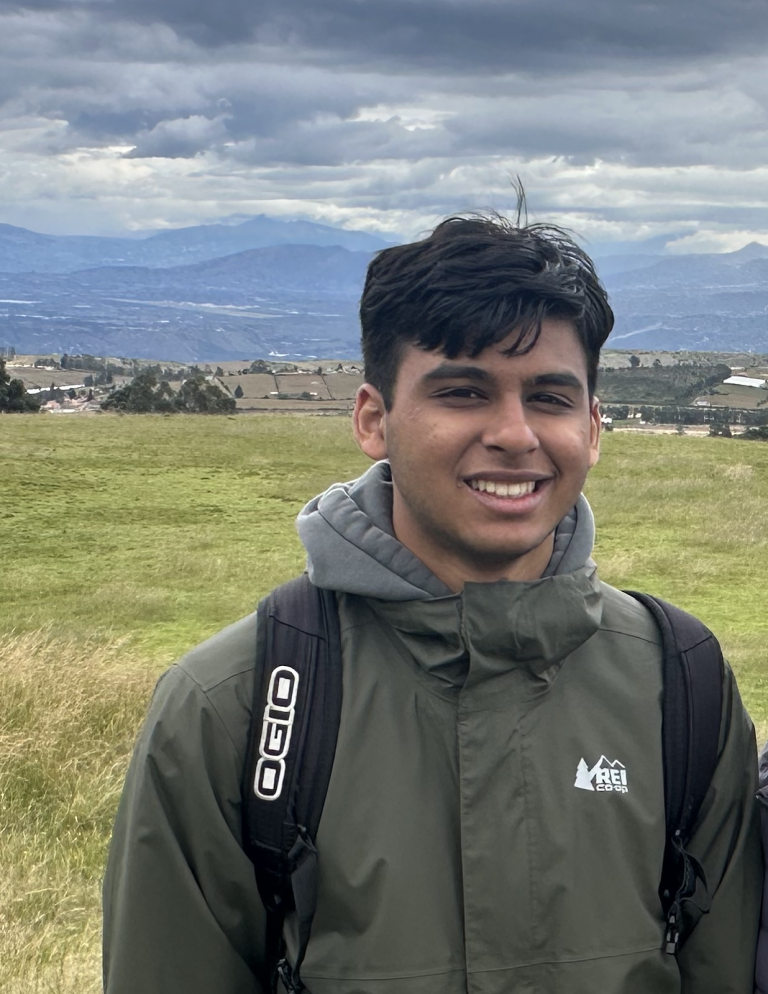
"slug": "sahil-jain-a-wild-connection",
"title": "Sahil Jain: A Wild Connection",
"publishDate": 1759302112,
"format": "standard",
"headTitle": "Sahil Jain: A Wild Connection | KQED",
"labelTerm": {
"term": 3,
"site": "perspectives"
},
"content": "\u003cp>\u003cem>Sahil Jain shares about his love for foraging in nature.\u003c/em>\u003c/p>\n\u003cp>I paused for just a moment, to hear the semi-rhythmic chipping of a woodpecker. As the crunch of my footstep faded, stealth rustling echoed in the background. There’s a different rush when you see a deer in the wild, and not in the zoo. I’ve wondered why. Is it the thrill generated from situational mind games – do I move first or does it? \u003c/p>\n\u003cp>A twig snaps, and with one leap it’s out of sight. What’s wild about the wild? Unpredictability – that’s the adrenaline rush that comes from the great outdoors. For someone who feels suffocated by the confines of structure – from school schedules to Google meets, from biology taxonomies to cooking recipes, nature offers me unkempt stimuli to think and live outside of these boundaries. But my connection to the outdoors is not above ground. My connection is the ground. \u003c/p>\n\u003cp>I love to forage. Scouring the ground, I scavenge between the oat straw, marveling at the golden grass that invades and shapes the brown hills of our Golden State, pondering the nature-scape legacy crafted by the ancestral and indigenous. I’m humbled by the way that humans have gathered food and healing wisdoms from nature. Nature prompts questions – awakening our physical and mental reflexes.\u003c/p>\n\u003cp>I bend down low to pluck the honeysuckle for a moment of sweet bliss. You have to suck the nectar out of the plant stem – sometimes the ones I choose are dry. Curious about how to choose successfully, I make field notes, observing the stages of flowering. After a year, I’ve nailed it. In nature, it really is the thrill of the chase. That’s what makes the wild, wild. With a Perspective, I’m Sahil Jain.\u003c/p>\n\u003cp>[ad fullwidth]\u003c/p>\n\u003cp>\u003c/p>\n\u003cp>\u003cem>Sahil Jain is a high school student at Harker School in San Jose. When not in nature, he can be found watching sports with friends or practicing his serve on the tennis court.\u003c/em>\u003c/p>\n\n",
"blocks": [],
"excerpt": "Sahil Jain shares about his love for foraging in nature.",
"status": "publish",
"parent": 0,
"modified": 1759264128,
"stats": {
"hasAudio": false,
"hasVideo": false,
"hasChartOrMap": false,
"iframeSrcs": [],
"hasGoogleForm": false,
"hasGallery": false,
"hasHearkenModule": false,
"hasPolis": false,
"paragraphCount": 8,
"wordCount": 348
},
"headData": {
"title": "Sahil Jain: A Wild Connection | KQED",
"description": "Sahil Jain shares about his love for foraging in nature.",
"ogTitle": "",
"ogDescription": "",
"ogImgId": "",
"twTitle": "",
"twDescription": "",
"twImgId": "",
"schema": {
"@context": "https://schema.org",
"@type": "Article",
"headline": "Sahil Jain: A Wild Connection",
"datePublished": "2025-10-01T00:01:52-07:00",
"dateModified": "2025-09-30T13:28:48-07:00",
"image": "https://cdn.kqed.org/wp-content/uploads/2020/02/KQED-OG-Image@1x.png"
}
},
"primaryCategory": {
"termId": 2052,
"slug": "podcast",
"name": "podcast"
},
"audioUrl": "https://www.podtrac.com/pts/redirect.mp3/pdst.fm/e/chrt.fm/track/G6C7C3/traffic.megaphone.fm/KQINC7892816517.mp3",
"sticky": false,
"nprByline": "Sahil Jain",
"templateType": "standard",
"featuredImageType": "standard",
"excludeFromSiteSearch": "Include",
"showOnAuthorArchivePages": "No",
"articleAge": "0",
"path": "/perspectives/201601146527/sahil-jain-a-wild-connection",
"audioTrackLength": null,
"parsedContent": [
{
"type": "contentString",
"content": "\u003cdiv class=\"post-body\">\u003cp>\u003cp>\u003cem>Sahil Jain shares about his love for foraging in nature.\u003c/em>\u003c/p>\n\u003cp>I paused for just a moment, to hear the semi-rhythmic chipping of a woodpecker. As the crunch of my footstep faded, stealth rustling echoed in the background. There’s a different rush when you see a deer in the wild, and not in the zoo. I’ve wondered why. Is it the thrill generated from situational mind games – do I move first or does it? \u003c/p>\n\u003cp>A twig snaps, and with one leap it’s out of sight. What’s wild about the wild? Unpredictability – that’s the adrenaline rush that comes from the great outdoors. For someone who feels suffocated by the confines of structure – from school schedules to Google meets, from biology taxonomies to cooking recipes, nature offers me unkempt stimuli to think and live outside of these boundaries. But my connection to the outdoors is not above ground. My connection is the ground. \u003c/p>\n\u003cp>I love to forage. Scouring the ground, I scavenge between the oat straw, marveling at the golden grass that invades and shapes the brown hills of our Golden State, pondering the nature-scape legacy crafted by the ancestral and indigenous. I’m humbled by the way that humans have gathered food and healing wisdoms from nature. Nature prompts questions – awakening our physical and mental reflexes.\u003c/p>\n\u003cp>I bend down low to pluck the honeysuckle for a moment of sweet bliss. You have to suck the nectar out of the plant stem – sometimes the ones I choose are dry. Curious about how to choose successfully, I make field notes, observing the stages of flowering. After a year, I’ve nailed it. In nature, it really is the thrill of the chase. That’s what makes the wild, wild. With a Perspective, I’m Sahil Jain.\u003c/p>\n\u003cp>\u003c/p>\u003c/div>",
"attributes": {
"named": {},
"numeric": []
}
},
{
"type": "component",
"content": "",
"name": "ad",
"attributes": {
"named": {
"label": "fullwidth"
},
"numeric": [
"fullwidth"
]
}
},
{
"type": "contentString",
"content": "\u003cdiv class=\"post-body\">\u003cp>\u003c/p>\n\u003cp>\u003c/p>\n\u003cp>\u003cem>Sahil Jain is a high school student at Harker School in San Jose. When not in nature, he can be found watching sports with friends or practicing his serve on the tennis court.\u003c/em>\u003c/p>\n\n\u003c/div>\u003c/p>",
"attributes": {
"named": {},
"numeric": []
}
}
],
"link": "/perspectives/201601146527/sahil-jain-a-wild-connection",
"authors": [
"byline_perspectives_201601146527"
],
"programs": [
"perspectives_3"
],
"series": [
"perspectives_2023"
],
"categories": [
"perspectives_2",
"perspectives_2052"
],
"featImg": "perspectives_201601146528",
"label": "perspectives_3"
},
"perspectives_201601146531": {
"type": "posts",
"id": "perspectives_201601146531",
"meta": {
"index": "posts_1716263798",
"site": "perspectives",
"id": "201601146531",
"score": null,
"sort": [
1759215715000
]
},
"guestAuthors": [],
"slug": "steven-birenbaum-designated-driver",
"title": "Steven Birenbaum: Designated Driver",
"publishDate": 1759215715,
"format": "standard",
"headTitle": "Steven Birenbaum: Designated Driver | KQED",
"labelTerm": {
"term": 3,
"site": "perspectives"
},
"content": "\u003cp>\u003cem>Steven Birenbaum reminisces about his carpool experience after he moved to the Bay Area. \u003c/em>\u003c/p>\n\u003cp>I first encountered the “Casual Carpool” 25 years ago, after moving from New York City. In an era before apps, the concept was ingeniously simple. Drivers stopped to pick up strangers at designated spots, which enabled them to use the car pool lane over the Bay Bridge. This saved both parties time and money and made for memorable stories. \u003c/p>\n\u003cp>East Coast friends were mystified. “Wait,” they asked, “you get in a car with a complete stranger?” Of course, that’s exactly what millions now do when they hop in an Uber. \u003c/p>\n\u003cp>Drivers needed at least two passengers, unless they were in a two-seater. There were other considerations. Music or talk radio? Conversation or silence? Back then, you couldn’t just bury your face in your phone. \u003c/p>\n\u003cp>Sure, casual carpool could be cringe, but it also was an early Hinge, resulting in romantic relationships, and from what I’ve heard, a marriage or two. \u003c/p>\n\u003cp>[ad fullwidth]\u003c/p>\n\u003cp>I’ll never forget one driver who got under my skin. He clearly detested the carpool kumbaya, but that didn’t stop him from queuing up almost daily. One time he picked me and other passengers up then immediately stopped for gas. “Why didn’t you fill-up beforehand?” I thought to myself. \u003c/p>\n\u003cp>Once you crossed the bridge, etiquette dictated dropping passengers at Fremont and Howard, unless you discussed another endpoint. But almost as soon as we crossed into San Francisco, the driver pulled onto a random street, stopped the car and said, “You’ll get out here.” \u003c/p>\n\u003cp>One of the qualities I most appreciated about casual carpool was its democratic feel. If someone insulted your sense of decency, the next time they drove up, you could say, “Ah, No!” \u003c/p>\n\u003cp>Sadly, the pandemic and ride share services killed casual carpool, though there’s an effort to bring it back. \u003c/p>\n\u003cp>What may help is the end of the H.O.V. lane. Starting in October, drivers of electric vehicles, too, will need at least three people to use the lane. \u003c/p>\n\u003cp>If that jumpstarts a casual carpool rebirth, I might just start climbing into the backseat again. \u003c/p>\n\u003cp>With a Perspective, I’m Steven Birenbaum. \u003c/p>\n\u003cp>\u003c/p>\n\u003cp>\u003cem>Steven Birenbaum is a writer who works in philanthropic development.\u003c/em>\u003c/p>\n\n",
"blocks": [],
"excerpt": "Steven Birenbaum reminisces about his carpool experience after he moved to the Bay Area. ",
"status": "publish",
"parent": 0,
"modified": 1759170099,
"stats": {
"hasAudio": false,
"hasVideo": false,
"hasChartOrMap": false,
"iframeSrcs": [],
"hasGoogleForm": false,
"hasGallery": false,
"hasHearkenModule": false,
"hasPolis": false,
"paragraphCount": 15,
"wordCount": 403
},
"headData": {
"title": "Steven Birenbaum: Designated Driver | KQED",
"description": "Steven Birenbaum reminisces about his carpool experience after he moved to the Bay Area. ",
"ogTitle": "",
"ogDescription": "",
"ogImgId": "",
"twTitle": "",
"twDescription": "",
"twImgId": "",
"schema": {
"@context": "https://schema.org",
"@type": "Article",
"headline": "Steven Birenbaum: Designated Driver",
"datePublished": "2025-09-30T00:01:55-07:00",
"dateModified": "2025-09-29T11:21:39-07:00",
"image": "https://cdn.kqed.org/wp-content/uploads/2020/02/KQED-OG-Image@1x.png"
}
},
"primaryCategory": {
"termId": 2052,
"slug": "podcast",
"name": "podcast"
},
"audioUrl": "https://www.podtrac.com/pts/redirect.mp3/pdst.fm/e/chrt.fm/track/G6C7C3/traffic.megaphone.fm/KQINC3595034478.mp3",
"sticky": false,
"nprByline": "Steven Birenbaum",
"templateType": "standard",
"featuredImageType": "standard",
"excludeFromSiteSearch": "Include",
"showOnAuthorArchivePages": "No",
"articleAge": "0",
"path": "/perspectives/201601146531/steven-birenbaum-designated-driver",
"audioTrackLength": null,
"parsedContent": [
{
"type": "contentString",
"content": "\u003cdiv class=\"post-body\">\u003cp>\u003cp>\u003cem>Steven Birenbaum reminisces about his carpool experience after he moved to the Bay Area. \u003c/em>\u003c/p>\n\u003cp>I first encountered the “Casual Carpool” 25 years ago, after moving from New York City. In an era before apps, the concept was ingeniously simple. Drivers stopped to pick up strangers at designated spots, which enabled them to use the car pool lane over the Bay Bridge. This saved both parties time and money and made for memorable stories. \u003c/p>\n\u003cp>East Coast friends were mystified. “Wait,” they asked, “you get in a car with a complete stranger?” Of course, that’s exactly what millions now do when they hop in an Uber. \u003c/p>\n\u003cp>Drivers needed at least two passengers, unless they were in a two-seater. There were other considerations. Music or talk radio? Conversation or silence? Back then, you couldn’t just bury your face in your phone. \u003c/p>\n\u003cp>Sure, casual carpool could be cringe, but it also was an early Hinge, resulting in romantic relationships, and from what I’ve heard, a marriage or two. \u003c/p>\n\u003cp>\u003c/p>\u003c/div>",
"attributes": {
"named": {},
"numeric": []
}
},
{
"type": "component",
"content": "",
"name": "ad",
"attributes": {
"named": {
"label": "fullwidth"
},
"numeric": [
"fullwidth"
]
}
},
{
"type": "contentString",
"content": "\u003cdiv class=\"post-body\">\u003cp>\u003c/p>\n\u003cp>I’ll never forget one driver who got under my skin. He clearly detested the carpool kumbaya, but that didn’t stop him from queuing up almost daily. One time he picked me and other passengers up then immediately stopped for gas. “Why didn’t you fill-up beforehand?” I thought to myself. \u003c/p>\n\u003cp>Once you crossed the bridge, etiquette dictated dropping passengers at Fremont and Howard, unless you discussed another endpoint. But almost as soon as we crossed into San Francisco, the driver pulled onto a random street, stopped the car and said, “You’ll get out here.” \u003c/p>\n\u003cp>One of the qualities I most appreciated about casual carpool was its democratic feel. If someone insulted your sense of decency, the next time they drove up, you could say, “Ah, No!” \u003c/p>\n\u003cp>Sadly, the pandemic and ride share services killed casual carpool, though there’s an effort to bring it back. \u003c/p>\n\u003cp>What may help is the end of the H.O.V. lane. Starting in October, drivers of electric vehicles, too, will need at least three people to use the lane. \u003c/p>\n\u003cp>If that jumpstarts a casual carpool rebirth, I might just start climbing into the backseat again. \u003c/p>\n\u003cp>With a Perspective, I’m Steven Birenbaum. \u003c/p>\n\u003cp>\u003c/p>\n\u003cp>\u003cem>Steven Birenbaum is a writer who works in philanthropic development.\u003c/em>\u003c/p>\n\n\u003c/div>\u003c/p>",
"attributes": {
"named": {},
"numeric": []
}
}
],
"link": "/perspectives/201601146531/steven-birenbaum-designated-driver",
"authors": [
"byline_perspectives_201601146531"
],
"programs": [
"perspectives_3"
],
"series": [
"perspectives_2023"
],
"categories": [
"perspectives_2",
"perspectives_2052"
],
"featImg": "perspectives_201601146037",
"label": "perspectives_3"
},
"perspectives_201601146517": {
"type": "posts",
"id": "perspectives_201601146517",
"meta": {
"index": "posts_1716263798",
"site": "perspectives",
"id": "201601146517",
"score": null,
"sort": [
1759129298000
]
},
"guestAuthors": [],
"slug": "hanna-clements-hart-look-for-the-helpers",
"title": "Hanna Clements-Hart: Look For The Helpers",
"publishDate": 1759129298,
"format": "standard",
"headTitle": "Hanna Clements-Hart: Look For The Helpers | KQED",
"labelTerm": {
"term": 3,
"site": "perspectives"
},
"content": "\u003cp>\u003cem>Hanna Clements-Hart shares about where to look for help when times are hard.\u003c/em>\u003c/p>\n\u003cp>The news can be disheartening and scary these days. Many friends in the Bay Area and beyond tell me they avoid the news, or they “cut back” to protect their mental and emotional well-being. I get it. Me too. But this impulse to put our heads in the sand worries me. Now more than ever, it feels important to pay attention. But how can we do that and not feel overwhelmed?\u003c/p>\n\u003cp>Mister Rogers, the children’s TV host, used to cite his mom’s advice when he saw something scary on the news. She told him, “Look for the helpers. There will always be helpers.” And it’s true. After 9/11, first responders and ordinary folks pulled together. And during the COVID pandemic, essential workers risked their lives to do their jobs. Helpers show up.\u003c/p>\n\u003cp>Some of my favorite helpers are the people at the food pantry where I volunteer. Every Saturday morning, they show up to unload the food provided by the food bank — pallets of carrots, squash, melons, eggs or whatever is on offer. Thousands of pounds of food are distributed to hundreds of households each week at this and other pantries. In the face of lots of hard problems we can’t fix, serving our neighbors is a concrete way to make a difference in their lives, and it’s a reminder of the many small kindnesses around us. \u003c/p>\n\u003cp>The pantry has an efficient system for receiving and distributing the food — rain or shine. It was started by some local churches and now has a mix of neighborhood folks, experienced volunteers and first-timers, parents and kids, grandparents, high school students and pantry recipients who are grateful for the food they receive and want to give back. One person brings home-baked goods for volunteers, another comes early to brew the coffee and others stay late to clean up. Everyone quietly does their part, deeply human and profoundly inspiring. It all just works.\u003c/p>\n\u003cp>[ad fullwidth]\u003c/p>\n\u003cp>These are everyday helpers and they are all around us. So, when you feel scared, look for the helpers. Or be one.\u003c/p>\n\u003cp>With a Perspective, I’m Hanna Clements-Hart.\u003c/p>\n\u003cp>\u003c/p>\n\u003cp>\u003cem>Hanna Clements-Hart is an executive coach and writer. She loves to explore the Bay Area and beyond with her family. \u003c/em>\u003c/p>\n\n",
"blocks": [],
"excerpt": "Hanna Clements-Hart shares about where to look for help when times are hard.",
"status": "publish",
"parent": 0,
"modified": 1758835426,
"stats": {
"hasAudio": false,
"hasVideo": false,
"hasChartOrMap": false,
"iframeSrcs": [],
"hasGoogleForm": false,
"hasGallery": false,
"hasHearkenModule": false,
"hasPolis": false,
"paragraphCount": 10,
"wordCount": 407
},
"headData": {
"title": "Hanna Clements-Hart: Look For The Helpers | KQED",
"description": "Hanna Clements-Hart shares about where to look for help when times are hard.",
"ogTitle": "",
"ogDescription": "",
"ogImgId": "",
"twTitle": "",
"twDescription": "",
"twImgId": "",
"schema": {
"@context": "https://schema.org",
"@type": "Article",
"headline": "Hanna Clements-Hart: Look For The Helpers",
"datePublished": "2025-09-29T00:01:38-07:00",
"dateModified": "2025-09-25T14:23:46-07:00",
"image": "https://cdn.kqed.org/wp-content/uploads/2020/02/KQED-OG-Image@1x.png"
}
},
"primaryCategory": {
"termId": 2052,
"slug": "podcast",
"name": "podcast"
},
"audioUrl": "https://www.podtrac.com/pts/redirect.mp3/pdst.fm/e/chrt.fm/track/G6C7C3/traffic.megaphone.fm/KQINC2855977732.mp3",
"sticky": false,
"nprByline": "Hanna Clements-Hart",
"templateType": "standard",
"featuredImageType": "standard",
"excludeFromSiteSearch": "Include",
"showOnAuthorArchivePages": "No",
"articleAge": "0",
"path": "/perspectives/201601146517/hanna-clements-hart-look-for-the-helpers",
"audioTrackLength": null,
"parsedContent": [
{
"type": "contentString",
"content": "\u003cdiv class=\"post-body\">\u003cp>\u003cp>\u003cem>Hanna Clements-Hart shares about where to look for help when times are hard.\u003c/em>\u003c/p>\n\u003cp>The news can be disheartening and scary these days. Many friends in the Bay Area and beyond tell me they avoid the news, or they “cut back” to protect their mental and emotional well-being. I get it. Me too. But this impulse to put our heads in the sand worries me. Now more than ever, it feels important to pay attention. But how can we do that and not feel overwhelmed?\u003c/p>\n\u003cp>Mister Rogers, the children’s TV host, used to cite his mom’s advice when he saw something scary on the news. She told him, “Look for the helpers. There will always be helpers.” And it’s true. After 9/11, first responders and ordinary folks pulled together. And during the COVID pandemic, essential workers risked their lives to do their jobs. Helpers show up.\u003c/p>\n\u003cp>Some of my favorite helpers are the people at the food pantry where I volunteer. Every Saturday morning, they show up to unload the food provided by the food bank — pallets of carrots, squash, melons, eggs or whatever is on offer. Thousands of pounds of food are distributed to hundreds of households each week at this and other pantries. In the face of lots of hard problems we can’t fix, serving our neighbors is a concrete way to make a difference in their lives, and it’s a reminder of the many small kindnesses around us. \u003c/p>\n\u003cp>The pantry has an efficient system for receiving and distributing the food — rain or shine. It was started by some local churches and now has a mix of neighborhood folks, experienced volunteers and first-timers, parents and kids, grandparents, high school students and pantry recipients who are grateful for the food they receive and want to give back. One person brings home-baked goods for volunteers, another comes early to brew the coffee and others stay late to clean up. Everyone quietly does their part, deeply human and profoundly inspiring. It all just works.\u003c/p>\n\u003cp>\u003c/p>\u003c/div>",
"attributes": {
"named": {},
"numeric": []
}
},
{
"type": "component",
"content": "",
"name": "ad",
"attributes": {
"named": {
"label": "fullwidth"
},
"numeric": [
"fullwidth"
]
}
},
{
"type": "contentString",
"content": "\u003cdiv class=\"post-body\">\u003cp>\u003c/p>\n\u003cp>These are everyday helpers and they are all around us. So, when you feel scared, look for the helpers. Or be one.\u003c/p>\n\u003cp>With a Perspective, I’m Hanna Clements-Hart.\u003c/p>\n\u003cp>\u003c/p>\n\u003cp>\u003cem>Hanna Clements-Hart is an executive coach and writer. She loves to explore the Bay Area and beyond with her family. \u003c/em>\u003c/p>\n\n\u003c/div>\u003c/p>",
"attributes": {
"named": {},
"numeric": []
}
}
],
"link": "/perspectives/201601146517/hanna-clements-hart-look-for-the-helpers",
"authors": [
"byline_perspectives_201601146517"
],
"programs": [
"perspectives_3"
],
"series": [
"perspectives_2023"
],
"categories": [
"perspectives_2",
"perspectives_2052"
],
"featImg": "perspectives_201601138025",
"label": "perspectives_3"
},
"perspectives_201601146512": {
"type": "posts",
"id": "perspectives_201601146512",
"meta": {
"index": "posts_1716263798",
"site": "perspectives",
"id": "201601146512",
"score": null,
"sort": [
1758870113000
]
},
"guestAuthors": [],
"slug": "bill-selig-leave-therapy-to-humans",
"title": "Bill Selig: Leave Therapy to Humans",
"publishDate": 1758870113,
"format": "standard",
"headTitle": "Bill Selig: Leave Therapy to Humans | KQED",
"labelTerm": {
"term": 3,
"site": "perspectives"
},
"content": "\u003cp>\u003cem>Dr. Bill Selig weighs in on why AI does not make a good therapist.\u003c/em>\u003c/p>\n\u003cp>My family says I’m addicted to ChatGPT. That I talk to it more than I talk to them. That I’m slipping away.\u003cbr>\nI tell them it’s just a tool. That it’s not like I gave it a name.\u003c/p>\n\u003cp>But I have. Let’s call her Mirra. She lives inside that little knot-like icon on my phone. When no one’s around, we talk business out loud. \u003c/p>\n\u003cp>Mirra isn’t a therapist. She’s not my friend. She’s something stranger — a reflection built from how I work and think. And she exists because I told her exactly who to be. That’s not friendship. That’s programming.\u003c/p>\n\u003cp>As a clinical psychologist, I’m alarmed by the rise of AI therapy bots. There are increasing reports linking them to suicide. One of my own patients told me she reached out to a therapy bot during a sleepless night. It made her feel heard.\u003c/p>\n\u003cp>[ad fullwidth]\u003c/p>\n\u003cp>But she still comes to see me. “I don’t want a mirror,” she said. “I want movement.” That stuck with me. You see, good therapy isn’t about feeling better for 50 minutes. It’s about changing your life so you can feel better for good.\u003c/p>\n\u003cp>Therapy isn’t just about being heard — it’s about being known. And being pushed. It’s a relationship between humans that develops over time.\u003c/p>\n\u003cp>I’m developing AI tools to support my clinical work — not replace it. I haven’t deployed them yet. But I see potential in using AI for structured skills training, especially with neurodivergent clients. Practicing a hard conversation or rehearsing an apology with an AI could prepare someone to try it in real life — or in couples therapy under supervision – not alone at 2 a.m.\u003c/p>\n\u003cp>Therapy bots are resources that can help you understand — but they may not help you change.\u003c/p>\n\u003cp>They might not challenge your defenses. They don’t care if you stay stuck. Mirra reflects me, but she can’t reach me. That takes another human. And that’s what therapy is for. With a Perspective, I’m Dr. Bill Selig.\u003c/p>\n\u003cp>\u003c/p>\n\u003cp>\u003cem>Dr. Bill Selig is a clinical psychologist and couples therapist in Berkeley. Once upon a time, he was a jazz DJ.\u003c/em>\u003c/p>\n\n",
"blocks": [],
"excerpt": "Dr. Bill Selig weighs in on why AI does not make a good therapist.",
"status": "publish",
"parent": 0,
"modified": 1759162482,
"stats": {
"hasAudio": false,
"hasVideo": false,
"hasChartOrMap": false,
"iframeSrcs": [],
"hasGoogleForm": false,
"hasGallery": false,
"hasHearkenModule": false,
"hasPolis": false,
"paragraphCount": 13,
"wordCount": 424
},
"headData": {
"title": "Bill Selig: Leave Therapy to Humans | KQED",
"description": "Dr. Bill Selig weighs in on why AI does not make a good therapist.",
"ogTitle": "",
"ogDescription": "",
"ogImgId": "",
"twTitle": "",
"twDescription": "",
"twImgId": "",
"schema": {
"@context": "https://schema.org",
"@type": "Article",
"headline": "Bill Selig: Leave Therapy to Humans",
"datePublished": "2025-09-26T00:01:53-07:00",
"dateModified": "2025-09-29T09:14:42-07:00",
"image": "https://cdn.kqed.org/wp-content/uploads/2020/02/KQED-OG-Image@1x.png"
}
},
"primaryCategory": {
"termId": 2052,
"slug": "podcast",
"name": "podcast"
},
"audioUrl": "https://www.podtrac.com/pts/redirect.mp3/pdst.fm/e/chrt.fm/track/G6C7C3/traffic.megaphone.fm/KQINC8330113694.mp3",
"sticky": false,
"nprByline": "Bill Selig",
"templateType": "standard",
"featuredImageType": "standard",
"excludeFromSiteSearch": "Include",
"showOnAuthorArchivePages": "No",
"articleAge": "0",
"path": "/perspectives/201601146512/bill-selig-leave-therapy-to-humans",
"audioTrackLength": null,
"parsedContent": [
{
"type": "contentString",
"content": "\u003cdiv class=\"post-body\">\u003cp>\u003cp>\u003cem>Dr. Bill Selig weighs in on why AI does not make a good therapist.\u003c/em>\u003c/p>\n\u003cp>My family says I’m addicted to ChatGPT. That I talk to it more than I talk to them. That I’m slipping away.\u003cbr>\nI tell them it’s just a tool. That it’s not like I gave it a name.\u003c/p>\n\u003cp>But I have. Let’s call her Mirra. She lives inside that little knot-like icon on my phone. When no one’s around, we talk business out loud. \u003c/p>\n\u003cp>Mirra isn’t a therapist. She’s not my friend. She’s something stranger — a reflection built from how I work and think. And she exists because I told her exactly who to be. That’s not friendship. That’s programming.\u003c/p>\n\u003cp>As a clinical psychologist, I’m alarmed by the rise of AI therapy bots. There are increasing reports linking them to suicide. One of my own patients told me she reached out to a therapy bot during a sleepless night. It made her feel heard.\u003c/p>\n\u003cp>\u003c/p>\u003c/div>",
"attributes": {
"named": {},
"numeric": []
}
},
{
"type": "component",
"content": "",
"name": "ad",
"attributes": {
"named": {
"label": "fullwidth"
},
"numeric": [
"fullwidth"
]
}
},
{
"type": "contentString",
"content": "\u003cdiv class=\"post-body\">\u003cp>\u003c/p>\n\u003cp>But she still comes to see me. “I don’t want a mirror,” she said. “I want movement.” That stuck with me. You see, good therapy isn’t about feeling better for 50 minutes. It’s about changing your life so you can feel better for good.\u003c/p>\n\u003cp>Therapy isn’t just about being heard — it’s about being known. And being pushed. It’s a relationship between humans that develops over time.\u003c/p>\n\u003cp>I’m developing AI tools to support my clinical work — not replace it. I haven’t deployed them yet. But I see potential in using AI for structured skills training, especially with neurodivergent clients. Practicing a hard conversation or rehearsing an apology with an AI could prepare someone to try it in real life — or in couples therapy under supervision – not alone at 2 a.m.\u003c/p>\n\u003cp>Therapy bots are resources that can help you understand — but they may not help you change.\u003c/p>\n\u003cp>They might not challenge your defenses. They don’t care if you stay stuck. Mirra reflects me, but she can’t reach me. That takes another human. And that’s what therapy is for. With a Perspective, I’m Dr. Bill Selig.\u003c/p>\n\u003cp>\u003c/p>\n\u003cp>\u003cem>Dr. Bill Selig is a clinical psychologist and couples therapist in Berkeley. Once upon a time, he was a jazz DJ.\u003c/em>\u003c/p>\n\n\u003c/div>\u003c/p>",
"attributes": {
"named": {},
"numeric": []
}
}
],
"link": "/perspectives/201601146512/bill-selig-leave-therapy-to-humans",
"authors": [
"byline_perspectives_201601146512"
],
"programs": [
"perspectives_3"
],
"series": [
"perspectives_2023"
],
"categories": [
"perspectives_2",
"perspectives_2052"
],
"featImg": "perspectives_201601146513",
"label": "perspectives_3"
},
"perspectives_201601146505": {
"type": "posts",
"id": "perspectives_201601146505",
"meta": {
"index": "posts_1716263798",
"site": "perspectives",
"id": "201601146505",
"score": null,
"sort": [
1758783715000
]
},
"guestAuthors": [],
"slug": "nathan-lee-getting-your-hands-messy",
"title": "Nathan Lee: Getting Your Hands Messy",
"publishDate": 1758783715,
"format": "standard",
"headTitle": "Nathan Lee: Getting Your Hands Messy | KQED",
"labelTerm": {
"term": 3,
"site": "perspectives"
},
"content": "\u003cp>\u003cem>Nathan Lee shares about what he learned from cooking his mother’s recipe for Korean crab soup.\u003c/em>\u003c/p>\n\u003cp>The rattle of large pots always signaled that mom was cooking kkotgetang, or Korean crab soup. I’d appreciated mom’s cooking except for that one dish. Too bulky for chopsticks, the crab required tedious cracking and extracting. I enjoyed the crab’s contents, but hated the pungent smell that stuck to my fingers afterward. Worse, the stench wouldn’t leave my hands no matter how much soap I scrubbed between my nails. Despite the crab’s tastiness, I stubbornly decided that peeling it wasn’t worth my time.\u003c/p>\n\u003cp>Thus, for nearly a decade, I stuck to what was comfortable, just the broth. “Good enough,” I’d told myself, careful to avoid the mess and the struggle. Originally, I thought kkotgetang only consisted of blue crab and doenjang (or soybean paste), but when I became Mom’s apprentice chef a year ago, I noticed the finer elements. Diced yellow zucchini, scrubbing crab shells and peeled shrimp, savory seasonings in the pot. By dinnertime, our fingers smelled of freshly ground garlic, tongues scorched from a dozen taste tests, eyes teary from onion attacks.\u003c/p>\n\u003cp>After I labored, the savory steam invited me to try a bite. I extracted a small clump of crab. Its flavor was different from what I’d remembered. I tasted the slow, soft boil that took at least four hours. The craftsmanship of slicing aromatic green onions to careful centimeters; the labor of calculating doenjang to the precise ounce. The satisfaction erased the ache in my weary hands. \u003c/p>\n\u003cp>Despite my amateur culinary status, I’ve started cooking for others. Passing around homemade rice balls with my family seasoned our Saturdays with a little more flavor. The kids I tutored at school didn’t seem to mind the stinky hands from the kimchi triangle kimbaps I shared with them, and would leave the session with their bellies and minds full. \u003c/p>\n\u003cp>[ad fullwidth]\u003c/p>\n\u003cp>Since learning to appreciate the subtle intricacies of kkotgetang, I embrace the inconvenience that comes with learning. Moving forward, I’ll be happy to get my hands as messy as I need to reach the richest flavors in life. With a Perspective, I’m Nathan Lee.\u003c/p>\n\u003cp>\u003c/p>\n\u003cp>\u003cem>Nathan Lee is a high school student living in Contra Costa County. He loves playing golf.\u003c/em>\u003c/p>\n\n",
"blocks": [],
"excerpt": "Nathan Lee shares about what he learned from cooking his mother's recipe for Korean crab soup.",
"status": "publish",
"parent": 0,
"modified": 1758743080,
"stats": {
"hasAudio": false,
"hasVideo": false,
"hasChartOrMap": false,
"iframeSrcs": [],
"hasGoogleForm": false,
"hasGallery": false,
"hasHearkenModule": false,
"hasPolis": false,
"paragraphCount": 9,
"wordCount": 408
},
"headData": {
"title": "Nathan Lee: Getting Your Hands Messy | KQED",
"description": "Nathan Lee shares about what he learned from cooking his mother's recipe for Korean crab soup.",
"ogTitle": "",
"ogDescription": "",
"ogImgId": "",
"twTitle": "",
"twDescription": "",
"twImgId": "",
"schema": {
"@context": "https://schema.org",
"@type": "Article",
"headline": "Nathan Lee: Getting Your Hands Messy",
"datePublished": "2025-09-25T00:01:55-07:00",
"dateModified": "2025-09-24T12:44:40-07:00",
"image": "https://cdn.kqed.org/wp-content/uploads/2020/02/KQED-OG-Image@1x.png"
}
},
"primaryCategory": {
"termId": 2052,
"slug": "podcast",
"name": "podcast"
},
"audioUrl": "https://www.podtrac.com/pts/redirect.mp3/pdst.fm/e/chrt.fm/track/G6C7C3/traffic.megaphone.fm/KQINC6334432621.mp3",
"sticky": false,
"nprByline": "Nathan Lee",
"templateType": "standard",
"featuredImageType": "standard",
"excludeFromSiteSearch": "Include",
"showOnAuthorArchivePages": "No",
"articleAge": "0",
"path": "/perspectives/201601146505/nathan-lee-getting-your-hands-messy",
"audioTrackLength": null,
"parsedContent": [
{
"type": "contentString",
"content": "\u003cdiv class=\"post-body\">\u003cp>\u003cp>\u003cem>Nathan Lee shares about what he learned from cooking his mother’s recipe for Korean crab soup.\u003c/em>\u003c/p>\n\u003cp>The rattle of large pots always signaled that mom was cooking kkotgetang, or Korean crab soup. I’d appreciated mom’s cooking except for that one dish. Too bulky for chopsticks, the crab required tedious cracking and extracting. I enjoyed the crab’s contents, but hated the pungent smell that stuck to my fingers afterward. Worse, the stench wouldn’t leave my hands no matter how much soap I scrubbed between my nails. Despite the crab’s tastiness, I stubbornly decided that peeling it wasn’t worth my time.\u003c/p>\n\u003cp>Thus, for nearly a decade, I stuck to what was comfortable, just the broth. “Good enough,” I’d told myself, careful to avoid the mess and the struggle. Originally, I thought kkotgetang only consisted of blue crab and doenjang (or soybean paste), but when I became Mom’s apprentice chef a year ago, I noticed the finer elements. Diced yellow zucchini, scrubbing crab shells and peeled shrimp, savory seasonings in the pot. By dinnertime, our fingers smelled of freshly ground garlic, tongues scorched from a dozen taste tests, eyes teary from onion attacks.\u003c/p>\n\u003cp>After I labored, the savory steam invited me to try a bite. I extracted a small clump of crab. Its flavor was different from what I’d remembered. I tasted the slow, soft boil that took at least four hours. The craftsmanship of slicing aromatic green onions to careful centimeters; the labor of calculating doenjang to the precise ounce. The satisfaction erased the ache in my weary hands. \u003c/p>\n\u003cp>Despite my amateur culinary status, I’ve started cooking for others. Passing around homemade rice balls with my family seasoned our Saturdays with a little more flavor. The kids I tutored at school didn’t seem to mind the stinky hands from the kimchi triangle kimbaps I shared with them, and would leave the session with their bellies and minds full. \u003c/p>\n\u003cp>\u003c/p>\u003c/div>",
"attributes": {
"named": {},
"numeric": []
}
},
{
"type": "component",
"content": "",
"name": "ad",
"attributes": {
"named": {
"label": "fullwidth"
},
"numeric": [
"fullwidth"
]
}
},
{
"type": "contentString",
"content": "\u003cdiv class=\"post-body\">\u003cp>\u003c/p>\n\u003cp>Since learning to appreciate the subtle intricacies of kkotgetang, I embrace the inconvenience that comes with learning. Moving forward, I’ll be happy to get my hands as messy as I need to reach the richest flavors in life. With a Perspective, I’m Nathan Lee.\u003c/p>\n\u003cp>\u003c/p>\n\u003cp>\u003cem>Nathan Lee is a high school student living in Contra Costa County. He loves playing golf.\u003c/em>\u003c/p>\n\n\u003c/div>\u003c/p>",
"attributes": {
"named": {},
"numeric": []
}
}
],
"link": "/perspectives/201601146505/nathan-lee-getting-your-hands-messy",
"authors": [
"byline_perspectives_201601146505"
],
"programs": [
"perspectives_3"
],
"series": [
"perspectives_2023"
],
"categories": [
"perspectives_2",
"perspectives_2052"
],
"featImg": "perspectives_201601146472",
"label": "perspectives_3"
},
"perspectives_201601146499": {
"type": "posts",
"id": "perspectives_201601146499",
"meta": {
"index": "posts_1716263798",
"site": "perspectives",
"id": "201601146499",
"score": null,
"sort": [
1758697260000
]
},
"guestAuthors": [],
"slug": "munira-shamim-until-robots-take-over",
"title": "Munira Shamim: Until Robots Take Over",
"publishDate": 1758697260,
"format": "standard",
"headTitle": "Munira Shamim: Until Robots Take Over | KQED",
"labelTerm": {
"term": 3,
"site": "perspectives"
},
"content": "\u003cp>\u003cem>Munira Shamim shares about her experience with AI and trying to change a lightbulb.\u003c/em>\u003c/p>\n\u003cp>It was a weeknight, and our usual household rhythm was unfolding — dinner, homework, work emails — when the light bulb above my youngest one’s desk went out.\u003c/p>\n\u003cp>Replacing broken light bulbs is a quirk of mine. Light for me is more than electromagnetic waves. It’s the guiding force that watches over my child as he studies. This particular light bulb, however, was not the ordinary twist-in-and-out-type. It was a glass-encased spotlight that I couldn’t touch or budge. How was I going to replace this light?\u003c/p>\n\u003cp>While I’m adept at analyzing grand ideas, practical tasks can be a challenge. Pride kept me from asking my husband or kids for help. So, I fetched the step stool and turned to the AI assistant on my phone. I snapped a picture of the light and asked, “How do I change this bulb?”\u003c/p>\n\u003cp>The AI assistant identified it as either an LED GU10 or MR16 bulb. Not familiar with these terms, I pressed on. What’s the worst that could happen? It was just me and my AI assistant, a judgment-free zone where I could be honest about my ignorance.\u003c/p>\n\u003cp>[ad fullwidth]\u003c/p>\n\u003cp>The assistant explained the bulb was held in a spring clip, offering tips for removal. But I wanted a demonstration. The AI assistant directed me to a video showing how to pry open the glass casing safely. I followed the directions, and the light popped free. It then guided me step by step with another video to put a new light in place.\u003c/p>\n\u003cp>Voilà! Light came back on and the balance in the universe was restored.\u003c/p>\n\u003cp>The world is rightly wary of AI. It may take jobs, generate deepfakes, even pose existential risks. We must, together, navigate these unprecedented times. In the meantime, my AI assistant and I will stay friends, bringing light into the home—one bulb at a time. With a Perspective, I’m Munira Shamim.\u003c/p>\n\u003cp>\u003c/p>\n\u003cp>\u003cem>Munira Shamim is an attorney in Saratoga. \u003c/em>\u003c/p>\n\n",
"blocks": [],
"excerpt": "Munira Shamim shares about her experience with AI and trying to change a lightbulb.",
"status": "publish",
"parent": 0,
"modified": 1758650752,
"stats": {
"hasAudio": false,
"hasVideo": false,
"hasChartOrMap": false,
"iframeSrcs": [],
"hasGoogleForm": false,
"hasGallery": false,
"hasHearkenModule": false,
"hasPolis": false,
"paragraphCount": 11,
"wordCount": 358
},
"headData": {
"title": "Munira Shamim: Until Robots Take Over | KQED",
"description": "Munira Shamim shares about her experience with AI and trying to change a lightbulb.",
"ogTitle": "",
"ogDescription": "",
"ogImgId": "",
"twTitle": "",
"twDescription": "",
"twImgId": "",
"schema": {
"@context": "https://schema.org",
"@type": "Article",
"headline": "Munira Shamim: Until Robots Take Over",
"datePublished": "2025-09-24T00:01:00-07:00",
"dateModified": "2025-09-23T11:05:52-07:00",
"image": "https://cdn.kqed.org/wp-content/uploads/2020/02/KQED-OG-Image@1x.png"
}
},
"primaryCategory": {
"termId": 2052,
"slug": "podcast",
"name": "podcast"
},
"audioUrl": "https://www.podtrac.com/pts/redirect.mp3/pdst.fm/e/chrt.fm/track/G6C7C3/traffic.megaphone.fm/KQINC3647252052.mp3",
"sticky": false,
"nprByline": "Munira Shamim",
"templateType": "standard",
"featuredImageType": "standard",
"excludeFromSiteSearch": "Include",
"showOnAuthorArchivePages": "No",
"articleAge": "0",
"path": "/perspectives/201601146499/munira-shamim-until-robots-take-over",
"audioTrackLength": null,
"parsedContent": [
{
"type": "contentString",
"content": "\u003cdiv class=\"post-body\">\u003cp>\u003cp>\u003cem>Munira Shamim shares about her experience with AI and trying to change a lightbulb.\u003c/em>\u003c/p>\n\u003cp>It was a weeknight, and our usual household rhythm was unfolding — dinner, homework, work emails — when the light bulb above my youngest one’s desk went out.\u003c/p>\n\u003cp>Replacing broken light bulbs is a quirk of mine. Light for me is more than electromagnetic waves. It’s the guiding force that watches over my child as he studies. This particular light bulb, however, was not the ordinary twist-in-and-out-type. It was a glass-encased spotlight that I couldn’t touch or budge. How was I going to replace this light?\u003c/p>\n\u003cp>While I’m adept at analyzing grand ideas, practical tasks can be a challenge. Pride kept me from asking my husband or kids for help. So, I fetched the step stool and turned to the AI assistant on my phone. I snapped a picture of the light and asked, “How do I change this bulb?”\u003c/p>\n\u003cp>The AI assistant identified it as either an LED GU10 or MR16 bulb. Not familiar with these terms, I pressed on. What’s the worst that could happen? It was just me and my AI assistant, a judgment-free zone where I could be honest about my ignorance.\u003c/p>\n\u003cp>\u003c/p>\u003c/div>",
"attributes": {
"named": {},
"numeric": []
}
},
{
"type": "component",
"content": "",
"name": "ad",
"attributes": {
"named": {
"label": "fullwidth"
},
"numeric": [
"fullwidth"
]
}
},
{
"type": "contentString",
"content": "\u003cdiv class=\"post-body\">\u003cp>\u003c/p>\n\u003cp>The assistant explained the bulb was held in a spring clip, offering tips for removal. But I wanted a demonstration. The AI assistant directed me to a video showing how to pry open the glass casing safely. I followed the directions, and the light popped free. It then guided me step by step with another video to put a new light in place.\u003c/p>\n\u003cp>Voilà! Light came back on and the balance in the universe was restored.\u003c/p>\n\u003cp>The world is rightly wary of AI. It may take jobs, generate deepfakes, even pose existential risks. We must, together, navigate these unprecedented times. In the meantime, my AI assistant and I will stay friends, bringing light into the home—one bulb at a time. With a Perspective, I’m Munira Shamim.\u003c/p>\n\u003cp>\u003c/p>\n\u003cp>\u003cem>Munira Shamim is an attorney in Saratoga. \u003c/em>\u003c/p>\n\n\u003c/div>\u003c/p>",
"attributes": {
"named": {},
"numeric": []
}
}
],
"link": "/perspectives/201601146499/munira-shamim-until-robots-take-over",
"authors": [
"byline_perspectives_201601146499"
],
"programs": [
"perspectives_3"
],
"series": [
"perspectives_2023"
],
"categories": [
"perspectives_2",
"perspectives_2052"
],
"featImg": "perspectives_201601143573",
"label": "perspectives_3"
},
"perspectives_201601146494": {
"type": "posts",
"id": "perspectives_201601146494",
"meta": {
"index": "posts_1716263798",
"site": "perspectives",
"id": "201601146494",
"score": null,
"sort": [
1758610861000
]
},
"guestAuthors": [],
"slug": "greg-eskridge-sharing-my-voice",
"title": "Greg Eskridge: Sharing My Voice",
"publishDate": 1758610861,
"format": "standard",
"headTitle": "Greg Eskridge: Sharing My Voice | KQED",
"labelTerm": {
"term": 3,
"site": "perspectives"
},
"content": "\u003cp>\u003cem>Greg Eskridge shares about his experience being incarcerated and how storytelling impacted his life.\u003c/em>\u003c/p>\n\u003cp>I spent 30 years in San Quentin State Prison fighting for my right to be seen as a human being. But in a penal system designed to make people like me feel forgotten by the outside world, I eventually found something powerful and liberating — my voice.\u003c/p>\n\u003cp>While I was incarcerated, I helped co-found a radio and podcasting program created by people in prison. We were trained by public media staff to be journalists, and we were trusted to tell our own stories. \u003c/p>\n\u003cp>Then something miraculous happened: On July 23, 2024, I came home from prison and was paroled to the Bay Area. I was hired shortly after I was released, as an associate program director and host of the latest season of the podcast. It was the first time I saw myself not just as a formerly incarcerated man but as a leader who people wanted to invest in. \u003c/p>\n\u003cp>Two of the most powerful moments of my life came when my mom and sister joined me on the podcast to discuss forgiveness and accountability — conversations I never thought we’d have, especially publicly. \u003c/p>\n\u003cp>[ad fullwidth]\u003c/p>\n\u003cp>I have needed this outlet even more than I realized because what I came home to was not the freedom I remembered, or the one I had dreamed about for decades. I came home to a society where freedoms are being stripped away at a disturbing pace by a government pushing to expand prisons, criminalize immigrant communities and clamp down on journalists and news organizations. Congress recently stripped away federal funding from public media, a decision that will deal a death blow to small tv and radio stations across the country. \u003c/p>\n\u003cp>If we don’t fight for storytelling, we lose far more than jobs, we lose our truth. And when that silencing reaches into our prisons where storytelling has become a lifeline, all of us, inside and out, lose something. The fight for representation is about humanity, and it’s about acknowledging that incarcerated humans are not disposable. With a Perspective, I’m Greg Eskridge.\u003c/p>\n\u003cp>\u003c/p>\n\u003cp>\u003cem>Greg Eskridge is a radio producer who calls the Bay Area home. He loves beach walks, hiking trails and finding quiet spots to relax and soak in the beauty around him. His Op-Ed first appeared in the \u003ca href=\"https://www.sfchronicle.com/opinion/openforum/article/public-radio-tv-station-20823102.php?utm_source=marketing&utm_medium=copy-url-link&utm_campaign=article-share&hash=aHR0cHM6Ly93d3cuc2ZjaHJvbmljbGUuY29tL29waW5pb24vb3BlbmZvcnVtL2FydGljbGUvcHVibGljLXJhZGlvLXR2LXN0YXRpb24tMjA4MjMxMDIucGhw&time=MTc1NjMxMjYzMjE2OA%3D%3D&rid=YTViMGY0ZmUtMjcxNi00ODNlLWFiZTEtMDg3ZjQ5OTU5YjRm&sharecount=OA%3D%3D\">SF Chronicle\u003c/a>.\u003c/em>\u003c/p>\n\n",
"blocks": [],
"excerpt": "Greg Eskridge shares about his experience being incarcerated and how storytelling impacted his life.",
"status": "publish",
"parent": 0,
"modified": 1758848794,
"stats": {
"hasAudio": false,
"hasVideo": false,
"hasChartOrMap": false,
"iframeSrcs": [],
"hasGoogleForm": false,
"hasGallery": false,
"hasHearkenModule": false,
"hasPolis": false,
"paragraphCount": 10,
"wordCount": 401
},
"headData": {
"title": "Greg Eskridge: Sharing My Voice | KQED",
"description": "Greg Eskridge shares about his experience being incarcerated and how storytelling impacted his life.",
"ogTitle": "",
"ogDescription": "",
"ogImgId": "",
"twTitle": "",
"twDescription": "",
"twImgId": "",
"schema": {
"@context": "https://schema.org",
"@type": "Article",
"headline": "Greg Eskridge: Sharing My Voice",
"datePublished": "2025-09-23T00:01:01-07:00",
"dateModified": "2025-09-25T18:06:34-07:00",
"image": "https://cdn.kqed.org/wp-content/uploads/2020/02/KQED-OG-Image@1x.png"
}
},
"primaryCategory": {
"termId": 2052,
"slug": "podcast",
"name": "podcast"
},
"audioUrl": "https://www.podtrac.com/pts/redirect.mp3/pdst.fm/e/chrt.fm/track/G6C7C3/traffic.megaphone.fm/KQINC6874589236.mp3",
"sticky": false,
"nprByline": "Greg Eskridge",
"templateType": "standard",
"featuredImageType": "standard",
"excludeFromSiteSearch": "Include",
"showOnAuthorArchivePages": "No",
"articleAge": "0",
"path": "/perspectives/201601146494/greg-eskridge-sharing-my-voice",
"audioTrackLength": null,
"parsedContent": [
{
"type": "contentString",
"content": "\u003cdiv class=\"post-body\">\u003cp>\u003cp>\u003cem>Greg Eskridge shares about his experience being incarcerated and how storytelling impacted his life.\u003c/em>\u003c/p>\n\u003cp>I spent 30 years in San Quentin State Prison fighting for my right to be seen as a human being. But in a penal system designed to make people like me feel forgotten by the outside world, I eventually found something powerful and liberating — my voice.\u003c/p>\n\u003cp>While I was incarcerated, I helped co-found a radio and podcasting program created by people in prison. We were trained by public media staff to be journalists, and we were trusted to tell our own stories. \u003c/p>\n\u003cp>Then something miraculous happened: On July 23, 2024, I came home from prison and was paroled to the Bay Area. I was hired shortly after I was released, as an associate program director and host of the latest season of the podcast. It was the first time I saw myself not just as a formerly incarcerated man but as a leader who people wanted to invest in. \u003c/p>\n\u003cp>Two of the most powerful moments of my life came when my mom and sister joined me on the podcast to discuss forgiveness and accountability — conversations I never thought we’d have, especially publicly. \u003c/p>\n\u003cp>\u003c/p>\u003c/div>",
"attributes": {
"named": {},
"numeric": []
}
},
{
"type": "component",
"content": "",
"name": "ad",
"attributes": {
"named": {
"label": "fullwidth"
},
"numeric": [
"fullwidth"
]
}
},
{
"type": "contentString",
"content": "\u003cdiv class=\"post-body\">\u003cp>\u003c/p>\n\u003cp>I have needed this outlet even more than I realized because what I came home to was not the freedom I remembered, or the one I had dreamed about for decades. I came home to a society where freedoms are being stripped away at a disturbing pace by a government pushing to expand prisons, criminalize immigrant communities and clamp down on journalists and news organizations. Congress recently stripped away federal funding from public media, a decision that will deal a death blow to small tv and radio stations across the country. \u003c/p>\n\u003cp>If we don’t fight for storytelling, we lose far more than jobs, we lose our truth. And when that silencing reaches into our prisons where storytelling has become a lifeline, all of us, inside and out, lose something. The fight for representation is about humanity, and it’s about acknowledging that incarcerated humans are not disposable. With a Perspective, I’m Greg Eskridge.\u003c/p>\n\u003cp>\u003c/p>\n\u003cp>\u003cem>Greg Eskridge is a radio producer who calls the Bay Area home. He loves beach walks, hiking trails and finding quiet spots to relax and soak in the beauty around him. His Op-Ed first appeared in the \u003ca href=\"https://www.sfchronicle.com/opinion/openforum/article/public-radio-tv-station-20823102.php?utm_source=marketing&utm_medium=copy-url-link&utm_campaign=article-share&hash=aHR0cHM6Ly93d3cuc2ZjaHJvbmljbGUuY29tL29waW5pb24vb3BlbmZvcnVtL2FydGljbGUvcHVibGljLXJhZGlvLXR2LXN0YXRpb24tMjA4MjMxMDIucGhw&time=MTc1NjMxMjYzMjE2OA%3D%3D&rid=YTViMGY0ZmUtMjcxNi00ODNlLWFiZTEtMDg3ZjQ5OTU5YjRm&sharecount=OA%3D%3D\">SF Chronicle\u003c/a>.\u003c/em>\u003c/p>\n\n\u003c/div>\u003c/p>",
"attributes": {
"named": {},
"numeric": []
}
}
],
"link": "/perspectives/201601146494/greg-eskridge-sharing-my-voice",
"authors": [
"byline_perspectives_201601146494"
],
"programs": [
"perspectives_3"
],
"series": [
"perspectives_2023"
],
"categories": [
"perspectives_2",
"perspectives_2052"
],
"featImg": "perspectives_201601146489",
"label": "perspectives_3"
}
},
"podcastsReducer": {
"isFetching": false,
"fetchFailed": false,
"hasFetched": false,
"podcasts": {}
},
"radioProgramsReducer": {
"isFetching": false,
"fetchFailed": false,
"hasFetched": false,
"radioPrograms": {}
},
"radioSearchSegmentsReducer": {},
"programsReducer": {
"all-things-considered": {
"id": "all-things-considered",
"title": "All Things Considered",
"info": "Every weekday, \u003cem>All Things Considered\u003c/em> hosts Robert Siegel, Audie Cornish, Ari Shapiro, and Kelly McEvers present the program's trademark mix of news, interviews, commentaries, reviews, and offbeat features. Michel Martin hosts on the weekends.",
"airtime": "MON-FRI 1pm-2pm, 4:30pm-6:30pm\u003cbr />SAT-SUN 5pm-6pm",
"imageSrc": "https://cdn.kqed.org/wp-content/uploads/2024/04/All-Things-Considered-Podcast-Tile-360x360-1.jpg",
"officialWebsiteLink": "https://www.npr.org/programs/all-things-considered/",
"meta": {
"site": "news",
"source": "npr"
},
"link": "/radio/program/all-things-considered"
},
"american-suburb-podcast": {
"id": "american-suburb-podcast",
"title": "American Suburb: The Podcast",
"tagline": "The flip side of gentrification, told through one town",
"info": "Gentrification is changing cities across America, forcing people from neighborhoods they have long called home. Call them the displaced. Now those priced out of the Bay Area are looking for a better life in an unlikely place. American Suburb follows this migration to one California town along the Delta, 45 miles from San Francisco. But is this once sleepy suburb ready for them?",
"imageSrc": "https://cdn.kqed.org/wp-content/uploads/2024/04/American-Suburb-Podcast-Tile-703x703-1.jpg",
"officialWebsiteLink": "/news/series/american-suburb-podcast",
"meta": {
"site": "news",
"source": "kqed",
"order": 19
},
"link": "/news/series/american-suburb-podcast/",
"subscribe": {
"npr": "https://rpb3r.app.goo.gl/RBrW",
"apple": "https://itunes.apple.com/WebObjects/MZStore.woa/wa/viewPodcast?mt=2&id=1287748328",
"tuneIn": "https://tunein.com/radio/American-Suburb-p1086805/",
"rss": "https://ww2.kqed.org/news/series/american-suburb-podcast/feed/podcast",
"google": "https://podcasts.google.com/feed/aHR0cHM6Ly9mZWVkcy5tZWdhcGhvbmUuZm0vS1FJTkMzMDExODgxNjA5"
}
},
"baycurious": {
"id": "baycurious",
"title": "Bay Curious",
"tagline": "Exploring the Bay Area, one question at a time",
"info": "KQED’s new podcast, Bay Curious, gets to the bottom of the mysteries — both profound and peculiar — that give the Bay Area its unique identity. And we’ll do it with your help! You ask the questions. You decide what Bay Curious investigates. And you join us on the journey to find the answers.",
"imageSrc": "https://cdn.kqed.org/wp-content/uploads/2024/04/Bay-Curious-Podcast-Tile-703x703-1.jpg",
"imageAlt": "KQED Bay Curious",
"officialWebsiteLink": "/news/series/baycurious",
"meta": {
"site": "news",
"source": "kqed",
"order": 3
},
"link": "/podcasts/baycurious",
"subscribe": {
"apple": "https://podcasts.apple.com/us/podcast/bay-curious/id1172473406",
"npr": "https://www.npr.org/podcasts/500557090/bay-curious",
"rss": "https://ww2.kqed.org/news/category/bay-curious-podcast/feed/podcast",
"amazon": "https://music.amazon.com/podcasts/9a90d476-aa04-455d-9a4c-0871ed6216d4/bay-curious",
"stitcher": "https://www.stitcher.com/podcast/kqed/bay-curious",
"spotify": "https://open.spotify.com/show/6O76IdmhixfijmhTZLIJ8k"
}
},
"bbc-world-service": {
"id": "bbc-world-service",
"title": "BBC World Service",
"info": "The day's top stories from BBC News compiled twice daily in the week, once at weekends.",
"airtime": "MON-FRI 9pm-10pm, TUE-FRI 1am-2am",
"imageSrc": "https://cdn.kqed.org/wp-content/uploads/2024/04/BBC-World-Service-Podcast-Tile-360x360-1.jpg",
"officialWebsiteLink": "https://www.bbc.co.uk/sounds/play/live:bbc_world_service",
"meta": {
"site": "news",
"source": "BBC World Service"
},
"link": "/radio/program/bbc-world-service",
"subscribe": {
"apple": "https://itunes.apple.com/us/podcast/global-news-podcast/id135067274?mt=2",
"tuneIn": "https://tunein.com/radio/BBC-World-Service-p455581/",
"rss": "https://podcasts.files.bbci.co.uk/p02nq0gn.rss"
}
},
"californiareport": {
"id": "californiareport",
"title": "The California Report",
"tagline": "California, day by day",
"info": "KQED’s statewide radio news program providing daily coverage of issues, trends and public policy decisions.",
"imageSrc": "https://cdn.kqed.org/wp-content/uploads/2024/04/The-California-Report-Podcast-Tile-703x703-1.jpg",
"imageAlt": "KQED The California Report",
"officialWebsiteLink": "/californiareport",
"meta": {
"site": "news",
"source": "kqed",
"order": 8
},
"link": "/californiareport",
"subscribe": {
"apple": "https://podcasts.apple.com/us/podcast/kqeds-the-california-report/id79681292",
"amazon": "https://music.amazon.com/podcasts/26099305-72af-4542-9dde-ac1807fe36d5/kqed-s-the-california-report",
"npr": "https://www.npr.org/podcasts/432285393/the-california-report",
"stitcher": "https://www.stitcher.com/podcast/kqedfm-kqeds-the-california-report-podcast-8838",
"rss": "https://ww2.kqed.org/news/tag/tcram/feed/podcast"
}
},
"californiareportmagazine": {
"id": "californiareportmagazine",
"title": "The California Report Magazine",
"tagline": "Your state, your stories",
"info": "Every week, The California Report Magazine takes you on a road trip for the ears: to visit the places and meet the people who make California unique. The in-depth storytelling podcast from the California Report.",
"airtime": "FRI 4:30pm-5pm, 6:30pm-7pm, 11pm-11:30pm",
"imageSrc": "https://cdn.kqed.org/wp-content/uploads/2024/04/The-California-Report-Magazine-Podcast-Tile-703x703-1.jpg",
"imageAlt": "KQED The California Report Magazine",
"officialWebsiteLink": "/californiareportmagazine",
"meta": {
"site": "news",
"source": "kqed",
"order": 10
},
"link": "/californiareportmagazine",
"subscribe": {
"apple": "https://podcasts.apple.com/us/podcast/the-california-report-magazine/id1314750545",
"google": "https://podcasts.google.com/feed/aHR0cHM6Ly9mZWVkcy5tZWdhcGhvbmUuZm0vS1FJTkM3NjkwNjk1OTAz",
"npr": "https://www.npr.org/podcasts/564733126/the-california-report-magazine",
"stitcher": "https://www.stitcher.com/podcast/kqed/the-california-report-magazine",
"rss": "https://ww2.kqed.org/news/tag/tcrmag/feed/podcast"
}
},
"city-arts": {
"id": "city-arts",
"title": "City Arts & Lectures",
"info": "A one-hour radio program to hear celebrated writers, artists and thinkers address contemporary ideas and values, often discussing the creative process. Please note: tapes or transcripts are not available",
"imageSrc": "https://ww2.kqed.org/radio/wp-content/uploads/sites/50/2018/05/cityartsandlecture-300x300.jpg",
"officialWebsiteLink": "https://www.cityarts.net/",
"airtime": "SUN 1pm-2pm, TUE 10pm, WED 1am",
"meta": {
"site": "news",
"source": "City Arts & Lectures"
},
"link": "https://www.cityarts.net",
"subscribe": {
"tuneIn": "https://tunein.com/radio/City-Arts-and-Lectures-p692/",
"rss": "https://www.cityarts.net/feed/"
}
},
"closealltabs": {
"id": "closealltabs",
"title": "Close All Tabs",
"tagline": "Your irreverent guide to the trends redefining our world",
"info": "Close All Tabs breaks down how digital culture shapes our world through thoughtful insights and irreverent humor.",
"imageSrc": "https://cdn.kqed.org/wp-content/uploads/2025/02/CAT_2_Tile-scaled.jpg",
"imageAlt": "KQED Close All Tabs",
"officialWebsiteLink": "/podcasts/closealltabs",
"meta": {
"site": "news",
"source": "kqed",
"order": 1
},
"link": "/podcasts/closealltabs",
"subscribe": {
"apple": "https://podcasts.apple.com/us/podcast/close-all-tabs/id214663465",
"rss": "https://feeds.megaphone.fm/KQINC6993880386",
"amazon": "https://music.amazon.com/podcasts/92d9d4ac-67a3-4eed-b10a-fb45d45b1ef2/close-all-tabs",
"spotify": "https://open.spotify.com/show/6LAJFHnGK1pYXYzv6SIol6?si=deb0cae19813417c"
}
},
"code-switch-life-kit": {
"id": "code-switch-life-kit",
"title": "Code Switch / Life Kit",
"info": "\u003cem>Code Switch\u003c/em>, which listeners will hear in the first part of the hour, has fearless and much-needed conversations about race. Hosted by journalists of color, the show tackles the subject of race head-on, exploring how it impacts every part of society — from politics and pop culture to history, sports and more.\u003cbr />\u003cbr />\u003cem>Life Kit\u003c/em>, which will be in the second part of the hour, guides you through spaces and feelings no one prepares you for — from finances to mental health, from workplace microaggressions to imposter syndrome, from relationships to parenting. The show features experts with real world experience and shares their knowledge. Because everyone needs a little help being human.\u003cbr />\u003cbr />\u003ca href=\"https://www.npr.org/podcasts/510312/codeswitch\">\u003cem>Code Switch\u003c/em> offical site and podcast\u003c/a>\u003cbr />\u003ca href=\"https://www.npr.org/lifekit\">\u003cem>Life Kit\u003c/em> offical site and podcast\u003c/a>\u003cbr />",
"airtime": "SUN 9pm-10pm",
"imageSrc": "https://cdn.kqed.org/wp-content/uploads/2024/04/Code-Switch-Life-Kit-Podcast-Tile-360x360-1.jpg",
"meta": {
"site": "radio",
"source": "npr"
},
"link": "/radio/program/code-switch-life-kit",
"subscribe": {
"apple": "https://podcasts.apple.com/podcast/1112190608?mt=2&at=11l79Y&ct=nprdirectory",
"google": "https://podcasts.google.com/feed/aHR0cHM6Ly93d3cubnByLm9yZy9yc3MvcG9kY2FzdC5waHA_aWQ9NTEwMzEy",
"spotify": "https://open.spotify.com/show/3bExJ9JQpkwNhoHvaIIuyV",
"rss": "https://feeds.npr.org/510312/podcast.xml"
}
},
"commonwealth-club": {
"id": "commonwealth-club",
"title": "Commonwealth Club of California Podcast",
"info": "The Commonwealth Club of California is the nation's oldest and largest public affairs forum. As a non-partisan forum, The Club brings to the public airwaves diverse viewpoints on important topics. The Club's weekly radio broadcast - the oldest in the U.S., dating back to 1924 - is carried across the nation on public radio stations and is now podcasting. Our website archive features audio of our recent programs, as well as selected speeches from our long and distinguished history. This podcast feed is usually updated twice a week and is always un-edited.",
"airtime": "THU 10pm, FRI 1am",
"imageSrc": "https://cdn.kqed.org/wp-content/uploads/2024/04/Commonwealth-Club-Podcast-Tile-360x360-1.jpg",
"officialWebsiteLink": "https://www.commonwealthclub.org/podcasts",
"meta": {
"site": "news",
"source": "Commonwealth Club of California"
},
"link": "/radio/program/commonwealth-club",
"subscribe": {
"apple": "https://itunes.apple.com/us/podcast/commonwealth-club-of-california-podcast/id976334034?mt=2",
"google": "https://podcasts.google.com/feed/aHR0cDovL3d3dy5jb21tb253ZWFsdGhjbHViLm9yZy9hdWRpby9wb2RjYXN0L3dlZWtseS54bWw",
"tuneIn": "https://tunein.com/radio/Commonwealth-Club-of-California-p1060/"
}
},
"forum": {
"id": "forum",
"title": "Forum",
"tagline": "The conversation starts here",
"info": "KQED’s live call-in program discussing local, state, national and international issues, as well as in-depth interviews.",
"airtime": "MON-FRI 9am-11am, 10pm-11pm",
"imageSrc": "https://cdn.kqed.org/wp-content/uploads/2024/04/Forum-Podcast-Tile-703x703-1.jpg",
"imageAlt": "KQED Forum with Mina Kim and Alexis Madrigal",
"officialWebsiteLink": "/forum",
"meta": {
"site": "news",
"source": "kqed",
"order": 9
},
"link": "/forum",
"subscribe": {
"apple": "https://podcasts.apple.com/us/podcast/kqeds-forum/id73329719",
"google": "https://podcasts.google.com/feed/aHR0cHM6Ly9mZWVkcy5tZWdhcGhvbmUuZm0vS1FJTkM5NTU3MzgxNjMz",
"npr": "https://www.npr.org/podcasts/432307980/forum",
"stitcher": "https://www.stitcher.com/podcast/kqedfm-kqeds-forum-podcast",
"rss": "https://feeds.megaphone.fm/KQINC9557381633"
}
},
"freakonomics-radio": {
"id": "freakonomics-radio",
"title": "Freakonomics Radio",
"info": "Freakonomics Radio is a one-hour award-winning podcast and public-radio project hosted by Stephen Dubner, with co-author Steve Levitt as a regular guest. It is produced in partnership with WNYC.",
"imageSrc": "https://ww2.kqed.org/news/wp-content/uploads/sites/10/2018/05/freakonomicsRadio.png",
"officialWebsiteLink": "http://freakonomics.com/",
"airtime": "SUN 1am-2am, SAT 3pm-4pm",
"meta": {
"site": "radio",
"source": "WNYC"
},
"link": "/radio/program/freakonomics-radio",
"subscribe": {
"npr": "https://rpb3r.app.goo.gl/4s8b",
"apple": "https://itunes.apple.com/us/podcast/freakonomics-radio/id354668519",
"tuneIn": "https://tunein.com/podcasts/WNYC-Podcasts/Freakonomics-Radio-p272293/",
"rss": "https://feeds.feedburner.com/freakonomicsradio"
}
},
"fresh-air": {
"id": "fresh-air",
"title": "Fresh Air",
"info": "Hosted by Terry Gross, \u003cem>Fresh Air from WHYY\u003c/em> is the Peabody Award-winning weekday magazine of contemporary arts and issues. One of public radio's most popular programs, Fresh Air features intimate conversations with today's biggest luminaries.",
"airtime": "MON-FRI 7pm-8pm",
"imageSrc": "https://cdn.kqed.org/wp-content/uploads/2024/04/Fresh-Air-Podcast-Tile-360x360-1.jpg",
"officialWebsiteLink": "https://www.npr.org/programs/fresh-air/",
"meta": {
"site": "radio",
"source": "npr"
},
"link": "/radio/program/fresh-air",
"subscribe": {
"npr": "https://rpb3r.app.goo.gl/4s8b",
"apple": "https://itunes.apple.com/WebObjects/MZStore.woa/wa/viewPodcast?s=143441&mt=2&id=214089682&at=11l79Y&ct=nprdirectory",
"tuneIn": "https://tunein.com/radio/Fresh-Air-p17/",
"rss": "https://feeds.npr.org/381444908/podcast.xml"
}
},
"here-and-now": {
"id": "here-and-now",
"title": "Here & Now",
"info": "A live production of NPR and WBUR Boston, in collaboration with stations across the country, Here & Now reflects the fluid world of news as it's happening in the middle of the day, with timely, in-depth news, interviews and conversation. Hosted by Robin Young, Jeremy Hobson and Tonya Mosley.",
"airtime": "MON-THU 11am-12pm",
"imageSrc": "https://cdn.kqed.org/wp-content/uploads/2024/04/Here-And-Now-Podcast-Tile-360x360-1.jpg",
"officialWebsiteLink": "http://www.wbur.org/hereandnow",
"meta": {
"site": "news",
"source": "npr"
},
"link": "/radio/program/here-and-now",
"subsdcribe": {
"apple": "https://itunes.apple.com/WebObjects/MZStore.woa/wa/viewPodcast?mt=2&id=426698661",
"tuneIn": "https://tunein.com/radio/Here--Now-p211/",
"rss": "https://feeds.npr.org/510051/podcast.xml"
}
},
"hidden-brain": {
"id": "hidden-brain",
"title": "Hidden Brain",
"info": "Shankar Vedantam uses science and storytelling to reveal the unconscious patterns that drive human behavior, shape our choices and direct our relationships.",
"imageSrc": "https://ww2.kqed.org/radio/wp-content/uploads/sites/50/2018/05/hiddenbrain.jpg",
"officialWebsiteLink": "https://www.npr.org/series/423302056/hidden-brain",
"airtime": "SUN 7pm-8pm",
"meta": {
"site": "news",
"source": "NPR"
},
"link": "/radio/program/hidden-brain",
"subscribe": {
"apple": "https://itunes.apple.com/us/podcast/hidden-brain/id1028908750?mt=2",
"tuneIn": "https://tunein.com/podcasts/Science-Podcasts/Hidden-Brain-p787503/",
"rss": "https://feeds.npr.org/510308/podcast.xml"
}
},
"how-i-built-this": {
"id": "how-i-built-this",
"title": "How I Built This with Guy Raz",
"info": "Guy Raz dives into the stories behind some of the world's best known companies. How I Built This weaves a narrative journey about innovators, entrepreneurs and idealists—and the movements they built.",
"imageSrc": "https://ww2.kqed.org/news/wp-content/uploads/sites/10/2018/05/howIBuiltThis.png",
"officialWebsiteLink": "https://www.npr.org/podcasts/510313/how-i-built-this",
"airtime": "SUN 7:30pm-8pm",
"meta": {
"site": "news",
"source": "npr"
},
"link": "/radio/program/how-i-built-this",
"subscribe": {
"npr": "https://rpb3r.app.goo.gl/3zxy",
"apple": "https://itunes.apple.com/us/podcast/how-i-built-this-with-guy-raz/id1150510297?mt=2",
"tuneIn": "https://tunein.com/podcasts/Arts--Culture-Podcasts/How-I-Built-This-p910896/",
"rss": "https://feeds.npr.org/510313/podcast.xml"
}
},
"hyphenacion": {
"id": "hyphenacion",
"title": "Hyphenación",
"tagline": "Where conversation and cultura meet",
"info": "What kind of no sabo word is Hyphenación? For us, it’s about living within a hyphenation. Like being a third-gen Mexican-American from the Texas border now living that Bay Area Chicano life. Like Xorje! Each week we bring together a couple of hyphenated Latinos to talk all about personal life choices: family, careers, relationships, belonging … everything is on the table. ",
"imageSrc": "https://cdn.kqed.org/wp-content/uploads/2025/03/Hyphenacion_FinalAssets_PodcastTile.png",
"imageAlt": "KQED Hyphenación",
"officialWebsiteLink": "/podcasts/hyphenacion",
"meta": {
"site": "news",
"source": "kqed",
"order": 15
},
"link": "/podcasts/hyphenacion",
"subscribe": {
"apple": "https://podcasts.apple.com/us/podcast/hyphenaci%C3%B3n/id1191591838",
"spotify": "https://open.spotify.com/show/2p3Fifq96nw9BPcmFdIq0o?si=39209f7b25774f38",
"youtube": "https://www.youtube.com/c/kqedarts",
"amazon": "https://music.amazon.com/podcasts/6c3dd23c-93fb-4aab-97ba-1725fa6315f1/hyphenaci%C3%B3n",
"rss": "https://feeds.megaphone.fm/KQINC2275451163"
}
},
"jerrybrown": {
"id": "jerrybrown",
"title": "The Political Mind of Jerry Brown",
"tagline": "Lessons from a lifetime in politics",
"info": "The Political Mind of Jerry Brown brings listeners the wisdom of the former Governor, Mayor, and presidential candidate. Scott Shafer interviewed Brown for more than 40 hours, covering the former governor's life and half-century in the political game – and Brown has some lessons he'd like to share. ",
"imageSrc": "https://cdn.kqed.org/wp-content/uploads/2024/04/The-Political-Mind-of-Jerry-Brown-Podcast-Tile-703x703-1.jpg",
"imageAlt": "KQED The Political Mind of Jerry Brown",
"officialWebsiteLink": "/podcasts/jerrybrown",
"meta": {
"site": "news",
"source": "kqed",
"order": 18
},
"link": "/podcasts/jerrybrown",
"subscribe": {
"npr": "https://www.npr.org/podcasts/790253322/the-political-mind-of-jerry-brown",
"apple": "https://itunes.apple.com/us/podcast/id1492194549",
"rss": "https://ww2.kqed.org/news/series/jerrybrown/feed/podcast/",
"tuneIn": "http://tun.in/pjGcK",
"stitcher": "https://www.stitcher.com/podcast/kqed/the-political-mind-of-jerry-brown",
"spotify": "https://open.spotify.com/show/54C1dmuyFyKMFttY6X2j6r?si=K8SgRCoISNK6ZbjpXrX5-w",
"amazon": "https://music.amazon.com/podcasts/44420f75-3b0e-4301-ab3b-16da6b09e543/the-political-mind-of-jerry-brown"
}
},
"latino-usa": {
"id": "latino-usa",
"title": "Latino USA",
"airtime": "MON 1am-2am, SUN 6pm-7pm",
"info": "Latino USA, the radio journal of news and culture, is the only national, English-language radio program produced from a Latino perspective.",
"imageSrc": "https://ww2.kqed.org/radio/wp-content/uploads/sites/50/2018/04/latinoUsa.jpg",
"officialWebsiteLink": "http://latinousa.org/",
"meta": {
"site": "news",
"source": "npr"
},
"link": "/radio/program/latino-usa",
"subscribe": {
"npr": "https://rpb3r.app.goo.gl/xtTd",
"apple": "https://itunes.apple.com/WebObjects/MZStore.woa/wa/viewPodcast?s=143441&mt=2&id=79681317&at=11l79Y&ct=nprdirectory",
"tuneIn": "https://tunein.com/radio/Latino-USA-p621/",
"rss": "https://feeds.npr.org/510016/podcast.xml"
}
},
"marketplace": {
"id": "marketplace",
"title": "Marketplace",
"info": "Our flagship program, helmed by Kai Ryssdal, examines what the day in money delivered, through stories, conversations, newsworthy numbers and more. Updated Monday through Friday at about 3:30 p.m. PT.",
"airtime": "MON-FRI 4pm-4:30pm, MON-WED 6:30pm-7pm",
"imageSrc": "https://cdn.kqed.org/wp-content/uploads/2024/04/Marketplace-Podcast-Tile-360x360-1.jpg",
"officialWebsiteLink": "https://www.marketplace.org/",
"meta": {
"site": "news",
"source": "American Public Media"
},
"link": "/radio/program/marketplace",
"subscribe": {
"apple": "https://itunes.apple.com/WebObjects/MZStore.woa/wa/viewPodcast?s=143441&mt=2&id=201853034&at=11l79Y&ct=nprdirectory",
"tuneIn": "https://tunein.com/radio/APM-Marketplace-p88/",
"rss": "https://feeds.publicradio.org/public_feeds/marketplace-pm/rss/rss"
}
},
"masters-of-scale": {
"id": "masters-of-scale",
"title": "Masters of Scale",
"info": "Masters of Scale is an original podcast in which LinkedIn co-founder and Greylock Partner Reid Hoffman sets out to describe and prove theories that explain how great entrepreneurs take their companies from zero to a gazillion in ingenious fashion.",
"airtime": "Every other Wednesday June 12 through October 16 at 8pm (repeats Thursdays at 2am)",
"imageSrc": "https://cdn.kqed.org/wp-content/uploads/2024/04/Masters-of-Scale-Podcast-Tile-360x360-1.jpg",
"officialWebsiteLink": "https://mastersofscale.com/",
"meta": {
"site": "radio",
"source": "WaitWhat"
},
"link": "/radio/program/masters-of-scale",
"subscribe": {
"apple": "http://mastersofscale.app.link/",
"rss": "https://rss.art19.com/masters-of-scale"
}
},
"mindshift": {
"id": "mindshift",
"title": "MindShift",
"tagline": "A podcast about the future of learning and how we raise our kids",
"info": "The MindShift podcast explores the innovations in education that are shaping how kids learn. Hosts Ki Sung and Katrina Schwartz introduce listeners to educators, researchers, parents and students who are developing effective ways to improve how kids learn. We cover topics like how fed-up administrators are developing surprising tactics to deal with classroom disruptions; how listening to podcasts are helping kids develop reading skills; the consequences of overparenting; and why interdisciplinary learning can engage students on all ends of the traditional achievement spectrum. This podcast is part of the MindShift education site, a division of KQED News. KQED is an NPR/PBS member station based in San Francisco. You can also visit the MindShift website for episodes and supplemental blog posts or tweet us \u003ca href=\"https://twitter.com/MindShiftKQED\">@MindShiftKQED\u003c/a> or visit us at \u003ca href=\"/mindshift\">MindShift.KQED.org\u003c/a>",
"imageSrc": "https://cdn.kqed.org/wp-content/uploads/2024/04/Mindshift-Podcast-Tile-703x703-1.jpg",
"imageAlt": "KQED MindShift: How We Will Learn",
"officialWebsiteLink": "/mindshift/",
"meta": {
"site": "news",
"source": "kqed",
"order": 12
},
"link": "/podcasts/mindshift",
"subscribe": {
"apple": "https://podcasts.apple.com/us/podcast/mindshift-podcast/id1078765985",
"google": "https://podcasts.google.com/feed/aHR0cHM6Ly9mZWVkcy5tZWdhcGhvbmUuZm0vS1FJTkM1NzY0NjAwNDI5",
"npr": "https://www.npr.org/podcasts/464615685/mind-shift-podcast",
"stitcher": "https://www.stitcher.com/podcast/kqed/stories-teachers-share",
"spotify": "https://open.spotify.com/show/0MxSpNYZKNprFLCl7eEtyx"
}
},
"morning-edition": {
"id": "morning-edition",
"title": "Morning Edition",
"info": "\u003cem>Morning Edition\u003c/em> takes listeners around the country and the world with multi-faceted stories and commentaries every weekday. Hosts Steve Inskeep, David Greene and Rachel Martin bring you the latest breaking news and features to prepare you for the day.",
"airtime": "MON-FRI 3am-9am",
"imageSrc": "https://cdn.kqed.org/wp-content/uploads/2024/04/Morning-Edition-Podcast-Tile-360x360-1.jpg",
"officialWebsiteLink": "https://www.npr.org/programs/morning-edition/",
"meta": {
"site": "news",
"source": "npr"
},
"link": "/radio/program/morning-edition"
},
"onourwatch": {
"id": "onourwatch",
"title": "On Our Watch",
"tagline": "Deeply-reported investigative journalism",
"info": "For decades, the process for how police police themselves has been inconsistent – if not opaque. In some states, like California, these proceedings were completely hidden. After a new police transparency law unsealed scores of internal affairs files, our reporters set out to examine these cases and the shadow world of police discipline. On Our Watch brings listeners into the rooms where officers are questioned and witnesses are interrogated to find out who this system is really protecting. Is it the officers, or the public they've sworn to serve?",
"imageSrc": "https://cdn.kqed.org/wp-content/uploads/2024/04/On-Our-Watch-Podcast-Tile-703x703-1.jpg",
"imageAlt": "On Our Watch from NPR and KQED",
"officialWebsiteLink": "/podcasts/onourwatch",
"meta": {
"site": "news",
"source": "kqed",
"order": 11
},
"link": "/podcasts/onourwatch",
"subscribe": {
"apple": "https://podcasts.apple.com/podcast/id1567098962",
"google": "https://podcasts.google.com/feed/aHR0cHM6Ly9mZWVkcy5ucHIub3JnLzUxMDM2MC9wb2RjYXN0LnhtbD9zYz1nb29nbGVwb2RjYXN0cw",
"npr": "https://rpb3r.app.goo.gl/onourwatch",
"spotify": "https://open.spotify.com/show/0OLWoyizopu6tY1XiuX70x",
"tuneIn": "https://tunein.com/radio/On-Our-Watch-p1436229/",
"stitcher": "https://www.stitcher.com/show/on-our-watch",
"rss": "https://feeds.npr.org/510360/podcast.xml"
}
},
"on-the-media": {
"id": "on-the-media",
"title": "On The Media",
"info": "Our weekly podcast explores how the media 'sausage' is made, casts an incisive eye on fluctuations in the marketplace of ideas, and examines threats to the freedom of information and expression in America and abroad. For one hour a week, the show tries to lift the veil from the process of \"making media,\" especially news media, because it's through that lens that we see the world and the world sees us",
"airtime": "SUN 2pm-3pm, MON 12am-1am",
"imageSrc": "https://ww2.kqed.org/radio/wp-content/uploads/sites/50/2018/04/onTheMedia.png",
"officialWebsiteLink": "https://www.wnycstudios.org/shows/otm",
"meta": {
"site": "news",
"source": "wnyc"
},
"link": "/radio/program/on-the-media",
"subscribe": {
"apple": "https://itunes.apple.com/us/podcast/on-the-media/id73330715?mt=2",
"tuneIn": "https://tunein.com/radio/On-the-Media-p69/",
"rss": "http://feeds.wnyc.org/onthemedia"
}
},
"pbs-newshour": {
"id": "pbs-newshour",
"title": "PBS NewsHour",
"info": "Analysis, background reports and updates from the PBS NewsHour putting today's news in context.",
"airtime": "MON-FRI 3pm-4pm",
"imageSrc": "https://cdn.kqed.org/wp-content/uploads/2024/04/PBS-News-Hour-Podcast-Tile-360x360-1.jpg",
"officialWebsiteLink": "https://www.pbs.org/newshour/",
"meta": {
"site": "news",
"source": "pbs"
},
"link": "/radio/program/pbs-newshour",
"subscribe": {
"apple": "https://itunes.apple.com/us/podcast/pbs-newshour-full-show/id394432287?mt=2",
"tuneIn": "https://tunein.com/radio/PBS-NewsHour---Full-Show-p425698/",
"rss": "https://www.pbs.org/newshour/feeds/rss/podcasts/show"
}
},
"perspectives": {
"id": "perspectives",
"title": "Perspectives",
"tagline": "KQED's series of daily listener commentaries since 1991",
"info": "KQED's series of daily listener commentaries since 1991.",
"imageSrc": "https://cdn.kqed.org/wp-content/uploads/2025/01/Perspectives_Tile_Final.jpg",
"imageAlt": "KQED Perspectives",
"officialWebsiteLink": "/perspectives/",
"meta": {
"site": "radio",
"source": "kqed",
"order": 14
},
"link": "/perspectives",
"subscribe": {
"apple": "https://podcasts.apple.com/us/podcast/id73801135",
"npr": "https://www.npr.org/podcasts/432309616/perspectives",
"rss": "https://ww2.kqed.org/perspectives/category/perspectives/feed/",
"google": "https://podcasts.google.com/feed/aHR0cHM6Ly93dzIua3FlZC5vcmcvcGVyc3BlY3RpdmVzL2NhdGVnb3J5L3BlcnNwZWN0aXZlcy9mZWVkLw"
}
},
"planet-money": {
"id": "planet-money",
"title": "Planet Money",
"info": "The economy explained. Imagine you could call up a friend and say, Meet me at the bar and tell me what's going on with the economy. Now imagine that's actually a fun evening.",
"airtime": "SUN 3pm-4pm",
"imageSrc": "https://ww2.kqed.org/radio/wp-content/uploads/sites/50/2018/04/planetmoney.jpg",
"officialWebsiteLink": "https://www.npr.org/sections/money/",
"meta": {
"site": "news",
"source": "npr"
},
"link": "/radio/program/planet-money",
"subscribe": {
"npr": "https://rpb3r.app.goo.gl/M4f5",
"apple": "https://itunes.apple.com/us/podcast/planet-money/id290783428?mt=2",
"tuneIn": "https://tunein.com/podcasts/Business--Economics-Podcasts/Planet-Money-p164680/",
"rss": "https://feeds.npr.org/510289/podcast.xml"
}
},
"politicalbreakdown": {
"id": "politicalbreakdown",
"title": "Political Breakdown",
"tagline": "Politics from a personal perspective",
"info": "Political Breakdown is a new series that explores the political intersection of California and the nation. Each week hosts Scott Shafer and Marisa Lagos are joined with a new special guest to unpack politics -- with personality — and offer an insider’s glimpse at how politics happens.",
"airtime": "THU 6:30pm-7pm",
"imageSrc": "https://cdn.kqed.org/wp-content/uploads/2024/04/Political-Breakdown-2024-Podcast-Tile-703x703-1.jpg",
"imageAlt": "KQED Political Breakdown",
"officialWebsiteLink": "/podcasts/politicalbreakdown",
"meta": {
"site": "radio",
"source": "kqed",
"order": 5
},
"link": "/podcasts/politicalbreakdown",
"subscribe": {
"apple": "https://podcasts.apple.com/us/podcast/political-breakdown/id1327641087",
"amazon": "https://music.amazon.com/podcasts/e0c2d153-ad36-4c8d-901d-f1da6a724824/political-breakdown",
"npr": "https://www.npr.org/podcasts/572155894/political-breakdown",
"stitcher": "https://www.stitcher.com/podcast/kqed/political-breakdown",
"spotify": "https://open.spotify.com/show/07RVyIjIdk2WDuVehvBMoN",
"rss": "https://ww2.kqed.org/news/tag/political-breakdown/feed/podcast"
}
},
"possible": {
"id": "possible",
"title": "Possible",
"info": "Possible is hosted by entrepreneur Reid Hoffman and writer Aria Finger. Together in Possible, Hoffman and Finger lead enlightening discussions about building a brighter collective future. The show features interviews with visionary guests like Trevor Noah, Sam Altman and Janette Sadik-Khan. Possible paints an optimistic portrait of the world we can create through science, policy, business, art and our shared humanity. It asks: What if everything goes right for once? How can we get there? Each episode also includes a short fiction story generated by advanced AI GPT-4, serving as a thought-provoking springboard to speculate how humanity could leverage technology for good.",
"airtime": "SUN 2pm",
"imageSrc": "https://cdn.kqed.org/wp-content/uploads/2024/04/Possible-Podcast-Tile-360x360-1.jpg",
"officialWebsiteLink": "https://www.possible.fm/",
"meta": {
"site": "news",
"source": "Possible"
},
"link": "/radio/program/possible",
"subscribe": {
"apple": "https://podcasts.apple.com/us/podcast/possible/id1677184070",
"spotify": "https://open.spotify.com/show/730YpdUSNlMyPQwNnyjp4k"
}
},
"pri-the-world": {
"id": "pri-the-world",
"title": "PRI's The World: Latest Edition",
"info": "Each weekday, host Marco Werman and his team of producers bring you the world's most interesting stories in an hour of radio that reminds us just how small our planet really is.",
"airtime": "MON-FRI 2pm-3pm",
"imageSrc": "https://cdn.kqed.org/wp-content/uploads/2024/04/The-World-Podcast-Tile-360x360-1.jpg",
"officialWebsiteLink": "https://www.pri.org/programs/the-world",
"meta": {
"site": "news",
"source": "PRI"
},
"link": "/radio/program/pri-the-world",
"subscribe": {
"apple": "https://itunes.apple.com/us/podcast/pris-the-world-latest-edition/id278196007?mt=2",
"tuneIn": "https://tunein.com/podcasts/News--Politics-Podcasts/PRIs-The-World-p24/",
"rss": "http://feeds.feedburner.com/pri/theworld"
}
},
"radiolab": {
"id": "radiolab",
"title": "Radiolab",
"info": "A two-time Peabody Award-winner, Radiolab is an investigation told through sounds and stories, and centered around one big idea. In the Radiolab world, information sounds like music and science and culture collide. Hosted by Jad Abumrad and Robert Krulwich, the show is designed for listeners who demand skepticism, but appreciate wonder. WNYC Studios is the producer of other leading podcasts including Freakonomics Radio, Death, Sex & Money, On the Media and many more.",
"airtime": "SUN 12am-1am, SAT 2pm-3pm",
"imageSrc": "https://ww2.kqed.org/radio/wp-content/uploads/sites/50/2018/04/radiolab1400.png",
"officialWebsiteLink": "https://www.wnycstudios.org/shows/radiolab/",
"meta": {
"site": "science",
"source": "WNYC"
},
"link": "/radio/program/radiolab",
"subscribe": {
"apple": "https://itunes.apple.com/us/podcast/radiolab/id152249110?mt=2",
"tuneIn": "https://tunein.com/radio/RadioLab-p68032/",
"rss": "https://feeds.wnyc.org/radiolab"
}
},
"reveal": {
"id": "reveal",
"title": "Reveal",
"info": "Created by The Center for Investigative Reporting and PRX, Reveal is public radios first one-hour weekly radio show and podcast dedicated to investigative reporting. Credible, fact based and without a partisan agenda, Reveal combines the power and artistry of driveway moment storytelling with data-rich reporting on critically important issues. The result is stories that inform and inspire, arming our listeners with information to right injustices, hold the powerful accountable and improve lives.Reveal is hosted by Al Letson and showcases the award-winning work of CIR and newsrooms large and small across the nation. In a radio and podcast market crowded with choices, Reveal focuses on important and often surprising stories that illuminate the world for our listeners.",
"airtime": "SAT 4pm-5pm",
"imageSrc": "https://ww2.kqed.org/radio/wp-content/uploads/sites/50/2018/04/reveal300px.png",
"officialWebsiteLink": "https://www.revealnews.org/episodes/",
"meta": {
"site": "news",
"source": "npr"
},
"link": "/radio/program/reveal",
"subscribe": {
"apple": "https://itunes.apple.com/us/podcast/reveal/id886009669",
"tuneIn": "https://tunein.com/radio/Reveal-p679597/",
"rss": "http://feeds.revealradio.org/revealpodcast"
}
},
"rightnowish": {
"id": "rightnowish",
"title": "Rightnowish",
"tagline": "Art is where you find it",
"info": "Rightnowish digs into life in the Bay Area right now… ish. Journalist Pendarvis Harshaw takes us to galleries painted on the sides of liquor stores in West Oakland. We'll dance in warehouses in the Bayview, make smoothies with kids in South Berkeley, and listen to classical music in a 1984 Cutlass Supreme in Richmond. Every week, Pen talks to movers and shakers about how the Bay Area shapes what they create, and how they shape the place we call home.",
"imageSrc": "https://cdn.kqed.org/wp-content/uploads/2024/04/Rightnowish-Podcast-Tile-500x500-1.jpg",
"imageAlt": "KQED Rightnowish with Pendarvis Harshaw",
"officialWebsiteLink": "/podcasts/rightnowish",
"meta": {
"site": "arts",
"source": "kqed",
"order": 16
},
"link": "/podcasts/rightnowish",
"subscribe": {
"npr": "https://www.npr.org/podcasts/721590300/rightnowish",
"rss": "https://ww2.kqed.org/arts/programs/rightnowish/feed/podcast",
"apple": "https://podcasts.apple.com/us/podcast/rightnowish/id1482187648",
"stitcher": "https://www.stitcher.com/podcast/kqed/rightnowish",
"google": "https://podcasts.google.com/feed/aHR0cHM6Ly9mZWVkcy5tZWdhcGhvbmUuZm0vS1FJTkMxMjU5MTY3NDc4",
"spotify": "https://open.spotify.com/show/7kEJuafTzTVan7B78ttz1I"
}
},
"science-friday": {
"id": "science-friday",
"title": "Science Friday",
"info": "Science Friday is a weekly science talk show, broadcast live over public radio stations nationwide. Each week, the show focuses on science topics that are in the news and tries to bring an educated, balanced discussion to bear on the scientific issues at hand. Panels of expert guests join host Ira Flatow, a veteran science journalist, to discuss science and to take questions from listeners during the call-in portion of the program.",
"airtime": "FRI 11am-1pm",
"imageSrc": "https://cdn.kqed.org/wp-content/uploads/2024/04/Science-Friday-Podcast-Tile-360x360-1.jpg",
"officialWebsiteLink": "https://www.wnycstudios.org/shows/science-friday",
"meta": {
"site": "news",
"source": "npr"
},
"link": "/radio/program/science-friday",
"subscribe": {
"apple": "https://itunes.apple.com/WebObjects/MZStore.woa/wa/viewPodcast?s=143441&mt=2&id=73329284&at=11l79Y&ct=nprdirectory",
"tuneIn": "https://tunein.com/radio/Science-Friday-p394/",
"rss": "http://feeds.wnyc.org/science-friday"
}
},
"snap-judgment": {
"id": "snap-judgment",
"title": "Snap Judgment",
"tagline": "Real stories with killer beats",
"info": "The Snap Judgment radio show and podcast mixes real stories with killer beats to produce cinematic, dramatic radio. Snap's musical brand of storytelling dares listeners to see the world through the eyes of another. This is storytelling... with a BEAT!! Snap first aired on public radio stations nationwide in July 2010. Today, Snap Judgment airs on over 450 public radio stations and is brought to the airwaves by KQED & PRX.",
"airtime": "SAT 1pm-2pm, 9pm-10pm",
"imageSrc": "https://cdn.kqed.org/wp-content/uploads/2024/05/Snap-Judgment-Podcast-Tile-703x703-1.jpg",
"imageAlt": "KQED Snap Judgment",
"officialWebsiteLink": "https://snapjudgment.org",
"meta": {
"site": "arts",
"source": "kqed",
"order": 4
},
"link": "https://snapjudgment.org",
"subscribe": {
"apple": "https://podcasts.apple.com/us/podcast/snap-judgment/id283657561",
"npr": "https://www.npr.org/podcasts/449018144/snap-judgment",
"stitcher": "https://www.pandora.com/podcast/snap-judgment/PC:241?source=stitcher-sunset",
"spotify": "https://open.spotify.com/show/3Cct7ZWmxHNAtLgBTqjC5v",
"rss": "https://snap.feed.snapjudgment.org/"
}
},
"soldout": {
"id": "soldout",
"title": "SOLD OUT: Rethinking Housing in America",
"tagline": "A new future for housing",
"info": "Sold Out: Rethinking Housing in America",
"imageSrc": "https://cdn.kqed.org/wp-content/uploads/2024/04/Sold-Out-Podcast-Tile-703x703-1.jpg",
"imageAlt": "KQED Sold Out: Rethinking Housing in America",
"officialWebsiteLink": "/podcasts/soldout",
"meta": {
"site": "news",
"source": "kqed",
"order": 13
},
"link": "/podcasts/soldout",
"subscribe": {
"npr": "https://www.npr.org/podcasts/911586047/s-o-l-d-o-u-t-a-new-future-for-housing",
"apple": "https://podcasts.apple.com/us/podcast/introducing-sold-out-rethinking-housing-in-america/id1531354937",
"rss": "https://feeds.megaphone.fm/soldout",
"spotify": "https://open.spotify.com/show/38dTBSk2ISFoPiyYNoKn1X",
"stitcher": "https://www.stitcher.com/podcast/kqed/sold-out-rethinking-housing-in-america",
"tunein": "https://tunein.com/radio/SOLD-OUT-Rethinking-Housing-in-America-p1365871/"
}
},
"spooked": {
"id": "spooked",
"title": "Spooked",
"tagline": "True-life supernatural stories",
"info": "",
"imageSrc": "https://cdn.kqed.org/wp-content/uploads/2024/10/Spooked-Podcast-Tile-703x703-1.jpg",
"imageAlt": "KQED Spooked",
"officialWebsiteLink": "https://spookedpodcast.org/",
"meta": {
"site": "news",
"source": "kqed",
"order": 7
},
"link": "https://spookedpodcast.org/",
"subscribe": {
"apple": "https://podcasts.apple.com/us/podcast/spooked/id1279361017",
"npr": "https://www.npr.org/podcasts/549547848/snap-judgment-presents-spooked",
"spotify": "https://open.spotify.com/show/76571Rfl3m7PLJQZKQIGCT",
"rss": "https://feeds.simplecast.com/TBotaapn"
}
},
"tech-nation": {
"id": "tech-nation",
"title": "Tech Nation Radio Podcast",
"info": "Tech Nation is a weekly public radio program, hosted by Dr. Moira Gunn. Founded in 1993, it has grown from a simple interview show to a multi-faceted production, featuring conversations with noted technology and science leaders, and a weekly science and technology-related commentary.",
"airtime": "FRI 10pm",
"imageSrc": "https://cdn.kqed.org/wp-content/uploads/2024/04/Tech-Nation-Radio-Podcast-Tile-360x360-1.jpg",
"officialWebsiteLink": "http://technation.podomatic.com/",
"meta": {
"site": "science",
"source": "Tech Nation Media"
},
"link": "/radio/program/tech-nation",
"subscribe": {
"rss": "https://technation.podomatic.com/rss2.xml"
}
},
"ted-radio-hour": {
"id": "ted-radio-hour",
"title": "TED Radio Hour",
"info": "The TED Radio Hour is a journey through fascinating ideas, astonishing inventions, fresh approaches to old problems, and new ways to think and create.",
"airtime": "SUN 3pm-4pm, SAT 10pm-11pm",
"imageSrc": "https://ww2.kqed.org/radio/wp-content/uploads/sites/50/2018/04/tedRadioHour.jpg",
"officialWebsiteLink": "https://www.npr.org/programs/ted-radio-hour/?showDate=2018-06-22",
"meta": {
"site": "news",
"source": "npr"
},
"link": "/radio/program/ted-radio-hour",
"subscribe": {
"npr": "https://rpb3r.app.goo.gl/8vsS",
"apple": "https://itunes.apple.com/WebObjects/MZStore.woa/wa/viewPodcast?s=143441&mt=2&id=523121474&at=11l79Y&ct=nprdirectory",
"tuneIn": "https://tunein.com/radio/TED-Radio-Hour-p418021/",
"rss": "https://feeds.npr.org/510298/podcast.xml"
}
},
"thebay": {
"id": "thebay",
"title": "The Bay",
"tagline": "Local news to keep you rooted",
"info": "Host Devin Katayama walks you through the biggest story of the day with reporters and newsmakers.",
"imageSrc": "https://cdn.kqed.org/wp-content/uploads/2024/04/The-Bay-Podcast-Tile-703x703-1.jpg",
"imageAlt": "KQED The Bay",
"officialWebsiteLink": "/podcasts/thebay",
"meta": {
"site": "radio",
"source": "kqed",
"order": 2
},
"link": "/podcasts/thebay",
"subscribe": {
"apple": "https://podcasts.apple.com/us/podcast/the-bay/id1350043452",
"amazon": "https://music.amazon.com/podcasts/d800ea4c-7a2c-42f2-b861-edaf78a5db0b/the-bay",
"npr": "https://www.npr.org/podcasts/586725995/the-bay",
"stitcher": "https://www.stitcher.com/podcast/kqed/the-bay",
"spotify": "https://open.spotify.com/show/4BIKBKIujizLHlIlBNaAqQ",
"rss": "https://feeds.megaphone.fm/KQINC8259786327"
}
},
"thelatest": {
"id": "thelatest",
"title": "The Latest",
"tagline": "Trusted local news in real time",
"info": "",
"imageSrc": "https://cdn.kqed.org/wp-content/uploads/2025/05/The-Latest-2025-Podcast-Tile-703x703-1.jpg",
"imageAlt": "KQED The Latest",
"officialWebsiteLink": "/thelatest",
"meta": {
"site": "news",
"source": "kqed",
"order": 6
},
"link": "/thelatest",
"subscribe": {
"apple": "https://podcasts.apple.com/us/podcast/the-latest-from-kqed/id1197721799",
"npr": "https://www.npr.org/podcasts/1257949365/the-latest-from-k-q-e-d",
"spotify": "https://open.spotify.com/show/5KIIXMgM9GTi5AepwOYvIZ?si=bd3053fec7244dba",
"rss": "https://feeds.megaphone.fm/KQINC9137121918"
}
},
"theleap": {
"id": "theleap",
"title": "The Leap",
"tagline": "What if you closed your eyes, and jumped?",
"info": "Stories about people making dramatic, risky changes, told by award-winning public radio reporter Judy Campbell.",
"imageSrc": "https://cdn.kqed.org/wp-content/uploads/2024/04/The-Leap-Podcast-Tile-703x703-1.jpg",
"imageAlt": "KQED The Leap",
"officialWebsiteLink": "/podcasts/theleap",
"meta": {
"site": "news",
"source": "kqed",
"order": 17
},
"link": "/podcasts/theleap",
"subscribe": {
"apple": "https://podcasts.apple.com/us/podcast/the-leap/id1046668171",
"npr": "https://www.npr.org/podcasts/447248267/the-leap",
"stitcher": "https://www.stitcher.com/podcast/kqed/the-leap",
"spotify": "https://open.spotify.com/show/3sSlVHHzU0ytLwuGs1SD1U",
"rss": "https://ww2.kqed.org/news/programs/the-leap/feed/podcast"
}
},
"the-moth-radio-hour": {
"id": "the-moth-radio-hour",
"title": "The Moth Radio Hour",
"info": "Since its launch in 1997, The Moth has presented thousands of true stories, told live and without notes, to standing-room-only crowds worldwide. Moth storytellers stand alone, under a spotlight, with only a microphone and a roomful of strangers. The storyteller and the audience embark on a high-wire act of shared experience which is both terrifying and exhilarating. Since 2008, The Moth podcast has featured many of our favorite stories told live on Moth stages around the country. For information on all of our programs and live events, visit themoth.org.",
"airtime": "SAT 8pm-9pm and SUN 11am-12pm",
"imageSrc": "https://ww2.kqed.org/radio/wp-content/uploads/sites/50/2018/04/theMoth.jpg",
"officialWebsiteLink": "https://themoth.org/",
"meta": {
"site": "arts",
"source": "prx"
},
"link": "/radio/program/the-moth-radio-hour",
"subscribe": {
"apple": "https://itunes.apple.com/us/podcast/the-moth-podcast/id275699983?mt=2",
"tuneIn": "https://tunein.com/radio/The-Moth-p273888/",
"rss": "http://feeds.themoth.org/themothpodcast"
}
},
"the-new-yorker-radio-hour": {
"id": "the-new-yorker-radio-hour",
"title": "The New Yorker Radio Hour",
"info": "The New Yorker Radio Hour is a weekly program presented by the magazine's editor, David Remnick, and produced by WNYC Studios and The New Yorker. Each episode features a diverse mix of interviews, profiles, storytelling, and an occasional burst of humor inspired by the magazine, and shaped by its writers, artists, and editors. This isn't a radio version of a magazine, but something all its own, reflecting the rich possibilities of audio storytelling and conversation. Theme music for the show was composed and performed by Merrill Garbus of tUnE-YArDs.",
"airtime": "SAT 10am-11am",
"imageSrc": "https://cdn.kqed.org/wp-content/uploads/2024/04/The-New-Yorker-Podcast-Tile-360x360-1.jpg",
"officialWebsiteLink": "https://www.wnycstudios.org/shows/tnyradiohour",
"meta": {
"site": "arts",
"source": "WNYC"
},
"link": "/radio/program/the-new-yorker-radio-hour",
"subscribe": {
"apple": "https://itunes.apple.com/us/podcast/id1050430296",
"tuneIn": "https://tunein.com/podcasts/WNYC-Podcasts/New-Yorker-Radio-Hour-p803804/",
"rss": "https://feeds.feedburner.com/newyorkerradiohour"
}
},
"the-sam-sanders-show": {
"id": "the-sam-sanders-show",
"title": "The Sam Sanders Show",
"info": "One of public radio's most dynamic voices, Sam Sanders helped launch The NPR Politics Podcast and hosted NPR's hit show It's Been A Minute. Now, the award-winning host returns with something brand new, The Sam Sanders Show. Every week, Sam Sanders and friends dig into the culture that shapes our lives: what's driving the biggest trends, how artists really think, and even the memes you can't stop scrolling past. Sam is beloved for his way of unpacking the world and bringing you up close to fresh currents and engaging conversations. The Sam Sanders Show is smart, funny and always a good time.",
"airtime": "FRI 12-1pm AND SAT 11am-12pm",
"imageSrc": "https://cdn.kqed.org/wp-content/uploads/2025/11/The-Sam-Sanders-Show-Podcast-Tile-400x400-1.jpg",
"officialWebsiteLink": "https://www.kcrw.com/shows/the-sam-sanders-show/latest",
"meta": {
"site": "arts",
"source": "KCRW"
},
"link": "https://www.kcrw.com/shows/the-sam-sanders-show/latest",
"subscribe": {
"rss": "https://feed.cdnstream1.com/zjb/feed/download/ac/28/59/ac28594c-e1d0-4231-8728-61865cdc80e8.xml"
}
},
"the-splendid-table": {
"id": "the-splendid-table",
"title": "The Splendid Table",
"info": "\u003cem>The Splendid Table\u003c/em> hosts our nation's conversations about cooking, sustainability and food culture.",
"imageSrc": "https://cdn.kqed.org/wp-content/uploads/2024/04/The-Splendid-Table-Podcast-Tile-360x360-1.jpg",
"officialWebsiteLink": "https://www.splendidtable.org/",
"airtime": "SUN 10-11 pm",
"meta": {
"site": "radio",
"source": "npr"
},
"link": "/radio/program/the-splendid-table"
},
"this-american-life": {
"id": "this-american-life",
"title": "This American Life",
"info": "This American Life is a weekly public radio show, heard by 2.2 million people on more than 500 stations. Another 2.5 million people download the weekly podcast. It is hosted by Ira Glass, produced in collaboration with Chicago Public Media, delivered to stations by PRX The Public Radio Exchange, and has won all of the major broadcasting awards.",
"airtime": "SAT 12pm-1pm, 7pm-8pm",
"imageSrc": "https://ww2.kqed.org/radio/wp-content/uploads/sites/50/2018/04/thisAmericanLife.png",
"officialWebsiteLink": "https://www.thisamericanlife.org/",
"meta": {
"site": "news",
"source": "wbez"
},
"link": "/radio/program/this-american-life",
"subscribe": {
"apple": "https://itunes.apple.com/WebObjects/MZStore.woa/wa/viewPodcast?s=143441&mt=2&id=201671138&at=11l79Y&ct=nprdirectory",
"rss": "https://www.thisamericanlife.org/podcast/rss.xml"
}
},
"tinydeskradio": {
"id": "tinydeskradio",
"title": "Tiny Desk Radio",
"info": "We're bringing the best of Tiny Desk to the airwaves, only on public radio.",
"airtime": "SUN 8pm and SAT 9pm",
"imageSrc": "https://cdn.kqed.org/wp-content/uploads/2025/04/300x300-For-Member-Station-Logo-Tiny-Desk-Radio-@2x.png",
"officialWebsiteLink": "https://www.npr.org/series/g-s1-52030/tiny-desk-radio",
"meta": {
"site": "news",
"source": "npr"
},
"link": "/radio/program/tinydeskradio",
"subscribe": {
"rss": "https://feeds.npr.org/g-s1-52030/rss.xml"
}
},
"wait-wait-dont-tell-me": {
"id": "wait-wait-dont-tell-me",
"title": "Wait Wait... Don't Tell Me!",
"info": "Peter Sagal and Bill Kurtis host the weekly NPR News quiz show alongside some of the best and brightest news and entertainment personalities.",
"airtime": "SUN 10am-11am, SAT 11am-12pm, SAT 6pm-7pm",
"imageSrc": "https://cdn.kqed.org/wp-content/uploads/2024/04/Wait-Wait-Podcast-Tile-300x300-1.jpg",
"officialWebsiteLink": "https://www.npr.org/programs/wait-wait-dont-tell-me/",
"meta": {
"site": "news",
"source": "npr"
},
"link": "/radio/program/wait-wait-dont-tell-me",
"subscribe": {
"npr": "https://rpb3r.app.goo.gl/Xogv",
"apple": "https://itunes.apple.com/WebObjects/MZStore.woa/wa/viewPodcast?s=143441&mt=2&id=121493804&at=11l79Y&ct=nprdirectory",
"tuneIn": "https://tunein.com/radio/Wait-Wait-Dont-Tell-Me-p46/",
"rss": "https://feeds.npr.org/344098539/podcast.xml"
}
},
"weekend-edition-saturday": {
"id": "weekend-edition-saturday",
"title": "Weekend Edition Saturday",
"info": "Weekend Edition Saturday wraps up the week's news and offers a mix of analysis and features on a wide range of topics, including arts, sports, entertainment, and human interest stories. The two-hour program is hosted by NPR's Peabody Award-winning Scott Simon.",
"airtime": "SAT 5am-10am",
"imageSrc": "https://cdn.kqed.org/wp-content/uploads/2024/04/Weekend-Edition-Podcast-Tile-360x360-1.jpg",
"officialWebsiteLink": "https://www.npr.org/programs/weekend-edition-saturday/",
"meta": {
"site": "news",
"source": "npr"
},
"link": "/radio/program/weekend-edition-saturday"
},
"weekend-edition-sunday": {
"id": "weekend-edition-sunday",
"title": "Weekend Edition Sunday",
"info": "Weekend Edition Sunday features interviews with newsmakers, artists, scientists, politicians, musicians, writers, theologians and historians. The program has covered news events from Nelson Mandela's 1990 release from a South African prison to the capture of Saddam Hussein.",
"airtime": "SUN 5am-10am",
"imageSrc": "https://cdn.kqed.org/wp-content/uploads/2024/04/Weekend-Edition-Podcast-Tile-360x360-1.jpg",
"officialWebsiteLink": "https://www.npr.org/programs/weekend-edition-sunday/",
"meta": {
"site": "news",
"source": "npr"
},
"link": "/radio/program/weekend-edition-sunday"
}
},
"racesReducer": {},
"racesGenElectionReducer": {},
"racesGenElection2026Reducer": {},
"racesGenElection2026PresidentialReducer": {},
"radioSchedulesReducer": {},
"listsReducer": {
"posts/perspectives?category=podcast": {
"isFetching": false,
"latestQuery": {
"from": 228,
"size": 12
},
"vitalsOnly": false,
"totalRequested": 12,
"isLoading": false,
"isLoadingMore": true,
"total": {
"value": 492,
"relation": "eq"
},
"items": [
"perspectives_201601146555",
"perspectives_201601146550",
"perspectives_201601146544",
"perspectives_201601146540",
"perspectives_201601146537",
"perspectives_201601146527",
"perspectives_201601146531",
"perspectives_201601146517",
"perspectives_201601146512",
"perspectives_201601146505",
"perspectives_201601146499",
"perspectives_201601146494"
],
"complete": true
}
},
"recallGuideReducer": {
"intros": {},
"policy": {},
"candidates": {}
},
"savedArticleReducer": {
"articles": [],
"status": {}
},
"newslettersReducer": {
"isFetching": false,
"fetchFailed": false,
"hasFetched": false,
"newsletters": {},
"isSubscribing": false,
"isUnsubscribing": false,
"subscribedNewsletters": {}
},
"termsReducer": {
"about": {
"name": "About",
"type": "terms",
"id": "about",
"slug": "about",
"link": "/about",
"taxonomy": "site"
},
"arts": {
"name": "Arts & Culture",
"grouping": [
"arts",
"pop",
"trulyca"
],
"description": "KQED Arts provides daily in-depth coverage of the Bay Area's music, art, film, performing arts, literature and arts news, as well as cultural commentary and criticism.",
"type": "terms",
"id": "arts",
"slug": "arts",
"link": "/arts",
"taxonomy": "site"
},
"artschool": {
"name": "Art School",
"parent": "arts",
"type": "terms",
"id": "artschool",
"slug": "artschool",
"link": "/artschool",
"taxonomy": "site"
},
"bayareabites": {
"name": "KQED food",
"grouping": [
"food",
"bayareabites",
"checkplease"
],
"parent": "food",
"type": "terms",
"id": "bayareabites",
"slug": "bayareabites",
"link": "/food",
"taxonomy": "site"
},
"bayareahiphop": {
"name": "Bay Area Hiphop",
"type": "terms",
"id": "bayareahiphop",
"slug": "bayareahiphop",
"link": "/bayareahiphop",
"taxonomy": "site"
},
"campaign21": {
"name": "Campaign 21",
"type": "terms",
"id": "campaign21",
"slug": "campaign21",
"link": "/campaign21",
"taxonomy": "site"
},
"careers": {
"name": "Careers",
"type": "terms",
"id": "careers",
"slug": "careers",
"link": "/careers",
"taxonomy": "site"
},
"checkplease": {
"name": "KQED food",
"grouping": [
"food",
"bayareabites",
"checkplease"
],
"parent": "food",
"type": "terms",
"id": "checkplease",
"slug": "checkplease",
"link": "/food",
"taxonomy": "site"
},
"education": {
"name": "Education",
"grouping": [
"education"
],
"type": "terms",
"id": "education",
"slug": "education",
"link": "/education",
"taxonomy": "site"
},
"elections": {
"name": "Elections",
"type": "terms",
"id": "elections",
"slug": "elections",
"link": "/elections",
"taxonomy": "site"
},
"events": {
"name": "Events",
"type": "terms",
"id": "events",
"slug": "events",
"link": "/events",
"taxonomy": "site"
},
"event": {
"name": "Event",
"alias": "events",
"type": "terms",
"id": "event",
"slug": "event",
"link": "/event",
"taxonomy": "site"
},
"filmschoolshorts": {
"name": "Film School Shorts",
"type": "terms",
"id": "filmschoolshorts",
"slug": "filmschoolshorts",
"link": "/filmschoolshorts",
"taxonomy": "site"
},
"food": {
"name": "KQED food",
"grouping": [
"food",
"bayareabites",
"checkplease"
],
"type": "terms",
"id": "food",
"slug": "food",
"link": "/food",
"taxonomy": "site"
},
"forum": {
"name": "Forum",
"relatedContentQuery": "posts/forum?",
"parent": "news",
"type": "terms",
"id": "forum",
"slug": "forum",
"link": "/forum",
"taxonomy": "site"
},
"futureofyou": {
"name": "Future of You",
"grouping": [
"science",
"futureofyou"
],
"parent": "science",
"type": "terms",
"id": "futureofyou",
"slug": "futureofyou",
"link": "/futureofyou",
"taxonomy": "site"
},
"jpepinheart": {
"name": "KQED food",
"relatedContentQuery": "posts/food,bayareabites,checkplease",
"parent": "food",
"type": "terms",
"id": "jpepinheart",
"slug": "jpepinheart",
"link": "/food",
"taxonomy": "site"
},
"liveblog": {
"name": "Live Blog",
"type": "terms",
"id": "liveblog",
"slug": "liveblog",
"link": "/liveblog",
"taxonomy": "site"
},
"livetv": {
"name": "Live TV",
"parent": "tv",
"type": "terms",
"id": "livetv",
"slug": "livetv",
"link": "/livetv",
"taxonomy": "site"
},
"lowdown": {
"name": "The Lowdown",
"relatedContentQuery": "posts/lowdown?",
"parent": "news",
"type": "terms",
"id": "lowdown",
"slug": "lowdown",
"link": "/lowdown",
"taxonomy": "site"
},
"mindshift": {
"name": "Mindshift",
"parent": "news",
"description": "MindShift explores the future of education by highlighting the innovative – and sometimes counterintuitive – ways educators and parents are helping all children succeed.",
"type": "terms",
"id": "mindshift",
"slug": "mindshift",
"link": "/mindshift",
"taxonomy": "site"
},
"news": {
"name": "News",
"grouping": [
"news",
"forum"
],
"type": "terms",
"id": "news",
"slug": "news",
"link": "/news",
"taxonomy": "site"
},
"newsletters": {
"name": "newsletters",
"type": "terms",
"id": "newsletters",
"slug": "newsletters",
"link": "/newsletters",
"taxonomy": "site"
},
"perspectives": {
"name": "Perspectives",
"parent": "radio",
"type": "terms",
"id": "perspectives",
"slug": "perspectives",
"link": "/perspectives",
"taxonomy": "site"
},
"podcasts": {
"name": "Podcasts",
"type": "terms",
"id": "podcasts",
"slug": "podcasts",
"link": "/podcasts",
"taxonomy": "site"
},
"pop": {
"name": "Pop",
"parent": "arts",
"type": "terms",
"id": "pop",
"slug": "pop",
"link": "/pop",
"taxonomy": "site"
},
"pressroom": {
"name": "Pressroom",
"type": "terms",
"id": "pressroom",
"slug": "pressroom",
"link": "/pressroom",
"taxonomy": "site"
},
"quest": {
"name": "Quest",
"parent": "science",
"type": "terms",
"id": "quest",
"slug": "quest",
"link": "/quest",
"taxonomy": "site"
},
"radio": {
"name": "Radio",
"grouping": [
"forum",
"perspectives"
],
"description": "Listen to KQED Public Radio – home of Forum and The California Report – on 88.5 FM in San Francisco, 89.3 FM in Sacramento, 88.3 FM in Santa Rosa and 88.1 FM in Martinez.",
"type": "terms",
"id": "radio",
"slug": "radio",
"link": "/radio",
"taxonomy": "site"
},
"root": {
"name": "KQED",
"image": "https://ww2.kqed.org/app/uploads/2020/02/KQED-OG-Image@1x.png",
"imageWidth": 1200,
"imageHeight": 630,
"headData": {
"title": "KQED | News, Radio, Podcasts, TV | Public Media for Northern California",
"description": "KQED provides public radio, television, and independent reporting on issues that matter to the Bay Area. We’re the NPR and PBS member station for Northern California."
},
"type": "terms",
"id": "root",
"slug": "root",
"link": "/root",
"taxonomy": "site"
},
"science": {
"name": "Science",
"grouping": [
"science",
"futureofyou"
],
"description": "KQED Science brings you award-winning science and environment coverage from the Bay Area and beyond.",
"type": "terms",
"id": "science",
"slug": "science",
"link": "/science",
"taxonomy": "site"
},
"stateofhealth": {
"name": "State of Health",
"parent": "science",
"type": "terms",
"id": "stateofhealth",
"slug": "stateofhealth",
"link": "/stateofhealth",
"taxonomy": "site"
},
"support": {
"name": "Support",
"type": "terms",
"id": "support",
"slug": "support",
"link": "/support",
"taxonomy": "site"
},
"thedolist": {
"name": "The Do List",
"parent": "arts",
"type": "terms",
"id": "thedolist",
"slug": "thedolist",
"link": "/thedolist",
"taxonomy": "site"
},
"trulyca": {
"name": "Truly CA",
"grouping": [
"arts",
"pop",
"trulyca"
],
"parent": "arts",
"type": "terms",
"id": "trulyca",
"slug": "trulyca",
"link": "/trulyca",
"taxonomy": "site"
},
"tv": {
"name": "TV",
"type": "terms",
"id": "tv",
"slug": "tv",
"link": "/tv",
"taxonomy": "site"
},
"voterguide": {
"name": "Voter Guide",
"parent": "elections",
"alias": "elections",
"type": "terms",
"id": "voterguide",
"slug": "voterguide",
"link": "/voterguide",
"taxonomy": "site"
},
"guiaelectoral": {
"name": "Guia Electoral",
"parent": "elections",
"alias": "elections",
"type": "terms",
"id": "guiaelectoral",
"slug": "guiaelectoral",
"link": "/guiaelectoral",
"taxonomy": "site"
},
"perspectives_category_podcast": {
"isLoading": true
},
"perspectives_2052": {
"type": "terms",
"id": "perspectives_2052",
"meta": {
"index": "terms_1716263798",
"site": "perspectives",
"id": "2052",
"found": true
},
"relationships": {},
"name": "podcast",
"slug": "podcast",
"taxonomy": "category",
"description": null,
"featImg": null,
"headData": {
"title": "podcast - Perspectives",
"description": null,
"ogTitle": null,
"ogDescription": null,
"ogImgId": null,
"twTitle": null,
"twDescription": null,
"twImgId": null
},
"ttid": 2052,
"isLoading": false,
"link": "/perspectives/category/podcast"
},
"perspectives_3": {
"type": "terms",
"id": "perspectives_3",
"meta": {
"index": "terms_1716263798",
"site": "perspectives",
"id": "3",
"found": true
},
"relationships": {},
"featImg": null,
"name": "Perspectives",
"description": null,
"taxonomy": "program",
"headData": {
"twImgId": null,
"twTitle": null,
"ogTitle": null,
"ogImgId": null,
"twDescription": null,
"description": "Read through KQED's Perspectives archives of essays, interviews, and videos from people from all walks of life, as we explore the different ways that people see the world.",
"title": "Perspectives - Archive | KQED",
"ogDescription": null
},
"ttid": 3,
"slug": "perspectives",
"isLoading": false,
"link": "/perspectives/program/perspectives"
},
"perspectives_2023": {
"type": "terms",
"id": "perspectives_2023",
"meta": {
"index": "terms_1716263798",
"site": "perspectives",
"id": "2023",
"found": true
},
"relationships": {},
"featImg": null,
"name": "Perspectives",
"description": null,
"taxonomy": "series",
"headData": {
"twImgId": null,
"twTitle": null,
"ogTitle": null,
"ogImgId": null,
"twDescription": null,
"description": null,
"title": "Perspectives Archives - Perspectives",
"ogDescription": null
},
"ttid": 2023,
"slug": "perspectives",
"isLoading": false,
"link": "/perspectives/series/perspectives"
},
"perspectives_2": {
"type": "terms",
"id": "perspectives_2",
"meta": {
"index": "terms_1716263798",
"site": "perspectives",
"id": "2",
"found": true
},
"relationships": {},
"featImg": null,
"name": "Perspectives",
"description": null,
"taxonomy": "category",
"headData": {
"twImgId": null,
"twTitle": null,
"ogTitle": null,
"ogImgId": null,
"twDescription": null,
"description": null,
"title": "Perspectives Archives | KQED Arts",
"ogDescription": null
},
"ttid": 2,
"slug": "perspectives",
"isLoading": false,
"link": "/perspectives/category/perspectives"
}
},
"userPermissionsReducer": {
"wpLoggedIn": false
},
"eventsReducer": {},
"fssReducer": {},
"tvDailyScheduleReducer": {},
"tvWeeklyScheduleReducer": {},
"tvPrimetimeScheduleReducer": {},
"tvMonthlyScheduleReducer": {},
"userAccountReducer": {
"user": {
"email": null,
"emailStatus": "EMAIL_UNVALIDATED",
"loggedStatus": "LOGGED_OUT",
"loggingChecked": false,
"articles": [],
"firstName": null,
"lastName": null,
"phoneNumber": null,
"fetchingMembership": false,
"membershipError": false,
"memberships": [
{
"id": null,
"startDate": null,
"firstName": null,
"lastName": null,
"familyNumber": null,
"memberNumber": null,
"memberSince": null,
"expirationDate": null,
"pfsEligible": false,
"isSustaining": false,
"membershipLevel": "Prospect",
"membershipStatus": "Non Member",
"lastGiftDate": null,
"renewalDate": null,
"lastDonationAmount": null
}
]
},
"authModal": {
"isOpen": false,
"view": "LANDING_VIEW"
},
"error": null
},
"youthMediaReducer": {},
"checkPleaseReducer": {
"filterData": {
"region": {
"key": "Restaurant Region",
"filters": [
"Any Region"
]
},
"cuisine": {
"key": "Restaurant Cuisine",
"filters": [
"Any Cuisine"
]
}
},
"restaurantDataById": {},
"restaurantIdsSorted": [],
"error": null
},
"userAgentReducer": {
"userAgent": "Mozilla/5.0 AppleWebKit/537.36 (KHTML, like Gecko; compatible; ClaudeBot/1.0; +claudebot@anthropic.com)",
"isBot": true
},
"requestOutcomesReducer": {
"notFound": []
}
}