window.__IS_SSR__=true
window.__INITIAL_STATE__={
"attachmentsReducer": {
"audio_0": {
"type": "attachments",
"id": "audio_0",
"imgSizes": {
"kqedFullSize": {
"file": "https://ww2.kqed.org/news/wp-content/themes/KQED-unified/img/audio_bgs/background0.jpg"
}
}
},
"audio_1": {
"type": "attachments",
"id": "audio_1",
"imgSizes": {
"kqedFullSize": {
"file": "https://ww2.kqed.org/news/wp-content/themes/KQED-unified/img/audio_bgs/background1.jpg"
}
}
},
"audio_2": {
"type": "attachments",
"id": "audio_2",
"imgSizes": {
"kqedFullSize": {
"file": "https://ww2.kqed.org/news/wp-content/themes/KQED-unified/img/audio_bgs/background2.jpg"
}
}
},
"audio_3": {
"type": "attachments",
"id": "audio_3",
"imgSizes": {
"kqedFullSize": {
"file": "https://ww2.kqed.org/news/wp-content/themes/KQED-unified/img/audio_bgs/background3.jpg"
}
}
},
"audio_4": {
"type": "attachments",
"id": "audio_4",
"imgSizes": {
"kqedFullSize": {
"file": "https://ww2.kqed.org/news/wp-content/themes/KQED-unified/img/audio_bgs/background4.jpg"
}
}
},
"placeholder": {
"type": "attachments",
"id": "placeholder",
"imgSizes": {
"thumbnail": {
"file": "https://cdn.kqed.org/wp-content/uploads/2024/12/KQED-Default-Image-816638274-2000x1333-1-160x107.jpg",
"width": 160,
"height": 107,
"mimeType": "image/jpeg"
},
"medium": {
"file": "https://cdn.kqed.org/wp-content/uploads/2024/12/KQED-Default-Image-816638274-2000x1333-1-800x533.jpg",
"width": 800,
"height": 533,
"mimeType": "image/jpeg"
},
"medium_large": {
"file": "https://cdn.kqed.org/wp-content/uploads/2024/12/KQED-Default-Image-816638274-2000x1333-1-768x512.jpg",
"width": 768,
"height": 512,
"mimeType": "image/jpeg"
},
"large": {
"file": "https://cdn.kqed.org/wp-content/uploads/2024/12/KQED-Default-Image-816638274-2000x1333-1-1020x680.jpg",
"width": 1020,
"height": 680,
"mimeType": "image/jpeg"
},
"1536x1536": {
"file": "https://cdn.kqed.org/wp-content/uploads/2024/12/KQED-Default-Image-816638274-2000x1333-1-1536x1024.jpg",
"width": 1536,
"height": 1024,
"mimeType": "image/jpeg"
},
"fd-lrg": {
"file": "https://cdn.kqed.org/wp-content/uploads/2024/12/KQED-Default-Image-816638274-2000x1333-1-1536x1024.jpg",
"width": 1536,
"height": 1024,
"mimeType": "image/jpeg"
},
"fd-med": {
"file": "https://cdn.kqed.org/wp-content/uploads/2024/12/KQED-Default-Image-816638274-2000x1333-1-1020x680.jpg",
"width": 1020,
"height": 680,
"mimeType": "image/jpeg"
},
"fd-sm": {
"file": "https://cdn.kqed.org/wp-content/uploads/2024/12/KQED-Default-Image-816638274-2000x1333-1-800x533.jpg",
"width": 800,
"height": 533,
"mimeType": "image/jpeg"
},
"post-thumbnail": {
"file": "https://cdn.kqed.org/wp-content/uploads/2024/12/KQED-Default-Image-816638274-2000x1333-1-672x372.jpg",
"width": 672,
"height": 372,
"mimeType": "image/jpeg"
},
"twentyfourteen-full-width": {
"file": "https://cdn.kqed.org/wp-content/uploads/2024/12/KQED-Default-Image-816638274-2000x1333-1-1038x576.jpg",
"width": 1038,
"height": 576,
"mimeType": "image/jpeg"
},
"xxsmall": {
"file": "https://cdn.kqed.org/wp-content/uploads/2024/12/KQED-Default-Image-816638274-2000x1333-1-160x107.jpg",
"width": 160,
"height": 107,
"mimeType": "image/jpeg"
},
"xsmall": {
"file": "https://cdn.kqed.org/wp-content/uploads/2024/12/KQED-Default-Image-816638274-2000x1333-1-672x372.jpg",
"width": 672,
"height": 372,
"mimeType": "image/jpeg"
},
"small": {
"file": "https://cdn.kqed.org/wp-content/uploads/2024/12/KQED-Default-Image-816638274-2000x1333-1-672x372.jpg",
"width": 672,
"height": 372,
"mimeType": "image/jpeg"
},
"xlarge": {
"file": "https://cdn.kqed.org/wp-content/uploads/2024/12/KQED-Default-Image-816638274-2000x1333-1-1020x680.jpg",
"width": 1020,
"height": 680,
"mimeType": "image/jpeg"
},
"full-width": {
"file": "https://cdn.kqed.org/wp-content/uploads/2024/12/KQED-Default-Image-816638274-2000x1333-1-1920x1280.jpg",
"width": 1920,
"height": 1280,
"mimeType": "image/jpeg"
},
"guest-author-32": {
"file": "https://cdn.kqed.org/wp-content/uploads/2025/01/KQED-Default-Image-816638274-1333x1333-1-160x160.jpg",
"width": 32,
"height": 32,
"mimeType": "image/jpeg"
},
"guest-author-50": {
"file": "https://cdn.kqed.org/wp-content/uploads/2025/01/KQED-Default-Image-816638274-1333x1333-1-160x160.jpg",
"width": 50,
"height": 50,
"mimeType": "image/jpeg"
},
"guest-author-64": {
"file": "https://cdn.kqed.org/wp-content/uploads/2025/01/KQED-Default-Image-816638274-1333x1333-1-160x160.jpg",
"width": 64,
"height": 64,
"mimeType": "image/jpeg"
},
"guest-author-96": {
"file": "https://cdn.kqed.org/wp-content/uploads/2025/01/KQED-Default-Image-816638274-1333x1333-1-160x160.jpg",
"width": 96,
"height": 96,
"mimeType": "image/jpeg"
},
"guest-author-128": {
"file": "https://cdn.kqed.org/wp-content/uploads/2025/01/KQED-Default-Image-816638274-1333x1333-1-160x160.jpg",
"width": 128,
"height": 128,
"mimeType": "image/jpeg"
},
"detail": {
"file": "https://cdn.kqed.org/wp-content/uploads/2025/01/KQED-Default-Image-816638274-1333x1333-1-160x160.jpg",
"width": 160,
"height": 160,
"mimeType": "image/jpeg"
},
"kqedFullSize": {
"file": "https://cdn.kqed.org/wp-content/uploads/2024/12/KQED-Default-Image-816638274-2000x1333-1.jpg",
"width": 2000,
"height": 1333
}
}
},
"perspectives_201601144861": {
"type": "attachments",
"id": "perspectives_201601144861",
"meta": {
"index": "attachments_1716263798",
"site": "perspectives",
"id": "201601144861",
"found": true
},
"title": "Christyn Refuerzo",
"publishDate": 1726620152,
"status": "inherit",
"parent": 201601144859,
"modified": 1726620152,
"caption": null,
"credit": null,
"altTag": null,
"description": null,
"imgSizes": {
"medium": {
"file": "https://cdn.kqed.org/wp-content/uploads/sites/44/2024/09/Christyn-Refuerzo-800x450.jpg",
"width": 800,
"height": 450,
"mimeType": "image/jpeg"
},
"large": {
"file": "https://cdn.kqed.org/wp-content/uploads/sites/44/2024/09/Christyn-Refuerzo-1020x573.jpg",
"width": 1020,
"height": 573,
"mimeType": "image/jpeg"
},
"thumbnail": {
"file": "https://cdn.kqed.org/wp-content/uploads/sites/44/2024/09/Christyn-Refuerzo-160x90.jpg",
"width": 160,
"height": 90,
"mimeType": "image/jpeg"
},
"medium_large": {
"file": "https://cdn.kqed.org/wp-content/uploads/sites/44/2024/09/Christyn-Refuerzo-768x432.jpg",
"width": 768,
"height": 432,
"mimeType": "image/jpeg"
},
"1536x1536": {
"file": "https://cdn.kqed.org/wp-content/uploads/sites/44/2024/09/Christyn-Refuerzo-1536x863.jpg",
"width": 1536,
"height": 863,
"mimeType": "image/jpeg"
},
"2048x2048": {
"file": "https://cdn.kqed.org/wp-content/uploads/sites/44/2024/09/Christyn-Refuerzo-2048x1151.jpg",
"width": 2048,
"height": 1151,
"mimeType": "image/jpeg"
},
"post-thumbnail": {
"file": "https://cdn.kqed.org/wp-content/uploads/sites/44/2024/09/Christyn-Refuerzo-672x372.jpg",
"width": 672,
"height": 372,
"mimeType": "image/jpeg"
},
"twentyfourteen-full-width": {
"file": "https://cdn.kqed.org/wp-content/uploads/sites/44/2024/09/Christyn-Refuerzo-1038x576.jpg",
"width": 1038,
"height": 576,
"mimeType": "image/jpeg"
},
"full-width": {
"file": "https://cdn.kqed.org/wp-content/uploads/sites/44/2024/09/Christyn-Refuerzo-1920x1079.jpg",
"width": 1920,
"height": 1079,
"mimeType": "image/jpeg"
},
"kqedFullSize": {
"file": "https://cdn.kqed.org/wp-content/uploads/sites/44/2024/09/Christyn-Refuerzo-scaled.jpg",
"width": 2560,
"height": 1438
}
},
"isLoading": false,
"fetchFailed": false
},
"perspectives_201601143719": {
"type": "attachments",
"id": "perspectives_201601143719",
"meta": {
"index": "attachments_1716263798",
"site": "perspectives",
"id": "201601143719",
"found": true
},
"parent": 201601143718,
"imgSizes": {
"twentyfourteen-full-width": {
"file": "https://ww2.kqed.org/app/uploads/sites/44/2023/07/Jasmine-Jaksic-2-1038x576.jpg",
"width": 1038,
"mimeType": "image/jpeg",
"height": 576
},
"thumbnail": {
"file": "https://ww2.kqed.org/app/uploads/sites/44/2023/07/Jasmine-Jaksic-2-160x152.jpg",
"width": 160,
"mimeType": "image/jpeg",
"height": 152
},
"post-thumbnail": {
"file": "https://ww2.kqed.org/app/uploads/sites/44/2023/07/Jasmine-Jaksic-2-672x372.jpg",
"width": 672,
"mimeType": "image/jpeg",
"height": 372
},
"kqedFullSize": {
"file": "https://ww2.kqed.org/app/uploads/sites/44/2023/07/Jasmine-Jaksic-2.jpg",
"width": 2254,
"height": 2142
},
"2048x2048": {
"file": "https://ww2.kqed.org/app/uploads/sites/44/2023/07/Jasmine-Jaksic-2-2048x1946.jpg",
"width": 2048,
"mimeType": "image/jpeg",
"height": 1946
},
"large": {
"file": "https://ww2.kqed.org/app/uploads/sites/44/2023/07/Jasmine-Jaksic-2-1020x969.jpg",
"width": 1020,
"mimeType": "image/jpeg",
"height": 969
},
"1536x1536": {
"file": "https://ww2.kqed.org/app/uploads/sites/44/2023/07/Jasmine-Jaksic-2-1536x1460.jpg",
"width": 1536,
"mimeType": "image/jpeg",
"height": 1460
},
"full-width": {
"file": "https://ww2.kqed.org/app/uploads/sites/44/2023/07/Jasmine-Jaksic-2-1920x1825.jpg",
"width": 1920,
"mimeType": "image/jpeg",
"height": 1825
},
"medium": {
"file": "https://ww2.kqed.org/app/uploads/sites/44/2023/07/Jasmine-Jaksic-2-800x760.jpg",
"width": 800,
"mimeType": "image/jpeg",
"height": 760
},
"medium_large": {
"file": "https://ww2.kqed.org/app/uploads/sites/44/2023/07/Jasmine-Jaksic-2-768x730.jpg",
"width": 768,
"mimeType": "image/jpeg",
"height": 730
}
},
"publishDate": 1689962814,
"modified": 1689962814,
"caption": null,
"description": null,
"title": "Jasmine Jaksic (2)",
"credit": null,
"status": "inherit",
"altTag": null,
"isLoading": false,
"fetchFailed": false
},
"perspectives_201601144848": {
"type": "attachments",
"id": "perspectives_201601144848",
"meta": {
"index": "attachments_1716263798",
"site": "perspectives",
"id": "201601144848",
"found": true
},
"title": "Irena Smith1",
"publishDate": 1726277371,
"status": "inherit",
"parent": 201601144846,
"modified": 1726277371,
"caption": null,
"credit": null,
"altTag": null,
"description": null,
"imgSizes": {
"medium": {
"file": "https://cdn.kqed.org/wp-content/uploads/sites/44/2024/09/Irena-Smith1-800x450.jpg",
"width": 800,
"height": 450,
"mimeType": "image/jpeg"
},
"large": {
"file": "https://cdn.kqed.org/wp-content/uploads/sites/44/2024/09/Irena-Smith1-1020x574.jpg",
"width": 1020,
"height": 574,
"mimeType": "image/jpeg"
},
"thumbnail": {
"file": "https://cdn.kqed.org/wp-content/uploads/sites/44/2024/09/Irena-Smith1-160x90.jpg",
"width": 160,
"height": 90,
"mimeType": "image/jpeg"
},
"medium_large": {
"file": "https://cdn.kqed.org/wp-content/uploads/sites/44/2024/09/Irena-Smith1-768x432.jpg",
"width": 768,
"height": 432,
"mimeType": "image/jpeg"
},
"1536x1536": {
"file": "https://cdn.kqed.org/wp-content/uploads/sites/44/2024/09/Irena-Smith1-1536x864.jpg",
"width": 1536,
"height": 864,
"mimeType": "image/jpeg"
},
"2048x2048": {
"file": "https://cdn.kqed.org/wp-content/uploads/sites/44/2024/09/Irena-Smith1-2048x1152.jpg",
"width": 2048,
"height": 1152,
"mimeType": "image/jpeg"
},
"post-thumbnail": {
"file": "https://cdn.kqed.org/wp-content/uploads/sites/44/2024/09/Irena-Smith1-672x372.jpg",
"width": 672,
"height": 372,
"mimeType": "image/jpeg"
},
"twentyfourteen-full-width": {
"file": "https://cdn.kqed.org/wp-content/uploads/sites/44/2024/09/Irena-Smith1-1038x576.jpg",
"width": 1038,
"height": 576,
"mimeType": "image/jpeg"
},
"full-width": {
"file": "https://cdn.kqed.org/wp-content/uploads/sites/44/2024/09/Irena-Smith1-1920x1080.jpg",
"width": 1920,
"height": 1080,
"mimeType": "image/jpeg"
},
"kqedFullSize": {
"file": "https://cdn.kqed.org/wp-content/uploads/sites/44/2024/09/Irena-Smith1.jpg",
"width": 2252,
"height": 1267
}
},
"isLoading": false,
"fetchFailed": false
},
"perspectives_201601144843": {
"type": "attachments",
"id": "perspectives_201601144843",
"meta": {
"index": "attachments_1716263798",
"site": "perspectives",
"id": "201601144843",
"found": true
},
"title": "Diane Kung",
"publishDate": 1726213566,
"status": "inherit",
"parent": 201601144841,
"modified": 1726213595,
"caption": null,
"credit": null,
"altTag": null,
"description": null,
"imgSizes": {
"medium": {
"file": "https://cdn.kqed.org/wp-content/uploads/sites/44/2024/09/Diane-Kung-1-scaled-e1726213589794-800x810.jpg",
"width": 800,
"height": 810,
"mimeType": "image/jpeg"
},
"large": {
"file": "https://cdn.kqed.org/wp-content/uploads/sites/44/2024/09/Diane-Kung-1-scaled-e1726213589794-1020x1033.jpg",
"width": 1020,
"height": 1033,
"mimeType": "image/jpeg"
},
"thumbnail": {
"file": "https://cdn.kqed.org/wp-content/uploads/sites/44/2024/09/Diane-Kung-1-scaled-e1726213589794-160x162.jpg",
"width": 160,
"height": 162,
"mimeType": "image/jpeg"
},
"medium_large": {
"file": "https://cdn.kqed.org/wp-content/uploads/sites/44/2024/09/Diane-Kung-1-scaled-e1726213589794-768x778.jpg",
"width": 768,
"height": 778,
"mimeType": "image/jpeg"
},
"1536x1536": {
"file": "https://cdn.kqed.org/wp-content/uploads/sites/44/2024/09/Diane-Kung-1-scaled-e1726213589794-1516x1536.jpg",
"width": 1516,
"height": 1536,
"mimeType": "image/jpeg"
},
"2048x2048": {
"file": "https://cdn.kqed.org/wp-content/uploads/sites/44/2024/09/Diane-Kung-1-1536x2048.jpg",
"width": 1536,
"height": 2048,
"mimeType": "image/jpeg"
},
"post-thumbnail": {
"file": "https://cdn.kqed.org/wp-content/uploads/sites/44/2024/09/Diane-Kung-1-scaled-e1726213589794-672x372.jpg",
"width": 672,
"height": 372,
"mimeType": "image/jpeg"
},
"twentyfourteen-full-width": {
"file": "https://cdn.kqed.org/wp-content/uploads/sites/44/2024/09/Diane-Kung-1-scaled-e1726213589794-1038x576.jpg",
"width": 1038,
"height": 576,
"mimeType": "image/jpeg"
},
"full-width": {
"file": "https://cdn.kqed.org/wp-content/uploads/sites/44/2024/09/Diane-Kung-1-1920x2560.jpg",
"width": 1920,
"height": 2560,
"mimeType": "image/jpeg"
},
"kqedFullSize": {
"file": "https://cdn.kqed.org/wp-content/uploads/sites/44/2024/09/Diane-Kung-1-scaled-e1726213589794.jpg",
"width": 1920,
"height": 1945
}
},
"isLoading": false,
"fetchFailed": false
},
"perspectives_201601144838": {
"type": "attachments",
"id": "perspectives_201601144838",
"meta": {
"index": "attachments_1716263798",
"site": "perspectives",
"id": "201601144838",
"found": true
},
"title": "Gala Gabirondo",
"publishDate": 1726093883,
"status": "inherit",
"parent": 201601144836,
"modified": 1726093883,
"caption": null,
"credit": null,
"altTag": null,
"description": null,
"imgSizes": {
"medium": {
"file": "https://cdn.kqed.org/wp-content/uploads/sites/44/2024/09/Gala-Gabirondo-scaled-e1726093919681-800x583.jpeg",
"width": 800,
"height": 583,
"mimeType": "image/jpeg"
},
"large": {
"file": "https://cdn.kqed.org/wp-content/uploads/sites/44/2024/09/Gala-Gabirondo-scaled-e1726093919681-1020x743.jpeg",
"width": 1020,
"height": 743,
"mimeType": "image/jpeg"
},
"thumbnail": {
"file": "https://cdn.kqed.org/wp-content/uploads/sites/44/2024/09/Gala-Gabirondo-scaled-e1726093919681-160x117.jpeg",
"width": 160,
"height": 117,
"mimeType": "image/jpeg"
},
"medium_large": {
"file": "https://cdn.kqed.org/wp-content/uploads/sites/44/2024/09/Gala-Gabirondo-scaled-e1726093919681-768x559.jpeg",
"width": 768,
"height": 559,
"mimeType": "image/jpeg"
},
"1536x1536": {
"file": "https://cdn.kqed.org/wp-content/uploads/sites/44/2024/09/Gala-Gabirondo-scaled-e1726093919681-1536x1118.jpeg",
"width": 1536,
"height": 1118,
"mimeType": "image/jpeg"
},
"2048x2048": {
"file": "https://cdn.kqed.org/wp-content/uploads/sites/44/2024/09/Gala-Gabirondo-scaled-e1726093919681-2048x1491.jpeg",
"width": 2048,
"height": 1491,
"mimeType": "image/jpeg"
},
"post-thumbnail": {
"file": "https://cdn.kqed.org/wp-content/uploads/sites/44/2024/09/Gala-Gabirondo-scaled-e1726093919681-672x372.jpeg",
"width": 672,
"height": 372,
"mimeType": "image/jpeg"
},
"twentyfourteen-full-width": {
"file": "https://cdn.kqed.org/wp-content/uploads/sites/44/2024/09/Gala-Gabirondo-scaled-e1726093919681-1038x576.jpeg",
"width": 1038,
"height": 576,
"mimeType": "image/jpeg"
},
"full-width": {
"file": "https://cdn.kqed.org/wp-content/uploads/sites/44/2024/09/Gala-Gabirondo-scaled-e1726093919681-1920x1398.jpeg",
"width": 1920,
"height": 1398,
"mimeType": "image/jpeg"
},
"kqedFullSize": {
"file": "https://cdn.kqed.org/wp-content/uploads/sites/44/2024/09/Gala-Gabirondo-scaled-e1726093919681.jpeg",
"width": 2560,
"height": 1864
}
},
"isLoading": false,
"fetchFailed": false
},
"perspectives_201601144833": {
"type": "attachments",
"id": "perspectives_201601144833",
"meta": {
"index": "attachments_1716263798",
"site": "perspectives",
"id": "201601144833",
"found": true
},
"title": "Linh Nguyen",
"publishDate": 1725945194,
"status": "inherit",
"parent": 201601144831,
"modified": 1725945194,
"caption": null,
"credit": null,
"altTag": null,
"description": null,
"imgSizes": {
"medium": {
"file": "https://cdn.kqed.org/wp-content/uploads/sites/44/2024/09/Linh-Nguyen-scaled-e1725945223871-800x756.jpg",
"width": 800,
"height": 756,
"mimeType": "image/jpeg"
},
"large": {
"file": "https://cdn.kqed.org/wp-content/uploads/sites/44/2024/09/Linh-Nguyen-scaled-e1725945223871-1020x965.jpg",
"width": 1020,
"height": 965,
"mimeType": "image/jpeg"
},
"thumbnail": {
"file": "https://cdn.kqed.org/wp-content/uploads/sites/44/2024/09/Linh-Nguyen-scaled-e1725945223871-160x151.jpg",
"width": 160,
"height": 151,
"mimeType": "image/jpeg"
},
"medium_large": {
"file": "https://cdn.kqed.org/wp-content/uploads/sites/44/2024/09/Linh-Nguyen-scaled-e1725945223871-768x726.jpg",
"width": 768,
"height": 726,
"mimeType": "image/jpeg"
},
"1536x1536": {
"file": "https://cdn.kqed.org/wp-content/uploads/sites/44/2024/09/Linh-Nguyen-scaled-e1725945223871-1536x1452.jpg",
"width": 1536,
"height": 1452,
"mimeType": "image/jpeg"
},
"2048x2048": {
"file": "https://cdn.kqed.org/wp-content/uploads/sites/44/2024/09/Linh-Nguyen-1367x2048.jpg",
"width": 1367,
"height": 2048,
"mimeType": "image/jpeg"
},
"post-thumbnail": {
"file": "https://cdn.kqed.org/wp-content/uploads/sites/44/2024/09/Linh-Nguyen-scaled-e1725945223871-672x372.jpg",
"width": 672,
"height": 372,
"mimeType": "image/jpeg"
},
"twentyfourteen-full-width": {
"file": "https://cdn.kqed.org/wp-content/uploads/sites/44/2024/09/Linh-Nguyen-scaled-e1725945223871-1038x576.jpg",
"width": 1038,
"height": 576,
"mimeType": "image/jpeg"
},
"kqedFullSize": {
"file": "https://cdn.kqed.org/wp-content/uploads/sites/44/2024/09/Linh-Nguyen-scaled-e1725945223871.jpg",
"width": 1710,
"height": 1617
}
},
"isLoading": false,
"fetchFailed": false
},
"perspectives_201601144828": {
"type": "attachments",
"id": "perspectives_201601144828",
"meta": {
"index": "attachments_1716263798",
"site": "perspectives",
"id": "201601144828",
"found": true
},
"title": "Cathy Gabor",
"publishDate": 1725861302,
"status": "inherit",
"parent": 201601144826,
"modified": 1725861302,
"caption": null,
"credit": null,
"altTag": null,
"description": null,
"imgSizes": {
"thumbnail": {
"file": "https://cdn.kqed.org/wp-content/uploads/sites/44/2024/09/Cathy-Gabor-160x205.jpg",
"width": 160,
"height": 205,
"mimeType": "image/jpeg"
},
"post-thumbnail": {
"file": "https://cdn.kqed.org/wp-content/uploads/sites/44/2024/09/Cathy-Gabor-440x372.jpg",
"width": 440,
"height": 372,
"mimeType": "image/jpeg"
},
"kqedFullSize": {
"file": "https://cdn.kqed.org/wp-content/uploads/sites/44/2024/09/Cathy-Gabor.jpg",
"width": 440,
"height": 563
}
},
"isLoading": false,
"fetchFailed": false
},
"perspectives_201601144822": {
"type": "attachments",
"id": "perspectives_201601144822",
"meta": {
"index": "attachments_1716263798",
"site": "perspectives",
"id": "201601144822",
"found": true
},
"title": "Megan Vered1",
"publishDate": 1725575243,
"status": "inherit",
"parent": 201601144819,
"modified": 1725575243,
"caption": null,
"credit": null,
"altTag": null,
"description": null,
"imgSizes": {
"medium": {
"file": "https://cdn.kqed.org/wp-content/uploads/sites/44/2024/09/Megan-Vered1-800x450.jpg",
"width": 800,
"height": 450,
"mimeType": "image/jpeg"
},
"large": {
"file": "https://cdn.kqed.org/wp-content/uploads/sites/44/2024/09/Megan-Vered1-1020x574.jpg",
"width": 1020,
"height": 574,
"mimeType": "image/jpeg"
},
"thumbnail": {
"file": "https://cdn.kqed.org/wp-content/uploads/sites/44/2024/09/Megan-Vered1-160x90.jpg",
"width": 160,
"height": 90,
"mimeType": "image/jpeg"
},
"medium_large": {
"file": "https://cdn.kqed.org/wp-content/uploads/sites/44/2024/09/Megan-Vered1-768x432.jpg",
"width": 768,
"height": 432,
"mimeType": "image/jpeg"
},
"1536x1536": {
"file": "https://cdn.kqed.org/wp-content/uploads/sites/44/2024/09/Megan-Vered1-1536x864.jpg",
"width": 1536,
"height": 864,
"mimeType": "image/jpeg"
},
"post-thumbnail": {
"file": "https://cdn.kqed.org/wp-content/uploads/sites/44/2024/09/Megan-Vered1-672x372.jpg",
"width": 672,
"height": 372,
"mimeType": "image/jpeg"
},
"twentyfourteen-full-width": {
"file": "https://cdn.kqed.org/wp-content/uploads/sites/44/2024/09/Megan-Vered1-1038x576.jpg",
"width": 1038,
"height": 576,
"mimeType": "image/jpeg"
},
"kqedFullSize": {
"file": "https://cdn.kqed.org/wp-content/uploads/sites/44/2024/09/Megan-Vered1.jpg",
"width": 1853,
"height": 1042
}
},
"isLoading": false,
"fetchFailed": false
},
"perspectives_201601144815": {
"type": "attachments",
"id": "perspectives_201601144815",
"meta": {
"index": "attachments_1716263798",
"site": "perspectives",
"id": "201601144815",
"found": true
},
"title": "OliviaSze",
"publishDate": 1725307296,
"status": "inherit",
"parent": 201601144814,
"modified": 1725307296,
"caption": null,
"credit": null,
"altTag": null,
"description": null,
"imgSizes": {
"medium": {
"file": "https://cdn.kqed.org/wp-content/uploads/sites/44/2024/09/OliviaSze-800x640.jpg",
"width": 800,
"height": 640,
"mimeType": "image/jpeg"
},
"large": {
"file": "https://cdn.kqed.org/wp-content/uploads/sites/44/2024/09/OliviaSze-1020x816.jpg",
"width": 1020,
"height": 816,
"mimeType": "image/jpeg"
},
"thumbnail": {
"file": "https://cdn.kqed.org/wp-content/uploads/sites/44/2024/09/OliviaSze-160x128.jpg",
"width": 160,
"height": 128,
"mimeType": "image/jpeg"
},
"medium_large": {
"file": "https://cdn.kqed.org/wp-content/uploads/sites/44/2024/09/OliviaSze-768x614.jpg",
"width": 768,
"height": 614,
"mimeType": "image/jpeg"
},
"1536x1536": {
"file": "https://cdn.kqed.org/wp-content/uploads/sites/44/2024/09/OliviaSze-1536x1229.jpg",
"width": 1536,
"height": 1229,
"mimeType": "image/jpeg"
},
"post-thumbnail": {
"file": "https://cdn.kqed.org/wp-content/uploads/sites/44/2024/09/OliviaSze-672x372.jpg",
"width": 672,
"height": 372,
"mimeType": "image/jpeg"
},
"twentyfourteen-full-width": {
"file": "https://cdn.kqed.org/wp-content/uploads/sites/44/2024/09/OliviaSze-1038x576.jpg",
"width": 1038,
"height": 576,
"mimeType": "image/jpeg"
},
"full-width": {
"file": "https://cdn.kqed.org/wp-content/uploads/sites/44/2024/09/OliviaSze-1920x1536.jpg",
"width": 1920,
"height": 1536,
"mimeType": "image/jpeg"
},
"kqedFullSize": {
"file": "https://cdn.kqed.org/wp-content/uploads/sites/44/2024/09/OliviaSze.jpg",
"width": 2048,
"height": 1638
}
},
"isLoading": false,
"fetchFailed": false
},
"perspectives_201601143542": {
"type": "attachments",
"id": "perspectives_201601143542",
"meta": {
"index": "attachments_1716263798",
"site": "perspectives",
"id": "201601143542",
"found": true
},
"parent": 201601143541,
"imgSizes": {
"twentyfourteen-full-width": {
"file": "https://ww2.kqed.org/app/uploads/sites/44/2023/05/YRMedia_PhoebeLefebvre_WoodStreet-1038x576.jpg",
"width": 1038,
"mimeType": "image/jpeg",
"height": 576
},
"thumbnail": {
"file": "https://ww2.kqed.org/app/uploads/sites/44/2023/05/YRMedia_PhoebeLefebvre_WoodStreet-160x90.jpg",
"width": 160,
"mimeType": "image/jpeg",
"height": 90
},
"post-thumbnail": {
"file": "https://ww2.kqed.org/app/uploads/sites/44/2023/05/YRMedia_PhoebeLefebvre_WoodStreet-672x372.jpg",
"width": 672,
"mimeType": "image/jpeg",
"height": 372
},
"kqedFullSize": {
"file": "https://ww2.kqed.org/app/uploads/sites/44/2023/05/YRMedia_PhoebeLefebvre_WoodStreet-scaled.jpg",
"width": 2560,
"height": 1440
},
"2048x2048": {
"file": "https://ww2.kqed.org/app/uploads/sites/44/2023/05/YRMedia_PhoebeLefebvre_WoodStreet-2048x1152.jpg",
"width": 2048,
"mimeType": "image/jpeg",
"height": 1152
},
"large": {
"file": "https://ww2.kqed.org/app/uploads/sites/44/2023/05/YRMedia_PhoebeLefebvre_WoodStreet-1020x574.jpg",
"width": 1020,
"mimeType": "image/jpeg",
"height": 574
},
"1536x1536": {
"file": "https://ww2.kqed.org/app/uploads/sites/44/2023/05/YRMedia_PhoebeLefebvre_WoodStreet-1536x864.jpg",
"width": 1536,
"mimeType": "image/jpeg",
"height": 864
},
"full-width": {
"file": "https://ww2.kqed.org/app/uploads/sites/44/2023/05/YRMedia_PhoebeLefebvre_WoodStreet-1920x1080.jpg",
"width": 1920,
"mimeType": "image/jpeg",
"height": 1080
},
"medium": {
"file": "https://ww2.kqed.org/app/uploads/sites/44/2023/05/YRMedia_PhoebeLefebvre_WoodStreet-800x450.jpg",
"width": 800,
"mimeType": "image/jpeg",
"height": 450
},
"medium_large": {
"file": "https://ww2.kqed.org/app/uploads/sites/44/2023/05/YRMedia_PhoebeLefebvre_WoodStreet-768x432.jpg",
"width": 768,
"mimeType": "image/jpeg",
"height": 432
}
},
"publishDate": 1685564287,
"modified": 1695247096,
"caption": null,
"description": null,
"title": "YRMedia_PhoebeLefebvre_WoodStreet",
"credit": null,
"status": "inherit",
"altTag": null,
"isLoading": false,
"fetchFailed": false
},
"perspectives_201601144806": {
"type": "attachments",
"id": "perspectives_201601144806",
"meta": {
"index": "attachments_1716263798",
"site": "perspectives",
"id": "201601144806",
"found": true
},
"title": "Shailaja Venkatsubramanyan1",
"publishDate": 1724822117,
"status": "inherit",
"parent": 201601144804,
"modified": 1724822117,
"caption": null,
"credit": null,
"altTag": null,
"description": null,
"imgSizes": {
"medium": {
"file": "https://cdn.kqed.org/wp-content/uploads/sites/44/2024/08/Shailaja-Venkatsubramanyan1-800x717.jpg",
"width": 800,
"height": 717,
"mimeType": "image/jpeg"
},
"large": {
"file": "https://cdn.kqed.org/wp-content/uploads/sites/44/2024/08/Shailaja-Venkatsubramanyan1-1020x914.jpg",
"width": 1020,
"height": 914,
"mimeType": "image/jpeg"
},
"thumbnail": {
"file": "https://cdn.kqed.org/wp-content/uploads/sites/44/2024/08/Shailaja-Venkatsubramanyan1-160x143.jpg",
"width": 160,
"height": 143,
"mimeType": "image/jpeg"
},
"medium_large": {
"file": "https://cdn.kqed.org/wp-content/uploads/sites/44/2024/08/Shailaja-Venkatsubramanyan1-768x689.jpg",
"width": 768,
"height": 689,
"mimeType": "image/jpeg"
},
"1536x1536": {
"file": "https://cdn.kqed.org/wp-content/uploads/sites/44/2024/08/Shailaja-Venkatsubramanyan1-1536x1377.jpg",
"width": 1536,
"height": 1377,
"mimeType": "image/jpeg"
},
"2048x2048": {
"file": "https://cdn.kqed.org/wp-content/uploads/sites/44/2024/08/Shailaja-Venkatsubramanyan1-2048x1836.jpg",
"width": 2048,
"height": 1836,
"mimeType": "image/jpeg"
},
"post-thumbnail": {
"file": "https://cdn.kqed.org/wp-content/uploads/sites/44/2024/08/Shailaja-Venkatsubramanyan1-672x372.jpg",
"width": 672,
"height": 372,
"mimeType": "image/jpeg"
},
"twentyfourteen-full-width": {
"file": "https://cdn.kqed.org/wp-content/uploads/sites/44/2024/08/Shailaja-Venkatsubramanyan1-1038x576.jpg",
"width": 1038,
"height": 576,
"mimeType": "image/jpeg"
},
"full-width": {
"file": "https://cdn.kqed.org/wp-content/uploads/sites/44/2024/08/Shailaja-Venkatsubramanyan1-1920x1721.jpg",
"width": 1920,
"height": 1721,
"mimeType": "image/jpeg"
},
"kqedFullSize": {
"file": "https://cdn.kqed.org/wp-content/uploads/sites/44/2024/08/Shailaja-Venkatsubramanyan1-scaled.jpg",
"width": 2560,
"height": 2295
}
},
"isLoading": false,
"fetchFailed": false
},
"perspectives_201601144799": {
"type": "attachments",
"id": "perspectives_201601144799",
"meta": {
"index": "attachments_1716263798",
"site": "perspectives",
"id": "201601144799",
"found": true
},
"title": "Selina Mei1",
"publishDate": 1724710057,
"status": "inherit",
"parent": 201601144796,
"modified": 1724710057,
"caption": null,
"credit": null,
"altTag": null,
"description": null,
"imgSizes": {
"medium": {
"file": "https://cdn.kqed.org/wp-content/uploads/sites/44/2024/08/Selina-Mei1-800x450.jpg",
"width": 800,
"height": 450,
"mimeType": "image/jpeg"
},
"thumbnail": {
"file": "https://cdn.kqed.org/wp-content/uploads/sites/44/2024/08/Selina-Mei1-160x90.jpg",
"width": 160,
"height": 90,
"mimeType": "image/jpeg"
},
"medium_large": {
"file": "https://cdn.kqed.org/wp-content/uploads/sites/44/2024/08/Selina-Mei1-768x432.jpg",
"width": 768,
"height": 432,
"mimeType": "image/jpeg"
},
"post-thumbnail": {
"file": "https://cdn.kqed.org/wp-content/uploads/sites/44/2024/08/Selina-Mei1-672x372.jpg",
"width": 672,
"height": 372,
"mimeType": "image/jpeg"
},
"kqedFullSize": {
"file": "https://cdn.kqed.org/wp-content/uploads/sites/44/2024/08/Selina-Mei1.jpg",
"width": 817,
"height": 460
}
},
"isLoading": false,
"fetchFailed": false
}
},
"audioPlayerReducer": {
"postId": "stream_live",
"isPaused": true,
"isPlaying": false,
"pfsActive": false,
"pledgeModalIsOpen": true,
"playerDrawerIsOpen": false,
"liveAudioPlayStartedAt": 0,
"liveAudioPlayContext": ""
},
"authorsReducer": {
"byline_perspectives_201601144859": {
"type": "authors",
"id": "byline_perspectives_201601144859",
"meta": {
"override": true
},
"slug": "byline_perspectives_201601144859",
"name": "Christyn Refuerzo",
"isLoading": false
},
"byline_perspectives_201601144853": {
"type": "authors",
"id": "byline_perspectives_201601144853",
"meta": {
"override": true
},
"slug": "byline_perspectives_201601144853",
"name": "Jasmine Jaksic",
"isLoading": false
},
"byline_perspectives_201601144846": {
"type": "authors",
"id": "byline_perspectives_201601144846",
"meta": {
"override": true
},
"slug": "byline_perspectives_201601144846",
"name": "Irena Smith",
"isLoading": false
},
"byline_perspectives_201601144841": {
"type": "authors",
"id": "byline_perspectives_201601144841",
"meta": {
"override": true
},
"slug": "byline_perspectives_201601144841",
"name": "Diane Kung",
"isLoading": false
},
"byline_perspectives_201601144836": {
"type": "authors",
"id": "byline_perspectives_201601144836",
"meta": {
"override": true
},
"slug": "byline_perspectives_201601144836",
"name": "Gala Gabirondo",
"isLoading": false
},
"byline_perspectives_201601144831": {
"type": "authors",
"id": "byline_perspectives_201601144831",
"meta": {
"override": true
},
"slug": "byline_perspectives_201601144831",
"name": "Linh Nguyen",
"isLoading": false
},
"byline_perspectives_201601144826": {
"type": "authors",
"id": "byline_perspectives_201601144826",
"meta": {
"override": true
},
"slug": "byline_perspectives_201601144826",
"name": "Cathy Gabor",
"isLoading": false
},
"byline_perspectives_201601144819": {
"type": "authors",
"id": "byline_perspectives_201601144819",
"meta": {
"override": true
},
"slug": "byline_perspectives_201601144819",
"name": "Megan Vered",
"isLoading": false
},
"byline_perspectives_201601144814": {
"type": "authors",
"id": "byline_perspectives_201601144814",
"meta": {
"override": true
},
"slug": "byline_perspectives_201601144814",
"name": "Olivia Sze",
"isLoading": false
},
"byline_perspectives_201601144810": {
"type": "authors",
"id": "byline_perspectives_201601144810",
"meta": {
"override": true
},
"slug": "byline_perspectives_201601144810",
"name": "Phoebe Lefebvre",
"isLoading": false
},
"byline_perspectives_201601144804": {
"type": "authors",
"id": "byline_perspectives_201601144804",
"meta": {
"override": true
},
"slug": "byline_perspectives_201601144804",
"name": "Shailaja Venkatsubramanyan",
"isLoading": false
},
"byline_perspectives_201601144796": {
"type": "authors",
"id": "byline_perspectives_201601144796",
"meta": {
"override": true
},
"slug": "byline_perspectives_201601144796",
"name": "Selina Mei",
"isLoading": false
}
},
"pagesReducer": {
"perspectives_category_podcast": {
"type": "terms",
"id": "perspectives_2052",
"meta": {
"index": "terms_1716263798",
"site": "perspectives",
"id": "2052",
"score": 12.071835
},
"name": "podcast",
"slug": "podcast",
"taxonomy": "category",
"description": null,
"featImg": null,
"headData": {
"title": "podcast - Perspectives",
"description": null,
"ogTitle": null,
"ogDescription": null,
"ogImgId": null,
"twTitle": null,
"twDescription": null,
"twImgId": null
},
"ttid": 2052,
"isLoading": false,
"title": "podcast",
"pageMeta": {
"site": "perspectives",
"WpPageTemplate": "page-topic-editorial",
"currentPage": 41
},
"blocks": [
{
"blockName": "kqed/post-list",
"attrs": {
"layout": "cardArticle2",
"query": "posts/perspectives?category=podcast",
"seeMore": false,
"paginated": true,
"page": 41
}
},
{
"blockName": "kqed/ad"
}
]
}
},
"pfsSessionReducer": {},
"postsReducer": {
"stream_live": {
"type": "live",
"id": "stream_live",
"audioUrl": "https://streams.kqed.org/kqedradio",
"title": "Live Stream",
"excerpt": "Live Stream information currently unavailable.",
"link": "/radio",
"featImg": "",
"label": {
"name": "KQED Live",
"link": "/"
}
},
"stream_kqedNewscast": {
"type": "posts",
"id": "stream_kqedNewscast",
"audioUrl": "https://www.kqed.org/.stream/anon/radio/RDnews/newscast.mp3?_=1",
"title": "KQED Newscast",
"featImg": "",
"label": {
"name": "88.5 FM",
"link": "/"
}
},
"perspectives_201601144859": {
"type": "posts",
"id": "perspectives_201601144859",
"meta": {
"index": "posts_1716263798",
"site": "perspectives",
"id": "201601144859",
"score": null,
"sort": [
1726642884000
]
},
"guestAuthors": [],
"slug": "christyn-refuerzo-braiding-hair",
"title": "Christyn Refuerzo: Braiding Hair",
"publishDate": 1726642884,
"format": "standard",
"headTitle": "Christyn Refuerzo: Braiding Hair | KQED",
"labelTerm": {},
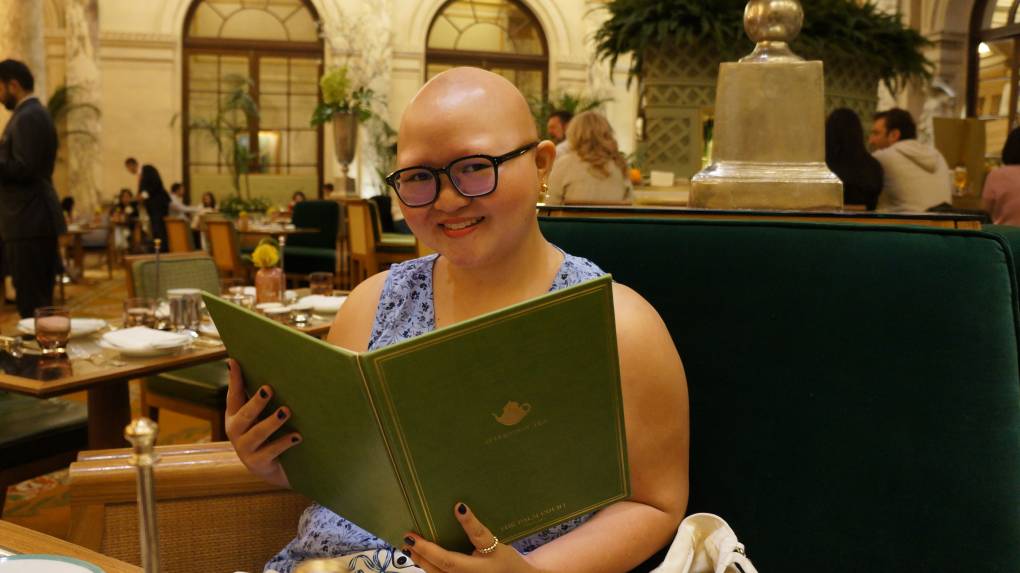
"content": "\u003cp>\u003cem>Christyn Refuerzo struggled to tell her story, until she discovered the secret ingredient.\u003c/em>\u003c/p>\n\u003cp>I took a step outside, the chill of late December against my bare head for the first time.\u003c/p>\n\u003cp>I was eighteen, my hair fully gone for nearly five years. My mom was in the house, too sick to do much else. I resolved that year to start going out without a wig because I needed her to get better more than covering my shame of not having hair.\u003c/p>\n\u003cp>I lost my hair to alopecia areata at thirteen. My immune system ate at my hair follicles, and it kept doing so until it all fell out. \u003c/p>\n\u003cp>My hair loss became part of me the moment the first strand fell.\u003c/p>\n\u003cp>[ad fullwidth]\u003c/p>\n\u003cp>Even before the loss, I knew that writing was part of how I explored truth.\u003c/p>\n\u003cp>So at sixteen, I tried to write the alopecia story: in an online writer’s workshop. For three weeks, I drafted and revised. I hated it. In the end, I sent a draft to my instructor who said it wasn’t ready. It had to walk. So I let it go.\u003c/p>\n\u003cp>At nineteen, I wrote about alopecia, about two sisters – one who had lost her beloved hair and the other, my narrator, who believes her queerness to be less important than her sister’s alopecia. I called it “Braiding Hair.” \u003c/p>\n\u003cp>And even though it was fiction, I knew that I had done it. I had written the alopecia story. \u003c/p>\n\u003cp>Because even though “Braiding Hair” might not have been my experience, as I am both sisters – it was my truth. \u003c/p>\n\u003cp>I realized that’s what it was about all along. It was about my truth, no matter what form it was in. Because it was mine. \u003c/p>\n\u003cp>With a Perspective, I’m Christyn Refuerzo. \u003c/p>\n\u003cp>\u003c/p>\n\u003cp>\u003cem>Christyn Refuerzo is a writing and literature student based in New York from Union City. While capable of nonfiction, her heart is in fiction. Outside of her wordy life, she enjoys being with family and friends and drinking coffee.\u003c/em>\u003c/p>\n\n",
"blocks": [],
"excerpt": null,
"status": "publish",
"parent": 0,
"modified": 1726620281,
"stats": {
"hasAudio": false,
"hasVideo": false,
"hasChartOrMap": false,
"iframeSrcs": [],
"hasGoogleForm": false,
"hasGallery": false,
"hasHearkenModule": false,
"hasPolis": false,
"paragraphCount": 15,
"wordCount": 350
},
"headData": {
"title": "Christyn Refuerzo: Braiding Hair | KQED",
"description": "Christyn Refuerzo struggled to tell her story, until she discovered the secret ingredient. I took a step outside, the chill of late December against my bare head for the first time. I was eighteen, my hair fully gone for nearly five years. My mom was in the house, too sick to do much else. I",
"ogTitle": "",
"ogDescription": "",
"ogImgId": "",
"twTitle": "",
"twDescription": "",
"twImgId": "",
"schema": {
"@context": "https://schema.org",
"@type": "Article",
"headline": "Christyn Refuerzo: Braiding Hair",
"datePublished": "2024-09-18T00:01:24-07:00",
"dateModified": "2024-09-17T17:44:41-07:00",
"image": "https://cdn.kqed.org/wp-content/uploads/2020/02/KQED-OG-Image@1x.png"
}
},
"source": "Perspectives",
"sourceUrl": "https://www.kqed.org/perspectives",
"audioUrl": "https://www.podtrac.com/pts/redirect.mp3/pdst.fm/e/chrt.fm/track/G6C7C3/traffic.megaphone.fm/KQINC8848343193.mp3?updated=1726620424",
"sticky": false,
"nprByline": "Christyn Refuerzo",
"excludeFromSiteSearch": "Include",
"showOnAuthorArchivePages": "No",
"articleAge": "0",
"path": "/perspectives/201601144859/christyn-refuerzo-braiding-hair",
"audioTrackLength": null,
"parsedContent": [
{
"type": "contentString",
"content": "\u003cdiv class=\"post-body\">\u003cp>\u003cp>\u003cem>Christyn Refuerzo struggled to tell her story, until she discovered the secret ingredient.\u003c/em>\u003c/p>\n\u003cp>I took a step outside, the chill of late December against my bare head for the first time.\u003c/p>\n\u003cp>I was eighteen, my hair fully gone for nearly five years. My mom was in the house, too sick to do much else. I resolved that year to start going out without a wig because I needed her to get better more than covering my shame of not having hair.\u003c/p>\n\u003cp>I lost my hair to alopecia areata at thirteen. My immune system ate at my hair follicles, and it kept doing so until it all fell out. \u003c/p>\n\u003cp>My hair loss became part of me the moment the first strand fell.\u003c/p>\n\u003cp>\u003c/p>\u003c/div>",
"attributes": {
"named": {},
"numeric": []
}
},
{
"type": "component",
"content": "",
"name": "ad",
"attributes": {
"named": {
"label": "fullwidth"
},
"numeric": [
"fullwidth"
]
}
},
{
"type": "contentString",
"content": "\u003cdiv class=\"post-body\">\u003cp>\u003c/p>\n\u003cp>Even before the loss, I knew that writing was part of how I explored truth.\u003c/p>\n\u003cp>So at sixteen, I tried to write the alopecia story: in an online writer’s workshop. For three weeks, I drafted and revised. I hated it. In the end, I sent a draft to my instructor who said it wasn’t ready. It had to walk. So I let it go.\u003c/p>\n\u003cp>At nineteen, I wrote about alopecia, about two sisters – one who had lost her beloved hair and the other, my narrator, who believes her queerness to be less important than her sister’s alopecia. I called it “Braiding Hair.” \u003c/p>\n\u003cp>And even though it was fiction, I knew that I had done it. I had written the alopecia story. \u003c/p>\n\u003cp>Because even though “Braiding Hair” might not have been my experience, as I am both sisters – it was my truth. \u003c/p>\n\u003cp>I realized that’s what it was about all along. It was about my truth, no matter what form it was in. Because it was mine. \u003c/p>\n\u003cp>With a Perspective, I’m Christyn Refuerzo. \u003c/p>\n\u003cp>\u003c/p>\n\u003cp>\u003cem>Christyn Refuerzo is a writing and literature student based in New York from Union City. While capable of nonfiction, her heart is in fiction. Outside of her wordy life, she enjoys being with family and friends and drinking coffee.\u003c/em>\u003c/p>\n\n\u003c/div>\u003c/p>",
"attributes": {
"named": {},
"numeric": []
}
}
],
"link": "/perspectives/201601144859/christyn-refuerzo-braiding-hair",
"authors": [
"byline_perspectives_201601144859"
],
"programs": [
"perspectives_3"
],
"series": [
"perspectives_2023"
],
"categories": [
"perspectives_2",
"perspectives_2052"
],
"featImg": "perspectives_201601144861",
"label": "source_perspectives_201601144859"
},
"perspectives_201601144853": {
"type": "posts",
"id": "perspectives_201601144853",
"meta": {
"index": "posts_1716263798",
"site": "perspectives",
"id": "201601144853",
"score": null,
"sort": [
1726556486000
]
},
"guestAuthors": [],
"slug": "jasmine-jaksic-rescue-at-pacific-grove",
"title": "Jasmine Jaksic: Rescue at Pacific Grove",
"publishDate": 1726556486,
"format": "aside",
"headTitle": "Jasmine Jaksic: Rescue at Pacific Grove | KQED",
"labelTerm": {},
"content": "\u003cp>\u003cimg loading=\"lazy\" decoding=\"async\" src=\"https://cdn.kqed.org/wp-content/uploads/sites/44/2024/09/Jasmine-Jaksic1.jpg\" alt=\"\" width=\"2509\" height=\"2483\" class=\"aligncenter size-full wp-image-201601144855\" srcset=\"https://cdn.kqed.org/wp-content/uploads/sites/44/2024/09/Jasmine-Jaksic1.jpg 2509w, https://cdn.kqed.org/wp-content/uploads/sites/44/2024/09/Jasmine-Jaksic1-800x792.jpg 800w, https://cdn.kqed.org/wp-content/uploads/sites/44/2024/09/Jasmine-Jaksic1-1020x1009.jpg 1020w, https://cdn.kqed.org/wp-content/uploads/sites/44/2024/09/Jasmine-Jaksic1-160x158.jpg 160w, https://cdn.kqed.org/wp-content/uploads/sites/44/2024/09/Jasmine-Jaksic1-768x760.jpg 768w, https://cdn.kqed.org/wp-content/uploads/sites/44/2024/09/Jasmine-Jaksic1-1536x1520.jpg 1536w, https://cdn.kqed.org/wp-content/uploads/sites/44/2024/09/Jasmine-Jaksic1-2048x2027.jpg 2048w, https://cdn.kqed.org/wp-content/uploads/sites/44/2024/09/Jasmine-Jaksic1-1920x1900.jpg 1920w\" sizes=\"(max-width: 2509px) 100vw, 2509px\">\u003c/p>\n\u003cp>\u003cem>A nature excursion for Jasmine Jaksic and her son resulted in a hands-on lesson about our role as stewards of our natural environment.\u003c/em> \u003c/p>\n\u003cp>On a serene Saturday afternoon, my five-year-old son Oliver and I found ourselves on the shores of Pacific Grove for an impromptu weekend escape. The ocean floor teemed with a kaleidoscope of marine wonders: purple sea urchins, orange bat stars, and verdant anemones danced beneath the clear surface. While I traced the intricate patterns adorning chitons, Oliver’s gaze fixated on a distant figure.\u003c/p>\n\u003cp>Following his line of sight, I spotted a stranded sea lion mere feet away, its distress palpable even to our untrained eyes. A quick search led me to contact ‘The Marine Mammal Center’, providing them with photos and coordinates in the hope of assistance. Their response was swift but tinged with uncertainty, the animal’s precarious location presented a challenge for rescue efforts. \u003c/p>\n\u003cp>Undaunted, Oliver volunteered himself as guardian, and together we kept watch over the distressed sea lion. Time passed in a blur, uncertainty lingering like a shadow. \u003c/p>\n\u003cp>[ad fullwidth]\u003c/p>\n\u003cp>Then, as if summoned by a divine decree, a group of five young women descended carrying a large cage. Each member of the rescue team, including a local veterinarian, were all volunteers. In a display of remarkable compassion and skill, they coaxed the hefty sea lion into the carrier, despite its vocal protests. To us, they might as well have worn capes, their selfless actions a beacon of hope in a world too often indifferent to the plight of others. Grateful for our assistance, they named the rescued animal ‘Olivander’ in honor of Oliver’s watchful eye.\u003c/p>\n\u003cp>As we made our way back, Oliver and I reflected on the importance of community, compassion, and the interconnectedness that binds us all. Though Olivander’s journey ultimately came to an end, she passed away without pain in the care of those who saw her as a fellow traveler on this shared planet.\u003c/p>\n\u003cp>With a Perspective, I’m Jasmine Jaksic.\u003c/p>\n\u003cp>\u003c/p>\n\u003cp>\u003cem>Jasmine Jaksic is a senior director of engineering. She lives in Mountain View.\u003c/em>\u003c/p>\n\n",
"blocks": [],
"excerpt": null,
"status": "publish",
"parent": 0,
"modified": 1726528291,
"stats": {
"hasAudio": false,
"hasVideo": false,
"hasChartOrMap": false,
"iframeSrcs": [],
"hasGoogleForm": false,
"hasGallery": false,
"hasHearkenModule": false,
"hasPolis": false,
"paragraphCount": 11,
"wordCount": 360
},
"headData": {
"title": "Jasmine Jaksic: Rescue at Pacific Grove | KQED",
"description": "A nature excursion for Jasmine Jaksic and her son resulted in a hands-on lesson about our role as stewards of our natural environment. On a serene Saturday afternoon, my five-year-old son Oliver and I found ourselves on the shores of Pacific Grove for an impromptu weekend escape. The ocean floor teemed with a kaleidoscope of marine wonders: purple sea urchins, orange bat stars, and verdant anemones danced beneath the clear surface. While I traced the intricate patterns adorning chitons, Oliver’s gaze fixated on a distant figure. Following his line of sight, I spotted a stranded sea lion mere feet away,",
"ogTitle": "",
"ogDescription": "",
"ogImgId": "",
"twTitle": "",
"twDescription": "",
"twImgId": "",
"schema": {
"@context": "https://schema.org",
"@type": "Article",
"headline": "Jasmine Jaksic: Rescue at Pacific Grove",
"datePublished": "2024-09-17T00:01:26-07:00",
"dateModified": "2024-09-16T16:11:31-07:00",
"image": "https://cdn.kqed.org/wp-content/uploads/2020/02/KQED-OG-Image@1x.png"
}
},
"source": "Perspectives",
"sourceUrl": "https://www.kqed.org/perspectives",
"audioUrl": "https://www.podtrac.com/pts/redirect.mp3/pdst.fm/e/chrt.fm/track/G6C7C3/traffic.megaphone.fm/KQINC9292205825.mp3?updated=1726528409",
"sticky": false,
"nprByline": "Jasmine Jaksic",
"excludeFromSiteSearch": "Include",
"showOnAuthorArchivePages": "No",
"articleAge": "0",
"path": "/perspectives/201601144853/jasmine-jaksic-rescue-at-pacific-grove",
"audioTrackLength": null,
"parsedContent": [
{
"type": "contentString",
"content": "\u003cdiv class=\"post-body\">\u003cp>\u003cp>\u003cimg loading=\"lazy\" decoding=\"async\" src=\"https://cdn.kqed.org/wp-content/uploads/sites/44/2024/09/Jasmine-Jaksic1.jpg\" alt=\"\" width=\"2509\" height=\"2483\" class=\"aligncenter size-full wp-image-201601144855\" srcset=\"https://cdn.kqed.org/wp-content/uploads/sites/44/2024/09/Jasmine-Jaksic1.jpg 2509w, https://cdn.kqed.org/wp-content/uploads/sites/44/2024/09/Jasmine-Jaksic1-800x792.jpg 800w, https://cdn.kqed.org/wp-content/uploads/sites/44/2024/09/Jasmine-Jaksic1-1020x1009.jpg 1020w, https://cdn.kqed.org/wp-content/uploads/sites/44/2024/09/Jasmine-Jaksic1-160x158.jpg 160w, https://cdn.kqed.org/wp-content/uploads/sites/44/2024/09/Jasmine-Jaksic1-768x760.jpg 768w, https://cdn.kqed.org/wp-content/uploads/sites/44/2024/09/Jasmine-Jaksic1-1536x1520.jpg 1536w, https://cdn.kqed.org/wp-content/uploads/sites/44/2024/09/Jasmine-Jaksic1-2048x2027.jpg 2048w, https://cdn.kqed.org/wp-content/uploads/sites/44/2024/09/Jasmine-Jaksic1-1920x1900.jpg 1920w\" sizes=\"(max-width: 2509px) 100vw, 2509px\">\u003c/p>\n\u003cp>\u003cem>A nature excursion for Jasmine Jaksic and her son resulted in a hands-on lesson about our role as stewards of our natural environment.\u003c/em> \u003c/p>\n\u003cp>On a serene Saturday afternoon, my five-year-old son Oliver and I found ourselves on the shores of Pacific Grove for an impromptu weekend escape. The ocean floor teemed with a kaleidoscope of marine wonders: purple sea urchins, orange bat stars, and verdant anemones danced beneath the clear surface. While I traced the intricate patterns adorning chitons, Oliver’s gaze fixated on a distant figure.\u003c/p>\n\u003cp>Following his line of sight, I spotted a stranded sea lion mere feet away, its distress palpable even to our untrained eyes. A quick search led me to contact ‘The Marine Mammal Center’, providing them with photos and coordinates in the hope of assistance. Their response was swift but tinged with uncertainty, the animal’s precarious location presented a challenge for rescue efforts. \u003c/p>\n\u003cp>Undaunted, Oliver volunteered himself as guardian, and together we kept watch over the distressed sea lion. Time passed in a blur, uncertainty lingering like a shadow. \u003c/p>\n\u003cp>\u003c/p>\u003c/div>",
"attributes": {
"named": {},
"numeric": []
}
},
{
"type": "component",
"content": "",
"name": "ad",
"attributes": {
"named": {
"label": "fullwidth"
},
"numeric": [
"fullwidth"
]
}
},
{
"type": "contentString",
"content": "\u003cdiv class=\"post-body\">\u003cp>\u003c/p>\n\u003cp>Then, as if summoned by a divine decree, a group of five young women descended carrying a large cage. Each member of the rescue team, including a local veterinarian, were all volunteers. In a display of remarkable compassion and skill, they coaxed the hefty sea lion into the carrier, despite its vocal protests. To us, they might as well have worn capes, their selfless actions a beacon of hope in a world too often indifferent to the plight of others. Grateful for our assistance, they named the rescued animal ‘Olivander’ in honor of Oliver’s watchful eye.\u003c/p>\n\u003cp>As we made our way back, Oliver and I reflected on the importance of community, compassion, and the interconnectedness that binds us all. Though Olivander’s journey ultimately came to an end, she passed away without pain in the care of those who saw her as a fellow traveler on this shared planet.\u003c/p>\n\u003cp>With a Perspective, I’m Jasmine Jaksic.\u003c/p>\n\u003cp>\u003c/p>\n\u003cp>\u003cem>Jasmine Jaksic is a senior director of engineering. She lives in Mountain View.\u003c/em>\u003c/p>\n\n\u003c/div>\u003c/p>",
"attributes": {
"named": {},
"numeric": []
}
}
],
"link": "/perspectives/201601144853/jasmine-jaksic-rescue-at-pacific-grove",
"authors": [
"byline_perspectives_201601144853"
],
"programs": [
"perspectives_3"
],
"series": [
"perspectives_2023"
],
"categories": [
"perspectives_2",
"perspectives_2052"
],
"featImg": "perspectives_201601143719",
"label": "source_perspectives_201601144853"
},
"perspectives_201601144846": {
"type": "posts",
"id": "perspectives_201601144846",
"meta": {
"index": "posts_1716263798",
"site": "perspectives",
"id": "201601144846",
"score": null,
"sort": [
1726470090000
]
},
"guestAuthors": [],
"slug": "irena-smith-success-is-not-one-size-fits-all",
"title": "Irena Smith: Success Is Not One Size Fits All",
"publishDate": 1726470090,
"format": "aside",
"headTitle": "Irena Smith: Success Is Not One Size Fits All | KQED",
"labelTerm": {},
"content": "\u003cp>\u003cimg loading=\"lazy\" decoding=\"async\" src=\"https://cdn.kqed.org/wp-content/uploads/sites/44/2024/09/Irena-Smith.jpg\" alt=\"\" width=\"2252\" height=\"2399\" class=\"aligncenter size-full wp-image-201601144847\" srcset=\"https://cdn.kqed.org/wp-content/uploads/sites/44/2024/09/Irena-Smith.jpg 2252w, https://cdn.kqed.org/wp-content/uploads/sites/44/2024/09/Irena-Smith-800x852.jpg 800w, https://cdn.kqed.org/wp-content/uploads/sites/44/2024/09/Irena-Smith-1020x1087.jpg 1020w, https://cdn.kqed.org/wp-content/uploads/sites/44/2024/09/Irena-Smith-160x170.jpg 160w, https://cdn.kqed.org/wp-content/uploads/sites/44/2024/09/Irena-Smith-768x818.jpg 768w, https://cdn.kqed.org/wp-content/uploads/sites/44/2024/09/Irena-Smith-1442x1536.jpg 1442w, https://cdn.kqed.org/wp-content/uploads/sites/44/2024/09/Irena-Smith-1923x2048.jpg 1923w, https://cdn.kqed.org/wp-content/uploads/sites/44/2024/09/Irena-Smith-1920x2045.jpg 1920w\" sizes=\"(max-width: 2252px) 100vw, 2252px\">\u003c/p>\n\u003cp>\u003cem>Society can make you think that going straight to an elite university after high school is the only measure of intelligence or success. Irena Smith begs to differ.\u003c/em>\u003c/p>\n\u003cp>Last fall, \u003cem>The Palo Alto Weekly\u003c/em> ran a cover story on a local high school student who was rejected from 16 of the 18 colleges he applied to. Instead of going to college, he ended up accepting a full-time job as a software engineer at Google. Google is a tech company headquartered here in the Bay Area. Perhaps you’ve heard of it?\u003c/p>\n\u003cp>You’ve probably also heard of the 16 colleges that this student didn’t get into. Being accepted to one of them is our local equivalent of scoring a golden ticket to Willy Wonka’s chocolate factory. If you get accepted, you’ve succeeded, with a capital S. Unless you get a full-time job as a software engineer at Google right out of high school, in which case you have also succeeded.\u003c/p>\n\u003cp>Meanwhile, there are other kinds of success: students who transfer from community college to a four-year college, sometimes with a full scholarship. Students who take a beat after graduation to think about who they are and what they want. Many of them end up living full and meaningful lives. Where are their stories?\u003c/p>\n\u003cp>[ad fullwidth]\u003c/p>\n\u003cp>In the Bay Area, success can often mean either attending a brand-name college or getting hired by Google right out of high school. As a former college counselor, I want students to hear other stories—to know that other possibilities exist. I want them to know that there’s no such thing as a perfect college, no more than there is a perfect job, or a perfect spouse, or a perfect pair of jeans. I want them to know that high school is just the beginning of a very long runway and that it’s OK to travel wherever they’re going at their own speed. I want them to create their own definition of success—not a name-brand definition, but a definition with their name on it.\u003c/p>\n\u003cp>With a Perspective, I’m Irena Smith. \u003c/p>\n\u003cp>\u003c/p>\n\u003cp>\u003cem>Irena Smith is a former high school underachiever and the author of a recently released memoir about her life in college admissions. She lives in Palo Alto.\u003c/em>\u003c/p>\n\n",
"blocks": [],
"excerpt": null,
"status": "publish",
"parent": 0,
"modified": 1726277510,
"stats": {
"hasAudio": false,
"hasVideo": false,
"hasChartOrMap": false,
"iframeSrcs": [],
"hasGoogleForm": false,
"hasGallery": false,
"hasHearkenModule": false,
"hasPolis": false,
"paragraphCount": 10,
"wordCount": 396
},
"headData": {
"title": "Irena Smith: Success Is Not One Size Fits All | KQED",
"description": "Society can make you think that going straight to an elite university after high school is the only measure of intelligence or success. Irena Smith begs to differ. Last fall, The Palo Alto Weekly ran a cover story on a local high school student who was rejected from 16 of the 18 colleges he applied",
"ogTitle": "",
"ogDescription": "",
"ogImgId": "",
"twTitle": "",
"twDescription": "",
"twImgId": "",
"schema": {
"@context": "https://schema.org",
"@type": "Article",
"headline": "Irena Smith: Success Is Not One Size Fits All",
"datePublished": "2024-09-16T00:01:30-07:00",
"dateModified": "2024-09-13T18:31:50-07:00",
"image": "https://cdn.kqed.org/wp-content/uploads/2020/02/KQED-OG-Image@1x.png"
}
},
"source": "Perspectives",
"sourceUrl": "https://www.kqed.org/perspectives",
"audioUrl": "https://www.podtrac.com/pts/redirect.mp3/pdst.fm/e/chrt.fm/track/G6C7C3/traffic.megaphone.fm/KQINC4062122600.mp3?updated=1726277724",
"sticky": false,
"nprByline": "Irena Smith",
"excludeFromSiteSearch": "Include",
"showOnAuthorArchivePages": "No",
"articleAge": "0",
"path": "/perspectives/201601144846/irena-smith-success-is-not-one-size-fits-all",
"audioTrackLength": null,
"parsedContent": [
{
"type": "contentString",
"content": "\u003cdiv class=\"post-body\">\u003cp>\u003cp>\u003cimg loading=\"lazy\" decoding=\"async\" src=\"https://cdn.kqed.org/wp-content/uploads/sites/44/2024/09/Irena-Smith.jpg\" alt=\"\" width=\"2252\" height=\"2399\" class=\"aligncenter size-full wp-image-201601144847\" srcset=\"https://cdn.kqed.org/wp-content/uploads/sites/44/2024/09/Irena-Smith.jpg 2252w, https://cdn.kqed.org/wp-content/uploads/sites/44/2024/09/Irena-Smith-800x852.jpg 800w, https://cdn.kqed.org/wp-content/uploads/sites/44/2024/09/Irena-Smith-1020x1087.jpg 1020w, https://cdn.kqed.org/wp-content/uploads/sites/44/2024/09/Irena-Smith-160x170.jpg 160w, https://cdn.kqed.org/wp-content/uploads/sites/44/2024/09/Irena-Smith-768x818.jpg 768w, https://cdn.kqed.org/wp-content/uploads/sites/44/2024/09/Irena-Smith-1442x1536.jpg 1442w, https://cdn.kqed.org/wp-content/uploads/sites/44/2024/09/Irena-Smith-1923x2048.jpg 1923w, https://cdn.kqed.org/wp-content/uploads/sites/44/2024/09/Irena-Smith-1920x2045.jpg 1920w\" sizes=\"(max-width: 2252px) 100vw, 2252px\">\u003c/p>\n\u003cp>\u003cem>Society can make you think that going straight to an elite university after high school is the only measure of intelligence or success. Irena Smith begs to differ.\u003c/em>\u003c/p>\n\u003cp>Last fall, \u003cem>The Palo Alto Weekly\u003c/em> ran a cover story on a local high school student who was rejected from 16 of the 18 colleges he applied to. Instead of going to college, he ended up accepting a full-time job as a software engineer at Google. Google is a tech company headquartered here in the Bay Area. Perhaps you’ve heard of it?\u003c/p>\n\u003cp>You’ve probably also heard of the 16 colleges that this student didn’t get into. Being accepted to one of them is our local equivalent of scoring a golden ticket to Willy Wonka’s chocolate factory. If you get accepted, you’ve succeeded, with a capital S. Unless you get a full-time job as a software engineer at Google right out of high school, in which case you have also succeeded.\u003c/p>\n\u003cp>Meanwhile, there are other kinds of success: students who transfer from community college to a four-year college, sometimes with a full scholarship. Students who take a beat after graduation to think about who they are and what they want. Many of them end up living full and meaningful lives. Where are their stories?\u003c/p>\n\u003cp>\u003c/p>\u003c/div>",
"attributes": {
"named": {},
"numeric": []
}
},
{
"type": "component",
"content": "",
"name": "ad",
"attributes": {
"named": {
"label": "fullwidth"
},
"numeric": [
"fullwidth"
]
}
},
{
"type": "contentString",
"content": "\u003cdiv class=\"post-body\">\u003cp>\u003c/p>\n\u003cp>In the Bay Area, success can often mean either attending a brand-name college or getting hired by Google right out of high school. As a former college counselor, I want students to hear other stories—to know that other possibilities exist. I want them to know that there’s no such thing as a perfect college, no more than there is a perfect job, or a perfect spouse, or a perfect pair of jeans. I want them to know that high school is just the beginning of a very long runway and that it’s OK to travel wherever they’re going at their own speed. I want them to create their own definition of success—not a name-brand definition, but a definition with their name on it.\u003c/p>\n\u003cp>With a Perspective, I’m Irena Smith. \u003c/p>\n\u003cp>\u003c/p>\n\u003cp>\u003cem>Irena Smith is a former high school underachiever and the author of a recently released memoir about her life in college admissions. She lives in Palo Alto.\u003c/em>\u003c/p>\n\n\u003c/div>\u003c/p>",
"attributes": {
"named": {},
"numeric": []
}
}
],
"link": "/perspectives/201601144846/irena-smith-success-is-not-one-size-fits-all",
"authors": [
"byline_perspectives_201601144846"
],
"programs": [
"perspectives_3"
],
"series": [
"perspectives_2023"
],
"categories": [
"perspectives_2",
"perspectives_2052"
],
"featImg": "perspectives_201601144848",
"label": "source_perspectives_201601144846"
},
"perspectives_201601144841": {
"type": "posts",
"id": "perspectives_201601144841",
"meta": {
"index": "posts_1716263798",
"site": "perspectives",
"id": "201601144841",
"score": null,
"sort": [
1726210873000
]
},
"guestAuthors": [],
"slug": "diane-kung-clean-air-and-lung-health",
"title": "Diane Kung: Clean Air and Lung Health",
"publishDate": 1726210873,
"format": "aside",
"headTitle": "Diane Kung: Clean Air and Lung Health | KQED",
"labelTerm": {},
"content": "\u003cp>\u003cimg loading=\"lazy\" decoding=\"async\" src=\"https://cdn.kqed.org/wp-content/uploads/sites/44/2024/09/Diane-Kung-scaled.jpg\" alt=\"\" width=\"1920\" height=\"2560\" class=\"aligncenter size-full wp-image-201601144842\" srcset=\"https://cdn.kqed.org/wp-content/uploads/sites/44/2024/09/Diane-Kung-scaled.jpg 1920w, https://cdn.kqed.org/wp-content/uploads/sites/44/2024/09/Diane-Kung-800x1067.jpg 800w, https://cdn.kqed.org/wp-content/uploads/sites/44/2024/09/Diane-Kung-1020x1360.jpg 1020w, https://cdn.kqed.org/wp-content/uploads/sites/44/2024/09/Diane-Kung-160x213.jpg 160w, https://cdn.kqed.org/wp-content/uploads/sites/44/2024/09/Diane-Kung-768x1024.jpg 768w, https://cdn.kqed.org/wp-content/uploads/sites/44/2024/09/Diane-Kung-1152x1536.jpg 1152w, https://cdn.kqed.org/wp-content/uploads/sites/44/2024/09/Diane-Kung-1536x2048.jpg 1536w\" sizes=\"(max-width: 1920px) 100vw, 1920px\">\u003c/p>\n\u003cp>\u003cem>It’s been a little over four years since the Bay Area awoke to orange skies, and wildfires continue to rage in California. If you’ve been feeling a sense of climate doom, you’re not alone. Here’s a Perspective from Diane Kung.\u003c/em>\u003c/p>\n\u003cp>I can distinctly recall waking up to orange skies during the pandemic, the outside world filtered in sepia. COVID seemed a lot less threatening than the apocalyptic smoke from multiple wildfires raging throughout California. Since, I have been deeply disturbed by the invisible menace that courses through me, my family, and my fellow human beings. Everywhere, I see plumes of vehicle exhaust. During winter, the scent of burning firewood wafting across my Oakland neighborhood makes me anxious. Sometimes, even the smell of burning toast can be triggering. \u003c/p>\n\u003cp>In October of 2022, my partner, a non-smoker, was diagnosed with Stage IV lung cancer. While we will never know why he developed the disease, we do know that he carries the EGFR mutation. As recent studies suggest, EGFR-mutated cells can turn cancerous when exposed to airborne particulate matter. \u003c/p>\n\u003cp>I find myself struggling with feelings of doom as our world grapples with climate change, especially when I am aware of the barriers to solutions. When I see people who keep their cars running, basking in air conditioning or scrolling through their phones, I want to scream in frustration, simultaneously feeling shame for being so judgmental. Sometimes, I feel like my mental health is more challenged by these emotions connected to our imperiled future than my partner’s cancer. I personally try my best to lower my carbon footprint; however, when I think of oil companies, politicians, or even my students who shrug off this issue, I feel like there is so much out of my control. \u003c/p>\n\u003cp>[ad fullwidth]\u003c/p>\n\u003cp>Recently, I have found hope by being part of collective efforts to help our environment. While our actions may seem small, doing something and being a part of a community has dramatically improved my mental well-being. While there will always be people who don’t care, I know that there are a lot of people who do, even when the problems are great and the solutions are complex. I also remind myself to be grateful for what we do have in this world. There is still a lot to celebrate.\u003c/p>\n\u003cp>With a Perspective, I’m Diane Kung.\u003c/p>\n\u003cp>\u003c/p>\n\u003cp>\u003cem>Diane Kung is a high school English teacher and is a Bay Area Writing Project teacher consultant. She lives in Oakland.\u003c/em>\u003c/p>\n\n",
"blocks": [],
"excerpt": null,
"status": "publish",
"parent": 0,
"modified": 1726213656,
"stats": {
"hasAudio": false,
"hasVideo": false,
"hasChartOrMap": false,
"iframeSrcs": [],
"hasGoogleForm": false,
"hasGallery": false,
"hasHearkenModule": false,
"hasPolis": false,
"paragraphCount": 10,
"wordCount": 427
},
"headData": {
"title": "Diane Kung: Clean Air and Lung Health | KQED",
"description": "It's been a little over four years since the Bay Area awoke to orange skies, and wildfires continue to rage in California. If you've been feeling a sense of climate doom, you're not alone. Here's a Perspective from Diane Kung. I can distinctly recall waking up to orange skies during the pandemic, the outside world filtered in sepia. COVID seemed a lot less threatening than the apocalyptic smoke from multiple wildfires raging throughout California. Since, I have been deeply disturbed by the invisible menace that courses through me, my family, and my fellow human beings. Everywhere, I see plumes of",
"ogTitle": "",
"ogDescription": "",
"ogImgId": "",
"twTitle": "",
"twDescription": "",
"twImgId": "",
"schema": {
"@context": "https://schema.org",
"@type": "Article",
"headline": "Diane Kung: Clean Air and Lung Health",
"datePublished": "2024-09-13T00:01:13-07:00",
"dateModified": "2024-09-13T00:47:36-07:00",
"image": "https://cdn.kqed.org/wp-content/uploads/2020/02/KQED-OG-Image@1x.png"
}
},
"source": "Perspectives",
"sourceUrl": "https://www.kqed.org/perspectives",
"audioUrl": "https://www.podtrac.com/pts/redirect.mp3/pdst.fm/e/chrt.fm/track/G6C7C3/traffic.megaphone.fm/KQINC3546614881.mp3?updated=1726213933",
"sticky": false,
"nprByline": "Diane Kung",
"excludeFromSiteSearch": "Include",
"showOnAuthorArchivePages": "No",
"articleAge": "0",
"path": "/perspectives/201601144841/diane-kung-clean-air-and-lung-health",
"audioTrackLength": null,
"parsedContent": [
{
"type": "contentString",
"content": "\u003cdiv class=\"post-body\">\u003cp>\u003cp>\u003cimg loading=\"lazy\" decoding=\"async\" src=\"https://cdn.kqed.org/wp-content/uploads/sites/44/2024/09/Diane-Kung-scaled.jpg\" alt=\"\" width=\"1920\" height=\"2560\" class=\"aligncenter size-full wp-image-201601144842\" srcset=\"https://cdn.kqed.org/wp-content/uploads/sites/44/2024/09/Diane-Kung-scaled.jpg 1920w, https://cdn.kqed.org/wp-content/uploads/sites/44/2024/09/Diane-Kung-800x1067.jpg 800w, https://cdn.kqed.org/wp-content/uploads/sites/44/2024/09/Diane-Kung-1020x1360.jpg 1020w, https://cdn.kqed.org/wp-content/uploads/sites/44/2024/09/Diane-Kung-160x213.jpg 160w, https://cdn.kqed.org/wp-content/uploads/sites/44/2024/09/Diane-Kung-768x1024.jpg 768w, https://cdn.kqed.org/wp-content/uploads/sites/44/2024/09/Diane-Kung-1152x1536.jpg 1152w, https://cdn.kqed.org/wp-content/uploads/sites/44/2024/09/Diane-Kung-1536x2048.jpg 1536w\" sizes=\"(max-width: 1920px) 100vw, 1920px\">\u003c/p>\n\u003cp>\u003cem>It’s been a little over four years since the Bay Area awoke to orange skies, and wildfires continue to rage in California. If you’ve been feeling a sense of climate doom, you’re not alone. Here’s a Perspective from Diane Kung.\u003c/em>\u003c/p>\n\u003cp>I can distinctly recall waking up to orange skies during the pandemic, the outside world filtered in sepia. COVID seemed a lot less threatening than the apocalyptic smoke from multiple wildfires raging throughout California. Since, I have been deeply disturbed by the invisible menace that courses through me, my family, and my fellow human beings. Everywhere, I see plumes of vehicle exhaust. During winter, the scent of burning firewood wafting across my Oakland neighborhood makes me anxious. Sometimes, even the smell of burning toast can be triggering. \u003c/p>\n\u003cp>In October of 2022, my partner, a non-smoker, was diagnosed with Stage IV lung cancer. While we will never know why he developed the disease, we do know that he carries the EGFR mutation. As recent studies suggest, EGFR-mutated cells can turn cancerous when exposed to airborne particulate matter. \u003c/p>\n\u003cp>I find myself struggling with feelings of doom as our world grapples with climate change, especially when I am aware of the barriers to solutions. When I see people who keep their cars running, basking in air conditioning or scrolling through their phones, I want to scream in frustration, simultaneously feeling shame for being so judgmental. Sometimes, I feel like my mental health is more challenged by these emotions connected to our imperiled future than my partner’s cancer. I personally try my best to lower my carbon footprint; however, when I think of oil companies, politicians, or even my students who shrug off this issue, I feel like there is so much out of my control. \u003c/p>\n\u003cp>\u003c/p>\u003c/div>",
"attributes": {
"named": {},
"numeric": []
}
},
{
"type": "component",
"content": "",
"name": "ad",
"attributes": {
"named": {
"label": "fullwidth"
},
"numeric": [
"fullwidth"
]
}
},
{
"type": "contentString",
"content": "\u003cdiv class=\"post-body\">\u003cp>\u003c/p>\n\u003cp>Recently, I have found hope by being part of collective efforts to help our environment. While our actions may seem small, doing something and being a part of a community has dramatically improved my mental well-being. While there will always be people who don’t care, I know that there are a lot of people who do, even when the problems are great and the solutions are complex. I also remind myself to be grateful for what we do have in this world. There is still a lot to celebrate.\u003c/p>\n\u003cp>With a Perspective, I’m Diane Kung.\u003c/p>\n\u003cp>\u003c/p>\n\u003cp>\u003cem>Diane Kung is a high school English teacher and is a Bay Area Writing Project teacher consultant. She lives in Oakland.\u003c/em>\u003c/p>\n\n\u003c/div>\u003c/p>",
"attributes": {
"named": {},
"numeric": []
}
}
],
"link": "/perspectives/201601144841/diane-kung-clean-air-and-lung-health",
"authors": [
"byline_perspectives_201601144841"
],
"programs": [
"perspectives_3"
],
"series": [
"perspectives_2023"
],
"categories": [
"perspectives_2",
"perspectives_2052"
],
"featImg": "perspectives_201601144843",
"label": "source_perspectives_201601144841"
},
"perspectives_201601144836": {
"type": "posts",
"id": "perspectives_201601144836",
"meta": {
"index": "posts_1716263798",
"site": "perspectives",
"id": "201601144836",
"score": null,
"sort": [
1726124474000
]
},
"guestAuthors": [],
"slug": "gala-gabirondo-olemaloke",
"title": "Gala Gabirondo: Olemaloke",
"publishDate": 1726124474,
"format": "standard",
"headTitle": "Gala Gabirondo: Olemaloke | KQED",
"labelTerm": {},
"content": "\u003cp>\u003cem>We have received so much from the California coast. Gala Gabirondo knows a way we can give back.\u003c/em>\u003c/p>\n\u003cp>I was seven when our old panel truck emerged from the shadows of Samuel P. Taylor Park into West Marin County. We were headed for Olema, an old stage stop of fifty people.\u003c/p>\n\u003cp>“Olema is a funny name,” I said, “Is it Spanish?”\u003c/p>\n\u003cp>“It’s short for Olemaloke,” my mother smiled, “It’s from the Miwok people. It means ‘valley of the coyotes.’”\u003c/p>\n\u003cp>Our new home was my gateway to endless adventure. I explored the trails, learned the plants, and marveled at the wildlife of Bear Valley, Inverness Ridge, and Tomales Bay. Forests had feelings. The Bay could speak. The countryside was full of animate beings to be respected and loved. \u003c/p>\n\u003cp>[ad fullwidth]\u003c/p>\n\u003cp>This land would give me solace during my parent´s divorce, and hope when I was incarcerated as a ward of the court. \u003c/p>\n\u003cp>Though I´d done nothing wrong, by the time I got out of juvenile hall months later, I felt guilty. But unlike the boys I’d left behind (many of whom likely spent their lives with the criminal justice system), I had Olemaloke to turn to. Wandering its hills helped me breathe life into that sacred space of inner freedom I´d clung to while in jail.\u003c/p>\n\u003cp>The Hookooeko Coast Miwok are Olemaloke’s original people. My trauma pales in comparison to their history of enslavement and genocide. \u003c/p>\n\u003cp>Many “uninvited guests” of this beautiful land have turned to its healing powers during their darkest hours, or reveled in its warm embrace during times of celebration. But can we truly appreciate the California coast without honoring its original inhabitants?\u003c/p>\n\u003cp>There is a growing movement called “Land Back” dedicated to returning ancestral land to indigenous peoples. Shell mounds in Berkeley, a green corridor along the Great Highway, and a river estuary in Marin County are examples. These indigenous-led initiatives serve to care for the earth and its people. Supporting their efforts would be a good way to say “thank you” to the people whose lands have given us so much.\u003c/p>\n\u003cp>With a Perspective, I’m Gala Gabirondo.\u003c/p>\n\u003cp>\u003c/p>\n\u003cp>\u003cem>Gala Gabirondo is a writer who lives, surfs and plays conga drums in West Sonoma County.\u003c/em>\u003c/p>\n\n",
"blocks": [],
"excerpt": null,
"status": "publish",
"parent": 0,
"modified": 1726093946,
"stats": {
"hasAudio": false,
"hasVideo": false,
"hasChartOrMap": false,
"iframeSrcs": [],
"hasGoogleForm": false,
"hasGallery": false,
"hasHearkenModule": false,
"hasPolis": false,
"paragraphCount": 14,
"wordCount": 400
},
"headData": {
"title": "Gala Gabirondo: Olemaloke | KQED",
"description": "We have received so much from the California coast. Gala Gabirondo knows a way we can give back. I was seven when our old panel truck emerged from the shadows of Samuel P. Taylor Park into West Marin County. We were headed for Olema, an old stage stop of fifty people. “Olema is a funny",
"ogTitle": "",
"ogDescription": "",
"ogImgId": "",
"twTitle": "",
"twDescription": "",
"twImgId": "",
"schema": {
"@context": "https://schema.org",
"@type": "Article",
"headline": "Gala Gabirondo: Olemaloke",
"datePublished": "2024-09-12T00:01:14-07:00",
"dateModified": "2024-09-11T15:32:26-07:00",
"image": "https://cdn.kqed.org/wp-content/uploads/2020/02/KQED-OG-Image@1x.png"
}
},
"source": "Perspectives",
"sourceUrl": "https://www.kqed.org/perspectives",
"audioUrl": "https://www.podtrac.com/pts/redirect.mp3/pdst.fm/e/chrt.fm/track/G6C7C3/traffic.megaphone.fm/KQINC1364355803.mp3?updated=1726094133",
"sticky": false,
"nprByline": "Gala Gabirondo",
"excludeFromSiteSearch": "Include",
"showOnAuthorArchivePages": "No",
"articleAge": "0",
"path": "/perspectives/201601144836/gala-gabirondo-olemaloke",
"audioTrackLength": null,
"parsedContent": [
{
"type": "contentString",
"content": "\u003cdiv class=\"post-body\">\u003cp>\u003cp>\u003cem>We have received so much from the California coast. Gala Gabirondo knows a way we can give back.\u003c/em>\u003c/p>\n\u003cp>I was seven when our old panel truck emerged from the shadows of Samuel P. Taylor Park into West Marin County. We were headed for Olema, an old stage stop of fifty people.\u003c/p>\n\u003cp>“Olema is a funny name,” I said, “Is it Spanish?”\u003c/p>\n\u003cp>“It’s short for Olemaloke,” my mother smiled, “It’s from the Miwok people. It means ‘valley of the coyotes.’”\u003c/p>\n\u003cp>Our new home was my gateway to endless adventure. I explored the trails, learned the plants, and marveled at the wildlife of Bear Valley, Inverness Ridge, and Tomales Bay. Forests had feelings. The Bay could speak. The countryside was full of animate beings to be respected and loved. \u003c/p>\n\u003cp>\u003c/p>\u003c/div>",
"attributes": {
"named": {},
"numeric": []
}
},
{
"type": "component",
"content": "",
"name": "ad",
"attributes": {
"named": {
"label": "fullwidth"
},
"numeric": [
"fullwidth"
]
}
},
{
"type": "contentString",
"content": "\u003cdiv class=\"post-body\">\u003cp>\u003c/p>\n\u003cp>This land would give me solace during my parent´s divorce, and hope when I was incarcerated as a ward of the court. \u003c/p>\n\u003cp>Though I´d done nothing wrong, by the time I got out of juvenile hall months later, I felt guilty. But unlike the boys I’d left behind (many of whom likely spent their lives with the criminal justice system), I had Olemaloke to turn to. Wandering its hills helped me breathe life into that sacred space of inner freedom I´d clung to while in jail.\u003c/p>\n\u003cp>The Hookooeko Coast Miwok are Olemaloke’s original people. My trauma pales in comparison to their history of enslavement and genocide. \u003c/p>\n\u003cp>Many “uninvited guests” of this beautiful land have turned to its healing powers during their darkest hours, or reveled in its warm embrace during times of celebration. But can we truly appreciate the California coast without honoring its original inhabitants?\u003c/p>\n\u003cp>There is a growing movement called “Land Back” dedicated to returning ancestral land to indigenous peoples. Shell mounds in Berkeley, a green corridor along the Great Highway, and a river estuary in Marin County are examples. These indigenous-led initiatives serve to care for the earth and its people. Supporting their efforts would be a good way to say “thank you” to the people whose lands have given us so much.\u003c/p>\n\u003cp>With a Perspective, I’m Gala Gabirondo.\u003c/p>\n\u003cp>\u003c/p>\n\u003cp>\u003cem>Gala Gabirondo is a writer who lives, surfs and plays conga drums in West Sonoma County.\u003c/em>\u003c/p>\n\n\u003c/div>\u003c/p>",
"attributes": {
"named": {},
"numeric": []
}
}
],
"link": "/perspectives/201601144836/gala-gabirondo-olemaloke",
"authors": [
"byline_perspectives_201601144836"
],
"programs": [
"perspectives_3"
],
"series": [
"perspectives_2023"
],
"categories": [
"perspectives_2",
"perspectives_2052"
],
"featImg": "perspectives_201601144838",
"label": "source_perspectives_201601144836"
},
"perspectives_201601144831": {
"type": "posts",
"id": "perspectives_201601144831",
"meta": {
"index": "posts_1716263798",
"site": "perspectives",
"id": "201601144831",
"score": null,
"sort": [
1725951662000
]
},
"guestAuthors": [],
"slug": "linh-nguyen-perfect-little-smile",
"title": "Linh Nguyen: Perfect Little Smile",
"publishDate": 1725951662,
"format": "standard",
"headTitle": "Linh Nguyen: Perfect Little Smile | KQED",
"labelTerm": {},
"content": "\u003cp>\u003cem>Linh Nguyen saw herself in the Barbies she played with as a child, and learned a valuable lesson.\u003c/em>\u003c/p>\n\u003cp>When I was little, I had a pink box filled with Barbies. I designed clothes and accessories for them, and the games I played with them were limitless. Eventually, I got bored of designing games and clothes, so I fixed them. I snipped large chunks of blonde hair from their heads, the strands falling like dead leaves on my kitchen floor, in soft taps. I painted their arms and legs red with nail polish, and dyed the little hair they had left with paint, the bitter, metallic scent coating the air. Despite all of this, their perfect smiles never left their faces.\u003c/p>\n\u003cp>By the time I entered middle school, I had stopped playing with them. My parents saw the mangled, red remains of the Barbies one day and convinced me to throw them away. Middle school was a big change for me – there were a lot more late nights, and I no longer had time to make up imaginary games. I started to lose confidence and was constantly worried that I was too short, too quiet, too strange. I wished I could go back to the days when I didn’t care what people thought, or what I looked like. Sometimes, I felt lonely as well, even though so many people surrounded me. I didn’t feel like they understood me, and I couldn’t confide in them.\u003c/p>\n\u003cp>At school, I kept a smile plastered on my face, like one of the Barbies I scribbled on, although a million things were happening below the surface. I kept pretending nothing was wrong, but the emotions I was bottling up kept building until they came out, ugly, angry, and mean.\u003c/p>\n\u003cp>I’ve worked on managing my emotions throughout the years, and I’m in a better place now. I found one of the Barbies I used to play with recently. It was one of the worst-looking ones, and its face was still in that silly little smile. Now, I realize that keeping the mask on makes things worse. Sometimes, you have to be vulnerable and let others help you, and sometimes you have to show your emotions. Showing your emotions isn’t weak, or ugly, it’s a way to heal and become whole again.\u003c/p>\n\u003cp>[ad fullwidth]\u003c/p>\n\u003cp>With a Perspective, I’m Linh Nguyen.\u003c/p>\n\u003cp>\u003c/p>\n\u003cp>\u003cem>Linh Nguyen is a high school student. She is captivated by writing–English is definitely her favorite class. She also loves soccer, reading, and rom coms.\u003c/em>\u003c/p>\n\n",
"blocks": [],
"excerpt": null,
"status": "publish",
"parent": 0,
"modified": 1725945247,
"stats": {
"hasAudio": false,
"hasVideo": false,
"hasChartOrMap": false,
"iframeSrcs": [],
"hasGoogleForm": false,
"hasGallery": false,
"hasHearkenModule": false,
"hasPolis": false,
"paragraphCount": 9,
"wordCount": 437
},
"headData": {
"title": "Linh Nguyen: Perfect Little Smile | KQED",
"description": "Linh Nguyen saw herself in the Barbies she played with as a child, and learned a valuable lesson. When I was little, I had a pink box filled with Barbies. I designed clothes and accessories for them, and the games I played with them were limitless. Eventually, I got bored of designing games and clothes,",
"ogTitle": "",
"ogDescription": "",
"ogImgId": "",
"twTitle": "",
"twDescription": "",
"twImgId": "",
"schema": {
"@context": "https://schema.org",
"@type": "Article",
"headline": "Linh Nguyen: Perfect Little Smile",
"datePublished": "2024-09-10T00:01:02-07:00",
"dateModified": "2024-09-09T22:14:07-07:00",
"image": "https://cdn.kqed.org/wp-content/uploads/2020/02/KQED-OG-Image@1x.png"
}
},
"source": "Perspectives",
"sourceUrl": "https://www.kqed.org/perspectives",
"audioUrl": "https://www.podtrac.com/pts/redirect.mp3/pdst.fm/e/chrt.fm/track/G6C7C3/traffic.megaphone.fm/KQINC9251128650.mp3?updated=1725945304",
"sticky": false,
"nprByline": "Linh Nguyen",
"excludeFromSiteSearch": "Include",
"showOnAuthorArchivePages": "No",
"articleAge": "0",
"path": "/perspectives/201601144831/linh-nguyen-perfect-little-smile",
"audioTrackLength": null,
"parsedContent": [
{
"type": "contentString",
"content": "\u003cdiv class=\"post-body\">\u003cp>\u003cp>\u003cem>Linh Nguyen saw herself in the Barbies she played with as a child, and learned a valuable lesson.\u003c/em>\u003c/p>\n\u003cp>When I was little, I had a pink box filled with Barbies. I designed clothes and accessories for them, and the games I played with them were limitless. Eventually, I got bored of designing games and clothes, so I fixed them. I snipped large chunks of blonde hair from their heads, the strands falling like dead leaves on my kitchen floor, in soft taps. I painted their arms and legs red with nail polish, and dyed the little hair they had left with paint, the bitter, metallic scent coating the air. Despite all of this, their perfect smiles never left their faces.\u003c/p>\n\u003cp>By the time I entered middle school, I had stopped playing with them. My parents saw the mangled, red remains of the Barbies one day and convinced me to throw them away. Middle school was a big change for me – there were a lot more late nights, and I no longer had time to make up imaginary games. I started to lose confidence and was constantly worried that I was too short, too quiet, too strange. I wished I could go back to the days when I didn’t care what people thought, or what I looked like. Sometimes, I felt lonely as well, even though so many people surrounded me. I didn’t feel like they understood me, and I couldn’t confide in them.\u003c/p>\n\u003cp>At school, I kept a smile plastered on my face, like one of the Barbies I scribbled on, although a million things were happening below the surface. I kept pretending nothing was wrong, but the emotions I was bottling up kept building until they came out, ugly, angry, and mean.\u003c/p>\n\u003cp>I’ve worked on managing my emotions throughout the years, and I’m in a better place now. I found one of the Barbies I used to play with recently. It was one of the worst-looking ones, and its face was still in that silly little smile. Now, I realize that keeping the mask on makes things worse. Sometimes, you have to be vulnerable and let others help you, and sometimes you have to show your emotions. Showing your emotions isn’t weak, or ugly, it’s a way to heal and become whole again.\u003c/p>\n\u003cp>\u003c/p>\u003c/div>",
"attributes": {
"named": {},
"numeric": []
}
},
{
"type": "component",
"content": "",
"name": "ad",
"attributes": {
"named": {
"label": "fullwidth"
},
"numeric": [
"fullwidth"
]
}
},
{
"type": "contentString",
"content": "\u003cdiv class=\"post-body\">\u003cp>\u003c/p>\n\u003cp>With a Perspective, I’m Linh Nguyen.\u003c/p>\n\u003cp>\u003c/p>\n\u003cp>\u003cem>Linh Nguyen is a high school student. She is captivated by writing–English is definitely her favorite class. She also loves soccer, reading, and rom coms.\u003c/em>\u003c/p>\n\n\u003c/div>\u003c/p>",
"attributes": {
"named": {},
"numeric": []
}
}
],
"link": "/perspectives/201601144831/linh-nguyen-perfect-little-smile",
"authors": [
"byline_perspectives_201601144831"
],
"programs": [
"perspectives_3"
],
"series": [
"perspectives_2023"
],
"categories": [
"perspectives_2",
"perspectives_2052"
],
"tags": [
"perspectives_1832"
],
"featImg": "perspectives_201601144833",
"label": "source_perspectives_201601144831"
},
"perspectives_201601144826": {
"type": "posts",
"id": "perspectives_201601144826",
"meta": {
"index": "posts_1716263798",
"site": "perspectives",
"id": "201601144826",
"score": null,
"sort": [
1725865269000
]
},
"guestAuthors": [],
"slug": "cathy-gabor-lost-and-alone",
"title": "Cathy Gabor: Lost and Alone",
"publishDate": 1725865269,
"format": "standard",
"headTitle": "Cathy Gabor: Lost and Alone | KQED",
"labelTerm": {},
"content": "\u003cp>\u003cem>Even if your experiences aren’t the same, finding ways to connect with others can grow your empathy. Cathy Gabor has this Perspective.\u003c/em>\u003c/p>\n\u003cp>For years now we’ve heard stories on public radio about war-torn regions of the world, where innocent civilians have been forced to live in refugee camps or have fled their beloved homelands for foreign host countries. When I listened to such stories, I was intellectually distressed but I could not relate emotionally – until recently.\u003c/p>\n\u003cp>I accompanied my partner on his work trip to Mumbai. It was my first time in India. One night, we arranged to meet on the outskirts of the city, at a local mall. The only Uber that responded to my call was a “cash only” uber. I had enough in my wallet, but not much more.\u003c/p>\n\u003cp>I got in the car and tried to initiate a conversation with the Uber driver. We soon discovered that he spoke virtually no English, and I, no Hindi. Instead of chatting, I turned my attention to my phone to ask my partner where we should meet up. Every message I sent resulted in the dreaded words “not delivered.” \u003c/p>\n\u003cp>Then, the driver decided to take a short cut on a rural two-lane road: partially paved, abutted by dense thickets of trees and full of pedestrians darting throughout the slow-moving traffic. With so many potholes and dirt divots, I was pretty sure that the car’s axel would break and that I would be stranded on the side of the road, not speaking the language, without sufficient local currency, and not being able to contact my family members—trying to make my way to a place I had never been before.\u003c/p>\n\u003cp>[ad fullwidth]\u003c/p>\n\u003cp>As I reflect on that journey, my thoughts continually return to those displaced by war, newly arrived in other countries who are likely feeling scared, confused, and alone, just as I was. I’m reminded how important it is to find things in our own experiences that can help us to connect—emotionally, viscerally—to the challenges and hardships of those whose lives are very different from our own.\u003c/p>\n\u003cp>With a Perspective, I’m Cathy Gabor.\u003c/p>\n\u003cp>\u003c/p>\n\u003cp>\u003cem>Cathy Gabor lives in Pleasanton and works in higher ed in San Francisco.\u003c/em>\u003c/p>\n\n",
"blocks": [],
"excerpt": null,
"status": "publish",
"parent": 0,
"modified": 1725861339,
"stats": {
"hasAudio": false,
"hasVideo": false,
"hasChartOrMap": false,
"iframeSrcs": [],
"hasGoogleForm": false,
"hasGallery": false,
"hasHearkenModule": false,
"hasPolis": false,
"paragraphCount": 10,
"wordCount": 390
},
"headData": {
"title": "Cathy Gabor: Lost and Alone | KQED",
"description": "Even if your experiences aren’t the same, finding ways to connect with others can grow your empathy. Cathy Gabor has this Perspective. For years now we’ve heard stories on public radio about war-torn regions of the world, where innocent civilians have been forced to live in refugee camps or have fled their beloved homelands for",
"ogTitle": "",
"ogDescription": "",
"ogImgId": "",
"twTitle": "",
"twDescription": "",
"twImgId": "",
"schema": {
"@context": "https://schema.org",
"@type": "Article",
"headline": "Cathy Gabor: Lost and Alone",
"datePublished": "2024-09-09T00:01:09-07:00",
"dateModified": "2024-09-08T22:55:39-07:00",
"image": "https://cdn.kqed.org/wp-content/uploads/2020/02/KQED-OG-Image@1x.png"
}
},
"source": "Perspectives",
"sourceUrl": "https://www.kqed.org/perspectives",
"audioUrl": "https://www.podtrac.com/pts/redirect.mp3/pdst.fm/e/chrt.fm/track/G6C7C3/traffic.megaphone.fm/KQINC4529558334.mp3?updated=1725861574",
"sticky": false,
"nprByline": "Cathy Gabor",
"excludeFromSiteSearch": "Include",
"showOnAuthorArchivePages": "No",
"articleAge": "0",
"path": "/perspectives/201601144826/cathy-gabor-lost-and-alone",
"audioTrackLength": null,
"parsedContent": [
{
"type": "contentString",
"content": "\u003cdiv class=\"post-body\">\u003cp>\u003cp>\u003cem>Even if your experiences aren’t the same, finding ways to connect with others can grow your empathy. Cathy Gabor has this Perspective.\u003c/em>\u003c/p>\n\u003cp>For years now we’ve heard stories on public radio about war-torn regions of the world, where innocent civilians have been forced to live in refugee camps or have fled their beloved homelands for foreign host countries. When I listened to such stories, I was intellectually distressed but I could not relate emotionally – until recently.\u003c/p>\n\u003cp>I accompanied my partner on his work trip to Mumbai. It was my first time in India. One night, we arranged to meet on the outskirts of the city, at a local mall. The only Uber that responded to my call was a “cash only” uber. I had enough in my wallet, but not much more.\u003c/p>\n\u003cp>I got in the car and tried to initiate a conversation with the Uber driver. We soon discovered that he spoke virtually no English, and I, no Hindi. Instead of chatting, I turned my attention to my phone to ask my partner where we should meet up. Every message I sent resulted in the dreaded words “not delivered.” \u003c/p>\n\u003cp>Then, the driver decided to take a short cut on a rural two-lane road: partially paved, abutted by dense thickets of trees and full of pedestrians darting throughout the slow-moving traffic. With so many potholes and dirt divots, I was pretty sure that the car’s axel would break and that I would be stranded on the side of the road, not speaking the language, without sufficient local currency, and not being able to contact my family members—trying to make my way to a place I had never been before.\u003c/p>\n\u003cp>\u003c/p>\u003c/div>",
"attributes": {
"named": {},
"numeric": []
}
},
{
"type": "component",
"content": "",
"name": "ad",
"attributes": {
"named": {
"label": "fullwidth"
},
"numeric": [
"fullwidth"
]
}
},
{
"type": "contentString",
"content": "\u003cdiv class=\"post-body\">\u003cp>\u003c/p>\n\u003cp>As I reflect on that journey, my thoughts continually return to those displaced by war, newly arrived in other countries who are likely feeling scared, confused, and alone, just as I was. I’m reminded how important it is to find things in our own experiences that can help us to connect—emotionally, viscerally—to the challenges and hardships of those whose lives are very different from our own.\u003c/p>\n\u003cp>With a Perspective, I’m Cathy Gabor.\u003c/p>\n\u003cp>\u003c/p>\n\u003cp>\u003cem>Cathy Gabor lives in Pleasanton and works in higher ed in San Francisco.\u003c/em>\u003c/p>\n\n\u003c/div>\u003c/p>",
"attributes": {
"named": {},
"numeric": []
}
}
],
"link": "/perspectives/201601144826/cathy-gabor-lost-and-alone",
"authors": [
"byline_perspectives_201601144826"
],
"programs": [
"perspectives_3"
],
"series": [
"perspectives_2023"
],
"categories": [
"perspectives_2",
"perspectives_2052"
],
"featImg": "perspectives_201601144828",
"label": "source_perspectives_201601144826"
},
"perspectives_201601144819": {
"type": "posts",
"id": "perspectives_201601144819",
"meta": {
"index": "posts_1716263798",
"site": "perspectives",
"id": "201601144819",
"score": null,
"sort": [
1725606062000
]
},
"guestAuthors": [],
"slug": "megan-vered-my-70th-birthday",
"title": "Megan Vered: My 70th Birthday",
"publishDate": 1725606062,
"format": "aside",
"headTitle": "Megan Vered: My 70th Birthday | KQED",
"labelTerm": {},
"content": "\u003cp>\u003cimg loading=\"lazy\" decoding=\"async\" src=\"https://cdn.kqed.org/wp-content/uploads/sites/44/2024/09/Megan-Vered.jpg\" alt=\"\" width=\"1853\" height=\"2291\" class=\"aligncenter size-full wp-image-201601144821\" srcset=\"https://cdn.kqed.org/wp-content/uploads/sites/44/2024/09/Megan-Vered.jpg 1853w, https://cdn.kqed.org/wp-content/uploads/sites/44/2024/09/Megan-Vered-800x989.jpg 800w, https://cdn.kqed.org/wp-content/uploads/sites/44/2024/09/Megan-Vered-1020x1261.jpg 1020w, https://cdn.kqed.org/wp-content/uploads/sites/44/2024/09/Megan-Vered-160x198.jpg 160w, https://cdn.kqed.org/wp-content/uploads/sites/44/2024/09/Megan-Vered-768x950.jpg 768w, https://cdn.kqed.org/wp-content/uploads/sites/44/2024/09/Megan-Vered-1242x1536.jpg 1242w, https://cdn.kqed.org/wp-content/uploads/sites/44/2024/09/Megan-Vered-1656x2048.jpg 1656w\" sizes=\"(max-width: 1853px) 100vw, 1853px\">\u003c/p>\n\u003cp>\u003cem>Stuck on what to do for your birthday? You might try taking a page out of Megan Vered’s book.\u003c/em>\u003c/p>\n\u003cp>I started thinking about my milestone 70th birthday last January. Didn’t want a blowout party and I certainly didn’t need a bunch of gifts. What did I want? I landed a plan—I would mark the new decade with 70 unique experiences with friends and family. I sent out an email asking people to propose a special birthday activity. My job was to say yes. \u003c/p>\n\u003cp>The results? A fabulous year of unforgettable events. A picnic lunch on the ferry. A Pink Martini concert at SF Jazz. A windy San Francisco tour on the hop on hop off bus. A modern dance class at Shawl Anderson. Hikes in the hills and beach strolls. A rainy-day float in a sulfur pool. Steaming cups of chai and coffee. Great company and conversation. The most memorable events weren’t flashy and many of them were within driving distance of my home. It was all about carving out intentional, quality time. \u003c/p>\n\u003cp>We all have birthdays and many of us are in search of meaningful ways to elevate the celebration. We can all use our birthdays as a launching pad for adventure, a call to amplify our sense of connection and community, an opportunity to browse through the continuing education catalogue of life.\u003c/p>\n\u003cp>[ad fullwidth]\u003c/p>\n\u003cp>So, what did I learn? I learned that saying yes reaps great rewards. I learned that all you have to do is ask. I learned that spending cherished time with people I love is so much richer than an epic blowout. And more than anything, my year of fun helped me see that though I may slow down as I age, neither my dazzle nor my friendships have dimmed. I won’t stop dancing until the floor drops out from under me. \u003c/p>\n\u003cp>With a Perspective, I’m Megan Vered.\u003c/p>\n\u003cp>\u003c/p>\n\u003cp>\u003cem>Megan Vered is a writer and literary hostess. She lives in San Rafael.\u003c/em>\u003c/p>\n\n",
"blocks": [],
"excerpt": null,
"status": "publish",
"parent": 0,
"modified": 1725575414,
"stats": {
"hasAudio": false,
"hasVideo": false,
"hasChartOrMap": false,
"iframeSrcs": [],
"hasGoogleForm": false,
"hasGallery": false,
"hasHearkenModule": false,
"hasPolis": false,
"paragraphCount": 10,
"wordCount": 341
},
"headData": {
"title": "Megan Vered: My 70th Birthday | KQED",
"description": "Stuck on what to do for your birthday? You might try taking a page out of Megan Vered’s book. I started thinking about my milestone 70th birthday last January. Didn’t want a blowout party and I certainly didn’t need a bunch of gifts. What did I want? I landed a plan—I would mark the new",
"ogTitle": "",
"ogDescription": "",
"ogImgId": "",
"twTitle": "",
"twDescription": "",
"twImgId": "",
"schema": {
"@context": "https://schema.org",
"@type": "Article",
"headline": "Megan Vered: My 70th Birthday",
"datePublished": "2024-09-06T00:01:02-07:00",
"dateModified": "2024-09-05T15:30:14-07:00",
"image": "https://cdn.kqed.org/wp-content/uploads/2020/02/KQED-OG-Image@1x.png"
}
},
"source": "Perspectives",
"sourceUrl": "https://www.kqed.org/perspectives",
"audioUrl": "https://www.podtrac.com/pts/redirect.mp3/pdst.fm/e/chrt.fm/track/G6C7C3/traffic.megaphone.fm/KQINC2356638349.mp3?updated=1725575389",
"sticky": false,
"nprByline": "Megan Vered",
"excludeFromSiteSearch": "Include",
"showOnAuthorArchivePages": "No",
"articleAge": "0",
"path": "/perspectives/201601144819/megan-vered-my-70th-birthday",
"audioTrackLength": null,
"parsedContent": [
{
"type": "contentString",
"content": "\u003cdiv class=\"post-body\">\u003cp>\u003cp>\u003cimg loading=\"lazy\" decoding=\"async\" src=\"https://cdn.kqed.org/wp-content/uploads/sites/44/2024/09/Megan-Vered.jpg\" alt=\"\" width=\"1853\" height=\"2291\" class=\"aligncenter size-full wp-image-201601144821\" srcset=\"https://cdn.kqed.org/wp-content/uploads/sites/44/2024/09/Megan-Vered.jpg 1853w, https://cdn.kqed.org/wp-content/uploads/sites/44/2024/09/Megan-Vered-800x989.jpg 800w, https://cdn.kqed.org/wp-content/uploads/sites/44/2024/09/Megan-Vered-1020x1261.jpg 1020w, https://cdn.kqed.org/wp-content/uploads/sites/44/2024/09/Megan-Vered-160x198.jpg 160w, https://cdn.kqed.org/wp-content/uploads/sites/44/2024/09/Megan-Vered-768x950.jpg 768w, https://cdn.kqed.org/wp-content/uploads/sites/44/2024/09/Megan-Vered-1242x1536.jpg 1242w, https://cdn.kqed.org/wp-content/uploads/sites/44/2024/09/Megan-Vered-1656x2048.jpg 1656w\" sizes=\"(max-width: 1853px) 100vw, 1853px\">\u003c/p>\n\u003cp>\u003cem>Stuck on what to do for your birthday? You might try taking a page out of Megan Vered’s book.\u003c/em>\u003c/p>\n\u003cp>I started thinking about my milestone 70th birthday last January. Didn’t want a blowout party and I certainly didn’t need a bunch of gifts. What did I want? I landed a plan—I would mark the new decade with 70 unique experiences with friends and family. I sent out an email asking people to propose a special birthday activity. My job was to say yes. \u003c/p>\n\u003cp>The results? A fabulous year of unforgettable events. A picnic lunch on the ferry. A Pink Martini concert at SF Jazz. A windy San Francisco tour on the hop on hop off bus. A modern dance class at Shawl Anderson. Hikes in the hills and beach strolls. A rainy-day float in a sulfur pool. Steaming cups of chai and coffee. Great company and conversation. The most memorable events weren’t flashy and many of them were within driving distance of my home. It was all about carving out intentional, quality time. \u003c/p>\n\u003cp>We all have birthdays and many of us are in search of meaningful ways to elevate the celebration. We can all use our birthdays as a launching pad for adventure, a call to amplify our sense of connection and community, an opportunity to browse through the continuing education catalogue of life.\u003c/p>\n\u003cp>\u003c/p>\u003c/div>",
"attributes": {
"named": {},
"numeric": []
}
},
{
"type": "component",
"content": "",
"name": "ad",
"attributes": {
"named": {
"label": "fullwidth"
},
"numeric": [
"fullwidth"
]
}
},
{
"type": "contentString",
"content": "\u003cdiv class=\"post-body\">\u003cp>\u003c/p>\n\u003cp>So, what did I learn? I learned that saying yes reaps great rewards. I learned that all you have to do is ask. I learned that spending cherished time with people I love is so much richer than an epic blowout. And more than anything, my year of fun helped me see that though I may slow down as I age, neither my dazzle nor my friendships have dimmed. I won’t stop dancing until the floor drops out from under me. \u003c/p>\n\u003cp>With a Perspective, I’m Megan Vered.\u003c/p>\n\u003cp>\u003c/p>\n\u003cp>\u003cem>Megan Vered is a writer and literary hostess. She lives in San Rafael.\u003c/em>\u003c/p>\n\n\u003c/div>\u003c/p>",
"attributes": {
"named": {},
"numeric": []
}
}
],
"link": "/perspectives/201601144819/megan-vered-my-70th-birthday",
"authors": [
"byline_perspectives_201601144819"
],
"programs": [
"perspectives_3"
],
"series": [
"perspectives_2023"
],
"categories": [
"perspectives_2",
"perspectives_2052"
],
"featImg": "perspectives_201601144822",
"label": "source_perspectives_201601144819"
},
"perspectives_201601144814": {
"type": "posts",
"id": "perspectives_201601144814",
"meta": {
"index": "posts_1716263798",
"site": "perspectives",
"id": "201601144814",
"score": null,
"sort": [
1725346881000
]
},
"guestAuthors": [],
"slug": "olivia-sze-breaking-out-of-my-echo-chamber",
"title": "Olivia Sze: Breaking Out of My Echo Chamber",
"publishDate": 1725346881,
"format": "standard",
"headTitle": "Olivia Sze: Breaking Out of My Echo Chamber | KQED",
"labelTerm": {},
"content": "\u003cp>\u003cem>Olivia Sze found that opening her ears and mind allowed her to bridge differences.\u003c/em>\u003c/p>\n\u003cp>Growing up in the Bay Area surrounded by family, teachers, and friends who often shared similar liberal and progressive opinions, values, and outlooks, I inevitably adopted those same beliefs. Surrounded by this echo-chamber, I became certain that my beliefs were the right ones. By the time I entered high school, I had a difficult time understanding any rational reasoning supporting views different from mine, and I thought of all conservatives as mostly uneducated, bigoted, or crazy. \u003c/p>\n\u003cp>Then I met Ev, a 70-year old evangelical Christian from Iowa who was cheerful, adventurous, but happened to have very conservative views. We mostly talked about our shared love of running, but when the conversation did turn to politics, it was exactly that. A conversation, not arguments, nor debates, but rather an exchange of views to better understand each other. By listening, I realized how Ev’s lived life had influenced his own worldviews, and I gained empathy to a different point of view. Listening to Ev’s experiences shifted my perspective on issues that I previously saw as completely black and white, like climate change, abortion, and gun control. With increasing strife across the nation, I had previously struggled to understand how half the country could hold such drastically different beliefs. Now looking inward, I’ve questioned how I have been uneducated in the types of media I consumed? Who am I prejudiced against? \u003c/p>\n\u003cp>I’ve realized that I will never be completely free of biases. But I’ve also realized that with intentional choices—keeping an open mind, really listening to people with different views, reading widely, and embracing uncomfortable conversations—we can connect across our political differences and better identify our own biases. Listening to others first has expanded, challenged, and deepened my thinking, and I’ve come to understand how important it is to bridge the polarization in this country.\u003c/p>\n\u003cp>With a Perspective, I’m Olivia Sze.\u003c/p>\n\u003cp>[ad fullwidth]\u003c/p>\n\u003cp>\u003c/p>\n\u003cp>\u003cem>Olivia Sze is a senior in high school. She enjoys running, reading, and spending time outdoors.\u003c/em>\u003c/p>\n\n",
"blocks": [],
"excerpt": null,
"status": "publish",
"parent": 0,
"modified": 1727296064,
"stats": {
"hasAudio": false,
"hasVideo": false,
"hasChartOrMap": false,
"iframeSrcs": [],
"hasGoogleForm": false,
"hasGallery": false,
"hasHearkenModule": false,
"hasPolis": false,
"paragraphCount": 8,
"wordCount": 360
},
"headData": {
"title": "Olivia Sze: Breaking Out of My Echo Chamber | KQED",
"description": "Olivia Sze found that opening her ears and mind allowed her to bridge differences. Growing up in the Bay Area surrounded by family, teachers, and friends who often shared similar liberal and progressive opinions, values, and outlooks, I inevitably adopted those same beliefs. Surrounded by this echo-chamber, I became certain that my beliefs were the right ones. By the time I entered high school, I had a difficult time understanding any rational reasoning supporting views different from mine, and I thought of all conservatives as mostly uneducated, bigoted, or crazy. Then I met Ev, a 70-year old evangelical Christian from",
"ogTitle": "",
"ogDescription": "",
"ogImgId": "",
"twTitle": "",
"twDescription": "",
"twImgId": "",
"schema": {
"@context": "https://schema.org",
"@type": "Article",
"headline": "Olivia Sze: Breaking Out of My Echo Chamber",
"datePublished": "2024-09-03T00:01:21-07:00",
"dateModified": "2024-09-25T13:27:44-07:00",
"image": "https://cdn.kqed.org/wp-content/uploads/2020/02/KQED-OG-Image@1x.png"
}
},
"source": "Perspectives",
"sourceUrl": "https://www.kqed.org/perspectives",
"audioUrl": "https://www.podtrac.com/pts/redirect.mp3/pdst.fm/e/chrt.fm/track/G6C7C3/traffic.megaphone.fm/KQINC9068753787.mp3?updated=1725307673",
"sticky": false,
"nprByline": "Olivia Sze",
"excludeFromSiteSearch": "Include",
"showOnAuthorArchivePages": "No",
"articleAge": "0",
"path": "/perspectives/201601144814/olivia-sze-breaking-out-of-my-echo-chamber",
"audioTrackLength": null,
"parsedContent": [
{
"type": "contentString",
"content": "\u003cdiv class=\"post-body\">\u003cp>\u003cp>\u003cem>Olivia Sze found that opening her ears and mind allowed her to bridge differences.\u003c/em>\u003c/p>\n\u003cp>Growing up in the Bay Area surrounded by family, teachers, and friends who often shared similar liberal and progressive opinions, values, and outlooks, I inevitably adopted those same beliefs. Surrounded by this echo-chamber, I became certain that my beliefs were the right ones. By the time I entered high school, I had a difficult time understanding any rational reasoning supporting views different from mine, and I thought of all conservatives as mostly uneducated, bigoted, or crazy. \u003c/p>\n\u003cp>Then I met Ev, a 70-year old evangelical Christian from Iowa who was cheerful, adventurous, but happened to have very conservative views. We mostly talked about our shared love of running, but when the conversation did turn to politics, it was exactly that. A conversation, not arguments, nor debates, but rather an exchange of views to better understand each other. By listening, I realized how Ev’s lived life had influenced his own worldviews, and I gained empathy to a different point of view. Listening to Ev’s experiences shifted my perspective on issues that I previously saw as completely black and white, like climate change, abortion, and gun control. With increasing strife across the nation, I had previously struggled to understand how half the country could hold such drastically different beliefs. Now looking inward, I’ve questioned how I have been uneducated in the types of media I consumed? Who am I prejudiced against? \u003c/p>\n\u003cp>I’ve realized that I will never be completely free of biases. But I’ve also realized that with intentional choices—keeping an open mind, really listening to people with different views, reading widely, and embracing uncomfortable conversations—we can connect across our political differences and better identify our own biases. Listening to others first has expanded, challenged, and deepened my thinking, and I’ve come to understand how important it is to bridge the polarization in this country.\u003c/p>\n\u003cp>With a Perspective, I’m Olivia Sze.\u003c/p>\n\u003cp>\u003c/p>\u003c/div>",
"attributes": {
"named": {},
"numeric": []
}
},
{
"type": "component",
"content": "",
"name": "ad",
"attributes": {
"named": {
"label": "fullwidth"
},
"numeric": [
"fullwidth"
]
}
},
{
"type": "contentString",
"content": "\u003cdiv class=\"post-body\">\u003cp>\u003c/p>\n\u003cp>\u003c/p>\n\u003cp>\u003cem>Olivia Sze is a senior in high school. She enjoys running, reading, and spending time outdoors.\u003c/em>\u003c/p>\n\n\u003c/div>\u003c/p>",
"attributes": {
"named": {},
"numeric": []
}
}
],
"link": "/perspectives/201601144814/olivia-sze-breaking-out-of-my-echo-chamber",
"authors": [
"byline_perspectives_201601144814"
],
"programs": [
"perspectives_3"
],
"series": [
"perspectives_2023"
],
"categories": [
"perspectives_2",
"perspectives_2052"
],
"tags": [
"perspectives_1832"
],
"featImg": "perspectives_201601144815",
"label": "source_perspectives_201601144814"
},
"perspectives_201601144810": {
"type": "posts",
"id": "perspectives_201601144810",
"meta": {
"index": "posts_1716263798",
"site": "perspectives",
"id": "201601144810",
"score": null,
"sort": [
1724914862000
]
},
"guestAuthors": [],
"slug": "phoebe-lefebvre-young-voters-voices-are-more-important-than-ever",
"title": "Phoebe Lefebvre: Young Voters’ Voices Are More Important Than Ever",
"publishDate": 1724914862,
"format": "standard",
"headTitle": "Phoebe Lefebvre: Young Voters’ Voices Are More Important Than Ever | KQED",
"labelTerm": {},
"content": "\u003cp>\u003cem>Phoebe Lefebvre is eligible to vote for the first time this year. And going into this election, she has a lot on her mind. YR Media brings her Perspective.\u003c/em>\u003c/p>\n\u003cp>My mom and I have followed every news update on the election and spent weeks debating whether President Joe Biden would drop out of the race. We couldn’t imagine giving him or former President Donald Trump our votes. Hearing my phone ping, and seeing that Biden withdrew, felt like a breath of relief. \u003c/p>\n\u003cp>Current Vice President Kamala Harris entering the race has provided something that changed my view on voting in the upcoming election entirely: hope.\u003c/p>\n\u003cp>Harris has started to unite young Democrats across the country. Her track record shows support for issues that are important to Gen Z voters, like reproductive rights, gun safety and climate change. \u003c/p>\n\u003cp>But, I am still genuinely scared that Trump will be reelected. Trump’s destructive legacy in foreign and domestic policy, alongside his disregard for democratic and political norms concerns me.\u003c/p>\n\u003cp>[ad fullwidth]\u003c/p>\n\u003cp>I haven’t been surprised by how people discussed voting this year, especially how many people have considered not voting at all. But throwing away our votes doesn’t solve any problems, it just allows other’s voices to carry a disproportionate amount of weight. \u003c/p>\n\u003cp>The political climate in our country has had a suppressive, negative effect on both myself and many other young voters. But our voices are only powerless if we allow them to be. Putting our anger towards something productive is what’s going to make it effective and meaningful. We have to be willing to work towards change incrementally. \u003c/p>\n\u003cp>Young voters represent a diverse array of ideological perspectives that deserve to be reflected in office, and choosing to vote is the first step in that process. I want to protect, and have agency in our country’s democratic process and my own future. Now, I have hope that I can. \u003c/p>\n\u003cp>With a Perspective, I’m Phoebe Lefebvre. \u003c/p>\n\u003cp>\u003c/p>\n\u003cp>\u003cem>Phoebe Lefebvre is 18 years old and from Oakland. Her Perspective was produced by YR Media.\u003c/em>\u003c/p>\n\n",
"blocks": [],
"excerpt": null,
"status": "publish",
"parent": 0,
"modified": 1724911593,
"stats": {
"hasAudio": false,
"hasVideo": false,
"hasChartOrMap": false,
"iframeSrcs": [],
"hasGoogleForm": false,
"hasGallery": false,
"hasHearkenModule": false,
"hasPolis": false,
"paragraphCount": 12,
"wordCount": 355
},
"headData": {
"title": "Phoebe Lefebvre: Young Voters’ Voices Are More Important Than Ever | KQED",
"description": "Phoebe Lefebvre is eligible to vote for the first time this year. And going into this election, she has a lot on her mind. YR Media brings her Perspective. My mom and I have followed every news update on the election and spent weeks debating whether President Joe Biden would drop out of the race.",
"ogTitle": "",
"ogDescription": "",
"ogImgId": "",
"twTitle": "",
"twDescription": "",
"twImgId": "",
"schema": {
"@context": "https://schema.org",
"@type": "Article",
"headline": "Phoebe Lefebvre: Young Voters’ Voices Are More Important Than Ever",
"datePublished": "2024-08-29T00:01:02-07:00",
"dateModified": "2024-08-28T23:06:33-07:00",
"image": "https://cdn.kqed.org/wp-content/uploads/2020/02/KQED-OG-Image@1x.png"
}
},
"source": "Perspectives",
"sourceUrl": "http://www.kqed.org/perspectives",
"audioUrl": "https://www.podtrac.com/pts/redirect.mp3/pdst.fm/e/chrt.fm/track/G6C7C3/traffic.megaphone.fm/KQINC8887938706.mp3?updated=1724911738",
"sticky": false,
"nprByline": "Phoebe Lefebvre",
"excludeFromSiteSearch": "Include",
"showOnAuthorArchivePages": "No",
"articleAge": "0",
"path": "/perspectives/201601144810/phoebe-lefebvre-young-voters-voices-are-more-important-than-ever",
"audioTrackLength": null,
"parsedContent": [
{
"type": "contentString",
"content": "\u003cdiv class=\"post-body\">\u003cp>\u003cp>\u003cem>Phoebe Lefebvre is eligible to vote for the first time this year. And going into this election, she has a lot on her mind. YR Media brings her Perspective.\u003c/em>\u003c/p>\n\u003cp>My mom and I have followed every news update on the election and spent weeks debating whether President Joe Biden would drop out of the race. We couldn’t imagine giving him or former President Donald Trump our votes. Hearing my phone ping, and seeing that Biden withdrew, felt like a breath of relief. \u003c/p>\n\u003cp>Current Vice President Kamala Harris entering the race has provided something that changed my view on voting in the upcoming election entirely: hope.\u003c/p>\n\u003cp>Harris has started to unite young Democrats across the country. Her track record shows support for issues that are important to Gen Z voters, like reproductive rights, gun safety and climate change. \u003c/p>\n\u003cp>But, I am still genuinely scared that Trump will be reelected. Trump’s destructive legacy in foreign and domestic policy, alongside his disregard for democratic and political norms concerns me.\u003c/p>\n\u003cp>\u003c/p>\u003c/div>",
"attributes": {
"named": {},
"numeric": []
}
},
{
"type": "component",
"content": "",
"name": "ad",
"attributes": {
"named": {
"label": "fullwidth"
},
"numeric": [
"fullwidth"
]
}
},
{
"type": "contentString",
"content": "\u003cdiv class=\"post-body\">\u003cp>\u003c/p>\n\u003cp>I haven’t been surprised by how people discussed voting this year, especially how many people have considered not voting at all. But throwing away our votes doesn’t solve any problems, it just allows other’s voices to carry a disproportionate amount of weight. \u003c/p>\n\u003cp>The political climate in our country has had a suppressive, negative effect on both myself and many other young voters. But our voices are only powerless if we allow them to be. Putting our anger towards something productive is what’s going to make it effective and meaningful. We have to be willing to work towards change incrementally. \u003c/p>\n\u003cp>Young voters represent a diverse array of ideological perspectives that deserve to be reflected in office, and choosing to vote is the first step in that process. I want to protect, and have agency in our country’s democratic process and my own future. Now, I have hope that I can. \u003c/p>\n\u003cp>With a Perspective, I’m Phoebe Lefebvre. \u003c/p>\n\u003cp>\u003c/p>\n\u003cp>\u003cem>Phoebe Lefebvre is 18 years old and from Oakland. Her Perspective was produced by YR Media.\u003c/em>\u003c/p>\n\n\u003c/div>\u003c/p>",
"attributes": {
"named": {},
"numeric": []
}
}
],
"link": "/perspectives/201601144810/phoebe-lefebvre-young-voters-voices-are-more-important-than-ever",
"authors": [
"byline_perspectives_201601144810"
],
"programs": [
"perspectives_3"
],
"series": [
"perspectives_2023"
],
"categories": [
"perspectives_2",
"perspectives_2052"
],
"featImg": "perspectives_201601143542",
"label": "source_perspectives_201601144810"
},
"perspectives_201601144804": {
"type": "posts",
"id": "perspectives_201601144804",
"meta": {
"index": "posts_1716263798",
"site": "perspectives",
"id": "201601144804",
"score": null,
"sort": [
1724828515000
]
},
"guestAuthors": [],
"slug": "shailaja-venkatsubramanyan-teaching-america-to-say-my-name",
"title": "Shailaja Venkatsubramanyan: Teaching America To Say My Name",
"publishDate": 1724828515,
"format": "aside",
"headTitle": "Shailaja Venkatsubramanyan: Teaching America To Say My Name | KQED",
"labelTerm": {},
"content": "\u003cp>\u003cimg loading=\"lazy\" decoding=\"async\" src=\"https://cdn.kqed.org/wp-content/uploads/sites/44/2024/08/Shailaja-Venkatsubramanyan-scaled.jpg\" alt=\"\" width=\"1920\" height=\"2560\" class=\"aligncenter size-full wp-image-201601144807\" srcset=\"https://cdn.kqed.org/wp-content/uploads/sites/44/2024/08/Shailaja-Venkatsubramanyan-scaled.jpg 1920w, https://cdn.kqed.org/wp-content/uploads/sites/44/2024/08/Shailaja-Venkatsubramanyan-800x1067.jpg 800w, https://cdn.kqed.org/wp-content/uploads/sites/44/2024/08/Shailaja-Venkatsubramanyan-1020x1360.jpg 1020w, https://cdn.kqed.org/wp-content/uploads/sites/44/2024/08/Shailaja-Venkatsubramanyan-160x213.jpg 160w, https://cdn.kqed.org/wp-content/uploads/sites/44/2024/08/Shailaja-Venkatsubramanyan-768x1024.jpg 768w, https://cdn.kqed.org/wp-content/uploads/sites/44/2024/08/Shailaja-Venkatsubramanyan-1152x1536.jpg 1152w, https://cdn.kqed.org/wp-content/uploads/sites/44/2024/08/Shailaja-Venkatsubramanyan-1536x2048.jpg 1536w\" sizes=\"(max-width: 1920px) 100vw, 1920px\">\u003c/p>\n\u003cp>\u003cem>It can be a burden to educate others, but sometimes the reward can have a vast ripple effect. Shailaja Venkatsubramanyan has this Perspective.\u003c/em>\u003c/p>\n\u003cp>When I moved to this country, one of the first discoveries I made was that locals (not of Indian origin) could not say my name. My name is Shailaja Venkatsubramanyan – twenty-five letters and nine syllables. I heard many versions of this name being said, always emphasizing the wrong syllable.\u003c/p>\n\u003cp>In grad school, during roll call, when the professor frowned and hesitated to say a name, I would say, “here.” At doctors’ offices, if a nurse walked out with a chart and stared at the name, I would raise my hand and say, “That is me.” When I used my credit card at any store, I was prepared for the usual conversation – “How do you say your name? Oh wow, I could never say it in a million years” – I smiled along but was growing weary inside. \u003c/p>\n\u003cp>In grad school, I introduced myself as Shai Venkat to the world. If my name is anyway being butchered, I might as well butcher it the way I want. All was well until the day I got my Ph.D. degree. Unfortunately, the person calling out names had to use my full name. I heard my name being completely massacred. My parents were in the audience. My heart broke. That reenergized me to strive to teach others to pronounce my name correctly.\u003c/p>\n\u003cp>[ad fullwidth]\u003c/p>\n\u003cp>On becoming a professor, I jokingly told my students I would give extra credit to anyone who could say my name correctly. At the next class, students demonstrated how well they could say my name. I was overjoyed. Fast forward a few years, my brother went to a local bar. The bouncer at the door checked his ID and pronounced Venkatsubramanyan like an Indian. My brother was taken aback and asked him how he had done it. The bouncer’s reply – “I once had a professor by that name.” \u003c/p>\n\u003cp>America is a melting pot of people from across the world, and people can embrace and respect cultural differences with the right encouragement.\u003c/p>\n\u003cp>With a Perspective, I’m Shailaja Venkatsubramanyan.\u003c/p>\n\u003cp>\u003c/p>\n\u003cp>\u003cem>Shailaja Venkatsubramanyan is a former college professor who lives in Los Gatos.\u003c/em>\u003c/p>\n\n",
"blocks": [],
"excerpt": null,
"status": "publish",
"parent": 0,
"modified": 1724822322,
"stats": {
"hasAudio": false,
"hasVideo": false,
"hasChartOrMap": false,
"iframeSrcs": [],
"hasGoogleForm": false,
"hasGallery": false,
"hasHearkenModule": false,
"hasPolis": false,
"paragraphCount": 11,
"wordCount": 390
},
"headData": {
"title": "Shailaja Venkatsubramanyan: Teaching America To Say My Name | KQED",
"description": "It can be a burden to educate others, but sometimes the reward can have a vast ripple effect. Shailaja Venkatsubramanyan has this Perspective. When I moved to this country, one of the first discoveries I made was that locals (not of Indian origin) could not say my name. My name is Shailaja Venkatsubramanyan – twenty-five",
"ogTitle": "",
"ogDescription": "",
"ogImgId": "",
"twTitle": "",
"twDescription": "",
"twImgId": "",
"schema": {
"@context": "https://schema.org",
"@type": "Article",
"headline": "Shailaja Venkatsubramanyan: Teaching America To Say My Name",
"datePublished": "2024-08-28T00:01:55-07:00",
"dateModified": "2024-08-27T22:18:42-07:00",
"image": "https://cdn.kqed.org/wp-content/uploads/2020/02/KQED-OG-Image@1x.png"
}
},
"source": "Perspectives",
"sourceUrl": "http://www.kqed.org/perspectives",
"audioUrl": "https://www.podtrac.com/pts/redirect.mp3/pdst.fm/e/chrt.fm/track/G6C7C3/traffic.megaphone.fm/KQINC9401020763.mp3?updated=1724822314",
"sticky": false,
"nprByline": "Shailaja Venkatsubramanyan",
"excludeFromSiteSearch": "Include",
"showOnAuthorArchivePages": "No",
"articleAge": "0",
"path": "/perspectives/201601144804/shailaja-venkatsubramanyan-teaching-america-to-say-my-name",
"audioTrackLength": null,
"parsedContent": [
{
"type": "contentString",
"content": "\u003cdiv class=\"post-body\">\u003cp>\u003cp>\u003cimg loading=\"lazy\" decoding=\"async\" src=\"https://cdn.kqed.org/wp-content/uploads/sites/44/2024/08/Shailaja-Venkatsubramanyan-scaled.jpg\" alt=\"\" width=\"1920\" height=\"2560\" class=\"aligncenter size-full wp-image-201601144807\" srcset=\"https://cdn.kqed.org/wp-content/uploads/sites/44/2024/08/Shailaja-Venkatsubramanyan-scaled.jpg 1920w, https://cdn.kqed.org/wp-content/uploads/sites/44/2024/08/Shailaja-Venkatsubramanyan-800x1067.jpg 800w, https://cdn.kqed.org/wp-content/uploads/sites/44/2024/08/Shailaja-Venkatsubramanyan-1020x1360.jpg 1020w, https://cdn.kqed.org/wp-content/uploads/sites/44/2024/08/Shailaja-Venkatsubramanyan-160x213.jpg 160w, https://cdn.kqed.org/wp-content/uploads/sites/44/2024/08/Shailaja-Venkatsubramanyan-768x1024.jpg 768w, https://cdn.kqed.org/wp-content/uploads/sites/44/2024/08/Shailaja-Venkatsubramanyan-1152x1536.jpg 1152w, https://cdn.kqed.org/wp-content/uploads/sites/44/2024/08/Shailaja-Venkatsubramanyan-1536x2048.jpg 1536w\" sizes=\"(max-width: 1920px) 100vw, 1920px\">\u003c/p>\n\u003cp>\u003cem>It can be a burden to educate others, but sometimes the reward can have a vast ripple effect. Shailaja Venkatsubramanyan has this Perspective.\u003c/em>\u003c/p>\n\u003cp>When I moved to this country, one of the first discoveries I made was that locals (not of Indian origin) could not say my name. My name is Shailaja Venkatsubramanyan – twenty-five letters and nine syllables. I heard many versions of this name being said, always emphasizing the wrong syllable.\u003c/p>\n\u003cp>In grad school, during roll call, when the professor frowned and hesitated to say a name, I would say, “here.” At doctors’ offices, if a nurse walked out with a chart and stared at the name, I would raise my hand and say, “That is me.” When I used my credit card at any store, I was prepared for the usual conversation – “How do you say your name? Oh wow, I could never say it in a million years” – I smiled along but was growing weary inside. \u003c/p>\n\u003cp>In grad school, I introduced myself as Shai Venkat to the world. If my name is anyway being butchered, I might as well butcher it the way I want. All was well until the day I got my Ph.D. degree. Unfortunately, the person calling out names had to use my full name. I heard my name being completely massacred. My parents were in the audience. My heart broke. That reenergized me to strive to teach others to pronounce my name correctly.\u003c/p>\n\u003cp>\u003c/p>\u003c/div>",
"attributes": {
"named": {},
"numeric": []
}
},
{
"type": "component",
"content": "",
"name": "ad",
"attributes": {
"named": {
"label": "fullwidth"
},
"numeric": [
"fullwidth"
]
}
},
{
"type": "contentString",
"content": "\u003cdiv class=\"post-body\">\u003cp>\u003c/p>\n\u003cp>On becoming a professor, I jokingly told my students I would give extra credit to anyone who could say my name correctly. At the next class, students demonstrated how well they could say my name. I was overjoyed. Fast forward a few years, my brother went to a local bar. The bouncer at the door checked his ID and pronounced Venkatsubramanyan like an Indian. My brother was taken aback and asked him how he had done it. The bouncer’s reply – “I once had a professor by that name.” \u003c/p>\n\u003cp>America is a melting pot of people from across the world, and people can embrace and respect cultural differences with the right encouragement.\u003c/p>\n\u003cp>With a Perspective, I’m Shailaja Venkatsubramanyan.\u003c/p>\n\u003cp>\u003c/p>\n\u003cp>\u003cem>Shailaja Venkatsubramanyan is a former college professor who lives in Los Gatos.\u003c/em>\u003c/p>\n\n\u003c/div>\u003c/p>",
"attributes": {
"named": {},
"numeric": []
}
}
],
"link": "/perspectives/201601144804/shailaja-venkatsubramanyan-teaching-america-to-say-my-name",
"authors": [
"byline_perspectives_201601144804"
],
"programs": [
"perspectives_3"
],
"series": [
"perspectives_2023"
],
"categories": [
"perspectives_2",
"perspectives_2052"
],
"featImg": "perspectives_201601144806",
"label": "source_perspectives_201601144804"
},
"perspectives_201601144796": {
"type": "posts",
"id": "perspectives_201601144796",
"meta": {
"index": "posts_1716263798",
"site": "perspectives",
"id": "201601144796",
"score": null,
"sort": [
1724742073000
]
},
"guestAuthors": [],
"slug": "selina-mei-friendship-across-borders",
"title": "Selina Mei: Friendship Across Borders",
"publishDate": 1724742073,
"format": "aside",
"headTitle": "Selina Mei: Friendship Across Borders | KQED",
"labelTerm": {},
"content": "\u003cp>\u003cimg loading=\"lazy\" decoding=\"async\" src=\"https://cdn.kqed.org/wp-content/uploads/sites/44/2024/08/Selina-Mei.jpg\" alt=\"\" width=\"2048\" height=\"1536\" class=\"aligncenter size-full wp-image-201601144798\" srcset=\"https://cdn.kqed.org/wp-content/uploads/sites/44/2024/08/Selina-Mei.jpg 2048w, https://cdn.kqed.org/wp-content/uploads/sites/44/2024/08/Selina-Mei-800x600.jpg 800w, https://cdn.kqed.org/wp-content/uploads/sites/44/2024/08/Selina-Mei-1020x765.jpg 1020w, https://cdn.kqed.org/wp-content/uploads/sites/44/2024/08/Selina-Mei-160x120.jpg 160w, https://cdn.kqed.org/wp-content/uploads/sites/44/2024/08/Selina-Mei-768x576.jpg 768w, https://cdn.kqed.org/wp-content/uploads/sites/44/2024/08/Selina-Mei-1536x1152.jpg 1536w, https://cdn.kqed.org/wp-content/uploads/sites/44/2024/08/Selina-Mei-1920x1440.jpg 1920w\" sizes=\"(max-width: 2048px) 100vw, 2048px\">\u003c/p>\n\u003cp>\u003cem>Meeting other people with shared experiences is critical to our sense of belonging. Selina Mei has this testament to the power of community.\u003c/em>\u003c/p>\n\u003cp>Moving from Brazil to the United States at the age of 13, during the pandemic, was a monumental shift in my life filled with excitement, anxiety, and new challenges. My family’s decision to move brought promises of new opportunities and experiences, but it also presented obstacles that seemed impossible to overcome. \u003c/p>\n\u003cp>One of the most significant challenges that I faced was communicating with others, struggling to hold conversations in English. The language barrier was a major obstacle while adapting to my new school. I had been studying English since I was 9 years old, but engaging in a conversation with native speakers was an entirely different experience. In my first year back at school after the pandemic, I felt like an outsider. I would sit in class, surrounded by classmates chatting and engaging with one another while I stayed in silence, unable to start conversations. I often hesitated to attempt a conversation for fear of being judged or making a mistake while talking. Presentations and group discussions always felt terrifying to me, feeling unable to convey my opinions in another language. \u003c/p>\n\u003cp>Feeling isolated without any friends at school was the worst feeling. It affected my confidence, motivation, and mental health, making each day more challenging. However, I gradually started to break free of this bubble during my junior year. It was a classmate that reached out to me at first, we bonded over similar interests and similarities between us. We both are immigrants, which made it easier to connect as we understood our language barriers. \u003c/p>\n\u003cp>[ad fullwidth]\u003c/p>\n\u003cp>This connection was a turning point for me. I began feeling a sense of belonging and my English improved as those interactions increased. As my English improved, I started to interact more with my classmates. I no longer feared speaking and slowly built friendships with others. These friendships not only enriched my life but also contributed to my growing confidence. I no longer felt the need to avoid conversations. I was able to learn the importance of reaching out to others for support, and how the power of friendship led me to self-improvement. \u003c/p>\n\u003cp>With a Perspective, I’m Selina Mei.\u003c/p>\n\u003cp>\u003c/p>\n\u003cp>\u003cem>Selina Mei was a student at Abraham Lincoln High School in San Francisco and is now a freshman in college. Her piece was produced with free curriculum from KQED \u003ca href=\"http://youthmedia.kqed.org\">Youth Media Challenge\u003c/a> as a part of \u003ca href=\"https://www.kqed.org/youthtakeover\">Youth Takeover\u003c/a>.\u003c/em>\u003c/p>\n\n",
"blocks": [],
"excerpt": null,
"status": "publish",
"parent": 0,
"modified": 1724710223,
"stats": {
"hasAudio": false,
"hasVideo": false,
"hasChartOrMap": false,
"iframeSrcs": [],
"hasGoogleForm": false,
"hasGallery": false,
"hasHearkenModule": false,
"hasPolis": false,
"paragraphCount": 10,
"wordCount": 422
},
"headData": {
"title": "Selina Mei: Friendship Across Borders | KQED",
"description": "Meeting other people with shared experiences is critical to our sense of belonging. Selina Mei has this testament to the power of community. Moving from Brazil to the United States at the age of 13, during the pandemic, was a monumental shift in my life filled with excitement, anxiety, and new challenges. My family’s decision",
"ogTitle": "",
"ogDescription": "",
"ogImgId": "",
"twTitle": "",
"twDescription": "",
"twImgId": "",
"schema": {
"@context": "https://schema.org",
"@type": "Article",
"headline": "Selina Mei: Friendship Across Borders",
"datePublished": "2024-08-27T00:01:13-07:00",
"dateModified": "2024-08-26T15:10:23-07:00",
"image": "https://cdn.kqed.org/wp-content/uploads/2020/02/KQED-OG-Image@1x.png"
}
},
"source": "Perspectives",
"sourceUrl": "http://www.kqed.org/perspectives",
"audioUrl": "https://www.podtrac.com/pts/redirect.mp3/pdst.fm/e/chrt.fm/track/G6C7C3/traffic.megaphone.fm/KQINC4653719259.mp3?updated=1724710134",
"sticky": false,
"nprByline": "Selina Mei",
"excludeFromSiteSearch": "Include",
"showOnAuthorArchivePages": "No",
"articleAge": "0",
"path": "/perspectives/201601144796/selina-mei-friendship-across-borders",
"audioTrackLength": null,
"parsedContent": [
{
"type": "contentString",
"content": "\u003cdiv class=\"post-body\">\u003cp>\u003cp>\u003cimg loading=\"lazy\" decoding=\"async\" src=\"https://cdn.kqed.org/wp-content/uploads/sites/44/2024/08/Selina-Mei.jpg\" alt=\"\" width=\"2048\" height=\"1536\" class=\"aligncenter size-full wp-image-201601144798\" srcset=\"https://cdn.kqed.org/wp-content/uploads/sites/44/2024/08/Selina-Mei.jpg 2048w, https://cdn.kqed.org/wp-content/uploads/sites/44/2024/08/Selina-Mei-800x600.jpg 800w, https://cdn.kqed.org/wp-content/uploads/sites/44/2024/08/Selina-Mei-1020x765.jpg 1020w, https://cdn.kqed.org/wp-content/uploads/sites/44/2024/08/Selina-Mei-160x120.jpg 160w, https://cdn.kqed.org/wp-content/uploads/sites/44/2024/08/Selina-Mei-768x576.jpg 768w, https://cdn.kqed.org/wp-content/uploads/sites/44/2024/08/Selina-Mei-1536x1152.jpg 1536w, https://cdn.kqed.org/wp-content/uploads/sites/44/2024/08/Selina-Mei-1920x1440.jpg 1920w\" sizes=\"(max-width: 2048px) 100vw, 2048px\">\u003c/p>\n\u003cp>\u003cem>Meeting other people with shared experiences is critical to our sense of belonging. Selina Mei has this testament to the power of community.\u003c/em>\u003c/p>\n\u003cp>Moving from Brazil to the United States at the age of 13, during the pandemic, was a monumental shift in my life filled with excitement, anxiety, and new challenges. My family’s decision to move brought promises of new opportunities and experiences, but it also presented obstacles that seemed impossible to overcome. \u003c/p>\n\u003cp>One of the most significant challenges that I faced was communicating with others, struggling to hold conversations in English. The language barrier was a major obstacle while adapting to my new school. I had been studying English since I was 9 years old, but engaging in a conversation with native speakers was an entirely different experience. In my first year back at school after the pandemic, I felt like an outsider. I would sit in class, surrounded by classmates chatting and engaging with one another while I stayed in silence, unable to start conversations. I often hesitated to attempt a conversation for fear of being judged or making a mistake while talking. Presentations and group discussions always felt terrifying to me, feeling unable to convey my opinions in another language. \u003c/p>\n\u003cp>Feeling isolated without any friends at school was the worst feeling. It affected my confidence, motivation, and mental health, making each day more challenging. However, I gradually started to break free of this bubble during my junior year. It was a classmate that reached out to me at first, we bonded over similar interests and similarities between us. We both are immigrants, which made it easier to connect as we understood our language barriers. \u003c/p>\n\u003cp>\u003c/p>\u003c/div>",
"attributes": {
"named": {},
"numeric": []
}
},
{
"type": "component",
"content": "",
"name": "ad",
"attributes": {
"named": {
"label": "fullwidth"
},
"numeric": [
"fullwidth"
]
}
},
{
"type": "contentString",
"content": "\u003cdiv class=\"post-body\">\u003cp>\u003c/p>\n\u003cp>This connection was a turning point for me. I began feeling a sense of belonging and my English improved as those interactions increased. As my English improved, I started to interact more with my classmates. I no longer feared speaking and slowly built friendships with others. These friendships not only enriched my life but also contributed to my growing confidence. I no longer felt the need to avoid conversations. I was able to learn the importance of reaching out to others for support, and how the power of friendship led me to self-improvement. \u003c/p>\n\u003cp>With a Perspective, I’m Selina Mei.\u003c/p>\n\u003cp>\u003c/p>\n\u003cp>\u003cem>Selina Mei was a student at Abraham Lincoln High School in San Francisco and is now a freshman in college. Her piece was produced with free curriculum from KQED \u003ca href=\"http://youthmedia.kqed.org\">Youth Media Challenge\u003c/a> as a part of \u003ca href=\"https://www.kqed.org/youthtakeover\">Youth Takeover\u003c/a>.\u003c/em>\u003c/p>\n\n\u003c/div>\u003c/p>",
"attributes": {
"named": {},
"numeric": []
}
}
],
"link": "/perspectives/201601144796/selina-mei-friendship-across-borders",
"authors": [
"byline_perspectives_201601144796"
],
"programs": [
"perspectives_3"
],
"series": [
"perspectives_2023"
],
"categories": [
"perspectives_2",
"perspectives_2052"
],
"tags": [
"perspectives_1648"
],
"featImg": "perspectives_201601144799",
"label": "source_perspectives_201601144796"
}
},
"podcastsReducer": {
"isFetching": false,
"fetchFailed": false,
"hasFetched": false,
"podcasts": {}
},
"radioProgramsReducer": {
"isFetching": false,
"fetchFailed": false,
"hasFetched": false,
"radioPrograms": {}
},
"radioSearchSegmentsReducer": {},
"programsReducer": {
"all-things-considered": {
"id": "all-things-considered",
"title": "All Things Considered",
"info": "Every weekday, \u003cem>All Things Considered\u003c/em> hosts Robert Siegel, Audie Cornish, Ari Shapiro, and Kelly McEvers present the program's trademark mix of news, interviews, commentaries, reviews, and offbeat features. Michel Martin hosts on the weekends.",
"airtime": "MON-FRI 1pm-2pm, 4:30pm-6:30pm\u003cbr />SAT-SUN 5pm-6pm",
"imageSrc": "https://cdn.kqed.org/wp-content/uploads/2024/04/All-Things-Considered-Podcast-Tile-360x360-1.jpg",
"officialWebsiteLink": "https://www.npr.org/programs/all-things-considered/",
"meta": {
"site": "news",
"source": "npr"
},
"link": "/radio/program/all-things-considered"
},
"american-suburb-podcast": {
"id": "american-suburb-podcast",
"title": "American Suburb: The Podcast",
"tagline": "The flip side of gentrification, told through one town",
"info": "Gentrification is changing cities across America, forcing people from neighborhoods they have long called home. Call them the displaced. Now those priced out of the Bay Area are looking for a better life in an unlikely place. American Suburb follows this migration to one California town along the Delta, 45 miles from San Francisco. But is this once sleepy suburb ready for them?",
"imageSrc": "https://cdn.kqed.org/wp-content/uploads/2024/04/American-Suburb-Podcast-Tile-703x703-1.jpg",
"officialWebsiteLink": "/news/series/american-suburb-podcast",
"meta": {
"site": "news",
"source": "kqed",
"order": 19
},
"link": "/news/series/american-suburb-podcast/",
"subscribe": {
"npr": "https://rpb3r.app.goo.gl/RBrW",
"apple": "https://itunes.apple.com/WebObjects/MZStore.woa/wa/viewPodcast?mt=2&id=1287748328",
"tuneIn": "https://tunein.com/radio/American-Suburb-p1086805/",
"rss": "https://ww2.kqed.org/news/series/american-suburb-podcast/feed/podcast",
"google": "https://podcasts.google.com/feed/aHR0cHM6Ly9mZWVkcy5tZWdhcGhvbmUuZm0vS1FJTkMzMDExODgxNjA5"
}
},
"baycurious": {
"id": "baycurious",
"title": "Bay Curious",
"tagline": "Exploring the Bay Area, one question at a time",
"info": "KQED’s new podcast, Bay Curious, gets to the bottom of the mysteries — both profound and peculiar — that give the Bay Area its unique identity. And we’ll do it with your help! You ask the questions. You decide what Bay Curious investigates. And you join us on the journey to find the answers.",
"imageSrc": "https://cdn.kqed.org/wp-content/uploads/2024/04/Bay-Curious-Podcast-Tile-703x703-1.jpg",
"imageAlt": "KQED Bay Curious",
"officialWebsiteLink": "/news/series/baycurious",
"meta": {
"site": "news",
"source": "kqed",
"order": 3
},
"link": "/podcasts/baycurious",
"subscribe": {
"apple": "https://podcasts.apple.com/us/podcast/bay-curious/id1172473406",
"npr": "https://www.npr.org/podcasts/500557090/bay-curious",
"rss": "https://ww2.kqed.org/news/category/bay-curious-podcast/feed/podcast",
"amazon": "https://music.amazon.com/podcasts/9a90d476-aa04-455d-9a4c-0871ed6216d4/bay-curious",
"stitcher": "https://www.stitcher.com/podcast/kqed/bay-curious",
"spotify": "https://open.spotify.com/show/6O76IdmhixfijmhTZLIJ8k"
}
},
"bbc-world-service": {
"id": "bbc-world-service",
"title": "BBC World Service",
"info": "The day's top stories from BBC News compiled twice daily in the week, once at weekends.",
"airtime": "MON-FRI 9pm-10pm, TUE-FRI 1am-2am",
"imageSrc": "https://cdn.kqed.org/wp-content/uploads/2024/04/BBC-World-Service-Podcast-Tile-360x360-1.jpg",
"officialWebsiteLink": "https://www.bbc.co.uk/sounds/play/live:bbc_world_service",
"meta": {
"site": "news",
"source": "BBC World Service"
},
"link": "/radio/program/bbc-world-service",
"subscribe": {
"apple": "https://itunes.apple.com/us/podcast/global-news-podcast/id135067274?mt=2",
"tuneIn": "https://tunein.com/radio/BBC-World-Service-p455581/",
"rss": "https://podcasts.files.bbci.co.uk/p02nq0gn.rss"
}
},
"californiareport": {
"id": "californiareport",
"title": "The California Report",
"tagline": "California, day by day",
"info": "KQED’s statewide radio news program providing daily coverage of issues, trends and public policy decisions.",
"imageSrc": "https://cdn.kqed.org/wp-content/uploads/2024/04/The-California-Report-Podcast-Tile-703x703-1.jpg",
"imageAlt": "KQED The California Report",
"officialWebsiteLink": "/californiareport",
"meta": {
"site": "news",
"source": "kqed",
"order": 8
},
"link": "/californiareport",
"subscribe": {
"apple": "https://podcasts.apple.com/us/podcast/kqeds-the-california-report/id79681292",
"amazon": "https://music.amazon.com/podcasts/26099305-72af-4542-9dde-ac1807fe36d5/kqed-s-the-california-report",
"npr": "https://www.npr.org/podcasts/432285393/the-california-report",
"stitcher": "https://www.stitcher.com/podcast/kqedfm-kqeds-the-california-report-podcast-8838",
"rss": "https://ww2.kqed.org/news/tag/tcram/feed/podcast"
}
},
"californiareportmagazine": {
"id": "californiareportmagazine",
"title": "The California Report Magazine",
"tagline": "Your state, your stories",
"info": "Every week, The California Report Magazine takes you on a road trip for the ears: to visit the places and meet the people who make California unique. The in-depth storytelling podcast from the California Report.",
"airtime": "FRI 4:30pm-5pm, 6:30pm-7pm, 11pm-11:30pm",
"imageSrc": "https://cdn.kqed.org/wp-content/uploads/2024/04/The-California-Report-Magazine-Podcast-Tile-703x703-1.jpg",
"imageAlt": "KQED The California Report Magazine",
"officialWebsiteLink": "/californiareportmagazine",
"meta": {
"site": "news",
"source": "kqed",
"order": 10
},
"link": "/californiareportmagazine",
"subscribe": {
"apple": "https://podcasts.apple.com/us/podcast/the-california-report-magazine/id1314750545",
"google": "https://podcasts.google.com/feed/aHR0cHM6Ly9mZWVkcy5tZWdhcGhvbmUuZm0vS1FJTkM3NjkwNjk1OTAz",
"npr": "https://www.npr.org/podcasts/564733126/the-california-report-magazine",
"stitcher": "https://www.stitcher.com/podcast/kqed/the-california-report-magazine",
"rss": "https://ww2.kqed.org/news/tag/tcrmag/feed/podcast"
}
},
"city-arts": {
"id": "city-arts",
"title": "City Arts & Lectures",
"info": "A one-hour radio program to hear celebrated writers, artists and thinkers address contemporary ideas and values, often discussing the creative process. Please note: tapes or transcripts are not available",
"imageSrc": "https://ww2.kqed.org/radio/wp-content/uploads/sites/50/2018/05/cityartsandlecture-300x300.jpg",
"officialWebsiteLink": "https://www.cityarts.net/",
"airtime": "SUN 1pm-2pm, TUE 10pm, WED 1am",
"meta": {
"site": "news",
"source": "City Arts & Lectures"
},
"link": "https://www.cityarts.net",
"subscribe": {
"tuneIn": "https://tunein.com/radio/City-Arts-and-Lectures-p692/",
"rss": "https://www.cityarts.net/feed/"
}
},
"closealltabs": {
"id": "closealltabs",
"title": "Close All Tabs",
"tagline": "Your irreverent guide to the trends redefining our world",
"info": "Close All Tabs breaks down how digital culture shapes our world through thoughtful insights and irreverent humor.",
"imageSrc": "https://cdn.kqed.org/wp-content/uploads/2025/02/CAT_2_Tile-scaled.jpg",
"imageAlt": "KQED Close All Tabs",
"officialWebsiteLink": "/podcasts/closealltabs",
"meta": {
"site": "news",
"source": "kqed",
"order": 1
},
"link": "/podcasts/closealltabs",
"subscribe": {
"apple": "https://podcasts.apple.com/us/podcast/close-all-tabs/id214663465",
"rss": "https://feeds.megaphone.fm/KQINC6993880386",
"amazon": "https://music.amazon.com/podcasts/92d9d4ac-67a3-4eed-b10a-fb45d45b1ef2/close-all-tabs",
"spotify": "https://open.spotify.com/show/6LAJFHnGK1pYXYzv6SIol6?si=deb0cae19813417c"
}
},
"code-switch-life-kit": {
"id": "code-switch-life-kit",
"title": "Code Switch / Life Kit",
"info": "\u003cem>Code Switch\u003c/em>, which listeners will hear in the first part of the hour, has fearless and much-needed conversations about race. Hosted by journalists of color, the show tackles the subject of race head-on, exploring how it impacts every part of society — from politics and pop culture to history, sports and more.\u003cbr />\u003cbr />\u003cem>Life Kit\u003c/em>, which will be in the second part of the hour, guides you through spaces and feelings no one prepares you for — from finances to mental health, from workplace microaggressions to imposter syndrome, from relationships to parenting. The show features experts with real world experience and shares their knowledge. Because everyone needs a little help being human.\u003cbr />\u003cbr />\u003ca href=\"https://www.npr.org/podcasts/510312/codeswitch\">\u003cem>Code Switch\u003c/em> offical site and podcast\u003c/a>\u003cbr />\u003ca href=\"https://www.npr.org/lifekit\">\u003cem>Life Kit\u003c/em> offical site and podcast\u003c/a>\u003cbr />",
"airtime": "SUN 9pm-10pm",
"imageSrc": "https://cdn.kqed.org/wp-content/uploads/2024/04/Code-Switch-Life-Kit-Podcast-Tile-360x360-1.jpg",
"meta": {
"site": "radio",
"source": "npr"
},
"link": "/radio/program/code-switch-life-kit",
"subscribe": {
"apple": "https://podcasts.apple.com/podcast/1112190608?mt=2&at=11l79Y&ct=nprdirectory",
"google": "https://podcasts.google.com/feed/aHR0cHM6Ly93d3cubnByLm9yZy9yc3MvcG9kY2FzdC5waHA_aWQ9NTEwMzEy",
"spotify": "https://open.spotify.com/show/3bExJ9JQpkwNhoHvaIIuyV",
"rss": "https://feeds.npr.org/510312/podcast.xml"
}
},
"commonwealth-club": {
"id": "commonwealth-club",
"title": "Commonwealth Club of California Podcast",
"info": "The Commonwealth Club of California is the nation's oldest and largest public affairs forum. As a non-partisan forum, The Club brings to the public airwaves diverse viewpoints on important topics. The Club's weekly radio broadcast - the oldest in the U.S., dating back to 1924 - is carried across the nation on public radio stations and is now podcasting. Our website archive features audio of our recent programs, as well as selected speeches from our long and distinguished history. This podcast feed is usually updated twice a week and is always un-edited.",
"airtime": "THU 10pm, FRI 1am",
"imageSrc": "https://cdn.kqed.org/wp-content/uploads/2024/04/Commonwealth-Club-Podcast-Tile-360x360-1.jpg",
"officialWebsiteLink": "https://www.commonwealthclub.org/podcasts",
"meta": {
"site": "news",
"source": "Commonwealth Club of California"
},
"link": "/radio/program/commonwealth-club",
"subscribe": {
"apple": "https://itunes.apple.com/us/podcast/commonwealth-club-of-california-podcast/id976334034?mt=2",
"google": "https://podcasts.google.com/feed/aHR0cDovL3d3dy5jb21tb253ZWFsdGhjbHViLm9yZy9hdWRpby9wb2RjYXN0L3dlZWtseS54bWw",
"tuneIn": "https://tunein.com/radio/Commonwealth-Club-of-California-p1060/"
}
},
"forum": {
"id": "forum",
"title": "Forum",
"tagline": "The conversation starts here",
"info": "KQED’s live call-in program discussing local, state, national and international issues, as well as in-depth interviews.",
"airtime": "MON-FRI 9am-11am, 10pm-11pm",
"imageSrc": "https://cdn.kqed.org/wp-content/uploads/2024/04/Forum-Podcast-Tile-703x703-1.jpg",
"imageAlt": "KQED Forum with Mina Kim and Alexis Madrigal",
"officialWebsiteLink": "/forum",
"meta": {
"site": "news",
"source": "kqed",
"order": 9
},
"link": "/forum",
"subscribe": {
"apple": "https://podcasts.apple.com/us/podcast/kqeds-forum/id73329719",
"google": "https://podcasts.google.com/feed/aHR0cHM6Ly9mZWVkcy5tZWdhcGhvbmUuZm0vS1FJTkM5NTU3MzgxNjMz",
"npr": "https://www.npr.org/podcasts/432307980/forum",
"stitcher": "https://www.stitcher.com/podcast/kqedfm-kqeds-forum-podcast",
"rss": "https://feeds.megaphone.fm/KQINC9557381633"
}
},
"freakonomics-radio": {
"id": "freakonomics-radio",
"title": "Freakonomics Radio",
"info": "Freakonomics Radio is a one-hour award-winning podcast and public-radio project hosted by Stephen Dubner, with co-author Steve Levitt as a regular guest. It is produced in partnership with WNYC.",
"imageSrc": "https://ww2.kqed.org/news/wp-content/uploads/sites/10/2018/05/freakonomicsRadio.png",
"officialWebsiteLink": "http://freakonomics.com/",
"airtime": "SUN 1am-2am, SAT 3pm-4pm",
"meta": {
"site": "radio",
"source": "WNYC"
},
"link": "/radio/program/freakonomics-radio",
"subscribe": {
"npr": "https://rpb3r.app.goo.gl/4s8b",
"apple": "https://itunes.apple.com/us/podcast/freakonomics-radio/id354668519",
"tuneIn": "https://tunein.com/podcasts/WNYC-Podcasts/Freakonomics-Radio-p272293/",
"rss": "https://feeds.feedburner.com/freakonomicsradio"
}
},
"fresh-air": {
"id": "fresh-air",
"title": "Fresh Air",
"info": "Hosted by Terry Gross, \u003cem>Fresh Air from WHYY\u003c/em> is the Peabody Award-winning weekday magazine of contemporary arts and issues. One of public radio's most popular programs, Fresh Air features intimate conversations with today's biggest luminaries.",
"airtime": "MON-FRI 7pm-8pm",
"imageSrc": "https://cdn.kqed.org/wp-content/uploads/2024/04/Fresh-Air-Podcast-Tile-360x360-1.jpg",
"officialWebsiteLink": "https://www.npr.org/programs/fresh-air/",
"meta": {
"site": "radio",
"source": "npr"
},
"link": "/radio/program/fresh-air",
"subscribe": {
"npr": "https://rpb3r.app.goo.gl/4s8b",
"apple": "https://itunes.apple.com/WebObjects/MZStore.woa/wa/viewPodcast?s=143441&mt=2&id=214089682&at=11l79Y&ct=nprdirectory",
"tuneIn": "https://tunein.com/radio/Fresh-Air-p17/",
"rss": "https://feeds.npr.org/381444908/podcast.xml"
}
},
"here-and-now": {
"id": "here-and-now",
"title": "Here & Now",
"info": "A live production of NPR and WBUR Boston, in collaboration with stations across the country, Here & Now reflects the fluid world of news as it's happening in the middle of the day, with timely, in-depth news, interviews and conversation. Hosted by Robin Young, Jeremy Hobson and Tonya Mosley.",
"airtime": "MON-THU 11am-12pm",
"imageSrc": "https://cdn.kqed.org/wp-content/uploads/2024/04/Here-And-Now-Podcast-Tile-360x360-1.jpg",
"officialWebsiteLink": "http://www.wbur.org/hereandnow",
"meta": {
"site": "news",
"source": "npr"
},
"link": "/radio/program/here-and-now",
"subsdcribe": {
"apple": "https://itunes.apple.com/WebObjects/MZStore.woa/wa/viewPodcast?mt=2&id=426698661",
"tuneIn": "https://tunein.com/radio/Here--Now-p211/",
"rss": "https://feeds.npr.org/510051/podcast.xml"
}
},
"hidden-brain": {
"id": "hidden-brain",
"title": "Hidden Brain",
"info": "Shankar Vedantam uses science and storytelling to reveal the unconscious patterns that drive human behavior, shape our choices and direct our relationships.",
"imageSrc": "https://ww2.kqed.org/radio/wp-content/uploads/sites/50/2018/05/hiddenbrain.jpg",
"officialWebsiteLink": "https://www.npr.org/series/423302056/hidden-brain",
"airtime": "SUN 7pm-8pm",
"meta": {
"site": "news",
"source": "NPR"
},
"link": "/radio/program/hidden-brain",
"subscribe": {
"apple": "https://itunes.apple.com/us/podcast/hidden-brain/id1028908750?mt=2",
"tuneIn": "https://tunein.com/podcasts/Science-Podcasts/Hidden-Brain-p787503/",
"rss": "https://feeds.npr.org/510308/podcast.xml"
}
},
"how-i-built-this": {
"id": "how-i-built-this",
"title": "How I Built This with Guy Raz",
"info": "Guy Raz dives into the stories behind some of the world's best known companies. How I Built This weaves a narrative journey about innovators, entrepreneurs and idealists—and the movements they built.",
"imageSrc": "https://ww2.kqed.org/news/wp-content/uploads/sites/10/2018/05/howIBuiltThis.png",
"officialWebsiteLink": "https://www.npr.org/podcasts/510313/how-i-built-this",
"airtime": "SUN 7:30pm-8pm",
"meta": {
"site": "news",
"source": "npr"
},
"link": "/radio/program/how-i-built-this",
"subscribe": {
"npr": "https://rpb3r.app.goo.gl/3zxy",
"apple": "https://itunes.apple.com/us/podcast/how-i-built-this-with-guy-raz/id1150510297?mt=2",
"tuneIn": "https://tunein.com/podcasts/Arts--Culture-Podcasts/How-I-Built-This-p910896/",
"rss": "https://feeds.npr.org/510313/podcast.xml"
}
},
"hyphenacion": {
"id": "hyphenacion",
"title": "Hyphenación",
"tagline": "Where conversation and cultura meet",
"info": "What kind of no sabo word is Hyphenación? For us, it’s about living within a hyphenation. Like being a third-gen Mexican-American from the Texas border now living that Bay Area Chicano life. Like Xorje! Each week we bring together a couple of hyphenated Latinos to talk all about personal life choices: family, careers, relationships, belonging … everything is on the table. ",
"imageSrc": "https://cdn.kqed.org/wp-content/uploads/2025/03/Hyphenacion_FinalAssets_PodcastTile.png",
"imageAlt": "KQED Hyphenación",
"officialWebsiteLink": "/podcasts/hyphenacion",
"meta": {
"site": "news",
"source": "kqed",
"order": 15
},
"link": "/podcasts/hyphenacion",
"subscribe": {
"apple": "https://podcasts.apple.com/us/podcast/hyphenaci%C3%B3n/id1191591838",
"spotify": "https://open.spotify.com/show/2p3Fifq96nw9BPcmFdIq0o?si=39209f7b25774f38",
"youtube": "https://www.youtube.com/c/kqedarts",
"amazon": "https://music.amazon.com/podcasts/6c3dd23c-93fb-4aab-97ba-1725fa6315f1/hyphenaci%C3%B3n",
"rss": "https://feeds.megaphone.fm/KQINC2275451163"
}
},
"jerrybrown": {
"id": "jerrybrown",
"title": "The Political Mind of Jerry Brown",
"tagline": "Lessons from a lifetime in politics",
"info": "The Political Mind of Jerry Brown brings listeners the wisdom of the former Governor, Mayor, and presidential candidate. Scott Shafer interviewed Brown for more than 40 hours, covering the former governor's life and half-century in the political game – and Brown has some lessons he'd like to share. ",
"imageSrc": "https://cdn.kqed.org/wp-content/uploads/2024/04/The-Political-Mind-of-Jerry-Brown-Podcast-Tile-703x703-1.jpg",
"imageAlt": "KQED The Political Mind of Jerry Brown",
"officialWebsiteLink": "/podcasts/jerrybrown",
"meta": {
"site": "news",
"source": "kqed",
"order": 18
},
"link": "/podcasts/jerrybrown",
"subscribe": {
"npr": "https://www.npr.org/podcasts/790253322/the-political-mind-of-jerry-brown",
"apple": "https://itunes.apple.com/us/podcast/id1492194549",
"rss": "https://ww2.kqed.org/news/series/jerrybrown/feed/podcast/",
"tuneIn": "http://tun.in/pjGcK",
"stitcher": "https://www.stitcher.com/podcast/kqed/the-political-mind-of-jerry-brown",
"spotify": "https://open.spotify.com/show/54C1dmuyFyKMFttY6X2j6r?si=K8SgRCoISNK6ZbjpXrX5-w",
"amazon": "https://music.amazon.com/podcasts/44420f75-3b0e-4301-ab3b-16da6b09e543/the-political-mind-of-jerry-brown"
}
},
"latino-usa": {
"id": "latino-usa",
"title": "Latino USA",
"airtime": "MON 1am-2am, SUN 6pm-7pm",
"info": "Latino USA, the radio journal of news and culture, is the only national, English-language radio program produced from a Latino perspective.",
"imageSrc": "https://ww2.kqed.org/radio/wp-content/uploads/sites/50/2018/04/latinoUsa.jpg",
"officialWebsiteLink": "http://latinousa.org/",
"meta": {
"site": "news",
"source": "npr"
},
"link": "/radio/program/latino-usa",
"subscribe": {
"npr": "https://rpb3r.app.goo.gl/xtTd",
"apple": "https://itunes.apple.com/WebObjects/MZStore.woa/wa/viewPodcast?s=143441&mt=2&id=79681317&at=11l79Y&ct=nprdirectory",
"tuneIn": "https://tunein.com/radio/Latino-USA-p621/",
"rss": "https://feeds.npr.org/510016/podcast.xml"
}
},
"marketplace": {
"id": "marketplace",
"title": "Marketplace",
"info": "Our flagship program, helmed by Kai Ryssdal, examines what the day in money delivered, through stories, conversations, newsworthy numbers and more. Updated Monday through Friday at about 3:30 p.m. PT.",
"airtime": "MON-FRI 4pm-4:30pm, MON-WED 6:30pm-7pm",
"imageSrc": "https://cdn.kqed.org/wp-content/uploads/2024/04/Marketplace-Podcast-Tile-360x360-1.jpg",
"officialWebsiteLink": "https://www.marketplace.org/",
"meta": {
"site": "news",
"source": "American Public Media"
},
"link": "/radio/program/marketplace",
"subscribe": {
"apple": "https://itunes.apple.com/WebObjects/MZStore.woa/wa/viewPodcast?s=143441&mt=2&id=201853034&at=11l79Y&ct=nprdirectory",
"tuneIn": "https://tunein.com/radio/APM-Marketplace-p88/",
"rss": "https://feeds.publicradio.org/public_feeds/marketplace-pm/rss/rss"
}
},
"masters-of-scale": {
"id": "masters-of-scale",
"title": "Masters of Scale",
"info": "Masters of Scale is an original podcast in which LinkedIn co-founder and Greylock Partner Reid Hoffman sets out to describe and prove theories that explain how great entrepreneurs take their companies from zero to a gazillion in ingenious fashion.",
"airtime": "Every other Wednesday June 12 through October 16 at 8pm (repeats Thursdays at 2am)",
"imageSrc": "https://cdn.kqed.org/wp-content/uploads/2024/04/Masters-of-Scale-Podcast-Tile-360x360-1.jpg",
"officialWebsiteLink": "https://mastersofscale.com/",
"meta": {
"site": "radio",
"source": "WaitWhat"
},
"link": "/radio/program/masters-of-scale",
"subscribe": {
"apple": "http://mastersofscale.app.link/",
"rss": "https://rss.art19.com/masters-of-scale"
}
},
"mindshift": {
"id": "mindshift",
"title": "MindShift",
"tagline": "A podcast about the future of learning and how we raise our kids",
"info": "The MindShift podcast explores the innovations in education that are shaping how kids learn. Hosts Ki Sung and Katrina Schwartz introduce listeners to educators, researchers, parents and students who are developing effective ways to improve how kids learn. We cover topics like how fed-up administrators are developing surprising tactics to deal with classroom disruptions; how listening to podcasts are helping kids develop reading skills; the consequences of overparenting; and why interdisciplinary learning can engage students on all ends of the traditional achievement spectrum. This podcast is part of the MindShift education site, a division of KQED News. KQED is an NPR/PBS member station based in San Francisco. You can also visit the MindShift website for episodes and supplemental blog posts or tweet us \u003ca href=\"https://twitter.com/MindShiftKQED\">@MindShiftKQED\u003c/a> or visit us at \u003ca href=\"/mindshift\">MindShift.KQED.org\u003c/a>",
"imageSrc": "https://cdn.kqed.org/wp-content/uploads/2024/04/Mindshift-Podcast-Tile-703x703-1.jpg",
"imageAlt": "KQED MindShift: How We Will Learn",
"officialWebsiteLink": "/mindshift/",
"meta": {
"site": "news",
"source": "kqed",
"order": 12
},
"link": "/podcasts/mindshift",
"subscribe": {
"apple": "https://podcasts.apple.com/us/podcast/mindshift-podcast/id1078765985",
"google": "https://podcasts.google.com/feed/aHR0cHM6Ly9mZWVkcy5tZWdhcGhvbmUuZm0vS1FJTkM1NzY0NjAwNDI5",
"npr": "https://www.npr.org/podcasts/464615685/mind-shift-podcast",
"stitcher": "https://www.stitcher.com/podcast/kqed/stories-teachers-share",
"spotify": "https://open.spotify.com/show/0MxSpNYZKNprFLCl7eEtyx"
}
},
"morning-edition": {
"id": "morning-edition",
"title": "Morning Edition",
"info": "\u003cem>Morning Edition\u003c/em> takes listeners around the country and the world with multi-faceted stories and commentaries every weekday. Hosts Steve Inskeep, David Greene and Rachel Martin bring you the latest breaking news and features to prepare you for the day.",
"airtime": "MON-FRI 3am-9am",
"imageSrc": "https://cdn.kqed.org/wp-content/uploads/2024/04/Morning-Edition-Podcast-Tile-360x360-1.jpg",
"officialWebsiteLink": "https://www.npr.org/programs/morning-edition/",
"meta": {
"site": "news",
"source": "npr"
},
"link": "/radio/program/morning-edition"
},
"onourwatch": {
"id": "onourwatch",
"title": "On Our Watch",
"tagline": "Deeply-reported investigative journalism",
"info": "For decades, the process for how police police themselves has been inconsistent – if not opaque. In some states, like California, these proceedings were completely hidden. After a new police transparency law unsealed scores of internal affairs files, our reporters set out to examine these cases and the shadow world of police discipline. On Our Watch brings listeners into the rooms where officers are questioned and witnesses are interrogated to find out who this system is really protecting. Is it the officers, or the public they've sworn to serve?",
"imageSrc": "https://cdn.kqed.org/wp-content/uploads/2024/04/On-Our-Watch-Podcast-Tile-703x703-1.jpg",
"imageAlt": "On Our Watch from NPR and KQED",
"officialWebsiteLink": "/podcasts/onourwatch",
"meta": {
"site": "news",
"source": "kqed",
"order": 11
},
"link": "/podcasts/onourwatch",
"subscribe": {
"apple": "https://podcasts.apple.com/podcast/id1567098962",
"google": "https://podcasts.google.com/feed/aHR0cHM6Ly9mZWVkcy5ucHIub3JnLzUxMDM2MC9wb2RjYXN0LnhtbD9zYz1nb29nbGVwb2RjYXN0cw",
"npr": "https://rpb3r.app.goo.gl/onourwatch",
"spotify": "https://open.spotify.com/show/0OLWoyizopu6tY1XiuX70x",
"tuneIn": "https://tunein.com/radio/On-Our-Watch-p1436229/",
"stitcher": "https://www.stitcher.com/show/on-our-watch",
"rss": "https://feeds.npr.org/510360/podcast.xml"
}
},
"on-the-media": {
"id": "on-the-media",
"title": "On The Media",
"info": "Our weekly podcast explores how the media 'sausage' is made, casts an incisive eye on fluctuations in the marketplace of ideas, and examines threats to the freedom of information and expression in America and abroad. For one hour a week, the show tries to lift the veil from the process of \"making media,\" especially news media, because it's through that lens that we see the world and the world sees us",
"airtime": "SUN 2pm-3pm, MON 12am-1am",
"imageSrc": "https://ww2.kqed.org/radio/wp-content/uploads/sites/50/2018/04/onTheMedia.png",
"officialWebsiteLink": "https://www.wnycstudios.org/shows/otm",
"meta": {
"site": "news",
"source": "wnyc"
},
"link": "/radio/program/on-the-media",
"subscribe": {
"apple": "https://itunes.apple.com/us/podcast/on-the-media/id73330715?mt=2",
"tuneIn": "https://tunein.com/radio/On-the-Media-p69/",
"rss": "http://feeds.wnyc.org/onthemedia"
}
},
"pbs-newshour": {
"id": "pbs-newshour",
"title": "PBS NewsHour",
"info": "Analysis, background reports and updates from the PBS NewsHour putting today's news in context.",
"airtime": "MON-FRI 3pm-4pm",
"imageSrc": "https://cdn.kqed.org/wp-content/uploads/2024/04/PBS-News-Hour-Podcast-Tile-360x360-1.jpg",
"officialWebsiteLink": "https://www.pbs.org/newshour/",
"meta": {
"site": "news",
"source": "pbs"
},
"link": "/radio/program/pbs-newshour",
"subscribe": {
"apple": "https://itunes.apple.com/us/podcast/pbs-newshour-full-show/id394432287?mt=2",
"tuneIn": "https://tunein.com/radio/PBS-NewsHour---Full-Show-p425698/",
"rss": "https://www.pbs.org/newshour/feeds/rss/podcasts/show"
}
},
"perspectives": {
"id": "perspectives",
"title": "Perspectives",
"tagline": "KQED's series of daily listener commentaries since 1991",
"info": "KQED's series of daily listener commentaries since 1991.",
"imageSrc": "https://cdn.kqed.org/wp-content/uploads/2025/01/Perspectives_Tile_Final.jpg",
"imageAlt": "KQED Perspectives",
"officialWebsiteLink": "/perspectives/",
"meta": {
"site": "radio",
"source": "kqed",
"order": 14
},
"link": "/perspectives",
"subscribe": {
"apple": "https://podcasts.apple.com/us/podcast/id73801135",
"npr": "https://www.npr.org/podcasts/432309616/perspectives",
"rss": "https://ww2.kqed.org/perspectives/category/perspectives/feed/",
"google": "https://podcasts.google.com/feed/aHR0cHM6Ly93dzIua3FlZC5vcmcvcGVyc3BlY3RpdmVzL2NhdGVnb3J5L3BlcnNwZWN0aXZlcy9mZWVkLw"
}
},
"planet-money": {
"id": "planet-money",
"title": "Planet Money",
"info": "The economy explained. Imagine you could call up a friend and say, Meet me at the bar and tell me what's going on with the economy. Now imagine that's actually a fun evening.",
"airtime": "SUN 3pm-4pm",
"imageSrc": "https://ww2.kqed.org/radio/wp-content/uploads/sites/50/2018/04/planetmoney.jpg",
"officialWebsiteLink": "https://www.npr.org/sections/money/",
"meta": {
"site": "news",
"source": "npr"
},
"link": "/radio/program/planet-money",
"subscribe": {
"npr": "https://rpb3r.app.goo.gl/M4f5",
"apple": "https://itunes.apple.com/us/podcast/planet-money/id290783428?mt=2",
"tuneIn": "https://tunein.com/podcasts/Business--Economics-Podcasts/Planet-Money-p164680/",
"rss": "https://feeds.npr.org/510289/podcast.xml"
}
},
"politicalbreakdown": {
"id": "politicalbreakdown",
"title": "Political Breakdown",
"tagline": "Politics from a personal perspective",
"info": "Political Breakdown is a new series that explores the political intersection of California and the nation. Each week hosts Scott Shafer and Marisa Lagos are joined with a new special guest to unpack politics -- with personality — and offer an insider’s glimpse at how politics happens.",
"airtime": "THU 6:30pm-7pm",
"imageSrc": "https://cdn.kqed.org/wp-content/uploads/2024/04/Political-Breakdown-2024-Podcast-Tile-703x703-1.jpg",
"imageAlt": "KQED Political Breakdown",
"officialWebsiteLink": "/podcasts/politicalbreakdown",
"meta": {
"site": "radio",
"source": "kqed",
"order": 5
},
"link": "/podcasts/politicalbreakdown",
"subscribe": {
"apple": "https://podcasts.apple.com/us/podcast/political-breakdown/id1327641087",
"amazon": "https://music.amazon.com/podcasts/e0c2d153-ad36-4c8d-901d-f1da6a724824/political-breakdown",
"npr": "https://www.npr.org/podcasts/572155894/political-breakdown",
"stitcher": "https://www.stitcher.com/podcast/kqed/political-breakdown",
"spotify": "https://open.spotify.com/show/07RVyIjIdk2WDuVehvBMoN",
"rss": "https://ww2.kqed.org/news/tag/political-breakdown/feed/podcast"
}
},
"possible": {
"id": "possible",
"title": "Possible",
"info": "Possible is hosted by entrepreneur Reid Hoffman and writer Aria Finger. Together in Possible, Hoffman and Finger lead enlightening discussions about building a brighter collective future. The show features interviews with visionary guests like Trevor Noah, Sam Altman and Janette Sadik-Khan. Possible paints an optimistic portrait of the world we can create through science, policy, business, art and our shared humanity. It asks: What if everything goes right for once? How can we get there? Each episode also includes a short fiction story generated by advanced AI GPT-4, serving as a thought-provoking springboard to speculate how humanity could leverage technology for good.",
"airtime": "SUN 2pm",
"imageSrc": "https://cdn.kqed.org/wp-content/uploads/2024/04/Possible-Podcast-Tile-360x360-1.jpg",
"officialWebsiteLink": "https://www.possible.fm/",
"meta": {
"site": "news",
"source": "Possible"
},
"link": "/radio/program/possible",
"subscribe": {
"apple": "https://podcasts.apple.com/us/podcast/possible/id1677184070",
"spotify": "https://open.spotify.com/show/730YpdUSNlMyPQwNnyjp4k"
}
},
"pri-the-world": {
"id": "pri-the-world",
"title": "PRI's The World: Latest Edition",
"info": "Each weekday, host Marco Werman and his team of producers bring you the world's most interesting stories in an hour of radio that reminds us just how small our planet really is.",
"airtime": "MON-FRI 2pm-3pm",
"imageSrc": "https://cdn.kqed.org/wp-content/uploads/2024/04/The-World-Podcast-Tile-360x360-1.jpg",
"officialWebsiteLink": "https://www.pri.org/programs/the-world",
"meta": {
"site": "news",
"source": "PRI"
},
"link": "/radio/program/pri-the-world",
"subscribe": {
"apple": "https://itunes.apple.com/us/podcast/pris-the-world-latest-edition/id278196007?mt=2",
"tuneIn": "https://tunein.com/podcasts/News--Politics-Podcasts/PRIs-The-World-p24/",
"rss": "http://feeds.feedburner.com/pri/theworld"
}
},
"radiolab": {
"id": "radiolab",
"title": "Radiolab",
"info": "A two-time Peabody Award-winner, Radiolab is an investigation told through sounds and stories, and centered around one big idea. In the Radiolab world, information sounds like music and science and culture collide. Hosted by Jad Abumrad and Robert Krulwich, the show is designed for listeners who demand skepticism, but appreciate wonder. WNYC Studios is the producer of other leading podcasts including Freakonomics Radio, Death, Sex & Money, On the Media and many more.",
"airtime": "SUN 12am-1am, SAT 2pm-3pm",
"imageSrc": "https://ww2.kqed.org/radio/wp-content/uploads/sites/50/2018/04/radiolab1400.png",
"officialWebsiteLink": "https://www.wnycstudios.org/shows/radiolab/",
"meta": {
"site": "science",
"source": "WNYC"
},
"link": "/radio/program/radiolab",
"subscribe": {
"apple": "https://itunes.apple.com/us/podcast/radiolab/id152249110?mt=2",
"tuneIn": "https://tunein.com/radio/RadioLab-p68032/",
"rss": "https://feeds.wnyc.org/radiolab"
}
},
"reveal": {
"id": "reveal",
"title": "Reveal",
"info": "Created by The Center for Investigative Reporting and PRX, Reveal is public radios first one-hour weekly radio show and podcast dedicated to investigative reporting. Credible, fact based and without a partisan agenda, Reveal combines the power and artistry of driveway moment storytelling with data-rich reporting on critically important issues. The result is stories that inform and inspire, arming our listeners with information to right injustices, hold the powerful accountable and improve lives.Reveal is hosted by Al Letson and showcases the award-winning work of CIR and newsrooms large and small across the nation. In a radio and podcast market crowded with choices, Reveal focuses on important and often surprising stories that illuminate the world for our listeners.",
"airtime": "SAT 4pm-5pm",
"imageSrc": "https://ww2.kqed.org/radio/wp-content/uploads/sites/50/2018/04/reveal300px.png",
"officialWebsiteLink": "https://www.revealnews.org/episodes/",
"meta": {
"site": "news",
"source": "npr"
},
"link": "/radio/program/reveal",
"subscribe": {
"apple": "https://itunes.apple.com/us/podcast/reveal/id886009669",
"tuneIn": "https://tunein.com/radio/Reveal-p679597/",
"rss": "http://feeds.revealradio.org/revealpodcast"
}
},
"rightnowish": {
"id": "rightnowish",
"title": "Rightnowish",
"tagline": "Art is where you find it",
"info": "Rightnowish digs into life in the Bay Area right now… ish. Journalist Pendarvis Harshaw takes us to galleries painted on the sides of liquor stores in West Oakland. We'll dance in warehouses in the Bayview, make smoothies with kids in South Berkeley, and listen to classical music in a 1984 Cutlass Supreme in Richmond. Every week, Pen talks to movers and shakers about how the Bay Area shapes what they create, and how they shape the place we call home.",
"imageSrc": "https://cdn.kqed.org/wp-content/uploads/2024/04/Rightnowish-Podcast-Tile-500x500-1.jpg",
"imageAlt": "KQED Rightnowish with Pendarvis Harshaw",
"officialWebsiteLink": "/podcasts/rightnowish",
"meta": {
"site": "arts",
"source": "kqed",
"order": 16
},
"link": "/podcasts/rightnowish",
"subscribe": {
"npr": "https://www.npr.org/podcasts/721590300/rightnowish",
"rss": "https://ww2.kqed.org/arts/programs/rightnowish/feed/podcast",
"apple": "https://podcasts.apple.com/us/podcast/rightnowish/id1482187648",
"stitcher": "https://www.stitcher.com/podcast/kqed/rightnowish",
"google": "https://podcasts.google.com/feed/aHR0cHM6Ly9mZWVkcy5tZWdhcGhvbmUuZm0vS1FJTkMxMjU5MTY3NDc4",
"spotify": "https://open.spotify.com/show/7kEJuafTzTVan7B78ttz1I"
}
},
"science-friday": {
"id": "science-friday",
"title": "Science Friday",
"info": "Science Friday is a weekly science talk show, broadcast live over public radio stations nationwide. Each week, the show focuses on science topics that are in the news and tries to bring an educated, balanced discussion to bear on the scientific issues at hand. Panels of expert guests join host Ira Flatow, a veteran science journalist, to discuss science and to take questions from listeners during the call-in portion of the program.",
"airtime": "FRI 11am-1pm",
"imageSrc": "https://cdn.kqed.org/wp-content/uploads/2024/04/Science-Friday-Podcast-Tile-360x360-1.jpg",
"officialWebsiteLink": "https://www.wnycstudios.org/shows/science-friday",
"meta": {
"site": "news",
"source": "npr"
},
"link": "/radio/program/science-friday",
"subscribe": {
"apple": "https://itunes.apple.com/WebObjects/MZStore.woa/wa/viewPodcast?s=143441&mt=2&id=73329284&at=11l79Y&ct=nprdirectory",
"tuneIn": "https://tunein.com/radio/Science-Friday-p394/",
"rss": "http://feeds.wnyc.org/science-friday"
}
},
"snap-judgment": {
"id": "snap-judgment",
"title": "Snap Judgment",
"tagline": "Real stories with killer beats",
"info": "The Snap Judgment radio show and podcast mixes real stories with killer beats to produce cinematic, dramatic radio. Snap's musical brand of storytelling dares listeners to see the world through the eyes of another. This is storytelling... with a BEAT!! Snap first aired on public radio stations nationwide in July 2010. Today, Snap Judgment airs on over 450 public radio stations and is brought to the airwaves by KQED & PRX.",
"airtime": "SAT 1pm-2pm, 9pm-10pm",
"imageSrc": "https://cdn.kqed.org/wp-content/uploads/2024/05/Snap-Judgment-Podcast-Tile-703x703-1.jpg",
"imageAlt": "KQED Snap Judgment",
"officialWebsiteLink": "https://snapjudgment.org",
"meta": {
"site": "arts",
"source": "kqed",
"order": 4
},
"link": "https://snapjudgment.org",
"subscribe": {
"apple": "https://podcasts.apple.com/us/podcast/snap-judgment/id283657561",
"npr": "https://www.npr.org/podcasts/449018144/snap-judgment",
"stitcher": "https://www.pandora.com/podcast/snap-judgment/PC:241?source=stitcher-sunset",
"spotify": "https://open.spotify.com/show/3Cct7ZWmxHNAtLgBTqjC5v",
"rss": "https://snap.feed.snapjudgment.org/"
}
},
"soldout": {
"id": "soldout",
"title": "SOLD OUT: Rethinking Housing in America",
"tagline": "A new future for housing",
"info": "Sold Out: Rethinking Housing in America",
"imageSrc": "https://cdn.kqed.org/wp-content/uploads/2024/04/Sold-Out-Podcast-Tile-703x703-1.jpg",
"imageAlt": "KQED Sold Out: Rethinking Housing in America",
"officialWebsiteLink": "/podcasts/soldout",
"meta": {
"site": "news",
"source": "kqed",
"order": 13
},
"link": "/podcasts/soldout",
"subscribe": {
"npr": "https://www.npr.org/podcasts/911586047/s-o-l-d-o-u-t-a-new-future-for-housing",
"apple": "https://podcasts.apple.com/us/podcast/introducing-sold-out-rethinking-housing-in-america/id1531354937",
"rss": "https://feeds.megaphone.fm/soldout",
"spotify": "https://open.spotify.com/show/38dTBSk2ISFoPiyYNoKn1X",
"stitcher": "https://www.stitcher.com/podcast/kqed/sold-out-rethinking-housing-in-america",
"tunein": "https://tunein.com/radio/SOLD-OUT-Rethinking-Housing-in-America-p1365871/"
}
},
"spooked": {
"id": "spooked",
"title": "Spooked",
"tagline": "True-life supernatural stories",
"info": "",
"imageSrc": "https://cdn.kqed.org/wp-content/uploads/2024/10/Spooked-Podcast-Tile-703x703-1.jpg",
"imageAlt": "KQED Spooked",
"officialWebsiteLink": "https://spookedpodcast.org/",
"meta": {
"site": "news",
"source": "kqed",
"order": 7
},
"link": "https://spookedpodcast.org/",
"subscribe": {
"apple": "https://podcasts.apple.com/us/podcast/spooked/id1279361017",
"npr": "https://www.npr.org/podcasts/549547848/snap-judgment-presents-spooked",
"spotify": "https://open.spotify.com/show/76571Rfl3m7PLJQZKQIGCT",
"rss": "https://feeds.simplecast.com/TBotaapn"
}
},
"tech-nation": {
"id": "tech-nation",
"title": "Tech Nation Radio Podcast",
"info": "Tech Nation is a weekly public radio program, hosted by Dr. Moira Gunn. Founded in 1993, it has grown from a simple interview show to a multi-faceted production, featuring conversations with noted technology and science leaders, and a weekly science and technology-related commentary.",
"airtime": "FRI 10pm",
"imageSrc": "https://cdn.kqed.org/wp-content/uploads/2024/04/Tech-Nation-Radio-Podcast-Tile-360x360-1.jpg",
"officialWebsiteLink": "http://technation.podomatic.com/",
"meta": {
"site": "science",
"source": "Tech Nation Media"
},
"link": "/radio/program/tech-nation",
"subscribe": {
"rss": "https://technation.podomatic.com/rss2.xml"
}
},
"ted-radio-hour": {
"id": "ted-radio-hour",
"title": "TED Radio Hour",
"info": "The TED Radio Hour is a journey through fascinating ideas, astonishing inventions, fresh approaches to old problems, and new ways to think and create.",
"airtime": "SUN 3pm-4pm, SAT 10pm-11pm",
"imageSrc": "https://ww2.kqed.org/radio/wp-content/uploads/sites/50/2018/04/tedRadioHour.jpg",
"officialWebsiteLink": "https://www.npr.org/programs/ted-radio-hour/?showDate=2018-06-22",
"meta": {
"site": "news",
"source": "npr"
},
"link": "/radio/program/ted-radio-hour",
"subscribe": {
"npr": "https://rpb3r.app.goo.gl/8vsS",
"apple": "https://itunes.apple.com/WebObjects/MZStore.woa/wa/viewPodcast?s=143441&mt=2&id=523121474&at=11l79Y&ct=nprdirectory",
"tuneIn": "https://tunein.com/radio/TED-Radio-Hour-p418021/",
"rss": "https://feeds.npr.org/510298/podcast.xml"
}
},
"thebay": {
"id": "thebay",
"title": "The Bay",
"tagline": "Local news to keep you rooted",
"info": "Host Devin Katayama walks you through the biggest story of the day with reporters and newsmakers.",
"imageSrc": "https://cdn.kqed.org/wp-content/uploads/2024/04/The-Bay-Podcast-Tile-703x703-1.jpg",
"imageAlt": "KQED The Bay",
"officialWebsiteLink": "/podcasts/thebay",
"meta": {
"site": "radio",
"source": "kqed",
"order": 2
},
"link": "/podcasts/thebay",
"subscribe": {
"apple": "https://podcasts.apple.com/us/podcast/the-bay/id1350043452",
"amazon": "https://music.amazon.com/podcasts/d800ea4c-7a2c-42f2-b861-edaf78a5db0b/the-bay",
"npr": "https://www.npr.org/podcasts/586725995/the-bay",
"stitcher": "https://www.stitcher.com/podcast/kqed/the-bay",
"spotify": "https://open.spotify.com/show/4BIKBKIujizLHlIlBNaAqQ",
"rss": "https://feeds.megaphone.fm/KQINC8259786327"
}
},
"thelatest": {
"id": "thelatest",
"title": "The Latest",
"tagline": "Trusted local news in real time",
"info": "",
"imageSrc": "https://cdn.kqed.org/wp-content/uploads/2025/05/The-Latest-2025-Podcast-Tile-703x703-1.jpg",
"imageAlt": "KQED The Latest",
"officialWebsiteLink": "/thelatest",
"meta": {
"site": "news",
"source": "kqed",
"order": 6
},
"link": "/thelatest",
"subscribe": {
"apple": "https://podcasts.apple.com/us/podcast/the-latest-from-kqed/id1197721799",
"npr": "https://www.npr.org/podcasts/1257949365/the-latest-from-k-q-e-d",
"spotify": "https://open.spotify.com/show/5KIIXMgM9GTi5AepwOYvIZ?si=bd3053fec7244dba",
"rss": "https://feeds.megaphone.fm/KQINC9137121918"
}
},
"theleap": {
"id": "theleap",
"title": "The Leap",
"tagline": "What if you closed your eyes, and jumped?",
"info": "Stories about people making dramatic, risky changes, told by award-winning public radio reporter Judy Campbell.",
"imageSrc": "https://cdn.kqed.org/wp-content/uploads/2024/04/The-Leap-Podcast-Tile-703x703-1.jpg",
"imageAlt": "KQED The Leap",
"officialWebsiteLink": "/podcasts/theleap",
"meta": {
"site": "news",
"source": "kqed",
"order": 17
},
"link": "/podcasts/theleap",
"subscribe": {
"apple": "https://podcasts.apple.com/us/podcast/the-leap/id1046668171",
"npr": "https://www.npr.org/podcasts/447248267/the-leap",
"stitcher": "https://www.stitcher.com/podcast/kqed/the-leap",
"spotify": "https://open.spotify.com/show/3sSlVHHzU0ytLwuGs1SD1U",
"rss": "https://ww2.kqed.org/news/programs/the-leap/feed/podcast"
}
},
"the-moth-radio-hour": {
"id": "the-moth-radio-hour",
"title": "The Moth Radio Hour",
"info": "Since its launch in 1997, The Moth has presented thousands of true stories, told live and without notes, to standing-room-only crowds worldwide. Moth storytellers stand alone, under a spotlight, with only a microphone and a roomful of strangers. The storyteller and the audience embark on a high-wire act of shared experience which is both terrifying and exhilarating. Since 2008, The Moth podcast has featured many of our favorite stories told live on Moth stages around the country. For information on all of our programs and live events, visit themoth.org.",
"airtime": "SAT 8pm-9pm and SUN 11am-12pm",
"imageSrc": "https://ww2.kqed.org/radio/wp-content/uploads/sites/50/2018/04/theMoth.jpg",
"officialWebsiteLink": "https://themoth.org/",
"meta": {
"site": "arts",
"source": "prx"
},
"link": "/radio/program/the-moth-radio-hour",
"subscribe": {
"apple": "https://itunes.apple.com/us/podcast/the-moth-podcast/id275699983?mt=2",
"tuneIn": "https://tunein.com/radio/The-Moth-p273888/",
"rss": "http://feeds.themoth.org/themothpodcast"
}
},
"the-new-yorker-radio-hour": {
"id": "the-new-yorker-radio-hour",
"title": "The New Yorker Radio Hour",
"info": "The New Yorker Radio Hour is a weekly program presented by the magazine's editor, David Remnick, and produced by WNYC Studios and The New Yorker. Each episode features a diverse mix of interviews, profiles, storytelling, and an occasional burst of humor inspired by the magazine, and shaped by its writers, artists, and editors. This isn't a radio version of a magazine, but something all its own, reflecting the rich possibilities of audio storytelling and conversation. Theme music for the show was composed and performed by Merrill Garbus of tUnE-YArDs.",
"airtime": "SAT 10am-11am",
"imageSrc": "https://cdn.kqed.org/wp-content/uploads/2024/04/The-New-Yorker-Podcast-Tile-360x360-1.jpg",
"officialWebsiteLink": "https://www.wnycstudios.org/shows/tnyradiohour",
"meta": {
"site": "arts",
"source": "WNYC"
},
"link": "/radio/program/the-new-yorker-radio-hour",
"subscribe": {
"apple": "https://itunes.apple.com/us/podcast/id1050430296",
"tuneIn": "https://tunein.com/podcasts/WNYC-Podcasts/New-Yorker-Radio-Hour-p803804/",
"rss": "https://feeds.feedburner.com/newyorkerradiohour"
}
},
"the-sam-sanders-show": {
"id": "the-sam-sanders-show",
"title": "The Sam Sanders Show",
"info": "One of public radio's most dynamic voices, Sam Sanders helped launch The NPR Politics Podcast and hosted NPR's hit show It's Been A Minute. Now, the award-winning host returns with something brand new, The Sam Sanders Show. Every week, Sam Sanders and friends dig into the culture that shapes our lives: what's driving the biggest trends, how artists really think, and even the memes you can't stop scrolling past. Sam is beloved for his way of unpacking the world and bringing you up close to fresh currents and engaging conversations. The Sam Sanders Show is smart, funny and always a good time.",
"airtime": "FRI 12-1pm AND SAT 11am-12pm",
"imageSrc": "https://cdn.kqed.org/wp-content/uploads/2025/11/The-Sam-Sanders-Show-Podcast-Tile-400x400-1.jpg",
"officialWebsiteLink": "https://www.kcrw.com/shows/the-sam-sanders-show/latest",
"meta": {
"site": "arts",
"source": "KCRW"
},
"link": "https://www.kcrw.com/shows/the-sam-sanders-show/latest",
"subscribe": {
"rss": "https://feed.cdnstream1.com/zjb/feed/download/ac/28/59/ac28594c-e1d0-4231-8728-61865cdc80e8.xml"
}
},
"the-splendid-table": {
"id": "the-splendid-table",
"title": "The Splendid Table",
"info": "\u003cem>The Splendid Table\u003c/em> hosts our nation's conversations about cooking, sustainability and food culture.",
"imageSrc": "https://cdn.kqed.org/wp-content/uploads/2024/04/The-Splendid-Table-Podcast-Tile-360x360-1.jpg",
"officialWebsiteLink": "https://www.splendidtable.org/",
"airtime": "SUN 10-11 pm",
"meta": {
"site": "radio",
"source": "npr"
},
"link": "/radio/program/the-splendid-table"
},
"this-american-life": {
"id": "this-american-life",
"title": "This American Life",
"info": "This American Life is a weekly public radio show, heard by 2.2 million people on more than 500 stations. Another 2.5 million people download the weekly podcast. It is hosted by Ira Glass, produced in collaboration with Chicago Public Media, delivered to stations by PRX The Public Radio Exchange, and has won all of the major broadcasting awards.",
"airtime": "SAT 12pm-1pm, 7pm-8pm",
"imageSrc": "https://ww2.kqed.org/radio/wp-content/uploads/sites/50/2018/04/thisAmericanLife.png",
"officialWebsiteLink": "https://www.thisamericanlife.org/",
"meta": {
"site": "news",
"source": "wbez"
},
"link": "/radio/program/this-american-life",
"subscribe": {
"apple": "https://itunes.apple.com/WebObjects/MZStore.woa/wa/viewPodcast?s=143441&mt=2&id=201671138&at=11l79Y&ct=nprdirectory",
"rss": "https://www.thisamericanlife.org/podcast/rss.xml"
}
},
"tinydeskradio": {
"id": "tinydeskradio",
"title": "Tiny Desk Radio",
"info": "We're bringing the best of Tiny Desk to the airwaves, only on public radio.",
"airtime": "SUN 8pm and SAT 9pm",
"imageSrc": "https://cdn.kqed.org/wp-content/uploads/2025/04/300x300-For-Member-Station-Logo-Tiny-Desk-Radio-@2x.png",
"officialWebsiteLink": "https://www.npr.org/series/g-s1-52030/tiny-desk-radio",
"meta": {
"site": "news",
"source": "npr"
},
"link": "/radio/program/tinydeskradio",
"subscribe": {
"rss": "https://feeds.npr.org/g-s1-52030/rss.xml"
}
},
"wait-wait-dont-tell-me": {
"id": "wait-wait-dont-tell-me",
"title": "Wait Wait... Don't Tell Me!",
"info": "Peter Sagal and Bill Kurtis host the weekly NPR News quiz show alongside some of the best and brightest news and entertainment personalities.",
"airtime": "SUN 10am-11am, SAT 11am-12pm, SAT 6pm-7pm",
"imageSrc": "https://cdn.kqed.org/wp-content/uploads/2024/04/Wait-Wait-Podcast-Tile-300x300-1.jpg",
"officialWebsiteLink": "https://www.npr.org/programs/wait-wait-dont-tell-me/",
"meta": {
"site": "news",
"source": "npr"
},
"link": "/radio/program/wait-wait-dont-tell-me",
"subscribe": {
"npr": "https://rpb3r.app.goo.gl/Xogv",
"apple": "https://itunes.apple.com/WebObjects/MZStore.woa/wa/viewPodcast?s=143441&mt=2&id=121493804&at=11l79Y&ct=nprdirectory",
"tuneIn": "https://tunein.com/radio/Wait-Wait-Dont-Tell-Me-p46/",
"rss": "https://feeds.npr.org/344098539/podcast.xml"
}
},
"weekend-edition-saturday": {
"id": "weekend-edition-saturday",
"title": "Weekend Edition Saturday",
"info": "Weekend Edition Saturday wraps up the week's news and offers a mix of analysis and features on a wide range of topics, including arts, sports, entertainment, and human interest stories. The two-hour program is hosted by NPR's Peabody Award-winning Scott Simon.",
"airtime": "SAT 5am-10am",
"imageSrc": "https://cdn.kqed.org/wp-content/uploads/2024/04/Weekend-Edition-Podcast-Tile-360x360-1.jpg",
"officialWebsiteLink": "https://www.npr.org/programs/weekend-edition-saturday/",
"meta": {
"site": "news",
"source": "npr"
},
"link": "/radio/program/weekend-edition-saturday"
},
"weekend-edition-sunday": {
"id": "weekend-edition-sunday",
"title": "Weekend Edition Sunday",
"info": "Weekend Edition Sunday features interviews with newsmakers, artists, scientists, politicians, musicians, writers, theologians and historians. The program has covered news events from Nelson Mandela's 1990 release from a South African prison to the capture of Saddam Hussein.",
"airtime": "SUN 5am-10am",
"imageSrc": "https://cdn.kqed.org/wp-content/uploads/2024/04/Weekend-Edition-Podcast-Tile-360x360-1.jpg",
"officialWebsiteLink": "https://www.npr.org/programs/weekend-edition-sunday/",
"meta": {
"site": "news",
"source": "npr"
},
"link": "/radio/program/weekend-edition-sunday"
}
},
"racesReducer": {},
"racesGenElectionReducer": {},
"racesGenElection2026Reducer": {},
"racesGenElection2026PresidentialReducer": {},
"radioSchedulesReducer": {},
"listsReducer": {
"posts/perspectives?category=podcast": {
"isFetching": false,
"latestQuery": {
"from": 480,
"size": 12
},
"vitalsOnly": false,
"totalRequested": 12,
"isLoading": false,
"isLoadingMore": true,
"total": {
"value": 492,
"relation": "eq"
},
"items": [
"perspectives_201601144859",
"perspectives_201601144853",
"perspectives_201601144846",
"perspectives_201601144841",
"perspectives_201601144836",
"perspectives_201601144831",
"perspectives_201601144826",
"perspectives_201601144819",
"perspectives_201601144814",
"perspectives_201601144810",
"perspectives_201601144804",
"perspectives_201601144796"
],
"complete": true
}
},
"recallGuideReducer": {
"intros": {},
"policy": {},
"candidates": {}
},
"savedArticleReducer": {
"articles": [],
"status": {}
},
"newslettersReducer": {
"isFetching": false,
"fetchFailed": false,
"hasFetched": false,
"newsletters": {},
"isSubscribing": false,
"isUnsubscribing": false,
"subscribedNewsletters": {}
},
"termsReducer": {
"about": {
"name": "About",
"type": "terms",
"id": "about",
"slug": "about",
"link": "/about",
"taxonomy": "site"
},
"arts": {
"name": "Arts & Culture",
"grouping": [
"arts",
"pop",
"trulyca"
],
"description": "KQED Arts provides daily in-depth coverage of the Bay Area's music, art, film, performing arts, literature and arts news, as well as cultural commentary and criticism.",
"type": "terms",
"id": "arts",
"slug": "arts",
"link": "/arts",
"taxonomy": "site"
},
"artschool": {
"name": "Art School",
"parent": "arts",
"type": "terms",
"id": "artschool",
"slug": "artschool",
"link": "/artschool",
"taxonomy": "site"
},
"bayareabites": {
"name": "KQED food",
"grouping": [
"food",
"bayareabites",
"checkplease"
],
"parent": "food",
"type": "terms",
"id": "bayareabites",
"slug": "bayareabites",
"link": "/food",
"taxonomy": "site"
},
"bayareahiphop": {
"name": "Bay Area Hiphop",
"type": "terms",
"id": "bayareahiphop",
"slug": "bayareahiphop",
"link": "/bayareahiphop",
"taxonomy": "site"
},
"campaign21": {
"name": "Campaign 21",
"type": "terms",
"id": "campaign21",
"slug": "campaign21",
"link": "/campaign21",
"taxonomy": "site"
},
"careers": {
"name": "Careers",
"type": "terms",
"id": "careers",
"slug": "careers",
"link": "/careers",
"taxonomy": "site"
},
"checkplease": {
"name": "KQED food",
"grouping": [
"food",
"bayareabites",
"checkplease"
],
"parent": "food",
"type": "terms",
"id": "checkplease",
"slug": "checkplease",
"link": "/food",
"taxonomy": "site"
},
"education": {
"name": "Education",
"grouping": [
"education"
],
"type": "terms",
"id": "education",
"slug": "education",
"link": "/education",
"taxonomy": "site"
},
"elections": {
"name": "Elections",
"type": "terms",
"id": "elections",
"slug": "elections",
"link": "/elections",
"taxonomy": "site"
},
"events": {
"name": "Events",
"type": "terms",
"id": "events",
"slug": "events",
"link": "/events",
"taxonomy": "site"
},
"event": {
"name": "Event",
"alias": "events",
"type": "terms",
"id": "event",
"slug": "event",
"link": "/event",
"taxonomy": "site"
},
"filmschoolshorts": {
"name": "Film School Shorts",
"type": "terms",
"id": "filmschoolshorts",
"slug": "filmschoolshorts",
"link": "/filmschoolshorts",
"taxonomy": "site"
},
"food": {
"name": "KQED food",
"grouping": [
"food",
"bayareabites",
"checkplease"
],
"type": "terms",
"id": "food",
"slug": "food",
"link": "/food",
"taxonomy": "site"
},
"forum": {
"name": "Forum",
"relatedContentQuery": "posts/forum?",
"parent": "news",
"type": "terms",
"id": "forum",
"slug": "forum",
"link": "/forum",
"taxonomy": "site"
},
"futureofyou": {
"name": "Future of You",
"grouping": [
"science",
"futureofyou"
],
"parent": "science",
"type": "terms",
"id": "futureofyou",
"slug": "futureofyou",
"link": "/futureofyou",
"taxonomy": "site"
},
"jpepinheart": {
"name": "KQED food",
"relatedContentQuery": "posts/food,bayareabites,checkplease",
"parent": "food",
"type": "terms",
"id": "jpepinheart",
"slug": "jpepinheart",
"link": "/food",
"taxonomy": "site"
},
"liveblog": {
"name": "Live Blog",
"type": "terms",
"id": "liveblog",
"slug": "liveblog",
"link": "/liveblog",
"taxonomy": "site"
},
"livetv": {
"name": "Live TV",
"parent": "tv",
"type": "terms",
"id": "livetv",
"slug": "livetv",
"link": "/livetv",
"taxonomy": "site"
},
"lowdown": {
"name": "The Lowdown",
"relatedContentQuery": "posts/lowdown?",
"parent": "news",
"type": "terms",
"id": "lowdown",
"slug": "lowdown",
"link": "/lowdown",
"taxonomy": "site"
},
"mindshift": {
"name": "Mindshift",
"parent": "news",
"description": "MindShift explores the future of education by highlighting the innovative – and sometimes counterintuitive – ways educators and parents are helping all children succeed.",
"type": "terms",
"id": "mindshift",
"slug": "mindshift",
"link": "/mindshift",
"taxonomy": "site"
},
"news": {
"name": "News",
"grouping": [
"news",
"forum"
],
"type": "terms",
"id": "news",
"slug": "news",
"link": "/news",
"taxonomy": "site"
},
"newsletters": {
"name": "newsletters",
"type": "terms",
"id": "newsletters",
"slug": "newsletters",
"link": "/newsletters",
"taxonomy": "site"
},
"perspectives": {
"name": "Perspectives",
"parent": "radio",
"type": "terms",
"id": "perspectives",
"slug": "perspectives",
"link": "/perspectives",
"taxonomy": "site"
},
"podcasts": {
"name": "Podcasts",
"type": "terms",
"id": "podcasts",
"slug": "podcasts",
"link": "/podcasts",
"taxonomy": "site"
},
"pop": {
"name": "Pop",
"parent": "arts",
"type": "terms",
"id": "pop",
"slug": "pop",
"link": "/pop",
"taxonomy": "site"
},
"pressroom": {
"name": "Pressroom",
"type": "terms",
"id": "pressroom",
"slug": "pressroom",
"link": "/pressroom",
"taxonomy": "site"
},
"quest": {
"name": "Quest",
"parent": "science",
"type": "terms",
"id": "quest",
"slug": "quest",
"link": "/quest",
"taxonomy": "site"
},
"radio": {
"name": "Radio",
"grouping": [
"forum",
"perspectives"
],
"description": "Listen to KQED Public Radio – home of Forum and The California Report – on 88.5 FM in San Francisco, 89.3 FM in Sacramento, 88.3 FM in Santa Rosa and 88.1 FM in Martinez.",
"type": "terms",
"id": "radio",
"slug": "radio",
"link": "/radio",
"taxonomy": "site"
},
"root": {
"name": "KQED",
"image": "https://ww2.kqed.org/app/uploads/2020/02/KQED-OG-Image@1x.png",
"imageWidth": 1200,
"imageHeight": 630,
"headData": {
"title": "KQED | News, Radio, Podcasts, TV | Public Media for Northern California",
"description": "KQED provides public radio, television, and independent reporting on issues that matter to the Bay Area. We’re the NPR and PBS member station for Northern California."
},
"type": "terms",
"id": "root",
"slug": "root",
"link": "/root",
"taxonomy": "site"
},
"science": {
"name": "Science",
"grouping": [
"science",
"futureofyou"
],
"description": "KQED Science brings you award-winning science and environment coverage from the Bay Area and beyond.",
"type": "terms",
"id": "science",
"slug": "science",
"link": "/science",
"taxonomy": "site"
},
"stateofhealth": {
"name": "State of Health",
"parent": "science",
"type": "terms",
"id": "stateofhealth",
"slug": "stateofhealth",
"link": "/stateofhealth",
"taxonomy": "site"
},
"support": {
"name": "Support",
"type": "terms",
"id": "support",
"slug": "support",
"link": "/support",
"taxonomy": "site"
},
"thedolist": {
"name": "The Do List",
"parent": "arts",
"type": "terms",
"id": "thedolist",
"slug": "thedolist",
"link": "/thedolist",
"taxonomy": "site"
},
"trulyca": {
"name": "Truly CA",
"grouping": [
"arts",
"pop",
"trulyca"
],
"parent": "arts",
"type": "terms",
"id": "trulyca",
"slug": "trulyca",
"link": "/trulyca",
"taxonomy": "site"
},
"tv": {
"name": "TV",
"type": "terms",
"id": "tv",
"slug": "tv",
"link": "/tv",
"taxonomy": "site"
},
"voterguide": {
"name": "Voter Guide",
"parent": "elections",
"alias": "elections",
"type": "terms",
"id": "voterguide",
"slug": "voterguide",
"link": "/voterguide",
"taxonomy": "site"
},
"guiaelectoral": {
"name": "Guia Electoral",
"parent": "elections",
"alias": "elections",
"type": "terms",
"id": "guiaelectoral",
"slug": "guiaelectoral",
"link": "/guiaelectoral",
"taxonomy": "site"
},
"perspectives_category_podcast": {
"isLoading": true
},
"perspectives_2052": {
"type": "terms",
"id": "perspectives_2052",
"meta": {
"index": "terms_1716263798",
"site": "perspectives",
"id": "2052",
"found": true
},
"relationships": {},
"name": "podcast",
"slug": "podcast",
"taxonomy": "category",
"description": null,
"featImg": null,
"headData": {
"title": "podcast - Perspectives",
"description": null,
"ogTitle": null,
"ogDescription": null,
"ogImgId": null,
"twTitle": null,
"twDescription": null,
"twImgId": null
},
"ttid": 2052,
"isLoading": false,
"link": "/perspectives/category/podcast"
},
"source_perspectives_201601144859": {
"type": "terms",
"id": "source_perspectives_201601144859",
"meta": {
"override": true
},
"name": "Perspectives",
"link": "https://www.kqed.org/perspectives",
"isLoading": false
},
"source_perspectives_201601144853": {
"type": "terms",
"id": "source_perspectives_201601144853",
"meta": {
"override": true
},
"name": "Perspectives",
"link": "https://www.kqed.org/perspectives",
"isLoading": false
},
"source_perspectives_201601144846": {
"type": "terms",
"id": "source_perspectives_201601144846",
"meta": {
"override": true
},
"name": "Perspectives",
"link": "https://www.kqed.org/perspectives",
"isLoading": false
},
"source_perspectives_201601144841": {
"type": "terms",
"id": "source_perspectives_201601144841",
"meta": {
"override": true
},
"name": "Perspectives",
"link": "https://www.kqed.org/perspectives",
"isLoading": false
},
"source_perspectives_201601144836": {
"type": "terms",
"id": "source_perspectives_201601144836",
"meta": {
"override": true
},
"name": "Perspectives",
"link": "https://www.kqed.org/perspectives",
"isLoading": false
},
"source_perspectives_201601144831": {
"type": "terms",
"id": "source_perspectives_201601144831",
"meta": {
"override": true
},
"name": "Perspectives",
"link": "https://www.kqed.org/perspectives",
"isLoading": false
},
"source_perspectives_201601144826": {
"type": "terms",
"id": "source_perspectives_201601144826",
"meta": {
"override": true
},
"name": "Perspectives",
"link": "https://www.kqed.org/perspectives",
"isLoading": false
},
"source_perspectives_201601144819": {
"type": "terms",
"id": "source_perspectives_201601144819",
"meta": {
"override": true
},
"name": "Perspectives",
"link": "https://www.kqed.org/perspectives",
"isLoading": false
},
"source_perspectives_201601144814": {
"type": "terms",
"id": "source_perspectives_201601144814",
"meta": {
"override": true
},
"name": "Perspectives",
"link": "https://www.kqed.org/perspectives",
"isLoading": false
},
"source_perspectives_201601144810": {
"type": "terms",
"id": "source_perspectives_201601144810",
"meta": {
"override": true
},
"name": "Perspectives",
"link": "http://www.kqed.org/perspectives",
"isLoading": false
},
"source_perspectives_201601144804": {
"type": "terms",
"id": "source_perspectives_201601144804",
"meta": {
"override": true
},
"name": "Perspectives",
"link": "http://www.kqed.org/perspectives",
"isLoading": false
},
"source_perspectives_201601144796": {
"type": "terms",
"id": "source_perspectives_201601144796",
"meta": {
"override": true
},
"name": "Perspectives",
"link": "http://www.kqed.org/perspectives",
"isLoading": false
},
"perspectives_3": {
"type": "terms",
"id": "perspectives_3",
"meta": {
"index": "terms_1716263798",
"site": "perspectives",
"id": "3",
"found": true
},
"relationships": {},
"featImg": null,
"name": "Perspectives",
"description": null,
"taxonomy": "program",
"headData": {
"twImgId": null,
"twTitle": null,
"ogTitle": null,
"ogImgId": null,
"twDescription": null,
"description": "Read through KQED's Perspectives archives of essays, interviews, and videos from people from all walks of life, as we explore the different ways that people see the world.",
"title": "Perspectives - Archive | KQED",
"ogDescription": null
},
"ttid": 3,
"slug": "perspectives",
"isLoading": false,
"link": "/perspectives/program/perspectives"
},
"perspectives_2023": {
"type": "terms",
"id": "perspectives_2023",
"meta": {
"index": "terms_1716263798",
"site": "perspectives",
"id": "2023",
"found": true
},
"relationships": {},
"featImg": null,
"name": "Perspectives",
"description": null,
"taxonomy": "series",
"headData": {
"twImgId": null,
"twTitle": null,
"ogTitle": null,
"ogImgId": null,
"twDescription": null,
"description": null,
"title": "Perspectives Archives - Perspectives",
"ogDescription": null
},
"ttid": 2023,
"slug": "perspectives",
"isLoading": false,
"link": "/perspectives/series/perspectives"
},
"perspectives_2": {
"type": "terms",
"id": "perspectives_2",
"meta": {
"index": "terms_1716263798",
"site": "perspectives",
"id": "2",
"found": true
},
"relationships": {},
"featImg": null,
"name": "Perspectives",
"description": null,
"taxonomy": "category",
"headData": {
"twImgId": null,
"twTitle": null,
"ogTitle": null,
"ogImgId": null,
"twDescription": null,
"description": null,
"title": "Perspectives Archives | KQED Arts",
"ogDescription": null
},
"ttid": 2,
"slug": "perspectives",
"isLoading": false,
"link": "/perspectives/category/perspectives"
},
"perspectives_1832": {
"type": "terms",
"id": "perspectives_1832",
"meta": {
"index": "terms_1716263798",
"site": "perspectives",
"id": "1832",
"found": true
},
"relationships": {},
"featImg": null,
"name": "Youth Perspectives",
"description": "Hear what the next generation has to say about our world.",
"taxonomy": "tag",
"headData": {
"twImgId": null,
"twTitle": null,
"ogTitle": null,
"ogImgId": null,
"twDescription": null,
"description": "Hear what the next generation has to say about our world.",
"title": "Youth Perspectives Archives | KQED Arts",
"ogDescription": null
},
"ttid": 1832,
"slug": "youthperspectives",
"isLoading": false,
"link": "/perspectives/tag/youthperspectives"
},
"perspectives_1648": {
"type": "terms",
"id": "perspectives_1648",
"meta": {
"index": "terms_1716263798",
"site": "perspectives",
"id": "1648",
"found": true
},
"relationships": {},
"featImg": null,
"name": "Youth Takeover",
"description": null,
"taxonomy": "tag",
"headData": {
"twImgId": null,
"twTitle": null,
"ogTitle": null,
"ogImgId": null,
"twDescription": null,
"description": null,
"title": "Youth Takeover Archives | KQED Arts",
"ogDescription": null
},
"ttid": 1648,
"slug": "youth-takeover",
"isLoading": false,
"link": "/perspectives/tag/youth-takeover"
}
},
"userPermissionsReducer": {
"wpLoggedIn": false
},
"eventsReducer": {},
"fssReducer": {},
"tvDailyScheduleReducer": {},
"tvWeeklyScheduleReducer": {},
"tvPrimetimeScheduleReducer": {},
"tvMonthlyScheduleReducer": {},
"userAccountReducer": {
"user": {
"email": null,
"emailStatus": "EMAIL_UNVALIDATED",
"loggedStatus": "LOGGED_OUT",
"loggingChecked": false,
"articles": [],
"firstName": null,
"lastName": null,
"phoneNumber": null,
"fetchingMembership": false,
"membershipError": false,
"memberships": [
{
"id": null,
"startDate": null,
"firstName": null,
"lastName": null,
"familyNumber": null,
"memberNumber": null,
"memberSince": null,
"expirationDate": null,
"pfsEligible": false,
"isSustaining": false,
"membershipLevel": "Prospect",
"membershipStatus": "Non Member",
"lastGiftDate": null,
"renewalDate": null,
"lastDonationAmount": null
}
]
},
"authModal": {
"isOpen": false,
"view": "LANDING_VIEW"
},
"error": null
},
"youthMediaReducer": {},
"checkPleaseReducer": {
"filterData": {
"region": {
"key": "Restaurant Region",
"filters": [
"Any Region"
]
},
"cuisine": {
"key": "Restaurant Cuisine",
"filters": [
"Any Cuisine"
]
}
},
"restaurantDataById": {},
"restaurantIdsSorted": [],
"error": null
},
"userAgentReducer": {
"userAgent": "Mozilla/5.0 AppleWebKit/537.36 (KHTML, like Gecko; compatible; ClaudeBot/1.0; +claudebot@anthropic.com)",
"isBot": true
},
"requestOutcomesReducer": {
"notFound": []
}
}