window.__IS_SSR__=true
window.__INITIAL_STATE__={
"attachmentsReducer": {
"audio_0": {
"type": "attachments",
"id": "audio_0",
"imgSizes": {
"kqedFullSize": {
"file": "https://ww2.kqed.org/news/wp-content/themes/KQED-unified/img/audio_bgs/background0.jpg"
}
}
},
"audio_1": {
"type": "attachments",
"id": "audio_1",
"imgSizes": {
"kqedFullSize": {
"file": "https://ww2.kqed.org/news/wp-content/themes/KQED-unified/img/audio_bgs/background1.jpg"
}
}
},
"audio_2": {
"type": "attachments",
"id": "audio_2",
"imgSizes": {
"kqedFullSize": {
"file": "https://ww2.kqed.org/news/wp-content/themes/KQED-unified/img/audio_bgs/background2.jpg"
}
}
},
"audio_3": {
"type": "attachments",
"id": "audio_3",
"imgSizes": {
"kqedFullSize": {
"file": "https://ww2.kqed.org/news/wp-content/themes/KQED-unified/img/audio_bgs/background3.jpg"
}
}
},
"audio_4": {
"type": "attachments",
"id": "audio_4",
"imgSizes": {
"kqedFullSize": {
"file": "https://ww2.kqed.org/news/wp-content/themes/KQED-unified/img/audio_bgs/background4.jpg"
}
}
},
"placeholder": {
"type": "attachments",
"id": "placeholder",
"imgSizes": {
"thumbnail": {
"file": "https://cdn.kqed.org/wp-content/uploads/2024/12/KQED-Default-Image-816638274-2000x1333-1-160x107.jpg",
"width": 160,
"height": 107,
"mimeType": "image/jpeg"
},
"medium": {
"file": "https://cdn.kqed.org/wp-content/uploads/2024/12/KQED-Default-Image-816638274-2000x1333-1-800x533.jpg",
"width": 800,
"height": 533,
"mimeType": "image/jpeg"
},
"medium_large": {
"file": "https://cdn.kqed.org/wp-content/uploads/2024/12/KQED-Default-Image-816638274-2000x1333-1-768x512.jpg",
"width": 768,
"height": 512,
"mimeType": "image/jpeg"
},
"large": {
"file": "https://cdn.kqed.org/wp-content/uploads/2024/12/KQED-Default-Image-816638274-2000x1333-1-1020x680.jpg",
"width": 1020,
"height": 680,
"mimeType": "image/jpeg"
},
"1536x1536": {
"file": "https://cdn.kqed.org/wp-content/uploads/2024/12/KQED-Default-Image-816638274-2000x1333-1-1536x1024.jpg",
"width": 1536,
"height": 1024,
"mimeType": "image/jpeg"
},
"fd-lrg": {
"file": "https://cdn.kqed.org/wp-content/uploads/2024/12/KQED-Default-Image-816638274-2000x1333-1-1536x1024.jpg",
"width": 1536,
"height": 1024,
"mimeType": "image/jpeg"
},
"fd-med": {
"file": "https://cdn.kqed.org/wp-content/uploads/2024/12/KQED-Default-Image-816638274-2000x1333-1-1020x680.jpg",
"width": 1020,
"height": 680,
"mimeType": "image/jpeg"
},
"fd-sm": {
"file": "https://cdn.kqed.org/wp-content/uploads/2024/12/KQED-Default-Image-816638274-2000x1333-1-800x533.jpg",
"width": 800,
"height": 533,
"mimeType": "image/jpeg"
},
"post-thumbnail": {
"file": "https://cdn.kqed.org/wp-content/uploads/2024/12/KQED-Default-Image-816638274-2000x1333-1-672x372.jpg",
"width": 672,
"height": 372,
"mimeType": "image/jpeg"
},
"twentyfourteen-full-width": {
"file": "https://cdn.kqed.org/wp-content/uploads/2024/12/KQED-Default-Image-816638274-2000x1333-1-1038x576.jpg",
"width": 1038,
"height": 576,
"mimeType": "image/jpeg"
},
"xxsmall": {
"file": "https://cdn.kqed.org/wp-content/uploads/2024/12/KQED-Default-Image-816638274-2000x1333-1-160x107.jpg",
"width": 160,
"height": 107,
"mimeType": "image/jpeg"
},
"xsmall": {
"file": "https://cdn.kqed.org/wp-content/uploads/2024/12/KQED-Default-Image-816638274-2000x1333-1-672x372.jpg",
"width": 672,
"height": 372,
"mimeType": "image/jpeg"
},
"small": {
"file": "https://cdn.kqed.org/wp-content/uploads/2024/12/KQED-Default-Image-816638274-2000x1333-1-672x372.jpg",
"width": 672,
"height": 372,
"mimeType": "image/jpeg"
},
"xlarge": {
"file": "https://cdn.kqed.org/wp-content/uploads/2024/12/KQED-Default-Image-816638274-2000x1333-1-1020x680.jpg",
"width": 1020,
"height": 680,
"mimeType": "image/jpeg"
},
"full-width": {
"file": "https://cdn.kqed.org/wp-content/uploads/2024/12/KQED-Default-Image-816638274-2000x1333-1-1920x1280.jpg",
"width": 1920,
"height": 1280,
"mimeType": "image/jpeg"
},
"guest-author-32": {
"file": "https://cdn.kqed.org/wp-content/uploads/2025/01/KQED-Default-Image-816638274-1333x1333-1-160x160.jpg",
"width": 32,
"height": 32,
"mimeType": "image/jpeg"
},
"guest-author-50": {
"file": "https://cdn.kqed.org/wp-content/uploads/2025/01/KQED-Default-Image-816638274-1333x1333-1-160x160.jpg",
"width": 50,
"height": 50,
"mimeType": "image/jpeg"
},
"guest-author-64": {
"file": "https://cdn.kqed.org/wp-content/uploads/2025/01/KQED-Default-Image-816638274-1333x1333-1-160x160.jpg",
"width": 64,
"height": 64,
"mimeType": "image/jpeg"
},
"guest-author-96": {
"file": "https://cdn.kqed.org/wp-content/uploads/2025/01/KQED-Default-Image-816638274-1333x1333-1-160x160.jpg",
"width": 96,
"height": 96,
"mimeType": "image/jpeg"
},
"guest-author-128": {
"file": "https://cdn.kqed.org/wp-content/uploads/2025/01/KQED-Default-Image-816638274-1333x1333-1-160x160.jpg",
"width": 128,
"height": 128,
"mimeType": "image/jpeg"
},
"detail": {
"file": "https://cdn.kqed.org/wp-content/uploads/2025/01/KQED-Default-Image-816638274-1333x1333-1-160x160.jpg",
"width": 160,
"height": 160,
"mimeType": "image/jpeg"
},
"kqedFullSize": {
"file": "https://cdn.kqed.org/wp-content/uploads/2024/12/KQED-Default-Image-816638274-2000x1333-1.jpg",
"width": 2000,
"height": 1333
}
}
},
"news_12000187": {
"type": "attachments",
"id": "news_12000187",
"meta": {
"index": "attachments_1716263798",
"site": "news",
"id": "12000187",
"found": true
},
"title": "Sad little child, boy, hugging his mother at home",
"publishDate": 1723665536,
"status": "inherit",
"parent": 12000147,
"modified": 1723665639,
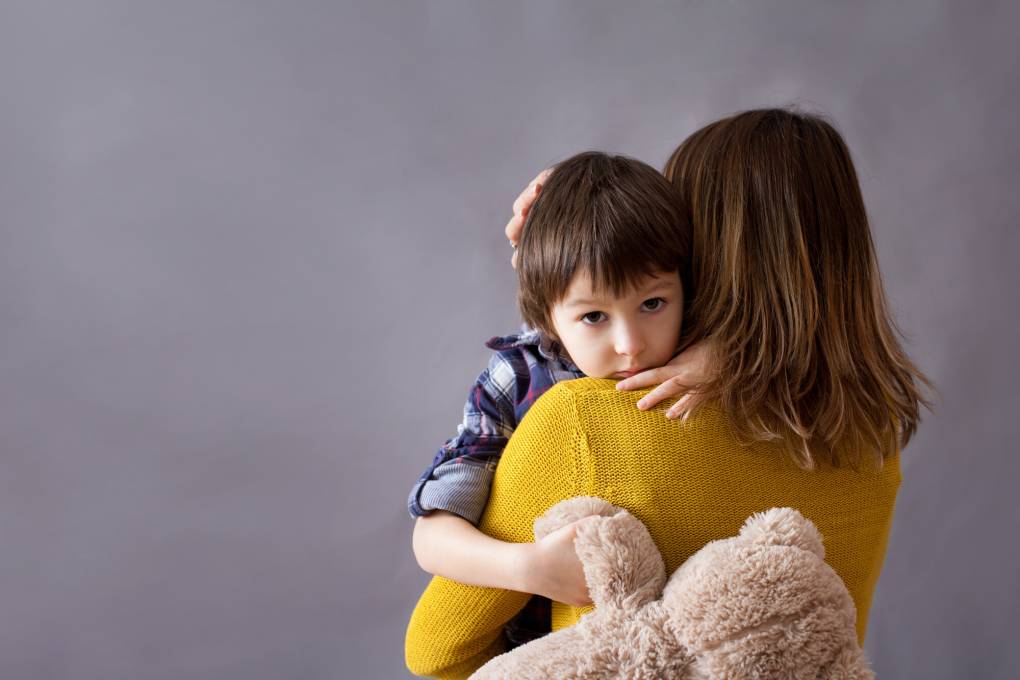
"caption": "A new Bay Area study discovered that child-parent psychotherapy helps young children overcome trauma related to abuse, violence or grief by helping parents respond to their children’s distress in appropriate ways.",
"credit": "Tatyana Tomsickova/iStock",
"altTag": null,
"description": null,
"imgSizes": {
"medium": {
"file": "https://cdn.kqed.org/wp-content/uploads/sites/10/2024/08/iStock-515594796_qed-800x533.jpg",
"width": 800,
"height": 533,
"mimeType": "image/jpeg"
},
"large": {
"file": "https://cdn.kqed.org/wp-content/uploads/sites/10/2024/08/iStock-515594796_qed-1020x680.jpg",
"width": 1020,
"height": 680,
"mimeType": "image/jpeg"
},
"thumbnail": {
"file": "https://cdn.kqed.org/wp-content/uploads/sites/10/2024/08/iStock-515594796_qed-160x107.jpg",
"width": 160,
"height": 107,
"mimeType": "image/jpeg"
},
"1536x1536": {
"file": "https://cdn.kqed.org/wp-content/uploads/sites/10/2024/08/iStock-515594796_qed-1536x1024.jpg",
"width": 1536,
"height": 1024,
"mimeType": "image/jpeg"
},
"post-thumbnail": {
"file": "https://cdn.kqed.org/wp-content/uploads/sites/10/2024/08/iStock-515594796_qed-672x372.jpg",
"width": 672,
"height": 372,
"mimeType": "image/jpeg"
},
"twentyfourteen-full-width": {
"file": "https://cdn.kqed.org/wp-content/uploads/sites/10/2024/08/iStock-515594796_qed-1038x576.jpg",
"width": 1038,
"height": 576,
"mimeType": "image/jpeg"
},
"full-width": {
"file": "https://cdn.kqed.org/wp-content/uploads/sites/10/2024/08/iStock-515594796_qed-1920x1280.jpg",
"width": 1920,
"height": 1280,
"mimeType": "image/jpeg"
},
"kqedFullSize": {
"file": "https://cdn.kqed.org/wp-content/uploads/sites/10/2024/08/iStock-515594796_qed.jpg",
"width": 2000,
"height": 1333
}
},
"isLoading": false,
"fetchFailed": false
},
"news_11986245": {
"type": "attachments",
"id": "news_11986245",
"meta": {
"index": "attachments_1716263798",
"site": "news",
"id": "11986245",
"found": true
},
"parent": 11986194,
"imgSizes": {
"twentyfourteen-full-width": {
"file": "https://cdn.kqed.org/wp-content/uploads/sites/10/2024/05/9AC167B8-3D82-4AF2-9121-585F5E8B99EB-e1715732459324-828x576.jpg",
"width": 828,
"mimeType": "image/jpeg",
"height": 576
},
"thumbnail": {
"file": "https://cdn.kqed.org/wp-content/uploads/sites/10/2024/05/9AC167B8-3D82-4AF2-9121-585F5E8B99EB-e1715732459324-160x125.jpg",
"width": 160,
"mimeType": "image/jpeg",
"height": 125
},
"post-thumbnail": {
"file": "https://cdn.kqed.org/wp-content/uploads/sites/10/2024/05/9AC167B8-3D82-4AF2-9121-585F5E8B99EB-e1715732459324-672x372.jpg",
"width": 672,
"mimeType": "image/jpeg",
"height": 372
},
"kqedFullSize": {
"file": "https://cdn.kqed.org/wp-content/uploads/sites/10/2024/05/9AC167B8-3D82-4AF2-9121-585F5E8B99EB-e1715732459324.jpg",
"width": 828,
"height": 649
},
"medium": {
"file": "https://cdn.kqed.org/wp-content/uploads/sites/10/2024/05/9AC167B8-3D82-4AF2-9121-585F5E8B99EB-e1715732459324-800x627.jpg",
"width": 800,
"mimeType": "image/jpeg",
"height": 627
}
},
"publishDate": 1715732428,
"modified": 1715734345,
"caption": "The student protest encampment that was set up again Tuesday outside Kalmanovitz Library at the UCSF campus, San Francisco, on May 14, 2024.",
"description": null,
"title": "9AC167B8-3D82-4AF2-9121-585F5E8B99EB",
"credit": "Courtesy of ucsf4palestine via Instagram",
"status": "inherit",
"altTag": null,
"isLoading": false,
"fetchFailed": false
},
"news_11929558": {
"type": "attachments",
"id": "news_11929558",
"meta": {
"index": "attachments_1716263798",
"site": "news",
"id": "11929558",
"found": true
},
"parent": 11929548,
"imgSizes": {
"twentyfourteen-full-width": {
"file": "https://ww2.kqed.org/app/uploads/sites/10/2022/10/002_KQED_AshleyBidenUCSF_10192022-1038x576.jpg",
"width": 1038,
"mimeType": "image/jpeg",
"height": 576
},
"thumbnail": {
"file": "https://ww2.kqed.org/app/uploads/sites/10/2022/10/002_KQED_AshleyBidenUCSF_10192022-160x107.jpg",
"width": 160,
"mimeType": "image/jpeg",
"height": 107
},
"post-thumbnail": {
"file": "https://ww2.kqed.org/app/uploads/sites/10/2022/10/002_KQED_AshleyBidenUCSF_10192022-672x372.jpg",
"width": 672,
"mimeType": "image/jpeg",
"height": 372
},
"kqedFullSize": {
"file": "https://ww2.kqed.org/app/uploads/sites/10/2022/10/002_KQED_AshleyBidenUCSF_10192022.jpg",
"width": 1920,
"height": 1280
},
"large": {
"file": "https://ww2.kqed.org/app/uploads/sites/10/2022/10/002_KQED_AshleyBidenUCSF_10192022-1020x680.jpg",
"width": 1020,
"mimeType": "image/jpeg",
"height": 680
},
"1536x1536": {
"file": "https://ww2.kqed.org/app/uploads/sites/10/2022/10/002_KQED_AshleyBidenUCSF_10192022-1536x1024.jpg",
"width": 1536,
"mimeType": "image/jpeg",
"height": 1024
},
"medium": {
"file": "https://ww2.kqed.org/app/uploads/sites/10/2022/10/002_KQED_AshleyBidenUCSF_10192022-800x533.jpg",
"width": 800,
"mimeType": "image/jpeg",
"height": 533
}
},
"publishDate": 1666221552,
"modified": 1666221653,
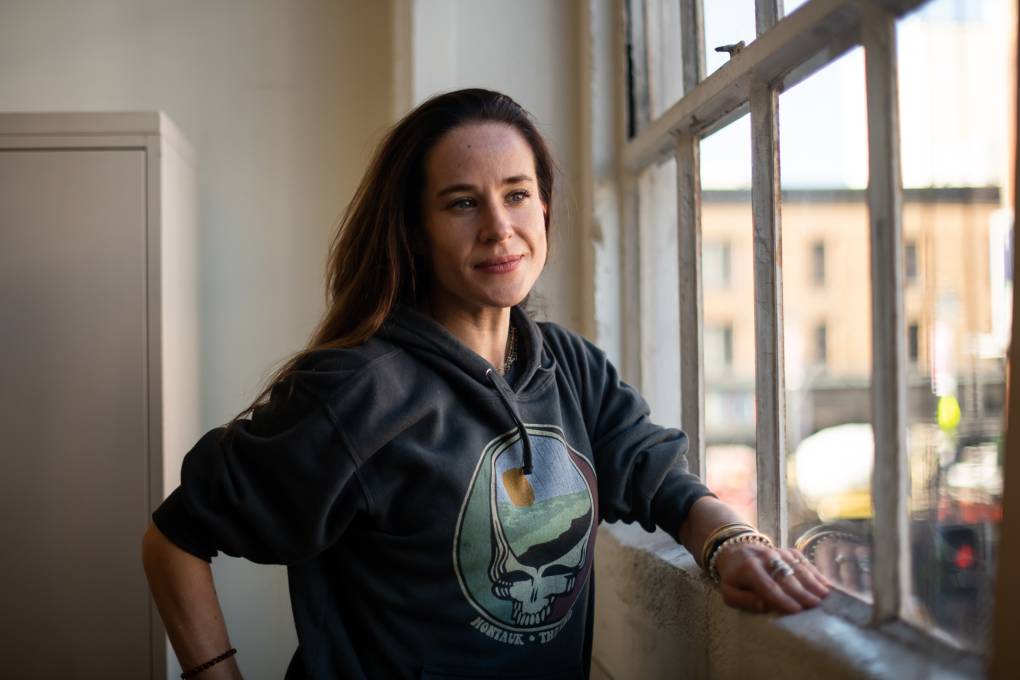
"caption": "Ashley Biden, daughter of President Joe Biden, poses for a portrait at UCSF Citywide in San Francisco on Oct. 19, 2022.",
"description": null,
"title": "002_KQED_AshleyBidenUCSF_10192022",
"credit": "Beth LaBerge/KQED",
"status": "inherit",
"altTag": "A young woman in her 30s, brown long hair, wearing a blue Grateful Dead hoodie, stands before a window and smiles at the camera.",
"isLoading": false,
"fetchFailed": false
},
"news_11925389": {
"type": "attachments",
"id": "news_11925389",
"meta": {
"index": "attachments_1716263798",
"site": "news",
"id": "11925389",
"found": true
},
"parent": 11925322,
"imgSizes": {
"thumbnail": {
"file": "https://ww2.kqed.org/app/uploads/sites/10/2022/09/GettyImages-1205679378-160x107.jpg",
"width": 160,
"mimeType": "image/jpeg",
"height": 107
},
"post-thumbnail": {
"file": "https://ww2.kqed.org/app/uploads/sites/10/2022/09/GettyImages-1205679378-672x372.jpg",
"width": 672,
"mimeType": "image/jpeg",
"height": 372
},
"kqedFullSize": {
"file": "https://ww2.kqed.org/app/uploads/sites/10/2022/09/GettyImages-1205679378.jpg",
"width": 724,
"height": 483
}
},
"publishDate": 1663011507,
"modified": 1663012243,
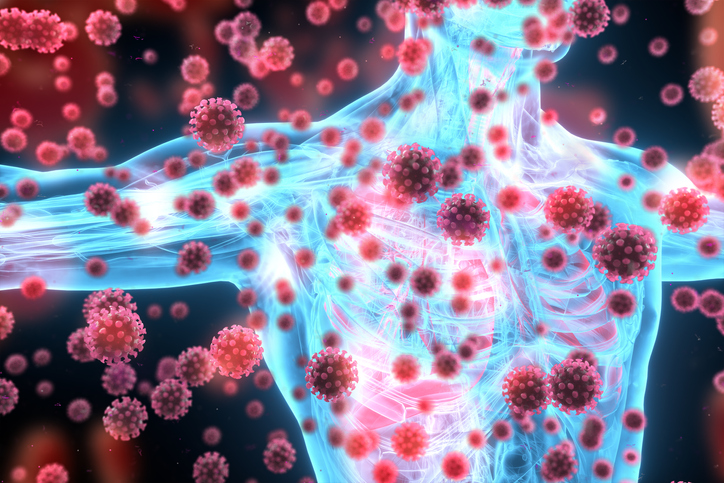
"caption": "A new study suggests that there are superdodgers, but the science behind why they've been able to avoid the virus is a bit complicated.",
"description": "Animated image depicts a human body being attacked by coronaviruses.",
"title": "GettyImages-1205679378",
"credit": "iStock/Getty Images Plus",
"status": "inherit",
"altTag": "Animation of a bluish translucent human body being attacked by red coronaviruses",
"isLoading": false,
"fetchFailed": false
},
"news_11922419": {
"type": "attachments",
"id": "news_11922419",
"meta": {
"index": "attachments_1716263798",
"site": "news",
"id": "11922419",
"found": true
},
"parent": 11922286,
"imgSizes": {
"twentyfourteen-full-width": {
"file": "https://ww2.kqed.org/app/uploads/sites/10/2022/08/pexels-polina-tankilevitch-4440608-1038x576.jpg",
"width": 1038,
"mimeType": "image/jpeg",
"height": 576
},
"thumbnail": {
"file": "https://ww2.kqed.org/app/uploads/sites/10/2022/08/pexels-polina-tankilevitch-4440608-160x107.jpg",
"width": 160,
"mimeType": "image/jpeg",
"height": 107
},
"post-thumbnail": {
"file": "https://ww2.kqed.org/app/uploads/sites/10/2022/08/pexels-polina-tankilevitch-4440608-672x372.jpg",
"width": 672,
"mimeType": "image/jpeg",
"height": 372
},
"kqedFullSize": {
"file": "https://ww2.kqed.org/app/uploads/sites/10/2022/08/pexels-polina-tankilevitch-4440608-scaled.jpg",
"width": 2560,
"height": 1707
},
"2048x2048": {
"file": "https://ww2.kqed.org/app/uploads/sites/10/2022/08/pexels-polina-tankilevitch-4440608-2048x1365.jpg",
"width": 2048,
"mimeType": "image/jpeg",
"height": 1365
},
"large": {
"file": "https://ww2.kqed.org/app/uploads/sites/10/2022/08/pexels-polina-tankilevitch-4440608-1020x680.jpg",
"width": 1020,
"mimeType": "image/jpeg",
"height": 680
},
"1536x1536": {
"file": "https://ww2.kqed.org/app/uploads/sites/10/2022/08/pexels-polina-tankilevitch-4440608-1536x1024.jpg",
"width": 1536,
"mimeType": "image/jpeg",
"height": 1024
},
"full-width": {
"file": "https://ww2.kqed.org/app/uploads/sites/10/2022/08/pexels-polina-tankilevitch-4440608-1920x1280.jpg",
"width": 1920,
"mimeType": "image/jpeg",
"height": 1280
},
"medium": {
"file": "https://ww2.kqed.org/app/uploads/sites/10/2022/08/pexels-polina-tankilevitch-4440608-800x533.jpg",
"width": 800,
"mimeType": "image/jpeg",
"height": 533
}
},
"publishDate": 1660340477,
"modified": 1660340623,
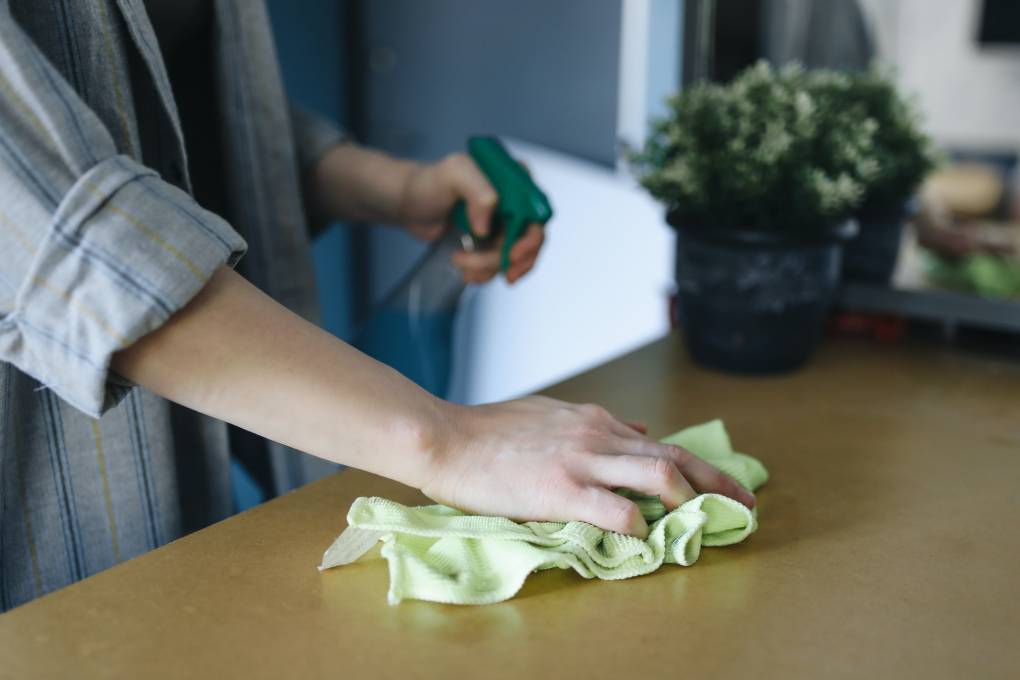
"caption": "If you’re sharing a home with someone with an active monkeypox infection — or if you yourself have monkeypox and want to keep those you live with safe — being aware of how monkeypox can spread within a home and taking the appropriate measures is the best way to stop the virus spreading.",
"description": "If you’re sharing a home with someone with an active monkeypox infection — or if you yourself have monkeypox and want to keep those you live with safe — being aware of how monkeypox can spread within a home and taking the appropriate measures is the best way to stop the virus spreading.",
"title": "pexels-polina-tankilevitch-4440608",
"credit": "Polina Tankilevitch/Pexels",
"status": "inherit",
"altTag": "A person cleans a table with a rag in an indoor space and holds a spray nozzle with their other hand.",
"isLoading": false,
"fetchFailed": false
},
"news_11813975": {
"type": "attachments",
"id": "news_11813975",
"meta": {
"index": "attachments_1716263798",
"site": "news",
"id": "11813975",
"found": true
},
"parent": 11813696,
"imgSizes": {
"apple_news_ca_landscape_5_5": {
"file": "https://ww2.kqed.org/app/uploads/sites/10/2020/04/Mission-Street-pedestrians-1044x783.jpg",
"width": 1044,
"mimeType": "image/jpeg",
"height": 783
},
"apple_news_ca_square_4_0": {
"file": "https://ww2.kqed.org/app/uploads/sites/10/2020/04/Mission-Street-pedestrians-470x470.jpg",
"width": 470,
"mimeType": "image/jpeg",
"height": 470
},
"twentyfourteen-full-width": {
"file": "https://ww2.kqed.org/app/uploads/sites/10/2020/04/Mission-Street-pedestrians-1038x576.jpg",
"width": 1038,
"mimeType": "image/jpeg",
"height": 576
},
"thumbnail": {
"file": "https://ww2.kqed.org/app/uploads/sites/10/2020/04/Mission-Street-pedestrians-160x114.jpg",
"width": 160,
"mimeType": "image/jpeg",
"height": 114
},
"post-thumbnail": {
"file": "https://ww2.kqed.org/app/uploads/sites/10/2020/04/Mission-Street-pedestrians-672x372.jpg",
"width": 672,
"mimeType": "image/jpeg",
"height": 372
},
"kqedFullSize": {
"file": "https://ww2.kqed.org/app/uploads/sites/10/2020/04/Mission-Street-pedestrians.jpg",
"width": 1920,
"height": 1371
},
"apple_news_ca_landscape_4_7": {
"file": "https://ww2.kqed.org/app/uploads/sites/10/2020/04/Mission-Street-pedestrians-632x474.jpg",
"width": 632,
"mimeType": "image/jpeg",
"height": 474
},
"large": {
"file": "https://ww2.kqed.org/app/uploads/sites/10/2020/04/Mission-Street-pedestrians-1020x728.jpg",
"width": 1020,
"mimeType": "image/jpeg",
"height": 728
},
"apple_news_ca_landscape_4_0": {
"file": "https://ww2.kqed.org/app/uploads/sites/10/2020/04/Mission-Street-pedestrians-536x402.jpg",
"width": 536,
"mimeType": "image/jpeg",
"height": 402
},
"apple_news_ca_portrait_12_9": {
"file": "https://ww2.kqed.org/app/uploads/sites/10/2020/04/Mission-Street-pedestrians-1122x1371.jpg",
"width": 1122,
"mimeType": "image/jpeg",
"height": 1371
},
"medium": {
"file": "https://ww2.kqed.org/app/uploads/sites/10/2020/04/Mission-Street-pedestrians-800x571.jpg",
"width": 800,
"mimeType": "image/jpeg",
"height": 571
},
"apple_news_ca_portrait_4_0": {
"file": "https://ww2.kqed.org/app/uploads/sites/10/2020/04/Mission-Street-pedestrians-354x472.jpg",
"width": 354,
"mimeType": "image/jpeg",
"height": 472
},
"apple_news_ca_portrait_9_7": {
"file": "https://ww2.kqed.org/app/uploads/sites/10/2020/04/Mission-Street-pedestrians-840x1120.jpg",
"width": 840,
"mimeType": "image/jpeg",
"height": 1120
},
"apple_news_ca_landscape_12_9": {
"file": "https://ww2.kqed.org/app/uploads/sites/10/2020/04/Mission-Street-pedestrians-1832x1371.jpg",
"width": 1832,
"mimeType": "image/jpeg",
"height": 1371
},
"apple_news_ca_square_9_7": {
"file": "https://ww2.kqed.org/app/uploads/sites/10/2020/04/Mission-Street-pedestrians-1104x1104.jpg",
"width": 1104,
"mimeType": "image/jpeg",
"height": 1104
},
"apple_news_ca_portrait_4_7": {
"file": "https://ww2.kqed.org/app/uploads/sites/10/2020/04/Mission-Street-pedestrians-414x552.jpg",
"width": 414,
"mimeType": "image/jpeg",
"height": 552
},
"apple_news_ca_square_12_9": {
"file": "https://ww2.kqed.org/app/uploads/sites/10/2020/04/Mission-Street-pedestrians-1472x1371.jpg",
"width": 1472,
"mimeType": "image/jpeg",
"height": 1371
},
"apple_news_ca_portrait_5_5": {
"file": "https://ww2.kqed.org/app/uploads/sites/10/2020/04/Mission-Street-pedestrians-687x916.jpg",
"width": 687,
"mimeType": "image/jpeg",
"height": 916
},
"full-width": {
"file": "https://ww2.kqed.org/app/uploads/sites/10/2020/04/Mission-Street-pedestrians-1920x1371.jpg",
"width": 1920,
"mimeType": "image/jpeg",
"height": 1371
},
"apple_news_ca_square_4_7": {
"file": "https://ww2.kqed.org/app/uploads/sites/10/2020/04/Mission-Street-pedestrians-550x550.jpg",
"width": 550,
"mimeType": "image/jpeg",
"height": 550
},
"apple_news_ca_landscape_9_7": {
"file": "https://ww2.kqed.org/app/uploads/sites/10/2020/04/Mission-Street-pedestrians-1376x1032.jpg",
"width": 1376,
"mimeType": "image/jpeg",
"height": 1032
},
"apple_news_ca_square_5_5": {
"file": "https://ww2.kqed.org/app/uploads/sites/10/2020/04/Mission-Street-pedestrians-912x912.jpg",
"width": 912,
"mimeType": "image/jpeg",
"height": 912
}
},
"publishDate": 1587669760,
"modified": 1659982271,
"caption": "Pedestrians walk in San Francisco's Mission District.",
"description": "Pedestrians walk in San Francisco's Mission District.",
"title": "Mission-Street-pedestrians",
"credit": "Beth LaBerge/KQED",
"status": "inherit",
"altTag": "Two people photographed from behind walking down what is recognizably Mission Street in San Francisco, because of the New Mission theater sign in the background, in focus.",
"isLoading": false,
"fetchFailed": false
},
"news_11918881": {
"type": "attachments",
"id": "news_11918881",
"meta": {
"index": "attachments_1716263798",
"site": "news",
"id": "11918881",
"found": true
},
"parent": 11918866,
"imgSizes": {
"kqedFullSize": {
"file": "https://ww2.kqed.org/app/uploads/sites/10/2022/07/Untitled-1-1-1200x750-1.jpg",
"width": 1200,
"height": 750
}
},
"publishDate": 1657145033,
"modified": 1657146123,
"caption": "Erika Shue, a teacher at UCSF Benioff Children's Hospital, and one of her students, Elizabeth Madole, 8.",
"description": null,
"title": "Untitled-1-1-1200x750",
"credit": "Courtesy of Stephanie Madole",
"status": "inherit",
"altTag": "A teacher at UCSF Benioff Children's Hospital and one of her students.",
"isLoading": false,
"fetchFailed": false
},
"news_11914104": {
"type": "attachments",
"id": "news_11914104",
"meta": {
"index": "attachments_1716263798",
"site": "news",
"id": "11914104",
"found": true
},
"parent": 11914102,
"imgSizes": {
"twentyfourteen-full-width": {
"file": "https://ww2.kqed.org/app/uploads/sites/10/2022/05/image1-1038x576.png",
"width": 1038,
"mimeType": "image/png",
"height": 576
},
"thumbnail": {
"file": "https://ww2.kqed.org/app/uploads/sites/10/2022/05/image1-160x90.png",
"width": 160,
"mimeType": "image/png",
"height": 90
},
"post-thumbnail": {
"file": "https://ww2.kqed.org/app/uploads/sites/10/2022/05/image1-672x372.png",
"width": 672,
"mimeType": "image/png",
"height": 372
},
"kqedFullSize": {
"file": "https://ww2.kqed.org/app/uploads/sites/10/2022/05/image1.png",
"width": 1920,
"height": 1080
},
"large": {
"file": "https://ww2.kqed.org/app/uploads/sites/10/2022/05/image1-1020x574.png",
"width": 1020,
"mimeType": "image/png",
"height": 574
},
"1536x1536": {
"file": "https://ww2.kqed.org/app/uploads/sites/10/2022/05/image1-1536x864.png",
"width": 1536,
"mimeType": "image/png",
"height": 864
},
"medium": {
"file": "https://ww2.kqed.org/app/uploads/sites/10/2022/05/image1-800x450.png",
"width": 800,
"mimeType": "image/png",
"height": 450
}
},
"publishDate": 1652479614,
"modified": 1652479614,
"caption": null,
"description": null,
"title": "image1",
"credit": null,
"status": "inherit",
"altTag": null,
"isLoading": false,
"fetchFailed": false
},
"news_11901672": {
"type": "attachments",
"id": "news_11901672",
"meta": {
"index": "attachments_1716263798",
"site": "news",
"id": "11901672",
"found": true
},
"parent": 11901520,
"imgSizes": {
"twentyfourteen-full-width": {
"file": "https://ww2.kqed.org/app/uploads/sites/10/2022/01/Image-from-iOS-1020x1241-1-1002x576.jpeg",
"width": 1002,
"mimeType": "image/jpeg",
"height": 576
},
"thumbnail": {
"file": "https://ww2.kqed.org/app/uploads/sites/10/2022/01/Image-from-iOS-1020x1241-1-160x140.jpeg",
"width": 160,
"mimeType": "image/jpeg",
"height": 140
},
"post-thumbnail": {
"file": "https://ww2.kqed.org/app/uploads/sites/10/2022/01/Image-from-iOS-1020x1241-1-672x372.jpeg",
"width": 672,
"mimeType": "image/jpeg",
"height": 372
},
"kqedFullSize": {
"file": "https://ww2.kqed.org/app/uploads/sites/10/2022/01/Image-from-iOS-1020x1241-1.jpeg",
"width": 1002,
"height": 878
},
"medium": {
"file": "https://ww2.kqed.org/app/uploads/sites/10/2022/01/Image-from-iOS-1020x1241-1-800x701.jpeg",
"width": 800,
"mimeType": "image/jpeg",
"height": 701
}
},
"publishDate": 1642111139,
"modified": 1642111164,
"caption": "Justin Phillips, a respiratory therapist with UCSF at Zuckerberg San Francisco General Hospital.",
"description": "Justin Phillips, a respiratory therapist with UCSF at Zuckerberg San Francisco General Hospital.",
"title": "Image-from-iOS-1020x1241",
"credit": "Courtesy of Justin Phillips",
"status": "inherit",
"altTag": "A man wearing glasses and a black zipped sweater that says UCSF on the right side stands with his arms crossed.",
"isLoading": false,
"fetchFailed": false
},
"news_11898974": {
"type": "attachments",
"id": "news_11898974",
"meta": {
"index": "attachments_1716263798",
"site": "news",
"id": "11898974",
"found": true
},
"parent": 11898973,
"imgSizes": {
"twentyfourteen-full-width": {
"file": "https://ww2.kqed.org/app/uploads/sites/10/2021/12/RS52837_009_SanFrancisco_UCSFVirtualReality_12102021-qut-1038x576.jpg",
"width": 1038,
"mimeType": "image/jpeg",
"height": 576
},
"thumbnail": {
"file": "https://ww2.kqed.org/app/uploads/sites/10/2021/12/RS52837_009_SanFrancisco_UCSFVirtualReality_12102021-qut-160x107.jpg",
"width": 160,
"mimeType": "image/jpeg",
"height": 107
},
"post-thumbnail": {
"file": "https://ww2.kqed.org/app/uploads/sites/10/2021/12/RS52837_009_SanFrancisco_UCSFVirtualReality_12102021-qut-672x372.jpg",
"width": 672,
"mimeType": "image/jpeg",
"height": 372
},
"kqedFullSize": {
"file": "https://ww2.kqed.org/app/uploads/sites/10/2021/12/RS52837_009_SanFrancisco_UCSFVirtualReality_12102021-qut.jpg",
"width": 1920,
"height": 1280
},
"large": {
"file": "https://ww2.kqed.org/app/uploads/sites/10/2021/12/RS52837_009_SanFrancisco_UCSFVirtualReality_12102021-qut-1020x680.jpg",
"width": 1020,
"mimeType": "image/jpeg",
"height": 680
},
"1536x1536": {
"file": "https://ww2.kqed.org/app/uploads/sites/10/2021/12/RS52837_009_SanFrancisco_UCSFVirtualReality_12102021-qut-1536x1024.jpg",
"width": 1536,
"mimeType": "image/jpeg",
"height": 1024
},
"medium": {
"file": "https://ww2.kqed.org/app/uploads/sites/10/2021/12/RS52837_009_SanFrancisco_UCSFVirtualReality_12102021-qut-800x533.jpg",
"width": 800,
"mimeType": "image/jpeg",
"height": 533
}
},
"publishDate": 1639446469,
"modified": 1639626738,
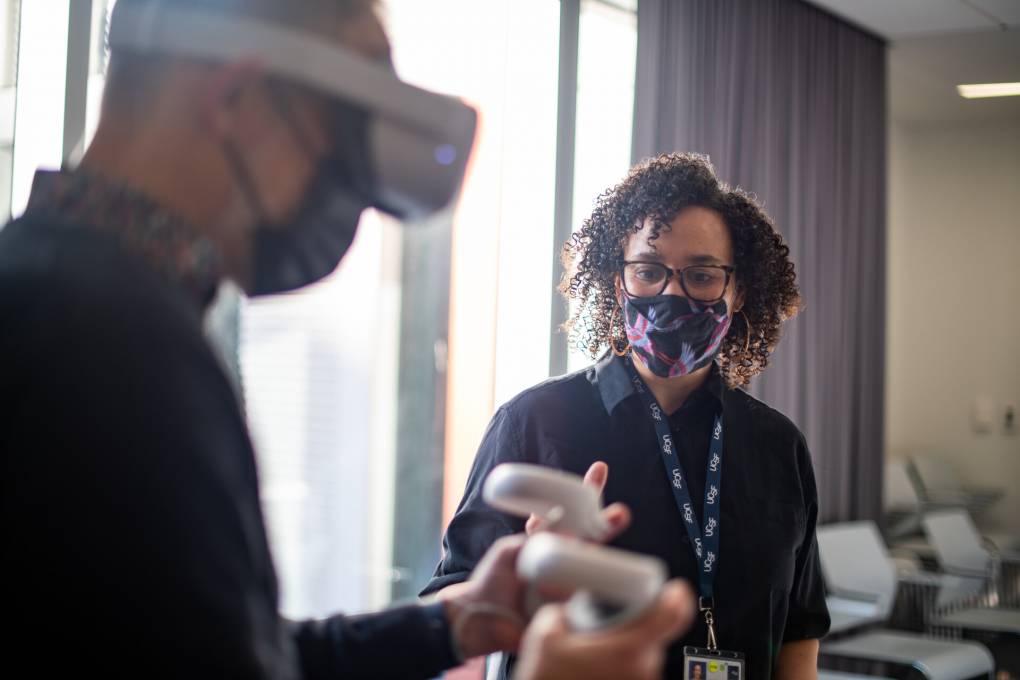
"caption": "Nova Wilson, program coordinator for the UCSF Institute for Global Health Sciences, instructs Dr. Mike Reid on using virtual reality equipment at UCSF offices in San Francisco on Dec. 10, 2021. The VR program is intended to teach doctors to have more empathy for their patients of color.",
"description": "Nova Wilson, program coordinator for UCSF Institute for Global Health Sciences, instructs Dr. Mike Reid on using virtual reality equipment at UCSF offices in San Francisco on Dec. 10, 2021. The VR program is intended to teach doctors to have more empathy for their patients of color.",
"title": "RS52837_009_SanFrancisco_UCSFVirtualReality_12102021-qut",
"credit": "Beth LaBerge/KQED",
"status": "inherit",
"altTag": "Two people stand in a room: one wears a virtual reality headset and holds two controllers while the second figure stands by and watches over.",
"isLoading": false,
"fetchFailed": false
},
"news_11898048": {
"type": "attachments",
"id": "news_11898048",
"meta": {
"index": "attachments_1716263798",
"site": "news",
"id": "11898048",
"found": true
},
"parent": 11898018,
"imgSizes": {
"twentyfourteen-full-width": {
"file": "https://ww2.kqed.org/app/uploads/sites/10/2021/12/KNR912_MARQUEE-1038x576.jpeg",
"width": 1038,
"mimeType": "image/jpeg",
"height": 576
},
"thumbnail": {
"file": "https://ww2.kqed.org/app/uploads/sites/10/2021/12/KNR912_MARQUEE-160x90.jpeg",
"width": 160,
"mimeType": "image/jpeg",
"height": 90
},
"post-thumbnail": {
"file": "https://ww2.kqed.org/app/uploads/sites/10/2021/12/KNR912_MARQUEE-672x372.jpeg",
"width": 672,
"mimeType": "image/jpeg",
"height": 372
},
"kqedFullSize": {
"file": "https://ww2.kqed.org/app/uploads/sites/10/2021/12/KNR912_MARQUEE.jpeg",
"width": 1920,
"height": 1080
},
"large": {
"file": "https://ww2.kqed.org/app/uploads/sites/10/2021/12/KNR912_MARQUEE-1020x574.jpeg",
"width": 1020,
"mimeType": "image/jpeg",
"height": 574
},
"1536x1536": {
"file": "https://ww2.kqed.org/app/uploads/sites/10/2021/12/KNR912_MARQUEE-1536x864.jpeg",
"width": 1536,
"mimeType": "image/jpeg",
"height": 864
},
"medium": {
"file": "https://ww2.kqed.org/app/uploads/sites/10/2021/12/KNR912_MARQUEE-800x450.jpeg",
"width": 800,
"mimeType": "image/jpeg",
"height": 450
}
},
"publishDate": 1638570408,
"modified": 1638570429,
"caption": null,
"description": null,
"title": "KNR912_MARQUEE",
"credit": null,
"status": "inherit",
"altTag": "Dr. Peter Chin-Hong, UCSF",
"isLoading": false,
"fetchFailed": false
},
"news_11896509": {
"type": "attachments",
"id": "news_11896509",
"meta": {
"index": "attachments_1716263798",
"site": "news",
"id": "11896509",
"found": true
},
"parent": 11896508,
"imgSizes": {
"twentyfourteen-full-width": {
"file": "https://ww2.kqed.org/app/uploads/sites/10/2021/11/GettyImages-1344322689-1038x576.jpg",
"width": 1038,
"mimeType": "image/jpeg",
"height": 576
},
"thumbnail": {
"file": "https://ww2.kqed.org/app/uploads/sites/10/2021/11/GettyImages-1344322689-160x114.jpg",
"width": 160,
"mimeType": "image/jpeg",
"height": 114
},
"post-thumbnail": {
"file": "https://ww2.kqed.org/app/uploads/sites/10/2021/11/GettyImages-1344322689-672x372.jpg",
"width": 672,
"mimeType": "image/jpeg",
"height": 372
},
"kqedFullSize": {
"file": "https://ww2.kqed.org/app/uploads/sites/10/2021/11/GettyImages-1344322689-scaled.jpg",
"width": 2560,
"height": 1825
},
"2048x2048": {
"file": "https://ww2.kqed.org/app/uploads/sites/10/2021/11/GettyImages-1344322689-2048x1460.jpg",
"width": 2048,
"mimeType": "image/jpeg",
"height": 1460
},
"large": {
"file": "https://ww2.kqed.org/app/uploads/sites/10/2021/11/GettyImages-1344322689-1020x727.jpg",
"width": 1020,
"mimeType": "image/jpeg",
"height": 727
},
"1536x1536": {
"file": "https://ww2.kqed.org/app/uploads/sites/10/2021/11/GettyImages-1344322689-1536x1095.jpg",
"width": 1536,
"mimeType": "image/jpeg",
"height": 1095
},
"full-width": {
"file": "https://ww2.kqed.org/app/uploads/sites/10/2021/11/GettyImages-1344322689-1920x1369.jpg",
"width": 1920,
"mimeType": "image/jpeg",
"height": 1369
},
"medium": {
"file": "https://ww2.kqed.org/app/uploads/sites/10/2021/11/GettyImages-1344322689-800x570.jpg",
"width": 800,
"mimeType": "image/jpeg",
"height": 570
}
},
"publishDate": 1637162198,
"modified": 1638298004,
"caption": "Safeway pharmacist Shahrzad Khoobyari, right, administers a Pfizer COVID-19 booster shot into the arm of Chen Knifsend at a San Rafael vaccine clinic on Oct. 1, 2021.",
"description": null,
"title": "Vaccination Booster",
"credit": "Justin Sullivan/Getty Images",
"status": "inherit",
"altTag": "A woman in a mask receives a shot from a another woman in a white lab coat.",
"isLoading": false,
"fetchFailed": false
}
},
"audioPlayerReducer": {
"postId": "stream_live",
"isPaused": true,
"isPlaying": false,
"pfsActive": false,
"pledgeModalIsOpen": true,
"playerDrawerIsOpen": false,
"liveAudioPlayStartedAt": 0,
"liveAudioPlayContext": ""
},
"authorsReducer": {
"byline_news_11925322": {
"type": "authors",
"id": "byline_news_11925322",
"meta": {
"override": true
},
"slug": "byline_news_11925322",
"name": "\u003ca href=\"https://www.npr.org/people/348778932/michaeleen-doucleff\">Michaeleen Doucleff\u003c/a>",
"isLoading": false
},
"byline_news_11918866": {
"type": "authors",
"id": "byline_news_11918866",
"meta": {
"override": true
},
"slug": "byline_news_11918866",
"name": "\u003ca href=\"//edsource.org/author/cjones\">Carolyn Jones\u003c/a>",
"isLoading": false
},
"kqed": {
"type": "authors",
"id": "236",
"meta": {
"index": "authors_1716337520",
"id": "236",
"found": true
},
"name": "KQED News Staff",
"firstName": "KQED News Staff",
"lastName": null,
"slug": "kqed",
"email": "faq@kqed.org",
"display_author_email": false,
"staff_mastheads": [],
"title": null,
"bio": null,
"avatar": "https://secure.gravatar.com/avatar/ef0e801a68c4c54afa9180db14084167?s=600&d=blank&r=g",
"twitter": null,
"facebook": null,
"instagram": null,
"linkedin": null,
"sites": [
{
"site": "arts",
"roles": [
"contributor"
]
},
{
"site": "news",
"roles": [
"editor"
]
},
{
"site": "futureofyou",
"roles": [
"author"
]
}
],
"headData": {
"title": "KQED News Staff | KQED",
"description": null,
"ogImgSrc": "https://secure.gravatar.com/avatar/ef0e801a68c4c54afa9180db14084167?s=600&d=blank&r=g",
"twImgSrc": "https://secure.gravatar.com/avatar/ef0e801a68c4c54afa9180db14084167?s=600&d=blank&r=g"
},
"isLoading": false,
"link": "/author/kqed"
},
"kqednewsstaffandwires": {
"type": "authors",
"id": "237",
"meta": {
"index": "authors_1716337520",
"id": "237",
"found": true
},
"name": "KQED News Staff and Wires",
"firstName": "KQED News Staff and Wires",
"lastName": null,
"slug": "kqednewsstaffandwires",
"email": "onlinenewsstaff@kqed.org",
"display_author_email": false,
"staff_mastheads": [],
"title": null,
"bio": null,
"avatar": "https://secure.gravatar.com/avatar/72295af8ebbfbd19a4948f5271285664?s=600&d=blank&r=g",
"twitter": null,
"facebook": null,
"instagram": null,
"linkedin": null,
"sites": [
{
"site": "arts",
"roles": [
"contributor"
]
},
{
"site": "news",
"roles": [
"contributor"
]
},
{
"site": "lowdown",
"roles": [
"author"
]
},
{
"site": "stateofhealth",
"roles": [
"contributor"
]
},
{
"site": "food",
"roles": [
"author"
]
}
],
"headData": {
"title": "KQED News Staff and Wires | KQED",
"description": null,
"ogImgSrc": "https://secure.gravatar.com/avatar/72295af8ebbfbd19a4948f5271285664?s=600&d=blank&r=g",
"twImgSrc": "https://secure.gravatar.com/avatar/72295af8ebbfbd19a4948f5271285664?s=600&d=blank&r=g"
},
"isLoading": false,
"link": "/author/kqednewsstaffandwires"
},
"tgoldberg": {
"type": "authors",
"id": "258",
"meta": {
"index": "authors_1716337520",
"id": "258",
"found": true
},
"name": "Ted Goldberg",
"firstName": "Ted",
"lastName": "Goldberg",
"slug": "tgoldberg",
"email": "tgoldberg@kqed.org",
"display_author_email": true,
"staff_mastheads": [
"news"
],
"title": "KQED Managing Editor, News and Newscasts",
"bio": "Ted Goldberg is Managing Editor of News and Newscasts at KQED. His main reporting beat is the Bay Area's oil refining industry.\r\n\r\nPrior to joining KQED in 2014, Ted worked at CBS News and WCBS AM in New York and Bay City News and KCBS Radio in San Francisco. He graduated from Oberlin College in Ohio in 1998.",
"avatar": "https://secure.gravatar.com/avatar/16d702c9ec5f696d78dbfb76b592cf0a?s=600&d=blank&r=g",
"twitter": "TedrickG",
"bluesky": null,
"facebook": null,
"instagram": null,
"linkedin": null,
"sites": [
{
"site": "news",
"roles": [
"editor"
]
},
{
"site": "science",
"roles": [
"editor"
]
}
],
"headData": {
"title": "Ted Goldberg | KQED",
"description": "KQED Managing Editor, News and Newscasts",
"ogImgSrc": "https://secure.gravatar.com/avatar/16d702c9ec5f696d78dbfb76b592cf0a?s=600&d=blank&r=g",
"twImgSrc": "https://secure.gravatar.com/avatar/16d702c9ec5f696d78dbfb76b592cf0a?s=600&d=blank&r=g"
},
"isLoading": false,
"link": "/author/tgoldberg"
},
"adembosky": {
"type": "authors",
"id": "3205",
"meta": {
"index": "authors_1716337520",
"id": "3205",
"found": true
},
"name": "April Dembosky",
"firstName": "April",
"lastName": "Dembosky",
"slug": "adembosky",
"email": "adembosky@kqed.org",
"display_author_email": false,
"staff_mastheads": [
"news",
"science"
],
"title": "KQED Health Correspondent",
"bio": "April Dembosky is the health correspondent for KQED News and a regular contributor to NPR. She specializes in covering altered states of mind, from postpartum depression to methamphetamine-induced psychosis to the insanity defense. Her investigative series on insurance companies sidestepping mental health laws won multiple awards, including first place in beat reporting from the national Association of Health Care Journalists. She is the recipient of numerous other prizes and fellowships, including a national Edward R. Murrow award for investigative reporting, a Society of Professional Journalists award for long-form storytelling, and a Carter Center Fellowship for Mental Health Journalism.\r\n\r\nDembosky reported and produced \u003cem>Soundtrack of Silence\u003c/em>, an audio documentary about music and memory that is currently being made into a feature film by Paramount Pictures.\r\n\r\nBefore joining KQED in 2013, Dembosky covered technology and Silicon Valley for \u003cem>The Financial Times of London,\u003c/em> and contributed business and arts stories to \u003cem>Marketplace \u003c/em>and \u003cem>The New York Times.\u003c/em> She got her undergraduate degree in philosophy from Smith College and her master's in journalism from the University of California, Berkeley. She is a classically trained violinist and proud alum of the first symphony orchestra at Burning Man.",
"avatar": "https://secure.gravatar.com/avatar/ef92999be4ceb9ea60701e7dc276f813?s=600&d=blank&r=g",
"twitter": "adembosky",
"facebook": null,
"instagram": null,
"linkedin": null,
"sites": [
{
"site": "arts",
"roles": [
"author"
]
},
{
"site": "news",
"roles": [
"editor"
]
},
{
"site": "futureofyou",
"roles": [
"author"
]
},
{
"site": "stateofhealth",
"roles": [
"editor"
]
},
{
"site": "science",
"roles": [
"editor"
]
},
{
"site": "forum",
"roles": [
"editor"
]
}
],
"headData": {
"title": "April Dembosky | KQED",
"description": "KQED Health Correspondent",
"ogImgSrc": "https://secure.gravatar.com/avatar/ef92999be4ceb9ea60701e7dc276f813?s=600&d=blank&r=g",
"twImgSrc": "https://secure.gravatar.com/avatar/ef92999be4ceb9ea60701e7dc276f813?s=600&d=blank&r=g"
},
"isLoading": false,
"link": "/author/adembosky"
},
"carlysevern": {
"type": "authors",
"id": "3243",
"meta": {
"index": "authors_1716337520",
"id": "3243",
"found": true
},
"name": "Carly Severn",
"firstName": "Carly",
"lastName": "Severn",
"slug": "carlysevern",
"email": "csevern@kqed.org",
"display_author_email": false,
"staff_mastheads": [
"news"
],
"title": "Senior Editor, Audience News ",
"bio": "Carly is KQED's Senior Editor of Audience News on the Digital News team, and has reported for the California Report Magazine, Bay Curious and KQED Arts. She's formerly the host of \u003ca href=\"http://ww2.kqed.org/pop/category/the-cooler/\" rel=\"noopener noreferrer\">The Cooler\u003c/a> podcast.",
"avatar": "https://secure.gravatar.com/avatar/2d8d6765f186e64c798cf7f0c8088a41?s=600&d=blank&r=g",
"twitter": "teacupinthebay",
"facebook": null,
"instagram": null,
"linkedin": null,
"sites": [
{
"site": "",
"roles": [
"editor"
]
},
{
"site": "arts",
"roles": [
"editor"
]
},
{
"site": "news",
"roles": [
"administrator"
]
},
{
"site": "pop",
"roles": [
"editor"
]
},
{
"site": "futureofyou",
"roles": [
"editor"
]
},
{
"site": "about",
"roles": [
"administrator"
]
},
{
"site": "mindshift",
"roles": [
"editor"
]
},
{
"site": "bayareabites",
"roles": [
"editor"
]
},
{
"site": "stateofhealth",
"roles": [
"editor"
]
},
{
"site": "science",
"roles": [
"editor"
]
},
{
"site": "food",
"roles": [
"contributor"
]
},
{
"site": "forum",
"roles": [
"editor"
]
},
{
"site": "perspectives",
"roles": [
"administrator"
]
},
{
"site": "liveblog",
"roles": [
"editor"
]
}
],
"headData": {
"title": "Carly Severn | KQED",
"description": "Senior Editor, Audience News ",
"ogImgSrc": "https://secure.gravatar.com/avatar/2d8d6765f186e64c798cf7f0c8088a41?s=600&d=blank&r=g",
"twImgSrc": "https://secure.gravatar.com/avatar/2d8d6765f186e64c798cf7f0c8088a41?s=600&d=blank&r=g"
},
"isLoading": false,
"link": "/author/carlysevern"
},
"bwatt": {
"type": "authors",
"id": "11238",
"meta": {
"index": "authors_1716337520",
"id": "11238",
"found": true
},
"name": "Brian Watt",
"firstName": "Brian",
"lastName": "Watt",
"slug": "bwatt",
"email": "bwatt@KQED.org",
"display_author_email": false,
"staff_mastheads": [
"news"
],
"title": "Morning News Anchor",
"bio": "Brian Watt is KQED's morning radio news anchor. He joined the KQED News team in April of 2016. Prior to that, he worked as a Reporter for KPCC in Los Angeles and a producer at \u003cem>Marketplace.\u003c/em>\r\n\r\nDuring eight years at KPCC, Brian covered business and economics, and his work won several awards. In 2008, he won the Los Angeles Press Club’s first-place award for Business and Financial Reporting, Broadcast. He’s also received honorable mention and been first runner up for the Press Club’s Radio Journalist of the Year. He won two Golden Mike awards from the Radio and TV News Association of Southern California.\r\n\r\nBrian holds degrees in theater from Yale University and the Sorbonne, and has worked as an actor in France, Italy, Brazil, Hungary and . . . Hollywood. He appeared in a few television shows, including \u003cem>The West Wing, Judging Amy\u003c/em> and \u003cem>The District.\u003c/em>\r\n\r\nEmail: bwatt@KQED.org Twitter: @RadioBWatt",
"avatar": "https://secure.gravatar.com/avatar/55393ff57ed34e2be773ba4789dd6a19?s=600&d=blank&r=g",
"twitter": "@RadioBWatt",
"facebook": null,
"instagram": null,
"linkedin": null,
"sites": [
{
"site": "arts",
"roles": [
"contributor"
]
},
{
"site": "news",
"roles": [
"editor"
]
}
],
"headData": {
"title": "Brian Watt | KQED",
"description": "Morning News Anchor",
"ogImgSrc": "https://secure.gravatar.com/avatar/55393ff57ed34e2be773ba4789dd6a19?s=600&d=blank&r=g",
"twImgSrc": "https://secure.gravatar.com/avatar/55393ff57ed34e2be773ba4789dd6a19?s=600&d=blank&r=g"
},
"isLoading": false,
"link": "/author/bwatt"
},
"ccabreralomeli": {
"type": "authors",
"id": "11708",
"meta": {
"index": "authors_1716337520",
"id": "11708",
"found": true
},
"name": "Carlos Cabrera-Lomelí",
"firstName": "Carlos",
"lastName": "Cabrera-Lomelí",
"slug": "ccabreralomeli",
"email": "ccabreralomeli@KQED.org",
"display_author_email": true,
"staff_mastheads": [
"news"
],
"title": "Community Reporter",
"bio": "Carlos Cabrera-Lomelí is a community reporter with KQED's digital engagement team. He also reports and co-produces for KQED's bilingual news hub KQED en Español. He grew up in San Francisco's Mission District and has previously worked with Univision, 48 Hills and REFORMA in Mexico City.",
"avatar": "https://secure.gravatar.com/avatar/e95ff80bb2eaf18a8f2af4dcf7ffb54b?s=600&d=mm&r=g",
"twitter": "@LomeliCabrera",
"facebook": null,
"instagram": null,
"linkedin": null,
"sites": [
{
"site": "arts",
"roles": [
"editor"
]
},
{
"site": "news",
"roles": [
"editor"
]
},
{
"site": "about",
"roles": [
"editor"
]
},
{
"site": "science",
"roles": [
"editor"
]
},
{
"site": "perspectives",
"roles": [
"editor"
]
},
{
"site": "elections",
"roles": [
"editor"
]
},
{
"site": "liveblog",
"roles": [
"contributor"
]
}
],
"headData": {
"title": "Carlos Cabrera-Lomelí | KQED",
"description": "Community Reporter",
"ogImgSrc": "https://secure.gravatar.com/avatar/e95ff80bb2eaf18a8f2af4dcf7ffb54b?s=600&d=mm&r=g",
"twImgSrc": "https://secure.gravatar.com/avatar/e95ff80bb2eaf18a8f2af4dcf7ffb54b?s=600&d=mm&r=g"
},
"isLoading": false,
"link": "/author/ccabreralomeli"
},
"agonzalez": {
"type": "authors",
"id": "11724",
"meta": {
"index": "authors_1716337520",
"id": "11724",
"found": true
},
"name": "Alexander Gonzalez",
"firstName": "Alexander",
"lastName": "Gonzalez",
"slug": "agonzalez",
"email": "AlexanderGonzalez@KQED.org",
"display_author_email": false,
"staff_mastheads": [
"news"
],
"title": "KQED Contributor",
"bio": null,
"avatar": "https://secure.gravatar.com/avatar/9e291ed34e154df4c662edf858b641d70b4859939bfe40be478408f9dfd057d2?s=600&d=blank&r=g",
"twitter": null,
"bluesky": null,
"facebook": null,
"instagram": null,
"linkedin": null,
"sites": [
{
"site": "arts",
"roles": [
"editor"
]
},
{
"site": "news",
"roles": [
"editor"
]
},
{
"site": "science",
"roles": [
"editor"
]
}
],
"headData": {
"title": "Alexander Gonzalez | KQED",
"description": "KQED Contributor",
"ogImgSrc": "https://secure.gravatar.com/avatar/9e291ed34e154df4c662edf858b641d70b4859939bfe40be478408f9dfd057d2?s=600&d=blank&r=g",
"twImgSrc": "https://secure.gravatar.com/avatar/9e291ed34e154df4c662edf858b641d70b4859939bfe40be478408f9dfd057d2?s=600&d=blank&r=g"
},
"isLoading": false,
"link": "/author/agonzalez"
},
"daisynguyen": {
"type": "authors",
"id": "11829",
"meta": {
"index": "authors_1716337520",
"id": "11829",
"found": true
},
"name": "Daisy Nguyen",
"firstName": "Daisy",
"lastName": "Nguyen",
"slug": "daisynguyen",
"email": "daisynguyen@kqed.org",
"display_author_email": true,
"staff_mastheads": [
"news"
],
"title": "KQED Contributor",
"bio": "I have covered early childhood education and child care for KQED since 2022. I focus on policies aimed at increasing access to early care and education and how they shape individual lives. I've been a journalist for more than two decades, with most of that time devoted to covering breaking news throughout California for The Associated Press. I grew up in San Francisco and studied at UC Davis and Columbia University's Graduate School of Journalism. I live in Oakland with my husband and two kids.",
"avatar": "https://secure.gravatar.com/avatar/2da2127c27f7143b53ebd419800fd55f?s=600&d=blank&r=g",
"twitter": null,
"facebook": null,
"instagram": null,
"linkedin": "https://www.linkedin.com/in/daisynguyen/",
"sites": [
{
"site": "news",
"roles": [
"author"
]
},
{
"site": "liveblog",
"roles": [
"author"
]
}
],
"headData": {
"title": "Daisy Nguyen | KQED",
"description": "KQED Contributor",
"ogImgSrc": "https://secure.gravatar.com/avatar/2da2127c27f7143b53ebd419800fd55f?s=600&d=blank&r=g",
"twImgSrc": "https://secure.gravatar.com/avatar/2da2127c27f7143b53ebd419800fd55f?s=600&d=blank&r=g"
},
"isLoading": false,
"link": "/author/daisynguyen"
},
"naltenberg": {
"type": "authors",
"id": "11896",
"meta": {
"index": "authors_1716337520",
"id": "11896",
"found": true
},
"name": "Nik Altenberg",
"firstName": "Nik",
"lastName": "Altenberg",
"slug": "naltenberg",
"email": "naltenberg@kqed.org",
"display_author_email": false,
"staff_mastheads": [],
"title": "KQED Contributor",
"bio": "Nik Altenberg is an on-call reporter for KQED and a copy editor and fact checker for Santa Cruz Local. Nik’s reporting interests include policing, public health, environment, immigration, housing and the places where these issues intersect.",
"avatar": "https://secure.gravatar.com/avatar/e391b3a18ce4a53a7ca3f3065c74418b?s=600&d=blank&r=g",
"twitter": null,
"facebook": null,
"instagram": "https://www.instagram.com/nikaltenberg/",
"linkedin": null,
"sites": [
{
"site": "news",
"roles": []
}
],
"headData": {
"title": "Nik Altenberg | KQED",
"description": "KQED Contributor",
"ogImgSrc": "https://secure.gravatar.com/avatar/e391b3a18ce4a53a7ca3f3065c74418b?s=600&d=blank&r=g",
"twImgSrc": "https://secure.gravatar.com/avatar/e391b3a18ce4a53a7ca3f3065c74418b?s=600&d=blank&r=g"
},
"isLoading": false,
"link": "/author/naltenberg"
}
},
"pagesReducer": {
"news_tag_ucsf": {
"type": "terms",
"id": "news_922",
"meta": {
"index": "terms_1716263798",
"site": "news",
"id": "922",
"score": 8.666416
},
"featImg": null,
"name": "ucsf",
"description": null,
"taxonomy": "tag",
"headData": {
"twImgId": null,
"twTitle": null,
"ogTitle": null,
"ogImgId": null,
"twDescription": null,
"description": null,
"title": "ucsf Archives | KQED News",
"ogDescription": null
},
"ttid": 932,
"slug": "ucsf",
"isLoading": false,
"title": "ucsf",
"pageMeta": {
"site": "news",
"WpPageTemplate": "page-topic-editorial",
"currentPage": 3
},
"blocks": [
{
"blockName": "kqed/post-list",
"attrs": {
"layout": "cardArticle2",
"query": "posts/news?tag=ucsf",
"seeMore": false,
"paginated": true,
"page": 3
}
},
{
"blockName": "kqed/ad"
}
]
}
},
"pfsSessionReducer": {},
"postsReducer": {
"stream_live": {
"type": "live",
"id": "stream_live",
"audioUrl": "https://streams.kqed.org/kqedradio",
"title": "Live Stream",
"excerpt": "Live Stream information currently unavailable.",
"link": "/radio",
"featImg": "",
"label": {
"name": "KQED Live",
"link": "/"
}
},
"stream_kqedNewscast": {
"type": "posts",
"id": "stream_kqedNewscast",
"audioUrl": "https://www.kqed.org/.stream/anon/radio/RDnews/newscast.mp3?_=1",
"title": "KQED Newscast",
"featImg": "",
"label": {
"name": "88.5 FM",
"link": "/"
}
},
"news_12000147": {
"type": "posts",
"id": "news_12000147",
"meta": {
"index": "posts_1716263798",
"site": "news",
"id": "12000147",
"score": null,
"sort": [
1723666116000
]
},
"guestAuthors": [],
"slug": "bay-area-study-finds-early-childhood-trauma-therapy-can-prevent-serious-disease",
"title": "Bay Area Study Finds Early Childhood Trauma Therapy Can Prevent Serious Disease",
"publishDate": 1723666116,
"format": "standard",
"headTitle": "Bay Area Study Finds Early Childhood Trauma Therapy Can Prevent Serious Disease | KQED",
"labelTerm": {
"site": "news"
},
"content": "\u003cp>A form of psychotherapy to address early childhood trauma has the potential to prevent serious disease later in life by slowing down the rapid aging of the body’s cells, according to \u003ca href=\"https://journals.sagepub.com/doi/10.1177/09567976241260247\">a study published Wednesday\u003c/a> in the journal \u003cem>Psychological Science\u003c/em>.\u003c/p>\n\u003cp>The study, which focuses on a group of \u003ca href=\"https://www.kqed.org/news/tag/bay-area\">Bay Area\u003c/a> youngsters who received child-parent psychotherapy, shows that the treatment not only has psychological benefits but is making a difference on a biological level, according to a team of researchers at UCSF.\u003c/p>\n\u003cp>“We know that stress is associated with all sorts of health and disease outcomes later in life, and we’ve learned that stress gets under the skin to affect our physiology as early as early childhood,” said Nicki Bush, a psychiatry and pediatrics professor at UCSF.\u003c/p>\n\u003cp>The study’s findings are “just one more bit of strong evidence that shows intervening on trauma early in life can have a really positive impact on children and their families,” she said.\u003c/p>\n\u003cp>[ad fullwidth]\u003c/p>\n\u003cp>Child-parent psychotherapy, also known as CPP, helps young children overcome trauma related to abuse, violence or grief by helping parents respond to their children’s distress in appropriate ways. During sessions, therapists incorporate toys to help children process their traumatic experiences and help parents understand how their children’s behavior is linked to their own exposure to trauma.\u003c/p>\n\u003cp>The goal is to heal the relationship between adult and child and help prevent what psychiatrists call the intergenerational transmission of trauma during a sensitive period of the child’s development.\u003c/p>\n\u003cp>“The brain grows fastest in the first five years of life, and so it’s most malleable [then],” said Alicia Lieberman, who pioneered this form of therapy at UCSF three decades ago. “That’s why it’s so important to make sure that the neural connections that happen [during this time] are associated with protection, with safety, with trust, with growth, with pleasure, with exploration.”\u003c/p>\n\u003cfigure id=\"attachment_12000191\" class=\"wp-caption aligncenter\" style=\"max-width: 2000px\">\u003cimg loading=\"lazy\" decoding=\"async\" class=\"size-full wp-image-12000191\" src=\"https://cdn.kqed.org/wp-content/uploads/sites/10/2024/08/019_KQED_BerkeleyYMCAEricaDavis_11162022_qed.jpg\" alt=\"\" width=\"2000\" height=\"1333\" srcset=\"https://cdn.kqed.org/wp-content/uploads/sites/10/2024/08/019_KQED_BerkeleyYMCAEricaDavis_11162022_qed.jpg 2000w, https://cdn.kqed.org/wp-content/uploads/sites/10/2024/08/019_KQED_BerkeleyYMCAEricaDavis_11162022_qed-800x533.jpg 800w, https://cdn.kqed.org/wp-content/uploads/sites/10/2024/08/019_KQED_BerkeleyYMCAEricaDavis_11162022_qed-1020x680.jpg 1020w, https://cdn.kqed.org/wp-content/uploads/sites/10/2024/08/019_KQED_BerkeleyYMCAEricaDavis_11162022_qed-160x107.jpg 160w, https://cdn.kqed.org/wp-content/uploads/sites/10/2024/08/019_KQED_BerkeleyYMCAEricaDavis_11162022_qed-1536x1024.jpg 1536w, https://cdn.kqed.org/wp-content/uploads/sites/10/2024/08/019_KQED_BerkeleyYMCAEricaDavis_11162022_qed-1920x1280.jpg 1920w\" sizes=\"(max-width: 2000px) 100vw, 2000px\">\u003cfigcaption class=\"wp-caption-text\">Children play during recess in Berkeley on Nov. 16, 2022. \u003ccite>(Beth LaBerge/KQED)\u003c/cite>\u003c/figcaption>\u003c/figure>\n\u003cp>Previous studies have shown that exposure to a greater number of adverse childhood experiences, including physical, emotional and sexual abuse, neglect and domestic violence, may \u003ca href=\"https://www.ncbi.nlm.nih.gov/pmc/articles/PMC9924940/\">accelerate aging in older adults\u003c/a> and that \u003ca href=\"https://www.ncbi.nlm.nih.gov/pmc/articles/PMC5566406/\">exposure to violence speeds up children’s epigenetic clock\u003c/a>.\u003c/p>\n\u003cp>The concept of an epigenetic clock was developed about a decade ago by Steve Horvath, a principal investigator at the Bay Area biotech company Altos Labs, to estimate a person’s biological age by looking at a chemical tag in their DNA called methyl groups.\u003c/p>\n\u003cp>Because child-parent psychotherapy\u003ca href=\"https://childparentpsychotherapy.com/about/research/\"> has been shown\u003c/a> to lower traumatic stress symptoms and behavior problems in children, researchers wanted to see whether the treatment has any effect on the rate at which their bodies are aging.\u003c/p>\n\u003cp>They swabbed the cheeks of a group of children between 2 and 6 years old who received up to 20 weekly child-parent psychotherapy sessions and compared the DNA samples from their saliva to those of another group of children who experienced trauma but didn’t receive the treatment. The study was conducted in San Francisco and Oakland between 2013 and 2015.\u003c/p>\n\u003cp>All the children had epigenetic clocks that ran on average at the same speed when the study began. But after two years, the kids who didn’t receive the therapy had a faster-ticking epigenetic clock than those who received therapy.\u003c/p>\n\u003cp>Researchers say the level of trauma was higher for the children who received the therapy than the kids in the comparison group, which makes the findings even more noteworthy. The majority of participants from both groups were mixed-race or Latin American and from low-income households.\u003c/p>\n\u003cp>“It makes sense that when children are exposed to stress [they’re] working really hard to cope with these environments, but that adaptation can come at a cost because their bodies are working harder,” said the study’s co-author, Allie Sullivan. “That’s when we can potentially see associations with future health problems like chronic disease.”\u003c/p>\n\u003cp>\u003cspan style=\"font-weight: 400\">[aside postID=news_11992142 hero='https://cdn.kqed.org/wp-content/uploads/sites/10/2024/06/image-1020x684.png']\u003c/span>\u003c/p>\n\u003cp>Bush said she hopes evidence that the therapy can slow cellular aging takes away the stigma oftentimes associated with seeking mental and behavioral health support.\u003c/p>\n\u003cp>The study is one of several underway that shows the impact of toxic stress or traumatic stress on the developing body and the impact of “really good interventions” that can reverse or slow down the biological toll of these kinds of stress, said Dr. Rahil Briggs, a child psychologist and national director of \u003ca href=\"https://www.healthysteps.org/\">Healthy Steps\u003c/a>, a program that provides early childhood development support to low-income families.\u003c/p>\n\u003cp>She \u003ca href=\"https://jamanetwork.com/journals/jamanetworkopen/fullarticle/2759759#google_vignette\">cited a study\u003c/a> that found babies whose mothers experienced psychological distress had lower electrical activity in the brain.\u003c/p>\n\u003cp>“We have long known that there’s no health without mental health,” Briggs, who was not involved in the UCSF research, said. “But now we see the link between stress and anxiety and something like severe maternal depression and the actual, physical well-being of the infant or toddler.”\u003c/p>\n\u003cp>She hopes the findings make a convincing case for funding dyadic care as part of a child’s pediatric checkups. Dyadic care is based on the idea that a parent’s or caregiver’s well-being is important for a child’s healthy development.\u003c/p>\n\u003cp>Last year, California \u003ca href=\"https://mcweb.apps.prd.cammis.medi-cal.ca.gov/news/31905\">began covering dyadic services for Medi-Cal patients\u003c/a>. That means doctors can get reimbursed for screening the child and parent for mental and behavioral health problems and referring them to appropriate follow-up care. Children up to 20 years old and their parents qualify for the benefit.\u003c/p>\n\u003cp>Child-parent psychotherapy is also covered under the state’s $4.7 billion Children and Youth Behavioral Health Initiative. A diagnosis is required before treatment can begin.\u003c/p>\n\u003cp>“If you can show that trauma affects biology in a manner we can’t control consciously and that therapy can reverse that biological harm, it gets people to think, ‘Gosh, I may not be concerned about mental health, but I’m compelled to invest in and support policies that would pay for this type of intervention because it’s going to prevent asthma, it’s going to prevent obesity or heart disease down the line,’” Bush said.\u003c/p>\n\u003cp>[ad floatright]\u003c/p>\n",
"blocks": [],
"excerpt": "Child-parent psychotherapy helps young children overcome trauma related to abuse, violence or grief by helping parents respond to their children’s distress in appropriate ways.",
"status": "publish",
"parent": 0,
"modified": 1726598080,
"stats": {
"hasAudio": false,
"hasVideo": false,
"hasChartOrMap": false,
"iframeSrcs": [],
"hasGoogleForm": false,
"hasGallery": false,
"hasHearkenModule": false,
"hasPolis": false,
"paragraphCount": 25,
"wordCount": 1088
},
"headData": {
"title": "Bay Area Study Finds Early Childhood Trauma Therapy Can Prevent Serious Disease | KQED",
"description": "Child-parent psychotherapy helps young children overcome trauma related to abuse, violence or grief by helping parents respond to their children’s distress in appropriate ways.",
"ogTitle": "",
"ogDescription": "",
"ogImgId": "",
"twTitle": "",
"twDescription": "",
"twImgId": "",
"schema": {
"@context": "https://schema.org",
"@type": "NewsArticle",
"headline": "Bay Area Study Finds Early Childhood Trauma Therapy Can Prevent Serious Disease",
"datePublished": "2024-08-14T13:08:36-07:00",
"dateModified": "2024-09-17T11:34:40-07:00",
"image": "https://cdn.kqed.org/wp-content/uploads/2020/02/KQED-OG-Image@1x.png",
"isAccessibleForFree": "True",
"publisher": {
"@type": "NewsMediaOrganization",
"@id": "https://www.kqed.org/#organization",
"name": "KQED",
"logo": "https://cdn.kqed.org/wp-content/uploads/2020/02/KQED-OG-Image@1x.png",
"url": "https://www.kqed.org",
"sameAs": [
"https://www.facebook.com/KQED",
"https://twitter.com/KQED",
"https://www.instagram.com/kqed/",
"https://www.tiktok.com/@kqedofficial",
"https://www.linkedin.com/company/kqed",
"https://www.youtube.com/channel/UCeC0IOo7i1P_61zVUWbJ4nw"
]
}
}
},
"audioUrl": "https://traffic.omny.fm/d/clips/0af137ef-751e-4b19-a055-aaef00d2d578/ffca7e9f-6831-41c5-bcaf-aaef00f5a073/41435a28-0f2a-409f-a2e3-b1d2010a5c1d/audio.mp3",
"sticky": false,
"nprStoryId": "kqed-12000147",
"excludeFromSiteSearch": "Include",
"articleAge": "0",
"path": "/news/12000147/bay-area-study-finds-early-childhood-trauma-therapy-can-prevent-serious-disease",
"audioTrackLength": null,
"parsedContent": [
{
"type": "contentString",
"content": "\u003cdiv class=\"post-body\">\u003cp>\u003cp>A form of psychotherapy to address early childhood trauma has the potential to prevent serious disease later in life by slowing down the rapid aging of the body’s cells, according to \u003ca href=\"https://journals.sagepub.com/doi/10.1177/09567976241260247\">a study published Wednesday\u003c/a> in the journal \u003cem>Psychological Science\u003c/em>.\u003c/p>\n\u003cp>The study, which focuses on a group of \u003ca href=\"https://www.kqed.org/news/tag/bay-area\">Bay Area\u003c/a> youngsters who received child-parent psychotherapy, shows that the treatment not only has psychological benefits but is making a difference on a biological level, according to a team of researchers at UCSF.\u003c/p>\n\u003cp>“We know that stress is associated with all sorts of health and disease outcomes later in life, and we’ve learned that stress gets under the skin to affect our physiology as early as early childhood,” said Nicki Bush, a psychiatry and pediatrics professor at UCSF.\u003c/p>\n\u003cp>The study’s findings are “just one more bit of strong evidence that shows intervening on trauma early in life can have a really positive impact on children and their families,” she said.\u003c/p>\n\u003cp>\u003c/p>\u003c/div>",
"attributes": {
"named": {},
"numeric": []
}
},
{
"type": "component",
"content": "",
"name": "ad",
"attributes": {
"named": {
"label": "fullwidth"
},
"numeric": [
"fullwidth"
]
}
},
{
"type": "contentString",
"content": "\u003cdiv class=\"post-body\">\u003cp>\u003c/p>\n\u003cp>Child-parent psychotherapy, also known as CPP, helps young children overcome trauma related to abuse, violence or grief by helping parents respond to their children’s distress in appropriate ways. During sessions, therapists incorporate toys to help children process their traumatic experiences and help parents understand how their children’s behavior is linked to their own exposure to trauma.\u003c/p>\n\u003cp>The goal is to heal the relationship between adult and child and help prevent what psychiatrists call the intergenerational transmission of trauma during a sensitive period of the child’s development.\u003c/p>\n\u003cp>“The brain grows fastest in the first five years of life, and so it’s most malleable [then],” said Alicia Lieberman, who pioneered this form of therapy at UCSF three decades ago. “That’s why it’s so important to make sure that the neural connections that happen [during this time] are associated with protection, with safety, with trust, with growth, with pleasure, with exploration.”\u003c/p>\n\u003cfigure id=\"attachment_12000191\" class=\"wp-caption aligncenter\" style=\"max-width: 2000px\">\u003cimg loading=\"lazy\" decoding=\"async\" class=\"size-full wp-image-12000191\" src=\"https://cdn.kqed.org/wp-content/uploads/sites/10/2024/08/019_KQED_BerkeleyYMCAEricaDavis_11162022_qed.jpg\" alt=\"\" width=\"2000\" height=\"1333\" srcset=\"https://cdn.kqed.org/wp-content/uploads/sites/10/2024/08/019_KQED_BerkeleyYMCAEricaDavis_11162022_qed.jpg 2000w, https://cdn.kqed.org/wp-content/uploads/sites/10/2024/08/019_KQED_BerkeleyYMCAEricaDavis_11162022_qed-800x533.jpg 800w, https://cdn.kqed.org/wp-content/uploads/sites/10/2024/08/019_KQED_BerkeleyYMCAEricaDavis_11162022_qed-1020x680.jpg 1020w, https://cdn.kqed.org/wp-content/uploads/sites/10/2024/08/019_KQED_BerkeleyYMCAEricaDavis_11162022_qed-160x107.jpg 160w, https://cdn.kqed.org/wp-content/uploads/sites/10/2024/08/019_KQED_BerkeleyYMCAEricaDavis_11162022_qed-1536x1024.jpg 1536w, https://cdn.kqed.org/wp-content/uploads/sites/10/2024/08/019_KQED_BerkeleyYMCAEricaDavis_11162022_qed-1920x1280.jpg 1920w\" sizes=\"(max-width: 2000px) 100vw, 2000px\">\u003cfigcaption class=\"wp-caption-text\">Children play during recess in Berkeley on Nov. 16, 2022. \u003ccite>(Beth LaBerge/KQED)\u003c/cite>\u003c/figcaption>\u003c/figure>\n\u003cp>Previous studies have shown that exposure to a greater number of adverse childhood experiences, including physical, emotional and sexual abuse, neglect and domestic violence, may \u003ca href=\"https://www.ncbi.nlm.nih.gov/pmc/articles/PMC9924940/\">accelerate aging in older adults\u003c/a> and that \u003ca href=\"https://www.ncbi.nlm.nih.gov/pmc/articles/PMC5566406/\">exposure to violence speeds up children’s epigenetic clock\u003c/a>.\u003c/p>\n\u003cp>The concept of an epigenetic clock was developed about a decade ago by Steve Horvath, a principal investigator at the Bay Area biotech company Altos Labs, to estimate a person’s biological age by looking at a chemical tag in their DNA called methyl groups.\u003c/p>\n\u003cp>Because child-parent psychotherapy\u003ca href=\"https://childparentpsychotherapy.com/about/research/\"> has been shown\u003c/a> to lower traumatic stress symptoms and behavior problems in children, researchers wanted to see whether the treatment has any effect on the rate at which their bodies are aging.\u003c/p>\n\u003cp>They swabbed the cheeks of a group of children between 2 and 6 years old who received up to 20 weekly child-parent psychotherapy sessions and compared the DNA samples from their saliva to those of another group of children who experienced trauma but didn’t receive the treatment. The study was conducted in San Francisco and Oakland between 2013 and 2015.\u003c/p>\n\u003cp>All the children had epigenetic clocks that ran on average at the same speed when the study began. But after two years, the kids who didn’t receive the therapy had a faster-ticking epigenetic clock than those who received therapy.\u003c/p>\n\u003cp>Researchers say the level of trauma was higher for the children who received the therapy than the kids in the comparison group, which makes the findings even more noteworthy. The majority of participants from both groups were mixed-race or Latin American and from low-income households.\u003c/p>\n\u003cp>“It makes sense that when children are exposed to stress [they’re] working really hard to cope with these environments, but that adaptation can come at a cost because their bodies are working harder,” said the study’s co-author, Allie Sullivan. “That’s when we can potentially see associations with future health problems like chronic disease.”\u003c/p>\n\u003cp>\u003cspan style=\"font-weight: 400\">\u003c/p>\u003c/div>",
"attributes": {
"named": {},
"numeric": []
}
},
{
"type": "component",
"content": "",
"name": "aside",
"attributes": {
"named": {
"postid": "news_11992142",
"hero": "https://cdn.kqed.org/wp-content/uploads/sites/10/2024/06/image-1020x684.png",
"label": ""
},
"numeric": []
}
},
{
"type": "contentString",
"content": "\u003cdiv class=\"post-body\">\u003cp>\u003c/span>\u003c/p>\n\u003cp>Bush said she hopes evidence that the therapy can slow cellular aging takes away the stigma oftentimes associated with seeking mental and behavioral health support.\u003c/p>\n\u003cp>The study is one of several underway that shows the impact of toxic stress or traumatic stress on the developing body and the impact of “really good interventions” that can reverse or slow down the biological toll of these kinds of stress, said Dr. Rahil Briggs, a child psychologist and national director of \u003ca href=\"https://www.healthysteps.org/\">Healthy Steps\u003c/a>, a program that provides early childhood development support to low-income families.\u003c/p>\n\u003cp>She \u003ca href=\"https://jamanetwork.com/journals/jamanetworkopen/fullarticle/2759759#google_vignette\">cited a study\u003c/a> that found babies whose mothers experienced psychological distress had lower electrical activity in the brain.\u003c/p>\n\u003cp>“We have long known that there’s no health without mental health,” Briggs, who was not involved in the UCSF research, said. “But now we see the link between stress and anxiety and something like severe maternal depression and the actual, physical well-being of the infant or toddler.”\u003c/p>\n\u003cp>She hopes the findings make a convincing case for funding dyadic care as part of a child’s pediatric checkups. Dyadic care is based on the idea that a parent’s or caregiver’s well-being is important for a child’s healthy development.\u003c/p>\n\u003cp>Last year, California \u003ca href=\"https://mcweb.apps.prd.cammis.medi-cal.ca.gov/news/31905\">began covering dyadic services for Medi-Cal patients\u003c/a>. That means doctors can get reimbursed for screening the child and parent for mental and behavioral health problems and referring them to appropriate follow-up care. Children up to 20 years old and their parents qualify for the benefit.\u003c/p>\n\u003cp>Child-parent psychotherapy is also covered under the state’s $4.7 billion Children and Youth Behavioral Health Initiative. A diagnosis is required before treatment can begin.\u003c/p>\n\u003cp>“If you can show that trauma affects biology in a manner we can’t control consciously and that therapy can reverse that biological harm, it gets people to think, ‘Gosh, I may not be concerned about mental health, but I’m compelled to invest in and support policies that would pay for this type of intervention because it’s going to prevent asthma, it’s going to prevent obesity or heart disease down the line,’” Bush said.\u003c/p>\n\u003cp>\u003c/p>\u003c/div>",
"attributes": {
"named": {},
"numeric": []
}
},
{
"type": "component",
"content": "",
"name": "ad",
"attributes": {
"named": {
"label": "floatright"
},
"numeric": [
"floatright"
]
}
},
{
"type": "contentString",
"content": "\u003cdiv class=\"post-body\">\u003cp>\u003c/p>\n\u003c/div>\u003c/p>",
"attributes": {
"named": {},
"numeric": []
}
}
],
"link": "/news/12000147/bay-area-study-finds-early-childhood-trauma-therapy-can-prevent-serious-disease",
"authors": [
"11829"
],
"categories": [
"news_18540",
"news_8"
],
"tags": [
"news_18538",
"news_32102",
"news_32928",
"news_20013",
"news_38",
"news_2138",
"news_922",
"news_676"
],
"featImg": "news_12000187",
"label": "news"
},
"news_11986194": {
"type": "posts",
"id": "news_11986194",
"meta": {
"index": "posts_1716263798",
"site": "news",
"id": "11986194",
"score": null,
"sort": [
1715728386000
]
},
"parent": 0,
"labelTerm": {
"site": "news"
},
"blocks": [],
"publishDate": 1715728386,
"format": "standard",
"title": "Pro-Palestinian Protesters Stay Put on UCSF Campus a Day After Initial Police Sweep",
"headTitle": "Pro-Palestinian Protesters Stay Put on UCSF Campus a Day After Initial Police Sweep | KQED",
"content": "\u003cp>\u003cem>Updated 5 p.m. Tuesday\u003c/em>\u003c/p>\n\u003cp>Pro-Palestinian protesters who re-established an encampment at UC San Francisco remained there Tuesday afternoon, a day after UC police took down tents and arrested one person.\u003c/p>\n\u003cp>UCSF students and faculty first set up the camp at Kalmanovitz Library on Monday morning to call for the university to disclose its investments and divest from weapons manufacturers and Israeli-affiliated organizations as the Israel-Hamas war and intense bombardment of Gaza continues into its seventh month.\u003c/p>\n\u003cp>On Monday afternoon, UC police removed tents and arrested one person who was given a citation and released, said Hadi, who shared only her first name and described herself only as “affiliated with UCSF” for fear of retaliation. After the police action, at least 20 protesters pitched tents again and stayed the night, she said.\u003c/p>\n\u003cp>[ad fullwidth]\u003c/p>\n\u003cp>“This morning, police told us that they were going to sweep us again if we didn’t take them down,” Hadi said Tuesday. Protestors complied, and removed the tents but remained at the site as of Tuesday afternoon.\u003c/p>\n\u003cp>The response from administration and campus police has been “repressive,” Hadi said, but many protesters intend to stay.\u003c/p>\n\u003cp>“As the first graduate health care institution to set up something like this, we need to show up,” Hadi told KQED. “I know we have a lot at stake but we’re hitting a sore spot and we need to keep escalating because the health care infrastructure in Palestine is being — has been — decimated.”\u003c/p>\n\u003cp>The camp is the latest to spring up at a UC campus, which have now each had a camp protesting the Israeli offensive in Gaza. UCSF’s camp is meant to be in solidarity with those at the other UC campuses and the scores of others at universities across the U.S., said Jess Ghannam, a professor of psychiatry and global health at UCSF.\u003c/p>\n\u003cp>“We’re part of a very large movement right now that is in line with our free speech and academic freedom rights to speak and to demonstrate,” said Ghannam. “What seems really different about what’s happening now is the intensity of the aggressive response, with lack of negotiation, with lack of any attempt to engage in a discussion about what the demands are.”\u003c/p>\n\u003cp>The protesters had been informed multiple times prior to Monday’s police action that their camp was in violation of fire codes and the university’s “policies governing expressive activities,” according to a UCSF statement.\u003c/p>\n\u003cp>An update posted on ucsf4palestine’s Instagram Tuesday said the university has “deep ties and allegiance” to Israel, through partnerships with Israeli-aligned organizations like the Helen Diller Foundation, which has donated at least $1 billion to UCSF, according to its website. The post also listed demands directed at the university’s chancellor including to “divest from all companies, programs, and organizations profiting from and aiding the occupation and genocide.”\u003c/p>\n\u003cp>A UCSF spokesperson declined to comment on the university’s affiliations.\u003c/p>\n\u003cp>The post also said protestors were “alarmed” that an “institution that prides itself as a leader in global health would stay silent at the utter destruction of hospitals in Gaza.”\u003c/p>\n\u003cp>Meanwhile, at the University of San Francisco, administrators gave students a 3 p.m. deadline to voluntarily leave the encampment on Welch Field without facing internal discipline for violating “time, place, and manner restrictions” on protests, university officials wrote to encampment representatives after a meeting Monday.\u003c/p>\n\u003cp>[aside label=\"Related Stories\" postID=\"news_11985856,news_11984845,news_11984914\"]“The university is continuing to look prioritize communication, dialogue, and de-escalation with the protesters. Our conversations have been shaped by the expectation that protesters recognize the need to balance free expression with safety and respectful dialogue,” the university said in a statement Tuesday. “There are no plans to involve law enforcement as long as the encampment is peaceful and nonviolent.”\u003c/p>\n\u003cp>But on Tuesday, USF student and protest organizer Susu Steyteyieh said some demonstrators had no plans to leave.\u003c/p>\n\u003cp>“We got the solid core that’s adamant on staying here indefinitely … we want stuff to get done,” Steyteyieh said. “It’s really on the school on how they’re going to respond, because we’ve been here peacefully protesting for the past 16 days.”\u003c/p>\n\u003cp>At San José State University, students started an encampment with about a dozen tents Monday ahead of graduation ceremonies next week. University officials have asked the students to take down their tents but have not set a deadline.\u003c/p>\n\u003cp>Sang Kil, a professor of justice studies and co-chair of the Palestine, Arab and Muslim Caucus of the California Faculty Association, said she is proud of the students and hopes more faculty members are inspired to join the protest.\u003c/p>\n\u003cp>“Because students are really risking themselves right now,” she said. “They risk doxing. They risk intimidation. They risk counterprotesters.”\u003c/p>\n\u003cp>\u003cem>KQED’s Christopher Alam contributed reporting to this story.\u003c/em>\u003c/p>\n\u003cp>\u003c/p>\n",
"stats": {
"hasVideo": false,
"hasChartOrMap": false,
"hasAudio": false,
"hasPolis": false,
"wordCount": 863,
"hasGoogleForm": false,
"hasGallery": false,
"hasHearkenModule": false,
"iframeSrcs": [],
"paragraphCount": 23
},
"modified": 1715742098,
"excerpt": "A day after UCSF police took down tents and made one arrest, pro-Palestinian student protesters re-encamped outside Kalmanovitz Library, calling for the university to disclose its investments and divest from weapons manufacturers and Israeli-affiliated organizations.",
"headData": {
"twImgId": "",
"twTitle": "",
"ogTitle": "",
"ogImgId": "",
"twDescription": "",
"description": "A day after UCSF police took down tents and made one arrest, pro-Palestinian student protesters re-encamped outside Kalmanovitz Library, calling for the university to disclose its investments and divest from weapons manufacturers and Israeli-affiliated organizations.",
"title": "Pro-Palestinian Protesters Stay Put on UCSF Campus a Day After Initial Police Sweep | KQED",
"ogDescription": "",
"schema": {
"@context": "https://schema.org",
"@type": "NewsArticle",
"headline": "Pro-Palestinian Protesters Stay Put on UCSF Campus a Day After Initial Police Sweep",
"datePublished": "2024-05-14T16:13:06-07:00",
"dateModified": "2024-05-14T20:01:38-07:00",
"image": "https://cdn.kqed.org/wp-content/uploads/2020/02/KQED-OG-Image@1x.png",
"isAccessibleForFree": "True",
"publisher": {
"@type": "NewsMediaOrganization",
"@id": "https://www.kqed.org/#organization",
"name": "KQED",
"logo": "https://cdn.kqed.org/wp-content/uploads/2020/02/KQED-OG-Image@1x.png",
"url": "https://www.kqed.org",
"sameAs": [
"https://www.facebook.com/KQED",
"https://twitter.com/KQED",
"https://www.instagram.com/kqed/",
"https://www.tiktok.com/@kqedofficial",
"https://www.linkedin.com/company/kqed",
"https://www.youtube.com/channel/UCeC0IOo7i1P_61zVUWbJ4nw"
]
}
}
},
"guestAuthors": [],
"slug": "pro-palestinian-protesters-stay-put-on-ucsf-campus-a-day-after-initial-police-sweep",
"status": "publish",
"excludeFromSiteSearch": "Include",
"sticky": false,
"articleAge": "0",
"nprStoryId": "kqed-11986194",
"path": "/news/11986194/pro-palestinian-protesters-stay-put-on-ucsf-campus-a-day-after-initial-police-sweep",
"audioTrackLength": null,
"parsedContent": [
{
"type": "contentString",
"content": "\u003cdiv class=\"post-body\">\u003cp>\u003cp>\u003cem>Updated 5 p.m. Tuesday\u003c/em>\u003c/p>\n\u003cp>Pro-Palestinian protesters who re-established an encampment at UC San Francisco remained there Tuesday afternoon, a day after UC police took down tents and arrested one person.\u003c/p>\n\u003cp>UCSF students and faculty first set up the camp at Kalmanovitz Library on Monday morning to call for the university to disclose its investments and divest from weapons manufacturers and Israeli-affiliated organizations as the Israel-Hamas war and intense bombardment of Gaza continues into its seventh month.\u003c/p>\n\u003cp>On Monday afternoon, UC police removed tents and arrested one person who was given a citation and released, said Hadi, who shared only her first name and described herself only as “affiliated with UCSF” for fear of retaliation. After the police action, at least 20 protesters pitched tents again and stayed the night, she said.\u003c/p>\n\u003cp>\u003c/p>\u003c/div>",
"attributes": {
"named": {},
"numeric": []
}
},
{
"type": "component",
"content": "",
"name": "ad",
"attributes": {
"named": {
"label": "fullwidth"
},
"numeric": [
"fullwidth"
]
}
},
{
"type": "contentString",
"content": "\u003cdiv class=\"post-body\">\u003cp>\u003c/p>\n\u003cp>“This morning, police told us that they were going to sweep us again if we didn’t take them down,” Hadi said Tuesday. Protestors complied, and removed the tents but remained at the site as of Tuesday afternoon.\u003c/p>\n\u003cp>The response from administration and campus police has been “repressive,” Hadi said, but many protesters intend to stay.\u003c/p>\n\u003cp>“As the first graduate health care institution to set up something like this, we need to show up,” Hadi told KQED. “I know we have a lot at stake but we’re hitting a sore spot and we need to keep escalating because the health care infrastructure in Palestine is being — has been — decimated.”\u003c/p>\n\u003cp>The camp is the latest to spring up at a UC campus, which have now each had a camp protesting the Israeli offensive in Gaza. UCSF’s camp is meant to be in solidarity with those at the other UC campuses and the scores of others at universities across the U.S., said Jess Ghannam, a professor of psychiatry and global health at UCSF.\u003c/p>\n\u003cp>“We’re part of a very large movement right now that is in line with our free speech and academic freedom rights to speak and to demonstrate,” said Ghannam. “What seems really different about what’s happening now is the intensity of the aggressive response, with lack of negotiation, with lack of any attempt to engage in a discussion about what the demands are.”\u003c/p>\n\u003cp>The protesters had been informed multiple times prior to Monday’s police action that their camp was in violation of fire codes and the university’s “policies governing expressive activities,” according to a UCSF statement.\u003c/p>\n\u003cp>An update posted on ucsf4palestine’s Instagram Tuesday said the university has “deep ties and allegiance” to Israel, through partnerships with Israeli-aligned organizations like the Helen Diller Foundation, which has donated at least $1 billion to UCSF, according to its website. The post also listed demands directed at the university’s chancellor including to “divest from all companies, programs, and organizations profiting from and aiding the occupation and genocide.”\u003c/p>\n\u003cp>A UCSF spokesperson declined to comment on the university’s affiliations.\u003c/p>\n\u003cp>The post also said protestors were “alarmed” that an “institution that prides itself as a leader in global health would stay silent at the utter destruction of hospitals in Gaza.”\u003c/p>\n\u003cp>Meanwhile, at the University of San Francisco, administrators gave students a 3 p.m. deadline to voluntarily leave the encampment on Welch Field without facing internal discipline for violating “time, place, and manner restrictions” on protests, university officials wrote to encampment representatives after a meeting Monday.\u003c/p>\n\u003cp>\u003c/p>\u003c/div>",
"attributes": {
"named": {},
"numeric": []
}
},
{
"type": "component",
"content": "",
"name": "aside",
"attributes": {
"named": {
"label": "Related Stories ",
"postid": "news_11985856,news_11984845,news_11984914"
},
"numeric": []
}
},
{
"type": "contentString",
"content": "\u003cdiv class=\"post-body\">\u003cp>“The university is continuing to look prioritize communication, dialogue, and de-escalation with the protesters. Our conversations have been shaped by the expectation that protesters recognize the need to balance free expression with safety and respectful dialogue,” the university said in a statement Tuesday. “There are no plans to involve law enforcement as long as the encampment is peaceful and nonviolent.”\u003c/p>\n\u003cp>But on Tuesday, USF student and protest organizer Susu Steyteyieh said some demonstrators had no plans to leave.\u003c/p>\n\u003cp>“We got the solid core that’s adamant on staying here indefinitely … we want stuff to get done,” Steyteyieh said. “It’s really on the school on how they’re going to respond, because we’ve been here peacefully protesting for the past 16 days.”\u003c/p>\n\u003cp>At San José State University, students started an encampment with about a dozen tents Monday ahead of graduation ceremonies next week. University officials have asked the students to take down their tents but have not set a deadline.\u003c/p>\n\u003cp>Sang Kil, a professor of justice studies and co-chair of the Palestine, Arab and Muslim Caucus of the California Faculty Association, said she is proud of the students and hopes more faculty members are inspired to join the protest.\u003c/p>\n\u003cp>“Because students are really risking themselves right now,” she said. “They risk doxing. They risk intimidation. They risk counterprotesters.”\u003c/p>\n\u003cp>\u003cem>KQED’s Christopher Alam contributed reporting to this story.\u003c/em>\u003c/p>\n\u003cp>\u003c/p>\n\u003c/div>\u003c/p>",
"attributes": {
"named": {},
"numeric": []
}
}
],
"link": "/news/11986194/pro-palestinian-protesters-stay-put-on-ucsf-campus-a-day-after-initial-police-sweep",
"authors": [
"11896"
],
"categories": [
"news_18540",
"news_8"
],
"tags": [
"news_34008",
"news_20013",
"news_33647",
"news_922"
],
"featImg": "news_11986245",
"label": "news"
},
"news_11929548": {
"type": "posts",
"id": "news_11929548",
"meta": {
"index": "posts_1716263798",
"site": "news",
"id": "11929548",
"score": null,
"sort": [
1666289922000
]
},
"parent": 0,
"labelTerm": {
"site": "news"
},
"blocks": [],
"publishDate": 1666289922,
"format": "standard",
"disqusTitle": "Justice Advocate Ashley Biden Touts Role of Trauma Support Pioneered in SF",
"title": "Justice Advocate Ashley Biden Touts Role of Trauma Support Pioneered in SF",
"headTitle": "KQED News",
"content": "\u003cp>Ashley Biden, the president’s daughter and a social worker, visited San Francisco this week to advocate for trauma recovery centers (TRCs) — a model that was \u003ca href=\"https://www.traumarecoverycentermodel.org/history-of-trcs/\">created in the city\u003c/a>.\u003c/p>\n\u003cp>“Think of it like a one-stop shop for mental health,” said Biden during a visit Wednesday to UCSF Citywide, a psychiatric facility in San Francisco’s South of Market neighborhood. “So we are going into the community to find those who have been victims and to ask them if they want to receive services to come into the TRC.”\u003c/p>\n\u003cp>UCSF pioneered the TRC model in part to support victims of crime living in communities of color, offering comprehensive case management, from meeting people’s basic needs to specialized psychiatric services.[pullquote size=\"medium\" align=\"right\" citation=\"Ashley Biden, social worker, philanthropist, activist\"]'If we could actually provide those who need real mental health treatment and we could provide them with effective treatments that work, we're going to be a safer society.'[/pullquote]Biden, who is also a consultant for the National Alliance of Trauma Recovery Centers, said TRCs could be a solution for many states as the U.S. continues to face a mental health crisis, made worse by the COVID-19 pandemic. Just this week, the Biden administration announced \u003ca href=\"https://www.pbs.org/newshour/health/biden-administration-seeks-to-expand-24-7-mental-health-care\">millions of dollars in grants\u003c/a> — adding to the billions allocated toward addressing the issue.\u003c/p>\n\u003cp>“Dad is dedicated,” Biden said. “We're going to have some real issues if we don't win the House and Senate. I mean, it's over, right? It's over in the sense of what's to come. Our rights. Mental health care. All of it.”\u003c/p>\n\u003cp>Biden talked with KQED morning host Brian Watt. Here’s an excerpt of their conversation, which has been edited for brevity and clarity.\u003c/p>\n\u003cp>\u003cstrong>BRIAN WATT:\u003c/strong> \u003cstrong>You became aware of trauma recovery centers through your work as a social worker. And as the daughter of a public servant and an educator, how did you decide that being a social worker and this type of work was your life's mission?\u003c/strong>\u003c/p>\n\u003cp>\u003cstrong>ASHLEY BIDEN:\u003c/strong> So I was on many campaigns, in many parades and many door knocks. (President Biden) was very grassroots. I would travel with him everywhere and I would always question the inequity. I also went to a Quaker school and learned about racism from a very young age. And it was my mission to tackle structural violence and institutional racism. Why aren't people healing? Why are the most marginalized the most harmed, yet the least healed?\u003c/p>\n\u003cfigure id=\"attachment_11929559\" class=\"wp-caption alignnone\" style=\"max-width: 1920px\">\u003cimg class=\"size-full wp-image-11929559\" src=\"https://ww2.kqed.org/app/uploads/sites/10/2022/10/001_KQED_AshleyBidenUCSF_10192022.jpg\" alt=\"A woman in her 30s is seated with legs crossed talking to a an interviewer with earphones and a microphone.\" width=\"1920\" height=\"1280\" srcset=\"https://ww2.kqed.org/app/uploads/sites/10/2022/10/001_KQED_AshleyBidenUCSF_10192022.jpg 1920w, https://ww2.kqed.org/app/uploads/sites/10/2022/10/001_KQED_AshleyBidenUCSF_10192022-800x533.jpg 800w, https://ww2.kqed.org/app/uploads/sites/10/2022/10/001_KQED_AshleyBidenUCSF_10192022-1020x680.jpg 1020w, https://ww2.kqed.org/app/uploads/sites/10/2022/10/001_KQED_AshleyBidenUCSF_10192022-160x107.jpg 160w, https://ww2.kqed.org/app/uploads/sites/10/2022/10/001_KQED_AshleyBidenUCSF_10192022-1536x1024.jpg 1536w\" sizes=\"(max-width: 1920px) 100vw, 1920px\">\u003cfigcaption class=\"wp-caption-text\">Ashley Biden talks with KQED's Brian Watt about trauma recovery centers and mental health services at UCSF Citywide on Oct.19, 2022. \u003ccite>(Beth LaBerge/KQED)\u003c/cite>\u003c/figcaption>\u003c/figure>\n\u003cp>\u003cstrong>So what do trauma recovery centers do for people who have experienced interpersonal violence in cases of physical and sexual assault, domestic violence and police brutality?\u003c/strong>\u003c/p>\n\u003cp>It is person-centered, survivor-centered care where there are evidence-based therapies that we know are effective for treating things like PTSD. I believe about less than one-third of victims who have PTSD right after a violent crime or situation receive some type of treatment. So trauma centers increase access and make it equitable for those who might not be able to receive services in traditional settings.\u003c/p>\n\u003cp>\u003cstrong>Is part of the problem that a lot of people who are victims of violence, they just don't know these services are out there, possibly ready to serve them?\u003c/strong>\u003c/p>\n\u003cp>It’s a few things. One is when you are a victim of violent crime, you can often develop PTSD, and those symptoms often don't allow for one to receive services. What we know about PTSD is that oftentimes people don't want to leave their houses. It’s hypervigilance. So part of it is the trauma from the actual incident. And honestly, I think the other is not believing that services will work for them.\u003c/p>\n\u003cp>And it really does depend on access. Historically, if you have money, you can pay for a therapist. You can go and get inpatient treatment for trauma. You can get some of these evidence-based treatment modalities. If you don't have the means, you can't. And we've got to change this — Medicaid. The reimbursement for mental health treatment and trauma treatments is so low.\u003c/p>\n\u003cp>\u003cstrong>You participated in a roundtable at UCSF about the role of trauma recovery centers in reimagining public safety. That is a big topic here in the Bay Area and, frankly, nationwide. Tell us more about that.\u003c/strong>\u003c/p>\n\u003cp>There is a lot of generational trauma, so what we're trying to do is to break that trauma. We are trying to get somebody at the first point of victimization where we can help them to heal so they don't hurt another person. So they don't retaliate. And if we could actually provide those who need real mental health treatment and we could provide them with effective treatments that work, we're going to be a safer society.\u003c/p>\n\u003cp>Racism is trauma. Having to be judged your entire life because of the color of your skin is traumatic. And so we really do everything we can to empower, to give people actual skills. When you're triggered, what are you going to do? When you see the guy that you know you want to beat up? How are you going to not beat him up and walk away? How are you going to get your anger under control? And depression?\u003c/p>\n\u003cp>It's breaking generational trauma. It's also making sure that people have access to the services that they need, that maybe historically they have been marginalized from.\u003c/p>\n\u003cp>[ad fullwidth]\u003c/p>\n\u003cp>\u003c/p>\n",
"disqusIdentifier": "11929548 https://ww2.kqed.org/news/?p=11929548",
"disqusUrl": "https://ww2.kqed.org/news/2022/10/20/justice-advocate-ashley-biden-touts-role-of-trauma-support-pioneered-in-sf/",
"stats": {
"hasVideo": false,
"hasChartOrMap": false,
"hasAudio": false,
"hasPolis": false,
"wordCount": 960,
"hasGoogleForm": false,
"hasGallery": false,
"hasHearkenModule": false,
"iframeSrcs": [],
"paragraphCount": 18
},
"modified": 1666289922,
"excerpt": "President Biden's daughter, a social worker, talks about the need for trauma recovery and mental health services that work, that are affordable and that are accessible in light of an ongoing nationwide mental health crisis.",
"headData": {
"twImgId": "",
"twTitle": "",
"ogTitle": "",
"ogImgId": "",
"twDescription": "",
"description": "President Biden's daughter, a social worker, talks about the need for trauma recovery and mental health services that work, that are affordable and that are accessible in light of an ongoing nationwide mental health crisis.",
"title": "Justice Advocate Ashley Biden Touts Role of Trauma Support Pioneered in SF | KQED",
"ogDescription": "",
"schema": {
"@context": "https://schema.org",
"@type": "NewsArticle",
"headline": "Justice Advocate Ashley Biden Touts Role of Trauma Support Pioneered in SF",
"datePublished": "2022-10-20T11:18:42-07:00",
"dateModified": "2022-10-20T11:18:42-07:00",
"image": "https://cdn.kqed.org/wp-content/uploads/2020/02/KQED-OG-Image@1x.png",
"isAccessibleForFree": "True",
"publisher": {
"@type": "NewsMediaOrganization",
"@id": "https://www.kqed.org/#organization",
"name": "KQED",
"logo": "https://cdn.kqed.org/wp-content/uploads/2020/02/KQED-OG-Image@1x.png",
"url": "https://www.kqed.org",
"sameAs": [
"https://www.facebook.com/KQED",
"https://twitter.com/KQED",
"https://www.instagram.com/kqed/",
"https://www.tiktok.com/@kqedofficial",
"https://www.linkedin.com/company/kqed",
"https://www.youtube.com/channel/UCeC0IOo7i1P_61zVUWbJ4nw"
]
}
}
},
"guestAuthors": [],
"slug": "justice-advocate-ashley-biden-touts-role-of-trauma-support-pioneered-in-sf",
"status": "publish",
"excludeFromSiteSearch": "Include",
"path": "/news/11929548/justice-advocate-ashley-biden-touts-role-of-trauma-support-pioneered-in-sf",
"audioTrackLength": null,
"parsedContent": [
{
"type": "contentString",
"content": "\u003cdiv class=\"post-body\">\u003cp>\u003cp>Ashley Biden, the president’s daughter and a social worker, visited San Francisco this week to advocate for trauma recovery centers (TRCs) — a model that was \u003ca href=\"https://www.traumarecoverycentermodel.org/history-of-trcs/\">created in the city\u003c/a>.\u003c/p>\n\u003cp>“Think of it like a one-stop shop for mental health,” said Biden during a visit Wednesday to UCSF Citywide, a psychiatric facility in San Francisco’s South of Market neighborhood. “So we are going into the community to find those who have been victims and to ask them if they want to receive services to come into the TRC.”\u003c/p>\n\u003cp>UCSF pioneered the TRC model in part to support victims of crime living in communities of color, offering comprehensive case management, from meeting people’s basic needs to specialized psychiatric services.\u003c/p>\u003c/div>",
"attributes": {
"named": {},
"numeric": []
}
},
{
"type": "component",
"content": "'If we could actually provide those who need real mental health treatment and we could provide them with effective treatments that work, we're going to be a safer society.'",
"name": "pullquote",
"attributes": {
"named": {
"size": "medium",
"align": "right",
"citation": "Ashley Biden, social worker, philanthropist, activist",
"label": ""
},
"numeric": []
}
},
{
"type": "contentString",
"content": "\u003cdiv class=\"post-body\">\u003cp>Biden, who is also a consultant for the National Alliance of Trauma Recovery Centers, said TRCs could be a solution for many states as the U.S. continues to face a mental health crisis, made worse by the COVID-19 pandemic. Just this week, the Biden administration announced \u003ca href=\"https://www.pbs.org/newshour/health/biden-administration-seeks-to-expand-24-7-mental-health-care\">millions of dollars in grants\u003c/a> — adding to the billions allocated toward addressing the issue.\u003c/p>\n\u003cp>“Dad is dedicated,” Biden said. “We're going to have some real issues if we don't win the House and Senate. I mean, it's over, right? It's over in the sense of what's to come. Our rights. Mental health care. All of it.”\u003c/p>\n\u003cp>Biden talked with KQED morning host Brian Watt. Here’s an excerpt of their conversation, which has been edited for brevity and clarity.\u003c/p>\n\u003cp>\u003cstrong>BRIAN WATT:\u003c/strong> \u003cstrong>You became aware of trauma recovery centers through your work as a social worker. And as the daughter of a public servant and an educator, how did you decide that being a social worker and this type of work was your life's mission?\u003c/strong>\u003c/p>\n\u003cp>\u003cstrong>ASHLEY BIDEN:\u003c/strong> So I was on many campaigns, in many parades and many door knocks. (President Biden) was very grassroots. I would travel with him everywhere and I would always question the inequity. I also went to a Quaker school and learned about racism from a very young age. And it was my mission to tackle structural violence and institutional racism. Why aren't people healing? Why are the most marginalized the most harmed, yet the least healed?\u003c/p>\n\u003cfigure id=\"attachment_11929559\" class=\"wp-caption alignnone\" style=\"max-width: 1920px\">\u003cimg class=\"size-full wp-image-11929559\" src=\"https://ww2.kqed.org/app/uploads/sites/10/2022/10/001_KQED_AshleyBidenUCSF_10192022.jpg\" alt=\"A woman in her 30s is seated with legs crossed talking to a an interviewer with earphones and a microphone.\" width=\"1920\" height=\"1280\" srcset=\"https://ww2.kqed.org/app/uploads/sites/10/2022/10/001_KQED_AshleyBidenUCSF_10192022.jpg 1920w, https://ww2.kqed.org/app/uploads/sites/10/2022/10/001_KQED_AshleyBidenUCSF_10192022-800x533.jpg 800w, https://ww2.kqed.org/app/uploads/sites/10/2022/10/001_KQED_AshleyBidenUCSF_10192022-1020x680.jpg 1020w, https://ww2.kqed.org/app/uploads/sites/10/2022/10/001_KQED_AshleyBidenUCSF_10192022-160x107.jpg 160w, https://ww2.kqed.org/app/uploads/sites/10/2022/10/001_KQED_AshleyBidenUCSF_10192022-1536x1024.jpg 1536w\" sizes=\"(max-width: 1920px) 100vw, 1920px\">\u003cfigcaption class=\"wp-caption-text\">Ashley Biden talks with KQED's Brian Watt about trauma recovery centers and mental health services at UCSF Citywide on Oct.19, 2022. \u003ccite>(Beth LaBerge/KQED)\u003c/cite>\u003c/figcaption>\u003c/figure>\n\u003cp>\u003cstrong>So what do trauma recovery centers do for people who have experienced interpersonal violence in cases of physical and sexual assault, domestic violence and police brutality?\u003c/strong>\u003c/p>\n\u003cp>It is person-centered, survivor-centered care where there are evidence-based therapies that we know are effective for treating things like PTSD. I believe about less than one-third of victims who have PTSD right after a violent crime or situation receive some type of treatment. So trauma centers increase access and make it equitable for those who might not be able to receive services in traditional settings.\u003c/p>\n\u003cp>\u003cstrong>Is part of the problem that a lot of people who are victims of violence, they just don't know these services are out there, possibly ready to serve them?\u003c/strong>\u003c/p>\n\u003cp>It’s a few things. One is when you are a victim of violent crime, you can often develop PTSD, and those symptoms often don't allow for one to receive services. What we know about PTSD is that oftentimes people don't want to leave their houses. It’s hypervigilance. So part of it is the trauma from the actual incident. And honestly, I think the other is not believing that services will work for them.\u003c/p>\n\u003cp>And it really does depend on access. Historically, if you have money, you can pay for a therapist. You can go and get inpatient treatment for trauma. You can get some of these evidence-based treatment modalities. If you don't have the means, you can't. And we've got to change this — Medicaid. The reimbursement for mental health treatment and trauma treatments is so low.\u003c/p>\n\u003cp>\u003cstrong>You participated in a roundtable at UCSF about the role of trauma recovery centers in reimagining public safety. That is a big topic here in the Bay Area and, frankly, nationwide. Tell us more about that.\u003c/strong>\u003c/p>\n\u003cp>There is a lot of generational trauma, so what we're trying to do is to break that trauma. We are trying to get somebody at the first point of victimization where we can help them to heal so they don't hurt another person. So they don't retaliate. And if we could actually provide those who need real mental health treatment and we could provide them with effective treatments that work, we're going to be a safer society.\u003c/p>\n\u003cp>Racism is trauma. Having to be judged your entire life because of the color of your skin is traumatic. And so we really do everything we can to empower, to give people actual skills. When you're triggered, what are you going to do? When you see the guy that you know you want to beat up? How are you going to not beat him up and walk away? How are you going to get your anger under control? And depression?\u003c/p>\n\u003cp>It's breaking generational trauma. It's also making sure that people have access to the services that they need, that maybe historically they have been marginalized from.\u003c/p>\n\u003cp>\u003c/p>\u003c/div>",
"attributes": {
"named": {},
"numeric": []
}
},
{
"type": "component",
"content": "",
"name": "ad",
"attributes": {
"named": {
"label": "fullwidth"
},
"numeric": [
"fullwidth"
]
}
},
{
"type": "contentString",
"content": "\u003cdiv class=\"post-body\">\u003cp>\u003c/p>\n\u003cp>\u003c/p>\n\u003c/div>\u003c/p>",
"attributes": {
"named": {},
"numeric": []
}
}
],
"link": "/news/11929548/justice-advocate-ashley-biden-touts-role-of-trauma-support-pioneered-in-sf",
"authors": [
"11724"
],
"categories": [
"news_8"
],
"tags": [
"news_31860",
"news_27989",
"news_31862",
"news_2138",
"news_31861",
"news_922"
],
"featImg": "news_11929558",
"label": "news"
},
"news_11925322": {
"type": "posts",
"id": "news_11925322",
"meta": {
"index": "posts_1716263798",
"site": "news",
"id": "11925322",
"score": null,
"sort": [
1663015325000
]
},
"parent": 0,
"labelTerm": {},
"blocks": [],
"publishDate": 1663015325,
"format": "standard",
"disqusTitle": "So You Haven't Caught COVID Yet. Does That Mean You're a Superdodger?",
"title": "So You Haven't Caught COVID Yet. Does That Mean You're a Superdodger?",
"headTitle": "KQED News",
"content": "\u003cp>Back in the early 1990s, \u003ca href=\"https://med.nyu.edu/faculty/nathaniel-r-landau\">Nathaniel Landau\u003c/a> was a young virologist just starting his career in HIV research. But he and his colleagues were already on the verge of a landmark breakthrough. Several labs around the world were hot on his team's tail.\u003c/p>\n\u003cp>\"We were sleeping in the lab, just to keep the work going day and night because there were many labs all racing against each other,\" Landau says. \"Of course, we wanted to be the first to do it. We were totally stressed out. \"\u003c/p>\n\u003cp>Other scientists had identified groups of people who appeared to be completely resistant to HIV. \"People who knew they had been exposed to HIV multiple times, mainly through unprotected sex, yet they clearly were not infected,\" Landau explains.\u003c/p>\n\u003cp>And so the race was on to figure out why: \"Are these people just lucky or did they really have a mutation in their genes that was protecting them from infection?'\" he says.\u003c/p>\n\u003cp>Now 25 years later, scientists all over the world are trying to answer the same question but about a different virus: SARS-CoV-2.\u003c/p>\n\u003cp>By this point in the pandemic, most Americans have had at least one bout of COVID. For children under age 18, more than 80% of them have been infected, the Centers for Disease Control and Prevention \u003ca href=\"https://covid.cdc.gov/covid-data-tracker/#pediatric-seroprevalence\">estimates\u003c/a>.\u003c/p>\n\u003cp>But just as with HIV, some people have been exposed multiple times but never had symptoms and never tested positive.\u003c/p>\n\u003cp>\"We've heard countless anecdotes about nurses and health-care workers being exposed without any protection and remaining negative over and over again,\" says pediatrician \u003ca href=\"https://www.rockefeller.edu/our-scientists/heads-of-laboratories/970-jean-laurent-casanova/\">Jean-Laurent Casanova\u003c/a>, who studies the genetics of viral resistance at Rockefeller University. \"Or people share a household with someone who's been coughing for a couple of weeks, and one person stays negative.\"\u003c/p>\n\u003cp>So why haven't these people caught COVID?[pullquote align=\"right\" size=\"large\" citation=\"Nathaniel Landau, Dept. of Microbiology, NYU Langone Health\"]'It's kind of like the virus is knocking at the door, but nobody's opening the door. The door is locked.'[/pullquote]After two years of hunting, a team at the University of California, San Francisco has come pretty close to answering the question.\u003c/p>\n\u003cp>\"These findings are like hot off the presses,\" says immunogeneticist \u003ca href=\"https://docs.google.com/document/u/1/d/1H1WBzJvjj9uZBG4plr_XElvQm2cPLxuPb45Cx_rWk58/edit\">Jill Hollenbach\u003c/a>, who led this research. \"We haven't published them yet. It's all stuff that's been happening this summer.\"\u003c/p>\n\u003cp>Hollenbach and her team have found a genetic mutation that doesn't prevent the virus from infecting cells — that's what Landau was searching for in his HIV research — but still does something remarkable: It prevents a person from having COVID symptoms.\u003c/p>\n\u003cp>Turns out, stopping an infection altogether is an extremely tough nut for our bodies to crack.\u003c/p>\n\u003ch2 class=\"edTag\">What does it take to be a true superdodger?\u003c/h2>\n\u003cp>Over the course of human history, scientists have identified only two instances of true virus superdodgers. That is, where a specific mutation in their genes makes people completely resistant to a virus. So that it slides off their cells, \"like water sliding off a glass window,\" as Casanova puts it.\u003c/p>\n\u003cp>In 2003, a team in London showed how some people never get a stomach bug, called norovirus, which causes vomiting and diarrhea. The researchers \u003ca href=\"https://pubmed.ncbi.nlm.nih.gov/12692541/\">found\u003c/a> that one mutation in their genes prevents them from making a molecule the virus needs to infect the cell.\u003c/p>\n\u003cp>(In 1995, researchers in France figured out why some people appeared to never be infected with a species of malaria known as \u003cem>Plasmodium vivax\u003c/em>. However, over the past decade, further \u003ca href=\"https://malariajournal.biomedcentral.com/articles/10.1186/s12936-020-03372-9\">studies \u003c/a>have clarified that these superdodgers actually do become infected with the parasite; they simply don't show symptoms.)\u003c/p>\n\u003ch2 class=\"edTag\">The best-known superdodgers in human history\u003c/h2>\n\u003cp>By far, the most famous virus superdodgers are people protected against HIV — the ones Landau and his colleagues were studying back in the early 1990s.\u003c/p>\n\u003cp>In 1996, his team was getting really close to solving that puzzle. One morning they found a huge clue. The night before, they had set up an experiment to test which molecules HIV needed to infect a human cell. The experiment garnered spectacular results.\u003c/p>\n\u003cp>It showed that HIV didn't enter cells the way scientists had believed. Instead it needed a little bit of extra help. Specifically, HIV needs a specific molecule, called CCR5, on the surface of the cell to \"open the door\" and let the virus enter, Landau says. Without CCR5, the virus only sticks to the cell's surface but can't enter. \"It's kind of like the virus is knocking at the door, but nobody's opening the door. The door is locked,\" he says.\u003c/p>\n\u003cp>\"That was what we call a eureka moment,\" Landau says. \"That was the moment where we could say, 'We found something that had never been seen before.'\"\u003c/p>\n\u003cp>Landau and his colleagues rushed to the computer and wrote up the \u003ca href=\"https://pubmed.ncbi.nlm.nih.gov/8649511/\">findings\u003c/a> as quickly as possible. Then he literally ran to the FedEx store to submit the paper to the journal \u003cem>Nature\u003c/em>, knowing that other teams were likely to have the same finding soon.[aside label='Related Coverage' tag='covid']\"In those days you couldn't just submit your paper through your computer,\" he says. \"You had to mail a hard copy of it to the journal. And my job was to sprint over to the FedEx store so we could get the paper mailed on time.\"\u003c/p>\n\u003cp>Then only a few short weeks later, Landau and his colleagues made another huge discovery, and in the process solved the final piece of the HIV puzzle. \u003cstrong>\"\u003c/strong>We were quite amazed that it all happened so quickly,\" Landau says.\u003c/p>\n\u003cp>In collaboration with a research group down the hall, Landau and his colleagues sequenced the CCR5 gene in two people completely resistant to HIV. Lo and behold! Both people had the same mutation in the gene — and it's a powerful mutation. It completely cripples the molecule so that it doesn't appear on the cells' surface, the group \u003ca href=\"https://www.cell.com/action/showPdf?pii=S0092-8674%2800%2980110-5\">reported\u003c/a> in the journal \u003cem>Cell\u003c/em>. Remember, without CCR5, HIV can't infect the cell.\u003c/p>\n\u003cp>\"You can put as many virus particles as you want onto those cells, and they will not get infected,\" he says. \"So in the case of resistance to HIV, the story was very clear.\"\u003c/p>\n\u003cp>The finding completely shifted the field of HIV. It led to the first — and only — way to \u003ca href=\"https://www.nejm.org/doi/full/10.1056/NEJMoa0802905\">cure a person of \u003c/a>HIV and suggested a new route, using \u003ca href=\"https://www.npr.org/sections/health-shots/2019/09/11/759369190/crispr-gene-editing-may-offer-path-to-cure-for-hiv-first-published-report-shows\">gene editing\u003c/a> with CRISPR. But it did something else: It showed scientists that one mutation could make a person completely resistant to an infection. One mutation in their genes could make them a true superdodger.\u003c/p>\n\u003ch2 class=\"edTag\">Trying to find out if there really are COVID superdodgers\u003c/h2>\n\u003cp>\"So when SARS-CoV-2 came along, of course, many labs looked to see if the same might be true for this virus,\" Landau says. And inspired by the story of CCR5, they went looking for mutations in the genes required for SARS-CoV-2 to enter and infect cells.\u003c/p>\n\u003cp>For COVID superdodgers, the situation appears to be more complex than for people resistant to HIV, Landau says, because the way SARS-CoV-2 infects cells is different from that of HIV.\u003c/p>\n\u003cp>Instead of using CCR5 to \"open the cell's door,\" SARS-CoV-2 uses the ACE2 receptor. People can't live without ACE2. \"The receptor regulates your blood pressure,\" Landau explains. So, unlike CCR5, you can't simply knock out the ACE2 receptor, he says. \"You're not going to have many people walking around that don't have ACE2.\"\u003c/p>\n\u003cp>\"Of course, there may be more subtle mutations in ACE2 which could play a role in resistance to SARS-CoV-2,\" he adds. \"But there doesn't seem to be an obvious and dramatic mutation as is the case for HIV.\"\u003c/p>\n\u003cp>But perhaps what's more likely, he says, is that people have mutations in genes \u003cem>other \u003c/em>than ACE2, and these mutations probably don't protect them from getting infected per se but do protect them from getting sick.\u003c/p>\n\u003ch2 class=\"edTag\">Maybe there are ... mini-dodgers?\u003c/h2>\n\u003cp>So having one of these mutations would make you a sort of COVID mini-dodger, if you will. There are other ways to resist an infection besides denying the virus entrance into the cell, Landau explains. And they likely involve your body's immune system.\u003c/p>\n\u003cp>That's exactly what the team at UCSF has found.\u003c/p>\n\u003cp>Since the pandemic began, Jill Hollenbach and her colleagues at UCSF have been studying people who test positive COVID but show no symptoms. \"Not even a sniffle or a scratchy throat,\" she says. \"So they are entirely asymptomatic.\"\u003c/p>\n\u003cp>After analyzing DNA from more than 1,400 people, they identified a mutation that helps a person clear out a SARS-CoV-2 so fast that their body doesn't have a chance to develop symptoms.\u003c/p>\n\u003cp>The mutation occurs in a gene called HLA, which is critical during the earliest stages of infection. Hollenbach and her colleagues found that having a particular mutation in that gene increases a person's chance of being asymptomatic by almost 10 times.\u003c/p>\n\u003cp>They \u003ca href=\"https://www.medrxiv.org/content/10.1101/2021.05.13.21257065v2\">reported \u003c/a>those preliminary findings online last September.\u003c/p>\n\u003cp>Since then, they've gone on to show \u003cem>how \u003c/em>this mutation works. And it has to do with your immune system preparing for SARS-CoV-2 before the pandemic even began back in 2019.\u003c/p>\n\u003cp>When a virus first enters cells, HLA signals to the immune system that cells are invaded and need help. That signal triggers a cascade of events that ultimately leads your body to make potent weapons specifically designed to fight SARS-CoV-2. These weapons include antibodies and T cells that uniquely recognize pieces of this virus. Once these targeted weapons are available, your immune system has a much easier time clearing up the infection. But these weapons take time to manufacture. And that delay allows the infection to spread and symptoms to develop.\u003c/p>\n\u003cp>But what if, for some lucky reason, your immune system already had weapons specifically targeted to SARS-CoV-2?\u003c/p>\n\u003cp>This summer, Hollenbach and her colleagues demonstrated that, with a specific mutation in HLA, some people have T cells that are already pre-programmed to recognize and fight off SARS-CoV-2. So there's no delay in generating COVID-specific weaponry. It's already there.\u003c/p>\n\u003cp>\"Your immune response and these T cells fire up much more quickly [than in a person without the HLA mutation],\" Hollenbach says. \"So for lack of a better term, you basically nuke the infection before you even start to have symptoms.\"\u003c/p>\n\u003cp>But here's the kicker. For the HLA mutation to work (and for you to have these pre-armed T cells), you first had to have been infected with another coronavirus.\u003c/p>\n\u003cp>\u003cstrong>\"\u003c/strong>Most of us have been exposed to some common cold coronavirus at some point in life,\" she explains. And we all generate T cells to fight off these colds. But if you also have this mutation in your HLA, Hollenbach says, then just by mere luck, these T cells you make can also fight off SARS-CoV-2.\u003c/p>\n\u003cp>\"It's definitely luck,\" she says. \"But, you know, this mutation is quite common. We estimate that maybe 1 in 10 people have it. And in people who are asymptomatic, that rises to 1 in 5.\"\u003c/p>\n\u003ch2 class=\"edTag\">Seeking possible superdodgers who'll spit into a cup\u003c/h2>\n\u003cp>While Hollenbach and her team continue to look for more mini-dodger genes, Casanova over at Rockefeller University and his colleagues are still trying to \u003ca href=\"https://www.nature.com/articles/s41590-021-01030-z\">determine \u003c/a>if there are true superdodger genes. And he's \u003ca href=\"https://www.covidhge.com/participants\">looking for participants\u003c/a> right now for his study.\u003c/p>\n\u003cp>\"You fill out a questionnaire online about your exposures to SARS-CoV-2,\" he says. And then if you meet the criteria of a superdodger, the team sends you a testing kit. Basically you spit in a cup and mail it back to Casanova and his collaborators.\u003c/p>\n\u003cp>\"We'll extract your DNA and sequence your genome,\" he explains. \"We hope that in a group of 2,000 to 4,000 people, some people will have genetic mutations that tell us why they're resistant to infection.\"\u003c/p>\n\u003cp>And perhaps, like with HIV, that finding will one day shift the field of COVID research and lead to a vaccine that does what everyone wishes our current vaccines would do: turn everyone into a COVID superdodger.\u003c/p>\n\u003cp>[ad fullwidth]\u003c/p>\n\u003cp>[ad floatright]\u003c/p>\n",
"disqusIdentifier": "11925322 https://ww2.kqed.org/news/?p=11925322",
"disqusUrl": "https://ww2.kqed.org/news/2022/09/12/so-you-havent-caught-covid-yet-does-that-mean-youre-a-superdodger/",
"stats": {
"hasVideo": false,
"hasChartOrMap": false,
"hasAudio": false,
"hasPolis": false,
"wordCount": 2087,
"hasGoogleForm": false,
"hasGallery": false,
"hasHearkenModule": false,
"iframeSrcs": [],
"paragraphCount": 49
},
"modified": 1663203083,
"excerpt": null,
"headData": {
"twImgId": "",
"twTitle": "",
"ogTitle": "",
"ogImgId": "",
"twDescription": "",
"description": "Back in the early 1990s, Nathaniel Landau was a young virologist just starting his career in HIV research. But he and his colleagues were already on the verge of a landmark breakthrough. Several labs around the world were hot on his team's tail. "We were sleeping in the lab, just to keep the work going day and",
"title": "So You Haven't Caught COVID Yet. Does That Mean You're a Superdodger? | KQED",
"ogDescription": "",
"schema": {
"@context": "https://schema.org",
"@type": "NewsArticle",
"headline": "So You Haven't Caught COVID Yet. Does That Mean You're a Superdodger?",
"datePublished": "2022-09-12T13:42:05-07:00",
"dateModified": "2022-09-14T17:51:23-07:00",
"image": "https://cdn.kqed.org/wp-content/uploads/2020/02/KQED-OG-Image@1x.png",
"isAccessibleForFree": "True",
"publisher": {
"@type": "NewsMediaOrganization",
"@id": "https://www.kqed.org/#organization",
"name": "KQED",
"logo": "https://cdn.kqed.org/wp-content/uploads/2020/02/KQED-OG-Image@1x.png",
"url": "https://www.kqed.org",
"sameAs": [
"https://www.facebook.com/KQED",
"https://twitter.com/KQED",
"https://www.instagram.com/kqed/",
"https://www.tiktok.com/@kqedofficial",
"https://www.linkedin.com/company/kqed",
"https://www.youtube.com/channel/UCeC0IOo7i1P_61zVUWbJ4nw"
]
}
}
},
"guestAuthors": [],
"slug": "so-you-havent-caught-covid-yet-does-that-mean-youre-a-superdodger",
"status": "publish",
"sourceUrl": "https://www.npr.org/",
"nprByline": "\u003ca href=\"https://www.npr.org/people/348778932/michaeleen-doucleff\">Michaeleen Doucleff\u003c/a>",
"excludeFromSiteSearch": "Include",
"source": "NPR",
"showOnAuthorArchivePages": "No",
"path": "/news/11925322/so-you-havent-caught-covid-yet-does-that-mean-youre-a-superdodger",
"audioTrackLength": null,
"parsedContent": [
{
"type": "contentString",
"content": "\u003cdiv class=\"post-body\">\u003cp>\u003cp>Back in the early 1990s, \u003ca href=\"https://med.nyu.edu/faculty/nathaniel-r-landau\">Nathaniel Landau\u003c/a> was a young virologist just starting his career in HIV research. But he and his colleagues were already on the verge of a landmark breakthrough. Several labs around the world were hot on his team's tail.\u003c/p>\n\u003cp>\"We were sleeping in the lab, just to keep the work going day and night because there were many labs all racing against each other,\" Landau says. \"Of course, we wanted to be the first to do it. We were totally stressed out. \"\u003c/p>\n\u003cp>Other scientists had identified groups of people who appeared to be completely resistant to HIV. \"People who knew they had been exposed to HIV multiple times, mainly through unprotected sex, yet they clearly were not infected,\" Landau explains.\u003c/p>\n\u003cp>And so the race was on to figure out why: \"Are these people just lucky or did they really have a mutation in their genes that was protecting them from infection?'\" he says.\u003c/p>\n\u003cp>Now 25 years later, scientists all over the world are trying to answer the same question but about a different virus: SARS-CoV-2.\u003c/p>\n\u003cp>By this point in the pandemic, most Americans have had at least one bout of COVID. For children under age 18, more than 80% of them have been infected, the Centers for Disease Control and Prevention \u003ca href=\"https://covid.cdc.gov/covid-data-tracker/#pediatric-seroprevalence\">estimates\u003c/a>.\u003c/p>\n\u003cp>But just as with HIV, some people have been exposed multiple times but never had symptoms and never tested positive.\u003c/p>\n\u003cp>\"We've heard countless anecdotes about nurses and health-care workers being exposed without any protection and remaining negative over and over again,\" says pediatrician \u003ca href=\"https://www.rockefeller.edu/our-scientists/heads-of-laboratories/970-jean-laurent-casanova/\">Jean-Laurent Casanova\u003c/a>, who studies the genetics of viral resistance at Rockefeller University. \"Or people share a household with someone who's been coughing for a couple of weeks, and one person stays negative.\"\u003c/p>\n\u003cp>So why haven't these people caught COVID?\u003c/p>\u003c/div>",
"attributes": {
"named": {},
"numeric": []
}
},
{
"type": "component",
"content": "'It's kind of like the virus is knocking at the door, but nobody's opening the door. The door is locked.'",
"name": "pullquote",
"attributes": {
"named": {
"align": "right",
"size": "large",
"citation": "Nathaniel Landau, Dept. of Microbiology, NYU Langone Health",
"label": ""
},
"numeric": []
}
},
{
"type": "contentString",
"content": "\u003cdiv class=\"post-body\">\u003cp>After two years of hunting, a team at the University of California, San Francisco has come pretty close to answering the question.\u003c/p>\n\u003cp>\"These findings are like hot off the presses,\" says immunogeneticist \u003ca href=\"https://docs.google.com/document/u/1/d/1H1WBzJvjj9uZBG4plr_XElvQm2cPLxuPb45Cx_rWk58/edit\">Jill Hollenbach\u003c/a>, who led this research. \"We haven't published them yet. It's all stuff that's been happening this summer.\"\u003c/p>\n\u003cp>Hollenbach and her team have found a genetic mutation that doesn't prevent the virus from infecting cells — that's what Landau was searching for in his HIV research — but still does something remarkable: It prevents a person from having COVID symptoms.\u003c/p>\n\u003cp>Turns out, stopping an infection altogether is an extremely tough nut for our bodies to crack.\u003c/p>\n\u003ch2 class=\"edTag\">What does it take to be a true superdodger?\u003c/h2>\n\u003cp>Over the course of human history, scientists have identified only two instances of true virus superdodgers. That is, where a specific mutation in their genes makes people completely resistant to a virus. So that it slides off their cells, \"like water sliding off a glass window,\" as Casanova puts it.\u003c/p>\n\u003cp>In 2003, a team in London showed how some people never get a stomach bug, called norovirus, which causes vomiting and diarrhea. The researchers \u003ca href=\"https://pubmed.ncbi.nlm.nih.gov/12692541/\">found\u003c/a> that one mutation in their genes prevents them from making a molecule the virus needs to infect the cell.\u003c/p>\n\u003cp>(In 1995, researchers in France figured out why some people appeared to never be infected with a species of malaria known as \u003cem>Plasmodium vivax\u003c/em>. However, over the past decade, further \u003ca href=\"https://malariajournal.biomedcentral.com/articles/10.1186/s12936-020-03372-9\">studies \u003c/a>have clarified that these superdodgers actually do become infected with the parasite; they simply don't show symptoms.)\u003c/p>\n\u003ch2 class=\"edTag\">The best-known superdodgers in human history\u003c/h2>\n\u003cp>By far, the most famous virus superdodgers are people protected against HIV — the ones Landau and his colleagues were studying back in the early 1990s.\u003c/p>\n\u003cp>In 1996, his team was getting really close to solving that puzzle. One morning they found a huge clue. The night before, they had set up an experiment to test which molecules HIV needed to infect a human cell. The experiment garnered spectacular results.\u003c/p>\n\u003cp>It showed that HIV didn't enter cells the way scientists had believed. Instead it needed a little bit of extra help. Specifically, HIV needs a specific molecule, called CCR5, on the surface of the cell to \"open the door\" and let the virus enter, Landau says. Without CCR5, the virus only sticks to the cell's surface but can't enter. \"It's kind of like the virus is knocking at the door, but nobody's opening the door. The door is locked,\" he says.\u003c/p>\n\u003cp>\"That was what we call a eureka moment,\" Landau says. \"That was the moment where we could say, 'We found something that had never been seen before.'\"\u003c/p>\n\u003cp>Landau and his colleagues rushed to the computer and wrote up the \u003ca href=\"https://pubmed.ncbi.nlm.nih.gov/8649511/\">findings\u003c/a> as quickly as possible. Then he literally ran to the FedEx store to submit the paper to the journal \u003cem>Nature\u003c/em>, knowing that other teams were likely to have the same finding soon.\u003c/p>\u003c/div>",
"attributes": {
"named": {},
"numeric": []
}
},
{
"type": "component",
"content": "",
"name": "aside",
"attributes": {
"named": {
"label": "Related Coverage ",
"tag": "covid"
},
"numeric": []
}
},
{
"type": "contentString",
"content": "\u003cdiv class=\"post-body\">\u003cp>\"In those days you couldn't just submit your paper through your computer,\" he says. \"You had to mail a hard copy of it to the journal. And my job was to sprint over to the FedEx store so we could get the paper mailed on time.\"\u003c/p>\n\u003cp>Then only a few short weeks later, Landau and his colleagues made another huge discovery, and in the process solved the final piece of the HIV puzzle. \u003cstrong>\"\u003c/strong>We were quite amazed that it all happened so quickly,\" Landau says.\u003c/p>\n\u003cp>In collaboration with a research group down the hall, Landau and his colleagues sequenced the CCR5 gene in two people completely resistant to HIV. Lo and behold! Both people had the same mutation in the gene — and it's a powerful mutation. It completely cripples the molecule so that it doesn't appear on the cells' surface, the group \u003ca href=\"https://www.cell.com/action/showPdf?pii=S0092-8674%2800%2980110-5\">reported\u003c/a> in the journal \u003cem>Cell\u003c/em>. Remember, without CCR5, HIV can't infect the cell.\u003c/p>\n\u003cp>\"You can put as many virus particles as you want onto those cells, and they will not get infected,\" he says. \"So in the case of resistance to HIV, the story was very clear.\"\u003c/p>\n\u003cp>The finding completely shifted the field of HIV. It led to the first — and only — way to \u003ca href=\"https://www.nejm.org/doi/full/10.1056/NEJMoa0802905\">cure a person of \u003c/a>HIV and suggested a new route, using \u003ca href=\"https://www.npr.org/sections/health-shots/2019/09/11/759369190/crispr-gene-editing-may-offer-path-to-cure-for-hiv-first-published-report-shows\">gene editing\u003c/a> with CRISPR. But it did something else: It showed scientists that one mutation could make a person completely resistant to an infection. One mutation in their genes could make them a true superdodger.\u003c/p>\n\u003ch2 class=\"edTag\">Trying to find out if there really are COVID superdodgers\u003c/h2>\n\u003cp>\"So when SARS-CoV-2 came along, of course, many labs looked to see if the same might be true for this virus,\" Landau says. And inspired by the story of CCR5, they went looking for mutations in the genes required for SARS-CoV-2 to enter and infect cells.\u003c/p>\n\u003cp>For COVID superdodgers, the situation appears to be more complex than for people resistant to HIV, Landau says, because the way SARS-CoV-2 infects cells is different from that of HIV.\u003c/p>\n\u003cp>Instead of using CCR5 to \"open the cell's door,\" SARS-CoV-2 uses the ACE2 receptor. People can't live without ACE2. \"The receptor regulates your blood pressure,\" Landau explains. So, unlike CCR5, you can't simply knock out the ACE2 receptor, he says. \"You're not going to have many people walking around that don't have ACE2.\"\u003c/p>\n\u003cp>\"Of course, there may be more subtle mutations in ACE2 which could play a role in resistance to SARS-CoV-2,\" he adds. \"But there doesn't seem to be an obvious and dramatic mutation as is the case for HIV.\"\u003c/p>\n\u003cp>But perhaps what's more likely, he says, is that people have mutations in genes \u003cem>other \u003c/em>than ACE2, and these mutations probably don't protect them from getting infected per se but do protect them from getting sick.\u003c/p>\n\u003ch2 class=\"edTag\">Maybe there are ... mini-dodgers?\u003c/h2>\n\u003cp>So having one of these mutations would make you a sort of COVID mini-dodger, if you will. There are other ways to resist an infection besides denying the virus entrance into the cell, Landau explains. And they likely involve your body's immune system.\u003c/p>\n\u003cp>That's exactly what the team at UCSF has found.\u003c/p>\n\u003cp>Since the pandemic began, Jill Hollenbach and her colleagues at UCSF have been studying people who test positive COVID but show no symptoms. \"Not even a sniffle or a scratchy throat,\" she says. \"So they are entirely asymptomatic.\"\u003c/p>\n\u003cp>After analyzing DNA from more than 1,400 people, they identified a mutation that helps a person clear out a SARS-CoV-2 so fast that their body doesn't have a chance to develop symptoms.\u003c/p>\n\u003cp>The mutation occurs in a gene called HLA, which is critical during the earliest stages of infection. Hollenbach and her colleagues found that having a particular mutation in that gene increases a person's chance of being asymptomatic by almost 10 times.\u003c/p>\n\u003cp>They \u003ca href=\"https://www.medrxiv.org/content/10.1101/2021.05.13.21257065v2\">reported \u003c/a>those preliminary findings online last September.\u003c/p>\n\u003cp>Since then, they've gone on to show \u003cem>how \u003c/em>this mutation works. And it has to do with your immune system preparing for SARS-CoV-2 before the pandemic even began back in 2019.\u003c/p>\n\u003cp>When a virus first enters cells, HLA signals to the immune system that cells are invaded and need help. That signal triggers a cascade of events that ultimately leads your body to make potent weapons specifically designed to fight SARS-CoV-2. These weapons include antibodies and T cells that uniquely recognize pieces of this virus. Once these targeted weapons are available, your immune system has a much easier time clearing up the infection. But these weapons take time to manufacture. And that delay allows the infection to spread and symptoms to develop.\u003c/p>\n\u003cp>But what if, for some lucky reason, your immune system already had weapons specifically targeted to SARS-CoV-2?\u003c/p>\n\u003cp>This summer, Hollenbach and her colleagues demonstrated that, with a specific mutation in HLA, some people have T cells that are already pre-programmed to recognize and fight off SARS-CoV-2. So there's no delay in generating COVID-specific weaponry. It's already there.\u003c/p>\n\u003cp>\"Your immune response and these T cells fire up much more quickly [than in a person without the HLA mutation],\" Hollenbach says. \"So for lack of a better term, you basically nuke the infection before you even start to have symptoms.\"\u003c/p>\n\u003cp>But here's the kicker. For the HLA mutation to work (and for you to have these pre-armed T cells), you first had to have been infected with another coronavirus.\u003c/p>\n\u003cp>\u003cstrong>\"\u003c/strong>Most of us have been exposed to some common cold coronavirus at some point in life,\" she explains. And we all generate T cells to fight off these colds. But if you also have this mutation in your HLA, Hollenbach says, then just by mere luck, these T cells you make can also fight off SARS-CoV-2.\u003c/p>\n\u003cp>\"It's definitely luck,\" she says. \"But, you know, this mutation is quite common. We estimate that maybe 1 in 10 people have it. And in people who are asymptomatic, that rises to 1 in 5.\"\u003c/p>\n\u003ch2 class=\"edTag\">Seeking possible superdodgers who'll spit into a cup\u003c/h2>\n\u003cp>While Hollenbach and her team continue to look for more mini-dodger genes, Casanova over at Rockefeller University and his colleagues are still trying to \u003ca href=\"https://www.nature.com/articles/s41590-021-01030-z\">determine \u003c/a>if there are true superdodger genes. And he's \u003ca href=\"https://www.covidhge.com/participants\">looking for participants\u003c/a> right now for his study.\u003c/p>\n\u003cp>\"You fill out a questionnaire online about your exposures to SARS-CoV-2,\" he says. And then if you meet the criteria of a superdodger, the team sends you a testing kit. Basically you spit in a cup and mail it back to Casanova and his collaborators.\u003c/p>\n\u003cp>\"We'll extract your DNA and sequence your genome,\" he explains. \"We hope that in a group of 2,000 to 4,000 people, some people will have genetic mutations that tell us why they're resistant to infection.\"\u003c/p>\n\u003cp>And perhaps, like with HIV, that finding will one day shift the field of COVID research and lead to a vaccine that does what everyone wishes our current vaccines would do: turn everyone into a COVID superdodger.\u003c/p>\n\u003cp>\u003c/p>\u003c/div>",
"attributes": {
"named": {},
"numeric": []
}
},
{
"type": "component",
"content": "",
"name": "ad",
"attributes": {
"named": {
"label": "fullwidth"
},
"numeric": [
"fullwidth"
]
}
},
{
"type": "contentString",
"content": "\u003cdiv class=\"post-body\">\u003cp>\u003c/p>\n\u003cp>\u003c/p>\u003c/div>",
"attributes": {
"named": {},
"numeric": []
}
},
{
"type": "component",
"content": "",
"name": "ad",
"attributes": {
"named": {
"label": "floatright"
},
"numeric": [
"floatright"
]
}
},
{
"type": "contentString",
"content": "\u003cdiv class=\"post-body\">\u003cp>\u003c/p>\n\u003c/div>\u003c/p>",
"attributes": {
"named": {},
"numeric": []
}
}
],
"link": "/news/11925322/so-you-havent-caught-covid-yet-does-that-mean-youre-a-superdodger",
"authors": [
"byline_news_11925322"
],
"categories": [
"news_457",
"news_8",
"news_356"
],
"tags": [
"news_31608",
"news_31605",
"news_27989",
"news_18542",
"news_922"
],
"featImg": "news_11925389",
"label": "source_news_11925322"
},
"news_11922286": {
"type": "posts",
"id": "news_11922286",
"meta": {
"index": "posts_1716263798",
"site": "news",
"id": "11922286",
"score": null,
"sort": [
1660341629000
]
},
"guestAuthors": [],
"slug": "monkeypox-surfaces-air-transmission",
"title": "Monkeypox Spreads on Surfaces Only in Certain Cases — Here's What to Know",
"publishDate": 1660341629,
"format": "standard",
"headTitle": "Monkeypox Spreads on Surfaces Only in Certain Cases — Here’s What to Know | KQED",
"labelTerm": {
"site": "news"
},
"content": "\u003cp>We’ve been asking KQED readers and listeners \u003ca href=\"https://www.kqed.org/news/11921709/tell-us-what-do-you-need-to-know-about-monkeypox\">“what do you need to know about monkeypox?”\u003c/a>\u003c/p>\n\u003cp>Although monkeypox has existed among humans for over 50 years, this most recent outbreak in the United States has seen a significant amount of misinformation online about the disease and how it spreads. And one of the biggest questions we’ve gotten from our audience: Do I need to worry about the risks of monkeypox and surfaces?\u003c/p>\n\u003cp>Anyone, regardless of sexual orientation or preference, can get monkeypox. Right now, the monkeypox outbreak in the United States \u003ca href=\"https://www.who.int/publications/m/item/monkeypox-public-health-advice-for-men-who-have-sex-with-men\">is particularly affecting communities of gay and bisexual men\u003c/a>, and men who have sex with men, and the World Health Organization notes that \u003ca href=\"https://www.who.int/news/item/25-05-2022-monkeypox--public-health-advice-for-gay--bisexual-and-other-men-who-have-sex-with-men\">trans people and gender-diverse people “may also be more vulnerable in the context of the current outbreak.”\u003c/a>\u003c/p>\n\u003cp>The main way that the virus spreads is via close, skin-to-skin contact with a person who’s infected with monkeypox — which includes sexual contact but is not limited to it. Monkeypox can also spread via respiratory droplets through very close, sustained face-to-face contact. Another way monkeypox can be transmitted that’s far less common than skin-to-skin contact is on shared surfaces and items.[aside postID='news_11920455,news_11919070,news_11920913' label='More monkeypox resources']So \u003cem>how\u003c/em> worried should you be about the risk of monkeypox spreading through surfaces or through the air?\u003c/p>\n\u003cp>The short answer: your risk of catching monkeypox from surfaces is highest if you’re sharing a home with a person who has monkeypox. Keep reading for what you need to know about the risks of monkeypox and surfaces.\u003c/p>\n\u003cp>Also, please remember that the advice that follows is based on what information we currently know and the data experts have right now about monkeypox. As with COVID, you may find that advice and best practices around monkeypox evolve and shift as more scientific information becomes available.\u003c/p>\n\u003cp>Don’t see your question answered below, or in \u003ca href=\"https://www.kqed.org/monkeypox\">our other guides covering monkeypox\u003c/a>? Send us your \u003cstrong>\u003ca href=\"#monkeypoxquestions\">question and tell us what to cover.\u003c/a>\u003c/strong>\u003c/p>\n\u003ch2>Monkeypox can live on surfaces — but your risk of being infected this way is low\u003c/h2>\n\u003cp>According to the Centers for Disease Control and Prevention, one scientific study found that \u003ca href=\"https://www.cdc.gov/poxvirus/monkeypox/specific-settings/home-disinfection.html\">the monkeypox virus can live on surfaces for up to 15 days\u003c/a>. Yes, that may sound pretty alarming, but the most recent data actually shows that monkeypox doesn’t do so well spreading through routes that don’t involve close physical or intimate contact.\u003c/p>\n\u003cp>Last week, the World Health Organization reported \u003ca href=\"https://www.npr.org/sections/goatsandsoda/2022/08/05/1115859376/clearing-up-some-of-the-myths-that-have-popped-up-about-monkeypox\">only around 0.2% of people infected are thought to have caught the virus from a contaminated surface\u003c/a> in this current outbreak.\u003cstrong> \u003c/strong>\u003cspan style=\"font-weight: 400\">[pullquote size='medium' align='right']A note: You might hear people also referring to surface transmission as “fomites.” A fomite is an object that could be contaminated with an infectious virus or bacteria, and that helps spread it.[/pullquote]\u003c/span>Syra Madad, an infectious disease epidemiologist at Harvard’s Belfer Center, recently told Slate that\u003ca href=\"https://slate.com/technology/2022/08/monkeypox-spread-misconceptions-surfaces-sex.html\"> “just because you have viral particles on a surface doesn’t mean (they’re) going to cause infection in another person.”\u003c/a> That is, it’s not enough for that virus to be present — there also needs to be enough of that virus getting transferred first onto the surface by an infected person, and then onto the skin of someone who isn’t infected. “It’s not as easy as ‘I’m going to touch this doorknob and somebody with monkeypox just touched it so I’m going to get infected,’ ” she says.\u003c/p>\n\u003cp>Dr. Peter Chin-Hong, an infectious disease specialist at UCSF, says that clothing, materials and surfaces are most likely to be a method of virus transmission within the home of someone \u003cem>with\u003c/em> monkeypox, specifically when someone else is having sustained contact with those items, rather than brief contact.\u003c/p>\n\u003cp>But going to the thrift store or purchasing bedding at Bed Bath & Beyond? “That’s very, very low risk,” he said.\u003c/p>\n\u003cp>What about being in shared, high-touch public spaces like a gym or a pool? “It’s very, very low risk to get monkeypox in a swimming pool,” says Dr. Chin-Hong. “The risk of just touching objects in the gym or in the yoga studio is very, very small. It’s really in the context of a household where you’re touching the same things multiple times over and over again for multiple hours.”\u003cspan style=\"font-weight: 400\">[pullquote size='medium' align='right' citation=\"Dr. Peter Chin-Hong, infectious disease specialist at UCSF\"]‘It’s very, very low risk to get monkeypox in a swimming pool.’[/pullquote]\u003c/span>Even when you’re armed with the facts, the thought of monkeypox virus being on shared spaces in the outside world — on door handles, public transit or clothing in a store — still feels unsettling, especially if you’re being bombarded with headlines and TikToks on the subject. But remember: what gains traction online isn’t always reliable or fact-checked — and rare instances don’t equal a widespread risk.\u003c/p>\n\u003cp>Infectious disease doctor Susan McLellan at the University of Texas Medical Branch in Galveston, Texas, offered this perspective to NPR: \u003ca href=\"https://www.npr.org/sections/goatsandsoda/2022/08/05/1115859376/clearing-up-some-of-the-myths-that-have-popped-up-about-monkeypox\">“During this outbreak, there will probably be at least one random case where somebody gets it on a bus,”\u003c/a> she said. “But, you know, that’s going to be profoundly rare, probably less likely than being hit by that bus.”\u003c/p>\n\u003cp>“If monkeypox were easily transmitted on the subway, on buses, we would be seeing it among a very different population than almost purely among the population where transmission is occurring mostly during close, intimate contact,” she noted.\u003c/p>\n\u003cp>[ad fullwidth]\u003c/p>\n\u003ch2>Monkeypox can live in the air — but only briefly\u003c/h2>\n\u003cp>The monkeypox virus can also spread through respiratory droplets that a person infected with monkeypox breathes out onto another person. This contact would have to be very close and sustained — a lengthy face-to-face conversation or kissing are some examples — for the virus to spread this way.\u003c/p>\n\u003cp>This means yes, monkeypox can live in the air — but not in the way you might be imagining. The idea of whether you can catch monkeypox from the air is “probably one of the most controversial areas right now,” says Dr. Chin-Hong — and he stresses that it’s important to understand what we mean by “airborne.”\u003c/p>\n\u003cp>Unlike COVID, monkeypox virus is not thought to linger in the air for a sustained period of time. That is, if someone with COVID breathes out respiratory droplets, those droplets can hang in the air for some time, and could expose the next person who steps into that space to the coronavirus. The monkeypox virus doesn’t operate the same way, says Dr. Chin-Hong. “COVID is a respiratory virus by its definition,” he notes. “Monkeypox is not.”\u003c/p>\n\u003cp>“In general, it’s not going to be the same way we think about ‘droplets’ or ‘airborne’ and COVID,” he says. You can’t get monkeypox from casual conversations, or by passing someone with monkeypox — say, in a store.\u003c/p>\n\u003cp>So how else could you theoretically catch monkeypox “in the air,” if not through very close conversations or kissing? This is where sharing a home with someone who has monkeypox definitely presents the virus with more opportunities for transmission.\u003c/p>\n\u003cp>Dr. Chin-Hong points to the example of a person with monkeypox sleeping in a bed, and their monkeypox rash shedding scabs onto the bedsheets. If another person comes in the next morning and changes those sheets, waving them around into the air, “these little scabs are filled with a virus which can survive for some time, but then go in the air, and if you inhale it, you can be afflicted with monkeypox.”\u003c/p>\n\u003cp>Some individuals have absolutely gotten monkeypox that way within households, says Dr. Chin-Hong — but “only because these small scabs are floating in the air temporarily.” For this reason, \u003ca href=\"https://sf.gov/information/monkeypox-faq\">the San Francisco Department of Public Health explicitly warns against shaking out bedding and towels\u003c/a> that have been used by someone with monkeypox.\u003c/p>\n\u003cfigure id=\"attachment_11919128\" class=\"wp-caption alignnone\" style=\"max-width: 1920px\">\u003cimg loading=\"lazy\" decoding=\"async\" class=\"size-full wp-image-11919128\" src=\"https://ww2.kqed.org/app/uploads/sites/10/2022/07/RS57170_GettyImages-1401390462-qut.jpg\" alt=\"\" width=\"1920\" height=\"1177\" srcset=\"https://cdn.kqed.org/wp-content/uploads/sites/10/2022/07/RS57170_GettyImages-1401390462-qut.jpg 1920w, https://cdn.kqed.org/wp-content/uploads/sites/10/2022/07/RS57170_GettyImages-1401390462-qut-800x490.jpg 800w, https://cdn.kqed.org/wp-content/uploads/sites/10/2022/07/RS57170_GettyImages-1401390462-qut-1020x625.jpg 1020w, https://cdn.kqed.org/wp-content/uploads/sites/10/2022/07/RS57170_GettyImages-1401390462-qut-160x98.jpg 160w, https://cdn.kqed.org/wp-content/uploads/sites/10/2022/07/RS57170_GettyImages-1401390462-qut-1536x942.jpg 1536w\" sizes=\"auto, (max-width: 1920px) 100vw, 1920px\">\u003cfigcaption class=\"wp-caption-text\">Digitally colorized electron microscopic (EM) image depicting a monkeypox virion (virus particle). \u003ccite>(Smith Collection/Gado/Getty Images)\u003c/cite>\u003c/figcaption>\u003c/figure>\n\u003cp>If you’re sharing a home with someone who has monkeypox, worrying about virus on shared surfaces is justified — but there are steps you can take.\u003c/p>\n\u003cp>If you’re sharing a home with someone with an active monkeypox infection — or if you yourself have monkeypox and want to keep those you live with safe — being aware of how monkeypox can spread within a home and taking the appropriate measures is the best way to stop the virus spreading.\u003c/p>\n\u003ch2>If someone in your home has monkeypox …\u003c/h2>\n\u003cp>You should not be sharing materials like bedding, clothing and towels. You should also not be sharing cooking or eating utensils.\u003c/p>\n\u003cp>As with COVID, it’s ideal that someone isolating with monkeypox uses their own bathroom exclusively, away from the rest of the household. But depending on your home setup, this may not be possible.\u003c/p>\n\u003cp>\u003cstrong>Be particularly careful around laundry, especially bedding\u003c/strong>\u003c/p>\n\u003cp>As Dr. Chin-Hong says above, bedding and laundry can pose a particular risk because of how a person’s lesions with active monkeypox virus can rub onto those materials. Ideally, a person with monkeypox should do their own laundry and change their own bedding. Sheets and laundry should not be shaken out, in case scabs are thrown into the air and inhaled.\u003c/p>\n\u003cp>If you have to do laundry or change the bedding of someone with monkeypox, consider wearing a mask and eye protection to avoid this kind of contamination, and wash your hands very thoroughly after.\u003c/p>\n\u003cp>If you have monkeypox and can’t avoid being in the same room as other people, the WHO advises you to keep any rashes or lesions covered with clothing or a bandage. This way, there’s far less chance of the virus shedding onto shared materials or surfaces within a home.\u003c/p>\n\u003cfigure id=\"attachment_11922424\" class=\"wp-caption aligncenter\" style=\"max-width: 2560px\">\u003cimg loading=\"lazy\" decoding=\"async\" class=\"size-full wp-image-11922424\" src=\"https://ww2.kqed.org/app/uploads/sites/10/2022/08/pexels-matilda-wormwood-4099467-scaled.jpg\" alt=\"A person wearing personal protective equipment wipes down a table in an indoor setting.\" width=\"2560\" height=\"1709\" srcset=\"https://cdn.kqed.org/wp-content/uploads/sites/10/2022/08/pexels-matilda-wormwood-4099467-scaled.jpg 2560w, https://cdn.kqed.org/wp-content/uploads/sites/10/2022/08/pexels-matilda-wormwood-4099467-800x534.jpg 800w, https://cdn.kqed.org/wp-content/uploads/sites/10/2022/08/pexels-matilda-wormwood-4099467-1020x681.jpg 1020w, https://cdn.kqed.org/wp-content/uploads/sites/10/2022/08/pexels-matilda-wormwood-4099467-160x107.jpg 160w, https://cdn.kqed.org/wp-content/uploads/sites/10/2022/08/pexels-matilda-wormwood-4099467-1536x1025.jpg 1536w, https://cdn.kqed.org/wp-content/uploads/sites/10/2022/08/pexels-matilda-wormwood-4099467-2048x1367.jpg 2048w, https://cdn.kqed.org/wp-content/uploads/sites/10/2022/08/pexels-matilda-wormwood-4099467-1920x1281.jpg 1920w\" sizes=\"auto, (max-width: 2560px) 100vw, 2560px\">\u003cfigcaption class=\"wp-caption-text\">Health experts say that bedding and laundry can pose a particular risk for monkeypox transmission in situations involving someone with an active monkeypox infection. If you have to do laundry or change the bedding of someone with monkeypox, consider wearing a mask and eye protection to avoid this kind of contamination, and wash your hands very thoroughly after. \u003ccite>(Matilda Wormwood/KQED)\u003c/cite>\u003c/figcaption>\u003c/figure>\n\u003cp>\u003cstrong>Anyone who thinks they’ve been exposed to monkeypox in the home, or through their networks, should seek a vaccine.\u003c/strong>\u003c/p>\n\u003cp>\u003ca href=\"https://www.cdc.gov/poxvirus/monkeypox/considerations-for-monkeypox-vaccination.html\">The CDC recommends that the monkeypox vaccine be given to a person within four days\u003c/a> of the date they were exposed to monkeypox, for the best chance of preventing onset of the disease.\u003c/p>\n\u003cp>If a person gets the vaccine between 4 and 14 days of being exposed, the vaccine may reduce the symptoms of monkeypox, but may not prevent the disease altogether.\u003ca href=\"https://www.kqed.org/news/11920455/where-can-i-find-a-monkeypox-vaccine-near-me\"> Read more on how to find a monkeypox vaccine near you.\u003c/a>\u003c/p>\n\u003cp>\u003cstrong>Follow cleaning protocols to reduce the risk of spread\u003c/strong>\u003c/p>\n\u003cp>Yes, monkeypox can live on shared surfaces, and potentially spread through them as a result of repeated contact. But as Harvard’s Syra Madad told Slate, \u003ca href=\"https://slate.com/technology/2022/08/monkeypox-spread-misconceptions-surfaces-sex.html\">“the monkeypox virus is a DNA-based virus and is a bit of a wimpy virus\u003c/a> in that you can actually kill it with household disinfectants and UV light and the like.”\u003c/p>\n\u003cp>\u003ca href=\"https://www.cdc.gov/poxvirus/monkeypox/pdf/Monkeypox-Interim-Guidance-for-Household-Disinfection-508.pdf\">The CDC recommends regularly cleaning and disinfecting your household spaces\u003c/a> to prevent the spread of monkeypox. The Environmental Protection Agency has a list of \u003ca href=\"https://www.epa.gov/pesticide-registration/disinfectants-emerging-viral-pathogens-evps-list-q\">approved cleaning products and disinfectants for monkeypox\u003c/a>, which includes common items you might already own like Lysol and Clorox. If you don’t have those products already in your home and you’re isolating with monkeypox, consider exploring home delivery options or asking friends or family to deliver cleaning products to your home.\u003c/p>\n\u003cp>\u003ca href=\"https://www.cdc.gov/poxvirus/monkeypox/pdf/Monkeypox-Interim-Guidance-for-Household-Disinfection-508.pdf\">Even if you’re isolating with monkeypox alone in your home\u003c/a>, the CDC still recommends regularly cleaning and disinfecting your spaces if you’re able to, to limit household contamination for anyone that does enter your home later.\u003c/p>\n\u003cp>Read the CDC’s \u003ca href=\"https://www.cdc.gov/poxvirus/monkeypox/pdf/Monkeypox-Interim-Guidance-for-Household-Disinfection-508.pdf\">full guide to cleaning and disinfecting your home during a monkeypox infection.\u003c/a>\u003c/p>\n\u003cfigure id=\"attachment_11921619\" class=\"wp-caption alignnone\" style=\"max-width: 2560px\">\u003cimg loading=\"lazy\" decoding=\"async\" class=\"size-full wp-image-11921619\" src=\"https://ww2.kqed.org/app/uploads/sites/10/2022/08/gettyimages-14127573261_custom-08d5a5ff4a4cb124ab63f489d9c13ae55d9fce02-scaled.jpg\" alt=\"\" width=\"2560\" height=\"1762\" srcset=\"https://cdn.kqed.org/wp-content/uploads/sites/10/2022/08/gettyimages-14127573261_custom-08d5a5ff4a4cb124ab63f489d9c13ae55d9fce02-scaled.jpg 2560w, https://cdn.kqed.org/wp-content/uploads/sites/10/2022/08/gettyimages-14127573261_custom-08d5a5ff4a4cb124ab63f489d9c13ae55d9fce02-800x551.jpg 800w, https://cdn.kqed.org/wp-content/uploads/sites/10/2022/08/gettyimages-14127573261_custom-08d5a5ff4a4cb124ab63f489d9c13ae55d9fce02-1020x702.jpg 1020w, https://cdn.kqed.org/wp-content/uploads/sites/10/2022/08/gettyimages-14127573261_custom-08d5a5ff4a4cb124ab63f489d9c13ae55d9fce02-160x110.jpg 160w, https://cdn.kqed.org/wp-content/uploads/sites/10/2022/08/gettyimages-14127573261_custom-08d5a5ff4a4cb124ab63f489d9c13ae55d9fce02-1536x1057.jpg 1536w, https://cdn.kqed.org/wp-content/uploads/sites/10/2022/08/gettyimages-14127573261_custom-08d5a5ff4a4cb124ab63f489d9c13ae55d9fce02-2048x1409.jpg 2048w, https://cdn.kqed.org/wp-content/uploads/sites/10/2022/08/gettyimages-14127573261_custom-08d5a5ff4a4cb124ab63f489d9c13ae55d9fce02-1920x1321.jpg 1920w\" sizes=\"auto, (max-width: 2560px) 100vw, 2560px\">\u003cfigcaption class=\"wp-caption-text\">Health workers sit at a check-in table at a pop-up monkeypox vaccination clinic which opened today by the Los Angeles County Department of Public Health at the West Hollywood Library on August 3, 2022 in West Hollywood, Los Angeles. Gov. Newsom declared a state of emergency on August 1st over the monkeypox outbreak which continues to grow globally. \u003ccite>(Mario Tama/Getty Images)\u003c/cite>\u003c/figcaption>\u003c/figure>\n\u003ch2>Monkeypox sounds scary — but don’t let fear of transmission distract you from COVID\u003c/h2>\n\u003cp>Monkeypox can seem frightening. Especially if you’re part of a community that’s been particularly impacted by the spread of the virus.\u003c/p>\n\u003cp>But despite these natural fears, Dr. Chin-Hong wants to remind you that “at this point, you’re much more likely to get something like COVID than monkeypox. Although I know it’s really scary to people.” Monkeypox is not nearly as contagious as COVID-19.\u003c/p>\n\u003cp>You shouldn’t feel ashamed for worrying about how the monkeypox virus spreads. It’s an understandable fear — not least because we’ve been here before, with COVID.\u003c/p>\n\u003cp>Two years ago, the idea of surface transmission for the coronavirus was very much in the popular consciousness, as early public health messaging around COVID-19 laid heavy emphasis on strong hand-washing and sanitation practices, and videos like \u003ca href=\"https://www.youtube.com/watch?v=TKx-F4AKteE\">“How to Safely Grocery Shop During Coronavirus”\u003c/a> racked up huge views. And while good hygiene practices remain important around the coronavirus, more recent and complete data has taught us that respiratory transmission between people poses a far greater risk.\u003c/p>\n\u003cp>Nonetheless, it’s hard not to hear fears about monkeypox and fomites without being transported back to those first unsettling months of the COVID pandemic — a pandemic we’re still very much in, even as we work to keep our communities safe from the new public health threat in monkeypox.\u003c/p>\n\u003ch2>\u003ca id=\"monkeypoxquestions\">\u003c/a>What other questions do you have about monkeypox?\u003c/h2>\n\u003cp>If you have more questions about monkeypox, we want to hear them. If you can’t find an answer in this post, or in \u003ca href=\"https://www.kqed.org/news/11919070/monkeypox-in-the-bay-area-from-symptoms-to-how-to-find-a-vaccine-heres-what-we-know\">our guide on what monkeypox symptoms are\u003c/a> or in \u003ca href=\"https://www.kqed.org/news/11920455/where-can-i-find-a-monkeypox-vaccine-near-me\">our guide on how to find a monkeypox vaccine near you\u003c/a>, you can use the box below to submit your question. What you send us will make our reporting on monkeypox stronger, and help us decide what to cover here on our site and on KQED Public Radio.\u003c/p>\n\u003cp>Please know that we can’t reach back out directly to everyone who asks a question, and we can’t give out individual medical advice. If you’re concerned about monkeypox or another health matter, we urge you to reach out to your health care provider, or a local community clinic if you don’t have insurance. (\u003ca href=\"https://www.kqed.org/news/11920455/where-can-i-find-a-monkeypox-vaccine-near-me#wheremonkeypoxvaccinenearme\">See our list of community clinics in your county.\u003c/a>)\u003c/p>\n\u003cp>[hearken id=\"9840\" src=\"https://modules.wearehearken.com/kqed/embed/9840.js\"]\u003c/p>\n\u003cp>[ad floatright]\u003c/p>\n",
"blocks": [],
"excerpt": "Can monkeypox spread on surfaces? Does monkeypox spread through the air? KQED spoke to the experts to learn how monkeypox transmits and what you can do to protect yourself and your family.",
"status": "publish",
"parent": 0,
"modified": 1738185754,
"stats": {
"hasAudio": false,
"hasVideo": false,
"hasChartOrMap": false,
"iframeSrcs": [],
"hasGoogleForm": false,
"hasGallery": false,
"hasHearkenModule": true,
"hasPolis": false,
"paragraphCount": 47,
"wordCount": 2593
},
"headData": {
"title": "Monkeypox Spreads on Surfaces Only in Certain Cases — Here's What to Know | KQED",
"description": "Can monkeypox spread on surfaces? Does monkeypox spread through the air? KQED spoke to the experts to learn how monkeypox transmits and what you can do to protect yourself and your family.",
"ogTitle": "",
"ogDescription": "",
"ogImgId": "",
"twTitle": "",
"twDescription": "",
"twImgId": "",
"schema": {
"@context": "https://schema.org",
"@type": "NewsArticle",
"headline": "Monkeypox Spreads on Surfaces Only in Certain Cases — Here's What to Know",
"datePublished": "2022-08-12T15:00:29-07:00",
"dateModified": "2025-01-29T13:22:34-08:00",
"image": "https://cdn.kqed.org/wp-content/uploads/2020/02/KQED-OG-Image@1x.png",
"isAccessibleForFree": "True",
"publisher": {
"@type": "NewsMediaOrganization",
"@id": "https://www.kqed.org/#organization",
"name": "KQED",
"logo": "https://cdn.kqed.org/wp-content/uploads/2020/02/KQED-OG-Image@1x.png",
"url": "https://www.kqed.org",
"sameAs": [
"https://www.facebook.com/KQED",
"https://twitter.com/KQED",
"https://www.instagram.com/kqed/",
"https://www.tiktok.com/@kqedofficial",
"https://www.linkedin.com/company/kqed",
"https://www.youtube.com/channel/UCeC0IOo7i1P_61zVUWbJ4nw"
]
}
}
},
"sticky": false,
"WpOldSlug": "monkeypox-only-spreads-on-surfaces-in-certain-cases-heres-what-to-know",
"excludeFromSiteSearch": "Include",
"path": "/news/11922286/monkeypox-surfaces-air-transmission",
"audioTrackLength": null,
"parsedContent": [
{
"type": "contentString",
"content": "\u003cdiv class=\"post-body\">\u003cp>\u003cp>We’ve been asking KQED readers and listeners \u003ca href=\"https://www.kqed.org/news/11921709/tell-us-what-do-you-need-to-know-about-monkeypox\">“what do you need to know about monkeypox?”\u003c/a>\u003c/p>\n\u003cp>Although monkeypox has existed among humans for over 50 years, this most recent outbreak in the United States has seen a significant amount of misinformation online about the disease and how it spreads. And one of the biggest questions we’ve gotten from our audience: Do I need to worry about the risks of monkeypox and surfaces?\u003c/p>\n\u003cp>Anyone, regardless of sexual orientation or preference, can get monkeypox. Right now, the monkeypox outbreak in the United States \u003ca href=\"https://www.who.int/publications/m/item/monkeypox-public-health-advice-for-men-who-have-sex-with-men\">is particularly affecting communities of gay and bisexual men\u003c/a>, and men who have sex with men, and the World Health Organization notes that \u003ca href=\"https://www.who.int/news/item/25-05-2022-monkeypox--public-health-advice-for-gay--bisexual-and-other-men-who-have-sex-with-men\">trans people and gender-diverse people “may also be more vulnerable in the context of the current outbreak.”\u003c/a>\u003c/p>\n\u003cp>The main way that the virus spreads is via close, skin-to-skin contact with a person who’s infected with monkeypox — which includes sexual contact but is not limited to it. Monkeypox can also spread via respiratory droplets through very close, sustained face-to-face contact. Another way monkeypox can be transmitted that’s far less common than skin-to-skin contact is on shared surfaces and items.\u003c/p>\u003c/div>",
"attributes": {
"named": {},
"numeric": []
}
},
{
"type": "component",
"content": "",
"name": "aside",
"attributes": {
"named": {
"postid": "news_11920455,news_11919070,news_11920913",
"label": "More monkeypox resources "
},
"numeric": []
}
},
{
"type": "contentString",
"content": "\u003cdiv class=\"post-body\">\u003cp>So \u003cem>how\u003c/em> worried should you be about the risk of monkeypox spreading through surfaces or through the air?\u003c/p>\n\u003cp>The short answer: your risk of catching monkeypox from surfaces is highest if you’re sharing a home with a person who has monkeypox. Keep reading for what you need to know about the risks of monkeypox and surfaces.\u003c/p>\n\u003cp>Also, please remember that the advice that follows is based on what information we currently know and the data experts have right now about monkeypox. As with COVID, you may find that advice and best practices around monkeypox evolve and shift as more scientific information becomes available.\u003c/p>\n\u003cp>Don’t see your question answered below, or in \u003ca href=\"https://www.kqed.org/monkeypox\">our other guides covering monkeypox\u003c/a>? Send us your \u003cstrong>\u003ca href=\"#monkeypoxquestions\">question and tell us what to cover.\u003c/a>\u003c/strong>\u003c/p>\n\u003ch2>Monkeypox can live on surfaces — but your risk of being infected this way is low\u003c/h2>\n\u003cp>According to the Centers for Disease Control and Prevention, one scientific study found that \u003ca href=\"https://www.cdc.gov/poxvirus/monkeypox/specific-settings/home-disinfection.html\">the monkeypox virus can live on surfaces for up to 15 days\u003c/a>. Yes, that may sound pretty alarming, but the most recent data actually shows that monkeypox doesn’t do so well spreading through routes that don’t involve close physical or intimate contact.\u003c/p>\n\u003cp>Last week, the World Health Organization reported \u003ca href=\"https://www.npr.org/sections/goatsandsoda/2022/08/05/1115859376/clearing-up-some-of-the-myths-that-have-popped-up-about-monkeypox\">only around 0.2% of people infected are thought to have caught the virus from a contaminated surface\u003c/a> in this current outbreak.\u003cstrong> \u003c/strong>\u003cspan style=\"font-weight: 400\">\u003c/p>\u003c/div>",
"attributes": {
"named": {},
"numeric": []
}
},
{
"type": "component",
"content": "A note: You might hear people also referring to surface transmission as “fomites.” A fomite is an object that could be contaminated with an infectious virus or bacteria, and that helps spread it.",
"name": "pullquote",
"attributes": {
"named": {
"size": "medium",
"align": "right",
"label": ""
},
"numeric": []
}
},
{
"type": "contentString",
"content": "\u003cdiv class=\"post-body\">\u003cp>\u003c/span>Syra Madad, an infectious disease epidemiologist at Harvard’s Belfer Center, recently told Slate that\u003ca href=\"https://slate.com/technology/2022/08/monkeypox-spread-misconceptions-surfaces-sex.html\"> “just because you have viral particles on a surface doesn’t mean (they’re) going to cause infection in another person.”\u003c/a> That is, it’s not enough for that virus to be present — there also needs to be enough of that virus getting transferred first onto the surface by an infected person, and then onto the skin of someone who isn’t infected. “It’s not as easy as ‘I’m going to touch this doorknob and somebody with monkeypox just touched it so I’m going to get infected,’ ” she says.\u003c/p>\n\u003cp>Dr. Peter Chin-Hong, an infectious disease specialist at UCSF, says that clothing, materials and surfaces are most likely to be a method of virus transmission within the home of someone \u003cem>with\u003c/em> monkeypox, specifically when someone else is having sustained contact with those items, rather than brief contact.\u003c/p>\n\u003cp>But going to the thrift store or purchasing bedding at Bed Bath & Beyond? “That’s very, very low risk,” he said.\u003c/p>\n\u003cp>What about being in shared, high-touch public spaces like a gym or a pool? “It’s very, very low risk to get monkeypox in a swimming pool,” says Dr. Chin-Hong. “The risk of just touching objects in the gym or in the yoga studio is very, very small. It’s really in the context of a household where you’re touching the same things multiple times over and over again for multiple hours.”\u003cspan style=\"font-weight: 400\">\u003c/p>\u003c/div>",
"attributes": {
"named": {},
"numeric": []
}
},
{
"type": "component",
"content": "‘It’s very, very low risk to get monkeypox in a swimming pool.’",
"name": "pullquote",
"attributes": {
"named": {
"size": "medium",
"align": "right",
"citation": "Dr. Peter Chin-Hong, infectious disease specialist at UCSF",
"label": ""
},
"numeric": []
}
},
{
"type": "contentString",
"content": "\u003cdiv class=\"post-body\">\u003cp>\u003c/span>Even when you’re armed with the facts, the thought of monkeypox virus being on shared spaces in the outside world — on door handles, public transit or clothing in a store — still feels unsettling, especially if you’re being bombarded with headlines and TikToks on the subject. But remember: what gains traction online isn’t always reliable or fact-checked — and rare instances don’t equal a widespread risk.\u003c/p>\n\u003cp>Infectious disease doctor Susan McLellan at the University of Texas Medical Branch in Galveston, Texas, offered this perspective to NPR: \u003ca href=\"https://www.npr.org/sections/goatsandsoda/2022/08/05/1115859376/clearing-up-some-of-the-myths-that-have-popped-up-about-monkeypox\">“During this outbreak, there will probably be at least one random case where somebody gets it on a bus,”\u003c/a> she said. “But, you know, that’s going to be profoundly rare, probably less likely than being hit by that bus.”\u003c/p>\n\u003cp>“If monkeypox were easily transmitted on the subway, on buses, we would be seeing it among a very different population than almost purely among the population where transmission is occurring mostly during close, intimate contact,” she noted.\u003c/p>\n\u003cp>\u003c/p>\u003c/div>",
"attributes": {
"named": {},
"numeric": []
}
},
{
"type": "component",
"content": "",
"name": "ad",
"attributes": {
"named": {
"label": "fullwidth"
},
"numeric": [
"fullwidth"
]
}
},
{
"type": "contentString",
"content": "\u003cdiv class=\"post-body\">\u003cp>\u003c/p>\n\u003ch2>Monkeypox can live in the air — but only briefly\u003c/h2>\n\u003cp>The monkeypox virus can also spread through respiratory droplets that a person infected with monkeypox breathes out onto another person. This contact would have to be very close and sustained — a lengthy face-to-face conversation or kissing are some examples — for the virus to spread this way.\u003c/p>\n\u003cp>This means yes, monkeypox can live in the air — but not in the way you might be imagining. The idea of whether you can catch monkeypox from the air is “probably one of the most controversial areas right now,” says Dr. Chin-Hong — and he stresses that it’s important to understand what we mean by “airborne.”\u003c/p>\n\u003cp>Unlike COVID, monkeypox virus is not thought to linger in the air for a sustained period of time. That is, if someone with COVID breathes out respiratory droplets, those droplets can hang in the air for some time, and could expose the next person who steps into that space to the coronavirus. The monkeypox virus doesn’t operate the same way, says Dr. Chin-Hong. “COVID is a respiratory virus by its definition,” he notes. “Monkeypox is not.”\u003c/p>\n\u003cp>“In general, it’s not going to be the same way we think about ‘droplets’ or ‘airborne’ and COVID,” he says. You can’t get monkeypox from casual conversations, or by passing someone with monkeypox — say, in a store.\u003c/p>\n\u003cp>So how else could you theoretically catch monkeypox “in the air,” if not through very close conversations or kissing? This is where sharing a home with someone who has monkeypox definitely presents the virus with more opportunities for transmission.\u003c/p>\n\u003cp>Dr. Chin-Hong points to the example of a person with monkeypox sleeping in a bed, and their monkeypox rash shedding scabs onto the bedsheets. If another person comes in the next morning and changes those sheets, waving them around into the air, “these little scabs are filled with a virus which can survive for some time, but then go in the air, and if you inhale it, you can be afflicted with monkeypox.”\u003c/p>\n\u003cp>Some individuals have absolutely gotten monkeypox that way within households, says Dr. Chin-Hong — but “only because these small scabs are floating in the air temporarily.” For this reason, \u003ca href=\"https://sf.gov/information/monkeypox-faq\">the San Francisco Department of Public Health explicitly warns against shaking out bedding and towels\u003c/a> that have been used by someone with monkeypox.\u003c/p>\n\u003cfigure id=\"attachment_11919128\" class=\"wp-caption alignnone\" style=\"max-width: 1920px\">\u003cimg loading=\"lazy\" decoding=\"async\" class=\"size-full wp-image-11919128\" src=\"https://ww2.kqed.org/app/uploads/sites/10/2022/07/RS57170_GettyImages-1401390462-qut.jpg\" alt=\"\" width=\"1920\" height=\"1177\" srcset=\"https://cdn.kqed.org/wp-content/uploads/sites/10/2022/07/RS57170_GettyImages-1401390462-qut.jpg 1920w, https://cdn.kqed.org/wp-content/uploads/sites/10/2022/07/RS57170_GettyImages-1401390462-qut-800x490.jpg 800w, https://cdn.kqed.org/wp-content/uploads/sites/10/2022/07/RS57170_GettyImages-1401390462-qut-1020x625.jpg 1020w, https://cdn.kqed.org/wp-content/uploads/sites/10/2022/07/RS57170_GettyImages-1401390462-qut-160x98.jpg 160w, https://cdn.kqed.org/wp-content/uploads/sites/10/2022/07/RS57170_GettyImages-1401390462-qut-1536x942.jpg 1536w\" sizes=\"auto, (max-width: 1920px) 100vw, 1920px\">\u003cfigcaption class=\"wp-caption-text\">Digitally colorized electron microscopic (EM) image depicting a monkeypox virion (virus particle). \u003ccite>(Smith Collection/Gado/Getty Images)\u003c/cite>\u003c/figcaption>\u003c/figure>\n\u003cp>If you’re sharing a home with someone who has monkeypox, worrying about virus on shared surfaces is justified — but there are steps you can take.\u003c/p>\n\u003cp>If you’re sharing a home with someone with an active monkeypox infection — or if you yourself have monkeypox and want to keep those you live with safe — being aware of how monkeypox can spread within a home and taking the appropriate measures is the best way to stop the virus spreading.\u003c/p>\n\u003ch2>If someone in your home has monkeypox …\u003c/h2>\n\u003cp>You should not be sharing materials like bedding, clothing and towels. You should also not be sharing cooking or eating utensils.\u003c/p>\n\u003cp>As with COVID, it’s ideal that someone isolating with monkeypox uses their own bathroom exclusively, away from the rest of the household. But depending on your home setup, this may not be possible.\u003c/p>\n\u003cp>\u003cstrong>Be particularly careful around laundry, especially bedding\u003c/strong>\u003c/p>\n\u003cp>As Dr. Chin-Hong says above, bedding and laundry can pose a particular risk because of how a person’s lesions with active monkeypox virus can rub onto those materials. Ideally, a person with monkeypox should do their own laundry and change their own bedding. Sheets and laundry should not be shaken out, in case scabs are thrown into the air and inhaled.\u003c/p>\n\u003cp>If you have to do laundry or change the bedding of someone with monkeypox, consider wearing a mask and eye protection to avoid this kind of contamination, and wash your hands very thoroughly after.\u003c/p>\n\u003cp>If you have monkeypox and can’t avoid being in the same room as other people, the WHO advises you to keep any rashes or lesions covered with clothing or a bandage. This way, there’s far less chance of the virus shedding onto shared materials or surfaces within a home.\u003c/p>\n\u003cfigure id=\"attachment_11922424\" class=\"wp-caption aligncenter\" style=\"max-width: 2560px\">\u003cimg loading=\"lazy\" decoding=\"async\" class=\"size-full wp-image-11922424\" src=\"https://ww2.kqed.org/app/uploads/sites/10/2022/08/pexels-matilda-wormwood-4099467-scaled.jpg\" alt=\"A person wearing personal protective equipment wipes down a table in an indoor setting.\" width=\"2560\" height=\"1709\" srcset=\"https://cdn.kqed.org/wp-content/uploads/sites/10/2022/08/pexels-matilda-wormwood-4099467-scaled.jpg 2560w, https://cdn.kqed.org/wp-content/uploads/sites/10/2022/08/pexels-matilda-wormwood-4099467-800x534.jpg 800w, https://cdn.kqed.org/wp-content/uploads/sites/10/2022/08/pexels-matilda-wormwood-4099467-1020x681.jpg 1020w, https://cdn.kqed.org/wp-content/uploads/sites/10/2022/08/pexels-matilda-wormwood-4099467-160x107.jpg 160w, https://cdn.kqed.org/wp-content/uploads/sites/10/2022/08/pexels-matilda-wormwood-4099467-1536x1025.jpg 1536w, https://cdn.kqed.org/wp-content/uploads/sites/10/2022/08/pexels-matilda-wormwood-4099467-2048x1367.jpg 2048w, https://cdn.kqed.org/wp-content/uploads/sites/10/2022/08/pexels-matilda-wormwood-4099467-1920x1281.jpg 1920w\" sizes=\"auto, (max-width: 2560px) 100vw, 2560px\">\u003cfigcaption class=\"wp-caption-text\">Health experts say that bedding and laundry can pose a particular risk for monkeypox transmission in situations involving someone with an active monkeypox infection. If you have to do laundry or change the bedding of someone with monkeypox, consider wearing a mask and eye protection to avoid this kind of contamination, and wash your hands very thoroughly after. \u003ccite>(Matilda Wormwood/KQED)\u003c/cite>\u003c/figcaption>\u003c/figure>\n\u003cp>\u003cstrong>Anyone who thinks they’ve been exposed to monkeypox in the home, or through their networks, should seek a vaccine.\u003c/strong>\u003c/p>\n\u003cp>\u003ca href=\"https://www.cdc.gov/poxvirus/monkeypox/considerations-for-monkeypox-vaccination.html\">The CDC recommends that the monkeypox vaccine be given to a person within four days\u003c/a> of the date they were exposed to monkeypox, for the best chance of preventing onset of the disease.\u003c/p>\n\u003cp>If a person gets the vaccine between 4 and 14 days of being exposed, the vaccine may reduce the symptoms of monkeypox, but may not prevent the disease altogether.\u003ca href=\"https://www.kqed.org/news/11920455/where-can-i-find-a-monkeypox-vaccine-near-me\"> Read more on how to find a monkeypox vaccine near you.\u003c/a>\u003c/p>\n\u003cp>\u003cstrong>Follow cleaning protocols to reduce the risk of spread\u003c/strong>\u003c/p>\n\u003cp>Yes, monkeypox can live on shared surfaces, and potentially spread through them as a result of repeated contact. But as Harvard’s Syra Madad told Slate, \u003ca href=\"https://slate.com/technology/2022/08/monkeypox-spread-misconceptions-surfaces-sex.html\">“the monkeypox virus is a DNA-based virus and is a bit of a wimpy virus\u003c/a> in that you can actually kill it with household disinfectants and UV light and the like.”\u003c/p>\n\u003cp>\u003ca href=\"https://www.cdc.gov/poxvirus/monkeypox/pdf/Monkeypox-Interim-Guidance-for-Household-Disinfection-508.pdf\">The CDC recommends regularly cleaning and disinfecting your household spaces\u003c/a> to prevent the spread of monkeypox. The Environmental Protection Agency has a list of \u003ca href=\"https://www.epa.gov/pesticide-registration/disinfectants-emerging-viral-pathogens-evps-list-q\">approved cleaning products and disinfectants for monkeypox\u003c/a>, which includes common items you might already own like Lysol and Clorox. If you don’t have those products already in your home and you’re isolating with monkeypox, consider exploring home delivery options or asking friends or family to deliver cleaning products to your home.\u003c/p>\n\u003cp>\u003ca href=\"https://www.cdc.gov/poxvirus/monkeypox/pdf/Monkeypox-Interim-Guidance-for-Household-Disinfection-508.pdf\">Even if you’re isolating with monkeypox alone in your home\u003c/a>, the CDC still recommends regularly cleaning and disinfecting your spaces if you’re able to, to limit household contamination for anyone that does enter your home later.\u003c/p>\n\u003cp>Read the CDC’s \u003ca href=\"https://www.cdc.gov/poxvirus/monkeypox/pdf/Monkeypox-Interim-Guidance-for-Household-Disinfection-508.pdf\">full guide to cleaning and disinfecting your home during a monkeypox infection.\u003c/a>\u003c/p>\n\u003cfigure id=\"attachment_11921619\" class=\"wp-caption alignnone\" style=\"max-width: 2560px\">\u003cimg loading=\"lazy\" decoding=\"async\" class=\"size-full wp-image-11921619\" src=\"https://ww2.kqed.org/app/uploads/sites/10/2022/08/gettyimages-14127573261_custom-08d5a5ff4a4cb124ab63f489d9c13ae55d9fce02-scaled.jpg\" alt=\"\" width=\"2560\" height=\"1762\" srcset=\"https://cdn.kqed.org/wp-content/uploads/sites/10/2022/08/gettyimages-14127573261_custom-08d5a5ff4a4cb124ab63f489d9c13ae55d9fce02-scaled.jpg 2560w, https://cdn.kqed.org/wp-content/uploads/sites/10/2022/08/gettyimages-14127573261_custom-08d5a5ff4a4cb124ab63f489d9c13ae55d9fce02-800x551.jpg 800w, https://cdn.kqed.org/wp-content/uploads/sites/10/2022/08/gettyimages-14127573261_custom-08d5a5ff4a4cb124ab63f489d9c13ae55d9fce02-1020x702.jpg 1020w, https://cdn.kqed.org/wp-content/uploads/sites/10/2022/08/gettyimages-14127573261_custom-08d5a5ff4a4cb124ab63f489d9c13ae55d9fce02-160x110.jpg 160w, https://cdn.kqed.org/wp-content/uploads/sites/10/2022/08/gettyimages-14127573261_custom-08d5a5ff4a4cb124ab63f489d9c13ae55d9fce02-1536x1057.jpg 1536w, https://cdn.kqed.org/wp-content/uploads/sites/10/2022/08/gettyimages-14127573261_custom-08d5a5ff4a4cb124ab63f489d9c13ae55d9fce02-2048x1409.jpg 2048w, https://cdn.kqed.org/wp-content/uploads/sites/10/2022/08/gettyimages-14127573261_custom-08d5a5ff4a4cb124ab63f489d9c13ae55d9fce02-1920x1321.jpg 1920w\" sizes=\"auto, (max-width: 2560px) 100vw, 2560px\">\u003cfigcaption class=\"wp-caption-text\">Health workers sit at a check-in table at a pop-up monkeypox vaccination clinic which opened today by the Los Angeles County Department of Public Health at the West Hollywood Library on August 3, 2022 in West Hollywood, Los Angeles. Gov. Newsom declared a state of emergency on August 1st over the monkeypox outbreak which continues to grow globally. \u003ccite>(Mario Tama/Getty Images)\u003c/cite>\u003c/figcaption>\u003c/figure>\n\u003ch2>Monkeypox sounds scary — but don’t let fear of transmission distract you from COVID\u003c/h2>\n\u003cp>Monkeypox can seem frightening. Especially if you’re part of a community that’s been particularly impacted by the spread of the virus.\u003c/p>\n\u003cp>But despite these natural fears, Dr. Chin-Hong wants to remind you that “at this point, you’re much more likely to get something like COVID than monkeypox. Although I know it’s really scary to people.” Monkeypox is not nearly as contagious as COVID-19.\u003c/p>\n\u003cp>You shouldn’t feel ashamed for worrying about how the monkeypox virus spreads. It’s an understandable fear — not least because we’ve been here before, with COVID.\u003c/p>\n\u003cp>Two years ago, the idea of surface transmission for the coronavirus was very much in the popular consciousness, as early public health messaging around COVID-19 laid heavy emphasis on strong hand-washing and sanitation practices, and videos like \u003ca href=\"https://www.youtube.com/watch?v=TKx-F4AKteE\">“How to Safely Grocery Shop During Coronavirus”\u003c/a> racked up huge views. And while good hygiene practices remain important around the coronavirus, more recent and complete data has taught us that respiratory transmission between people poses a far greater risk.\u003c/p>\n\u003cp>Nonetheless, it’s hard not to hear fears about monkeypox and fomites without being transported back to those first unsettling months of the COVID pandemic — a pandemic we’re still very much in, even as we work to keep our communities safe from the new public health threat in monkeypox.\u003c/p>\n\u003ch2>\u003ca id=\"monkeypoxquestions\">\u003c/a>What other questions do you have about monkeypox?\u003c/h2>\n\u003cp>If you have more questions about monkeypox, we want to hear them. If you can’t find an answer in this post, or in \u003ca href=\"https://www.kqed.org/news/11919070/monkeypox-in-the-bay-area-from-symptoms-to-how-to-find-a-vaccine-heres-what-we-know\">our guide on what monkeypox symptoms are\u003c/a> or in \u003ca href=\"https://www.kqed.org/news/11920455/where-can-i-find-a-monkeypox-vaccine-near-me\">our guide on how to find a monkeypox vaccine near you\u003c/a>, you can use the box below to submit your question. What you send us will make our reporting on monkeypox stronger, and help us decide what to cover here on our site and on KQED Public Radio.\u003c/p>\n\u003cp>Please know that we can’t reach back out directly to everyone who asks a question, and we can’t give out individual medical advice. If you’re concerned about monkeypox or another health matter, we urge you to reach out to your health care provider, or a local community clinic if you don’t have insurance. (\u003ca href=\"https://www.kqed.org/news/11920455/where-can-i-find-a-monkeypox-vaccine-near-me#wheremonkeypoxvaccinenearme\">See our list of community clinics in your county.\u003c/a>)\u003c/p>\n\u003cp>\u003c/p>\u003c/div>",
"attributes": {
"named": {},
"numeric": []
}
},
{
"type": "component",
"content": "",
"name": "hearken",
"attributes": {
"named": {
"id": "9840",
"src": "https://modules.wearehearken.com/kqed/embed/9840.js",
"label": ""
},
"numeric": []
}
},
{
"type": "contentString",
"content": "\u003cdiv class=\"post-body\">\u003cp>\u003c/p>\n\u003cp>\u003c/p>\u003c/div>",
"attributes": {
"named": {},
"numeric": []
}
},
{
"type": "component",
"content": "",
"name": "ad",
"attributes": {
"named": {
"label": "floatright"
},
"numeric": [
"floatright"
]
}
},
{
"type": "contentString",
"content": "\u003cdiv class=\"post-body\">\u003cp>\u003c/p>\n\u003c/div>\u003c/p>",
"attributes": {
"named": {},
"numeric": []
}
}
],
"link": "/news/11922286/monkeypox-surfaces-air-transmission",
"authors": [
"3243"
],
"categories": [
"news_457",
"news_8",
"news_356"
],
"tags": [
"news_18543",
"news_31133",
"news_31382",
"news_31325",
"news_922",
"news_981"
],
"featImg": "news_11922419",
"label": "news"
},
"news_11921791": {
"type": "posts",
"id": "news_11921791",
"meta": {
"index": "posts_1716263798",
"site": "news",
"id": "11921791",
"score": null,
"sort": [
1659987865000
]
},
"guestAuthors": [],
"slug": "monkeypox-covid-latinos-cases-covid",
"title": "Like COVID-19, Monkeypox Is Heavily Affecting Bay Area Latinos. Are We Prepared?",
"publishDate": 1659987865,
"format": "standard",
"headTitle": "Like COVID-19, Monkeypox Is Heavily Affecting Bay Area Latinos. Are We Prepared? | KQED",
"labelTerm": {
"site": "news"
},
"content": "\u003cp>\u003ca href=\"https://www.kqed.org/news/11921185/newsom-declares-statewide-emergency-amid-rapid-spread-of-monkeypox-virus\">Monkeypox has now been formally declared a public health state of emergency in California.\u003c/a> And when the state released initial data on the demographics of confirmed monkeypox infections in July, the numbers revealed that two ethnic groups \u003ca href=\"https://www.cdph.ca.gov/Programs/CID/DCDC/Pages/Monkeypox-Data.aspx\">composed an overwhelming majority of cases\u003c/a>: white and Latino residents.\u003c/p>\n\u003cp>White people represented 40.5% of cases in California, while Latinos formed 37%. The percentages roughly match up with the overall makeup of the state’s population — 35% of Californians are non-Hispanic whites, while 40% consider themselves Latinos.\u003c/p>\n\u003cp>But in the Bay Area, a different picture is emerging.\u003c/p>\n\u003cp>As individual counties in the region share their own numbers on monkeypox cases, this more localized data shows that within the Bay Area, it’s the Latino community that’s being disproportionately affected by the virus.\u003c/p>\n\u003cp>On July 29, the San Francisco Public Health Department confirmed that \u003ca href=\"https://sf.gov/information/monkeypox-cases\">Latinos made up over 26% of cases\u003c/a> — despite representing only 15% of the city’s population. That same week, \u003ca href=\"https://publichealth.sccgov.org/news/news-release/public-health-department-releases-new-data-showing-latino-gay-and-bisexual-men\">Santa Clara County released its own data\u003c/a>, which showed that over 50% of cases are among Latinos, while this population represents only 26% of the county.\u003c/p>\n\u003cp>[aside postID=\"news_11921709\" hero=\"https://ww2.kqed.org/app/uploads/sites/10/2022/08/RS57502_007_KQED_MonkeypoxVaccineLineSFGen_08012022-qut-1020x680.jpg\"]The disproportionate nature of these numbers has alarmed both public health officials and Latino community organizers — some of whom say it’s reminding them of COVID-19, and the asymmetrical impact that virus had on this population in the Bay Area.\u003c/p>\n\u003cp>The COVID-19 pandemic saw \u003ca href=\"https://www.kqed.org/news/11860883/trusted-leaders-are-fighting-covid-19-vaccine-fears-in-black-and-latino-communities\">many community-led public health initiatives in predominantly Latino neighborhoods across the region\u003c/a>, including San Jose’s Eastside, Fruitvale in Oakland and San Francisco’s Mission District. In the Mission, the Latino Task Force, a coalition of nonprofits and organizers, partnered with UC San Francisco and the city to bring testing and vaccination services to public transport hubs and food banks. These efforts helped \u003ca href=\"https://www.kqed.org/news/11902149/community-covid-clinics-fill-crucial-need-in-underserved-communities-but-are-strapped-for-resources\">make the COVID-19 vaccine easily accessible\u003c/a> to essential workers, uninsured residents and immigrant families. So what lessons can be learned for the new public health challenge of monkeypox?\u003c/p>\n\u003cp>On Wednesday, KQED’s Brian Watt spoke with Dr. Carina Marquez, associate professor of medicine at UCSF and one of the founders of Unidos en Salud — a partnership of the Latino Task Force, UCSF, UC Berkeley and CZ Biohub — to understand what lessons from the coronavirus pandemic can be applied to the way care providers respond to the monkeypox outbreak, and to hear more about monkeypox’s disproportionate impact on Latino and immigrant communities.\u003c/p>\n\u003cp>\u003cem>The following interview has been edited for length and clarity.\u003c/em>\u003c/p>\n\u003cp>\u003cstrong>BRIAN WATT: W\u003c/strong>\u003cstrong>hat do you make of these early signs of monkeypox spread among Latinos in parts of the Bay?\u003c/strong>\u003c/p>\n\u003cp>DR. CARINA MARQUEZ: This isn’t anything new. I think we saw early disparities by race/ethnicity emerged with the COVID-19 pandemic. We see them in other health conditions.\u003c/p>\n\u003cp>And so I wasn’t surprised to see these disparities emerge early on. Of course, I was saddened by it.\u003c/p>\n\u003cp>\u003cstrong>What are groups like the Latino Task Force doing to help address this?\u003c/strong>\u003c/p>\n\u003cp>We’re in a unique situation with monkeypox in that we have a vaccine, but it’s very limited. When we were in COVID-19, we started the COVID-19 pandemic without a vaccine.\u003c/p>\n\u003cp>So with the monkeypox vaccine, we have to do everything we can to partner with community to get the word out on how to access the vaccine \u003cspan style=\"font-weight: 400\">… \u003c/span> communities want to know what [the vaccine] is and whether they should trust it.\u003c/p>\n\u003cp>[aside postID=\"news_11920455\" hero=\"https://ww2.kqed.org/app/uploads/sites/10/2022/07/RS57399_GettyImages-1408879341-qut-1020x765.jpg\"]Education is the first thing and doing it with trusted messengers in the community is extremely important and certainly particularly important with the Latino community.\u003c/p>\n\u003cp>Then how you structurally access the vaccine is really important. My colleagues at San Francisco General Hospital have set up a really great low-barrier walk-up access clinic, but we know that this is not enough. The lines are really long. You have to know when to show up in line to get it. And then there may be a stigma associated with waiting in line.\u003c/p>\n\u003cp>As we’re thinking about vaccine distribution, partnering with community and using what we know has worked with the COVID-19 vaccine — in terms of using neighborhood sites or pop-up sites, to bring vaccines out of the health care system to the communities most impacted — I think are going to be a key part of an equitable response to vaccine distribution.\u003c/p>\n\u003cfigure id=\"attachment_11849488\" class=\"wp-caption aligncenter\" style=\"max-width: 1920px\">\u003cimg loading=\"lazy\" decoding=\"async\" class=\"size-full wp-image-11849488\" src=\"https://ww2.kqed.org/app/uploads/sites/10/2020/12/RS46154_063_KQED_SanFrancisco_COVIDTesting_11302020-qut.jpg\" alt=\"A family gets ready to receive a COVID-19 test in a large plaza.\" width=\"1920\" height=\"1280\" srcset=\"https://cdn.kqed.org/wp-content/uploads/sites/10/2020/12/RS46154_063_KQED_SanFrancisco_COVIDTesting_11302020-qut.jpg 1920w, https://cdn.kqed.org/wp-content/uploads/sites/10/2020/12/RS46154_063_KQED_SanFrancisco_COVIDTesting_11302020-qut-800x533.jpg 800w, https://cdn.kqed.org/wp-content/uploads/sites/10/2020/12/RS46154_063_KQED_SanFrancisco_COVIDTesting_11302020-qut-1020x680.jpg 1020w, https://cdn.kqed.org/wp-content/uploads/sites/10/2020/12/RS46154_063_KQED_SanFrancisco_COVIDTesting_11302020-qut-160x107.jpg 160w, https://cdn.kqed.org/wp-content/uploads/sites/10/2020/12/RS46154_063_KQED_SanFrancisco_COVIDTesting_11302020-qut-1536x1024.jpg 1536w\" sizes=\"(max-width: 1920px) 100vw, 1920px\">\u003cfigcaption class=\"wp-caption-text\">A pop-up COVID-19 testing site near the BART station at 24th and Mission streets in San Francisco on Nov. 30, 2020. The site is part of the Unidos en Salud initiative, a collaboration between UCSF and the city’s Latino Task Force. \u003ccite>(Beth LaBerge/KQED)\u003c/cite>\u003c/figcaption>\u003c/figure>\n\u003cp>\u003cstrong>I hear you saying that our experience with COVID-19 should have prepared us better for monkeypox. Do you think we are better prepared now than we would have been without COVID-19?\u003c/strong>\u003c/p>\n\u003cp>I think in some ways we are still in our COVID-19 response. In San Francisco, we still have a number of highly used neighborhood vaccination sites, community partnerships, both with [UCSF] and the San Francisco Department of Public Health, where we’re working together to address equity.\u003c/p>\n\u003cp>We have a lot of room to go, but we can use these relationships and these sites to increase vaccine access. The limiting issue right now is the number of vaccines available, and I hope that that changes quickly. I know many people are advocating for increased vaccine supply.\u003c/p>\n\u003cp>[ad fullwidth]\u003c/p>\n\u003cp>\u003cstrong>You mentioned the importance of trust — building trust. I was reading one media report on this topic that suggests, “Hey, you gotta go on Spanish-language radio and make sure that the word is out there.” Do you feel like that’s happening enough? And what is the best way to build trust?\u003c/strong>\u003c/p>\n\u003cp>Absolutely. So I think messaging coming from trusted sources is absolutely critical. So we cannot stop at just doing Zoom town halls. We need to be on Spanish-language radio. We need information that is in Spanish, and delivered by trusted community sources, both by community groups as well as Spanish-speaking health care professionals.\u003c/p>\n\u003cp>The other thing, in addition to radio and town halls: The “ground game” is really important. So that person-to-person discussion can be had with trusted community members at community-based organizations who are talking to people all the time. Having those conversations is also critical to increasing vaccine uptake and trust in the vaccine.\u003c/p>\n\u003cp>In the Latino community, we have many people who are uninsured who may not feel comfortable going to a health care center to get the vaccine. So having those conversations with trusted community members can increase that trust and is a critical piece of the response.\u003c/p>\n\u003cp>[aside postID=\"arts_13916810\" hero=\"https://ww2.kqed.org/app/uploads/sites/2/2022/07/Festival.Selfie-1020x664.jpg\"]\u003cstrong>How can Latinx parents or caregivers talk about monkeypox with kids when they’re talking about sexual health?\u003c/strong>\u003c/p>\n\u003cp>I’m a parent of young children. I think that this is part of the bigger conversation about the importance of talking about sexual health with youth in an age-appropriate way. And we have to be very clear about how it transmits, and what it looks like, and when to get tested and who should get vaccinated. But I think just being honest is the best policy.\u003c/p>\n\u003cp>\u003cstrong>What conversation should a family have after a loved one tests positive for monkeypox? I’m thinking about the case of a large sort of multigenerational family, living together in the same space.\u003c/strong>\u003c/p>\n\u003cp>We hope that these conversations are filled with compassion and love for the family member.\u003c/p>\n\u003cp>The other big question you’re bringing up is that with monkeypox, the recommended isolation is quite long. It can be, oftentimes, a month. You have to wait until the lesions scab over and new skin grows. So oftentimes, we’re talking about being out of work and having infection control precautions within the house for one month.\u003c/p>\n\u003cp>We as a society need to think about, as we did with COVID-19, how we support people who have to isolate and who don’t have sick pay. And again, \u003ca href=\"https://www.kqed.org/news/11904834/covid-sick-pay-in-california-how-to-claim-this-new-paid-leave\">this sick pay comes up over and over again\u003c/a> and certainly [is] extremely important for Latino households.\u003c/p>\n\u003cp>[pullquote align=\"right\" size=\"medium\" citation=\"Dr. Carina Marquez, associate professor of medicine, UCSF\"]‘We as a society need to think about … how we support people who have to isolate and who don’t have sick pay.’[/pullquote]The other question is about being in multigenerational households or large households, or if you’re in a shelter or single-room occupancy hotel with other roommates. With COVID-19, we had hotels, places where people could go to be able to isolate safely. That certainly should be part of the discussion about what the city offers for people living in very crowded circumstances to try to limit spread.\u003c/p>\n\u003cp>Secondly, we know that household transmission \u003cem>can\u003c/em> occur. We are still trying to understand exactly how much, and thinking about the best ways to protect against that.\u003c/p>\n\u003cp>\u003cstrong>Are there some common themes about monkeypox, misinformation that you and the groups you’re working with are hearing on the regular? Something that just keeps popping up out there that just needs to be immediately debunked?\u003c/strong>\u003c/p>\n\u003cp>One of the biggest things that we need to keep addressing is the stigma associated with [monkeypox].\u003c/p>\n\u003cp>Certainly, while anybody could be affected with monkeypox, we are certainly seeing that this current outbreak is predominantly affecting men who have sex with men, gay, bisexual men and trans people. [We should continue] to mention that without making it sound like we are saying, “Oh, it’s a gay disease.” Continually mentioning who’s most infected helps us to direct resources to the community that is most affected, and most needs it.\u003c/p>\n\u003cp>I think there’s a lot of questions about how it’s transmitted. Really emphasizing right now that the predominant mode of transmission is close contact — mostly through sexual encounters — is important so that people know what their risk is.\u003c/p>\n\u003cp>It’s not to say that not everyone can be at risk, but we need to know who’s at highest risk right now. And so I think the questions about transmission, risk groups and addressing stigma are some of our top priorities.\u003c/p>\n\u003cp>\u003cstrong>Now that the entire state of California is under a public health emergency from monkeypox, what difference does this make to expanding testing and vaccination?\u003c/strong>\u003c/p>\n\u003cp>Declaring this a public health emergency was the right thing to do so that we can have the resources to respond in a swift manner.\u003c/p>\n\u003cp>I will say, I have taken care of many patients with monkeypox. I’m one of the clinicians who is delivering TPOXX for the most severe cases, and seeing patients suffer with this disease — the pain that it causes — is heartbreaking.\u003c/p>\n\u003cp>We have tools to address this outbreak and we need to do it swiftly. This public health emergency is one of the pieces that will allow us to do it. We have a lot of work to do, especially in terms of addressing it equitably. But this is one component to get us there.\u003c/p>\n\u003cp>[hearken id=\"9840\" src=\"https://modules.wearehearken.com/kqed/embed/9840.js\"]\u003c/p>\n\u003cp>[ad floatright]\u003c/p>\n",
"blocks": [],
"excerpt": "UCSF's Dr. Carina Marquez on monkeypox's disproportionate impact on Latino and immigrant communities, and what lessons can be applied from the COVID pandemic.",
"status": "publish",
"parent": 0,
"modified": 1721158938,
"stats": {
"hasAudio": false,
"hasVideo": false,
"hasChartOrMap": false,
"iframeSrcs": [],
"hasGoogleForm": false,
"hasGallery": false,
"hasHearkenModule": true,
"hasPolis": false,
"paragraphCount": 45,
"wordCount": 1965
},
"headData": {
"title": "Like COVID-19, Monkeypox Is Heavily Affecting Bay Area Latinos. Are We Prepared? | KQED",
"description": "UCSF's Dr. Carina Marquez on monkeypox's disproportionate impact on Latino and immigrant communities, and what lessons can be applied from the COVID pandemic.",
"ogTitle": "",
"ogDescription": "",
"ogImgId": "",
"twTitle": "",
"twDescription": "",
"twImgId": "",
"schema": {
"@context": "https://schema.org",
"@type": "NewsArticle",
"headline": "Like COVID-19, Monkeypox Is Heavily Affecting Bay Area Latinos. Are We Prepared?",
"datePublished": "2022-08-08T12:44:25-07:00",
"dateModified": "2024-07-16T12:42:18-07:00",
"image": "https://cdn.kqed.org/wp-content/uploads/2020/02/KQED-OG-Image@1x.png",
"isAccessibleForFree": "True",
"publisher": {
"@type": "NewsMediaOrganization",
"@id": "https://www.kqed.org/#organization",
"name": "KQED",
"logo": "https://cdn.kqed.org/wp-content/uploads/2020/02/KQED-OG-Image@1x.png",
"url": "https://www.kqed.org",
"sameAs": [
"https://www.facebook.com/KQED",
"https://twitter.com/KQED",
"https://www.instagram.com/kqed/",
"https://www.tiktok.com/@kqedofficial",
"https://www.linkedin.com/company/kqed",
"https://www.youtube.com/channel/UCeC0IOo7i1P_61zVUWbJ4nw"
]
}
}
},
"sticky": false,
"excludeFromSiteSearch": "Include",
"path": "/news/11921791/monkeypox-covid-latinos-cases-covid",
"audioTrackLength": null,
"parsedContent": [
{
"type": "contentString",
"content": "\u003cdiv class=\"post-body\">\u003cp>\u003cp>\u003ca href=\"https://www.kqed.org/news/11921185/newsom-declares-statewide-emergency-amid-rapid-spread-of-monkeypox-virus\">Monkeypox has now been formally declared a public health state of emergency in California.\u003c/a> And when the state released initial data on the demographics of confirmed monkeypox infections in July, the numbers revealed that two ethnic groups \u003ca href=\"https://www.cdph.ca.gov/Programs/CID/DCDC/Pages/Monkeypox-Data.aspx\">composed an overwhelming majority of cases\u003c/a>: white and Latino residents.\u003c/p>\n\u003cp>White people represented 40.5% of cases in California, while Latinos formed 37%. The percentages roughly match up with the overall makeup of the state’s population — 35% of Californians are non-Hispanic whites, while 40% consider themselves Latinos.\u003c/p>\n\u003cp>But in the Bay Area, a different picture is emerging.\u003c/p>\n\u003cp>As individual counties in the region share their own numbers on monkeypox cases, this more localized data shows that within the Bay Area, it’s the Latino community that’s being disproportionately affected by the virus.\u003c/p>\n\u003cp>On July 29, the San Francisco Public Health Department confirmed that \u003ca href=\"https://sf.gov/information/monkeypox-cases\">Latinos made up over 26% of cases\u003c/a> — despite representing only 15% of the city’s population. That same week, \u003ca href=\"https://publichealth.sccgov.org/news/news-release/public-health-department-releases-new-data-showing-latino-gay-and-bisexual-men\">Santa Clara County released its own data\u003c/a>, which showed that over 50% of cases are among Latinos, while this population represents only 26% of the county.\u003c/p>\n\u003cp>\u003c/p>\u003c/div>",
"attributes": {
"named": {},
"numeric": []
}
},
{
"type": "component",
"content": "",
"name": "aside",
"attributes": {
"named": {
"postid": "news_11921709",
"hero": "https://ww2.kqed.org/app/uploads/sites/10/2022/08/RS57502_007_KQED_MonkeypoxVaccineLineSFGen_08012022-qut-1020x680.jpg",
"label": ""
},
"numeric": []
}
},
{
"type": "contentString",
"content": "\u003cdiv class=\"post-body\">\u003cp>The disproportionate nature of these numbers has alarmed both public health officials and Latino community organizers — some of whom say it’s reminding them of COVID-19, and the asymmetrical impact that virus had on this population in the Bay Area.\u003c/p>\n\u003cp>The COVID-19 pandemic saw \u003ca href=\"https://www.kqed.org/news/11860883/trusted-leaders-are-fighting-covid-19-vaccine-fears-in-black-and-latino-communities\">many community-led public health initiatives in predominantly Latino neighborhoods across the region\u003c/a>, including San Jose’s Eastside, Fruitvale in Oakland and San Francisco’s Mission District. In the Mission, the Latino Task Force, a coalition of nonprofits and organizers, partnered with UC San Francisco and the city to bring testing and vaccination services to public transport hubs and food banks. These efforts helped \u003ca href=\"https://www.kqed.org/news/11902149/community-covid-clinics-fill-crucial-need-in-underserved-communities-but-are-strapped-for-resources\">make the COVID-19 vaccine easily accessible\u003c/a> to essential workers, uninsured residents and immigrant families. So what lessons can be learned for the new public health challenge of monkeypox?\u003c/p>\n\u003cp>On Wednesday, KQED’s Brian Watt spoke with Dr. Carina Marquez, associate professor of medicine at UCSF and one of the founders of Unidos en Salud — a partnership of the Latino Task Force, UCSF, UC Berkeley and CZ Biohub — to understand what lessons from the coronavirus pandemic can be applied to the way care providers respond to the monkeypox outbreak, and to hear more about monkeypox’s disproportionate impact on Latino and immigrant communities.\u003c/p>\n\u003cp>\u003cem>The following interview has been edited for length and clarity.\u003c/em>\u003c/p>\n\u003cp>\u003cstrong>BRIAN WATT: W\u003c/strong>\u003cstrong>hat do you make of these early signs of monkeypox spread among Latinos in parts of the Bay?\u003c/strong>\u003c/p>\n\u003cp>DR. CARINA MARQUEZ: This isn’t anything new. I think we saw early disparities by race/ethnicity emerged with the COVID-19 pandemic. We see them in other health conditions.\u003c/p>\n\u003cp>And so I wasn’t surprised to see these disparities emerge early on. Of course, I was saddened by it.\u003c/p>\n\u003cp>\u003cstrong>What are groups like the Latino Task Force doing to help address this?\u003c/strong>\u003c/p>\n\u003cp>We’re in a unique situation with monkeypox in that we have a vaccine, but it’s very limited. When we were in COVID-19, we started the COVID-19 pandemic without a vaccine.\u003c/p>\n\u003cp>So with the monkeypox vaccine, we have to do everything we can to partner with community to get the word out on how to access the vaccine \u003cspan style=\"font-weight: 400\">… \u003c/span> communities want to know what [the vaccine] is and whether they should trust it.\u003c/p>\n\u003cp>\u003c/p>\u003c/div>",
"attributes": {
"named": {},
"numeric": []
}
},
{
"type": "component",
"content": "",
"name": "aside",
"attributes": {
"named": {
"postid": "news_11920455",
"hero": "https://ww2.kqed.org/app/uploads/sites/10/2022/07/RS57399_GettyImages-1408879341-qut-1020x765.jpg",
"label": ""
},
"numeric": []
}
},
{
"type": "contentString",
"content": "\u003cdiv class=\"post-body\">\u003cp>Education is the first thing and doing it with trusted messengers in the community is extremely important and certainly particularly important with the Latino community.\u003c/p>\n\u003cp>Then how you structurally access the vaccine is really important. My colleagues at San Francisco General Hospital have set up a really great low-barrier walk-up access clinic, but we know that this is not enough. The lines are really long. You have to know when to show up in line to get it. And then there may be a stigma associated with waiting in line.\u003c/p>\n\u003cp>As we’re thinking about vaccine distribution, partnering with community and using what we know has worked with the COVID-19 vaccine — in terms of using neighborhood sites or pop-up sites, to bring vaccines out of the health care system to the communities most impacted — I think are going to be a key part of an equitable response to vaccine distribution.\u003c/p>\n\u003cfigure id=\"attachment_11849488\" class=\"wp-caption aligncenter\" style=\"max-width: 1920px\">\u003cimg loading=\"lazy\" decoding=\"async\" class=\"size-full wp-image-11849488\" src=\"https://ww2.kqed.org/app/uploads/sites/10/2020/12/RS46154_063_KQED_SanFrancisco_COVIDTesting_11302020-qut.jpg\" alt=\"A family gets ready to receive a COVID-19 test in a large plaza.\" width=\"1920\" height=\"1280\" srcset=\"https://cdn.kqed.org/wp-content/uploads/sites/10/2020/12/RS46154_063_KQED_SanFrancisco_COVIDTesting_11302020-qut.jpg 1920w, https://cdn.kqed.org/wp-content/uploads/sites/10/2020/12/RS46154_063_KQED_SanFrancisco_COVIDTesting_11302020-qut-800x533.jpg 800w, https://cdn.kqed.org/wp-content/uploads/sites/10/2020/12/RS46154_063_KQED_SanFrancisco_COVIDTesting_11302020-qut-1020x680.jpg 1020w, https://cdn.kqed.org/wp-content/uploads/sites/10/2020/12/RS46154_063_KQED_SanFrancisco_COVIDTesting_11302020-qut-160x107.jpg 160w, https://cdn.kqed.org/wp-content/uploads/sites/10/2020/12/RS46154_063_KQED_SanFrancisco_COVIDTesting_11302020-qut-1536x1024.jpg 1536w\" sizes=\"(max-width: 1920px) 100vw, 1920px\">\u003cfigcaption class=\"wp-caption-text\">A pop-up COVID-19 testing site near the BART station at 24th and Mission streets in San Francisco on Nov. 30, 2020. The site is part of the Unidos en Salud initiative, a collaboration between UCSF and the city’s Latino Task Force. \u003ccite>(Beth LaBerge/KQED)\u003c/cite>\u003c/figcaption>\u003c/figure>\n\u003cp>\u003cstrong>I hear you saying that our experience with COVID-19 should have prepared us better for monkeypox. Do you think we are better prepared now than we would have been without COVID-19?\u003c/strong>\u003c/p>\n\u003cp>I think in some ways we are still in our COVID-19 response. In San Francisco, we still have a number of highly used neighborhood vaccination sites, community partnerships, both with [UCSF] and the San Francisco Department of Public Health, where we’re working together to address equity.\u003c/p>\n\u003cp>We have a lot of room to go, but we can use these relationships and these sites to increase vaccine access. The limiting issue right now is the number of vaccines available, and I hope that that changes quickly. I know many people are advocating for increased vaccine supply.\u003c/p>\n\u003cp>\u003c/p>\u003c/div>",
"attributes": {
"named": {},
"numeric": []
}
},
{
"type": "component",
"content": "",
"name": "ad",
"attributes": {
"named": {
"label": "fullwidth"
},
"numeric": [
"fullwidth"
]
}
},
{
"type": "contentString",
"content": "\u003cdiv class=\"post-body\">\u003cp>\u003c/p>\n\u003cp>\u003cstrong>You mentioned the importance of trust — building trust. I was reading one media report on this topic that suggests, “Hey, you gotta go on Spanish-language radio and make sure that the word is out there.” Do you feel like that’s happening enough? And what is the best way to build trust?\u003c/strong>\u003c/p>\n\u003cp>Absolutely. So I think messaging coming from trusted sources is absolutely critical. So we cannot stop at just doing Zoom town halls. We need to be on Spanish-language radio. We need information that is in Spanish, and delivered by trusted community sources, both by community groups as well as Spanish-speaking health care professionals.\u003c/p>\n\u003cp>The other thing, in addition to radio and town halls: The “ground game” is really important. So that person-to-person discussion can be had with trusted community members at community-based organizations who are talking to people all the time. Having those conversations is also critical to increasing vaccine uptake and trust in the vaccine.\u003c/p>\n\u003cp>In the Latino community, we have many people who are uninsured who may not feel comfortable going to a health care center to get the vaccine. So having those conversations with trusted community members can increase that trust and is a critical piece of the response.\u003c/p>\n\u003cp>\u003c/p>\u003c/div>",
"attributes": {
"named": {},
"numeric": []
}
},
{
"type": "component",
"content": "",
"name": "aside",
"attributes": {
"named": {
"postid": "arts_13916810",
"hero": "https://ww2.kqed.org/app/uploads/sites/2/2022/07/Festival.Selfie-1020x664.jpg",
"label": ""
},
"numeric": []
}
},
{
"type": "contentString",
"content": "\u003cdiv class=\"post-body\">\u003cp>\u003cstrong>How can Latinx parents or caregivers talk about monkeypox with kids when they’re talking about sexual health?\u003c/strong>\u003c/p>\n\u003cp>I’m a parent of young children. I think that this is part of the bigger conversation about the importance of talking about sexual health with youth in an age-appropriate way. And we have to be very clear about how it transmits, and what it looks like, and when to get tested and who should get vaccinated. But I think just being honest is the best policy.\u003c/p>\n\u003cp>\u003cstrong>What conversation should a family have after a loved one tests positive for monkeypox? I’m thinking about the case of a large sort of multigenerational family, living together in the same space.\u003c/strong>\u003c/p>\n\u003cp>We hope that these conversations are filled with compassion and love for the family member.\u003c/p>\n\u003cp>The other big question you’re bringing up is that with monkeypox, the recommended isolation is quite long. It can be, oftentimes, a month. You have to wait until the lesions scab over and new skin grows. So oftentimes, we’re talking about being out of work and having infection control precautions within the house for one month.\u003c/p>\n\u003cp>We as a society need to think about, as we did with COVID-19, how we support people who have to isolate and who don’t have sick pay. And again, \u003ca href=\"https://www.kqed.org/news/11904834/covid-sick-pay-in-california-how-to-claim-this-new-paid-leave\">this sick pay comes up over and over again\u003c/a> and certainly [is] extremely important for Latino households.\u003c/p>\n\u003cp>\u003c/p>\u003c/div>",
"attributes": {
"named": {},
"numeric": []
}
},
{
"type": "component",
"content": "‘We as a society need to think about … how we support people who have to isolate and who don’t have sick pay.’",
"name": "pullquote",
"attributes": {
"named": {
"align": "right",
"size": "medium",
"citation": "Dr. Carina Marquez, associate professor of medicine, UCSF",
"label": ""
},
"numeric": []
}
},
{
"type": "contentString",
"content": "\u003cdiv class=\"post-body\">\u003cp>The other question is about being in multigenerational households or large households, or if you’re in a shelter or single-room occupancy hotel with other roommates. With COVID-19, we had hotels, places where people could go to be able to isolate safely. That certainly should be part of the discussion about what the city offers for people living in very crowded circumstances to try to limit spread.\u003c/p>\n\u003cp>Secondly, we know that household transmission \u003cem>can\u003c/em> occur. We are still trying to understand exactly how much, and thinking about the best ways to protect against that.\u003c/p>\n\u003cp>\u003cstrong>Are there some common themes about monkeypox, misinformation that you and the groups you’re working with are hearing on the regular? Something that just keeps popping up out there that just needs to be immediately debunked?\u003c/strong>\u003c/p>\n\u003cp>One of the biggest things that we need to keep addressing is the stigma associated with [monkeypox].\u003c/p>\n\u003cp>Certainly, while anybody could be affected with monkeypox, we are certainly seeing that this current outbreak is predominantly affecting men who have sex with men, gay, bisexual men and trans people. [We should continue] to mention that without making it sound like we are saying, “Oh, it’s a gay disease.” Continually mentioning who’s most infected helps us to direct resources to the community that is most affected, and most needs it.\u003c/p>\n\u003cp>I think there’s a lot of questions about how it’s transmitted. Really emphasizing right now that the predominant mode of transmission is close contact — mostly through sexual encounters — is important so that people know what their risk is.\u003c/p>\n\u003cp>It’s not to say that not everyone can be at risk, but we need to know who’s at highest risk right now. And so I think the questions about transmission, risk groups and addressing stigma are some of our top priorities.\u003c/p>\n\u003cp>\u003cstrong>Now that the entire state of California is under a public health emergency from monkeypox, what difference does this make to expanding testing and vaccination?\u003c/strong>\u003c/p>\n\u003cp>Declaring this a public health emergency was the right thing to do so that we can have the resources to respond in a swift manner.\u003c/p>\n\u003cp>I will say, I have taken care of many patients with monkeypox. I’m one of the clinicians who is delivering TPOXX for the most severe cases, and seeing patients suffer with this disease — the pain that it causes — is heartbreaking.\u003c/p>\n\u003cp>We have tools to address this outbreak and we need to do it swiftly. This public health emergency is one of the pieces that will allow us to do it. We have a lot of work to do, especially in terms of addressing it equitably. But this is one component to get us there.\u003c/p>\n\u003cp>\u003c/p>\u003c/div>",
"attributes": {
"named": {},
"numeric": []
}
},
{
"type": "component",
"content": "",
"name": "hearken",
"attributes": {
"named": {
"id": "9840",
"src": "https://modules.wearehearken.com/kqed/embed/9840.js",
"label": ""
},
"numeric": []
}
},
{
"type": "contentString",
"content": "\u003cdiv class=\"post-body\">\u003cp>\u003c/p>\n\u003cp>\u003c/p>\u003c/div>",
"attributes": {
"named": {},
"numeric": []
}
},
{
"type": "component",
"content": "",
"name": "ad",
"attributes": {
"named": {
"label": "floatright"
},
"numeric": [
"floatright"
]
}
},
{
"type": "contentString",
"content": "\u003cdiv class=\"post-body\">\u003cp>\u003c/p>\n\u003c/div>\u003c/p>",
"attributes": {
"named": {},
"numeric": []
}
}
],
"link": "/news/11921791/monkeypox-covid-latinos-cases-covid",
"authors": [
"11238",
"11724",
"11708"
],
"categories": [
"news_457",
"news_28250",
"news_8",
"news_356"
],
"tags": [
"news_18142",
"news_25409",
"news_31133",
"news_19960",
"news_922"
],
"featImg": "news_11813975",
"label": "news"
},
"news_11918866": {
"type": "posts",
"id": "news_11918866",
"meta": {
"index": "posts_1716263798",
"site": "news",
"id": "11918866",
"score": null,
"sort": [
1657196147000
]
},
"guestAuthors": [],
"slug": "at-tk-12-school-within-ucsf-education-is-a-path-to-healing",
"title": "At TK-12 School Within UCSF, Education Is a Path to Healing",
"publishDate": 1657196147,
"format": "standard",
"headTitle": "At TK-12 School Within UCSF, Education Is a Path to Healing | KQED",
"labelTerm": {},
"content": "\u003cp>Elizabeth Madole, 8, is a regular at UCSF Benioff Children’s Hospital San Francisco. At least once a month, she and her family trek from Redding so she can get transfusions to treat a rare neuromuscular disorder.\u003c/p>\n\u003cp>It can be a painful, difficult time. But amid the IV tubes and machines, there is one bright spot: Miss Erika.\u003c/p>\n\u003cp>“We read ‘Narwhal and Jelly’ books. We do art. I like doing math, too,” Elizabeth said. “She’s just a fun teacher. … What I like best is that she loves me.”\u003c/p>\n\u003cp>Miss Erika — also known as Erika Shue — teaches in one of California’s most unusual public schools: the \u003ca href=\"https://www.ucsfbenioffchildrens.org/services/school-program\">Marie Wattis School\u003c/a>, a TK-12 school that exists within the walls of UCSF.\u003c/p>\n\u003cp>With an enrollment of about 80 students, the Wattis School serves children from throughout California and beyond who are grappling with serious health conditions such as cancer, spina bifida or cystic fibrosis — but who also want a “normal” school experience. Students learn geometry and history, do poetry slams and celebrate graduations, and even have a prom.\u003c/p>\n\u003cp>In a world where almost nothing resembles a normal childhood, the Wattis School provides structure, a connection to peers both in and out of the hospital and, perhaps most important, hope.\u003c/p>\n\u003cp>“The message that students get is, school is important, we think you’re going to get better, your life will go on and you \u003cem>will\u003c/em> need to learn algebra,” said Julie Pollman, the school’s head teacher and one of its founders. “In that way, school becomes part of the healing process.”\u003c/p>\n\u003cp>[ad fullwidth]\u003c/p>\n\u003cp>Many large children’s hospitals offer education services, but UCSF’s, founded in 1992, was among the first and has served as a model for other in-patient facilities. It’s unique in that it’s part of San Francisco Unified. Of the school’s 11 teachers, four work for the district and seven are funded by private donors.\u003c/p>\n\u003cp>As medical technology improves and more children are surviving conditions that once might have been fatal, more children’s hospitals are offering or expanding education services — an effort to make children’s transitions back to regular school as seamless as possible.\u003c/p>\n\u003cp>But there’s a broad range of what hospitals offer. Some children’s hospitals, like UCSF, are affiliated with school districts. They have classrooms, 1-to-1 bedside instruction, visits from science museums, room for siblings and close contact with the children’s regular teachers. Others have more informal arrangements, such as tutors who help with homework assigned by the regular school. And some, especially those that are underfunded or in remote locations, offer little or no education for their patients.\u003c/p>\n\u003cfigure id=\"attachment_11918887\" class=\"wp-caption alignright\" style=\"max-width: 476px\">\u003cimg loading=\"lazy\" decoding=\"async\" class=\"size-full wp-image-11918887\" src=\"https://ww2.kqed.org/app/uploads/sites/10/2022/07/IMG_4393-3.jpg\" alt=\"Student shows artwork published in UCSF magazine.\" width=\"476\" height=\"491\" srcset=\"https://cdn.kqed.org/wp-content/uploads/sites/10/2022/07/IMG_4393-3.jpg 476w, https://cdn.kqed.org/wp-content/uploads/sites/10/2022/07/IMG_4393-3-160x165.jpg 160w\" sizes=\"(max-width: 476px) 100vw, 476px\">\u003cfigcaption class=\"wp-caption-text\">Elizabeth Madole, 8, shows her artwork that was published in a UCSF magazine. \u003ccite>(Courtesy of Stephanie Madole)\u003c/cite>\u003c/figcaption>\u003c/figure>\n\u003cp>The \u003ca href=\"https://www.healassociation.org/\">Hospital Educator and Academic Liaison (HEAL) Association\u003c/a>, a nonprofit organization representing hospital-based teachers, is advocating for more hospitals to invest in school services for children, and for credential programs to train teachers in the special art of educating children with serious health conditions.\u003c/p>\n\u003cp>And it is an art. Only about 35% of the children at UCSF have individualized education plans or 504s, meaning that they’re enrolled in special education, but they might tire easily, or become frustrated or depressed, or just have off days. A good teacher knows when to push the child and when to put the textbook down for a while.\u003c/p>\n\u003cp>Teachers at the Wattis School study children’s medical charts and talk to doctors and families, making an effort to understand what specific challenges a child might be facing on a particular day.\u003c/p>\n\u003cp>“Our teachers are part surrogate parent, chaplain, confidant. They know how to be good listeners, how to read body language and take the long view,” Pollman said. “You never know what kind of day your student is having, what news they just received. It might be time to celebrate, or it might be time to exert some sensitivity and put the algebra away for now.”\u003c/p>\n\u003cp>In some cases, schoolwork and time with teachers might actually help children recover, said Jodi Krause, a board member of the association and brain injury educational coordinator at Children’s Hospital Colorado. With brain injuries, for example, academic challenges and 1-on-1 time with teachers can play a role in rehabilitation. And the social benefits of school can improve a child’s mental health overall, leading to easier hospital stays.\u003c/p>\n\u003cp>“A kid’s job is to be in school,” Krause said. “And we haven’t done our job if we haven’t prepared them for how they’re going to be spending their time after they’re discharged.”\u003c/p>\n\u003cp>[aside label='Related Stories' tag='education']Schools within hospitals have another benefit: They reduce absenteeism. Students who are learning even when they can’t physically attend their regular school have higher attendance rates overall and do better academically in the long run, Krause said.\u003c/p>\n\u003cp>At UCSF, students can be enrolled for just a few days for one-time procedures or, if they have chronic conditions, for years. Some even graduate from the Wattis School and go on to college. They come from throughout California and overseas, drawn to the hospital’s cutting-edge trials and research.\u003c/p>\n\u003cp>Elizabeth, who’ll start third grade this fall, has been a regular visitor to UCSF for years. Diagnosed with a neuromuscular disease called generalized myasthenia gravis as well as an autoimmune inflammatory disorder, Elizabeth visits UCSF at least once a month for infusions of antibodies and other treatments.\u003c/p>\n\u003cp>Her mother, Stephanie Madole, said that Elizabeth loves her teacher so much she actually looks forward to the long drive from Redding and the days hooked to IV drips.\u003c/p>\n\u003cp>“The school is phenomenal,” Madole said. “It allows her not just to continue her education, but it gives her a sense that the hospital is a home away from home. The teachers care so deeply about the kids. … I don’t have the words to describe the positive impact it’s had on Elizabeth.”\u003c/p>\n\u003cp>Thanks to the attention she gets from Shue, Elizabeth is even a little ahead of her peers at her regular school. For children who are in and out of hospitals, that’s not usually the case. Shue allows Elizabeth’s younger sister, Charlotte, as well as Gracie, one of Elizabeth’s friends from home, to join in the lessons virtually.\u003c/p>\n\u003cp>“The gratitude we feel is immense,” Madole said. “Elizabeth truly feels loved.”\u003c/p>\n\u003cp>[ad floatright]\u003c/p>\n",
"blocks": [],
"excerpt": "The Wattis School serves children from throughout California and beyond who are grappling with serious health conditions – but who also want a 'normal' school experience.",
"status": "publish",
"parent": 0,
"modified": 1721133828,
"stats": {
"hasAudio": false,
"hasVideo": false,
"hasChartOrMap": false,
"iframeSrcs": [],
"hasGoogleForm": false,
"hasGallery": false,
"hasHearkenModule": false,
"hasPolis": false,
"paragraphCount": 25,
"wordCount": 1141
},
"headData": {
"title": "At TK-12 School Within UCSF, Education Is a Path to Healing | KQED",
"description": "The Wattis School serves children from throughout California and beyond who are grappling with serious health conditions – but who also want a 'normal' school experience.",
"ogTitle": "",
"ogDescription": "",
"ogImgId": "",
"twTitle": "",
"twDescription": "",
"twImgId": "",
"schema": {
"@context": "https://schema.org",
"@type": "NewsArticle",
"headline": "At TK-12 School Within UCSF, Education Is a Path to Healing",
"datePublished": "2022-07-07T05:15:47-07:00",
"dateModified": "2024-07-16T05:43:48-07:00",
"image": "https://cdn.kqed.org/wp-content/uploads/2020/02/KQED-OG-Image@1x.png",
"isAccessibleForFree": "True",
"publisher": {
"@type": "NewsMediaOrganization",
"@id": "https://www.kqed.org/#organization",
"name": "KQED",
"logo": "https://cdn.kqed.org/wp-content/uploads/2020/02/KQED-OG-Image@1x.png",
"url": "https://www.kqed.org",
"sameAs": [
"https://www.facebook.com/KQED",
"https://twitter.com/KQED",
"https://www.instagram.com/kqed/",
"https://www.tiktok.com/@kqedofficial",
"https://www.linkedin.com/company/kqed",
"https://www.youtube.com/channel/UCeC0IOo7i1P_61zVUWbJ4nw"
]
}
}
},
"source": "EdSource",
"sourceUrl": "https://edsource.org/",
"sticky": false,
"nprByline": "\u003ca href=\"//edsource.org/author/cjones\">Carolyn Jones\u003c/a>",
"subhead": "Unique school inside UCSF Benioff Children's Hospital San Francisco provides education for kids with serious health conditions.",
"excludeFromSiteSearch": "Include",
"showOnAuthorArchivePages": "No",
"path": "/news/11918866/at-tk-12-school-within-ucsf-education-is-a-path-to-healing",
"audioTrackLength": null,
"parsedContent": [
{
"type": "contentString",
"content": "\u003cdiv class=\"post-body\">\u003cp>\u003cp>Elizabeth Madole, 8, is a regular at UCSF Benioff Children’s Hospital San Francisco. At least once a month, she and her family trek from Redding so she can get transfusions to treat a rare neuromuscular disorder.\u003c/p>\n\u003cp>It can be a painful, difficult time. But amid the IV tubes and machines, there is one bright spot: Miss Erika.\u003c/p>\n\u003cp>“We read ‘Narwhal and Jelly’ books. We do art. I like doing math, too,” Elizabeth said. “She’s just a fun teacher. … What I like best is that she loves me.”\u003c/p>\n\u003cp>Miss Erika — also known as Erika Shue — teaches in one of California’s most unusual public schools: the \u003ca href=\"https://www.ucsfbenioffchildrens.org/services/school-program\">Marie Wattis School\u003c/a>, a TK-12 school that exists within the walls of UCSF.\u003c/p>\n\u003cp>With an enrollment of about 80 students, the Wattis School serves children from throughout California and beyond who are grappling with serious health conditions such as cancer, spina bifida or cystic fibrosis — but who also want a “normal” school experience. Students learn geometry and history, do poetry slams and celebrate graduations, and even have a prom.\u003c/p>\n\u003cp>In a world where almost nothing resembles a normal childhood, the Wattis School provides structure, a connection to peers both in and out of the hospital and, perhaps most important, hope.\u003c/p>\n\u003cp>“The message that students get is, school is important, we think you’re going to get better, your life will go on and you \u003cem>will\u003c/em> need to learn algebra,” said Julie Pollman, the school’s head teacher and one of its founders. “In that way, school becomes part of the healing process.”\u003c/p>\n\u003cp>\u003c/p>\u003c/div>",
"attributes": {
"named": {},
"numeric": []
}
},
{
"type": "component",
"content": "",
"name": "ad",
"attributes": {
"named": {
"label": "fullwidth"
},
"numeric": [
"fullwidth"
]
}
},
{
"type": "contentString",
"content": "\u003cdiv class=\"post-body\">\u003cp>\u003c/p>\n\u003cp>Many large children’s hospitals offer education services, but UCSF’s, founded in 1992, was among the first and has served as a model for other in-patient facilities. It’s unique in that it’s part of San Francisco Unified. Of the school’s 11 teachers, four work for the district and seven are funded by private donors.\u003c/p>\n\u003cp>As medical technology improves and more children are surviving conditions that once might have been fatal, more children’s hospitals are offering or expanding education services — an effort to make children’s transitions back to regular school as seamless as possible.\u003c/p>\n\u003cp>But there’s a broad range of what hospitals offer. Some children’s hospitals, like UCSF, are affiliated with school districts. They have classrooms, 1-to-1 bedside instruction, visits from science museums, room for siblings and close contact with the children’s regular teachers. Others have more informal arrangements, such as tutors who help with homework assigned by the regular school. And some, especially those that are underfunded or in remote locations, offer little or no education for their patients.\u003c/p>\n\u003cfigure id=\"attachment_11918887\" class=\"wp-caption alignright\" style=\"max-width: 476px\">\u003cimg loading=\"lazy\" decoding=\"async\" class=\"size-full wp-image-11918887\" src=\"https://ww2.kqed.org/app/uploads/sites/10/2022/07/IMG_4393-3.jpg\" alt=\"Student shows artwork published in UCSF magazine.\" width=\"476\" height=\"491\" srcset=\"https://cdn.kqed.org/wp-content/uploads/sites/10/2022/07/IMG_4393-3.jpg 476w, https://cdn.kqed.org/wp-content/uploads/sites/10/2022/07/IMG_4393-3-160x165.jpg 160w\" sizes=\"(max-width: 476px) 100vw, 476px\">\u003cfigcaption class=\"wp-caption-text\">Elizabeth Madole, 8, shows her artwork that was published in a UCSF magazine. \u003ccite>(Courtesy of Stephanie Madole)\u003c/cite>\u003c/figcaption>\u003c/figure>\n\u003cp>The \u003ca href=\"https://www.healassociation.org/\">Hospital Educator and Academic Liaison (HEAL) Association\u003c/a>, a nonprofit organization representing hospital-based teachers, is advocating for more hospitals to invest in school services for children, and for credential programs to train teachers in the special art of educating children with serious health conditions.\u003c/p>\n\u003cp>And it is an art. Only about 35% of the children at UCSF have individualized education plans or 504s, meaning that they’re enrolled in special education, but they might tire easily, or become frustrated or depressed, or just have off days. A good teacher knows when to push the child and when to put the textbook down for a while.\u003c/p>\n\u003cp>Teachers at the Wattis School study children’s medical charts and talk to doctors and families, making an effort to understand what specific challenges a child might be facing on a particular day.\u003c/p>\n\u003cp>“Our teachers are part surrogate parent, chaplain, confidant. They know how to be good listeners, how to read body language and take the long view,” Pollman said. “You never know what kind of day your student is having, what news they just received. It might be time to celebrate, or it might be time to exert some sensitivity and put the algebra away for now.”\u003c/p>\n\u003cp>In some cases, schoolwork and time with teachers might actually help children recover, said Jodi Krause, a board member of the association and brain injury educational coordinator at Children’s Hospital Colorado. With brain injuries, for example, academic challenges and 1-on-1 time with teachers can play a role in rehabilitation. And the social benefits of school can improve a child’s mental health overall, leading to easier hospital stays.\u003c/p>\n\u003cp>“A kid’s job is to be in school,” Krause said. “And we haven’t done our job if we haven’t prepared them for how they’re going to be spending their time after they’re discharged.”\u003c/p>\n\u003cp>\u003c/p>\u003c/div>",
"attributes": {
"named": {},
"numeric": []
}
},
{
"type": "component",
"content": "",
"name": "aside",
"attributes": {
"named": {
"label": "Related Stories ",
"tag": "education"
},
"numeric": []
}
},
{
"type": "contentString",
"content": "\u003cdiv class=\"post-body\">\u003cp>Schools within hospitals have another benefit: They reduce absenteeism. Students who are learning even when they can’t physically attend their regular school have higher attendance rates overall and do better academically in the long run, Krause said.\u003c/p>\n\u003cp>At UCSF, students can be enrolled for just a few days for one-time procedures or, if they have chronic conditions, for years. Some even graduate from the Wattis School and go on to college. They come from throughout California and overseas, drawn to the hospital’s cutting-edge trials and research.\u003c/p>\n\u003cp>Elizabeth, who’ll start third grade this fall, has been a regular visitor to UCSF for years. Diagnosed with a neuromuscular disease called generalized myasthenia gravis as well as an autoimmune inflammatory disorder, Elizabeth visits UCSF at least once a month for infusions of antibodies and other treatments.\u003c/p>\n\u003cp>Her mother, Stephanie Madole, said that Elizabeth loves her teacher so much she actually looks forward to the long drive from Redding and the days hooked to IV drips.\u003c/p>\n\u003cp>“The school is phenomenal,” Madole said. “It allows her not just to continue her education, but it gives her a sense that the hospital is a home away from home. The teachers care so deeply about the kids. … I don’t have the words to describe the positive impact it’s had on Elizabeth.”\u003c/p>\n\u003cp>Thanks to the attention she gets from Shue, Elizabeth is even a little ahead of her peers at her regular school. For children who are in and out of hospitals, that’s not usually the case. Shue allows Elizabeth’s younger sister, Charlotte, as well as Gracie, one of Elizabeth’s friends from home, to join in the lessons virtually.\u003c/p>\n\u003cp>“The gratitude we feel is immense,” Madole said. “Elizabeth truly feels loved.”\u003c/p>\n\u003cp>\u003c/p>\u003c/div>",
"attributes": {
"named": {},
"numeric": []
}
},
{
"type": "component",
"content": "",
"name": "ad",
"attributes": {
"named": {
"label": "floatright"
},
"numeric": [
"floatright"
]
}
},
{
"type": "contentString",
"content": "\u003cdiv class=\"post-body\">\u003cp>\u003c/p>\n\u003c/div>\u003c/p>",
"attributes": {
"named": {},
"numeric": []
}
}
],
"link": "/news/11918866/at-tk-12-school-within-ucsf-education-is-a-path-to-healing",
"authors": [
"byline_news_11918866"
],
"categories": [
"news_18540",
"news_457",
"news_8"
],
"tags": [
"news_20013",
"news_922",
"news_31295"
],
"featImg": "news_11918881",
"label": "source_news_11918866"
},
"news_11914102": {
"type": "posts",
"id": "news_11914102",
"meta": {
"index": "posts_1716263798",
"site": "news",
"id": "11914102",
"score": null,
"sort": [
1652484957000
]
},
"guestAuthors": [],
"slug": "covid-19-update-pandemic-inc-this-week-in-ca-news",
"title": "COVID-19 Update | \"Pandemic, Inc.\" | This Week in CA News",
"publishDate": 1652484957,
"format": "video",
"headTitle": "COVID-19 Update | “Pandemic, Inc.” | This Week in CA News | KQED",
"labelTerm": {
"term": 7052,
"site": "news"
},
"content": "\u003cp>\u003cb>COVID-19 Uptick in California\u003cbr>\n\u003c/b>\u003cspan style=\"font-weight: 400\">Coronavirus cases are climbing again, with May’s case rates about double that of early April. Counties in the San Francisco Bay Area are showing some of the highest levels of infections in the entire state, according to The New York Times. UCSF Department of Medicine\u003c/span> \u003cspan style=\"font-weight: 400\">Chair \u003c/span>\u003cb>Dr. Bob Wachter\u003c/b>\u003cspan style=\"font-weight: 400\"> gives us an update on COVID-19 cases and talks about his own close call with the virus.\u003c/span>\u003c/p>\n\u003cp>\u003cb>“Pandemic, Inc.”\u003cbr>\n\u003c/b>\u003cb>J. David McSwane\u003c/b>\u003cspan>, ProPublica investigative reporter and author of “Pandemic, Inc.: Chasing the Capitalists and Thieves Who Got Rich While We Got Sick,” shares his probe into how certain companies made huge profits off the COVID-19 pandemic.\u003c/span>\u003c/p>\n\u003cp>\u003cb>This Week in California News and Politics\u003cbr>\n\u003c/b>\u003cspan style=\"font-weight: 400\">We look at how California continues to respond to the potential fall of Roe v. Wade and how the leaked U.S. Supreme Court draft ruling could affect midterm elections, as well as what’s in the revised state budget that boasts a whopping $97 billion surplus.\u003c/span>\u003c/p>\n\u003cp>\u003cspan style=\"font-weight: 400\">Guests: \u003c/span>\u003c/p>\n\u003cul>\n\u003cli style=\"font-weight: 400\">\u003cspan style=\"font-weight: 400\">Guy Marzorati, KQED politics and government reporter\u003c/span>\u003c/li>\n\u003cli style=\"font-weight: 400\">\u003cspan style=\"font-weight: 400\">Seema Mehta, Los Angeles Times political writer\u003c/span>\u003c/li>\n\u003c/ul>\n\u003cp>\u003cb>Something Beautiful: East Bay Depot for Creative Reuse\u003cbr>\n\u003c/b>\u003cspan style=\"font-weight: 400\">The East Bay Depot for Creative Reuse was started by two teachers in 1977 and, to this day, works to keep solid waste out of landfills by turning castoffs into a treasure trove of materials for arts, crafts and other projects. \u003c/span>\u003c/p>\n\u003cp>[ad fullwidth]\u003c/p>\u003cp>\u003c/p>\n",
"blocks": [],
"excerpt": null,
"status": "publish",
"parent": 0,
"modified": 1726005726,
"stats": {
"hasAudio": false,
"hasVideo": false,
"hasChartOrMap": false,
"iframeSrcs": [],
"hasGoogleForm": false,
"hasGallery": false,
"hasHearkenModule": false,
"hasPolis": false,
"paragraphCount": 7,
"wordCount": 240
},
"headData": {
"title": "COVID-19 Update | \"Pandemic, Inc.\" | This Week in CA News | KQED",
"description": "COVID-19 Uptick in California Coronavirus cases are climbing again, with May’s case rates about double that of early April. Counties in the San Francisco Bay Area are showing some of the highest levels of infections in the entire state, according to The New York Times. UCSF Department of Medicine Chair Dr. Bob Wachter gives us an update on COVID-19 cases and talks about his own close call with the virus. “Pandemic, Inc.” J. David McSwane, ProPublica investigative reporter and author of “Pandemic, Inc.: Chasing the Capitalists and Thieves Who Got Rich While We Got Sick,” shares his probe into how",
"ogTitle": "",
"ogDescription": "",
"ogImgId": "",
"twTitle": "",
"twDescription": "",
"twImgId": "",
"schema": {
"@context": "https://schema.org",
"@type": "NewsArticle",
"headline": "COVID-19 Update | \"Pandemic, Inc.\" | This Week in CA News",
"datePublished": "2022-05-13T16:35:57-07:00",
"dateModified": "2024-09-10T15:02:06-07:00",
"image": "https://cdn.kqed.org/wp-content/uploads/2020/02/KQED-OG-Image@1x.png",
"isAccessibleForFree": "True",
"publisher": {
"@type": "NewsMediaOrganization",
"@id": "https://www.kqed.org/#organization",
"name": "KQED",
"logo": "https://cdn.kqed.org/wp-content/uploads/2020/02/KQED-OG-Image@1x.png",
"url": "https://www.kqed.org",
"sameAs": [
"https://www.facebook.com/KQED",
"https://twitter.com/KQED",
"https://www.instagram.com/kqed/",
"https://www.tiktok.com/@kqedofficial",
"https://www.linkedin.com/company/kqed",
"https://www.youtube.com/channel/UCeC0IOo7i1P_61zVUWbJ4nw"
]
}
}
},
"videoEmbed": "https://youtu.be/Ao7UeFssE6g",
"sticky": false,
"excludeFromSiteSearch": "Include",
"path": "/news/11914102/covid-19-update-pandemic-inc-this-week-in-ca-news",
"audioTrackLength": null,
"parsedContent": [
{
"type": "contentString",
"content": "\u003cdiv class=\"post-body\">\u003cp>\u003cp>\u003cb>COVID-19 Uptick in California\u003cbr>\n\u003c/b>\u003cspan style=\"font-weight: 400\">Coronavirus cases are climbing again, with May’s case rates about double that of early April. Counties in the San Francisco Bay Area are showing some of the highest levels of infections in the entire state, according to The New York Times. UCSF Department of Medicine\u003c/span> \u003cspan style=\"font-weight: 400\">Chair \u003c/span>\u003cb>Dr. Bob Wachter\u003c/b>\u003cspan style=\"font-weight: 400\"> gives us an update on COVID-19 cases and talks about his own close call with the virus.\u003c/span>\u003c/p>\n\u003cp>\u003cb>“Pandemic, Inc.”\u003cbr>\n\u003c/b>\u003cb>J. David McSwane\u003c/b>\u003cspan>, ProPublica investigative reporter and author of “Pandemic, Inc.: Chasing the Capitalists and Thieves Who Got Rich While We Got Sick,” shares his probe into how certain companies made huge profits off the COVID-19 pandemic.\u003c/span>\u003c/p>\n\u003cp>\u003cb>This Week in California News and Politics\u003cbr>\n\u003c/b>\u003cspan style=\"font-weight: 400\">We look at how California continues to respond to the potential fall of Roe v. Wade and how the leaked U.S. Supreme Court draft ruling could affect midterm elections, as well as what’s in the revised state budget that boasts a whopping $97 billion surplus.\u003c/span>\u003c/p>\n\u003cp>\u003cspan style=\"font-weight: 400\">Guests: \u003c/span>\u003c/p>\n\u003cul>\n\u003cli style=\"font-weight: 400\">\u003cspan style=\"font-weight: 400\">Guy Marzorati, KQED politics and government reporter\u003c/span>\u003c/li>\n\u003cli style=\"font-weight: 400\">\u003cspan style=\"font-weight: 400\">Seema Mehta, Los Angeles Times political writer\u003c/span>\u003c/li>\n\u003c/ul>\n\u003cp>\u003cb>Something Beautiful: East Bay Depot for Creative Reuse\u003cbr>\n\u003c/b>\u003cspan style=\"font-weight: 400\">The East Bay Depot for Creative Reuse was started by two teachers in 1977 and, to this day, works to keep solid waste out of landfills by turning castoffs into a treasure trove of materials for arts, crafts and other projects. \u003c/span>\u003c/p>\n\u003cp>\u003c/p>\u003c/div>",
"attributes": {
"named": {},
"numeric": []
}
},
{
"type": "component",
"content": "",
"name": "ad",
"attributes": {
"named": {
"label": "fullwidth"
},
"numeric": [
"fullwidth"
]
}
},
{
"type": "contentString",
"content": "\u003cdiv class=\"post-body\">\u003cp>\u003c/p>\u003cp>\u003c/p>\n\u003c/div>\u003c/p>",
"attributes": {
"named": {},
"numeric": []
}
}
],
"link": "/news/11914102/covid-19-update-pandemic-inc-this-week-in-ca-news",
"authors": [
"236"
],
"programs": [
"news_7052"
],
"categories": [
"news_223",
"news_457",
"news_13"
],
"tags": [
"news_18538",
"news_27504",
"news_16",
"news_23289",
"news_18543",
"news_20297",
"news_19177",
"news_4052",
"news_23688",
"news_26089",
"news_922"
],
"featImg": "news_11914104",
"label": "news_7052"
},
"news_11901520": {
"type": "posts",
"id": "news_11901520",
"meta": {
"index": "posts_1716263798",
"site": "news",
"id": "11901520",
"score": null,
"sort": [
1642035357000
]
},
"guestAuthors": [],
"slug": "it-just-takes-a-hit-on-the-morale-how-a-ucsf-respiratory-therapist-takes-on-the-omicron-surge",
"title": "'It Just Takes a Hit on the Morale': How a UCSF Respiratory Therapist Takes On the Omicron Surge",
"publishDate": 1642035357,
"format": "standard",
"headTitle": "‘It Just Takes a Hit on the Morale’: How a UCSF Respiratory Therapist Takes On the Omicron Surge | KQED",
"labelTerm": {
"site": "news"
},
"content": "\u003cp>As the omicron surge continues, emergency rooms across Bay Area hospitals are strained with an influx of COVID patients and staffing shortages.\u003c/p>\n\u003cp>“We have this new twist that we haven’t seen previously with a lot of health care workers who are out sick,” said Dr. Bob Wachter, chair of the Department of Medicine at UC San Francisco, on \u003ca href=\"https://www.kqed.org/news/11901328/governor-newsom-proposes-expanded-healthcare-coverage-for-californians\">The California Report\u003c/a> this week. “So at UCSF today [Tuesday], we’ve got about 70 COVID patients. It’s not our peak, but it’s a lot. But probably just as importantly, we have hundreds of doctors and nurses who are out.”\u003c/p>\n\u003cp>Now almost two years into the pandemic, many health care workers are tired. In some cases, they’re dealing with long days as colleagues call in sick. Just in San Francisco, case rates reached record highs, with over 1,200 people a day on average testing positive, according to Dr. Grant Colfax, the city’s public health director.\u003c/p>\n\u003cp>“From access to testing, to frontline staffing to first responders and hospital staff being out due to infections or exposures, to higher numbers of people in the hospital, we are in the middle of the worst of this omicron surge,” he said during a \u003ca href=\"https://www.youtube.com/watch?v=0YzAwkqk92c\">news conference\u003c/a> Tuesday. [pullquote size=\"medium\" align=\"right\" citation=\"Justin Phillips, UCSF respiratory therapist\"]‘The biggest thing that I’ve tried to uphold through the beginning of this and even outside of COVID when it comes to other health care issues is that I try to respect and believe in the science that highly educated people have provided us.’[/pullquote]\u003c/p>\n\u003cp>So to get a better sense of what’s happening inside hospitals, KQED’s Brian Watt spoke with Justin Phillips, a respiratory therapist with UCSF at Zuckerberg San Francisco General Hospital.\u003c/p>\n\u003cp>\u003cem>This interview has been edited for brevity and clarity.\u003c/em>\u003c/p>\n\u003cp>\u003cstrong>Brian Watt: What is it like to care for so many COVID patients at today’s pace?\u003c/strong>\u003c/p>\n\u003cp>\u003cstrong>Justin Phillips\u003c/strong>: As someone who’s been in health care for quite some time, I think it is quite upsetting because I see people on the spectrum of sickness, from less sick to super sick. You are provided the unique opportunity to talk to people who are very sick, who have lots of worries. And then on the other spectrum, you see the people that are so sick — they’re sedated with drugs and on breathing machines — that they can’t talk to you and you essentially see someone who’s laying there helpless and you’re trying to provide support while answering a lot of unanswered questions.\u003c/p>\n\u003cp>\u003cstrong>Are you ever in a situation where you’re discussing whether they got vaccinated? How they may have felt about getting vaccinated?\u003c/strong>\u003c/p>\n\u003cp>I think because of my unique position as someone who’s part of the ICU health care team and being right there, taking care of some of these patients, you are present for some of these uncomfortable conversations or you might overhear a conversation that has to do with vaccination status. And you know, the reality of it is, while you do want to respect people’s wishes, you do need to be upfront and let them know this is why they’re here, that you’ve contracted COVID and we’re here to take the best care of you possible.[aside postID=\"news_11901239,news_11900736,news_11900014\" label=\"Related Posts\"]\u003cstrong>What do the staffing shortages that we keep hearing about look like inside where you work?\u003c/strong>\u003c/p>\n\u003cp>As we go through ebbs and flows of waves and the days get longer for staff members because of staffing shortages, I think it just takes a hit on the morale, really, as people end up getting sick or have high-risk exposure and need to be out of work for long periods of times. Or they need the mental space to be off of work. What it does for the remaining staff members at the bedside, the days get longer. The work seemingly gets harder and we are kind of left in the position where we just have to push on to continue to provide care.\u003c/p>\n\u003cp>\u003cstrong>What are you talking about in terms of days getting longer? What’s the longest day you’ve worked and how normal is that?\u003c/strong>\u003c/p>\n\u003cp>I have had 16- to 18-hour days. A normal day for us is 12 hours, but I’ve been there for extended periods of time because I don’t want to leave my co-workers in a worse staffing position.\u003c/p>\n\u003cp>\u003cstrong>What has been your secret if you haven’t gotten COVID yet? Do you feel like there’s something you really make sure to do and then clear your mind once you’re out of the space of just thinking about COVID?\u003c/strong>\u003c/p>\n\u003cp>I don’t think I have a secret recipe per se. The biggest thing that I’ve tried to uphold through the beginning of this and even outside of COVID when it comes to other health care issues is that I try to respect and believe in the science that highly educated people have provided us. So I’ve followed vaccine mandates and so forth, and as sad as it has been for some individuals during the past, I guess over two years now, I’ve tried to respect the social distancing and constant masking and really reduce my exposure to people outside of, like, my small circle that I trust. So that has meant smaller Christmases and no big gatherings for me for quite some time and reducing the types of travel — things that I love. But it was really all at the cost of making sure that I’m still healthy. I have a great opportunity of getting sick at work, as I’ve told many of my co-workers. It would be quite upsetting to … as soon as I walk out of the door and become very lax and get sick.\u003c/p>\n\u003cp>\u003cstrong>Your colleagues who do get sick, who do get COVID, do you see them grappling with exactly when they should come back to work?\u003c/strong>\u003c/p>\n\u003cp>I don’t think anyone who is sick or out waiting for testing necessarily wants to leave their colleagues in a situation where they’re stressing about how they can take care of all the patients in the COVID unit, all the patients in the non-COVID units. We have a great dynamic team of health care professionals who are committed to the job that they love to do. So I think most of these individuals are ready to go back to work. They want to go back to work. They want to help out.\u003c/p>\n\u003cp>[ad fullwidth]\u003c/p>\n\u003cp>[ad floatright]\u003c/p>\n",
"blocks": [],
"excerpt": "Justin Phillips, a respiratory therapist with UCSF at Zuckerberg San Francisco General Hospital, explains to KQED's Brian Watt what's happening at hospitals dealing with the omicron variant surge.",
"status": "publish",
"parent": 0,
"modified": 1726005836,
"stats": {
"hasAudio": false,
"hasVideo": false,
"hasChartOrMap": false,
"iframeSrcs": [],
"hasGoogleForm": false,
"hasGallery": false,
"hasHearkenModule": false,
"hasPolis": false,
"paragraphCount": 19,
"wordCount": 1154
},
"headData": {
"title": "'It Just Takes a Hit on the Morale': How a UCSF Respiratory Therapist Takes On the Omicron Surge | KQED",
"description": "Justin Phillips, a respiratory therapist with UCSF at Zuckerberg San Francisco General Hospital, explains to KQED's Brian Watt what's happening at hospitals dealing with the omicron variant surge.",
"ogTitle": "",
"ogDescription": "",
"ogImgId": "",
"twTitle": "",
"twDescription": "",
"twImgId": "",
"schema": {
"@context": "https://schema.org",
"@type": "NewsArticle",
"headline": "'It Just Takes a Hit on the Morale': How a UCSF Respiratory Therapist Takes On the Omicron Surge",
"datePublished": "2022-01-12T16:55:57-08:00",
"dateModified": "2024-09-10T15:03:56-07:00",
"image": "https://cdn.kqed.org/wp-content/uploads/2020/02/KQED-OG-Image@1x.png",
"isAccessibleForFree": "True",
"publisher": {
"@type": "NewsMediaOrganization",
"@id": "https://www.kqed.org/#organization",
"name": "KQED",
"logo": "https://cdn.kqed.org/wp-content/uploads/2020/02/KQED-OG-Image@1x.png",
"url": "https://www.kqed.org",
"sameAs": [
"https://www.facebook.com/KQED",
"https://twitter.com/KQED",
"https://www.instagram.com/kqed/",
"https://www.tiktok.com/@kqedofficial",
"https://www.linkedin.com/company/kqed",
"https://www.youtube.com/channel/UCeC0IOo7i1P_61zVUWbJ4nw"
]
}
}
},
"audioUrl": "https://traffic.omny.fm/d/clips/0af137ef-751e-4b19-a055-aaef00d2d578/ffca7e9f-6831-41c5-bcaf-aaef00f5a073/e9bdc83e-9569-4520-8fe0-ae1b013da69e/audio.mp3",
"sticky": false,
"excludeFromSiteSearch": "Include",
"path": "/news/11901520/it-just-takes-a-hit-on-the-morale-how-a-ucsf-respiratory-therapist-takes-on-the-omicron-surge",
"audioTrackLength": null,
"parsedContent": [
{
"type": "contentString",
"content": "\u003cdiv class=\"post-body\">\u003cp>\u003cp>As the omicron surge continues, emergency rooms across Bay Area hospitals are strained with an influx of COVID patients and staffing shortages.\u003c/p>\n\u003cp>“We have this new twist that we haven’t seen previously with a lot of health care workers who are out sick,” said Dr. Bob Wachter, chair of the Department of Medicine at UC San Francisco, on \u003ca href=\"https://www.kqed.org/news/11901328/governor-newsom-proposes-expanded-healthcare-coverage-for-californians\">The California Report\u003c/a> this week. “So at UCSF today [Tuesday], we’ve got about 70 COVID patients. It’s not our peak, but it’s a lot. But probably just as importantly, we have hundreds of doctors and nurses who are out.”\u003c/p>\n\u003cp>Now almost two years into the pandemic, many health care workers are tired. In some cases, they’re dealing with long days as colleagues call in sick. Just in San Francisco, case rates reached record highs, with over 1,200 people a day on average testing positive, according to Dr. Grant Colfax, the city’s public health director.\u003c/p>\n\u003cp>“From access to testing, to frontline staffing to first responders and hospital staff being out due to infections or exposures, to higher numbers of people in the hospital, we are in the middle of the worst of this omicron surge,” he said during a \u003ca href=\"https://www.youtube.com/watch?v=0YzAwkqk92c\">news conference\u003c/a> Tuesday. \u003c/p>\u003c/div>",
"attributes": {
"named": {},
"numeric": []
}
},
{
"type": "component",
"content": "‘The biggest thing that I’ve tried to uphold through the beginning of this and even outside of COVID when it comes to other health care issues is that I try to respect and believe in the science that highly educated people have provided us.’",
"name": "pullquote",
"attributes": {
"named": {
"size": "medium",
"align": "right",
"citation": "Justin Phillips, UCSF respiratory therapist",
"label": ""
},
"numeric": []
}
},
{
"type": "contentString",
"content": "\u003cdiv class=\"post-body\">\u003cp>\u003c/p>\n\u003cp>So to get a better sense of what’s happening inside hospitals, KQED’s Brian Watt spoke with Justin Phillips, a respiratory therapist with UCSF at Zuckerberg San Francisco General Hospital.\u003c/p>\n\u003cp>\u003cem>This interview has been edited for brevity and clarity.\u003c/em>\u003c/p>\n\u003cp>\u003cstrong>Brian Watt: What is it like to care for so many COVID patients at today’s pace?\u003c/strong>\u003c/p>\n\u003cp>\u003cstrong>Justin Phillips\u003c/strong>: As someone who’s been in health care for quite some time, I think it is quite upsetting because I see people on the spectrum of sickness, from less sick to super sick. You are provided the unique opportunity to talk to people who are very sick, who have lots of worries. And then on the other spectrum, you see the people that are so sick — they’re sedated with drugs and on breathing machines — that they can’t talk to you and you essentially see someone who’s laying there helpless and you’re trying to provide support while answering a lot of unanswered questions.\u003c/p>\n\u003cp>\u003cstrong>Are you ever in a situation where you’re discussing whether they got vaccinated? How they may have felt about getting vaccinated?\u003c/strong>\u003c/p>\n\u003cp>I think because of my unique position as someone who’s part of the ICU health care team and being right there, taking care of some of these patients, you are present for some of these uncomfortable conversations or you might overhear a conversation that has to do with vaccination status. And you know, the reality of it is, while you do want to respect people’s wishes, you do need to be upfront and let them know this is why they’re here, that you’ve contracted COVID and we’re here to take the best care of you possible.\u003c/p>\u003c/div>",
"attributes": {
"named": {},
"numeric": []
}
},
{
"type": "component",
"content": "",
"name": "aside",
"attributes": {
"named": {
"postid": "news_11901239,news_11900736,news_11900014",
"label": "Related Posts "
},
"numeric": []
}
},
{
"type": "contentString",
"content": "\u003cdiv class=\"post-body\">\u003cp>\u003cstrong>What do the staffing shortages that we keep hearing about look like inside where you work?\u003c/strong>\u003c/p>\n\u003cp>As we go through ebbs and flows of waves and the days get longer for staff members because of staffing shortages, I think it just takes a hit on the morale, really, as people end up getting sick or have high-risk exposure and need to be out of work for long periods of times. Or they need the mental space to be off of work. What it does for the remaining staff members at the bedside, the days get longer. The work seemingly gets harder and we are kind of left in the position where we just have to push on to continue to provide care.\u003c/p>\n\u003cp>\u003cstrong>What are you talking about in terms of days getting longer? What’s the longest day you’ve worked and how normal is that?\u003c/strong>\u003c/p>\n\u003cp>I have had 16- to 18-hour days. A normal day for us is 12 hours, but I’ve been there for extended periods of time because I don’t want to leave my co-workers in a worse staffing position.\u003c/p>\n\u003cp>\u003cstrong>What has been your secret if you haven’t gotten COVID yet? Do you feel like there’s something you really make sure to do and then clear your mind once you’re out of the space of just thinking about COVID?\u003c/strong>\u003c/p>\n\u003cp>I don’t think I have a secret recipe per se. The biggest thing that I’ve tried to uphold through the beginning of this and even outside of COVID when it comes to other health care issues is that I try to respect and believe in the science that highly educated people have provided us. So I’ve followed vaccine mandates and so forth, and as sad as it has been for some individuals during the past, I guess over two years now, I’ve tried to respect the social distancing and constant masking and really reduce my exposure to people outside of, like, my small circle that I trust. So that has meant smaller Christmases and no big gatherings for me for quite some time and reducing the types of travel — things that I love. But it was really all at the cost of making sure that I’m still healthy. I have a great opportunity of getting sick at work, as I’ve told many of my co-workers. It would be quite upsetting to … as soon as I walk out of the door and become very lax and get sick.\u003c/p>\n\u003cp>\u003cstrong>Your colleagues who do get sick, who do get COVID, do you see them grappling with exactly when they should come back to work?\u003c/strong>\u003c/p>\n\u003cp>I don’t think anyone who is sick or out waiting for testing necessarily wants to leave their colleagues in a situation where they’re stressing about how they can take care of all the patients in the COVID unit, all the patients in the non-COVID units. We have a great dynamic team of health care professionals who are committed to the job that they love to do. So I think most of these individuals are ready to go back to work. They want to go back to work. They want to help out.\u003c/p>\n\u003cp>\u003c/p>\u003c/div>",
"attributes": {
"named": {},
"numeric": []
}
},
{
"type": "component",
"content": "",
"name": "ad",
"attributes": {
"named": {
"label": "fullwidth"
},
"numeric": [
"fullwidth"
]
}
},
{
"type": "contentString",
"content": "\u003cdiv class=\"post-body\">\u003cp>\u003c/p>\n\u003cp>\u003c/p>\u003c/div>",
"attributes": {
"named": {},
"numeric": []
}
},
{
"type": "component",
"content": "",
"name": "ad",
"attributes": {
"named": {
"label": "floatright"
},
"numeric": [
"floatright"
]
}
},
{
"type": "contentString",
"content": "\u003cdiv class=\"post-body\">\u003cp>\u003c/p>\n\u003c/div>\u003c/p>",
"attributes": {
"named": {},
"numeric": []
}
}
],
"link": "/news/11901520/it-just-takes-a-hit-on-the-morale-how-a-ucsf-respiratory-therapist-takes-on-the-omicron-surge",
"authors": [
"11724",
"11238",
"258"
],
"categories": [
"news_457",
"news_8"
],
"tags": [
"news_18543",
"news_30305",
"news_922"
],
"featImg": "news_11901672",
"label": "news"
},
"news_11898973": {
"type": "posts",
"id": "news_11898973",
"meta": {
"index": "posts_1716263798",
"site": "news",
"id": "11898973",
"score": null,
"sort": [
1639566105000
]
},
"guestAuthors": [],
"slug": "can-virtual-reality-help-combat-racial-bias-in-health-care",
"title": "Can Virtual Reality Be Used to Combat Racial Bias in Health Care?",
"publishDate": 1639566105,
"format": "standard",
"headTitle": "Can Virtual Reality Be Used to Combat Racial Bias in Health Care? | KQED",
"labelTerm": {
"site": "news"
},
"content": "\u003cp>When you slip the virtual reality headset over your eyes and take hold of the hand controls, a middle-aged Black woman appears before you. When you move your hands, she moves hers. When you turn your head to the left, so does she.\u003c/p>\n\u003cp>“You are Monique Williams,” the VR narrator says. “Take a look at yourself in the mirror.”\u003c/p>\n\u003cp>You have a short Afro and you’re wearing a blue sweatshirt and jeans. You’ve been experiencing a lot of pain in your right arm, the narrator tells you, but after you went to the doctor two weeks ago, the pain has gotten worse, so you’re heading back.\u003c/p>\n\u003cp>Now you sit on a medical exam table, and a white doctor stands at her computer looking down at you. Her voice brims with contempt.\u003c/p>\n\u003cp>“Yeah, I can see in these notes that one of the other doctors on my team told you \u003cem>last time\u003c/em> that a lot of what you’re experiencing is because of your \u003cem>weight\u003c/em> and lack of exercise,” she says.\u003c/p>\n\u003cp>[ad fullwidth]\u003c/p>\n\u003cp>When you try to tell her the pain is really bad and you need help right now, she looks at her cellphone.\u003c/p>\n\u003cp>“Listen, Monica. Uh, Monique,” she says. “As the professional here, I can say, I really don’t think you need anything other than to work on diet and exercise.”\u003c/p>\n\u003cfigure id=\"attachment_11899065\" class=\"wp-caption aligncenter\" style=\"max-width: 1920px\">\u003cimg loading=\"lazy\" decoding=\"async\" class=\"size-full wp-image-11899065\" src=\"https://ww2.kqed.org/app/uploads/sites/10/2021/12/MoniquePOV-e1639526962778.png\" alt=\"\" width=\"1920\" height=\"1199\">\u003cfigcaption class=\"wp-caption-text\">A virtual reality program lets users experience racial bias as patient Monique Williams, a middle-aged Black woman. UCSF researchers hope virtual reality tools can raise awareness of medical mistreatment and mitigate bias among doctors and nurses. \u003ccite>(Courtesy UCSF)\u003c/cite>\u003c/figcaption>\u003c/figure>\n\u003cp>Next, the VR narrator asks you how you feel, giving you a range of emoticons to choose from. The frustration, anger and embarrassment all are feelings behavioral scientist Kelly Taylor, 50, knows well from real life. She’s Black and has gone through the same experience as Monique at the doctor’s office.\u003c/p>\n\u003cp>“For instance, I’ve gone in, I had some back pain and they will not prescribe pain meds because there’s a perception of drug-seeking behavior,” she said. “In those instances, I have felt that, ‘You don’t believe me.’”\u003c/p>\n\u003cp>Black patients overall are 22% less likely to be prescribed pain medication than white patients, \u003ca href=\"https://pubmed.ncbi.nlm.nih.gov/22239747/\">according to an analysis of 20 years of research\u003c/a>. These treatment disparities are often traced to \u003ca href=\"https://www.kqed.org/stateofhealth/54909/doctors-struggle-with-unconscious-bias-same-as-police\">bias among physicians\u003c/a>, many of whom, \u003ca href=\"https://www.aamc.org/news-insights/how-we-fail-black-patients-pain\">research shows\u003c/a>, falsely believe Black people feel less pain than white people. Such beliefs and behaviors are seen across medical fields and can contribute to fatal consequences. Black people are more likely to die from conditions like \u003ca href=\"https://minorityhealth.hhs.gov/omh/browse.aspx?lvl=4&lvlid=19\">heart disease\u003c/a>, \u003ca href=\"https://minorityhealth.hhs.gov/omh/browse.aspx?lvl=4&lvlid=18\">diabetes\u003c/a> and \u003ca href=\"https://www.cdc.gov/coronavirus/2019-ncov/community/health-equity/racial-ethnic-disparities/disparities-deaths.html\">COVID\u003c/a> compared to white people.\u003c/p>\n\u003cp>Now Taylor is leading the research team at UCSF to see whether virtual reality might play a part in reversing trends like these, testing the simulation to see whether it can raise awareness of medical mistreatment and mitigate \u003ca href=\"https://www.kqed.org/news/11826872/all-you-want-is-to-be-believed-the-impacts-of-unconscious-bias-in-health-care\">unconscious bias\u003c/a> among doctors and nurses.\u003c/p>\n\u003ch3>Using emotion to bypass intellectual defenses\u003c/h3>\n\u003cp>The project is called \u003ca href=\"https://globalhealthsciences.ucsf.edu/news/tapping-virtual-reality-help-drive-equity-healthcare\">CULTIVATE\u003c/a>, short for Combating Unequal Treatment in Health Care Through Virtual Awareness and Training in Empathy. Researchers hypothesize virtual reality can interrupt the kinds of interactions patients like Monique have and may even do a better job than \u003ca href=\"https://www.kqed.org/stateofhealth/56311/ucsf-doctors-students-confront-their-own-unconscious-bias\">existing training modules\u003c/a>.\u003c/p>\n\u003cp>[pullquote size=\"medium\" align=\"right\" citation=\"Kelly Taylor, behavioral scientist and co-leader of UCSF's CULTIVATE project\"]‘We’re not telling you, ‘You’re bad.’ We’re saying, this is how someone else is experiencing life, and maybe if you can see it from their perspective, that may change how you engage with them.’[/pullquote]“Unconscious bias training is super popular,” Taylor said.\u003c/p>\n\u003cp>She points to the many medical institutions that now ask their staff and students to complete some form of it. California law \u003ca href=\"https://leginfo.legislature.ca.gov/faces/billNavClient.xhtml?bill_id=202120220SB65\">now mandates unconscious bias training for all maternity care providers\u003c/a> in an attempt to address the disparities in the state’s maternal and infant mortality rates: Black women are \u003ca href=\"https://www.kqed.org/news/11889997/new-momnibus-bill-wants-to-help-more-black-moms-survive-childbirth\">three times as likely to die\u003c/a> from childbirth-related complications compared to the state average, and Black and Native American babies are twice as likely to die.\u003c/p>\n\u003cp>But the law doesn’t specify what training should be used. \u003ca href=\"https://www.ncbi.nlm.nih.gov/pmc/articles/PMC6687518/\">Research is mixed\u003c/a> on the many variations of unconscious bias training that have been developed, and, Taylor says, the \u003ca href=\"https://www.ncbi.nlm.nih.gov/pmc/articles/PMC7265967/\">jury is still out\u003c/a> on how well it works or whether it works at all.\u003c/p>\n\u003cp>“We also don’t know much about dosing — how much it should take, how long we should do it to actually see a change in implicit bias,” she adds. “We do know that in some spaces, if it’s not carefully thought through, it can actually do more harm than good.”\u003c/p>\n\u003cp>Some studies show white men in particular may \u003ca href=\"https://hbr.org/2016/01/diversity-policies-dont-help-women-or-minorities-and-they-make-white-men-feel-threatened\">feel shamed or threatened by diversity training\u003c/a>. They argue back or shut down, Taylor says — conversation over. With virtual reality, Taylor’s team thinks they can sidestep some of the brain’s intellectual defenses and trigger an empathy response instead.\u003c/p>\n\u003cp>“So we’re not telling you, ‘You’re bad,'” Taylor said. “We’re saying, this is how someone else is experiencing life, and maybe if you can see it from their perspective, that may change how you engage with them.”\u003c/p>\n\u003cfigure id=\"attachment_11899062\" class=\"wp-caption aligncenter\" style=\"max-width: 1108px\">\u003cimg loading=\"lazy\" decoding=\"async\" class=\"size-full wp-image-11899062\" src=\"https://ww2.kqed.org/app/uploads/sites/10/2021/12/download.jpg\" alt=\"Behavioral Scientist Kelly Taylor, a Black woman, uses a VR headset\" width=\"1108\" height=\"856\" srcset=\"https://cdn.kqed.org/wp-content/uploads/sites/10/2021/12/download.jpg 1108w, https://cdn.kqed.org/wp-content/uploads/sites/10/2021/12/download-800x618.jpg 800w, https://cdn.kqed.org/wp-content/uploads/sites/10/2021/12/download-1020x788.jpg 1020w, https://cdn.kqed.org/wp-content/uploads/sites/10/2021/12/download-160x124.jpg 160w\" sizes=\"auto, (max-width: 1108px) 100vw, 1108px\">\u003cfigcaption class=\"wp-caption-text\">Behavioral scientist Kelly Taylor is leading the research team at UCSF to see whether virtual reality can raise awareness of medical mistreatment and mitigate unconscious bias among doctors and nurses. \u003ccite>(Courtesy Kelly Taylor)\u003c/cite>\u003c/figcaption>\u003c/figure>\n\u003ch3>Can you teach empathy?\u003c/h3>\n\u003cp>There is scientific debate around whether empathy is something that can be taught. Some social psychologists believe it’s a fixed trait, \u003ca href=\"https://www.sciencedaily.com/releases/2018/03/180312085124.htm\">rooted in genetics\u003c/a>, and what we’re born with is what we have for life. But others, including Taylor and her team, believe whatever our innate capacity for empathy is, we can learn to increase it.\u003c/p>\n\u003cp>Virtual reality, in particular, can be an effective tool for cultivating empathy, with some calling it “\u003ca href=\"https://cas.nyu.edu/content/dam/nyu-as/casEWP/documents/MS%202019.pdf#page=132\">the empathy machine\u003c/a>.”\u003c/p>\n\u003cp>\u003ca href=\"https://journals.plos.org/plosone/article?id=10.1371/journal.pone.0204494\">A Stanford study\u003c/a> showed that people who lost their homes in virtual reality developed long-lasting compassion for unhoused people in real life and were more willing to sign a petition for affordable housing. More than 86% of participants in a \u003ca href=\"https://journals.lww.com/academicmedicine/Fulltext/2020/12000/Cultivating_Empathy_Through_Virtual_Reality_.36.aspx\">Columbia study\u003c/a> said VR enhanced their empathy for people of color after they inhabited the experience of a Black man interacting with police and being ignored in a job interview.\u003c/p>\n\u003cp>“You can intellectually understand something, but when you evoke an emotion, it scientifically interacts with a different part of your brain. It codes in your memory in a different way. It triggers different physiologic processes,” said Dr. Madhavi Dandu, professor of medicine at UCSF and an investigator on the research team.\u003c/p>\n\u003cp>Hearing stories in the news, seeing movies about how other people live and traveling to different states or countries all are things that allow us to connect with others, she added.\u003c/p>\n\u003cp>“Seeing people differently, understanding something differently than the way we saw something in the first place is where empathy comes from,” she said. “So I think it is learnable and teachable, and more importantly, it’s encode-able: It becomes a part of who we are.”\u003c/p>\n\u003cp>Other researchers caution that empathy is just one piece of what should be a comprehensive, ongoing approach to training health care providers about racism and bias.\u003c/p>\n\u003cp>“We have to change hearts and minds,” said Monique Jindal, assistant professor of clinical medicine at the University of Illinois Chicago, who believes individual bias training should be paired with education about the structural and systemic causes of racism.\u003c/p>\n\u003cp>She equates addressing unconscious bias with quitting smoking, which often involves multiple attempts and strategies.\u003c/p>\n\u003cp>“Some people need knowledge, some people need to be motivated, some people need to be scared by something,” she said. “There are a lot of things that go into someone being able to change the way that they are and the way that they’ve operated throughout the world their whole life.”\u003c/p>\n\u003ch3>Can building empathy lead to change in the doctor’s office?\u003c/h3>\n\u003cp>UCSF researchers acknowledge that their VR simulation is only a starting point. The study is in its early phases and still needs to be refined and fully tested before it can be scaled and, ultimately, given away for free to whatever institutions wish to use it.\u003c/p>\n\u003cp>For now, they want to see whether it sparks an empathy response, and whether that might lead to even small changes in how doctors interact with their patients.\u003c/p>\n\u003cp>That’s what happened for one of the first white doctors who tried it.\u003c/p>\n\u003cp>When Mike Reid placed the VR headset over his head and became Monique Williams, his breathing quickened almost immediately.\u003c/p>\n\u003cp>“I’m in the body of a Black woman. I’ve got boobs and I feel different as I look at myself in the mirror,” said Reid, an infectious disease doctor at UCSF and co-principal investigator on the study, along with Taylor.\u003c/p>\n\u003cp>After 20 minutes in the virtual clinic, being ignored by the receptionist and failing to get the doctor to take his pain seriously, he’s visibly flustered. He looks like he just ran to catch a bus, but still missed it.\u003c/p>\n\u003cp>“Viscerally, it was very uncomfortable,” he said. “I felt uncomfortable about the lack of eye contact and what felt like contempt or dismissiveness. I could feel my blood pressure rising.”\u003c/p>\n\u003cfigure id=\"attachment_11899067\" class=\"wp-caption aligncenter\" style=\"max-width: 1920px\">\u003cimg loading=\"lazy\" decoding=\"async\" class=\"size-full wp-image-11899067\" src=\"https://ww2.kqed.org/app/uploads/sites/10/2021/12/RS52848_019_SanFrancisco_UCSFVirtualReality_12102021-qut.jpg\" alt=\"Woman of color watches as white man uses VR headset in medical office\" width=\"1920\" height=\"1280\" srcset=\"https://cdn.kqed.org/wp-content/uploads/sites/10/2021/12/RS52848_019_SanFrancisco_UCSFVirtualReality_12102021-qut.jpg 1920w, https://cdn.kqed.org/wp-content/uploads/sites/10/2021/12/RS52848_019_SanFrancisco_UCSFVirtualReality_12102021-qut-800x533.jpg 800w, https://cdn.kqed.org/wp-content/uploads/sites/10/2021/12/RS52848_019_SanFrancisco_UCSFVirtualReality_12102021-qut-1020x680.jpg 1020w, https://cdn.kqed.org/wp-content/uploads/sites/10/2021/12/RS52848_019_SanFrancisco_UCSFVirtualReality_12102021-qut-160x107.jpg 160w, https://cdn.kqed.org/wp-content/uploads/sites/10/2021/12/RS52848_019_SanFrancisco_UCSFVirtualReality_12102021-qut-1536x1024.jpg 1536w\" sizes=\"auto, (max-width: 1920px) 100vw, 1920px\">\u003cfigcaption class=\"wp-caption-text\">Nova Wilson, program coordinator for the UCSF Institute for Global Health Sciences, instructs Dr. Mike Reid on using virtual reality equipment at UCSF offices in San Francisco on Dec. 10, 2021. The VR program is intended to teach doctors to have more empathy for their patients of color. \u003ccite>(Beth LaBerge/KQED)\u003c/cite>\u003c/figcaption>\u003c/figure>\n\u003cp>Right away, Reid starts reflecting on how he’s made his patients of color feel this way.\u003c/p>\n\u003cp>“I’m embarrassed to say that I think these kinds of things happen all the time,” he said. “I keep people waiting. I’m not fully attentive to their needs because I’m distracted by a million other things.”\u003c/p>\n\u003cp>The VR simulation includes what researchers call a “repair vignette,” where Monique goes back to the clinic and this time is treated with respect and kindness. The doctor asks her if she prefers to be called ‘Monique’ or ‘Ms. Williams.’ She sits down across from her at eye level. She listens and collaborates with her on finding an immediate solution to her pain.\u003c/p>\n\u003cp>Reid says these are changes he can make to his practice right away. Before this, seeing a patient was all about his own time and all the things he had to do. Now, he’s thinking about his patients of color and how precious their time is. He believes these adjustments will save time overall, for him and his patients.\u003c/p>\n\u003cp>“If they feel respected and validated, you are more likely to be a confidante and trusted provider to them,” he said, “and the engagement is more likely to be productive.”\u003c/p>\n\u003cp>But it’s a long road from building trust and rapport to having a definitive impact on a person’s health, let alone reversing the statistics on racial disparities in disease outcomes and death. A large, long-term study is needed to see whether there’s a causal relationship there.\u003c/p>\n\u003cp>“So essentially, does our VR reduce health disparities? It’s a huge question,” Kelly Taylor said. “We’d love to be able to say, 10, five years even from now, that yes, it does.”\u003c/p>\n\u003cp>[ad floatright]\u003c/p>\n\u003cp>In the meantime, if doctors say they’re going to do their work differently because of VR, even on a small scale, Taylor says, “We’d be satisfied with that outcome for now.”\u003c/p>\n\n",
"blocks": [],
"excerpt": "UCSF researchers believe putting doctors in the shoes of their Black and Latinx patients will raise awareness of medical mistreatment and lead to improvements in care.",
"status": "publish",
"parent": 0,
"modified": 1738186508,
"stats": {
"hasAudio": false,
"hasVideo": false,
"hasChartOrMap": false,
"iframeSrcs": [],
"hasGoogleForm": false,
"hasGallery": false,
"hasHearkenModule": false,
"hasPolis": false,
"paragraphCount": 45,
"wordCount": 2037
},
"headData": {
"title": "Can Virtual Reality Be Used to Combat Racial Bias in Health Care? | KQED",
"description": "UCSF researchers believe putting doctors in the shoes of their Black and Latinx patients will raise awareness of medical mistreatment and lead to improvements in care.",
"ogTitle": "",
"ogDescription": "",
"ogImgId": "",
"twTitle": "",
"twDescription": "",
"twImgId": "",
"schema": {
"@context": "https://schema.org",
"@type": "NewsArticle",
"headline": "Can Virtual Reality Be Used to Combat Racial Bias in Health Care?",
"datePublished": "2021-12-15T03:01:45-08:00",
"dateModified": "2025-01-29T13:35:08-08:00",
"image": "https://cdn.kqed.org/wp-content/uploads/2020/02/KQED-OG-Image@1x.png",
"isAccessibleForFree": "True",
"publisher": {
"@type": "NewsMediaOrganization",
"@id": "https://www.kqed.org/#organization",
"name": "KQED",
"logo": "https://cdn.kqed.org/wp-content/uploads/2020/02/KQED-OG-Image@1x.png",
"url": "https://www.kqed.org",
"sameAs": [
"https://www.facebook.com/KQED",
"https://twitter.com/KQED",
"https://www.instagram.com/kqed/",
"https://www.tiktok.com/@kqedofficial",
"https://www.linkedin.com/company/kqed",
"https://www.youtube.com/channel/UCeC0IOo7i1P_61zVUWbJ4nw"
]
}
}
},
"audioUrl": "https://traffic.omny.fm/d/clips/0af137ef-751e-4b19-a055-aaef00d2d578/ffca7e9f-6831-4[…]f-aaef00f5a073/8d8f85ac-e290-441f-a837-adff012ddb56/audio.mp3",
"sticky": false,
"excludeFromSiteSearch": "Include",
"path": "/news/11898973/can-virtual-reality-help-combat-racial-bias-in-health-care",
"audioTrackLength": null,
"parsedContent": [
{
"type": "contentString",
"content": "\u003cdiv class=\"post-body\">\u003cp>\u003cp>When you slip the virtual reality headset over your eyes and take hold of the hand controls, a middle-aged Black woman appears before you. When you move your hands, she moves hers. When you turn your head to the left, so does she.\u003c/p>\n\u003cp>“You are Monique Williams,” the VR narrator says. “Take a look at yourself in the mirror.”\u003c/p>\n\u003cp>You have a short Afro and you’re wearing a blue sweatshirt and jeans. You’ve been experiencing a lot of pain in your right arm, the narrator tells you, but after you went to the doctor two weeks ago, the pain has gotten worse, so you’re heading back.\u003c/p>\n\u003cp>Now you sit on a medical exam table, and a white doctor stands at her computer looking down at you. Her voice brims with contempt.\u003c/p>\n\u003cp>“Yeah, I can see in these notes that one of the other doctors on my team told you \u003cem>last time\u003c/em> that a lot of what you’re experiencing is because of your \u003cem>weight\u003c/em> and lack of exercise,” she says.\u003c/p>\n\u003cp>\u003c/p>\u003c/div>",
"attributes": {
"named": {},
"numeric": []
}
},
{
"type": "component",
"content": "",
"name": "ad",
"attributes": {
"named": {
"label": "fullwidth"
},
"numeric": [
"fullwidth"
]
}
},
{
"type": "contentString",
"content": "\u003cdiv class=\"post-body\">\u003cp>\u003c/p>\n\u003cp>When you try to tell her the pain is really bad and you need help right now, she looks at her cellphone.\u003c/p>\n\u003cp>“Listen, Monica. Uh, Monique,” she says. “As the professional here, I can say, I really don’t think you need anything other than to work on diet and exercise.”\u003c/p>\n\u003cfigure id=\"attachment_11899065\" class=\"wp-caption aligncenter\" style=\"max-width: 1920px\">\u003cimg loading=\"lazy\" decoding=\"async\" class=\"size-full wp-image-11899065\" src=\"https://ww2.kqed.org/app/uploads/sites/10/2021/12/MoniquePOV-e1639526962778.png\" alt=\"\" width=\"1920\" height=\"1199\">\u003cfigcaption class=\"wp-caption-text\">A virtual reality program lets users experience racial bias as patient Monique Williams, a middle-aged Black woman. UCSF researchers hope virtual reality tools can raise awareness of medical mistreatment and mitigate bias among doctors and nurses. \u003ccite>(Courtesy UCSF)\u003c/cite>\u003c/figcaption>\u003c/figure>\n\u003cp>Next, the VR narrator asks you how you feel, giving you a range of emoticons to choose from. The frustration, anger and embarrassment all are feelings behavioral scientist Kelly Taylor, 50, knows well from real life. She’s Black and has gone through the same experience as Monique at the doctor’s office.\u003c/p>\n\u003cp>“For instance, I’ve gone in, I had some back pain and they will not prescribe pain meds because there’s a perception of drug-seeking behavior,” she said. “In those instances, I have felt that, ‘You don’t believe me.’”\u003c/p>\n\u003cp>Black patients overall are 22% less likely to be prescribed pain medication than white patients, \u003ca href=\"https://pubmed.ncbi.nlm.nih.gov/22239747/\">according to an analysis of 20 years of research\u003c/a>. These treatment disparities are often traced to \u003ca href=\"https://www.kqed.org/stateofhealth/54909/doctors-struggle-with-unconscious-bias-same-as-police\">bias among physicians\u003c/a>, many of whom, \u003ca href=\"https://www.aamc.org/news-insights/how-we-fail-black-patients-pain\">research shows\u003c/a>, falsely believe Black people feel less pain than white people. Such beliefs and behaviors are seen across medical fields and can contribute to fatal consequences. Black people are more likely to die from conditions like \u003ca href=\"https://minorityhealth.hhs.gov/omh/browse.aspx?lvl=4&lvlid=19\">heart disease\u003c/a>, \u003ca href=\"https://minorityhealth.hhs.gov/omh/browse.aspx?lvl=4&lvlid=18\">diabetes\u003c/a> and \u003ca href=\"https://www.cdc.gov/coronavirus/2019-ncov/community/health-equity/racial-ethnic-disparities/disparities-deaths.html\">COVID\u003c/a> compared to white people.\u003c/p>\n\u003cp>Now Taylor is leading the research team at UCSF to see whether virtual reality might play a part in reversing trends like these, testing the simulation to see whether it can raise awareness of medical mistreatment and mitigate \u003ca href=\"https://www.kqed.org/news/11826872/all-you-want-is-to-be-believed-the-impacts-of-unconscious-bias-in-health-care\">unconscious bias\u003c/a> among doctors and nurses.\u003c/p>\n\u003ch3>Using emotion to bypass intellectual defenses\u003c/h3>\n\u003cp>The project is called \u003ca href=\"https://globalhealthsciences.ucsf.edu/news/tapping-virtual-reality-help-drive-equity-healthcare\">CULTIVATE\u003c/a>, short for Combating Unequal Treatment in Health Care Through Virtual Awareness and Training in Empathy. Researchers hypothesize virtual reality can interrupt the kinds of interactions patients like Monique have and may even do a better job than \u003ca href=\"https://www.kqed.org/stateofhealth/56311/ucsf-doctors-students-confront-their-own-unconscious-bias\">existing training modules\u003c/a>.\u003c/p>\n\u003cp>\u003c/p>\u003c/div>",
"attributes": {
"named": {},
"numeric": []
}
},
{
"type": "component",
"content": "‘We’re not telling you, ‘You’re bad.’ We’re saying, this is how someone else is experiencing life, and maybe if you can see it from their perspective, that may change how you engage with them.’",
"name": "pullquote",
"attributes": {
"named": {
"size": "medium",
"align": "right",
"citation": "Kelly Taylor, behavioral scientist and co-leader of UCSF's CULTIVATE project",
"label": ""
},
"numeric": []
}
},
{
"type": "contentString",
"content": "\u003cdiv class=\"post-body\">\u003cp>“Unconscious bias training is super popular,” Taylor said.\u003c/p>\n\u003cp>She points to the many medical institutions that now ask their staff and students to complete some form of it. California law \u003ca href=\"https://leginfo.legislature.ca.gov/faces/billNavClient.xhtml?bill_id=202120220SB65\">now mandates unconscious bias training for all maternity care providers\u003c/a> in an attempt to address the disparities in the state’s maternal and infant mortality rates: Black women are \u003ca href=\"https://www.kqed.org/news/11889997/new-momnibus-bill-wants-to-help-more-black-moms-survive-childbirth\">three times as likely to die\u003c/a> from childbirth-related complications compared to the state average, and Black and Native American babies are twice as likely to die.\u003c/p>\n\u003cp>But the law doesn’t specify what training should be used. \u003ca href=\"https://www.ncbi.nlm.nih.gov/pmc/articles/PMC6687518/\">Research is mixed\u003c/a> on the many variations of unconscious bias training that have been developed, and, Taylor says, the \u003ca href=\"https://www.ncbi.nlm.nih.gov/pmc/articles/PMC7265967/\">jury is still out\u003c/a> on how well it works or whether it works at all.\u003c/p>\n\u003cp>“We also don’t know much about dosing — how much it should take, how long we should do it to actually see a change in implicit bias,” she adds. “We do know that in some spaces, if it’s not carefully thought through, it can actually do more harm than good.”\u003c/p>\n\u003cp>Some studies show white men in particular may \u003ca href=\"https://hbr.org/2016/01/diversity-policies-dont-help-women-or-minorities-and-they-make-white-men-feel-threatened\">feel shamed or threatened by diversity training\u003c/a>. They argue back or shut down, Taylor says — conversation over. With virtual reality, Taylor’s team thinks they can sidestep some of the brain’s intellectual defenses and trigger an empathy response instead.\u003c/p>\n\u003cp>“So we’re not telling you, ‘You’re bad,'” Taylor said. “We’re saying, this is how someone else is experiencing life, and maybe if you can see it from their perspective, that may change how you engage with them.”\u003c/p>\n\u003cfigure id=\"attachment_11899062\" class=\"wp-caption aligncenter\" style=\"max-width: 1108px\">\u003cimg loading=\"lazy\" decoding=\"async\" class=\"size-full wp-image-11899062\" src=\"https://ww2.kqed.org/app/uploads/sites/10/2021/12/download.jpg\" alt=\"Behavioral Scientist Kelly Taylor, a Black woman, uses a VR headset\" width=\"1108\" height=\"856\" srcset=\"https://cdn.kqed.org/wp-content/uploads/sites/10/2021/12/download.jpg 1108w, https://cdn.kqed.org/wp-content/uploads/sites/10/2021/12/download-800x618.jpg 800w, https://cdn.kqed.org/wp-content/uploads/sites/10/2021/12/download-1020x788.jpg 1020w, https://cdn.kqed.org/wp-content/uploads/sites/10/2021/12/download-160x124.jpg 160w\" sizes=\"auto, (max-width: 1108px) 100vw, 1108px\">\u003cfigcaption class=\"wp-caption-text\">Behavioral scientist Kelly Taylor is leading the research team at UCSF to see whether virtual reality can raise awareness of medical mistreatment and mitigate unconscious bias among doctors and nurses. \u003ccite>(Courtesy Kelly Taylor)\u003c/cite>\u003c/figcaption>\u003c/figure>\n\u003ch3>Can you teach empathy?\u003c/h3>\n\u003cp>There is scientific debate around whether empathy is something that can be taught. Some social psychologists believe it’s a fixed trait, \u003ca href=\"https://www.sciencedaily.com/releases/2018/03/180312085124.htm\">rooted in genetics\u003c/a>, and what we’re born with is what we have for life. But others, including Taylor and her team, believe whatever our innate capacity for empathy is, we can learn to increase it.\u003c/p>\n\u003cp>Virtual reality, in particular, can be an effective tool for cultivating empathy, with some calling it “\u003ca href=\"https://cas.nyu.edu/content/dam/nyu-as/casEWP/documents/MS%202019.pdf#page=132\">the empathy machine\u003c/a>.”\u003c/p>\n\u003cp>\u003ca href=\"https://journals.plos.org/plosone/article?id=10.1371/journal.pone.0204494\">A Stanford study\u003c/a> showed that people who lost their homes in virtual reality developed long-lasting compassion for unhoused people in real life and were more willing to sign a petition for affordable housing. More than 86% of participants in a \u003ca href=\"https://journals.lww.com/academicmedicine/Fulltext/2020/12000/Cultivating_Empathy_Through_Virtual_Reality_.36.aspx\">Columbia study\u003c/a> said VR enhanced their empathy for people of color after they inhabited the experience of a Black man interacting with police and being ignored in a job interview.\u003c/p>\n\u003cp>“You can intellectually understand something, but when you evoke an emotion, it scientifically interacts with a different part of your brain. It codes in your memory in a different way. It triggers different physiologic processes,” said Dr. Madhavi Dandu, professor of medicine at UCSF and an investigator on the research team.\u003c/p>\n\u003cp>Hearing stories in the news, seeing movies about how other people live and traveling to different states or countries all are things that allow us to connect with others, she added.\u003c/p>\n\u003cp>“Seeing people differently, understanding something differently than the way we saw something in the first place is where empathy comes from,” she said. “So I think it is learnable and teachable, and more importantly, it’s encode-able: It becomes a part of who we are.”\u003c/p>\n\u003cp>Other researchers caution that empathy is just one piece of what should be a comprehensive, ongoing approach to training health care providers about racism and bias.\u003c/p>\n\u003cp>“We have to change hearts and minds,” said Monique Jindal, assistant professor of clinical medicine at the University of Illinois Chicago, who believes individual bias training should be paired with education about the structural and systemic causes of racism.\u003c/p>\n\u003cp>She equates addressing unconscious bias with quitting smoking, which often involves multiple attempts and strategies.\u003c/p>\n\u003cp>“Some people need knowledge, some people need to be motivated, some people need to be scared by something,” she said. “There are a lot of things that go into someone being able to change the way that they are and the way that they’ve operated throughout the world their whole life.”\u003c/p>\n\u003ch3>Can building empathy lead to change in the doctor’s office?\u003c/h3>\n\u003cp>UCSF researchers acknowledge that their VR simulation is only a starting point. The study is in its early phases and still needs to be refined and fully tested before it can be scaled and, ultimately, given away for free to whatever institutions wish to use it.\u003c/p>\n\u003cp>For now, they want to see whether it sparks an empathy response, and whether that might lead to even small changes in how doctors interact with their patients.\u003c/p>\n\u003cp>That’s what happened for one of the first white doctors who tried it.\u003c/p>\n\u003cp>When Mike Reid placed the VR headset over his head and became Monique Williams, his breathing quickened almost immediately.\u003c/p>\n\u003cp>“I’m in the body of a Black woman. I’ve got boobs and I feel different as I look at myself in the mirror,” said Reid, an infectious disease doctor at UCSF and co-principal investigator on the study, along with Taylor.\u003c/p>\n\u003cp>After 20 minutes in the virtual clinic, being ignored by the receptionist and failing to get the doctor to take his pain seriously, he’s visibly flustered. He looks like he just ran to catch a bus, but still missed it.\u003c/p>\n\u003cp>“Viscerally, it was very uncomfortable,” he said. “I felt uncomfortable about the lack of eye contact and what felt like contempt or dismissiveness. I could feel my blood pressure rising.”\u003c/p>\n\u003cfigure id=\"attachment_11899067\" class=\"wp-caption aligncenter\" style=\"max-width: 1920px\">\u003cimg loading=\"lazy\" decoding=\"async\" class=\"size-full wp-image-11899067\" src=\"https://ww2.kqed.org/app/uploads/sites/10/2021/12/RS52848_019_SanFrancisco_UCSFVirtualReality_12102021-qut.jpg\" alt=\"Woman of color watches as white man uses VR headset in medical office\" width=\"1920\" height=\"1280\" srcset=\"https://cdn.kqed.org/wp-content/uploads/sites/10/2021/12/RS52848_019_SanFrancisco_UCSFVirtualReality_12102021-qut.jpg 1920w, https://cdn.kqed.org/wp-content/uploads/sites/10/2021/12/RS52848_019_SanFrancisco_UCSFVirtualReality_12102021-qut-800x533.jpg 800w, https://cdn.kqed.org/wp-content/uploads/sites/10/2021/12/RS52848_019_SanFrancisco_UCSFVirtualReality_12102021-qut-1020x680.jpg 1020w, https://cdn.kqed.org/wp-content/uploads/sites/10/2021/12/RS52848_019_SanFrancisco_UCSFVirtualReality_12102021-qut-160x107.jpg 160w, https://cdn.kqed.org/wp-content/uploads/sites/10/2021/12/RS52848_019_SanFrancisco_UCSFVirtualReality_12102021-qut-1536x1024.jpg 1536w\" sizes=\"auto, (max-width: 1920px) 100vw, 1920px\">\u003cfigcaption class=\"wp-caption-text\">Nova Wilson, program coordinator for the UCSF Institute for Global Health Sciences, instructs Dr. Mike Reid on using virtual reality equipment at UCSF offices in San Francisco on Dec. 10, 2021. The VR program is intended to teach doctors to have more empathy for their patients of color. \u003ccite>(Beth LaBerge/KQED)\u003c/cite>\u003c/figcaption>\u003c/figure>\n\u003cp>Right away, Reid starts reflecting on how he’s made his patients of color feel this way.\u003c/p>\n\u003cp>“I’m embarrassed to say that I think these kinds of things happen all the time,” he said. “I keep people waiting. I’m not fully attentive to their needs because I’m distracted by a million other things.”\u003c/p>\n\u003cp>The VR simulation includes what researchers call a “repair vignette,” where Monique goes back to the clinic and this time is treated with respect and kindness. The doctor asks her if she prefers to be called ‘Monique’ or ‘Ms. Williams.’ She sits down across from her at eye level. She listens and collaborates with her on finding an immediate solution to her pain.\u003c/p>\n\u003cp>Reid says these are changes he can make to his practice right away. Before this, seeing a patient was all about his own time and all the things he had to do. Now, he’s thinking about his patients of color and how precious their time is. He believes these adjustments will save time overall, for him and his patients.\u003c/p>\n\u003cp>“If they feel respected and validated, you are more likely to be a confidante and trusted provider to them,” he said, “and the engagement is more likely to be productive.”\u003c/p>\n\u003cp>But it’s a long road from building trust and rapport to having a definitive impact on a person’s health, let alone reversing the statistics on racial disparities in disease outcomes and death. A large, long-term study is needed to see whether there’s a causal relationship there.\u003c/p>\n\u003cp>“So essentially, does our VR reduce health disparities? It’s a huge question,” Kelly Taylor said. “We’d love to be able to say, 10, five years even from now, that yes, it does.”\u003c/p>\n\u003cp>\u003c/p>\u003c/div>",
"attributes": {
"named": {},
"numeric": []
}
},
{
"type": "component",
"content": "",
"name": "ad",
"attributes": {
"named": {
"label": "floatright"
},
"numeric": [
"floatright"
]
}
},
{
"type": "contentString",
"content": "\u003cdiv class=\"post-body\">\u003cp>\u003c/p>\n\u003cp>In the meantime, if doctors say they’re going to do their work differently because of VR, even on a small scale, Taylor says, “We’d be satisfied with that outcome for now.”\u003c/p>\n\n\u003c/div>\u003c/p>",
"attributes": {
"named": {},
"numeric": []
}
}
],
"link": "/news/11898973/can-virtual-reality-help-combat-racial-bias-in-health-care",
"authors": [
"3205"
],
"categories": [
"news_457",
"news_8",
"news_356",
"news_248"
],
"tags": [
"news_25184",
"news_18543",
"news_20109",
"news_19960",
"news_19216",
"news_922",
"news_6813"
],
"featImg": "news_11898974",
"label": "news"
},
"news_11898018": {
"type": "posts",
"id": "news_11898018",
"meta": {
"index": "posts_1716263798",
"site": "news",
"id": "11898018",
"score": null,
"sort": [
1638581831000
]
},
"parent": 0,
"labelTerm": {
"site": "news",
"term": 7052
},
"blocks": [],
"publishDate": 1638581831,
"format": "video",
"disqusTitle": "Omicron Coronavirus Variant | This Week in Politics",
"title": "Omicron Coronavirus Variant | This Week in Politics",
"headTitle": "KQED Newsroom | KQED News",
"content": "\u003cp>\u003cb>Omicron Coronavirus Variant Reaches California\u003cbr>\n\u003c/b>\u003cspan style=\"font-weight: 400\">With the appearance of the first U.S. case of the omicron coronavirus variant in San Francisco this week, public health officials are urging people to get booster vaccinations and wear masks indoors. There is much we still don’t know about the new variant, but experts warn that it could evade vaccines, spread quickly and slow the country’s ability to end the pandemic.\u003c/span>\u003c/p>\n\u003cp>\u003cspan style=\"font-weight: 400\">Guest:\u003c/span>\u003c/p>\n\u003cul>\n\u003cli style=\"font-weight: 400\">\u003cspan style=\"font-weight: 400\">Dr. Peter Chin-Hong, UCSF professor and infectious disease specialist\u003c/span>\u003c/li>\n\u003c/ul>\n\u003cp>\u003cb>This Week in California Politics\u003cbr>\n\u003c/b>\u003cspan style=\"font-weight: 400\">As a rash of burglaries plague retailers, city leaders around the Bay Area are calling for increased policing. Also this week, Oakland Mayor Libby Schaaf moved to expand the police department in response to a rise in violent crime, while Californians watched closely a U.S. Supreme Court hearing that could affect abortion rights nationwide.\u003c/span>\u003c/p>\n\u003cp>\u003cspan style=\"font-weight: 400\">Guests:\u003c/span>\u003c/p>\n\u003cul>\n\u003cli style=\"font-weight: 400\">\u003cspan style=\"font-weight: 400\">Guy Marzorati, KQED politics and government reporter\u003c/span>\u003c/li>\n\u003cli style=\"font-weight: 400\">\u003cspan style=\"font-weight: 400\">Katie Orr, KQED politics and government reporter\u003c/span>\u003c/li>\n\u003c/ul>\n\u003cp>\u003cb>Something Beautiful: The Winchester Mystery House\u003cbr>\n\u003c/b>\u003cspan style=\"font-weight: 400\">For tonight’s edition of Something Beautiful we wander through a mansion in San Jose with more than 160 rooms. Decked out for the holidays, Victorian traditions shine at the Winchester Mystery House.\u003c/span>\u003c/p>\n\u003cp>[ad fullwidth]\u003c/p>\u003cp>\u003c/p>\n",
"disqusIdentifier": "11898018 https://ww2.kqed.org/news/?p=11898018",
"disqusUrl": "https://ww2.kqed.org/news/2021/12/03/omicron-coronavirus-variant-this-week-in-politics/",
"stats": {
"hasVideo": false,
"hasChartOrMap": false,
"hasAudio": false,
"hasPolis": false,
"wordCount": 200,
"hasGoogleForm": false,
"hasGallery": false,
"hasHearkenModule": false,
"iframeSrcs": [],
"paragraphCount": 7
},
"modified": 1645817723,
"excerpt": null,
"headData": {
"twImgId": "",
"twTitle": "",
"ogTitle": "",
"ogImgId": "",
"twDescription": "",
"description": "With the appearance of the first U.S. case of the omicron coronavirus variant in San Francisco, public health officials are urging booster vaccinations.",
"title": "Omicron Coronavirus Variant | This Week in Politics | KQED",
"ogDescription": "",
"schema": {
"@context": "https://schema.org",
"@type": "NewsArticle",
"headline": "Omicron Coronavirus Variant | This Week in Politics",
"datePublished": "2021-12-03T17:37:11-08:00",
"dateModified": "2022-02-25T11:35:23-08:00",
"image": "https://cdn.kqed.org/wp-content/uploads/2020/02/KQED-OG-Image@1x.png",
"isAccessibleForFree": "True",
"publisher": {
"@type": "NewsMediaOrganization",
"@id": "https://www.kqed.org/#organization",
"name": "KQED",
"logo": "https://cdn.kqed.org/wp-content/uploads/2020/02/KQED-OG-Image@1x.png",
"url": "https://www.kqed.org",
"sameAs": [
"https://www.facebook.com/KQED",
"https://twitter.com/KQED",
"https://www.instagram.com/kqed/",
"https://www.tiktok.com/@kqedofficial",
"https://www.linkedin.com/company/kqed",
"https://www.youtube.com/channel/UCeC0IOo7i1P_61zVUWbJ4nw"
]
}
}
},
"guestAuthors": [],
"slug": "omicron-coronavirus-variant-this-week-in-politics",
"status": "publish",
"videoEmbed": "https://youtu.be/CEJC2rN-tRE",
"excludeFromSiteSearch": "Include",
"path": "/news/11898018/omicron-coronavirus-variant-this-week-in-politics",
"audioTrackLength": null,
"parsedContent": [
{
"type": "contentString",
"content": "\u003cdiv class=\"post-body\">\u003cp>\u003cp>\u003cb>Omicron Coronavirus Variant Reaches California\u003cbr>\n\u003c/b>\u003cspan style=\"font-weight: 400\">With the appearance of the first U.S. case of the omicron coronavirus variant in San Francisco this week, public health officials are urging people to get booster vaccinations and wear masks indoors. There is much we still don’t know about the new variant, but experts warn that it could evade vaccines, spread quickly and slow the country’s ability to end the pandemic.\u003c/span>\u003c/p>\n\u003cp>\u003cspan style=\"font-weight: 400\">Guest:\u003c/span>\u003c/p>\n\u003cul>\n\u003cli style=\"font-weight: 400\">\u003cspan style=\"font-weight: 400\">Dr. Peter Chin-Hong, UCSF professor and infectious disease specialist\u003c/span>\u003c/li>\n\u003c/ul>\n\u003cp>\u003cb>This Week in California Politics\u003cbr>\n\u003c/b>\u003cspan style=\"font-weight: 400\">As a rash of burglaries plague retailers, city leaders around the Bay Area are calling for increased policing. Also this week, Oakland Mayor Libby Schaaf moved to expand the police department in response to a rise in violent crime, while Californians watched closely a U.S. Supreme Court hearing that could affect abortion rights nationwide.\u003c/span>\u003c/p>\n\u003cp>\u003cspan style=\"font-weight: 400\">Guests:\u003c/span>\u003c/p>\n\u003cul>\n\u003cli style=\"font-weight: 400\">\u003cspan style=\"font-weight: 400\">Guy Marzorati, KQED politics and government reporter\u003c/span>\u003c/li>\n\u003cli style=\"font-weight: 400\">\u003cspan style=\"font-weight: 400\">Katie Orr, KQED politics and government reporter\u003c/span>\u003c/li>\n\u003c/ul>\n\u003cp>\u003cb>Something Beautiful: The Winchester Mystery House\u003cbr>\n\u003c/b>\u003cspan style=\"font-weight: 400\">For tonight’s edition of Something Beautiful we wander through a mansion in San Jose with more than 160 rooms. Decked out for the holidays, Victorian traditions shine at the Winchester Mystery House.\u003c/span>\u003c/p>\n\u003cp>\u003c/p>\u003c/div>",
"attributes": {
"named": {},
"numeric": []
}
},
{
"type": "component",
"content": "",
"name": "ad",
"attributes": {
"named": {
"label": "fullwidth"
},
"numeric": [
"fullwidth"
]
}
},
{
"type": "contentString",
"content": "\u003cdiv class=\"post-body\">\u003cp>\u003c/p>\u003cp>\u003c/p>\n\u003c/div>\u003c/p>",
"attributes": {
"named": {},
"numeric": []
}
}
],
"link": "/news/11898018/omicron-coronavirus-variant-this-week-in-politics",
"authors": [
"236"
],
"programs": [
"news_7052"
],
"categories": [
"news_1758",
"news_457",
"news_6188",
"news_8",
"news_13"
],
"tags": [
"news_24162",
"news_30334",
"news_23289",
"news_20870",
"news_6905",
"news_18",
"news_30305",
"news_30306",
"news_38",
"news_922",
"news_146"
],
"featImg": "news_11898048",
"label": "news_7052"
},
"news_11897589": {
"type": "posts",
"id": "news_11897589",
"meta": {
"index": "posts_1716263798",
"site": "news",
"id": "11897589",
"score": null,
"sort": [
1638306762000
]
},
"parent": 0,
"labelTerm": {
"site": "news"
},
"blocks": [],
"publishDate": 1638306762,
"format": "standard",
"disqusTitle": "Bay Area Health Officials Brace for Arrival of Omicron Variant",
"title": "Bay Area Health Officials Brace for Arrival of Omicron Variant",
"headTitle": "KQED News",
"content": "\u003cp>\u003cstrong>Update, 11:45 a.m. Wednesday:\u003c/strong> The first identified case of the omicron COVID-19 variant in the U.S. \u003ca href=\"https://www.kqed.org/science/1977807/first-u-s-case-of-omicron-variant-found-in-california\">has been detected in California\u003c/a>, according to the Centers for Disease Control and Prevention.\u003c/p>\n\u003cp>The University of California San Francisco performed the genomic sequencing that identified the strain, found in a traveler — and San Francisco resident — returning from South Africa on Nov. 22. They are experiencing mild symptoms and are in quarantine, according to the CDC. All of their close contacts have been identified and tested negative.\u003c/p>\n\u003cp>\u003cstrong>Original post, 1:15 p.m. Tuesday\u003c/strong>: Local and state health officials in California are closely monitoring for any signs of the new omicron COVID-19 variant, and bracing for its likely arrival.[aside postID=news_11890031 hero='https://ww2.kqed.org/app/uploads/sites/10/2021/09/RS52115_GettyImages-1344323369-qut.jpg']\u003c/p>\n\u003cp>Although little is so far known about the new variant, which researchers in South Africa \u003ca href=\"https://www.kqed.org/news/11897460/omicron-what-we-know-about-the-new-covid-19-variant\">first identified last week\u003c/a>, the World Health Organization on Monday \u003ca href=\"https://www.reuters.com/business/healthcare-pharmaceuticals/omicron-poses-very-high-global-risk-countries-must-prepare-who-2021-11-29/\">cautioned that \"the overall global risk ... is assessed as very high.\"\u003c/a> That's due in part to the variant's \"unprecedented\" number of mutations, the agency said.\u003c/p>\n\u003cp>No cases of the omicron variant have yet been detected in the U.S., but most experts agree that it is probably already here — a consensus that prompted \u003ca href=\"https://www.npr.org/2021/11/29/1059786378/biden-omicron-variant-coronavirus-concern-not-panic-travel-restrictions\">President Biden on Monday to announce\u003c/a> that \"this variant is a cause for concern — not a cause for panic.\"\u003c/p>\n\u003cp>\"I think it's quite possible, even likely, that there are small numbers of individuals that have already been infected with this variant in the United States and in the Bay Area,\" Dr. Benjamin Pinsky, who heads the Clinical Virology Laboratory at Stanford, told KQED on Monday.\u003c/p>\n\u003cp>Dr. Peter Chin-Hong, UCSF professor of medicine, explained to KQED that additional studies are necessary to determine whether omicron — named after the 15th letter of the Greek alphabet — is more transmissible than the delta variant, whether it will cause more serious symptoms, and how it will affect people who are already vaccinated.\u003c/p>\n\u003cp>\"We thought delta was the only game in town for a long time,\" he said. \"This is not the end of the story, and we have to be on guard and encourage our communities to be vaccinated, because at the end of the day, that's what's going to kick us out of this current quagmire.\"\u003c/p>\n\u003cp>\u003ca href=\"https://www.kqed.org/forum/2010101886672/scientists-scramble-to-understand-very-high-risk-omicron-variant\">Speaking with Alexis Madrigal on KQED's Forum on Monday\u003c/a>, Kirsten Bibbins-Domingo, the chair of UCSF's Department of Epidemiology and Biostatistics, said it may take weeks before experts know more about the omicron strain.\u003c/p>\n\u003cp>\"Unfortunately, in this pandemic, we need varying strands of science to tell us not just what they do in the laboratory, but what we see in the populations,\" Bibbins-Domingo said.\u003c/p>\n\u003cp>[ad fullwidth]\u003c/p>\n\u003cp>As to whether the new variant can evade vaccines and cause more breakthrough infections, Bibbins-Domingo expects answers in a few weeks. Labs are currently testing whether antibodies can neutralize it, she said.\u003c/p>\n\u003cp>Additionally, she said, researchers will be closely tracking hospitalization rates where outbreaks occur to see how patients diagnosed with the new variant fare, and will also analyze population data to determine whether omicron is more transmissible than previous strains.\u003c/p>\n\u003cp>\"The science will come in bits and pieces from various lines of evidence from various parts of the world,\" Bibbins-Domingo said. \"And luckily, we have a head start and these great tools with the mRNA vaccine.\"\u003c/p>\n\u003cp>In the meantime, Bibbins-Domingo encourages people to get booster shots to improve the protection the vaccines offer.\u003c/p>\n\u003cp>\"I keep hearing people say things like, 'Well, I'm not going to get [it] now because I'm going to wait and see what we need to do with omicron.' That's really not a good strategy right now. The winter surge is the biggest threat to people right now, and that threat is best combatted by getting boosted,\" she said.[aside label=\"related coverage\" tag=\"covid\"]With little new information on hand, \u003ca href=\"https://www.cdph.ca.gov/Programs/CID/DCDC/Pages/COVID-19/Omicron-Variant-Fact-Sheet.aspx\">the California Department of Public Health (CDPH) said it is currently focusing on strongly encouraging more residents to get the COVID-19 vaccines and booster shots\u003c/a>, and preparing to increase testing at airports across the state for people returning from countries in Southern Africa, including South Africa, Botswana, Zimbabwe, Namibia, Lesotho, Eswatini, Mozambique and Malawi — all places where the variant has been detected.\u003c/p>\n\u003cp>\"We are doubling down on our vaccination and booster efforts to ensure that all Californians have access to safe, effective, and free vaccines that can prevent serious illness and death,\" Dr. Tomás Aragón, the agency's director, said in a statement Sunday.\u003c/p>\n\u003cp>As of Monday, \u003ca href=\"https://www.kqed.org/news/11859829/see-how-many-people-got-the-covid-19-vaccine-in-your-county-so-far\">71.6% of all Californians have had at least one shot of the vaccine\u003c/a>, with 63.8% — about 25 million residents — being fully vaccinated, according to the CDPH.\u003c/p>\n\u003cp>State health officials have also established a public-private partnership through an initiative called \u003ca href=\"https://testing.covid19.ca.gov/covidnet/\">COVIDNet\u003c/a>, which is aimed at ramping up genomic sequencing to better detect the new form of the virus. Notably, \u003ca href=\"https://www.washingtonpost.com/health/2021/01/29/genetic-sequencing-mutations-coronavirus/\">the United States has lagged behind many other wealthy countries during the pandemic in its reporting of genomic sequencing — a crucial method for tracking new variants\u003c/a>.\u003c/p>\n\u003cp>\"The surveillance systems in this country, although they've improved greatly, are not as advanced and not as comprehensive as they are in the U.K. and Israel and South Africa,\" San Francisco Public Health Officer Susan Philip said Monday.\u003c/p>\n\u003cp>https://twitter.com/GavinNewsom/status/1464639929867137032\u003c/p>\n\u003cp>Philip says it's too early to know how the omicron variant could affect the Bay Area, but notes she's encouraged by early reports from South Africa, which suggest \u003ca href=\"https://www.independent.co.uk/news/world/africa/omicron-variant-symptoms-covid-new-b1966191.html\">mild symptoms for people who are fully vaccinated\u003c/a>.\u003c/p>\n\u003cp>The Bay Area has \u003ca href=\"https://www.kqed.org/news/11859829/see-how-many-people-got-the-covid-19-vaccine-in-your-county-so-far\">some of the highest vaccination rates in the state and the country\u003c/a>, with San Francisco near the top of the list: To date, more than 77% of the city's total population is fully vaccinated, with 5,000 residents receiving booster shots every day, health officials said. The rate in Santa Clara County is similarly robust, and is even higher in Marin County, where more than 79% of residents are fully vaccinated.\u003c/p>\n\u003cp>While Philip is urging residents not to panic, she said hospitals in the city are prepared for any uptick in COVID-19 patients.\u003c/p>\n\u003cp>\"We have the plans that we put in place in preparation for the delta surge and for any additional winter surge that would occur now,\" she said. \"So we're not having to roll out those plans just yet, but it is very good that we have them in place and ready to go.\"\u003c/p>\n\u003cp>Bibbins-Domingo, the UCSF professor, said concerns over the new variant should prompt people to be more careful during the upcoming holidays — and to make sure everyone they're gathering with is vaccinated.\u003c/p>\n\u003cp>\"We're about to now start traveling and mingling and doing more together,\" Bibbins-Domingo said. And, she said, we may have to look out for when we're \"at that level that we really have to start saying, if we're in a higher-risk category, we're not going to engage in certain types of activities — that we do need to double down a little bit more to ensure more people in the environment we're gathering in are in fact vaccinated.\"\u003c/p>\n\u003cp>\u003cem>KQED's Holly McDede, Alexis Madrigal, Natalia Navarro, Raquel Maria Dillon and Joe Fitzgerald Rodriguez contributed to this report. \u003c/em>\u003c/p>\n\u003cp>[ad floatright]\u003c/p>\n",
"disqusIdentifier": "11897589 https://ww2.kqed.org/news/?p=11897589",
"disqusUrl": "https://ww2.kqed.org/news/2021/11/30/bay-area-health-officials-brace-for-likely-arrival-of-omicron-variant/",
"stats": {
"hasVideo": false,
"hasChartOrMap": false,
"hasAudio": false,
"hasPolis": false,
"wordCount": 1252,
"hasGoogleForm": false,
"hasGallery": false,
"hasHearkenModule": false,
"iframeSrcs": [],
"paragraphCount": 28
},
"modified": 1638394677,
"excerpt": "As they scramble to learn more about the new omicron variant, public health officials are 'doubling down' on efforts to encourage more people to get vaccinated and receive booster shots.",
"headData": {
"twImgId": "",
"twTitle": "",
"ogTitle": "",
"ogImgId": "",
"twDescription": "",
"description": "As they scramble to learn more about the new omicron variant, public health officials are 'doubling down' on efforts to encourage more people to get vaccinated and receive booster shots.",
"title": "Bay Area Health Officials Brace for Arrival of Omicron Variant | KQED",
"ogDescription": "",
"schema": {
"@context": "https://schema.org",
"@type": "NewsArticle",
"headline": "Bay Area Health Officials Brace for Arrival of Omicron Variant",
"datePublished": "2021-11-30T13:12:42-08:00",
"dateModified": "2021-12-01T13:37:57-08:00",
"image": "https://cdn.kqed.org/wp-content/uploads/2020/02/KQED-OG-Image@1x.png",
"isAccessibleForFree": "True",
"publisher": {
"@type": "NewsMediaOrganization",
"@id": "https://www.kqed.org/#organization",
"name": "KQED",
"logo": "https://cdn.kqed.org/wp-content/uploads/2020/02/KQED-OG-Image@1x.png",
"url": "https://www.kqed.org",
"sameAs": [
"https://www.facebook.com/KQED",
"https://twitter.com/KQED",
"https://www.instagram.com/kqed/",
"https://www.tiktok.com/@kqedofficial",
"https://www.linkedin.com/company/kqed",
"https://www.youtube.com/channel/UCeC0IOo7i1P_61zVUWbJ4nw"
]
}
}
},
"guestAuthors": [],
"slug": "bay-area-health-officials-brace-for-likely-arrival-of-omicron-variant",
"status": "publish",
"audioUrl": "https://www.podtrac.com/pts/redirect.mp3/traffic.megaphone.fm/KQINC3047074181.mp3",
"excludeFromSiteSearch": "Include",
"path": "/news/11897589/bay-area-health-officials-brace-for-likely-arrival-of-omicron-variant",
"audioTrackLength": null,
"parsedContent": [
{
"type": "contentString",
"content": "\u003cdiv class=\"post-body\">\u003cp>\u003cp>\u003cstrong>Update, 11:45 a.m. Wednesday:\u003c/strong> The first identified case of the omicron COVID-19 variant in the U.S. \u003ca href=\"https://www.kqed.org/science/1977807/first-u-s-case-of-omicron-variant-found-in-california\">has been detected in California\u003c/a>, according to the Centers for Disease Control and Prevention.\u003c/p>\n\u003cp>The University of California San Francisco performed the genomic sequencing that identified the strain, found in a traveler — and San Francisco resident — returning from South Africa on Nov. 22. They are experiencing mild symptoms and are in quarantine, according to the CDC. All of their close contacts have been identified and tested negative.\u003c/p>\n\u003cp>\u003cstrong>Original post, 1:15 p.m. Tuesday\u003c/strong>: Local and state health officials in California are closely monitoring for any signs of the new omicron COVID-19 variant, and bracing for its likely arrival.\u003c/p>\u003c/div>",
"attributes": {
"named": {},
"numeric": []
}
},
{
"type": "component",
"content": "",
"name": "aside",
"attributes": {
"named": {
"postid": "news_11890031",
"hero": "https://ww2.kqed.org/app/uploads/sites/10/2021/09/RS52115_GettyImages-1344323369-qut.jpg",
"label": ""
},
"numeric": []
}
},
{
"type": "contentString",
"content": "\u003cdiv class=\"post-body\">\u003cp>\u003c/p>\n\u003cp>Although little is so far known about the new variant, which researchers in South Africa \u003ca href=\"https://www.kqed.org/news/11897460/omicron-what-we-know-about-the-new-covid-19-variant\">first identified last week\u003c/a>, the World Health Organization on Monday \u003ca href=\"https://www.reuters.com/business/healthcare-pharmaceuticals/omicron-poses-very-high-global-risk-countries-must-prepare-who-2021-11-29/\">cautioned that \"the overall global risk ... is assessed as very high.\"\u003c/a> That's due in part to the variant's \"unprecedented\" number of mutations, the agency said.\u003c/p>\n\u003cp>No cases of the omicron variant have yet been detected in the U.S., but most experts agree that it is probably already here — a consensus that prompted \u003ca href=\"https://www.npr.org/2021/11/29/1059786378/biden-omicron-variant-coronavirus-concern-not-panic-travel-restrictions\">President Biden on Monday to announce\u003c/a> that \"this variant is a cause for concern — not a cause for panic.\"\u003c/p>\n\u003cp>\"I think it's quite possible, even likely, that there are small numbers of individuals that have already been infected with this variant in the United States and in the Bay Area,\" Dr. Benjamin Pinsky, who heads the Clinical Virology Laboratory at Stanford, told KQED on Monday.\u003c/p>\n\u003cp>Dr. Peter Chin-Hong, UCSF professor of medicine, explained to KQED that additional studies are necessary to determine whether omicron — named after the 15th letter of the Greek alphabet — is more transmissible than the delta variant, whether it will cause more serious symptoms, and how it will affect people who are already vaccinated.\u003c/p>\n\u003cp>\"We thought delta was the only game in town for a long time,\" he said. \"This is not the end of the story, and we have to be on guard and encourage our communities to be vaccinated, because at the end of the day, that's what's going to kick us out of this current quagmire.\"\u003c/p>\n\u003cp>\u003ca href=\"https://www.kqed.org/forum/2010101886672/scientists-scramble-to-understand-very-high-risk-omicron-variant\">Speaking with Alexis Madrigal on KQED's Forum on Monday\u003c/a>, Kirsten Bibbins-Domingo, the chair of UCSF's Department of Epidemiology and Biostatistics, said it may take weeks before experts know more about the omicron strain.\u003c/p>\n\u003cp>\"Unfortunately, in this pandemic, we need varying strands of science to tell us not just what they do in the laboratory, but what we see in the populations,\" Bibbins-Domingo said.\u003c/p>\n\u003cp>\u003c/p>\u003c/div>",
"attributes": {
"named": {},
"numeric": []
}
},
{
"type": "component",
"content": "",
"name": "ad",
"attributes": {
"named": {
"label": "fullwidth"
},
"numeric": [
"fullwidth"
]
}
},
{
"type": "contentString",
"content": "\u003cdiv class=\"post-body\">\u003cp>\u003c/p>\n\u003cp>As to whether the new variant can evade vaccines and cause more breakthrough infections, Bibbins-Domingo expects answers in a few weeks. Labs are currently testing whether antibodies can neutralize it, she said.\u003c/p>\n\u003cp>Additionally, she said, researchers will be closely tracking hospitalization rates where outbreaks occur to see how patients diagnosed with the new variant fare, and will also analyze population data to determine whether omicron is more transmissible than previous strains.\u003c/p>\n\u003cp>\"The science will come in bits and pieces from various lines of evidence from various parts of the world,\" Bibbins-Domingo said. \"And luckily, we have a head start and these great tools with the mRNA vaccine.\"\u003c/p>\n\u003cp>In the meantime, Bibbins-Domingo encourages people to get booster shots to improve the protection the vaccines offer.\u003c/p>\n\u003cp>\"I keep hearing people say things like, 'Well, I'm not going to get [it] now because I'm going to wait and see what we need to do with omicron.' That's really not a good strategy right now. The winter surge is the biggest threat to people right now, and that threat is best combatted by getting boosted,\" she said.\u003c/p>\u003c/div>",
"attributes": {
"named": {},
"numeric": []
}
},
{
"type": "component",
"content": "",
"name": "aside",
"attributes": {
"named": {
"label": "related coverage ",
"tag": "covid"
},
"numeric": []
}
},
{
"type": "contentString",
"content": "\u003cdiv class=\"post-body\">\u003cp>With little new information on hand, \u003ca href=\"https://www.cdph.ca.gov/Programs/CID/DCDC/Pages/COVID-19/Omicron-Variant-Fact-Sheet.aspx\">the California Department of Public Health (CDPH) said it is currently focusing on strongly encouraging more residents to get the COVID-19 vaccines and booster shots\u003c/a>, and preparing to increase testing at airports across the state for people returning from countries in Southern Africa, including South Africa, Botswana, Zimbabwe, Namibia, Lesotho, Eswatini, Mozambique and Malawi — all places where the variant has been detected.\u003c/p>\n\u003cp>\"We are doubling down on our vaccination and booster efforts to ensure that all Californians have access to safe, effective, and free vaccines that can prevent serious illness and death,\" Dr. Tomás Aragón, the agency's director, said in a statement Sunday.\u003c/p>\n\u003cp>As of Monday, \u003ca href=\"https://www.kqed.org/news/11859829/see-how-many-people-got-the-covid-19-vaccine-in-your-county-so-far\">71.6% of all Californians have had at least one shot of the vaccine\u003c/a>, with 63.8% — about 25 million residents — being fully vaccinated, according to the CDPH.\u003c/p>\n\u003cp>State health officials have also established a public-private partnership through an initiative called \u003ca href=\"https://testing.covid19.ca.gov/covidnet/\">COVIDNet\u003c/a>, which is aimed at ramping up genomic sequencing to better detect the new form of the virus. Notably, \u003ca href=\"https://www.washingtonpost.com/health/2021/01/29/genetic-sequencing-mutations-coronavirus/\">the United States has lagged behind many other wealthy countries during the pandemic in its reporting of genomic sequencing — a crucial method for tracking new variants\u003c/a>.\u003c/p>\n\u003cp>\"The surveillance systems in this country, although they've improved greatly, are not as advanced and not as comprehensive as they are in the U.K. and Israel and South Africa,\" San Francisco Public Health Officer Susan Philip said Monday.\u003c/p>\u003c/p>\u003c/div>",
"attributes": {
"named": {},
"numeric": []
}
},
{
"type": "component",
"content": "",
"name": "singleTwitterStatus",
"attributes": {
"named": {
"id": "1464639929867137032"
},
"numeric": []
}
},
{
"type": "contentString",
"content": "\u003cdiv class=\"post-body\">\u003cp>\n\u003cp>Philip says it's too early to know how the omicron variant could affect the Bay Area, but notes she's encouraged by early reports from South Africa, which suggest \u003ca href=\"https://www.independent.co.uk/news/world/africa/omicron-variant-symptoms-covid-new-b1966191.html\">mild symptoms for people who are fully vaccinated\u003c/a>.\u003c/p>\n\u003cp>The Bay Area has \u003ca href=\"https://www.kqed.org/news/11859829/see-how-many-people-got-the-covid-19-vaccine-in-your-county-so-far\">some of the highest vaccination rates in the state and the country\u003c/a>, with San Francisco near the top of the list: To date, more than 77% of the city's total population is fully vaccinated, with 5,000 residents receiving booster shots every day, health officials said. The rate in Santa Clara County is similarly robust, and is even higher in Marin County, where more than 79% of residents are fully vaccinated.\u003c/p>\n\u003cp>While Philip is urging residents not to panic, she said hospitals in the city are prepared for any uptick in COVID-19 patients.\u003c/p>\n\u003cp>\"We have the plans that we put in place in preparation for the delta surge and for any additional winter surge that would occur now,\" she said. \"So we're not having to roll out those plans just yet, but it is very good that we have them in place and ready to go.\"\u003c/p>\n\u003cp>Bibbins-Domingo, the UCSF professor, said concerns over the new variant should prompt people to be more careful during the upcoming holidays — and to make sure everyone they're gathering with is vaccinated.\u003c/p>\n\u003cp>\"We're about to now start traveling and mingling and doing more together,\" Bibbins-Domingo said. And, she said, we may have to look out for when we're \"at that level that we really have to start saying, if we're in a higher-risk category, we're not going to engage in certain types of activities — that we do need to double down a little bit more to ensure more people in the environment we're gathering in are in fact vaccinated.\"\u003c/p>\n\u003cp>\u003cem>KQED's Holly McDede, Alexis Madrigal, Natalia Navarro, Raquel Maria Dillon and Joe Fitzgerald Rodriguez contributed to this report. \u003c/em>\u003c/p>\n\u003cp>\u003c/p>\u003c/div>",
"attributes": {
"named": {},
"numeric": []
}
},
{
"type": "component",
"content": "",
"name": "ad",
"attributes": {
"named": {
"label": "floatright"
},
"numeric": [
"floatright"
]
}
},
{
"type": "contentString",
"content": "\u003cdiv class=\"post-body\">\u003cp>\u003c/p>\n\u003c/div>\u003c/p>",
"attributes": {
"named": {},
"numeric": []
}
}
],
"link": "/news/11897589/bay-area-health-officials-brace-for-likely-arrival-of-omicron-variant",
"authors": [
"237"
],
"categories": [
"news_8"
],
"tags": [
"news_27350",
"news_27626",
"news_30316",
"news_30305",
"news_30314",
"news_922"
],
"featImg": "news_11896509",
"label": "news"
}
},
"podcastsReducer": {
"isFetching": false,
"fetchFailed": false,
"hasFetched": false,
"podcasts": {}
},
"radioProgramsReducer": {
"isFetching": false,
"fetchFailed": false,
"hasFetched": false,
"radioPrograms": {}
},
"programsReducer": {
"all-things-considered": {
"id": "all-things-considered",
"title": "All Things Considered",
"info": "Every weekday, \u003cem>All Things Considered\u003c/em> hosts Robert Siegel, Audie Cornish, Ari Shapiro, and Kelly McEvers present the program's trademark mix of news, interviews, commentaries, reviews, and offbeat features. Michel Martin hosts on the weekends.",
"airtime": "MON-FRI 1pm-2pm, 4:30pm-6:30pm\u003cbr />SAT-SUN 5pm-6pm",
"imageSrc": "https://cdn.kqed.org/wp-content/uploads/2024/04/All-Things-Considered-Podcast-Tile-360x360-1.jpg",
"officialWebsiteLink": "https://www.npr.org/programs/all-things-considered/",
"meta": {
"site": "news",
"source": "npr"
},
"link": "/radio/program/all-things-considered"
},
"american-suburb-podcast": {
"id": "american-suburb-podcast",
"title": "American Suburb: The Podcast",
"tagline": "The flip side of gentrification, told through one town",
"info": "Gentrification is changing cities across America, forcing people from neighborhoods they have long called home. Call them the displaced. Now those priced out of the Bay Area are looking for a better life in an unlikely place. American Suburb follows this migration to one California town along the Delta, 45 miles from San Francisco. But is this once sleepy suburb ready for them?",
"imageSrc": "https://cdn.kqed.org/wp-content/uploads/2024/04/American-Suburb-Podcast-Tile-703x703-1.jpg",
"officialWebsiteLink": "/news/series/american-suburb-podcast",
"meta": {
"site": "news",
"source": "kqed",
"order": 19
},
"link": "/news/series/american-suburb-podcast/",
"subscribe": {
"npr": "https://rpb3r.app.goo.gl/RBrW",
"apple": "https://itunes.apple.com/WebObjects/MZStore.woa/wa/viewPodcast?mt=2&id=1287748328",
"tuneIn": "https://tunein.com/radio/American-Suburb-p1086805/",
"rss": "https://ww2.kqed.org/news/series/american-suburb-podcast/feed/podcast",
"google": "https://podcasts.google.com/feed/aHR0cHM6Ly9mZWVkcy5tZWdhcGhvbmUuZm0vS1FJTkMzMDExODgxNjA5"
}
},
"baycurious": {
"id": "baycurious",
"title": "Bay Curious",
"tagline": "Exploring the Bay Area, one question at a time",
"info": "KQED’s new podcast, Bay Curious, gets to the bottom of the mysteries — both profound and peculiar — that give the Bay Area its unique identity. And we’ll do it with your help! You ask the questions. You decide what Bay Curious investigates. And you join us on the journey to find the answers.",
"imageSrc": "https://cdn.kqed.org/wp-content/uploads/2024/04/Bay-Curious-Podcast-Tile-703x703-1.jpg",
"imageAlt": "KQED Bay Curious",
"officialWebsiteLink": "/news/series/baycurious",
"meta": {
"site": "news",
"source": "kqed",
"order": 3
},
"link": "/podcasts/baycurious",
"subscribe": {
"apple": "https://podcasts.apple.com/us/podcast/bay-curious/id1172473406",
"npr": "https://www.npr.org/podcasts/500557090/bay-curious",
"rss": "https://ww2.kqed.org/news/category/bay-curious-podcast/feed/podcast",
"amazon": "https://music.amazon.com/podcasts/9a90d476-aa04-455d-9a4c-0871ed6216d4/bay-curious",
"stitcher": "https://www.stitcher.com/podcast/kqed/bay-curious",
"spotify": "https://open.spotify.com/show/6O76IdmhixfijmhTZLIJ8k"
}
},
"bbc-world-service": {
"id": "bbc-world-service",
"title": "BBC World Service",
"info": "The day's top stories from BBC News compiled twice daily in the week, once at weekends.",
"airtime": "MON-FRI 9pm-10pm, TUE-FRI 1am-2am",
"imageSrc": "https://cdn.kqed.org/wp-content/uploads/2024/04/BBC-World-Service-Podcast-Tile-360x360-1.jpg",
"officialWebsiteLink": "https://www.bbc.co.uk/sounds/play/live:bbc_world_service",
"meta": {
"site": "news",
"source": "BBC World Service"
},
"link": "/radio/program/bbc-world-service",
"subscribe": {
"apple": "https://itunes.apple.com/us/podcast/global-news-podcast/id135067274?mt=2",
"tuneIn": "https://tunein.com/radio/BBC-World-Service-p455581/",
"rss": "https://podcasts.files.bbci.co.uk/p02nq0gn.rss"
}
},
"californiareport": {
"id": "californiareport",
"title": "The California Report",
"tagline": "California, day by day",
"info": "KQED’s statewide radio news program providing daily coverage of issues, trends and public policy decisions.",
"imageSrc": "https://cdn.kqed.org/wp-content/uploads/2024/04/The-California-Report-Podcast-Tile-703x703-1.jpg",
"imageAlt": "KQED The California Report",
"officialWebsiteLink": "/californiareport",
"meta": {
"site": "news",
"source": "kqed",
"order": 8
},
"link": "/californiareport",
"subscribe": {
"apple": "https://podcasts.apple.com/us/podcast/kqeds-the-california-report/id79681292",
"amazon": "https://music.amazon.com/podcasts/26099305-72af-4542-9dde-ac1807fe36d5/kqed-s-the-california-report",
"npr": "https://www.npr.org/podcasts/432285393/the-california-report",
"stitcher": "https://www.stitcher.com/podcast/kqedfm-kqeds-the-california-report-podcast-8838",
"rss": "https://ww2.kqed.org/news/tag/tcram/feed/podcast"
}
},
"californiareportmagazine": {
"id": "californiareportmagazine",
"title": "The California Report Magazine",
"tagline": "Your state, your stories",
"info": "Every week, The California Report Magazine takes you on a road trip for the ears: to visit the places and meet the people who make California unique. The in-depth storytelling podcast from the California Report.",
"airtime": "FRI 4:30pm-5pm, 6:30pm-7pm, 11pm-11:30pm",
"imageSrc": "https://cdn.kqed.org/wp-content/uploads/2024/04/The-California-Report-Magazine-Podcast-Tile-703x703-1.jpg",
"imageAlt": "KQED The California Report Magazine",
"officialWebsiteLink": "/californiareportmagazine",
"meta": {
"site": "news",
"source": "kqed",
"order": 10
},
"link": "/californiareportmagazine",
"subscribe": {
"apple": "https://podcasts.apple.com/us/podcast/the-california-report-magazine/id1314750545",
"google": "https://podcasts.google.com/feed/aHR0cHM6Ly9mZWVkcy5tZWdhcGhvbmUuZm0vS1FJTkM3NjkwNjk1OTAz",
"npr": "https://www.npr.org/podcasts/564733126/the-california-report-magazine",
"stitcher": "https://www.stitcher.com/podcast/kqed/the-california-report-magazine",
"rss": "https://ww2.kqed.org/news/tag/tcrmag/feed/podcast"
}
},
"city-arts": {
"id": "city-arts",
"title": "City Arts & Lectures",
"info": "A one-hour radio program to hear celebrated writers, artists and thinkers address contemporary ideas and values, often discussing the creative process. Please note: tapes or transcripts are not available",
"imageSrc": "https://ww2.kqed.org/radio/wp-content/uploads/sites/50/2018/05/cityartsandlecture-300x300.jpg",
"officialWebsiteLink": "https://www.cityarts.net/",
"airtime": "SUN 1pm-2pm, TUE 10pm, WED 1am",
"meta": {
"site": "news",
"source": "City Arts & Lectures"
},
"link": "https://www.cityarts.net",
"subscribe": {
"tuneIn": "https://tunein.com/radio/City-Arts-and-Lectures-p692/",
"rss": "https://www.cityarts.net/feed/"
}
},
"closealltabs": {
"id": "closealltabs",
"title": "Close All Tabs",
"tagline": "Your irreverent guide to the trends redefining our world",
"info": "Close All Tabs breaks down how digital culture shapes our world through thoughtful insights and irreverent humor.",
"imageSrc": "https://cdn.kqed.org/wp-content/uploads/2025/02/CAT_2_Tile-scaled.jpg",
"imageAlt": "KQED Close All Tabs",
"officialWebsiteLink": "/podcasts/closealltabs",
"meta": {
"site": "news",
"source": "kqed",
"order": 1
},
"link": "/podcasts/closealltabs",
"subscribe": {
"apple": "https://podcasts.apple.com/us/podcast/close-all-tabs/id214663465",
"rss": "https://feeds.megaphone.fm/KQINC6993880386",
"amazon": "https://music.amazon.com/podcasts/92d9d4ac-67a3-4eed-b10a-fb45d45b1ef2/close-all-tabs",
"spotify": "https://open.spotify.com/show/6LAJFHnGK1pYXYzv6SIol6?si=deb0cae19813417c"
}
},
"code-switch-life-kit": {
"id": "code-switch-life-kit",
"title": "Code Switch / Life Kit",
"info": "\u003cem>Code Switch\u003c/em>, which listeners will hear in the first part of the hour, has fearless and much-needed conversations about race. Hosted by journalists of color, the show tackles the subject of race head-on, exploring how it impacts every part of society — from politics and pop culture to history, sports and more.\u003cbr />\u003cbr />\u003cem>Life Kit\u003c/em>, which will be in the second part of the hour, guides you through spaces and feelings no one prepares you for — from finances to mental health, from workplace microaggressions to imposter syndrome, from relationships to parenting. The show features experts with real world experience and shares their knowledge. Because everyone needs a little help being human.\u003cbr />\u003cbr />\u003ca href=\"https://www.npr.org/podcasts/510312/codeswitch\">\u003cem>Code Switch\u003c/em> offical site and podcast\u003c/a>\u003cbr />\u003ca href=\"https://www.npr.org/lifekit\">\u003cem>Life Kit\u003c/em> offical site and podcast\u003c/a>\u003cbr />",
"airtime": "SUN 9pm-10pm",
"imageSrc": "https://cdn.kqed.org/wp-content/uploads/2024/04/Code-Switch-Life-Kit-Podcast-Tile-360x360-1.jpg",
"meta": {
"site": "radio",
"source": "npr"
},
"link": "/radio/program/code-switch-life-kit",
"subscribe": {
"apple": "https://podcasts.apple.com/podcast/1112190608?mt=2&at=11l79Y&ct=nprdirectory",
"google": "https://podcasts.google.com/feed/aHR0cHM6Ly93d3cubnByLm9yZy9yc3MvcG9kY2FzdC5waHA_aWQ9NTEwMzEy",
"spotify": "https://open.spotify.com/show/3bExJ9JQpkwNhoHvaIIuyV",
"rss": "https://feeds.npr.org/510312/podcast.xml"
}
},
"commonwealth-club": {
"id": "commonwealth-club",
"title": "Commonwealth Club of California Podcast",
"info": "The Commonwealth Club of California is the nation's oldest and largest public affairs forum. As a non-partisan forum, The Club brings to the public airwaves diverse viewpoints on important topics. The Club's weekly radio broadcast - the oldest in the U.S., dating back to 1924 - is carried across the nation on public radio stations and is now podcasting. Our website archive features audio of our recent programs, as well as selected speeches from our long and distinguished history. This podcast feed is usually updated twice a week and is always un-edited.",
"airtime": "THU 10pm, FRI 1am",
"imageSrc": "https://cdn.kqed.org/wp-content/uploads/2024/04/Commonwealth-Club-Podcast-Tile-360x360-1.jpg",
"officialWebsiteLink": "https://www.commonwealthclub.org/podcasts",
"meta": {
"site": "news",
"source": "Commonwealth Club of California"
},
"link": "/radio/program/commonwealth-club",
"subscribe": {
"apple": "https://itunes.apple.com/us/podcast/commonwealth-club-of-california-podcast/id976334034?mt=2",
"google": "https://podcasts.google.com/feed/aHR0cDovL3d3dy5jb21tb253ZWFsdGhjbHViLm9yZy9hdWRpby9wb2RjYXN0L3dlZWtseS54bWw",
"tuneIn": "https://tunein.com/radio/Commonwealth-Club-of-California-p1060/"
}
},
"forum": {
"id": "forum",
"title": "Forum",
"tagline": "The conversation starts here",
"info": "KQED’s live call-in program discussing local, state, national and international issues, as well as in-depth interviews.",
"airtime": "MON-FRI 9am-11am, 10pm-11pm",
"imageSrc": "https://cdn.kqed.org/wp-content/uploads/2024/04/Forum-Podcast-Tile-703x703-1.jpg",
"imageAlt": "KQED Forum with Mina Kim and Alexis Madrigal",
"officialWebsiteLink": "/forum",
"meta": {
"site": "news",
"source": "kqed",
"order": 9
},
"link": "/forum",
"subscribe": {
"apple": "https://podcasts.apple.com/us/podcast/kqeds-forum/id73329719",
"google": "https://podcasts.google.com/feed/aHR0cHM6Ly9mZWVkcy5tZWdhcGhvbmUuZm0vS1FJTkM5NTU3MzgxNjMz",
"npr": "https://www.npr.org/podcasts/432307980/forum",
"stitcher": "https://www.stitcher.com/podcast/kqedfm-kqeds-forum-podcast",
"rss": "https://feeds.megaphone.fm/KQINC9557381633"
}
},
"freakonomics-radio": {
"id": "freakonomics-radio",
"title": "Freakonomics Radio",
"info": "Freakonomics Radio is a one-hour award-winning podcast and public-radio project hosted by Stephen Dubner, with co-author Steve Levitt as a regular guest. It is produced in partnership with WNYC.",
"imageSrc": "https://ww2.kqed.org/news/wp-content/uploads/sites/10/2018/05/freakonomicsRadio.png",
"officialWebsiteLink": "http://freakonomics.com/",
"airtime": "SUN 1am-2am, SAT 3pm-4pm",
"meta": {
"site": "radio",
"source": "WNYC"
},
"link": "/radio/program/freakonomics-radio",
"subscribe": {
"npr": "https://rpb3r.app.goo.gl/4s8b",
"apple": "https://itunes.apple.com/us/podcast/freakonomics-radio/id354668519",
"tuneIn": "https://tunein.com/podcasts/WNYC-Podcasts/Freakonomics-Radio-p272293/",
"rss": "https://feeds.feedburner.com/freakonomicsradio"
}
},
"fresh-air": {
"id": "fresh-air",
"title": "Fresh Air",
"info": "Hosted by Terry Gross, \u003cem>Fresh Air from WHYY\u003c/em> is the Peabody Award-winning weekday magazine of contemporary arts and issues. One of public radio's most popular programs, Fresh Air features intimate conversations with today's biggest luminaries.",
"airtime": "MON-FRI 7pm-8pm",
"imageSrc": "https://cdn.kqed.org/wp-content/uploads/2024/04/Fresh-Air-Podcast-Tile-360x360-1.jpg",
"officialWebsiteLink": "https://www.npr.org/programs/fresh-air/",
"meta": {
"site": "radio",
"source": "npr"
},
"link": "/radio/program/fresh-air",
"subscribe": {
"npr": "https://rpb3r.app.goo.gl/4s8b",
"apple": "https://itunes.apple.com/WebObjects/MZStore.woa/wa/viewPodcast?s=143441&mt=2&id=214089682&at=11l79Y&ct=nprdirectory",
"tuneIn": "https://tunein.com/radio/Fresh-Air-p17/",
"rss": "https://feeds.npr.org/381444908/podcast.xml"
}
},
"here-and-now": {
"id": "here-and-now",
"title": "Here & Now",
"info": "A live production of NPR and WBUR Boston, in collaboration with stations across the country, Here & Now reflects the fluid world of news as it's happening in the middle of the day, with timely, in-depth news, interviews and conversation. Hosted by Robin Young, Jeremy Hobson and Tonya Mosley.",
"airtime": "MON-THU 11am-12pm",
"imageSrc": "https://cdn.kqed.org/wp-content/uploads/2024/04/Here-And-Now-Podcast-Tile-360x360-1.jpg",
"officialWebsiteLink": "http://www.wbur.org/hereandnow",
"meta": {
"site": "news",
"source": "npr"
},
"link": "/radio/program/here-and-now",
"subsdcribe": {
"apple": "https://itunes.apple.com/WebObjects/MZStore.woa/wa/viewPodcast?mt=2&id=426698661",
"tuneIn": "https://tunein.com/radio/Here--Now-p211/",
"rss": "https://feeds.npr.org/510051/podcast.xml"
}
},
"hidden-brain": {
"id": "hidden-brain",
"title": "Hidden Brain",
"info": "Shankar Vedantam uses science and storytelling to reveal the unconscious patterns that drive human behavior, shape our choices and direct our relationships.",
"imageSrc": "https://ww2.kqed.org/radio/wp-content/uploads/sites/50/2018/05/hiddenbrain.jpg",
"officialWebsiteLink": "https://www.npr.org/series/423302056/hidden-brain",
"airtime": "SUN 7pm-8pm",
"meta": {
"site": "news",
"source": "NPR"
},
"link": "/radio/program/hidden-brain",
"subscribe": {
"apple": "https://itunes.apple.com/us/podcast/hidden-brain/id1028908750?mt=2",
"tuneIn": "https://tunein.com/podcasts/Science-Podcasts/Hidden-Brain-p787503/",
"rss": "https://feeds.npr.org/510308/podcast.xml"
}
},
"how-i-built-this": {
"id": "how-i-built-this",
"title": "How I Built This with Guy Raz",
"info": "Guy Raz dives into the stories behind some of the world's best known companies. How I Built This weaves a narrative journey about innovators, entrepreneurs and idealists—and the movements they built.",
"imageSrc": "https://ww2.kqed.org/news/wp-content/uploads/sites/10/2018/05/howIBuiltThis.png",
"officialWebsiteLink": "https://www.npr.org/podcasts/510313/how-i-built-this",
"airtime": "SUN 7:30pm-8pm",
"meta": {
"site": "news",
"source": "npr"
},
"link": "/radio/program/how-i-built-this",
"subscribe": {
"npr": "https://rpb3r.app.goo.gl/3zxy",
"apple": "https://itunes.apple.com/us/podcast/how-i-built-this-with-guy-raz/id1150510297?mt=2",
"tuneIn": "https://tunein.com/podcasts/Arts--Culture-Podcasts/How-I-Built-This-p910896/",
"rss": "https://feeds.npr.org/510313/podcast.xml"
}
},
"hyphenacion": {
"id": "hyphenacion",
"title": "Hyphenación",
"tagline": "Where conversation and cultura meet",
"info": "What kind of no sabo word is Hyphenación? For us, it’s about living within a hyphenation. Like being a third-gen Mexican-American from the Texas border now living that Bay Area Chicano life. Like Xorje! Each week we bring together a couple of hyphenated Latinos to talk all about personal life choices: family, careers, relationships, belonging … everything is on the table. ",
"imageSrc": "https://cdn.kqed.org/wp-content/uploads/2025/03/Hyphenacion_FinalAssets_PodcastTile.png",
"imageAlt": "KQED Hyphenación",
"officialWebsiteLink": "/podcasts/hyphenacion",
"meta": {
"site": "news",
"source": "kqed",
"order": 15
},
"link": "/podcasts/hyphenacion",
"subscribe": {
"apple": "https://podcasts.apple.com/us/podcast/hyphenaci%C3%B3n/id1191591838",
"spotify": "https://open.spotify.com/show/2p3Fifq96nw9BPcmFdIq0o?si=39209f7b25774f38",
"youtube": "https://www.youtube.com/c/kqedarts",
"amazon": "https://music.amazon.com/podcasts/6c3dd23c-93fb-4aab-97ba-1725fa6315f1/hyphenaci%C3%B3n",
"rss": "https://feeds.megaphone.fm/KQINC2275451163"
}
},
"jerrybrown": {
"id": "jerrybrown",
"title": "The Political Mind of Jerry Brown",
"tagline": "Lessons from a lifetime in politics",
"info": "The Political Mind of Jerry Brown brings listeners the wisdom of the former Governor, Mayor, and presidential candidate. Scott Shafer interviewed Brown for more than 40 hours, covering the former governor's life and half-century in the political game – and Brown has some lessons he'd like to share. ",
"imageSrc": "https://cdn.kqed.org/wp-content/uploads/2024/04/The-Political-Mind-of-Jerry-Brown-Podcast-Tile-703x703-1.jpg",
"imageAlt": "KQED The Political Mind of Jerry Brown",
"officialWebsiteLink": "/podcasts/jerrybrown",
"meta": {
"site": "news",
"source": "kqed",
"order": 18
},
"link": "/podcasts/jerrybrown",
"subscribe": {
"npr": "https://www.npr.org/podcasts/790253322/the-political-mind-of-jerry-brown",
"apple": "https://itunes.apple.com/us/podcast/id1492194549",
"rss": "https://ww2.kqed.org/news/series/jerrybrown/feed/podcast/",
"tuneIn": "http://tun.in/pjGcK",
"stitcher": "https://www.stitcher.com/podcast/kqed/the-political-mind-of-jerry-brown",
"spotify": "https://open.spotify.com/show/54C1dmuyFyKMFttY6X2j6r?si=K8SgRCoISNK6ZbjpXrX5-w",
"amazon": "https://music.amazon.com/podcasts/44420f75-3b0e-4301-ab3b-16da6b09e543/the-political-mind-of-jerry-brown"
}
},
"latino-usa": {
"id": "latino-usa",
"title": "Latino USA",
"airtime": "MON 1am-2am, SUN 6pm-7pm",
"info": "Latino USA, the radio journal of news and culture, is the only national, English-language radio program produced from a Latino perspective.",
"imageSrc": "https://ww2.kqed.org/radio/wp-content/uploads/sites/50/2018/04/latinoUsa.jpg",
"officialWebsiteLink": "http://latinousa.org/",
"meta": {
"site": "news",
"source": "npr"
},
"link": "/radio/program/latino-usa",
"subscribe": {
"npr": "https://rpb3r.app.goo.gl/xtTd",
"apple": "https://itunes.apple.com/WebObjects/MZStore.woa/wa/viewPodcast?s=143441&mt=2&id=79681317&at=11l79Y&ct=nprdirectory",
"tuneIn": "https://tunein.com/radio/Latino-USA-p621/",
"rss": "https://feeds.npr.org/510016/podcast.xml"
}
},
"marketplace": {
"id": "marketplace",
"title": "Marketplace",
"info": "Our flagship program, helmed by Kai Ryssdal, examines what the day in money delivered, through stories, conversations, newsworthy numbers and more. Updated Monday through Friday at about 3:30 p.m. PT.",
"airtime": "MON-FRI 4pm-4:30pm, MON-WED 6:30pm-7pm",
"imageSrc": "https://cdn.kqed.org/wp-content/uploads/2024/04/Marketplace-Podcast-Tile-360x360-1.jpg",
"officialWebsiteLink": "https://www.marketplace.org/",
"meta": {
"site": "news",
"source": "American Public Media"
},
"link": "/radio/program/marketplace",
"subscribe": {
"apple": "https://itunes.apple.com/WebObjects/MZStore.woa/wa/viewPodcast?s=143441&mt=2&id=201853034&at=11l79Y&ct=nprdirectory",
"tuneIn": "https://tunein.com/radio/APM-Marketplace-p88/",
"rss": "https://feeds.publicradio.org/public_feeds/marketplace-pm/rss/rss"
}
},
"masters-of-scale": {
"id": "masters-of-scale",
"title": "Masters of Scale",
"info": "Masters of Scale is an original podcast in which LinkedIn co-founder and Greylock Partner Reid Hoffman sets out to describe and prove theories that explain how great entrepreneurs take their companies from zero to a gazillion in ingenious fashion.",
"airtime": "Every other Wednesday June 12 through October 16 at 8pm (repeats Thursdays at 2am)",
"imageSrc": "https://cdn.kqed.org/wp-content/uploads/2024/04/Masters-of-Scale-Podcast-Tile-360x360-1.jpg",
"officialWebsiteLink": "https://mastersofscale.com/",
"meta": {
"site": "radio",
"source": "WaitWhat"
},
"link": "/radio/program/masters-of-scale",
"subscribe": {
"apple": "http://mastersofscale.app.link/",
"rss": "https://rss.art19.com/masters-of-scale"
}
},
"mindshift": {
"id": "mindshift",
"title": "MindShift",
"tagline": "A podcast about the future of learning and how we raise our kids",
"info": "The MindShift podcast explores the innovations in education that are shaping how kids learn. Hosts Ki Sung and Katrina Schwartz introduce listeners to educators, researchers, parents and students who are developing effective ways to improve how kids learn. We cover topics like how fed-up administrators are developing surprising tactics to deal with classroom disruptions; how listening to podcasts are helping kids develop reading skills; the consequences of overparenting; and why interdisciplinary learning can engage students on all ends of the traditional achievement spectrum. This podcast is part of the MindShift education site, a division of KQED News. KQED is an NPR/PBS member station based in San Francisco. You can also visit the MindShift website for episodes and supplemental blog posts or tweet us \u003ca href=\"https://twitter.com/MindShiftKQED\">@MindShiftKQED\u003c/a> or visit us at \u003ca href=\"/mindshift\">MindShift.KQED.org\u003c/a>",
"imageSrc": "https://cdn.kqed.org/wp-content/uploads/2024/04/Mindshift-Podcast-Tile-703x703-1.jpg",
"imageAlt": "KQED MindShift: How We Will Learn",
"officialWebsiteLink": "/mindshift/",
"meta": {
"site": "news",
"source": "kqed",
"order": 12
},
"link": "/podcasts/mindshift",
"subscribe": {
"apple": "https://podcasts.apple.com/us/podcast/mindshift-podcast/id1078765985",
"google": "https://podcasts.google.com/feed/aHR0cHM6Ly9mZWVkcy5tZWdhcGhvbmUuZm0vS1FJTkM1NzY0NjAwNDI5",
"npr": "https://www.npr.org/podcasts/464615685/mind-shift-podcast",
"stitcher": "https://www.stitcher.com/podcast/kqed/stories-teachers-share",
"spotify": "https://open.spotify.com/show/0MxSpNYZKNprFLCl7eEtyx"
}
},
"morning-edition": {
"id": "morning-edition",
"title": "Morning Edition",
"info": "\u003cem>Morning Edition\u003c/em> takes listeners around the country and the world with multi-faceted stories and commentaries every weekday. Hosts Steve Inskeep, David Greene and Rachel Martin bring you the latest breaking news and features to prepare you for the day.",
"airtime": "MON-FRI 3am-9am",
"imageSrc": "https://cdn.kqed.org/wp-content/uploads/2024/04/Morning-Edition-Podcast-Tile-360x360-1.jpg",
"officialWebsiteLink": "https://www.npr.org/programs/morning-edition/",
"meta": {
"site": "news",
"source": "npr"
},
"link": "/radio/program/morning-edition"
},
"onourwatch": {
"id": "onourwatch",
"title": "On Our Watch",
"tagline": "Deeply-reported investigative journalism",
"info": "For decades, the process for how police police themselves has been inconsistent – if not opaque. In some states, like California, these proceedings were completely hidden. After a new police transparency law unsealed scores of internal affairs files, our reporters set out to examine these cases and the shadow world of police discipline. On Our Watch brings listeners into the rooms where officers are questioned and witnesses are interrogated to find out who this system is really protecting. Is it the officers, or the public they've sworn to serve?",
"imageSrc": "https://cdn.kqed.org/wp-content/uploads/2024/04/On-Our-Watch-Podcast-Tile-703x703-1.jpg",
"imageAlt": "On Our Watch from NPR and KQED",
"officialWebsiteLink": "/podcasts/onourwatch",
"meta": {
"site": "news",
"source": "kqed",
"order": 11
},
"link": "/podcasts/onourwatch",
"subscribe": {
"apple": "https://podcasts.apple.com/podcast/id1567098962",
"google": "https://podcasts.google.com/feed/aHR0cHM6Ly9mZWVkcy5ucHIub3JnLzUxMDM2MC9wb2RjYXN0LnhtbD9zYz1nb29nbGVwb2RjYXN0cw",
"npr": "https://rpb3r.app.goo.gl/onourwatch",
"spotify": "https://open.spotify.com/show/0OLWoyizopu6tY1XiuX70x",
"tuneIn": "https://tunein.com/radio/On-Our-Watch-p1436229/",
"stitcher": "https://www.stitcher.com/show/on-our-watch",
"rss": "https://feeds.npr.org/510360/podcast.xml"
}
},
"on-the-media": {
"id": "on-the-media",
"title": "On The Media",
"info": "Our weekly podcast explores how the media 'sausage' is made, casts an incisive eye on fluctuations in the marketplace of ideas, and examines threats to the freedom of information and expression in America and abroad. For one hour a week, the show tries to lift the veil from the process of \"making media,\" especially news media, because it's through that lens that we see the world and the world sees us",
"airtime": "SUN 2pm-3pm, MON 12am-1am",
"imageSrc": "https://ww2.kqed.org/radio/wp-content/uploads/sites/50/2018/04/onTheMedia.png",
"officialWebsiteLink": "https://www.wnycstudios.org/shows/otm",
"meta": {
"site": "news",
"source": "wnyc"
},
"link": "/radio/program/on-the-media",
"subscribe": {
"apple": "https://itunes.apple.com/us/podcast/on-the-media/id73330715?mt=2",
"tuneIn": "https://tunein.com/radio/On-the-Media-p69/",
"rss": "http://feeds.wnyc.org/onthemedia"
}
},
"pbs-newshour": {
"id": "pbs-newshour",
"title": "PBS NewsHour",
"info": "Analysis, background reports and updates from the PBS NewsHour putting today's news in context.",
"airtime": "MON-FRI 3pm-4pm",
"imageSrc": "https://cdn.kqed.org/wp-content/uploads/2024/04/PBS-News-Hour-Podcast-Tile-360x360-1.jpg",
"officialWebsiteLink": "https://www.pbs.org/newshour/",
"meta": {
"site": "news",
"source": "pbs"
},
"link": "/radio/program/pbs-newshour",
"subscribe": {
"apple": "https://itunes.apple.com/us/podcast/pbs-newshour-full-show/id394432287?mt=2",
"tuneIn": "https://tunein.com/radio/PBS-NewsHour---Full-Show-p425698/",
"rss": "https://www.pbs.org/newshour/feeds/rss/podcasts/show"
}
},
"perspectives": {
"id": "perspectives",
"title": "Perspectives",
"tagline": "KQED's series of daily listener commentaries since 1991",
"info": "KQED's series of daily listener commentaries since 1991.",
"imageSrc": "https://cdn.kqed.org/wp-content/uploads/2025/01/Perspectives_Tile_Final.jpg",
"imageAlt": "KQED Perspectives",
"officialWebsiteLink": "/perspectives/",
"meta": {
"site": "radio",
"source": "kqed",
"order": 14
},
"link": "/perspectives",
"subscribe": {
"apple": "https://podcasts.apple.com/us/podcast/id73801135",
"npr": "https://www.npr.org/podcasts/432309616/perspectives",
"rss": "https://ww2.kqed.org/perspectives/category/perspectives/feed/",
"google": "https://podcasts.google.com/feed/aHR0cHM6Ly93dzIua3FlZC5vcmcvcGVyc3BlY3RpdmVzL2NhdGVnb3J5L3BlcnNwZWN0aXZlcy9mZWVkLw"
}
},
"planet-money": {
"id": "planet-money",
"title": "Planet Money",
"info": "The economy explained. Imagine you could call up a friend and say, Meet me at the bar and tell me what's going on with the economy. Now imagine that's actually a fun evening.",
"airtime": "SUN 3pm-4pm",
"imageSrc": "https://ww2.kqed.org/radio/wp-content/uploads/sites/50/2018/04/planetmoney.jpg",
"officialWebsiteLink": "https://www.npr.org/sections/money/",
"meta": {
"site": "news",
"source": "npr"
},
"link": "/radio/program/planet-money",
"subscribe": {
"npr": "https://rpb3r.app.goo.gl/M4f5",
"apple": "https://itunes.apple.com/us/podcast/planet-money/id290783428?mt=2",
"tuneIn": "https://tunein.com/podcasts/Business--Economics-Podcasts/Planet-Money-p164680/",
"rss": "https://feeds.npr.org/510289/podcast.xml"
}
},
"politicalbreakdown": {
"id": "politicalbreakdown",
"title": "Political Breakdown",
"tagline": "Politics from a personal perspective",
"info": "Political Breakdown is a new series that explores the political intersection of California and the nation. Each week hosts Scott Shafer and Marisa Lagos are joined with a new special guest to unpack politics -- with personality — and offer an insider’s glimpse at how politics happens.",
"airtime": "THU 6:30pm-7pm",
"imageSrc": "https://cdn.kqed.org/wp-content/uploads/2024/04/Political-Breakdown-2024-Podcast-Tile-703x703-1.jpg",
"imageAlt": "KQED Political Breakdown",
"officialWebsiteLink": "/podcasts/politicalbreakdown",
"meta": {
"site": "radio",
"source": "kqed",
"order": 5
},
"link": "/podcasts/politicalbreakdown",
"subscribe": {
"apple": "https://podcasts.apple.com/us/podcast/political-breakdown/id1327641087",
"amazon": "https://music.amazon.com/podcasts/e0c2d153-ad36-4c8d-901d-f1da6a724824/political-breakdown",
"npr": "https://www.npr.org/podcasts/572155894/political-breakdown",
"stitcher": "https://www.stitcher.com/podcast/kqed/political-breakdown",
"spotify": "https://open.spotify.com/show/07RVyIjIdk2WDuVehvBMoN",
"rss": "https://ww2.kqed.org/news/tag/political-breakdown/feed/podcast"
}
},
"possible": {
"id": "possible",
"title": "Possible",
"info": "Possible is hosted by entrepreneur Reid Hoffman and writer Aria Finger. Together in Possible, Hoffman and Finger lead enlightening discussions about building a brighter collective future. The show features interviews with visionary guests like Trevor Noah, Sam Altman and Janette Sadik-Khan. Possible paints an optimistic portrait of the world we can create through science, policy, business, art and our shared humanity. It asks: What if everything goes right for once? How can we get there? Each episode also includes a short fiction story generated by advanced AI GPT-4, serving as a thought-provoking springboard to speculate how humanity could leverage technology for good.",
"airtime": "SUN 2pm",
"imageSrc": "https://cdn.kqed.org/wp-content/uploads/2024/04/Possible-Podcast-Tile-360x360-1.jpg",
"officialWebsiteLink": "https://www.possible.fm/",
"meta": {
"site": "news",
"source": "Possible"
},
"link": "/radio/program/possible",
"subscribe": {
"apple": "https://podcasts.apple.com/us/podcast/possible/id1677184070",
"spotify": "https://open.spotify.com/show/730YpdUSNlMyPQwNnyjp4k"
}
},
"pri-the-world": {
"id": "pri-the-world",
"title": "PRI's The World: Latest Edition",
"info": "Each weekday, host Marco Werman and his team of producers bring you the world's most interesting stories in an hour of radio that reminds us just how small our planet really is.",
"airtime": "MON-FRI 2pm-3pm",
"imageSrc": "https://cdn.kqed.org/wp-content/uploads/2024/04/The-World-Podcast-Tile-360x360-1.jpg",
"officialWebsiteLink": "https://www.pri.org/programs/the-world",
"meta": {
"site": "news",
"source": "PRI"
},
"link": "/radio/program/pri-the-world",
"subscribe": {
"apple": "https://itunes.apple.com/us/podcast/pris-the-world-latest-edition/id278196007?mt=2",
"tuneIn": "https://tunein.com/podcasts/News--Politics-Podcasts/PRIs-The-World-p24/",
"rss": "http://feeds.feedburner.com/pri/theworld"
}
},
"radiolab": {
"id": "radiolab",
"title": "Radiolab",
"info": "A two-time Peabody Award-winner, Radiolab is an investigation told through sounds and stories, and centered around one big idea. In the Radiolab world, information sounds like music and science and culture collide. Hosted by Jad Abumrad and Robert Krulwich, the show is designed for listeners who demand skepticism, but appreciate wonder. WNYC Studios is the producer of other leading podcasts including Freakonomics Radio, Death, Sex & Money, On the Media and many more.",
"airtime": "SUN 12am-1am, SAT 2pm-3pm",
"imageSrc": "https://ww2.kqed.org/radio/wp-content/uploads/sites/50/2018/04/radiolab1400.png",
"officialWebsiteLink": "https://www.wnycstudios.org/shows/radiolab/",
"meta": {
"site": "science",
"source": "WNYC"
},
"link": "/radio/program/radiolab",
"subscribe": {
"apple": "https://itunes.apple.com/us/podcast/radiolab/id152249110?mt=2",
"tuneIn": "https://tunein.com/radio/RadioLab-p68032/",
"rss": "https://feeds.wnyc.org/radiolab"
}
},
"reveal": {
"id": "reveal",
"title": "Reveal",
"info": "Created by The Center for Investigative Reporting and PRX, Reveal is public radios first one-hour weekly radio show and podcast dedicated to investigative reporting. Credible, fact based and without a partisan agenda, Reveal combines the power and artistry of driveway moment storytelling with data-rich reporting on critically important issues. The result is stories that inform and inspire, arming our listeners with information to right injustices, hold the powerful accountable and improve lives.Reveal is hosted by Al Letson and showcases the award-winning work of CIR and newsrooms large and small across the nation. In a radio and podcast market crowded with choices, Reveal focuses on important and often surprising stories that illuminate the world for our listeners.",
"airtime": "SAT 4pm-5pm",
"imageSrc": "https://ww2.kqed.org/radio/wp-content/uploads/sites/50/2018/04/reveal300px.png",
"officialWebsiteLink": "https://www.revealnews.org/episodes/",
"meta": {
"site": "news",
"source": "npr"
},
"link": "/radio/program/reveal",
"subscribe": {
"apple": "https://itunes.apple.com/us/podcast/reveal/id886009669",
"tuneIn": "https://tunein.com/radio/Reveal-p679597/",
"rss": "http://feeds.revealradio.org/revealpodcast"
}
},
"rightnowish": {
"id": "rightnowish",
"title": "Rightnowish",
"tagline": "Art is where you find it",
"info": "Rightnowish digs into life in the Bay Area right now… ish. Journalist Pendarvis Harshaw takes us to galleries painted on the sides of liquor stores in West Oakland. We'll dance in warehouses in the Bayview, make smoothies with kids in South Berkeley, and listen to classical music in a 1984 Cutlass Supreme in Richmond. Every week, Pen talks to movers and shakers about how the Bay Area shapes what they create, and how they shape the place we call home.",
"imageSrc": "https://cdn.kqed.org/wp-content/uploads/2024/04/Rightnowish-Podcast-Tile-500x500-1.jpg",
"imageAlt": "KQED Rightnowish with Pendarvis Harshaw",
"officialWebsiteLink": "/podcasts/rightnowish",
"meta": {
"site": "arts",
"source": "kqed",
"order": 16
},
"link": "/podcasts/rightnowish",
"subscribe": {
"npr": "https://www.npr.org/podcasts/721590300/rightnowish",
"rss": "https://ww2.kqed.org/arts/programs/rightnowish/feed/podcast",
"apple": "https://podcasts.apple.com/us/podcast/rightnowish/id1482187648",
"stitcher": "https://www.stitcher.com/podcast/kqed/rightnowish",
"google": "https://podcasts.google.com/feed/aHR0cHM6Ly9mZWVkcy5tZWdhcGhvbmUuZm0vS1FJTkMxMjU5MTY3NDc4",
"spotify": "https://open.spotify.com/show/7kEJuafTzTVan7B78ttz1I"
}
},
"science-friday": {
"id": "science-friday",
"title": "Science Friday",
"info": "Science Friday is a weekly science talk show, broadcast live over public radio stations nationwide. Each week, the show focuses on science topics that are in the news and tries to bring an educated, balanced discussion to bear on the scientific issues at hand. Panels of expert guests join host Ira Flatow, a veteran science journalist, to discuss science and to take questions from listeners during the call-in portion of the program.",
"airtime": "FRI 11am-1pm",
"imageSrc": "https://cdn.kqed.org/wp-content/uploads/2024/04/Science-Friday-Podcast-Tile-360x360-1.jpg",
"officialWebsiteLink": "https://www.wnycstudios.org/shows/science-friday",
"meta": {
"site": "news",
"source": "npr"
},
"link": "/radio/program/science-friday",
"subscribe": {
"apple": "https://itunes.apple.com/WebObjects/MZStore.woa/wa/viewPodcast?s=143441&mt=2&id=73329284&at=11l79Y&ct=nprdirectory",
"tuneIn": "https://tunein.com/radio/Science-Friday-p394/",
"rss": "http://feeds.wnyc.org/science-friday"
}
},
"snap-judgment": {
"id": "snap-judgment",
"title": "Snap Judgment",
"tagline": "Real stories with killer beats",
"info": "The Snap Judgment radio show and podcast mixes real stories with killer beats to produce cinematic, dramatic radio. Snap's musical brand of storytelling dares listeners to see the world through the eyes of another. This is storytelling... with a BEAT!! Snap first aired on public radio stations nationwide in July 2010. Today, Snap Judgment airs on over 450 public radio stations and is brought to the airwaves by KQED & PRX.",
"airtime": "SAT 1pm-2pm, 9pm-10pm",
"imageSrc": "https://cdn.kqed.org/wp-content/uploads/2024/05/Snap-Judgment-Podcast-Tile-703x703-1.jpg",
"imageAlt": "KQED Snap Judgment",
"officialWebsiteLink": "https://snapjudgment.org",
"meta": {
"site": "arts",
"source": "kqed",
"order": 4
},
"link": "https://snapjudgment.org",
"subscribe": {
"apple": "https://podcasts.apple.com/us/podcast/snap-judgment/id283657561",
"npr": "https://www.npr.org/podcasts/449018144/snap-judgment",
"stitcher": "https://www.pandora.com/podcast/snap-judgment/PC:241?source=stitcher-sunset",
"spotify": "https://open.spotify.com/show/3Cct7ZWmxHNAtLgBTqjC5v",
"rss": "https://snap.feed.snapjudgment.org/"
}
},
"soldout": {
"id": "soldout",
"title": "SOLD OUT: Rethinking Housing in America",
"tagline": "A new future for housing",
"info": "Sold Out: Rethinking Housing in America",
"imageSrc": "https://cdn.kqed.org/wp-content/uploads/2024/04/Sold-Out-Podcast-Tile-703x703-1.jpg",
"imageAlt": "KQED Sold Out: Rethinking Housing in America",
"officialWebsiteLink": "/podcasts/soldout",
"meta": {
"site": "news",
"source": "kqed",
"order": 13
},
"link": "/podcasts/soldout",
"subscribe": {
"npr": "https://www.npr.org/podcasts/911586047/s-o-l-d-o-u-t-a-new-future-for-housing",
"apple": "https://podcasts.apple.com/us/podcast/introducing-sold-out-rethinking-housing-in-america/id1531354937",
"rss": "https://feeds.megaphone.fm/soldout",
"spotify": "https://open.spotify.com/show/38dTBSk2ISFoPiyYNoKn1X",
"stitcher": "https://www.stitcher.com/podcast/kqed/sold-out-rethinking-housing-in-america",
"tunein": "https://tunein.com/radio/SOLD-OUT-Rethinking-Housing-in-America-p1365871/"
}
},
"spooked": {
"id": "spooked",
"title": "Spooked",
"tagline": "True-life supernatural stories",
"info": "",
"imageSrc": "https://cdn.kqed.org/wp-content/uploads/2024/10/Spooked-Podcast-Tile-703x703-1.jpg",
"imageAlt": "KQED Spooked",
"officialWebsiteLink": "https://spookedpodcast.org/",
"meta": {
"site": "news",
"source": "kqed",
"order": 7
},
"link": "https://spookedpodcast.org/",
"subscribe": {
"apple": "https://podcasts.apple.com/us/podcast/spooked/id1279361017",
"npr": "https://www.npr.org/podcasts/549547848/snap-judgment-presents-spooked",
"spotify": "https://open.spotify.com/show/76571Rfl3m7PLJQZKQIGCT",
"rss": "https://feeds.simplecast.com/TBotaapn"
}
},
"tech-nation": {
"id": "tech-nation",
"title": "Tech Nation Radio Podcast",
"info": "Tech Nation is a weekly public radio program, hosted by Dr. Moira Gunn. Founded in 1993, it has grown from a simple interview show to a multi-faceted production, featuring conversations with noted technology and science leaders, and a weekly science and technology-related commentary.",
"airtime": "FRI 10pm",
"imageSrc": "https://cdn.kqed.org/wp-content/uploads/2024/04/Tech-Nation-Radio-Podcast-Tile-360x360-1.jpg",
"officialWebsiteLink": "http://technation.podomatic.com/",
"meta": {
"site": "science",
"source": "Tech Nation Media"
},
"link": "/radio/program/tech-nation",
"subscribe": {
"rss": "https://technation.podomatic.com/rss2.xml"
}
},
"ted-radio-hour": {
"id": "ted-radio-hour",
"title": "TED Radio Hour",
"info": "The TED Radio Hour is a journey through fascinating ideas, astonishing inventions, fresh approaches to old problems, and new ways to think and create.",
"airtime": "SUN 3pm-4pm, SAT 10pm-11pm",
"imageSrc": "https://ww2.kqed.org/radio/wp-content/uploads/sites/50/2018/04/tedRadioHour.jpg",
"officialWebsiteLink": "https://www.npr.org/programs/ted-radio-hour/?showDate=2018-06-22",
"meta": {
"site": "news",
"source": "npr"
},
"link": "/radio/program/ted-radio-hour",
"subscribe": {
"npr": "https://rpb3r.app.goo.gl/8vsS",
"apple": "https://itunes.apple.com/WebObjects/MZStore.woa/wa/viewPodcast?s=143441&mt=2&id=523121474&at=11l79Y&ct=nprdirectory",
"tuneIn": "https://tunein.com/radio/TED-Radio-Hour-p418021/",
"rss": "https://feeds.npr.org/510298/podcast.xml"
}
},
"thebay": {
"id": "thebay",
"title": "The Bay",
"tagline": "Local news to keep you rooted",
"info": "Host Devin Katayama walks you through the biggest story of the day with reporters and newsmakers.",
"imageSrc": "https://cdn.kqed.org/wp-content/uploads/2024/04/The-Bay-Podcast-Tile-703x703-1.jpg",
"imageAlt": "KQED The Bay",
"officialWebsiteLink": "/podcasts/thebay",
"meta": {
"site": "radio",
"source": "kqed",
"order": 2
},
"link": "/podcasts/thebay",
"subscribe": {
"apple": "https://podcasts.apple.com/us/podcast/the-bay/id1350043452",
"amazon": "https://music.amazon.com/podcasts/d800ea4c-7a2c-42f2-b861-edaf78a5db0b/the-bay",
"npr": "https://www.npr.org/podcasts/586725995/the-bay",
"stitcher": "https://www.stitcher.com/podcast/kqed/the-bay",
"spotify": "https://open.spotify.com/show/4BIKBKIujizLHlIlBNaAqQ",
"rss": "https://feeds.megaphone.fm/KQINC8259786327"
}
},
"thelatest": {
"id": "thelatest",
"title": "The Latest",
"tagline": "Trusted local news in real time",
"info": "",
"imageSrc": "https://cdn.kqed.org/wp-content/uploads/2025/05/The-Latest-2025-Podcast-Tile-703x703-1.jpg",
"imageAlt": "KQED The Latest",
"officialWebsiteLink": "/thelatest",
"meta": {
"site": "news",
"source": "kqed",
"order": 6
},
"link": "/thelatest",
"subscribe": {
"apple": "https://podcasts.apple.com/us/podcast/the-latest-from-kqed/id1197721799",
"npr": "https://www.npr.org/podcasts/1257949365/the-latest-from-k-q-e-d",
"spotify": "https://open.spotify.com/show/5KIIXMgM9GTi5AepwOYvIZ?si=bd3053fec7244dba",
"rss": "https://feeds.megaphone.fm/KQINC9137121918"
}
},
"theleap": {
"id": "theleap",
"title": "The Leap",
"tagline": "What if you closed your eyes, and jumped?",
"info": "Stories about people making dramatic, risky changes, told by award-winning public radio reporter Judy Campbell.",
"imageSrc": "https://cdn.kqed.org/wp-content/uploads/2024/04/The-Leap-Podcast-Tile-703x703-1.jpg",
"imageAlt": "KQED The Leap",
"officialWebsiteLink": "/podcasts/theleap",
"meta": {
"site": "news",
"source": "kqed",
"order": 17
},
"link": "/podcasts/theleap",
"subscribe": {
"apple": "https://podcasts.apple.com/us/podcast/the-leap/id1046668171",
"npr": "https://www.npr.org/podcasts/447248267/the-leap",
"stitcher": "https://www.stitcher.com/podcast/kqed/the-leap",
"spotify": "https://open.spotify.com/show/3sSlVHHzU0ytLwuGs1SD1U",
"rss": "https://ww2.kqed.org/news/programs/the-leap/feed/podcast"
}
},
"the-moth-radio-hour": {
"id": "the-moth-radio-hour",
"title": "The Moth Radio Hour",
"info": "Since its launch in 1997, The Moth has presented thousands of true stories, told live and without notes, to standing-room-only crowds worldwide. Moth storytellers stand alone, under a spotlight, with only a microphone and a roomful of strangers. The storyteller and the audience embark on a high-wire act of shared experience which is both terrifying and exhilarating. Since 2008, The Moth podcast has featured many of our favorite stories told live on Moth stages around the country. For information on all of our programs and live events, visit themoth.org.",
"airtime": "SAT 8pm-9pm and SUN 11am-12pm",
"imageSrc": "https://ww2.kqed.org/radio/wp-content/uploads/sites/50/2018/04/theMoth.jpg",
"officialWebsiteLink": "https://themoth.org/",
"meta": {
"site": "arts",
"source": "prx"
},
"link": "/radio/program/the-moth-radio-hour",
"subscribe": {
"apple": "https://itunes.apple.com/us/podcast/the-moth-podcast/id275699983?mt=2",
"tuneIn": "https://tunein.com/radio/The-Moth-p273888/",
"rss": "http://feeds.themoth.org/themothpodcast"
}
},
"the-new-yorker-radio-hour": {
"id": "the-new-yorker-radio-hour",
"title": "The New Yorker Radio Hour",
"info": "The New Yorker Radio Hour is a weekly program presented by the magazine's editor, David Remnick, and produced by WNYC Studios and The New Yorker. Each episode features a diverse mix of interviews, profiles, storytelling, and an occasional burst of humor inspired by the magazine, and shaped by its writers, artists, and editors. This isn't a radio version of a magazine, but something all its own, reflecting the rich possibilities of audio storytelling and conversation. Theme music for the show was composed and performed by Merrill Garbus of tUnE-YArDs.",
"airtime": "SAT 10am-11am",
"imageSrc": "https://cdn.kqed.org/wp-content/uploads/2024/04/The-New-Yorker-Podcast-Tile-360x360-1.jpg",
"officialWebsiteLink": "https://www.wnycstudios.org/shows/tnyradiohour",
"meta": {
"site": "arts",
"source": "WNYC"
},
"link": "/radio/program/the-new-yorker-radio-hour",
"subscribe": {
"apple": "https://itunes.apple.com/us/podcast/id1050430296",
"tuneIn": "https://tunein.com/podcasts/WNYC-Podcasts/New-Yorker-Radio-Hour-p803804/",
"rss": "https://feeds.feedburner.com/newyorkerradiohour"
}
},
"the-sam-sanders-show": {
"id": "the-sam-sanders-show",
"title": "The Sam Sanders Show",
"info": "One of public radio's most dynamic voices, Sam Sanders helped launch The NPR Politics Podcast and hosted NPR's hit show It's Been A Minute. Now, the award-winning host returns with something brand new, The Sam Sanders Show. Every week, Sam Sanders and friends dig into the culture that shapes our lives: what's driving the biggest trends, how artists really think, and even the memes you can't stop scrolling past. Sam is beloved for his way of unpacking the world and bringing you up close to fresh currents and engaging conversations. The Sam Sanders Show is smart, funny and always a good time.",
"airtime": "FRI 12-1pm AND SAT 11am-12pm",
"imageSrc": "https://cdn.kqed.org/wp-content/uploads/2025/11/The-Sam-Sanders-Show-Podcast-Tile-400x400-1.jpg",
"officialWebsiteLink": "https://www.kcrw.com/shows/the-sam-sanders-show/latest",
"meta": {
"site": "arts",
"source": "KCRW"
},
"link": "https://www.kcrw.com/shows/the-sam-sanders-show/latest",
"subscribe": {
"rss": "https://feed.cdnstream1.com/zjb/feed/download/ac/28/59/ac28594c-e1d0-4231-8728-61865cdc80e8.xml"
}
},
"the-splendid-table": {
"id": "the-splendid-table",
"title": "The Splendid Table",
"info": "\u003cem>The Splendid Table\u003c/em> hosts our nation's conversations about cooking, sustainability and food culture.",
"imageSrc": "https://cdn.kqed.org/wp-content/uploads/2024/04/The-Splendid-Table-Podcast-Tile-360x360-1.jpg",
"officialWebsiteLink": "https://www.splendidtable.org/",
"airtime": "SUN 10-11 pm",
"meta": {
"site": "radio",
"source": "npr"
},
"link": "/radio/program/the-splendid-table"
},
"this-american-life": {
"id": "this-american-life",
"title": "This American Life",
"info": "This American Life is a weekly public radio show, heard by 2.2 million people on more than 500 stations. Another 2.5 million people download the weekly podcast. It is hosted by Ira Glass, produced in collaboration with Chicago Public Media, delivered to stations by PRX The Public Radio Exchange, and has won all of the major broadcasting awards.",
"airtime": "SAT 12pm-1pm, 7pm-8pm",
"imageSrc": "https://ww2.kqed.org/radio/wp-content/uploads/sites/50/2018/04/thisAmericanLife.png",
"officialWebsiteLink": "https://www.thisamericanlife.org/",
"meta": {
"site": "news",
"source": "wbez"
},
"link": "/radio/program/this-american-life",
"subscribe": {
"apple": "https://itunes.apple.com/WebObjects/MZStore.woa/wa/viewPodcast?s=143441&mt=2&id=201671138&at=11l79Y&ct=nprdirectory",
"rss": "https://www.thisamericanlife.org/podcast/rss.xml"
}
},
"tinydeskradio": {
"id": "tinydeskradio",
"title": "Tiny Desk Radio",
"info": "We're bringing the best of Tiny Desk to the airwaves, only on public radio.",
"airtime": "SUN 8pm and SAT 9pm",
"imageSrc": "https://cdn.kqed.org/wp-content/uploads/2025/04/300x300-For-Member-Station-Logo-Tiny-Desk-Radio-@2x.png",
"officialWebsiteLink": "https://www.npr.org/series/g-s1-52030/tiny-desk-radio",
"meta": {
"site": "news",
"source": "npr"
},
"link": "/radio/program/tinydeskradio",
"subscribe": {
"rss": "https://feeds.npr.org/g-s1-52030/rss.xml"
}
},
"wait-wait-dont-tell-me": {
"id": "wait-wait-dont-tell-me",
"title": "Wait Wait... Don't Tell Me!",
"info": "Peter Sagal and Bill Kurtis host the weekly NPR News quiz show alongside some of the best and brightest news and entertainment personalities.",
"airtime": "SUN 10am-11am, SAT 11am-12pm, SAT 6pm-7pm",
"imageSrc": "https://cdn.kqed.org/wp-content/uploads/2024/04/Wait-Wait-Podcast-Tile-300x300-1.jpg",
"officialWebsiteLink": "https://www.npr.org/programs/wait-wait-dont-tell-me/",
"meta": {
"site": "news",
"source": "npr"
},
"link": "/radio/program/wait-wait-dont-tell-me",
"subscribe": {
"npr": "https://rpb3r.app.goo.gl/Xogv",
"apple": "https://itunes.apple.com/WebObjects/MZStore.woa/wa/viewPodcast?s=143441&mt=2&id=121493804&at=11l79Y&ct=nprdirectory",
"tuneIn": "https://tunein.com/radio/Wait-Wait-Dont-Tell-Me-p46/",
"rss": "https://feeds.npr.org/344098539/podcast.xml"
}
},
"weekend-edition-saturday": {
"id": "weekend-edition-saturday",
"title": "Weekend Edition Saturday",
"info": "Weekend Edition Saturday wraps up the week's news and offers a mix of analysis and features on a wide range of topics, including arts, sports, entertainment, and human interest stories. The two-hour program is hosted by NPR's Peabody Award-winning Scott Simon.",
"airtime": "SAT 5am-10am",
"imageSrc": "https://cdn.kqed.org/wp-content/uploads/2024/04/Weekend-Edition-Podcast-Tile-360x360-1.jpg",
"officialWebsiteLink": "https://www.npr.org/programs/weekend-edition-saturday/",
"meta": {
"site": "news",
"source": "npr"
},
"link": "/radio/program/weekend-edition-saturday"
},
"weekend-edition-sunday": {
"id": "weekend-edition-sunday",
"title": "Weekend Edition Sunday",
"info": "Weekend Edition Sunday features interviews with newsmakers, artists, scientists, politicians, musicians, writers, theologians and historians. The program has covered news events from Nelson Mandela's 1990 release from a South African prison to the capture of Saddam Hussein.",
"airtime": "SUN 5am-10am",
"imageSrc": "https://cdn.kqed.org/wp-content/uploads/2024/04/Weekend-Edition-Podcast-Tile-360x360-1.jpg",
"officialWebsiteLink": "https://www.npr.org/programs/weekend-edition-sunday/",
"meta": {
"site": "news",
"source": "npr"
},
"link": "/radio/program/weekend-edition-sunday"
}
},
"racesReducer": {},
"racesGenElectionReducer": {},
"racesGenElection2026Reducer": {},
"radioSchedulesReducer": {},
"listsReducer": {
"posts/news?tag=ucsf": {
"isFetching": false,
"latestQuery": {
"from": 24,
"size": 12
},
"vitalsOnly": false,
"totalRequested": 12,
"isLoading": false,
"isLoadingMore": true,
"total": {
"value": 90,
"relation": "eq"
},
"items": [
"news_12000147",
"news_11986194",
"news_11929548",
"news_11925322",
"news_11922286",
"news_11921791",
"news_11918866",
"news_11914102",
"news_11901520",
"news_11898973",
"news_11898018",
"news_11897589"
],
"complete": true
}
},
"recallGuideReducer": {
"intros": {},
"policy": {},
"candidates": {}
},
"savedArticleReducer": {
"articles": [],
"status": {}
},
"newslettersReducer": {
"isFetching": false,
"fetchFailed": false,
"hasFetched": false,
"newsletters": {},
"isSubscribing": false,
"isUnsubscribing": false,
"subscribedNewsletters": {}
},
"termsReducer": {
"about": {
"name": "About",
"type": "terms",
"id": "about",
"slug": "about",
"link": "/about",
"taxonomy": "site"
},
"arts": {
"name": "Arts & Culture",
"grouping": [
"arts",
"pop",
"trulyca"
],
"description": "KQED Arts provides daily in-depth coverage of the Bay Area's music, art, film, performing arts, literature and arts news, as well as cultural commentary and criticism.",
"type": "terms",
"id": "arts",
"slug": "arts",
"link": "/arts",
"taxonomy": "site"
},
"artschool": {
"name": "Art School",
"parent": "arts",
"type": "terms",
"id": "artschool",
"slug": "artschool",
"link": "/artschool",
"taxonomy": "site"
},
"bayareabites": {
"name": "KQED food",
"grouping": [
"food",
"bayareabites",
"checkplease"
],
"parent": "food",
"type": "terms",
"id": "bayareabites",
"slug": "bayareabites",
"link": "/food",
"taxonomy": "site"
},
"bayareahiphop": {
"name": "Bay Area Hiphop",
"type": "terms",
"id": "bayareahiphop",
"slug": "bayareahiphop",
"link": "/bayareahiphop",
"taxonomy": "site"
},
"campaign21": {
"name": "Campaign 21",
"type": "terms",
"id": "campaign21",
"slug": "campaign21",
"link": "/campaign21",
"taxonomy": "site"
},
"careers": {
"name": "Careers",
"type": "terms",
"id": "careers",
"slug": "careers",
"link": "/careers",
"taxonomy": "site"
},
"checkplease": {
"name": "KQED food",
"grouping": [
"food",
"bayareabites",
"checkplease"
],
"parent": "food",
"type": "terms",
"id": "checkplease",
"slug": "checkplease",
"link": "/food",
"taxonomy": "site"
},
"education": {
"name": "Education",
"grouping": [
"education"
],
"type": "terms",
"id": "education",
"slug": "education",
"link": "/education",
"taxonomy": "site"
},
"elections": {
"name": "Elections",
"type": "terms",
"id": "elections",
"slug": "elections",
"link": "/elections",
"taxonomy": "site"
},
"events": {
"name": "Events",
"type": "terms",
"id": "events",
"slug": "events",
"link": "/events",
"taxonomy": "site"
},
"event": {
"name": "Event",
"alias": "events",
"type": "terms",
"id": "event",
"slug": "event",
"link": "/event",
"taxonomy": "site"
},
"filmschoolshorts": {
"name": "Film School Shorts",
"type": "terms",
"id": "filmschoolshorts",
"slug": "filmschoolshorts",
"link": "/filmschoolshorts",
"taxonomy": "site"
},
"food": {
"name": "KQED food",
"grouping": [
"food",
"bayareabites",
"checkplease"
],
"type": "terms",
"id": "food",
"slug": "food",
"link": "/food",
"taxonomy": "site"
},
"forum": {
"name": "Forum",
"relatedContentQuery": "posts/forum?",
"parent": "news",
"type": "terms",
"id": "forum",
"slug": "forum",
"link": "/forum",
"taxonomy": "site"
},
"futureofyou": {
"name": "Future of You",
"grouping": [
"science",
"futureofyou"
],
"parent": "science",
"type": "terms",
"id": "futureofyou",
"slug": "futureofyou",
"link": "/futureofyou",
"taxonomy": "site"
},
"jpepinheart": {
"name": "KQED food",
"relatedContentQuery": "posts/food,bayareabites,checkplease",
"parent": "food",
"type": "terms",
"id": "jpepinheart",
"slug": "jpepinheart",
"link": "/food",
"taxonomy": "site"
},
"liveblog": {
"name": "Live Blog",
"type": "terms",
"id": "liveblog",
"slug": "liveblog",
"link": "/liveblog",
"taxonomy": "site"
},
"livetv": {
"name": "Live TV",
"parent": "tv",
"type": "terms",
"id": "livetv",
"slug": "livetv",
"link": "/livetv",
"taxonomy": "site"
},
"lowdown": {
"name": "The Lowdown",
"relatedContentQuery": "posts/lowdown?",
"parent": "news",
"type": "terms",
"id": "lowdown",
"slug": "lowdown",
"link": "/lowdown",
"taxonomy": "site"
},
"mindshift": {
"name": "Mindshift",
"parent": "news",
"description": "MindShift explores the future of education by highlighting the innovative – and sometimes counterintuitive – ways educators and parents are helping all children succeed.",
"type": "terms",
"id": "mindshift",
"slug": "mindshift",
"link": "/mindshift",
"taxonomy": "site"
},
"news": {
"name": "News",
"grouping": [
"news",
"forum"
],
"type": "terms",
"id": "news",
"slug": "news",
"link": "/news",
"taxonomy": "site"
},
"newsletters": {
"name": "newsletters",
"type": "terms",
"id": "newsletters",
"slug": "newsletters",
"link": "/newsletters",
"taxonomy": "site"
},
"perspectives": {
"name": "Perspectives",
"parent": "radio",
"type": "terms",
"id": "perspectives",
"slug": "perspectives",
"link": "/perspectives",
"taxonomy": "site"
},
"podcasts": {
"name": "Podcasts",
"type": "terms",
"id": "podcasts",
"slug": "podcasts",
"link": "/podcasts",
"taxonomy": "site"
},
"pop": {
"name": "Pop",
"parent": "arts",
"type": "terms",
"id": "pop",
"slug": "pop",
"link": "/pop",
"taxonomy": "site"
},
"pressroom": {
"name": "Pressroom",
"type": "terms",
"id": "pressroom",
"slug": "pressroom",
"link": "/pressroom",
"taxonomy": "site"
},
"quest": {
"name": "Quest",
"parent": "science",
"type": "terms",
"id": "quest",
"slug": "quest",
"link": "/quest",
"taxonomy": "site"
},
"radio": {
"name": "Radio",
"grouping": [
"forum",
"perspectives"
],
"description": "Listen to KQED Public Radio – home of Forum and The California Report – on 88.5 FM in San Francisco, 89.3 FM in Sacramento, 88.3 FM in Santa Rosa and 88.1 FM in Martinez.",
"type": "terms",
"id": "radio",
"slug": "radio",
"link": "/radio",
"taxonomy": "site"
},
"root": {
"name": "KQED",
"image": "https://ww2.kqed.org/app/uploads/2020/02/KQED-OG-Image@1x.png",
"imageWidth": 1200,
"imageHeight": 630,
"headData": {
"title": "KQED | News, Radio, Podcasts, TV | Public Media for Northern California",
"description": "KQED provides public radio, television, and independent reporting on issues that matter to the Bay Area. We’re the NPR and PBS member station for Northern California."
},
"type": "terms",
"id": "root",
"slug": "root",
"link": "/root",
"taxonomy": "site"
},
"science": {
"name": "Science",
"grouping": [
"science",
"futureofyou"
],
"description": "KQED Science brings you award-winning science and environment coverage from the Bay Area and beyond.",
"type": "terms",
"id": "science",
"slug": "science",
"link": "/science",
"taxonomy": "site"
},
"stateofhealth": {
"name": "State of Health",
"parent": "science",
"type": "terms",
"id": "stateofhealth",
"slug": "stateofhealth",
"link": "/stateofhealth",
"taxonomy": "site"
},
"support": {
"name": "Support",
"type": "terms",
"id": "support",
"slug": "support",
"link": "/support",
"taxonomy": "site"
},
"thedolist": {
"name": "The Do List",
"parent": "arts",
"type": "terms",
"id": "thedolist",
"slug": "thedolist",
"link": "/thedolist",
"taxonomy": "site"
},
"trulyca": {
"name": "Truly CA",
"grouping": [
"arts",
"pop",
"trulyca"
],
"parent": "arts",
"type": "terms",
"id": "trulyca",
"slug": "trulyca",
"link": "/trulyca",
"taxonomy": "site"
},
"tv": {
"name": "TV",
"type": "terms",
"id": "tv",
"slug": "tv",
"link": "/tv",
"taxonomy": "site"
},
"voterguide": {
"name": "Voter Guide",
"parent": "elections",
"alias": "elections",
"type": "terms",
"id": "voterguide",
"slug": "voterguide",
"link": "/voterguide",
"taxonomy": "site"
},
"guiaelectoral": {
"name": "Guia Electoral",
"parent": "elections",
"alias": "elections",
"type": "terms",
"id": "guiaelectoral",
"slug": "guiaelectoral",
"link": "/guiaelectoral",
"taxonomy": "site"
},
"news_tag_ucsf": {
"isLoading": true
},
"news_922": {
"type": "terms",
"id": "news_922",
"meta": {
"index": "terms_1716263798",
"site": "news",
"id": "922",
"found": true
},
"relationships": {},
"featImg": null,
"name": "ucsf",
"description": null,
"taxonomy": "tag",
"headData": {
"twImgId": null,
"twTitle": null,
"ogTitle": null,
"ogImgId": null,
"twDescription": null,
"description": null,
"title": "ucsf Archives | KQED News",
"ogDescription": null
},
"ttid": 932,
"slug": "ucsf",
"isLoading": false,
"link": "/news/tag/ucsf"
},
"source_news_11925322": {
"type": "terms",
"id": "source_news_11925322",
"meta": {
"override": true
},
"name": "NPR",
"link": "https://www.npr.org/",
"isLoading": false
},
"source_news_11918866": {
"type": "terms",
"id": "source_news_11918866",
"meta": {
"override": true
},
"name": "EdSource",
"link": "https://edsource.org/",
"isLoading": false
},
"news_18540": {
"type": "terms",
"id": "news_18540",
"meta": {
"index": "terms_1716263798",
"site": "news",
"id": "18540",
"found": true
},
"relationships": {},
"featImg": null,
"name": "Education",
"description": null,
"taxonomy": "category",
"headData": {
"twImgId": null,
"twTitle": null,
"ogTitle": null,
"ogImgId": null,
"twDescription": null,
"description": null,
"title": "Education Archives | KQED News",
"ogDescription": null
},
"ttid": 2595,
"slug": "education",
"isLoading": false,
"link": "/news/category/education"
},
"news_8": {
"type": "terms",
"id": "news_8",
"meta": {
"index": "terms_1716263798",
"site": "news",
"id": "8",
"found": true
},
"relationships": {},
"featImg": null,
"name": "News",
"description": null,
"taxonomy": "category",
"headData": {
"twImgId": null,
"twTitle": null,
"ogTitle": null,
"ogImgId": null,
"twDescription": null,
"description": null,
"title": "News Archives | KQED News",
"ogDescription": null
},
"ttid": 8,
"slug": "news",
"isLoading": false,
"link": "/news/category/news"
},
"news_18538": {
"type": "terms",
"id": "news_18538",
"meta": {
"index": "terms_1716263798",
"site": "news",
"id": "18538",
"found": true
},
"relationships": {},
"featImg": null,
"name": "California",
"description": null,
"taxonomy": "tag",
"headData": {
"twImgId": null,
"twTitle": null,
"ogTitle": null,
"ogImgId": null,
"twDescription": null,
"description": null,
"title": "California Archives | KQED News",
"ogDescription": null
},
"ttid": 31,
"slug": "california",
"isLoading": false,
"link": "/news/tag/california"
},
"news_32102": {
"type": "terms",
"id": "news_32102",
"meta": {
"index": "terms_1716263798",
"site": "news",
"id": "32102",
"found": true
},
"relationships": {},
"featImg": null,
"name": "early childhood education and care",
"description": null,
"taxonomy": "tag",
"headData": {
"twImgId": null,
"twTitle": null,
"ogTitle": null,
"ogImgId": null,
"twDescription": null,
"description": null,
"title": "early childhood education and care Archives | KQED News",
"ogDescription": null
},
"ttid": 32119,
"slug": "early-childhood-education-and-care",
"isLoading": false,
"link": "/news/tag/early-childhood-education-and-care"
},
"news_32928": {
"type": "terms",
"id": "news_32928",
"meta": {
"index": "terms_1716263798",
"site": "news",
"id": "32928",
"found": true
},
"relationships": {},
"featImg": null,
"name": "early childhood services",
"description": null,
"taxonomy": "tag",
"headData": {
"twImgId": null,
"twTitle": null,
"ogTitle": null,
"ogImgId": null,
"twDescription": null,
"description": null,
"title": "early childhood services Archives | KQED News",
"ogDescription": null
},
"ttid": 32945,
"slug": "early-childhood-services",
"isLoading": false,
"link": "/news/tag/early-childhood-services"
},
"news_20013": {
"type": "terms",
"id": "news_20013",
"meta": {
"index": "terms_1716263798",
"site": "news",
"id": "20013",
"found": true
},
"relationships": {},
"featImg": null,
"name": "education",
"description": null,
"taxonomy": "tag",
"headData": {
"twImgId": null,
"twTitle": null,
"ogTitle": null,
"ogImgId": null,
"twDescription": null,
"description": null,
"title": "education Archives | KQED News",
"ogDescription": null
},
"ttid": 20030,
"slug": "education",
"isLoading": false,
"link": "/news/tag/education"
},
"news_38": {
"type": "terms",
"id": "news_38",
"meta": {
"index": "terms_1716263798",
"site": "news",
"id": "38",
"found": true
},
"relationships": {},
"featImg": null,
"name": "San Francisco",
"description": null,
"taxonomy": "tag",
"headData": {
"twImgId": null,
"twTitle": null,
"ogTitle": null,
"ogImgId": null,
"twDescription": null,
"description": null,
"title": "San Francisco Archives | KQED News",
"ogDescription": null
},
"ttid": 58,
"slug": "san-francisco",
"isLoading": false,
"link": "/news/tag/san-francisco"
},
"news_2138": {
"type": "terms",
"id": "news_2138",
"meta": {
"index": "terms_1716263798",
"site": "news",
"id": "2138",
"found": true
},
"relationships": {},
"featImg": null,
"name": "trauma",
"description": null,
"taxonomy": "tag",
"headData": {
"twImgId": null,
"twTitle": null,
"ogTitle": null,
"ogImgId": null,
"twDescription": null,
"description": null,
"title": "trauma Archives | KQED News",
"ogDescription": null
},
"ttid": 2153,
"slug": "trauma",
"isLoading": false,
"link": "/news/tag/trauma"
},
"news_676": {
"type": "terms",
"id": "news_676",
"meta": {
"index": "terms_1716263798",
"site": "news",
"id": "676",
"found": true
},
"relationships": {},
"featImg": null,
"name": "University of San Francisco",
"description": null,
"taxonomy": "tag",
"headData": {
"twImgId": null,
"twTitle": null,
"ogTitle": null,
"ogImgId": null,
"twDescription": null,
"description": null,
"title": "University of San Francisco Archives | KQED News",
"ogDescription": null
},
"ttid": 685,
"slug": "university-of-san-francisco",
"isLoading": false,
"link": "/news/tag/university-of-san-francisco"
},
"news_33746": {
"type": "terms",
"id": "news_33746",
"meta": {
"index": "terms_1716263798",
"site": "news",
"id": "33746",
"found": true
},
"relationships": {},
"featImg": null,
"name": "Education",
"description": null,
"taxonomy": "interest",
"headData": {
"twImgId": null,
"twTitle": null,
"ogTitle": null,
"ogImgId": null,
"twDescription": null,
"description": null,
"title": "Education Archives | KQED News",
"ogDescription": null
},
"ttid": 33763,
"slug": "education",
"isLoading": false,
"link": "/news/interest/education"
},
"news_33733": {
"type": "terms",
"id": "news_33733",
"meta": {
"index": "terms_1716263798",
"site": "news",
"id": "33733",
"found": true
},
"relationships": {},
"featImg": null,
"name": "News",
"description": null,
"taxonomy": "interest",
"headData": {
"twImgId": null,
"twTitle": null,
"ogTitle": null,
"ogImgId": null,
"twDescription": null,
"description": null,
"title": "News Archives | KQED News",
"ogDescription": null
},
"ttid": 33750,
"slug": "news",
"isLoading": false,
"link": "/news/interest/news"
},
"news_33729": {
"type": "terms",
"id": "news_33729",
"meta": {
"index": "terms_1716263798",
"site": "news",
"id": "33729",
"found": true
},
"relationships": {},
"featImg": null,
"name": "San Francisco",
"description": null,
"taxonomy": "interest",
"headData": {
"twImgId": null,
"twTitle": null,
"ogTitle": null,
"ogImgId": null,
"twDescription": null,
"description": null,
"title": "San Francisco Archives | KQED News",
"ogDescription": null
},
"ttid": 33746,
"slug": "san-francisco",
"isLoading": false,
"link": "/news/interest/san-francisco"
},
"news_34008": {
"type": "terms",
"id": "news_34008",
"meta": {
"index": "terms_1716263798",
"site": "news",
"id": "34008",
"found": true
},
"relationships": {},
"featImg": null,
"name": "campus protests",
"description": null,
"taxonomy": "tag",
"headData": {
"twImgId": null,
"twTitle": null,
"ogTitle": null,
"ogImgId": null,
"twDescription": null,
"description": null,
"title": "campus protests Archives | KQED News",
"ogDescription": null
},
"ttid": 34025,
"slug": "campus-protests",
"isLoading": false,
"link": "/news/tag/campus-protests"
},
"news_33647": {
"type": "terms",
"id": "news_33647",
"meta": {
"index": "terms_1716263798",
"site": "news",
"id": "33647",
"found": true
},
"relationships": {},
"featImg": null,
"name": "pro-palestinian protest",
"description": null,
"taxonomy": "tag",
"headData": {
"twImgId": null,
"twTitle": null,
"ogTitle": null,
"ogImgId": null,
"twDescription": null,
"description": null,
"title": "pro-palestinian protest Archives | KQED News",
"ogDescription": null
},
"ttid": 33664,
"slug": "pro-palestinian-protest",
"isLoading": false,
"link": "/news/tag/pro-palestinian-protest"
},
"news_27989": {
"type": "terms",
"id": "news_27989",
"meta": {
"index": "terms_1716263798",
"site": "news",
"id": "27989",
"found": true
},
"relationships": {},
"featImg": null,
"name": "covid",
"description": null,
"taxonomy": "tag",
"headData": {
"twImgId": null,
"twTitle": null,
"ogTitle": null,
"ogImgId": null,
"twDescription": null,
"description": null,
"title": "covid Archives | KQED News",
"ogDescription": null
},
"ttid": 28006,
"slug": "covid",
"isLoading": false,
"link": "/news/tag/covid"
},
"news_457": {
"type": "terms",
"id": "news_457",
"meta": {
"index": "terms_1716263798",
"site": "news",
"id": "457",
"found": true
},
"relationships": {},
"featImg": null,
"name": "Health",
"description": null,
"taxonomy": "category",
"headData": {
"twImgId": null,
"twTitle": null,
"ogTitle": null,
"ogImgId": null,
"twDescription": null,
"description": null,
"title": "Health Archives | KQED News",
"ogDescription": null
},
"ttid": 16998,
"slug": "health",
"isLoading": false,
"link": "/news/category/health"
},
"news_356": {
"type": "terms",
"id": "news_356",
"meta": {
"index": "terms_1716263798",
"site": "news",
"id": "356",
"found": true
},
"relationships": {},
"featImg": null,
"name": "Science",
"description": null,
"taxonomy": "category",
"headData": {
"twImgId": null,
"twTitle": null,
"ogTitle": null,
"ogImgId": null,
"twDescription": null,
"description": null,
"title": "Science Archives | KQED News",
"ogDescription": null
},
"ttid": 364,
"slug": "science",
"isLoading": false,
"link": "/news/category/science"
},
"news_18542": {
"type": "terms",
"id": "news_18542",
"meta": {
"index": "terms_1716263798",
"site": "news",
"id": "18542",
"found": true
},
"relationships": {},
"featImg": null,
"name": "NPR",
"description": null,
"taxonomy": "tag",
"headData": {
"twImgId": null,
"twTitle": null,
"ogTitle": null,
"ogImgId": null,
"twDescription": null,
"description": null,
"title": "NPR Archives | KQED News",
"ogDescription": null
},
"ttid": 261,
"slug": "npr",
"isLoading": false,
"link": "/news/tag/npr"
},
"news_18543": {
"type": "terms",
"id": "news_18543",
"meta": {
"index": "terms_1716263798",
"site": "news",
"id": "18543",
"found": true
},
"relationships": {},
"featImg": null,
"name": "Health",
"description": null,
"taxonomy": "tag",
"headData": {
"twImgId": null,
"twTitle": null,
"ogTitle": null,
"ogImgId": null,
"twDescription": null,
"description": null,
"title": "Health Archives | KQED News",
"ogDescription": null
},
"ttid": 466,
"slug": "health",
"isLoading": false,
"link": "/news/tag/health"
},
"news_31133": {
"type": "terms",
"id": "news_31133",
"meta": {
"index": "terms_1716263798",
"site": "news",
"id": "31133",
"found": true
},
"relationships": {},
"featImg": null,
"name": "Monkeypox",
"description": null,
"taxonomy": "tag",
"headData": {
"twImgId": null,
"twTitle": null,
"ogTitle": null,
"ogImgId": null,
"twDescription": null,
"description": null,
"title": "Monkeypox Archives | KQED News",
"ogDescription": null
},
"ttid": 31150,
"slug": "monkeypox",
"isLoading": false,
"link": "/news/tag/monkeypox"
},
"news_31382": {
"type": "terms",
"id": "news_31382",
"meta": {
"index": "terms_1716263798",
"site": "news",
"id": "31382",
"found": true
},
"relationships": {},
"featImg": null,
"name": "monkeypox resources and explainers",
"description": null,
"taxonomy": "tag",
"headData": {
"twImgId": null,
"twTitle": null,
"ogTitle": null,
"ogImgId": null,
"twDescription": null,
"description": null,
"title": "monkeypox resources and explainers Archives | KQED News",
"ogDescription": null
},
"ttid": 31399,
"slug": "monkeypox-resources-and-explainers",
"isLoading": false,
"link": "/news/tag/monkeypox-resources-and-explainers"
},
"news_31325": {
"type": "terms",
"id": "news_31325",
"meta": {
"index": "terms_1716263798",
"site": "news",
"id": "31325",
"found": true
},
"relationships": {},
"name": "Mpox vaccine",
"slug": "mpox-vaccine",
"taxonomy": "tag",
"description": null,
"featImg": null,
"headData": {
"title": "Mpox vaccine | KQED News",
"description": null,
"ogTitle": null,
"ogDescription": null,
"ogImgId": null,
"twTitle": null,
"twDescription": null,
"twImgId": null
},
"ttid": 31342,
"isLoading": false,
"link": "/news/tag/mpox-vaccine"
},
"news_981": {
"type": "terms",
"id": "news_981",
"meta": {
"index": "terms_1716263798",
"site": "news",
"id": "981",
"found": true
},
"relationships": {},
"name": "Vaccines",
"slug": "vaccines",
"taxonomy": "tag",
"description": null,
"featImg": null,
"headData": {
"title": "Vaccines | KQED News",
"description": null,
"ogTitle": null,
"ogDescription": null,
"ogImgId": null,
"twTitle": null,
"twDescription": null,
"twImgId": null
},
"ttid": 991,
"isLoading": false,
"link": "/news/tag/vaccines"
},
"news_28250": {
"type": "terms",
"id": "news_28250",
"meta": {
"index": "terms_1716263798",
"site": "news",
"id": "28250",
"found": true
},
"relationships": {},
"featImg": null,
"name": "Local",
"description": null,
"taxonomy": "category",
"headData": {
"twImgId": null,
"twTitle": null,
"ogTitle": null,
"ogImgId": null,
"twDescription": null,
"description": null,
"title": "Local Archives | KQED News",
"ogDescription": null
},
"ttid": 28267,
"slug": "local",
"isLoading": false,
"link": "/news/category/local"
},
"news_18142": {
"type": "terms",
"id": "news_18142",
"meta": {
"index": "terms_1716263798",
"site": "news",
"id": "18142",
"found": true
},
"relationships": {},
"featImg": null,
"name": "Latinos",
"description": null,
"taxonomy": "tag",
"headData": {
"twImgId": null,
"twTitle": null,
"ogTitle": null,
"ogImgId": null,
"twDescription": null,
"description": null,
"title": "Latinos Archives | KQED News",
"ogDescription": null
},
"ttid": 18176,
"slug": "latinos",
"isLoading": false,
"link": "/news/tag/latinos"
},
"news_25409": {
"type": "terms",
"id": "news_25409",
"meta": {
"index": "terms_1716263798",
"site": "news",
"id": "25409",
"found": true
},
"relationships": {},
"featImg": null,
"name": "Latinx",
"description": null,
"taxonomy": "tag",
"headData": {
"twImgId": null,
"twTitle": null,
"ogTitle": null,
"ogImgId": null,
"twDescription": null,
"description": null,
"title": "Latinx Archives | KQED News",
"ogDescription": null
},
"ttid": 25426,
"slug": "latinx",
"isLoading": false,
"link": "/news/tag/latinx"
},
"news_19960": {
"type": "terms",
"id": "news_19960",
"meta": {
"index": "terms_1716263798",
"site": "news",
"id": "19960",
"found": true
},
"relationships": {},
"featImg": null,
"name": "public health",
"description": null,
"taxonomy": "tag",
"headData": {
"twImgId": null,
"twTitle": null,
"ogTitle": null,
"ogImgId": null,
"twDescription": null,
"description": null,
"title": "public health Archives | KQED News",
"ogDescription": null
},
"ttid": 19977,
"slug": "public-health",
"isLoading": false,
"link": "/news/tag/public-health"
},
"news_31295": {
"type": "terms",
"id": "news_31295",
"meta": {
"index": "terms_1716263798",
"site": "news",
"id": "31295",
"found": true
},
"relationships": {},
"featImg": null,
"name": "UCSF Benioff Children's Hospital San Francisco",
"description": null,
"taxonomy": "tag",
"headData": {
"twImgId": null,
"twTitle": null,
"ogTitle": null,
"ogImgId": null,
"twDescription": null,
"description": null,
"title": "UCSF Benioff Children's Hospital San Francisco Archives | KQED News",
"ogDescription": null
},
"ttid": 31312,
"slug": "ucsf-benioff-childrens-hospital-san-francisco",
"isLoading": false,
"link": "/news/tag/ucsf-benioff-childrens-hospital-san-francisco"
},
"news_7052": {
"type": "terms",
"id": "news_7052",
"meta": {
"index": "terms_1716263798",
"site": "news",
"id": "7052",
"found": true
},
"relationships": {
"ogImgId": {
"data": {
"type": "attachments",
"id": "news_117396"
}
}
},
"featImg": "https://ww2.kqed.org/app/uploads/sites/10/2014/10/KQED-Newsroom-Logo-Web-Banners-051.png",
"name": "KQED Newsroom",
"description": null,
"taxonomy": "program",
"headData": {
"twImgId": null,
"twTitle": null,
"ogTitle": "KQED Newsroom",
"ogImgId": "news_117396",
"twDescription": null,
"description": "KQED Newsroom airs every Friday on KQED-9",
"title": "KQED Newsroom | KQED Arts",
"ogDescription": "KQED Newsroom is our weekly show highlighting the issues that matter most to the people of Northern California."
},
"ttid": 7078,
"slug": "kqed-newsroom",
"isLoading": false,
"link": "/news/program/kqed-newsroom"
},
"news_223": {
"type": "terms",
"id": "news_223",
"meta": {
"index": "terms_1716263798",
"site": "news",
"id": "223",
"found": true
},
"relationships": {},
"featImg": null,
"name": "Arts and Culture",
"description": null,
"taxonomy": "category",
"headData": {
"twImgId": null,
"twTitle": null,
"ogTitle": null,
"ogImgId": null,
"twDescription": null,
"description": null,
"title": "Arts and Culture Archives | KQED News",
"ogDescription": null
},
"ttid": 231,
"slug": "arts-and-culture",
"isLoading": false,
"link": "/news/category/arts-and-culture"
},
"news_13": {
"type": "terms",
"id": "news_13",
"meta": {
"index": "terms_1716263798",
"site": "news",
"id": "13",
"found": true
},
"relationships": {},
"name": "Politics",
"slug": "politics",
"taxonomy": "category",
"description": null,
"featImg": null,
"headData": {
"title": "Politics | KQED News",
"description": null,
"ogTitle": null,
"ogDescription": null,
"ogImgId": null,
"twTitle": null,
"twDescription": null,
"twImgId": null
},
"ttid": 13,
"isLoading": false,
"link": "/news/category/politics"
},
"news_27504": {
"type": "terms",
"id": "news_27504",
"meta": {
"index": "terms_1716263798",
"site": "news",
"id": "27504",
"found": true
},
"relationships": {},
"featImg": null,
"name": "covid-19",
"description": null,
"taxonomy": "tag",
"headData": {
"twImgId": null,
"twTitle": null,
"ogTitle": null,
"ogImgId": null,
"twDescription": null,
"description": null,
"title": "covid-19 Archives | KQED News",
"ogDescription": null
},
"ttid": 27521,
"slug": "covid-19",
"isLoading": false,
"link": "/news/tag/covid-19"
},
"news_16": {
"type": "terms",
"id": "news_16",
"meta": {
"index": "terms_1716263798",
"site": "news",
"id": "16",
"found": true
},
"relationships": {},
"featImg": null,
"name": "Gavin Newsom",
"description": null,
"taxonomy": "tag",
"headData": {
"twImgId": null,
"twTitle": null,
"ogTitle": null,
"ogImgId": null,
"twDescription": null,
"description": null,
"title": "Gavin Newsom Archives | KQED News",
"ogDescription": null
},
"ttid": 16,
"slug": "gavin-newsom",
"isLoading": false,
"link": "/news/tag/gavin-newsom"
},
"news_23289": {
"type": "terms",
"id": "news_23289",
"meta": {
"index": "terms_1716263798",
"site": "news",
"id": "23289",
"found": true
},
"relationships": {},
"featImg": null,
"name": "Guy Marzorati",
"description": null,
"taxonomy": "tag",
"headData": {
"twImgId": null,
"twTitle": null,
"ogTitle": null,
"ogImgId": null,
"twDescription": null,
"description": null,
"title": "Guy Marzorati Archives | KQED News",
"ogDescription": null
},
"ttid": 23306,
"slug": "guy-marzorati",
"isLoading": false,
"link": "/news/tag/guy-marzorati"
},
"news_20297": {
"type": "terms",
"id": "news_20297",
"meta": {
"index": "terms_1716263798",
"site": "news",
"id": "20297",
"found": true
},
"relationships": {},
"featImg": "https://ww2.kqed.org/app/uploads/sites/10/2014/10/KQED-Newsroom-Logo-Web-Banners-051.png",
"name": "KQED Newsroom Full Episodes",
"description": null,
"taxonomy": "tag",
"headData": {
"twImgId": null,
"twTitle": null,
"ogTitle": null,
"ogImgId": null,
"twDescription": null,
"description": null,
"title": "KQED Newsroom Full Episodes Archives | KQED News",
"ogDescription": null
},
"ttid": 20314,
"slug": "kqed-newsroom-episode",
"isLoading": false,
"link": "/news/tag/kqed-newsroom-episode"
},
"news_19177": {
"type": "terms",
"id": "news_19177",
"meta": {
"index": "terms_1716263798",
"site": "news",
"id": "19177",
"found": true
},
"relationships": {},
"featImg": null,
"name": "kqed-newsroom-featured",
"description": null,
"taxonomy": "tag",
"headData": {
"twImgId": null,
"twTitle": null,
"ogTitle": null,
"ogImgId": null,
"twDescription": null,
"description": null,
"title": "kqed-newsroom-featured Archives | KQED News",
"ogDescription": null
},
"ttid": 19194,
"slug": "kqed-newsroom-featured",
"isLoading": false,
"link": "/news/tag/kqed-newsroom-featured"
},
"news_4052": {
"type": "terms",
"id": "news_4052",
"meta": {
"index": "terms_1716263798",
"site": "news",
"id": "4052",
"found": true
},
"relationships": {},
"featImg": null,
"name": "Los Angeles Times",
"description": null,
"taxonomy": "tag",
"headData": {
"twImgId": null,
"twTitle": null,
"ogTitle": null,
"ogImgId": null,
"twDescription": null,
"description": null,
"title": "Los Angeles Times Archives | KQED News",
"ogDescription": null
},
"ttid": 4071,
"slug": "los-angeles-times",
"isLoading": false,
"link": "/news/tag/los-angeles-times"
},
"news_23688": {
"type": "terms",
"id": "news_23688",
"meta": {
"index": "terms_1716263798",
"site": "news",
"id": "23688",
"found": true
},
"relationships": {},
"featImg": null,
"name": "roe v. wade",
"description": null,
"taxonomy": "tag",
"headData": {
"twImgId": null,
"twTitle": null,
"ogTitle": null,
"ogImgId": null,
"twDescription": null,
"description": null,
"title": "roe v. wade Archives | KQED News",
"ogDescription": null
},
"ttid": 23705,
"slug": "roe-v-wade",
"isLoading": false,
"link": "/news/tag/roe-v-wade"
},
"news_26089": {
"type": "terms",
"id": "news_26089",
"meta": {
"index": "terms_1716263798",
"site": "news",
"id": "26089",
"found": true
},
"relationships": {},
"name": "seema mehta",
"slug": "seema-mehta",
"taxonomy": "tag",
"description": null,
"featImg": null,
"headData": {
"title": "seema mehta | KQED News",
"description": null,
"ogTitle": null,
"ogDescription": null,
"ogImgId": null,
"twTitle": null,
"twDescription": null,
"twImgId": null,
"metaRobotsNoIndex": "noindex"
},
"ttid": 26106,
"isLoading": false,
"link": "/news/tag/seema-mehta"
},
"news_30305": {
"type": "terms",
"id": "news_30305",
"meta": {
"index": "terms_1716263798",
"site": "news",
"id": "30305",
"found": true
},
"relationships": {},
"featImg": null,
"name": "omicron",
"description": null,
"taxonomy": "tag",
"headData": {
"twImgId": null,
"twTitle": null,
"ogTitle": null,
"ogImgId": null,
"twDescription": null,
"description": null,
"title": "omicron Archives | KQED News",
"ogDescription": null
},
"ttid": 30322,
"slug": "omicron",
"isLoading": false,
"link": "/news/tag/omicron"
},
"news_248": {
"type": "terms",
"id": "news_248",
"meta": {
"index": "terms_1716263798",
"site": "news",
"id": "248",
"found": true
},
"relationships": {},
"featImg": null,
"name": "Technology",
"description": null,
"taxonomy": "category",
"headData": {
"twImgId": null,
"twTitle": null,
"ogTitle": null,
"ogImgId": null,
"twDescription": null,
"description": null,
"title": "Technology Archives | KQED News",
"ogDescription": null
},
"ttid": 256,
"slug": "technology",
"isLoading": false,
"link": "/news/category/technology"
},
"news_25184": {
"type": "terms",
"id": "news_25184",
"meta": {
"index": "terms_1716263798",
"site": "news",
"id": "25184",
"found": true
},
"relationships": {},
"featImg": null,
"name": "AI",
"description": null,
"taxonomy": "tag",
"headData": {
"twImgId": null,
"twTitle": null,
"ogTitle": null,
"ogImgId": null,
"twDescription": null,
"description": null,
"title": "AI Archives | KQED News",
"ogDescription": null
},
"ttid": 25201,
"slug": "ai",
"isLoading": false,
"link": "/news/tag/ai"
},
"news_20109": {
"type": "terms",
"id": "news_20109",
"meta": {
"index": "terms_1716263798",
"site": "news",
"id": "20109",
"found": true
},
"relationships": {},
"featImg": null,
"name": "implicit bias",
"description": null,
"taxonomy": "tag",
"headData": {
"twImgId": null,
"twTitle": null,
"ogTitle": null,
"ogImgId": null,
"twDescription": null,
"description": null,
"title": "implicit bias Archives | KQED News",
"ogDescription": null
},
"ttid": 20126,
"slug": "implicit-bias",
"isLoading": false,
"link": "/news/tag/implicit-bias"
},
"news_19216": {
"type": "terms",
"id": "news_19216",
"meta": {
"index": "terms_1716263798",
"site": "news",
"id": "19216",
"found": true
},
"relationships": {},
"featImg": null,
"name": "racism",
"description": null,
"taxonomy": "tag",
"headData": {
"twImgId": null,
"twTitle": null,
"ogTitle": null,
"ogImgId": null,
"twDescription": null,
"description": null,
"title": "racism Archives | KQED News",
"ogDescription": null
},
"ttid": 19233,
"slug": "racism",
"isLoading": false,
"link": "/news/tag/racism"
},
"news_6813": {
"type": "terms",
"id": "news_6813",
"meta": {
"index": "terms_1716263798",
"site": "news",
"id": "6813",
"found": true
},
"relationships": {},
"featImg": null,
"name": "virtual reality",
"description": null,
"taxonomy": "tag",
"headData": {
"twImgId": null,
"twTitle": null,
"ogTitle": null,
"ogImgId": null,
"twDescription": null,
"description": null,
"title": "virtual reality Archives | KQED News",
"ogDescription": null
},
"ttid": 6837,
"slug": "virtual-reality",
"isLoading": false,
"link": "/news/tag/virtual-reality"
},
"news_1758": {
"type": "terms",
"id": "news_1758",
"meta": {
"index": "terms_1716263798",
"site": "news",
"id": "1758",
"found": true
},
"relationships": {},
"featImg": null,
"name": "Economy",
"description": null,
"taxonomy": "category",
"headData": {
"twImgId": null,
"twTitle": null,
"ogTitle": null,
"ogImgId": null,
"twDescription": null,
"description": "Full coverage of the economy",
"title": "Economy Archives | KQED News",
"ogDescription": null
},
"ttid": 2648,
"slug": "economy",
"isLoading": false,
"link": "/news/category/economy"
},
"news_6188": {
"type": "terms",
"id": "news_6188",
"meta": {
"index": "terms_1716263798",
"site": "news",
"id": "6188",
"found": true
},
"relationships": {},
"featImg": null,
"name": "Law and Justice",
"description": null,
"taxonomy": "category",
"headData": {
"twImgId": null,
"twTitle": null,
"ogTitle": null,
"ogImgId": null,
"twDescription": null,
"description": null,
"title": "Law and Justice Archives | KQED News",
"ogDescription": null
},
"ttid": 6212,
"slug": "law-and-justice",
"isLoading": false,
"link": "/news/category/law-and-justice"
},
"news_24162": {
"type": "terms",
"id": "news_24162",
"meta": {
"index": "terms_1716263798",
"site": "news",
"id": "24162",
"found": true
},
"relationships": {},
"featImg": null,
"name": "Chesa Boudin",
"description": null,
"taxonomy": "tag",
"headData": {
"twImgId": null,
"twTitle": null,
"ogTitle": null,
"ogImgId": null,
"twDescription": null,
"description": null,
"title": "Chesa Boudin Archives | KQED News",
"ogDescription": null
},
"ttid": 24179,
"slug": "chesa-boudin",
"isLoading": false,
"link": "/news/tag/chesa-boudin"
},
"news_20870": {
"type": "terms",
"id": "news_20870",
"meta": {
"index": "terms_1716263798",
"site": "news",
"id": "20870",
"found": true
},
"relationships": {},
"featImg": null,
"name": "katie orr",
"description": null,
"taxonomy": "tag",
"headData": {
"twImgId": null,
"twTitle": null,
"ogTitle": null,
"ogImgId": null,
"twDescription": null,
"description": null,
"title": "katie orr Archives | KQED News",
"ogDescription": null
},
"ttid": 20887,
"slug": "katie-orr",
"isLoading": false,
"link": "/news/tag/katie-orr"
},
"news_6905": {
"type": "terms",
"id": "news_6905",
"meta": {
"index": "terms_1716263798",
"site": "news",
"id": "6905",
"found": true
},
"relationships": {},
"featImg": null,
"name": "Libby Schaaf",
"description": null,
"taxonomy": "tag",
"headData": {
"twImgId": null,
"twTitle": null,
"ogTitle": null,
"ogImgId": null,
"twDescription": null,
"description": null,
"title": "Libby Schaaf Archives | KQED News",
"ogDescription": null
},
"ttid": 6929,
"slug": "libby-schaaf",
"isLoading": false,
"link": "/news/tag/libby-schaaf"
},
"news_30306": {
"type": "terms",
"id": "news_30306",
"meta": {
"index": "terms_1716263798",
"site": "news",
"id": "30306",
"found": true
},
"relationships": {},
"featImg": null,
"name": "omicron variant",
"description": null,
"taxonomy": "tag",
"headData": {
"twImgId": null,
"twTitle": null,
"ogTitle": null,
"ogImgId": null,
"twDescription": null,
"description": null,
"title": "omicron variant Archives | KQED News",
"ogDescription": null
},
"ttid": 30323,
"slug": "omicron-variant",
"isLoading": false,
"link": "/news/tag/omicron-variant"
},
"news_146": {
"type": "terms",
"id": "news_146",
"meta": {
"index": "terms_1716263798",
"site": "news",
"id": "146",
"found": true
},
"relationships": {},
"name": "Winchester Mystery House",
"slug": "winchester-mystery-house",
"taxonomy": "tag",
"description": null,
"featImg": null,
"headData": {
"title": "Winchester Mystery House | KQED News",
"description": null,
"ogTitle": null,
"ogDescription": null,
"ogImgId": null,
"twTitle": null,
"twDescription": null,
"twImgId": null,
"metaRobotsNoIndex": "noindex"
},
"ttid": 152,
"isLoading": false,
"link": "/news/tag/winchester-mystery-house"
},
"news_27350": {
"type": "terms",
"id": "news_27350",
"meta": {
"index": "terms_1716263798",
"site": "news",
"id": "27350",
"found": true
},
"relationships": {},
"featImg": null,
"name": "coronavirus",
"description": null,
"taxonomy": "tag",
"headData": {
"twImgId": null,
"twTitle": null,
"ogTitle": null,
"ogImgId": null,
"twDescription": null,
"description": null,
"title": "coronavirus Archives | KQED News",
"ogDescription": null
},
"ttid": 27367,
"slug": "coronavirus",
"isLoading": false,
"link": "/news/tag/coronavirus"
},
"news_27626": {
"type": "terms",
"id": "news_27626",
"meta": {
"index": "terms_1716263798",
"site": "news",
"id": "27626",
"found": true
},
"relationships": {},
"featImg": null,
"name": "featured-news",
"description": null,
"taxonomy": "tag",
"headData": {
"twImgId": null,
"twTitle": null,
"ogTitle": null,
"ogImgId": null,
"twDescription": null,
"description": null,
"title": "featured-news Archives | KQED News",
"ogDescription": null
},
"ttid": 27643,
"slug": "featured-news",
"isLoading": false,
"link": "/news/tag/featured-news"
}
},
"userPermissionsReducer": {
"wpLoggedIn": false
},
"eventsReducer": {},
"fssReducer": {},
"tvDailyScheduleReducer": {},
"tvWeeklyScheduleReducer": {},
"tvPrimetimeScheduleReducer": {},
"tvMonthlyScheduleReducer": {},
"userAccountReducer": {
"user": {
"email": null,
"emailStatus": "EMAIL_UNVALIDATED",
"loggedStatus": "LOGGED_OUT",
"loggingChecked": false,
"articles": [],
"firstName": null,
"lastName": null,
"phoneNumber": null,
"fetchingMembership": false,
"membershipError": false,
"memberships": [
{
"id": null,
"startDate": null,
"firstName": null,
"lastName": null,
"familyNumber": null,
"memberNumber": null,
"memberSince": null,
"expirationDate": null,
"pfsEligible": false,
"isSustaining": false,
"membershipLevel": "Prospect",
"membershipStatus": "Non Member",
"lastGiftDate": null,
"renewalDate": null,
"lastDonationAmount": null
}
]
},
"authModal": {
"isOpen": false,
"view": "LANDING_VIEW"
},
"error": null
},
"youthMediaReducer": {},
"checkPleaseReducer": {
"filterData": {
"region": {
"key": "Restaurant Region",
"filters": [
"Any Region"
]
},
"cuisine": {
"key": "Restaurant Cuisine",
"filters": [
"Any Cuisine"
]
}
},
"restaurantDataById": {},
"restaurantIdsSorted": [],
"error": null
},
"userAgentReducer": {
"userAgent": "Mozilla/5.0 AppleWebKit/537.36 (KHTML, like Gecko; compatible; ClaudeBot/1.0; +claudebot@anthropic.com)",
"isBot": true
}
}