window.__IS_SSR__=true
window.__INITIAL_STATE__={
"attachmentsReducer": {
"audio_0": {
"type": "attachments",
"id": "audio_0",
"imgSizes": {
"kqedFullSize": {
"file": "https://ww2.kqed.org/news/wp-content/themes/KQED-unified/img/audio_bgs/background0.jpg"
}
}
},
"audio_1": {
"type": "attachments",
"id": "audio_1",
"imgSizes": {
"kqedFullSize": {
"file": "https://ww2.kqed.org/news/wp-content/themes/KQED-unified/img/audio_bgs/background1.jpg"
}
}
},
"audio_2": {
"type": "attachments",
"id": "audio_2",
"imgSizes": {
"kqedFullSize": {
"file": "https://ww2.kqed.org/news/wp-content/themes/KQED-unified/img/audio_bgs/background2.jpg"
}
}
},
"audio_3": {
"type": "attachments",
"id": "audio_3",
"imgSizes": {
"kqedFullSize": {
"file": "https://ww2.kqed.org/news/wp-content/themes/KQED-unified/img/audio_bgs/background3.jpg"
}
}
},
"audio_4": {
"type": "attachments",
"id": "audio_4",
"imgSizes": {
"kqedFullSize": {
"file": "https://ww2.kqed.org/news/wp-content/themes/KQED-unified/img/audio_bgs/background4.jpg"
}
}
},
"placeholder": {
"type": "attachments",
"id": "placeholder",
"imgSizes": {
"thumbnail": {
"file": "https://cdn.kqed.org/wp-content/uploads/2024/12/KQED-Default-Image-816638274-2000x1333-1-160x107.jpg",
"width": 160,
"height": 107,
"mimeType": "image/jpeg"
},
"medium": {
"file": "https://cdn.kqed.org/wp-content/uploads/2024/12/KQED-Default-Image-816638274-2000x1333-1-800x533.jpg",
"width": 800,
"height": 533,
"mimeType": "image/jpeg"
},
"medium_large": {
"file": "https://cdn.kqed.org/wp-content/uploads/2024/12/KQED-Default-Image-816638274-2000x1333-1-768x512.jpg",
"width": 768,
"height": 512,
"mimeType": "image/jpeg"
},
"large": {
"file": "https://cdn.kqed.org/wp-content/uploads/2024/12/KQED-Default-Image-816638274-2000x1333-1-1020x680.jpg",
"width": 1020,
"height": 680,
"mimeType": "image/jpeg"
},
"1536x1536": {
"file": "https://cdn.kqed.org/wp-content/uploads/2024/12/KQED-Default-Image-816638274-2000x1333-1-1536x1024.jpg",
"width": 1536,
"height": 1024,
"mimeType": "image/jpeg"
},
"fd-lrg": {
"file": "https://cdn.kqed.org/wp-content/uploads/2024/12/KQED-Default-Image-816638274-2000x1333-1-1536x1024.jpg",
"width": 1536,
"height": 1024,
"mimeType": "image/jpeg"
},
"fd-med": {
"file": "https://cdn.kqed.org/wp-content/uploads/2024/12/KQED-Default-Image-816638274-2000x1333-1-1020x680.jpg",
"width": 1020,
"height": 680,
"mimeType": "image/jpeg"
},
"fd-sm": {
"file": "https://cdn.kqed.org/wp-content/uploads/2024/12/KQED-Default-Image-816638274-2000x1333-1-800x533.jpg",
"width": 800,
"height": 533,
"mimeType": "image/jpeg"
},
"post-thumbnail": {
"file": "https://cdn.kqed.org/wp-content/uploads/2024/12/KQED-Default-Image-816638274-2000x1333-1-672x372.jpg",
"width": 672,
"height": 372,
"mimeType": "image/jpeg"
},
"twentyfourteen-full-width": {
"file": "https://cdn.kqed.org/wp-content/uploads/2024/12/KQED-Default-Image-816638274-2000x1333-1-1038x576.jpg",
"width": 1038,
"height": 576,
"mimeType": "image/jpeg"
},
"xxsmall": {
"file": "https://cdn.kqed.org/wp-content/uploads/2024/12/KQED-Default-Image-816638274-2000x1333-1-160x107.jpg",
"width": 160,
"height": 107,
"mimeType": "image/jpeg"
},
"xsmall": {
"file": "https://cdn.kqed.org/wp-content/uploads/2024/12/KQED-Default-Image-816638274-2000x1333-1-672x372.jpg",
"width": 672,
"height": 372,
"mimeType": "image/jpeg"
},
"small": {
"file": "https://cdn.kqed.org/wp-content/uploads/2024/12/KQED-Default-Image-816638274-2000x1333-1-672x372.jpg",
"width": 672,
"height": 372,
"mimeType": "image/jpeg"
},
"xlarge": {
"file": "https://cdn.kqed.org/wp-content/uploads/2024/12/KQED-Default-Image-816638274-2000x1333-1-1020x680.jpg",
"width": 1020,
"height": 680,
"mimeType": "image/jpeg"
},
"full-width": {
"file": "https://cdn.kqed.org/wp-content/uploads/2024/12/KQED-Default-Image-816638274-2000x1333-1-1920x1280.jpg",
"width": 1920,
"height": 1280,
"mimeType": "image/jpeg"
},
"guest-author-32": {
"file": "https://cdn.kqed.org/wp-content/uploads/2025/01/KQED-Default-Image-816638274-1333x1333-1-160x160.jpg",
"width": 32,
"height": 32,
"mimeType": "image/jpeg"
},
"guest-author-50": {
"file": "https://cdn.kqed.org/wp-content/uploads/2025/01/KQED-Default-Image-816638274-1333x1333-1-160x160.jpg",
"width": 50,
"height": 50,
"mimeType": "image/jpeg"
},
"guest-author-64": {
"file": "https://cdn.kqed.org/wp-content/uploads/2025/01/KQED-Default-Image-816638274-1333x1333-1-160x160.jpg",
"width": 64,
"height": 64,
"mimeType": "image/jpeg"
},
"guest-author-96": {
"file": "https://cdn.kqed.org/wp-content/uploads/2025/01/KQED-Default-Image-816638274-1333x1333-1-160x160.jpg",
"width": 96,
"height": 96,
"mimeType": "image/jpeg"
},
"guest-author-128": {
"file": "https://cdn.kqed.org/wp-content/uploads/2025/01/KQED-Default-Image-816638274-1333x1333-1-160x160.jpg",
"width": 128,
"height": 128,
"mimeType": "image/jpeg"
},
"detail": {
"file": "https://cdn.kqed.org/wp-content/uploads/2025/01/KQED-Default-Image-816638274-1333x1333-1-160x160.jpg",
"width": 160,
"height": 160,
"mimeType": "image/jpeg"
},
"kqedFullSize": {
"file": "https://cdn.kqed.org/wp-content/uploads/2024/12/KQED-Default-Image-816638274-2000x1333-1.jpg",
"width": 2000,
"height": 1333
}
}
},
"news_11970925": {
"type": "attachments",
"id": "news_11970925",
"meta": {
"index": "attachments_1716263798",
"site": "news",
"id": "11970925",
"found": true
},
"parent": 0,
"imgSizes": {
"twentyfourteen-full-width": {
"file": "https://cdn.kqed.org/wp-content/uploads/sites/10/2023/12/CMNative01-1038x576.jpg",
"width": 1038,
"mimeType": "image/jpeg",
"height": 576
},
"thumbnail": {
"file": "https://cdn.kqed.org/wp-content/uploads/sites/10/2023/12/CMNative01-160x107.jpg",
"width": 160,
"mimeType": "image/jpeg",
"height": 107
},
"post-thumbnail": {
"file": "https://cdn.kqed.org/wp-content/uploads/sites/10/2023/12/CMNative01-672x372.jpg",
"width": 672,
"mimeType": "image/jpeg",
"height": 372
},
"kqedFullSize": {
"file": "https://cdn.kqed.org/wp-content/uploads/sites/10/2023/12/CMNative01.jpg",
"width": 2000,
"height": 1333
},
"large": {
"file": "https://cdn.kqed.org/wp-content/uploads/sites/10/2023/12/CMNative01-1020x680.jpg",
"width": 1020,
"mimeType": "image/jpeg",
"height": 680
},
"1536x1536": {
"file": "https://cdn.kqed.org/wp-content/uploads/sites/10/2023/12/CMNative01-1536x1024.jpg",
"width": 1536,
"mimeType": "image/jpeg",
"height": 1024
},
"full-width": {
"file": "https://cdn.kqed.org/wp-content/uploads/sites/10/2023/12/CMNative01-1920x1280.jpg",
"width": 1920,
"mimeType": "image/jpeg",
"height": 1280
},
"medium": {
"file": "https://cdn.kqed.org/wp-content/uploads/sites/10/2023/12/CMNative01-800x533.jpg",
"width": 800,
"mimeType": "image/jpeg",
"height": 533
}
},
"publishDate": 1703618857,
"modified": 1703619088,
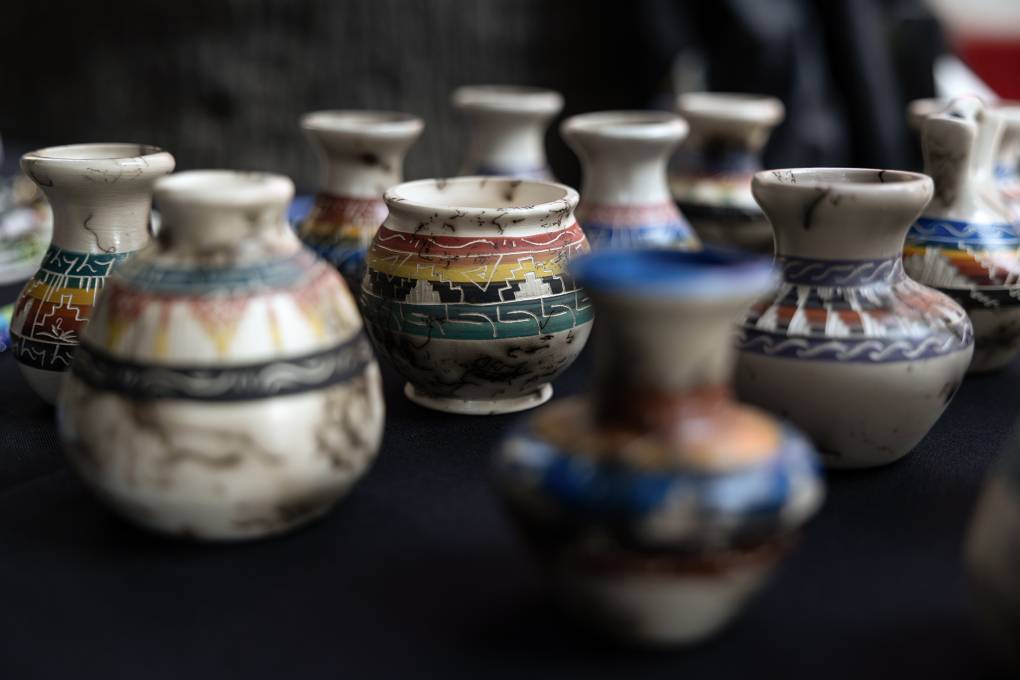
"caption": "A vendor sells pottery items at the California Native American Day celebration at the state Capitol on Sept. 22, 2023.",
"description": null,
"title": "CMNative01",
"credit": "Miguel Gutierrez Jr./CalMatters",
"status": "inherit",
"altTag": "Colorful Native American pottery is pictured. Some of it is weathered.",
"isLoading": false,
"fetchFailed": false
},
"news_11958553": {
"type": "attachments",
"id": "news_11958553",
"meta": {
"index": "attachments_1716263798",
"site": "news",
"id": "11958553",
"found": true
},
"parent": 0,
"imgSizes": {
"twentyfourteen-full-width": {
"file": "https://ww2.kqed.org/app/uploads/sites/10/2023/08/230818-LATINA-DOCTOR-CLINICA-GETTY-GM-KQED-1038x576.jpg",
"width": 1038,
"mimeType": "image/jpeg",
"height": 576
},
"thumbnail": {
"file": "https://ww2.kqed.org/app/uploads/sites/10/2023/08/230818-LATINA-DOCTOR-CLINICA-GETTY-GM-KQED-160x107.jpg",
"width": 160,
"mimeType": "image/jpeg",
"height": 107
},
"post-thumbnail": {
"file": "https://ww2.kqed.org/app/uploads/sites/10/2023/08/230818-LATINA-DOCTOR-CLINICA-GETTY-GM-KQED-672x372.jpg",
"width": 672,
"mimeType": "image/jpeg",
"height": 372
},
"kqedFullSize": {
"file": "https://ww2.kqed.org/app/uploads/sites/10/2023/08/230818-LATINA-DOCTOR-CLINICA-GETTY-GM-KQED.jpg",
"width": 2000,
"height": 1333
},
"large": {
"file": "https://ww2.kqed.org/app/uploads/sites/10/2023/08/230818-LATINA-DOCTOR-CLINICA-GETTY-GM-KQED-1020x680.jpg",
"width": 1020,
"mimeType": "image/jpeg",
"height": 680
},
"1536x1536": {
"file": "https://ww2.kqed.org/app/uploads/sites/10/2023/08/230818-LATINA-DOCTOR-CLINICA-GETTY-GM-KQED-1536x1024.jpg",
"width": 1536,
"mimeType": "image/jpeg",
"height": 1024
},
"full-width": {
"file": "https://ww2.kqed.org/app/uploads/sites/10/2023/08/230818-LATINA-DOCTOR-CLINICA-GETTY-GM-KQED-1920x1280.jpg",
"width": 1920,
"mimeType": "image/jpeg",
"height": 1280
},
"medium": {
"file": "https://ww2.kqed.org/app/uploads/sites/10/2023/08/230818-LATINA-DOCTOR-CLINICA-GETTY-GM-KQED-800x533.jpg",
"width": 800,
"mimeType": "image/jpeg",
"height": 533
}
},
"publishDate": 1692380234,
"modified": 1692382285,
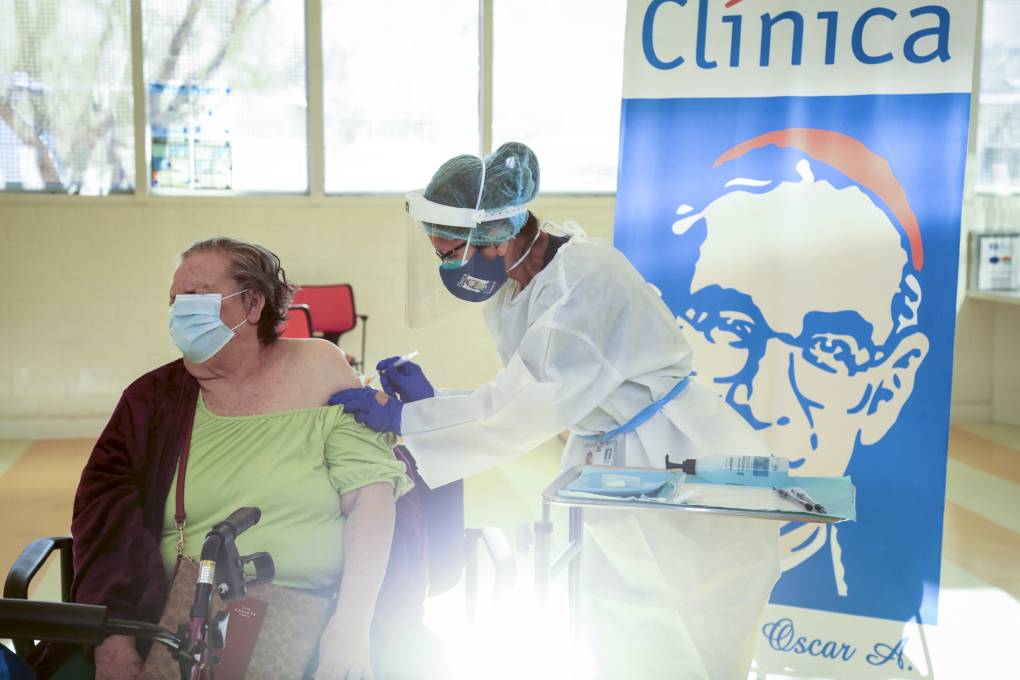
"caption": "A patient receives the Moderna COVID-19 vaccine at Clinica Romero in Los Angeles on Feb. 6, 2021. ",
"description": null,
"title": "Clinica Monsenor Romerto vaccine clinic - during the Coronavirus pandemic",
"credit": "Genaro Molina/Los Angeles Times via Getty Images",
"status": "inherit",
"altTag": "A person in personal protective equipment gives a vaccine to another person in a brightly lit room.",
"isLoading": false,
"fetchFailed": false
},
"news_11950064": {
"type": "attachments",
"id": "news_11950064",
"meta": {
"index": "attachments_1716263798",
"site": "news",
"id": "11950064",
"found": true
},
"parent": 0,
"imgSizes": {
"twentyfourteen-full-width": {
"file": "https://ww2.kqed.org/app/uploads/sites/10/2023/05/RS38497_GettyImages-73909601-qut-1038x576.jpg",
"width": 1038,
"mimeType": "image/jpeg",
"height": 576
},
"thumbnail": {
"file": "https://ww2.kqed.org/app/uploads/sites/10/2023/05/RS38497_GettyImages-73909601-qut-160x115.jpg",
"width": 160,
"mimeType": "image/jpeg",
"height": 115
},
"post-thumbnail": {
"file": "https://ww2.kqed.org/app/uploads/sites/10/2023/05/RS38497_GettyImages-73909601-qut-672x372.jpg",
"width": 672,
"mimeType": "image/jpeg",
"height": 372
},
"kqedFullSize": {
"file": "https://ww2.kqed.org/app/uploads/sites/10/2023/05/RS38497_GettyImages-73909601-qut.jpg",
"width": 1920,
"height": 1376
},
"large": {
"file": "https://ww2.kqed.org/app/uploads/sites/10/2023/05/RS38497_GettyImages-73909601-qut-1020x731.jpg",
"width": 1020,
"mimeType": "image/jpeg",
"height": 731
},
"1536x1536": {
"file": "https://ww2.kqed.org/app/uploads/sites/10/2023/05/RS38497_GettyImages-73909601-qut-1536x1101.jpg",
"width": 1536,
"mimeType": "image/jpeg",
"height": 1101
},
"medium": {
"file": "https://ww2.kqed.org/app/uploads/sites/10/2023/05/RS38497_GettyImages-73909601-qut-800x573.jpg",
"width": 800,
"mimeType": "image/jpeg",
"height": 573
}
},
"publishDate": 1684445486,
"modified": 1684445661,
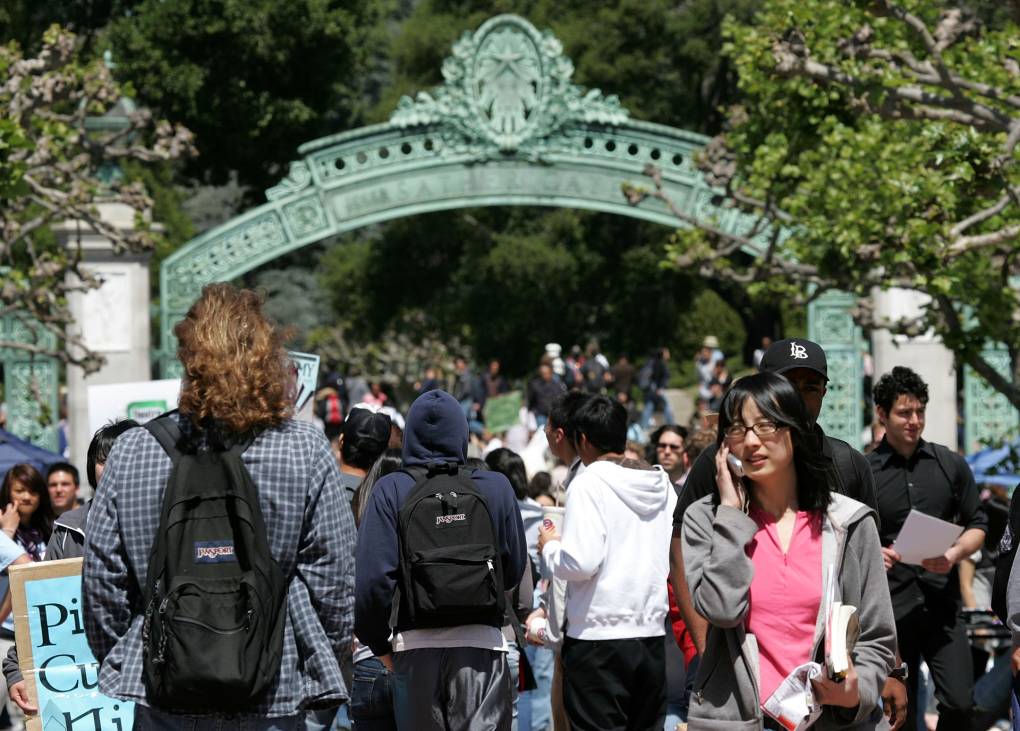
"caption": "UC Berkeley students walk through Sather Gate on the UC Berkeley campus April 17, 2007 in Berkeley, California. ",
"description": null,
"title": "U.S. Campus Security Scrutinized In Wake Of Virginia Tech Tragedy",
"credit": "Justin Sullivan/Getty Images",
"status": "inherit",
"altTag": "College students walk through a large, green archway surrounded by lush, tall trees. Many students wear black Jansport brand backpacks. Another female student with black hair and glasses talks on her cellphone in the foreground.",
"isLoading": false,
"fetchFailed": false
},
"news_11900443": {
"type": "attachments",
"id": "news_11900443",
"meta": {
"index": "attachments_1716263798",
"site": "news",
"id": "11900443",
"found": true
},
"parent": 11900423,
"imgSizes": {
"thumbnail": {
"file": "https://ww2.kqed.org/app/uploads/sites/10/2021/12/1318005-160x107.jpg",
"width": 160,
"mimeType": "image/jpeg",
"height": 107
},
"post-thumbnail": {
"file": "https://ww2.kqed.org/app/uploads/sites/10/2021/12/1318005-672x372.jpg",
"width": 672,
"mimeType": "image/jpeg",
"height": 372
},
"kqedFullSize": {
"file": "https://ww2.kqed.org/app/uploads/sites/10/2021/12/1318005.jpg",
"width": 767,
"height": 511
}
},
"publishDate": 1640806080,
"modified": 1640820159,
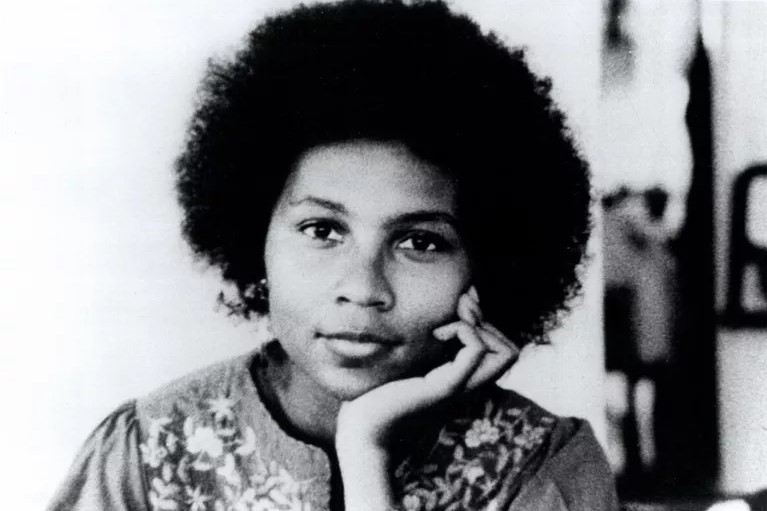
"caption": "bell hooks, who died on Dec. 15 at age 69, was foundational in shaping Black feminist thought and expanding a feminist worldview beyond white, middle-class identity — from her pointed critiques of the “imperialist white supremacist capitalist patriarchy” to her vulnerability and thoughts on love and healing.",
"description": "bell hooks, who passed away on Dec. 15 at age 69, has been foundational in shaping Black feminist thought.",
"title": "1318005",
"credit": "Courtesy of Wikimedia Commons",
"status": "inherit",
"altTag": "bell hooks looks at the camera straight on and rests her chin on her left palm.",
"isLoading": false,
"fetchFailed": false
},
"news_11897350": {
"type": "attachments",
"id": "news_11897350",
"meta": {
"index": "attachments_1716263798",
"site": "news",
"id": "11897350",
"found": true
},
"title": "RS47905_004_SanFrancisco_StopAAPIHateRally_0320201-qut",
"publishDate": 1637794725,
"status": "inherit",
"parent": 11897316,
"modified": 1762299326,
"caption": "Hundreds gather at Portsmouth Square in San Francisco’s Chinatown on March 20, 2021, for a Stop AAPI Hate rally, which made space for people to grieve, make art and honor the lives lost to recent anti-Asian violence.",
"credit": "Beth LaBerge/KQED",
"altTag": "Two people wearing black masks in a crowd hold signs that say \"stop Asian hate\" and \"stop racism.\"",
"description": null,
"imgSizes": {
"medium": {
"file": "https://cdn.kqed.org/wp-content/uploads/sites/10/2021/11/RS47905_004_SanFrancisco_StopAAPIHateRally_0320201-qut-800x533.jpg",
"width": 800,
"height": 533,
"mimeType": "image/jpeg"
},
"large": {
"file": "https://cdn.kqed.org/wp-content/uploads/sites/10/2021/11/RS47905_004_SanFrancisco_StopAAPIHateRally_0320201-qut-1020x680.jpg",
"width": 1020,
"height": 680,
"mimeType": "image/jpeg"
},
"thumbnail": {
"file": "https://cdn.kqed.org/wp-content/uploads/sites/10/2021/11/RS47905_004_SanFrancisco_StopAAPIHateRally_0320201-qut-160x107.jpg",
"width": 160,
"height": 107,
"mimeType": "image/jpeg"
},
"1536x1536": {
"file": "https://cdn.kqed.org/wp-content/uploads/sites/10/2021/11/RS47905_004_SanFrancisco_StopAAPIHateRally_0320201-qut-1536x1024.jpg",
"width": 1536,
"height": 1024,
"mimeType": "image/jpeg"
},
"post-thumbnail": {
"file": "https://cdn.kqed.org/wp-content/uploads/sites/10/2021/11/RS47905_004_SanFrancisco_StopAAPIHateRally_0320201-qut-672x372.jpg",
"width": 672,
"height": 372,
"mimeType": "image/jpeg"
},
"twentyfourteen-full-width": {
"file": "https://cdn.kqed.org/wp-content/uploads/sites/10/2021/11/RS47905_004_SanFrancisco_StopAAPIHateRally_0320201-qut-1038x576.jpg",
"width": 1038,
"height": 576,
"mimeType": "image/jpeg"
},
"kqedFullSize": {
"file": "https://cdn.kqed.org/wp-content/uploads/sites/10/2021/11/RS47905_004_SanFrancisco_StopAAPIHateRally_0320201-qut.jpg",
"width": 1920,
"height": 1280
}
},
"isLoading": false,
"fetchFailed": false
},
"news_11839089": {
"type": "attachments",
"id": "news_11839089",
"meta": {
"index": "attachments_1716263798",
"site": "news",
"id": "11839089",
"found": true
},
"parent": 11839078,
"imgSizes": {
"apple_news_ca_landscape_5_5": {
"file": "https://ww2.kqed.org/app/uploads/sites/10/2020/09/GettyImages-1257653148-1044x783.jpg",
"width": 1044,
"mimeType": "image/jpeg",
"height": 783
},
"apple_news_ca_square_4_0": {
"file": "https://ww2.kqed.org/app/uploads/sites/10/2020/09/GettyImages-1257653148-470x470.jpg",
"width": 470,
"mimeType": "image/jpeg",
"height": 470
},
"twentyfourteen-full-width": {
"file": "https://ww2.kqed.org/app/uploads/sites/10/2020/09/GettyImages-1257653148-1038x576.jpg",
"width": 1038,
"mimeType": "image/jpeg",
"height": 576
},
"thumbnail": {
"file": "https://ww2.kqed.org/app/uploads/sites/10/2020/09/GettyImages-1257653148-160x107.jpg",
"width": 160,
"mimeType": "image/jpeg",
"height": 107
},
"post-thumbnail": {
"file": "https://ww2.kqed.org/app/uploads/sites/10/2020/09/GettyImages-1257653148-672x372.jpg",
"width": 672,
"mimeType": "image/jpeg",
"height": 372
},
"kqedFullSize": {
"file": "https://ww2.kqed.org/app/uploads/sites/10/2020/09/GettyImages-1257653148-scaled-e1600803815104.jpg",
"width": 1920,
"height": 1280
},
"2048x2048": {
"file": "https://ww2.kqed.org/app/uploads/sites/10/2020/09/GettyImages-1257653148-2048x1365.jpg",
"width": 2048,
"mimeType": "image/jpeg",
"height": 1365
},
"apple_news_ca_landscape_4_7": {
"file": "https://ww2.kqed.org/app/uploads/sites/10/2020/09/GettyImages-1257653148-632x474.jpg",
"width": 632,
"mimeType": "image/jpeg",
"height": 474
},
"large": {
"file": "https://ww2.kqed.org/app/uploads/sites/10/2020/09/GettyImages-1257653148-1020x680.jpg",
"width": 1020,
"mimeType": "image/jpeg",
"height": 680
},
"apple_news_ca_landscape_4_0": {
"file": "https://ww2.kqed.org/app/uploads/sites/10/2020/09/GettyImages-1257653148-536x402.jpg",
"width": 536,
"mimeType": "image/jpeg",
"height": 402
},
"apple_news_ca_portrait_12_9": {
"file": "https://ww2.kqed.org/app/uploads/sites/10/2020/09/GettyImages-1257653148-1122x1496.jpg",
"width": 1122,
"mimeType": "image/jpeg",
"height": 1496
},
"medium": {
"file": "https://ww2.kqed.org/app/uploads/sites/10/2020/09/GettyImages-1257653148-800x533.jpg",
"width": 800,
"mimeType": "image/jpeg",
"height": 533
},
"apple_news_ca_portrait_4_0": {
"file": "https://ww2.kqed.org/app/uploads/sites/10/2020/09/GettyImages-1257653148-354x472.jpg",
"width": 354,
"mimeType": "image/jpeg",
"height": 472
},
"apple_news_ca_portrait_9_7": {
"file": "https://ww2.kqed.org/app/uploads/sites/10/2020/09/GettyImages-1257653148-840x1120.jpg",
"width": 840,
"mimeType": "image/jpeg",
"height": 1120
},
"apple_news_ca_landscape_12_9": {
"file": "https://ww2.kqed.org/app/uploads/sites/10/2020/09/GettyImages-1257653148-1832x1374.jpg",
"width": 1832,
"mimeType": "image/jpeg",
"height": 1374
},
"apple_news_ca_square_9_7": {
"file": "https://ww2.kqed.org/app/uploads/sites/10/2020/09/GettyImages-1257653148-1104x1104.jpg",
"width": 1104,
"mimeType": "image/jpeg",
"height": 1104
},
"1536x1536": {
"file": "https://ww2.kqed.org/app/uploads/sites/10/2020/09/GettyImages-1257653148-1536x1024.jpg",
"width": 1536,
"mimeType": "image/jpeg",
"height": 1024
},
"apple_news_ca_portrait_4_7": {
"file": "https://ww2.kqed.org/app/uploads/sites/10/2020/09/GettyImages-1257653148-414x552.jpg",
"width": 414,
"mimeType": "image/jpeg",
"height": 552
},
"apple_news_ca_square_12_9": {
"file": "https://ww2.kqed.org/app/uploads/sites/10/2020/09/GettyImages-1257653148-1472x1472.jpg",
"width": 1472,
"mimeType": "image/jpeg",
"height": 1472
},
"apple_news_ca_portrait_5_5": {
"file": "https://ww2.kqed.org/app/uploads/sites/10/2020/09/GettyImages-1257653148-687x916.jpg",
"width": 687,
"mimeType": "image/jpeg",
"height": 916
},
"full-width": {
"file": "https://ww2.kqed.org/app/uploads/sites/10/2020/09/GettyImages-1257653148-1920x1280.jpg",
"width": 1920,
"mimeType": "image/jpeg",
"height": 1280
},
"apple_news_ca_square_4_7": {
"file": "https://ww2.kqed.org/app/uploads/sites/10/2020/09/GettyImages-1257653148-550x550.jpg",
"width": 550,
"mimeType": "image/jpeg",
"height": 550
},
"apple_news_ca_landscape_9_7": {
"file": "https://ww2.kqed.org/app/uploads/sites/10/2020/09/GettyImages-1257653148-1376x1032.jpg",
"width": 1376,
"mimeType": "image/jpeg",
"height": 1032
},
"apple_news_ca_square_5_5": {
"file": "https://ww2.kqed.org/app/uploads/sites/10/2020/09/GettyImages-1257653148-912x912.jpg",
"width": 912,
"mimeType": "image/jpeg",
"height": 912
}
},
"publishDate": 1600801063,
"modified": 1603721598,
"caption": null,
"description": null,
"title": "UC Berkeley To Begin Fall Semester With Online-Only Courses",
"credit": "Justin Sullivan/Getty Images",
"status": "inherit",
"isLoading": false,
"fetchFailed": false
},
"news_11810990": {
"type": "attachments",
"id": "news_11810990",
"meta": {
"index": "attachments_1716263798",
"site": "news",
"id": "11810990",
"found": true
},
"parent": 11810988,
"imgSizes": {
"apple_news_ca_landscape_5_5": {
"file": "https://ww2.kqed.org/app/uploads/sites/10/2020/04/SadiaKhan1-1044x783.jpg",
"width": 1044,
"mimeType": "image/jpeg",
"height": 783
},
"apple_news_ca_square_4_0": {
"file": "https://ww2.kqed.org/app/uploads/sites/10/2020/04/SadiaKhan1-470x470.jpg",
"width": 470,
"mimeType": "image/jpeg",
"height": 470
},
"twentyfourteen-full-width": {
"file": "https://ww2.kqed.org/app/uploads/sites/10/2020/04/SadiaKhan1-1038x576.jpg",
"width": 1038,
"mimeType": "image/jpeg",
"height": 576
},
"thumbnail": {
"file": "https://ww2.kqed.org/app/uploads/sites/10/2020/04/SadiaKhan1-160x120.jpg",
"width": 160,
"mimeType": "image/jpeg",
"height": 120
},
"post-thumbnail": {
"file": "https://ww2.kqed.org/app/uploads/sites/10/2020/04/SadiaKhan1-672x372.jpg",
"width": 672,
"mimeType": "image/jpeg",
"height": 372
},
"kqedFullSize": {
"file": "https://ww2.kqed.org/app/uploads/sites/10/2020/04/SadiaKhan1-e1586286132236.jpg",
"width": 1920,
"height": 1440
},
"apple_news_ca_landscape_4_7": {
"file": "https://ww2.kqed.org/app/uploads/sites/10/2020/04/SadiaKhan1-632x474.jpg",
"width": 632,
"mimeType": "image/jpeg",
"height": 474
},
"large": {
"file": "https://ww2.kqed.org/app/uploads/sites/10/2020/04/SadiaKhan1-1020x765.jpg",
"width": 1020,
"mimeType": "image/jpeg",
"height": 765
},
"apple_news_ca_landscape_4_0": {
"file": "https://ww2.kqed.org/app/uploads/sites/10/2020/04/SadiaKhan1-536x402.jpg",
"width": 536,
"mimeType": "image/jpeg",
"height": 402
},
"apple_news_ca_portrait_12_9": {
"file": "https://ww2.kqed.org/app/uploads/sites/10/2020/04/SadiaKhan1-1122x1496.jpg",
"width": 1122,
"mimeType": "image/jpeg",
"height": 1496
},
"medium": {
"file": "https://ww2.kqed.org/app/uploads/sites/10/2020/04/SadiaKhan1-800x600.jpg",
"width": 800,
"mimeType": "image/jpeg",
"height": 600
},
"apple_news_ca_portrait_4_0": {
"file": "https://ww2.kqed.org/app/uploads/sites/10/2020/04/SadiaKhan1-354x472.jpg",
"width": 354,
"mimeType": "image/jpeg",
"height": 472
},
"apple_news_ca_portrait_9_7": {
"file": "https://ww2.kqed.org/app/uploads/sites/10/2020/04/SadiaKhan1-840x1120.jpg",
"width": 840,
"mimeType": "image/jpeg",
"height": 1120
},
"apple_news_ca_landscape_12_9": {
"file": "https://ww2.kqed.org/app/uploads/sites/10/2020/04/SadiaKhan1-1832x1374.jpg",
"width": 1832,
"mimeType": "image/jpeg",
"height": 1374
},
"apple_news_ca_square_9_7": {
"file": "https://ww2.kqed.org/app/uploads/sites/10/2020/04/SadiaKhan1-1104x1104.jpg",
"width": 1104,
"mimeType": "image/jpeg",
"height": 1104
},
"apple_news_ca_portrait_4_7": {
"file": "https://ww2.kqed.org/app/uploads/sites/10/2020/04/SadiaKhan1-414x552.jpg",
"width": 414,
"mimeType": "image/jpeg",
"height": 552
},
"apple_news_ca_square_12_9": {
"file": "https://ww2.kqed.org/app/uploads/sites/10/2020/04/SadiaKhan1-1472x1472.jpg",
"width": 1472,
"mimeType": "image/jpeg",
"height": 1472
},
"apple_news_ca_portrait_5_5": {
"file": "https://ww2.kqed.org/app/uploads/sites/10/2020/04/SadiaKhan1-687x916.jpg",
"width": 687,
"mimeType": "image/jpeg",
"height": 916
},
"full-width": {
"file": "https://ww2.kqed.org/app/uploads/sites/10/2020/04/SadiaKhan1-1920x1440.jpg",
"width": 1920,
"mimeType": "image/jpeg",
"height": 1440
},
"apple_news_ca_square_4_7": {
"file": "https://ww2.kqed.org/app/uploads/sites/10/2020/04/SadiaKhan1-550x550.jpg",
"width": 550,
"mimeType": "image/jpeg",
"height": 550
},
"apple_news_ca_landscape_9_7": {
"file": "https://ww2.kqed.org/app/uploads/sites/10/2020/04/SadiaKhan1-1376x1032.jpg",
"width": 1376,
"mimeType": "image/jpeg",
"height": 1032
},
"apple_news_ca_square_5_5": {
"file": "https://ww2.kqed.org/app/uploads/sites/10/2020/04/SadiaKhan1-912x912.jpg",
"width": 912,
"mimeType": "image/jpeg",
"height": 912
}
},
"publishDate": 1586222412,
"modified": 1586286127,
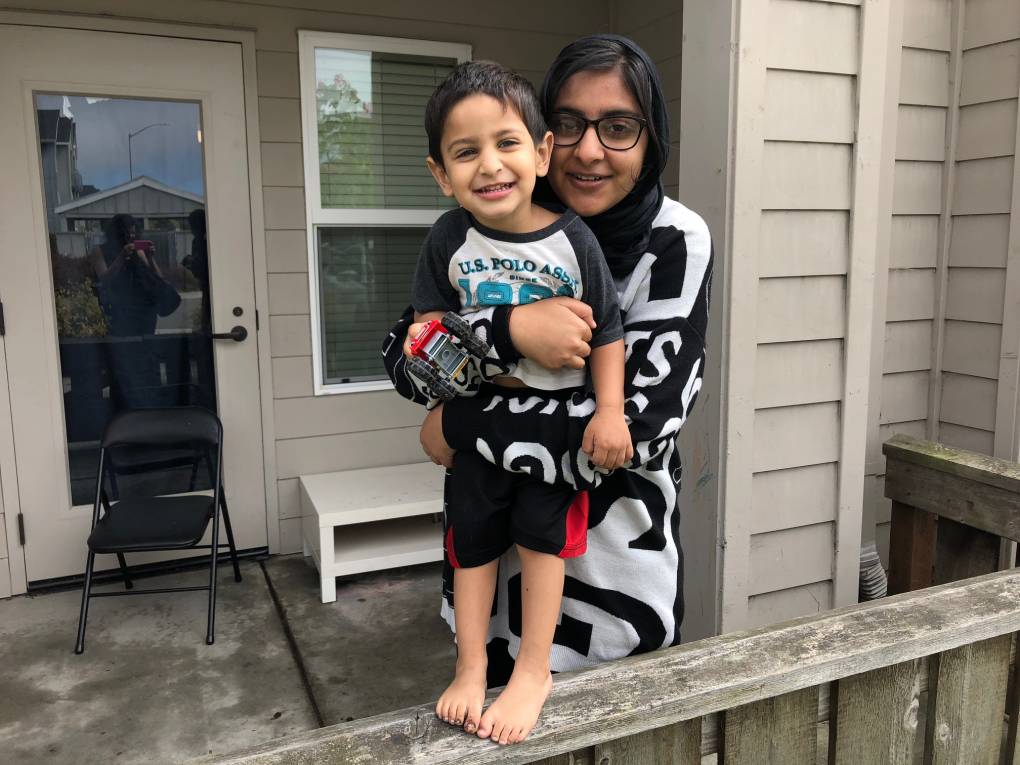
"caption": "Sadia Khan with her son, Hashim, outside their apartment in University Village. \n\n",
"description": null,
"title": "SadiaKhan1",
"credit": "Vanessa Rancaño/KQED ",
"status": "inherit",
"isLoading": false,
"fetchFailed": false
},
"news_11767086": {
"type": "attachments",
"id": "news_11767086",
"meta": {
"index": "attachments_1716263798",
"site": "news",
"id": "11767086",
"found": true
},
"parent": 11767050,
"imgSizes": {
"apple_news_ca_landscape_5_5": {
"file": "https://ww2.kqed.org/app/uploads/sites/10/2019/08/Sather-Gate-UC-Berkeley-1044x783.jpg",
"width": 1044,
"mimeType": "image/jpeg",
"height": 783
},
"apple_news_ca_square_4_0": {
"file": "https://ww2.kqed.org/app/uploads/sites/10/2019/08/Sather-Gate-UC-Berkeley-470x470.jpg",
"width": 470,
"mimeType": "image/jpeg",
"height": 470
},
"twentyfourteen-full-width": {
"file": "https://ww2.kqed.org/app/uploads/sites/10/2019/08/Sather-Gate-UC-Berkeley-1038x576.jpg",
"width": 1038,
"mimeType": "image/jpeg",
"height": 576
},
"thumbnail": {
"file": "https://ww2.kqed.org/app/uploads/sites/10/2019/08/Sather-Gate-UC-Berkeley-160x101.jpg",
"width": 160,
"mimeType": "image/jpeg",
"height": 101
},
"post-thumbnail": {
"file": "https://ww2.kqed.org/app/uploads/sites/10/2019/08/Sather-Gate-UC-Berkeley-672x372.jpg",
"width": 672,
"mimeType": "image/jpeg",
"height": 372
},
"kqedFullSize": {
"file": "https://ww2.kqed.org/app/uploads/sites/10/2019/08/Sather-Gate-UC-Berkeley.jpg",
"width": 1920,
"height": 1216
},
"apple_news_ca_landscape_4_7": {
"file": "https://ww2.kqed.org/app/uploads/sites/10/2019/08/Sather-Gate-UC-Berkeley-632x474.jpg",
"width": 632,
"mimeType": "image/jpeg",
"height": 474
},
"large": {
"file": "https://ww2.kqed.org/app/uploads/sites/10/2019/08/Sather-Gate-UC-Berkeley-1020x646.jpg",
"width": 1020,
"mimeType": "image/jpeg",
"height": 646
},
"complete_open_graph": {
"file": "https://ww2.kqed.org/app/uploads/sites/10/2019/08/Sather-Gate-UC-Berkeley-1200x760.jpg",
"width": 1200,
"mimeType": "image/jpeg",
"height": 760
},
"apple_news_ca_landscape_4_0": {
"file": "https://ww2.kqed.org/app/uploads/sites/10/2019/08/Sather-Gate-UC-Berkeley-536x402.jpg",
"width": 536,
"mimeType": "image/jpeg",
"height": 402
},
"apple_news_ca_portrait_12_9": {
"file": "https://ww2.kqed.org/app/uploads/sites/10/2019/08/Sather-Gate-UC-Berkeley-1122x1216.jpg",
"width": 1122,
"mimeType": "image/jpeg",
"height": 1216
},
"medium": {
"file": "https://ww2.kqed.org/app/uploads/sites/10/2019/08/Sather-Gate-UC-Berkeley-800x507.jpg",
"width": 800,
"mimeType": "image/jpeg",
"height": 507
},
"apple_news_ca_portrait_4_0": {
"file": "https://ww2.kqed.org/app/uploads/sites/10/2019/08/Sather-Gate-UC-Berkeley-354x472.jpg",
"width": 354,
"mimeType": "image/jpeg",
"height": 472
},
"apple_news_ca_portrait_9_7": {
"file": "https://ww2.kqed.org/app/uploads/sites/10/2019/08/Sather-Gate-UC-Berkeley-840x1120.jpg",
"width": 840,
"mimeType": "image/jpeg",
"height": 1120
},
"apple_news_ca_landscape_12_9": {
"file": "https://ww2.kqed.org/app/uploads/sites/10/2019/08/Sather-Gate-UC-Berkeley-1832x1216.jpg",
"width": 1832,
"mimeType": "image/jpeg",
"height": 1216
},
"apple_news_ca_square_9_7": {
"file": "https://ww2.kqed.org/app/uploads/sites/10/2019/08/Sather-Gate-UC-Berkeley-1104x1104.jpg",
"width": 1104,
"mimeType": "image/jpeg",
"height": 1104
},
"apple_news_ca_portrait_4_7": {
"file": "https://ww2.kqed.org/app/uploads/sites/10/2019/08/Sather-Gate-UC-Berkeley-414x552.jpg",
"width": 414,
"mimeType": "image/jpeg",
"height": 552
},
"apple_news_ca_square_12_9": {
"file": "https://ww2.kqed.org/app/uploads/sites/10/2019/08/Sather-Gate-UC-Berkeley-1472x1216.jpg",
"width": 1472,
"mimeType": "image/jpeg",
"height": 1216
},
"apple_news_ca_portrait_5_5": {
"file": "https://ww2.kqed.org/app/uploads/sites/10/2019/08/Sather-Gate-UC-Berkeley-687x916.jpg",
"width": 687,
"mimeType": "image/jpeg",
"height": 916
},
"full-width": {
"file": "https://ww2.kqed.org/app/uploads/sites/10/2019/08/Sather-Gate-UC-Berkeley-1920x1216.jpg",
"width": 1920,
"mimeType": "image/jpeg",
"height": 1216
},
"apple_news_ca_square_4_7": {
"file": "https://ww2.kqed.org/app/uploads/sites/10/2019/08/Sather-Gate-UC-Berkeley-550x550.jpg",
"width": 550,
"mimeType": "image/jpeg",
"height": 550
},
"apple_news_ca_landscape_9_7": {
"file": "https://ww2.kqed.org/app/uploads/sites/10/2019/08/Sather-Gate-UC-Berkeley-1376x1032.jpg",
"width": 1376,
"mimeType": "image/jpeg",
"height": 1032
},
"apple_news_ca_square_5_5": {
"file": "https://ww2.kqed.org/app/uploads/sites/10/2019/08/Sather-Gate-UC-Berkeley-912x912.jpg",
"width": 912,
"mimeType": "image/jpeg",
"height": 912
}
},
"publishDate": 1565649655,
"modified": 1565649746,
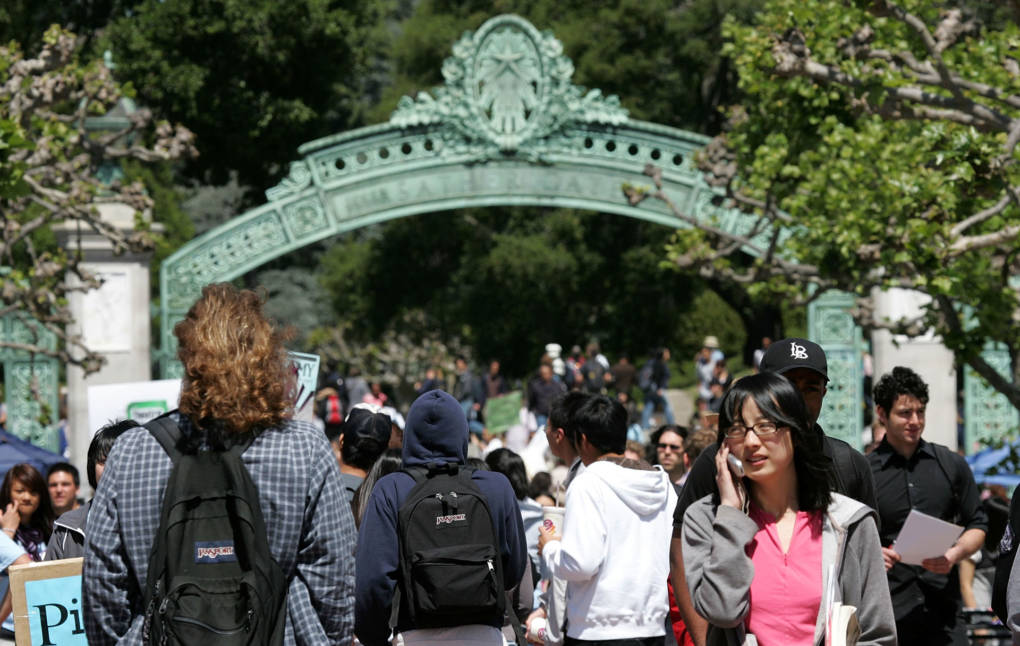
"caption": "Students walk through Sather Gate at UC Berkeley, one of the nation's most selective public universities.",
"description": "Students walk through Sather Gate at UC Berkeley, one of the nation's most selective public universities.",
"title": "Sather-Gate-UC-Berkeley",
"credit": "Justin Sullivan/Getty Images",
"status": "inherit",
"isLoading": false,
"fetchFailed": false
},
"news_11754326": {
"type": "attachments",
"id": "news_11754326",
"meta": {
"index": "attachments_1716263798",
"site": "news",
"id": "11754326",
"found": true
},
"parent": 11754307,
"imgSizes": {
"apple_news_ca_landscape_5_5": {
"file": "https://ww2.kqed.org/app/uploads/sites/10/2019/06/06122019_Ronald-Reagan-UCLA-Medical-Center-qut-1044x783.jpg",
"width": 1044,
"mimeType": "image/jpeg",
"height": 783
},
"apple_news_ca_square_4_0": {
"file": "https://ww2.kqed.org/app/uploads/sites/10/2019/06/06122019_Ronald-Reagan-UCLA-Medical-Center-qut-470x470.jpg",
"width": 470,
"mimeType": "image/jpeg",
"height": 470
},
"twentyfourteen-full-width": {
"file": "https://ww2.kqed.org/app/uploads/sites/10/2019/06/06122019_Ronald-Reagan-UCLA-Medical-Center-qut-1038x576.jpg",
"width": 1038,
"mimeType": "image/jpeg",
"height": 576
},
"thumbnail": {
"file": "https://ww2.kqed.org/app/uploads/sites/10/2019/06/06122019_Ronald-Reagan-UCLA-Medical-Center-qut-160x107.jpg",
"width": 160,
"mimeType": "image/jpeg",
"height": 107
},
"post-thumbnail": {
"file": "https://ww2.kqed.org/app/uploads/sites/10/2019/06/06122019_Ronald-Reagan-UCLA-Medical-Center-qut-672x372.jpg",
"width": 672,
"mimeType": "image/jpeg",
"height": 372
},
"kqedFullSize": {
"file": "https://ww2.kqed.org/app/uploads/sites/10/2019/06/06122019_Ronald-Reagan-UCLA-Medical-Center-qut.jpg",
"width": 1920,
"height": 1278
},
"apple_news_ca_landscape_4_7": {
"file": "https://ww2.kqed.org/app/uploads/sites/10/2019/06/06122019_Ronald-Reagan-UCLA-Medical-Center-qut-632x474.jpg",
"width": 632,
"mimeType": "image/jpeg",
"height": 474
},
"large": {
"file": "https://ww2.kqed.org/app/uploads/sites/10/2019/06/06122019_Ronald-Reagan-UCLA-Medical-Center-qut-1020x679.jpg",
"width": 1020,
"mimeType": "image/jpeg",
"height": 679
},
"complete_open_graph": {
"file": "https://ww2.kqed.org/app/uploads/sites/10/2019/06/06122019_Ronald-Reagan-UCLA-Medical-Center-qut-1200x799.jpg",
"width": 1200,
"mimeType": "image/jpeg",
"height": 799
},
"apple_news_ca_landscape_4_0": {
"file": "https://ww2.kqed.org/app/uploads/sites/10/2019/06/06122019_Ronald-Reagan-UCLA-Medical-Center-qut-536x402.jpg",
"width": 536,
"mimeType": "image/jpeg",
"height": 402
},
"apple_news_ca_portrait_12_9": {
"file": "https://ww2.kqed.org/app/uploads/sites/10/2019/06/06122019_Ronald-Reagan-UCLA-Medical-Center-qut-1122x1278.jpg",
"width": 1122,
"mimeType": "image/jpeg",
"height": 1278
},
"medium": {
"file": "https://ww2.kqed.org/app/uploads/sites/10/2019/06/06122019_Ronald-Reagan-UCLA-Medical-Center-qut-800x533.jpg",
"width": 800,
"mimeType": "image/jpeg",
"height": 533
},
"apple_news_ca_portrait_4_0": {
"file": "https://ww2.kqed.org/app/uploads/sites/10/2019/06/06122019_Ronald-Reagan-UCLA-Medical-Center-qut-354x472.jpg",
"width": 354,
"mimeType": "image/jpeg",
"height": 472
},
"apple_news_ca_portrait_9_7": {
"file": "https://ww2.kqed.org/app/uploads/sites/10/2019/06/06122019_Ronald-Reagan-UCLA-Medical-Center-qut-840x1120.jpg",
"width": 840,
"mimeType": "image/jpeg",
"height": 1120
},
"apple_news_ca_landscape_12_9": {
"file": "https://ww2.kqed.org/app/uploads/sites/10/2019/06/06122019_Ronald-Reagan-UCLA-Medical-Center-qut-1832x1278.jpg",
"width": 1832,
"mimeType": "image/jpeg",
"height": 1278
},
"apple_news_ca_square_9_7": {
"file": "https://ww2.kqed.org/app/uploads/sites/10/2019/06/06122019_Ronald-Reagan-UCLA-Medical-Center-qut-1104x1104.jpg",
"width": 1104,
"mimeType": "image/jpeg",
"height": 1104
},
"apple_news_ca_portrait_4_7": {
"file": "https://ww2.kqed.org/app/uploads/sites/10/2019/06/06122019_Ronald-Reagan-UCLA-Medical-Center-qut-414x552.jpg",
"width": 414,
"mimeType": "image/jpeg",
"height": 552
},
"apple_news_ca_square_12_9": {
"file": "https://ww2.kqed.org/app/uploads/sites/10/2019/06/06122019_Ronald-Reagan-UCLA-Medical-Center-qut-1472x1278.jpg",
"width": 1472,
"mimeType": "image/jpeg",
"height": 1278
},
"apple_news_ca_portrait_5_5": {
"file": "https://ww2.kqed.org/app/uploads/sites/10/2019/06/06122019_Ronald-Reagan-UCLA-Medical-Center-qut-687x916.jpg",
"width": 687,
"mimeType": "image/jpeg",
"height": 916
},
"full-width": {
"file": "https://ww2.kqed.org/app/uploads/sites/10/2019/06/06122019_Ronald-Reagan-UCLA-Medical-Center-qut-1920x1278.jpg",
"width": 1920,
"mimeType": "image/jpeg",
"height": 1278
},
"apple_news_ca_square_4_7": {
"file": "https://ww2.kqed.org/app/uploads/sites/10/2019/06/06122019_Ronald-Reagan-UCLA-Medical-Center-qut-550x550.jpg",
"width": 550,
"mimeType": "image/jpeg",
"height": 550
},
"apple_news_ca_landscape_9_7": {
"file": "https://ww2.kqed.org/app/uploads/sites/10/2019/06/06122019_Ronald-Reagan-UCLA-Medical-Center-qut-1376x1032.jpg",
"width": 1376,
"mimeType": "image/jpeg",
"height": 1032
},
"apple_news_ca_square_5_5": {
"file": "https://ww2.kqed.org/app/uploads/sites/10/2019/06/06122019_Ronald-Reagan-UCLA-Medical-Center-qut-912x912.jpg",
"width": 912,
"mimeType": "image/jpeg",
"height": 912
}
},
"publishDate": 1560378872,
"modified": 1560381031,
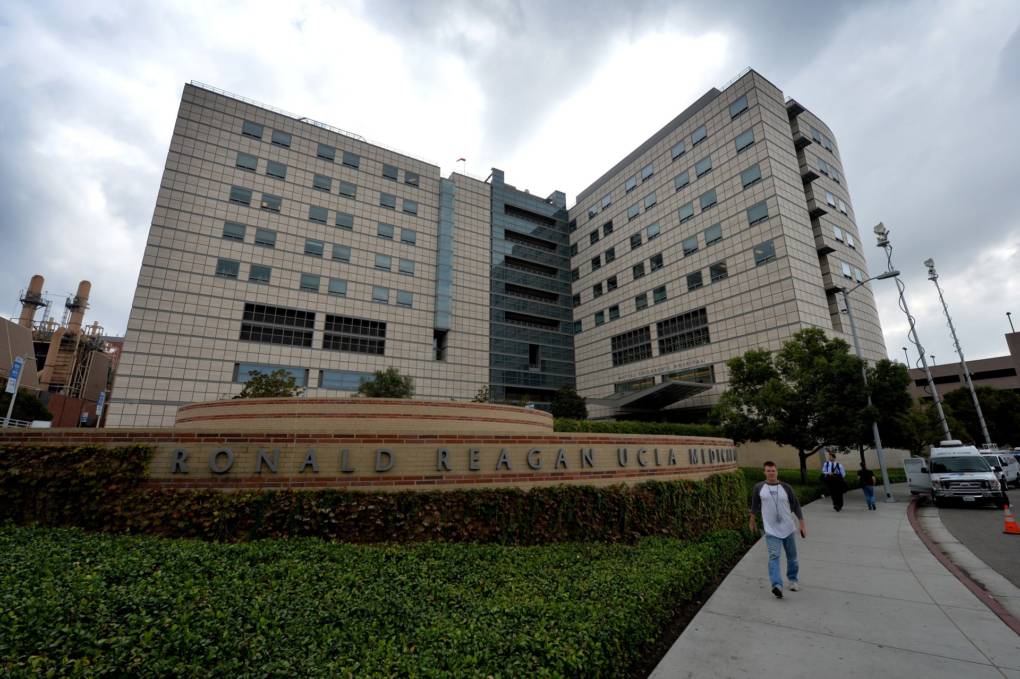
"caption": "Exterior view of the Ronald Reagan UCLA Medical Center in Los Angeles on Oct. 17, 2014. ",
"description": "Exterior view of the Ronald Reagan UCLA Medical Center in Los Angeles on Oct. 17, 2014. ",
"title": "US-Ronald Reagan UCLA Medical Center",
"credit": "MARK RALSTON/AFP/Getty Images",
"status": "inherit",
"isLoading": false,
"fetchFailed": false
},
"news_11621407": {
"type": "attachments",
"id": "news_11621407",
"meta": {
"index": "attachments_1716263798",
"site": "news",
"id": "11621407",
"found": true
},
"parent": 11621405,
"imgSizes": {
"small": {
"file": "https://ww2.kqed.org/app/uploads/sites/10/2017/10/ww2.kqed_.orgBaby-at-doctor-800x533-a356796868b255cfd789d0786338375401961d99-520x346.jpg",
"width": 520,
"mimeType": "image/jpeg",
"height": 346
},
"thumbnail": {
"file": "https://ww2.kqed.org/app/uploads/sites/10/2017/10/ww2.kqed_.orgBaby-at-doctor-800x533-a356796868b255cfd789d0786338375401961d99-160x107.jpg",
"width": 160,
"mimeType": "image/jpeg",
"height": 107
},
"post-thumbnail": {
"file": "https://ww2.kqed.org/app/uploads/sites/10/2017/10/ww2.kqed_.orgBaby-at-doctor-800x533-a356796868b255cfd789d0786338375401961d99-672x372.jpg",
"width": 672,
"mimeType": "image/jpeg",
"height": 372
},
"xsmall": {
"file": "https://ww2.kqed.org/app/uploads/sites/10/2017/10/ww2.kqed_.orgBaby-at-doctor-800x533-a356796868b255cfd789d0786338375401961d99-375x250.jpg",
"width": 375,
"mimeType": "image/jpeg",
"height": 250
},
"kqedFullSize": {
"file": "https://ww2.kqed.org/app/uploads/sites/10/2017/10/ww2.kqed_.orgBaby-at-doctor-800x533-a356796868b255cfd789d0786338375401961d99.jpg",
"width": 800,
"height": 533
},
"guest-author-50": {
"file": "https://ww2.kqed.org/app/uploads/sites/10/2017/10/ww2.kqed_.orgBaby-at-doctor-800x533-a356796868b255cfd789d0786338375401961d99-50x50.jpg",
"width": 50,
"mimeType": "image/jpeg",
"height": 50
},
"guest-author-96": {
"file": "https://ww2.kqed.org/app/uploads/sites/10/2017/10/ww2.kqed_.orgBaby-at-doctor-800x533-a356796868b255cfd789d0786338375401961d99-96x96.jpg",
"width": 96,
"mimeType": "image/jpeg",
"height": 96
},
"medium": {
"file": "https://ww2.kqed.org/app/uploads/sites/10/2017/10/ww2.kqed_.orgBaby-at-doctor-800x533-a356796868b255cfd789d0786338375401961d99-800x533.jpg",
"width": 800,
"mimeType": "image/jpeg",
"height": 533
},
"guest-author-64": {
"file": "https://ww2.kqed.org/app/uploads/sites/10/2017/10/ww2.kqed_.orgBaby-at-doctor-800x533-a356796868b255cfd789d0786338375401961d99-64x64.jpg",
"width": 64,
"mimeType": "image/jpeg",
"height": 64
},
"guest-author-32": {
"file": "https://ww2.kqed.org/app/uploads/sites/10/2017/10/ww2.kqed_.orgBaby-at-doctor-800x533-a356796868b255cfd789d0786338375401961d99-32x32.jpg",
"width": 32,
"mimeType": "image/jpeg",
"height": 32
},
"detail": {
"file": "https://ww2.kqed.org/app/uploads/sites/10/2017/10/ww2.kqed_.orgBaby-at-doctor-800x533-a356796868b255cfd789d0786338375401961d99-150x150.jpg",
"width": 150,
"mimeType": "image/jpeg",
"height": 150
},
"guest-author-128": {
"file": "https://ww2.kqed.org/app/uploads/sites/10/2017/10/ww2.kqed_.orgBaby-at-doctor-800x533-a356796868b255cfd789d0786338375401961d99-128x128.jpg",
"width": 128,
"mimeType": "image/jpeg",
"height": 128
},
"xxsmall": {
"file": "https://ww2.kqed.org/app/uploads/sites/10/2017/10/ww2.kqed_.orgBaby-at-doctor-800x533-a356796868b255cfd789d0786338375401961d99-240x160.jpg",
"width": 240,
"mimeType": "image/jpeg",
"height": 160
}
},
"publishDate": 1507251192,
"modified": 1507321417,
"caption": "A pediatrician vaccinates a small boy ",
"description": null,
"title": "Baby-at-doctor-800x533-a356796868b255cfd789d0786338375401961d99",
"credit": "iStock",
"status": "inherit",
"isLoading": false,
"fetchFailed": false
},
"news_11742934": {
"type": "attachments",
"id": "news_11742934",
"meta": {
"index": "attachments_1716263798",
"site": "news",
"id": "11742934",
"found": true
},
"parent": 11742926,
"imgSizes": {
"twentyfourteen-full-width": {
"file": "https://ww2.kqed.org/app/uploads/sites/10/2019/04/UCLA-campus-students-1038x576.jpg",
"width": 1038,
"mimeType": "image/jpeg",
"height": 576
},
"thumbnail": {
"file": "https://ww2.kqed.org/app/uploads/sites/10/2019/04/UCLA-campus-students-160x103.jpg",
"width": 160,
"mimeType": "image/jpeg",
"height": 103
},
"post-thumbnail": {
"file": "https://ww2.kqed.org/app/uploads/sites/10/2019/04/UCLA-campus-students-672x372.jpg",
"width": 672,
"mimeType": "image/jpeg",
"height": 372
},
"kqedFullSize": {
"file": "https://ww2.kqed.org/app/uploads/sites/10/2019/04/UCLA-campus-students.jpg",
"width": 1920,
"height": 1230
},
"large": {
"file": "https://ww2.kqed.org/app/uploads/sites/10/2019/04/UCLA-campus-students-1020x653.jpg",
"width": 1020,
"mimeType": "image/jpeg",
"height": 653
},
"complete_open_graph": {
"file": "https://ww2.kqed.org/app/uploads/sites/10/2019/04/UCLA-campus-students-1200x769.jpg",
"width": 1200,
"mimeType": "image/jpeg",
"height": 769
},
"full-width": {
"file": "https://ww2.kqed.org/app/uploads/sites/10/2019/04/UCLA-campus-students-1920x1230.jpg",
"width": 1920,
"mimeType": "image/jpeg",
"height": 1230
},
"medium": {
"file": "https://ww2.kqed.org/app/uploads/sites/10/2019/04/UCLA-campus-students-800x513.jpg",
"width": 800,
"mimeType": "image/jpeg",
"height": 513
}
},
"publishDate": 1556230028,
"modified": 1556230057,
"caption": "Students walk on the UCLA campus in 2016.",
"description": "Students walk on the UCLA campus in 2016.",
"title": "UCLA-campus-students",
"credit": "ROBYN BECK/AFP/Getty Images",
"status": "inherit",
"isLoading": false,
"fetchFailed": false
},
"news_11734317": {
"type": "attachments",
"id": "news_11734317",
"meta": {
"index": "attachments_1716263798",
"site": "news",
"id": "11734317",
"found": true
},
"parent": 11734309,
"imgSizes": {
"post-thumbnail": {
"file": "https://ww2.kqed.org/app/uploads/sites/10/2019/03/UCLA_Robbie-Short_019-672x372.jpg",
"width": 672,
"mimeType": "image/jpeg",
"height": 372
},
"kqedFullSize": {
"file": "https://ww2.kqed.org/app/uploads/sites/10/2019/03/UCLA_Robbie-Short_019-e1553126071901.jpg",
"width": 1920,
"height": 1280
},
"guest-author-50": {
"file": "https://ww2.kqed.org/app/uploads/sites/10/2019/03/UCLA_Robbie-Short_019-50x50.jpg",
"width": 50,
"mimeType": "image/jpeg",
"height": 50
},
"guest-author-96": {
"file": "https://ww2.kqed.org/app/uploads/sites/10/2019/03/UCLA_Robbie-Short_019-96x96.jpg",
"width": 96,
"mimeType": "image/jpeg",
"height": 96
},
"apple_news_ca_portrait_12_9": {
"file": "https://ww2.kqed.org/app/uploads/sites/10/2019/03/UCLA_Robbie-Short_019-1122x1496.jpg",
"width": 1122,
"mimeType": "image/jpeg",
"height": 1496
},
"medium": {
"file": "https://ww2.kqed.org/app/uploads/sites/10/2019/03/UCLA_Robbie-Short_019-800x533.jpg",
"width": 800,
"mimeType": "image/jpeg",
"height": 533
},
"guest-author-32": {
"file": "https://ww2.kqed.org/app/uploads/sites/10/2019/03/UCLA_Robbie-Short_019-32x32.jpg",
"width": 32,
"mimeType": "image/jpeg",
"height": 32
},
"apple_news_ca_portrait_9_7": {
"file": "https://ww2.kqed.org/app/uploads/sites/10/2019/03/UCLA_Robbie-Short_019-840x1120.jpg",
"width": 840,
"mimeType": "image/jpeg",
"height": 1120
},
"apple_news_ca_square_9_7": {
"file": "https://ww2.kqed.org/app/uploads/sites/10/2019/03/UCLA_Robbie-Short_019-1104x1104.jpg",
"width": 1104,
"mimeType": "image/jpeg",
"height": 1104
},
"apple_news_ca_portrait_4_7": {
"file": "https://ww2.kqed.org/app/uploads/sites/10/2019/03/UCLA_Robbie-Short_019-414x552.jpg",
"width": 414,
"mimeType": "image/jpeg",
"height": 552
},
"apple_news_ca_square_12_9": {
"file": "https://ww2.kqed.org/app/uploads/sites/10/2019/03/UCLA_Robbie-Short_019-1472x1472.jpg",
"width": 1472,
"mimeType": "image/jpeg",
"height": 1472
},
"apple_news_ca_portrait_5_5": {
"file": "https://ww2.kqed.org/app/uploads/sites/10/2019/03/UCLA_Robbie-Short_019-687x916.jpg",
"width": 687,
"mimeType": "image/jpeg",
"height": 916
},
"apple_news_ca_square_4_7": {
"file": "https://ww2.kqed.org/app/uploads/sites/10/2019/03/UCLA_Robbie-Short_019-550x550.jpg",
"width": 550,
"mimeType": "image/jpeg",
"height": 550
},
"apple_news_ca_square_5_5": {
"file": "https://ww2.kqed.org/app/uploads/sites/10/2019/03/UCLA_Robbie-Short_019-912x912.jpg",
"width": 912,
"mimeType": "image/jpeg",
"height": 912
},
"apple_news_ca_landscape_5_5": {
"file": "https://ww2.kqed.org/app/uploads/sites/10/2019/03/UCLA_Robbie-Short_019-1044x783.jpg",
"width": 1044,
"mimeType": "image/jpeg",
"height": 783
},
"apple_news_ca_square_4_0": {
"file": "https://ww2.kqed.org/app/uploads/sites/10/2019/03/UCLA_Robbie-Short_019-470x470.jpg",
"width": 470,
"mimeType": "image/jpeg",
"height": 470
},
"twentyfourteen-full-width": {
"file": "https://ww2.kqed.org/app/uploads/sites/10/2019/03/UCLA_Robbie-Short_019-1038x576.jpg",
"width": 1038,
"mimeType": "image/jpeg",
"height": 576
},
"thumbnail": {
"file": "https://ww2.kqed.org/app/uploads/sites/10/2019/03/UCLA_Robbie-Short_019-160x107.jpg",
"width": 160,
"mimeType": "image/jpeg",
"height": 107
},
"apple_news_ca_landscape_4_7": {
"file": "https://ww2.kqed.org/app/uploads/sites/10/2019/03/UCLA_Robbie-Short_019-632x474.jpg",
"width": 632,
"mimeType": "image/jpeg",
"height": 474
},
"large": {
"file": "https://ww2.kqed.org/app/uploads/sites/10/2019/03/UCLA_Robbie-Short_019-1020x680.jpg",
"width": 1020,
"mimeType": "image/jpeg",
"height": 680
},
"complete_open_graph": {
"file": "https://ww2.kqed.org/app/uploads/sites/10/2019/03/UCLA_Robbie-Short_019-1200x800.jpg",
"width": 1200,
"mimeType": "image/jpeg",
"height": 800
},
"apple_news_ca_landscape_4_0": {
"file": "https://ww2.kqed.org/app/uploads/sites/10/2019/03/UCLA_Robbie-Short_019-536x402.jpg",
"width": 536,
"mimeType": "image/jpeg",
"height": 402
},
"guest-author-64": {
"file": "https://ww2.kqed.org/app/uploads/sites/10/2019/03/UCLA_Robbie-Short_019-64x64.jpg",
"width": 64,
"mimeType": "image/jpeg",
"height": 64
},
"apple_news_ca_portrait_4_0": {
"file": "https://ww2.kqed.org/app/uploads/sites/10/2019/03/UCLA_Robbie-Short_019-354x472.jpg",
"width": 354,
"mimeType": "image/jpeg",
"height": 472
},
"apple_news_ca_landscape_12_9": {
"file": "https://ww2.kqed.org/app/uploads/sites/10/2019/03/UCLA_Robbie-Short_019-1832x1374.jpg",
"width": 1832,
"mimeType": "image/jpeg",
"height": 1374
},
"full-width": {
"file": "https://ww2.kqed.org/app/uploads/sites/10/2019/03/UCLA_Robbie-Short_019-1920x1280.jpg",
"width": 1920,
"mimeType": "image/jpeg",
"height": 1280
},
"guest-author-128": {
"file": "https://ww2.kqed.org/app/uploads/sites/10/2019/03/UCLA_Robbie-Short_019-128x128.jpg",
"width": 128,
"mimeType": "image/jpeg",
"height": 128
},
"apple_news_ca_landscape_9_7": {
"file": "https://ww2.kqed.org/app/uploads/sites/10/2019/03/UCLA_Robbie-Short_019-1376x1032.jpg",
"width": 1376,
"mimeType": "image/jpeg",
"height": 1032
}
},
"publishDate": 1553125382,
"modified": 1553125433,
"caption": "Students on the UCLA campus.",
"description": null,
"title": "UCLA_Robbie Short_019",
"credit": "Robbie Short/CALmatters.",
"status": "inherit",
"isLoading": false,
"fetchFailed": false
}
},
"audioPlayerReducer": {
"postId": "stream_live",
"isPaused": true,
"isPlaying": false,
"pfsActive": false,
"pledgeModalIsOpen": true,
"playerDrawerIsOpen": false,
"liveAudioPlayStartedAt": 0,
"liveAudioPlayContext": ""
},
"authorsReducer": {
"byline_news_11970846": {
"type": "authors",
"id": "byline_news_11970846",
"meta": {
"override": true
},
"slug": "byline_news_11970846",
"name": "Amelia Wu and Helena San Roque",
"isLoading": false
},
"byline_news_11949956": {
"type": "authors",
"id": "byline_news_11949956",
"meta": {
"override": true
},
"slug": "byline_news_11949956",
"name": "\u003ca href=\"https://edsource.org/author/mburke\">Michael Burke\u003c/a>\u003cbr> EdSource",
"isLoading": false
},
"byline_news_11900423": {
"type": "authors",
"id": "byline_news_11900423",
"meta": {
"override": true
},
"slug": "byline_news_11900423",
"name": "\u003ca href=\"https://twitter.com/jireh_deng\">Jireh Deng\u003c/a>",
"isLoading": false
},
"byline_news_11839078": {
"type": "authors",
"id": "byline_news_11839078",
"meta": {
"override": true
},
"slug": "byline_news_11839078",
"name": "Jocelyn Gecker and Juliet Williams\u003cbr>Associated Press",
"isLoading": false
},
"byline_news_11767050": {
"type": "authors",
"id": "byline_news_11767050",
"meta": {
"override": true
},
"slug": "byline_news_11767050",
"name": "\u003cstrong>\u003ca href=\"https://calmatters.org/author/feliciacalmatters-org/\">Felicia Mello\u003c/a>\u003c/strong>",
"isLoading": false
},
"byline_news_11754307": {
"type": "authors",
"id": "byline_news_11754307",
"meta": {
"override": true
},
"slug": "byline_news_11754307",
"name": "\u003cstrong>Stefanie Dazio\u003c/strong>",
"isLoading": false
},
"byline_news_11746429": {
"type": "authors",
"id": "byline_news_11746429",
"meta": {
"override": true
},
"slug": "byline_news_11746429",
"name": "Alyssa Jeong Perry",
"isLoading": false
},
"byline_news_11742926": {
"type": "authors",
"id": "byline_news_11742926",
"meta": {
"override": true
},
"slug": "byline_news_11742926",
"name": "The Associated Press",
"isLoading": false
},
"byline_news_11734309": {
"type": "authors",
"id": "byline_news_11734309",
"meta": {
"override": true
},
"slug": "byline_news_11734309",
"name": "\u003ca href=\"https://calmatters.org/articles/author/feliciacalmatters-org/\">Felicia Mello\u003c/a>",
"isLoading": false
},
"vrancano": {
"type": "authors",
"id": "11276",
"meta": {
"index": "authors_1716337520",
"id": "11276",
"found": true
},
"name": "Vanessa Rancaño",
"firstName": "Vanessa",
"lastName": "Rancaño",
"slug": "vrancano",
"email": "vrancano@kqed.org",
"display_author_email": false,
"staff_mastheads": [
"news"
],
"title": "Reporter",
"bio": "Vanessa Rancaño is a features reporter for KQED. She’s also covered homelessness and education for the station and reported from the Central Valley. Her work has aired across public radio, from flagship national news shows to longform narrative podcasts. Before taking up a mic, she worked as a freelance print journalist. She’s been recognized with a number of national and regional awards. Vanessa grew up in California's Central Valley. She's a former NPR Kroc Fellow, and a graduate of the UC Berkeley Graduate School of Journalism.",
"avatar": "https://secure.gravatar.com/avatar/b3a383dfb0e7ee1c17568f2cf067904ab654d6e3de9743fc661f3c788ade1bed?s=600&d=blank&r=g",
"twitter": "vanessarancano",
"bluesky": null,
"facebook": null,
"instagram": null,
"linkedin": null,
"sites": [
{
"site": "arts",
"roles": [
"editor"
]
},
{
"site": "news",
"roles": [
"editor"
]
},
{
"site": "liveblog",
"roles": [
"contributor"
]
}
],
"headData": {
"title": "Vanessa Rancaño | KQED",
"description": "Reporter",
"ogImgSrc": "https://secure.gravatar.com/avatar/b3a383dfb0e7ee1c17568f2cf067904ab654d6e3de9743fc661f3c788ade1bed?s=600&d=blank&r=g",
"twImgSrc": "https://secure.gravatar.com/avatar/b3a383dfb0e7ee1c17568f2cf067904ab654d6e3de9743fc661f3c788ade1bed?s=600&d=blank&r=g"
},
"isLoading": false,
"link": "/author/vrancano"
},
"mfharvin": {
"type": "authors",
"id": "11583",
"meta": {
"index": "authors_1716337520",
"id": "11583",
"found": true
},
"name": "Mary Franklin Harvin",
"firstName": "Mary Franklin",
"lastName": "Harvin",
"slug": "mfharvin",
"email": "mfharvin@KQED.org",
"display_author_email": false,
"staff_mastheads": [
"news"
],
"title": "KQED Contributor",
"bio": null,
"avatar": "https://secure.gravatar.com/avatar/0e53510a7d48cfbdebfc9b11357d845f?s=600&d=blank&r=g",
"twitter": "EmEffHarvin",
"facebook": null,
"instagram": null,
"linkedin": null,
"sites": [
{
"site": "news",
"roles": [
"author",
"edit_others_posts"
]
},
{
"site": "science",
"roles": [
"editor"
]
}
],
"headData": {
"title": "Mary Franklin Harvin | KQED",
"description": "KQED Contributor",
"ogImgSrc": "https://secure.gravatar.com/avatar/0e53510a7d48cfbdebfc9b11357d845f?s=600&d=blank&r=g",
"twImgSrc": "https://secure.gravatar.com/avatar/0e53510a7d48cfbdebfc9b11357d845f?s=600&d=blank&r=g"
},
"isLoading": false,
"link": "/author/mfharvin"
},
"agonzalez": {
"type": "authors",
"id": "11724",
"meta": {
"index": "authors_1716337520",
"id": "11724",
"found": true
},
"name": "Alexander Gonzalez",
"firstName": "Alexander",
"lastName": "Gonzalez",
"slug": "agonzalez",
"email": "AlexanderGonzalez@KQED.org",
"display_author_email": false,
"staff_mastheads": [
"news"
],
"title": "KQED Contributor",
"bio": null,
"avatar": "https://secure.gravatar.com/avatar/9e291ed34e154df4c662edf858b641d70b4859939bfe40be478408f9dfd057d2?s=600&d=blank&r=g",
"twitter": null,
"bluesky": null,
"facebook": null,
"instagram": null,
"linkedin": null,
"sites": [
{
"site": "arts",
"roles": [
"editor"
]
},
{
"site": "news",
"roles": [
"editor"
]
},
{
"site": "science",
"roles": [
"editor"
]
}
],
"headData": {
"title": "Alexander Gonzalez | KQED",
"description": "KQED Contributor",
"ogImgSrc": "https://secure.gravatar.com/avatar/9e291ed34e154df4c662edf858b641d70b4859939bfe40be478408f9dfd057d2?s=600&d=blank&r=g",
"twImgSrc": "https://secure.gravatar.com/avatar/9e291ed34e154df4c662edf858b641d70b4859939bfe40be478408f9dfd057d2?s=600&d=blank&r=g"
},
"isLoading": false,
"link": "/author/agonzalez"
}
},
"pagesReducer": {
"news_tag_ucla": {
"type": "terms",
"id": "news_2792",
"meta": {
"index": "terms_1716263798",
"site": "news",
"id": "2792",
"score": 9.556055
},
"featImg": null,
"name": "UCLA",
"description": null,
"taxonomy": "tag",
"headData": {
"twImgId": null,
"twTitle": null,
"ogTitle": null,
"ogImgId": null,
"twDescription": null,
"description": null,
"title": "UCLA Archives | KQED News",
"ogDescription": null
},
"ttid": 2810,
"slug": "ucla",
"isLoading": false,
"title": "UCLA",
"pageMeta": {
"site": "news",
"WpPageTemplate": "page-topic-editorial",
"currentPage": 3
},
"blocks": [
{
"blockName": "kqed/post-list",
"attrs": {
"layout": "cardArticle2",
"query": "posts/news?tag=ucla",
"seeMore": false,
"paginated": true,
"page": 3
}
},
{
"blockName": "kqed/ad"
}
]
}
},
"pfsSessionReducer": {},
"postsReducer": {
"stream_live": {
"type": "live",
"id": "stream_live",
"audioUrl": "https://streams.kqed.org/kqedradio",
"title": "Live Stream",
"excerpt": "Live Stream information currently unavailable.",
"link": "/radio",
"featImg": "",
"label": {
"name": "KQED Live",
"link": "/"
}
},
"stream_kqedNewscast": {
"type": "posts",
"id": "stream_kqedNewscast",
"audioUrl": "https://www.kqed.org/.stream/anon/radio/RDnews/newscast.mp3?_=1",
"title": "KQED Newscast",
"featImg": "",
"label": {
"name": "88.5 FM",
"link": "/"
}
},
"news_11970846": {
"type": "posts",
"id": "news_11970846",
"meta": {
"index": "posts_1716263798",
"site": "news",
"id": "11970846",
"score": null,
"sort": [
1703628055000
]
},
"parent": 0,
"labelTerm": {},
"blocks": [],
"publishDate": 1703628055,
"format": "standard",
"title": "California Urges Universities to Return Native American Remains and Artifacts",
"headTitle": "California Urges Universities to Return Native American Remains and Artifacts | KQED",
"content": "\u003cp>When San José State anthropology professor Elizabeth Weiss tweeted a picture to celebrate returning to campus in September 2021, it caught the attention of \u003ca href=\"https://calmatters.org/legislator-tracker/james-ramos-1967/\">Assemblymember James Ramos\u003c/a>, a Democrat from San Bernardino and the Legislature’s first and only Native American member.\u003c/p>\n\u003cp>“So happy to be back with some old friends,” read the caption of Weiss’ tweet, which included a photo of her holding the skull of a Native ancestor in front of boxes of other remains. [pullquote size=\"medium\" align=\"right\" citation=\"Assemblymember James Ramos, D-San Bernardino\"]‘Now that I’m in the state Legislature, we have a stronger voice to ensure that people truly understand that this is something that needs to get done.’[/pullquote]For Ramos, a member of the San Manuel Indian Reservation’s Serrano/Cahuilla tribe, the caption was an example of the lack of respect for Native history in California. The boxes in the photograph’s background were a reminder of the vast collections of Native remains and artifacts still being held illegally in California’s public university systems.\u003c/p>\n\u003cp>The post prompted Ramos to request an audit of the California State University’s repatriation progress — the act of institutions giving back remains and artifacts to Native tribes as required by state and federal laws passed as far back as three decades ago.\u003c/p>\n\u003cp>“To find that we’re still in the year 2023 and that hasn’t happened is really daunting to find out how we move forward,” Ramos said. “But now that I’m in the state Legislature, we have a stronger voice to ensure that people truly understand that this is something that needs to get done.”\u003c/p>\n\u003cp>When the \u003ca href=\"https://auditor.ca.gov/reports/2022-107/index.html#section3\">Cal State audit\u003c/a> was published in June 2023, results were similar to an audit of the \u003ca href=\"https://www.auditor.ca.gov/reports/2019-047/summary.html\">University of California\u003c/a> conducted three years prior — a lack of policies, urgency and staffing meant neither system complied with the California Native American Graves Protection Act of 2001 or the federal Native American Graves Protection and Repatriation Act of 1990.\u003c/p>\n\u003cp>[ad fullwidth]\u003c/p>\n\u003cp>Cal State campuses collectively returned only 6% of the 698,000 Native remains and artifacts to local tribes. UC campuses collectively returned around 35% of 17,000 human remains as of October 2023, according to UC spokesperson Stett Holbrook, with an additional 30% in the process of being returned.\u003c/p>\n\u003cp>Two campuses stand out among their peers, however. UCLA has returned 96% of its 58,200 items, while Cal State Long Beach has given back 70% of its 9,000 items, the only campuses in their respective systems to return a majority of remains and artifacts to Native tribes. Strong Native American voices, along with allies in campus leadership and academic departments, were factors that allowed both universities to lead their systems in repatriation progress.\u003c/p>\n\u003cp>\u003c!-- iframe plugin v.4.3 wordpress.org/plugins/iframe/ -->\u003cbr>\n\u003ciframe loading=\"lazy\" src=\"https://flo.uri.sh/visualisation/16206456/embed?auto=1\" width=\"800\" height=\"1000\" scrolling=\"yes\" class=\"iframe-class\" frameborder=\"0\">\u003c/iframe>\u003c/p>\n\u003cp>In response to the \u003ca href=\"https://www.auditor.ca.gov/pdfs/reports/2019-047.pdf\">state audit\u003c/a> of the UC system, university officials released \u003ca href=\"https://www.ucop.edu/research-policy-analysis-coordination/policies-guidance/curation-and-repatriation/index.html\">new policies\u003c/a> governing repatriation efforts in December 2021. The six UC campuses with collections of more than 100 items are now required to have a full-time repatriation coordinator. UC also required campuses to submit budget proposals to fund the full return of their collections to tribes and add more tribal members to committees that review repatriation requests.\u003c/p>\n\u003cp>As of June 2023, 12 of 21 Cal State campuses with collections subject to repatriation laws had yet to meet a 1995 federal deadline to complete an inventory of their collections, much less return remains or artifacts. Since the audit, Cal State has opened nominations for a new systemwide repatriation committee that aims for majority representation from Native American tribes, giving preference to California Indian tribal members.\u003c/p>\n\u003cfigure id=\"attachment_11970926\" class=\"wp-caption aligncenter\" style=\"max-width: 2000px\">\u003cimg loading=\"lazy\" decoding=\"async\" class=\"size-full wp-image-11970926\" src=\"https://cdn.kqed.org/wp-content/uploads/sites/10/2023/12/CMNative02.jpg\" alt=\"Photos of Native American history.\" width=\"2000\" height=\"629\" srcset=\"https://cdn.kqed.org/wp-content/uploads/sites/10/2023/12/CMNative02.jpg 2000w, https://cdn.kqed.org/wp-content/uploads/sites/10/2023/12/CMNative02-800x252.jpg 800w, https://cdn.kqed.org/wp-content/uploads/sites/10/2023/12/CMNative02-1020x321.jpg 1020w, https://cdn.kqed.org/wp-content/uploads/sites/10/2023/12/CMNative02-160x50.jpg 160w, https://cdn.kqed.org/wp-content/uploads/sites/10/2023/12/CMNative02-1536x483.jpg 1536w, https://cdn.kqed.org/wp-content/uploads/sites/10/2023/12/CMNative02-1920x604.jpg 1920w\" sizes=\"(max-width: 2000px) 100vw, 2000px\">\u003cfigcaption class=\"wp-caption-text\">A display of photos at the CSU Long Beach campus from gatherings in which the Tongva community launched a Southern California Indian sewn plank canoe (ti’at) along with a Chumash sewn plank canoe (tomol). Dec. 14, 2023. \u003ccite>( Julie A. Hotz/CalMatters)\u003c/cite>\u003c/figcaption>\u003c/figure>\n\u003cp>\u003ca href=\"https://leginfo.legislature.ca.gov/faces/billNavClient.xhtml?bill_id=202320240AB389\">Assembly Bill 389,\u003c/a> introduced by Ramos and signed into law in October, requires Cal State campuses to fund the full expense of returning their collections, including full-time coordinators. The law also shifts the system’s relationship with Native remains and artifacts by prohibiting their use for teaching or research, a win for tribes who have accused universities in California of \u003ca href=\"https://calmatters.org/education/2018/07/native-american-tribes-clash-with-uc-over-bones-of-their-ancestors/\">delaying repatriation\u003c/a> so professors can continue their research. The law amounts to a major overhaul of the system’s repatriation process, ensuring funding shortfalls and research priorities no longer stall efforts.\u003c/p>\n\u003cp>At San José State, Weiss will resign effective May 29, 2024, as part of a settlement after she sued the university for barring her access to the campus’ skeletal collection following her post. The campus holds around 500 Native remains and 5,000 cultural items and completed its first repatriation of two remains and two cultural items to the Central Valley Yokuts tribe in March 2020, according to the audit.\u003c/p>\n\u003cp>“As I have said many times before, there is nothing wrong or controversial about this photo or the tweet,” Weiss wrote in a statement to CalMatters. “The photo shows my true love and respect for anthropology and the skeletal remains that make it possible.”\u003c/p>\n\u003ch2>How UCLA returned nearly all remains and artifacts\u003c/h2>\n\u003cp>When the state auditor reviewed the UC’s progress, UCLA stood out. Between 1996 and 2022, UCLA returned nearly its entire collection of Native remains and artifacts through \u003ca href=\"https://www3.research.ucla.edu/nagpra/collections\">127 repatriations\u003c/a> to tribes in California, Arizona, Hawaii and Utah. Most items in the university’s collections were unearthed during university and government construction projects, according to Sylvia Forni, director of UCLA’s Fowler Museum.\u003c/p>\n\u003cp>“We don’t do anything special at UCLA that isn’t supposed to be done legally at other UCs and Cal States,” said Michael Chavez, who started as UCLA’s archaeological collections manager and repatriation coordinator this year. [pullquote size=\"medium\" align=\"right\" citation=\"Michael Chavez, archaeological collections manager and repatriation coordinator, UCLA\"]‘We don’t decide for the tribe. We work in collaboration with the tribe and strongly defer to their opinion and position.’[/pullquote]Chavez, a Native member of the Tongva of the Los Angeles Basin, applauded a 2020 revision to the state’s repatriation law making it easier for non-federally recognized tribes to reclaim their ancestors and artifacts. He said his work largely involves listening to local tribes, federally recognized or not.\u003c/p>\n\u003cp>“We don’t decide for the tribe,” Chavez said. “We work in collaboration with the tribe and strongly defer to their opinion and position.”\u003c/p>\n\u003cp>Chavez credits the university’s 2020 audit results to the impact of his predecessor, former coordinator Dr. Wendy Teeter.\u003c/p>\n\u003cp>“[She] didn’t allow any obstacles to get in her way in the pursuit of repatriation,” Chavez said.\u003c/p>\n\u003cp>Despite limited funding and her multiple roles as a lecturer in American Indian Studies, a member of the UC’s Native American Advisory Committee and curator at the Fowler Museum, Teeter established a culture of welcoming Native communities during her 25 years on campus.\u003c/p>\n\u003cp>“We just broadened it to be more reciprocal in nature and more understanding that they had a lot to share with us, and we had a lot to share with them,” Teeter said.\u003c/p>\n\u003cfigure id=\"attachment_11970927\" class=\"wp-caption alignright\" style=\"max-width: 640px\">\u003cimg loading=\"lazy\" decoding=\"async\" class=\"size-large wp-image-11970927\" src=\"https://cdn.kqed.org/wp-content/uploads/sites/10/2023/12/CMNative03-1020x1275.jpg\" alt=\"A woman in a green T-shirt is pictured outdoors with trees behind her.\" width=\"640\" height=\"800\" srcset=\"https://cdn.kqed.org/wp-content/uploads/sites/10/2023/12/CMNative03-1020x1275.jpg 1020w, https://cdn.kqed.org/wp-content/uploads/sites/10/2023/12/CMNative03-800x1000.jpg 800w, https://cdn.kqed.org/wp-content/uploads/sites/10/2023/12/CMNative03-160x200.jpg 160w, https://cdn.kqed.org/wp-content/uploads/sites/10/2023/12/CMNative03-1229x1536.jpg 1229w, https://cdn.kqed.org/wp-content/uploads/sites/10/2023/12/CMNative03.jpg 1600w\" sizes=\"(max-width: 640px) 100vw, 640px\">\u003cfigcaption class=\"wp-caption-text\">Dr. Wendy G. Teeter, former lecturer of American Indian Studies at UCLA and Senior Curator of Archeology, Fowler Museum at UCLA, on Dec. 15, 2023. \u003ccite>(Julie A. Hotz/CalMatters)\u003c/cite>\u003c/figcaption>\u003c/figure>\n\u003cp>Beyond consulting with tribes on repatriation efforts, Teeter said Anthropology and American Indian Studies faculty assisted efforts by leading listening sessions and campus tours to strengthen relationships between the tribes and campus community. Having allies across academic departments was another key to UCLA’s success, according to Teeter.\u003c/p>\n\u003cp>Before campuses were required to estimate and fund the full cost of repatriation, Teeter said the vice chancellor of research would review funding requests to support her work, annually providing about $60,000 from federal grants. Teeter is hopeful new policies at UC and Cal State will lead to sustainable funding for returning remains and artifacts to their tribal homes.\u003c/p>\n\u003cp>Since retiring from UCLA last year, Teeter now works with the Santa Ynez Band of Chumash Indians as an archaeologist, where she reviews development projects and mediates between the developer and the tribe.\u003c/p>\n\u003cp>Forni, Teeter’s successor at the Fowler Museum, said she’s committed to finishing the work led by Teeter and others.\u003c/p>\n\u003cp>“We think, at this point, [it] is 99% done,” Forni said.\u003c/p>\n\u003ch2>Cal State Long Beach ‘a sacred site’\u003c/h2>\n\u003cp>\u003ca href=\"https://home.csulb.edu/~eruyle/puvudoc_0000_about.html\">Puvuu’nga\u003c/a>, the Native village that Cal State Long Beach occupies, is also a sacred site used for rituals and burials that \u003ca href=\"https://calmatters.org/environment/2020/08/native-american-sacred-land-on-csu-long-beach-campus-should-be-permanently-protected/\">connect tribes\u003c/a> in Southern California and beyond. Since 1990, Cal State Long Beach returned 275 ancestral remains and 6,059 cultural items to three of the tribes local to campus, according to the June 2023 audit. The university is the only Cal State campus to have transferred the majority of its collection, at 70%.\u003c/p>\n\u003cp>Founded in 1968, the American Indian Studies program at Cal State Long Beach is the oldest in California. Native history is central to the campus’ identity, unlike other institutions, said Dr. Craig Stone, professor emeritus of American Indian Studies and the former provost designee for Cal State Long Beach’s repatriation committee.\u003c/p>\n\u003cp>The land the university occupies has ties to \u003ca href=\"https://www.csulb.edu/university-relations-and-development/tribal-relations/consultation\">more than 20 tribes \u003c/a>from the Gabrielino, Acjachemen, Luiseño, and Cahuilla bands of Native Americans.\u003c/p>\n\u003cfigure id=\"attachment_11970928\" class=\"wp-caption aligncenter\" style=\"max-width: 2000px\">\u003cimg loading=\"lazy\" decoding=\"async\" class=\"size-full wp-image-11970928\" src=\"https://cdn.kqed.org/wp-content/uploads/sites/10/2023/12/CMNative04.jpg\" alt=\"A photo of three individuals are pictured: two men and one woman. All have serious faces as they stand in front of a wall full of bookshelves that have various Native American artifacts and books on it.\" width=\"2000\" height=\"1333\" srcset=\"https://cdn.kqed.org/wp-content/uploads/sites/10/2023/12/CMNative04.jpg 2000w, https://cdn.kqed.org/wp-content/uploads/sites/10/2023/12/CMNative04-800x533.jpg 800w, https://cdn.kqed.org/wp-content/uploads/sites/10/2023/12/CMNative04-1020x680.jpg 1020w, https://cdn.kqed.org/wp-content/uploads/sites/10/2023/12/CMNative04-160x107.jpg 160w, https://cdn.kqed.org/wp-content/uploads/sites/10/2023/12/CMNative04-1536x1024.jpg 1536w, https://cdn.kqed.org/wp-content/uploads/sites/10/2023/12/CMNative04-1920x1280.jpg 1920w\" sizes=\"(max-width: 2000px) 100vw, 2000px\">\u003cfigcaption class=\"wp-caption-text\">From left to right: Cindi Alvitre, Native American Graves Protection and Repatriation Act Coordinator, Craig Stone, Professor Emeritus and Director of American Indian Studies, and Luis Robles, Chair of the Native American Graves Protection and Repatriation Act Committee. at CSU Long Beach on. Dec. 14, 2023. \u003ccite>(Julie A. Hotz/CalMatters)\u003c/cite>\u003c/figcaption>\u003c/figure>\n\u003cp>“This is a sacred site, not just to the Tongva, Gabrielino people. This is a sacred site to anyone who’s been influenced by the Chingichnish spiritual philosophy,” Stone said. \u003ca href=\"https://scholarworks.calstate.edu/concern/theses/gx41mn02g\">Chingichnish\u003c/a> describes a deity and religion followed by Native tribes throughout Southern California.\u003c/p>\n\u003cp>The campus began repatriating the remains of Native ancestors long before the 1990 federal repatriation law, Stone said. Skeletal remains of ancestors \u003ca href=\"https://www.presstelegram.com/2016/09/22/ceremony-memorializes-reburial-of-indigenous-peoples-remains-at-cal-state-long-beach/\">found on campus\u003c/a> during construction projects were given proper reburial.\u003c/p>\n\u003cp>“We interred in 1979,” Stone said. “So this is a commitment that people have heard of, know about, care about, and know when the law came into being, ‘Oh, yeah, we did that back in 1979.’”\u003c/p>\n\u003cp>A Cal State Long Beach student in the ‘70s, Stone was one of 10 people on the student council who approached then-President Steven Thorn about the \u003ca href=\"https://cla.csulb.edu/departments/americanindianstudies/ancestors-final-journey-home/\">skeletal remains\u003c/a> of a Gabrielino ancestor unearthed near the university during the construction of a sprinkler system.\u003c/p>\n\u003cp>“We went down there, and we were gonna demand this, and as soon as we got to the office, he was like, ‘What’s going on guys? Let’s fix this, let’s review this ancestor,’” Stone said. “Which was interesting because people are not interested in fixing anything, so he was an ally right off the bat.”\u003c/p>\n\u003cfigure id=\"attachment_11970929\" class=\"wp-caption aligncenter\" style=\"max-width: 2000px\">\u003cimg loading=\"lazy\" decoding=\"async\" class=\"size-full wp-image-11970929\" src=\"https://cdn.kqed.org/wp-content/uploads/sites/10/2023/12/CMNative05.jpg\" alt=\"Native American women in traditions clothing and headwear are pictured.\" width=\"2000\" height=\"1333\" srcset=\"https://cdn.kqed.org/wp-content/uploads/sites/10/2023/12/CMNative05.jpg 2000w, https://cdn.kqed.org/wp-content/uploads/sites/10/2023/12/CMNative05-800x533.jpg 800w, https://cdn.kqed.org/wp-content/uploads/sites/10/2023/12/CMNative05-1020x680.jpg 1020w, https://cdn.kqed.org/wp-content/uploads/sites/10/2023/12/CMNative05-160x107.jpg 160w, https://cdn.kqed.org/wp-content/uploads/sites/10/2023/12/CMNative05-1536x1024.jpg 1536w, https://cdn.kqed.org/wp-content/uploads/sites/10/2023/12/CMNative05-1920x1280.jpg 1920w\" sizes=\"(max-width: 2000px) 100vw, 2000px\">\u003cfigcaption class=\"wp-caption-text\">Ms. UCR Powwow Princess 2023-24, Tishmal Herrera, dances at a performance during Native American Celebration Day at the state Capitol in Sacramento on Sept. 22, 2023. \u003ccite>(Miguel Gutierrez Jr./CalMatters)\u003c/cite>\u003c/figcaption>\u003c/figure>\n\u003cp>Cal State Long Beach would go on to have more allies — including Professor Emeritus Marcus Young Owl, who was Stone’s colleague for decades and a current member of the Cal State Long Beach repatriation committee representing the anthropology department. [pullquote size=\"medium\" align=\"right\" citation=\"Young Owl, professor emeritus, Cal State Long Beach\"]‘I’m actually proud of the fact that the anthropology department was so willing to participate and have good relations with American Indian Studies.’[/pullquote]Young Owl, who describes himself as of Ojibwe descent, was a student and a founding member of the campus Indian Youth Council in December 1968. He started working as a faculty member teaching anthropology in 1987, replacing a professor who disagreed with repatriation, Young Owl said.\u003c/p>\n\u003cp>“I’m actually proud of the fact that the anthropology department was so willing to participate and have good relations with American Indian Studies,” Young Owl said.\u003c/p>\n\u003cp>The repatriation process has been slow for the remaining 30% of the university’s collection. Stone attributes this to the previous lack of funding for a full-time repatriation coordinator and the months-long work of sifting through buckets of dirt and bones to identify ancestral remains.\u003c/p>\n\u003cp>A lack of funding for staff was a main issue cited in the audit of Cal State. Of the 23 campuses in the Cal State system, 10 reported a lack of sufficient funding to support the responsibilities that fall under federal and state laws, according to the audit.\u003c/p>\n\u003ch2>The work of repatriation continues\u003c/h2>\n\u003cp>Like UC before it, Cal State is now taking nominations until Feb. 2 to fill repatriation committees on campuses and statewide. Led by Adriane Tafoya, Cal State’s repatriation project manager, Cal State is working with the \u003ca href=\"https://nahc.ca.gov/\">Native American Heritage Commission\u003c/a> to host virtual training for campuses.\u003c/p>\n\u003cp>Cal State must adopt systemwide repatriation policies by July 1, 2025, and all campuses with collections must adopt campus-specific policies by July 1, 2026. The system will also have to submit yearly progress reports on its repatriation efforts starting in 2024.\u003c/p>\n\u003cp>Since the audit, repatriation efforts on some campuses have ramped up, said Cal State spokesperson Amy Bentley-Smith. Since June 2023, San Francisco State has returned cultural artifacts to four tribes. This year, Sacramento State transferred 66,686 cultural artifacts and 498 ancestral remains to local tribes. In August, Chico State conducted the second-largest repatriation since 1990, repatriating 532 remains and 87,935 cultural items. \u003cstrong> \u003c/strong>\u003c/p>\n\u003cfigure id=\"attachment_11970930\" class=\"wp-caption aligncenter\" style=\"max-width: 2000px\">\u003cimg loading=\"lazy\" decoding=\"async\" class=\"size-full wp-image-11970930\" src=\"https://cdn.kqed.org/wp-content/uploads/sites/10/2023/12/CMNative06.jpg\" alt=\"Native American pottery and bundles of sage are pictured.\" width=\"2000\" height=\"1333\" srcset=\"https://cdn.kqed.org/wp-content/uploads/sites/10/2023/12/CMNative06.jpg 2000w, https://cdn.kqed.org/wp-content/uploads/sites/10/2023/12/CMNative06-800x533.jpg 800w, https://cdn.kqed.org/wp-content/uploads/sites/10/2023/12/CMNative06-1020x680.jpg 1020w, https://cdn.kqed.org/wp-content/uploads/sites/10/2023/12/CMNative06-160x107.jpg 160w, https://cdn.kqed.org/wp-content/uploads/sites/10/2023/12/CMNative06-1536x1024.jpg 1536w, https://cdn.kqed.org/wp-content/uploads/sites/10/2023/12/CMNative06-1920x1280.jpg 1920w\" sizes=\"(max-width: 2000px) 100vw, 2000px\">\u003cfigcaption class=\"wp-caption-text\">Copal incense burns in a holder at the California Native American Day celebration at the state Capitol on Sept. 22, 2023. \u003ccite>(Miguel Gutierrez Jr./CalMatters)\u003c/cite>\u003c/figcaption>\u003c/figure>\n\u003cp>In October, UC Berkeley filed a report with the federal registrar, the first step to make available 4,400 Native remains and 25,000 Native cultural items for repatriation to California tribes. Once completed, it will be the \u003ca href=\"https://www.federalregister.gov/documents/2023/10/31/2023-23975/notice-of-inventory-completion-university-of-california-berkeley-berkeley-ca\">largest repatriation\u003c/a> for the campus, which once had \u003ca href=\"https://www.propublica.org/article/berkeley-steps-to-largest-repatriation\">11,000 Native ancestral remains\u003c/a>. [aside postID=news_11956856 hero='https://ww2.kqed.org/app/uploads/sites/10/2023/07/RS67156_230721-CoastMiwokLandMarin-04-BL-KQED-1020x680.jpg']“Tribal knowledge is key to repatriation, and we are so grateful to our tribal partners for working closely with us during this process,” UC Berkeley repatriation coordinator Alex Lucas wrote in a statement to CalMatters.\u003c/p>\n\u003cp>For Johnny Hernandez, the vice chairman of the San Juan Nation in California, repatriation is more than a legal procedure — it’s a matter of reuniting family members with their tribes after decades apart. Invited by Ramos to speak alongside other tribal leaders at a California State Assembly hearing on Aug. 29, Hernandez underscored the importance of allowing Native ancestors to finally rest in peace.\u003c/p>\n\u003cp>“There’s been a disturbance of grave sites on ancestral lands and remains of loved ones, our ancestors, being held without the opportunity to eternally rest in peace,” Hernandez said. “Imagine if it was your family, your ancestors, and their belongings that you hold near and dear that are owned and used under the guise of an artifact on display for the public’s learnings and teachings.”\u003c/p>\n\u003cp>[ad floatright]\u003c/p>\n",
"stats": {
"hasVideo": false,
"hasChartOrMap": true,
"hasAudio": false,
"hasPolis": false,
"wordCount": 2629,
"hasGoogleForm": false,
"hasGallery": false,
"hasHearkenModule": false,
"iframeSrcs": [
"https://flo.uri.sh/visualisation/16206456/embed"
],
"paragraphCount": 45
},
"modified": 1703641634,
"excerpt": "State audits reveal the University of California and California State University failed to comply with laws mandating the repatriation of Native ancestral remains and artifacts. UCLA and Cal State Long Beach stand out, having returned most collections to local tribes.",
"headData": {
"twImgId": "",
"twTitle": "",
"ogTitle": "",
"ogImgId": "",
"twDescription": "",
"description": "State audits reveal the University of California and California State University failed to comply with laws mandating the repatriation of Native ancestral remains and artifacts. UCLA and Cal State Long Beach stand out, having returned most collections to local tribes.",
"title": "California Urges Universities to Return Native American Remains and Artifacts | KQED",
"ogDescription": "",
"schema": {
"@context": "https://schema.org",
"@type": "NewsArticle",
"headline": "California Urges Universities to Return Native American Remains and Artifacts",
"datePublished": "2023-12-26T14:00:55-08:00",
"dateModified": "2023-12-26T17:47:14-08:00",
"image": "https://cdn.kqed.org/wp-content/uploads/2020/02/KQED-OG-Image@1x.png",
"isAccessibleForFree": "True",
"publisher": {
"@type": "NewsMediaOrganization",
"@id": "https://www.kqed.org/#organization",
"name": "KQED",
"logo": "https://cdn.kqed.org/wp-content/uploads/2020/02/KQED-OG-Image@1x.png",
"url": "https://www.kqed.org",
"sameAs": [
"https://www.facebook.com/KQED",
"https://twitter.com/KQED",
"https://www.instagram.com/kqed/",
"https://www.tiktok.com/@kqedofficial",
"https://www.linkedin.com/company/kqed",
"https://www.youtube.com/channel/UCeC0IOo7i1P_61zVUWbJ4nw"
]
}
}
},
"guestAuthors": [],
"slug": "california-urges-universities-to-return-native-american-remains-and-artifacts",
"status": "publish",
"sourceUrl": "https://calmatters.org/",
"nprByline": "Amelia Wu and Helena San Roque",
"excludeFromSiteSearch": "Include",
"sticky": false,
"source": "CalMatters",
"showOnAuthorArchivePages": "No",
"articleAge": "0",
"path": "/news/11970846/california-urges-universities-to-return-native-american-remains-and-artifacts",
"audioTrackLength": null,
"parsedContent": [
{
"type": "contentString",
"content": "\u003cdiv class=\"post-body\">\u003cp>\u003cp>When San José State anthropology professor Elizabeth Weiss tweeted a picture to celebrate returning to campus in September 2021, it caught the attention of \u003ca href=\"https://calmatters.org/legislator-tracker/james-ramos-1967/\">Assemblymember James Ramos\u003c/a>, a Democrat from San Bernardino and the Legislature’s first and only Native American member.\u003c/p>\n\u003cp>“So happy to be back with some old friends,” read the caption of Weiss’ tweet, which included a photo of her holding the skull of a Native ancestor in front of boxes of other remains. \u003c/p>\u003c/div>",
"attributes": {
"named": {},
"numeric": []
}
},
{
"type": "component",
"content": "‘Now that I’m in the state Legislature, we have a stronger voice to ensure that people truly understand that this is something that needs to get done.’",
"name": "pullquote",
"attributes": {
"named": {
"size": "medium",
"align": "right",
"citation": "Assemblymember James Ramos, D-San Bernardino",
"label": ""
},
"numeric": []
}
},
{
"type": "contentString",
"content": "\u003cdiv class=\"post-body\">\u003cp>For Ramos, a member of the San Manuel Indian Reservation’s Serrano/Cahuilla tribe, the caption was an example of the lack of respect for Native history in California. The boxes in the photograph’s background were a reminder of the vast collections of Native remains and artifacts still being held illegally in California’s public university systems.\u003c/p>\n\u003cp>The post prompted Ramos to request an audit of the California State University’s repatriation progress — the act of institutions giving back remains and artifacts to Native tribes as required by state and federal laws passed as far back as three decades ago.\u003c/p>\n\u003cp>“To find that we’re still in the year 2023 and that hasn’t happened is really daunting to find out how we move forward,” Ramos said. “But now that I’m in the state Legislature, we have a stronger voice to ensure that people truly understand that this is something that needs to get done.”\u003c/p>\n\u003cp>When the \u003ca href=\"https://auditor.ca.gov/reports/2022-107/index.html#section3\">Cal State audit\u003c/a> was published in June 2023, results were similar to an audit of the \u003ca href=\"https://www.auditor.ca.gov/reports/2019-047/summary.html\">University of California\u003c/a> conducted three years prior — a lack of policies, urgency and staffing meant neither system complied with the California Native American Graves Protection Act of 2001 or the federal Native American Graves Protection and Repatriation Act of 1990.\u003c/p>\n\u003cp>\u003c/p>\u003c/div>",
"attributes": {
"named": {},
"numeric": []
}
},
{
"type": "component",
"content": "",
"name": "ad",
"attributes": {
"named": {
"label": "fullwidth"
},
"numeric": [
"fullwidth"
]
}
},
{
"type": "contentString",
"content": "\u003cdiv class=\"post-body\">\u003cp>\u003c/p>\n\u003cp>Cal State campuses collectively returned only 6% of the 698,000 Native remains and artifacts to local tribes. UC campuses collectively returned around 35% of 17,000 human remains as of October 2023, according to UC spokesperson Stett Holbrook, with an additional 30% in the process of being returned.\u003c/p>\n\u003cp>Two campuses stand out among their peers, however. UCLA has returned 96% of its 58,200 items, while Cal State Long Beach has given back 70% of its 9,000 items, the only campuses in their respective systems to return a majority of remains and artifacts to Native tribes. Strong Native American voices, along with allies in campus leadership and academic departments, were factors that allowed both universities to lead their systems in repatriation progress.\u003c/p>\n\u003cp>\u003c!-- iframe plugin v.4.3 wordpress.org/plugins/iframe/ -->\u003cbr>\n\u003ciframe loading=\"lazy\" src=\"https://flo.uri.sh/visualisation/16206456/embed?auto=1\" width=\"800\" height=\"1000\" scrolling=\"yes\" class=\"iframe-class\" frameborder=\"0\">\u003c/iframe>\u003c/p>\n\u003cp>In response to the \u003ca href=\"https://www.auditor.ca.gov/pdfs/reports/2019-047.pdf\">state audit\u003c/a> of the UC system, university officials released \u003ca href=\"https://www.ucop.edu/research-policy-analysis-coordination/policies-guidance/curation-and-repatriation/index.html\">new policies\u003c/a> governing repatriation efforts in December 2021. The six UC campuses with collections of more than 100 items are now required to have a full-time repatriation coordinator. UC also required campuses to submit budget proposals to fund the full return of their collections to tribes and add more tribal members to committees that review repatriation requests.\u003c/p>\n\u003cp>As of June 2023, 12 of 21 Cal State campuses with collections subject to repatriation laws had yet to meet a 1995 federal deadline to complete an inventory of their collections, much less return remains or artifacts. Since the audit, Cal State has opened nominations for a new systemwide repatriation committee that aims for majority representation from Native American tribes, giving preference to California Indian tribal members.\u003c/p>\n\u003cfigure id=\"attachment_11970926\" class=\"wp-caption aligncenter\" style=\"max-width: 2000px\">\u003cimg loading=\"lazy\" decoding=\"async\" class=\"size-full wp-image-11970926\" src=\"https://cdn.kqed.org/wp-content/uploads/sites/10/2023/12/CMNative02.jpg\" alt=\"Photos of Native American history.\" width=\"2000\" height=\"629\" srcset=\"https://cdn.kqed.org/wp-content/uploads/sites/10/2023/12/CMNative02.jpg 2000w, https://cdn.kqed.org/wp-content/uploads/sites/10/2023/12/CMNative02-800x252.jpg 800w, https://cdn.kqed.org/wp-content/uploads/sites/10/2023/12/CMNative02-1020x321.jpg 1020w, https://cdn.kqed.org/wp-content/uploads/sites/10/2023/12/CMNative02-160x50.jpg 160w, https://cdn.kqed.org/wp-content/uploads/sites/10/2023/12/CMNative02-1536x483.jpg 1536w, https://cdn.kqed.org/wp-content/uploads/sites/10/2023/12/CMNative02-1920x604.jpg 1920w\" sizes=\"(max-width: 2000px) 100vw, 2000px\">\u003cfigcaption class=\"wp-caption-text\">A display of photos at the CSU Long Beach campus from gatherings in which the Tongva community launched a Southern California Indian sewn plank canoe (ti’at) along with a Chumash sewn plank canoe (tomol). Dec. 14, 2023. \u003ccite>( Julie A. Hotz/CalMatters)\u003c/cite>\u003c/figcaption>\u003c/figure>\n\u003cp>\u003ca href=\"https://leginfo.legislature.ca.gov/faces/billNavClient.xhtml?bill_id=202320240AB389\">Assembly Bill 389,\u003c/a> introduced by Ramos and signed into law in October, requires Cal State campuses to fund the full expense of returning their collections, including full-time coordinators. The law also shifts the system’s relationship with Native remains and artifacts by prohibiting their use for teaching or research, a win for tribes who have accused universities in California of \u003ca href=\"https://calmatters.org/education/2018/07/native-american-tribes-clash-with-uc-over-bones-of-their-ancestors/\">delaying repatriation\u003c/a> so professors can continue their research. The law amounts to a major overhaul of the system’s repatriation process, ensuring funding shortfalls and research priorities no longer stall efforts.\u003c/p>\n\u003cp>At San José State, Weiss will resign effective May 29, 2024, as part of a settlement after she sued the university for barring her access to the campus’ skeletal collection following her post. The campus holds around 500 Native remains and 5,000 cultural items and completed its first repatriation of two remains and two cultural items to the Central Valley Yokuts tribe in March 2020, according to the audit.\u003c/p>\n\u003cp>“As I have said many times before, there is nothing wrong or controversial about this photo or the tweet,” Weiss wrote in a statement to CalMatters. “The photo shows my true love and respect for anthropology and the skeletal remains that make it possible.”\u003c/p>\n\u003ch2>How UCLA returned nearly all remains and artifacts\u003c/h2>\n\u003cp>When the state auditor reviewed the UC’s progress, UCLA stood out. Between 1996 and 2022, UCLA returned nearly its entire collection of Native remains and artifacts through \u003ca href=\"https://www3.research.ucla.edu/nagpra/collections\">127 repatriations\u003c/a> to tribes in California, Arizona, Hawaii and Utah. Most items in the university’s collections were unearthed during university and government construction projects, according to Sylvia Forni, director of UCLA’s Fowler Museum.\u003c/p>\n\u003cp>“We don’t do anything special at UCLA that isn’t supposed to be done legally at other UCs and Cal States,” said Michael Chavez, who started as UCLA’s archaeological collections manager and repatriation coordinator this year. \u003c/p>\u003c/div>",
"attributes": {
"named": {},
"numeric": []
}
},
{
"type": "component",
"content": "‘We don’t decide for the tribe. We work in collaboration with the tribe and strongly defer to their opinion and position.’",
"name": "pullquote",
"attributes": {
"named": {
"size": "medium",
"align": "right",
"citation": "Michael Chavez, archaeological collections manager and repatriation coordinator, UCLA",
"label": ""
},
"numeric": []
}
},
{
"type": "contentString",
"content": "\u003cdiv class=\"post-body\">\u003cp>Chavez, a Native member of the Tongva of the Los Angeles Basin, applauded a 2020 revision to the state’s repatriation law making it easier for non-federally recognized tribes to reclaim their ancestors and artifacts. He said his work largely involves listening to local tribes, federally recognized or not.\u003c/p>\n\u003cp>“We don’t decide for the tribe,” Chavez said. “We work in collaboration with the tribe and strongly defer to their opinion and position.”\u003c/p>\n\u003cp>Chavez credits the university’s 2020 audit results to the impact of his predecessor, former coordinator Dr. Wendy Teeter.\u003c/p>\n\u003cp>“[She] didn’t allow any obstacles to get in her way in the pursuit of repatriation,” Chavez said.\u003c/p>\n\u003cp>Despite limited funding and her multiple roles as a lecturer in American Indian Studies, a member of the UC’s Native American Advisory Committee and curator at the Fowler Museum, Teeter established a culture of welcoming Native communities during her 25 years on campus.\u003c/p>\n\u003cp>“We just broadened it to be more reciprocal in nature and more understanding that they had a lot to share with us, and we had a lot to share with them,” Teeter said.\u003c/p>\n\u003cfigure id=\"attachment_11970927\" class=\"wp-caption alignright\" style=\"max-width: 640px\">\u003cimg loading=\"lazy\" decoding=\"async\" class=\"size-large wp-image-11970927\" src=\"https://cdn.kqed.org/wp-content/uploads/sites/10/2023/12/CMNative03-1020x1275.jpg\" alt=\"A woman in a green T-shirt is pictured outdoors with trees behind her.\" width=\"640\" height=\"800\" srcset=\"https://cdn.kqed.org/wp-content/uploads/sites/10/2023/12/CMNative03-1020x1275.jpg 1020w, https://cdn.kqed.org/wp-content/uploads/sites/10/2023/12/CMNative03-800x1000.jpg 800w, https://cdn.kqed.org/wp-content/uploads/sites/10/2023/12/CMNative03-160x200.jpg 160w, https://cdn.kqed.org/wp-content/uploads/sites/10/2023/12/CMNative03-1229x1536.jpg 1229w, https://cdn.kqed.org/wp-content/uploads/sites/10/2023/12/CMNative03.jpg 1600w\" sizes=\"(max-width: 640px) 100vw, 640px\">\u003cfigcaption class=\"wp-caption-text\">Dr. Wendy G. Teeter, former lecturer of American Indian Studies at UCLA and Senior Curator of Archeology, Fowler Museum at UCLA, on Dec. 15, 2023. \u003ccite>(Julie A. Hotz/CalMatters)\u003c/cite>\u003c/figcaption>\u003c/figure>\n\u003cp>Beyond consulting with tribes on repatriation efforts, Teeter said Anthropology and American Indian Studies faculty assisted efforts by leading listening sessions and campus tours to strengthen relationships between the tribes and campus community. Having allies across academic departments was another key to UCLA’s success, according to Teeter.\u003c/p>\n\u003cp>Before campuses were required to estimate and fund the full cost of repatriation, Teeter said the vice chancellor of research would review funding requests to support her work, annually providing about $60,000 from federal grants. Teeter is hopeful new policies at UC and Cal State will lead to sustainable funding for returning remains and artifacts to their tribal homes.\u003c/p>\n\u003cp>Since retiring from UCLA last year, Teeter now works with the Santa Ynez Band of Chumash Indians as an archaeologist, where she reviews development projects and mediates between the developer and the tribe.\u003c/p>\n\u003cp>Forni, Teeter’s successor at the Fowler Museum, said she’s committed to finishing the work led by Teeter and others.\u003c/p>\n\u003cp>“We think, at this point, [it] is 99% done,” Forni said.\u003c/p>\n\u003ch2>Cal State Long Beach ‘a sacred site’\u003c/h2>\n\u003cp>\u003ca href=\"https://home.csulb.edu/~eruyle/puvudoc_0000_about.html\">Puvuu’nga\u003c/a>, the Native village that Cal State Long Beach occupies, is also a sacred site used for rituals and burials that \u003ca href=\"https://calmatters.org/environment/2020/08/native-american-sacred-land-on-csu-long-beach-campus-should-be-permanently-protected/\">connect tribes\u003c/a> in Southern California and beyond. Since 1990, Cal State Long Beach returned 275 ancestral remains and 6,059 cultural items to three of the tribes local to campus, according to the June 2023 audit. The university is the only Cal State campus to have transferred the majority of its collection, at 70%.\u003c/p>\n\u003cp>Founded in 1968, the American Indian Studies program at Cal State Long Beach is the oldest in California. Native history is central to the campus’ identity, unlike other institutions, said Dr. Craig Stone, professor emeritus of American Indian Studies and the former provost designee for Cal State Long Beach’s repatriation committee.\u003c/p>\n\u003cp>The land the university occupies has ties to \u003ca href=\"https://www.csulb.edu/university-relations-and-development/tribal-relations/consultation\">more than 20 tribes \u003c/a>from the Gabrielino, Acjachemen, Luiseño, and Cahuilla bands of Native Americans.\u003c/p>\n\u003cfigure id=\"attachment_11970928\" class=\"wp-caption aligncenter\" style=\"max-width: 2000px\">\u003cimg loading=\"lazy\" decoding=\"async\" class=\"size-full wp-image-11970928\" src=\"https://cdn.kqed.org/wp-content/uploads/sites/10/2023/12/CMNative04.jpg\" alt=\"A photo of three individuals are pictured: two men and one woman. All have serious faces as they stand in front of a wall full of bookshelves that have various Native American artifacts and books on it.\" width=\"2000\" height=\"1333\" srcset=\"https://cdn.kqed.org/wp-content/uploads/sites/10/2023/12/CMNative04.jpg 2000w, https://cdn.kqed.org/wp-content/uploads/sites/10/2023/12/CMNative04-800x533.jpg 800w, https://cdn.kqed.org/wp-content/uploads/sites/10/2023/12/CMNative04-1020x680.jpg 1020w, https://cdn.kqed.org/wp-content/uploads/sites/10/2023/12/CMNative04-160x107.jpg 160w, https://cdn.kqed.org/wp-content/uploads/sites/10/2023/12/CMNative04-1536x1024.jpg 1536w, https://cdn.kqed.org/wp-content/uploads/sites/10/2023/12/CMNative04-1920x1280.jpg 1920w\" sizes=\"(max-width: 2000px) 100vw, 2000px\">\u003cfigcaption class=\"wp-caption-text\">From left to right: Cindi Alvitre, Native American Graves Protection and Repatriation Act Coordinator, Craig Stone, Professor Emeritus and Director of American Indian Studies, and Luis Robles, Chair of the Native American Graves Protection and Repatriation Act Committee. at CSU Long Beach on. Dec. 14, 2023. \u003ccite>(Julie A. Hotz/CalMatters)\u003c/cite>\u003c/figcaption>\u003c/figure>\n\u003cp>“This is a sacred site, not just to the Tongva, Gabrielino people. This is a sacred site to anyone who’s been influenced by the Chingichnish spiritual philosophy,” Stone said. \u003ca href=\"https://scholarworks.calstate.edu/concern/theses/gx41mn02g\">Chingichnish\u003c/a> describes a deity and religion followed by Native tribes throughout Southern California.\u003c/p>\n\u003cp>The campus began repatriating the remains of Native ancestors long before the 1990 federal repatriation law, Stone said. Skeletal remains of ancestors \u003ca href=\"https://www.presstelegram.com/2016/09/22/ceremony-memorializes-reburial-of-indigenous-peoples-remains-at-cal-state-long-beach/\">found on campus\u003c/a> during construction projects were given proper reburial.\u003c/p>\n\u003cp>“We interred in 1979,” Stone said. “So this is a commitment that people have heard of, know about, care about, and know when the law came into being, ‘Oh, yeah, we did that back in 1979.’”\u003c/p>\n\u003cp>A Cal State Long Beach student in the ‘70s, Stone was one of 10 people on the student council who approached then-President Steven Thorn about the \u003ca href=\"https://cla.csulb.edu/departments/americanindianstudies/ancestors-final-journey-home/\">skeletal remains\u003c/a> of a Gabrielino ancestor unearthed near the university during the construction of a sprinkler system.\u003c/p>\n\u003cp>“We went down there, and we were gonna demand this, and as soon as we got to the office, he was like, ‘What’s going on guys? Let’s fix this, let’s review this ancestor,’” Stone said. “Which was interesting because people are not interested in fixing anything, so he was an ally right off the bat.”\u003c/p>\n\u003cfigure id=\"attachment_11970929\" class=\"wp-caption aligncenter\" style=\"max-width: 2000px\">\u003cimg loading=\"lazy\" decoding=\"async\" class=\"size-full wp-image-11970929\" src=\"https://cdn.kqed.org/wp-content/uploads/sites/10/2023/12/CMNative05.jpg\" alt=\"Native American women in traditions clothing and headwear are pictured.\" width=\"2000\" height=\"1333\" srcset=\"https://cdn.kqed.org/wp-content/uploads/sites/10/2023/12/CMNative05.jpg 2000w, https://cdn.kqed.org/wp-content/uploads/sites/10/2023/12/CMNative05-800x533.jpg 800w, https://cdn.kqed.org/wp-content/uploads/sites/10/2023/12/CMNative05-1020x680.jpg 1020w, https://cdn.kqed.org/wp-content/uploads/sites/10/2023/12/CMNative05-160x107.jpg 160w, https://cdn.kqed.org/wp-content/uploads/sites/10/2023/12/CMNative05-1536x1024.jpg 1536w, https://cdn.kqed.org/wp-content/uploads/sites/10/2023/12/CMNative05-1920x1280.jpg 1920w\" sizes=\"(max-width: 2000px) 100vw, 2000px\">\u003cfigcaption class=\"wp-caption-text\">Ms. UCR Powwow Princess 2023-24, Tishmal Herrera, dances at a performance during Native American Celebration Day at the state Capitol in Sacramento on Sept. 22, 2023. \u003ccite>(Miguel Gutierrez Jr./CalMatters)\u003c/cite>\u003c/figcaption>\u003c/figure>\n\u003cp>Cal State Long Beach would go on to have more allies — including Professor Emeritus Marcus Young Owl, who was Stone’s colleague for decades and a current member of the Cal State Long Beach repatriation committee representing the anthropology department. \u003c/p>\u003c/div>",
"attributes": {
"named": {},
"numeric": []
}
},
{
"type": "component",
"content": "‘I’m actually proud of the fact that the anthropology department was so willing to participate and have good relations with American Indian Studies.’",
"name": "pullquote",
"attributes": {
"named": {
"size": "medium",
"align": "right",
"citation": "Young Owl, professor emeritus, Cal State Long Beach",
"label": ""
},
"numeric": []
}
},
{
"type": "contentString",
"content": "\u003cdiv class=\"post-body\">\u003cp>Young Owl, who describes himself as of Ojibwe descent, was a student and a founding member of the campus Indian Youth Council in December 1968. He started working as a faculty member teaching anthropology in 1987, replacing a professor who disagreed with repatriation, Young Owl said.\u003c/p>\n\u003cp>“I’m actually proud of the fact that the anthropology department was so willing to participate and have good relations with American Indian Studies,” Young Owl said.\u003c/p>\n\u003cp>The repatriation process has been slow for the remaining 30% of the university’s collection. Stone attributes this to the previous lack of funding for a full-time repatriation coordinator and the months-long work of sifting through buckets of dirt and bones to identify ancestral remains.\u003c/p>\n\u003cp>A lack of funding for staff was a main issue cited in the audit of Cal State. Of the 23 campuses in the Cal State system, 10 reported a lack of sufficient funding to support the responsibilities that fall under federal and state laws, according to the audit.\u003c/p>\n\u003ch2>The work of repatriation continues\u003c/h2>\n\u003cp>Like UC before it, Cal State is now taking nominations until Feb. 2 to fill repatriation committees on campuses and statewide. Led by Adriane Tafoya, Cal State’s repatriation project manager, Cal State is working with the \u003ca href=\"https://nahc.ca.gov/\">Native American Heritage Commission\u003c/a> to host virtual training for campuses.\u003c/p>\n\u003cp>Cal State must adopt systemwide repatriation policies by July 1, 2025, and all campuses with collections must adopt campus-specific policies by July 1, 2026. The system will also have to submit yearly progress reports on its repatriation efforts starting in 2024.\u003c/p>\n\u003cp>Since the audit, repatriation efforts on some campuses have ramped up, said Cal State spokesperson Amy Bentley-Smith. Since June 2023, San Francisco State has returned cultural artifacts to four tribes. This year, Sacramento State transferred 66,686 cultural artifacts and 498 ancestral remains to local tribes. In August, Chico State conducted the second-largest repatriation since 1990, repatriating 532 remains and 87,935 cultural items. \u003cstrong> \u003c/strong>\u003c/p>\n\u003cfigure id=\"attachment_11970930\" class=\"wp-caption aligncenter\" style=\"max-width: 2000px\">\u003cimg loading=\"lazy\" decoding=\"async\" class=\"size-full wp-image-11970930\" src=\"https://cdn.kqed.org/wp-content/uploads/sites/10/2023/12/CMNative06.jpg\" alt=\"Native American pottery and bundles of sage are pictured.\" width=\"2000\" height=\"1333\" srcset=\"https://cdn.kqed.org/wp-content/uploads/sites/10/2023/12/CMNative06.jpg 2000w, https://cdn.kqed.org/wp-content/uploads/sites/10/2023/12/CMNative06-800x533.jpg 800w, https://cdn.kqed.org/wp-content/uploads/sites/10/2023/12/CMNative06-1020x680.jpg 1020w, https://cdn.kqed.org/wp-content/uploads/sites/10/2023/12/CMNative06-160x107.jpg 160w, https://cdn.kqed.org/wp-content/uploads/sites/10/2023/12/CMNative06-1536x1024.jpg 1536w, https://cdn.kqed.org/wp-content/uploads/sites/10/2023/12/CMNative06-1920x1280.jpg 1920w\" sizes=\"(max-width: 2000px) 100vw, 2000px\">\u003cfigcaption class=\"wp-caption-text\">Copal incense burns in a holder at the California Native American Day celebration at the state Capitol on Sept. 22, 2023. \u003ccite>(Miguel Gutierrez Jr./CalMatters)\u003c/cite>\u003c/figcaption>\u003c/figure>\n\u003cp>In October, UC Berkeley filed a report with the federal registrar, the first step to make available 4,400 Native remains and 25,000 Native cultural items for repatriation to California tribes. Once completed, it will be the \u003ca href=\"https://www.federalregister.gov/documents/2023/10/31/2023-23975/notice-of-inventory-completion-university-of-california-berkeley-berkeley-ca\">largest repatriation\u003c/a> for the campus, which once had \u003ca href=\"https://www.propublica.org/article/berkeley-steps-to-largest-repatriation\">11,000 Native ancestral remains\u003c/a>. \u003c/p>\u003c/div>",
"attributes": {
"named": {},
"numeric": []
}
},
{
"type": "component",
"content": "",
"name": "aside",
"attributes": {
"named": {
"postid": "news_11956856",
"hero": "https://ww2.kqed.org/app/uploads/sites/10/2023/07/RS67156_230721-CoastMiwokLandMarin-04-BL-KQED-1020x680.jpg",
"label": ""
},
"numeric": []
}
},
{
"type": "contentString",
"content": "\u003cdiv class=\"post-body\">\u003cp>“Tribal knowledge is key to repatriation, and we are so grateful to our tribal partners for working closely with us during this process,” UC Berkeley repatriation coordinator Alex Lucas wrote in a statement to CalMatters.\u003c/p>\n\u003cp>For Johnny Hernandez, the vice chairman of the San Juan Nation in California, repatriation is more than a legal procedure — it’s a matter of reuniting family members with their tribes after decades apart. Invited by Ramos to speak alongside other tribal leaders at a California State Assembly hearing on Aug. 29, Hernandez underscored the importance of allowing Native ancestors to finally rest in peace.\u003c/p>\n\u003cp>“There’s been a disturbance of grave sites on ancestral lands and remains of loved ones, our ancestors, being held without the opportunity to eternally rest in peace,” Hernandez said. “Imagine if it was your family, your ancestors, and their belongings that you hold near and dear that are owned and used under the guise of an artifact on display for the public’s learnings and teachings.”\u003c/p>\n\u003cp>\u003c/p>\u003c/div>",
"attributes": {
"named": {},
"numeric": []
}
},
{
"type": "component",
"content": "",
"name": "ad",
"attributes": {
"named": {
"label": "floatright"
},
"numeric": [
"floatright"
]
}
},
{
"type": "contentString",
"content": "\u003cdiv class=\"post-body\">\u003cp>\u003c/p>\n\u003c/div>\u003c/p>",
"attributes": {
"named": {},
"numeric": []
}
}
],
"link": "/news/11970846/california-urges-universities-to-return-native-american-remains-and-artifacts",
"authors": [
"byline_news_11970846"
],
"categories": [
"news_8"
],
"tags": [
"news_18538",
"news_20397",
"news_18738",
"news_20013",
"news_27626",
"news_30881",
"news_1262",
"news_2792"
],
"affiliates": [
"news_18481"
],
"featImg": "news_11970925",
"label": "source_news_11970846"
},
"news_11958548": {
"type": "posts",
"id": "news_11958548",
"meta": {
"index": "posts_1716263798",
"site": "news",
"id": "11958548",
"score": null,
"sort": [
1692382610000
]
},
"guestAuthors": [],
"slug": "california-faces-severe-shortage-of-latinas-in-medicine-ucla-study-finds",
"title": "California Faces Severe Shortage of Latinas in Medicine, UCLA Study Finds",
"publishDate": 1692382610,
"format": "standard",
"headTitle": "California Faces Severe Shortage of Latinas in Medicine, UCLA Study Finds | KQED",
"labelTerm": {
"site": "news"
},
"content": "\u003cp>When Dr. Yohualli Anaya first noticed a lack of representation of Latina physicians in the U.S., she hoped to discover a different outcome when she embarked on a similar study — this time looking at California demographics. Latinos make up nearly 40% of the state’s population.[pullquote size=\"medium\" align=\"right\" citation=\"Dr. Yohualli Anaya, associate professor, University of Wisconsin-Madison\"]‘It’s something that I encounter on a day-to-day basis. It’s constantly being reminded of the lack of representation of Latina physicians.’[/pullquote]Anaya, the lead author of a new report published this month by UCLA’s Latino Policy and Politics Institute, found “disappointing” results when further examining nationwide trends.\u003c/p>\n\u003cp>“A reminder of the work that still needs to be done,” said Anaya, an associate professor of family medicine and community health at the University of Wisconsin-Madison. “There are so few of us that are in the clinic exam rooms with our patients, in the medical schools teaching our medical students. It’s something that I encounter on a day-to-day basis. It’s constantly being reminded of the lack of representation of Latina physicians.”\u003c/p>\n\u003cp>The study, which draws on census data from 2014–18, finds Latinas accounted for nearly 3% of California doctors. That’s slightly higher than the nationwide number at 2%.\u003c/p>\n\u003cp>[ad fullwidth]\u003c/p>\n\u003cp>Another detail that stood out to Anaya is that Latina physicians were almost 36 times more likely to speak Spanish at home compared to non-Hispanic white physicians.\u003c/p>\n\u003cp>“This is about ensuring equitable health care delivery for all populations. And Latino populations certainly deserve to have equitable health care delivery,” she said.\u003c/p>\n\u003cp>Anaya spoke more about the study’s results and what can be done to improve the shortage with KQED’s Alexander Gonzalez. Their conversation was edited for brevity and clarity.\u003c/p>\n\u003cp>\u003cstrong>Alexander Gonzalez: Why are we seeing these numbers? What’s driving this?\u003c/strong>\u003c/p>\n\u003cp>\u003cstrong>Dr. Yohualli Anaya:\u003c/strong> It’s a multitude of things that are leading to this lack of representation. In the report, I highlight the different stages of the educational pathway where we can do some interventions to improve these numbers. We really need an approach that is addressing each of these levels because doing one or the other is going to be insufficient. We have been making some efforts and yet our efforts have been insufficient thus far.\u003c/p>\n\u003cp>\u003cstrong>It sounds like this is a really systemic issue and it’s going to take looking at people’s education as young as high school. Is that fair to say?\u003c/strong>\u003c/p>\n\u003cp>I would say even earlier, from an early age. So, if we invest in the quality of the education that our students are receiving, then we’re going to have students that are even more qualified and better prepared to enter college, succeed in college [and] enter medical school.\u003c/p>\n\u003cp>\u003cstrong>The tuition for medical education is typically steep. How much of the issue is related to costs based on the numbers reported in this study?\u003c/strong>\u003c/p>\n\u003cp>It is definitely a contributor. And if we are thinking about being inclusive in our recruitment rates, we want students and physicians who represent the full scope of the patients we’re taking care of. And that not only includes diversity in race and ethnicity, that also includes diversity in socioeconomic status.[aside label='More on Health Care' tag='health-care']Let’s say we want more students who are of immigrant background, who are first generation; these students are likely to be affected by socioeconomic disadvantage. They’re likely to be underrepresented in medicine. They’ve also been shown in research to practice in underserved communities. So supporting students in community college, supporting students who are underrepresented minorities with scholarships, with programs for extended research opportunities, and ensuring their success through their undergraduate career is going to then funnel additional students into medical school.\u003c/p>\n\u003cp>\u003cstrong>What’s another recommendation for helping improve the shortage?\u003c/strong>\u003c/p>\n\u003cp>We are at risk of losing a number of both students and existing health care workers in the workforce if we lose the ability for students to have \u003ca href=\"https://www.uscis.gov/DACA\">DACA\u003c/a> (Deferred Action for Childhood Arrivals) and maintain work authorization and stay in the educational pathway. Protecting the ability of undocumented students to pursue and study and practice medicine in the United States is going to ensure that we continue to build our numbers and that we don’t lose numbers when we already don’t have numbers to lose\u003cem>.\u003c/em>\u003c/p>\n\u003cp>\u003c/p>\n",
"blocks": [],
"excerpt": "A new study by UCLA finds Latinas are severely underrepresented among physicians in the US, especially in California.",
"status": "publish",
"parent": 0,
"modified": 1738186325,
"stats": {
"hasAudio": false,
"hasVideo": false,
"hasChartOrMap": false,
"iframeSrcs": [],
"hasGoogleForm": false,
"hasGallery": false,
"hasHearkenModule": false,
"hasPolis": false,
"paragraphCount": 16,
"wordCount": 773
},
"headData": {
"title": "California Faces Severe Shortage of Latinas in Medicine, UCLA Study Finds | KQED",
"description": "A new study by UCLA finds Latinas are severely underrepresented among physicians in the US, especially in California.",
"ogTitle": "",
"ogDescription": "",
"ogImgId": "",
"twTitle": "",
"twDescription": "",
"twImgId": "",
"schema": {
"@context": "https://schema.org",
"@type": "NewsArticle",
"headline": "California Faces Severe Shortage of Latinas in Medicine, UCLA Study Finds",
"datePublished": "2023-08-18T11:16:50-07:00",
"dateModified": "2025-01-29T13:32:05-08:00",
"image": "https://cdn.kqed.org/wp-content/uploads/2020/02/KQED-OG-Image@1x.png",
"isAccessibleForFree": "True",
"publisher": {
"@type": "NewsMediaOrganization",
"@id": "https://www.kqed.org/#organization",
"name": "KQED",
"logo": "https://cdn.kqed.org/wp-content/uploads/2020/02/KQED-OG-Image@1x.png",
"url": "https://www.kqed.org",
"sameAs": [
"https://www.facebook.com/KQED",
"https://twitter.com/KQED",
"https://www.instagram.com/kqed/",
"https://www.tiktok.com/@kqedofficial",
"https://www.linkedin.com/company/kqed",
"https://www.youtube.com/channel/UCeC0IOo7i1P_61zVUWbJ4nw"
]
}
}
},
"audioUrl": "https://traffic.omny.fm/d/clips/0af137ef-751e-4b19-a055-aaef00d2d578/ffca7e9f-6831-41c5-bcaf-aaef00f5a073/a4e77ae9-78fb-4a18-baf4-b06201030d10/audio.mp3",
"sticky": false,
"excludeFromSiteSearch": "Include",
"articleAge": "0",
"path": "/news/11958548/california-faces-severe-shortage-of-latinas-in-medicine-ucla-study-finds",
"audioTrackLength": null,
"parsedContent": [
{
"type": "contentString",
"content": "\u003cdiv class=\"post-body\">\u003cp>\u003cp>When Dr. Yohualli Anaya first noticed a lack of representation of Latina physicians in the U.S., she hoped to discover a different outcome when she embarked on a similar study — this time looking at California demographics. Latinos make up nearly 40% of the state’s population.\u003c/p>\u003c/div>",
"attributes": {
"named": {},
"numeric": []
}
},
{
"type": "component",
"content": "‘It’s something that I encounter on a day-to-day basis. It’s constantly being reminded of the lack of representation of Latina physicians.’",
"name": "pullquote",
"attributes": {
"named": {
"size": "medium",
"align": "right",
"citation": "Dr. Yohualli Anaya, associate professor, University of Wisconsin-Madison",
"label": ""
},
"numeric": []
}
},
{
"type": "contentString",
"content": "\u003cdiv class=\"post-body\">\u003cp>Anaya, the lead author of a new report published this month by UCLA’s Latino Policy and Politics Institute, found “disappointing” results when further examining nationwide trends.\u003c/p>\n\u003cp>“A reminder of the work that still needs to be done,” said Anaya, an associate professor of family medicine and community health at the University of Wisconsin-Madison. “There are so few of us that are in the clinic exam rooms with our patients, in the medical schools teaching our medical students. It’s something that I encounter on a day-to-day basis. It’s constantly being reminded of the lack of representation of Latina physicians.”\u003c/p>\n\u003cp>The study, which draws on census data from 2014–18, finds Latinas accounted for nearly 3% of California doctors. That’s slightly higher than the nationwide number at 2%.\u003c/p>\n\u003cp>\u003c/p>\u003c/div>",
"attributes": {
"named": {},
"numeric": []
}
},
{
"type": "component",
"content": "",
"name": "ad",
"attributes": {
"named": {
"label": "fullwidth"
},
"numeric": [
"fullwidth"
]
}
},
{
"type": "contentString",
"content": "\u003cdiv class=\"post-body\">\u003cp>\u003c/p>\n\u003cp>Another detail that stood out to Anaya is that Latina physicians were almost 36 times more likely to speak Spanish at home compared to non-Hispanic white physicians.\u003c/p>\n\u003cp>“This is about ensuring equitable health care delivery for all populations. And Latino populations certainly deserve to have equitable health care delivery,” she said.\u003c/p>\n\u003cp>Anaya spoke more about the study’s results and what can be done to improve the shortage with KQED’s Alexander Gonzalez. Their conversation was edited for brevity and clarity.\u003c/p>\n\u003cp>\u003cstrong>Alexander Gonzalez: Why are we seeing these numbers? What’s driving this?\u003c/strong>\u003c/p>\n\u003cp>\u003cstrong>Dr. Yohualli Anaya:\u003c/strong> It’s a multitude of things that are leading to this lack of representation. In the report, I highlight the different stages of the educational pathway where we can do some interventions to improve these numbers. We really need an approach that is addressing each of these levels because doing one or the other is going to be insufficient. We have been making some efforts and yet our efforts have been insufficient thus far.\u003c/p>\n\u003cp>\u003cstrong>It sounds like this is a really systemic issue and it’s going to take looking at people’s education as young as high school. Is that fair to say?\u003c/strong>\u003c/p>\n\u003cp>I would say even earlier, from an early age. So, if we invest in the quality of the education that our students are receiving, then we’re going to have students that are even more qualified and better prepared to enter college, succeed in college [and] enter medical school.\u003c/p>\n\u003cp>\u003cstrong>The tuition for medical education is typically steep. How much of the issue is related to costs based on the numbers reported in this study?\u003c/strong>\u003c/p>\n\u003cp>It is definitely a contributor. And if we are thinking about being inclusive in our recruitment rates, we want students and physicians who represent the full scope of the patients we’re taking care of. And that not only includes diversity in race and ethnicity, that also includes diversity in socioeconomic status.\u003c/p>\u003c/div>",
"attributes": {
"named": {},
"numeric": []
}
},
{
"type": "component",
"content": "",
"name": "aside",
"attributes": {
"named": {
"label": "More on Health Care ",
"tag": "health-care"
},
"numeric": []
}
},
{
"type": "contentString",
"content": "\u003cdiv class=\"post-body\">\u003cp>Let’s say we want more students who are of immigrant background, who are first generation; these students are likely to be affected by socioeconomic disadvantage. They’re likely to be underrepresented in medicine. They’ve also been shown in research to practice in underserved communities. So supporting students in community college, supporting students who are underrepresented minorities with scholarships, with programs for extended research opportunities, and ensuring their success through their undergraduate career is going to then funnel additional students into medical school.\u003c/p>\n\u003cp>\u003cstrong>What’s another recommendation for helping improve the shortage?\u003c/strong>\u003c/p>\n\u003cp>We are at risk of losing a number of both students and existing health care workers in the workforce if we lose the ability for students to have \u003ca href=\"https://www.uscis.gov/DACA\">DACA\u003c/a> (Deferred Action for Childhood Arrivals) and maintain work authorization and stay in the educational pathway. Protecting the ability of undocumented students to pursue and study and practice medicine in the United States is going to ensure that we continue to build our numbers and that we don’t lose numbers when we already don’t have numbers to lose\u003cem>.\u003c/em>\u003c/p>\n\u003cp>\u003c/p>\n\u003c/div>\u003c/p>",
"attributes": {
"named": {},
"numeric": []
}
}
],
"link": "/news/11958548/california-faces-severe-shortage-of-latinas-in-medicine-ucla-study-finds",
"authors": [
"11724"
],
"categories": [
"news_457",
"news_8"
],
"tags": [
"news_18538",
"news_18543",
"news_18142",
"news_2792"
],
"featImg": "news_11958553",
"label": "news"
},
"news_11949956": {
"type": "posts",
"id": "news_11949956",
"meta": {
"index": "posts_1716263798",
"site": "news",
"id": "11949956",
"score": null,
"sort": [
1684459417000
]
},
"guestAuthors": [],
"slug": "uc-signals-support-for-hiring-of-undocumented-students-following-six-month-study",
"title": "UC Signals Support for Hiring of Undocumented Students, Following 6-Month Study",
"publishDate": 1684459417,
"format": "standard",
"headTitle": "UC Signals Support for Hiring of Undocumented Students, Following 6-Month Study | KQED",
"labelTerm": {},
"content": "\u003cp>The University of California on Thursday took a first step toward allowing the hiring of undocumented students for jobs across the 10-campus system, a move that follows months of pleas from those students.\u003c/p>\n\u003cp>\u003ca href=\"https://regents.universityofcalifornia.edu/regmeet/may23/b2.pdf\">The action by the system’s board of regents (PDF)\u003c/a> Thursday does not immediately authorize the employment of undocumented students. Instead, UC plans to create a working group that will spend the next six months considering the proposal.\u003c/p>\n\u003cp>Regent leaders insisted Thursday that their intention is to ultimately permit the hiring of undocumented students, but said they want time to carefully consider the issue, including legal strategies. If implemented, UC would be the first known institution to argue that a federal statute barring the hiring of undocumented immigrants doesn’t apply to state entities. Doing so could attract a legal challenge.\u003c/p>\n\u003cp>“It is our intention to find a way to allow employment opportunities for all our students regardless of their immigration status,” John Pérez, a regent and former chair of the board, told reporters following the vote.\u003c/p>\n\u003cp>[pullquote size=\"medium\" align=\"right\" citation=\"Richard Leib, chair, Board of Regents, University of California\"]‘We have a moral obligation to try to do what we can, because it is ridiculous. We are the University of California. We’re educating people. What are we educating them for? In part, to get into the workforce.’[/pullquote]First, though, the regents want to ensure they have “the best case to do that” legally, said Richard Leib, the current chair of the board who will be responsible for creating the working group, which will be made up entirely of regents.\u003c/p>\n\u003cp>“I think people would enjoy having a decision right away, but it would be irresponsible from our standpoint,” he said.\u003c/p>\n\u003cp>The working group will complete its work by Nov. 30, at which point it will direct the system’s president, Michael Drake, on how to move forward.\u003c/p>\n\u003cp>[ad fullwidth]\u003c/p>\n\u003cp>Since last fall, a coalition of undocumented students and their allies, including legal scholars at UCLA, \u003ca href=\"https://edsource.org/2023/university-of-californias-undocumented-students-push-for-right-to-work-campus-jobs/690413\">have called on the system to authorize the hiring of undocumented students\u003c/a> who don’t have protections offered under the Obama-era Deferred Action for Childhood Arrivals program. DACA offered permission to work for tens of thousands of young people, but the Trump administration ended the program in 2017 and no new applications have been accepted since then, leaving many undocumented students in higher education ineligible to work.\u003c/p>\n\u003cp>Undocumented student leaders with the Opportunity for All Campaign, the coalition that advocated for the policy, said they consider Thursday’s vote a victory. Students had lobbied the regents with a demonstration Wednesday, the second day of the three-day regents meeting, on the campus of UCLA, where the meeting was held. The students and their allies held signs calling for UC to allow the hiring of undocumented students as they took turns speaking and then marching across the campus.\u003c/p>\n\u003cp>“What we were going for was full implementation, but I still consider this a win,” said Carlos Alarcón, who is pursuing a master’s degree in public policy at UCLA. “They’re creating a working group to come up with a plan of how the UC will implement and there’s a deadline of November. That is very important to us, so we can hold them accountable.”\u003c/p>\n\u003cp>Alarcón said the campaign’s goal over the next several months will be to engage the regents and make sure the working group is considering the input of undocumented students.\u003c/p>\n\u003cp>“We don’t have the same opportunities our classmates are afforded,” said Carelia Maya Rios, an undocumented student who spoke during the regents meeting. “Yesterday, hundreds of students marched and rallied for victory… to let you know this is a critical and urgent need.”\u003c/p>\n\u003cfigure id=\"attachment_11950066\" class=\"wp-caption aligncenter\" style=\"max-width: 1920px\">\u003cimg loading=\"lazy\" decoding=\"async\" class=\"size-full wp-image-11950066\" src=\"https://ww2.kqed.org/app/uploads/sites/10/2023/05/RS19451_GettyImages-143309520-qut.jpg\" alt=\"A large, bronze statue of a bear showing its teeth is displayed outdoors on an university campus. Six students in UCLA hooded sweatshirts and jeans walk around the statue on their way to class. One young woman sits on a tan, chunky bench writing on a notepad.\" width=\"1920\" height=\"1291\" srcset=\"https://cdn.kqed.org/wp-content/uploads/sites/10/2023/05/RS19451_GettyImages-143309520-qut.jpg 1920w, https://cdn.kqed.org/wp-content/uploads/sites/10/2023/05/RS19451_GettyImages-143309520-qut-800x538.jpg 800w, https://cdn.kqed.org/wp-content/uploads/sites/10/2023/05/RS19451_GettyImages-143309520-qut-1020x686.jpg 1020w, https://cdn.kqed.org/wp-content/uploads/sites/10/2023/05/RS19451_GettyImages-143309520-qut-160x108.jpg 160w, https://cdn.kqed.org/wp-content/uploads/sites/10/2023/05/RS19451_GettyImages-143309520-qut-1536x1033.jpg 1536w\" sizes=\"auto, (max-width: 1920px) 100vw, 1920px\">\u003cfigcaption class=\"wp-caption-text\">Students sit around the Bruin Bear statue during lunchtime on the campus of UCLA on April 23, 2012 in Los Angeles, California. \u003ccite>(Kevork Djansezian/Getty Images)\u003c/cite>\u003c/figcaption>\u003c/figure>\n\u003cp>Diana Ortiz Aguilar, a student advocate and organizer for the group Opportunity4All at UC Berkeley, told KQED she’s familiar with the hardships many undocumented students face trying to find jobs on campus. She said, as an undocumented student herself, the regents’ decision directly impacts her life.\u003c/p>\n\u003cp>[aside label='More Stories on Education' tag='education']\u003c/p>\n\u003cp>“I’ve been barred from multiple opportunities to continue developing my career and even [getting] financial security,” she said. “This isn’t the first time that [the regents are] deciding on undocumented rights, on my rights. Mainly, it’s fear of just continuing to live in uncertainty and living in a state where I don’t feel welcome. But I’m also just very hopeful, mainly because we’ve had such strong support from multiple UCs across the UC system. So it’s a little bit of both, happiness and just fear.”\u003c/p>\n\u003cp>The legal theory was developed by \u003ca href=\"https://law.ucla.edu/academics/centers/center-immigration-law-and-policy\">UCLA’s Center for Immigration Law and Policy\u003c/a> and is supported by legal scholars including \u003ca href=\"https://www.law.berkeley.edu/our-faculty/faculty-profiles/erwin-chemerinsky/\">Erwin Chemerinsky, the dean of UC Berkeley’s School of Law.\u003c/a>\u003c/p>\n\u003cfigure id=\"attachment_11950082\" class=\"wp-caption aligncenter\" style=\"max-width: 1920px\">\u003cimg loading=\"lazy\" decoding=\"async\" class=\"size-full wp-image-11950082\" src=\"https://ww2.kqed.org/app/uploads/sites/10/2023/05/RS18894_GettyImages-52237594-qut.jpg\" alt=\"A tall, white clock tower punctuates the middle of a college campus outdoor space. Sections of grass and chunky trees are scattered throughout. The sky is gray. Three college students walk down a brick pathway together toward the clock tower. They wear book bags and jackets.\" width=\"1920\" height=\"1282\" srcset=\"https://cdn.kqed.org/wp-content/uploads/sites/10/2023/05/RS18894_GettyImages-52237594-qut.jpg 1920w, https://cdn.kqed.org/wp-content/uploads/sites/10/2023/05/RS18894_GettyImages-52237594-qut-800x534.jpg 800w, https://cdn.kqed.org/wp-content/uploads/sites/10/2023/05/RS18894_GettyImages-52237594-qut-1020x681.jpg 1020w, https://cdn.kqed.org/wp-content/uploads/sites/10/2023/05/RS18894_GettyImages-52237594-qut-160x107.jpg 160w, https://cdn.kqed.org/wp-content/uploads/sites/10/2023/05/RS18894_GettyImages-52237594-qut-1536x1026.jpg 1536w\" sizes=\"auto, (max-width: 1920px) 100vw, 1920px\">\u003cfigcaption class=\"wp-caption-text\">Students walk near Sather Tower on the University of California at Berkeley campus on February 24, 2005, in Berkeley, California. \u003ccite>(Justin Sullivan/Getty Images)\u003c/cite>\u003c/figcaption>\u003c/figure>\n\u003cp>Historically, states have followed a 1986 federal statute, the Immigration Reform and Control Act, that bans the hiring of undocumented immigrants without legal status and have required proof of legal status for employment. But in the view of UC’s undocumented students and their allies, UC is free to hire undocumented students because the statute doesn’t apply to state entities like UC. The legal theory was developed by \u003ca href=\"https://law.ucla.edu/academics/centers/center-immigration-law-and-policy\">UCLA’s Center for Immigration Law and Policy\u003c/a>.\u003c/p>\n\u003cp>If the idea were to ultimately be adopted, it could impact thousands of students at UC. There are more than 4,000 undocumented students across the ten campuses. It’s not known how many are without DACA protections, but it’s at least hundreds and likely many more, according to a spokesperson for the Opportunity for All Campaign.\u003c/p>\n\u003cp>Without the ability to work at UC, undocumented students not only have a harder time affording college, but they are also shut out of critical opportunities that further their educational experience, such as internships and research jobs.\u003c/p>\n\u003cp>“We have a moral obligation to try to do what we can, because it is ridiculous,” Leib said. “We are the University of California. We’re educating people. What are we educating them for? In part, to get into the workforce.”\u003c/p>\n\u003cp>If UC were to ultimately allow the hiring of undocumented students, it could have national implications, Pérez predicted. He compared it to \u003ca href=\"https://edsource.org/2020/in-historic-action-uc-moves-to-drop-sat-act-and-develop-a-replacement-exam-for-admissions/632174\">UC’s decision to drop the SAT and ACT as admissions requirements\u003c/a>, a policy that many other universities across the country later adopted.\u003c/p>\n\u003cp>“We are often at the cutting edge of big national conversations. I think this will be much in the same way,” he said.\u003c/p>\n\u003cp>\u003cem>This story includes reporting from KQED’s \u003ca href=\"https://www.kqed.org/author/bwatt#:~:text=Brian%20Watt%20is%20KQED's%20morning,his%20work%20won%20several%20awards.\">Brian Watt\u003c/a>, \u003ca href=\"https://www.kqed.org/author/agonzalez\">Alexander Gonzalez\u003c/a> and \u003ca href=\"https://www.kqed.org/author/lesleymcclurg\">Lesley McClurg\u003c/a>. \u003c/em>\u003c/p>\n\u003cp>\u003cem>\u003ca href=\"https://edsource.org/2023/uc-signals-support-for-hiring-of-undocumented-students-following-six-month-study/690855\">This story was originally published in EdSource.\u003c/a>\u003c/em>\u003c/p>\n\u003cp>[ad floatright]\u003c/p>\n",
"blocks": [],
"excerpt": "The University of California on Thursday took a first step toward allowing the hiring of undocumented students for jobs across the 10-campus system, a move that follows months of pleas from those students.\r\n",
"status": "publish",
"parent": 0,
"modified": 1740612857,
"stats": {
"hasAudio": false,
"hasVideo": false,
"hasChartOrMap": false,
"iframeSrcs": [],
"hasGoogleForm": false,
"hasGallery": false,
"hasHearkenModule": false,
"hasPolis": false,
"paragraphCount": 26,
"wordCount": 1223
},
"headData": {
"title": "UC Signals Support for Hiring of Undocumented Students, Following 6-Month Study | KQED",
"description": "The University of California on Thursday took a first step toward allowing the hiring of undocumented students for jobs across the 10-campus system, a move that follows months of pleas from those students.\r\n",
"ogTitle": "",
"ogDescription": "",
"ogImgId": "",
"twTitle": "",
"twDescription": "",
"twImgId": "",
"schema": {
"@context": "https://schema.org",
"@type": "NewsArticle",
"headline": "UC Signals Support for Hiring of Undocumented Students, Following 6-Month Study",
"datePublished": "2023-05-18T18:23:37-07:00",
"dateModified": "2025-02-26T15:34:17-08:00",
"image": "https://cdn.kqed.org/wp-content/uploads/2020/02/KQED-OG-Image@1x.png",
"isAccessibleForFree": "True",
"publisher": {
"@type": "NewsMediaOrganization",
"@id": "https://www.kqed.org/#organization",
"name": "KQED",
"logo": "https://cdn.kqed.org/wp-content/uploads/2020/02/KQED-OG-Image@1x.png",
"url": "https://www.kqed.org",
"sameAs": [
"https://www.facebook.com/KQED",
"https://twitter.com/KQED",
"https://www.instagram.com/kqed/",
"https://www.tiktok.com/@kqedofficial",
"https://www.linkedin.com/company/kqed",
"https://www.youtube.com/channel/UCeC0IOo7i1P_61zVUWbJ4nw"
]
}
}
},
"source": "EdSource",
"sourceUrl": "https://edsource.org/2023/university-of-californias-undocumented-students-push-for-right-to-work-campus-jobs/690413",
"sticky": false,
"nprByline": "\u003ca href=\"https://edsource.org/author/mburke\">Michael Burke\u003c/a>\u003cbr> EdSource",
"excludeFromSiteSearch": "Include",
"showOnAuthorArchivePages": "No",
"articleAge": "0",
"path": "/news/11949956/uc-signals-support-for-hiring-of-undocumented-students-following-six-month-study",
"audioTrackLength": null,
"parsedContent": [
{
"type": "contentString",
"content": "\u003cdiv class=\"post-body\">\u003cp>\u003cp>The University of California on Thursday took a first step toward allowing the hiring of undocumented students for jobs across the 10-campus system, a move that follows months of pleas from those students.\u003c/p>\n\u003cp>\u003ca href=\"https://regents.universityofcalifornia.edu/regmeet/may23/b2.pdf\">The action by the system’s board of regents (PDF)\u003c/a> Thursday does not immediately authorize the employment of undocumented students. Instead, UC plans to create a working group that will spend the next six months considering the proposal.\u003c/p>\n\u003cp>Regent leaders insisted Thursday that their intention is to ultimately permit the hiring of undocumented students, but said they want time to carefully consider the issue, including legal strategies. If implemented, UC would be the first known institution to argue that a federal statute barring the hiring of undocumented immigrants doesn’t apply to state entities. Doing so could attract a legal challenge.\u003c/p>\n\u003cp>“It is our intention to find a way to allow employment opportunities for all our students regardless of their immigration status,” John Pérez, a regent and former chair of the board, told reporters following the vote.\u003c/p>\n\u003cp>\u003c/p>\u003c/div>",
"attributes": {
"named": {},
"numeric": []
}
},
{
"type": "component",
"content": "‘We have a moral obligation to try to do what we can, because it is ridiculous. We are the University of California. We’re educating people. What are we educating them for? In part, to get into the workforce.’",
"name": "pullquote",
"attributes": {
"named": {
"size": "medium",
"align": "right",
"citation": "Richard Leib, chair, Board of Regents, University of California",
"label": ""
},
"numeric": []
}
},
{
"type": "contentString",
"content": "\u003cdiv class=\"post-body\">\u003cp>First, though, the regents want to ensure they have “the best case to do that” legally, said Richard Leib, the current chair of the board who will be responsible for creating the working group, which will be made up entirely of regents.\u003c/p>\n\u003cp>“I think people would enjoy having a decision right away, but it would be irresponsible from our standpoint,” he said.\u003c/p>\n\u003cp>The working group will complete its work by Nov. 30, at which point it will direct the system’s president, Michael Drake, on how to move forward.\u003c/p>\n\u003cp>\u003c/p>\u003c/div>",
"attributes": {
"named": {},
"numeric": []
}
},
{
"type": "component",
"content": "",
"name": "ad",
"attributes": {
"named": {
"label": "fullwidth"
},
"numeric": [
"fullwidth"
]
}
},
{
"type": "contentString",
"content": "\u003cdiv class=\"post-body\">\u003cp>\u003c/p>\n\u003cp>Since last fall, a coalition of undocumented students and their allies, including legal scholars at UCLA, \u003ca href=\"https://edsource.org/2023/university-of-californias-undocumented-students-push-for-right-to-work-campus-jobs/690413\">have called on the system to authorize the hiring of undocumented students\u003c/a> who don’t have protections offered under the Obama-era Deferred Action for Childhood Arrivals program. DACA offered permission to work for tens of thousands of young people, but the Trump administration ended the program in 2017 and no new applications have been accepted since then, leaving many undocumented students in higher education ineligible to work.\u003c/p>\n\u003cp>Undocumented student leaders with the Opportunity for All Campaign, the coalition that advocated for the policy, said they consider Thursday’s vote a victory. Students had lobbied the regents with a demonstration Wednesday, the second day of the three-day regents meeting, on the campus of UCLA, where the meeting was held. The students and their allies held signs calling for UC to allow the hiring of undocumented students as they took turns speaking and then marching across the campus.\u003c/p>\n\u003cp>“What we were going for was full implementation, but I still consider this a win,” said Carlos Alarcón, who is pursuing a master’s degree in public policy at UCLA. “They’re creating a working group to come up with a plan of how the UC will implement and there’s a deadline of November. That is very important to us, so we can hold them accountable.”\u003c/p>\n\u003cp>Alarcón said the campaign’s goal over the next several months will be to engage the regents and make sure the working group is considering the input of undocumented students.\u003c/p>\n\u003cp>“We don’t have the same opportunities our classmates are afforded,” said Carelia Maya Rios, an undocumented student who spoke during the regents meeting. “Yesterday, hundreds of students marched and rallied for victory… to let you know this is a critical and urgent need.”\u003c/p>\n\u003cfigure id=\"attachment_11950066\" class=\"wp-caption aligncenter\" style=\"max-width: 1920px\">\u003cimg loading=\"lazy\" decoding=\"async\" class=\"size-full wp-image-11950066\" src=\"https://ww2.kqed.org/app/uploads/sites/10/2023/05/RS19451_GettyImages-143309520-qut.jpg\" alt=\"A large, bronze statue of a bear showing its teeth is displayed outdoors on an university campus. Six students in UCLA hooded sweatshirts and jeans walk around the statue on their way to class. One young woman sits on a tan, chunky bench writing on a notepad.\" width=\"1920\" height=\"1291\" srcset=\"https://cdn.kqed.org/wp-content/uploads/sites/10/2023/05/RS19451_GettyImages-143309520-qut.jpg 1920w, https://cdn.kqed.org/wp-content/uploads/sites/10/2023/05/RS19451_GettyImages-143309520-qut-800x538.jpg 800w, https://cdn.kqed.org/wp-content/uploads/sites/10/2023/05/RS19451_GettyImages-143309520-qut-1020x686.jpg 1020w, https://cdn.kqed.org/wp-content/uploads/sites/10/2023/05/RS19451_GettyImages-143309520-qut-160x108.jpg 160w, https://cdn.kqed.org/wp-content/uploads/sites/10/2023/05/RS19451_GettyImages-143309520-qut-1536x1033.jpg 1536w\" sizes=\"auto, (max-width: 1920px) 100vw, 1920px\">\u003cfigcaption class=\"wp-caption-text\">Students sit around the Bruin Bear statue during lunchtime on the campus of UCLA on April 23, 2012 in Los Angeles, California. \u003ccite>(Kevork Djansezian/Getty Images)\u003c/cite>\u003c/figcaption>\u003c/figure>\n\u003cp>Diana Ortiz Aguilar, a student advocate and organizer for the group Opportunity4All at UC Berkeley, told KQED she’s familiar with the hardships many undocumented students face trying to find jobs on campus. She said, as an undocumented student herself, the regents’ decision directly impacts her life.\u003c/p>\n\u003cp>\u003c/p>\u003c/div>",
"attributes": {
"named": {},
"numeric": []
}
},
{
"type": "component",
"content": "",
"name": "aside",
"attributes": {
"named": {
"label": "More Stories on Education ",
"tag": "education"
},
"numeric": []
}
},
{
"type": "contentString",
"content": "\u003cdiv class=\"post-body\">\u003cp>\u003c/p>\n\u003cp>“I’ve been barred from multiple opportunities to continue developing my career and even [getting] financial security,” she said. “This isn’t the first time that [the regents are] deciding on undocumented rights, on my rights. Mainly, it’s fear of just continuing to live in uncertainty and living in a state where I don’t feel welcome. But I’m also just very hopeful, mainly because we’ve had such strong support from multiple UCs across the UC system. So it’s a little bit of both, happiness and just fear.”\u003c/p>\n\u003cp>The legal theory was developed by \u003ca href=\"https://law.ucla.edu/academics/centers/center-immigration-law-and-policy\">UCLA’s Center for Immigration Law and Policy\u003c/a> and is supported by legal scholars including \u003ca href=\"https://www.law.berkeley.edu/our-faculty/faculty-profiles/erwin-chemerinsky/\">Erwin Chemerinsky, the dean of UC Berkeley’s School of Law.\u003c/a>\u003c/p>\n\u003cfigure id=\"attachment_11950082\" class=\"wp-caption aligncenter\" style=\"max-width: 1920px\">\u003cimg loading=\"lazy\" decoding=\"async\" class=\"size-full wp-image-11950082\" src=\"https://ww2.kqed.org/app/uploads/sites/10/2023/05/RS18894_GettyImages-52237594-qut.jpg\" alt=\"A tall, white clock tower punctuates the middle of a college campus outdoor space. Sections of grass and chunky trees are scattered throughout. The sky is gray. Three college students walk down a brick pathway together toward the clock tower. They wear book bags and jackets.\" width=\"1920\" height=\"1282\" srcset=\"https://cdn.kqed.org/wp-content/uploads/sites/10/2023/05/RS18894_GettyImages-52237594-qut.jpg 1920w, https://cdn.kqed.org/wp-content/uploads/sites/10/2023/05/RS18894_GettyImages-52237594-qut-800x534.jpg 800w, https://cdn.kqed.org/wp-content/uploads/sites/10/2023/05/RS18894_GettyImages-52237594-qut-1020x681.jpg 1020w, https://cdn.kqed.org/wp-content/uploads/sites/10/2023/05/RS18894_GettyImages-52237594-qut-160x107.jpg 160w, https://cdn.kqed.org/wp-content/uploads/sites/10/2023/05/RS18894_GettyImages-52237594-qut-1536x1026.jpg 1536w\" sizes=\"auto, (max-width: 1920px) 100vw, 1920px\">\u003cfigcaption class=\"wp-caption-text\">Students walk near Sather Tower on the University of California at Berkeley campus on February 24, 2005, in Berkeley, California. \u003ccite>(Justin Sullivan/Getty Images)\u003c/cite>\u003c/figcaption>\u003c/figure>\n\u003cp>Historically, states have followed a 1986 federal statute, the Immigration Reform and Control Act, that bans the hiring of undocumented immigrants without legal status and have required proof of legal status for employment. But in the view of UC’s undocumented students and their allies, UC is free to hire undocumented students because the statute doesn’t apply to state entities like UC. The legal theory was developed by \u003ca href=\"https://law.ucla.edu/academics/centers/center-immigration-law-and-policy\">UCLA’s Center for Immigration Law and Policy\u003c/a>.\u003c/p>\n\u003cp>If the idea were to ultimately be adopted, it could impact thousands of students at UC. There are more than 4,000 undocumented students across the ten campuses. It’s not known how many are without DACA protections, but it’s at least hundreds and likely many more, according to a spokesperson for the Opportunity for All Campaign.\u003c/p>\n\u003cp>Without the ability to work at UC, undocumented students not only have a harder time affording college, but they are also shut out of critical opportunities that further their educational experience, such as internships and research jobs.\u003c/p>\n\u003cp>“We have a moral obligation to try to do what we can, because it is ridiculous,” Leib said. “We are the University of California. We’re educating people. What are we educating them for? In part, to get into the workforce.”\u003c/p>\n\u003cp>If UC were to ultimately allow the hiring of undocumented students, it could have national implications, Pérez predicted. He compared it to \u003ca href=\"https://edsource.org/2020/in-historic-action-uc-moves-to-drop-sat-act-and-develop-a-replacement-exam-for-admissions/632174\">UC’s decision to drop the SAT and ACT as admissions requirements\u003c/a>, a policy that many other universities across the country later adopted.\u003c/p>\n\u003cp>“We are often at the cutting edge of big national conversations. I think this will be much in the same way,” he said.\u003c/p>\n\u003cp>\u003cem>This story includes reporting from KQED’s \u003ca href=\"https://www.kqed.org/author/bwatt#:~:text=Brian%20Watt%20is%20KQED's%20morning,his%20work%20won%20several%20awards.\">Brian Watt\u003c/a>, \u003ca href=\"https://www.kqed.org/author/agonzalez\">Alexander Gonzalez\u003c/a> and \u003ca href=\"https://www.kqed.org/author/lesleymcclurg\">Lesley McClurg\u003c/a>. \u003c/em>\u003c/p>\n\u003cp>\u003cem>\u003ca href=\"https://edsource.org/2023/uc-signals-support-for-hiring-of-undocumented-students-following-six-month-study/690855\">This story was originally published in EdSource.\u003c/a>\u003c/em>\u003c/p>\n\u003cp>\u003c/p>\u003c/div>",
"attributes": {
"named": {},
"numeric": []
}
},
{
"type": "component",
"content": "",
"name": "ad",
"attributes": {
"named": {
"label": "floatright"
},
"numeric": [
"floatright"
]
}
},
{
"type": "contentString",
"content": "\u003cdiv class=\"post-body\">\u003cp>\u003c/p>\n\u003c/div>\u003c/p>",
"attributes": {
"named": {},
"numeric": []
}
}
],
"link": "/news/11949956/uc-signals-support-for-hiring-of-undocumented-students-following-six-month-study",
"authors": [
"byline_news_11949956"
],
"categories": [
"news_18540",
"news_1169",
"news_8"
],
"tags": [
"news_18085",
"news_29912",
"news_20013",
"news_20202",
"news_3457",
"news_2792",
"news_794",
"news_206"
],
"featImg": "news_11950064",
"label": "source_news_11949956"
},
"news_11900423": {
"type": "posts",
"id": "news_11900423",
"meta": {
"index": "posts_1716263798",
"site": "news",
"id": "11900423",
"score": null,
"sort": [
1640806254000
]
},
"guestAuthors": [],
"slug": "unapologetic-in-the-prioritization-of-black-women-bell-hooks-remembered-by-loved-ones",
"title": "'Unapologetic in the Prioritization of Black Women': bell hooks Remembered by Loved Ones",
"publishDate": 1640806254,
"format": "standard",
"headTitle": "‘Unapologetic in the Prioritization of Black Women’: bell hooks Remembered by Loved Ones | KQED",
"labelTerm": {
"term": 253,
"site": "news"
},
"content": "\u003cp>M. Shadee Malaklou had just been hired as the new chair of the \u003ca href=\"https://www.berea.edu/wgs/\">Women’s and Gender Studies department at Berea College\u003c/a> in Kentucky when she was invited to have lunch with bell hooks. When she arrived, Malaklou remembers, hooks said with a nod and a wink, “‘I was against your hire.'”\u003c/p>\n\u003cp>Rather than being taken aback, Malaklou leaned into hooks’s irreverence and witty honesty — a trait of her writing, too.\u003c/p>\n\u003cp>“That was her way,” says Malaklou. hooks had assumed that Malaklou, a woman of Iranian descent from Southern California, wouldn’t like Berea’s lack of an Iranian American community and would leave. But three years later, hooks was writing a glowing commendation for Malaklou’s tenure.\u003c/p>\n\u003cp>[aside postID=\"news_11899786\" hero=\"https://ww2.kqed.org/app/uploads/sites/10/2021/12/Bellhooks.jpeg\"]Malaklou, now the inaugural director of Berea College’s recently opened \u003ca href=\"https://www.berea.edu/bhc/\">bell hooks center\u003c/a>, speaks about her friendship with hooks with gratitude, recognizing she had access to the private and mundane side of her, while others celebrated her public figure and academia.\u003c/p>\n\u003cp>Over the last three years of bell hooks’s life, she and Malaklou became close friends and confidants. Sometimes, she would call Malaklou to share McDonald’s cheeseburgers, even in the middle of class. It’s also well-known that hooks had an endless craving for Juicy Fruit gum: “She would ask me to order it for her in hordes from Amazon,” says Malaklou.\u003c/p>\n\u003cp>The rest of the world probably knows hooks best through her most popular books, “\u003ca href=\"https://www.routledge.com/Feminism-Is-for-Everybody-Passionate-Politics/hooks/p/book/9781138821620\">Feminism Is for Everybody\u003c/a>,” “\u003ca href=\"https://sites.utexas.edu/lsjcs/files/2018/02/Teaching-to-Transcend.pdf\">Teaching to Transgress\u003c/a>” and “\u003ca href=\"https://www.mahoganybooks.com/9780060959470\">All About Love: New Visions\u003c/a>,” which reemerged in the pandemic as a New York Times bestseller despite being published in 2000.\u003c/p>\n\u003cp>Since \u003ca href=\"https://www.kqed.org/news/11899786/she-was-prophetic-bay-area-remembers-groundbreaking-author-and-cultural-critic-bell-hooks\">hooks’s passing on Dec. 15\u003c/a>, social media has flooded with eulogies and poignant reflections on almost three decades of her work in feminism, teaching and theory. Many noted the accessibility of her language, as well as her willingness to write from life experience as a way to speak on spirituality and family.\u003c/p>\n\u003cp>Before she was bell hooks, though, she was Gloria Watkins, a rising scholar teaching at Yale University in the 1980s. At that time, Rachel Chapman, now a tenured professor of anthropology at the University of Washington, had the professor as her undergraduate thesis advisor. Chapman remembers that her classes were highly sought after, and that she led a support group of Black women, called “Sisters of the Yam,” who idolized her.\u003c/p>\n\u003cp>While working with hooks, Chapman recognized that much of her mentor’s work was concerned with the loss of Black life. “She was writing about what it means to be young and Black and angry and seeing clearly the thin line between being mad and madness, between radical action and personal self-destruction,” says Chapman.\u003c/p>\n\u003cp>[pullquote size='large' align='right']Before she was bell hooks, though, she was Gloria Watkins, a rising scholar teaching at Yale University in the 1980s.[/pullquote]What Chapman witnessed at the time was someone working through the pain and the hurt that would later lead to “All About Love.” Chapman would see hooks again in Los Angeles, while she was working toward her doctoral degree at UCLA in 1992. The \u003ca href=\"https://www.npr.org/2017/04/26/524744989/when-la-erupted-in-anger-a-look-back-at-the-rodney-king-riots\">Los Angeles riots were raging after the police beating of Rodney King\u003c/a>, and hooks was addressing a beleaguered crowd of the college’s student activists. She offered them advice that would stay with Chapman over the years.\u003c/p>\n\u003cp>“‘I don’t do social justice work with anyone who’s not in a movement with me for a lifetime. And that really reduces the number of people who I’m willing to interact with on that level,'” Chapman remembers hooks saying. “That gave me permission to not have to engage every person running their racism at me. I now do whatever gives me strength and move on.”\u003c/p>\n\u003cp>hooks’s work with students and approach to education has also become part of her legacy, says Jody Greene, founder of the \u003ca href=\"https://citl.ucsc.edu/\">Center for Innovations in Teaching and Learning\u003c/a> at UC Santa Cruz, where hooks received her doctoral degree. She says the writer’s books about the practice of teaching have been deeply influential to teachers like herself.\u003c/p>\n\u003cp>“hooks strongly believed in education as the cultivation of a human being and not just an instrument for creating good employees,” says Greene, who was a student at Yale during hooks’s time there.\u003c/p>\n\u003cp>[pullquote align=\"right\" size=\"medium\" citation=\"Professor Rachel Chapman, University of Washington\"]‘She was writing about what it means to be young and Black and angry.’[/pullquote]In her last decade of life, hooks wasn’t growing complacent in her ideas, friends say: She was actively learning and growing, giving talks and having conversations with other academics and public figures.\u003c/p>\n\u003cp>Shelby Chestnut, director of policy and programs at the Transgender Law Center, \u003ca href=\"https://www.youtube.com/watch?v=9oMmZIJijgY&t=1081s\">introduced hooks and Laverne Cox at their conversation at the New School\u003c/a> in 2014. Chestnut remembers meeting hooks for the first time, particularly her generosity and tenderness toward strangers.\u003c/p>\n\u003cp>“She was like, ‘Hold my hand.’ And so I held her hand and then Laverne held her other hand, and we just walked around the [West Village],” says Chestnut.\u003c/p>\n\u003cp>Chestnut saw hooks working to understand and include the trans community in her understandings about feminism, even at a time it wasn’t popular. Her foundational works on feminism, including “\u003ca href=\"https://www.routledge.com/Aint-I-a-Woman-Black-Women-and-Feminism/hooks/p/book/9781138821514\">Ain’t I a Woman\u003c/a>,” critiqued white feminism and began farsighted conversations around intersectionality even before \u003ca href=\"https://www.npr.org/2021/03/29/982357959/what-does-intersectionality-mean\">the term was created by Kimberlé Crenshaw\u003c/a>.\u003c/p>\n\u003cp>“Even her kindness to all, to feminism more broadly, she was really unapologetic in the prioritization of Black women,” says Chestnut.\u003c/p>\n\u003cp>Multiple people shared how hooks profoundly cared for young people and children, too. Linda Strong-Leek, former professor at Berea College and now provost at Haverford College, remembered hooks’s concern that “‘we had never seen a book with a Black boy just sitting and reading.'”\u003c/p>\n\u003cp>Many of her hooks’s books, such as “\u003ca href=\"https://www.lbyr.com/titles/bell-hooks/be-boy-buzz/9781484788400/\">Be Boy Buzz\u003c/a>,” were aimed at increasing literacy for children of color and providing meaningful representation.\u003c/p>\n\u003cp>[aside label ='Related Coverage' tag='education']hooks gave over 30 years of her life to groundbreaking scholarship, but she also identified as an Appalachian scholar and chose to return to her home state of Kentucky in the last years of her life.\u003c/p>\n\u003cp>In her book “\u003ca href=\"https://www.routledge.com/Belonging-A-Culture-of-Place/hooks/p/book/9780415968164\">Belonging: A Culture of Place\u003c/a>,” hooks wasn’t an abstract theorist, but someone grounded in the geography of her rural upbringing in contrast to city life. Her friends say her love for community was both political and personal. Strong-Leek recalls that, first and foremost, hooks was dedicated to the people around her.\u003c/p>\n\u003cp>“We would go out in Berea. Most people didn’t know who she was if they weren’t connected to the college or readers [of] feminist theory,” she says. “I want people to remember that she loved regular people.”\u003cbr>\n[ad fullwidth]\u003c/p>\n\u003cp>[ad floatright]\u003c/p>\n",
"blocks": [],
"excerpt": "\"She was writing about what it means to be young and Black and angry and seeing clearly the thin line … between radical action and personal self-destruction,\" says former student and now University of Washington professor Rachel Chapman.",
"status": "publish",
"parent": 0,
"modified": 1721131703,
"stats": {
"hasAudio": false,
"hasVideo": false,
"hasChartOrMap": false,
"iframeSrcs": [],
"hasGoogleForm": false,
"hasGallery": false,
"hasHearkenModule": false,
"hasPolis": false,
"paragraphCount": 24,
"wordCount": 1221
},
"headData": {
"title": "'Unapologetic in the Prioritization of Black Women': bell hooks Remembered by Loved Ones | KQED",
"description": ""She was writing about what it means to be young and Black and angry and seeing clearly the thin line … between radical action and personal self-destruction," says former student and now University of Washington professor Rachel Chapman.",
"ogTitle": "",
"ogDescription": "",
"ogImgId": "",
"twTitle": "",
"twDescription": "",
"twImgId": "",
"schema": {
"@context": "https://schema.org",
"@type": "NewsArticle",
"headline": "'Unapologetic in the Prioritization of Black Women': bell hooks Remembered by Loved Ones",
"datePublished": "2021-12-29T11:30:54-08:00",
"dateModified": "2024-07-16T05:08:23-07:00",
"image": "https://cdn.kqed.org/wp-content/uploads/2020/02/KQED-OG-Image@1x.png",
"isAccessibleForFree": "True",
"publisher": {
"@type": "NewsMediaOrganization",
"@id": "https://www.kqed.org/#organization",
"name": "KQED",
"logo": "https://cdn.kqed.org/wp-content/uploads/2020/02/KQED-OG-Image@1x.png",
"url": "https://www.kqed.org",
"sameAs": [
"https://www.facebook.com/KQED",
"https://twitter.com/KQED",
"https://www.instagram.com/kqed/",
"https://www.tiktok.com/@kqedofficial",
"https://www.linkedin.com/company/kqed",
"https://www.youtube.com/channel/UCeC0IOo7i1P_61zVUWbJ4nw"
]
}
}
},
"sticky": false,
"nprByline": "\u003ca href=\"https://twitter.com/jireh_deng\">Jireh Deng\u003c/a>",
"excludeFromSiteSearch": "Include",
"showOnAuthorArchivePages": "No",
"path": "/news/11900423/unapologetic-in-the-prioritization-of-black-women-bell-hooks-remembered-by-loved-ones",
"audioTrackLength": null,
"parsedContent": [
{
"type": "contentString",
"content": "\u003cdiv class=\"post-body\">\u003cp>\u003cp>M. Shadee Malaklou had just been hired as the new chair of the \u003ca href=\"https://www.berea.edu/wgs/\">Women’s and Gender Studies department at Berea College\u003c/a> in Kentucky when she was invited to have lunch with bell hooks. When she arrived, Malaklou remembers, hooks said with a nod and a wink, “‘I was against your hire.'”\u003c/p>\n\u003cp>Rather than being taken aback, Malaklou leaned into hooks’s irreverence and witty honesty — a trait of her writing, too.\u003c/p>\n\u003cp>“That was her way,” says Malaklou. hooks had assumed that Malaklou, a woman of Iranian descent from Southern California, wouldn’t like Berea’s lack of an Iranian American community and would leave. But three years later, hooks was writing a glowing commendation for Malaklou’s tenure.\u003c/p>\n\u003cp>\u003c/p>\u003c/div>",
"attributes": {
"named": {},
"numeric": []
}
},
{
"type": "component",
"content": "",
"name": "aside",
"attributes": {
"named": {
"postid": "news_11899786",
"hero": "https://ww2.kqed.org/app/uploads/sites/10/2021/12/Bellhooks.jpeg",
"label": ""
},
"numeric": []
}
},
{
"type": "contentString",
"content": "\u003cdiv class=\"post-body\">\u003cp>Malaklou, now the inaugural director of Berea College’s recently opened \u003ca href=\"https://www.berea.edu/bhc/\">bell hooks center\u003c/a>, speaks about her friendship with hooks with gratitude, recognizing she had access to the private and mundane side of her, while others celebrated her public figure and academia.\u003c/p>\n\u003cp>Over the last three years of bell hooks’s life, she and Malaklou became close friends and confidants. Sometimes, she would call Malaklou to share McDonald’s cheeseburgers, even in the middle of class. It’s also well-known that hooks had an endless craving for Juicy Fruit gum: “She would ask me to order it for her in hordes from Amazon,” says Malaklou.\u003c/p>\n\u003cp>The rest of the world probably knows hooks best through her most popular books, “\u003ca href=\"https://www.routledge.com/Feminism-Is-for-Everybody-Passionate-Politics/hooks/p/book/9781138821620\">Feminism Is for Everybody\u003c/a>,” “\u003ca href=\"https://sites.utexas.edu/lsjcs/files/2018/02/Teaching-to-Transcend.pdf\">Teaching to Transgress\u003c/a>” and “\u003ca href=\"https://www.mahoganybooks.com/9780060959470\">All About Love: New Visions\u003c/a>,” which reemerged in the pandemic as a New York Times bestseller despite being published in 2000.\u003c/p>\n\u003cp>Since \u003ca href=\"https://www.kqed.org/news/11899786/she-was-prophetic-bay-area-remembers-groundbreaking-author-and-cultural-critic-bell-hooks\">hooks’s passing on Dec. 15\u003c/a>, social media has flooded with eulogies and poignant reflections on almost three decades of her work in feminism, teaching and theory. Many noted the accessibility of her language, as well as her willingness to write from life experience as a way to speak on spirituality and family.\u003c/p>\n\u003cp>Before she was bell hooks, though, she was Gloria Watkins, a rising scholar teaching at Yale University in the 1980s. At that time, Rachel Chapman, now a tenured professor of anthropology at the University of Washington, had the professor as her undergraduate thesis advisor. Chapman remembers that her classes were highly sought after, and that she led a support group of Black women, called “Sisters of the Yam,” who idolized her.\u003c/p>\n\u003cp>While working with hooks, Chapman recognized that much of her mentor’s work was concerned with the loss of Black life. “She was writing about what it means to be young and Black and angry and seeing clearly the thin line between being mad and madness, between radical action and personal self-destruction,” says Chapman.\u003c/p>\n\u003cp>\u003c/p>\u003c/div>",
"attributes": {
"named": {},
"numeric": []
}
},
{
"type": "component",
"content": "Before she was bell hooks, though, she was Gloria Watkins, a rising scholar teaching at Yale University in the 1980s.",
"name": "pullquote",
"attributes": {
"named": {
"size": "large",
"align": "right",
"label": ""
},
"numeric": []
}
},
{
"type": "contentString",
"content": "\u003cdiv class=\"post-body\">\u003cp>What Chapman witnessed at the time was someone working through the pain and the hurt that would later lead to “All About Love.” Chapman would see hooks again in Los Angeles, while she was working toward her doctoral degree at UCLA in 1992. The \u003ca href=\"https://www.npr.org/2017/04/26/524744989/when-la-erupted-in-anger-a-look-back-at-the-rodney-king-riots\">Los Angeles riots were raging after the police beating of Rodney King\u003c/a>, and hooks was addressing a beleaguered crowd of the college’s student activists. She offered them advice that would stay with Chapman over the years.\u003c/p>\n\u003cp>“‘I don’t do social justice work with anyone who’s not in a movement with me for a lifetime. And that really reduces the number of people who I’m willing to interact with on that level,'” Chapman remembers hooks saying. “That gave me permission to not have to engage every person running their racism at me. I now do whatever gives me strength and move on.”\u003c/p>\n\u003cp>hooks’s work with students and approach to education has also become part of her legacy, says Jody Greene, founder of the \u003ca href=\"https://citl.ucsc.edu/\">Center for Innovations in Teaching and Learning\u003c/a> at UC Santa Cruz, where hooks received her doctoral degree. She says the writer’s books about the practice of teaching have been deeply influential to teachers like herself.\u003c/p>\n\u003cp>“hooks strongly believed in education as the cultivation of a human being and not just an instrument for creating good employees,” says Greene, who was a student at Yale during hooks’s time there.\u003c/p>\n\u003cp>\u003c/p>\u003c/div>",
"attributes": {
"named": {},
"numeric": []
}
},
{
"type": "component",
"content": "‘She was writing about what it means to be young and Black and angry.’",
"name": "pullquote",
"attributes": {
"named": {
"align": "right",
"size": "medium",
"citation": "Professor Rachel Chapman, University of Washington",
"label": ""
},
"numeric": []
}
},
{
"type": "contentString",
"content": "\u003cdiv class=\"post-body\">\u003cp>In her last decade of life, hooks wasn’t growing complacent in her ideas, friends say: She was actively learning and growing, giving talks and having conversations with other academics and public figures.\u003c/p>\n\u003cp>Shelby Chestnut, director of policy and programs at the Transgender Law Center, \u003ca href=\"https://www.youtube.com/watch?v=9oMmZIJijgY&t=1081s\">introduced hooks and Laverne Cox at their conversation at the New School\u003c/a> in 2014. Chestnut remembers meeting hooks for the first time, particularly her generosity and tenderness toward strangers.\u003c/p>\n\u003cp>“She was like, ‘Hold my hand.’ And so I held her hand and then Laverne held her other hand, and we just walked around the [West Village],” says Chestnut.\u003c/p>\n\u003cp>Chestnut saw hooks working to understand and include the trans community in her understandings about feminism, even at a time it wasn’t popular. Her foundational works on feminism, including “\u003ca href=\"https://www.routledge.com/Aint-I-a-Woman-Black-Women-and-Feminism/hooks/p/book/9781138821514\">Ain’t I a Woman\u003c/a>,” critiqued white feminism and began farsighted conversations around intersectionality even before \u003ca href=\"https://www.npr.org/2021/03/29/982357959/what-does-intersectionality-mean\">the term was created by Kimberlé Crenshaw\u003c/a>.\u003c/p>\n\u003cp>“Even her kindness to all, to feminism more broadly, she was really unapologetic in the prioritization of Black women,” says Chestnut.\u003c/p>\n\u003cp>Multiple people shared how hooks profoundly cared for young people and children, too. Linda Strong-Leek, former professor at Berea College and now provost at Haverford College, remembered hooks’s concern that “‘we had never seen a book with a Black boy just sitting and reading.'”\u003c/p>\n\u003cp>Many of her hooks’s books, such as “\u003ca href=\"https://www.lbyr.com/titles/bell-hooks/be-boy-buzz/9781484788400/\">Be Boy Buzz\u003c/a>,” were aimed at increasing literacy for children of color and providing meaningful representation.\u003c/p>\n\u003cp>\u003c/p>\u003c/div>",
"attributes": {
"named": {},
"numeric": []
}
},
{
"type": "component",
"content": "",
"name": "aside",
"attributes": {
"named": {
"label": "Related Coverage ",
"tag": "education"
},
"numeric": []
}
},
{
"type": "contentString",
"content": "\u003cdiv class=\"post-body\">\u003cp>hooks gave over 30 years of her life to groundbreaking scholarship, but she also identified as an Appalachian scholar and chose to return to her home state of Kentucky in the last years of her life.\u003c/p>\n\u003cp>In her book “\u003ca href=\"https://www.routledge.com/Belonging-A-Culture-of-Place/hooks/p/book/9780415968164\">Belonging: A Culture of Place\u003c/a>,” hooks wasn’t an abstract theorist, but someone grounded in the geography of her rural upbringing in contrast to city life. Her friends say her love for community was both political and personal. Strong-Leek recalls that, first and foremost, hooks was dedicated to the people around her.\u003c/p>\n\u003cp>“We would go out in Berea. Most people didn’t know who she was if they weren’t connected to the college or readers [of] feminist theory,” she says. “I want people to remember that she loved regular people.”\u003cbr>\n\u003c/p>\u003c/div>",
"attributes": {
"named": {},
"numeric": []
}
},
{
"type": "component",
"content": "",
"name": "ad",
"attributes": {
"named": {
"label": "fullwidth"
},
"numeric": [
"fullwidth"
]
}
},
{
"type": "contentString",
"content": "\u003cdiv class=\"post-body\">\u003cp>\u003c/p>\n\u003cp>\u003c/p>\u003c/div>",
"attributes": {
"named": {},
"numeric": []
}
},
{
"type": "component",
"content": "",
"name": "ad",
"attributes": {
"named": {
"label": "floatright"
},
"numeric": [
"floatright"
]
}
},
{
"type": "contentString",
"content": "\u003cdiv class=\"post-body\">\u003cp>\u003c/p>\n\u003c/div>\u003c/p>",
"attributes": {
"named": {},
"numeric": []
}
}
],
"link": "/news/11900423/unapologetic-in-the-prioritization-of-black-women-bell-hooks-remembered-by-loved-ones",
"authors": [
"byline_news_11900423"
],
"categories": [
"news_29992",
"news_223",
"news_8"
],
"tags": [
"news_19133",
"news_20013",
"news_27626",
"news_22557",
"news_1222",
"news_16988",
"news_178",
"news_1928",
"news_2792"
],
"affiliates": [
"news_253"
],
"featImg": "news_11900443",
"label": "news_253"
},
"news_11897316": {
"type": "posts",
"id": "news_11897316",
"meta": {
"index": "posts_1716263798",
"site": "news",
"id": "11897316",
"score": null,
"sort": [
1637799122000
]
},
"guestAuthors": [],
"slug": "aapi-community-continues-to-face-hate-and-struggle-with-fears-of-targeting-at-work",
"title": "Many in AAPI Communities Continue to Face Hate, Fear Being Targeted at Work, New Studies Find",
"publishDate": 1637799122,
"format": "standard",
"headTitle": "Many in AAPI Communities Continue to Face Hate, Fear Being Targeted at Work, New Studies Find | KQED",
"labelTerm": {
"site": "news"
},
"content": "\u003cp>Asian Americans and Pacific Islanders are experiencing alarmingly high rates of hate incidents at their jobs, in addition to an overwhelming fear of being targeted at their jobs, according to two studies released this month, one from the California-based coalition Stop AAPI Hate and another from UCLA’s Center for Neighborhood Knowledge.\u003c/p>\n\u003cp>The Stop AAPI Hate report combines data from self-reported incidents on the group’s website with a national survey of over 1,000 respondents administered between Sept. 21, 2021, and Oct. 8, 2021.\u003c/p>\n\u003cp>https://twitter.com/StopAAPIHate/status/1461437841901187072\u003c/p>\n\u003cp>The \u003ca href=\"https://knowledge.luskin.ucla.edu/wp-content/uploads/2021/11/v2_full_AA-Biz-Impacts.pdf\">UCLA study\u003c/a> data comes from surveys sent out in April 2021 by the Asian Business Association of Los Angeles to businesses across Southern California, shortly after the \u003ca href=\"https://www.nytimes.com/live/2021/03/17/us/shooting-atlanta-acworth\">spa shootings in Atlanta\u003c/a> and soon following a \u003ca href=\"https://www.kqed.org/news/11859965/700-anti-asian-hate-incidents-reported-in-bay-area-during-pandemic-true-figures-might-be-even-worse\">spike in AAPI hate crimes in California\u003c/a>. According to the survey, most of the businesses polled have 20 or fewer employees.\u003c/p>\n\u003cp>There’s \u003ca href=\"https://www.npr.org/2021/03/22/980075515/activists-say-anti-asian-attacks-go-unreported-due-to-stereotypes-language-barri\">an established record of underreporting when it comes to anti-Asian hate incidents\u003c/a>, which is why Stop AAPI Hate used a national survey to buttress its self-reports and why UCLA partnered with the Asian Business Association, which UCLA researchers emphasize is a trusted resource for AAPI business owners.[pullquote size=\"medium\" align=\"right\" citation=\"Paul Ong, director of UCLA’s Center for Neighborhood Knowledge\"]‘It creates an atmosphere of fear when you go to work and you’re uncertain about what’s going to happen that day because you happen to be Asian American.’[/pullquote]\u003c/p>\n\u003cp>\u003ca href=\"https://stopaapihate.org/wp-content/uploads/2021/11/21-SAH-NationalReport2-v2.pdf\">The Stop AAPI Hate report\u003c/a> “signals that the racism is widespread, is continuing and institutionalized. That means that the racism isn’t just interpersonal and in attacks, but it also leads to clear inequities in the economy and education and the workplace,” said Russell Jeung, a San Francisco State University Asian American studies professor and one of the founders of Stop AAPI Hate.\u003c/p>\n\u003cp>According to Stop AAPI Hate’s polling, more than a quarter of respondents — 31.5% of Asian Americans and 26.4% of Pacific Islanders — reported experiencing a hate incident at work in 2021. And more than 1 in 5 respondents said they are reluctant to return to in-person work because they’re afraid they will be racially targeted.\u003c/p>\n\u003cfigure id=\"attachment_11897351\" class=\"wp-caption aligncenter\" style=\"max-width: 1920px\">\u003ca href=\"https://ww2.kqed.org/app/uploads/sites/10/2021/11/RS47911_011_SanFrancisco_StopAAPIHateRally_0320201-qut.jpg\">\u003cimg loading=\"lazy\" decoding=\"async\" class=\"size-full wp-image-11897351\" src=\"https://ww2.kqed.org/app/uploads/sites/10/2021/11/RS47911_011_SanFrancisco_StopAAPIHateRally_0320201-qut.jpg\" alt='Four people wearing masks , with two people wearing blue t-shirts hold signs that read \"no more attacks on Asians\" and \"Unity together.\"' width=\"1920\" height=\"1280\" srcset=\"https://cdn.kqed.org/wp-content/uploads/sites/10/2021/11/RS47911_011_SanFrancisco_StopAAPIHateRally_0320201-qut.jpg 1920w, https://cdn.kqed.org/wp-content/uploads/sites/10/2021/11/RS47911_011_SanFrancisco_StopAAPIHateRally_0320201-qut-800x533.jpg 800w, https://cdn.kqed.org/wp-content/uploads/sites/10/2021/11/RS47911_011_SanFrancisco_StopAAPIHateRally_0320201-qut-1020x680.jpg 1020w, https://cdn.kqed.org/wp-content/uploads/sites/10/2021/11/RS47911_011_SanFrancisco_StopAAPIHateRally_0320201-qut-160x107.jpg 160w, https://cdn.kqed.org/wp-content/uploads/sites/10/2021/11/RS47911_011_SanFrancisco_StopAAPIHateRally_0320201-qut-1536x1024.jpg 1536w\" sizes=\"(max-width: 1920px) 100vw, 1920px\">\u003c/a>\u003cfigcaption class=\"wp-caption-text\">Hundreds gather at Portsmouth Square in San Francisco’s Chinatown on March 20, 2021, for a Stop AAPI Hate rally, which made space for people to grieve, make art and honor the lives lost to recent anti-Asian violence. \u003ccite>(Beth LaBerge/KQED)\u003c/cite>\u003c/figcaption>\u003c/figure>\n\u003cp>Of the insights collected by the Asian Business Association of Los Angeles, the UCLA study says, “the most frequent response was [that] this toxic climate [has] created fear among the staff.” According to the same study, 1 in 6 businesses have been forced to change their operations as a result of safety concerns for their staff.\u003c/p>\n\u003cp>“It creates an atmosphere of fear when you go to work and you’re uncertain about what’s going to happen that day because you happen to be Asian American,” said Paul Ong, director of UCLA’s Center for Neighborhood Knowledge and co-author of the study.\u003c/p>\n\u003cp>The Stop AAPI Hate survey also highlighted gradations in experience among AAPI respondents.\u003c/p>\n\u003cdiv id=\"1637797838.034900\" class=\"c-virtual_list__item\" role=\"listitem\" data-qa=\"virtual-list-item\">\n\u003cdiv class=\"c-message_kit__background p-message_pane_message__message c-message_kit__message\" role=\"presentation\" data-qa=\"message_container\" data-qa-unprocessed=\"false\" data-qa-placeholder=\"false\">\n\u003cdiv class=\"c-message_kit__hover\" role=\"document\" data-qa-hover=\"true\">\n\u003cdiv class=\"c-message_kit__actions c-message_kit__actions--above\">\n\u003cdiv class=\"c-message_kit__gutter\">\n\u003cdiv class=\"c-message_kit__gutter__right\" role=\"presentation\" data-qa=\"message_content\">\n\u003cdiv class=\"c-message_kit__blocks c-message_kit__blocks--rich_text\">\n\u003cdiv class=\"c-message__message_blocks c-message__message_blocks--rich_text\">\n\u003cdiv class=\"p-block_kit_renderer\" data-qa=\"block-kit-renderer\">\n\u003cdiv class=\"p-block_kit_renderer__block_wrapper p-block_kit_renderer__block_wrapper--first\">\n\u003cdiv class=\"p-rich_text_block\" dir=\"auto\">\n\u003cdiv class=\"p-rich_text_section\">For example, over 65% of people with a high school education reported experiencing hate incidents at work in the past year — that’s more than twice the number of respondents with at least some college education (31.4%) who reported incidents at the workplace. That number was even lower for respondents with a B.A. degree or higher.\u003c/div>\n\u003cdiv>\u003c/div>\n\u003c/div>\n\u003c/div>\n\u003c/div>\n\u003c/div>\n\u003c/div>\n\u003c/div>\n\u003c/div>\n\u003c/div>\n\u003c/div>\n\u003c/div>\n\u003c/div>\n\u003cp>“Asian Americans who are in the working class, they don’t have that option [to work remotely], and that’s why they’re experiencing racism at twice the rate of those who get the luxury of staying at home,” said Stop AAPI Hate’s Russell Jeung.\u003c/p>\n\u003cp>The UCLA study sought to flesh out this disparity in experience by breaking down responses of those working in customer-oriented businesses, like restaurants, retail and hospitality. Employees in these types of businesses were slightly, but not substantially, more likely to experience anti-Asian hate.[aside postID=\"news_11876061,news_11891155\" label=\"Related Posts\"]\u003c/p>\n\u003cp>However, Ong did point out dynamics that he sees as contributing to the discrepancy, however small: “[These workers] have a different relationship with customers. In professional services, there is also a high degree of respect for the providers. There is a different power dynamic. When you go to your doctor, for example, the doctor is in many ways seen as a person with a relatively more powerful position. So you learn to respect, you learn to listen to your doctor, by and large. In retailing, in restaurants, you know, a customer sees them differently. And I think that adds to the problem.”\u003c/p>\n\u003cp>Jeung says there needs to be a balance between community cohesion and recognizing the different experiences among all those who are grouped under the “AAPI” umbrella.\u003c/p>\n\u003cp>“The community first needs to work together as Asian Americans and Pacific Islanders, because we have more political power that way. But we also need to recognize the differences and the distinctions of groups, so our report does both. It recognizes that we could come together for collective solutions, but different groups of us experience racism differently,” said Jeung.\u003c/p>\n\u003cp>And, Jeung says, the efforts around gathering these community experiences have had a bonding effect for community members, despite the somber nature of the findings.\u003c/p>\n\u003cp>“Even though people report continued racism, they’re also feeling hopeful in that they see the Asian American community coming together,” he said. “They see the heightened awareness, not just of Asian Americans, but the broader community, that Asian Americans face racism. And then they’re seeing how government officials can respond proactively.”\u003c/p>\n\u003cp>In addition to providing a picture of on-the-ground experiences, the Stop AAPI Hate report also outlines the top solutions community members think should be implemented to combat racism. These include: more education with a focus on ethnic studies, community-based safety solutions and civil rights legislation.\u003c/p>\n\u003cp>“What’s helpful for this report is that it gives us guidance in looking ahead, and although the racism is deeply embedded and rooted in our history in our institutions, I think we have a clear direction now to approach the hate we’re experiencing,” Jeung said.\u003c/p>\n\u003cp>[ad fullwidth]\u003c/p>\n\u003cp>[ad floatright]\u003c/p>\n",
"blocks": [],
"excerpt": "A new study found that Asian Americans and Pacific Islanders are experiencing alarmingly high rates of hate incidents at their jobs, in addition to an overwhelming fear of being targeted at their jobs.",
"status": "publish",
"parent": 0,
"modified": 1730493343,
"stats": {
"hasAudio": false,
"hasVideo": false,
"hasChartOrMap": false,
"iframeSrcs": [],
"hasGoogleForm": false,
"hasGallery": false,
"hasHearkenModule": false,
"hasPolis": false,
"paragraphCount": 20,
"wordCount": 1096
},
"headData": {
"title": "Many in AAPI Communities Continue to Face Hate, Fear Being Targeted at Work, New Studies Find | KQED",
"description": "A new study found that Asian Americans and Pacific Islanders are experiencing alarmingly high rates of hate incidents at their jobs, in addition to an overwhelming fear of being targeted at their jobs.",
"ogTitle": "",
"ogDescription": "",
"ogImgId": "",
"twTitle": "",
"twDescription": "",
"twImgId": "",
"schema": {
"@context": "https://schema.org",
"@type": "NewsArticle",
"headline": "Many in AAPI Communities Continue to Face Hate, Fear Being Targeted at Work, New Studies Find",
"datePublished": "2021-11-24T16:12:02-08:00",
"dateModified": "2024-11-01T13:35:43-07:00",
"image": "https://cdn.kqed.org/wp-content/uploads/2020/02/KQED-OG-Image@1x.png",
"isAccessibleForFree": "True",
"publisher": {
"@type": "NewsMediaOrganization",
"@id": "https://www.kqed.org/#organization",
"name": "KQED",
"logo": "https://cdn.kqed.org/wp-content/uploads/2020/02/KQED-OG-Image@1x.png",
"url": "https://www.kqed.org",
"sameAs": [
"https://www.facebook.com/KQED",
"https://twitter.com/KQED",
"https://www.instagram.com/kqed/",
"https://www.tiktok.com/@kqedofficial",
"https://www.linkedin.com/company/kqed",
"https://www.youtube.com/channel/UCeC0IOo7i1P_61zVUWbJ4nw"
]
}
}
},
"sticky": false,
"excludeFromSiteSearch": "Include",
"path": "/news/11897316/aapi-community-continues-to-face-hate-and-struggle-with-fears-of-targeting-at-work",
"audioTrackLength": null,
"parsedContent": [
{
"type": "contentString",
"content": "\u003cdiv class=\"post-body\">\u003cp>\u003cp>Asian Americans and Pacific Islanders are experiencing alarmingly high rates of hate incidents at their jobs, in addition to an overwhelming fear of being targeted at their jobs, according to two studies released this month, one from the California-based coalition Stop AAPI Hate and another from UCLA’s Center for Neighborhood Knowledge.\u003c/p>\n\u003cp>The Stop AAPI Hate report combines data from self-reported incidents on the group’s website with a national survey of over 1,000 respondents administered between Sept. 21, 2021, and Oct. 8, 2021.\u003c/p>\u003c/p>\u003c/div>",
"attributes": {
"named": {},
"numeric": []
}
},
{
"type": "component",
"content": "",
"name": "singleTwitterStatus",
"attributes": {
"named": {
"id": "1461437841901187072"
},
"numeric": []
}
},
{
"type": "contentString",
"content": "\u003cdiv class=\"post-body\">\u003cp>\n\u003cp>The \u003ca href=\"https://knowledge.luskin.ucla.edu/wp-content/uploads/2021/11/v2_full_AA-Biz-Impacts.pdf\">UCLA study\u003c/a> data comes from surveys sent out in April 2021 by the Asian Business Association of Los Angeles to businesses across Southern California, shortly after the \u003ca href=\"https://www.nytimes.com/live/2021/03/17/us/shooting-atlanta-acworth\">spa shootings in Atlanta\u003c/a> and soon following a \u003ca href=\"https://www.kqed.org/news/11859965/700-anti-asian-hate-incidents-reported-in-bay-area-during-pandemic-true-figures-might-be-even-worse\">spike in AAPI hate crimes in California\u003c/a>. According to the survey, most of the businesses polled have 20 or fewer employees.\u003c/p>\n\u003cp>There’s \u003ca href=\"https://www.npr.org/2021/03/22/980075515/activists-say-anti-asian-attacks-go-unreported-due-to-stereotypes-language-barri\">an established record of underreporting when it comes to anti-Asian hate incidents\u003c/a>, which is why Stop AAPI Hate used a national survey to buttress its self-reports and why UCLA partnered with the Asian Business Association, which UCLA researchers emphasize is a trusted resource for AAPI business owners.\u003c/p>\u003c/div>",
"attributes": {
"named": {},
"numeric": []
}
},
{
"type": "component",
"content": "‘It creates an atmosphere of fear when you go to work and you’re uncertain about what’s going to happen that day because you happen to be Asian American.’",
"name": "pullquote",
"attributes": {
"named": {
"size": "medium",
"align": "right",
"citation": "Paul Ong, director of UCLA’s Center for Neighborhood Knowledge",
"label": ""
},
"numeric": []
}
},
{
"type": "contentString",
"content": "\u003cdiv class=\"post-body\">\u003cp>\u003c/p>\n\u003cp>\u003ca href=\"https://stopaapihate.org/wp-content/uploads/2021/11/21-SAH-NationalReport2-v2.pdf\">The Stop AAPI Hate report\u003c/a> “signals that the racism is widespread, is continuing and institutionalized. That means that the racism isn’t just interpersonal and in attacks, but it also leads to clear inequities in the economy and education and the workplace,” said Russell Jeung, a San Francisco State University Asian American studies professor and one of the founders of Stop AAPI Hate.\u003c/p>\n\u003cp>According to Stop AAPI Hate’s polling, more than a quarter of respondents — 31.5% of Asian Americans and 26.4% of Pacific Islanders — reported experiencing a hate incident at work in 2021. And more than 1 in 5 respondents said they are reluctant to return to in-person work because they’re afraid they will be racially targeted.\u003c/p>\n\u003cfigure id=\"attachment_11897351\" class=\"wp-caption aligncenter\" style=\"max-width: 1920px\">\u003ca href=\"https://ww2.kqed.org/app/uploads/sites/10/2021/11/RS47911_011_SanFrancisco_StopAAPIHateRally_0320201-qut.jpg\">\u003cimg loading=\"lazy\" decoding=\"async\" class=\"size-full wp-image-11897351\" src=\"https://ww2.kqed.org/app/uploads/sites/10/2021/11/RS47911_011_SanFrancisco_StopAAPIHateRally_0320201-qut.jpg\" alt='Four people wearing masks , with two people wearing blue t-shirts hold signs that read \"no more attacks on Asians\" and \"Unity together.\"' width=\"1920\" height=\"1280\" srcset=\"https://cdn.kqed.org/wp-content/uploads/sites/10/2021/11/RS47911_011_SanFrancisco_StopAAPIHateRally_0320201-qut.jpg 1920w, https://cdn.kqed.org/wp-content/uploads/sites/10/2021/11/RS47911_011_SanFrancisco_StopAAPIHateRally_0320201-qut-800x533.jpg 800w, https://cdn.kqed.org/wp-content/uploads/sites/10/2021/11/RS47911_011_SanFrancisco_StopAAPIHateRally_0320201-qut-1020x680.jpg 1020w, https://cdn.kqed.org/wp-content/uploads/sites/10/2021/11/RS47911_011_SanFrancisco_StopAAPIHateRally_0320201-qut-160x107.jpg 160w, https://cdn.kqed.org/wp-content/uploads/sites/10/2021/11/RS47911_011_SanFrancisco_StopAAPIHateRally_0320201-qut-1536x1024.jpg 1536w\" sizes=\"(max-width: 1920px) 100vw, 1920px\">\u003c/a>\u003cfigcaption class=\"wp-caption-text\">Hundreds gather at Portsmouth Square in San Francisco’s Chinatown on March 20, 2021, for a Stop AAPI Hate rally, which made space for people to grieve, make art and honor the lives lost to recent anti-Asian violence. \u003ccite>(Beth LaBerge/KQED)\u003c/cite>\u003c/figcaption>\u003c/figure>\n\u003cp>Of the insights collected by the Asian Business Association of Los Angeles, the UCLA study says, “the most frequent response was [that] this toxic climate [has] created fear among the staff.” According to the same study, 1 in 6 businesses have been forced to change their operations as a result of safety concerns for their staff.\u003c/p>\n\u003cp>“It creates an atmosphere of fear when you go to work and you’re uncertain about what’s going to happen that day because you happen to be Asian American,” said Paul Ong, director of UCLA’s Center for Neighborhood Knowledge and co-author of the study.\u003c/p>\n\u003cp>The Stop AAPI Hate survey also highlighted gradations in experience among AAPI respondents.\u003c/p>\n\u003cdiv id=\"1637797838.034900\" class=\"c-virtual_list__item\" role=\"listitem\" data-qa=\"virtual-list-item\">\n\u003cdiv class=\"c-message_kit__background p-message_pane_message__message c-message_kit__message\" role=\"presentation\" data-qa=\"message_container\" data-qa-unprocessed=\"false\" data-qa-placeholder=\"false\">\n\u003cdiv class=\"c-message_kit__hover\" role=\"document\" data-qa-hover=\"true\">\n\u003cdiv class=\"c-message_kit__actions c-message_kit__actions--above\">\n\u003cdiv class=\"c-message_kit__gutter\">\n\u003cdiv class=\"c-message_kit__gutter__right\" role=\"presentation\" data-qa=\"message_content\">\n\u003cdiv class=\"c-message_kit__blocks c-message_kit__blocks--rich_text\">\n\u003cdiv class=\"c-message__message_blocks c-message__message_blocks--rich_text\">\n\u003cdiv class=\"p-block_kit_renderer\" data-qa=\"block-kit-renderer\">\n\u003cdiv class=\"p-block_kit_renderer__block_wrapper p-block_kit_renderer__block_wrapper--first\">\n\u003cdiv class=\"p-rich_text_block\" dir=\"auto\">\n\u003cdiv class=\"p-rich_text_section\">For example, over 65% of people with a high school education reported experiencing hate incidents at work in the past year — that’s more than twice the number of respondents with at least some college education (31.4%) who reported incidents at the workplace. That number was even lower for respondents with a B.A. degree or higher.\u003c/div>\n\u003cdiv>\u003c/div>\n\u003c/div>\n\u003c/div>\n\u003c/div>\n\u003c/div>\n\u003c/div>\n\u003c/div>\n\u003c/div>\n\u003c/div>\n\u003c/div>\n\u003c/div>\n\u003c/div>\n\u003cp>“Asian Americans who are in the working class, they don’t have that option [to work remotely], and that’s why they’re experiencing racism at twice the rate of those who get the luxury of staying at home,” said Stop AAPI Hate’s Russell Jeung.\u003c/p>\n\u003cp>The UCLA study sought to flesh out this disparity in experience by breaking down responses of those working in customer-oriented businesses, like restaurants, retail and hospitality. Employees in these types of businesses were slightly, but not substantially, more likely to experience anti-Asian hate.\u003c/p>\u003c/div>",
"attributes": {
"named": {},
"numeric": []
}
},
{
"type": "component",
"content": "",
"name": "aside",
"attributes": {
"named": {
"postid": "news_11876061,news_11891155",
"label": "Related Posts "
},
"numeric": []
}
},
{
"type": "contentString",
"content": "\u003cdiv class=\"post-body\">\u003cp>\u003c/p>\n\u003cp>However, Ong did point out dynamics that he sees as contributing to the discrepancy, however small: “[These workers] have a different relationship with customers. In professional services, there is also a high degree of respect for the providers. There is a different power dynamic. When you go to your doctor, for example, the doctor is in many ways seen as a person with a relatively more powerful position. So you learn to respect, you learn to listen to your doctor, by and large. In retailing, in restaurants, you know, a customer sees them differently. And I think that adds to the problem.”\u003c/p>\n\u003cp>Jeung says there needs to be a balance between community cohesion and recognizing the different experiences among all those who are grouped under the “AAPI” umbrella.\u003c/p>\n\u003cp>“The community first needs to work together as Asian Americans and Pacific Islanders, because we have more political power that way. But we also need to recognize the differences and the distinctions of groups, so our report does both. It recognizes that we could come together for collective solutions, but different groups of us experience racism differently,” said Jeung.\u003c/p>\n\u003cp>And, Jeung says, the efforts around gathering these community experiences have had a bonding effect for community members, despite the somber nature of the findings.\u003c/p>\n\u003cp>“Even though people report continued racism, they’re also feeling hopeful in that they see the Asian American community coming together,” he said. “They see the heightened awareness, not just of Asian Americans, but the broader community, that Asian Americans face racism. And then they’re seeing how government officials can respond proactively.”\u003c/p>\n\u003cp>In addition to providing a picture of on-the-ground experiences, the Stop AAPI Hate report also outlines the top solutions community members think should be implemented to combat racism. These include: more education with a focus on ethnic studies, community-based safety solutions and civil rights legislation.\u003c/p>\n\u003cp>“What’s helpful for this report is that it gives us guidance in looking ahead, and although the racism is deeply embedded and rooted in our history in our institutions, I think we have a clear direction now to approach the hate we’re experiencing,” Jeung said.\u003c/p>\n\u003cp>\u003c/p>\u003c/div>",
"attributes": {
"named": {},
"numeric": []
}
},
{
"type": "component",
"content": "",
"name": "ad",
"attributes": {
"named": {
"label": "fullwidth"
},
"numeric": [
"fullwidth"
]
}
},
{
"type": "contentString",
"content": "\u003cdiv class=\"post-body\">\u003cp>\u003c/p>\n\u003cp>\u003c/p>\u003c/div>",
"attributes": {
"named": {},
"numeric": []
}
},
{
"type": "component",
"content": "",
"name": "ad",
"attributes": {
"named": {
"label": "floatright"
},
"numeric": [
"floatright"
]
}
},
{
"type": "contentString",
"content": "\u003cdiv class=\"post-body\">\u003cp>\u003c/p>\n\u003c/div>\u003c/p>",
"attributes": {
"named": {},
"numeric": []
}
}
],
"link": "/news/11897316/aapi-community-continues-to-face-hate-and-struggle-with-fears-of-targeting-at-work",
"authors": [
"11583"
],
"categories": [
"news_8"
],
"tags": [
"news_4273",
"news_20219",
"news_2792"
],
"featImg": "news_11897350",
"label": "news"
},
"news_11839078": {
"type": "posts",
"id": "news_11839078",
"meta": {
"index": "posts_1716263798",
"site": "news",
"id": "11839078",
"score": null,
"sort": [
1600804256000
]
},
"guestAuthors": [],
"slug": "state-auditor-uc-wrongly-admitted-well-connected-students-42-at-berkeley",
"title": "State Auditor: UC Wrongly Admitted Well-Connected Students, 55 at Berkeley",
"publishDate": 1600804256,
"format": "audio",
"headTitle": "State Auditor: UC Wrongly Admitted Well-Connected Students, 55 at Berkeley | KQED",
"labelTerm": {
"site": "news"
},
"content": "\u003cp>\u003cem>Updated Wednesday, 12:00 p.m.\u003c/em>\u003c/p>\n\u003cp>\u003cem>This story contains a \u003ca href=\"#clarification\">clarification\u003c/a>.\u003c/em>\u003c/p>\n\u003cp>The University of California “inappropriately admitted” at least 64 wealthy students over the past six years as “favors to donors, family, and friends,” according to an audit released Tuesday that found hundreds more questionable cases of student athletes accepted to the top UC schools.\u003c/p>\n\u003cp>Among them were a student whose family was friends with a member of the Board of Regents, the child of a major donor and an applicant who babysat for a colleague of a former admissions director, according to the report from the California State Auditor.\u003c/p>\n\u003cp>“This is a significant problem that the university needs to deal with,” State Auditor Elaine Howle said in a telephone interview.\u003c/p>\n\u003cp>\u003ca href=\"https://www.auditor.ca.gov/pdfs/reports/2019-113.pdf\">The audit examined admissions policies\u003c/a> and practices over a six-year period at four of the UC’s nine campuses — UCLA, UC Berkeley, UC San Diego and UC Santa Barbara. It reviewed the academic years of 2013-14 through 2018-19.\u003c/p>\n\u003cp>Auditors found that at least 22 applicants were falsely designated as student-athlete recruits “because of donations from or as favors to well-connected families.” These students “had little or no athletic skills,” Howle said.\u003c/p>\n\u003cp>[pullquote size=\"medium\" align=\"right\" citation=\"State Auditor Elaine Howle\"]‘UC Berkeley really had some significant weaknesses in their admissions process.’[/pullquote]\u003c/p>\n\u003cp>The report did not name students, coaches or specific sports but the investigators looked at a mix of teams at each campus, including soccer, crew, golf, water polo, swimming, track and field, women’s basketball and men’s tennis, the report said.\u003c/p>\n\u003cp>It identified at least 13 applicants improperly admitted as student athletes to UC Berkeley, four each at UCLA and UC Santa Barbara and one at UC San Diego.\u003c/p>\n\u003cp>“UC Berkeley really had some significant weaknesses in their admissions process,” Howle said. The audit found the elite school admitted an additional 42 other applicants based on their connections to donors and staff while denying admission to others who were more qualified.\u003c/p>\n\u003cp>This brings the total number of improperly admitted UC Berkeley students to 55, according to the audit.\u003c/p>\n\u003cp>In one case, the child of a major donor applied to UC Berkeley and received the lowest possible score on their application, which was marked, “Do Not Recommend,” the report said. But the application was revived by an associate director of the donor relations department who contacted a coach to say the family had “a huge capacity and is already a big supporter of Cal.” The coach backed up the applicant as a prospective student athlete, “even though the applicant had played only a single year of the sport in high school and at a low level of competition.” After admission, the applicant’s family donated several thousand dollars to the team, the report said. “The applicant never competed with the team, and the coaches removed the applicant from the team after the season ended.”\u003c/p>\n\u003cp>A UCLA coach admitted a student as an athlete, as a favor to a donor — even after the student’s application had been marked, “Denied,” the report said.\u003c/p>\n\u003cp>Howle said she believes the findings have barely scratched the surface of problems in the UC admissions process. The majority of the 64 applicants were white and at least half had annual family incomes of $150,000 or more, the audit said.\u003c/p>\n\u003cp>The 64 students identified as being improperly admitted were based on “definitive evidence,” such as emailed communications showing a student was denied admission but then reconsidered and accepted after an athletic coach or the development office got involved to suggest the student’s entry could lead to donations, Howle said.\u003c/p>\n\u003cp>“There’s at least another 400 or so students … that were really questionable,” Howle said, including some student athletes who didn’t appear to have any athletic ability.\u003c/p>\n\u003cp>Derek Imai, a UC Berkeley student and the vice president of external affairs for the student association \u003ca href=\"https://asuc.org\">ASUC,\u003c/a> said his university should be held accountable, and the admissions process needs to be reevaluated across all UC campuses.\u003c/p>\n\u003cp>“Our universities must continue to just acknowledge the experiences that low income students may face, and the lack of resources that may come about, being a low income student in comparison to being a rich, wealthy student, that may have a lot of resources,” Imai told KQED. “I think that these experiences truly disproportionately affect students of color, specifically that have been applying to UC systems.”\u003c/p>\n\u003cp>UC President Michael V. Drake, \u003ca href=\"https://www.kqed.org/news/11827813/uc-names-michael-drake-as-first-black-president\">who took over the job in July\u003c/a>, said in a statement that he took the findings and recommendations “very seriously and will do all I can to prevent inappropriate admissions” in the 285,000-student system.\u003c/p>\n\u003cp>“The University will swiftly address the concerns the State Auditor raised. Furthermore, individuals involved in improper activities will be disciplined appropriately,” Drake said. “Unethical means to gain admission, as rare as they may be, run contrary to our longstanding values of equity and fairness.”\u003c/p>\n\u003cp>The audit recommends the president’s office take a robust role in auditing admissions at the nine campuses, closely examining “admissions by exception,” that are granted for student athletes, artists, or those who have other specific talents that are attractive to a campus.\u003c/p>\n\u003cp>The audit was requested last year by state Assemblywoman Tasha Boerner Horvath in response to the national college admissions scandal, which embroiled prestigious universities nationwide, athletic coaches and dozens of wealthy parents. The scandal shed light on the murky world of U.S. college admissions and how the rich and famous exploit it to buy their children’s way into top schools with rigged test scores or fake athletic credentials. At the center of the scheme was Newport Beach-based college admissions consultant, William “Rick” Singer.\u003c/p>\n\u003cp>The audit’s findings go beyond those investigations, known as Operation Varsity Blues, which had previously identified at least three students at UCLA and UC Berkeley who were improperly admitted.\u003c/p>\n\u003cp>[ad fullwidth]\u003c/p>\n\u003cp>UCLA men’s soccer coach Jorge Salcedo was indicted on charges of racketeering conspiracy for allegedly accepting $200,000 in bribes from the scheme’s mastermind, Rick Singer, in exchange for helping two students gain admission to the school as soccer players, though they didn’t play the sport competitively. Salcedo pleaded guilty to one count and is expected to be sentenced next month.\u003c/p>\n\u003cp>[aside tag=\"university-of-california\" label=\"related coverage\"]\u003cbr>\nAt UC Berkeley, at least one student was known to have been admitted with fraudulent test scores, prosecutors allege. David Sidoo, a Canadian businessman and former professional football player, pleaded guilty to one charge of mail fraud conspiracy for paying Singer to fix entrance exams for his two sons and was sentenced to three months in prison. The younger song, Jordan Sidoo, attended UC Berkeley.\u003c/p>\n\u003cp>Then-UC President Janet Napolitano ordered an internal investigation of all UC campuses that resulted in a sweeping list of recommendations aimed at better policing of fraud and conflicts of interest in student admissions. It called for stronger verification of claims on students’ applications, reviewing potential links between donors and applicants and stricter scrutiny of students admitted for special talents.\u003c/p>\n\u003cp>However, Howle found that staff were insufficiently trained and supervised in reviewing applications, “which led to inconsistent reviews, and affected applicants’ chances of admission.”\u003c/p>\n\u003cp>“The Office of the President has allowed weaknesses to persist for years and has not ensured the admissions policies and processes have been consistently and fairly applied from campus to campus,” the audit said.\u003c/p>\n\u003cp>She also recommended that the president require campuses to verify athletic talent and review donation records before admitting prospective student athletes.\u003c/p>\n\u003cp>\u003cem>\u003ca id=\"clarification\">\u003c/a>Clarification, Sep. 23: A previous version of this story stated UC Berkeley wrongly admitted 42 students. The story has been updated to reflect an additional 13 student athletes who were also improperly admitted.\u003c/em>\u003c/p>\n\u003cp>\u003cem>KQED’s Chloe Veltman contributed to this report.\u003c/em>\u003c/p>\n\u003cp>[ad floatright]\u003c/p>\n",
"blocks": [],
"excerpt": "A California state audit found that UC Berkeley admitted 55 applicants based on their connections to donors and staff while denying admission to others who were more qualified.",
"status": "publish",
"parent": 0,
"modified": 1721155860,
"stats": {
"hasAudio": false,
"hasVideo": false,
"hasChartOrMap": false,
"iframeSrcs": [],
"hasGoogleForm": false,
"hasGallery": false,
"hasHearkenModule": false,
"hasPolis": false,
"paragraphCount": 34,
"wordCount": 1367
},
"headData": {
"title": "State Auditor: UC Wrongly Admitted Well-Connected Students, 55 at Berkeley | KQED",
"description": "A California state audit found that UC Berkeley admitted 55 applicants based on their connections to donors and staff while denying admission to others who were more qualified.",
"ogTitle": "",
"ogDescription": "",
"ogImgId": "",
"twTitle": "",
"twDescription": "",
"twImgId": "",
"schema": {
"@context": "https://schema.org",
"@type": "NewsArticle",
"headline": "State Auditor: UC Wrongly Admitted Well-Connected Students, 55 at Berkeley",
"datePublished": "2020-09-22T12:50:56-07:00",
"dateModified": "2024-07-16T11:51:00-07:00",
"image": "https://cdn.kqed.org/wp-content/uploads/2020/02/KQED-OG-Image@1x.png",
"isAccessibleForFree": "True",
"publisher": {
"@type": "NewsMediaOrganization",
"@id": "https://www.kqed.org/#organization",
"name": "KQED",
"logo": "https://cdn.kqed.org/wp-content/uploads/2020/02/KQED-OG-Image@1x.png",
"url": "https://www.kqed.org",
"sameAs": [
"https://www.facebook.com/KQED",
"https://twitter.com/KQED",
"https://www.instagram.com/kqed/",
"https://www.tiktok.com/@kqedofficial",
"https://www.linkedin.com/company/kqed",
"https://www.youtube.com/channel/UCeC0IOo7i1P_61zVUWbJ4nw"
]
}
}
},
"audioUrl": "https://www.kqed.org/.stream/anon/radio/RDnews/2020/09/VeltmanUCAdmissions.mp3",
"sticky": false,
"nprByline": "Jocelyn Gecker and Juliet Williams\u003cbr>Associated Press",
"path": "/news/11839078/state-auditor-uc-wrongly-admitted-well-connected-students-42-at-berkeley",
"audioDuration": 70000,
"audioTrackLength": null,
"parsedContent": [
{
"type": "contentString",
"content": "\u003cdiv class=\"post-body\">\u003cp>\u003cp>\u003cem>Updated Wednesday, 12:00 p.m.\u003c/em>\u003c/p>\n\u003cp>\u003cem>This story contains a \u003ca href=\"#clarification\">clarification\u003c/a>.\u003c/em>\u003c/p>\n\u003cp>The University of California “inappropriately admitted” at least 64 wealthy students over the past six years as “favors to donors, family, and friends,” according to an audit released Tuesday that found hundreds more questionable cases of student athletes accepted to the top UC schools.\u003c/p>\n\u003cp>Among them were a student whose family was friends with a member of the Board of Regents, the child of a major donor and an applicant who babysat for a colleague of a former admissions director, according to the report from the California State Auditor.\u003c/p>\n\u003cp>“This is a significant problem that the university needs to deal with,” State Auditor Elaine Howle said in a telephone interview.\u003c/p>\n\u003cp>\u003ca href=\"https://www.auditor.ca.gov/pdfs/reports/2019-113.pdf\">The audit examined admissions policies\u003c/a> and practices over a six-year period at four of the UC’s nine campuses — UCLA, UC Berkeley, UC San Diego and UC Santa Barbara. It reviewed the academic years of 2013-14 through 2018-19.\u003c/p>\n\u003cp>Auditors found that at least 22 applicants were falsely designated as student-athlete recruits “because of donations from or as favors to well-connected families.” These students “had little or no athletic skills,” Howle said.\u003c/p>\n\u003cp>\u003c/p>\u003c/div>",
"attributes": {
"named": {},
"numeric": []
}
},
{
"type": "component",
"content": "‘UC Berkeley really had some significant weaknesses in their admissions process.’",
"name": "pullquote",
"attributes": {
"named": {
"size": "medium",
"align": "right",
"citation": "State Auditor Elaine Howle",
"label": ""
},
"numeric": []
}
},
{
"type": "contentString",
"content": "\u003cdiv class=\"post-body\">\u003cp>\u003c/p>\n\u003cp>The report did not name students, coaches or specific sports but the investigators looked at a mix of teams at each campus, including soccer, crew, golf, water polo, swimming, track and field, women’s basketball and men’s tennis, the report said.\u003c/p>\n\u003cp>It identified at least 13 applicants improperly admitted as student athletes to UC Berkeley, four each at UCLA and UC Santa Barbara and one at UC San Diego.\u003c/p>\n\u003cp>“UC Berkeley really had some significant weaknesses in their admissions process,” Howle said. The audit found the elite school admitted an additional 42 other applicants based on their connections to donors and staff while denying admission to others who were more qualified.\u003c/p>\n\u003cp>This brings the total number of improperly admitted UC Berkeley students to 55, according to the audit.\u003c/p>\n\u003cp>In one case, the child of a major donor applied to UC Berkeley and received the lowest possible score on their application, which was marked, “Do Not Recommend,” the report said. But the application was revived by an associate director of the donor relations department who contacted a coach to say the family had “a huge capacity and is already a big supporter of Cal.” The coach backed up the applicant as a prospective student athlete, “even though the applicant had played only a single year of the sport in high school and at a low level of competition.” After admission, the applicant’s family donated several thousand dollars to the team, the report said. “The applicant never competed with the team, and the coaches removed the applicant from the team after the season ended.”\u003c/p>\n\u003cp>A UCLA coach admitted a student as an athlete, as a favor to a donor — even after the student’s application had been marked, “Denied,” the report said.\u003c/p>\n\u003cp>Howle said she believes the findings have barely scratched the surface of problems in the UC admissions process. The majority of the 64 applicants were white and at least half had annual family incomes of $150,000 or more, the audit said.\u003c/p>\n\u003cp>The 64 students identified as being improperly admitted were based on “definitive evidence,” such as emailed communications showing a student was denied admission but then reconsidered and accepted after an athletic coach or the development office got involved to suggest the student’s entry could lead to donations, Howle said.\u003c/p>\n\u003cp>“There’s at least another 400 or so students … that were really questionable,” Howle said, including some student athletes who didn’t appear to have any athletic ability.\u003c/p>\n\u003cp>Derek Imai, a UC Berkeley student and the vice president of external affairs for the student association \u003ca href=\"https://asuc.org\">ASUC,\u003c/a> said his university should be held accountable, and the admissions process needs to be reevaluated across all UC campuses.\u003c/p>\n\u003cp>“Our universities must continue to just acknowledge the experiences that low income students may face, and the lack of resources that may come about, being a low income student in comparison to being a rich, wealthy student, that may have a lot of resources,” Imai told KQED. “I think that these experiences truly disproportionately affect students of color, specifically that have been applying to UC systems.”\u003c/p>\n\u003cp>UC President Michael V. Drake, \u003ca href=\"https://www.kqed.org/news/11827813/uc-names-michael-drake-as-first-black-president\">who took over the job in July\u003c/a>, said in a statement that he took the findings and recommendations “very seriously and will do all I can to prevent inappropriate admissions” in the 285,000-student system.\u003c/p>\n\u003cp>“The University will swiftly address the concerns the State Auditor raised. Furthermore, individuals involved in improper activities will be disciplined appropriately,” Drake said. “Unethical means to gain admission, as rare as they may be, run contrary to our longstanding values of equity and fairness.”\u003c/p>\n\u003cp>The audit recommends the president’s office take a robust role in auditing admissions at the nine campuses, closely examining “admissions by exception,” that are granted for student athletes, artists, or those who have other specific talents that are attractive to a campus.\u003c/p>\n\u003cp>The audit was requested last year by state Assemblywoman Tasha Boerner Horvath in response to the national college admissions scandal, which embroiled prestigious universities nationwide, athletic coaches and dozens of wealthy parents. The scandal shed light on the murky world of U.S. college admissions and how the rich and famous exploit it to buy their children’s way into top schools with rigged test scores or fake athletic credentials. At the center of the scheme was Newport Beach-based college admissions consultant, William “Rick” Singer.\u003c/p>\n\u003cp>The audit’s findings go beyond those investigations, known as Operation Varsity Blues, which had previously identified at least three students at UCLA and UC Berkeley who were improperly admitted.\u003c/p>\n\u003cp>\u003c/p>\u003c/div>",
"attributes": {
"named": {},
"numeric": []
}
},
{
"type": "component",
"content": "",
"name": "ad",
"attributes": {
"named": {
"label": "fullwidth"
},
"numeric": [
"fullwidth"
]
}
},
{
"type": "contentString",
"content": "\u003cdiv class=\"post-body\">\u003cp>\u003c/p>\n\u003cp>UCLA men’s soccer coach Jorge Salcedo was indicted on charges of racketeering conspiracy for allegedly accepting $200,000 in bribes from the scheme’s mastermind, Rick Singer, in exchange for helping two students gain admission to the school as soccer players, though they didn’t play the sport competitively. Salcedo pleaded guilty to one count and is expected to be sentenced next month.\u003c/p>\n\u003cp>\u003c/p>\u003c/div>",
"attributes": {
"named": {},
"numeric": []
}
},
{
"type": "component",
"content": "",
"name": "aside",
"attributes": {
"named": {
"tag": "university-of-california",
"label": "related coverage "
},
"numeric": []
}
},
{
"type": "contentString",
"content": "\u003cdiv class=\"post-body\">\u003cp>\u003cbr>\nAt UC Berkeley, at least one student was known to have been admitted with fraudulent test scores, prosecutors allege. David Sidoo, a Canadian businessman and former professional football player, pleaded guilty to one charge of mail fraud conspiracy for paying Singer to fix entrance exams for his two sons and was sentenced to three months in prison. The younger song, Jordan Sidoo, attended UC Berkeley.\u003c/p>\n\u003cp>Then-UC President Janet Napolitano ordered an internal investigation of all UC campuses that resulted in a sweeping list of recommendations aimed at better policing of fraud and conflicts of interest in student admissions. It called for stronger verification of claims on students’ applications, reviewing potential links between donors and applicants and stricter scrutiny of students admitted for special talents.\u003c/p>\n\u003cp>However, Howle found that staff were insufficiently trained and supervised in reviewing applications, “which led to inconsistent reviews, and affected applicants’ chances of admission.”\u003c/p>\n\u003cp>“The Office of the President has allowed weaknesses to persist for years and has not ensured the admissions policies and processes have been consistently and fairly applied from campus to campus,” the audit said.\u003c/p>\n\u003cp>She also recommended that the president require campuses to verify athletic talent and review donation records before admitting prospective student athletes.\u003c/p>\n\u003cp>\u003cem>\u003ca id=\"clarification\">\u003c/a>Clarification, Sep. 23: A previous version of this story stated UC Berkeley wrongly admitted 42 students. The story has been updated to reflect an additional 13 student athletes who were also improperly admitted.\u003c/em>\u003c/p>\n\u003cp>\u003cem>KQED’s Chloe Veltman contributed to this report.\u003c/em>\u003c/p>\n\u003cp>\u003c/p>\u003c/div>",
"attributes": {
"named": {},
"numeric": []
}
},
{
"type": "component",
"content": "",
"name": "ad",
"attributes": {
"named": {
"label": "floatright"
},
"numeric": [
"floatright"
]
}
},
{
"type": "contentString",
"content": "\u003cdiv class=\"post-body\">\u003cp>\u003c/p>\n\u003c/div>\u003c/p>",
"attributes": {
"named": {},
"numeric": []
}
}
],
"link": "/news/11839078/state-auditor-uc-wrongly-admitted-well-connected-students-42-at-berkeley",
"authors": [
"byline_news_11839078"
],
"categories": [
"news_18540",
"news_8"
],
"tags": [
"news_1790",
"news_17597",
"news_2792",
"news_206"
],
"featImg": "news_11839089",
"label": "news"
},
"news_11810988": {
"type": "posts",
"id": "news_11810988",
"meta": {
"index": "posts_1716263798",
"site": "news",
"id": "11810988",
"score": null,
"sort": [
1586288565000
]
},
"parent": 0,
"labelTerm": {
"site": "news"
},
"blocks": [],
"publishDate": 1586288565,
"format": "standard",
"disqusTitle": "Student, Parent and Now Homeschool Teacher: UC Students Say They Need Relief",
"title": "Student, Parent and Now Homeschool Teacher: UC Students Say They Need Relief",
"headTitle": "KQED News",
"content": "\u003cp>As a student and a single dad, Pablo Paredes is used to hustling to make ends meet. While working toward his bachelor’s degree in Ethnic Studies at UC Berkeley, he moonlights as a barber, cook and video editor. “It's like a joke among people that know me,” he said. “Pablo does anything for money.”\u003c/p>\n\u003cp>Paredes is raising a 12-year-old and a 14-year-old, and he takes care of his mother, who’s close to 70 and has chronic health issues. Now, he’s also managing a home school.\u003c/p>\n\u003cp>Since the coronavirus pandemic shut down education as we know it, parents are adjusting to educating kids at home and students are adjusting to remote learning. Parents like Paredes, who are themselves students, are doing both.\u003c/p>\n\u003cp>“I'm taking care of my kids full-time, I'm still trying to do classes on Zoom while preparing three meals a day for a house of four,” he said. “It's a lot to manage.”\u003c/p>\n\u003cp>According to the most recent U.S. Department of Education data available, more than \u003ca href=\"https://www.gao.gov/assets/710/701002.pdf\" target=\"_blank\" rel=\"noopener noreferrer\">one in five\u003c/a> undergrads across the country was raising kids in 2015-2016, half of which were single parents.\u003c/p>\n\u003cp>[ad fullwidth]\u003c/p>\n\u003cp>“My degree progress has been totally frozen by this,” said UCLA Ph.D. candidate JoAnna Reyes, who’s raising a five-year-old and a 10-year-old on her own, while teaching 45 undergraduate students and working on her dissertation.\u003c/p>\n\u003cp>“I just don’t have time in the day,” she said. “I feel so much pressure right now between taking care of my students and teaching my own kids.”\u003c/p>\n\u003cp>Tough as it is to get schoolwork done under these circumstances, academics don’t top the list of student parents’ concerns these days. “We need to think about survival right now,” said Sadia Khan, UC Berkeley undergrad and single mom.\u003c/p>\n\u003cp>[pullquote size=\"medium\" align=\"right\" citation=\"Sadia Khan, UC Berkeley undergrad and single mom\"]'There's just a lot of panic; we're all terrified. We need a lot of support right now.'[/pullquote]\u003c/p>\n\u003cp>\u003ca href=\"https://www.documentcloud.org/documents/6827255-COVID-19-College-Student-Survey-Data-Press-Release.html\">A recent survey of college students nationwide\u003c/a> taken in the wake of the pandemic found half have been laid off or had hours reduced, almost a third lacked access to healthy meals and 17% lacked safe, reliable housing.\u003c/p>\n\u003cp>Students who are also parents — already far more likely to face challenges meeting basic needs — may be harder hit still.\u003c/p>\n\u003cp>“There's just a lot of panic; we're all terrified,” said Khan, who works at UC Berkeley’s Student Parent Center. “We need a lot of support right now.”\u003c/p>\n\u003cp>Khan said she’s heard from many student parents who have lost jobs or had hours cut. “They're barely managing to get food on the table,” she said.\u003c/p>\n\u003cp>\u003ca href=\"https://www.ucop.edu/institutional-research-academic-planning/_files/uc-parenting-students.pdf\">A 2019 survey by the University of California\u003c/a> found undergrad parents were more likely, by 15 percentage points, to deal with food insecurity than students without kids, and nearly three times as likely to have experienced homelessness.\u003c/p>\n\u003cp>At UCLA, Reyes has found herself relying on a food program that collects and distributes goods approaching their expiration date, and she says she’s not alone. “There are lines of students just waiting to go get bread that's going to go stale in a couple days — it's like actually waiting in bread lines,” Reyes said. “It's a bad feeling.”\u003c/p>\n\u003cp>Khan argues parenting students need special consideration from their schools during the crisis. Instead they often feel like an afterthought, she said.\u003c/p>\n\u003cp>She credits UC Berkeley for acting quickly to shift education online and make accommodations for students living in dorms, including allowing refunds for canceled housing and dining contracts. But for students living in the school’s family housing, Khan said, “there was no information sent out whatsoever.”\u003c/p>\n\u003cp>The school eventually told students in University Village family housing they can get out of rental contracts early and won’t be charged for late rental payments. Emergency loans are also available, and students can apply to have their financial aid adjusted based on their new economic reality.\u003c/p>\n\u003cp>Administrators will work with students who don’t pay rent, a university spokesperson said, and come up with a repayment plan. Rents at University Village in Albany range from $1,500 to $2,300.\u003c/p>\n\u003cp>“We are committed to allowing people to remain in their housing while the shelter in place remains in effect and while the campus has remote instruction and remote work in place,” the spokesperson said in a statement.\u003c/p>\n\u003cp>[aside postID=\"news_11809833,news_11806938,news_11806966\" label=\"Coronavirus Resources\" hero=\"https://cdn.kqed.org/wp-content/uploads/sites/10/2020/03/RS42178_012_KQED_SanFranciscoMarinFoodBank_03182020_-qut.jpg\"]\u003c/p>\n\u003cp>“The fear is that our eviction is being postponed,” Paredes said. “What's going to happen when this passes?”\u003c/p>\n\u003cp>He said he doesn’t know how he’ll make rent this month.\u003c/p>\n\u003cp>“Most of us lost the way that we can pay rent,” he said, “So you have parents that are figuring out ways to leave the village to work, and when they do that they put everybody at risk.”\u003c/p>\n\u003cp>Universities also have their own financial concerns. UC Berkeley Chancellor Carol Christ recently announced a freeze on hiring and asked faculty and staff to limit expenses. Revenue is down because of canceled housing and dining contracts, sports events and campus performances, plus the school just poured money into tech infrastructure to support online learning. All this is estimated to cost more than $100 million, a figure expected to rise as the shutdown continues.\u003c/p>\n\u003cp>For now, parenting students are organizing to help themselves. At UCLA, a student parent helped create \u003ca href=\"https://www.lacovidvolunteers.org/\">a volunteer network\u003c/a> to provide childcare and otherwise support healthcare workers — including many living in the school's family housing .\u003c/p>\n\u003cp>Meanwhile, Khan and her co-workers at the UC Berkeley Student Parent Center have been surveying student parents about their needs, organizing regular food pantry pop ups for students living in University Village and collecting educational supplies for kids.\u003c/p>\n\u003cp>They’ve also been advocating for faculty to give student parents and other nontraditional students more flexible grading options, including the choice to be evaluated for the semester solely on their work done up to this point.\u003c/p>\n\u003cp>[ad floatright]\u003c/p>\n\u003cp>“We're fighting with our instructors in some cases,” said UC Berkeley sociology major and single mom Grace Key. “There’s an unrealistic expectation that we'll just figure it out. It was barely manageable before. How do we do this now?”\u003c/p>\n\n",
"disqusIdentifier": "11810988 https://ww2.kqed.org/news/?p=11810988",
"disqusUrl": "https://ww2.kqed.org/news/2020/04/07/student-parent-and-now-homeschool-teacher-uc-students-say-they-need-relief/",
"stats": {
"hasVideo": false,
"hasChartOrMap": false,
"hasAudio": false,
"hasPolis": false,
"wordCount": 1136,
"hasGoogleForm": false,
"hasGallery": false,
"hasHearkenModule": false,
"iframeSrcs": [],
"paragraphCount": 31
},
"modified": 1588171685,
"excerpt": "Some parents who are students already face challenges meeting basic needs. The coronavirus pandemic is just making things worse. ",
"headData": {
"twImgId": "",
"twTitle": "",
"ogTitle": "",
"ogImgId": "",
"twDescription": "",
"description": "Some parents who are students already face challenges meeting basic needs. The coronavirus pandemic is just making things worse. ",
"title": "Student, Parent and Now Homeschool Teacher: UC Students Say They Need Relief | KQED",
"ogDescription": "",
"schema": {
"@context": "https://schema.org",
"@type": "NewsArticle",
"headline": "Student, Parent and Now Homeschool Teacher: UC Students Say They Need Relief",
"datePublished": "2020-04-07T12:42:45-07:00",
"dateModified": "2020-04-29T07:48:05-07:00",
"image": "https://cdn.kqed.org/wp-content/uploads/2020/02/KQED-OG-Image@1x.png",
"isAccessibleForFree": "True",
"publisher": {
"@type": "NewsMediaOrganization",
"@id": "https://www.kqed.org/#organization",
"name": "KQED",
"logo": "https://cdn.kqed.org/wp-content/uploads/2020/02/KQED-OG-Image@1x.png",
"url": "https://www.kqed.org",
"sameAs": [
"https://www.facebook.com/KQED",
"https://twitter.com/KQED",
"https://www.instagram.com/kqed/",
"https://www.tiktok.com/@kqedofficial",
"https://www.linkedin.com/company/kqed",
"https://www.youtube.com/channel/UCeC0IOo7i1P_61zVUWbJ4nw"
]
}
}
},
"guestAuthors": [],
"slug": "student-parent-and-now-homeschool-teacher-uc-students-say-they-need-relief",
"status": "publish",
"path": "/news/11810988/student-parent-and-now-homeschool-teacher-uc-students-say-they-need-relief",
"audioTrackLength": null,
"parsedContent": [
{
"type": "contentString",
"content": "\u003cdiv class=\"post-body\">\u003cp>\u003cp>As a student and a single dad, Pablo Paredes is used to hustling to make ends meet. While working toward his bachelor’s degree in Ethnic Studies at UC Berkeley, he moonlights as a barber, cook and video editor. “It's like a joke among people that know me,” he said. “Pablo does anything for money.”\u003c/p>\n\u003cp>Paredes is raising a 12-year-old and a 14-year-old, and he takes care of his mother, who’s close to 70 and has chronic health issues. Now, he’s also managing a home school.\u003c/p>\n\u003cp>Since the coronavirus pandemic shut down education as we know it, parents are adjusting to educating kids at home and students are adjusting to remote learning. Parents like Paredes, who are themselves students, are doing both.\u003c/p>\n\u003cp>“I'm taking care of my kids full-time, I'm still trying to do classes on Zoom while preparing three meals a day for a house of four,” he said. “It's a lot to manage.”\u003c/p>\n\u003cp>According to the most recent U.S. Department of Education data available, more than \u003ca href=\"https://www.gao.gov/assets/710/701002.pdf\" target=\"_blank\" rel=\"noopener noreferrer\">one in five\u003c/a> undergrads across the country was raising kids in 2015-2016, half of which were single parents.\u003c/p>\n\u003cp>\u003c/p>\u003c/div>",
"attributes": {
"named": {},
"numeric": []
}
},
{
"type": "component",
"content": "",
"name": "ad",
"attributes": {
"named": {
"label": "fullwidth"
},
"numeric": [
"fullwidth"
]
}
},
{
"type": "contentString",
"content": "\u003cdiv class=\"post-body\">\u003cp>\u003c/p>\n\u003cp>“My degree progress has been totally frozen by this,” said UCLA Ph.D. candidate JoAnna Reyes, who’s raising a five-year-old and a 10-year-old on her own, while teaching 45 undergraduate students and working on her dissertation.\u003c/p>\n\u003cp>“I just don’t have time in the day,” she said. “I feel so much pressure right now between taking care of my students and teaching my own kids.”\u003c/p>\n\u003cp>Tough as it is to get schoolwork done under these circumstances, academics don’t top the list of student parents’ concerns these days. “We need to think about survival right now,” said Sadia Khan, UC Berkeley undergrad and single mom.\u003c/p>\n\u003cp>\u003c/p>\u003c/div>",
"attributes": {
"named": {},
"numeric": []
}
},
{
"type": "component",
"content": "'There's just a lot of panic; we're all terrified. We need a lot of support right now.'",
"name": "pullquote",
"attributes": {
"named": {
"size": "medium",
"align": "right",
"citation": "Sadia Khan, UC Berkeley undergrad and single mom",
"label": ""
},
"numeric": []
}
},
{
"type": "contentString",
"content": "\u003cdiv class=\"post-body\">\u003cp>\u003c/p>\n\u003cp>\u003ca href=\"https://www.documentcloud.org/documents/6827255-COVID-19-College-Student-Survey-Data-Press-Release.html\">A recent survey of college students nationwide\u003c/a> taken in the wake of the pandemic found half have been laid off or had hours reduced, almost a third lacked access to healthy meals and 17% lacked safe, reliable housing.\u003c/p>\n\u003cp>Students who are also parents — already far more likely to face challenges meeting basic needs — may be harder hit still.\u003c/p>\n\u003cp>“There's just a lot of panic; we're all terrified,” said Khan, who works at UC Berkeley’s Student Parent Center. “We need a lot of support right now.”\u003c/p>\n\u003cp>Khan said she’s heard from many student parents who have lost jobs or had hours cut. “They're barely managing to get food on the table,” she said.\u003c/p>\n\u003cp>\u003ca href=\"https://www.ucop.edu/institutional-research-academic-planning/_files/uc-parenting-students.pdf\">A 2019 survey by the University of California\u003c/a> found undergrad parents were more likely, by 15 percentage points, to deal with food insecurity than students without kids, and nearly three times as likely to have experienced homelessness.\u003c/p>\n\u003cp>At UCLA, Reyes has found herself relying on a food program that collects and distributes goods approaching their expiration date, and she says she’s not alone. “There are lines of students just waiting to go get bread that's going to go stale in a couple days — it's like actually waiting in bread lines,” Reyes said. “It's a bad feeling.”\u003c/p>\n\u003cp>Khan argues parenting students need special consideration from their schools during the crisis. Instead they often feel like an afterthought, she said.\u003c/p>\n\u003cp>She credits UC Berkeley for acting quickly to shift education online and make accommodations for students living in dorms, including allowing refunds for canceled housing and dining contracts. But for students living in the school’s family housing, Khan said, “there was no information sent out whatsoever.”\u003c/p>\n\u003cp>The school eventually told students in University Village family housing they can get out of rental contracts early and won’t be charged for late rental payments. Emergency loans are also available, and students can apply to have their financial aid adjusted based on their new economic reality.\u003c/p>\n\u003cp>Administrators will work with students who don’t pay rent, a university spokesperson said, and come up with a repayment plan. Rents at University Village in Albany range from $1,500 to $2,300.\u003c/p>\n\u003cp>“We are committed to allowing people to remain in their housing while the shelter in place remains in effect and while the campus has remote instruction and remote work in place,” the spokesperson said in a statement.\u003c/p>\n\u003cp>\u003c/p>\u003c/div>",
"attributes": {
"named": {},
"numeric": []
}
},
{
"type": "component",
"content": "",
"name": "aside",
"attributes": {
"named": {
"postid": "news_11809833,news_11806938,news_11806966",
"label": "Coronavirus Resources ",
"hero": "https://cdn.kqed.org/wp-content/uploads/sites/10/2020/03/RS42178_012_KQED_SanFranciscoMarinFoodBank_03182020_-qut.jpg"
},
"numeric": []
}
},
{
"type": "contentString",
"content": "\u003cdiv class=\"post-body\">\u003cp>\u003c/p>\n\u003cp>“The fear is that our eviction is being postponed,” Paredes said. “What's going to happen when this passes?”\u003c/p>\n\u003cp>He said he doesn’t know how he’ll make rent this month.\u003c/p>\n\u003cp>“Most of us lost the way that we can pay rent,” he said, “So you have parents that are figuring out ways to leave the village to work, and when they do that they put everybody at risk.”\u003c/p>\n\u003cp>Universities also have their own financial concerns. UC Berkeley Chancellor Carol Christ recently announced a freeze on hiring and asked faculty and staff to limit expenses. Revenue is down because of canceled housing and dining contracts, sports events and campus performances, plus the school just poured money into tech infrastructure to support online learning. All this is estimated to cost more than $100 million, a figure expected to rise as the shutdown continues.\u003c/p>\n\u003cp>For now, parenting students are organizing to help themselves. At UCLA, a student parent helped create \u003ca href=\"https://www.lacovidvolunteers.org/\">a volunteer network\u003c/a> to provide childcare and otherwise support healthcare workers — including many living in the school's family housing .\u003c/p>\n\u003cp>Meanwhile, Khan and her co-workers at the UC Berkeley Student Parent Center have been surveying student parents about their needs, organizing regular food pantry pop ups for students living in University Village and collecting educational supplies for kids.\u003c/p>\n\u003cp>They’ve also been advocating for faculty to give student parents and other nontraditional students more flexible grading options, including the choice to be evaluated for the semester solely on their work done up to this point.\u003c/p>\n\u003cp>\u003c/p>\u003c/div>",
"attributes": {
"named": {},
"numeric": []
}
},
{
"type": "component",
"content": "",
"name": "ad",
"attributes": {
"named": {
"label": "floatright"
},
"numeric": [
"floatright"
]
}
},
{
"type": "contentString",
"content": "\u003cdiv class=\"post-body\">\u003cp>\u003c/p>\n\u003cp>“We're fighting with our instructors in some cases,” said UC Berkeley sociology major and single mom Grace Key. “There’s an unrealistic expectation that we'll just figure it out. It was barely manageable before. How do we do this now?”\u003c/p>\n\n\u003c/div>\u003c/p>",
"attributes": {
"named": {},
"numeric": []
}
}
],
"link": "/news/11810988/student-parent-and-now-homeschool-teacher-uc-students-say-they-need-relief",
"authors": [
"11276"
],
"categories": [
"news_18540",
"news_8"
],
"tags": [
"news_27350",
"news_27504",
"news_20013",
"news_17597",
"news_2792",
"news_206"
],
"featImg": "news_11810990",
"label": "news"
},
"news_11767050": {
"type": "posts",
"id": "news_11767050",
"meta": {
"index": "posts_1716263798",
"site": "news",
"id": "11767050",
"score": null,
"sort": [
1565650896000
]
},
"guestAuthors": [],
"slug": "behind-ucs-admission-by-exception-side-door-sports-money-diversity-and-secrecy",
"title": "Behind UC's 'Admission by Exception' Side Door: Sports, Money, Diversity – and Secrecy",
"publishDate": 1565650896,
"format": "image",
"headTitle": "Behind UC’s ‘Admission by Exception’ Side Door: Sports, Money, Diversity – and Secrecy | KQED",
"labelTerm": {},
"content": "\u003cp>[dropcap]E[/dropcap]ach November, tens of thousands of high school students file their applications to the University of California and an army of admissions staffers begins deciding who will be accepted to the nation’s most prestigious public university.\u003c/p>\n\u003cp>Now, the \u003ca href=\"https://calmatters.org/education/2019/03/california-college-admissions-scandal-uc-legislature-sat-athletes/\">Varsity Blues scandal\u003c/a> has cast a spotlight on a once-obscure part of that admissions process. Known as “admissions by exception,” it gives campuses flexibility to admit up to 6% of each entering class from applicants who don’t meet UC’s minimum standards, but have a special talent or come from a disadvantaged background.\u003c/p>\n\u003cp>While it’s unclear if admissions by exception played a direct role in the college cheating scandal, it has surfaced as a potential weak spot as policymakers seek ways to bulletproof the university’s admission system from scammers.\u003c/p>\n\u003cp>Documents and interviews with admissions officers show UC’s nine undergraduate campuses are using the policy in very different ways — ways that some campuses prefer to keep secret, even after \u003ca href=\"https://regents.universityofcalifornia.edu/regmeet/july19/c1attach1.pdf\">an internal UC audit\u003c/a> urged more transparency.\u003c/p>\n\u003cp>In response to a public records request from CalMatters, for instance, most campuses said they had no documentation of how many students are admitted by exception each year. At least one campus exceeded the 6% cap in 2018.\u003c/p>\n\u003cp>[ad fullwidth]\u003c/p>\n\u003cp>Just one campus—UCLA—provided records outlining the total numbers and demographics of students admitted under the policy, while two others—UC Santa Cruz and UC Riverside—verbally detailed how they select the exceptional admits.\u003c/p>\n\u003cp>Together, the three campuses offer a glimpse of how admissions by exception works and how campuses use it to their advantage. Perhaps best known as a tool for athletic recruitment, the policy also helps campuses open access to non-traditional students, and even shore up their bottom lines.\u003c/p>\n\u003ch3>UCLA: A Leg Up for Athletic Stars\u003c/h3>\n\u003cfigure id=\"attachment_11767087\" class=\"wp-caption aligncenter\" style=\"max-width: 800px\">\u003cimg loading=\"lazy\" decoding=\"async\" src=\"https://ww2.kqed.org/news/wp-content/uploads/sites/10/2019/08/UCLA-Football-800x592.jpg\" alt=\"UCLA largely uses its admissions by exception to recruit gifted athletes. The university is highly selective and receives more applications than any other campus at UC. \" width=\"800\" height=\"592\" class=\"size-medium wp-image-11767087\" srcset=\"https://cdn.kqed.org/wp-content/uploads/sites/10/2019/08/UCLA-Football-800x592.jpg 800w, https://cdn.kqed.org/wp-content/uploads/sites/10/2019/08/UCLA-Football-160x118.jpg 160w, https://cdn.kqed.org/wp-content/uploads/sites/10/2019/08/UCLA-Football-1020x755.jpg 1020w, https://cdn.kqed.org/wp-content/uploads/sites/10/2019/08/UCLA-Football-1200x888.jpg 1200w, https://cdn.kqed.org/wp-content/uploads/sites/10/2019/08/UCLA-Football.jpg 1920w\" sizes=\"(max-width: 800px) 100vw, 800px\">\u003cfigcaption class=\"wp-caption-text\">UCLA largely uses its admissions by exception to recruit gifted athletes. The university is highly selective and receives more applications than any other campus at UC. \u003ccite>(Harry How/Getty Images)\u003c/cite>\u003c/figcaption>\u003c/figure>\n\u003cp>At highly-selective UCLA, most of the 132 students admitted by exception in 2018 came from California, according to documents obtained under CalMatters’ public records request. All but about a dozen were athletes or possessed other special talents.\u003c/p>\n\u003cp>While athletes made up the bulk of that group, UCLA spokesperson Ricardo Vazquez said it also included applicants with skills in music and art. More than a third had grade point averages below 3.5, well under the 4.25 median GPA for all admitted freshmen that year. The GPAs of another quarter of admits are listed as “missing.”\u003c/p>\n\u003cp>“Extraordinary talent of any sort, athletic or otherwise, can limit a student’s ability to meet eligibility requirements because of the time commitments some of those activities may involve,” Vazquez wrote in a statement to CalMatters.\u003c/p>\n\u003cp>UCLA has long used admission by exception for athletic recruitment. Its officials told the NCAA in a 2011 report that about half of all student-athletes were admitted via the policy—including 85 percent of football players on scholarship—compared with fewer than two percent of incoming freshmen overall.\u003c/p>\n\u003cp>\u003c!-- iframe plugin v.4.3 wordpress.org/plugins/iframe/ -->\u003cbr>\n\u003ciframe loading=\"lazy\" src=\"https://e.infogram.com/c4f696f0-2859-4cc9-b238-021e13c0acf3?src=embed\" title=\"UCLA Admissions by Exception\" width=\"800\" height=\"1674\" scrolling=\"no\" frameborder=\"0\" style=\"border:none;\" allowfullscreen=\"allowfullscreen\" class=\"iframe-class\">\u003c/iframe>\u003c/p>\n\u003cp>The practice is not without risks.\u003cstrong> \u003c/strong>UC Berkeley \u003ca href=\"https://www.mercurynews.com/2014/10/29/80-percent-of-cal-recruits-must-have-3-0-gpa-by-2017-18/\">overhauled\u003c/a> its admissions process for athletes five years ago after revelations that graduation rates on its men’s football and basketball teams ranked last in the country. But UCLA officials \u003ca href=\"http://grfx.cstv.com/photos/schools/ucla/genrel/auto_pdf/2011-12/misc_non_event/1112.pdf\">wrote in 2011\u003c/a> that “given UCLA’s highly competitive academic reality for admitting first-year students in general, there is no real alternative…if UCLA is to compete athletically with any success.”\u003c/p>\n\u003cp>Recruits recommended by coaches must be reviewed for admission by exception only if they lack the minimum qualifications for UC. Those include earning a C or better in each of a sequence of college prep courses, including four years of English and three years of math; averaging at least a 3.0 GPA; and taking the SAT or ACT.\u003c/p>\n\u003cp>UCLA’s admission practices have come under scrutiny since soccer coach Jorge Salcedo was ensnared in the nationwide college admissions scandal, charged with accepting $200,000 in bribes from wealthy families to recruit their children as players. \u003ca href=\"https://www.latimes.com/california/story/2019-07-20/la-sp-ucla-athlete-recruits-children-coaches-admissions-20190721\">A recent Los Angeles Times investigation\u003c/a> identified a handful of students with close ties to athletics department employees who were recruited as athletes despite appearing to have little experience in their sports.\u003c/p>\n\u003cp>Vazquez declined to comment on whether admissions by exception played a role in those cases, citing student privacy. He said the university is reviewing its use of the policy, which has become increasingly limited to unusually talented students as UCLA has grown in popularity: For some years, it has received more applications than any other university in the United States.\u003c/p>\n\u003ch3>UC Riverside: Homeschooler Advantage\u003c/h3>\n\u003cfigure id=\"attachment_11767096\" class=\"wp-caption aligncenter\" style=\"max-width: 800px\">\u003cimg loading=\"lazy\" decoding=\"async\" src=\"https://ww2.kqed.org/news/wp-content/uploads/sites/10/2019/08/UC-Riverside-800x400.jpg\" alt=\"UC Riverside’s 'exceptional' admissions include athletes, disadvantaged students and homeschoolers.\" width=\"800\" height=\"400\" class=\"size-medium wp-image-11767096\" srcset=\"https://cdn.kqed.org/wp-content/uploads/sites/10/2019/08/UC-Riverside-800x400.jpg 800w, https://cdn.kqed.org/wp-content/uploads/sites/10/2019/08/UC-Riverside-160x80.jpg 160w, https://cdn.kqed.org/wp-content/uploads/sites/10/2019/08/UC-Riverside-1020x510.jpg 1020w, https://cdn.kqed.org/wp-content/uploads/sites/10/2019/08/UC-Riverside-1200x600.jpg 1200w, https://cdn.kqed.org/wp-content/uploads/sites/10/2019/08/UC-Riverside.jpg 1280w\" sizes=\"(max-width: 800px) 100vw, 800px\">\u003cfigcaption class=\"wp-caption-text\">UC Riverside’s ‘exceptional’ admissions include athletes, disadvantaged students and homeschoolers. \u003ccite>(Felicia Mello/CALmatters)\u003c/cite>\u003c/figcaption>\u003c/figure>\n\u003cp>Like UCLA, UC Riverside fields Division 1 sports teams, but campus policy limits the number of athletes admitted by exception to 1% of each entering class. Instead, the campus targets those students with extreme educational disadvantages, said undergraduate admissions director Emily Engelschall.\u003c/p>\n\u003cp>Riverside’s admissions by exception, she said, tend toward students who were homeschooled, experienced a medical emergency that delayed their coursework, or “come from a foster care environment who’ve attended 10 different high schools throughout their career.”\u003c/p>\n\u003cp>Even students admitted by exception to UC Riverside must have at least a 3.0 GPA and meet minimum test score cutoffs, said Engelschall — a stricter standard than at other campuses. Those requirements can be waived, however, if a special faculty review committee signs off.\u003c/p>\n\u003cp>Eddie Comeaux, a professor of higher education at UC Riverside, said such committees sometimes fail to adequately assess whether students they’re admitting have the skills and support to succeed at the university.\u003c/p>\n\u003cp>[pullquote size='medium' align='right' citation=\"Tasha Boerner-Horvath, California assemblymember (D, San Diego)\"]‘It’s a more subjective admissions process than the rest of admissions. Is that something that can be theoretically abused? Yes.[/pullquote]\u003c/p>\n\u003cp>“Sometimes they become a rubber stamp, and there’s not a thoughtful, evidence-based approach,” said Comeaux, who chairs the UC-wide faculty panel charged with overseeing admissions policy.\u003c/p>\n\u003cp>Athletes in sports that don’t generate revenue for the university are among those who can receive a cursory review, Comeaux said. “So much of that is under the radar because these are athletes that are not high profile.”\u003c/p>\n\u003cp>At least two people review every application granted admission by exception at UC Riverside, said Engelschall — but that’s not true for every campus, an internal UC audit found. In some cases, a single individual makes the selection, according to the June audit, the first of three to examine ways to improve UC’s admissions procedures in the wake of Varsity Blues.\u003c/p>\n\u003cp>\u003ca href=\"https://leginfo.legislature.ca.gov/faces/billTextClient.xhtml?bill_id=201920200AB1383\">A bill\u003c/a> pending in the state Legislature aims to address that: Authored by Sacramento Assemblyman Kevin McCarty, it would require that at least three senior administrators sign off on every student admitted by exception to UC and CSU.\u003c/p>\n\u003ch3>UC Santa Cruz: Out-of-Staters — and Tuition\u003c/h3>\n\u003cp>UC’s internal audit also found that campuses are not consistently measuring how many students they admit by exception, and sometimes fail to document the reason for the decision. UC Santa Cruz, for example, admitted about 8% of its entering class by exception in 2018, exceeding the 6% allowed under UC rules.\u003c/p>\n\u003cp>Michelle Wittingham, associate vice chancellor of enrollment management, said the way the university handled those applications — which were flagged by a reviewer, given a score between 1 and 5, and then lumped in with the regular pool — made it harder to track compliance with the cap. But she added that the university is “going to really be looking closely into that.”\u003c/p>\n\u003cp>UC Santa Cruz has used the program to recruit students from outside California who have strong academic records but didn’t take a required class, Wittingham said: “You might be missing a year of English, but we see that you had senior English and got great grades and had strong test scores.”\u003c/p>\n\u003cp>The university is working to increase its population of non-resident students, Whittingham said, both to expose California students to other cultural influences and bring in the extra tuition dollars those students pay. About 86% of the 282 students the campus admitted by exception in 2018 came from outside the state, she said, and “not shockingly, curriculum in other countries is not aligned to UC requirements.”\u003c/p>\n\u003cp>Whittingham took care to emphasize that non-resident students who come in by exception aren’t displacing California residents — the number of in-state students, she said, is determined by state funds.\u003c/p>\n\u003ch3>UC-wide: Promoting Diversity?\u003c/h3>\n\u003cp>UC President Janet Napolitano has said the university will follow the audit’s recommendations, which include requiring campuses to track why they admit each student by exception and ensure that multiple people evaluate each file.\u003c/p>\n\u003cp>While UC says only about 2% of newly enrolled students systemwide enter via the policy, that still amounts to hundreds of students. The university sent acceptance letters to a record 108,178 freshmen for fall 2019, including 71,655 Californians. About 62% of California applicants got in, though not necessarily to their first-choice campus.\u003c/p>\n\u003cp>\u003c!-- iframe plugin v.4.3 wordpress.org/plugins/iframe/ -->\u003cbr>\n\u003ciframe loading=\"lazy\" src=\"https://e.infogram.com/222825bd-eddf-4320-963c-47622ef30954?src=embed\" title=\"UC Admissions Requirements\" width=\"800\" height=\"535\" scrolling=\"no\" frameborder=\"0\" style=\"border:none;\" allowfullscreen=\"allowfullscreen\" class=\"iframe-class\">\u003c/iframe>\u003c/p>\n\u003cp>In some ways, admissions by exception may be contributing to campus diversity. California students admitted via the policy in 2018 were more likely to be black than those in the entering class overall — though less likely to be Latino or first-generation. Black students, who are underrepresented at UC compared to their share of California’s population, made up about 10% of in-state students admitted by exception, double their share of total admitted students from the state.\u003c/p>\n\u003cp>At a recent meeting of UC’s governing board, some university regents worried that tightening oversight of admissions by exception too much — for example, by requiring more students to submit documents verifying claims they make in their applications — could adversely affect disadvantaged students.\u003c/p>\n\u003cp>“Folks that are being admitted by exception…might be in the least favorable position to provide a lot of verification,” said regents vice-chair Cecilia Estolano. “Those are super-important categories for us to ensure that we’re opening access to really amazing, talented people that just don’t have opportunities to show that in their high school.”\u003c/p>\n\u003cp>But Wei-Li Sun, an admissions consultant who specializes in helping students apply to UC, says the practice seems less to benefit disadvantaged students overall than to target specific groups.\u003c/p>\n\u003cp>[aside label=\"The College Admissions Scandal\" tag=\"college-admissions-scandal\"]\u003c/p>\n\u003cp>“You’ve got your out of state students who bring in money, you’ve got your athletes who are going to win, and you’ve got your homeschool students who tend to outperform the regular students, so it makes sense for the UCs to want them,” she said.\u003c/p>\n\u003cp>Bay Area-based admissions counselor Felicia Fahey said she’s helped two clients gain admission by exception — one a homeschooled student who attended UC Berkeley, and another a skilled writer who was admitted to UC Davis after a heart surgery that affected her grades.\u003c/p>\n\u003cp>“[The second student] had clearly overcome this problem and was performing at a really high level,” Fahey said.\u003c/p>\n\u003ch3>On Basic Data, ‘Surprising’ Secrecy\u003c/h3>\n\u003cp>Whatever their reasons, some UC campuses are clearly reluctant to share data on admissions by exception. Four months after CalMatters sent public records requests to each of the nine undergraduate campuses seeking information about the number and demographics of students admitted under the policy, only UCLA has provided any documents. UC Riverside and UC Santa Cruz made admissions staff available for interviews.\u003c/p>\n\u003cp>The other six campuses either failed to respond or said they did not have records that answered any of our questions — even the most basic one about how many students were admitted by exception last year.\u003c/p>\n\u003cp>When CalMatters followed up, pointing out that UC’s own internal audit was examining that question, some campuses agreed to look into our request — but had yet to provide any documents by deadline.\u003c/p>\n\u003cp>More details could emerge when the university conducts a second internal audit of its admissions over the next six months, followed by an independent state study requested by the Legislature.\u003c/p>\n\u003cp>Assemblymember Tasha Boerner-Horvath, the San Diego Democrat who asked for the state audit, said she found campuses’ lack of documentation “very surprising.”\u003c/p>\n\u003cp>“It’s a more subjective admissions process than the rest of admissions,” she said. “Is that something that can be theoretically abused? Yes.\u003cstrong> \u003c/strong>Are they doing enough due diligence to ensure it’s not being misused?”\u003c/p>\n\u003cp>\u003cem>This story and other higher education coverage are supported by the College Futures Foundation.\u003c/em>\u003c/p>\n\u003cp>[ad floatright]\u003c/p>\n\u003cp>\u003ca href=\"http://calmatters.org/\">CalMatters.org\u003c/a> is a nonprofit, nonpartisan media venture explaining California policies and politics.\u003c/p>\n\n",
"blocks": [],
"excerpt": "The college admissions scandal has drawn attention to UC 'admissions by exception.' Some are athletes, some homeschoolers, some out-of-staters — and at most campuses, they're cloaked in secrecy.",
"status": "publish",
"parent": 0,
"modified": 1721120276,
"stats": {
"hasAudio": false,
"hasVideo": false,
"hasChartOrMap": true,
"iframeSrcs": [
"https://e.infogram.com/c4f696f0-2859-4cc9-b238-021e13c0acf3",
"https://e.infogram.com/222825bd-eddf-4320-963c-47622ef30954"
],
"hasGoogleForm": false,
"hasGallery": false,
"hasHearkenModule": false,
"hasPolis": false,
"paragraphCount": 51,
"wordCount": 2208
},
"headData": {
"title": "Behind UC's 'Admission by Exception' Side Door: Sports, Money, Diversity – and Secrecy | KQED",
"description": "The college admissions scandal has drawn attention to UC 'admissions by exception.' Some are athletes, some homeschoolers, some out-of-staters — and at most campuses, they're cloaked in secrecy.",
"ogTitle": "",
"ogDescription": "",
"ogImgId": "",
"twTitle": "",
"twDescription": "",
"twImgId": "",
"schema": {
"@context": "https://schema.org",
"@type": "NewsArticle",
"headline": "Behind UC's 'Admission by Exception' Side Door: Sports, Money, Diversity – and Secrecy",
"datePublished": "2019-08-12T16:01:36-07:00",
"dateModified": "2024-07-16T01:57:56-07:00",
"image": "https://cdn.kqed.org/wp-content/uploads/2020/02/KQED-OG-Image@1x.png",
"isAccessibleForFree": "True",
"publisher": {
"@type": "NewsMediaOrganization",
"@id": "https://www.kqed.org/#organization",
"name": "KQED",
"logo": "https://cdn.kqed.org/wp-content/uploads/2020/02/KQED-OG-Image@1x.png",
"url": "https://www.kqed.org",
"sameAs": [
"https://www.facebook.com/KQED",
"https://twitter.com/KQED",
"https://www.instagram.com/kqed/",
"https://www.tiktok.com/@kqedofficial",
"https://www.linkedin.com/company/kqed",
"https://www.youtube.com/channel/UCeC0IOo7i1P_61zVUWbJ4nw"
]
}
}
},
"source": "CALmatters",
"sourceUrl": "https://calmatters.org/",
"sticky": false,
"nprByline": "\u003cstrong>\u003ca href=\"https://calmatters.org/author/feliciacalmatters-org/\">Felicia Mello\u003c/a>\u003c/strong>",
"path": "/news/11767050/behind-ucs-admission-by-exception-side-door-sports-money-diversity-and-secrecy",
"audioTrackLength": null,
"parsedContent": [
{
"type": "contentString",
"content": "\u003cdiv class=\"post-body\">\u003cp>\u003cp>\u003c/p>\u003cp>\u003cspan class=\"utils-parseShortcode-shortcodes-__dropcapShortcode__dropcap\">E\u003c/span>\u003c/p>\u003cp>ach November, tens of thousands of high school students file their applications to the University of California and an army of admissions staffers begins deciding who will be accepted to the nation’s most prestigious public university.\u003c/p>\n\u003cp>Now, the \u003ca href=\"https://calmatters.org/education/2019/03/california-college-admissions-scandal-uc-legislature-sat-athletes/\">Varsity Blues scandal\u003c/a> has cast a spotlight on a once-obscure part of that admissions process. Known as “admissions by exception,” it gives campuses flexibility to admit up to 6% of each entering class from applicants who don’t meet UC’s minimum standards, but have a special talent or come from a disadvantaged background.\u003c/p>\n\u003cp>While it’s unclear if admissions by exception played a direct role in the college cheating scandal, it has surfaced as a potential weak spot as policymakers seek ways to bulletproof the university’s admission system from scammers.\u003c/p>\n\u003cp>Documents and interviews with admissions officers show UC’s nine undergraduate campuses are using the policy in very different ways — ways that some campuses prefer to keep secret, even after \u003ca href=\"https://regents.universityofcalifornia.edu/regmeet/july19/c1attach1.pdf\">an internal UC audit\u003c/a> urged more transparency.\u003c/p>\n\u003cp>In response to a public records request from CalMatters, for instance, most campuses said they had no documentation of how many students are admitted by exception each year. At least one campus exceeded the 6% cap in 2018.\u003c/p>\n\u003cp>\u003c/p>\u003c/div>",
"attributes": {
"named": {},
"numeric": []
}
},
{
"type": "component",
"content": "",
"name": "ad",
"attributes": {
"named": {
"label": "fullwidth"
},
"numeric": [
"fullwidth"
]
}
},
{
"type": "contentString",
"content": "\u003cdiv class=\"post-body\">\u003cp>\u003c/p>\n\u003cp>Just one campus—UCLA—provided records outlining the total numbers and demographics of students admitted under the policy, while two others—UC Santa Cruz and UC Riverside—verbally detailed how they select the exceptional admits.\u003c/p>\n\u003cp>Together, the three campuses offer a glimpse of how admissions by exception works and how campuses use it to their advantage. Perhaps best known as a tool for athletic recruitment, the policy also helps campuses open access to non-traditional students, and even shore up their bottom lines.\u003c/p>\n\u003ch3>UCLA: A Leg Up for Athletic Stars\u003c/h3>\n\u003cfigure id=\"attachment_11767087\" class=\"wp-caption aligncenter\" style=\"max-width: 800px\">\u003cimg loading=\"lazy\" decoding=\"async\" src=\"https://ww2.kqed.org/news/wp-content/uploads/sites/10/2019/08/UCLA-Football-800x592.jpg\" alt=\"UCLA largely uses its admissions by exception to recruit gifted athletes. The university is highly selective and receives more applications than any other campus at UC. \" width=\"800\" height=\"592\" class=\"size-medium wp-image-11767087\" srcset=\"https://cdn.kqed.org/wp-content/uploads/sites/10/2019/08/UCLA-Football-800x592.jpg 800w, https://cdn.kqed.org/wp-content/uploads/sites/10/2019/08/UCLA-Football-160x118.jpg 160w, https://cdn.kqed.org/wp-content/uploads/sites/10/2019/08/UCLA-Football-1020x755.jpg 1020w, https://cdn.kqed.org/wp-content/uploads/sites/10/2019/08/UCLA-Football-1200x888.jpg 1200w, https://cdn.kqed.org/wp-content/uploads/sites/10/2019/08/UCLA-Football.jpg 1920w\" sizes=\"(max-width: 800px) 100vw, 800px\">\u003cfigcaption class=\"wp-caption-text\">UCLA largely uses its admissions by exception to recruit gifted athletes. The university is highly selective and receives more applications than any other campus at UC. \u003ccite>(Harry How/Getty Images)\u003c/cite>\u003c/figcaption>\u003c/figure>\n\u003cp>At highly-selective UCLA, most of the 132 students admitted by exception in 2018 came from California, according to documents obtained under CalMatters’ public records request. All but about a dozen were athletes or possessed other special talents.\u003c/p>\n\u003cp>While athletes made up the bulk of that group, UCLA spokesperson Ricardo Vazquez said it also included applicants with skills in music and art. More than a third had grade point averages below 3.5, well under the 4.25 median GPA for all admitted freshmen that year. The GPAs of another quarter of admits are listed as “missing.”\u003c/p>\n\u003cp>“Extraordinary talent of any sort, athletic or otherwise, can limit a student’s ability to meet eligibility requirements because of the time commitments some of those activities may involve,” Vazquez wrote in a statement to CalMatters.\u003c/p>\n\u003cp>UCLA has long used admission by exception for athletic recruitment. Its officials told the NCAA in a 2011 report that about half of all student-athletes were admitted via the policy—including 85 percent of football players on scholarship—compared with fewer than two percent of incoming freshmen overall.\u003c/p>\n\u003cp>\u003c!-- iframe plugin v.4.3 wordpress.org/plugins/iframe/ -->\u003cbr>\n\u003ciframe loading=\"lazy\" src=\"https://e.infogram.com/c4f696f0-2859-4cc9-b238-021e13c0acf3?src=embed\" title=\"UCLA Admissions by Exception\" width=\"800\" height=\"1674\" scrolling=\"no\" frameborder=\"0\" style=\"border:none;\" allowfullscreen=\"allowfullscreen\" class=\"iframe-class\">\u003c/iframe>\u003c/p>\n\u003cp>The practice is not without risks.\u003cstrong> \u003c/strong>UC Berkeley \u003ca href=\"https://www.mercurynews.com/2014/10/29/80-percent-of-cal-recruits-must-have-3-0-gpa-by-2017-18/\">overhauled\u003c/a> its admissions process for athletes five years ago after revelations that graduation rates on its men’s football and basketball teams ranked last in the country. But UCLA officials \u003ca href=\"http://grfx.cstv.com/photos/schools/ucla/genrel/auto_pdf/2011-12/misc_non_event/1112.pdf\">wrote in 2011\u003c/a> that “given UCLA’s highly competitive academic reality for admitting first-year students in general, there is no real alternative…if UCLA is to compete athletically with any success.”\u003c/p>\n\u003cp>Recruits recommended by coaches must be reviewed for admission by exception only if they lack the minimum qualifications for UC. Those include earning a C or better in each of a sequence of college prep courses, including four years of English and three years of math; averaging at least a 3.0 GPA; and taking the SAT or ACT.\u003c/p>\n\u003cp>UCLA’s admission practices have come under scrutiny since soccer coach Jorge Salcedo was ensnared in the nationwide college admissions scandal, charged with accepting $200,000 in bribes from wealthy families to recruit their children as players. \u003ca href=\"https://www.latimes.com/california/story/2019-07-20/la-sp-ucla-athlete-recruits-children-coaches-admissions-20190721\">A recent Los Angeles Times investigation\u003c/a> identified a handful of students with close ties to athletics department employees who were recruited as athletes despite appearing to have little experience in their sports.\u003c/p>\n\u003cp>Vazquez declined to comment on whether admissions by exception played a role in those cases, citing student privacy. He said the university is reviewing its use of the policy, which has become increasingly limited to unusually talented students as UCLA has grown in popularity: For some years, it has received more applications than any other university in the United States.\u003c/p>\n\u003ch3>UC Riverside: Homeschooler Advantage\u003c/h3>\n\u003cfigure id=\"attachment_11767096\" class=\"wp-caption aligncenter\" style=\"max-width: 800px\">\u003cimg loading=\"lazy\" decoding=\"async\" src=\"https://ww2.kqed.org/news/wp-content/uploads/sites/10/2019/08/UC-Riverside-800x400.jpg\" alt=\"UC Riverside’s 'exceptional' admissions include athletes, disadvantaged students and homeschoolers.\" width=\"800\" height=\"400\" class=\"size-medium wp-image-11767096\" srcset=\"https://cdn.kqed.org/wp-content/uploads/sites/10/2019/08/UC-Riverside-800x400.jpg 800w, https://cdn.kqed.org/wp-content/uploads/sites/10/2019/08/UC-Riverside-160x80.jpg 160w, https://cdn.kqed.org/wp-content/uploads/sites/10/2019/08/UC-Riverside-1020x510.jpg 1020w, https://cdn.kqed.org/wp-content/uploads/sites/10/2019/08/UC-Riverside-1200x600.jpg 1200w, https://cdn.kqed.org/wp-content/uploads/sites/10/2019/08/UC-Riverside.jpg 1280w\" sizes=\"(max-width: 800px) 100vw, 800px\">\u003cfigcaption class=\"wp-caption-text\">UC Riverside’s ‘exceptional’ admissions include athletes, disadvantaged students and homeschoolers. \u003ccite>(Felicia Mello/CALmatters)\u003c/cite>\u003c/figcaption>\u003c/figure>\n\u003cp>Like UCLA, UC Riverside fields Division 1 sports teams, but campus policy limits the number of athletes admitted by exception to 1% of each entering class. Instead, the campus targets those students with extreme educational disadvantages, said undergraduate admissions director Emily Engelschall.\u003c/p>\n\u003cp>Riverside’s admissions by exception, she said, tend toward students who were homeschooled, experienced a medical emergency that delayed their coursework, or “come from a foster care environment who’ve attended 10 different high schools throughout their career.”\u003c/p>\n\u003cp>Even students admitted by exception to UC Riverside must have at least a 3.0 GPA and meet minimum test score cutoffs, said Engelschall — a stricter standard than at other campuses. Those requirements can be waived, however, if a special faculty review committee signs off.\u003c/p>\n\u003cp>Eddie Comeaux, a professor of higher education at UC Riverside, said such committees sometimes fail to adequately assess whether students they’re admitting have the skills and support to succeed at the university.\u003c/p>\n\u003cp>\u003c/p>\u003c/div>",
"attributes": {
"named": {},
"numeric": []
}
},
{
"type": "component",
"content": "‘It’s a more subjective admissions process than the rest of admissions. Is that something that can be theoretically abused? Yes.",
"name": "pullquote",
"attributes": {
"named": {
"size": "medium",
"align": "right",
"citation": "Tasha Boerner-Horvath, California assemblymember (D, San Diego)",
"label": ""
},
"numeric": []
}
},
{
"type": "contentString",
"content": "\u003cdiv class=\"post-body\">\u003cp>\u003c/p>\n\u003cp>“Sometimes they become a rubber stamp, and there’s not a thoughtful, evidence-based approach,” said Comeaux, who chairs the UC-wide faculty panel charged with overseeing admissions policy.\u003c/p>\n\u003cp>Athletes in sports that don’t generate revenue for the university are among those who can receive a cursory review, Comeaux said. “So much of that is under the radar because these are athletes that are not high profile.”\u003c/p>\n\u003cp>At least two people review every application granted admission by exception at UC Riverside, said Engelschall — but that’s not true for every campus, an internal UC audit found. In some cases, a single individual makes the selection, according to the June audit, the first of three to examine ways to improve UC’s admissions procedures in the wake of Varsity Blues.\u003c/p>\n\u003cp>\u003ca href=\"https://leginfo.legislature.ca.gov/faces/billTextClient.xhtml?bill_id=201920200AB1383\">A bill\u003c/a> pending in the state Legislature aims to address that: Authored by Sacramento Assemblyman Kevin McCarty, it would require that at least three senior administrators sign off on every student admitted by exception to UC and CSU.\u003c/p>\n\u003ch3>UC Santa Cruz: Out-of-Staters — and Tuition\u003c/h3>\n\u003cp>UC’s internal audit also found that campuses are not consistently measuring how many students they admit by exception, and sometimes fail to document the reason for the decision. UC Santa Cruz, for example, admitted about 8% of its entering class by exception in 2018, exceeding the 6% allowed under UC rules.\u003c/p>\n\u003cp>Michelle Wittingham, associate vice chancellor of enrollment management, said the way the university handled those applications — which were flagged by a reviewer, given a score between 1 and 5, and then lumped in with the regular pool — made it harder to track compliance with the cap. But she added that the university is “going to really be looking closely into that.”\u003c/p>\n\u003cp>UC Santa Cruz has used the program to recruit students from outside California who have strong academic records but didn’t take a required class, Wittingham said: “You might be missing a year of English, but we see that you had senior English and got great grades and had strong test scores.”\u003c/p>\n\u003cp>The university is working to increase its population of non-resident students, Whittingham said, both to expose California students to other cultural influences and bring in the extra tuition dollars those students pay. About 86% of the 282 students the campus admitted by exception in 2018 came from outside the state, she said, and “not shockingly, curriculum in other countries is not aligned to UC requirements.”\u003c/p>\n\u003cp>Whittingham took care to emphasize that non-resident students who come in by exception aren’t displacing California residents — the number of in-state students, she said, is determined by state funds.\u003c/p>\n\u003ch3>UC-wide: Promoting Diversity?\u003c/h3>\n\u003cp>UC President Janet Napolitano has said the university will follow the audit’s recommendations, which include requiring campuses to track why they admit each student by exception and ensure that multiple people evaluate each file.\u003c/p>\n\u003cp>While UC says only about 2% of newly enrolled students systemwide enter via the policy, that still amounts to hundreds of students. The university sent acceptance letters to a record 108,178 freshmen for fall 2019, including 71,655 Californians. About 62% of California applicants got in, though not necessarily to their first-choice campus.\u003c/p>\n\u003cp>\u003c!-- iframe plugin v.4.3 wordpress.org/plugins/iframe/ -->\u003cbr>\n\u003ciframe loading=\"lazy\" src=\"https://e.infogram.com/222825bd-eddf-4320-963c-47622ef30954?src=embed\" title=\"UC Admissions Requirements\" width=\"800\" height=\"535\" scrolling=\"no\" frameborder=\"0\" style=\"border:none;\" allowfullscreen=\"allowfullscreen\" class=\"iframe-class\">\u003c/iframe>\u003c/p>\n\u003cp>In some ways, admissions by exception may be contributing to campus diversity. California students admitted via the policy in 2018 were more likely to be black than those in the entering class overall — though less likely to be Latino or first-generation. Black students, who are underrepresented at UC compared to their share of California’s population, made up about 10% of in-state students admitted by exception, double their share of total admitted students from the state.\u003c/p>\n\u003cp>At a recent meeting of UC’s governing board, some university regents worried that tightening oversight of admissions by exception too much — for example, by requiring more students to submit documents verifying claims they make in their applications — could adversely affect disadvantaged students.\u003c/p>\n\u003cp>“Folks that are being admitted by exception…might be in the least favorable position to provide a lot of verification,” said regents vice-chair Cecilia Estolano. “Those are super-important categories for us to ensure that we’re opening access to really amazing, talented people that just don’t have opportunities to show that in their high school.”\u003c/p>\n\u003cp>But Wei-Li Sun, an admissions consultant who specializes in helping students apply to UC, says the practice seems less to benefit disadvantaged students overall than to target specific groups.\u003c/p>\n\u003cp>\u003c/p>\u003c/div>",
"attributes": {
"named": {},
"numeric": []
}
},
{
"type": "component",
"content": "",
"name": "aside",
"attributes": {
"named": {
"label": "The College Admissions Scandal ",
"tag": "college-admissions-scandal"
},
"numeric": []
}
},
{
"type": "contentString",
"content": "\u003cdiv class=\"post-body\">\u003cp>\u003c/p>\n\u003cp>“You’ve got your out of state students who bring in money, you’ve got your athletes who are going to win, and you’ve got your homeschool students who tend to outperform the regular students, so it makes sense for the UCs to want them,” she said.\u003c/p>\n\u003cp>Bay Area-based admissions counselor Felicia Fahey said she’s helped two clients gain admission by exception — one a homeschooled student who attended UC Berkeley, and another a skilled writer who was admitted to UC Davis after a heart surgery that affected her grades.\u003c/p>\n\u003cp>“[The second student] had clearly overcome this problem and was performing at a really high level,” Fahey said.\u003c/p>\n\u003ch3>On Basic Data, ‘Surprising’ Secrecy\u003c/h3>\n\u003cp>Whatever their reasons, some UC campuses are clearly reluctant to share data on admissions by exception. Four months after CalMatters sent public records requests to each of the nine undergraduate campuses seeking information about the number and demographics of students admitted under the policy, only UCLA has provided any documents. UC Riverside and UC Santa Cruz made admissions staff available for interviews.\u003c/p>\n\u003cp>The other six campuses either failed to respond or said they did not have records that answered any of our questions — even the most basic one about how many students were admitted by exception last year.\u003c/p>\n\u003cp>When CalMatters followed up, pointing out that UC’s own internal audit was examining that question, some campuses agreed to look into our request — but had yet to provide any documents by deadline.\u003c/p>\n\u003cp>More details could emerge when the university conducts a second internal audit of its admissions over the next six months, followed by an independent state study requested by the Legislature.\u003c/p>\n\u003cp>Assemblymember Tasha Boerner-Horvath, the San Diego Democrat who asked for the state audit, said she found campuses’ lack of documentation “very surprising.”\u003c/p>\n\u003cp>“It’s a more subjective admissions process than the rest of admissions,” she said. “Is that something that can be theoretically abused? Yes.\u003cstrong> \u003c/strong>Are they doing enough due diligence to ensure it’s not being misused?”\u003c/p>\n\u003cp>\u003cem>This story and other higher education coverage are supported by the College Futures Foundation.\u003c/em>\u003c/p>\n\u003cp>\u003c/p>\u003c/div>",
"attributes": {
"named": {},
"numeric": []
}
},
{
"type": "component",
"content": "",
"name": "ad",
"attributes": {
"named": {
"label": "floatright"
},
"numeric": [
"floatright"
]
}
},
{
"type": "contentString",
"content": "\u003cdiv class=\"post-body\">\u003cp>\u003c/p>\n\u003cp>\u003ca href=\"http://calmatters.org/\">CalMatters.org\u003c/a> is a nonprofit, nonpartisan media venture explaining California policies and politics.\u003c/p>\n\n\u003c/div>\u003c/p>",
"attributes": {
"named": {},
"numeric": []
}
}
],
"link": "/news/11767050/behind-ucs-admission-by-exception-side-door-sports-money-diversity-and-secrecy",
"authors": [
"byline_news_11767050"
],
"programs": [
"news_72"
],
"categories": [
"news_18540",
"news_8",
"news_13",
"news_10"
],
"tags": [
"news_22809",
"news_20013",
"news_22617",
"news_25682",
"news_2792",
"news_206"
],
"affiliates": [
"news_18481"
],
"featImg": "news_11767086",
"label": "source_news_11767050"
},
"news_11754307": {
"type": "posts",
"id": "news_11754307",
"meta": {
"index": "posts_1716263798",
"site": "news",
"id": "11754307",
"score": null,
"sort": [
1560379305000
]
},
"parent": 0,
"labelTerm": {},
"blocks": [],
"publishDate": 1560379305,
"format": "standard",
"disqusTitle": "Woman Alleges UCLA Gynecologist Sexually Assaulted Her, Sues Physician, University Regents",
"title": "Woman Alleges UCLA Gynecologist Sexually Assaulted Her, Sues Physician, University Regents",
"headTitle": "KQED News",
"content": "\u003cp>A woman who alleged she was sexually assaulted by a gynecologist who worked for UCLA has sued the university's regents, the doctor and 20 other parties.\u003c/p>\n\u003cp>A lawsuit filed Tuesday in Los Angeles Superior Court accused Dr. James Heaps of inappropriately touching her genitals, breast and buttock at his office in 2017 while having her intrauterine device removed. She also alleges he made inappropriate sexual comments.\u003c/p>\n\u003cp>The woman has suffered \"tremendous and lasting harm,\" the lawsuit states.\u003c/p>\n\u003cp>[pullquote size='small' align='right' citation='Tracy Green, attorney for Dr. James Heaps']'Someone doesn't practice for 30 years and all of a sudden change their approach.'[/pullquote]Heaps, 62, is criminally charged with two counts of sexual battery by fraud and pleaded not guilty on Monday. The woman's attorney, Jennifer McGrath, confirmed her client is one of two unidentified women cited as victims in that case.\u003c/p>\n\u003cp>UCLA Health spokeswoman Rhonda Curry has said the university is aware of four complaints against Heaps. It only referred two of those to law enforcement and first told the campus community of the allegations on Monday.\u003c/p>\n\u003cp>[ad fullwidth]\u003c/p>\n\u003cp>McGrath and another attorney are also representing the other woman cited as a victim in the criminal case.\u003c/p>\n\u003cp>The university has pledged an independent review of its response and has encouraged potential victims to contact a third-party company with any complaints.\u003c/p>\n\u003cp>University of California President Janet Napolitano said Wednesday in a statement that she has convened a group to review policies and procedures \"related to inappropriate sexual behavior in our medical centers and student health centers.\"\u003c/p>\n\u003cp>Heaps has denied any wrongdoing. His attorney, Tracy Green, called the lawsuit \"completely exaggerated\" and said Heaps' exams were always thorough, and some patients may have misunderstood that his touching was for a medical purpose.\u003c/p>\n\u003cp>\"Someone doesn't practice for 30 years and all of a sudden change their approach,\" she said.\u003c/p>\n\u003cp>The lawsuit also alleges the state medical board investigated a 2014 complaint against Heaps involving another possible victim; Green said that case was closed with no finding of wrongdoing.\u003c/p>\n\u003cp>[pullquote size='small' align='right' citation='Jennifer McGrath, an attorney representing one of the alleged victims']'She really was fearful while the incident was occurring.'[/pullquote]UCLA Health spokeswoman Curry said the university has not substantiated that there was a 2014 medical board investigation. UCLA received its first complaint against Heaps in December 2017, which prompted its investigation, Curry said.\u003c/p>\n\u003cp>The medical board's website showed no records of discipline against Heaps, and he has a current license to practice medicine.\u003c/p>\n\u003cp>The university regents' office did not immediately respond to an email on Wednesday seeking comment on the lawsuit.\u003c/p>\n\u003cp>The scandal comes in the wake of hundreds of accusations of sexual abuse by the nearby University of Southern California's longtime staff gynecologist, who has not been criminally charged.\u003c/p>\n\u003cp>Heaps' attorney said it's \"irresponsible\" to compare the two.\u003c/p>\n\u003cp>In the lawsuit, the woman said another UCLA gynecologist referred her to Heaps. Her first appointment, where her family was present, went smoothly.\u003c/p>\n\u003cp>At her second appointment, she alleges Heaps groped her and fondled her \"without medical justification,\" even as a female nurse was present. Her family was not there.\u003c/p>\n\u003cp>\"She really was fearful while the incident was occurring,\" McGrath said.\u003c/p>\n\u003cp>The unidentified nurse seemed to be uncomfortable with the alleged abuse but remained silent, according to the lawsuit.\u003c/p>\n\u003cp>[aside tag='sexual-assault' label='Related Coverage']The lawsuit alleges the woman told her regular gynecologist about the incident and was later contacted by UCLA Health human resources. The state medical board also reached out to her, the lawsuit said.\u003c/p>\n\u003cp>The complaint alleges the regents \"condoned and ratified\" Heaps' conduct by failing to take immediate action against him. The lawsuit also accuses the regents of failing to adequately train its employees, such as the nurse, to recognize and report such incidents.\u003c/p>\n\u003cp>Jessica Chou, a nurse who worked with Heaps at Ronald Reagan UCLA Medical Center between 1991 and 1993 and later saw him as a patient, called him a \"compassionate person\" who often held his patients' hands to comfort them. Chou said she interacted with Heaps' patients before and after surgeries and never saw any misconduct.\u003c/p>\n\u003cp>Heni Lebastchi, of Westwood, said she has been a patient of Heaps' for more than 25 years, and her family members and friends saw him.\u003c/p>\n\u003cp>\u003c/p>\n\u003cp>\"I do not believe these allegations, even for a minute,\" she said.\u003c/p>\n\n",
"disqusIdentifier": "11754307 https://ww2.kqed.org/news/?p=11754307",
"disqusUrl": "https://ww2.kqed.org/news/2019/06/12/woman-alleges-ucla-gynecologist-sexually-assaulted-her-sues-physician-university-regents/",
"stats": {
"hasVideo": false,
"hasChartOrMap": false,
"hasAudio": false,
"hasPolis": false,
"wordCount": 734,
"hasGoogleForm": false,
"hasGallery": false,
"hasHearkenModule": false,
"iframeSrcs": [],
"paragraphCount": 27
},
"modified": 1560381247,
"excerpt": "UCLA Health says the university is aware of four complaints against Dr. James Heaps and had referred two of those to law enforcement.",
"headData": {
"twImgId": "",
"twTitle": "",
"ogTitle": "",
"ogImgId": "",
"twDescription": "",
"description": "UCLA Health says the university is aware of four complaints against Dr. James Heaps and had referred two of those to law enforcement.",
"title": "Woman Alleges UCLA Gynecologist Sexually Assaulted Her, Sues Physician, University Regents | KQED",
"ogDescription": "",
"schema": {
"@context": "https://schema.org",
"@type": "NewsArticle",
"headline": "Woman Alleges UCLA Gynecologist Sexually Assaulted Her, Sues Physician, University Regents",
"datePublished": "2019-06-12T15:41:45-07:00",
"dateModified": "2019-06-12T16:14:07-07:00",
"image": "https://cdn.kqed.org/wp-content/uploads/2020/02/KQED-OG-Image@1x.png",
"isAccessibleForFree": "True",
"publisher": {
"@type": "NewsMediaOrganization",
"@id": "https://www.kqed.org/#organization",
"name": "KQED",
"logo": "https://cdn.kqed.org/wp-content/uploads/2020/02/KQED-OG-Image@1x.png",
"url": "https://www.kqed.org",
"sameAs": [
"https://www.facebook.com/KQED",
"https://twitter.com/KQED",
"https://www.instagram.com/kqed/",
"https://www.tiktok.com/@kqedofficial",
"https://www.linkedin.com/company/kqed",
"https://www.youtube.com/channel/UCeC0IOo7i1P_61zVUWbJ4nw"
]
}
}
},
"guestAuthors": [],
"slug": "woman-alleges-ucla-gynecologist-sexually-assaulted-her-sues-physician-university-regents",
"status": "publish",
"nprByline": "\u003cstrong>Stefanie Dazio\u003c/strong>",
"source": "Associated Press",
"path": "/news/11754307/woman-alleges-ucla-gynecologist-sexually-assaulted-her-sues-physician-university-regents",
"audioTrackLength": null,
"parsedContent": [
{
"type": "contentString",
"content": "\u003cdiv class=\"post-body\">\u003cp>\u003cp>A woman who alleged she was sexually assaulted by a gynecologist who worked for UCLA has sued the university's regents, the doctor and 20 other parties.\u003c/p>\n\u003cp>A lawsuit filed Tuesday in Los Angeles Superior Court accused Dr. James Heaps of inappropriately touching her genitals, breast and buttock at his office in 2017 while having her intrauterine device removed. She also alleges he made inappropriate sexual comments.\u003c/p>\n\u003cp>The woman has suffered \"tremendous and lasting harm,\" the lawsuit states.\u003c/p>\n\u003cp>\u003c/p>\u003c/div>",
"attributes": {
"named": {},
"numeric": []
}
},
{
"type": "component",
"content": "'Someone doesn't practice for 30 years and all of a sudden change their approach.'",
"name": "pullquote",
"attributes": {
"named": {
"size": "small",
"align": "right",
"citation": "Tracy Green, attorney for Dr. James Heaps",
"label": ""
},
"numeric": []
}
},
{
"type": "contentString",
"content": "\u003cdiv class=\"post-body\">\u003cp>Heaps, 62, is criminally charged with two counts of sexual battery by fraud and pleaded not guilty on Monday. The woman's attorney, Jennifer McGrath, confirmed her client is one of two unidentified women cited as victims in that case.\u003c/p>\n\u003cp>UCLA Health spokeswoman Rhonda Curry has said the university is aware of four complaints against Heaps. It only referred two of those to law enforcement and first told the campus community of the allegations on Monday.\u003c/p>\n\u003cp>\u003c/p>\u003c/div>",
"attributes": {
"named": {},
"numeric": []
}
},
{
"type": "component",
"content": "",
"name": "ad",
"attributes": {
"named": {
"label": "fullwidth"
},
"numeric": [
"fullwidth"
]
}
},
{
"type": "contentString",
"content": "\u003cdiv class=\"post-body\">\u003cp>\u003c/p>\n\u003cp>McGrath and another attorney are also representing the other woman cited as a victim in the criminal case.\u003c/p>\n\u003cp>The university has pledged an independent review of its response and has encouraged potential victims to contact a third-party company with any complaints.\u003c/p>\n\u003cp>University of California President Janet Napolitano said Wednesday in a statement that she has convened a group to review policies and procedures \"related to inappropriate sexual behavior in our medical centers and student health centers.\"\u003c/p>\n\u003cp>Heaps has denied any wrongdoing. His attorney, Tracy Green, called the lawsuit \"completely exaggerated\" and said Heaps' exams were always thorough, and some patients may have misunderstood that his touching was for a medical purpose.\u003c/p>\n\u003cp>\"Someone doesn't practice for 30 years and all of a sudden change their approach,\" she said.\u003c/p>\n\u003cp>The lawsuit also alleges the state medical board investigated a 2014 complaint against Heaps involving another possible victim; Green said that case was closed with no finding of wrongdoing.\u003c/p>\n\u003cp>\u003c/p>\u003c/div>",
"attributes": {
"named": {},
"numeric": []
}
},
{
"type": "component",
"content": "'She really was fearful while the incident was occurring.'",
"name": "pullquote",
"attributes": {
"named": {
"size": "small",
"align": "right",
"citation": "Jennifer McGrath, an attorney representing one of the alleged victims",
"label": ""
},
"numeric": []
}
},
{
"type": "contentString",
"content": "\u003cdiv class=\"post-body\">\u003cp>UCLA Health spokeswoman Curry said the university has not substantiated that there was a 2014 medical board investigation. UCLA received its first complaint against Heaps in December 2017, which prompted its investigation, Curry said.\u003c/p>\n\u003cp>The medical board's website showed no records of discipline against Heaps, and he has a current license to practice medicine.\u003c/p>\n\u003cp>The university regents' office did not immediately respond to an email on Wednesday seeking comment on the lawsuit.\u003c/p>\n\u003cp>The scandal comes in the wake of hundreds of accusations of sexual abuse by the nearby University of Southern California's longtime staff gynecologist, who has not been criminally charged.\u003c/p>\n\u003cp>Heaps' attorney said it's \"irresponsible\" to compare the two.\u003c/p>\n\u003cp>In the lawsuit, the woman said another UCLA gynecologist referred her to Heaps. Her first appointment, where her family was present, went smoothly.\u003c/p>\n\u003cp>At her second appointment, she alleges Heaps groped her and fondled her \"without medical justification,\" even as a female nurse was present. Her family was not there.\u003c/p>\n\u003cp>\"She really was fearful while the incident was occurring,\" McGrath said.\u003c/p>\n\u003cp>The unidentified nurse seemed to be uncomfortable with the alleged abuse but remained silent, according to the lawsuit.\u003c/p>\n\u003cp>\u003c/p>\u003c/div>",
"attributes": {
"named": {},
"numeric": []
}
},
{
"type": "component",
"content": "",
"name": "aside",
"attributes": {
"named": {
"tag": "sexual-assault",
"label": "Related Coverage "
},
"numeric": []
}
},
{
"type": "contentString",
"content": "\u003cdiv class=\"post-body\">\u003cp>The lawsuit alleges the woman told her regular gynecologist about the incident and was later contacted by UCLA Health human resources. The state medical board also reached out to her, the lawsuit said.\u003c/p>\n\u003cp>The complaint alleges the regents \"condoned and ratified\" Heaps' conduct by failing to take immediate action against him. The lawsuit also accuses the regents of failing to adequately train its employees, such as the nurse, to recognize and report such incidents.\u003c/p>\n\u003cp>Jessica Chou, a nurse who worked with Heaps at Ronald Reagan UCLA Medical Center between 1991 and 1993 and later saw him as a patient, called him a \"compassionate person\" who often held his patients' hands to comfort them. Chou said she interacted with Heaps' patients before and after surgeries and never saw any misconduct.\u003c/p>\n\u003cp>Heni Lebastchi, of Westwood, said she has been a patient of Heaps' for more than 25 years, and her family members and friends saw him.\u003c/p>\n\u003cp>\u003c/p>\n\u003cp>\"I do not believe these allegations, even for a minute,\" she said.\u003c/p>\n\n\u003c/div>\u003c/p>",
"attributes": {
"named": {},
"numeric": []
}
}
],
"link": "/news/11754307/woman-alleges-ucla-gynecologist-sexually-assaulted-her-sues-physician-university-regents",
"authors": [
"byline_news_11754307"
],
"categories": [
"news_457",
"news_6188",
"news_8"
],
"tags": [
"news_21804",
"news_1527",
"news_20618",
"news_2792"
],
"featImg": "news_11754326",
"label": "source_news_11754307"
},
"news_11746429": {
"type": "posts",
"id": "news_11746429",
"meta": {
"index": "posts_1716263798",
"site": "news",
"id": "11746429",
"score": null,
"sort": [
1557533638000
]
},
"parent": 0,
"labelTerm": {},
"blocks": [],
"publishDate": 1557533638,
"format": "standard",
"disqusTitle": "State Senator, Advocates Release Per County Cost of Recent Measles Outbreak",
"title": "State Senator, Advocates Release Per County Cost of Recent Measles Outbreak",
"headTitle": "The California Report | KQED News",
"content": "\u003cp>Health advocates say containing and investigating the wave of measles cases this year comes with a hefty price tag.\u003c/p>\n\u003cp>Every time a new or potential measles case is reported, it requires a thorough public health investigation. That means blood tests, informing the public and tracking down people who may have been exposed. \u003c/p>\n\u003cp>Measles is highly contagious. One infected student at University of California, Los Angeles' campus last month exposed hundreds of people and triggered a quarantine. \u003c/p>\n\u003cp>State Senator Richard Pan, who’s also a pediatrician, says that these investigations take a lot of time and money. \u003c/p>\n\u003cp>\"Here in Los Angeles, the cost associated with just containing just three measles exposures related to travel at LAX earlier this year have already cost county taxpayers more than $80,000,\" said Pan.\u003c/p>\n\u003cp>[ad fullwidth]\u003c/p>\n\u003cp>Pan said the outbreaks of measles have cost affected counties a total of more than $400,000 so far. Pan \u003ca href=\"https://sd06.senate.ca.gov/news/2019-05-10-dr-richard-pan-los-angeles-public-health-officials-and-coalition-community-advocates\">presented these figures\u003c/a> Friday at a press conference with community health advocates. \u003c/p>\n\u003cp>In the Bay Area, there has been one reported case of measles in San Francisco, four in San Mateo and four in Santa Clara. The costs associated with the cases in Santa Clara added up to $130,246, which included personnel costs, lab tests and communications materials. \u003c/p>\n\u003cp>Butte County had had the highest number of reported cases of measles with 11. The cost for that was $81,610.\u003c/p>\n\u003cp>He has authored legislation that aims to crack down on exemptions from vaccinations for religious reasons. The bill will be considered by a state senate committee next week. \u003c/p>\n\u003cp>\u003c/p>\n\u003cp>According to a press release from Pan's office, measles was declared eradicated in the United States in 2000. In 2019, there were 44 cases reported in California. \u003c/p>\n\n",
"disqusIdentifier": "11746429 https://ww2.kqed.org/news/?p=11746429",
"disqusUrl": "https://ww2.kqed.org/news/2019/05/10/new-report-reveals-per-county-costs-of-measles-outbreak/",
"stats": {
"hasVideo": false,
"hasChartOrMap": false,
"hasAudio": false,
"hasPolis": false,
"wordCount": 288,
"hasGoogleForm": false,
"hasGallery": false,
"hasHearkenModule": false,
"iframeSrcs": [],
"paragraphCount": 12
},
"modified": 1566424900,
"excerpt": "Every time a new or potential measles case is reported, it requires a thorough public health investigation. That means blood tests, informing the public and tracking down people who may have been exposed. ",
"headData": {
"twImgId": "",
"twTitle": "",
"ogTitle": "",
"ogImgId": "",
"twDescription": "",
"description": "Every time a new or potential measles case is reported, it requires a thorough public health investigation. That means blood tests, informing the public and tracking down people who may have been exposed. ",
"title": "State Senator, Advocates Release Per County Cost of Recent Measles Outbreak | KQED",
"ogDescription": "",
"schema": {
"@context": "https://schema.org",
"@type": "NewsArticle",
"headline": "State Senator, Advocates Release Per County Cost of Recent Measles Outbreak",
"datePublished": "2019-05-10T17:13:58-07:00",
"dateModified": "2019-08-21T15:01:40-07:00",
"image": "https://cdn.kqed.org/wp-content/uploads/2020/02/KQED-OG-Image@1x.png",
"isAccessibleForFree": "True",
"publisher": {
"@type": "NewsMediaOrganization",
"@id": "https://www.kqed.org/#organization",
"name": "KQED",
"logo": "https://cdn.kqed.org/wp-content/uploads/2020/02/KQED-OG-Image@1x.png",
"url": "https://www.kqed.org",
"sameAs": [
"https://www.facebook.com/KQED",
"https://twitter.com/KQED",
"https://www.instagram.com/kqed/",
"https://www.tiktok.com/@kqedofficial",
"https://www.linkedin.com/company/kqed",
"https://www.youtube.com/channel/UCeC0IOo7i1P_61zVUWbJ4nw"
]
}
}
},
"guestAuthors": [],
"slug": "new-report-reveals-per-county-costs-of-measles-outbreak",
"status": "publish",
"nprByline": "Alyssa Jeong Perry",
"source": "KPCC",
"path": "/news/11746429/new-report-reveals-per-county-costs-of-measles-outbreak",
"audioTrackLength": null,
"parsedContent": [
{
"type": "contentString",
"content": "\u003cdiv class=\"post-body\">\u003cp>\u003cp>Health advocates say containing and investigating the wave of measles cases this year comes with a hefty price tag.\u003c/p>\n\u003cp>Every time a new or potential measles case is reported, it requires a thorough public health investigation. That means blood tests, informing the public and tracking down people who may have been exposed. \u003c/p>\n\u003cp>Measles is highly contagious. One infected student at University of California, Los Angeles' campus last month exposed hundreds of people and triggered a quarantine. \u003c/p>\n\u003cp>State Senator Richard Pan, who’s also a pediatrician, says that these investigations take a lot of time and money. \u003c/p>\n\u003cp>\"Here in Los Angeles, the cost associated with just containing just three measles exposures related to travel at LAX earlier this year have already cost county taxpayers more than $80,000,\" said Pan.\u003c/p>\n\u003cp>\u003c/p>\u003c/div>",
"attributes": {
"named": {},
"numeric": []
}
},
{
"type": "component",
"content": "",
"name": "ad",
"attributes": {
"named": {
"label": "fullwidth"
},
"numeric": [
"fullwidth"
]
}
},
{
"type": "contentString",
"content": "\u003cdiv class=\"post-body\">\u003cp>\u003c/p>\n\u003cp>Pan said the outbreaks of measles have cost affected counties a total of more than $400,000 so far. Pan \u003ca href=\"https://sd06.senate.ca.gov/news/2019-05-10-dr-richard-pan-los-angeles-public-health-officials-and-coalition-community-advocates\">presented these figures\u003c/a> Friday at a press conference with community health advocates. \u003c/p>\n\u003cp>In the Bay Area, there has been one reported case of measles in San Francisco, four in San Mateo and four in Santa Clara. The costs associated with the cases in Santa Clara added up to $130,246, which included personnel costs, lab tests and communications materials. \u003c/p>\n\u003cp>Butte County had had the highest number of reported cases of measles with 11. The cost for that was $81,610.\u003c/p>\n\u003cp>He has authored legislation that aims to crack down on exemptions from vaccinations for religious reasons. The bill will be considered by a state senate committee next week. \u003c/p>\n\u003cp>\u003c/p>\n\u003cp>According to a press release from Pan's office, measles was declared eradicated in the United States in 2000. In 2019, there were 44 cases reported in California. \u003c/p>\n\n\u003c/div>\u003c/p>",
"attributes": {
"named": {},
"numeric": []
}
}
],
"link": "/news/11746429/new-report-reveals-per-county-costs-of-measles-outbreak",
"authors": [
"byline_news_11746429"
],
"programs": [
"news_72"
],
"categories": [
"news_457",
"news_8"
],
"tags": [
"news_17604",
"news_5831",
"news_2792"
],
"featImg": "news_11621407",
"label": "source_news_11746429"
},
"news_11742926": {
"type": "posts",
"id": "news_11742926",
"meta": {
"index": "posts_1716263798",
"site": "news",
"id": "11742926",
"score": null,
"sort": [
1556230579000
]
},
"guestAuthors": [],
"slug": "measles-quarantines-hit-2-los-angeles-universities-amid-nationwide-outbreak",
"title": "Measles Quarantines Hit 2 Los Angeles Universities Amid Nationwide Outbreak",
"publishDate": 1556230579,
"format": "standard",
"headTitle": "Measles Quarantines Hit 2 Los Angeles Universities Amid Nationwide Outbreak | KQED",
"labelTerm": {
"term": 72,
"site": "news"
},
"content": "\u003cp>A quarantine order was issued Thursday for hundreds of students and staff at two Los Angeles universities who may have been exposed to measles and either have not been vaccinated or cannot verify that they have immunity.\u003c/p>\n\u003cp>Measles in the United States has \u003ca href=\"https://www.npr.org/2019/04/24/716953746/cdc-reports-largest-u-s-measles-outbreak-since-year-2000\" rel=\"noopener\" target=\"_blank\">climbed to its highest level in 25 years\u003c/a>, closing in on 700 cases this year in a resurgence largely attributed to misinformation that is turning parents against vaccines. Roughly three-quarters of this year’s illnesses in the U.S. have been in New York state.\u003c/p>\n\u003cp>[aside postID=news_11742525 label='Related Coverage']\u003c/p>\n\u003cp>The University of California, Los Angeles, said that as of Wednesday there were 119 students and 8 faculty members under quarantine. Seventy-one students and 127 staff members are quarantined at California State University, Los Angeles after a possible measles exposure at a campus library, school officials said.\u003c/p>\n\u003cp>“The Department of Public Health has determined that there is no known current risk related to measles at the library at this time,” Cal State said in a statement.\u003c/p>\n\u003cp>UCLA said some people could remain in quarantines for up to 48 hours before they prove immunity. A few may need to remain in quarantine for up to seven days, officials said.\u003c/p>\n\u003cp>Such an order mandates that the exposed people stay home and notify authorities “if they develop symptoms of measles, and to avoid contact with others until the end of their quarantine period or until they provide evidence of immunity,” the Los Angeles County Department of Public Health said in a statement.\u003c/p>\n\u003cp>[ad fullwidth]\u003c/p>\n\u003cp>The orders come as a small outbreak of measles is occurring in Los Angeles County involving five confirmed cases linked to overseas travel. The state recorded 38 measles cases as of Thursday, versus 11 around the same time last year, said Dr. Karen Smith, director of the California Department of Public Health.\u003c/p>\n\u003cp>The state typically sees fewer than two dozen cases a year, she said.\u003c/p>\n\u003cp>This year, California’s cases stretch across 11 counties and affect patients from 5 months to 55 years of age.\u003c/p>\n\u003cp>More than 76% of patients were not vaccinated or didn’t receive the recommended two doses of vaccine, Smith said. Fourteen of those infected had traveled overseas to countries including Philippines, Thailand, India and Ukraine.\u003c/p>\n\u003cp>Measles in most people causes fever, runny nose, cough and a rash all over the body. However, a very small fraction of those infected can suffer complications such as pneumonia and a dangerous swelling of the brain.\u003c/p>\n\u003cp>The Centers for Disease Control and Prevention recommends the vaccine for everyone over a year old, except for people who had the disease as children. Those who have had measles are immune.\u003c/p>\n\u003cp>The vaccine, which became available in the 1960s, is considered safe and highly effective, and because of it, measles was declared all but eliminated in the U.S. in 2000.\u003c/p>\n\u003cp>\u003c/p>\n",
"blocks": [],
"excerpt": "At UCLA, 119 students and 8 faculty members were placed under quarantine Thursday, while 71 students and 127 staff members were quarantined at CSU, Los Angeles.",
"status": "publish",
"parent": 0,
"modified": 1726008652,
"stats": {
"hasAudio": false,
"hasVideo": false,
"hasChartOrMap": false,
"iframeSrcs": [],
"hasGoogleForm": false,
"hasGallery": false,
"hasHearkenModule": false,
"hasPolis": false,
"paragraphCount": 16,
"wordCount": 483
},
"headData": {
"title": "Measles Quarantines Hit 2 Los Angeles Universities Amid Nationwide Outbreak | KQED",
"description": "At UCLA, 119 students and 8 faculty members were placed under quarantine Thursday, while 71 students and 127 staff members were quarantined at CSU, Los Angeles.",
"ogTitle": "",
"ogDescription": "",
"ogImgId": "",
"twTitle": "",
"twDescription": "",
"twImgId": "",
"schema": {
"@context": "https://schema.org",
"@type": "NewsArticle",
"headline": "Measles Quarantines Hit 2 Los Angeles Universities Amid Nationwide Outbreak",
"datePublished": "2019-04-25T15:16:19-07:00",
"dateModified": "2024-09-10T15:50:52-07:00",
"image": "https://cdn.kqed.org/wp-content/uploads/2020/02/KQED-OG-Image@1x.png",
"isAccessibleForFree": "True",
"publisher": {
"@type": "NewsMediaOrganization",
"@id": "https://www.kqed.org/#organization",
"name": "KQED",
"logo": "https://cdn.kqed.org/wp-content/uploads/2020/02/KQED-OG-Image@1x.png",
"url": "https://www.kqed.org",
"sameAs": [
"https://www.facebook.com/KQED",
"https://twitter.com/KQED",
"https://www.instagram.com/kqed/",
"https://www.tiktok.com/@kqedofficial",
"https://www.linkedin.com/company/kqed",
"https://www.youtube.com/channel/UCeC0IOo7i1P_61zVUWbJ4nw"
]
}
}
},
"sticky": false,
"nprByline": "The Associated Press",
"path": "/news/11742926/measles-quarantines-hit-2-los-angeles-universities-amid-nationwide-outbreak",
"audioTrackLength": null,
"parsedContent": [
{
"type": "contentString",
"content": "\u003cdiv class=\"post-body\">\u003cp>\u003cp>A quarantine order was issued Thursday for hundreds of students and staff at two Los Angeles universities who may have been exposed to measles and either have not been vaccinated or cannot verify that they have immunity.\u003c/p>\n\u003cp>Measles in the United States has \u003ca href=\"https://www.npr.org/2019/04/24/716953746/cdc-reports-largest-u-s-measles-outbreak-since-year-2000\" rel=\"noopener\" target=\"_blank\">climbed to its highest level in 25 years\u003c/a>, closing in on 700 cases this year in a resurgence largely attributed to misinformation that is turning parents against vaccines. Roughly three-quarters of this year’s illnesses in the U.S. have been in New York state.\u003c/p>\n\u003cp>\u003c/p>\u003c/div>",
"attributes": {
"named": {},
"numeric": []
}
},
{
"type": "component",
"content": "",
"name": "aside",
"attributes": {
"named": {
"postid": "news_11742525",
"label": "Related Coverage "
},
"numeric": []
}
},
{
"type": "contentString",
"content": "\u003cdiv class=\"post-body\">\u003cp>\u003c/p>\n\u003cp>The University of California, Los Angeles, said that as of Wednesday there were 119 students and 8 faculty members under quarantine. Seventy-one students and 127 staff members are quarantined at California State University, Los Angeles after a possible measles exposure at a campus library, school officials said.\u003c/p>\n\u003cp>“The Department of Public Health has determined that there is no known current risk related to measles at the library at this time,” Cal State said in a statement.\u003c/p>\n\u003cp>UCLA said some people could remain in quarantines for up to 48 hours before they prove immunity. A few may need to remain in quarantine for up to seven days, officials said.\u003c/p>\n\u003cp>Such an order mandates that the exposed people stay home and notify authorities “if they develop symptoms of measles, and to avoid contact with others until the end of their quarantine period or until they provide evidence of immunity,” the Los Angeles County Department of Public Health said in a statement.\u003c/p>\n\u003cp>\u003c/p>\u003c/div>",
"attributes": {
"named": {},
"numeric": []
}
},
{
"type": "component",
"content": "",
"name": "ad",
"attributes": {
"named": {
"label": "fullwidth"
},
"numeric": [
"fullwidth"
]
}
},
{
"type": "contentString",
"content": "\u003cdiv class=\"post-body\">\u003cp>\u003c/p>\n\u003cp>The orders come as a small outbreak of measles is occurring in Los Angeles County involving five confirmed cases linked to overseas travel. The state recorded 38 measles cases as of Thursday, versus 11 around the same time last year, said Dr. Karen Smith, director of the California Department of Public Health.\u003c/p>\n\u003cp>The state typically sees fewer than two dozen cases a year, she said.\u003c/p>\n\u003cp>This year, California’s cases stretch across 11 counties and affect patients from 5 months to 55 years of age.\u003c/p>\n\u003cp>More than 76% of patients were not vaccinated or didn’t receive the recommended two doses of vaccine, Smith said. Fourteen of those infected had traveled overseas to countries including Philippines, Thailand, India and Ukraine.\u003c/p>\n\u003cp>Measles in most people causes fever, runny nose, cough and a rash all over the body. However, a very small fraction of those infected can suffer complications such as pneumonia and a dangerous swelling of the brain.\u003c/p>\n\u003cp>The Centers for Disease Control and Prevention recommends the vaccine for everyone over a year old, except for people who had the disease as children. Those who have had measles are immune.\u003c/p>\n\u003cp>The vaccine, which became available in the 1960s, is considered safe and highly effective, and because of it, measles was declared all but eliminated in the U.S. in 2000.\u003c/p>\n\u003cp>\u003c/p>\n\u003c/div>\u003c/p>",
"attributes": {
"named": {},
"numeric": []
}
}
],
"link": "/news/11742926/measles-quarantines-hit-2-los-angeles-universities-amid-nationwide-outbreak",
"authors": [
"byline_news_11742926"
],
"programs": [
"news_72"
],
"categories": [
"news_18540",
"news_457",
"news_8"
],
"tags": [
"news_221",
"news_18543",
"news_4",
"news_17604",
"news_17041",
"news_2792"
],
"featImg": "news_11742934",
"label": "news_72"
},
"news_11734309": {
"type": "posts",
"id": "news_11734309",
"meta": {
"index": "posts_1716263798",
"site": "news",
"id": "11734309",
"score": null,
"sort": [
1553126008000
]
},
"parent": 0,
"labelTerm": {},
"blocks": [],
"publishDate": 1553126008,
"format": "standard",
"disqusTitle": "California Lawmakers Debate How to Prevent Another College Admissions Scandal",
"title": "California Lawmakers Debate How to Prevent Another College Admissions Scandal",
"headTitle": "The California Report | KQED News",
"content": "\u003cp>When state legislators grilled University of California staff at a hearing Tuesday about the university’s response to the recent \u003ca href=\"https://www.nytimes.com/2019/03/14/us/college-admissions-scandal-questions.html\">college admissions scandal\u003c/a>, Assemblyman Kevin McCarty (D-Sacramento) asked the question that’s been reverberating since the story broke last week.\u003c/p>\n\u003cp>“How do we reassure the public that the system is not totally rigged?”\u003c/p>\n\u003cp>It’s a dilemma for lawmakers who feel pressure to respond to a nationwide cheating scheme that cuts at the heart of higher education’s legitimacy. A \u003ca href=\"https://www.latimes.com/local/lanow/la-me-ucla-admissions-soccer-recruit-20190319-story.html\">UCLA\u003c/a> soccer coach and the parent of a \u003ca href=\"https://www.latimes.com/local/lanow/la-me-uc-berkeley-crew-college-admissions-scandal-20190319-story.html\">UC Berkeley\u003c/a> alumnus were among the dozens of people charged by federal law enforcement with using fake test scores and athletic profiles to secure admission for wealthy students at elite colleges. The scandal stung all the more given the \u003ca href=\"https://www.insidehighered.com/admissions/article/2018/03/26/reports-circulate-even-more-difficult-year-be-admitted-leading\">massive demand\u003c/a> among Californians for a UC degree.\u003c/p>\n\u003cp>[pullquote size=\"small\" align=”right” citation=\"Assemblyman Kevin McCarty (D-Sacramento)\"]'How do we reassure the public that the system is not totally rigged?'[/pullquote]\u003c/p>\n\u003cp>Though Tuesday’s hearing generated strong talk of crackdowns and expulsions, there are limits to what state government can do to prevent future scandals. State officials have little ability to influence the private schools like the University of Southern California and Stanford at the center of the investigation, And even within California’s public university system, key decisions about admission are made out of the public eye within the ivory tower, by UC faculty and staff.\u003c/p>\n\u003cp>[ad fullwidth]\u003c/p>\n\u003cp>But legislators do have significant control over UC’s purse strings and the governor and lieutenant governor sit on the UC Board of Regents. Here are three takeaways from the state’s response so far.\u003c/p>\n\u003ch3>UC already has a small side door—and will be double-checking the locks now.\u003c/h3>\n\u003cp>UC policy allows campuses to admit up to 6 percent of each entering class as “admissions by exception,” meaning they might not meet the usual standards but have a special talent such as athletics or performing arts.\u003c/p>\n\u003cp>Those under-the-radar admissions are the ones the FBI \u003ca href=\"https://www.justice.gov/file/1142876/download\">alleges\u003c/a> parents exploited at UC and elite private schools, by bribing sports coaches to bring on their children as walk-on players.\u003c/p>\n\u003cp>These special admissions cases can also be used to increase geographic and cultural diversity, Provost Michael Brown told legislators Tuesday, by admitting students who were home-schooled or attended high schools in rural areas that don’t offer the courses that UC usually requires.\u003c/p>\n\u003cp>Brown said actual admissions by exception usually amount to no more than 2 percent of each entering class — campuses rarely use their entire quota because demand for regular slots is so high. Including transfer students, the UC system \u003cu>\u003ca href=\"https://www.ucop.edu/institutional-research-academic-planning/_files/factsheets/2019/fall-2019-information-summary.pdf\">received\u003c/a> \u003c/u>nearly 218,000 undergraduate applications for the 2019-2020 school year.\u003c/p>\n\u003cp>UC says it doesn’t set aside any admissions slots for donors or legacy students — those whose parents attended the university — and audits a random sampling of applications each year to ensure the information submitted is accurate.\u003c/p>\n\u003cp>Regardless, admissions by exception will likely be a focus of UC’s internal investigation into the extent of the fraud.\u003c/p>\n\u003cp>“We are going to scrub this and see what we can do to improve our processes and … make it very difficult for anyone to take advantage of our system,” said the UC’s chief audit officer, Alex Bustamante.\u003c/p>\n\u003ch3>The scandal has reignited debate over the use of the SAT and ACT exams in admissions.\u003c/h3>\n\u003cp>More than 1,000 colleges and universities nationwide have stopped requiring applicants to submit SAT or ACT test scores, according to the nonprofit FairTest—including the prestigious University of Chicago, which scrapped the requirement last year.\u003c/p>\n\u003cp>UC, so far, hasn’t joined their ranks. But the revelation that wealthy families could so brazenly game the tests has reinvigorated the university’s ongoing deliberation about their future use.\u003c/p>\n\u003cp>At the request of UC President Janet Napolitano, a faculty task force has for the last several months been studying whether standardized tests accurately predict how well a student will succeed at the university. Critics of the SAT and ACT have long argued that they perpetuate racial disparities and favor applicants whose families can afford expensive test prep courses.\u003c/p>\n\u003cp>“I think the scandal has helped people understand how these tests have become synonymous with privilege,” said UC Regent Eloy Ortiz Oakley, a longtime critic of the SAT who also serves as chancellor of the California Community Colleges. “What I’m hearing from my colleagues is outrage and concern and a heightened interest in getting back the recommendation from the Academic Senate.”\u003c/p>\n\u003cp>The College Board defends the SAT’s integrity, saying it relies on schools to provide fair testing environments, but it has also taken measures to increase security in recent years.\u003c/p>\n\u003cp>“No single admissions criteria is perfect, but objective measures like college entrance exams protect hardworking, honest students by making fraud harder to pull off and easier to detect,” Zachary Goldberg, a spokesperson for the College Board, said in an email.\u003c/p>\n\u003cp>About 60 percent of freshman applicants to UC’s fall 2019 class submitted SAT scores, 20 percent sent ACT scores, and the rest took both exams. Cal State requires the test for applicants whose high school GPAs are lower than 3.0, or who want to attend a high demand campus or program.\u003c/p>\n\u003cp>One option UC could pursue: relying more on the Smarter Balanced tests the state already requires all students to take in 11th grade. Designed to align with school curriculum, Smarter Balanced exams do about as well as the SAT at predicting whether a student will get good grades in their first year at UC or Cal State and return for a second year, according to a forthcoming UC Davis study.\u003c/p>\n\u003cp>However, the study found both tests were less effective at predicting outcomes for low-income students, said lead author Michal Kurlaender, a UC Davis education professor. Students outside California wouldn’t necessarily have access to the Smarter Balanced exams. And in-school state assessment tests, while free and convenient for students to take, have \u003ca href=\"https://www.latimes.com/nation/la-na-cheating-trial-20140907-story.html\">faced\u003c/a> cheating scandals of their own.\u003c/p>\n\u003ch3>Expect athletic admissions to come under more scrutiny.\u003c/h3>\n\u003cp>UC officials say all candidates who are recommended by athletic coaches go through an independent review before they’re admitted.\u003c/p>\n\u003cp>“For all the processes I know about, no single individual is able to pull the trigger on a decision,” Brown said Tuesday.\u003c/p>\n\u003cp>But the checks and balances seem to have failed in the case of Jorge Salcedo, a UCLA soccer coach \u003ca href=\"https://dailybruin.com/2019/03/12/mens-soccer-coach-jorge-salcedo-charged-in-college-admissions-bribery-scheme/\">indicted\u003c/a> on suspicion of taking $200,000 in bribes to accept two recruits who in fact had never played the sport competitively. UCLA placed Salcedo on leave last week.\u003c/p>\n\u003cp>When asked whether admissions officers actually contact a student’s high school to verify athletic accomplishments, Han Mi Yoon-Wu, UC’s vice president of undergraduate admissions, acknowledged that they often rely on coaches’ expertise.\u003c/p>\n\u003cp>That should change, said Eddie Comeaux, a former professional baseball player and current chair of UC’s Board of Admissions and Relations with Schools, the faculty panel that oversees admissions.\u003c/p>\n\u003cp>“My suggestion would be to make sure you have more faculty oversight,” he said, adding that the admissions board will take up the issue at its April meeting. He pointed to UC Berkeley, which tightened admissions standards for athletes in recent years in response to low graduation rates among its football players, as a possible model.\u003c/p>\n\u003cp>That’s one reform legislators might also urge UC to adopt.\u003c/p>\n\u003cp>“We need to make sure the person who got on the swim team knows how to swim,” McCarty said.\u003c/p>\n\u003cp>\u003cem>This story and other higher education coverage are supported by the College Futures Foundation.\u003c/em>\u003c/p>\n\u003cp>[ad floatright]\u003c/p>\n\u003cp>\u003ca href=\"http://calmatters.org/\">\u003cem>CALmatters.org\u003c/em>\u003c/a>\u003cem> is a nonprofit, nonpartisan media venture explaining California policies and politics.\u003c/em>\u003c/p>\n\n",
"disqusIdentifier": "11734309 https://ww2.kqed.org/news/?p=11734309",
"disqusUrl": "https://ww2.kqed.org/news/2019/03/20/california-lawmakers-debate-how-to-prevent-another-college-admissions-scandal/",
"stats": {
"hasVideo": false,
"hasChartOrMap": false,
"hasAudio": false,
"hasPolis": false,
"wordCount": 1331,
"hasGoogleForm": false,
"hasGallery": false,
"hasHearkenModule": false,
"iframeSrcs": [],
"paragraphCount": 34
},
"modified": 1553192589,
"excerpt": "As the college cheating scandal has spread to include UCLA and UC Berkeley, state lawmakers are scrutinizing loopholes and seeking to reassure Californians that it won't happen again.",
"headData": {
"twImgId": "",
"twTitle": "",
"ogTitle": "",
"ogImgId": "",
"twDescription": "",
"description": "As the college cheating scandal has spread to include UCLA and UC Berkeley, state lawmakers are scrutinizing loopholes and seeking to reassure Californians that it won't happen again.",
"title": "California Lawmakers Debate How to Prevent Another College Admissions Scandal | KQED",
"ogDescription": "",
"schema": {
"@context": "https://schema.org",
"@type": "NewsArticle",
"headline": "California Lawmakers Debate How to Prevent Another College Admissions Scandal",
"datePublished": "2019-03-20T16:53:28-07:00",
"dateModified": "2019-03-21T11:23:09-07:00",
"image": "https://cdn.kqed.org/wp-content/uploads/2020/02/KQED-OG-Image@1x.png",
"isAccessibleForFree": "True",
"publisher": {
"@type": "NewsMediaOrganization",
"@id": "https://www.kqed.org/#organization",
"name": "KQED",
"logo": "https://cdn.kqed.org/wp-content/uploads/2020/02/KQED-OG-Image@1x.png",
"url": "https://www.kqed.org",
"sameAs": [
"https://www.facebook.com/KQED",
"https://twitter.com/KQED",
"https://www.instagram.com/kqed/",
"https://www.tiktok.com/@kqedofficial",
"https://www.linkedin.com/company/kqed",
"https://www.youtube.com/channel/UCeC0IOo7i1P_61zVUWbJ4nw"
]
}
}
},
"guestAuthors": [],
"slug": "california-lawmakers-debate-how-to-prevent-another-college-admissions-scandal",
"status": "publish",
"sourceUrl": "https://calmatters.org/",
"nprByline": "\u003ca href=\"https://calmatters.org/articles/author/feliciacalmatters-org/\">Felicia Mello\u003c/a>",
"source": "CALmatters",
"path": "/news/11734309/california-lawmakers-debate-how-to-prevent-another-college-admissions-scandal",
"audioTrackLength": null,
"parsedContent": [
{
"type": "contentString",
"content": "\u003cdiv class=\"post-body\">\u003cp>\u003cp>When state legislators grilled University of California staff at a hearing Tuesday about the university’s response to the recent \u003ca href=\"https://www.nytimes.com/2019/03/14/us/college-admissions-scandal-questions.html\">college admissions scandal\u003c/a>, Assemblyman Kevin McCarty (D-Sacramento) asked the question that’s been reverberating since the story broke last week.\u003c/p>\n\u003cp>“How do we reassure the public that the system is not totally rigged?”\u003c/p>\n\u003cp>It’s a dilemma for lawmakers who feel pressure to respond to a nationwide cheating scheme that cuts at the heart of higher education’s legitimacy. A \u003ca href=\"https://www.latimes.com/local/lanow/la-me-ucla-admissions-soccer-recruit-20190319-story.html\">UCLA\u003c/a> soccer coach and the parent of a \u003ca href=\"https://www.latimes.com/local/lanow/la-me-uc-berkeley-crew-college-admissions-scandal-20190319-story.html\">UC Berkeley\u003c/a> alumnus were among the dozens of people charged by federal law enforcement with using fake test scores and athletic profiles to secure admission for wealthy students at elite colleges. The scandal stung all the more given the \u003ca href=\"https://www.insidehighered.com/admissions/article/2018/03/26/reports-circulate-even-more-difficult-year-be-admitted-leading\">massive demand\u003c/a> among Californians for a UC degree.\u003c/p>\n\u003cp>\u003c/p>\u003c/div>",
"attributes": {
"named": {},
"numeric": []
}
},
{
"type": "component",
"content": "'How do we reassure the public that the system is not totally rigged?'",
"name": "pullquote",
"attributes": {
"named": {
"size": "small",
"align": "”right”",
"citation": "Assemblyman Kevin McCarty (D-Sacramento)",
"label": ""
},
"numeric": []
}
},
{
"type": "contentString",
"content": "\u003cdiv class=\"post-body\">\u003cp>\u003c/p>\n\u003cp>Though Tuesday’s hearing generated strong talk of crackdowns and expulsions, there are limits to what state government can do to prevent future scandals. State officials have little ability to influence the private schools like the University of Southern California and Stanford at the center of the investigation, And even within California’s public university system, key decisions about admission are made out of the public eye within the ivory tower, by UC faculty and staff.\u003c/p>\n\u003cp>\u003c/p>\u003c/div>",
"attributes": {
"named": {},
"numeric": []
}
},
{
"type": "component",
"content": "",
"name": "ad",
"attributes": {
"named": {
"label": "fullwidth"
},
"numeric": [
"fullwidth"
]
}
},
{
"type": "contentString",
"content": "\u003cdiv class=\"post-body\">\u003cp>\u003c/p>\n\u003cp>But legislators do have significant control over UC’s purse strings and the governor and lieutenant governor sit on the UC Board of Regents. Here are three takeaways from the state’s response so far.\u003c/p>\n\u003ch3>UC already has a small side door—and will be double-checking the locks now.\u003c/h3>\n\u003cp>UC policy allows campuses to admit up to 6 percent of each entering class as “admissions by exception,” meaning they might not meet the usual standards but have a special talent such as athletics or performing arts.\u003c/p>\n\u003cp>Those under-the-radar admissions are the ones the FBI \u003ca href=\"https://www.justice.gov/file/1142876/download\">alleges\u003c/a> parents exploited at UC and elite private schools, by bribing sports coaches to bring on their children as walk-on players.\u003c/p>\n\u003cp>These special admissions cases can also be used to increase geographic and cultural diversity, Provost Michael Brown told legislators Tuesday, by admitting students who were home-schooled or attended high schools in rural areas that don’t offer the courses that UC usually requires.\u003c/p>\n\u003cp>Brown said actual admissions by exception usually amount to no more than 2 percent of each entering class — campuses rarely use their entire quota because demand for regular slots is so high. Including transfer students, the UC system \u003cu>\u003ca href=\"https://www.ucop.edu/institutional-research-academic-planning/_files/factsheets/2019/fall-2019-information-summary.pdf\">received\u003c/a> \u003c/u>nearly 218,000 undergraduate applications for the 2019-2020 school year.\u003c/p>\n\u003cp>UC says it doesn’t set aside any admissions slots for donors or legacy students — those whose parents attended the university — and audits a random sampling of applications each year to ensure the information submitted is accurate.\u003c/p>\n\u003cp>Regardless, admissions by exception will likely be a focus of UC’s internal investigation into the extent of the fraud.\u003c/p>\n\u003cp>“We are going to scrub this and see what we can do to improve our processes and … make it very difficult for anyone to take advantage of our system,” said the UC’s chief audit officer, Alex Bustamante.\u003c/p>\n\u003ch3>The scandal has reignited debate over the use of the SAT and ACT exams in admissions.\u003c/h3>\n\u003cp>More than 1,000 colleges and universities nationwide have stopped requiring applicants to submit SAT or ACT test scores, according to the nonprofit FairTest—including the prestigious University of Chicago, which scrapped the requirement last year.\u003c/p>\n\u003cp>UC, so far, hasn’t joined their ranks. But the revelation that wealthy families could so brazenly game the tests has reinvigorated the university’s ongoing deliberation about their future use.\u003c/p>\n\u003cp>At the request of UC President Janet Napolitano, a faculty task force has for the last several months been studying whether standardized tests accurately predict how well a student will succeed at the university. Critics of the SAT and ACT have long argued that they perpetuate racial disparities and favor applicants whose families can afford expensive test prep courses.\u003c/p>\n\u003cp>“I think the scandal has helped people understand how these tests have become synonymous with privilege,” said UC Regent Eloy Ortiz Oakley, a longtime critic of the SAT who also serves as chancellor of the California Community Colleges. “What I’m hearing from my colleagues is outrage and concern and a heightened interest in getting back the recommendation from the Academic Senate.”\u003c/p>\n\u003cp>The College Board defends the SAT’s integrity, saying it relies on schools to provide fair testing environments, but it has also taken measures to increase security in recent years.\u003c/p>\n\u003cp>“No single admissions criteria is perfect, but objective measures like college entrance exams protect hardworking, honest students by making fraud harder to pull off and easier to detect,” Zachary Goldberg, a spokesperson for the College Board, said in an email.\u003c/p>\n\u003cp>About 60 percent of freshman applicants to UC’s fall 2019 class submitted SAT scores, 20 percent sent ACT scores, and the rest took both exams. Cal State requires the test for applicants whose high school GPAs are lower than 3.0, or who want to attend a high demand campus or program.\u003c/p>\n\u003cp>One option UC could pursue: relying more on the Smarter Balanced tests the state already requires all students to take in 11th grade. Designed to align with school curriculum, Smarter Balanced exams do about as well as the SAT at predicting whether a student will get good grades in their first year at UC or Cal State and return for a second year, according to a forthcoming UC Davis study.\u003c/p>\n\u003cp>However, the study found both tests were less effective at predicting outcomes for low-income students, said lead author Michal Kurlaender, a UC Davis education professor. Students outside California wouldn’t necessarily have access to the Smarter Balanced exams. And in-school state assessment tests, while free and convenient for students to take, have \u003ca href=\"https://www.latimes.com/nation/la-na-cheating-trial-20140907-story.html\">faced\u003c/a> cheating scandals of their own.\u003c/p>\n\u003ch3>Expect athletic admissions to come under more scrutiny.\u003c/h3>\n\u003cp>UC officials say all candidates who are recommended by athletic coaches go through an independent review before they’re admitted.\u003c/p>\n\u003cp>“For all the processes I know about, no single individual is able to pull the trigger on a decision,” Brown said Tuesday.\u003c/p>\n\u003cp>But the checks and balances seem to have failed in the case of Jorge Salcedo, a UCLA soccer coach \u003ca href=\"https://dailybruin.com/2019/03/12/mens-soccer-coach-jorge-salcedo-charged-in-college-admissions-bribery-scheme/\">indicted\u003c/a> on suspicion of taking $200,000 in bribes to accept two recruits who in fact had never played the sport competitively. UCLA placed Salcedo on leave last week.\u003c/p>\n\u003cp>When asked whether admissions officers actually contact a student’s high school to verify athletic accomplishments, Han Mi Yoon-Wu, UC’s vice president of undergraduate admissions, acknowledged that they often rely on coaches’ expertise.\u003c/p>\n\u003cp>That should change, said Eddie Comeaux, a former professional baseball player and current chair of UC’s Board of Admissions and Relations with Schools, the faculty panel that oversees admissions.\u003c/p>\n\u003cp>“My suggestion would be to make sure you have more faculty oversight,” he said, adding that the admissions board will take up the issue at its April meeting. He pointed to UC Berkeley, which tightened admissions standards for athletes in recent years in response to low graduation rates among its football players, as a possible model.\u003c/p>\n\u003cp>That’s one reform legislators might also urge UC to adopt.\u003c/p>\n\u003cp>“We need to make sure the person who got on the swim team knows how to swim,” McCarty said.\u003c/p>\n\u003cp>\u003cem>This story and other higher education coverage are supported by the College Futures Foundation.\u003c/em>\u003c/p>\n\u003cp>\u003c/p>\u003c/div>",
"attributes": {
"named": {},
"numeric": []
}
},
{
"type": "component",
"content": "",
"name": "ad",
"attributes": {
"named": {
"label": "floatright"
},
"numeric": [
"floatright"
]
}
},
{
"type": "contentString",
"content": "\u003cdiv class=\"post-body\">\u003cp>\u003c/p>\n\u003cp>\u003ca href=\"http://calmatters.org/\">\u003cem>CALmatters.org\u003c/em>\u003c/a>\u003cem> is a nonprofit, nonpartisan media venture explaining California policies and politics.\u003c/em>\u003c/p>\n\n\u003c/div>\u003c/p>",
"attributes": {
"named": {},
"numeric": []
}
}
],
"link": "/news/11734309/california-lawmakers-debate-how-to-prevent-another-college-admissions-scandal",
"authors": [
"byline_news_11734309"
],
"programs": [
"news_72"
],
"categories": [
"news_18540",
"news_8"
],
"tags": [
"news_25222",
"news_25197",
"news_17597",
"news_2792",
"news_206"
],
"featImg": "news_11734317",
"label": "source_news_11734309"
}
},
"podcastsReducer": {
"isFetching": false,
"fetchFailed": false,
"hasFetched": false,
"podcasts": {}
},
"radioProgramsReducer": {
"isFetching": false,
"fetchFailed": false,
"hasFetched": false,
"radioPrograms": {}
},
"radioSearchSegmentsReducer": {},
"programsReducer": {
"all-things-considered": {
"id": "all-things-considered",
"title": "All Things Considered",
"info": "Every weekday, \u003cem>All Things Considered\u003c/em> hosts Robert Siegel, Audie Cornish, Ari Shapiro, and Kelly McEvers present the program's trademark mix of news, interviews, commentaries, reviews, and offbeat features. Michel Martin hosts on the weekends.",
"airtime": "MON-FRI 1pm-2pm, 4:30pm-6:30pm\u003cbr />SAT-SUN 5pm-6pm",
"imageSrc": "https://cdn.kqed.org/wp-content/uploads/2024/04/All-Things-Considered-Podcast-Tile-360x360-1.jpg",
"officialWebsiteLink": "https://www.npr.org/programs/all-things-considered/",
"meta": {
"site": "news",
"source": "npr"
},
"link": "/radio/program/all-things-considered"
},
"american-suburb-podcast": {
"id": "american-suburb-podcast",
"title": "American Suburb: The Podcast",
"tagline": "The flip side of gentrification, told through one town",
"info": "Gentrification is changing cities across America, forcing people from neighborhoods they have long called home. Call them the displaced. Now those priced out of the Bay Area are looking for a better life in an unlikely place. American Suburb follows this migration to one California town along the Delta, 45 miles from San Francisco. But is this once sleepy suburb ready for them?",
"imageSrc": "https://cdn.kqed.org/wp-content/uploads/2024/04/American-Suburb-Podcast-Tile-703x703-1.jpg",
"officialWebsiteLink": "/news/series/american-suburb-podcast",
"meta": {
"site": "news",
"source": "kqed",
"order": 19
},
"link": "/news/series/american-suburb-podcast/",
"subscribe": {
"npr": "https://rpb3r.app.goo.gl/RBrW",
"apple": "https://itunes.apple.com/WebObjects/MZStore.woa/wa/viewPodcast?mt=2&id=1287748328",
"tuneIn": "https://tunein.com/radio/American-Suburb-p1086805/",
"rss": "https://ww2.kqed.org/news/series/american-suburb-podcast/feed/podcast",
"google": "https://podcasts.google.com/feed/aHR0cHM6Ly9mZWVkcy5tZWdhcGhvbmUuZm0vS1FJTkMzMDExODgxNjA5"
}
},
"baycurious": {
"id": "baycurious",
"title": "Bay Curious",
"tagline": "Exploring the Bay Area, one question at a time",
"info": "KQED’s new podcast, Bay Curious, gets to the bottom of the mysteries — both profound and peculiar — that give the Bay Area its unique identity. And we’ll do it with your help! You ask the questions. You decide what Bay Curious investigates. And you join us on the journey to find the answers.",
"imageSrc": "https://cdn.kqed.org/wp-content/uploads/2024/04/Bay-Curious-Podcast-Tile-703x703-1.jpg",
"imageAlt": "KQED Bay Curious",
"officialWebsiteLink": "/news/series/baycurious",
"meta": {
"site": "news",
"source": "kqed",
"order": 3
},
"link": "/podcasts/baycurious",
"subscribe": {
"apple": "https://podcasts.apple.com/us/podcast/bay-curious/id1172473406",
"npr": "https://www.npr.org/podcasts/500557090/bay-curious",
"rss": "https://ww2.kqed.org/news/category/bay-curious-podcast/feed/podcast",
"amazon": "https://music.amazon.com/podcasts/9a90d476-aa04-455d-9a4c-0871ed6216d4/bay-curious",
"stitcher": "https://www.stitcher.com/podcast/kqed/bay-curious",
"spotify": "https://open.spotify.com/show/6O76IdmhixfijmhTZLIJ8k"
}
},
"bbc-world-service": {
"id": "bbc-world-service",
"title": "BBC World Service",
"info": "The day's top stories from BBC News compiled twice daily in the week, once at weekends.",
"airtime": "MON-FRI 9pm-10pm, TUE-FRI 1am-2am",
"imageSrc": "https://cdn.kqed.org/wp-content/uploads/2024/04/BBC-World-Service-Podcast-Tile-360x360-1.jpg",
"officialWebsiteLink": "https://www.bbc.co.uk/sounds/play/live:bbc_world_service",
"meta": {
"site": "news",
"source": "BBC World Service"
},
"link": "/radio/program/bbc-world-service",
"subscribe": {
"apple": "https://itunes.apple.com/us/podcast/global-news-podcast/id135067274?mt=2",
"tuneIn": "https://tunein.com/radio/BBC-World-Service-p455581/",
"rss": "https://podcasts.files.bbci.co.uk/p02nq0gn.rss"
}
},
"californiareport": {
"id": "californiareport",
"title": "The California Report",
"tagline": "California, day by day",
"info": "KQED’s statewide radio news program providing daily coverage of issues, trends and public policy decisions.",
"imageSrc": "https://cdn.kqed.org/wp-content/uploads/2024/04/The-California-Report-Podcast-Tile-703x703-1.jpg",
"imageAlt": "KQED The California Report",
"officialWebsiteLink": "/californiareport",
"meta": {
"site": "news",
"source": "kqed",
"order": 8
},
"link": "/californiareport",
"subscribe": {
"apple": "https://podcasts.apple.com/us/podcast/kqeds-the-california-report/id79681292",
"amazon": "https://music.amazon.com/podcasts/26099305-72af-4542-9dde-ac1807fe36d5/kqed-s-the-california-report",
"npr": "https://www.npr.org/podcasts/432285393/the-california-report",
"stitcher": "https://www.stitcher.com/podcast/kqedfm-kqeds-the-california-report-podcast-8838",
"rss": "https://ww2.kqed.org/news/tag/tcram/feed/podcast"
}
},
"californiareportmagazine": {
"id": "californiareportmagazine",
"title": "The California Report Magazine",
"tagline": "Your state, your stories",
"info": "Every week, The California Report Magazine takes you on a road trip for the ears: to visit the places and meet the people who make California unique. The in-depth storytelling podcast from the California Report.",
"airtime": "FRI 4:30pm-5pm, 6:30pm-7pm, 11pm-11:30pm",
"imageSrc": "https://cdn.kqed.org/wp-content/uploads/2024/04/The-California-Report-Magazine-Podcast-Tile-703x703-1.jpg",
"imageAlt": "KQED The California Report Magazine",
"officialWebsiteLink": "/californiareportmagazine",
"meta": {
"site": "news",
"source": "kqed",
"order": 10
},
"link": "/californiareportmagazine",
"subscribe": {
"apple": "https://podcasts.apple.com/us/podcast/the-california-report-magazine/id1314750545",
"google": "https://podcasts.google.com/feed/aHR0cHM6Ly9mZWVkcy5tZWdhcGhvbmUuZm0vS1FJTkM3NjkwNjk1OTAz",
"npr": "https://www.npr.org/podcasts/564733126/the-california-report-magazine",
"stitcher": "https://www.stitcher.com/podcast/kqed/the-california-report-magazine",
"rss": "https://ww2.kqed.org/news/tag/tcrmag/feed/podcast"
}
},
"city-arts": {
"id": "city-arts",
"title": "City Arts & Lectures",
"info": "A one-hour radio program to hear celebrated writers, artists and thinkers address contemporary ideas and values, often discussing the creative process. Please note: tapes or transcripts are not available",
"imageSrc": "https://ww2.kqed.org/radio/wp-content/uploads/sites/50/2018/05/cityartsandlecture-300x300.jpg",
"officialWebsiteLink": "https://www.cityarts.net/",
"airtime": "SUN 1pm-2pm, TUE 10pm, WED 1am",
"meta": {
"site": "news",
"source": "City Arts & Lectures"
},
"link": "https://www.cityarts.net",
"subscribe": {
"tuneIn": "https://tunein.com/radio/City-Arts-and-Lectures-p692/",
"rss": "https://www.cityarts.net/feed/"
}
},
"closealltabs": {
"id": "closealltabs",
"title": "Close All Tabs",
"tagline": "Your irreverent guide to the trends redefining our world",
"info": "Close All Tabs breaks down how digital culture shapes our world through thoughtful insights and irreverent humor.",
"imageSrc": "https://cdn.kqed.org/wp-content/uploads/2025/02/CAT_2_Tile-scaled.jpg",
"imageAlt": "KQED Close All Tabs",
"officialWebsiteLink": "/podcasts/closealltabs",
"meta": {
"site": "news",
"source": "kqed",
"order": 1
},
"link": "/podcasts/closealltabs",
"subscribe": {
"apple": "https://podcasts.apple.com/us/podcast/close-all-tabs/id214663465",
"rss": "https://feeds.megaphone.fm/KQINC6993880386",
"amazon": "https://music.amazon.com/podcasts/92d9d4ac-67a3-4eed-b10a-fb45d45b1ef2/close-all-tabs",
"spotify": "https://open.spotify.com/show/6LAJFHnGK1pYXYzv6SIol6?si=deb0cae19813417c"
}
},
"code-switch-life-kit": {
"id": "code-switch-life-kit",
"title": "Code Switch / Life Kit",
"info": "\u003cem>Code Switch\u003c/em>, which listeners will hear in the first part of the hour, has fearless and much-needed conversations about race. Hosted by journalists of color, the show tackles the subject of race head-on, exploring how it impacts every part of society — from politics and pop culture to history, sports and more.\u003cbr />\u003cbr />\u003cem>Life Kit\u003c/em>, which will be in the second part of the hour, guides you through spaces and feelings no one prepares you for — from finances to mental health, from workplace microaggressions to imposter syndrome, from relationships to parenting. The show features experts with real world experience and shares their knowledge. Because everyone needs a little help being human.\u003cbr />\u003cbr />\u003ca href=\"https://www.npr.org/podcasts/510312/codeswitch\">\u003cem>Code Switch\u003c/em> offical site and podcast\u003c/a>\u003cbr />\u003ca href=\"https://www.npr.org/lifekit\">\u003cem>Life Kit\u003c/em> offical site and podcast\u003c/a>\u003cbr />",
"airtime": "SUN 9pm-10pm",
"imageSrc": "https://cdn.kqed.org/wp-content/uploads/2024/04/Code-Switch-Life-Kit-Podcast-Tile-360x360-1.jpg",
"meta": {
"site": "radio",
"source": "npr"
},
"link": "/radio/program/code-switch-life-kit",
"subscribe": {
"apple": "https://podcasts.apple.com/podcast/1112190608?mt=2&at=11l79Y&ct=nprdirectory",
"google": "https://podcasts.google.com/feed/aHR0cHM6Ly93d3cubnByLm9yZy9yc3MvcG9kY2FzdC5waHA_aWQ9NTEwMzEy",
"spotify": "https://open.spotify.com/show/3bExJ9JQpkwNhoHvaIIuyV",
"rss": "https://feeds.npr.org/510312/podcast.xml"
}
},
"commonwealth-club": {
"id": "commonwealth-club",
"title": "Commonwealth Club of California Podcast",
"info": "The Commonwealth Club of California is the nation's oldest and largest public affairs forum. As a non-partisan forum, The Club brings to the public airwaves diverse viewpoints on important topics. The Club's weekly radio broadcast - the oldest in the U.S., dating back to 1924 - is carried across the nation on public radio stations and is now podcasting. Our website archive features audio of our recent programs, as well as selected speeches from our long and distinguished history. This podcast feed is usually updated twice a week and is always un-edited.",
"airtime": "THU 10pm, FRI 1am",
"imageSrc": "https://cdn.kqed.org/wp-content/uploads/2024/04/Commonwealth-Club-Podcast-Tile-360x360-1.jpg",
"officialWebsiteLink": "https://www.commonwealthclub.org/podcasts",
"meta": {
"site": "news",
"source": "Commonwealth Club of California"
},
"link": "/radio/program/commonwealth-club",
"subscribe": {
"apple": "https://itunes.apple.com/us/podcast/commonwealth-club-of-california-podcast/id976334034?mt=2",
"google": "https://podcasts.google.com/feed/aHR0cDovL3d3dy5jb21tb253ZWFsdGhjbHViLm9yZy9hdWRpby9wb2RjYXN0L3dlZWtseS54bWw",
"tuneIn": "https://tunein.com/radio/Commonwealth-Club-of-California-p1060/"
}
},
"forum": {
"id": "forum",
"title": "Forum",
"tagline": "The conversation starts here",
"info": "KQED’s live call-in program discussing local, state, national and international issues, as well as in-depth interviews.",
"airtime": "MON-FRI 9am-11am, 10pm-11pm",
"imageSrc": "https://cdn.kqed.org/wp-content/uploads/2024/04/Forum-Podcast-Tile-703x703-1.jpg",
"imageAlt": "KQED Forum with Mina Kim and Alexis Madrigal",
"officialWebsiteLink": "/forum",
"meta": {
"site": "news",
"source": "kqed",
"order": 9
},
"link": "/forum",
"subscribe": {
"apple": "https://podcasts.apple.com/us/podcast/kqeds-forum/id73329719",
"google": "https://podcasts.google.com/feed/aHR0cHM6Ly9mZWVkcy5tZWdhcGhvbmUuZm0vS1FJTkM5NTU3MzgxNjMz",
"npr": "https://www.npr.org/podcasts/432307980/forum",
"stitcher": "https://www.stitcher.com/podcast/kqedfm-kqeds-forum-podcast",
"rss": "https://feeds.megaphone.fm/KQINC9557381633"
}
},
"freakonomics-radio": {
"id": "freakonomics-radio",
"title": "Freakonomics Radio",
"info": "Freakonomics Radio is a one-hour award-winning podcast and public-radio project hosted by Stephen Dubner, with co-author Steve Levitt as a regular guest. It is produced in partnership with WNYC.",
"imageSrc": "https://ww2.kqed.org/news/wp-content/uploads/sites/10/2018/05/freakonomicsRadio.png",
"officialWebsiteLink": "http://freakonomics.com/",
"airtime": "SUN 1am-2am, SAT 3pm-4pm",
"meta": {
"site": "radio",
"source": "WNYC"
},
"link": "/radio/program/freakonomics-radio",
"subscribe": {
"npr": "https://rpb3r.app.goo.gl/4s8b",
"apple": "https://itunes.apple.com/us/podcast/freakonomics-radio/id354668519",
"tuneIn": "https://tunein.com/podcasts/WNYC-Podcasts/Freakonomics-Radio-p272293/",
"rss": "https://feeds.feedburner.com/freakonomicsradio"
}
},
"fresh-air": {
"id": "fresh-air",
"title": "Fresh Air",
"info": "Hosted by Terry Gross, \u003cem>Fresh Air from WHYY\u003c/em> is the Peabody Award-winning weekday magazine of contemporary arts and issues. One of public radio's most popular programs, Fresh Air features intimate conversations with today's biggest luminaries.",
"airtime": "MON-FRI 7pm-8pm",
"imageSrc": "https://cdn.kqed.org/wp-content/uploads/2024/04/Fresh-Air-Podcast-Tile-360x360-1.jpg",
"officialWebsiteLink": "https://www.npr.org/programs/fresh-air/",
"meta": {
"site": "radio",
"source": "npr"
},
"link": "/radio/program/fresh-air",
"subscribe": {
"npr": "https://rpb3r.app.goo.gl/4s8b",
"apple": "https://itunes.apple.com/WebObjects/MZStore.woa/wa/viewPodcast?s=143441&mt=2&id=214089682&at=11l79Y&ct=nprdirectory",
"tuneIn": "https://tunein.com/radio/Fresh-Air-p17/",
"rss": "https://feeds.npr.org/381444908/podcast.xml"
}
},
"here-and-now": {
"id": "here-and-now",
"title": "Here & Now",
"info": "A live production of NPR and WBUR Boston, in collaboration with stations across the country, Here & Now reflects the fluid world of news as it's happening in the middle of the day, with timely, in-depth news, interviews and conversation. Hosted by Robin Young, Jeremy Hobson and Tonya Mosley.",
"airtime": "MON-THU 11am-12pm",
"imageSrc": "https://cdn.kqed.org/wp-content/uploads/2024/04/Here-And-Now-Podcast-Tile-360x360-1.jpg",
"officialWebsiteLink": "http://www.wbur.org/hereandnow",
"meta": {
"site": "news",
"source": "npr"
},
"link": "/radio/program/here-and-now",
"subsdcribe": {
"apple": "https://itunes.apple.com/WebObjects/MZStore.woa/wa/viewPodcast?mt=2&id=426698661",
"tuneIn": "https://tunein.com/radio/Here--Now-p211/",
"rss": "https://feeds.npr.org/510051/podcast.xml"
}
},
"hidden-brain": {
"id": "hidden-brain",
"title": "Hidden Brain",
"info": "Shankar Vedantam uses science and storytelling to reveal the unconscious patterns that drive human behavior, shape our choices and direct our relationships.",
"imageSrc": "https://ww2.kqed.org/radio/wp-content/uploads/sites/50/2018/05/hiddenbrain.jpg",
"officialWebsiteLink": "https://www.npr.org/series/423302056/hidden-brain",
"airtime": "SUN 7pm-8pm",
"meta": {
"site": "news",
"source": "NPR"
},
"link": "/radio/program/hidden-brain",
"subscribe": {
"apple": "https://itunes.apple.com/us/podcast/hidden-brain/id1028908750?mt=2",
"tuneIn": "https://tunein.com/podcasts/Science-Podcasts/Hidden-Brain-p787503/",
"rss": "https://feeds.npr.org/510308/podcast.xml"
}
},
"how-i-built-this": {
"id": "how-i-built-this",
"title": "How I Built This with Guy Raz",
"info": "Guy Raz dives into the stories behind some of the world's best known companies. How I Built This weaves a narrative journey about innovators, entrepreneurs and idealists—and the movements they built.",
"imageSrc": "https://ww2.kqed.org/news/wp-content/uploads/sites/10/2018/05/howIBuiltThis.png",
"officialWebsiteLink": "https://www.npr.org/podcasts/510313/how-i-built-this",
"airtime": "SUN 7:30pm-8pm",
"meta": {
"site": "news",
"source": "npr"
},
"link": "/radio/program/how-i-built-this",
"subscribe": {
"npr": "https://rpb3r.app.goo.gl/3zxy",
"apple": "https://itunes.apple.com/us/podcast/how-i-built-this-with-guy-raz/id1150510297?mt=2",
"tuneIn": "https://tunein.com/podcasts/Arts--Culture-Podcasts/How-I-Built-This-p910896/",
"rss": "https://feeds.npr.org/510313/podcast.xml"
}
},
"hyphenacion": {
"id": "hyphenacion",
"title": "Hyphenación",
"tagline": "Where conversation and cultura meet",
"info": "What kind of no sabo word is Hyphenación? For us, it’s about living within a hyphenation. Like being a third-gen Mexican-American from the Texas border now living that Bay Area Chicano life. Like Xorje! Each week we bring together a couple of hyphenated Latinos to talk all about personal life choices: family, careers, relationships, belonging … everything is on the table. ",
"imageSrc": "https://cdn.kqed.org/wp-content/uploads/2025/03/Hyphenacion_FinalAssets_PodcastTile.png",
"imageAlt": "KQED Hyphenación",
"officialWebsiteLink": "/podcasts/hyphenacion",
"meta": {
"site": "news",
"source": "kqed",
"order": 15
},
"link": "/podcasts/hyphenacion",
"subscribe": {
"apple": "https://podcasts.apple.com/us/podcast/hyphenaci%C3%B3n/id1191591838",
"spotify": "https://open.spotify.com/show/2p3Fifq96nw9BPcmFdIq0o?si=39209f7b25774f38",
"youtube": "https://www.youtube.com/c/kqedarts",
"amazon": "https://music.amazon.com/podcasts/6c3dd23c-93fb-4aab-97ba-1725fa6315f1/hyphenaci%C3%B3n",
"rss": "https://feeds.megaphone.fm/KQINC2275451163"
}
},
"jerrybrown": {
"id": "jerrybrown",
"title": "The Political Mind of Jerry Brown",
"tagline": "Lessons from a lifetime in politics",
"info": "The Political Mind of Jerry Brown brings listeners the wisdom of the former Governor, Mayor, and presidential candidate. Scott Shafer interviewed Brown for more than 40 hours, covering the former governor's life and half-century in the political game – and Brown has some lessons he'd like to share. ",
"imageSrc": "https://cdn.kqed.org/wp-content/uploads/2024/04/The-Political-Mind-of-Jerry-Brown-Podcast-Tile-703x703-1.jpg",
"imageAlt": "KQED The Political Mind of Jerry Brown",
"officialWebsiteLink": "/podcasts/jerrybrown",
"meta": {
"site": "news",
"source": "kqed",
"order": 18
},
"link": "/podcasts/jerrybrown",
"subscribe": {
"npr": "https://www.npr.org/podcasts/790253322/the-political-mind-of-jerry-brown",
"apple": "https://itunes.apple.com/us/podcast/id1492194549",
"rss": "https://ww2.kqed.org/news/series/jerrybrown/feed/podcast/",
"tuneIn": "http://tun.in/pjGcK",
"stitcher": "https://www.stitcher.com/podcast/kqed/the-political-mind-of-jerry-brown",
"spotify": "https://open.spotify.com/show/54C1dmuyFyKMFttY6X2j6r?si=K8SgRCoISNK6ZbjpXrX5-w",
"amazon": "https://music.amazon.com/podcasts/44420f75-3b0e-4301-ab3b-16da6b09e543/the-political-mind-of-jerry-brown"
}
},
"latino-usa": {
"id": "latino-usa",
"title": "Latino USA",
"airtime": "MON 1am-2am, SUN 6pm-7pm",
"info": "Latino USA, the radio journal of news and culture, is the only national, English-language radio program produced from a Latino perspective.",
"imageSrc": "https://ww2.kqed.org/radio/wp-content/uploads/sites/50/2018/04/latinoUsa.jpg",
"officialWebsiteLink": "http://latinousa.org/",
"meta": {
"site": "news",
"source": "npr"
},
"link": "/radio/program/latino-usa",
"subscribe": {
"npr": "https://rpb3r.app.goo.gl/xtTd",
"apple": "https://itunes.apple.com/WebObjects/MZStore.woa/wa/viewPodcast?s=143441&mt=2&id=79681317&at=11l79Y&ct=nprdirectory",
"tuneIn": "https://tunein.com/radio/Latino-USA-p621/",
"rss": "https://feeds.npr.org/510016/podcast.xml"
}
},
"marketplace": {
"id": "marketplace",
"title": "Marketplace",
"info": "Our flagship program, helmed by Kai Ryssdal, examines what the day in money delivered, through stories, conversations, newsworthy numbers and more. Updated Monday through Friday at about 3:30 p.m. PT.",
"airtime": "MON-FRI 4pm-4:30pm, MON-WED 6:30pm-7pm",
"imageSrc": "https://cdn.kqed.org/wp-content/uploads/2024/04/Marketplace-Podcast-Tile-360x360-1.jpg",
"officialWebsiteLink": "https://www.marketplace.org/",
"meta": {
"site": "news",
"source": "American Public Media"
},
"link": "/radio/program/marketplace",
"subscribe": {
"apple": "https://itunes.apple.com/WebObjects/MZStore.woa/wa/viewPodcast?s=143441&mt=2&id=201853034&at=11l79Y&ct=nprdirectory",
"tuneIn": "https://tunein.com/radio/APM-Marketplace-p88/",
"rss": "https://feeds.publicradio.org/public_feeds/marketplace-pm/rss/rss"
}
},
"masters-of-scale": {
"id": "masters-of-scale",
"title": "Masters of Scale",
"info": "Masters of Scale is an original podcast in which LinkedIn co-founder and Greylock Partner Reid Hoffman sets out to describe and prove theories that explain how great entrepreneurs take their companies from zero to a gazillion in ingenious fashion.",
"airtime": "Every other Wednesday June 12 through October 16 at 8pm (repeats Thursdays at 2am)",
"imageSrc": "https://cdn.kqed.org/wp-content/uploads/2024/04/Masters-of-Scale-Podcast-Tile-360x360-1.jpg",
"officialWebsiteLink": "https://mastersofscale.com/",
"meta": {
"site": "radio",
"source": "WaitWhat"
},
"link": "/radio/program/masters-of-scale",
"subscribe": {
"apple": "http://mastersofscale.app.link/",
"rss": "https://rss.art19.com/masters-of-scale"
}
},
"mindshift": {
"id": "mindshift",
"title": "MindShift",
"tagline": "A podcast about the future of learning and how we raise our kids",
"info": "The MindShift podcast explores the innovations in education that are shaping how kids learn. Hosts Ki Sung and Katrina Schwartz introduce listeners to educators, researchers, parents and students who are developing effective ways to improve how kids learn. We cover topics like how fed-up administrators are developing surprising tactics to deal with classroom disruptions; how listening to podcasts are helping kids develop reading skills; the consequences of overparenting; and why interdisciplinary learning can engage students on all ends of the traditional achievement spectrum. This podcast is part of the MindShift education site, a division of KQED News. KQED is an NPR/PBS member station based in San Francisco. You can also visit the MindShift website for episodes and supplemental blog posts or tweet us \u003ca href=\"https://twitter.com/MindShiftKQED\">@MindShiftKQED\u003c/a> or visit us at \u003ca href=\"/mindshift\">MindShift.KQED.org\u003c/a>",
"imageSrc": "https://cdn.kqed.org/wp-content/uploads/2024/04/Mindshift-Podcast-Tile-703x703-1.jpg",
"imageAlt": "KQED MindShift: How We Will Learn",
"officialWebsiteLink": "/mindshift/",
"meta": {
"site": "news",
"source": "kqed",
"order": 12
},
"link": "/podcasts/mindshift",
"subscribe": {
"apple": "https://podcasts.apple.com/us/podcast/mindshift-podcast/id1078765985",
"google": "https://podcasts.google.com/feed/aHR0cHM6Ly9mZWVkcy5tZWdhcGhvbmUuZm0vS1FJTkM1NzY0NjAwNDI5",
"npr": "https://www.npr.org/podcasts/464615685/mind-shift-podcast",
"stitcher": "https://www.stitcher.com/podcast/kqed/stories-teachers-share",
"spotify": "https://open.spotify.com/show/0MxSpNYZKNprFLCl7eEtyx"
}
},
"morning-edition": {
"id": "morning-edition",
"title": "Morning Edition",
"info": "\u003cem>Morning Edition\u003c/em> takes listeners around the country and the world with multi-faceted stories and commentaries every weekday. Hosts Steve Inskeep, David Greene and Rachel Martin bring you the latest breaking news and features to prepare you for the day.",
"airtime": "MON-FRI 3am-9am",
"imageSrc": "https://cdn.kqed.org/wp-content/uploads/2024/04/Morning-Edition-Podcast-Tile-360x360-1.jpg",
"officialWebsiteLink": "https://www.npr.org/programs/morning-edition/",
"meta": {
"site": "news",
"source": "npr"
},
"link": "/radio/program/morning-edition"
},
"onourwatch": {
"id": "onourwatch",
"title": "On Our Watch",
"tagline": "Deeply-reported investigative journalism",
"info": "For decades, the process for how police police themselves has been inconsistent – if not opaque. In some states, like California, these proceedings were completely hidden. After a new police transparency law unsealed scores of internal affairs files, our reporters set out to examine these cases and the shadow world of police discipline. On Our Watch brings listeners into the rooms where officers are questioned and witnesses are interrogated to find out who this system is really protecting. Is it the officers, or the public they've sworn to serve?",
"imageSrc": "https://cdn.kqed.org/wp-content/uploads/2024/04/On-Our-Watch-Podcast-Tile-703x703-1.jpg",
"imageAlt": "On Our Watch from NPR and KQED",
"officialWebsiteLink": "/podcasts/onourwatch",
"meta": {
"site": "news",
"source": "kqed",
"order": 11
},
"link": "/podcasts/onourwatch",
"subscribe": {
"apple": "https://podcasts.apple.com/podcast/id1567098962",
"google": "https://podcasts.google.com/feed/aHR0cHM6Ly9mZWVkcy5ucHIub3JnLzUxMDM2MC9wb2RjYXN0LnhtbD9zYz1nb29nbGVwb2RjYXN0cw",
"npr": "https://rpb3r.app.goo.gl/onourwatch",
"spotify": "https://open.spotify.com/show/0OLWoyizopu6tY1XiuX70x",
"tuneIn": "https://tunein.com/radio/On-Our-Watch-p1436229/",
"stitcher": "https://www.stitcher.com/show/on-our-watch",
"rss": "https://feeds.npr.org/510360/podcast.xml"
}
},
"on-the-media": {
"id": "on-the-media",
"title": "On The Media",
"info": "Our weekly podcast explores how the media 'sausage' is made, casts an incisive eye on fluctuations in the marketplace of ideas, and examines threats to the freedom of information and expression in America and abroad. For one hour a week, the show tries to lift the veil from the process of \"making media,\" especially news media, because it's through that lens that we see the world and the world sees us",
"airtime": "SUN 2pm-3pm, MON 12am-1am",
"imageSrc": "https://ww2.kqed.org/radio/wp-content/uploads/sites/50/2018/04/onTheMedia.png",
"officialWebsiteLink": "https://www.wnycstudios.org/shows/otm",
"meta": {
"site": "news",
"source": "wnyc"
},
"link": "/radio/program/on-the-media",
"subscribe": {
"apple": "https://itunes.apple.com/us/podcast/on-the-media/id73330715?mt=2",
"tuneIn": "https://tunein.com/radio/On-the-Media-p69/",
"rss": "http://feeds.wnyc.org/onthemedia"
}
},
"pbs-newshour": {
"id": "pbs-newshour",
"title": "PBS NewsHour",
"info": "Analysis, background reports and updates from the PBS NewsHour putting today's news in context.",
"airtime": "MON-FRI 3pm-4pm",
"imageSrc": "https://cdn.kqed.org/wp-content/uploads/2024/04/PBS-News-Hour-Podcast-Tile-360x360-1.jpg",
"officialWebsiteLink": "https://www.pbs.org/newshour/",
"meta": {
"site": "news",
"source": "pbs"
},
"link": "/radio/program/pbs-newshour",
"subscribe": {
"apple": "https://itunes.apple.com/us/podcast/pbs-newshour-full-show/id394432287?mt=2",
"tuneIn": "https://tunein.com/radio/PBS-NewsHour---Full-Show-p425698/",
"rss": "https://www.pbs.org/newshour/feeds/rss/podcasts/show"
}
},
"perspectives": {
"id": "perspectives",
"title": "Perspectives",
"tagline": "KQED's series of daily listener commentaries since 1991",
"info": "KQED's series of daily listener commentaries since 1991.",
"imageSrc": "https://cdn.kqed.org/wp-content/uploads/2025/01/Perspectives_Tile_Final.jpg",
"imageAlt": "KQED Perspectives",
"officialWebsiteLink": "/perspectives/",
"meta": {
"site": "radio",
"source": "kqed",
"order": 14
},
"link": "/perspectives",
"subscribe": {
"apple": "https://podcasts.apple.com/us/podcast/id73801135",
"npr": "https://www.npr.org/podcasts/432309616/perspectives",
"rss": "https://ww2.kqed.org/perspectives/category/perspectives/feed/",
"google": "https://podcasts.google.com/feed/aHR0cHM6Ly93dzIua3FlZC5vcmcvcGVyc3BlY3RpdmVzL2NhdGVnb3J5L3BlcnNwZWN0aXZlcy9mZWVkLw"
}
},
"planet-money": {
"id": "planet-money",
"title": "Planet Money",
"info": "The economy explained. Imagine you could call up a friend and say, Meet me at the bar and tell me what's going on with the economy. Now imagine that's actually a fun evening.",
"airtime": "SUN 3pm-4pm",
"imageSrc": "https://ww2.kqed.org/radio/wp-content/uploads/sites/50/2018/04/planetmoney.jpg",
"officialWebsiteLink": "https://www.npr.org/sections/money/",
"meta": {
"site": "news",
"source": "npr"
},
"link": "/radio/program/planet-money",
"subscribe": {
"npr": "https://rpb3r.app.goo.gl/M4f5",
"apple": "https://itunes.apple.com/us/podcast/planet-money/id290783428?mt=2",
"tuneIn": "https://tunein.com/podcasts/Business--Economics-Podcasts/Planet-Money-p164680/",
"rss": "https://feeds.npr.org/510289/podcast.xml"
}
},
"politicalbreakdown": {
"id": "politicalbreakdown",
"title": "Political Breakdown",
"tagline": "Politics from a personal perspective",
"info": "Political Breakdown is a new series that explores the political intersection of California and the nation. Each week hosts Scott Shafer and Marisa Lagos are joined with a new special guest to unpack politics -- with personality — and offer an insider’s glimpse at how politics happens.",
"airtime": "THU 6:30pm-7pm",
"imageSrc": "https://cdn.kqed.org/wp-content/uploads/2024/04/Political-Breakdown-2024-Podcast-Tile-703x703-1.jpg",
"imageAlt": "KQED Political Breakdown",
"officialWebsiteLink": "/podcasts/politicalbreakdown",
"meta": {
"site": "radio",
"source": "kqed",
"order": 5
},
"link": "/podcasts/politicalbreakdown",
"subscribe": {
"apple": "https://podcasts.apple.com/us/podcast/political-breakdown/id1327641087",
"amazon": "https://music.amazon.com/podcasts/e0c2d153-ad36-4c8d-901d-f1da6a724824/political-breakdown",
"npr": "https://www.npr.org/podcasts/572155894/political-breakdown",
"stitcher": "https://www.stitcher.com/podcast/kqed/political-breakdown",
"spotify": "https://open.spotify.com/show/07RVyIjIdk2WDuVehvBMoN",
"rss": "https://ww2.kqed.org/news/tag/political-breakdown/feed/podcast"
}
},
"possible": {
"id": "possible",
"title": "Possible",
"info": "Possible is hosted by entrepreneur Reid Hoffman and writer Aria Finger. Together in Possible, Hoffman and Finger lead enlightening discussions about building a brighter collective future. The show features interviews with visionary guests like Trevor Noah, Sam Altman and Janette Sadik-Khan. Possible paints an optimistic portrait of the world we can create through science, policy, business, art and our shared humanity. It asks: What if everything goes right for once? How can we get there? Each episode also includes a short fiction story generated by advanced AI GPT-4, serving as a thought-provoking springboard to speculate how humanity could leverage technology for good.",
"airtime": "SUN 2pm",
"imageSrc": "https://cdn.kqed.org/wp-content/uploads/2024/04/Possible-Podcast-Tile-360x360-1.jpg",
"officialWebsiteLink": "https://www.possible.fm/",
"meta": {
"site": "news",
"source": "Possible"
},
"link": "/radio/program/possible",
"subscribe": {
"apple": "https://podcasts.apple.com/us/podcast/possible/id1677184070",
"spotify": "https://open.spotify.com/show/730YpdUSNlMyPQwNnyjp4k"
}
},
"pri-the-world": {
"id": "pri-the-world",
"title": "PRI's The World: Latest Edition",
"info": "Each weekday, host Marco Werman and his team of producers bring you the world's most interesting stories in an hour of radio that reminds us just how small our planet really is.",
"airtime": "MON-FRI 2pm-3pm",
"imageSrc": "https://cdn.kqed.org/wp-content/uploads/2024/04/The-World-Podcast-Tile-360x360-1.jpg",
"officialWebsiteLink": "https://www.pri.org/programs/the-world",
"meta": {
"site": "news",
"source": "PRI"
},
"link": "/radio/program/pri-the-world",
"subscribe": {
"apple": "https://itunes.apple.com/us/podcast/pris-the-world-latest-edition/id278196007?mt=2",
"tuneIn": "https://tunein.com/podcasts/News--Politics-Podcasts/PRIs-The-World-p24/",
"rss": "http://feeds.feedburner.com/pri/theworld"
}
},
"radiolab": {
"id": "radiolab",
"title": "Radiolab",
"info": "A two-time Peabody Award-winner, Radiolab is an investigation told through sounds and stories, and centered around one big idea. In the Radiolab world, information sounds like music and science and culture collide. Hosted by Jad Abumrad and Robert Krulwich, the show is designed for listeners who demand skepticism, but appreciate wonder. WNYC Studios is the producer of other leading podcasts including Freakonomics Radio, Death, Sex & Money, On the Media and many more.",
"airtime": "SUN 12am-1am, SAT 2pm-3pm",
"imageSrc": "https://ww2.kqed.org/radio/wp-content/uploads/sites/50/2018/04/radiolab1400.png",
"officialWebsiteLink": "https://www.wnycstudios.org/shows/radiolab/",
"meta": {
"site": "science",
"source": "WNYC"
},
"link": "/radio/program/radiolab",
"subscribe": {
"apple": "https://itunes.apple.com/us/podcast/radiolab/id152249110?mt=2",
"tuneIn": "https://tunein.com/radio/RadioLab-p68032/",
"rss": "https://feeds.wnyc.org/radiolab"
}
},
"reveal": {
"id": "reveal",
"title": "Reveal",
"info": "Created by The Center for Investigative Reporting and PRX, Reveal is public radios first one-hour weekly radio show and podcast dedicated to investigative reporting. Credible, fact based and without a partisan agenda, Reveal combines the power and artistry of driveway moment storytelling with data-rich reporting on critically important issues. The result is stories that inform and inspire, arming our listeners with information to right injustices, hold the powerful accountable and improve lives.Reveal is hosted by Al Letson and showcases the award-winning work of CIR and newsrooms large and small across the nation. In a radio and podcast market crowded with choices, Reveal focuses on important and often surprising stories that illuminate the world for our listeners.",
"airtime": "SAT 4pm-5pm",
"imageSrc": "https://ww2.kqed.org/radio/wp-content/uploads/sites/50/2018/04/reveal300px.png",
"officialWebsiteLink": "https://www.revealnews.org/episodes/",
"meta": {
"site": "news",
"source": "npr"
},
"link": "/radio/program/reveal",
"subscribe": {
"apple": "https://itunes.apple.com/us/podcast/reveal/id886009669",
"tuneIn": "https://tunein.com/radio/Reveal-p679597/",
"rss": "http://feeds.revealradio.org/revealpodcast"
}
},
"rightnowish": {
"id": "rightnowish",
"title": "Rightnowish",
"tagline": "Art is where you find it",
"info": "Rightnowish digs into life in the Bay Area right now… ish. Journalist Pendarvis Harshaw takes us to galleries painted on the sides of liquor stores in West Oakland. We'll dance in warehouses in the Bayview, make smoothies with kids in South Berkeley, and listen to classical music in a 1984 Cutlass Supreme in Richmond. Every week, Pen talks to movers and shakers about how the Bay Area shapes what they create, and how they shape the place we call home.",
"imageSrc": "https://cdn.kqed.org/wp-content/uploads/2024/04/Rightnowish-Podcast-Tile-500x500-1.jpg",
"imageAlt": "KQED Rightnowish with Pendarvis Harshaw",
"officialWebsiteLink": "/podcasts/rightnowish",
"meta": {
"site": "arts",
"source": "kqed",
"order": 16
},
"link": "/podcasts/rightnowish",
"subscribe": {
"npr": "https://www.npr.org/podcasts/721590300/rightnowish",
"rss": "https://ww2.kqed.org/arts/programs/rightnowish/feed/podcast",
"apple": "https://podcasts.apple.com/us/podcast/rightnowish/id1482187648",
"stitcher": "https://www.stitcher.com/podcast/kqed/rightnowish",
"google": "https://podcasts.google.com/feed/aHR0cHM6Ly9mZWVkcy5tZWdhcGhvbmUuZm0vS1FJTkMxMjU5MTY3NDc4",
"spotify": "https://open.spotify.com/show/7kEJuafTzTVan7B78ttz1I"
}
},
"science-friday": {
"id": "science-friday",
"title": "Science Friday",
"info": "Science Friday is a weekly science talk show, broadcast live over public radio stations nationwide. Each week, the show focuses on science topics that are in the news and tries to bring an educated, balanced discussion to bear on the scientific issues at hand. Panels of expert guests join host Ira Flatow, a veteran science journalist, to discuss science and to take questions from listeners during the call-in portion of the program.",
"airtime": "FRI 11am-1pm",
"imageSrc": "https://cdn.kqed.org/wp-content/uploads/2024/04/Science-Friday-Podcast-Tile-360x360-1.jpg",
"officialWebsiteLink": "https://www.wnycstudios.org/shows/science-friday",
"meta": {
"site": "news",
"source": "npr"
},
"link": "/radio/program/science-friday",
"subscribe": {
"apple": "https://itunes.apple.com/WebObjects/MZStore.woa/wa/viewPodcast?s=143441&mt=2&id=73329284&at=11l79Y&ct=nprdirectory",
"tuneIn": "https://tunein.com/radio/Science-Friday-p394/",
"rss": "http://feeds.wnyc.org/science-friday"
}
},
"snap-judgment": {
"id": "snap-judgment",
"title": "Snap Judgment",
"tagline": "Real stories with killer beats",
"info": "The Snap Judgment radio show and podcast mixes real stories with killer beats to produce cinematic, dramatic radio. Snap's musical brand of storytelling dares listeners to see the world through the eyes of another. This is storytelling... with a BEAT!! Snap first aired on public radio stations nationwide in July 2010. Today, Snap Judgment airs on over 450 public radio stations and is brought to the airwaves by KQED & PRX.",
"airtime": "SAT 1pm-2pm, 9pm-10pm",
"imageSrc": "https://cdn.kqed.org/wp-content/uploads/2024/05/Snap-Judgment-Podcast-Tile-703x703-1.jpg",
"imageAlt": "KQED Snap Judgment",
"officialWebsiteLink": "https://snapjudgment.org",
"meta": {
"site": "arts",
"source": "kqed",
"order": 4
},
"link": "https://snapjudgment.org",
"subscribe": {
"apple": "https://podcasts.apple.com/us/podcast/snap-judgment/id283657561",
"npr": "https://www.npr.org/podcasts/449018144/snap-judgment",
"stitcher": "https://www.pandora.com/podcast/snap-judgment/PC:241?source=stitcher-sunset",
"spotify": "https://open.spotify.com/show/3Cct7ZWmxHNAtLgBTqjC5v",
"rss": "https://snap.feed.snapjudgment.org/"
}
},
"soldout": {
"id": "soldout",
"title": "SOLD OUT: Rethinking Housing in America",
"tagline": "A new future for housing",
"info": "Sold Out: Rethinking Housing in America",
"imageSrc": "https://cdn.kqed.org/wp-content/uploads/2024/04/Sold-Out-Podcast-Tile-703x703-1.jpg",
"imageAlt": "KQED Sold Out: Rethinking Housing in America",
"officialWebsiteLink": "/podcasts/soldout",
"meta": {
"site": "news",
"source": "kqed",
"order": 13
},
"link": "/podcasts/soldout",
"subscribe": {
"npr": "https://www.npr.org/podcasts/911586047/s-o-l-d-o-u-t-a-new-future-for-housing",
"apple": "https://podcasts.apple.com/us/podcast/introducing-sold-out-rethinking-housing-in-america/id1531354937",
"rss": "https://feeds.megaphone.fm/soldout",
"spotify": "https://open.spotify.com/show/38dTBSk2ISFoPiyYNoKn1X",
"stitcher": "https://www.stitcher.com/podcast/kqed/sold-out-rethinking-housing-in-america",
"tunein": "https://tunein.com/radio/SOLD-OUT-Rethinking-Housing-in-America-p1365871/"
}
},
"spooked": {
"id": "spooked",
"title": "Spooked",
"tagline": "True-life supernatural stories",
"info": "",
"imageSrc": "https://cdn.kqed.org/wp-content/uploads/2024/10/Spooked-Podcast-Tile-703x703-1.jpg",
"imageAlt": "KQED Spooked",
"officialWebsiteLink": "https://spookedpodcast.org/",
"meta": {
"site": "news",
"source": "kqed",
"order": 7
},
"link": "https://spookedpodcast.org/",
"subscribe": {
"apple": "https://podcasts.apple.com/us/podcast/spooked/id1279361017",
"npr": "https://www.npr.org/podcasts/549547848/snap-judgment-presents-spooked",
"spotify": "https://open.spotify.com/show/76571Rfl3m7PLJQZKQIGCT",
"rss": "https://feeds.simplecast.com/TBotaapn"
}
},
"tech-nation": {
"id": "tech-nation",
"title": "Tech Nation Radio Podcast",
"info": "Tech Nation is a weekly public radio program, hosted by Dr. Moira Gunn. Founded in 1993, it has grown from a simple interview show to a multi-faceted production, featuring conversations with noted technology and science leaders, and a weekly science and technology-related commentary.",
"airtime": "FRI 10pm",
"imageSrc": "https://cdn.kqed.org/wp-content/uploads/2024/04/Tech-Nation-Radio-Podcast-Tile-360x360-1.jpg",
"officialWebsiteLink": "http://technation.podomatic.com/",
"meta": {
"site": "science",
"source": "Tech Nation Media"
},
"link": "/radio/program/tech-nation",
"subscribe": {
"rss": "https://technation.podomatic.com/rss2.xml"
}
},
"ted-radio-hour": {
"id": "ted-radio-hour",
"title": "TED Radio Hour",
"info": "The TED Radio Hour is a journey through fascinating ideas, astonishing inventions, fresh approaches to old problems, and new ways to think and create.",
"airtime": "SUN 3pm-4pm, SAT 10pm-11pm",
"imageSrc": "https://ww2.kqed.org/radio/wp-content/uploads/sites/50/2018/04/tedRadioHour.jpg",
"officialWebsiteLink": "https://www.npr.org/programs/ted-radio-hour/?showDate=2018-06-22",
"meta": {
"site": "news",
"source": "npr"
},
"link": "/radio/program/ted-radio-hour",
"subscribe": {
"npr": "https://rpb3r.app.goo.gl/8vsS",
"apple": "https://itunes.apple.com/WebObjects/MZStore.woa/wa/viewPodcast?s=143441&mt=2&id=523121474&at=11l79Y&ct=nprdirectory",
"tuneIn": "https://tunein.com/radio/TED-Radio-Hour-p418021/",
"rss": "https://feeds.npr.org/510298/podcast.xml"
}
},
"thebay": {
"id": "thebay",
"title": "The Bay",
"tagline": "Local news to keep you rooted",
"info": "Host Devin Katayama walks you through the biggest story of the day with reporters and newsmakers.",
"imageSrc": "https://cdn.kqed.org/wp-content/uploads/2024/04/The-Bay-Podcast-Tile-703x703-1.jpg",
"imageAlt": "KQED The Bay",
"officialWebsiteLink": "/podcasts/thebay",
"meta": {
"site": "radio",
"source": "kqed",
"order": 2
},
"link": "/podcasts/thebay",
"subscribe": {
"apple": "https://podcasts.apple.com/us/podcast/the-bay/id1350043452",
"amazon": "https://music.amazon.com/podcasts/d800ea4c-7a2c-42f2-b861-edaf78a5db0b/the-bay",
"npr": "https://www.npr.org/podcasts/586725995/the-bay",
"stitcher": "https://www.stitcher.com/podcast/kqed/the-bay",
"spotify": "https://open.spotify.com/show/4BIKBKIujizLHlIlBNaAqQ",
"rss": "https://feeds.megaphone.fm/KQINC8259786327"
}
},
"thelatest": {
"id": "thelatest",
"title": "The Latest",
"tagline": "Trusted local news in real time",
"info": "",
"imageSrc": "https://cdn.kqed.org/wp-content/uploads/2025/05/The-Latest-2025-Podcast-Tile-703x703-1.jpg",
"imageAlt": "KQED The Latest",
"officialWebsiteLink": "/thelatest",
"meta": {
"site": "news",
"source": "kqed",
"order": 6
},
"link": "/thelatest",
"subscribe": {
"apple": "https://podcasts.apple.com/us/podcast/the-latest-from-kqed/id1197721799",
"npr": "https://www.npr.org/podcasts/1257949365/the-latest-from-k-q-e-d",
"spotify": "https://open.spotify.com/show/5KIIXMgM9GTi5AepwOYvIZ?si=bd3053fec7244dba",
"rss": "https://feeds.megaphone.fm/KQINC9137121918"
}
},
"theleap": {
"id": "theleap",
"title": "The Leap",
"tagline": "What if you closed your eyes, and jumped?",
"info": "Stories about people making dramatic, risky changes, told by award-winning public radio reporter Judy Campbell.",
"imageSrc": "https://cdn.kqed.org/wp-content/uploads/2024/04/The-Leap-Podcast-Tile-703x703-1.jpg",
"imageAlt": "KQED The Leap",
"officialWebsiteLink": "/podcasts/theleap",
"meta": {
"site": "news",
"source": "kqed",
"order": 17
},
"link": "/podcasts/theleap",
"subscribe": {
"apple": "https://podcasts.apple.com/us/podcast/the-leap/id1046668171",
"npr": "https://www.npr.org/podcasts/447248267/the-leap",
"stitcher": "https://www.stitcher.com/podcast/kqed/the-leap",
"spotify": "https://open.spotify.com/show/3sSlVHHzU0ytLwuGs1SD1U",
"rss": "https://ww2.kqed.org/news/programs/the-leap/feed/podcast"
}
},
"the-moth-radio-hour": {
"id": "the-moth-radio-hour",
"title": "The Moth Radio Hour",
"info": "Since its launch in 1997, The Moth has presented thousands of true stories, told live and without notes, to standing-room-only crowds worldwide. Moth storytellers stand alone, under a spotlight, with only a microphone and a roomful of strangers. The storyteller and the audience embark on a high-wire act of shared experience which is both terrifying and exhilarating. Since 2008, The Moth podcast has featured many of our favorite stories told live on Moth stages around the country. For information on all of our programs and live events, visit themoth.org.",
"airtime": "SAT 8pm-9pm and SUN 11am-12pm",
"imageSrc": "https://ww2.kqed.org/radio/wp-content/uploads/sites/50/2018/04/theMoth.jpg",
"officialWebsiteLink": "https://themoth.org/",
"meta": {
"site": "arts",
"source": "prx"
},
"link": "/radio/program/the-moth-radio-hour",
"subscribe": {
"apple": "https://itunes.apple.com/us/podcast/the-moth-podcast/id275699983?mt=2",
"tuneIn": "https://tunein.com/radio/The-Moth-p273888/",
"rss": "http://feeds.themoth.org/themothpodcast"
}
},
"the-new-yorker-radio-hour": {
"id": "the-new-yorker-radio-hour",
"title": "The New Yorker Radio Hour",
"info": "The New Yorker Radio Hour is a weekly program presented by the magazine's editor, David Remnick, and produced by WNYC Studios and The New Yorker. Each episode features a diverse mix of interviews, profiles, storytelling, and an occasional burst of humor inspired by the magazine, and shaped by its writers, artists, and editors. This isn't a radio version of a magazine, but something all its own, reflecting the rich possibilities of audio storytelling and conversation. Theme music for the show was composed and performed by Merrill Garbus of tUnE-YArDs.",
"airtime": "SAT 10am-11am",
"imageSrc": "https://cdn.kqed.org/wp-content/uploads/2024/04/The-New-Yorker-Podcast-Tile-360x360-1.jpg",
"officialWebsiteLink": "https://www.wnycstudios.org/shows/tnyradiohour",
"meta": {
"site": "arts",
"source": "WNYC"
},
"link": "/radio/program/the-new-yorker-radio-hour",
"subscribe": {
"apple": "https://itunes.apple.com/us/podcast/id1050430296",
"tuneIn": "https://tunein.com/podcasts/WNYC-Podcasts/New-Yorker-Radio-Hour-p803804/",
"rss": "https://feeds.feedburner.com/newyorkerradiohour"
}
},
"the-sam-sanders-show": {
"id": "the-sam-sanders-show",
"title": "The Sam Sanders Show",
"info": "One of public radio's most dynamic voices, Sam Sanders helped launch The NPR Politics Podcast and hosted NPR's hit show It's Been A Minute. Now, the award-winning host returns with something brand new, The Sam Sanders Show. Every week, Sam Sanders and friends dig into the culture that shapes our lives: what's driving the biggest trends, how artists really think, and even the memes you can't stop scrolling past. Sam is beloved for his way of unpacking the world and bringing you up close to fresh currents and engaging conversations. The Sam Sanders Show is smart, funny and always a good time.",
"airtime": "FRI 12-1pm AND SAT 11am-12pm",
"imageSrc": "https://cdn.kqed.org/wp-content/uploads/2025/11/The-Sam-Sanders-Show-Podcast-Tile-400x400-1.jpg",
"officialWebsiteLink": "https://www.kcrw.com/shows/the-sam-sanders-show/latest",
"meta": {
"site": "arts",
"source": "KCRW"
},
"link": "https://www.kcrw.com/shows/the-sam-sanders-show/latest",
"subscribe": {
"rss": "https://feed.cdnstream1.com/zjb/feed/download/ac/28/59/ac28594c-e1d0-4231-8728-61865cdc80e8.xml"
}
},
"the-splendid-table": {
"id": "the-splendid-table",
"title": "The Splendid Table",
"info": "\u003cem>The Splendid Table\u003c/em> hosts our nation's conversations about cooking, sustainability and food culture.",
"imageSrc": "https://cdn.kqed.org/wp-content/uploads/2024/04/The-Splendid-Table-Podcast-Tile-360x360-1.jpg",
"officialWebsiteLink": "https://www.splendidtable.org/",
"airtime": "SUN 10-11 pm",
"meta": {
"site": "radio",
"source": "npr"
},
"link": "/radio/program/the-splendid-table"
},
"this-american-life": {
"id": "this-american-life",
"title": "This American Life",
"info": "This American Life is a weekly public radio show, heard by 2.2 million people on more than 500 stations. Another 2.5 million people download the weekly podcast. It is hosted by Ira Glass, produced in collaboration with Chicago Public Media, delivered to stations by PRX The Public Radio Exchange, and has won all of the major broadcasting awards.",
"airtime": "SAT 12pm-1pm, 7pm-8pm",
"imageSrc": "https://ww2.kqed.org/radio/wp-content/uploads/sites/50/2018/04/thisAmericanLife.png",
"officialWebsiteLink": "https://www.thisamericanlife.org/",
"meta": {
"site": "news",
"source": "wbez"
},
"link": "/radio/program/this-american-life",
"subscribe": {
"apple": "https://itunes.apple.com/WebObjects/MZStore.woa/wa/viewPodcast?s=143441&mt=2&id=201671138&at=11l79Y&ct=nprdirectory",
"rss": "https://www.thisamericanlife.org/podcast/rss.xml"
}
},
"tinydeskradio": {
"id": "tinydeskradio",
"title": "Tiny Desk Radio",
"info": "We're bringing the best of Tiny Desk to the airwaves, only on public radio.",
"airtime": "SUN 8pm and SAT 9pm",
"imageSrc": "https://cdn.kqed.org/wp-content/uploads/2025/04/300x300-For-Member-Station-Logo-Tiny-Desk-Radio-@2x.png",
"officialWebsiteLink": "https://www.npr.org/series/g-s1-52030/tiny-desk-radio",
"meta": {
"site": "news",
"source": "npr"
},
"link": "/radio/program/tinydeskradio",
"subscribe": {
"rss": "https://feeds.npr.org/g-s1-52030/rss.xml"
}
},
"wait-wait-dont-tell-me": {
"id": "wait-wait-dont-tell-me",
"title": "Wait Wait... Don't Tell Me!",
"info": "Peter Sagal and Bill Kurtis host the weekly NPR News quiz show alongside some of the best and brightest news and entertainment personalities.",
"airtime": "SUN 10am-11am, SAT 11am-12pm, SAT 6pm-7pm",
"imageSrc": "https://cdn.kqed.org/wp-content/uploads/2024/04/Wait-Wait-Podcast-Tile-300x300-1.jpg",
"officialWebsiteLink": "https://www.npr.org/programs/wait-wait-dont-tell-me/",
"meta": {
"site": "news",
"source": "npr"
},
"link": "/radio/program/wait-wait-dont-tell-me",
"subscribe": {
"npr": "https://rpb3r.app.goo.gl/Xogv",
"apple": "https://itunes.apple.com/WebObjects/MZStore.woa/wa/viewPodcast?s=143441&mt=2&id=121493804&at=11l79Y&ct=nprdirectory",
"tuneIn": "https://tunein.com/radio/Wait-Wait-Dont-Tell-Me-p46/",
"rss": "https://feeds.npr.org/344098539/podcast.xml"
}
},
"weekend-edition-saturday": {
"id": "weekend-edition-saturday",
"title": "Weekend Edition Saturday",
"info": "Weekend Edition Saturday wraps up the week's news and offers a mix of analysis and features on a wide range of topics, including arts, sports, entertainment, and human interest stories. The two-hour program is hosted by NPR's Peabody Award-winning Scott Simon.",
"airtime": "SAT 5am-10am",
"imageSrc": "https://cdn.kqed.org/wp-content/uploads/2024/04/Weekend-Edition-Podcast-Tile-360x360-1.jpg",
"officialWebsiteLink": "https://www.npr.org/programs/weekend-edition-saturday/",
"meta": {
"site": "news",
"source": "npr"
},
"link": "/radio/program/weekend-edition-saturday"
},
"weekend-edition-sunday": {
"id": "weekend-edition-sunday",
"title": "Weekend Edition Sunday",
"info": "Weekend Edition Sunday features interviews with newsmakers, artists, scientists, politicians, musicians, writers, theologians and historians. The program has covered news events from Nelson Mandela's 1990 release from a South African prison to the capture of Saddam Hussein.",
"airtime": "SUN 5am-10am",
"imageSrc": "https://cdn.kqed.org/wp-content/uploads/2024/04/Weekend-Edition-Podcast-Tile-360x360-1.jpg",
"officialWebsiteLink": "https://www.npr.org/programs/weekend-edition-sunday/",
"meta": {
"site": "news",
"source": "npr"
},
"link": "/radio/program/weekend-edition-sunday"
}
},
"racesReducer": {},
"racesGenElectionReducer": {},
"racesGenElection2026Reducer": {},
"radioSchedulesReducer": {},
"listsReducer": {
"posts/news?tag=ucla": {
"isFetching": false,
"latestQuery": {
"from": 24,
"size": 12
},
"vitalsOnly": false,
"totalRequested": 12,
"isLoading": false,
"isLoadingMore": true,
"total": {
"value": 48,
"relation": "eq"
},
"items": [
"news_11970846",
"news_11958548",
"news_11949956",
"news_11900423",
"news_11897316",
"news_11839078",
"news_11810988",
"news_11767050",
"news_11754307",
"news_11746429",
"news_11742926",
"news_11734309"
],
"complete": true
}
},
"recallGuideReducer": {
"intros": {},
"policy": {},
"candidates": {}
},
"savedArticleReducer": {
"articles": [],
"status": {}
},
"newslettersReducer": {
"isFetching": false,
"fetchFailed": false,
"hasFetched": false,
"newsletters": {},
"isSubscribing": false,
"isUnsubscribing": false,
"subscribedNewsletters": {}
},
"termsReducer": {
"about": {
"name": "About",
"type": "terms",
"id": "about",
"slug": "about",
"link": "/about",
"taxonomy": "site"
},
"arts": {
"name": "Arts & Culture",
"grouping": [
"arts",
"pop",
"trulyca"
],
"description": "KQED Arts provides daily in-depth coverage of the Bay Area's music, art, film, performing arts, literature and arts news, as well as cultural commentary and criticism.",
"type": "terms",
"id": "arts",
"slug": "arts",
"link": "/arts",
"taxonomy": "site"
},
"artschool": {
"name": "Art School",
"parent": "arts",
"type": "terms",
"id": "artschool",
"slug": "artschool",
"link": "/artschool",
"taxonomy": "site"
},
"bayareabites": {
"name": "KQED food",
"grouping": [
"food",
"bayareabites",
"checkplease"
],
"parent": "food",
"type": "terms",
"id": "bayareabites",
"slug": "bayareabites",
"link": "/food",
"taxonomy": "site"
},
"bayareahiphop": {
"name": "Bay Area Hiphop",
"type": "terms",
"id": "bayareahiphop",
"slug": "bayareahiphop",
"link": "/bayareahiphop",
"taxonomy": "site"
},
"campaign21": {
"name": "Campaign 21",
"type": "terms",
"id": "campaign21",
"slug": "campaign21",
"link": "/campaign21",
"taxonomy": "site"
},
"careers": {
"name": "Careers",
"type": "terms",
"id": "careers",
"slug": "careers",
"link": "/careers",
"taxonomy": "site"
},
"checkplease": {
"name": "KQED food",
"grouping": [
"food",
"bayareabites",
"checkplease"
],
"parent": "food",
"type": "terms",
"id": "checkplease",
"slug": "checkplease",
"link": "/food",
"taxonomy": "site"
},
"education": {
"name": "Education",
"grouping": [
"education"
],
"type": "terms",
"id": "education",
"slug": "education",
"link": "/education",
"taxonomy": "site"
},
"elections": {
"name": "Elections",
"type": "terms",
"id": "elections",
"slug": "elections",
"link": "/elections",
"taxonomy": "site"
},
"events": {
"name": "Events",
"type": "terms",
"id": "events",
"slug": "events",
"link": "/events",
"taxonomy": "site"
},
"event": {
"name": "Event",
"alias": "events",
"type": "terms",
"id": "event",
"slug": "event",
"link": "/event",
"taxonomy": "site"
},
"filmschoolshorts": {
"name": "Film School Shorts",
"type": "terms",
"id": "filmschoolshorts",
"slug": "filmschoolshorts",
"link": "/filmschoolshorts",
"taxonomy": "site"
},
"food": {
"name": "KQED food",
"grouping": [
"food",
"bayareabites",
"checkplease"
],
"type": "terms",
"id": "food",
"slug": "food",
"link": "/food",
"taxonomy": "site"
},
"forum": {
"name": "Forum",
"relatedContentQuery": "posts/forum?",
"parent": "news",
"type": "terms",
"id": "forum",
"slug": "forum",
"link": "/forum",
"taxonomy": "site"
},
"futureofyou": {
"name": "Future of You",
"grouping": [
"science",
"futureofyou"
],
"parent": "science",
"type": "terms",
"id": "futureofyou",
"slug": "futureofyou",
"link": "/futureofyou",
"taxonomy": "site"
},
"jpepinheart": {
"name": "KQED food",
"relatedContentQuery": "posts/food,bayareabites,checkplease",
"parent": "food",
"type": "terms",
"id": "jpepinheart",
"slug": "jpepinheart",
"link": "/food",
"taxonomy": "site"
},
"liveblog": {
"name": "Live Blog",
"type": "terms",
"id": "liveblog",
"slug": "liveblog",
"link": "/liveblog",
"taxonomy": "site"
},
"livetv": {
"name": "Live TV",
"parent": "tv",
"type": "terms",
"id": "livetv",
"slug": "livetv",
"link": "/livetv",
"taxonomy": "site"
},
"lowdown": {
"name": "The Lowdown",
"relatedContentQuery": "posts/lowdown?",
"parent": "news",
"type": "terms",
"id": "lowdown",
"slug": "lowdown",
"link": "/lowdown",
"taxonomy": "site"
},
"mindshift": {
"name": "Mindshift",
"parent": "news",
"description": "MindShift explores the future of education by highlighting the innovative – and sometimes counterintuitive – ways educators and parents are helping all children succeed.",
"type": "terms",
"id": "mindshift",
"slug": "mindshift",
"link": "/mindshift",
"taxonomy": "site"
},
"news": {
"name": "News",
"grouping": [
"news",
"forum"
],
"type": "terms",
"id": "news",
"slug": "news",
"link": "/news",
"taxonomy": "site"
},
"newsletters": {
"name": "newsletters",
"type": "terms",
"id": "newsletters",
"slug": "newsletters",
"link": "/newsletters",
"taxonomy": "site"
},
"perspectives": {
"name": "Perspectives",
"parent": "radio",
"type": "terms",
"id": "perspectives",
"slug": "perspectives",
"link": "/perspectives",
"taxonomy": "site"
},
"podcasts": {
"name": "Podcasts",
"type": "terms",
"id": "podcasts",
"slug": "podcasts",
"link": "/podcasts",
"taxonomy": "site"
},
"pop": {
"name": "Pop",
"parent": "arts",
"type": "terms",
"id": "pop",
"slug": "pop",
"link": "/pop",
"taxonomy": "site"
},
"pressroom": {
"name": "Pressroom",
"type": "terms",
"id": "pressroom",
"slug": "pressroom",
"link": "/pressroom",
"taxonomy": "site"
},
"quest": {
"name": "Quest",
"parent": "science",
"type": "terms",
"id": "quest",
"slug": "quest",
"link": "/quest",
"taxonomy": "site"
},
"radio": {
"name": "Radio",
"grouping": [
"forum",
"perspectives"
],
"description": "Listen to KQED Public Radio – home of Forum and The California Report – on 88.5 FM in San Francisco, 89.3 FM in Sacramento, 88.3 FM in Santa Rosa and 88.1 FM in Martinez.",
"type": "terms",
"id": "radio",
"slug": "radio",
"link": "/radio",
"taxonomy": "site"
},
"root": {
"name": "KQED",
"image": "https://ww2.kqed.org/app/uploads/2020/02/KQED-OG-Image@1x.png",
"imageWidth": 1200,
"imageHeight": 630,
"headData": {
"title": "KQED | News, Radio, Podcasts, TV | Public Media for Northern California",
"description": "KQED provides public radio, television, and independent reporting on issues that matter to the Bay Area. We’re the NPR and PBS member station for Northern California."
},
"type": "terms",
"id": "root",
"slug": "root",
"link": "/root",
"taxonomy": "site"
},
"science": {
"name": "Science",
"grouping": [
"science",
"futureofyou"
],
"description": "KQED Science brings you award-winning science and environment coverage from the Bay Area and beyond.",
"type": "terms",
"id": "science",
"slug": "science",
"link": "/science",
"taxonomy": "site"
},
"stateofhealth": {
"name": "State of Health",
"parent": "science",
"type": "terms",
"id": "stateofhealth",
"slug": "stateofhealth",
"link": "/stateofhealth",
"taxonomy": "site"
},
"support": {
"name": "Support",
"type": "terms",
"id": "support",
"slug": "support",
"link": "/support",
"taxonomy": "site"
},
"thedolist": {
"name": "The Do List",
"parent": "arts",
"type": "terms",
"id": "thedolist",
"slug": "thedolist",
"link": "/thedolist",
"taxonomy": "site"
},
"trulyca": {
"name": "Truly CA",
"grouping": [
"arts",
"pop",
"trulyca"
],
"parent": "arts",
"type": "terms",
"id": "trulyca",
"slug": "trulyca",
"link": "/trulyca",
"taxonomy": "site"
},
"tv": {
"name": "TV",
"type": "terms",
"id": "tv",
"slug": "tv",
"link": "/tv",
"taxonomy": "site"
},
"voterguide": {
"name": "Voter Guide",
"parent": "elections",
"alias": "elections",
"type": "terms",
"id": "voterguide",
"slug": "voterguide",
"link": "/voterguide",
"taxonomy": "site"
},
"guiaelectoral": {
"name": "Guia Electoral",
"parent": "elections",
"alias": "elections",
"type": "terms",
"id": "guiaelectoral",
"slug": "guiaelectoral",
"link": "/guiaelectoral",
"taxonomy": "site"
},
"news_tag_ucla": {
"isLoading": true
},
"news_2792": {
"type": "terms",
"id": "news_2792",
"meta": {
"index": "terms_1716263798",
"site": "news",
"id": "2792",
"found": true
},
"relationships": {},
"featImg": null,
"name": "UCLA",
"description": null,
"taxonomy": "tag",
"headData": {
"twImgId": null,
"twTitle": null,
"ogTitle": null,
"ogImgId": null,
"twDescription": null,
"description": null,
"title": "UCLA Archives | KQED News",
"ogDescription": null
},
"ttid": 2810,
"slug": "ucla",
"isLoading": false,
"link": "/news/tag/ucla"
},
"source_news_11970846": {
"type": "terms",
"id": "source_news_11970846",
"meta": {
"override": true
},
"name": "CalMatters",
"link": "https://calmatters.org/",
"isLoading": false
},
"source_news_11949956": {
"type": "terms",
"id": "source_news_11949956",
"meta": {
"override": true
},
"name": "EdSource",
"link": "https://edsource.org/2023/university-of-californias-undocumented-students-push-for-right-to-work-campus-jobs/690413",
"isLoading": false
},
"source_news_11767050": {
"type": "terms",
"id": "source_news_11767050",
"meta": {
"override": true
},
"name": "CALmatters",
"link": "https://calmatters.org/",
"isLoading": false
},
"source_news_11754307": {
"type": "terms",
"id": "source_news_11754307",
"meta": {
"override": true
},
"name": "Associated Press",
"isLoading": false
},
"source_news_11746429": {
"type": "terms",
"id": "source_news_11746429",
"meta": {
"override": true
},
"name": "KPCC",
"isLoading": false
},
"source_news_11734309": {
"type": "terms",
"id": "source_news_11734309",
"meta": {
"override": true
},
"name": "CALmatters",
"link": "https://calmatters.org/",
"isLoading": false
},
"news_8": {
"type": "terms",
"id": "news_8",
"meta": {
"index": "terms_1716263798",
"site": "news",
"id": "8",
"found": true
},
"relationships": {},
"featImg": null,
"name": "News",
"description": null,
"taxonomy": "category",
"headData": {
"twImgId": null,
"twTitle": null,
"ogTitle": null,
"ogImgId": null,
"twDescription": null,
"description": null,
"title": "News Archives | KQED News",
"ogDescription": null
},
"ttid": 8,
"slug": "news",
"isLoading": false,
"link": "/news/category/news"
},
"news_18538": {
"type": "terms",
"id": "news_18538",
"meta": {
"index": "terms_1716263798",
"site": "news",
"id": "18538",
"found": true
},
"relationships": {},
"featImg": null,
"name": "California",
"description": null,
"taxonomy": "tag",
"headData": {
"twImgId": null,
"twTitle": null,
"ogTitle": null,
"ogImgId": null,
"twDescription": null,
"description": null,
"title": "California Archives | KQED News",
"ogDescription": null
},
"ttid": 31,
"slug": "california",
"isLoading": false,
"link": "/news/tag/california"
},
"news_20397": {
"type": "terms",
"id": "news_20397",
"meta": {
"index": "terms_1716263798",
"site": "news",
"id": "20397",
"found": true
},
"relationships": {},
"featImg": null,
"name": "California history",
"description": null,
"taxonomy": "tag",
"headData": {
"twImgId": null,
"twTitle": null,
"ogTitle": null,
"ogImgId": null,
"twDescription": null,
"description": null,
"title": "California history Archives | KQED News",
"ogDescription": null
},
"ttid": 20414,
"slug": "california-history",
"isLoading": false,
"link": "/news/tag/california-history"
},
"news_18738": {
"type": "terms",
"id": "news_18738",
"meta": {
"index": "terms_1716263798",
"site": "news",
"id": "18738",
"found": true
},
"relationships": {},
"featImg": null,
"name": "CSU",
"description": null,
"taxonomy": "tag",
"headData": {
"twImgId": null,
"twTitle": null,
"ogTitle": null,
"ogImgId": null,
"twDescription": null,
"description": null,
"title": "CSU Archives | KQED News",
"ogDescription": null
},
"ttid": 18755,
"slug": "csu",
"isLoading": false,
"link": "/news/tag/csu"
},
"news_20013": {
"type": "terms",
"id": "news_20013",
"meta": {
"index": "terms_1716263798",
"site": "news",
"id": "20013",
"found": true
},
"relationships": {},
"featImg": null,
"name": "education",
"description": null,
"taxonomy": "tag",
"headData": {
"twImgId": null,
"twTitle": null,
"ogTitle": null,
"ogImgId": null,
"twDescription": null,
"description": null,
"title": "education Archives | KQED News",
"ogDescription": null
},
"ttid": 20030,
"slug": "education",
"isLoading": false,
"link": "/news/tag/education"
},
"news_27626": {
"type": "terms",
"id": "news_27626",
"meta": {
"index": "terms_1716263798",
"site": "news",
"id": "27626",
"found": true
},
"relationships": {},
"featImg": null,
"name": "featured-news",
"description": null,
"taxonomy": "tag",
"headData": {
"twImgId": null,
"twTitle": null,
"ogTitle": null,
"ogImgId": null,
"twDescription": null,
"description": null,
"title": "featured-news Archives | KQED News",
"ogDescription": null
},
"ttid": 27643,
"slug": "featured-news",
"isLoading": false,
"link": "/news/tag/featured-news"
},
"news_30881": {
"type": "terms",
"id": "news_30881",
"meta": {
"index": "terms_1716263798",
"site": "news",
"id": "30881",
"found": true
},
"relationships": {},
"name": "James Ramos",
"slug": "james-ramos",
"taxonomy": "tag",
"description": null,
"featImg": null,
"headData": {
"title": "James Ramos | KQED News",
"description": null,
"ogTitle": null,
"ogDescription": null,
"ogImgId": null,
"twTitle": null,
"twDescription": null,
"twImgId": null,
"metaRobotsNoIndex": "noindex"
},
"ttid": 30898,
"isLoading": false,
"link": "/news/tag/james-ramos"
},
"news_1262": {
"type": "terms",
"id": "news_1262",
"meta": {
"index": "terms_1716263798",
"site": "news",
"id": "1262",
"found": true
},
"relationships": {},
"featImg": null,
"name": "native americans",
"description": null,
"taxonomy": "tag",
"headData": {
"twImgId": null,
"twTitle": null,
"ogTitle": null,
"ogImgId": null,
"twDescription": null,
"description": null,
"title": "native americans Archives | KQED News",
"ogDescription": null
},
"ttid": 1274,
"slug": "native-americans",
"isLoading": false,
"link": "/news/tag/native-americans"
},
"news_18481": {
"type": "terms",
"id": "news_18481",
"meta": {
"index": "terms_1716263798",
"site": "news",
"id": "18481",
"found": true
},
"relationships": {},
"featImg": null,
"name": "CALmatters",
"description": null,
"taxonomy": "affiliate",
"headData": {
"twImgId": null,
"twTitle": null,
"ogTitle": null,
"ogImgId": null,
"twDescription": null,
"description": null,
"title": "CALmatters Archives | KQED Arts",
"ogDescription": null
},
"ttid": 18515,
"slug": "calmatters",
"isLoading": false,
"link": "/news/affiliate/calmatters"
},
"news_457": {
"type": "terms",
"id": "news_457",
"meta": {
"index": "terms_1716263798",
"site": "news",
"id": "457",
"found": true
},
"relationships": {},
"featImg": null,
"name": "Health",
"description": null,
"taxonomy": "category",
"headData": {
"twImgId": null,
"twTitle": null,
"ogTitle": null,
"ogImgId": null,
"twDescription": null,
"description": null,
"title": "Health Archives | KQED News",
"ogDescription": null
},
"ttid": 16998,
"slug": "health",
"isLoading": false,
"link": "/news/category/health"
},
"news_18543": {
"type": "terms",
"id": "news_18543",
"meta": {
"index": "terms_1716263798",
"site": "news",
"id": "18543",
"found": true
},
"relationships": {},
"featImg": null,
"name": "Health",
"description": null,
"taxonomy": "tag",
"headData": {
"twImgId": null,
"twTitle": null,
"ogTitle": null,
"ogImgId": null,
"twDescription": null,
"description": null,
"title": "Health Archives | KQED News",
"ogDescription": null
},
"ttid": 466,
"slug": "health",
"isLoading": false,
"link": "/news/tag/health"
},
"news_18142": {
"type": "terms",
"id": "news_18142",
"meta": {
"index": "terms_1716263798",
"site": "news",
"id": "18142",
"found": true
},
"relationships": {},
"featImg": null,
"name": "Latinos",
"description": null,
"taxonomy": "tag",
"headData": {
"twImgId": null,
"twTitle": null,
"ogTitle": null,
"ogImgId": null,
"twDescription": null,
"description": null,
"title": "Latinos Archives | KQED News",
"ogDescription": null
},
"ttid": 18176,
"slug": "latinos",
"isLoading": false,
"link": "/news/tag/latinos"
},
"news_18540": {
"type": "terms",
"id": "news_18540",
"meta": {
"index": "terms_1716263798",
"site": "news",
"id": "18540",
"found": true
},
"relationships": {},
"featImg": null,
"name": "Education",
"description": null,
"taxonomy": "category",
"headData": {
"twImgId": null,
"twTitle": null,
"ogTitle": null,
"ogImgId": null,
"twDescription": null,
"description": null,
"title": "Education Archives | KQED News",
"ogDescription": null
},
"ttid": 2595,
"slug": "education",
"isLoading": false,
"link": "/news/category/education"
},
"news_1169": {
"type": "terms",
"id": "news_1169",
"meta": {
"index": "terms_1716263798",
"site": "news",
"id": "1169",
"found": true
},
"relationships": {},
"featImg": null,
"name": "Immigration",
"description": null,
"taxonomy": "category",
"headData": {
"twImgId": null,
"twTitle": null,
"ogTitle": null,
"ogImgId": null,
"twDescription": null,
"description": null,
"title": "Immigration Archives | KQED News",
"ogDescription": null
},
"ttid": 1180,
"slug": "immigration",
"isLoading": false,
"link": "/news/category/immigration"
},
"news_18085": {
"type": "terms",
"id": "news_18085",
"meta": {
"index": "terms_1716263798",
"site": "news",
"id": "18085",
"found": true
},
"relationships": {},
"name": "College",
"slug": "college",
"taxonomy": "tag",
"description": null,
"featImg": null,
"headData": {
"title": "College | KQED News",
"description": null,
"ogTitle": null,
"ogDescription": null,
"ogImgId": null,
"twTitle": null,
"twDescription": null,
"twImgId": null
},
"ttid": 18119,
"isLoading": false,
"link": "/news/tag/college"
},
"news_29912": {
"type": "terms",
"id": "news_29912",
"meta": {
"index": "terms_1716263798",
"site": "news",
"id": "29912",
"found": true
},
"relationships": {},
"featImg": null,
"name": "EdSource",
"description": null,
"taxonomy": "tag",
"headData": {
"twImgId": null,
"twTitle": null,
"ogTitle": null,
"ogImgId": null,
"twDescription": null,
"description": null,
"title": "EdSource Archives | KQED News",
"ogDescription": null
},
"ttid": 29929,
"slug": "edsource",
"isLoading": false,
"link": "/news/tag/edsource"
},
"news_20202": {
"type": "terms",
"id": "news_20202",
"meta": {
"index": "terms_1716263798",
"site": "news",
"id": "20202",
"found": true
},
"relationships": {},
"featImg": null,
"name": "immigration",
"description": null,
"taxonomy": "tag",
"headData": {
"twImgId": null,
"twTitle": null,
"ogTitle": null,
"ogImgId": null,
"twDescription": null,
"description": null,
"title": "immigration Archives | KQED News",
"ogDescription": null
},
"ttid": 20219,
"slug": "immigration",
"isLoading": false,
"link": "/news/tag/immigration"
},
"news_3457": {
"type": "terms",
"id": "news_3457",
"meta": {
"index": "terms_1716263798",
"site": "news",
"id": "3457",
"found": true
},
"relationships": {},
"name": "Students",
"slug": "students",
"taxonomy": "tag",
"description": null,
"featImg": null,
"headData": {
"title": "Students | KQED News",
"description": null,
"ogTitle": null,
"ogDescription": null,
"ogImgId": null,
"twTitle": null,
"twDescription": null,
"twImgId": null
},
"ttid": 3475,
"isLoading": false,
"link": "/news/tag/students"
},
"news_794": {
"type": "terms",
"id": "news_794",
"meta": {
"index": "terms_1716263798",
"site": "news",
"id": "794",
"found": true
},
"relationships": {},
"name": "Unions",
"slug": "unions",
"taxonomy": "tag",
"description": null,
"featImg": null,
"headData": {
"title": "Unions | KQED News",
"description": null,
"ogTitle": null,
"ogDescription": null,
"ogImgId": null,
"twTitle": null,
"twDescription": null,
"twImgId": null
},
"ttid": 804,
"isLoading": false,
"link": "/news/tag/unions"
},
"news_206": {
"type": "terms",
"id": "news_206",
"meta": {
"index": "terms_1716263798",
"site": "news",
"id": "206",
"found": true
},
"relationships": {},
"featImg": null,
"name": "University of California",
"description": null,
"taxonomy": "tag",
"headData": {
"twImgId": null,
"twTitle": null,
"ogTitle": null,
"ogImgId": null,
"twDescription": null,
"description": null,
"title": "University of California Archives | KQED News",
"ogDescription": null
},
"ttid": 214,
"slug": "university-of-california",
"isLoading": false,
"link": "/news/tag/university-of-california"
},
"news_29992": {
"type": "terms",
"id": "news_29992",
"meta": {
"index": "terms_1716263798",
"site": "news",
"id": "29992",
"found": true
},
"relationships": {},
"featImg": null,
"name": "Arts",
"description": null,
"taxonomy": "category",
"headData": {
"twImgId": null,
"twTitle": null,
"ogTitle": null,
"ogImgId": null,
"twDescription": null,
"description": null,
"title": "Arts Archives | KQED News",
"ogDescription": null
},
"ttid": 30009,
"slug": "arts",
"isLoading": false,
"link": "/news/category/arts"
},
"news_223": {
"type": "terms",
"id": "news_223",
"meta": {
"index": "terms_1716263798",
"site": "news",
"id": "223",
"found": true
},
"relationships": {},
"featImg": null,
"name": "Arts and Culture",
"description": null,
"taxonomy": "category",
"headData": {
"twImgId": null,
"twTitle": null,
"ogTitle": null,
"ogImgId": null,
"twDescription": null,
"description": null,
"title": "Arts and Culture Archives | KQED News",
"ogDescription": null
},
"ttid": 231,
"slug": "arts-and-culture",
"isLoading": false,
"link": "/news/category/arts-and-culture"
},
"news_19133": {
"type": "terms",
"id": "news_19133",
"meta": {
"index": "terms_1716263798",
"site": "news",
"id": "19133",
"found": true
},
"relationships": {},
"featImg": null,
"name": "Arts",
"description": null,
"taxonomy": "tag",
"headData": {
"twImgId": null,
"twTitle": null,
"ogTitle": null,
"ogImgId": null,
"twDescription": null,
"description": null,
"title": "Arts Archives | KQED News",
"ogDescription": null
},
"ttid": 19150,
"slug": "arts",
"isLoading": false,
"link": "/news/tag/arts"
},
"news_22557": {
"type": "terms",
"id": "news_22557",
"meta": {
"index": "terms_1716263798",
"site": "news",
"id": "22557",
"found": true
},
"relationships": {},
"featImg": null,
"name": "Literature",
"description": null,
"taxonomy": "tag",
"headData": {
"twImgId": null,
"twTitle": null,
"ogTitle": null,
"ogImgId": null,
"twDescription": null,
"description": null,
"title": "Literature Archives | KQED News",
"ogDescription": null
},
"ttid": 22574,
"slug": "literature",
"isLoading": false,
"link": "/news/tag/literature"
},
"news_1222": {
"type": "terms",
"id": "news_1222",
"meta": {
"index": "terms_1716263798",
"site": "news",
"id": "1222",
"found": true
},
"relationships": {},
"featImg": null,
"name": "poetry",
"description": null,
"taxonomy": "tag",
"headData": {
"twImgId": null,
"twTitle": null,
"ogTitle": null,
"ogImgId": null,
"twDescription": null,
"description": null,
"title": "poetry Archives | KQED News",
"ogDescription": null
},
"ttid": 1234,
"slug": "poetry",
"isLoading": false,
"link": "/news/tag/poetry"
},
"news_16988": {
"type": "terms",
"id": "news_16988",
"meta": {
"index": "terms_1716263798",
"site": "news",
"id": "16988",
"found": true
},
"relationships": {},
"featImg": null,
"name": "social justice",
"description": null,
"taxonomy": "tag",
"headData": {
"twImgId": null,
"twTitle": null,
"ogTitle": null,
"ogImgId": null,
"twDescription": null,
"description": null,
"title": "social justice Archives | KQED News",
"ogDescription": null
},
"ttid": 17014,
"slug": "social-justice",
"isLoading": false,
"link": "/news/tag/social-justice"
},
"news_178": {
"type": "terms",
"id": "news_178",
"meta": {
"index": "terms_1716263798",
"site": "news",
"id": "178",
"found": true
},
"relationships": {},
"featImg": null,
"name": "Stanford",
"description": null,
"taxonomy": "tag",
"headData": {
"twImgId": null,
"twTitle": null,
"ogTitle": null,
"ogImgId": null,
"twDescription": null,
"description": null,
"title": "Stanford Archives | KQED News",
"ogDescription": null
},
"ttid": 185,
"slug": "stanford",
"isLoading": false,
"link": "/news/tag/stanford"
},
"news_1928": {
"type": "terms",
"id": "news_1928",
"meta": {
"index": "terms_1716263798",
"site": "news",
"id": "1928",
"found": true
},
"relationships": {},
"featImg": null,
"name": "Stanford University",
"description": null,
"taxonomy": "tag",
"headData": {
"twImgId": null,
"twTitle": null,
"ogTitle": null,
"ogImgId": null,
"twDescription": null,
"description": null,
"title": "Stanford University Archives | KQED News",
"ogDescription": null
},
"ttid": 1943,
"slug": "stanford-university",
"isLoading": false,
"link": "/news/tag/stanford-university"
},
"news_253": {
"type": "terms",
"id": "news_253",
"meta": {
"index": "terms_1716263798",
"site": "news",
"id": "253",
"found": true
},
"relationships": {},
"featImg": null,
"name": "NPR",
"description": null,
"taxonomy": "affiliate",
"headData": {
"twImgId": null,
"twTitle": null,
"ogTitle": null,
"ogImgId": null,
"twDescription": null,
"description": "KQED is the NPR station for the Bay Area, providing award-winning news, programming, and community engagement.",
"title": "NPR Archives - Get the Latest News and Reports from California | KQED",
"ogDescription": null
},
"ttid": 7083,
"slug": "npr",
"isLoading": false,
"link": "/news/affiliate/npr"
},
"news_4273": {
"type": "terms",
"id": "news_4273",
"meta": {
"index": "terms_1716263798",
"site": "news",
"id": "4273",
"found": true
},
"relationships": {},
"featImg": null,
"name": "hate crimes",
"description": null,
"taxonomy": "tag",
"headData": {
"twImgId": null,
"twTitle": null,
"ogTitle": null,
"ogImgId": null,
"twDescription": null,
"description": null,
"title": "hate crimes Archives | KQED News",
"ogDescription": null
},
"ttid": 4292,
"slug": "hate-crimes",
"isLoading": false,
"link": "/news/tag/hate-crimes"
},
"news_20219": {
"type": "terms",
"id": "news_20219",
"meta": {
"index": "terms_1716263798",
"site": "news",
"id": "20219",
"found": true
},
"relationships": {},
"featImg": null,
"name": "race",
"description": null,
"taxonomy": "tag",
"headData": {
"twImgId": null,
"twTitle": null,
"ogTitle": null,
"ogImgId": null,
"twDescription": null,
"description": null,
"title": "race Archives | KQED News",
"ogDescription": null
},
"ttid": 20236,
"slug": "race",
"isLoading": false,
"link": "/news/tag/race"
},
"news_1790": {
"type": "terms",
"id": "news_1790",
"meta": {
"index": "terms_1716263798",
"site": "news",
"id": "1790",
"found": true
},
"relationships": {},
"featImg": null,
"name": "Janet Napolitano",
"description": null,
"taxonomy": "tag",
"headData": {
"twImgId": null,
"twTitle": null,
"ogTitle": null,
"ogImgId": null,
"twDescription": null,
"description": null,
"title": "Janet Napolitano Archives | KQED News",
"ogDescription": null
},
"ttid": 1805,
"slug": "janet-napolitano",
"isLoading": false,
"link": "/news/tag/janet-napolitano"
},
"news_17597": {
"type": "terms",
"id": "news_17597",
"meta": {
"index": "terms_1716263798",
"site": "news",
"id": "17597",
"found": true
},
"relationships": {},
"featImg": null,
"name": "UC Berkeley",
"description": null,
"taxonomy": "tag",
"headData": {
"twImgId": null,
"twTitle": null,
"ogTitle": null,
"ogImgId": null,
"twDescription": null,
"description": null,
"title": "UC Berkeley Archives | KQED News",
"ogDescription": null
},
"ttid": 17631,
"slug": "uc-berkeley",
"isLoading": false,
"link": "/news/tag/uc-berkeley"
},
"news_27350": {
"type": "terms",
"id": "news_27350",
"meta": {
"index": "terms_1716263798",
"site": "news",
"id": "27350",
"found": true
},
"relationships": {},
"featImg": null,
"name": "coronavirus",
"description": null,
"taxonomy": "tag",
"headData": {
"twImgId": null,
"twTitle": null,
"ogTitle": null,
"ogImgId": null,
"twDescription": null,
"description": null,
"title": "coronavirus Archives | KQED News",
"ogDescription": null
},
"ttid": 27367,
"slug": "coronavirus",
"isLoading": false,
"link": "/news/tag/coronavirus"
},
"news_27504": {
"type": "terms",
"id": "news_27504",
"meta": {
"index": "terms_1716263798",
"site": "news",
"id": "27504",
"found": true
},
"relationships": {},
"featImg": null,
"name": "covid-19",
"description": null,
"taxonomy": "tag",
"headData": {
"twImgId": null,
"twTitle": null,
"ogTitle": null,
"ogImgId": null,
"twDescription": null,
"description": null,
"title": "covid-19 Archives | KQED News",
"ogDescription": null
},
"ttid": 27521,
"slug": "covid-19",
"isLoading": false,
"link": "/news/tag/covid-19"
},
"news_72": {
"type": "terms",
"id": "news_72",
"meta": {
"index": "terms_1716263798",
"site": "news",
"id": "72",
"found": true
},
"relationships": {},
"featImg": "https://ww2.kqed.org/app/uploads/sites/10/2014/10/TCR-2-Logo-Web-Banners-03.png",
"name": "The California Report",
"description": null,
"taxonomy": "program",
"headData": {
"twImgId": null,
"twTitle": null,
"ogTitle": null,
"ogImgId": null,
"twDescription": null,
"description": null,
"title": "The California Report Archives | KQED News",
"ogDescription": null
},
"ttid": 6969,
"slug": "the-california-report",
"isLoading": false,
"link": "/news/program/the-california-report"
},
"news_13": {
"type": "terms",
"id": "news_13",
"meta": {
"index": "terms_1716263798",
"site": "news",
"id": "13",
"found": true
},
"relationships": {},
"name": "Politics",
"slug": "politics",
"taxonomy": "category",
"description": null,
"featImg": null,
"headData": {
"title": "Politics | KQED News",
"description": null,
"ogTitle": null,
"ogDescription": null,
"ogImgId": null,
"twTitle": null,
"twDescription": null,
"twImgId": null
},
"ttid": 13,
"isLoading": false,
"link": "/news/category/politics"
},
"news_10": {
"type": "terms",
"id": "news_10",
"meta": {
"index": "terms_1716263798",
"site": "news",
"id": "10",
"found": true
},
"relationships": {},
"featImg": null,
"name": "Sports",
"description": null,
"taxonomy": "category",
"headData": {
"twImgId": null,
"twTitle": null,
"ogTitle": null,
"ogImgId": null,
"twDescription": null,
"description": null,
"title": "Sports Archives | KQED News",
"ogDescription": null
},
"ttid": 10,
"slug": "sports",
"isLoading": false,
"link": "/news/category/sports"
},
"news_22809": {
"type": "terms",
"id": "news_22809",
"meta": {
"index": "terms_1716263798",
"site": "news",
"id": "22809",
"found": true
},
"relationships": {},
"featImg": null,
"name": "college admissions",
"description": null,
"taxonomy": "tag",
"headData": {
"twImgId": null,
"twTitle": null,
"ogTitle": null,
"ogImgId": null,
"twDescription": null,
"description": null,
"title": "college admissions Archives | KQED News",
"ogDescription": null
},
"ttid": 22826,
"slug": "college-admissions",
"isLoading": false,
"link": "/news/tag/college-admissions"
},
"news_22617": {
"type": "terms",
"id": "news_22617",
"meta": {
"index": "terms_1716263798",
"site": "news",
"id": "22617",
"found": true
},
"relationships": {},
"name": "UC Riverside",
"slug": "uc-riverside",
"taxonomy": "tag",
"description": null,
"featImg": null,
"headData": {
"title": "UC Riverside | KQED News",
"description": null,
"ogTitle": null,
"ogDescription": null,
"ogImgId": null,
"twTitle": null,
"twDescription": null,
"twImgId": null,
"metaRobotsNoIndex": "noindex"
},
"ttid": 22634,
"isLoading": false,
"link": "/news/tag/uc-riverside"
},
"news_25682": {
"type": "terms",
"id": "news_25682",
"meta": {
"index": "terms_1716263798",
"site": "news",
"id": "25682",
"found": true
},
"relationships": {},
"featImg": null,
"name": "UC Santa Cruz",
"description": null,
"taxonomy": "tag",
"headData": {
"twImgId": null,
"twTitle": null,
"ogTitle": null,
"ogImgId": null,
"twDescription": null,
"description": null,
"title": "UC Santa Cruz Archives | KQED News",
"ogDescription": null
},
"ttid": 25699,
"slug": "uc-santa-cruz",
"isLoading": false,
"link": "/news/tag/uc-santa-cruz"
},
"news_6188": {
"type": "terms",
"id": "news_6188",
"meta": {
"index": "terms_1716263798",
"site": "news",
"id": "6188",
"found": true
},
"relationships": {},
"featImg": null,
"name": "Law and Justice",
"description": null,
"taxonomy": "category",
"headData": {
"twImgId": null,
"twTitle": null,
"ogTitle": null,
"ogImgId": null,
"twDescription": null,
"description": null,
"title": "Law and Justice Archives | KQED News",
"ogDescription": null
},
"ttid": 6212,
"slug": "law-and-justice",
"isLoading": false,
"link": "/news/category/law-and-justice"
},
"news_21804": {
"type": "terms",
"id": "news_21804",
"meta": {
"index": "terms_1716263798",
"site": "news",
"id": "21804",
"found": true
},
"relationships": {},
"featImg": null,
"name": "MeToo",
"description": null,
"taxonomy": "tag",
"headData": {
"twImgId": null,
"twTitle": null,
"ogTitle": null,
"ogImgId": null,
"twDescription": null,
"description": null,
"title": "MeToo Archives | KQED News",
"ogDescription": null
},
"ttid": 21821,
"slug": "metoo",
"isLoading": false,
"link": "/news/tag/metoo"
},
"news_1527": {
"type": "terms",
"id": "news_1527",
"meta": {
"index": "terms_1716263798",
"site": "news",
"id": "1527",
"found": true
},
"relationships": {},
"featImg": null,
"name": "sexual assault",
"description": null,
"taxonomy": "tag",
"headData": {
"twImgId": null,
"twTitle": null,
"ogTitle": null,
"ogImgId": null,
"twDescription": null,
"description": null,
"title": "sexual assault Archives | KQED News",
"ogDescription": null
},
"ttid": 1539,
"slug": "sexual-assault",
"isLoading": false,
"link": "/news/tag/sexual-assault"
},
"news_20618": {
"type": "terms",
"id": "news_20618",
"meta": {
"index": "terms_1716263798",
"site": "news",
"id": "20618",
"found": true
},
"relationships": {},
"featImg": null,
"name": "sexual misconduct",
"description": null,
"taxonomy": "tag",
"headData": {
"twImgId": null,
"twTitle": null,
"ogTitle": null,
"ogImgId": null,
"twDescription": null,
"description": null,
"title": "sexual misconduct Archives | KQED News",
"ogDescription": null
},
"ttid": 20635,
"slug": "sexual-misconduct",
"isLoading": false,
"link": "/news/tag/sexual-misconduct"
},
"news_17604": {
"type": "terms",
"id": "news_17604",
"meta": {
"index": "terms_1716263798",
"site": "news",
"id": "17604",
"found": true
},
"relationships": {},
"featImg": null,
"name": "measles",
"description": null,
"taxonomy": "tag",
"headData": {
"twImgId": null,
"twTitle": null,
"ogTitle": null,
"ogImgId": null,
"twDescription": null,
"description": null,
"title": "measles Archives | KQED News",
"ogDescription": null
},
"ttid": 17638,
"slug": "measles",
"isLoading": false,
"link": "/news/tag/measles"
},
"news_5831": {
"type": "terms",
"id": "news_5831",
"meta": {
"index": "terms_1716263798",
"site": "news",
"id": "5831",
"found": true
},
"relationships": {},
"featImg": null,
"name": "Richard Pan",
"description": null,
"taxonomy": "tag",
"headData": {
"twImgId": null,
"twTitle": null,
"ogTitle": null,
"ogImgId": null,
"twDescription": null,
"description": null,
"title": "Richard Pan Archives | KQED News",
"ogDescription": null
},
"ttid": 5855,
"slug": "richard-pan",
"isLoading": false,
"link": "/news/tag/richard-pan"
},
"news_221": {
"type": "terms",
"id": "news_221",
"meta": {
"index": "terms_1716263798",
"site": "news",
"id": "221",
"found": true
},
"relationships": {},
"featImg": null,
"name": "California State University",
"description": null,
"taxonomy": "tag",
"headData": {
"twImgId": null,
"twTitle": null,
"ogTitle": null,
"ogImgId": null,
"twDescription": null,
"description": null,
"title": "California State University Archives | KQED News",
"ogDescription": null
},
"ttid": 229,
"slug": "california-state-university",
"isLoading": false,
"link": "/news/tag/california-state-university"
},
"news_4": {
"type": "terms",
"id": "news_4",
"meta": {
"index": "terms_1716263798",
"site": "news",
"id": "4",
"found": true
},
"relationships": {},
"featImg": null,
"name": "los angeles",
"description": null,
"taxonomy": "tag",
"headData": {
"twImgId": null,
"twTitle": null,
"ogTitle": null,
"ogImgId": null,
"twDescription": null,
"description": null,
"title": "los angeles Archives | KQED News",
"ogDescription": null
},
"ttid": 4,
"slug": "los-angeles",
"isLoading": false,
"link": "/news/tag/los-angeles"
},
"news_17041": {
"type": "terms",
"id": "news_17041",
"meta": {
"index": "terms_1716263798",
"site": "news",
"id": "17041",
"found": true
},
"relationships": {},
"featImg": null,
"name": "the-california-report-featured",
"description": null,
"taxonomy": "tag",
"headData": {
"twImgId": null,
"twTitle": null,
"ogTitle": null,
"ogImgId": null,
"twDescription": null,
"description": null,
"title": "the-california-report-featured Archives | KQED News",
"ogDescription": null
},
"ttid": 17067,
"slug": "the-california-report-featured",
"isLoading": false,
"link": "/news/tag/the-california-report-featured"
},
"news_25222": {
"type": "terms",
"id": "news_25222",
"meta": {
"index": "terms_1716263798",
"site": "news",
"id": "25222",
"found": true
},
"relationships": {},
"featImg": null,
"name": "college admissions bribery scandal",
"description": null,
"taxonomy": "tag",
"headData": {
"twImgId": null,
"twTitle": null,
"ogTitle": null,
"ogImgId": null,
"twDescription": null,
"description": null,
"title": "college admissions bribery scandal Archives | KQED News",
"ogDescription": null
},
"ttid": 25239,
"slug": "college-admissions-bribery-scandal",
"isLoading": false,
"link": "/news/tag/college-admissions-bribery-scandal"
},
"news_25197": {
"type": "terms",
"id": "news_25197",
"meta": {
"index": "terms_1716263798",
"site": "news",
"id": "25197",
"found": true
},
"relationships": {},
"featImg": null,
"name": "college admissions scandal",
"description": null,
"taxonomy": "tag",
"headData": {
"twImgId": null,
"twTitle": null,
"ogTitle": null,
"ogImgId": null,
"twDescription": null,
"description": null,
"title": "college admissions scandal Archives | KQED News",
"ogDescription": null
},
"ttid": 25214,
"slug": "college-admissions-scandal",
"isLoading": false,
"link": "/news/tag/college-admissions-scandal"
}
},
"userPermissionsReducer": {
"wpLoggedIn": false
},
"eventsReducer": {},
"fssReducer": {},
"tvDailyScheduleReducer": {},
"tvWeeklyScheduleReducer": {},
"tvPrimetimeScheduleReducer": {},
"tvMonthlyScheduleReducer": {},
"userAccountReducer": {
"user": {
"email": null,
"emailStatus": "EMAIL_UNVALIDATED",
"loggedStatus": "LOGGED_OUT",
"loggingChecked": false,
"articles": [],
"firstName": null,
"lastName": null,
"phoneNumber": null,
"fetchingMembership": false,
"membershipError": false,
"memberships": [
{
"id": null,
"startDate": null,
"firstName": null,
"lastName": null,
"familyNumber": null,
"memberNumber": null,
"memberSince": null,
"expirationDate": null,
"pfsEligible": false,
"isSustaining": false,
"membershipLevel": "Prospect",
"membershipStatus": "Non Member",
"lastGiftDate": null,
"renewalDate": null,
"lastDonationAmount": null
}
]
},
"authModal": {
"isOpen": false,
"view": "LANDING_VIEW"
},
"error": null
},
"youthMediaReducer": {},
"checkPleaseReducer": {
"filterData": {
"region": {
"key": "Restaurant Region",
"filters": [
"Any Region"
]
},
"cuisine": {
"key": "Restaurant Cuisine",
"filters": [
"Any Cuisine"
]
}
},
"restaurantDataById": {},
"restaurantIdsSorted": [],
"error": null
},
"userAgentReducer": {
"userAgent": "Mozilla/5.0 AppleWebKit/537.36 (KHTML, like Gecko; compatible; ClaudeBot/1.0; +claudebot@anthropic.com)",
"isBot": true
},
"requestOutcomesReducer": {
"notFound": []
}
}