window.__IS_SSR__=true
window.__INITIAL_STATE__={
"attachmentsReducer": {
"audio_0": {
"type": "attachments",
"id": "audio_0",
"imgSizes": {
"kqedFullSize": {
"file": "https://ww2.kqed.org/news/wp-content/themes/KQED-unified/img/audio_bgs/background0.jpg"
}
}
},
"audio_1": {
"type": "attachments",
"id": "audio_1",
"imgSizes": {
"kqedFullSize": {
"file": "https://ww2.kqed.org/news/wp-content/themes/KQED-unified/img/audio_bgs/background1.jpg"
}
}
},
"audio_2": {
"type": "attachments",
"id": "audio_2",
"imgSizes": {
"kqedFullSize": {
"file": "https://ww2.kqed.org/news/wp-content/themes/KQED-unified/img/audio_bgs/background2.jpg"
}
}
},
"audio_3": {
"type": "attachments",
"id": "audio_3",
"imgSizes": {
"kqedFullSize": {
"file": "https://ww2.kqed.org/news/wp-content/themes/KQED-unified/img/audio_bgs/background3.jpg"
}
}
},
"audio_4": {
"type": "attachments",
"id": "audio_4",
"imgSizes": {
"kqedFullSize": {
"file": "https://ww2.kqed.org/news/wp-content/themes/KQED-unified/img/audio_bgs/background4.jpg"
}
}
},
"placeholder": {
"type": "attachments",
"id": "placeholder",
"imgSizes": {
"thumbnail": {
"file": "https://cdn.kqed.org/wp-content/uploads/2024/12/KQED-Default-Image-816638274-2000x1333-1-160x107.jpg",
"width": 160,
"height": 107,
"mimeType": "image/jpeg"
},
"medium": {
"file": "https://cdn.kqed.org/wp-content/uploads/2024/12/KQED-Default-Image-816638274-2000x1333-1-800x533.jpg",
"width": 800,
"height": 533,
"mimeType": "image/jpeg"
},
"medium_large": {
"file": "https://cdn.kqed.org/wp-content/uploads/2024/12/KQED-Default-Image-816638274-2000x1333-1-768x512.jpg",
"width": 768,
"height": 512,
"mimeType": "image/jpeg"
},
"large": {
"file": "https://cdn.kqed.org/wp-content/uploads/2024/12/KQED-Default-Image-816638274-2000x1333-1-1020x680.jpg",
"width": 1020,
"height": 680,
"mimeType": "image/jpeg"
},
"1536x1536": {
"file": "https://cdn.kqed.org/wp-content/uploads/2024/12/KQED-Default-Image-816638274-2000x1333-1-1536x1024.jpg",
"width": 1536,
"height": 1024,
"mimeType": "image/jpeg"
},
"fd-lrg": {
"file": "https://cdn.kqed.org/wp-content/uploads/2024/12/KQED-Default-Image-816638274-2000x1333-1-1536x1024.jpg",
"width": 1536,
"height": 1024,
"mimeType": "image/jpeg"
},
"fd-med": {
"file": "https://cdn.kqed.org/wp-content/uploads/2024/12/KQED-Default-Image-816638274-2000x1333-1-1020x680.jpg",
"width": 1020,
"height": 680,
"mimeType": "image/jpeg"
},
"fd-sm": {
"file": "https://cdn.kqed.org/wp-content/uploads/2024/12/KQED-Default-Image-816638274-2000x1333-1-800x533.jpg",
"width": 800,
"height": 533,
"mimeType": "image/jpeg"
},
"post-thumbnail": {
"file": "https://cdn.kqed.org/wp-content/uploads/2024/12/KQED-Default-Image-816638274-2000x1333-1-672x372.jpg",
"width": 672,
"height": 372,
"mimeType": "image/jpeg"
},
"twentyfourteen-full-width": {
"file": "https://cdn.kqed.org/wp-content/uploads/2024/12/KQED-Default-Image-816638274-2000x1333-1-1038x576.jpg",
"width": 1038,
"height": 576,
"mimeType": "image/jpeg"
},
"xxsmall": {
"file": "https://cdn.kqed.org/wp-content/uploads/2024/12/KQED-Default-Image-816638274-2000x1333-1-160x107.jpg",
"width": 160,
"height": 107,
"mimeType": "image/jpeg"
},
"xsmall": {
"file": "https://cdn.kqed.org/wp-content/uploads/2024/12/KQED-Default-Image-816638274-2000x1333-1-672x372.jpg",
"width": 672,
"height": 372,
"mimeType": "image/jpeg"
},
"small": {
"file": "https://cdn.kqed.org/wp-content/uploads/2024/12/KQED-Default-Image-816638274-2000x1333-1-672x372.jpg",
"width": 672,
"height": 372,
"mimeType": "image/jpeg"
},
"xlarge": {
"file": "https://cdn.kqed.org/wp-content/uploads/2024/12/KQED-Default-Image-816638274-2000x1333-1-1020x680.jpg",
"width": 1020,
"height": 680,
"mimeType": "image/jpeg"
},
"full-width": {
"file": "https://cdn.kqed.org/wp-content/uploads/2024/12/KQED-Default-Image-816638274-2000x1333-1-1920x1280.jpg",
"width": 1920,
"height": 1280,
"mimeType": "image/jpeg"
},
"guest-author-32": {
"file": "https://cdn.kqed.org/wp-content/uploads/2025/01/KQED-Default-Image-816638274-1333x1333-1-160x160.jpg",
"width": 32,
"height": 32,
"mimeType": "image/jpeg"
},
"guest-author-50": {
"file": "https://cdn.kqed.org/wp-content/uploads/2025/01/KQED-Default-Image-816638274-1333x1333-1-160x160.jpg",
"width": 50,
"height": 50,
"mimeType": "image/jpeg"
},
"guest-author-64": {
"file": "https://cdn.kqed.org/wp-content/uploads/2025/01/KQED-Default-Image-816638274-1333x1333-1-160x160.jpg",
"width": 64,
"height": 64,
"mimeType": "image/jpeg"
},
"guest-author-96": {
"file": "https://cdn.kqed.org/wp-content/uploads/2025/01/KQED-Default-Image-816638274-1333x1333-1-160x160.jpg",
"width": 96,
"height": 96,
"mimeType": "image/jpeg"
},
"guest-author-128": {
"file": "https://cdn.kqed.org/wp-content/uploads/2025/01/KQED-Default-Image-816638274-1333x1333-1-160x160.jpg",
"width": 128,
"height": 128,
"mimeType": "image/jpeg"
},
"detail": {
"file": "https://cdn.kqed.org/wp-content/uploads/2025/01/KQED-Default-Image-816638274-1333x1333-1-160x160.jpg",
"width": 160,
"height": 160,
"mimeType": "image/jpeg"
},
"kqedFullSize": {
"file": "https://cdn.kqed.org/wp-content/uploads/2024/12/KQED-Default-Image-816638274-2000x1333-1.jpg",
"width": 2000,
"height": 1333
}
}
},
"news_12030709": {
"type": "attachments",
"id": "news_12030709",
"meta": {
"index": "attachments_1716263798",
"site": "news",
"id": "12030709",
"found": true
},
"title": "otay-mesa-67d043c28cac6",
"publishDate": 1741702169,
"status": "inherit",
"parent": 12030586,
"modified": 1741702364,
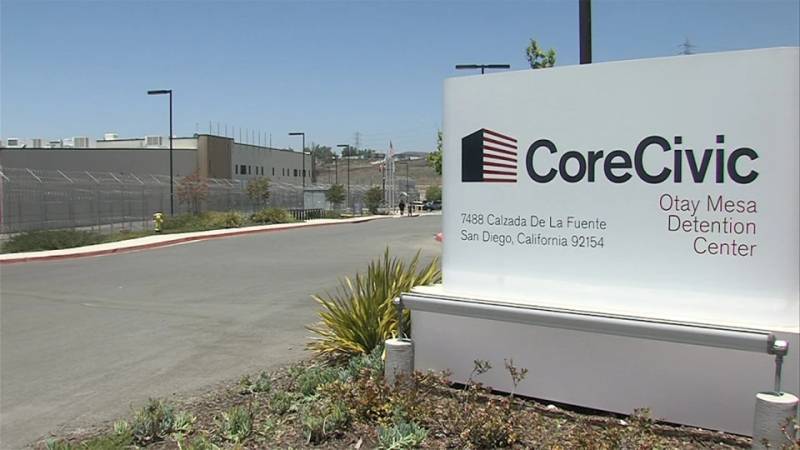
"caption": "Jessica Brösche, a tattoo artist from Germany, has been held at the Otay Mesa Detention Center, waiting deportation.",
"credit": "Photo from CoreCivic",
"altTag": null,
"description": null,
"imgSizes": {
"medium": {
"file": "https://cdn.kqed.org/wp-content/uploads/sites/10/2025/03/otay-mesa-67d043c28cac6-800x450.jpg",
"width": 800,
"height": 450,
"mimeType": "image/jpeg"
},
"thumbnail": {
"file": "https://cdn.kqed.org/wp-content/uploads/sites/10/2025/03/otay-mesa-67d043c28cac6-160x90.jpg",
"width": 160,
"height": 90,
"mimeType": "image/jpeg"
},
"post-thumbnail": {
"file": "https://cdn.kqed.org/wp-content/uploads/sites/10/2025/03/otay-mesa-67d043c28cac6-672x372.jpg",
"width": 672,
"height": 372,
"mimeType": "image/jpeg"
},
"kqedFullSize": {
"file": "https://cdn.kqed.org/wp-content/uploads/sites/10/2025/03/otay-mesa-67d043c28cac6.jpg",
"width": 960,
"height": 540
}
},
"isLoading": false,
"fetchFailed": false
},
"news_12030127": {
"type": "attachments",
"id": "news_12030127",
"meta": {
"index": "attachments_1716263798",
"site": "news",
"id": "12030127",
"found": true
},
"title": "020525_Annikah-Shah_JLB_CM_14 copy",
"publishDate": 1741292151,
"status": "inherit",
"parent": 12030126,
"modified": 1741292222,
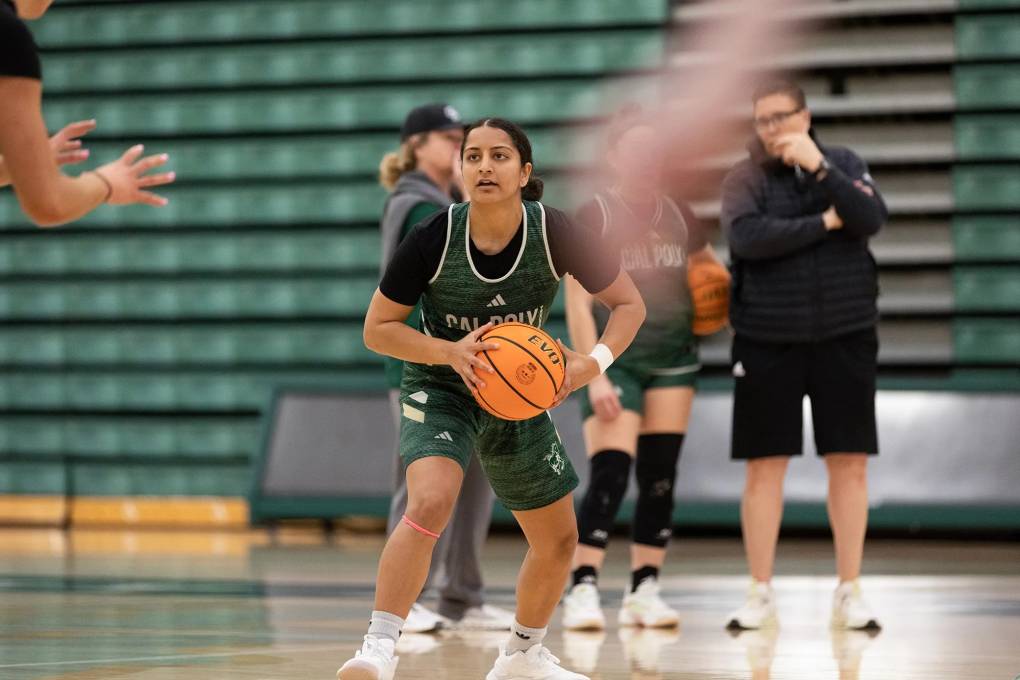
"caption": "Not all NIL deals are high-rolling: Cal Poly San Luis Obispo senior Annika Shah got her first sponsorship through a local Indian restaurant, from which she gets free food. ",
"credit": "Julie Leopo-Bermudez for CalMatters",
"altTag": "A female basketballer looks at the hoop, ready for a jump shot, she's wearing a green outfit with empty bleachers behind her and other players in the background.",
"description": null,
"imgSizes": {
"medium": {
"file": "https://cdn.kqed.org/wp-content/uploads/sites/10/2025/03/020525_Annikah-Shah_JLB_CM_14-copy-800x533.jpg",
"width": 800,
"height": 533,
"mimeType": "image/jpeg"
},
"large": {
"file": "https://cdn.kqed.org/wp-content/uploads/sites/10/2025/03/020525_Annikah-Shah_JLB_CM_14-copy-1020x680.jpg",
"width": 1020,
"height": 680,
"mimeType": "image/jpeg"
},
"thumbnail": {
"file": "https://cdn.kqed.org/wp-content/uploads/sites/10/2025/03/020525_Annikah-Shah_JLB_CM_14-copy-160x107.jpg",
"width": 160,
"height": 107,
"mimeType": "image/jpeg"
},
"1536x1536": {
"file": "https://cdn.kqed.org/wp-content/uploads/sites/10/2025/03/020525_Annikah-Shah_JLB_CM_14-copy-1536x1024.jpg",
"width": 1536,
"height": 1024,
"mimeType": "image/jpeg"
},
"post-thumbnail": {
"file": "https://cdn.kqed.org/wp-content/uploads/sites/10/2025/03/020525_Annikah-Shah_JLB_CM_14-copy-672x372.jpg",
"width": 672,
"height": 372,
"mimeType": "image/jpeg"
},
"twentyfourteen-full-width": {
"file": "https://cdn.kqed.org/wp-content/uploads/sites/10/2025/03/020525_Annikah-Shah_JLB_CM_14-copy-1038x576.jpg",
"width": 1038,
"height": 576,
"mimeType": "image/jpeg"
},
"full-width": {
"file": "https://cdn.kqed.org/wp-content/uploads/sites/10/2025/03/020525_Annikah-Shah_JLB_CM_14-copy-1920x1280.jpg",
"width": 1920,
"height": 1280,
"mimeType": "image/jpeg"
},
"kqedFullSize": {
"file": "https://cdn.kqed.org/wp-content/uploads/sites/10/2025/03/020525_Annikah-Shah_JLB_CM_14-copy.jpg",
"width": 2000,
"height": 1333
}
},
"isLoading": false,
"fetchFailed": false
},
"news_12018696": {
"type": "attachments",
"id": "news_12018696",
"meta": {
"index": "attachments_1716263798",
"site": "news",
"id": "12018696",
"found": true
},
"title": "scotts_valley2",
"publishDate": 1734474678,
"status": "inherit",
"parent": 0,
"modified": 1734480309,
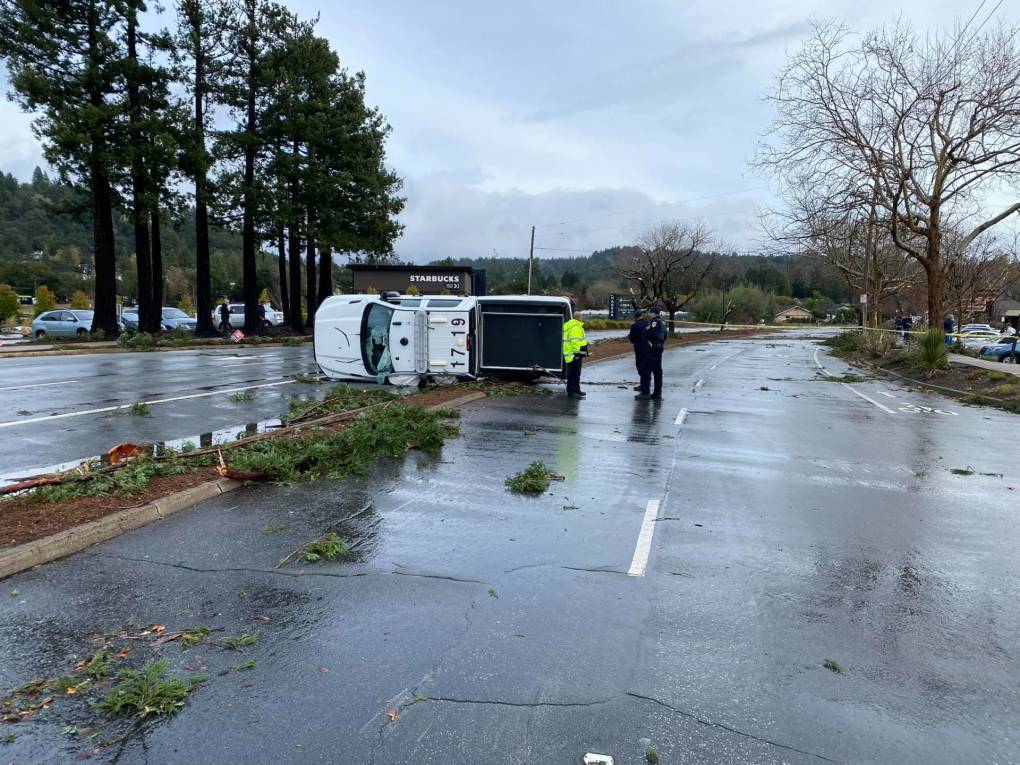
"caption": "A twister touched down in the small Santa Cruz County mountain town of Scotts Valley on Dec. 14, 2024, flipping several cars, damaging power lines and downing trees. ",
"credit": "Courtesy of Scotts Valley Police Department",
"altTag": null,
"description": null,
"imgSizes": {
"medium": {
"file": "https://cdn.kqed.org/wp-content/uploads/sites/10/2024/12/scotts_valley2-800x600.jpg",
"width": 800,
"height": 600,
"mimeType": "image/jpeg"
},
"large": {
"file": "https://cdn.kqed.org/wp-content/uploads/sites/10/2024/12/scotts_valley2-1020x765.jpg",
"width": 1020,
"height": 765,
"mimeType": "image/jpeg"
},
"thumbnail": {
"file": "https://cdn.kqed.org/wp-content/uploads/sites/10/2024/12/scotts_valley2-160x120.jpg",
"width": 160,
"height": 120,
"mimeType": "image/jpeg"
},
"1536x1536": {
"file": "https://cdn.kqed.org/wp-content/uploads/sites/10/2024/12/scotts_valley2-1536x1152.jpg",
"width": 1536,
"height": 1152,
"mimeType": "image/jpeg"
},
"post-thumbnail": {
"file": "https://cdn.kqed.org/wp-content/uploads/sites/10/2024/12/scotts_valley2-672x372.jpg",
"width": 672,
"height": 372,
"mimeType": "image/jpeg"
},
"twentyfourteen-full-width": {
"file": "https://cdn.kqed.org/wp-content/uploads/sites/10/2024/12/scotts_valley2-1038x576.jpg",
"width": 1038,
"height": 576,
"mimeType": "image/jpeg"
},
"kqedFullSize": {
"file": "https://cdn.kqed.org/wp-content/uploads/sites/10/2024/12/scotts_valley2.jpg",
"width": 1920,
"height": 1440
}
},
"isLoading": false,
"fetchFailed": false
},
"news_11990710": {
"type": "attachments",
"id": "news_11990710",
"meta": {
"index": "attachments_1716263798",
"site": "news",
"id": "11990710",
"found": true
},
"title": "GettyImages-143309512_qut",
"publishDate": 1718649609,
"status": "inherit",
"parent": 11990668,
"modified": 1726784538,
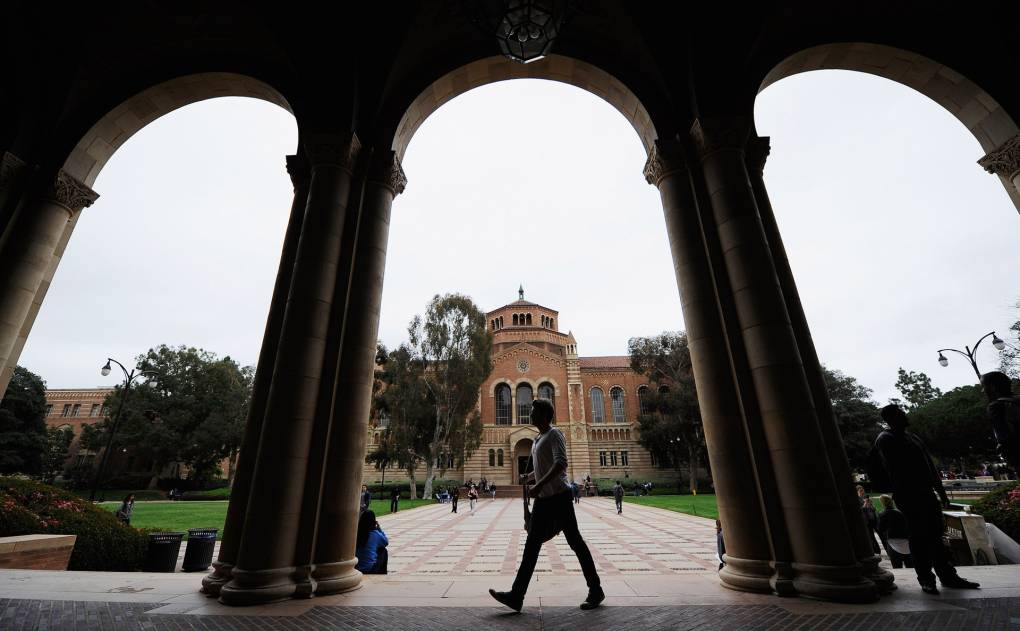
"caption": "A student walks near Royce Hall on the campus of UCLA on April 23, 2012, in Los Angeles.",
"credit": "Kevork Djansezian/Getty Images",
"altTag": null,
"description": null,
"imgSizes": {
"medium": {
"file": "https://cdn.kqed.org/wp-content/uploads/sites/10/2024/06/GettyImages-143309512_qut-800x495.jpg",
"width": 800,
"height": 495,
"mimeType": "image/jpeg"
},
"large": {
"file": "https://cdn.kqed.org/wp-content/uploads/sites/10/2024/06/GettyImages-143309512_qut-1020x631.jpg",
"width": 1020,
"height": 631,
"mimeType": "image/jpeg"
},
"thumbnail": {
"file": "https://cdn.kqed.org/wp-content/uploads/sites/10/2024/06/GettyImages-143309512_qut-160x99.jpg",
"width": 160,
"height": 99,
"mimeType": "image/jpeg"
},
"1536x1536": {
"file": "https://cdn.kqed.org/wp-content/uploads/sites/10/2024/06/GettyImages-143309512_qut-1536x950.jpg",
"width": 1536,
"height": 950,
"mimeType": "image/jpeg"
},
"post-thumbnail": {
"file": "https://cdn.kqed.org/wp-content/uploads/sites/10/2024/06/GettyImages-143309512_qut-672x372.jpg",
"width": 672,
"height": 372,
"mimeType": "image/jpeg"
},
"twentyfourteen-full-width": {
"file": "https://cdn.kqed.org/wp-content/uploads/sites/10/2024/06/GettyImages-143309512_qut-1038x576.jpg",
"width": 1038,
"height": 576,
"mimeType": "image/jpeg"
},
"kqedFullSize": {
"file": "https://cdn.kqed.org/wp-content/uploads/sites/10/2024/06/GettyImages-143309512_qut.jpg",
"width": 1920,
"height": 1188
}
},
"isLoading": false,
"fetchFailed": false
},
"news_11989675": {
"type": "attachments",
"id": "news_11989675",
"meta": {
"index": "attachments_1716263798",
"site": "news",
"id": "11989675",
"found": true
},
"title": "TKConstruction",
"publishDate": 1718055808,
"status": "inherit",
"parent": 11989615,
"modified": 1718057654,
"caption": "Mock-ups showing a planned new building and field hang on a fence in front of a construction site at Will Rogers Elementary School in Santa Monica.",
"credit": "Courtesy Ashley Balderrama",
"altTag": null,
"description": null,
"imgSizes": {
"medium": {
"file": "https://cdn.kqed.org/wp-content/uploads/sites/10/2024/06/TKConstruction-800x536.jpg",
"width": 800,
"height": 536,
"mimeType": "image/jpeg"
},
"large": {
"file": "https://cdn.kqed.org/wp-content/uploads/sites/10/2024/06/TKConstruction-1020x684.jpg",
"width": 1020,
"height": 684,
"mimeType": "image/jpeg"
},
"thumbnail": {
"file": "https://cdn.kqed.org/wp-content/uploads/sites/10/2024/06/TKConstruction-160x107.jpg",
"width": 160,
"height": 107,
"mimeType": "image/jpeg"
},
"1536x1536": {
"file": "https://cdn.kqed.org/wp-content/uploads/sites/10/2024/06/TKConstruction-1536x1030.jpg",
"width": 1536,
"height": 1030,
"mimeType": "image/jpeg"
},
"post-thumbnail": {
"file": "https://cdn.kqed.org/wp-content/uploads/sites/10/2024/06/TKConstruction-672x372.jpg",
"width": 672,
"height": 372,
"mimeType": "image/jpeg"
},
"twentyfourteen-full-width": {
"file": "https://cdn.kqed.org/wp-content/uploads/sites/10/2024/06/TKConstruction-1038x576.jpg",
"width": 1038,
"height": 576,
"mimeType": "image/jpeg"
},
"kqedFullSize": {
"file": "https://cdn.kqed.org/wp-content/uploads/sites/10/2024/06/TKConstruction.jpg",
"width": 1920,
"height": 1287
}
},
"isLoading": false,
"fetchFailed": false
},
"news_11989181": {
"type": "attachments",
"id": "news_11989181",
"meta": {
"index": "attachments_1716263798",
"site": "news",
"id": "11989181",
"found": true
},
"title": "Member of United Auto Workers Local 4811strike at UCLA",
"publishDate": 1717626061,
"status": "inherit",
"parent": 11989178,
"modified": 1761774399,
"caption": "Members of United Auto Workers Local 4811 strike at UCLA as academic workers and supporters walked off the job on Tuesday, May 28, 2024, in Los Angeles.",
"credit": "Brian van der Brug/Los Angeles Times via Getty Images",
"altTag": null,
"description": null,
"imgSizes": {
"medium": {
"file": "https://cdn.kqed.org/wp-content/uploads/sites/10/2024/06/GettyImages-2154565374-800x533.jpg",
"width": 800,
"height": 533,
"mimeType": "image/jpeg"
},
"large": {
"file": "https://cdn.kqed.org/wp-content/uploads/sites/10/2024/06/GettyImages-2154565374-1020x680.jpg",
"width": 1020,
"height": 680,
"mimeType": "image/jpeg"
},
"thumbnail": {
"file": "https://cdn.kqed.org/wp-content/uploads/sites/10/2024/06/GettyImages-2154565374-160x107.jpg",
"width": 160,
"height": 107,
"mimeType": "image/jpeg"
},
"1536x1536": {
"file": "https://cdn.kqed.org/wp-content/uploads/sites/10/2024/06/GettyImages-2154565374-1536x1024.jpg",
"width": 1536,
"height": 1024,
"mimeType": "image/jpeg"
},
"post-thumbnail": {
"file": "https://cdn.kqed.org/wp-content/uploads/sites/10/2024/06/GettyImages-2154565374-672x372.jpg",
"width": 672,
"height": 372,
"mimeType": "image/jpeg"
},
"twentyfourteen-full-width": {
"file": "https://cdn.kqed.org/wp-content/uploads/sites/10/2024/06/GettyImages-2154565374-1038x576.jpg",
"width": 1038,
"height": 576,
"mimeType": "image/jpeg"
},
"kqedFullSize": {
"file": "https://cdn.kqed.org/wp-content/uploads/sites/10/2024/06/GettyImages-2154565374.jpg",
"width": 1920,
"height": 1280
}
},
"isLoading": false,
"fetchFailed": false
},
"news_11987186": {
"type": "attachments",
"id": "news_11987186",
"meta": {
"index": "attachments_1716263798",
"site": "news",
"id": "11987186",
"found": true
},
"title": "UAW_UCSC_May2024",
"publishDate": 1716326839,
"status": "inherit",
"parent": 11987173,
"modified": 1716326921,
"caption": "The rolling walkout, in which campuses will be called on to join the picket line at times unbeknownst to the UC, is part of what the UAW 4811 union is calling a 'stand-up strike,' which the United Auto Workers rolled out against the Big Three automakers last year. ",
"credit": "Courtesy of UAW 4811",
"altTag": null,
"description": null,
"imgSizes": {
"medium": {
"file": "https://cdn.kqed.org/wp-content/uploads/sites/10/2024/05/UAW_UCSC_May2024-800x450.jpeg",
"width": 800,
"height": 450,
"mimeType": "image/jpeg"
},
"large": {
"file": "https://cdn.kqed.org/wp-content/uploads/sites/10/2024/05/UAW_UCSC_May2024-1020x574.jpeg",
"width": 1020,
"height": 574,
"mimeType": "image/jpeg"
},
"thumbnail": {
"file": "https://cdn.kqed.org/wp-content/uploads/sites/10/2024/05/UAW_UCSC_May2024-160x90.jpeg",
"width": 160,
"height": 90,
"mimeType": "image/jpeg"
},
"1536x1536": {
"file": "https://cdn.kqed.org/wp-content/uploads/sites/10/2024/05/UAW_UCSC_May2024-1536x864.jpeg",
"width": 1536,
"height": 864,
"mimeType": "image/jpeg"
},
"post-thumbnail": {
"file": "https://cdn.kqed.org/wp-content/uploads/sites/10/2024/05/UAW_UCSC_May2024-672x372.jpeg",
"width": 672,
"height": 372,
"mimeType": "image/jpeg"
},
"twentyfourteen-full-width": {
"file": "https://cdn.kqed.org/wp-content/uploads/sites/10/2024/05/UAW_UCSC_May2024-1038x576.jpeg",
"width": 1038,
"height": 576,
"mimeType": "image/jpeg"
},
"kqedFullSize": {
"file": "https://cdn.kqed.org/wp-content/uploads/sites/10/2024/05/UAW_UCSC_May2024.jpeg",
"width": 1920,
"height": 1080
}
},
"isLoading": false,
"fetchFailed": false
},
"news_11988048": {
"type": "attachments",
"id": "news_11988048",
"meta": {
"index": "attachments_1716263798",
"site": "news",
"id": "11988048",
"found": true
},
"title": "UC Santa Cruz Workers Strike Over Treatment Of Pro-Palestinian Protesters",
"publishDate": 1717006217,
"status": "inherit",
"parent": 11988039,
"modified": 1717006276,
"caption": "UC Santa Cruz academic workers represented by UAW 4811 and pro-Palestinian protesters carry signs as they demonstrate in front of the campus on May 20, 2024.",
"credit": "Justin Sullivan/Getty Images",
"altTag": null,
"description": null,
"imgSizes": {
"medium": {
"file": "https://cdn.kqed.org/wp-content/uploads/sites/10/2024/05/GettyImages-2153876794-800x521.jpg",
"width": 800,
"height": 521,
"mimeType": "image/jpeg"
},
"large": {
"file": "https://cdn.kqed.org/wp-content/uploads/sites/10/2024/05/GettyImages-2153876794-1020x664.jpg",
"width": 1020,
"height": 664,
"mimeType": "image/jpeg"
},
"thumbnail": {
"file": "https://cdn.kqed.org/wp-content/uploads/sites/10/2024/05/GettyImages-2153876794-160x104.jpg",
"width": 160,
"height": 104,
"mimeType": "image/jpeg"
},
"1536x1536": {
"file": "https://cdn.kqed.org/wp-content/uploads/sites/10/2024/05/GettyImages-2153876794-1536x1000.jpg",
"width": 1536,
"height": 1000,
"mimeType": "image/jpeg"
},
"post-thumbnail": {
"file": "https://cdn.kqed.org/wp-content/uploads/sites/10/2024/05/GettyImages-2153876794-672x372.jpg",
"width": 672,
"height": 372,
"mimeType": "image/jpeg"
},
"twentyfourteen-full-width": {
"file": "https://cdn.kqed.org/wp-content/uploads/sites/10/2024/05/GettyImages-2153876794-1038x576.jpg",
"width": 1038,
"height": 576,
"mimeType": "image/jpeg"
},
"kqedFullSize": {
"file": "https://cdn.kqed.org/wp-content/uploads/sites/10/2024/05/GettyImages-2153876794.jpg",
"width": 1920,
"height": 1250
}
},
"isLoading": false,
"fetchFailed": false
},
"news_11987738": {
"type": "attachments",
"id": "news_11987738",
"meta": {
"index": "attachments_1716263798",
"site": "news",
"id": "11987738",
"found": true
},
"title": "UC Santa Cruz Workers Strike Over Treatment Of Pro-Palestinian Protesters",
"publishDate": 1716587632,
"status": "inherit",
"parent": 11987737,
"modified": 1716587703,
"caption": "UC Santa Cruz academic workers who are union members of UAW 4811 and pro-Palestinian protesters carry signs as they demonstrate in front of the campus on May 20, 2024.",
"credit": "Justin Sullivan/Getty Images",
"altTag": null,
"description": null,
"imgSizes": {
"medium": {
"file": "https://cdn.kqed.org/wp-content/uploads/sites/10/2024/05/GettyImages-2153876773-800x532.jpg",
"width": 800,
"height": 532,
"mimeType": "image/jpeg"
},
"large": {
"file": "https://cdn.kqed.org/wp-content/uploads/sites/10/2024/05/GettyImages-2153876773-1020x678.jpg",
"width": 1020,
"height": 678,
"mimeType": "image/jpeg"
},
"thumbnail": {
"file": "https://cdn.kqed.org/wp-content/uploads/sites/10/2024/05/GettyImages-2153876773-160x106.jpg",
"width": 160,
"height": 106,
"mimeType": "image/jpeg"
},
"1536x1536": {
"file": "https://cdn.kqed.org/wp-content/uploads/sites/10/2024/05/GettyImages-2153876773-1536x1021.jpg",
"width": 1536,
"height": 1021,
"mimeType": "image/jpeg"
},
"post-thumbnail": {
"file": "https://cdn.kqed.org/wp-content/uploads/sites/10/2024/05/GettyImages-2153876773-672x372.jpg",
"width": 672,
"height": 372,
"mimeType": "image/jpeg"
},
"twentyfourteen-full-width": {
"file": "https://cdn.kqed.org/wp-content/uploads/sites/10/2024/05/GettyImages-2153876773-1038x576.jpg",
"width": 1038,
"height": 576,
"mimeType": "image/jpeg"
},
"kqedFullSize": {
"file": "https://cdn.kqed.org/wp-content/uploads/sites/10/2024/05/GettyImages-2153876773.jpg",
"width": 1920,
"height": 1276
}
},
"isLoading": false,
"fetchFailed": false
},
"news_11987500": {
"type": "attachments",
"id": "news_11987500",
"meta": {
"index": "attachments_1716263798",
"site": "news",
"id": "11987500",
"found": true
},
"title": "UC Santa Cruz Workers Strike Over Treatment Of Pro-Palestinian Protesters",
"publishDate": 1716485938,
"status": "inherit",
"parent": 0,
"modified": 1727465280,
"caption": "UC Santa Cruz workers who are union members of UAW 4811 set up a sign in front of the university's campus on May 20. Academic workers at UCSC walked off the job to strike in protest of the UC system’s handling of pro-Palestinian demonstrations. ",
"credit": "Justin Sullivan/Getty Images",
"altTag": "Two people affix a large brown sign with red text reading 'Do UCLA next' to a school sign outdoors near a busy street.",
"description": null,
"imgSizes": {
"medium": {
"file": "https://cdn.kqed.org/wp-content/uploads/sites/10/2024/05/GettyImages-2153861315_qut-800x554.jpg",
"width": 800,
"height": 554,
"mimeType": "image/jpeg"
},
"large": {
"file": "https://cdn.kqed.org/wp-content/uploads/sites/10/2024/05/GettyImages-2153861315_qut-1020x707.jpg",
"width": 1020,
"height": 707,
"mimeType": "image/jpeg"
},
"thumbnail": {
"file": "https://cdn.kqed.org/wp-content/uploads/sites/10/2024/05/GettyImages-2153861315_qut-160x111.jpg",
"width": 160,
"height": 111,
"mimeType": "image/jpeg"
},
"1536x1536": {
"file": "https://cdn.kqed.org/wp-content/uploads/sites/10/2024/05/GettyImages-2153861315_qut-1536x1064.jpg",
"width": 1536,
"height": 1064,
"mimeType": "image/jpeg"
},
"post-thumbnail": {
"file": "https://cdn.kqed.org/wp-content/uploads/sites/10/2024/05/GettyImages-2153861315_qut-672x372.jpg",
"width": 672,
"height": 372,
"mimeType": "image/jpeg"
},
"twentyfourteen-full-width": {
"file": "https://cdn.kqed.org/wp-content/uploads/sites/10/2024/05/GettyImages-2153861315_qut-1038x576.jpg",
"width": 1038,
"height": 576,
"mimeType": "image/jpeg"
},
"kqedFullSize": {
"file": "https://cdn.kqed.org/wp-content/uploads/sites/10/2024/05/GettyImages-2153861315_qut.jpg",
"width": 1920,
"height": 1330
}
},
"isLoading": false,
"fetchFailed": false
},
"news_11985803": {
"type": "attachments",
"id": "news_11985803",
"meta": {
"index": "attachments_1716263798",
"site": "news",
"id": "11985803",
"found": true
},
"parent": 11985802,
"imgSizes": {
"twentyfourteen-full-width": {
"file": "https://cdn.kqed.org/wp-content/uploads/sites/10/2024/05/AP24131131133334-1038x576.jpg",
"width": 1038,
"mimeType": "image/jpeg",
"height": 576
},
"thumbnail": {
"file": "https://cdn.kqed.org/wp-content/uploads/sites/10/2024/05/AP24131131133334-160x107.jpg",
"width": 160,
"mimeType": "image/jpeg",
"height": 107
},
"post-thumbnail": {
"file": "https://cdn.kqed.org/wp-content/uploads/sites/10/2024/05/AP24131131133334-672x372.jpg",
"width": 672,
"mimeType": "image/jpeg",
"height": 372
},
"kqedFullSize": {
"file": "https://cdn.kqed.org/wp-content/uploads/sites/10/2024/05/AP24131131133334-scaled.jpg",
"width": 2560,
"height": 1707
},
"2048x2048": {
"file": "https://cdn.kqed.org/wp-content/uploads/sites/10/2024/05/AP24131131133334-2048x1365.jpg",
"width": 2048,
"mimeType": "image/jpeg",
"height": 1365
},
"large": {
"file": "https://cdn.kqed.org/wp-content/uploads/sites/10/2024/05/AP24131131133334-1020x680.jpg",
"width": 1020,
"mimeType": "image/jpeg",
"height": 680
},
"1536x1536": {
"file": "https://cdn.kqed.org/wp-content/uploads/sites/10/2024/05/AP24131131133334-1536x1024.jpg",
"width": 1536,
"mimeType": "image/jpeg",
"height": 1024
},
"full-width": {
"file": "https://cdn.kqed.org/wp-content/uploads/sites/10/2024/05/AP24131131133334-1920x1280.jpg",
"width": 1920,
"mimeType": "image/jpeg",
"height": 1280
},
"medium": {
"file": "https://cdn.kqed.org/wp-content/uploads/sites/10/2024/05/AP24131131133334-800x533.jpg",
"width": 800,
"mimeType": "image/jpeg",
"height": 533
}
},
"publishDate": 1715389528,
"modified": 1715389590,
"caption": "A Pac-12 logo is shown on the floor of Haas Pavilion as California forward Fardaws Aimaq (00) looks to pass while being defended by UCLA guard Brandon Williams during an NCAA college basketball game in Berkeley, Feb. 10, 2024. The University of California Board of Regents is expected to accept a recommendation that UCLA pay University of California at Berkeley $10 million a year for 6 years as a result of the Bruins’ upcoming move to the Big Ten and the demise of the Pac-12. ",
"description": null,
"title": "Fardaws AimaqBrandon Williams",
"credit": "Jeff Chiu/AP Photo",
"status": "inherit",
"altTag": null,
"isLoading": false,
"fetchFailed": false
},
"news_11984510": {
"type": "attachments",
"id": "news_11984510",
"meta": {
"index": "attachments_1716263798",
"site": "news",
"id": "11984510",
"found": true
},
"parent": 11984645,
"imgSizes": {
"twentyfourteen-full-width": {
"file": "https://cdn.kqed.org/wp-content/uploads/sites/10/2024/04/240425-STANFORDGAZAPROTEST-011-BL-KQED-1038x576.jpg",
"width": 1038,
"mimeType": "image/jpeg",
"height": 576
},
"thumbnail": {
"file": "https://cdn.kqed.org/wp-content/uploads/sites/10/2024/04/240425-STANFORDGAZAPROTEST-011-BL-KQED-160x107.jpg",
"width": 160,
"mimeType": "image/jpeg",
"height": 107
},
"post-thumbnail": {
"file": "https://cdn.kqed.org/wp-content/uploads/sites/10/2024/04/240425-STANFORDGAZAPROTEST-011-BL-KQED-672x372.jpg",
"width": 672,
"mimeType": "image/jpeg",
"height": 372
},
"kqedFullSize": {
"file": "https://cdn.kqed.org/wp-content/uploads/sites/10/2024/04/240425-STANFORDGAZAPROTEST-011-BL-KQED.jpg",
"width": 2000,
"height": 1333
},
"large": {
"file": "https://cdn.kqed.org/wp-content/uploads/sites/10/2024/04/240425-STANFORDGAZAPROTEST-011-BL-KQED-1020x680.jpg",
"width": 1020,
"mimeType": "image/jpeg",
"height": 680
},
"1536x1536": {
"file": "https://cdn.kqed.org/wp-content/uploads/sites/10/2024/04/240425-STANFORDGAZAPROTEST-011-BL-KQED-1536x1024.jpg",
"width": 1536,
"mimeType": "image/jpeg",
"height": 1024
},
"full-width": {
"file": "https://cdn.kqed.org/wp-content/uploads/sites/10/2024/04/240425-STANFORDGAZAPROTEST-011-BL-KQED-1920x1280.jpg",
"width": 1920,
"mimeType": "image/jpeg",
"height": 1280
},
"medium": {
"file": "https://cdn.kqed.org/wp-content/uploads/sites/10/2024/04/240425-STANFORDGAZAPROTEST-011-BL-KQED-800x533.jpg",
"width": 800,
"mimeType": "image/jpeg",
"height": 533
}
},
"publishDate": 1714504701,
"modified": 1714593712,
"caption": "Pro-Palestinian demonstrators march through the Stanford University campus in Palo Alto on April 25, calling for the university to divest from Israel.",
"description": null,
"title": "240425-STANFORDGAZAPROTEST-011-BL-KQED",
"credit": "Beth LaBerge/KQED",
"status": "inherit",
"altTag": null,
"isLoading": false,
"fetchFailed": false
}
},
"audioPlayerReducer": {
"postId": "stream_live",
"isPaused": true,
"isPlaying": false,
"pfsActive": false,
"pledgeModalIsOpen": true,
"playerDrawerIsOpen": false,
"liveAudioPlayStartedAt": 0,
"liveAudioPlayContext": ""
},
"authorsReducer": {
"byline_news_12030126": {
"type": "authors",
"id": "byline_news_12030126",
"meta": {
"override": true
},
"slug": "byline_news_12030126",
"name": "\u003ca href=\"https://calmatters.org/author/adam-echelman/\">Adam Echelman\u003c/a> and \u003ca href=\"https://calmatters.org/author/ericayee/\">Erica Yee\u003c/a>, CalMatters",
"isLoading": false
},
"byline_news_11985802": {
"type": "authors",
"id": "byline_news_11985802",
"meta": {
"override": true
},
"slug": "byline_news_11985802",
"name": "Joe Reedy\u003cbr>Associated Press",
"isLoading": false
},
"scottshafer": {
"type": "authors",
"id": "255",
"meta": {
"index": "authors_1716337520",
"id": "255",
"found": true
},
"name": "Scott Shafer",
"firstName": "Scott",
"lastName": "Shafer",
"slug": "scottshafer",
"email": "sshafer@kqed.org",
"display_author_email": false,
"staff_mastheads": [
"news"
],
"title": "KQED Contributor",
"bio": "Scott Shafer is a senior editor with the KQED Politics and Government desk. He is co-host of Political Breakdown, the award-winning radio show and podcast with a personal take on the world of politics. Scott came to KQED in 1998 to host the statewide\u003cem> California Report\u003c/em>. Prior to that he had extended stints in politics and government\u003cem>.\u003c/em> He uses that inside experience at KQED in his, reporting, hosting and analysis for the politics desk. Scott collaborated \u003cem>Political Breakdown a\u003c/em>nd on \u003cem>The Political Mind of Jerry Brown, \u003c/em>an eight-part series about the life and extraordinary political career of the former governor. For fun, he plays water polo with the San Francisco Tsunami.",
"avatar": "https://secure.gravatar.com/avatar/a62ebae45b79d7aed1a39a0e3bf68104?s=600&d=blank&r=g",
"twitter": "scottshafer",
"bluesky": null,
"facebook": null,
"instagram": null,
"linkedin": null,
"sites": [
{
"site": "news",
"roles": [
"editor"
]
},
{
"site": "stateofhealth",
"roles": [
"author"
]
},
{
"site": "science",
"roles": [
"author"
]
},
{
"site": "forum",
"roles": [
"subscriber"
]
},
{
"site": "liveblog",
"roles": [
"author"
]
}
],
"headData": {
"title": "Scott Shafer | KQED",
"description": "KQED Contributor",
"ogImgSrc": "https://secure.gravatar.com/avatar/a62ebae45b79d7aed1a39a0e3bf68104?s=600&d=blank&r=g",
"twImgSrc": "https://secure.gravatar.com/avatar/a62ebae45b79d7aed1a39a0e3bf68104?s=600&d=blank&r=g"
},
"isLoading": false,
"link": "/author/scottshafer"
},
"kdomara": {
"type": "authors",
"id": "1459",
"meta": {
"index": "authors_1716337520",
"id": "1459",
"found": true
},
"name": "Kelly O'Mara",
"firstName": "Kelly",
"lastName": "O'Mara",
"slug": "kdomara",
"email": "komara@kqed.org",
"display_author_email": false,
"staff_mastheads": [
"news"
],
"title": "KQED Contributor",
"bio": "Kelly O'Mara is a writer and reporter in the San Francisco Bay Area. She writes about food, health, sports, travel, business and California news. Her work has appeared on KQED, online for Outside Magazine, epsnW, VICE and in Competitor Magazine, among others. Follow Kelly on Twitter \u003ca href=\"https://twitter.com/kellydomara\">@kellydomara\u003c/a>.",
"avatar": "https://secure.gravatar.com/avatar/768fec7412028b72f13bdd0f5f9d8186?s=600&d=blank&r=g",
"twitter": null,
"facebook": null,
"instagram": null,
"linkedin": null,
"sites": [
{
"site": "arts",
"roles": []
},
{
"site": "news",
"roles": []
},
{
"site": "bayareabites",
"roles": []
},
{
"site": "stateofhealth",
"roles": []
},
{
"site": "science",
"roles": []
},
{
"site": "checkplease",
"roles": [
"editor"
]
},
{
"site": "food",
"roles": []
},
{
"site": "forum",
"roles": [
"editor"
]
},
{
"site": "liveblog",
"roles": [
"editor"
]
}
],
"headData": {
"title": "Kelly O'Mara | KQED",
"description": "KQED Contributor",
"ogImgSrc": "https://secure.gravatar.com/avatar/768fec7412028b72f13bdd0f5f9d8186?s=600&d=blank&r=g",
"twImgSrc": "https://secure.gravatar.com/avatar/768fec7412028b72f13bdd0f5f9d8186?s=600&d=blank&r=g"
},
"isLoading": false,
"link": "/author/kdomara"
},
"jrodriguez": {
"type": "authors",
"id": "11690",
"meta": {
"index": "authors_1716337520",
"id": "11690",
"found": true
},
"name": "Joe Fitzgerald Rodriguez",
"firstName": "Joe",
"lastName": "Fitzgerald Rodriguez",
"slug": "jrodriguez",
"email": "jrodriguez@kqed.org",
"display_author_email": true,
"staff_mastheads": [
"news"
],
"title": "Reporter and Producer",
"bio": "Joe Fitzgerald Rodriguez is a reporter and digital producer for KQED covering politics. Joe most recently wrote for the \u003cem>San Francisco Examiner\u003c/em> as a political columnist covering The City. He was raised in San Francisco and has spent his reporting career in his beloved, foggy, city by the bay. Joe was 12-years-old when he conducted his first interview in journalism, grilling former San Francisco Mayor Willie Brown for the Marina Middle School newspaper, \u003cem>The Penguin Press, \u003c/em>and he continues to report on the San Francisco Bay Area to this day.",
"avatar": "https://secure.gravatar.com/avatar/2247beb0564c1e9c62228d5649d2edac?s=600&d=blank&r=g",
"twitter": "FitztheReporter",
"facebook": null,
"instagram": "https://www.instagram.com/fitzthereporter/",
"linkedin": null,
"sites": [
{
"site": "",
"roles": [
"editor"
]
},
{
"site": "arts",
"roles": [
"editor"
]
},
{
"site": "news",
"roles": [
"editor"
]
},
{
"site": "science",
"roles": [
"editor"
]
},
{
"site": "elections",
"roles": [
"editor"
]
},
{
"site": "liveblog",
"roles": [
"editor"
]
}
],
"headData": {
"title": "Joe Fitzgerald Rodriguez | KQED",
"description": "Reporter and Producer",
"ogImgSrc": "https://secure.gravatar.com/avatar/2247beb0564c1e9c62228d5649d2edac?s=600&d=blank&r=g",
"twImgSrc": "https://secure.gravatar.com/avatar/2247beb0564c1e9c62228d5649d2edac?s=600&d=blank&r=g"
},
"isLoading": false,
"link": "/author/jrodriguez"
},
"kmizuguchi": {
"type": "authors",
"id": "11739",
"meta": {
"index": "authors_1716337520",
"id": "11739",
"found": true
},
"name": "Keith Mizuguchi",
"firstName": "Keith",
"lastName": "Mizuguchi",
"slug": "kmizuguchi",
"email": "kmizuguchi@kqed.org",
"display_author_email": false,
"staff_mastheads": [],
"title": "KQED Contributor",
"bio": null,
"avatar": "https://secure.gravatar.com/avatar/64d8a7de0723d4099b9fe4e915136103febcc20809abce228ee4415bcb237023?s=600&d=blank&r=g",
"twitter": null,
"bluesky": null,
"facebook": null,
"instagram": null,
"linkedin": null,
"sites": [
{
"site": "news",
"roles": [
"editor"
]
},
{
"site": "science",
"roles": [
"editor"
]
}
],
"headData": {
"title": "Keith Mizuguchi | KQED",
"description": "KQED Contributor",
"ogImgSrc": "https://secure.gravatar.com/avatar/64d8a7de0723d4099b9fe4e915136103febcc20809abce228ee4415bcb237023?s=600&d=blank&r=g",
"twImgSrc": "https://secure.gravatar.com/avatar/64d8a7de0723d4099b9fe4e915136103febcc20809abce228ee4415bcb237023?s=600&d=blank&r=g"
},
"isLoading": false,
"link": "/author/kmizuguchi"
},
"eromero": {
"type": "authors",
"id": "11746",
"meta": {
"index": "authors_1716337520",
"id": "11746",
"found": true
},
"name": "Ezra David Romero",
"firstName": "Ezra David",
"lastName": "Romero",
"slug": "eromero",
"email": "eromero@kqed.org",
"display_author_email": true,
"staff_mastheads": [
"news",
"science"
],
"title": "Climate Reporter",
"bio": "Ezra David Romero is a climate reporter for KQED News. He covers the absence and excess of water in the Bay Area — think sea level rise, flooding and drought. For nearly a decade he’s covered how warming temperatures are altering the lives of Californians. He’s reported on farmers worried their pistachio trees aren’t getting enough sleep, families desperate for water, scientists studying dying giant sequoias, and alongside firefighters containing wildfires. His work has appeared on local stations across California and nationally on public radio shows like Morning Edition, Here and Now, All Things Considered and Science Friday. ",
"avatar": "https://secure.gravatar.com/avatar/c76404d287c10ed40224227551ac36e24352c7306f106632caf6fead76f8801f?s=600&d=blank&r=g",
"twitter": "ezraromero",
"bluesky": null,
"facebook": null,
"instagram": null,
"linkedin": null,
"sites": [
{
"site": "arts",
"roles": [
"editor"
]
},
{
"site": "news",
"roles": [
"editor"
]
},
{
"site": "science",
"roles": [
"editor"
]
},
{
"site": "liveblog",
"roles": [
"author"
]
}
],
"headData": {
"title": "Ezra David Romero | KQED",
"description": "Climate Reporter",
"ogImgSrc": "https://secure.gravatar.com/avatar/c76404d287c10ed40224227551ac36e24352c7306f106632caf6fead76f8801f?s=600&d=blank&r=g",
"twImgSrc": "https://secure.gravatar.com/avatar/c76404d287c10ed40224227551ac36e24352c7306f106632caf6fead76f8801f?s=600&d=blank&r=g"
},
"isLoading": false,
"link": "/author/eromero"
},
"jlara": {
"type": "authors",
"id": "11761",
"meta": {
"index": "authors_1716337520",
"id": "11761",
"found": true
},
"name": "Juan Carlos Lara",
"firstName": "Juan Carlos",
"lastName": "Lara",
"slug": "jlara",
"email": "jlara@kqed.org",
"display_author_email": false,
"staff_mastheads": [],
"title": "KQED Contributor",
"bio": null,
"avatar": "https://secure.gravatar.com/avatar/19e2052b9b05657c5ff2af2121846e9c?s=600&d=blank&r=g",
"twitter": null,
"facebook": null,
"instagram": null,
"linkedin": null,
"sites": [
{
"site": "arts",
"roles": [
"editor"
]
},
{
"site": "news",
"roles": [
"editor"
]
},
{
"site": "forum",
"roles": [
"editor"
]
},
{
"site": "liveblog",
"roles": [
"contributor"
]
}
],
"headData": {
"title": "Juan Carlos Lara | KQED",
"description": "KQED Contributor",
"ogImgSrc": "https://secure.gravatar.com/avatar/19e2052b9b05657c5ff2af2121846e9c?s=600&d=blank&r=g",
"twImgSrc": "https://secure.gravatar.com/avatar/19e2052b9b05657c5ff2af2121846e9c?s=600&d=blank&r=g"
},
"isLoading": false,
"link": "/author/jlara"
},
"kdebenedetti": {
"type": "authors",
"id": "11913",
"meta": {
"index": "authors_1716337520",
"id": "11913",
"found": true
},
"name": "Katie DeBenedetti",
"firstName": "Katie",
"lastName": "DeBenedetti",
"slug": "kdebenedetti",
"email": "kdebenedetti@kqed.org",
"display_author_email": false,
"staff_mastheads": [
"news",
"science"
],
"title": "KQED Contributor",
"bio": "Katie DeBenedetti is a digital reporter covering daily news for the Express Desk. Prior to joining KQED as a culture reporting intern in January 2024, she covered education and city government for the Napa Valley Register.",
"avatar": "https://secure.gravatar.com/avatar/6e31073cb8f7e4214ab03f42771d0f45?s=600&d=blank&r=g",
"twitter": null,
"facebook": null,
"instagram": null,
"linkedin": null,
"sites": [
{
"site": "news",
"roles": [
"author"
]
},
{
"site": "science",
"roles": [
"author"
]
},
{
"site": "liveblog",
"roles": [
"author"
]
}
],
"headData": {
"title": "Katie DeBenedetti | KQED",
"description": "KQED Contributor",
"ogImgSrc": "https://secure.gravatar.com/avatar/6e31073cb8f7e4214ab03f42771d0f45?s=600&d=blank&r=g",
"twImgSrc": "https://secure.gravatar.com/avatar/6e31073cb8f7e4214ab03f42771d0f45?s=600&d=blank&r=g"
},
"isLoading": false,
"link": "/author/kdebenedetti"
}
},
"pagesReducer": {
"news_tag_ucla": {
"type": "terms",
"id": "news_2792",
"meta": {
"index": "terms_1716263798",
"site": "news",
"id": "2792",
"score": 9.556055
},
"featImg": null,
"name": "UCLA",
"description": null,
"taxonomy": "tag",
"headData": {
"twImgId": null,
"twTitle": null,
"ogTitle": null,
"ogImgId": null,
"twDescription": null,
"description": null,
"title": "UCLA Archives | KQED News",
"ogDescription": null
},
"ttid": 2810,
"slug": "ucla",
"isLoading": false,
"title": "UCLA",
"pageMeta": {
"site": "news",
"WpPageTemplate": "page-topic-editorial",
"currentPage": 2
},
"blocks": [
{
"blockName": "kqed/post-list",
"attrs": {
"layout": "cardArticle2",
"query": "posts/news?tag=ucla",
"seeMore": false,
"paginated": true,
"page": 2
}
},
{
"blockName": "kqed/ad"
}
]
}
},
"pfsSessionReducer": {},
"postsReducer": {
"stream_live": {
"type": "live",
"id": "stream_live",
"audioUrl": "https://streams.kqed.org/kqedradio",
"title": "Live Stream",
"excerpt": "Live Stream information currently unavailable.",
"link": "/radio",
"featImg": "",
"label": {
"name": "KQED Live",
"link": "/"
}
},
"stream_kqedNewscast": {
"type": "posts",
"id": "stream_kqedNewscast",
"audioUrl": "https://www.kqed.org/.stream/anon/radio/RDnews/newscast.mp3?_=1",
"title": "KQED Newscast",
"featImg": "",
"label": {
"name": "88.5 FM",
"link": "/"
}
},
"news_12030586": {
"type": "posts",
"id": "news_12030586",
"meta": {
"index": "posts_1716263798",
"site": "news",
"id": "12030586",
"score": null,
"sort": [
1741713743000
]
},
"guestAuthors": [],
"slug": "german-tourist-held-for-weeks-at-ca-detention-center",
"title": "German Tourist Held For Weeks At CA Detention Center",
"publishDate": 1741713743,
"format": "audio",
"headTitle": "German Tourist Held For Weeks At CA Detention Center | KQED",
"labelTerm": {},
"content": "\u003cp>\u003cb>Here are the morning’s top stories on Tuesday, March 11, 2025…\u003c/b>\u003c/p>\n\u003cul>\n\u003cli style=\"font-weight: 400\">\u003cspan style=\"font-weight: 400\">A German tourist has spent more than a month in US Immigration custody here in California. Her friends say she’s experienced \u003c/span>\u003ca href=\"https://www.kpbs.org/news/border-immigration/2025/02/28/german-tourist-held-indefinitely-in-san-diego-area-immigrant-detention-facility\">\u003cspan style=\"font-weight: 400\">a terrifying ordeal.\u003c/span>\u003c/a>\u003c/li>\n\u003cli style=\"font-weight: 400\">\u003cspan style=\"font-weight: 400\">LA County District Attorney Nathan Hochman says he \u003c/span>\u003ca href=\"https://laist.com/news/criminal-justice/da-opposes-possible-resentencing-and-release-of-menendez-brothers\">\u003cspan style=\"font-weight: 400\">opposes the resentencing\u003c/span>\u003c/a>\u003cspan style=\"font-weight: 400\"> of the Menendez brothers, who are serving a life sentence without the possibility of parole for the 1989 murders of their parents.\u003c/span>\u003c/li>\n\u003cli>UCLA has launched \u003ca href=\"https://chancellor.ucla.edu/messages/initiative-to-combat-antisemitism\">a new effort\u003c/a> to combat antisemitism on campus.\u003c/li>\n\u003c/ul>\n\u003ch2 class=\"ArticlePage-headline\">\u003ca href=\"https://www.kpbs.org/news/border-immigration/2025/02/28/german-tourist-held-indefinitely-in-san-diego-area-immigrant-detention-facility\">\u003cstrong>German Tourist Held Indefinitely In San Diego-Area Immigrant Detention Facility\u003c/strong>\u003c/a>\u003c/h2>\n\u003cp>It was meant to be a perfect reunion. Amelia Lofving, a designer, had just moved to Los Angeles. Her friend Jessica Brösche, a tattoo artist from Germany, was spending the winter in Mexico. The two planned to meet up in Tijuana, cross the border, and head to LA. “We were going to have a month of just making art,” said the 37-year-old Lofving. “That was our plan.”\u003c/p>\n\u003cp>But Brösche, 26, never made it to LA. She’s been in federal immigration custody since Jan. 25 — the day they tried to cross into the United States through the San Ysidro Port of Entry. Brösche had her German passport, confirmation of her visa waiver to enter the country, along with a copy of her return ticket back to Berlin, Lofving said. A U.S. Customs and Border Protection (CBP) agent pulled Brösche aside for a secondary inspection. CBP agents at the border accused Brösche of planning to violate the terms of the \u003ca class=\"Link\" href=\"https://esta.cbp.dhs.gov/esta\" target=\"_blank\" rel=\"noopener\" data-cms-ai=\"0\">visa waiver program\u003c/a> by intending to work as a tattoo artist during her trip to LA, Lofving said.\u003c/p>\n\u003cp>KPBS independently confirmed that Brösche is in federal custody. CBP declined to comment on the specifics of the case, citing privacy concerns.\u003c/p>\n\u003cp>After nearly a month, Lovfing was able to reunite with Brösche. Lofving said Brösche told her about her time in custody — and a particularly difficult nine-day period in what amounted to solitary confinement in a CBP holding cell. “She says it was like a horror movie,” Lofving said. “There were people screaming from the rooms all around. They are feeding her through a little mailbox hole. She didn’t have a blanket, she didn’t have a pillow. It’s basically a yoga mat on the ground and a toilet on the corner.” Brösche is expected to be on a flight Tuesday afternoon, where she’ll be deported to Germany.\u003c/p>\n\u003ch2 class=\"ArticlePage-headline\">\u003ca href=\"https://laist.com/news/criminal-justice/da-opposes-possible-resentencing-and-release-of-menendez-brothers\">\u003cstrong>LA’s New DA Opposes Resentencing And Release Of Menendez Brothers\u003c/strong>\u003c/a>\u003c/h2>\n\u003cp>Los Angeles County District Attorney Nathan Hochman announced Monday that he does not support resentencing the Menendez brothers because they have not fully accepted responsibility for killing their parents more than three decades ago.\u003c/p>\n\u003cp>[ad fullwidth]\u003c/p>\n\u003cp>The district attorney’s announcement is a reversal from his predecessor, George Gascón, who \u003ca class=\"Link\" href=\"https://laist.com/news/criminal-justice/menendez-case-announcement-resentencing\" data-cms-ai=\"0\">told the court last year he supported resentencing the brothers\u003c/a> — who are now serving life in prison without parole. Resentencing could lead to their release.\u003c/p>\n\u003cp>A Superior Court hearing is set for later this month, when a judge is expected to consider resentencing.\u003c/p>\n\u003cp>Hochman said his office is prepared to go forward with that hearing. But he also talked at length about many of the brothers’ actions before and after the Aug. 20, 1989, shotgun killings in Beverly Hills, noting specifically 20 “lies” they told before and after their arrests.\u003c/p>\n\u003ch2>\u003cstrong>UCLA Implements New Initiative To Combat Antisemitism \u003c/strong>\u003c/h2>\n\u003cp>Days after a federal antisemitism task force announced plans to visit UCLA as part of a tour of 10 university campuses nationwide that have experienced antisemitic incidents, UCLA’s new chancellor said Monday the school \u003ca href=\"https://chancellor.ucla.edu/messages/initiative-to-combat-antisemitism\">would implement new training\u003c/a> and education to combat anti-Jewish bias on campus.\u003c/p>\n\u003cp>\u003c/p>\n\u003cp>UCLA Chancellor Julio Frenk said Monday in a message to the campus community that the university has begun an initiative to fight antisemitism. As part of the program, professor Stuart Gabriel of the UCLA Anderson School of Management will lead an “action group” that will bring together members of the UCLA community and civic leaders from diverse backgrounds, faiths and perspectives.\u003c/p>\n\n",
"blocks": [],
"excerpt": "Jessica Brösche, a tattoo artist from Germany, was detained after crossing the border.",
"status": "publish",
"parent": 0,
"modified": 1741713743,
"stats": {
"hasAudio": false,
"hasVideo": false,
"hasChartOrMap": false,
"iframeSrcs": [],
"hasGoogleForm": false,
"hasGallery": false,
"hasHearkenModule": false,
"hasPolis": false,
"paragraphCount": 13,
"wordCount": 728
},
"headData": {
"title": "German Tourist Held For Weeks At CA Detention Center | KQED",
"description": "Jessica Brösche, a tattoo artist from Germany, was detained after crossing the border.",
"ogTitle": "",
"ogDescription": "",
"ogImgId": "",
"twTitle": "",
"twDescription": "",
"twImgId": "",
"schema": {
"@context": "https://schema.org",
"@type": "NewsArticle",
"headline": "German Tourist Held For Weeks At CA Detention Center",
"datePublished": "2025-03-11T10:22:23-07:00",
"dateModified": "2025-03-11T10:22:23-07:00",
"image": "https://cdn.kqed.org/wp-content/uploads/2020/02/KQED-OG-Image@1x.png",
"isAccessibleForFree": "True",
"publisher": {
"@type": "NewsMediaOrganization",
"@id": "https://www.kqed.org/#organization",
"name": "KQED",
"logo": "https://cdn.kqed.org/wp-content/uploads/2020/02/KQED-OG-Image@1x.png",
"url": "https://www.kqed.org",
"sameAs": [
"https://www.facebook.com/KQED",
"https://twitter.com/KQED",
"https://www.instagram.com/kqed/",
"https://www.tiktok.com/@kqedofficial",
"https://www.linkedin.com/company/kqed",
"https://www.youtube.com/channel/UCeC0IOo7i1P_61zVUWbJ4nw"
]
}
}
},
"source": "The California Report",
"sourceUrl": "https://www.kqed.org/news/tag/tcrarchive/",
"audioUrl": "https://www.podtrac.com/pts/redirect.mp3/chrt.fm/track/G6C7C3/traffic.megaphone.fm/KQINC4456330274.mp3?updated=1741703094",
"sticky": false,
"nprStoryId": "kqed-12030586",
"templateType": "standard",
"featuredImageType": "standard",
"excludeFromSiteSearch": "Include",
"articleAge": "0",
"path": "/news/12030586/german-tourist-held-for-weeks-at-ca-detention-center",
"audioTrackLength": null,
"parsedContent": [
{
"type": "contentString",
"content": "\u003cdiv class=\"post-body\">\u003cp>\u003cp>\u003cb>Here are the morning’s top stories on Tuesday, March 11, 2025…\u003c/b>\u003c/p>\n\u003cul>\n\u003cli style=\"font-weight: 400\">\u003cspan style=\"font-weight: 400\">A German tourist has spent more than a month in US Immigration custody here in California. Her friends say she’s experienced \u003c/span>\u003ca href=\"https://www.kpbs.org/news/border-immigration/2025/02/28/german-tourist-held-indefinitely-in-san-diego-area-immigrant-detention-facility\">\u003cspan style=\"font-weight: 400\">a terrifying ordeal.\u003c/span>\u003c/a>\u003c/li>\n\u003cli style=\"font-weight: 400\">\u003cspan style=\"font-weight: 400\">LA County District Attorney Nathan Hochman says he \u003c/span>\u003ca href=\"https://laist.com/news/criminal-justice/da-opposes-possible-resentencing-and-release-of-menendez-brothers\">\u003cspan style=\"font-weight: 400\">opposes the resentencing\u003c/span>\u003c/a>\u003cspan style=\"font-weight: 400\"> of the Menendez brothers, who are serving a life sentence without the possibility of parole for the 1989 murders of their parents.\u003c/span>\u003c/li>\n\u003cli>UCLA has launched \u003ca href=\"https://chancellor.ucla.edu/messages/initiative-to-combat-antisemitism\">a new effort\u003c/a> to combat antisemitism on campus.\u003c/li>\n\u003c/ul>\n\u003ch2 class=\"ArticlePage-headline\">\u003ca href=\"https://www.kpbs.org/news/border-immigration/2025/02/28/german-tourist-held-indefinitely-in-san-diego-area-immigrant-detention-facility\">\u003cstrong>German Tourist Held Indefinitely In San Diego-Area Immigrant Detention Facility\u003c/strong>\u003c/a>\u003c/h2>\n\u003cp>It was meant to be a perfect reunion. Amelia Lofving, a designer, had just moved to Los Angeles. Her friend Jessica Brösche, a tattoo artist from Germany, was spending the winter in Mexico. The two planned to meet up in Tijuana, cross the border, and head to LA. “We were going to have a month of just making art,” said the 37-year-old Lofving. “That was our plan.”\u003c/p>\n\u003cp>But Brösche, 26, never made it to LA. She’s been in federal immigration custody since Jan. 25 — the day they tried to cross into the United States through the San Ysidro Port of Entry. Brösche had her German passport, confirmation of her visa waiver to enter the country, along with a copy of her return ticket back to Berlin, Lofving said. A U.S. Customs and Border Protection (CBP) agent pulled Brösche aside for a secondary inspection. CBP agents at the border accused Brösche of planning to violate the terms of the \u003ca class=\"Link\" href=\"https://esta.cbp.dhs.gov/esta\" target=\"_blank\" rel=\"noopener\" data-cms-ai=\"0\">visa waiver program\u003c/a> by intending to work as a tattoo artist during her trip to LA, Lofving said.\u003c/p>\n\u003cp>KPBS independently confirmed that Brösche is in federal custody. CBP declined to comment on the specifics of the case, citing privacy concerns.\u003c/p>\n\u003cp>After nearly a month, Lovfing was able to reunite with Brösche. Lofving said Brösche told her about her time in custody — and a particularly difficult nine-day period in what amounted to solitary confinement in a CBP holding cell. “She says it was like a horror movie,” Lofving said. “There were people screaming from the rooms all around. They are feeding her through a little mailbox hole. She didn’t have a blanket, she didn’t have a pillow. It’s basically a yoga mat on the ground and a toilet on the corner.” Brösche is expected to be on a flight Tuesday afternoon, where she’ll be deported to Germany.\u003c/p>\n\u003ch2 class=\"ArticlePage-headline\">\u003ca href=\"https://laist.com/news/criminal-justice/da-opposes-possible-resentencing-and-release-of-menendez-brothers\">\u003cstrong>LA’s New DA Opposes Resentencing And Release Of Menendez Brothers\u003c/strong>\u003c/a>\u003c/h2>\n\u003cp>Los Angeles County District Attorney Nathan Hochman announced Monday that he does not support resentencing the Menendez brothers because they have not fully accepted responsibility for killing their parents more than three decades ago.\u003c/p>\n\u003cp>\u003c/p>\u003c/div>",
"attributes": {
"named": {},
"numeric": []
}
},
{
"type": "component",
"content": "",
"name": "ad",
"attributes": {
"named": {
"label": "fullwidth"
},
"numeric": [
"fullwidth"
]
}
},
{
"type": "contentString",
"content": "\u003cdiv class=\"post-body\">\u003cp>\u003c/p>\n\u003cp>The district attorney’s announcement is a reversal from his predecessor, George Gascón, who \u003ca class=\"Link\" href=\"https://laist.com/news/criminal-justice/menendez-case-announcement-resentencing\" data-cms-ai=\"0\">told the court last year he supported resentencing the brothers\u003c/a> — who are now serving life in prison without parole. Resentencing could lead to their release.\u003c/p>\n\u003cp>A Superior Court hearing is set for later this month, when a judge is expected to consider resentencing.\u003c/p>\n\u003cp>Hochman said his office is prepared to go forward with that hearing. But he also talked at length about many of the brothers’ actions before and after the Aug. 20, 1989, shotgun killings in Beverly Hills, noting specifically 20 “lies” they told before and after their arrests.\u003c/p>\n\u003ch2>\u003cstrong>UCLA Implements New Initiative To Combat Antisemitism \u003c/strong>\u003c/h2>\n\u003cp>Days after a federal antisemitism task force announced plans to visit UCLA as part of a tour of 10 university campuses nationwide that have experienced antisemitic incidents, UCLA’s new chancellor said Monday the school \u003ca href=\"https://chancellor.ucla.edu/messages/initiative-to-combat-antisemitism\">would implement new training\u003c/a> and education to combat anti-Jewish bias on campus.\u003c/p>\n\u003cp>\u003c/p>\n\u003cp>UCLA Chancellor Julio Frenk said Monday in a message to the campus community that the university has begun an initiative to fight antisemitism. As part of the program, professor Stuart Gabriel of the UCLA Anderson School of Management will lead an “action group” that will bring together members of the UCLA community and civic leaders from diverse backgrounds, faiths and perspectives.\u003c/p>\n\n\u003c/div>\u003c/p>",
"attributes": {
"named": {},
"numeric": []
}
}
],
"link": "/news/12030586/german-tourist-held-for-weeks-at-ca-detention-center",
"authors": [
"11739"
],
"programs": [
"news_72"
],
"categories": [
"news_33520",
"news_34018"
],
"tags": [
"news_24276",
"news_20606",
"news_35151",
"news_21998",
"news_21268",
"news_2792"
],
"featImg": "news_12030709",
"label": "source_news_12030586"
},
"news_12030126": {
"type": "posts",
"id": "news_12030126",
"meta": {
"index": "posts_1716263798",
"site": "news",
"id": "12030126",
"score": null,
"sort": [
1741539643000
]
},
"guestAuthors": [],
"slug": "college-athletes-can-now-make-millions-off-sponsorship-deals-heres-californias-numbers",
"title": "College Athletes Can Now Make Millions Off Sponsorship Deals. Here Are California’s Numbers",
"publishDate": 1741539643,
"format": "standard",
"headTitle": "College Athletes Can Now Make Millions Off Sponsorship Deals. Here Are California’s Numbers | KQED",
"labelTerm": {
"term": 18481,
"site": "news"
},
"content": "\u003cp>Jaylon Tyson, a former basketball guard at UC Berkeley, gets $390,000 from a group of private donors.\u003c/p>\n\u003cp>Jordan Chiles, a UCLA gymnast and Olympic gold-medal winner, is paid $3,000 by Grammarly, an AI writing company.\u003c/p>\n\u003cp>Mekhi Mays, a former Cal State Long Beach sprinter, makes $390 from a local barbecue joint.\u003c/p>\n\u003cp>These payments — derived from data that public universities provided to CalMatters — were part of “name, image and likeness deals” requiring students to create \u003ca href=\"https://www.facebook.com/story.php/?story_fbid=271783325357651&id=100075779560692&_rdr\">favorable posts\u003c/a> on social media.\u003c/p>\n\u003cp>Such sponsorship deals were unheard of just four years ago. In 2021, California enacted a law allowing athletes to make these kinds of brand deals. It was the first state to pass such a law, prompting \u003ca href=\"https://calmatters.org/education/higher-education/2024/10/name-image-likeness/\">similar changes\u003c/a> across the country.\u003c/p>\n\u003cp>[ad fullwidth]\u003c/p>\n\u003cp>This is the first-ever look at what many California athletes have actually made. University records show that money is flowing, but how much college athletes earn depends largely on the popularity of the sport, the gender and star power of its players and the fanbase of the university. While UCLA gymnasts earned over $2 million in the last three school years, university records show that players on the UCLA women’s water polo team earned just $152 during the same time frame, despite winning the national championship last year.\u003c/p>\n\u003cp>For companies, these name, image and likeness deals are akin to paying any other celebrity or professional athlete to promote a product. University alumni and sports fans can’t give money directly to a student athlete — at least not yet — but they are allowed to make name, image and likeness deals. Many universities have private donor groups, known as collectives or booster clubs, that offer athletes money, sometimes more than $400,000 in a single transaction, in exchange for an autograph or participation in a brief charity event. Often, those deals are a pretext to send money to top-tier players and discourage them from seeking better deals at other colleges.[aside postID=news_12029450 hero='https://cdn.kqed.org/wp-content/uploads/sites/10/2025/03/BoxingGetty-1020x701.jpg']CalMatters reached out to every public and private university in the state with Division 1 teams, where the potential for profit is typically highest, and requested data that shows how much money each of its student athletes have made since 2021. State law requires all student athletes to report to their school any compensation they receive from their name, image and likeness, and public universities are required to disclose certain kinds of data upon request. Private universities, such as Stanford University and the University of Southern California, are not required to disclose any data about their students’ earnings.\u003c/p>\n\u003cp>All of the public Division 1 universities responded to CalMatters’ inquiry, though they did not all provide the same degree of transparency. San Jose State and Cal State Northridge said they had no records of any deals.\u003c/p>\n\u003cp>There’s no consequence for students who fail to report what are known as NIL deals, so the data from public institutions may be incomplete. Still, certain trends emerge:\u003c/p>\n\u003cul class=\"wp-block-list\">\n\u003cli>College athletes at the state’s public universities received millions of dollars from collectives or booster clubs. At four University of California schools, around 70% or more of all compensation came from these collectives, according to university records. That’s just below national trends, according to \u003ca href=\"https://calmatters.org/wp-content/uploads/2025/02/The_Annual_Opendorse_Report_-Version-2.pdf#page=3\">a report (PDF)\u003c/a> by Opendorse, a tech company that tracks students’ deals.\u003c/li>\n\u003cli>Male basketball players earned the most. While football is more popular and lucrative, nationally, many public Division 1 schools in California lack a football team. The football data may also be incomplete. For instance, all football players at UC Berkeley reported making a total of just over $113,000 since 2021 — less than what all San Diego State players made — even though Berkeley is in a more prominent conference.\u003c/li>\n\u003cli>For high-profile football or basketball players in particular, it’s becoming more common for students to transfer multiple times, often in search of better name, image and likeness deals. Some California institutions, such as UC Davis and Cal Poly San Luis Obispo, have seen top athletes transfer colleges or threaten to transfer in order to attain better compensation elsewhere.\u003c/li>\n\u003cli>Except for a few star players, such as Chiles, most female college athletes made very little, according to the data provided to CalMatters.\u003c/li>\n\u003cli>Collectively, athletes at UCLA and UC Berkeley earned more than double what those attending other UC and California State University campuses made. Some donors, such as those supporting Sacramento State and UC San Diego, have rapidly raised money to compete, while at other schools, athletic directors say they’ll never be able to guarantee such high-dollar deals.\u003c/li>\n\u003c/ul>\n\u003cp>Schools often removed any information that could identify an individual student. While UCLA generally did not provide the individual names of its athletes, the school was more transparent than most and shared the date of each transaction, the name of the brand or company, the amount of money it gave, and the sport. In February, a UCLA gymnast reported receiving $250,000 from the beverage company Bubbl’r. Since then, Chiles has \u003ca href=\"https://www.instagram.com/jordanchiles/reel/C9TAj5XRfwa/\">promoted\u003c/a> that brand, \u003ca href=\"https://www.tiktok.com/@jordanchiles/video/7420501352352058654\">repeatedly\u003c/a>. In May, a UCLA gymnast reported receiving $210,000 from the cosmetic brand Milani for “social media” — just a few months before Chiles posted a video on Instagram, \u003ca href=\"https://www.instagram.com/jordanchiles/reel/C9gUkFYxOZ7/?hl=en\">promoting its makeup\u003c/a>. One or more members of the UCLA gymnastics team have also reported deals with the food company Danone for $300,000 and with the health care company Sanofi for $285,000.\u003c/p>\n\u003cp>Fresno State shared less information. In the 2021–22 academic year, the Fresno State women’s basketball team raked in over $1.1 million from multiple name, image and likeness deals, but the university did not disclose which players were involved or how many were paid. After influencers and former basketball players \u003ca href=\"https://www.instagram.com/haleycavinder/?hl=en\">Haley\u003c/a> and \u003ca href=\"https://www.instagram.com/hanna.cavinder/?hl=en\">Hanna Cavinder\u003c/a> transferred to the University of Miami in April 2022, the number and dollar amount of deals for the Fresno team diminished. In the 2023–24 academic year, the team made just over $1,000 from 10 different deals.\u003c/p>\n\u003cfigure id=\"attachment_12030132\" class=\"wp-caption aligncenter\" style=\"max-width: 1568px\">\u003cimg loading=\"lazy\" decoding=\"async\" class=\"size-full wp-image-12030132\" src=\"https://cdn.kqed.org/wp-content/uploads/sites/10/2025/03/122023-Fresno-State-Basketball-AP-CM-01-copy.jpg\" alt=\"Two women college basketball players from different teams vie for the ball during a game with other players and full bleachers around and behind them.\" width=\"1568\" height=\"1045\" srcset=\"https://cdn.kqed.org/wp-content/uploads/sites/10/2025/03/122023-Fresno-State-Basketball-AP-CM-01-copy.jpg 1568w, https://cdn.kqed.org/wp-content/uploads/sites/10/2025/03/122023-Fresno-State-Basketball-AP-CM-01-copy-800x533.jpg 800w, https://cdn.kqed.org/wp-content/uploads/sites/10/2025/03/122023-Fresno-State-Basketball-AP-CM-01-copy-1020x680.jpg 1020w, https://cdn.kqed.org/wp-content/uploads/sites/10/2025/03/122023-Fresno-State-Basketball-AP-CM-01-copy-160x107.jpg 160w, https://cdn.kqed.org/wp-content/uploads/sites/10/2025/03/122023-Fresno-State-Basketball-AP-CM-01-copy-1536x1024.jpg 1536w\" sizes=\"auto, (max-width: 1568px) 100vw, 1568px\">\u003cfigcaption class=\"wp-caption-text\">Fresno State Bulldogs forward Mia Jacobs #23 attempts to block the shot of an Arizona State Sun Devils forward during a game in Phoenix on Dec. 20, 2023. During their most lucrative year to date, Fresno women on the team collected over $1.1 million in NIL deals. \u003ccite>(Christopher Hook/Icon Sportswire via AP Images)\u003c/cite>\u003c/figcaption>\u003c/figure>\n\u003cp>Money from boosters or collectives is the hardest to trace. In May, for example, a group of UCLA donors gave an undisclosed football player $450,000 for “social media.”\u003c/p>\n\u003cp>While private universities are not required to disclose students’ earnings, market estimates from \u003ca href=\"https://www.on3.com/nil/rankings/player/nil-valuations/\">On3\u003c/a>, a media and technology company focused on college sports, say the highest-earning Stanford University athlete, basketball player \u003ca href=\"https://www.on3.com/db/maxime-raynaud-152092/\">Maxime Raynaud\u003c/a>, could collect $1.5 million in the next 12 months. The top USC athlete, football player \u003ca href=\"https://www.on3.com/db/jayden-maiava-58668/\">Jayden Maiava\u003c/a>, could make $603,000 in the next year, according to the same estimates. These numbers are based on an algorithm that uses aggregate deals from college athletes across the country. Nationwide, the Opendorse report estimates that college athletes will earn $1.65 billion in the 2024–25 academic year.\u003c/p>\n\u003cp>Soon, college athletes may make even more. A high-profile \u003ca href=\"https://calmatters.org/wp-content/uploads/2024/10/House-v.-NCAA-Original-Complaint.pdf\">class-action lawsuit (PDF)\u003c/a> will likely allow schools to pay athletes directly, while still classifying them as students, not employees. If the proposed settlement agreement goes into effect, students could see payouts as early as this fall.\u003c/p>\n\u003cp>If a school pays a student directly, the money should be divided roughly proportional to the number of male and female athletes, the Biden administration said in a U.S. Department of Education \u003ca href=\"https://calmatters.org/wp-content/uploads/2025/02/ocr-factsheet-benefits-student-athletes.pdf\">fact sheet (PDF)\u003c/a> issued in January. The page \u003ca href=\"https://www.ed.gov/media/document/ocr-factsheet-benefits-student-athletes\">no longer exists\u003c/a>.\u003c/p>\n\u003cp>In the last few months, attorneys have rescinded federal labor petitions asking that USC and Dartmouth College student athletes be reclassified as employees, but new cases are likely on the horizon, said Mit Winter, an attorney who specializes in name, image and likeness law: “I do think at some point — two years, five years, whatever it is — at least some college athletes will be employees.”\u003c/p>\n\u003ch2>A Times Square billboard reads: NIL has begun\u003c/h2>\n\u003cp>For decades, college sports have been a big business, though most of the money flowed to universities, not students. Nationally, Division 1 universities reported \u003ca href=\"https://www.ncaa.org/sports/2022/10/14/finances-of-intercollegiate-athletics-division-i-dashboard.aspx\">$17.5 billion in athletic revenue\u003c/a> in 2022, according to the National Collegiate Athletic Association (NCAA). That’s more than the gross domestic product of \u003ca href=\"https://data.worldbank.org/indicator/NY.GDP.MKTP.CD\">83 countries\u003c/a>. For schools with top-performing football programs, such as UCLA and Berkeley, \u003ca href=\"https://ncaaorg.s3.amazonaws.com/research/Finances/2023RES_DI-RevExpReport_FINAL.pdf\">broadcast deals (PDF)\u003c/a> and other kinds of marketing represent over a third of total revenue.\u003c/p>\n\u003cp>Before California’s law went into effect, college athletes weren’t allowed to profit off their sport, though they frequently received scholarships equal to the cost of college tuition. On July 1, 2021 the new law took effect, and Haley and Hanna Cavinder were the first to benefit, \u003ca href=\"https://abc30.com/ncaa-name-image-likeness-nil-student-athletes/10849337/\">signing deals \u003c/a>with Boost Mobile, a cell phone company, and Sixstar, a nutrition company, just after the stroke of midnight. A\u003ca href=\"https://x.com/CavinderHanna/status/1410636794908057604\"> Times Square billboard\u003c/a> proclaimed they were the first such deals in the country.\u003c/p>\n\u003cp>\u003c!-- iframe plugin v.4.3 wordpress.org/plugins/iframe/ -->\u003cbr>\n\u003ciframe loading=\"lazy\" title=\"Student athletes have reported at least $11.9 million in name, image and likeness compensation\" aria-label=\"Bar Chart\" id=\"datawrapper-chart-1xezO\" src=\"https://datawrapper.dwcdn.net/1xezO/8/\" scrolling=\"no\" frameborder=\"0\" style=\"width: 0; min-width: 100% !important; border: none;\" height=\"517\" data-external=\"1\" width=\"100%\" class=\"iframe-class\">\u003c/iframe>\u003c/p>\n\u003cp>Over the past four years, other California college athletes have signed advertising deals with clothing brands such as Crocs, Heelys and Aeropostale and food brands such as Liquid I.V. and Jack in the Box. FTX, the now-bankrupt cryptocurrency exchange, signed contracts with \u003ca href=\"https://x.com/DominiqueOnu/status/1468324467533234176?ref_src=twsrc%5Etfw%7Ctwcamp%5Etweetembed%7Ctwterm%5E1468324467533234176%7Ctwgr%5Ea9a79c13c1bc7d717d0e88e987e66747e6b4989d%7Ctwcon%5Es1_&ref_url=https%3A%2F%2Fwww.si.com%2Fcollege%2Fucla%2Fnews%2Ftracking-every-ucla-student-athlete-name-image-likeness-nil-deal\">at least six players\u003c/a> on the UCLA women’s basketball team in 2021. In 2022, the Biden campaign gave a UCLA gymnast $7,000, but public records did not disclose the purpose of the transaction. No other politicians appeared in any university’s data.\u003c/p>\n\u003cp>Last year, Visit Fresno County, a nonprofit that promotes tourism, paid former Fresno State football players \u003ca href=\"https://gobulldogs.com/sports/football/roster/dean-clark/14671\">Dean Clark\u003c/a> and \u003ca href=\"https://gobulldogs.com/sports/football/roster/kosi-agina/14651\">Kosi Agina\u003c/a> just under $10,000 to post Instagram videos about \u003ca href=\"https://www.instagram.com/kosiaagina/reel/C5hEuyxv3uh/\">a local farmer’s market\u003c/a> and \u003ca href=\"https://www.instagram.com/p/C6Hjh9oSDVG/\">a minor league baseball team\u003c/a>, according to President and CEO Lisa Oliveira. She said the posts were so successful that she asked Agina to make another video, promoting a \u003ca href=\"https://www.instagram.com/kosiaagina/reel/C51uJhfPs67/\">hiking trail in the Sierra National Forest\u003c/a>.\u003c/p>\n\u003cp>But much of the money for students’ name, image and likeness doesn’t come from brands at all — it’s from private donors. Philanthropist and entertainment lawyer Mark Kalmansohn has given nearly $150,000 in 12 different transactions to athletes on UCLA’s volleyball, softball and women’s basketball teams since 2022, according to the data, which runs through May of last year. In an interview with CalMatters, Kalmansohn said he’s given more than $175,000 since May. “Women’s sports were almost always treated in a second-hand nature and given inferior resources,” he said, adding that his philanthropy is about “women’s rights.”\u003c/p>\n\u003cp>In exchange for money, he asks each recipient to issue a free license of their name, image and likeness to a nonprofit organization that’s relevant to the athlete’s sport. But he said that’s not the norm. “In men’s football and men’s basketball, it’s pretty obvious that money is not for an ‘appearance.’” Instead, he explained that it’s a way to support the player and keep the team competitive.\u003c/p>\n\u003cp>Most donors give money to specific athletes through a collective, where the donors’ identities are largely hidden. At UCLA, public data through the 2023–24 academic year shows that a collective known as the Men of Westwood channeled nearly $2 million in private donations to the football, basketball and baseball teams. At Berkeley, collectives gave over $1.3 million to athletes since the 2022–23 academic year — the vast majority of which went to the men’s basketball team.\u003c/p>\n\u003ch2>Supporting ‘elite talent’ at UC and Cal State\u003c/h2>\n\u003cp>For years, NCAA rules made it difficult for college athletes to transfer schools, but in 2021, right around the time that California started to allow name, image and likeness deals, the NCAA eased \u003ca href=\"https://www.ncaa.org/news/2021/4/15/di-council-adopts-new-transfer-legislation.aspx\">those rules\u003c/a>. The number of students who transfer suddenly \u003ca href=\"https://web.archive.org/web/20220425163915/https://www.ncaa.org/sports/2022/4/25/transfer-portal-data-division-i-student-athlete-transfer-trends.aspx\">jumped in 2021\u003c/a> and \u003ca href=\"https://www.ncaa.org/sports/2022/4/25/transfer-portal-data-division-i-student-athlete-transfer-trends.aspx\">has ticked up each year since\u003c/a>, according to NCAA data. In practice, the new rules means that a well-endowed collective can lure athletes who want to make more money.\u003c/p>\n\u003cp>This year, over 11% of all Division 1 football players have tried to transfer colleges, an increase from the previous year, said Matt Kraemer, whose organization, \u003ca href=\"https://theportalreport.com/about/#\">The Portal Report\u003c/a>, uses social media posts and tips from insiders to gauge college athletes’ transfer activity. Quarterbacks are even more likely to try to transfer, Kraemer said.\u003c/p>\n\u003cp>For institutions like UC Davis, the threat of losing a top athlete can be costly. Late in the 2023–24 academic year, donors from other universities promised top athletes lucrative deals if they agreed to transfer, so UC Davis formed a collective, \u003ca href=\"https://www.aggieedge.com/\">Aggie Edge\u003c/a>, to make counter-offers, said Athletic Director Rocko DeLuca. “It’s a means to retain elite talent here at Davis.”\u003c/p>\n\u003cp>DeLuca said the collective gave men’s basketball guard \u003ca href=\"https://ucdavisaggies.com/sports/mens-basketball/roster/ty-johnson/18342\">TY Johnson\u003c/a> $50,000 and UC Davis running back \u003ca href=\"https://ucdavisaggies.com/sports/football/roster/lan-larison/18128\">Lan Larison\u003c/a> $25,000. Those transactions were for “social media, appearances, autographs,” according to the university’s data.\u003c/p>\n\u003cfigure id=\"attachment_12030134\" class=\"wp-caption aligncenter\" style=\"max-width: 1568px\">\u003cimg loading=\"lazy\" decoding=\"async\" class=\"size-full wp-image-12030134\" src=\"https://cdn.kqed.org/wp-content/uploads/sites/10/2025/03/012623-UC-Davis-Ty-Johnson-AP-CM-01-copy.jpg\" alt=\"A male basketball player dribbles toward a player from the opposing team during a game.\" width=\"1568\" height=\"1098\" srcset=\"https://cdn.kqed.org/wp-content/uploads/sites/10/2025/03/012623-UC-Davis-Ty-Johnson-AP-CM-01-copy.jpg 1568w, https://cdn.kqed.org/wp-content/uploads/sites/10/2025/03/012623-UC-Davis-Ty-Johnson-AP-CM-01-copy-800x560.jpg 800w, https://cdn.kqed.org/wp-content/uploads/sites/10/2025/03/012623-UC-Davis-Ty-Johnson-AP-CM-01-copy-1020x714.jpg 1020w, https://cdn.kqed.org/wp-content/uploads/sites/10/2025/03/012623-UC-Davis-Ty-Johnson-AP-CM-01-copy-160x112.jpg 160w, https://cdn.kqed.org/wp-content/uploads/sites/10/2025/03/012623-UC-Davis-Ty-Johnson-AP-CM-01-copy-1536x1076.jpg 1536w\" sizes=\"auto, (max-width: 1568px) 100vw, 1568px\">\u003cfigcaption class=\"wp-caption-text\">UC Davis Aggies guard TY Johnson dribbles up the court during a game against Cal State Bakersfield in Bakersfield on Jan. 26, 2023. The UC Davis athletic director said a collective gave Johnson $50,000 for what university records describe as ‘social media, appearances, autographs.’ \u003ccite>(David Dennis/Icon Sportswire via AP Images)\u003c/cite>\u003c/figcaption>\u003c/figure>\n\u003cp>So far, all other UC Davis athletes — more than 700 students over 25 sports — have reported just under $19,000 in deals since 2021. A few other athletes received products, such as a free cryotherapy session or a commission based on sales.\u003c/p>\n\u003cp>In December, former UC Berkeley quarterback Fernando Mendoza transferred to Indiana University, where he later signed \u003ca href=\"https://www.instagram.com/hoosiersconnect/p/DFNwwqQuWAP/\">a name, image and likeness deal\u003c/a> with a collective for an undisclosed amount. UC Berkeley then recruited former Ohio State quarterback Devin Brown \u003ca href=\"https://www.si.com/college-football/ohio-state-quarterback-transfers-acc-program-after-national-title\">the day after he won a national championship.\u003c/a> It’s not clear if the Berkeley collective offered Brown a deal, since the university’s data doesn’t name Brown.\u003c/p>\n\u003cp>Justin DiTolla, Berkeley’s associate athletic director, said the university is “not affiliated with the collective” and that the university provides “equal support to all student athletes.” “We recognize that there is a difference in NIL support,” he said, “But it isn’t under our scope or umbrella.” The Berkeley collective, California Legends, declined to comment.\u003c/p>\n\u003cp>At Cal Poly San Luis Obispo, some football players sought more money through a name, image and likeness deal by transferring to another school, but they didn’t all succeed, said Don Oberhelman, the university’s athletic director. “That’s the dirty little secret of all of this: the number of kids who blow an opportunity.”\u003c/p>\n\u003cp>This fall, nine football players at Cal Poly San Luis Obispo announced their intention to transfer, he said. Six of them found a new university, he said, including University of Texas El Paso, San Diego State, Stanford, and Washington State — but three of them never received an offer from another school.\u003c/p>\n\u003cp>Oberhelman said that his football coach begins recruiting a replacement the moment a player announces his intention to transfer. If that student doesn’t end up transferring, he may lose his spot on the football team and the entirety of his athletic scholarship, which can be up to $30,000 a year.\u003c/p>\n\u003cp>“There’s raw emotion involved in these kinds of decisions,” he said. “I don’t think that’s how we would operate, but I can see a lot of people say, ‘You broke up with us.’”\u003c/p>\n\u003cp>Oberhelman said he doesn’t know what happened to the three players from the football team who failed to transfer. “For me, it would boil down to: Did we promise that money to someone else? Did we find another transfer or a high school person to replace you? If we did, that would put your future financial aid with us in jeopardy.”\u003c/p>\n\u003ch2>Small-town name, image and likeness deals\u003c/h2>\n\u003cp>Outside of top football and men’s basketball programs, many of California’s college athletes vie for smaller name, image and likeness deals, often with local businesses, lesser-known clothing or athletic brands, or anything else they can find.\u003c/p>\n\u003cp>Former Berkeley softball player \u003ca href=\"https://georgiadogs.com/sports/softball/roster/randi-roelling/8621\">Randi Roelling\u003c/a> got $50 from one woman to give a pitching lesson to her daughter. In July 2023, chiropractor Lance Casazza started giving out free sessions to at least one Sacramento State football player in exchange for social media posts.\u003c/p>\n\u003cp>\u003ca href=\"https://gopoly.com/sports/womens-basketball/roster/annika-shah/9572\">Annika Shah\u003c/a>, a basketball player at Cal Poly San Luis Obispo, got her first deal through a local restaurant, Jewel of India, which occasionally has a pop-up tent outside the college gym. “I just said, ‘Hey I can market you. Let’s think of a cool slogan to put out.’” Customers who ask to “swish with Shah” at the checkout counter get a discount on their meal, she said. Shah doesn’t get any money, she said, but she does get free food whenever she visits.\u003c/p>\n\u003cp>“It was just a cool relationship and connection that I made with this family and the owners of Jewel of India, where they just want to help me out and I want to help them.”\u003c/p>\n\u003cfigure id=\"attachment_12030136\" class=\"wp-caption aligncenter\" style=\"max-width: 1568px\">\u003cimg loading=\"lazy\" decoding=\"async\" class=\"size-full wp-image-12030136\" src=\"https://cdn.kqed.org/wp-content/uploads/sites/10/2025/03/020525_Annikah-Shah_JLB_CM_07-copy.jpg\" alt=\"A woman of South Asian ethnicity wearing a green basketball outfit looks at the camera.\" width=\"1568\" height=\"1045\" srcset=\"https://cdn.kqed.org/wp-content/uploads/sites/10/2025/03/020525_Annikah-Shah_JLB_CM_07-copy.jpg 1568w, https://cdn.kqed.org/wp-content/uploads/sites/10/2025/03/020525_Annikah-Shah_JLB_CM_07-copy-800x533.jpg 800w, https://cdn.kqed.org/wp-content/uploads/sites/10/2025/03/020525_Annikah-Shah_JLB_CM_07-copy-1020x680.jpg 1020w, https://cdn.kqed.org/wp-content/uploads/sites/10/2025/03/020525_Annikah-Shah_JLB_CM_07-copy-160x107.jpg 160w, https://cdn.kqed.org/wp-content/uploads/sites/10/2025/03/020525_Annikah-Shah_JLB_CM_07-copy-1536x1024.jpg 1536w\" sizes=\"auto, (max-width: 1568px) 100vw, 1568px\">\u003cfigcaption class=\"wp-caption-text\">Annika Shah, a senior business administration student and basketball player, at Cal Poly in San Luis Obispo on Feb. 3, 2025. \u003ccite>(Julie Leopo-Bermudez for CalMatters)\u003c/cite>\u003c/figcaption>\u003c/figure>\n\u003cp>Walking around campus, friends jokingly refer to Shah as their own “Jewel of India” and she likes it. “It’s such a marketable slogan now, and it kind of identifies who I am.”\u003c/p>\n\u003cp>Many Division 1 schools have their own websites where customers can buy gear with an athlete’s name on it, but last fall, no such platform existed at Cal Poly San Luis Obispo, said Shah, so she created her own. She partnered with a company, Cloud 9 Sports, and launched her own apparel brand. It’s brought in about $2,000 in sales so far, but after the university and Cloud 9 Sports take a cut, Shah said she’s left with about $800.\u003c/p>\n\u003cp>Shah said she was never told to report any of her monetary or in-kind contributions. After CalMatters asked, Oberhelman, the athletic director, said the school is now requiring it. “We haven’t done a great job following up because we’re just not going to have student athletes that are getting even five-figure deals,” he said.\u003c/p>\n\u003cp>Oberhelman said he only knew of eight deals, each for $2,000, all to the men’s football team from a group of private donors.\u003c/p>\n\u003cp>Fresno State provided more data than Cal Poly San Luis Obispo, but it did not designate which deals came from its collective, known as Bulldog Bread. On \u003ca href=\"https://bulldogbread.com/\">its website\u003c/a> the collective says it has raised more than $690,000 in corporate donations for Fresno State. At the top tier, that includes money from former Fresno State quarterbacks David and Derek Carr, property developer Lance Kashian, and construction company Tarlton and Son, Inc. The collective recently launched a vodka brand in partnership with a distillery, where a portion of all proceeds support students’ name, image and likeness deals.\u003c/p>\n\u003cp>Athletes at UC Santa Barbara have reported $1,800 from their collective, Gold & Blue, but many other transactions reported by the school provide few details. According to the school’s data, an unnamed person or group made 15 deals with one or more members of the UC Santa Barbara men’s basketball team, totaling over $50,000 in “appearance fees” for an event last August associated with Heal the Ocean, a local environmental nonprofit.\u003c/p>\n\u003cp>The organization’s executive director, Hillary Hauser, said the nonprofit made no such contribution and had no events in August. University spokesperson Kiki Reyes said it’s “possible” that a collective made those payments, but she refused to respond to CalMatters’ questions regarding Hauser’s statement the event never occurred.\u003c/p>\n\u003cp>From August 2023 to August 2024, male basketball and baseball athletes at UC Santa Barbara reported roughly $500,000 in compensation for appearance fees related to various charities. Over the same time frame, all other athletes reported receiving free products, sales referrals, and cash payments totaling about $1,000.\u003c/p>\n\u003cp>At UCLA, the CEO of the Men of Westwood collective, Ken Graiwer, is listed in university records as the “point of contact” for a $450,000 contribution, distributed over six transactions in the 2023–24 academic year, to the men’s basketball team for “public appearances.” For each of those transactions, the university’s data lists the Team First Foundation, a sports nonprofit, as the vendor. Neither UCLA nor the Team First Foundation responded to questions about who made the payment.\u003c/p>\n\u003cp>A few months before those transactions, the Men of Westwood posted a few photos on its Instagram account, showing UCLA men’s basketball players on the court with smiling children from the Team First Foundation programs. In the post, the Men of Westwood said it was \u003ca href=\"https://www.instagram.com/menofwestwood/p/CvY5lpZO-Ab/?img_index=2\">“NIL outreach.”\u003c/a>\u003c/p>\n\u003ch2>California universities try to ‘stay competitive’\u003c/h2>\n\u003cp>Since becoming legal in 2021, the market for name, image and likeness compensation has exploded. Sports commentators, attorneys, and athletic directors say the landscape is a kind of “wild West” or “gold rush”: The money is pouring in, but the regulations are sparse or evolving.\u003c/p>\n\u003cp>CalMatters has partial data from the 2024–25 academic year, but early indicators suggest that even more cash will soon flow to players. In September, a group of Sacramento State alumni, including some state lawmakers, said they \u003ca href=\"https://sactownsports.com/ncaa-sacramento-state-football-nil-funds-pac-12-mountain-west/\">raised over $35 million in one day\u003c/a> for name, image and likeness deals. Cal State Bakersfield and UC San Diego recently formed their own collectives too.\u003c/p>\n\u003cp>Last year, former Democratic Sen. Nancy Skinner of Berkeley — one of the co-authors of the \u003ca href=\"https://leginfo.legislature.ca.gov/faces/billTextClient.xhtml?bill_id=201920200SB206\">watershed name, image and likeness law\u003c/a> — proposed \u003ca href=\"https://calmatters.digitaldemocracy.org/bills/ca_202320240sb906?slug=CA_202320240SB906\">a new bill\u003c/a> to gather more data about spending by collectives and its impact on women’s sports. Newsom vetoed the bill, saying “Further changes to this dynamic should be done nationally.”\u003c/p>\n\u003cp>\u003c!-- iframe plugin v.4.3 wordpress.org/plugins/iframe/ -->\u003cbr>\n\u003ciframe loading=\"lazy\" title=\"Basketball, women’s gymnastics and football lead name, image and likeness compensation\" aria-label=\"Table\" id=\"datawrapper-chart-6HWwF\" src=\"https://datawrapper.dwcdn.net/6HWwF/8/\" scrolling=\"no\" frameborder=\"0\" style=\"width: 0; min-width: 100% !important; border: none;\" height=\"622\" data-external=\"1\" width=\"100%\" class=\"iframe-class\">\u003c/iframe>\u003c/p>\n\u003cp>Initially, the NCAA tried to prevent colleges from directly assisting athletes with deals, but the association has \u003ca href=\"https://www.ncaa.org/news/2024/4/22/media-center-division-i-board-of-directors-ratifies-transfer-nil-rule-changes.aspx\">eased those regulations recently\u003c/a>, blurring the lines between universities and the private collectives that support them. Many states have passed laws explicitly allowing universities to make deals directly with students. In October, Skinner and former Democratic Sen. Steven Bradford wrote \u003ca href=\"https://sd09.senate.ca.gov/sites/sd09.senate.ca.gov/files/pdf/10-9-24%20Open%20Letter%20to%20Stakeholders%20about%20California%20NIL%20Law.pdf\">a letter (PDF)\u003c/a> to California universities, encouraging them to do the same.\u003c/p>\n\u003cp>“I strongly urge California schools to make full use of (the watershed law) to stay competitive in college sports, especially now that other states are copying California and allowing their schools to make direct NIL deals with their student athletes,” said Skinner in a press release about the letter.\u003c/p>\n\u003cp>This spring, California District Judge Claudia Wilken is expected to approve a settlement between athletes and the NCAA that would further expand the ways universities can pay their players. In \u003ca href=\"https://www.ncaa.org/news/2024/7/26/media-center-settlement-documents-filed-in-college-athletics-class-action-lawsuits.aspx\">the proposed settlement\u003c/a>, a college could directly spend up to a combined $20.5 million per year on payments to all of its athletes. The spending limit would grow over time.\u003c/p>\n\u003cp>Regardless of the settlement, athletic directors at many of California’s public institutions, such as Cal Poly San Luis Obispo and Cal State Bakersfield, said they don’t plan on giving any more money directly to students because their athletic programs lack the cash. “They’re already on full scholarship, so there aren’t any more existing dollars we can really offer that person,” said Oberhelman, with Cal Poly San Luis Obispo. Even if the university did have the money, he said he’s concerned about the legal implications of paying students directly. “Are they going to get a W-2 now? Are we paying workers comp? Nobody seems to have answered a lot of these questions.”\u003c/p>\n\u003cfigure id=\"attachment_12030138\" class=\"wp-caption aligncenter\" style=\"max-width: 1568px\">\u003cimg loading=\"lazy\" decoding=\"async\" class=\"size-full wp-image-12030138\" src=\"https://cdn.kqed.org/wp-content/uploads/sites/10/2025/03/020525_Annikah-Shah_JLB_CM_13-copy.jpg\" alt='An empty basketball court with a banner behind the hoop that reads \"Cal Poly\"' width=\"1568\" height=\"1045\" srcset=\"https://cdn.kqed.org/wp-content/uploads/sites/10/2025/03/020525_Annikah-Shah_JLB_CM_13-copy.jpg 1568w, https://cdn.kqed.org/wp-content/uploads/sites/10/2025/03/020525_Annikah-Shah_JLB_CM_13-copy-800x533.jpg 800w, https://cdn.kqed.org/wp-content/uploads/sites/10/2025/03/020525_Annikah-Shah_JLB_CM_13-copy-1020x680.jpg 1020w, https://cdn.kqed.org/wp-content/uploads/sites/10/2025/03/020525_Annikah-Shah_JLB_CM_13-copy-160x107.jpg 160w, https://cdn.kqed.org/wp-content/uploads/sites/10/2025/03/020525_Annikah-Shah_JLB_CM_13-copy-1536x1024.jpg 1536w\" sizes=\"auto, (max-width: 1568px) 100vw, 1568px\">\u003cfigcaption class=\"wp-caption-text\">Mott Athletics Center at Cal Poly in San Luis Obispo on Feb. 3, 2025. \u003ccite>(Julie Leopo-Bermudez for CalMatters)\u003c/cite>\u003c/figcaption>\u003c/figure>\n\u003cp>DiTolla, at Berkeley, said the university will start paying its athletes once the settlement is finalized. UC San Diego joined Division 1 sports last year, and Athletic Director Earl Edwards said it is “seriously considering” paying its athletes too “if that’s what we need to do to be competitive.” UCLA refused to comment on the proposed settlement.\u003c/p>\n\u003cp>USC Senior Associate Athletic Director Cody Worsham said the university will “invest the full permissible $20.5 million in 2025–26.” Stanford refused to answer any questions.\u003c/p>\n\u003cp>While no Division 1 school in California has shared details about how it plans to pay its athletes, experts, such as attorney Mit Winter, say the proposed settlement is unlikely to change the current disparities in college sports, especially within the four most lucrative and dominant athletic conferences, known as the Power Four. Stanford, USC, UC Berkeley and UCLA are all in the Power Four.\u003c/p>\n\u003cp>For female rowers like \u003ca href=\"https://uclabruins.com/sports/womens-rowing/roster/anaiya-singer/15078\">Anaiya Singer\u003c/a>, a freshman at UCLA, the disparities among men’s and women’s sports — and between football, basketball and everyone else — are no surprise. “Those big sports do bring in the most revenue, and they’re the most watched,” she said, while acknowledging that other athletes, such as fellow rowers, “deserve much more than we’re getting.”\u003c/p>\n\u003cp>Singer said she’s been working on building her social media brand and has nearly 3,000 followers on \u003ca href=\"https://www.tiktok.com/@anaiya_singer\">TikTok\u003c/a> and just over 1,300 on \u003ca href=\"https://www.instagram.com/anaiya_singer/\">Instagram\u003c/a>. A few “very small companies” reached out to her through TikTok about promoting beauty products, but none of the brands felt like a good fit, she said. She has yet to agree to any deals or receive any funding from a collective.\u003c/p>\n\u003cp>Neither have most of her peers. The UCLA women’s rowing team has reported less than $500 in name, image and likeness compensation since 2021.\u003c/p>\n\u003cp>In the proposed settlement, each school will each be able to independently determine how to distribute their funds, but Winter said universities will likely follow their peers. “If you’re in UCLA, Berkeley … you’re in the Power Four and you’re going to have to stay competitive in recruiting,” he said.\u003c/p>\n\u003cp>“Most of the Power Four schools have all sort of landed on a similar way they’re going to pay that money out,” he added: 75% to the football team, 15% to the basketball team, around 5% to women’s basketball, and 5% to all other sports.\u003c/p>\n\u003cp>[ad floatright]\u003c/p>\n",
"blocks": [],
"excerpt": "In 2021, California allowed college athletes to earn money, profiting off their name, image and likeness. University records show which student athletes are benefitting and how, including Bay Area universities.",
"status": "publish",
"parent": 0,
"modified": 1741546506,
"stats": {
"hasAudio": false,
"hasVideo": false,
"hasChartOrMap": true,
"iframeSrcs": [
"https://datawrapper.dwcdn.net/1xezO/8/",
"https://datawrapper.dwcdn.net/6HWwF/8/"
],
"hasGoogleForm": false,
"hasGallery": false,
"hasHearkenModule": false,
"hasPolis": false,
"paragraphCount": 68,
"wordCount": 4668
},
"headData": {
"title": "College Athletes Can Now Make Millions Off Sponsorship Deals. Here Are California’s Numbers | KQED",
"description": "In 2021, California allowed college athletes to earn money, profiting off their name, image and likeness. University records show which student athletes are benefitting and how, including Bay Area universities.",
"ogTitle": "",
"ogDescription": "",
"ogImgId": "",
"twTitle": "",
"twDescription": "",
"twImgId": "",
"schema": {
"@context": "https://schema.org",
"@type": "NewsArticle",
"headline": "College Athletes Can Now Make Millions Off Sponsorship Deals. Here Are California’s Numbers",
"datePublished": "2025-03-09T10:00:43-07:00",
"dateModified": "2025-03-09T11:55:06-07:00",
"image": "https://cdn.kqed.org/wp-content/uploads/2020/02/KQED-OG-Image@1x.png",
"isAccessibleForFree": "True",
"publisher": {
"@type": "NewsMediaOrganization",
"@id": "https://www.kqed.org/#organization",
"name": "KQED",
"logo": "https://cdn.kqed.org/wp-content/uploads/2020/02/KQED-OG-Image@1x.png",
"url": "https://www.kqed.org",
"sameAs": [
"https://www.facebook.com/KQED",
"https://twitter.com/KQED",
"https://www.instagram.com/kqed/",
"https://www.tiktok.com/@kqedofficial",
"https://www.linkedin.com/company/kqed",
"https://www.youtube.com/channel/UCeC0IOo7i1P_61zVUWbJ4nw"
]
}
}
},
"sticky": false,
"nprByline": "\u003ca href=\"https://calmatters.org/author/adam-echelman/\">Adam Echelman\u003c/a> and \u003ca href=\"https://calmatters.org/author/ericayee/\">Erica Yee\u003c/a>, CalMatters",
"nprStoryId": "kqed-12030126",
"templateType": "standard",
"featuredImageType": "standard",
"excludeFromSiteSearch": "Include",
"showOnAuthorArchivePages": "No",
"articleAge": "0",
"path": "/news/12030126/college-athletes-can-now-make-millions-off-sponsorship-deals-heres-californias-numbers",
"audioTrackLength": null,
"parsedContent": [
{
"type": "contentString",
"content": "\u003cdiv class=\"post-body\">\u003cp>\u003cp>Jaylon Tyson, a former basketball guard at UC Berkeley, gets $390,000 from a group of private donors.\u003c/p>\n\u003cp>Jordan Chiles, a UCLA gymnast and Olympic gold-medal winner, is paid $3,000 by Grammarly, an AI writing company.\u003c/p>\n\u003cp>Mekhi Mays, a former Cal State Long Beach sprinter, makes $390 from a local barbecue joint.\u003c/p>\n\u003cp>These payments — derived from data that public universities provided to CalMatters — were part of “name, image and likeness deals” requiring students to create \u003ca href=\"https://www.facebook.com/story.php/?story_fbid=271783325357651&id=100075779560692&_rdr\">favorable posts\u003c/a> on social media.\u003c/p>\n\u003cp>Such sponsorship deals were unheard of just four years ago. In 2021, California enacted a law allowing athletes to make these kinds of brand deals. It was the first state to pass such a law, prompting \u003ca href=\"https://calmatters.org/education/higher-education/2024/10/name-image-likeness/\">similar changes\u003c/a> across the country.\u003c/p>\n\u003cp>\u003c/p>\u003c/div>",
"attributes": {
"named": {},
"numeric": []
}
},
{
"type": "component",
"content": "",
"name": "ad",
"attributes": {
"named": {
"label": "fullwidth"
},
"numeric": [
"fullwidth"
]
}
},
{
"type": "contentString",
"content": "\u003cdiv class=\"post-body\">\u003cp>\u003c/p>\n\u003cp>This is the first-ever look at what many California athletes have actually made. University records show that money is flowing, but how much college athletes earn depends largely on the popularity of the sport, the gender and star power of its players and the fanbase of the university. While UCLA gymnasts earned over $2 million in the last three school years, university records show that players on the UCLA women’s water polo team earned just $152 during the same time frame, despite winning the national championship last year.\u003c/p>\n\u003cp>For companies, these name, image and likeness deals are akin to paying any other celebrity or professional athlete to promote a product. University alumni and sports fans can’t give money directly to a student athlete — at least not yet — but they are allowed to make name, image and likeness deals. Many universities have private donor groups, known as collectives or booster clubs, that offer athletes money, sometimes more than $400,000 in a single transaction, in exchange for an autograph or participation in a brief charity event. Often, those deals are a pretext to send money to top-tier players and discourage them from seeking better deals at other colleges.\u003c/p>\u003c/div>",
"attributes": {
"named": {},
"numeric": []
}
},
{
"type": "component",
"content": "",
"name": "aside",
"attributes": {
"named": {
"postid": "news_12029450",
"hero": "https://cdn.kqed.org/wp-content/uploads/sites/10/2025/03/BoxingGetty-1020x701.jpg",
"label": ""
},
"numeric": []
}
},
{
"type": "contentString",
"content": "\u003cdiv class=\"post-body\">\u003cp>CalMatters reached out to every public and private university in the state with Division 1 teams, where the potential for profit is typically highest, and requested data that shows how much money each of its student athletes have made since 2021. State law requires all student athletes to report to their school any compensation they receive from their name, image and likeness, and public universities are required to disclose certain kinds of data upon request. Private universities, such as Stanford University and the University of Southern California, are not required to disclose any data about their students’ earnings.\u003c/p>\n\u003cp>All of the public Division 1 universities responded to CalMatters’ inquiry, though they did not all provide the same degree of transparency. San Jose State and Cal State Northridge said they had no records of any deals.\u003c/p>\n\u003cp>There’s no consequence for students who fail to report what are known as NIL deals, so the data from public institutions may be incomplete. Still, certain trends emerge:\u003c/p>\n\u003cul class=\"wp-block-list\">\n\u003cli>College athletes at the state’s public universities received millions of dollars from collectives or booster clubs. At four University of California schools, around 70% or more of all compensation came from these collectives, according to university records. That’s just below national trends, according to \u003ca href=\"https://calmatters.org/wp-content/uploads/2025/02/The_Annual_Opendorse_Report_-Version-2.pdf#page=3\">a report (PDF)\u003c/a> by Opendorse, a tech company that tracks students’ deals.\u003c/li>\n\u003cli>Male basketball players earned the most. While football is more popular and lucrative, nationally, many public Division 1 schools in California lack a football team. The football data may also be incomplete. For instance, all football players at UC Berkeley reported making a total of just over $113,000 since 2021 — less than what all San Diego State players made — even though Berkeley is in a more prominent conference.\u003c/li>\n\u003cli>For high-profile football or basketball players in particular, it’s becoming more common for students to transfer multiple times, often in search of better name, image and likeness deals. Some California institutions, such as UC Davis and Cal Poly San Luis Obispo, have seen top athletes transfer colleges or threaten to transfer in order to attain better compensation elsewhere.\u003c/li>\n\u003cli>Except for a few star players, such as Chiles, most female college athletes made very little, according to the data provided to CalMatters.\u003c/li>\n\u003cli>Collectively, athletes at UCLA and UC Berkeley earned more than double what those attending other UC and California State University campuses made. Some donors, such as those supporting Sacramento State and UC San Diego, have rapidly raised money to compete, while at other schools, athletic directors say they’ll never be able to guarantee such high-dollar deals.\u003c/li>\n\u003c/ul>\n\u003cp>Schools often removed any information that could identify an individual student. While UCLA generally did not provide the individual names of its athletes, the school was more transparent than most and shared the date of each transaction, the name of the brand or company, the amount of money it gave, and the sport. In February, a UCLA gymnast reported receiving $250,000 from the beverage company Bubbl’r. Since then, Chiles has \u003ca href=\"https://www.instagram.com/jordanchiles/reel/C9TAj5XRfwa/\">promoted\u003c/a> that brand, \u003ca href=\"https://www.tiktok.com/@jordanchiles/video/7420501352352058654\">repeatedly\u003c/a>. In May, a UCLA gymnast reported receiving $210,000 from the cosmetic brand Milani for “social media” — just a few months before Chiles posted a video on Instagram, \u003ca href=\"https://www.instagram.com/jordanchiles/reel/C9gUkFYxOZ7/?hl=en\">promoting its makeup\u003c/a>. One or more members of the UCLA gymnastics team have also reported deals with the food company Danone for $300,000 and with the health care company Sanofi for $285,000.\u003c/p>\n\u003cp>Fresno State shared less information. In the 2021–22 academic year, the Fresno State women’s basketball team raked in over $1.1 million from multiple name, image and likeness deals, but the university did not disclose which players were involved or how many were paid. After influencers and former basketball players \u003ca href=\"https://www.instagram.com/haleycavinder/?hl=en\">Haley\u003c/a> and \u003ca href=\"https://www.instagram.com/hanna.cavinder/?hl=en\">Hanna Cavinder\u003c/a> transferred to the University of Miami in April 2022, the number and dollar amount of deals for the Fresno team diminished. In the 2023–24 academic year, the team made just over $1,000 from 10 different deals.\u003c/p>\n\u003cfigure id=\"attachment_12030132\" class=\"wp-caption aligncenter\" style=\"max-width: 1568px\">\u003cimg loading=\"lazy\" decoding=\"async\" class=\"size-full wp-image-12030132\" src=\"https://cdn.kqed.org/wp-content/uploads/sites/10/2025/03/122023-Fresno-State-Basketball-AP-CM-01-copy.jpg\" alt=\"Two women college basketball players from different teams vie for the ball during a game with other players and full bleachers around and behind them.\" width=\"1568\" height=\"1045\" srcset=\"https://cdn.kqed.org/wp-content/uploads/sites/10/2025/03/122023-Fresno-State-Basketball-AP-CM-01-copy.jpg 1568w, https://cdn.kqed.org/wp-content/uploads/sites/10/2025/03/122023-Fresno-State-Basketball-AP-CM-01-copy-800x533.jpg 800w, https://cdn.kqed.org/wp-content/uploads/sites/10/2025/03/122023-Fresno-State-Basketball-AP-CM-01-copy-1020x680.jpg 1020w, https://cdn.kqed.org/wp-content/uploads/sites/10/2025/03/122023-Fresno-State-Basketball-AP-CM-01-copy-160x107.jpg 160w, https://cdn.kqed.org/wp-content/uploads/sites/10/2025/03/122023-Fresno-State-Basketball-AP-CM-01-copy-1536x1024.jpg 1536w\" sizes=\"auto, (max-width: 1568px) 100vw, 1568px\">\u003cfigcaption class=\"wp-caption-text\">Fresno State Bulldogs forward Mia Jacobs #23 attempts to block the shot of an Arizona State Sun Devils forward during a game in Phoenix on Dec. 20, 2023. During their most lucrative year to date, Fresno women on the team collected over $1.1 million in NIL deals. \u003ccite>(Christopher Hook/Icon Sportswire via AP Images)\u003c/cite>\u003c/figcaption>\u003c/figure>\n\u003cp>Money from boosters or collectives is the hardest to trace. In May, for example, a group of UCLA donors gave an undisclosed football player $450,000 for “social media.”\u003c/p>\n\u003cp>While private universities are not required to disclose students’ earnings, market estimates from \u003ca href=\"https://www.on3.com/nil/rankings/player/nil-valuations/\">On3\u003c/a>, a media and technology company focused on college sports, say the highest-earning Stanford University athlete, basketball player \u003ca href=\"https://www.on3.com/db/maxime-raynaud-152092/\">Maxime Raynaud\u003c/a>, could collect $1.5 million in the next 12 months. The top USC athlete, football player \u003ca href=\"https://www.on3.com/db/jayden-maiava-58668/\">Jayden Maiava\u003c/a>, could make $603,000 in the next year, according to the same estimates. These numbers are based on an algorithm that uses aggregate deals from college athletes across the country. Nationwide, the Opendorse report estimates that college athletes will earn $1.65 billion in the 2024–25 academic year.\u003c/p>\n\u003cp>Soon, college athletes may make even more. A high-profile \u003ca href=\"https://calmatters.org/wp-content/uploads/2024/10/House-v.-NCAA-Original-Complaint.pdf\">class-action lawsuit (PDF)\u003c/a> will likely allow schools to pay athletes directly, while still classifying them as students, not employees. If the proposed settlement agreement goes into effect, students could see payouts as early as this fall.\u003c/p>\n\u003cp>If a school pays a student directly, the money should be divided roughly proportional to the number of male and female athletes, the Biden administration said in a U.S. Department of Education \u003ca href=\"https://calmatters.org/wp-content/uploads/2025/02/ocr-factsheet-benefits-student-athletes.pdf\">fact sheet (PDF)\u003c/a> issued in January. The page \u003ca href=\"https://www.ed.gov/media/document/ocr-factsheet-benefits-student-athletes\">no longer exists\u003c/a>.\u003c/p>\n\u003cp>In the last few months, attorneys have rescinded federal labor petitions asking that USC and Dartmouth College student athletes be reclassified as employees, but new cases are likely on the horizon, said Mit Winter, an attorney who specializes in name, image and likeness law: “I do think at some point — two years, five years, whatever it is — at least some college athletes will be employees.”\u003c/p>\n\u003ch2>A Times Square billboard reads: NIL has begun\u003c/h2>\n\u003cp>For decades, college sports have been a big business, though most of the money flowed to universities, not students. Nationally, Division 1 universities reported \u003ca href=\"https://www.ncaa.org/sports/2022/10/14/finances-of-intercollegiate-athletics-division-i-dashboard.aspx\">$17.5 billion in athletic revenue\u003c/a> in 2022, according to the National Collegiate Athletic Association (NCAA). That’s more than the gross domestic product of \u003ca href=\"https://data.worldbank.org/indicator/NY.GDP.MKTP.CD\">83 countries\u003c/a>. For schools with top-performing football programs, such as UCLA and Berkeley, \u003ca href=\"https://ncaaorg.s3.amazonaws.com/research/Finances/2023RES_DI-RevExpReport_FINAL.pdf\">broadcast deals (PDF)\u003c/a> and other kinds of marketing represent over a third of total revenue.\u003c/p>\n\u003cp>Before California’s law went into effect, college athletes weren’t allowed to profit off their sport, though they frequently received scholarships equal to the cost of college tuition. On July 1, 2021 the new law took effect, and Haley and Hanna Cavinder were the first to benefit, \u003ca href=\"https://abc30.com/ncaa-name-image-likeness-nil-student-athletes/10849337/\">signing deals \u003c/a>with Boost Mobile, a cell phone company, and Sixstar, a nutrition company, just after the stroke of midnight. A\u003ca href=\"https://x.com/CavinderHanna/status/1410636794908057604\"> Times Square billboard\u003c/a> proclaimed they were the first such deals in the country.\u003c/p>\n\u003cp>\u003c!-- iframe plugin v.4.3 wordpress.org/plugins/iframe/ -->\u003cbr>\n\u003ciframe loading=\"lazy\" title=\"Student athletes have reported at least $11.9 million in name, image and likeness compensation\" aria-label=\"Bar Chart\" id=\"datawrapper-chart-1xezO\" src=\"https://datawrapper.dwcdn.net/1xezO/8/\" scrolling=\"no\" frameborder=\"0\" style=\"width: 0; min-width: 100% !important; border: none;\" height=\"517\" data-external=\"1\" width=\"100%\" class=\"iframe-class\">\u003c/iframe>\u003c/p>\n\u003cp>Over the past four years, other California college athletes have signed advertising deals with clothing brands such as Crocs, Heelys and Aeropostale and food brands such as Liquid I.V. and Jack in the Box. FTX, the now-bankrupt cryptocurrency exchange, signed contracts with \u003ca href=\"https://x.com/DominiqueOnu/status/1468324467533234176?ref_src=twsrc%5Etfw%7Ctwcamp%5Etweetembed%7Ctwterm%5E1468324467533234176%7Ctwgr%5Ea9a79c13c1bc7d717d0e88e987e66747e6b4989d%7Ctwcon%5Es1_&ref_url=https%3A%2F%2Fwww.si.com%2Fcollege%2Fucla%2Fnews%2Ftracking-every-ucla-student-athlete-name-image-likeness-nil-deal\">at least six players\u003c/a> on the UCLA women’s basketball team in 2021. In 2022, the Biden campaign gave a UCLA gymnast $7,000, but public records did not disclose the purpose of the transaction. No other politicians appeared in any university’s data.\u003c/p>\n\u003cp>Last year, Visit Fresno County, a nonprofit that promotes tourism, paid former Fresno State football players \u003ca href=\"https://gobulldogs.com/sports/football/roster/dean-clark/14671\">Dean Clark\u003c/a> and \u003ca href=\"https://gobulldogs.com/sports/football/roster/kosi-agina/14651\">Kosi Agina\u003c/a> just under $10,000 to post Instagram videos about \u003ca href=\"https://www.instagram.com/kosiaagina/reel/C5hEuyxv3uh/\">a local farmer’s market\u003c/a> and \u003ca href=\"https://www.instagram.com/p/C6Hjh9oSDVG/\">a minor league baseball team\u003c/a>, according to President and CEO Lisa Oliveira. She said the posts were so successful that she asked Agina to make another video, promoting a \u003ca href=\"https://www.instagram.com/kosiaagina/reel/C51uJhfPs67/\">hiking trail in the Sierra National Forest\u003c/a>.\u003c/p>\n\u003cp>But much of the money for students’ name, image and likeness doesn’t come from brands at all — it’s from private donors. Philanthropist and entertainment lawyer Mark Kalmansohn has given nearly $150,000 in 12 different transactions to athletes on UCLA’s volleyball, softball and women’s basketball teams since 2022, according to the data, which runs through May of last year. In an interview with CalMatters, Kalmansohn said he’s given more than $175,000 since May. “Women’s sports were almost always treated in a second-hand nature and given inferior resources,” he said, adding that his philanthropy is about “women’s rights.”\u003c/p>\n\u003cp>In exchange for money, he asks each recipient to issue a free license of their name, image and likeness to a nonprofit organization that’s relevant to the athlete’s sport. But he said that’s not the norm. “In men’s football and men’s basketball, it’s pretty obvious that money is not for an ‘appearance.’” Instead, he explained that it’s a way to support the player and keep the team competitive.\u003c/p>\n\u003cp>Most donors give money to specific athletes through a collective, where the donors’ identities are largely hidden. At UCLA, public data through the 2023–24 academic year shows that a collective known as the Men of Westwood channeled nearly $2 million in private donations to the football, basketball and baseball teams. At Berkeley, collectives gave over $1.3 million to athletes since the 2022–23 academic year — the vast majority of which went to the men’s basketball team.\u003c/p>\n\u003ch2>Supporting ‘elite talent’ at UC and Cal State\u003c/h2>\n\u003cp>For years, NCAA rules made it difficult for college athletes to transfer schools, but in 2021, right around the time that California started to allow name, image and likeness deals, the NCAA eased \u003ca href=\"https://www.ncaa.org/news/2021/4/15/di-council-adopts-new-transfer-legislation.aspx\">those rules\u003c/a>. The number of students who transfer suddenly \u003ca href=\"https://web.archive.org/web/20220425163915/https://www.ncaa.org/sports/2022/4/25/transfer-portal-data-division-i-student-athlete-transfer-trends.aspx\">jumped in 2021\u003c/a> and \u003ca href=\"https://www.ncaa.org/sports/2022/4/25/transfer-portal-data-division-i-student-athlete-transfer-trends.aspx\">has ticked up each year since\u003c/a>, according to NCAA data. In practice, the new rules means that a well-endowed collective can lure athletes who want to make more money.\u003c/p>\n\u003cp>This year, over 11% of all Division 1 football players have tried to transfer colleges, an increase from the previous year, said Matt Kraemer, whose organization, \u003ca href=\"https://theportalreport.com/about/#\">The Portal Report\u003c/a>, uses social media posts and tips from insiders to gauge college athletes’ transfer activity. Quarterbacks are even more likely to try to transfer, Kraemer said.\u003c/p>\n\u003cp>For institutions like UC Davis, the threat of losing a top athlete can be costly. Late in the 2023–24 academic year, donors from other universities promised top athletes lucrative deals if they agreed to transfer, so UC Davis formed a collective, \u003ca href=\"https://www.aggieedge.com/\">Aggie Edge\u003c/a>, to make counter-offers, said Athletic Director Rocko DeLuca. “It’s a means to retain elite talent here at Davis.”\u003c/p>\n\u003cp>DeLuca said the collective gave men’s basketball guard \u003ca href=\"https://ucdavisaggies.com/sports/mens-basketball/roster/ty-johnson/18342\">TY Johnson\u003c/a> $50,000 and UC Davis running back \u003ca href=\"https://ucdavisaggies.com/sports/football/roster/lan-larison/18128\">Lan Larison\u003c/a> $25,000. Those transactions were for “social media, appearances, autographs,” according to the university’s data.\u003c/p>\n\u003cfigure id=\"attachment_12030134\" class=\"wp-caption aligncenter\" style=\"max-width: 1568px\">\u003cimg loading=\"lazy\" decoding=\"async\" class=\"size-full wp-image-12030134\" src=\"https://cdn.kqed.org/wp-content/uploads/sites/10/2025/03/012623-UC-Davis-Ty-Johnson-AP-CM-01-copy.jpg\" alt=\"A male basketball player dribbles toward a player from the opposing team during a game.\" width=\"1568\" height=\"1098\" srcset=\"https://cdn.kqed.org/wp-content/uploads/sites/10/2025/03/012623-UC-Davis-Ty-Johnson-AP-CM-01-copy.jpg 1568w, https://cdn.kqed.org/wp-content/uploads/sites/10/2025/03/012623-UC-Davis-Ty-Johnson-AP-CM-01-copy-800x560.jpg 800w, https://cdn.kqed.org/wp-content/uploads/sites/10/2025/03/012623-UC-Davis-Ty-Johnson-AP-CM-01-copy-1020x714.jpg 1020w, https://cdn.kqed.org/wp-content/uploads/sites/10/2025/03/012623-UC-Davis-Ty-Johnson-AP-CM-01-copy-160x112.jpg 160w, https://cdn.kqed.org/wp-content/uploads/sites/10/2025/03/012623-UC-Davis-Ty-Johnson-AP-CM-01-copy-1536x1076.jpg 1536w\" sizes=\"auto, (max-width: 1568px) 100vw, 1568px\">\u003cfigcaption class=\"wp-caption-text\">UC Davis Aggies guard TY Johnson dribbles up the court during a game against Cal State Bakersfield in Bakersfield on Jan. 26, 2023. The UC Davis athletic director said a collective gave Johnson $50,000 for what university records describe as ‘social media, appearances, autographs.’ \u003ccite>(David Dennis/Icon Sportswire via AP Images)\u003c/cite>\u003c/figcaption>\u003c/figure>\n\u003cp>So far, all other UC Davis athletes — more than 700 students over 25 sports — have reported just under $19,000 in deals since 2021. A few other athletes received products, such as a free cryotherapy session or a commission based on sales.\u003c/p>\n\u003cp>In December, former UC Berkeley quarterback Fernando Mendoza transferred to Indiana University, where he later signed \u003ca href=\"https://www.instagram.com/hoosiersconnect/p/DFNwwqQuWAP/\">a name, image and likeness deal\u003c/a> with a collective for an undisclosed amount. UC Berkeley then recruited former Ohio State quarterback Devin Brown \u003ca href=\"https://www.si.com/college-football/ohio-state-quarterback-transfers-acc-program-after-national-title\">the day after he won a national championship.\u003c/a> It’s not clear if the Berkeley collective offered Brown a deal, since the university’s data doesn’t name Brown.\u003c/p>\n\u003cp>Justin DiTolla, Berkeley’s associate athletic director, said the university is “not affiliated with the collective” and that the university provides “equal support to all student athletes.” “We recognize that there is a difference in NIL support,” he said, “But it isn’t under our scope or umbrella.” The Berkeley collective, California Legends, declined to comment.\u003c/p>\n\u003cp>At Cal Poly San Luis Obispo, some football players sought more money through a name, image and likeness deal by transferring to another school, but they didn’t all succeed, said Don Oberhelman, the university’s athletic director. “That’s the dirty little secret of all of this: the number of kids who blow an opportunity.”\u003c/p>\n\u003cp>This fall, nine football players at Cal Poly San Luis Obispo announced their intention to transfer, he said. Six of them found a new university, he said, including University of Texas El Paso, San Diego State, Stanford, and Washington State — but three of them never received an offer from another school.\u003c/p>\n\u003cp>Oberhelman said that his football coach begins recruiting a replacement the moment a player announces his intention to transfer. If that student doesn’t end up transferring, he may lose his spot on the football team and the entirety of his athletic scholarship, which can be up to $30,000 a year.\u003c/p>\n\u003cp>“There’s raw emotion involved in these kinds of decisions,” he said. “I don’t think that’s how we would operate, but I can see a lot of people say, ‘You broke up with us.’”\u003c/p>\n\u003cp>Oberhelman said he doesn’t know what happened to the three players from the football team who failed to transfer. “For me, it would boil down to: Did we promise that money to someone else? Did we find another transfer or a high school person to replace you? If we did, that would put your future financial aid with us in jeopardy.”\u003c/p>\n\u003ch2>Small-town name, image and likeness deals\u003c/h2>\n\u003cp>Outside of top football and men’s basketball programs, many of California’s college athletes vie for smaller name, image and likeness deals, often with local businesses, lesser-known clothing or athletic brands, or anything else they can find.\u003c/p>\n\u003cp>Former Berkeley softball player \u003ca href=\"https://georgiadogs.com/sports/softball/roster/randi-roelling/8621\">Randi Roelling\u003c/a> got $50 from one woman to give a pitching lesson to her daughter. In July 2023, chiropractor Lance Casazza started giving out free sessions to at least one Sacramento State football player in exchange for social media posts.\u003c/p>\n\u003cp>\u003ca href=\"https://gopoly.com/sports/womens-basketball/roster/annika-shah/9572\">Annika Shah\u003c/a>, a basketball player at Cal Poly San Luis Obispo, got her first deal through a local restaurant, Jewel of India, which occasionally has a pop-up tent outside the college gym. “I just said, ‘Hey I can market you. Let’s think of a cool slogan to put out.’” Customers who ask to “swish with Shah” at the checkout counter get a discount on their meal, she said. Shah doesn’t get any money, she said, but she does get free food whenever she visits.\u003c/p>\n\u003cp>“It was just a cool relationship and connection that I made with this family and the owners of Jewel of India, where they just want to help me out and I want to help them.”\u003c/p>\n\u003cfigure id=\"attachment_12030136\" class=\"wp-caption aligncenter\" style=\"max-width: 1568px\">\u003cimg loading=\"lazy\" decoding=\"async\" class=\"size-full wp-image-12030136\" src=\"https://cdn.kqed.org/wp-content/uploads/sites/10/2025/03/020525_Annikah-Shah_JLB_CM_07-copy.jpg\" alt=\"A woman of South Asian ethnicity wearing a green basketball outfit looks at the camera.\" width=\"1568\" height=\"1045\" srcset=\"https://cdn.kqed.org/wp-content/uploads/sites/10/2025/03/020525_Annikah-Shah_JLB_CM_07-copy.jpg 1568w, https://cdn.kqed.org/wp-content/uploads/sites/10/2025/03/020525_Annikah-Shah_JLB_CM_07-copy-800x533.jpg 800w, https://cdn.kqed.org/wp-content/uploads/sites/10/2025/03/020525_Annikah-Shah_JLB_CM_07-copy-1020x680.jpg 1020w, https://cdn.kqed.org/wp-content/uploads/sites/10/2025/03/020525_Annikah-Shah_JLB_CM_07-copy-160x107.jpg 160w, https://cdn.kqed.org/wp-content/uploads/sites/10/2025/03/020525_Annikah-Shah_JLB_CM_07-copy-1536x1024.jpg 1536w\" sizes=\"auto, (max-width: 1568px) 100vw, 1568px\">\u003cfigcaption class=\"wp-caption-text\">Annika Shah, a senior business administration student and basketball player, at Cal Poly in San Luis Obispo on Feb. 3, 2025. \u003ccite>(Julie Leopo-Bermudez for CalMatters)\u003c/cite>\u003c/figcaption>\u003c/figure>\n\u003cp>Walking around campus, friends jokingly refer to Shah as their own “Jewel of India” and she likes it. “It’s such a marketable slogan now, and it kind of identifies who I am.”\u003c/p>\n\u003cp>Many Division 1 schools have their own websites where customers can buy gear with an athlete’s name on it, but last fall, no such platform existed at Cal Poly San Luis Obispo, said Shah, so she created her own. She partnered with a company, Cloud 9 Sports, and launched her own apparel brand. It’s brought in about $2,000 in sales so far, but after the university and Cloud 9 Sports take a cut, Shah said she’s left with about $800.\u003c/p>\n\u003cp>Shah said she was never told to report any of her monetary or in-kind contributions. After CalMatters asked, Oberhelman, the athletic director, said the school is now requiring it. “We haven’t done a great job following up because we’re just not going to have student athletes that are getting even five-figure deals,” he said.\u003c/p>\n\u003cp>Oberhelman said he only knew of eight deals, each for $2,000, all to the men’s football team from a group of private donors.\u003c/p>\n\u003cp>Fresno State provided more data than Cal Poly San Luis Obispo, but it did not designate which deals came from its collective, known as Bulldog Bread. On \u003ca href=\"https://bulldogbread.com/\">its website\u003c/a> the collective says it has raised more than $690,000 in corporate donations for Fresno State. At the top tier, that includes money from former Fresno State quarterbacks David and Derek Carr, property developer Lance Kashian, and construction company Tarlton and Son, Inc. The collective recently launched a vodka brand in partnership with a distillery, where a portion of all proceeds support students’ name, image and likeness deals.\u003c/p>\n\u003cp>Athletes at UC Santa Barbara have reported $1,800 from their collective, Gold & Blue, but many other transactions reported by the school provide few details. According to the school’s data, an unnamed person or group made 15 deals with one or more members of the UC Santa Barbara men’s basketball team, totaling over $50,000 in “appearance fees” for an event last August associated with Heal the Ocean, a local environmental nonprofit.\u003c/p>\n\u003cp>The organization’s executive director, Hillary Hauser, said the nonprofit made no such contribution and had no events in August. University spokesperson Kiki Reyes said it’s “possible” that a collective made those payments, but she refused to respond to CalMatters’ questions regarding Hauser’s statement the event never occurred.\u003c/p>\n\u003cp>From August 2023 to August 2024, male basketball and baseball athletes at UC Santa Barbara reported roughly $500,000 in compensation for appearance fees related to various charities. Over the same time frame, all other athletes reported receiving free products, sales referrals, and cash payments totaling about $1,000.\u003c/p>\n\u003cp>At UCLA, the CEO of the Men of Westwood collective, Ken Graiwer, is listed in university records as the “point of contact” for a $450,000 contribution, distributed over six transactions in the 2023–24 academic year, to the men’s basketball team for “public appearances.” For each of those transactions, the university’s data lists the Team First Foundation, a sports nonprofit, as the vendor. Neither UCLA nor the Team First Foundation responded to questions about who made the payment.\u003c/p>\n\u003cp>A few months before those transactions, the Men of Westwood posted a few photos on its Instagram account, showing UCLA men’s basketball players on the court with smiling children from the Team First Foundation programs. In the post, the Men of Westwood said it was \u003ca href=\"https://www.instagram.com/menofwestwood/p/CvY5lpZO-Ab/?img_index=2\">“NIL outreach.”\u003c/a>\u003c/p>\n\u003ch2>California universities try to ‘stay competitive’\u003c/h2>\n\u003cp>Since becoming legal in 2021, the market for name, image and likeness compensation has exploded. Sports commentators, attorneys, and athletic directors say the landscape is a kind of “wild West” or “gold rush”: The money is pouring in, but the regulations are sparse or evolving.\u003c/p>\n\u003cp>CalMatters has partial data from the 2024–25 academic year, but early indicators suggest that even more cash will soon flow to players. In September, a group of Sacramento State alumni, including some state lawmakers, said they \u003ca href=\"https://sactownsports.com/ncaa-sacramento-state-football-nil-funds-pac-12-mountain-west/\">raised over $35 million in one day\u003c/a> for name, image and likeness deals. Cal State Bakersfield and UC San Diego recently formed their own collectives too.\u003c/p>\n\u003cp>Last year, former Democratic Sen. Nancy Skinner of Berkeley — one of the co-authors of the \u003ca href=\"https://leginfo.legislature.ca.gov/faces/billTextClient.xhtml?bill_id=201920200SB206\">watershed name, image and likeness law\u003c/a> — proposed \u003ca href=\"https://calmatters.digitaldemocracy.org/bills/ca_202320240sb906?slug=CA_202320240SB906\">a new bill\u003c/a> to gather more data about spending by collectives and its impact on women’s sports. Newsom vetoed the bill, saying “Further changes to this dynamic should be done nationally.”\u003c/p>\n\u003cp>\u003c!-- iframe plugin v.4.3 wordpress.org/plugins/iframe/ -->\u003cbr>\n\u003ciframe loading=\"lazy\" title=\"Basketball, women’s gymnastics and football lead name, image and likeness compensation\" aria-label=\"Table\" id=\"datawrapper-chart-6HWwF\" src=\"https://datawrapper.dwcdn.net/6HWwF/8/\" scrolling=\"no\" frameborder=\"0\" style=\"width: 0; min-width: 100% !important; border: none;\" height=\"622\" data-external=\"1\" width=\"100%\" class=\"iframe-class\">\u003c/iframe>\u003c/p>\n\u003cp>Initially, the NCAA tried to prevent colleges from directly assisting athletes with deals, but the association has \u003ca href=\"https://www.ncaa.org/news/2024/4/22/media-center-division-i-board-of-directors-ratifies-transfer-nil-rule-changes.aspx\">eased those regulations recently\u003c/a>, blurring the lines between universities and the private collectives that support them. Many states have passed laws explicitly allowing universities to make deals directly with students. In October, Skinner and former Democratic Sen. Steven Bradford wrote \u003ca href=\"https://sd09.senate.ca.gov/sites/sd09.senate.ca.gov/files/pdf/10-9-24%20Open%20Letter%20to%20Stakeholders%20about%20California%20NIL%20Law.pdf\">a letter (PDF)\u003c/a> to California universities, encouraging them to do the same.\u003c/p>\n\u003cp>“I strongly urge California schools to make full use of (the watershed law) to stay competitive in college sports, especially now that other states are copying California and allowing their schools to make direct NIL deals with their student athletes,” said Skinner in a press release about the letter.\u003c/p>\n\u003cp>This spring, California District Judge Claudia Wilken is expected to approve a settlement between athletes and the NCAA that would further expand the ways universities can pay their players. In \u003ca href=\"https://www.ncaa.org/news/2024/7/26/media-center-settlement-documents-filed-in-college-athletics-class-action-lawsuits.aspx\">the proposed settlement\u003c/a>, a college could directly spend up to a combined $20.5 million per year on payments to all of its athletes. The spending limit would grow over time.\u003c/p>\n\u003cp>Regardless of the settlement, athletic directors at many of California’s public institutions, such as Cal Poly San Luis Obispo and Cal State Bakersfield, said they don’t plan on giving any more money directly to students because their athletic programs lack the cash. “They’re already on full scholarship, so there aren’t any more existing dollars we can really offer that person,” said Oberhelman, with Cal Poly San Luis Obispo. Even if the university did have the money, he said he’s concerned about the legal implications of paying students directly. “Are they going to get a W-2 now? Are we paying workers comp? Nobody seems to have answered a lot of these questions.”\u003c/p>\n\u003cfigure id=\"attachment_12030138\" class=\"wp-caption aligncenter\" style=\"max-width: 1568px\">\u003cimg loading=\"lazy\" decoding=\"async\" class=\"size-full wp-image-12030138\" src=\"https://cdn.kqed.org/wp-content/uploads/sites/10/2025/03/020525_Annikah-Shah_JLB_CM_13-copy.jpg\" alt='An empty basketball court with a banner behind the hoop that reads \"Cal Poly\"' width=\"1568\" height=\"1045\" srcset=\"https://cdn.kqed.org/wp-content/uploads/sites/10/2025/03/020525_Annikah-Shah_JLB_CM_13-copy.jpg 1568w, https://cdn.kqed.org/wp-content/uploads/sites/10/2025/03/020525_Annikah-Shah_JLB_CM_13-copy-800x533.jpg 800w, https://cdn.kqed.org/wp-content/uploads/sites/10/2025/03/020525_Annikah-Shah_JLB_CM_13-copy-1020x680.jpg 1020w, https://cdn.kqed.org/wp-content/uploads/sites/10/2025/03/020525_Annikah-Shah_JLB_CM_13-copy-160x107.jpg 160w, https://cdn.kqed.org/wp-content/uploads/sites/10/2025/03/020525_Annikah-Shah_JLB_CM_13-copy-1536x1024.jpg 1536w\" sizes=\"auto, (max-width: 1568px) 100vw, 1568px\">\u003cfigcaption class=\"wp-caption-text\">Mott Athletics Center at Cal Poly in San Luis Obispo on Feb. 3, 2025. \u003ccite>(Julie Leopo-Bermudez for CalMatters)\u003c/cite>\u003c/figcaption>\u003c/figure>\n\u003cp>DiTolla, at Berkeley, said the university will start paying its athletes once the settlement is finalized. UC San Diego joined Division 1 sports last year, and Athletic Director Earl Edwards said it is “seriously considering” paying its athletes too “if that’s what we need to do to be competitive.” UCLA refused to comment on the proposed settlement.\u003c/p>\n\u003cp>USC Senior Associate Athletic Director Cody Worsham said the university will “invest the full permissible $20.5 million in 2025–26.” Stanford refused to answer any questions.\u003c/p>\n\u003cp>While no Division 1 school in California has shared details about how it plans to pay its athletes, experts, such as attorney Mit Winter, say the proposed settlement is unlikely to change the current disparities in college sports, especially within the four most lucrative and dominant athletic conferences, known as the Power Four. Stanford, USC, UC Berkeley and UCLA are all in the Power Four.\u003c/p>\n\u003cp>For female rowers like \u003ca href=\"https://uclabruins.com/sports/womens-rowing/roster/anaiya-singer/15078\">Anaiya Singer\u003c/a>, a freshman at UCLA, the disparities among men’s and women’s sports — and between football, basketball and everyone else — are no surprise. “Those big sports do bring in the most revenue, and they’re the most watched,” she said, while acknowledging that other athletes, such as fellow rowers, “deserve much more than we’re getting.”\u003c/p>\n\u003cp>Singer said she’s been working on building her social media brand and has nearly 3,000 followers on \u003ca href=\"https://www.tiktok.com/@anaiya_singer\">TikTok\u003c/a> and just over 1,300 on \u003ca href=\"https://www.instagram.com/anaiya_singer/\">Instagram\u003c/a>. A few “very small companies” reached out to her through TikTok about promoting beauty products, but none of the brands felt like a good fit, she said. She has yet to agree to any deals or receive any funding from a collective.\u003c/p>\n\u003cp>Neither have most of her peers. The UCLA women’s rowing team has reported less than $500 in name, image and likeness compensation since 2021.\u003c/p>\n\u003cp>In the proposed settlement, each school will each be able to independently determine how to distribute their funds, but Winter said universities will likely follow their peers. “If you’re in UCLA, Berkeley … you’re in the Power Four and you’re going to have to stay competitive in recruiting,” he said.\u003c/p>\n\u003cp>“Most of the Power Four schools have all sort of landed on a similar way they’re going to pay that money out,” he added: 75% to the football team, 15% to the basketball team, around 5% to women’s basketball, and 5% to all other sports.\u003c/p>\n\u003cp>\u003c/p>\u003c/div>",
"attributes": {
"named": {},
"numeric": []
}
},
{
"type": "component",
"content": "",
"name": "ad",
"attributes": {
"named": {
"label": "floatright"
},
"numeric": [
"floatright"
]
}
},
{
"type": "contentString",
"content": "\u003cdiv class=\"post-body\">\u003cp>\u003c/p>\n\u003c/div>\u003c/p>",
"attributes": {
"named": {},
"numeric": []
}
}
],
"link": "/news/12030126/college-athletes-can-now-make-millions-off-sponsorship-deals-heres-californias-numbers",
"authors": [
"byline_news_12030126"
],
"categories": [
"news_31795",
"news_18540",
"news_8",
"news_10"
],
"tags": [
"news_34547",
"news_2399",
"news_34078",
"news_17597",
"news_697",
"news_2792",
"news_206",
"news_23345"
],
"affiliates": [
"news_18481"
],
"featImg": "news_12030127",
"label": "news_18481"
},
"news_12018477": {
"type": "posts",
"id": "news_12018477",
"meta": {
"index": "posts_1716263798",
"site": "news",
"id": "12018477",
"score": null,
"sort": [
1734471008000
]
},
"guestAuthors": [],
"slug": "why-did-sf-get-tornado-warning-but-not-scotts-valley-where-twister-hit",
"title": "Why Did SF Get Tornado Warning But Not Scotts Valley, Where Twister Hit?",
"publishDate": 1734471008,
"format": "standard",
"headTitle": "Why Did SF Get Tornado Warning But Not Scotts Valley, Where Twister Hit? | KQED",
"labelTerm": {
"site": "news"
},
"content": "\u003cp>When Mary Ellen Carroll’s phone blared an emergency weather alert just before 6 a.m. Saturday, she paid it little mind. As San Francisco’s top emergency management official, she had known a day earlier that a severe thunderstorm would possibly bring flash flooding.\u003c/p>\n\u003cp>But as she poured her first cup of coffee and checked in with her staff, she realized San Francisco was dealing with \u003ca href=\"https://www.kqed.org/news/12018356/the-tornado-warning-is-over-heres-why-it-was-issued\">something entirely new\u003c/a>.\u003c/p>\n\u003cp>“The fact that it was a tornado [warning] came out of nowhere,” said Carroll, executive director of San Francisco’s Department of Emergency Management. “It took us a second because we didn’t have messaging for tornadoes.”\u003c/p>\n\u003cp>[ad fullwidth]\u003c/p>\n\u003cp>San Francisco’s first-ever tornado warning lasted less than half an hour before the National Weather Service canceled it. Although straight-line winds of up to 80 mph were recorded around Golden Gate Park and the Mission District, there was no evidence of a tornado — leaving some residents questioning the messaging, especially after a tsunami warning had spurred a scrambled response less than two weeks earlier.\u003c/p>\n\u003cp>In the small Santa Cruz County mountain town of Scotts Valley, on the other hand, \u003ca href=\"https://www.kqed.org/news/12018406/tornado-hits-santa-cruz-county\">a twister touched down\u003c/a> early Saturday afternoon, causing several hundred thousand dollars in damage by flipping several cars and wrenching traffic signals from concrete — yet there was no tornado warning.\u003c/p>\n\u003cfigure id=\"attachment_12018666\" class=\"wp-caption aligncenter\" style=\"max-width: 2000px\">\u003cimg loading=\"lazy\" decoding=\"async\" class=\"size-full wp-image-12018666\" src=\"https://cdn.kqed.org/wp-content/uploads/sites/10/2024/12/SFTornadoPath.jpg\" alt=\"\" width=\"2000\" height=\"1334\" srcset=\"https://cdn.kqed.org/wp-content/uploads/sites/10/2024/12/SFTornadoPath.jpg 2000w, https://cdn.kqed.org/wp-content/uploads/sites/10/2024/12/SFTornadoPath-800x534.jpg 800w, https://cdn.kqed.org/wp-content/uploads/sites/10/2024/12/SFTornadoPath-1020x680.jpg 1020w, https://cdn.kqed.org/wp-content/uploads/sites/10/2024/12/SFTornadoPath-160x107.jpg 160w, https://cdn.kqed.org/wp-content/uploads/sites/10/2024/12/SFTornadoPath-1536x1025.jpg 1536w, https://cdn.kqed.org/wp-content/uploads/sites/10/2024/12/SFTornadoPath-1920x1281.jpg 1920w\" sizes=\"auto, (max-width: 2000px) 100vw, 2000px\">\u003cfigcaption class=\"wp-caption-text\">The path of the storm that prompted the National Weather Service’s tornado warning for San Francisco on Dec. 14, 2024. \u003ccite>(Courtesy of John Monteverdi)\u003c/cite>\u003c/figcaption>\u003c/figure>\n\u003cp>“People were just out Christmas shopping and getting ready for the holidays,” said Mali LaGoe, city manager for Scotts Valley. “It was originally reported as a six-car pileup because no one could believe it was actually a tornado.”\u003c/p>\n\u003cp>With two tornadic moments in eight hours, weather experts questioned why the National Weather Service issued a tornado warning for San Francisco but not Scotts Valley. The weather service defended its messaging, stating national guidelines limit when it can trigger phone alerts: A low-level severe thunderstorm like the one forecast for Scotts Valley doesn’t qualify, but a tornado — when the signs are clearly in view — does.\u003c/p>\n\u003cp>John Monteverdi, emeritus professor of meteorology at San Francisco State University, thinks the San Francisco warning was justified. Still, for Scotts Valley, he isn’t sure why the weather service “didn’t issue a tornado warning because, to me, this was a stronger rotation than they saw for San Francisco. Tornadoes can occur without warning in severe thunderstorms.”\u003c/p>\n\u003cp>Although a tornado warning is very rare for the region, Monteverdi said tornadoes themselves are “infrequent in California, but not rare” because they are part of the state’s climatology and weather patterns. The National Oceanic and Atmospheric Administration \u003ca href=\"https://www.spc.noaa.gov/climo/online/sp3/plot.php?lat=37.755&lon=121.466&zoom=280&mode=0&bdate=19510411/1200&edate=20231215/1200&torflag=1&windflag=-1&hailflag=-1&t01=0&t02=5&t03=0&t04=9999&t05=0&t06=9999&t07=0&t08=9999&t09=0&t10=9999&h01=0&h02=9999&w01=0&w02=9999&showt=0&legend=1&showh=0&showw=0\">details more than 100 tornadoes across the state since 1950\u003c/a>, including a smattering of twisters across the Bay Area.\u003c/p>\n\u003cfigure id=\"attachment_12018668\" class=\"wp-caption aligncenter\" style=\"max-width: 2000px\">\u003cimg loading=\"lazy\" decoding=\"async\" class=\"size-full wp-image-12018668\" src=\"https://cdn.kqed.org/wp-content/uploads/sites/10/2024/12/ScottsValleyTornadoPath.jpg\" alt=\"\" width=\"2000\" height=\"1066\" srcset=\"https://cdn.kqed.org/wp-content/uploads/sites/10/2024/12/ScottsValleyTornadoPath.jpg 2000w, https://cdn.kqed.org/wp-content/uploads/sites/10/2024/12/ScottsValleyTornadoPath-800x426.jpg 800w, https://cdn.kqed.org/wp-content/uploads/sites/10/2024/12/ScottsValleyTornadoPath-1020x544.jpg 1020w, https://cdn.kqed.org/wp-content/uploads/sites/10/2024/12/ScottsValleyTornadoPath-160x85.jpg 160w, https://cdn.kqed.org/wp-content/uploads/sites/10/2024/12/ScottsValleyTornadoPath-1536x819.jpg 1536w, https://cdn.kqed.org/wp-content/uploads/sites/10/2024/12/ScottsValleyTornadoPath-1920x1023.jpg 1920w\" sizes=\"auto, (max-width: 2000px) 100vw, 2000px\">\u003cfigcaption class=\"wp-caption-text\">The path of the storm and tornado that took place in Scotts Valley on Dec. 14, 2024. \u003ccite>(Courtesy of John Monteverdi)\u003c/cite>\u003c/figcaption>\u003c/figure>\n\u003cp>Tornadoes are rare in mountainous areas — like Scotts Valley — but less so along the coast and Central Valley, Monteverdi said. But occasionally, when a storm is large enough and warm and cold air masses collide, a spiral of air can move upward and “be a precursor to a Wizard of Oz type of tornado, which happened down in Scotts Valley.”\u003c/p>\n\u003cp>And tornadoes often stem from severe thunderstorms. While there’s no scientific consensus that human-caused climate change is increasing the frequency of tornadoes, there is evidence that the intensity of thunderstorms is likely accelerating as the climate warms.\u003c/p>\n\u003cp>“It stands to reason that when the conditions are otherwise favorable, perhaps a greater fraction of thunderstorms could occur in environments favorable for tornadoes,” UCLA climate scientist Daniel Swain said.\u003c/p>\n\u003cp>The National Weather Service plans to run simulations of last weekend’s storm to assess whether warnings should come sooner next time in both cities. Brian Garcia, warning coordination meteorologist for the agency’s Bay Area office, acknowledged that thunderstorms are becoming more intense and noted that, as a result, the frequency of tornadoes might also increase.\u003c/p>\n\u003cfigure id=\"attachment_12018670\" class=\"wp-caption alignleft\" style=\"max-width: 800px\">\u003cimg loading=\"lazy\" decoding=\"async\" class=\"size-medium wp-image-12018670\" src=\"https://cdn.kqed.org/wp-content/uploads/sites/10/2024/12/CaliforniaTornados-800x702.jpg\" alt=\"\" width=\"800\" height=\"702\" srcset=\"https://cdn.kqed.org/wp-content/uploads/sites/10/2024/12/CaliforniaTornados-800x702.jpg 800w, https://cdn.kqed.org/wp-content/uploads/sites/10/2024/12/CaliforniaTornados-160x140.jpg 160w, https://cdn.kqed.org/wp-content/uploads/sites/10/2024/12/CaliforniaTornados.jpg 950w\" sizes=\"auto, (max-width: 800px) 100vw, 800px\">\u003cfigcaption class=\"wp-caption-text\">More than 100 tornadoes have made landfall in California since 1950. Each red signature marks a tornado landfall. \u003ccite>(SPC National Severe Weather Database Browser)\u003c/cite>\u003c/figcaption>\u003c/figure>\n\u003cp>“We can’t wait for perfect data 10 to 40 years down the road,” he said. “We’ve got to start acting now like it is caused by climate change so we can lean forward and hopefully protect more people.”\u003c/p>\n\u003cp>Still, Garcia defended how the agency handled its messaging during the storm. A wireless emergency alert went out for San Francisco but not the Santa Cruz area because the weather service has a national threshold for alerting on severe thunderstorms based on forecast potential destruction, which Garcia said is defined by 80 mph winds and or baseball-sized hail.\u003c/p>\n\u003cp>The agency issued a severe thunderstorm warning for the Santa Cruz area, which means that media outlets and localities have a choice in how they message the public, but cellphones are not automatically alerted.\u003c/p>\n\u003cp>Garcia argued that while the word “tornado” sounds scarier, a severe thunderstorm carries just as much destructive power.\u003c/p>\n\u003cp>“Either way you shake it, both a severe thunderstorm and tornado warning tell you to seek shelter in an interior room of your house or the lowest floor of your home,” he said. “To try to have a one-size-fits-all all for everybody is obviously a holy grail. But it’s also not going to happen. We’re not going to be able to speak to everybody in the way that they can take an appropriate response to it.”\u003c/p>\n\u003cp>[aside postID=news_12018475 hero='https://cdn.kqed.org/wp-content/uploads/sites/10/2024/12/20241216_SFStormCleanup_GC-17-1020x679.jpg']\u003c/p>\n\u003cp>LaGoe in Scotts Valley and Carroll in San Francisco said they felt the weather service operated within reason. However, they said the more significant effect of the storm is that residents now know tornadoes are possible where they live.\u003c/p>\n\u003cp>“This event was a wake-up call as far as what is possible and how we prepare for the future,” LaGoe said. “This isn’t tornado alley, and I think it’s highly unlikely to happen again. But it’s just something we all need to recognize could happen.”\u003c/p>\n\u003cp>Carroll said there was “very little wiggle room” for any other actions her department could have taken to protect San Franciscans from the storm, which ultimately \u003ca href=\"https://www.kqed.org/news/12018475/no-tornado-sf-crews-still-working-clear-hundreds-downed-trees\">downed more than 400 trees\u003c/a> but did not lead to any reported injuries.\u003c/p>\n\u003cp>The city’s Department of Emergency Management has another option: using sirens to alert the public of a tornado. However, Carroll said the outdoor public warning system, built in the 1950s to warn residents of Cold War threats, was turned off in 2019 due to security vulnerabilities. The system could be restored, she said, but it could cost more than $20 million.\u003c/p>\n\u003cp>Phone alerts are a more efficient real-time solution, Carroll said, because “cellphones are like our mini sirens, and they’re much more effective because they have more information than a siren.”\u003c/p>\n\u003cp>Carroll said her department is now prepared with messaging in case of another future tornado warning. But after the recent phone alerts for a tsunami and a tornado didn’t pan out, she worries residents won’t take the messaging seriously and see city contact as “a boy who cried wolf.”\u003c/p>\n\u003cp>[ad floatright]\u003c/p>\n",
"blocks": [],
"excerpt": "A tornado warning jolted cellphones in San Francisco but not Scotts Valley, where a severe thunderstorm was forecast. Now emergency management officials are preparing for a future with the possibility of more tornadoes. ",
"status": "publish",
"parent": 0,
"modified": 1744050322,
"stats": {
"hasAudio": false,
"hasVideo": false,
"hasChartOrMap": false,
"iframeSrcs": [],
"hasGoogleForm": false,
"hasGallery": false,
"hasHearkenModule": false,
"hasPolis": false,
"paragraphCount": 27,
"wordCount": 1291
},
"headData": {
"title": "Why Did SF Get Tornado Warning But Not Scotts Valley, Where Twister Hit? | KQED",
"description": "A tornado warning jolted cellphones in San Francisco but not Scotts Valley, where a severe thunderstorm was forecast. Now emergency management officials are preparing for a future with the possibility of more tornadoes. ",
"ogTitle": "",
"ogDescription": "",
"ogImgId": "",
"twTitle": "",
"twDescription": "",
"twImgId": "",
"schema": {
"@context": "https://schema.org",
"@type": "NewsArticle",
"headline": "Why Did SF Get Tornado Warning But Not Scotts Valley, Where Twister Hit?",
"datePublished": "2024-12-17T13:30:08-08:00",
"dateModified": "2025-04-07T11:25:22-07:00",
"image": "https://cdn.kqed.org/wp-content/uploads/2020/02/KQED-OG-Image@1x.png",
"isAccessibleForFree": "True",
"publisher": {
"@type": "NewsMediaOrganization",
"@id": "https://www.kqed.org/#organization",
"name": "KQED",
"logo": "https://cdn.kqed.org/wp-content/uploads/2020/02/KQED-OG-Image@1x.png",
"url": "https://www.kqed.org",
"sameAs": [
"https://www.facebook.com/KQED",
"https://twitter.com/KQED",
"https://www.instagram.com/kqed/",
"https://www.tiktok.com/@kqedofficial",
"https://www.linkedin.com/company/kqed",
"https://www.youtube.com/channel/UCeC0IOo7i1P_61zVUWbJ4nw"
]
}
}
},
"sticky": false,
"nprStoryId": "kqed-12018477",
"templateType": "standard",
"featuredImageType": "standard",
"excludeFromSiteSearch": "Include",
"articleAge": "0",
"path": "/news/12018477/why-did-sf-get-tornado-warning-but-not-scotts-valley-where-twister-hit",
"audioTrackLength": null,
"parsedContent": [
{
"type": "contentString",
"content": "\u003cdiv class=\"post-body\">\u003cp>\u003cp>When Mary Ellen Carroll’s phone blared an emergency weather alert just before 6 a.m. Saturday, she paid it little mind. As San Francisco’s top emergency management official, she had known a day earlier that a severe thunderstorm would possibly bring flash flooding.\u003c/p>\n\u003cp>But as she poured her first cup of coffee and checked in with her staff, she realized San Francisco was dealing with \u003ca href=\"https://www.kqed.org/news/12018356/the-tornado-warning-is-over-heres-why-it-was-issued\">something entirely new\u003c/a>.\u003c/p>\n\u003cp>“The fact that it was a tornado [warning] came out of nowhere,” said Carroll, executive director of San Francisco’s Department of Emergency Management. “It took us a second because we didn’t have messaging for tornadoes.”\u003c/p>\n\u003cp>\u003c/p>\u003c/div>",
"attributes": {
"named": {},
"numeric": []
}
},
{
"type": "component",
"content": "",
"name": "ad",
"attributes": {
"named": {
"label": "fullwidth"
},
"numeric": [
"fullwidth"
]
}
},
{
"type": "contentString",
"content": "\u003cdiv class=\"post-body\">\u003cp>\u003c/p>\n\u003cp>San Francisco’s first-ever tornado warning lasted less than half an hour before the National Weather Service canceled it. Although straight-line winds of up to 80 mph were recorded around Golden Gate Park and the Mission District, there was no evidence of a tornado — leaving some residents questioning the messaging, especially after a tsunami warning had spurred a scrambled response less than two weeks earlier.\u003c/p>\n\u003cp>In the small Santa Cruz County mountain town of Scotts Valley, on the other hand, \u003ca href=\"https://www.kqed.org/news/12018406/tornado-hits-santa-cruz-county\">a twister touched down\u003c/a> early Saturday afternoon, causing several hundred thousand dollars in damage by flipping several cars and wrenching traffic signals from concrete — yet there was no tornado warning.\u003c/p>\n\u003cfigure id=\"attachment_12018666\" class=\"wp-caption aligncenter\" style=\"max-width: 2000px\">\u003cimg loading=\"lazy\" decoding=\"async\" class=\"size-full wp-image-12018666\" src=\"https://cdn.kqed.org/wp-content/uploads/sites/10/2024/12/SFTornadoPath.jpg\" alt=\"\" width=\"2000\" height=\"1334\" srcset=\"https://cdn.kqed.org/wp-content/uploads/sites/10/2024/12/SFTornadoPath.jpg 2000w, https://cdn.kqed.org/wp-content/uploads/sites/10/2024/12/SFTornadoPath-800x534.jpg 800w, https://cdn.kqed.org/wp-content/uploads/sites/10/2024/12/SFTornadoPath-1020x680.jpg 1020w, https://cdn.kqed.org/wp-content/uploads/sites/10/2024/12/SFTornadoPath-160x107.jpg 160w, https://cdn.kqed.org/wp-content/uploads/sites/10/2024/12/SFTornadoPath-1536x1025.jpg 1536w, https://cdn.kqed.org/wp-content/uploads/sites/10/2024/12/SFTornadoPath-1920x1281.jpg 1920w\" sizes=\"auto, (max-width: 2000px) 100vw, 2000px\">\u003cfigcaption class=\"wp-caption-text\">The path of the storm that prompted the National Weather Service’s tornado warning for San Francisco on Dec. 14, 2024. \u003ccite>(Courtesy of John Monteverdi)\u003c/cite>\u003c/figcaption>\u003c/figure>\n\u003cp>“People were just out Christmas shopping and getting ready for the holidays,” said Mali LaGoe, city manager for Scotts Valley. “It was originally reported as a six-car pileup because no one could believe it was actually a tornado.”\u003c/p>\n\u003cp>With two tornadic moments in eight hours, weather experts questioned why the National Weather Service issued a tornado warning for San Francisco but not Scotts Valley. The weather service defended its messaging, stating national guidelines limit when it can trigger phone alerts: A low-level severe thunderstorm like the one forecast for Scotts Valley doesn’t qualify, but a tornado — when the signs are clearly in view — does.\u003c/p>\n\u003cp>John Monteverdi, emeritus professor of meteorology at San Francisco State University, thinks the San Francisco warning was justified. Still, for Scotts Valley, he isn’t sure why the weather service “didn’t issue a tornado warning because, to me, this was a stronger rotation than they saw for San Francisco. Tornadoes can occur without warning in severe thunderstorms.”\u003c/p>\n\u003cp>Although a tornado warning is very rare for the region, Monteverdi said tornadoes themselves are “infrequent in California, but not rare” because they are part of the state’s climatology and weather patterns. The National Oceanic and Atmospheric Administration \u003ca href=\"https://www.spc.noaa.gov/climo/online/sp3/plot.php?lat=37.755&lon=121.466&zoom=280&mode=0&bdate=19510411/1200&edate=20231215/1200&torflag=1&windflag=-1&hailflag=-1&t01=0&t02=5&t03=0&t04=9999&t05=0&t06=9999&t07=0&t08=9999&t09=0&t10=9999&h01=0&h02=9999&w01=0&w02=9999&showt=0&legend=1&showh=0&showw=0\">details more than 100 tornadoes across the state since 1950\u003c/a>, including a smattering of twisters across the Bay Area.\u003c/p>\n\u003cfigure id=\"attachment_12018668\" class=\"wp-caption aligncenter\" style=\"max-width: 2000px\">\u003cimg loading=\"lazy\" decoding=\"async\" class=\"size-full wp-image-12018668\" src=\"https://cdn.kqed.org/wp-content/uploads/sites/10/2024/12/ScottsValleyTornadoPath.jpg\" alt=\"\" width=\"2000\" height=\"1066\" srcset=\"https://cdn.kqed.org/wp-content/uploads/sites/10/2024/12/ScottsValleyTornadoPath.jpg 2000w, https://cdn.kqed.org/wp-content/uploads/sites/10/2024/12/ScottsValleyTornadoPath-800x426.jpg 800w, https://cdn.kqed.org/wp-content/uploads/sites/10/2024/12/ScottsValleyTornadoPath-1020x544.jpg 1020w, https://cdn.kqed.org/wp-content/uploads/sites/10/2024/12/ScottsValleyTornadoPath-160x85.jpg 160w, https://cdn.kqed.org/wp-content/uploads/sites/10/2024/12/ScottsValleyTornadoPath-1536x819.jpg 1536w, https://cdn.kqed.org/wp-content/uploads/sites/10/2024/12/ScottsValleyTornadoPath-1920x1023.jpg 1920w\" sizes=\"auto, (max-width: 2000px) 100vw, 2000px\">\u003cfigcaption class=\"wp-caption-text\">The path of the storm and tornado that took place in Scotts Valley on Dec. 14, 2024. \u003ccite>(Courtesy of John Monteverdi)\u003c/cite>\u003c/figcaption>\u003c/figure>\n\u003cp>Tornadoes are rare in mountainous areas — like Scotts Valley — but less so along the coast and Central Valley, Monteverdi said. But occasionally, when a storm is large enough and warm and cold air masses collide, a spiral of air can move upward and “be a precursor to a Wizard of Oz type of tornado, which happened down in Scotts Valley.”\u003c/p>\n\u003cp>And tornadoes often stem from severe thunderstorms. While there’s no scientific consensus that human-caused climate change is increasing the frequency of tornadoes, there is evidence that the intensity of thunderstorms is likely accelerating as the climate warms.\u003c/p>\n\u003cp>“It stands to reason that when the conditions are otherwise favorable, perhaps a greater fraction of thunderstorms could occur in environments favorable for tornadoes,” UCLA climate scientist Daniel Swain said.\u003c/p>\n\u003cp>The National Weather Service plans to run simulations of last weekend’s storm to assess whether warnings should come sooner next time in both cities. Brian Garcia, warning coordination meteorologist for the agency’s Bay Area office, acknowledged that thunderstorms are becoming more intense and noted that, as a result, the frequency of tornadoes might also increase.\u003c/p>\n\u003cfigure id=\"attachment_12018670\" class=\"wp-caption alignleft\" style=\"max-width: 800px\">\u003cimg loading=\"lazy\" decoding=\"async\" class=\"size-medium wp-image-12018670\" src=\"https://cdn.kqed.org/wp-content/uploads/sites/10/2024/12/CaliforniaTornados-800x702.jpg\" alt=\"\" width=\"800\" height=\"702\" srcset=\"https://cdn.kqed.org/wp-content/uploads/sites/10/2024/12/CaliforniaTornados-800x702.jpg 800w, https://cdn.kqed.org/wp-content/uploads/sites/10/2024/12/CaliforniaTornados-160x140.jpg 160w, https://cdn.kqed.org/wp-content/uploads/sites/10/2024/12/CaliforniaTornados.jpg 950w\" sizes=\"auto, (max-width: 800px) 100vw, 800px\">\u003cfigcaption class=\"wp-caption-text\">More than 100 tornadoes have made landfall in California since 1950. Each red signature marks a tornado landfall. \u003ccite>(SPC National Severe Weather Database Browser)\u003c/cite>\u003c/figcaption>\u003c/figure>\n\u003cp>“We can’t wait for perfect data 10 to 40 years down the road,” he said. “We’ve got to start acting now like it is caused by climate change so we can lean forward and hopefully protect more people.”\u003c/p>\n\u003cp>Still, Garcia defended how the agency handled its messaging during the storm. A wireless emergency alert went out for San Francisco but not the Santa Cruz area because the weather service has a national threshold for alerting on severe thunderstorms based on forecast potential destruction, which Garcia said is defined by 80 mph winds and or baseball-sized hail.\u003c/p>\n\u003cp>The agency issued a severe thunderstorm warning for the Santa Cruz area, which means that media outlets and localities have a choice in how they message the public, but cellphones are not automatically alerted.\u003c/p>\n\u003cp>Garcia argued that while the word “tornado” sounds scarier, a severe thunderstorm carries just as much destructive power.\u003c/p>\n\u003cp>“Either way you shake it, both a severe thunderstorm and tornado warning tell you to seek shelter in an interior room of your house or the lowest floor of your home,” he said. “To try to have a one-size-fits-all all for everybody is obviously a holy grail. But it’s also not going to happen. We’re not going to be able to speak to everybody in the way that they can take an appropriate response to it.”\u003c/p>\n\u003cp>\u003c/p>\u003c/div>",
"attributes": {
"named": {},
"numeric": []
}
},
{
"type": "component",
"content": "",
"name": "aside",
"attributes": {
"named": {
"postid": "news_12018475",
"hero": "https://cdn.kqed.org/wp-content/uploads/sites/10/2024/12/20241216_SFStormCleanup_GC-17-1020x679.jpg",
"label": ""
},
"numeric": []
}
},
{
"type": "contentString",
"content": "\u003cdiv class=\"post-body\">\u003cp>\u003c/p>\n\u003cp>LaGoe in Scotts Valley and Carroll in San Francisco said they felt the weather service operated within reason. However, they said the more significant effect of the storm is that residents now know tornadoes are possible where they live.\u003c/p>\n\u003cp>“This event was a wake-up call as far as what is possible and how we prepare for the future,” LaGoe said. “This isn’t tornado alley, and I think it’s highly unlikely to happen again. But it’s just something we all need to recognize could happen.”\u003c/p>\n\u003cp>Carroll said there was “very little wiggle room” for any other actions her department could have taken to protect San Franciscans from the storm, which ultimately \u003ca href=\"https://www.kqed.org/news/12018475/no-tornado-sf-crews-still-working-clear-hundreds-downed-trees\">downed more than 400 trees\u003c/a> but did not lead to any reported injuries.\u003c/p>\n\u003cp>The city’s Department of Emergency Management has another option: using sirens to alert the public of a tornado. However, Carroll said the outdoor public warning system, built in the 1950s to warn residents of Cold War threats, was turned off in 2019 due to security vulnerabilities. The system could be restored, she said, but it could cost more than $20 million.\u003c/p>\n\u003cp>Phone alerts are a more efficient real-time solution, Carroll said, because “cellphones are like our mini sirens, and they’re much more effective because they have more information than a siren.”\u003c/p>\n\u003cp>Carroll said her department is now prepared with messaging in case of another future tornado warning. But after the recent phone alerts for a tsunami and a tornado didn’t pan out, she worries residents won’t take the messaging seriously and see city contact as “a boy who cried wolf.”\u003c/p>\n\u003cp>\u003c/p>\u003c/div>",
"attributes": {
"named": {},
"numeric": []
}
},
{
"type": "component",
"content": "",
"name": "ad",
"attributes": {
"named": {
"label": "floatright"
},
"numeric": [
"floatright"
]
}
},
{
"type": "contentString",
"content": "\u003cdiv class=\"post-body\">\u003cp>\u003c/p>\n\u003c/div>\u003c/p>",
"attributes": {
"named": {},
"numeric": []
}
}
],
"link": "/news/12018477/why-did-sf-get-tornado-warning-but-not-scotts-valley-where-twister-hit",
"authors": [
"11746"
],
"categories": [
"news_31795",
"news_34165",
"news_8",
"news_356"
],
"tags": [
"news_18538",
"news_19204",
"news_27626",
"news_28199",
"news_3431",
"news_1073",
"news_1013",
"news_2792",
"news_3"
],
"featImg": "news_12018696",
"label": "news"
},
"news_12005478": {
"type": "posts",
"id": "news_12005478",
"meta": {
"index": "posts_1716263798",
"site": "news",
"id": "12005478",
"score": null,
"sort": [
1726783845000
]
},
"guestAuthors": [],
"slug": "university-of-california-is-accused-of-trying-to-silence-faculty-speech-about-war-in-gaza",
"title": "University of California Accused of Trying to Silence Faculty Speech About War in Gaza",
"publishDate": 1726783845,
"format": "standard",
"headTitle": "University of California Accused of Trying to Silence Faculty Speech About War in Gaza | KQED",
"labelTerm": {
"site": "news"
},
"content": "\u003cp>\u003cem>Updated 3:51 p.m. Thursday\u003c/em>\u003c/p>\n\u003cp>\u003ca href=\"https://www.kqed.org/news/tag/university-of-california\">University of California\u003c/a> faculty members across the state are accusing the UC system of carrying out an illegal campaign to repress academic freedom in the wake of \u003ca href=\"https://www.kqed.org/news/11984645/photos-campus-protests-grow-across-bay-area\">pro-Palestinian campus protests\u003c/a>, according to an unfair labor practice charge filed Thursday.\u003c/p>\n\u003cp>According to the allegations filed with the California Public Employment Relations Board, UC administrators have started investigations and disciplinary proceedings against faculty for supporting on-campus student encampments, backing a related \u003ca href=\"https://www.kqed.org/news/11989563/judge-orders-temporary-halt-to-uc-academic-workers-strike-over-war-in-gaza\">strike by student academic workers\u003c/a> in the spring, or even teaching about the history of the Israeli-Palestinian conflict.\u003c/p>\n\u003cp>In a summary of their charge, the faculty members accuse administrators of sending several “vague but threatening communications warning faculty that they could be disciplined for violating the faculty code of conduct, including by purportedly ‘indoctrinating’ students or teaching coursework outside the scope of their course material.”\u003c/p>\n\u003cp>Members of the Council of University of California Faculty Associations gathered at UCLA on Thursday to announce the charge, which was not far from where the UC Board of Regents was meeting.\u003c/p>\n\u003cp>[ad fullwidth]\u003c/p>\n\u003cp>In addition to the systemwide council, the charge was also brought by faculty associations at seven UC campuses, including Berkeley and San Francisco.\u003c/p>\n\u003cp>“There’s just been a systemwide attack on faculty, staff and students who have chosen to be vocal about the war in Gaza,” said Jess Ghannam, chair of UCSF’s faculty association.\u003c/p>\n\u003cp>Two faculty members at UCSF, a medical school, faced intense pushback for speaking out about the health consequences resulting from the destruction of hospitals and other infrastructure in Gaza, Ghannam said.\u003c/p>\n\u003cp>That falls within the purview of health-related academic discussion at the university, Ghannam argued, but he said those faculty members were “either written up, counseled, or had their material taken down.”\u003c/p>\n\u003cp>[aside postID=news_12005210 hero='https://cdn.kqed.org/wp-content/uploads/sites/10/2024/09/WashingtonHighSchoolGetty1-1020x680.jpg']\u003c/p>\n\u003cp>One UCSF staff member, Denise Caramagno, said other employees filed complaints against her after she \u003ca href=\"https://www.kqed.org/news/12003439/a-ucsf-student-advocate-spoke-up-for-faculty-of-color-then-she-was-fired\">expressed support for a colleague\u003c/a> facing criticism for questioning the impact of Zionism among doctors on health equity efforts. Caramagno said administrators told her she hadn’t violated any policies, but after she shared one of the complaints with colleagues, she was fired.\u003c/p>\n\u003cp>Ghannam said faculty members at UCSF have also been told not to wear pins with the Palestinian flag or with watermelons, a symbol of support for Palestinians, but they are free to wear other symbols of support, such as the LGBTQ pride flag or Black Lives Matter pins.\u003c/p>\n\u003cp>“It seems like different rules apply, and that has the immediate impact of putting a chilling effect on faculty, staff and students who want to speak, who want to do academic research in this area, who want to show their solidarity,” Ghannam said.\u003c/p>\n\u003cp>UCSF was also notably the \u003ca href=\"https://www.kqed.org/news/11986812/some-bay-area-universities-reach-deal-to-end-encampments-but-students-say-their-fight-continues\">site of the stiffest university opposition to student encampments\u003c/a> among Bay Area campuses. Administrators at UC Berkeley, San Francisco State University and Sonoma State University negotiated with student organizers and agreed to some demands. However, at UCSF, administrators called on police to clear that encampment multiple times within a week until student activists called off the demonstration.\u003c/p>\n\u003cp>Roshanak Kheshti, co-chair of UC Berkeley’s faculty association, said several faculty members there are under investigation for discussing the history of conflict between Israelis and Palestinians in their classrooms.\u003c/p>\n\u003cp>Kheshti said those investigations, reportedly being run by the university’s Office for the Prevention of Harassment and Discrimination, are not transparent.\u003c/p>\n\u003cp>“So some of the mechanisms within the institution that are designed to protect vulnerable populations against discrimination and harassment are being very cynically deployed against faculty right now,” Kheshti said. “They have resulted in faculty incurring legal fees in order to defend themselves against accusations where little to no evidence is presented. So it’s a very McCarthyist moment for us as faculty.”\u003c/p>\n\u003cp>[aside postID=news_12005195 hero='https://cdn.kqed.org/wp-content/uploads/sites/10/2024/09/240425-StanfordGazaProtest-018-BL_qed-1020x680.jpg']\u003c/p>\n\u003cp>UCSF officials did not immediately return requests for comment.\u003c/p>\n\u003cp>A spokesperson for UC Berkeley declined to answer questions about allegations specific to its campus and directed KQED to the UC Office of the President.\u003c/p>\n\u003cp>The unfair labor practice charge was timed “to counter the even more restrictive practices on free speech and assembly that the UC has imposed at the start of this academic year,” said Constance Penley, president of the Council of University of California Faculty Associations.\u003c/p>\n\u003cp>Those rules include \u003ca href=\"https://www.kqed.org/news/12002150/uc-academic-workers-union-says-new-protest-policies-will-limit-free-speech\">revised restrictions on encampments\u003c/a> and a ban on wearing masks for the purpose of concealing identity. Students and faculty also criticized the university system when the policies were announced last month, saying they are meant to\u003ca href=\"https://www.kqed.org/news/12001778/students-suspended-over-pro-palestinian-protests-tread-a-fine-line-as-fall-semester-begins-at-bay-area-universities\"> deter pro-Palestinian protests.\u003c/a>\u003c/p>\n\u003cp>The charge builds on a similar filing by UCLA faculty members in response to the university’s handling of the student encampment there, accusing administrators of knowingly standing by while counterprotesters attacked the camp, then sending in police days later to clear the camp and arrest participants, including some faculty.\u003c/p>\n\u003cp>When asked for comment on Thursday, officials for the UC’s Office of the President pointed to their response to the initial charge from UCLA faculty. In that filing, university officials wrote that they continue to allow lawful protests around the conflict, “but when protests violate University policy or threaten the safety and security of others, the University has taken lawful action to end impermissible and unlawful behavior. That is precisely what occurred at UCLA, where administrators took steps to disperse an encampment protesting conditions in Gaza.”\u003c/p>\n\u003cp>Thursday’s filing asks the California Public Employment Relations Board to find that UC “unlawfully discriminated against its employees for engaging in protected activity” and order UC administrators to rescind its recent policy changes and disciplinary action against faculty association members — including back pay for those who were suspended or fired — and remove the actions from personnel files.\u003c/p>\n\u003cp>\u003c/p>\n",
"blocks": [],
"excerpt": "UC faculty associations filed an unfair labor practice charge accusing the university system of repressing academic freedom in the wake of pro-Palestinian protests.",
"status": "publish",
"parent": 0,
"modified": 1726786342,
"stats": {
"hasAudio": false,
"hasVideo": false,
"hasChartOrMap": false,
"iframeSrcs": [],
"hasGoogleForm": false,
"hasGallery": false,
"hasHearkenModule": false,
"hasPolis": false,
"paragraphCount": 27,
"wordCount": 1008
},
"headData": {
"title": "University of California Accused of Trying to Silence Faculty Speech About War in Gaza | KQED",
"description": "UC faculty associations filed an unfair labor practice charge accusing the university system of repressing academic freedom in the wake of pro-Palestinian protests.",
"ogTitle": "",
"ogDescription": "",
"ogImgId": "",
"twTitle": "",
"twDescription": "",
"twImgId": "",
"schema": {
"@context": "https://schema.org",
"@type": "NewsArticle",
"headline": "University of California Accused of Trying to Silence Faculty Speech About War in Gaza",
"datePublished": "2024-09-19T15:10:45-07:00",
"dateModified": "2024-09-19T15:52:22-07:00",
"image": "https://cdn.kqed.org/wp-content/uploads/2020/02/KQED-OG-Image@1x.png",
"isAccessibleForFree": "True",
"publisher": {
"@type": "NewsMediaOrganization",
"@id": "https://www.kqed.org/#organization",
"name": "KQED",
"logo": "https://cdn.kqed.org/wp-content/uploads/2020/02/KQED-OG-Image@1x.png",
"url": "https://www.kqed.org",
"sameAs": [
"https://www.facebook.com/KQED",
"https://twitter.com/KQED",
"https://www.instagram.com/kqed/",
"https://www.tiktok.com/@kqedofficial",
"https://www.linkedin.com/company/kqed",
"https://www.youtube.com/channel/UCeC0IOo7i1P_61zVUWbJ4nw"
]
}
}
},
"sticky": false,
"nprStoryId": "kqed-12005478",
"excludeFromSiteSearch": "Include",
"articleAge": "0",
"path": "/news/12005478/university-of-california-is-accused-of-trying-to-silence-faculty-speech-about-war-in-gaza",
"audioTrackLength": null,
"parsedContent": [
{
"type": "contentString",
"content": "\u003cdiv class=\"post-body\">\u003cp>\u003cp>\u003cem>Updated 3:51 p.m. Thursday\u003c/em>\u003c/p>\n\u003cp>\u003ca href=\"https://www.kqed.org/news/tag/university-of-california\">University of California\u003c/a> faculty members across the state are accusing the UC system of carrying out an illegal campaign to repress academic freedom in the wake of \u003ca href=\"https://www.kqed.org/news/11984645/photos-campus-protests-grow-across-bay-area\">pro-Palestinian campus protests\u003c/a>, according to an unfair labor practice charge filed Thursday.\u003c/p>\n\u003cp>According to the allegations filed with the California Public Employment Relations Board, UC administrators have started investigations and disciplinary proceedings against faculty for supporting on-campus student encampments, backing a related \u003ca href=\"https://www.kqed.org/news/11989563/judge-orders-temporary-halt-to-uc-academic-workers-strike-over-war-in-gaza\">strike by student academic workers\u003c/a> in the spring, or even teaching about the history of the Israeli-Palestinian conflict.\u003c/p>\n\u003cp>In a summary of their charge, the faculty members accuse administrators of sending several “vague but threatening communications warning faculty that they could be disciplined for violating the faculty code of conduct, including by purportedly ‘indoctrinating’ students or teaching coursework outside the scope of their course material.”\u003c/p>\n\u003cp>Members of the Council of University of California Faculty Associations gathered at UCLA on Thursday to announce the charge, which was not far from where the UC Board of Regents was meeting.\u003c/p>\n\u003cp>\u003c/p>\u003c/div>",
"attributes": {
"named": {},
"numeric": []
}
},
{
"type": "component",
"content": "",
"name": "ad",
"attributes": {
"named": {
"label": "fullwidth"
},
"numeric": [
"fullwidth"
]
}
},
{
"type": "contentString",
"content": "\u003cdiv class=\"post-body\">\u003cp>\u003c/p>\n\u003cp>In addition to the systemwide council, the charge was also brought by faculty associations at seven UC campuses, including Berkeley and San Francisco.\u003c/p>\n\u003cp>“There’s just been a systemwide attack on faculty, staff and students who have chosen to be vocal about the war in Gaza,” said Jess Ghannam, chair of UCSF’s faculty association.\u003c/p>\n\u003cp>Two faculty members at UCSF, a medical school, faced intense pushback for speaking out about the health consequences resulting from the destruction of hospitals and other infrastructure in Gaza, Ghannam said.\u003c/p>\n\u003cp>That falls within the purview of health-related academic discussion at the university, Ghannam argued, but he said those faculty members were “either written up, counseled, or had their material taken down.”\u003c/p>\n\u003cp>\u003c/p>\u003c/div>",
"attributes": {
"named": {},
"numeric": []
}
},
{
"type": "component",
"content": "",
"name": "aside",
"attributes": {
"named": {
"postid": "news_12005210",
"hero": "https://cdn.kqed.org/wp-content/uploads/sites/10/2024/09/WashingtonHighSchoolGetty1-1020x680.jpg",
"label": ""
},
"numeric": []
}
},
{
"type": "contentString",
"content": "\u003cdiv class=\"post-body\">\u003cp>\u003c/p>\n\u003cp>One UCSF staff member, Denise Caramagno, said other employees filed complaints against her after she \u003ca href=\"https://www.kqed.org/news/12003439/a-ucsf-student-advocate-spoke-up-for-faculty-of-color-then-she-was-fired\">expressed support for a colleague\u003c/a> facing criticism for questioning the impact of Zionism among doctors on health equity efforts. Caramagno said administrators told her she hadn’t violated any policies, but after she shared one of the complaints with colleagues, she was fired.\u003c/p>\n\u003cp>Ghannam said faculty members at UCSF have also been told not to wear pins with the Palestinian flag or with watermelons, a symbol of support for Palestinians, but they are free to wear other symbols of support, such as the LGBTQ pride flag or Black Lives Matter pins.\u003c/p>\n\u003cp>“It seems like different rules apply, and that has the immediate impact of putting a chilling effect on faculty, staff and students who want to speak, who want to do academic research in this area, who want to show their solidarity,” Ghannam said.\u003c/p>\n\u003cp>UCSF was also notably the \u003ca href=\"https://www.kqed.org/news/11986812/some-bay-area-universities-reach-deal-to-end-encampments-but-students-say-their-fight-continues\">site of the stiffest university opposition to student encampments\u003c/a> among Bay Area campuses. Administrators at UC Berkeley, San Francisco State University and Sonoma State University negotiated with student organizers and agreed to some demands. However, at UCSF, administrators called on police to clear that encampment multiple times within a week until student activists called off the demonstration.\u003c/p>\n\u003cp>Roshanak Kheshti, co-chair of UC Berkeley’s faculty association, said several faculty members there are under investigation for discussing the history of conflict between Israelis and Palestinians in their classrooms.\u003c/p>\n\u003cp>Kheshti said those investigations, reportedly being run by the university’s Office for the Prevention of Harassment and Discrimination, are not transparent.\u003c/p>\n\u003cp>“So some of the mechanisms within the institution that are designed to protect vulnerable populations against discrimination and harassment are being very cynically deployed against faculty right now,” Kheshti said. “They have resulted in faculty incurring legal fees in order to defend themselves against accusations where little to no evidence is presented. So it’s a very McCarthyist moment for us as faculty.”\u003c/p>\n\u003cp>\u003c/p>\u003c/div>",
"attributes": {
"named": {},
"numeric": []
}
},
{
"type": "component",
"content": "",
"name": "aside",
"attributes": {
"named": {
"postid": "news_12005195",
"hero": "https://cdn.kqed.org/wp-content/uploads/sites/10/2024/09/240425-StanfordGazaProtest-018-BL_qed-1020x680.jpg",
"label": ""
},
"numeric": []
}
},
{
"type": "contentString",
"content": "\u003cdiv class=\"post-body\">\u003cp>\u003c/p>\n\u003cp>UCSF officials did not immediately return requests for comment.\u003c/p>\n\u003cp>A spokesperson for UC Berkeley declined to answer questions about allegations specific to its campus and directed KQED to the UC Office of the President.\u003c/p>\n\u003cp>The unfair labor practice charge was timed “to counter the even more restrictive practices on free speech and assembly that the UC has imposed at the start of this academic year,” said Constance Penley, president of the Council of University of California Faculty Associations.\u003c/p>\n\u003cp>Those rules include \u003ca href=\"https://www.kqed.org/news/12002150/uc-academic-workers-union-says-new-protest-policies-will-limit-free-speech\">revised restrictions on encampments\u003c/a> and a ban on wearing masks for the purpose of concealing identity. Students and faculty also criticized the university system when the policies were announced last month, saying they are meant to\u003ca href=\"https://www.kqed.org/news/12001778/students-suspended-over-pro-palestinian-protests-tread-a-fine-line-as-fall-semester-begins-at-bay-area-universities\"> deter pro-Palestinian protests.\u003c/a>\u003c/p>\n\u003cp>The charge builds on a similar filing by UCLA faculty members in response to the university’s handling of the student encampment there, accusing administrators of knowingly standing by while counterprotesters attacked the camp, then sending in police days later to clear the camp and arrest participants, including some faculty.\u003c/p>\n\u003cp>When asked for comment on Thursday, officials for the UC’s Office of the President pointed to their response to the initial charge from UCLA faculty. In that filing, university officials wrote that they continue to allow lawful protests around the conflict, “but when protests violate University policy or threaten the safety and security of others, the University has taken lawful action to end impermissible and unlawful behavior. That is precisely what occurred at UCLA, where administrators took steps to disperse an encampment protesting conditions in Gaza.”\u003c/p>\n\u003cp>Thursday’s filing asks the California Public Employment Relations Board to find that UC “unlawfully discriminated against its employees for engaging in protected activity” and order UC administrators to rescind its recent policy changes and disciplinary action against faculty association members — including back pay for those who were suspended or fired — and remove the actions from personnel files.\u003c/p>\n\u003cp>\u003c/p>\n\u003c/div>\u003c/p>",
"attributes": {
"named": {},
"numeric": []
}
}
],
"link": "/news/12005478/university-of-california-is-accused-of-trying-to-silence-faculty-speech-about-war-in-gaza",
"authors": [
"11761"
],
"categories": [
"news_18540",
"news_8"
],
"tags": [
"news_18538",
"news_20013",
"news_27626",
"news_19904",
"news_2792"
],
"featImg": "news_11990710",
"label": "news"
},
"news_11989753": {
"type": "posts",
"id": "news_11989753",
"meta": {
"index": "posts_1716263798",
"site": "news",
"id": "11989753",
"score": null,
"sort": [
1718127514000
]
},
"guestAuthors": [],
"slug": "california-school-districts-struggle-to-build-out-classrooms-for-transitional-kindergarten",
"title": "California School Districts Struggle To Build Out Classrooms For Transitional Kindergarten",
"publishDate": 1718127514,
"format": "audio",
"headTitle": "California School Districts Struggle To Build Out Classrooms For Transitional Kindergarten | KQED",
"labelTerm": {},
"content": "\u003cp>\u003cb>Here are the morning’s top stories on Tuesday, June 11, 2024…\u003c/b>\u003c/p>\n\u003cul>\n\u003cli style=\"font-weight: 400\">\u003cspan style=\"font-weight: 400\">When school starts in 2025, every four-year-old in the state will be able to attend public school. It’s a new grade known as \u003c/span>\u003ca href=\"https://www.gov.ca.gov/2021/07/09/california-roars-back-governor-newsom-signs-historic-education-package-to-reimagine-public-schools/\">\u003cspan style=\"font-weight: 400\">transitional kindergarten\u003c/span>\u003c/a>\u003cspan style=\"font-weight: 400\">. But some districts are struggling to build or tweak classrooms to make them best fit for these young learners. \u003c/span>\u003c/li>\n\u003cli style=\"font-weight: 400\">\u003cspan style=\"font-weight: 400\">A federal appeals court \u003c/span>\u003ca href=\"https://calmatters.org/economy/2024/06/ab-5-california-uber/\">\u003cspan style=\"font-weight: 400\">has ruled\u003c/span>\u003c/a>\u003cspan style=\"font-weight: 400\"> that a California law that set guidelines for classifying workers did not unfairly target Uber and other gig companies. In a lawsuit, Uber and the delivery company Postmates alleged that Assembly Bill 5 forced them to meet higher standards to classify their workers as independent contractors. \u003c/span>\u003c/li>\n\u003cli>25 pro-Palestinian protesters \u003ca href=\"https://dailybruin.com/2024/06/11/pro-palestine-protesters-arrested-following-protests-encampments-on-campus\">were arrested at UCLA \u003c/a>on Monday after the group set up at least three encampments on campus. The group was trying to call attention to Palestinians killed in the Israel-Hamas war, reading out the names of those who were killed in Gaza. Law enforcement declared the encampments unlawful and took a group of protesters into custody.\u003c/li>\n\u003c/ul>\n\u003ch2>\u003ca href=\"https://www.kqed.org/news/11989615/california-struggles-with-classroom-space-for-transitional-kindergarten\">\u003cb>California Struggles With Classroom Space For Transitional Kindergarten\u003c/b>\u003c/a>\u003c/h2>\n\u003cp>\u003cspan style=\"font-weight: 400\">In 2021, California embarked on a \u003c/span>\u003ca href=\"https://www.gov.ca.gov/2021/07/09/california-roars-back-governor-newsom-signs-historic-education-package-to-reimagine-public-schools/\">\u003cspan style=\"font-weight: 400\">$2.7 billion plan\u003c/span>\u003c/a>\u003cspan style=\"font-weight: 400\"> to offer transitional kindergarten to all four-year-olds by the 2025-2026 school year in what’s poised to be the largest free pre-K program in the country. But school districts across the state are struggling to build or modify the facilities most appropriate for these new young learners.\u003c/span>\u003c/p>\n\u003cp>\u003ca href=\"https://www.cde.ca.gov/ls/fa/sf/title5regs.asp#:~:text=Kindergarten%20classroom%20size%20for%20permanent,all%20areas%20of%20the%20classroom.\">\u003cspan style=\"font-weight: 400\">State requirements\u003c/span>\u003c/a>\u003cspan style=\"font-weight: 400\"> for\u003c/span>\u003ca href=\"https://www.cde.ca.gov/ci/gs/em/kinderfaq.asp\">\u003cspan style=\"font-weight: 400\"> new TK classrooms\u003c/span>\u003c/a>\u003cspan style=\"font-weight: 400\"> (and kindergarten classrooms) are different than those of typical classrooms. Four-year-olds can’t just sit at desks all day. They also need space to play, indoors and outdoors. They also need supervision when going to the bathroom, which means having a restroom inside the classroom, or close by.\u003c/span>\u003c/p>\n\u003ch2>\u003ca href=\"https://calmatters.org/economy/2024/06/ab-5-california-uber/\">\u003cb>California Gig Worker Law Withstands Challenge From Uber At Federal Appeals Court\u003c/b>\u003c/a>\u003c/h2>\n\u003cp>\u003cspan style=\"font-weight: 400\">Uber has lost its long-running attempt to overturn a California law that would require it to provide employment rights to its drivers and delivery workers. \u003c/span>\u003c/p>\n\u003cp>\u003cspan style=\"font-weight: 400\">The ruling Monday by the 9th U.S. Circuit Court of Appeals could have major implications, depending on what the state Supreme Court decides in a separate, but related case.\u003c/span>\u003c/p>\n\u003cp>[ad fullwidth]\u003c/p>\n\u003cp>\u003cspan style=\"font-weight: 400\">Uber and Postmates, a food-delivery platform Uber now owns, alleged that \u003c/span>\u003ca href=\"https://www.kqed.org/news/tag/ab5\">\u003cspan style=\"font-weight: 400\">Assembly Bill 5 \u003c/span>\u003c/a>\u003cspan style=\"font-weight: 400\">violated their rights under the Equal Protection Clause of the state and U.S. constitutions. AB 5 requires ride-hailing and delivery companies to treat their workers as employees instead of independent contractors and codifies the so-called ABC test to determine which workers should receive benefits. Under the law, other gig companies are subject to a different test, which Uber and Postmates claimed was unfair.\u003c/span>\u003c/p>\n\u003ch2>\u003cb>More Protesters Arrested At UCLA\u003c/b>\u003c/h2>\n\u003cp>\u003cspan style=\"font-weight: 400\">25 pro-Palestinian protesters \u003c/span>\u003ca href=\"https://dailybruin.com/2024/06/11/pro-palestine-protesters-arrested-following-protests-encampments-on-campus\">\u003cspan style=\"font-weight: 400\">were arrested at UCLA on Monday \u003c/span>\u003c/a>\u003cspan style=\"font-weight: 400\">after the group set up three encampments on campus.\u003c/span>\u003c/p>\n\u003cp>\u003cspan style=\"font-weight: 400\">This follows two previous encampments that were organized by the UC Divest Coalition and Students for Justice in Palestine at UCLA. The groups are demanding the University of California \u003c/span>\u003ca href=\"https://www.kqed.org/news/11984845/pro-palestinian-protests-on-california-college-campuses-what-are-students-demanding\">\u003cspan style=\"font-weight: 400\">divest from companies associated with Israel\u003c/span>\u003c/a>\u003cspan style=\"font-weight: 400\">.\u003c/span>\u003c/p>\n\u003cp>\u003c/p>\n\u003cp>\u003cspan style=\"font-weight: 400\">The activists who were arrested Monday have been ordered to stay away from the UCLA campus for 14 days.\u003c/span>\u003c/p>\n\n",
"blocks": [],
"excerpt": null,
"status": "publish",
"parent": 0,
"modified": 1718127514,
"stats": {
"hasAudio": false,
"hasVideo": false,
"hasChartOrMap": false,
"iframeSrcs": [],
"hasGoogleForm": false,
"hasGallery": false,
"hasHearkenModule": false,
"hasPolis": false,
"paragraphCount": 11,
"wordCount": 535
},
"headData": {
"title": "California School Districts Struggle To Build Out Classrooms For Transitional Kindergarten | KQED",
"description": "Here are the morning's top stories on Tuesday, June 11, 2024… When school starts in 2025, every four-year-old in the state will be able to attend public school. It’s a new grade known as transitional kindergarten. But some districts are struggling to build or tweak classrooms to make them best fit for these young learners. A federal appeals court has ruled that a California law that set guidelines for classifying workers did not unfairly target Uber and other gig companies. In a lawsuit, Uber and the delivery company Postmates alleged that Assembly Bill 5 forced them to meet higher standards",
"ogTitle": "",
"ogDescription": "",
"ogImgId": "",
"twTitle": "",
"twDescription": "",
"twImgId": "",
"schema": {
"@context": "https://schema.org",
"@type": "NewsArticle",
"headline": "California School Districts Struggle To Build Out Classrooms For Transitional Kindergarten",
"datePublished": "2024-06-11T10:38:34-07:00",
"dateModified": "2024-06-11T10:38:34-07:00",
"image": "https://cdn.kqed.org/wp-content/uploads/2020/02/KQED-OG-Image@1x.png",
"isAccessibleForFree": "True",
"publisher": {
"@type": "NewsMediaOrganization",
"@id": "https://www.kqed.org/#organization",
"name": "KQED",
"logo": "https://cdn.kqed.org/wp-content/uploads/2020/02/KQED-OG-Image@1x.png",
"url": "https://www.kqed.org",
"sameAs": [
"https://www.facebook.com/KQED",
"https://twitter.com/KQED",
"https://www.instagram.com/kqed/",
"https://www.tiktok.com/@kqedofficial",
"https://www.linkedin.com/company/kqed",
"https://www.youtube.com/channel/UCeC0IOo7i1P_61zVUWbJ4nw"
]
}
}
},
"source": "The California Report",
"sourceUrl": "https://www.kqed.org/news/tag/tcrarchive/",
"audioUrl": "https://www.podtrac.com/pts/redirect.mp3/chrt.fm/track/G6C7C3/traffic.megaphone.fm/KQINC5685792102.mp3?updated=1718114961",
"sticky": false,
"nprStoryId": "kqed-11989753",
"excludeFromSiteSearch": "Include",
"articleAge": "0",
"path": "/news/11989753/california-school-districts-struggle-to-build-out-classrooms-for-transitional-kindergarten",
"audioTrackLength": null,
"parsedContent": [
{
"type": "contentString",
"content": "\u003cdiv class=\"post-body\">\u003cp>\u003cp>\u003cb>Here are the morning’s top stories on Tuesday, June 11, 2024…\u003c/b>\u003c/p>\n\u003cul>\n\u003cli style=\"font-weight: 400\">\u003cspan style=\"font-weight: 400\">When school starts in 2025, every four-year-old in the state will be able to attend public school. It’s a new grade known as \u003c/span>\u003ca href=\"https://www.gov.ca.gov/2021/07/09/california-roars-back-governor-newsom-signs-historic-education-package-to-reimagine-public-schools/\">\u003cspan style=\"font-weight: 400\">transitional kindergarten\u003c/span>\u003c/a>\u003cspan style=\"font-weight: 400\">. But some districts are struggling to build or tweak classrooms to make them best fit for these young learners. \u003c/span>\u003c/li>\n\u003cli style=\"font-weight: 400\">\u003cspan style=\"font-weight: 400\">A federal appeals court \u003c/span>\u003ca href=\"https://calmatters.org/economy/2024/06/ab-5-california-uber/\">\u003cspan style=\"font-weight: 400\">has ruled\u003c/span>\u003c/a>\u003cspan style=\"font-weight: 400\"> that a California law that set guidelines for classifying workers did not unfairly target Uber and other gig companies. In a lawsuit, Uber and the delivery company Postmates alleged that Assembly Bill 5 forced them to meet higher standards to classify their workers as independent contractors. \u003c/span>\u003c/li>\n\u003cli>25 pro-Palestinian protesters \u003ca href=\"https://dailybruin.com/2024/06/11/pro-palestine-protesters-arrested-following-protests-encampments-on-campus\">were arrested at UCLA \u003c/a>on Monday after the group set up at least three encampments on campus. The group was trying to call attention to Palestinians killed in the Israel-Hamas war, reading out the names of those who were killed in Gaza. Law enforcement declared the encampments unlawful and took a group of protesters into custody.\u003c/li>\n\u003c/ul>\n\u003ch2>\u003ca href=\"https://www.kqed.org/news/11989615/california-struggles-with-classroom-space-for-transitional-kindergarten\">\u003cb>California Struggles With Classroom Space For Transitional Kindergarten\u003c/b>\u003c/a>\u003c/h2>\n\u003cp>\u003cspan style=\"font-weight: 400\">In 2021, California embarked on a \u003c/span>\u003ca href=\"https://www.gov.ca.gov/2021/07/09/california-roars-back-governor-newsom-signs-historic-education-package-to-reimagine-public-schools/\">\u003cspan style=\"font-weight: 400\">$2.7 billion plan\u003c/span>\u003c/a>\u003cspan style=\"font-weight: 400\"> to offer transitional kindergarten to all four-year-olds by the 2025-2026 school year in what’s poised to be the largest free pre-K program in the country. But school districts across the state are struggling to build or modify the facilities most appropriate for these new young learners.\u003c/span>\u003c/p>\n\u003cp>\u003ca href=\"https://www.cde.ca.gov/ls/fa/sf/title5regs.asp#:~:text=Kindergarten%20classroom%20size%20for%20permanent,all%20areas%20of%20the%20classroom.\">\u003cspan style=\"font-weight: 400\">State requirements\u003c/span>\u003c/a>\u003cspan style=\"font-weight: 400\"> for\u003c/span>\u003ca href=\"https://www.cde.ca.gov/ci/gs/em/kinderfaq.asp\">\u003cspan style=\"font-weight: 400\"> new TK classrooms\u003c/span>\u003c/a>\u003cspan style=\"font-weight: 400\"> (and kindergarten classrooms) are different than those of typical classrooms. Four-year-olds can’t just sit at desks all day. They also need space to play, indoors and outdoors. They also need supervision when going to the bathroom, which means having a restroom inside the classroom, or close by.\u003c/span>\u003c/p>\n\u003ch2>\u003ca href=\"https://calmatters.org/economy/2024/06/ab-5-california-uber/\">\u003cb>California Gig Worker Law Withstands Challenge From Uber At Federal Appeals Court\u003c/b>\u003c/a>\u003c/h2>\n\u003cp>\u003cspan style=\"font-weight: 400\">Uber has lost its long-running attempt to overturn a California law that would require it to provide employment rights to its drivers and delivery workers. \u003c/span>\u003c/p>\n\u003cp>\u003cspan style=\"font-weight: 400\">The ruling Monday by the 9th U.S. Circuit Court of Appeals could have major implications, depending on what the state Supreme Court decides in a separate, but related case.\u003c/span>\u003c/p>\n\u003cp>\u003c/p>\u003c/div>",
"attributes": {
"named": {},
"numeric": []
}
},
{
"type": "component",
"content": "",
"name": "ad",
"attributes": {
"named": {
"label": "fullwidth"
},
"numeric": [
"fullwidth"
]
}
},
{
"type": "contentString",
"content": "\u003cdiv class=\"post-body\">\u003cp>\u003c/p>\n\u003cp>\u003cspan style=\"font-weight: 400\">Uber and Postmates, a food-delivery platform Uber now owns, alleged that \u003c/span>\u003ca href=\"https://www.kqed.org/news/tag/ab5\">\u003cspan style=\"font-weight: 400\">Assembly Bill 5 \u003c/span>\u003c/a>\u003cspan style=\"font-weight: 400\">violated their rights under the Equal Protection Clause of the state and U.S. constitutions. AB 5 requires ride-hailing and delivery companies to treat their workers as employees instead of independent contractors and codifies the so-called ABC test to determine which workers should receive benefits. Under the law, other gig companies are subject to a different test, which Uber and Postmates claimed was unfair.\u003c/span>\u003c/p>\n\u003ch2>\u003cb>More Protesters Arrested At UCLA\u003c/b>\u003c/h2>\n\u003cp>\u003cspan style=\"font-weight: 400\">25 pro-Palestinian protesters \u003c/span>\u003ca href=\"https://dailybruin.com/2024/06/11/pro-palestine-protesters-arrested-following-protests-encampments-on-campus\">\u003cspan style=\"font-weight: 400\">were arrested at UCLA on Monday \u003c/span>\u003c/a>\u003cspan style=\"font-weight: 400\">after the group set up three encampments on campus.\u003c/span>\u003c/p>\n\u003cp>\u003cspan style=\"font-weight: 400\">This follows two previous encampments that were organized by the UC Divest Coalition and Students for Justice in Palestine at UCLA. The groups are demanding the University of California \u003c/span>\u003ca href=\"https://www.kqed.org/news/11984845/pro-palestinian-protests-on-california-college-campuses-what-are-students-demanding\">\u003cspan style=\"font-weight: 400\">divest from companies associated with Israel\u003c/span>\u003c/a>\u003cspan style=\"font-weight: 400\">.\u003c/span>\u003c/p>\n\u003cp>\u003c/p>\n\u003cp>\u003cspan style=\"font-weight: 400\">The activists who were arrested Monday have been ordered to stay away from the UCLA campus for 14 days.\u003c/span>\u003c/p>\n\n\u003c/div>\u003c/p>",
"attributes": {
"named": {},
"numeric": []
}
}
],
"link": "/news/11989753/california-school-districts-struggle-to-build-out-classrooms-for-transitional-kindergarten",
"authors": [
"11739"
],
"programs": [
"news_72"
],
"categories": [
"news_34018"
],
"tags": [
"news_34164",
"news_745",
"news_21998",
"news_21268",
"news_34163",
"news_2252",
"news_4523",
"news_2792"
],
"featImg": "news_11989675",
"label": "source_news_11989753"
},
"news_11989178": {
"type": "posts",
"id": "news_11989178",
"meta": {
"index": "posts_1716263798",
"site": "news",
"id": "11989178",
"score": null,
"sort": [
1717626153000
]
},
"guestAuthors": [],
"slug": "uc-sues-academic-workers-union-to-halt-pro-palestinian-solidarity-strikes",
"title": "UC Sues Academic Workers Union to Halt Pro-Palestinian Solidarity Strikes",
"publishDate": 1717626153,
"format": "standard",
"headTitle": "UC Sues Academic Workers Union to Halt Pro-Palestinian Solidarity Strikes | KQED",
"labelTerm": {
"site": "news"
},
"content": "\u003cp>The University of California on Wednesday announced that it is suing the union representing its academic workers, a move that follows \u003ca href=\"https://www.kqed.org/news/11988823/state-board-upholds-uc-workers-right-to-strike-over-response-to-campus-protests\">two failed attempts\u003c/a> to have state labor regulators stop thousands of graduate teaching assistants, researchers and others from striking.\u003c/p>\n\u003cp>In its suit filed Monday in Orange County Superior Court, the university system alleges that the United Auto Workers Local 4811, which represents 48,000 academic workers across the UC, is violating the no-strike clause of its contract. The union has said its rolling walkouts are in response to campuses’ handling of pro-Palestinian protests and the police actions against them, leading UC officials to label the strike a political action, not a labor one.\u003c/p>\n\u003cp>“The blatant breach of the parties’ no-strike clauses by UAW will continue to cause irreversible harm to the University as it will disrupt the education of thousands of students in the form of canceled classes and delayed grades,” said Melissa Matella, associate vice president for systemwide labor relations, in a statement. “The breach of contract also endangers life-saving research in hundreds of laboratories across the university and will also cause the university substantial monetary damages.”\u003c/p>\n\u003cp>Striking UAW workers have blocked entrances to hospitals and childcare centers, caused \u003ca href=\"https://www.kqed.org/news/11988039/pro-palestinian-protests-block-uc-santa-cruz-entrances-pushing-classes-back-online\">disruption to operations at UC Santa Cruz\u003c/a> and \u003ca href=\"https://www.kqed.org/news/11987499/academic-workers-at-ucla-davis-are-next-to-strike-over-response-to-protests\">barricaded themselves in buildings at UCLA\u003c/a>, according to UC officials.\u003c/p>\n\u003cp>Rafael Jaime, a Ph.D. student at UCLA and president of UAW 4811, accused the UC system of ignoring the authority of the California Public Employment Relations Board, or PERB, which on Monday \u003ca href=\"https://www.kqed.org/news/11987737/academic-workers-strike-will-roll-on-as-ucs-request-for-court-order-is-denied\">declined for the second time\u003c/a> to rule the strikes illegal.\u003c/p>\n\u003cp>[ad fullwidth]\u003c/p>\n\u003cp>“UC continues to shirk accountability for the violence it has caused and allowed against union members and the campus community,” Jaime said. “UC should respect the law, return to mediation, and resolve their serious unfair labor practices instead of continuing to insist that the rules do not apply to it.”\u003c/p>\n\u003cp>About 1,500 academic workers at UC Santa Cruz walked out last month, \u003ca href=\"https://www.kqed.org/news/11987173/uc-academic-workers-strike-is-limited-to-santa-cruz-so-far-heres-why\">the first campus to go on strike\u003c/a> after an authorization vote by union members. Soon after, UCLA and UC Davis workers \u003ca href=\"https://www.kqed.org/news/11987905/following-uc-santa-cruzs-lead-academic-workers-at-uc-davis-and-ucla-join-strike-over-response-to-pro-palestinian-protests\">joined the strike\u003c/a>. UC Santa Barbara and UC San Diego workers followed suit on Monday, and UC Irvine joined the strike on Wednesday.\u003c/p>\n\u003cp>Workers want to restore their “fundamental right to protest,” UAW 4811 \u003ca href=\"https://www.uaw4811.org/ucs-u-turn\">wrote on its website\u003c/a>. UC has used force on student and worker protesters, they wrote, including allowing police to give protesters “serious injuries,” including burns and nerve damage, in an effort to clear demonstrators from public areas and an empty building.\u003c/p>\n\u003cp>This week’s decision by PERB found the UC did not demonstrate “sufficient grounds” for bringing its complaint, the second time in recent weeks that it declined to order an immediate end to the strike.\u003c/p>\n\u003cp>[aside label='Related Coverage' tag='campus-protests']J. Felix De La Torre, PERB’s general counsel, told KQED that the UC’s civil complaint could have been filed with the court without first filing an unfair practice charge with PERB unless the UC’s contract with the union has a binding arbitration provision. If so, the court will send them to arbitration.\u003c/p>\n\u003cp>After PERB’s decision, Matella had said the UC would elevate its claim in court. In \u003ca href=\"https://ucnet.universityofcalifornia.edu/wp-content/uploads/2024/06/2024-06-04-2729-xUC-filing_2.pdf\">the UC suit\u003c/a>, Matella references contract clauses that claim academic staffers cannot strike.\u003c/p>\n\u003cp>One such clause reads, “The UAW, on behalf of its officers, agents, and members agrees there shall be no strikes, including sympathy strikes, stoppages, interruptions of work, or other concerted activities which interfere directly or indirectly with University operations during the life of this Agreement or any written extension thereof.”\u003c/p>\n\u003cp>Some actions by protesting workers went beyond taking part in encampments and directly interrupted classes, Matella said.\u003c/p>\n\u003cp>At UC Davis on May 28, for instance, Matella said protesters carrying UAW signs entered classrooms and “were disruptive,” leading instructors to cancel classes, some of which were taking exams. In at least one classroom, protesters “attempted to shame students and instructors into joining the protest,” she said.\u003c/p>\n\u003cp>The exact number of classes interrupted or canceled by academic staffers isn’t known, Matella said, because they don’t inform campus administrators.\u003c/p>\n\u003cp>\u003c/p>\n\u003cp>“They just do it, again increasing the uncertainty and adding to the chaos of their unlawful strike,” Matella said.\u003c/p>\n\n",
"blocks": [],
"excerpt": "The University of California’s lawsuit comes after two failed attempts to have state labor regulators stop thousands of academic workers from striking.",
"status": "publish",
"parent": 0,
"modified": 1717627458,
"stats": {
"hasAudio": false,
"hasVideo": false,
"hasChartOrMap": false,
"iframeSrcs": [],
"hasGoogleForm": false,
"hasGallery": false,
"hasHearkenModule": false,
"hasPolis": false,
"paragraphCount": 18,
"wordCount": 741
},
"headData": {
"title": "UC Sues Academic Workers Union to Halt Pro-Palestinian Solidarity Strikes | KQED",
"description": "The University of California’s lawsuit comes after two failed attempts to have state labor regulators stop thousands of academic workers from striking.",
"ogTitle": "",
"ogDescription": "",
"ogImgId": "",
"twTitle": "",
"twDescription": "",
"twImgId": "",
"schema": {
"@context": "https://schema.org",
"@type": "NewsArticle",
"headline": "UC Sues Academic Workers Union to Halt Pro-Palestinian Solidarity Strikes",
"datePublished": "2024-06-05T15:22:33-07:00",
"dateModified": "2024-06-05T15:44:18-07:00",
"image": "https://cdn.kqed.org/wp-content/uploads/2020/02/KQED-OG-Image@1x.png",
"isAccessibleForFree": "True",
"publisher": {
"@type": "NewsMediaOrganization",
"@id": "https://www.kqed.org/#organization",
"name": "KQED",
"logo": "https://cdn.kqed.org/wp-content/uploads/2020/02/KQED-OG-Image@1x.png",
"url": "https://www.kqed.org",
"sameAs": [
"https://www.facebook.com/KQED",
"https://twitter.com/KQED",
"https://www.instagram.com/kqed/",
"https://www.tiktok.com/@kqedofficial",
"https://www.linkedin.com/company/kqed",
"https://www.youtube.com/channel/UCeC0IOo7i1P_61zVUWbJ4nw"
]
}
}
},
"sticky": false,
"nprStoryId": "kqed-11989178",
"excludeFromSiteSearch": "Include",
"articleAge": "0",
"path": "/news/11989178/uc-sues-academic-workers-union-to-halt-pro-palestinian-solidarity-strikes",
"audioTrackLength": null,
"parsedContent": [
{
"type": "contentString",
"content": "\u003cdiv class=\"post-body\">\u003cp>\u003cp>The University of California on Wednesday announced that it is suing the union representing its academic workers, a move that follows \u003ca href=\"https://www.kqed.org/news/11988823/state-board-upholds-uc-workers-right-to-strike-over-response-to-campus-protests\">two failed attempts\u003c/a> to have state labor regulators stop thousands of graduate teaching assistants, researchers and others from striking.\u003c/p>\n\u003cp>In its suit filed Monday in Orange County Superior Court, the university system alleges that the United Auto Workers Local 4811, which represents 48,000 academic workers across the UC, is violating the no-strike clause of its contract. The union has said its rolling walkouts are in response to campuses’ handling of pro-Palestinian protests and the police actions against them, leading UC officials to label the strike a political action, not a labor one.\u003c/p>\n\u003cp>“The blatant breach of the parties’ no-strike clauses by UAW will continue to cause irreversible harm to the University as it will disrupt the education of thousands of students in the form of canceled classes and delayed grades,” said Melissa Matella, associate vice president for systemwide labor relations, in a statement. “The breach of contract also endangers life-saving research in hundreds of laboratories across the university and will also cause the university substantial monetary damages.”\u003c/p>\n\u003cp>Striking UAW workers have blocked entrances to hospitals and childcare centers, caused \u003ca href=\"https://www.kqed.org/news/11988039/pro-palestinian-protests-block-uc-santa-cruz-entrances-pushing-classes-back-online\">disruption to operations at UC Santa Cruz\u003c/a> and \u003ca href=\"https://www.kqed.org/news/11987499/academic-workers-at-ucla-davis-are-next-to-strike-over-response-to-protests\">barricaded themselves in buildings at UCLA\u003c/a>, according to UC officials.\u003c/p>\n\u003cp>Rafael Jaime, a Ph.D. student at UCLA and president of UAW 4811, accused the UC system of ignoring the authority of the California Public Employment Relations Board, or PERB, which on Monday \u003ca href=\"https://www.kqed.org/news/11987737/academic-workers-strike-will-roll-on-as-ucs-request-for-court-order-is-denied\">declined for the second time\u003c/a> to rule the strikes illegal.\u003c/p>\n\u003cp>\u003c/p>\u003c/div>",
"attributes": {
"named": {},
"numeric": []
}
},
{
"type": "component",
"content": "",
"name": "ad",
"attributes": {
"named": {
"label": "fullwidth"
},
"numeric": [
"fullwidth"
]
}
},
{
"type": "contentString",
"content": "\u003cdiv class=\"post-body\">\u003cp>\u003c/p>\n\u003cp>“UC continues to shirk accountability for the violence it has caused and allowed against union members and the campus community,” Jaime said. “UC should respect the law, return to mediation, and resolve their serious unfair labor practices instead of continuing to insist that the rules do not apply to it.”\u003c/p>\n\u003cp>About 1,500 academic workers at UC Santa Cruz walked out last month, \u003ca href=\"https://www.kqed.org/news/11987173/uc-academic-workers-strike-is-limited-to-santa-cruz-so-far-heres-why\">the first campus to go on strike\u003c/a> after an authorization vote by union members. Soon after, UCLA and UC Davis workers \u003ca href=\"https://www.kqed.org/news/11987905/following-uc-santa-cruzs-lead-academic-workers-at-uc-davis-and-ucla-join-strike-over-response-to-pro-palestinian-protests\">joined the strike\u003c/a>. UC Santa Barbara and UC San Diego workers followed suit on Monday, and UC Irvine joined the strike on Wednesday.\u003c/p>\n\u003cp>Workers want to restore their “fundamental right to protest,” UAW 4811 \u003ca href=\"https://www.uaw4811.org/ucs-u-turn\">wrote on its website\u003c/a>. UC has used force on student and worker protesters, they wrote, including allowing police to give protesters “serious injuries,” including burns and nerve damage, in an effort to clear demonstrators from public areas and an empty building.\u003c/p>\n\u003cp>This week’s decision by PERB found the UC did not demonstrate “sufficient grounds” for bringing its complaint, the second time in recent weeks that it declined to order an immediate end to the strike.\u003c/p>\n\u003cp>\u003c/p>\u003c/div>",
"attributes": {
"named": {},
"numeric": []
}
},
{
"type": "component",
"content": "",
"name": "aside",
"attributes": {
"named": {
"label": "Related Coverage ",
"tag": "campus-protests"
},
"numeric": []
}
},
{
"type": "contentString",
"content": "\u003cdiv class=\"post-body\">\u003cp>J. Felix De La Torre, PERB’s general counsel, told KQED that the UC’s civil complaint could have been filed with the court without first filing an unfair practice charge with PERB unless the UC’s contract with the union has a binding arbitration provision. If so, the court will send them to arbitration.\u003c/p>\n\u003cp>After PERB’s decision, Matella had said the UC would elevate its claim in court. In \u003ca href=\"https://ucnet.universityofcalifornia.edu/wp-content/uploads/2024/06/2024-06-04-2729-xUC-filing_2.pdf\">the UC suit\u003c/a>, Matella references contract clauses that claim academic staffers cannot strike.\u003c/p>\n\u003cp>One such clause reads, “The UAW, on behalf of its officers, agents, and members agrees there shall be no strikes, including sympathy strikes, stoppages, interruptions of work, or other concerted activities which interfere directly or indirectly with University operations during the life of this Agreement or any written extension thereof.”\u003c/p>\n\u003cp>Some actions by protesting workers went beyond taking part in encampments and directly interrupted classes, Matella said.\u003c/p>\n\u003cp>At UC Davis on May 28, for instance, Matella said protesters carrying UAW signs entered classrooms and “were disruptive,” leading instructors to cancel classes, some of which were taking exams. In at least one classroom, protesters “attempted to shame students and instructors into joining the protest,” she said.\u003c/p>\n\u003cp>The exact number of classes interrupted or canceled by academic staffers isn’t known, Matella said, because they don’t inform campus administrators.\u003c/p>\n\u003cp>\u003c/p>\n\u003cp>“They just do it, again increasing the uncertainty and adding to the chaos of their unlawful strike,” Matella said.\u003c/p>\n\n\u003c/div>\u003c/p>",
"attributes": {
"named": {},
"numeric": []
}
}
],
"link": "/news/11989178/uc-sues-academic-workers-union-to-halt-pro-palestinian-solidarity-strikes",
"authors": [
"11690"
],
"categories": [
"news_18540",
"news_8"
],
"tags": [
"news_34008",
"news_27626",
"news_33647",
"news_697",
"news_25682",
"news_23180",
"news_2792",
"news_206"
],
"featImg": "news_11989181",
"label": "news"
},
"news_11988823": {
"type": "posts",
"id": "news_11988823",
"meta": {
"index": "posts_1716263798",
"site": "news",
"id": "11988823",
"score": null,
"sort": [
1717455599000
]
},
"guestAuthors": [],
"slug": "state-board-upholds-uc-workers-right-to-strike-over-response-to-campus-protests",
"title": "State Board Upholds UC Workers’ Right to Strike Over Response to Campus Protests",
"publishDate": 1717455599,
"format": "standard",
"headTitle": "State Board Upholds UC Workers’ Right to Strike Over Response to Campus Protests | KQED",
"labelTerm": {
"site": "news"
},
"content": "\u003cp>State regulators denied the University of California’s claim that recent academic workers’ strikes are illegal, clearing the way for thousands of graduate teaching assistants, researchers and others to continue walking off the job as the union expands its strikes this week.\u003c/p>\n\u003cp>The decision by the California Public Employment Relations Board, or PERB, found the UC did not demonstrate “sufficient grounds” for bringing its complaint, the \u003ca href=\"https://www.kqed.org/news/11987737/academic-workers-strike-will-roll-on-as-ucs-request-for-court-order-is-denied\">second time in recent weeks\u003c/a> that it declined to order an immediate end to the strike.\u003c/p>\n\u003cp>Rafael Jaime, a Ph.D. student at UCLA and president of United Auto Workers Local 4811, which represents 48,000 academic workers across the UC system, said it was “heartening to see that PERB has once again upheld the law.”\u003c/p>\n\u003cp>“We said last week that if UC did not make progress in addressing the serious unfair labor practices, as many as three more campuses could be called to stand up,” Jaime said. “UC instead chose another week of legal saber-rattling.”\u003c/p>\n\u003cp>The UC system will now seek to elevate its complaint to a breach-of-contract action in state court, said Melissa Matella, associate vice president for systemwide labor relations.\u003c/p>\n\u003cp>[ad fullwidth]\u003c/p>\n\u003cp>“Now that UC has exhausted the PERB process for injunctive relief, UC will move to state court and is hopeful for quick and decisive action so that our students can end their quarter with their focus on academics,” Matella said in a statement.\u003c/p>\n\u003cp>[aside label='Related Coverage' tag='uc-strike']\u003c/p>\n\u003cp>About 1,500 academic workers at UC Santa Cruz walked off the job last month, the first campus to go on strike after an authorization vote by union members. \u003ca href=\"https://www.kqed.org/news/11987499/academic-workers-at-ucla-davis-are-next-to-strike-over-response-to-protests\">UCLA and UC Davis workers joined in the strike soon after\u003c/a>, with three more campuses following this week: UC Santa Barbara and UC San Diego on Monday and UC Irvine on Wednesday.\u003c/p>\n\u003cp>UC officials have alleged the walkouts, which academic workers are carrying out in response to campuses’ handling of pro-Palestinian protests and the police actions against them, are a breach of the no-strike clause in UAW 4811’s contracts.\u003c/p>\n\u003cp>“We are disappointed that the state agency dedicated to the oversight of public employment could not take decisive and immediate action to end this unlawful strike – a decision that harms UC’s students who are nearing the end of their academic year,” Matella said.\u003c/p>\n\u003cp>UAW alleges the UC changed workplace speech policies by using police in riot gear against peaceful protesters at UCLA, UC San Diego and UC Irvine – some of whom were faculty and other staff members – and disciplined employees engaged in peaceful protest.\u003c/p>\n\u003cp>“If management wants work to resume, they should resolve their serious unfair labor practices and stop wasting time and public resources on legal maneuvers,” Jaime said.\u003c/p>\n\u003cp>Also Monday, the \u003ca href=\"https://uclafa.org/\">UCLA faculty association\u003c/a> said it would file for unfair labor practices with PERB against UCLA for interfering with faculty during their efforts to support student protesters on the nights of April 30 and May 1, when counterprotesters attacked a pro-Palestinian student encampment before police were asked the next night to break up the camp.\u003c/p>\n\u003cp>In a related move, a group of UCLA faculty invited to speak to the university’s provost about “recent events” publicly declined the invitation in an op-ed published in the Daily Bruin, the campus newspaper.\u003c/p>\n\u003cp>\u003c/p>\n\u003cp>“We hope that these two actions together add to pressure for the UCLA administration to negotiate with the leaders of the Palestine Solidarity Encampment — which they have yet to do even once except when the Provost came and announced in the encampment the police had been called on the night of May 1 to clear it,” Graeme Blair of the UCLA faculty association said in a statement.\u003c/p>\n\n",
"blocks": [],
"excerpt": "The California Public Employment Relations Board's decision found that UC did not demonstrate “sufficient grounds” for bringing its complaint.",
"status": "publish",
"parent": 0,
"modified": 1717625689,
"stats": {
"hasAudio": false,
"hasVideo": false,
"hasChartOrMap": false,
"iframeSrcs": [],
"hasGoogleForm": false,
"hasGallery": false,
"hasHearkenModule": false,
"hasPolis": false,
"paragraphCount": 17,
"wordCount": 645
},
"headData": {
"title": "State Board Upholds UC Workers’ Right to Strike Over Response to Campus Protests | KQED",
"description": "The California Public Employment Relations Board's decision found that UC did not demonstrate “sufficient grounds” for bringing its complaint.",
"ogTitle": "",
"ogDescription": "",
"ogImgId": "",
"twTitle": "",
"twDescription": "",
"twImgId": "",
"schema": {
"@context": "https://schema.org",
"@type": "NewsArticle",
"headline": "State Board Upholds UC Workers’ Right to Strike Over Response to Campus Protests",
"datePublished": "2024-06-03T15:59:59-07:00",
"dateModified": "2024-06-05T15:14:49-07:00",
"image": "https://cdn.kqed.org/wp-content/uploads/2020/02/KQED-OG-Image@1x.png",
"isAccessibleForFree": "True",
"publisher": {
"@type": "NewsMediaOrganization",
"@id": "https://www.kqed.org/#organization",
"name": "KQED",
"logo": "https://cdn.kqed.org/wp-content/uploads/2020/02/KQED-OG-Image@1x.png",
"url": "https://www.kqed.org",
"sameAs": [
"https://www.facebook.com/KQED",
"https://twitter.com/KQED",
"https://www.instagram.com/kqed/",
"https://www.tiktok.com/@kqedofficial",
"https://www.linkedin.com/company/kqed",
"https://www.youtube.com/channel/UCeC0IOo7i1P_61zVUWbJ4nw"
]
}
}
},
"sticky": false,
"nprStoryId": "kqed-11988823",
"excludeFromSiteSearch": "Include",
"articleAge": "0",
"path": "/news/11988823/state-board-upholds-uc-workers-right-to-strike-over-response-to-campus-protests",
"audioTrackLength": null,
"parsedContent": [
{
"type": "contentString",
"content": "\u003cdiv class=\"post-body\">\u003cp>\u003cp>State regulators denied the University of California’s claim that recent academic workers’ strikes are illegal, clearing the way for thousands of graduate teaching assistants, researchers and others to continue walking off the job as the union expands its strikes this week.\u003c/p>\n\u003cp>The decision by the California Public Employment Relations Board, or PERB, found the UC did not demonstrate “sufficient grounds” for bringing its complaint, the \u003ca href=\"https://www.kqed.org/news/11987737/academic-workers-strike-will-roll-on-as-ucs-request-for-court-order-is-denied\">second time in recent weeks\u003c/a> that it declined to order an immediate end to the strike.\u003c/p>\n\u003cp>Rafael Jaime, a Ph.D. student at UCLA and president of United Auto Workers Local 4811, which represents 48,000 academic workers across the UC system, said it was “heartening to see that PERB has once again upheld the law.”\u003c/p>\n\u003cp>“We said last week that if UC did not make progress in addressing the serious unfair labor practices, as many as three more campuses could be called to stand up,” Jaime said. “UC instead chose another week of legal saber-rattling.”\u003c/p>\n\u003cp>The UC system will now seek to elevate its complaint to a breach-of-contract action in state court, said Melissa Matella, associate vice president for systemwide labor relations.\u003c/p>\n\u003cp>\u003c/p>\u003c/div>",
"attributes": {
"named": {},
"numeric": []
}
},
{
"type": "component",
"content": "",
"name": "ad",
"attributes": {
"named": {
"label": "fullwidth"
},
"numeric": [
"fullwidth"
]
}
},
{
"type": "contentString",
"content": "\u003cdiv class=\"post-body\">\u003cp>\u003c/p>\n\u003cp>“Now that UC has exhausted the PERB process for injunctive relief, UC will move to state court and is hopeful for quick and decisive action so that our students can end their quarter with their focus on academics,” Matella said in a statement.\u003c/p>\n\u003cp>\u003c/p>\u003c/div>",
"attributes": {
"named": {},
"numeric": []
}
},
{
"type": "component",
"content": "",
"name": "aside",
"attributes": {
"named": {
"label": "Related Coverage ",
"tag": "uc-strike"
},
"numeric": []
}
},
{
"type": "contentString",
"content": "\u003cdiv class=\"post-body\">\u003cp>\u003c/p>\n\u003cp>About 1,500 academic workers at UC Santa Cruz walked off the job last month, the first campus to go on strike after an authorization vote by union members. \u003ca href=\"https://www.kqed.org/news/11987499/academic-workers-at-ucla-davis-are-next-to-strike-over-response-to-protests\">UCLA and UC Davis workers joined in the strike soon after\u003c/a>, with three more campuses following this week: UC Santa Barbara and UC San Diego on Monday and UC Irvine on Wednesday.\u003c/p>\n\u003cp>UC officials have alleged the walkouts, which academic workers are carrying out in response to campuses’ handling of pro-Palestinian protests and the police actions against them, are a breach of the no-strike clause in UAW 4811’s contracts.\u003c/p>\n\u003cp>“We are disappointed that the state agency dedicated to the oversight of public employment could not take decisive and immediate action to end this unlawful strike – a decision that harms UC’s students who are nearing the end of their academic year,” Matella said.\u003c/p>\n\u003cp>UAW alleges the UC changed workplace speech policies by using police in riot gear against peaceful protesters at UCLA, UC San Diego and UC Irvine – some of whom were faculty and other staff members – and disciplined employees engaged in peaceful protest.\u003c/p>\n\u003cp>“If management wants work to resume, they should resolve their serious unfair labor practices and stop wasting time and public resources on legal maneuvers,” Jaime said.\u003c/p>\n\u003cp>Also Monday, the \u003ca href=\"https://uclafa.org/\">UCLA faculty association\u003c/a> said it would file for unfair labor practices with PERB against UCLA for interfering with faculty during their efforts to support student protesters on the nights of April 30 and May 1, when counterprotesters attacked a pro-Palestinian student encampment before police were asked the next night to break up the camp.\u003c/p>\n\u003cp>In a related move, a group of UCLA faculty invited to speak to the university’s provost about “recent events” publicly declined the invitation in an op-ed published in the Daily Bruin, the campus newspaper.\u003c/p>\n\u003cp>\u003c/p>\n\u003cp>“We hope that these two actions together add to pressure for the UCLA administration to negotiate with the leaders of the Palestine Solidarity Encampment — which they have yet to do even once except when the Provost came and announced in the encampment the police had been called on the night of May 1 to clear it,” Graeme Blair of the UCLA faculty association said in a statement.\u003c/p>\n\n\u003c/div>\u003c/p>",
"attributes": {
"named": {},
"numeric": []
}
}
],
"link": "/news/11988823/state-board-upholds-uc-workers-right-to-strike-over-response-to-campus-protests",
"authors": [
"11690"
],
"categories": [
"news_1758",
"news_8"
],
"tags": [
"news_34008",
"news_697",
"news_25682",
"news_23180",
"news_2792",
"news_206"
],
"featImg": "news_11987186",
"label": "news"
},
"news_11988039": {
"type": "posts",
"id": "news_11988039",
"meta": {
"index": "posts_1716263798",
"site": "news",
"id": "11988039",
"score": null,
"sort": [
1717006316000
]
},
"guestAuthors": [],
"slug": "pro-palestinian-protests-block-uc-santa-cruz-entrances-pushing-classes-back-online",
"title": "Pro-Palestinian Protests Block UC Santa Cruz Entrances, Pushing Classes Back Online",
"publishDate": 1717006316,
"format": "standard",
"headTitle": "Pro-Palestinian Protests Block UC Santa Cruz Entrances, Pushing Classes Back Online | KQED",
"labelTerm": {
"site": "news"
},
"content": "\u003cp>\u003cem>Updated 3:35 p.m. Wednesday\u003c/em>\u003c/p>\n\u003cp>UC Santa Cruz moved classes online through Thursday after pro-Palestinian protesters blocked the campus’ two entrances, according to campus officials.\u003c/p>\n\u003cp>The Tuesday protests came the same day the university resumed in-person instruction after a week of remote instruction prompted by \u003ca href=\"https://www.kqed.org/news/11987173/uc-academic-workers-strike-is-limited-to-santa-cruz-so-far-heres-why\">the academic workers’ strike\u003c/a> that began May 20.\u003c/p>\n\u003cp>At about 1 p.m., access to the campus via its two entrances was blocked by several hundred pro-Palestinian protesters. The blockades prevented some people from coming and going until about 5 p.m., according to \u003ca href=\"https://news.ucsc.edu/2024/05/on-blocking-access.html\">a statement\u003c/a> from Chancellor Cynthia Larive sent to the campus community on Tuesday evening.\u003c/p>\n\u003cp>Larive called the blockades “an extremely dangerous effort to cause intentional harm.”\u003c/p>\n\u003cp>[ad fullwidth]\u003c/p>\n\u003cp>“Members of our community were unable to leave campus to pick up their children, to access medical care off campus, to show up to off-campus jobs, to leave campus after an early morning shift or to come onto campus for an afternoon or evening shift,” Larive continued in the statement.\u003c/p>\n\u003cp>Some people trying to get off campus attempted to drive around the protesters, which Larive said underscored the danger of the situation. Although the university defends free speech, Larive said blocking road access is not protected, and those who take part could face consequences.\u003c/p>\n\u003cp>[aside postID=news_11987905,news_11987737,news_11987499 label=\"related coverage\"]Jess Fournier, the recording secretary for UAW 4811 at UC Santa Cruz, said the protesters blocking campus entrances were independent of the United Auto Workers Local 4811, the union representing University of California academic workers.\u003c/p>\n\u003cp>The campus’ 1,500 graduate teaching assistants, researchers and other academic workers were the first to walk off the job as part of \u003ca href=\"https://www.kqed.org/news/11987737/academic-workers-strike-will-roll-on-as-ucs-request-for-court-order-is-denied\">the union’s rolling strike\u003c/a> over the UC’s response to pro-Palestinian protests across its campuses. UCLA and UC Davis \u003ca href=\"https://www.kqed.org/news/11987905/following-uc-santa-cruzs-lead-academic-workers-at-uc-davis-and-ucla-join-strike-over-response-to-pro-palestinian-protests\">followed on Tuesday\u003c/a>.\u003c/p>\n\u003cp>UC Santa Cruz will continue to hold classes remotely at least through Thursday.\u003c/p>\n\u003cp>“We were again required to make the decision of switching to remote instruction for [Wednesday] and Thursday so that we can provide our students, faculty and staff with as much clarity and predictability as possible,” Scott Hernandez-Jason, UC Santa Cruz’s assistant vice chancellor of communications and marketing, told KQED on Wednesday.\u003c/p>\n\u003cp>\u003c/p>\n",
"blocks": [],
"excerpt": "UC Santa Cruz will hold classes remotely at least through Thursday and could discipline students who took part in the demonstration.",
"status": "publish",
"parent": 0,
"modified": 1719343298,
"stats": {
"hasAudio": false,
"hasVideo": false,
"hasChartOrMap": false,
"iframeSrcs": [],
"hasGoogleForm": false,
"hasGallery": false,
"hasHearkenModule": false,
"hasPolis": false,
"paragraphCount": 13,
"wordCount": 384
},
"headData": {
"title": "Pro-Palestinian Protests Block UC Santa Cruz Entrances, Pushing Classes Back Online | KQED",
"description": "UC Santa Cruz will hold classes remotely at least through Thursday and could discipline students who took part in the demonstration.",
"ogTitle": "",
"ogDescription": "",
"ogImgId": "",
"twTitle": "",
"twDescription": "",
"twImgId": "",
"schema": {
"@context": "https://schema.org",
"@type": "NewsArticle",
"headline": "Pro-Palestinian Protests Block UC Santa Cruz Entrances, Pushing Classes Back Online",
"datePublished": "2024-05-29T11:11:56-07:00",
"dateModified": "2024-06-25T12:21:38-07:00",
"image": "https://cdn.kqed.org/wp-content/uploads/2020/02/KQED-OG-Image@1x.png",
"isAccessibleForFree": "True",
"publisher": {
"@type": "NewsMediaOrganization",
"@id": "https://www.kqed.org/#organization",
"name": "KQED",
"logo": "https://cdn.kqed.org/wp-content/uploads/2020/02/KQED-OG-Image@1x.png",
"url": "https://www.kqed.org",
"sameAs": [
"https://www.facebook.com/KQED",
"https://twitter.com/KQED",
"https://www.instagram.com/kqed/",
"https://www.tiktok.com/@kqedofficial",
"https://www.linkedin.com/company/kqed",
"https://www.youtube.com/channel/UCeC0IOo7i1P_61zVUWbJ4nw"
]
}
}
},
"sticky": false,
"nprStoryId": "kqed-11988039",
"excludeFromSiteSearch": "Include",
"showOnAuthorArchivePages": "No",
"articleAge": "0",
"path": "/news/11988039/pro-palestinian-protests-block-uc-santa-cruz-entrances-pushing-classes-back-online",
"audioTrackLength": null,
"parsedContent": [
{
"type": "contentString",
"content": "\u003cdiv class=\"post-body\">\u003cp>\u003cp>\u003cem>Updated 3:35 p.m. Wednesday\u003c/em>\u003c/p>\n\u003cp>UC Santa Cruz moved classes online through Thursday after pro-Palestinian protesters blocked the campus’ two entrances, according to campus officials.\u003c/p>\n\u003cp>The Tuesday protests came the same day the university resumed in-person instruction after a week of remote instruction prompted by \u003ca href=\"https://www.kqed.org/news/11987173/uc-academic-workers-strike-is-limited-to-santa-cruz-so-far-heres-why\">the academic workers’ strike\u003c/a> that began May 20.\u003c/p>\n\u003cp>At about 1 p.m., access to the campus via its two entrances was blocked by several hundred pro-Palestinian protesters. The blockades prevented some people from coming and going until about 5 p.m., according to \u003ca href=\"https://news.ucsc.edu/2024/05/on-blocking-access.html\">a statement\u003c/a> from Chancellor Cynthia Larive sent to the campus community on Tuesday evening.\u003c/p>\n\u003cp>Larive called the blockades “an extremely dangerous effort to cause intentional harm.”\u003c/p>\n\u003cp>\u003c/p>\u003c/div>",
"attributes": {
"named": {},
"numeric": []
}
},
{
"type": "component",
"content": "",
"name": "ad",
"attributes": {
"named": {
"label": "fullwidth"
},
"numeric": [
"fullwidth"
]
}
},
{
"type": "contentString",
"content": "\u003cdiv class=\"post-body\">\u003cp>\u003c/p>\n\u003cp>“Members of our community were unable to leave campus to pick up their children, to access medical care off campus, to show up to off-campus jobs, to leave campus after an early morning shift or to come onto campus for an afternoon or evening shift,” Larive continued in the statement.\u003c/p>\n\u003cp>Some people trying to get off campus attempted to drive around the protesters, which Larive said underscored the danger of the situation. Although the university defends free speech, Larive said blocking road access is not protected, and those who take part could face consequences.\u003c/p>\n\u003cp>\u003c/p>\u003c/div>",
"attributes": {
"named": {},
"numeric": []
}
},
{
"type": "component",
"content": "",
"name": "aside",
"attributes": {
"named": {
"postid": "news_11987905,news_11987737,news_11987499",
"label": "related coverage "
},
"numeric": []
}
},
{
"type": "contentString",
"content": "\u003cdiv class=\"post-body\">\u003cp>Jess Fournier, the recording secretary for UAW 4811 at UC Santa Cruz, said the protesters blocking campus entrances were independent of the United Auto Workers Local 4811, the union representing University of California academic workers.\u003c/p>\n\u003cp>The campus’ 1,500 graduate teaching assistants, researchers and other academic workers were the first to walk off the job as part of \u003ca href=\"https://www.kqed.org/news/11987737/academic-workers-strike-will-roll-on-as-ucs-request-for-court-order-is-denied\">the union’s rolling strike\u003c/a> over the UC’s response to pro-Palestinian protests across its campuses. UCLA and UC Davis \u003ca href=\"https://www.kqed.org/news/11987905/following-uc-santa-cruzs-lead-academic-workers-at-uc-davis-and-ucla-join-strike-over-response-to-pro-palestinian-protests\">followed on Tuesday\u003c/a>.\u003c/p>\n\u003cp>UC Santa Cruz will continue to hold classes remotely at least through Thursday.\u003c/p>\n\u003cp>“We were again required to make the decision of switching to remote instruction for [Wednesday] and Thursday so that we can provide our students, faculty and staff with as much clarity and predictability as possible,” Scott Hernandez-Jason, UC Santa Cruz’s assistant vice chancellor of communications and marketing, told KQED on Wednesday.\u003c/p>\n\u003cp>\u003c/p>\n\u003c/div>\u003c/p>",
"attributes": {
"named": {},
"numeric": []
}
}
],
"link": "/news/11988039/pro-palestinian-protests-block-uc-santa-cruz-entrances-pushing-classes-back-online",
"authors": [
"11913"
],
"categories": [
"news_18540",
"news_8"
],
"tags": [
"news_34008",
"news_20013",
"news_27626",
"news_33647",
"news_34090",
"news_34114",
"news_697",
"news_25682",
"news_2792"
],
"featImg": "news_11988048",
"label": "news"
},
"news_11987737": {
"type": "posts",
"id": "news_11987737",
"meta": {
"index": "posts_1716263798",
"site": "news",
"id": "11987737",
"score": null,
"sort": [
1716587972000
]
},
"guestAuthors": [],
"slug": "academic-workers-strike-will-roll-on-as-ucs-request-for-court-order-is-denied",
"title": "Academic Workers' Strike Will Roll On as UC's Request for Court Order Is Denied",
"publishDate": 1716587972,
"format": "standard",
"headTitle": "Academic Workers’ Strike Will Roll On as UC’s Request for Court Order Is Denied | KQED",
"labelTerm": {
"site": "news"
},
"content": "\u003cp>After the state’s labor board rejected a request from the University of California system for a court order to halt its academic workers’ strike, the walkout is set to continue as both sides spar over its legality.\u003c/p>\n\u003cp>United Auto Workers Local 4811, which represents 48,000 graduate teaching assistants, researchers and others at 10 UC campuses, started its rolling strike on \u003ca href=\"https://www.kqed.org/news/11987173/uc-academic-workers-strike-is-limited-to-santa-cruz-so-far-heres-why\">Monday at UC Santa Cruz\u003c/a>. Academic workers at UCLA and UC Davis are expected to \u003ca href=\"https://www.kqed.org/news/11987499/academic-workers-at-ucla-davis-are-next-to-strike-over-response-to-protests\">walk off the job on Tuesday\u003c/a>, ratcheting up the labor action over university leaders’ response to pro-Palestinian protests across the UC system.\u003c/p>\n\u003cp>UC officials have said the walkouts violate a no-strike clause in UAW 4811’s contract and sought an injunction to force their immediate end, \u003ca href=\"https://www.universityofcalifornia.edu/press-room/university-california-files-injunction-end-uaw-strike\">citing “irreparable harm”\u003c/a> to the university and its students if the strike continues.\u003c/p>\n\u003cp>In its ruling late Thursday, the California Public Employment Relations Board did not declare the strike unlawful and cited a lack of legal basis for an injunction, but it left the UC system’s complaint open in case other evidence or facts emerged to support such an order.\u003c/p>\n\u003cp>[ad fullwidth]\u003c/p>\n\u003cp>The university’s claims also triggered a complaint from PERB, which was issued based on the assumption that the UC’s allegations are true but now must be backed up by evidence.\u003c/p>\n\u003cp>“We are pleased that PERB has issued a complaint against UAW for engaging in a strike that is contrary to the no-strike clauses in their collective bargaining agreements and without providing adequate notice to the university,” the office of UC President Michael Drake \u003ca href=\"https://www.universityofcalifornia.edu/press-room/perb-issues-complaint-against-uaw\">wrote in a statement\u003c/a>.\u003c/p>\n\u003cp>Rafael Jaime, president of UAW 4811, pushed back on the UC’s interpretation of the ruling.\u003c/p>\n\u003cp>[aside postID=news_11987499,news_11987173,news_11986910,news_11986812 label=\"more coverage\"]“That’s misleading — PERB has only made one definitive finding, and that was to reject UC’s request for an injunction,” Jaime said in a statement. “If UC is serious about wanting a quick and just resolution of the strike, they should drop all criminal and disciplinary charges against all our colleagues and address the unfair labor practices they committed, which PERB is currently processing.”\u003c/p>\n\u003cp>UAW 4811 alleges the UC system engaged in “egregious unfair labor practices,” including changing workplace speech policies, summoning police officers \u003ca href=\"https://www.kqed.org/news/11987499/academic-workers-at-ucla-davis-are-next-to-strike-over-response-to-protests\">to eject and arrest peaceful protesters\u003c/a> at UCLA, UC San Diego and UC Irvine, and disciplining and suspending employees engaged in peaceful protest.\u003c/p>\n\u003cp>The complaint from PERB, which oversees labor relations for California’s public employees, stems from the UC system’s claims that the no-strike clause was violated. It will stand until an evidentiary hearing determines whether the UC was correct and UAW 4811 violated state law. The process could take 90 to 120 days, PERB General Counsel J. Felix De La Torre said.\u003c/p>\n\u003cp>“If the (administrative law judge) finds the strike was unlawful, the judge will order the appropriate remedies. It is difficult to predict what those will be, as the ALJ has broad discretion,” De La Torre told KQED.\u003c/p>\n\u003cp>University of California and UAW representatives began mediation on Friday.\u003c/p>\n\u003cp>\u003c/p>\n",
"blocks": [],
"excerpt": "The California labor board for public employees will not order an end to the UC strike, but the question of its legality is not fully settled.",
"status": "publish",
"parent": 0,
"modified": 1716596120,
"stats": {
"hasAudio": false,
"hasVideo": false,
"hasChartOrMap": false,
"iframeSrcs": [],
"hasGoogleForm": false,
"hasGallery": false,
"hasHearkenModule": false,
"hasPolis": false,
"paragraphCount": 14,
"wordCount": 536
},
"headData": {
"title": "Academic Workers' Strike Will Roll On as UC's Request for Court Order Is Denied | KQED",
"description": "The California labor board for public employees will not order an end to the UC strike, but the question of its legality is not fully settled.",
"ogTitle": "",
"ogDescription": "",
"ogImgId": "",
"twTitle": "",
"twDescription": "",
"twImgId": "",
"schema": {
"@context": "https://schema.org",
"@type": "NewsArticle",
"headline": "Academic Workers' Strike Will Roll On as UC's Request for Court Order Is Denied",
"datePublished": "2024-05-24T14:59:32-07:00",
"dateModified": "2024-05-24T17:15:20-07:00",
"image": "https://cdn.kqed.org/wp-content/uploads/2020/02/KQED-OG-Image@1x.png",
"isAccessibleForFree": "True",
"publisher": {
"@type": "NewsMediaOrganization",
"@id": "https://www.kqed.org/#organization",
"name": "KQED",
"logo": "https://cdn.kqed.org/wp-content/uploads/2020/02/KQED-OG-Image@1x.png",
"url": "https://www.kqed.org",
"sameAs": [
"https://www.facebook.com/KQED",
"https://twitter.com/KQED",
"https://www.instagram.com/kqed/",
"https://www.tiktok.com/@kqedofficial",
"https://www.linkedin.com/company/kqed",
"https://www.youtube.com/channel/UCeC0IOo7i1P_61zVUWbJ4nw"
]
}
}
},
"sticky": false,
"nprStoryId": "kqed-11987737",
"excludeFromSiteSearch": "Include",
"articleAge": "0",
"path": "/news/11987737/academic-workers-strike-will-roll-on-as-ucs-request-for-court-order-is-denied",
"audioTrackLength": null,
"parsedContent": [
{
"type": "contentString",
"content": "\u003cdiv class=\"post-body\">\u003cp>\u003cp>After the state’s labor board rejected a request from the University of California system for a court order to halt its academic workers’ strike, the walkout is set to continue as both sides spar over its legality.\u003c/p>\n\u003cp>United Auto Workers Local 4811, which represents 48,000 graduate teaching assistants, researchers and others at 10 UC campuses, started its rolling strike on \u003ca href=\"https://www.kqed.org/news/11987173/uc-academic-workers-strike-is-limited-to-santa-cruz-so-far-heres-why\">Monday at UC Santa Cruz\u003c/a>. Academic workers at UCLA and UC Davis are expected to \u003ca href=\"https://www.kqed.org/news/11987499/academic-workers-at-ucla-davis-are-next-to-strike-over-response-to-protests\">walk off the job on Tuesday\u003c/a>, ratcheting up the labor action over university leaders’ response to pro-Palestinian protests across the UC system.\u003c/p>\n\u003cp>UC officials have said the walkouts violate a no-strike clause in UAW 4811’s contract and sought an injunction to force their immediate end, \u003ca href=\"https://www.universityofcalifornia.edu/press-room/university-california-files-injunction-end-uaw-strike\">citing “irreparable harm”\u003c/a> to the university and its students if the strike continues.\u003c/p>\n\u003cp>In its ruling late Thursday, the California Public Employment Relations Board did not declare the strike unlawful and cited a lack of legal basis for an injunction, but it left the UC system’s complaint open in case other evidence or facts emerged to support such an order.\u003c/p>\n\u003cp>\u003c/p>\u003c/div>",
"attributes": {
"named": {},
"numeric": []
}
},
{
"type": "component",
"content": "",
"name": "ad",
"attributes": {
"named": {
"label": "fullwidth"
},
"numeric": [
"fullwidth"
]
}
},
{
"type": "contentString",
"content": "\u003cdiv class=\"post-body\">\u003cp>\u003c/p>\n\u003cp>The university’s claims also triggered a complaint from PERB, which was issued based on the assumption that the UC’s allegations are true but now must be backed up by evidence.\u003c/p>\n\u003cp>“We are pleased that PERB has issued a complaint against UAW for engaging in a strike that is contrary to the no-strike clauses in their collective bargaining agreements and without providing adequate notice to the university,” the office of UC President Michael Drake \u003ca href=\"https://www.universityofcalifornia.edu/press-room/perb-issues-complaint-against-uaw\">wrote in a statement\u003c/a>.\u003c/p>\n\u003cp>Rafael Jaime, president of UAW 4811, pushed back on the UC’s interpretation of the ruling.\u003c/p>\n\u003cp>\u003c/p>\u003c/div>",
"attributes": {
"named": {},
"numeric": []
}
},
{
"type": "component",
"content": "",
"name": "aside",
"attributes": {
"named": {
"postid": "news_11987499,news_11987173,news_11986910,news_11986812",
"label": "more coverage "
},
"numeric": []
}
},
{
"type": "contentString",
"content": "\u003cdiv class=\"post-body\">\u003cp>“That’s misleading — PERB has only made one definitive finding, and that was to reject UC’s request for an injunction,” Jaime said in a statement. “If UC is serious about wanting a quick and just resolution of the strike, they should drop all criminal and disciplinary charges against all our colleagues and address the unfair labor practices they committed, which PERB is currently processing.”\u003c/p>\n\u003cp>UAW 4811 alleges the UC system engaged in “egregious unfair labor practices,” including changing workplace speech policies, summoning police officers \u003ca href=\"https://www.kqed.org/news/11987499/academic-workers-at-ucla-davis-are-next-to-strike-over-response-to-protests\">to eject and arrest peaceful protesters\u003c/a> at UCLA, UC San Diego and UC Irvine, and disciplining and suspending employees engaged in peaceful protest.\u003c/p>\n\u003cp>The complaint from PERB, which oversees labor relations for California’s public employees, stems from the UC system’s claims that the no-strike clause was violated. It will stand until an evidentiary hearing determines whether the UC was correct and UAW 4811 violated state law. The process could take 90 to 120 days, PERB General Counsel J. Felix De La Torre said.\u003c/p>\n\u003cp>“If the (administrative law judge) finds the strike was unlawful, the judge will order the appropriate remedies. It is difficult to predict what those will be, as the ALJ has broad discretion,” De La Torre told KQED.\u003c/p>\n\u003cp>University of California and UAW representatives began mediation on Friday.\u003c/p>\n\u003cp>\u003c/p>\n\u003c/div>\u003c/p>",
"attributes": {
"named": {},
"numeric": []
}
}
],
"link": "/news/11987737/academic-workers-strike-will-roll-on-as-ucs-request-for-court-order-is-denied",
"authors": [
"11690"
],
"categories": [
"news_18540",
"news_8"
],
"tags": [
"news_34008",
"news_20013",
"news_33647",
"news_34090",
"news_697",
"news_25682",
"news_2792"
],
"featImg": "news_11987738",
"label": "news"
},
"news_11987499": {
"type": "posts",
"id": "news_11987499",
"meta": {
"index": "posts_1716263798",
"site": "news",
"id": "11987499",
"score": null,
"sort": [
1716488611000
]
},
"guestAuthors": [],
"slug": "academic-workers-at-ucla-davis-are-next-to-strike-over-response-to-protests",
"title": "Police Respond to New UCLA Protest Camp as Academic Workers Expand Strike",
"publishDate": 1716488611,
"format": "standard",
"headTitle": "Police Respond to New UCLA Protest Camp as Academic Workers Expand Strike | KQED",
"labelTerm": {
"site": "news"
},
"content": "\u003cp>\u003cem>Updated 2:55 p.m. Thursday\u003c/em>\u003c/p>\n\u003cp>Leaders of the union representing University of California academic workers on Thursday called on members at UCLA and UC Davis to walk off the job next week — the second round of campuses to join a rolling strike protesting the university system’s handling of pro-Palestinian demonstrations.\u003c/p>\n\u003cp>The call came Thursday morning as protesters built a second encampment at UCLA.\u003c/p>\n\u003cp>Wooden barricades were erected on the campus’ Kerckhoff Patio, a communal student space that was redeveloped in 2021. Administrators issued \u003ca href=\"https://x.com/jeremotographs/status/1793709441705230381/photo/1\">an order to leave the area\u003c/a>, with a threat of arrest, sanctions and disciplinary measures should they remain, the university confirmed.\u003c/p>\n\u003cp>By afternoon, hundreds of people joined a protest outside Kerckhoff Patio and were met by a line of police, according to multiple \u003ca href=\"https://x.com/jeremotographs/status/1793735562224140434\">reports on the scene\u003c/a>. Banners and Palestinian flags were draped from the top of a campus building.\u003c/p>\n\u003cp>[ad fullwidth]\u003c/p>\n\u003cp>Police wielding batons can be seen pushing back protesters, some of whom are carrying UAW signs, in videos posted to social media by independent journalist Jeremy Lindenfeld, who also documented pro-Palestinian protesters \u003ca href=\"https://x.com/jeremotographs/status/1793749488496193873\">marching through UCLA’s Dodd Hall\u003c/a> shortly after.\u003c/p>\n\u003cp>In a statement, UCLA Administrative Vice Chancellor Michael Beck and Associate Vice Chancellor for Campus Safety Rick Braziel said the demonstrators were told they would face arrest and possible disciplinary action if they didn’t disperse.\u003c/p>\n\u003cp>“There is reasonable cause to find that demonstrators’ activities — including erecting barricades, establishing fortifications and blocking access to parts of the campus and buildings — are disrupting campus operations,” the administrators wrote.\u003c/p>\n\u003cp>Meanwhile, union leaders at UAW 4811, which represents about 48,000 academic workers across the UC system, said \u003ca href=\"https://x.com/uaw_4811/status/1793695269659525481\">the expansion of the strike\u003c/a> to UCLA and UC Davis reflects the administration failing to address their concerns.\u003c/p>\n\u003cp>[aside postID=news_11987173,news_11986910,news_11986812,news_11986708 label=\"more coverage\"]“Rather than put their energies into resolution, UC is attempting to halt the strike through legal procedures,” UAW 4811 President Rafael Jaime said in a statement.\u003c/p>\n\u003cp>University officials have called the strike illegal, filing an unfair labor practice suit against the union in response.\u003c/p>\n\u003cp>“UAW’s decision to strike over nonlabor issues violates the no-strike clause of their contracts with UC and sets a dangerous and far-reaching precedent,” Melissa Matella, associate vice president of systemwide labor relations, said in a statement last week.\u003c/p>\n\u003cp>About 1,500 graduate teaching assistants, researchers and other academic workers at UC Santa Cruz walked off the job on Monday, \u003ca href=\"https://www.kqed.org/news/11986910/uc-santa-cruz-academic-workers-strike-in-support-of-pro-palestinian-protesters\">the first campus\u003c/a> to go on strike after an authorization vote by union members last week. With a number of entrances blocked by picketing on Tuesday and Wednesday, UCSC temporarily transitioned to \u003ca href=\"https://news.ucsc.edu/2024/05/slug-safe-instructional-update.html\">all virtual classes\u003c/a>.\u003c/p>\n\u003cp>The union argues that the university has engaged in unfair labor practices, created unsafe working conditions and violated members’ rights in its response to pro-Palestinian protests on several campuses. That includes at UCLA, where police earlier this month took hours to intervene when counter-demonstrators attacked pro-Palestinian protesters at the campus’ original encampment but then proceeded to \u003ca href=\"https://www.kqed.org/news/11984636/violence-erupts-at-ucla-as-protests-over-israels-war-in-gaza-escalate-across-the-u-s\">violently break up the same encampment\u003c/a> and arrest more than 200 activists the next night. There were also crackdowns at UC Irvine, where 47 protesters were arrested last week, and UC San Diego, where 64 people were arrested in early May.\u003c/p>\n\u003cp>Emily Weintraut, the UAW 4811 academic student employee unit chair at UC Davis, said she was disappointed that the university administration didn’t resolve the strike amicably. The group represents 5,700 workers at UC Davis.\u003c/p>\n\u003cp>“I’d say that we only called the strike because there were such severe health and safety violations, such severe, unfair labor practices,” she said. “And it’s disappointing that the university, rather than when we asked multiple times to talk with us and de-escalate the situations, decided to file the injunction.”\u003c/p>\n\u003cp>The strike authorization passed with 79% of the vote, according to the union — but voter turnout was low — only 19,780 of UAW 4811’s approximately 48,000 members cast ballots. The decision to utilize what are known \u003ca href=\"https://www.kqed.org/news/11987173/uc-academic-workers-strike-is-limited-to-santa-cruz-so-far-heres-why\">as rolling strikes\u003c/a>, where individual campuses are called on to strike at different times, was made to have a greater impact and “maximize chaos,” union leaders said at the time.\u003c/p>\n\u003cp>\u003c/p>\n\u003cp>It’s not yet known how long the strike will last or if it will extend to other campuses, but it could go until the end of June. Most campuses finish classes in the next few weeks.\u003c/p>\n\n",
"blocks": [],
"excerpt": "Union leaders called on UCLA and UC Davis to strike starting Tuesday, following UC Santa Cruz in a rolling strike over campuses' response to pro-Palestinian student protests.",
"status": "publish",
"parent": 0,
"modified": 1716504198,
"stats": {
"hasAudio": false,
"hasVideo": false,
"hasChartOrMap": false,
"iframeSrcs": [],
"hasGoogleForm": false,
"hasGallery": false,
"hasHearkenModule": false,
"hasPolis": false,
"paragraphCount": 20,
"wordCount": 767
},
"headData": {
"title": "Police Respond to New UCLA Protest Camp as Academic Workers Expand Strike | KQED",
"description": "Union leaders called on UCLA and UC Davis to strike starting Tuesday, following UC Santa Cruz in a rolling strike over campuses' response to pro-Palestinian student protests.",
"ogTitle": "",
"ogDescription": "",
"ogImgId": "",
"twTitle": "",
"twDescription": "",
"twImgId": "",
"schema": {
"@context": "https://schema.org",
"@type": "NewsArticle",
"headline": "Police Respond to New UCLA Protest Camp as Academic Workers Expand Strike",
"datePublished": "2024-05-23T11:23:31-07:00",
"dateModified": "2024-05-23T15:43:18-07:00",
"image": "https://cdn.kqed.org/wp-content/uploads/2020/02/KQED-OG-Image@1x.png",
"isAccessibleForFree": "True",
"publisher": {
"@type": "NewsMediaOrganization",
"@id": "https://www.kqed.org/#organization",
"name": "KQED",
"logo": "https://cdn.kqed.org/wp-content/uploads/2020/02/KQED-OG-Image@1x.png",
"url": "https://www.kqed.org",
"sameAs": [
"https://www.facebook.com/KQED",
"https://twitter.com/KQED",
"https://www.instagram.com/kqed/",
"https://www.tiktok.com/@kqedofficial",
"https://www.linkedin.com/company/kqed",
"https://www.youtube.com/channel/UCeC0IOo7i1P_61zVUWbJ4nw"
]
}
}
},
"sticky": false,
"nprStoryId": "kqed-11987499",
"excludeFromSiteSearch": "Include",
"articleAge": "0",
"path": "/news/11987499/academic-workers-at-ucla-davis-are-next-to-strike-over-response-to-protests",
"audioTrackLength": null,
"parsedContent": [
{
"type": "contentString",
"content": "\u003cdiv class=\"post-body\">\u003cp>\u003cp>\u003cem>Updated 2:55 p.m. Thursday\u003c/em>\u003c/p>\n\u003cp>Leaders of the union representing University of California academic workers on Thursday called on members at UCLA and UC Davis to walk off the job next week — the second round of campuses to join a rolling strike protesting the university system’s handling of pro-Palestinian demonstrations.\u003c/p>\n\u003cp>The call came Thursday morning as protesters built a second encampment at UCLA.\u003c/p>\n\u003cp>Wooden barricades were erected on the campus’ Kerckhoff Patio, a communal student space that was redeveloped in 2021. Administrators issued \u003ca href=\"https://x.com/jeremotographs/status/1793709441705230381/photo/1\">an order to leave the area\u003c/a>, with a threat of arrest, sanctions and disciplinary measures should they remain, the university confirmed.\u003c/p>\n\u003cp>By afternoon, hundreds of people joined a protest outside Kerckhoff Patio and were met by a line of police, according to multiple \u003ca href=\"https://x.com/jeremotographs/status/1793735562224140434\">reports on the scene\u003c/a>. Banners and Palestinian flags were draped from the top of a campus building.\u003c/p>\n\u003cp>\u003c/p>\u003c/div>",
"attributes": {
"named": {},
"numeric": []
}
},
{
"type": "component",
"content": "",
"name": "ad",
"attributes": {
"named": {
"label": "fullwidth"
},
"numeric": [
"fullwidth"
]
}
},
{
"type": "contentString",
"content": "\u003cdiv class=\"post-body\">\u003cp>\u003c/p>\n\u003cp>Police wielding batons can be seen pushing back protesters, some of whom are carrying UAW signs, in videos posted to social media by independent journalist Jeremy Lindenfeld, who also documented pro-Palestinian protesters \u003ca href=\"https://x.com/jeremotographs/status/1793749488496193873\">marching through UCLA’s Dodd Hall\u003c/a> shortly after.\u003c/p>\n\u003cp>In a statement, UCLA Administrative Vice Chancellor Michael Beck and Associate Vice Chancellor for Campus Safety Rick Braziel said the demonstrators were told they would face arrest and possible disciplinary action if they didn’t disperse.\u003c/p>\n\u003cp>“There is reasonable cause to find that demonstrators’ activities — including erecting barricades, establishing fortifications and blocking access to parts of the campus and buildings — are disrupting campus operations,” the administrators wrote.\u003c/p>\n\u003cp>Meanwhile, union leaders at UAW 4811, which represents about 48,000 academic workers across the UC system, said \u003ca href=\"https://x.com/uaw_4811/status/1793695269659525481\">the expansion of the strike\u003c/a> to UCLA and UC Davis reflects the administration failing to address their concerns.\u003c/p>\n\u003cp>\u003c/p>\u003c/div>",
"attributes": {
"named": {},
"numeric": []
}
},
{
"type": "component",
"content": "",
"name": "aside",
"attributes": {
"named": {
"postid": "news_11987173,news_11986910,news_11986812,news_11986708",
"label": "more coverage "
},
"numeric": []
}
},
{
"type": "contentString",
"content": "\u003cdiv class=\"post-body\">\u003cp>“Rather than put their energies into resolution, UC is attempting to halt the strike through legal procedures,” UAW 4811 President Rafael Jaime said in a statement.\u003c/p>\n\u003cp>University officials have called the strike illegal, filing an unfair labor practice suit against the union in response.\u003c/p>\n\u003cp>“UAW’s decision to strike over nonlabor issues violates the no-strike clause of their contracts with UC and sets a dangerous and far-reaching precedent,” Melissa Matella, associate vice president of systemwide labor relations, said in a statement last week.\u003c/p>\n\u003cp>About 1,500 graduate teaching assistants, researchers and other academic workers at UC Santa Cruz walked off the job on Monday, \u003ca href=\"https://www.kqed.org/news/11986910/uc-santa-cruz-academic-workers-strike-in-support-of-pro-palestinian-protesters\">the first campus\u003c/a> to go on strike after an authorization vote by union members last week. With a number of entrances blocked by picketing on Tuesday and Wednesday, UCSC temporarily transitioned to \u003ca href=\"https://news.ucsc.edu/2024/05/slug-safe-instructional-update.html\">all virtual classes\u003c/a>.\u003c/p>\n\u003cp>The union argues that the university has engaged in unfair labor practices, created unsafe working conditions and violated members’ rights in its response to pro-Palestinian protests on several campuses. That includes at UCLA, where police earlier this month took hours to intervene when counter-demonstrators attacked pro-Palestinian protesters at the campus’ original encampment but then proceeded to \u003ca href=\"https://www.kqed.org/news/11984636/violence-erupts-at-ucla-as-protests-over-israels-war-in-gaza-escalate-across-the-u-s\">violently break up the same encampment\u003c/a> and arrest more than 200 activists the next night. There were also crackdowns at UC Irvine, where 47 protesters were arrested last week, and UC San Diego, where 64 people were arrested in early May.\u003c/p>\n\u003cp>Emily Weintraut, the UAW 4811 academic student employee unit chair at UC Davis, said she was disappointed that the university administration didn’t resolve the strike amicably. The group represents 5,700 workers at UC Davis.\u003c/p>\n\u003cp>“I’d say that we only called the strike because there were such severe health and safety violations, such severe, unfair labor practices,” she said. “And it’s disappointing that the university, rather than when we asked multiple times to talk with us and de-escalate the situations, decided to file the injunction.”\u003c/p>\n\u003cp>The strike authorization passed with 79% of the vote, according to the union — but voter turnout was low — only 19,780 of UAW 4811’s approximately 48,000 members cast ballots. The decision to utilize what are known \u003ca href=\"https://www.kqed.org/news/11987173/uc-academic-workers-strike-is-limited-to-santa-cruz-so-far-heres-why\">as rolling strikes\u003c/a>, where individual campuses are called on to strike at different times, was made to have a greater impact and “maximize chaos,” union leaders said at the time.\u003c/p>\n\u003cp>\u003c/p>\n\u003cp>It’s not yet known how long the strike will last or if it will extend to other campuses, but it could go until the end of June. Most campuses finish classes in the next few weeks.\u003c/p>\n\n\u003c/div>\u003c/p>",
"attributes": {
"named": {},
"numeric": []
}
}
],
"link": "/news/11987499/academic-workers-at-ucla-davis-are-next-to-strike-over-response-to-protests",
"authors": [
"1459",
"11690"
],
"categories": [
"news_18540",
"news_8"
],
"tags": [
"news_34008",
"news_20013",
"news_33647",
"news_34090",
"news_697",
"news_25682",
"news_2792"
],
"featImg": "news_11987500",
"label": "news"
},
"news_11985802": {
"type": "posts",
"id": "news_11985802",
"meta": {
"index": "posts_1716263798",
"site": "news",
"id": "11985802",
"score": null,
"sort": [
1715390063000
]
},
"parent": 0,
"labelTerm": {
"site": "news"
},
"blocks": [],
"publishDate": 1715390063,
"format": "standard",
"title": "UC President Recommends UCLA Pay Cal Berkeley $10 Million Per Year for 6 Years Over Bruins' Big Ten Move",
"headTitle": "UC President Recommends UCLA Pay Cal Berkeley $10 Million Per Year for 6 Years Over Bruins’ Big Ten Move | KQED",
"content": "\u003cp>The University of California Board of Regents is expected to accept a recommendation that UCLA pay University of California at Berkeley $10 million a year for six years as a result of the Bruins’ upcoming move to the Big Ten and the demise of the Pac-12.\u003c/p>\n\u003cp>The recommendation was made by UC president Michael Drake and will be voted on during a regents meeting Tuesday at UC Merced.\u003c/p>\n\u003cp>In order for the \u003ca href=\"https://apnews.com/article/sports-education-california-big-ten-conference-4ebdb9c736f46ca0a97610e87f08de97\">Regents to affirm UCLA’s move to the Big Ten\u003c/a> in December, 2022, the university agreed to pay UC Berkeley between $2 million and $10 million because of how the move would affect the Cal athletic program.\u003c/p>\n\u003cp>Cal agreed to join the Atlantic Coast Conference last year after the Pac-12 couldn’t negotiate a media deal, causing eight of its members to leave.\u003c/p>\n\u003cp>[ad fullwidth]\u003c/p>\n\u003cp>Besides increased travel costs, Cal will have a reduced share of the ACC’s media rights deal.\u003c/p>\n\u003cp>According to a report by UC’s president, the difference between UCLA’s annual media rights distribution from the Big Ten and UC Berkeley’s share from the ACC will be approximately $50 million per year.\u003c/p>\n\u003cp>Drake is also recommending that if there is a significant change in revenues and/or expenses for either school, exceeding 10% over 2024–25 projections, UCLA’s contribution can be reevaluated by the regents.\u003c/p>\n\u003cp>UCLA and the University of Southern California announced on June 30, 2022, that they were leaving the Pac-12 for the Big Ten. USC is private and not part of the UC system.\u003c/p>\n\u003cp>The Regents became involved shortly after the announcement when Democratic Gov. Gavin Newsom criticized UCLA’s move because chancellor Gene Block and athletic director Martin Jarmond did not give advance notice to the regents.\u003c/p>\n\u003cp>[aside label=\"Related Stories\" postID=\"forum_2010101893987,news_11959989\"]In 1991, campus chancellors were delegated authority by the UC Office of the President to execute their own contracts, including intercollegiate athletic agreements. But the regents heard during an August 2022, meeting that they retain the authority to review decisions impacting the UC system, meaning they could affirm, overturn or abstain from following up on UCLA’s decision.\u003c/p>\n\u003cp>The Regents voted four months later to let the move go ahead. Besides the payments to its sister school, UCLA agreed to make further investments for athletes, including nutritional support, mental health services, academic support while traveling and charter flights to reduce travel time.\u003c/p>\n\u003cp>“From the very beginning we said we understand we may need to help Berkeley. We’re OK with it and happy it is resolved,” Block said after the regents approved the move.\u003c/p>\n\u003cp>\u003c/p>\n",
"stats": {
"hasVideo": false,
"hasChartOrMap": false,
"hasAudio": false,
"hasPolis": false,
"wordCount": 450,
"hasGoogleForm": false,
"hasGallery": false,
"hasHearkenModule": false,
"iframeSrcs": [],
"paragraphCount": 14
},
"modified": 1715390351,
"excerpt": "UCLA agreed to pay UC Berkeley between $2 million and $10 million because of how the move would affect the Cal athletic program.",
"headData": {
"twImgId": "",
"twTitle": "",
"ogTitle": "",
"ogImgId": "",
"twDescription": "",
"description": "UCLA agreed to pay UC Berkeley between $2 million and $10 million because of how the move would affect the Cal athletic program.",
"title": "UC President Recommends UCLA Pay Cal Berkeley $10 Million Per Year for 6 Years Over Bruins' Big Ten Move | KQED",
"ogDescription": "",
"schema": {
"@context": "https://schema.org",
"@type": "NewsArticle",
"headline": "UC President Recommends UCLA Pay Cal Berkeley $10 Million Per Year for 6 Years Over Bruins' Big Ten Move",
"datePublished": "2024-05-10T18:14:23-07:00",
"dateModified": "2024-05-10T18:19:11-07:00",
"image": "https://cdn.kqed.org/wp-content/uploads/2020/02/KQED-OG-Image@1x.png",
"isAccessibleForFree": "True",
"publisher": {
"@type": "NewsMediaOrganization",
"@id": "https://www.kqed.org/#organization",
"name": "KQED",
"logo": "https://cdn.kqed.org/wp-content/uploads/2020/02/KQED-OG-Image@1x.png",
"url": "https://www.kqed.org",
"sameAs": [
"https://www.facebook.com/KQED",
"https://twitter.com/KQED",
"https://www.instagram.com/kqed/",
"https://www.tiktok.com/@kqedofficial",
"https://www.linkedin.com/company/kqed",
"https://www.youtube.com/channel/UCeC0IOo7i1P_61zVUWbJ4nw"
]
}
}
},
"guestAuthors": [],
"slug": "uc-president-recommends-ucla-pay-cal-berkeley-10-million-per-year-for-6-years-over-bruins-big-ten-move",
"status": "publish",
"nprByline": "Joe Reedy\u003cbr>Associated Press",
"excludeFromSiteSearch": "Include",
"sticky": false,
"showOnAuthorArchivePages": "No",
"articleAge": "0",
"nprStoryId": "kqed-11985802",
"path": "/news/11985802/uc-president-recommends-ucla-pay-cal-berkeley-10-million-per-year-for-6-years-over-bruins-big-ten-move",
"audioTrackLength": null,
"parsedContent": [
{
"type": "contentString",
"content": "\u003cdiv class=\"post-body\">\u003cp>\u003cp>The University of California Board of Regents is expected to accept a recommendation that UCLA pay University of California at Berkeley $10 million a year for six years as a result of the Bruins’ upcoming move to the Big Ten and the demise of the Pac-12.\u003c/p>\n\u003cp>The recommendation was made by UC president Michael Drake and will be voted on during a regents meeting Tuesday at UC Merced.\u003c/p>\n\u003cp>In order for the \u003ca href=\"https://apnews.com/article/sports-education-california-big-ten-conference-4ebdb9c736f46ca0a97610e87f08de97\">Regents to affirm UCLA’s move to the Big Ten\u003c/a> in December, 2022, the university agreed to pay UC Berkeley between $2 million and $10 million because of how the move would affect the Cal athletic program.\u003c/p>\n\u003cp>Cal agreed to join the Atlantic Coast Conference last year after the Pac-12 couldn’t negotiate a media deal, causing eight of its members to leave.\u003c/p>\n\u003cp>\u003c/p>\u003c/div>",
"attributes": {
"named": {},
"numeric": []
}
},
{
"type": "component",
"content": "",
"name": "ad",
"attributes": {
"named": {
"label": "fullwidth"
},
"numeric": [
"fullwidth"
]
}
},
{
"type": "contentString",
"content": "\u003cdiv class=\"post-body\">\u003cp>\u003c/p>\n\u003cp>Besides increased travel costs, Cal will have a reduced share of the ACC’s media rights deal.\u003c/p>\n\u003cp>According to a report by UC’s president, the difference between UCLA’s annual media rights distribution from the Big Ten and UC Berkeley’s share from the ACC will be approximately $50 million per year.\u003c/p>\n\u003cp>Drake is also recommending that if there is a significant change in revenues and/or expenses for either school, exceeding 10% over 2024–25 projections, UCLA’s contribution can be reevaluated by the regents.\u003c/p>\n\u003cp>UCLA and the University of Southern California announced on June 30, 2022, that they were leaving the Pac-12 for the Big Ten. USC is private and not part of the UC system.\u003c/p>\n\u003cp>The Regents became involved shortly after the announcement when Democratic Gov. Gavin Newsom criticized UCLA’s move because chancellor Gene Block and athletic director Martin Jarmond did not give advance notice to the regents.\u003c/p>\n\u003cp>\u003c/p>\u003c/div>",
"attributes": {
"named": {},
"numeric": []
}
},
{
"type": "component",
"content": "",
"name": "aside",
"attributes": {
"named": {
"label": "Related Stories ",
"postid": "forum_2010101893987,news_11959989"
},
"numeric": []
}
},
{
"type": "contentString",
"content": "\u003cdiv class=\"post-body\">\u003cp>In 1991, campus chancellors were delegated authority by the UC Office of the President to execute their own contracts, including intercollegiate athletic agreements. But the regents heard during an August 2022, meeting that they retain the authority to review decisions impacting the UC system, meaning they could affirm, overturn or abstain from following up on UCLA’s decision.\u003c/p>\n\u003cp>The Regents voted four months later to let the move go ahead. Besides the payments to its sister school, UCLA agreed to make further investments for athletes, including nutritional support, mental health services, academic support while traveling and charter flights to reduce travel time.\u003c/p>\n\u003cp>“From the very beginning we said we understand we may need to help Berkeley. We’re OK with it and happy it is resolved,” Block said after the regents approved the move.\u003c/p>\n\u003cp>\u003c/p>\n\u003c/div>\u003c/p>",
"attributes": {
"named": {},
"numeric": []
}
}
],
"link": "/news/11985802/uc-president-recommends-ucla-pay-cal-berkeley-10-million-per-year-for-6-years-over-bruins-big-ten-move",
"authors": [
"byline_news_11985802"
],
"categories": [
"news_18540",
"news_8",
"news_10"
],
"tags": [
"news_20013",
"news_111",
"news_17597",
"news_2792"
],
"featImg": "news_11985803",
"label": "news"
},
"news_11985439": {
"type": "posts",
"id": "news_11985439",
"meta": {
"index": "posts_1716263798",
"site": "news",
"id": "11985439",
"score": null,
"sort": [
1715214278000
]
},
"guestAuthors": [],
"slug": "student-journalists-on-covering-historic-gaza-protests-at-ucla-uc-berkeley",
"title": "Student Journalists on Covering Historic Gaza Protests at UCLA, UC Berkeley",
"publishDate": 1715214278,
"format": "audio",
"headTitle": "Student Journalists on Covering Historic Gaza Protests at UCLA, UC Berkeley | KQED",
"labelTerm": {},
"content": "\u003cp>Campus protests over Israel’s war in Gaza, and universities’ response to them, have attracted international attention. Months after it began, the movement shows no signs of slowing down, even as the school year comes to an end.\u003c/p>\n\u003cp>Scott is joined by two student journalists who have been on the front lines covering the protests at UC Berkeley, where the Free Speech Movement began in the 1960s, and UCLA, where the actions of police officers and counterprotesters are under scrutiny after a violent confrontation last week.\u003c/p>\n\u003cp>[ad fullwidth]\u003c/p>\u003cp>\u003c/p>\n",
"blocks": [],
"excerpt": null,
"status": "publish",
"parent": 0,
"modified": 1723236030,
"stats": {
"hasAudio": false,
"hasVideo": false,
"hasChartOrMap": false,
"iframeSrcs": [],
"hasGoogleForm": false,
"hasGallery": false,
"hasHearkenModule": false,
"hasPolis": false,
"paragraphCount": 4,
"wordCount": 90
},
"headData": {
"title": "Student Journalists on Covering Historic Gaza Protests at UCLA, UC Berkeley | KQED",
"description": "Campus protests over Israel’s war in Gaza, and universities' response to them, have attracted international attention. Months after it began, the movement shows no signs of slowing down, even as the school year comes to an end. Scott is joined by two student journalists who have been on the front lines covering the protests at UC Berkeley, where the Free Speech Movement began in the 1960s, and UCLA, where the actions of police officers and counterprotesters are under scrutiny after a violent confrontation last week.",
"ogTitle": "",
"ogDescription": "",
"ogImgId": "",
"twTitle": "",
"twDescription": "",
"twImgId": "",
"schema": {
"@context": "https://schema.org",
"@type": "NewsArticle",
"headline": "Student Journalists on Covering Historic Gaza Protests at UCLA, UC Berkeley",
"datePublished": "2024-05-08T17:24:38-07:00",
"dateModified": "2024-08-09T13:40:30-07:00",
"image": "https://cdn.kqed.org/wp-content/uploads/2020/02/KQED-OG-Image@1x.png",
"isAccessibleForFree": "True",
"publisher": {
"@type": "NewsMediaOrganization",
"@id": "https://www.kqed.org/#organization",
"name": "KQED",
"logo": "https://cdn.kqed.org/wp-content/uploads/2020/02/KQED-OG-Image@1x.png",
"url": "https://www.kqed.org",
"sameAs": [
"https://www.facebook.com/KQED",
"https://twitter.com/KQED",
"https://www.instagram.com/kqed/",
"https://www.tiktok.com/@kqedofficial",
"https://www.linkedin.com/company/kqed",
"https://www.youtube.com/channel/UCeC0IOo7i1P_61zVUWbJ4nw"
]
}
}
},
"source": "Political Breakdown",
"audioUrl": "https://www.podtrac.com/pts/redirect.mp3/chrt.fm/track/G6C7C3/traffic.megaphone.fm/KQINC9123339834.mp3?updated=1715213005",
"sticky": false,
"nprStoryId": "kqed-11985439",
"excludeFromSiteSearch": "Include",
"articleAge": "0",
"path": "/news/11985439/student-journalists-on-covering-historic-gaza-protests-at-ucla-uc-berkeley",
"audioTrackLength": null,
"parsedContent": [
{
"type": "contentString",
"content": "\u003cdiv class=\"post-body\">\u003cp>\u003cp>Campus protests over Israel’s war in Gaza, and universities’ response to them, have attracted international attention. Months after it began, the movement shows no signs of slowing down, even as the school year comes to an end.\u003c/p>\n\u003cp>Scott is joined by two student journalists who have been on the front lines covering the protests at UC Berkeley, where the Free Speech Movement began in the 1960s, and UCLA, where the actions of police officers and counterprotesters are under scrutiny after a violent confrontation last week.\u003c/p>\n\u003cp>\u003c/p>\u003c/div>",
"attributes": {
"named": {},
"numeric": []
}
},
{
"type": "component",
"content": "",
"name": "ad",
"attributes": {
"named": {
"label": "fullwidth"
},
"numeric": [
"fullwidth"
]
}
},
{
"type": "contentString",
"content": "\u003cdiv class=\"post-body\">\u003cp>\u003c/p>\u003cp>\u003c/p>\n\u003c/div>\u003c/p>",
"attributes": {
"named": {},
"numeric": []
}
}
],
"link": "/news/11985439/student-journalists-on-covering-historic-gaza-protests-at-ucla-uc-berkeley",
"authors": [
"255"
],
"programs": [
"news_33544"
],
"categories": [
"news_21291"
],
"tags": [
"news_18085",
"news_34017",
"news_32839",
"news_33673",
"news_22235",
"news_17968",
"news_17597",
"news_2792"
],
"featImg": "news_11984510",
"label": "source_news_11985439"
}
},
"podcastsReducer": {
"isFetching": false,
"fetchFailed": false,
"hasFetched": false,
"podcasts": {}
},
"radioProgramsReducer": {
"isFetching": false,
"fetchFailed": false,
"hasFetched": false,
"radioPrograms": {}
},
"radioSearchSegmentsReducer": {},
"programsReducer": {
"all-things-considered": {
"id": "all-things-considered",
"title": "All Things Considered",
"info": "Every weekday, \u003cem>All Things Considered\u003c/em> hosts Robert Siegel, Audie Cornish, Ari Shapiro, and Kelly McEvers present the program's trademark mix of news, interviews, commentaries, reviews, and offbeat features. Michel Martin hosts on the weekends.",
"airtime": "MON-FRI 1pm-2pm, 4:30pm-6:30pm\u003cbr />SAT-SUN 5pm-6pm",
"imageSrc": "https://cdn.kqed.org/wp-content/uploads/2024/04/All-Things-Considered-Podcast-Tile-360x360-1.jpg",
"officialWebsiteLink": "https://www.npr.org/programs/all-things-considered/",
"meta": {
"site": "news",
"source": "npr"
},
"link": "/radio/program/all-things-considered"
},
"american-suburb-podcast": {
"id": "american-suburb-podcast",
"title": "American Suburb: The Podcast",
"tagline": "The flip side of gentrification, told through one town",
"info": "Gentrification is changing cities across America, forcing people from neighborhoods they have long called home. Call them the displaced. Now those priced out of the Bay Area are looking for a better life in an unlikely place. American Suburb follows this migration to one California town along the Delta, 45 miles from San Francisco. But is this once sleepy suburb ready for them?",
"imageSrc": "https://cdn.kqed.org/wp-content/uploads/2024/04/American-Suburb-Podcast-Tile-703x703-1.jpg",
"officialWebsiteLink": "/news/series/american-suburb-podcast",
"meta": {
"site": "news",
"source": "kqed",
"order": 19
},
"link": "/news/series/american-suburb-podcast/",
"subscribe": {
"npr": "https://rpb3r.app.goo.gl/RBrW",
"apple": "https://itunes.apple.com/WebObjects/MZStore.woa/wa/viewPodcast?mt=2&id=1287748328",
"tuneIn": "https://tunein.com/radio/American-Suburb-p1086805/",
"rss": "https://ww2.kqed.org/news/series/american-suburb-podcast/feed/podcast",
"google": "https://podcasts.google.com/feed/aHR0cHM6Ly9mZWVkcy5tZWdhcGhvbmUuZm0vS1FJTkMzMDExODgxNjA5"
}
},
"baycurious": {
"id": "baycurious",
"title": "Bay Curious",
"tagline": "Exploring the Bay Area, one question at a time",
"info": "KQED’s new podcast, Bay Curious, gets to the bottom of the mysteries — both profound and peculiar — that give the Bay Area its unique identity. And we’ll do it with your help! You ask the questions. You decide what Bay Curious investigates. And you join us on the journey to find the answers.",
"imageSrc": "https://cdn.kqed.org/wp-content/uploads/2024/04/Bay-Curious-Podcast-Tile-703x703-1.jpg",
"imageAlt": "KQED Bay Curious",
"officialWebsiteLink": "/news/series/baycurious",
"meta": {
"site": "news",
"source": "kqed",
"order": 3
},
"link": "/podcasts/baycurious",
"subscribe": {
"apple": "https://podcasts.apple.com/us/podcast/bay-curious/id1172473406",
"npr": "https://www.npr.org/podcasts/500557090/bay-curious",
"rss": "https://ww2.kqed.org/news/category/bay-curious-podcast/feed/podcast",
"amazon": "https://music.amazon.com/podcasts/9a90d476-aa04-455d-9a4c-0871ed6216d4/bay-curious",
"stitcher": "https://www.stitcher.com/podcast/kqed/bay-curious",
"spotify": "https://open.spotify.com/show/6O76IdmhixfijmhTZLIJ8k"
}
},
"bbc-world-service": {
"id": "bbc-world-service",
"title": "BBC World Service",
"info": "The day's top stories from BBC News compiled twice daily in the week, once at weekends.",
"airtime": "MON-FRI 9pm-10pm, TUE-FRI 1am-2am",
"imageSrc": "https://cdn.kqed.org/wp-content/uploads/2024/04/BBC-World-Service-Podcast-Tile-360x360-1.jpg",
"officialWebsiteLink": "https://www.bbc.co.uk/sounds/play/live:bbc_world_service",
"meta": {
"site": "news",
"source": "BBC World Service"
},
"link": "/radio/program/bbc-world-service",
"subscribe": {
"apple": "https://itunes.apple.com/us/podcast/global-news-podcast/id135067274?mt=2",
"tuneIn": "https://tunein.com/radio/BBC-World-Service-p455581/",
"rss": "https://podcasts.files.bbci.co.uk/p02nq0gn.rss"
}
},
"californiareport": {
"id": "californiareport",
"title": "The California Report",
"tagline": "California, day by day",
"info": "KQED’s statewide radio news program providing daily coverage of issues, trends and public policy decisions.",
"imageSrc": "https://cdn.kqed.org/wp-content/uploads/2024/04/The-California-Report-Podcast-Tile-703x703-1.jpg",
"imageAlt": "KQED The California Report",
"officialWebsiteLink": "/californiareport",
"meta": {
"site": "news",
"source": "kqed",
"order": 8
},
"link": "/californiareport",
"subscribe": {
"apple": "https://podcasts.apple.com/us/podcast/kqeds-the-california-report/id79681292",
"amazon": "https://music.amazon.com/podcasts/26099305-72af-4542-9dde-ac1807fe36d5/kqed-s-the-california-report",
"npr": "https://www.npr.org/podcasts/432285393/the-california-report",
"stitcher": "https://www.stitcher.com/podcast/kqedfm-kqeds-the-california-report-podcast-8838",
"rss": "https://ww2.kqed.org/news/tag/tcram/feed/podcast"
}
},
"californiareportmagazine": {
"id": "californiareportmagazine",
"title": "The California Report Magazine",
"tagline": "Your state, your stories",
"info": "Every week, The California Report Magazine takes you on a road trip for the ears: to visit the places and meet the people who make California unique. The in-depth storytelling podcast from the California Report.",
"airtime": "FRI 4:30pm-5pm, 6:30pm-7pm, 11pm-11:30pm",
"imageSrc": "https://cdn.kqed.org/wp-content/uploads/2024/04/The-California-Report-Magazine-Podcast-Tile-703x703-1.jpg",
"imageAlt": "KQED The California Report Magazine",
"officialWebsiteLink": "/californiareportmagazine",
"meta": {
"site": "news",
"source": "kqed",
"order": 10
},
"link": "/californiareportmagazine",
"subscribe": {
"apple": "https://podcasts.apple.com/us/podcast/the-california-report-magazine/id1314750545",
"google": "https://podcasts.google.com/feed/aHR0cHM6Ly9mZWVkcy5tZWdhcGhvbmUuZm0vS1FJTkM3NjkwNjk1OTAz",
"npr": "https://www.npr.org/podcasts/564733126/the-california-report-magazine",
"stitcher": "https://www.stitcher.com/podcast/kqed/the-california-report-magazine",
"rss": "https://ww2.kqed.org/news/tag/tcrmag/feed/podcast"
}
},
"city-arts": {
"id": "city-arts",
"title": "City Arts & Lectures",
"info": "A one-hour radio program to hear celebrated writers, artists and thinkers address contemporary ideas and values, often discussing the creative process. Please note: tapes or transcripts are not available",
"imageSrc": "https://ww2.kqed.org/radio/wp-content/uploads/sites/50/2018/05/cityartsandlecture-300x300.jpg",
"officialWebsiteLink": "https://www.cityarts.net/",
"airtime": "SUN 1pm-2pm, TUE 10pm, WED 1am",
"meta": {
"site": "news",
"source": "City Arts & Lectures"
},
"link": "https://www.cityarts.net",
"subscribe": {
"tuneIn": "https://tunein.com/radio/City-Arts-and-Lectures-p692/",
"rss": "https://www.cityarts.net/feed/"
}
},
"closealltabs": {
"id": "closealltabs",
"title": "Close All Tabs",
"tagline": "Your irreverent guide to the trends redefining our world",
"info": "Close All Tabs breaks down how digital culture shapes our world through thoughtful insights and irreverent humor.",
"imageSrc": "https://cdn.kqed.org/wp-content/uploads/2025/02/CAT_2_Tile-scaled.jpg",
"imageAlt": "KQED Close All Tabs",
"officialWebsiteLink": "/podcasts/closealltabs",
"meta": {
"site": "news",
"source": "kqed",
"order": 1
},
"link": "/podcasts/closealltabs",
"subscribe": {
"apple": "https://podcasts.apple.com/us/podcast/close-all-tabs/id214663465",
"rss": "https://feeds.megaphone.fm/KQINC6993880386",
"amazon": "https://music.amazon.com/podcasts/92d9d4ac-67a3-4eed-b10a-fb45d45b1ef2/close-all-tabs",
"spotify": "https://open.spotify.com/show/6LAJFHnGK1pYXYzv6SIol6?si=deb0cae19813417c"
}
},
"code-switch-life-kit": {
"id": "code-switch-life-kit",
"title": "Code Switch / Life Kit",
"info": "\u003cem>Code Switch\u003c/em>, which listeners will hear in the first part of the hour, has fearless and much-needed conversations about race. Hosted by journalists of color, the show tackles the subject of race head-on, exploring how it impacts every part of society — from politics and pop culture to history, sports and more.\u003cbr />\u003cbr />\u003cem>Life Kit\u003c/em>, which will be in the second part of the hour, guides you through spaces and feelings no one prepares you for — from finances to mental health, from workplace microaggressions to imposter syndrome, from relationships to parenting. The show features experts with real world experience and shares their knowledge. Because everyone needs a little help being human.\u003cbr />\u003cbr />\u003ca href=\"https://www.npr.org/podcasts/510312/codeswitch\">\u003cem>Code Switch\u003c/em> offical site and podcast\u003c/a>\u003cbr />\u003ca href=\"https://www.npr.org/lifekit\">\u003cem>Life Kit\u003c/em> offical site and podcast\u003c/a>\u003cbr />",
"airtime": "SUN 9pm-10pm",
"imageSrc": "https://cdn.kqed.org/wp-content/uploads/2024/04/Code-Switch-Life-Kit-Podcast-Tile-360x360-1.jpg",
"meta": {
"site": "radio",
"source": "npr"
},
"link": "/radio/program/code-switch-life-kit",
"subscribe": {
"apple": "https://podcasts.apple.com/podcast/1112190608?mt=2&at=11l79Y&ct=nprdirectory",
"google": "https://podcasts.google.com/feed/aHR0cHM6Ly93d3cubnByLm9yZy9yc3MvcG9kY2FzdC5waHA_aWQ9NTEwMzEy",
"spotify": "https://open.spotify.com/show/3bExJ9JQpkwNhoHvaIIuyV",
"rss": "https://feeds.npr.org/510312/podcast.xml"
}
},
"commonwealth-club": {
"id": "commonwealth-club",
"title": "Commonwealth Club of California Podcast",
"info": "The Commonwealth Club of California is the nation's oldest and largest public affairs forum. As a non-partisan forum, The Club brings to the public airwaves diverse viewpoints on important topics. The Club's weekly radio broadcast - the oldest in the U.S., dating back to 1924 - is carried across the nation on public radio stations and is now podcasting. Our website archive features audio of our recent programs, as well as selected speeches from our long and distinguished history. This podcast feed is usually updated twice a week and is always un-edited.",
"airtime": "THU 10pm, FRI 1am",
"imageSrc": "https://cdn.kqed.org/wp-content/uploads/2024/04/Commonwealth-Club-Podcast-Tile-360x360-1.jpg",
"officialWebsiteLink": "https://www.commonwealthclub.org/podcasts",
"meta": {
"site": "news",
"source": "Commonwealth Club of California"
},
"link": "/radio/program/commonwealth-club",
"subscribe": {
"apple": "https://itunes.apple.com/us/podcast/commonwealth-club-of-california-podcast/id976334034?mt=2",
"google": "https://podcasts.google.com/feed/aHR0cDovL3d3dy5jb21tb253ZWFsdGhjbHViLm9yZy9hdWRpby9wb2RjYXN0L3dlZWtseS54bWw",
"tuneIn": "https://tunein.com/radio/Commonwealth-Club-of-California-p1060/"
}
},
"forum": {
"id": "forum",
"title": "Forum",
"tagline": "The conversation starts here",
"info": "KQED’s live call-in program discussing local, state, national and international issues, as well as in-depth interviews.",
"airtime": "MON-FRI 9am-11am, 10pm-11pm",
"imageSrc": "https://cdn.kqed.org/wp-content/uploads/2024/04/Forum-Podcast-Tile-703x703-1.jpg",
"imageAlt": "KQED Forum with Mina Kim and Alexis Madrigal",
"officialWebsiteLink": "/forum",
"meta": {
"site": "news",
"source": "kqed",
"order": 9
},
"link": "/forum",
"subscribe": {
"apple": "https://podcasts.apple.com/us/podcast/kqeds-forum/id73329719",
"google": "https://podcasts.google.com/feed/aHR0cHM6Ly9mZWVkcy5tZWdhcGhvbmUuZm0vS1FJTkM5NTU3MzgxNjMz",
"npr": "https://www.npr.org/podcasts/432307980/forum",
"stitcher": "https://www.stitcher.com/podcast/kqedfm-kqeds-forum-podcast",
"rss": "https://feeds.megaphone.fm/KQINC9557381633"
}
},
"freakonomics-radio": {
"id": "freakonomics-radio",
"title": "Freakonomics Radio",
"info": "Freakonomics Radio is a one-hour award-winning podcast and public-radio project hosted by Stephen Dubner, with co-author Steve Levitt as a regular guest. It is produced in partnership with WNYC.",
"imageSrc": "https://ww2.kqed.org/news/wp-content/uploads/sites/10/2018/05/freakonomicsRadio.png",
"officialWebsiteLink": "http://freakonomics.com/",
"airtime": "SUN 1am-2am, SAT 3pm-4pm",
"meta": {
"site": "radio",
"source": "WNYC"
},
"link": "/radio/program/freakonomics-radio",
"subscribe": {
"npr": "https://rpb3r.app.goo.gl/4s8b",
"apple": "https://itunes.apple.com/us/podcast/freakonomics-radio/id354668519",
"tuneIn": "https://tunein.com/podcasts/WNYC-Podcasts/Freakonomics-Radio-p272293/",
"rss": "https://feeds.feedburner.com/freakonomicsradio"
}
},
"fresh-air": {
"id": "fresh-air",
"title": "Fresh Air",
"info": "Hosted by Terry Gross, \u003cem>Fresh Air from WHYY\u003c/em> is the Peabody Award-winning weekday magazine of contemporary arts and issues. One of public radio's most popular programs, Fresh Air features intimate conversations with today's biggest luminaries.",
"airtime": "MON-FRI 7pm-8pm",
"imageSrc": "https://cdn.kqed.org/wp-content/uploads/2024/04/Fresh-Air-Podcast-Tile-360x360-1.jpg",
"officialWebsiteLink": "https://www.npr.org/programs/fresh-air/",
"meta": {
"site": "radio",
"source": "npr"
},
"link": "/radio/program/fresh-air",
"subscribe": {
"npr": "https://rpb3r.app.goo.gl/4s8b",
"apple": "https://itunes.apple.com/WebObjects/MZStore.woa/wa/viewPodcast?s=143441&mt=2&id=214089682&at=11l79Y&ct=nprdirectory",
"tuneIn": "https://tunein.com/radio/Fresh-Air-p17/",
"rss": "https://feeds.npr.org/381444908/podcast.xml"
}
},
"here-and-now": {
"id": "here-and-now",
"title": "Here & Now",
"info": "A live production of NPR and WBUR Boston, in collaboration with stations across the country, Here & Now reflects the fluid world of news as it's happening in the middle of the day, with timely, in-depth news, interviews and conversation. Hosted by Robin Young, Jeremy Hobson and Tonya Mosley.",
"airtime": "MON-THU 11am-12pm",
"imageSrc": "https://cdn.kqed.org/wp-content/uploads/2024/04/Here-And-Now-Podcast-Tile-360x360-1.jpg",
"officialWebsiteLink": "http://www.wbur.org/hereandnow",
"meta": {
"site": "news",
"source": "npr"
},
"link": "/radio/program/here-and-now",
"subsdcribe": {
"apple": "https://itunes.apple.com/WebObjects/MZStore.woa/wa/viewPodcast?mt=2&id=426698661",
"tuneIn": "https://tunein.com/radio/Here--Now-p211/",
"rss": "https://feeds.npr.org/510051/podcast.xml"
}
},
"hidden-brain": {
"id": "hidden-brain",
"title": "Hidden Brain",
"info": "Shankar Vedantam uses science and storytelling to reveal the unconscious patterns that drive human behavior, shape our choices and direct our relationships.",
"imageSrc": "https://ww2.kqed.org/radio/wp-content/uploads/sites/50/2018/05/hiddenbrain.jpg",
"officialWebsiteLink": "https://www.npr.org/series/423302056/hidden-brain",
"airtime": "SUN 7pm-8pm",
"meta": {
"site": "news",
"source": "NPR"
},
"link": "/radio/program/hidden-brain",
"subscribe": {
"apple": "https://itunes.apple.com/us/podcast/hidden-brain/id1028908750?mt=2",
"tuneIn": "https://tunein.com/podcasts/Science-Podcasts/Hidden-Brain-p787503/",
"rss": "https://feeds.npr.org/510308/podcast.xml"
}
},
"how-i-built-this": {
"id": "how-i-built-this",
"title": "How I Built This with Guy Raz",
"info": "Guy Raz dives into the stories behind some of the world's best known companies. How I Built This weaves a narrative journey about innovators, entrepreneurs and idealists—and the movements they built.",
"imageSrc": "https://ww2.kqed.org/news/wp-content/uploads/sites/10/2018/05/howIBuiltThis.png",
"officialWebsiteLink": "https://www.npr.org/podcasts/510313/how-i-built-this",
"airtime": "SUN 7:30pm-8pm",
"meta": {
"site": "news",
"source": "npr"
},
"link": "/radio/program/how-i-built-this",
"subscribe": {
"npr": "https://rpb3r.app.goo.gl/3zxy",
"apple": "https://itunes.apple.com/us/podcast/how-i-built-this-with-guy-raz/id1150510297?mt=2",
"tuneIn": "https://tunein.com/podcasts/Arts--Culture-Podcasts/How-I-Built-This-p910896/",
"rss": "https://feeds.npr.org/510313/podcast.xml"
}
},
"hyphenacion": {
"id": "hyphenacion",
"title": "Hyphenación",
"tagline": "Where conversation and cultura meet",
"info": "What kind of no sabo word is Hyphenación? For us, it’s about living within a hyphenation. Like being a third-gen Mexican-American from the Texas border now living that Bay Area Chicano life. Like Xorje! Each week we bring together a couple of hyphenated Latinos to talk all about personal life choices: family, careers, relationships, belonging … everything is on the table. ",
"imageSrc": "https://cdn.kqed.org/wp-content/uploads/2025/03/Hyphenacion_FinalAssets_PodcastTile.png",
"imageAlt": "KQED Hyphenación",
"officialWebsiteLink": "/podcasts/hyphenacion",
"meta": {
"site": "news",
"source": "kqed",
"order": 15
},
"link": "/podcasts/hyphenacion",
"subscribe": {
"apple": "https://podcasts.apple.com/us/podcast/hyphenaci%C3%B3n/id1191591838",
"spotify": "https://open.spotify.com/show/2p3Fifq96nw9BPcmFdIq0o?si=39209f7b25774f38",
"youtube": "https://www.youtube.com/c/kqedarts",
"amazon": "https://music.amazon.com/podcasts/6c3dd23c-93fb-4aab-97ba-1725fa6315f1/hyphenaci%C3%B3n",
"rss": "https://feeds.megaphone.fm/KQINC2275451163"
}
},
"jerrybrown": {
"id": "jerrybrown",
"title": "The Political Mind of Jerry Brown",
"tagline": "Lessons from a lifetime in politics",
"info": "The Political Mind of Jerry Brown brings listeners the wisdom of the former Governor, Mayor, and presidential candidate. Scott Shafer interviewed Brown for more than 40 hours, covering the former governor's life and half-century in the political game – and Brown has some lessons he'd like to share. ",
"imageSrc": "https://cdn.kqed.org/wp-content/uploads/2024/04/The-Political-Mind-of-Jerry-Brown-Podcast-Tile-703x703-1.jpg",
"imageAlt": "KQED The Political Mind of Jerry Brown",
"officialWebsiteLink": "/podcasts/jerrybrown",
"meta": {
"site": "news",
"source": "kqed",
"order": 18
},
"link": "/podcasts/jerrybrown",
"subscribe": {
"npr": "https://www.npr.org/podcasts/790253322/the-political-mind-of-jerry-brown",
"apple": "https://itunes.apple.com/us/podcast/id1492194549",
"rss": "https://ww2.kqed.org/news/series/jerrybrown/feed/podcast/",
"tuneIn": "http://tun.in/pjGcK",
"stitcher": "https://www.stitcher.com/podcast/kqed/the-political-mind-of-jerry-brown",
"spotify": "https://open.spotify.com/show/54C1dmuyFyKMFttY6X2j6r?si=K8SgRCoISNK6ZbjpXrX5-w",
"amazon": "https://music.amazon.com/podcasts/44420f75-3b0e-4301-ab3b-16da6b09e543/the-political-mind-of-jerry-brown"
}
},
"latino-usa": {
"id": "latino-usa",
"title": "Latino USA",
"airtime": "MON 1am-2am, SUN 6pm-7pm",
"info": "Latino USA, the radio journal of news and culture, is the only national, English-language radio program produced from a Latino perspective.",
"imageSrc": "https://ww2.kqed.org/radio/wp-content/uploads/sites/50/2018/04/latinoUsa.jpg",
"officialWebsiteLink": "http://latinousa.org/",
"meta": {
"site": "news",
"source": "npr"
},
"link": "/radio/program/latino-usa",
"subscribe": {
"npr": "https://rpb3r.app.goo.gl/xtTd",
"apple": "https://itunes.apple.com/WebObjects/MZStore.woa/wa/viewPodcast?s=143441&mt=2&id=79681317&at=11l79Y&ct=nprdirectory",
"tuneIn": "https://tunein.com/radio/Latino-USA-p621/",
"rss": "https://feeds.npr.org/510016/podcast.xml"
}
},
"marketplace": {
"id": "marketplace",
"title": "Marketplace",
"info": "Our flagship program, helmed by Kai Ryssdal, examines what the day in money delivered, through stories, conversations, newsworthy numbers and more. Updated Monday through Friday at about 3:30 p.m. PT.",
"airtime": "MON-FRI 4pm-4:30pm, MON-WED 6:30pm-7pm",
"imageSrc": "https://cdn.kqed.org/wp-content/uploads/2024/04/Marketplace-Podcast-Tile-360x360-1.jpg",
"officialWebsiteLink": "https://www.marketplace.org/",
"meta": {
"site": "news",
"source": "American Public Media"
},
"link": "/radio/program/marketplace",
"subscribe": {
"apple": "https://itunes.apple.com/WebObjects/MZStore.woa/wa/viewPodcast?s=143441&mt=2&id=201853034&at=11l79Y&ct=nprdirectory",
"tuneIn": "https://tunein.com/radio/APM-Marketplace-p88/",
"rss": "https://feeds.publicradio.org/public_feeds/marketplace-pm/rss/rss"
}
},
"masters-of-scale": {
"id": "masters-of-scale",
"title": "Masters of Scale",
"info": "Masters of Scale is an original podcast in which LinkedIn co-founder and Greylock Partner Reid Hoffman sets out to describe and prove theories that explain how great entrepreneurs take their companies from zero to a gazillion in ingenious fashion.",
"airtime": "Every other Wednesday June 12 through October 16 at 8pm (repeats Thursdays at 2am)",
"imageSrc": "https://cdn.kqed.org/wp-content/uploads/2024/04/Masters-of-Scale-Podcast-Tile-360x360-1.jpg",
"officialWebsiteLink": "https://mastersofscale.com/",
"meta": {
"site": "radio",
"source": "WaitWhat"
},
"link": "/radio/program/masters-of-scale",
"subscribe": {
"apple": "http://mastersofscale.app.link/",
"rss": "https://rss.art19.com/masters-of-scale"
}
},
"mindshift": {
"id": "mindshift",
"title": "MindShift",
"tagline": "A podcast about the future of learning and how we raise our kids",
"info": "The MindShift podcast explores the innovations in education that are shaping how kids learn. Hosts Ki Sung and Katrina Schwartz introduce listeners to educators, researchers, parents and students who are developing effective ways to improve how kids learn. We cover topics like how fed-up administrators are developing surprising tactics to deal with classroom disruptions; how listening to podcasts are helping kids develop reading skills; the consequences of overparenting; and why interdisciplinary learning can engage students on all ends of the traditional achievement spectrum. This podcast is part of the MindShift education site, a division of KQED News. KQED is an NPR/PBS member station based in San Francisco. You can also visit the MindShift website for episodes and supplemental blog posts or tweet us \u003ca href=\"https://twitter.com/MindShiftKQED\">@MindShiftKQED\u003c/a> or visit us at \u003ca href=\"/mindshift\">MindShift.KQED.org\u003c/a>",
"imageSrc": "https://cdn.kqed.org/wp-content/uploads/2024/04/Mindshift-Podcast-Tile-703x703-1.jpg",
"imageAlt": "KQED MindShift: How We Will Learn",
"officialWebsiteLink": "/mindshift/",
"meta": {
"site": "news",
"source": "kqed",
"order": 12
},
"link": "/podcasts/mindshift",
"subscribe": {
"apple": "https://podcasts.apple.com/us/podcast/mindshift-podcast/id1078765985",
"google": "https://podcasts.google.com/feed/aHR0cHM6Ly9mZWVkcy5tZWdhcGhvbmUuZm0vS1FJTkM1NzY0NjAwNDI5",
"npr": "https://www.npr.org/podcasts/464615685/mind-shift-podcast",
"stitcher": "https://www.stitcher.com/podcast/kqed/stories-teachers-share",
"spotify": "https://open.spotify.com/show/0MxSpNYZKNprFLCl7eEtyx"
}
},
"morning-edition": {
"id": "morning-edition",
"title": "Morning Edition",
"info": "\u003cem>Morning Edition\u003c/em> takes listeners around the country and the world with multi-faceted stories and commentaries every weekday. Hosts Steve Inskeep, David Greene and Rachel Martin bring you the latest breaking news and features to prepare you for the day.",
"airtime": "MON-FRI 3am-9am",
"imageSrc": "https://cdn.kqed.org/wp-content/uploads/2024/04/Morning-Edition-Podcast-Tile-360x360-1.jpg",
"officialWebsiteLink": "https://www.npr.org/programs/morning-edition/",
"meta": {
"site": "news",
"source": "npr"
},
"link": "/radio/program/morning-edition"
},
"onourwatch": {
"id": "onourwatch",
"title": "On Our Watch",
"tagline": "Deeply-reported investigative journalism",
"info": "For decades, the process for how police police themselves has been inconsistent – if not opaque. In some states, like California, these proceedings were completely hidden. After a new police transparency law unsealed scores of internal affairs files, our reporters set out to examine these cases and the shadow world of police discipline. On Our Watch brings listeners into the rooms where officers are questioned and witnesses are interrogated to find out who this system is really protecting. Is it the officers, or the public they've sworn to serve?",
"imageSrc": "https://cdn.kqed.org/wp-content/uploads/2024/04/On-Our-Watch-Podcast-Tile-703x703-1.jpg",
"imageAlt": "On Our Watch from NPR and KQED",
"officialWebsiteLink": "/podcasts/onourwatch",
"meta": {
"site": "news",
"source": "kqed",
"order": 11
},
"link": "/podcasts/onourwatch",
"subscribe": {
"apple": "https://podcasts.apple.com/podcast/id1567098962",
"google": "https://podcasts.google.com/feed/aHR0cHM6Ly9mZWVkcy5ucHIub3JnLzUxMDM2MC9wb2RjYXN0LnhtbD9zYz1nb29nbGVwb2RjYXN0cw",
"npr": "https://rpb3r.app.goo.gl/onourwatch",
"spotify": "https://open.spotify.com/show/0OLWoyizopu6tY1XiuX70x",
"tuneIn": "https://tunein.com/radio/On-Our-Watch-p1436229/",
"stitcher": "https://www.stitcher.com/show/on-our-watch",
"rss": "https://feeds.npr.org/510360/podcast.xml"
}
},
"on-the-media": {
"id": "on-the-media",
"title": "On The Media",
"info": "Our weekly podcast explores how the media 'sausage' is made, casts an incisive eye on fluctuations in the marketplace of ideas, and examines threats to the freedom of information and expression in America and abroad. For one hour a week, the show tries to lift the veil from the process of \"making media,\" especially news media, because it's through that lens that we see the world and the world sees us",
"airtime": "SUN 2pm-3pm, MON 12am-1am",
"imageSrc": "https://ww2.kqed.org/radio/wp-content/uploads/sites/50/2018/04/onTheMedia.png",
"officialWebsiteLink": "https://www.wnycstudios.org/shows/otm",
"meta": {
"site": "news",
"source": "wnyc"
},
"link": "/radio/program/on-the-media",
"subscribe": {
"apple": "https://itunes.apple.com/us/podcast/on-the-media/id73330715?mt=2",
"tuneIn": "https://tunein.com/radio/On-the-Media-p69/",
"rss": "http://feeds.wnyc.org/onthemedia"
}
},
"pbs-newshour": {
"id": "pbs-newshour",
"title": "PBS NewsHour",
"info": "Analysis, background reports and updates from the PBS NewsHour putting today's news in context.",
"airtime": "MON-FRI 3pm-4pm",
"imageSrc": "https://cdn.kqed.org/wp-content/uploads/2024/04/PBS-News-Hour-Podcast-Tile-360x360-1.jpg",
"officialWebsiteLink": "https://www.pbs.org/newshour/",
"meta": {
"site": "news",
"source": "pbs"
},
"link": "/radio/program/pbs-newshour",
"subscribe": {
"apple": "https://itunes.apple.com/us/podcast/pbs-newshour-full-show/id394432287?mt=2",
"tuneIn": "https://tunein.com/radio/PBS-NewsHour---Full-Show-p425698/",
"rss": "https://www.pbs.org/newshour/feeds/rss/podcasts/show"
}
},
"perspectives": {
"id": "perspectives",
"title": "Perspectives",
"tagline": "KQED's series of daily listener commentaries since 1991",
"info": "KQED's series of daily listener commentaries since 1991.",
"imageSrc": "https://cdn.kqed.org/wp-content/uploads/2025/01/Perspectives_Tile_Final.jpg",
"imageAlt": "KQED Perspectives",
"officialWebsiteLink": "/perspectives/",
"meta": {
"site": "radio",
"source": "kqed",
"order": 14
},
"link": "/perspectives",
"subscribe": {
"apple": "https://podcasts.apple.com/us/podcast/id73801135",
"npr": "https://www.npr.org/podcasts/432309616/perspectives",
"rss": "https://ww2.kqed.org/perspectives/category/perspectives/feed/",
"google": "https://podcasts.google.com/feed/aHR0cHM6Ly93dzIua3FlZC5vcmcvcGVyc3BlY3RpdmVzL2NhdGVnb3J5L3BlcnNwZWN0aXZlcy9mZWVkLw"
}
},
"planet-money": {
"id": "planet-money",
"title": "Planet Money",
"info": "The economy explained. Imagine you could call up a friend and say, Meet me at the bar and tell me what's going on with the economy. Now imagine that's actually a fun evening.",
"airtime": "SUN 3pm-4pm",
"imageSrc": "https://ww2.kqed.org/radio/wp-content/uploads/sites/50/2018/04/planetmoney.jpg",
"officialWebsiteLink": "https://www.npr.org/sections/money/",
"meta": {
"site": "news",
"source": "npr"
},
"link": "/radio/program/planet-money",
"subscribe": {
"npr": "https://rpb3r.app.goo.gl/M4f5",
"apple": "https://itunes.apple.com/us/podcast/planet-money/id290783428?mt=2",
"tuneIn": "https://tunein.com/podcasts/Business--Economics-Podcasts/Planet-Money-p164680/",
"rss": "https://feeds.npr.org/510289/podcast.xml"
}
},
"politicalbreakdown": {
"id": "politicalbreakdown",
"title": "Political Breakdown",
"tagline": "Politics from a personal perspective",
"info": "Political Breakdown is a new series that explores the political intersection of California and the nation. Each week hosts Scott Shafer and Marisa Lagos are joined with a new special guest to unpack politics -- with personality — and offer an insider’s glimpse at how politics happens.",
"airtime": "THU 6:30pm-7pm",
"imageSrc": "https://cdn.kqed.org/wp-content/uploads/2024/04/Political-Breakdown-2024-Podcast-Tile-703x703-1.jpg",
"imageAlt": "KQED Political Breakdown",
"officialWebsiteLink": "/podcasts/politicalbreakdown",
"meta": {
"site": "radio",
"source": "kqed",
"order": 5
},
"link": "/podcasts/politicalbreakdown",
"subscribe": {
"apple": "https://podcasts.apple.com/us/podcast/political-breakdown/id1327641087",
"amazon": "https://music.amazon.com/podcasts/e0c2d153-ad36-4c8d-901d-f1da6a724824/political-breakdown",
"npr": "https://www.npr.org/podcasts/572155894/political-breakdown",
"stitcher": "https://www.stitcher.com/podcast/kqed/political-breakdown",
"spotify": "https://open.spotify.com/show/07RVyIjIdk2WDuVehvBMoN",
"rss": "https://ww2.kqed.org/news/tag/political-breakdown/feed/podcast"
}
},
"possible": {
"id": "possible",
"title": "Possible",
"info": "Possible is hosted by entrepreneur Reid Hoffman and writer Aria Finger. Together in Possible, Hoffman and Finger lead enlightening discussions about building a brighter collective future. The show features interviews with visionary guests like Trevor Noah, Sam Altman and Janette Sadik-Khan. Possible paints an optimistic portrait of the world we can create through science, policy, business, art and our shared humanity. It asks: What if everything goes right for once? How can we get there? Each episode also includes a short fiction story generated by advanced AI GPT-4, serving as a thought-provoking springboard to speculate how humanity could leverage technology for good.",
"airtime": "SUN 2pm",
"imageSrc": "https://cdn.kqed.org/wp-content/uploads/2024/04/Possible-Podcast-Tile-360x360-1.jpg",
"officialWebsiteLink": "https://www.possible.fm/",
"meta": {
"site": "news",
"source": "Possible"
},
"link": "/radio/program/possible",
"subscribe": {
"apple": "https://podcasts.apple.com/us/podcast/possible/id1677184070",
"spotify": "https://open.spotify.com/show/730YpdUSNlMyPQwNnyjp4k"
}
},
"pri-the-world": {
"id": "pri-the-world",
"title": "PRI's The World: Latest Edition",
"info": "Each weekday, host Marco Werman and his team of producers bring you the world's most interesting stories in an hour of radio that reminds us just how small our planet really is.",
"airtime": "MON-FRI 2pm-3pm",
"imageSrc": "https://cdn.kqed.org/wp-content/uploads/2024/04/The-World-Podcast-Tile-360x360-1.jpg",
"officialWebsiteLink": "https://www.pri.org/programs/the-world",
"meta": {
"site": "news",
"source": "PRI"
},
"link": "/radio/program/pri-the-world",
"subscribe": {
"apple": "https://itunes.apple.com/us/podcast/pris-the-world-latest-edition/id278196007?mt=2",
"tuneIn": "https://tunein.com/podcasts/News--Politics-Podcasts/PRIs-The-World-p24/",
"rss": "http://feeds.feedburner.com/pri/theworld"
}
},
"radiolab": {
"id": "radiolab",
"title": "Radiolab",
"info": "A two-time Peabody Award-winner, Radiolab is an investigation told through sounds and stories, and centered around one big idea. In the Radiolab world, information sounds like music and science and culture collide. Hosted by Jad Abumrad and Robert Krulwich, the show is designed for listeners who demand skepticism, but appreciate wonder. WNYC Studios is the producer of other leading podcasts including Freakonomics Radio, Death, Sex & Money, On the Media and many more.",
"airtime": "SUN 12am-1am, SAT 2pm-3pm",
"imageSrc": "https://ww2.kqed.org/radio/wp-content/uploads/sites/50/2018/04/radiolab1400.png",
"officialWebsiteLink": "https://www.wnycstudios.org/shows/radiolab/",
"meta": {
"site": "science",
"source": "WNYC"
},
"link": "/radio/program/radiolab",
"subscribe": {
"apple": "https://itunes.apple.com/us/podcast/radiolab/id152249110?mt=2",
"tuneIn": "https://tunein.com/radio/RadioLab-p68032/",
"rss": "https://feeds.wnyc.org/radiolab"
}
},
"reveal": {
"id": "reveal",
"title": "Reveal",
"info": "Created by The Center for Investigative Reporting and PRX, Reveal is public radios first one-hour weekly radio show and podcast dedicated to investigative reporting. Credible, fact based and without a partisan agenda, Reveal combines the power and artistry of driveway moment storytelling with data-rich reporting on critically important issues. The result is stories that inform and inspire, arming our listeners with information to right injustices, hold the powerful accountable and improve lives.Reveal is hosted by Al Letson and showcases the award-winning work of CIR and newsrooms large and small across the nation. In a radio and podcast market crowded with choices, Reveal focuses on important and often surprising stories that illuminate the world for our listeners.",
"airtime": "SAT 4pm-5pm",
"imageSrc": "https://ww2.kqed.org/radio/wp-content/uploads/sites/50/2018/04/reveal300px.png",
"officialWebsiteLink": "https://www.revealnews.org/episodes/",
"meta": {
"site": "news",
"source": "npr"
},
"link": "/radio/program/reveal",
"subscribe": {
"apple": "https://itunes.apple.com/us/podcast/reveal/id886009669",
"tuneIn": "https://tunein.com/radio/Reveal-p679597/",
"rss": "http://feeds.revealradio.org/revealpodcast"
}
},
"rightnowish": {
"id": "rightnowish",
"title": "Rightnowish",
"tagline": "Art is where you find it",
"info": "Rightnowish digs into life in the Bay Area right now… ish. Journalist Pendarvis Harshaw takes us to galleries painted on the sides of liquor stores in West Oakland. We'll dance in warehouses in the Bayview, make smoothies with kids in South Berkeley, and listen to classical music in a 1984 Cutlass Supreme in Richmond. Every week, Pen talks to movers and shakers about how the Bay Area shapes what they create, and how they shape the place we call home.",
"imageSrc": "https://cdn.kqed.org/wp-content/uploads/2024/04/Rightnowish-Podcast-Tile-500x500-1.jpg",
"imageAlt": "KQED Rightnowish with Pendarvis Harshaw",
"officialWebsiteLink": "/podcasts/rightnowish",
"meta": {
"site": "arts",
"source": "kqed",
"order": 16
},
"link": "/podcasts/rightnowish",
"subscribe": {
"npr": "https://www.npr.org/podcasts/721590300/rightnowish",
"rss": "https://ww2.kqed.org/arts/programs/rightnowish/feed/podcast",
"apple": "https://podcasts.apple.com/us/podcast/rightnowish/id1482187648",
"stitcher": "https://www.stitcher.com/podcast/kqed/rightnowish",
"google": "https://podcasts.google.com/feed/aHR0cHM6Ly9mZWVkcy5tZWdhcGhvbmUuZm0vS1FJTkMxMjU5MTY3NDc4",
"spotify": "https://open.spotify.com/show/7kEJuafTzTVan7B78ttz1I"
}
},
"science-friday": {
"id": "science-friday",
"title": "Science Friday",
"info": "Science Friday is a weekly science talk show, broadcast live over public radio stations nationwide. Each week, the show focuses on science topics that are in the news and tries to bring an educated, balanced discussion to bear on the scientific issues at hand. Panels of expert guests join host Ira Flatow, a veteran science journalist, to discuss science and to take questions from listeners during the call-in portion of the program.",
"airtime": "FRI 11am-1pm",
"imageSrc": "https://cdn.kqed.org/wp-content/uploads/2024/04/Science-Friday-Podcast-Tile-360x360-1.jpg",
"officialWebsiteLink": "https://www.wnycstudios.org/shows/science-friday",
"meta": {
"site": "news",
"source": "npr"
},
"link": "/radio/program/science-friday",
"subscribe": {
"apple": "https://itunes.apple.com/WebObjects/MZStore.woa/wa/viewPodcast?s=143441&mt=2&id=73329284&at=11l79Y&ct=nprdirectory",
"tuneIn": "https://tunein.com/radio/Science-Friday-p394/",
"rss": "http://feeds.wnyc.org/science-friday"
}
},
"snap-judgment": {
"id": "snap-judgment",
"title": "Snap Judgment",
"tagline": "Real stories with killer beats",
"info": "The Snap Judgment radio show and podcast mixes real stories with killer beats to produce cinematic, dramatic radio. Snap's musical brand of storytelling dares listeners to see the world through the eyes of another. This is storytelling... with a BEAT!! Snap first aired on public radio stations nationwide in July 2010. Today, Snap Judgment airs on over 450 public radio stations and is brought to the airwaves by KQED & PRX.",
"airtime": "SAT 1pm-2pm, 9pm-10pm",
"imageSrc": "https://cdn.kqed.org/wp-content/uploads/2024/05/Snap-Judgment-Podcast-Tile-703x703-1.jpg",
"imageAlt": "KQED Snap Judgment",
"officialWebsiteLink": "https://snapjudgment.org",
"meta": {
"site": "arts",
"source": "kqed",
"order": 4
},
"link": "https://snapjudgment.org",
"subscribe": {
"apple": "https://podcasts.apple.com/us/podcast/snap-judgment/id283657561",
"npr": "https://www.npr.org/podcasts/449018144/snap-judgment",
"stitcher": "https://www.pandora.com/podcast/snap-judgment/PC:241?source=stitcher-sunset",
"spotify": "https://open.spotify.com/show/3Cct7ZWmxHNAtLgBTqjC5v",
"rss": "https://snap.feed.snapjudgment.org/"
}
},
"soldout": {
"id": "soldout",
"title": "SOLD OUT: Rethinking Housing in America",
"tagline": "A new future for housing",
"info": "Sold Out: Rethinking Housing in America",
"imageSrc": "https://cdn.kqed.org/wp-content/uploads/2024/04/Sold-Out-Podcast-Tile-703x703-1.jpg",
"imageAlt": "KQED Sold Out: Rethinking Housing in America",
"officialWebsiteLink": "/podcasts/soldout",
"meta": {
"site": "news",
"source": "kqed",
"order": 13
},
"link": "/podcasts/soldout",
"subscribe": {
"npr": "https://www.npr.org/podcasts/911586047/s-o-l-d-o-u-t-a-new-future-for-housing",
"apple": "https://podcasts.apple.com/us/podcast/introducing-sold-out-rethinking-housing-in-america/id1531354937",
"rss": "https://feeds.megaphone.fm/soldout",
"spotify": "https://open.spotify.com/show/38dTBSk2ISFoPiyYNoKn1X",
"stitcher": "https://www.stitcher.com/podcast/kqed/sold-out-rethinking-housing-in-america",
"tunein": "https://tunein.com/radio/SOLD-OUT-Rethinking-Housing-in-America-p1365871/"
}
},
"spooked": {
"id": "spooked",
"title": "Spooked",
"tagline": "True-life supernatural stories",
"info": "",
"imageSrc": "https://cdn.kqed.org/wp-content/uploads/2024/10/Spooked-Podcast-Tile-703x703-1.jpg",
"imageAlt": "KQED Spooked",
"officialWebsiteLink": "https://spookedpodcast.org/",
"meta": {
"site": "news",
"source": "kqed",
"order": 7
},
"link": "https://spookedpodcast.org/",
"subscribe": {
"apple": "https://podcasts.apple.com/us/podcast/spooked/id1279361017",
"npr": "https://www.npr.org/podcasts/549547848/snap-judgment-presents-spooked",
"spotify": "https://open.spotify.com/show/76571Rfl3m7PLJQZKQIGCT",
"rss": "https://feeds.simplecast.com/TBotaapn"
}
},
"tech-nation": {
"id": "tech-nation",
"title": "Tech Nation Radio Podcast",
"info": "Tech Nation is a weekly public radio program, hosted by Dr. Moira Gunn. Founded in 1993, it has grown from a simple interview show to a multi-faceted production, featuring conversations with noted technology and science leaders, and a weekly science and technology-related commentary.",
"airtime": "FRI 10pm",
"imageSrc": "https://cdn.kqed.org/wp-content/uploads/2024/04/Tech-Nation-Radio-Podcast-Tile-360x360-1.jpg",
"officialWebsiteLink": "http://technation.podomatic.com/",
"meta": {
"site": "science",
"source": "Tech Nation Media"
},
"link": "/radio/program/tech-nation",
"subscribe": {
"rss": "https://technation.podomatic.com/rss2.xml"
}
},
"ted-radio-hour": {
"id": "ted-radio-hour",
"title": "TED Radio Hour",
"info": "The TED Radio Hour is a journey through fascinating ideas, astonishing inventions, fresh approaches to old problems, and new ways to think and create.",
"airtime": "SUN 3pm-4pm, SAT 10pm-11pm",
"imageSrc": "https://ww2.kqed.org/radio/wp-content/uploads/sites/50/2018/04/tedRadioHour.jpg",
"officialWebsiteLink": "https://www.npr.org/programs/ted-radio-hour/?showDate=2018-06-22",
"meta": {
"site": "news",
"source": "npr"
},
"link": "/radio/program/ted-radio-hour",
"subscribe": {
"npr": "https://rpb3r.app.goo.gl/8vsS",
"apple": "https://itunes.apple.com/WebObjects/MZStore.woa/wa/viewPodcast?s=143441&mt=2&id=523121474&at=11l79Y&ct=nprdirectory",
"tuneIn": "https://tunein.com/radio/TED-Radio-Hour-p418021/",
"rss": "https://feeds.npr.org/510298/podcast.xml"
}
},
"thebay": {
"id": "thebay",
"title": "The Bay",
"tagline": "Local news to keep you rooted",
"info": "Host Devin Katayama walks you through the biggest story of the day with reporters and newsmakers.",
"imageSrc": "https://cdn.kqed.org/wp-content/uploads/2024/04/The-Bay-Podcast-Tile-703x703-1.jpg",
"imageAlt": "KQED The Bay",
"officialWebsiteLink": "/podcasts/thebay",
"meta": {
"site": "radio",
"source": "kqed",
"order": 2
},
"link": "/podcasts/thebay",
"subscribe": {
"apple": "https://podcasts.apple.com/us/podcast/the-bay/id1350043452",
"amazon": "https://music.amazon.com/podcasts/d800ea4c-7a2c-42f2-b861-edaf78a5db0b/the-bay",
"npr": "https://www.npr.org/podcasts/586725995/the-bay",
"stitcher": "https://www.stitcher.com/podcast/kqed/the-bay",
"spotify": "https://open.spotify.com/show/4BIKBKIujizLHlIlBNaAqQ",
"rss": "https://feeds.megaphone.fm/KQINC8259786327"
}
},
"thelatest": {
"id": "thelatest",
"title": "The Latest",
"tagline": "Trusted local news in real time",
"info": "",
"imageSrc": "https://cdn.kqed.org/wp-content/uploads/2025/05/The-Latest-2025-Podcast-Tile-703x703-1.jpg",
"imageAlt": "KQED The Latest",
"officialWebsiteLink": "/thelatest",
"meta": {
"site": "news",
"source": "kqed",
"order": 6
},
"link": "/thelatest",
"subscribe": {
"apple": "https://podcasts.apple.com/us/podcast/the-latest-from-kqed/id1197721799",
"npr": "https://www.npr.org/podcasts/1257949365/the-latest-from-k-q-e-d",
"spotify": "https://open.spotify.com/show/5KIIXMgM9GTi5AepwOYvIZ?si=bd3053fec7244dba",
"rss": "https://feeds.megaphone.fm/KQINC9137121918"
}
},
"theleap": {
"id": "theleap",
"title": "The Leap",
"tagline": "What if you closed your eyes, and jumped?",
"info": "Stories about people making dramatic, risky changes, told by award-winning public radio reporter Judy Campbell.",
"imageSrc": "https://cdn.kqed.org/wp-content/uploads/2024/04/The-Leap-Podcast-Tile-703x703-1.jpg",
"imageAlt": "KQED The Leap",
"officialWebsiteLink": "/podcasts/theleap",
"meta": {
"site": "news",
"source": "kqed",
"order": 17
},
"link": "/podcasts/theleap",
"subscribe": {
"apple": "https://podcasts.apple.com/us/podcast/the-leap/id1046668171",
"npr": "https://www.npr.org/podcasts/447248267/the-leap",
"stitcher": "https://www.stitcher.com/podcast/kqed/the-leap",
"spotify": "https://open.spotify.com/show/3sSlVHHzU0ytLwuGs1SD1U",
"rss": "https://ww2.kqed.org/news/programs/the-leap/feed/podcast"
}
},
"the-moth-radio-hour": {
"id": "the-moth-radio-hour",
"title": "The Moth Radio Hour",
"info": "Since its launch in 1997, The Moth has presented thousands of true stories, told live and without notes, to standing-room-only crowds worldwide. Moth storytellers stand alone, under a spotlight, with only a microphone and a roomful of strangers. The storyteller and the audience embark on a high-wire act of shared experience which is both terrifying and exhilarating. Since 2008, The Moth podcast has featured many of our favorite stories told live on Moth stages around the country. For information on all of our programs and live events, visit themoth.org.",
"airtime": "SAT 8pm-9pm and SUN 11am-12pm",
"imageSrc": "https://ww2.kqed.org/radio/wp-content/uploads/sites/50/2018/04/theMoth.jpg",
"officialWebsiteLink": "https://themoth.org/",
"meta": {
"site": "arts",
"source": "prx"
},
"link": "/radio/program/the-moth-radio-hour",
"subscribe": {
"apple": "https://itunes.apple.com/us/podcast/the-moth-podcast/id275699983?mt=2",
"tuneIn": "https://tunein.com/radio/The-Moth-p273888/",
"rss": "http://feeds.themoth.org/themothpodcast"
}
},
"the-new-yorker-radio-hour": {
"id": "the-new-yorker-radio-hour",
"title": "The New Yorker Radio Hour",
"info": "The New Yorker Radio Hour is a weekly program presented by the magazine's editor, David Remnick, and produced by WNYC Studios and The New Yorker. Each episode features a diverse mix of interviews, profiles, storytelling, and an occasional burst of humor inspired by the magazine, and shaped by its writers, artists, and editors. This isn't a radio version of a magazine, but something all its own, reflecting the rich possibilities of audio storytelling and conversation. Theme music for the show was composed and performed by Merrill Garbus of tUnE-YArDs.",
"airtime": "SAT 10am-11am",
"imageSrc": "https://cdn.kqed.org/wp-content/uploads/2024/04/The-New-Yorker-Podcast-Tile-360x360-1.jpg",
"officialWebsiteLink": "https://www.wnycstudios.org/shows/tnyradiohour",
"meta": {
"site": "arts",
"source": "WNYC"
},
"link": "/radio/program/the-new-yorker-radio-hour",
"subscribe": {
"apple": "https://itunes.apple.com/us/podcast/id1050430296",
"tuneIn": "https://tunein.com/podcasts/WNYC-Podcasts/New-Yorker-Radio-Hour-p803804/",
"rss": "https://feeds.feedburner.com/newyorkerradiohour"
}
},
"the-sam-sanders-show": {
"id": "the-sam-sanders-show",
"title": "The Sam Sanders Show",
"info": "One of public radio's most dynamic voices, Sam Sanders helped launch The NPR Politics Podcast and hosted NPR's hit show It's Been A Minute. Now, the award-winning host returns with something brand new, The Sam Sanders Show. Every week, Sam Sanders and friends dig into the culture that shapes our lives: what's driving the biggest trends, how artists really think, and even the memes you can't stop scrolling past. Sam is beloved for his way of unpacking the world and bringing you up close to fresh currents and engaging conversations. The Sam Sanders Show is smart, funny and always a good time.",
"airtime": "FRI 12-1pm AND SAT 11am-12pm",
"imageSrc": "https://cdn.kqed.org/wp-content/uploads/2025/11/The-Sam-Sanders-Show-Podcast-Tile-400x400-1.jpg",
"officialWebsiteLink": "https://www.kcrw.com/shows/the-sam-sanders-show/latest",
"meta": {
"site": "arts",
"source": "KCRW"
},
"link": "https://www.kcrw.com/shows/the-sam-sanders-show/latest",
"subscribe": {
"rss": "https://feed.cdnstream1.com/zjb/feed/download/ac/28/59/ac28594c-e1d0-4231-8728-61865cdc80e8.xml"
}
},
"the-splendid-table": {
"id": "the-splendid-table",
"title": "The Splendid Table",
"info": "\u003cem>The Splendid Table\u003c/em> hosts our nation's conversations about cooking, sustainability and food culture.",
"imageSrc": "https://cdn.kqed.org/wp-content/uploads/2024/04/The-Splendid-Table-Podcast-Tile-360x360-1.jpg",
"officialWebsiteLink": "https://www.splendidtable.org/",
"airtime": "SUN 10-11 pm",
"meta": {
"site": "radio",
"source": "npr"
},
"link": "/radio/program/the-splendid-table"
},
"this-american-life": {
"id": "this-american-life",
"title": "This American Life",
"info": "This American Life is a weekly public radio show, heard by 2.2 million people on more than 500 stations. Another 2.5 million people download the weekly podcast. It is hosted by Ira Glass, produced in collaboration with Chicago Public Media, delivered to stations by PRX The Public Radio Exchange, and has won all of the major broadcasting awards.",
"airtime": "SAT 12pm-1pm, 7pm-8pm",
"imageSrc": "https://ww2.kqed.org/radio/wp-content/uploads/sites/50/2018/04/thisAmericanLife.png",
"officialWebsiteLink": "https://www.thisamericanlife.org/",
"meta": {
"site": "news",
"source": "wbez"
},
"link": "/radio/program/this-american-life",
"subscribe": {
"apple": "https://itunes.apple.com/WebObjects/MZStore.woa/wa/viewPodcast?s=143441&mt=2&id=201671138&at=11l79Y&ct=nprdirectory",
"rss": "https://www.thisamericanlife.org/podcast/rss.xml"
}
},
"tinydeskradio": {
"id": "tinydeskradio",
"title": "Tiny Desk Radio",
"info": "We're bringing the best of Tiny Desk to the airwaves, only on public radio.",
"airtime": "SUN 8pm and SAT 9pm",
"imageSrc": "https://cdn.kqed.org/wp-content/uploads/2025/04/300x300-For-Member-Station-Logo-Tiny-Desk-Radio-@2x.png",
"officialWebsiteLink": "https://www.npr.org/series/g-s1-52030/tiny-desk-radio",
"meta": {
"site": "news",
"source": "npr"
},
"link": "/radio/program/tinydeskradio",
"subscribe": {
"rss": "https://feeds.npr.org/g-s1-52030/rss.xml"
}
},
"wait-wait-dont-tell-me": {
"id": "wait-wait-dont-tell-me",
"title": "Wait Wait... Don't Tell Me!",
"info": "Peter Sagal and Bill Kurtis host the weekly NPR News quiz show alongside some of the best and brightest news and entertainment personalities.",
"airtime": "SUN 10am-11am, SAT 11am-12pm, SAT 6pm-7pm",
"imageSrc": "https://cdn.kqed.org/wp-content/uploads/2024/04/Wait-Wait-Podcast-Tile-300x300-1.jpg",
"officialWebsiteLink": "https://www.npr.org/programs/wait-wait-dont-tell-me/",
"meta": {
"site": "news",
"source": "npr"
},
"link": "/radio/program/wait-wait-dont-tell-me",
"subscribe": {
"npr": "https://rpb3r.app.goo.gl/Xogv",
"apple": "https://itunes.apple.com/WebObjects/MZStore.woa/wa/viewPodcast?s=143441&mt=2&id=121493804&at=11l79Y&ct=nprdirectory",
"tuneIn": "https://tunein.com/radio/Wait-Wait-Dont-Tell-Me-p46/",
"rss": "https://feeds.npr.org/344098539/podcast.xml"
}
},
"weekend-edition-saturday": {
"id": "weekend-edition-saturday",
"title": "Weekend Edition Saturday",
"info": "Weekend Edition Saturday wraps up the week's news and offers a mix of analysis and features on a wide range of topics, including arts, sports, entertainment, and human interest stories. The two-hour program is hosted by NPR's Peabody Award-winning Scott Simon.",
"airtime": "SAT 5am-10am",
"imageSrc": "https://cdn.kqed.org/wp-content/uploads/2024/04/Weekend-Edition-Podcast-Tile-360x360-1.jpg",
"officialWebsiteLink": "https://www.npr.org/programs/weekend-edition-saturday/",
"meta": {
"site": "news",
"source": "npr"
},
"link": "/radio/program/weekend-edition-saturday"
},
"weekend-edition-sunday": {
"id": "weekend-edition-sunday",
"title": "Weekend Edition Sunday",
"info": "Weekend Edition Sunday features interviews with newsmakers, artists, scientists, politicians, musicians, writers, theologians and historians. The program has covered news events from Nelson Mandela's 1990 release from a South African prison to the capture of Saddam Hussein.",
"airtime": "SUN 5am-10am",
"imageSrc": "https://cdn.kqed.org/wp-content/uploads/2024/04/Weekend-Edition-Podcast-Tile-360x360-1.jpg",
"officialWebsiteLink": "https://www.npr.org/programs/weekend-edition-sunday/",
"meta": {
"site": "news",
"source": "npr"
},
"link": "/radio/program/weekend-edition-sunday"
}
},
"racesReducer": {},
"racesGenElectionReducer": {},
"racesGenElection2026Reducer": {},
"radioSchedulesReducer": {},
"listsReducer": {
"posts/news?tag=ucla": {
"isFetching": false,
"latestQuery": {
"from": 12,
"size": 12
},
"vitalsOnly": false,
"totalRequested": 12,
"isLoading": false,
"isLoadingMore": true,
"total": {
"value": 48,
"relation": "eq"
},
"items": [
"news_12030586",
"news_12030126",
"news_12018477",
"news_12005478",
"news_11989753",
"news_11989178",
"news_11988823",
"news_11988039",
"news_11987737",
"news_11987499",
"news_11985802",
"news_11985439"
],
"complete": true
}
},
"recallGuideReducer": {
"intros": {},
"policy": {},
"candidates": {}
},
"savedArticleReducer": {
"articles": [],
"status": {}
},
"newslettersReducer": {
"isFetching": false,
"fetchFailed": false,
"hasFetched": false,
"newsletters": {},
"isSubscribing": false,
"isUnsubscribing": false,
"subscribedNewsletters": {}
},
"termsReducer": {
"about": {
"name": "About",
"type": "terms",
"id": "about",
"slug": "about",
"link": "/about",
"taxonomy": "site"
},
"arts": {
"name": "Arts & Culture",
"grouping": [
"arts",
"pop",
"trulyca"
],
"description": "KQED Arts provides daily in-depth coverage of the Bay Area's music, art, film, performing arts, literature and arts news, as well as cultural commentary and criticism.",
"type": "terms",
"id": "arts",
"slug": "arts",
"link": "/arts",
"taxonomy": "site"
},
"artschool": {
"name": "Art School",
"parent": "arts",
"type": "terms",
"id": "artschool",
"slug": "artschool",
"link": "/artschool",
"taxonomy": "site"
},
"bayareabites": {
"name": "KQED food",
"grouping": [
"food",
"bayareabites",
"checkplease"
],
"parent": "food",
"type": "terms",
"id": "bayareabites",
"slug": "bayareabites",
"link": "/food",
"taxonomy": "site"
},
"bayareahiphop": {
"name": "Bay Area Hiphop",
"type": "terms",
"id": "bayareahiphop",
"slug": "bayareahiphop",
"link": "/bayareahiphop",
"taxonomy": "site"
},
"campaign21": {
"name": "Campaign 21",
"type": "terms",
"id": "campaign21",
"slug": "campaign21",
"link": "/campaign21",
"taxonomy": "site"
},
"careers": {
"name": "Careers",
"type": "terms",
"id": "careers",
"slug": "careers",
"link": "/careers",
"taxonomy": "site"
},
"checkplease": {
"name": "KQED food",
"grouping": [
"food",
"bayareabites",
"checkplease"
],
"parent": "food",
"type": "terms",
"id": "checkplease",
"slug": "checkplease",
"link": "/food",
"taxonomy": "site"
},
"education": {
"name": "Education",
"grouping": [
"education"
],
"type": "terms",
"id": "education",
"slug": "education",
"link": "/education",
"taxonomy": "site"
},
"elections": {
"name": "Elections",
"type": "terms",
"id": "elections",
"slug": "elections",
"link": "/elections",
"taxonomy": "site"
},
"events": {
"name": "Events",
"type": "terms",
"id": "events",
"slug": "events",
"link": "/events",
"taxonomy": "site"
},
"event": {
"name": "Event",
"alias": "events",
"type": "terms",
"id": "event",
"slug": "event",
"link": "/event",
"taxonomy": "site"
},
"filmschoolshorts": {
"name": "Film School Shorts",
"type": "terms",
"id": "filmschoolshorts",
"slug": "filmschoolshorts",
"link": "/filmschoolshorts",
"taxonomy": "site"
},
"food": {
"name": "KQED food",
"grouping": [
"food",
"bayareabites",
"checkplease"
],
"type": "terms",
"id": "food",
"slug": "food",
"link": "/food",
"taxonomy": "site"
},
"forum": {
"name": "Forum",
"relatedContentQuery": "posts/forum?",
"parent": "news",
"type": "terms",
"id": "forum",
"slug": "forum",
"link": "/forum",
"taxonomy": "site"
},
"futureofyou": {
"name": "Future of You",
"grouping": [
"science",
"futureofyou"
],
"parent": "science",
"type": "terms",
"id": "futureofyou",
"slug": "futureofyou",
"link": "/futureofyou",
"taxonomy": "site"
},
"jpepinheart": {
"name": "KQED food",
"relatedContentQuery": "posts/food,bayareabites,checkplease",
"parent": "food",
"type": "terms",
"id": "jpepinheart",
"slug": "jpepinheart",
"link": "/food",
"taxonomy": "site"
},
"liveblog": {
"name": "Live Blog",
"type": "terms",
"id": "liveblog",
"slug": "liveblog",
"link": "/liveblog",
"taxonomy": "site"
},
"livetv": {
"name": "Live TV",
"parent": "tv",
"type": "terms",
"id": "livetv",
"slug": "livetv",
"link": "/livetv",
"taxonomy": "site"
},
"lowdown": {
"name": "The Lowdown",
"relatedContentQuery": "posts/lowdown?",
"parent": "news",
"type": "terms",
"id": "lowdown",
"slug": "lowdown",
"link": "/lowdown",
"taxonomy": "site"
},
"mindshift": {
"name": "Mindshift",
"parent": "news",
"description": "MindShift explores the future of education by highlighting the innovative – and sometimes counterintuitive – ways educators and parents are helping all children succeed.",
"type": "terms",
"id": "mindshift",
"slug": "mindshift",
"link": "/mindshift",
"taxonomy": "site"
},
"news": {
"name": "News",
"grouping": [
"news",
"forum"
],
"type": "terms",
"id": "news",
"slug": "news",
"link": "/news",
"taxonomy": "site"
},
"newsletters": {
"name": "newsletters",
"type": "terms",
"id": "newsletters",
"slug": "newsletters",
"link": "/newsletters",
"taxonomy": "site"
},
"perspectives": {
"name": "Perspectives",
"parent": "radio",
"type": "terms",
"id": "perspectives",
"slug": "perspectives",
"link": "/perspectives",
"taxonomy": "site"
},
"podcasts": {
"name": "Podcasts",
"type": "terms",
"id": "podcasts",
"slug": "podcasts",
"link": "/podcasts",
"taxonomy": "site"
},
"pop": {
"name": "Pop",
"parent": "arts",
"type": "terms",
"id": "pop",
"slug": "pop",
"link": "/pop",
"taxonomy": "site"
},
"pressroom": {
"name": "Pressroom",
"type": "terms",
"id": "pressroom",
"slug": "pressroom",
"link": "/pressroom",
"taxonomy": "site"
},
"quest": {
"name": "Quest",
"parent": "science",
"type": "terms",
"id": "quest",
"slug": "quest",
"link": "/quest",
"taxonomy": "site"
},
"radio": {
"name": "Radio",
"grouping": [
"forum",
"perspectives"
],
"description": "Listen to KQED Public Radio – home of Forum and The California Report – on 88.5 FM in San Francisco, 89.3 FM in Sacramento, 88.3 FM in Santa Rosa and 88.1 FM in Martinez.",
"type": "terms",
"id": "radio",
"slug": "radio",
"link": "/radio",
"taxonomy": "site"
},
"root": {
"name": "KQED",
"image": "https://ww2.kqed.org/app/uploads/2020/02/KQED-OG-Image@1x.png",
"imageWidth": 1200,
"imageHeight": 630,
"headData": {
"title": "KQED | News, Radio, Podcasts, TV | Public Media for Northern California",
"description": "KQED provides public radio, television, and independent reporting on issues that matter to the Bay Area. We’re the NPR and PBS member station for Northern California."
},
"type": "terms",
"id": "root",
"slug": "root",
"link": "/root",
"taxonomy": "site"
},
"science": {
"name": "Science",
"grouping": [
"science",
"futureofyou"
],
"description": "KQED Science brings you award-winning science and environment coverage from the Bay Area and beyond.",
"type": "terms",
"id": "science",
"slug": "science",
"link": "/science",
"taxonomy": "site"
},
"stateofhealth": {
"name": "State of Health",
"parent": "science",
"type": "terms",
"id": "stateofhealth",
"slug": "stateofhealth",
"link": "/stateofhealth",
"taxonomy": "site"
},
"support": {
"name": "Support",
"type": "terms",
"id": "support",
"slug": "support",
"link": "/support",
"taxonomy": "site"
},
"thedolist": {
"name": "The Do List",
"parent": "arts",
"type": "terms",
"id": "thedolist",
"slug": "thedolist",
"link": "/thedolist",
"taxonomy": "site"
},
"trulyca": {
"name": "Truly CA",
"grouping": [
"arts",
"pop",
"trulyca"
],
"parent": "arts",
"type": "terms",
"id": "trulyca",
"slug": "trulyca",
"link": "/trulyca",
"taxonomy": "site"
},
"tv": {
"name": "TV",
"type": "terms",
"id": "tv",
"slug": "tv",
"link": "/tv",
"taxonomy": "site"
},
"voterguide": {
"name": "Voter Guide",
"parent": "elections",
"alias": "elections",
"type": "terms",
"id": "voterguide",
"slug": "voterguide",
"link": "/voterguide",
"taxonomy": "site"
},
"guiaelectoral": {
"name": "Guia Electoral",
"parent": "elections",
"alias": "elections",
"type": "terms",
"id": "guiaelectoral",
"slug": "guiaelectoral",
"link": "/guiaelectoral",
"taxonomy": "site"
},
"news_tag_ucla": {
"isLoading": true
},
"news_2792": {
"type": "terms",
"id": "news_2792",
"meta": {
"index": "terms_1716263798",
"site": "news",
"id": "2792",
"found": true
},
"relationships": {},
"featImg": null,
"name": "UCLA",
"description": null,
"taxonomy": "tag",
"headData": {
"twImgId": null,
"twTitle": null,
"ogTitle": null,
"ogImgId": null,
"twDescription": null,
"description": null,
"title": "UCLA Archives | KQED News",
"ogDescription": null
},
"ttid": 2810,
"slug": "ucla",
"isLoading": false,
"link": "/news/tag/ucla"
},
"source_news_12030586": {
"type": "terms",
"id": "source_news_12030586",
"meta": {
"override": true
},
"name": "The California Report",
"link": "https://www.kqed.org/news/tag/tcrarchive/",
"isLoading": false
},
"source_news_11989753": {
"type": "terms",
"id": "source_news_11989753",
"meta": {
"override": true
},
"name": "The California Report",
"link": "https://www.kqed.org/news/tag/tcrarchive/",
"isLoading": false
},
"source_news_11985439": {
"type": "terms",
"id": "source_news_11985439",
"meta": {
"override": true
},
"name": "Political Breakdown",
"isLoading": false
},
"news_72": {
"type": "terms",
"id": "news_72",
"meta": {
"index": "terms_1716263798",
"site": "news",
"id": "72",
"found": true
},
"relationships": {},
"featImg": "https://ww2.kqed.org/app/uploads/sites/10/2014/10/TCR-2-Logo-Web-Banners-03.png",
"name": "The California Report",
"description": null,
"taxonomy": "program",
"headData": {
"twImgId": null,
"twTitle": null,
"ogTitle": null,
"ogImgId": null,
"twDescription": null,
"description": null,
"title": "The California Report Archives | KQED News",
"ogDescription": null
},
"ttid": 6969,
"slug": "the-california-report",
"isLoading": false,
"link": "/news/program/the-california-report"
},
"news_33520": {
"type": "terms",
"id": "news_33520",
"meta": {
"index": "terms_1716263798",
"site": "news",
"id": "33520",
"found": true
},
"relationships": {},
"featImg": null,
"name": "Podcast",
"description": null,
"taxonomy": "category",
"headData": {
"twImgId": null,
"twTitle": null,
"ogTitle": null,
"ogImgId": null,
"twDescription": null,
"description": null,
"title": "Podcast Archives | KQED News",
"ogDescription": null
},
"ttid": 33537,
"slug": "podcast",
"isLoading": false,
"link": "/news/category/podcast"
},
"news_34018": {
"type": "terms",
"id": "news_34018",
"meta": {
"index": "terms_1716263798",
"site": "news",
"id": "34018",
"found": true
},
"relationships": {},
"featImg": null,
"name": "tcr",
"description": null,
"taxonomy": "category",
"headData": {
"twImgId": null,
"twTitle": null,
"ogTitle": null,
"ogImgId": null,
"twDescription": null,
"description": null,
"title": "tcr Archives | KQED News",
"ogDescription": null
},
"ttid": 34035,
"slug": "tcr",
"isLoading": false,
"link": "/news/category/tcr"
},
"news_24276": {
"type": "terms",
"id": "news_24276",
"meta": {
"index": "terms_1716263798",
"site": "news",
"id": "24276",
"found": true
},
"relationships": {},
"featImg": null,
"name": "Anti-Semitism",
"description": null,
"taxonomy": "tag",
"headData": {
"twImgId": null,
"twTitle": null,
"ogTitle": null,
"ogImgId": null,
"twDescription": null,
"description": null,
"title": "Anti-Semitism Archives | KQED News",
"ogDescription": null
},
"ttid": 24293,
"slug": "anti-semitism",
"isLoading": false,
"link": "/news/tag/anti-semitism"
},
"news_20606": {
"type": "terms",
"id": "news_20606",
"meta": {
"index": "terms_1716263798",
"site": "news",
"id": "20606",
"found": true
},
"relationships": {},
"featImg": null,
"name": "immigrant detainees",
"description": null,
"taxonomy": "tag",
"headData": {
"twImgId": null,
"twTitle": null,
"ogTitle": null,
"ogImgId": null,
"twDescription": null,
"description": null,
"title": "immigrant detainees Archives | KQED News",
"ogDescription": null
},
"ttid": 20623,
"slug": "immigrant-detainees",
"isLoading": false,
"link": "/news/tag/immigrant-detainees"
},
"news_35151": {
"type": "terms",
"id": "news_35151",
"meta": {
"index": "terms_1716263798",
"site": "news",
"id": "35151",
"found": true
},
"relationships": {},
"name": "Menendez brothers",
"slug": "menendez-brothers",
"taxonomy": "tag",
"description": null,
"featImg": null,
"headData": {
"title": "Menendez brothers | KQED News",
"description": null,
"ogTitle": null,
"ogDescription": null,
"ogImgId": null,
"twTitle": null,
"twDescription": null,
"twImgId": null
},
"ttid": 35168,
"isLoading": false,
"link": "/news/tag/menendez-brothers"
},
"news_21998": {
"type": "terms",
"id": "news_21998",
"meta": {
"index": "terms_1716263798",
"site": "news",
"id": "21998",
"found": true
},
"relationships": {},
"featImg": null,
"name": "TCRAM",
"description": null,
"taxonomy": "tag",
"headData": {
"twImgId": null,
"twTitle": null,
"ogTitle": null,
"ogImgId": null,
"twDescription": null,
"description": null,
"title": "TCRAM Archives | KQED News",
"ogDescription": null
},
"ttid": 22015,
"slug": "tcram",
"isLoading": false,
"link": "/news/tag/tcram"
},
"news_21268": {
"type": "terms",
"id": "news_21268",
"meta": {
"index": "terms_1716263798",
"site": "news",
"id": "21268",
"found": true
},
"relationships": {},
"featImg": null,
"name": "tcrarchive",
"description": null,
"taxonomy": "tag",
"headData": {
"twImgId": null,
"twTitle": null,
"ogTitle": null,
"ogImgId": null,
"twDescription": null,
"description": null,
"title": "tcrarchive Archives | KQED News",
"ogDescription": null
},
"ttid": 21285,
"slug": "tcrarchive",
"isLoading": false,
"link": "/news/tag/tcrarchive"
},
"news_31795": {
"type": "terms",
"id": "news_31795",
"meta": {
"index": "terms_1716263798",
"site": "news",
"id": "31795",
"found": true
},
"relationships": {},
"featImg": null,
"name": "California",
"description": null,
"taxonomy": "category",
"headData": {
"twImgId": null,
"twTitle": null,
"ogTitle": null,
"ogImgId": null,
"twDescription": null,
"description": null,
"title": "California Archives | KQED News",
"ogDescription": null
},
"ttid": 31812,
"slug": "california",
"isLoading": false,
"link": "/news/category/california"
},
"news_18540": {
"type": "terms",
"id": "news_18540",
"meta": {
"index": "terms_1716263798",
"site": "news",
"id": "18540",
"found": true
},
"relationships": {},
"featImg": null,
"name": "Education",
"description": null,
"taxonomy": "category",
"headData": {
"twImgId": null,
"twTitle": null,
"ogTitle": null,
"ogImgId": null,
"twDescription": null,
"description": null,
"title": "Education Archives | KQED News",
"ogDescription": null
},
"ttid": 2595,
"slug": "education",
"isLoading": false,
"link": "/news/category/education"
},
"news_8": {
"type": "terms",
"id": "news_8",
"meta": {
"index": "terms_1716263798",
"site": "news",
"id": "8",
"found": true
},
"relationships": {},
"featImg": null,
"name": "News",
"description": null,
"taxonomy": "category",
"headData": {
"twImgId": null,
"twTitle": null,
"ogTitle": null,
"ogImgId": null,
"twDescription": null,
"description": null,
"title": "News Archives | KQED News",
"ogDescription": null
},
"ttid": 8,
"slug": "news",
"isLoading": false,
"link": "/news/category/news"
},
"news_10": {
"type": "terms",
"id": "news_10",
"meta": {
"index": "terms_1716263798",
"site": "news",
"id": "10",
"found": true
},
"relationships": {},
"featImg": null,
"name": "Sports",
"description": null,
"taxonomy": "category",
"headData": {
"twImgId": null,
"twTitle": null,
"ogTitle": null,
"ogImgId": null,
"twDescription": null,
"description": null,
"title": "Sports Archives | KQED News",
"ogDescription": null
},
"ttid": 10,
"slug": "sports",
"isLoading": false,
"link": "/news/category/sports"
},
"news_34547": {
"type": "terms",
"id": "news_34547",
"meta": {
"index": "terms_1716263798",
"site": "news",
"id": "34547",
"found": true
},
"relationships": {},
"name": "college athletics",
"slug": "college-athletics",
"taxonomy": "tag",
"description": null,
"featImg": null,
"headData": {
"title": "college athletics | KQED News",
"description": null,
"ogTitle": null,
"ogDescription": null,
"ogImgId": null,
"twTitle": null,
"twDescription": null,
"twImgId": null
},
"ttid": 34564,
"isLoading": false,
"link": "/news/tag/college-athletics"
},
"news_2399": {
"type": "terms",
"id": "news_2399",
"meta": {
"index": "terms_1716263798",
"site": "news",
"id": "2399",
"found": true
},
"relationships": {},
"featImg": null,
"name": "NCAA",
"description": null,
"taxonomy": "tag",
"headData": {
"twImgId": null,
"twTitle": null,
"ogTitle": null,
"ogImgId": null,
"twDescription": null,
"description": null,
"title": "NCAA Archives | KQED News",
"ogDescription": null
},
"ttid": 2414,
"slug": "ncaa",
"isLoading": false,
"link": "/news/tag/ncaa"
},
"news_34078": {
"type": "terms",
"id": "news_34078",
"meta": {
"index": "terms_1716263798",
"site": "news",
"id": "34078",
"found": true
},
"relationships": {},
"featImg": null,
"name": "sports",
"description": null,
"taxonomy": "tag",
"headData": {
"twImgId": null,
"twTitle": null,
"ogTitle": null,
"ogImgId": null,
"twDescription": null,
"description": null,
"title": "sports Archives | KQED News",
"ogDescription": null
},
"ttid": 34095,
"slug": "sports",
"isLoading": false,
"link": "/news/tag/sports"
},
"news_17597": {
"type": "terms",
"id": "news_17597",
"meta": {
"index": "terms_1716263798",
"site": "news",
"id": "17597",
"found": true
},
"relationships": {},
"featImg": null,
"name": "UC Berkeley",
"description": null,
"taxonomy": "tag",
"headData": {
"twImgId": null,
"twTitle": null,
"ogTitle": null,
"ogImgId": null,
"twDescription": null,
"description": null,
"title": "UC Berkeley Archives | KQED News",
"ogDescription": null
},
"ttid": 17631,
"slug": "uc-berkeley",
"isLoading": false,
"link": "/news/tag/uc-berkeley"
},
"news_697": {
"type": "terms",
"id": "news_697",
"meta": {
"index": "terms_1716263798",
"site": "news",
"id": "697",
"found": true
},
"relationships": {},
"featImg": null,
"name": "UC Davis",
"description": null,
"taxonomy": "tag",
"headData": {
"twImgId": null,
"twTitle": null,
"ogTitle": null,
"ogImgId": null,
"twDescription": null,
"description": null,
"title": "UC Davis Archives | KQED News",
"ogDescription": null
},
"ttid": 706,
"slug": "uc-davis",
"isLoading": false,
"link": "/news/tag/uc-davis"
},
"news_206": {
"type": "terms",
"id": "news_206",
"meta": {
"index": "terms_1716263798",
"site": "news",
"id": "206",
"found": true
},
"relationships": {},
"featImg": null,
"name": "University of California",
"description": null,
"taxonomy": "tag",
"headData": {
"twImgId": null,
"twTitle": null,
"ogTitle": null,
"ogImgId": null,
"twDescription": null,
"description": null,
"title": "University of California Archives | KQED News",
"ogDescription": null
},
"ttid": 214,
"slug": "university-of-california",
"isLoading": false,
"link": "/news/tag/university-of-california"
},
"news_23345": {
"type": "terms",
"id": "news_23345",
"meta": {
"index": "terms_1716263798",
"site": "news",
"id": "23345",
"found": true
},
"relationships": {},
"featImg": null,
"name": "USC",
"description": null,
"taxonomy": "tag",
"headData": {
"twImgId": null,
"twTitle": null,
"ogTitle": null,
"ogImgId": null,
"twDescription": null,
"description": null,
"title": "USC Archives | KQED News",
"ogDescription": null
},
"ttid": 23362,
"slug": "usc",
"isLoading": false,
"link": "/news/tag/usc"
},
"news_18481": {
"type": "terms",
"id": "news_18481",
"meta": {
"index": "terms_1716263798",
"site": "news",
"id": "18481",
"found": true
},
"relationships": {},
"featImg": null,
"name": "CALmatters",
"description": null,
"taxonomy": "affiliate",
"headData": {
"twImgId": null,
"twTitle": null,
"ogTitle": null,
"ogImgId": null,
"twDescription": null,
"description": null,
"title": "CALmatters Archives | KQED Arts",
"ogDescription": null
},
"ttid": 18515,
"slug": "calmatters",
"isLoading": false,
"link": "/news/affiliate/calmatters"
},
"news_33738": {
"type": "terms",
"id": "news_33738",
"meta": {
"index": "terms_1716263798",
"site": "news",
"id": "33738",
"found": true
},
"relationships": {},
"featImg": null,
"name": "California",
"description": null,
"taxonomy": "interest",
"headData": {
"twImgId": null,
"twTitle": null,
"ogTitle": null,
"ogImgId": null,
"twDescription": null,
"description": null,
"title": "California Archives | KQED News",
"ogDescription": null
},
"ttid": 33755,
"slug": "california",
"isLoading": false,
"link": "/news/interest/california"
},
"news_33746": {
"type": "terms",
"id": "news_33746",
"meta": {
"index": "terms_1716263798",
"site": "news",
"id": "33746",
"found": true
},
"relationships": {},
"featImg": null,
"name": "Education",
"description": null,
"taxonomy": "interest",
"headData": {
"twImgId": null,
"twTitle": null,
"ogTitle": null,
"ogImgId": null,
"twDescription": null,
"description": null,
"title": "Education Archives | KQED News",
"ogDescription": null
},
"ttid": 33763,
"slug": "education",
"isLoading": false,
"link": "/news/interest/education"
},
"news_33733": {
"type": "terms",
"id": "news_33733",
"meta": {
"index": "terms_1716263798",
"site": "news",
"id": "33733",
"found": true
},
"relationships": {},
"featImg": null,
"name": "News",
"description": null,
"taxonomy": "interest",
"headData": {
"twImgId": null,
"twTitle": null,
"ogTitle": null,
"ogImgId": null,
"twDescription": null,
"description": null,
"title": "News Archives | KQED News",
"ogDescription": null
},
"ttid": 33750,
"slug": "news",
"isLoading": false,
"link": "/news/interest/news"
},
"news_34165": {
"type": "terms",
"id": "news_34165",
"meta": {
"index": "terms_1716263798",
"site": "news",
"id": "34165",
"found": true
},
"relationships": {},
"name": "Climate",
"slug": "climate",
"taxonomy": "category",
"description": null,
"featImg": null,
"headData": {
"title": "Climate Archives | KQED News",
"description": null,
"ogTitle": null,
"ogDescription": null,
"ogImgId": null,
"twTitle": null,
"twDescription": null,
"twImgId": null
},
"ttid": 34182,
"isLoading": false,
"link": "/news/category/climate"
},
"news_356": {
"type": "terms",
"id": "news_356",
"meta": {
"index": "terms_1716263798",
"site": "news",
"id": "356",
"found": true
},
"relationships": {},
"featImg": null,
"name": "Science",
"description": null,
"taxonomy": "category",
"headData": {
"twImgId": null,
"twTitle": null,
"ogTitle": null,
"ogImgId": null,
"twDescription": null,
"description": null,
"title": "Science Archives | KQED News",
"ogDescription": null
},
"ttid": 364,
"slug": "science",
"isLoading": false,
"link": "/news/category/science"
},
"news_18538": {
"type": "terms",
"id": "news_18538",
"meta": {
"index": "terms_1716263798",
"site": "news",
"id": "18538",
"found": true
},
"relationships": {},
"featImg": null,
"name": "California",
"description": null,
"taxonomy": "tag",
"headData": {
"twImgId": null,
"twTitle": null,
"ogTitle": null,
"ogImgId": null,
"twDescription": null,
"description": null,
"title": "California Archives | KQED News",
"ogDescription": null
},
"ttid": 31,
"slug": "california",
"isLoading": false,
"link": "/news/tag/california"
},
"news_19204": {
"type": "terms",
"id": "news_19204",
"meta": {
"index": "terms_1716263798",
"site": "news",
"id": "19204",
"found": true
},
"relationships": {},
"featImg": null,
"name": "climate",
"description": null,
"taxonomy": "tag",
"headData": {
"twImgId": null,
"twTitle": null,
"ogTitle": null,
"ogImgId": null,
"twDescription": null,
"description": null,
"title": "climate Archives | KQED News",
"ogDescription": null
},
"ttid": 19221,
"slug": "climate",
"isLoading": false,
"link": "/news/tag/climate"
},
"news_27626": {
"type": "terms",
"id": "news_27626",
"meta": {
"index": "terms_1716263798",
"site": "news",
"id": "27626",
"found": true
},
"relationships": {},
"featImg": null,
"name": "featured-news",
"description": null,
"taxonomy": "tag",
"headData": {
"twImgId": null,
"twTitle": null,
"ogTitle": null,
"ogImgId": null,
"twDescription": null,
"description": null,
"title": "featured-news Archives | KQED News",
"ogDescription": null
},
"ttid": 27643,
"slug": "featured-news",
"isLoading": false,
"link": "/news/tag/featured-news"
},
"news_28199": {
"type": "terms",
"id": "news_28199",
"meta": {
"index": "terms_1716263798",
"site": "news",
"id": "28199",
"found": true
},
"relationships": {},
"featImg": null,
"name": "featured-science",
"description": null,
"taxonomy": "tag",
"headData": {
"twImgId": null,
"twTitle": null,
"ogTitle": null,
"ogImgId": null,
"twDescription": null,
"description": null,
"title": "featured-science Archives | KQED News",
"ogDescription": null
},
"ttid": 28216,
"slug": "featured-science",
"isLoading": false,
"link": "/news/tag/featured-science"
},
"news_3431": {
"type": "terms",
"id": "news_3431",
"meta": {
"index": "terms_1716263798",
"site": "news",
"id": "3431",
"found": true
},
"relationships": {},
"name": "Flooding",
"slug": "flooding",
"taxonomy": "tag",
"description": null,
"featImg": null,
"headData": {
"title": "Flooding | KQED News",
"description": null,
"ogTitle": null,
"ogDescription": null,
"ogImgId": null,
"twTitle": null,
"twDescription": null,
"twImgId": null
},
"ttid": 3449,
"isLoading": false,
"link": "/news/tag/flooding"
},
"news_1073": {
"type": "terms",
"id": "news_1073",
"meta": {
"index": "terms_1716263798",
"site": "news",
"id": "1073",
"found": true
},
"relationships": {},
"name": "tornadoes",
"slug": "tornadoes",
"taxonomy": "tag",
"description": null,
"featImg": null,
"headData": {
"title": "tornadoes | KQED News",
"description": null,
"ogTitle": null,
"ogDescription": null,
"ogImgId": null,
"twTitle": null,
"twDescription": null,
"twImgId": null,
"metaRobotsNoIndex": "noindex"
},
"ttid": 1084,
"isLoading": false,
"link": "/news/tag/tornadoes"
},
"news_1013": {
"type": "terms",
"id": "news_1013",
"meta": {
"index": "terms_1716263798",
"site": "news",
"id": "1013",
"found": true
},
"relationships": {},
"featImg": null,
"name": "tsunami",
"description": null,
"taxonomy": "tag",
"headData": {
"twImgId": null,
"twTitle": null,
"ogTitle": null,
"ogImgId": null,
"twDescription": null,
"description": null,
"title": "tsunami Archives | KQED News",
"ogDescription": null
},
"ttid": 1023,
"slug": "tsunami",
"isLoading": false,
"link": "/news/tag/tsunami"
},
"news_3": {
"type": "terms",
"id": "news_3",
"meta": {
"index": "terms_1716263798",
"site": "news",
"id": "3",
"found": true
},
"relationships": {},
"featImg": null,
"name": "weather",
"description": null,
"taxonomy": "tag",
"headData": {
"twImgId": null,
"twTitle": null,
"ogTitle": null,
"ogImgId": null,
"twDescription": null,
"description": null,
"title": "weather Archives | KQED News",
"ogDescription": null
},
"ttid": 3,
"slug": "weather",
"isLoading": false,
"link": "/news/tag/weather"
},
"news_33750": {
"type": "terms",
"id": "news_33750",
"meta": {
"index": "terms_1716263798",
"site": "news",
"id": "33750",
"found": true
},
"relationships": {},
"featImg": null,
"name": "Climate",
"description": null,
"taxonomy": "interest",
"headData": {
"twImgId": null,
"twTitle": null,
"ogTitle": null,
"ogImgId": null,
"twDescription": null,
"description": null,
"title": "Climate Archives | KQED News",
"ogDescription": null
},
"ttid": 33767,
"slug": "climate",
"isLoading": false,
"link": "/news/interest/climate"
},
"news_20013": {
"type": "terms",
"id": "news_20013",
"meta": {
"index": "terms_1716263798",
"site": "news",
"id": "20013",
"found": true
},
"relationships": {},
"featImg": null,
"name": "education",
"description": null,
"taxonomy": "tag",
"headData": {
"twImgId": null,
"twTitle": null,
"ogTitle": null,
"ogImgId": null,
"twDescription": null,
"description": null,
"title": "education Archives | KQED News",
"ogDescription": null
},
"ttid": 20030,
"slug": "education",
"isLoading": false,
"link": "/news/tag/education"
},
"news_19904": {
"type": "terms",
"id": "news_19904",
"meta": {
"index": "terms_1716263798",
"site": "news",
"id": "19904",
"found": true
},
"relationships": {},
"name": "Labor",
"slug": "labor",
"taxonomy": "tag",
"description": null,
"featImg": null,
"headData": {
"title": "Labor | KQED News",
"description": null,
"ogTitle": null,
"ogDescription": null,
"ogImgId": null,
"twTitle": null,
"twDescription": null,
"twImgId": null
},
"ttid": 19921,
"isLoading": false,
"link": "/news/tag/labor"
},
"news_34164": {
"type": "terms",
"id": "news_34164",
"meta": {
"index": "terms_1716263798",
"site": "news",
"id": "34164",
"found": true
},
"relationships": {},
"name": "gig companies",
"slug": "gig-companies",
"taxonomy": "tag",
"description": null,
"featImg": null,
"headData": {
"title": "gig companies Archives | KQED News",
"description": null,
"ogTitle": null,
"ogDescription": null,
"ogImgId": null,
"twTitle": null,
"twDescription": null,
"twImgId": null
},
"ttid": 34181,
"isLoading": false,
"link": "/news/tag/gig-companies"
},
"news_745": {
"type": "terms",
"id": "news_745",
"meta": {
"index": "terms_1716263798",
"site": "news",
"id": "745",
"found": true
},
"relationships": {},
"featImg": null,
"name": "protests",
"description": null,
"taxonomy": "tag",
"headData": {
"twImgId": null,
"twTitle": null,
"ogTitle": null,
"ogImgId": null,
"twDescription": null,
"description": null,
"title": "protests Archives | KQED News",
"ogDescription": null
},
"ttid": 754,
"slug": "protests",
"isLoading": false,
"link": "/news/tag/protests"
},
"news_34163": {
"type": "terms",
"id": "news_34163",
"meta": {
"index": "terms_1716263798",
"site": "news",
"id": "34163",
"found": true
},
"relationships": {},
"name": "TK",
"slug": "tk",
"taxonomy": "tag",
"description": null,
"featImg": null,
"headData": {
"title": "TK Archives | KQED News",
"description": null,
"ogTitle": null,
"ogDescription": null,
"ogImgId": null,
"twTitle": null,
"twDescription": null,
"twImgId": null
},
"ttid": 34180,
"isLoading": false,
"link": "/news/tag/tk"
},
"news_2252": {
"type": "terms",
"id": "news_2252",
"meta": {
"index": "terms_1716263798",
"site": "news",
"id": "2252",
"found": true
},
"relationships": {},
"featImg": null,
"name": "transitional kindergarten",
"description": null,
"taxonomy": "tag",
"headData": {
"twImgId": null,
"twTitle": null,
"ogTitle": null,
"ogImgId": null,
"twDescription": null,
"description": null,
"title": "transitional kindergarten Archives | KQED News",
"ogDescription": null
},
"ttid": 2267,
"slug": "transitional-kindergarten",
"isLoading": false,
"link": "/news/tag/transitional-kindergarten"
},
"news_4523": {
"type": "terms",
"id": "news_4523",
"meta": {
"index": "terms_1716263798",
"site": "news",
"id": "4523",
"found": true
},
"relationships": {},
"featImg": null,
"name": "Uber",
"description": null,
"taxonomy": "tag",
"headData": {
"twImgId": null,
"twTitle": null,
"ogTitle": null,
"ogImgId": null,
"twDescription": null,
"description": null,
"title": "Uber Archives | KQED News",
"ogDescription": null
},
"ttid": 4542,
"slug": "uber",
"isLoading": false,
"link": "/news/tag/uber"
},
"news_34008": {
"type": "terms",
"id": "news_34008",
"meta": {
"index": "terms_1716263798",
"site": "news",
"id": "34008",
"found": true
},
"relationships": {},
"featImg": null,
"name": "campus protests",
"description": null,
"taxonomy": "tag",
"headData": {
"twImgId": null,
"twTitle": null,
"ogTitle": null,
"ogImgId": null,
"twDescription": null,
"description": null,
"title": "campus protests Archives | KQED News",
"ogDescription": null
},
"ttid": 34025,
"slug": "campus-protests",
"isLoading": false,
"link": "/news/tag/campus-protests"
},
"news_33647": {
"type": "terms",
"id": "news_33647",
"meta": {
"index": "terms_1716263798",
"site": "news",
"id": "33647",
"found": true
},
"relationships": {},
"featImg": null,
"name": "pro-palestinian protest",
"description": null,
"taxonomy": "tag",
"headData": {
"twImgId": null,
"twTitle": null,
"ogTitle": null,
"ogImgId": null,
"twDescription": null,
"description": null,
"title": "pro-palestinian protest Archives | KQED News",
"ogDescription": null
},
"ttid": 33664,
"slug": "pro-palestinian-protest",
"isLoading": false,
"link": "/news/tag/pro-palestinian-protest"
},
"news_25682": {
"type": "terms",
"id": "news_25682",
"meta": {
"index": "terms_1716263798",
"site": "news",
"id": "25682",
"found": true
},
"relationships": {},
"featImg": null,
"name": "UC Santa Cruz",
"description": null,
"taxonomy": "tag",
"headData": {
"twImgId": null,
"twTitle": null,
"ogTitle": null,
"ogImgId": null,
"twDescription": null,
"description": null,
"title": "UC Santa Cruz Archives | KQED News",
"ogDescription": null
},
"ttid": 25699,
"slug": "uc-santa-cruz",
"isLoading": false,
"link": "/news/tag/uc-santa-cruz"
},
"news_23180": {
"type": "terms",
"id": "news_23180",
"meta": {
"index": "terms_1716263798",
"site": "news",
"id": "23180",
"found": true
},
"relationships": {},
"featImg": null,
"name": "UC strike",
"description": null,
"taxonomy": "tag",
"headData": {
"twImgId": null,
"twTitle": null,
"ogTitle": null,
"ogImgId": null,
"twDescription": null,
"description": null,
"title": "UC strike Archives | KQED News",
"ogDescription": null
},
"ttid": 23197,
"slug": "uc-strike",
"isLoading": false,
"link": "/news/tag/uc-strike"
},
"news_1758": {
"type": "terms",
"id": "news_1758",
"meta": {
"index": "terms_1716263798",
"site": "news",
"id": "1758",
"found": true
},
"relationships": {},
"featImg": null,
"name": "Economy",
"description": null,
"taxonomy": "category",
"headData": {
"twImgId": null,
"twTitle": null,
"ogTitle": null,
"ogImgId": null,
"twDescription": null,
"description": "Full coverage of the economy",
"title": "Economy Archives | KQED News",
"ogDescription": null
},
"ttid": 2648,
"slug": "economy",
"isLoading": false,
"link": "/news/category/economy"
},
"news_34090": {
"type": "terms",
"id": "news_34090",
"meta": {
"index": "terms_1716263798",
"site": "news",
"id": "34090",
"found": true
},
"relationships": {},
"name": "UAW",
"slug": "uaw",
"taxonomy": "tag",
"description": null,
"featImg": null,
"headData": {
"title": "UAW | KQED News",
"description": null,
"ogTitle": null,
"ogDescription": null,
"ogImgId": null,
"twTitle": null,
"twDescription": null,
"twImgId": null,
"metaRobotsNoIndex": "noindex"
},
"ttid": 34107,
"isLoading": false,
"link": "/news/tag/uaw"
},
"news_34114": {
"type": "terms",
"id": "news_34114",
"meta": {
"index": "terms_1716263798",
"site": "news",
"id": "34114",
"found": true
},
"relationships": {},
"name": "UAW 4811",
"slug": "uaw-4811",
"taxonomy": "tag",
"description": null,
"featImg": null,
"headData": {
"title": "UAW 4811 | KQED News",
"description": null,
"ogTitle": null,
"ogDescription": null,
"ogImgId": null,
"twTitle": null,
"twDescription": null,
"twImgId": null,
"metaRobotsNoIndex": "noindex"
},
"ttid": 34131,
"isLoading": false,
"link": "/news/tag/uaw-4811"
},
"news_33731": {
"type": "terms",
"id": "news_33731",
"meta": {
"index": "terms_1716263798",
"site": "news",
"id": "33731",
"found": true
},
"relationships": {},
"featImg": null,
"name": "South Bay",
"description": null,
"taxonomy": "interest",
"headData": {
"twImgId": null,
"twTitle": null,
"ogTitle": null,
"ogImgId": null,
"twDescription": null,
"description": null,
"title": "South Bay Archives | KQED News",
"ogDescription": null
},
"ttid": 33748,
"slug": "south-bay",
"isLoading": false,
"link": "/news/interest/south-bay"
},
"news_33742": {
"type": "terms",
"id": "news_33742",
"meta": {
"index": "terms_1716263798",
"site": "news",
"id": "33742",
"found": true
},
"relationships": {},
"featImg": null,
"name": "Berkeley",
"description": null,
"taxonomy": "interest",
"headData": {
"twImgId": null,
"twTitle": null,
"ogTitle": null,
"ogImgId": null,
"twDescription": null,
"description": null,
"title": "Berkeley Archives | KQED News",
"ogDescription": null
},
"ttid": 33759,
"slug": "berkeley",
"isLoading": false,
"link": "/news/interest/berkeley"
},
"news_33544": {
"type": "terms",
"id": "news_33544",
"meta": {
"index": "terms_1716263798",
"site": "news",
"id": "33544",
"found": true
},
"relationships": {},
"featImg": null,
"name": "Political Breakdown",
"description": null,
"taxonomy": "program",
"headData": {
"twImgId": null,
"twTitle": null,
"ogTitle": null,
"ogImgId": null,
"twDescription": null,
"description": null,
"title": "Political Breakdown Archives | KQED News",
"ogDescription": null
},
"ttid": 33561,
"slug": "political-breakdown",
"isLoading": false,
"link": "/news/program/political-breakdown"
},
"news_21291": {
"type": "terms",
"id": "news_21291",
"meta": {
"index": "terms_1716263798",
"site": "news",
"id": "21291",
"found": true
},
"relationships": {},
"featImg": null,
"name": "Uncategorized",
"description": null,
"taxonomy": "category",
"headData": {
"twImgId": null,
"twTitle": null,
"ogTitle": null,
"ogImgId": null,
"twDescription": null,
"description": null,
"title": "Uncategorized Archives | KQED News",
"ogDescription": null
},
"ttid": 21308,
"slug": "uncategorized",
"isLoading": false,
"link": "/news/category/uncategorized"
},
"news_18085": {
"type": "terms",
"id": "news_18085",
"meta": {
"index": "terms_1716263798",
"site": "news",
"id": "18085",
"found": true
},
"relationships": {},
"name": "College",
"slug": "college",
"taxonomy": "tag",
"description": null,
"featImg": null,
"headData": {
"title": "College | KQED News",
"description": null,
"ogTitle": null,
"ogDescription": null,
"ogImgId": null,
"twTitle": null,
"twDescription": null,
"twImgId": null
},
"ttid": 18119,
"isLoading": false,
"link": "/news/tag/college"
},
"news_34017": {
"type": "terms",
"id": "news_34017",
"meta": {
"index": "terms_1716263798",
"site": "news",
"id": "34017",
"found": true
},
"relationships": {},
"featImg": null,
"name": "college protests",
"description": null,
"taxonomy": "tag",
"headData": {
"twImgId": null,
"twTitle": null,
"ogTitle": null,
"ogImgId": null,
"twDescription": null,
"description": null,
"title": "college protests Archives | KQED News",
"ogDescription": null
},
"ttid": 34034,
"slug": "college-protests",
"isLoading": false,
"link": "/news/tag/college-protests"
},
"news_32839": {
"type": "terms",
"id": "news_32839",
"meta": {
"index": "terms_1716263798",
"site": "news",
"id": "32839",
"found": true
},
"relationships": {},
"featImg": null,
"name": "Election 2024",
"description": null,
"taxonomy": "tag",
"headData": {
"twImgId": null,
"twTitle": null,
"ogTitle": null,
"ogImgId": null,
"twDescription": null,
"description": null,
"title": "Election 2024 Archives | KQED News",
"ogDescription": null
},
"ttid": 32856,
"slug": "election-2024",
"isLoading": false,
"link": "/news/tag/election-2024"
},
"news_33673": {
"type": "terms",
"id": "news_33673",
"meta": {
"index": "terms_1716263798",
"site": "news",
"id": "33673",
"found": true
},
"relationships": {},
"featImg": null,
"name": "israel-gaza war",
"description": null,
"taxonomy": "tag",
"headData": {
"twImgId": null,
"twTitle": null,
"ogTitle": null,
"ogImgId": null,
"twDescription": null,
"description": null,
"title": "israel-gaza war Archives | KQED News",
"ogDescription": null
},
"ttid": 33690,
"slug": "israel-gaza-war",
"isLoading": false,
"link": "/news/tag/israel-gaza-war"
},
"news_22235": {
"type": "terms",
"id": "news_22235",
"meta": {
"index": "terms_1716263798",
"site": "news",
"id": "22235",
"found": true
},
"relationships": {},
"featImg": null,
"name": "Political Breakdown",
"description": "\u003cimg class=\"alignnone size-medium wp-image-11638190\" src=\"https://ww2.kqed.org/news/wp-content/uploads/sites/10/2018/01/PB-for-FB-links.png\" alt=\"\" />\r\n\r\nJoin hosts\u003cstrong> Scott Shafer\u003c/strong> and \u003cstrong>Marisa Lagos\u003c/strong> as they unpack the week in politics with a California perspective. Featuring interviews with reporters and other insiders involved in the craft of politics—including elected officials, candidates, pollsters, campaign managers, fundraisers, and other political players—\u003ci>Political Breakdown \u003c/i>pulls back the curtain to offer an insider’s glimpse at how politics works today.\r\n\r\n\u003ca href=\"https://itunes.apple.com/us/podcast/political-breakdown/id1327641087?mt=2\">\u003cimg src=\"https://ww2.kqed.org/news/wp-content/uploads/sites/10/2018/01/Listen_on_Apple_Podcasts_sRGB_US-e1515635079510.png\" />\u003c/a>",
"taxonomy": "tag",
"headData": {
"twImgId": null,
"twTitle": null,
"ogTitle": null,
"ogImgId": null,
"twDescription": null,
"description": "Join hosts Scott Shafer and Marisa Lagos as they unpack the week in politics with a California perspective. Featuring interviews with reporters and other insiders involved in the craft of politics—including elected officials, candidates, pollsters, campaign managers, fundraisers, and other political players—Political Breakdown pulls back the curtain to offer an insider’s glimpse at how politics works today.",
"title": "Political Breakdown Archives | KQED News",
"ogDescription": null
},
"ttid": 22252,
"slug": "political-breakdown",
"isLoading": false,
"link": "/news/tag/political-breakdown"
},
"news_17968": {
"type": "terms",
"id": "news_17968",
"meta": {
"index": "terms_1716263798",
"site": "news",
"id": "17968",
"found": true
},
"relationships": {},
"name": "Politics",
"slug": "politics",
"taxonomy": "tag",
"description": null,
"featImg": null,
"headData": {
"title": "Politics | KQED News",
"description": null,
"ogTitle": null,
"ogDescription": null,
"ogImgId": null,
"twTitle": null,
"twDescription": null,
"twImgId": null
},
"ttid": 18002,
"isLoading": false,
"link": "/news/tag/politics"
}
},
"userPermissionsReducer": {
"wpLoggedIn": false
},
"eventsReducer": {},
"fssReducer": {},
"tvDailyScheduleReducer": {},
"tvWeeklyScheduleReducer": {},
"tvPrimetimeScheduleReducer": {},
"tvMonthlyScheduleReducer": {},
"userAccountReducer": {
"user": {
"email": null,
"emailStatus": "EMAIL_UNVALIDATED",
"loggedStatus": "LOGGED_OUT",
"loggingChecked": false,
"articles": [],
"firstName": null,
"lastName": null,
"phoneNumber": null,
"fetchingMembership": false,
"membershipError": false,
"memberships": [
{
"id": null,
"startDate": null,
"firstName": null,
"lastName": null,
"familyNumber": null,
"memberNumber": null,
"memberSince": null,
"expirationDate": null,
"pfsEligible": false,
"isSustaining": false,
"membershipLevel": "Prospect",
"membershipStatus": "Non Member",
"lastGiftDate": null,
"renewalDate": null,
"lastDonationAmount": null
}
]
},
"authModal": {
"isOpen": false,
"view": "LANDING_VIEW"
},
"error": null
},
"youthMediaReducer": {},
"checkPleaseReducer": {
"filterData": {
"region": {
"key": "Restaurant Region",
"filters": [
"Any Region"
]
},
"cuisine": {
"key": "Restaurant Cuisine",
"filters": [
"Any Cuisine"
]
}
},
"restaurantDataById": {},
"restaurantIdsSorted": [],
"error": null
},
"userAgentReducer": {
"userAgent": "Mozilla/5.0 AppleWebKit/537.36 (KHTML, like Gecko; compatible; ClaudeBot/1.0; +claudebot@anthropic.com)",
"isBot": true
},
"requestOutcomesReducer": {
"notFound": []
}
}