window.__IS_SSR__=true
window.__INITIAL_STATE__={
"attachmentsReducer": {
"audio_0": {
"type": "attachments",
"id": "audio_0",
"imgSizes": {
"kqedFullSize": {
"file": "https://ww2.kqed.org/news/wp-content/themes/KQED-unified/img/audio_bgs/background0.jpg"
}
}
},
"audio_1": {
"type": "attachments",
"id": "audio_1",
"imgSizes": {
"kqedFullSize": {
"file": "https://ww2.kqed.org/news/wp-content/themes/KQED-unified/img/audio_bgs/background1.jpg"
}
}
},
"audio_2": {
"type": "attachments",
"id": "audio_2",
"imgSizes": {
"kqedFullSize": {
"file": "https://ww2.kqed.org/news/wp-content/themes/KQED-unified/img/audio_bgs/background2.jpg"
}
}
},
"audio_3": {
"type": "attachments",
"id": "audio_3",
"imgSizes": {
"kqedFullSize": {
"file": "https://ww2.kqed.org/news/wp-content/themes/KQED-unified/img/audio_bgs/background3.jpg"
}
}
},
"audio_4": {
"type": "attachments",
"id": "audio_4",
"imgSizes": {
"kqedFullSize": {
"file": "https://ww2.kqed.org/news/wp-content/themes/KQED-unified/img/audio_bgs/background4.jpg"
}
}
},
"placeholder": {
"type": "attachments",
"id": "placeholder",
"imgSizes": {
"thumbnail": {
"file": "https://cdn.kqed.org/wp-content/uploads/2024/12/KQED-Default-Image-816638274-2000x1333-1-160x107.jpg",
"width": 160,
"height": 107,
"mimeType": "image/jpeg"
},
"medium": {
"file": "https://cdn.kqed.org/wp-content/uploads/2024/12/KQED-Default-Image-816638274-2000x1333-1-800x533.jpg",
"width": 800,
"height": 533,
"mimeType": "image/jpeg"
},
"medium_large": {
"file": "https://cdn.kqed.org/wp-content/uploads/2024/12/KQED-Default-Image-816638274-2000x1333-1-768x512.jpg",
"width": 768,
"height": 512,
"mimeType": "image/jpeg"
},
"large": {
"file": "https://cdn.kqed.org/wp-content/uploads/2024/12/KQED-Default-Image-816638274-2000x1333-1-1020x680.jpg",
"width": 1020,
"height": 680,
"mimeType": "image/jpeg"
},
"1536x1536": {
"file": "https://cdn.kqed.org/wp-content/uploads/2024/12/KQED-Default-Image-816638274-2000x1333-1-1536x1024.jpg",
"width": 1536,
"height": 1024,
"mimeType": "image/jpeg"
},
"fd-lrg": {
"file": "https://cdn.kqed.org/wp-content/uploads/2024/12/KQED-Default-Image-816638274-2000x1333-1-1536x1024.jpg",
"width": 1536,
"height": 1024,
"mimeType": "image/jpeg"
},
"fd-med": {
"file": "https://cdn.kqed.org/wp-content/uploads/2024/12/KQED-Default-Image-816638274-2000x1333-1-1020x680.jpg",
"width": 1020,
"height": 680,
"mimeType": "image/jpeg"
},
"fd-sm": {
"file": "https://cdn.kqed.org/wp-content/uploads/2024/12/KQED-Default-Image-816638274-2000x1333-1-800x533.jpg",
"width": 800,
"height": 533,
"mimeType": "image/jpeg"
},
"post-thumbnail": {
"file": "https://cdn.kqed.org/wp-content/uploads/2024/12/KQED-Default-Image-816638274-2000x1333-1-672x372.jpg",
"width": 672,
"height": 372,
"mimeType": "image/jpeg"
},
"twentyfourteen-full-width": {
"file": "https://cdn.kqed.org/wp-content/uploads/2024/12/KQED-Default-Image-816638274-2000x1333-1-1038x576.jpg",
"width": 1038,
"height": 576,
"mimeType": "image/jpeg"
},
"xxsmall": {
"file": "https://cdn.kqed.org/wp-content/uploads/2024/12/KQED-Default-Image-816638274-2000x1333-1-160x107.jpg",
"width": 160,
"height": 107,
"mimeType": "image/jpeg"
},
"xsmall": {
"file": "https://cdn.kqed.org/wp-content/uploads/2024/12/KQED-Default-Image-816638274-2000x1333-1-672x372.jpg",
"width": 672,
"height": 372,
"mimeType": "image/jpeg"
},
"small": {
"file": "https://cdn.kqed.org/wp-content/uploads/2024/12/KQED-Default-Image-816638274-2000x1333-1-672x372.jpg",
"width": 672,
"height": 372,
"mimeType": "image/jpeg"
},
"xlarge": {
"file": "https://cdn.kqed.org/wp-content/uploads/2024/12/KQED-Default-Image-816638274-2000x1333-1-1020x680.jpg",
"width": 1020,
"height": 680,
"mimeType": "image/jpeg"
},
"full-width": {
"file": "https://cdn.kqed.org/wp-content/uploads/2024/12/KQED-Default-Image-816638274-2000x1333-1-1920x1280.jpg",
"width": 1920,
"height": 1280,
"mimeType": "image/jpeg"
},
"guest-author-32": {
"file": "https://cdn.kqed.org/wp-content/uploads/2025/01/KQED-Default-Image-816638274-1333x1333-1-160x160.jpg",
"width": 32,
"height": 32,
"mimeType": "image/jpeg"
},
"guest-author-50": {
"file": "https://cdn.kqed.org/wp-content/uploads/2025/01/KQED-Default-Image-816638274-1333x1333-1-160x160.jpg",
"width": 50,
"height": 50,
"mimeType": "image/jpeg"
},
"guest-author-64": {
"file": "https://cdn.kqed.org/wp-content/uploads/2025/01/KQED-Default-Image-816638274-1333x1333-1-160x160.jpg",
"width": 64,
"height": 64,
"mimeType": "image/jpeg"
},
"guest-author-96": {
"file": "https://cdn.kqed.org/wp-content/uploads/2025/01/KQED-Default-Image-816638274-1333x1333-1-160x160.jpg",
"width": 96,
"height": 96,
"mimeType": "image/jpeg"
},
"guest-author-128": {
"file": "https://cdn.kqed.org/wp-content/uploads/2025/01/KQED-Default-Image-816638274-1333x1333-1-160x160.jpg",
"width": 128,
"height": 128,
"mimeType": "image/jpeg"
},
"detail": {
"file": "https://cdn.kqed.org/wp-content/uploads/2025/01/KQED-Default-Image-816638274-1333x1333-1-160x160.jpg",
"width": 160,
"height": 160,
"mimeType": "image/jpeg"
},
"kqedFullSize": {
"file": "https://cdn.kqed.org/wp-content/uploads/2024/12/KQED-Default-Image-816638274-2000x1333-1.jpg",
"width": 2000,
"height": 1333
}
}
},
"news_11895711": {
"type": "attachments",
"id": "news_11895711",
"meta": {
"index": "attachments_1716263798",
"site": "news",
"id": "11895711",
"found": true
},
"parent": 11895704,
"imgSizes": {
"twentyfourteen-full-width": {
"file": "https://ww2.kqed.org/app/uploads/sites/10/2021/11/street-stamps1-1038x576.jpg",
"width": 1038,
"mimeType": "image/jpeg",
"height": 576
},
"thumbnail": {
"file": "https://ww2.kqed.org/app/uploads/sites/10/2021/11/street-stamps1-160x90.jpg",
"width": 160,
"mimeType": "image/jpeg",
"height": 90
},
"post-thumbnail": {
"file": "https://ww2.kqed.org/app/uploads/sites/10/2021/11/street-stamps1-672x372.jpg",
"width": 672,
"mimeType": "image/jpeg",
"height": 372
},
"kqedFullSize": {
"file": "https://ww2.kqed.org/app/uploads/sites/10/2021/11/street-stamps1.jpg",
"width": 1920,
"height": 1080
},
"large": {
"file": "https://ww2.kqed.org/app/uploads/sites/10/2021/11/street-stamps1-1020x574.jpg",
"width": 1020,
"mimeType": "image/jpeg",
"height": 574
},
"1536x1536": {
"file": "https://ww2.kqed.org/app/uploads/sites/10/2021/11/street-stamps1-1536x864.jpg",
"width": 1536,
"mimeType": "image/jpeg",
"height": 864
},
"medium": {
"file": "https://ww2.kqed.org/app/uploads/sites/10/2021/11/street-stamps1-800x450.jpg",
"width": 800,
"mimeType": "image/jpeg",
"height": 450
}
},
"publishDate": 1636497715,
"modified": 1636498547,
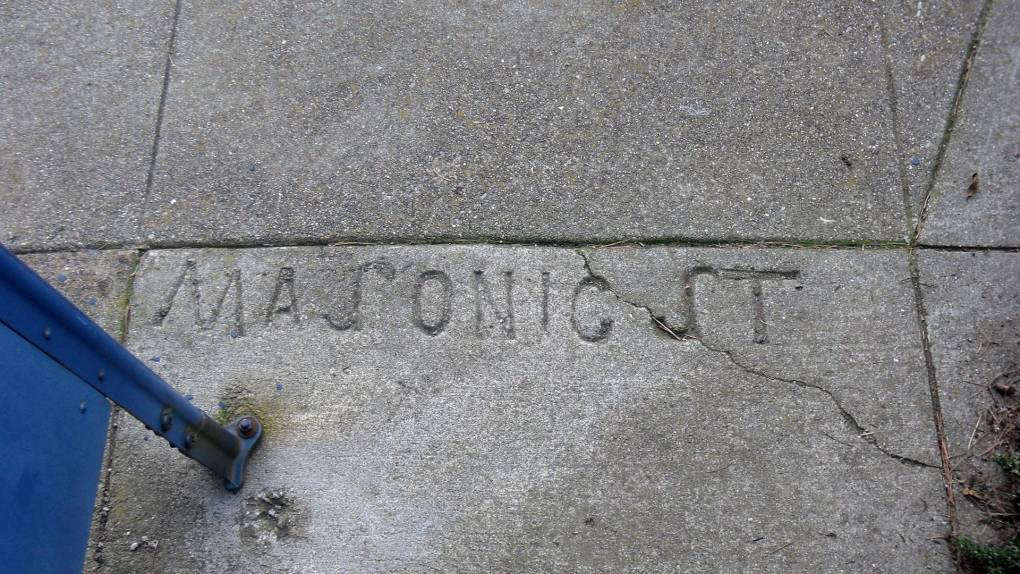
"caption": "Sometimes stamp installers don't have the correct letters when they're completing the job. That leads to creative solutions.",
"description": null,
"title": "street-stamps1",
"credit": "Erica Fischer/\u003ca href=\"https://www.flickr.com/photos/walkingsf/5362050951/in/album-72157622518303519/\">Flickr\u003c/a>",
"status": "inherit",
"altTag": "The name \"Masonic St\" is stamped into the sidewalk. Two Js have been used to create the S.",
"isLoading": false,
"fetchFailed": false
},
"news_11891763": {
"type": "attachments",
"id": "news_11891763",
"meta": {
"index": "attachments_1716263798",
"site": "news",
"id": "11891763",
"found": true
},
"parent": 11889092,
"imgSizes": {
"twentyfourteen-full-width": {
"file": "https://ww2.kqed.org/app/uploads/sites/10/2021/10/GettyImages-1233144469-1038x576.jpg",
"width": 1038,
"mimeType": "image/jpeg",
"height": 576
},
"thumbnail": {
"file": "https://ww2.kqed.org/app/uploads/sites/10/2021/10/GettyImages-1233144469-160x107.jpg",
"width": 160,
"mimeType": "image/jpeg",
"height": 107
},
"post-thumbnail": {
"file": "https://ww2.kqed.org/app/uploads/sites/10/2021/10/GettyImages-1233144469-672x372.jpg",
"width": 672,
"mimeType": "image/jpeg",
"height": 372
},
"kqedFullSize": {
"file": "https://ww2.kqed.org/app/uploads/sites/10/2021/10/GettyImages-1233144469-scaled-e1633896843251.jpg",
"width": 1920,
"height": 1280
},
"2048x2048": {
"file": "https://ww2.kqed.org/app/uploads/sites/10/2021/10/GettyImages-1233144469-2048x1365.jpg",
"width": 2048,
"mimeType": "image/jpeg",
"height": 1365
},
"large": {
"file": "https://ww2.kqed.org/app/uploads/sites/10/2021/10/GettyImages-1233144469-1020x680.jpg",
"width": 1020,
"mimeType": "image/jpeg",
"height": 680
},
"1536x1536": {
"file": "https://ww2.kqed.org/app/uploads/sites/10/2021/10/GettyImages-1233144469-1536x1024.jpg",
"width": 1536,
"mimeType": "image/jpeg",
"height": 1024
},
"full-width": {
"file": "https://ww2.kqed.org/app/uploads/sites/10/2021/10/GettyImages-1233144469-1920x1280.jpg",
"width": 1920,
"mimeType": "image/jpeg",
"height": 1280
},
"medium": {
"file": "https://ww2.kqed.org/app/uploads/sites/10/2021/10/GettyImages-1233144469-800x533.jpg",
"width": 800,
"mimeType": "image/jpeg",
"height": 533
}
},
"publishDate": 1633896817,
"modified": 1633994702,
"caption": "VTA employees pay their respects at a memorial where family, friends and community members attend a vigil for the victims of a shooting, at San José City Hall in San José, California, on May 27, 2021. ",
"description": null,
"title": "US-SHOOTING-CALIFORNIA-CRIME",
"credit": "Photo by AMY OSBORNE/AFP via Getty Images",
"status": "inherit",
"altTag": "A line of people in uniform -- neon yellow jackets and dark blue pants with reflective stripes at the knees -- stand before a collection of flowers.",
"isLoading": false,
"fetchFailed": false
},
"news_11880226": {
"type": "attachments",
"id": "news_11880226",
"meta": {
"index": "attachments_1716263798",
"site": "news",
"id": "11880226",
"found": true
},
"parent": 11879641,
"imgSizes": {
"twentyfourteen-full-width": {
"file": "https://ww2.kqed.org/app/uploads/sites/10/2021/07/trucks-1038x576.jpg",
"width": 1038,
"mimeType": "image/jpeg",
"height": 576
},
"thumbnail": {
"file": "https://ww2.kqed.org/app/uploads/sites/10/2021/07/trucks-160x90.jpg",
"width": 160,
"mimeType": "image/jpeg",
"height": 90
},
"post-thumbnail": {
"file": "https://ww2.kqed.org/app/uploads/sites/10/2021/07/trucks-672x372.jpg",
"width": 672,
"mimeType": "image/jpeg",
"height": 372
},
"kqedFullSize": {
"file": "https://ww2.kqed.org/app/uploads/sites/10/2021/07/trucks.jpg",
"width": 1920,
"height": 1080
},
"large": {
"file": "https://ww2.kqed.org/app/uploads/sites/10/2021/07/trucks-1020x574.jpg",
"width": 1020,
"mimeType": "image/jpeg",
"height": 574
},
"1536x1536": {
"file": "https://ww2.kqed.org/app/uploads/sites/10/2021/07/trucks-1536x864.jpg",
"width": 1536,
"mimeType": "image/jpeg",
"height": 864
},
"medium": {
"file": "https://ww2.kqed.org/app/uploads/sites/10/2021/07/trucks-800x450.jpg",
"width": 800,
"mimeType": "image/jpeg",
"height": 450
}
},
"publishDate": 1625194429,
"modified": 1625194540,
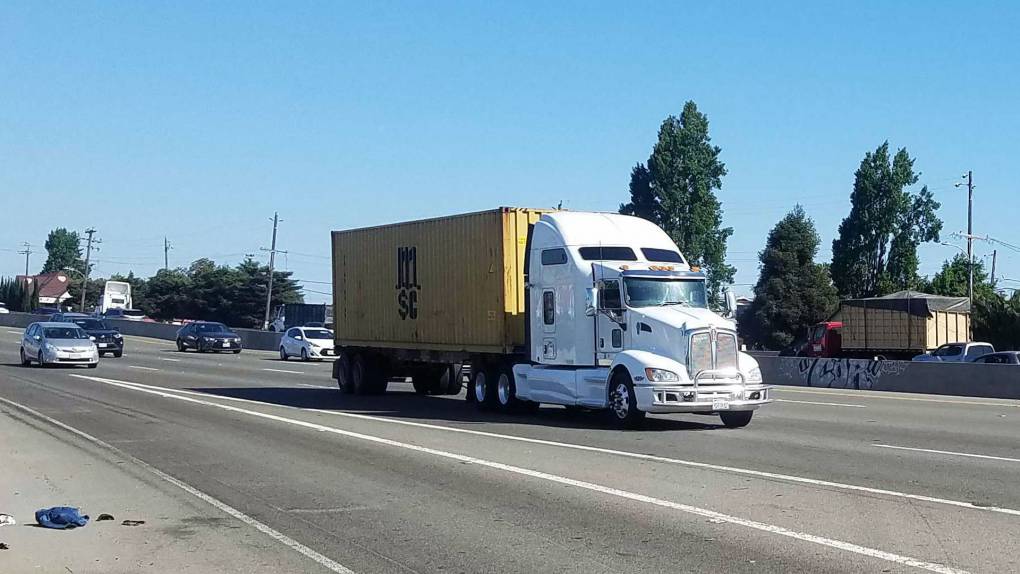
"caption": "A big rig truck on the 880 freeway. Big trucks like this one are banned on the I-580 freeway.",
"description": null,
"title": "trucks",
"credit": "Teodros Hailye/KQED",
"status": "inherit",
"altTag": null,
"isLoading": false,
"fetchFailed": false
},
"news_11877732": {
"type": "attachments",
"id": "news_11877732",
"meta": {
"index": "attachments_1716263798",
"site": "news",
"id": "11877732",
"found": true
},
"parent": 11877717,
"imgSizes": {
"twentyfourteen-full-width": {
"file": "https://ww2.kqed.org/app/uploads/sites/10/2021/06/RS49577_011_PortofOakland_Vaccination_05272021-qut-1038x576.jpg",
"width": 1038,
"mimeType": "image/jpeg",
"height": 576
},
"thumbnail": {
"file": "https://ww2.kqed.org/app/uploads/sites/10/2021/06/RS49577_011_PortofOakland_Vaccination_05272021-qut-160x107.jpg",
"width": 160,
"mimeType": "image/jpeg",
"height": 107
},
"post-thumbnail": {
"file": "https://ww2.kqed.org/app/uploads/sites/10/2021/06/RS49577_011_PortofOakland_Vaccination_05272021-qut-672x372.jpg",
"width": 672,
"mimeType": "image/jpeg",
"height": 372
},
"kqedFullSize": {
"file": "https://ww2.kqed.org/app/uploads/sites/10/2021/06/RS49577_011_PortofOakland_Vaccination_05272021-qut.jpg",
"width": 1920,
"height": 1280
},
"large": {
"file": "https://ww2.kqed.org/app/uploads/sites/10/2021/06/RS49577_011_PortofOakland_Vaccination_05272021-qut-1020x680.jpg",
"width": 1020,
"mimeType": "image/jpeg",
"height": 680
},
"1536x1536": {
"file": "https://ww2.kqed.org/app/uploads/sites/10/2021/06/RS49577_011_PortofOakland_Vaccination_05272021-qut-1536x1024.jpg",
"width": 1536,
"mimeType": "image/jpeg",
"height": 1024
},
"medium": {
"file": "https://ww2.kqed.org/app/uploads/sites/10/2021/06/RS49577_011_PortofOakland_Vaccination_05272021-qut-800x533.jpg",
"width": 800,
"mimeType": "image/jpeg",
"height": 533
}
},
"publishDate": 1623436920,
"modified": 1624920486,
"caption": "A crew member from the cargo ship Sea Hope receives the Johnson & Johnson vaccination at the Port of Oakland on May 27, 2021.",
"description": null,
"title": "RS49577_011_PortofOakland_Vaccination_05272021-qut",
"credit": "Beth LaBerge/KQED",
"status": "inherit",
"altTag": null,
"isLoading": false,
"fetchFailed": false
},
"news_11787963": {
"type": "attachments",
"id": "news_11787963",
"meta": {
"index": "attachments_1716263798",
"site": "news",
"id": "11787963",
"found": true
},
"parent": 11787959,
"imgSizes": {
"apple_news_ca_landscape_5_5": {
"file": "https://ww2.kqed.org/app/uploads/sites/10/2019/11/RS6995_175333536-1044x783.jpg",
"width": 1044,
"mimeType": "image/jpeg",
"height": 783
},
"apple_news_ca_square_4_0": {
"file": "https://ww2.kqed.org/app/uploads/sites/10/2019/11/RS6995_175333536-470x470.jpg",
"width": 470,
"mimeType": "image/jpeg",
"height": 470
},
"twentyfourteen-full-width": {
"file": "https://ww2.kqed.org/app/uploads/sites/10/2019/11/RS6995_175333536-1038x576.jpg",
"width": 1038,
"mimeType": "image/jpeg",
"height": 576
},
"thumbnail": {
"file": "https://ww2.kqed.org/app/uploads/sites/10/2019/11/RS6995_175333536-160x112.jpg",
"width": 160,
"mimeType": "image/jpeg",
"height": 112
},
"post-thumbnail": {
"file": "https://ww2.kqed.org/app/uploads/sites/10/2019/11/RS6995_175333536-672x372.jpg",
"width": 672,
"mimeType": "image/jpeg",
"height": 372
},
"kqedFullSize": {
"file": "https://ww2.kqed.org/app/uploads/sites/10/2019/11/RS6995_175333536.jpg",
"width": 3000,
"height": 2108
},
"apple_news_ca_landscape_4_7": {
"file": "https://ww2.kqed.org/app/uploads/sites/10/2019/11/RS6995_175333536-632x474.jpg",
"width": 632,
"mimeType": "image/jpeg",
"height": 474
},
"large": {
"file": "https://ww2.kqed.org/app/uploads/sites/10/2019/11/RS6995_175333536-1020x717.jpg",
"width": 1020,
"mimeType": "image/jpeg",
"height": 717
},
"complete_open_graph": {
"file": "https://ww2.kqed.org/app/uploads/sites/10/2019/11/RS6995_175333536-1200x843.jpg",
"width": 1200,
"mimeType": "image/jpeg",
"height": 843
},
"apple_news_ca_landscape_4_0": {
"file": "https://ww2.kqed.org/app/uploads/sites/10/2019/11/RS6995_175333536-536x402.jpg",
"width": 536,
"mimeType": "image/jpeg",
"height": 402
},
"apple_news_ca_portrait_12_9": {
"file": "https://ww2.kqed.org/app/uploads/sites/10/2019/11/RS6995_175333536-1122x1496.jpg",
"width": 1122,
"mimeType": "image/jpeg",
"height": 1496
},
"medium": {
"file": "https://ww2.kqed.org/app/uploads/sites/10/2019/11/RS6995_175333536-800x562.jpg",
"width": 800,
"mimeType": "image/jpeg",
"height": 562
},
"apple_news_ca_portrait_4_0": {
"file": "https://ww2.kqed.org/app/uploads/sites/10/2019/11/RS6995_175333536-354x472.jpg",
"width": 354,
"mimeType": "image/jpeg",
"height": 472
},
"apple_news_ca_portrait_9_7": {
"file": "https://ww2.kqed.org/app/uploads/sites/10/2019/11/RS6995_175333536-840x1120.jpg",
"width": 840,
"mimeType": "image/jpeg",
"height": 1120
},
"apple_news_ca_landscape_12_9": {
"file": "https://ww2.kqed.org/app/uploads/sites/10/2019/11/RS6995_175333536-1832x1374.jpg",
"width": 1832,
"mimeType": "image/jpeg",
"height": 1374
},
"apple_news_ca_square_9_7": {
"file": "https://ww2.kqed.org/app/uploads/sites/10/2019/11/RS6995_175333536-1104x1104.jpg",
"width": 1104,
"mimeType": "image/jpeg",
"height": 1104
},
"apple_news_ca_portrait_4_7": {
"file": "https://ww2.kqed.org/app/uploads/sites/10/2019/11/RS6995_175333536-414x552.jpg",
"width": 414,
"mimeType": "image/jpeg",
"height": 552
},
"apple_news_ca_square_12_9": {
"file": "https://ww2.kqed.org/app/uploads/sites/10/2019/11/RS6995_175333536-1472x1472.jpg",
"width": 1472,
"mimeType": "image/jpeg",
"height": 1472
},
"apple_news_ca_portrait_5_5": {
"file": "https://ww2.kqed.org/app/uploads/sites/10/2019/11/RS6995_175333536-687x916.jpg",
"width": 687,
"mimeType": "image/jpeg",
"height": 916
},
"full-width": {
"file": "https://ww2.kqed.org/app/uploads/sites/10/2019/11/RS6995_175333536-1920x1349.jpg",
"width": 1920,
"mimeType": "image/jpeg",
"height": 1349
},
"apple_news_ca_square_4_7": {
"file": "https://ww2.kqed.org/app/uploads/sites/10/2019/11/RS6995_175333536-550x550.jpg",
"width": 550,
"mimeType": "image/jpeg",
"height": 550
},
"apple_news_ca_landscape_9_7": {
"file": "https://ww2.kqed.org/app/uploads/sites/10/2019/11/RS6995_175333536-1376x1032.jpg",
"width": 1376,
"mimeType": "image/jpeg",
"height": 1032
},
"apple_news_ca_square_5_5": {
"file": "https://ww2.kqed.org/app/uploads/sites/10/2019/11/RS6995_175333536-912x912.jpg",
"width": 912,
"mimeType": "image/jpeg",
"height": 912
}
},
"publishDate": 1574373705,
"modified": 1619742164,
"caption": "Before the COVID-19 pandemic, an estimated 400,000 people rode BART each day. In the early days of the pandemic, that number plummeted to as low as 23,000. ",
"description": null,
"title": "Bay Area Transportation Workers Strike Looms Ahead Of Monday Deadline",
"credit": "Justin Sullivan/Getty Images",
"status": "inherit",
"altTag": null,
"isLoading": false,
"fetchFailed": false
},
"news_11869359": {
"type": "attachments",
"id": "news_11869359",
"meta": {
"index": "attachments_1716263798",
"site": "news",
"id": "11869359",
"found": true
},
"parent": 11869346,
"imgSizes": {
"thumbnail": {
"file": "https://ww2.kqed.org/app/uploads/sites/10/2021/04/Santa-Cruz-Railroad-1-160x115.jpg",
"width": 160,
"mimeType": "image/jpeg",
"height": 115
},
"post-thumbnail": {
"file": "https://ww2.kqed.org/app/uploads/sites/10/2021/04/Santa-Cruz-Railroad-1-672x372.jpg",
"width": 672,
"mimeType": "image/jpeg",
"height": 372
},
"kqedFullSize": {
"file": "https://ww2.kqed.org/app/uploads/sites/10/2021/04/Santa-Cruz-Railroad-1.jpg",
"width": 763,
"height": 550
}
},
"publishDate": 1618360202,
"modified": 1618439482,
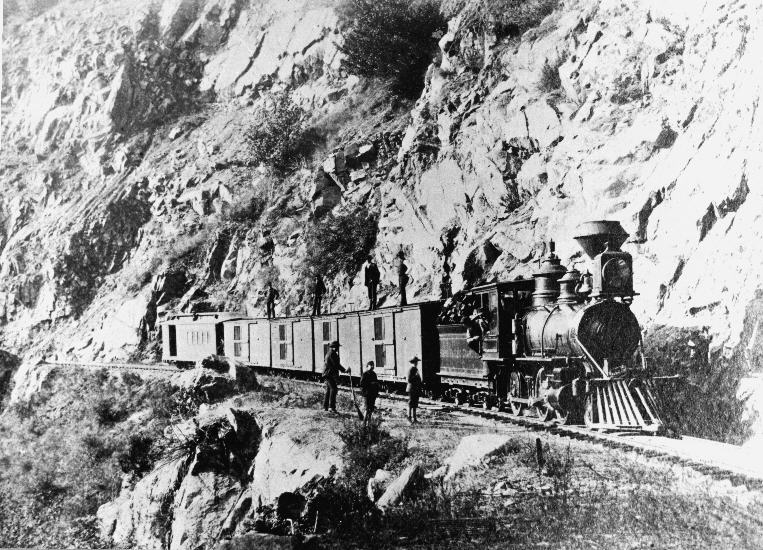
"caption": "A South Pacific Coast Railroad train stopped for a photograph in San Lorenzo Gorge in the 1880s.",
"description": null,
"title": "Santa Cruz Railroad 1",
"credit": "Courtesy of Derek Whaley",
"status": "inherit",
"altTag": null,
"isLoading": false,
"fetchFailed": false
},
"news_11868510": {
"type": "attachments",
"id": "news_11868510",
"meta": {
"index": "attachments_1716263798",
"site": "news",
"id": "11868510",
"found": true
},
"parent": 11868460,
"imgSizes": {
"twentyfourteen-full-width": {
"file": "https://ww2.kqed.org/app/uploads/sites/10/2021/04/cargo-ship-backup-1038x576.jpg",
"width": 1038,
"mimeType": "image/jpeg",
"height": 576
},
"thumbnail": {
"file": "https://ww2.kqed.org/app/uploads/sites/10/2021/04/cargo-ship-backup-160x90.jpg",
"width": 160,
"mimeType": "image/jpeg",
"height": 90
},
"post-thumbnail": {
"file": "https://ww2.kqed.org/app/uploads/sites/10/2021/04/cargo-ship-backup-672x372.jpg",
"width": 672,
"mimeType": "image/jpeg",
"height": 372
},
"kqedFullSize": {
"file": "https://ww2.kqed.org/app/uploads/sites/10/2021/04/cargo-ship-backup.jpg",
"width": 1920,
"height": 1080
},
"large": {
"file": "https://ww2.kqed.org/app/uploads/sites/10/2021/04/cargo-ship-backup-1020x574.jpg",
"width": 1020,
"mimeType": "image/jpeg",
"height": 574
},
"1536x1536": {
"file": "https://ww2.kqed.org/app/uploads/sites/10/2021/04/cargo-ship-backup-1536x864.jpg",
"width": 1536,
"mimeType": "image/jpeg",
"height": 864
},
"medium": {
"file": "https://ww2.kqed.org/app/uploads/sites/10/2021/04/cargo-ship-backup-800x450.jpg",
"width": 800,
"mimeType": "image/jpeg",
"height": 450
}
},
"publishDate": 1617835099,
"modified": 1617835164,
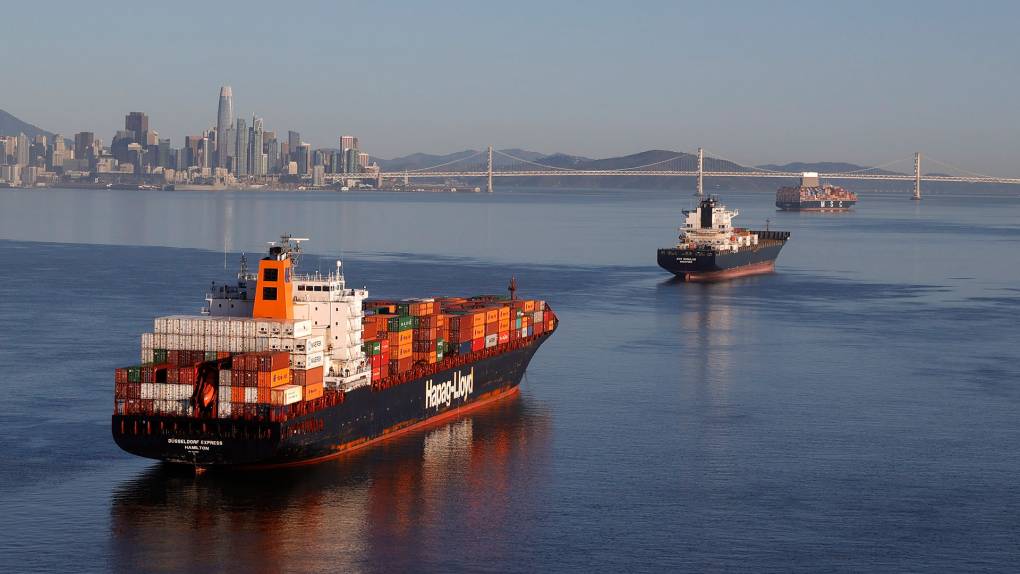
"caption": "Container ships sit idle in the the San Francisco Bay just outside of the Port of Oakland on March 26, 2021 in San Francisco, California. As the global pandemic has fueled online shopping and international shipping to fulfill orders, metal shipping containers have become scarce and have caused log jams at ports around the globe. ",
"description": null,
"title": "cargo-ship-backup",
"credit": "Justin Sullivan/Getty Images",
"status": "inherit",
"altTag": "Container ships sit idle in the the San Francisco Bay just outside of the Port of Oakland on March 26, 2021 in San Francisco, California. As the global pandemic has fueled online shopping and international shipping to fulfill orders, metal shipping containers have become scarce and have caused log jams at ports around the globe.",
"isLoading": false,
"fetchFailed": false
},
"news_11864211": {
"type": "attachments",
"id": "news_11864211",
"meta": {
"index": "attachments_1716263798",
"site": "news",
"id": "11864211",
"found": true
},
"parent": 11864205,
"imgSizes": {
"twentyfourteen-full-width": {
"file": "https://ww2.kqed.org/app/uploads/sites/10/2021/03/trash-freeways-1038x576.jpg",
"width": 1038,
"mimeType": "image/jpeg",
"height": 576
},
"thumbnail": {
"file": "https://ww2.kqed.org/app/uploads/sites/10/2021/03/trash-freeways-160x90.jpg",
"width": 160,
"mimeType": "image/jpeg",
"height": 90
},
"post-thumbnail": {
"file": "https://ww2.kqed.org/app/uploads/sites/10/2021/03/trash-freeways-672x372.jpg",
"width": 672,
"mimeType": "image/jpeg",
"height": 372
},
"kqedFullSize": {
"file": "https://ww2.kqed.org/app/uploads/sites/10/2021/03/trash-freeways.jpg",
"width": 1920,
"height": 1080
},
"large": {
"file": "https://ww2.kqed.org/app/uploads/sites/10/2021/03/trash-freeways-1020x574.jpg",
"width": 1020,
"mimeType": "image/jpeg",
"height": 574
},
"1536x1536": {
"file": "https://ww2.kqed.org/app/uploads/sites/10/2021/03/trash-freeways-1536x864.jpg",
"width": 1536,
"mimeType": "image/jpeg",
"height": 864
},
"medium": {
"file": "https://ww2.kqed.org/app/uploads/sites/10/2021/03/trash-freeways-800x450.jpg",
"width": 800,
"mimeType": "image/jpeg",
"height": 450
}
},
"publishDate": 1615431692,
"modified": 1615431893,
"caption": "A Caltrans crew cleaning up an embankment along Highway 99 in Sacramento. ",
"description": null,
"title": "Caltrans-Highway 99 cleanup",
"credit": "Caltrans",
"status": "inherit",
"altTag": null,
"isLoading": false,
"fetchFailed": false
},
"news_11847903": {
"type": "attachments",
"id": "news_11847903",
"meta": {
"index": "attachments_1716263798",
"site": "news",
"id": "11847903",
"found": true
},
"parent": 11847897,
"imgSizes": {
"apple_news_ca_landscape_5_5": {
"file": "https://ww2.kqed.org/app/uploads/sites/10/2020/11/1920px-Twin_Peaks_Tunnel-1044x783.jpg",
"width": 1044,
"mimeType": "image/jpeg",
"height": 783
},
"apple_news_ca_square_4_0": {
"file": "https://ww2.kqed.org/app/uploads/sites/10/2020/11/1920px-Twin_Peaks_Tunnel-470x470.jpg",
"width": 470,
"mimeType": "image/jpeg",
"height": 470
},
"twentyfourteen-full-width": {
"file": "https://ww2.kqed.org/app/uploads/sites/10/2020/11/1920px-Twin_Peaks_Tunnel-1038x576.jpg",
"width": 1038,
"mimeType": "image/jpeg",
"height": 576
},
"thumbnail": {
"file": "https://ww2.kqed.org/app/uploads/sites/10/2020/11/1920px-Twin_Peaks_Tunnel-160x120.jpg",
"width": 160,
"mimeType": "image/jpeg",
"height": 120
},
"post-thumbnail": {
"file": "https://ww2.kqed.org/app/uploads/sites/10/2020/11/1920px-Twin_Peaks_Tunnel-672x372.jpg",
"width": 672,
"mimeType": "image/jpeg",
"height": 372
},
"kqedFullSize": {
"file": "https://ww2.kqed.org/app/uploads/sites/10/2020/11/1920px-Twin_Peaks_Tunnel.jpg",
"width": 1920,
"height": 1440
},
"apple_news_ca_landscape_4_7": {
"file": "https://ww2.kqed.org/app/uploads/sites/10/2020/11/1920px-Twin_Peaks_Tunnel-632x474.jpg",
"width": 632,
"mimeType": "image/jpeg",
"height": 474
},
"large": {
"file": "https://ww2.kqed.org/app/uploads/sites/10/2020/11/1920px-Twin_Peaks_Tunnel-1020x765.jpg",
"width": 1020,
"mimeType": "image/jpeg",
"height": 765
},
"apple_news_ca_landscape_4_0": {
"file": "https://ww2.kqed.org/app/uploads/sites/10/2020/11/1920px-Twin_Peaks_Tunnel-536x402.jpg",
"width": 536,
"mimeType": "image/jpeg",
"height": 402
},
"apple_news_ca_portrait_12_9": {
"file": "https://ww2.kqed.org/app/uploads/sites/10/2020/11/1920px-Twin_Peaks_Tunnel-1122x1440.jpg",
"width": 1122,
"mimeType": "image/jpeg",
"height": 1440
},
"medium": {
"file": "https://ww2.kqed.org/app/uploads/sites/10/2020/11/1920px-Twin_Peaks_Tunnel-800x600.jpg",
"width": 800,
"mimeType": "image/jpeg",
"height": 600
},
"apple_news_ca_portrait_4_0": {
"file": "https://ww2.kqed.org/app/uploads/sites/10/2020/11/1920px-Twin_Peaks_Tunnel-354x472.jpg",
"width": 354,
"mimeType": "image/jpeg",
"height": 472
},
"apple_news_ca_portrait_9_7": {
"file": "https://ww2.kqed.org/app/uploads/sites/10/2020/11/1920px-Twin_Peaks_Tunnel-840x1120.jpg",
"width": 840,
"mimeType": "image/jpeg",
"height": 1120
},
"apple_news_ca_landscape_12_9": {
"file": "https://ww2.kqed.org/app/uploads/sites/10/2020/11/1920px-Twin_Peaks_Tunnel-1832x1374.jpg",
"width": 1832,
"mimeType": "image/jpeg",
"height": 1374
},
"apple_news_ca_square_9_7": {
"file": "https://ww2.kqed.org/app/uploads/sites/10/2020/11/1920px-Twin_Peaks_Tunnel-1104x1104.jpg",
"width": 1104,
"mimeType": "image/jpeg",
"height": 1104
},
"1536x1536": {
"file": "https://ww2.kqed.org/app/uploads/sites/10/2020/11/1920px-Twin_Peaks_Tunnel-1536x1152.jpg",
"width": 1536,
"mimeType": "image/jpeg",
"height": 1152
},
"apple_news_ca_portrait_4_7": {
"file": "https://ww2.kqed.org/app/uploads/sites/10/2020/11/1920px-Twin_Peaks_Tunnel-414x552.jpg",
"width": 414,
"mimeType": "image/jpeg",
"height": 552
},
"apple_news_ca_square_12_9": {
"file": "https://ww2.kqed.org/app/uploads/sites/10/2020/11/1920px-Twin_Peaks_Tunnel-1472x1440.jpg",
"width": 1472,
"mimeType": "image/jpeg",
"height": 1440
},
"apple_news_ca_portrait_5_5": {
"file": "https://ww2.kqed.org/app/uploads/sites/10/2020/11/1920px-Twin_Peaks_Tunnel-687x916.jpg",
"width": 687,
"mimeType": "image/jpeg",
"height": 916
},
"apple_news_ca_square_4_7": {
"file": "https://ww2.kqed.org/app/uploads/sites/10/2020/11/1920px-Twin_Peaks_Tunnel-550x550.jpg",
"width": 550,
"mimeType": "image/jpeg",
"height": 550
},
"apple_news_ca_landscape_9_7": {
"file": "https://ww2.kqed.org/app/uploads/sites/10/2020/11/1920px-Twin_Peaks_Tunnel-1376x1032.jpg",
"width": 1376,
"mimeType": "image/jpeg",
"height": 1032
},
"apple_news_ca_square_5_5": {
"file": "https://ww2.kqed.org/app/uploads/sites/10/2020/11/1920px-Twin_Peaks_Tunnel-912x912.jpg",
"width": 912,
"mimeType": "image/jpeg",
"height": 912
}
},
"publishDate": 1605679838,
"modified": 1605679946,
"caption": "A 2007 view of Muni's Twin Peaks Tunnel at the Forest Hill Station. ",
"description": null,
"title": "SFMTA-Muni Twin Peaks Tunnel",
"credit": "Jef Poskanzer/Wikimedia Commons",
"status": "inherit",
"isLoading": false,
"fetchFailed": false
},
"news_11839536": {
"type": "attachments",
"id": "news_11839536",
"meta": {
"index": "attachments_1716263798",
"site": "news",
"id": "11839536",
"found": true
},
"parent": 11839533,
"imgSizes": {
"apple_news_ca_landscape_5_5": {
"file": "https://ww2.kqed.org/app/uploads/sites/10/2020/09/RS35989_US101Traffic_012-qut-1044x783.jpg",
"width": 1044,
"mimeType": "image/jpeg",
"height": 783
},
"apple_news_ca_square_4_0": {
"file": "https://ww2.kqed.org/app/uploads/sites/10/2020/09/RS35989_US101Traffic_012-qut-470x470.jpg",
"width": 470,
"mimeType": "image/jpeg",
"height": 470
},
"twentyfourteen-full-width": {
"file": "https://ww2.kqed.org/app/uploads/sites/10/2020/09/RS35989_US101Traffic_012-qut-1038x576.jpg",
"width": 1038,
"mimeType": "image/jpeg",
"height": 576
},
"thumbnail": {
"file": "https://ww2.kqed.org/app/uploads/sites/10/2020/09/RS35989_US101Traffic_012-qut-160x109.jpg",
"width": 160,
"mimeType": "image/jpeg",
"height": 109
},
"post-thumbnail": {
"file": "https://ww2.kqed.org/app/uploads/sites/10/2020/09/RS35989_US101Traffic_012-qut-672x372.jpg",
"width": 672,
"mimeType": "image/jpeg",
"height": 372
},
"kqedFullSize": {
"file": "https://ww2.kqed.org/app/uploads/sites/10/2020/09/RS35989_US101Traffic_012-qut.jpg",
"width": 1920,
"height": 1307
},
"apple_news_ca_landscape_4_7": {
"file": "https://ww2.kqed.org/app/uploads/sites/10/2020/09/RS35989_US101Traffic_012-qut-632x474.jpg",
"width": 632,
"mimeType": "image/jpeg",
"height": 474
},
"large": {
"file": "https://ww2.kqed.org/app/uploads/sites/10/2020/09/RS35989_US101Traffic_012-qut-1020x694.jpg",
"width": 1020,
"mimeType": "image/jpeg",
"height": 694
},
"apple_news_ca_landscape_4_0": {
"file": "https://ww2.kqed.org/app/uploads/sites/10/2020/09/RS35989_US101Traffic_012-qut-536x402.jpg",
"width": 536,
"mimeType": "image/jpeg",
"height": 402
},
"apple_news_ca_portrait_12_9": {
"file": "https://ww2.kqed.org/app/uploads/sites/10/2020/09/RS35989_US101Traffic_012-qut-1122x1307.jpg",
"width": 1122,
"mimeType": "image/jpeg",
"height": 1307
},
"medium": {
"file": "https://ww2.kqed.org/app/uploads/sites/10/2020/09/RS35989_US101Traffic_012-qut-800x545.jpg",
"width": 800,
"mimeType": "image/jpeg",
"height": 545
},
"apple_news_ca_portrait_4_0": {
"file": "https://ww2.kqed.org/app/uploads/sites/10/2020/09/RS35989_US101Traffic_012-qut-354x472.jpg",
"width": 354,
"mimeType": "image/jpeg",
"height": 472
},
"apple_news_ca_portrait_9_7": {
"file": "https://ww2.kqed.org/app/uploads/sites/10/2020/09/RS35989_US101Traffic_012-qut-840x1120.jpg",
"width": 840,
"mimeType": "image/jpeg",
"height": 1120
},
"apple_news_ca_landscape_12_9": {
"file": "https://ww2.kqed.org/app/uploads/sites/10/2020/09/RS35989_US101Traffic_012-qut-1832x1307.jpg",
"width": 1832,
"mimeType": "image/jpeg",
"height": 1307
},
"apple_news_ca_square_9_7": {
"file": "https://ww2.kqed.org/app/uploads/sites/10/2020/09/RS35989_US101Traffic_012-qut-1104x1104.jpg",
"width": 1104,
"mimeType": "image/jpeg",
"height": 1104
},
"1536x1536": {
"file": "https://ww2.kqed.org/app/uploads/sites/10/2020/09/RS35989_US101Traffic_012-qut-1536x1046.jpg",
"width": 1536,
"mimeType": "image/jpeg",
"height": 1046
},
"apple_news_ca_portrait_4_7": {
"file": "https://ww2.kqed.org/app/uploads/sites/10/2020/09/RS35989_US101Traffic_012-qut-414x552.jpg",
"width": 414,
"mimeType": "image/jpeg",
"height": 552
},
"apple_news_ca_square_12_9": {
"file": "https://ww2.kqed.org/app/uploads/sites/10/2020/09/RS35989_US101Traffic_012-qut-1472x1307.jpg",
"width": 1472,
"mimeType": "image/jpeg",
"height": 1307
},
"apple_news_ca_portrait_5_5": {
"file": "https://ww2.kqed.org/app/uploads/sites/10/2020/09/RS35989_US101Traffic_012-qut-687x916.jpg",
"width": 687,
"mimeType": "image/jpeg",
"height": 916
},
"apple_news_ca_square_4_7": {
"file": "https://ww2.kqed.org/app/uploads/sites/10/2020/09/RS35989_US101Traffic_012-qut-550x550.jpg",
"width": 550,
"mimeType": "image/jpeg",
"height": 550
},
"apple_news_ca_landscape_9_7": {
"file": "https://ww2.kqed.org/app/uploads/sites/10/2020/09/RS35989_US101Traffic_012-qut-1376x1032.jpg",
"width": 1376,
"mimeType": "image/jpeg",
"height": 1032
},
"apple_news_ca_square_5_5": {
"file": "https://ww2.kqed.org/app/uploads/sites/10/2020/09/RS35989_US101Traffic_012-qut-912x912.jpg",
"width": 912,
"mimeType": "image/jpeg",
"height": 912
}
},
"publishDate": 1600984618,
"modified": 1600984665,
"caption": "Traffic on US-101 at 3 p.m. towards the downtown San Francisco and the Bay Bridge on Friday March 8, 2019. ",
"description": null,
"title": "RS35989_US101Traffic_012-qut",
"credit": "Lindsey Moore/KQED",
"status": "inherit",
"isLoading": false,
"fetchFailed": false
},
"news_11254007": {
"type": "attachments",
"id": "news_11254007",
"meta": {
"index": "attachments_1716263798",
"site": "news",
"id": "11254007",
"found": true
},
"title": "Caltrain-San Jose",
"publishDate": 1483581291,
"status": "inherit",
"parent": 11250035,
"modified": 1746832544,
"caption": "Caltrain cars at San José's Diridon Station, December 2016.",
"credit": "Dan Brekke/KQED",
"altTag": "The side of a Caltrain train as it enters a station.",
"description": null,
"imgSizes": {
"thumbnail": {
"file": "https://cdn.kqed.org/wp-content/uploads/sites/10/2017/01/31909760916_d88814d339_o-160x120.jpg",
"width": 160,
"height": 120,
"mimeType": "image/jpeg"
},
"medium": {
"file": "https://cdn.kqed.org/wp-content/uploads/sites/10/2017/01/31909760916_d88814d339_o-800x600.jpg",
"width": 800,
"height": 600,
"mimeType": "image/jpeg"
},
"large": {
"file": "https://cdn.kqed.org/wp-content/uploads/sites/10/2017/01/31909760916_d88814d339_o-1020x765.jpg",
"width": 1020,
"height": 765,
"mimeType": "image/jpeg"
},
"fd-lrg": {
"file": "https://cdn.kqed.org/wp-content/uploads/sites/10/2017/01/31909760916_d88814d339_o-1920x1440.jpg",
"width": 1920,
"height": 1440,
"mimeType": "image/jpeg"
},
"fd-med": {
"file": "https://cdn.kqed.org/wp-content/uploads/sites/10/2017/01/31909760916_d88814d339_o-1180x885.jpg",
"width": 1180,
"height": 885,
"mimeType": "image/jpeg"
},
"fd-sm": {
"file": "https://cdn.kqed.org/wp-content/uploads/sites/10/2017/01/31909760916_d88814d339_o-960x720.jpg",
"width": 960,
"height": 720,
"mimeType": "image/jpeg"
},
"post-thumbnail": {
"file": "https://cdn.kqed.org/wp-content/uploads/sites/10/2017/01/31909760916_d88814d339_o-672x372.jpg",
"width": 672,
"height": 372,
"mimeType": "image/jpeg"
},
"twentyfourteen-full-width": {
"file": "https://cdn.kqed.org/wp-content/uploads/sites/10/2017/01/31909760916_d88814d339_o-1038x576.jpg",
"width": 1038,
"height": 576,
"mimeType": "image/jpeg"
},
"xxsmall": {
"file": "https://cdn.kqed.org/wp-content/uploads/sites/10/2017/01/31909760916_d88814d339_o-240x180.jpg",
"width": 240,
"height": 180,
"mimeType": "image/jpeg"
},
"xsmall": {
"file": "https://cdn.kqed.org/wp-content/uploads/sites/10/2017/01/31909760916_d88814d339_o-375x281.jpg",
"width": 375,
"height": 281,
"mimeType": "image/jpeg"
},
"small": {
"file": "https://cdn.kqed.org/wp-content/uploads/sites/10/2017/01/31909760916_d88814d339_o-520x390.jpg",
"width": 520,
"height": 390,
"mimeType": "image/jpeg"
},
"xlarge": {
"file": "https://cdn.kqed.org/wp-content/uploads/sites/10/2017/01/31909760916_d88814d339_o-1180x885.jpg",
"width": 1180,
"height": 885,
"mimeType": "image/jpeg"
},
"full-width": {
"file": "https://cdn.kqed.org/wp-content/uploads/sites/10/2017/01/31909760916_d88814d339_o-1920x1440.jpg",
"width": 1920,
"height": 1440,
"mimeType": "image/jpeg"
},
"guest-author-32": {
"file": "https://cdn.kqed.org/wp-content/uploads/sites/10/2017/01/31909760916_d88814d339_o-32x32.jpg",
"width": 32,
"height": 32,
"mimeType": "image/jpeg"
},
"guest-author-50": {
"file": "https://cdn.kqed.org/wp-content/uploads/sites/10/2017/01/31909760916_d88814d339_o-50x50.jpg",
"width": 50,
"height": 50,
"mimeType": "image/jpeg"
},
"guest-author-64": {
"file": "https://cdn.kqed.org/wp-content/uploads/sites/10/2017/01/31909760916_d88814d339_o-64x64.jpg",
"width": 64,
"height": 64,
"mimeType": "image/jpeg"
},
"guest-author-96": {
"file": "https://cdn.kqed.org/wp-content/uploads/sites/10/2017/01/31909760916_d88814d339_o-96x96.jpg",
"width": 96,
"height": 96,
"mimeType": "image/jpeg"
},
"guest-author-128": {
"file": "https://cdn.kqed.org/wp-content/uploads/sites/10/2017/01/31909760916_d88814d339_o-128x128.jpg",
"width": 128,
"height": 128,
"mimeType": "image/jpeg"
},
"detail": {
"file": "https://cdn.kqed.org/wp-content/uploads/sites/10/2017/01/31909760916_d88814d339_o-150x150.jpg",
"width": 150,
"height": 150,
"mimeType": "image/jpeg"
},
"jmtc-small-thumb": {
"file": "https://cdn.kqed.org/wp-content/uploads/sites/10/2017/01/31909760916_d88814d339_o-280x150.jpg",
"width": 280,
"height": 150,
"mimeType": "image/jpeg"
},
"kqedFullSize": {
"file": "https://cdn.kqed.org/wp-content/uploads/sites/10/2017/01/31909760916_d88814d339_o-e1483581327477.jpg",
"width": 1920,
"height": 1440
}
},
"isLoading": false,
"fetchFailed": false
},
"news_11829106": {
"type": "attachments",
"id": "news_11829106",
"meta": {
"index": "attachments_1716263798",
"site": "news",
"id": "11829106",
"found": true
},
"parent": 11829102,
"imgSizes": {
"apple_news_ca_landscape_5_5": {
"file": "https://ww2.kqed.org/app/uploads/sites/10/2020/07/Bekeley-police-Rosos-1044x783.jpg",
"width": 1044,
"mimeType": "image/jpeg",
"height": 783
},
"apple_news_ca_square_4_0": {
"file": "https://ww2.kqed.org/app/uploads/sites/10/2020/07/Bekeley-police-Rosos-470x470.jpg",
"width": 470,
"mimeType": "image/jpeg",
"height": 470
},
"twentyfourteen-full-width": {
"file": "https://ww2.kqed.org/app/uploads/sites/10/2020/07/Bekeley-police-Rosos-1038x576.jpg",
"width": 1038,
"mimeType": "image/jpeg",
"height": 576
},
"thumbnail": {
"file": "https://ww2.kqed.org/app/uploads/sites/10/2020/07/Bekeley-police-Rosos-160x107.jpg",
"width": 160,
"mimeType": "image/jpeg",
"height": 107
},
"post-thumbnail": {
"file": "https://ww2.kqed.org/app/uploads/sites/10/2020/07/Bekeley-police-Rosos-672x372.jpg",
"width": 672,
"mimeType": "image/jpeg",
"height": 372
},
"kqedFullSize": {
"file": "https://ww2.kqed.org/app/uploads/sites/10/2020/07/Bekeley-police-Rosos.jpg",
"width": 1200,
"height": 800
},
"apple_news_ca_landscape_4_7": {
"file": "https://ww2.kqed.org/app/uploads/sites/10/2020/07/Bekeley-police-Rosos-632x474.jpg",
"width": 632,
"mimeType": "image/jpeg",
"height": 474
},
"large": {
"file": "https://ww2.kqed.org/app/uploads/sites/10/2020/07/Bekeley-police-Rosos-1020x680.jpg",
"width": 1020,
"mimeType": "image/jpeg",
"height": 680
},
"apple_news_ca_landscape_4_0": {
"file": "https://ww2.kqed.org/app/uploads/sites/10/2020/07/Bekeley-police-Rosos-536x402.jpg",
"width": 536,
"mimeType": "image/jpeg",
"height": 402
},
"apple_news_ca_portrait_12_9": {
"file": "https://ww2.kqed.org/app/uploads/sites/10/2020/07/Bekeley-police-Rosos-1122x800.jpg",
"width": 1122,
"mimeType": "image/jpeg",
"height": 800
},
"medium": {
"file": "https://ww2.kqed.org/app/uploads/sites/10/2020/07/Bekeley-police-Rosos-800x533.jpg",
"width": 800,
"mimeType": "image/jpeg",
"height": 533
},
"apple_news_ca_portrait_4_0": {
"file": "https://ww2.kqed.org/app/uploads/sites/10/2020/07/Bekeley-police-Rosos-354x472.jpg",
"width": 354,
"mimeType": "image/jpeg",
"height": 472
},
"apple_news_ca_portrait_9_7": {
"file": "https://ww2.kqed.org/app/uploads/sites/10/2020/07/Bekeley-police-Rosos-840x800.jpg",
"width": 840,
"mimeType": "image/jpeg",
"height": 800
},
"apple_news_ca_square_9_7": {
"file": "https://ww2.kqed.org/app/uploads/sites/10/2020/07/Bekeley-police-Rosos-1104x800.jpg",
"width": 1104,
"mimeType": "image/jpeg",
"height": 800
},
"apple_news_ca_portrait_4_7": {
"file": "https://ww2.kqed.org/app/uploads/sites/10/2020/07/Bekeley-police-Rosos-414x552.jpg",
"width": 414,
"mimeType": "image/jpeg",
"height": 552
},
"apple_news_ca_portrait_5_5": {
"file": "https://ww2.kqed.org/app/uploads/sites/10/2020/07/Bekeley-police-Rosos-687x800.jpg",
"width": 687,
"mimeType": "image/jpeg",
"height": 800
},
"apple_news_ca_square_4_7": {
"file": "https://ww2.kqed.org/app/uploads/sites/10/2020/07/Bekeley-police-Rosos-550x550.jpg",
"width": 550,
"mimeType": "image/jpeg",
"height": 550
},
"apple_news_ca_square_5_5": {
"file": "https://ww2.kqed.org/app/uploads/sites/10/2020/07/Bekeley-police-Rosos-912x800.jpg",
"width": 912,
"mimeType": "image/jpeg",
"height": 800
}
},
"publishDate": 1594832712,
"modified": 1594832744,
"caption": "Berkeley police at the scene of a traffic collision in April 2020.\n",
"description": null,
"title": "Bekeley-police-Rosos",
"credit": "Pete Rosos/Berkeleyside",
"status": "inherit",
"isLoading": false,
"fetchFailed": false
}
},
"audioPlayerReducer": {
"postId": "stream_live",
"isPaused": true,
"isPlaying": false,
"pfsActive": false,
"pledgeModalIsOpen": true,
"playerDrawerIsOpen": false,
"liveAudioPlayStartedAt": 0,
"liveAudioPlayContext": ""
},
"authorsReducer": {
"byline_news_11829102": {
"type": "authors",
"id": "byline_news_11829102",
"meta": {
"override": true
},
"slug": "byline_news_11829102",
"name": "\u003ca href=\"https://www.berkeleyside.com/author/emilie\">Emilie Raguso\u003c/a>",
"isLoading": false
},
"danbrekke": {
"type": "authors",
"id": "222",
"meta": {
"index": "authors_1716337520",
"id": "222",
"found": true
},
"name": "Dan Brekke",
"firstName": "Dan",
"lastName": "Brekke",
"slug": "danbrekke",
"email": "dbrekke@kqed.org",
"display_author_email": true,
"staff_mastheads": [
"news",
"science"
],
"title": "KQED Editor and Reporter",
"bio": "Dan Brekke is a reporter and editor for KQED News, responsible for coverage of topics ranging from California water issues to the Bay Area's transportation challenges. In a newsroom career that began in Chicago in 1972, Dan has worked for \u003cem>The San Francisco Examiner,\u003c/em> Wired and TechTV and has been published in The New York Times, The New York Times Magazine, Business 2.0, Salon and elsewhere.\r\n\r\nSince joining KQED in 2007, Dan has reported, edited and produced both radio and online features and breaking news pieces. He has shared as both editor and reporter in four Society of Professional Journalists Norcal Excellence in Journalism awards and one Edward R. Murrow regional award. He was chosen for a spring 2017 residency at the Mesa Refuge to advance his research on California salmon.\r\n\r\nEmail Dan at: \u003ca href=\"mailto:dbrekke@kqed.org\">dbrekke@kqed.org\u003c/a>\r\n\r\n\u003cstrong>Twitter:\u003c/strong> \u003ca href=\"https://twitter.com/danbrekke\" rel=\"noopener noreferrer\">twitter.com/danbrekke\u003c/a>\r\n\u003cstrong>Facebook:\u003c/strong> \u003ca href=\"https://www.facebook.com/danbrekke\" rel=\"noopener noreferrer\">www.facebook.com/danbrekke\u003c/a>\r\n\u003cstrong>LinkedIn:\u003c/strong> \u003ca href=\"https://www.linkedin.com/in/danbrekke\" rel=\"noopener noreferrer\">www.linkedin.com/in/danbrekke\u003c/a>",
"avatar": "https://secure.gravatar.com/avatar/c8126230345efca3f7aa89b1a402be45?s=600&d=mm&r=g",
"twitter": "danbrekke",
"facebook": null,
"instagram": "https://www.instagram.com/dan.brekke/",
"linkedin": "https://www.linkedin.com/in/danbrekke/",
"sites": [
{
"site": "news",
"roles": [
"administrator",
"create_posts"
]
},
{
"site": "stateofhealth",
"roles": [
"editor"
]
},
{
"site": "science",
"roles": [
"editor"
]
},
{
"site": "quest",
"roles": [
"contributor"
]
},
{
"site": "food",
"roles": [
"contributor"
]
},
{
"site": "forum",
"roles": [
"contributor"
]
},
{
"site": "liveblog",
"roles": [
"editor"
]
}
],
"headData": {
"title": "Dan Brekke | KQED",
"description": "KQED Editor and Reporter",
"ogImgSrc": "https://secure.gravatar.com/avatar/c8126230345efca3f7aa89b1a402be45?s=600&d=mm&r=g",
"twImgSrc": "https://secure.gravatar.com/avatar/c8126230345efca3f7aa89b1a402be45?s=600&d=mm&r=g"
},
"isLoading": false,
"link": "/author/danbrekke"
},
"katrinaschwartz": {
"type": "authors",
"id": "234",
"meta": {
"index": "authors_1716337520",
"id": "234",
"found": true
},
"name": "Katrina Schwartz",
"firstName": "Katrina",
"lastName": "Schwartz",
"slug": "katrinaschwartz",
"email": "kschwartz@kqed.org",
"display_author_email": false,
"staff_mastheads": [
"news"
],
"title": "Producer",
"bio": "Katrina Schwartz is a journalist based in San Francisco. She's worked at KPCC public radio in LA and has reported on air and online for KQED since 2010. She covered how teaching and learning is changing for MindShift between 2012 and 2020. She is the co-host of the MindShift podcast and now produces KQED's Bay Curious podcast.",
"avatar": "https://secure.gravatar.com/avatar/edb4ee79070447a018538c9aae6eeecf28786515b8a0c30e43b6b7dce5aa44c8?s=600&d=blank&r=g",
"twitter": "kschwart",
"bluesky": null,
"facebook": null,
"instagram": null,
"linkedin": null,
"sites": [
{
"site": "news",
"roles": [
"editor"
]
},
{
"site": "mindshift",
"roles": [
"administrator"
]
},
{
"site": "stateofhealth",
"roles": [
"author"
]
},
{
"site": "science",
"roles": [
"editor"
]
}
],
"headData": {
"title": "Katrina Schwartz | KQED",
"description": "Producer",
"ogImgSrc": "https://secure.gravatar.com/avatar/edb4ee79070447a018538c9aae6eeecf28786515b8a0c30e43b6b7dce5aa44c8?s=600&d=blank&r=g",
"twImgSrc": "https://secure.gravatar.com/avatar/edb4ee79070447a018538c9aae6eeecf28786515b8a0c30e43b6b7dce5aa44c8?s=600&d=blank&r=g"
},
"isLoading": false,
"link": "/author/katrinaschwartz"
},
"dkatayama": {
"type": "authors",
"id": "7240",
"meta": {
"index": "authors_1716337520",
"id": "7240",
"found": true
},
"name": "Devin Katayama",
"firstName": "Devin",
"lastName": "Katayama",
"slug": "dkatayama",
"email": "dkatayama@kqed.org",
"display_author_email": true,
"staff_mastheads": [
"news"
],
"title": "Editor of Talent and Development",
"bio": "Devin Katayama is former Editor of Talent and Development for KQED. He supported our internship program and on-call staff by looking for equitable opportunities to improve the newsroom.\r\n\r\nHe previously hosted The Bay and American Suburb podcasts from KQED News. Prior to returning to the Bay Area in 2015, Devin was the education reporter for WFPL in Louisville and worked as a producer with radio stations in Chicago and Portland, OR. His work has appeared on NPR’s \u003cem>Morning Edition, All Things Considered, The Takeaway\u003c/em> and \u003cem>Here and Now.\u003c/em>\r\n\r\nDevin earned his MA in Journalism from Columbia College Chicago, where he was a Follett Fellow and the recipient of the 2011 Studs Terkel Community Media Workshop Scholarship for his story on Chicago's homeless youth. He won WBUR's 2014 Daniel Schorr award and a regional RTNDA Edward R. Murrow Award for his documentary \"At Risk\" that looked at issues facing some of Louisville's students. Devin has also received numerous local awards from the Associated Press and the Society of Professional Journalists.",
"avatar": "https://secure.gravatar.com/avatar/d0d2978a31002fb2de107921a8e18405?s=600&d=blank&r=g",
"twitter": "RadioDevin",
"facebook": null,
"instagram": null,
"linkedin": null,
"sites": [
{
"site": "arts",
"roles": []
},
{
"site": "news",
"roles": [
"author"
]
},
{
"site": "stateofhealth",
"roles": [
"author"
]
},
{
"site": "forum",
"roles": [
"editor"
]
},
{
"site": "perspectives",
"roles": [
"editor"
]
}
],
"headData": {
"title": "Devin Katayama | KQED",
"description": "Editor of Talent and Development",
"ogImgSrc": "https://secure.gravatar.com/avatar/d0d2978a31002fb2de107921a8e18405?s=600&d=blank&r=g",
"twImgSrc": "https://secure.gravatar.com/avatar/d0d2978a31002fb2de107921a8e18405?s=600&d=blank&r=g"
},
"isLoading": false,
"link": "/author/dkatayama"
},
"lklivans": {
"type": "authors",
"id": "8648",
"meta": {
"index": "authors_1716337520",
"id": "8648",
"found": true
},
"name": "Laura Klivans",
"firstName": "Laura",
"lastName": "Klivans",
"slug": "lklivans",
"email": "lklivans@kqed.org",
"display_author_email": true,
"staff_mastheads": [
"news",
"science"
],
"title": "Reporter",
"bio": "Laura Klivans is an award-winning science reporter for KQED News, where she covers climate change with an eye on both groundbreaking progress and gaps in action. She is the former host of KQED's blockbuster video series about tiny, amazing animals, \u003cem>Deep Look\u003c/em>. Her work reaches national audiences through NPR, \u003cem>Here & Now, \u003c/em>PRI, and other major outlets. \r\n\r\nLaura’s won five Northern California Area Emmy Awards for Deep Look and First Place in the Greater Bay Area Journalism Awards for a podcast exploring how one Oakland neighborhood teamed up to reduce planet-heating pollution.\r\n\r\nBeyond her reporting, she hosts and moderates events. In the past, she taught audio storytelling at the UC Berkeley Graduate School of Journalism, led international education programs, worked with immigrants and refugees along the Thai-Burmese border, taught high schoolers sex ed, and was an actress. \r\n\r\nShe's a former UC Berkeley Human Rights Fellow, USC Center for Health Journalism's California Fellow and Coro Fellow in Public Affairs. Laura has a master’s in journalism from UC Berkeley, a master’s in education from Harvard, and an undergraduate degree from Northwestern University.\r\n\r\nShe loves trying to riddle the meaning out of vanity license plates.",
"avatar": "https://secure.gravatar.com/avatar/af8e757bb8ce7b7fee6160ba66e37327?s=600&d=blank&r=g",
"twitter": "lauraklivans",
"facebook": null,
"instagram": null,
"linkedin": null,
"sites": [
{
"site": "news",
"roles": [
"editor"
]
},
{
"site": "stateofhealth",
"roles": [
"contributor",
"editor"
]
},
{
"site": "science",
"roles": [
"editor"
]
},
{
"site": "forum",
"roles": [
"editor"
]
}
],
"headData": {
"title": "Laura Klivans | KQED",
"description": "Reporter",
"ogImgSrc": "https://secure.gravatar.com/avatar/af8e757bb8ce7b7fee6160ba66e37327?s=600&d=blank&r=g",
"twImgSrc": "https://secure.gravatar.com/avatar/af8e757bb8ce7b7fee6160ba66e37327?s=600&d=blank&r=g"
},
"isLoading": false,
"link": "/author/lklivans"
},
"ecruzguevarra": {
"type": "authors",
"id": "8654",
"meta": {
"index": "authors_1716337520",
"id": "8654",
"found": true
},
"name": "Ericka Cruz Guevarra",
"firstName": "Ericka",
"lastName": "Cruz Guevarra",
"slug": "ecruzguevarra",
"email": "ecruzguevarra@kqed.org",
"display_author_email": true,
"staff_mastheads": [
"news"
],
"title": "Producer, The Bay Podcast",
"bio": "Ericka Cruz Guevarra is host of \u003ca href=\"https://www.kqed.org/podcasts/thebay\">\u003cem>The Bay\u003c/em>\u003c/a> podcast at KQED. Before host, she was the show’s producer. Her work in that capacity includes a three-part reported series on policing in Vallejo, which won a 2020 excellence in journalism award from the Society of Professional Journalists. Ericka has worked as a breaking news reporter at Oregon Public Broadcasting, helped produce the Code Switch podcast, and was KQED’s inaugural Raul Ramirez Diversity Fund intern. She’s also an alumna of NPR’s Next Generation Radio program. Send her an email if you have strong feelings about whether Fairfield and Suisun City are the Bay. Ericka is represented by SAG-AFTRA.",
"avatar": "https://secure.gravatar.com/avatar/25e5ab8d3d53fad2dcc7bb2b5c506b1a?s=600&d=blank&r=g",
"twitter": "NotoriousECG",
"facebook": null,
"instagram": null,
"linkedin": null,
"sites": [
{
"site": "arts",
"roles": [
"subscriber"
]
},
{
"site": "news",
"roles": [
"editor",
"manage_categories"
]
},
{
"site": "futureofyou",
"roles": [
"subscriber"
]
},
{
"site": "stateofhealth",
"roles": [
"subscriber"
]
},
{
"site": "science",
"roles": [
"editor"
]
},
{
"site": "forum",
"roles": [
"subscriber"
]
}
],
"headData": {
"title": "Ericka Cruz Guevarra | KQED",
"description": "Producer, The Bay Podcast",
"ogImgSrc": "https://secure.gravatar.com/avatar/25e5ab8d3d53fad2dcc7bb2b5c506b1a?s=600&d=blank&r=g",
"twImgSrc": "https://secure.gravatar.com/avatar/25e5ab8d3d53fad2dcc7bb2b5c506b1a?s=600&d=blank&r=g"
},
"isLoading": false,
"link": "/author/ecruzguevarra"
},
"parcuni": {
"type": "authors",
"id": "11368",
"meta": {
"index": "authors_1716337520",
"id": "11368",
"found": true
},
"name": "Peter Arcuni",
"firstName": "Peter",
"lastName": "Arcuni",
"slug": "parcuni",
"email": "parcuni@KQED.org",
"display_author_email": false,
"staff_mastheads": [
"science"
],
"title": "Reporter",
"bio": "Peter reports radio and online stories for \u003cem>KQED Science\u003c/em>. His work has also appeared on the \u003cem>The California Report\u003c/em> morning show and \u003cem>KQED News\u003c/em>. His production credits include \u003cem>The California Report, The California Report Magazine\u003c/em> and KQED's local news podcast \u003cem>The Bay\u003c/em>. Other credits include NPR's \u003cem>All Things Considered\u003c/em>, WNYC's \u003cem>Science Friday\u003c/em>, WBUR's \u003cem>Here & Now\u003c/em>, WIRED and SFGate. Peter graduated from Brown University and earned a master's degree in journalism from Stanford. He's covered everything from homelessness to wildfires, health, the environment, arts and Thanksgiving in San Quentin prison. In other lives, he played rock n roll music and studied neuroscience. You can email him at: parcuni@kqed.org",
"avatar": "https://secure.gravatar.com/avatar/d5032f6f27199d478af34ad2e1d98732?s=600&d=blank&r=g",
"twitter": "peterarcuni",
"facebook": null,
"instagram": null,
"linkedin": null,
"sites": [
{
"site": "news",
"roles": [
"editor"
]
},
{
"site": "science",
"roles": [
"editor"
]
}
],
"headData": {
"title": "Peter Arcuni | KQED",
"description": "Reporter",
"ogImgSrc": "https://secure.gravatar.com/avatar/d5032f6f27199d478af34ad2e1d98732?s=600&d=blank&r=g",
"twImgSrc": "https://secure.gravatar.com/avatar/d5032f6f27199d478af34ad2e1d98732?s=600&d=blank&r=g"
},
"isLoading": false,
"link": "/author/parcuni"
},
"kevinstark": {
"type": "authors",
"id": "11608",
"meta": {
"index": "authors_1716337520",
"id": "11608",
"found": true
},
"name": "Kevin Stark",
"firstName": "Kevin",
"lastName": "Stark",
"slug": "kevinstark",
"email": "kstark@kqed.org",
"display_author_email": true,
"staff_mastheads": [
"science"
],
"title": "Senior Editor",
"bio": "Kevin is a senior editor for KQED Science, managing the station's health and climate desks. His journalism career began in the Pacific Northwest, and he later became a lead reporter for the San Francisco Public Press. His work has appeared in Pacific Standard magazine, the Energy News Network, the Center for Investigative Reporting's Reveal and WBEZ in Chicago. Kevin joined KQED in 2019, and has covered issues related to energy, wildfire, climate change and the environment.",
"avatar": "https://secure.gravatar.com/avatar/1f646bf546a63d638e04ff23b52b0e79?s=600&d=blank&r=g",
"twitter": "starkkev",
"facebook": null,
"instagram": null,
"linkedin": null,
"sites": [
{
"site": "",
"roles": [
"editor"
]
},
{
"site": "news",
"roles": [
"editor"
]
},
{
"site": "science",
"roles": [
"administrator"
]
}
],
"headData": {
"title": "Kevin Stark | KQED",
"description": "Senior Editor",
"ogImgSrc": "https://secure.gravatar.com/avatar/1f646bf546a63d638e04ff23b52b0e79?s=600&d=blank&r=g",
"twImgSrc": "https://secure.gravatar.com/avatar/1f646bf546a63d638e04ff23b52b0e79?s=600&d=blank&r=g"
},
"isLoading": false,
"link": "/author/kevinstark"
},
"hmcdede": {
"type": "authors",
"id": "11635",
"meta": {
"index": "authors_1716337520",
"id": "11635",
"found": true
},
"name": "Holly McDede",
"firstName": "Holly",
"lastName": "McDede",
"slug": "hmcdede",
"email": "hmcdede@KQED.org",
"display_author_email": false,
"staff_mastheads": [],
"title": "KQED Contributor",
"bio": null,
"avatar": "https://secure.gravatar.com/avatar/999d9bf31bb3a2f0511932d99526cb3e?s=600&d=blank&r=g",
"twitter": null,
"facebook": null,
"instagram": null,
"linkedin": null,
"sites": [
{
"site": "arts",
"roles": [
"editor"
]
},
{
"site": "news",
"roles": [
"edit_others_posts",
"editor"
]
},
{
"site": "science",
"roles": [
"editor"
]
},
{
"site": "forum",
"roles": [
"editor"
]
},
{
"site": "perspectives",
"roles": [
"administrator"
]
}
],
"headData": {
"title": "Holly McDede | KQED",
"description": "KQED Contributor",
"ogImgSrc": "https://secure.gravatar.com/avatar/999d9bf31bb3a2f0511932d99526cb3e?s=600&d=blank&r=g",
"twImgSrc": "https://secure.gravatar.com/avatar/999d9bf31bb3a2f0511932d99526cb3e?s=600&d=blank&r=g"
},
"isLoading": false,
"link": "/author/hmcdede"
},
"amontecillo": {
"type": "authors",
"id": "11649",
"meta": {
"index": "authors_1716337520",
"id": "11649",
"found": true
},
"name": "Alan Montecillo",
"firstName": "Alan",
"lastName": "Montecillo",
"slug": "amontecillo",
"email": "amontecillo@kqed.org",
"display_author_email": false,
"staff_mastheads": [
"news"
],
"title": "KQED Contributor",
"bio": "Alan Montecillo is the senior editor of \u003cem>\u003ca href=\"http://kqed.org/thebay\">The Bay\u003c/a>, \u003c/em> KQED's local news podcast. Before moving to the Bay Area, he worked as a senior talk show producer for WILL in Champaign-Urbana, Illinois and at Oregon Public Broadcasting in Portland, Oregon. He has won journalism awards from the Society of Professional Journalists Northern California, the Public Media Journalists Association, The Signal Awards, and has also received a regional Edward R. Murrow award. Alan is a Filipino American from Hong Kong and a graduate of Reed College.",
"avatar": "https://secure.gravatar.com/avatar/d5e4e7a76481969ccba76f4e2b5ccabc?s=600&d=blank&r=g",
"twitter": "alanmontecillo",
"facebook": null,
"instagram": null,
"linkedin": null,
"sites": [
{
"site": "",
"roles": [
"editor"
]
},
{
"site": "news",
"roles": [
"editor",
"manage_categories"
]
}
],
"headData": {
"title": "Alan Montecillo | KQED",
"description": "KQED Contributor",
"ogImgSrc": "https://secure.gravatar.com/avatar/d5e4e7a76481969ccba76f4e2b5ccabc?s=600&d=blank&r=g",
"twImgSrc": "https://secure.gravatar.com/avatar/d5e4e7a76481969ccba76f4e2b5ccabc?s=600&d=blank&r=g"
},
"isLoading": false,
"link": "/author/amontecillo"
},
"jrodriguez": {
"type": "authors",
"id": "11690",
"meta": {
"index": "authors_1716337520",
"id": "11690",
"found": true
},
"name": "Joe Fitzgerald Rodriguez",
"firstName": "Joe",
"lastName": "Fitzgerald Rodriguez",
"slug": "jrodriguez",
"email": "jrodriguez@kqed.org",
"display_author_email": true,
"staff_mastheads": [
"news"
],
"title": "Reporter and Producer",
"bio": "Joe Fitzgerald Rodriguez is a reporter and digital producer for KQED covering politics. Joe most recently wrote for the \u003cem>San Francisco Examiner\u003c/em> as a political columnist covering The City. He was raised in San Francisco and has spent his reporting career in his beloved, foggy, city by the bay. Joe was 12-years-old when he conducted his first interview in journalism, grilling former San Francisco Mayor Willie Brown for the Marina Middle School newspaper, \u003cem>The Penguin Press, \u003c/em>and he continues to report on the San Francisco Bay Area to this day.",
"avatar": "https://secure.gravatar.com/avatar/2247beb0564c1e9c62228d5649d2edac?s=600&d=blank&r=g",
"twitter": "FitztheReporter",
"facebook": null,
"instagram": "https://www.instagram.com/fitzthereporter/",
"linkedin": null,
"sites": [
{
"site": "",
"roles": [
"editor"
]
},
{
"site": "arts",
"roles": [
"editor"
]
},
{
"site": "news",
"roles": [
"editor"
]
},
{
"site": "science",
"roles": [
"editor"
]
},
{
"site": "elections",
"roles": [
"editor"
]
},
{
"site": "liveblog",
"roles": [
"editor"
]
}
],
"headData": {
"title": "Joe Fitzgerald Rodriguez | KQED",
"description": "Reporter and Producer",
"ogImgSrc": "https://secure.gravatar.com/avatar/2247beb0564c1e9c62228d5649d2edac?s=600&d=blank&r=g",
"twImgSrc": "https://secure.gravatar.com/avatar/2247beb0564c1e9c62228d5649d2edac?s=600&d=blank&r=g"
},
"isLoading": false,
"link": "/author/jrodriguez"
}
},
"pagesReducer": {
"news_tag_transportation": {
"type": "terms",
"id": "news_20517",
"meta": {
"index": "terms_1716263798",
"site": "news",
"id": "20517",
"score": 8.934093
},
"featImg": null,
"name": "transportation",
"description": null,
"taxonomy": "tag",
"headData": {
"twImgId": null,
"twTitle": null,
"ogTitle": null,
"ogImgId": null,
"twDescription": null,
"description": null,
"title": "transportation Archives | KQED News",
"ogDescription": null
},
"ttid": 20534,
"slug": "transportation",
"isLoading": false,
"title": "transportation",
"pageMeta": {
"site": "news",
"WpPageTemplate": "page-topic-editorial",
"currentPage": 28
},
"blocks": [
{
"blockName": "kqed/post-list",
"attrs": {
"layout": "cardArticle2",
"query": "posts/news?tag=transportation",
"seeMore": false,
"paginated": true,
"page": 28
}
},
{
"blockName": "kqed/ad"
}
]
}
},
"pfsSessionReducer": {},
"postsReducer": {
"stream_live": {
"type": "live",
"id": "stream_live",
"audioUrl": "https://streams.kqed.org/kqedradio",
"title": "Live Stream",
"excerpt": "Live Stream information currently unavailable.",
"link": "/radio",
"featImg": "",
"label": {
"name": "KQED Live",
"link": "/"
}
},
"stream_kqedNewscast": {
"type": "posts",
"id": "stream_kqedNewscast",
"audioUrl": "https://www.kqed.org/.stream/anon/radio/RDnews/newscast.mp3?_=1",
"title": "KQED Newscast",
"featImg": "",
"label": {
"name": "88.5 FM",
"link": "/"
}
},
"news_11895704": {
"type": "posts",
"id": "news_11895704",
"meta": {
"index": "posts_1716263798",
"site": "news",
"id": "11895704",
"score": null,
"sort": [
1636628740000
]
},
"guestAuthors": [],
"slug": "why-are-street-names-stamped-into-san-francisco-sidewalks",
"title": "Why Are Street Names Stamped Into San Francisco Sidewalks?",
"publishDate": 1636628740,
"format": "standard",
"headTitle": "Why Are Street Names Stamped Into San Francisco Sidewalks? | KQED",
"labelTerm": {},
"content": "\u003cp>If you look down while walking around Bay Area cities like San Francisco, Berkeley, Oakland and Alameda, you often see the names of the two intersecting streets stamped into the concrete where the sidewalks meet. It can seem … redundant. There are overhead signs after all.\u003c/p>\n\u003cp>Bay Curious listener Heidi Hagberg got to wondering why we do things this way: “I’ve heard that it’s because of earthquakes and the potential for street signs to fall. Is that true?”\u003c/p>\n\u003cp>Answering Heidi’s question took us into the weird world of sidewalk stamps, which, it turns out, can be full of mistakes!\u003c/p>\n\u003cp>[baycuriouspodcastinfo]\u003c/p>\n\u003cp>And Heidi heard right — it’s because of earthquakes. In 1905, San Francisco officials passed an ordinance requiring that street stamps be used when new sidewalks were built. The ordinance passed \u003cem>before \u003c/em>the 1906 earthquake and fire. There were quakes before the big one that probably influenced city lawmakers.\u003c/p>\n\u003cp>[ad fullwidth]\u003c/p>\n\u003cp>San Francisco’s streets were laid out just before the Gold Rush, but “there were not traditional street signs like we have today,” says Rachel Gordon, the director of policy and communications for San Francisco Public Works. People used buildings as landmarks back then, and city leaders worried that if the buildings fell down, people wouldn’t know where they were after an earthquake.\u003c/p>\n\u003cp>After the 1906 earthquake and fire, there was a lot of rebuilding to do and lawmakers made sure that all intersections got street stamps.\u003c/p>\n\u003cp>These days Gordon says San Francisco still stamps street names into sidewalks when intersections are changed or repaired. The Department of Public Works does some of the work itself, but also contracts out sidewalk construction. But there are about 18,000 intersections in the city and sometimes the installers make mistakes — or improvise.\u003c/p>\n\u003cp>“It’s a hard thing to get right,” says Erica Fischer, who likes to find and photograph quirky mess-ups around the city. “You’re putting the letters in mirrored when you’re trying to stamp it on the sidewalk.”\u003c/p>\n\u003cp>Some of the wonky stamps are just misspellings, but others show ingenuity. Stampers have used M’s with one arm brushed out for N’s, the number 1 for a lowercase L and so many other weird workarounds.\u003c/p>\n\u003cfigure id=\"attachment_11895712\" class=\"wp-caption aligncenter\" style=\"max-width: 1920px\">\u003cimg loading=\"lazy\" decoding=\"async\" class=\"wp-image-11895712 size-full\" src=\"https://ww2.kqed.org/app/uploads/sites/10/2021/11/C7ement-stamp.jpg\" alt=\"The name Clement is stamped into a sidewalk with an upside down 7 as an L.\" width=\"1920\" height=\"1080\" srcset=\"https://cdn.kqed.org/wp-content/uploads/sites/10/2021/11/C7ement-stamp.jpg 1920w, https://cdn.kqed.org/wp-content/uploads/sites/10/2021/11/C7ement-stamp-800x450.jpg 800w, https://cdn.kqed.org/wp-content/uploads/sites/10/2021/11/C7ement-stamp-1020x574.jpg 1020w, https://cdn.kqed.org/wp-content/uploads/sites/10/2021/11/C7ement-stamp-160x90.jpg 160w, https://cdn.kqed.org/wp-content/uploads/sites/10/2021/11/C7ement-stamp-1536x864.jpg 1536w\" sizes=\"(max-width: 1920px) 100vw, 1920px\">\u003cfigcaption class=\"wp-caption-text\">Another creative workaround where an installer used an upside-down 7 for an L. (Erica Fischer/\u003ca href=\"https://www.flickr.com/photos/walkingsf/5165604779/in/album-72157622518303519/\">Flickr\u003c/a>) \u003ccite>(Erica Fischer/\u003ca href=\"https://www.flickr.com/photos/walkingsf/5165604779/in/album-72157622518303519/\">Flickr\u003c/a>)\u003c/cite>\u003c/figcaption>\u003c/figure>\n\u003cp>One of Fischer’s favorites is in the Haight, where whoever did the stamping must not have had an S on hand. Instead, the person used two J’s, one with the hook facing down, and one with the hook up. Meshed together, they make a slanted S.\u003c/p>\n\u003cp>“There’s lots of those sort of improvised pieces out there,” Fischer says. She became obsessed with them when she made it a goal to walk every street in San Francisco and take photographs of interesting things along the way. Once Fischer started noticing all the funny things stamped in the streets, she couldn’t stop looking for more oddities.\u003c/p>\n\u003cp>Rachel Gordon with the city’s Department of Public Works says there are fewer mistakes than there used to be. “What we’re supposed to do is have our inspectors go out and make sure that the name is spelled correctly,” she says. “That started to happen a little more frequently when people were making fun of San Francisco for not having all the names spelled correctly.”\u003c/p>\n\u003cp>Still, with 18,000 intersections there are bound to be some quirks, so keep your eyes peeled!\u003c/p>\n\u003cp>\u003c/p>\n\u003cp>[baycuriousquestion]\u003c/p>\n\n",
"blocks": [],
"excerpt": "Have you ever noticed that the names of San Francisco streets are stamped into the sidewalks? Well, there's a good reason for it.",
"status": "publish",
"parent": 0,
"modified": 1721104879,
"stats": {
"hasAudio": false,
"hasVideo": false,
"hasChartOrMap": false,
"iframeSrcs": [],
"hasGoogleForm": false,
"hasGallery": false,
"hasHearkenModule": true,
"hasPolis": false,
"paragraphCount": 17,
"wordCount": 619
},
"headData": {
"title": "Why Are Street Names Stamped Into San Francisco Sidewalks? | KQED",
"description": "Have you ever noticed that the names of San Francisco streets are stamped into the sidewalks? Well, there's a good reason for it.",
"ogTitle": "",
"ogDescription": "",
"ogImgId": "",
"twTitle": "",
"twDescription": "",
"twImgId": "",
"schema": {
"@context": "https://schema.org",
"@type": "NewsArticle",
"headline": "Why Are Street Names Stamped Into San Francisco Sidewalks?",
"datePublished": "2021-11-11T03:05:40-08:00",
"dateModified": "2024-07-15T21:41:19-07:00",
"image": "https://cdn.kqed.org/wp-content/uploads/2020/02/KQED-OG-Image@1x.png",
"isAccessibleForFree": "True",
"publisher": {
"@type": "NewsMediaOrganization",
"@id": "https://www.kqed.org/#organization",
"name": "KQED",
"logo": "https://cdn.kqed.org/wp-content/uploads/2020/02/KQED-OG-Image@1x.png",
"url": "https://www.kqed.org",
"sameAs": [
"https://www.facebook.com/KQED",
"https://twitter.com/KQED",
"https://www.instagram.com/kqed/",
"https://www.tiktok.com/@kqedofficial",
"https://www.linkedin.com/company/kqed",
"https://www.youtube.com/channel/UCeC0IOo7i1P_61zVUWbJ4nw"
]
}
}
},
"source": "Bay Curious",
"sourceUrl": "https://www.kqed.org/podcasts/baycurious",
"audioUrl": "https://www.podtrac.com/pts/redirect.mp3/traffic.megaphone.fm/KQINC3538513461.mp3?updated=1636576273",
"sticky": false,
"excludeFromSiteSearch": "Include",
"path": "/news/11895704/why-are-street-names-stamped-into-san-francisco-sidewalks",
"audioTrackLength": null,
"parsedContent": [
{
"type": "contentString",
"content": "\u003cdiv class=\"post-body\">\u003cp>\u003cp>If you look down while walking around Bay Area cities like San Francisco, Berkeley, Oakland and Alameda, you often see the names of the two intersecting streets stamped into the concrete where the sidewalks meet. It can seem … redundant. There are overhead signs after all.\u003c/p>\n\u003cp>Bay Curious listener Heidi Hagberg got to wondering why we do things this way: “I’ve heard that it’s because of earthquakes and the potential for street signs to fall. Is that true?”\u003c/p>\n\u003cp>Answering Heidi’s question took us into the weird world of sidewalk stamps, which, it turns out, can be full of mistakes!\u003c/p>\n\u003cp>\u003c/p>\u003cp>\u003caside class=\"alignleft utils-parseShortcode-shortcodes-__bayCuriousPodcastShortcode__bayCurious\">\u003cimg src=https://cdn.kqed.org/wp-content/uploads/2023/02/bayCuriousLogo.png alt=\"Bay Curious Podcast\" loading=\"lazy\" />\n \u003ca href=\"/news/series/baycurious\">Bay Curious\u003c/a> is a podcast that answers your questions about the Bay Area.\n Subscribe on \u003ca href=\"https://itunes.apple.com/us/podcast/bay-curious/id1172473406\" target=\"_blank\" rel=\"noopener noreferrer\">Apple Podcasts\u003c/a>,\n \u003ca href=\"http://www.npr.org/podcasts/500557090/bay-curious\" target=\"_blank\" rel=\"noopener noreferrer\">NPR One\u003c/a> or your favorite podcast platform.\u003c/aside>\u003c/p>\u003cp>\u003c/p>\n\u003cp>And Heidi heard right — it’s because of earthquakes. In 1905, San Francisco officials passed an ordinance requiring that street stamps be used when new sidewalks were built. The ordinance passed \u003cem>before \u003c/em>the 1906 earthquake and fire. There were quakes before the big one that probably influenced city lawmakers.\u003c/p>\n\u003cp>\u003c/p>\u003c/div>",
"attributes": {
"named": {},
"numeric": []
}
},
{
"type": "component",
"content": "",
"name": "ad",
"attributes": {
"named": {
"label": "fullwidth"
},
"numeric": [
"fullwidth"
]
}
},
{
"type": "contentString",
"content": "\u003cdiv class=\"post-body\">\u003cp>\u003c/p>\n\u003cp>San Francisco’s streets were laid out just before the Gold Rush, but “there were not traditional street signs like we have today,” says Rachel Gordon, the director of policy and communications for San Francisco Public Works. People used buildings as landmarks back then, and city leaders worried that if the buildings fell down, people wouldn’t know where they were after an earthquake.\u003c/p>\n\u003cp>After the 1906 earthquake and fire, there was a lot of rebuilding to do and lawmakers made sure that all intersections got street stamps.\u003c/p>\n\u003cp>These days Gordon says San Francisco still stamps street names into sidewalks when intersections are changed or repaired. The Department of Public Works does some of the work itself, but also contracts out sidewalk construction. But there are about 18,000 intersections in the city and sometimes the installers make mistakes — or improvise.\u003c/p>\n\u003cp>“It’s a hard thing to get right,” says Erica Fischer, who likes to find and photograph quirky mess-ups around the city. “You’re putting the letters in mirrored when you’re trying to stamp it on the sidewalk.”\u003c/p>\n\u003cp>Some of the wonky stamps are just misspellings, but others show ingenuity. Stampers have used M’s with one arm brushed out for N’s, the number 1 for a lowercase L and so many other weird workarounds.\u003c/p>\n\u003cfigure id=\"attachment_11895712\" class=\"wp-caption aligncenter\" style=\"max-width: 1920px\">\u003cimg loading=\"lazy\" decoding=\"async\" class=\"wp-image-11895712 size-full\" src=\"https://ww2.kqed.org/app/uploads/sites/10/2021/11/C7ement-stamp.jpg\" alt=\"The name Clement is stamped into a sidewalk with an upside down 7 as an L.\" width=\"1920\" height=\"1080\" srcset=\"https://cdn.kqed.org/wp-content/uploads/sites/10/2021/11/C7ement-stamp.jpg 1920w, https://cdn.kqed.org/wp-content/uploads/sites/10/2021/11/C7ement-stamp-800x450.jpg 800w, https://cdn.kqed.org/wp-content/uploads/sites/10/2021/11/C7ement-stamp-1020x574.jpg 1020w, https://cdn.kqed.org/wp-content/uploads/sites/10/2021/11/C7ement-stamp-160x90.jpg 160w, https://cdn.kqed.org/wp-content/uploads/sites/10/2021/11/C7ement-stamp-1536x864.jpg 1536w\" sizes=\"(max-width: 1920px) 100vw, 1920px\">\u003cfigcaption class=\"wp-caption-text\">Another creative workaround where an installer used an upside-down 7 for an L. (Erica Fischer/\u003ca href=\"https://www.flickr.com/photos/walkingsf/5165604779/in/album-72157622518303519/\">Flickr\u003c/a>) \u003ccite>(Erica Fischer/\u003ca href=\"https://www.flickr.com/photos/walkingsf/5165604779/in/album-72157622518303519/\">Flickr\u003c/a>)\u003c/cite>\u003c/figcaption>\u003c/figure>\n\u003cp>One of Fischer’s favorites is in the Haight, where whoever did the stamping must not have had an S on hand. Instead, the person used two J’s, one with the hook facing down, and one with the hook up. Meshed together, they make a slanted S.\u003c/p>\n\u003cp>“There’s lots of those sort of improvised pieces out there,” Fischer says. She became obsessed with them when she made it a goal to walk every street in San Francisco and take photographs of interesting things along the way. Once Fischer started noticing all the funny things stamped in the streets, she couldn’t stop looking for more oddities.\u003c/p>\n\u003cp>Rachel Gordon with the city’s Department of Public Works says there are fewer mistakes than there used to be. “What we’re supposed to do is have our inspectors go out and make sure that the name is spelled correctly,” she says. “That started to happen a little more frequently when people were making fun of San Francisco for not having all the names spelled correctly.”\u003c/p>\n\u003cp>Still, with 18,000 intersections there are bound to be some quirks, so keep your eyes peeled!\u003c/p>\n\u003cp>\u003c/p>\n\u003cp>\u003c/p>\u003c/div>",
"attributes": {
"named": {},
"numeric": []
}
},
{
"type": "component",
"content": "",
"name": "baycuriousquestion",
"attributes": {
"named": {
"label": ""
},
"numeric": []
}
},
{
"type": "contentString",
"content": "\u003cdiv class=\"post-body\">\u003cp>\u003c/p>\n\n\u003c/div>\u003c/p>",
"attributes": {
"named": {},
"numeric": []
}
}
],
"link": "/news/11895704/why-are-street-names-stamped-into-san-francisco-sidewalks",
"authors": [
"234"
],
"programs": [
"news_33523"
],
"series": [
"news_17986"
],
"categories": [
"news_28250",
"news_8",
"news_33520"
],
"tags": [
"news_993",
"news_27411",
"news_20517"
],
"featImg": "news_11895711",
"label": "source_news_11895704"
},
"news_11889092": {
"type": "posts",
"id": "news_11889092",
"meta": {
"index": "posts_1716263798",
"site": "news",
"id": "11889092",
"score": null,
"sort": [
1633898953000
]
},
"guestAuthors": [],
"slug": "in-the-wake-of-the-vta-mass-shooting-a-cultural-shift-to-mental-health-for-bus-and-train-workers",
"title": "In the Wake of the VTA Mass Shooting, a Cultural Shift to Mental Health for Bus and Train Workers",
"publishDate": 1633898953,
"format": "image",
"headTitle": "In the Wake of the VTA Mass Shooting, a Cultural Shift to Mental Health for Bus and Train Workers | KQED",
"labelTerm": {
"site": "news"
},
"content": "\u003cp>\u003cem>If you or someone you know is having suicidal thoughts, reach out for help. The \u003c/em>\u003ca href=\"https://suicidepreventionlifeline.org/\">\u003cem>National Suicide Prevention Lifeline\u003c/em>\u003c/a>\u003cem> is open 24 hours a day at (800) 273-8255.\u003c/em>\u003c/p>\n\u003cp>The mass shooting at a Valley Transportation Authority rail yard that left nine people dead in May was heartbreaking enough. But the tragedy also rippled throughout the region in other ways.\u003c/p>\n\u003cp>Valley transit riders waited as service gaps — intentionally created while train and bus operators took the necessary time to heal — were slowly restored over the course of months.\u003c/p>\n\u003cp>Five months later\u003cstrong>,\u003c/strong> with the return of the light-rail Green Line from Winchester Station to Old Ironsides Station\u003cstrong>,\u003c/strong> transit service systemwide was finally restored.\u003c/p>\n\u003cp>“We’ve been waiting for this,” said Iqbal Dhillon, a VTA train operator. Dhillon spoke to KQED in September, the day of the system-wide reopening and mere minutes before he hopped behind the controls of his train to ferry passengers on the newly restored Green Line.\u003c/p>\n\u003cfigure id=\"attachment_11891761\" class=\"wp-caption alignnone\" style=\"max-width: 800px\">\u003cimg loading=\"lazy\" decoding=\"async\" class=\"wp-image-11891761 size-medium\" src=\"https://ww2.kqed.org/app/uploads/sites/10/2021/10/VTA_Iqbal_2-800x600.jpg\" alt=\"A man wearing a blue work jacket with an American flag patch on the left shoulder sits at the controls of a train, looking through the windshield.\" width=\"800\" height=\"600\" srcset=\"https://cdn.kqed.org/wp-content/uploads/sites/10/2021/10/VTA_Iqbal_2-800x600.jpg 800w, https://cdn.kqed.org/wp-content/uploads/sites/10/2021/10/VTA_Iqbal_2-1020x765.jpg 1020w, https://cdn.kqed.org/wp-content/uploads/sites/10/2021/10/VTA_Iqbal_2-160x120.jpg 160w, https://cdn.kqed.org/wp-content/uploads/sites/10/2021/10/VTA_Iqbal_2-1536x1152.jpg 1536w, https://cdn.kqed.org/wp-content/uploads/sites/10/2021/10/VTA_Iqbal_2-1920x1440.jpg 1920w, https://cdn.kqed.org/wp-content/uploads/sites/10/2021/10/VTA_Iqbal_2.jpg 2016w\" sizes=\"(max-width: 800px) 100vw, 800px\">\u003cfigcaption class=\"wp-caption-text\">Iqbal Dhillon, a VTA train operator, hops behind the controls of a train on the Green Line the first day the route was fully back in service on Sept. 18, 2021. The day marked the first that all VTA routes were restored following the May mass shooting that led to the death of 9 VTA employees. \u003ccite>(Photo courtesy VTA)\u003c/cite>\u003c/figcaption>\u003c/figure>\n\u003cp>“There’s no words to express how I felt that day,” he said. The people who died, and the survivors, will forever be with him, Dhillon said. “There’s no day we are not remembering them. Every day we walk through those doors.”\u003c/p>\n\u003cp>While operators described the restoration of train service as a symbolic win, it isn’t a full return to normalcy. True healing will take time, effort and intentional mental health support.\u003c/p>\n\u003cp>That need to heal the hearts and minds of VTA employees may lead to a culture shift in the agency, its management and union told KQED, one that prioritizes mental health not just for traumatic incidents like May’s mass shooting, but the constant emotional challenges faced every day by workers who sit behind a wheel.\u003c/p>\n\u003cp>“Through this experience, this horrible experience, we’re starting to identify all the many traumas in our lives as bus operators and as train operators, as mechanics and maintenance folks who work in the public,” said John Courtney, head of Amalgamated Transit Union, or ATU, Local 265. “Every time that door opens we don’t know if we’re going to get assaulted, spat on, cursed at. These are little traumas, mini-traumas, that happen every single day.”[pullquote size=\"medium\" align=\"right\" citation=\"John Courtney, head of ATU Local 265\"]‘Every time that door opens we don’t know if we’re going to get assaulted, spat on, cursed at. These are little traumas, mini-traumas, that happen every single day.’[/pullquote]\u003c/p>\n\u003cp>ATU Local 265 represents VTA operators, and Courtney in particular is charged with charting a path forward for his members with a focus on their mental health.\u003c/p>\n\u003cp>“That’s where we’re at right now,” he said, “we need to figure out what’s long term for all of our people.”\u003c/p>\n\u003cp>Yet the agency’s mental health crossroads comes at a similar moment for the transit workers nationally. The COVID-19 pandemic has brought a strain on transit agencies from San Francisco to New York City, which is beginning to see workers’ unions respond to a rising need for mental health support.[aside postID=\"arts_13881725\" label=\"More resources\"]\u003c/p>\n\u003cp>From the ashes of tragedy, Courtney thinks that VTA can build a new future that prioritizes mental health, laying down tracks for the nation’s transit agencies to follow.\u003c/p>\n\u003ch3>\u003cstrong>Starting the process\u003c/strong>\u003c/h3>\n\u003cp>Courtney was raised in a row home in Philadelphia, from what he called a tough part of town. In that environment, he said, you’re taught not to tell people how you feel.\u003c/p>\n\u003cp>“I don’t even think I heard the word ‘feelings’ my whole life,” he said.\u003c/p>\n\u003cp>That’s the same culture VTA and other transit agencies still have, some officials said.\u003c/p>\n\u003cp>“It’s very kind of, you know, strap your boots up and go to work and get behind that wheel,” said Brandi Childress, a spokesperson for the VTA.\u003c/p>\n\u003cp>When it comes to getting work done, that kind of mentality can be a plus. But it doesn’t leave much room to discuss mental health, Courtney and others said.\u003c/p>\n\u003cp>That changed May 26, when Samuel James Cassidy, 57, a disgruntled VTA employee, opened fire at a Santa Clara Valley Transportation Authority rail yard in San José. He killed nine people, then fatally turned the gun on himself.\u003c/p>\n\u003cp>Courtney was there. So were at least another hundred of his union members.\u003c/p>\n\u003cp>“I watched,” he said.\u003c/p>\n\u003cp>It’s an enormous thing to go through. Courtney began to open up to the need for not only crisis counseling, but long-term therapy that may benefit all of his members.\u003c/p>\n\u003cp>Healing took time — or rather, is still taking time. And not everyone made it through that journey.\u003c/p>\n\u003cp>One of ATU 265’s board members, Henry Gonzales, \u003ca href=\"https://sanjosespotlight.com/san-jose-union-blames-vta-after-worker-suicide/\">took his own life three months after the shooting\u003c/a>, further highlighting the need to support the workers.\u003c/p>\n\u003cfigure id=\"attachment_11891764\" class=\"wp-caption alignnone\" style=\"max-width: 800px\">\u003cimg loading=\"lazy\" decoding=\"async\" class=\"wp-image-11891764 size-medium\" src=\"https://ww2.kqed.org/app/uploads/sites/10/2021/10/GettyImages-1233144756-800x533.jpg\" alt='A nighttime shot of dozens of glassed-in candles lining a low wall alongside a sign that reads, \"VTA [heart] San Jose.\"' width=\"800\" height=\"533\" srcset=\"https://cdn.kqed.org/wp-content/uploads/sites/10/2021/10/GettyImages-1233144756-800x533.jpg 800w, https://cdn.kqed.org/wp-content/uploads/sites/10/2021/10/GettyImages-1233144756-1020x680.jpg 1020w, https://cdn.kqed.org/wp-content/uploads/sites/10/2021/10/GettyImages-1233144756-160x107.jpg 160w, https://cdn.kqed.org/wp-content/uploads/sites/10/2021/10/GettyImages-1233144756-1536x1024.jpg 1536w, https://cdn.kqed.org/wp-content/uploads/sites/10/2021/10/GettyImages-1233144756-2048x1365.jpg 2048w, https://cdn.kqed.org/wp-content/uploads/sites/10/2021/10/GettyImages-1233144756-1920x1280.jpg 1920w\" sizes=\"(max-width: 800px) 100vw, 800px\">\u003cfigcaption class=\"wp-caption-text\">A memorial with candles for the victims of the San José VTA rail yard shooting is seen at San José City Hall in San José, California, on May 27, 2021. \u003ccite>(Amy Osborne / AFP) (Photo by AMY OSBORNE/AFP via Getty Images)\u003c/cite>\u003c/figcaption>\u003c/figure>\n\u003cp>“I’m fighting my own demons, and regarding Henry, that was so hard, because he was so strong, for so many. He was there immediately afterward, a pillar of strength. And we didn’t recognize it. There’s a level of, I don’t want to say guilt, but we didn’t recognize Henry’s pain, because he was so strong for others,” Courtney said.\u003c/p>\n\u003cp>VTA has ushered in resources for its employees: discussion and support groups, behavioral health clinicians, Kaiser psychiatry, support from the Bill Wilson Center’s Centre for Living with Dying and its Critical Incident Response, and onsite counseling. Employees who were at the Guadalupe Railyard, the site of the shooting, were reassigned to other VTA locations.\u003c/p>\n\u003cp>For Courtney, relief didn’t come until he took the time to directly address his own trauma. He, like many, was focused on supporting the healing of others — even at his own expense.\u003c/p>\n\u003cp>“I was trying to support my family, my wife and kids … and trying to be there for all of those folks. And I wasn’t dealing with my own demons,” he said.\u003c/p>\n\u003cp>But he buckled down and got help. Courtney went to a retreat in Florida and met with experts who specialize in acute post-traumatic stress disorder, which he has. And for someone who’d never been comfortable expressing his feelings, suddenly things started to click.\u003c/p>\n\u003cp>“The light bulb went on, you know, in my head about all the traumas that I’ve gone through in my lifetime — not only this one — and how they accumulate and cumulatively can really just kind of hold you back from being a complete person,” he said, “So definitely an awakening after this.”\u003c/p>\n\u003cp>But despite efforts from the VTA and amplified conversations around mental health, employees are still struggling. Workers have previously described \u003ca href=\"https://sanjosespotlight.com/vta-is-not-a-family-san-jose-transit-agency-seeks-help-to-fix-toxic-work-culture/\">VTA’s workplace culture as toxic\u003c/a>, according to a recent report from San José Spotlight, which obtained records where \u003ca href=\"https://sanjosespotlight.com/san-jose-fare-inspectors-faced-hostile-work-environment-vta-records-show/\" target=\"_blank\" rel=\"noopener noreferrer\">workers complained of a hostile environment\u003c/a>. In it, they claim that the VTA is “largely unresponsive” to complaints filed to the Office of Civil Rights, and some workers feel their concerns are being cast aside.\u003c/p>\n\u003cp>Part of the long-term work at VTA, then, is changing its culture, Courtney said.\u003c/p>\n\u003cp>“They’re trying to do the right thing,” he said. “They were so entrenched in their old ways.”\u003c/p>\n\u003cp>Investment is needed for that cultural change. State Sen. Dave Cortese and Assemblymember Ash Kalra obtained $20 million in state funding to make that process a reality.\u003c/p>\n\u003cp>Part of that funding may already have found a use. In August, Santa Clara County Supervisor Cindy Chavez, who is also a member of the VTA Board of Directors, proposed a new trauma center that would help VTA survivors with their mental health recovery, but also serve as a future recovery center for anyone facing stark trauma in the county.\u003c/p>\n\u003cp>While that trauma center is still going through an approval process, a joint union/management committee is determining how best to spend that $20 million toward worker mental health, and to change the agency’s work culture to wrap around emotional well-being. All of this money also brings a level of scrutiny to how the VTA figures out its worker support moving forward.\u003c/p>\n\u003cp>“It’s a blessing and a curse,” Childress, the VTA spokesperson, said. “Now we are under a microscope. We’re in a spotlight of how we figure this out.”\u003c/p>\n\u003cp>But, she said, no matter what disagreements may come, there is a lot of support toward their shared goal, both inside and outside VTA.\u003c/p>\n\u003cp>“There’s a lot of people who are really, you know, they’re really believing in this and they’re really supporting it,” she said.\u003c/p>\n\u003cp>With more than 400 employees who worked at the Guadalupe Rail Yard, the site of the shooting, the need was great, she said. Whereas before, protocol may only have centered on vehicle safety checks — necessary mechanical measures — now staffers are trying to check in on each other’s well-being as often as on the trains they operate. That includes a “red flag training” protocol, to ensure warning signs of future disgruntled employees are seen so interventions can happen sooner.\u003c/p>\n\u003cfigure id=\"attachment_11891772\" class=\"wp-caption alignnone\" style=\"max-width: 1920px\">\u003cimg loading=\"lazy\" decoding=\"async\" class=\"wp-image-11891772 size-full\" src=\"https://ww2.kqed.org/app/uploads/sites/10/2021/10/GettyImages-1233121565-1.jpg\" alt=\"A faraway shot of a rail yard with a line of trains, as a small crowd of people in tactical gear walk toward the camera. \" width=\"1920\" height=\"1280\" srcset=\"https://cdn.kqed.org/wp-content/uploads/sites/10/2021/10/GettyImages-1233121565-1.jpg 1920w, https://cdn.kqed.org/wp-content/uploads/sites/10/2021/10/GettyImages-1233121565-1-800x533.jpg 800w, https://cdn.kqed.org/wp-content/uploads/sites/10/2021/10/GettyImages-1233121565-1-1020x680.jpg 1020w, https://cdn.kqed.org/wp-content/uploads/sites/10/2021/10/GettyImages-1233121565-1-160x107.jpg 160w, https://cdn.kqed.org/wp-content/uploads/sites/10/2021/10/GettyImages-1233121565-1-1536x1024.jpg 1536w\" sizes=\"(max-width: 1920px) 100vw, 1920px\">\u003cfigcaption class=\"wp-caption-text\">Tactical law enforcement officers move through the Valley Transportation Authority (VTA) light-rail yard where a mass shooting occurred on May 26, 2021, in San José, California. \u003ccite>(Philip Pacheco/Getty Images)\u003c/cite>\u003c/figcaption>\u003c/figure>\n\u003cp>While these efforts are currently designed for those who experienced the trauma of the May shooting, Courtney says this kind of mental health support is needed nationally — not just for incidents like mass shootings, but for the everyday trauma experienced by transit workers.\u003c/p>\n\u003ch3>Everyday traumas\u003c/h3>\n\u003cp>Imagine a job where every day, a spat between you and another person is as regular as punching in your time card. You may get into a heated argument, punched from behind, sworn at, or even — yes, this has happened — \u003ca href=\"https://www.sfexaminer.com/news/muni-operators-tell-assault-stories-plead-for-safety/\">vomited on\u003c/a>.\u003c/p>\n\u003cp>Welcome to the life of a transit operator.[aside tag=\"vta, vta-shooting\" label=\"More Related Stories\"]\u003c/p>\n\u003cp>Those incidents, and the associated traumas, add up — day in, day out — forming emotional gunk in a person’s emotional framework that builds up over days, months and years, Courtney said.\u003c/p>\n\u003cp>“It’s cumulative,” Courtney said. “As a bus operator, I know that a lot of folks, when I drove a bus, they took out what they were going through on me.”\u003c/p>\n\u003cp>And that’s not just at VTA, it’s all over the country. Just ask Tony Utano, president of Transport Workers Union Local 100 in New York City.\u003c/p>\n\u003cp>“We’ve been getting assaulted, spit on, stabbed, punched, slapped,” he told KQED. “And you know, when that stuff happens, it’s traumatic. You go home, you think about it, and it’s a hard thing to get over. You need, in most cases, you need some psychiatric help to get over it.”\u003c/p>\n\u003cp>And, Utano said, mental health for transit workers has only gotten worse during the pandemic. In New York, they decided to study the extent of it.\u003c/p>\n\u003cp>An NYU School of Global Public Health Survey of nearly 700 New York transit operators \u003ca href=\"https://www.nyu.edu/about/news-publications/news/2020/october/transit-workers-covid-pilot-study.html\" target=\"_blank\" rel=\"noopener noreferrer\">found fear and work stress tied directly to the pandemic\u003c/a>. Nearly 70% of respondents feared for their safety at work, specifically due to riders not wearing masks, getting angry when asked to wear a mask, attacking them if asked to wear a mask or attacking them if they didn’t enforce mask use on other riders.\u003c/p>\n\u003cp>Utano said his union wants that study to go even deeper. He also noted some New York operators he’s spoken to have some of the same hesitancy to get the help they need that Courtney mentioned about San José.\u003c/p>\n\u003cp>“I can tell you from experience what people have said. ‘What are you depressed about? You got a good job. You got money. You’re doing well,'” Utano said.\u003c/p>\n\u003cp>That’s why speaking out about mental health can be so powerful. People who are suffering can recognize that they’re not alone, and punch through that culture of silence.\u003c/p>\n\u003cp>“They don’t have to hide it,” Utano said. “There’s millions of people who are having this problem.”\u003c/p>\n\u003cp>[ad fullwidth]\u003c/p>\n\u003ch3>Spreading the word\u003c/h3>\n\u003cp>Despite initial hesitancy, a new appreciation for mental health care may be spreading in the transit industry, Utano said. At the Transport Workers Union’s annual convention in Las Vegas last month, representatives from transit unions across the country convened and talked. And mental health was on the lips of some.\u003c/p>\n\u003cp>One of those union leaders in Las Vegas was Roger Marenco, the president of TWU Local 250A, representing familiar figures in Bay Area transit — \u003ca href=\"https://www.sfexaminer.com/news/muni-operators-tell-assault-stories-plead-for-safety/\" target=\"_blank\" rel=\"noopener noreferrer\">San Francisco Muni operators.\u003c/a>\u003c/p>\n\u003cp>Marenco thinks the self-care ethos being birthed at VTA, just 50 miles south, should make its way up the peninsula to the San Francisco Municipal Transportation Agency.\u003c/p>\n\u003cp>“In terms of mental health and wellness, we at TWU are fearful what happened with San José may happen in San Francisco with SFMTA because of the harassment, trauma and stress,” Marenco said.\u003c/p>\n\u003cp>While physical assault heals, mental trauma, Marenco said, “stays with them day after day, year after year.”\u003c/p>\n\u003cp>But, Marenco said, it doesn’t have to.\u003c/p>\n\u003ch3>\u003cstrong>More resources\u003c/strong>\u003c/h3>\n\u003cul>\n\u003cli>\u003ca href=\"https://www.kqed.org/news/11860611/covid-could-impact-mental-health-for-years-to-come-heres-how-to-cope\" target=\"_blank\" rel=\"noopener noreferrer\">COVID Could Impact Mental Health for Years to Come. Here’s How to Cope\u003c/a>\u003c/li>\n\u003cli>\u003ca href=\"https://www.kqed.org/arts/13881725/where-to-find-affordable-culturally-competent-therapy-in-bay-area-and-beyond\" target=\"_blank\" rel=\"noopener noreferrer\">Where to Find Affordable, Culturally Competent Therapy in Bay Area and Beyond\u003c/a>\u003c/li>\n\u003c/ul>\n\u003cp>\u003cem>If you or someone you know is having suicidal thoughts, reach out for help. The \u003c/em>\u003ca href=\"https://suicidepreventionlifeline.org/\" target=\"_blank\" rel=\"noopener noreferrer\">\u003cem>National Suicide Prevention Lifeline\u003c/em>\u003c/a>\u003cem> is open 24 hours a day at (800) 273-8255\u003c/em>\u003c/p>\n\u003cp>\u003cem>KQED’s Michelle Wiley contributed to this story.\u003c/em>\u003c/p>\n\u003cp>[ad floatright]\u003c/p>\n",
"blocks": [],
"excerpt": "Valley Transportation Authority workers are pushing for more mental health consideration in the workplace, while also hoping their culture change takes hold in transit agencies nationally.",
"status": "publish",
"parent": 0,
"modified": 1721128989,
"stats": {
"hasAudio": false,
"hasVideo": false,
"hasChartOrMap": false,
"iframeSrcs": [],
"hasGoogleForm": false,
"hasGallery": false,
"hasHearkenModule": false,
"hasPolis": false,
"paragraphCount": 63,
"wordCount": 2487
},
"headData": {
"title": "In the Wake of the VTA Mass Shooting, a Cultural Shift to Mental Health for Bus and Train Workers | KQED",
"description": "Valley Transportation Authority workers are pushing for more mental health consideration in the workplace, while also hoping their culture change takes hold in transit agencies nationally.",
"ogTitle": "",
"ogDescription": "",
"ogImgId": "",
"twTitle": "",
"twDescription": "",
"twImgId": "",
"schema": {
"@context": "https://schema.org",
"@type": "NewsArticle",
"headline": "In the Wake of the VTA Mass Shooting, a Cultural Shift to Mental Health for Bus and Train Workers",
"datePublished": "2021-10-10T13:49:13-07:00",
"dateModified": "2024-07-16T04:23:09-07:00",
"image": "https://cdn.kqed.org/wp-content/uploads/2020/02/KQED-OG-Image@1x.png",
"isAccessibleForFree": "True",
"publisher": {
"@type": "NewsMediaOrganization",
"@id": "https://www.kqed.org/#organization",
"name": "KQED",
"logo": "https://cdn.kqed.org/wp-content/uploads/2020/02/KQED-OG-Image@1x.png",
"url": "https://www.kqed.org",
"sameAs": [
"https://www.facebook.com/KQED",
"https://twitter.com/KQED",
"https://www.instagram.com/kqed/",
"https://www.tiktok.com/@kqedofficial",
"https://www.linkedin.com/company/kqed",
"https://www.youtube.com/channel/UCeC0IOo7i1P_61zVUWbJ4nw"
]
}
}
},
"sticky": false,
"path": "/news/11889092/in-the-wake-of-the-vta-mass-shooting-a-cultural-shift-to-mental-health-for-bus-and-train-workers",
"audioTrackLength": null,
"parsedContent": [
{
"type": "contentString",
"content": "\u003cdiv class=\"post-body\">\u003cp>\u003cp>\u003cem>If you or someone you know is having suicidal thoughts, reach out for help. The \u003c/em>\u003ca href=\"https://suicidepreventionlifeline.org/\">\u003cem>National Suicide Prevention Lifeline\u003c/em>\u003c/a>\u003cem> is open 24 hours a day at (800) 273-8255.\u003c/em>\u003c/p>\n\u003cp>The mass shooting at a Valley Transportation Authority rail yard that left nine people dead in May was heartbreaking enough. But the tragedy also rippled throughout the region in other ways.\u003c/p>\n\u003cp>Valley transit riders waited as service gaps — intentionally created while train and bus operators took the necessary time to heal — were slowly restored over the course of months.\u003c/p>\n\u003cp>Five months later\u003cstrong>,\u003c/strong> with the return of the light-rail Green Line from Winchester Station to Old Ironsides Station\u003cstrong>,\u003c/strong> transit service systemwide was finally restored.\u003c/p>\n\u003cp>“We’ve been waiting for this,” said Iqbal Dhillon, a VTA train operator. Dhillon spoke to KQED in September, the day of the system-wide reopening and mere minutes before he hopped behind the controls of his train to ferry passengers on the newly restored Green Line.\u003c/p>\n\u003cfigure id=\"attachment_11891761\" class=\"wp-caption alignnone\" style=\"max-width: 800px\">\u003cimg loading=\"lazy\" decoding=\"async\" class=\"wp-image-11891761 size-medium\" src=\"https://ww2.kqed.org/app/uploads/sites/10/2021/10/VTA_Iqbal_2-800x600.jpg\" alt=\"A man wearing a blue work jacket with an American flag patch on the left shoulder sits at the controls of a train, looking through the windshield.\" width=\"800\" height=\"600\" srcset=\"https://cdn.kqed.org/wp-content/uploads/sites/10/2021/10/VTA_Iqbal_2-800x600.jpg 800w, https://cdn.kqed.org/wp-content/uploads/sites/10/2021/10/VTA_Iqbal_2-1020x765.jpg 1020w, https://cdn.kqed.org/wp-content/uploads/sites/10/2021/10/VTA_Iqbal_2-160x120.jpg 160w, https://cdn.kqed.org/wp-content/uploads/sites/10/2021/10/VTA_Iqbal_2-1536x1152.jpg 1536w, https://cdn.kqed.org/wp-content/uploads/sites/10/2021/10/VTA_Iqbal_2-1920x1440.jpg 1920w, https://cdn.kqed.org/wp-content/uploads/sites/10/2021/10/VTA_Iqbal_2.jpg 2016w\" sizes=\"(max-width: 800px) 100vw, 800px\">\u003cfigcaption class=\"wp-caption-text\">Iqbal Dhillon, a VTA train operator, hops behind the controls of a train on the Green Line the first day the route was fully back in service on Sept. 18, 2021. The day marked the first that all VTA routes were restored following the May mass shooting that led to the death of 9 VTA employees. \u003ccite>(Photo courtesy VTA)\u003c/cite>\u003c/figcaption>\u003c/figure>\n\u003cp>“There’s no words to express how I felt that day,” he said. The people who died, and the survivors, will forever be with him, Dhillon said. “There’s no day we are not remembering them. Every day we walk through those doors.”\u003c/p>\n\u003cp>While operators described the restoration of train service as a symbolic win, it isn’t a full return to normalcy. True healing will take time, effort and intentional mental health support.\u003c/p>\n\u003cp>That need to heal the hearts and minds of VTA employees may lead to a culture shift in the agency, its management and union told KQED, one that prioritizes mental health not just for traumatic incidents like May’s mass shooting, but the constant emotional challenges faced every day by workers who sit behind a wheel.\u003c/p>\n\u003cp>“Through this experience, this horrible experience, we’re starting to identify all the many traumas in our lives as bus operators and as train operators, as mechanics and maintenance folks who work in the public,” said John Courtney, head of Amalgamated Transit Union, or ATU, Local 265. “Every time that door opens we don’t know if we’re going to get assaulted, spat on, cursed at. These are little traumas, mini-traumas, that happen every single day.”\u003c/p>\u003c/div>",
"attributes": {
"named": {},
"numeric": []
}
},
{
"type": "component",
"content": "‘Every time that door opens we don’t know if we’re going to get assaulted, spat on, cursed at. These are little traumas, mini-traumas, that happen every single day.’",
"name": "pullquote",
"attributes": {
"named": {
"size": "medium",
"align": "right",
"citation": "John Courtney, head of ATU Local 265",
"label": ""
},
"numeric": []
}
},
{
"type": "contentString",
"content": "\u003cdiv class=\"post-body\">\u003cp>\u003c/p>\n\u003cp>ATU Local 265 represents VTA operators, and Courtney in particular is charged with charting a path forward for his members with a focus on their mental health.\u003c/p>\n\u003cp>“That’s where we’re at right now,” he said, “we need to figure out what’s long term for all of our people.”\u003c/p>\n\u003cp>Yet the agency’s mental health crossroads comes at a similar moment for the transit workers nationally. The COVID-19 pandemic has brought a strain on transit agencies from San Francisco to New York City, which is beginning to see workers’ unions respond to a rising need for mental health support.\u003c/p>\u003c/div>",
"attributes": {
"named": {},
"numeric": []
}
},
{
"type": "component",
"content": "",
"name": "aside",
"attributes": {
"named": {
"postid": "arts_13881725",
"label": "More resources "
},
"numeric": []
}
},
{
"type": "contentString",
"content": "\u003cdiv class=\"post-body\">\u003cp>\u003c/p>\n\u003cp>From the ashes of tragedy, Courtney thinks that VTA can build a new future that prioritizes mental health, laying down tracks for the nation’s transit agencies to follow.\u003c/p>\n\u003ch3>\u003cstrong>Starting the process\u003c/strong>\u003c/h3>\n\u003cp>Courtney was raised in a row home in Philadelphia, from what he called a tough part of town. In that environment, he said, you’re taught not to tell people how you feel.\u003c/p>\n\u003cp>“I don’t even think I heard the word ‘feelings’ my whole life,” he said.\u003c/p>\n\u003cp>That’s the same culture VTA and other transit agencies still have, some officials said.\u003c/p>\n\u003cp>“It’s very kind of, you know, strap your boots up and go to work and get behind that wheel,” said Brandi Childress, a spokesperson for the VTA.\u003c/p>\n\u003cp>When it comes to getting work done, that kind of mentality can be a plus. But it doesn’t leave much room to discuss mental health, Courtney and others said.\u003c/p>\n\u003cp>That changed May 26, when Samuel James Cassidy, 57, a disgruntled VTA employee, opened fire at a Santa Clara Valley Transportation Authority rail yard in San José. He killed nine people, then fatally turned the gun on himself.\u003c/p>\n\u003cp>Courtney was there. So were at least another hundred of his union members.\u003c/p>\n\u003cp>“I watched,” he said.\u003c/p>\n\u003cp>It’s an enormous thing to go through. Courtney began to open up to the need for not only crisis counseling, but long-term therapy that may benefit all of his members.\u003c/p>\n\u003cp>Healing took time — or rather, is still taking time. And not everyone made it through that journey.\u003c/p>\n\u003cp>One of ATU 265’s board members, Henry Gonzales, \u003ca href=\"https://sanjosespotlight.com/san-jose-union-blames-vta-after-worker-suicide/\">took his own life three months after the shooting\u003c/a>, further highlighting the need to support the workers.\u003c/p>\n\u003cfigure id=\"attachment_11891764\" class=\"wp-caption alignnone\" style=\"max-width: 800px\">\u003cimg loading=\"lazy\" decoding=\"async\" class=\"wp-image-11891764 size-medium\" src=\"https://ww2.kqed.org/app/uploads/sites/10/2021/10/GettyImages-1233144756-800x533.jpg\" alt='A nighttime shot of dozens of glassed-in candles lining a low wall alongside a sign that reads, \"VTA [heart] San Jose.\"' width=\"800\" height=\"533\" srcset=\"https://cdn.kqed.org/wp-content/uploads/sites/10/2021/10/GettyImages-1233144756-800x533.jpg 800w, https://cdn.kqed.org/wp-content/uploads/sites/10/2021/10/GettyImages-1233144756-1020x680.jpg 1020w, https://cdn.kqed.org/wp-content/uploads/sites/10/2021/10/GettyImages-1233144756-160x107.jpg 160w, https://cdn.kqed.org/wp-content/uploads/sites/10/2021/10/GettyImages-1233144756-1536x1024.jpg 1536w, https://cdn.kqed.org/wp-content/uploads/sites/10/2021/10/GettyImages-1233144756-2048x1365.jpg 2048w, https://cdn.kqed.org/wp-content/uploads/sites/10/2021/10/GettyImages-1233144756-1920x1280.jpg 1920w\" sizes=\"(max-width: 800px) 100vw, 800px\">\u003cfigcaption class=\"wp-caption-text\">A memorial with candles for the victims of the San José VTA rail yard shooting is seen at San José City Hall in San José, California, on May 27, 2021. \u003ccite>(Amy Osborne / AFP) (Photo by AMY OSBORNE/AFP via Getty Images)\u003c/cite>\u003c/figcaption>\u003c/figure>\n\u003cp>“I’m fighting my own demons, and regarding Henry, that was so hard, because he was so strong, for so many. He was there immediately afterward, a pillar of strength. And we didn’t recognize it. There’s a level of, I don’t want to say guilt, but we didn’t recognize Henry’s pain, because he was so strong for others,” Courtney said.\u003c/p>\n\u003cp>VTA has ushered in resources for its employees: discussion and support groups, behavioral health clinicians, Kaiser psychiatry, support from the Bill Wilson Center’s Centre for Living with Dying and its Critical Incident Response, and onsite counseling. Employees who were at the Guadalupe Railyard, the site of the shooting, were reassigned to other VTA locations.\u003c/p>\n\u003cp>For Courtney, relief didn’t come until he took the time to directly address his own trauma. He, like many, was focused on supporting the healing of others — even at his own expense.\u003c/p>\n\u003cp>“I was trying to support my family, my wife and kids … and trying to be there for all of those folks. And I wasn’t dealing with my own demons,” he said.\u003c/p>\n\u003cp>But he buckled down and got help. Courtney went to a retreat in Florida and met with experts who specialize in acute post-traumatic stress disorder, which he has. And for someone who’d never been comfortable expressing his feelings, suddenly things started to click.\u003c/p>\n\u003cp>“The light bulb went on, you know, in my head about all the traumas that I’ve gone through in my lifetime — not only this one — and how they accumulate and cumulatively can really just kind of hold you back from being a complete person,” he said, “So definitely an awakening after this.”\u003c/p>\n\u003cp>But despite efforts from the VTA and amplified conversations around mental health, employees are still struggling. Workers have previously described \u003ca href=\"https://sanjosespotlight.com/vta-is-not-a-family-san-jose-transit-agency-seeks-help-to-fix-toxic-work-culture/\">VTA’s workplace culture as toxic\u003c/a>, according to a recent report from San José Spotlight, which obtained records where \u003ca href=\"https://sanjosespotlight.com/san-jose-fare-inspectors-faced-hostile-work-environment-vta-records-show/\" target=\"_blank\" rel=\"noopener noreferrer\">workers complained of a hostile environment\u003c/a>. In it, they claim that the VTA is “largely unresponsive” to complaints filed to the Office of Civil Rights, and some workers feel their concerns are being cast aside.\u003c/p>\n\u003cp>Part of the long-term work at VTA, then, is changing its culture, Courtney said.\u003c/p>\n\u003cp>“They’re trying to do the right thing,” he said. “They were so entrenched in their old ways.”\u003c/p>\n\u003cp>Investment is needed for that cultural change. State Sen. Dave Cortese and Assemblymember Ash Kalra obtained $20 million in state funding to make that process a reality.\u003c/p>\n\u003cp>Part of that funding may already have found a use. In August, Santa Clara County Supervisor Cindy Chavez, who is also a member of the VTA Board of Directors, proposed a new trauma center that would help VTA survivors with their mental health recovery, but also serve as a future recovery center for anyone facing stark trauma in the county.\u003c/p>\n\u003cp>While that trauma center is still going through an approval process, a joint union/management committee is determining how best to spend that $20 million toward worker mental health, and to change the agency’s work culture to wrap around emotional well-being. All of this money also brings a level of scrutiny to how the VTA figures out its worker support moving forward.\u003c/p>\n\u003cp>“It’s a blessing and a curse,” Childress, the VTA spokesperson, said. “Now we are under a microscope. We’re in a spotlight of how we figure this out.”\u003c/p>\n\u003cp>But, she said, no matter what disagreements may come, there is a lot of support toward their shared goal, both inside and outside VTA.\u003c/p>\n\u003cp>“There’s a lot of people who are really, you know, they’re really believing in this and they’re really supporting it,” she said.\u003c/p>\n\u003cp>With more than 400 employees who worked at the Guadalupe Rail Yard, the site of the shooting, the need was great, she said. Whereas before, protocol may only have centered on vehicle safety checks — necessary mechanical measures — now staffers are trying to check in on each other’s well-being as often as on the trains they operate. That includes a “red flag training” protocol, to ensure warning signs of future disgruntled employees are seen so interventions can happen sooner.\u003c/p>\n\u003cfigure id=\"attachment_11891772\" class=\"wp-caption alignnone\" style=\"max-width: 1920px\">\u003cimg loading=\"lazy\" decoding=\"async\" class=\"wp-image-11891772 size-full\" src=\"https://ww2.kqed.org/app/uploads/sites/10/2021/10/GettyImages-1233121565-1.jpg\" alt=\"A faraway shot of a rail yard with a line of trains, as a small crowd of people in tactical gear walk toward the camera. \" width=\"1920\" height=\"1280\" srcset=\"https://cdn.kqed.org/wp-content/uploads/sites/10/2021/10/GettyImages-1233121565-1.jpg 1920w, https://cdn.kqed.org/wp-content/uploads/sites/10/2021/10/GettyImages-1233121565-1-800x533.jpg 800w, https://cdn.kqed.org/wp-content/uploads/sites/10/2021/10/GettyImages-1233121565-1-1020x680.jpg 1020w, https://cdn.kqed.org/wp-content/uploads/sites/10/2021/10/GettyImages-1233121565-1-160x107.jpg 160w, https://cdn.kqed.org/wp-content/uploads/sites/10/2021/10/GettyImages-1233121565-1-1536x1024.jpg 1536w\" sizes=\"(max-width: 1920px) 100vw, 1920px\">\u003cfigcaption class=\"wp-caption-text\">Tactical law enforcement officers move through the Valley Transportation Authority (VTA) light-rail yard where a mass shooting occurred on May 26, 2021, in San José, California. \u003ccite>(Philip Pacheco/Getty Images)\u003c/cite>\u003c/figcaption>\u003c/figure>\n\u003cp>While these efforts are currently designed for those who experienced the trauma of the May shooting, Courtney says this kind of mental health support is needed nationally — not just for incidents like mass shootings, but for the everyday trauma experienced by transit workers.\u003c/p>\n\u003ch3>Everyday traumas\u003c/h3>\n\u003cp>Imagine a job where every day, a spat between you and another person is as regular as punching in your time card. You may get into a heated argument, punched from behind, sworn at, or even — yes, this has happened — \u003ca href=\"https://www.sfexaminer.com/news/muni-operators-tell-assault-stories-plead-for-safety/\">vomited on\u003c/a>.\u003c/p>\n\u003cp>Welcome to the life of a transit operator.\u003c/p>\u003c/div>",
"attributes": {
"named": {},
"numeric": []
}
},
{
"type": "component",
"content": "",
"name": "aside",
"attributes": {
"named": {
"tag": "vta, vta-shooting",
"label": "More Related Stories "
},
"numeric": []
}
},
{
"type": "contentString",
"content": "\u003cdiv class=\"post-body\">\u003cp>\u003c/p>\n\u003cp>Those incidents, and the associated traumas, add up — day in, day out — forming emotional gunk in a person’s emotional framework that builds up over days, months and years, Courtney said.\u003c/p>\n\u003cp>“It’s cumulative,” Courtney said. “As a bus operator, I know that a lot of folks, when I drove a bus, they took out what they were going through on me.”\u003c/p>\n\u003cp>And that’s not just at VTA, it’s all over the country. Just ask Tony Utano, president of Transport Workers Union Local 100 in New York City.\u003c/p>\n\u003cp>“We’ve been getting assaulted, spit on, stabbed, punched, slapped,” he told KQED. “And you know, when that stuff happens, it’s traumatic. You go home, you think about it, and it’s a hard thing to get over. You need, in most cases, you need some psychiatric help to get over it.”\u003c/p>\n\u003cp>And, Utano said, mental health for transit workers has only gotten worse during the pandemic. In New York, they decided to study the extent of it.\u003c/p>\n\u003cp>An NYU School of Global Public Health Survey of nearly 700 New York transit operators \u003ca href=\"https://www.nyu.edu/about/news-publications/news/2020/october/transit-workers-covid-pilot-study.html\" target=\"_blank\" rel=\"noopener noreferrer\">found fear and work stress tied directly to the pandemic\u003c/a>. Nearly 70% of respondents feared for their safety at work, specifically due to riders not wearing masks, getting angry when asked to wear a mask, attacking them if asked to wear a mask or attacking them if they didn’t enforce mask use on other riders.\u003c/p>\n\u003cp>Utano said his union wants that study to go even deeper. He also noted some New York operators he’s spoken to have some of the same hesitancy to get the help they need that Courtney mentioned about San José.\u003c/p>\n\u003cp>“I can tell you from experience what people have said. ‘What are you depressed about? You got a good job. You got money. You’re doing well,'” Utano said.\u003c/p>\n\u003cp>That’s why speaking out about mental health can be so powerful. People who are suffering can recognize that they’re not alone, and punch through that culture of silence.\u003c/p>\n\u003cp>“They don’t have to hide it,” Utano said. “There’s millions of people who are having this problem.”\u003c/p>\n\u003cp>\u003c/p>\u003c/div>",
"attributes": {
"named": {},
"numeric": []
}
},
{
"type": "component",
"content": "",
"name": "ad",
"attributes": {
"named": {
"label": "fullwidth"
},
"numeric": [
"fullwidth"
]
}
},
{
"type": "contentString",
"content": "\u003cdiv class=\"post-body\">\u003cp>\u003c/p>\n\u003ch3>Spreading the word\u003c/h3>\n\u003cp>Despite initial hesitancy, a new appreciation for mental health care may be spreading in the transit industry, Utano said. At the Transport Workers Union’s annual convention in Las Vegas last month, representatives from transit unions across the country convened and talked. And mental health was on the lips of some.\u003c/p>\n\u003cp>One of those union leaders in Las Vegas was Roger Marenco, the president of TWU Local 250A, representing familiar figures in Bay Area transit — \u003ca href=\"https://www.sfexaminer.com/news/muni-operators-tell-assault-stories-plead-for-safety/\" target=\"_blank\" rel=\"noopener noreferrer\">San Francisco Muni operators.\u003c/a>\u003c/p>\n\u003cp>Marenco thinks the self-care ethos being birthed at VTA, just 50 miles south, should make its way up the peninsula to the San Francisco Municipal Transportation Agency.\u003c/p>\n\u003cp>“In terms of mental health and wellness, we at TWU are fearful what happened with San José may happen in San Francisco with SFMTA because of the harassment, trauma and stress,” Marenco said.\u003c/p>\n\u003cp>While physical assault heals, mental trauma, Marenco said, “stays with them day after day, year after year.”\u003c/p>\n\u003cp>But, Marenco said, it doesn’t have to.\u003c/p>\n\u003ch3>\u003cstrong>More resources\u003c/strong>\u003c/h3>\n\u003cul>\n\u003cli>\u003ca href=\"https://www.kqed.org/news/11860611/covid-could-impact-mental-health-for-years-to-come-heres-how-to-cope\" target=\"_blank\" rel=\"noopener noreferrer\">COVID Could Impact Mental Health for Years to Come. Here’s How to Cope\u003c/a>\u003c/li>\n\u003cli>\u003ca href=\"https://www.kqed.org/arts/13881725/where-to-find-affordable-culturally-competent-therapy-in-bay-area-and-beyond\" target=\"_blank\" rel=\"noopener noreferrer\">Where to Find Affordable, Culturally Competent Therapy in Bay Area and Beyond\u003c/a>\u003c/li>\n\u003c/ul>\n\u003cp>\u003cem>If you or someone you know is having suicidal thoughts, reach out for help. The \u003c/em>\u003ca href=\"https://suicidepreventionlifeline.org/\" target=\"_blank\" rel=\"noopener noreferrer\">\u003cem>National Suicide Prevention Lifeline\u003c/em>\u003c/a>\u003cem> is open 24 hours a day at (800) 273-8255\u003c/em>\u003c/p>\n\u003cp>\u003cem>KQED’s Michelle Wiley contributed to this story.\u003c/em>\u003c/p>\n\u003cp>\u003c/p>\u003c/div>",
"attributes": {
"named": {},
"numeric": []
}
},
{
"type": "component",
"content": "",
"name": "ad",
"attributes": {
"named": {
"label": "floatright"
},
"numeric": [
"floatright"
]
}
},
{
"type": "contentString",
"content": "\u003cdiv class=\"post-body\">\u003cp>\u003c/p>\n\u003c/div>\u003c/p>",
"attributes": {
"named": {},
"numeric": []
}
}
],
"link": "/news/11889092/in-the-wake-of-the-vta-mass-shooting-a-cultural-shift-to-mental-health-for-bus-and-train-workers",
"authors": [
"11690"
],
"categories": [
"news_28250",
"news_8",
"news_1397"
],
"tags": [
"news_27626",
"news_38",
"news_18541",
"news_20517",
"news_20675"
],
"featImg": "news_11891763",
"label": "news"
},
"news_11879641": {
"type": "posts",
"id": "news_11879641",
"meta": {
"index": "posts_1716263798",
"site": "news",
"id": "11879641",
"score": null,
"sort": [
1625133640000
]
},
"guestAuthors": [],
"slug": "trucks-are-banned-on-oaklands-i-580-these-sixth-graders-wondered-why",
"title": "Trucks are Banned on Oakland's I-580. These Sixth Graders Wondered Why",
"publishDate": 1625133640,
"format": "standard",
"headTitle": "Trucks are Banned on Oakland’s I-580. These Sixth Graders Wondered Why | KQED",
"labelTerm": {},
"content": "\u003cp>A handful of kids sit in teacher Patrick Messac’s sixth grade classroom at \u003ca href=\"https://lifeacademyoak.org/\" target=\"_blank\" rel=\"noopener noreferrer\">Life Academy of Health and Bioscience\u003c/a> in East Oakland. They’re surrounded by colorful wall displays of human anatomy, moon cycles, and books categorized by scientific topics. Then there are the signs of the pandemic: one kid at each table, each distanced from their neighbors, air filters and stacks of unused chairs.\u003c/p>\n\u003cp>[baycuriouspodcastinfo]\u003c/p>\n\u003cp>The chairs are for the rest of the class, who are at home, zooming into the discussion instead. While this makes the conversation stop-and-go, the students are focused. They’re talking about air pollution, and it’s personal.\u003c/p>\n\u003cp>“It just hurts to know that our community is slowly dying because of this air pollution,” says student Jasmine Orejudos.\u003c/p>\n\u003cp>Orejudos and her classmates live in East Oakland, a region traversed by the Interstate 880 highway. The freeway is heavily used by large trucks, bringing goods from the Port of Oakland to the rest of California and the country. The majority of those trucks are powered by diesel.\u003c/p>\n\u003cfigure id=\"attachment_11879651\" class=\"wp-caption aligncenter\" style=\"max-width: 1920px\">\u003cimg loading=\"lazy\" decoding=\"async\" class=\"size-full wp-image-11879651\" src=\"https://ww2.kqed.org/app/uploads/sites/10/2021/06/Messac-class-1920.jpg\" alt=\"Sixth grade teacher Patrick Messac teaches a science class at Life Academy of Health and Bioscience in East Oakland. Students are studying the health impacts of air pollution and asking questions about their own exposure.\" width=\"1920\" height=\"1080\" srcset=\"https://cdn.kqed.org/wp-content/uploads/sites/10/2021/06/Messac-class-1920.jpg 1920w, https://cdn.kqed.org/wp-content/uploads/sites/10/2021/06/Messac-class-1920-800x450.jpg 800w, https://cdn.kqed.org/wp-content/uploads/sites/10/2021/06/Messac-class-1920-1020x574.jpg 1020w, https://cdn.kqed.org/wp-content/uploads/sites/10/2021/06/Messac-class-1920-160x90.jpg 160w, https://cdn.kqed.org/wp-content/uploads/sites/10/2021/06/Messac-class-1920-1536x864.jpg 1536w\" sizes=\"(max-width: 1920px) 100vw, 1920px\">\u003cfigcaption class=\"wp-caption-text\">Sixth grade teacher Patrick Messac teaches a science class at Life Academy of Health and Bioscience in East Oakland. Students are studying the health impacts of air pollution and asking questions about their own exposure. \u003ccite>(Laura Klivans/KQED)\u003c/cite>\u003c/figcaption>\u003c/figure>\n\u003cp>Most of students at Life Academy are Latino, and studies show communities where Black and Latino people live are overburdened with pollution. Students have been making connections between the dirty air they breathe and some of the poor health they experience.\u003cstrong>\u003cbr>\n\u003c/strong>\u003c/p>\n\u003cp>[ad fullwidth]\u003c/p>\n\u003cp>“Me and my granny both have asthma and sometimes we can’t even go outside to enjoy ourselves because of the diesel-burning trucks,” said student Rodney Moten.\u003c/p>\n\u003cp>While many factors \u003ca href=\"https://www.aafa.org/asthma-triggers-causes/\" target=\"_blank\" rel=\"noopener noreferrer\">can cause and exacerbate asthma\u003c/a>, diesel exhaust is one of them. Residents of East and West Oakland have the \u003ca href=\"https://acphd-web-media.s3-us-west-2.amazonaws.com/media/data-reports/city-county-regional/docs/maps2016.pdf\" target=\"_blank\" rel=\"noopener noreferrer\">highest asthma hospitalization rates in Alameda County,\u003c/a> which health experts say is worsened by breathing diesel pollution wafting down from the highway and over from the nearby Port of Oakland.\u003c/p>\n\u003cp>As the class studied air quality issues, they came across a state law that seemed odd to them. For 70 years, large trucks have been banned on a stretch of the Interstate 580 freeway that runs along the base of the East Bay Hills in Oakland and San Leandro. As a result, large trucks nearly exclusively drive through — and pollute — neighborhoods in Oakland’s flatlands.\u003c/p>\n\u003cfigure id=\"attachment_11879652\" class=\"wp-caption aligncenter\" style=\"max-width: 1920px\">\u003cimg loading=\"lazy\" decoding=\"async\" class=\"size-full wp-image-11879652\" src=\"https://ww2.kqed.org/app/uploads/sites/10/2021/06/Messac-w-student-1920.jpg\" alt=\"Sixth grade science teacher Patrick Messac helps a student with his microscope.\" width=\"1920\" height=\"1080\" srcset=\"https://cdn.kqed.org/wp-content/uploads/sites/10/2021/06/Messac-w-student-1920.jpg 1920w, https://cdn.kqed.org/wp-content/uploads/sites/10/2021/06/Messac-w-student-1920-800x450.jpg 800w, https://cdn.kqed.org/wp-content/uploads/sites/10/2021/06/Messac-w-student-1920-1020x574.jpg 1020w, https://cdn.kqed.org/wp-content/uploads/sites/10/2021/06/Messac-w-student-1920-160x90.jpg 160w, https://cdn.kqed.org/wp-content/uploads/sites/10/2021/06/Messac-w-student-1920-1536x864.jpg 1536w\" sizes=\"(max-width: 1920px) 100vw, 1920px\">\u003cfigcaption class=\"wp-caption-text\">Sixth grade science teacher Patrick Messac helps a student with his microscope at Life Academy of Health and Bioscience in East Oakland. \u003ccite>(Laura Klivans/KQED)\u003c/cite>\u003c/figcaption>\u003c/figure>\n\u003cp>This realization got students like Belinda Castro wondering: “Why are large polluting trucks banned on I-580, the highway that runs through the Oakland hills, but not the 880, the highway that runs through my neighborhood?”\u003c/p>\n\u003cp>The students aren’t the only ones questioning this decades-old ban. Alameda County Supervisor Nate Miley, who supported the ban in 1999 when he was on the Oakland City Council, said he’s changed his thinking.\u003c/p>\n\u003cp>“Knowing what I know now, I would make a different decision to try to phase it out,” Miley said. “We need to take steps to phase that ban out.”\u003c/p>\n\u003cp>Miley was quick to add that he wants to improve air quality along I-880, but not at the expense of reducing air quality along I-580.\u003c/p>\n\u003cp>Oakland City Councilmember Rebecca Kaplan called the ban “a troubling example of environmental racism.” Kaplan said the state law “should be reconsidered.”\u003c/p>\n\u003cp>San Leandro City Councilmember Fred Simon supports lifting the ban as well. He plans to reach out to local elected leaders and agencies “to build a coalition to overturn the 580 truck ban through state legislative efforts.”\u003c/p>\n\u003cp>But changing the law will take more than statements to the press. Others have tried, and failed, to lift the ban in its 70-year history. To actually get it done would require support from Oakland, San Leandro and state government.\u003c/p>\n\u003ch3>The Ban Goes All the Way Back to the 1950s\u003c/h3>\n\u003cp>Oakland is sandwiched between hills to the east and the San Francisco Bay to the west.\u003c/p>\n\u003cp>“I-880 traverses the flatlands and I-580 largely hugs the hills,” said \u003ca href=\"https://www.brown.edu/academics/history/people/robert-self\" target=\"_blank\" rel=\"noopener noreferrer\">Robert Self\u003c/a>, a history professor at Brown University. His book \u003ca href=\"https://press.princeton.edu/books/paperback/9780691124865/american-babylon\" target=\"_blank\" rel=\"noopener noreferrer\">\u003cem>American Babylon: Race and the Struggle for Postwar Oakland\u003c/em>\u003c/a> is about the fight for civil rights after World War II. “This has been historically a representation of the class and to some extent racial divide in the East Bay,” he said.\u003c/p>\n\u003cp>[baycuriouspodcastinfo]\u003c/p>\n\u003cp>The hills were middle and upper middle class, and the flatlands were working class.\u003c/p>\n\u003cp>The truck ban on 580 \u003ca href=\"https://www.newspapers.com/clip/80150442/\" target=\"_blank\" rel=\"noopener noreferrer\">dates back to 1951\u003c/a>, before the road was even a highway. Then it was called MacArthur Boulevard and Oakland’s City Council wanted to keep it free from truck traffic.\u003c/p>\n\u003cp>“MacArthur Boulevard was what you might call the heart of middle class white Oakland in those years,” Self said. “It was a neighborhood whose opinions about the world had the ear of city hall.”\u003c/p>\n\u003cp>And a neighborhood that didn’t have heavy industry like the flatlands. The trucks were re-routed onto the already-constructed 880 highway (then State Route 17).\u003c/p>\n\u003cp>“The city, at the time, certainly did not believe that [flatland] neighborhoods mattered in the same way that the hill neighborhoods mattered,” Self said.\u003c/p>\n\u003ch3>The Road Evolves, But the Ban Remains\u003c/h3>\n\u003cp>When MacArthur Boulevard became a highway in the early 1960s, the City of Oakland \u003ca href=\"https://s3.documentcloud.org/documents/20972147/6789-cms-1.pdf\" target=\"_blank\" rel=\"noopener noreferrer\">continued the ban\u003c/a> on a roughly nine mile stretch of highway without significant debate. It applied to vehicles weighing more than 9,000 pounds, like big rigs, but not smaller trucks like those delivering packages on residential streets. The ban also excluded buses.\u003c/p>\n\u003cfigure id=\"attachment_11879658\" class=\"wp-caption aligncenter\" style=\"max-width: 1484px\">\u003ca href=\"https://www.newspapers.com/clip/80173555/oakland-tribune/\">\u003cimg loading=\"lazy\" decoding=\"async\" class=\"size-full wp-image-11879658\" src=\"https://ww2.kqed.org/app/uploads/sites/10/2021/06/Truck-ban-clipping.png\" alt=\"Oakland Tribune article from November 14, 1967\" width=\"1484\" height=\"1298\" srcset=\"https://cdn.kqed.org/wp-content/uploads/sites/10/2021/06/Truck-ban-clipping.png 1484w, https://cdn.kqed.org/wp-content/uploads/sites/10/2021/06/Truck-ban-clipping-800x700.png 800w, https://cdn.kqed.org/wp-content/uploads/sites/10/2021/06/Truck-ban-clipping-1020x892.png 1020w, https://cdn.kqed.org/wp-content/uploads/sites/10/2021/06/Truck-ban-clipping-160x140.png 160w\" sizes=\"(max-width: 1484px) 100vw, 1484px\">\u003c/a>\u003cfigcaption class=\"wp-caption-text\">Oakland Tribune article from November 14, 1967 on the truck ban controversy. \u003ccite>(Newspapers.com)\u003c/cite>\u003c/figcaption>\u003c/figure>\n\u003cp>In 1967, the ban was up for renewal, this time sparking a more intense deliberation. The possibility that trucks could barrel down both East Bay highways made people irate.\u003c/p>\n\u003cp>Several \u003ca href=\"https://www.newspapers.com/clip/80173555/\" target=\"_blank\" rel=\"noopener noreferrer\">news articles\u003c/a> in the Oakland Tribune outlined the \u003ca href=\"https://www.newspapers.com/clip/80175750/\" target=\"_blank\" rel=\"noopener noreferrer\">controversy\u003c/a>. Those wanting to continue the ban to keep heavy-duty trucks off 580 were led by Oakland’s then-mayor John Reading, and known as “Citizens Against Trucks on MacArthur Freeway.” They argued the area around the highway was far more residential, had more schools and hospitals, and that the road itself was curvier and hillier than 880.\u003c/p>\n\u003cp>One of the loudest voices on the other side was Richard Zeller of the California Trucking Association. He argued that taxes on trucks partially funded the freeway. He also brought up equity, saying the ban was “discriminatory against the people who live near the Nimitz Freeway [ I-880 ] or must use it.”\u003c/p>\n\u003cfigure id=\"attachment_11879659\" class=\"wp-caption alignright\" style=\"max-width: 800px\">\u003ca href=\"https://www.newspapers.com/clip/80175750/oakland-tribune/#\">\u003cimg loading=\"lazy\" decoding=\"async\" class=\"size-full wp-image-11879659\" src=\"https://ww2.kqed.org/app/uploads/sites/10/2021/06/MacArthur-clip.jpg\" alt=\"Oakland tribune article from July 4, 1967\" width=\"800\" height=\"1821\" srcset=\"https://cdn.kqed.org/wp-content/uploads/sites/10/2021/06/MacArthur-clip.jpg 800w, https://cdn.kqed.org/wp-content/uploads/sites/10/2021/06/MacArthur-clip-160x364.jpg 160w, https://cdn.kqed.org/wp-content/uploads/sites/10/2021/06/MacArthur-clip-675x1536.jpg 675w\" sizes=\"(max-width: 800px) 100vw, 800px\">\u003c/a>\u003cfigcaption class=\"wp-caption-text\">Oakland tribune article from July 4, 1967 discussing the truck ban on 580. \u003ccite>(Newspapers.com)\u003c/cite>\u003c/figcaption>\u003c/figure>\n\u003cp>He continued, “Are the senses of those living along the MacArthur Freeway more acute than those living along all the other freeways in the state? Are the schools and hospitals more valuable?”\u003c/p>\n\u003cp>The California Department of Transportation, Caltrans, \u003ca href=\"https://dot.ca.gov/programs/traffic-operations/legal-truck-access/restrict-route-580\" target=\"_blank\" rel=\"noopener noreferrer\">studied the issue\u003c/a> in 1967 to verify that trucks could travel an alternate route instead of 580. The study looked at traffic, not impacts on health or quality of life. According to their website, the department concluded that “there was no strong evidence either to retain or to terminate the truck ban.” Caltrans recommended the ban be extended indefinitely, but with periodic reviews of “operations of the alternate routes, 238 and 880.”\u003c/p>\n\u003cp>Those reviews happened just a few times, with none occurring after 1972.\u003c/p>\n\u003ch3>The 1990s: Asking ‘A Simple Question’\u003c/h3>\n\u003cp>In 1999, Robert Ramorino, head of Roadstar Trucking, asked what he called “a simple question.”\u003c/p>\n\u003cp>“How come my trucks are banned on this stretch of 580?” he said.\u003c/p>\n\u003cp>Ramorino would later go on to become the president of the California Trucking Association. Like his predecessor, he found the ban insulting. He was paying federal highway use taxes for his trucks, which were not allowed to go on the highway running near his business. If heavy trucks were allowed on 580 it would be convenient for both his company and freight movement in general, he said.\u003c/p>\n\u003cp>Ramorino said he and the California Trucking Association asked Caltrans to study lifting the ban on trucks on the 580 freeway. And according to their website, Caltrans officials said if they found good reasons to lift the ban — and the City of Oakland was onboard — they would recommend opening the freeway to trucks.\u003c/p>\n\u003cp>That study never happened though. Residents living along 580 worried studying the issue would open the door to lifting the ban, so they put pressure on their representatives to stop the study before it started. And the Oakland City Council passed a resolution affirming they wanted to continue the ban.\u003c/p>\n\u003cp>“We thought keeping trucks off of 580 was a good thing based on traffic safety. I don’t think we were really thinking a lot about air quality at the time,” said Miley, the Alameda County supervisor, who was on the Oakland City Council in 1999.\u003c/p>\n\u003cp>State legislators also wanted to stop the study and continue the ban.\u003c/p>\n\u003cp>“I was getting dozens and dozens of calls from angry neighbors who wanted to know why this was happening,” said former Assemblymember Ellen Corbett, whose district included Alameda, San Leandro and much of Oakland.\u003c/p>\n\u003cp>Corbett was a newly-elected state assemblymember at the time. She held a meeting for constituents and Caltrans representatives.\u003c/p>\n\u003cp>“We ended up with hundreds of people. In fact, there were so many people that came to the meeting, there was overflow out into the parking lot,” Corbett said.\u003c/p>\n\u003cp>She said residents were worried about noise and road safety. Corbett said her research about the I-580 showed it wasn’t made for trucks, which Caltrans refuted: “the freeway was designed to be safe for all vehicular traffic.”\u003c/p>\n\u003cp>Beyond this, however, Corbett says her constituents felt that if Oakland and San Leandro lifted the ban, they would be breaking a promise made to residents decades ago.\u003c/p>\n\u003cp>“People were actually displaced and homes were taken from people,” she said. “There was a commitment made that trucks would not be on that freeway because these neighborhoods had been destroyed.”\u003c/p>\n\u003cp>Building freeways through established neighborhoods was \u003ca href=\"https://papers.ssrn.com/sol3/papers.cfm?abstract_id=3539889\" target=\"_blank\" rel=\"noopener noreferrer\">commonplace by that time\u003c/a>. It often happened to communities of color, who didn’t have the political clout to extract promises like a ban on trucks.\u003c/p>\n\u003cp>Corbett said she did not hear from any of her constituents who lived or worked along the I-880 freeway. She wrote a bill to make the ban permanent. It was signed into law in 2000 by California Governor Gray Davis.\u003c/p>\n\u003cp>A large truck ban on an interstate is exceedingly rare, and the I-580 highway ban is the only one of its kind meant to assuage the concerns of local residents. According to the Federal Highway Authority, there are only nine such bans nationwide. Seven of those bans are due to construction or structural engineering constraints. One ban — on the Theodore Roosevelt Memorial Bridge in D.C. — was \u003ca href=\"https://www.fhwa.dot.gov/highwayhistory/dcrevolt/part01.pdf\">ordered by President Eisenhower to keep trucks away from the Lincoln Memorial\u003c/a>.\u003c/p>\n\u003ch3>Considering the Truck Ban from a Health Perspective\u003c/h3>\n\u003cp>Residents living along the I-880 corridor in East Oakland experience some of the \u003ca href=\"https://acphd-web-media.s3-us-west-2.amazonaws.com/media/data-reports/city-county-regional/docs/maps2016.pdf\">highest rates of asthma hospitalizations in Alameda County\u003c/a>, according to the Alameda County Public Health Department.\u003c/p>\n\u003cp>The Life Academy sixth graders learned one of the factors contributing to asthma is polluted air: The tiny particles in diesel exhaust are some of the most dangerous.\u003c/p>\n\u003cp>“We may not see this bad air, but we can breathe it,” said student Abrianna Meza. “These diesel trucks burn fuel that causes \u003ca href=\"https://www.epa.gov/sites/production/files/2013-12/documents/black-carbon-fact-sheet_0.pdf\">black carbon\u003c/a>.”\u003c/p>\n\u003cp>[baycuriouspodcastinfo]\u003c/p>\n\u003cp>Phil Martien, of the Bay Area Air Quality Management District, agreed. “Those particles are small enough to get deep into lungs and in some cases even pass through the lung barrier to get into the bloodstream.” In Martien’s role as director of the Assessment, Inventory, & Modeling Division, he reviews how air pollution is distributed in the Bay Area.\u003c/p>\n\u003cp>He said diesel particles, and the chemicals attached to them, can lead to heart attacks, lung cancer and chronic obstructive pulmonary disease (COPD), a group of diseases that make it hard to breathe.\u003c/p>\n\u003cp>“Young people are particularly vulnerable because their lungs are still developing,” Martien said. “There’s actually been \u003ca href=\"https://www.thelancet.com/journals/lancet/article/PIIS0140-6736(07)60037-3/fulltext\" target=\"_blank\" rel=\"noopener noreferrer\">studies\u003c/a> where they’ve looked at young lungs of children who live near freeways and their lungs don’t ever fully develop,” as compared to kids living farther from busy freeways. Martien says living by freeways can also \u003ca href=\"https://ehp.niehs.nih.gov/doi/full/10.1289/ehp.0901232\" target=\"_blank\" rel=\"noopener noreferrer\">cause asthma\u003c/a>.\u003c/p>\n\u003cfigure id=\"attachment_11879605\" class=\"wp-caption aligncenter\" style=\"max-width: 1772px\">\u003ca href=\"https://pubs.acs.org/doi/abs/10.1021/acs.est.7b00891\">\u003cimg loading=\"lazy\" decoding=\"async\" class=\"wp-image-11879605 size-full\" src=\"https://ww2.kqed.org/app/uploads/sites/10/2021/06/Screen-Shot-2021-06-24-at-3.32.37-PM-1.png\" alt=\"Levels of black carbon (BC), nitric oxide (NO), and nitrogen dioxide (NO2) in neighborhoods along Interstate 580 (purple) and Interstate 880 (red). Large trucks are not permitted on a section of I-580.\" width=\"1772\" height=\"1296\" srcset=\"https://cdn.kqed.org/wp-content/uploads/sites/10/2021/06/Screen-Shot-2021-06-24-at-3.32.37-PM-1.png 1772w, https://cdn.kqed.org/wp-content/uploads/sites/10/2021/06/Screen-Shot-2021-06-24-at-3.32.37-PM-1-800x585.png 800w, https://cdn.kqed.org/wp-content/uploads/sites/10/2021/06/Screen-Shot-2021-06-24-at-3.32.37-PM-1-1020x746.png 1020w, https://cdn.kqed.org/wp-content/uploads/sites/10/2021/06/Screen-Shot-2021-06-24-at-3.32.37-PM-1-160x117.png 160w, https://cdn.kqed.org/wp-content/uploads/sites/10/2021/06/Screen-Shot-2021-06-24-at-3.32.37-PM-1-1536x1123.png 1536w\" sizes=\"(max-width: 1772px) 100vw, 1772px\">\u003c/a>\u003cfigcaption class=\"wp-caption-text\">Levels of black carbon (BC), nitric oxide (NO), and nitrogen dioxide (NO2) in neighborhoods along Interstate 580 (purple) and Interstate 880 (red). Large trucks are not permitted on a section of I-580. \u003ccite>(Image Courtesy Environmental Defense Fund)\u003c/cite>\u003c/figcaption>\u003c/figure>\n\u003cp>A \u003ca href=\"https://pubs.acs.org/doi/abs/10.1021/acs.est.7b00891\" target=\"_blank\" rel=\"noopener noreferrer\">collaborative project\u003c/a> by the \u003ca href=\"https://www.edf.org/airqualitymaps/oakland/tale-two-freeways\" target=\"_blank\" rel=\"noopener noreferrer\">Environmental Defense Fund,\u003c/a> a technology company \u003ca href=\"https://www.aclima.io/\" target=\"_blank\" rel=\"noopener noreferrer\">Aclima\u003c/a>, Google Street View and The University of Texas at Austin found that concentrations of harmful pollutants from diesel exhaust were significantly higher in neighborhoods along 880 than those along 580. Black carbon concentrations were roughly 80% higher, nitrogen dioxide concentrations were 60% higher, and nitric oxide were more than double.\u003c/p>\n\u003ch3>What a Truck Ban Means for Equity\u003c/h3>\n\u003cp>Historian Robert Self said what’s happened with the 580 truck ban is the definition of structural racism.\u003c/p>\n\u003cp>“People can make decisions that don’t on their face, seem as if they’re motivated by racial animosity but have profound downstream racial effects,” Self said. “Any individual person can make a decision within that system that appears entirely neutral, and yet it’s got massive racial impacts and effects.”\u003c/p>\n\u003cp>Angela Scott, an East Oakland community organizer with the environmental justice group \u003ca href=\"https://www.cbecal.org/\">Communities for a Better Environment\u003c/a>, agreed. She said she’s talked with people across East Oakland about whether they’d want to push back on the 580 truck ban.\u003c/p>\n\u003cp>“Folks said, ‘We don’t want to put that on anybody else because it’s horrible,'” Scott said.\u003c/p>\n\u003cp>But Scott thinks if East Oakland residents don’t push back against policies like this one it hides the problem. Truck emissions are just one example of the outsized pollution burden her community bears, she said. She thinks it’s time for change.\u003c/p>\n\u003cp>“We have to go beyond, ‘Oh, that was maybe a bad decision,'” Scott said. “How do we undo all those bad decisions with all the things that we know now? How do we fix it so that people are sharing burdens? That’s solidarity.”\u003c/p>\n\u003cblockquote class=\"tiktok-embed\" style=\"max-width: 605px; min-width: 325px;\" cite=\"https://www.tiktok.com/@kqedofficial/video/6987554195729583365\" data-video-id=\"6987554195729583365\">\n\u003csection>\u003ca title=\"@kqedofficial\" href=\"https://www.tiktok.com/@kqedofficial\" target=\"_blank\" rel=\"noopener noreferrer\">@kqedofficial\u003c/a>We explain how a truck policy affects POC in East and West parts of Oakland. \u003ca title=\"racismawareness\" href=\"https://www.tiktok.com/tag/racismawareness\" target=\"_blank\" rel=\"noopener noreferrer\">#racismawareness\u003c/a> \u003ca title=\"oaklandca\" href=\"https://www.tiktok.com/tag/oaklandca\" target=\"_blank\" rel=\"noopener noreferrer\">#oaklandca\u003c/a> \u003ca title=\"socialjustice\" href=\"https://www.tiktok.com/tag/socialjustice\" target=\"_blank\" rel=\"noopener noreferrer\">#socialjustice\u003c/a> \u003ca title=\"environmental\" href=\"https://www.tiktok.com/tag/environmental\" target=\"_blank\" rel=\"noopener noreferrer\">#environmental\u003c/a> \u003ca title=\"fyp\" href=\"https://www.tiktok.com/tag/fyp\" target=\"_blank\" rel=\"noopener noreferrer\">#fyp\u003c/a> \u003ca title=\"bayarea\" href=\"https://www.tiktok.com/tag/bayarea\" target=\"_blank\" rel=\"noopener noreferrer\">#bayarea\u003c/a>\u003ca title=\"♬ original sound - kqed\" href=\"https://www.tiktok.com/music/original-sound-6987558479233846022\" target=\"_blank\" rel=\"noopener noreferrer\">♬ original sound – kqed\u003c/a>\n\u003c/section>\n\u003c/blockquote>\n\u003cp>[tiktok]\u003c/p>\n\u003ch3>What Happens Now\u003c/h3>\n\u003cp>The sixth grade students at Life Academy have plenty of ideas to improve air quality along their highway, from electrifying trucks to planting more trees in the community, to distributing free air purifiers to people living in heavily polluted areas.\u003c/p>\n\u003cp>State officials have some of the same ideas. Last summer, the California Air Resources Board announced a rule \u003ca href=\"https://ww2.arb.ca.gov/news/california-takes-bold-step-reduce-truck-pollution#:~:text=SACRAMENTO%20%E2%80%93%20Today%2C%20the%20California%20Air,California%20will%20be%20zero%2Demission.\" target=\"_blank\" rel=\"noopener noreferrer\">requiring truck manufacturers to transition from diesel to electric\u003c/a> starting in 2024. These regulations say by 2045 every new truck sold in California will be zero-emission.\u003c/p>\n\u003cp>Angela Scott, of Communities for a Better Environment, wants to take things further.\u003c/p>\n\u003cp>“Lift that ban,” she said. “I know people are not going to like it, but it’s such a racist policy. Lift the ban!”\u003c/p>\n\u003cp>Students are pushing for one more thing, something community advocates have been demanding for decades: a study of the ban’s health effects. And there has been some movement on that front. Bay Area air district officials said in an email to KQED they are committed to studying health impacts of the 580 truck ban, “probably in the 2022-2023 time frame.”\u003c/p>\n\u003cp>[ad floatright]\u003c/p>\n\u003cp>[baycuriousquestion]\u003c/p>\n\n",
"blocks": [],
"excerpt": "A 70-year-old ban on large trucks on Interstate 580 pushes diesel-burning vehicles, and their pollution, to Interstate 880. Students living along the 880 corridor want their elected officials to do something about it.\r\n",
"status": "publish",
"parent": 0,
"modified": 1726006295,
"stats": {
"hasAudio": false,
"hasVideo": false,
"hasChartOrMap": false,
"iframeSrcs": [],
"hasGoogleForm": false,
"hasGallery": false,
"hasHearkenModule": true,
"hasPolis": false,
"paragraphCount": 70,
"wordCount": 2742
},
"headData": {
"title": "Trucks are Banned on Oakland's I-580. These Sixth Graders Wondered Why | KQED",
"description": "A 70-year-old ban on large trucks on Interstate 580 pushes diesel-burning vehicles, and their pollution, to Interstate 880. Students living along the 880 corridor want their elected officials to do something about it.\r\n",
"ogTitle": "",
"ogDescription": "",
"ogImgId": "",
"twTitle": "",
"twDescription": "",
"twImgId": "",
"schema": {
"@context": "https://schema.org",
"@type": "NewsArticle",
"headline": "Trucks are Banned on Oakland's I-580. These Sixth Graders Wondered Why",
"datePublished": "2021-07-01T03:00:40-07:00",
"dateModified": "2024-09-10T15:11:35-07:00",
"image": "https://cdn.kqed.org/wp-content/uploads/2020/02/KQED-OG-Image@1x.png",
"isAccessibleForFree": "True",
"publisher": {
"@type": "NewsMediaOrganization",
"@id": "https://www.kqed.org/#organization",
"name": "KQED",
"logo": "https://cdn.kqed.org/wp-content/uploads/2020/02/KQED-OG-Image@1x.png",
"url": "https://www.kqed.org",
"sameAs": [
"https://www.facebook.com/KQED",
"https://twitter.com/KQED",
"https://www.instagram.com/kqed/",
"https://www.tiktok.com/@kqedofficial",
"https://www.linkedin.com/company/kqed",
"https://www.youtube.com/channel/UCeC0IOo7i1P_61zVUWbJ4nw"
]
}
}
},
"source": "Bay Curious",
"sourceUrl": "https://www.kqed.org/podcasts/baycurious",
"audioUrl": "https://www.podtrac.com/pts/redirect.mp3/traffic.megaphone.fm/KQINC2073319975.mp3?updated=1625087259",
"sticky": false,
"subhead": "A Ban Pushes Large Trucks through East Bay Flatlands, Causing Harmful Air Pollution",
"excludeFromSiteSearch": "Include",
"path": "/news/11879641/trucks-are-banned-on-oaklands-i-580-these-sixth-graders-wondered-why",
"audioTrackLength": null,
"parsedContent": [
{
"type": "contentString",
"content": "\u003cdiv class=\"post-body\">\u003cp>\u003cp>A handful of kids sit in teacher Patrick Messac’s sixth grade classroom at \u003ca href=\"https://lifeacademyoak.org/\" target=\"_blank\" rel=\"noopener noreferrer\">Life Academy of Health and Bioscience\u003c/a> in East Oakland. They’re surrounded by colorful wall displays of human anatomy, moon cycles, and books categorized by scientific topics. Then there are the signs of the pandemic: one kid at each table, each distanced from their neighbors, air filters and stacks of unused chairs.\u003c/p>\n\u003cp>\u003c/p>\u003cp>\u003caside class=\"alignleft utils-parseShortcode-shortcodes-__bayCuriousPodcastShortcode__bayCurious\">\u003cimg src=https://cdn.kqed.org/wp-content/uploads/2023/02/bayCuriousLogo.png alt=\"Bay Curious Podcast\" loading=\"lazy\" />\n \u003ca href=\"/news/series/baycurious\">Bay Curious\u003c/a> is a podcast that answers your questions about the Bay Area.\n Subscribe on \u003ca href=\"https://itunes.apple.com/us/podcast/bay-curious/id1172473406\" target=\"_blank\" rel=\"noopener noreferrer\">Apple Podcasts\u003c/a>,\n \u003ca href=\"http://www.npr.org/podcasts/500557090/bay-curious\" target=\"_blank\" rel=\"noopener noreferrer\">NPR One\u003c/a> or your favorite podcast platform.\u003c/aside>\u003c/p>\u003cp>\u003c/p>\n\u003cp>The chairs are for the rest of the class, who are at home, zooming into the discussion instead. While this makes the conversation stop-and-go, the students are focused. They’re talking about air pollution, and it’s personal.\u003c/p>\n\u003cp>“It just hurts to know that our community is slowly dying because of this air pollution,” says student Jasmine Orejudos.\u003c/p>\n\u003cp>Orejudos and her classmates live in East Oakland, a region traversed by the Interstate 880 highway. The freeway is heavily used by large trucks, bringing goods from the Port of Oakland to the rest of California and the country. The majority of those trucks are powered by diesel.\u003c/p>\n\u003cfigure id=\"attachment_11879651\" class=\"wp-caption aligncenter\" style=\"max-width: 1920px\">\u003cimg loading=\"lazy\" decoding=\"async\" class=\"size-full wp-image-11879651\" src=\"https://ww2.kqed.org/app/uploads/sites/10/2021/06/Messac-class-1920.jpg\" alt=\"Sixth grade teacher Patrick Messac teaches a science class at Life Academy of Health and Bioscience in East Oakland. Students are studying the health impacts of air pollution and asking questions about their own exposure.\" width=\"1920\" height=\"1080\" srcset=\"https://cdn.kqed.org/wp-content/uploads/sites/10/2021/06/Messac-class-1920.jpg 1920w, https://cdn.kqed.org/wp-content/uploads/sites/10/2021/06/Messac-class-1920-800x450.jpg 800w, https://cdn.kqed.org/wp-content/uploads/sites/10/2021/06/Messac-class-1920-1020x574.jpg 1020w, https://cdn.kqed.org/wp-content/uploads/sites/10/2021/06/Messac-class-1920-160x90.jpg 160w, https://cdn.kqed.org/wp-content/uploads/sites/10/2021/06/Messac-class-1920-1536x864.jpg 1536w\" sizes=\"(max-width: 1920px) 100vw, 1920px\">\u003cfigcaption class=\"wp-caption-text\">Sixth grade teacher Patrick Messac teaches a science class at Life Academy of Health and Bioscience in East Oakland. Students are studying the health impacts of air pollution and asking questions about their own exposure. \u003ccite>(Laura Klivans/KQED)\u003c/cite>\u003c/figcaption>\u003c/figure>\n\u003cp>Most of students at Life Academy are Latino, and studies show communities where Black and Latino people live are overburdened with pollution. Students have been making connections between the dirty air they breathe and some of the poor health they experience.\u003cstrong>\u003cbr>\n\u003c/strong>\u003c/p>\n\u003cp>\u003c/p>\u003c/div>",
"attributes": {
"named": {},
"numeric": []
}
},
{
"type": "component",
"content": "",
"name": "ad",
"attributes": {
"named": {
"label": "fullwidth"
},
"numeric": [
"fullwidth"
]
}
},
{
"type": "contentString",
"content": "\u003cdiv class=\"post-body\">\u003cp>\u003c/p>\n\u003cp>“Me and my granny both have asthma and sometimes we can’t even go outside to enjoy ourselves because of the diesel-burning trucks,” said student Rodney Moten.\u003c/p>\n\u003cp>While many factors \u003ca href=\"https://www.aafa.org/asthma-triggers-causes/\" target=\"_blank\" rel=\"noopener noreferrer\">can cause and exacerbate asthma\u003c/a>, diesel exhaust is one of them. Residents of East and West Oakland have the \u003ca href=\"https://acphd-web-media.s3-us-west-2.amazonaws.com/media/data-reports/city-county-regional/docs/maps2016.pdf\" target=\"_blank\" rel=\"noopener noreferrer\">highest asthma hospitalization rates in Alameda County,\u003c/a> which health experts say is worsened by breathing diesel pollution wafting down from the highway and over from the nearby Port of Oakland.\u003c/p>\n\u003cp>As the class studied air quality issues, they came across a state law that seemed odd to them. For 70 years, large trucks have been banned on a stretch of the Interstate 580 freeway that runs along the base of the East Bay Hills in Oakland and San Leandro. As a result, large trucks nearly exclusively drive through — and pollute — neighborhoods in Oakland’s flatlands.\u003c/p>\n\u003cfigure id=\"attachment_11879652\" class=\"wp-caption aligncenter\" style=\"max-width: 1920px\">\u003cimg loading=\"lazy\" decoding=\"async\" class=\"size-full wp-image-11879652\" src=\"https://ww2.kqed.org/app/uploads/sites/10/2021/06/Messac-w-student-1920.jpg\" alt=\"Sixth grade science teacher Patrick Messac helps a student with his microscope.\" width=\"1920\" height=\"1080\" srcset=\"https://cdn.kqed.org/wp-content/uploads/sites/10/2021/06/Messac-w-student-1920.jpg 1920w, https://cdn.kqed.org/wp-content/uploads/sites/10/2021/06/Messac-w-student-1920-800x450.jpg 800w, https://cdn.kqed.org/wp-content/uploads/sites/10/2021/06/Messac-w-student-1920-1020x574.jpg 1020w, https://cdn.kqed.org/wp-content/uploads/sites/10/2021/06/Messac-w-student-1920-160x90.jpg 160w, https://cdn.kqed.org/wp-content/uploads/sites/10/2021/06/Messac-w-student-1920-1536x864.jpg 1536w\" sizes=\"(max-width: 1920px) 100vw, 1920px\">\u003cfigcaption class=\"wp-caption-text\">Sixth grade science teacher Patrick Messac helps a student with his microscope at Life Academy of Health and Bioscience in East Oakland. \u003ccite>(Laura Klivans/KQED)\u003c/cite>\u003c/figcaption>\u003c/figure>\n\u003cp>This realization got students like Belinda Castro wondering: “Why are large polluting trucks banned on I-580, the highway that runs through the Oakland hills, but not the 880, the highway that runs through my neighborhood?”\u003c/p>\n\u003cp>The students aren’t the only ones questioning this decades-old ban. Alameda County Supervisor Nate Miley, who supported the ban in 1999 when he was on the Oakland City Council, said he’s changed his thinking.\u003c/p>\n\u003cp>“Knowing what I know now, I would make a different decision to try to phase it out,” Miley said. “We need to take steps to phase that ban out.”\u003c/p>\n\u003cp>Miley was quick to add that he wants to improve air quality along I-880, but not at the expense of reducing air quality along I-580.\u003c/p>\n\u003cp>Oakland City Councilmember Rebecca Kaplan called the ban “a troubling example of environmental racism.” Kaplan said the state law “should be reconsidered.”\u003c/p>\n\u003cp>San Leandro City Councilmember Fred Simon supports lifting the ban as well. He plans to reach out to local elected leaders and agencies “to build a coalition to overturn the 580 truck ban through state legislative efforts.”\u003c/p>\n\u003cp>But changing the law will take more than statements to the press. Others have tried, and failed, to lift the ban in its 70-year history. To actually get it done would require support from Oakland, San Leandro and state government.\u003c/p>\n\u003ch3>The Ban Goes All the Way Back to the 1950s\u003c/h3>\n\u003cp>Oakland is sandwiched between hills to the east and the San Francisco Bay to the west.\u003c/p>\n\u003cp>“I-880 traverses the flatlands and I-580 largely hugs the hills,” said \u003ca href=\"https://www.brown.edu/academics/history/people/robert-self\" target=\"_blank\" rel=\"noopener noreferrer\">Robert Self\u003c/a>, a history professor at Brown University. His book \u003ca href=\"https://press.princeton.edu/books/paperback/9780691124865/american-babylon\" target=\"_blank\" rel=\"noopener noreferrer\">\u003cem>American Babylon: Race and the Struggle for Postwar Oakland\u003c/em>\u003c/a> is about the fight for civil rights after World War II. “This has been historically a representation of the class and to some extent racial divide in the East Bay,” he said.\u003c/p>\n\u003cp>\u003c/p>\u003cp>\u003caside class=\"alignleft utils-parseShortcode-shortcodes-__bayCuriousPodcastShortcode__bayCurious\">\u003cimg src=https://cdn.kqed.org/wp-content/uploads/2023/02/bayCuriousLogo.png alt=\"Bay Curious Podcast\" loading=\"lazy\" />\n \u003ca href=\"/news/series/baycurious\">Bay Curious\u003c/a> is a podcast that answers your questions about the Bay Area.\n Subscribe on \u003ca href=\"https://itunes.apple.com/us/podcast/bay-curious/id1172473406\" target=\"_blank\" rel=\"noopener noreferrer\">Apple Podcasts\u003c/a>,\n \u003ca href=\"http://www.npr.org/podcasts/500557090/bay-curious\" target=\"_blank\" rel=\"noopener noreferrer\">NPR One\u003c/a> or your favorite podcast platform.\u003c/aside>\u003c/p>\u003cp>\u003c/p>\n\u003cp>The hills were middle and upper middle class, and the flatlands were working class.\u003c/p>\n\u003cp>The truck ban on 580 \u003ca href=\"https://www.newspapers.com/clip/80150442/\" target=\"_blank\" rel=\"noopener noreferrer\">dates back to 1951\u003c/a>, before the road was even a highway. Then it was called MacArthur Boulevard and Oakland’s City Council wanted to keep it free from truck traffic.\u003c/p>\n\u003cp>“MacArthur Boulevard was what you might call the heart of middle class white Oakland in those years,” Self said. “It was a neighborhood whose opinions about the world had the ear of city hall.”\u003c/p>\n\u003cp>And a neighborhood that didn’t have heavy industry like the flatlands. The trucks were re-routed onto the already-constructed 880 highway (then State Route 17).\u003c/p>\n\u003cp>“The city, at the time, certainly did not believe that [flatland] neighborhoods mattered in the same way that the hill neighborhoods mattered,” Self said.\u003c/p>\n\u003ch3>The Road Evolves, But the Ban Remains\u003c/h3>\n\u003cp>When MacArthur Boulevard became a highway in the early 1960s, the City of Oakland \u003ca href=\"https://s3.documentcloud.org/documents/20972147/6789-cms-1.pdf\" target=\"_blank\" rel=\"noopener noreferrer\">continued the ban\u003c/a> on a roughly nine mile stretch of highway without significant debate. It applied to vehicles weighing more than 9,000 pounds, like big rigs, but not smaller trucks like those delivering packages on residential streets. The ban also excluded buses.\u003c/p>\n\u003cfigure id=\"attachment_11879658\" class=\"wp-caption aligncenter\" style=\"max-width: 1484px\">\u003ca href=\"https://www.newspapers.com/clip/80173555/oakland-tribune/\">\u003cimg loading=\"lazy\" decoding=\"async\" class=\"size-full wp-image-11879658\" src=\"https://ww2.kqed.org/app/uploads/sites/10/2021/06/Truck-ban-clipping.png\" alt=\"Oakland Tribune article from November 14, 1967\" width=\"1484\" height=\"1298\" srcset=\"https://cdn.kqed.org/wp-content/uploads/sites/10/2021/06/Truck-ban-clipping.png 1484w, https://cdn.kqed.org/wp-content/uploads/sites/10/2021/06/Truck-ban-clipping-800x700.png 800w, https://cdn.kqed.org/wp-content/uploads/sites/10/2021/06/Truck-ban-clipping-1020x892.png 1020w, https://cdn.kqed.org/wp-content/uploads/sites/10/2021/06/Truck-ban-clipping-160x140.png 160w\" sizes=\"(max-width: 1484px) 100vw, 1484px\">\u003c/a>\u003cfigcaption class=\"wp-caption-text\">Oakland Tribune article from November 14, 1967 on the truck ban controversy. \u003ccite>(Newspapers.com)\u003c/cite>\u003c/figcaption>\u003c/figure>\n\u003cp>In 1967, the ban was up for renewal, this time sparking a more intense deliberation. The possibility that trucks could barrel down both East Bay highways made people irate.\u003c/p>\n\u003cp>Several \u003ca href=\"https://www.newspapers.com/clip/80173555/\" target=\"_blank\" rel=\"noopener noreferrer\">news articles\u003c/a> in the Oakland Tribune outlined the \u003ca href=\"https://www.newspapers.com/clip/80175750/\" target=\"_blank\" rel=\"noopener noreferrer\">controversy\u003c/a>. Those wanting to continue the ban to keep heavy-duty trucks off 580 were led by Oakland’s then-mayor John Reading, and known as “Citizens Against Trucks on MacArthur Freeway.” They argued the area around the highway was far more residential, had more schools and hospitals, and that the road itself was curvier and hillier than 880.\u003c/p>\n\u003cp>One of the loudest voices on the other side was Richard Zeller of the California Trucking Association. He argued that taxes on trucks partially funded the freeway. He also brought up equity, saying the ban was “discriminatory against the people who live near the Nimitz Freeway [ I-880 ] or must use it.”\u003c/p>\n\u003cfigure id=\"attachment_11879659\" class=\"wp-caption alignright\" style=\"max-width: 800px\">\u003ca href=\"https://www.newspapers.com/clip/80175750/oakland-tribune/#\">\u003cimg loading=\"lazy\" decoding=\"async\" class=\"size-full wp-image-11879659\" src=\"https://ww2.kqed.org/app/uploads/sites/10/2021/06/MacArthur-clip.jpg\" alt=\"Oakland tribune article from July 4, 1967\" width=\"800\" height=\"1821\" srcset=\"https://cdn.kqed.org/wp-content/uploads/sites/10/2021/06/MacArthur-clip.jpg 800w, https://cdn.kqed.org/wp-content/uploads/sites/10/2021/06/MacArthur-clip-160x364.jpg 160w, https://cdn.kqed.org/wp-content/uploads/sites/10/2021/06/MacArthur-clip-675x1536.jpg 675w\" sizes=\"(max-width: 800px) 100vw, 800px\">\u003c/a>\u003cfigcaption class=\"wp-caption-text\">Oakland tribune article from July 4, 1967 discussing the truck ban on 580. \u003ccite>(Newspapers.com)\u003c/cite>\u003c/figcaption>\u003c/figure>\n\u003cp>He continued, “Are the senses of those living along the MacArthur Freeway more acute than those living along all the other freeways in the state? Are the schools and hospitals more valuable?”\u003c/p>\n\u003cp>The California Department of Transportation, Caltrans, \u003ca href=\"https://dot.ca.gov/programs/traffic-operations/legal-truck-access/restrict-route-580\" target=\"_blank\" rel=\"noopener noreferrer\">studied the issue\u003c/a> in 1967 to verify that trucks could travel an alternate route instead of 580. The study looked at traffic, not impacts on health or quality of life. According to their website, the department concluded that “there was no strong evidence either to retain or to terminate the truck ban.” Caltrans recommended the ban be extended indefinitely, but with periodic reviews of “operations of the alternate routes, 238 and 880.”\u003c/p>\n\u003cp>Those reviews happened just a few times, with none occurring after 1972.\u003c/p>\n\u003ch3>The 1990s: Asking ‘A Simple Question’\u003c/h3>\n\u003cp>In 1999, Robert Ramorino, head of Roadstar Trucking, asked what he called “a simple question.”\u003c/p>\n\u003cp>“How come my trucks are banned on this stretch of 580?” he said.\u003c/p>\n\u003cp>Ramorino would later go on to become the president of the California Trucking Association. Like his predecessor, he found the ban insulting. He was paying federal highway use taxes for his trucks, which were not allowed to go on the highway running near his business. If heavy trucks were allowed on 580 it would be convenient for both his company and freight movement in general, he said.\u003c/p>\n\u003cp>Ramorino said he and the California Trucking Association asked Caltrans to study lifting the ban on trucks on the 580 freeway. And according to their website, Caltrans officials said if they found good reasons to lift the ban — and the City of Oakland was onboard — they would recommend opening the freeway to trucks.\u003c/p>\n\u003cp>That study never happened though. Residents living along 580 worried studying the issue would open the door to lifting the ban, so they put pressure on their representatives to stop the study before it started. And the Oakland City Council passed a resolution affirming they wanted to continue the ban.\u003c/p>\n\u003cp>“We thought keeping trucks off of 580 was a good thing based on traffic safety. I don’t think we were really thinking a lot about air quality at the time,” said Miley, the Alameda County supervisor, who was on the Oakland City Council in 1999.\u003c/p>\n\u003cp>State legislators also wanted to stop the study and continue the ban.\u003c/p>\n\u003cp>“I was getting dozens and dozens of calls from angry neighbors who wanted to know why this was happening,” said former Assemblymember Ellen Corbett, whose district included Alameda, San Leandro and much of Oakland.\u003c/p>\n\u003cp>Corbett was a newly-elected state assemblymember at the time. She held a meeting for constituents and Caltrans representatives.\u003c/p>\n\u003cp>“We ended up with hundreds of people. In fact, there were so many people that came to the meeting, there was overflow out into the parking lot,” Corbett said.\u003c/p>\n\u003cp>She said residents were worried about noise and road safety. Corbett said her research about the I-580 showed it wasn’t made for trucks, which Caltrans refuted: “the freeway was designed to be safe for all vehicular traffic.”\u003c/p>\n\u003cp>Beyond this, however, Corbett says her constituents felt that if Oakland and San Leandro lifted the ban, they would be breaking a promise made to residents decades ago.\u003c/p>\n\u003cp>“People were actually displaced and homes were taken from people,” she said. “There was a commitment made that trucks would not be on that freeway because these neighborhoods had been destroyed.”\u003c/p>\n\u003cp>Building freeways through established neighborhoods was \u003ca href=\"https://papers.ssrn.com/sol3/papers.cfm?abstract_id=3539889\" target=\"_blank\" rel=\"noopener noreferrer\">commonplace by that time\u003c/a>. It often happened to communities of color, who didn’t have the political clout to extract promises like a ban on trucks.\u003c/p>\n\u003cp>Corbett said she did not hear from any of her constituents who lived or worked along the I-880 freeway. She wrote a bill to make the ban permanent. It was signed into law in 2000 by California Governor Gray Davis.\u003c/p>\n\u003cp>A large truck ban on an interstate is exceedingly rare, and the I-580 highway ban is the only one of its kind meant to assuage the concerns of local residents. According to the Federal Highway Authority, there are only nine such bans nationwide. Seven of those bans are due to construction or structural engineering constraints. One ban — on the Theodore Roosevelt Memorial Bridge in D.C. — was \u003ca href=\"https://www.fhwa.dot.gov/highwayhistory/dcrevolt/part01.pdf\">ordered by President Eisenhower to keep trucks away from the Lincoln Memorial\u003c/a>.\u003c/p>\n\u003ch3>Considering the Truck Ban from a Health Perspective\u003c/h3>\n\u003cp>Residents living along the I-880 corridor in East Oakland experience some of the \u003ca href=\"https://acphd-web-media.s3-us-west-2.amazonaws.com/media/data-reports/city-county-regional/docs/maps2016.pdf\">highest rates of asthma hospitalizations in Alameda County\u003c/a>, according to the Alameda County Public Health Department.\u003c/p>\n\u003cp>The Life Academy sixth graders learned one of the factors contributing to asthma is polluted air: The tiny particles in diesel exhaust are some of the most dangerous.\u003c/p>\n\u003cp>“We may not see this bad air, but we can breathe it,” said student Abrianna Meza. “These diesel trucks burn fuel that causes \u003ca href=\"https://www.epa.gov/sites/production/files/2013-12/documents/black-carbon-fact-sheet_0.pdf\">black carbon\u003c/a>.”\u003c/p>\n\u003cp>\u003c/p>\u003cp>\u003caside class=\"alignleft utils-parseShortcode-shortcodes-__bayCuriousPodcastShortcode__bayCurious\">\u003cimg src=https://cdn.kqed.org/wp-content/uploads/2023/02/bayCuriousLogo.png alt=\"Bay Curious Podcast\" loading=\"lazy\" />\n \u003ca href=\"/news/series/baycurious\">Bay Curious\u003c/a> is a podcast that answers your questions about the Bay Area.\n Subscribe on \u003ca href=\"https://itunes.apple.com/us/podcast/bay-curious/id1172473406\" target=\"_blank\" rel=\"noopener noreferrer\">Apple Podcasts\u003c/a>,\n \u003ca href=\"http://www.npr.org/podcasts/500557090/bay-curious\" target=\"_blank\" rel=\"noopener noreferrer\">NPR One\u003c/a> or your favorite podcast platform.\u003c/aside>\u003c/p>\u003cp>\u003c/p>\n\u003cp>Phil Martien, of the Bay Area Air Quality Management District, agreed. “Those particles are small enough to get deep into lungs and in some cases even pass through the lung barrier to get into the bloodstream.” In Martien’s role as director of the Assessment, Inventory, & Modeling Division, he reviews how air pollution is distributed in the Bay Area.\u003c/p>\n\u003cp>He said diesel particles, and the chemicals attached to them, can lead to heart attacks, lung cancer and chronic obstructive pulmonary disease (COPD), a group of diseases that make it hard to breathe.\u003c/p>\n\u003cp>“Young people are particularly vulnerable because their lungs are still developing,” Martien said. “There’s actually been \u003ca href=\"https://www.thelancet.com/journals/lancet/article/PIIS0140-6736(07)60037-3/fulltext\" target=\"_blank\" rel=\"noopener noreferrer\">studies\u003c/a> where they’ve looked at young lungs of children who live near freeways and their lungs don’t ever fully develop,” as compared to kids living farther from busy freeways. Martien says living by freeways can also \u003ca href=\"https://ehp.niehs.nih.gov/doi/full/10.1289/ehp.0901232\" target=\"_blank\" rel=\"noopener noreferrer\">cause asthma\u003c/a>.\u003c/p>\n\u003cfigure id=\"attachment_11879605\" class=\"wp-caption aligncenter\" style=\"max-width: 1772px\">\u003ca href=\"https://pubs.acs.org/doi/abs/10.1021/acs.est.7b00891\">\u003cimg loading=\"lazy\" decoding=\"async\" class=\"wp-image-11879605 size-full\" src=\"https://ww2.kqed.org/app/uploads/sites/10/2021/06/Screen-Shot-2021-06-24-at-3.32.37-PM-1.png\" alt=\"Levels of black carbon (BC), nitric oxide (NO), and nitrogen dioxide (NO2) in neighborhoods along Interstate 580 (purple) and Interstate 880 (red). Large trucks are not permitted on a section of I-580.\" width=\"1772\" height=\"1296\" srcset=\"https://cdn.kqed.org/wp-content/uploads/sites/10/2021/06/Screen-Shot-2021-06-24-at-3.32.37-PM-1.png 1772w, https://cdn.kqed.org/wp-content/uploads/sites/10/2021/06/Screen-Shot-2021-06-24-at-3.32.37-PM-1-800x585.png 800w, https://cdn.kqed.org/wp-content/uploads/sites/10/2021/06/Screen-Shot-2021-06-24-at-3.32.37-PM-1-1020x746.png 1020w, https://cdn.kqed.org/wp-content/uploads/sites/10/2021/06/Screen-Shot-2021-06-24-at-3.32.37-PM-1-160x117.png 160w, https://cdn.kqed.org/wp-content/uploads/sites/10/2021/06/Screen-Shot-2021-06-24-at-3.32.37-PM-1-1536x1123.png 1536w\" sizes=\"(max-width: 1772px) 100vw, 1772px\">\u003c/a>\u003cfigcaption class=\"wp-caption-text\">Levels of black carbon (BC), nitric oxide (NO), and nitrogen dioxide (NO2) in neighborhoods along Interstate 580 (purple) and Interstate 880 (red). Large trucks are not permitted on a section of I-580. \u003ccite>(Image Courtesy Environmental Defense Fund)\u003c/cite>\u003c/figcaption>\u003c/figure>\n\u003cp>A \u003ca href=\"https://pubs.acs.org/doi/abs/10.1021/acs.est.7b00891\" target=\"_blank\" rel=\"noopener noreferrer\">collaborative project\u003c/a> by the \u003ca href=\"https://www.edf.org/airqualitymaps/oakland/tale-two-freeways\" target=\"_blank\" rel=\"noopener noreferrer\">Environmental Defense Fund,\u003c/a> a technology company \u003ca href=\"https://www.aclima.io/\" target=\"_blank\" rel=\"noopener noreferrer\">Aclima\u003c/a>, Google Street View and The University of Texas at Austin found that concentrations of harmful pollutants from diesel exhaust were significantly higher in neighborhoods along 880 than those along 580. Black carbon concentrations were roughly 80% higher, nitrogen dioxide concentrations were 60% higher, and nitric oxide were more than double.\u003c/p>\n\u003ch3>What a Truck Ban Means for Equity\u003c/h3>\n\u003cp>Historian Robert Self said what’s happened with the 580 truck ban is the definition of structural racism.\u003c/p>\n\u003cp>“People can make decisions that don’t on their face, seem as if they’re motivated by racial animosity but have profound downstream racial effects,” Self said. “Any individual person can make a decision within that system that appears entirely neutral, and yet it’s got massive racial impacts and effects.”\u003c/p>\n\u003cp>Angela Scott, an East Oakland community organizer with the environmental justice group \u003ca href=\"https://www.cbecal.org/\">Communities for a Better Environment\u003c/a>, agreed. She said she’s talked with people across East Oakland about whether they’d want to push back on the 580 truck ban.\u003c/p>\n\u003cp>“Folks said, ‘We don’t want to put that on anybody else because it’s horrible,'” Scott said.\u003c/p>\n\u003cp>But Scott thinks if East Oakland residents don’t push back against policies like this one it hides the problem. Truck emissions are just one example of the outsized pollution burden her community bears, she said. She thinks it’s time for change.\u003c/p>\n\u003cp>“We have to go beyond, ‘Oh, that was maybe a bad decision,'” Scott said. “How do we undo all those bad decisions with all the things that we know now? How do we fix it so that people are sharing burdens? That’s solidarity.”\u003c/p>\n\u003cblockquote class=\"tiktok-embed\" style=\"max-width: 605px; min-width: 325px;\" cite=\"https://www.tiktok.com/@kqedofficial/video/6987554195729583365\" data-video-id=\"6987554195729583365\">\n\u003csection>\u003ca title=\"@kqedofficial\" href=\"https://www.tiktok.com/@kqedofficial\" target=\"_blank\" rel=\"noopener noreferrer\">@kqedofficial\u003c/a>We explain how a truck policy affects POC in East and West parts of Oakland. \u003ca title=\"racismawareness\" href=\"https://www.tiktok.com/tag/racismawareness\" target=\"_blank\" rel=\"noopener noreferrer\">#racismawareness\u003c/a> \u003ca title=\"oaklandca\" href=\"https://www.tiktok.com/tag/oaklandca\" target=\"_blank\" rel=\"noopener noreferrer\">#oaklandca\u003c/a> \u003ca title=\"socialjustice\" href=\"https://www.tiktok.com/tag/socialjustice\" target=\"_blank\" rel=\"noopener noreferrer\">#socialjustice\u003c/a> \u003ca title=\"environmental\" href=\"https://www.tiktok.com/tag/environmental\" target=\"_blank\" rel=\"noopener noreferrer\">#environmental\u003c/a> \u003ca title=\"fyp\" href=\"https://www.tiktok.com/tag/fyp\" target=\"_blank\" rel=\"noopener noreferrer\">#fyp\u003c/a> \u003ca title=\"bayarea\" href=\"https://www.tiktok.com/tag/bayarea\" target=\"_blank\" rel=\"noopener noreferrer\">#bayarea\u003c/a>\u003ca title=\"♬ original sound - kqed\" href=\"https://www.tiktok.com/music/original-sound-6987558479233846022\" target=\"_blank\" rel=\"noopener noreferrer\">♬ original sound – kqed\u003c/a>\n\u003c/section>\n\u003c/blockquote>\n\u003cp>\u003c/p>\u003c/div>",
"attributes": {
"named": {},
"numeric": []
}
},
{
"type": "component",
"content": "",
"name": "tiktok",
"attributes": {
"named": {
"label": ""
},
"numeric": []
}
},
{
"type": "contentString",
"content": "\u003cdiv class=\"post-body\">\u003cp>\u003c/p>\n\u003ch3>What Happens Now\u003c/h3>\n\u003cp>The sixth grade students at Life Academy have plenty of ideas to improve air quality along their highway, from electrifying trucks to planting more trees in the community, to distributing free air purifiers to people living in heavily polluted areas.\u003c/p>\n\u003cp>State officials have some of the same ideas. Last summer, the California Air Resources Board announced a rule \u003ca href=\"https://ww2.arb.ca.gov/news/california-takes-bold-step-reduce-truck-pollution#:~:text=SACRAMENTO%20%E2%80%93%20Today%2C%20the%20California%20Air,California%20will%20be%20zero%2Demission.\" target=\"_blank\" rel=\"noopener noreferrer\">requiring truck manufacturers to transition from diesel to electric\u003c/a> starting in 2024. These regulations say by 2045 every new truck sold in California will be zero-emission.\u003c/p>\n\u003cp>Angela Scott, of Communities for a Better Environment, wants to take things further.\u003c/p>\n\u003cp>“Lift that ban,” she said. “I know people are not going to like it, but it’s such a racist policy. Lift the ban!”\u003c/p>\n\u003cp>Students are pushing for one more thing, something community advocates have been demanding for decades: a study of the ban’s health effects. And there has been some movement on that front. Bay Area air district officials said in an email to KQED they are committed to studying health impacts of the 580 truck ban, “probably in the 2022-2023 time frame.”\u003c/p>\n\u003cp>\u003c/p>\u003c/div>",
"attributes": {
"named": {},
"numeric": []
}
},
{
"type": "component",
"content": "",
"name": "ad",
"attributes": {
"named": {
"label": "floatright"
},
"numeric": [
"floatright"
]
}
},
{
"type": "contentString",
"content": "\u003cdiv class=\"post-body\">\u003cp>\u003c/p>\n\u003cp>\u003c/p>\u003c/div>",
"attributes": {
"named": {},
"numeric": []
}
},
{
"type": "component",
"content": "",
"name": "baycuriousquestion",
"attributes": {
"named": {
"label": ""
},
"numeric": []
}
},
{
"type": "contentString",
"content": "\u003cdiv class=\"post-body\">\u003cp>\u003c/p>\n\n\u003c/div>\u003c/p>",
"attributes": {
"named": {},
"numeric": []
}
}
],
"link": "/news/11879641/trucks-are-banned-on-oaklands-i-580-these-sixth-graders-wondered-why",
"authors": [
"8648"
],
"programs": [
"news_33523"
],
"series": [
"news_17986",
"news_34369"
],
"categories": [
"news_19906",
"news_457",
"news_28250",
"news_8",
"news_33520",
"news_356"
],
"tags": [
"news_2036",
"news_18145",
"news_30652",
"news_18299",
"news_28199",
"news_18543",
"news_20517"
],
"featImg": "news_11880226",
"label": "source_news_11879641"
},
"news_11877717": {
"type": "posts",
"id": "news_11877717",
"meta": {
"index": "posts_1716263798",
"site": "news",
"id": "11877717",
"score": null,
"sort": [
1624916671000
]
},
"guestAuthors": [],
"slug": "stranded-international-seafarers-offered-covid-vaccine-at-port-of-oakland",
"title": "Stranded International Seafarers Offered COVID Vaccine at Port of Oakland",
"publishDate": 1624916671,
"format": "standard",
"headTitle": "Stranded International Seafarers Offered COVID Vaccine at Port of Oakland | KQED",
"labelTerm": {
"site": "news"
},
"content": "\u003cp>Some 800 seafarers from around the world have received COVID-19 vaccinations at the Port of Oakland since May, part of an effort to ease an international crisis that has left hundreds of thousands of merchant ship crew members stuck at sea due to pandemic-related health concerns.\u003c/p>\n\u003cp>[pullquote align=\"right\" size=\"medium\" citation=\"Seth Gomez, senior pharmacist, Alameda County Health Care for the Homeless\"]‘I think it’s important that we get as many people vaccinated as possible, regardless of where they call home.’[/pullquote]The local vaccine drive, organized by the International Maritime Center in Oakland, mirrors similar initiatives in a growing number of ports around the world to administer the single-dose Johnson & Johnson vaccine to stranded crews. Ports in India, the Philippines and Belgium have also recently launched their own programs to vaccinate stranded seafarers.\u003c/p>\n\u003cp>At the Port of Oakland, medical workers from Alameda County’s Health Care for the Homeless program and Contra Costa Health Services, in partnership with the health care company Curative, typically set up shop aboard docked ships, and vaccinate anyone willing to roll up their sleeves. Many crew members hail from countries that have been ravaged by the pandemic, where vaccines are still largely out of reach, said John Claassen, chairman of the International Maritime Center.\u003c/p>\n\u003cfigure id=\"attachment_11877727\" class=\"wp-caption aligncenter\" style=\"max-width: 1920px\">\u003cimg loading=\"lazy\" decoding=\"async\" class=\"wp-image-11877727 size-full\" src=\"https://ww2.kqed.org/app/uploads/sites/10/2021/06/RS49575_009_PortofOakland_Vaccination_05272021-qut.jpg\" alt=\"\" width=\"1920\" height=\"1280\" srcset=\"https://cdn.kqed.org/wp-content/uploads/sites/10/2021/06/RS49575_009_PortofOakland_Vaccination_05272021-qut.jpg 1920w, https://cdn.kqed.org/wp-content/uploads/sites/10/2021/06/RS49575_009_PortofOakland_Vaccination_05272021-qut-800x533.jpg 800w, https://cdn.kqed.org/wp-content/uploads/sites/10/2021/06/RS49575_009_PortofOakland_Vaccination_05272021-qut-1020x680.jpg 1020w, https://cdn.kqed.org/wp-content/uploads/sites/10/2021/06/RS49575_009_PortofOakland_Vaccination_05272021-qut-160x107.jpg 160w, https://cdn.kqed.org/wp-content/uploads/sites/10/2021/06/RS49575_009_PortofOakland_Vaccination_05272021-qut-1536x1024.jpg 1536w\" sizes=\"auto, (max-width: 1920px) 100vw, 1920px\">\u003cfigcaption class=\"wp-caption-text\">Crew members from the cargo ship Sea Hope get their temperatures checked before receiving the Johnson & Johnson vaccine during a vaccination drive at the Port of Oakland on May 27, 2021. \u003ccite>(Beth LaBerge/KQED)\u003c/cite>\u003c/figcaption>\u003c/figure>\n\u003cp>“These are people who are stuck aboard the ship, and their families are worried sick about them. In countries like the Philippines and India, they’re not getting the vaccines,” he said. “So here … they’re so happy they’re taking pictures.”\u003c/p>\n\u003cp>At the beginning of the pandemic, many governments shut down their borders and banned international shipping crews from coming ashore. That had devastating consequences not just for the world economy (an estimated 80% of global trade is moved by maritime transport), but also the roughly 2 million seafarers who operate the global fleet of merchant ships.\u003c/p>\n\u003cp>\u003ca href=\"https://www.imo.org/en/MediaCentre/HotTopics/Pages/FAQ-on-crew-changes-and-repatriation-of-seafarers.aspx\">The International Maritime Organization\u003c/a> estimates that as of March 2021, roughly 200,000 seafarers were still stranded on their ships, a logjam the group calls a humanitarian and economic crisis.\u003c/p>\n\u003cfigure id=\"attachment_11877718\" class=\"wp-caption aligncenter\" style=\"max-width: 1920px\">\u003ca href=\"https://ww2.kqed.org/app/uploads/sites/10/2021/06/RS49569_001_PortofOakland_Vaccination_05272021-qut.jpg\">\u003cimg loading=\"lazy\" decoding=\"async\" class=\"size-full wp-image-11877718\" src=\"https://ww2.kqed.org/app/uploads/sites/10/2021/06/RS49569_001_PortofOakland_Vaccination_05272021-qut.jpg\" alt=\"\" width=\"1920\" height=\"1280\" srcset=\"https://cdn.kqed.org/wp-content/uploads/sites/10/2021/06/RS49569_001_PortofOakland_Vaccination_05272021-qut.jpg 1920w, https://cdn.kqed.org/wp-content/uploads/sites/10/2021/06/RS49569_001_PortofOakland_Vaccination_05272021-qut-800x533.jpg 800w, https://cdn.kqed.org/wp-content/uploads/sites/10/2021/06/RS49569_001_PortofOakland_Vaccination_05272021-qut-1020x680.jpg 1020w, https://cdn.kqed.org/wp-content/uploads/sites/10/2021/06/RS49569_001_PortofOakland_Vaccination_05272021-qut-160x107.jpg 160w, https://cdn.kqed.org/wp-content/uploads/sites/10/2021/06/RS49569_001_PortofOakland_Vaccination_05272021-qut-1536x1024.jpg 1536w\" sizes=\"auto, (max-width: 1920px) 100vw, 1920px\">\u003c/a>\u003cfigcaption class=\"wp-caption-text\">Crew members of the NYK Delphinus cargo ship wait to receive their Johnson & Johnson vaccines during a Port of Oakland vaccination drive on May 27, 2021. \u003ccite>(Beth LaBerge/KQED)\u003c/cite>\u003c/figcaption>\u003c/figure>\n\u003cp>Maritime workers are a crucial but often overlooked part of the vast global shipping industry, and have been impacted particularly hard by the pandemic, said Margaret Reasoner, a volunteer with the Oakland chapter of the International Maritime Center. One deck seaman on a container ship recently told her he had been stuck at sea for 14 months, she said.\u003c/p>\n\u003cp>[ad fullwidth]“Mariners are resilient people. They understand they’re going to be gone from their families, she said. But, “we don’t think, ‘I’ll go to work and I won’t see my family, I won’t see my kids, for 14 months.’ That’s a long time.”\u003c/p>\n\u003cp>Ships can’t afford to risk anyone on board contracting the virus, since containment is difficult and health care services limited.\u003c/p>\n\u003cfigure id=\"attachment_11879622\" class=\"wp-caption aligncenter\" style=\"max-width: 1920px\">\u003ca href=\"https://ww2.kqed.org/app/uploads/sites/10/2021/06/RS49592_026_PortofOakland_Vaccination_05272021-qut.jpg\">\u003cimg loading=\"lazy\" decoding=\"async\" class=\"size-full wp-image-11879622\" src=\"https://ww2.kqed.org/app/uploads/sites/10/2021/06/RS49592_026_PortofOakland_Vaccination_05272021-qut.jpg\" alt=\"\" width=\"1920\" height=\"1280\" srcset=\"https://cdn.kqed.org/wp-content/uploads/sites/10/2021/06/RS49592_026_PortofOakland_Vaccination_05272021-qut.jpg 1920w, https://cdn.kqed.org/wp-content/uploads/sites/10/2021/06/RS49592_026_PortofOakland_Vaccination_05272021-qut-800x533.jpg 800w, https://cdn.kqed.org/wp-content/uploads/sites/10/2021/06/RS49592_026_PortofOakland_Vaccination_05272021-qut-1020x680.jpg 1020w, https://cdn.kqed.org/wp-content/uploads/sites/10/2021/06/RS49592_026_PortofOakland_Vaccination_05272021-qut-160x107.jpg 160w, https://cdn.kqed.org/wp-content/uploads/sites/10/2021/06/RS49592_026_PortofOakland_Vaccination_05272021-qut-1536x1024.jpg 1536w\" sizes=\"auto, (max-width: 1920px) 100vw, 1920px\">\u003c/a>\u003cfigcaption class=\"wp-caption-text\">A cargo ship crew member receives his vaccine during a pop-up event at the Port of Oakland on May 27, 2021. \u003ccite>(Beth LaBerge/KQED)\u003c/cite>\u003c/figcaption>\u003c/figure>\n\u003cp>Brian Helmle, a deckhand on the San Francisco Bay Ferry, and a member of the Inlandboatmen’s Union, recently volunteered to help vaccinate crew members of the MV Cape Orlando, docked just across the estuary in Alameda. Doing so, he said, is a good way to show international solidarity with other maritime workers.\u003c/p>\n\u003cp>[aside label=\"related coverage\" tag=\"port-of-oakland\"]“I have coworkers on the ferry boats who have been shipped out on deep-sea shipping lines, and they have told me stories about how hard the work is and how isolating it is,” he said. “And in times where there’s any kind of emergency, you know, health or war or anything like that, people go from being isolated to being in danger or stranded and unable to get home.”\u003c/p>\n\u003cp>Alameda County Health Care for the Homeless, one of the groups involved in the effort, is used to delivering vaccines to people where they are, said Seth Gomez, a senior pharmacist.\u003c/p>\n\u003cp>“Being a clinician first, and a pharmacist, I think it’s important that we get as many people vaccinated as possible, regardless of where they call home,” he said.\u003c/p>\n\u003cp>\u003c/p>\n",
"blocks": [],
"excerpt": "Some 800 mariners from across the globe have received the single-dose Johnson & Johnson vaccine at the port since May, an effort to ease an international crisis that has stranded hundreds of thousands of crew members since the pandemic began.",
"status": "publish",
"parent": 0,
"modified": 1740615511,
"stats": {
"hasAudio": false,
"hasVideo": false,
"hasChartOrMap": false,
"iframeSrcs": [],
"hasGoogleForm": false,
"hasGallery": false,
"hasHearkenModule": false,
"hasPolis": false,
"paragraphCount": 14,
"wordCount": 789
},
"headData": {
"title": "Stranded International Seafarers Offered COVID Vaccine at Port of Oakland | KQED",
"description": "Some 800 mariners from across the globe have received the single-dose Johnson & Johnson vaccine at the port since May, an effort to ease an international crisis that has stranded hundreds of thousands of crew members since the pandemic began.",
"ogTitle": "",
"ogDescription": "",
"ogImgId": "",
"twTitle": "",
"twDescription": "",
"twImgId": "",
"schema": {
"@context": "https://schema.org",
"@type": "NewsArticle",
"headline": "Stranded International Seafarers Offered COVID Vaccine at Port of Oakland",
"datePublished": "2021-06-28T14:44:31-07:00",
"dateModified": "2025-02-26T16:18:31-08:00",
"image": "https://cdn.kqed.org/wp-content/uploads/2020/02/KQED-OG-Image@1x.png",
"isAccessibleForFree": "True",
"publisher": {
"@type": "NewsMediaOrganization",
"@id": "https://www.kqed.org/#organization",
"name": "KQED",
"logo": "https://cdn.kqed.org/wp-content/uploads/2020/02/KQED-OG-Image@1x.png",
"url": "https://www.kqed.org",
"sameAs": [
"https://www.facebook.com/KQED",
"https://twitter.com/KQED",
"https://www.instagram.com/kqed/",
"https://www.tiktok.com/@kqedofficial",
"https://www.linkedin.com/company/kqed",
"https://www.youtube.com/channel/UCeC0IOo7i1P_61zVUWbJ4nw"
]
}
}
},
"sticky": false,
"path": "/news/11877717/stranded-international-seafarers-offered-covid-vaccine-at-port-of-oakland",
"audioTrackLength": null,
"parsedContent": [
{
"type": "contentString",
"content": "\u003cdiv class=\"post-body\">\u003cp>\u003cp>Some 800 seafarers from around the world have received COVID-19 vaccinations at the Port of Oakland since May, part of an effort to ease an international crisis that has left hundreds of thousands of merchant ship crew members stuck at sea due to pandemic-related health concerns.\u003c/p>\n\u003cp>\u003c/p>\u003c/div>",
"attributes": {
"named": {},
"numeric": []
}
},
{
"type": "component",
"content": "‘I think it’s important that we get as many people vaccinated as possible, regardless of where they call home.’",
"name": "pullquote",
"attributes": {
"named": {
"align": "right",
"size": "medium",
"citation": "Seth Gomez, senior pharmacist, Alameda County Health Care for the Homeless",
"label": ""
},
"numeric": []
}
},
{
"type": "contentString",
"content": "\u003cdiv class=\"post-body\">\u003cp>The local vaccine drive, organized by the International Maritime Center in Oakland, mirrors similar initiatives in a growing number of ports around the world to administer the single-dose Johnson & Johnson vaccine to stranded crews. Ports in India, the Philippines and Belgium have also recently launched their own programs to vaccinate stranded seafarers.\u003c/p>\n\u003cp>At the Port of Oakland, medical workers from Alameda County’s Health Care for the Homeless program and Contra Costa Health Services, in partnership with the health care company Curative, typically set up shop aboard docked ships, and vaccinate anyone willing to roll up their sleeves. Many crew members hail from countries that have been ravaged by the pandemic, where vaccines are still largely out of reach, said John Claassen, chairman of the International Maritime Center.\u003c/p>\n\u003cfigure id=\"attachment_11877727\" class=\"wp-caption aligncenter\" style=\"max-width: 1920px\">\u003cimg loading=\"lazy\" decoding=\"async\" class=\"wp-image-11877727 size-full\" src=\"https://ww2.kqed.org/app/uploads/sites/10/2021/06/RS49575_009_PortofOakland_Vaccination_05272021-qut.jpg\" alt=\"\" width=\"1920\" height=\"1280\" srcset=\"https://cdn.kqed.org/wp-content/uploads/sites/10/2021/06/RS49575_009_PortofOakland_Vaccination_05272021-qut.jpg 1920w, https://cdn.kqed.org/wp-content/uploads/sites/10/2021/06/RS49575_009_PortofOakland_Vaccination_05272021-qut-800x533.jpg 800w, https://cdn.kqed.org/wp-content/uploads/sites/10/2021/06/RS49575_009_PortofOakland_Vaccination_05272021-qut-1020x680.jpg 1020w, https://cdn.kqed.org/wp-content/uploads/sites/10/2021/06/RS49575_009_PortofOakland_Vaccination_05272021-qut-160x107.jpg 160w, https://cdn.kqed.org/wp-content/uploads/sites/10/2021/06/RS49575_009_PortofOakland_Vaccination_05272021-qut-1536x1024.jpg 1536w\" sizes=\"auto, (max-width: 1920px) 100vw, 1920px\">\u003cfigcaption class=\"wp-caption-text\">Crew members from the cargo ship Sea Hope get their temperatures checked before receiving the Johnson & Johnson vaccine during a vaccination drive at the Port of Oakland on May 27, 2021. \u003ccite>(Beth LaBerge/KQED)\u003c/cite>\u003c/figcaption>\u003c/figure>\n\u003cp>“These are people who are stuck aboard the ship, and their families are worried sick about them. In countries like the Philippines and India, they’re not getting the vaccines,” he said. “So here … they’re so happy they’re taking pictures.”\u003c/p>\n\u003cp>At the beginning of the pandemic, many governments shut down their borders and banned international shipping crews from coming ashore. That had devastating consequences not just for the world economy (an estimated 80% of global trade is moved by maritime transport), but also the roughly 2 million seafarers who operate the global fleet of merchant ships.\u003c/p>\n\u003cp>\u003ca href=\"https://www.imo.org/en/MediaCentre/HotTopics/Pages/FAQ-on-crew-changes-and-repatriation-of-seafarers.aspx\">The International Maritime Organization\u003c/a> estimates that as of March 2021, roughly 200,000 seafarers were still stranded on their ships, a logjam the group calls a humanitarian and economic crisis.\u003c/p>\n\u003cfigure id=\"attachment_11877718\" class=\"wp-caption aligncenter\" style=\"max-width: 1920px\">\u003ca href=\"https://ww2.kqed.org/app/uploads/sites/10/2021/06/RS49569_001_PortofOakland_Vaccination_05272021-qut.jpg\">\u003cimg loading=\"lazy\" decoding=\"async\" class=\"size-full wp-image-11877718\" src=\"https://ww2.kqed.org/app/uploads/sites/10/2021/06/RS49569_001_PortofOakland_Vaccination_05272021-qut.jpg\" alt=\"\" width=\"1920\" height=\"1280\" srcset=\"https://cdn.kqed.org/wp-content/uploads/sites/10/2021/06/RS49569_001_PortofOakland_Vaccination_05272021-qut.jpg 1920w, https://cdn.kqed.org/wp-content/uploads/sites/10/2021/06/RS49569_001_PortofOakland_Vaccination_05272021-qut-800x533.jpg 800w, https://cdn.kqed.org/wp-content/uploads/sites/10/2021/06/RS49569_001_PortofOakland_Vaccination_05272021-qut-1020x680.jpg 1020w, https://cdn.kqed.org/wp-content/uploads/sites/10/2021/06/RS49569_001_PortofOakland_Vaccination_05272021-qut-160x107.jpg 160w, https://cdn.kqed.org/wp-content/uploads/sites/10/2021/06/RS49569_001_PortofOakland_Vaccination_05272021-qut-1536x1024.jpg 1536w\" sizes=\"auto, (max-width: 1920px) 100vw, 1920px\">\u003c/a>\u003cfigcaption class=\"wp-caption-text\">Crew members of the NYK Delphinus cargo ship wait to receive their Johnson & Johnson vaccines during a Port of Oakland vaccination drive on May 27, 2021. \u003ccite>(Beth LaBerge/KQED)\u003c/cite>\u003c/figcaption>\u003c/figure>\n\u003cp>Maritime workers are a crucial but often overlooked part of the vast global shipping industry, and have been impacted particularly hard by the pandemic, said Margaret Reasoner, a volunteer with the Oakland chapter of the International Maritime Center. One deck seaman on a container ship recently told her he had been stuck at sea for 14 months, she said.\u003c/p>\n\u003cp>\u003c/p>\u003c/div>",
"attributes": {
"named": {},
"numeric": []
}
},
{
"type": "component",
"content": "",
"name": "ad",
"attributes": {
"named": {
"label": "fullwidth"
},
"numeric": [
"fullwidth"
]
}
},
{
"type": "contentString",
"content": "\u003cdiv class=\"post-body\">\u003cp>“Mariners are resilient people. They understand they’re going to be gone from their families, she said. But, “we don’t think, ‘I’ll go to work and I won’t see my family, I won’t see my kids, for 14 months.’ That’s a long time.”\u003c/p>\n\u003cp>Ships can’t afford to risk anyone on board contracting the virus, since containment is difficult and health care services limited.\u003c/p>\n\u003cfigure id=\"attachment_11879622\" class=\"wp-caption aligncenter\" style=\"max-width: 1920px\">\u003ca href=\"https://ww2.kqed.org/app/uploads/sites/10/2021/06/RS49592_026_PortofOakland_Vaccination_05272021-qut.jpg\">\u003cimg loading=\"lazy\" decoding=\"async\" class=\"size-full wp-image-11879622\" src=\"https://ww2.kqed.org/app/uploads/sites/10/2021/06/RS49592_026_PortofOakland_Vaccination_05272021-qut.jpg\" alt=\"\" width=\"1920\" height=\"1280\" srcset=\"https://cdn.kqed.org/wp-content/uploads/sites/10/2021/06/RS49592_026_PortofOakland_Vaccination_05272021-qut.jpg 1920w, https://cdn.kqed.org/wp-content/uploads/sites/10/2021/06/RS49592_026_PortofOakland_Vaccination_05272021-qut-800x533.jpg 800w, https://cdn.kqed.org/wp-content/uploads/sites/10/2021/06/RS49592_026_PortofOakland_Vaccination_05272021-qut-1020x680.jpg 1020w, https://cdn.kqed.org/wp-content/uploads/sites/10/2021/06/RS49592_026_PortofOakland_Vaccination_05272021-qut-160x107.jpg 160w, https://cdn.kqed.org/wp-content/uploads/sites/10/2021/06/RS49592_026_PortofOakland_Vaccination_05272021-qut-1536x1024.jpg 1536w\" sizes=\"auto, (max-width: 1920px) 100vw, 1920px\">\u003c/a>\u003cfigcaption class=\"wp-caption-text\">A cargo ship crew member receives his vaccine during a pop-up event at the Port of Oakland on May 27, 2021. \u003ccite>(Beth LaBerge/KQED)\u003c/cite>\u003c/figcaption>\u003c/figure>\n\u003cp>Brian Helmle, a deckhand on the San Francisco Bay Ferry, and a member of the Inlandboatmen’s Union, recently volunteered to help vaccinate crew members of the MV Cape Orlando, docked just across the estuary in Alameda. Doing so, he said, is a good way to show international solidarity with other maritime workers.\u003c/p>\n\u003cp>\u003c/p>\u003c/div>",
"attributes": {
"named": {},
"numeric": []
}
},
{
"type": "component",
"content": "",
"name": "aside",
"attributes": {
"named": {
"label": "related coverage ",
"tag": "port-of-oakland"
},
"numeric": []
}
},
{
"type": "contentString",
"content": "\u003cdiv class=\"post-body\">\u003cp>“I have coworkers on the ferry boats who have been shipped out on deep-sea shipping lines, and they have told me stories about how hard the work is and how isolating it is,” he said. “And in times where there’s any kind of emergency, you know, health or war or anything like that, people go from being isolated to being in danger or stranded and unable to get home.”\u003c/p>\n\u003cp>Alameda County Health Care for the Homeless, one of the groups involved in the effort, is used to delivering vaccines to people where they are, said Seth Gomez, a senior pharmacist.\u003c/p>\n\u003cp>“Being a clinician first, and a pharmacist, I think it’s important that we get as many people vaccinated as possible, regardless of where they call home,” he said.\u003c/p>\n\u003cp>\u003c/p>\n\u003c/div>\u003c/p>",
"attributes": {
"named": {},
"numeric": []
}
}
],
"link": "/news/11877717/stranded-international-seafarers-offered-covid-vaccine-at-port-of-oakland",
"authors": [
"11635"
],
"categories": [
"news_1758",
"news_457",
"news_8"
],
"tags": [
"news_27350",
"news_28801",
"news_27504",
"news_18543",
"news_29348",
"news_2045",
"news_20517"
],
"featImg": "news_11877732",
"label": "news"
},
"news_11871694": {
"type": "posts",
"id": "news_11871694",
"meta": {
"index": "posts_1716263798",
"site": "news",
"id": "11871694",
"score": null,
"sort": [
1619776834000
]
},
"parent": 0,
"labelTerm": {},
"blocks": [],
"publishDate": 1619776834,
"format": "audio",
"title": "What’s Next for Public Transit in the Bay Area?",
"headTitle": "What’s Next for Public Transit in the Bay Area? | KQED",
"content": "\u003cp>Bay Area transit agencies lost huge numbers of riders during the pandemic — and with it, enormous amounts of revenue. Federal money has saved them from big layoffs and service cuts. But as the region reopens and more people get vaccinated, public transit leaders still need to convince riders it’s safe and worth the trip.\u003c/p>\n\u003cp>\u003cb>Guest\u003c/b>: \u003ca href=\"https://twitter.com/danbrekke\">Dan Brekke\u003c/a>, KQED editor and reporter\u003c/p>\n\u003cp>Episode transcript \u003ca href=\"https://bit.ly/3e9dMhj\">here\u003c/a>.\u003c/p>\n\u003cp>\u003ci>Subscribe to \u003c/i>\u003ca href=\"https://www.kqed.org/news/tag/the-bay\">\u003ci>The Bay\u003c/i>\u003c/a>\u003ci> to hear more local Bay Area stories like this one. New episodes are released Monday, Wednesday and Friday at 3 a.m. Find The Bay on \u003c/i>\u003ca href=\"https://podcasts.apple.com/us/podcast/the-bay/id1350043452?mt=2\">\u003ci>Apple Podcasts\u003c/i>\u003c/a>\u003ci>, \u003c/i>\u003ca href=\"https://open.spotify.com/show/4BIKBKIujizLHlIlBNaAqQ\">\u003ci>Spotify\u003c/i>\u003c/a>\u003ci>, \u003c/i>\u003ca href=\"https://www.stitcher.com/podcast/kqed/the-bay\">\u003ci>Stitcher\u003c/i>\u003c/a>\u003ci>, NPR One or via \u003c/i>\u003ca href=\"https://www.amazon.com/KQED-The-Bay-Flash-Briefing/dp/B07H6YYV23\">\u003ci>Alexa\u003c/i>\u003c/a>.\u003c/p>\n\u003cp id=\"embed-code\" class=\"inconsolata\">\n\u003c!-- iframe plugin v.4.3 wordpress.org/plugins/iframe/ -->\u003cbr>\n\u003ciframe loading=\"lazy\" frameborder=\"0\" height=\"200\" scrolling=\"no\" src=\"https://playlist.megaphone.fm?e=KQINC3395737159\" width=\"100%\" class=\"iframe-class\">\u003c/iframe>\u003c/p>\n\u003cp>[ad fullwidth]\u003c/p>\u003cp>\u003c/p>\n",
"stats": {
"hasVideo": false,
"hasChartOrMap": false,
"hasAudio": true,
"hasPolis": false,
"wordCount": 108,
"hasGoogleForm": false,
"hasGallery": false,
"hasHearkenModule": false,
"iframeSrcs": [],
"paragraphCount": 6
},
"modified": 1700692968,
"excerpt": null,
"headData": {
"twImgId": "",
"twTitle": "",
"ogTitle": "",
"ogImgId": "",
"twDescription": "",
"description": "Bay Area transit agencies lost huge numbers of riders during the pandemic — and with it, enormous amounts of revenue. Federal money has saved them from big layoffs and service cuts. But as the region reopens and more people get vaccinated, public transit leaders still need to convince riders it’s safe and worth the trip.",
"title": "What’s Next for Public Transit in the Bay Area? | KQED",
"ogDescription": "",
"schema": {
"@context": "https://schema.org",
"@type": "NewsArticle",
"headline": "What’s Next for Public Transit in the Bay Area?",
"datePublished": "2021-04-30T03:00:34-07:00",
"dateModified": "2023-11-22T14:42:48-08:00",
"image": "https://cdn.kqed.org/wp-content/uploads/2020/02/KQED-OG-Image@1x.png",
"isAccessibleForFree": "True",
"publisher": {
"@type": "NewsMediaOrganization",
"@id": "https://www.kqed.org/#organization",
"name": "KQED",
"logo": "https://cdn.kqed.org/wp-content/uploads/2020/02/KQED-OG-Image@1x.png",
"url": "https://www.kqed.org",
"sameAs": [
"https://www.facebook.com/KQED",
"https://twitter.com/KQED",
"https://www.instagram.com/kqed/",
"https://www.tiktok.com/@kqedofficial",
"https://www.linkedin.com/company/kqed",
"https://www.youtube.com/channel/UCeC0IOo7i1P_61zVUWbJ4nw"
]
}
}
},
"guestAuthors": [],
"slug": "whats-next-for-public-transit-in-the-bay",
"status": "publish",
"sourceUrl": "https://www.kqed.org/podcasts/thebay",
"audioUrl": "https://www.podtrac.com/pts/redirect.mp3/traffic.megaphone.fm/KQINC3395737159.mp3",
"source": "The Bay",
"path": "/news/11871694/whats-next-for-public-transit-in-the-bay",
"audioTrackLength": null,
"parsedContent": [
{
"type": "contentString",
"content": "\u003cdiv class=\"post-body\">\u003cp>\u003cp>Bay Area transit agencies lost huge numbers of riders during the pandemic — and with it, enormous amounts of revenue. Federal money has saved them from big layoffs and service cuts. But as the region reopens and more people get vaccinated, public transit leaders still need to convince riders it’s safe and worth the trip.\u003c/p>\n\u003cp>\u003cb>Guest\u003c/b>: \u003ca href=\"https://twitter.com/danbrekke\">Dan Brekke\u003c/a>, KQED editor and reporter\u003c/p>\n\u003cp>Episode transcript \u003ca href=\"https://bit.ly/3e9dMhj\">here\u003c/a>.\u003c/p>\n\u003cp>\u003ci>Subscribe to \u003c/i>\u003ca href=\"https://www.kqed.org/news/tag/the-bay\">\u003ci>The Bay\u003c/i>\u003c/a>\u003ci> to hear more local Bay Area stories like this one. New episodes are released Monday, Wednesday and Friday at 3 a.m. Find The Bay on \u003c/i>\u003ca href=\"https://podcasts.apple.com/us/podcast/the-bay/id1350043452?mt=2\">\u003ci>Apple Podcasts\u003c/i>\u003c/a>\u003ci>, \u003c/i>\u003ca href=\"https://open.spotify.com/show/4BIKBKIujizLHlIlBNaAqQ\">\u003ci>Spotify\u003c/i>\u003c/a>\u003ci>, \u003c/i>\u003ca href=\"https://www.stitcher.com/podcast/kqed/the-bay\">\u003ci>Stitcher\u003c/i>\u003c/a>\u003ci>, NPR One or via \u003c/i>\u003ca href=\"https://www.amazon.com/KQED-The-Bay-Flash-Briefing/dp/B07H6YYV23\">\u003ci>Alexa\u003c/i>\u003c/a>.\u003c/p>\n\u003cp id=\"embed-code\" class=\"inconsolata\">\n\u003c!-- iframe plugin v.4.3 wordpress.org/plugins/iframe/ -->\u003cbr>\n\u003ciframe loading=\"lazy\" frameborder=\"0\" height=\"200\" scrolling=\"no\" src=\"https://playlist.megaphone.fm?e=KQINC3395737159\" width=\"100%\" class=\"iframe-class\">\u003c/iframe>\u003c/p>\n\u003cp>\u003c/p>\u003c/div>",
"attributes": {
"named": {},
"numeric": []
}
},
{
"type": "component",
"content": "",
"name": "ad",
"attributes": {
"named": {
"label": "fullwidth"
},
"numeric": [
"fullwidth"
]
}
},
{
"type": "contentString",
"content": "\u003cdiv class=\"post-body\">\u003cp>\u003c/p>\u003cp>\u003c/p>\n\u003c/div>\u003c/p>",
"attributes": {
"named": {},
"numeric": []
}
}
],
"link": "/news/11871694/whats-next-for-public-transit-in-the-bay",
"authors": [
"7240",
"222",
"8654",
"11649"
],
"programs": [
"news_28779"
],
"categories": [
"news_8",
"news_33520"
],
"tags": [
"news_269",
"news_320",
"news_22598",
"news_2684",
"news_20517"
],
"featImg": "news_11787963",
"label": "source_news_11871694"
},
"news_11869346": {
"type": "posts",
"id": "news_11869346",
"meta": {
"index": "posts_1716263798",
"site": "news",
"id": "11869346",
"score": null,
"sort": [
1618480892000
]
},
"guestAuthors": [],
"slug": "the-story-behind-those-old-train-tunnels-in-the-santa-cruz-mountains",
"title": "The Story Behind Those Old Train Tunnels in the Santa Cruz Mountains",
"publishDate": 1618480892,
"format": "standard",
"headTitle": "The Story Behind Those Old Train Tunnels in the Santa Cruz Mountains | KQED",
"labelTerm": {},
"content": "\u003cp>These days, if I want to get to Santa Cruz from my San Francisco apartment, I hop in my hatchback, head south on Interstate 280, then cut over to Highway 17. Ninety minutes later (pandemic aside), I’m watching the Giant Dipper roller coaster dive into free fall, fish tacos in hand.\u003c/p>\n\u003cfigure id=\"attachment_11869428\" class=\"wp-caption alignright\" style=\"max-width: 800px\">\u003cimg loading=\"lazy\" decoding=\"async\" class=\"size-full wp-image-11869428\" src=\"https://ww2.kqed.org/app/uploads/sites/10/2021/04/Santa-Cruz-Trains-Route.png\" alt=\"\" width=\"800\" height=\"1115\" srcset=\"https://cdn.kqed.org/wp-content/uploads/sites/10/2021/04/Santa-Cruz-Trains-Route.png 800w, https://cdn.kqed.org/wp-content/uploads/sites/10/2021/04/Santa-Cruz-Trains-Route-160x223.png 160w\" sizes=\"(max-width: 800px) 100vw, 800px\">\u003cfigcaption class=\"wp-caption-text\">The South Pacific Coast Railroad Route, which debuted in 1880, could take passengers from Alameda to Santa Cruz in just under four hours. \u003ccite>(Wikimedia Commons)\u003c/cite>\u003c/figcaption>\u003c/figure>\n\u003cp>But, 150 years ago, that same trip would have meant rattling around in a horse-drawn carriage for four days. The long, expensive journey meant only upper-class people could afford to go. All that changed when a guy named \u003ca href=\"https://en.wikipedia.org/wiki/James_Graham_Fair\">James Graham Fair\u003c/a> got the audacious idea to build a railroad through the Santa Cruz Mountains.\u003c/p>\n\u003cp>Fair, or “Slippery Jim” as he was known in business circles, made his fortune mining silver in Nevada. But he saw railroad barons like Leland Stanford getting rich in the railroad business and he wanted a piece of the action.\u003c/p>\n\u003cp>“If there’s only one person you need to know, it’s probably him,” says local historian Derek Whaley, who grew up in Santa Cruz County and \u003ca href=\"https://www.santacruztrains.com/\" target=\"_blank\" rel=\"noopener noreferrer\">wrote two books\u003c/a> about the railroad. “He had a lot of money, a lot of influence and just a huge vision.”\u003c/p>\n\u003cp>Railroads were big business in the late 19th century. Everything from shipping to logging, mining, farming and tourism depended on them. Fair’s “vision” was to compete with the big train lines — namely the Central Pacific and Southern Pacific railroads — that had staked claim across the western United States.\u003c/p>\n\u003cp>[ad fullwidth]\u003c/p>\n\u003cp>Rich with redwood timber and strategically located between San Francisco Bay and the port of Santa Cruz, Fair identified the Santa Cruz Mountains as the ideal place for his railroad. The problem was, he didn’t know much about trains.\u003c/p>\n\u003cp>[baycuriouspodcastinfo]\u003c/p>\n\u003cp>“But he also had a bit of a henchman who was the on-the-ground person that was overseeing daily operations,” Whaley says. The henchman’s name was \u003ca href=\"http://www.spcrr.org/HistorySPCRR.htm\" target=\"_blank\" rel=\"noopener noreferrer\">Alfred Davis\u003c/a>, but everyone called him “Hog.”\u003c/p>\n\u003cp>“He was an interesting guy, apparently quite friendly most of the time,” Whaley says. “But he also had a bit of an attitude when he wanted to.”\u003c/p>\n\u003cp>Davis also had a ton of railroad savvy. What came to be known as the “Mountain Route” never would have gotten built without the combination of Fair’s deep pockets and Davis’ know-how, says Whaley.\u003c/p>\n\u003cfigure id=\"attachment_11869422\" class=\"wp-caption alignnone\" style=\"max-width: 800px\">\u003cimg loading=\"lazy\" decoding=\"async\" class=\"size-medium wp-image-11869422\" src=\"https://ww2.kqed.org/app/uploads/sites/10/2021/04/Santa-Cruz-Train-Wrights-800x469.jpg\" alt=\"\" width=\"800\" height=\"469\" srcset=\"https://cdn.kqed.org/wp-content/uploads/sites/10/2021/04/Santa-Cruz-Train-Wrights-800x469.jpg 800w, https://cdn.kqed.org/wp-content/uploads/sites/10/2021/04/Santa-Cruz-Train-Wrights-1020x598.jpg 1020w, https://cdn.kqed.org/wp-content/uploads/sites/10/2021/04/Santa-Cruz-Train-Wrights-160x94.jpg 160w, https://cdn.kqed.org/wp-content/uploads/sites/10/2021/04/Santa-Cruz-Train-Wrights.jpg 1338w\" sizes=\"(max-width: 800px) 100vw, 800px\">\u003cfigcaption class=\"wp-caption-text\">A group visits the town of Wrights, a major stop on the South Pacific Coast Railroad, on a push car, circa 1880. \u003ccite>(Rodolph Brandt/The Bancroft Library)\u003c/cite>\u003c/figcaption>\u003c/figure>\n\u003cp>The \u003ca href=\"https://www.abandonedrails.com/south-pacific-coast-railroad\" target=\"_blank\" rel=\"noopener noreferrer\">South Pacific Coast Railroad\u003c/a> was an engineering marvel for its day. Laying tracks through 25 miles of rugged mountain terrain was a massive undertaking. While standard train tracks measure about 5-feet wide, the “narrow gauge” tracks of the Mountain Route measured just 3-feet wide, making it easier to curve around the rolling hills. To make it through the steepest grades, laborers dug eight tunnels through the mountains. To cross the region’s winding creek beds, they built just as many trestles.\u003c/p>\n\u003cp>The Santa Cruz Weekly Sentinel described the construction in 1879:\u003c/p>\n\u003cblockquote>\u003cp>“With its great bores … its powerful bridges … its heavy rails, its easy curves … its expensive right of way, its smell of money from one end of the line to the other, we say .. . nobody else would build this road. Few can do it.”\u003c/p>\u003c/blockquote>\n\u003cp>\u003cb>Tragedy in the Tunnels\u003c/b>\u003c/p>\n\u003cp>The South Pacific Coast Railroad featured two tunnels that spanned over a mile. Carved along the San Andreas Fault, the Summit Tunnel near the town of Wrights Station, measured over 6,000 feet and once held the record for the longest railroad tunnel in all of California. But digging it came at considerable human cost: the lives of dozens of Chinese migrant workers.\u003c/p>\n\u003cp>Inseparable from the story of California’s railroads is the exploitation of Chinese migrants, who often did the most dangerous jobs for a fraction of what white laborers were paid.\u003c/p>\n\u003cp>In his book “Chinese Gold: The Chinese in the Monterey Bay Region,” \u003ca href=\"http://www.sandylydon.com/new-page-18\" target=\"_blank\" rel=\"noopener noreferrer\">local historian Sandy Lydon\u003c/a> wrote that, “Between 1875 and 1880, the Chinese built three separate railroads, laid 42 miles of track, drilled 2.6 miles of tunnels to stitch Santa Cruz County together. For every mile of railroad, one Chinese died.”\u003c/p>\n\u003cfigure id=\"attachment_11869537\" class=\"wp-caption alignnone\" style=\"max-width: 800px\">\u003cimg loading=\"lazy\" decoding=\"async\" class=\"size-medium wp-image-11869537\" src=\"https://ww2.kqed.org/app/uploads/sites/10/2021/04/Santa-Cruz-Railroad-Tunnel-800x442.jpg\" alt=\"\" width=\"800\" height=\"442\" srcset=\"https://cdn.kqed.org/wp-content/uploads/sites/10/2021/04/Santa-Cruz-Railroad-Tunnel-800x442.jpg 800w, https://cdn.kqed.org/wp-content/uploads/sites/10/2021/04/Santa-Cruz-Railroad-Tunnel-1020x563.jpg 1020w, https://cdn.kqed.org/wp-content/uploads/sites/10/2021/04/Santa-Cruz-Railroad-Tunnel-160x88.jpg 160w, https://cdn.kqed.org/wp-content/uploads/sites/10/2021/04/Santa-Cruz-Railroad-Tunnel-1536x848.jpg 1536w, https://cdn.kqed.org/wp-content/uploads/sites/10/2021/04/Santa-Cruz-Railroad-Tunnel-672x372.jpg 672w, https://cdn.kqed.org/wp-content/uploads/sites/10/2021/04/Santa-Cruz-Railroad-Tunnel.jpg 1600w\" sizes=\"(max-width: 800px) 100vw, 800px\">\u003cfigcaption class=\"wp-caption-text\">Crews haul mud from the Summit Tunnel, circa 1880. \u003ccite>(Courtesy of Derek Whaley)\u003c/cite>\u003c/figcaption>\u003c/figure>\n\u003cp>Construction of the Summit Tunnel began in 1878 and was plagued from the start. Underground, crews complained of suffocating fumes and oil oozing from the earth. The air got so bad that workers began to pass out. Eventually, methane gas that had been building up inside the cavern ignited into a fireball.\u003c/p>\n\u003cp>A \u003ca href=\"https://www.newspapers.com/clip/6988949/wrights-tunnel-22-nov-1879/\" target=\"_blank\" rel=\"noopener noreferrer\">Santa Cruz Weekly Sentinel article\u003c/a> dated Nov. 18, 1879 described its devastation:\u003c/p>\n\u003cblockquote>\u003cp>“The explosion was followed by a sheet of lurid flame, which the great mountain belched forth, consuming everything before it.”\u003c/p>\u003c/blockquote>\n\u003cp>The blast killed 32 Chinese workers. “Most of their bodies were returned to China,” Whaley says. “But there were several years where there was a Chinese cemetery up in the mountains where some of the workers had been buried.”\u003c/p>\n\u003cp>After the explosion, the gas leak was fixed. But for years the tunnel was said to be haunted by the ghosts of those who died digging it.\u003c/p>\n\u003cp>\u003cb>The Railroad Opens for Business\u003c/b>\u003c/p>\n\u003cp>In May of 1880, the South Pacific Coast Railroad opened for business. Despite the ghastly death toll leading up to its debut, the train was an overnight success. Riders lined up to \u003ca href=\"https://www.kqed.org/news/11549263/the-island-ghost-town-in-the-middle-of-san-francisco-bay\">escape city life\u003c/a> for an afternoon taking in Santa Cruz’s sandy beaches and Boardwalk amusements. San Franciscans took a ferry across the bay to Alameda, before hopping on a train that took them south. In the 1920s, the line earned the nickname “The \u003ca href=\"https://www.santacruztrains.com/2019/09/curiosities-sun-tan-special.html\" target=\"_blank\" rel=\"noopener noreferrer\">Sun Tan Special\u003c/a>.”\u003c/p>\n\u003cp>“Especially during the summer,” Whaley says, “it would bring tourists from all over the Bay Area, thousands of people on busy days.”\u003c/p>\n\u003cp>For others, the pristine wilderness and fresh air of the Santa Cruz Mountains was the main draw. Mountain retreats and picnic areas, like Sunset Park, drew crowds on the weekends.\u003c/p>\n\u003cfigure id=\"attachment_11869412\" class=\"wp-caption aligncenter\" style=\"max-width: 714px\">\u003cimg loading=\"lazy\" decoding=\"async\" class=\"wp-image-11869412\" src=\"https://ww2.kqed.org/app/uploads/sites/10/2021/04/Santa-Cruz-Trains-Hiln-Mill.png\" alt=\"\" width=\"714\" height=\"558\" srcset=\"https://cdn.kqed.org/wp-content/uploads/sites/10/2021/04/Santa-Cruz-Trains-Hiln-Mill.png 714w, https://cdn.kqed.org/wp-content/uploads/sites/10/2021/04/Santa-Cruz-Trains-Hiln-Mill-160x125.png 160w\" sizes=\"(max-width: 714px) 100vw, 714px\">\u003cfigcaption class=\"wp-caption-text\">The main yard at the Frederick A. Hihn sawmill at Laurel in 1902. The South Pacific Coast Railroad’s biggest exported was redwood timber processed at mills along the route. \u003ccite>(Santa Cruz Museum of Art & History)\u003c/cite>\u003c/figcaption>\u003c/figure>\n\u003cp>“The ride is one which rivals anything up the Shasta division or over the Sierras, for tho’ the mountain groups are not so massive, the effects are equally fine,” wrote H.S. Kneedler in his 1895 book “Through Storyland to Sunset Seas.”\u003c/p>\n\u003cp>Along with tourism, industry flourished. Owners of sand quarries, quicksilver mines and a gunpowder factory used the train to ship their goods. Farmers shipped apples and sugar beets. There was even a brief oil boom.\u003c/p>\n\u003cp>But the railroad’s biggest export was the sturdy lumber harvested from redwood trees. Builders used the timber to construct San Francisco houses, and lumber companies shipped their boards all over the world.\u003c/p>\n\u003cp>“They had lumber sent over to Hawaii,” Whaley says. “They had it sent down to Mexico.”\u003c/p>\n\u003cfigure id=\"attachment_11869415\" class=\"wp-caption aligncenter\" style=\"max-width: 1600px\">\u003cimg loading=\"lazy\" decoding=\"async\" class=\"wp-image-11869415 size-full\" src=\"https://ww2.kqed.org/app/uploads/sites/10/2021/04/Santa-Cruz-Railroad-Hiln-Mill-2.png\" alt=\"\" width=\"1600\" height=\"1245\" srcset=\"https://cdn.kqed.org/wp-content/uploads/sites/10/2021/04/Santa-Cruz-Railroad-Hiln-Mill-2.png 1600w, https://cdn.kqed.org/wp-content/uploads/sites/10/2021/04/Santa-Cruz-Railroad-Hiln-Mill-2-800x623.png 800w, https://cdn.kqed.org/wp-content/uploads/sites/10/2021/04/Santa-Cruz-Railroad-Hiln-Mill-2-1020x794.png 1020w, https://cdn.kqed.org/wp-content/uploads/sites/10/2021/04/Santa-Cruz-Railroad-Hiln-Mill-2-160x125.png 160w, https://cdn.kqed.org/wp-content/uploads/sites/10/2021/04/Santa-Cruz-Railroad-Hiln-Mill-2-1536x1195.png 1536w\" sizes=\"(max-width: 1600px) 100vw, 1600px\">\u003cfigcaption class=\"wp-caption-text\">The first band saw in California operating at the Hihn sawmill at Laurel in 1902. \u003ccite>(Santa Cruz Museum of Art & History)\u003c/cite>\u003c/figcaption>\u003c/figure>\n\u003cp>Logging, tourism and other industries gave life to towns like Alma, Wrights and Laurel, which was known for its sawmill. Stops along the route become destinations in themselves, including one named Call of the Wild. Its log cabin station invoked a scene from Jack London’s Gold Rush-era novel.\u003c/p>\n\u003cp>In 1887, with business booming, Fair sold his upstart railroad to the Southern Pacific Transportation Company, one of the industry giants he’d set out to challenge. The sale earned Fair a reported $6 million, which is roughly the equivalent of $160 million today.\u003c/p>\n\u003cp>Fair’s legacy in the Bay Area outlasted his stake in the railroad. His daughter built the \u003ca href=\"https://www.fairmont.com/our-story/\" target=\"_blank\" rel=\"noopener noreferrer\">Fairmont Hotel\u003c/a> atop San Francisco’s Nob Hill and named it in his honor.\u003c/p>\n\u003cp>\u003cb>The End of the Mountain Route\u003c/b>\u003c/p>\n\u003cp>In 1940, California built Highway 17, a paved road that ran parallel to much of the train line. As car ownership soared, the railroad’s profits plummeted. To make matters worse, loggers had stripped the mountains of redwood trees, the railroad’s major export. Whaley says the redwoods we see in the mountains today are primarily second growth trees, unlike the 1,000-year-old trees found in places like Muir Woods.\u003c/p>\n\u003cfigure id=\"attachment_11869545\" class=\"wp-caption alignright\" style=\"max-width: 800px\">\u003cimg loading=\"lazy\" decoding=\"async\" class=\"size-full wp-image-11869545\" src=\"https://ww2.kqed.org/app/uploads/sites/10/2021/04/Santa-Cruz-Trains-Fair.jpg\" alt=\"\" width=\"800\" height=\"856\" srcset=\"https://cdn.kqed.org/wp-content/uploads/sites/10/2021/04/Santa-Cruz-Trains-Fair.jpg 800w, https://cdn.kqed.org/wp-content/uploads/sites/10/2021/04/Santa-Cruz-Trains-Fair-160x171.jpg 160w\" sizes=\"(max-width: 800px) 100vw, 800px\">\u003cfigcaption class=\"wp-caption-text\">A portrait of James Graham Fair, one of the founders of the South Pacific Coast Railroad. \u003ccite>(Library of Congress)\u003c/cite>\u003c/figcaption>\u003c/figure>\n\u003cp>In February of 1940, with the railroad barely scraping by, a storm hit the Santa Cruz Mountains. Without trees to hold the hillside in place, the earth collapsed.\u003c/p>\n\u003cp>“It caused huge chunks of the line to sink,” Whaley says. “There’s a couple of spots where you can actually see the tracks hanging off the ledge.”\u003c/p>\n\u003cp>After the storm, Southern Pacific decided the repairs weren’t worth the cost. Most of the tunnels were sealed with dynamite or left to decay. And the once-booming mountain towns faded off the map. The town of Alma, arguably the most bustling stop on the line, was eventually flooded to create what’s now the Lexington Reservoir south of downtown Los Gatos.\u003c/p>\n\u003cp>The final stretch of the track between Felton and the Santa Cruz Boardwalk survived the storm. These days, \u003ca href=\"https://www.roaringcamp.com/\" target=\"_blank\" rel=\"noopener noreferrer\">Roaring Camp Railroads\u003c/a> runs trains on the weekends for tourists.\u003c/p>\n\u003cp>\u003cb>Railroad Revival?\u003c/b>\u003c/p>\n\u003cp>As traffic on Highway 17 has picked up over the years, some locals have discussed reviving the old railroad. The Santa Cruz County Board of Supervisors \u003ca href=\"https://goodtimes.sc/santa-cruz-news/isnt-train-san-jose/\" target=\"_blank\" rel=\"noopener noreferrer\">debated the idea\u003c/a> in the 1990s.\u003c/p>\n\u003cp>“Almost every feasibility study has said that, yes, the route through the mountains is a good idea,” Whaley says. “And the current existing route is probably the most logical one.”\u003c/p>\n\u003cp>But these efforts have been opposed by groups arguing that a commuter train would spoil Santa Cruz’ identity as a locals-only beach town. Whaley believes Santa Cruz has already become a satellite community of Silicon Valley, and that an alternative to Highway 17 would make everyone’s life better. He dreams of one day riding a train that traces the same sharp curves as the old Mountain Route.\u003c/p>\n\u003cp>[ad floatright]\u003c/p>\n\u003cp>[baycuriousquestion]\u003c/p>\n\n",
"blocks": [],
"excerpt": "A train once carried eager beach goers from San Francisco to Santa Cruz. The remnants of the 'Mountain Route' can still be seen off small roads in the Santa Cruz Mountains.",
"status": "publish",
"parent": 0,
"modified": 1721125370,
"stats": {
"hasAudio": false,
"hasVideo": false,
"hasChartOrMap": false,
"iframeSrcs": [],
"hasGoogleForm": false,
"hasGallery": false,
"hasHearkenModule": true,
"hasPolis": false,
"paragraphCount": 46,
"wordCount": 1800
},
"headData": {
"title": "The Story Behind Those Old Train Tunnels in the Santa Cruz Mountains | KQED",
"description": "A train once carried eager beach goers from San Francisco to Santa Cruz. The remnants of the 'Mountain Route' can still be seen off small roads in the Santa Cruz Mountains.",
"ogTitle": "",
"ogDescription": "",
"ogImgId": "",
"twTitle": "",
"twDescription": "",
"twImgId": "",
"schema": {
"@context": "https://schema.org",
"@type": "NewsArticle",
"headline": "The Story Behind Those Old Train Tunnels in the Santa Cruz Mountains",
"datePublished": "2021-04-15T03:01:32-07:00",
"dateModified": "2024-07-16T03:22:50-07:00",
"image": "https://cdn.kqed.org/wp-content/uploads/2020/02/KQED-OG-Image@1x.png",
"isAccessibleForFree": "True",
"publisher": {
"@type": "NewsMediaOrganization",
"@id": "https://www.kqed.org/#organization",
"name": "KQED",
"logo": "https://cdn.kqed.org/wp-content/uploads/2020/02/KQED-OG-Image@1x.png",
"url": "https://www.kqed.org",
"sameAs": [
"https://www.facebook.com/KQED",
"https://twitter.com/KQED",
"https://www.instagram.com/kqed/",
"https://www.tiktok.com/@kqedofficial",
"https://www.linkedin.com/company/kqed",
"https://www.youtube.com/channel/UCeC0IOo7i1P_61zVUWbJ4nw"
]
}
}
},
"source": "Bay Curious",
"sourceUrl": "https://www.kqed.org/podcasts/baycurious",
"audioUrl": "https://www.podtrac.com/pts/redirect.mp3/traffic.megaphone.fm/KQINC1757674960.mp3?updated=1618341378",
"sticky": false,
"path": "/news/11869346/the-story-behind-those-old-train-tunnels-in-the-santa-cruz-mountains",
"audioTrackLength": null,
"parsedContent": [
{
"type": "contentString",
"content": "\u003cdiv class=\"post-body\">\u003cp>\u003cp>These days, if I want to get to Santa Cruz from my San Francisco apartment, I hop in my hatchback, head south on Interstate 280, then cut over to Highway 17. Ninety minutes later (pandemic aside), I’m watching the Giant Dipper roller coaster dive into free fall, fish tacos in hand.\u003c/p>\n\u003cfigure id=\"attachment_11869428\" class=\"wp-caption alignright\" style=\"max-width: 800px\">\u003cimg loading=\"lazy\" decoding=\"async\" class=\"size-full wp-image-11869428\" src=\"https://ww2.kqed.org/app/uploads/sites/10/2021/04/Santa-Cruz-Trains-Route.png\" alt=\"\" width=\"800\" height=\"1115\" srcset=\"https://cdn.kqed.org/wp-content/uploads/sites/10/2021/04/Santa-Cruz-Trains-Route.png 800w, https://cdn.kqed.org/wp-content/uploads/sites/10/2021/04/Santa-Cruz-Trains-Route-160x223.png 160w\" sizes=\"(max-width: 800px) 100vw, 800px\">\u003cfigcaption class=\"wp-caption-text\">The South Pacific Coast Railroad Route, which debuted in 1880, could take passengers from Alameda to Santa Cruz in just under four hours. \u003ccite>(Wikimedia Commons)\u003c/cite>\u003c/figcaption>\u003c/figure>\n\u003cp>But, 150 years ago, that same trip would have meant rattling around in a horse-drawn carriage for four days. The long, expensive journey meant only upper-class people could afford to go. All that changed when a guy named \u003ca href=\"https://en.wikipedia.org/wiki/James_Graham_Fair\">James Graham Fair\u003c/a> got the audacious idea to build a railroad through the Santa Cruz Mountains.\u003c/p>\n\u003cp>Fair, or “Slippery Jim” as he was known in business circles, made his fortune mining silver in Nevada. But he saw railroad barons like Leland Stanford getting rich in the railroad business and he wanted a piece of the action.\u003c/p>\n\u003cp>“If there’s only one person you need to know, it’s probably him,” says local historian Derek Whaley, who grew up in Santa Cruz County and \u003ca href=\"https://www.santacruztrains.com/\" target=\"_blank\" rel=\"noopener noreferrer\">wrote two books\u003c/a> about the railroad. “He had a lot of money, a lot of influence and just a huge vision.”\u003c/p>\n\u003cp>Railroads were big business in the late 19th century. Everything from shipping to logging, mining, farming and tourism depended on them. Fair’s “vision” was to compete with the big train lines — namely the Central Pacific and Southern Pacific railroads — that had staked claim across the western United States.\u003c/p>\n\u003cp>\u003c/p>\u003c/div>",
"attributes": {
"named": {},
"numeric": []
}
},
{
"type": "component",
"content": "",
"name": "ad",
"attributes": {
"named": {
"label": "fullwidth"
},
"numeric": [
"fullwidth"
]
}
},
{
"type": "contentString",
"content": "\u003cdiv class=\"post-body\">\u003cp>\u003c/p>\n\u003cp>Rich with redwood timber and strategically located between San Francisco Bay and the port of Santa Cruz, Fair identified the Santa Cruz Mountains as the ideal place for his railroad. The problem was, he didn’t know much about trains.\u003c/p>\n\u003cp>\u003c/p>\u003cp>\u003caside class=\"alignleft utils-parseShortcode-shortcodes-__bayCuriousPodcastShortcode__bayCurious\">\u003cimg src=https://cdn.kqed.org/wp-content/uploads/2023/02/bayCuriousLogo.png alt=\"Bay Curious Podcast\" loading=\"lazy\" />\n \u003ca href=\"/news/series/baycurious\">Bay Curious\u003c/a> is a podcast that answers your questions about the Bay Area.\n Subscribe on \u003ca href=\"https://itunes.apple.com/us/podcast/bay-curious/id1172473406\" target=\"_blank\" rel=\"noopener noreferrer\">Apple Podcasts\u003c/a>,\n \u003ca href=\"http://www.npr.org/podcasts/500557090/bay-curious\" target=\"_blank\" rel=\"noopener noreferrer\">NPR One\u003c/a> or your favorite podcast platform.\u003c/aside>\u003c/p>\u003cp>\u003c/p>\n\u003cp>“But he also had a bit of a henchman who was the on-the-ground person that was overseeing daily operations,” Whaley says. The henchman’s name was \u003ca href=\"http://www.spcrr.org/HistorySPCRR.htm\" target=\"_blank\" rel=\"noopener noreferrer\">Alfred Davis\u003c/a>, but everyone called him “Hog.”\u003c/p>\n\u003cp>“He was an interesting guy, apparently quite friendly most of the time,” Whaley says. “But he also had a bit of an attitude when he wanted to.”\u003c/p>\n\u003cp>Davis also had a ton of railroad savvy. What came to be known as the “Mountain Route” never would have gotten built without the combination of Fair’s deep pockets and Davis’ know-how, says Whaley.\u003c/p>\n\u003cfigure id=\"attachment_11869422\" class=\"wp-caption alignnone\" style=\"max-width: 800px\">\u003cimg loading=\"lazy\" decoding=\"async\" class=\"size-medium wp-image-11869422\" src=\"https://ww2.kqed.org/app/uploads/sites/10/2021/04/Santa-Cruz-Train-Wrights-800x469.jpg\" alt=\"\" width=\"800\" height=\"469\" srcset=\"https://cdn.kqed.org/wp-content/uploads/sites/10/2021/04/Santa-Cruz-Train-Wrights-800x469.jpg 800w, https://cdn.kqed.org/wp-content/uploads/sites/10/2021/04/Santa-Cruz-Train-Wrights-1020x598.jpg 1020w, https://cdn.kqed.org/wp-content/uploads/sites/10/2021/04/Santa-Cruz-Train-Wrights-160x94.jpg 160w, https://cdn.kqed.org/wp-content/uploads/sites/10/2021/04/Santa-Cruz-Train-Wrights.jpg 1338w\" sizes=\"(max-width: 800px) 100vw, 800px\">\u003cfigcaption class=\"wp-caption-text\">A group visits the town of Wrights, a major stop on the South Pacific Coast Railroad, on a push car, circa 1880. \u003ccite>(Rodolph Brandt/The Bancroft Library)\u003c/cite>\u003c/figcaption>\u003c/figure>\n\u003cp>The \u003ca href=\"https://www.abandonedrails.com/south-pacific-coast-railroad\" target=\"_blank\" rel=\"noopener noreferrer\">South Pacific Coast Railroad\u003c/a> was an engineering marvel for its day. Laying tracks through 25 miles of rugged mountain terrain was a massive undertaking. While standard train tracks measure about 5-feet wide, the “narrow gauge” tracks of the Mountain Route measured just 3-feet wide, making it easier to curve around the rolling hills. To make it through the steepest grades, laborers dug eight tunnels through the mountains. To cross the region’s winding creek beds, they built just as many trestles.\u003c/p>\n\u003cp>The Santa Cruz Weekly Sentinel described the construction in 1879:\u003c/p>\n\u003cblockquote>\u003cp>“With its great bores … its powerful bridges … its heavy rails, its easy curves … its expensive right of way, its smell of money from one end of the line to the other, we say .. . nobody else would build this road. Few can do it.”\u003c/p>\u003c/blockquote>\n\u003cp>\u003cb>Tragedy in the Tunnels\u003c/b>\u003c/p>\n\u003cp>The South Pacific Coast Railroad featured two tunnels that spanned over a mile. Carved along the San Andreas Fault, the Summit Tunnel near the town of Wrights Station, measured over 6,000 feet and once held the record for the longest railroad tunnel in all of California. But digging it came at considerable human cost: the lives of dozens of Chinese migrant workers.\u003c/p>\n\u003cp>Inseparable from the story of California’s railroads is the exploitation of Chinese migrants, who often did the most dangerous jobs for a fraction of what white laborers were paid.\u003c/p>\n\u003cp>In his book “Chinese Gold: The Chinese in the Monterey Bay Region,” \u003ca href=\"http://www.sandylydon.com/new-page-18\" target=\"_blank\" rel=\"noopener noreferrer\">local historian Sandy Lydon\u003c/a> wrote that, “Between 1875 and 1880, the Chinese built three separate railroads, laid 42 miles of track, drilled 2.6 miles of tunnels to stitch Santa Cruz County together. For every mile of railroad, one Chinese died.”\u003c/p>\n\u003cfigure id=\"attachment_11869537\" class=\"wp-caption alignnone\" style=\"max-width: 800px\">\u003cimg loading=\"lazy\" decoding=\"async\" class=\"size-medium wp-image-11869537\" src=\"https://ww2.kqed.org/app/uploads/sites/10/2021/04/Santa-Cruz-Railroad-Tunnel-800x442.jpg\" alt=\"\" width=\"800\" height=\"442\" srcset=\"https://cdn.kqed.org/wp-content/uploads/sites/10/2021/04/Santa-Cruz-Railroad-Tunnel-800x442.jpg 800w, https://cdn.kqed.org/wp-content/uploads/sites/10/2021/04/Santa-Cruz-Railroad-Tunnel-1020x563.jpg 1020w, https://cdn.kqed.org/wp-content/uploads/sites/10/2021/04/Santa-Cruz-Railroad-Tunnel-160x88.jpg 160w, https://cdn.kqed.org/wp-content/uploads/sites/10/2021/04/Santa-Cruz-Railroad-Tunnel-1536x848.jpg 1536w, https://cdn.kqed.org/wp-content/uploads/sites/10/2021/04/Santa-Cruz-Railroad-Tunnel-672x372.jpg 672w, https://cdn.kqed.org/wp-content/uploads/sites/10/2021/04/Santa-Cruz-Railroad-Tunnel.jpg 1600w\" sizes=\"(max-width: 800px) 100vw, 800px\">\u003cfigcaption class=\"wp-caption-text\">Crews haul mud from the Summit Tunnel, circa 1880. \u003ccite>(Courtesy of Derek Whaley)\u003c/cite>\u003c/figcaption>\u003c/figure>\n\u003cp>Construction of the Summit Tunnel began in 1878 and was plagued from the start. Underground, crews complained of suffocating fumes and oil oozing from the earth. The air got so bad that workers began to pass out. Eventually, methane gas that had been building up inside the cavern ignited into a fireball.\u003c/p>\n\u003cp>A \u003ca href=\"https://www.newspapers.com/clip/6988949/wrights-tunnel-22-nov-1879/\" target=\"_blank\" rel=\"noopener noreferrer\">Santa Cruz Weekly Sentinel article\u003c/a> dated Nov. 18, 1879 described its devastation:\u003c/p>\n\u003cblockquote>\u003cp>“The explosion was followed by a sheet of lurid flame, which the great mountain belched forth, consuming everything before it.”\u003c/p>\u003c/blockquote>\n\u003cp>The blast killed 32 Chinese workers. “Most of their bodies were returned to China,” Whaley says. “But there were several years where there was a Chinese cemetery up in the mountains where some of the workers had been buried.”\u003c/p>\n\u003cp>After the explosion, the gas leak was fixed. But for years the tunnel was said to be haunted by the ghosts of those who died digging it.\u003c/p>\n\u003cp>\u003cb>The Railroad Opens for Business\u003c/b>\u003c/p>\n\u003cp>In May of 1880, the South Pacific Coast Railroad opened for business. Despite the ghastly death toll leading up to its debut, the train was an overnight success. Riders lined up to \u003ca href=\"https://www.kqed.org/news/11549263/the-island-ghost-town-in-the-middle-of-san-francisco-bay\">escape city life\u003c/a> for an afternoon taking in Santa Cruz’s sandy beaches and Boardwalk amusements. San Franciscans took a ferry across the bay to Alameda, before hopping on a train that took them south. In the 1920s, the line earned the nickname “The \u003ca href=\"https://www.santacruztrains.com/2019/09/curiosities-sun-tan-special.html\" target=\"_blank\" rel=\"noopener noreferrer\">Sun Tan Special\u003c/a>.”\u003c/p>\n\u003cp>“Especially during the summer,” Whaley says, “it would bring tourists from all over the Bay Area, thousands of people on busy days.”\u003c/p>\n\u003cp>For others, the pristine wilderness and fresh air of the Santa Cruz Mountains was the main draw. Mountain retreats and picnic areas, like Sunset Park, drew crowds on the weekends.\u003c/p>\n\u003cfigure id=\"attachment_11869412\" class=\"wp-caption aligncenter\" style=\"max-width: 714px\">\u003cimg loading=\"lazy\" decoding=\"async\" class=\"wp-image-11869412\" src=\"https://ww2.kqed.org/app/uploads/sites/10/2021/04/Santa-Cruz-Trains-Hiln-Mill.png\" alt=\"\" width=\"714\" height=\"558\" srcset=\"https://cdn.kqed.org/wp-content/uploads/sites/10/2021/04/Santa-Cruz-Trains-Hiln-Mill.png 714w, https://cdn.kqed.org/wp-content/uploads/sites/10/2021/04/Santa-Cruz-Trains-Hiln-Mill-160x125.png 160w\" sizes=\"(max-width: 714px) 100vw, 714px\">\u003cfigcaption class=\"wp-caption-text\">The main yard at the Frederick A. Hihn sawmill at Laurel in 1902. The South Pacific Coast Railroad’s biggest exported was redwood timber processed at mills along the route. \u003ccite>(Santa Cruz Museum of Art & History)\u003c/cite>\u003c/figcaption>\u003c/figure>\n\u003cp>“The ride is one which rivals anything up the Shasta division or over the Sierras, for tho’ the mountain groups are not so massive, the effects are equally fine,” wrote H.S. Kneedler in his 1895 book “Through Storyland to Sunset Seas.”\u003c/p>\n\u003cp>Along with tourism, industry flourished. Owners of sand quarries, quicksilver mines and a gunpowder factory used the train to ship their goods. Farmers shipped apples and sugar beets. There was even a brief oil boom.\u003c/p>\n\u003cp>But the railroad’s biggest export was the sturdy lumber harvested from redwood trees. Builders used the timber to construct San Francisco houses, and lumber companies shipped their boards all over the world.\u003c/p>\n\u003cp>“They had lumber sent over to Hawaii,” Whaley says. “They had it sent down to Mexico.”\u003c/p>\n\u003cfigure id=\"attachment_11869415\" class=\"wp-caption aligncenter\" style=\"max-width: 1600px\">\u003cimg loading=\"lazy\" decoding=\"async\" class=\"wp-image-11869415 size-full\" src=\"https://ww2.kqed.org/app/uploads/sites/10/2021/04/Santa-Cruz-Railroad-Hiln-Mill-2.png\" alt=\"\" width=\"1600\" height=\"1245\" srcset=\"https://cdn.kqed.org/wp-content/uploads/sites/10/2021/04/Santa-Cruz-Railroad-Hiln-Mill-2.png 1600w, https://cdn.kqed.org/wp-content/uploads/sites/10/2021/04/Santa-Cruz-Railroad-Hiln-Mill-2-800x623.png 800w, https://cdn.kqed.org/wp-content/uploads/sites/10/2021/04/Santa-Cruz-Railroad-Hiln-Mill-2-1020x794.png 1020w, https://cdn.kqed.org/wp-content/uploads/sites/10/2021/04/Santa-Cruz-Railroad-Hiln-Mill-2-160x125.png 160w, https://cdn.kqed.org/wp-content/uploads/sites/10/2021/04/Santa-Cruz-Railroad-Hiln-Mill-2-1536x1195.png 1536w\" sizes=\"(max-width: 1600px) 100vw, 1600px\">\u003cfigcaption class=\"wp-caption-text\">The first band saw in California operating at the Hihn sawmill at Laurel in 1902. \u003ccite>(Santa Cruz Museum of Art & History)\u003c/cite>\u003c/figcaption>\u003c/figure>\n\u003cp>Logging, tourism and other industries gave life to towns like Alma, Wrights and Laurel, which was known for its sawmill. Stops along the route become destinations in themselves, including one named Call of the Wild. Its log cabin station invoked a scene from Jack London’s Gold Rush-era novel.\u003c/p>\n\u003cp>In 1887, with business booming, Fair sold his upstart railroad to the Southern Pacific Transportation Company, one of the industry giants he’d set out to challenge. The sale earned Fair a reported $6 million, which is roughly the equivalent of $160 million today.\u003c/p>\n\u003cp>Fair’s legacy in the Bay Area outlasted his stake in the railroad. His daughter built the \u003ca href=\"https://www.fairmont.com/our-story/\" target=\"_blank\" rel=\"noopener noreferrer\">Fairmont Hotel\u003c/a> atop San Francisco’s Nob Hill and named it in his honor.\u003c/p>\n\u003cp>\u003cb>The End of the Mountain Route\u003c/b>\u003c/p>\n\u003cp>In 1940, California built Highway 17, a paved road that ran parallel to much of the train line. As car ownership soared, the railroad’s profits plummeted. To make matters worse, loggers had stripped the mountains of redwood trees, the railroad’s major export. Whaley says the redwoods we see in the mountains today are primarily second growth trees, unlike the 1,000-year-old trees found in places like Muir Woods.\u003c/p>\n\u003cfigure id=\"attachment_11869545\" class=\"wp-caption alignright\" style=\"max-width: 800px\">\u003cimg loading=\"lazy\" decoding=\"async\" class=\"size-full wp-image-11869545\" src=\"https://ww2.kqed.org/app/uploads/sites/10/2021/04/Santa-Cruz-Trains-Fair.jpg\" alt=\"\" width=\"800\" height=\"856\" srcset=\"https://cdn.kqed.org/wp-content/uploads/sites/10/2021/04/Santa-Cruz-Trains-Fair.jpg 800w, https://cdn.kqed.org/wp-content/uploads/sites/10/2021/04/Santa-Cruz-Trains-Fair-160x171.jpg 160w\" sizes=\"(max-width: 800px) 100vw, 800px\">\u003cfigcaption class=\"wp-caption-text\">A portrait of James Graham Fair, one of the founders of the South Pacific Coast Railroad. \u003ccite>(Library of Congress)\u003c/cite>\u003c/figcaption>\u003c/figure>\n\u003cp>In February of 1940, with the railroad barely scraping by, a storm hit the Santa Cruz Mountains. Without trees to hold the hillside in place, the earth collapsed.\u003c/p>\n\u003cp>“It caused huge chunks of the line to sink,” Whaley says. “There’s a couple of spots where you can actually see the tracks hanging off the ledge.”\u003c/p>\n\u003cp>After the storm, Southern Pacific decided the repairs weren’t worth the cost. Most of the tunnels were sealed with dynamite or left to decay. And the once-booming mountain towns faded off the map. The town of Alma, arguably the most bustling stop on the line, was eventually flooded to create what’s now the Lexington Reservoir south of downtown Los Gatos.\u003c/p>\n\u003cp>The final stretch of the track between Felton and the Santa Cruz Boardwalk survived the storm. These days, \u003ca href=\"https://www.roaringcamp.com/\" target=\"_blank\" rel=\"noopener noreferrer\">Roaring Camp Railroads\u003c/a> runs trains on the weekends for tourists.\u003c/p>\n\u003cp>\u003cb>Railroad Revival?\u003c/b>\u003c/p>\n\u003cp>As traffic on Highway 17 has picked up over the years, some locals have discussed reviving the old railroad. The Santa Cruz County Board of Supervisors \u003ca href=\"https://goodtimes.sc/santa-cruz-news/isnt-train-san-jose/\" target=\"_blank\" rel=\"noopener noreferrer\">debated the idea\u003c/a> in the 1990s.\u003c/p>\n\u003cp>“Almost every feasibility study has said that, yes, the route through the mountains is a good idea,” Whaley says. “And the current existing route is probably the most logical one.”\u003c/p>\n\u003cp>But these efforts have been opposed by groups arguing that a commuter train would spoil Santa Cruz’ identity as a locals-only beach town. Whaley believes Santa Cruz has already become a satellite community of Silicon Valley, and that an alternative to Highway 17 would make everyone’s life better. He dreams of one day riding a train that traces the same sharp curves as the old Mountain Route.\u003c/p>\n\u003cp>\u003c/p>\u003c/div>",
"attributes": {
"named": {},
"numeric": []
}
},
{
"type": "component",
"content": "",
"name": "ad",
"attributes": {
"named": {
"label": "floatright"
},
"numeric": [
"floatright"
]
}
},
{
"type": "contentString",
"content": "\u003cdiv class=\"post-body\">\u003cp>\u003c/p>\n\u003cp>\u003c/p>\u003c/div>",
"attributes": {
"named": {},
"numeric": []
}
},
{
"type": "component",
"content": "",
"name": "baycuriousquestion",
"attributes": {
"named": {
"label": ""
},
"numeric": []
}
},
{
"type": "contentString",
"content": "\u003cdiv class=\"post-body\">\u003cp>\u003c/p>\n\n\u003c/div>\u003c/p>",
"attributes": {
"named": {},
"numeric": []
}
}
],
"link": "/news/11869346/the-story-behind-those-old-train-tunnels-in-the-santa-cruz-mountains",
"authors": [
"11368"
],
"programs": [
"news_33523"
],
"series": [
"news_17986"
],
"categories": [
"news_28250",
"news_8",
"news_33520"
],
"tags": [
"news_3631",
"news_18607",
"news_21176",
"news_20517"
],
"featImg": "news_11869359",
"label": "source_news_11869346"
},
"news_11868460": {
"type": "posts",
"id": "news_11868460",
"meta": {
"index": "posts_1716263798",
"site": "news",
"id": "11868460",
"score": null,
"sort": [
1617881452000
]
},
"guestAuthors": [],
"slug": "its-not-just-you-there-are-more-cargo-ships-in-the-bay-than-usual",
"title": "It's Not Just You, There Are More Cargo Ships in the Bay Than Usual",
"publishDate": 1617881452,
"format": "standard",
"headTitle": "It’s Not Just You, There Are More Cargo Ships in the Bay Than Usual | KQED",
"labelTerm": {},
"content": "\u003cp>Many of us have come to appreciate the beauty of the Bay Area even more during the COVID-19 pandemic. We’re outside, we’re walking more, and we’re noticing things we maybe didn’t have time to note before. Of course, all eyes are on the bay itself, which has led to some questions about the vessels floating there.\u003c/p>\n\u003cp>Bay Curious listener Christian Garvin lives in San Francisco, but works in San Leandro. He crosses the Bay Bridge every day, so he’s got time to take in the sweeping views. Recently, that view has been a little … cluttered.\u003c/p>\n\u003cp>[baycuriouspodcastinfo]\u003c/p>\n\u003cp>“As I sit in traffic, I look over to my left and think: That’s a lot of cargo ships just sitting there,” Christian said. “As a business person, it makes me wonder, how is that efficient? What’s going on?”\u003c/p>\n\u003cp>Christian is right, there \u003cem>are\u003c/em> more ships in the bay than usual. Under ideal circumstances, says Robert Bernardo, a spokesperson for the Port of Oakland, there would be zero ships anchored in the bay waiting to be unloaded. But in the last several weeks there have been as many as 13 ships. (If you’re curious about what each ship in the bay does, check out this \u003ca href=\"https://www.kqed.org/news/11730890/san-francisco-bay-is-filled-with-boats-but-what-do-they-do\">Bay Curious breakdown\u003c/a>.)\u003c/p>\n\u003cp>[ad fullwidth]\u003c/p>\n\u003cp>“Asian factories are shipping goods in record numbers to replenish store shelves and assembly lines,” Bernardo said. “Retailers and manufacturers, consumers, they’re all driving this surge and that’s the phenomena that we’re experiencing right now.”\u003c/p>\n\u003cp>Remember at the start of the pandemic when it was nearly impossible to get toilet paper? That was mostly because people were hoarding it, but it \u003ca href=\"https://www.npr.org/2020/04/03/826945396/why-are-stores-are-running-low-on-toilet-paper-its-not-just-hoarding\">caused a hiccup in a supply chain meant for stable demand\u003c/a>. That’s just one example of a disruption, but it has been happening throughout the manufacturing industry ever since the pandemic started. Now, companies are racing to catch up, but the shipping schedules are off.\u003c/p>\n\u003cp>Turns out, shipping is a delicate web of networks that depend on a reliable schedule. If a ship arrives late or can’t dock immediately to unload, it backs up the whole schedule. That’s at least part of why there are more cargo ships in the bay than usual.\u003c/p>\n\u003cp>https://www.youtube.com/watch?v=maEbR4GRJAY\u003c/p>\n\u003cp>The Port of Oakland has 14 berths that are fully operational. It seems logical that when cargo ships are backed up, all 14 would be in use at the same time. But that’s not how it works, Bernardo says. The port \u003ca href=\"https://www.oaklandseaport.com/wp-content/uploads/2019/04/PoOak_Apr-2019_Seaport-Map.pdf\">leases its berths to different marine terminal operators\u003c/a>, who in turn have their own long-standing contracts with shippers. So, a ship waiting in the bay to be unloaded can’t just go to any berth, it has to go to one at a marine terminal with which it is contracted.\u003c/p>\n\u003cp>Delays that happen elsewhere in the world, like with \u003ca href=\"https://www.bbc.com/news/world-middle-east-56567985\">the cargo ship that was stuck in the Suez Canal\u003c/a>, or \u003ca href=\"https://www.marketplace.org/2021/03/08/dozens-container-ships-waiting-unloaded-port-los-angeles/\">backups at the Long Beach\u003c/a> or Los Angeles ports, eventually affect Oakland as well. In normal times, \u003ca href=\"https://www.kqed.org/news/11606579/what-gets-shipped-through-the-port-of-oakland\">Oakland exports almost as many goods as it imports\u003c/a> — largely agricultural products. But Bernardo says right now, they’re sending empty containers back to Asia. It’s all a desperate effort to get back on schedule.\u003c/p>\n\u003cp>“It’s not good for the port because any type of logjam hinders trade,” Bernardo said.\u003c/p>\n\u003cp>The maritime community is predicting that the backup will last at least through summer, and could affect what we see on our shelves.\u003c/p>\n\u003cp>\u003c/p>\n\u003cp>[baycuriousquestion]\u003c/p>\n\n",
"blocks": [],
"excerpt": "Shipping schedules and supply chains are off globally, contributing to a backup of cargo ships in San Francisco Bay.",
"status": "publish",
"parent": 0,
"modified": 1721111462,
"stats": {
"hasAudio": false,
"hasVideo": true,
"hasChartOrMap": false,
"iframeSrcs": [],
"hasGoogleForm": false,
"hasGallery": false,
"hasHearkenModule": true,
"hasPolis": false,
"paragraphCount": 15,
"wordCount": 619
},
"headData": {
"title": "It's Not Just You, There Are More Cargo Ships in the Bay Than Usual | KQED",
"description": "Shipping schedules and supply chains are off globally, contributing to a backup of cargo ships in San Francisco Bay.",
"ogTitle": "",
"ogDescription": "",
"ogImgId": "",
"twTitle": "",
"twDescription": "",
"twImgId": "",
"schema": {
"@context": "https://schema.org",
"@type": "NewsArticle",
"headline": "It's Not Just You, There Are More Cargo Ships in the Bay Than Usual",
"datePublished": "2021-04-08T04:30:52-07:00",
"dateModified": "2024-07-15T23:31:02-07:00",
"image": "https://cdn.kqed.org/wp-content/uploads/2020/02/KQED-OG-Image@1x.png",
"isAccessibleForFree": "True",
"publisher": {
"@type": "NewsMediaOrganization",
"@id": "https://www.kqed.org/#organization",
"name": "KQED",
"logo": "https://cdn.kqed.org/wp-content/uploads/2020/02/KQED-OG-Image@1x.png",
"url": "https://www.kqed.org",
"sameAs": [
"https://www.facebook.com/KQED",
"https://twitter.com/KQED",
"https://www.instagram.com/kqed/",
"https://www.tiktok.com/@kqedofficial",
"https://www.linkedin.com/company/kqed",
"https://www.youtube.com/channel/UCeC0IOo7i1P_61zVUWbJ4nw"
]
}
}
},
"source": "Bay Curious",
"sourceUrl": "https://www.kqed.org/podcasts/baycurious",
"audioUrl": "https://www.podtrac.com/pts/redirect.mp3/traffic.megaphone.fm/KQINC6015797810.mp3?updated=1617829827",
"sticky": false,
"path": "/news/11868460/its-not-just-you-there-are-more-cargo-ships-in-the-bay-than-usual",
"audioTrackLength": null,
"parsedContent": [
{
"type": "contentString",
"content": "\u003cdiv class=\"post-body\">\u003cp>\u003cp>Many of us have come to appreciate the beauty of the Bay Area even more during the COVID-19 pandemic. We’re outside, we’re walking more, and we’re noticing things we maybe didn’t have time to note before. Of course, all eyes are on the bay itself, which has led to some questions about the vessels floating there.\u003c/p>\n\u003cp>Bay Curious listener Christian Garvin lives in San Francisco, but works in San Leandro. He crosses the Bay Bridge every day, so he’s got time to take in the sweeping views. Recently, that view has been a little … cluttered.\u003c/p>\n\u003cp>\u003c/p>\u003cp>\u003caside class=\"alignleft utils-parseShortcode-shortcodes-__bayCuriousPodcastShortcode__bayCurious\">\u003cimg src=https://cdn.kqed.org/wp-content/uploads/2023/02/bayCuriousLogo.png alt=\"Bay Curious Podcast\" loading=\"lazy\" />\n \u003ca href=\"/news/series/baycurious\">Bay Curious\u003c/a> is a podcast that answers your questions about the Bay Area.\n Subscribe on \u003ca href=\"https://itunes.apple.com/us/podcast/bay-curious/id1172473406\" target=\"_blank\" rel=\"noopener noreferrer\">Apple Podcasts\u003c/a>,\n \u003ca href=\"http://www.npr.org/podcasts/500557090/bay-curious\" target=\"_blank\" rel=\"noopener noreferrer\">NPR One\u003c/a> or your favorite podcast platform.\u003c/aside>\u003c/p>\u003cp>\u003c/p>\n\u003cp>“As I sit in traffic, I look over to my left and think: That’s a lot of cargo ships just sitting there,” Christian said. “As a business person, it makes me wonder, how is that efficient? What’s going on?”\u003c/p>\n\u003cp>Christian is right, there \u003cem>are\u003c/em> more ships in the bay than usual. Under ideal circumstances, says Robert Bernardo, a spokesperson for the Port of Oakland, there would be zero ships anchored in the bay waiting to be unloaded. But in the last several weeks there have been as many as 13 ships. (If you’re curious about what each ship in the bay does, check out this \u003ca href=\"https://www.kqed.org/news/11730890/san-francisco-bay-is-filled-with-boats-but-what-do-they-do\">Bay Curious breakdown\u003c/a>.)\u003c/p>\n\u003cp>\u003c/p>\u003c/div>",
"attributes": {
"named": {},
"numeric": []
}
},
{
"type": "component",
"content": "",
"name": "ad",
"attributes": {
"named": {
"label": "fullwidth"
},
"numeric": [
"fullwidth"
]
}
},
{
"type": "contentString",
"content": "\u003cdiv class=\"post-body\">\u003cp>\u003c/p>\n\u003cp>“Asian factories are shipping goods in record numbers to replenish store shelves and assembly lines,” Bernardo said. “Retailers and manufacturers, consumers, they’re all driving this surge and that’s the phenomena that we’re experiencing right now.”\u003c/p>\n\u003cp>Remember at the start of the pandemic when it was nearly impossible to get toilet paper? That was mostly because people were hoarding it, but it \u003ca href=\"https://www.npr.org/2020/04/03/826945396/why-are-stores-are-running-low-on-toilet-paper-its-not-just-hoarding\">caused a hiccup in a supply chain meant for stable demand\u003c/a>. That’s just one example of a disruption, but it has been happening throughout the manufacturing industry ever since the pandemic started. Now, companies are racing to catch up, but the shipping schedules are off.\u003c/p>\n\u003cp>Turns out, shipping is a delicate web of networks that depend on a reliable schedule. If a ship arrives late or can’t dock immediately to unload, it backs up the whole schedule. That’s at least part of why there are more cargo ships in the bay than usual.\u003c/p>\u003c/p>\u003cp>\u003cspan class='utils-parseShortcode-shortcodes-__youtubeShortcode__embedYoutube'>\n \u003cspan class='utils-parseShortcode-shortcodes-__youtubeShortcode__embedYoutubeInside'>\n \u003ciframe\n loading='lazy'\n class='utils-parseShortcode-shortcodes-__youtubeShortcode__youtubePlayer'\n type='text/html'\n src='//www.youtube.com/embed/maEbR4GRJAY'\n title='//www.youtube.com/embed/maEbR4GRJAY'\n allowfullscreen='true'\n style='border:0;'>\u003c/iframe>\n \u003c/span>\n \u003c/span>\u003c/p>\u003cp>\u003cp>The Port of Oakland has 14 berths that are fully operational. It seems logical that when cargo ships are backed up, all 14 would be in use at the same time. But that’s not how it works, Bernardo says. The port \u003ca href=\"https://www.oaklandseaport.com/wp-content/uploads/2019/04/PoOak_Apr-2019_Seaport-Map.pdf\">leases its berths to different marine terminal operators\u003c/a>, who in turn have their own long-standing contracts with shippers. So, a ship waiting in the bay to be unloaded can’t just go to any berth, it has to go to one at a marine terminal with which it is contracted.\u003c/p>\n\u003cp>Delays that happen elsewhere in the world, like with \u003ca href=\"https://www.bbc.com/news/world-middle-east-56567985\">the cargo ship that was stuck in the Suez Canal\u003c/a>, or \u003ca href=\"https://www.marketplace.org/2021/03/08/dozens-container-ships-waiting-unloaded-port-los-angeles/\">backups at the Long Beach\u003c/a> or Los Angeles ports, eventually affect Oakland as well. In normal times, \u003ca href=\"https://www.kqed.org/news/11606579/what-gets-shipped-through-the-port-of-oakland\">Oakland exports almost as many goods as it imports\u003c/a> — largely agricultural products. But Bernardo says right now, they’re sending empty containers back to Asia. It’s all a desperate effort to get back on schedule.\u003c/p>\n\u003cp>“It’s not good for the port because any type of logjam hinders trade,” Bernardo said.\u003c/p>\n\u003cp>The maritime community is predicting that the backup will last at least through summer, and could affect what we see on our shelves.\u003c/p>\n\u003cp>\u003c/p>\n\u003cp>\u003c/p>\u003c/div>",
"attributes": {
"named": {},
"numeric": []
}
},
{
"type": "component",
"content": "",
"name": "baycuriousquestion",
"attributes": {
"named": {
"label": ""
},
"numeric": []
}
},
{
"type": "contentString",
"content": "\u003cdiv class=\"post-body\">\u003cp>\u003c/p>\n\n\u003c/div>\u003c/p>",
"attributes": {
"named": {},
"numeric": []
}
}
],
"link": "/news/11868460/its-not-just-you-there-are-more-cargo-ships-in-the-bay-than-usual",
"authors": [
"234"
],
"programs": [
"news_33523"
],
"series": [
"news_17986"
],
"categories": [
"news_1758",
"news_28250",
"news_33520"
],
"tags": [
"news_2045",
"news_1861",
"news_20517"
],
"featImg": "news_11868510",
"label": "source_news_11868460"
},
"news_11864205": {
"type": "posts",
"id": "news_11864205",
"meta": {
"index": "posts_1716263798",
"site": "news",
"id": "11864205",
"score": null,
"sort": [
1615460467000
]
},
"guestAuthors": [],
"slug": "is-that-a-ghost-freeway-on-the-peninsula-and-are-our-highways-filthier-than-ever",
"title": "Is That a Ghost Freeway on the Peninsula? And Are Our Highways Filthier Than Ever?",
"publishDate": 1615460467,
"format": "standard",
"headTitle": "Is That a Ghost Freeway on the Peninsula? And Are Our Highways Filthier Than Ever? | KQED",
"labelTerm": {
"term": 33523,
"site": "news"
},
"content": "\u003cp>[dropcap]O[/dropcap]ur Bay Curious audience is a reliable source of questions about transportation, whether we’re talking about walking, \u003ca href=\"https://www.kqed.org/news/11708992/10-things-to-know-about-bike-theft-in-san-francisco-2\">bicycling\u003c/a>, \u003ca href=\"https://www.kqed.org/news/11030282/why-are-bart-trains-so-loud\">riding on public transit\u003c/a> or driving on local highways.\u003c/p>\n\u003cp>This week, we’ve got two questions — both voted up by you, the people — that come from the world of Bay Area freeways.\u003c/p>\n\u003cp>First, Herb Masters, a San Carlos resident, asked what was up with what we’ll call for now “a ghost freeway” that appears to have been started, but never finished, on the Peninsula.\u003c/p>\n\u003cp>And second, we have a question from Daniel Huertas of San Francisco, who wants to know: Why is there so much trash on our freeways? And is it just him, or are Bay Area freeways really getting dirtier?\u003c/p>\n\u003cp>Herb’s question first. His specific query was: “I’d like to hear about the unused on and off ramps from the freeways. In particular the ones at the intersection of Interstate 280 and Interstate 380. I suspect they were planning on a freeway to the coast.”\u003c/p>\n\u003cp>[ad fullwidth]\u003c/p>\n\u003cp>For the uninitiated, Interstate 280 is the freeway that runs from San Francisco’s South of Market on the north end to the outskirts of downtown San Jose on the south. The highway, routed through the Peninsula hills and \u003ca href=\"https://www.kqed.org/news/11805469/why-arent-any-billboards-on-280\" target=\"_blank\" rel=\"noopener noreferrer\">devoid of billboards\u003c/a>, has long been called “\u003ca href=\"https://www.eastbaytimes.com/2010/03/14/roadshow-is-i-280-truly-the-worlds-most-beautiful-freeway/\" target=\"_blank\" rel=\"noopener noreferrer\">the world’s most beautiful freeway\u003c/a>.” (Yes — some people think a freeway \u003cem>can\u003c/em> be beautiful.)\u003c/p>\n\u003cp>Interstate 380, by contrast, is a simple 1.7-mile connector that links I-280 to U.S. 101 adjacent to \u003ca href=\"https://www.kqed.org/news/11526958/where-do-airport-codes-come-from\">San Francisco International Airport\u003c/a>.\u003c/p>\n\u003cp>[baycuriouspodcastinfo]\u003c/p>\n\u003cp>It turns out Masters’ “suspicion” about I-380 is spot on. The freeway was conceived of as something much more than it is today.\u003c/p>\n\u003cp>Back in the formative years of Bay Area freeways, highway planners envisioned the freeway continuing west beyond I-280, across San Bruno’s Crestmoor Canyon, up over Sweeney Ridge, descending to meet Highway 1 somewhere in Pacifica, perhaps in the Sharp Park neighborhood.\u003c/p>\n\u003cp>Caltrans confirms that history. The best single account of the plan, though a brief one, appeared in the San Mateo Daily Journal in 2014. Titled \u003ca href=\"https://www.smdailyjournal.com/news/local/the-interstate-380-controversy/article_8507a35c-f4a6-5d33-a5f1-a6a189b9799e.html\">“The Interstate 380 Controversy,”\u003c/a> the Journal’s piece characterized opposition to the freeway among San Bruno and Pacifica residents this way: “The public was outraged. The pristine watershed would be violated with gas-belching cars and smoke diesel 16-wheelers. No way would they allow this to happen.”\u003c/p>\n\u003cp>This piece of Interstate 380 is just one of several freeways that planners dreamed up for the Bay Area just before and after World War II that did not get built. An extensive freeway system was envisioned for San Francisco, for instance, that was famously derailed by what’s remembered now as “\u003ca href=\"https://www.foundsf.org/index.php?title=The_Freeway_Revolt\" target=\"_blank\" rel=\"noopener noreferrer\">The Freeway Revolt\u003c/a>” of the late 1950s and early ’60s.\u003c/p>\n\u003cp>What prompted Herb Masters to ask about I-380 is a visible remnant of the original “freeway-to-Pacifica” plan.\u003c/p>\n\u003cp>“I’ve always seen where it was clearly designed for 380 to continue west,” he says.\u003c/p>\n\u003cp>It’s easy to miss the clue he’s talking about because you can see it best from the freeway, and if you’re driving you have only seconds to ponder what you’re seeing as you approach the 280 interchange.\u003c/p>\n\u003cp>But here’s what to look for: As you head west on I-380 from 101, you’ll pass an exit for El Camino Real. After that exit, you’ll see signs for the highway splitting ahead: right lanes for northbound I-280 to San Francisco, left lanes for southbound I-280 to San Jose. As you approach the split, the median widens dramatically and is fenced in. That part of the road — straight ahead — marks the spot where I-380 was intended to carry through to the west. On the west side of I-280, there’s a large, apparently excavated area that’s been used as a golf driving range in recent years.\u003c/p>\n\u003cp>[dropcap]S[/dropcap]o much for our Peninsula ghost road. Now let’s talk freeway garbage.\u003c/p>\n\u003cp>Daniel Huertas’ specific question, which got a solid plurality from Bay Curious voters, was this: “Why has there been an accumulation of garbage along Bay Area highways in recent years?” He expanded on that when we called him.\u003c/p>\n\u003cp>“It seems like in general, there’s just trash all over the roadside,” Huertas says. “As I drive, I think, ‘Is this related to a homeless encampment, or is this just months and years of people throwing fast-food wrappers out of the door?’ ”\u003c/p>\n\u003cp>He thinks things have gotten worse over time. “I grew up in the Bay Area, and it used to be quite clean,” Huertas says. “I honestly don’t know why they’re not cleaning up our roads anymore.”\u003c/p>\n\u003cp>Part of the answer to Huertas’ query is pretty easy to answer. Caltrans, the agency responsible for the rights of way along freeways and state highways, says there’s no doubt that there’s more debris and trash along the roads these days.\u003c/p>\n\u003cp>In \u003ca href=\"https://dot.ca.gov/programs/public-affairs/mile-marker/fall-2020/litter-removal\" target=\"_blank\" rel=\"noopener noreferrer\">a report last summer\u003c/a>, the agency said that Caltrans workers, volunteers and crews from a program to aid parolees and veterans had picked up about 359,000 cubic yards of garbage from the state’s roadways in the most recent year for which data is available, fiscal 2018-19. Caltrans workers were responsible for cleaning up about 186,000 cubic yards of that amount.\u003c/p>\n\u003cp>“How much is 186,000 cubic yards?” the Caltrans report asks. “Enough that if stacked one yard high and one yard wide, the line of garbage would extend for approximately 105 miles — from, for example, Santa Ana to Tijuana, or Roseville (north of Sacramento) to San Francisco. It is the approximate equivalent of 1,302,000 bags of trash.”\u003c/p>\n\u003cp>And Caltrans says the cost to pick up all that trash is staggering: $102 million in 2018-19. Also staggering: How quickly the volume of garbage and associated cleanup costs have grown. The agency says in 2016-17, the highway trash total was about 330,000 cubic yards, swept up at a cost of $65 million. That means the overall cost of cleaning up roadsides went up nearly 60% in just two years.\u003c/p>\n\u003cp>One factor driving the cost higher, Caltrans says, is that it’s more expensive to deal with litter associated with the encampments of unsheltered people — camps that have sprung up with greater frequency as the state’s housing affordability crisis has intensified.\u003c/p>\n\u003cp>We’ll get to the issue of what role the encampments play in the litter issue in a minute, because the camps certainly are not the only factor or even necessarily the most important factor in California’s highway trash problem.\u003c/p>\n\u003cp>All of us play a part in fouling the roadside. To prove it, Caltrans produced a time-lapse video showing a freshly cleaned up freeway in Sacramento and how little time it took — just a few days — for the area to become strewn with cast-off wrappers, paper, boxes and other junk.\u003c/p>\n\u003cp>https://www.youtube.com/watch?v=OQnCoZqT5b4\u003c/p>\n\u003cp>The sources of the trash appear to be the tens of thousands of people passing by this spot. Some of the stuff that winds up on the roadside may come from loads that aren’t securely tied down; some of it may come from people who are done with their to-go food containers and pitch them out the window. (Which raises the eternal question, when you throw something away, where is “away?” But we’re only going to tackle one existential trash issue at a time.)\u003c/p>\n\u003cp>In addition to the ongoing challenges of highway trash, Caltrans said cleanups were complicated in the past year by the COVID-19 pandemic. Following guidance from public health authorities, the agency pulled crews off the roads when stay-at-home orders were imposed a year ago. Work began again in early June, but the agency says it’s still working to catch up with accumulated debris in some areas.\u003c/p>\n\u003cp>Now, we did ask Caltrans about the challenges it faces dealing with trash and debris at encampments for the unhoused, and the agency emailed us a response. Here’s the key piece of the message:\u003c/p>\n\u003cblockquote>\u003cp>\u003cstrong>Regarding the volume of trash coming from encampments:\u003c/strong>\u003c/p>\n\u003cp>Consistent with CDC guidance to prevent community spread of COVID-19, Caltrans is proceeding with encampment cleanups if there is an immediate safety concern or threat to critical infrastructure. We will continue to work with cities and other partners to move people into safer situations as available.\u003c/p>\n\u003cp>Immediate hazards may include severe fire risk that poses a threat to the encampment, the community and the infrastructure. It also may include the potential for loss of life due to its proximity to traffic or by blocking access to Caltrans and CHP personnel attempting to protect and maintain critical infrastructure.\u003c/p>\n\u003cp>Since June, when state guidance permitted Caltrans to resume trash combatting efforts, we have been working to clear trash from the perimeter of encampments and throughout the entire transportation system. Trash accumulated rapidly during the stay at home order, but crews and partners are making every effort to make headway.\u003c/p>\u003c/blockquote>\n\u003cp>One important note to keep in mind about Caltrans encampment cleanups: The agency is walking a fine legal line in dealing with this issue. That’s the result of \u003ca href=\"https://www.mercurynews.com/2020/10/20/hundreds-seek-payouts-in-lawsuit-over-caltrans-homeless-camp-sweeps/\">a lawsuit brought against the agency\u003c/a> on behalf of camp residents who lost property, including medicine, food, clothing and other belongings, during past Caltrans camp sweeps.\u003c/p>\n\u003cp>Under the terms of a settlement announced a little over a year ago, Caltrans is paying out a total of $1.3 million to those whose property was destroyed in the sweeps. A reported 1,300 people have sought compensation so far, according to the Lawyers’ Committee for Civil Rights and the ACLU of Northern California, which brought the suit.\u003c/p>\n\u003cp>And as part of the settlement agreement, Caltrans agreed to take steps to avoid destroying camp residents’ property in the future. Those measures include giving 48 hours’ advance notice before clearing camps and storing seized belongings for at least 60 days.\u003c/p>\n\u003cp>[ad floatright]\u003c/p>\n\u003cp>[baycuriousquestion]\u003c/p>\n\n",
"blocks": [],
"excerpt": "Two questions from the Bay Curious audience: What's the story with what looks like the beginning of an unbuilt freeway in San Bruno? And there's a lot of trash on the highways — where does it come from and why is there so much of it? ",
"status": "publish",
"parent": 0,
"modified": 1721128835,
"stats": {
"hasAudio": false,
"hasVideo": true,
"hasChartOrMap": false,
"iframeSrcs": [],
"hasGoogleForm": false,
"hasGallery": false,
"hasHearkenModule": true,
"hasPolis": false,
"paragraphCount": 40,
"wordCount": 1767
},
"headData": {
"title": "Is That a Ghost Freeway on the Peninsula? And Are Our Highways Filthier Than Ever? | KQED",
"description": "Two questions from the Bay Curious audience: What's the story with what looks like the beginning of an unbuilt freeway in San Bruno? And there's a lot of trash on the highways — where does it come from and why is there so much of it? ",
"ogTitle": "",
"ogDescription": "",
"ogImgId": "",
"twTitle": "",
"twDescription": "",
"twImgId": "",
"schema": {
"@context": "https://schema.org",
"@type": "NewsArticle",
"headline": "Is That a Ghost Freeway on the Peninsula? And Are Our Highways Filthier Than Ever?",
"datePublished": "2021-03-11T03:01:07-08:00",
"dateModified": "2024-07-16T04:20:35-07:00",
"image": "https://cdn.kqed.org/wp-content/uploads/2020/02/KQED-OG-Image@1x.png",
"isAccessibleForFree": "True",
"publisher": {
"@type": "NewsMediaOrganization",
"@id": "https://www.kqed.org/#organization",
"name": "KQED",
"logo": "https://cdn.kqed.org/wp-content/uploads/2020/02/KQED-OG-Image@1x.png",
"url": "https://www.kqed.org",
"sameAs": [
"https://www.facebook.com/KQED",
"https://twitter.com/KQED",
"https://www.instagram.com/kqed/",
"https://www.tiktok.com/@kqedofficial",
"https://www.linkedin.com/company/kqed",
"https://www.youtube.com/channel/UCeC0IOo7i1P_61zVUWbJ4nw"
]
}
}
},
"audioUrl": "https://www.podtrac.com/pts/redirect.mp3/traffic.megaphone.fm/KQINC3882136262.mp3?updated=1615427414",
"sticky": false,
"path": "/news/11864205/is-that-a-ghost-freeway-on-the-peninsula-and-are-our-highways-filthier-than-ever",
"audioTrackLength": null,
"parsedContent": [
{
"type": "contentString",
"content": "\u003cdiv class=\"post-body\">\u003cp>\u003cp>\u003c/p>\u003cp>\u003cspan class=\"utils-parseShortcode-shortcodes-__dropcapShortcode__dropcap\">O\u003c/span>\u003c/p>\u003cp>ur Bay Curious audience is a reliable source of questions about transportation, whether we’re talking about walking, \u003ca href=\"https://www.kqed.org/news/11708992/10-things-to-know-about-bike-theft-in-san-francisco-2\">bicycling\u003c/a>, \u003ca href=\"https://www.kqed.org/news/11030282/why-are-bart-trains-so-loud\">riding on public transit\u003c/a> or driving on local highways.\u003c/p>\n\u003cp>This week, we’ve got two questions — both voted up by you, the people — that come from the world of Bay Area freeways.\u003c/p>\n\u003cp>First, Herb Masters, a San Carlos resident, asked what was up with what we’ll call for now “a ghost freeway” that appears to have been started, but never finished, on the Peninsula.\u003c/p>\n\u003cp>And second, we have a question from Daniel Huertas of San Francisco, who wants to know: Why is there so much trash on our freeways? And is it just him, or are Bay Area freeways really getting dirtier?\u003c/p>\n\u003cp>Herb’s question first. His specific query was: “I’d like to hear about the unused on and off ramps from the freeways. In particular the ones at the intersection of Interstate 280 and Interstate 380. I suspect they were planning on a freeway to the coast.”\u003c/p>\n\u003cp>\u003c/p>\u003c/div>",
"attributes": {
"named": {},
"numeric": []
}
},
{
"type": "component",
"content": "",
"name": "ad",
"attributes": {
"named": {
"label": "fullwidth"
},
"numeric": [
"fullwidth"
]
}
},
{
"type": "contentString",
"content": "\u003cdiv class=\"post-body\">\u003cp>\u003c/p>\n\u003cp>For the uninitiated, Interstate 280 is the freeway that runs from San Francisco’s South of Market on the north end to the outskirts of downtown San Jose on the south. The highway, routed through the Peninsula hills and \u003ca href=\"https://www.kqed.org/news/11805469/why-arent-any-billboards-on-280\" target=\"_blank\" rel=\"noopener noreferrer\">devoid of billboards\u003c/a>, has long been called “\u003ca href=\"https://www.eastbaytimes.com/2010/03/14/roadshow-is-i-280-truly-the-worlds-most-beautiful-freeway/\" target=\"_blank\" rel=\"noopener noreferrer\">the world’s most beautiful freeway\u003c/a>.” (Yes — some people think a freeway \u003cem>can\u003c/em> be beautiful.)\u003c/p>\n\u003cp>Interstate 380, by contrast, is a simple 1.7-mile connector that links I-280 to U.S. 101 adjacent to \u003ca href=\"https://www.kqed.org/news/11526958/where-do-airport-codes-come-from\">San Francisco International Airport\u003c/a>.\u003c/p>\n\u003cp>\u003c/p>\u003cp>\u003caside class=\"alignleft utils-parseShortcode-shortcodes-__bayCuriousPodcastShortcode__bayCurious\">\u003cimg src=https://cdn.kqed.org/wp-content/uploads/2023/02/bayCuriousLogo.png alt=\"Bay Curious Podcast\" loading=\"lazy\" />\n \u003ca href=\"/news/series/baycurious\">Bay Curious\u003c/a> is a podcast that answers your questions about the Bay Area.\n Subscribe on \u003ca href=\"https://itunes.apple.com/us/podcast/bay-curious/id1172473406\" target=\"_blank\" rel=\"noopener noreferrer\">Apple Podcasts\u003c/a>,\n \u003ca href=\"http://www.npr.org/podcasts/500557090/bay-curious\" target=\"_blank\" rel=\"noopener noreferrer\">NPR One\u003c/a> or your favorite podcast platform.\u003c/aside>\u003c/p>\u003cp>\u003c/p>\n\u003cp>It turns out Masters’ “suspicion” about I-380 is spot on. The freeway was conceived of as something much more than it is today.\u003c/p>\n\u003cp>Back in the formative years of Bay Area freeways, highway planners envisioned the freeway continuing west beyond I-280, across San Bruno’s Crestmoor Canyon, up over Sweeney Ridge, descending to meet Highway 1 somewhere in Pacifica, perhaps in the Sharp Park neighborhood.\u003c/p>\n\u003cp>Caltrans confirms that history. The best single account of the plan, though a brief one, appeared in the San Mateo Daily Journal in 2014. Titled \u003ca href=\"https://www.smdailyjournal.com/news/local/the-interstate-380-controversy/article_8507a35c-f4a6-5d33-a5f1-a6a189b9799e.html\">“The Interstate 380 Controversy,”\u003c/a> the Journal’s piece characterized opposition to the freeway among San Bruno and Pacifica residents this way: “The public was outraged. The pristine watershed would be violated with gas-belching cars and smoke diesel 16-wheelers. No way would they allow this to happen.”\u003c/p>\n\u003cp>This piece of Interstate 380 is just one of several freeways that planners dreamed up for the Bay Area just before and after World War II that did not get built. An extensive freeway system was envisioned for San Francisco, for instance, that was famously derailed by what’s remembered now as “\u003ca href=\"https://www.foundsf.org/index.php?title=The_Freeway_Revolt\" target=\"_blank\" rel=\"noopener noreferrer\">The Freeway Revolt\u003c/a>” of the late 1950s and early ’60s.\u003c/p>\n\u003cp>What prompted Herb Masters to ask about I-380 is a visible remnant of the original “freeway-to-Pacifica” plan.\u003c/p>\n\u003cp>“I’ve always seen where it was clearly designed for 380 to continue west,” he says.\u003c/p>\n\u003cp>It’s easy to miss the clue he’s talking about because you can see it best from the freeway, and if you’re driving you have only seconds to ponder what you’re seeing as you approach the 280 interchange.\u003c/p>\n\u003cp>But here’s what to look for: As you head west on I-380 from 101, you’ll pass an exit for El Camino Real. After that exit, you’ll see signs for the highway splitting ahead: right lanes for northbound I-280 to San Francisco, left lanes for southbound I-280 to San Jose. As you approach the split, the median widens dramatically and is fenced in. That part of the road — straight ahead — marks the spot where I-380 was intended to carry through to the west. On the west side of I-280, there’s a large, apparently excavated area that’s been used as a golf driving range in recent years.\u003c/p>\n\u003cp>\u003c/p>\u003cp>\u003cspan class=\"utils-parseShortcode-shortcodes-__dropcapShortcode__dropcap\">S\u003c/span>\u003c/p>\u003cp>o much for our Peninsula ghost road. Now let’s talk freeway garbage.\u003c/p>\n\u003cp>Daniel Huertas’ specific question, which got a solid plurality from Bay Curious voters, was this: “Why has there been an accumulation of garbage along Bay Area highways in recent years?” He expanded on that when we called him.\u003c/p>\n\u003cp>“It seems like in general, there’s just trash all over the roadside,” Huertas says. “As I drive, I think, ‘Is this related to a homeless encampment, or is this just months and years of people throwing fast-food wrappers out of the door?’ ”\u003c/p>\n\u003cp>He thinks things have gotten worse over time. “I grew up in the Bay Area, and it used to be quite clean,” Huertas says. “I honestly don’t know why they’re not cleaning up our roads anymore.”\u003c/p>\n\u003cp>Part of the answer to Huertas’ query is pretty easy to answer. Caltrans, the agency responsible for the rights of way along freeways and state highways, says there’s no doubt that there’s more debris and trash along the roads these days.\u003c/p>\n\u003cp>In \u003ca href=\"https://dot.ca.gov/programs/public-affairs/mile-marker/fall-2020/litter-removal\" target=\"_blank\" rel=\"noopener noreferrer\">a report last summer\u003c/a>, the agency said that Caltrans workers, volunteers and crews from a program to aid parolees and veterans had picked up about 359,000 cubic yards of garbage from the state’s roadways in the most recent year for which data is available, fiscal 2018-19. Caltrans workers were responsible for cleaning up about 186,000 cubic yards of that amount.\u003c/p>\n\u003cp>“How much is 186,000 cubic yards?” the Caltrans report asks. “Enough that if stacked one yard high and one yard wide, the line of garbage would extend for approximately 105 miles — from, for example, Santa Ana to Tijuana, or Roseville (north of Sacramento) to San Francisco. It is the approximate equivalent of 1,302,000 bags of trash.”\u003c/p>\n\u003cp>And Caltrans says the cost to pick up all that trash is staggering: $102 million in 2018-19. Also staggering: How quickly the volume of garbage and associated cleanup costs have grown. The agency says in 2016-17, the highway trash total was about 330,000 cubic yards, swept up at a cost of $65 million. That means the overall cost of cleaning up roadsides went up nearly 60% in just two years.\u003c/p>\n\u003cp>One factor driving the cost higher, Caltrans says, is that it’s more expensive to deal with litter associated with the encampments of unsheltered people — camps that have sprung up with greater frequency as the state’s housing affordability crisis has intensified.\u003c/p>\n\u003cp>We’ll get to the issue of what role the encampments play in the litter issue in a minute, because the camps certainly are not the only factor or even necessarily the most important factor in California’s highway trash problem.\u003c/p>\n\u003cp>All of us play a part in fouling the roadside. To prove it, Caltrans produced a time-lapse video showing a freshly cleaned up freeway in Sacramento and how little time it took — just a few days — for the area to become strewn with cast-off wrappers, paper, boxes and other junk.\u003c/p>\u003c/p>\u003cp>\u003cspan class='utils-parseShortcode-shortcodes-__youtubeShortcode__embedYoutube'>\n \u003cspan class='utils-parseShortcode-shortcodes-__youtubeShortcode__embedYoutubeInside'>\n \u003ciframe\n loading='lazy'\n class='utils-parseShortcode-shortcodes-__youtubeShortcode__youtubePlayer'\n type='text/html'\n src='//www.youtube.com/embed/OQnCoZqT5b4'\n title='//www.youtube.com/embed/OQnCoZqT5b4'\n allowfullscreen='true'\n style='border:0;'>\u003c/iframe>\n \u003c/span>\n \u003c/span>\u003c/p>\u003cp>\u003cp>The sources of the trash appear to be the tens of thousands of people passing by this spot. Some of the stuff that winds up on the roadside may come from loads that aren’t securely tied down; some of it may come from people who are done with their to-go food containers and pitch them out the window. (Which raises the eternal question, when you throw something away, where is “away?” But we’re only going to tackle one existential trash issue at a time.)\u003c/p>\n\u003cp>In addition to the ongoing challenges of highway trash, Caltrans said cleanups were complicated in the past year by the COVID-19 pandemic. Following guidance from public health authorities, the agency pulled crews off the roads when stay-at-home orders were imposed a year ago. Work began again in early June, but the agency says it’s still working to catch up with accumulated debris in some areas.\u003c/p>\n\u003cp>Now, we did ask Caltrans about the challenges it faces dealing with trash and debris at encampments for the unhoused, and the agency emailed us a response. Here’s the key piece of the message:\u003c/p>\n\u003cblockquote>\u003cp>\u003cstrong>Regarding the volume of trash coming from encampments:\u003c/strong>\u003c/p>\n\u003cp>Consistent with CDC guidance to prevent community spread of COVID-19, Caltrans is proceeding with encampment cleanups if there is an immediate safety concern or threat to critical infrastructure. We will continue to work with cities and other partners to move people into safer situations as available.\u003c/p>\n\u003cp>Immediate hazards may include severe fire risk that poses a threat to the encampment, the community and the infrastructure. It also may include the potential for loss of life due to its proximity to traffic or by blocking access to Caltrans and CHP personnel attempting to protect and maintain critical infrastructure.\u003c/p>\n\u003cp>Since June, when state guidance permitted Caltrans to resume trash combatting efforts, we have been working to clear trash from the perimeter of encampments and throughout the entire transportation system. Trash accumulated rapidly during the stay at home order, but crews and partners are making every effort to make headway.\u003c/p>\u003c/blockquote>\n\u003cp>One important note to keep in mind about Caltrans encampment cleanups: The agency is walking a fine legal line in dealing with this issue. That’s the result of \u003ca href=\"https://www.mercurynews.com/2020/10/20/hundreds-seek-payouts-in-lawsuit-over-caltrans-homeless-camp-sweeps/\">a lawsuit brought against the agency\u003c/a> on behalf of camp residents who lost property, including medicine, food, clothing and other belongings, during past Caltrans camp sweeps.\u003c/p>\n\u003cp>Under the terms of a settlement announced a little over a year ago, Caltrans is paying out a total of $1.3 million to those whose property was destroyed in the sweeps. A reported 1,300 people have sought compensation so far, according to the Lawyers’ Committee for Civil Rights and the ACLU of Northern California, which brought the suit.\u003c/p>\n\u003cp>And as part of the settlement agreement, Caltrans agreed to take steps to avoid destroying camp residents’ property in the future. Those measures include giving 48 hours’ advance notice before clearing camps and storing seized belongings for at least 60 days.\u003c/p>\n\u003cp>\u003c/p>\u003c/div>",
"attributes": {
"named": {},
"numeric": []
}
},
{
"type": "component",
"content": "",
"name": "ad",
"attributes": {
"named": {
"label": "floatright"
},
"numeric": [
"floatright"
]
}
},
{
"type": "contentString",
"content": "\u003cdiv class=\"post-body\">\u003cp>\u003c/p>\n\u003cp>\u003c/p>\u003c/div>",
"attributes": {
"named": {},
"numeric": []
}
},
{
"type": "component",
"content": "",
"name": "baycuriousquestion",
"attributes": {
"named": {
"label": ""
},
"numeric": []
}
},
{
"type": "contentString",
"content": "\u003cdiv class=\"post-body\">\u003cp>\u003c/p>\n\n\u003c/div>\u003c/p>",
"attributes": {
"named": {},
"numeric": []
}
}
],
"link": "/news/11864205/is-that-a-ghost-freeway-on-the-peninsula-and-are-our-highways-filthier-than-ever",
"authors": [
"222"
],
"programs": [
"news_33523"
],
"series": [
"news_17986"
],
"categories": [
"news_6266",
"news_8",
"news_33520",
"news_1397"
],
"tags": [
"news_943",
"news_4020",
"news_20517"
],
"featImg": "news_11864211",
"label": "news_33523"
},
"news_11847897": {
"type": "posts",
"id": "news_11847897",
"meta": {
"index": "posts_1716263798",
"site": "news",
"id": "11847897",
"score": null,
"sort": [
1605744645000
]
},
"guestAuthors": [],
"slug": "sfmta-muni-forced-to-redo-portion-of-52-million-twin-peaks-tunnel-project",
"title": "Muni Forced to Redo Part of $52 Million Tunnel Project – Just 2 Years After Finishing It",
"publishDate": 1605744645,
"format": "standard",
"headTitle": "Muni Forced to Redo Part of $52 Million Tunnel Project – Just 2 Years After Finishing It | KQED",
"labelTerm": {
"site": "news"
},
"content": "\u003cp>San Francisco’s Municipal Transportation Agency will be forced to redo part of a $52 million tunnel project because of a decision during construction two years ago that has led to potential stability problems along tracks used by several Muni light-rail lines.\u003c/p>\n\u003cp>Fixing the track work on the Twin Peaks Tunnel — a high-profile project marked by a series of difficulties, including the death of a worker struck by a falling beam — could cost tens of millions of dollars.\u003c/p>\n\u003cp>SFMTA officials first disclosed the issue last month to the agency’s board. The potential cost was first discussed publicly Tuesday during an SFMTA presentation to the San Francisco County Transportation Authority board.\u003c/p>\n\u003cp>The tunnel project included seismic retrofitting of the 2-mile-long structure, which first opened in 1918, and replacement of its 50-year-old track structure, including rails, ties and the ballast rock that provides a stable rail bed and allows water to drain from the trackway.\u003c/p>\n\u003cp>Julie Kirschbaum, the SFMTA’s director of transit, told the Transportation Authority board, a body made up of all 11 members of the Board of Supervisors, that instead of replacing the ballast rock during the project, as specified in \u003ca href=\"https://www.sfmta.com/sites/default/files/reports-and-documents/2018/01/2-6-18_item_14_contract_award_-_twin_peaks_tunnel.pdf\" target=\"_blank\" rel=\"noopener noreferrer\">the project contract\u003c/a>, “a decision was made” to reuse the ballast that had been in place for decades.\u003c/p>\n\u003cp>[pullquote size=\"medium\" align=\"right\" citation=\"Tom Maguire, SFMTA director of sustainable streets\"]‘A competent contractor should be able to do work like this right. This is basic rail construction.’[/pullquote]\u003c/p>\n\u003cp>“If the ballast had been cleaned and kind of shaken out so that all of the mud and fine particles were removed, reusing the ballast probably would have been a cost-effective and time-effective strategy,” Kirschbaum said. “But it wasn’t. And as a result, we now have ballast that is really more mud than rock and needs to be addressed.”\u003c/p>\n\u003cp>In an answer to a question from Supervisor Rafael Mandelman, Kirschbaum said the cost of having a contractor go in and replace the ballast would be in the millions of dollars.\u003c/p>\n\u003cp>“Millions or tens of millions?” Mandelman asked.\u003c/p>\n\u003cp>“I think tens of millions,” Kirschbaum said.\u003c/p>\n\u003cp>[ad fullwidth]\u003c/p>\n\u003cp>In her initial presentation on the issue, during an Oct. 20 SFMTA board meeting, Kirschbaum said that when the tunnel work began in 2018, contractors discovered the old ballast was contaminated with a higher level of heavy metals than had been anticipated. That made the ballast “more costly to handle and more costly to dispose of,” she said.\u003c/p>\n\u003cp>“In order to keep the project on-time and on-budget, the decision was made to reuse rather than replace the ballast,” Kirschbaum said in October. \u003c/p>\n\u003cp>Mandelman noted Kirschbaum’s statement on Tuesday that “a decision was made” to reuse the uncleaned ballast and asked her who was responsible. Tom Maguire, the SFMTA’s director of sustainable streets, said the decision had been made jointly by agency staff and the project’s contractor, a joint venture involving Oakland’s Shimmick Construction and San Francisco-based Con-Quest Contractors.\u003c/p>\n\u003cp>“They had to weigh a couple of tricky issues in the field, including the possibility that some of the material might be contaminated and might need to be removed,” Maguire said. “However, that critical decision needed to have been elevated sooner and faster with a comprehensive view of all the risks” involved in leaving the old ballast in place.\u003c/p>\n\u003cp>Maguire told the SFMTA board in October that the agency was discussing the issue with the City Attorney’s Office “and figuring out how to hold the contractor accountable.”\u003c/p>\n\u003cp>“A competent contractor should be able to do work like this right,” Maguire told board. “This is basic rail construction.”\u003c/p>\n\u003cp>In her own October presentation to the SFMTA board, Kirschbaum said that while the ballast problem didn’t pose an immediate safety problem, inspections have determined that track stability issues are likely to develop in one particular location in the tunnel’s eastern half.\u003c/p>\n\u003cp>“Where we know it’s going to erode first based on visual inspections and what we’ve seen over the last two years is around the Eureka Curve,” between the Forest Hill and Castro stations, Kirschbaum said. \u003c/p>\n\u003ch3>‘Out of Excuses’\u003c/h3>\n\u003cp>Tuesday’s details about the tunnel issue emerged just days after \u003ca href=\"https://www.sfmta.com/blog/central-subway-slowed-covid-19-still-making-progress\" target=\"_blank\" rel=\"noopener noreferrer\">the SFMTA acknowledged\u003c/a> that its long-delayed Central Subway project will blow through another completion target date and likely not open until 2022.\u003c/p>\n\u003cp>The Twin Peaks Tunnel problem, on top of delays in other major projects and \u003ca href=\"https://sf.streetsblog.org/2020/09/02/bad-splices-point-to-fundamental-problems-at-muni/\" target=\"_blank\" rel=\"noopener noreferrer\">an embarrassing August mishap\u003c/a> in which spliced electrical wires derailed the SFMTA’s attempt to relaunch Muni Metro light-rail service, prompted an exasperated response from Supervisor Aaron Peskin, who chairs the transportation board.\u003c/p>\n\u003cp>“If this were just the Central Subway … I’d be frustrated,” Peskin said. “But when you add the ballast in the tunnel, and when you add the — frankly, I’m going to say it — screw-up relative to the splices, when you add that to the Van Ness BRT (bus rapid transit) delays, which is nowhere near as complicated as these other projects, you’re just, as I said in \u003ca href=\"https://www.sfchronicle.com/bayarea/article/Central-Subway-delayed-again-until-2022-15727909.php\" target=\"_blank\" rel=\"noopener noreferrer\">the newspaper\u003c/a> the other day, you’re out of excuses.”\u003c/p>\n\u003cp>SFMTA officials didn’t immediately respond to questions about when the ballast replacement work will begin. Except for its brief, troubled reopening in August, all Muni Metro light-rail service has been shut down since shortly after COVID-19 shelter-at-home orders were imposed in March.\u003c/p>\n\u003cp>[aside label='Related Coverage' tag='twin-peaks-tunnel']The Twin Peaks Tunnel work took place during the summer of 2018 and was marked by a series of missteps and one construction tragedy.\u003c/p>\n\u003cp>Muni’s use of bus shuttles to replace light-rail service through the tunnel during the two months of construction exposed a major shortage of coach operators and \u003ca href=\"https://www.sfchronicle.com/bayarea/article/Twin-Peaks-Tunnel-closure-compounds-Muni-driver-13153530.php\" target=\"_blank\" rel=\"noopener noreferrer\">threw citywide bus service into disarray\u003c/a>.\u003c/p>\n\u003cp>As work on the project was near completion, a falling beam killed Colusa County construction worker Patrick Ricketts, 51. That brought to light \u003ca href=\"https://www.kqed.org/news/11686976/muni-chief-downplays-safety-concerns-in-sf-tunnel-project-after-worker-death\" target=\"_blank\" rel=\"noopener noreferrer\">a long history of safety violations\u003c/a> by Oakland-based Shimmick Construction, one of the project’s principal contractors. Cal/OSHA fined Shimmick and its joint venture partner in the project, San Francisco-based Con-Quest, $65,300 for safety infractions related to Ricketts’ death.\u003c/p>\n\u003cp>When the tunnel reopened, service was subject to repeated delays attributed to problems with trackside train control equipment. After nearly three weeks of frequently disrupted service, \u003ca href=\"https://www.kqed.org/news/11691978/muni-says-contractors-mistakes-on-tunnel-project-causing-new-delays-in-service\" target=\"_blank\" rel=\"noopener noreferrer\">Muni said\u003c/a> that a contractor’s crew had damaged the trackside equipment while doing follow-up work on the project.\u003c/p>\n\u003cp>[ad floatright]\u003c/p>\n",
"blocks": [],
"excerpt": "Agency officials say a decision to reuse ballast rock in century-old Twin Peaks Tunnel has led to track stability issues. A fix could cost tens of millions of dollars.",
"status": "publish",
"parent": 0,
"modified": 1721127737,
"stats": {
"hasAudio": false,
"hasVideo": false,
"hasChartOrMap": false,
"iframeSrcs": [],
"hasGoogleForm": false,
"hasGallery": false,
"hasHearkenModule": false,
"hasPolis": false,
"paragraphCount": 28,
"wordCount": 1150
},
"headData": {
"title": "Muni Forced to Redo Part of $52 Million Tunnel Project – Just 2 Years After Finishing It | KQED",
"description": "Agency officials say a decision to reuse ballast rock in century-old Twin Peaks Tunnel has led to track stability issues. A fix could cost tens of millions of dollars.",
"ogTitle": "",
"ogDescription": "",
"ogImgId": "",
"twTitle": "",
"twDescription": "",
"twImgId": "",
"schema": {
"@context": "https://schema.org",
"@type": "NewsArticle",
"headline": "Muni Forced to Redo Part of $52 Million Tunnel Project – Just 2 Years After Finishing It",
"datePublished": "2020-11-18T16:10:45-08:00",
"dateModified": "2024-07-16T04:02:17-07:00",
"image": "https://cdn.kqed.org/wp-content/uploads/2020/02/KQED-OG-Image@1x.png",
"isAccessibleForFree": "True",
"publisher": {
"@type": "NewsMediaOrganization",
"@id": "https://www.kqed.org/#organization",
"name": "KQED",
"logo": "https://cdn.kqed.org/wp-content/uploads/2020/02/KQED-OG-Image@1x.png",
"url": "https://www.kqed.org",
"sameAs": [
"https://www.facebook.com/KQED",
"https://twitter.com/KQED",
"https://www.instagram.com/kqed/",
"https://www.tiktok.com/@kqedofficial",
"https://www.linkedin.com/company/kqed",
"https://www.youtube.com/channel/UCeC0IOo7i1P_61zVUWbJ4nw"
]
}
}
},
"sticky": false,
"path": "/news/11847897/sfmta-muni-forced-to-redo-portion-of-52-million-twin-peaks-tunnel-project",
"audioTrackLength": null,
"parsedContent": [
{
"type": "contentString",
"content": "\u003cdiv class=\"post-body\">\u003cp>\u003cp>San Francisco’s Municipal Transportation Agency will be forced to redo part of a $52 million tunnel project because of a decision during construction two years ago that has led to potential stability problems along tracks used by several Muni light-rail lines.\u003c/p>\n\u003cp>Fixing the track work on the Twin Peaks Tunnel — a high-profile project marked by a series of difficulties, including the death of a worker struck by a falling beam — could cost tens of millions of dollars.\u003c/p>\n\u003cp>SFMTA officials first disclosed the issue last month to the agency’s board. The potential cost was first discussed publicly Tuesday during an SFMTA presentation to the San Francisco County Transportation Authority board.\u003c/p>\n\u003cp>The tunnel project included seismic retrofitting of the 2-mile-long structure, which first opened in 1918, and replacement of its 50-year-old track structure, including rails, ties and the ballast rock that provides a stable rail bed and allows water to drain from the trackway.\u003c/p>\n\u003cp>Julie Kirschbaum, the SFMTA’s director of transit, told the Transportation Authority board, a body made up of all 11 members of the Board of Supervisors, that instead of replacing the ballast rock during the project, as specified in \u003ca href=\"https://www.sfmta.com/sites/default/files/reports-and-documents/2018/01/2-6-18_item_14_contract_award_-_twin_peaks_tunnel.pdf\" target=\"_blank\" rel=\"noopener noreferrer\">the project contract\u003c/a>, “a decision was made” to reuse the ballast that had been in place for decades.\u003c/p>\n\u003cp>\u003c/p>\u003c/div>",
"attributes": {
"named": {},
"numeric": []
}
},
{
"type": "component",
"content": "‘A competent contractor should be able to do work like this right. This is basic rail construction.’",
"name": "pullquote",
"attributes": {
"named": {
"size": "medium",
"align": "right",
"citation": "Tom Maguire, SFMTA director of sustainable streets",
"label": ""
},
"numeric": []
}
},
{
"type": "contentString",
"content": "\u003cdiv class=\"post-body\">\u003cp>\u003c/p>\n\u003cp>“If the ballast had been cleaned and kind of shaken out so that all of the mud and fine particles were removed, reusing the ballast probably would have been a cost-effective and time-effective strategy,” Kirschbaum said. “But it wasn’t. And as a result, we now have ballast that is really more mud than rock and needs to be addressed.”\u003c/p>\n\u003cp>In an answer to a question from Supervisor Rafael Mandelman, Kirschbaum said the cost of having a contractor go in and replace the ballast would be in the millions of dollars.\u003c/p>\n\u003cp>“Millions or tens of millions?” Mandelman asked.\u003c/p>\n\u003cp>“I think tens of millions,” Kirschbaum said.\u003c/p>\n\u003cp>\u003c/p>\u003c/div>",
"attributes": {
"named": {},
"numeric": []
}
},
{
"type": "component",
"content": "",
"name": "ad",
"attributes": {
"named": {
"label": "fullwidth"
},
"numeric": [
"fullwidth"
]
}
},
{
"type": "contentString",
"content": "\u003cdiv class=\"post-body\">\u003cp>\u003c/p>\n\u003cp>In her initial presentation on the issue, during an Oct. 20 SFMTA board meeting, Kirschbaum said that when the tunnel work began in 2018, contractors discovered the old ballast was contaminated with a higher level of heavy metals than had been anticipated. That made the ballast “more costly to handle and more costly to dispose of,” she said.\u003c/p>\n\u003cp>“In order to keep the project on-time and on-budget, the decision was made to reuse rather than replace the ballast,” Kirschbaum said in October. \u003c/p>\n\u003cp>Mandelman noted Kirschbaum’s statement on Tuesday that “a decision was made” to reuse the uncleaned ballast and asked her who was responsible. Tom Maguire, the SFMTA’s director of sustainable streets, said the decision had been made jointly by agency staff and the project’s contractor, a joint venture involving Oakland’s Shimmick Construction and San Francisco-based Con-Quest Contractors.\u003c/p>\n\u003cp>“They had to weigh a couple of tricky issues in the field, including the possibility that some of the material might be contaminated and might need to be removed,” Maguire said. “However, that critical decision needed to have been elevated sooner and faster with a comprehensive view of all the risks” involved in leaving the old ballast in place.\u003c/p>\n\u003cp>Maguire told the SFMTA board in October that the agency was discussing the issue with the City Attorney’s Office “and figuring out how to hold the contractor accountable.”\u003c/p>\n\u003cp>“A competent contractor should be able to do work like this right,” Maguire told board. “This is basic rail construction.”\u003c/p>\n\u003cp>In her own October presentation to the SFMTA board, Kirschbaum said that while the ballast problem didn’t pose an immediate safety problem, inspections have determined that track stability issues are likely to develop in one particular location in the tunnel’s eastern half.\u003c/p>\n\u003cp>“Where we know it’s going to erode first based on visual inspections and what we’ve seen over the last two years is around the Eureka Curve,” between the Forest Hill and Castro stations, Kirschbaum said. \u003c/p>\n\u003ch3>‘Out of Excuses’\u003c/h3>\n\u003cp>Tuesday’s details about the tunnel issue emerged just days after \u003ca href=\"https://www.sfmta.com/blog/central-subway-slowed-covid-19-still-making-progress\" target=\"_blank\" rel=\"noopener noreferrer\">the SFMTA acknowledged\u003c/a> that its long-delayed Central Subway project will blow through another completion target date and likely not open until 2022.\u003c/p>\n\u003cp>The Twin Peaks Tunnel problem, on top of delays in other major projects and \u003ca href=\"https://sf.streetsblog.org/2020/09/02/bad-splices-point-to-fundamental-problems-at-muni/\" target=\"_blank\" rel=\"noopener noreferrer\">an embarrassing August mishap\u003c/a> in which spliced electrical wires derailed the SFMTA’s attempt to relaunch Muni Metro light-rail service, prompted an exasperated response from Supervisor Aaron Peskin, who chairs the transportation board.\u003c/p>\n\u003cp>“If this were just the Central Subway … I’d be frustrated,” Peskin said. “But when you add the ballast in the tunnel, and when you add the — frankly, I’m going to say it — screw-up relative to the splices, when you add that to the Van Ness BRT (bus rapid transit) delays, which is nowhere near as complicated as these other projects, you’re just, as I said in \u003ca href=\"https://www.sfchronicle.com/bayarea/article/Central-Subway-delayed-again-until-2022-15727909.php\" target=\"_blank\" rel=\"noopener noreferrer\">the newspaper\u003c/a> the other day, you’re out of excuses.”\u003c/p>\n\u003cp>SFMTA officials didn’t immediately respond to questions about when the ballast replacement work will begin. Except for its brief, troubled reopening in August, all Muni Metro light-rail service has been shut down since shortly after COVID-19 shelter-at-home orders were imposed in March.\u003c/p>\n\u003cp>\u003c/p>\u003c/div>",
"attributes": {
"named": {},
"numeric": []
}
},
{
"type": "component",
"content": "",
"name": "aside",
"attributes": {
"named": {
"label": "Related Coverage ",
"tag": "twin-peaks-tunnel"
},
"numeric": []
}
},
{
"type": "contentString",
"content": "\u003cdiv class=\"post-body\">\u003cp>The Twin Peaks Tunnel work took place during the summer of 2018 and was marked by a series of missteps and one construction tragedy.\u003c/p>\n\u003cp>Muni’s use of bus shuttles to replace light-rail service through the tunnel during the two months of construction exposed a major shortage of coach operators and \u003ca href=\"https://www.sfchronicle.com/bayarea/article/Twin-Peaks-Tunnel-closure-compounds-Muni-driver-13153530.php\" target=\"_blank\" rel=\"noopener noreferrer\">threw citywide bus service into disarray\u003c/a>.\u003c/p>\n\u003cp>As work on the project was near completion, a falling beam killed Colusa County construction worker Patrick Ricketts, 51. That brought to light \u003ca href=\"https://www.kqed.org/news/11686976/muni-chief-downplays-safety-concerns-in-sf-tunnel-project-after-worker-death\" target=\"_blank\" rel=\"noopener noreferrer\">a long history of safety violations\u003c/a> by Oakland-based Shimmick Construction, one of the project’s principal contractors. Cal/OSHA fined Shimmick and its joint venture partner in the project, San Francisco-based Con-Quest, $65,300 for safety infractions related to Ricketts’ death.\u003c/p>\n\u003cp>When the tunnel reopened, service was subject to repeated delays attributed to problems with trackside train control equipment. After nearly three weeks of frequently disrupted service, \u003ca href=\"https://www.kqed.org/news/11691978/muni-says-contractors-mistakes-on-tunnel-project-causing-new-delays-in-service\" target=\"_blank\" rel=\"noopener noreferrer\">Muni said\u003c/a> that a contractor’s crew had damaged the trackside equipment while doing follow-up work on the project.\u003c/p>\n\u003cp>\u003c/p>\u003c/div>",
"attributes": {
"named": {},
"numeric": []
}
},
{
"type": "component",
"content": "",
"name": "ad",
"attributes": {
"named": {
"label": "floatright"
},
"numeric": [
"floatright"
]
}
},
{
"type": "contentString",
"content": "\u003cdiv class=\"post-body\">\u003cp>\u003c/p>\n\u003c/div>\u003c/p>",
"attributes": {
"named": {},
"numeric": []
}
}
],
"link": "/news/11847897/sfmta-muni-forced-to-redo-portion-of-52-million-twin-peaks-tunnel-project",
"authors": [
"222"
],
"categories": [
"news_28250",
"news_8",
"news_1397"
],
"tags": [
"news_27626",
"news_320",
"news_1334",
"news_20517"
],
"featImg": "news_11847903",
"label": "news"
},
"news_11839533": {
"type": "posts",
"id": "news_11839533",
"meta": {
"index": "posts_1716263798",
"site": "news",
"id": "11839533",
"score": null,
"sort": [
1601028056000
]
},
"guestAuthors": [],
"slug": "gov-newsom-wants-to-ban-gas-powered-car-sales-by-2035-is-this-a-big-deal",
"title": "Gov. Newsom Wants to Ban Gas-Powered Car Sales by 2035. Is This A Big Deal?",
"publishDate": 1601028056,
"format": "audio",
"headTitle": "Gov. Newsom Wants to Ban Gas-Powered Car Sales by 2035. Is This A Big Deal? | KQED",
"labelTerm": {},
"content": "\u003cp>This week, Gov. Gavin Newsom announced that the state plans to eliminate the sale of gas-powered cars by 2035 in order to keep cutting California’s greenhouse gas emissions.\u003c/p>\n\u003cp>Many environmentalists say we need to move even faster — and take bolder steps to ban fracking in our state. So what does this all mean for our climate future? And is this ban a big deal?\u003c/p>\n\u003cp>\u003cstrong>Guest: \u003c/strong>\u003ca href=\"https://twitter.com/StarkKev?ref_src=twsrc%5Egoogle%7Ctwcamp%5Eserp%7Ctwgr%5Eauthor\">Kevin Stark\u003c/a>, KQED science reporter\u003c/p>\n\u003cp>[ad fullwidth]\u003c/p>\u003cp>\u003c/p>\n",
"blocks": [],
"excerpt": null,
"status": "publish",
"parent": 0,
"modified": 1727905573,
"stats": {
"hasAudio": false,
"hasVideo": false,
"hasChartOrMap": false,
"iframeSrcs": [],
"hasGoogleForm": false,
"hasGallery": false,
"hasHearkenModule": false,
"hasPolis": false,
"paragraphCount": 5,
"wordCount": 76
},
"headData": {
"title": "Gov. Newsom Wants to Ban Gas-Powered Car Sales by 2035. Is This A Big Deal? | KQED",
"description": "This week, Gov. Gavin Newsom announced that the state plans to eliminate the sale of gas-powered cars by 2035 in order to keep cutting California’s greenhouse gas emissions. Many environmentalists say we need to move even faster — and take bolder steps to ban fracking in our state. So what does this all mean for our climate future? And is this ban a big deal? Guest: Kevin Stark, KQED science reporter",
"ogTitle": "",
"ogDescription": "",
"ogImgId": "",
"twTitle": "",
"twDescription": "",
"twImgId": "",
"schema": {
"@context": "https://schema.org",
"@type": "NewsArticle",
"headline": "Gov. Newsom Wants to Ban Gas-Powered Car Sales by 2035. Is This A Big Deal?",
"datePublished": "2020-09-25T03:00:56-07:00",
"dateModified": "2024-10-02T14:46:13-07:00",
"image": "https://cdn.kqed.org/wp-content/uploads/2020/02/KQED-OG-Image@1x.png",
"isAccessibleForFree": "True",
"publisher": {
"@type": "NewsMediaOrganization",
"@id": "https://www.kqed.org/#organization",
"name": "KQED",
"logo": "https://cdn.kqed.org/wp-content/uploads/2020/02/KQED-OG-Image@1x.png",
"url": "https://www.kqed.org",
"sameAs": [
"https://www.facebook.com/KQED",
"https://twitter.com/KQED",
"https://www.instagram.com/kqed/",
"https://www.tiktok.com/@kqedofficial",
"https://www.linkedin.com/company/kqed",
"https://www.youtube.com/channel/UCeC0IOo7i1P_61zVUWbJ4nw"
]
}
}
},
"source": "The Bay",
"sourceUrl": "https://www.kqed.org/podcasts/thebay",
"audioUrl": "https://www.podtrac.com/pts/redirect.mp3/traffic.megaphone.fm/KQINC6034022288.mp3",
"sticky": false,
"path": "/news/11839533/gov-newsom-wants-to-ban-gas-powered-car-sales-by-2035-is-this-a-big-deal",
"audioTrackLength": null,
"parsedContent": [
{
"type": "contentString",
"content": "\u003cdiv class=\"post-body\">\u003cp>\u003cp>This week, Gov. Gavin Newsom announced that the state plans to eliminate the sale of gas-powered cars by 2035 in order to keep cutting California’s greenhouse gas emissions.\u003c/p>\n\u003cp>Many environmentalists say we need to move even faster — and take bolder steps to ban fracking in our state. So what does this all mean for our climate future? And is this ban a big deal?\u003c/p>\n\u003cp>\u003cstrong>Guest: \u003c/strong>\u003ca href=\"https://twitter.com/StarkKev?ref_src=twsrc%5Egoogle%7Ctwcamp%5Eserp%7Ctwgr%5Eauthor\">Kevin Stark\u003c/a>, KQED science reporter\u003c/p>\n\u003cp>\u003c/p>\u003c/div>",
"attributes": {
"named": {},
"numeric": []
}
},
{
"type": "component",
"content": "",
"name": "ad",
"attributes": {
"named": {
"label": "fullwidth"
},
"numeric": [
"fullwidth"
]
}
},
{
"type": "contentString",
"content": "\u003cdiv class=\"post-body\">\u003cp>\u003c/p>\u003cp>\u003c/p>\n\u003c/div>\u003c/p>",
"attributes": {
"named": {},
"numeric": []
}
}
],
"link": "/news/11839533/gov-newsom-wants-to-ban-gas-powered-car-sales-by-2035-is-this-a-big-deal",
"authors": [
"7240",
"11608",
"8654",
"11649"
],
"programs": [
"news_28779"
],
"categories": [
"news_34165",
"news_8",
"news_33520"
],
"tags": [
"news_1202",
"news_19204",
"news_16",
"news_22598",
"news_20517"
],
"featImg": "news_11839536",
"label": "source_news_11839533"
},
"news_11829125": {
"type": "posts",
"id": "news_11829125",
"meta": {
"index": "posts_1716263798",
"site": "news",
"id": "11829125",
"score": null,
"sort": [
1594862599000
]
},
"parent": 0,
"labelTerm": {
"site": "news"
},
"blocks": [],
"publishDate": 1594862599,
"format": "standard",
"disqusTitle": "Dispute Over Caltrain Management Threatens to Derail Planned Tax Measure",
"title": "Dispute Over Caltrain Management Threatens to Derail Planned Tax Measure",
"headTitle": "KQED News",
"content": "\u003cp>A three-county sales tax ballot measure that Caltrain proponents say is critical to help the Peninsula rail service survive the coronavirus crisis and meet its future expansion goals has been derailed by a dispute over how the agency is governed.\u003c/p>\n\u003cp>At the center of the controversy are two members of the San Francisco Board of Supervisors who argue that the city doesn't have enough of a say in how the rail agency is run despite contributing millions of dollars of operating support every year. The supervisors, Shamann Walton and Aaron Peskin, say a funding measure shouldn't go forward until that's fixed.\u003c/p>\n\u003cp>Caltrain and its supporters, including 10 state legislators from the three counties the system serves, are warning that the rail agency may have to shut down and that plans to modernize the system could be sidetracked for years to come unless the proposed one-eighth cent sale tax is passed. They say that although the issue of how Caltrain is managed is a legitimate one, it can be addressed without blocking the tax measure.\u003c/p>\n\u003cp>[pullquote align=\"right\" size=\"medium\" citation=\"San Francisco Supervisor Shamann Walton\"]'San Francisco voters and San Francisco leadership don't actually make decisions as to what happens with the railroad. But yet we pay millions of dollars into the railroad each year.'[/pullquote]\u003c/p>\n\u003cp>Caltrain is one of the transit operators hardest hit by the collapse of ridership during the shelter-at-home orders imposed in the Bay Area four months ago as the pandemic began to sweep across the region. Patronage on the system, which is heavily dependent on fare income and has no other dedicated source of funding, declined from about 65,000 riders a day to just 1,300, or 98%.\u003c/p>\n\u003cp>Caltrain's crisis is occurring even as it's in the midst of a $2 billion project to electrify its system and replace its aging fleet of train cars. Funds for most of that work has already been secured.\u003c/p>\n\u003cp>The governance dispute highlights the complex structure under which Caltrain is managed and operated.\u003c/p>\n\u003cp>Under a series of agreements dating back to 1991, the rail agency is operated by the San Mateo County Transit District, or SamTrans. That arrangement was made in part because SamTrans provided all of the local share of funding to purchase the Caltrain line from Southern Pacific — a contribution for which it has never been entirely repaid by San Francisco and Santa Clara counties.\u003c/p>\n\u003cp>A separate body, the Peninsula Corridor Joint Powers Board, also plays a role in Caltrain management, setting policy and approving budgets. But the board, which includes three members from each Caltrain county, lacks basic authority, such as hiring and firing the rail system's CEO, and has no role in its day-to-day operations.\u003c/p>\n\u003cp>[aside label=\"related coverage\" tag=\"transportation\"]Supervisor Walton, who is one of San Francisco's three representatives on the Joint Powers Board, cited that \"lopsided relationship\" in explaining why he decided not to introduce legislation Tuesday that would have begun the process of putting the tax measure on the ballot. He said other factors, such as the city's pandemic-fueled budget crisis and other taxes that may appear on the ballot, also influenced his decision.\u003c/p>\n\u003cp>\"I cannot support a one-eighth-cent tax for Caltrain here in San Francisco with these issues and due to the fact that San Francisco has no true voice on the Joint Powers Board,\" Walton said. \"This would be true taxation without representation.\"\u003c/p>\n\u003cp>He said that the current governance structure means that \"San Francisco voters and San Francisco leadership don't actually make decisions as to what happens with the railroad. But yet we pay millions of dollars into the railroad each year. This inequitable relationship has to change.\"\u003c/p>\n\u003cp>Peskin said opposing the Caltrain tax \"was not a decision we came to lightly.\" He insisted that he and Walton \"continue to support Caltrain as a regional resource\" but are determined to \"move the governance model and the funding model into the 21st century\" by creating an independent agency to run the rail service.\u003c/p>\n\u003cp>San Mateo County Board of Supervisors member Dave Pine, the chair of the Joint Powers Board, said while changes in governance need to be considered, he questions whether it makes sense to create what in essence would be a new transit agency while the region is in the beginning stages of trying to streamline and simplify its public transportation network.\u003c/p>\n\u003cp>\"The Bay Area has more than 20 different transit districts. There's a lot of discussion now about 'seamless Bay Area' and having fewer agencies instead of more,\" Pine said. \"It's no small thing to go and create a new transit agency.\"\u003c/p>\n\u003cp>[ad fullwidth]\u003cbr>\nThe two San Francisco supervisors drew intense criticism from rail advocates concerned that Caltrain could be on the brink of shutting down and from a group of 10 state legislators who sent a letter on Monday urging that officials in San Francisco, San Mateo and Santa Clara counties move quickly to place the sales tax measure on the ballot.\u003c/p>\n\u003cp>\"Look, we can have a conversation about governance going forward and how we reform that,\" said Assemblyman Kevin Mullin, D-San Mateo, one of those who signed the letter. \"But we can't be holding the system and the passengers hostage for parochial reasons.\"\u003c/p>\n\u003cp>[pullquote align=\"right\" size=\"medium\" citation=\"State Sen. Scott Wiener\"]'Without this funding we face the very real possibility of Caltrain failing. We can't afford that.'[/pullquote]State Sen. Scott Wiener, a former member of the San Francisco Board of Supervisors who also signed the letter, said he shared board members' frustration with Caltrain governance issues.\u003c/p>\n\u003cp>\"But the question before us is whether Caltrain is going to continue to exist as a regional rail system for the Bay Area,\" Wiener said. \"Without this funding we face the very real possibility of Caltrain failing. We can't afford that. Our transit systems are already struggling, they're already underfunded and we need to take every opportunity to inject new investment and support into the system.\"\u003c/p>\n\u003cp>Walton's decision not to introduce the tax measure on Tuesday doesn't necessarily kill it. The Board of Supervisors could take it up as an emergency measure that would require a two-thirds majority — eight of the board's 11 members — to move forward. Under board rules, that action would have to be taken by July 31.\u003c/p>\n\u003cp>\"The Board of Supervisors has not voted to reject anything,\" Wiener said. \"The board still has time to put this on the ballot, and I hope the board will do so.\"\u003c/p>\n\u003cp>[ad floatright]\u003c/p>\n",
"disqusIdentifier": "11829125 https://ww2.kqed.org/news/?p=11829125",
"disqusUrl": "https://ww2.kqed.org/news/2020/07/15/dispute-over-caltrain-management-threatens-to-derail-planned-tax-measure/",
"stats": {
"hasVideo": false,
"hasChartOrMap": false,
"hasAudio": false,
"hasPolis": false,
"wordCount": 1110,
"hasGoogleForm": false,
"hasGallery": false,
"hasHearkenModule": false,
"iframeSrcs": [],
"paragraphCount": 22
},
"modified": 1594914812,
"excerpt": "The San Francisco Board of Supervisors failed to take action on a proposed sales tax supporters say is critical to ensuring the Peninsula rail agency survives the coronavirus crisis. ",
"headData": {
"twImgId": "",
"twTitle": "",
"ogTitle": "",
"ogImgId": "",
"twDescription": "",
"description": "The San Francisco Board of Supervisors failed to take action on a proposed sales tax supporters say is critical to ensuring the Peninsula rail agency survives the coronavirus crisis. ",
"title": "Dispute Over Caltrain Management Threatens to Derail Planned Tax Measure | KQED",
"ogDescription": "",
"schema": {
"@context": "https://schema.org",
"@type": "NewsArticle",
"headline": "Dispute Over Caltrain Management Threatens to Derail Planned Tax Measure",
"datePublished": "2020-07-15T18:23:19-07:00",
"dateModified": "2020-07-16T08:53:32-07:00",
"image": "https://cdn.kqed.org/wp-content/uploads/2020/02/KQED-OG-Image@1x.png",
"isAccessibleForFree": "True",
"publisher": {
"@type": "NewsMediaOrganization",
"@id": "https://www.kqed.org/#organization",
"name": "KQED",
"logo": "https://cdn.kqed.org/wp-content/uploads/2020/02/KQED-OG-Image@1x.png",
"url": "https://www.kqed.org",
"sameAs": [
"https://www.facebook.com/KQED",
"https://twitter.com/KQED",
"https://www.instagram.com/kqed/",
"https://www.tiktok.com/@kqedofficial",
"https://www.linkedin.com/company/kqed",
"https://www.youtube.com/channel/UCeC0IOo7i1P_61zVUWbJ4nw"
]
}
}
},
"guestAuthors": [],
"slug": "dispute-over-caltrain-management-threatens-to-derail-planned-tax-measure",
"status": "publish",
"path": "/news/11829125/dispute-over-caltrain-management-threatens-to-derail-planned-tax-measure",
"audioTrackLength": null,
"parsedContent": [
{
"type": "contentString",
"content": "\u003cdiv class=\"post-body\">\u003cp>\u003cp>A three-county sales tax ballot measure that Caltrain proponents say is critical to help the Peninsula rail service survive the coronavirus crisis and meet its future expansion goals has been derailed by a dispute over how the agency is governed.\u003c/p>\n\u003cp>At the center of the controversy are two members of the San Francisco Board of Supervisors who argue that the city doesn't have enough of a say in how the rail agency is run despite contributing millions of dollars of operating support every year. The supervisors, Shamann Walton and Aaron Peskin, say a funding measure shouldn't go forward until that's fixed.\u003c/p>\n\u003cp>Caltrain and its supporters, including 10 state legislators from the three counties the system serves, are warning that the rail agency may have to shut down and that plans to modernize the system could be sidetracked for years to come unless the proposed one-eighth cent sale tax is passed. They say that although the issue of how Caltrain is managed is a legitimate one, it can be addressed without blocking the tax measure.\u003c/p>\n\u003cp>\u003c/p>\u003c/div>",
"attributes": {
"named": {},
"numeric": []
}
},
{
"type": "component",
"content": "'San Francisco voters and San Francisco leadership don't actually make decisions as to what happens with the railroad. But yet we pay millions of dollars into the railroad each year.'",
"name": "pullquote",
"attributes": {
"named": {
"align": "right",
"size": "medium",
"citation": "San Francisco Supervisor Shamann Walton",
"label": ""
},
"numeric": []
}
},
{
"type": "contentString",
"content": "\u003cdiv class=\"post-body\">\u003cp>\u003c/p>\n\u003cp>Caltrain is one of the transit operators hardest hit by the collapse of ridership during the shelter-at-home orders imposed in the Bay Area four months ago as the pandemic began to sweep across the region. Patronage on the system, which is heavily dependent on fare income and has no other dedicated source of funding, declined from about 65,000 riders a day to just 1,300, or 98%.\u003c/p>\n\u003cp>Caltrain's crisis is occurring even as it's in the midst of a $2 billion project to electrify its system and replace its aging fleet of train cars. Funds for most of that work has already been secured.\u003c/p>\n\u003cp>The governance dispute highlights the complex structure under which Caltrain is managed and operated.\u003c/p>\n\u003cp>Under a series of agreements dating back to 1991, the rail agency is operated by the San Mateo County Transit District, or SamTrans. That arrangement was made in part because SamTrans provided all of the local share of funding to purchase the Caltrain line from Southern Pacific — a contribution for which it has never been entirely repaid by San Francisco and Santa Clara counties.\u003c/p>\n\u003cp>A separate body, the Peninsula Corridor Joint Powers Board, also plays a role in Caltrain management, setting policy and approving budgets. But the board, which includes three members from each Caltrain county, lacks basic authority, such as hiring and firing the rail system's CEO, and has no role in its day-to-day operations.\u003c/p>\n\u003cp>\u003c/p>\u003c/div>",
"attributes": {
"named": {},
"numeric": []
}
},
{
"type": "component",
"content": "",
"name": "aside",
"attributes": {
"named": {
"label": "related coverage ",
"tag": "transportation"
},
"numeric": []
}
},
{
"type": "contentString",
"content": "\u003cdiv class=\"post-body\">\u003cp>Supervisor Walton, who is one of San Francisco's three representatives on the Joint Powers Board, cited that \"lopsided relationship\" in explaining why he decided not to introduce legislation Tuesday that would have begun the process of putting the tax measure on the ballot. He said other factors, such as the city's pandemic-fueled budget crisis and other taxes that may appear on the ballot, also influenced his decision.\u003c/p>\n\u003cp>\"I cannot support a one-eighth-cent tax for Caltrain here in San Francisco with these issues and due to the fact that San Francisco has no true voice on the Joint Powers Board,\" Walton said. \"This would be true taxation without representation.\"\u003c/p>\n\u003cp>He said that the current governance structure means that \"San Francisco voters and San Francisco leadership don't actually make decisions as to what happens with the railroad. But yet we pay millions of dollars into the railroad each year. This inequitable relationship has to change.\"\u003c/p>\n\u003cp>Peskin said opposing the Caltrain tax \"was not a decision we came to lightly.\" He insisted that he and Walton \"continue to support Caltrain as a regional resource\" but are determined to \"move the governance model and the funding model into the 21st century\" by creating an independent agency to run the rail service.\u003c/p>\n\u003cp>San Mateo County Board of Supervisors member Dave Pine, the chair of the Joint Powers Board, said while changes in governance need to be considered, he questions whether it makes sense to create what in essence would be a new transit agency while the region is in the beginning stages of trying to streamline and simplify its public transportation network.\u003c/p>\n\u003cp>\"The Bay Area has more than 20 different transit districts. There's a lot of discussion now about 'seamless Bay Area' and having fewer agencies instead of more,\" Pine said. \"It's no small thing to go and create a new transit agency.\"\u003c/p>\n\u003cp>\u003c/p>\u003c/div>",
"attributes": {
"named": {},
"numeric": []
}
},
{
"type": "component",
"content": "",
"name": "ad",
"attributes": {
"named": {
"label": "fullwidth"
},
"numeric": [
"fullwidth"
]
}
},
{
"type": "contentString",
"content": "\u003cdiv class=\"post-body\">\u003cp>\u003cbr>\nThe two San Francisco supervisors drew intense criticism from rail advocates concerned that Caltrain could be on the brink of shutting down and from a group of 10 state legislators who sent a letter on Monday urging that officials in San Francisco, San Mateo and Santa Clara counties move quickly to place the sales tax measure on the ballot.\u003c/p>\n\u003cp>\"Look, we can have a conversation about governance going forward and how we reform that,\" said Assemblyman Kevin Mullin, D-San Mateo, one of those who signed the letter. \"But we can't be holding the system and the passengers hostage for parochial reasons.\"\u003c/p>\n\u003cp>\u003c/p>\u003c/div>",
"attributes": {
"named": {},
"numeric": []
}
},
{
"type": "component",
"content": "'Without this funding we face the very real possibility of Caltrain failing. We can't afford that.'",
"name": "pullquote",
"attributes": {
"named": {
"align": "right",
"size": "medium",
"citation": "State Sen. Scott Wiener",
"label": ""
},
"numeric": []
}
},
{
"type": "contentString",
"content": "\u003cdiv class=\"post-body\">\u003cp>State Sen. Scott Wiener, a former member of the San Francisco Board of Supervisors who also signed the letter, said he shared board members' frustration with Caltrain governance issues.\u003c/p>\n\u003cp>\"But the question before us is whether Caltrain is going to continue to exist as a regional rail system for the Bay Area,\" Wiener said. \"Without this funding we face the very real possibility of Caltrain failing. We can't afford that. Our transit systems are already struggling, they're already underfunded and we need to take every opportunity to inject new investment and support into the system.\"\u003c/p>\n\u003cp>Walton's decision not to introduce the tax measure on Tuesday doesn't necessarily kill it. The Board of Supervisors could take it up as an emergency measure that would require a two-thirds majority — eight of the board's 11 members — to move forward. Under board rules, that action would have to be taken by July 31.\u003c/p>\n\u003cp>\"The Board of Supervisors has not voted to reject anything,\" Wiener said. \"The board still has time to put this on the ballot, and I hope the board will do so.\"\u003c/p>\n\u003cp>\u003c/p>\u003c/div>",
"attributes": {
"named": {},
"numeric": []
}
},
{
"type": "component",
"content": "",
"name": "ad",
"attributes": {
"named": {
"label": "floatright"
},
"numeric": [
"floatright"
]
}
},
{
"type": "contentString",
"content": "\u003cdiv class=\"post-body\">\u003cp>\u003c/p>\n\u003c/div>\u003c/p>",
"attributes": {
"named": {},
"numeric": []
}
}
],
"link": "/news/11829125/dispute-over-caltrain-management-threatens-to-derail-planned-tax-measure",
"authors": [
"222"
],
"categories": [
"news_8",
"news_1397"
],
"tags": [
"news_195",
"news_510",
"news_27350",
"news_27504",
"news_27626",
"news_1533",
"news_28121",
"news_2684",
"news_20517"
],
"featImg": "news_11254007",
"label": "news"
},
"news_11829102": {
"type": "posts",
"id": "news_11829102",
"meta": {
"index": "posts_1716263798",
"site": "news",
"id": "11829102",
"score": null,
"sort": [
1594833553000
]
},
"guestAuthors": [],
"slug": "berkeley-council-approves-omnibus-motion-on-police-reform",
"title": "Berkeley City Officials Approve Major Police Reform Actions",
"publishDate": 1594833553,
"format": "standard",
"headTitle": "Berkeley City Officials Approve Major Police Reform Actions | KQED",
"labelTerm": {},
"content": "\u003cp>\u003cem>This article was originally published by \u003ca href=\"https://www.berkeleyside.com/2020/07/15/berkeley-council-approves-omnibus-motion-to-reform-policing\">Berkeleyside\u003c/a>.\u003c/em>\u003c/p>\n\u003cp>After more than four hours of public comment that began late Tuesday night, Berkeley officials voted early Wednesday morning to change what policing looks like in the city in the months and years to come.\u003c/p>\n\u003cp>The 3 a.m. vote in favor of an “omnibus motion” on police reforms from Mayor Jesse Arreguín won support from the entire City Council except for Cheryl Davila, who abstained.\u003c/p>\n\u003cp>“It’s not what the people want,” said Davila, whose district includes parts of West and South Berkeley. About 100 people spoke during public comment for the meeting and the vast majority of them told council to support a Davila proposal to reduce the police budget \u003ca href=\"https://www.berkeleyside.com/wp-content/uploads/2020/07/2020-07-14-Item-18b-Support-Redistribution-of-City.pdf\">by at least 50%\u003c/a>. Davila said officials also got 700 emails in support of her item.\u003c/p>\n\u003cp>The Arreguín item \u003ca href=\"https://www.berkeleyside.com/wp-content/uploads/2020/07/Mayor-Supp-3-Police-Items.pdf\">blended five proposals\u003c/a> from different council members designed to reshape local policing. They ranged from creating a \u003ca href=\"https://www.berkeleyside.com/wp-content/uploads/2020/07/Item-18e-Rev-Robinson.pdf\">new Department of Transportation (“BerkDOT”)\u003c/a>; launching a \u003ca href=\"https://www.berkeleyside.com/wp-content/uploads/2020/07/2020-07-14-Item-18a-Safety-for-All-The-George-Floyd.pdf\">comprehensive audit of police calls\u003c/a>; and creating a \u003ca href=\"https://www.berkeleyside.com/wp-content/uploads/2020/07/2020-07-14-Item-18c-Referral-to-City-Manager.pdf\">robust community process\u003c/a> around a variety of public safety reforms.\u003c/p>\n\u003cp>[pullquote align=\"right\" size=\"medium\" citation=\"Berkeley Councilman Rigel Robinson\"]‘I’m committed to digging into this process until we hit gold or until we hit bedrock.’[/pullquote]\u003c/p>\n\u003cp>Under the mayor’s revised item, the city will now move forward with Councilmember Rigel Robinson’s proposal to create BerkDOT “to ensure a racial justice lens in traffic enforcement” and find ways to eliminate or reduce “pretextual stops based on minor traffic violations.”\u003c/p>\n\u003cp>The city will also now work to develop a pilot program to “re-assign non-criminal police service calls” to a new Specialized Care Unit staffed by a “network of crisis responders.” The city auditor’s office will also take a deep dive into police calls and traffic stops. Those items came from Councilmember Ben Bartlett’s proposal for what he called the George Floyd Community Safety Act.\u003c/p>\n\u003cp>The mayor’s item also sets in motion a “public safety reimagining process” that will feature “transparent community forums to listen, learn and receive people’s ideas about how policing should be re-imagined and transformed so that communities of color can be safer within their neighborhoods, the City of Berkeley, and trust in the Berkeley Police Department can begin to be rebuilt.”\u003c/p>\n\u003ch3>Narrowing the Police Focus\u003c/h3>\n\u003cp>As part of the public process, the city will look at what duties might eventually be shifted away from police so officers can focus on “violent and criminal matters” rather than calls about people in mental health crises or living in homeless camps.\u003c/p>\n\u003cp>That public process will also include, as per Davila’s proposal, consideration of “the goal of reducing the Berkeley Police Department budget by 50%, to be based on the results of requested studies and analysis and achieved through programs such as the Specialized Care Unit.”\u003c/p>\n\u003cp>Also in line with the Davila item, the city will look at ways to reduce the police budget so more money can be spent on youth and restorative justice programs, housing and homeless services, and mental health services, among other community needs.\u003c/p>\n\u003cp>During public comment, many community members said the mayor’s item did not go far enough, fast enough. One described it as a “pathetic attempt to placate the will of the people at the 11th hour.”\u003c/p>\n\u003cp>In his remarks, Bartlett tried to allay some of those concerns, saying he saw the omnibus motion as something that would be both sustainable and groundbreaking while creating a model the rest of the country could follow.\u003c/p>\n\u003cp>[ad fullwidth]\u003c/p>\n\u003cp>“I hate bureaucracy and I hate everything slow,” he said. “These items are meant to go up at the same time as a system.”\u003c/p>\n\u003cp>As far as the new transportation department, Robinson said he hoped it could change the relationship the public has to policing. He said reform must, however, be done in a way that doesn’t put city employees or first responders in danger. Details will be worked out in the upcoming public safety process.\u003c/p>\n\u003cp>“I’m committed to digging into this process until we hit gold or until we hit bedrock,” he said.\u003c/p>\n\u003ch3>Desire for Change\u003c/h3>\n\u003cp>Next to the Davila proposal to defund BPD by 50%, the BerkDOT item saw the most praise from community members during public comment.\u003c/p>\n\u003cp>Traffic enforcement is “a tool of broken policing to just do investigations on disproportionately Black and brown drivers and it endangers everyone,” local resident Darrell Owens told city officials. “The status quo has not kept the public safe: Remove it away from the police into a department focused around equity.”\u003c/p>\n\u003cp>Throughout the night, the vast majority of public commenters said police should be defunded or abolished, that policing is based on white supremacy and protects only the monied interests, and that police do not make the community safer.\u003c/p>\n\u003cp>[aside label=\"related coverage\" tag=\"police-reform\"]“Defund the police 100% immediately and start by firing the police chief,” said a woman with the Zoom name Isis Feral. She said police are “armed thugs in uniform” who criminalize and brutalize Black and brown people and take away their freedom. They are “the boot boys of the ruling class,” she said.\u003c/p>\n\u003cp>But a few people also wrote or called to say they have appreciated the longstanding record of restraint and professionalism from the Berkeley Police Department and its chief. Others noted that bias is present in all aspects of society.\u003c/p>\n\u003cp>“We shouldn’t give up on our police,” said a speaker with the Zoom name Jovi Tseng, “because most of their biases are also our own.” Tseng said that, while “we can definitely have better police… they’re not fundamentally evil.”\u003c/p>\n\u003cp>During public comment, speaker after speaker expressed their gratitude for Councilmember Davila. They said she represented the community’s views and called on her colleagues to support her more.\u003c/p>\n\u003cp>Many said they had been disgusted, earlier in the night, when no other council member supported a late item from Davila to censure the Berkeley Police Chief Andrew Greenwood for \u003ca href=\"https://www.berkeleyside.com/2020/07/14/davila-calls-for-council-vote-against-berkeley-police-chief-tuesday-night\">controversial comments he made \u003c/a>during a June council meeting in response to a question about use of force. As a result, the item could not be considered for Tuesday’s agenda.\u003c/p>\n\u003cp>The mayor explained to the public that Davila’s item had not met the narrow legal standard for late items, which requires the need for immediate action and that the issue “must have come to light only since the agenda was posted.”\u003c/p>\n\u003cp>Davila pledged to bring back her item calling for a no-confidence vote in the police chief through the regular council agenda process. She thanked the many community members who made their voices heard Tuesday night and into the early hours Wednesday.\u003c/p>\n\u003cp>“This is the latest we’ve ever had a council meeting and there’s still 141 people on the line,” Davila said toward the end of the meeting. “Put your fists up high and stand for Black Lives Matter.”\u003c/p>\n\u003cp>\u003cem>Emilie Raguso is Berkeleyside’s senior editor of news. Email: \u003ca href=\"mailto:emilie@berkeleyside.com\">emilie@berkeleyside.com\u003c/a>. Twitter: \u003ca href=\"https://twitter.com/emraguso\">emraguso\u003c/a>. Phone: 510-459-8325.\u003c/em>\u003c/p>\n\u003cp>[ad floatright]\u003c/p>\n",
"blocks": [],
"excerpt": "The city will begin to create a new transportation department with a “racial justice lens” and an additional unit staffed by a “network of crisis responders” to respond to non-criminal calls, among other changes.\r\n\r\n",
"status": "publish",
"parent": 0,
"modified": 1721125673,
"stats": {
"hasAudio": false,
"hasVideo": false,
"hasChartOrMap": false,
"iframeSrcs": [],
"hasGoogleForm": false,
"hasGallery": false,
"hasHearkenModule": false,
"hasPolis": false,
"paragraphCount": 31,
"wordCount": 1265
},
"headData": {
"title": "Berkeley City Officials Approve Major Police Reform Actions | KQED",
"description": "The city will begin to create a new transportation department with a “racial justice lens” and an additional unit staffed by a “network of crisis responders” to respond to non-criminal calls, among other changes.\r\n\r\n",
"ogTitle": "",
"ogDescription": "",
"ogImgId": "",
"twTitle": "",
"twDescription": "",
"twImgId": "",
"canonicalUrl": "https://www.berkeleyside.com/2020/07/15/berkeley-council-approves-omnibus-motion-to-reform-policing",
"schema": {
"@context": "https://schema.org",
"@type": "NewsArticle",
"headline": "Berkeley City Officials Approve Major Police Reform Actions",
"datePublished": "2020-07-15T10:19:13-07:00",
"dateModified": "2024-07-16T03:27:53-07:00",
"image": "https://cdn.kqed.org/wp-content/uploads/2020/02/KQED-OG-Image@1x.png",
"isAccessibleForFree": "True",
"publisher": {
"@type": "NewsMediaOrganization",
"@id": "https://www.kqed.org/#organization",
"name": "KQED",
"logo": "https://cdn.kqed.org/wp-content/uploads/2020/02/KQED-OG-Image@1x.png",
"url": "https://www.kqed.org",
"sameAs": [
"https://www.facebook.com/KQED",
"https://twitter.com/KQED",
"https://www.instagram.com/kqed/",
"https://www.tiktok.com/@kqedofficial",
"https://www.linkedin.com/company/kqed",
"https://www.youtube.com/channel/UCeC0IOo7i1P_61zVUWbJ4nw"
]
}
}
},
"source": "Berkeleyside",
"sourceUrl": "https://www.berkeleyside.com/",
"sticky": false,
"nprByline": "\u003ca href=\"https://www.berkeleyside.com/author/emilie\">Emilie Raguso\u003c/a>",
"path": "https://www.berkeleyside.com/2020/07/15/berkeley-council-approves-omnibus-motion-to-reform-policing",
"redirect": {
"type": "external",
"url": "https://www.berkeleyside.com/2020/07/15/berkeley-council-approves-omnibus-motion-to-reform-policing"
},
"audioTrackLength": null,
"parsedContent": [
{
"type": "contentString",
"content": "\u003cdiv class=\"post-body\">\u003cp>\u003cp>\u003cem>This article was originally published by \u003ca href=\"https://www.berkeleyside.com/2020/07/15/berkeley-council-approves-omnibus-motion-to-reform-policing\">Berkeleyside\u003c/a>.\u003c/em>\u003c/p>\n\u003cp>After more than four hours of public comment that began late Tuesday night, Berkeley officials voted early Wednesday morning to change what policing looks like in the city in the months and years to come.\u003c/p>\n\u003cp>The 3 a.m. vote in favor of an “omnibus motion” on police reforms from Mayor Jesse Arreguín won support from the entire City Council except for Cheryl Davila, who abstained.\u003c/p>\n\u003cp>“It’s not what the people want,” said Davila, whose district includes parts of West and South Berkeley. About 100 people spoke during public comment for the meeting and the vast majority of them told council to support a Davila proposal to reduce the police budget \u003ca href=\"https://www.berkeleyside.com/wp-content/uploads/2020/07/2020-07-14-Item-18b-Support-Redistribution-of-City.pdf\">by at least 50%\u003c/a>. Davila said officials also got 700 emails in support of her item.\u003c/p>\n\u003cp>The Arreguín item \u003ca href=\"https://www.berkeleyside.com/wp-content/uploads/2020/07/Mayor-Supp-3-Police-Items.pdf\">blended five proposals\u003c/a> from different council members designed to reshape local policing. They ranged from creating a \u003ca href=\"https://www.berkeleyside.com/wp-content/uploads/2020/07/Item-18e-Rev-Robinson.pdf\">new Department of Transportation (“BerkDOT”)\u003c/a>; launching a \u003ca href=\"https://www.berkeleyside.com/wp-content/uploads/2020/07/2020-07-14-Item-18a-Safety-for-All-The-George-Floyd.pdf\">comprehensive audit of police calls\u003c/a>; and creating a \u003ca href=\"https://www.berkeleyside.com/wp-content/uploads/2020/07/2020-07-14-Item-18c-Referral-to-City-Manager.pdf\">robust community process\u003c/a> around a variety of public safety reforms.\u003c/p>\n\u003cp>\u003c/p>\u003c/div>",
"attributes": {
"named": {},
"numeric": []
}
},
{
"type": "component",
"content": "‘I’m committed to digging into this process until we hit gold or until we hit bedrock.’",
"name": "pullquote",
"attributes": {
"named": {
"align": "right",
"size": "medium",
"citation": "Berkeley Councilman Rigel Robinson",
"label": ""
},
"numeric": []
}
},
{
"type": "contentString",
"content": "\u003cdiv class=\"post-body\">\u003cp>\u003c/p>\n\u003cp>Under the mayor’s revised item, the city will now move forward with Councilmember Rigel Robinson’s proposal to create BerkDOT “to ensure a racial justice lens in traffic enforcement” and find ways to eliminate or reduce “pretextual stops based on minor traffic violations.”\u003c/p>\n\u003cp>The city will also now work to develop a pilot program to “re-assign non-criminal police service calls” to a new Specialized Care Unit staffed by a “network of crisis responders.” The city auditor’s office will also take a deep dive into police calls and traffic stops. Those items came from Councilmember Ben Bartlett’s proposal for what he called the George Floyd Community Safety Act.\u003c/p>\n\u003cp>The mayor’s item also sets in motion a “public safety reimagining process” that will feature “transparent community forums to listen, learn and receive people’s ideas about how policing should be re-imagined and transformed so that communities of color can be safer within their neighborhoods, the City of Berkeley, and trust in the Berkeley Police Department can begin to be rebuilt.”\u003c/p>\n\u003ch3>Narrowing the Police Focus\u003c/h3>\n\u003cp>As part of the public process, the city will look at what duties might eventually be shifted away from police so officers can focus on “violent and criminal matters” rather than calls about people in mental health crises or living in homeless camps.\u003c/p>\n\u003cp>That public process will also include, as per Davila’s proposal, consideration of “the goal of reducing the Berkeley Police Department budget by 50%, to be based on the results of requested studies and analysis and achieved through programs such as the Specialized Care Unit.”\u003c/p>\n\u003cp>Also in line with the Davila item, the city will look at ways to reduce the police budget so more money can be spent on youth and restorative justice programs, housing and homeless services, and mental health services, among other community needs.\u003c/p>\n\u003cp>During public comment, many community members said the mayor’s item did not go far enough, fast enough. One described it as a “pathetic attempt to placate the will of the people at the 11th hour.”\u003c/p>\n\u003cp>In his remarks, Bartlett tried to allay some of those concerns, saying he saw the omnibus motion as something that would be both sustainable and groundbreaking while creating a model the rest of the country could follow.\u003c/p>\n\u003cp>\u003c/p>\u003c/div>",
"attributes": {
"named": {},
"numeric": []
}
},
{
"type": "component",
"content": "",
"name": "ad",
"attributes": {
"named": {
"label": "fullwidth"
},
"numeric": [
"fullwidth"
]
}
},
{
"type": "contentString",
"content": "\u003cdiv class=\"post-body\">\u003cp>\u003c/p>\n\u003cp>“I hate bureaucracy and I hate everything slow,” he said. “These items are meant to go up at the same time as a system.”\u003c/p>\n\u003cp>As far as the new transportation department, Robinson said he hoped it could change the relationship the public has to policing. He said reform must, however, be done in a way that doesn’t put city employees or first responders in danger. Details will be worked out in the upcoming public safety process.\u003c/p>\n\u003cp>“I’m committed to digging into this process until we hit gold or until we hit bedrock,” he said.\u003c/p>\n\u003ch3>Desire for Change\u003c/h3>\n\u003cp>Next to the Davila proposal to defund BPD by 50%, the BerkDOT item saw the most praise from community members during public comment.\u003c/p>\n\u003cp>Traffic enforcement is “a tool of broken policing to just do investigations on disproportionately Black and brown drivers and it endangers everyone,” local resident Darrell Owens told city officials. “The status quo has not kept the public safe: Remove it away from the police into a department focused around equity.”\u003c/p>\n\u003cp>Throughout the night, the vast majority of public commenters said police should be defunded or abolished, that policing is based on white supremacy and protects only the monied interests, and that police do not make the community safer.\u003c/p>\n\u003cp>\u003c/p>\u003c/div>",
"attributes": {
"named": {},
"numeric": []
}
},
{
"type": "component",
"content": "",
"name": "aside",
"attributes": {
"named": {
"label": "related coverage ",
"tag": "police-reform"
},
"numeric": []
}
},
{
"type": "contentString",
"content": "\u003cdiv class=\"post-body\">\u003cp>“Defund the police 100% immediately and start by firing the police chief,” said a woman with the Zoom name Isis Feral. She said police are “armed thugs in uniform” who criminalize and brutalize Black and brown people and take away their freedom. They are “the boot boys of the ruling class,” she said.\u003c/p>\n\u003cp>But a few people also wrote or called to say they have appreciated the longstanding record of restraint and professionalism from the Berkeley Police Department and its chief. Others noted that bias is present in all aspects of society.\u003c/p>\n\u003cp>“We shouldn’t give up on our police,” said a speaker with the Zoom name Jovi Tseng, “because most of their biases are also our own.” Tseng said that, while “we can definitely have better police… they’re not fundamentally evil.”\u003c/p>\n\u003cp>During public comment, speaker after speaker expressed their gratitude for Councilmember Davila. They said she represented the community’s views and called on her colleagues to support her more.\u003c/p>\n\u003cp>Many said they had been disgusted, earlier in the night, when no other council member supported a late item from Davila to censure the Berkeley Police Chief Andrew Greenwood for \u003ca href=\"https://www.berkeleyside.com/2020/07/14/davila-calls-for-council-vote-against-berkeley-police-chief-tuesday-night\">controversial comments he made \u003c/a>during a June council meeting in response to a question about use of force. As a result, the item could not be considered for Tuesday’s agenda.\u003c/p>\n\u003cp>The mayor explained to the public that Davila’s item had not met the narrow legal standard for late items, which requires the need for immediate action and that the issue “must have come to light only since the agenda was posted.”\u003c/p>\n\u003cp>Davila pledged to bring back her item calling for a no-confidence vote in the police chief through the regular council agenda process. She thanked the many community members who made their voices heard Tuesday night and into the early hours Wednesday.\u003c/p>\n\u003cp>“This is the latest we’ve ever had a council meeting and there’s still 141 people on the line,” Davila said toward the end of the meeting. “Put your fists up high and stand for Black Lives Matter.”\u003c/p>\n\u003cp>\u003cem>Emilie Raguso is Berkeleyside’s senior editor of news. Email: \u003ca href=\"mailto:emilie@berkeleyside.com\">emilie@berkeleyside.com\u003c/a>. Twitter: \u003ca href=\"https://twitter.com/emraguso\">emraguso\u003c/a>. Phone: 510-459-8325.\u003c/em>\u003c/p>\n\u003cp>\u003c/p>\u003c/div>",
"attributes": {
"named": {},
"numeric": []
}
},
{
"type": "component",
"content": "",
"name": "ad",
"attributes": {
"named": {
"label": "floatright"
},
"numeric": [
"floatright"
]
}
},
{
"type": "contentString",
"content": "\u003cdiv class=\"post-body\">\u003cp>\u003c/p>\n\u003c/div>\u003c/p>",
"attributes": {
"named": {},
"numeric": []
}
}
],
"link": "https://www.berkeleyside.com/2020/07/15/berkeley-council-approves-omnibus-motion-to-reform-policing",
"authors": [
"byline_news_11829102"
],
"categories": [
"news_6188",
"news_8",
"news_13"
],
"tags": [
"news_673",
"news_28105",
"news_6243",
"news_20081",
"news_20517"
],
"affiliates": [
"news_5078"
],
"featImg": "news_11829106",
"label": "source_news_11829102"
}
},
"podcastsReducer": {
"isFetching": false,
"fetchFailed": false,
"hasFetched": false,
"podcasts": {}
},
"radioProgramsReducer": {
"isFetching": false,
"fetchFailed": false,
"hasFetched": false,
"radioPrograms": {}
},
"programsReducer": {
"all-things-considered": {
"id": "all-things-considered",
"title": "All Things Considered",
"info": "Every weekday, \u003cem>All Things Considered\u003c/em> hosts Robert Siegel, Audie Cornish, Ari Shapiro, and Kelly McEvers present the program's trademark mix of news, interviews, commentaries, reviews, and offbeat features. Michel Martin hosts on the weekends.",
"airtime": "MON-FRI 1pm-2pm, 4:30pm-6:30pm\u003cbr />SAT-SUN 5pm-6pm",
"imageSrc": "https://cdn.kqed.org/wp-content/uploads/2024/04/All-Things-Considered-Podcast-Tile-360x360-1.jpg",
"officialWebsiteLink": "https://www.npr.org/programs/all-things-considered/",
"meta": {
"site": "news",
"source": "npr"
},
"link": "/radio/program/all-things-considered"
},
"american-suburb-podcast": {
"id": "american-suburb-podcast",
"title": "American Suburb: The Podcast",
"tagline": "The flip side of gentrification, told through one town",
"info": "Gentrification is changing cities across America, forcing people from neighborhoods they have long called home. Call them the displaced. Now those priced out of the Bay Area are looking for a better life in an unlikely place. American Suburb follows this migration to one California town along the Delta, 45 miles from San Francisco. But is this once sleepy suburb ready for them?",
"imageSrc": "https://cdn.kqed.org/wp-content/uploads/2024/04/American-Suburb-Podcast-Tile-703x703-1.jpg",
"officialWebsiteLink": "/news/series/american-suburb-podcast",
"meta": {
"site": "news",
"source": "kqed",
"order": 19
},
"link": "/news/series/american-suburb-podcast/",
"subscribe": {
"npr": "https://rpb3r.app.goo.gl/RBrW",
"apple": "https://itunes.apple.com/WebObjects/MZStore.woa/wa/viewPodcast?mt=2&id=1287748328",
"tuneIn": "https://tunein.com/radio/American-Suburb-p1086805/",
"rss": "https://ww2.kqed.org/news/series/american-suburb-podcast/feed/podcast",
"google": "https://podcasts.google.com/feed/aHR0cHM6Ly9mZWVkcy5tZWdhcGhvbmUuZm0vS1FJTkMzMDExODgxNjA5"
}
},
"baycurious": {
"id": "baycurious",
"title": "Bay Curious",
"tagline": "Exploring the Bay Area, one question at a time",
"info": "KQED’s new podcast, Bay Curious, gets to the bottom of the mysteries — both profound and peculiar — that give the Bay Area its unique identity. And we’ll do it with your help! You ask the questions. You decide what Bay Curious investigates. And you join us on the journey to find the answers.",
"imageSrc": "https://cdn.kqed.org/wp-content/uploads/2024/04/Bay-Curious-Podcast-Tile-703x703-1.jpg",
"imageAlt": "KQED Bay Curious",
"officialWebsiteLink": "/news/series/baycurious",
"meta": {
"site": "news",
"source": "kqed",
"order": 3
},
"link": "/podcasts/baycurious",
"subscribe": {
"apple": "https://podcasts.apple.com/us/podcast/bay-curious/id1172473406",
"npr": "https://www.npr.org/podcasts/500557090/bay-curious",
"rss": "https://ww2.kqed.org/news/category/bay-curious-podcast/feed/podcast",
"amazon": "https://music.amazon.com/podcasts/9a90d476-aa04-455d-9a4c-0871ed6216d4/bay-curious",
"stitcher": "https://www.stitcher.com/podcast/kqed/bay-curious",
"spotify": "https://open.spotify.com/show/6O76IdmhixfijmhTZLIJ8k"
}
},
"bbc-world-service": {
"id": "bbc-world-service",
"title": "BBC World Service",
"info": "The day's top stories from BBC News compiled twice daily in the week, once at weekends.",
"airtime": "MON-FRI 9pm-10pm, TUE-FRI 1am-2am",
"imageSrc": "https://cdn.kqed.org/wp-content/uploads/2024/04/BBC-World-Service-Podcast-Tile-360x360-1.jpg",
"officialWebsiteLink": "https://www.bbc.co.uk/sounds/play/live:bbc_world_service",
"meta": {
"site": "news",
"source": "BBC World Service"
},
"link": "/radio/program/bbc-world-service",
"subscribe": {
"apple": "https://itunes.apple.com/us/podcast/global-news-podcast/id135067274?mt=2",
"tuneIn": "https://tunein.com/radio/BBC-World-Service-p455581/",
"rss": "https://podcasts.files.bbci.co.uk/p02nq0gn.rss"
}
},
"californiareport": {
"id": "californiareport",
"title": "The California Report",
"tagline": "California, day by day",
"info": "KQED’s statewide radio news program providing daily coverage of issues, trends and public policy decisions.",
"imageSrc": "https://cdn.kqed.org/wp-content/uploads/2024/04/The-California-Report-Podcast-Tile-703x703-1.jpg",
"imageAlt": "KQED The California Report",
"officialWebsiteLink": "/californiareport",
"meta": {
"site": "news",
"source": "kqed",
"order": 8
},
"link": "/californiareport",
"subscribe": {
"apple": "https://podcasts.apple.com/us/podcast/kqeds-the-california-report/id79681292",
"amazon": "https://music.amazon.com/podcasts/26099305-72af-4542-9dde-ac1807fe36d5/kqed-s-the-california-report",
"npr": "https://www.npr.org/podcasts/432285393/the-california-report",
"stitcher": "https://www.stitcher.com/podcast/kqedfm-kqeds-the-california-report-podcast-8838",
"rss": "https://ww2.kqed.org/news/tag/tcram/feed/podcast"
}
},
"californiareportmagazine": {
"id": "californiareportmagazine",
"title": "The California Report Magazine",
"tagline": "Your state, your stories",
"info": "Every week, The California Report Magazine takes you on a road trip for the ears: to visit the places and meet the people who make California unique. The in-depth storytelling podcast from the California Report.",
"airtime": "FRI 4:30pm-5pm, 6:30pm-7pm, 11pm-11:30pm",
"imageSrc": "https://cdn.kqed.org/wp-content/uploads/2024/04/The-California-Report-Magazine-Podcast-Tile-703x703-1.jpg",
"imageAlt": "KQED The California Report Magazine",
"officialWebsiteLink": "/californiareportmagazine",
"meta": {
"site": "news",
"source": "kqed",
"order": 10
},
"link": "/californiareportmagazine",
"subscribe": {
"apple": "https://podcasts.apple.com/us/podcast/the-california-report-magazine/id1314750545",
"google": "https://podcasts.google.com/feed/aHR0cHM6Ly9mZWVkcy5tZWdhcGhvbmUuZm0vS1FJTkM3NjkwNjk1OTAz",
"npr": "https://www.npr.org/podcasts/564733126/the-california-report-magazine",
"stitcher": "https://www.stitcher.com/podcast/kqed/the-california-report-magazine",
"rss": "https://ww2.kqed.org/news/tag/tcrmag/feed/podcast"
}
},
"city-arts": {
"id": "city-arts",
"title": "City Arts & Lectures",
"info": "A one-hour radio program to hear celebrated writers, artists and thinkers address contemporary ideas and values, often discussing the creative process. Please note: tapes or transcripts are not available",
"imageSrc": "https://ww2.kqed.org/radio/wp-content/uploads/sites/50/2018/05/cityartsandlecture-300x300.jpg",
"officialWebsiteLink": "https://www.cityarts.net/",
"airtime": "SUN 1pm-2pm, TUE 10pm, WED 1am",
"meta": {
"site": "news",
"source": "City Arts & Lectures"
},
"link": "https://www.cityarts.net",
"subscribe": {
"tuneIn": "https://tunein.com/radio/City-Arts-and-Lectures-p692/",
"rss": "https://www.cityarts.net/feed/"
}
},
"closealltabs": {
"id": "closealltabs",
"title": "Close All Tabs",
"tagline": "Your irreverent guide to the trends redefining our world",
"info": "Close All Tabs breaks down how digital culture shapes our world through thoughtful insights and irreverent humor.",
"imageSrc": "https://cdn.kqed.org/wp-content/uploads/2025/02/CAT_2_Tile-scaled.jpg",
"imageAlt": "KQED Close All Tabs",
"officialWebsiteLink": "/podcasts/closealltabs",
"meta": {
"site": "news",
"source": "kqed",
"order": 1
},
"link": "/podcasts/closealltabs",
"subscribe": {
"apple": "https://podcasts.apple.com/us/podcast/close-all-tabs/id214663465",
"rss": "https://feeds.megaphone.fm/KQINC6993880386",
"amazon": "https://music.amazon.com/podcasts/92d9d4ac-67a3-4eed-b10a-fb45d45b1ef2/close-all-tabs",
"spotify": "https://open.spotify.com/show/6LAJFHnGK1pYXYzv6SIol6?si=deb0cae19813417c"
}
},
"code-switch-life-kit": {
"id": "code-switch-life-kit",
"title": "Code Switch / Life Kit",
"info": "\u003cem>Code Switch\u003c/em>, which listeners will hear in the first part of the hour, has fearless and much-needed conversations about race. Hosted by journalists of color, the show tackles the subject of race head-on, exploring how it impacts every part of society — from politics and pop culture to history, sports and more.\u003cbr />\u003cbr />\u003cem>Life Kit\u003c/em>, which will be in the second part of the hour, guides you through spaces and feelings no one prepares you for — from finances to mental health, from workplace microaggressions to imposter syndrome, from relationships to parenting. The show features experts with real world experience and shares their knowledge. Because everyone needs a little help being human.\u003cbr />\u003cbr />\u003ca href=\"https://www.npr.org/podcasts/510312/codeswitch\">\u003cem>Code Switch\u003c/em> offical site and podcast\u003c/a>\u003cbr />\u003ca href=\"https://www.npr.org/lifekit\">\u003cem>Life Kit\u003c/em> offical site and podcast\u003c/a>\u003cbr />",
"airtime": "SUN 9pm-10pm",
"imageSrc": "https://cdn.kqed.org/wp-content/uploads/2024/04/Code-Switch-Life-Kit-Podcast-Tile-360x360-1.jpg",
"meta": {
"site": "radio",
"source": "npr"
},
"link": "/radio/program/code-switch-life-kit",
"subscribe": {
"apple": "https://podcasts.apple.com/podcast/1112190608?mt=2&at=11l79Y&ct=nprdirectory",
"google": "https://podcasts.google.com/feed/aHR0cHM6Ly93d3cubnByLm9yZy9yc3MvcG9kY2FzdC5waHA_aWQ9NTEwMzEy",
"spotify": "https://open.spotify.com/show/3bExJ9JQpkwNhoHvaIIuyV",
"rss": "https://feeds.npr.org/510312/podcast.xml"
}
},
"commonwealth-club": {
"id": "commonwealth-club",
"title": "Commonwealth Club of California Podcast",
"info": "The Commonwealth Club of California is the nation's oldest and largest public affairs forum. As a non-partisan forum, The Club brings to the public airwaves diverse viewpoints on important topics. The Club's weekly radio broadcast - the oldest in the U.S., dating back to 1924 - is carried across the nation on public radio stations and is now podcasting. Our website archive features audio of our recent programs, as well as selected speeches from our long and distinguished history. This podcast feed is usually updated twice a week and is always un-edited.",
"airtime": "THU 10pm, FRI 1am",
"imageSrc": "https://cdn.kqed.org/wp-content/uploads/2024/04/Commonwealth-Club-Podcast-Tile-360x360-1.jpg",
"officialWebsiteLink": "https://www.commonwealthclub.org/podcasts",
"meta": {
"site": "news",
"source": "Commonwealth Club of California"
},
"link": "/radio/program/commonwealth-club",
"subscribe": {
"apple": "https://itunes.apple.com/us/podcast/commonwealth-club-of-california-podcast/id976334034?mt=2",
"google": "https://podcasts.google.com/feed/aHR0cDovL3d3dy5jb21tb253ZWFsdGhjbHViLm9yZy9hdWRpby9wb2RjYXN0L3dlZWtseS54bWw",
"tuneIn": "https://tunein.com/radio/Commonwealth-Club-of-California-p1060/"
}
},
"forum": {
"id": "forum",
"title": "Forum",
"tagline": "The conversation starts here",
"info": "KQED’s live call-in program discussing local, state, national and international issues, as well as in-depth interviews.",
"airtime": "MON-FRI 9am-11am, 10pm-11pm",
"imageSrc": "https://cdn.kqed.org/wp-content/uploads/2024/04/Forum-Podcast-Tile-703x703-1.jpg",
"imageAlt": "KQED Forum with Mina Kim and Alexis Madrigal",
"officialWebsiteLink": "/forum",
"meta": {
"site": "news",
"source": "kqed",
"order": 9
},
"link": "/forum",
"subscribe": {
"apple": "https://podcasts.apple.com/us/podcast/kqeds-forum/id73329719",
"google": "https://podcasts.google.com/feed/aHR0cHM6Ly9mZWVkcy5tZWdhcGhvbmUuZm0vS1FJTkM5NTU3MzgxNjMz",
"npr": "https://www.npr.org/podcasts/432307980/forum",
"stitcher": "https://www.stitcher.com/podcast/kqedfm-kqeds-forum-podcast",
"rss": "https://feeds.megaphone.fm/KQINC9557381633"
}
},
"freakonomics-radio": {
"id": "freakonomics-radio",
"title": "Freakonomics Radio",
"info": "Freakonomics Radio is a one-hour award-winning podcast and public-radio project hosted by Stephen Dubner, with co-author Steve Levitt as a regular guest. It is produced in partnership with WNYC.",
"imageSrc": "https://ww2.kqed.org/news/wp-content/uploads/sites/10/2018/05/freakonomicsRadio.png",
"officialWebsiteLink": "http://freakonomics.com/",
"airtime": "SUN 1am-2am, SAT 3pm-4pm",
"meta": {
"site": "radio",
"source": "WNYC"
},
"link": "/radio/program/freakonomics-radio",
"subscribe": {
"npr": "https://rpb3r.app.goo.gl/4s8b",
"apple": "https://itunes.apple.com/us/podcast/freakonomics-radio/id354668519",
"tuneIn": "https://tunein.com/podcasts/WNYC-Podcasts/Freakonomics-Radio-p272293/",
"rss": "https://feeds.feedburner.com/freakonomicsradio"
}
},
"fresh-air": {
"id": "fresh-air",
"title": "Fresh Air",
"info": "Hosted by Terry Gross, \u003cem>Fresh Air from WHYY\u003c/em> is the Peabody Award-winning weekday magazine of contemporary arts and issues. One of public radio's most popular programs, Fresh Air features intimate conversations with today's biggest luminaries.",
"airtime": "MON-FRI 7pm-8pm",
"imageSrc": "https://cdn.kqed.org/wp-content/uploads/2024/04/Fresh-Air-Podcast-Tile-360x360-1.jpg",
"officialWebsiteLink": "https://www.npr.org/programs/fresh-air/",
"meta": {
"site": "radio",
"source": "npr"
},
"link": "/radio/program/fresh-air",
"subscribe": {
"npr": "https://rpb3r.app.goo.gl/4s8b",
"apple": "https://itunes.apple.com/WebObjects/MZStore.woa/wa/viewPodcast?s=143441&mt=2&id=214089682&at=11l79Y&ct=nprdirectory",
"tuneIn": "https://tunein.com/radio/Fresh-Air-p17/",
"rss": "https://feeds.npr.org/381444908/podcast.xml"
}
},
"here-and-now": {
"id": "here-and-now",
"title": "Here & Now",
"info": "A live production of NPR and WBUR Boston, in collaboration with stations across the country, Here & Now reflects the fluid world of news as it's happening in the middle of the day, with timely, in-depth news, interviews and conversation. Hosted by Robin Young, Jeremy Hobson and Tonya Mosley.",
"airtime": "MON-THU 11am-12pm",
"imageSrc": "https://cdn.kqed.org/wp-content/uploads/2024/04/Here-And-Now-Podcast-Tile-360x360-1.jpg",
"officialWebsiteLink": "http://www.wbur.org/hereandnow",
"meta": {
"site": "news",
"source": "npr"
},
"link": "/radio/program/here-and-now",
"subsdcribe": {
"apple": "https://itunes.apple.com/WebObjects/MZStore.woa/wa/viewPodcast?mt=2&id=426698661",
"tuneIn": "https://tunein.com/radio/Here--Now-p211/",
"rss": "https://feeds.npr.org/510051/podcast.xml"
}
},
"hidden-brain": {
"id": "hidden-brain",
"title": "Hidden Brain",
"info": "Shankar Vedantam uses science and storytelling to reveal the unconscious patterns that drive human behavior, shape our choices and direct our relationships.",
"imageSrc": "https://ww2.kqed.org/radio/wp-content/uploads/sites/50/2018/05/hiddenbrain.jpg",
"officialWebsiteLink": "https://www.npr.org/series/423302056/hidden-brain",
"airtime": "SUN 7pm-8pm",
"meta": {
"site": "news",
"source": "NPR"
},
"link": "/radio/program/hidden-brain",
"subscribe": {
"apple": "https://itunes.apple.com/us/podcast/hidden-brain/id1028908750?mt=2",
"tuneIn": "https://tunein.com/podcasts/Science-Podcasts/Hidden-Brain-p787503/",
"rss": "https://feeds.npr.org/510308/podcast.xml"
}
},
"how-i-built-this": {
"id": "how-i-built-this",
"title": "How I Built This with Guy Raz",
"info": "Guy Raz dives into the stories behind some of the world's best known companies. How I Built This weaves a narrative journey about innovators, entrepreneurs and idealists—and the movements they built.",
"imageSrc": "https://ww2.kqed.org/news/wp-content/uploads/sites/10/2018/05/howIBuiltThis.png",
"officialWebsiteLink": "https://www.npr.org/podcasts/510313/how-i-built-this",
"airtime": "SUN 7:30pm-8pm",
"meta": {
"site": "news",
"source": "npr"
},
"link": "/radio/program/how-i-built-this",
"subscribe": {
"npr": "https://rpb3r.app.goo.gl/3zxy",
"apple": "https://itunes.apple.com/us/podcast/how-i-built-this-with-guy-raz/id1150510297?mt=2",
"tuneIn": "https://tunein.com/podcasts/Arts--Culture-Podcasts/How-I-Built-This-p910896/",
"rss": "https://feeds.npr.org/510313/podcast.xml"
}
},
"hyphenacion": {
"id": "hyphenacion",
"title": "Hyphenación",
"tagline": "Where conversation and cultura meet",
"info": "What kind of no sabo word is Hyphenación? For us, it’s about living within a hyphenation. Like being a third-gen Mexican-American from the Texas border now living that Bay Area Chicano life. Like Xorje! Each week we bring together a couple of hyphenated Latinos to talk all about personal life choices: family, careers, relationships, belonging … everything is on the table. ",
"imageSrc": "https://cdn.kqed.org/wp-content/uploads/2025/03/Hyphenacion_FinalAssets_PodcastTile.png",
"imageAlt": "KQED Hyphenación",
"officialWebsiteLink": "/podcasts/hyphenacion",
"meta": {
"site": "news",
"source": "kqed",
"order": 15
},
"link": "/podcasts/hyphenacion",
"subscribe": {
"apple": "https://podcasts.apple.com/us/podcast/hyphenaci%C3%B3n/id1191591838",
"spotify": "https://open.spotify.com/show/2p3Fifq96nw9BPcmFdIq0o?si=39209f7b25774f38",
"youtube": "https://www.youtube.com/c/kqedarts",
"amazon": "https://music.amazon.com/podcasts/6c3dd23c-93fb-4aab-97ba-1725fa6315f1/hyphenaci%C3%B3n",
"rss": "https://feeds.megaphone.fm/KQINC2275451163"
}
},
"jerrybrown": {
"id": "jerrybrown",
"title": "The Political Mind of Jerry Brown",
"tagline": "Lessons from a lifetime in politics",
"info": "The Political Mind of Jerry Brown brings listeners the wisdom of the former Governor, Mayor, and presidential candidate. Scott Shafer interviewed Brown for more than 40 hours, covering the former governor's life and half-century in the political game – and Brown has some lessons he'd like to share. ",
"imageSrc": "https://cdn.kqed.org/wp-content/uploads/2024/04/The-Political-Mind-of-Jerry-Brown-Podcast-Tile-703x703-1.jpg",
"imageAlt": "KQED The Political Mind of Jerry Brown",
"officialWebsiteLink": "/podcasts/jerrybrown",
"meta": {
"site": "news",
"source": "kqed",
"order": 18
},
"link": "/podcasts/jerrybrown",
"subscribe": {
"npr": "https://www.npr.org/podcasts/790253322/the-political-mind-of-jerry-brown",
"apple": "https://itunes.apple.com/us/podcast/id1492194549",
"rss": "https://ww2.kqed.org/news/series/jerrybrown/feed/podcast/",
"tuneIn": "http://tun.in/pjGcK",
"stitcher": "https://www.stitcher.com/podcast/kqed/the-political-mind-of-jerry-brown",
"spotify": "https://open.spotify.com/show/54C1dmuyFyKMFttY6X2j6r?si=K8SgRCoISNK6ZbjpXrX5-w",
"amazon": "https://music.amazon.com/podcasts/44420f75-3b0e-4301-ab3b-16da6b09e543/the-political-mind-of-jerry-brown"
}
},
"latino-usa": {
"id": "latino-usa",
"title": "Latino USA",
"airtime": "MON 1am-2am, SUN 6pm-7pm",
"info": "Latino USA, the radio journal of news and culture, is the only national, English-language radio program produced from a Latino perspective.",
"imageSrc": "https://ww2.kqed.org/radio/wp-content/uploads/sites/50/2018/04/latinoUsa.jpg",
"officialWebsiteLink": "http://latinousa.org/",
"meta": {
"site": "news",
"source": "npr"
},
"link": "/radio/program/latino-usa",
"subscribe": {
"npr": "https://rpb3r.app.goo.gl/xtTd",
"apple": "https://itunes.apple.com/WebObjects/MZStore.woa/wa/viewPodcast?s=143441&mt=2&id=79681317&at=11l79Y&ct=nprdirectory",
"tuneIn": "https://tunein.com/radio/Latino-USA-p621/",
"rss": "https://feeds.npr.org/510016/podcast.xml"
}
},
"marketplace": {
"id": "marketplace",
"title": "Marketplace",
"info": "Our flagship program, helmed by Kai Ryssdal, examines what the day in money delivered, through stories, conversations, newsworthy numbers and more. Updated Monday through Friday at about 3:30 p.m. PT.",
"airtime": "MON-FRI 4pm-4:30pm, MON-WED 6:30pm-7pm",
"imageSrc": "https://cdn.kqed.org/wp-content/uploads/2024/04/Marketplace-Podcast-Tile-360x360-1.jpg",
"officialWebsiteLink": "https://www.marketplace.org/",
"meta": {
"site": "news",
"source": "American Public Media"
},
"link": "/radio/program/marketplace",
"subscribe": {
"apple": "https://itunes.apple.com/WebObjects/MZStore.woa/wa/viewPodcast?s=143441&mt=2&id=201853034&at=11l79Y&ct=nprdirectory",
"tuneIn": "https://tunein.com/radio/APM-Marketplace-p88/",
"rss": "https://feeds.publicradio.org/public_feeds/marketplace-pm/rss/rss"
}
},
"masters-of-scale": {
"id": "masters-of-scale",
"title": "Masters of Scale",
"info": "Masters of Scale is an original podcast in which LinkedIn co-founder and Greylock Partner Reid Hoffman sets out to describe and prove theories that explain how great entrepreneurs take their companies from zero to a gazillion in ingenious fashion.",
"airtime": "Every other Wednesday June 12 through October 16 at 8pm (repeats Thursdays at 2am)",
"imageSrc": "https://cdn.kqed.org/wp-content/uploads/2024/04/Masters-of-Scale-Podcast-Tile-360x360-1.jpg",
"officialWebsiteLink": "https://mastersofscale.com/",
"meta": {
"site": "radio",
"source": "WaitWhat"
},
"link": "/radio/program/masters-of-scale",
"subscribe": {
"apple": "http://mastersofscale.app.link/",
"rss": "https://rss.art19.com/masters-of-scale"
}
},
"mindshift": {
"id": "mindshift",
"title": "MindShift",
"tagline": "A podcast about the future of learning and how we raise our kids",
"info": "The MindShift podcast explores the innovations in education that are shaping how kids learn. Hosts Ki Sung and Katrina Schwartz introduce listeners to educators, researchers, parents and students who are developing effective ways to improve how kids learn. We cover topics like how fed-up administrators are developing surprising tactics to deal with classroom disruptions; how listening to podcasts are helping kids develop reading skills; the consequences of overparenting; and why interdisciplinary learning can engage students on all ends of the traditional achievement spectrum. This podcast is part of the MindShift education site, a division of KQED News. KQED is an NPR/PBS member station based in San Francisco. You can also visit the MindShift website for episodes and supplemental blog posts or tweet us \u003ca href=\"https://twitter.com/MindShiftKQED\">@MindShiftKQED\u003c/a> or visit us at \u003ca href=\"/mindshift\">MindShift.KQED.org\u003c/a>",
"imageSrc": "https://cdn.kqed.org/wp-content/uploads/2024/04/Mindshift-Podcast-Tile-703x703-1.jpg",
"imageAlt": "KQED MindShift: How We Will Learn",
"officialWebsiteLink": "/mindshift/",
"meta": {
"site": "news",
"source": "kqed",
"order": 12
},
"link": "/podcasts/mindshift",
"subscribe": {
"apple": "https://podcasts.apple.com/us/podcast/mindshift-podcast/id1078765985",
"google": "https://podcasts.google.com/feed/aHR0cHM6Ly9mZWVkcy5tZWdhcGhvbmUuZm0vS1FJTkM1NzY0NjAwNDI5",
"npr": "https://www.npr.org/podcasts/464615685/mind-shift-podcast",
"stitcher": "https://www.stitcher.com/podcast/kqed/stories-teachers-share",
"spotify": "https://open.spotify.com/show/0MxSpNYZKNprFLCl7eEtyx"
}
},
"morning-edition": {
"id": "morning-edition",
"title": "Morning Edition",
"info": "\u003cem>Morning Edition\u003c/em> takes listeners around the country and the world with multi-faceted stories and commentaries every weekday. Hosts Steve Inskeep, David Greene and Rachel Martin bring you the latest breaking news and features to prepare you for the day.",
"airtime": "MON-FRI 3am-9am",
"imageSrc": "https://cdn.kqed.org/wp-content/uploads/2024/04/Morning-Edition-Podcast-Tile-360x360-1.jpg",
"officialWebsiteLink": "https://www.npr.org/programs/morning-edition/",
"meta": {
"site": "news",
"source": "npr"
},
"link": "/radio/program/morning-edition"
},
"onourwatch": {
"id": "onourwatch",
"title": "On Our Watch",
"tagline": "Deeply-reported investigative journalism",
"info": "For decades, the process for how police police themselves has been inconsistent – if not opaque. In some states, like California, these proceedings were completely hidden. After a new police transparency law unsealed scores of internal affairs files, our reporters set out to examine these cases and the shadow world of police discipline. On Our Watch brings listeners into the rooms where officers are questioned and witnesses are interrogated to find out who this system is really protecting. Is it the officers, or the public they've sworn to serve?",
"imageSrc": "https://cdn.kqed.org/wp-content/uploads/2024/04/On-Our-Watch-Podcast-Tile-703x703-1.jpg",
"imageAlt": "On Our Watch from NPR and KQED",
"officialWebsiteLink": "/podcasts/onourwatch",
"meta": {
"site": "news",
"source": "kqed",
"order": 11
},
"link": "/podcasts/onourwatch",
"subscribe": {
"apple": "https://podcasts.apple.com/podcast/id1567098962",
"google": "https://podcasts.google.com/feed/aHR0cHM6Ly9mZWVkcy5ucHIub3JnLzUxMDM2MC9wb2RjYXN0LnhtbD9zYz1nb29nbGVwb2RjYXN0cw",
"npr": "https://rpb3r.app.goo.gl/onourwatch",
"spotify": "https://open.spotify.com/show/0OLWoyizopu6tY1XiuX70x",
"tuneIn": "https://tunein.com/radio/On-Our-Watch-p1436229/",
"stitcher": "https://www.stitcher.com/show/on-our-watch",
"rss": "https://feeds.npr.org/510360/podcast.xml"
}
},
"on-the-media": {
"id": "on-the-media",
"title": "On The Media",
"info": "Our weekly podcast explores how the media 'sausage' is made, casts an incisive eye on fluctuations in the marketplace of ideas, and examines threats to the freedom of information and expression in America and abroad. For one hour a week, the show tries to lift the veil from the process of \"making media,\" especially news media, because it's through that lens that we see the world and the world sees us",
"airtime": "SUN 2pm-3pm, MON 12am-1am",
"imageSrc": "https://ww2.kqed.org/radio/wp-content/uploads/sites/50/2018/04/onTheMedia.png",
"officialWebsiteLink": "https://www.wnycstudios.org/shows/otm",
"meta": {
"site": "news",
"source": "wnyc"
},
"link": "/radio/program/on-the-media",
"subscribe": {
"apple": "https://itunes.apple.com/us/podcast/on-the-media/id73330715?mt=2",
"tuneIn": "https://tunein.com/radio/On-the-Media-p69/",
"rss": "http://feeds.wnyc.org/onthemedia"
}
},
"pbs-newshour": {
"id": "pbs-newshour",
"title": "PBS NewsHour",
"info": "Analysis, background reports and updates from the PBS NewsHour putting today's news in context.",
"airtime": "MON-FRI 3pm-4pm",
"imageSrc": "https://cdn.kqed.org/wp-content/uploads/2024/04/PBS-News-Hour-Podcast-Tile-360x360-1.jpg",
"officialWebsiteLink": "https://www.pbs.org/newshour/",
"meta": {
"site": "news",
"source": "pbs"
},
"link": "/radio/program/pbs-newshour",
"subscribe": {
"apple": "https://itunes.apple.com/us/podcast/pbs-newshour-full-show/id394432287?mt=2",
"tuneIn": "https://tunein.com/radio/PBS-NewsHour---Full-Show-p425698/",
"rss": "https://www.pbs.org/newshour/feeds/rss/podcasts/show"
}
},
"perspectives": {
"id": "perspectives",
"title": "Perspectives",
"tagline": "KQED's series of daily listener commentaries since 1991",
"info": "KQED's series of daily listener commentaries since 1991.",
"imageSrc": "https://cdn.kqed.org/wp-content/uploads/2025/01/Perspectives_Tile_Final.jpg",
"imageAlt": "KQED Perspectives",
"officialWebsiteLink": "/perspectives/",
"meta": {
"site": "radio",
"source": "kqed",
"order": 14
},
"link": "/perspectives",
"subscribe": {
"apple": "https://podcasts.apple.com/us/podcast/id73801135",
"npr": "https://www.npr.org/podcasts/432309616/perspectives",
"rss": "https://ww2.kqed.org/perspectives/category/perspectives/feed/",
"google": "https://podcasts.google.com/feed/aHR0cHM6Ly93dzIua3FlZC5vcmcvcGVyc3BlY3RpdmVzL2NhdGVnb3J5L3BlcnNwZWN0aXZlcy9mZWVkLw"
}
},
"planet-money": {
"id": "planet-money",
"title": "Planet Money",
"info": "The economy explained. Imagine you could call up a friend and say, Meet me at the bar and tell me what's going on with the economy. Now imagine that's actually a fun evening.",
"airtime": "SUN 3pm-4pm",
"imageSrc": "https://ww2.kqed.org/radio/wp-content/uploads/sites/50/2018/04/planetmoney.jpg",
"officialWebsiteLink": "https://www.npr.org/sections/money/",
"meta": {
"site": "news",
"source": "npr"
},
"link": "/radio/program/planet-money",
"subscribe": {
"npr": "https://rpb3r.app.goo.gl/M4f5",
"apple": "https://itunes.apple.com/us/podcast/planet-money/id290783428?mt=2",
"tuneIn": "https://tunein.com/podcasts/Business--Economics-Podcasts/Planet-Money-p164680/",
"rss": "https://feeds.npr.org/510289/podcast.xml"
}
},
"politicalbreakdown": {
"id": "politicalbreakdown",
"title": "Political Breakdown",
"tagline": "Politics from a personal perspective",
"info": "Political Breakdown is a new series that explores the political intersection of California and the nation. Each week hosts Scott Shafer and Marisa Lagos are joined with a new special guest to unpack politics -- with personality — and offer an insider’s glimpse at how politics happens.",
"airtime": "THU 6:30pm-7pm",
"imageSrc": "https://cdn.kqed.org/wp-content/uploads/2024/04/Political-Breakdown-2024-Podcast-Tile-703x703-1.jpg",
"imageAlt": "KQED Political Breakdown",
"officialWebsiteLink": "/podcasts/politicalbreakdown",
"meta": {
"site": "radio",
"source": "kqed",
"order": 5
},
"link": "/podcasts/politicalbreakdown",
"subscribe": {
"apple": "https://podcasts.apple.com/us/podcast/political-breakdown/id1327641087",
"amazon": "https://music.amazon.com/podcasts/e0c2d153-ad36-4c8d-901d-f1da6a724824/political-breakdown",
"npr": "https://www.npr.org/podcasts/572155894/political-breakdown",
"stitcher": "https://www.stitcher.com/podcast/kqed/political-breakdown",
"spotify": "https://open.spotify.com/show/07RVyIjIdk2WDuVehvBMoN",
"rss": "https://ww2.kqed.org/news/tag/political-breakdown/feed/podcast"
}
},
"possible": {
"id": "possible",
"title": "Possible",
"info": "Possible is hosted by entrepreneur Reid Hoffman and writer Aria Finger. Together in Possible, Hoffman and Finger lead enlightening discussions about building a brighter collective future. The show features interviews with visionary guests like Trevor Noah, Sam Altman and Janette Sadik-Khan. Possible paints an optimistic portrait of the world we can create through science, policy, business, art and our shared humanity. It asks: What if everything goes right for once? How can we get there? Each episode also includes a short fiction story generated by advanced AI GPT-4, serving as a thought-provoking springboard to speculate how humanity could leverage technology for good.",
"airtime": "SUN 2pm",
"imageSrc": "https://cdn.kqed.org/wp-content/uploads/2024/04/Possible-Podcast-Tile-360x360-1.jpg",
"officialWebsiteLink": "https://www.possible.fm/",
"meta": {
"site": "news",
"source": "Possible"
},
"link": "/radio/program/possible",
"subscribe": {
"apple": "https://podcasts.apple.com/us/podcast/possible/id1677184070",
"spotify": "https://open.spotify.com/show/730YpdUSNlMyPQwNnyjp4k"
}
},
"pri-the-world": {
"id": "pri-the-world",
"title": "PRI's The World: Latest Edition",
"info": "Each weekday, host Marco Werman and his team of producers bring you the world's most interesting stories in an hour of radio that reminds us just how small our planet really is.",
"airtime": "MON-FRI 2pm-3pm",
"imageSrc": "https://cdn.kqed.org/wp-content/uploads/2024/04/The-World-Podcast-Tile-360x360-1.jpg",
"officialWebsiteLink": "https://www.pri.org/programs/the-world",
"meta": {
"site": "news",
"source": "PRI"
},
"link": "/radio/program/pri-the-world",
"subscribe": {
"apple": "https://itunes.apple.com/us/podcast/pris-the-world-latest-edition/id278196007?mt=2",
"tuneIn": "https://tunein.com/podcasts/News--Politics-Podcasts/PRIs-The-World-p24/",
"rss": "http://feeds.feedburner.com/pri/theworld"
}
},
"radiolab": {
"id": "radiolab",
"title": "Radiolab",
"info": "A two-time Peabody Award-winner, Radiolab is an investigation told through sounds and stories, and centered around one big idea. In the Radiolab world, information sounds like music and science and culture collide. Hosted by Jad Abumrad and Robert Krulwich, the show is designed for listeners who demand skepticism, but appreciate wonder. WNYC Studios is the producer of other leading podcasts including Freakonomics Radio, Death, Sex & Money, On the Media and many more.",
"airtime": "SUN 12am-1am, SAT 2pm-3pm",
"imageSrc": "https://ww2.kqed.org/radio/wp-content/uploads/sites/50/2018/04/radiolab1400.png",
"officialWebsiteLink": "https://www.wnycstudios.org/shows/radiolab/",
"meta": {
"site": "science",
"source": "WNYC"
},
"link": "/radio/program/radiolab",
"subscribe": {
"apple": "https://itunes.apple.com/us/podcast/radiolab/id152249110?mt=2",
"tuneIn": "https://tunein.com/radio/RadioLab-p68032/",
"rss": "https://feeds.wnyc.org/radiolab"
}
},
"reveal": {
"id": "reveal",
"title": "Reveal",
"info": "Created by The Center for Investigative Reporting and PRX, Reveal is public radios first one-hour weekly radio show and podcast dedicated to investigative reporting. Credible, fact based and without a partisan agenda, Reveal combines the power and artistry of driveway moment storytelling with data-rich reporting on critically important issues. The result is stories that inform and inspire, arming our listeners with information to right injustices, hold the powerful accountable and improve lives.Reveal is hosted by Al Letson and showcases the award-winning work of CIR and newsrooms large and small across the nation. In a radio and podcast market crowded with choices, Reveal focuses on important and often surprising stories that illuminate the world for our listeners.",
"airtime": "SAT 4pm-5pm",
"imageSrc": "https://ww2.kqed.org/radio/wp-content/uploads/sites/50/2018/04/reveal300px.png",
"officialWebsiteLink": "https://www.revealnews.org/episodes/",
"meta": {
"site": "news",
"source": "npr"
},
"link": "/radio/program/reveal",
"subscribe": {
"apple": "https://itunes.apple.com/us/podcast/reveal/id886009669",
"tuneIn": "https://tunein.com/radio/Reveal-p679597/",
"rss": "http://feeds.revealradio.org/revealpodcast"
}
},
"rightnowish": {
"id": "rightnowish",
"title": "Rightnowish",
"tagline": "Art is where you find it",
"info": "Rightnowish digs into life in the Bay Area right now… ish. Journalist Pendarvis Harshaw takes us to galleries painted on the sides of liquor stores in West Oakland. We'll dance in warehouses in the Bayview, make smoothies with kids in South Berkeley, and listen to classical music in a 1984 Cutlass Supreme in Richmond. Every week, Pen talks to movers and shakers about how the Bay Area shapes what they create, and how they shape the place we call home.",
"imageSrc": "https://cdn.kqed.org/wp-content/uploads/2024/04/Rightnowish-Podcast-Tile-500x500-1.jpg",
"imageAlt": "KQED Rightnowish with Pendarvis Harshaw",
"officialWebsiteLink": "/podcasts/rightnowish",
"meta": {
"site": "arts",
"source": "kqed",
"order": 16
},
"link": "/podcasts/rightnowish",
"subscribe": {
"npr": "https://www.npr.org/podcasts/721590300/rightnowish",
"rss": "https://ww2.kqed.org/arts/programs/rightnowish/feed/podcast",
"apple": "https://podcasts.apple.com/us/podcast/rightnowish/id1482187648",
"stitcher": "https://www.stitcher.com/podcast/kqed/rightnowish",
"google": "https://podcasts.google.com/feed/aHR0cHM6Ly9mZWVkcy5tZWdhcGhvbmUuZm0vS1FJTkMxMjU5MTY3NDc4",
"spotify": "https://open.spotify.com/show/7kEJuafTzTVan7B78ttz1I"
}
},
"science-friday": {
"id": "science-friday",
"title": "Science Friday",
"info": "Science Friday is a weekly science talk show, broadcast live over public radio stations nationwide. Each week, the show focuses on science topics that are in the news and tries to bring an educated, balanced discussion to bear on the scientific issues at hand. Panels of expert guests join host Ira Flatow, a veteran science journalist, to discuss science and to take questions from listeners during the call-in portion of the program.",
"airtime": "FRI 11am-1pm",
"imageSrc": "https://cdn.kqed.org/wp-content/uploads/2024/04/Science-Friday-Podcast-Tile-360x360-1.jpg",
"officialWebsiteLink": "https://www.wnycstudios.org/shows/science-friday",
"meta": {
"site": "news",
"source": "npr"
},
"link": "/radio/program/science-friday",
"subscribe": {
"apple": "https://itunes.apple.com/WebObjects/MZStore.woa/wa/viewPodcast?s=143441&mt=2&id=73329284&at=11l79Y&ct=nprdirectory",
"tuneIn": "https://tunein.com/radio/Science-Friday-p394/",
"rss": "http://feeds.wnyc.org/science-friday"
}
},
"snap-judgment": {
"id": "snap-judgment",
"title": "Snap Judgment",
"tagline": "Real stories with killer beats",
"info": "The Snap Judgment radio show and podcast mixes real stories with killer beats to produce cinematic, dramatic radio. Snap's musical brand of storytelling dares listeners to see the world through the eyes of another. This is storytelling... with a BEAT!! Snap first aired on public radio stations nationwide in July 2010. Today, Snap Judgment airs on over 450 public radio stations and is brought to the airwaves by KQED & PRX.",
"airtime": "SAT 1pm-2pm, 9pm-10pm",
"imageSrc": "https://cdn.kqed.org/wp-content/uploads/2024/05/Snap-Judgment-Podcast-Tile-703x703-1.jpg",
"imageAlt": "KQED Snap Judgment",
"officialWebsiteLink": "https://snapjudgment.org",
"meta": {
"site": "arts",
"source": "kqed",
"order": 4
},
"link": "https://snapjudgment.org",
"subscribe": {
"apple": "https://podcasts.apple.com/us/podcast/snap-judgment/id283657561",
"npr": "https://www.npr.org/podcasts/449018144/snap-judgment",
"stitcher": "https://www.pandora.com/podcast/snap-judgment/PC:241?source=stitcher-sunset",
"spotify": "https://open.spotify.com/show/3Cct7ZWmxHNAtLgBTqjC5v",
"rss": "https://snap.feed.snapjudgment.org/"
}
},
"soldout": {
"id": "soldout",
"title": "SOLD OUT: Rethinking Housing in America",
"tagline": "A new future for housing",
"info": "Sold Out: Rethinking Housing in America",
"imageSrc": "https://cdn.kqed.org/wp-content/uploads/2024/04/Sold-Out-Podcast-Tile-703x703-1.jpg",
"imageAlt": "KQED Sold Out: Rethinking Housing in America",
"officialWebsiteLink": "/podcasts/soldout",
"meta": {
"site": "news",
"source": "kqed",
"order": 13
},
"link": "/podcasts/soldout",
"subscribe": {
"npr": "https://www.npr.org/podcasts/911586047/s-o-l-d-o-u-t-a-new-future-for-housing",
"apple": "https://podcasts.apple.com/us/podcast/introducing-sold-out-rethinking-housing-in-america/id1531354937",
"rss": "https://feeds.megaphone.fm/soldout",
"spotify": "https://open.spotify.com/show/38dTBSk2ISFoPiyYNoKn1X",
"stitcher": "https://www.stitcher.com/podcast/kqed/sold-out-rethinking-housing-in-america",
"tunein": "https://tunein.com/radio/SOLD-OUT-Rethinking-Housing-in-America-p1365871/"
}
},
"spooked": {
"id": "spooked",
"title": "Spooked",
"tagline": "True-life supernatural stories",
"info": "",
"imageSrc": "https://cdn.kqed.org/wp-content/uploads/2024/10/Spooked-Podcast-Tile-703x703-1.jpg",
"imageAlt": "KQED Spooked",
"officialWebsiteLink": "https://spookedpodcast.org/",
"meta": {
"site": "news",
"source": "kqed",
"order": 7
},
"link": "https://spookedpodcast.org/",
"subscribe": {
"apple": "https://podcasts.apple.com/us/podcast/spooked/id1279361017",
"npr": "https://www.npr.org/podcasts/549547848/snap-judgment-presents-spooked",
"spotify": "https://open.spotify.com/show/76571Rfl3m7PLJQZKQIGCT",
"rss": "https://feeds.simplecast.com/TBotaapn"
}
},
"tech-nation": {
"id": "tech-nation",
"title": "Tech Nation Radio Podcast",
"info": "Tech Nation is a weekly public radio program, hosted by Dr. Moira Gunn. Founded in 1993, it has grown from a simple interview show to a multi-faceted production, featuring conversations with noted technology and science leaders, and a weekly science and technology-related commentary.",
"airtime": "FRI 10pm",
"imageSrc": "https://cdn.kqed.org/wp-content/uploads/2024/04/Tech-Nation-Radio-Podcast-Tile-360x360-1.jpg",
"officialWebsiteLink": "http://technation.podomatic.com/",
"meta": {
"site": "science",
"source": "Tech Nation Media"
},
"link": "/radio/program/tech-nation",
"subscribe": {
"rss": "https://technation.podomatic.com/rss2.xml"
}
},
"ted-radio-hour": {
"id": "ted-radio-hour",
"title": "TED Radio Hour",
"info": "The TED Radio Hour is a journey through fascinating ideas, astonishing inventions, fresh approaches to old problems, and new ways to think and create.",
"airtime": "SUN 3pm-4pm, SAT 10pm-11pm",
"imageSrc": "https://ww2.kqed.org/radio/wp-content/uploads/sites/50/2018/04/tedRadioHour.jpg",
"officialWebsiteLink": "https://www.npr.org/programs/ted-radio-hour/?showDate=2018-06-22",
"meta": {
"site": "news",
"source": "npr"
},
"link": "/radio/program/ted-radio-hour",
"subscribe": {
"npr": "https://rpb3r.app.goo.gl/8vsS",
"apple": "https://itunes.apple.com/WebObjects/MZStore.woa/wa/viewPodcast?s=143441&mt=2&id=523121474&at=11l79Y&ct=nprdirectory",
"tuneIn": "https://tunein.com/radio/TED-Radio-Hour-p418021/",
"rss": "https://feeds.npr.org/510298/podcast.xml"
}
},
"thebay": {
"id": "thebay",
"title": "The Bay",
"tagline": "Local news to keep you rooted",
"info": "Host Devin Katayama walks you through the biggest story of the day with reporters and newsmakers.",
"imageSrc": "https://cdn.kqed.org/wp-content/uploads/2024/04/The-Bay-Podcast-Tile-703x703-1.jpg",
"imageAlt": "KQED The Bay",
"officialWebsiteLink": "/podcasts/thebay",
"meta": {
"site": "radio",
"source": "kqed",
"order": 2
},
"link": "/podcasts/thebay",
"subscribe": {
"apple": "https://podcasts.apple.com/us/podcast/the-bay/id1350043452",
"amazon": "https://music.amazon.com/podcasts/d800ea4c-7a2c-42f2-b861-edaf78a5db0b/the-bay",
"npr": "https://www.npr.org/podcasts/586725995/the-bay",
"stitcher": "https://www.stitcher.com/podcast/kqed/the-bay",
"spotify": "https://open.spotify.com/show/4BIKBKIujizLHlIlBNaAqQ",
"rss": "https://feeds.megaphone.fm/KQINC8259786327"
}
},
"thelatest": {
"id": "thelatest",
"title": "The Latest",
"tagline": "Trusted local news in real time",
"info": "",
"imageSrc": "https://cdn.kqed.org/wp-content/uploads/2025/05/The-Latest-2025-Podcast-Tile-703x703-1.jpg",
"imageAlt": "KQED The Latest",
"officialWebsiteLink": "/thelatest",
"meta": {
"site": "news",
"source": "kqed",
"order": 6
},
"link": "/thelatest",
"subscribe": {
"apple": "https://podcasts.apple.com/us/podcast/the-latest-from-kqed/id1197721799",
"npr": "https://www.npr.org/podcasts/1257949365/the-latest-from-k-q-e-d",
"spotify": "https://open.spotify.com/show/5KIIXMgM9GTi5AepwOYvIZ?si=bd3053fec7244dba",
"rss": "https://feeds.megaphone.fm/KQINC9137121918"
}
},
"theleap": {
"id": "theleap",
"title": "The Leap",
"tagline": "What if you closed your eyes, and jumped?",
"info": "Stories about people making dramatic, risky changes, told by award-winning public radio reporter Judy Campbell.",
"imageSrc": "https://cdn.kqed.org/wp-content/uploads/2024/04/The-Leap-Podcast-Tile-703x703-1.jpg",
"imageAlt": "KQED The Leap",
"officialWebsiteLink": "/podcasts/theleap",
"meta": {
"site": "news",
"source": "kqed",
"order": 17
},
"link": "/podcasts/theleap",
"subscribe": {
"apple": "https://podcasts.apple.com/us/podcast/the-leap/id1046668171",
"npr": "https://www.npr.org/podcasts/447248267/the-leap",
"stitcher": "https://www.stitcher.com/podcast/kqed/the-leap",
"spotify": "https://open.spotify.com/show/3sSlVHHzU0ytLwuGs1SD1U",
"rss": "https://ww2.kqed.org/news/programs/the-leap/feed/podcast"
}
},
"the-moth-radio-hour": {
"id": "the-moth-radio-hour",
"title": "The Moth Radio Hour",
"info": "Since its launch in 1997, The Moth has presented thousands of true stories, told live and without notes, to standing-room-only crowds worldwide. Moth storytellers stand alone, under a spotlight, with only a microphone and a roomful of strangers. The storyteller and the audience embark on a high-wire act of shared experience which is both terrifying and exhilarating. Since 2008, The Moth podcast has featured many of our favorite stories told live on Moth stages around the country. For information on all of our programs and live events, visit themoth.org.",
"airtime": "SAT 8pm-9pm and SUN 11am-12pm",
"imageSrc": "https://ww2.kqed.org/radio/wp-content/uploads/sites/50/2018/04/theMoth.jpg",
"officialWebsiteLink": "https://themoth.org/",
"meta": {
"site": "arts",
"source": "prx"
},
"link": "/radio/program/the-moth-radio-hour",
"subscribe": {
"apple": "https://itunes.apple.com/us/podcast/the-moth-podcast/id275699983?mt=2",
"tuneIn": "https://tunein.com/radio/The-Moth-p273888/",
"rss": "http://feeds.themoth.org/themothpodcast"
}
},
"the-new-yorker-radio-hour": {
"id": "the-new-yorker-radio-hour",
"title": "The New Yorker Radio Hour",
"info": "The New Yorker Radio Hour is a weekly program presented by the magazine's editor, David Remnick, and produced by WNYC Studios and The New Yorker. Each episode features a diverse mix of interviews, profiles, storytelling, and an occasional burst of humor inspired by the magazine, and shaped by its writers, artists, and editors. This isn't a radio version of a magazine, but something all its own, reflecting the rich possibilities of audio storytelling and conversation. Theme music for the show was composed and performed by Merrill Garbus of tUnE-YArDs.",
"airtime": "SAT 10am-11am",
"imageSrc": "https://cdn.kqed.org/wp-content/uploads/2024/04/The-New-Yorker-Podcast-Tile-360x360-1.jpg",
"officialWebsiteLink": "https://www.wnycstudios.org/shows/tnyradiohour",
"meta": {
"site": "arts",
"source": "WNYC"
},
"link": "/radio/program/the-new-yorker-radio-hour",
"subscribe": {
"apple": "https://itunes.apple.com/us/podcast/id1050430296",
"tuneIn": "https://tunein.com/podcasts/WNYC-Podcasts/New-Yorker-Radio-Hour-p803804/",
"rss": "https://feeds.feedburner.com/newyorkerradiohour"
}
},
"the-sam-sanders-show": {
"id": "the-sam-sanders-show",
"title": "The Sam Sanders Show",
"info": "One of public radio's most dynamic voices, Sam Sanders helped launch The NPR Politics Podcast and hosted NPR's hit show It's Been A Minute. Now, the award-winning host returns with something brand new, The Sam Sanders Show. Every week, Sam Sanders and friends dig into the culture that shapes our lives: what's driving the biggest trends, how artists really think, and even the memes you can't stop scrolling past. Sam is beloved for his way of unpacking the world and bringing you up close to fresh currents and engaging conversations. The Sam Sanders Show is smart, funny and always a good time.",
"airtime": "FRI 12-1pm AND SAT 11am-12pm",
"imageSrc": "https://cdn.kqed.org/wp-content/uploads/2025/11/The-Sam-Sanders-Show-Podcast-Tile-400x400-1.jpg",
"officialWebsiteLink": "https://www.kcrw.com/shows/the-sam-sanders-show/latest",
"meta": {
"site": "arts",
"source": "KCRW"
},
"link": "https://www.kcrw.com/shows/the-sam-sanders-show/latest",
"subscribe": {
"rss": "https://feed.cdnstream1.com/zjb/feed/download/ac/28/59/ac28594c-e1d0-4231-8728-61865cdc80e8.xml"
}
},
"the-splendid-table": {
"id": "the-splendid-table",
"title": "The Splendid Table",
"info": "\u003cem>The Splendid Table\u003c/em> hosts our nation's conversations about cooking, sustainability and food culture.",
"imageSrc": "https://cdn.kqed.org/wp-content/uploads/2024/04/The-Splendid-Table-Podcast-Tile-360x360-1.jpg",
"officialWebsiteLink": "https://www.splendidtable.org/",
"airtime": "SUN 10-11 pm",
"meta": {
"site": "radio",
"source": "npr"
},
"link": "/radio/program/the-splendid-table"
},
"this-american-life": {
"id": "this-american-life",
"title": "This American Life",
"info": "This American Life is a weekly public radio show, heard by 2.2 million people on more than 500 stations. Another 2.5 million people download the weekly podcast. It is hosted by Ira Glass, produced in collaboration with Chicago Public Media, delivered to stations by PRX The Public Radio Exchange, and has won all of the major broadcasting awards.",
"airtime": "SAT 12pm-1pm, 7pm-8pm",
"imageSrc": "https://ww2.kqed.org/radio/wp-content/uploads/sites/50/2018/04/thisAmericanLife.png",
"officialWebsiteLink": "https://www.thisamericanlife.org/",
"meta": {
"site": "news",
"source": "wbez"
},
"link": "/radio/program/this-american-life",
"subscribe": {
"apple": "https://itunes.apple.com/WebObjects/MZStore.woa/wa/viewPodcast?s=143441&mt=2&id=201671138&at=11l79Y&ct=nprdirectory",
"rss": "https://www.thisamericanlife.org/podcast/rss.xml"
}
},
"tinydeskradio": {
"id": "tinydeskradio",
"title": "Tiny Desk Radio",
"info": "We're bringing the best of Tiny Desk to the airwaves, only on public radio.",
"airtime": "SUN 8pm and SAT 9pm",
"imageSrc": "https://cdn.kqed.org/wp-content/uploads/2025/04/300x300-For-Member-Station-Logo-Tiny-Desk-Radio-@2x.png",
"officialWebsiteLink": "https://www.npr.org/series/g-s1-52030/tiny-desk-radio",
"meta": {
"site": "news",
"source": "npr"
},
"link": "/radio/program/tinydeskradio",
"subscribe": {
"rss": "https://feeds.npr.org/g-s1-52030/rss.xml"
}
},
"wait-wait-dont-tell-me": {
"id": "wait-wait-dont-tell-me",
"title": "Wait Wait... Don't Tell Me!",
"info": "Peter Sagal and Bill Kurtis host the weekly NPR News quiz show alongside some of the best and brightest news and entertainment personalities.",
"airtime": "SUN 10am-11am, SAT 11am-12pm, SAT 6pm-7pm",
"imageSrc": "https://cdn.kqed.org/wp-content/uploads/2024/04/Wait-Wait-Podcast-Tile-300x300-1.jpg",
"officialWebsiteLink": "https://www.npr.org/programs/wait-wait-dont-tell-me/",
"meta": {
"site": "news",
"source": "npr"
},
"link": "/radio/program/wait-wait-dont-tell-me",
"subscribe": {
"npr": "https://rpb3r.app.goo.gl/Xogv",
"apple": "https://itunes.apple.com/WebObjects/MZStore.woa/wa/viewPodcast?s=143441&mt=2&id=121493804&at=11l79Y&ct=nprdirectory",
"tuneIn": "https://tunein.com/radio/Wait-Wait-Dont-Tell-Me-p46/",
"rss": "https://feeds.npr.org/344098539/podcast.xml"
}
},
"weekend-edition-saturday": {
"id": "weekend-edition-saturday",
"title": "Weekend Edition Saturday",
"info": "Weekend Edition Saturday wraps up the week's news and offers a mix of analysis and features on a wide range of topics, including arts, sports, entertainment, and human interest stories. The two-hour program is hosted by NPR's Peabody Award-winning Scott Simon.",
"airtime": "SAT 5am-10am",
"imageSrc": "https://cdn.kqed.org/wp-content/uploads/2024/04/Weekend-Edition-Podcast-Tile-360x360-1.jpg",
"officialWebsiteLink": "https://www.npr.org/programs/weekend-edition-saturday/",
"meta": {
"site": "news",
"source": "npr"
},
"link": "/radio/program/weekend-edition-saturday"
},
"weekend-edition-sunday": {
"id": "weekend-edition-sunday",
"title": "Weekend Edition Sunday",
"info": "Weekend Edition Sunday features interviews with newsmakers, artists, scientists, politicians, musicians, writers, theologians and historians. The program has covered news events from Nelson Mandela's 1990 release from a South African prison to the capture of Saddam Hussein.",
"airtime": "SUN 5am-10am",
"imageSrc": "https://cdn.kqed.org/wp-content/uploads/2024/04/Weekend-Edition-Podcast-Tile-360x360-1.jpg",
"officialWebsiteLink": "https://www.npr.org/programs/weekend-edition-sunday/",
"meta": {
"site": "news",
"source": "npr"
},
"link": "/radio/program/weekend-edition-sunday"
}
},
"racesReducer": {},
"racesGenElectionReducer": {},
"racesGenElection2026Reducer": {},
"radioSchedulesReducer": {},
"listsReducer": {
"posts/news?tag=transportation": {
"isFetching": false,
"latestQuery": {
"from": 324,
"size": 12
},
"vitalsOnly": false,
"totalRequested": 12,
"isLoading": false,
"isLoadingMore": true,
"total": {
"value": 497,
"relation": "eq"
},
"items": [
"news_11895704",
"news_11889092",
"news_11879641",
"news_11877717",
"news_11871694",
"news_11869346",
"news_11868460",
"news_11864205",
"news_11847897",
"news_11839533",
"news_11829125",
"news_11829102"
],
"complete": true
}
},
"recallGuideReducer": {
"intros": {},
"policy": {},
"candidates": {}
},
"savedArticleReducer": {
"articles": [],
"status": {}
},
"newslettersReducer": {
"isFetching": false,
"fetchFailed": false,
"hasFetched": false,
"newsletters": {},
"isSubscribing": false,
"isUnsubscribing": false,
"subscribedNewsletters": {}
},
"termsReducer": {
"about": {
"name": "About",
"type": "terms",
"id": "about",
"slug": "about",
"link": "/about",
"taxonomy": "site"
},
"arts": {
"name": "Arts & Culture",
"grouping": [
"arts",
"pop",
"trulyca"
],
"description": "KQED Arts provides daily in-depth coverage of the Bay Area's music, art, film, performing arts, literature and arts news, as well as cultural commentary and criticism.",
"type": "terms",
"id": "arts",
"slug": "arts",
"link": "/arts",
"taxonomy": "site"
},
"artschool": {
"name": "Art School",
"parent": "arts",
"type": "terms",
"id": "artschool",
"slug": "artschool",
"link": "/artschool",
"taxonomy": "site"
},
"bayareabites": {
"name": "KQED food",
"grouping": [
"food",
"bayareabites",
"checkplease"
],
"parent": "food",
"type": "terms",
"id": "bayareabites",
"slug": "bayareabites",
"link": "/food",
"taxonomy": "site"
},
"bayareahiphop": {
"name": "Bay Area Hiphop",
"type": "terms",
"id": "bayareahiphop",
"slug": "bayareahiphop",
"link": "/bayareahiphop",
"taxonomy": "site"
},
"campaign21": {
"name": "Campaign 21",
"type": "terms",
"id": "campaign21",
"slug": "campaign21",
"link": "/campaign21",
"taxonomy": "site"
},
"careers": {
"name": "Careers",
"type": "terms",
"id": "careers",
"slug": "careers",
"link": "/careers",
"taxonomy": "site"
},
"checkplease": {
"name": "KQED food",
"grouping": [
"food",
"bayareabites",
"checkplease"
],
"parent": "food",
"type": "terms",
"id": "checkplease",
"slug": "checkplease",
"link": "/food",
"taxonomy": "site"
},
"education": {
"name": "Education",
"grouping": [
"education"
],
"type": "terms",
"id": "education",
"slug": "education",
"link": "/education",
"taxonomy": "site"
},
"elections": {
"name": "Elections",
"type": "terms",
"id": "elections",
"slug": "elections",
"link": "/elections",
"taxonomy": "site"
},
"events": {
"name": "Events",
"type": "terms",
"id": "events",
"slug": "events",
"link": "/events",
"taxonomy": "site"
},
"event": {
"name": "Event",
"alias": "events",
"type": "terms",
"id": "event",
"slug": "event",
"link": "/event",
"taxonomy": "site"
},
"filmschoolshorts": {
"name": "Film School Shorts",
"type": "terms",
"id": "filmschoolshorts",
"slug": "filmschoolshorts",
"link": "/filmschoolshorts",
"taxonomy": "site"
},
"food": {
"name": "KQED food",
"grouping": [
"food",
"bayareabites",
"checkplease"
],
"type": "terms",
"id": "food",
"slug": "food",
"link": "/food",
"taxonomy": "site"
},
"forum": {
"name": "Forum",
"relatedContentQuery": "posts/forum?",
"parent": "news",
"type": "terms",
"id": "forum",
"slug": "forum",
"link": "/forum",
"taxonomy": "site"
},
"futureofyou": {
"name": "Future of You",
"grouping": [
"science",
"futureofyou"
],
"parent": "science",
"type": "terms",
"id": "futureofyou",
"slug": "futureofyou",
"link": "/futureofyou",
"taxonomy": "site"
},
"jpepinheart": {
"name": "KQED food",
"relatedContentQuery": "posts/food,bayareabites,checkplease",
"parent": "food",
"type": "terms",
"id": "jpepinheart",
"slug": "jpepinheart",
"link": "/food",
"taxonomy": "site"
},
"liveblog": {
"name": "Live Blog",
"type": "terms",
"id": "liveblog",
"slug": "liveblog",
"link": "/liveblog",
"taxonomy": "site"
},
"livetv": {
"name": "Live TV",
"parent": "tv",
"type": "terms",
"id": "livetv",
"slug": "livetv",
"link": "/livetv",
"taxonomy": "site"
},
"lowdown": {
"name": "The Lowdown",
"relatedContentQuery": "posts/lowdown?",
"parent": "news",
"type": "terms",
"id": "lowdown",
"slug": "lowdown",
"link": "/lowdown",
"taxonomy": "site"
},
"mindshift": {
"name": "Mindshift",
"parent": "news",
"description": "MindShift explores the future of education by highlighting the innovative – and sometimes counterintuitive – ways educators and parents are helping all children succeed.",
"type": "terms",
"id": "mindshift",
"slug": "mindshift",
"link": "/mindshift",
"taxonomy": "site"
},
"news": {
"name": "News",
"grouping": [
"news",
"forum"
],
"type": "terms",
"id": "news",
"slug": "news",
"link": "/news",
"taxonomy": "site"
},
"newsletters": {
"name": "newsletters",
"type": "terms",
"id": "newsletters",
"slug": "newsletters",
"link": "/newsletters",
"taxonomy": "site"
},
"perspectives": {
"name": "Perspectives",
"parent": "radio",
"type": "terms",
"id": "perspectives",
"slug": "perspectives",
"link": "/perspectives",
"taxonomy": "site"
},
"podcasts": {
"name": "Podcasts",
"type": "terms",
"id": "podcasts",
"slug": "podcasts",
"link": "/podcasts",
"taxonomy": "site"
},
"pop": {
"name": "Pop",
"parent": "arts",
"type": "terms",
"id": "pop",
"slug": "pop",
"link": "/pop",
"taxonomy": "site"
},
"pressroom": {
"name": "Pressroom",
"type": "terms",
"id": "pressroom",
"slug": "pressroom",
"link": "/pressroom",
"taxonomy": "site"
},
"quest": {
"name": "Quest",
"parent": "science",
"type": "terms",
"id": "quest",
"slug": "quest",
"link": "/quest",
"taxonomy": "site"
},
"radio": {
"name": "Radio",
"grouping": [
"forum",
"perspectives"
],
"description": "Listen to KQED Public Radio – home of Forum and The California Report – on 88.5 FM in San Francisco, 89.3 FM in Sacramento, 88.3 FM in Santa Rosa and 88.1 FM in Martinez.",
"type": "terms",
"id": "radio",
"slug": "radio",
"link": "/radio",
"taxonomy": "site"
},
"root": {
"name": "KQED",
"image": "https://ww2.kqed.org/app/uploads/2020/02/KQED-OG-Image@1x.png",
"imageWidth": 1200,
"imageHeight": 630,
"headData": {
"title": "KQED | News, Radio, Podcasts, TV | Public Media for Northern California",
"description": "KQED provides public radio, television, and independent reporting on issues that matter to the Bay Area. We’re the NPR and PBS member station for Northern California."
},
"type": "terms",
"id": "root",
"slug": "root",
"link": "/root",
"taxonomy": "site"
},
"science": {
"name": "Science",
"grouping": [
"science",
"futureofyou"
],
"description": "KQED Science brings you award-winning science and environment coverage from the Bay Area and beyond.",
"type": "terms",
"id": "science",
"slug": "science",
"link": "/science",
"taxonomy": "site"
},
"stateofhealth": {
"name": "State of Health",
"parent": "science",
"type": "terms",
"id": "stateofhealth",
"slug": "stateofhealth",
"link": "/stateofhealth",
"taxonomy": "site"
},
"support": {
"name": "Support",
"type": "terms",
"id": "support",
"slug": "support",
"link": "/support",
"taxonomy": "site"
},
"thedolist": {
"name": "The Do List",
"parent": "arts",
"type": "terms",
"id": "thedolist",
"slug": "thedolist",
"link": "/thedolist",
"taxonomy": "site"
},
"trulyca": {
"name": "Truly CA",
"grouping": [
"arts",
"pop",
"trulyca"
],
"parent": "arts",
"type": "terms",
"id": "trulyca",
"slug": "trulyca",
"link": "/trulyca",
"taxonomy": "site"
},
"tv": {
"name": "TV",
"type": "terms",
"id": "tv",
"slug": "tv",
"link": "/tv",
"taxonomy": "site"
},
"voterguide": {
"name": "Voter Guide",
"parent": "elections",
"alias": "elections",
"type": "terms",
"id": "voterguide",
"slug": "voterguide",
"link": "/voterguide",
"taxonomy": "site"
},
"guiaelectoral": {
"name": "Guia Electoral",
"parent": "elections",
"alias": "elections",
"type": "terms",
"id": "guiaelectoral",
"slug": "guiaelectoral",
"link": "/guiaelectoral",
"taxonomy": "site"
},
"news_tag_transportation": {
"isLoading": true
},
"news_20517": {
"type": "terms",
"id": "news_20517",
"meta": {
"index": "terms_1716263798",
"site": "news",
"id": "20517",
"found": true
},
"relationships": {},
"featImg": null,
"name": "transportation",
"description": null,
"taxonomy": "tag",
"headData": {
"twImgId": null,
"twTitle": null,
"ogTitle": null,
"ogImgId": null,
"twDescription": null,
"description": null,
"title": "transportation Archives | KQED News",
"ogDescription": null
},
"ttid": 20534,
"slug": "transportation",
"isLoading": false,
"link": "/news/tag/transportation"
},
"source_news_11895704": {
"type": "terms",
"id": "source_news_11895704",
"meta": {
"override": true
},
"name": "Bay Curious",
"link": "https://www.kqed.org/podcasts/baycurious",
"isLoading": false
},
"source_news_11879641": {
"type": "terms",
"id": "source_news_11879641",
"meta": {
"override": true
},
"name": "Bay Curious",
"link": "https://www.kqed.org/podcasts/baycurious",
"isLoading": false
},
"source_news_11871694": {
"type": "terms",
"id": "source_news_11871694",
"meta": {
"override": true
},
"name": "The Bay",
"link": "https://www.kqed.org/podcasts/thebay",
"isLoading": false
},
"source_news_11869346": {
"type": "terms",
"id": "source_news_11869346",
"meta": {
"override": true
},
"name": "Bay Curious",
"link": "https://www.kqed.org/podcasts/baycurious",
"isLoading": false
},
"source_news_11868460": {
"type": "terms",
"id": "source_news_11868460",
"meta": {
"override": true
},
"name": "Bay Curious",
"link": "https://www.kqed.org/podcasts/baycurious",
"isLoading": false
},
"source_news_11839533": {
"type": "terms",
"id": "source_news_11839533",
"meta": {
"override": true
},
"name": "The Bay",
"link": "https://www.kqed.org/podcasts/thebay",
"isLoading": false
},
"source_news_11829102": {
"type": "terms",
"id": "source_news_11829102",
"meta": {
"override": true
},
"name": "Berkeleyside",
"link": "https://www.berkeleyside.com/",
"isLoading": false
},
"news_33523": {
"type": "terms",
"id": "news_33523",
"meta": {
"index": "terms_1716263798",
"site": "news",
"id": "33523",
"found": true
},
"relationships": {},
"featImg": null,
"name": "Bay Curious",
"description": null,
"taxonomy": "program",
"headData": {
"twImgId": null,
"twTitle": null,
"ogTitle": null,
"ogImgId": null,
"twDescription": null,
"description": null,
"title": "Bay Curious Archives | KQED News",
"ogDescription": null
},
"ttid": 33540,
"slug": "bay-curious",
"isLoading": false,
"link": "/news/program/bay-curious"
},
"news_17986": {
"type": "terms",
"id": "news_17986",
"meta": {
"index": "terms_1716263798",
"site": "news",
"id": "17986",
"found": true
},
"relationships": {},
"featImg": "https://ww2.kqed.org/app/uploads/sites/10/2016/11/BayCuriousLogoFinal01-e1493662037229.png",
"name": "Bay Curious",
"description": "\u003ch2>A podcast exploring the Bay Area one question at a time\u003c/h2>\r\n\r\n\u003caside>\r\n\u003cdiv style=\"width: 100%; padding-right: 20px;\">\r\n\r\nKQED’s \u003cstrong>Bay Curious\u003c/strong> gets to the bottom of the mysteries — both profound and peculiar — that give the Bay Area its unique identity. And we’ll do it with your help! You ask the questions. You decide what Bay Curious investigates. And you join us on the journey to find the answers.\r\n\u003cbr />\r\n\u003cspan class=\"alignleft\">\u003ca href=\"https://itunes.apple.com/us/podcast/id1172473406\">\u003cimg width=\"75px\" src=\"https://ww2.kqed.org/news/wp-content/uploads/sites/10/2016/11/DownloadOniTunes_100x100.png\">\u003c/a> \u003ca href=\"https://goo.gl/app/playmusic?ibi=com.google.PlayMusic&isi=691797987&ius=googleplaymusic&link=https://play.google.com/music/m/Ipi2mc5aqfen4nr2daayiziiyuy?t%3DBay_Curious\">\u003cimg width=\"75px\" src=\"https://ww2.kqed.org/news/wp-content/uploads/sites/10/2016/11/Google_Play_100x100.png\">\u003c/a>\u003c/span>\u003c/div>\r\n\u003c/aside> \r\n\u003ch2>What's your question?\u003c/h2>\r\n\u003cdiv id=\"huxq6\" class=\"curiosity-module\" data-pym-src=\"//modules.wearehearken.com/kqed/curiosity_modules/133\">\u003c/div>\r\n\u003cscript src=\"//assets.wearehearken.com/production/thirdparty/p.m.js\">\u003c/script>\r\n\u003ch2>Bay Curious monthly newsletter\u003c/h2>\r\nWe're launching it soon! \u003ca href=\"https://docs.google.com/forms/d/e/1FAIpQLSdEtzbyNbSQkRHCCAkKhoGiAl3Bd0zWxhk0ZseJ1KH_o_ZDjQ/viewform\" target=\"_blank\">Sign up\u003c/a> so you don't miss it when it drops.\r\n",
"taxonomy": "series",
"headData": {
"twImgId": null,
"twTitle": null,
"ogTitle": null,
"ogImgId": null,
"twDescription": null,
"description": "A podcast exploring the Bay Area one question at a time KQED’s Bay Curious gets to the bottom of the mysteries — both profound and peculiar — that give the Bay Area its unique identity. And we’ll do it with your help! You ask the questions. You decide what Bay Curious investigates. And you join us on the journey to find the answers. What's your question? Bay Curious monthly newsletter We're launching it soon! Sign up so you don't miss it when it drops.",
"title": "Bay Curious Archives | KQED News",
"ogDescription": null
},
"ttid": 18020,
"slug": "baycurious",
"isLoading": false,
"link": "/news/series/baycurious"
},
"news_28250": {
"type": "terms",
"id": "news_28250",
"meta": {
"index": "terms_1716263798",
"site": "news",
"id": "28250",
"found": true
},
"relationships": {},
"featImg": null,
"name": "Local",
"description": null,
"taxonomy": "category",
"headData": {
"twImgId": null,
"twTitle": null,
"ogTitle": null,
"ogImgId": null,
"twDescription": null,
"description": null,
"title": "Local Archives | KQED News",
"ogDescription": null
},
"ttid": 28267,
"slug": "local",
"isLoading": false,
"link": "/news/category/local"
},
"news_8": {
"type": "terms",
"id": "news_8",
"meta": {
"index": "terms_1716263798",
"site": "news",
"id": "8",
"found": true
},
"relationships": {},
"featImg": null,
"name": "News",
"description": null,
"taxonomy": "category",
"headData": {
"twImgId": null,
"twTitle": null,
"ogTitle": null,
"ogImgId": null,
"twDescription": null,
"description": null,
"title": "News Archives | KQED News",
"ogDescription": null
},
"ttid": 8,
"slug": "news",
"isLoading": false,
"link": "/news/category/news"
},
"news_33520": {
"type": "terms",
"id": "news_33520",
"meta": {
"index": "terms_1716263798",
"site": "news",
"id": "33520",
"found": true
},
"relationships": {},
"featImg": null,
"name": "Podcast",
"description": null,
"taxonomy": "category",
"headData": {
"twImgId": null,
"twTitle": null,
"ogTitle": null,
"ogImgId": null,
"twDescription": null,
"description": null,
"title": "Podcast Archives | KQED News",
"ogDescription": null
},
"ttid": 33537,
"slug": "podcast",
"isLoading": false,
"link": "/news/category/podcast"
},
"news_993": {
"type": "terms",
"id": "news_993",
"meta": {
"index": "terms_1716263798",
"site": "news",
"id": "993",
"found": true
},
"relationships": {},
"featImg": null,
"name": "1906 earthquake",
"description": null,
"taxonomy": "tag",
"headData": {
"twImgId": null,
"twTitle": null,
"ogTitle": null,
"ogImgId": null,
"twDescription": null,
"description": null,
"title": "1906 earthquake Archives | KQED News",
"ogDescription": null
},
"ttid": 1003,
"slug": "1906-earthquake",
"isLoading": false,
"link": "/news/tag/1906-earthquake"
},
"news_27411": {
"type": "terms",
"id": "news_27411",
"meta": {
"index": "terms_1716263798",
"site": "news",
"id": "27411",
"found": true
},
"relationships": {},
"name": "san francisco department of public works",
"slug": "san-francisco-department-of-public-works",
"taxonomy": "tag",
"description": null,
"featImg": null,
"headData": {
"title": "san francisco department of public works | KQED News",
"description": null,
"ogTitle": null,
"ogDescription": null,
"ogImgId": null,
"twTitle": null,
"twDescription": null,
"twImgId": null,
"metaRobotsNoIndex": "noindex"
},
"ttid": 27428,
"isLoading": false,
"link": "/news/tag/san-francisco-department-of-public-works"
},
"news_1397": {
"type": "terms",
"id": "news_1397",
"meta": {
"index": "terms_1716263798",
"site": "news",
"id": "1397",
"found": true
},
"relationships": {},
"featImg": null,
"name": "Transportation",
"description": null,
"taxonomy": "category",
"headData": {
"twImgId": null,
"twTitle": null,
"ogTitle": null,
"ogImgId": null,
"twDescription": null,
"description": null,
"title": "Transportation Archives | KQED News",
"ogDescription": null
},
"ttid": 1409,
"slug": "transportation",
"isLoading": false,
"link": "/news/category/transportation"
},
"news_27626": {
"type": "terms",
"id": "news_27626",
"meta": {
"index": "terms_1716263798",
"site": "news",
"id": "27626",
"found": true
},
"relationships": {},
"featImg": null,
"name": "featured-news",
"description": null,
"taxonomy": "tag",
"headData": {
"twImgId": null,
"twTitle": null,
"ogTitle": null,
"ogImgId": null,
"twDescription": null,
"description": null,
"title": "featured-news Archives | KQED News",
"ogDescription": null
},
"ttid": 27643,
"slug": "featured-news",
"isLoading": false,
"link": "/news/tag/featured-news"
},
"news_38": {
"type": "terms",
"id": "news_38",
"meta": {
"index": "terms_1716263798",
"site": "news",
"id": "38",
"found": true
},
"relationships": {},
"featImg": null,
"name": "San Francisco",
"description": null,
"taxonomy": "tag",
"headData": {
"twImgId": null,
"twTitle": null,
"ogTitle": null,
"ogImgId": null,
"twDescription": null,
"description": null,
"title": "San Francisco Archives | KQED News",
"ogDescription": null
},
"ttid": 58,
"slug": "san-francisco",
"isLoading": false,
"link": "/news/tag/san-francisco"
},
"news_18541": {
"type": "terms",
"id": "news_18541",
"meta": {
"index": "terms_1716263798",
"site": "news",
"id": "18541",
"found": true
},
"relationships": {},
"featImg": null,
"name": "San Jose",
"description": null,
"taxonomy": "tag",
"headData": {
"twImgId": null,
"twTitle": null,
"ogTitle": null,
"ogImgId": null,
"twDescription": null,
"description": null,
"title": "San Jose Archives | KQED News",
"ogDescription": null
},
"ttid": 91,
"slug": "san-jose",
"isLoading": false,
"link": "/news/tag/san-jose"
},
"news_20675": {
"type": "terms",
"id": "news_20675",
"meta": {
"index": "terms_1716263798",
"site": "news",
"id": "20675",
"found": true
},
"relationships": {},
"featImg": null,
"name": "VTA",
"description": null,
"taxonomy": "tag",
"headData": {
"twImgId": null,
"twTitle": null,
"ogTitle": null,
"ogImgId": null,
"twDescription": null,
"description": null,
"title": "VTA Archives | KQED News",
"ogDescription": null
},
"ttid": 20692,
"slug": "vta",
"isLoading": false,
"link": "/news/tag/vta"
},
"news_34369": {
"type": "terms",
"id": "news_34369",
"meta": {
"index": "terms_1716263798",
"site": "news",
"id": "34369",
"found": true
},
"relationships": {},
"name": "Reparations",
"slug": "reparations",
"taxonomy": "series",
"description": null,
"featImg": null,
"headData": {
"title": "Reparations Archives | KQED News",
"description": null,
"ogTitle": null,
"ogDescription": null,
"ogImgId": null,
"twTitle": null,
"twDescription": null,
"twImgId": null
},
"ttid": 34386,
"isLoading": false,
"link": "/news/series/reparations"
},
"news_19906": {
"type": "terms",
"id": "news_19906",
"meta": {
"index": "terms_1716263798",
"site": "news",
"id": "19906",
"found": true
},
"relationships": {},
"featImg": null,
"name": "Environment",
"description": null,
"taxonomy": "category",
"headData": {
"twImgId": null,
"twTitle": null,
"ogTitle": null,
"ogImgId": null,
"twDescription": null,
"description": null,
"title": "Environment Archives | KQED News",
"ogDescription": null
},
"ttid": 19923,
"slug": "environment",
"isLoading": false,
"link": "/news/category/environment"
},
"news_457": {
"type": "terms",
"id": "news_457",
"meta": {
"index": "terms_1716263798",
"site": "news",
"id": "457",
"found": true
},
"relationships": {},
"featImg": null,
"name": "Health",
"description": null,
"taxonomy": "category",
"headData": {
"twImgId": null,
"twTitle": null,
"ogTitle": null,
"ogImgId": null,
"twDescription": null,
"description": null,
"title": "Health Archives | KQED News",
"ogDescription": null
},
"ttid": 16998,
"slug": "health",
"isLoading": false,
"link": "/news/category/health"
},
"news_356": {
"type": "terms",
"id": "news_356",
"meta": {
"index": "terms_1716263798",
"site": "news",
"id": "356",
"found": true
},
"relationships": {},
"featImg": null,
"name": "Science",
"description": null,
"taxonomy": "category",
"headData": {
"twImgId": null,
"twTitle": null,
"ogTitle": null,
"ogImgId": null,
"twDescription": null,
"description": null,
"title": "Science Archives | KQED News",
"ogDescription": null
},
"ttid": 364,
"slug": "science",
"isLoading": false,
"link": "/news/category/science"
},
"news_2036": {
"type": "terms",
"id": "news_2036",
"meta": {
"index": "terms_1716263798",
"site": "news",
"id": "2036",
"found": true
},
"relationships": {},
"featImg": null,
"name": "air pollution",
"description": null,
"taxonomy": "tag",
"headData": {
"twImgId": null,
"twTitle": null,
"ogTitle": null,
"ogImgId": null,
"twDescription": null,
"description": null,
"title": "air pollution Archives | KQED News",
"ogDescription": null
},
"ttid": 2051,
"slug": "air-pollution",
"isLoading": false,
"link": "/news/tag/air-pollution"
},
"news_18145": {
"type": "terms",
"id": "news_18145",
"meta": {
"index": "terms_1716263798",
"site": "news",
"id": "18145",
"found": true
},
"relationships": {},
"featImg": null,
"name": "asthma",
"description": null,
"taxonomy": "tag",
"headData": {
"twImgId": null,
"twTitle": null,
"ogTitle": null,
"ogImgId": null,
"twDescription": null,
"description": null,
"title": "asthma Archives | KQED News",
"ogDescription": null
},
"ttid": 18179,
"slug": "asthma",
"isLoading": false,
"link": "/news/tag/asthma"
},
"news_30652": {
"type": "terms",
"id": "news_30652",
"meta": {
"index": "terms_1716263798",
"site": "news",
"id": "30652",
"found": true
},
"relationships": {},
"featImg": null,
"name": "california-reparations",
"description": null,
"taxonomy": "tag",
"headData": {
"twImgId": null,
"twTitle": null,
"ogTitle": null,
"ogImgId": null,
"twDescription": null,
"description": null,
"title": "california-reparations Archives | KQED News",
"ogDescription": null
},
"ttid": 30669,
"slug": "california-reparations",
"isLoading": false,
"link": "/news/tag/california-reparations"
},
"news_18299": {
"type": "terms",
"id": "news_18299",
"meta": {
"index": "terms_1716263798",
"site": "news",
"id": "18299",
"found": true
},
"relationships": {},
"featImg": null,
"name": "environmental justice",
"description": null,
"taxonomy": "tag",
"headData": {
"twImgId": null,
"twTitle": null,
"ogTitle": null,
"ogImgId": null,
"twDescription": null,
"description": null,
"title": "environmental justice Archives | KQED News",
"ogDescription": null
},
"ttid": 18333,
"slug": "environmental-justice",
"isLoading": false,
"link": "/news/tag/environmental-justice"
},
"news_28199": {
"type": "terms",
"id": "news_28199",
"meta": {
"index": "terms_1716263798",
"site": "news",
"id": "28199",
"found": true
},
"relationships": {},
"featImg": null,
"name": "featured-science",
"description": null,
"taxonomy": "tag",
"headData": {
"twImgId": null,
"twTitle": null,
"ogTitle": null,
"ogImgId": null,
"twDescription": null,
"description": null,
"title": "featured-science Archives | KQED News",
"ogDescription": null
},
"ttid": 28216,
"slug": "featured-science",
"isLoading": false,
"link": "/news/tag/featured-science"
},
"news_18543": {
"type": "terms",
"id": "news_18543",
"meta": {
"index": "terms_1716263798",
"site": "news",
"id": "18543",
"found": true
},
"relationships": {},
"featImg": null,
"name": "Health",
"description": null,
"taxonomy": "tag",
"headData": {
"twImgId": null,
"twTitle": null,
"ogTitle": null,
"ogImgId": null,
"twDescription": null,
"description": null,
"title": "Health Archives | KQED News",
"ogDescription": null
},
"ttid": 466,
"slug": "health",
"isLoading": false,
"link": "/news/tag/health"
},
"news_1758": {
"type": "terms",
"id": "news_1758",
"meta": {
"index": "terms_1716263798",
"site": "news",
"id": "1758",
"found": true
},
"relationships": {},
"featImg": null,
"name": "Economy",
"description": null,
"taxonomy": "category",
"headData": {
"twImgId": null,
"twTitle": null,
"ogTitle": null,
"ogImgId": null,
"twDescription": null,
"description": "Full coverage of the economy",
"title": "Economy Archives | KQED News",
"ogDescription": null
},
"ttid": 2648,
"slug": "economy",
"isLoading": false,
"link": "/news/category/economy"
},
"news_27350": {
"type": "terms",
"id": "news_27350",
"meta": {
"index": "terms_1716263798",
"site": "news",
"id": "27350",
"found": true
},
"relationships": {},
"featImg": null,
"name": "coronavirus",
"description": null,
"taxonomy": "tag",
"headData": {
"twImgId": null,
"twTitle": null,
"ogTitle": null,
"ogImgId": null,
"twDescription": null,
"description": null,
"title": "coronavirus Archives | KQED News",
"ogDescription": null
},
"ttid": 27367,
"slug": "coronavirus",
"isLoading": false,
"link": "/news/tag/coronavirus"
},
"news_28801": {
"type": "terms",
"id": "news_28801",
"meta": {
"index": "terms_1716263798",
"site": "news",
"id": "28801",
"found": true
},
"relationships": {},
"name": "COVID vaccines",
"slug": "covid-vaccines",
"taxonomy": "tag",
"description": null,
"featImg": null,
"headData": {
"title": "COVID vaccines | KQED News",
"description": null,
"ogTitle": null,
"ogDescription": null,
"ogImgId": null,
"twTitle": null,
"twDescription": null,
"twImgId": null
},
"ttid": 28818,
"isLoading": false,
"link": "/news/tag/covid-vaccines"
},
"news_27504": {
"type": "terms",
"id": "news_27504",
"meta": {
"index": "terms_1716263798",
"site": "news",
"id": "27504",
"found": true
},
"relationships": {},
"featImg": null,
"name": "covid-19",
"description": null,
"taxonomy": "tag",
"headData": {
"twImgId": null,
"twTitle": null,
"ogTitle": null,
"ogImgId": null,
"twDescription": null,
"description": null,
"title": "covid-19 Archives | KQED News",
"ogDescription": null
},
"ttid": 27521,
"slug": "covid-19",
"isLoading": false,
"link": "/news/tag/covid-19"
},
"news_29348": {
"type": "terms",
"id": "news_29348",
"meta": {
"index": "terms_1716263798",
"site": "news",
"id": "29348",
"found": true
},
"relationships": {},
"featImg": null,
"name": "johnson & johnson",
"description": null,
"taxonomy": "tag",
"headData": {
"twImgId": null,
"twTitle": null,
"ogTitle": null,
"ogImgId": null,
"twDescription": null,
"description": null,
"title": "johnson & johnson Archives | KQED News",
"ogDescription": null
},
"ttid": 29365,
"slug": "johnson-johnson",
"isLoading": false,
"link": "/news/tag/johnson-johnson"
},
"news_2045": {
"type": "terms",
"id": "news_2045",
"meta": {
"index": "terms_1716263798",
"site": "news",
"id": "2045",
"found": true
},
"relationships": {},
"featImg": null,
"name": "Port of Oakland",
"description": null,
"taxonomy": "tag",
"headData": {
"twImgId": null,
"twTitle": null,
"ogTitle": null,
"ogImgId": null,
"twDescription": null,
"description": null,
"title": "Port of Oakland Archives | KQED News",
"ogDescription": null
},
"ttid": 2060,
"slug": "port-of-oakland",
"isLoading": false,
"link": "/news/tag/port-of-oakland"
},
"news_28779": {
"type": "terms",
"id": "news_28779",
"meta": {
"index": "terms_1716263798",
"site": "news",
"id": "28779",
"found": true
},
"relationships": {},
"featImg": null,
"name": "The Bay",
"description": null,
"taxonomy": "program",
"headData": {
"twImgId": null,
"twTitle": null,
"ogTitle": null,
"ogImgId": null,
"twDescription": null,
"description": "The Bay is a daily news and culture program from KQED that covers the latest headlines, trends, and stories that matter to the Bay Area.",
"title": "The Bay Area Archives | KQED",
"ogDescription": null
},
"ttid": 28796,
"slug": "the-bay",
"isLoading": false,
"link": "/news/program/the-bay"
},
"news_269": {
"type": "terms",
"id": "news_269",
"meta": {
"index": "terms_1716263798",
"site": "news",
"id": "269",
"found": true
},
"relationships": {},
"featImg": null,
"name": "BART",
"description": null,
"taxonomy": "tag",
"headData": {
"twImgId": null,
"twTitle": null,
"ogTitle": null,
"ogImgId": null,
"twDescription": null,
"description": null,
"title": "BART Archives | KQED News",
"ogDescription": null
},
"ttid": 277,
"slug": "bart",
"isLoading": false,
"link": "/news/tag/bart"
},
"news_320": {
"type": "terms",
"id": "news_320",
"meta": {
"index": "terms_1716263798",
"site": "news",
"id": "320",
"found": true
},
"relationships": {},
"featImg": null,
"name": "Muni",
"description": null,
"taxonomy": "tag",
"headData": {
"twImgId": null,
"twTitle": null,
"ogTitle": null,
"ogImgId": null,
"twDescription": null,
"description": null,
"title": "Muni Archives | KQED News",
"ogDescription": null
},
"ttid": 328,
"slug": "muni",
"isLoading": false,
"link": "/news/tag/muni"
},
"news_22598": {
"type": "terms",
"id": "news_22598",
"meta": {
"index": "terms_1716263798",
"site": "news",
"id": "22598",
"found": true
},
"relationships": {},
"featImg": null,
"name": "The Bay",
"description": "\u003cimg class=\"alignnone size-medium wp-image-11638190\" src=\"https://ww2.kqed.org/news/wp-content/uploads/sites/10/2018/02/TheBay_1200x6301.png\" alt=\"\" />\r\n\u003cbr/>\r\n\r\nEvery good story starts local. So that’s where we start. \u003ci>The Bay\u003c/i> is storytelling for daily news. KQED host Devin Katayama talks with reporters to help us make sense of what’s happening in the Bay Area. One story. One conversation. One idea.\r\n\r\n\u003cstrong>Subscribe to The Bay:\u003c/strong>\r\n\r\n\u003ca href=\"https://itunes.apple.com/us/podcast/the-bay/id1350043452?mt=2\">\u003cimg src=\"https://ww2.kqed.org/news/wp-content/uploads/sites/10/2018/01/Listen_on_Apple_Podcasts_sRGB_US-e1515635079510.png\" />\u003c/a>",
"taxonomy": "tag",
"headData": {
"twImgId": null,
"twTitle": null,
"ogTitle": null,
"ogImgId": null,
"twDescription": null,
"description": "Every good story starts local. So that’s where we start. The Bay is storytelling for daily news. KQED host Devin Katayama talks with reporters to help us make sense of what’s happening in the Bay Area. One story. One conversation. One idea. Subscribe to The Bay:",
"title": "The Bay Archives | KQED News",
"ogDescription": null
},
"ttid": 22615,
"slug": "the-bay",
"isLoading": false,
"link": "/news/tag/the-bay"
},
"news_2684": {
"type": "terms",
"id": "news_2684",
"meta": {
"index": "terms_1716263798",
"site": "news",
"id": "2684",
"found": true
},
"relationships": {},
"featImg": null,
"name": "transit",
"description": null,
"taxonomy": "tag",
"headData": {
"twImgId": null,
"twTitle": null,
"ogTitle": null,
"ogImgId": null,
"twDescription": null,
"description": null,
"title": "transit Archives | KQED News",
"ogDescription": null
},
"ttid": 2701,
"slug": "transit",
"isLoading": false,
"link": "/news/tag/transit"
},
"news_3631": {
"type": "terms",
"id": "news_3631",
"meta": {
"index": "terms_1716263798",
"site": "news",
"id": "3631",
"found": true
},
"relationships": {},
"featImg": null,
"name": "Bay Area History",
"description": null,
"taxonomy": "tag",
"headData": {
"twImgId": null,
"twTitle": null,
"ogTitle": null,
"ogImgId": null,
"twDescription": null,
"description": null,
"title": "Bay Area History Archives | KQED News",
"ogDescription": null
},
"ttid": 3649,
"slug": "bay-area-history",
"isLoading": false,
"link": "/news/tag/bay-area-history"
},
"news_18607": {
"type": "terms",
"id": "news_18607",
"meta": {
"index": "terms_1716263798",
"site": "news",
"id": "18607",
"found": true
},
"relationships": {},
"featImg": null,
"name": "Gold rush",
"description": null,
"taxonomy": "tag",
"headData": {
"twImgId": null,
"twTitle": null,
"ogTitle": null,
"ogImgId": null,
"twDescription": null,
"description": null,
"title": "Gold rush Archives | KQED News",
"ogDescription": null
},
"ttid": 18624,
"slug": "gold-rush",
"isLoading": false,
"link": "/news/tag/gold-rush"
},
"news_21176": {
"type": "terms",
"id": "news_21176",
"meta": {
"index": "terms_1716263798",
"site": "news",
"id": "21176",
"found": true
},
"relationships": {},
"featImg": null,
"name": "redwoods",
"description": null,
"taxonomy": "tag",
"headData": {
"twImgId": null,
"twTitle": null,
"ogTitle": null,
"ogImgId": null,
"twDescription": null,
"description": null,
"title": "redwoods Archives | KQED News",
"ogDescription": null
},
"ttid": 21193,
"slug": "redwoods",
"isLoading": false,
"link": "/news/tag/redwoods"
},
"news_1861": {
"type": "terms",
"id": "news_1861",
"meta": {
"index": "terms_1716263798",
"site": "news",
"id": "1861",
"found": true
},
"relationships": {},
"featImg": null,
"name": "San Francisco Bay",
"description": null,
"taxonomy": "tag",
"headData": {
"twImgId": null,
"twTitle": null,
"ogTitle": null,
"ogImgId": null,
"twDescription": null,
"description": null,
"title": "San Francisco Bay Archives | KQED News",
"ogDescription": null
},
"ttid": 1876,
"slug": "san-francisco-bay",
"isLoading": false,
"link": "/news/tag/san-francisco-bay"
},
"news_6266": {
"type": "terms",
"id": "news_6266",
"meta": {
"index": "terms_1716263798",
"site": "news",
"id": "6266",
"found": true
},
"relationships": {},
"featImg": null,
"name": "Housing",
"description": null,
"taxonomy": "category",
"headData": {
"twImgId": null,
"twTitle": null,
"ogTitle": null,
"ogImgId": null,
"twDescription": null,
"description": null,
"title": "Housing Archives | KQED News",
"ogDescription": null
},
"ttid": 6290,
"slug": "housing",
"isLoading": false,
"link": "/news/category/housing"
},
"news_943": {
"type": "terms",
"id": "news_943",
"meta": {
"index": "terms_1716263798",
"site": "news",
"id": "943",
"found": true
},
"relationships": {},
"featImg": null,
"name": "Caltrans",
"description": null,
"taxonomy": "tag",
"headData": {
"twImgId": null,
"twTitle": null,
"ogTitle": null,
"ogImgId": null,
"twDescription": null,
"description": null,
"title": "Caltrans Archives | KQED News",
"ogDescription": null
},
"ttid": 953,
"slug": "caltrans",
"isLoading": false,
"link": "/news/tag/caltrans"
},
"news_4020": {
"type": "terms",
"id": "news_4020",
"meta": {
"index": "terms_1716263798",
"site": "news",
"id": "4020",
"found": true
},
"relationships": {},
"name": "Homelessness",
"slug": "homelessness",
"taxonomy": "tag",
"description": null,
"featImg": null,
"headData": {
"title": "Homelessness | KQED News",
"description": null,
"ogTitle": null,
"ogDescription": null,
"ogImgId": null,
"twTitle": null,
"twDescription": null,
"twImgId": null,
"metaRobotsNoIndex": "index"
},
"ttid": 4039,
"isLoading": false,
"link": "/news/tag/homelessness"
},
"news_1334": {
"type": "terms",
"id": "news_1334",
"meta": {
"index": "terms_1716263798",
"site": "news",
"id": "1334",
"found": true
},
"relationships": {},
"featImg": null,
"name": "SFMTA",
"description": null,
"taxonomy": "tag",
"headData": {
"twImgId": null,
"twTitle": null,
"ogTitle": null,
"ogImgId": null,
"twDescription": null,
"description": null,
"title": "SFMTA Archives | KQED News",
"ogDescription": null
},
"ttid": 1346,
"slug": "sfmta",
"isLoading": false,
"link": "/news/tag/sfmta"
},
"news_34165": {
"type": "terms",
"id": "news_34165",
"meta": {
"index": "terms_1716263798",
"site": "news",
"id": "34165",
"found": true
},
"relationships": {},
"name": "Climate",
"slug": "climate",
"taxonomy": "category",
"description": null,
"featImg": null,
"headData": {
"title": "Climate Archives | KQED News",
"description": null,
"ogTitle": null,
"ogDescription": null,
"ogImgId": null,
"twTitle": null,
"twDescription": null,
"twImgId": null
},
"ttid": 34182,
"isLoading": false,
"link": "/news/category/climate"
},
"news_1202": {
"type": "terms",
"id": "news_1202",
"meta": {
"index": "terms_1716263798",
"site": "news",
"id": "1202",
"found": true
},
"relationships": {},
"featImg": null,
"name": "cars",
"description": null,
"taxonomy": "tag",
"headData": {
"twImgId": null,
"twTitle": null,
"ogTitle": null,
"ogImgId": null,
"twDescription": null,
"description": null,
"title": "cars Archives | KQED News",
"ogDescription": null
},
"ttid": 1214,
"slug": "cars",
"isLoading": false,
"link": "/news/tag/cars"
},
"news_19204": {
"type": "terms",
"id": "news_19204",
"meta": {
"index": "terms_1716263798",
"site": "news",
"id": "19204",
"found": true
},
"relationships": {},
"featImg": null,
"name": "climate",
"description": null,
"taxonomy": "tag",
"headData": {
"twImgId": null,
"twTitle": null,
"ogTitle": null,
"ogImgId": null,
"twDescription": null,
"description": null,
"title": "climate Archives | KQED News",
"ogDescription": null
},
"ttid": 19221,
"slug": "climate",
"isLoading": false,
"link": "/news/tag/climate"
},
"news_16": {
"type": "terms",
"id": "news_16",
"meta": {
"index": "terms_1716263798",
"site": "news",
"id": "16",
"found": true
},
"relationships": {},
"featImg": null,
"name": "Gavin Newsom",
"description": null,
"taxonomy": "tag",
"headData": {
"twImgId": null,
"twTitle": null,
"ogTitle": null,
"ogImgId": null,
"twDescription": null,
"description": null,
"title": "Gavin Newsom Archives | KQED News",
"ogDescription": null
},
"ttid": 16,
"slug": "gavin-newsom",
"isLoading": false,
"link": "/news/tag/gavin-newsom"
},
"news_195": {
"type": "terms",
"id": "news_195",
"meta": {
"index": "terms_1716263798",
"site": "news",
"id": "195",
"found": true
},
"relationships": {},
"featImg": null,
"name": "Aaron Peskin",
"description": null,
"taxonomy": "tag",
"headData": {
"twImgId": null,
"twTitle": null,
"ogTitle": null,
"ogImgId": null,
"twDescription": null,
"description": null,
"title": "Aaron Peskin Archives | KQED News",
"ogDescription": null
},
"ttid": 203,
"slug": "aaron-peskin",
"isLoading": false,
"link": "/news/tag/aaron-peskin"
},
"news_510": {
"type": "terms",
"id": "news_510",
"meta": {
"index": "terms_1716263798",
"site": "news",
"id": "510",
"found": true
},
"relationships": {},
"featImg": null,
"name": "Caltrain",
"description": null,
"taxonomy": "tag",
"headData": {
"twImgId": null,
"twTitle": null,
"ogTitle": null,
"ogImgId": null,
"twDescription": null,
"description": null,
"title": "Caltrain Archives | KQED News",
"ogDescription": null
},
"ttid": 519,
"slug": "caltrain",
"isLoading": false,
"link": "/news/tag/caltrain"
},
"news_1533": {
"type": "terms",
"id": "news_1533",
"meta": {
"index": "terms_1716263798",
"site": "news",
"id": "1533",
"found": true
},
"relationships": {},
"featImg": null,
"name": "public transportation",
"description": null,
"taxonomy": "tag",
"headData": {
"twImgId": null,
"twTitle": null,
"ogTitle": null,
"ogImgId": null,
"twDescription": null,
"description": null,
"title": "public transportation Archives | KQED News",
"ogDescription": null
},
"ttid": 1545,
"slug": "public-transportation",
"isLoading": false,
"link": "/news/tag/public-transportation"
},
"news_28121": {
"type": "terms",
"id": "news_28121",
"meta": {
"index": "terms_1716263798",
"site": "news",
"id": "28121",
"found": true
},
"relationships": {},
"name": "Shamann Walton",
"slug": "shamann-walton",
"taxonomy": "tag",
"description": null,
"featImg": null,
"headData": {
"title": "Shamann Walton | KQED News",
"description": null,
"ogTitle": null,
"ogDescription": null,
"ogImgId": null,
"twTitle": null,
"twDescription": null,
"twImgId": null,
"metaRobotsNoIndex": "noindex"
},
"ttid": 28138,
"isLoading": false,
"link": "/news/tag/shamann-walton"
},
"news_6188": {
"type": "terms",
"id": "news_6188",
"meta": {
"index": "terms_1716263798",
"site": "news",
"id": "6188",
"found": true
},
"relationships": {},
"featImg": null,
"name": "Law and Justice",
"description": null,
"taxonomy": "category",
"headData": {
"twImgId": null,
"twTitle": null,
"ogTitle": null,
"ogImgId": null,
"twDescription": null,
"description": null,
"title": "Law and Justice Archives | KQED News",
"ogDescription": null
},
"ttid": 6212,
"slug": "law-and-justice",
"isLoading": false,
"link": "/news/category/law-and-justice"
},
"news_13": {
"type": "terms",
"id": "news_13",
"meta": {
"index": "terms_1716263798",
"site": "news",
"id": "13",
"found": true
},
"relationships": {},
"name": "Politics",
"slug": "politics",
"taxonomy": "category",
"description": null,
"featImg": null,
"headData": {
"title": "Politics | KQED News",
"description": null,
"ogTitle": null,
"ogDescription": null,
"ogImgId": null,
"twTitle": null,
"twDescription": null,
"twImgId": null
},
"ttid": 13,
"isLoading": false,
"link": "/news/category/politics"
},
"news_673": {
"type": "terms",
"id": "news_673",
"meta": {
"index": "terms_1716263798",
"site": "news",
"id": "673",
"found": true
},
"relationships": {},
"featImg": null,
"name": "Berkeley City Council",
"description": null,
"taxonomy": "tag",
"headData": {
"twImgId": null,
"twTitle": null,
"ogTitle": null,
"ogImgId": null,
"twDescription": null,
"description": null,
"title": "Berkeley City Council Archives | KQED News",
"ogDescription": null
},
"ttid": 682,
"slug": "berkeley-city-council",
"isLoading": false,
"link": "/news/tag/berkeley-city-council"
},
"news_28105": {
"type": "terms",
"id": "news_28105",
"meta": {
"index": "terms_1716263798",
"site": "news",
"id": "28105",
"found": true
},
"relationships": {},
"featImg": null,
"name": "defund the police",
"description": null,
"taxonomy": "tag",
"headData": {
"twImgId": null,
"twTitle": null,
"ogTitle": null,
"ogImgId": null,
"twDescription": null,
"description": null,
"title": "defund the police Archives | KQED News",
"ogDescription": null
},
"ttid": 28122,
"slug": "defund-the-police",
"isLoading": false,
"link": "/news/tag/defund-the-police"
},
"news_6243": {
"type": "terms",
"id": "news_6243",
"meta": {
"index": "terms_1716263798",
"site": "news",
"id": "6243",
"found": true
},
"relationships": {},
"featImg": null,
"name": "Jesse Arreguin",
"description": null,
"taxonomy": "tag",
"headData": {
"twImgId": null,
"twTitle": null,
"ogTitle": null,
"ogImgId": null,
"twDescription": null,
"description": null,
"title": "Jesse Arreguin Archives | KQED News",
"ogDescription": null
},
"ttid": 6267,
"slug": "jesse-arreguin",
"isLoading": false,
"link": "/news/tag/jesse-arreguin"
},
"news_20081": {
"type": "terms",
"id": "news_20081",
"meta": {
"index": "terms_1716263798",
"site": "news",
"id": "20081",
"found": true
},
"relationships": {},
"featImg": null,
"name": "police reform",
"description": null,
"taxonomy": "tag",
"headData": {
"twImgId": null,
"twTitle": null,
"ogTitle": null,
"ogImgId": null,
"twDescription": null,
"description": null,
"title": "police reform Archives | KQED News",
"ogDescription": null
},
"ttid": 20098,
"slug": "police-reform",
"isLoading": false,
"link": "/news/tag/police-reform"
},
"news_5078": {
"type": "terms",
"id": "news_5078",
"meta": {
"index": "terms_1716263798",
"site": "news",
"id": "5078",
"found": true
},
"relationships": {},
"featImg": null,
"name": "Berkeleyside",
"description": "Berkeleyside is Berkeley, California’s independently owned local news site. We report on the extraordinary diversity of people, issues, events, food and environment in our city on the Bay.",
"taxonomy": "affiliate",
"headData": {
"twImgId": null,
"twTitle": null,
"ogTitle": null,
"ogImgId": null,
"twDescription": null,
"description": "Berkeleyside is Berkeley, California’s independently owned local news site. We report on the extraordinary diversity of people, issues, events, food and environment in our city on the Bay.",
"title": "Berkeleyside Archives | KQED Arts",
"ogDescription": null
},
"ttid": 5099,
"slug": "berkeleyside-2",
"isLoading": false,
"link": "/news/affiliate/berkeleyside-2"
}
},
"userPermissionsReducer": {
"wpLoggedIn": false
},
"eventsReducer": {},
"fssReducer": {},
"tvDailyScheduleReducer": {},
"tvWeeklyScheduleReducer": {},
"tvPrimetimeScheduleReducer": {},
"tvMonthlyScheduleReducer": {},
"userAccountReducer": {
"user": {
"email": null,
"emailStatus": "EMAIL_UNVALIDATED",
"loggedStatus": "LOGGED_OUT",
"loggingChecked": false,
"articles": [],
"firstName": null,
"lastName": null,
"phoneNumber": null,
"fetchingMembership": false,
"membershipError": false,
"memberships": [
{
"id": null,
"startDate": null,
"firstName": null,
"lastName": null,
"familyNumber": null,
"memberNumber": null,
"memberSince": null,
"expirationDate": null,
"pfsEligible": false,
"isSustaining": false,
"membershipLevel": "Prospect",
"membershipStatus": "Non Member",
"lastGiftDate": null,
"renewalDate": null,
"lastDonationAmount": null
}
]
},
"authModal": {
"isOpen": false,
"view": "LANDING_VIEW"
},
"error": null
},
"youthMediaReducer": {},
"checkPleaseReducer": {
"filterData": {
"region": {
"key": "Restaurant Region",
"filters": [
"Any Region"
]
},
"cuisine": {
"key": "Restaurant Cuisine",
"filters": [
"Any Cuisine"
]
}
},
"restaurantDataById": {},
"restaurantIdsSorted": [],
"error": null
},
"userAgentReducer": {
"userAgent": "Mozilla/5.0 AppleWebKit/537.36 (KHTML, like Gecko; compatible; ClaudeBot/1.0; +claudebot@anthropic.com)",
"isBot": true
}
}