window.__IS_SSR__=true
window.__INITIAL_STATE__={
"attachmentsReducer": {
"audio_0": {
"type": "attachments",
"id": "audio_0",
"imgSizes": {
"kqedFullSize": {
"file": "https://ww2.kqed.org/news/wp-content/themes/KQED-unified/img/audio_bgs/background0.jpg"
}
}
},
"audio_1": {
"type": "attachments",
"id": "audio_1",
"imgSizes": {
"kqedFullSize": {
"file": "https://ww2.kqed.org/news/wp-content/themes/KQED-unified/img/audio_bgs/background1.jpg"
}
}
},
"audio_2": {
"type": "attachments",
"id": "audio_2",
"imgSizes": {
"kqedFullSize": {
"file": "https://ww2.kqed.org/news/wp-content/themes/KQED-unified/img/audio_bgs/background2.jpg"
}
}
},
"audio_3": {
"type": "attachments",
"id": "audio_3",
"imgSizes": {
"kqedFullSize": {
"file": "https://ww2.kqed.org/news/wp-content/themes/KQED-unified/img/audio_bgs/background3.jpg"
}
}
},
"audio_4": {
"type": "attachments",
"id": "audio_4",
"imgSizes": {
"kqedFullSize": {
"file": "https://ww2.kqed.org/news/wp-content/themes/KQED-unified/img/audio_bgs/background4.jpg"
}
}
},
"placeholder": {
"type": "attachments",
"id": "placeholder",
"imgSizes": {
"thumbnail": {
"file": "https://cdn.kqed.org/wp-content/uploads/2024/12/KQED-Default-Image-816638274-2000x1333-1-160x107.jpg",
"width": 160,
"height": 107,
"mimeType": "image/jpeg"
},
"medium": {
"file": "https://cdn.kqed.org/wp-content/uploads/2024/12/KQED-Default-Image-816638274-2000x1333-1-800x533.jpg",
"width": 800,
"height": 533,
"mimeType": "image/jpeg"
},
"medium_large": {
"file": "https://cdn.kqed.org/wp-content/uploads/2024/12/KQED-Default-Image-816638274-2000x1333-1-768x512.jpg",
"width": 768,
"height": 512,
"mimeType": "image/jpeg"
},
"large": {
"file": "https://cdn.kqed.org/wp-content/uploads/2024/12/KQED-Default-Image-816638274-2000x1333-1-1020x680.jpg",
"width": 1020,
"height": 680,
"mimeType": "image/jpeg"
},
"1536x1536": {
"file": "https://cdn.kqed.org/wp-content/uploads/2024/12/KQED-Default-Image-816638274-2000x1333-1-1536x1024.jpg",
"width": 1536,
"height": 1024,
"mimeType": "image/jpeg"
},
"fd-lrg": {
"file": "https://cdn.kqed.org/wp-content/uploads/2024/12/KQED-Default-Image-816638274-2000x1333-1-1536x1024.jpg",
"width": 1536,
"height": 1024,
"mimeType": "image/jpeg"
},
"fd-med": {
"file": "https://cdn.kqed.org/wp-content/uploads/2024/12/KQED-Default-Image-816638274-2000x1333-1-1020x680.jpg",
"width": 1020,
"height": 680,
"mimeType": "image/jpeg"
},
"fd-sm": {
"file": "https://cdn.kqed.org/wp-content/uploads/2024/12/KQED-Default-Image-816638274-2000x1333-1-800x533.jpg",
"width": 800,
"height": 533,
"mimeType": "image/jpeg"
},
"post-thumbnail": {
"file": "https://cdn.kqed.org/wp-content/uploads/2024/12/KQED-Default-Image-816638274-2000x1333-1-672x372.jpg",
"width": 672,
"height": 372,
"mimeType": "image/jpeg"
},
"twentyfourteen-full-width": {
"file": "https://cdn.kqed.org/wp-content/uploads/2024/12/KQED-Default-Image-816638274-2000x1333-1-1038x576.jpg",
"width": 1038,
"height": 576,
"mimeType": "image/jpeg"
},
"xxsmall": {
"file": "https://cdn.kqed.org/wp-content/uploads/2024/12/KQED-Default-Image-816638274-2000x1333-1-160x107.jpg",
"width": 160,
"height": 107,
"mimeType": "image/jpeg"
},
"xsmall": {
"file": "https://cdn.kqed.org/wp-content/uploads/2024/12/KQED-Default-Image-816638274-2000x1333-1-672x372.jpg",
"width": 672,
"height": 372,
"mimeType": "image/jpeg"
},
"small": {
"file": "https://cdn.kqed.org/wp-content/uploads/2024/12/KQED-Default-Image-816638274-2000x1333-1-672x372.jpg",
"width": 672,
"height": 372,
"mimeType": "image/jpeg"
},
"xlarge": {
"file": "https://cdn.kqed.org/wp-content/uploads/2024/12/KQED-Default-Image-816638274-2000x1333-1-1020x680.jpg",
"width": 1020,
"height": 680,
"mimeType": "image/jpeg"
},
"full-width": {
"file": "https://cdn.kqed.org/wp-content/uploads/2024/12/KQED-Default-Image-816638274-2000x1333-1-1920x1280.jpg",
"width": 1920,
"height": 1280,
"mimeType": "image/jpeg"
},
"guest-author-32": {
"file": "https://cdn.kqed.org/wp-content/uploads/2025/01/KQED-Default-Image-816638274-1333x1333-1-160x160.jpg",
"width": 32,
"height": 32,
"mimeType": "image/jpeg"
},
"guest-author-50": {
"file": "https://cdn.kqed.org/wp-content/uploads/2025/01/KQED-Default-Image-816638274-1333x1333-1-160x160.jpg",
"width": 50,
"height": 50,
"mimeType": "image/jpeg"
},
"guest-author-64": {
"file": "https://cdn.kqed.org/wp-content/uploads/2025/01/KQED-Default-Image-816638274-1333x1333-1-160x160.jpg",
"width": 64,
"height": 64,
"mimeType": "image/jpeg"
},
"guest-author-96": {
"file": "https://cdn.kqed.org/wp-content/uploads/2025/01/KQED-Default-Image-816638274-1333x1333-1-160x160.jpg",
"width": 96,
"height": 96,
"mimeType": "image/jpeg"
},
"guest-author-128": {
"file": "https://cdn.kqed.org/wp-content/uploads/2025/01/KQED-Default-Image-816638274-1333x1333-1-160x160.jpg",
"width": 128,
"height": 128,
"mimeType": "image/jpeg"
},
"detail": {
"file": "https://cdn.kqed.org/wp-content/uploads/2025/01/KQED-Default-Image-816638274-1333x1333-1-160x160.jpg",
"width": 160,
"height": 160,
"mimeType": "image/jpeg"
},
"kqedFullSize": {
"file": "https://cdn.kqed.org/wp-content/uploads/2024/12/KQED-Default-Image-816638274-2000x1333-1.jpg",
"width": 2000,
"height": 1333
}
}
},
"news_11805134": {
"type": "attachments",
"id": "news_11805134",
"meta": {
"index": "attachments_1716263798",
"site": "news",
"id": "11805134",
"found": true
},
"parent": 11804205,
"imgSizes": {
"apple_news_ca_landscape_5_5": {
"file": "https://ww2.kqed.org/app/uploads/sites/10/2021/03/Newsom.Prop13-1044x783.jpg",
"width": 1044,
"mimeType": "image/jpeg",
"height": 783
},
"apple_news_ca_square_4_0": {
"file": "https://ww2.kqed.org/app/uploads/sites/10/2021/03/Newsom.Prop13-470x470.jpg",
"width": 470,
"mimeType": "image/jpeg",
"height": 470
},
"twentyfourteen-full-width": {
"file": "https://ww2.kqed.org/app/uploads/sites/10/2021/03/Newsom.Prop13-1038x576.jpg",
"width": 1038,
"mimeType": "image/jpeg",
"height": 576
},
"thumbnail": {
"file": "https://ww2.kqed.org/app/uploads/sites/10/2021/03/Newsom.Prop13-160x90.jpg",
"width": 160,
"mimeType": "image/jpeg",
"height": 90
},
"post-thumbnail": {
"file": "https://ww2.kqed.org/app/uploads/sites/10/2021/03/Newsom.Prop13-672x372.jpg",
"width": 672,
"mimeType": "image/jpeg",
"height": 372
},
"kqedFullSize": {
"file": "https://ww2.kqed.org/app/uploads/sites/10/2021/03/Newsom.Prop13.jpg",
"width": 1920,
"height": 1080
},
"apple_news_ca_landscape_4_7": {
"file": "https://ww2.kqed.org/app/uploads/sites/10/2021/03/Newsom.Prop13-632x474.jpg",
"width": 632,
"mimeType": "image/jpeg",
"height": 474
},
"large": {
"file": "https://ww2.kqed.org/app/uploads/sites/10/2021/03/Newsom.Prop13-1020x574.jpg",
"width": 1020,
"mimeType": "image/jpeg",
"height": 574
},
"apple_news_ca_landscape_4_0": {
"file": "https://ww2.kqed.org/app/uploads/sites/10/2021/03/Newsom.Prop13-536x402.jpg",
"width": 536,
"mimeType": "image/jpeg",
"height": 402
},
"apple_news_ca_portrait_12_9": {
"file": "https://ww2.kqed.org/app/uploads/sites/10/2021/03/Newsom.Prop13-1122x1080.jpg",
"width": 1122,
"mimeType": "image/jpeg",
"height": 1080
},
"medium": {
"file": "https://ww2.kqed.org/app/uploads/sites/10/2021/03/Newsom.Prop13-800x450.jpg",
"width": 800,
"mimeType": "image/jpeg",
"height": 450
},
"apple_news_ca_portrait_4_0": {
"file": "https://ww2.kqed.org/app/uploads/sites/10/2021/03/Newsom.Prop13-354x472.jpg",
"width": 354,
"mimeType": "image/jpeg",
"height": 472
},
"apple_news_ca_portrait_9_7": {
"file": "https://ww2.kqed.org/app/uploads/sites/10/2021/03/Newsom.Prop13-840x1080.jpg",
"width": 840,
"mimeType": "image/jpeg",
"height": 1080
},
"apple_news_ca_landscape_12_9": {
"file": "https://ww2.kqed.org/app/uploads/sites/10/2021/03/Newsom.Prop13-1832x1080.jpg",
"width": 1832,
"mimeType": "image/jpeg",
"height": 1080
},
"apple_news_ca_square_9_7": {
"file": "https://ww2.kqed.org/app/uploads/sites/10/2021/03/Newsom.Prop13-1104x1080.jpg",
"width": 1104,
"mimeType": "image/jpeg",
"height": 1080
},
"apple_news_ca_portrait_4_7": {
"file": "https://ww2.kqed.org/app/uploads/sites/10/2021/03/Newsom.Prop13-414x552.jpg",
"width": 414,
"mimeType": "image/jpeg",
"height": 552
},
"apple_news_ca_square_12_9": {
"file": "https://ww2.kqed.org/app/uploads/sites/10/2021/03/Newsom.Prop13-1472x1080.jpg",
"width": 1472,
"mimeType": "image/jpeg",
"height": 1080
},
"apple_news_ca_portrait_5_5": {
"file": "https://ww2.kqed.org/app/uploads/sites/10/2021/03/Newsom.Prop13-687x916.jpg",
"width": 687,
"mimeType": "image/jpeg",
"height": 916
},
"full-width": {
"file": "https://ww2.kqed.org/app/uploads/sites/10/2021/03/Newsom.Prop13-1920x1080.jpg",
"width": 1920,
"mimeType": "image/jpeg",
"height": 1080
},
"apple_news_ca_square_4_7": {
"file": "https://ww2.kqed.org/app/uploads/sites/10/2021/03/Newsom.Prop13-550x550.jpg",
"width": 550,
"mimeType": "image/jpeg",
"height": 550
},
"apple_news_ca_landscape_9_7": {
"file": "https://ww2.kqed.org/app/uploads/sites/10/2021/03/Newsom.Prop13-1376x1032.jpg",
"width": 1376,
"mimeType": "image/jpeg",
"height": 1032
},
"apple_news_ca_square_5_5": {
"file": "https://ww2.kqed.org/app/uploads/sites/10/2021/03/Newsom.Prop13-912x912.jpg",
"width": 912,
"mimeType": "image/jpeg",
"height": 912
}
},
"publishDate": 1583317001,
"modified": 1583350830,
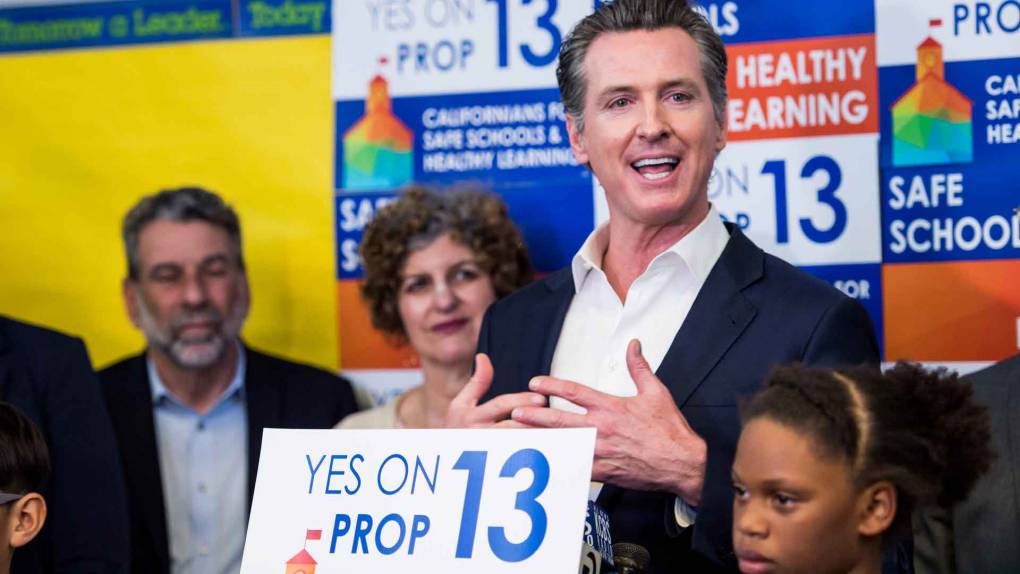
"caption": "Gov. Gavin Newsom visits Manzanita Community Elementary School in Oakland in support of Proposition 13 on Mar. 2, 2020.\n",
"description": "Gavin Newsom visits Manzanita Community Elementary School in Oakland in support of Proposition 13 on Mar. 2, 2020.\n\n",
"title": "Newsom.Prop13",
"credit": "Beth LaBerge/KQED",
"status": "inherit",
"isLoading": false,
"fetchFailed": false
},
"news_10596087": {
"type": "attachments",
"id": "news_10596087",
"meta": {
"index": "attachments_1716263798",
"site": "news",
"id": "10596087",
"found": true
},
"parent": 10595829,
"imgSizes": {
"twentyfourteen-full-width": {
"file": "https://ww2.kqed.org/app/uploads/sites/10/2015/07/Mission-2-1038x576.jpg",
"width": 1038,
"mimeType": "image/jpeg",
"height": 576
},
"thumbnail": {
"file": "https://ww2.kqed.org/app/uploads/sites/10/2015/07/Mission-2-400x267.jpg",
"width": 400,
"mimeType": "image/jpeg",
"height": 267
},
"fd-sm": {
"file": "https://ww2.kqed.org/app/uploads/sites/10/2015/07/Mission-2-960x640.jpg",
"width": 960,
"mimeType": "image/jpeg",
"height": 640
},
"post-thumbnail": {
"file": "https://ww2.kqed.org/app/uploads/sites/10/2015/07/Mission-2-672x372.jpg",
"width": 672,
"mimeType": "image/jpeg",
"height": 372
},
"kqedFullSize": {
"file": "https://ww2.kqed.org/app/uploads/sites/10/2015/07/Mission-2-e1436569741507.jpg",
"width": 1920,
"height": 1280
},
"large": {
"file": "https://ww2.kqed.org/app/uploads/sites/10/2015/07/Mission-2-1440x960.jpg",
"width": 1440,
"mimeType": "image/jpeg",
"height": 960
},
"guest-author-96": {
"file": "https://ww2.kqed.org/app/uploads/sites/10/2015/07/Mission-2-96x96.jpg",
"width": 96,
"mimeType": "image/jpeg",
"height": 96
},
"medium": {
"file": "https://ww2.kqed.org/app/uploads/sites/10/2015/07/Mission-2-800x533.jpg",
"width": 800,
"mimeType": "image/jpeg",
"height": 533
},
"guest-author-64": {
"file": "https://ww2.kqed.org/app/uploads/sites/10/2015/07/Mission-2-64x64.jpg",
"width": 64,
"mimeType": "image/jpeg",
"height": 64
},
"guest-author-32": {
"file": "https://ww2.kqed.org/app/uploads/sites/10/2015/07/Mission-2-32x32.jpg",
"width": 32,
"mimeType": "image/jpeg",
"height": 32
},
"jmtc-small-thumb": {
"file": "https://ww2.kqed.org/app/uploads/sites/10/2015/07/Mission-2-280x150.jpg",
"width": 280,
"mimeType": "image/jpeg",
"height": 150
},
"fd-med": {
"file": "https://ww2.kqed.org/app/uploads/sites/10/2015/07/Mission-2-1180x787.jpg",
"width": 1180,
"mimeType": "image/jpeg",
"height": 787
},
"detail": {
"file": "https://ww2.kqed.org/app/uploads/sites/10/2015/07/Mission-2-75x75.jpg",
"width": 75,
"mimeType": "image/jpeg",
"height": 75
},
"guest-author-128": {
"file": "https://ww2.kqed.org/app/uploads/sites/10/2015/07/Mission-2-128x128.jpg",
"width": 128,
"mimeType": "image/jpeg",
"height": 128
}
},
"publishDate": 1436569728,
"modified": 1582242631,
"caption": "A home in San Francisco's Mission District.",
"description": "A home in San Francisco's Mission District.",
"title": "Mission (2)",
"credit": "Jeremey Raff/KQED",
"status": "inherit",
"isLoading": false,
"fetchFailed": false
},
"news_11796421": {
"type": "attachments",
"id": "news_11796421",
"meta": {
"index": "attachments_1716263798",
"site": "news",
"id": "11796421",
"found": true
},
"parent": 11796417,
"imgSizes": {
"apple_news_ca_landscape_5_5": {
"file": "https://ww2.kqed.org/app/uploads/sites/10/2020/01/RS40747_GettyImages-181741371-qut-1044x783.jpg",
"width": 1044,
"mimeType": "image/jpeg",
"height": 783
},
"apple_news_ca_square_4_0": {
"file": "https://ww2.kqed.org/app/uploads/sites/10/2020/01/RS40747_GettyImages-181741371-qut-470x470.jpg",
"width": 470,
"mimeType": "image/jpeg",
"height": 470
},
"twentyfourteen-full-width": {
"file": "https://ww2.kqed.org/app/uploads/sites/10/2020/01/RS40747_GettyImages-181741371-qut-1038x576.jpg",
"width": 1038,
"mimeType": "image/jpeg",
"height": 576
},
"thumbnail": {
"file": "https://ww2.kqed.org/app/uploads/sites/10/2020/01/RS40747_GettyImages-181741371-qut-160x118.jpg",
"width": 160,
"mimeType": "image/jpeg",
"height": 118
},
"post-thumbnail": {
"file": "https://ww2.kqed.org/app/uploads/sites/10/2020/01/RS40747_GettyImages-181741371-qut-672x372.jpg",
"width": 672,
"mimeType": "image/jpeg",
"height": 372
},
"kqedFullSize": {
"file": "https://ww2.kqed.org/app/uploads/sites/10/2020/01/RS40747_GettyImages-181741371-qut.jpg",
"width": 1920,
"height": 1421
},
"apple_news_ca_landscape_4_7": {
"file": "https://ww2.kqed.org/app/uploads/sites/10/2020/01/RS40747_GettyImages-181741371-qut-632x474.jpg",
"width": 632,
"mimeType": "image/jpeg",
"height": 474
},
"large": {
"file": "https://ww2.kqed.org/app/uploads/sites/10/2020/01/RS40747_GettyImages-181741371-qut-1020x755.jpg",
"width": 1020,
"mimeType": "image/jpeg",
"height": 755
},
"complete_open_graph": {
"file": "https://ww2.kqed.org/app/uploads/sites/10/2020/01/RS40747_GettyImages-181741371-qut-1200x888.jpg",
"width": 1200,
"mimeType": "image/jpeg",
"height": 888
},
"apple_news_ca_landscape_4_0": {
"file": "https://ww2.kqed.org/app/uploads/sites/10/2020/01/RS40747_GettyImages-181741371-qut-536x402.jpg",
"width": 536,
"mimeType": "image/jpeg",
"height": 402
},
"apple_news_ca_portrait_12_9": {
"file": "https://ww2.kqed.org/app/uploads/sites/10/2020/01/RS40747_GettyImages-181741371-qut-1122x1421.jpg",
"width": 1122,
"mimeType": "image/jpeg",
"height": 1421
},
"medium": {
"file": "https://ww2.kqed.org/app/uploads/sites/10/2020/01/RS40747_GettyImages-181741371-qut-800x592.jpg",
"width": 800,
"mimeType": "image/jpeg",
"height": 592
},
"apple_news_ca_portrait_4_0": {
"file": "https://ww2.kqed.org/app/uploads/sites/10/2020/01/RS40747_GettyImages-181741371-qut-354x472.jpg",
"width": 354,
"mimeType": "image/jpeg",
"height": 472
},
"apple_news_ca_portrait_9_7": {
"file": "https://ww2.kqed.org/app/uploads/sites/10/2020/01/RS40747_GettyImages-181741371-qut-840x1120.jpg",
"width": 840,
"mimeType": "image/jpeg",
"height": 1120
},
"apple_news_ca_landscape_12_9": {
"file": "https://ww2.kqed.org/app/uploads/sites/10/2020/01/RS40747_GettyImages-181741371-qut-1832x1374.jpg",
"width": 1832,
"mimeType": "image/jpeg",
"height": 1374
},
"apple_news_ca_square_9_7": {
"file": "https://ww2.kqed.org/app/uploads/sites/10/2020/01/RS40747_GettyImages-181741371-qut-1104x1104.jpg",
"width": 1104,
"mimeType": "image/jpeg",
"height": 1104
},
"apple_news_ca_portrait_4_7": {
"file": "https://ww2.kqed.org/app/uploads/sites/10/2020/01/RS40747_GettyImages-181741371-qut-414x552.jpg",
"width": 414,
"mimeType": "image/jpeg",
"height": 552
},
"apple_news_ca_square_12_9": {
"file": "https://ww2.kqed.org/app/uploads/sites/10/2020/01/RS40747_GettyImages-181741371-qut-1472x1421.jpg",
"width": 1472,
"mimeType": "image/jpeg",
"height": 1421
},
"apple_news_ca_portrait_5_5": {
"file": "https://ww2.kqed.org/app/uploads/sites/10/2020/01/RS40747_GettyImages-181741371-qut-687x916.jpg",
"width": 687,
"mimeType": "image/jpeg",
"height": 916
},
"full-width": {
"file": "https://ww2.kqed.org/app/uploads/sites/10/2020/01/RS40747_GettyImages-181741371-qut-1920x1421.jpg",
"width": 1920,
"mimeType": "image/jpeg",
"height": 1421
},
"apple_news_ca_square_4_7": {
"file": "https://ww2.kqed.org/app/uploads/sites/10/2020/01/RS40747_GettyImages-181741371-qut-550x550.jpg",
"width": 550,
"mimeType": "image/jpeg",
"height": 550
},
"apple_news_ca_landscape_9_7": {
"file": "https://ww2.kqed.org/app/uploads/sites/10/2020/01/RS40747_GettyImages-181741371-qut-1376x1032.jpg",
"width": 1376,
"mimeType": "image/jpeg",
"height": 1032
},
"apple_news_ca_square_5_5": {
"file": "https://ww2.kqed.org/app/uploads/sites/10/2020/01/RS40747_GettyImages-181741371-qut-912x912.jpg",
"width": 912,
"mimeType": "image/jpeg",
"height": 912
}
},
"publishDate": 1579198459,
"modified": 1579198564,
"caption": "Disney CEO Robert Iger's 2018 salary was more than 1,400 times the median pay of a Disney employee, according to a study from Equilar.",
"description": null,
"title": "Disney CEO Robert Iger Visits FOX Business Network's \"Markets Now\"",
"credit": "Michael Loccisano/Getty Images",
"status": "inherit",
"isLoading": false,
"fetchFailed": false
},
"news_11732941": {
"type": "attachments",
"id": "news_11732941",
"meta": {
"index": "attachments_1716263798",
"site": "news",
"id": "11732941",
"found": true
},
"parent": 11732940,
"imgSizes": {
"twentyfourteen-full-width": {
"file": "https://ww2.kqed.org/app/uploads/sites/10/2019/03/ap_19073567237054-175cf72154a40ea22c02914f577a9334d98c6fa3-1038x576.jpg",
"width": 1038,
"mimeType": "image/jpeg",
"height": 576
},
"thumbnail": {
"file": "https://ww2.kqed.org/app/uploads/sites/10/2019/03/ap_19073567237054-175cf72154a40ea22c02914f577a9334d98c6fa3-160x120.jpg",
"width": 160,
"mimeType": "image/jpeg",
"height": 120
},
"post-thumbnail": {
"file": "https://ww2.kqed.org/app/uploads/sites/10/2019/03/ap_19073567237054-175cf72154a40ea22c02914f577a9334d98c6fa3-672x372.jpg",
"width": 672,
"mimeType": "image/jpeg",
"height": 372
},
"kqedFullSize": {
"file": "https://ww2.kqed.org/app/uploads/sites/10/2019/03/ap_19073567237054-175cf72154a40ea22c02914f577a9334d98c6fa3-e1552590832815.jpg",
"width": 1920,
"height": 1437
},
"large": {
"file": "https://ww2.kqed.org/app/uploads/sites/10/2019/03/ap_19073567237054-175cf72154a40ea22c02914f577a9334d98c6fa3-1020x764.jpg",
"width": 1020,
"mimeType": "image/jpeg",
"height": 764
},
"complete_open_graph": {
"file": "https://ww2.kqed.org/app/uploads/sites/10/2019/03/ap_19073567237054-175cf72154a40ea22c02914f577a9334d98c6fa3-1200x898.jpg",
"width": 1200,
"mimeType": "image/jpeg",
"height": 898
},
"guest-author-50": {
"file": "https://ww2.kqed.org/app/uploads/sites/10/2019/03/ap_19073567237054-175cf72154a40ea22c02914f577a9334d98c6fa3-50x50.jpg",
"width": 50,
"mimeType": "image/jpeg",
"height": 50
},
"guest-author-96": {
"file": "https://ww2.kqed.org/app/uploads/sites/10/2019/03/ap_19073567237054-175cf72154a40ea22c02914f577a9334d98c6fa3-96x96.jpg",
"width": 96,
"mimeType": "image/jpeg",
"height": 96
},
"medium": {
"file": "https://ww2.kqed.org/app/uploads/sites/10/2019/03/ap_19073567237054-175cf72154a40ea22c02914f577a9334d98c6fa3-800x599.jpg",
"width": 800,
"mimeType": "image/jpeg",
"height": 599
},
"guest-author-64": {
"file": "https://ww2.kqed.org/app/uploads/sites/10/2019/03/ap_19073567237054-175cf72154a40ea22c02914f577a9334d98c6fa3-64x64.jpg",
"width": 64,
"mimeType": "image/jpeg",
"height": 64
},
"guest-author-32": {
"file": "https://ww2.kqed.org/app/uploads/sites/10/2019/03/ap_19073567237054-175cf72154a40ea22c02914f577a9334d98c6fa3-32x32.jpg",
"width": 32,
"mimeType": "image/jpeg",
"height": 32
},
"full-width": {
"file": "https://ww2.kqed.org/app/uploads/sites/10/2019/03/ap_19073567237054-175cf72154a40ea22c02914f577a9334d98c6fa3-1920x1437.jpg",
"width": 1920,
"mimeType": "image/jpeg",
"height": 1437
},
"guest-author-128": {
"file": "https://ww2.kqed.org/app/uploads/sites/10/2019/03/ap_19073567237054-175cf72154a40ea22c02914f577a9334d98c6fa3-128x128.jpg",
"width": 128,
"mimeType": "image/jpeg",
"height": 128
}
},
"publishDate": 1552590669,
"modified": 1552590826,
"caption": "President Donald Trump speaks in the Oval Office on March 14, 2019.",
"description": "President Donald Trump speaks in the Oval Office on March 14, 201",
"title": "President Donald Trump speaks in the Oval Office on March 14, 2019.",
"credit": "Evan Vucci/AP",
"status": "inherit",
"isLoading": false,
"fetchFailed": false
},
"news_11767405": {
"type": "attachments",
"id": "news_11767405",
"meta": {
"index": "attachments_1716263798",
"site": "news",
"id": "11767405",
"found": true
},
"parent": 11767274,
"imgSizes": {
"apple_news_ca_landscape_5_5": {
"file": "https://ww2.kqed.org/app/uploads/sites/10/2019/08/GettyImages-1130581731-1044x783.jpg",
"width": 1044,
"mimeType": "image/jpeg",
"height": 783
},
"apple_news_ca_square_4_0": {
"file": "https://ww2.kqed.org/app/uploads/sites/10/2019/08/GettyImages-1130581731-470x470.jpg",
"width": 470,
"mimeType": "image/jpeg",
"height": 470
},
"twentyfourteen-full-width": {
"file": "https://ww2.kqed.org/app/uploads/sites/10/2019/08/GettyImages-1130581731-1038x576.jpg",
"width": 1038,
"mimeType": "image/jpeg",
"height": 576
},
"thumbnail": {
"file": "https://ww2.kqed.org/app/uploads/sites/10/2019/08/GettyImages-1130581731-160x111.jpg",
"width": 160,
"mimeType": "image/jpeg",
"height": 111
},
"post-thumbnail": {
"file": "https://ww2.kqed.org/app/uploads/sites/10/2019/08/GettyImages-1130581731-672x372.jpg",
"width": 672,
"mimeType": "image/jpeg",
"height": 372
},
"kqedFullSize": {
"file": "https://ww2.kqed.org/app/uploads/sites/10/2019/08/GettyImages-1130581731-e1565738201563.jpg",
"width": 1920,
"height": 1332
},
"apple_news_ca_landscape_4_7": {
"file": "https://ww2.kqed.org/app/uploads/sites/10/2019/08/GettyImages-1130581731-632x474.jpg",
"width": 632,
"mimeType": "image/jpeg",
"height": 474
},
"large": {
"file": "https://ww2.kqed.org/app/uploads/sites/10/2019/08/GettyImages-1130581731-1020x708.jpg",
"width": 1020,
"mimeType": "image/jpeg",
"height": 708
},
"complete_open_graph": {
"file": "https://ww2.kqed.org/app/uploads/sites/10/2019/08/GettyImages-1130581731-1200x832.jpg",
"width": 1200,
"mimeType": "image/jpeg",
"height": 832
},
"apple_news_ca_landscape_4_0": {
"file": "https://ww2.kqed.org/app/uploads/sites/10/2019/08/GettyImages-1130581731-536x402.jpg",
"width": 536,
"mimeType": "image/jpeg",
"height": 402
},
"apple_news_ca_portrait_12_9": {
"file": "https://ww2.kqed.org/app/uploads/sites/10/2019/08/GettyImages-1130581731-1122x1496.jpg",
"width": 1122,
"mimeType": "image/jpeg",
"height": 1496
},
"medium": {
"file": "https://ww2.kqed.org/app/uploads/sites/10/2019/08/GettyImages-1130581731-800x555.jpg",
"width": 800,
"mimeType": "image/jpeg",
"height": 555
},
"apple_news_ca_portrait_4_0": {
"file": "https://ww2.kqed.org/app/uploads/sites/10/2019/08/GettyImages-1130581731-354x472.jpg",
"width": 354,
"mimeType": "image/jpeg",
"height": 472
},
"apple_news_ca_portrait_9_7": {
"file": "https://ww2.kqed.org/app/uploads/sites/10/2019/08/GettyImages-1130581731-840x1120.jpg",
"width": 840,
"mimeType": "image/jpeg",
"height": 1120
},
"apple_news_ca_landscape_12_9": {
"file": "https://ww2.kqed.org/app/uploads/sites/10/2019/08/GettyImages-1130581731-1832x1374.jpg",
"width": 1832,
"mimeType": "image/jpeg",
"height": 1374
},
"apple_news_ca_square_9_7": {
"file": "https://ww2.kqed.org/app/uploads/sites/10/2019/08/GettyImages-1130581731-1104x1104.jpg",
"width": 1104,
"mimeType": "image/jpeg",
"height": 1104
},
"apple_news_ca_portrait_4_7": {
"file": "https://ww2.kqed.org/app/uploads/sites/10/2019/08/GettyImages-1130581731-414x552.jpg",
"width": 414,
"mimeType": "image/jpeg",
"height": 552
},
"apple_news_ca_square_12_9": {
"file": "https://ww2.kqed.org/app/uploads/sites/10/2019/08/GettyImages-1130581731-1472x1472.jpg",
"width": 1472,
"mimeType": "image/jpeg",
"height": 1472
},
"apple_news_ca_portrait_5_5": {
"file": "https://ww2.kqed.org/app/uploads/sites/10/2019/08/GettyImages-1130581731-687x916.jpg",
"width": 687,
"mimeType": "image/jpeg",
"height": 916
},
"full-width": {
"file": "https://ww2.kqed.org/app/uploads/sites/10/2019/08/GettyImages-1130581731-1920x1332.jpg",
"width": 1920,
"mimeType": "image/jpeg",
"height": 1332
},
"apple_news_ca_square_4_7": {
"file": "https://ww2.kqed.org/app/uploads/sites/10/2019/08/GettyImages-1130581731-550x550.jpg",
"width": 550,
"mimeType": "image/jpeg",
"height": 550
},
"apple_news_ca_landscape_9_7": {
"file": "https://ww2.kqed.org/app/uploads/sites/10/2019/08/GettyImages-1130581731-1376x1032.jpg",
"width": 1376,
"mimeType": "image/jpeg",
"height": 1032
},
"apple_news_ca_square_5_5": {
"file": "https://ww2.kqed.org/app/uploads/sites/10/2019/08/GettyImages-1130581731-912x912.jpg",
"width": 912,
"mimeType": "image/jpeg",
"height": 912
}
},
"publishDate": 1565737823,
"modified": 1565738852,
"caption": "Salesforce Tower from above in downtown San Francisco, California on February 6, 2019. If successful, a new effort to block commercial property owners from continuing to receive Proposition 13 tax benefits could generate billions of dollars for local governments. ",
"description": null,
"title": "US-CALIFORNIA-HOMELESSNESS-TECH-SANFRANCISCO",
"credit": "Josh Edelson/AFP/Getty Images",
"status": "inherit",
"isLoading": false,
"fetchFailed": false
},
"news_11765771": {
"type": "attachments",
"id": "news_11765771",
"meta": {
"index": "attachments_1716263798",
"site": "news",
"id": "11765771",
"found": true
},
"parent": 11765735,
"imgSizes": {
"apple_news_ca_landscape_5_5": {
"file": "https://ww2.kqed.org/app/uploads/sites/10/2019/08/DonaldTrump-1044x783.jpg",
"width": 1044,
"mimeType": "image/jpeg",
"height": 783
},
"apple_news_ca_square_4_0": {
"file": "https://ww2.kqed.org/app/uploads/sites/10/2019/08/DonaldTrump-470x470.jpg",
"width": 470,
"mimeType": "image/jpeg",
"height": 470
},
"twentyfourteen-full-width": {
"file": "https://ww2.kqed.org/app/uploads/sites/10/2019/08/DonaldTrump-1038x576.jpg",
"width": 1038,
"mimeType": "image/jpeg",
"height": 576
},
"thumbnail": {
"file": "https://ww2.kqed.org/app/uploads/sites/10/2019/08/DonaldTrump-160x107.jpg",
"width": 160,
"mimeType": "image/jpeg",
"height": 107
},
"post-thumbnail": {
"file": "https://ww2.kqed.org/app/uploads/sites/10/2019/08/DonaldTrump-672x372.jpg",
"width": 672,
"mimeType": "image/jpeg",
"height": 372
},
"kqedFullSize": {
"file": "https://ww2.kqed.org/app/uploads/sites/10/2019/08/DonaldTrump.jpg",
"width": 1920,
"height": 1280
},
"apple_news_ca_landscape_4_7": {
"file": "https://ww2.kqed.org/app/uploads/sites/10/2019/08/DonaldTrump-632x474.jpg",
"width": 632,
"mimeType": "image/jpeg",
"height": 474
},
"large": {
"file": "https://ww2.kqed.org/app/uploads/sites/10/2019/08/DonaldTrump-1020x680.jpg",
"width": 1020,
"mimeType": "image/jpeg",
"height": 680
},
"complete_open_graph": {
"file": "https://ww2.kqed.org/app/uploads/sites/10/2019/08/DonaldTrump-1200x800.jpg",
"width": 1200,
"mimeType": "image/jpeg",
"height": 800
},
"apple_news_ca_landscape_4_0": {
"file": "https://ww2.kqed.org/app/uploads/sites/10/2019/08/DonaldTrump-536x402.jpg",
"width": 536,
"mimeType": "image/jpeg",
"height": 402
},
"apple_news_ca_portrait_12_9": {
"file": "https://ww2.kqed.org/app/uploads/sites/10/2019/08/DonaldTrump-1122x1280.jpg",
"width": 1122,
"mimeType": "image/jpeg",
"height": 1280
},
"medium": {
"file": "https://ww2.kqed.org/app/uploads/sites/10/2019/08/DonaldTrump-800x533.jpg",
"width": 800,
"mimeType": "image/jpeg",
"height": 533
},
"apple_news_ca_portrait_4_0": {
"file": "https://ww2.kqed.org/app/uploads/sites/10/2019/08/DonaldTrump-354x472.jpg",
"width": 354,
"mimeType": "image/jpeg",
"height": 472
},
"apple_news_ca_portrait_9_7": {
"file": "https://ww2.kqed.org/app/uploads/sites/10/2019/08/DonaldTrump-840x1120.jpg",
"width": 840,
"mimeType": "image/jpeg",
"height": 1120
},
"apple_news_ca_landscape_12_9": {
"file": "https://ww2.kqed.org/app/uploads/sites/10/2019/08/DonaldTrump-1832x1280.jpg",
"width": 1832,
"mimeType": "image/jpeg",
"height": 1280
},
"apple_news_ca_square_9_7": {
"file": "https://ww2.kqed.org/app/uploads/sites/10/2019/08/DonaldTrump-1104x1104.jpg",
"width": 1104,
"mimeType": "image/jpeg",
"height": 1104
},
"apple_news_ca_portrait_4_7": {
"file": "https://ww2.kqed.org/app/uploads/sites/10/2019/08/DonaldTrump-414x552.jpg",
"width": 414,
"mimeType": "image/jpeg",
"height": 552
},
"apple_news_ca_square_12_9": {
"file": "https://ww2.kqed.org/app/uploads/sites/10/2019/08/DonaldTrump-1472x1280.jpg",
"width": 1472,
"mimeType": "image/jpeg",
"height": 1280
},
"apple_news_ca_portrait_5_5": {
"file": "https://ww2.kqed.org/app/uploads/sites/10/2019/08/DonaldTrump-687x916.jpg",
"width": 687,
"mimeType": "image/jpeg",
"height": 916
},
"full-width": {
"file": "https://ww2.kqed.org/app/uploads/sites/10/2019/08/DonaldTrump-1920x1280.jpg",
"width": 1920,
"mimeType": "image/jpeg",
"height": 1280
},
"apple_news_ca_square_4_7": {
"file": "https://ww2.kqed.org/app/uploads/sites/10/2019/08/DonaldTrump-550x550.jpg",
"width": 550,
"mimeType": "image/jpeg",
"height": 550
},
"apple_news_ca_landscape_9_7": {
"file": "https://ww2.kqed.org/app/uploads/sites/10/2019/08/DonaldTrump-1376x1032.jpg",
"width": 1376,
"mimeType": "image/jpeg",
"height": 1032
},
"apple_news_ca_square_5_5": {
"file": "https://ww2.kqed.org/app/uploads/sites/10/2019/08/DonaldTrump-912x912.jpg",
"width": 912,
"mimeType": "image/jpeg",
"height": 912
}
},
"publishDate": 1565049094,
"modified": 1565049167,
"caption": "Gov. Gavin Newsom signed a bill into law last week that requires candidates for president and governor to turn over their income tax returns for the five most recent taxable years — legislation that critics had decried as targeting President Donald Trump, who has refused to make his income tax records public.",
"description": "Gov. Gavin Newsom signed a bill into law last week that requires candidates for president and governor to turn over their income tax returns for the five most recent taxable years — legislation that critics had decried as targeting President Donald Trump, who has refused to make his income tax records public.",
"title": "DonaldTrump",
"credit": "Chip Somodevilla/Getty Images",
"status": "inherit",
"isLoading": false,
"fetchFailed": false
},
"news_11760905": {
"type": "attachments",
"id": "news_11760905",
"meta": {
"index": "attachments_1716263798",
"site": "news",
"id": "11760905",
"found": true
},
"parent": 11760778,
"imgSizes": {
"apple_news_ca_landscape_5_5": {
"file": "https://ww2.kqed.org/app/uploads/sites/10/2019/07/Donald-Trump-1044x783.jpg",
"width": 1044,
"mimeType": "image/jpeg",
"height": 783
},
"apple_news_ca_square_4_0": {
"file": "https://ww2.kqed.org/app/uploads/sites/10/2019/07/Donald-Trump-470x470.jpg",
"width": 470,
"mimeType": "image/jpeg",
"height": 470
},
"twentyfourteen-full-width": {
"file": "https://ww2.kqed.org/app/uploads/sites/10/2019/07/Donald-Trump-1038x576.jpg",
"width": 1038,
"mimeType": "image/jpeg",
"height": 576
},
"thumbnail": {
"file": "https://ww2.kqed.org/app/uploads/sites/10/2019/07/Donald-Trump-160x107.jpg",
"width": 160,
"mimeType": "image/jpeg",
"height": 107
},
"post-thumbnail": {
"file": "https://ww2.kqed.org/app/uploads/sites/10/2019/07/Donald-Trump-672x372.jpg",
"width": 672,
"mimeType": "image/jpeg",
"height": 372
},
"kqedFullSize": {
"file": "https://ww2.kqed.org/app/uploads/sites/10/2019/07/Donald-Trump.jpg",
"width": 1920,
"height": 1280
},
"apple_news_ca_landscape_4_7": {
"file": "https://ww2.kqed.org/app/uploads/sites/10/2019/07/Donald-Trump-632x474.jpg",
"width": 632,
"mimeType": "image/jpeg",
"height": 474
},
"large": {
"file": "https://ww2.kqed.org/app/uploads/sites/10/2019/07/Donald-Trump-1020x680.jpg",
"width": 1020,
"mimeType": "image/jpeg",
"height": 680
},
"complete_open_graph": {
"file": "https://ww2.kqed.org/app/uploads/sites/10/2019/07/Donald-Trump-1200x800.jpg",
"width": 1200,
"mimeType": "image/jpeg",
"height": 800
},
"apple_news_ca_landscape_4_0": {
"file": "https://ww2.kqed.org/app/uploads/sites/10/2019/07/Donald-Trump-536x402.jpg",
"width": 536,
"mimeType": "image/jpeg",
"height": 402
},
"apple_news_ca_portrait_12_9": {
"file": "https://ww2.kqed.org/app/uploads/sites/10/2019/07/Donald-Trump-1122x1280.jpg",
"width": 1122,
"mimeType": "image/jpeg",
"height": 1280
},
"medium": {
"file": "https://ww2.kqed.org/app/uploads/sites/10/2019/07/Donald-Trump-800x533.jpg",
"width": 800,
"mimeType": "image/jpeg",
"height": 533
},
"apple_news_ca_portrait_4_0": {
"file": "https://ww2.kqed.org/app/uploads/sites/10/2019/07/Donald-Trump-354x472.jpg",
"width": 354,
"mimeType": "image/jpeg",
"height": 472
},
"apple_news_ca_portrait_9_7": {
"file": "https://ww2.kqed.org/app/uploads/sites/10/2019/07/Donald-Trump-840x1120.jpg",
"width": 840,
"mimeType": "image/jpeg",
"height": 1120
},
"apple_news_ca_landscape_12_9": {
"file": "https://ww2.kqed.org/app/uploads/sites/10/2019/07/Donald-Trump-1832x1280.jpg",
"width": 1832,
"mimeType": "image/jpeg",
"height": 1280
},
"apple_news_ca_square_9_7": {
"file": "https://ww2.kqed.org/app/uploads/sites/10/2019/07/Donald-Trump-1104x1104.jpg",
"width": 1104,
"mimeType": "image/jpeg",
"height": 1104
},
"apple_news_ca_portrait_4_7": {
"file": "https://ww2.kqed.org/app/uploads/sites/10/2019/07/Donald-Trump-414x552.jpg",
"width": 414,
"mimeType": "image/jpeg",
"height": 552
},
"apple_news_ca_square_12_9": {
"file": "https://ww2.kqed.org/app/uploads/sites/10/2019/07/Donald-Trump-1472x1280.jpg",
"width": 1472,
"mimeType": "image/jpeg",
"height": 1280
},
"apple_news_ca_portrait_5_5": {
"file": "https://ww2.kqed.org/app/uploads/sites/10/2019/07/Donald-Trump-687x916.jpg",
"width": 687,
"mimeType": "image/jpeg",
"height": 916
},
"full-width": {
"file": "https://ww2.kqed.org/app/uploads/sites/10/2019/07/Donald-Trump-1920x1280.jpg",
"width": 1920,
"mimeType": "image/jpeg",
"height": 1280
},
"apple_news_ca_square_4_7": {
"file": "https://ww2.kqed.org/app/uploads/sites/10/2019/07/Donald-Trump-550x550.jpg",
"width": 550,
"mimeType": "image/jpeg",
"height": 550
},
"apple_news_ca_landscape_9_7": {
"file": "https://ww2.kqed.org/app/uploads/sites/10/2019/07/Donald-Trump-1376x1032.jpg",
"width": 1376,
"mimeType": "image/jpeg",
"height": 1032
},
"apple_news_ca_square_5_5": {
"file": "https://ww2.kqed.org/app/uploads/sites/10/2019/07/Donald-Trump-912x912.jpg",
"width": 912,
"mimeType": "image/jpeg",
"height": 912
}
},
"publishDate": 1562966681,
"modified": 1562966726,
"caption": "President Donald Trump pauses after delivering remarks on citizenship and the census at the White House on July 11.",
"description": "President Donald Trump pauses after delivering remarks on citizenship and the census at the White House on July 11.",
"title": "Donald-Trump",
"credit": "BRENDAN SMIALOWSKI/AFP/Getty Images",
"status": "inherit",
"isLoading": false,
"fetchFailed": false
},
"news_11745634": {
"type": "attachments",
"id": "news_11745634",
"meta": {
"index": "attachments_1716263798",
"site": "news",
"id": "11745634",
"found": true
},
"parent": 11745618,
"imgSizes": {
"apple_news_ca_landscape_5_5": {
"file": "https://ww2.kqed.org/app/uploads/sites/10/2019/05/RS35648_GettyImages-1058497122-qut-1044x783.jpg",
"width": 1044,
"mimeType": "image/jpeg",
"height": 783
},
"apple_news_ca_square_4_0": {
"file": "https://ww2.kqed.org/app/uploads/sites/10/2019/05/RS35648_GettyImages-1058497122-qut-470x470.jpg",
"width": 470,
"mimeType": "image/jpeg",
"height": 470
},
"twentyfourteen-full-width": {
"file": "https://ww2.kqed.org/app/uploads/sites/10/2019/05/RS35648_GettyImages-1058497122-qut-1038x576.jpg",
"width": 1038,
"mimeType": "image/jpeg",
"height": 576
},
"thumbnail": {
"file": "https://ww2.kqed.org/app/uploads/sites/10/2019/05/RS35648_GettyImages-1058497122-qut-160x97.jpg",
"width": 160,
"mimeType": "image/jpeg",
"height": 97
},
"post-thumbnail": {
"file": "https://ww2.kqed.org/app/uploads/sites/10/2019/05/RS35648_GettyImages-1058497122-qut-672x372.jpg",
"width": 672,
"mimeType": "image/jpeg",
"height": 372
},
"kqedFullSize": {
"file": "https://ww2.kqed.org/app/uploads/sites/10/2019/05/RS35648_GettyImages-1058497122-qut.jpg",
"width": 1920,
"height": 1159
},
"apple_news_ca_landscape_4_7": {
"file": "https://ww2.kqed.org/app/uploads/sites/10/2019/05/RS35648_GettyImages-1058497122-qut-632x474.jpg",
"width": 632,
"mimeType": "image/jpeg",
"height": 474
},
"large": {
"file": "https://ww2.kqed.org/app/uploads/sites/10/2019/05/RS35648_GettyImages-1058497122-qut-1020x616.jpg",
"width": 1020,
"mimeType": "image/jpeg",
"height": 616
},
"complete_open_graph": {
"file": "https://ww2.kqed.org/app/uploads/sites/10/2019/05/RS35648_GettyImages-1058497122-qut-1200x724.jpg",
"width": 1200,
"mimeType": "image/jpeg",
"height": 724
},
"apple_news_ca_landscape_4_0": {
"file": "https://ww2.kqed.org/app/uploads/sites/10/2019/05/RS35648_GettyImages-1058497122-qut-536x402.jpg",
"width": 536,
"mimeType": "image/jpeg",
"height": 402
},
"apple_news_ca_portrait_12_9": {
"file": "https://ww2.kqed.org/app/uploads/sites/10/2019/05/RS35648_GettyImages-1058497122-qut-1122x1159.jpg",
"width": 1122,
"mimeType": "image/jpeg",
"height": 1159
},
"medium": {
"file": "https://ww2.kqed.org/app/uploads/sites/10/2019/05/RS35648_GettyImages-1058497122-qut-800x483.jpg",
"width": 800,
"mimeType": "image/jpeg",
"height": 483
},
"apple_news_ca_portrait_4_0": {
"file": "https://ww2.kqed.org/app/uploads/sites/10/2019/05/RS35648_GettyImages-1058497122-qut-354x472.jpg",
"width": 354,
"mimeType": "image/jpeg",
"height": 472
},
"apple_news_ca_portrait_9_7": {
"file": "https://ww2.kqed.org/app/uploads/sites/10/2019/05/RS35648_GettyImages-1058497122-qut-840x1120.jpg",
"width": 840,
"mimeType": "image/jpeg",
"height": 1120
},
"apple_news_ca_landscape_12_9": {
"file": "https://ww2.kqed.org/app/uploads/sites/10/2019/05/RS35648_GettyImages-1058497122-qut-1832x1159.jpg",
"width": 1832,
"mimeType": "image/jpeg",
"height": 1159
},
"apple_news_ca_square_9_7": {
"file": "https://ww2.kqed.org/app/uploads/sites/10/2019/05/RS35648_GettyImages-1058497122-qut-1104x1104.jpg",
"width": 1104,
"mimeType": "image/jpeg",
"height": 1104
},
"apple_news_ca_portrait_4_7": {
"file": "https://ww2.kqed.org/app/uploads/sites/10/2019/05/RS35648_GettyImages-1058497122-qut-414x552.jpg",
"width": 414,
"mimeType": "image/jpeg",
"height": 552
},
"apple_news_ca_square_12_9": {
"file": "https://ww2.kqed.org/app/uploads/sites/10/2019/05/RS35648_GettyImages-1058497122-qut-1472x1159.jpg",
"width": 1472,
"mimeType": "image/jpeg",
"height": 1159
},
"apple_news_ca_portrait_5_5": {
"file": "https://ww2.kqed.org/app/uploads/sites/10/2019/05/RS35648_GettyImages-1058497122-qut-687x916.jpg",
"width": 687,
"mimeType": "image/jpeg",
"height": 916
},
"full-width": {
"file": "https://ww2.kqed.org/app/uploads/sites/10/2019/05/RS35648_GettyImages-1058497122-qut-1920x1159.jpg",
"width": 1920,
"mimeType": "image/jpeg",
"height": 1159
},
"apple_news_ca_square_4_7": {
"file": "https://ww2.kqed.org/app/uploads/sites/10/2019/05/RS35648_GettyImages-1058497122-qut-550x550.jpg",
"width": 550,
"mimeType": "image/jpeg",
"height": 550
},
"apple_news_ca_landscape_9_7": {
"file": "https://ww2.kqed.org/app/uploads/sites/10/2019/05/RS35648_GettyImages-1058497122-qut-1376x1032.jpg",
"width": 1376,
"mimeType": "image/jpeg",
"height": 1032
},
"apple_news_ca_square_5_5": {
"file": "https://ww2.kqed.org/app/uploads/sites/10/2019/05/RS35648_GettyImages-1058497122-qut-912x912.jpg",
"width": 912,
"mimeType": "image/jpeg",
"height": 912
}
},
"publishDate": 1557256350,
"modified": 1557267184,
"caption": "California Gov. Gavin Newsom and his wife, Jennifer Siebel Newsom. ",
"description": null,
"title": "US-POLITICS-VOTE-ELECTIONS",
"credit": "Frederic J. Brown/AFP/Getty Images",
"status": "inherit",
"isLoading": false,
"fetchFailed": false
},
"news_11745560": {
"type": "attachments",
"id": "news_11745560",
"meta": {
"index": "attachments_1716263798",
"site": "news",
"id": "11745560",
"found": true
},
"parent": 11745559,
"imgSizes": {
"apple_news_ca_landscape_5_5": {
"file": "https://ww2.kqed.org/app/uploads/sites/10/2019/05/ap_19059688639495-3214d547f6185d3e6b4dbc5e59e677f1b6584ebb-1044x783.jpg",
"width": 1044,
"mimeType": "image/jpeg",
"height": 783
},
"apple_news_ca_square_4_0": {
"file": "https://ww2.kqed.org/app/uploads/sites/10/2019/05/ap_19059688639495-3214d547f6185d3e6b4dbc5e59e677f1b6584ebb-470x470.jpg",
"width": 470,
"mimeType": "image/jpeg",
"height": 470
},
"twentyfourteen-full-width": {
"file": "https://ww2.kqed.org/app/uploads/sites/10/2019/05/ap_19059688639495-3214d547f6185d3e6b4dbc5e59e677f1b6584ebb-1038x576.jpg",
"width": 1038,
"mimeType": "image/jpeg",
"height": 576
},
"thumbnail": {
"file": "https://ww2.kqed.org/app/uploads/sites/10/2019/05/ap_19059688639495-3214d547f6185d3e6b4dbc5e59e677f1b6584ebb-160x120.jpg",
"width": 160,
"mimeType": "image/jpeg",
"height": 120
},
"post-thumbnail": {
"file": "https://ww2.kqed.org/app/uploads/sites/10/2019/05/ap_19059688639495-3214d547f6185d3e6b4dbc5e59e677f1b6584ebb-672x372.jpg",
"width": 672,
"mimeType": "image/jpeg",
"height": 372
},
"kqedFullSize": {
"file": "https://ww2.kqed.org/app/uploads/sites/10/2019/05/ap_19059688639495-3214d547f6185d3e6b4dbc5e59e677f1b6584ebb-e1557246376505.jpg",
"width": 1920,
"height": 1440
},
"apple_news_ca_landscape_4_7": {
"file": "https://ww2.kqed.org/app/uploads/sites/10/2019/05/ap_19059688639495-3214d547f6185d3e6b4dbc5e59e677f1b6584ebb-632x474.jpg",
"width": 632,
"mimeType": "image/jpeg",
"height": 474
},
"large": {
"file": "https://ww2.kqed.org/app/uploads/sites/10/2019/05/ap_19059688639495-3214d547f6185d3e6b4dbc5e59e677f1b6584ebb-1020x765.jpg",
"width": 1020,
"mimeType": "image/jpeg",
"height": 765
},
"complete_open_graph": {
"file": "https://ww2.kqed.org/app/uploads/sites/10/2019/05/ap_19059688639495-3214d547f6185d3e6b4dbc5e59e677f1b6584ebb-1200x900.jpg",
"width": 1200,
"mimeType": "image/jpeg",
"height": 900
},
"apple_news_ca_landscape_4_0": {
"file": "https://ww2.kqed.org/app/uploads/sites/10/2019/05/ap_19059688639495-3214d547f6185d3e6b4dbc5e59e677f1b6584ebb-536x402.jpg",
"width": 536,
"mimeType": "image/jpeg",
"height": 402
},
"apple_news_ca_portrait_12_9": {
"file": "https://ww2.kqed.org/app/uploads/sites/10/2019/05/ap_19059688639495-3214d547f6185d3e6b4dbc5e59e677f1b6584ebb-1122x1496.jpg",
"width": 1122,
"mimeType": "image/jpeg",
"height": 1496
},
"medium": {
"file": "https://ww2.kqed.org/app/uploads/sites/10/2019/05/ap_19059688639495-3214d547f6185d3e6b4dbc5e59e677f1b6584ebb-800x600.jpg",
"width": 800,
"mimeType": "image/jpeg",
"height": 600
},
"apple_news_ca_portrait_4_0": {
"file": "https://ww2.kqed.org/app/uploads/sites/10/2019/05/ap_19059688639495-3214d547f6185d3e6b4dbc5e59e677f1b6584ebb-354x472.jpg",
"width": 354,
"mimeType": "image/jpeg",
"height": 472
},
"apple_news_ca_portrait_9_7": {
"file": "https://ww2.kqed.org/app/uploads/sites/10/2019/05/ap_19059688639495-3214d547f6185d3e6b4dbc5e59e677f1b6584ebb-840x1120.jpg",
"width": 840,
"mimeType": "image/jpeg",
"height": 1120
},
"apple_news_ca_landscape_12_9": {
"file": "https://ww2.kqed.org/app/uploads/sites/10/2019/05/ap_19059688639495-3214d547f6185d3e6b4dbc5e59e677f1b6584ebb-1832x1374.jpg",
"width": 1832,
"mimeType": "image/jpeg",
"height": 1374
},
"apple_news_ca_square_9_7": {
"file": "https://ww2.kqed.org/app/uploads/sites/10/2019/05/ap_19059688639495-3214d547f6185d3e6b4dbc5e59e677f1b6584ebb-1104x1104.jpg",
"width": 1104,
"mimeType": "image/jpeg",
"height": 1104
},
"apple_news_ca_portrait_4_7": {
"file": "https://ww2.kqed.org/app/uploads/sites/10/2019/05/ap_19059688639495-3214d547f6185d3e6b4dbc5e59e677f1b6584ebb-414x552.jpg",
"width": 414,
"mimeType": "image/jpeg",
"height": 552
},
"apple_news_ca_square_12_9": {
"file": "https://ww2.kqed.org/app/uploads/sites/10/2019/05/ap_19059688639495-3214d547f6185d3e6b4dbc5e59e677f1b6584ebb-1472x1472.jpg",
"width": 1472,
"mimeType": "image/jpeg",
"height": 1472
},
"apple_news_ca_portrait_5_5": {
"file": "https://ww2.kqed.org/app/uploads/sites/10/2019/05/ap_19059688639495-3214d547f6185d3e6b4dbc5e59e677f1b6584ebb-687x916.jpg",
"width": 687,
"mimeType": "image/jpeg",
"height": 916
},
"full-width": {
"file": "https://ww2.kqed.org/app/uploads/sites/10/2019/05/ap_19059688639495-3214d547f6185d3e6b4dbc5e59e677f1b6584ebb-1920x1440.jpg",
"width": 1920,
"mimeType": "image/jpeg",
"height": 1440
},
"apple_news_ca_square_4_7": {
"file": "https://ww2.kqed.org/app/uploads/sites/10/2019/05/ap_19059688639495-3214d547f6185d3e6b4dbc5e59e677f1b6584ebb-550x550.jpg",
"width": 550,
"mimeType": "image/jpeg",
"height": 550
},
"apple_news_ca_landscape_9_7": {
"file": "https://ww2.kqed.org/app/uploads/sites/10/2019/05/ap_19059688639495-3214d547f6185d3e6b4dbc5e59e677f1b6584ebb-1376x1032.jpg",
"width": 1376,
"mimeType": "image/jpeg",
"height": 1032
},
"apple_news_ca_square_5_5": {
"file": "https://ww2.kqed.org/app/uploads/sites/10/2019/05/ap_19059688639495-3214d547f6185d3e6b4dbc5e59e677f1b6584ebb-912x912.jpg",
"width": 912,
"mimeType": "image/jpeg",
"height": 912
}
},
"publishDate": 1557245651,
"modified": 1557245651,
"caption": null,
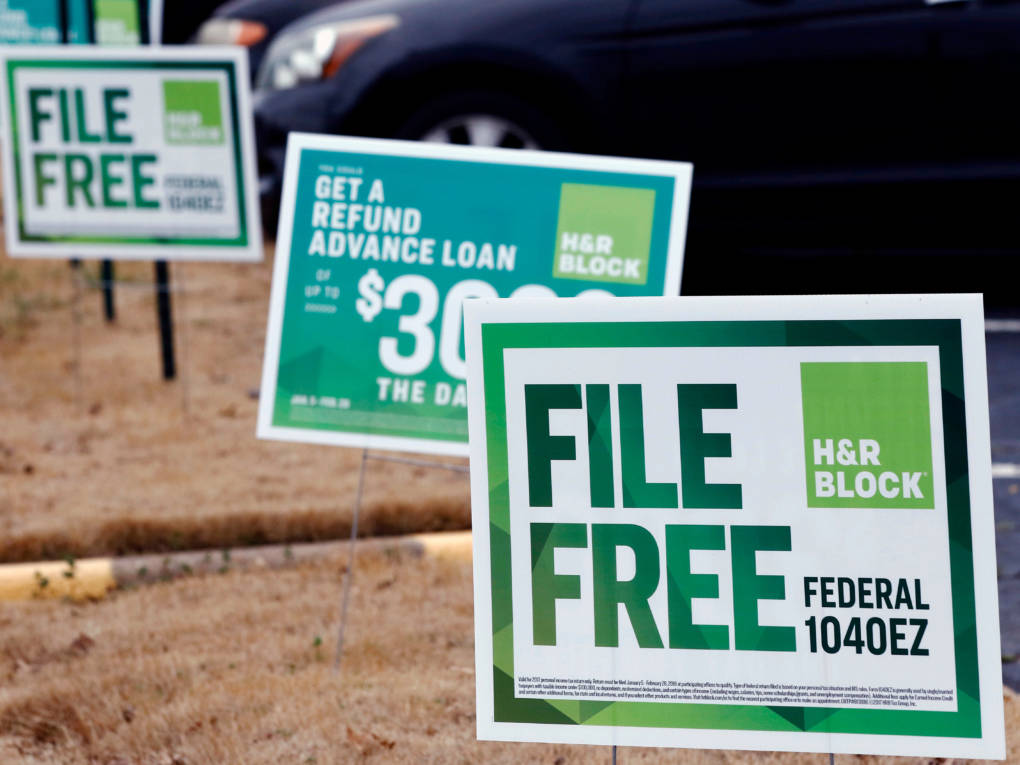
"description": "The IRS Free File program is under scrutiny after reports that tax-prep companies made it difficult for people to actually their file taxes for free.",
"title": "The IRS Free File program is under scrutiny after reports that tax-prep companies made it difficult for people to actually their file taxes for free.",
"credit": null,
"status": "inherit",
"isLoading": false,
"fetchFailed": false
},
"news_11744189": {
"type": "attachments",
"id": "news_11744189",
"meta": {
"index": "attachments_1716263798",
"site": "news",
"id": "11744189",
"found": true
},
"parent": 11744167,
"imgSizes": {
"twentyfourteen-full-width": {
"file": "https://ww2.kqed.org/app/uploads/sites/10/2019/05/1200px-Feminine_Hygiene_Products_in_a_Walmart-1038x576.png",
"width": 1038,
"mimeType": "image/png",
"height": 576
},
"thumbnail": {
"file": "https://ww2.kqed.org/app/uploads/sites/10/2019/05/1200px-Feminine_Hygiene_Products_in_a_Walmart-160x111.png",
"width": 160,
"mimeType": "image/png",
"height": 111
},
"post-thumbnail": {
"file": "https://ww2.kqed.org/app/uploads/sites/10/2019/05/1200px-Feminine_Hygiene_Products_in_a_Walmart-672x372.png",
"width": 672,
"mimeType": "image/png",
"height": 372
},
"kqedFullSize": {
"file": "https://ww2.kqed.org/app/uploads/sites/10/2019/05/1200px-Feminine_Hygiene_Products_in_a_Walmart.png",
"width": 1200,
"height": 830
},
"large": {
"file": "https://ww2.kqed.org/app/uploads/sites/10/2019/05/1200px-Feminine_Hygiene_Products_in_a_Walmart-1020x706.png",
"width": 1020,
"mimeType": "image/png",
"height": 706
},
"complete_open_graph": {
"file": "https://ww2.kqed.org/app/uploads/sites/10/2019/05/1200px-Feminine_Hygiene_Products_in_a_Walmart-1200x830.png",
"width": 1200,
"mimeType": "image/png",
"height": 830
},
"medium": {
"file": "https://ww2.kqed.org/app/uploads/sites/10/2019/05/1200px-Feminine_Hygiene_Products_in_a_Walmart-800x553.png",
"width": 800,
"mimeType": "image/png",
"height": 553
}
},
"publishDate": 1556734803,
"modified": 1556734937,
"caption": "Feminine hygiene products in a Walmart.",
"description": null,
"title": "1200px-Feminine_Hygiene_Products_in_a_Walmart",
"credit": "\u003ca href=\"https://commons.wikimedia.org/wiki/File:Feminine_Hygiene_Products_in_a_Walmart.png#/media/File:Feminine_Hygiene_Products_in_a_Walmart.png\">Wikimedia Commons/Stilfehler\u003c/a>",
"status": "inherit",
"isLoading": false,
"fetchFailed": false
},
"news_11740298": {
"type": "attachments",
"id": "news_11740298",
"meta": {
"index": "attachments_1716263798",
"site": "news",
"id": "11740298",
"found": true
},
"parent": 11740291,
"imgSizes": {
"apple_news_ca_landscape_5_5": {
"file": "https://ww2.kqed.org/app/uploads/sites/10/2019/04/internal-revenue-service-1044x783.jpg",
"width": 1044,
"mimeType": "image/jpeg",
"height": 783
},
"apple_news_ca_square_4_0": {
"file": "https://ww2.kqed.org/app/uploads/sites/10/2019/04/internal-revenue-service-470x470.jpg",
"width": 470,
"mimeType": "image/jpeg",
"height": 470
},
"twentyfourteen-full-width": {
"file": "https://ww2.kqed.org/app/uploads/sites/10/2019/04/internal-revenue-service-1038x576.jpg",
"width": 1038,
"mimeType": "image/jpeg",
"height": 576
},
"thumbnail": {
"file": "https://ww2.kqed.org/app/uploads/sites/10/2019/04/internal-revenue-service-160x107.jpg",
"width": 160,
"mimeType": "image/jpeg",
"height": 107
},
"post-thumbnail": {
"file": "https://ww2.kqed.org/app/uploads/sites/10/2019/04/internal-revenue-service-672x372.jpg",
"width": 672,
"mimeType": "image/jpeg",
"height": 372
},
"kqedFullSize": {
"file": "https://ww2.kqed.org/app/uploads/sites/10/2019/04/internal-revenue-service-e1555349796277.jpg",
"width": 1920,
"height": 1280
},
"apple_news_ca_landscape_4_7": {
"file": "https://ww2.kqed.org/app/uploads/sites/10/2019/04/internal-revenue-service-632x474.jpg",
"width": 632,
"mimeType": "image/jpeg",
"height": 474
},
"large": {
"file": "https://ww2.kqed.org/app/uploads/sites/10/2019/04/internal-revenue-service-1020x680.jpg",
"width": 1020,
"mimeType": "image/jpeg",
"height": 680
},
"complete_open_graph": {
"file": "https://ww2.kqed.org/app/uploads/sites/10/2019/04/internal-revenue-service-1200x800.jpg",
"width": 1200,
"mimeType": "image/jpeg",
"height": 800
},
"apple_news_ca_landscape_4_0": {
"file": "https://ww2.kqed.org/app/uploads/sites/10/2019/04/internal-revenue-service-536x402.jpg",
"width": 536,
"mimeType": "image/jpeg",
"height": 402
},
"apple_news_ca_portrait_12_9": {
"file": "https://ww2.kqed.org/app/uploads/sites/10/2019/04/internal-revenue-service-1122x1496.jpg",
"width": 1122,
"mimeType": "image/jpeg",
"height": 1496
},
"medium": {
"file": "https://ww2.kqed.org/app/uploads/sites/10/2019/04/internal-revenue-service-800x533.jpg",
"width": 800,
"mimeType": "image/jpeg",
"height": 533
},
"apple_news_ca_portrait_4_0": {
"file": "https://ww2.kqed.org/app/uploads/sites/10/2019/04/internal-revenue-service-354x472.jpg",
"width": 354,
"mimeType": "image/jpeg",
"height": 472
},
"apple_news_ca_portrait_9_7": {
"file": "https://ww2.kqed.org/app/uploads/sites/10/2019/04/internal-revenue-service-840x1120.jpg",
"width": 840,
"mimeType": "image/jpeg",
"height": 1120
},
"apple_news_ca_landscape_12_9": {
"file": "https://ww2.kqed.org/app/uploads/sites/10/2019/04/internal-revenue-service-1832x1374.jpg",
"width": 1832,
"mimeType": "image/jpeg",
"height": 1374
},
"apple_news_ca_square_9_7": {
"file": "https://ww2.kqed.org/app/uploads/sites/10/2019/04/internal-revenue-service-1104x1104.jpg",
"width": 1104,
"mimeType": "image/jpeg",
"height": 1104
},
"apple_news_ca_portrait_4_7": {
"file": "https://ww2.kqed.org/app/uploads/sites/10/2019/04/internal-revenue-service-414x552.jpg",
"width": 414,
"mimeType": "image/jpeg",
"height": 552
},
"apple_news_ca_square_12_9": {
"file": "https://ww2.kqed.org/app/uploads/sites/10/2019/04/internal-revenue-service-1472x1472.jpg",
"width": 1472,
"mimeType": "image/jpeg",
"height": 1472
},
"apple_news_ca_portrait_5_5": {
"file": "https://ww2.kqed.org/app/uploads/sites/10/2019/04/internal-revenue-service-687x916.jpg",
"width": 687,
"mimeType": "image/jpeg",
"height": 916
},
"full-width": {
"file": "https://ww2.kqed.org/app/uploads/sites/10/2019/04/internal-revenue-service-1920x1280.jpg",
"width": 1920,
"mimeType": "image/jpeg",
"height": 1280
},
"apple_news_ca_square_4_7": {
"file": "https://ww2.kqed.org/app/uploads/sites/10/2019/04/internal-revenue-service-550x550.jpg",
"width": 550,
"mimeType": "image/jpeg",
"height": 550
},
"apple_news_ca_landscape_9_7": {
"file": "https://ww2.kqed.org/app/uploads/sites/10/2019/04/internal-revenue-service-1376x1032.jpg",
"width": 1376,
"mimeType": "image/jpeg",
"height": 1032
},
"apple_news_ca_square_5_5": {
"file": "https://ww2.kqed.org/app/uploads/sites/10/2019/04/internal-revenue-service-912x912.jpg",
"width": 912,
"mimeType": "image/jpeg",
"height": 912
}
},
"publishDate": 1555349746,
"modified": 1555363694,
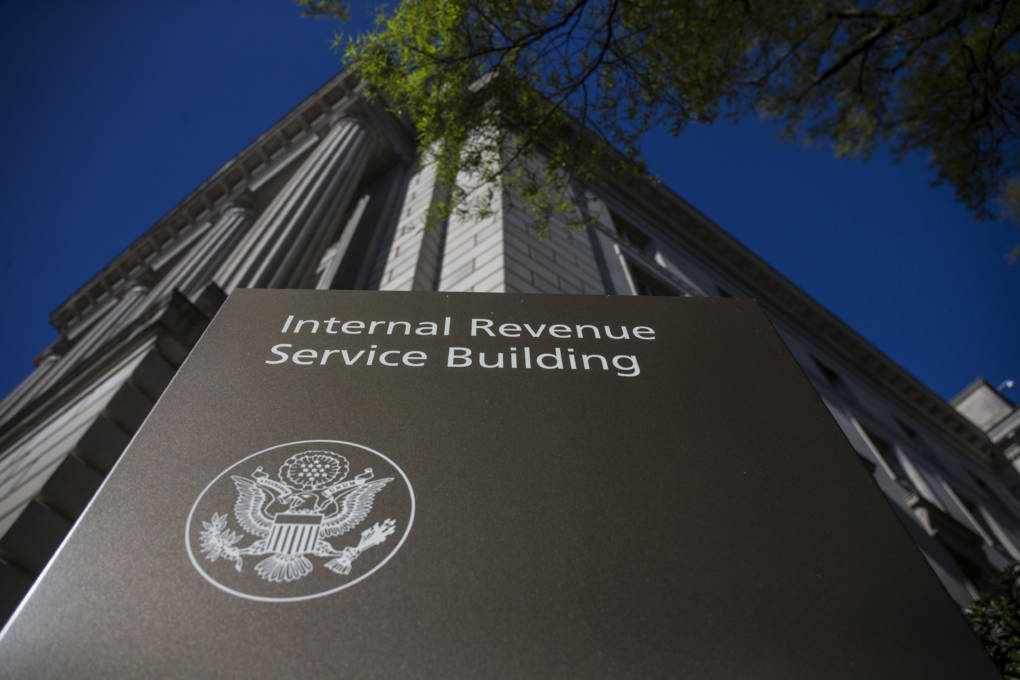
"caption": "The Internal Revenue Service building stands on April 15, 2019, in Washington, D.C., April 15 is the deadline in the United States for residents to file their income tax returns.",
"description": null,
"title": "Americans File Their Returns On Tax Day 2019",
"credit": "Zach Gibson/Getty Images",
"status": "inherit",
"isLoading": false,
"fetchFailed": false
},
"news_11740220": {
"type": "attachments",
"id": "news_11740220",
"meta": {
"index": "attachments_1716263798",
"site": "news",
"id": "11740220",
"found": true
},
"parent": 11740217,
"imgSizes": {
"apple_news_ca_landscape_5_5": {
"file": "https://ww2.kqed.org/app/uploads/sites/10/2019/04/RS26463_GettyImages-823543540-qut-1044x783.jpg",
"width": 1044,
"mimeType": "image/jpeg",
"height": 783
},
"apple_news_ca_square_4_0": {
"file": "https://ww2.kqed.org/app/uploads/sites/10/2019/04/RS26463_GettyImages-823543540-qut-470x470.jpg",
"width": 470,
"mimeType": "image/jpeg",
"height": 470
},
"twentyfourteen-full-width": {
"file": "https://ww2.kqed.org/app/uploads/sites/10/2019/04/RS26463_GettyImages-823543540-qut-1038x576.jpg",
"width": 1038,
"mimeType": "image/jpeg",
"height": 576
},
"thumbnail": {
"file": "https://ww2.kqed.org/app/uploads/sites/10/2019/04/RS26463_GettyImages-823543540-qut-160x107.jpg",
"width": 160,
"mimeType": "image/jpeg",
"height": 107
},
"post-thumbnail": {
"file": "https://ww2.kqed.org/app/uploads/sites/10/2019/04/RS26463_GettyImages-823543540-qut-672x372.jpg",
"width": 672,
"mimeType": "image/jpeg",
"height": 372
},
"kqedFullSize": {
"file": "https://ww2.kqed.org/app/uploads/sites/10/2019/04/RS26463_GettyImages-823543540-qut.jpg",
"width": 1920,
"height": 1280
},
"apple_news_ca_landscape_4_7": {
"file": "https://ww2.kqed.org/app/uploads/sites/10/2019/04/RS26463_GettyImages-823543540-qut-632x474.jpg",
"width": 632,
"mimeType": "image/jpeg",
"height": 474
},
"large": {
"file": "https://ww2.kqed.org/app/uploads/sites/10/2019/04/RS26463_GettyImages-823543540-qut-1020x680.jpg",
"width": 1020,
"mimeType": "image/jpeg",
"height": 680
},
"complete_open_graph": {
"file": "https://ww2.kqed.org/app/uploads/sites/10/2019/04/RS26463_GettyImages-823543540-qut-1200x800.jpg",
"width": 1200,
"mimeType": "image/jpeg",
"height": 800
},
"apple_news_ca_landscape_4_0": {
"file": "https://ww2.kqed.org/app/uploads/sites/10/2019/04/RS26463_GettyImages-823543540-qut-536x402.jpg",
"width": 536,
"mimeType": "image/jpeg",
"height": 402
},
"apple_news_ca_portrait_12_9": {
"file": "https://ww2.kqed.org/app/uploads/sites/10/2019/04/RS26463_GettyImages-823543540-qut-1122x1280.jpg",
"width": 1122,
"mimeType": "image/jpeg",
"height": 1280
},
"medium": {
"file": "https://ww2.kqed.org/app/uploads/sites/10/2019/04/RS26463_GettyImages-823543540-qut-800x533.jpg",
"width": 800,
"mimeType": "image/jpeg",
"height": 533
},
"apple_news_ca_portrait_4_0": {
"file": "https://ww2.kqed.org/app/uploads/sites/10/2019/04/RS26463_GettyImages-823543540-qut-354x472.jpg",
"width": 354,
"mimeType": "image/jpeg",
"height": 472
},
"apple_news_ca_portrait_9_7": {
"file": "https://ww2.kqed.org/app/uploads/sites/10/2019/04/RS26463_GettyImages-823543540-qut-840x1120.jpg",
"width": 840,
"mimeType": "image/jpeg",
"height": 1120
},
"apple_news_ca_landscape_12_9": {
"file": "https://ww2.kqed.org/app/uploads/sites/10/2019/04/RS26463_GettyImages-823543540-qut-1832x1280.jpg",
"width": 1832,
"mimeType": "image/jpeg",
"height": 1280
},
"apple_news_ca_square_9_7": {
"file": "https://ww2.kqed.org/app/uploads/sites/10/2019/04/RS26463_GettyImages-823543540-qut-1104x1104.jpg",
"width": 1104,
"mimeType": "image/jpeg",
"height": 1104
},
"apple_news_ca_portrait_4_7": {
"file": "https://ww2.kqed.org/app/uploads/sites/10/2019/04/RS26463_GettyImages-823543540-qut-414x552.jpg",
"width": 414,
"mimeType": "image/jpeg",
"height": 552
},
"apple_news_ca_square_12_9": {
"file": "https://ww2.kqed.org/app/uploads/sites/10/2019/04/RS26463_GettyImages-823543540-qut-1472x1280.jpg",
"width": 1472,
"mimeType": "image/jpeg",
"height": 1280
},
"apple_news_ca_portrait_5_5": {
"file": "https://ww2.kqed.org/app/uploads/sites/10/2019/04/RS26463_GettyImages-823543540-qut-687x916.jpg",
"width": 687,
"mimeType": "image/jpeg",
"height": 916
},
"full-width": {
"file": "https://ww2.kqed.org/app/uploads/sites/10/2019/04/RS26463_GettyImages-823543540-qut-1920x1280.jpg",
"width": 1920,
"mimeType": "image/jpeg",
"height": 1280
},
"apple_news_ca_square_4_7": {
"file": "https://ww2.kqed.org/app/uploads/sites/10/2019/04/RS26463_GettyImages-823543540-qut-550x550.jpg",
"width": 550,
"mimeType": "image/jpeg",
"height": 550
},
"apple_news_ca_landscape_9_7": {
"file": "https://ww2.kqed.org/app/uploads/sites/10/2019/04/RS26463_GettyImages-823543540-qut-1376x1032.jpg",
"width": 1376,
"mimeType": "image/jpeg",
"height": 1032
},
"apple_news_ca_square_5_5": {
"file": "https://ww2.kqed.org/app/uploads/sites/10/2019/04/RS26463_GettyImages-823543540-qut-912x912.jpg",
"width": 912,
"mimeType": "image/jpeg",
"height": 912
}
},
"publishDate": 1555260146,
"modified": 1555260227,
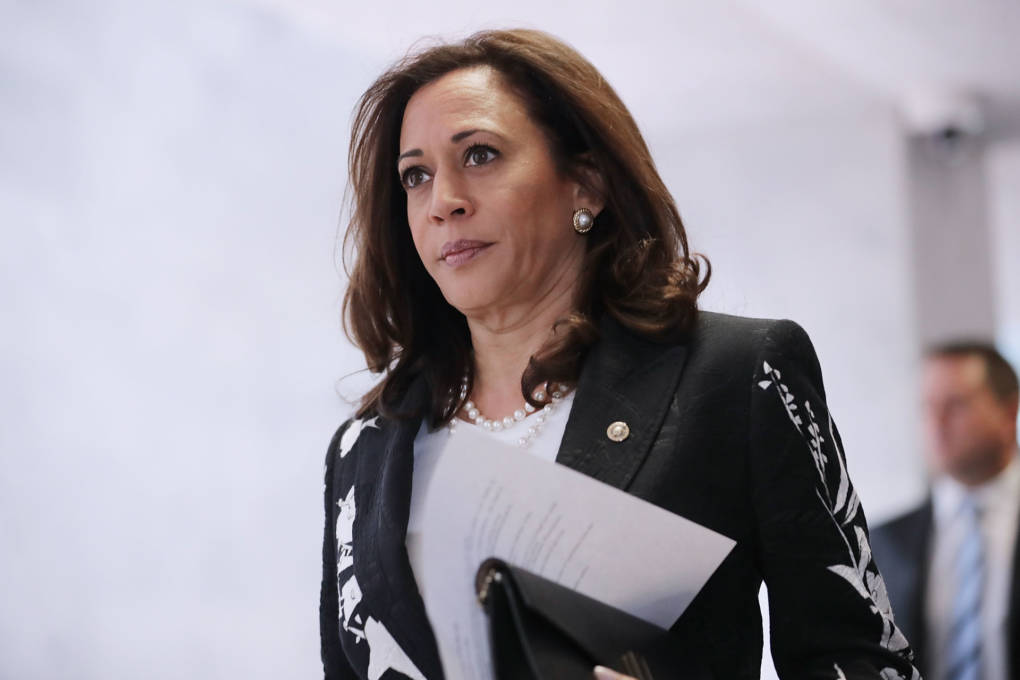
"caption": "Sen. Kamala Harris (D-CA) in Capitol Hill, 2017, in Washington, DC. ",
"description": null,
"title": "Senate Select Intelligence Committee Holds Closed Hearing",
"credit": "Chip Somodevilla/Getty Images",
"status": "inherit",
"isLoading": false,
"fetchFailed": false
}
},
"audioPlayerReducer": {
"postId": "stream_live",
"isPaused": true,
"isPlaying": false,
"pfsActive": false,
"pledgeModalIsOpen": true,
"playerDrawerIsOpen": false,
"liveAudioPlayStartedAt": 0,
"liveAudioPlayContext": ""
},
"authorsReducer": {
"byline_news_11796417": {
"type": "authors",
"id": "byline_news_11796417",
"meta": {
"override": true
},
"slug": "byline_news_11796417",
"name": "Adam Beam \u003cbr> Associated Press",
"isLoading": false
},
"byline_news_11775375": {
"type": "authors",
"id": "byline_news_11775375",
"meta": {
"override": true
},
"slug": "byline_news_11775375",
"name": "\u003cstrong>Kathleen Ronayne, The Associated Press\u003c/strong>",
"isLoading": false
},
"byline_news_11765735": {
"type": "authors",
"id": "byline_news_11765735",
"meta": {
"override": true
},
"slug": "byline_news_11765735",
"name": "Adam Beam \u003cbr> The Associated Press",
"isLoading": false
},
"byline_news_11745559": {
"type": "authors",
"id": "byline_news_11745559",
"meta": {
"override": true
},
"slug": "byline_news_11745559",
"name": "Laurel Wamsley",
"isLoading": false
},
"byline_news_11744167": {
"type": "authors",
"id": "byline_news_11744167",
"meta": {
"override": true
},
"slug": "byline_news_11744167",
"name": "Genevieve Schweitzer",
"isLoading": false
},
"byline_news_11740291": {
"type": "authors",
"id": "byline_news_11740291",
"meta": {
"override": true
},
"slug": "byline_news_11740291",
"name": "\u003cstrong>Scott Horsley\u003cbr />NPR\u003c/strong>",
"isLoading": false
},
"byline_news_11740217": {
"type": "authors",
"id": "byline_news_11740217",
"meta": {
"override": true
},
"slug": "byline_news_11740217",
"name": "Juana Summers, Alan Suderman and Stephen Braun \u003cbr> Associated Press",
"isLoading": false
},
"scottshafer": {
"type": "authors",
"id": "255",
"meta": {
"index": "authors_1716337520",
"id": "255",
"found": true
},
"name": "Scott Shafer",
"firstName": "Scott",
"lastName": "Shafer",
"slug": "scottshafer",
"email": "sshafer@kqed.org",
"display_author_email": false,
"staff_mastheads": [
"news"
],
"title": "KQED Contributor",
"bio": "Scott Shafer is a senior editor with the KQED Politics and Government desk. He is co-host of Political Breakdown, the award-winning radio show and podcast with a personal take on the world of politics. Scott came to KQED in 1998 to host the statewide\u003cem> California Report\u003c/em>. Prior to that he had extended stints in politics and government\u003cem>.\u003c/em> He uses that inside experience at KQED in his, reporting, hosting and analysis for the politics desk. Scott collaborated \u003cem>Political Breakdown a\u003c/em>nd on \u003cem>The Political Mind of Jerry Brown, \u003c/em>an eight-part series about the life and extraordinary political career of the former governor. For fun, he plays water polo with the San Francisco Tsunami.",
"avatar": "https://secure.gravatar.com/avatar/a62ebae45b79d7aed1a39a0e3bf68104?s=600&d=blank&r=g",
"twitter": "scottshafer",
"bluesky": null,
"facebook": null,
"instagram": null,
"linkedin": null,
"sites": [
{
"site": "news",
"roles": [
"editor"
]
},
{
"site": "stateofhealth",
"roles": [
"author"
]
},
{
"site": "science",
"roles": [
"author"
]
},
{
"site": "forum",
"roles": [
"subscriber"
]
},
{
"site": "liveblog",
"roles": [
"author"
]
}
],
"headData": {
"title": "Scott Shafer | KQED",
"description": "KQED Contributor",
"ogImgSrc": "https://secure.gravatar.com/avatar/a62ebae45b79d7aed1a39a0e3bf68104?s=600&d=blank&r=g",
"twImgSrc": "https://secure.gravatar.com/avatar/a62ebae45b79d7aed1a39a0e3bf68104?s=600&d=blank&r=g"
},
"isLoading": false,
"link": "/author/scottshafer"
},
"mlagos": {
"type": "authors",
"id": "3239",
"meta": {
"index": "authors_1716337520",
"id": "3239",
"found": true
},
"name": "Marisa Lagos",
"firstName": "Marisa",
"lastName": "Lagos",
"slug": "mlagos",
"email": "mlagos@kqed.org",
"display_author_email": false,
"staff_mastheads": [
"news"
],
"title": "KQED Contributor",
"bio": "Marisa Lagos is a correspondent for KQED’s California Politics and Government Desk and co-hosts the award-winning show and podcast, Political Breakdown. At KQED, Lagos also conducts reporting, analysis and investigations into state, local and national politics for radio, TV, online and onstage. In 2022, she and co-host, Scott Shafer, moderated the only gubernatorial debate in California. In 2020, the \u003ci>Washington Post\u003c/i> named her one of the top political journalists in California; she was nominated for a Peabody and won several other awards for her work investigating the 2017 California wildfires. She has worked at the \u003ci>San Francisco Chronicle\u003c/i>, \u003ci>San Francisco Examiner\u003c/i> and \u003ci>Los Angeles Times\u003c/i>. A UC Santa Barbara graduate, she lives in San Francisco with her two sons and husband.",
"avatar": "https://secure.gravatar.com/avatar/a261a0d3696fc066871ef96b85b5e7d2?s=600&d=blank&r=g",
"twitter": "@mlagos",
"facebook": null,
"instagram": null,
"linkedin": null,
"sites": [
{
"site": "arts",
"roles": [
"author"
]
},
{
"site": "news",
"roles": [
"editor"
]
},
{
"site": "science",
"roles": [
"editor"
]
},
{
"site": "forum",
"roles": [
"author"
]
},
{
"site": "liveblog",
"roles": [
"author"
]
}
],
"headData": {
"title": "Marisa Lagos | KQED",
"description": "KQED Contributor",
"ogImgSrc": "https://secure.gravatar.com/avatar/a261a0d3696fc066871ef96b85b5e7d2?s=600&d=blank&r=g",
"twImgSrc": "https://secure.gravatar.com/avatar/a261a0d3696fc066871ef96b85b5e7d2?s=600&d=blank&r=g"
},
"isLoading": false,
"link": "/author/mlagos"
},
"vrancano": {
"type": "authors",
"id": "11276",
"meta": {
"index": "authors_1716337520",
"id": "11276",
"found": true
},
"name": "Vanessa Rancaño",
"firstName": "Vanessa",
"lastName": "Rancaño",
"slug": "vrancano",
"email": "vrancano@kqed.org",
"display_author_email": false,
"staff_mastheads": [
"news"
],
"title": "Reporter",
"bio": "Vanessa Rancaño is a features reporter for KQED. She’s also covered homelessness and education for the station and reported from the Central Valley. Her work has aired across public radio, from flagship national news shows to longform narrative podcasts. Before taking up a mic, she worked as a freelance print journalist. She’s been recognized with a number of national and regional awards. Vanessa grew up in California's Central Valley. She's a former NPR Kroc Fellow, and a graduate of the UC Berkeley Graduate School of Journalism.",
"avatar": "https://secure.gravatar.com/avatar/b3a383dfb0e7ee1c17568f2cf067904ab654d6e3de9743fc661f3c788ade1bed?s=600&d=blank&r=g",
"twitter": "vanessarancano",
"bluesky": null,
"facebook": null,
"instagram": null,
"linkedin": null,
"sites": [
{
"site": "arts",
"roles": [
"editor"
]
},
{
"site": "news",
"roles": [
"editor"
]
},
{
"site": "liveblog",
"roles": [
"contributor"
]
}
],
"headData": {
"title": "Vanessa Rancaño | KQED",
"description": "Reporter",
"ogImgSrc": "https://secure.gravatar.com/avatar/b3a383dfb0e7ee1c17568f2cf067904ab654d6e3de9743fc661f3c788ade1bed?s=600&d=blank&r=g",
"twImgSrc": "https://secure.gravatar.com/avatar/b3a383dfb0e7ee1c17568f2cf067904ab654d6e3de9743fc661f3c788ade1bed?s=600&d=blank&r=g"
},
"isLoading": false,
"link": "/author/vrancano"
},
"mleitsinger": {
"type": "authors",
"id": "11310",
"meta": {
"index": "authors_1716337520",
"id": "11310",
"found": true
},
"name": "Miranda Leitsinger",
"firstName": "Miranda",
"lastName": "Leitsinger",
"slug": "mleitsinger",
"email": "mleitsinger@KQED.org",
"display_author_email": false,
"staff_mastheads": [
"news"
],
"title": "KQED Contributor",
"bio": "Miranda Leitsinger has worked in journalism as a reporter and editor since 2000, including seven years at The Associated Press in locales such as Cambodia and Puerto Rico, four years at NBC News Digital in New York and 2.5 years at CNN.com International in Hong Kong. Major stories she has covered included sexual abuse in the yoga community, the rise of women in local politics post-2016 election, the struggle over LGBTQ inclusion in the Boy Scouts, aftermath of the 2004 and 2011 tsunamis, the Aurora movie theater attack, the Newtown school shooting, Superstorm Sandy and the Boston Marathon bombing.",
"avatar": "https://secure.gravatar.com/avatar/cdd00de7be92aab3b7fd3d915e02033d?s=600&d=blank&r=g",
"twitter": "mimileitsinger",
"facebook": null,
"instagram": null,
"linkedin": null,
"sites": [
{
"site": "arts",
"roles": [
"author"
]
},
{
"site": "news",
"roles": [
"subscriber"
]
},
{
"site": "futureofyou",
"roles": [
"editor"
]
},
{
"site": "stateofhealth",
"roles": [
"editor"
]
}
],
"headData": {
"title": "Miranda Leitsinger | KQED",
"description": "KQED Contributor",
"ogImgSrc": "https://secure.gravatar.com/avatar/cdd00de7be92aab3b7fd3d915e02033d?s=600&d=blank&r=g",
"twImgSrc": "https://secure.gravatar.com/avatar/cdd00de7be92aab3b7fd3d915e02033d?s=600&d=blank&r=g"
},
"isLoading": false,
"link": "/author/mleitsinger"
},
"eaguilar": {
"type": "authors",
"id": "11382",
"meta": {
"index": "authors_1716337520",
"id": "11382",
"found": true
},
"name": "Erika Aguilar",
"firstName": "Erika",
"lastName": "Aguilar",
"slug": "eaguilar",
"email": "eaa712@gmail.com",
"display_author_email": false,
"staff_mastheads": [],
"title": "KQED Contributor",
"bio": "Erika Aguilar was the director of podcasts at KQED. She was in charge of KQED's portfolio of original podcasts and teams, and sets strategic plans for production and engagement.\r\n\r\nErika helped establish KQED's new housing affordability desk as senior editor. She was also a producer and editor for KQED's local news podcast called \u003cem>The Bay, \u003c/em>and wrote stories about housing in the Bay Area as a reporter for KQED News.\r\n\r\nErika joined KQED in 2017 after producing independent audio projects and podcasts in Southern California. She spent more than a dozen years reporting stories about law enforcement, breaking news, homelessness, government and the environment for KPCC in Los Angeles and KUT in Austin. She also volunteers as an editor and mentor for various journalism training programs.\r\n\r\nErika Aguilar is a proud Tejana from San Antonio. She believes in compromise, optimism and Selena.",
"avatar": "https://secure.gravatar.com/avatar/85bf7bb8dd9af4136525d94cef00f026?s=600&d=blank&r=g",
"twitter": "erikaaaguilar",
"facebook": null,
"instagram": null,
"linkedin": null,
"sites": [
{
"site": "",
"roles": [
"editor"
]
},
{
"site": "news",
"roles": [
"subscriber"
]
},
{
"site": "podcasts",
"roles": [
"editor"
]
}
],
"headData": {
"title": "Erika Aguilar | KQED",
"description": "KQED Contributor",
"ogImgSrc": "https://secure.gravatar.com/avatar/85bf7bb8dd9af4136525d94cef00f026?s=600&d=blank&r=g",
"twImgSrc": "https://secure.gravatar.com/avatar/85bf7bb8dd9af4136525d94cef00f026?s=600&d=blank&r=g"
},
"isLoading": false,
"link": "/author/eaguilar"
}
},
"pagesReducer": {
"news_tag_taxes": {
"type": "terms",
"id": "news_423",
"meta": {
"index": "terms_1716263798",
"site": "news",
"id": "423",
"score": 8.795169
},
"featImg": null,
"name": "taxes",
"description": null,
"taxonomy": "tag",
"headData": {
"twImgId": null,
"twTitle": null,
"ogTitle": null,
"ogImgId": null,
"twDescription": null,
"description": null,
"title": "taxes Archives | KQED News",
"ogDescription": null
},
"ttid": 432,
"slug": "taxes",
"isLoading": false,
"title": "taxes",
"pageMeta": {
"site": "news",
"WpPageTemplate": "page-topic-editorial",
"currentPage": 6
},
"blocks": [
{
"blockName": "kqed/post-list",
"attrs": {
"layout": "cardArticle2",
"query": "posts/news?tag=taxes",
"seeMore": false,
"paginated": true,
"page": 6
}
},
{
"blockName": "kqed/ad"
}
]
}
},
"pfsSessionReducer": {},
"postsReducer": {
"stream_live": {
"type": "live",
"id": "stream_live",
"audioUrl": "https://streams.kqed.org/kqedradio",
"title": "Live Stream",
"excerpt": "Live Stream information currently unavailable.",
"link": "/radio",
"featImg": "",
"label": {
"name": "KQED Live",
"link": "/"
}
},
"stream_kqedNewscast": {
"type": "posts",
"id": "stream_kqedNewscast",
"audioUrl": "https://www.kqed.org/.stream/anon/radio/RDnews/newscast.mp3?_=1",
"title": "KQED Newscast",
"featImg": "",
"label": {
"name": "88.5 FM",
"link": "/"
}
},
"news_11804205": {
"type": "posts",
"id": "news_11804205",
"meta": {
"index": "posts_1716263798",
"site": "news",
"id": "11804205",
"score": null,
"sort": [
1583337042000
]
},
"guestAuthors": [],
"slug": "close-results-for-proposition-13-californias-15b-school-bond",
"title": "Proposition 13, California's $15 Billion School Bond, Headed for Likely Defeat",
"publishDate": 1583337042,
"format": "standard",
"headTitle": "Proposition 13, California’s $15 Billion School Bond, Headed for Likely Defeat | KQED",
"labelTerm": {},
"content": "\u003cp>\u003cem>Updated Friday, 4:15 p.m.\u003c/em>\u003c/p>\n\u003cp>The California primary election’s only statewide measure, which asked voters to consider borrowing billions of dollars to fund school construction projects, appears headed for defeat.\u003c/p>\n\u003cp>With support from just over 44% of voters as of \u003ca href=\"https://electionresults.sos.ca.gov/returns/ballot-measures\">Friday afternoon\u003c/a>, Proposition 13 was far short of the simple majority it needs to pass. Continued updates to voting results will be posted by the California Secretary of State \u003ca href=\"https://electionresults.sos.ca.gov/returns/ballot-measures\">here\u003c/a>.\u003c/p>\n\u003cp>Backers of the measure — the largest school facility bond in state history — argued that the money is desperately needed to retrofit aging facilities, keep students safe and encourage learning. The most high-profile opposition came from the Howard Jarvis Taxpayers Association, which routinely rejects increased taxation.\u003c/p>\n\u003cp>\u003ca href=\"https://voterguide.sos.ca.gov/propositions/13/index.htm\" target=\"_blank\" rel=\"noopener noreferrer\">Proposition 13\u003c/a> — no relation to the much-contested 1978 measure that changed how property is assessed in California — asked voters to authorize $15 billion in bonds for K-12 schools, community colleges and state universities.\u003c/p>\n\u003cp>[ad fullwidth]\u003c/p>\n\u003cp>The \u003ca href=\"https://lao.ca.gov/BallotAnalysis/Proposition?number=13&year=2020\" target=\"_blank\" rel=\"noopener noreferrer\">Legislative Analyst’s Office estimated\u003c/a> that Proposition 13 would cost taxpayers another $11 billion in interest, raising the total to $26 billion.\u003c/p>\n\u003cp>Howard Jarvis Taxpayers Association President Jon Coupal \u003ca href=\"https://edsource.org/2020/voters-should-reject-this-proposition-13/623659\" target=\"_blank\" rel=\"noopener noreferrer\">criticized the measure\u003c/a> for putting Californians deeper into debt at a time when the state is bringing in record revenue.\u003c/p>\n\u003cp>But school leaders warned that conditions in their schools are dire.\u003c/p>\n\u003cp>“We have schools that are literally held together with duct tape,” said Tony Wold, associate superintendent of business services for the West Contra Costa Unified School District. “We need to do earthquake safety. We have two comprehensive high schools that have no windows.”\u003c/p>\n\u003cfigure id=\"attachment_11805136\" class=\"wp-caption aligncenter\" style=\"max-width: 800px\">\u003cimg loading=\"lazy\" decoding=\"async\" class=\"size-medium wp-image-11805136\" src=\"https://ww2.kqed.org/app/uploads/sites/10/2021/03/Libby.Prop13-800x533.jpg\" alt=\"Libby Schaaf visits Manzanita Community Elementary School in Oakland in support of Proposition 13 on Mar. 2, 2020.\" width=\"800\" height=\"533\" srcset=\"https://cdn.kqed.org/wp-content/uploads/sites/10/2021/03/Libby.Prop13-800x533.jpg 800w, https://cdn.kqed.org/wp-content/uploads/sites/10/2021/03/Libby.Prop13-160x107.jpg 160w, https://cdn.kqed.org/wp-content/uploads/sites/10/2021/03/Libby.Prop13-1020x679.jpg 1020w, https://cdn.kqed.org/wp-content/uploads/sites/10/2021/03/Libby.Prop13.jpg 1920w\" sizes=\"(max-width: 800px) 100vw, 800px\">\u003cfigcaption class=\"wp-caption-text\">Oakland Mayor Libby Schaaf visits Manzanita Community Elementary School in Oakland in support of Proposition 13 on Mar. 2, 2020. \u003ccite>(Beth LaBerge/KQED)\u003c/cite>\u003c/figcaption>\u003c/figure>\n\u003cp>About 70% of California’s K-12 schools are more than 25 years old, \u003ca href=\"https://www.ppic.org/publication/bonds-for-k-12-school-facilities-in-california/\" target=\"_blank\" rel=\"noopener noreferrer\">according to the Public Policy Institute of California\u003c/a>, and districts are projected to need more than $100 billion to rehabilitate facilities in the next two years.\u003c/p>\n\u003cp>Wold estimates that in West Contra Costa Unified School District alone there are more than a billion dollars in unmet needs.\u003c/p>\n\u003cp>Critics of Proposition 13 said an increase in local bonds, which would raise property taxes if passed, was imprudent in the face of an unprecedented housing crisis. Coupal argued that increased property taxes would be passed along to renters in some cases, or overburden strapped homeowners.\u003c/p>\n\u003cp>Berkeley resident Mary Behm-Steinberg was one of many voters who faced both Proposition 13 and a local school bond this election. Though she supports robust taxation in general, she said for homeowners like her who rely on a fixed income, any increase in property taxes is painful.\u003c/p>\n\u003cp>“It just doesn’t follow that everybody who has a house has money,” she said, arguing that local bonds disproportionately hurt the elderly and those with disabilities. “For some people this will cut to the bone.”\u003c/p>\n\u003cp>\u003c/p>\n\u003cp>Since 1998, Californians have approved five statewide education bond measures. The most recent, in 2016, borrowed $7 billion for K-12 education and $2 billion for community colleges.\u003c/p>\n\n",
"blocks": [],
"excerpt": "Voters appear to be rejecting a statewide measure to borrow billions of dollars to fund school construction projects.",
"status": "publish",
"parent": 0,
"modified": 1721124308,
"stats": {
"hasAudio": false,
"hasVideo": false,
"hasChartOrMap": false,
"iframeSrcs": [],
"hasGoogleForm": false,
"hasGallery": false,
"hasHearkenModule": false,
"hasPolis": false,
"paragraphCount": 17,
"wordCount": 517
},
"headData": {
"title": "Proposition 13, California's $15 Billion School Bond, Headed for Likely Defeat | KQED",
"description": "Voters appear to be rejecting a statewide measure to borrow billions of dollars to fund school construction projects.",
"ogTitle": "",
"ogDescription": "",
"ogImgId": "",
"twTitle": "",
"twDescription": "",
"twImgId": "",
"schema": {
"@context": "https://schema.org",
"@type": "NewsArticle",
"headline": "Proposition 13, California's $15 Billion School Bond, Headed for Likely Defeat",
"datePublished": "2020-03-04T07:50:42-08:00",
"dateModified": "2024-07-16T03:05:08-07:00",
"image": "https://cdn.kqed.org/wp-content/uploads/2020/02/KQED-OG-Image@1x.png",
"isAccessibleForFree": "True",
"publisher": {
"@type": "NewsMediaOrganization",
"@id": "https://www.kqed.org/#organization",
"name": "KQED",
"logo": "https://cdn.kqed.org/wp-content/uploads/2020/02/KQED-OG-Image@1x.png",
"url": "https://www.kqed.org",
"sameAs": [
"https://www.facebook.com/KQED",
"https://twitter.com/KQED",
"https://www.instagram.com/kqed/",
"https://www.tiktok.com/@kqedofficial",
"https://www.linkedin.com/company/kqed",
"https://www.youtube.com/channel/UCeC0IOo7i1P_61zVUWbJ4nw"
]
}
}
},
"source": "Election 2020",
"sourceUrl": "https://www.kqed.org/elections",
"sticky": false,
"templateType": "standard",
"featuredImageType": "standard",
"justInHeadline": "Proposition 13, California's $15B school bond, headed for defeat",
"justInDateAndTime": 1583342580,
"path": "/news/11804205/close-results-for-proposition-13-californias-15b-school-bond",
"audioTrackLength": null,
"parsedContent": [
{
"type": "contentString",
"content": "\u003cdiv class=\"post-body\">\u003cp>\u003cp>\u003cem>Updated Friday, 4:15 p.m.\u003c/em>\u003c/p>\n\u003cp>The California primary election’s only statewide measure, which asked voters to consider borrowing billions of dollars to fund school construction projects, appears headed for defeat.\u003c/p>\n\u003cp>With support from just over 44% of voters as of \u003ca href=\"https://electionresults.sos.ca.gov/returns/ballot-measures\">Friday afternoon\u003c/a>, Proposition 13 was far short of the simple majority it needs to pass. Continued updates to voting results will be posted by the California Secretary of State \u003ca href=\"https://electionresults.sos.ca.gov/returns/ballot-measures\">here\u003c/a>.\u003c/p>\n\u003cp>Backers of the measure — the largest school facility bond in state history — argued that the money is desperately needed to retrofit aging facilities, keep students safe and encourage learning. The most high-profile opposition came from the Howard Jarvis Taxpayers Association, which routinely rejects increased taxation.\u003c/p>\n\u003cp>\u003ca href=\"https://voterguide.sos.ca.gov/propositions/13/index.htm\" target=\"_blank\" rel=\"noopener noreferrer\">Proposition 13\u003c/a> — no relation to the much-contested 1978 measure that changed how property is assessed in California — asked voters to authorize $15 billion in bonds for K-12 schools, community colleges and state universities.\u003c/p>\n\u003cp>\u003c/p>\u003c/div>",
"attributes": {
"named": {},
"numeric": []
}
},
{
"type": "component",
"content": "",
"name": "ad",
"attributes": {
"named": {
"label": "fullwidth"
},
"numeric": [
"fullwidth"
]
}
},
{
"type": "contentString",
"content": "\u003cdiv class=\"post-body\">\u003cp>\u003c/p>\n\u003cp>The \u003ca href=\"https://lao.ca.gov/BallotAnalysis/Proposition?number=13&year=2020\" target=\"_blank\" rel=\"noopener noreferrer\">Legislative Analyst’s Office estimated\u003c/a> that Proposition 13 would cost taxpayers another $11 billion in interest, raising the total to $26 billion.\u003c/p>\n\u003cp>Howard Jarvis Taxpayers Association President Jon Coupal \u003ca href=\"https://edsource.org/2020/voters-should-reject-this-proposition-13/623659\" target=\"_blank\" rel=\"noopener noreferrer\">criticized the measure\u003c/a> for putting Californians deeper into debt at a time when the state is bringing in record revenue.\u003c/p>\n\u003cp>But school leaders warned that conditions in their schools are dire.\u003c/p>\n\u003cp>“We have schools that are literally held together with duct tape,” said Tony Wold, associate superintendent of business services for the West Contra Costa Unified School District. “We need to do earthquake safety. We have two comprehensive high schools that have no windows.”\u003c/p>\n\u003cfigure id=\"attachment_11805136\" class=\"wp-caption aligncenter\" style=\"max-width: 800px\">\u003cimg loading=\"lazy\" decoding=\"async\" class=\"size-medium wp-image-11805136\" src=\"https://ww2.kqed.org/app/uploads/sites/10/2021/03/Libby.Prop13-800x533.jpg\" alt=\"Libby Schaaf visits Manzanita Community Elementary School in Oakland in support of Proposition 13 on Mar. 2, 2020.\" width=\"800\" height=\"533\" srcset=\"https://cdn.kqed.org/wp-content/uploads/sites/10/2021/03/Libby.Prop13-800x533.jpg 800w, https://cdn.kqed.org/wp-content/uploads/sites/10/2021/03/Libby.Prop13-160x107.jpg 160w, https://cdn.kqed.org/wp-content/uploads/sites/10/2021/03/Libby.Prop13-1020x679.jpg 1020w, https://cdn.kqed.org/wp-content/uploads/sites/10/2021/03/Libby.Prop13.jpg 1920w\" sizes=\"(max-width: 800px) 100vw, 800px\">\u003cfigcaption class=\"wp-caption-text\">Oakland Mayor Libby Schaaf visits Manzanita Community Elementary School in Oakland in support of Proposition 13 on Mar. 2, 2020. \u003ccite>(Beth LaBerge/KQED)\u003c/cite>\u003c/figcaption>\u003c/figure>\n\u003cp>About 70% of California’s K-12 schools are more than 25 years old, \u003ca href=\"https://www.ppic.org/publication/bonds-for-k-12-school-facilities-in-california/\" target=\"_blank\" rel=\"noopener noreferrer\">according to the Public Policy Institute of California\u003c/a>, and districts are projected to need more than $100 billion to rehabilitate facilities in the next two years.\u003c/p>\n\u003cp>Wold estimates that in West Contra Costa Unified School District alone there are more than a billion dollars in unmet needs.\u003c/p>\n\u003cp>Critics of Proposition 13 said an increase in local bonds, which would raise property taxes if passed, was imprudent in the face of an unprecedented housing crisis. Coupal argued that increased property taxes would be passed along to renters in some cases, or overburden strapped homeowners.\u003c/p>\n\u003cp>Berkeley resident Mary Behm-Steinberg was one of many voters who faced both Proposition 13 and a local school bond this election. Though she supports robust taxation in general, she said for homeowners like her who rely on a fixed income, any increase in property taxes is painful.\u003c/p>\n\u003cp>“It just doesn’t follow that everybody who has a house has money,” she said, arguing that local bonds disproportionately hurt the elderly and those with disabilities. “For some people this will cut to the bone.”\u003c/p>\n\u003cp>\u003c/p>\n\u003cp>Since 1998, Californians have approved five statewide education bond measures. The most recent, in 2016, borrowed $7 billion for K-12 education and $2 billion for community colleges.\u003c/p>\n\n\u003c/div>\u003c/p>",
"attributes": {
"named": {},
"numeric": []
}
}
],
"link": "/news/11804205/close-results-for-proposition-13-californias-15b-school-bond",
"authors": [
"11276"
],
"categories": [
"news_18540",
"news_8",
"news_13"
],
"tags": [
"news_18538",
"news_20013",
"news_28756",
"news_17968",
"news_725",
"news_2998",
"news_423"
],
"featImg": "news_11805134",
"label": "source_news_11804205"
},
"news_11799349": {
"type": "posts",
"id": "news_11799349",
"meta": {
"index": "posts_1716263798",
"site": "news",
"id": "11799349",
"score": null,
"sort": [
1582242936000
]
},
"guestAuthors": [],
"slug": "california-property-taxes-how-would-you-change-things",
"title": "Tell Us: Could Property Taxes Be More Fair in California?",
"publishDate": 1582242936,
"format": "standard",
"headTitle": "Tell Us: Could Property Taxes Be More Fair in California? | KQED",
"labelTerm": {},
"content": "\u003cp>TELL US BELOW: How can our property tax system be more fair to all Californians?\u003c/p>\n\u003cp>KQED wants to hear your views on California’s state property tax system that was set by Proposition 13 back in 1978. \u003c/p>\n\u003cp>Vote on your peers’ statements about how they would make the law more fair, or submit your own idea. The more you speak, the better we can understand where we find agreement. Give it a try. Join the conversation. Need more background on Proposition 13? Keep scrolling. \u003c/p>\n\u003cp>[polis id=”2r5dcbp4ky”]\u003c/p>\n\u003cp>How much people pay in property taxes is a question some in California might consider taboo.\u003c/p>\n\u003cp>Last year, \u003ca href=\"https://www.kqed.org/news/11711689/40-years-on-how-does-proposition-13-impact-the-california-dream\">KQED gathered neighbors from a single block in Oakland\u003c/a> to ask them just that, and the answers were striking.\u003c/p>\n\u003cp>For one man who bought his house in 1976, the answer was $1,800. For a woman who bought her house in 2016? It was $13,000.\u003c/p>\n\u003cp>The reason for this variance: \u003ca href=\"https://www.kqed.org/news/11792662/walking-tour-attempts-to-explain-proposed-changes-to-prop-13\">Proposition 13\u003c/a>. That’s the voter-led initiative passed in 1978, which tied property tax rates to the purchase price of a home or business, and limited how much tax bills could grow. It substantially changed California by slashing revenue that cities, counties and school districts use to operate.\u003c/p>\n\u003cp>This is all timely, because in November, you and other California voters will decide whether the tax cap should be lifted for certain commercial properties. This is called the “split roll” initiative and, if approved, it would deliver revenue for cities, counties and school districts.\u003c/p>\n\u003cp>Still, many believe Proposition 13 would continue to create unequal tax burdens, even if the split roll initiative passes. Others say it protects people on fixed incomes who bought their homes decades ago, and who would be financially incapable of paying current property tax rates.\u003c/p>\n\u003cp>So… how do you think our property tax system could be more fair to all Californians?\u003c/p>\n\u003cp>\u003cem>KQED journalists will moderate the submissions. They will read each statement submitted and use journalistic ethical standards to offer quality control and civility for the experiment. Offensive and racist language will not be tolerated.\u003c/em>\u003c/p>\n\u003cp>[ad fullwidth]\u003c/p>\n\u003cp>\u003c/p>\n",
"blocks": [],
"excerpt": "Proposition 13 slashed property tax rates for a generation of homeowners and businesses. What's your suggestion for making the state property tax system more fair to all Californians?",
"status": "publish",
"parent": 0,
"modified": 1728430921,
"stats": {
"hasAudio": false,
"hasVideo": false,
"hasChartOrMap": false,
"iframeSrcs": [],
"hasGoogleForm": false,
"hasGallery": false,
"hasHearkenModule": false,
"hasPolis": true,
"paragraphCount": 14,
"wordCount": 355
},
"headData": {
"title": "Tell Us: Could Property Taxes Be More Fair in California? | KQED",
"description": "Proposition 13 slashed property tax rates for a generation of homeowners and businesses. What's your suggestion for making the state property tax system more fair to all Californians?",
"ogTitle": "",
"ogDescription": "",
"ogImgId": "",
"twTitle": "",
"twDescription": "",
"twImgId": "",
"schema": {
"@context": "https://schema.org",
"@type": "NewsArticle",
"headline": "Tell Us: Could Property Taxes Be More Fair in California?",
"datePublished": "2020-02-20T15:55:36-08:00",
"dateModified": "2024-10-08T16:42:01-07:00",
"image": "https://cdn.kqed.org/wp-content/uploads/2020/02/KQED-OG-Image@1x.png",
"isAccessibleForFree": "True",
"publisher": {
"@type": "NewsMediaOrganization",
"@id": "https://www.kqed.org/#organization",
"name": "KQED",
"logo": "https://cdn.kqed.org/wp-content/uploads/2020/02/KQED-OG-Image@1x.png",
"url": "https://www.kqed.org",
"sameAs": [
"https://www.facebook.com/KQED",
"https://twitter.com/KQED",
"https://www.instagram.com/kqed/",
"https://www.tiktok.com/@kqedofficial",
"https://www.linkedin.com/company/kqed",
"https://www.youtube.com/channel/UCeC0IOo7i1P_61zVUWbJ4nw"
]
}
}
},
"source": "Election 2020",
"sourceUrl": "https://www.kqed.org/elections",
"sticky": false,
"path": "/news/11799349/california-property-taxes-how-would-you-change-things",
"audioTrackLength": null,
"parsedContent": [
{
"type": "contentString",
"content": "\u003cdiv class=\"post-body\">\u003cp>\u003cp>TELL US BELOW: How can our property tax system be more fair to all Californians?\u003c/p>\n\u003cp>KQED wants to hear your views on California’s state property tax system that was set by Proposition 13 back in 1978. \u003c/p>\n\u003cp>Vote on your peers’ statements about how they would make the law more fair, or submit your own idea. The more you speak, the better we can understand where we find agreement. Give it a try. Join the conversation. Need more background on Proposition 13? Keep scrolling. \u003c/p>\n\u003cp>\u003c/p>\u003c/div>",
"attributes": {
"named": {},
"numeric": []
}
},
{
"type": "component",
"content": "",
"name": "polis",
"attributes": {
"named": {
"id": "”2r5dcbp4ky”",
"label": ""
},
"numeric": []
}
},
{
"type": "contentString",
"content": "\u003cdiv class=\"post-body\">\u003cp>\u003c/p>\n\u003cp>How much people pay in property taxes is a question some in California might consider taboo.\u003c/p>\n\u003cp>Last year, \u003ca href=\"https://www.kqed.org/news/11711689/40-years-on-how-does-proposition-13-impact-the-california-dream\">KQED gathered neighbors from a single block in Oakland\u003c/a> to ask them just that, and the answers were striking.\u003c/p>\n\u003cp>For one man who bought his house in 1976, the answer was $1,800. For a woman who bought her house in 2016? It was $13,000.\u003c/p>\n\u003cp>The reason for this variance: \u003ca href=\"https://www.kqed.org/news/11792662/walking-tour-attempts-to-explain-proposed-changes-to-prop-13\">Proposition 13\u003c/a>. That’s the voter-led initiative passed in 1978, which tied property tax rates to the purchase price of a home or business, and limited how much tax bills could grow. It substantially changed California by slashing revenue that cities, counties and school districts use to operate.\u003c/p>\n\u003cp>This is all timely, because in November, you and other California voters will decide whether the tax cap should be lifted for certain commercial properties. This is called the “split roll” initiative and, if approved, it would deliver revenue for cities, counties and school districts.\u003c/p>\n\u003cp>Still, many believe Proposition 13 would continue to create unequal tax burdens, even if the split roll initiative passes. Others say it protects people on fixed incomes who bought their homes decades ago, and who would be financially incapable of paying current property tax rates.\u003c/p>\n\u003cp>So… how do you think our property tax system could be more fair to all Californians?\u003c/p>\n\u003cp>\u003cem>KQED journalists will moderate the submissions. They will read each statement submitted and use journalistic ethical standards to offer quality control and civility for the experiment. Offensive and racist language will not be tolerated.\u003c/em>\u003c/p>\n\u003cp>\u003c/p>\u003c/div>",
"attributes": {
"named": {},
"numeric": []
}
},
{
"type": "component",
"content": "",
"name": "ad",
"attributes": {
"named": {
"label": "fullwidth"
},
"numeric": [
"fullwidth"
]
}
},
{
"type": "contentString",
"content": "\u003cdiv class=\"post-body\">\u003cp>\u003c/p>\n\u003cp>\u003c/p>\n\u003c/div>\u003c/p>",
"attributes": {
"named": {},
"numeric": []
}
}
],
"link": "/news/11799349/california-property-taxes-how-would-you-change-things",
"authors": [
"11382"
],
"programs": [
"news_72"
],
"categories": [
"news_6266",
"news_8",
"news_33520",
"news_13"
],
"tags": [
"news_3921",
"news_20472",
"news_28756",
"news_1775",
"news_17968",
"news_23484",
"news_725",
"news_423"
],
"featImg": "news_10596087",
"label": "source_news_11799349"
},
"news_11796417": {
"type": "posts",
"id": "news_11796417",
"meta": {
"index": "posts_1716263798",
"site": "news",
"id": "11796417",
"score": null,
"sort": [
1579212546000
]
},
"guestAuthors": [],
"slug": "california-weighs-raising-taxes-on-companies-based-on-pay-gap-between-execs-and-workers",
"title": "California Weighs Raising Taxes on Companies Based on Pay Gap Between Execs and Workers",
"publishDate": 1579212546,
"format": "standard",
"headTitle": "California Weighs Raising Taxes on Companies Based on Pay Gap Between Execs and Workers | KQED",
"labelTerm": {
"term": 72,
"site": "news"
},
"content": "\u003cp>California is considering raising taxes on some of the nation’s largest companies — but the size of the tax increase would depend on how much its highest-paid executive makes compared to its employees.\u003c/p>\n\u003cp>The bigger the gap, the bigger the tax increase.\u003c/p>\n\u003cp>\u003ca href=\"https://leginfo.legislature.ca.gov/faces/billNavClient.xhtml?bill_id=201920200SB37\">SB 37\u003c/a>, a bill by state Sen. Nancy Skinner, D-Berkeley, passed out of its first committee hearing on Wednesday, keeping it alive ahead of a Jan. 31 deadline to pass the Senate.\u003c/p>\n\u003cp>The proposal would only apply to companies that post at least $10 million of taxable income from business conducted in California. That would apply to about 2,000 companies nationwide, including the Walt Disney Co., headquartered in Burbank.\u003c/p>\n\u003cp>[pullquote size=\"small\" align=\"right\" citation=\"Abigail Disney, heiress and granddaughter of Walt Disney's brother\"]‘At the happiest place on Earth, they are paid so poorly that they rely on food banks, sleep in cars or live so close to the bone that even a small problem could send them into a death spiral.’[/pullquote]\u003c/p>\n\u003cp>Heiress Abigail Disney, granddaughter of Roy Disney — the brother of Walt Disney and one of the company’s co-founders — supports the bill. She has no formal role at the company, but she has been advocating for higher wages for the company’s workers.\u003c/p>\n\u003cp>“At the happiest place on Earth, they are paid so poorly that they rely on food banks, sleep in cars or live so close to the bone that even a small problem could send them into a death spiral,” Disney told state lawmakers on Wednesday.\u003c/p>\n\u003cp>Abigail Disney’s comments about the company’s workers stem from a visit she made to some Disneyland employees at an offsite union office in Anaheim.\u003c/p>\n\u003cfigure id=\"attachment_11796488\" class=\"wp-caption aligncenter\" style=\"max-width: 800px\">\u003cimg loading=\"lazy\" decoding=\"async\" src=\"https://ww2.kqed.org/app/uploads/sites/10/2020/01/Abigail-Disney-800x533.jpg\" alt=\"Abigail Disney in 2018.\" width=\"800\" height=\"533\" class=\"size-medium wp-image-11796488\" srcset=\"https://cdn.kqed.org/wp-content/uploads/sites/10/2020/01/Abigail-Disney-800x533.jpg 800w, https://cdn.kqed.org/wp-content/uploads/sites/10/2020/01/Abigail-Disney-160x107.jpg 160w, https://cdn.kqed.org/wp-content/uploads/sites/10/2020/01/Abigail-Disney-1020x680.jpg 1020w, https://cdn.kqed.org/wp-content/uploads/sites/10/2020/01/Abigail-Disney-1200x800.jpg 1200w, https://cdn.kqed.org/wp-content/uploads/sites/10/2020/01/Abigail-Disney.jpg 1920w\" sizes=\"(max-width: 800px) 100vw, 800px\">\u003cfigcaption class=\"wp-caption-text\">Abigail Disney in 2018. \u003ccite>(Monica Schipper/Getty Images)\u003c/cite>\u003c/figcaption>\u003c/figure>\n\u003cp>[ad fullwidth]\u003c/p>\n\u003cp>Walt Disney Co. CEO Bob Iger received more than $65 million in 2018, according to media reports, a higher-than-usual figure because of a one-time stock award connected to the company’s acquisition of 21st Century Fox. That salary was more than 1,400 times the median pay of a Disney employee, according to a study from Equilar.\u003c/p>\n\u003cp>In 2018, shareholders voted to reject Iger’s pay package in a non-binding vote. Last year, the company responded by cutting $13.5 million of Iger’s future potential earnings.\u003c/p>\n\u003cp>A spokesman for the Walt Disney Co. said the company committed to a minimum wage of $15 an hour, health insurance for as little as $6 a week, child care subsidies and an initial investment of $150 million to fully pay for college degrees of hourly workers.\u003c/p>\n\u003cp>“The truth is, Disney has made significant investments to provide for the upward mobility of our employees,” according to a statement from the company.\u003c/p>\n\u003cp>[pullquote size=\"small\" align=\"right\" citation=\"Rob Lapsley, president of California Business Roundtable\"]‘What (the bill) is sending is a broader signal that the Legislature is intending to be able to regulate every aspect of free enterprise in this state.’[/pullquote]\u003c/p>\n\u003cp>Many of the state’s business groups oppose the law, including the California Business Roundtable, which represents large companies. President Rob Lapsley said the bill would keep companies from coming to the state.\u003c/p>\n\u003cp>“I’m not here today to defend CEO pay. What I am here today to do is to defend jobs,” he said. “Take the CEO pay out of it. What (the bill) is sending is a broader signal that the Legislature is intending to be able to regulate every aspect of free enterprise in this state.”\u003c/p>\n\u003cp>California would not be the first government in the U.S. to try this, but would be the the largest. In 2016, city officials in Portland, Oregon, approved a 10% tax on publicly traded companies that pay their CEOs 100 to 250 times the average worker.\u003c/p>\n\u003cp>Some lawmakers signaled they want some changes before the bill comes for a vote in the Senate.\u003c/p>\n\u003cp>One question is whether the state should make money off the tax. Lawmakers could write the bill so it rewards companies that have smaller gaps between their CEO’s salary and the average pay of their workers.\u003c/p>\n\u003cp>As written, state officials estimate the legislation could bring in up to $4.1 billion. Skinner said it’s reasonable for the state to make money off the tax because the rising income inequality means more workers are relying on public assistance.\u003c/p>\n\u003cp>“California’s taxpayers are basically paying the cost for the services that employees then turn to because they don’t have a wage that can provide their families needs,” Skinner said.\u003c/p>\n\u003cp>[aside postID=\"news_11628537,news_11047247,news_10578269\" label=\"Related coverage\"]State Sen. John Moorlach, R-Costa Mesa, questioned why the Legislature would seek to meddle with the salaries of big companies when athletic coaches at some of the state’s public universities make millions of dollars.\u003c/p>\n\u003cp>“Are we going to be looking at our own house,” Moorlach said.\u003c/p>\n\u003cp>Skinner said public employees in California “by and large … have a very decent wage,” saying most of them do not face “the types of problems our low-wage workers are facing.”\u003c/p>\n\u003cp>Abigail Disney told lawmakers the issue was a problem of corporate culture “50 years in the making.”\u003c/p>\n\u003cp>“If your entire reputation as a company relies on the idea of its clean floors, you had better be willing to pay your workers enough to do the job well and with dignity,” Disney said. “Because dignity is not a perk.”\u003c/p>\n\u003cp>\u003c/p>\n",
"blocks": [],
"excerpt": "The size of the tax increase would depend on how much a company's highest-paid executive makes compared to its employees. The bigger the gap, the bigger the tax increase.",
"status": "publish",
"parent": 0,
"modified": 1721120546,
"stats": {
"hasAudio": false,
"hasVideo": false,
"hasChartOrMap": false,
"iframeSrcs": [],
"hasGoogleForm": false,
"hasGallery": false,
"hasHearkenModule": false,
"hasPolis": false,
"paragraphCount": 27,
"wordCount": 950
},
"headData": {
"title": "California Weighs Raising Taxes on Companies Based on Pay Gap Between Execs and Workers | KQED",
"description": "The size of the tax increase would depend on how much a company's highest-paid executive makes compared to its employees. The bigger the gap, the bigger the tax increase.",
"ogTitle": "",
"ogDescription": "",
"ogImgId": "",
"twTitle": "",
"twDescription": "",
"twImgId": "",
"schema": {
"@context": "https://schema.org",
"@type": "NewsArticle",
"headline": "California Weighs Raising Taxes on Companies Based on Pay Gap Between Execs and Workers",
"datePublished": "2020-01-16T14:09:06-08:00",
"dateModified": "2024-07-16T02:02:26-07:00",
"image": "https://cdn.kqed.org/wp-content/uploads/2020/02/KQED-OG-Image@1x.png",
"isAccessibleForFree": "True",
"publisher": {
"@type": "NewsMediaOrganization",
"@id": "https://www.kqed.org/#organization",
"name": "KQED",
"logo": "https://cdn.kqed.org/wp-content/uploads/2020/02/KQED-OG-Image@1x.png",
"url": "https://www.kqed.org",
"sameAs": [
"https://www.facebook.com/KQED",
"https://twitter.com/KQED",
"https://www.instagram.com/kqed/",
"https://www.tiktok.com/@kqedofficial",
"https://www.linkedin.com/company/kqed",
"https://www.youtube.com/channel/UCeC0IOo7i1P_61zVUWbJ4nw"
]
}
}
},
"sticky": false,
"nprByline": "Adam Beam \u003cbr> Associated Press",
"path": "/news/11796417/california-weighs-raising-taxes-on-companies-based-on-pay-gap-between-execs-and-workers",
"audioTrackLength": null,
"parsedContent": [
{
"type": "contentString",
"content": "\u003cdiv class=\"post-body\">\u003cp>\u003cp>California is considering raising taxes on some of the nation’s largest companies — but the size of the tax increase would depend on how much its highest-paid executive makes compared to its employees.\u003c/p>\n\u003cp>The bigger the gap, the bigger the tax increase.\u003c/p>\n\u003cp>\u003ca href=\"https://leginfo.legislature.ca.gov/faces/billNavClient.xhtml?bill_id=201920200SB37\">SB 37\u003c/a>, a bill by state Sen. Nancy Skinner, D-Berkeley, passed out of its first committee hearing on Wednesday, keeping it alive ahead of a Jan. 31 deadline to pass the Senate.\u003c/p>\n\u003cp>The proposal would only apply to companies that post at least $10 million of taxable income from business conducted in California. That would apply to about 2,000 companies nationwide, including the Walt Disney Co., headquartered in Burbank.\u003c/p>\n\u003cp>\u003c/p>\u003c/div>",
"attributes": {
"named": {},
"numeric": []
}
},
{
"type": "component",
"content": "‘At the happiest place on Earth, they are paid so poorly that they rely on food banks, sleep in cars or live so close to the bone that even a small problem could send them into a death spiral.’",
"name": "pullquote",
"attributes": {
"named": {
"size": "small",
"align": "right",
"citation": "Abigail Disney, heiress and granddaughter of Walt Disney's brother",
"label": ""
},
"numeric": []
}
},
{
"type": "contentString",
"content": "\u003cdiv class=\"post-body\">\u003cp>\u003c/p>\n\u003cp>Heiress Abigail Disney, granddaughter of Roy Disney — the brother of Walt Disney and one of the company’s co-founders — supports the bill. She has no formal role at the company, but she has been advocating for higher wages for the company’s workers.\u003c/p>\n\u003cp>“At the happiest place on Earth, they are paid so poorly that they rely on food banks, sleep in cars or live so close to the bone that even a small problem could send them into a death spiral,” Disney told state lawmakers on Wednesday.\u003c/p>\n\u003cp>Abigail Disney’s comments about the company’s workers stem from a visit she made to some Disneyland employees at an offsite union office in Anaheim.\u003c/p>\n\u003cfigure id=\"attachment_11796488\" class=\"wp-caption aligncenter\" style=\"max-width: 800px\">\u003cimg loading=\"lazy\" decoding=\"async\" src=\"https://ww2.kqed.org/app/uploads/sites/10/2020/01/Abigail-Disney-800x533.jpg\" alt=\"Abigail Disney in 2018.\" width=\"800\" height=\"533\" class=\"size-medium wp-image-11796488\" srcset=\"https://cdn.kqed.org/wp-content/uploads/sites/10/2020/01/Abigail-Disney-800x533.jpg 800w, https://cdn.kqed.org/wp-content/uploads/sites/10/2020/01/Abigail-Disney-160x107.jpg 160w, https://cdn.kqed.org/wp-content/uploads/sites/10/2020/01/Abigail-Disney-1020x680.jpg 1020w, https://cdn.kqed.org/wp-content/uploads/sites/10/2020/01/Abigail-Disney-1200x800.jpg 1200w, https://cdn.kqed.org/wp-content/uploads/sites/10/2020/01/Abigail-Disney.jpg 1920w\" sizes=\"(max-width: 800px) 100vw, 800px\">\u003cfigcaption class=\"wp-caption-text\">Abigail Disney in 2018. \u003ccite>(Monica Schipper/Getty Images)\u003c/cite>\u003c/figcaption>\u003c/figure>\n\u003cp>\u003c/p>\u003c/div>",
"attributes": {
"named": {},
"numeric": []
}
},
{
"type": "component",
"content": "",
"name": "ad",
"attributes": {
"named": {
"label": "fullwidth"
},
"numeric": [
"fullwidth"
]
}
},
{
"type": "contentString",
"content": "\u003cdiv class=\"post-body\">\u003cp>\u003c/p>\n\u003cp>Walt Disney Co. CEO Bob Iger received more than $65 million in 2018, according to media reports, a higher-than-usual figure because of a one-time stock award connected to the company’s acquisition of 21st Century Fox. That salary was more than 1,400 times the median pay of a Disney employee, according to a study from Equilar.\u003c/p>\n\u003cp>In 2018, shareholders voted to reject Iger’s pay package in a non-binding vote. Last year, the company responded by cutting $13.5 million of Iger’s future potential earnings.\u003c/p>\n\u003cp>A spokesman for the Walt Disney Co. said the company committed to a minimum wage of $15 an hour, health insurance for as little as $6 a week, child care subsidies and an initial investment of $150 million to fully pay for college degrees of hourly workers.\u003c/p>\n\u003cp>“The truth is, Disney has made significant investments to provide for the upward mobility of our employees,” according to a statement from the company.\u003c/p>\n\u003cp>\u003c/p>\u003c/div>",
"attributes": {
"named": {},
"numeric": []
}
},
{
"type": "component",
"content": "‘What (the bill) is sending is a broader signal that the Legislature is intending to be able to regulate every aspect of free enterprise in this state.’",
"name": "pullquote",
"attributes": {
"named": {
"size": "small",
"align": "right",
"citation": "Rob Lapsley, president of California Business Roundtable",
"label": ""
},
"numeric": []
}
},
{
"type": "contentString",
"content": "\u003cdiv class=\"post-body\">\u003cp>\u003c/p>\n\u003cp>Many of the state’s business groups oppose the law, including the California Business Roundtable, which represents large companies. President Rob Lapsley said the bill would keep companies from coming to the state.\u003c/p>\n\u003cp>“I’m not here today to defend CEO pay. What I am here today to do is to defend jobs,” he said. “Take the CEO pay out of it. What (the bill) is sending is a broader signal that the Legislature is intending to be able to regulate every aspect of free enterprise in this state.”\u003c/p>\n\u003cp>California would not be the first government in the U.S. to try this, but would be the the largest. In 2016, city officials in Portland, Oregon, approved a 10% tax on publicly traded companies that pay their CEOs 100 to 250 times the average worker.\u003c/p>\n\u003cp>Some lawmakers signaled they want some changes before the bill comes for a vote in the Senate.\u003c/p>\n\u003cp>One question is whether the state should make money off the tax. Lawmakers could write the bill so it rewards companies that have smaller gaps between their CEO’s salary and the average pay of their workers.\u003c/p>\n\u003cp>As written, state officials estimate the legislation could bring in up to $4.1 billion. Skinner said it’s reasonable for the state to make money off the tax because the rising income inequality means more workers are relying on public assistance.\u003c/p>\n\u003cp>“California’s taxpayers are basically paying the cost for the services that employees then turn to because they don’t have a wage that can provide their families needs,” Skinner said.\u003c/p>\n\u003cp>\u003c/p>\u003c/div>",
"attributes": {
"named": {},
"numeric": []
}
},
{
"type": "component",
"content": "",
"name": "aside",
"attributes": {
"named": {
"postid": "news_11628537,news_11047247,news_10578269",
"label": "Related coverage "
},
"numeric": []
}
},
{
"type": "contentString",
"content": "\u003cdiv class=\"post-body\">\u003cp>State Sen. John Moorlach, R-Costa Mesa, questioned why the Legislature would seek to meddle with the salaries of big companies when athletic coaches at some of the state’s public universities make millions of dollars.\u003c/p>\n\u003cp>“Are we going to be looking at our own house,” Moorlach said.\u003c/p>\n\u003cp>Skinner said public employees in California “by and large … have a very decent wage,” saying most of them do not face “the types of problems our low-wage workers are facing.”\u003c/p>\n\u003cp>Abigail Disney told lawmakers the issue was a problem of corporate culture “50 years in the making.”\u003c/p>\n\u003cp>“If your entire reputation as a company relies on the idea of its clean floors, you had better be willing to pay your workers enough to do the job well and with dignity,” Disney said. “Because dignity is not a perk.”\u003c/p>\n\u003cp>\u003c/p>\n\u003c/div>\u003c/p>",
"attributes": {
"named": {},
"numeric": []
}
}
],
"link": "/news/11796417/california-weighs-raising-taxes-on-companies-based-on-pay-gap-between-execs-and-workers",
"authors": [
"byline_news_11796417"
],
"programs": [
"news_72"
],
"categories": [
"news_1758",
"news_6188",
"news_8",
"news_13"
],
"tags": [
"news_20356",
"news_21405",
"news_423"
],
"featImg": "news_11796421",
"label": "news_72"
},
"news_11775375": {
"type": "posts",
"id": "news_11775375",
"meta": {
"index": "posts_1716263798",
"site": "news",
"id": "11775375",
"score": null,
"sort": [
1568929898000
]
},
"guestAuthors": [],
"slug": "trump-notches-win-in-bid-to-block-california-tax-return-law-for-presidential-candidates",
"title": "Trump Notches Win in Bid to Block California Tax Return Law for Presidential Candidates",
"publishDate": 1568929898,
"format": "standard",
"headTitle": "Trump Notches Win in Bid to Block California Tax Return Law for Presidential Candidates | KQED",
"labelTerm": {
"term": 72,
"site": "news"
},
"content": "\u003cp>A federal judge on Thursday handed President Donald Trump a victory in his effort to keep his financial information secret, siding with his campaign’s effort to block a California law aimed at forcing him to release his tax returns.\u003c/p>\n\u003cp>[pullquote size='small' align='right' citation='State Sen. Scott Wiener, the bill's sponsor']‘Everyone assumed for decades that it was mandatory that you disclose your tax returns because every presidential candidate did it.’[/pullquote]The ruling by U.S. District Judge Morrison England Jr. comes as the president faces multiple Democratic-led efforts to force him to reveal his returns. Also Thursday, Trump sued to block New York prosecutors seeking to obtain the returns as part of a criminal investigation.\u003c/p>\n\u003cp>Trump has bucked decades of precedent by refusing to release them, arguing they are under audit.\u003c/p>\n\u003cp>England, an appointee of former Republican President George W. Bush, plans to issue a written ruling by Oct. 1, and California is expected to appeal. After the ruling, California Secretary of State Alex Padilla said he believed a new \u003ca href=\"https://leginfo.legislature.ca.gov/faces/billNavClient.xhtml?bill_id=201920200SB27\" target=\"_blank\" rel=\"noopener noreferrer\">state law\u003c/a> requiring presidential candidates to release their tax returns was constitutional despite the legal setback.\u003c/p>\n\u003cp>The law signed by Democratic Gov. Gavin Newsom in July says candidates for president must release five years of tax returns by November to run in the California primary, which is scheduled for March 2020.\u003c/p>\n\u003cp>[ad fullwidth]\u003c/p>\n\u003cp>[aside tag='tax-returns' label='More Coverage']Attorneys for Trump and the Republican Party \u003ca href=\"https://documentcloud.adobe.com/link/track?uri=urn%3Aaaid%3Ascds%3AUS%3A792ff80b-903c-43dd-8b1a-a44c87b0c766\" target=\"_blank\" rel=\"noopener noreferrer\">argued\u003c/a> the law violates the U.S. Constitution by adding an additional requirement to run for president. England also seemed open to their argument that a federal law requiring presidents to disclose financial information supersedes state law.\u003c/p>\n\u003cp>“I don’t care how you skin the cat, it’s an unconstitutional law,” said Harmeet Dhillon, a lawyer for the state and national Republican parties.\u003c/p>\n\u003cp>Democratic state lawmakers have argued that tax returns provide critical information for voters because they show a candidate’s financial dealings, business interests and charitable giving.\u003c/p>\n\u003cp>The bill’s co-author, State Sen. Scott Wiener, a San Francisco Democrat, said getting the returns was the “least that we can do to know who it is we’re voting for.”\u003c/p>\n\u003cp>“Everyone assumed for decades that it was mandatory that you disclose your tax returns because every presidential candidate did it,” he said in mid-July on the Senate floor before the vote.\u003c/p>\n\u003cp>[pullquote size='small' align='right' citation='Harmeet Dhillon, a lawyer for the state and national Republican parties']‘I don’t care how you skin the cat, it’s an unconstitutional law.’[/pullquote]The law is a part of a feud between California and the Trump administration. They have clashed over issues like immigration and environmental regulations, including the state’s auto mileage standards — which Trump said this week he is revoking because they are stricter than those issued by federal regulators.\u003c/p>\n\u003cp>Former Gov. Jerry Brown, a Democrat, vetoed similar tax return legislation in 2017, arguing it would create a slippery slope of putting extra requirements on presidential candidates.\u003c/p>\n\u003cp>All the major Democratic presidential contenders have released their tax returns. California’s law also applies to candidates for governor.\u003c/p>\n\u003cp>\u003c/p>\n\u003cp>\u003cem>KQED News’ Miranda Leitsinger contributed to this report.\u003c/em>\u003c/p>\n\n",
"blocks": [],
"excerpt": "The ruling comes as the president faces multiple Democratic-led efforts to force him to reveal his returns.",
"status": "publish",
"parent": 0,
"modified": 1721122224,
"stats": {
"hasAudio": false,
"hasVideo": false,
"hasChartOrMap": false,
"iframeSrcs": [],
"hasGoogleForm": false,
"hasGallery": false,
"hasHearkenModule": false,
"hasPolis": false,
"paragraphCount": 16,
"wordCount": 555
},
"headData": {
"title": "Trump Notches Win in Bid to Block California Tax Return Law for Presidential Candidates | KQED",
"description": "The ruling comes as the president faces multiple Democratic-led efforts to force him to reveal his returns.",
"ogTitle": "",
"ogDescription": "",
"ogImgId": "",
"twTitle": "",
"twDescription": "",
"twImgId": "",
"schema": {
"@context": "https://schema.org",
"@type": "NewsArticle",
"headline": "Trump Notches Win in Bid to Block California Tax Return Law for Presidential Candidates",
"datePublished": "2019-09-19T14:51:38-07:00",
"dateModified": "2024-07-16T02:30:24-07:00",
"image": "https://cdn.kqed.org/wp-content/uploads/2020/02/KQED-OG-Image@1x.png",
"isAccessibleForFree": "True",
"publisher": {
"@type": "NewsMediaOrganization",
"@id": "https://www.kqed.org/#organization",
"name": "KQED",
"logo": "https://cdn.kqed.org/wp-content/uploads/2020/02/KQED-OG-Image@1x.png",
"url": "https://www.kqed.org",
"sameAs": [
"https://www.facebook.com/KQED",
"https://twitter.com/KQED",
"https://www.instagram.com/kqed/",
"https://www.tiktok.com/@kqedofficial",
"https://www.linkedin.com/company/kqed",
"https://www.youtube.com/channel/UCeC0IOo7i1P_61zVUWbJ4nw"
]
}
}
},
"sticky": false,
"nprByline": "\u003cstrong>Kathleen Ronayne, The Associated Press\u003c/strong>",
"path": "/news/11775375/trump-notches-win-in-bid-to-block-california-tax-return-law-for-presidential-candidates",
"audioTrackLength": null,
"parsedContent": [
{
"type": "contentString",
"content": "\u003cdiv class=\"post-body\">\u003cp>\u003cp>A federal judge on Thursday handed President Donald Trump a victory in his effort to keep his financial information secret, siding with his campaign’s effort to block a California law aimed at forcing him to release his tax returns.\u003c/p>\n\u003cp>\u003c/p>\u003c/div>",
"attributes": {
"named": {},
"numeric": []
}
},
{
"type": "component",
"content": "‘Everyone assumed for decades that it was mandatory that you disclose your tax returns because every presidential candidate did it.’",
"name": "pullquote",
"attributes": {
"named": {
"size": "small",
"align": "right",
"label": "citation='State Sen. Scott Wiener, the bill's sponsor'"
},
"numeric": [
"citation='State",
"Sen.",
"Scott",
"Wiener,",
"the",
"bill's",
"sponsor'"
]
}
},
{
"type": "contentString",
"content": "\u003cdiv class=\"post-body\">\u003cp>The ruling by U.S. District Judge Morrison England Jr. comes as the president faces multiple Democratic-led efforts to force him to reveal his returns. Also Thursday, Trump sued to block New York prosecutors seeking to obtain the returns as part of a criminal investigation.\u003c/p>\n\u003cp>Trump has bucked decades of precedent by refusing to release them, arguing they are under audit.\u003c/p>\n\u003cp>England, an appointee of former Republican President George W. Bush, plans to issue a written ruling by Oct. 1, and California is expected to appeal. After the ruling, California Secretary of State Alex Padilla said he believed a new \u003ca href=\"https://leginfo.legislature.ca.gov/faces/billNavClient.xhtml?bill_id=201920200SB27\" target=\"_blank\" rel=\"noopener noreferrer\">state law\u003c/a> requiring presidential candidates to release their tax returns was constitutional despite the legal setback.\u003c/p>\n\u003cp>The law signed by Democratic Gov. Gavin Newsom in July says candidates for president must release five years of tax returns by November to run in the California primary, which is scheduled for March 2020.\u003c/p>\n\u003cp>\u003c/p>\u003c/div>",
"attributes": {
"named": {},
"numeric": []
}
},
{
"type": "component",
"content": "",
"name": "ad",
"attributes": {
"named": {
"label": "fullwidth"
},
"numeric": [
"fullwidth"
]
}
},
{
"type": "contentString",
"content": "\u003cdiv class=\"post-body\">\u003cp>\u003c/p>\n\u003cp>\u003c/p>\u003c/div>",
"attributes": {
"named": {},
"numeric": []
}
},
{
"type": "component",
"content": "",
"name": "aside",
"attributes": {
"named": {
"tag": "tax-returns",
"label": "More Coverage "
},
"numeric": []
}
},
{
"type": "contentString",
"content": "\u003cdiv class=\"post-body\">\u003cp>Attorneys for Trump and the Republican Party \u003ca href=\"https://documentcloud.adobe.com/link/track?uri=urn%3Aaaid%3Ascds%3AUS%3A792ff80b-903c-43dd-8b1a-a44c87b0c766\" target=\"_blank\" rel=\"noopener noreferrer\">argued\u003c/a> the law violates the U.S. Constitution by adding an additional requirement to run for president. England also seemed open to their argument that a federal law requiring presidents to disclose financial information supersedes state law.\u003c/p>\n\u003cp>“I don’t care how you skin the cat, it’s an unconstitutional law,” said Harmeet Dhillon, a lawyer for the state and national Republican parties.\u003c/p>\n\u003cp>Democratic state lawmakers have argued that tax returns provide critical information for voters because they show a candidate’s financial dealings, business interests and charitable giving.\u003c/p>\n\u003cp>The bill’s co-author, State Sen. Scott Wiener, a San Francisco Democrat, said getting the returns was the “least that we can do to know who it is we’re voting for.”\u003c/p>\n\u003cp>“Everyone assumed for decades that it was mandatory that you disclose your tax returns because every presidential candidate did it,” he said in mid-July on the Senate floor before the vote.\u003c/p>\n\u003cp>\u003c/p>\u003c/div>",
"attributes": {
"named": {},
"numeric": []
}
},
{
"type": "component",
"content": "‘I don’t care how you skin the cat, it’s an unconstitutional law.’",
"name": "pullquote",
"attributes": {
"named": {
"size": "small",
"align": "right",
"citation": "Harmeet Dhillon, a lawyer for the state and national Republican parties",
"label": ""
},
"numeric": []
}
},
{
"type": "contentString",
"content": "\u003cdiv class=\"post-body\">\u003cp>The law is a part of a feud between California and the Trump administration. They have clashed over issues like immigration and environmental regulations, including the state’s auto mileage standards — which Trump said this week he is revoking because they are stricter than those issued by federal regulators.\u003c/p>\n\u003cp>Former Gov. Jerry Brown, a Democrat, vetoed similar tax return legislation in 2017, arguing it would create a slippery slope of putting extra requirements on presidential candidates.\u003c/p>\n\u003cp>All the major Democratic presidential contenders have released their tax returns. California’s law also applies to candidates for governor.\u003c/p>\n\u003cp>\u003c/p>\n\u003cp>\u003cem>KQED News’ Miranda Leitsinger contributed to this report.\u003c/em>\u003c/p>\n\n\u003c/div>\u003c/p>",
"attributes": {
"named": {},
"numeric": []
}
}
],
"link": "/news/11775375/trump-notches-win-in-bid-to-block-california-tax-return-law-for-presidential-candidates",
"authors": [
"byline_news_11775375"
],
"programs": [
"news_72"
],
"categories": [
"news_8",
"news_13"
],
"tags": [
"news_6317",
"news_1323",
"news_28756",
"news_16",
"news_26209",
"news_423"
],
"featImg": "news_11732941",
"label": "news_72"
},
"news_11767274": {
"type": "posts",
"id": "news_11767274",
"meta": {
"index": "posts_1716263798",
"site": "news",
"id": "11767274",
"score": null,
"sort": [
1565740617000
]
},
"guestAuthors": [],
"slug": "backers-of-proposition-13-split-roll-ballot-measure-hit-reset-button",
"title": "Backers of Effort to Strip Tax Protections for California’s Commercial Property Owners Pull Measure From 2020 Ballot, Draft New Version",
"publishDate": 1565740617,
"format": "standard",
"headTitle": "Backers of Effort to Strip Tax Protections for California’s Commercial Property Owners Pull Measure From 2020 Ballot, Draft New Version | KQED",
"labelTerm": {
"term": 72,
"site": "news"
},
"content": "\u003cp style=\"text-align: left\">Critics of Proposition 13, California’s landmark property tax-limiting measure, have long sought to remove commercial property owners from the law’s long list of beneficiaries.\u003c/p>\n\u003cp>A measure that would do just that already qualified for the November 2020 ballot. But now, its backers say they’re planning to replace it in favor of a new version, once the new version clears all hurdles for qualification.\u003c/p>\n\u003cp>Tyler Law, spokesman for the ballot measure, said the new proposition will address some of the concerns raised about the previous version.\u003c/p>\n\u003cp>In a statement, Law said supporters are re-filing the initiative and essentially starting from scratch to “substantively strengthen the measure, including expansive new small business tax relief, and widen the path to victory in November 2020.”\u003c/p>\n\u003cp>The revised version also pushes back implementation of the proposed changes by two years — to 2023 — giving local assessors and commercial property owners more time to prepare.\u003c/p>\n\u003cp>[aside label=\"related coverage\" tag=\"proposition-13\"]\u003c/p>\n\u003cp>In 1978, in a so-called “taxpayer revolt,” California voters overwhelmingly approved Proposition 13, essentially freezing property tax rates and \u003ca href=\"https://www.kqed.org/news/11701044/how-proposition-13-transformed-neighborhood-public-schools-throughout-california\" target=\"_blank\" rel=\"noopener\">upending the ability of local governments to fund K-12 schools\u003c/a>. Until then, county assessors could reassess the value of residential and commercial properties as needed to raise additional tax revenue.\u003c/p>\n\u003cp>Proposition 13 was largely sold to voters as a way stem the increase in residential property taxes in order to prevent seniors and other residents on fixed incomes from losing their homes. But it locked in commercial property tax rates as well — a provision some consider a major loophole that has allowed corporations to escape property reassessments for decades and helped to keep their tax burdens far below what market value would dictate.\u003c/p>\n\u003cp>The group opposing the change, called \u003ca href=\"https://stophigherpropertytaxes.org/\" target=\"_blank\" rel=\"noopener\">Californians to Stop Higher Property Taxes\u003c/a>, says that now is not the time to create a “split roll,” arguing that it would only increase the already-high tax burden in California at a time when the state has a massive revenue surplus.\u003c/p>\n\u003cp>In a statement, Rob Lapsley, president of the California Business Roundtable and co-chair of the group opposing the reform measure, called the effort “fatally flawed,” adding that “there are no tweaks or amendments that can be made to this ‘split roll’ measure that will prevent it from being a major, multibillion dollar tax on all Californians.”\u003c/p>\n\u003cp>But backers of the so-called “split roll” argue that removing commercial property from such tax protections would block corporations from continuing to shield their investments from legitimate tax increases, and force them to begin paying their fair share to help fund schools and other services provided by local governments.\u003c/p>\n\u003cp>[ad fullwidth]\u003c/p>\n\u003cp>With financial backing from some of California’s largest public employee unions, a coalition of tax reform groups successfully collected signatures for what they called “The California Schools and Local Communities Funding Act of 2018.” With the proposed changes, the coalition now has to restart that expensive signature-gathering process in time to qualify for next year’s ballot.\u003c/p>\n\u003cp>Both sides are now gearing up for a very expensive, high-profile fight over the most significant revision of Proposition 13 since it passed more than 40 years ago.\u003c/p>\n\u003cp>A \u003ca href=\"https://www.ppic.org/publication/proposition-13-40-years-later/\" target=\"_blank\" rel=\"noopener\">poll\u003c/a> last year from the Public Policy Institute of California found that 65% of likely voters thought Proposition 13 had turned out to be “mostly a good thing” for California. But various polls in recent years suggest voters may be receptive to removing commercial property from the measure’s protections, although they are in no way yet sold on that idea.\u003c/p>\n\u003cp>A \u003ca href=\"https://lao.ca.gov/BallotAnalysis/Initiative/2017-055\" target=\"_blank\" rel=\"noopener\">2018 report\u003c/a> from the nonpartisan Legislative Analyst’s Office on the coalition’s original ballot measure — the one now being pulled — found that basing commercial and industrial property taxes on market value rather than purchase price “would increase annual property taxes paid for these properties by $7 to $11 billion in most years.”\u003c/p>\n\u003cp>\u003c/p>\n",
"blocks": [],
"excerpt": "Supporters say the new version will strengthen protections for small businesses while addressing concerns among some opponents.",
"status": "publish",
"parent": 0,
"modified": 1721122526,
"stats": {
"hasAudio": false,
"hasVideo": false,
"hasChartOrMap": false,
"iframeSrcs": [],
"hasGoogleForm": false,
"hasGallery": false,
"hasHearkenModule": false,
"hasPolis": false,
"paragraphCount": 16,
"wordCount": 678
},
"headData": {
"title": "Backers of Effort to Strip Tax Protections for California’s Commercial Property Owners Pull Measure From 2020 Ballot, Draft New Version | KQED",
"description": "Supporters say the new version will strengthen protections for small businesses while addressing concerns among some opponents.",
"ogTitle": "",
"ogDescription": "",
"ogImgId": "",
"twTitle": "",
"twDescription": "",
"twImgId": "",
"schema": {
"@context": "https://schema.org",
"@type": "NewsArticle",
"headline": "Backers of Effort to Strip Tax Protections for California’s Commercial Property Owners Pull Measure From 2020 Ballot, Draft New Version",
"datePublished": "2019-08-13T16:56:57-07:00",
"dateModified": "2024-07-16T02:35:26-07:00",
"image": "https://cdn.kqed.org/wp-content/uploads/2020/02/KQED-OG-Image@1x.png",
"isAccessibleForFree": "True",
"publisher": {
"@type": "NewsMediaOrganization",
"@id": "https://www.kqed.org/#organization",
"name": "KQED",
"logo": "https://cdn.kqed.org/wp-content/uploads/2020/02/KQED-OG-Image@1x.png",
"url": "https://www.kqed.org",
"sameAs": [
"https://www.facebook.com/KQED",
"https://twitter.com/KQED",
"https://www.instagram.com/kqed/",
"https://www.tiktok.com/@kqedofficial",
"https://www.linkedin.com/company/kqed",
"https://www.youtube.com/channel/UCeC0IOo7i1P_61zVUWbJ4nw"
]
}
}
},
"sticky": false,
"path": "/news/11767274/backers-of-proposition-13-split-roll-ballot-measure-hit-reset-button",
"audioTrackLength": null,
"parsedContent": [
{
"type": "contentString",
"content": "\u003cdiv class=\"post-body\">\u003cp>\u003cp style=\"text-align: left\">Critics of Proposition 13, California’s landmark property tax-limiting measure, have long sought to remove commercial property owners from the law’s long list of beneficiaries.\u003c/p>\n\u003cp>A measure that would do just that already qualified for the November 2020 ballot. But now, its backers say they’re planning to replace it in favor of a new version, once the new version clears all hurdles for qualification.\u003c/p>\n\u003cp>Tyler Law, spokesman for the ballot measure, said the new proposition will address some of the concerns raised about the previous version.\u003c/p>\n\u003cp>In a statement, Law said supporters are re-filing the initiative and essentially starting from scratch to “substantively strengthen the measure, including expansive new small business tax relief, and widen the path to victory in November 2020.”\u003c/p>\n\u003cp>The revised version also pushes back implementation of the proposed changes by two years — to 2023 — giving local assessors and commercial property owners more time to prepare.\u003c/p>\n\u003cp>\u003c/p>\u003c/div>",
"attributes": {
"named": {},
"numeric": []
}
},
{
"type": "component",
"content": "",
"name": "aside",
"attributes": {
"named": {
"label": "related coverage ",
"tag": "proposition-13"
},
"numeric": []
}
},
{
"type": "contentString",
"content": "\u003cdiv class=\"post-body\">\u003cp>\u003c/p>\n\u003cp>In 1978, in a so-called “taxpayer revolt,” California voters overwhelmingly approved Proposition 13, essentially freezing property tax rates and \u003ca href=\"https://www.kqed.org/news/11701044/how-proposition-13-transformed-neighborhood-public-schools-throughout-california\" target=\"_blank\" rel=\"noopener\">upending the ability of local governments to fund K-12 schools\u003c/a>. Until then, county assessors could reassess the value of residential and commercial properties as needed to raise additional tax revenue.\u003c/p>\n\u003cp>Proposition 13 was largely sold to voters as a way stem the increase in residential property taxes in order to prevent seniors and other residents on fixed incomes from losing their homes. But it locked in commercial property tax rates as well — a provision some consider a major loophole that has allowed corporations to escape property reassessments for decades and helped to keep their tax burdens far below what market value would dictate.\u003c/p>\n\u003cp>The group opposing the change, called \u003ca href=\"https://stophigherpropertytaxes.org/\" target=\"_blank\" rel=\"noopener\">Californians to Stop Higher Property Taxes\u003c/a>, says that now is not the time to create a “split roll,” arguing that it would only increase the already-high tax burden in California at a time when the state has a massive revenue surplus.\u003c/p>\n\u003cp>In a statement, Rob Lapsley, president of the California Business Roundtable and co-chair of the group opposing the reform measure, called the effort “fatally flawed,” adding that “there are no tweaks or amendments that can be made to this ‘split roll’ measure that will prevent it from being a major, multibillion dollar tax on all Californians.”\u003c/p>\n\u003cp>But backers of the so-called “split roll” argue that removing commercial property from such tax protections would block corporations from continuing to shield their investments from legitimate tax increases, and force them to begin paying their fair share to help fund schools and other services provided by local governments.\u003c/p>\n\u003cp>\u003c/p>\u003c/div>",
"attributes": {
"named": {},
"numeric": []
}
},
{
"type": "component",
"content": "",
"name": "ad",
"attributes": {
"named": {
"label": "fullwidth"
},
"numeric": [
"fullwidth"
]
}
},
{
"type": "contentString",
"content": "\u003cdiv class=\"post-body\">\u003cp>\u003c/p>\n\u003cp>With financial backing from some of California’s largest public employee unions, a coalition of tax reform groups successfully collected signatures for what they called “The California Schools and Local Communities Funding Act of 2018.” With the proposed changes, the coalition now has to restart that expensive signature-gathering process in time to qualify for next year’s ballot.\u003c/p>\n\u003cp>Both sides are now gearing up for a very expensive, high-profile fight over the most significant revision of Proposition 13 since it passed more than 40 years ago.\u003c/p>\n\u003cp>A \u003ca href=\"https://www.ppic.org/publication/proposition-13-40-years-later/\" target=\"_blank\" rel=\"noopener\">poll\u003c/a> last year from the Public Policy Institute of California found that 65% of likely voters thought Proposition 13 had turned out to be “mostly a good thing” for California. But various polls in recent years suggest voters may be receptive to removing commercial property from the measure’s protections, although they are in no way yet sold on that idea.\u003c/p>\n\u003cp>A \u003ca href=\"https://lao.ca.gov/BallotAnalysis/Initiative/2017-055\" target=\"_blank\" rel=\"noopener\">2018 report\u003c/a> from the nonpartisan Legislative Analyst’s Office on the coalition’s original ballot measure — the one now being pulled — found that basing commercial and industrial property taxes on market value rather than purchase price “would increase annual property taxes paid for these properties by $7 to $11 billion in most years.”\u003c/p>\n\u003cp>\u003c/p>\n\u003c/div>\u003c/p>",
"attributes": {
"named": {},
"numeric": []
}
}
],
"link": "/news/11767274/backers-of-proposition-13-split-roll-ballot-measure-hit-reset-button",
"authors": [
"255"
],
"programs": [
"news_72"
],
"categories": [
"news_1758",
"news_6266",
"news_6188",
"news_8",
"news_13"
],
"tags": [
"news_23484",
"news_725",
"news_423"
],
"featImg": "news_11767405",
"label": "news_72"
},
"news_11765735": {
"type": "posts",
"id": "news_11765735",
"meta": {
"index": "posts_1716263798",
"site": "news",
"id": "11765735",
"score": null,
"sort": [
1565049638000
]
},
"guestAuthors": [],
"slug": "4-sue-to-block-california-law-requiring-trump-to-release-tax-returns",
"title": "4 Sue to Block California Law Requiring Trump to Release Tax Returns",
"publishDate": 1565049638,
"format": "standard",
"headTitle": "4 Sue to Block California Law Requiring Trump to Release Tax Returns | KQED",
"labelTerm": {
"term": 72,
"site": "news"
},
"content": "\u003cp>Four California voters have sued to block a new state law that would require President Donald Trump to release his income tax returns in order to appear on California’s primary ballot.\u003c/p>\n\u003cp>Gov. Gavin Newsom \u003ca href=\"https://www.kqed.org/news/11764462/trump-must-release-tax-returns-to-get-on-californias-primary-ballot-under-new-law\" rel=\"noopener noreferrer\" target=\"_blank\">signed a law last week\u003c/a> that requires presidential candidates and candidates for governor to file five years of their income tax returns with California’s secretary of state. Candidates who don’t comply will not appear on the March 3 presidential primary ballot.\u003c/p>\n\u003cp>The conservative group Judicial Watch announced Monday it had filed a lawsuit last week to challenge the law. The four plaintiffs are two Republicans, one Democrat and one independent.\u003c/p>\n\u003cp>[aside label=\"Related Coverage\" tag=\"trump-taxes\"]\u003c/p>\n\u003cp>“This is a nonpartisan concern about the state running roughshod and attempting to amend the Constitution on its own,” Judicial Watch President Tom Fitton said.\u003c/p>\n\u003cp>The Constitution requires three things of presidents: They have to be born in the U.S.; must be at least 35 and must have lived in the country for at least 14 years.\u003c/p>\n\u003cp>Attorneys for Judicial Watch argue California’s law effectively alters the Constitution by adding a new requirement for tax returns, something they say state governments don’t have the authority to do.\u003c/p>\n\u003cp>California’s law says voters need to know details about presidential candidates’ finances to “better estimate the risks of any given Presidential candidate engaging in corruption.”\u003c/p>\n\u003cp>But Judicial Watch argues that rationale could lead states to demand things like medical and mental health records and eventually things like Amazon purchases, Google search histories and Facebook friends.\u003c/p>\n\u003cp>The organization also argues that by limiting the law to primary elections, it does not apply to independent candidates. Judicial Watch also says the law violates voters’ constitutional rights to associate with presidential candidates and the voters who support them, rights it says are guaranteed under the First and 14th amendments.\u003c/p>\n\u003cp>The lawsuit names Secretary of State Alex Padilla as the defendant because his office is in charge of enforcing the law. Representatives for Padilla and Newsom declined to comment on Monday, saying they have not been officially notified of the lawsuit.\u003c/p>\n\u003cp>[ad fullwidth]\u003c/p>\n\u003cp>When he signed the law last week, Newsom released statements from three lawyers, including the dean of UC Berkeley’s law school, saying the law is constitutional.\u003c/p>\n\u003cp>Newsom contends Congress has changed aspects of the presidency previously, including limiting presidents to two terms after President Franklin Roosevelt was elected to four terms, and passing anti-nepotism laws after President John F. Kennedy appointed his brother, Robert, U.S. attorney general.\u003c/p>\n\u003cp>“If the federal government is not going to act, California needs to act. We’ve always done that,” Newsom said in a video posted to his Twitter account.\u003c/p>\n\u003cp>https://twitter.com/GavinNewsom/status/1156305567872217088?s=20\u003c/p>\n\u003cp>Citizens have had to pay federal income taxes since 1913, but it wasn’t until 1973 when a U.S. president made his personal tax returns public. Republican Richard Nixon released his tax returns publicly while he was being audited by the IRS.\u003c/p>\n\u003cp>Ever since, U.S. presidents have released at least a summary of their personal income taxes. That includes most major candidates for president, with some exceptions. Former California Democratic Gov. Jerry Brown did not release his tax returns when he ran for president in 1992.\u003c/p>\n\u003cp>Trump has refused to release his tax returns, saying they are being audited by the IRS.\u003c/p>\n\u003cp>\u003c/p>\n",
"blocks": [],
"excerpt": "Four California voters have sued to block a new state law that would require President Donald Trump to release his income tax returns in order to appear on California's primary ballot.",
"status": "publish",
"parent": 0,
"modified": 1721122419,
"stats": {
"hasAudio": false,
"hasVideo": false,
"hasChartOrMap": false,
"iframeSrcs": [],
"hasGoogleForm": false,
"hasGallery": false,
"hasHearkenModule": false,
"hasPolis": false,
"paragraphCount": 19,
"wordCount": 581
},
"headData": {
"title": "4 Sue to Block California Law Requiring Trump to Release Tax Returns | KQED",
"description": "Four California voters have sued to block a new state law that would require President Donald Trump to release his income tax returns in order to appear on California's primary ballot.",
"ogTitle": "",
"ogDescription": "",
"ogImgId": "",
"twTitle": "",
"twDescription": "",
"twImgId": "",
"schema": {
"@context": "https://schema.org",
"@type": "NewsArticle",
"headline": "4 Sue to Block California Law Requiring Trump to Release Tax Returns",
"datePublished": "2019-08-05T17:00:38-07:00",
"dateModified": "2024-07-16T02:33:39-07:00",
"image": "https://cdn.kqed.org/wp-content/uploads/2020/02/KQED-OG-Image@1x.png",
"isAccessibleForFree": "True",
"publisher": {
"@type": "NewsMediaOrganization",
"@id": "https://www.kqed.org/#organization",
"name": "KQED",
"logo": "https://cdn.kqed.org/wp-content/uploads/2020/02/KQED-OG-Image@1x.png",
"url": "https://www.kqed.org",
"sameAs": [
"https://www.facebook.com/KQED",
"https://twitter.com/KQED",
"https://www.instagram.com/kqed/",
"https://www.tiktok.com/@kqedofficial",
"https://www.linkedin.com/company/kqed",
"https://www.youtube.com/channel/UCeC0IOo7i1P_61zVUWbJ4nw"
]
}
}
},
"sticky": false,
"nprByline": "Adam Beam \u003cbr> The Associated Press",
"path": "/news/11765735/4-sue-to-block-california-law-requiring-trump-to-release-tax-returns",
"audioTrackLength": null,
"parsedContent": [
{
"type": "contentString",
"content": "\u003cdiv class=\"post-body\">\u003cp>\u003cp>Four California voters have sued to block a new state law that would require President Donald Trump to release his income tax returns in order to appear on California’s primary ballot.\u003c/p>\n\u003cp>Gov. Gavin Newsom \u003ca href=\"https://www.kqed.org/news/11764462/trump-must-release-tax-returns-to-get-on-californias-primary-ballot-under-new-law\" rel=\"noopener noreferrer\" target=\"_blank\">signed a law last week\u003c/a> that requires presidential candidates and candidates for governor to file five years of their income tax returns with California’s secretary of state. Candidates who don’t comply will not appear on the March 3 presidential primary ballot.\u003c/p>\n\u003cp>The conservative group Judicial Watch announced Monday it had filed a lawsuit last week to challenge the law. The four plaintiffs are two Republicans, one Democrat and one independent.\u003c/p>\n\u003cp>\u003c/p>\u003c/div>",
"attributes": {
"named": {},
"numeric": []
}
},
{
"type": "component",
"content": "",
"name": "aside",
"attributes": {
"named": {
"label": "Related Coverage ",
"tag": "trump-taxes"
},
"numeric": []
}
},
{
"type": "contentString",
"content": "\u003cdiv class=\"post-body\">\u003cp>\u003c/p>\n\u003cp>“This is a nonpartisan concern about the state running roughshod and attempting to amend the Constitution on its own,” Judicial Watch President Tom Fitton said.\u003c/p>\n\u003cp>The Constitution requires three things of presidents: They have to be born in the U.S.; must be at least 35 and must have lived in the country for at least 14 years.\u003c/p>\n\u003cp>Attorneys for Judicial Watch argue California’s law effectively alters the Constitution by adding a new requirement for tax returns, something they say state governments don’t have the authority to do.\u003c/p>\n\u003cp>California’s law says voters need to know details about presidential candidates’ finances to “better estimate the risks of any given Presidential candidate engaging in corruption.”\u003c/p>\n\u003cp>But Judicial Watch argues that rationale could lead states to demand things like medical and mental health records and eventually things like Amazon purchases, Google search histories and Facebook friends.\u003c/p>\n\u003cp>The organization also argues that by limiting the law to primary elections, it does not apply to independent candidates. Judicial Watch also says the law violates voters’ constitutional rights to associate with presidential candidates and the voters who support them, rights it says are guaranteed under the First and 14th amendments.\u003c/p>\n\u003cp>The lawsuit names Secretary of State Alex Padilla as the defendant because his office is in charge of enforcing the law. Representatives for Padilla and Newsom declined to comment on Monday, saying they have not been officially notified of the lawsuit.\u003c/p>\n\u003cp>\u003c/p>\u003c/div>",
"attributes": {
"named": {},
"numeric": []
}
},
{
"type": "component",
"content": "",
"name": "ad",
"attributes": {
"named": {
"label": "fullwidth"
},
"numeric": [
"fullwidth"
]
}
},
{
"type": "contentString",
"content": "\u003cdiv class=\"post-body\">\u003cp>\u003c/p>\n\u003cp>When he signed the law last week, Newsom released statements from three lawyers, including the dean of UC Berkeley’s law school, saying the law is constitutional.\u003c/p>\n\u003cp>Newsom contends Congress has changed aspects of the presidency previously, including limiting presidents to two terms after President Franklin Roosevelt was elected to four terms, and passing anti-nepotism laws after President John F. Kennedy appointed his brother, Robert, U.S. attorney general.\u003c/p>\n\u003cp>“If the federal government is not going to act, California needs to act. We’ve always done that,” Newsom said in a video posted to his Twitter account.\u003c/p>\u003c/p>\u003c/div>",
"attributes": {
"named": {},
"numeric": []
}
},
{
"type": "component",
"content": "",
"name": "singleTwitterStatus",
"attributes": {
"named": {
"id": "1156305567872217088"
},
"numeric": []
}
},
{
"type": "contentString",
"content": "\u003cdiv class=\"post-body\">\u003cp>\n\u003cp>Citizens have had to pay federal income taxes since 1913, but it wasn’t until 1973 when a U.S. president made his personal tax returns public. Republican Richard Nixon released his tax returns publicly while he was being audited by the IRS.\u003c/p>\n\u003cp>Ever since, U.S. presidents have released at least a summary of their personal income taxes. That includes most major candidates for president, with some exceptions. Former California Democratic Gov. Jerry Brown did not release his tax returns when he ran for president in 1992.\u003c/p>\n\u003cp>Trump has refused to release his tax returns, saying they are being audited by the IRS.\u003c/p>\n\u003cp>\u003c/p>\n\u003c/div>\u003c/p>",
"attributes": {
"named": {},
"numeric": []
}
}
],
"link": "/news/11765735/4-sue-to-block-california-law-requiring-trump-to-release-tax-returns",
"authors": [
"byline_news_11765735"
],
"programs": [
"news_72"
],
"categories": [
"news_6188",
"news_8",
"news_13"
],
"tags": [
"news_1323",
"news_28756",
"news_16",
"news_26209",
"news_423"
],
"featImg": "news_11765771",
"label": "news_72"
},
"news_11760778": {
"type": "posts",
"id": "news_11760778",
"meta": {
"index": "posts_1716263798",
"site": "news",
"id": "11760778",
"score": null,
"sort": [
1562968665000
]
},
"guestAuthors": [],
"slug": "trump-must-release-tax-returns-to-get-on-californias-primary-ballot-if-newsom-signs-bill",
"title": "Trump Must Release Tax Returns to Get on California's Primary Ballot, If Newsom Signs Bill",
"publishDate": 1562968665,
"format": "standard",
"headTitle": "Trump Must Release Tax Returns to Get on California’s Primary Ballot, If Newsom Signs Bill | KQED",
"labelTerm": {
"term": 72,
"site": "news"
},
"content": "\u003cp>The California Legislature has passed a bill that would require candidates for president and governor to turn over their income tax returns for the five most recent taxable years — legislation that critics denounced as going after President Donald Trump, who has refused to make his income tax records public.\u003c/p>\n\u003cp>The state Senate passed \u003ca href=\"https://leginfo.legislature.ca.gov/faces/billTextClient.xhtml?bill_id=201920200SB27\" target=\"_blank\" rel=\"noopener noreferrer\">SB 27\u003c/a>, or the Presidential Tax Transparency and Accountability Act, on Thursday, a few days after the Assembly approved it. It now heads to Gov. Gavin Newsom, who \u003ca href=\"https://www.sfchronicle.com/politics/article/Gavin-Newsom-reports-nearly-1-3-million-in-2016-12849486.php?psid=cgoUQ\" rel=\"noopener noreferrer\" target=\"_blank\">shared six years of income tax returns\u003c/a> when he ran for governor in 2018.\u003c/p>\n\u003cp>[pullquote size='small' align='right' citation='State Sen. Jeff Stone, R-Temecula']‘This is going to be nothing but a waste of taxpayer money. The president’s name will be on the ballot.’[/pullquote]\u003c/p>\n\u003cp>“This bill does not say the words ‘Donald Trump.’ This bill applies to everyone,” the bill’s co-author, State Sen. Scott Wiener, a San Francisco Democrat, said on the Senate floor before the vote. \u003c/p>\n\u003cp>“Everyone assumed for decades that it was mandatory that you disclose your tax returns because every presidential candidate did it … This is the least that we can do to know who it is we’re voting for.”\u003c/p>\n\u003cp>The legislation requires candidates to submit their returns at least 98 days before the presidential primary election to the Secretary of State, who then has five days to make redacted versions of the records available to the public. \u003c/p>\n\u003cp>Lawmakers have proposed similar bills in 17 other states in the 2019 statehouse legislative session. At least six of those bills have failed and others are still being considered, according to the \u003ca href=\"https://documentcloud.adobe.com/link/track?uri=urn%3Aaaid%3Ascds%3AUS%3A4966285e-1122-48b6-8568-895a26110dfd\" target=\"_blank\" rel=\"noopener noreferrer\">National Conference of State Legislatures\u003c/a>.\u003c/p>\n\u003cp>Former Gov. Jerry Brown vetoed similar legislation in 2017.\u003c/p>\n\u003cp>[pullquote size='small' align='right' citation='State Sen. Scott Wiener, D-San Francisco']‘This bill does not say the words ‘Donald Trump.’ This bill applies to everyone.’[/pullquote]\u003c/p>\n\u003cp>“This bill is a response to President Trump’s refusal to release his returns during the last election,” Brown said, questioning its constitutionality. \u003c/p>\n\u003cp>“While I recognize the political attractiveness — even the merits — of getting President Trump’s tax returns, I worry about the political perils of individual states seeking to regulate presidential elections in this manner … [And] I hesitate to start down a road that well might lead to an ever escalating set of differing state requirements for presidential candidates,” he added.\u003c/p>\n\u003cp>[ad fullwidth]\u003c/p>\n\u003cp>Critics of the bill agreed with some of Brown’s concerns and said the legislation was a waste of time.\u003c/p>\n\u003cp>[aside tag='2020-election' label='More Election Coverage']\u003c/p>\n\u003cp>“There’s nothing in the federal regulations that say you must turn over your financial records to the government, to the IRS for review. What is being done here today is pre-empted by federal law,” said State Sen. Jeff Stone, a Republican from Temecula.\u003c/p>\n\u003cp>“This is going to be nothing but a waste of taxpayer money. The president’s name will be on the ballot.”\u003c/p>\n\u003cp>State Sen. Shannon Grove, a Republican from Bakersfield, said, “To consistently be hostile from this legislative body to the president … is just not something that we should do.”\u003c/p>\n\u003cp>“We should continue to try to work together with the administration to deliver what’s best for California citizens,” she added.\u003c/p>\n\u003cp>[pullquote size='small' align='right' citation='Former Gov. Jerry Brown on vetoing similar legislation']‘I hesitate to start down a road that well might lead to an ever escalating set of differing state requirements for presidential candidates.’[/pullquote]\u003c/p>\n\u003cp>SB 27 co-author Mike McGuire (D, Healdsburg) said the law was “simply a ballot access requirement” and that it \u003ca href=\"https://documentcloud.adobe.com/link/track?uri=urn%3Aaaid%3Ascds%3AUS%3Aac26ed82-068d-4b03-be06-01f5c2d0ff1b\" target=\"_blank\" rel=\"noopener noreferrer\">would prevail\u003c/a> in any legal challenges over its constitutionality — though scholars have come out on both sides of that question, according to a Senate \u003ca href=\"https://documentcloud.adobe.com/link/track?uri=urn%3Aaaid%3Ascds%3AUS%3Aac26ed82-068d-4b03-be06-01f5c2d0ff1b\" rel=\"noopener noreferrer\" target=\"_blank\">analysis\u003c/a> of the bill.\u003c/p>\n\u003cp>“For the past 40 years, every president … have put aside their own self interest and put the nation’s interests firsts. There’s only one president who has refused to be able to release his tax returns and that’s President Trump,” said McGuire. “We’re not poking the bear, we’re doing what’s right … Americans want their leader to be able to release his or her tax returns.”\u003c/p>\n\u003cp>\u003c/p>\n",
"blocks": [],
"excerpt": "The bill, SB 27, requires candidates to submit tax returns at least 98 days before California's presidential primary election. The Legislature approved the measure this week.",
"status": "publish",
"parent": 0,
"modified": 1721122239,
"stats": {
"hasAudio": false,
"hasVideo": false,
"hasChartOrMap": false,
"iframeSrcs": [],
"hasGoogleForm": false,
"hasGallery": false,
"hasHearkenModule": false,
"hasPolis": false,
"paragraphCount": 22,
"wordCount": 752
},
"headData": {
"title": "Trump Must Release Tax Returns to Get on California's Primary Ballot, If Newsom Signs Bill | KQED",
"description": "The bill, SB 27, requires candidates to submit tax returns at least 98 days before California's presidential primary election. The Legislature approved the measure this week.",
"ogTitle": "",
"ogDescription": "",
"ogImgId": "",
"twTitle": "",
"twDescription": "",
"twImgId": "",
"schema": {
"@context": "https://schema.org",
"@type": "NewsArticle",
"headline": "Trump Must Release Tax Returns to Get on California's Primary Ballot, If Newsom Signs Bill",
"datePublished": "2019-07-12T14:57:45-07:00",
"dateModified": "2024-07-16T02:30:39-07:00",
"image": "https://cdn.kqed.org/wp-content/uploads/2020/02/KQED-OG-Image@1x.png",
"isAccessibleForFree": "True",
"publisher": {
"@type": "NewsMediaOrganization",
"@id": "https://www.kqed.org/#organization",
"name": "KQED",
"logo": "https://cdn.kqed.org/wp-content/uploads/2020/02/KQED-OG-Image@1x.png",
"url": "https://www.kqed.org",
"sameAs": [
"https://www.facebook.com/KQED",
"https://twitter.com/KQED",
"https://www.instagram.com/kqed/",
"https://www.tiktok.com/@kqedofficial",
"https://www.linkedin.com/company/kqed",
"https://www.youtube.com/channel/UCeC0IOo7i1P_61zVUWbJ4nw"
]
}
}
},
"sticky": false,
"path": "/news/11760778/trump-must-release-tax-returns-to-get-on-californias-primary-ballot-if-newsom-signs-bill",
"audioTrackLength": null,
"parsedContent": [
{
"type": "contentString",
"content": "\u003cdiv class=\"post-body\">\u003cp>\u003cp>The California Legislature has passed a bill that would require candidates for president and governor to turn over their income tax returns for the five most recent taxable years — legislation that critics denounced as going after President Donald Trump, who has refused to make his income tax records public.\u003c/p>\n\u003cp>The state Senate passed \u003ca href=\"https://leginfo.legislature.ca.gov/faces/billTextClient.xhtml?bill_id=201920200SB27\" target=\"_blank\" rel=\"noopener noreferrer\">SB 27\u003c/a>, or the Presidential Tax Transparency and Accountability Act, on Thursday, a few days after the Assembly approved it. It now heads to Gov. Gavin Newsom, who \u003ca href=\"https://www.sfchronicle.com/politics/article/Gavin-Newsom-reports-nearly-1-3-million-in-2016-12849486.php?psid=cgoUQ\" rel=\"noopener noreferrer\" target=\"_blank\">shared six years of income tax returns\u003c/a> when he ran for governor in 2018.\u003c/p>\n\u003cp>\u003c/p>\u003c/div>",
"attributes": {
"named": {},
"numeric": []
}
},
{
"type": "component",
"content": "‘This is going to be nothing but a waste of taxpayer money. The president’s name will be on the ballot.’",
"name": "pullquote",
"attributes": {
"named": {
"size": "small",
"align": "right",
"citation": "State Sen. Jeff Stone, R-Temecula",
"label": ""
},
"numeric": []
}
},
{
"type": "contentString",
"content": "\u003cdiv class=\"post-body\">\u003cp>\u003c/p>\n\u003cp>“This bill does not say the words ‘Donald Trump.’ This bill applies to everyone,” the bill’s co-author, State Sen. Scott Wiener, a San Francisco Democrat, said on the Senate floor before the vote. \u003c/p>\n\u003cp>“Everyone assumed for decades that it was mandatory that you disclose your tax returns because every presidential candidate did it … This is the least that we can do to know who it is we’re voting for.”\u003c/p>\n\u003cp>The legislation requires candidates to submit their returns at least 98 days before the presidential primary election to the Secretary of State, who then has five days to make redacted versions of the records available to the public. \u003c/p>\n\u003cp>Lawmakers have proposed similar bills in 17 other states in the 2019 statehouse legislative session. At least six of those bills have failed and others are still being considered, according to the \u003ca href=\"https://documentcloud.adobe.com/link/track?uri=urn%3Aaaid%3Ascds%3AUS%3A4966285e-1122-48b6-8568-895a26110dfd\" target=\"_blank\" rel=\"noopener noreferrer\">National Conference of State Legislatures\u003c/a>.\u003c/p>\n\u003cp>Former Gov. Jerry Brown vetoed similar legislation in 2017.\u003c/p>\n\u003cp>\u003c/p>\u003c/div>",
"attributes": {
"named": {},
"numeric": []
}
},
{
"type": "component",
"content": "‘This bill does not say the words ‘Donald Trump.’ This bill applies to everyone.’",
"name": "pullquote",
"attributes": {
"named": {
"size": "small",
"align": "right",
"citation": "State Sen. Scott Wiener, D-San Francisco",
"label": ""
},
"numeric": []
}
},
{
"type": "contentString",
"content": "\u003cdiv class=\"post-body\">\u003cp>\u003c/p>\n\u003cp>“This bill is a response to President Trump’s refusal to release his returns during the last election,” Brown said, questioning its constitutionality. \u003c/p>\n\u003cp>“While I recognize the political attractiveness — even the merits — of getting President Trump’s tax returns, I worry about the political perils of individual states seeking to regulate presidential elections in this manner … [And] I hesitate to start down a road that well might lead to an ever escalating set of differing state requirements for presidential candidates,” he added.\u003c/p>\n\u003cp>\u003c/p>\u003c/div>",
"attributes": {
"named": {},
"numeric": []
}
},
{
"type": "component",
"content": "",
"name": "ad",
"attributes": {
"named": {
"label": "fullwidth"
},
"numeric": [
"fullwidth"
]
}
},
{
"type": "contentString",
"content": "\u003cdiv class=\"post-body\">\u003cp>\u003c/p>\n\u003cp>Critics of the bill agreed with some of Brown’s concerns and said the legislation was a waste of time.\u003c/p>\n\u003cp>\u003c/p>\u003c/div>",
"attributes": {
"named": {},
"numeric": []
}
},
{
"type": "component",
"content": "",
"name": "aside",
"attributes": {
"named": {
"tag": "2020-election",
"label": "More Election Coverage "
},
"numeric": []
}
},
{
"type": "contentString",
"content": "\u003cdiv class=\"post-body\">\u003cp>\u003c/p>\n\u003cp>“There’s nothing in the federal regulations that say you must turn over your financial records to the government, to the IRS for review. What is being done here today is pre-empted by federal law,” said State Sen. Jeff Stone, a Republican from Temecula.\u003c/p>\n\u003cp>“This is going to be nothing but a waste of taxpayer money. The president’s name will be on the ballot.”\u003c/p>\n\u003cp>State Sen. Shannon Grove, a Republican from Bakersfield, said, “To consistently be hostile from this legislative body to the president … is just not something that we should do.”\u003c/p>\n\u003cp>“We should continue to try to work together with the administration to deliver what’s best for California citizens,” she added.\u003c/p>\n\u003cp>\u003c/p>\u003c/div>",
"attributes": {
"named": {},
"numeric": []
}
},
{
"type": "component",
"content": "‘I hesitate to start down a road that well might lead to an ever escalating set of differing state requirements for presidential candidates.’",
"name": "pullquote",
"attributes": {
"named": {
"size": "small",
"align": "right",
"citation": "Former Gov. Jerry Brown on vetoing similar legislation",
"label": ""
},
"numeric": []
}
},
{
"type": "contentString",
"content": "\u003cdiv class=\"post-body\">\u003cp>\u003c/p>\n\u003cp>SB 27 co-author Mike McGuire (D, Healdsburg) said the law was “simply a ballot access requirement” and that it \u003ca href=\"https://documentcloud.adobe.com/link/track?uri=urn%3Aaaid%3Ascds%3AUS%3Aac26ed82-068d-4b03-be06-01f5c2d0ff1b\" target=\"_blank\" rel=\"noopener noreferrer\">would prevail\u003c/a> in any legal challenges over its constitutionality — though scholars have come out on both sides of that question, according to a Senate \u003ca href=\"https://documentcloud.adobe.com/link/track?uri=urn%3Aaaid%3Ascds%3AUS%3Aac26ed82-068d-4b03-be06-01f5c2d0ff1b\" rel=\"noopener noreferrer\" target=\"_blank\">analysis\u003c/a> of the bill.\u003c/p>\n\u003cp>“For the past 40 years, every president … have put aside their own self interest and put the nation’s interests firsts. There’s only one president who has refused to be able to release his tax returns and that’s President Trump,” said McGuire. “We’re not poking the bear, we’re doing what’s right … Americans want their leader to be able to release his or her tax returns.”\u003c/p>\n\u003cp>\u003c/p>\n\u003c/div>\u003c/p>",
"attributes": {
"named": {},
"numeric": []
}
}
],
"link": "/news/11760778/trump-must-release-tax-returns-to-get-on-californias-primary-ballot-if-newsom-signs-bill",
"authors": [
"11310"
],
"programs": [
"news_72"
],
"categories": [
"news_6188",
"news_8",
"news_13"
],
"tags": [
"news_6317",
"news_1323",
"news_28756",
"news_17968",
"news_1217",
"news_26209",
"news_423"
],
"featImg": "news_11760905",
"label": "news_72"
},
"news_11745618": {
"type": "posts",
"id": "news_11745618",
"meta": {
"index": "posts_1716263798",
"site": "news",
"id": "11745618",
"score": null,
"sort": [
1557270177000
]
},
"parent": 0,
"labelTerm": {
"site": "news",
"term": 72
},
"blocks": [],
"publishDate": 1557270177,
"format": "standard",
"disqusTitle": "Newsom Proposes Scrapping State Taxes on Tampons, Diapers",
"title": "Newsom Proposes Scrapping State Taxes on Tampons, Diapers",
"headTitle": "The California Report | KQED News",
"content": "\u003cp>Women in the state Legislature have been trying for years to eliminate California's sales taxes on diapers, tampons and other hygiene products, but were thwarted by former Gov. Jerry Brown, who twice vetoed such proposals, citing budgetary concerns.\u003c/p>\n\u003cp>[aside label=\"related\" tag=\"tampon-tax\"]\u003c/p>\n\u003cp>But there's a new captain at the helm — and he's throwing his full weight behind the idea.\u003c/p>\n\u003cp>At a meeting with the Legislative Women's Caucus, Gov. Gavin Newsom on Tuesday announced plans to include the parent-friendly sales tax exemptions in his budget proposal for the coming fiscal year. The move would cost the state upward of $56 million a year in lost tax revenue, according to previous estimates.\u003c/p>\n\u003cp>But the governor's office argued that giving working families financial breathing room, particularly on items they have little choice but to purchase, is worth it. Newsom has four young kids of his own, and often mentions the influence of personal experience in his policymaking decisions.\u003c/p>\n\u003cp>[ad fullwidth]\u003c/p>\n\u003cp>\"As anyone who takes care of kids can tell you — these costs add up,\" Newsom said in a written statement in advance of his announcement. \"From diapers to childcare, raising kids is expensive wherever you live. But when you factor in the cost of living here in California, it is close to impossible.\"\u003c/p>\n\u003cp>Unlike most food and medicine, tampons and diapers are \u003ca href=\"https://www.kqed.org/news/11737907/beyond-the-tampon-tax-how-far-will-california-go-to-end-menstrual-inequity\" target=\"_blank\" rel=\"noopener\">not exempt\u003c/a> from California sales tax because they are technically considered luxuries, not necessities.\u003c/p>\n\u003cp>To date, 10 other states, including New York, Florida, Connecticut and, most recently, Nevada, have banned sales taxes on period products. Across the globe, Canada, India and Australia have long since eliminated the tax, and a battle is currently underway to end it in the United Kingdom.\u003c/p>\n\u003cp>Newsom's office said the tax exemptions were part of his \"parents agenda\" aimed at making things easier for families in the Golden State. Other proposals he unveiled Tuesday include increasing a tax credit for low-income families, expanding the number of families that qualify for it and increasing funding for \u003ca href=\"https://www.cdss.ca.gov/CalWORKS\" target=\"_blank\" rel=\"noopener\">CalWORKS\u003c/a>, which provides child care assistance for parents participating in California's welfare-to-work program.\u003c/p>\n\u003cp>\u003c/p>\n\u003cp>The new proposals will be included in Newsom's updated 2019-20 budget proposal that he plans to unveil Thursday. They are in addition to a series of family-friendly policies Newsom already unveiled in his first budget proposal in January, such as increasing paid family leave by two weeks and expanding state-subsidized child care facilities.\u003c/p>\n\n",
"disqusIdentifier": "11745618 https://ww2.kqed.org/news/?p=11745618",
"disqusUrl": "https://ww2.kqed.org/news/2019/05/07/newsom-proposes-scrapping-taxes-on-tampons-diapers/",
"stats": {
"hasVideo": false,
"hasChartOrMap": false,
"hasAudio": false,
"hasPolis": false,
"wordCount": 416,
"hasGoogleForm": false,
"hasGallery": false,
"hasHearkenModule": false,
"iframeSrcs": [],
"paragraphCount": 12
},
"modified": 1557322214,
"excerpt": "The governor is taking a page from female lawmakers and including an exemption on sales taxes for diapers and feminine products in his revised budget proposal. ",
"headData": {
"twImgId": "",
"twTitle": "",
"ogTitle": "",
"ogImgId": "",
"twDescription": "",
"description": "The governor is taking a page from female lawmakers and including an exemption on sales taxes for diapers and feminine products in his revised budget proposal. ",
"title": "Newsom Proposes Scrapping State Taxes on Tampons, Diapers | KQED",
"ogDescription": "",
"schema": {
"@context": "https://schema.org",
"@type": "NewsArticle",
"headline": "Newsom Proposes Scrapping State Taxes on Tampons, Diapers",
"datePublished": "2019-05-07T16:02:57-07:00",
"dateModified": "2019-05-08T06:30:14-07:00",
"image": "https://cdn.kqed.org/wp-content/uploads/2020/02/KQED-OG-Image@1x.png",
"isAccessibleForFree": "True",
"publisher": {
"@type": "NewsMediaOrganization",
"@id": "https://www.kqed.org/#organization",
"name": "KQED",
"logo": "https://cdn.kqed.org/wp-content/uploads/2020/02/KQED-OG-Image@1x.png",
"url": "https://www.kqed.org",
"sameAs": [
"https://www.facebook.com/KQED",
"https://twitter.com/KQED",
"https://www.instagram.com/kqed/",
"https://www.tiktok.com/@kqedofficial",
"https://www.linkedin.com/company/kqed",
"https://www.youtube.com/channel/UCeC0IOo7i1P_61zVUWbJ4nw"
]
}
}
},
"guestAuthors": [],
"slug": "newsom-proposes-scrapping-taxes-on-tampons-diapers",
"status": "publish",
"path": "/news/11745618/newsom-proposes-scrapping-taxes-on-tampons-diapers",
"audioTrackLength": null,
"parsedContent": [
{
"type": "contentString",
"content": "\u003cdiv class=\"post-body\">\u003cp>\u003cp>Women in the state Legislature have been trying for years to eliminate California's sales taxes on diapers, tampons and other hygiene products, but were thwarted by former Gov. Jerry Brown, who twice vetoed such proposals, citing budgetary concerns.\u003c/p>\n\u003cp>\u003c/p>\u003c/div>",
"attributes": {
"named": {},
"numeric": []
}
},
{
"type": "component",
"content": "",
"name": "aside",
"attributes": {
"named": {
"label": "related ",
"tag": "tampon-tax"
},
"numeric": []
}
},
{
"type": "contentString",
"content": "\u003cdiv class=\"post-body\">\u003cp>\u003c/p>\n\u003cp>But there's a new captain at the helm — and he's throwing his full weight behind the idea.\u003c/p>\n\u003cp>At a meeting with the Legislative Women's Caucus, Gov. Gavin Newsom on Tuesday announced plans to include the parent-friendly sales tax exemptions in his budget proposal for the coming fiscal year. The move would cost the state upward of $56 million a year in lost tax revenue, according to previous estimates.\u003c/p>\n\u003cp>But the governor's office argued that giving working families financial breathing room, particularly on items they have little choice but to purchase, is worth it. Newsom has four young kids of his own, and often mentions the influence of personal experience in his policymaking decisions.\u003c/p>\n\u003cp>\u003c/p>\u003c/div>",
"attributes": {
"named": {},
"numeric": []
}
},
{
"type": "component",
"content": "",
"name": "ad",
"attributes": {
"named": {
"label": "fullwidth"
},
"numeric": [
"fullwidth"
]
}
},
{
"type": "contentString",
"content": "\u003cdiv class=\"post-body\">\u003cp>\u003c/p>\n\u003cp>\"As anyone who takes care of kids can tell you — these costs add up,\" Newsom said in a written statement in advance of his announcement. \"From diapers to childcare, raising kids is expensive wherever you live. But when you factor in the cost of living here in California, it is close to impossible.\"\u003c/p>\n\u003cp>Unlike most food and medicine, tampons and diapers are \u003ca href=\"https://www.kqed.org/news/11737907/beyond-the-tampon-tax-how-far-will-california-go-to-end-menstrual-inequity\" target=\"_blank\" rel=\"noopener\">not exempt\u003c/a> from California sales tax because they are technically considered luxuries, not necessities.\u003c/p>\n\u003cp>To date, 10 other states, including New York, Florida, Connecticut and, most recently, Nevada, have banned sales taxes on period products. Across the globe, Canada, India and Australia have long since eliminated the tax, and a battle is currently underway to end it in the United Kingdom.\u003c/p>\n\u003cp>Newsom's office said the tax exemptions were part of his \"parents agenda\" aimed at making things easier for families in the Golden State. Other proposals he unveiled Tuesday include increasing a tax credit for low-income families, expanding the number of families that qualify for it and increasing funding for \u003ca href=\"https://www.cdss.ca.gov/CalWORKS\" target=\"_blank\" rel=\"noopener\">CalWORKS\u003c/a>, which provides child care assistance for parents participating in California's welfare-to-work program.\u003c/p>\n\u003cp>\u003c/p>\n\u003cp>The new proposals will be included in Newsom's updated 2019-20 budget proposal that he plans to unveil Thursday. They are in addition to a series of family-friendly policies Newsom already unveiled in his first budget proposal in January, such as increasing paid family leave by two weeks and expanding state-subsidized child care facilities.\u003c/p>\n\n\u003c/div>\u003c/p>",
"attributes": {
"named": {},
"numeric": []
}
}
],
"link": "/news/11745618/newsom-proposes-scrapping-taxes-on-tampons-diapers",
"authors": [
"3239"
],
"programs": [
"news_72"
],
"categories": [
"news_1758",
"news_457",
"news_8",
"news_13"
],
"tags": [
"news_22178",
"news_16",
"news_423"
],
"featImg": "news_11745634",
"label": "news_72"
},
"news_11745559": {
"type": "posts",
"id": "news_11745559",
"meta": {
"index": "posts_1716263798",
"site": "news",
"id": "11745559",
"score": null,
"sort": [
1557246389000
]
},
"guestAuthors": [],
"slug": "hr-block-turbotax-accused-of-obstructing-access-to-free-tax-filing",
"title": "H&R Block, TurboTax Accused of Obstructing Access to Free Tax Filing",
"publishDate": 1557246389,
"format": "standard",
"headTitle": "H&R Block, TurboTax Accused of Obstructing Access to Free Tax Filing | KQED",
"labelTerm": {},
"content": "\u003cp>Los Angeles’ city attorney is suing tax-preparation software companies H&R Block and TurboTax maker Intuit, alleging that they “defrauded the lowest earning 70 percent of American taxpayers” by impeding public access to an IRS program. The IRS \u003ca href=\"https://www.irs.gov/filing/free-file-do-your-federal-taxes-for-free\">Free File program\u003c/a> is intended to help people who make less than $66,000 a year file their taxes for free using commercial services.\u003c/p>\n\u003cp>But that program — and the consortium of tax-prep software companies that take part in it — is under scrutiny after reporting from ProPublica found that the companies make the free options difficult to find and instead funnel eligible taxpayers toward profit-generating options.\u003c/p>\n\u003cp>LA City Attorney Mike Feuer filed the civil complaints on Monday against \u003ca href=\"https://assets.documentcloud.org/documents/5990517/2019-05-06-Complaint-Intuit-Clean.pdf\">Intuit \u003c/a>and \u003ca href=\"https://assets.documentcloud.org/documents/5990518/H-R-Block-Complaint-Clean.pdf\">H&R Block\u003c/a> on behalf of the people of California. In the filings, Feuer writes that for years, the companies have been “actively undermining public access to the IRS’s ‘Free File’ program, while simultaneously employing deceptive and misleading advertising and design schemes intended to induce taxpayers” into buying expensive TurboTax and H&R Block products.\u003c/p>\n\u003cp>The Free File program went into effect in 2003. A consortium of tax-prep companies formed the \u003ca href=\"https://www.propublica.org/article/free-file-online-tax-preparation-fees-intuit-turbotax-h-r-block\">Free File Alliance\u003c/a> and agreed to offer no-charge tax prep to millions of Americans. In exchange, the IRS \u003ca href=\"https://www.irs.gov/pub/irs-utl/2002-free-online-electronic-tax-filing-agreement.pdf\">promised \u003c/a>it wouldn’t offer its own free filing software. \u003c/p>\n\u003cp>Only about 3% of taxpayers eligible for Free File are using it — resulting in Americans paying an estimated $1 billion a year in unnecessary fees to the tax-prep companies, by ProPublica’s calculations.\u003c/p>\n\u003cp>[ad fullwidth]\u003c/p>\n\u003cp>ProPublica found that tax-prep companies used a range of tactics to lead low- and moderate-income people into paying to file taxes. For example, reporters discovered that Intuit \u003ca href=\"https://www.propublica.org/article/turbotax-deliberately-hides-its-free-file-page-from-search-engines\">used a bit of code\u003c/a> to hide the free version of TurboTax from Google and other search engines. The products are also confusingly named: the “Free Edition” of TurboTax actually charges a fee to file state forms, while the truly no-cost version is named “Freedom Edition” and isn’t listed on its homepage. \u003c/p>\n\u003cp>In a statement to the \u003ca href=\"https://www.latimes.com/business/hiltzik/la-fi-hiltzik-turbotax-lawsuit-20190506-story.html\">Los Angeles Times\u003c/a>, Intuit said that it stands behind its actions and that “[a]ny suggestion that Intuit does not support the IRS Free File Program is flat wrong.” H&R Block told the \u003cem>Times \u003c/em>it was “proud to have helped millions of Americans file their returns under the Free File program” and has updated its practices to make Free File easier to find. \u003c/p>\n\u003cp>Feuer, the LA city attorney, compared the behavior of the tax-prep companies to Wells Fargo, the bank he sued in 2015 over \u003ca href=\"https://www.npr.org/series/508986161/investigating-the-wells-fargo-scandal\">its deceptive practices\u003c/a>. “That was a major corporation taking advantage of the consumer,” he told the \u003cem>Times\u003c/em>. “There are some parallels. I want to hold the tax-preparation companies accountable and I want to deter this behavior.”\u003c/p>\n\u003cp>The IRS \u003ca href=\"https://www.propublica.org/article/senior-irs-leaders-launch-review-of-partnership-with-turbotax-and-h-r-block\">announced\u003c/a> on Friday that it had convened a team of senior leaders to review “concerns raised about the Free File program.” A week earlier, ProPublica notes, the IRS had called Free File a “successful program and partnership that’s benefited millions of taxpayers.”\u003c/p>\n\u003cp>The Treasury Inspector General for Tax Administration, which is the IRS’ independent oversight group, says it will also investigate Free File.\u003c/p>\n\u003cp>And now, both Democrats and Republicans on the Senate Finance Committee want to know whether the program is accomplishing what it’s supposed to. Committee chairman Chuck Grassley, R-Iowa, and ranking member Ron Wyden, D-Ore., sent a letter on Monday to IRS Commissioner Charles Rettig expressing concerns, \u003cem>The Hill \u003c/em>\u003ca href=\"https://thehill.com/policy/finance/442402-grassley-wyden-urge-irs-to-review-free-file-memo-with-tax-prep-companies\">reports\u003c/a>.\u003c/p>\n\u003cp>“We request that you review the IRS’ memorandum of understanding with the program’s participants … to ensure industry compliance, and take any necessary actions to ensure the integrity and purpose of the Free File program, including amending the memorandum as necessary to bar whatever deceptive acts and practices the IRS might uncover as a result of its investigation,” they wrote.\u003c/p>\n\u003cp>Sen. Elizabeth Warren, D-Mass., \u003ca href=\"https://www.vox.com/2016/4/13/11417676/elizabeth-warren-tax-return-free-filing-tax-day-intuit-hr-block-turbotax-automatic-simple\">introduced a bill\u003c/a> in 2017 that would order the IRS to create its own free online tax prep and filing and would ban the agency from working with the tax-prep companies.\u003c/p>\n\u003cp>In a tweet Friday, Warren \u003ca href=\"https://twitter.com/SenWarren/status/1124359439249756160\">said\u003c/a> the Federal Trade Commission should investigate whether “hiding Free File is unfair & deceptive, and if the companies colluded to rip off taxpayers. And IRS should end its agreements with them & get refunds for taxpayers who paid for services because of these abuses.” \u003c/p>\n\u003cp>\u003c/p>\n\u003cp>However, Congress \u003ca href=\"https://www.propublica.org/article/congress-is-about-to-ban-the-government-from-offering-free-online-tax-filing-thank-turbotax\">has been considering\u003c/a> a bill that would permanently ban the IRS from developing its own online tax filing service. The current Free File arrangement is in place through 2020. \u003c/p>\n\u003cdiv class=\"fullattribution\">Copyright 2019 NPR. To see more, visit https://www.npr.org.\u003cimg decoding=\"async\" src=\"https://www.google-analytics.com/__utm.gif?utmac=UA-5828686-4&utmdt=H%26R+Block%2C+TurboTax+Accused+Of+Obstructing+Access+To+Free+Tax+Filing&utme=8(APIKey)9(MDAxOTAwOTE4MDEyMTkxMDAzNjczZDljZA004)\">\u003c/div>\n\n",
"blocks": [],
"excerpt": "The IRS says it is reviewing concerns about its Free File program after ProPublica reporting found that tax-prep companies made it difficult to find the program.",
"status": "publish",
"parent": 0,
"modified": 1721104292,
"stats": {
"hasAudio": false,
"hasVideo": false,
"hasChartOrMap": false,
"iframeSrcs": [],
"hasGoogleForm": false,
"hasGallery": false,
"hasHearkenModule": false,
"hasPolis": false,
"paragraphCount": 17,
"wordCount": 821
},
"headData": {
"title": "H&R Block, TurboTax Accused of Obstructing Access to Free Tax Filing | KQED",
"description": "The IRS says it is reviewing concerns about its Free File program after ProPublica reporting found that tax-prep companies made it difficult to find the program.",
"ogTitle": "",
"ogDescription": "",
"ogImgId": "",
"twTitle": "",
"twDescription": "",
"twImgId": "",
"schema": {
"@context": "https://schema.org",
"@type": "NewsArticle",
"headline": "H&R Block, TurboTax Accused of Obstructing Access to Free Tax Filing",
"datePublished": "2019-05-07T09:26:29-07:00",
"dateModified": "2024-07-15T21:31:32-07:00",
"image": "https://cdn.kqed.org/wp-content/uploads/2020/02/KQED-OG-Image@1x.png",
"isAccessibleForFree": "True",
"publisher": {
"@type": "NewsMediaOrganization",
"@id": "https://www.kqed.org/#organization",
"name": "KQED",
"logo": "https://cdn.kqed.org/wp-content/uploads/2020/02/KQED-OG-Image@1x.png",
"url": "https://www.kqed.org",
"sameAs": [
"https://www.facebook.com/KQED",
"https://twitter.com/KQED",
"https://www.instagram.com/kqed/",
"https://www.tiktok.com/@kqedofficial",
"https://www.linkedin.com/company/kqed",
"https://www.youtube.com/channel/UCeC0IOo7i1P_61zVUWbJ4nw"
]
}
}
},
"source": "NPR",
"sticky": false,
"nprImageCredit": "Rogelio V. Solis",
"nprByline": "Laurel Wamsley",
"nprImageAgency": "AP",
"nprStoryId": "720941665",
"nprApiLink": "http://api.npr.org/query?id=720941665&apiKey=MDAxOTAwOTE4MDEyMTkxMDAzNjczZDljZA004",
"nprHtmlLink": "https://www.npr.org/2019/05/07/720941665/la-city-attorney-sues-intuit-and-h-r-block-alleging-they-undermine-free-tax-fili?ft=nprml&f=720941665",
"nprRetrievedStory": "1",
"nprPubDate": "Tue, 07 May 2019 09:26:00 -0400",
"nprStoryDate": "Tue, 07 May 2019 07:27:46 -0400",
"nprLastModifiedDate": "Tue, 07 May 2019 09:26:46 -0400",
"path": "/news/11745559/hr-block-turbotax-accused-of-obstructing-access-to-free-tax-filing",
"audioTrackLength": null,
"parsedContent": [
{
"type": "contentString",
"content": "\u003cdiv class=\"post-body\">\u003cp>\u003cp>Los Angeles’ city attorney is suing tax-preparation software companies H&R Block and TurboTax maker Intuit, alleging that they “defrauded the lowest earning 70 percent of American taxpayers” by impeding public access to an IRS program. The IRS \u003ca href=\"https://www.irs.gov/filing/free-file-do-your-federal-taxes-for-free\">Free File program\u003c/a> is intended to help people who make less than $66,000 a year file their taxes for free using commercial services.\u003c/p>\n\u003cp>But that program — and the consortium of tax-prep software companies that take part in it — is under scrutiny after reporting from ProPublica found that the companies make the free options difficult to find and instead funnel eligible taxpayers toward profit-generating options.\u003c/p>\n\u003cp>LA City Attorney Mike Feuer filed the civil complaints on Monday against \u003ca href=\"https://assets.documentcloud.org/documents/5990517/2019-05-06-Complaint-Intuit-Clean.pdf\">Intuit \u003c/a>and \u003ca href=\"https://assets.documentcloud.org/documents/5990518/H-R-Block-Complaint-Clean.pdf\">H&R Block\u003c/a> on behalf of the people of California. In the filings, Feuer writes that for years, the companies have been “actively undermining public access to the IRS’s ‘Free File’ program, while simultaneously employing deceptive and misleading advertising and design schemes intended to induce taxpayers” into buying expensive TurboTax and H&R Block products.\u003c/p>\n\u003cp>The Free File program went into effect in 2003. A consortium of tax-prep companies formed the \u003ca href=\"https://www.propublica.org/article/free-file-online-tax-preparation-fees-intuit-turbotax-h-r-block\">Free File Alliance\u003c/a> and agreed to offer no-charge tax prep to millions of Americans. In exchange, the IRS \u003ca href=\"https://www.irs.gov/pub/irs-utl/2002-free-online-electronic-tax-filing-agreement.pdf\">promised \u003c/a>it wouldn’t offer its own free filing software. \u003c/p>\n\u003cp>Only about 3% of taxpayers eligible for Free File are using it — resulting in Americans paying an estimated $1 billion a year in unnecessary fees to the tax-prep companies, by ProPublica’s calculations.\u003c/p>\n\u003cp>\u003c/p>\u003c/div>",
"attributes": {
"named": {},
"numeric": []
}
},
{
"type": "component",
"content": "",
"name": "ad",
"attributes": {
"named": {
"label": "fullwidth"
},
"numeric": [
"fullwidth"
]
}
},
{
"type": "contentString",
"content": "\u003cdiv class=\"post-body\">\u003cp>\u003c/p>\n\u003cp>ProPublica found that tax-prep companies used a range of tactics to lead low- and moderate-income people into paying to file taxes. For example, reporters discovered that Intuit \u003ca href=\"https://www.propublica.org/article/turbotax-deliberately-hides-its-free-file-page-from-search-engines\">used a bit of code\u003c/a> to hide the free version of TurboTax from Google and other search engines. The products are also confusingly named: the “Free Edition” of TurboTax actually charges a fee to file state forms, while the truly no-cost version is named “Freedom Edition” and isn’t listed on its homepage. \u003c/p>\n\u003cp>In a statement to the \u003ca href=\"https://www.latimes.com/business/hiltzik/la-fi-hiltzik-turbotax-lawsuit-20190506-story.html\">Los Angeles Times\u003c/a>, Intuit said that it stands behind its actions and that “[a]ny suggestion that Intuit does not support the IRS Free File Program is flat wrong.” H&R Block told the \u003cem>Times \u003c/em>it was “proud to have helped millions of Americans file their returns under the Free File program” and has updated its practices to make Free File easier to find. \u003c/p>\n\u003cp>Feuer, the LA city attorney, compared the behavior of the tax-prep companies to Wells Fargo, the bank he sued in 2015 over \u003ca href=\"https://www.npr.org/series/508986161/investigating-the-wells-fargo-scandal\">its deceptive practices\u003c/a>. “That was a major corporation taking advantage of the consumer,” he told the \u003cem>Times\u003c/em>. “There are some parallels. I want to hold the tax-preparation companies accountable and I want to deter this behavior.”\u003c/p>\n\u003cp>The IRS \u003ca href=\"https://www.propublica.org/article/senior-irs-leaders-launch-review-of-partnership-with-turbotax-and-h-r-block\">announced\u003c/a> on Friday that it had convened a team of senior leaders to review “concerns raised about the Free File program.” A week earlier, ProPublica notes, the IRS had called Free File a “successful program and partnership that’s benefited millions of taxpayers.”\u003c/p>\n\u003cp>The Treasury Inspector General for Tax Administration, which is the IRS’ independent oversight group, says it will also investigate Free File.\u003c/p>\n\u003cp>And now, both Democrats and Republicans on the Senate Finance Committee want to know whether the program is accomplishing what it’s supposed to. Committee chairman Chuck Grassley, R-Iowa, and ranking member Ron Wyden, D-Ore., sent a letter on Monday to IRS Commissioner Charles Rettig expressing concerns, \u003cem>The Hill \u003c/em>\u003ca href=\"https://thehill.com/policy/finance/442402-grassley-wyden-urge-irs-to-review-free-file-memo-with-tax-prep-companies\">reports\u003c/a>.\u003c/p>\n\u003cp>“We request that you review the IRS’ memorandum of understanding with the program’s participants … to ensure industry compliance, and take any necessary actions to ensure the integrity and purpose of the Free File program, including amending the memorandum as necessary to bar whatever deceptive acts and practices the IRS might uncover as a result of its investigation,” they wrote.\u003c/p>\n\u003cp>Sen. Elizabeth Warren, D-Mass., \u003ca href=\"https://www.vox.com/2016/4/13/11417676/elizabeth-warren-tax-return-free-filing-tax-day-intuit-hr-block-turbotax-automatic-simple\">introduced a bill\u003c/a> in 2017 that would order the IRS to create its own free online tax prep and filing and would ban the agency from working with the tax-prep companies.\u003c/p>\n\u003cp>In a tweet Friday, Warren \u003ca href=\"https://twitter.com/SenWarren/status/1124359439249756160\">said\u003c/a> the Federal Trade Commission should investigate whether “hiding Free File is unfair & deceptive, and if the companies colluded to rip off taxpayers. And IRS should end its agreements with them & get refunds for taxpayers who paid for services because of these abuses.” \u003c/p>\n\u003cp>\u003c/p>\n\u003cp>However, Congress \u003ca href=\"https://www.propublica.org/article/congress-is-about-to-ban-the-government-from-offering-free-online-tax-filing-thank-turbotax\">has been considering\u003c/a> a bill that would permanently ban the IRS from developing its own online tax filing service. The current Free File arrangement is in place through 2020. \u003c/p>\n\u003cdiv class=\"fullattribution\">Copyright 2019 NPR. To see more, visit https://www.npr.org.\u003cimg decoding=\"async\" src=\"https://www.google-analytics.com/__utm.gif?utmac=UA-5828686-4&utmdt=H%26R+Block%2C+TurboTax+Accused+Of+Obstructing+Access+To+Free+Tax+Filing&utme=8(APIKey)9(MDAxOTAwOTE4MDEyMTkxMDAzNjczZDljZA004)\">\u003c/div>\n\n\u003c/div>\u003c/p>",
"attributes": {
"named": {},
"numeric": []
}
}
],
"link": "/news/11745559/hr-block-turbotax-accused-of-obstructing-access-to-free-tax-filing",
"authors": [
"byline_news_11745559"
],
"programs": [
"news_72"
],
"categories": [
"news_8"
],
"tags": [
"news_25464",
"news_423",
"news_1631"
],
"featImg": "news_11745560",
"label": "source_news_11745559"
},
"news_11744167": {
"type": "posts",
"id": "news_11744167",
"meta": {
"index": "posts_1716263798",
"site": "news",
"id": "11744167",
"score": null,
"sort": [
1556735988000
]
},
"guestAuthors": [],
"slug": "period-poverty-raising-awareness-about-an-overlooked-global-issue",
"title": "Period Poverty: Raising Awareness About An Overlooked Global Issue",
"publishDate": 1556735988,
"format": "audio",
"headTitle": "Period Poverty: Raising Awareness About An Overlooked Global Issue | KQED",
"labelTerm": {},
"content": "\u003cp>\u003cem>The following story was produced for \u003ca href=\"https://www.kqed.org/news/tag/youth-takeover\" target=\"_blank\" rel=\"noopener\">Youth Takeover\u003c/a> week at KQED.\u003c/em>\u003c/p>\n\u003cfigure id=\"attachment_11744190\" class=\"wp-caption alignright\" style=\"max-width: 283px\">\u003ca href=\"https://ww2.kqed.org/news/wp-content/uploads/sites/10/2019/05/Copy-of-Genevieve-Schweitzer-e1556735157404.jpg\">\u003cimg loading=\"lazy\" decoding=\"async\" class=\" wp-image-11744190\" src=\"https://ww2.kqed.org/news/wp-content/uploads/sites/10/2019/05/Copy-of-Genevieve-Schweitzer-e1556735157404.jpg\" alt=\"\" width=\"283\" height=\"359\">\u003c/a>\u003cfigcaption class=\"wp-caption-text\">Genevieve Schweitzer is a 10th-grader at El Cerrito High School.\u003c/figcaption>\u003c/figure>\n\u003cp>When I was a young girl, I started donating general hygiene products to a women’s shelter in Berkeley. I would drop off things like soap, lotion and toothbrushes. But it never really crossed my mind that women in shelters might be in need of menstrual products too.\u003c/p>\n\u003cp>That changed when I started a feminist club with my friend at our high school. As I began to spend more time learning about relevant feminist issues, I found out about the real but rarely addressed issue of period poverty, in which poor women lack access to menstrual products.\u003c/p>\n\u003cp>A \u003ca href=\"https://www.slu.edu/news/2019/january/menstrual-products-access-research.php\" target=\"_blank\" rel=\"noopener\">recent survey\u003c/a> conducted by St. Louis University found that nearly two-thirds of low-income women in that city over the last year couldn’t afford menstrual hygiene products like tampons or pads. Respondents said they instead sometimes resorted to using cloth, rags, tissues, toilet paper and sometimes even diapers or paper towels from public bathrooms. Nearly half the women in the survey also said that there were times in the past year when they couldn’t afford both food and period products.\u003c/p>\n\u003cp>“I do know of women who have talked about using toilet tissue paper or paper towels,” said Wanda Johnson, a nurse practitioner at Alameda County Health Care for the Homeless. “One woman, she was telling me that she had a sock and she wrapped the paper towel around the sock because that was the best way to wick it away.”\u003c/p>\n\u003cp>[ad fullwidth]\u003c/p>\n\u003cp>Nadya Okamoto, a Harvard University student on leave, started the organization \u003ca href=\"https://www.period.org/\" target=\"_blank\" rel=\"noopener\">PERIOD: The Menstrual Movement\u003c/a> when she was 16 to raise greater awareness about this issue.\u003c/p>\n\u003cp>“People don’t talk about it and it’s not really something that people know about or think about beyond their own experiences with it,” she said.\u003c/p>\n\u003cp>Women feel ashamed asking for products because of this unspoken rule that they shouldn’t talk about their periods with other people, Okamoto explained.\u003c/p>\n\u003cp>[aside label=\"More Youth Takeover stories\" tag=\"youth-takeover\"]\u003c/p>\n\u003cp>“A big barrier, too, is that food stamps don’t cover period products as necessities,” Okamoto said. “So a lot of the time it makes it even less affordable for people who really can’t afford those necessities.”\u003c/p>\n\u003cp>Period products are \u003ca href=\"https://www.npr.org/sections/money/2019/03/06/700876425/tampons-that-bloody-sales-tax\" target=\"_blank\" rel=\"noopener\">currently taxed in 35 states\u003c/a> in the country, including California, which makes them even less affordable for people with limited incomes. Meanwhile, items that are considered basic necessities, like most food products and sunscreen, are often tax exempt.\u003c/p>\n\u003cp>Wanda Johnson’s experience has taught her that the medical field doesn’t adequately address the issue of menstrual hygiene, but notes that she’s noticed some positive changes.\u003c/p>\n\u003cp>“We offer hygiene kits,” she said, adding that she has seen a growing number of shelters starting to offer period products to women in need, including one that recently placed a basket of products in its bathroom.\u003c/p>\n\u003cp>Meanwhile, an increasing number of states are considering abolishing taxes on menstrual products, \u003ca href=\"https://www.sfchronicle.com/politics/article/Repealing-California-s-tampon-tax-Gender-13707290.php\" target=\"_blank\" rel=\"noopener\">including California\u003c/a>, where a bill to repeal the tax is being taken up in the state Legislature. Most recently, \u003ca href=\"https://www.vox.com/2018/11/7/18056648/nevada-question-2-tampon-tax-results\" target=\"_blank\" rel=\"noopener\">Nevada voters\u003c/a> in 2018 approved scrapping the “tampon tax,” making it the 10th state in the country to do so (five other states don’t have any sales taxes). And \u003ca href=\"https://www.bloomberg.com/graphics/2018-tampon-cost/\" target=\"_blank\" rel=\"noopener\">a growing list of countries\u003c/a> around the world, including Canada, India, Kenya and Ireland, have eliminated these taxes altogether.\u003c/p>\n\u003cp>These developments are a sure sign that women are making their voices heard and driving home the message that period poverty is a human rights issue. Period.\u003c/p>\n\u003cp>\u003c/p>\n\u003cp>\u003cem>Genevieve Schweizer is a 10th-grader at El Cerrito High School.\u003c/em>\u003c/p>\n\n",
"blocks": [],
"excerpt": "Many low-income women can't afford menstrual products and must resort to using uncomfortable, unhealthy alternatives.",
"status": "publish",
"parent": 0,
"modified": 1726008647,
"stats": {
"hasAudio": false,
"hasVideo": false,
"hasChartOrMap": false,
"iframeSrcs": [],
"hasGoogleForm": false,
"hasGallery": false,
"hasHearkenModule": false,
"hasPolis": false,
"paragraphCount": 18,
"wordCount": 641
},
"headData": {
"title": "Period Poverty: Raising Awareness About An Overlooked Global Issue | KQED",
"description": "Many low-income women can't afford menstrual products and must resort to using uncomfortable, unhealthy alternatives.",
"ogTitle": "",
"ogDescription": "",
"ogImgId": "",
"twTitle": "",
"twDescription": "",
"twImgId": "",
"schema": {
"@context": "https://schema.org",
"@type": "NewsArticle",
"headline": "Period Poverty: Raising Awareness About An Overlooked Global Issue",
"datePublished": "2019-05-01T11:39:48-07:00",
"dateModified": "2024-09-10T15:50:47-07:00",
"image": "https://cdn.kqed.org/wp-content/uploads/2020/02/KQED-OG-Image@1x.png",
"isAccessibleForFree": "True",
"publisher": {
"@type": "NewsMediaOrganization",
"@id": "https://www.kqed.org/#organization",
"name": "KQED",
"logo": "https://cdn.kqed.org/wp-content/uploads/2020/02/KQED-OG-Image@1x.png",
"url": "https://www.kqed.org",
"sameAs": [
"https://www.facebook.com/KQED",
"https://twitter.com/KQED",
"https://www.instagram.com/kqed/",
"https://www.tiktok.com/@kqedofficial",
"https://www.linkedin.com/company/kqed",
"https://www.youtube.com/channel/UCeC0IOo7i1P_61zVUWbJ4nw"
]
}
}
},
"source": "Youth Takeover",
"sourceUrl": "https://www.kqed.org/news/tag/youth-takeover",
"audioUrl": "https://www.kqed.org/.stream/anon/radio/RDnews/2019/04/YTOPeriodPoverty.mp3",
"sticky": false,
"nprByline": "Genevieve Schweitzer",
"audioTrackLength": 244,
"path": "/news/11744167/period-poverty-raising-awareness-about-an-overlooked-global-issue",
"parsedContent": [
{
"type": "contentString",
"content": "\u003cdiv class=\"post-body\">\u003cp>\u003cp>\u003cem>The following story was produced for \u003ca href=\"https://www.kqed.org/news/tag/youth-takeover\" target=\"_blank\" rel=\"noopener\">Youth Takeover\u003c/a> week at KQED.\u003c/em>\u003c/p>\n\u003cfigure id=\"attachment_11744190\" class=\"wp-caption alignright\" style=\"max-width: 283px\">\u003ca href=\"https://ww2.kqed.org/news/wp-content/uploads/sites/10/2019/05/Copy-of-Genevieve-Schweitzer-e1556735157404.jpg\">\u003cimg loading=\"lazy\" decoding=\"async\" class=\" wp-image-11744190\" src=\"https://ww2.kqed.org/news/wp-content/uploads/sites/10/2019/05/Copy-of-Genevieve-Schweitzer-e1556735157404.jpg\" alt=\"\" width=\"283\" height=\"359\">\u003c/a>\u003cfigcaption class=\"wp-caption-text\">Genevieve Schweitzer is a 10th-grader at El Cerrito High School.\u003c/figcaption>\u003c/figure>\n\u003cp>When I was a young girl, I started donating general hygiene products to a women’s shelter in Berkeley. I would drop off things like soap, lotion and toothbrushes. But it never really crossed my mind that women in shelters might be in need of menstrual products too.\u003c/p>\n\u003cp>That changed when I started a feminist club with my friend at our high school. As I began to spend more time learning about relevant feminist issues, I found out about the real but rarely addressed issue of period poverty, in which poor women lack access to menstrual products.\u003c/p>\n\u003cp>A \u003ca href=\"https://www.slu.edu/news/2019/january/menstrual-products-access-research.php\" target=\"_blank\" rel=\"noopener\">recent survey\u003c/a> conducted by St. Louis University found that nearly two-thirds of low-income women in that city over the last year couldn’t afford menstrual hygiene products like tampons or pads. Respondents said they instead sometimes resorted to using cloth, rags, tissues, toilet paper and sometimes even diapers or paper towels from public bathrooms. Nearly half the women in the survey also said that there were times in the past year when they couldn’t afford both food and period products.\u003c/p>\n\u003cp>“I do know of women who have talked about using toilet tissue paper or paper towels,” said Wanda Johnson, a nurse practitioner at Alameda County Health Care for the Homeless. “One woman, she was telling me that she had a sock and she wrapped the paper towel around the sock because that was the best way to wick it away.”\u003c/p>\n\u003cp>\u003c/p>\u003c/div>",
"attributes": {
"named": {},
"numeric": []
}
},
{
"type": "component",
"content": "",
"name": "ad",
"attributes": {
"named": {
"label": "fullwidth"
},
"numeric": [
"fullwidth"
]
}
},
{
"type": "contentString",
"content": "\u003cdiv class=\"post-body\">\u003cp>\u003c/p>\n\u003cp>Nadya Okamoto, a Harvard University student on leave, started the organization \u003ca href=\"https://www.period.org/\" target=\"_blank\" rel=\"noopener\">PERIOD: The Menstrual Movement\u003c/a> when she was 16 to raise greater awareness about this issue.\u003c/p>\n\u003cp>“People don’t talk about it and it’s not really something that people know about or think about beyond their own experiences with it,” she said.\u003c/p>\n\u003cp>Women feel ashamed asking for products because of this unspoken rule that they shouldn’t talk about their periods with other people, Okamoto explained.\u003c/p>\n\u003cp>\u003c/p>\u003c/div>",
"attributes": {
"named": {},
"numeric": []
}
},
{
"type": "component",
"content": "",
"name": "aside",
"attributes": {
"named": {
"label": "More Youth Takeover stories ",
"tag": "youth-takeover"
},
"numeric": []
}
},
{
"type": "contentString",
"content": "\u003cdiv class=\"post-body\">\u003cp>\u003c/p>\n\u003cp>“A big barrier, too, is that food stamps don’t cover period products as necessities,” Okamoto said. “So a lot of the time it makes it even less affordable for people who really can’t afford those necessities.”\u003c/p>\n\u003cp>Period products are \u003ca href=\"https://www.npr.org/sections/money/2019/03/06/700876425/tampons-that-bloody-sales-tax\" target=\"_blank\" rel=\"noopener\">currently taxed in 35 states\u003c/a> in the country, including California, which makes them even less affordable for people with limited incomes. Meanwhile, items that are considered basic necessities, like most food products and sunscreen, are often tax exempt.\u003c/p>\n\u003cp>Wanda Johnson’s experience has taught her that the medical field doesn’t adequately address the issue of menstrual hygiene, but notes that she’s noticed some positive changes.\u003c/p>\n\u003cp>“We offer hygiene kits,” she said, adding that she has seen a growing number of shelters starting to offer period products to women in need, including one that recently placed a basket of products in its bathroom.\u003c/p>\n\u003cp>Meanwhile, an increasing number of states are considering abolishing taxes on menstrual products, \u003ca href=\"https://www.sfchronicle.com/politics/article/Repealing-California-s-tampon-tax-Gender-13707290.php\" target=\"_blank\" rel=\"noopener\">including California\u003c/a>, where a bill to repeal the tax is being taken up in the state Legislature. Most recently, \u003ca href=\"https://www.vox.com/2018/11/7/18056648/nevada-question-2-tampon-tax-results\" target=\"_blank\" rel=\"noopener\">Nevada voters\u003c/a> in 2018 approved scrapping the “tampon tax,” making it the 10th state in the country to do so (five other states don’t have any sales taxes). And \u003ca href=\"https://www.bloomberg.com/graphics/2018-tampon-cost/\" target=\"_blank\" rel=\"noopener\">a growing list of countries\u003c/a> around the world, including Canada, India, Kenya and Ireland, have eliminated these taxes altogether.\u003c/p>\n\u003cp>These developments are a sure sign that women are making their voices heard and driving home the message that period poverty is a human rights issue. Period.\u003c/p>\n\u003cp>\u003c/p>\n\u003cp>\u003cem>Genevieve Schweizer is a 10th-grader at El Cerrito High School.\u003c/em>\u003c/p>\n\n\u003c/div>\u003c/p>",
"attributes": {
"named": {},
"numeric": []
}
}
],
"link": "/news/11744167/period-poverty-raising-awareness-about-an-overlooked-global-issue",
"authors": [
"byline_news_11744167"
],
"categories": [
"news_18540",
"news_457",
"news_8"
],
"tags": [
"news_18543",
"news_423",
"news_18077",
"news_23013"
],
"featImg": "news_11744189",
"label": "source_news_11744167"
},
"news_11740291": {
"type": "posts",
"id": "news_11740291",
"meta": {
"index": "posts_1716263798",
"site": "news",
"id": "11740291",
"score": null,
"sort": [
1555349543000
]
},
"guestAuthors": [],
"slug": "on-tax-day-the-irs-is-short-of-money",
"title": "On Tax Day, the IRS Is Short of Money",
"publishDate": 1555349543,
"format": "standard",
"headTitle": "On Tax Day, the IRS Is Short of Money | KQED",
"labelTerm": {},
"content": "\u003cp>Here’s a little encouragement for last-minute tax filers: Your chance of being audited by the IRS this year is as low as it’s been in decades.\u003c/p>\n\u003cp>Years of budget cuts have hollowed out enforcement of the nation’s tax laws. Now, even the Trump administration says those cuts may have gone too far.\u003c/p>\n\u003cp>[aside postID='news_11739606' label=''The Federal Government Really Jacked Us': How Trump’s Tax Cuts Are Working Out for Californians']\u003c/p>\n\u003cp>Adjusted for inflation, IRS funding has been cut by about 25 percent since the beginning of the decade. And staffing for tax enforcement has fallen by nearly a third.\u003c/p>\n\u003cp>“Right now we have about the same number of auditors at the IRS that we had back in the 1950s when the economy was about one-seventh the size,” said Chuck Marr, who studies tax policy at the left-leaning Center on Budget and Policy Priorities.\u003c/p>\n\u003cp>[ad fullwidth]\u003c/p>\n\u003cp>The IRS has always been something of a political punching bag. When Republicans took control of the House in 2010, they began pushing for deep cuts in the agency’s budget.\u003c/p>\n\u003cp>“I know that when we were in the majority, that we took great pleasure in cutting the amount of money that was going to the IRS every year,” Rep. Dave Joyce, R-Ohio, said last week.\u003c/p>\n\u003cp>The IRS made an easy target. The agency was the enforcer of the Affordable Care Act, which Republicans despise. There were \u003ca href=\"https://www.npr.org/2017/10/27/560308997/irs-apologizes-for-aggressive-scrutiny-of-conservative-groups\">charges the IRS unfairly penalized conservative groups\u003c/a> that tried to apply for tax-exempt status. And even in the best of times, people don’t have warm and fuzzy feelings about the tax collector.\u003c/p>\n\u003cp>“There’s always a concern among Americans that you have the jack-booted thugs coming in to your business or office or home and auditing away,” said Mark Mazur, who was assistant Treasury secretary for tax policy in the Obama administration.\u003c/p>\n\u003cp>Over time, both the criticism and the budget cuts have taken a toll.\u003c/p>\n\u003cp>Morale at the agency is down, experienced agents are heading for the exits, and less than 3 percent of the IRS workforce is under 30, said Tony Reardon, national president of the National Treasury Employees Union, which represents IRS workers.\u003c/p>\n\u003cp>“The IRS has essentially lost an entire generation of employees,” he said. “When you look at pay freezes, retirement cuts, government shutdowns, it makes it incredibly difficult to recruit and retain new talent.”\u003c/p>\n\u003cp>With the IRS cutting back sharply on tax enforcement, the federal government is leaving money it’s owed by taxpayers on the table.\u003c/p>\n\u003cp>The number of individual audits fell 42 percent between 2010 and 2017, according to \u003ca href=\"https://www.propublica.org/article/how-the-irs-was-gutted\">ProPublica\u003c/a>. During that time, IRS scrutiny of taxpayers making more than $500,000 dropped more sharply than its audits of those making under $200,000.\u003c/p>\n\u003cp>“This clearly indicates a policy shift of some sort — cracking down on people who have little and going easier on people who are doing very, very well,” Rep. Charlie Crist, D-Fla., complained during a congressional hearing last week.\u003c/p>\n\u003cp>Now, after nearly a decade of cutting, the Trump administration is calling for a course correction. President Trump has suggested side-stepping budget caps to spend an extra $362 million on tax enforcement next year.\u003c/p>\n\u003cp>The new IRS commissioner, Charles Rettig, argued that additional spending is necessary to reassure Americans that tax cheats stand a good chance of getting caught.\u003c/p>\n\u003cp>“Personally, I have both eyes focused on enforcement,” he told lawmakers last week.\u003c/p>\n\u003cp>Rettig notes the vast majority of Americans — 83 percent — already pay the taxes they owe voluntarily. But if a more visible cop on the beat could boost compliance by just 1 percentage point, that would mean an extra $30 billion a year in revenue for the government.\u003c/p>\n\u003cp>On the other hand, government revenues could take an equally big hit if the lack of enforcement triggers even a small drop in Americans’ willingness to pay.\u003c/p>\n\u003cp>“Americans don’t really want to feel like chumps,” said Mazur, who now directs the nonpartisan Tax Policy Center. “They want to make sure like everybody is paying their fair share.”\u003c/p>\n\u003cp>\u003c/p>\n\u003cp>Copyright 2019 NPR. To see more, visit https://www.npr.org.\u003c/p>\n\n",
"blocks": [],
"excerpt": "The agency's budget has been cut sharply over the last decade. That means fewer audits. The Trump administration says those cuts may have gone too far, and it's seeking more money for tax enforcement.",
"status": "publish",
"parent": 0,
"modified": 1721108600,
"stats": {
"hasAudio": false,
"hasVideo": false,
"hasChartOrMap": false,
"iframeSrcs": [],
"hasGoogleForm": false,
"hasGallery": false,
"hasHearkenModule": false,
"hasPolis": false,
"paragraphCount": 24,
"wordCount": 723
},
"headData": {
"title": "On Tax Day, the IRS Is Short of Money | KQED",
"description": "The agency's budget has been cut sharply over the last decade. That means fewer audits. The Trump administration says those cuts may have gone too far, and it's seeking more money for tax enforcement.",
"ogTitle": "",
"ogDescription": "",
"ogImgId": "",
"twTitle": "",
"twDescription": "",
"twImgId": "",
"schema": {
"@context": "https://schema.org",
"@type": "NewsArticle",
"headline": "On Tax Day, the IRS Is Short of Money",
"datePublished": "2019-04-15T10:32:23-07:00",
"dateModified": "2024-07-15T22:43:20-07:00",
"image": "https://cdn.kqed.org/wp-content/uploads/2020/02/KQED-OG-Image@1x.png",
"isAccessibleForFree": "True",
"publisher": {
"@type": "NewsMediaOrganization",
"@id": "https://www.kqed.org/#organization",
"name": "KQED",
"logo": "https://cdn.kqed.org/wp-content/uploads/2020/02/KQED-OG-Image@1x.png",
"url": "https://www.kqed.org",
"sameAs": [
"https://www.facebook.com/KQED",
"https://twitter.com/KQED",
"https://www.instagram.com/kqed/",
"https://www.tiktok.com/@kqedofficial",
"https://www.linkedin.com/company/kqed",
"https://www.youtube.com/channel/UCeC0IOo7i1P_61zVUWbJ4nw"
]
}
}
},
"source": "NPR",
"sourceUrl": "https://www.npr.org/",
"sticky": false,
"nprImageCredit": "Jim Watson",
"nprByline": "\u003cstrong>Scott Horsley\u003cbr />NPR\u003c/strong>",
"nprImageAgency": "AFP/Getty Images",
"nprStoryId": "713411490",
"nprApiLink": "http://api.npr.org/query?id=713411490&apiKey=MDAxOTAwOTE4MDEyMTkxMDAzNjczZDljZA004",
"nprHtmlLink": "https://www.npr.org/2019/04/15/713411490/on-tax-day-the-irs-is-short-of-money?ft=nprml&f=713411490",
"nprRetrievedStory": "1",
"nprPubDate": "Mon, 15 Apr 2019 11:44:00 -0400",
"nprStoryDate": "Mon, 15 Apr 2019 07:28:00 -0400",
"nprLastModifiedDate": "Mon, 15 Apr 2019 12:17:06 -0400",
"nprAudio": "https://ondemand.npr.org/anon.npr-mp3/npr/me/2019/04/20190415_me_irs_enforcement.mp3?orgId=1&topicId=1006&d=256&p=3&story=713411490&ft=nprml&f=713411490",
"nprAudioM3u": "http://api.npr.org/m3u/1713413987-696d87.m3u?orgId=1&topicId=1006&d=256&p=3&story=713411490&ft=nprml&f=713411490",
"audioTrackLength": 257,
"path": "/news/11740291/on-tax-day-the-irs-is-short-of-money",
"audioUrl": "https://ondemand.npr.org/anon.npr-mp3/npr/me/2019/04/20190415_me_irs_enforcement.mp3?orgId=1&topicId=1006&d=256&p=3&story=713411490&ft=nprml&f=713411490",
"parsedContent": [
{
"type": "contentString",
"content": "\u003cdiv class=\"post-body\">\u003cp>\u003cp>Here’s a little encouragement for last-minute tax filers: Your chance of being audited by the IRS this year is as low as it’s been in decades.\u003c/p>\n\u003cp>Years of budget cuts have hollowed out enforcement of the nation’s tax laws. Now, even the Trump administration says those cuts may have gone too far.\u003c/p>\n\u003cp>\u003c/p>\u003c/div>",
"attributes": {
"named": {},
"numeric": []
}
},
{
"type": "component",
"content": "",
"name": "aside",
"attributes": {
"named": {
"postid": "news_11739606",
"label": "label=''The Federal Government Really Jacked Us': How Trump’s Tax Cuts Are Working Out for Californians'"
},
"numeric": [
"label=''The",
"Federal",
"Government",
"Really",
"Jacked",
"Us':",
"How",
"Trump’s",
"Tax",
"Cuts",
"Are",
"Working",
"Out",
"for",
"Californians'"
]
}
},
{
"type": "contentString",
"content": "\u003cdiv class=\"post-body\">\u003cp>\u003c/p>\n\u003cp>Adjusted for inflation, IRS funding has been cut by about 25 percent since the beginning of the decade. And staffing for tax enforcement has fallen by nearly a third.\u003c/p>\n\u003cp>“Right now we have about the same number of auditors at the IRS that we had back in the 1950s when the economy was about one-seventh the size,” said Chuck Marr, who studies tax policy at the left-leaning Center on Budget and Policy Priorities.\u003c/p>\n\u003cp>\u003c/p>\u003c/div>",
"attributes": {
"named": {},
"numeric": []
}
},
{
"type": "component",
"content": "",
"name": "ad",
"attributes": {
"named": {
"label": "fullwidth"
},
"numeric": [
"fullwidth"
]
}
},
{
"type": "contentString",
"content": "\u003cdiv class=\"post-body\">\u003cp>\u003c/p>\n\u003cp>The IRS has always been something of a political punching bag. When Republicans took control of the House in 2010, they began pushing for deep cuts in the agency’s budget.\u003c/p>\n\u003cp>“I know that when we were in the majority, that we took great pleasure in cutting the amount of money that was going to the IRS every year,” Rep. Dave Joyce, R-Ohio, said last week.\u003c/p>\n\u003cp>The IRS made an easy target. The agency was the enforcer of the Affordable Care Act, which Republicans despise. There were \u003ca href=\"https://www.npr.org/2017/10/27/560308997/irs-apologizes-for-aggressive-scrutiny-of-conservative-groups\">charges the IRS unfairly penalized conservative groups\u003c/a> that tried to apply for tax-exempt status. And even in the best of times, people don’t have warm and fuzzy feelings about the tax collector.\u003c/p>\n\u003cp>“There’s always a concern among Americans that you have the jack-booted thugs coming in to your business or office or home and auditing away,” said Mark Mazur, who was assistant Treasury secretary for tax policy in the Obama administration.\u003c/p>\n\u003cp>Over time, both the criticism and the budget cuts have taken a toll.\u003c/p>\n\u003cp>Morale at the agency is down, experienced agents are heading for the exits, and less than 3 percent of the IRS workforce is under 30, said Tony Reardon, national president of the National Treasury Employees Union, which represents IRS workers.\u003c/p>\n\u003cp>“The IRS has essentially lost an entire generation of employees,” he said. “When you look at pay freezes, retirement cuts, government shutdowns, it makes it incredibly difficult to recruit and retain new talent.”\u003c/p>\n\u003cp>With the IRS cutting back sharply on tax enforcement, the federal government is leaving money it’s owed by taxpayers on the table.\u003c/p>\n\u003cp>The number of individual audits fell 42 percent between 2010 and 2017, according to \u003ca href=\"https://www.propublica.org/article/how-the-irs-was-gutted\">ProPublica\u003c/a>. During that time, IRS scrutiny of taxpayers making more than $500,000 dropped more sharply than its audits of those making under $200,000.\u003c/p>\n\u003cp>“This clearly indicates a policy shift of some sort — cracking down on people who have little and going easier on people who are doing very, very well,” Rep. Charlie Crist, D-Fla., complained during a congressional hearing last week.\u003c/p>\n\u003cp>Now, after nearly a decade of cutting, the Trump administration is calling for a course correction. President Trump has suggested side-stepping budget caps to spend an extra $362 million on tax enforcement next year.\u003c/p>\n\u003cp>The new IRS commissioner, Charles Rettig, argued that additional spending is necessary to reassure Americans that tax cheats stand a good chance of getting caught.\u003c/p>\n\u003cp>“Personally, I have both eyes focused on enforcement,” he told lawmakers last week.\u003c/p>\n\u003cp>Rettig notes the vast majority of Americans — 83 percent — already pay the taxes they owe voluntarily. But if a more visible cop on the beat could boost compliance by just 1 percentage point, that would mean an extra $30 billion a year in revenue for the government.\u003c/p>\n\u003cp>On the other hand, government revenues could take an equally big hit if the lack of enforcement triggers even a small drop in Americans’ willingness to pay.\u003c/p>\n\u003cp>“Americans don’t really want to feel like chumps,” said Mazur, who now directs the nonpartisan Tax Policy Center. “They want to make sure like everybody is paying their fair share.”\u003c/p>\n\u003cp>\u003c/p>\n\u003cp>Copyright 2019 NPR. To see more, visit https://www.npr.org.\u003c/p>\n\n\u003c/div>\u003c/p>",
"attributes": {
"named": {},
"numeric": []
}
}
],
"link": "/news/11740291/on-tax-day-the-irs-is-short-of-money",
"authors": [
"byline_news_11740291"
],
"categories": [
"news_1758",
"news_8"
],
"tags": [
"news_25464",
"news_423"
],
"featImg": "news_11740298",
"label": "source_news_11740291"
},
"news_11740217": {
"type": "posts",
"id": "news_11740217",
"meta": {
"index": "posts_1716263798",
"site": "news",
"id": "11740217",
"score": null,
"sort": [
1555262143000
]
},
"parent": 0,
"labelTerm": {},
"blocks": [],
"publishDate": 1555262143,
"format": "standard",
"disqusTitle": "California Senator Kamala Harris Releases 15 Years of Tax Returns",
"title": "California Senator Kamala Harris Releases 15 Years of Tax Returns",
"headTitle": "KQED News",
"content": "\u003cp>Democratic presidential candidate Kamala Harris has released 15 years of tax returns, including her returns for 2018, and the California senator reports that she and her husband had a federal tax bill of about $700,000 on an adjusted gross joint income of about $1.9 million last year.\u003c/p>\n\u003cp>The documents released Sunday provide the fullest picture of her finances as she pursues a White House bid.\u003c/p>\n\u003cp>Harris reported an income of about $157,000 in 2018 from her job as a senator, as well as about $320,000 in net income as a writer; a book she wrote was published earlier this year. Her husband, Doug Emhoff, earned about $1.5 million working as an attorney.\u003c/p>\n\u003cp>Harris is the latest \u003ca href=\"https://www.kqed.org/news/11714733/kamala-harris-announces-bid-for-presidency-in-2020\" target=\"_blank\" rel=\"noopener\">Democratic presidential contender\u003c/a> to release her taxes. President Donald Trump has continued to refuse to release his since the 2016 presidential campaign, when he became the first nominee in decades to buck the tradition of disclosure.\u003c/p>\n\u003cp>[ad fullwidth]\u003c/p>\n\u003cp>House Democrats are pressing for access to Trump's tax returns, which would give lawmakers far greater insight into the president's business dealings and potential conflicts of interest, as they exercise their oversight role.\u003c/p>\n\u003cp>Harris and her husband reporting giving a small portion of their income — often about 1% to 3% a year — to charitable causes. Harris reported no charitable contributions some years when she was California's attorney general.\u003c/p>\n\u003cp>The Democrats who are running for president in 2020 have released their tax returns to varying degrees.\u003c/p>\n\u003cp>[aside postID='forum_2010101870158,news_11729791,news_11732213' label='more on presidential run']\u003c/p>\n\u003cp>Sen. Kirsten Gillibrand of New York released her 2018 tax return in late March and urged her colleagues to do the same. She was the first Democratic candidate to do so. Gillibrand has released her returns annually since 2012. That year, she released her returns dating back to 2007.\u003c/p>\n\u003cp>Sen. Elizabeth Warren of Massachusetts released a decade of her tax returns, as well as her 2018 returns.\u003c/p>\n\u003cp>Minnesota Sen. Amy Klobuchar this month released 12 years of tax returns, dating to 2006, when she first became a candidate for federal office.\u003c/p>\n\u003cp>Vermont Sen. Bernie Sanders, who released just one year of tax returns when he ran for president in 2016, said more than a month ago that he would release a decade's worth of returns. He and his campaign have said they will release his tax returns by Monday's tax filing deadline.\u003cbr>\n___\u003cbr>\nSuderman reported from Richmond, Virginia, and Braun from Washington.\u003c/p>\n\u003cp>\u003c/p>\n",
"disqusIdentifier": "11740217 https://ww2.kqed.org/news/?p=11740217",
"disqusUrl": "https://ww2.kqed.org/news/2019/04/14/california-senator-kamala-harris-releases-15-years-of-tax-returns/",
"stats": {
"hasVideo": false,
"hasChartOrMap": false,
"hasAudio": false,
"hasPolis": false,
"wordCount": 413,
"hasGoogleForm": false,
"hasGallery": false,
"hasHearkenModule": false,
"iframeSrcs": [],
"paragraphCount": 14
},
"modified": 1555282306,
"excerpt": "The Democrats who are also running for president in 2020 and have released their tax returns include Vermont Sen. Bernie Sanders, Minnesota Sen. Amy Klobuchar, Sen. Elizabeth Warren of Massachusetts, and Sen. Kirsten Gillibrand of New York. ",
"headData": {
"twImgId": "",
"twTitle": "",
"ogTitle": "",
"ogImgId": "",
"twDescription": "",
"description": "The Democrats who are also running for president in 2020 and have released their tax returns include Vermont Sen. Bernie Sanders, Minnesota Sen. Amy Klobuchar, Sen. Elizabeth Warren of Massachusetts, and Sen. Kirsten Gillibrand of New York. ",
"title": "California Senator Kamala Harris Releases 15 Years of Tax Returns | KQED",
"ogDescription": "",
"schema": {
"@context": "https://schema.org",
"@type": "NewsArticle",
"headline": "California Senator Kamala Harris Releases 15 Years of Tax Returns",
"datePublished": "2019-04-14T10:15:43-07:00",
"dateModified": "2019-04-14T15:51:46-07:00",
"image": "https://cdn.kqed.org/wp-content/uploads/2020/02/KQED-OG-Image@1x.png",
"isAccessibleForFree": "True",
"publisher": {
"@type": "NewsMediaOrganization",
"@id": "https://www.kqed.org/#organization",
"name": "KQED",
"logo": "https://cdn.kqed.org/wp-content/uploads/2020/02/KQED-OG-Image@1x.png",
"url": "https://www.kqed.org",
"sameAs": [
"https://www.facebook.com/KQED",
"https://twitter.com/KQED",
"https://www.instagram.com/kqed/",
"https://www.tiktok.com/@kqedofficial",
"https://www.linkedin.com/company/kqed",
"https://www.youtube.com/channel/UCeC0IOo7i1P_61zVUWbJ4nw"
]
}
}
},
"guestAuthors": [],
"slug": "california-senator-kamala-harris-releases-15-years-of-tax-returns",
"status": "publish",
"nprByline": "Juana Summers, Alan Suderman and Stephen Braun \u003cbr> Associated Press",
"source": "Associated Press",
"path": "/news/11740217/california-senator-kamala-harris-releases-15-years-of-tax-returns",
"audioTrackLength": null,
"parsedContent": [
{
"type": "contentString",
"content": "\u003cdiv class=\"post-body\">\u003cp>\u003cp>Democratic presidential candidate Kamala Harris has released 15 years of tax returns, including her returns for 2018, and the California senator reports that she and her husband had a federal tax bill of about $700,000 on an adjusted gross joint income of about $1.9 million last year.\u003c/p>\n\u003cp>The documents released Sunday provide the fullest picture of her finances as she pursues a White House bid.\u003c/p>\n\u003cp>Harris reported an income of about $157,000 in 2018 from her job as a senator, as well as about $320,000 in net income as a writer; a book she wrote was published earlier this year. Her husband, Doug Emhoff, earned about $1.5 million working as an attorney.\u003c/p>\n\u003cp>Harris is the latest \u003ca href=\"https://www.kqed.org/news/11714733/kamala-harris-announces-bid-for-presidency-in-2020\" target=\"_blank\" rel=\"noopener\">Democratic presidential contender\u003c/a> to release her taxes. President Donald Trump has continued to refuse to release his since the 2016 presidential campaign, when he became the first nominee in decades to buck the tradition of disclosure.\u003c/p>\n\u003cp>\u003c/p>\u003c/div>",
"attributes": {
"named": {},
"numeric": []
}
},
{
"type": "component",
"content": "",
"name": "ad",
"attributes": {
"named": {
"label": "fullwidth"
},
"numeric": [
"fullwidth"
]
}
},
{
"type": "contentString",
"content": "\u003cdiv class=\"post-body\">\u003cp>\u003c/p>\n\u003cp>House Democrats are pressing for access to Trump's tax returns, which would give lawmakers far greater insight into the president's business dealings and potential conflicts of interest, as they exercise their oversight role.\u003c/p>\n\u003cp>Harris and her husband reporting giving a small portion of their income — often about 1% to 3% a year — to charitable causes. Harris reported no charitable contributions some years when she was California's attorney general.\u003c/p>\n\u003cp>The Democrats who are running for president in 2020 have released their tax returns to varying degrees.\u003c/p>\n\u003cp>\u003c/p>\u003c/div>",
"attributes": {
"named": {},
"numeric": []
}
},
{
"type": "component",
"content": "",
"name": "aside",
"attributes": {
"named": {
"postid": "forum_2010101870158,news_11729791,news_11732213",
"label": "more on presidential run "
},
"numeric": []
}
},
{
"type": "contentString",
"content": "\u003cdiv class=\"post-body\">\u003cp>\u003c/p>\n\u003cp>Sen. Kirsten Gillibrand of New York released her 2018 tax return in late March and urged her colleagues to do the same. She was the first Democratic candidate to do so. Gillibrand has released her returns annually since 2012. That year, she released her returns dating back to 2007.\u003c/p>\n\u003cp>Sen. Elizabeth Warren of Massachusetts released a decade of her tax returns, as well as her 2018 returns.\u003c/p>\n\u003cp>Minnesota Sen. Amy Klobuchar this month released 12 years of tax returns, dating to 2006, when she first became a candidate for federal office.\u003c/p>\n\u003cp>Vermont Sen. Bernie Sanders, who released just one year of tax returns when he ran for president in 2016, said more than a month ago that he would release a decade's worth of returns. He and his campaign have said they will release his tax returns by Monday's tax filing deadline.\u003cbr>\n___\u003cbr>\nSuderman reported from Richmond, Virginia, and Braun from Washington.\u003c/p>\n\u003cp>\u003c/p>\n\u003c/div>\u003c/p>",
"attributes": {
"named": {},
"numeric": []
}
}
],
"link": "/news/11740217/california-senator-kamala-harris-releases-15-years-of-tax-returns",
"authors": [
"byline_news_11740217"
],
"categories": [
"news_8",
"news_13"
],
"tags": [
"news_25267",
"news_19442",
"news_20251",
"news_24972",
"news_61",
"news_423"
],
"featImg": "news_11740220",
"label": "source_news_11740217"
}
},
"podcastsReducer": {
"isFetching": false,
"fetchFailed": false,
"hasFetched": false,
"podcasts": {}
},
"radioProgramsReducer": {
"isFetching": false,
"fetchFailed": false,
"hasFetched": false,
"radioPrograms": {}
},
"radioSearchSegmentsReducer": {},
"programsReducer": {
"all-things-considered": {
"id": "all-things-considered",
"title": "All Things Considered",
"info": "Every weekday, \u003cem>All Things Considered\u003c/em> hosts Robert Siegel, Audie Cornish, Ari Shapiro, and Kelly McEvers present the program's trademark mix of news, interviews, commentaries, reviews, and offbeat features. Michel Martin hosts on the weekends.",
"airtime": "MON-FRI 1pm-2pm, 4:30pm-6:30pm\u003cbr />SAT-SUN 5pm-6pm",
"imageSrc": "https://cdn.kqed.org/wp-content/uploads/2024/04/All-Things-Considered-Podcast-Tile-360x360-1.jpg",
"officialWebsiteLink": "https://www.npr.org/programs/all-things-considered/",
"meta": {
"site": "news",
"source": "npr"
},
"link": "/radio/program/all-things-considered"
},
"american-suburb-podcast": {
"id": "american-suburb-podcast",
"title": "American Suburb: The Podcast",
"tagline": "The flip side of gentrification, told through one town",
"info": "Gentrification is changing cities across America, forcing people from neighborhoods they have long called home. Call them the displaced. Now those priced out of the Bay Area are looking for a better life in an unlikely place. American Suburb follows this migration to one California town along the Delta, 45 miles from San Francisco. But is this once sleepy suburb ready for them?",
"imageSrc": "https://cdn.kqed.org/wp-content/uploads/2024/04/American-Suburb-Podcast-Tile-703x703-1.jpg",
"officialWebsiteLink": "/news/series/american-suburb-podcast",
"meta": {
"site": "news",
"source": "kqed",
"order": 19
},
"link": "/news/series/american-suburb-podcast/",
"subscribe": {
"npr": "https://rpb3r.app.goo.gl/RBrW",
"apple": "https://itunes.apple.com/WebObjects/MZStore.woa/wa/viewPodcast?mt=2&id=1287748328",
"tuneIn": "https://tunein.com/radio/American-Suburb-p1086805/",
"rss": "https://ww2.kqed.org/news/series/american-suburb-podcast/feed/podcast",
"google": "https://podcasts.google.com/feed/aHR0cHM6Ly9mZWVkcy5tZWdhcGhvbmUuZm0vS1FJTkMzMDExODgxNjA5"
}
},
"baycurious": {
"id": "baycurious",
"title": "Bay Curious",
"tagline": "Exploring the Bay Area, one question at a time",
"info": "KQED’s new podcast, Bay Curious, gets to the bottom of the mysteries — both profound and peculiar — that give the Bay Area its unique identity. And we’ll do it with your help! You ask the questions. You decide what Bay Curious investigates. And you join us on the journey to find the answers.",
"imageSrc": "https://cdn.kqed.org/wp-content/uploads/2024/04/Bay-Curious-Podcast-Tile-703x703-1.jpg",
"imageAlt": "KQED Bay Curious",
"officialWebsiteLink": "/news/series/baycurious",
"meta": {
"site": "news",
"source": "kqed",
"order": 3
},
"link": "/podcasts/baycurious",
"subscribe": {
"apple": "https://podcasts.apple.com/us/podcast/bay-curious/id1172473406",
"npr": "https://www.npr.org/podcasts/500557090/bay-curious",
"rss": "https://ww2.kqed.org/news/category/bay-curious-podcast/feed/podcast",
"amazon": "https://music.amazon.com/podcasts/9a90d476-aa04-455d-9a4c-0871ed6216d4/bay-curious",
"stitcher": "https://www.stitcher.com/podcast/kqed/bay-curious",
"spotify": "https://open.spotify.com/show/6O76IdmhixfijmhTZLIJ8k"
}
},
"bbc-world-service": {
"id": "bbc-world-service",
"title": "BBC World Service",
"info": "The day's top stories from BBC News compiled twice daily in the week, once at weekends.",
"airtime": "MON-FRI 9pm-10pm, TUE-FRI 1am-2am",
"imageSrc": "https://cdn.kqed.org/wp-content/uploads/2024/04/BBC-World-Service-Podcast-Tile-360x360-1.jpg",
"officialWebsiteLink": "https://www.bbc.co.uk/sounds/play/live:bbc_world_service",
"meta": {
"site": "news",
"source": "BBC World Service"
},
"link": "/radio/program/bbc-world-service",
"subscribe": {
"apple": "https://itunes.apple.com/us/podcast/global-news-podcast/id135067274?mt=2",
"tuneIn": "https://tunein.com/radio/BBC-World-Service-p455581/",
"rss": "https://podcasts.files.bbci.co.uk/p02nq0gn.rss"
}
},
"californiareport": {
"id": "californiareport",
"title": "The California Report",
"tagline": "California, day by day",
"info": "KQED’s statewide radio news program providing daily coverage of issues, trends and public policy decisions.",
"imageSrc": "https://cdn.kqed.org/wp-content/uploads/2024/04/The-California-Report-Podcast-Tile-703x703-1.jpg",
"imageAlt": "KQED The California Report",
"officialWebsiteLink": "/californiareport",
"meta": {
"site": "news",
"source": "kqed",
"order": 8
},
"link": "/californiareport",
"subscribe": {
"apple": "https://podcasts.apple.com/us/podcast/kqeds-the-california-report/id79681292",
"amazon": "https://music.amazon.com/podcasts/26099305-72af-4542-9dde-ac1807fe36d5/kqed-s-the-california-report",
"npr": "https://www.npr.org/podcasts/432285393/the-california-report",
"stitcher": "https://www.stitcher.com/podcast/kqedfm-kqeds-the-california-report-podcast-8838",
"rss": "https://ww2.kqed.org/news/tag/tcram/feed/podcast"
}
},
"californiareportmagazine": {
"id": "californiareportmagazine",
"title": "The California Report Magazine",
"tagline": "Your state, your stories",
"info": "Every week, The California Report Magazine takes you on a road trip for the ears: to visit the places and meet the people who make California unique. The in-depth storytelling podcast from the California Report.",
"airtime": "FRI 4:30pm-5pm, 6:30pm-7pm, 11pm-11:30pm",
"imageSrc": "https://cdn.kqed.org/wp-content/uploads/2024/04/The-California-Report-Magazine-Podcast-Tile-703x703-1.jpg",
"imageAlt": "KQED The California Report Magazine",
"officialWebsiteLink": "/californiareportmagazine",
"meta": {
"site": "news",
"source": "kqed",
"order": 10
},
"link": "/californiareportmagazine",
"subscribe": {
"apple": "https://podcasts.apple.com/us/podcast/the-california-report-magazine/id1314750545",
"google": "https://podcasts.google.com/feed/aHR0cHM6Ly9mZWVkcy5tZWdhcGhvbmUuZm0vS1FJTkM3NjkwNjk1OTAz",
"npr": "https://www.npr.org/podcasts/564733126/the-california-report-magazine",
"stitcher": "https://www.stitcher.com/podcast/kqed/the-california-report-magazine",
"rss": "https://ww2.kqed.org/news/tag/tcrmag/feed/podcast"
}
},
"city-arts": {
"id": "city-arts",
"title": "City Arts & Lectures",
"info": "A one-hour radio program to hear celebrated writers, artists and thinkers address contemporary ideas and values, often discussing the creative process. Please note: tapes or transcripts are not available",
"imageSrc": "https://ww2.kqed.org/radio/wp-content/uploads/sites/50/2018/05/cityartsandlecture-300x300.jpg",
"officialWebsiteLink": "https://www.cityarts.net/",
"airtime": "SUN 1pm-2pm, TUE 10pm, WED 1am",
"meta": {
"site": "news",
"source": "City Arts & Lectures"
},
"link": "https://www.cityarts.net",
"subscribe": {
"tuneIn": "https://tunein.com/radio/City-Arts-and-Lectures-p692/",
"rss": "https://www.cityarts.net/feed/"
}
},
"closealltabs": {
"id": "closealltabs",
"title": "Close All Tabs",
"tagline": "Your irreverent guide to the trends redefining our world",
"info": "Close All Tabs breaks down how digital culture shapes our world through thoughtful insights and irreverent humor.",
"imageSrc": "https://cdn.kqed.org/wp-content/uploads/2025/02/CAT_2_Tile-scaled.jpg",
"imageAlt": "KQED Close All Tabs",
"officialWebsiteLink": "/podcasts/closealltabs",
"meta": {
"site": "news",
"source": "kqed",
"order": 1
},
"link": "/podcasts/closealltabs",
"subscribe": {
"apple": "https://podcasts.apple.com/us/podcast/close-all-tabs/id214663465",
"rss": "https://feeds.megaphone.fm/KQINC6993880386",
"amazon": "https://music.amazon.com/podcasts/92d9d4ac-67a3-4eed-b10a-fb45d45b1ef2/close-all-tabs",
"spotify": "https://open.spotify.com/show/6LAJFHnGK1pYXYzv6SIol6?si=deb0cae19813417c"
}
},
"code-switch-life-kit": {
"id": "code-switch-life-kit",
"title": "Code Switch / Life Kit",
"info": "\u003cem>Code Switch\u003c/em>, which listeners will hear in the first part of the hour, has fearless and much-needed conversations about race. Hosted by journalists of color, the show tackles the subject of race head-on, exploring how it impacts every part of society — from politics and pop culture to history, sports and more.\u003cbr />\u003cbr />\u003cem>Life Kit\u003c/em>, which will be in the second part of the hour, guides you through spaces and feelings no one prepares you for — from finances to mental health, from workplace microaggressions to imposter syndrome, from relationships to parenting. The show features experts with real world experience and shares their knowledge. Because everyone needs a little help being human.\u003cbr />\u003cbr />\u003ca href=\"https://www.npr.org/podcasts/510312/codeswitch\">\u003cem>Code Switch\u003c/em> offical site and podcast\u003c/a>\u003cbr />\u003ca href=\"https://www.npr.org/lifekit\">\u003cem>Life Kit\u003c/em> offical site and podcast\u003c/a>\u003cbr />",
"airtime": "SUN 9pm-10pm",
"imageSrc": "https://cdn.kqed.org/wp-content/uploads/2024/04/Code-Switch-Life-Kit-Podcast-Tile-360x360-1.jpg",
"meta": {
"site": "radio",
"source": "npr"
},
"link": "/radio/program/code-switch-life-kit",
"subscribe": {
"apple": "https://podcasts.apple.com/podcast/1112190608?mt=2&at=11l79Y&ct=nprdirectory",
"google": "https://podcasts.google.com/feed/aHR0cHM6Ly93d3cubnByLm9yZy9yc3MvcG9kY2FzdC5waHA_aWQ9NTEwMzEy",
"spotify": "https://open.spotify.com/show/3bExJ9JQpkwNhoHvaIIuyV",
"rss": "https://feeds.npr.org/510312/podcast.xml"
}
},
"commonwealth-club": {
"id": "commonwealth-club",
"title": "Commonwealth Club of California Podcast",
"info": "The Commonwealth Club of California is the nation's oldest and largest public affairs forum. As a non-partisan forum, The Club brings to the public airwaves diverse viewpoints on important topics. The Club's weekly radio broadcast - the oldest in the U.S., dating back to 1924 - is carried across the nation on public radio stations and is now podcasting. Our website archive features audio of our recent programs, as well as selected speeches from our long and distinguished history. This podcast feed is usually updated twice a week and is always un-edited.",
"airtime": "THU 10pm, FRI 1am",
"imageSrc": "https://cdn.kqed.org/wp-content/uploads/2024/04/Commonwealth-Club-Podcast-Tile-360x360-1.jpg",
"officialWebsiteLink": "https://www.commonwealthclub.org/podcasts",
"meta": {
"site": "news",
"source": "Commonwealth Club of California"
},
"link": "/radio/program/commonwealth-club",
"subscribe": {
"apple": "https://itunes.apple.com/us/podcast/commonwealth-club-of-california-podcast/id976334034?mt=2",
"google": "https://podcasts.google.com/feed/aHR0cDovL3d3dy5jb21tb253ZWFsdGhjbHViLm9yZy9hdWRpby9wb2RjYXN0L3dlZWtseS54bWw",
"tuneIn": "https://tunein.com/radio/Commonwealth-Club-of-California-p1060/"
}
},
"forum": {
"id": "forum",
"title": "Forum",
"tagline": "The conversation starts here",
"info": "KQED’s live call-in program discussing local, state, national and international issues, as well as in-depth interviews.",
"airtime": "MON-FRI 9am-11am, 10pm-11pm",
"imageSrc": "https://cdn.kqed.org/wp-content/uploads/2024/04/Forum-Podcast-Tile-703x703-1.jpg",
"imageAlt": "KQED Forum with Mina Kim and Alexis Madrigal",
"officialWebsiteLink": "/forum",
"meta": {
"site": "news",
"source": "kqed",
"order": 9
},
"link": "/forum",
"subscribe": {
"apple": "https://podcasts.apple.com/us/podcast/kqeds-forum/id73329719",
"google": "https://podcasts.google.com/feed/aHR0cHM6Ly9mZWVkcy5tZWdhcGhvbmUuZm0vS1FJTkM5NTU3MzgxNjMz",
"npr": "https://www.npr.org/podcasts/432307980/forum",
"stitcher": "https://www.stitcher.com/podcast/kqedfm-kqeds-forum-podcast",
"rss": "https://feeds.megaphone.fm/KQINC9557381633"
}
},
"freakonomics-radio": {
"id": "freakonomics-radio",
"title": "Freakonomics Radio",
"info": "Freakonomics Radio is a one-hour award-winning podcast and public-radio project hosted by Stephen Dubner, with co-author Steve Levitt as a regular guest. It is produced in partnership with WNYC.",
"imageSrc": "https://ww2.kqed.org/news/wp-content/uploads/sites/10/2018/05/freakonomicsRadio.png",
"officialWebsiteLink": "http://freakonomics.com/",
"airtime": "SUN 1am-2am, SAT 3pm-4pm",
"meta": {
"site": "radio",
"source": "WNYC"
},
"link": "/radio/program/freakonomics-radio",
"subscribe": {
"npr": "https://rpb3r.app.goo.gl/4s8b",
"apple": "https://itunes.apple.com/us/podcast/freakonomics-radio/id354668519",
"tuneIn": "https://tunein.com/podcasts/WNYC-Podcasts/Freakonomics-Radio-p272293/",
"rss": "https://feeds.feedburner.com/freakonomicsradio"
}
},
"fresh-air": {
"id": "fresh-air",
"title": "Fresh Air",
"info": "Hosted by Terry Gross, \u003cem>Fresh Air from WHYY\u003c/em> is the Peabody Award-winning weekday magazine of contemporary arts and issues. One of public radio's most popular programs, Fresh Air features intimate conversations with today's biggest luminaries.",
"airtime": "MON-FRI 7pm-8pm",
"imageSrc": "https://cdn.kqed.org/wp-content/uploads/2024/04/Fresh-Air-Podcast-Tile-360x360-1.jpg",
"officialWebsiteLink": "https://www.npr.org/programs/fresh-air/",
"meta": {
"site": "radio",
"source": "npr"
},
"link": "/radio/program/fresh-air",
"subscribe": {
"npr": "https://rpb3r.app.goo.gl/4s8b",
"apple": "https://itunes.apple.com/WebObjects/MZStore.woa/wa/viewPodcast?s=143441&mt=2&id=214089682&at=11l79Y&ct=nprdirectory",
"tuneIn": "https://tunein.com/radio/Fresh-Air-p17/",
"rss": "https://feeds.npr.org/381444908/podcast.xml"
}
},
"here-and-now": {
"id": "here-and-now",
"title": "Here & Now",
"info": "A live production of NPR and WBUR Boston, in collaboration with stations across the country, Here & Now reflects the fluid world of news as it's happening in the middle of the day, with timely, in-depth news, interviews and conversation. Hosted by Robin Young, Jeremy Hobson and Tonya Mosley.",
"airtime": "MON-THU 11am-12pm",
"imageSrc": "https://cdn.kqed.org/wp-content/uploads/2024/04/Here-And-Now-Podcast-Tile-360x360-1.jpg",
"officialWebsiteLink": "http://www.wbur.org/hereandnow",
"meta": {
"site": "news",
"source": "npr"
},
"link": "/radio/program/here-and-now",
"subsdcribe": {
"apple": "https://itunes.apple.com/WebObjects/MZStore.woa/wa/viewPodcast?mt=2&id=426698661",
"tuneIn": "https://tunein.com/radio/Here--Now-p211/",
"rss": "https://feeds.npr.org/510051/podcast.xml"
}
},
"hidden-brain": {
"id": "hidden-brain",
"title": "Hidden Brain",
"info": "Shankar Vedantam uses science and storytelling to reveal the unconscious patterns that drive human behavior, shape our choices and direct our relationships.",
"imageSrc": "https://ww2.kqed.org/radio/wp-content/uploads/sites/50/2018/05/hiddenbrain.jpg",
"officialWebsiteLink": "https://www.npr.org/series/423302056/hidden-brain",
"airtime": "SUN 7pm-8pm",
"meta": {
"site": "news",
"source": "NPR"
},
"link": "/radio/program/hidden-brain",
"subscribe": {
"apple": "https://itunes.apple.com/us/podcast/hidden-brain/id1028908750?mt=2",
"tuneIn": "https://tunein.com/podcasts/Science-Podcasts/Hidden-Brain-p787503/",
"rss": "https://feeds.npr.org/510308/podcast.xml"
}
},
"how-i-built-this": {
"id": "how-i-built-this",
"title": "How I Built This with Guy Raz",
"info": "Guy Raz dives into the stories behind some of the world's best known companies. How I Built This weaves a narrative journey about innovators, entrepreneurs and idealists—and the movements they built.",
"imageSrc": "https://ww2.kqed.org/news/wp-content/uploads/sites/10/2018/05/howIBuiltThis.png",
"officialWebsiteLink": "https://www.npr.org/podcasts/510313/how-i-built-this",
"airtime": "SUN 7:30pm-8pm",
"meta": {
"site": "news",
"source": "npr"
},
"link": "/radio/program/how-i-built-this",
"subscribe": {
"npr": "https://rpb3r.app.goo.gl/3zxy",
"apple": "https://itunes.apple.com/us/podcast/how-i-built-this-with-guy-raz/id1150510297?mt=2",
"tuneIn": "https://tunein.com/podcasts/Arts--Culture-Podcasts/How-I-Built-This-p910896/",
"rss": "https://feeds.npr.org/510313/podcast.xml"
}
},
"hyphenacion": {
"id": "hyphenacion",
"title": "Hyphenación",
"tagline": "Where conversation and cultura meet",
"info": "What kind of no sabo word is Hyphenación? For us, it’s about living within a hyphenation. Like being a third-gen Mexican-American from the Texas border now living that Bay Area Chicano life. Like Xorje! Each week we bring together a couple of hyphenated Latinos to talk all about personal life choices: family, careers, relationships, belonging … everything is on the table. ",
"imageSrc": "https://cdn.kqed.org/wp-content/uploads/2025/03/Hyphenacion_FinalAssets_PodcastTile.png",
"imageAlt": "KQED Hyphenación",
"officialWebsiteLink": "/podcasts/hyphenacion",
"meta": {
"site": "news",
"source": "kqed",
"order": 15
},
"link": "/podcasts/hyphenacion",
"subscribe": {
"apple": "https://podcasts.apple.com/us/podcast/hyphenaci%C3%B3n/id1191591838",
"spotify": "https://open.spotify.com/show/2p3Fifq96nw9BPcmFdIq0o?si=39209f7b25774f38",
"youtube": "https://www.youtube.com/c/kqedarts",
"amazon": "https://music.amazon.com/podcasts/6c3dd23c-93fb-4aab-97ba-1725fa6315f1/hyphenaci%C3%B3n",
"rss": "https://feeds.megaphone.fm/KQINC2275451163"
}
},
"jerrybrown": {
"id": "jerrybrown",
"title": "The Political Mind of Jerry Brown",
"tagline": "Lessons from a lifetime in politics",
"info": "The Political Mind of Jerry Brown brings listeners the wisdom of the former Governor, Mayor, and presidential candidate. Scott Shafer interviewed Brown for more than 40 hours, covering the former governor's life and half-century in the political game – and Brown has some lessons he'd like to share. ",
"imageSrc": "https://cdn.kqed.org/wp-content/uploads/2024/04/The-Political-Mind-of-Jerry-Brown-Podcast-Tile-703x703-1.jpg",
"imageAlt": "KQED The Political Mind of Jerry Brown",
"officialWebsiteLink": "/podcasts/jerrybrown",
"meta": {
"site": "news",
"source": "kqed",
"order": 18
},
"link": "/podcasts/jerrybrown",
"subscribe": {
"npr": "https://www.npr.org/podcasts/790253322/the-political-mind-of-jerry-brown",
"apple": "https://itunes.apple.com/us/podcast/id1492194549",
"rss": "https://ww2.kqed.org/news/series/jerrybrown/feed/podcast/",
"tuneIn": "http://tun.in/pjGcK",
"stitcher": "https://www.stitcher.com/podcast/kqed/the-political-mind-of-jerry-brown",
"spotify": "https://open.spotify.com/show/54C1dmuyFyKMFttY6X2j6r?si=K8SgRCoISNK6ZbjpXrX5-w",
"amazon": "https://music.amazon.com/podcasts/44420f75-3b0e-4301-ab3b-16da6b09e543/the-political-mind-of-jerry-brown"
}
},
"latino-usa": {
"id": "latino-usa",
"title": "Latino USA",
"airtime": "MON 1am-2am, SUN 6pm-7pm",
"info": "Latino USA, the radio journal of news and culture, is the only national, English-language radio program produced from a Latino perspective.",
"imageSrc": "https://ww2.kqed.org/radio/wp-content/uploads/sites/50/2018/04/latinoUsa.jpg",
"officialWebsiteLink": "http://latinousa.org/",
"meta": {
"site": "news",
"source": "npr"
},
"link": "/radio/program/latino-usa",
"subscribe": {
"npr": "https://rpb3r.app.goo.gl/xtTd",
"apple": "https://itunes.apple.com/WebObjects/MZStore.woa/wa/viewPodcast?s=143441&mt=2&id=79681317&at=11l79Y&ct=nprdirectory",
"tuneIn": "https://tunein.com/radio/Latino-USA-p621/",
"rss": "https://feeds.npr.org/510016/podcast.xml"
}
},
"marketplace": {
"id": "marketplace",
"title": "Marketplace",
"info": "Our flagship program, helmed by Kai Ryssdal, examines what the day in money delivered, through stories, conversations, newsworthy numbers and more. Updated Monday through Friday at about 3:30 p.m. PT.",
"airtime": "MON-FRI 4pm-4:30pm, MON-WED 6:30pm-7pm",
"imageSrc": "https://cdn.kqed.org/wp-content/uploads/2024/04/Marketplace-Podcast-Tile-360x360-1.jpg",
"officialWebsiteLink": "https://www.marketplace.org/",
"meta": {
"site": "news",
"source": "American Public Media"
},
"link": "/radio/program/marketplace",
"subscribe": {
"apple": "https://itunes.apple.com/WebObjects/MZStore.woa/wa/viewPodcast?s=143441&mt=2&id=201853034&at=11l79Y&ct=nprdirectory",
"tuneIn": "https://tunein.com/radio/APM-Marketplace-p88/",
"rss": "https://feeds.publicradio.org/public_feeds/marketplace-pm/rss/rss"
}
},
"masters-of-scale": {
"id": "masters-of-scale",
"title": "Masters of Scale",
"info": "Masters of Scale is an original podcast in which LinkedIn co-founder and Greylock Partner Reid Hoffman sets out to describe and prove theories that explain how great entrepreneurs take their companies from zero to a gazillion in ingenious fashion.",
"airtime": "Every other Wednesday June 12 through October 16 at 8pm (repeats Thursdays at 2am)",
"imageSrc": "https://cdn.kqed.org/wp-content/uploads/2024/04/Masters-of-Scale-Podcast-Tile-360x360-1.jpg",
"officialWebsiteLink": "https://mastersofscale.com/",
"meta": {
"site": "radio",
"source": "WaitWhat"
},
"link": "/radio/program/masters-of-scale",
"subscribe": {
"apple": "http://mastersofscale.app.link/",
"rss": "https://rss.art19.com/masters-of-scale"
}
},
"mindshift": {
"id": "mindshift",
"title": "MindShift",
"tagline": "A podcast about the future of learning and how we raise our kids",
"info": "The MindShift podcast explores the innovations in education that are shaping how kids learn. Hosts Ki Sung and Katrina Schwartz introduce listeners to educators, researchers, parents and students who are developing effective ways to improve how kids learn. We cover topics like how fed-up administrators are developing surprising tactics to deal with classroom disruptions; how listening to podcasts are helping kids develop reading skills; the consequences of overparenting; and why interdisciplinary learning can engage students on all ends of the traditional achievement spectrum. This podcast is part of the MindShift education site, a division of KQED News. KQED is an NPR/PBS member station based in San Francisco. You can also visit the MindShift website for episodes and supplemental blog posts or tweet us \u003ca href=\"https://twitter.com/MindShiftKQED\">@MindShiftKQED\u003c/a> or visit us at \u003ca href=\"/mindshift\">MindShift.KQED.org\u003c/a>",
"imageSrc": "https://cdn.kqed.org/wp-content/uploads/2024/04/Mindshift-Podcast-Tile-703x703-1.jpg",
"imageAlt": "KQED MindShift: How We Will Learn",
"officialWebsiteLink": "/mindshift/",
"meta": {
"site": "news",
"source": "kqed",
"order": 12
},
"link": "/podcasts/mindshift",
"subscribe": {
"apple": "https://podcasts.apple.com/us/podcast/mindshift-podcast/id1078765985",
"google": "https://podcasts.google.com/feed/aHR0cHM6Ly9mZWVkcy5tZWdhcGhvbmUuZm0vS1FJTkM1NzY0NjAwNDI5",
"npr": "https://www.npr.org/podcasts/464615685/mind-shift-podcast",
"stitcher": "https://www.stitcher.com/podcast/kqed/stories-teachers-share",
"spotify": "https://open.spotify.com/show/0MxSpNYZKNprFLCl7eEtyx"
}
},
"morning-edition": {
"id": "morning-edition",
"title": "Morning Edition",
"info": "\u003cem>Morning Edition\u003c/em> takes listeners around the country and the world with multi-faceted stories and commentaries every weekday. Hosts Steve Inskeep, David Greene and Rachel Martin bring you the latest breaking news and features to prepare you for the day.",
"airtime": "MON-FRI 3am-9am",
"imageSrc": "https://cdn.kqed.org/wp-content/uploads/2024/04/Morning-Edition-Podcast-Tile-360x360-1.jpg",
"officialWebsiteLink": "https://www.npr.org/programs/morning-edition/",
"meta": {
"site": "news",
"source": "npr"
},
"link": "/radio/program/morning-edition"
},
"onourwatch": {
"id": "onourwatch",
"title": "On Our Watch",
"tagline": "Deeply-reported investigative journalism",
"info": "For decades, the process for how police police themselves has been inconsistent – if not opaque. In some states, like California, these proceedings were completely hidden. After a new police transparency law unsealed scores of internal affairs files, our reporters set out to examine these cases and the shadow world of police discipline. On Our Watch brings listeners into the rooms where officers are questioned and witnesses are interrogated to find out who this system is really protecting. Is it the officers, or the public they've sworn to serve?",
"imageSrc": "https://cdn.kqed.org/wp-content/uploads/2024/04/On-Our-Watch-Podcast-Tile-703x703-1.jpg",
"imageAlt": "On Our Watch from NPR and KQED",
"officialWebsiteLink": "/podcasts/onourwatch",
"meta": {
"site": "news",
"source": "kqed",
"order": 11
},
"link": "/podcasts/onourwatch",
"subscribe": {
"apple": "https://podcasts.apple.com/podcast/id1567098962",
"google": "https://podcasts.google.com/feed/aHR0cHM6Ly9mZWVkcy5ucHIub3JnLzUxMDM2MC9wb2RjYXN0LnhtbD9zYz1nb29nbGVwb2RjYXN0cw",
"npr": "https://rpb3r.app.goo.gl/onourwatch",
"spotify": "https://open.spotify.com/show/0OLWoyizopu6tY1XiuX70x",
"tuneIn": "https://tunein.com/radio/On-Our-Watch-p1436229/",
"stitcher": "https://www.stitcher.com/show/on-our-watch",
"rss": "https://feeds.npr.org/510360/podcast.xml"
}
},
"on-the-media": {
"id": "on-the-media",
"title": "On The Media",
"info": "Our weekly podcast explores how the media 'sausage' is made, casts an incisive eye on fluctuations in the marketplace of ideas, and examines threats to the freedom of information and expression in America and abroad. For one hour a week, the show tries to lift the veil from the process of \"making media,\" especially news media, because it's through that lens that we see the world and the world sees us",
"airtime": "SUN 2pm-3pm, MON 12am-1am",
"imageSrc": "https://ww2.kqed.org/radio/wp-content/uploads/sites/50/2018/04/onTheMedia.png",
"officialWebsiteLink": "https://www.wnycstudios.org/shows/otm",
"meta": {
"site": "news",
"source": "wnyc"
},
"link": "/radio/program/on-the-media",
"subscribe": {
"apple": "https://itunes.apple.com/us/podcast/on-the-media/id73330715?mt=2",
"tuneIn": "https://tunein.com/radio/On-the-Media-p69/",
"rss": "http://feeds.wnyc.org/onthemedia"
}
},
"pbs-newshour": {
"id": "pbs-newshour",
"title": "PBS NewsHour",
"info": "Analysis, background reports and updates from the PBS NewsHour putting today's news in context.",
"airtime": "MON-FRI 3pm-4pm",
"imageSrc": "https://cdn.kqed.org/wp-content/uploads/2024/04/PBS-News-Hour-Podcast-Tile-360x360-1.jpg",
"officialWebsiteLink": "https://www.pbs.org/newshour/",
"meta": {
"site": "news",
"source": "pbs"
},
"link": "/radio/program/pbs-newshour",
"subscribe": {
"apple": "https://itunes.apple.com/us/podcast/pbs-newshour-full-show/id394432287?mt=2",
"tuneIn": "https://tunein.com/radio/PBS-NewsHour---Full-Show-p425698/",
"rss": "https://www.pbs.org/newshour/feeds/rss/podcasts/show"
}
},
"perspectives": {
"id": "perspectives",
"title": "Perspectives",
"tagline": "KQED's series of daily listener commentaries since 1991",
"info": "KQED's series of daily listener commentaries since 1991.",
"imageSrc": "https://cdn.kqed.org/wp-content/uploads/2025/01/Perspectives_Tile_Final.jpg",
"imageAlt": "KQED Perspectives",
"officialWebsiteLink": "/perspectives/",
"meta": {
"site": "radio",
"source": "kqed",
"order": 14
},
"link": "/perspectives",
"subscribe": {
"apple": "https://podcasts.apple.com/us/podcast/id73801135",
"npr": "https://www.npr.org/podcasts/432309616/perspectives",
"rss": "https://ww2.kqed.org/perspectives/category/perspectives/feed/",
"google": "https://podcasts.google.com/feed/aHR0cHM6Ly93dzIua3FlZC5vcmcvcGVyc3BlY3RpdmVzL2NhdGVnb3J5L3BlcnNwZWN0aXZlcy9mZWVkLw"
}
},
"planet-money": {
"id": "planet-money",
"title": "Planet Money",
"info": "The economy explained. Imagine you could call up a friend and say, Meet me at the bar and tell me what's going on with the economy. Now imagine that's actually a fun evening.",
"airtime": "SUN 3pm-4pm",
"imageSrc": "https://ww2.kqed.org/radio/wp-content/uploads/sites/50/2018/04/planetmoney.jpg",
"officialWebsiteLink": "https://www.npr.org/sections/money/",
"meta": {
"site": "news",
"source": "npr"
},
"link": "/radio/program/planet-money",
"subscribe": {
"npr": "https://rpb3r.app.goo.gl/M4f5",
"apple": "https://itunes.apple.com/us/podcast/planet-money/id290783428?mt=2",
"tuneIn": "https://tunein.com/podcasts/Business--Economics-Podcasts/Planet-Money-p164680/",
"rss": "https://feeds.npr.org/510289/podcast.xml"
}
},
"politicalbreakdown": {
"id": "politicalbreakdown",
"title": "Political Breakdown",
"tagline": "Politics from a personal perspective",
"info": "Political Breakdown is a new series that explores the political intersection of California and the nation. Each week hosts Scott Shafer and Marisa Lagos are joined with a new special guest to unpack politics -- with personality — and offer an insider’s glimpse at how politics happens.",
"airtime": "THU 6:30pm-7pm",
"imageSrc": "https://cdn.kqed.org/wp-content/uploads/2024/04/Political-Breakdown-2024-Podcast-Tile-703x703-1.jpg",
"imageAlt": "KQED Political Breakdown",
"officialWebsiteLink": "/podcasts/politicalbreakdown",
"meta": {
"site": "radio",
"source": "kqed",
"order": 5
},
"link": "/podcasts/politicalbreakdown",
"subscribe": {
"apple": "https://podcasts.apple.com/us/podcast/political-breakdown/id1327641087",
"amazon": "https://music.amazon.com/podcasts/e0c2d153-ad36-4c8d-901d-f1da6a724824/political-breakdown",
"npr": "https://www.npr.org/podcasts/572155894/political-breakdown",
"stitcher": "https://www.stitcher.com/podcast/kqed/political-breakdown",
"spotify": "https://open.spotify.com/show/07RVyIjIdk2WDuVehvBMoN",
"rss": "https://ww2.kqed.org/news/tag/political-breakdown/feed/podcast"
}
},
"possible": {
"id": "possible",
"title": "Possible",
"info": "Possible is hosted by entrepreneur Reid Hoffman and writer Aria Finger. Together in Possible, Hoffman and Finger lead enlightening discussions about building a brighter collective future. The show features interviews with visionary guests like Trevor Noah, Sam Altman and Janette Sadik-Khan. Possible paints an optimistic portrait of the world we can create through science, policy, business, art and our shared humanity. It asks: What if everything goes right for once? How can we get there? Each episode also includes a short fiction story generated by advanced AI GPT-4, serving as a thought-provoking springboard to speculate how humanity could leverage technology for good.",
"airtime": "SUN 2pm",
"imageSrc": "https://cdn.kqed.org/wp-content/uploads/2024/04/Possible-Podcast-Tile-360x360-1.jpg",
"officialWebsiteLink": "https://www.possible.fm/",
"meta": {
"site": "news",
"source": "Possible"
},
"link": "/radio/program/possible",
"subscribe": {
"apple": "https://podcasts.apple.com/us/podcast/possible/id1677184070",
"spotify": "https://open.spotify.com/show/730YpdUSNlMyPQwNnyjp4k"
}
},
"pri-the-world": {
"id": "pri-the-world",
"title": "PRI's The World: Latest Edition",
"info": "Each weekday, host Marco Werman and his team of producers bring you the world's most interesting stories in an hour of radio that reminds us just how small our planet really is.",
"airtime": "MON-FRI 2pm-3pm",
"imageSrc": "https://cdn.kqed.org/wp-content/uploads/2024/04/The-World-Podcast-Tile-360x360-1.jpg",
"officialWebsiteLink": "https://www.pri.org/programs/the-world",
"meta": {
"site": "news",
"source": "PRI"
},
"link": "/radio/program/pri-the-world",
"subscribe": {
"apple": "https://itunes.apple.com/us/podcast/pris-the-world-latest-edition/id278196007?mt=2",
"tuneIn": "https://tunein.com/podcasts/News--Politics-Podcasts/PRIs-The-World-p24/",
"rss": "http://feeds.feedburner.com/pri/theworld"
}
},
"radiolab": {
"id": "radiolab",
"title": "Radiolab",
"info": "A two-time Peabody Award-winner, Radiolab is an investigation told through sounds and stories, and centered around one big idea. In the Radiolab world, information sounds like music and science and culture collide. Hosted by Jad Abumrad and Robert Krulwich, the show is designed for listeners who demand skepticism, but appreciate wonder. WNYC Studios is the producer of other leading podcasts including Freakonomics Radio, Death, Sex & Money, On the Media and many more.",
"airtime": "SUN 12am-1am, SAT 2pm-3pm",
"imageSrc": "https://ww2.kqed.org/radio/wp-content/uploads/sites/50/2018/04/radiolab1400.png",
"officialWebsiteLink": "https://www.wnycstudios.org/shows/radiolab/",
"meta": {
"site": "science",
"source": "WNYC"
},
"link": "/radio/program/radiolab",
"subscribe": {
"apple": "https://itunes.apple.com/us/podcast/radiolab/id152249110?mt=2",
"tuneIn": "https://tunein.com/radio/RadioLab-p68032/",
"rss": "https://feeds.wnyc.org/radiolab"
}
},
"reveal": {
"id": "reveal",
"title": "Reveal",
"info": "Created by The Center for Investigative Reporting and PRX, Reveal is public radios first one-hour weekly radio show and podcast dedicated to investigative reporting. Credible, fact based and without a partisan agenda, Reveal combines the power and artistry of driveway moment storytelling with data-rich reporting on critically important issues. The result is stories that inform and inspire, arming our listeners with information to right injustices, hold the powerful accountable and improve lives.Reveal is hosted by Al Letson and showcases the award-winning work of CIR and newsrooms large and small across the nation. In a radio and podcast market crowded with choices, Reveal focuses on important and often surprising stories that illuminate the world for our listeners.",
"airtime": "SAT 4pm-5pm",
"imageSrc": "https://ww2.kqed.org/radio/wp-content/uploads/sites/50/2018/04/reveal300px.png",
"officialWebsiteLink": "https://www.revealnews.org/episodes/",
"meta": {
"site": "news",
"source": "npr"
},
"link": "/radio/program/reveal",
"subscribe": {
"apple": "https://itunes.apple.com/us/podcast/reveal/id886009669",
"tuneIn": "https://tunein.com/radio/Reveal-p679597/",
"rss": "http://feeds.revealradio.org/revealpodcast"
}
},
"rightnowish": {
"id": "rightnowish",
"title": "Rightnowish",
"tagline": "Art is where you find it",
"info": "Rightnowish digs into life in the Bay Area right now… ish. Journalist Pendarvis Harshaw takes us to galleries painted on the sides of liquor stores in West Oakland. We'll dance in warehouses in the Bayview, make smoothies with kids in South Berkeley, and listen to classical music in a 1984 Cutlass Supreme in Richmond. Every week, Pen talks to movers and shakers about how the Bay Area shapes what they create, and how they shape the place we call home.",
"imageSrc": "https://cdn.kqed.org/wp-content/uploads/2024/04/Rightnowish-Podcast-Tile-500x500-1.jpg",
"imageAlt": "KQED Rightnowish with Pendarvis Harshaw",
"officialWebsiteLink": "/podcasts/rightnowish",
"meta": {
"site": "arts",
"source": "kqed",
"order": 16
},
"link": "/podcasts/rightnowish",
"subscribe": {
"npr": "https://www.npr.org/podcasts/721590300/rightnowish",
"rss": "https://ww2.kqed.org/arts/programs/rightnowish/feed/podcast",
"apple": "https://podcasts.apple.com/us/podcast/rightnowish/id1482187648",
"stitcher": "https://www.stitcher.com/podcast/kqed/rightnowish",
"google": "https://podcasts.google.com/feed/aHR0cHM6Ly9mZWVkcy5tZWdhcGhvbmUuZm0vS1FJTkMxMjU5MTY3NDc4",
"spotify": "https://open.spotify.com/show/7kEJuafTzTVan7B78ttz1I"
}
},
"science-friday": {
"id": "science-friday",
"title": "Science Friday",
"info": "Science Friday is a weekly science talk show, broadcast live over public radio stations nationwide. Each week, the show focuses on science topics that are in the news and tries to bring an educated, balanced discussion to bear on the scientific issues at hand. Panels of expert guests join host Ira Flatow, a veteran science journalist, to discuss science and to take questions from listeners during the call-in portion of the program.",
"airtime": "FRI 11am-1pm",
"imageSrc": "https://cdn.kqed.org/wp-content/uploads/2024/04/Science-Friday-Podcast-Tile-360x360-1.jpg",
"officialWebsiteLink": "https://www.wnycstudios.org/shows/science-friday",
"meta": {
"site": "news",
"source": "npr"
},
"link": "/radio/program/science-friday",
"subscribe": {
"apple": "https://itunes.apple.com/WebObjects/MZStore.woa/wa/viewPodcast?s=143441&mt=2&id=73329284&at=11l79Y&ct=nprdirectory",
"tuneIn": "https://tunein.com/radio/Science-Friday-p394/",
"rss": "http://feeds.wnyc.org/science-friday"
}
},
"snap-judgment": {
"id": "snap-judgment",
"title": "Snap Judgment",
"tagline": "Real stories with killer beats",
"info": "The Snap Judgment radio show and podcast mixes real stories with killer beats to produce cinematic, dramatic radio. Snap's musical brand of storytelling dares listeners to see the world through the eyes of another. This is storytelling... with a BEAT!! Snap first aired on public radio stations nationwide in July 2010. Today, Snap Judgment airs on over 450 public radio stations and is brought to the airwaves by KQED & PRX.",
"airtime": "SAT 1pm-2pm, 9pm-10pm",
"imageSrc": "https://cdn.kqed.org/wp-content/uploads/2024/05/Snap-Judgment-Podcast-Tile-703x703-1.jpg",
"imageAlt": "KQED Snap Judgment",
"officialWebsiteLink": "https://snapjudgment.org",
"meta": {
"site": "arts",
"source": "kqed",
"order": 4
},
"link": "https://snapjudgment.org",
"subscribe": {
"apple": "https://podcasts.apple.com/us/podcast/snap-judgment/id283657561",
"npr": "https://www.npr.org/podcasts/449018144/snap-judgment",
"stitcher": "https://www.pandora.com/podcast/snap-judgment/PC:241?source=stitcher-sunset",
"spotify": "https://open.spotify.com/show/3Cct7ZWmxHNAtLgBTqjC5v",
"rss": "https://snap.feed.snapjudgment.org/"
}
},
"soldout": {
"id": "soldout",
"title": "SOLD OUT: Rethinking Housing in America",
"tagline": "A new future for housing",
"info": "Sold Out: Rethinking Housing in America",
"imageSrc": "https://cdn.kqed.org/wp-content/uploads/2024/04/Sold-Out-Podcast-Tile-703x703-1.jpg",
"imageAlt": "KQED Sold Out: Rethinking Housing in America",
"officialWebsiteLink": "/podcasts/soldout",
"meta": {
"site": "news",
"source": "kqed",
"order": 13
},
"link": "/podcasts/soldout",
"subscribe": {
"npr": "https://www.npr.org/podcasts/911586047/s-o-l-d-o-u-t-a-new-future-for-housing",
"apple": "https://podcasts.apple.com/us/podcast/introducing-sold-out-rethinking-housing-in-america/id1531354937",
"rss": "https://feeds.megaphone.fm/soldout",
"spotify": "https://open.spotify.com/show/38dTBSk2ISFoPiyYNoKn1X",
"stitcher": "https://www.stitcher.com/podcast/kqed/sold-out-rethinking-housing-in-america",
"tunein": "https://tunein.com/radio/SOLD-OUT-Rethinking-Housing-in-America-p1365871/"
}
},
"spooked": {
"id": "spooked",
"title": "Spooked",
"tagline": "True-life supernatural stories",
"info": "",
"imageSrc": "https://cdn.kqed.org/wp-content/uploads/2024/10/Spooked-Podcast-Tile-703x703-1.jpg",
"imageAlt": "KQED Spooked",
"officialWebsiteLink": "https://spookedpodcast.org/",
"meta": {
"site": "news",
"source": "kqed",
"order": 7
},
"link": "https://spookedpodcast.org/",
"subscribe": {
"apple": "https://podcasts.apple.com/us/podcast/spooked/id1279361017",
"npr": "https://www.npr.org/podcasts/549547848/snap-judgment-presents-spooked",
"spotify": "https://open.spotify.com/show/76571Rfl3m7PLJQZKQIGCT",
"rss": "https://feeds.simplecast.com/TBotaapn"
}
},
"tech-nation": {
"id": "tech-nation",
"title": "Tech Nation Radio Podcast",
"info": "Tech Nation is a weekly public radio program, hosted by Dr. Moira Gunn. Founded in 1993, it has grown from a simple interview show to a multi-faceted production, featuring conversations with noted technology and science leaders, and a weekly science and technology-related commentary.",
"airtime": "FRI 10pm",
"imageSrc": "https://cdn.kqed.org/wp-content/uploads/2024/04/Tech-Nation-Radio-Podcast-Tile-360x360-1.jpg",
"officialWebsiteLink": "http://technation.podomatic.com/",
"meta": {
"site": "science",
"source": "Tech Nation Media"
},
"link": "/radio/program/tech-nation",
"subscribe": {
"rss": "https://technation.podomatic.com/rss2.xml"
}
},
"ted-radio-hour": {
"id": "ted-radio-hour",
"title": "TED Radio Hour",
"info": "The TED Radio Hour is a journey through fascinating ideas, astonishing inventions, fresh approaches to old problems, and new ways to think and create.",
"airtime": "SUN 3pm-4pm, SAT 10pm-11pm",
"imageSrc": "https://ww2.kqed.org/radio/wp-content/uploads/sites/50/2018/04/tedRadioHour.jpg",
"officialWebsiteLink": "https://www.npr.org/programs/ted-radio-hour/?showDate=2018-06-22",
"meta": {
"site": "news",
"source": "npr"
},
"link": "/radio/program/ted-radio-hour",
"subscribe": {
"npr": "https://rpb3r.app.goo.gl/8vsS",
"apple": "https://itunes.apple.com/WebObjects/MZStore.woa/wa/viewPodcast?s=143441&mt=2&id=523121474&at=11l79Y&ct=nprdirectory",
"tuneIn": "https://tunein.com/radio/TED-Radio-Hour-p418021/",
"rss": "https://feeds.npr.org/510298/podcast.xml"
}
},
"thebay": {
"id": "thebay",
"title": "The Bay",
"tagline": "Local news to keep you rooted",
"info": "Host Devin Katayama walks you through the biggest story of the day with reporters and newsmakers.",
"imageSrc": "https://cdn.kqed.org/wp-content/uploads/2024/04/The-Bay-Podcast-Tile-703x703-1.jpg",
"imageAlt": "KQED The Bay",
"officialWebsiteLink": "/podcasts/thebay",
"meta": {
"site": "radio",
"source": "kqed",
"order": 2
},
"link": "/podcasts/thebay",
"subscribe": {
"apple": "https://podcasts.apple.com/us/podcast/the-bay/id1350043452",
"amazon": "https://music.amazon.com/podcasts/d800ea4c-7a2c-42f2-b861-edaf78a5db0b/the-bay",
"npr": "https://www.npr.org/podcasts/586725995/the-bay",
"stitcher": "https://www.stitcher.com/podcast/kqed/the-bay",
"spotify": "https://open.spotify.com/show/4BIKBKIujizLHlIlBNaAqQ",
"rss": "https://feeds.megaphone.fm/KQINC8259786327"
}
},
"thelatest": {
"id": "thelatest",
"title": "The Latest",
"tagline": "Trusted local news in real time",
"info": "",
"imageSrc": "https://cdn.kqed.org/wp-content/uploads/2025/05/The-Latest-2025-Podcast-Tile-703x703-1.jpg",
"imageAlt": "KQED The Latest",
"officialWebsiteLink": "/thelatest",
"meta": {
"site": "news",
"source": "kqed",
"order": 6
},
"link": "/thelatest",
"subscribe": {
"apple": "https://podcasts.apple.com/us/podcast/the-latest-from-kqed/id1197721799",
"npr": "https://www.npr.org/podcasts/1257949365/the-latest-from-k-q-e-d",
"spotify": "https://open.spotify.com/show/5KIIXMgM9GTi5AepwOYvIZ?si=bd3053fec7244dba",
"rss": "https://feeds.megaphone.fm/KQINC9137121918"
}
},
"theleap": {
"id": "theleap",
"title": "The Leap",
"tagline": "What if you closed your eyes, and jumped?",
"info": "Stories about people making dramatic, risky changes, told by award-winning public radio reporter Judy Campbell.",
"imageSrc": "https://cdn.kqed.org/wp-content/uploads/2024/04/The-Leap-Podcast-Tile-703x703-1.jpg",
"imageAlt": "KQED The Leap",
"officialWebsiteLink": "/podcasts/theleap",
"meta": {
"site": "news",
"source": "kqed",
"order": 17
},
"link": "/podcasts/theleap",
"subscribe": {
"apple": "https://podcasts.apple.com/us/podcast/the-leap/id1046668171",
"npr": "https://www.npr.org/podcasts/447248267/the-leap",
"stitcher": "https://www.stitcher.com/podcast/kqed/the-leap",
"spotify": "https://open.spotify.com/show/3sSlVHHzU0ytLwuGs1SD1U",
"rss": "https://ww2.kqed.org/news/programs/the-leap/feed/podcast"
}
},
"the-moth-radio-hour": {
"id": "the-moth-radio-hour",
"title": "The Moth Radio Hour",
"info": "Since its launch in 1997, The Moth has presented thousands of true stories, told live and without notes, to standing-room-only crowds worldwide. Moth storytellers stand alone, under a spotlight, with only a microphone and a roomful of strangers. The storyteller and the audience embark on a high-wire act of shared experience which is both terrifying and exhilarating. Since 2008, The Moth podcast has featured many of our favorite stories told live on Moth stages around the country. For information on all of our programs and live events, visit themoth.org.",
"airtime": "SAT 8pm-9pm and SUN 11am-12pm",
"imageSrc": "https://ww2.kqed.org/radio/wp-content/uploads/sites/50/2018/04/theMoth.jpg",
"officialWebsiteLink": "https://themoth.org/",
"meta": {
"site": "arts",
"source": "prx"
},
"link": "/radio/program/the-moth-radio-hour",
"subscribe": {
"apple": "https://itunes.apple.com/us/podcast/the-moth-podcast/id275699983?mt=2",
"tuneIn": "https://tunein.com/radio/The-Moth-p273888/",
"rss": "http://feeds.themoth.org/themothpodcast"
}
},
"the-new-yorker-radio-hour": {
"id": "the-new-yorker-radio-hour",
"title": "The New Yorker Radio Hour",
"info": "The New Yorker Radio Hour is a weekly program presented by the magazine's editor, David Remnick, and produced by WNYC Studios and The New Yorker. Each episode features a diverse mix of interviews, profiles, storytelling, and an occasional burst of humor inspired by the magazine, and shaped by its writers, artists, and editors. This isn't a radio version of a magazine, but something all its own, reflecting the rich possibilities of audio storytelling and conversation. Theme music for the show was composed and performed by Merrill Garbus of tUnE-YArDs.",
"airtime": "SAT 10am-11am",
"imageSrc": "https://cdn.kqed.org/wp-content/uploads/2024/04/The-New-Yorker-Podcast-Tile-360x360-1.jpg",
"officialWebsiteLink": "https://www.wnycstudios.org/shows/tnyradiohour",
"meta": {
"site": "arts",
"source": "WNYC"
},
"link": "/radio/program/the-new-yorker-radio-hour",
"subscribe": {
"apple": "https://itunes.apple.com/us/podcast/id1050430296",
"tuneIn": "https://tunein.com/podcasts/WNYC-Podcasts/New-Yorker-Radio-Hour-p803804/",
"rss": "https://feeds.feedburner.com/newyorkerradiohour"
}
},
"the-sam-sanders-show": {
"id": "the-sam-sanders-show",
"title": "The Sam Sanders Show",
"info": "One of public radio's most dynamic voices, Sam Sanders helped launch The NPR Politics Podcast and hosted NPR's hit show It's Been A Minute. Now, the award-winning host returns with something brand new, The Sam Sanders Show. Every week, Sam Sanders and friends dig into the culture that shapes our lives: what's driving the biggest trends, how artists really think, and even the memes you can't stop scrolling past. Sam is beloved for his way of unpacking the world and bringing you up close to fresh currents and engaging conversations. The Sam Sanders Show is smart, funny and always a good time.",
"airtime": "FRI 12-1pm AND SAT 11am-12pm",
"imageSrc": "https://cdn.kqed.org/wp-content/uploads/2025/11/The-Sam-Sanders-Show-Podcast-Tile-400x400-1.jpg",
"officialWebsiteLink": "https://www.kcrw.com/shows/the-sam-sanders-show/latest",
"meta": {
"site": "arts",
"source": "KCRW"
},
"link": "https://www.kcrw.com/shows/the-sam-sanders-show/latest",
"subscribe": {
"rss": "https://feed.cdnstream1.com/zjb/feed/download/ac/28/59/ac28594c-e1d0-4231-8728-61865cdc80e8.xml"
}
},
"the-splendid-table": {
"id": "the-splendid-table",
"title": "The Splendid Table",
"info": "\u003cem>The Splendid Table\u003c/em> hosts our nation's conversations about cooking, sustainability and food culture.",
"imageSrc": "https://cdn.kqed.org/wp-content/uploads/2024/04/The-Splendid-Table-Podcast-Tile-360x360-1.jpg",
"officialWebsiteLink": "https://www.splendidtable.org/",
"airtime": "SUN 10-11 pm",
"meta": {
"site": "radio",
"source": "npr"
},
"link": "/radio/program/the-splendid-table"
},
"this-american-life": {
"id": "this-american-life",
"title": "This American Life",
"info": "This American Life is a weekly public radio show, heard by 2.2 million people on more than 500 stations. Another 2.5 million people download the weekly podcast. It is hosted by Ira Glass, produced in collaboration with Chicago Public Media, delivered to stations by PRX The Public Radio Exchange, and has won all of the major broadcasting awards.",
"airtime": "SAT 12pm-1pm, 7pm-8pm",
"imageSrc": "https://ww2.kqed.org/radio/wp-content/uploads/sites/50/2018/04/thisAmericanLife.png",
"officialWebsiteLink": "https://www.thisamericanlife.org/",
"meta": {
"site": "news",
"source": "wbez"
},
"link": "/radio/program/this-american-life",
"subscribe": {
"apple": "https://itunes.apple.com/WebObjects/MZStore.woa/wa/viewPodcast?s=143441&mt=2&id=201671138&at=11l79Y&ct=nprdirectory",
"rss": "https://www.thisamericanlife.org/podcast/rss.xml"
}
},
"tinydeskradio": {
"id": "tinydeskradio",
"title": "Tiny Desk Radio",
"info": "We're bringing the best of Tiny Desk to the airwaves, only on public radio.",
"airtime": "SUN 8pm and SAT 9pm",
"imageSrc": "https://cdn.kqed.org/wp-content/uploads/2025/04/300x300-For-Member-Station-Logo-Tiny-Desk-Radio-@2x.png",
"officialWebsiteLink": "https://www.npr.org/series/g-s1-52030/tiny-desk-radio",
"meta": {
"site": "news",
"source": "npr"
},
"link": "/radio/program/tinydeskradio",
"subscribe": {
"rss": "https://feeds.npr.org/g-s1-52030/rss.xml"
}
},
"wait-wait-dont-tell-me": {
"id": "wait-wait-dont-tell-me",
"title": "Wait Wait... Don't Tell Me!",
"info": "Peter Sagal and Bill Kurtis host the weekly NPR News quiz show alongside some of the best and brightest news and entertainment personalities.",
"airtime": "SUN 10am-11am, SAT 11am-12pm, SAT 6pm-7pm",
"imageSrc": "https://cdn.kqed.org/wp-content/uploads/2024/04/Wait-Wait-Podcast-Tile-300x300-1.jpg",
"officialWebsiteLink": "https://www.npr.org/programs/wait-wait-dont-tell-me/",
"meta": {
"site": "news",
"source": "npr"
},
"link": "/radio/program/wait-wait-dont-tell-me",
"subscribe": {
"npr": "https://rpb3r.app.goo.gl/Xogv",
"apple": "https://itunes.apple.com/WebObjects/MZStore.woa/wa/viewPodcast?s=143441&mt=2&id=121493804&at=11l79Y&ct=nprdirectory",
"tuneIn": "https://tunein.com/radio/Wait-Wait-Dont-Tell-Me-p46/",
"rss": "https://feeds.npr.org/344098539/podcast.xml"
}
},
"weekend-edition-saturday": {
"id": "weekend-edition-saturday",
"title": "Weekend Edition Saturday",
"info": "Weekend Edition Saturday wraps up the week's news and offers a mix of analysis and features on a wide range of topics, including arts, sports, entertainment, and human interest stories. The two-hour program is hosted by NPR's Peabody Award-winning Scott Simon.",
"airtime": "SAT 5am-10am",
"imageSrc": "https://cdn.kqed.org/wp-content/uploads/2024/04/Weekend-Edition-Podcast-Tile-360x360-1.jpg",
"officialWebsiteLink": "https://www.npr.org/programs/weekend-edition-saturday/",
"meta": {
"site": "news",
"source": "npr"
},
"link": "/radio/program/weekend-edition-saturday"
},
"weekend-edition-sunday": {
"id": "weekend-edition-sunday",
"title": "Weekend Edition Sunday",
"info": "Weekend Edition Sunday features interviews with newsmakers, artists, scientists, politicians, musicians, writers, theologians and historians. The program has covered news events from Nelson Mandela's 1990 release from a South African prison to the capture of Saddam Hussein.",
"airtime": "SUN 5am-10am",
"imageSrc": "https://cdn.kqed.org/wp-content/uploads/2024/04/Weekend-Edition-Podcast-Tile-360x360-1.jpg",
"officialWebsiteLink": "https://www.npr.org/programs/weekend-edition-sunday/",
"meta": {
"site": "news",
"source": "npr"
},
"link": "/radio/program/weekend-edition-sunday"
}
},
"racesReducer": {},
"racesGenElectionReducer": {},
"racesGenElection2026Reducer": {},
"racesGenElection2026PresidentialReducer": {},
"radioSchedulesReducer": {},
"listsReducer": {
"posts/news?tag=taxes": {
"isFetching": false,
"latestQuery": {
"from": 60,
"size": 12
},
"vitalsOnly": false,
"totalRequested": 12,
"isLoading": false,
"isLoadingMore": true,
"total": {
"value": 181,
"relation": "eq"
},
"items": [
"news_11804205",
"news_11799349",
"news_11796417",
"news_11775375",
"news_11767274",
"news_11765735",
"news_11760778",
"news_11745618",
"news_11745559",
"news_11744167",
"news_11740291",
"news_11740217"
],
"complete": true
}
},
"recallGuideReducer": {
"intros": {},
"policy": {},
"candidates": {}
},
"savedArticleReducer": {
"articles": [],
"status": {}
},
"newslettersReducer": {
"isFetching": false,
"fetchFailed": false,
"hasFetched": false,
"newsletters": {},
"isSubscribing": false,
"isUnsubscribing": false,
"subscribedNewsletters": {}
},
"termsReducer": {
"about": {
"name": "About",
"type": "terms",
"id": "about",
"slug": "about",
"link": "/about",
"taxonomy": "site"
},
"arts": {
"name": "Arts & Culture",
"grouping": [
"arts",
"pop",
"trulyca"
],
"description": "KQED Arts provides daily in-depth coverage of the Bay Area's music, art, film, performing arts, literature and arts news, as well as cultural commentary and criticism.",
"type": "terms",
"id": "arts",
"slug": "arts",
"link": "/arts",
"taxonomy": "site"
},
"artschool": {
"name": "Art School",
"parent": "arts",
"type": "terms",
"id": "artschool",
"slug": "artschool",
"link": "/artschool",
"taxonomy": "site"
},
"bayareabites": {
"name": "KQED food",
"grouping": [
"food",
"bayareabites",
"checkplease"
],
"parent": "food",
"type": "terms",
"id": "bayareabites",
"slug": "bayareabites",
"link": "/food",
"taxonomy": "site"
},
"bayareahiphop": {
"name": "Bay Area Hiphop",
"type": "terms",
"id": "bayareahiphop",
"slug": "bayareahiphop",
"link": "/bayareahiphop",
"taxonomy": "site"
},
"campaign21": {
"name": "Campaign 21",
"type": "terms",
"id": "campaign21",
"slug": "campaign21",
"link": "/campaign21",
"taxonomy": "site"
},
"careers": {
"name": "Careers",
"type": "terms",
"id": "careers",
"slug": "careers",
"link": "/careers",
"taxonomy": "site"
},
"checkplease": {
"name": "KQED food",
"grouping": [
"food",
"bayareabites",
"checkplease"
],
"parent": "food",
"type": "terms",
"id": "checkplease",
"slug": "checkplease",
"link": "/food",
"taxonomy": "site"
},
"education": {
"name": "Education",
"grouping": [
"education"
],
"type": "terms",
"id": "education",
"slug": "education",
"link": "/education",
"taxonomy": "site"
},
"elections": {
"name": "Elections",
"type": "terms",
"id": "elections",
"slug": "elections",
"link": "/elections",
"taxonomy": "site"
},
"events": {
"name": "Events",
"type": "terms",
"id": "events",
"slug": "events",
"link": "/events",
"taxonomy": "site"
},
"event": {
"name": "Event",
"alias": "events",
"type": "terms",
"id": "event",
"slug": "event",
"link": "/event",
"taxonomy": "site"
},
"filmschoolshorts": {
"name": "Film School Shorts",
"type": "terms",
"id": "filmschoolshorts",
"slug": "filmschoolshorts",
"link": "/filmschoolshorts",
"taxonomy": "site"
},
"food": {
"name": "KQED food",
"grouping": [
"food",
"bayareabites",
"checkplease"
],
"type": "terms",
"id": "food",
"slug": "food",
"link": "/food",
"taxonomy": "site"
},
"forum": {
"name": "Forum",
"relatedContentQuery": "posts/forum?",
"parent": "news",
"type": "terms",
"id": "forum",
"slug": "forum",
"link": "/forum",
"taxonomy": "site"
},
"futureofyou": {
"name": "Future of You",
"grouping": [
"science",
"futureofyou"
],
"parent": "science",
"type": "terms",
"id": "futureofyou",
"slug": "futureofyou",
"link": "/futureofyou",
"taxonomy": "site"
},
"jpepinheart": {
"name": "KQED food",
"relatedContentQuery": "posts/food,bayareabites,checkplease",
"parent": "food",
"type": "terms",
"id": "jpepinheart",
"slug": "jpepinheart",
"link": "/food",
"taxonomy": "site"
},
"liveblog": {
"name": "Live Blog",
"type": "terms",
"id": "liveblog",
"slug": "liveblog",
"link": "/liveblog",
"taxonomy": "site"
},
"livetv": {
"name": "Live TV",
"parent": "tv",
"type": "terms",
"id": "livetv",
"slug": "livetv",
"link": "/livetv",
"taxonomy": "site"
},
"lowdown": {
"name": "The Lowdown",
"relatedContentQuery": "posts/lowdown?",
"parent": "news",
"type": "terms",
"id": "lowdown",
"slug": "lowdown",
"link": "/lowdown",
"taxonomy": "site"
},
"mindshift": {
"name": "Mindshift",
"parent": "news",
"description": "MindShift explores the future of education by highlighting the innovative – and sometimes counterintuitive – ways educators and parents are helping all children succeed.",
"type": "terms",
"id": "mindshift",
"slug": "mindshift",
"link": "/mindshift",
"taxonomy": "site"
},
"news": {
"name": "News",
"grouping": [
"news",
"forum"
],
"type": "terms",
"id": "news",
"slug": "news",
"link": "/news",
"taxonomy": "site"
},
"newsletters": {
"name": "newsletters",
"type": "terms",
"id": "newsletters",
"slug": "newsletters",
"link": "/newsletters",
"taxonomy": "site"
},
"perspectives": {
"name": "Perspectives",
"parent": "radio",
"type": "terms",
"id": "perspectives",
"slug": "perspectives",
"link": "/perspectives",
"taxonomy": "site"
},
"podcasts": {
"name": "Podcasts",
"type": "terms",
"id": "podcasts",
"slug": "podcasts",
"link": "/podcasts",
"taxonomy": "site"
},
"pop": {
"name": "Pop",
"parent": "arts",
"type": "terms",
"id": "pop",
"slug": "pop",
"link": "/pop",
"taxonomy": "site"
},
"pressroom": {
"name": "Pressroom",
"type": "terms",
"id": "pressroom",
"slug": "pressroom",
"link": "/pressroom",
"taxonomy": "site"
},
"quest": {
"name": "Quest",
"parent": "science",
"type": "terms",
"id": "quest",
"slug": "quest",
"link": "/quest",
"taxonomy": "site"
},
"radio": {
"name": "Radio",
"grouping": [
"forum",
"perspectives"
],
"description": "Listen to KQED Public Radio – home of Forum and The California Report – on 88.5 FM in San Francisco, 89.3 FM in Sacramento, 88.3 FM in Santa Rosa and 88.1 FM in Martinez.",
"type": "terms",
"id": "radio",
"slug": "radio",
"link": "/radio",
"taxonomy": "site"
},
"root": {
"name": "KQED",
"image": "https://ww2.kqed.org/app/uploads/2020/02/KQED-OG-Image@1x.png",
"imageWidth": 1200,
"imageHeight": 630,
"headData": {
"title": "KQED | News, Radio, Podcasts, TV | Public Media for Northern California",
"description": "KQED provides public radio, television, and independent reporting on issues that matter to the Bay Area. We’re the NPR and PBS member station for Northern California."
},
"type": "terms",
"id": "root",
"slug": "root",
"link": "/root",
"taxonomy": "site"
},
"science": {
"name": "Science",
"grouping": [
"science",
"futureofyou"
],
"description": "KQED Science brings you award-winning science and environment coverage from the Bay Area and beyond.",
"type": "terms",
"id": "science",
"slug": "science",
"link": "/science",
"taxonomy": "site"
},
"stateofhealth": {
"name": "State of Health",
"parent": "science",
"type": "terms",
"id": "stateofhealth",
"slug": "stateofhealth",
"link": "/stateofhealth",
"taxonomy": "site"
},
"support": {
"name": "Support",
"type": "terms",
"id": "support",
"slug": "support",
"link": "/support",
"taxonomy": "site"
},
"thedolist": {
"name": "The Do List",
"parent": "arts",
"type": "terms",
"id": "thedolist",
"slug": "thedolist",
"link": "/thedolist",
"taxonomy": "site"
},
"trulyca": {
"name": "Truly CA",
"grouping": [
"arts",
"pop",
"trulyca"
],
"parent": "arts",
"type": "terms",
"id": "trulyca",
"slug": "trulyca",
"link": "/trulyca",
"taxonomy": "site"
},
"tv": {
"name": "TV",
"type": "terms",
"id": "tv",
"slug": "tv",
"link": "/tv",
"taxonomy": "site"
},
"voterguide": {
"name": "Voter Guide",
"parent": "elections",
"alias": "elections",
"type": "terms",
"id": "voterguide",
"slug": "voterguide",
"link": "/voterguide",
"taxonomy": "site"
},
"guiaelectoral": {
"name": "Guia Electoral",
"parent": "elections",
"alias": "elections",
"type": "terms",
"id": "guiaelectoral",
"slug": "guiaelectoral",
"link": "/guiaelectoral",
"taxonomy": "site"
},
"news_tag_taxes": {
"isLoading": true
},
"news_423": {
"type": "terms",
"id": "news_423",
"meta": {
"index": "terms_1716263798",
"site": "news",
"id": "423",
"found": true
},
"relationships": {},
"featImg": null,
"name": "taxes",
"description": null,
"taxonomy": "tag",
"headData": {
"twImgId": null,
"twTitle": null,
"ogTitle": null,
"ogImgId": null,
"twDescription": null,
"description": null,
"title": "taxes Archives | KQED News",
"ogDescription": null
},
"ttid": 432,
"slug": "taxes",
"isLoading": false,
"link": "/news/tag/taxes"
},
"source_news_11804205": {
"type": "terms",
"id": "source_news_11804205",
"meta": {
"override": true
},
"name": "Election 2020",
"link": "https://www.kqed.org/elections",
"isLoading": false
},
"source_news_11799349": {
"type": "terms",
"id": "source_news_11799349",
"meta": {
"override": true
},
"name": "Election 2020",
"link": "https://www.kqed.org/elections",
"isLoading": false
},
"source_news_11745559": {
"type": "terms",
"id": "source_news_11745559",
"meta": {
"override": true
},
"name": "NPR",
"isLoading": false
},
"source_news_11744167": {
"type": "terms",
"id": "source_news_11744167",
"meta": {
"override": true
},
"name": "Youth Takeover",
"link": "https://www.kqed.org/news/tag/youth-takeover",
"isLoading": false
},
"source_news_11740291": {
"type": "terms",
"id": "source_news_11740291",
"meta": {
"override": true
},
"name": "NPR",
"link": "https://www.npr.org/",
"isLoading": false
},
"source_news_11740217": {
"type": "terms",
"id": "source_news_11740217",
"meta": {
"override": true
},
"name": "Associated Press",
"isLoading": false
},
"news_18540": {
"type": "terms",
"id": "news_18540",
"meta": {
"index": "terms_1716263798",
"site": "news",
"id": "18540",
"found": true
},
"relationships": {},
"featImg": null,
"name": "Education",
"description": null,
"taxonomy": "category",
"headData": {
"twImgId": null,
"twTitle": null,
"ogTitle": null,
"ogImgId": null,
"twDescription": null,
"description": null,
"title": "Education Archives | KQED News",
"ogDescription": null
},
"ttid": 2595,
"slug": "education",
"isLoading": false,
"link": "/news/category/education"
},
"news_8": {
"type": "terms",
"id": "news_8",
"meta": {
"index": "terms_1716263798",
"site": "news",
"id": "8",
"found": true
},
"relationships": {},
"featImg": null,
"name": "News",
"description": null,
"taxonomy": "category",
"headData": {
"twImgId": null,
"twTitle": null,
"ogTitle": null,
"ogImgId": null,
"twDescription": null,
"description": null,
"title": "News Archives | KQED News",
"ogDescription": null
},
"ttid": 8,
"slug": "news",
"isLoading": false,
"link": "/news/category/news"
},
"news_13": {
"type": "terms",
"id": "news_13",
"meta": {
"index": "terms_1716263798",
"site": "news",
"id": "13",
"found": true
},
"relationships": {},
"name": "Politics",
"slug": "politics",
"taxonomy": "category",
"description": null,
"featImg": null,
"headData": {
"title": "Politics | KQED News",
"description": null,
"ogTitle": null,
"ogDescription": null,
"ogImgId": null,
"twTitle": null,
"twDescription": null,
"twImgId": null
},
"ttid": 13,
"isLoading": false,
"link": "/news/category/politics"
},
"news_18538": {
"type": "terms",
"id": "news_18538",
"meta": {
"index": "terms_1716263798",
"site": "news",
"id": "18538",
"found": true
},
"relationships": {},
"featImg": null,
"name": "California",
"description": null,
"taxonomy": "tag",
"headData": {
"twImgId": null,
"twTitle": null,
"ogTitle": null,
"ogImgId": null,
"twDescription": null,
"description": null,
"title": "California Archives | KQED News",
"ogDescription": null
},
"ttid": 31,
"slug": "california",
"isLoading": false,
"link": "/news/tag/california"
},
"news_20013": {
"type": "terms",
"id": "news_20013",
"meta": {
"index": "terms_1716263798",
"site": "news",
"id": "20013",
"found": true
},
"relationships": {},
"featImg": null,
"name": "education",
"description": null,
"taxonomy": "tag",
"headData": {
"twImgId": null,
"twTitle": null,
"ogTitle": null,
"ogImgId": null,
"twDescription": null,
"description": null,
"title": "education Archives | KQED News",
"ogDescription": null
},
"ttid": 20030,
"slug": "education",
"isLoading": false,
"link": "/news/tag/education"
},
"news_28756": {
"type": "terms",
"id": "news_28756",
"meta": {
"index": "terms_1716263798",
"site": "news",
"id": "28756",
"found": true
},
"relationships": {},
"name": "Election 2020",
"slug": "election-2020",
"taxonomy": "tag",
"description": null,
"featImg": null,
"headData": {
"title": "Election 2020 | KQED News",
"description": null,
"ogTitle": null,
"ogDescription": null,
"ogImgId": null,
"twTitle": null,
"twDescription": null,
"twImgId": null
},
"ttid": 28773,
"isLoading": false,
"link": "/news/tag/election-2020"
},
"news_17968": {
"type": "terms",
"id": "news_17968",
"meta": {
"index": "terms_1716263798",
"site": "news",
"id": "17968",
"found": true
},
"relationships": {},
"name": "Politics",
"slug": "politics",
"taxonomy": "tag",
"description": null,
"featImg": null,
"headData": {
"title": "Politics | KQED News",
"description": null,
"ogTitle": null,
"ogDescription": null,
"ogImgId": null,
"twTitle": null,
"twDescription": null,
"twImgId": null
},
"ttid": 18002,
"isLoading": false,
"link": "/news/tag/politics"
},
"news_725": {
"type": "terms",
"id": "news_725",
"meta": {
"index": "terms_1716263798",
"site": "news",
"id": "725",
"found": true
},
"relationships": {},
"featImg": null,
"name": "Proposition 13",
"description": null,
"taxonomy": "tag",
"headData": {
"twImgId": null,
"twTitle": null,
"ogTitle": null,
"ogImgId": null,
"twDescription": null,
"description": null,
"title": "Proposition 13 Archives | KQED News",
"ogDescription": null
},
"ttid": 734,
"slug": "proposition-13",
"isLoading": false,
"link": "/news/tag/proposition-13"
},
"news_2998": {
"type": "terms",
"id": "news_2998",
"meta": {
"index": "terms_1716263798",
"site": "news",
"id": "2998",
"found": true
},
"relationships": {},
"featImg": null,
"name": "schools",
"description": null,
"taxonomy": "tag",
"headData": {
"twImgId": null,
"twTitle": null,
"ogTitle": null,
"ogImgId": null,
"twDescription": null,
"description": null,
"title": "schools Archives | KQED News",
"ogDescription": null
},
"ttid": 3016,
"slug": "schools",
"isLoading": false,
"link": "/news/tag/schools"
},
"news_72": {
"type": "terms",
"id": "news_72",
"meta": {
"index": "terms_1716263798",
"site": "news",
"id": "72",
"found": true
},
"relationships": {},
"featImg": "https://ww2.kqed.org/app/uploads/sites/10/2014/10/TCR-2-Logo-Web-Banners-03.png",
"name": "The California Report",
"description": null,
"taxonomy": "program",
"headData": {
"twImgId": null,
"twTitle": null,
"ogTitle": null,
"ogImgId": null,
"twDescription": null,
"description": null,
"title": "The California Report Archives | KQED News",
"ogDescription": null
},
"ttid": 6969,
"slug": "the-california-report",
"isLoading": false,
"link": "/news/program/the-california-report"
},
"news_6266": {
"type": "terms",
"id": "news_6266",
"meta": {
"index": "terms_1716263798",
"site": "news",
"id": "6266",
"found": true
},
"relationships": {},
"featImg": null,
"name": "Housing",
"description": null,
"taxonomy": "category",
"headData": {
"twImgId": null,
"twTitle": null,
"ogTitle": null,
"ogImgId": null,
"twDescription": null,
"description": null,
"title": "Housing Archives | KQED News",
"ogDescription": null
},
"ttid": 6290,
"slug": "housing",
"isLoading": false,
"link": "/news/category/housing"
},
"news_33520": {
"type": "terms",
"id": "news_33520",
"meta": {
"index": "terms_1716263798",
"site": "news",
"id": "33520",
"found": true
},
"relationships": {},
"featImg": null,
"name": "Podcast",
"description": null,
"taxonomy": "category",
"headData": {
"twImgId": null,
"twTitle": null,
"ogTitle": null,
"ogImgId": null,
"twDescription": null,
"description": null,
"title": "Podcast Archives | KQED News",
"ogDescription": null
},
"ttid": 33537,
"slug": "podcast",
"isLoading": false,
"link": "/news/category/podcast"
},
"news_3921": {
"type": "terms",
"id": "news_3921",
"meta": {
"index": "terms_1716263798",
"site": "news",
"id": "3921",
"found": true
},
"relationships": {},
"featImg": null,
"name": "affordable housing",
"description": null,
"taxonomy": "tag",
"headData": {
"twImgId": null,
"twTitle": null,
"ogTitle": null,
"ogImgId": null,
"twDescription": null,
"description": null,
"title": "affordable housing Archives | KQED News",
"ogDescription": null
},
"ttid": 3940,
"slug": "affordable-housing",
"isLoading": false,
"link": "/news/tag/affordable-housing"
},
"news_20472": {
"type": "terms",
"id": "news_20472",
"meta": {
"index": "terms_1716263798",
"site": "news",
"id": "20472",
"found": true
},
"relationships": {},
"featImg": null,
"name": "california housing",
"description": null,
"taxonomy": "tag",
"headData": {
"twImgId": null,
"twTitle": null,
"ogTitle": null,
"ogImgId": null,
"twDescription": null,
"description": null,
"title": "california housing Archives | KQED News",
"ogDescription": null
},
"ttid": 20489,
"slug": "california-housing",
"isLoading": false,
"link": "/news/tag/california-housing"
},
"news_1775": {
"type": "terms",
"id": "news_1775",
"meta": {
"index": "terms_1716263798",
"site": "news",
"id": "1775",
"found": true
},
"relationships": {},
"featImg": null,
"name": "housing",
"description": null,
"taxonomy": "tag",
"headData": {
"twImgId": null,
"twTitle": null,
"ogTitle": null,
"ogImgId": null,
"twDescription": null,
"description": null,
"title": "housing Archives | KQED News",
"ogDescription": null
},
"ttid": 1790,
"slug": "housing",
"isLoading": false,
"link": "/news/tag/housing"
},
"news_23484": {
"type": "terms",
"id": "news_23484",
"meta": {
"index": "terms_1716263798",
"site": "news",
"id": "23484",
"found": true
},
"relationships": {},
"featImg": null,
"name": "Prop 13",
"description": null,
"taxonomy": "tag",
"headData": {
"twImgId": null,
"twTitle": null,
"ogTitle": null,
"ogImgId": null,
"twDescription": null,
"description": null,
"title": "Prop 13 Archives | KQED News",
"ogDescription": null
},
"ttid": 23501,
"slug": "prop-13",
"isLoading": false,
"link": "/news/tag/prop-13"
},
"news_1758": {
"type": "terms",
"id": "news_1758",
"meta": {
"index": "terms_1716263798",
"site": "news",
"id": "1758",
"found": true
},
"relationships": {},
"featImg": null,
"name": "Economy",
"description": null,
"taxonomy": "category",
"headData": {
"twImgId": null,
"twTitle": null,
"ogTitle": null,
"ogImgId": null,
"twDescription": null,
"description": "Full coverage of the economy",
"title": "Economy Archives | KQED News",
"ogDescription": null
},
"ttid": 2648,
"slug": "economy",
"isLoading": false,
"link": "/news/category/economy"
},
"news_6188": {
"type": "terms",
"id": "news_6188",
"meta": {
"index": "terms_1716263798",
"site": "news",
"id": "6188",
"found": true
},
"relationships": {},
"featImg": null,
"name": "Law and Justice",
"description": null,
"taxonomy": "category",
"headData": {
"twImgId": null,
"twTitle": null,
"ogTitle": null,
"ogImgId": null,
"twDescription": null,
"description": null,
"title": "Law and Justice Archives | KQED News",
"ogDescription": null
},
"ttid": 6212,
"slug": "law-and-justice",
"isLoading": false,
"link": "/news/category/law-and-justice"
},
"news_20356": {
"type": "terms",
"id": "news_20356",
"meta": {
"index": "terms_1716263798",
"site": "news",
"id": "20356",
"found": true
},
"relationships": {},
"featImg": null,
"name": "Disney",
"description": null,
"taxonomy": "tag",
"headData": {
"twImgId": null,
"twTitle": null,
"ogTitle": null,
"ogImgId": null,
"twDescription": null,
"description": null,
"title": "Disney Archives | KQED News",
"ogDescription": null
},
"ttid": 20373,
"slug": "disney",
"isLoading": false,
"link": "/news/tag/disney"
},
"news_21405": {
"type": "terms",
"id": "news_21405",
"meta": {
"index": "terms_1716263798",
"site": "news",
"id": "21405",
"found": true
},
"relationships": {},
"featImg": null,
"name": "equity",
"description": null,
"taxonomy": "tag",
"headData": {
"twImgId": null,
"twTitle": null,
"ogTitle": null,
"ogImgId": null,
"twDescription": null,
"description": null,
"title": "equity Archives | KQED News",
"ogDescription": null
},
"ttid": 21422,
"slug": "equity",
"isLoading": false,
"link": "/news/tag/equity"
},
"news_6317": {
"type": "terms",
"id": "news_6317",
"meta": {
"index": "terms_1716263798",
"site": "news",
"id": "6317",
"found": true
},
"relationships": {},
"featImg": null,
"name": "California primary",
"description": null,
"taxonomy": "tag",
"headData": {
"twImgId": null,
"twTitle": null,
"ogTitle": null,
"ogImgId": null,
"twDescription": null,
"description": null,
"title": "California primary Archives | KQED News",
"ogDescription": null
},
"ttid": 6341,
"slug": "california-primary",
"isLoading": false,
"link": "/news/tag/california-primary"
},
"news_1323": {
"type": "terms",
"id": "news_1323",
"meta": {
"index": "terms_1716263798",
"site": "news",
"id": "1323",
"found": true
},
"relationships": {},
"featImg": null,
"name": "Donald Trump",
"description": null,
"taxonomy": "tag",
"headData": {
"twImgId": null,
"twTitle": null,
"ogTitle": null,
"ogImgId": null,
"twDescription": null,
"description": null,
"title": "Donald Trump Archives | KQED News",
"ogDescription": null
},
"ttid": 1335,
"slug": "donald-trump",
"isLoading": false,
"link": "/news/tag/donald-trump"
},
"news_16": {
"type": "terms",
"id": "news_16",
"meta": {
"index": "terms_1716263798",
"site": "news",
"id": "16",
"found": true
},
"relationships": {},
"featImg": null,
"name": "Gavin Newsom",
"description": null,
"taxonomy": "tag",
"headData": {
"twImgId": null,
"twTitle": null,
"ogTitle": null,
"ogImgId": null,
"twDescription": null,
"description": null,
"title": "Gavin Newsom Archives | KQED News",
"ogDescription": null
},
"ttid": 16,
"slug": "gavin-newsom",
"isLoading": false,
"link": "/news/tag/gavin-newsom"
},
"news_26209": {
"type": "terms",
"id": "news_26209",
"meta": {
"index": "terms_1716263798",
"site": "news",
"id": "26209",
"found": true
},
"relationships": {},
"featImg": null,
"name": "tax returns",
"description": null,
"taxonomy": "tag",
"headData": {
"twImgId": null,
"twTitle": null,
"ogTitle": null,
"ogImgId": null,
"twDescription": null,
"description": null,
"title": "tax returns Archives | KQED News",
"ogDescription": null
},
"ttid": 26226,
"slug": "tax-returns",
"isLoading": false,
"link": "/news/tag/tax-returns"
},
"news_1217": {
"type": "terms",
"id": "news_1217",
"meta": {
"index": "terms_1716263798",
"site": "news",
"id": "1217",
"found": true
},
"relationships": {},
"featImg": null,
"name": "Scott Wiener",
"description": null,
"taxonomy": "tag",
"headData": {
"twImgId": null,
"twTitle": null,
"ogTitle": null,
"ogImgId": null,
"twDescription": null,
"description": null,
"title": "Scott Wiener Archives | KQED News",
"ogDescription": null
},
"ttid": 1229,
"slug": "scott-wiener",
"isLoading": false,
"link": "/news/tag/scott-wiener"
},
"news_457": {
"type": "terms",
"id": "news_457",
"meta": {
"index": "terms_1716263798",
"site": "news",
"id": "457",
"found": true
},
"relationships": {},
"featImg": null,
"name": "Health",
"description": null,
"taxonomy": "category",
"headData": {
"twImgId": null,
"twTitle": null,
"ogTitle": null,
"ogImgId": null,
"twDescription": null,
"description": null,
"title": "Health Archives | KQED News",
"ogDescription": null
},
"ttid": 16998,
"slug": "health",
"isLoading": false,
"link": "/news/category/health"
},
"news_22178": {
"type": "terms",
"id": "news_22178",
"meta": {
"index": "terms_1716263798",
"site": "news",
"id": "22178",
"found": true
},
"relationships": {},
"featImg": null,
"name": "California State Budget",
"description": null,
"taxonomy": "tag",
"headData": {
"twImgId": null,
"twTitle": null,
"ogTitle": null,
"ogImgId": null,
"twDescription": null,
"description": null,
"title": "California State Budget Archives | KQED News",
"ogDescription": null
},
"ttid": 22195,
"slug": "california-state-budget",
"isLoading": false,
"link": "/news/tag/california-state-budget"
},
"news_25464": {
"type": "terms",
"id": "news_25464",
"meta": {
"index": "terms_1716263798",
"site": "news",
"id": "25464",
"found": true
},
"relationships": {},
"featImg": null,
"name": "IRS",
"description": null,
"taxonomy": "tag",
"headData": {
"twImgId": null,
"twTitle": null,
"ogTitle": null,
"ogImgId": null,
"twDescription": null,
"description": null,
"title": "IRS Archives | KQED News",
"ogDescription": null
},
"ttid": 25481,
"slug": "irs",
"isLoading": false,
"link": "/news/tag/irs"
},
"news_1631": {
"type": "terms",
"id": "news_1631",
"meta": {
"index": "terms_1716263798",
"site": "news",
"id": "1631",
"found": true
},
"relationships": {},
"name": "Technology",
"slug": "technology",
"taxonomy": "tag",
"description": null,
"featImg": null,
"headData": {
"title": "Technology | KQED News",
"description": null,
"ogTitle": null,
"ogDescription": null,
"ogImgId": null,
"twTitle": null,
"twDescription": null,
"twImgId": null
},
"ttid": 1643,
"isLoading": false,
"link": "/news/tag/technology"
},
"news_18543": {
"type": "terms",
"id": "news_18543",
"meta": {
"index": "terms_1716263798",
"site": "news",
"id": "18543",
"found": true
},
"relationships": {},
"featImg": null,
"name": "Health",
"description": null,
"taxonomy": "tag",
"headData": {
"twImgId": null,
"twTitle": null,
"ogTitle": null,
"ogImgId": null,
"twDescription": null,
"description": null,
"title": "Health Archives | KQED News",
"ogDescription": null
},
"ttid": 466,
"slug": "health",
"isLoading": false,
"link": "/news/tag/health"
},
"news_18077": {
"type": "terms",
"id": "news_18077",
"meta": {
"index": "terms_1716263798",
"site": "news",
"id": "18077",
"found": true
},
"relationships": {},
"featImg": null,
"name": "Women's Health",
"description": null,
"taxonomy": "tag",
"headData": {
"twImgId": null,
"twTitle": null,
"ogTitle": null,
"ogImgId": null,
"twDescription": null,
"description": null,
"title": "Women's Health Archives | KQED News",
"ogDescription": null
},
"ttid": 18111,
"slug": "womens-health",
"isLoading": false,
"link": "/news/tag/womens-health"
},
"news_23013": {
"type": "terms",
"id": "news_23013",
"meta": {
"index": "terms_1716263798",
"site": "news",
"id": "23013",
"found": true
},
"relationships": {},
"featImg": null,
"name": "Youth Takeover",
"description": null,
"taxonomy": "tag",
"headData": {
"twImgId": null,
"twTitle": null,
"ogTitle": null,
"ogImgId": null,
"twDescription": null,
"description": null,
"title": "Youth Takeover Archives | KQED News",
"ogDescription": null
},
"ttid": 23030,
"slug": "youth-takeover",
"isLoading": false,
"link": "/news/tag/youth-takeover"
},
"news_25267": {
"type": "terms",
"id": "news_25267",
"meta": {
"index": "terms_1716263798",
"site": "news",
"id": "25267",
"found": true
},
"relationships": {},
"featImg": null,
"name": "Amy Klobuchar",
"description": null,
"taxonomy": "tag",
"headData": {
"twImgId": null,
"twTitle": null,
"ogTitle": null,
"ogImgId": null,
"twDescription": null,
"description": null,
"title": "Amy Klobuchar Archives | KQED News",
"ogDescription": null
},
"ttid": 25284,
"slug": "amy-klobuchar",
"isLoading": false,
"link": "/news/tag/amy-klobuchar"
},
"news_19442": {
"type": "terms",
"id": "news_19442",
"meta": {
"index": "terms_1716263798",
"site": "news",
"id": "19442",
"found": true
},
"relationships": {},
"featImg": null,
"name": "Bernie Sanders",
"description": null,
"taxonomy": "tag",
"headData": {
"twImgId": null,
"twTitle": null,
"ogTitle": null,
"ogImgId": null,
"twDescription": null,
"description": null,
"title": "Bernie Sanders Archives | KQED News",
"ogDescription": null
},
"ttid": 19459,
"slug": "bernie-sanders",
"isLoading": false,
"link": "/news/tag/bernie-sanders"
},
"news_20251": {
"type": "terms",
"id": "news_20251",
"meta": {
"index": "terms_1716263798",
"site": "news",
"id": "20251",
"found": true
},
"relationships": {},
"featImg": null,
"name": "California Democrats",
"description": null,
"taxonomy": "tag",
"headData": {
"twImgId": null,
"twTitle": null,
"ogTitle": null,
"ogImgId": null,
"twDescription": null,
"description": null,
"title": "California Democrats Archives | KQED News",
"ogDescription": null
},
"ttid": 20268,
"slug": "california-democrats",
"isLoading": false,
"link": "/news/tag/california-democrats"
},
"news_24972": {
"type": "terms",
"id": "news_24972",
"meta": {
"index": "terms_1716263798",
"site": "news",
"id": "24972",
"found": true
},
"relationships": {},
"featImg": null,
"name": "Elizabeth Warren",
"description": null,
"taxonomy": "tag",
"headData": {
"twImgId": null,
"twTitle": null,
"ogTitle": null,
"ogImgId": null,
"twDescription": null,
"description": null,
"title": "Elizabeth Warren Archives | KQED News",
"ogDescription": null
},
"ttid": 24989,
"slug": "elizabeth-warren",
"isLoading": false,
"link": "/news/tag/elizabeth-warren"
},
"news_61": {
"type": "terms",
"id": "news_61",
"meta": {
"index": "terms_1716263798",
"site": "news",
"id": "61",
"found": true
},
"relationships": {},
"name": "Kamala Harris",
"slug": "kamala-harris",
"taxonomy": "tag",
"description": "Browse all our stories on Vice President Kamala Harris, including archive coverage of her accomplishments — and controversies — during her time in Bay Area and California politics before 2020.\r\n\r\nThe Oakland-born, Berkeley-raised Harris was San Francisco district attorney from 2004–10, California attorney general from 2011–17 and United States senator for California from 2017–21. In 2020, she became the first woman, the first Black woman and the first South Asian woman to be elected to vice president.",
"featImg": null,
"headData": {
"title": "Kamala Harris Archives | KQED News",
"description": "Browse all our stories on Vice President Kamala Harris, including archive coverage of her accomplishments — and controversies — during her time in Bay Area and California politics before 2020. The Oakland-born, Berkeley-raised Harris was San Francisco district attorney from 2004–10, California attorney general from 2011–17 and United States senator for California from 2017–21. In 2020, she became the first woman, the first Black woman and the first South Asian woman to be elected to vice president.",
"ogTitle": null,
"ogDescription": null,
"ogImgId": null,
"twTitle": null,
"twDescription": null,
"twImgId": null
},
"ttid": 62,
"isLoading": false,
"link": "/news/tag/kamala-harris"
}
},
"userPermissionsReducer": {
"wpLoggedIn": false
},
"eventsReducer": {},
"fssReducer": {},
"tvDailyScheduleReducer": {},
"tvWeeklyScheduleReducer": {},
"tvPrimetimeScheduleReducer": {},
"tvMonthlyScheduleReducer": {},
"userAccountReducer": {
"user": {
"email": null,
"emailStatus": "EMAIL_UNVALIDATED",
"loggedStatus": "LOGGED_OUT",
"loggingChecked": false,
"articles": [],
"firstName": null,
"lastName": null,
"phoneNumber": null,
"fetchingMembership": false,
"membershipError": false,
"memberships": [
{
"id": null,
"startDate": null,
"firstName": null,
"lastName": null,
"familyNumber": null,
"memberNumber": null,
"memberSince": null,
"expirationDate": null,
"pfsEligible": false,
"isSustaining": false,
"membershipLevel": "Prospect",
"membershipStatus": "Non Member",
"lastGiftDate": null,
"renewalDate": null,
"lastDonationAmount": null
}
]
},
"authModal": {
"isOpen": false,
"view": "LANDING_VIEW"
},
"error": null
},
"youthMediaReducer": {},
"checkPleaseReducer": {
"filterData": {
"region": {
"key": "Restaurant Region",
"filters": [
"Any Region"
]
},
"cuisine": {
"key": "Restaurant Cuisine",
"filters": [
"Any Cuisine"
]
}
},
"restaurantDataById": {},
"restaurantIdsSorted": [],
"error": null
},
"userAgentReducer": {
"userAgent": "Mozilla/5.0 AppleWebKit/537.36 (KHTML, like Gecko; compatible; ClaudeBot/1.0; +claudebot@anthropic.com)",
"isBot": true
},
"requestOutcomesReducer": {
"notFound": []
}
}