window.__IS_SSR__=true
window.__INITIAL_STATE__={
"attachmentsReducer": {
"audio_0": {
"type": "attachments",
"id": "audio_0",
"imgSizes": {
"kqedFullSize": {
"file": "https://ww2.kqed.org/news/wp-content/themes/KQED-unified/img/audio_bgs/background0.jpg"
}
}
},
"audio_1": {
"type": "attachments",
"id": "audio_1",
"imgSizes": {
"kqedFullSize": {
"file": "https://ww2.kqed.org/news/wp-content/themes/KQED-unified/img/audio_bgs/background1.jpg"
}
}
},
"audio_2": {
"type": "attachments",
"id": "audio_2",
"imgSizes": {
"kqedFullSize": {
"file": "https://ww2.kqed.org/news/wp-content/themes/KQED-unified/img/audio_bgs/background2.jpg"
}
}
},
"audio_3": {
"type": "attachments",
"id": "audio_3",
"imgSizes": {
"kqedFullSize": {
"file": "https://ww2.kqed.org/news/wp-content/themes/KQED-unified/img/audio_bgs/background3.jpg"
}
}
},
"audio_4": {
"type": "attachments",
"id": "audio_4",
"imgSizes": {
"kqedFullSize": {
"file": "https://ww2.kqed.org/news/wp-content/themes/KQED-unified/img/audio_bgs/background4.jpg"
}
}
},
"placeholder": {
"type": "attachments",
"id": "placeholder",
"imgSizes": {
"thumbnail": {
"file": "https://cdn.kqed.org/wp-content/uploads/2024/12/KQED-Default-Image-816638274-2000x1333-1-160x107.jpg",
"width": 160,
"height": 107,
"mimeType": "image/jpeg"
},
"medium": {
"file": "https://cdn.kqed.org/wp-content/uploads/2024/12/KQED-Default-Image-816638274-2000x1333-1-800x533.jpg",
"width": 800,
"height": 533,
"mimeType": "image/jpeg"
},
"medium_large": {
"file": "https://cdn.kqed.org/wp-content/uploads/2024/12/KQED-Default-Image-816638274-2000x1333-1-768x512.jpg",
"width": 768,
"height": 512,
"mimeType": "image/jpeg"
},
"large": {
"file": "https://cdn.kqed.org/wp-content/uploads/2024/12/KQED-Default-Image-816638274-2000x1333-1-1020x680.jpg",
"width": 1020,
"height": 680,
"mimeType": "image/jpeg"
},
"1536x1536": {
"file": "https://cdn.kqed.org/wp-content/uploads/2024/12/KQED-Default-Image-816638274-2000x1333-1-1536x1024.jpg",
"width": 1536,
"height": 1024,
"mimeType": "image/jpeg"
},
"fd-lrg": {
"file": "https://cdn.kqed.org/wp-content/uploads/2024/12/KQED-Default-Image-816638274-2000x1333-1-1536x1024.jpg",
"width": 1536,
"height": 1024,
"mimeType": "image/jpeg"
},
"fd-med": {
"file": "https://cdn.kqed.org/wp-content/uploads/2024/12/KQED-Default-Image-816638274-2000x1333-1-1020x680.jpg",
"width": 1020,
"height": 680,
"mimeType": "image/jpeg"
},
"fd-sm": {
"file": "https://cdn.kqed.org/wp-content/uploads/2024/12/KQED-Default-Image-816638274-2000x1333-1-800x533.jpg",
"width": 800,
"height": 533,
"mimeType": "image/jpeg"
},
"post-thumbnail": {
"file": "https://cdn.kqed.org/wp-content/uploads/2024/12/KQED-Default-Image-816638274-2000x1333-1-672x372.jpg",
"width": 672,
"height": 372,
"mimeType": "image/jpeg"
},
"twentyfourteen-full-width": {
"file": "https://cdn.kqed.org/wp-content/uploads/2024/12/KQED-Default-Image-816638274-2000x1333-1-1038x576.jpg",
"width": 1038,
"height": 576,
"mimeType": "image/jpeg"
},
"xxsmall": {
"file": "https://cdn.kqed.org/wp-content/uploads/2024/12/KQED-Default-Image-816638274-2000x1333-1-160x107.jpg",
"width": 160,
"height": 107,
"mimeType": "image/jpeg"
},
"xsmall": {
"file": "https://cdn.kqed.org/wp-content/uploads/2024/12/KQED-Default-Image-816638274-2000x1333-1-672x372.jpg",
"width": 672,
"height": 372,
"mimeType": "image/jpeg"
},
"small": {
"file": "https://cdn.kqed.org/wp-content/uploads/2024/12/KQED-Default-Image-816638274-2000x1333-1-672x372.jpg",
"width": 672,
"height": 372,
"mimeType": "image/jpeg"
},
"xlarge": {
"file": "https://cdn.kqed.org/wp-content/uploads/2024/12/KQED-Default-Image-816638274-2000x1333-1-1020x680.jpg",
"width": 1020,
"height": 680,
"mimeType": "image/jpeg"
},
"full-width": {
"file": "https://cdn.kqed.org/wp-content/uploads/2024/12/KQED-Default-Image-816638274-2000x1333-1-1920x1280.jpg",
"width": 1920,
"height": 1280,
"mimeType": "image/jpeg"
},
"guest-author-32": {
"file": "https://cdn.kqed.org/wp-content/uploads/2025/01/KQED-Default-Image-816638274-1333x1333-1-160x160.jpg",
"width": 32,
"height": 32,
"mimeType": "image/jpeg"
},
"guest-author-50": {
"file": "https://cdn.kqed.org/wp-content/uploads/2025/01/KQED-Default-Image-816638274-1333x1333-1-160x160.jpg",
"width": 50,
"height": 50,
"mimeType": "image/jpeg"
},
"guest-author-64": {
"file": "https://cdn.kqed.org/wp-content/uploads/2025/01/KQED-Default-Image-816638274-1333x1333-1-160x160.jpg",
"width": 64,
"height": 64,
"mimeType": "image/jpeg"
},
"guest-author-96": {
"file": "https://cdn.kqed.org/wp-content/uploads/2025/01/KQED-Default-Image-816638274-1333x1333-1-160x160.jpg",
"width": 96,
"height": 96,
"mimeType": "image/jpeg"
},
"guest-author-128": {
"file": "https://cdn.kqed.org/wp-content/uploads/2025/01/KQED-Default-Image-816638274-1333x1333-1-160x160.jpg",
"width": 128,
"height": 128,
"mimeType": "image/jpeg"
},
"detail": {
"file": "https://cdn.kqed.org/wp-content/uploads/2025/01/KQED-Default-Image-816638274-1333x1333-1-160x160.jpg",
"width": 160,
"height": 160,
"mimeType": "image/jpeg"
},
"kqedFullSize": {
"file": "https://cdn.kqed.org/wp-content/uploads/2024/12/KQED-Default-Image-816638274-2000x1333-1.jpg",
"width": 2000,
"height": 1333
}
}
},
"news_12064522": {
"type": "attachments",
"id": "news_12064522",
"meta": {
"index": "attachments_1716263798",
"site": "news",
"id": "12064522",
"found": true
},
"title": "251117-STANFORDTRIAL-JG-7_qed",
"publishDate": 1763426345,
"status": "inherit",
"parent": 12064351,
"modified": 1763426356,
"caption": "Germán González, who is one of five pro-Palestinian protesters going to trial for breaking into the Stanford University president’s office, speaks to a group of supporters outside the Hall of Justice in San José on Monday, Nov. 17, 2025.",
"credit": "Joseph Geha/KQED",
"altTag": null,
"description": null,
"imgSizes": {
"thumbnail": {
"file": "https://cdn.kqed.org/wp-content/uploads/sites/10/2025/11/251117-STANFORDTRIAL-JG-7_qed-160x107.jpg",
"width": 160,
"height": 107,
"mimeType": "image/jpeg"
},
"1536x1536": {
"file": "https://cdn.kqed.org/wp-content/uploads/sites/10/2025/11/251117-STANFORDTRIAL-JG-7_qed-1536x1024.jpg",
"width": 1536,
"height": 1024,
"mimeType": "image/jpeg"
},
"post-thumbnail": {
"file": "https://cdn.kqed.org/wp-content/uploads/sites/10/2025/11/251117-STANFORDTRIAL-JG-7_qed-672x372.jpg",
"width": 672,
"height": 372,
"mimeType": "image/jpeg"
},
"twentyfourteen-full-width": {
"file": "https://cdn.kqed.org/wp-content/uploads/sites/10/2025/11/251117-STANFORDTRIAL-JG-7_qed-1038x576.jpg",
"width": 1038,
"height": 576,
"mimeType": "image/jpeg"
},
"npr-cds-wide": {
"file": "https://cdn.kqed.org/wp-content/uploads/sites/10/2025/11/251117-STANFORDTRIAL-JG-7_qed-1200x675.jpg",
"width": 1200,
"height": 675,
"mimeType": "image/jpeg"
},
"kqedFullSize": {
"file": "https://cdn.kqed.org/wp-content/uploads/sites/10/2025/11/251117-STANFORDTRIAL-JG-7_qed.jpg",
"width": 1999,
"height": 1333
}
},
"isLoading": false,
"fetchFailed": false
},
"news_12064376": {
"type": "attachments",
"id": "news_12064376",
"meta": {
"index": "attachments_1716263798",
"site": "news",
"id": "12064376",
"found": true
},
"title": "Israeli Prime Minister Netanyahu Meets With Elon Musk At Tesla In Fremont, CA",
"publishDate": 1763409755,
"status": "inherit",
"parent": 12064374,
"modified": 1763409817,
"caption": "The Tesla manufacturing facility on Sept. 18, 2023, in Fremont, California. ",
"credit": "Justin Sullivan/Getty Images",
"altTag": null,
"description": null,
"imgSizes": {
"thumbnail": {
"file": "https://cdn.kqed.org/wp-content/uploads/sites/10/2025/11/TeslaFremontGetty-160x95.jpg",
"width": 160,
"height": 95,
"mimeType": "image/jpeg"
},
"1536x1536": {
"file": "https://cdn.kqed.org/wp-content/uploads/sites/10/2025/11/TeslaFremontGetty-1536x914.jpg",
"width": 1536,
"height": 914,
"mimeType": "image/jpeg"
},
"post-thumbnail": {
"file": "https://cdn.kqed.org/wp-content/uploads/sites/10/2025/11/TeslaFremontGetty-672x372.jpg",
"width": 672,
"height": 372,
"mimeType": "image/jpeg"
},
"twentyfourteen-full-width": {
"file": "https://cdn.kqed.org/wp-content/uploads/sites/10/2025/11/TeslaFremontGetty-1038x576.jpg",
"width": 1038,
"height": 576,
"mimeType": "image/jpeg"
},
"npr-cds-wide": {
"file": "https://cdn.kqed.org/wp-content/uploads/sites/10/2025/11/TeslaFremontGetty-1200x675.jpg",
"width": 1200,
"height": 675,
"mimeType": "image/jpeg"
},
"kqedFullSize": {
"file": "https://cdn.kqed.org/wp-content/uploads/sites/10/2025/11/TeslaFremontGetty.jpg",
"width": 2000,
"height": 1190
}
},
"isLoading": false,
"fetchFailed": false
},
"news_12058500": {
"type": "attachments",
"id": "news_12058500",
"meta": {
"index": "attachments_1716263798",
"site": "news",
"id": "12058500",
"found": true
},
"title": "251001_BAYAREASHELTER_-17-KQED",
"publishDate": 1759447814,
"status": "inherit",
"parent": 0,
"modified": 1759447933,
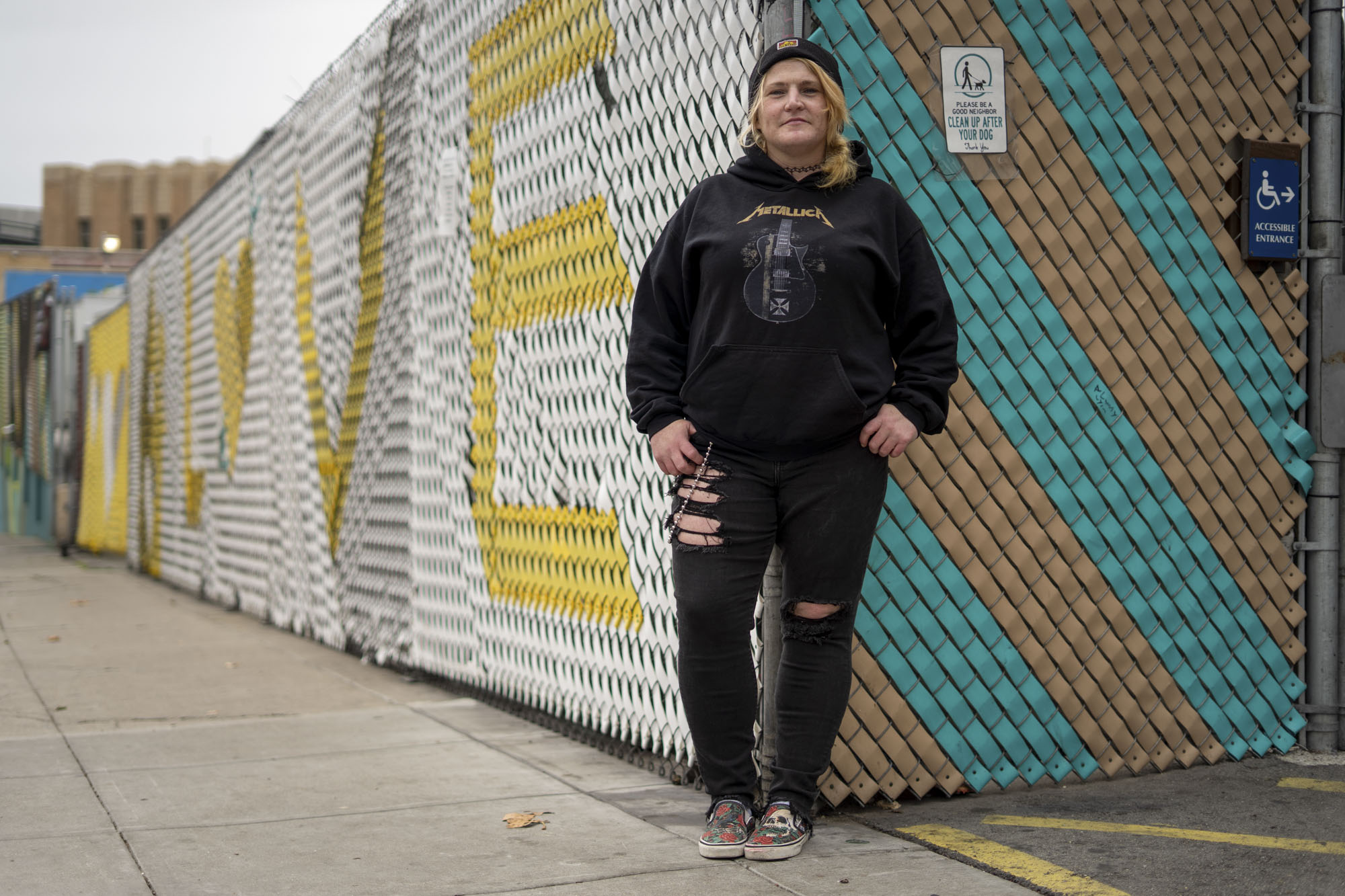
"caption": "Sarah Spillane, a resident of the DignityMoves tiny home cabins, outside the entrance in SoMa in San Francisco on Oct. 1, 2025.",
"credit": "Gustavo Hernandez/KQED",
"altTag": null,
"description": null,
"imgSizes": {
"thumbnail": {
"file": "https://cdn.kqed.org/wp-content/uploads/sites/10/2025/10/251001_BAYAREASHELTER_-17-KQED-160x107.jpg",
"width": 160,
"height": 107,
"mimeType": "image/jpeg"
},
"1536x1536": {
"file": "https://cdn.kqed.org/wp-content/uploads/sites/10/2025/10/251001_BAYAREASHELTER_-17-KQED-1536x1024.jpg",
"width": 1536,
"height": 1024,
"mimeType": "image/jpeg"
},
"post-thumbnail": {
"file": "https://cdn.kqed.org/wp-content/uploads/sites/10/2025/10/251001_BAYAREASHELTER_-17-KQED-672x372.jpg",
"width": 672,
"height": 372,
"mimeType": "image/jpeg"
},
"twentyfourteen-full-width": {
"file": "https://cdn.kqed.org/wp-content/uploads/sites/10/2025/10/251001_BAYAREASHELTER_-17-KQED-1038x576.jpg",
"width": 1038,
"height": 576,
"mimeType": "image/jpeg"
},
"kqedFullSize": {
"file": "https://cdn.kqed.org/wp-content/uploads/sites/10/2025/10/251001_BAYAREASHELTER_-17-KQED.jpg",
"width": 2000,
"height": 1333
}
},
"isLoading": false,
"fetchFailed": false
},
"news_12062943": {
"type": "attachments",
"id": "news_12062943",
"meta": {
"index": "attachments_1716263798",
"site": "news",
"id": "12062943",
"found": true
},
"title": "251104-BART SAN JOSE FUNDING CONCERNS-MD-04-KQED",
"publishDate": 1762301661,
"status": "inherit",
"parent": 0,
"modified": 1762391827,
"caption": "Construction crews work at the West Portal site as part of the project to bring BART through downtown San José on Nov. 4, 2025",
"credit": "Martin do Nascimento/KQED",
"altTag": null,
"description": null,
"imgSizes": {
"thumbnail": {
"file": "https://cdn.kqed.org/wp-content/uploads/sites/10/2025/11/251104-BART-SAN-JOSE-FUNDING-CONCERNS-MD-04-KQED-160x107.jpg",
"width": 160,
"height": 107,
"mimeType": "image/jpeg"
},
"1536x1536": {
"file": "https://cdn.kqed.org/wp-content/uploads/sites/10/2025/11/251104-BART-SAN-JOSE-FUNDING-CONCERNS-MD-04-KQED-1536x1024.jpg",
"width": 1536,
"height": 1024,
"mimeType": "image/jpeg"
},
"post-thumbnail": {
"file": "https://cdn.kqed.org/wp-content/uploads/sites/10/2025/11/251104-BART-SAN-JOSE-FUNDING-CONCERNS-MD-04-KQED-672x372.jpg",
"width": 672,
"height": 372,
"mimeType": "image/jpeg"
},
"twentyfourteen-full-width": {
"file": "https://cdn.kqed.org/wp-content/uploads/sites/10/2025/11/251104-BART-SAN-JOSE-FUNDING-CONCERNS-MD-04-KQED-1038x576.jpg",
"width": 1038,
"height": 576,
"mimeType": "image/jpeg"
},
"npr-cds-wide": {
"file": "https://cdn.kqed.org/wp-content/uploads/sites/10/2025/11/251104-BART-SAN-JOSE-FUNDING-CONCERNS-MD-04-KQED-1200x675.jpg",
"width": 1200,
"height": 675,
"mimeType": "image/jpeg"
},
"kqedFullSize": {
"file": "https://cdn.kqed.org/wp-content/uploads/sites/10/2025/11/251104-BART-SAN-JOSE-FUNDING-CONCERNS-MD-04-KQED.jpg",
"width": 2000,
"height": 1333
}
},
"isLoading": false,
"fetchFailed": false
},
"news_12063100": {
"type": "attachments",
"id": "news_12063100",
"meta": {
"index": "attachments_1716263798",
"site": "news",
"id": "12063100",
"found": true
},
"title": "Whip Its Drug",
"publishDate": 1762380008,
"status": "inherit",
"parent": 12063060,
"modified": 1762380073,
"caption": "Close-up of miniature cylinder of nitrous oxide, a drug of abuse referred to as \"Whip Its,\" \"Whipits\" or \"Whippets,\" discarded in a gutter in Walnut Creek, California, on March 13, 2020. ",
"credit": "Smith Collection/Gado via Getty Images",
"altTag": null,
"description": null,
"imgSizes": {
"thumbnail": {
"file": "https://cdn.kqed.org/wp-content/uploads/sites/10/2025/11/WhippetGetty-160x107.jpg",
"width": 160,
"height": 107,
"mimeType": "image/jpeg"
},
"1536x1536": {
"file": "https://cdn.kqed.org/wp-content/uploads/sites/10/2025/11/WhippetGetty-1536x1024.jpg",
"width": 1536,
"height": 1024,
"mimeType": "image/jpeg"
},
"post-thumbnail": {
"file": "https://cdn.kqed.org/wp-content/uploads/sites/10/2025/11/WhippetGetty-672x372.jpg",
"width": 672,
"height": 372,
"mimeType": "image/jpeg"
},
"twentyfourteen-full-width": {
"file": "https://cdn.kqed.org/wp-content/uploads/sites/10/2025/11/WhippetGetty-1038x576.jpg",
"width": 1038,
"height": 576,
"mimeType": "image/jpeg"
},
"npr-cds-wide": {
"file": "https://cdn.kqed.org/wp-content/uploads/sites/10/2025/11/WhippetGetty-1200x675.jpg",
"width": 1200,
"height": 675,
"mimeType": "image/jpeg"
},
"kqedFullSize": {
"file": "https://cdn.kqed.org/wp-content/uploads/sites/10/2025/11/WhippetGetty.jpg",
"width": 2000,
"height": 1333
}
},
"isLoading": false,
"fetchFailed": false
},
"news_12062986": {
"type": "attachments",
"id": "news_12062986",
"meta": {
"index": "attachments_1716263798",
"site": "news",
"id": "12062986",
"found": true
},
"title": "251104-MEASUREA-JG-1_qed",
"publishDate": 1762319901,
"status": "inherit",
"parent": 12062794,
"modified": 1762319974,
"caption": "Santa Clara County Supervisors Betty Duong, left, and Susan Ellenberg, right, speak to supporters of Measure A at a watch party in San Jose’s Willow Glen neighborhood shortly after initial voting results were released on Tuesday, Nov. 4, 2025.",
"credit": "Joseph Geha/KQED",
"altTag": null,
"description": null,
"imgSizes": {
"thumbnail": {
"file": "https://cdn.kqed.org/wp-content/uploads/sites/10/2025/11/251104-MEASUREA-JG-1_qed-160x107.jpg",
"width": 160,
"height": 107,
"mimeType": "image/jpeg"
},
"1536x1536": {
"file": "https://cdn.kqed.org/wp-content/uploads/sites/10/2025/11/251104-MEASUREA-JG-1_qed-1536x1024.jpg",
"width": 1536,
"height": 1024,
"mimeType": "image/jpeg"
},
"post-thumbnail": {
"file": "https://cdn.kqed.org/wp-content/uploads/sites/10/2025/11/251104-MEASUREA-JG-1_qed-672x372.jpg",
"width": 672,
"height": 372,
"mimeType": "image/jpeg"
},
"twentyfourteen-full-width": {
"file": "https://cdn.kqed.org/wp-content/uploads/sites/10/2025/11/251104-MEASUREA-JG-1_qed-1038x576.jpg",
"width": 1038,
"height": 576,
"mimeType": "image/jpeg"
},
"npr-cds-wide": {
"file": "https://cdn.kqed.org/wp-content/uploads/sites/10/2025/11/251104-MEASUREA-JG-1_qed-1200x675.jpg",
"width": 1200,
"height": 675,
"mimeType": "image/jpeg"
},
"kqedFullSize": {
"file": "https://cdn.kqed.org/wp-content/uploads/sites/10/2025/11/251104-MEASUREA-JG-1_qed.jpg",
"width": 1999,
"height": 1333
}
},
"isLoading": false,
"fetchFailed": false
},
"news_12062832": {
"type": "attachments",
"id": "news_12062832",
"meta": {
"index": "attachments_1716263798",
"site": "news",
"id": "12062832",
"found": true
},
"title": "23_Middleton20240211_KQEDSuperBowl_00461_qed",
"publishDate": 1762287356,
"status": "inherit",
"parent": 0,
"modified": 1762287386,
"caption": "A crowd cheers during the San Francisco 49ers vs. the Kansas City Chiefs NFL Super Bowl LVIII game inside Connecticut Yankee in San Francisco, California, on Sunday, Feb. 11, 2024.",
"credit": "Florence Middleton for KQED",
"altTag": null,
"description": null,
"imgSizes": {
"thumbnail": {
"file": "https://cdn.kqed.org/wp-content/uploads/sites/10/2025/11/23_Middleton20240211_KQEDSuperBowl_00461_qed-160x107.jpg",
"width": 160,
"height": 107,
"mimeType": "image/jpeg"
},
"1536x1536": {
"file": "https://cdn.kqed.org/wp-content/uploads/sites/10/2025/11/23_Middleton20240211_KQEDSuperBowl_00461_qed-1536x1025.jpg",
"width": 1536,
"height": 1025,
"mimeType": "image/jpeg"
},
"post-thumbnail": {
"file": "https://cdn.kqed.org/wp-content/uploads/sites/10/2025/11/23_Middleton20240211_KQEDSuperBowl_00461_qed-672x372.jpg",
"width": 672,
"height": 372,
"mimeType": "image/jpeg"
},
"twentyfourteen-full-width": {
"file": "https://cdn.kqed.org/wp-content/uploads/sites/10/2025/11/23_Middleton20240211_KQEDSuperBowl_00461_qed-1038x576.jpg",
"width": 1038,
"height": 576,
"mimeType": "image/jpeg"
},
"npr-cds-wide": {
"file": "https://cdn.kqed.org/wp-content/uploads/sites/10/2025/11/23_Middleton20240211_KQEDSuperBowl_00461_qed-1200x675.jpg",
"width": 1200,
"height": 675,
"mimeType": "image/jpeg"
},
"kqedFullSize": {
"file": "https://cdn.kqed.org/wp-content/uploads/sites/10/2025/11/23_Middleton20240211_KQEDSuperBowl_00461_qed.jpg",
"width": 1998,
"height": 1333
}
},
"isLoading": false,
"fetchFailed": false
},
"news_12062054": {
"type": "attachments",
"id": "news_12062054",
"meta": {
"index": "attachments_1716263798",
"site": "news",
"id": "12062054",
"found": true
},
"title": "250924-SJICE-JG-1_qed",
"publishDate": 1761763574,
"status": "inherit",
"parent": 12061923,
"modified": 1761763597,
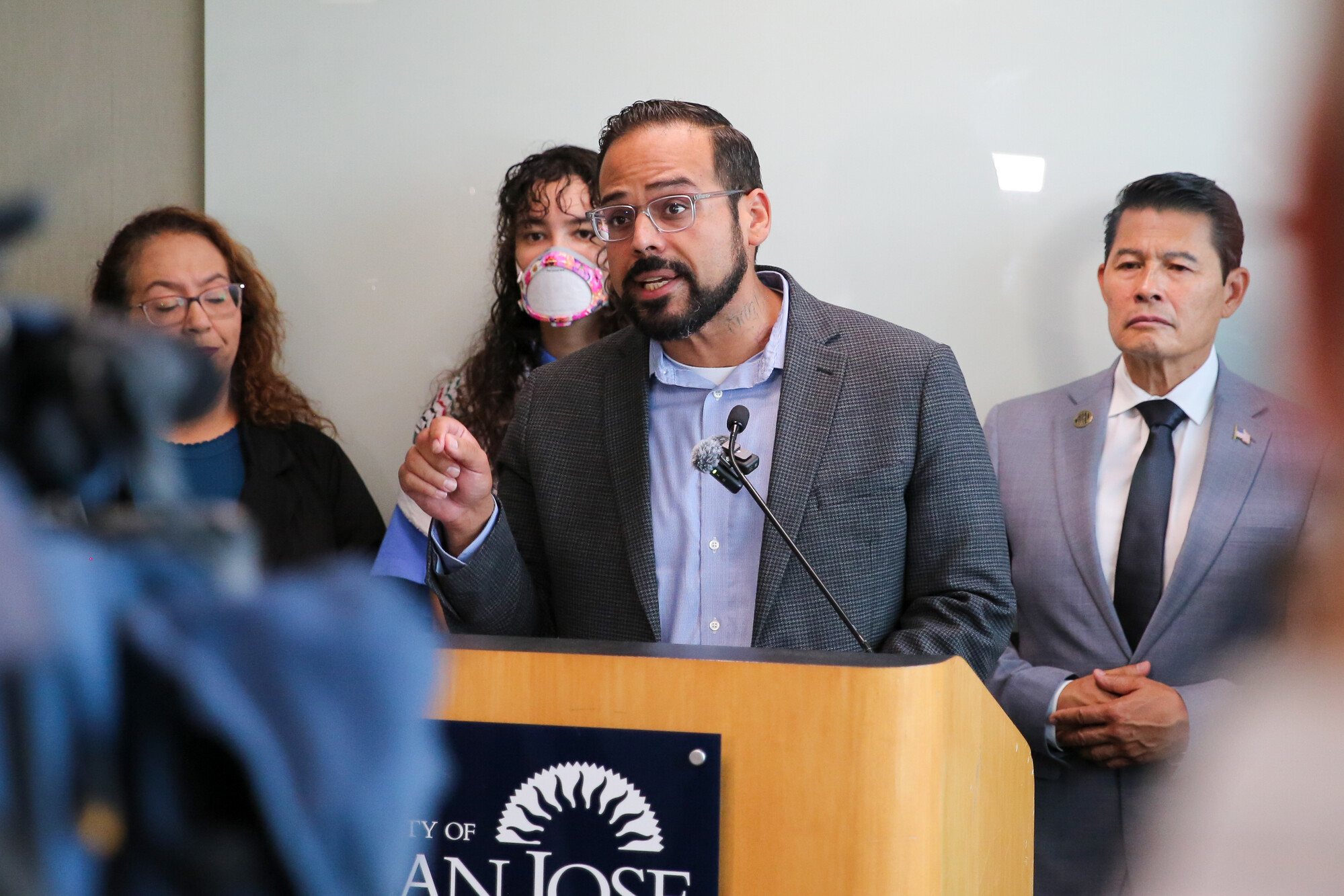
"caption": "San José District 5 City Councilmember Peter Ortiz speaks during a Sept. 24, 2025, press conference about an immigration arrest at a local nonprofit.",
"credit": "Joseph Geha/KQED",
"altTag": null,
"description": null,
"imgSizes": {
"thumbnail": {
"file": "https://cdn.kqed.org/wp-content/uploads/sites/10/2025/10/250924-SJICE-JG-1_qed-160x107.jpg",
"width": 160,
"height": 107,
"mimeType": "image/jpeg"
},
"1536x1536": {
"file": "https://cdn.kqed.org/wp-content/uploads/sites/10/2025/10/250924-SJICE-JG-1_qed-1536x1024.jpg",
"width": 1536,
"height": 1024,
"mimeType": "image/jpeg"
},
"post-thumbnail": {
"file": "https://cdn.kqed.org/wp-content/uploads/sites/10/2025/10/250924-SJICE-JG-1_qed-672x372.jpg",
"width": 672,
"height": 372,
"mimeType": "image/jpeg"
},
"twentyfourteen-full-width": {
"file": "https://cdn.kqed.org/wp-content/uploads/sites/10/2025/10/250924-SJICE-JG-1_qed-1038x576.jpg",
"width": 1038,
"height": 576,
"mimeType": "image/jpeg"
},
"npr-cds-wide": {
"file": "https://cdn.kqed.org/wp-content/uploads/sites/10/2025/10/250924-SJICE-JG-1_qed-1600x900.jpg",
"width": 1600,
"height": 900,
"mimeType": "image/jpeg"
},
"kqedFullSize": {
"file": "https://cdn.kqed.org/wp-content/uploads/sites/10/2025/10/250924-SJICE-JG-1_qed.jpg",
"width": 1999,
"height": 1333
}
},
"isLoading": false,
"fetchFailed": false
},
"news_12061982": {
"type": "attachments",
"id": "news_12061982",
"meta": {
"index": "attachments_1716263798",
"site": "news",
"id": "12061982",
"found": true
},
"title": "251028-SCCSHERIFF-JG-3_qed",
"publishDate": 1761695931,
"status": "inherit",
"parent": 12061832,
"modified": 1761695942,
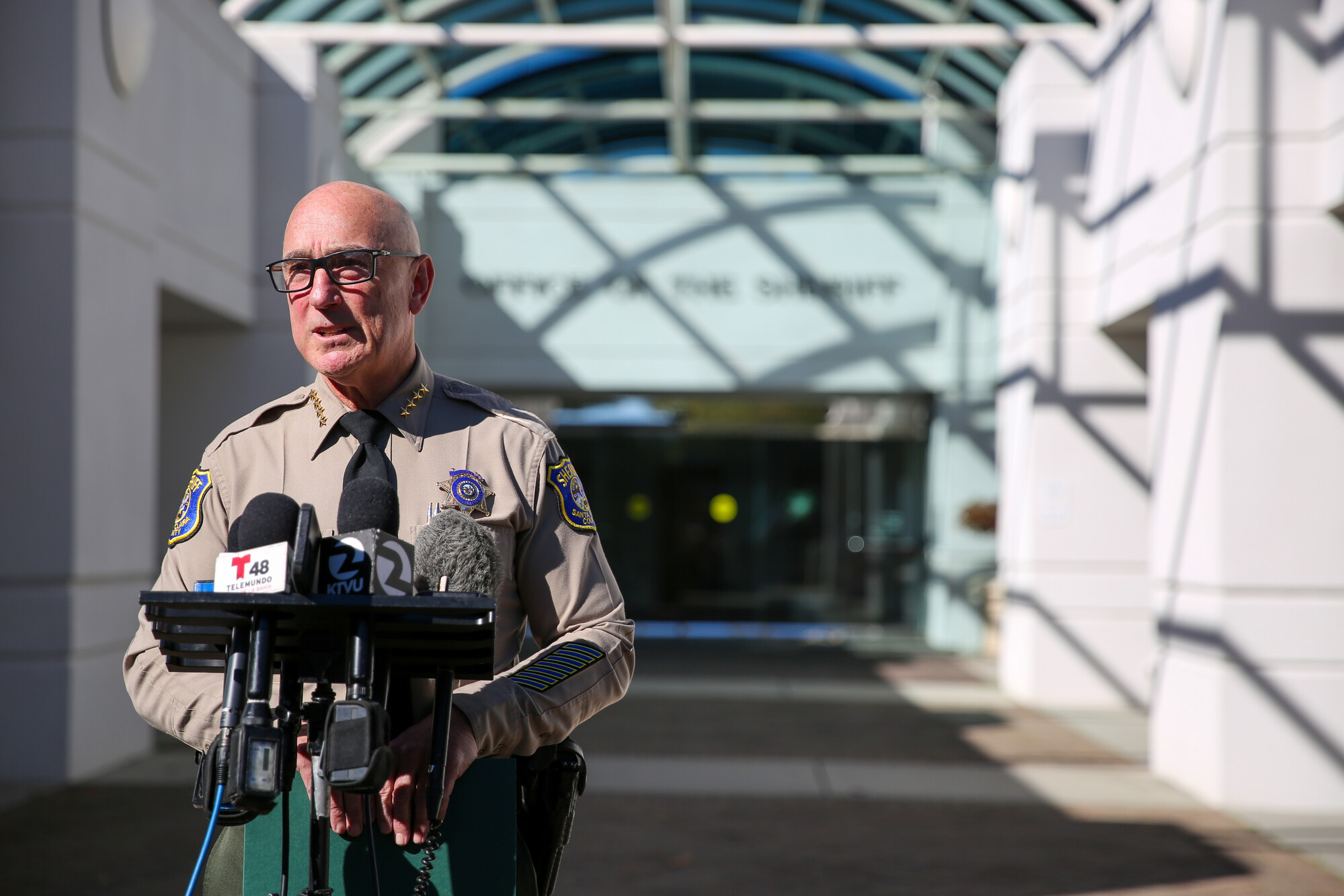
"caption": "Santa Clara County Sheriff Robert Jonsen speaks during a press conference outside of the Sheriff’s Office on Tuesday, Oct. 28, 2025.",
"credit": "Joseph Geha/KQED",
"altTag": null,
"description": null,
"imgSizes": {
"thumbnail": {
"file": "https://cdn.kqed.org/wp-content/uploads/sites/10/2025/10/251028-SCCSHERIFF-JG-3_qed-160x107.jpg",
"width": 160,
"height": 107,
"mimeType": "image/jpeg"
},
"1536x1536": {
"file": "https://cdn.kqed.org/wp-content/uploads/sites/10/2025/10/251028-SCCSHERIFF-JG-3_qed-1536x1024.jpg",
"width": 1536,
"height": 1024,
"mimeType": "image/jpeg"
},
"post-thumbnail": {
"file": "https://cdn.kqed.org/wp-content/uploads/sites/10/2025/10/251028-SCCSHERIFF-JG-3_qed-672x372.jpg",
"width": 672,
"height": 372,
"mimeType": "image/jpeg"
},
"twentyfourteen-full-width": {
"file": "https://cdn.kqed.org/wp-content/uploads/sites/10/2025/10/251028-SCCSHERIFF-JG-3_qed-1038x576.jpg",
"width": 1038,
"height": 576,
"mimeType": "image/jpeg"
},
"npr-cds-wide": {
"file": "https://cdn.kqed.org/wp-content/uploads/sites/10/2025/10/251028-SCCSHERIFF-JG-3_qed-1600x900.jpg",
"width": 1600,
"height": 900,
"mimeType": "image/jpeg"
},
"kqedFullSize": {
"file": "https://cdn.kqed.org/wp-content/uploads/sites/10/2025/10/251028-SCCSHERIFF-JG-3_qed.jpg",
"width": 1999,
"height": 1333
}
},
"isLoading": false,
"fetchFailed": false
},
"news_12060896": {
"type": "attachments",
"id": "news_12060896",
"meta": {
"index": "attachments_1716263798",
"site": "news",
"id": "12060896",
"found": true
},
"title": "PeterOrtizKQED",
"publishDate": 1761077689,
"status": "inherit",
"parent": 12060893,
"modified": 1761077700,
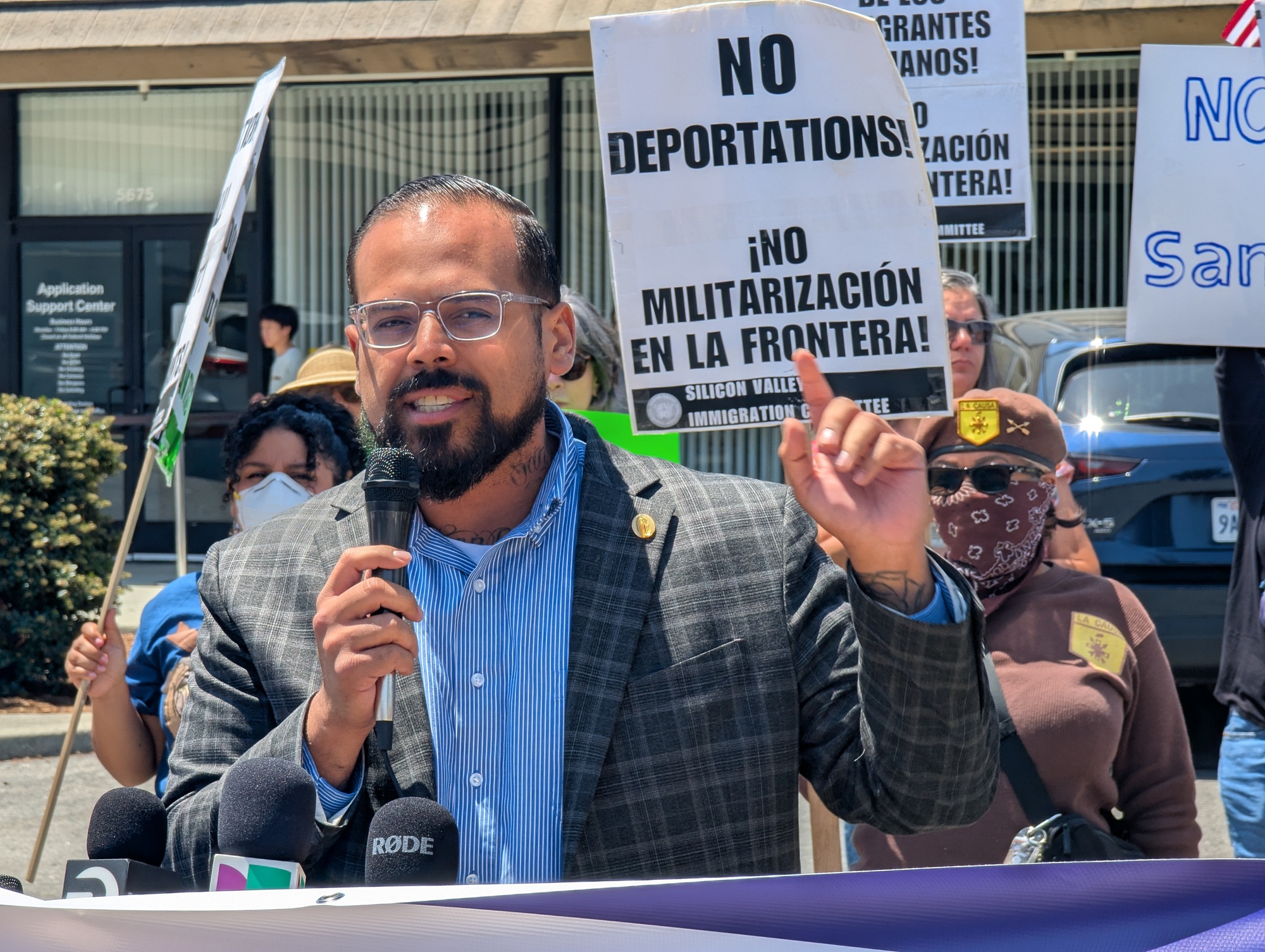
"caption": "District 5 San José City Councilmember Peter Ortiz speaks during a protest against ICE in South San José on June 6, 2025.",
"credit": "Joseph Geha/KQED",
"altTag": null,
"description": null,
"imgSizes": {
"thumbnail": {
"file": "https://cdn.kqed.org/wp-content/uploads/sites/10/2025/10/PeterOrtizKQED-160x120.jpg",
"width": 160,
"height": 120,
"mimeType": "image/jpeg"
},
"1536x1536": {
"file": "https://cdn.kqed.org/wp-content/uploads/sites/10/2025/10/PeterOrtizKQED-1536x1156.jpg",
"width": 1536,
"height": 1156,
"mimeType": "image/jpeg"
},
"post-thumbnail": {
"file": "https://cdn.kqed.org/wp-content/uploads/sites/10/2025/10/PeterOrtizKQED-672x372.jpg",
"width": 672,
"height": 372,
"mimeType": "image/jpeg"
},
"twentyfourteen-full-width": {
"file": "https://cdn.kqed.org/wp-content/uploads/sites/10/2025/10/PeterOrtizKQED-1038x576.jpg",
"width": 1038,
"height": 576,
"mimeType": "image/jpeg"
},
"kqedFullSize": {
"file": "https://cdn.kqed.org/wp-content/uploads/sites/10/2025/10/PeterOrtizKQED.jpg",
"width": 2000,
"height": 1505
}
},
"isLoading": false,
"fetchFailed": false
},
"news_12060145": {
"type": "attachments",
"id": "news_12060145",
"meta": {
"index": "attachments_1716263798",
"site": "news",
"id": "12060145",
"found": true
},
"title": "251016-MEASURE A MAILER-01-KQED-KQED",
"publishDate": 1760641314,
"status": "inherit",
"parent": 0,
"modified": 1760641326,
"caption": "A mailer sent out by Santa Clara County warning of federal budget cuts, photographed on Oct. 16, 2025.",
"credit": "Martin do Nascimento/KQED",
"altTag": null,
"description": null,
"imgSizes": {
"thumbnail": {
"file": "https://cdn.kqed.org/wp-content/uploads/sites/10/2025/10/251016-MEASURE-A-MAILER-01-KQED-KQED-160x107.jpg",
"width": 160,
"height": 107,
"mimeType": "image/jpeg"
},
"1536x1536": {
"file": "https://cdn.kqed.org/wp-content/uploads/sites/10/2025/10/251016-MEASURE-A-MAILER-01-KQED-KQED-1536x1025.jpg",
"width": 1536,
"height": 1025,
"mimeType": "image/jpeg"
},
"post-thumbnail": {
"file": "https://cdn.kqed.org/wp-content/uploads/sites/10/2025/10/251016-MEASURE-A-MAILER-01-KQED-KQED-672x372.jpg",
"width": 672,
"height": 372,
"mimeType": "image/jpeg"
},
"twentyfourteen-full-width": {
"file": "https://cdn.kqed.org/wp-content/uploads/sites/10/2025/10/251016-MEASURE-A-MAILER-01-KQED-KQED-1038x576.jpg",
"width": 1038,
"height": 576,
"mimeType": "image/jpeg"
},
"kqedFullSize": {
"file": "https://cdn.kqed.org/wp-content/uploads/sites/10/2025/10/251016-MEASURE-A-MAILER-01-KQED-KQED.jpg",
"width": 2000,
"height": 1334
}
},
"isLoading": false,
"fetchFailed": false
},
"news_12037915": {
"type": "attachments",
"id": "news_12037915",
"meta": {
"index": "attachments_1716263798",
"site": "news",
"id": "12037915",
"found": true
},
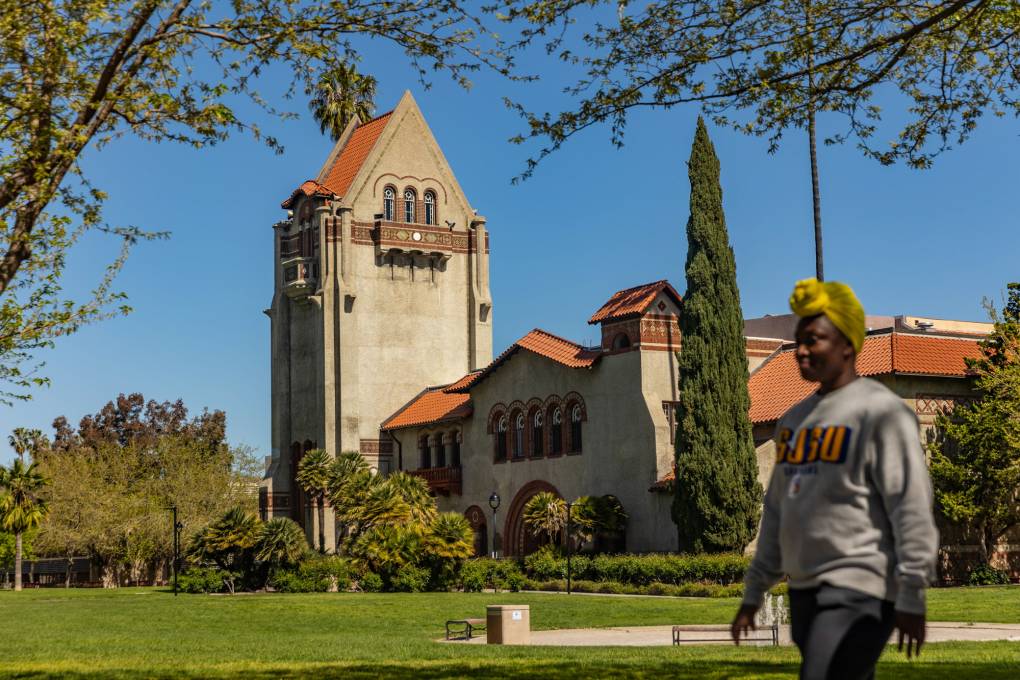
"title": "Tower Hall at San Jose State University on April 3, 2025.",
"publishDate": 1745863049,
"status": "inherit",
"parent": 12088058,
"modified": 1782170476,
"caption": "Tower Hall at San José State University on April 3, 2025.",
"credit": "Gina Castro/KQED",
"altTag": null,
"description": null,
"imgSizes": {
"medium": {
"file": "https://cdn.kqed.org/wp-content/uploads/sites/10/2025/04/20240403_SJSUFILE_GC-11-KQED-800x533.jpg",
"width": 800,
"height": 533,
"mimeType": "image/jpeg"
},
"large": {
"file": "https://cdn.kqed.org/wp-content/uploads/sites/10/2025/04/20240403_SJSUFILE_GC-11-KQED-1020x680.jpg",
"width": 1020,
"height": 680,
"mimeType": "image/jpeg"
},
"thumbnail": {
"file": "https://cdn.kqed.org/wp-content/uploads/sites/10/2025/04/20240403_SJSUFILE_GC-11-KQED-160x107.jpg",
"width": 160,
"height": 107,
"mimeType": "image/jpeg"
},
"1536x1536": {
"file": "https://cdn.kqed.org/wp-content/uploads/sites/10/2025/04/20240403_SJSUFILE_GC-11-KQED-1536x1024.jpg",
"width": 1536,
"height": 1024,
"mimeType": "image/jpeg"
},
"post-thumbnail": {
"file": "https://cdn.kqed.org/wp-content/uploads/sites/10/2025/04/20240403_SJSUFILE_GC-11-KQED-672x372.jpg",
"width": 672,
"height": 372,
"mimeType": "image/jpeg"
},
"twentyfourteen-full-width": {
"file": "https://cdn.kqed.org/wp-content/uploads/sites/10/2025/04/20240403_SJSUFILE_GC-11-KQED-1038x576.jpg",
"width": 1038,
"height": 576,
"mimeType": "image/jpeg"
},
"full-width": {
"file": "https://cdn.kqed.org/wp-content/uploads/sites/10/2025/04/20240403_SJSUFILE_GC-11-KQED-1920x1280.jpg",
"width": 1920,
"height": 1280,
"mimeType": "image/jpeg"
},
"kqedFullSize": {
"file": "https://cdn.kqed.org/wp-content/uploads/sites/10/2025/04/20240403_SJSUFILE_GC-11-KQED.jpg",
"width": 2000,
"height": 1333
}
},
"isLoading": false,
"fetchFailed": false
}
},
"audioPlayerReducer": {
"postId": "stream_live",
"isPaused": true,
"isPlaying": false,
"pfsActive": false,
"pledgeModalIsOpen": true,
"playerDrawerIsOpen": false,
"liveAudioPlayStartedAt": 0,
"liveAudioPlayContext": ""
},
"authorsReducer": {
"gmarzorati": {
"type": "authors",
"id": "227",
"meta": {
"index": "authors_1716337520",
"id": "227",
"found": true
},
"name": "Guy Marzorati",
"firstName": "Guy",
"lastName": "Marzorati",
"slug": "gmarzorati",
"email": "gmarzorati@KQED.org",
"display_author_email": true,
"staff_mastheads": [
"news"
],
"title": "Correspondent",
"bio": "Guy Marzorati is a correspondent on KQED's California Politics and Government Desk, based in San Jose. A graduate of Santa Clara University, Guy joined KQED in 2013. He reports on state and local politics and produces KQED's digital voter guide.",
"avatar": "https://secure.gravatar.com/avatar/e7038b8dbfd55b104369b76b1cd0b9de?s=600&d=blank&r=g",
"twitter": "guymarzorati",
"facebook": null,
"instagram": null,
"linkedin": null,
"sites": [
{
"site": "",
"roles": [
"editor"
]
},
{
"site": "news",
"roles": [
"editor"
]
},
{
"site": "science",
"roles": [
"editor"
]
},
{
"site": "forum",
"roles": [
"editor"
]
},
{
"site": "elections",
"roles": [
"editor"
]
},
{
"site": "liveblog",
"roles": [
"editor"
]
}
],
"headData": {
"title": "Guy Marzorati | KQED",
"description": "Correspondent",
"ogImgSrc": "https://secure.gravatar.com/avatar/e7038b8dbfd55b104369b76b1cd0b9de?s=600&d=blank&r=g",
"twImgSrc": "https://secure.gravatar.com/avatar/e7038b8dbfd55b104369b76b1cd0b9de?s=600&d=blank&r=g"
},
"isLoading": false,
"link": "/author/gmarzorati"
},
"rachael-myrow": {
"type": "authors",
"id": "251",
"meta": {
"index": "authors_1716337520",
"id": "251",
"found": true
},
"name": "Rachael Myrow",
"firstName": "Rachael",
"lastName": "Myrow",
"slug": "rachael-myrow",
"email": "rmyrow@kqed.org",
"display_author_email": true,
"staff_mastheads": [
"news"
],
"title": "Senior Editor of KQED's Silicon Valley News Desk",
"bio": "• I write and edit stories about how Silicon Valley power and policies shape everyday life in California. I’m also passionate about making Bay Area history and culture more accessible to a broad public. • I’ve been a journalist for most of my life, starting in high school with The Franklin Press in Los Angeles, where I grew up. While earning my first degree in English at UC Berkeley, I got my start in public radio at KALX-FM. After completing a second degree in journalism at Cal, I landed my first professional job at Marketplace, then moved on to KPCC (now LAist), and then KQED, where I hosted The California Report for more than seven years. • My reporting has appeared on NPR, The World, WBUR’s \u003ci>Here & Now\u003c/i>, and the BBC. I also guest host for KQED’s \u003ci>Forum\u003c/i>, as well as the Commonwealth Club in San Francisco. • I speak periodically on media, democracy and technology issues, and do voiceover work for documentaries and educational video projects. • Outside of the studio, you'll find me hiking Bay Area trails and whipping up Insta-ready meals in my kitchen. • I do not accept gifts, money, or favors from anyone connected to my reporting, I don't pay people for information, and I do not support or donate to political causes. • I strive to treat the people I report on with fairness, honesty, and respect. I also recognize there are often multiple sides to a story and work to verify information through multiple sources and documentation. If I get something wrong, I correct it.",
"avatar": "https://secure.gravatar.com/avatar/3ed8a3c5f26025e4a805ba634cda8cd764906b97438a6d9ce216b044e340da4e?s=600&d=blank&r=g",
"twitter": "rachaelmyrow",
"bluesky": null,
"facebook": null,
"instagram": null,
"linkedin": "https://www.linkedin.com/in/rachaelmyrow/",
"sites": [
{
"site": "arts",
"roles": [
"administrator"
]
},
{
"site": "news",
"roles": [
"edit_others_posts",
"editor"
]
},
{
"site": "futureofyou",
"roles": [
"editor"
]
},
{
"site": "bayareabites",
"roles": [
"editor"
]
},
{
"site": "stateofhealth",
"roles": [
"editor"
]
},
{
"site": "science",
"roles": [
"editor"
]
},
{
"site": "food",
"roles": [
"editor"
]
},
{
"site": "forum",
"roles": [
"editor"
]
},
{
"site": "liveblog",
"roles": [
"author"
]
}
],
"headData": {
"title": "Rachael Myrow | KQED",
"description": "Senior Editor of KQED's Silicon Valley News Desk",
"ogImgSrc": "https://secure.gravatar.com/avatar/3ed8a3c5f26025e4a805ba634cda8cd764906b97438a6d9ce216b044e340da4e?s=600&d=blank&r=g",
"twImgSrc": "https://secure.gravatar.com/avatar/3ed8a3c5f26025e4a805ba634cda8cd764906b97438a6d9ce216b044e340da4e?s=600&d=blank&r=g"
},
"isLoading": false,
"link": "/author/rachael-myrow"
},
"sjohnson": {
"type": "authors",
"id": "11840",
"meta": {
"index": "authors_1716337520",
"id": "11840",
"found": true
},
"name": "Sydney Johnson",
"firstName": "Sydney",
"lastName": "Johnson",
"slug": "sjohnson",
"email": "sjohnson@kqed.org",
"display_author_email": false,
"staff_mastheads": [
"news"
],
"title": "KQED Reporter",
"bio": "Sydney Johnson is a general assignment reporter at KQED. She previously reported on public health and city government at the San Francisco Examiner, and before that, she covered statewide education policy for EdSource. Her reporting has won multiple local, state and national awards. Sydney is a graduate of the University of California, Berkeley and lives in San Francisco.",
"avatar": "https://secure.gravatar.com/avatar/97855f2719b72ad6190b7c535fe642c8?s=600&d=blank&r=g",
"twitter": "sydneyfjohnson",
"facebook": null,
"instagram": null,
"linkedin": null,
"sites": [
{
"site": "news",
"roles": [
"editor"
]
}
],
"headData": {
"title": "Sydney Johnson | KQED",
"description": "KQED Reporter",
"ogImgSrc": "https://secure.gravatar.com/avatar/97855f2719b72ad6190b7c535fe642c8?s=600&d=blank&r=g",
"twImgSrc": "https://secure.gravatar.com/avatar/97855f2719b72ad6190b7c535fe642c8?s=600&d=blank&r=g"
},
"isLoading": false,
"link": "/author/sjohnson"
},
"jgeha": {
"type": "authors",
"id": "11906",
"meta": {
"index": "authors_1716337520",
"id": "11906",
"found": true
},
"name": "Joseph Geha",
"firstName": "Joseph",
"lastName": "Geha",
"slug": "jgeha",
"email": "jgeha@kqed.org",
"display_author_email": false,
"staff_mastheads": [
"news",
"science"
],
"title": "KQED Contributor",
"bio": null,
"avatar": "https://secure.gravatar.com/avatar/ea84d2b6dd93d6369d453edf19dd583f117cd1759d2d9c9c92f9de77017354fe?s=600&d=blank&r=g",
"twitter": null,
"bluesky": null,
"facebook": null,
"instagram": null,
"linkedin": null,
"sites": [
{
"site": "news",
"roles": [
"editor"
]
},
{
"site": "liveblog",
"roles": [
"author"
]
}
],
"headData": {
"title": "Joseph Geha | KQED",
"description": "KQED Contributor",
"ogImgSrc": "https://secure.gravatar.com/avatar/ea84d2b6dd93d6369d453edf19dd583f117cd1759d2d9c9c92f9de77017354fe?s=600&d=blank&r=g",
"twImgSrc": "https://secure.gravatar.com/avatar/ea84d2b6dd93d6369d453edf19dd583f117cd1759d2d9c9c92f9de77017354fe?s=600&d=blank&r=g"
},
"isLoading": false,
"link": "/author/jgeha"
},
"aaliahmad": {
"type": "authors",
"id": "11986",
"meta": {
"index": "authors_1716337520",
"id": "11986",
"found": true
},
"name": "Ayah Ali-Ahmad",
"firstName": "Ayah",
"lastName": "Ali-Ahmad",
"slug": "aaliahmad",
"email": "aaliahmad@KQED.org",
"display_author_email": false,
"staff_mastheads": [],
"title": "KQED Contributor",
"bio": null,
"avatar": "https://secure.gravatar.com/avatar/1cf54f187a5e1064b2cfef3f3d2f1e4f93e453395d56912aca6382a6071ec3ed?s=600&d=blank&r=g",
"twitter": "ayahaliahmad",
"bluesky": null,
"facebook": null,
"instagram": null,
"linkedin": null,
"sites": [
{
"site": "news",
"roles": [
"subscriber"
]
}
],
"headData": {
"title": "Ayah Ali-Ahmad | KQED",
"description": "KQED Contributor",
"ogImgSrc": "https://secure.gravatar.com/avatar/1cf54f187a5e1064b2cfef3f3d2f1e4f93e453395d56912aca6382a6071ec3ed?s=600&d=blank&r=g",
"twImgSrc": "https://secure.gravatar.com/avatar/1cf54f187a5e1064b2cfef3f3d2f1e4f93e453395d56912aca6382a6071ec3ed?s=600&d=blank&r=g"
},
"isLoading": false,
"link": "/author/aaliahmad"
}
},
"pagesReducer": {
"news_tag_south-bay": {
"type": "terms",
"id": "news_21285",
"meta": {
"index": "terms_1716263798",
"site": "news",
"id": "21285",
"score": 7.0833073
},
"featImg": null,
"name": "South Bay",
"description": null,
"taxonomy": "tag",
"headData": {
"twImgId": null,
"twTitle": null,
"ogTitle": null,
"ogImgId": null,
"twDescription": null,
"description": null,
"title": "South Bay Archives | KQED News",
"ogDescription": null
},
"ttid": 21302,
"slug": "south-bay",
"isLoading": false,
"title": "South Bay",
"pageMeta": {
"site": "news",
"WpPageTemplate": "page-topic-editorial",
"currentPage": 12
},
"blocks": [
{
"blockName": "kqed/post-list",
"attrs": {
"layout": "cardArticle2",
"query": "posts/news?tag=south-bay",
"seeMore": false,
"paginated": true,
"page": 12
}
},
{
"blockName": "kqed/ad"
}
]
}
},
"pfsSessionReducer": {},
"postsReducer": {
"stream_live": {
"type": "live",
"id": "stream_live",
"audioUrl": "https://streams.kqed.org/kqedradio",
"title": "Live Stream",
"excerpt": "Live Stream information currently unavailable.",
"link": "/radio",
"featImg": "",
"label": {
"name": "KQED Live",
"link": "/"
}
},
"stream_kqedNewscast": {
"type": "posts",
"id": "stream_kqedNewscast",
"audioUrl": "https://www.kqed.org/.stream/anon/radio/RDnews/newscast.mp3?_=1",
"title": "KQED Newscast",
"featImg": "",
"label": {
"name": "88.5 FM",
"link": "/"
}
},
"news_12064351": {
"type": "posts",
"id": "news_12064351",
"meta": {
"index": "posts_1716263798",
"site": "news",
"id": "12064351",
"score": null,
"sort": [
1763426841000
]
},
"guestAuthors": [],
"slug": "stanford-protesters-negotiating-plea-deals-as-trial-begins",
"title": "Stanford Protesters Negotiating Plea Deals as Trial Begins",
"publishDate": 1763426841,
"format": "standard",
"headTitle": "Stanford Protesters Negotiating Plea Deals as Trial Begins | KQED",
"labelTerm": {
"site": "news"
},
"content": "\u003cp>Nearly a year and a half after a group of \u003ca href=\"https://www.kqed.org/news/tag/pro-palestinian-protest\">pro-Palestinian protesters\u003c/a> were arrested for breaking into and vandalizing the \u003ca href=\"https://www.kqed.org/news/tag/stanford-university\">Stanford University\u003c/a> president’s office, a trial is set to get underway.\u003c/p>\n\u003cp>A group of five protesters is scheduled to go to trial on Nov. 24. They face felony vandalism and conspiracy charges stemming from a grand jury indictment.\u003c/p>\n\u003cp>While hundreds of students have been arrested at college campuses across the country for protest-related activity since the war in \u003ca href=\"https://www.kqed.org/news/tag/gaza\">Gaza\u003c/a> began, few of the cases have progressed this far. Attorneys for the defendants and their supporters have accused the Santa Clara County District Attorney’s Office of seeking overly harsh punishment to quell further protests and speech.\u003c/p>\n\u003cp>[ad fullwidth]\u003c/p>\n\u003cp>On Monday morning, three other protesters told the court they intend to take a deal offered to them by a judge, which would require them to plead guilty to misdemeanors, a plan opposed by prosecutors. Three other protesters recently enrolled in mental health diversion programs.\u003c/p>\n\u003cp>The details of the misdemeanor deal remain vague for now, but attorneys for those defendants said it would likely include a path for their clients to ultimately have the charges dismissed.\u003c/p>\n\u003cp>EmilyRose Johns, an attorney representing Cameron Pennington, said the deal would likely require her client to perform community service and avoid any criminal behavior for a certain amount of time.\u003c/p>\n\u003cfigure id=\"attachment_12064524\" class=\"wp-caption aligncenter\" style=\"max-width: 2000px\">\u003cimg loading=\"lazy\" decoding=\"async\" class=\"size-full wp-image-12064524\" src=\"https://cdn.kqed.org/wp-content/uploads/sites/10/2025/11/251117-STANFORDTRIAL-JG-2_qed.jpg\" alt=\"\" width=\"2000\" height=\"1333\" srcset=\"https://cdn.kqed.org/wp-content/uploads/sites/10/2025/11/251117-STANFORDTRIAL-JG-2_qed.jpg 2000w, https://cdn.kqed.org/wp-content/uploads/sites/10/2025/11/251117-STANFORDTRIAL-JG-2_qed-160x107.jpg 160w, https://cdn.kqed.org/wp-content/uploads/sites/10/2025/11/251117-STANFORDTRIAL-JG-2_qed-1536x1024.jpg 1536w\" sizes=\"auto, (max-width: 2000px) 100vw, 2000px\">\u003cfigcaption class=\"wp-caption-text\">Hunter Taylor-Black, center, one of five pro-Palestinian protesters going to trial for breaking into the Stanford University president’s office, speaks to a group of supporters outside the Hall of Justice in San José on Monday, Nov. 17, 2025. \u003ccite>(Joseph Geha/KQED)\u003c/cite>\u003c/figcaption>\u003c/figure>\n\u003cp>“The court has indicated that if they’re successful, it may ultimately allow withdrawal of the plea and a diversion deal, which would mean that the clients have no conviction history,” Johns told KQED after a court hearing on Monday.\u003c/p>\n\u003cp>Prosecutors from the Santa Clara County District Attorney’s Office oppose the deal, which attorneys said was offered late last week to all the defendants by Judge Deborah Ryan, following private discussions between attorneys and Ryan in court chambers.\u003c/p>\n\u003cp>A spokesperson for the District Attorney’s Office didn’t respond to a request for comment on Monday afternoon.\u003c/p>\n\u003cp>“The judge is the current arbiter of justice. The judge is the person who decides what is just and appropriate and can dismiss cases over the district attorney’s objection and can make court offers to clients over the district attorney’s objection,” Johns said.[aside postID=news_12035346 hero='https://cdn.kqed.org/wp-content/uploads/sites/10/2024/06/240605-STANFORD-JG-10-KQED-1020x680.jpg']“The reason that misdemeanors are even on the table is that Judge Ryan has indicated that she didn’t believe this resembled felony conduct,” Johns said.\u003c/p>\n\u003cp>The case stems from a June 5, 2024, action by a group of a dozen protesters, mostly made up of current or former Stanford students at the time, who broke into the president’s office in the early morning hours and barricaded themselves inside before being arrested.\u003c/p>\n\u003cp>The group said on social media at the time they wanted Stanford leaders to “address their role in enabling and profiting from the ongoing genocide in Gaza.” It came amid a series of larger campus demonstrations aimed at pressuring the school to divest from companies that support Israel’s military bombardment in Gaza.\u003c/p>\n\u003cp>District Attorney Jeff Rosen said in April, when he brought initial felony charges against the group, that they “crossed the clear and bright line between dissent and destruction.”\u003c/p>\n\u003cp>Kaiden Wang, one of the defendants who intends to take the court deal, said the group’s actions fit into a legacy of protest in the region.\u003c/p>\n\u003cp>“I think that our action is part of the long history of activism in the Bay Area,” Wang said. “The Bay Area seems to be one of the earliest brewing grounds for these types of actions and these kinds of resistance towards systems of oppression.”\u003c/p>\n\u003cfigure id=\"attachment_11989555\" class=\"wp-caption aligncenter\" style=\"max-width: 2000px\">\u003cimg loading=\"lazy\" decoding=\"async\" class=\"size-full wp-image-11989555\" src=\"https://cdn.kqed.org/wp-content/uploads/sites/10/2024/06/240605-STANFORD-JG-15-1-e1744310968489.jpg\" alt=\"\" width=\"2000\" height=\"1333\">\u003cfigcaption class=\"wp-caption-text\">Building 10 at Stanford University, where pro-Palestinian protesters broke into the university president’s office and occupied it before being arrested on Wednesday, June 5, 2024. \u003ccite>(Joseph Geha/KQED)\u003c/cite>\u003c/figcaption>\u003c/figure>\n\u003cp>The protesters who intend to take the deal, as well as those who are headed to trial, will all still have to contend with the issue of a $329,000 claim for restitution by Stanford for damages caused by the group.\u003c/p>\n\u003cp>Tony Brass, an attorney representing Hunter Taylor-Black, who is proceeding to trial, said Stanford has refused to talk with attorneys about the figure, which could amount to “crippling debt” for some of the protesters.\u003c/p>\n\u003cp>Brass said the number could increase or decrease after a restitution hearing, and Stanford’s lack of engagement on the topic makes it hard to know what consequences his client and others may face, and is part of the reason they are going to trial.\u003c/p>\n\u003cp>Stanford did not immediately respond to a request for comment.\u003c/p>\n\u003cp>“What they’re trying to avoid is unknown consequences, unfair consequences, extreme consequences. And this could all be clarified,” he said.\u003c/p>\n\u003cfigure id=\"attachment_12064526\" class=\"wp-caption aligncenter\" style=\"max-width: 1999px\">\u003cimg loading=\"lazy\" decoding=\"async\" class=\"size-full wp-image-12064526\" src=\"https://cdn.kqed.org/wp-content/uploads/sites/10/2025/11/251117-STANFORDTRIAL-JG-1_qed.jpg\" alt=\"\" width=\"1999\" height=\"1333\" srcset=\"https://cdn.kqed.org/wp-content/uploads/sites/10/2025/11/251117-STANFORDTRIAL-JG-1_qed.jpg 1999w, https://cdn.kqed.org/wp-content/uploads/sites/10/2025/11/251117-STANFORDTRIAL-JG-1_qed-160x107.jpg 160w, https://cdn.kqed.org/wp-content/uploads/sites/10/2025/11/251117-STANFORDTRIAL-JG-1_qed-1536x1024.jpg 1536w\" sizes=\"auto, (max-width: 1999px) 100vw, 1999px\">\u003cfigcaption class=\"wp-caption-text\">A group of supporters gathered for a rally outside the Hall of Justice in San José on Nov. 17, 2025, after a court hearing for a group of pro-Palestinian protesters indicted for breaking into the Stanford University president’s office. \u003ccite>(Joseph Geha/KQED)\u003c/cite>\u003c/figcaption>\u003c/figure>\n\u003cp>One other protester, Jack Richardson, served as a witness for prosecutors in the grand jury and is now enrolled in a youth deferred judgment program.\u003c/p>\n\u003cp>Brass and other attorneys have also taken issue with the district attorney’s motions asking a judge to ban any mention of the word “genocide” from the trial. In those filings, the DA’s office said the word “genocide” is “inflammatory” and would prejudice the case.\u003c/p>\n\u003cp>Rosen’s office also filed motions asking to exclude the motives behind the actions of the protesters, saying the defense will likely “attempt to use this trial as another form of protest,” instead of focusing on guilt or innocence.[aside postID=news_12063531 hero='https://cdn.kqed.org/wp-content/uploads/sites/10/2024/02/240214-GOLDEN-GATE-BRIDGE-PROTEST-JCL-02-KQED-1020x680.jpg']“What matters is only that they agreed to occupy the building and that vandalism was necessary to accomplish the occupation. Their reasons for doing so have no relevance to the issues the jury will be asked to decide,” the filings say. “While such evidence might be relevant at sentencing, it serves no purpose at jury trial.”\u003c/p>\n\u003cp>The DA’s filings said the defense will attempt to “make this proceeding an extension of the June 5, 2024, political protest by falsely accusing Stanford University of supporting genocide.”\u003c/p>\n\u003cp>Brass said those motions show Rosen is trying to “present this trial completely sanitized,” without full context.\u003c/p>\n\u003cp>“These students were acting for a greater good. And their inaction was something they, out of a sense of conscience, couldn’t live with,” Brass said. “They had to draw more attention to it, had to amplify their voice, and this is what they did.”\u003c/p>\n\u003cp>He also noted that the protesters went into the building when it was empty and did not harm anyone or threaten anyone.\u003c/p>\n\u003cp>Maya Burke, one of the protesters going to trial, said the motions trying to limit the scope of the defendant’s arguments are “alarming.”\u003c/p>\n\u003cp>Burke said they are seeking justice.\u003c/p>\n\u003cp>“There are war crimes on,” Burke said, “and I would hope to see that acknowledged in the court and acknowledged in public.”\u003c/p>\n\u003cp>[ad floatright]\u003c/p>\n",
"blocks": [],
"excerpt": "While some of the former students seek deals, five are expected to go to trial. ",
"status": "publish",
"parent": 0,
"modified": 1764010223,
"stats": {
"hasAudio": false,
"hasVideo": false,
"hasChartOrMap": false,
"iframeSrcs": [],
"hasGoogleForm": false,
"hasGallery": false,
"hasHearkenModule": false,
"hasPolis": false,
"paragraphCount": 32,
"wordCount": 1316
},
"headData": {
"title": "Stanford Protesters Negotiating Plea Deals as Trial Begins | KQED",
"description": "While some of the former students seek deals, five are expected to go to trial. ",
"ogTitle": "",
"ogDescription": "",
"ogImgId": "",
"twTitle": "",
"twDescription": "",
"twImgId": "",
"schema": {
"@context": "https://schema.org",
"@type": "NewsArticle",
"headline": "Stanford Protesters Negotiating Plea Deals as Trial Begins",
"datePublished": "2025-11-17T16:47:21-08:00",
"dateModified": "2025-11-24T10:50:23-08:00",
"image": "https://cdn.kqed.org/wp-content/uploads/2020/02/KQED-OG-Image@1x.png",
"isAccessibleForFree": "True",
"publisher": {
"@type": "NewsMediaOrganization",
"@id": "https://www.kqed.org/#organization",
"name": "KQED",
"logo": "https://cdn.kqed.org/wp-content/uploads/2020/02/KQED-OG-Image@1x.png",
"url": "https://www.kqed.org",
"sameAs": [
"https://www.facebook.com/KQED",
"https://twitter.com/KQED",
"https://www.instagram.com/kqed/",
"https://www.tiktok.com/@kqedofficial",
"https://www.linkedin.com/company/kqed",
"https://www.youtube.com/channel/UCeC0IOo7i1P_61zVUWbJ4nw"
]
}
}
},
"primaryCategory": {
"termId": 34167,
"slug": "criminal-justice",
"name": "Criminal Justice"
},
"audioUrl": "https://traffic.omny.fm/d/clips/0af137ef-751e-4b19-a055-aaef00d2d578/ffca7e9f-6831-41c5-bcaf-aaef00f5a073/ba6f9650-0f5d-4a22-a0f3-b39f011e317d/audio.mp3",
"sticky": false,
"nprStoryId": "kqed-12064351",
"templateType": "standard",
"featuredImageType": "standard",
"excludeFromSiteSearch": "Include",
"articleAge": "0",
"path": "/news/12064351/stanford-protesters-negotiating-plea-deals-as-trial-begins",
"audioTrackLength": null,
"parsedContent": [
{
"type": "contentString",
"content": "\u003cdiv class=\"post-body\">\u003cp>\u003cp>Nearly a year and a half after a group of \u003ca href=\"https://www.kqed.org/news/tag/pro-palestinian-protest\">pro-Palestinian protesters\u003c/a> were arrested for breaking into and vandalizing the \u003ca href=\"https://www.kqed.org/news/tag/stanford-university\">Stanford University\u003c/a> president’s office, a trial is set to get underway.\u003c/p>\n\u003cp>A group of five protesters is scheduled to go to trial on Nov. 24. They face felony vandalism and conspiracy charges stemming from a grand jury indictment.\u003c/p>\n\u003cp>While hundreds of students have been arrested at college campuses across the country for protest-related activity since the war in \u003ca href=\"https://www.kqed.org/news/tag/gaza\">Gaza\u003c/a> began, few of the cases have progressed this far. Attorneys for the defendants and their supporters have accused the Santa Clara County District Attorney’s Office of seeking overly harsh punishment to quell further protests and speech.\u003c/p>\n\u003cp>\u003c/p>\u003c/div>",
"attributes": {
"named": {},
"numeric": []
}
},
{
"type": "component",
"content": "",
"name": "ad",
"attributes": {
"named": {
"label": "fullwidth"
},
"numeric": [
"fullwidth"
]
}
},
{
"type": "contentString",
"content": "\u003cdiv class=\"post-body\">\u003cp>\u003c/p>\n\u003cp>On Monday morning, three other protesters told the court they intend to take a deal offered to them by a judge, which would require them to plead guilty to misdemeanors, a plan opposed by prosecutors. Three other protesters recently enrolled in mental health diversion programs.\u003c/p>\n\u003cp>The details of the misdemeanor deal remain vague for now, but attorneys for those defendants said it would likely include a path for their clients to ultimately have the charges dismissed.\u003c/p>\n\u003cp>EmilyRose Johns, an attorney representing Cameron Pennington, said the deal would likely require her client to perform community service and avoid any criminal behavior for a certain amount of time.\u003c/p>\n\u003cfigure id=\"attachment_12064524\" class=\"wp-caption aligncenter\" style=\"max-width: 2000px\">\u003cimg loading=\"lazy\" decoding=\"async\" class=\"size-full wp-image-12064524\" src=\"https://cdn.kqed.org/wp-content/uploads/sites/10/2025/11/251117-STANFORDTRIAL-JG-2_qed.jpg\" alt=\"\" width=\"2000\" height=\"1333\" srcset=\"https://cdn.kqed.org/wp-content/uploads/sites/10/2025/11/251117-STANFORDTRIAL-JG-2_qed.jpg 2000w, https://cdn.kqed.org/wp-content/uploads/sites/10/2025/11/251117-STANFORDTRIAL-JG-2_qed-160x107.jpg 160w, https://cdn.kqed.org/wp-content/uploads/sites/10/2025/11/251117-STANFORDTRIAL-JG-2_qed-1536x1024.jpg 1536w\" sizes=\"auto, (max-width: 2000px) 100vw, 2000px\">\u003cfigcaption class=\"wp-caption-text\">Hunter Taylor-Black, center, one of five pro-Palestinian protesters going to trial for breaking into the Stanford University president’s office, speaks to a group of supporters outside the Hall of Justice in San José on Monday, Nov. 17, 2025. \u003ccite>(Joseph Geha/KQED)\u003c/cite>\u003c/figcaption>\u003c/figure>\n\u003cp>“The court has indicated that if they’re successful, it may ultimately allow withdrawal of the plea and a diversion deal, which would mean that the clients have no conviction history,” Johns told KQED after a court hearing on Monday.\u003c/p>\n\u003cp>Prosecutors from the Santa Clara County District Attorney’s Office oppose the deal, which attorneys said was offered late last week to all the defendants by Judge Deborah Ryan, following private discussions between attorneys and Ryan in court chambers.\u003c/p>\n\u003cp>A spokesperson for the District Attorney’s Office didn’t respond to a request for comment on Monday afternoon.\u003c/p>\n\u003cp>“The judge is the current arbiter of justice. The judge is the person who decides what is just and appropriate and can dismiss cases over the district attorney’s objection and can make court offers to clients over the district attorney’s objection,” Johns said.\u003c/p>\u003c/div>",
"attributes": {
"named": {},
"numeric": []
}
},
{
"type": "component",
"content": "",
"name": "aside",
"attributes": {
"named": {
"postid": "news_12035346",
"hero": "https://cdn.kqed.org/wp-content/uploads/sites/10/2024/06/240605-STANFORD-JG-10-KQED-1020x680.jpg",
"label": ""
},
"numeric": []
}
},
{
"type": "contentString",
"content": "\u003cdiv class=\"post-body\">\u003cp>“The reason that misdemeanors are even on the table is that Judge Ryan has indicated that she didn’t believe this resembled felony conduct,” Johns said.\u003c/p>\n\u003cp>The case stems from a June 5, 2024, action by a group of a dozen protesters, mostly made up of current or former Stanford students at the time, who broke into the president’s office in the early morning hours and barricaded themselves inside before being arrested.\u003c/p>\n\u003cp>The group said on social media at the time they wanted Stanford leaders to “address their role in enabling and profiting from the ongoing genocide in Gaza.” It came amid a series of larger campus demonstrations aimed at pressuring the school to divest from companies that support Israel’s military bombardment in Gaza.\u003c/p>\n\u003cp>District Attorney Jeff Rosen said in April, when he brought initial felony charges against the group, that they “crossed the clear and bright line between dissent and destruction.”\u003c/p>\n\u003cp>Kaiden Wang, one of the defendants who intends to take the court deal, said the group’s actions fit into a legacy of protest in the region.\u003c/p>\n\u003cp>“I think that our action is part of the long history of activism in the Bay Area,” Wang said. “The Bay Area seems to be one of the earliest brewing grounds for these types of actions and these kinds of resistance towards systems of oppression.”\u003c/p>\n\u003cfigure id=\"attachment_11989555\" class=\"wp-caption aligncenter\" style=\"max-width: 2000px\">\u003cimg loading=\"lazy\" decoding=\"async\" class=\"size-full wp-image-11989555\" src=\"https://cdn.kqed.org/wp-content/uploads/sites/10/2024/06/240605-STANFORD-JG-15-1-e1744310968489.jpg\" alt=\"\" width=\"2000\" height=\"1333\">\u003cfigcaption class=\"wp-caption-text\">Building 10 at Stanford University, where pro-Palestinian protesters broke into the university president’s office and occupied it before being arrested on Wednesday, June 5, 2024. \u003ccite>(Joseph Geha/KQED)\u003c/cite>\u003c/figcaption>\u003c/figure>\n\u003cp>The protesters who intend to take the deal, as well as those who are headed to trial, will all still have to contend with the issue of a $329,000 claim for restitution by Stanford for damages caused by the group.\u003c/p>\n\u003cp>Tony Brass, an attorney representing Hunter Taylor-Black, who is proceeding to trial, said Stanford has refused to talk with attorneys about the figure, which could amount to “crippling debt” for some of the protesters.\u003c/p>\n\u003cp>Brass said the number could increase or decrease after a restitution hearing, and Stanford’s lack of engagement on the topic makes it hard to know what consequences his client and others may face, and is part of the reason they are going to trial.\u003c/p>\n\u003cp>Stanford did not immediately respond to a request for comment.\u003c/p>\n\u003cp>“What they’re trying to avoid is unknown consequences, unfair consequences, extreme consequences. And this could all be clarified,” he said.\u003c/p>\n\u003cfigure id=\"attachment_12064526\" class=\"wp-caption aligncenter\" style=\"max-width: 1999px\">\u003cimg loading=\"lazy\" decoding=\"async\" class=\"size-full wp-image-12064526\" src=\"https://cdn.kqed.org/wp-content/uploads/sites/10/2025/11/251117-STANFORDTRIAL-JG-1_qed.jpg\" alt=\"\" width=\"1999\" height=\"1333\" srcset=\"https://cdn.kqed.org/wp-content/uploads/sites/10/2025/11/251117-STANFORDTRIAL-JG-1_qed.jpg 1999w, https://cdn.kqed.org/wp-content/uploads/sites/10/2025/11/251117-STANFORDTRIAL-JG-1_qed-160x107.jpg 160w, https://cdn.kqed.org/wp-content/uploads/sites/10/2025/11/251117-STANFORDTRIAL-JG-1_qed-1536x1024.jpg 1536w\" sizes=\"auto, (max-width: 1999px) 100vw, 1999px\">\u003cfigcaption class=\"wp-caption-text\">A group of supporters gathered for a rally outside the Hall of Justice in San José on Nov. 17, 2025, after a court hearing for a group of pro-Palestinian protesters indicted for breaking into the Stanford University president’s office. \u003ccite>(Joseph Geha/KQED)\u003c/cite>\u003c/figcaption>\u003c/figure>\n\u003cp>One other protester, Jack Richardson, served as a witness for prosecutors in the grand jury and is now enrolled in a youth deferred judgment program.\u003c/p>\n\u003cp>Brass and other attorneys have also taken issue with the district attorney’s motions asking a judge to ban any mention of the word “genocide” from the trial. In those filings, the DA’s office said the word “genocide” is “inflammatory” and would prejudice the case.\u003c/p>\n\u003cp>Rosen’s office also filed motions asking to exclude the motives behind the actions of the protesters, saying the defense will likely “attempt to use this trial as another form of protest,” instead of focusing on guilt or innocence.\u003c/p>\u003c/div>",
"attributes": {
"named": {},
"numeric": []
}
},
{
"type": "component",
"content": "",
"name": "aside",
"attributes": {
"named": {
"postid": "news_12063531",
"hero": "https://cdn.kqed.org/wp-content/uploads/sites/10/2024/02/240214-GOLDEN-GATE-BRIDGE-PROTEST-JCL-02-KQED-1020x680.jpg",
"label": ""
},
"numeric": []
}
},
{
"type": "contentString",
"content": "\u003cdiv class=\"post-body\">\u003cp>“What matters is only that they agreed to occupy the building and that vandalism was necessary to accomplish the occupation. Their reasons for doing so have no relevance to the issues the jury will be asked to decide,” the filings say. “While such evidence might be relevant at sentencing, it serves no purpose at jury trial.”\u003c/p>\n\u003cp>The DA’s filings said the defense will attempt to “make this proceeding an extension of the June 5, 2024, political protest by falsely accusing Stanford University of supporting genocide.”\u003c/p>\n\u003cp>Brass said those motions show Rosen is trying to “present this trial completely sanitized,” without full context.\u003c/p>\n\u003cp>“These students were acting for a greater good. And their inaction was something they, out of a sense of conscience, couldn’t live with,” Brass said. “They had to draw more attention to it, had to amplify their voice, and this is what they did.”\u003c/p>\n\u003cp>He also noted that the protesters went into the building when it was empty and did not harm anyone or threaten anyone.\u003c/p>\n\u003cp>Maya Burke, one of the protesters going to trial, said the motions trying to limit the scope of the defendant’s arguments are “alarming.”\u003c/p>\n\u003cp>Burke said they are seeking justice.\u003c/p>\n\u003cp>“There are war crimes on,” Burke said, “and I would hope to see that acknowledged in the court and acknowledged in public.”\u003c/p>\n\u003cp>\u003c/p>\u003c/div>",
"attributes": {
"named": {},
"numeric": []
}
},
{
"type": "component",
"content": "",
"name": "ad",
"attributes": {
"named": {
"label": "floatright"
},
"numeric": [
"floatright"
]
}
},
{
"type": "contentString",
"content": "\u003cdiv class=\"post-body\">\u003cp>\u003c/p>\n\u003c/div>\u003c/p>",
"attributes": {
"named": {},
"numeric": []
}
}
],
"link": "/news/12064351/stanford-protesters-negotiating-plea-deals-as-trial-begins",
"authors": [
"11906"
],
"categories": [
"news_34167",
"news_6188",
"news_28250",
"news_8"
],
"tags": [
"news_17725",
"news_6631",
"news_33333",
"news_19954",
"news_33647",
"news_21285",
"news_178",
"news_1928"
],
"featImg": "news_12064522",
"label": "news"
},
"news_12064374": {
"type": "posts",
"id": "news_12064374",
"meta": {
"index": "posts_1716263798",
"site": "news",
"id": "12064374",
"score": null,
"sort": [
1763424589000
]
},
"guestAuthors": [],
"slug": "tesla-dodges-class-action-case-now-faces-hundreds-of-individual-race-harassment-claims",
"title": "Tesla Dodges Class Action Case, Now Faces Hundreds of Individual Race-Harassment Claims",
"publishDate": 1763424589,
"format": "standard",
"headTitle": "Tesla Dodges Class Action Case, Now Faces Hundreds of Individual Race-Harassment Claims | KQED",
"labelTerm": {
"site": "news"
},
"content": "\u003cp>A California state judge has ruled that more than 14,000 Black workers who alleged racial harassment at \u003ca href=\"https://www.kqed.org/news/tag/tesla\">Tesla\u003c/a>’s flagship assembly plant in Fremont cannot sue as a class, meaning the company is likely to face a flood of individual lawsuits.\u003c/p>\n\u003cp>According to Superior Court Judge Peter Borkon’s Friday\u003ca href=\"https://tmsnrt.rs/3XzzhNU\"> ruling,\u003c/a> the 2017 lawsuit cannot move forward as a class action because lawyers for the plaintiffs were unable to find 200 randomly sampled class members willing to forgo a few days of wages to testify ahead of a trial scheduled for 2026.\u003c/p>\n\u003cp>Borkon said he did not trust that the jury would be able to “reliably extrapolate from the experiences of the trial witnesses to the 14,000 members of the class as a whole.”\u003c/p>\n\u003cp>[ad fullwidth]\u003c/p>\n\u003cp>“An infinitesimal number of the workers have testified,” Stanford Law School professor emeritus William Gould IV, a former National Labor Relations Board chairman, told KQED. Tesla “has superior resources, and plaintiffs need the class action to really get the defendant’s attention.”\u003c/p>\n\u003cp>The named plaintiff, former assembly line worker Marcus Vaughn, alleged that Black workers at the Fremont facility were subjected to a range of racist conduct, including slurs, graffiti and nooses hung at their workstations. Vaughn said that line workers and supervisors alike referred to him using a slur on a regular basis and that Tesla did not investigate after he complained in writing to the human resources department.\u003c/p>\n\u003cp>Instead, Vaughn said, Tesla fired him for “not having a positive attitude” six months after he started the job.\u003c/p>\n\u003cfigure id=\"attachment_11992305\" class=\"wp-caption aligncenter\" style=\"max-width: 1920px\">\u003cimg loading=\"lazy\" decoding=\"async\" class=\"size-full wp-image-11992305\" src=\"https://cdn.kqed.org/wp-content/uploads/sites/10/2024/06/TeslaFremont.jpg\" alt=\"\" width=\"1920\" height=\"1265\" srcset=\"https://cdn.kqed.org/wp-content/uploads/sites/10/2024/06/TeslaFremont.jpg 1920w, https://cdn.kqed.org/wp-content/uploads/sites/10/2024/06/TeslaFremont-800x527.jpg 800w, https://cdn.kqed.org/wp-content/uploads/sites/10/2024/06/TeslaFremont-1020x672.jpg 1020w, https://cdn.kqed.org/wp-content/uploads/sites/10/2024/06/TeslaFremont-160x105.jpg 160w, https://cdn.kqed.org/wp-content/uploads/sites/10/2024/06/TeslaFremont-1536x1012.jpg 1536w\" sizes=\"auto, (max-width: 1920px) 100vw, 1920px\">\u003cfigcaption class=\"wp-caption-text\">A row of new Tesla Superchargers seen outside of the Tesla Factory on Aug. 16, 2013, in Fremont, California. \u003ccite>(Justin Sullivan/Getty Images)\u003c/cite>\u003c/figcaption>\u003c/figure>\n\u003cp>The ruling is a meaningful legal victory for Tesla, but the company still faces multiple lawsuits alleging pervasive race discrimination and other forms of \u003ca href=\"https://www.kqed.org/forum/2010101854776/foreign-workers-at-tesla-spotlight-a-visa-system-vulnerable-to-fraud\">worker mistreatment\u003c/a> at its \u003ca href=\"https://www.kqed.org/news/11662641/tesla-says-its-factory-is-safer-but-it-left-injuries-off-the-books\">Fremont factory\u003c/a>.\u003c/p>\n\u003cp>The U.S. Equal Employment Opportunity Commission, which enforces federal anti-discrimination laws, has also brought \u003ca href=\"https://www.reuters.com/legal/tesla-appears-unlikely-nix-us-suit-alleging-bias-against-black-workers-2024-03-28/\">race discrimination claims\u003c/a> against Tesla in federal court in California, and state regulators at the California Department of Fair Employment & Housing \u003ca href=\"https://omny.fm/shows/kqed-segmented-audio/tesla-sued-over-disturbing-reports-of-workplace-ra\">are suing\u003c/a> in Alameda County Superior Court. The company has\u003ca href=\"https://www.reuters.com/business/autos-transportation/tesla-settles-black-employees-lawsuit-alleging-pervasive-harassment-2025-04-17/\"> settled other race discrimination lawsuits\u003c/a> involving individual plaintiffs.\u003c/p>\n\u003cp>In the wake of the class-action denial, plaintiffs’ lawyers said they intend to press on with a host of individual lawsuits. They’ve already filed more than 500 and plan to eventually file more than 900.\u003c/p>\n\u003cp>“Tesla has jumped out of the frying pan and into the fire with this decertification, because they are now facing hundreds of victims of race harassment seeking damages in their own suits,” wrote the plaintiffs’ co-lead counsel Bryan J. Schwartz.[aside postID=news_12063980 hero='https://cdn.kqed.org/wp-content/uploads/sites/10/2023/10/231005-TRUCK-GETTY-KQED-1020x680.jpg']Tesla and its attorneys did not respond to requests for comment on Monday, but the board has stated to investors that the company remains “committed to creating and maintaining a respectful and inclusive workplace, and the steps we have taken to prevent and address harassment and discrimination throughout our workforce, and will continue to challenge and defend ourselves against any allegations to the contrary.”\u003c/p>\n\u003cp>Tesla CEO Elon Musk’s performance at the electric vehicle maker has been both celebrated and dogged by persistent reports of erratic behavior. But at least as regards labor law, his largely \u003ca href=\"https://www.kqed.org/forum/2010101907450/lawsuits-against-national-labor-relations-board-could-cloud-future-of-organized-labor\">successful pushback\u003c/a> against the National Labor Relations Board’s attempts to rein in labor practices at his various companies is widely seen as indicating a \u003ca href=\"https://www.kqed.org/forum/2010101911701/federal-workers-face-new-round-of-layoffs-as-labor-rights-under-attack\">troubled future for the NLRB\u003c/a>.\u003c/p>\n\u003cp>“We have prominent people that are close to the White House saying that, really, employment discrimination laws should not have existed in the first place,” said Gould, the Stanford law professor emeritus.\u003c/p>\n\u003cp>Gould said many employees following news headlines may steer clear of lawsuits like Vaughn et al v. Tesla for fear of failure and retaliation from employers.\u003c/p>\n\u003cp>“Under these circumstances, the fact that workers will not come forward and testify does not necessarily mean that the plaintiffs’ case is weak. It may mean that people are more discouraged and less likely to stick their head up, in the fear that it will get chopped off,” he said.\u003c/p>\n\u003cp>\u003c/p>\n",
"blocks": [],
"excerpt": "A California judge has ruled that thousands of Black workers at Tesla’s flagship Fremont plant cannot sue over alleged racial harassment as a class, reversing an earlier ruling.",
"status": "publish",
"parent": 0,
"modified": 1763428908,
"stats": {
"hasAudio": false,
"hasVideo": false,
"hasChartOrMap": false,
"iframeSrcs": [],
"hasGoogleForm": false,
"hasGallery": false,
"hasHearkenModule": false,
"hasPolis": false,
"paragraphCount": 16,
"wordCount": 724
},
"headData": {
"title": "Tesla Dodges Class Action Case, Now Faces Hundreds of Individual Race-Harassment Claims | KQED",
"description": "A California judge has ruled that thousands of Black workers at Tesla’s flagship Fremont plant cannot sue over alleged racial harassment as a class, reversing an earlier ruling.",
"ogTitle": "",
"ogDescription": "",
"ogImgId": "",
"twTitle": "",
"twDescription": "",
"twImgId": "",
"schema": {
"@context": "https://schema.org",
"@type": "NewsArticle",
"headline": "Tesla Dodges Class Action Case, Now Faces Hundreds of Individual Race-Harassment Claims",
"datePublished": "2025-11-17T16:09:49-08:00",
"dateModified": "2025-11-17T17:21:48-08:00",
"image": "https://cdn.kqed.org/wp-content/uploads/2020/02/KQED-OG-Image@1x.png",
"isAccessibleForFree": "True",
"publisher": {
"@type": "NewsMediaOrganization",
"@id": "https://www.kqed.org/#organization",
"name": "KQED",
"logo": "https://cdn.kqed.org/wp-content/uploads/2020/02/KQED-OG-Image@1x.png",
"url": "https://www.kqed.org",
"sameAs": [
"https://www.facebook.com/KQED",
"https://twitter.com/KQED",
"https://www.instagram.com/kqed/",
"https://www.tiktok.com/@kqedofficial",
"https://www.linkedin.com/company/kqed",
"https://www.youtube.com/channel/UCeC0IOo7i1P_61zVUWbJ4nw"
]
}
}
},
"primaryCategory": {
"termId": 34551,
"slug": "labor",
"name": "Labor"
},
"sticky": false,
"nprStoryId": "kqed-12064374",
"templateType": "standard",
"featuredImageType": "standard",
"excludeFromSiteSearch": "Include",
"articleAge": "0",
"path": "/news/12064374/tesla-dodges-class-action-case-now-faces-hundreds-of-individual-race-harassment-claims",
"audioTrackLength": null,
"parsedContent": [
{
"type": "contentString",
"content": "\u003cdiv class=\"post-body\">\u003cp>\u003cp>A California state judge has ruled that more than 14,000 Black workers who alleged racial harassment at \u003ca href=\"https://www.kqed.org/news/tag/tesla\">Tesla\u003c/a>’s flagship assembly plant in Fremont cannot sue as a class, meaning the company is likely to face a flood of individual lawsuits.\u003c/p>\n\u003cp>According to Superior Court Judge Peter Borkon’s Friday\u003ca href=\"https://tmsnrt.rs/3XzzhNU\"> ruling,\u003c/a> the 2017 lawsuit cannot move forward as a class action because lawyers for the plaintiffs were unable to find 200 randomly sampled class members willing to forgo a few days of wages to testify ahead of a trial scheduled for 2026.\u003c/p>\n\u003cp>Borkon said he did not trust that the jury would be able to “reliably extrapolate from the experiences of the trial witnesses to the 14,000 members of the class as a whole.”\u003c/p>\n\u003cp>\u003c/p>\u003c/div>",
"attributes": {
"named": {},
"numeric": []
}
},
{
"type": "component",
"content": "",
"name": "ad",
"attributes": {
"named": {
"label": "fullwidth"
},
"numeric": [
"fullwidth"
]
}
},
{
"type": "contentString",
"content": "\u003cdiv class=\"post-body\">\u003cp>\u003c/p>\n\u003cp>“An infinitesimal number of the workers have testified,” Stanford Law School professor emeritus William Gould IV, a former National Labor Relations Board chairman, told KQED. Tesla “has superior resources, and plaintiffs need the class action to really get the defendant’s attention.”\u003c/p>\n\u003cp>The named plaintiff, former assembly line worker Marcus Vaughn, alleged that Black workers at the Fremont facility were subjected to a range of racist conduct, including slurs, graffiti and nooses hung at their workstations. Vaughn said that line workers and supervisors alike referred to him using a slur on a regular basis and that Tesla did not investigate after he complained in writing to the human resources department.\u003c/p>\n\u003cp>Instead, Vaughn said, Tesla fired him for “not having a positive attitude” six months after he started the job.\u003c/p>\n\u003cfigure id=\"attachment_11992305\" class=\"wp-caption aligncenter\" style=\"max-width: 1920px\">\u003cimg loading=\"lazy\" decoding=\"async\" class=\"size-full wp-image-11992305\" src=\"https://cdn.kqed.org/wp-content/uploads/sites/10/2024/06/TeslaFremont.jpg\" alt=\"\" width=\"1920\" height=\"1265\" srcset=\"https://cdn.kqed.org/wp-content/uploads/sites/10/2024/06/TeslaFremont.jpg 1920w, https://cdn.kqed.org/wp-content/uploads/sites/10/2024/06/TeslaFremont-800x527.jpg 800w, https://cdn.kqed.org/wp-content/uploads/sites/10/2024/06/TeslaFremont-1020x672.jpg 1020w, https://cdn.kqed.org/wp-content/uploads/sites/10/2024/06/TeslaFremont-160x105.jpg 160w, https://cdn.kqed.org/wp-content/uploads/sites/10/2024/06/TeslaFremont-1536x1012.jpg 1536w\" sizes=\"auto, (max-width: 1920px) 100vw, 1920px\">\u003cfigcaption class=\"wp-caption-text\">A row of new Tesla Superchargers seen outside of the Tesla Factory on Aug. 16, 2013, in Fremont, California. \u003ccite>(Justin Sullivan/Getty Images)\u003c/cite>\u003c/figcaption>\u003c/figure>\n\u003cp>The ruling is a meaningful legal victory for Tesla, but the company still faces multiple lawsuits alleging pervasive race discrimination and other forms of \u003ca href=\"https://www.kqed.org/forum/2010101854776/foreign-workers-at-tesla-spotlight-a-visa-system-vulnerable-to-fraud\">worker mistreatment\u003c/a> at its \u003ca href=\"https://www.kqed.org/news/11662641/tesla-says-its-factory-is-safer-but-it-left-injuries-off-the-books\">Fremont factory\u003c/a>.\u003c/p>\n\u003cp>The U.S. Equal Employment Opportunity Commission, which enforces federal anti-discrimination laws, has also brought \u003ca href=\"https://www.reuters.com/legal/tesla-appears-unlikely-nix-us-suit-alleging-bias-against-black-workers-2024-03-28/\">race discrimination claims\u003c/a> against Tesla in federal court in California, and state regulators at the California Department of Fair Employment & Housing \u003ca href=\"https://omny.fm/shows/kqed-segmented-audio/tesla-sued-over-disturbing-reports-of-workplace-ra\">are suing\u003c/a> in Alameda County Superior Court. The company has\u003ca href=\"https://www.reuters.com/business/autos-transportation/tesla-settles-black-employees-lawsuit-alleging-pervasive-harassment-2025-04-17/\"> settled other race discrimination lawsuits\u003c/a> involving individual plaintiffs.\u003c/p>\n\u003cp>In the wake of the class-action denial, plaintiffs’ lawyers said they intend to press on with a host of individual lawsuits. They’ve already filed more than 500 and plan to eventually file more than 900.\u003c/p>\n\u003cp>“Tesla has jumped out of the frying pan and into the fire with this decertification, because they are now facing hundreds of victims of race harassment seeking damages in their own suits,” wrote the plaintiffs’ co-lead counsel Bryan J. Schwartz.\u003c/p>\u003c/div>",
"attributes": {
"named": {},
"numeric": []
}
},
{
"type": "component",
"content": "",
"name": "aside",
"attributes": {
"named": {
"postid": "news_12063980",
"hero": "https://cdn.kqed.org/wp-content/uploads/sites/10/2023/10/231005-TRUCK-GETTY-KQED-1020x680.jpg",
"label": ""
},
"numeric": []
}
},
{
"type": "contentString",
"content": "\u003cdiv class=\"post-body\">\u003cp>Tesla and its attorneys did not respond to requests for comment on Monday, but the board has stated to investors that the company remains “committed to creating and maintaining a respectful and inclusive workplace, and the steps we have taken to prevent and address harassment and discrimination throughout our workforce, and will continue to challenge and defend ourselves against any allegations to the contrary.”\u003c/p>\n\u003cp>Tesla CEO Elon Musk’s performance at the electric vehicle maker has been both celebrated and dogged by persistent reports of erratic behavior. But at least as regards labor law, his largely \u003ca href=\"https://www.kqed.org/forum/2010101907450/lawsuits-against-national-labor-relations-board-could-cloud-future-of-organized-labor\">successful pushback\u003c/a> against the National Labor Relations Board’s attempts to rein in labor practices at his various companies is widely seen as indicating a \u003ca href=\"https://www.kqed.org/forum/2010101911701/federal-workers-face-new-round-of-layoffs-as-labor-rights-under-attack\">troubled future for the NLRB\u003c/a>.\u003c/p>\n\u003cp>“We have prominent people that are close to the White House saying that, really, employment discrimination laws should not have existed in the first place,” said Gould, the Stanford law professor emeritus.\u003c/p>\n\u003cp>Gould said many employees following news headlines may steer clear of lawsuits like Vaughn et al v. Tesla for fear of failure and retaliation from employers.\u003c/p>\n\u003cp>“Under these circumstances, the fact that workers will not come forward and testify does not necessarily mean that the plaintiffs’ case is weak. It may mean that people are more discouraged and less likely to stick their head up, in the fear that it will get chopped off,” he said.\u003c/p>\n\u003cp>\u003c/p>\n\u003c/div>\u003c/p>",
"attributes": {
"named": {},
"numeric": []
}
}
],
"link": "/news/12064374/tesla-dodges-class-action-case-now-faces-hundreds-of-individual-race-harassment-claims",
"authors": [
"251"
],
"categories": [
"news_31795",
"news_1758",
"news_34551",
"news_28250",
"news_8",
"news_248"
],
"tags": [
"news_33461",
"news_28272",
"news_3897",
"news_66",
"news_19904",
"news_21891",
"news_19216",
"news_34586",
"news_21285",
"news_28497",
"news_57"
],
"featImg": "news_12064376",
"label": "news"
},
"news_12059460": {
"type": "posts",
"id": "news_12059460",
"meta": {
"index": "posts_1716263798",
"site": "news",
"id": "12059460",
"score": null,
"sort": [
1762862459000
]
},
"guestAuthors": [],
"slug": "bay-area-cities-expand-homeless-shelters-winning-over-neighbors-is-the-hard-part",
"title": "Bay Area Cities Expand Homeless Shelters. Winning Over Neighbors Is the Hard Part",
"publishDate": 1762862459,
"format": "standard",
"headTitle": "Bay Area Cities Expand Homeless Shelters. Winning Over Neighbors Is the Hard Part | KQED",
"labelTerm": {
"site": "news"
},
"content": "\u003cp>Sarah Spillane is a proud native of \u003ca href=\"https://www.kqed.org/news/tag/san-francisco\">San Francisco\u003c/a>’s Sunset District. “Born and raised, Sunset,” she said while standing outside of her current residence, a modest, tiny cabin near Mid-Market, several miles from the foggy avenues where she grew up.\u003c/p>\n\u003cp>Spillane has lived in this homeless shelter with 70 private cabins for nearly two years, since being picked up by the city’s Homeless Outreach Team nearly a decade after she lost her housing on the westside.\u003c/p>\n\u003cp>Before that, “I did primarily stay in the Sunset when I was homeless,” Spillane said.\u003c/p>\n\u003cp>[ad fullwidth]\u003c/p>\n\u003cp>While her tiny home offers some privacy in the form of her own unit with a lock and key, her goal is to move closer to the Sunset, where her son, who is about to enter high school, still lives. But Spillane can’t afford to live in the neighborhood and the city’s homeless services are primarily concentrated downtown.\u003c/p>\n\u003cp>“Even though I’m from the city, it can get really ugly down here,” she said.\u003c/p>\n\u003cp>As Bay Area cities like San Francisco, San José and Oakland look to curb homelessness, many are turning their focus to expanding transitional housing like this tiny home site, in order to move people off the street quicker.\u003c/p>\n\u003cfigure id=\"attachment_12058494\" class=\"wp-caption aligncenter\" style=\"max-width: 2000px\">\u003cimg loading=\"lazy\" decoding=\"async\" class=\"size-full wp-image-12058494\" src=\"https://cdn.kqed.org/wp-content/uploads/sites/10/2025/10/251001_BAYAREASHELTER_-2-KQED.jpg\" alt=\"\" width=\"2000\" height=\"1333\" srcset=\"https://cdn.kqed.org/wp-content/uploads/sites/10/2025/10/251001_BAYAREASHELTER_-2-KQED.jpg 2000w, https://cdn.kqed.org/wp-content/uploads/sites/10/2025/10/251001_BAYAREASHELTER_-2-KQED-160x107.jpg 160w, https://cdn.kqed.org/wp-content/uploads/sites/10/2025/10/251001_BAYAREASHELTER_-2-KQED-1536x1024.jpg 1536w\" sizes=\"auto, (max-width: 2000px) 100vw, 2000px\">\u003cfigcaption class=\"wp-caption-text\">RVs and trailers parked on Lake Merced Boulevard and State Drive near San Francisco State University in San Francisco on Oct. 1, 2025. \u003ccite>(Gustavo Hernandez/KQED)\u003c/cite>\u003c/figcaption>\u003c/figure>\n\u003cp>But as community and government leaders push to add shelter space in neighborhoods where it’s traditionally been absent, they are grappling with fresh resistance from residents concerned that placing services for homeless people nearby will upend their community.\u003c/p>\n\u003cp>The debate comes on the heels of a Supreme Court ruling in 2024, the \u003cem>City of Grants Pass v. Johnson\u003c/em>, that now allows cities to force unhoused people to move off sidewalks, regardless of whether shelter is available.\u003c/p>\n\u003cp>Cities can cite or arrest individuals who refuse offers of shelter, and instances of both have ramped up across the Bay Area since the ruling, particularly in \u003ca href=\"https://www.kqed.org/news/12051236/an-unhoused-san-francisco-resident-navigates-a-new-era-of-street-enforcement\">major cities like San Francisco\u003c/a> and \u003ca href=\"https://sanjosespotlight.com/san-jose-homeless-housing-wont-be-ready-ahead-of-big-sweep/\">San José\u003c/a>.\u003c/p>\n\u003ch2>San Francisco, San José look to put shelters in new neighborhoods\u003c/h2>\n\u003cp>In San Francisco, as elsewhere, political opposition and constraints on land and transportation have long kept shelters out of many neighborhoods, including single-family home communities like the Sunset. But that dynamic has angered many residents who live in areas like the Tenderloin, Bayview and Mission District, which have a higher concentration of shelters than other parts of the city.\u003c/p>\n\u003cp>The issue recently spurred some local elected leaders to \u003ca href=\"https://www.kqed.org/news/12059519/empty-tiny-homes-headed-to-the-bayview-ruffle-feathers-in-city-hall\">push for greater geographic equity\u003c/a> as more temporary housing is built.\u003c/p>\n\u003cfigure id=\"attachment_12051931\" class=\"wp-caption aligncenter\" style=\"max-width: 2000px\">\u003cimg loading=\"lazy\" decoding=\"async\" class=\"size-full wp-image-12051931\" src=\"https://cdn.kqed.org/wp-content/uploads/sites/10/2025/08/250812-TNDC-UNION-MD-07-KQED.jpg\" alt=\"\" width=\"2000\" height=\"1334\" srcset=\"https://cdn.kqed.org/wp-content/uploads/sites/10/2025/08/250812-TNDC-UNION-MD-07-KQED.jpg 2000w, https://cdn.kqed.org/wp-content/uploads/sites/10/2025/08/250812-TNDC-UNION-MD-07-KQED-160x107.jpg 160w, https://cdn.kqed.org/wp-content/uploads/sites/10/2025/08/250812-TNDC-UNION-MD-07-KQED-1536x1025.jpg 1536w\" sizes=\"auto, (max-width: 2000px) 100vw, 2000px\">\u003cfigcaption class=\"wp-caption-text\">Supervisor Bilal Mahmood speaks at an event celebrating the creation of a union by the workers at the Tenderloin Neighborhood Development Corporation at Boeddeker Park in San Francisco on Aug. 12, 2025. \u003ccite>(Martin do Nascimento/KQED)\u003c/cite>\u003c/figcaption>\u003c/figure>\n\u003cp>“Neighborhoods like the Tenderloin have more resources than unsheltered residents. Other parts of the city are unable to provide life-saving services to those that need it most,” said San Francisco Supervisor Bilal Mahmood, who represents the Tenderloin and recently sponsored an ordinance that requires the city to build shelter in areas where they are lacking.\u003c/p>\n\u003cp>A Budget and Legislative Office analysis shows which parts of the city have the greatest discrepancy between services and people who need them. The Sunset, for example, accounted for 3.8% of the total unhoused population according to 2024 federal data, but provides 0% of year-round shelter. That’s compared to the Tenderloin, which has 19.4% of the unsheltered population and 33.8% of the city’s shelters.\u003c/p>\n\u003cp>San Francisco Mayor Daniel Lurie signed Mahmood’s legislation this fall. Beginning in January, the city will be prohibited from opening new shelters or transitional housing facilities in neighborhoods where the number of existing beds and services exceeds the number of unhoused residents.[aside postID=news_12059519 hero='https://ww2.kqed.org/app/uploads/sites/10/2022/10/RS50006_047_SanFrancisco_JuneteenthKickoffRally_06172021-qut-1020x679.jpg']“Why should someone have to move across the city to access help?” said Edie Irons, director of communications at All Home, a nonprofit that works on regional approaches to solving homelessness. “They might turn down shelter for many reasons. One could be they are far away from where they became homeless.”\u003c/p>\n\u003cp>In San Francisco, proponents of the ordinance hope the legislation will help win over reluctant homeowners, which hasn’t proven easy.\u003c/p>\n\u003cp>Vera Genkin lives in the Sunset and said she “has a big heart for all these people,” but she worries unhoused people from other places will come to her quiet neighborhood looking for services, despite \u003ca href=\"https://www.sf.gov/reports--september-2024--2024-point-time-count\">evidence\u003c/a> showing people often live in the neighborhoods and cities where they became homeless.\u003c/p>\n\u003cp>“Why are we being expected to pick up problems of homelessness that did not start here?” she said. “Why is this county supposed to pay with city municipal funds for some other county’s homelessness? I don’t understand that either, so the same equation applies to me between districts.”\u003c/p>\n\u003cp>Efforts to expand shelters to new neighborhoods have been fraught across the Bay Area.\u003c/p>\n\u003cp>At a town hall meeting earlier this summer, San José’s housing director Erik Soliván presented a plan to open the first temporary housing site in the city’s sleepy Cambrian neighborhood: a converted motel that would provide shelter for senior women and mothers with children.\u003c/p>\n\u003cfigure id=\"attachment_12058493\" class=\"wp-caption aligncenter\" style=\"max-width: 2000px\">\u003cimg loading=\"lazy\" decoding=\"async\" class=\"size-full wp-image-12058493\" src=\"https://cdn.kqed.org/wp-content/uploads/sites/10/2025/10/251001_BAYAREASHELTER_-1-KQED.jpg\" alt=\"\" width=\"2000\" height=\"1333\" srcset=\"https://cdn.kqed.org/wp-content/uploads/sites/10/2025/10/251001_BAYAREASHELTER_-1-KQED.jpg 2000w, https://cdn.kqed.org/wp-content/uploads/sites/10/2025/10/251001_BAYAREASHELTER_-1-KQED-160x107.jpg 160w, https://cdn.kqed.org/wp-content/uploads/sites/10/2025/10/251001_BAYAREASHELTER_-1-KQED-1536x1024.jpg 1536w\" sizes=\"auto, (max-width: 2000px) 100vw, 2000px\">\u003cfigcaption class=\"wp-caption-text\">An RV trailer parked on Lake Merced Boulevard and State Drive near San Francisco State University in San Francisco on Oct. 1, 2025. \u003ccite>(Gustavo Hernandez/KQED)\u003c/cite>\u003c/figcaption>\u003c/figure>\n\u003cp>He was met with jeers.\u003c/p>\n\u003cp>“Put it in your backyard!” one man yelled, in a video \u003ca href=\"https://www.tiktok.com/@sanjosespotlight/video/7515232924657143082\">recorded by the San Jose Spotlight\u003c/a>.\u003c/p>\n\u003cp>“I live in downtown, and I have three of them,” Soliván replied.\u003c/p>\n\u003cp>San José Mayor Matt Mahan and the city council have embarked on an \u003ca href=\"https://www.kqed.org/news/12042688/mahan-unveils-final-san-jose-budget-plan\">aggressive expansion \u003c/a>of short-term shelter in recent years — building out a system of tiny home villages, RV parking lots and sanctioned encampments that have amounted to nearly 1,900 placements across 22 locations as of June.\u003c/p>\n\u003cp>As in San Francisco, most of them remain clustered in the city’s downtown core, or in South San José near Monterey Road. Meanwhile, more upscale neighborhoods such as West San José and Evergreen have no shelter sites.\u003c/p>\n\u003cfigure id=\"attachment_12063652\" class=\"wp-caption aligncenter\" style=\"max-width: 1999px\">\u003cimg loading=\"lazy\" decoding=\"async\" class=\"size-full wp-image-12063652\" src=\"https://cdn.kqed.org/wp-content/uploads/sites/10/2025/11/250512-DAY-WITHOUT-CHILDCARE-MD-06_qed.jpg\" alt=\"\" width=\"1999\" height=\"1333\" srcset=\"https://cdn.kqed.org/wp-content/uploads/sites/10/2025/11/250512-DAY-WITHOUT-CHILDCARE-MD-06_qed.jpg 1999w, https://cdn.kqed.org/wp-content/uploads/sites/10/2025/11/250512-DAY-WITHOUT-CHILDCARE-MD-06_qed-160x107.jpg 160w, https://cdn.kqed.org/wp-content/uploads/sites/10/2025/11/250512-DAY-WITHOUT-CHILDCARE-MD-06_qed-1536x1024.jpg 1536w\" sizes=\"auto, (max-width: 1999px) 100vw, 1999px\">\u003cfigcaption class=\"wp-caption-text\">San José City Councilmember Pamela Campos speaks the Day Without Childcare rally in front of the Federal Building in San José on May 12, 2025. \u003ccite>(Martin do Nascimento/KQED)\u003c/cite>\u003c/figcaption>\u003c/figure>\n\u003cp>“These emergency interim housing sites are one part of what is needed in the continuum of housing, and so we need to make sure that we are distributing them equitably throughout the city,” said Councilmember Pamela Campos, whose District 2 seat includes much of South San José. “Every district in San José is affected by homelessness; therefore, every district should be playing their part in addressing our homelessness crisis.”\u003c/p>\n\u003cp>Earlier this month, the Rue Ferrari interim housing site, in Campos’ district, was expanded from 122 to 266 beds, making it the largest tiny home community in the city. Campos celebrated the move but worried that her sprawling district lacks public transit for residents of Rue Ferrari to easily access jobs and services.\u003c/p>\n\u003cp>“If there’s a way to ensure that we are not putting more than the fair share of emergency interim housing in one district than others, that’s definitely a policy that is worth exploring,” she said. “It cannot continue to be the same neighborhoods and the same places, especially when we’re going into neighborhoods that are severely lacking in the resources and amenities that are needed to support people who are working hard to stabilize their lives and move forward in an upward trajectory.”\u003c/p>\n\u003ch2>Resistance isn’t the only barrier\u003c/h2>\n\u003cp>Mahan has said he would like to see shelters expand into every council district in the city. But he pointed to barriers beyond community pushback. In District 1, for example, which borders Sunnyvale and Cupertino, Mahan said available land is simply too scarce.\u003c/p>\n\u003cp>“That is one of the most densely built-out and expensive places in the city, where it is very hard to secure land. We just don’t have a good parcel that is city-owned to build a solution there,” he said. “And it can’t be a tiny parcel because we need enough scale to make it worth taxpayers’ investment in providing services. So there are just many factors.”\u003c/p>\n\u003cfigure id=\"attachment_12050503\" class=\"wp-caption aligncenter\" style=\"max-width: 2000px\">\u003cimg loading=\"lazy\" decoding=\"async\" class=\"wp-image-12050503 size-full\" src=\"https://cdn.kqed.org/wp-content/uploads/sites/10/2025/07/250731-DEPORTBILL-JG-3_qed.jpg\" alt=\"\" width=\"2000\" height=\"1333\" srcset=\"https://cdn.kqed.org/wp-content/uploads/sites/10/2025/07/250731-DEPORTBILL-JG-3_qed.jpg 2000w, https://cdn.kqed.org/wp-content/uploads/sites/10/2025/07/250731-DEPORTBILL-JG-3_qed-160x107.jpg 160w, https://cdn.kqed.org/wp-content/uploads/sites/10/2025/07/250731-DEPORTBILL-JG-3_qed-1536x1024.jpg 1536w\" sizes=\"auto, (max-width: 2000px) 100vw, 2000px\">\u003cfigcaption class=\"wp-caption-text\">San José Mayor Matt Mahan speaks during a press conference outside City Hall on July 31, 2025. \u003ccite>(Joseph Geha/KQED)\u003c/cite>\u003c/figcaption>\u003c/figure>\n\u003cp>And he said any ordinance governing shelter placement, such as the one passed in San Francisco, could limit opportunities to quickly move people off the street. Mahan pointed to another South San José tiny home site that opened earlier this year, on private land owned by developer John Sobrato, who leased it to the city at virtually no cost.\u003c/p>\n\u003cp>“If we had had a restriction on having a second site within half a mile, we would not have been able to move forward [with] that site,” Mahan said. “So if you create a straitjacket through policy, you start missing opportunities.”\u003c/p>\n\u003cp>Mahan and the council have instead sought to placate the concerns of residents living near existing shelters by instituting a no-encampment zone around each site, granting first preference for beds to people living in the immediate area, and starting community advisory groups to solicit feedback after a shelter opens.[aside postID=news_12058952 hero='https://cdn.kqed.org/wp-content/uploads/sites/10/2025/06/20250616_UNHOUSEDCREEKRESTORATION_GC-37-KQED.jpg']Still, there’s a danger to this approach of trying to convince residents to “share the burden” of homelessness, said Marlene Bennett, an adjunct professor of health law at Santa Clara University.\u003c/p>\n\u003cp>“That unfortunately just propels these negative stereotypes and misinformation about the housing crisis and folks who are experiencing homelessness or maybe living with mental illness or using substances or all three,” Bennett said.\u003c/p>\n\u003cp>There’s also the issue of funding. In San Francisco, Lurie shifted some of the city’s funding for permanent housing toward interim housing in the latest budget cycle, a move that was met with pushback from housing advocates and experts, pointing out that homelessness doesn’t end with shelter.\u003c/p>\n\u003cp>But supporters say the funding is needed to build out temporary options where people can move off the street.\u003c/p>\n\u003cp>“The reality is that they both have the same problem, which is there is not enough funding for shelter,” said Elizabeth Funk, CEO of Dignity Moves, which contracts with both San José and San Francisco to build tiny home shelters. “From HUD all the way down, they’ve decided shelter doesn’t work. We’re trying to change that form of shelter, what you think of as a big warehouse of bunk beds, and focus on interim housing. There needs to be funding for that.”\u003c/p>\n\u003cp>Oakland has not expanded shelter as aggressively because of funding challenges, even as Alameda County is increasing resources for homelessness services.\u003c/p>\n\u003cfigure id=\"attachment_11986458\" class=\"wp-caption aligncenter\" style=\"max-width: 2000px\">\u003cimg loading=\"lazy\" decoding=\"async\" class=\"size-full wp-image-11986458\" src=\"https://cdn.kqed.org/wp-content/uploads/sites/10/2024/05/GettyImages-1247572601-scaled-e1760372488675.jpg\" alt=\"Tents line a city street.\" width=\"2000\" height=\"1334\">\u003cfigcaption class=\"wp-caption-text\">A large tent encampment where people live in West Oakland in February 2023. \u003ccite>(Tayfun CoÅkun/Anadolu Agency via Getty Images)\u003c/cite>\u003c/figcaption>\u003c/figure>\n\u003cp>“We have observed that siting is often the most challenging part of the process of standing up new shelter, due to community pushback,” Irons, with All Home, said, pointing out that many smaller cities are not yet trying to build shelters in neighborhoods where they have historically been absent.\u003c/p>\n\u003cp>In Alameda County, millions of dollars from Measure W, a 2020 ballot measure that authorized a 10-year sales tax, will soon go to a variety of homeless resources across the county, including for transitional housing and shelter.\u003c/p>\n\u003cp>“We are really trying to have a county-wide approach and distribute these resources,” Supervisor Nikki Fortunato Bas said. As a councilmember in Oakland, Fortunato Bas oversaw a tiny home project in her district, which has since transformed into an affordable housing project. “We know that it’s largely African-American residents and more and more seniors.”\u003c/p>\n\u003cp>Oakland is facing cuts to shelter services in the short term before those Measure W funds become available, however.\u003c/p>\n\u003cfigure id=\"attachment_12024498\" class=\"wp-caption aligncenter\" style=\"max-width: 2000px\">\u003cimg loading=\"lazy\" decoding=\"async\" class=\"size-full wp-image-12024498\" src=\"https://cdn.kqed.org/wp-content/uploads/sites/10/2025/01/027_KQED_WoodStreetEncampment_07192022_qed.jpg\" alt=\"\" width=\"2000\" height=\"1333\" srcset=\"https://cdn.kqed.org/wp-content/uploads/sites/10/2025/01/027_KQED_WoodStreetEncampment_07192022_qed.jpg 2000w, https://cdn.kqed.org/wp-content/uploads/sites/10/2025/01/027_KQED_WoodStreetEncampment_07192022_qed-800x533.jpg 800w, https://cdn.kqed.org/wp-content/uploads/sites/10/2025/01/027_KQED_WoodStreetEncampment_07192022_qed-1020x680.jpg 1020w, https://cdn.kqed.org/wp-content/uploads/sites/10/2025/01/027_KQED_WoodStreetEncampment_07192022_qed-160x107.jpg 160w, https://cdn.kqed.org/wp-content/uploads/sites/10/2025/01/027_KQED_WoodStreetEncampment_07192022_qed-1536x1024.jpg 1536w, https://cdn.kqed.org/wp-content/uploads/sites/10/2025/01/027_KQED_WoodStreetEncampment_07192022_qed-1920x1280.jpg 1920w\" sizes=\"auto, (max-width: 2000px) 100vw, 2000px\">\u003cfigcaption class=\"wp-caption-text\">A sign says, “Housing is a Human Right” at the Cob on Wood Project at the Wood Street encampment in West Oakland on July 19, 2022. \u003ccite>(Beth LaBerge/KQED)\u003c/cite>\u003c/figcaption>\u003c/figure>\n\u003cp>Homelessness experts there say that the increased policing that stems from the Grants Pass ruling has not significantly decreased the unhoused population.\u003c/p>\n\u003cp>“We are seeing more and more of an attempt to solve homelessness through the enforcement-forward approach, and a belief that [unhoused] people who are in our community are not from here,” said Sasha Hauswald, interim chief homelessness solutions officer for Oakland. “Those two things actually are positively reinforcing of one another, because the more you have enforcement without real housing options for people to move into, the more people have to move.”\u003c/p>\n\u003cp>In Oakland, just as in San Francisco and Santa Clara counties, most unhoused residents became homeless in the city where they were living.\u003c/p>\n\u003cfigure id=\"attachment_12063655\" class=\"wp-caption aligncenter\" style=\"max-width: 2000px\">\u003cimg loading=\"lazy\" decoding=\"async\" class=\"size-full wp-image-12063655\" src=\"https://cdn.kqed.org/wp-content/uploads/sites/10/2025/11/251001_BayAreaShelter_-16_qed.jpg\" alt=\"\" width=\"2000\" height=\"1333\" srcset=\"https://cdn.kqed.org/wp-content/uploads/sites/10/2025/11/251001_BayAreaShelter_-16_qed.jpg 2000w, https://cdn.kqed.org/wp-content/uploads/sites/10/2025/11/251001_BayAreaShelter_-16_qed-160x107.jpg 160w, https://cdn.kqed.org/wp-content/uploads/sites/10/2025/11/251001_BayAreaShelter_-16_qed-1536x1024.jpg 1536w\" sizes=\"auto, (max-width: 2000px) 100vw, 2000px\">\u003cfigcaption class=\"wp-caption-text\">Sarah Spillane, a resident of the DignityMoves tiny home cabins, outside the entrance in SoMa on Oct. 1, 2025. \u003ccite>(Gustavo Hernandez/KQED)\u003c/cite>\u003c/figcaption>\u003c/figure>\n\u003cp>“Each person is someone’s child, sister, brother — often whole families who have nowhere to go and could use a helping hand,” Mahmood, the San Francisco supervisor, said.\u003c/p>\n\u003cp>Spillane, the Sunset native, hopes that as San Francisco expands shelter options across the city, she’ll be able to move to the neighborhood she considers home.\u003c/p>\n\u003cp>She said having a space like where she’s living now, but closer to her family in the Sunset, “would be an answer to my prayers, big time.”\u003c/p>\n\u003cp>She goes back to the neighborhood as often as she can. “That’s where my heart is.”\u003c/p>\n\u003cp>[ad floatright]\u003c/p>\n",
"blocks": [],
"excerpt": "San Francisco and San José are looking to expand shelters and transitional housing in new neighborhoods to move people off the street quicker, but resistance remains high. ",
"status": "publish",
"parent": 0,
"modified": 1764709520,
"stats": {
"hasAudio": false,
"hasVideo": false,
"hasChartOrMap": false,
"iframeSrcs": [],
"hasGoogleForm": false,
"hasGallery": false,
"hasHearkenModule": false,
"hasPolis": false,
"paragraphCount": 50,
"wordCount": 2401
},
"headData": {
"title": "Bay Area Cities Expand Homeless Shelters. Winning Over Neighbors Is the Hard Part | KQED",
"description": "San Francisco and San José are looking to expand shelters and transitional housing in new neighborhoods to move people off the street quicker, but resistance remains high. ",
"ogTitle": "",
"ogDescription": "",
"ogImgId": "",
"twTitle": "",
"twDescription": "",
"twImgId": "",
"schema": {
"@context": "https://schema.org",
"@type": "NewsArticle",
"headline": "Bay Area Cities Expand Homeless Shelters. Winning Over Neighbors Is the Hard Part",
"datePublished": "2025-11-11T04:00:59-08:00",
"dateModified": "2025-12-02T13:05:20-08:00",
"image": "https://cdn.kqed.org/wp-content/uploads/2020/02/KQED-OG-Image@1x.png",
"isAccessibleForFree": "True",
"publisher": {
"@type": "NewsMediaOrganization",
"@id": "https://www.kqed.org/#organization",
"name": "KQED",
"logo": "https://cdn.kqed.org/wp-content/uploads/2020/02/KQED-OG-Image@1x.png",
"url": "https://www.kqed.org",
"sameAs": [
"https://www.facebook.com/KQED",
"https://twitter.com/KQED",
"https://www.instagram.com/kqed/",
"https://www.tiktok.com/@kqedofficial",
"https://www.linkedin.com/company/kqed",
"https://www.youtube.com/channel/UCeC0IOo7i1P_61zVUWbJ4nw"
]
}
}
},
"primaryCategory": {
"termId": 6266,
"slug": "housing",
"name": "Housing"
},
"audioUrl": "https://traffic.omny.fm/d/clips/0af137ef-751e-4b19-a055-aaef00d2d578/ffca7e9f-6831-41c5-bcaf-aaef00f5a073/30aa3e27-b2da-4d99-beb4-b3a7011d3019/audio.mp3",
"sticky": false,
"nprStoryId": "kqed-12059460",
"templateType": "standard",
"featuredImageType": "standard",
"excludeFromSiteSearch": "Include",
"articleAge": "0",
"path": "/news/12059460/bay-area-cities-expand-homeless-shelters-winning-over-neighbors-is-the-hard-part",
"audioTrackLength": null,
"parsedContent": [
{
"type": "contentString",
"content": "\u003cdiv class=\"post-body\">\u003cp>\u003cp>Sarah Spillane is a proud native of \u003ca href=\"https://www.kqed.org/news/tag/san-francisco\">San Francisco\u003c/a>’s Sunset District. “Born and raised, Sunset,” she said while standing outside of her current residence, a modest, tiny cabin near Mid-Market, several miles from the foggy avenues where she grew up.\u003c/p>\n\u003cp>Spillane has lived in this homeless shelter with 70 private cabins for nearly two years, since being picked up by the city’s Homeless Outreach Team nearly a decade after she lost her housing on the westside.\u003c/p>\n\u003cp>Before that, “I did primarily stay in the Sunset when I was homeless,” Spillane said.\u003c/p>\n\u003cp>\u003c/p>\u003c/div>",
"attributes": {
"named": {},
"numeric": []
}
},
{
"type": "component",
"content": "",
"name": "ad",
"attributes": {
"named": {
"label": "fullwidth"
},
"numeric": [
"fullwidth"
]
}
},
{
"type": "contentString",
"content": "\u003cdiv class=\"post-body\">\u003cp>\u003c/p>\n\u003cp>While her tiny home offers some privacy in the form of her own unit with a lock and key, her goal is to move closer to the Sunset, where her son, who is about to enter high school, still lives. But Spillane can’t afford to live in the neighborhood and the city’s homeless services are primarily concentrated downtown.\u003c/p>\n\u003cp>“Even though I’m from the city, it can get really ugly down here,” she said.\u003c/p>\n\u003cp>As Bay Area cities like San Francisco, San José and Oakland look to curb homelessness, many are turning their focus to expanding transitional housing like this tiny home site, in order to move people off the street quicker.\u003c/p>\n\u003cfigure id=\"attachment_12058494\" class=\"wp-caption aligncenter\" style=\"max-width: 2000px\">\u003cimg loading=\"lazy\" decoding=\"async\" class=\"size-full wp-image-12058494\" src=\"https://cdn.kqed.org/wp-content/uploads/sites/10/2025/10/251001_BAYAREASHELTER_-2-KQED.jpg\" alt=\"\" width=\"2000\" height=\"1333\" srcset=\"https://cdn.kqed.org/wp-content/uploads/sites/10/2025/10/251001_BAYAREASHELTER_-2-KQED.jpg 2000w, https://cdn.kqed.org/wp-content/uploads/sites/10/2025/10/251001_BAYAREASHELTER_-2-KQED-160x107.jpg 160w, https://cdn.kqed.org/wp-content/uploads/sites/10/2025/10/251001_BAYAREASHELTER_-2-KQED-1536x1024.jpg 1536w\" sizes=\"auto, (max-width: 2000px) 100vw, 2000px\">\u003cfigcaption class=\"wp-caption-text\">RVs and trailers parked on Lake Merced Boulevard and State Drive near San Francisco State University in San Francisco on Oct. 1, 2025. \u003ccite>(Gustavo Hernandez/KQED)\u003c/cite>\u003c/figcaption>\u003c/figure>\n\u003cp>But as community and government leaders push to add shelter space in neighborhoods where it’s traditionally been absent, they are grappling with fresh resistance from residents concerned that placing services for homeless people nearby will upend their community.\u003c/p>\n\u003cp>The debate comes on the heels of a Supreme Court ruling in 2024, the \u003cem>City of Grants Pass v. Johnson\u003c/em>, that now allows cities to force unhoused people to move off sidewalks, regardless of whether shelter is available.\u003c/p>\n\u003cp>Cities can cite or arrest individuals who refuse offers of shelter, and instances of both have ramped up across the Bay Area since the ruling, particularly in \u003ca href=\"https://www.kqed.org/news/12051236/an-unhoused-san-francisco-resident-navigates-a-new-era-of-street-enforcement\">major cities like San Francisco\u003c/a> and \u003ca href=\"https://sanjosespotlight.com/san-jose-homeless-housing-wont-be-ready-ahead-of-big-sweep/\">San José\u003c/a>.\u003c/p>\n\u003ch2>San Francisco, San José look to put shelters in new neighborhoods\u003c/h2>\n\u003cp>In San Francisco, as elsewhere, political opposition and constraints on land and transportation have long kept shelters out of many neighborhoods, including single-family home communities like the Sunset. But that dynamic has angered many residents who live in areas like the Tenderloin, Bayview and Mission District, which have a higher concentration of shelters than other parts of the city.\u003c/p>\n\u003cp>The issue recently spurred some local elected leaders to \u003ca href=\"https://www.kqed.org/news/12059519/empty-tiny-homes-headed-to-the-bayview-ruffle-feathers-in-city-hall\">push for greater geographic equity\u003c/a> as more temporary housing is built.\u003c/p>\n\u003cfigure id=\"attachment_12051931\" class=\"wp-caption aligncenter\" style=\"max-width: 2000px\">\u003cimg loading=\"lazy\" decoding=\"async\" class=\"size-full wp-image-12051931\" src=\"https://cdn.kqed.org/wp-content/uploads/sites/10/2025/08/250812-TNDC-UNION-MD-07-KQED.jpg\" alt=\"\" width=\"2000\" height=\"1334\" srcset=\"https://cdn.kqed.org/wp-content/uploads/sites/10/2025/08/250812-TNDC-UNION-MD-07-KQED.jpg 2000w, https://cdn.kqed.org/wp-content/uploads/sites/10/2025/08/250812-TNDC-UNION-MD-07-KQED-160x107.jpg 160w, https://cdn.kqed.org/wp-content/uploads/sites/10/2025/08/250812-TNDC-UNION-MD-07-KQED-1536x1025.jpg 1536w\" sizes=\"auto, (max-width: 2000px) 100vw, 2000px\">\u003cfigcaption class=\"wp-caption-text\">Supervisor Bilal Mahmood speaks at an event celebrating the creation of a union by the workers at the Tenderloin Neighborhood Development Corporation at Boeddeker Park in San Francisco on Aug. 12, 2025. \u003ccite>(Martin do Nascimento/KQED)\u003c/cite>\u003c/figcaption>\u003c/figure>\n\u003cp>“Neighborhoods like the Tenderloin have more resources than unsheltered residents. Other parts of the city are unable to provide life-saving services to those that need it most,” said San Francisco Supervisor Bilal Mahmood, who represents the Tenderloin and recently sponsored an ordinance that requires the city to build shelter in areas where they are lacking.\u003c/p>\n\u003cp>A Budget and Legislative Office analysis shows which parts of the city have the greatest discrepancy between services and people who need them. The Sunset, for example, accounted for 3.8% of the total unhoused population according to 2024 federal data, but provides 0% of year-round shelter. That’s compared to the Tenderloin, which has 19.4% of the unsheltered population and 33.8% of the city’s shelters.\u003c/p>\n\u003cp>San Francisco Mayor Daniel Lurie signed Mahmood’s legislation this fall. Beginning in January, the city will be prohibited from opening new shelters or transitional housing facilities in neighborhoods where the number of existing beds and services exceeds the number of unhoused residents.\u003c/p>\u003c/div>",
"attributes": {
"named": {},
"numeric": []
}
},
{
"type": "component",
"content": "",
"name": "aside",
"attributes": {
"named": {
"postid": "news_12059519",
"hero": "https://ww2.kqed.org/app/uploads/sites/10/2022/10/RS50006_047_SanFrancisco_JuneteenthKickoffRally_06172021-qut-1020x679.jpg",
"label": ""
},
"numeric": []
}
},
{
"type": "contentString",
"content": "\u003cdiv class=\"post-body\">\u003cp>“Why should someone have to move across the city to access help?” said Edie Irons, director of communications at All Home, a nonprofit that works on regional approaches to solving homelessness. “They might turn down shelter for many reasons. One could be they are far away from where they became homeless.”\u003c/p>\n\u003cp>In San Francisco, proponents of the ordinance hope the legislation will help win over reluctant homeowners, which hasn’t proven easy.\u003c/p>\n\u003cp>Vera Genkin lives in the Sunset and said she “has a big heart for all these people,” but she worries unhoused people from other places will come to her quiet neighborhood looking for services, despite \u003ca href=\"https://www.sf.gov/reports--september-2024--2024-point-time-count\">evidence\u003c/a> showing people often live in the neighborhoods and cities where they became homeless.\u003c/p>\n\u003cp>“Why are we being expected to pick up problems of homelessness that did not start here?” she said. “Why is this county supposed to pay with city municipal funds for some other county’s homelessness? I don’t understand that either, so the same equation applies to me between districts.”\u003c/p>\n\u003cp>Efforts to expand shelters to new neighborhoods have been fraught across the Bay Area.\u003c/p>\n\u003cp>At a town hall meeting earlier this summer, San José’s housing director Erik Soliván presented a plan to open the first temporary housing site in the city’s sleepy Cambrian neighborhood: a converted motel that would provide shelter for senior women and mothers with children.\u003c/p>\n\u003cfigure id=\"attachment_12058493\" class=\"wp-caption aligncenter\" style=\"max-width: 2000px\">\u003cimg loading=\"lazy\" decoding=\"async\" class=\"size-full wp-image-12058493\" src=\"https://cdn.kqed.org/wp-content/uploads/sites/10/2025/10/251001_BAYAREASHELTER_-1-KQED.jpg\" alt=\"\" width=\"2000\" height=\"1333\" srcset=\"https://cdn.kqed.org/wp-content/uploads/sites/10/2025/10/251001_BAYAREASHELTER_-1-KQED.jpg 2000w, https://cdn.kqed.org/wp-content/uploads/sites/10/2025/10/251001_BAYAREASHELTER_-1-KQED-160x107.jpg 160w, https://cdn.kqed.org/wp-content/uploads/sites/10/2025/10/251001_BAYAREASHELTER_-1-KQED-1536x1024.jpg 1536w\" sizes=\"auto, (max-width: 2000px) 100vw, 2000px\">\u003cfigcaption class=\"wp-caption-text\">An RV trailer parked on Lake Merced Boulevard and State Drive near San Francisco State University in San Francisco on Oct. 1, 2025. \u003ccite>(Gustavo Hernandez/KQED)\u003c/cite>\u003c/figcaption>\u003c/figure>\n\u003cp>He was met with jeers.\u003c/p>\n\u003cp>“Put it in your backyard!” one man yelled, in a video \u003ca href=\"https://www.tiktok.com/@sanjosespotlight/video/7515232924657143082\">recorded by the San Jose Spotlight\u003c/a>.\u003c/p>\n\u003cp>“I live in downtown, and I have three of them,” Soliván replied.\u003c/p>\n\u003cp>San José Mayor Matt Mahan and the city council have embarked on an \u003ca href=\"https://www.kqed.org/news/12042688/mahan-unveils-final-san-jose-budget-plan\">aggressive expansion \u003c/a>of short-term shelter in recent years — building out a system of tiny home villages, RV parking lots and sanctioned encampments that have amounted to nearly 1,900 placements across 22 locations as of June.\u003c/p>\n\u003cp>As in San Francisco, most of them remain clustered in the city’s downtown core, or in South San José near Monterey Road. Meanwhile, more upscale neighborhoods such as West San José and Evergreen have no shelter sites.\u003c/p>\n\u003cfigure id=\"attachment_12063652\" class=\"wp-caption aligncenter\" style=\"max-width: 1999px\">\u003cimg loading=\"lazy\" decoding=\"async\" class=\"size-full wp-image-12063652\" src=\"https://cdn.kqed.org/wp-content/uploads/sites/10/2025/11/250512-DAY-WITHOUT-CHILDCARE-MD-06_qed.jpg\" alt=\"\" width=\"1999\" height=\"1333\" srcset=\"https://cdn.kqed.org/wp-content/uploads/sites/10/2025/11/250512-DAY-WITHOUT-CHILDCARE-MD-06_qed.jpg 1999w, https://cdn.kqed.org/wp-content/uploads/sites/10/2025/11/250512-DAY-WITHOUT-CHILDCARE-MD-06_qed-160x107.jpg 160w, https://cdn.kqed.org/wp-content/uploads/sites/10/2025/11/250512-DAY-WITHOUT-CHILDCARE-MD-06_qed-1536x1024.jpg 1536w\" sizes=\"auto, (max-width: 1999px) 100vw, 1999px\">\u003cfigcaption class=\"wp-caption-text\">San José City Councilmember Pamela Campos speaks the Day Without Childcare rally in front of the Federal Building in San José on May 12, 2025. \u003ccite>(Martin do Nascimento/KQED)\u003c/cite>\u003c/figcaption>\u003c/figure>\n\u003cp>“These emergency interim housing sites are one part of what is needed in the continuum of housing, and so we need to make sure that we are distributing them equitably throughout the city,” said Councilmember Pamela Campos, whose District 2 seat includes much of South San José. “Every district in San José is affected by homelessness; therefore, every district should be playing their part in addressing our homelessness crisis.”\u003c/p>\n\u003cp>Earlier this month, the Rue Ferrari interim housing site, in Campos’ district, was expanded from 122 to 266 beds, making it the largest tiny home community in the city. Campos celebrated the move but worried that her sprawling district lacks public transit for residents of Rue Ferrari to easily access jobs and services.\u003c/p>\n\u003cp>“If there’s a way to ensure that we are not putting more than the fair share of emergency interim housing in one district than others, that’s definitely a policy that is worth exploring,” she said. “It cannot continue to be the same neighborhoods and the same places, especially when we’re going into neighborhoods that are severely lacking in the resources and amenities that are needed to support people who are working hard to stabilize their lives and move forward in an upward trajectory.”\u003c/p>\n\u003ch2>Resistance isn’t the only barrier\u003c/h2>\n\u003cp>Mahan has said he would like to see shelters expand into every council district in the city. But he pointed to barriers beyond community pushback. In District 1, for example, which borders Sunnyvale and Cupertino, Mahan said available land is simply too scarce.\u003c/p>\n\u003cp>“That is one of the most densely built-out and expensive places in the city, where it is very hard to secure land. We just don’t have a good parcel that is city-owned to build a solution there,” he said. “And it can’t be a tiny parcel because we need enough scale to make it worth taxpayers’ investment in providing services. So there are just many factors.”\u003c/p>\n\u003cfigure id=\"attachment_12050503\" class=\"wp-caption aligncenter\" style=\"max-width: 2000px\">\u003cimg loading=\"lazy\" decoding=\"async\" class=\"wp-image-12050503 size-full\" src=\"https://cdn.kqed.org/wp-content/uploads/sites/10/2025/07/250731-DEPORTBILL-JG-3_qed.jpg\" alt=\"\" width=\"2000\" height=\"1333\" srcset=\"https://cdn.kqed.org/wp-content/uploads/sites/10/2025/07/250731-DEPORTBILL-JG-3_qed.jpg 2000w, https://cdn.kqed.org/wp-content/uploads/sites/10/2025/07/250731-DEPORTBILL-JG-3_qed-160x107.jpg 160w, https://cdn.kqed.org/wp-content/uploads/sites/10/2025/07/250731-DEPORTBILL-JG-3_qed-1536x1024.jpg 1536w\" sizes=\"auto, (max-width: 2000px) 100vw, 2000px\">\u003cfigcaption class=\"wp-caption-text\">San José Mayor Matt Mahan speaks during a press conference outside City Hall on July 31, 2025. \u003ccite>(Joseph Geha/KQED)\u003c/cite>\u003c/figcaption>\u003c/figure>\n\u003cp>And he said any ordinance governing shelter placement, such as the one passed in San Francisco, could limit opportunities to quickly move people off the street. Mahan pointed to another South San José tiny home site that opened earlier this year, on private land owned by developer John Sobrato, who leased it to the city at virtually no cost.\u003c/p>\n\u003cp>“If we had had a restriction on having a second site within half a mile, we would not have been able to move forward [with] that site,” Mahan said. “So if you create a straitjacket through policy, you start missing opportunities.”\u003c/p>\n\u003cp>Mahan and the council have instead sought to placate the concerns of residents living near existing shelters by instituting a no-encampment zone around each site, granting first preference for beds to people living in the immediate area, and starting community advisory groups to solicit feedback after a shelter opens.\u003c/p>\u003c/div>",
"attributes": {
"named": {},
"numeric": []
}
},
{
"type": "component",
"content": "",
"name": "aside",
"attributes": {
"named": {
"postid": "news_12058952",
"hero": "https://cdn.kqed.org/wp-content/uploads/sites/10/2025/06/20250616_UNHOUSEDCREEKRESTORATION_GC-37-KQED.jpg",
"label": ""
},
"numeric": []
}
},
{
"type": "contentString",
"content": "\u003cdiv class=\"post-body\">\u003cp>Still, there’s a danger to this approach of trying to convince residents to “share the burden” of homelessness, said Marlene Bennett, an adjunct professor of health law at Santa Clara University.\u003c/p>\n\u003cp>“That unfortunately just propels these negative stereotypes and misinformation about the housing crisis and folks who are experiencing homelessness or maybe living with mental illness or using substances or all three,” Bennett said.\u003c/p>\n\u003cp>There’s also the issue of funding. In San Francisco, Lurie shifted some of the city’s funding for permanent housing toward interim housing in the latest budget cycle, a move that was met with pushback from housing advocates and experts, pointing out that homelessness doesn’t end with shelter.\u003c/p>\n\u003cp>But supporters say the funding is needed to build out temporary options where people can move off the street.\u003c/p>\n\u003cp>“The reality is that they both have the same problem, which is there is not enough funding for shelter,” said Elizabeth Funk, CEO of Dignity Moves, which contracts with both San José and San Francisco to build tiny home shelters. “From HUD all the way down, they’ve decided shelter doesn’t work. We’re trying to change that form of shelter, what you think of as a big warehouse of bunk beds, and focus on interim housing. There needs to be funding for that.”\u003c/p>\n\u003cp>Oakland has not expanded shelter as aggressively because of funding challenges, even as Alameda County is increasing resources for homelessness services.\u003c/p>\n\u003cfigure id=\"attachment_11986458\" class=\"wp-caption aligncenter\" style=\"max-width: 2000px\">\u003cimg loading=\"lazy\" decoding=\"async\" class=\"size-full wp-image-11986458\" src=\"https://cdn.kqed.org/wp-content/uploads/sites/10/2024/05/GettyImages-1247572601-scaled-e1760372488675.jpg\" alt=\"Tents line a city street.\" width=\"2000\" height=\"1334\">\u003cfigcaption class=\"wp-caption-text\">A large tent encampment where people live in West Oakland in February 2023. \u003ccite>(Tayfun CoÅkun/Anadolu Agency via Getty Images)\u003c/cite>\u003c/figcaption>\u003c/figure>\n\u003cp>“We have observed that siting is often the most challenging part of the process of standing up new shelter, due to community pushback,” Irons, with All Home, said, pointing out that many smaller cities are not yet trying to build shelters in neighborhoods where they have historically been absent.\u003c/p>\n\u003cp>In Alameda County, millions of dollars from Measure W, a 2020 ballot measure that authorized a 10-year sales tax, will soon go to a variety of homeless resources across the county, including for transitional housing and shelter.\u003c/p>\n\u003cp>“We are really trying to have a county-wide approach and distribute these resources,” Supervisor Nikki Fortunato Bas said. As a councilmember in Oakland, Fortunato Bas oversaw a tiny home project in her district, which has since transformed into an affordable housing project. “We know that it’s largely African-American residents and more and more seniors.”\u003c/p>\n\u003cp>Oakland is facing cuts to shelter services in the short term before those Measure W funds become available, however.\u003c/p>\n\u003cfigure id=\"attachment_12024498\" class=\"wp-caption aligncenter\" style=\"max-width: 2000px\">\u003cimg loading=\"lazy\" decoding=\"async\" class=\"size-full wp-image-12024498\" src=\"https://cdn.kqed.org/wp-content/uploads/sites/10/2025/01/027_KQED_WoodStreetEncampment_07192022_qed.jpg\" alt=\"\" width=\"2000\" height=\"1333\" srcset=\"https://cdn.kqed.org/wp-content/uploads/sites/10/2025/01/027_KQED_WoodStreetEncampment_07192022_qed.jpg 2000w, https://cdn.kqed.org/wp-content/uploads/sites/10/2025/01/027_KQED_WoodStreetEncampment_07192022_qed-800x533.jpg 800w, https://cdn.kqed.org/wp-content/uploads/sites/10/2025/01/027_KQED_WoodStreetEncampment_07192022_qed-1020x680.jpg 1020w, https://cdn.kqed.org/wp-content/uploads/sites/10/2025/01/027_KQED_WoodStreetEncampment_07192022_qed-160x107.jpg 160w, https://cdn.kqed.org/wp-content/uploads/sites/10/2025/01/027_KQED_WoodStreetEncampment_07192022_qed-1536x1024.jpg 1536w, https://cdn.kqed.org/wp-content/uploads/sites/10/2025/01/027_KQED_WoodStreetEncampment_07192022_qed-1920x1280.jpg 1920w\" sizes=\"auto, (max-width: 2000px) 100vw, 2000px\">\u003cfigcaption class=\"wp-caption-text\">A sign says, “Housing is a Human Right” at the Cob on Wood Project at the Wood Street encampment in West Oakland on July 19, 2022. \u003ccite>(Beth LaBerge/KQED)\u003c/cite>\u003c/figcaption>\u003c/figure>\n\u003cp>Homelessness experts there say that the increased policing that stems from the Grants Pass ruling has not significantly decreased the unhoused population.\u003c/p>\n\u003cp>“We are seeing more and more of an attempt to solve homelessness through the enforcement-forward approach, and a belief that [unhoused] people who are in our community are not from here,” said Sasha Hauswald, interim chief homelessness solutions officer for Oakland. “Those two things actually are positively reinforcing of one another, because the more you have enforcement without real housing options for people to move into, the more people have to move.”\u003c/p>\n\u003cp>In Oakland, just as in San Francisco and Santa Clara counties, most unhoused residents became homeless in the city where they were living.\u003c/p>\n\u003cfigure id=\"attachment_12063655\" class=\"wp-caption aligncenter\" style=\"max-width: 2000px\">\u003cimg loading=\"lazy\" decoding=\"async\" class=\"size-full wp-image-12063655\" src=\"https://cdn.kqed.org/wp-content/uploads/sites/10/2025/11/251001_BayAreaShelter_-16_qed.jpg\" alt=\"\" width=\"2000\" height=\"1333\" srcset=\"https://cdn.kqed.org/wp-content/uploads/sites/10/2025/11/251001_BayAreaShelter_-16_qed.jpg 2000w, https://cdn.kqed.org/wp-content/uploads/sites/10/2025/11/251001_BayAreaShelter_-16_qed-160x107.jpg 160w, https://cdn.kqed.org/wp-content/uploads/sites/10/2025/11/251001_BayAreaShelter_-16_qed-1536x1024.jpg 1536w\" sizes=\"auto, (max-width: 2000px) 100vw, 2000px\">\u003cfigcaption class=\"wp-caption-text\">Sarah Spillane, a resident of the DignityMoves tiny home cabins, outside the entrance in SoMa on Oct. 1, 2025. \u003ccite>(Gustavo Hernandez/KQED)\u003c/cite>\u003c/figcaption>\u003c/figure>\n\u003cp>“Each person is someone’s child, sister, brother — often whole families who have nowhere to go and could use a helping hand,” Mahmood, the San Francisco supervisor, said.\u003c/p>\n\u003cp>Spillane, the Sunset native, hopes that as San Francisco expands shelter options across the city, she’ll be able to move to the neighborhood she considers home.\u003c/p>\n\u003cp>She said having a space like where she’s living now, but closer to her family in the Sunset, “would be an answer to my prayers, big time.”\u003c/p>\n\u003cp>She goes back to the neighborhood as often as she can. “That’s where my heart is.”\u003c/p>\n\u003cp>\u003c/p>\u003c/div>",
"attributes": {
"named": {},
"numeric": []
}
},
{
"type": "component",
"content": "",
"name": "ad",
"attributes": {
"named": {
"label": "floatright"
},
"numeric": [
"floatright"
]
}
},
{
"type": "contentString",
"content": "\u003cdiv class=\"post-body\">\u003cp>\u003c/p>\n\u003c/div>\u003c/p>",
"attributes": {
"named": {},
"numeric": []
}
}
],
"link": "/news/12059460/bay-area-cities-expand-homeless-shelters-winning-over-neighbors-is-the-hard-part",
"authors": [
"11840",
"227"
],
"categories": [
"news_31795",
"news_6266",
"news_28250",
"news_8",
"news_13"
],
"tags": [
"news_3921",
"news_1386",
"news_34055",
"news_18352",
"news_27626",
"news_34377",
"news_35213",
"news_4020",
"news_1775",
"news_31197",
"news_34054",
"news_17968",
"news_38",
"news_18541",
"news_21285",
"news_31584"
],
"featImg": "news_12058500",
"label": "news"
},
"news_12063022": {
"type": "posts",
"id": "news_12063022",
"meta": {
"index": "posts_1716263798",
"site": "news",
"id": "12063022",
"score": null,
"sort": [
1762546304000
]
},
"guestAuthors": [],
"slug": "south-bay-transit-officials-working-on-plan-b-in-case-trump-cuts-bart-funding",
"title": "Could Trump Funding Cuts Doom BART Extension?",
"publishDate": 1762546304,
"format": "standard",
"headTitle": "Could Trump Funding Cuts Doom BART Extension? | KQED",
"labelTerm": {
"site": "news"
},
"content": "\u003cp>As \u003ca href=\"https://www.kqed.org/news/tag/south-bay\">South Bay\u003c/a> transit officials work to bring the long-awaited BART extension through downtown San José to life, they’re also scrambling to form a “Plan B” for how to keep the project moving if President \u003ca href=\"https://www.kqed.org/news/tag/donald-trump\">Donald Trump\u003c/a> derails a massive chunk of pledged federal funding.\u003c/p>\n\u003cp>While the extension still faces many hurdles and financial uncertainties, it’s currently estimated to cost about $12.7 billion and open in 2037. Under President Joe Biden, the Federal Transit Administration last year promised $5.1 billion to support it, and local officials had secured another roughly $7 billion.\u003c/p>\n\u003cp>Officials from the Santa Clara Valley Transportation Authority, which is building the six-mile, four-station extension for BART, at the time celebrated the commitment from Washington and said it would be critical to making the project a reality.\u003c/p>\n\u003cp>[ad fullwidth]\u003c/p>\n\u003cp>But during Trump’s second term, local leaders have grown increasingly concerned about the potential for the federal funding to be cut off or delayed, and have pressed top project officials to put together a backup plan.\u003c/p>\n\u003cp>“I’ve asked it every month recently, and I’ll continue to ask, what the status of a plan B is,” San José Mayor Matt Mahan, who chairs a VTA subcommittee intended to more closely oversee the project, said at an October meeting.\u003c/p>\n\u003cp>“We’re in uncharted waters in Washington. If it becomes clear that the [federal funding] may not be in the works for us for many years, what’s our progress on having a more … radical Plan B so that we continue to have a project?”\u003c/p>\n\u003cfigure id=\"attachment_12063142\" class=\"wp-caption alignleft\" style=\"max-width: 938px\">\u003cimg loading=\"lazy\" decoding=\"async\" class=\"wp-image-12063142 size-full\" src=\"https://cdn.kqed.org/wp-content/uploads/sites/10/2025/11/VTA_Graphic-Board_Aerial-Alignment-Map_0.jpg\" alt=\"\" width=\"938\" height=\"565\" srcset=\"https://cdn.kqed.org/wp-content/uploads/sites/10/2025/11/VTA_Graphic-Board_Aerial-Alignment-Map_0.jpg 938w, https://cdn.kqed.org/wp-content/uploads/sites/10/2025/11/VTA_Graphic-Board_Aerial-Alignment-Map_0-160x96.jpg 160w\" sizes=\"auto, (max-width: 938px) 100vw, 938px\">\u003cfigcaption class=\"wp-caption-text\">The four-station South Bay BART extension is expected to extend the system through San José and up to Santa Clara. \u003ccite>(Courtesy of Valley Transportation Authority)\u003c/cite>\u003c/figcaption>\u003c/figure>\n\u003cp>Responses from top project officials at VTA have so far left a lot to the imagination.\u003c/p>\n\u003cp>Tom Maguire, the chief megaprojects delivery officer leading the effort, said in October that after hearing from board members about the concerns, he and his team are working on what the agency calls an “adaptive plan” and expect to deliver it to the board next year.\u003c/p>\n\u003cp>“The adaptive plan will address the specific risk of not knowing when the federal share will be available. We will explore what options best address this risk and report back early next year,” Maguire said in an email to KQED.\u003c/p>\n\u003cp>But in an interview with KQED in early October, Maguire said it is “hard to see” what the specifics of a Plan B might look like, noting that the primary focus for the agency has been figuring out the logistics of building the 53-foot-diameter tunnel the extension will run through.\u003c/p>\n\u003cp>The project, earlier this year, began its first heavy construction, with crews building a “launch structure” — essentially a massive, reinforced hole in the ground where a future $76 million tunnel-boring machine can be dropped into the earth to begin digging.\u003c/p>\n\u003cfigure id=\"attachment_12062941\" class=\"wp-caption aligncenter\" style=\"max-width: 2000px\">\u003cimg loading=\"lazy\" decoding=\"async\" class=\"wp-image-12062941 size-full\" src=\"https://cdn.kqed.org/wp-content/uploads/sites/10/2025/11/251104-BART-SAN-JOSE-FUNDING-CONCERNS-MD-01-KQED.jpg\" alt=\"\" width=\"2000\" height=\"1333\" srcset=\"https://cdn.kqed.org/wp-content/uploads/sites/10/2025/11/251104-BART-SAN-JOSE-FUNDING-CONCERNS-MD-01-KQED.jpg 2000w, https://cdn.kqed.org/wp-content/uploads/sites/10/2025/11/251104-BART-SAN-JOSE-FUNDING-CONCERNS-MD-01-KQED-160x107.jpg 160w, https://cdn.kqed.org/wp-content/uploads/sites/10/2025/11/251104-BART-SAN-JOSE-FUNDING-CONCERNS-MD-01-KQED-1536x1024.jpg 1536w\" sizes=\"auto, (max-width: 2000px) 100vw, 2000px\">\u003cfigcaption class=\"wp-caption-text\">Construction crews work at the West Portal site as part of the project to bring BART through downtown San José on Nov. 4, 2025 \u003ccite>(Martin do Nascimento/KQED)\u003c/cite>\u003c/figcaption>\u003c/figure>\n\u003cp>Even with the $5.1 billion commitment from the federal government, combined with county taxes and state funds totaling nearly $7 billion, the six-mile, four-station extension is still over budget by roughly $700 million to $1 billion, officials say.\u003c/p>\n\u003cp>VTA staff have been working for the last year to slash costs to bring the project in line with the $12.1 billion in what they hope will be the available pot of money, through trims such as axing a maintenance yard and parking garages and simplifying station designs.\u003c/p>\n\u003cp>Some board members have raised the potential of harsher cuts — especially if federal funding doesn’t materialize soon — including cutting some stations out of the extension altogether.\u003c/p>\n\u003cp>The VTA must prove that it can build the project within a timeline and cost that Federal Transit Administration overseers approve in order to formally apply for the funding, something Maguire said the agency plans on doing in late 2026 or early 2027.[aside postID=news_12053738 hero='https://cdn.kqed.org/wp-content/uploads/sites/10/2025/08/250623-VTAWESTPORTAL-JG-4_qed.jpg']But if Trump or his Transportation Secretary Sean Duffy were to unilaterally pull back the funding commitment before then, it could deal another blow to a project that has already faced significant challenges, including yearslong delays, harsh internal audits and billions of dollars in cost increases.\u003c/p>\n\u003cp>While the level of concern about Trump’s potential influence is mixed among officials and experts, he has already intruded on other big transit projects, banking on significant federal support.\u003c/p>\n\u003cp>Trump’s administration earlier this year clawed back $4 billion from California’s in-progress high-speed rail project, denigrating the long-delayed infrastructure work in the process.\u003c/p>\n\u003cp>And in mid-October, remarks to reporters, Trump said a $16 billion rail project in New York and New Jersey, known as the Gateway project, was “terminated,” in part, analysts said, to politically punish Democratic Senate Minority Leader Chuck Schumer, who has championed it.\u003c/p>\n\u003cp>Since those initial comments, mixed signals from the administration about its intentions for the Gateway have only sown more \u003ca href=\"https://prospect.org/2025/10/27/another-rail-headache-for-new-york-new-jersey-courtesy-of-trump/\">concern and consternation, and fueled anxiety in the Bay Area.\u003c/a>\u003c/p>\n\u003cp>“It’s dire,” Santa Clara City Councilmember Suds Jain, a member of the VTA board and oversight subcommittee, told KQED about the president’s potential to complicate the South Bay project.\u003c/p>\n\u003cfigure id=\"attachment_12062944\" class=\"wp-caption aligncenter\" style=\"max-width: 2000px\">\u003cimg loading=\"lazy\" decoding=\"async\" class=\"size-full wp-image-12062944\" src=\"https://cdn.kqed.org/wp-content/uploads/sites/10/2025/11/251104-BART-SAN-JOSE-FUNDING-CONCERNS-MD-05-KQED.jpg\" alt=\"\" width=\"2000\" height=\"1333\" srcset=\"https://cdn.kqed.org/wp-content/uploads/sites/10/2025/11/251104-BART-SAN-JOSE-FUNDING-CONCERNS-MD-05-KQED.jpg 2000w, https://cdn.kqed.org/wp-content/uploads/sites/10/2025/11/251104-BART-SAN-JOSE-FUNDING-CONCERNS-MD-05-KQED-160x107.jpg 160w, https://cdn.kqed.org/wp-content/uploads/sites/10/2025/11/251104-BART-SAN-JOSE-FUNDING-CONCERNS-MD-05-KQED-1536x1024.jpg 1536w\" sizes=\"auto, (max-width: 2000px) 100vw, 2000px\">\u003cfigcaption class=\"wp-caption-text\">Construction crews work at the West Portal site as part of the project to bring BART through downtown San José on Nov. 4, 2025 \u003ccite>(Martin do Nascimento/KQED)\u003c/cite>\u003c/figcaption>\u003c/figure>\n\u003cp>“The Trump administration has been trying to penalize blue states,” he said. “So it’s not a great situation for this project because of how much power they have and how much control they have.”\u003c/p>\n\u003cp>Jain said he thinks the VTA’s only viable “Plan B” options would be to lobby California leaders, already struggling with a budget deficit, to help backfill the funding, or to simply “outlast” Trump, by using existing local and state funds to build portions of the project until the president is out of office, and then apply for the federal money.\u003c/p>\n\u003cp>Stacey Hendler Ross, a VTA spokesperson, told KQED the agency believes the project has strong support, based on reports from the agency’s lobbyists in Washington, D.C.\u003c/p>\n\u003cp>“It’s not a matter of if [the project] will receive federal funding, but when,” Hendler Ross said in an email.[aside postID=news_12059533 hero='https://cdn.kqed.org/wp-content/uploads/sites/10/2025/06/002_KQED_Housing_Oakland_02212020_3417_qed-1020x680.jpg']The Federal Transit Administration, in an emailed statement, said its staff is working with VTA to meet the requirements for the federal funding. “This involves multiple steps completed over several years,” the statement said.\u003c/p>\n\u003cp>Jacob Wasserman, a research program manager at the UCLA Institute of Transportation Studies, agreed he doesn’t think projects like VTA’s BART extension would be cut off entirely by the federal government. But there could still be trouble caused by any meddling with the funding, he said, and political leadership could play a big role.\u003c/p>\n\u003cp>“I don’t think they’ll ultimately be totally canceled for lack of federal funding, but it certainly will engender delays, which add cost,” Wasserman said. “I think if the Republican administration, an administration hostile to California, is still in power at the time they apply for their funds, it could be a huge issue.”\u003c/p>\n\u003cp>All of the uncertainty comes while questions about the feasibility of the project linger. The Trump administration aside, some VTA board members and other critics have raised concerns about the potential for more delays and even higher costs.\u003c/p>\n\u003cp>“This is going to turn into California’s version of the Boston Big Dig, where you start digging, you run out of money, and you’re going to have major delays, major cost increases,” Barney Smits, a retired engineer who worked for BART for 25 years, said at a public meeting.\u003c/p>\n\u003cp>The VTA decided in June to ditch its primary contractor on the project, a joint venture called Kiewit Shea Traylor, because of a dispute over the cost of tunneling and trackwork. That decision could add 18 months to the timeline before tunneling begins, which is currently pegged for 2029.\u003c/p>\n\u003cfigure id=\"attachment_12051900\" class=\"wp-caption aligncenter\" style=\"max-width: 2000px\">\u003cimg loading=\"lazy\" decoding=\"async\" class=\"size-full wp-image-12051900\" src=\"https://cdn.kqed.org/wp-content/uploads/sites/10/2025/08/250623-VTAWESTPORTAL-JG-3_qed.jpg\" alt=\"\" width=\"2000\" height=\"1333\" srcset=\"https://cdn.kqed.org/wp-content/uploads/sites/10/2025/08/250623-VTAWESTPORTAL-JG-3_qed.jpg 2000w, https://cdn.kqed.org/wp-content/uploads/sites/10/2025/08/250623-VTAWESTPORTAL-JG-3_qed-160x107.jpg 160w, https://cdn.kqed.org/wp-content/uploads/sites/10/2025/08/250623-VTAWESTPORTAL-JG-3_qed-1536x1024.jpg 1536w\" sizes=\"auto, (max-width: 2000px) 100vw, 2000px\">\u003cfigcaption class=\"wp-caption-text\">Workers and machinery are seen at VTA’s West Portal construction site in San José on June 23, 2025. \u003ccite>(Joseph Geha/KQED)\u003c/cite>\u003c/figcaption>\u003c/figure>\n\u003cp>Other transit agency experts brought in to review VTA’s progress suggested the agency consider keeping the original contractor or “major components of that team” to take on a new tunneling contract because of their expertise.\u003c/p>\n\u003cp>It’s unclear if the agency plans to reconsider its contracting decision.\u003c/p>\n\u003cp>Jain, in an October meeting, said the project has been marred by “rookie mistakes” and mismanagement, and he has “little confidence” it can be completed for $12.7 billion, let alone $12.1 billion.\u003c/p>\n\u003cp>Morgan Hill Mayor Mark Turner, a VTA board member, asked Maguire during a joint BART and VTA meeting in October about the prospect of added costs.\u003c/p>\n\u003cp>“We have years to go on this project. Are we possibly looking at a price tag of $15 to $20 billion? Are you saying we can hold this to $12 billion throughout the rest of the project?” he asked.\u003c/p>\n\u003cp>“The answer to that is yes, but it’s a qualified yes,” Maguire said. “Yes, if we continue to make decisions, get contracts out there, get contractors locked in at prices that are valid today so that we don’t lose any more time.”\u003c/p>\n\u003cp>[ad floatright]\u003c/p>\n",
"blocks": [],
"excerpt": "Officials working on the BART extension through downtown San José are creating a backup plan in case federal funding is delayed or cut off. ",
"status": "publish",
"parent": 0,
"modified": 1763668956,
"stats": {
"hasAudio": false,
"hasVideo": false,
"hasChartOrMap": false,
"iframeSrcs": [],
"hasGoogleForm": false,
"hasGallery": false,
"hasHearkenModule": false,
"hasPolis": false,
"paragraphCount": 37,
"wordCount": 1675
},
"headData": {
"title": "Could Trump Funding Cuts Doom BART Extension? | KQED",
"description": "Officials working on the BART extension through downtown San José are creating a backup plan in case federal funding is delayed or cut off. ",
"ogTitle": "",
"ogDescription": "",
"ogImgId": "",
"twTitle": "",
"twDescription": "",
"twImgId": "",
"schema": {
"@context": "https://schema.org",
"@type": "NewsArticle",
"headline": "Could Trump Funding Cuts Doom BART Extension?",
"datePublished": "2025-11-07T12:11:44-08:00",
"dateModified": "2025-11-20T12:02:36-08:00",
"image": "https://cdn.kqed.org/wp-content/uploads/2020/02/KQED-OG-Image@1x.png",
"isAccessibleForFree": "True",
"publisher": {
"@type": "NewsMediaOrganization",
"@id": "https://www.kqed.org/#organization",
"name": "KQED",
"logo": "https://cdn.kqed.org/wp-content/uploads/2020/02/KQED-OG-Image@1x.png",
"url": "https://www.kqed.org",
"sameAs": [
"https://www.facebook.com/KQED",
"https://twitter.com/KQED",
"https://www.instagram.com/kqed/",
"https://www.tiktok.com/@kqedofficial",
"https://www.linkedin.com/company/kqed",
"https://www.youtube.com/channel/UCeC0IOo7i1P_61zVUWbJ4nw"
]
}
}
},
"primaryCategory": {
"termId": 1397,
"slug": "transportation",
"name": "Transportation"
},
"audioUrl": "https://traffic.omny.fm/d/clips/0af137ef-751e-4b19-a055-aaef00d2d578/ffca7e9f-6831-41c5-bcaf-aaef00f5a073/bc24c1c8-7e5c-40fe-aae7-b39b011c1376/audio.mp3",
"sticky": false,
"nprStoryId": "kqed-12063022",
"templateType": "standard",
"featuredImageType": "standard",
"excludeFromSiteSearch": "Include",
"articleAge": "0",
"path": "/news/12063022/south-bay-transit-officials-working-on-plan-b-in-case-trump-cuts-bart-funding",
"audioTrackLength": null,
"parsedContent": [
{
"type": "contentString",
"content": "\u003cdiv class=\"post-body\">\u003cp>\u003cp>As \u003ca href=\"https://www.kqed.org/news/tag/south-bay\">South Bay\u003c/a> transit officials work to bring the long-awaited BART extension through downtown San José to life, they’re also scrambling to form a “Plan B” for how to keep the project moving if President \u003ca href=\"https://www.kqed.org/news/tag/donald-trump\">Donald Trump\u003c/a> derails a massive chunk of pledged federal funding.\u003c/p>\n\u003cp>While the extension still faces many hurdles and financial uncertainties, it’s currently estimated to cost about $12.7 billion and open in 2037. Under President Joe Biden, the Federal Transit Administration last year promised $5.1 billion to support it, and local officials had secured another roughly $7 billion.\u003c/p>\n\u003cp>Officials from the Santa Clara Valley Transportation Authority, which is building the six-mile, four-station extension for BART, at the time celebrated the commitment from Washington and said it would be critical to making the project a reality.\u003c/p>\n\u003cp>\u003c/p>\u003c/div>",
"attributes": {
"named": {},
"numeric": []
}
},
{
"type": "component",
"content": "",
"name": "ad",
"attributes": {
"named": {
"label": "fullwidth"
},
"numeric": [
"fullwidth"
]
}
},
{
"type": "contentString",
"content": "\u003cdiv class=\"post-body\">\u003cp>\u003c/p>\n\u003cp>But during Trump’s second term, local leaders have grown increasingly concerned about the potential for the federal funding to be cut off or delayed, and have pressed top project officials to put together a backup plan.\u003c/p>\n\u003cp>“I’ve asked it every month recently, and I’ll continue to ask, what the status of a plan B is,” San José Mayor Matt Mahan, who chairs a VTA subcommittee intended to more closely oversee the project, said at an October meeting.\u003c/p>\n\u003cp>“We’re in uncharted waters in Washington. If it becomes clear that the [federal funding] may not be in the works for us for many years, what’s our progress on having a more … radical Plan B so that we continue to have a project?”\u003c/p>\n\u003cfigure id=\"attachment_12063142\" class=\"wp-caption alignleft\" style=\"max-width: 938px\">\u003cimg loading=\"lazy\" decoding=\"async\" class=\"wp-image-12063142 size-full\" src=\"https://cdn.kqed.org/wp-content/uploads/sites/10/2025/11/VTA_Graphic-Board_Aerial-Alignment-Map_0.jpg\" alt=\"\" width=\"938\" height=\"565\" srcset=\"https://cdn.kqed.org/wp-content/uploads/sites/10/2025/11/VTA_Graphic-Board_Aerial-Alignment-Map_0.jpg 938w, https://cdn.kqed.org/wp-content/uploads/sites/10/2025/11/VTA_Graphic-Board_Aerial-Alignment-Map_0-160x96.jpg 160w\" sizes=\"auto, (max-width: 938px) 100vw, 938px\">\u003cfigcaption class=\"wp-caption-text\">The four-station South Bay BART extension is expected to extend the system through San José and up to Santa Clara. \u003ccite>(Courtesy of Valley Transportation Authority)\u003c/cite>\u003c/figcaption>\u003c/figure>\n\u003cp>Responses from top project officials at VTA have so far left a lot to the imagination.\u003c/p>\n\u003cp>Tom Maguire, the chief megaprojects delivery officer leading the effort, said in October that after hearing from board members about the concerns, he and his team are working on what the agency calls an “adaptive plan” and expect to deliver it to the board next year.\u003c/p>\n\u003cp>“The adaptive plan will address the specific risk of not knowing when the federal share will be available. We will explore what options best address this risk and report back early next year,” Maguire said in an email to KQED.\u003c/p>\n\u003cp>But in an interview with KQED in early October, Maguire said it is “hard to see” what the specifics of a Plan B might look like, noting that the primary focus for the agency has been figuring out the logistics of building the 53-foot-diameter tunnel the extension will run through.\u003c/p>\n\u003cp>The project, earlier this year, began its first heavy construction, with crews building a “launch structure” — essentially a massive, reinforced hole in the ground where a future $76 million tunnel-boring machine can be dropped into the earth to begin digging.\u003c/p>\n\u003cfigure id=\"attachment_12062941\" class=\"wp-caption aligncenter\" style=\"max-width: 2000px\">\u003cimg loading=\"lazy\" decoding=\"async\" class=\"wp-image-12062941 size-full\" src=\"https://cdn.kqed.org/wp-content/uploads/sites/10/2025/11/251104-BART-SAN-JOSE-FUNDING-CONCERNS-MD-01-KQED.jpg\" alt=\"\" width=\"2000\" height=\"1333\" srcset=\"https://cdn.kqed.org/wp-content/uploads/sites/10/2025/11/251104-BART-SAN-JOSE-FUNDING-CONCERNS-MD-01-KQED.jpg 2000w, https://cdn.kqed.org/wp-content/uploads/sites/10/2025/11/251104-BART-SAN-JOSE-FUNDING-CONCERNS-MD-01-KQED-160x107.jpg 160w, https://cdn.kqed.org/wp-content/uploads/sites/10/2025/11/251104-BART-SAN-JOSE-FUNDING-CONCERNS-MD-01-KQED-1536x1024.jpg 1536w\" sizes=\"auto, (max-width: 2000px) 100vw, 2000px\">\u003cfigcaption class=\"wp-caption-text\">Construction crews work at the West Portal site as part of the project to bring BART through downtown San José on Nov. 4, 2025 \u003ccite>(Martin do Nascimento/KQED)\u003c/cite>\u003c/figcaption>\u003c/figure>\n\u003cp>Even with the $5.1 billion commitment from the federal government, combined with county taxes and state funds totaling nearly $7 billion, the six-mile, four-station extension is still over budget by roughly $700 million to $1 billion, officials say.\u003c/p>\n\u003cp>VTA staff have been working for the last year to slash costs to bring the project in line with the $12.1 billion in what they hope will be the available pot of money, through trims such as axing a maintenance yard and parking garages and simplifying station designs.\u003c/p>\n\u003cp>Some board members have raised the potential of harsher cuts — especially if federal funding doesn’t materialize soon — including cutting some stations out of the extension altogether.\u003c/p>\n\u003cp>The VTA must prove that it can build the project within a timeline and cost that Federal Transit Administration overseers approve in order to formally apply for the funding, something Maguire said the agency plans on doing in late 2026 or early 2027.\u003c/p>\u003c/div>",
"attributes": {
"named": {},
"numeric": []
}
},
{
"type": "component",
"content": "",
"name": "aside",
"attributes": {
"named": {
"postid": "news_12053738",
"hero": "https://cdn.kqed.org/wp-content/uploads/sites/10/2025/08/250623-VTAWESTPORTAL-JG-4_qed.jpg",
"label": ""
},
"numeric": []
}
},
{
"type": "contentString",
"content": "\u003cdiv class=\"post-body\">\u003cp>But if Trump or his Transportation Secretary Sean Duffy were to unilaterally pull back the funding commitment before then, it could deal another blow to a project that has already faced significant challenges, including yearslong delays, harsh internal audits and billions of dollars in cost increases.\u003c/p>\n\u003cp>While the level of concern about Trump’s potential influence is mixed among officials and experts, he has already intruded on other big transit projects, banking on significant federal support.\u003c/p>\n\u003cp>Trump’s administration earlier this year clawed back $4 billion from California’s in-progress high-speed rail project, denigrating the long-delayed infrastructure work in the process.\u003c/p>\n\u003cp>And in mid-October, remarks to reporters, Trump said a $16 billion rail project in New York and New Jersey, known as the Gateway project, was “terminated,” in part, analysts said, to politically punish Democratic Senate Minority Leader Chuck Schumer, who has championed it.\u003c/p>\n\u003cp>Since those initial comments, mixed signals from the administration about its intentions for the Gateway have only sown more \u003ca href=\"https://prospect.org/2025/10/27/another-rail-headache-for-new-york-new-jersey-courtesy-of-trump/\">concern and consternation, and fueled anxiety in the Bay Area.\u003c/a>\u003c/p>\n\u003cp>“It’s dire,” Santa Clara City Councilmember Suds Jain, a member of the VTA board and oversight subcommittee, told KQED about the president’s potential to complicate the South Bay project.\u003c/p>\n\u003cfigure id=\"attachment_12062944\" class=\"wp-caption aligncenter\" style=\"max-width: 2000px\">\u003cimg loading=\"lazy\" decoding=\"async\" class=\"size-full wp-image-12062944\" src=\"https://cdn.kqed.org/wp-content/uploads/sites/10/2025/11/251104-BART-SAN-JOSE-FUNDING-CONCERNS-MD-05-KQED.jpg\" alt=\"\" width=\"2000\" height=\"1333\" srcset=\"https://cdn.kqed.org/wp-content/uploads/sites/10/2025/11/251104-BART-SAN-JOSE-FUNDING-CONCERNS-MD-05-KQED.jpg 2000w, https://cdn.kqed.org/wp-content/uploads/sites/10/2025/11/251104-BART-SAN-JOSE-FUNDING-CONCERNS-MD-05-KQED-160x107.jpg 160w, https://cdn.kqed.org/wp-content/uploads/sites/10/2025/11/251104-BART-SAN-JOSE-FUNDING-CONCERNS-MD-05-KQED-1536x1024.jpg 1536w\" sizes=\"auto, (max-width: 2000px) 100vw, 2000px\">\u003cfigcaption class=\"wp-caption-text\">Construction crews work at the West Portal site as part of the project to bring BART through downtown San José on Nov. 4, 2025 \u003ccite>(Martin do Nascimento/KQED)\u003c/cite>\u003c/figcaption>\u003c/figure>\n\u003cp>“The Trump administration has been trying to penalize blue states,” he said. “So it’s not a great situation for this project because of how much power they have and how much control they have.”\u003c/p>\n\u003cp>Jain said he thinks the VTA’s only viable “Plan B” options would be to lobby California leaders, already struggling with a budget deficit, to help backfill the funding, or to simply “outlast” Trump, by using existing local and state funds to build portions of the project until the president is out of office, and then apply for the federal money.\u003c/p>\n\u003cp>Stacey Hendler Ross, a VTA spokesperson, told KQED the agency believes the project has strong support, based on reports from the agency’s lobbyists in Washington, D.C.\u003c/p>\n\u003cp>“It’s not a matter of if [the project] will receive federal funding, but when,” Hendler Ross said in an email.\u003c/p>\u003c/div>",
"attributes": {
"named": {},
"numeric": []
}
},
{
"type": "component",
"content": "",
"name": "aside",
"attributes": {
"named": {
"postid": "news_12059533",
"hero": "https://cdn.kqed.org/wp-content/uploads/sites/10/2025/06/002_KQED_Housing_Oakland_02212020_3417_qed-1020x680.jpg",
"label": ""
},
"numeric": []
}
},
{
"type": "contentString",
"content": "\u003cdiv class=\"post-body\">\u003cp>The Federal Transit Administration, in an emailed statement, said its staff is working with VTA to meet the requirements for the federal funding. “This involves multiple steps completed over several years,” the statement said.\u003c/p>\n\u003cp>Jacob Wasserman, a research program manager at the UCLA Institute of Transportation Studies, agreed he doesn’t think projects like VTA’s BART extension would be cut off entirely by the federal government. But there could still be trouble caused by any meddling with the funding, he said, and political leadership could play a big role.\u003c/p>\n\u003cp>“I don’t think they’ll ultimately be totally canceled for lack of federal funding, but it certainly will engender delays, which add cost,” Wasserman said. “I think if the Republican administration, an administration hostile to California, is still in power at the time they apply for their funds, it could be a huge issue.”\u003c/p>\n\u003cp>All of the uncertainty comes while questions about the feasibility of the project linger. The Trump administration aside, some VTA board members and other critics have raised concerns about the potential for more delays and even higher costs.\u003c/p>\n\u003cp>“This is going to turn into California’s version of the Boston Big Dig, where you start digging, you run out of money, and you’re going to have major delays, major cost increases,” Barney Smits, a retired engineer who worked for BART for 25 years, said at a public meeting.\u003c/p>\n\u003cp>The VTA decided in June to ditch its primary contractor on the project, a joint venture called Kiewit Shea Traylor, because of a dispute over the cost of tunneling and trackwork. That decision could add 18 months to the timeline before tunneling begins, which is currently pegged for 2029.\u003c/p>\n\u003cfigure id=\"attachment_12051900\" class=\"wp-caption aligncenter\" style=\"max-width: 2000px\">\u003cimg loading=\"lazy\" decoding=\"async\" class=\"size-full wp-image-12051900\" src=\"https://cdn.kqed.org/wp-content/uploads/sites/10/2025/08/250623-VTAWESTPORTAL-JG-3_qed.jpg\" alt=\"\" width=\"2000\" height=\"1333\" srcset=\"https://cdn.kqed.org/wp-content/uploads/sites/10/2025/08/250623-VTAWESTPORTAL-JG-3_qed.jpg 2000w, https://cdn.kqed.org/wp-content/uploads/sites/10/2025/08/250623-VTAWESTPORTAL-JG-3_qed-160x107.jpg 160w, https://cdn.kqed.org/wp-content/uploads/sites/10/2025/08/250623-VTAWESTPORTAL-JG-3_qed-1536x1024.jpg 1536w\" sizes=\"auto, (max-width: 2000px) 100vw, 2000px\">\u003cfigcaption class=\"wp-caption-text\">Workers and machinery are seen at VTA’s West Portal construction site in San José on June 23, 2025. \u003ccite>(Joseph Geha/KQED)\u003c/cite>\u003c/figcaption>\u003c/figure>\n\u003cp>Other transit agency experts brought in to review VTA’s progress suggested the agency consider keeping the original contractor or “major components of that team” to take on a new tunneling contract because of their expertise.\u003c/p>\n\u003cp>It’s unclear if the agency plans to reconsider its contracting decision.\u003c/p>\n\u003cp>Jain, in an October meeting, said the project has been marred by “rookie mistakes” and mismanagement, and he has “little confidence” it can be completed for $12.7 billion, let alone $12.1 billion.\u003c/p>\n\u003cp>Morgan Hill Mayor Mark Turner, a VTA board member, asked Maguire during a joint BART and VTA meeting in October about the prospect of added costs.\u003c/p>\n\u003cp>“We have years to go on this project. Are we possibly looking at a price tag of $15 to $20 billion? Are you saying we can hold this to $12 billion throughout the rest of the project?” he asked.\u003c/p>\n\u003cp>“The answer to that is yes, but it’s a qualified yes,” Maguire said. “Yes, if we continue to make decisions, get contracts out there, get contractors locked in at prices that are valid today so that we don’t lose any more time.”\u003c/p>\n\u003cp>\u003c/p>\u003c/div>",
"attributes": {
"named": {},
"numeric": []
}
},
{
"type": "component",
"content": "",
"name": "ad",
"attributes": {
"named": {
"label": "floatright"
},
"numeric": [
"floatright"
]
}
},
{
"type": "contentString",
"content": "\u003cdiv class=\"post-body\">\u003cp>\u003c/p>\n\u003c/div>\u003c/p>",
"attributes": {
"named": {},
"numeric": []
}
}
],
"link": "/news/12063022/south-bay-transit-officials-working-on-plan-b-in-case-trump-cuts-bart-funding",
"authors": [
"11906"
],
"categories": [
"news_28250",
"news_8",
"news_13",
"news_1397"
],
"tags": [
"news_269",
"news_1386",
"news_17768",
"news_1323",
"news_35063",
"news_34388",
"news_1204",
"news_17968",
"news_1764",
"news_1533",
"news_18541",
"news_21285",
"news_20517"
],
"featImg": "news_12062943",
"label": "news"
},
"news_12063060": {
"type": "posts",
"id": "news_12063060",
"meta": {
"index": "posts_1716263798",
"site": "news",
"id": "12063060",
"score": null,
"sort": [
1762383375000
]
},
"guestAuthors": [],
"slug": "san-jose-is-cracking-down-on-smoke-shops-and-sales-of-nitrous-oxide-whip-its",
"title": "San José Is Cracking Down on Smoke Shops and Sales of Nitrous Oxide ‘Whip-Its’",
"publishDate": 1762383375,
"format": "standard",
"headTitle": "San José Is Cracking Down on Smoke Shops and Sales of Nitrous Oxide ‘Whip-Its’ | KQED",
"labelTerm": {
"site": "news"
},
"content": "\u003cp>San José lawmakers are aiming to crack down on the \u003ca href=\"https://www.kqed.org/news/12041847/san-jose-could-temporarily-ban-smoke-shops-citing-health-inequities\">proliferation of smoke shops\u003c/a> and the sale of nitrous oxide canisters, or “whip-its.”\u003c/p>\n\u003cp>The City Council unanimously passed two ordinances on Tuesday to tackle the twin problems. The first immediately \u003ca href=\"https://sanjose.legistar.com/LegislationDetail.aspx?ID=7710369&GUID=99837F0E-6766-4114-ADAD-4510693D8A9E\">bans the sale\u003c/a> and distribution of nitrous oxide in smoke shops and similar retail businesses, and the second enacts a \u003ca href=\"https://sanjose.legistar.com/LegislationDetail.aspx?ID=7710370&GUID=772A1285-6294-494F-A977-634B599CC563\">45-day moratorium\u003c/a> on the new tobacco retail licenses, a move designed to give the city time to strengthen its regulations.\u003c/p>\n\u003cp>Nitrous oxide, also known as laughing gas, can often be found in smoke shops, sold in small metallic cartridges meant for whipped cream dispensers or larger canisters with colorful labels and brand names like Galaxy Gas and Miami Magic. Although selling nitrous oxide for recreational use is illegal in California, these products are typically labeled for “culinary use” only.\u003c/p>\n\u003cp>[ad fullwidth]\u003c/p>\n\u003cp>Officials are calling it a growing public health issue among youth, especially due to its easy accessibility. Inhaling nitrous oxide recreationally, which can deliver a short, euphoric high, poses “serious health risks, including neurological damage and in some cases, death,” Rachel Roberts, San José’s deputy director of code enforcement, said during Tuesday’s meeting.\u003c/p>\n\u003cp>Council members argued the ordinances were a critical response to a “dramatic rise” in unregulated smoke shops, particularly in working-class neighborhoods, and are intended to fix what city memos called “historically weak” enforcement.\u003c/p>\n\u003cfigure id=\"attachment_12054095\" class=\"wp-caption aligncenter\" style=\"max-width: 2000px\">\u003cimg loading=\"lazy\" decoding=\"async\" class=\"size-full wp-image-12054095\" src=\"https://cdn.kqed.org/wp-content/uploads/sites/10/2025/08/250528-SJSMOKESHOPS-JG-9-KQED.jpg\" alt=\"\" width=\"2000\" height=\"1333\" srcset=\"https://cdn.kqed.org/wp-content/uploads/sites/10/2025/08/250528-SJSMOKESHOPS-JG-9-KQED.jpg 2000w, https://cdn.kqed.org/wp-content/uploads/sites/10/2025/08/250528-SJSMOKESHOPS-JG-9-KQED-160x107.jpg 160w, https://cdn.kqed.org/wp-content/uploads/sites/10/2025/08/250528-SJSMOKESHOPS-JG-9-KQED-1536x1024.jpg 1536w\" sizes=\"auto, (max-width: 2000px) 100vw, 2000px\">\u003cfigcaption class=\"wp-caption-text\">San José District 5 City Councilmember Peter Ortiz, right, listens as Santa Clara County Supervisor Sylvia Arenas speaks during a press conference in support of a temporary ban on new smoke shops in San José outside City Hall on May 28, 2025. \u003ccite>(Joseph Geha/KQED)\u003c/cite>\u003c/figcaption>\u003c/figure>\n\u003cp>“These two actions … are deeply connected,” said Councilmember Peter Ortiz, whose district includes East San José, which has the highest concentration of smoke shops in Santa Clara County. “Nitrous oxide is directly connected to these smoke shops because that’s where they’re being sold.”\u003c/p>\n\u003cp>The problem of overconcentration is stark, particularly in East San José. Data from this year’s Santa Clara County Latino Health Assessment cited by Ortiz shows his district has 6.7 tobacco retail outlets per square mile, “more than double the countywide average.”\u003c/p>\n\u003cp>“You throw a rock in East San José, you’re going to hit a smoke shop,” Ortiz said during the meeting, noting these businesses are “targeting our Latino community.”\u003c/p>\n\u003cp>The moratorium on new tobacco licenses is intended to pause this growth while the city addresses loopholes. Roberts reported that of 101 smoke shop businesses with active complaints, 30 are operating without a tobacco license and 35 have neither a tobacco retail license nor a business tax certificate.[aside postID=news_12062794 hero='https://cdn.kqed.org/wp-content/uploads/sites/10/2025/11/251104-MEASUREA-JG-1_qed.jpg']A memo co-signed by Councilmember Anthony Tordillos and others argued that past enforcement has been ineffective, with “modest fines that fail to deter repeat offenses.”\u003c/p>\n\u003cp>“Part of the reason there was the disconnects between different levels of government,” Tordillos said in an interview.\u003c/p>\n\u003cp>He explained that the state law banning recreational sales of nitrous oxide was not strongly enforced in San José, a gap the new city-level ban is designed to close. “It becomes much easier for SJPD and the Code Enforcement department to follow up,” Tordillos said.\u003c/p>\n\u003cp>Councilmember Michael Mulcahy agreed, adding that the city must send a message. “We have to make it clear that there’s a much greater risk than getting a ticket,” he said.\u003c/p>\n\u003cp>The new ordinances lay out a “two-pronged approach” for enforcement, coordinated between Code Enforcement for civil remedies and the Police Department for criminal matters, Roberts said. Penalties now include revoking tobacco licenses and holding property owners jointly liable for violations, a change Mulcahy called “another bit of insurance.”\u003c/p>\n\u003cp>Several council members warned that the issue is broader than just tobacco and whip-its, describing many shops as “front businesses.”\u003c/p>\n\u003cfigure id=\"attachment_12030417\" class=\"wp-caption aligncenter\" style=\"max-width: 2000px\">\u003cimg loading=\"lazy\" decoding=\"async\" class=\"size-full wp-image-12030417\" src=\"https://cdn.kqed.org/wp-content/uploads/sites/10/2025/03/20250306_SANJOSEDISTRICT3_GC-10-KQED.jpg\" alt=\"\" width=\"2000\" height=\"1288\" srcset=\"https://cdn.kqed.org/wp-content/uploads/sites/10/2025/03/20250306_SANJOSEDISTRICT3_GC-10-KQED.jpg 2000w, https://cdn.kqed.org/wp-content/uploads/sites/10/2025/03/20250306_SANJOSEDISTRICT3_GC-10-KQED-800x515.jpg 800w, https://cdn.kqed.org/wp-content/uploads/sites/10/2025/03/20250306_SANJOSEDISTRICT3_GC-10-KQED-1020x657.jpg 1020w, https://cdn.kqed.org/wp-content/uploads/sites/10/2025/03/20250306_SANJOSEDISTRICT3_GC-10-KQED-160x103.jpg 160w, https://cdn.kqed.org/wp-content/uploads/sites/10/2025/03/20250306_SANJOSEDISTRICT3_GC-10-KQED-1536x989.jpg 1536w, https://cdn.kqed.org/wp-content/uploads/sites/10/2025/03/20250306_SANJOSEDISTRICT3_GC-10-KQED-1920x1236.jpg 1920w\" sizes=\"auto, (max-width: 2000px) 100vw, 2000px\">\u003cfigcaption class=\"wp-caption-text\">Anthony Tordillos, a then-San José City Council District 3 candidate, speaks at a candidates forum at the San José Women’s Club in San José on March 6, 2025. \u003ccite>(Gina Castro/KQED)\u003c/cite>\u003c/figcaption>\u003c/figure>\n\u003cp>“We’ve seen unpermitted cannabis sales, [and the] growing risk posed by synthetic cannabis products,” Tordillos said. An August police raid, cited in the council memo, seized hundreds of nitrous oxide canisters alongside an illegal firearm.\u003c/p>\n\u003cp>But for proponents, the focus now shifts entirely to execution.\u003c/p>\n\u003cp>“A temporary pause isn’t enough,” resident Erica Murphy said during public comment. “San José needs regular proactive enforcement…. Right now, San José lacks the staffing to monitor even licensed shops.”\u003c/p>\n\u003cp>Ortiz echoed this sentiment.\u003c/p>\n\u003cp>“We need to make sure that we hire more code enforcement officers that are assigned to these specific projects. We need to have a wave of enforcement across the city,” he said.\u003c/p>\n\u003cp>\u003c/p>\n",
"blocks": [],
"excerpt": "The City Council passed twin ordinances to put a moratorium on new tobacco retail licenses and ban the sale of nitrous oxide at smoke shops.",
"status": "publish",
"parent": 0,
"modified": 1763421666,
"stats": {
"hasAudio": false,
"hasVideo": false,
"hasChartOrMap": false,
"iframeSrcs": [],
"hasGoogleForm": false,
"hasGallery": false,
"hasHearkenModule": false,
"hasPolis": false,
"paragraphCount": 21,
"wordCount": 866
},
"headData": {
"title": "San José Is Cracking Down on Smoke Shops and Sales of Nitrous Oxide ‘Whip-Its’ | KQED",
"description": "The City Council passed twin ordinances to put a moratorium on new tobacco retail licenses and ban the sale of nitrous oxide at smoke shops.",
"ogTitle": "",
"ogDescription": "",
"ogImgId": "",
"twTitle": "",
"twDescription": "",
"twImgId": "",
"schema": {
"@context": "https://schema.org",
"@type": "NewsArticle",
"headline": "San José Is Cracking Down on Smoke Shops and Sales of Nitrous Oxide ‘Whip-Its’",
"datePublished": "2025-11-05T14:56:15-08:00",
"dateModified": "2025-11-17T15:21:06-08:00",
"image": "https://cdn.kqed.org/wp-content/uploads/2020/02/KQED-OG-Image@1x.png",
"isAccessibleForFree": "True",
"publisher": {
"@type": "NewsMediaOrganization",
"@id": "https://www.kqed.org/#organization",
"name": "KQED",
"logo": "https://cdn.kqed.org/wp-content/uploads/2020/02/KQED-OG-Image@1x.png",
"url": "https://www.kqed.org",
"sameAs": [
"https://www.facebook.com/KQED",
"https://twitter.com/KQED",
"https://www.instagram.com/kqed/",
"https://www.tiktok.com/@kqedofficial",
"https://www.linkedin.com/company/kqed",
"https://www.youtube.com/channel/UCeC0IOo7i1P_61zVUWbJ4nw"
]
}
}
},
"primaryCategory": {
"termId": 457,
"slug": "health",
"name": "Health"
},
"sticky": false,
"nprStoryId": "kqed-12063060",
"templateType": "standard",
"featuredImageType": "standard",
"excludeFromSiteSearch": "Include",
"showOnAuthorArchivePages": "No",
"articleAge": "0",
"path": "/news/12063060/san-jose-is-cracking-down-on-smoke-shops-and-sales-of-nitrous-oxide-whip-its",
"audioTrackLength": null,
"parsedContent": [
{
"type": "contentString",
"content": "\u003cdiv class=\"post-body\">\u003cp>\u003cp>San José lawmakers are aiming to crack down on the \u003ca href=\"https://www.kqed.org/news/12041847/san-jose-could-temporarily-ban-smoke-shops-citing-health-inequities\">proliferation of smoke shops\u003c/a> and the sale of nitrous oxide canisters, or “whip-its.”\u003c/p>\n\u003cp>The City Council unanimously passed two ordinances on Tuesday to tackle the twin problems. The first immediately \u003ca href=\"https://sanjose.legistar.com/LegislationDetail.aspx?ID=7710369&GUID=99837F0E-6766-4114-ADAD-4510693D8A9E\">bans the sale\u003c/a> and distribution of nitrous oxide in smoke shops and similar retail businesses, and the second enacts a \u003ca href=\"https://sanjose.legistar.com/LegislationDetail.aspx?ID=7710370&GUID=772A1285-6294-494F-A977-634B599CC563\">45-day moratorium\u003c/a> on the new tobacco retail licenses, a move designed to give the city time to strengthen its regulations.\u003c/p>\n\u003cp>Nitrous oxide, also known as laughing gas, can often be found in smoke shops, sold in small metallic cartridges meant for whipped cream dispensers or larger canisters with colorful labels and brand names like Galaxy Gas and Miami Magic. Although selling nitrous oxide for recreational use is illegal in California, these products are typically labeled for “culinary use” only.\u003c/p>\n\u003cp>\u003c/p>\u003c/div>",
"attributes": {
"named": {},
"numeric": []
}
},
{
"type": "component",
"content": "",
"name": "ad",
"attributes": {
"named": {
"label": "fullwidth"
},
"numeric": [
"fullwidth"
]
}
},
{
"type": "contentString",
"content": "\u003cdiv class=\"post-body\">\u003cp>\u003c/p>\n\u003cp>Officials are calling it a growing public health issue among youth, especially due to its easy accessibility. Inhaling nitrous oxide recreationally, which can deliver a short, euphoric high, poses “serious health risks, including neurological damage and in some cases, death,” Rachel Roberts, San José’s deputy director of code enforcement, said during Tuesday’s meeting.\u003c/p>\n\u003cp>Council members argued the ordinances were a critical response to a “dramatic rise” in unregulated smoke shops, particularly in working-class neighborhoods, and are intended to fix what city memos called “historically weak” enforcement.\u003c/p>\n\u003cfigure id=\"attachment_12054095\" class=\"wp-caption aligncenter\" style=\"max-width: 2000px\">\u003cimg loading=\"lazy\" decoding=\"async\" class=\"size-full wp-image-12054095\" src=\"https://cdn.kqed.org/wp-content/uploads/sites/10/2025/08/250528-SJSMOKESHOPS-JG-9-KQED.jpg\" alt=\"\" width=\"2000\" height=\"1333\" srcset=\"https://cdn.kqed.org/wp-content/uploads/sites/10/2025/08/250528-SJSMOKESHOPS-JG-9-KQED.jpg 2000w, https://cdn.kqed.org/wp-content/uploads/sites/10/2025/08/250528-SJSMOKESHOPS-JG-9-KQED-160x107.jpg 160w, https://cdn.kqed.org/wp-content/uploads/sites/10/2025/08/250528-SJSMOKESHOPS-JG-9-KQED-1536x1024.jpg 1536w\" sizes=\"auto, (max-width: 2000px) 100vw, 2000px\">\u003cfigcaption class=\"wp-caption-text\">San José District 5 City Councilmember Peter Ortiz, right, listens as Santa Clara County Supervisor Sylvia Arenas speaks during a press conference in support of a temporary ban on new smoke shops in San José outside City Hall on May 28, 2025. \u003ccite>(Joseph Geha/KQED)\u003c/cite>\u003c/figcaption>\u003c/figure>\n\u003cp>“These two actions … are deeply connected,” said Councilmember Peter Ortiz, whose district includes East San José, which has the highest concentration of smoke shops in Santa Clara County. “Nitrous oxide is directly connected to these smoke shops because that’s where they’re being sold.”\u003c/p>\n\u003cp>The problem of overconcentration is stark, particularly in East San José. Data from this year’s Santa Clara County Latino Health Assessment cited by Ortiz shows his district has 6.7 tobacco retail outlets per square mile, “more than double the countywide average.”\u003c/p>\n\u003cp>“You throw a rock in East San José, you’re going to hit a smoke shop,” Ortiz said during the meeting, noting these businesses are “targeting our Latino community.”\u003c/p>\n\u003cp>The moratorium on new tobacco licenses is intended to pause this growth while the city addresses loopholes. Roberts reported that of 101 smoke shop businesses with active complaints, 30 are operating without a tobacco license and 35 have neither a tobacco retail license nor a business tax certificate.\u003c/p>\u003c/div>",
"attributes": {
"named": {},
"numeric": []
}
},
{
"type": "component",
"content": "",
"name": "aside",
"attributes": {
"named": {
"postid": "news_12062794",
"hero": "https://cdn.kqed.org/wp-content/uploads/sites/10/2025/11/251104-MEASUREA-JG-1_qed.jpg",
"label": ""
},
"numeric": []
}
},
{
"type": "contentString",
"content": "\u003cdiv class=\"post-body\">\u003cp>A memo co-signed by Councilmember Anthony Tordillos and others argued that past enforcement has been ineffective, with “modest fines that fail to deter repeat offenses.”\u003c/p>\n\u003cp>“Part of the reason there was the disconnects between different levels of government,” Tordillos said in an interview.\u003c/p>\n\u003cp>He explained that the state law banning recreational sales of nitrous oxide was not strongly enforced in San José, a gap the new city-level ban is designed to close. “It becomes much easier for SJPD and the Code Enforcement department to follow up,” Tordillos said.\u003c/p>\n\u003cp>Councilmember Michael Mulcahy agreed, adding that the city must send a message. “We have to make it clear that there’s a much greater risk than getting a ticket,” he said.\u003c/p>\n\u003cp>The new ordinances lay out a “two-pronged approach” for enforcement, coordinated between Code Enforcement for civil remedies and the Police Department for criminal matters, Roberts said. Penalties now include revoking tobacco licenses and holding property owners jointly liable for violations, a change Mulcahy called “another bit of insurance.”\u003c/p>\n\u003cp>Several council members warned that the issue is broader than just tobacco and whip-its, describing many shops as “front businesses.”\u003c/p>\n\u003cfigure id=\"attachment_12030417\" class=\"wp-caption aligncenter\" style=\"max-width: 2000px\">\u003cimg loading=\"lazy\" decoding=\"async\" class=\"size-full wp-image-12030417\" src=\"https://cdn.kqed.org/wp-content/uploads/sites/10/2025/03/20250306_SANJOSEDISTRICT3_GC-10-KQED.jpg\" alt=\"\" width=\"2000\" height=\"1288\" srcset=\"https://cdn.kqed.org/wp-content/uploads/sites/10/2025/03/20250306_SANJOSEDISTRICT3_GC-10-KQED.jpg 2000w, https://cdn.kqed.org/wp-content/uploads/sites/10/2025/03/20250306_SANJOSEDISTRICT3_GC-10-KQED-800x515.jpg 800w, https://cdn.kqed.org/wp-content/uploads/sites/10/2025/03/20250306_SANJOSEDISTRICT3_GC-10-KQED-1020x657.jpg 1020w, https://cdn.kqed.org/wp-content/uploads/sites/10/2025/03/20250306_SANJOSEDISTRICT3_GC-10-KQED-160x103.jpg 160w, https://cdn.kqed.org/wp-content/uploads/sites/10/2025/03/20250306_SANJOSEDISTRICT3_GC-10-KQED-1536x989.jpg 1536w, https://cdn.kqed.org/wp-content/uploads/sites/10/2025/03/20250306_SANJOSEDISTRICT3_GC-10-KQED-1920x1236.jpg 1920w\" sizes=\"auto, (max-width: 2000px) 100vw, 2000px\">\u003cfigcaption class=\"wp-caption-text\">Anthony Tordillos, a then-San José City Council District 3 candidate, speaks at a candidates forum at the San José Women’s Club in San José on March 6, 2025. \u003ccite>(Gina Castro/KQED)\u003c/cite>\u003c/figcaption>\u003c/figure>\n\u003cp>“We’ve seen unpermitted cannabis sales, [and the] growing risk posed by synthetic cannabis products,” Tordillos said. An August police raid, cited in the council memo, seized hundreds of nitrous oxide canisters alongside an illegal firearm.\u003c/p>\n\u003cp>But for proponents, the focus now shifts entirely to execution.\u003c/p>\n\u003cp>“A temporary pause isn’t enough,” resident Erica Murphy said during public comment. “San José needs regular proactive enforcement…. Right now, San José lacks the staffing to monitor even licensed shops.”\u003c/p>\n\u003cp>Ortiz echoed this sentiment.\u003c/p>\n\u003cp>“We need to make sure that we hire more code enforcement officers that are assigned to these specific projects. We need to have a wave of enforcement across the city,” he said.\u003c/p>\n\u003cp>\u003c/p>\n\u003c/div>\u003c/p>",
"attributes": {
"named": {},
"numeric": []
}
}
],
"link": "/news/12063060/san-jose-is-cracking-down-on-smoke-shops-and-sales-of-nitrous-oxide-whip-its",
"authors": [
"11986"
],
"categories": [
"news_457",
"news_28250",
"news_8"
],
"tags": [
"news_1386",
"news_18538",
"news_2587",
"news_18543",
"news_19960",
"news_18541",
"news_21285"
],
"featImg": "news_12063100",
"label": "news"
},
"news_12062794": {
"type": "posts",
"id": "news_12062794",
"meta": {
"index": "posts_1716263798",
"site": "news",
"id": "12062794",
"score": null,
"sort": [
1762316981000
]
},
"guestAuthors": [],
"slug": "santa-clara-county-sales-tax-measure-appears-poised-to-pass-amid-federal-cuts",
"title": "Santa Clara County Sales Tax Measure Appears Poised to Pass Amid Federal Cuts",
"publishDate": 1762316981,
"format": "standard",
"headTitle": "Santa Clara County Sales Tax Measure Appears Poised to Pass Amid Federal Cuts | KQED",
"labelTerm": {
"site": "news"
},
"content": "\u003cp>A sales tax increase in Santa Clara County appeared headed for victory on Tuesday, signaling a willingness among South Bay voters to help backfill federal cuts to food and health care safety net programs.\u003c/p>\n\u003cp>\u003ca href=\"https://www.kqed.org/measure-a\">Measure A\u003c/a> was leading 57% to 43% in early returns on Tuesday.\u003c/p>\n\u003cp>“We’re calling it!” Supervisors Betty Duong and Susan Ellenberg said after results flashed across a flatscreen TV at a Yes on Measure A party in San José’s Willow Glen neighborhood.\u003c/p>\n\u003cp>[ad fullwidth]\u003c/p>\n\u003cp>The measure would increase the county sales tax by five-eighths of a cent for every one dollar spent, raising roughly $330 million annually. County leaders \u003ca href=\"https://www.kqed.org/news/12051250/santa-clara-county-voters-could-pay-more-sales-tax-due-to-trump-cuts\">placed it on the ballot\u003c/a> after President Donald Trump approved cuts to Medicaid and SNAP that will reduce county revenues by $1 billion a year by the end of the decade.\u003c/p>\n\u003cp>Home to four public hospitals, Santa Clara County \u003ca href=\"https://www.kqed.org/news/12059539/with-measure-a-santa-clara-county-hopes-to-keep-hospitals-afloat\">was uniquely vulnerable\u003c/a> to the historic cuts to Medicaid, the nation’s health care program for low-income residents and people with disabilities. Supporters of Measure A billed the measure as an opportunity for residents of the liberal county to push back against Republicans in Washington. The campaign closely aligned its messaging with the successful measure to redraw the state’s congressional lines to help Democrats win control of the U.S. House of Representatives.\u003c/p>\n\u003cp>“This is affirmation that the people of Santa Clara County are going to determine their own future, and they’ve decided that we will not allow for our health care system to go down,” Duong told KQED. “Had we not had the results we had tonight, had Measure A gone the other way, we would be looking at which hospital to close right now.”\u003c/p>\n\u003cp>Backers of Measure A acknowledged the new revenue would not fully make up for the loss of federal funding. The One Big Beautiful Bill Act that Trump signed this summer is expected to \u003ca href=\"https://www.kqed.org/science/1997707/how-will-trumps-mega-bill-impact-health-care-in-california\">reduce the number of people\u003c/a> eligible for Medicaid, known as Medi-Cal in California. As a result, the county will receive fewer direct payments and reimbursements for services, and county leaders said cuts to county health services are likely.\u003c/p>\n\u003cp>“The road ahead of us is daunting,” said Santa Clara County Executive James Williams. “We are facing hundreds of millions in cuts even with the passage of Measure A, but this gives us the fight.”\u003c/p>\n\u003cfigure id=\"attachment_12016848\" class=\"wp-caption aligncenter\" style=\"max-width: 1024px\">\u003cimg loading=\"lazy\" decoding=\"async\" class=\"size-full wp-image-12016848\" src=\"https://cdn.kqed.org/wp-content/uploads/sites/10/2024/12/GettyImages-1230183080.jpg\" alt=\"A large hospital building that says 'Santa Clara Valley Medical Center' in front.\" width=\"1024\" height=\"682\" srcset=\"https://cdn.kqed.org/wp-content/uploads/sites/10/2024/12/GettyImages-1230183080.jpg 1024w, https://cdn.kqed.org/wp-content/uploads/sites/10/2024/12/GettyImages-1230183080-800x533.jpg 800w, https://cdn.kqed.org/wp-content/uploads/sites/10/2024/12/GettyImages-1230183080-1020x679.jpg 1020w, https://cdn.kqed.org/wp-content/uploads/sites/10/2024/12/GettyImages-1230183080-160x107.jpg 160w\" sizes=\"auto, (max-width: 1024px) 100vw, 1024px\">\u003cfigcaption class=\"wp-caption-text\">Santa Clara Valley Medical Center stands on 751 South Bascom Avenue in San José on Sept. 29, 2025. \u003ccite>(Neal Waters/Anadolu Agency via Getty Images)\u003c/cite>\u003c/figcaption>\u003c/figure>\n\u003cp>Still, Measure A supporters argued the sales tax would allow the county to keep all four of its public hospitals open. In recent years, the county expanded its health system beyond Valley Medical Center to acquire struggling hospitals in the region: O’Connor Hospital and Regional Medical Center in San José and St. Louise Regional Hospital in Gilroy.\u003c/p>\n\u003cp>Politicians from across the South Bay’s political spectrum endorsed Measure A, including Assemblymember Patrick Ahrens, Rep. Ro Khanna, San José Mayor Matt Mahan and the entire Santa Clara County Board of Supervisors.[aside label=\"2025 California Special Election\" link1='https://www.kqed.org/measure-a,Learn about Measure A in Santa Clara County' hero=https://cdn.kqed.org/wp-content/uploads/2025/09/Aside-2025-Special-Election-Voter-Guide-Santa-Clara-County-Measure-A-1200x675-1.png]Opponents of Measure A included Cupertino Mayor Liang-Fang Chao and a handful of former mayors and city council members, including Rishi Kumar of Saratoga and Lydia Kou of Palo Alto.\u003c/p>\n\u003cp>They noted that because Measure A is a general tax, the revenue can technically be spent on any county service. They also argued a sales tax would fall disproportionately on lower-income residents.\u003c/p>\n\u003cp>Opponents also questioned the long-term viability of the county’s health system after the Medicaid cuts. The three hospital acquisitions have ballooned county health care spending, they said, and the sales tax increase was a Band-Aid solution that sidestepped a more serious reevaluation of county health spending.\u003c/p>\n\u003cp>Those messages were largely drowned out by a well-funded campaign in support of Measure A. The main campaign committee raised over $2.6 million through Oct. 31, including $525,000 from the Valley Health Foundation, a nonprofit supporting the county health system.\u003c/p>\n\u003cp>The campaign against Measure A reported virtually no fundraising beyond a $357 loan.\u003c/p>\n\u003cp>In the closing weeks of the campaign, opponents accused county leaders of improperly advocating for the sales tax hike.\u003c/p>\n\u003cp>Kumar \u003ca href=\"https://www.kqed.org/news/12060326/measure-a-opponents-criticize-county-mailer-ahead-of-election\">criticized a taxpayer-funded mailer\u003c/a> from the county that warned residents of looming health cuts in language closely mirroring the pro-Measure A arguments. The No on Measure A also filed a complaint last week with campaign finance regulators, accusing Sheriff Bob Jonsen of improperly campaigning for the measure while wearing his uniform.\u003c/p>\n\u003cp>“The people have spoken and I hope the county will spend the money judiciously,” Kumar said in a statement after Tuesday’s results.\u003c/p>\n\u003cp>The Yes on Measure A campaign sought to project unity with the popular redistricting measure, \u003ca href=\"https://www.kqed.org/news/12062781/proposition-50-passes-in-california-boosting-democrats-in-fight-for-us-house-control\">Proposition 50\u003c/a>.\u003c/p>\n\u003cp>A mailer in the final days of the campaign showed a shield inscribed with Measure A and Proposition 50 fending off an arrow labeled “Trump’s Agenda.”\u003c/p>\n\u003cp>“One Election, Two Ballot Measures to Protect California,” the mailer read.\u003c/p>\n\u003cp>\u003cem>KQED’s \u003ca href=\"https://www.kqed.org/author/jgeha\">Joseph Geha\u003c/a> contributed to this report.\u003c/em>\u003c/p>\n\u003cp>\u003c/p>\n",
"blocks": [],
"excerpt": "Santa Clara County voters appear to approve Measure A, a sales tax increase aimed at raising $330 million annually to offset deep federal cuts to Medicaid and food assistance programs that threaten local health services.",
"status": "publish",
"parent": 0,
"modified": 1762321986,
"stats": {
"hasAudio": false,
"hasVideo": false,
"hasChartOrMap": false,
"iframeSrcs": [],
"hasGoogleForm": false,
"hasGallery": false,
"hasHearkenModule": false,
"hasPolis": false,
"paragraphCount": 23,
"wordCount": 911
},
"headData": {
"title": "Santa Clara County Sales Tax Measure Appears Poised to Pass Amid Federal Cuts | KQED",
"description": "Santa Clara County voters appear to approve Measure A, a sales tax increase aimed at raising $330 million annually to offset deep federal cuts to Medicaid and food assistance programs that threaten local health services.",
"ogTitle": "",
"ogDescription": "",
"ogImgId": "",
"twTitle": "",
"twDescription": "",
"twImgId": "",
"schema": {
"@context": "https://schema.org",
"@type": "NewsArticle",
"headline": "Santa Clara County Sales Tax Measure Appears Poised to Pass Amid Federal Cuts",
"datePublished": "2025-11-04T20:29:41-08:00",
"dateModified": "2025-11-04T21:53:06-08:00",
"image": "https://cdn.kqed.org/wp-content/uploads/2020/02/KQED-OG-Image@1x.png",
"isAccessibleForFree": "True",
"publisher": {
"@type": "NewsMediaOrganization",
"@id": "https://www.kqed.org/#organization",
"name": "KQED",
"logo": "https://cdn.kqed.org/wp-content/uploads/2020/02/KQED-OG-Image@1x.png",
"url": "https://www.kqed.org",
"sameAs": [
"https://www.facebook.com/KQED",
"https://twitter.com/KQED",
"https://www.instagram.com/kqed/",
"https://www.tiktok.com/@kqedofficial",
"https://www.linkedin.com/company/kqed",
"https://www.youtube.com/channel/UCeC0IOo7i1P_61zVUWbJ4nw"
]
}
}
},
"primaryCategory": {
"termId": 13,
"slug": "politics",
"name": "Politics"
},
"sticky": false,
"nprStoryId": "kqed-12062794",
"templateType": "standard",
"featuredImageType": "standard",
"excludeFromSiteSearch": "Include",
"articleAge": "0",
"path": "/news/12062794/santa-clara-county-sales-tax-measure-appears-poised-to-pass-amid-federal-cuts",
"audioTrackLength": null,
"parsedContent": [
{
"type": "contentString",
"content": "\u003cdiv class=\"post-body\">\u003cp>\u003cp>A sales tax increase in Santa Clara County appeared headed for victory on Tuesday, signaling a willingness among South Bay voters to help backfill federal cuts to food and health care safety net programs.\u003c/p>\n\u003cp>\u003ca href=\"https://www.kqed.org/measure-a\">Measure A\u003c/a> was leading 57% to 43% in early returns on Tuesday.\u003c/p>\n\u003cp>“We’re calling it!” Supervisors Betty Duong and Susan Ellenberg said after results flashed across a flatscreen TV at a Yes on Measure A party in San José’s Willow Glen neighborhood.\u003c/p>\n\u003cp>\u003c/p>\u003c/div>",
"attributes": {
"named": {},
"numeric": []
}
},
{
"type": "component",
"content": "",
"name": "ad",
"attributes": {
"named": {
"label": "fullwidth"
},
"numeric": [
"fullwidth"
]
}
},
{
"type": "contentString",
"content": "\u003cdiv class=\"post-body\">\u003cp>\u003c/p>\n\u003cp>The measure would increase the county sales tax by five-eighths of a cent for every one dollar spent, raising roughly $330 million annually. County leaders \u003ca href=\"https://www.kqed.org/news/12051250/santa-clara-county-voters-could-pay-more-sales-tax-due-to-trump-cuts\">placed it on the ballot\u003c/a> after President Donald Trump approved cuts to Medicaid and SNAP that will reduce county revenues by $1 billion a year by the end of the decade.\u003c/p>\n\u003cp>Home to four public hospitals, Santa Clara County \u003ca href=\"https://www.kqed.org/news/12059539/with-measure-a-santa-clara-county-hopes-to-keep-hospitals-afloat\">was uniquely vulnerable\u003c/a> to the historic cuts to Medicaid, the nation’s health care program for low-income residents and people with disabilities. Supporters of Measure A billed the measure as an opportunity for residents of the liberal county to push back against Republicans in Washington. The campaign closely aligned its messaging with the successful measure to redraw the state’s congressional lines to help Democrats win control of the U.S. House of Representatives.\u003c/p>\n\u003cp>“This is affirmation that the people of Santa Clara County are going to determine their own future, and they’ve decided that we will not allow for our health care system to go down,” Duong told KQED. “Had we not had the results we had tonight, had Measure A gone the other way, we would be looking at which hospital to close right now.”\u003c/p>\n\u003cp>Backers of Measure A acknowledged the new revenue would not fully make up for the loss of federal funding. The One Big Beautiful Bill Act that Trump signed this summer is expected to \u003ca href=\"https://www.kqed.org/science/1997707/how-will-trumps-mega-bill-impact-health-care-in-california\">reduce the number of people\u003c/a> eligible for Medicaid, known as Medi-Cal in California. As a result, the county will receive fewer direct payments and reimbursements for services, and county leaders said cuts to county health services are likely.\u003c/p>\n\u003cp>“The road ahead of us is daunting,” said Santa Clara County Executive James Williams. “We are facing hundreds of millions in cuts even with the passage of Measure A, but this gives us the fight.”\u003c/p>\n\u003cfigure id=\"attachment_12016848\" class=\"wp-caption aligncenter\" style=\"max-width: 1024px\">\u003cimg loading=\"lazy\" decoding=\"async\" class=\"size-full wp-image-12016848\" src=\"https://cdn.kqed.org/wp-content/uploads/sites/10/2024/12/GettyImages-1230183080.jpg\" alt=\"A large hospital building that says 'Santa Clara Valley Medical Center' in front.\" width=\"1024\" height=\"682\" srcset=\"https://cdn.kqed.org/wp-content/uploads/sites/10/2024/12/GettyImages-1230183080.jpg 1024w, https://cdn.kqed.org/wp-content/uploads/sites/10/2024/12/GettyImages-1230183080-800x533.jpg 800w, https://cdn.kqed.org/wp-content/uploads/sites/10/2024/12/GettyImages-1230183080-1020x679.jpg 1020w, https://cdn.kqed.org/wp-content/uploads/sites/10/2024/12/GettyImages-1230183080-160x107.jpg 160w\" sizes=\"auto, (max-width: 1024px) 100vw, 1024px\">\u003cfigcaption class=\"wp-caption-text\">Santa Clara Valley Medical Center stands on 751 South Bascom Avenue in San José on Sept. 29, 2025. \u003ccite>(Neal Waters/Anadolu Agency via Getty Images)\u003c/cite>\u003c/figcaption>\u003c/figure>\n\u003cp>Still, Measure A supporters argued the sales tax would allow the county to keep all four of its public hospitals open. In recent years, the county expanded its health system beyond Valley Medical Center to acquire struggling hospitals in the region: O’Connor Hospital and Regional Medical Center in San José and St. Louise Regional Hospital in Gilroy.\u003c/p>\n\u003cp>Politicians from across the South Bay’s political spectrum endorsed Measure A, including Assemblymember Patrick Ahrens, Rep. Ro Khanna, San José Mayor Matt Mahan and the entire Santa Clara County Board of Supervisors.\u003c/p>\u003c/div>",
"attributes": {
"named": {},
"numeric": []
}
},
{
"type": "component",
"content": "",
"name": "aside",
"attributes": {
"named": {
"label": "2025 California Special Election ",
"link1": "https://www.kqed.org/measure-a,Learn about Measure A in Santa Clara County",
"hero": "https://cdn.kqed.org/wp-content/uploads/2025/09/Aside-2025-Special-Election-Voter-Guide-Santa-Clara-County-Measure-A-1200x675-1.png"
},
"numeric": []
}
},
{
"type": "contentString",
"content": "\u003cdiv class=\"post-body\">\u003cp>Opponents of Measure A included Cupertino Mayor Liang-Fang Chao and a handful of former mayors and city council members, including Rishi Kumar of Saratoga and Lydia Kou of Palo Alto.\u003c/p>\n\u003cp>They noted that because Measure A is a general tax, the revenue can technically be spent on any county service. They also argued a sales tax would fall disproportionately on lower-income residents.\u003c/p>\n\u003cp>Opponents also questioned the long-term viability of the county’s health system after the Medicaid cuts. The three hospital acquisitions have ballooned county health care spending, they said, and the sales tax increase was a Band-Aid solution that sidestepped a more serious reevaluation of county health spending.\u003c/p>\n\u003cp>Those messages were largely drowned out by a well-funded campaign in support of Measure A. The main campaign committee raised over $2.6 million through Oct. 31, including $525,000 from the Valley Health Foundation, a nonprofit supporting the county health system.\u003c/p>\n\u003cp>The campaign against Measure A reported virtually no fundraising beyond a $357 loan.\u003c/p>\n\u003cp>In the closing weeks of the campaign, opponents accused county leaders of improperly advocating for the sales tax hike.\u003c/p>\n\u003cp>Kumar \u003ca href=\"https://www.kqed.org/news/12060326/measure-a-opponents-criticize-county-mailer-ahead-of-election\">criticized a taxpayer-funded mailer\u003c/a> from the county that warned residents of looming health cuts in language closely mirroring the pro-Measure A arguments. The No on Measure A also filed a complaint last week with campaign finance regulators, accusing Sheriff Bob Jonsen of improperly campaigning for the measure while wearing his uniform.\u003c/p>\n\u003cp>“The people have spoken and I hope the county will spend the money judiciously,” Kumar said in a statement after Tuesday’s results.\u003c/p>\n\u003cp>The Yes on Measure A campaign sought to project unity with the popular redistricting measure, \u003ca href=\"https://www.kqed.org/news/12062781/proposition-50-passes-in-california-boosting-democrats-in-fight-for-us-house-control\">Proposition 50\u003c/a>.\u003c/p>\n\u003cp>A mailer in the final days of the campaign showed a shield inscribed with Measure A and Proposition 50 fending off an arrow labeled “Trump’s Agenda.”\u003c/p>\n\u003cp>“One Election, Two Ballot Measures to Protect California,” the mailer read.\u003c/p>\n\u003cp>\u003cem>KQED’s \u003ca href=\"https://www.kqed.org/author/jgeha\">Joseph Geha\u003c/a> contributed to this report.\u003c/em>\u003c/p>\n\u003cp>\u003c/p>\n\u003c/div>\u003c/p>",
"attributes": {
"named": {},
"numeric": []
}
}
],
"link": "/news/12062794/santa-clara-county-sales-tax-measure-appears-poised-to-pass-amid-federal-cuts",
"authors": [
"227"
],
"categories": [
"news_31795",
"news_457",
"news_28250",
"news_8",
"news_13"
],
"tags": [
"news_18538",
"news_1323",
"news_35929",
"news_18543",
"news_35118",
"news_18659",
"news_2605",
"news_20666",
"news_17968",
"news_18541",
"news_1749",
"news_18188",
"news_35930",
"news_21285",
"news_423"
],
"featImg": "news_12062986",
"label": "news"
},
"news_12062767": {
"type": "posts",
"id": "news_12062767",
"meta": {
"index": "posts_1716263798",
"site": "news",
"id": "12062767",
"score": null,
"sort": [
1762290993000
]
},
"guestAuthors": [],
"slug": "nfl-unveils-super-bowl-lx-events-spanning-san-francisco-san-jose-and-east-bay",
"title": "NFL Unveils Super Bowl LX Events Spanning San Francisco, San José and East Bay",
"publishDate": 1762290993,
"format": "standard",
"headTitle": "NFL Unveils Super Bowl LX Events Spanning San Francisco, San José and East Bay | KQED",
"labelTerm": {
"site": "news"
},
"content": "\u003cp>The NFL and the Bay Area Host Committee, or BAHC, announced the official \u003ca href=\"https://bayareahostcommittee.com/newsroom/official-lineup-of-super-bowl-lx-events-and-venues-revealed\">lineup of events \u003c/a>for Super Bowl LX on Monday, detailing a weeklong celebration centered in both San Francisco and San José, with partnerships extending into the East Bay.\u003c/p>\n\u003cp>The week, which kicks off Feb. 2, will feature several new activations. For the first time, the 2026 Pro Bowl Games will be relocated to Super Bowl week, taking place at San Francisco’s Moscone Center. A new Super Bowl LX Innovation Summit focused on technology will also be held at SFMOMA during the week.\u003c/p>\n\u003cp>“As we return to the Bay Area for Super Bowl LX, a decade after Super Bowl 50, we’re fully embracing the region’s unique energy and building something that feels true to the Bay,” said Peter O’Reilly, the NFL’s executive vice president of club business, major events and international, in a statement.\u003c/p>\n\u003cp>[ad fullwidth]\u003c/p>\n\u003cp>That energy, according to BAHC President and CEO Zaileen Janmohamed, comes from the region’s distinct character.\u003c/p>\n\u003cp>“The Bay Area is made up of nine counties … All counties have their own vibe, culture, and way that they behave every single day,” Janmohamed said at a virtual press conference on Monday. “And our job is to showcase that out to the world and then to bring the Super Bowl in to unite the region through that event.”\u003c/p>\n\u003cfigure id=\"attachment_12062834\" class=\"wp-caption aligncenter\" style=\"max-width: 1999px\">\u003cimg loading=\"lazy\" decoding=\"async\" class=\"size-full wp-image-12062834\" src=\"https://cdn.kqed.org/wp-content/uploads/sites/10/2025/11/006_KQED_SuperBowl_AlabamaSt_02022020_1255_qed.jpg\" alt=\"\" width=\"1999\" height=\"1333\" srcset=\"https://cdn.kqed.org/wp-content/uploads/sites/10/2025/11/006_KQED_SuperBowl_AlabamaSt_02022020_1255_qed.jpg 1999w, https://cdn.kqed.org/wp-content/uploads/sites/10/2025/11/006_KQED_SuperBowl_AlabamaSt_02022020_1255_qed-160x107.jpg 160w, https://cdn.kqed.org/wp-content/uploads/sites/10/2025/11/006_KQED_SuperBowl_AlabamaSt_02022020_1255_qed-1536x1024.jpg 1536w\" sizes=\"auto, (max-width: 1999px) 100vw, 1999px\">\u003cfigcaption class=\"wp-caption-text\">49ers fans at Pops Bar during the Super Bowl on Sunday in San Francisco’s Mission District. \u003ccite>(Beth LaBerge/KQED)\u003c/cite>\u003c/figcaption>\u003c/figure>\n\u003cp>O’Reilly called the Pro Bowl Games at Moscone a “significant deal” that serves as a major community engagement opportunity. The event will bring 88 of the NFL’s top players to the region to participate in a multi-day skills competition and a 7-on-7 flag football game, rather than a traditional tackle game.\u003c/p>\n\u003cp>O’Reilly emphasized the value of having that level of “star power” concentrated in the Bay, actively engaging in both fan activities and community events.\u003c/p>\n\u003cp>“At the heart of that Pro Bowl Games decision is all the momentum that exists around flag football,” he said.\u003c/p>\n\u003cp>That focus on broad fan access extends to the week’s other main events. The Super Bowl Experience at the Moscone Center from Feb. 3–7, which O’Reilly called an “NFL theme park,” will be free for kids 12 and under. The week will also feature multiple music events, including the BAHC Live! Concert Series at the Bill Graham Civic Auditorium and On Location’s Studio 60 Concert Series at the Palace of Fine Arts.[aside postID=news_11975357 hero='https://cdn.kqed.org/wp-content/uploads/sites/10/2024/02/240210-NANCY-PELOSI-SEATMATE-MD-01-KQED-1020x680.jpg']While San Francisco will host the main fan festival, the week’s festivities will officially begin in the South Bay. Super Bowl Opening Night is set for the San José Convention Center on Feb. 2. Janmohamed called this a deliberate “decision of inclusivity across the region.”\u003c/p>\n\u003cp>The decision was also logistical. John Poch, executive director of the San José Sports Authority, confirmed that both participating teams will be practicing in the South Bay.\u003c/p>\n\u003cp>“By having it here in San José makes it very accessible for both teams,” Poch said, adding it’s a “five-minute walk” for one team. He said the goal is to “create a Super Bowl experience for those that can’t go to the game.”\u003c/p>\n\u003cp>Beyond fan events, Janmohamed said the committee is leaning into the region’s identity as the “innovation capital of the world.” She noted that the Innovation Summit at SFMOMA was a foundational idea for the bid. “You can’t come into the Bay Area and not talk about technology innovation,” she said.\u003c/p>\n\u003cp>Though primary events are concentrated in San José and San Francisco, the BAHC has partnered with Visit Oakland and an East Bay Coalition representing Berkeley, Pleasant Hill, the Tri-Valley and Walnut Creek. Organizers confirmed that specific East Bay events are still being finalized and will be announced later.\u003c/p>\n\u003cfigure id=\"attachment_12015107\" class=\"wp-caption aligncenter\" style=\"max-width: 2000px\">\u003cimg loading=\"lazy\" decoding=\"async\" class=\"wp-image-12015107 size-full\" src=\"https://cdn.kqed.org/wp-content/uploads/sites/10/2024/11/OaklandGetty.jpg\" alt=\"\" width=\"2000\" height=\"1123\" srcset=\"https://cdn.kqed.org/wp-content/uploads/sites/10/2024/11/OaklandGetty.jpg 2000w, https://cdn.kqed.org/wp-content/uploads/sites/10/2024/11/OaklandGetty-800x449.jpg 800w, https://cdn.kqed.org/wp-content/uploads/sites/10/2024/11/OaklandGetty-1020x573.jpg 1020w, https://cdn.kqed.org/wp-content/uploads/sites/10/2024/11/OaklandGetty-160x90.jpg 160w, https://cdn.kqed.org/wp-content/uploads/sites/10/2024/11/OaklandGetty-1536x862.jpg 1536w, https://cdn.kqed.org/wp-content/uploads/sites/10/2024/11/OaklandGetty-1920x1078.jpg 1920w\" sizes=\"auto, (max-width: 2000px) 100vw, 2000px\">\u003cfigcaption class=\"wp-caption-text\">While most primary events will take place in San José and San Francisco, the BAHC is also collaborating with Visit Oakland and an East Bay coalition representing Berkeley, Pleasant Hill, the Tri-Valley and Walnut Creek. Details on East Bay events will be announced soon. \u003ccite>(Joe Sohm/Visions of America/Universal Images Group via Getty Images)\u003c/cite>\u003c/figcaption>\u003c/figure>\n\u003cp>Peter Gamez, president and CEO of Visit Oakland, said he anticipates a 20% increase in hotel occupancy for the city.\u003c/p>\n\u003cp>“Our city knows that when one section of the Bay Area is host to these major sporting events — we all rise because of it,” Gamez said in a statement.\u003c/p>\n\u003cp>The host committee also highlighted its community legacy projects, including the Bridge to Work workforce equity program and the Sports for All initiative. The latter is currently refurbishing a field in East Palo Alto, which Janmohamed described as “very much outdated” and in an area that “desperately needs support.”\u003c/p>\n\u003cp>The full schedule, including the NFL Culture Club and Taste of the NFL, will be available on the NFL OnePass app.\u003c/p>\n\u003cp>“When you touch down at San Jose Mineta International Airport, you’ll be just ten minutes from Levi’s Stadium and the NFL’s Opening Night,” San José Mayor Matt Mahan said in a statement. “We’re also organizing world-class concerts, drone shows and culinary experiences walking distance from Downtown so residents and visitors alike have an unforgettable Super Bowl experience right here in San Jose.”\u003c/p>\n\u003cp>\u003c/p>\n",
"blocks": [],
"excerpt": "Super Bowl LX organizers revealed new events for 2026, from Pro Bowl Games in San Francisco to concerts and community programs throughout the Bay Area. ",
"status": "publish",
"parent": 0,
"modified": 1763421630,
"stats": {
"hasAudio": false,
"hasVideo": false,
"hasChartOrMap": false,
"iframeSrcs": [],
"hasGoogleForm": false,
"hasGallery": false,
"hasHearkenModule": false,
"hasPolis": false,
"paragraphCount": 20,
"wordCount": 980
},
"headData": {
"title": "NFL Unveils Super Bowl LX Events Spanning San Francisco, San José and East Bay | KQED",
"description": "Super Bowl LX organizers revealed new events for 2026, from Pro Bowl Games in San Francisco to concerts and community programs throughout the Bay Area. ",
"ogTitle": "",
"ogDescription": "",
"ogImgId": "",
"twTitle": "",
"twDescription": "",
"twImgId": "",
"schema": {
"@context": "https://schema.org",
"@type": "NewsArticle",
"headline": "NFL Unveils Super Bowl LX Events Spanning San Francisco, San José and East Bay",
"datePublished": "2025-11-04T13:16:33-08:00",
"dateModified": "2025-11-17T15:20:30-08:00",
"image": "https://cdn.kqed.org/wp-content/uploads/2020/02/KQED-OG-Image@1x.png",
"isAccessibleForFree": "True",
"publisher": {
"@type": "NewsMediaOrganization",
"@id": "https://www.kqed.org/#organization",
"name": "KQED",
"logo": "https://cdn.kqed.org/wp-content/uploads/2020/02/KQED-OG-Image@1x.png",
"url": "https://www.kqed.org",
"sameAs": [
"https://www.facebook.com/KQED",
"https://twitter.com/KQED",
"https://www.instagram.com/kqed/",
"https://www.tiktok.com/@kqedofficial",
"https://www.linkedin.com/company/kqed",
"https://www.youtube.com/channel/UCeC0IOo7i1P_61zVUWbJ4nw"
]
}
}
},
"primaryCategory": {
"termId": 10,
"slug": "sports",
"name": "Sports"
},
"sticky": false,
"nprStoryId": "kqed-12062767",
"templateType": "standard",
"featuredImageType": "standard",
"excludeFromSiteSearch": "Include",
"showOnAuthorArchivePages": "No",
"articleAge": "0",
"path": "/news/12062767/nfl-unveils-super-bowl-lx-events-spanning-san-francisco-san-jose-and-east-bay",
"audioTrackLength": null,
"parsedContent": [
{
"type": "contentString",
"content": "\u003cdiv class=\"post-body\">\u003cp>\u003cp>The NFL and the Bay Area Host Committee, or BAHC, announced the official \u003ca href=\"https://bayareahostcommittee.com/newsroom/official-lineup-of-super-bowl-lx-events-and-venues-revealed\">lineup of events \u003c/a>for Super Bowl LX on Monday, detailing a weeklong celebration centered in both San Francisco and San José, with partnerships extending into the East Bay.\u003c/p>\n\u003cp>The week, which kicks off Feb. 2, will feature several new activations. For the first time, the 2026 Pro Bowl Games will be relocated to Super Bowl week, taking place at San Francisco’s Moscone Center. A new Super Bowl LX Innovation Summit focused on technology will also be held at SFMOMA during the week.\u003c/p>\n\u003cp>“As we return to the Bay Area for Super Bowl LX, a decade after Super Bowl 50, we’re fully embracing the region’s unique energy and building something that feels true to the Bay,” said Peter O’Reilly, the NFL’s executive vice president of club business, major events and international, in a statement.\u003c/p>\n\u003cp>\u003c/p>\u003c/div>",
"attributes": {
"named": {},
"numeric": []
}
},
{
"type": "component",
"content": "",
"name": "ad",
"attributes": {
"named": {
"label": "fullwidth"
},
"numeric": [
"fullwidth"
]
}
},
{
"type": "contentString",
"content": "\u003cdiv class=\"post-body\">\u003cp>\u003c/p>\n\u003cp>That energy, according to BAHC President and CEO Zaileen Janmohamed, comes from the region’s distinct character.\u003c/p>\n\u003cp>“The Bay Area is made up of nine counties … All counties have their own vibe, culture, and way that they behave every single day,” Janmohamed said at a virtual press conference on Monday. “And our job is to showcase that out to the world and then to bring the Super Bowl in to unite the region through that event.”\u003c/p>\n\u003cfigure id=\"attachment_12062834\" class=\"wp-caption aligncenter\" style=\"max-width: 1999px\">\u003cimg loading=\"lazy\" decoding=\"async\" class=\"size-full wp-image-12062834\" src=\"https://cdn.kqed.org/wp-content/uploads/sites/10/2025/11/006_KQED_SuperBowl_AlabamaSt_02022020_1255_qed.jpg\" alt=\"\" width=\"1999\" height=\"1333\" srcset=\"https://cdn.kqed.org/wp-content/uploads/sites/10/2025/11/006_KQED_SuperBowl_AlabamaSt_02022020_1255_qed.jpg 1999w, https://cdn.kqed.org/wp-content/uploads/sites/10/2025/11/006_KQED_SuperBowl_AlabamaSt_02022020_1255_qed-160x107.jpg 160w, https://cdn.kqed.org/wp-content/uploads/sites/10/2025/11/006_KQED_SuperBowl_AlabamaSt_02022020_1255_qed-1536x1024.jpg 1536w\" sizes=\"auto, (max-width: 1999px) 100vw, 1999px\">\u003cfigcaption class=\"wp-caption-text\">49ers fans at Pops Bar during the Super Bowl on Sunday in San Francisco’s Mission District. \u003ccite>(Beth LaBerge/KQED)\u003c/cite>\u003c/figcaption>\u003c/figure>\n\u003cp>O’Reilly called the Pro Bowl Games at Moscone a “significant deal” that serves as a major community engagement opportunity. The event will bring 88 of the NFL’s top players to the region to participate in a multi-day skills competition and a 7-on-7 flag football game, rather than a traditional tackle game.\u003c/p>\n\u003cp>O’Reilly emphasized the value of having that level of “star power” concentrated in the Bay, actively engaging in both fan activities and community events.\u003c/p>\n\u003cp>“At the heart of that Pro Bowl Games decision is all the momentum that exists around flag football,” he said.\u003c/p>\n\u003cp>That focus on broad fan access extends to the week’s other main events. The Super Bowl Experience at the Moscone Center from Feb. 3–7, which O’Reilly called an “NFL theme park,” will be free for kids 12 and under. The week will also feature multiple music events, including the BAHC Live! Concert Series at the Bill Graham Civic Auditorium and On Location’s Studio 60 Concert Series at the Palace of Fine Arts.\u003c/p>\u003c/div>",
"attributes": {
"named": {},
"numeric": []
}
},
{
"type": "component",
"content": "",
"name": "aside",
"attributes": {
"named": {
"postid": "news_11975357",
"hero": "https://cdn.kqed.org/wp-content/uploads/sites/10/2024/02/240210-NANCY-PELOSI-SEATMATE-MD-01-KQED-1020x680.jpg",
"label": ""
},
"numeric": []
}
},
{
"type": "contentString",
"content": "\u003cdiv class=\"post-body\">\u003cp>While San Francisco will host the main fan festival, the week’s festivities will officially begin in the South Bay. Super Bowl Opening Night is set for the San José Convention Center on Feb. 2. Janmohamed called this a deliberate “decision of inclusivity across the region.”\u003c/p>\n\u003cp>The decision was also logistical. John Poch, executive director of the San José Sports Authority, confirmed that both participating teams will be practicing in the South Bay.\u003c/p>\n\u003cp>“By having it here in San José makes it very accessible for both teams,” Poch said, adding it’s a “five-minute walk” for one team. He said the goal is to “create a Super Bowl experience for those that can’t go to the game.”\u003c/p>\n\u003cp>Beyond fan events, Janmohamed said the committee is leaning into the region’s identity as the “innovation capital of the world.” She noted that the Innovation Summit at SFMOMA was a foundational idea for the bid. “You can’t come into the Bay Area and not talk about technology innovation,” she said.\u003c/p>\n\u003cp>Though primary events are concentrated in San José and San Francisco, the BAHC has partnered with Visit Oakland and an East Bay Coalition representing Berkeley, Pleasant Hill, the Tri-Valley and Walnut Creek. Organizers confirmed that specific East Bay events are still being finalized and will be announced later.\u003c/p>\n\u003cfigure id=\"attachment_12015107\" class=\"wp-caption aligncenter\" style=\"max-width: 2000px\">\u003cimg loading=\"lazy\" decoding=\"async\" class=\"wp-image-12015107 size-full\" src=\"https://cdn.kqed.org/wp-content/uploads/sites/10/2024/11/OaklandGetty.jpg\" alt=\"\" width=\"2000\" height=\"1123\" srcset=\"https://cdn.kqed.org/wp-content/uploads/sites/10/2024/11/OaklandGetty.jpg 2000w, https://cdn.kqed.org/wp-content/uploads/sites/10/2024/11/OaklandGetty-800x449.jpg 800w, https://cdn.kqed.org/wp-content/uploads/sites/10/2024/11/OaklandGetty-1020x573.jpg 1020w, https://cdn.kqed.org/wp-content/uploads/sites/10/2024/11/OaklandGetty-160x90.jpg 160w, https://cdn.kqed.org/wp-content/uploads/sites/10/2024/11/OaklandGetty-1536x862.jpg 1536w, https://cdn.kqed.org/wp-content/uploads/sites/10/2024/11/OaklandGetty-1920x1078.jpg 1920w\" sizes=\"auto, (max-width: 2000px) 100vw, 2000px\">\u003cfigcaption class=\"wp-caption-text\">While most primary events will take place in San José and San Francisco, the BAHC is also collaborating with Visit Oakland and an East Bay coalition representing Berkeley, Pleasant Hill, the Tri-Valley and Walnut Creek. Details on East Bay events will be announced soon. \u003ccite>(Joe Sohm/Visions of America/Universal Images Group via Getty Images)\u003c/cite>\u003c/figcaption>\u003c/figure>\n\u003cp>Peter Gamez, president and CEO of Visit Oakland, said he anticipates a 20% increase in hotel occupancy for the city.\u003c/p>\n\u003cp>“Our city knows that when one section of the Bay Area is host to these major sporting events — we all rise because of it,” Gamez said in a statement.\u003c/p>\n\u003cp>The host committee also highlighted its community legacy projects, including the Bridge to Work workforce equity program and the Sports for All initiative. The latter is currently refurbishing a field in East Palo Alto, which Janmohamed described as “very much outdated” and in an area that “desperately needs support.”\u003c/p>\n\u003cp>The full schedule, including the NFL Culture Club and Taste of the NFL, will be available on the NFL OnePass app.\u003c/p>\n\u003cp>“When you touch down at San Jose Mineta International Airport, you’ll be just ten minutes from Levi’s Stadium and the NFL’s Opening Night,” San José Mayor Matt Mahan said in a statement. “We’re also organizing world-class concerts, drone shows and culinary experiences walking distance from Downtown so residents and visitors alike have an unforgettable Super Bowl experience right here in San Jose.”\u003c/p>\n\u003cp>\u003c/p>\n\u003c/div>\u003c/p>",
"attributes": {
"named": {},
"numeric": []
}
}
],
"link": "/news/12062767/nfl-unveils-super-bowl-lx-events-spanning-san-francisco-san-jose-and-east-bay",
"authors": [
"11986"
],
"categories": [
"news_29992",
"news_223",
"news_28250",
"news_8",
"news_10"
],
"tags": [
"news_1386",
"news_18538",
"news_18352",
"news_2231",
"news_499",
"news_1749",
"news_21285",
"news_783"
],
"featImg": "news_12062832",
"label": "news"
},
"news_12061923": {
"type": "posts",
"id": "news_12061923",
"meta": {
"index": "posts_1716263798",
"site": "news",
"id": "12061923",
"score": null,
"sort": [
1761773467000
]
},
"guestAuthors": [],
"slug": "san-jose-aims-to-thwart-ice-with-new-policies-on-masks-and-public-properties",
"title": "San José Aims to Thwart ICE With New Policies on Masks and Public Properties",
"publishDate": 1761773467,
"format": "standard",
"headTitle": "San José Aims to Thwart ICE With New Policies on Masks and Public Properties | KQED",
"labelTerm": {
"site": "news"
},
"content": "\u003cp>\u003ca href=\"https://www.kqed.org/news/tag/san-jose\">San José\u003c/a> leaders, in a bid to protect immigrants amid sweeping federal crackdowns, are moving ahead with a pair of local policies aimed at restricting how and where \u003ca href=\"https://www.kqed.org/news/tag/immigration\">immigration\u003c/a> authorities can do their work in the city.\u003c/p>\n\u003cp>The City Council unanimously voted to approve a local law on Tuesday that bans all law enforcement officers, including Immigration and Customs Enforcement agents, from wearing face coverings that \u003ca href=\"https://www.kqed.org/news/12058155/san-jose-city-council-supports-ice-mask-ban-after-plainclothes-arrest\">obscure their identity\u003c/a> and requires them to wear clearly visible identification.\u003c/p>\n\u003cp>The council also advanced a plan to put restrictions on city-owned properties like parking lots, garages and land, barring them from being used for some immigration enforcement operations.\u003c/p>\n\u003cp>[ad fullwidth]\u003c/p>\n\u003cp>District 5 Councilmember Peter Ortiz, who represents a chunk of the East Side with significant Latino and Asian immigrant populations, led the charge on both policies, and said they reflect the city’s commitment to immigrants, community safety and accountability as fear of deportations and federal surges rise.\u003c/p>\n\u003cp>“When ICE and other federal agencies operate without transparency, and when they use local property as staging grounds, that fear multiplies in our communities. It erodes the trust we’ve worked so hard to build,” Ortiz said. “This is what local leadership looks like. When the federal government chooses fear, we choose community. When others look away, we act.”\u003c/p>\n\u003cfigure id=\"attachment_12053489\" class=\"wp-caption aligncenter\" style=\"max-width: 2000px\">\u003cimg loading=\"lazy\" decoding=\"async\" class=\"size-full wp-image-12053489\" src=\"https://cdn.kqed.org/wp-content/uploads/sites/10/2025/08/250128-SFImmigration-08-BL_qed-1.jpg\" alt=\"\" width=\"2000\" height=\"1333\" srcset=\"https://cdn.kqed.org/wp-content/uploads/sites/10/2025/08/250128-SFImmigration-08-BL_qed-1.jpg 2000w, https://cdn.kqed.org/wp-content/uploads/sites/10/2025/08/250128-SFImmigration-08-BL_qed-1-160x107.jpg 160w, https://cdn.kqed.org/wp-content/uploads/sites/10/2025/08/250128-SFImmigration-08-BL_qed-1-1536x1024.jpg 1536w\" sizes=\"auto, (max-width: 2000px) 100vw, 2000px\">\u003cfigcaption class=\"wp-caption-text\">A group of elected and public safety officials, labor leaders, and community members fills the steps in front of City Hall in San Francisco on Jan. 28, 2025, during a press conference to reaffirm San Francisco’s commitment to being a Sanctuary City. \u003ccite>(Beth LaBerge/KQED)\u003c/cite>\u003c/figcaption>\u003c/figure>\n\u003cp>The actions come less than a week after President Donald Trump said he was targeting San Francisco as the next city where he planned to deploy the National Guard, before backing off the threat after conversations with Mayor Daniel Lurie and billionaire tech CEOs.\u003c/p>\n\u003cp>The local masking law closely resembles the state law approved by the legislature and signed by Gov. Gavin Newsom last month, which will go into effect in January.[aside postID=news_12060893 hero='https://cdn.kqed.org/wp-content/uploads/sites/10/2025/10/PeterOrtizKQED.jpg']San José’s plan to limit how immigration authorities can use public properties is modeled after the “ICE Free Zones” executive order issued by Chicago Mayor Brandon Johnson earlier this month. Trump sent the National Guard to Chicago in early October, but a court has paused the deployment.\u003c/p>\n\u003cp>The council on Tuesday approved asking city staff to inventory the myriad properties that could be “commandeered for civil immigration enforcement activities like staging, processing, or establishing an operational base” and to have the city attorney’s office draft a policy to restrict those activities. The policy is expected to come back to the council for another approval vote later in the year.\u003c/p>\n\u003cp>Santa Clara County Supervisors, in a coordinated effort, \u003ca href=\"https://www.kqed.org/news/12060893/south-bay-leaders-aim-to-create-ice-free-zones\">approved a similar plan\u003c/a> to restrict federal agents from using facilities and land for immigration enforcement last week. San Francisco Supervisor Bilal Mahmood on Tuesday also \u003ca href=\"https://x.com/bilalmahmood/status/1983244608722354479\">said\u003c/a> he wants to see a similar plan put in place there.\u003c/p>\n\u003cp>Residents and immigrant support organizations in the South Bay, such as Amigos de Guadalupe, broadly supported the policies.\u003c/p>\n\u003cp>Dilza Gonzalez, head of organizing for the nonprofit Sacred Heart Community Services, said city leaders have a responsibility to protect all residents, regardless of background.\u003c/p>\n\u003cfigure id=\"attachment_12048135\" class=\"wp-caption aligncenter\" style=\"max-width: 2000px\">\u003cimg loading=\"lazy\" decoding=\"async\" class=\"size-full wp-image-12048135\" src=\"https://cdn.kqed.org/wp-content/uploads/sites/10/2025/07/GettyImages-2220045842-scaled-e1752857672682.jpg\" alt=\"\" width=\"2000\" height=\"1334\">\u003cfigcaption class=\"wp-caption-text\">Federal agents guard outside of a federal building and Immigration and Customs Enforcement (ICE) detention center in downtown Los Angeles as demonstrations continue after a series of immigration raids began last Friday, June 13, 2025, in Los Angeles. Tensions in the city remain high after the Trump administration called in the National Guard and the Marines against the wishes of city leaders. \u003ccite>(Spencer Platt/Getty Images)\u003c/cite>\u003c/figcaption>\u003c/figure>\n\u003cp>“Right now, many of our immigrant communities, and anybody that speaks a different language or doesn’t look American enough…we are in constant fear of getting kidnapped, of getting taken away from our families,” Gonzalez told the council. “You need to show us and our families that San José stands with them, not against them.”\u003c/p>\n\u003cp>While officials say the local rules and policies are aimed primarily at making sure immigrant residents feel supported by their local leaders, it’s unclear how much the restrictions would thwart federal immigration authorities’ work on the ground.[aside postID=news_12061844 hero='https://cdn.kqed.org/wp-content/uploads/sites/10/2025/05/008_KQED_630Sansome_02052020_1470_qed-1020x680.jpg']Federal officials, like the US Attorney for California’s Central District, Bill Essayli, have said federal agencies will simply \u003ca href=\"https://www.kqed.org/news/12059900/san-jose-could-soon-ban-ice-from-wearing-masks\">ignore the masking law\u003c/a> in the state, and even local leaders acknowledge the laws could be subject to \u003ca href=\"https://x.com/USAttyEssayli/status/1971625330722119843\">court challenges\u003c/a>.\u003c/p>\n\u003cp>City Attorney Nora Frimann told the council that the public property policy would likely only apply to places that could be used as staging areas and would need to have signs and physical barriers like chains to help restrict their use.\u003c/p>\n\u003cp>“There are some city properties that are open to the public, and we really cannot impede enforcement efforts in those areas that are public,” Frimann said.\u003c/p>\n\u003cp>Mayor Matt Mahan said public safety is built on trust, and praised local policing efforts, noting local officers rarely wear masks when working in the city.\u003c/p>\n\u003cp>“And I would like to see our federal government emulate the approach taken here,” Mahan said.\u003c/p>\n\u003cp>“And I do understand ICE’s responsibility for enforcing immigration laws, but I think we can all agree that it could be done in a much clearer, more consistent, more transparent, fairer, kinder way without the level of fear and uncertainty that’s been injected into all of our communities.”\u003c/p>\n\u003cp>\u003cem>\u003cstrong>Correction, Nov. 3:\u003c/strong> A previous version of this story incorrectly reported a community organization’s support for these policies. The name of the organization has been removed from the story.\u003c/em>\u003c/p>\n\u003cp>\u003c/p>\n",
"blocks": [],
"excerpt": "San José’s City Council approved two policies aimed at restricting how and where immigration authorities do their work in the city. ",
"status": "publish",
"parent": 0,
"modified": 1762217156,
"stats": {
"hasAudio": false,
"hasVideo": false,
"hasChartOrMap": false,
"iframeSrcs": [],
"hasGoogleForm": false,
"hasGallery": false,
"hasHearkenModule": false,
"hasPolis": false,
"paragraphCount": 21,
"wordCount": 991
},
"headData": {
"title": "San José Aims to Thwart ICE With New Policies on Masks and Public Properties | KQED",
"description": "San José’s City Council approved two policies aimed at restricting how and where immigration authorities do their work in the city. ",
"ogTitle": "",
"ogDescription": "",
"ogImgId": "",
"twTitle": "",
"twDescription": "",
"twImgId": "",
"schema": {
"@context": "https://schema.org",
"@type": "NewsArticle",
"headline": "San José Aims to Thwart ICE With New Policies on Masks and Public Properties",
"datePublished": "2025-10-29T14:31:07-07:00",
"dateModified": "2025-11-03T16:45:56-08:00",
"image": "https://cdn.kqed.org/wp-content/uploads/2020/02/KQED-OG-Image@1x.png",
"isAccessibleForFree": "True",
"publisher": {
"@type": "NewsMediaOrganization",
"@id": "https://www.kqed.org/#organization",
"name": "KQED",
"logo": "https://cdn.kqed.org/wp-content/uploads/2020/02/KQED-OG-Image@1x.png",
"url": "https://www.kqed.org",
"sameAs": [
"https://www.facebook.com/KQED",
"https://twitter.com/KQED",
"https://www.instagram.com/kqed/",
"https://www.tiktok.com/@kqedofficial",
"https://www.linkedin.com/company/kqed",
"https://www.youtube.com/channel/UCeC0IOo7i1P_61zVUWbJ4nw"
]
}
}
},
"primaryCategory": {
"termId": 1169,
"slug": "immigration",
"name": "Immigration"
},
"sticky": false,
"nprStoryId": "kqed-12061923",
"templateType": "standard",
"featuredImageType": "standard",
"excludeFromSiteSearch": "Include",
"articleAge": "0",
"path": "/news/12061923/san-jose-aims-to-thwart-ice-with-new-policies-on-masks-and-public-properties",
"audioTrackLength": null,
"parsedContent": [
{
"type": "contentString",
"content": "\u003cdiv class=\"post-body\">\u003cp>\u003cp>\u003ca href=\"https://www.kqed.org/news/tag/san-jose\">San José\u003c/a> leaders, in a bid to protect immigrants amid sweeping federal crackdowns, are moving ahead with a pair of local policies aimed at restricting how and where \u003ca href=\"https://www.kqed.org/news/tag/immigration\">immigration\u003c/a> authorities can do their work in the city.\u003c/p>\n\u003cp>The City Council unanimously voted to approve a local law on Tuesday that bans all law enforcement officers, including Immigration and Customs Enforcement agents, from wearing face coverings that \u003ca href=\"https://www.kqed.org/news/12058155/san-jose-city-council-supports-ice-mask-ban-after-plainclothes-arrest\">obscure their identity\u003c/a> and requires them to wear clearly visible identification.\u003c/p>\n\u003cp>The council also advanced a plan to put restrictions on city-owned properties like parking lots, garages and land, barring them from being used for some immigration enforcement operations.\u003c/p>\n\u003cp>\u003c/p>\u003c/div>",
"attributes": {
"named": {},
"numeric": []
}
},
{
"type": "component",
"content": "",
"name": "ad",
"attributes": {
"named": {
"label": "fullwidth"
},
"numeric": [
"fullwidth"
]
}
},
{
"type": "contentString",
"content": "\u003cdiv class=\"post-body\">\u003cp>\u003c/p>\n\u003cp>District 5 Councilmember Peter Ortiz, who represents a chunk of the East Side with significant Latino and Asian immigrant populations, led the charge on both policies, and said they reflect the city’s commitment to immigrants, community safety and accountability as fear of deportations and federal surges rise.\u003c/p>\n\u003cp>“When ICE and other federal agencies operate without transparency, and when they use local property as staging grounds, that fear multiplies in our communities. It erodes the trust we’ve worked so hard to build,” Ortiz said. “This is what local leadership looks like. When the federal government chooses fear, we choose community. When others look away, we act.”\u003c/p>\n\u003cfigure id=\"attachment_12053489\" class=\"wp-caption aligncenter\" style=\"max-width: 2000px\">\u003cimg loading=\"lazy\" decoding=\"async\" class=\"size-full wp-image-12053489\" src=\"https://cdn.kqed.org/wp-content/uploads/sites/10/2025/08/250128-SFImmigration-08-BL_qed-1.jpg\" alt=\"\" width=\"2000\" height=\"1333\" srcset=\"https://cdn.kqed.org/wp-content/uploads/sites/10/2025/08/250128-SFImmigration-08-BL_qed-1.jpg 2000w, https://cdn.kqed.org/wp-content/uploads/sites/10/2025/08/250128-SFImmigration-08-BL_qed-1-160x107.jpg 160w, https://cdn.kqed.org/wp-content/uploads/sites/10/2025/08/250128-SFImmigration-08-BL_qed-1-1536x1024.jpg 1536w\" sizes=\"auto, (max-width: 2000px) 100vw, 2000px\">\u003cfigcaption class=\"wp-caption-text\">A group of elected and public safety officials, labor leaders, and community members fills the steps in front of City Hall in San Francisco on Jan. 28, 2025, during a press conference to reaffirm San Francisco’s commitment to being a Sanctuary City. \u003ccite>(Beth LaBerge/KQED)\u003c/cite>\u003c/figcaption>\u003c/figure>\n\u003cp>The actions come less than a week after President Donald Trump said he was targeting San Francisco as the next city where he planned to deploy the National Guard, before backing off the threat after conversations with Mayor Daniel Lurie and billionaire tech CEOs.\u003c/p>\n\u003cp>The local masking law closely resembles the state law approved by the legislature and signed by Gov. Gavin Newsom last month, which will go into effect in January.\u003c/p>\u003c/div>",
"attributes": {
"named": {},
"numeric": []
}
},
{
"type": "component",
"content": "",
"name": "aside",
"attributes": {
"named": {
"postid": "news_12060893",
"hero": "https://cdn.kqed.org/wp-content/uploads/sites/10/2025/10/PeterOrtizKQED.jpg",
"label": ""
},
"numeric": []
}
},
{
"type": "contentString",
"content": "\u003cdiv class=\"post-body\">\u003cp>San José’s plan to limit how immigration authorities can use public properties is modeled after the “ICE Free Zones” executive order issued by Chicago Mayor Brandon Johnson earlier this month. Trump sent the National Guard to Chicago in early October, but a court has paused the deployment.\u003c/p>\n\u003cp>The council on Tuesday approved asking city staff to inventory the myriad properties that could be “commandeered for civil immigration enforcement activities like staging, processing, or establishing an operational base” and to have the city attorney’s office draft a policy to restrict those activities. The policy is expected to come back to the council for another approval vote later in the year.\u003c/p>\n\u003cp>Santa Clara County Supervisors, in a coordinated effort, \u003ca href=\"https://www.kqed.org/news/12060893/south-bay-leaders-aim-to-create-ice-free-zones\">approved a similar plan\u003c/a> to restrict federal agents from using facilities and land for immigration enforcement last week. San Francisco Supervisor Bilal Mahmood on Tuesday also \u003ca href=\"https://x.com/bilalmahmood/status/1983244608722354479\">said\u003c/a> he wants to see a similar plan put in place there.\u003c/p>\n\u003cp>Residents and immigrant support organizations in the South Bay, such as Amigos de Guadalupe, broadly supported the policies.\u003c/p>\n\u003cp>Dilza Gonzalez, head of organizing for the nonprofit Sacred Heart Community Services, said city leaders have a responsibility to protect all residents, regardless of background.\u003c/p>\n\u003cfigure id=\"attachment_12048135\" class=\"wp-caption aligncenter\" style=\"max-width: 2000px\">\u003cimg loading=\"lazy\" decoding=\"async\" class=\"size-full wp-image-12048135\" src=\"https://cdn.kqed.org/wp-content/uploads/sites/10/2025/07/GettyImages-2220045842-scaled-e1752857672682.jpg\" alt=\"\" width=\"2000\" height=\"1334\">\u003cfigcaption class=\"wp-caption-text\">Federal agents guard outside of a federal building and Immigration and Customs Enforcement (ICE) detention center in downtown Los Angeles as demonstrations continue after a series of immigration raids began last Friday, June 13, 2025, in Los Angeles. Tensions in the city remain high after the Trump administration called in the National Guard and the Marines against the wishes of city leaders. \u003ccite>(Spencer Platt/Getty Images)\u003c/cite>\u003c/figcaption>\u003c/figure>\n\u003cp>“Right now, many of our immigrant communities, and anybody that speaks a different language or doesn’t look American enough…we are in constant fear of getting kidnapped, of getting taken away from our families,” Gonzalez told the council. “You need to show us and our families that San José stands with them, not against them.”\u003c/p>\n\u003cp>While officials say the local rules and policies are aimed primarily at making sure immigrant residents feel supported by their local leaders, it’s unclear how much the restrictions would thwart federal immigration authorities’ work on the ground.\u003c/p>\u003c/div>",
"attributes": {
"named": {},
"numeric": []
}
},
{
"type": "component",
"content": "",
"name": "aside",
"attributes": {
"named": {
"postid": "news_12061844",
"hero": "https://cdn.kqed.org/wp-content/uploads/sites/10/2025/05/008_KQED_630Sansome_02052020_1470_qed-1020x680.jpg",
"label": ""
},
"numeric": []
}
},
{
"type": "contentString",
"content": "\u003cdiv class=\"post-body\">\u003cp>Federal officials, like the US Attorney for California’s Central District, Bill Essayli, have said federal agencies will simply \u003ca href=\"https://www.kqed.org/news/12059900/san-jose-could-soon-ban-ice-from-wearing-masks\">ignore the masking law\u003c/a> in the state, and even local leaders acknowledge the laws could be subject to \u003ca href=\"https://x.com/USAttyEssayli/status/1971625330722119843\">court challenges\u003c/a>.\u003c/p>\n\u003cp>City Attorney Nora Frimann told the council that the public property policy would likely only apply to places that could be used as staging areas and would need to have signs and physical barriers like chains to help restrict their use.\u003c/p>\n\u003cp>“There are some city properties that are open to the public, and we really cannot impede enforcement efforts in those areas that are public,” Frimann said.\u003c/p>\n\u003cp>Mayor Matt Mahan said public safety is built on trust, and praised local policing efforts, noting local officers rarely wear masks when working in the city.\u003c/p>\n\u003cp>“And I would like to see our federal government emulate the approach taken here,” Mahan said.\u003c/p>\n\u003cp>“And I do understand ICE’s responsibility for enforcing immigration laws, but I think we can all agree that it could be done in a much clearer, more consistent, more transparent, fairer, kinder way without the level of fear and uncertainty that’s been injected into all of our communities.”\u003c/p>\n\u003cp>\u003cem>\u003cstrong>Correction, Nov. 3:\u003c/strong> A previous version of this story incorrectly reported a community organization’s support for these policies. The name of the organization has been removed from the story.\u003c/em>\u003c/p>\n\u003cp>\u003c/p>\n\u003c/div>\u003c/p>",
"attributes": {
"named": {},
"numeric": []
}
}
],
"link": "/news/12061923/san-jose-aims-to-thwart-ice-with-new-policies-on-masks-and-public-properties",
"authors": [
"11906"
],
"categories": [
"news_1169",
"news_8",
"news_13"
],
"tags": [
"news_21200",
"news_1323",
"news_35606",
"news_20202",
"news_18541",
"news_21285",
"news_20529"
],
"featImg": "news_12062054",
"label": "news"
},
"news_12061832": {
"type": "posts",
"id": "news_12061832",
"meta": {
"index": "posts_1716263798",
"site": "news",
"id": "12061832",
"score": null,
"sort": [
1761676075000
]
},
"guestAuthors": [],
"slug": "santa-clara-county-sheriffs-deputies-fatally-shoot-man",
"title": "Santa Clara County Sheriff’s Deputies Fatally Shoot Man",
"publishDate": 1761676075,
"format": "standard",
"headTitle": "Santa Clara County Sheriff’s Deputies Fatally Shoot Man | KQED",
"labelTerm": {
"site": "news"
},
"content": "\u003cp>\u003ca href=\"https://www.kqed.org/news/tag/santa-clara-county\">Santa Clara County\u003c/a> Sheriff’s deputies fatally shot a man they say charged at them with a knife, following a traffic stop and hourslong standoff in San José Monday night.\u003c/p>\n\u003cp>Many details about the incident are still unclear, but Sheriff Robert Jonsen commended his deputies for their work and efforts to find a peaceful outcome before the shooting.\u003c/p>\n\u003cp>Around 7:30 p.m., sheriff’s deputies stopped a car near the intersection of Fruitdale Avenue and Leigh Avenue, near the city’s Rose Glen neighborhood, for a traffic stop, though the exact reason for the stop was not clarified by authorities.\u003c/p>\n\u003cp>[ad fullwidth]\u003c/p>\n\u003cp>“The driver immediately began behaving erratically and refused to comply with commands, barricading himself inside the car,” a Tuesday morning statement from the sheriff’s office said.\u003c/p>\n\u003cp>During a more than two-hour standoff, the sheriff’s office says deputies gave the man, who has not been identified, “repeated verbal commands and attempted to de-escalate the situation.”\u003c/p>\n\u003cp>Jonsen said deputies also communicated with the man via cell phone, and that members of the Sheriff’s Psychiatric Emergency Response Team were also called in to assist. Jonsen said it’s possible the man was having a mental health crisis and may have been affected by alcohol, but said further investigation is needed to know for sure.\u003c/p>\n\u003cfigure id=\"attachment_12037903\" class=\"wp-caption aligncenter\" style=\"max-width: 2000px\">\u003cimg loading=\"lazy\" decoding=\"async\" class=\"size-full wp-image-12037903\" src=\"https://cdn.kqed.org/wp-content/uploads/sites/10/2025/04/20240324_SANTACLARASHERIFF_GC-3-KQED.jpg\" alt=\"\" width=\"2000\" height=\"1234\" srcset=\"https://cdn.kqed.org/wp-content/uploads/sites/10/2025/04/20240324_SANTACLARASHERIFF_GC-3-KQED.jpg 2000w, https://cdn.kqed.org/wp-content/uploads/sites/10/2025/04/20240324_SANTACLARASHERIFF_GC-3-KQED-800x494.jpg 800w, https://cdn.kqed.org/wp-content/uploads/sites/10/2025/04/20240324_SANTACLARASHERIFF_GC-3-KQED-1020x629.jpg 1020w, https://cdn.kqed.org/wp-content/uploads/sites/10/2025/04/20240324_SANTACLARASHERIFF_GC-3-KQED-160x99.jpg 160w, https://cdn.kqed.org/wp-content/uploads/sites/10/2025/04/20240324_SANTACLARASHERIFF_GC-3-KQED-1536x948.jpg 1536w, https://cdn.kqed.org/wp-content/uploads/sites/10/2025/04/20240324_SANTACLARASHERIFF_GC-3-KQED-1920x1185.jpg 1920w\" sizes=\"auto, (max-width: 2000px) 100vw, 2000px\">\u003cfigcaption class=\"wp-caption-text\">A Santa Clara County Sheriff patrol car drives by in San José on March 24, 2025. \u003ccite>(Gina Castro/KQED)\u003c/cite>\u003c/figcaption>\u003c/figure>\n\u003cp>The deputies eventually fired pepper balls into the car in an attempt to get the man to exit.\u003c/p>\n\u003cp>Later, the man emerged with a knife, and deputies fired more pepper balls and rubber bullets at him, and he got back into the car. He then re-emerged with the knife and charged at the deputies, Jonsen said, and they fatally shot him.\u003c/p>\n\u003cp>“From a command management standpoint, I commend my personnel. I think they did a phenomenal job trying to take advantage of every resource available to them out there at the scene for a peaceful outcome,” Jonsen said Tuesday afternoon during a press conference.\u003c/p>\n\u003cp>“My condolences to all. But sometimes that peaceful outcome just doesn’t happen.”[aside postID=news_12061916 hero='https://cdn.kqed.org/wp-content/uploads/sites/10/2025/09/250902_SANLEANDROCITYHALL_GH-2-KQED.jpg']A 2023 investigation from \u003ca href=\"https://www.kqed.org/news/11964307/most-people-injured-killed-by-san-jose-police-are-mentally-ill-or-intoxicated\">KQED\u003c/a>, the Bay Area News Group and the California Reporting Project found that the vast majority of people seriously injured or killed by police in San José were either mentally ill or intoxicated.\u003c/p>\n\u003cp>“Numerous attempts were made to slow the situation and bring it to a peaceful resolution,” the sheriff’s office said.\u003c/p>\n\u003cp>The deputies began life-saving efforts on the man as paramedics arrived, and he was taken to a nearby hospital, where he was pronounced dead at 10:16 p.m., the sheriff’s office said.\u003c/p>\n\u003cp>Jonsen didn’t identify the two deputies who shot the man, but said one of the deputies has 24 years of experience, and the other has nine years of experience, and both have been “trained extensively, especially in crisis negotiation and crisis incident command.”\u003c/p>\n\u003cp>The man “had plenty of opportunities to comply, to exit the vehicle peacefully and be taken into custody,” Jonsen said.\u003c/p>\n\u003cp>“I think there was a moment where we thought that was going to be the outcome. It turned quickly once he exited the vehicle with the knife.”\u003c/p>\n\u003cp>Jonsen said there is “tremendous coverage” of the shooting because all the deputies on scene had body-worn cameras activated, and there was a drone overhead for much of the duration of the incident.\u003c/p>\n\u003cp>Because the shooting occurred in San José, the San José Police Department is leading the investigation, the sheriff’s office said.\u003c/p>\n\u003cp>San José Police Department Assistant Chief Brian Shab said police have had prior contact with the man, but didn’t offer details.\u003c/p>\n\u003cp>The Santa Clara County District Attorney’s Office will conduct an independent review of the incident.\u003c/p>\n\u003cp>\u003c/p>\n",
"blocks": [],
"excerpt": "A more than two-hour standoff following a traffic stop ended when Santa Clara County Sheriff’s deputies fatally shot a man they say charged at them with a knife.",
"status": "publish",
"parent": 0,
"modified": 1761696043,
"stats": {
"hasAudio": false,
"hasVideo": false,
"hasChartOrMap": false,
"iframeSrcs": [],
"hasGoogleForm": false,
"hasGallery": false,
"hasHearkenModule": false,
"hasPolis": false,
"paragraphCount": 21,
"wordCount": 689
},
"headData": {
"title": "Santa Clara County Sheriff’s Deputies Fatally Shoot Man | KQED",
"description": "A more than two-hour standoff following a traffic stop ended when Santa Clara County Sheriff’s deputies fatally shot a man they say charged at them with a knife.",
"ogTitle": "",
"ogDescription": "",
"ogImgId": "",
"twTitle": "",
"twDescription": "",
"twImgId": "",
"schema": {
"@context": "https://schema.org",
"@type": "NewsArticle",
"headline": "Santa Clara County Sheriff’s Deputies Fatally Shoot Man",
"datePublished": "2025-10-28T11:27:55-07:00",
"dateModified": "2025-10-28T17:00:43-07:00",
"image": "https://cdn.kqed.org/wp-content/uploads/2020/02/KQED-OG-Image@1x.png",
"isAccessibleForFree": "True",
"publisher": {
"@type": "NewsMediaOrganization",
"@id": "https://www.kqed.org/#organization",
"name": "KQED",
"logo": "https://cdn.kqed.org/wp-content/uploads/2020/02/KQED-OG-Image@1x.png",
"url": "https://www.kqed.org",
"sameAs": [
"https://www.facebook.com/KQED",
"https://twitter.com/KQED",
"https://www.instagram.com/kqed/",
"https://www.tiktok.com/@kqedofficial",
"https://www.linkedin.com/company/kqed",
"https://www.youtube.com/channel/UCeC0IOo7i1P_61zVUWbJ4nw"
]
}
}
},
"primaryCategory": {
"termId": 34167,
"slug": "criminal-justice",
"name": "Criminal Justice"
},
"sticky": false,
"nprStoryId": "kqed-12061832",
"templateType": "standard",
"featuredImageType": "standard",
"excludeFromSiteSearch": "Include",
"articleAge": "0",
"path": "/news/12061832/santa-clara-county-sheriffs-deputies-fatally-shoot-man",
"audioTrackLength": null,
"parsedContent": [
{
"type": "contentString",
"content": "\u003cdiv class=\"post-body\">\u003cp>\u003cp>\u003ca href=\"https://www.kqed.org/news/tag/santa-clara-county\">Santa Clara County\u003c/a> Sheriff’s deputies fatally shot a man they say charged at them with a knife, following a traffic stop and hourslong standoff in San José Monday night.\u003c/p>\n\u003cp>Many details about the incident are still unclear, but Sheriff Robert Jonsen commended his deputies for their work and efforts to find a peaceful outcome before the shooting.\u003c/p>\n\u003cp>Around 7:30 p.m., sheriff’s deputies stopped a car near the intersection of Fruitdale Avenue and Leigh Avenue, near the city’s Rose Glen neighborhood, for a traffic stop, though the exact reason for the stop was not clarified by authorities.\u003c/p>\n\u003cp>\u003c/p>\u003c/div>",
"attributes": {
"named": {},
"numeric": []
}
},
{
"type": "component",
"content": "",
"name": "ad",
"attributes": {
"named": {
"label": "fullwidth"
},
"numeric": [
"fullwidth"
]
}
},
{
"type": "contentString",
"content": "\u003cdiv class=\"post-body\">\u003cp>\u003c/p>\n\u003cp>“The driver immediately began behaving erratically and refused to comply with commands, barricading himself inside the car,” a Tuesday morning statement from the sheriff’s office said.\u003c/p>\n\u003cp>During a more than two-hour standoff, the sheriff’s office says deputies gave the man, who has not been identified, “repeated verbal commands and attempted to de-escalate the situation.”\u003c/p>\n\u003cp>Jonsen said deputies also communicated with the man via cell phone, and that members of the Sheriff’s Psychiatric Emergency Response Team were also called in to assist. Jonsen said it’s possible the man was having a mental health crisis and may have been affected by alcohol, but said further investigation is needed to know for sure.\u003c/p>\n\u003cfigure id=\"attachment_12037903\" class=\"wp-caption aligncenter\" style=\"max-width: 2000px\">\u003cimg loading=\"lazy\" decoding=\"async\" class=\"size-full wp-image-12037903\" src=\"https://cdn.kqed.org/wp-content/uploads/sites/10/2025/04/20240324_SANTACLARASHERIFF_GC-3-KQED.jpg\" alt=\"\" width=\"2000\" height=\"1234\" srcset=\"https://cdn.kqed.org/wp-content/uploads/sites/10/2025/04/20240324_SANTACLARASHERIFF_GC-3-KQED.jpg 2000w, https://cdn.kqed.org/wp-content/uploads/sites/10/2025/04/20240324_SANTACLARASHERIFF_GC-3-KQED-800x494.jpg 800w, https://cdn.kqed.org/wp-content/uploads/sites/10/2025/04/20240324_SANTACLARASHERIFF_GC-3-KQED-1020x629.jpg 1020w, https://cdn.kqed.org/wp-content/uploads/sites/10/2025/04/20240324_SANTACLARASHERIFF_GC-3-KQED-160x99.jpg 160w, https://cdn.kqed.org/wp-content/uploads/sites/10/2025/04/20240324_SANTACLARASHERIFF_GC-3-KQED-1536x948.jpg 1536w, https://cdn.kqed.org/wp-content/uploads/sites/10/2025/04/20240324_SANTACLARASHERIFF_GC-3-KQED-1920x1185.jpg 1920w\" sizes=\"auto, (max-width: 2000px) 100vw, 2000px\">\u003cfigcaption class=\"wp-caption-text\">A Santa Clara County Sheriff patrol car drives by in San José on March 24, 2025. \u003ccite>(Gina Castro/KQED)\u003c/cite>\u003c/figcaption>\u003c/figure>\n\u003cp>The deputies eventually fired pepper balls into the car in an attempt to get the man to exit.\u003c/p>\n\u003cp>Later, the man emerged with a knife, and deputies fired more pepper balls and rubber bullets at him, and he got back into the car. He then re-emerged with the knife and charged at the deputies, Jonsen said, and they fatally shot him.\u003c/p>\n\u003cp>“From a command management standpoint, I commend my personnel. I think they did a phenomenal job trying to take advantage of every resource available to them out there at the scene for a peaceful outcome,” Jonsen said Tuesday afternoon during a press conference.\u003c/p>\n\u003cp>“My condolences to all. But sometimes that peaceful outcome just doesn’t happen.”\u003c/p>\u003c/div>",
"attributes": {
"named": {},
"numeric": []
}
},
{
"type": "component",
"content": "",
"name": "aside",
"attributes": {
"named": {
"postid": "news_12061916",
"hero": "https://cdn.kqed.org/wp-content/uploads/sites/10/2025/09/250902_SANLEANDROCITYHALL_GH-2-KQED.jpg",
"label": ""
},
"numeric": []
}
},
{
"type": "contentString",
"content": "\u003cdiv class=\"post-body\">\u003cp>A 2023 investigation from \u003ca href=\"https://www.kqed.org/news/11964307/most-people-injured-killed-by-san-jose-police-are-mentally-ill-or-intoxicated\">KQED\u003c/a>, the Bay Area News Group and the California Reporting Project found that the vast majority of people seriously injured or killed by police in San José were either mentally ill or intoxicated.\u003c/p>\n\u003cp>“Numerous attempts were made to slow the situation and bring it to a peaceful resolution,” the sheriff’s office said.\u003c/p>\n\u003cp>The deputies began life-saving efforts on the man as paramedics arrived, and he was taken to a nearby hospital, where he was pronounced dead at 10:16 p.m., the sheriff’s office said.\u003c/p>\n\u003cp>Jonsen didn’t identify the two deputies who shot the man, but said one of the deputies has 24 years of experience, and the other has nine years of experience, and both have been “trained extensively, especially in crisis negotiation and crisis incident command.”\u003c/p>\n\u003cp>The man “had plenty of opportunities to comply, to exit the vehicle peacefully and be taken into custody,” Jonsen said.\u003c/p>\n\u003cp>“I think there was a moment where we thought that was going to be the outcome. It turned quickly once he exited the vehicle with the knife.”\u003c/p>\n\u003cp>Jonsen said there is “tremendous coverage” of the shooting because all the deputies on scene had body-worn cameras activated, and there was a drone overhead for much of the duration of the incident.\u003c/p>\n\u003cp>Because the shooting occurred in San José, the San José Police Department is leading the investigation, the sheriff’s office said.\u003c/p>\n\u003cp>San José Police Department Assistant Chief Brian Shab said police have had prior contact with the man, but didn’t offer details.\u003c/p>\n\u003cp>The Santa Clara County District Attorney’s Office will conduct an independent review of the incident.\u003c/p>\n\u003cp>\u003c/p>\n\u003c/div>\u003c/p>",
"attributes": {
"named": {},
"numeric": []
}
}
],
"link": "/news/12061832/santa-clara-county-sheriffs-deputies-fatally-shoot-man",
"authors": [
"11906"
],
"categories": [
"news_34167",
"news_28250",
"news_8"
],
"tags": [
"news_18541",
"news_18188",
"news_21034",
"news_21285"
],
"featImg": "news_12061982",
"label": "news"
},
"news_12060893": {
"type": "posts",
"id": "news_12060893",
"meta": {
"index": "posts_1716263798",
"site": "news",
"id": "12060893",
"score": null,
"sort": [
1761091502000
]
},
"guestAuthors": [],
"slug": "south-bay-leaders-aim-to-create-ice-free-zones",
"title": "South Bay Leaders Aim to Create ‘ICE-Free Zones’",
"publishDate": 1761091502,
"format": "standard",
"headTitle": "South Bay Leaders Aim to Create ‘ICE-Free Zones’ | KQED",
"labelTerm": {
"site": "news"
},
"content": "\u003cp>\u003ca href=\"https://www.kqed.org/news/tag/south-bay\">South Bay\u003c/a> leaders this week are considering new laws aiming to prevent immigration agents and other federal authorities from using public facilities like parking garages for their operations.\u003c/p>\n\u003cp>The Santa Clara County Board of Supervisors and the San José City Council’s Rules Committee are hearing early versions of local proposals that would make city- and county-owned parking lots, garages and land off-limits for Immigration and Customs Enforcement agents working in the city.\u003c/p>\n\u003cp>“San José will not allow our resources to be weaponized against our very own residents,” City Councilmember Peter Ortiz said Tuesday during a press conference about the new policies.\u003c/p>\n\u003cp>[ad fullwidth]\u003c/p>\n\u003cp>Ortiz is leading the call for the new policy in the city, which is modeled after the “ICE Free Zone” executive order issued by Chicago Mayor Brandon Johnson earlier this month.\u003c/p>\n\u003cp>The local action comes just days after President Donald Trump said he is targeting San Francisco as the next city to deploy the National Guard. Local officials expect any guard deployment to target the broader Bay Area, including places like San José and Oakland, and the region has been bracing for ramped-up immigration enforcement efforts for months.\u003c/p>\n\u003cp>“That kind of rhetoric and that kind of federal overreach is exactly why this policy needs to be enforced and implemented,” Ortiz said. “We cannot wait until federal agents show up in our neighborhoods to finally decide that we should have protected our community spaces.”\u003c/p>\n\u003cfigure id=\"attachment_12037905\" class=\"wp-caption aligncenter\" style=\"max-width: 2000px\">\u003cimg loading=\"lazy\" decoding=\"async\" class=\"size-full wp-image-12037905\" src=\"https://cdn.kqed.org/wp-content/uploads/sites/10/2025/04/20240324_SANTACLARASUPERIORCOURT_GC-2-KQED.jpg\" alt=\"\" width=\"2000\" height=\"1333\" srcset=\"https://cdn.kqed.org/wp-content/uploads/sites/10/2025/04/20240324_SANTACLARASUPERIORCOURT_GC-2-KQED.jpg 2000w, https://cdn.kqed.org/wp-content/uploads/sites/10/2025/04/20240324_SANTACLARASUPERIORCOURT_GC-2-KQED-800x533.jpg 800w, https://cdn.kqed.org/wp-content/uploads/sites/10/2025/04/20240324_SANTACLARASUPERIORCOURT_GC-2-KQED-1020x680.jpg 1020w, https://cdn.kqed.org/wp-content/uploads/sites/10/2025/04/20240324_SANTACLARASUPERIORCOURT_GC-2-KQED-160x107.jpg 160w, https://cdn.kqed.org/wp-content/uploads/sites/10/2025/04/20240324_SANTACLARASUPERIORCOURT_GC-2-KQED-1536x1024.jpg 1536w, https://cdn.kqed.org/wp-content/uploads/sites/10/2025/04/20240324_SANTACLARASUPERIORCOURT_GC-2-KQED-1920x1280.jpg 1920w\" sizes=\"auto, (max-width: 2000px) 100vw, 2000px\">\u003cfigcaption class=\"wp-caption-text\">Santa Clara County Superior Court in San José on March 24, 2025. \u003ccite>(Gina Castro/KQED)\u003c/cite>\u003c/figcaption>\u003c/figure>\n\u003cp>While the new laws, if enacted, wouldn’t completely prevent federal immigration officers from carrying out their duties if they have a lawful warrant or court order for a person’s removal, the policies could make it harder for those authorities to find places to stage, process or surveil residents.\u003c/p>\n\u003cp>The county board unanimously supported advancing the proposal at its meeting on Tuesday afternoon, and it will return for a more formal vote at a future meeting. San José’s Rules Committee will consider the city proposal on Wednesday to weigh whether to send it to the full City Council for discussion.\u003c/p>\n\u003cp>For instance, the county policy would also include a directive to identify all county property that could potentially be used for immigration enforcement and ensure that “wherever appropriate, physical barriers such as locked gates are used to limit access” to those sites and structures.[aside postID=news_12060875 hero='https://cdn.kqed.org/wp-content/uploads/sites/10/2025/10/NationalGuardGetty.jpg']County Supervisor Sylvia Arenas, who is leading the county effort, said the region’s elected officials are trying to use physical barriers and a patchwork of new laws to foil ongoing immigration enforcement tactics she described as “horrific.”\u003c/p>\n\u003cp>“It’s a little bump in the road. But if that bump in the road distracts them and keeps some from coming to our community, I think that’s helpful. So anything to irritate and to agitate those ICE agents, I think, is good,” Arenas told KQED.\u003c/p>\n\u003cp>The county policy would also call for signs to be posted on county properties, “declaring the restriction of immigration enforcement” there. The county would make similar signs available to private property and business owners for free if they want to display them.\u003c/p>\n\u003cp>Ortiz recently spearheaded a new proposed policy in San José that would ban all law enforcement officers, including federal immigration agents, from wearing masks or face coverings and would require clear agency affiliation on their uniforms. The council will consider the ordinance for a formal vote on Oct. 28.\u003c/p>\n\u003cp>He acknowledged it’s possible federal authorities may ignore these kinds of local ordinances, or that they may end up being challenged in court, but said it’s important to put them on the books nonetheless.\u003c/p>\n\u003cfigure id=\"attachment_12058716\" class=\"wp-caption aligncenter\" style=\"max-width: 2000px\">\u003cimg loading=\"lazy\" decoding=\"async\" class=\"size-full wp-image-12058716\" src=\"https://cdn.kqed.org/wp-content/uploads/sites/10/2025/10/AP25278748416734-scaled-e1761091431392.jpg\" alt=\"Several people dressed in military gear and wearing gas masks stand in a line in the middle of the street.\" width=\"2000\" height=\"1334\">\u003cfigcaption class=\"wp-caption-text\">Law enforcement officers block the road for a vehicle to enter a U.S. Immigration and Customs Enforcement facility on Oct. 4, 2025, in Portland, Oregon. \u003ccite>(Jenny Kane/The Associated Press )\u003c/cite>\u003c/figcaption>\u003c/figure>\n\u003cp>“I took the lead in authoring this policy to make sure San José sets the standard that our city and county stands firmly on the side of our residents, and not with federal intimidation, because that’s what this is,” he said.\u003c/p>\n\u003cp>Arenas said her late parents, who were immigrant farmworkers, often lived in fear of ICE knocking on their door, even when they were legal residents and later citizens.\u003c/p>\n\u003cp>“And it’s sad to say, but I’m relieved that they’re not here to see their worst fear,” Arenas said. “I’m relieved that they didn’t live to see the day Latinos were rounded up in such a savage and inhumane manner. I’m relieved that my parents didn’t live to see the day in which a president made this country believe in absurdities and then carry out monstrosities.”\u003c/p>\n\u003cp>Lucila Ortiz (no relation to Peter Ortiz), the political director of community and labor organization Working Partnerships USA, said she’s happy to see local leaders taking action proactively.\u003c/p>\n\u003cp>She noted federal budgets for immigration enforcement are increasing, the threat of the National Guard coming to the region, and influential figures like Department of Homeland Security Secretary Kristi Noem saying ICE agents will be at the Super Bowl in Santa Clara next year.\u003c/p>\n\u003cp>“This is not a hypothetical. This is happening now,” she told KQED. “And so we can’t be quiet, we can’t be getting comfortable. We’ve got to do everything that we can, expect the worst and hope for the best.”\u003c/p>\n\u003cp>\u003c/p>\n",
"blocks": [],
"excerpt": "South Bay leaders are pushing new policies aimed at barring immigration agents from using public facilities for their operations. ",
"status": "publish",
"parent": 0,
"modified": 1761094758,
"stats": {
"hasAudio": false,
"hasVideo": false,
"hasChartOrMap": false,
"iframeSrcs": [],
"hasGoogleForm": false,
"hasGallery": false,
"hasHearkenModule": false,
"hasPolis": false,
"paragraphCount": 21,
"wordCount": 973
},
"headData": {
"title": "South Bay Leaders Aim to Create ‘ICE-Free Zones’ | KQED",
"description": "South Bay leaders are pushing new policies aimed at barring immigration agents from using public facilities for their operations. ",
"ogTitle": "",
"ogDescription": "",
"ogImgId": "",
"twTitle": "",
"twDescription": "",
"twImgId": "",
"schema": {
"@context": "https://schema.org",
"@type": "NewsArticle",
"headline": "South Bay Leaders Aim to Create ‘ICE-Free Zones’",
"datePublished": "2025-10-21T17:05:02-07:00",
"dateModified": "2025-10-21T17:59:18-07:00",
"image": "https://cdn.kqed.org/wp-content/uploads/2020/02/KQED-OG-Image@1x.png",
"isAccessibleForFree": "True",
"publisher": {
"@type": "NewsMediaOrganization",
"@id": "https://www.kqed.org/#organization",
"name": "KQED",
"logo": "https://cdn.kqed.org/wp-content/uploads/2020/02/KQED-OG-Image@1x.png",
"url": "https://www.kqed.org",
"sameAs": [
"https://www.facebook.com/KQED",
"https://twitter.com/KQED",
"https://www.instagram.com/kqed/",
"https://www.tiktok.com/@kqedofficial",
"https://www.linkedin.com/company/kqed",
"https://www.youtube.com/channel/UCeC0IOo7i1P_61zVUWbJ4nw"
]
}
}
},
"primaryCategory": {
"termId": 1169,
"slug": "immigration",
"name": "Immigration"
},
"sticky": false,
"nprStoryId": "kqed-12060893",
"templateType": "standard",
"featuredImageType": "standard",
"excludeFromSiteSearch": "Include",
"articleAge": "0",
"path": "/news/12060893/south-bay-leaders-aim-to-create-ice-free-zones",
"audioTrackLength": null,
"parsedContent": [
{
"type": "contentString",
"content": "\u003cdiv class=\"post-body\">\u003cp>\u003cp>\u003ca href=\"https://www.kqed.org/news/tag/south-bay\">South Bay\u003c/a> leaders this week are considering new laws aiming to prevent immigration agents and other federal authorities from using public facilities like parking garages for their operations.\u003c/p>\n\u003cp>The Santa Clara County Board of Supervisors and the San José City Council’s Rules Committee are hearing early versions of local proposals that would make city- and county-owned parking lots, garages and land off-limits for Immigration and Customs Enforcement agents working in the city.\u003c/p>\n\u003cp>“San José will not allow our resources to be weaponized against our very own residents,” City Councilmember Peter Ortiz said Tuesday during a press conference about the new policies.\u003c/p>\n\u003cp>\u003c/p>\u003c/div>",
"attributes": {
"named": {},
"numeric": []
}
},
{
"type": "component",
"content": "",
"name": "ad",
"attributes": {
"named": {
"label": "fullwidth"
},
"numeric": [
"fullwidth"
]
}
},
{
"type": "contentString",
"content": "\u003cdiv class=\"post-body\">\u003cp>\u003c/p>\n\u003cp>Ortiz is leading the call for the new policy in the city, which is modeled after the “ICE Free Zone” executive order issued by Chicago Mayor Brandon Johnson earlier this month.\u003c/p>\n\u003cp>The local action comes just days after President Donald Trump said he is targeting San Francisco as the next city to deploy the National Guard. Local officials expect any guard deployment to target the broader Bay Area, including places like San José and Oakland, and the region has been bracing for ramped-up immigration enforcement efforts for months.\u003c/p>\n\u003cp>“That kind of rhetoric and that kind of federal overreach is exactly why this policy needs to be enforced and implemented,” Ortiz said. “We cannot wait until federal agents show up in our neighborhoods to finally decide that we should have protected our community spaces.”\u003c/p>\n\u003cfigure id=\"attachment_12037905\" class=\"wp-caption aligncenter\" style=\"max-width: 2000px\">\u003cimg loading=\"lazy\" decoding=\"async\" class=\"size-full wp-image-12037905\" src=\"https://cdn.kqed.org/wp-content/uploads/sites/10/2025/04/20240324_SANTACLARASUPERIORCOURT_GC-2-KQED.jpg\" alt=\"\" width=\"2000\" height=\"1333\" srcset=\"https://cdn.kqed.org/wp-content/uploads/sites/10/2025/04/20240324_SANTACLARASUPERIORCOURT_GC-2-KQED.jpg 2000w, https://cdn.kqed.org/wp-content/uploads/sites/10/2025/04/20240324_SANTACLARASUPERIORCOURT_GC-2-KQED-800x533.jpg 800w, https://cdn.kqed.org/wp-content/uploads/sites/10/2025/04/20240324_SANTACLARASUPERIORCOURT_GC-2-KQED-1020x680.jpg 1020w, https://cdn.kqed.org/wp-content/uploads/sites/10/2025/04/20240324_SANTACLARASUPERIORCOURT_GC-2-KQED-160x107.jpg 160w, https://cdn.kqed.org/wp-content/uploads/sites/10/2025/04/20240324_SANTACLARASUPERIORCOURT_GC-2-KQED-1536x1024.jpg 1536w, https://cdn.kqed.org/wp-content/uploads/sites/10/2025/04/20240324_SANTACLARASUPERIORCOURT_GC-2-KQED-1920x1280.jpg 1920w\" sizes=\"auto, (max-width: 2000px) 100vw, 2000px\">\u003cfigcaption class=\"wp-caption-text\">Santa Clara County Superior Court in San José on March 24, 2025. \u003ccite>(Gina Castro/KQED)\u003c/cite>\u003c/figcaption>\u003c/figure>\n\u003cp>While the new laws, if enacted, wouldn’t completely prevent federal immigration officers from carrying out their duties if they have a lawful warrant or court order for a person’s removal, the policies could make it harder for those authorities to find places to stage, process or surveil residents.\u003c/p>\n\u003cp>The county board unanimously supported advancing the proposal at its meeting on Tuesday afternoon, and it will return for a more formal vote at a future meeting. San José’s Rules Committee will consider the city proposal on Wednesday to weigh whether to send it to the full City Council for discussion.\u003c/p>\n\u003cp>For instance, the county policy would also include a directive to identify all county property that could potentially be used for immigration enforcement and ensure that “wherever appropriate, physical barriers such as locked gates are used to limit access” to those sites and structures.\u003c/p>\u003c/div>",
"attributes": {
"named": {},
"numeric": []
}
},
{
"type": "component",
"content": "",
"name": "aside",
"attributes": {
"named": {
"postid": "news_12060875",
"hero": "https://cdn.kqed.org/wp-content/uploads/sites/10/2025/10/NationalGuardGetty.jpg",
"label": ""
},
"numeric": []
}
},
{
"type": "contentString",
"content": "\u003cdiv class=\"post-body\">\u003cp>County Supervisor Sylvia Arenas, who is leading the county effort, said the region’s elected officials are trying to use physical barriers and a patchwork of new laws to foil ongoing immigration enforcement tactics she described as “horrific.”\u003c/p>\n\u003cp>“It’s a little bump in the road. But if that bump in the road distracts them and keeps some from coming to our community, I think that’s helpful. So anything to irritate and to agitate those ICE agents, I think, is good,” Arenas told KQED.\u003c/p>\n\u003cp>The county policy would also call for signs to be posted on county properties, “declaring the restriction of immigration enforcement” there. The county would make similar signs available to private property and business owners for free if they want to display them.\u003c/p>\n\u003cp>Ortiz recently spearheaded a new proposed policy in San José that would ban all law enforcement officers, including federal immigration agents, from wearing masks or face coverings and would require clear agency affiliation on their uniforms. The council will consider the ordinance for a formal vote on Oct. 28.\u003c/p>\n\u003cp>He acknowledged it’s possible federal authorities may ignore these kinds of local ordinances, or that they may end up being challenged in court, but said it’s important to put them on the books nonetheless.\u003c/p>\n\u003cfigure id=\"attachment_12058716\" class=\"wp-caption aligncenter\" style=\"max-width: 2000px\">\u003cimg loading=\"lazy\" decoding=\"async\" class=\"size-full wp-image-12058716\" src=\"https://cdn.kqed.org/wp-content/uploads/sites/10/2025/10/AP25278748416734-scaled-e1761091431392.jpg\" alt=\"Several people dressed in military gear and wearing gas masks stand in a line in the middle of the street.\" width=\"2000\" height=\"1334\">\u003cfigcaption class=\"wp-caption-text\">Law enforcement officers block the road for a vehicle to enter a U.S. Immigration and Customs Enforcement facility on Oct. 4, 2025, in Portland, Oregon. \u003ccite>(Jenny Kane/The Associated Press )\u003c/cite>\u003c/figcaption>\u003c/figure>\n\u003cp>“I took the lead in authoring this policy to make sure San José sets the standard that our city and county stands firmly on the side of our residents, and not with federal intimidation, because that’s what this is,” he said.\u003c/p>\n\u003cp>Arenas said her late parents, who were immigrant farmworkers, often lived in fear of ICE knocking on their door, even when they were legal residents and later citizens.\u003c/p>\n\u003cp>“And it’s sad to say, but I’m relieved that they’re not here to see their worst fear,” Arenas said. “I’m relieved that they didn’t live to see the day Latinos were rounded up in such a savage and inhumane manner. I’m relieved that my parents didn’t live to see the day in which a president made this country believe in absurdities and then carry out monstrosities.”\u003c/p>\n\u003cp>Lucila Ortiz (no relation to Peter Ortiz), the political director of community and labor organization Working Partnerships USA, said she’s happy to see local leaders taking action proactively.\u003c/p>\n\u003cp>She noted federal budgets for immigration enforcement are increasing, the threat of the National Guard coming to the region, and influential figures like Department of Homeland Security Secretary Kristi Noem saying ICE agents will be at the Super Bowl in Santa Clara next year.\u003c/p>\n\u003cp>“This is not a hypothetical. This is happening now,” she told KQED. “And so we can’t be quiet, we can’t be getting comfortable. We’ve got to do everything that we can, expect the worst and hope for the best.”\u003c/p>\n\u003cp>\u003c/p>\n\u003c/div>\u003c/p>",
"attributes": {
"named": {},
"numeric": []
}
}
],
"link": "/news/12060893/south-bay-leaders-aim-to-create-ice-free-zones",
"authors": [
"11906"
],
"categories": [
"news_1169",
"news_28250",
"news_8"
],
"tags": [
"news_35606",
"news_20202",
"news_17968",
"news_18541",
"news_18188",
"news_21285",
"news_20529"
],
"featImg": "news_12060896",
"label": "news"
},
"news_12060326": {
"type": "posts",
"id": "news_12060326",
"meta": {
"index": "posts_1716263798",
"site": "news",
"id": "12060326",
"score": null,
"sort": [
1760729704000
]
},
"guestAuthors": [],
"slug": "measure-a-opponents-criticize-county-mailer-ahead-of-election",
"title": "Measure A Opponents Criticize County Mailer Ahead of Election",
"publishDate": 1760729704,
"format": "standard",
"headTitle": "Measure A Opponents Criticize County Mailer Ahead of Election | KQED",
"labelTerm": {
"site": "news"
},
"content": "\u003cp>Opponents of a sales tax measure on the November ballot have accused Santa Clara County leaders of improperly urging a yes vote on \u003ca href=\"https://www.kqed.org/measure-a\">Measure A\u003c/a>, through a taxpayer-funded mailer sent to every household in the county.\u003c/p>\n\u003cp>At issue is a letter from Santa Clara County Executive James Williams to residents that warned local hospitals and clinics could close as a result of the federal budget cuts approved by President Donald Trump earlier this year. The letter arrived in mailboxes last week — just as \u003ca href=\"https://www.kqed.org/news/12058418/santa-clara-county-sales-tax-measure-a-pitched-to-offset-deep-medicaid-cuts-measure-a\">voters are deciding on Measure A\u003c/a>, a 0.625% sales tax increase touted by county leaders as a way to keep hospitals open and soften the blow of those federal cuts.\u003c/p>\n\u003cp>“It’s a covert, sleight of hand campaign that they’re running,” said Rishi Kumar, a former Saratoga councilmember who is chairing the No on Measure A campaign. “They are spending taxpayer dollars trying to influence people with messaging, which is a doom-and-gloom messaging about health care.”\u003c/p>\n\u003cp>[ad fullwidth]\u003c/p>\n\u003cp>Kumar said the campaign was considering legal action against the county, which is barred from using public resources to promote or oppose any measure on the ballot.\u003c/p>\n\u003cp>In an interview, Williams defended the mailer as part of a legal information campaign and said the county has a responsibility to tell residents about such a large drop in revenue.\u003c/p>\n\u003cp>“We are in a fiscal crisis that’s been caused by these federal cuts,” Williams said. “That’s something that people need to know about.”\u003c/p>\n\u003cfigure id=\"attachment_12058485\" class=\"wp-caption aligncenter\" style=\"max-width: 2000px\">\u003cimg loading=\"lazy\" decoding=\"async\" class=\"size-full wp-image-12058485\" src=\"https://cdn.kqed.org/wp-content/uploads/sites/10/2025/10/250924-ELECTION-SJ-MEASURE-A_00613_TV-KQED.jpg\" alt=\"\" width=\"2000\" height=\"1333\" srcset=\"https://cdn.kqed.org/wp-content/uploads/sites/10/2025/10/250924-ELECTION-SJ-MEASURE-A_00613_TV-KQED.jpg 2000w, https://cdn.kqed.org/wp-content/uploads/sites/10/2025/10/250924-ELECTION-SJ-MEASURE-A_00613_TV-KQED-160x107.jpg 160w, https://cdn.kqed.org/wp-content/uploads/sites/10/2025/10/250924-ELECTION-SJ-MEASURE-A_00613_TV-KQED-1536x1024.jpg 1536w\" sizes=\"auto, (max-width: 2000px) 100vw, 2000px\">\u003cfigcaption class=\"wp-caption-text\">A sign reads, “Vote yes on A, nurses and doctors agree,” outside Santa Clara Valley Medical Center in San José on Sept. 29, 2025. \u003ccite>(Tâm Vũ/KQED)\u003c/cite>\u003c/figcaption>\u003c/figure>\n\u003cp>County officials estimate that the reductions to Medicaid (known as Medi-Cal in California) and SNAP food assistance included in the One Big Beautiful Bill Act will result in losses of over $1 billion annually to the county by the end of the decade. The Board of Supervisors \u003ca href=\"https://www.kqed.org/news/12051250/santa-clara-county-voters-could-pay-more-sales-tax-due-to-trump-cuts\">voted unanimously\u003c/a> in August to place Measure A on the ballot, which will raise an estimated $330 million a year.\u003c/p>\n\u003cp>Williams said the mailer cost roughly $250,000 to send to over 700,000 households in the county. Under the headline “An Important Update from Santa Clara County,” Williams wrote that “due to the federal Medi-Cal cuts, our County-run hospitals and clinics are at risk of closure.”\u003c/p>\n\u003cp>The county currently operates four public hospitals: O’Connor Hospital, Regional Medical Center and Valley Medical Center in San José, and Saint Louise Regional Hospital in Gilroy. The Yes on A campaign has \u003ca href=\"https://www.kqed.org/news/12059539/with-measure-a-santa-clara-county-hopes-to-keep-hospitals-afloat\">run on a message\u003c/a> of “Save Our Local Hospitals,” leaning heavily on the potential threat to these medical centers.[aside label=\"2025 California Special Election\" link1='https://www.kqed.org/measure-a,Learn about Measure A in Santa Clara County' hero=https://cdn.kqed.org/wp-content/uploads/2025/09/Aside-2025-Special-Election-Voter-Guide-Santa-Clara-County-Measure-A-1200x675-1.png]Local government officials are not allowed to use taxpayer dollars to explicitly advocate for or against a ballot measure or candidate, but they can provide residents with informational materials about issues on the ballot.\u003c/p>\n\u003cp>“This doesn’t even do that — it doesn’t mention the measure,” Williams said. “This is talking about the federal cuts, and we unquestionably have the ability to do that, but more importantly, the responsibility.”\u003c/p>\n\u003cp>California’s Supreme Court has ruled that judges should evaluate claims of illegal electioneering by analyzing whether the \u003ca href=\"https://scocal.stanford.edu/opinion/stanson-v-mott-27987\">“style, tenor, and timing”\u003c/a> of the communication makes it campaign-related or informational.\u003c/p>\n\u003cp>Davina Hurt, director of government ethics at the Markkula Center for Applied Ethics at Santa Clara University, said the Santa Clara County mailer “gets right up to the borderline” between ethical and unethical behavior.\u003c/p>\n\u003cp>“The timing and the tone truly matter,” she said. “And here, there are definitely language and words used that make you question whether this is more advocacy rather than informing.”\u003c/p>\n\u003cp>Hurt, the former mayor of Belmont, said it is also important to consider whether similar community updates are regularly sent to residents.\u003c/p>\n\u003cp>Williams said the county has generally provided updates alongside property tax bills. But he said the unprecedented nature of the federal cuts required broader communication — including the creation of a web page with information on the funding loss and multiple town hall meetings.\u003c/p>\n\u003cp>Still, Hurt said it’s important for government officials to take extra care when their messaging overlaps with an election issue.\u003c/p>\n\u003cp>“Even the perception of advocacy undermines confidence in the process,” she said.\u003c/p>\n\u003cp>\u003c/p>\n",
"blocks": [],
"excerpt": "A letter from Santa Clara County Executive James Williams warning that federal cuts could close hospitals landed in mailboxes just as voters are considering a sales tax increase. ",
"status": "publish",
"parent": 0,
"modified": 1760741919,
"stats": {
"hasAudio": false,
"hasVideo": false,
"hasChartOrMap": false,
"iframeSrcs": [],
"hasGoogleForm": false,
"hasGallery": false,
"hasHearkenModule": false,
"hasPolis": false,
"paragraphCount": 19,
"wordCount": 798
},
"headData": {
"title": "Measure A Opponents Criticize County Mailer Ahead of Election | KQED",
"description": "A letter from Santa Clara County Executive James Williams warning that federal cuts could close hospitals landed in mailboxes just as voters are considering a sales tax increase. ",
"ogTitle": "",
"ogDescription": "",
"ogImgId": "",
"twTitle": "",
"twDescription": "",
"twImgId": "",
"schema": {
"@context": "https://schema.org",
"@type": "NewsArticle",
"headline": "Measure A Opponents Criticize County Mailer Ahead of Election",
"datePublished": "2025-10-17T12:35:04-07:00",
"dateModified": "2025-10-17T15:58:39-07:00",
"image": "https://cdn.kqed.org/wp-content/uploads/2020/02/KQED-OG-Image@1x.png",
"isAccessibleForFree": "True",
"publisher": {
"@type": "NewsMediaOrganization",
"@id": "https://www.kqed.org/#organization",
"name": "KQED",
"logo": "https://cdn.kqed.org/wp-content/uploads/2020/02/KQED-OG-Image@1x.png",
"url": "https://www.kqed.org",
"sameAs": [
"https://www.facebook.com/KQED",
"https://twitter.com/KQED",
"https://www.instagram.com/kqed/",
"https://www.tiktok.com/@kqedofficial",
"https://www.linkedin.com/company/kqed",
"https://www.youtube.com/channel/UCeC0IOo7i1P_61zVUWbJ4nw"
]
}
}
},
"primaryCategory": {
"termId": 13,
"slug": "politics",
"name": "Politics"
},
"sticky": false,
"nprStoryId": "kqed-12060326",
"templateType": "standard",
"featuredImageType": "standard",
"excludeFromSiteSearch": "Include",
"articleAge": "0",
"path": "/news/12060326/measure-a-opponents-criticize-county-mailer-ahead-of-election",
"audioTrackLength": null,
"parsedContent": [
{
"type": "contentString",
"content": "\u003cdiv class=\"post-body\">\u003cp>\u003cp>Opponents of a sales tax measure on the November ballot have accused Santa Clara County leaders of improperly urging a yes vote on \u003ca href=\"https://www.kqed.org/measure-a\">Measure A\u003c/a>, through a taxpayer-funded mailer sent to every household in the county.\u003c/p>\n\u003cp>At issue is a letter from Santa Clara County Executive James Williams to residents that warned local hospitals and clinics could close as a result of the federal budget cuts approved by President Donald Trump earlier this year. The letter arrived in mailboxes last week — just as \u003ca href=\"https://www.kqed.org/news/12058418/santa-clara-county-sales-tax-measure-a-pitched-to-offset-deep-medicaid-cuts-measure-a\">voters are deciding on Measure A\u003c/a>, a 0.625% sales tax increase touted by county leaders as a way to keep hospitals open and soften the blow of those federal cuts.\u003c/p>\n\u003cp>“It’s a covert, sleight of hand campaign that they’re running,” said Rishi Kumar, a former Saratoga councilmember who is chairing the No on Measure A campaign. “They are spending taxpayer dollars trying to influence people with messaging, which is a doom-and-gloom messaging about health care.”\u003c/p>\n\u003cp>\u003c/p>\u003c/div>",
"attributes": {
"named": {},
"numeric": []
}
},
{
"type": "component",
"content": "",
"name": "ad",
"attributes": {
"named": {
"label": "fullwidth"
},
"numeric": [
"fullwidth"
]
}
},
{
"type": "contentString",
"content": "\u003cdiv class=\"post-body\">\u003cp>\u003c/p>\n\u003cp>Kumar said the campaign was considering legal action against the county, which is barred from using public resources to promote or oppose any measure on the ballot.\u003c/p>\n\u003cp>In an interview, Williams defended the mailer as part of a legal information campaign and said the county has a responsibility to tell residents about such a large drop in revenue.\u003c/p>\n\u003cp>“We are in a fiscal crisis that’s been caused by these federal cuts,” Williams said. “That’s something that people need to know about.”\u003c/p>\n\u003cfigure id=\"attachment_12058485\" class=\"wp-caption aligncenter\" style=\"max-width: 2000px\">\u003cimg loading=\"lazy\" decoding=\"async\" class=\"size-full wp-image-12058485\" src=\"https://cdn.kqed.org/wp-content/uploads/sites/10/2025/10/250924-ELECTION-SJ-MEASURE-A_00613_TV-KQED.jpg\" alt=\"\" width=\"2000\" height=\"1333\" srcset=\"https://cdn.kqed.org/wp-content/uploads/sites/10/2025/10/250924-ELECTION-SJ-MEASURE-A_00613_TV-KQED.jpg 2000w, https://cdn.kqed.org/wp-content/uploads/sites/10/2025/10/250924-ELECTION-SJ-MEASURE-A_00613_TV-KQED-160x107.jpg 160w, https://cdn.kqed.org/wp-content/uploads/sites/10/2025/10/250924-ELECTION-SJ-MEASURE-A_00613_TV-KQED-1536x1024.jpg 1536w\" sizes=\"auto, (max-width: 2000px) 100vw, 2000px\">\u003cfigcaption class=\"wp-caption-text\">A sign reads, “Vote yes on A, nurses and doctors agree,” outside Santa Clara Valley Medical Center in San José on Sept. 29, 2025. \u003ccite>(Tâm Vũ/KQED)\u003c/cite>\u003c/figcaption>\u003c/figure>\n\u003cp>County officials estimate that the reductions to Medicaid (known as Medi-Cal in California) and SNAP food assistance included in the One Big Beautiful Bill Act will result in losses of over $1 billion annually to the county by the end of the decade. The Board of Supervisors \u003ca href=\"https://www.kqed.org/news/12051250/santa-clara-county-voters-could-pay-more-sales-tax-due-to-trump-cuts\">voted unanimously\u003c/a> in August to place Measure A on the ballot, which will raise an estimated $330 million a year.\u003c/p>\n\u003cp>Williams said the mailer cost roughly $250,000 to send to over 700,000 households in the county. Under the headline “An Important Update from Santa Clara County,” Williams wrote that “due to the federal Medi-Cal cuts, our County-run hospitals and clinics are at risk of closure.”\u003c/p>\n\u003cp>The county currently operates four public hospitals: O’Connor Hospital, Regional Medical Center and Valley Medical Center in San José, and Saint Louise Regional Hospital in Gilroy. The Yes on A campaign has \u003ca href=\"https://www.kqed.org/news/12059539/with-measure-a-santa-clara-county-hopes-to-keep-hospitals-afloat\">run on a message\u003c/a> of “Save Our Local Hospitals,” leaning heavily on the potential threat to these medical centers.\u003c/p>\u003c/div>",
"attributes": {
"named": {},
"numeric": []
}
},
{
"type": "component",
"content": "",
"name": "aside",
"attributes": {
"named": {
"label": "2025 California Special Election ",
"link1": "https://www.kqed.org/measure-a,Learn about Measure A in Santa Clara County",
"hero": "https://cdn.kqed.org/wp-content/uploads/2025/09/Aside-2025-Special-Election-Voter-Guide-Santa-Clara-County-Measure-A-1200x675-1.png"
},
"numeric": []
}
},
{
"type": "contentString",
"content": "\u003cdiv class=\"post-body\">\u003cp>Local government officials are not allowed to use taxpayer dollars to explicitly advocate for or against a ballot measure or candidate, but they can provide residents with informational materials about issues on the ballot.\u003c/p>\n\u003cp>“This doesn’t even do that — it doesn’t mention the measure,” Williams said. “This is talking about the federal cuts, and we unquestionably have the ability to do that, but more importantly, the responsibility.”\u003c/p>\n\u003cp>California’s Supreme Court has ruled that judges should evaluate claims of illegal electioneering by analyzing whether the \u003ca href=\"https://scocal.stanford.edu/opinion/stanson-v-mott-27987\">“style, tenor, and timing”\u003c/a> of the communication makes it campaign-related or informational.\u003c/p>\n\u003cp>Davina Hurt, director of government ethics at the Markkula Center for Applied Ethics at Santa Clara University, said the Santa Clara County mailer “gets right up to the borderline” between ethical and unethical behavior.\u003c/p>\n\u003cp>“The timing and the tone truly matter,” she said. “And here, there are definitely language and words used that make you question whether this is more advocacy rather than informing.”\u003c/p>\n\u003cp>Hurt, the former mayor of Belmont, said it is also important to consider whether similar community updates are regularly sent to residents.\u003c/p>\n\u003cp>Williams said the county has generally provided updates alongside property tax bills. But he said the unprecedented nature of the federal cuts required broader communication — including the creation of a web page with information on the funding loss and multiple town hall meetings.\u003c/p>\n\u003cp>Still, Hurt said it’s important for government officials to take extra care when their messaging overlaps with an election issue.\u003c/p>\n\u003cp>“Even the perception of advocacy undermines confidence in the process,” she said.\u003c/p>\n\u003cp>\u003c/p>\n\u003c/div>\u003c/p>",
"attributes": {
"named": {},
"numeric": []
}
}
],
"link": "/news/12060326/measure-a-opponents-criticize-county-mailer-ahead-of-election",
"authors": [
"227"
],
"categories": [
"news_31795",
"news_457",
"news_8",
"news_13"
],
"tags": [
"news_18538",
"news_35929",
"news_18543",
"news_35118",
"news_17968",
"news_1749",
"news_18188",
"news_35930",
"news_34586",
"news_21285"
],
"featImg": "news_12060145",
"label": "news"
},
"news_12059855": {
"type": "posts",
"id": "news_12059855",
"meta": {
"index": "posts_1716263798",
"site": "news",
"id": "12059855",
"score": null,
"sort": [
1760626816000
]
},
"guestAuthors": [],
"slug": "san-jose-state-university-offering-guaranteed-admission-to-south-county-students",
"title": "San José State University Offering Guaranteed Admission to South County Students",
"publishDate": 1760626816,
"format": "standard",
"headTitle": "San José State University Offering Guaranteed Admission to South County Students | KQED",
"labelTerm": {
"site": "news"
},
"content": "\u003cp>As efforts expand across California to boost \u003ca href=\"https://www.kqed.org/news/tag/college-access\">college access\u003c/a> and enrollment, \u003ca href=\"https://www.kqed.org/news/tag/san-jose-state-university\">San José State University\u003c/a> is making it easier for high school students in South Santa Clara County to attend.\u003c/p>\n\u003cp>The university is launching a new guaranteed admission program in partnership with both Gilroy and Morgan Hill Unified School Districts. All graduating seniors who meet California State University education requirements will be offered acceptance into San José State, one of the most popular schools in the system.\u003c/p>\n\u003cp>“This is about your future, your potential and your power to shape the world,” Anisha Munshi, superintendent of Gilroy Unified, told a group of dozens of students gathered for a launch event this week at Christopher High School in Gilroy. “We are so proud of you, and we cannot wait to see all that you will accomplish.”\u003c/p>\n\u003cp>[ad fullwidth]\u003c/p>\n\u003cp>Cynthia Teniente-Matson, San José State’s president, said the partnership helps the university reach its goals of equity and inclusiveness, and helps South County students open doors to more possibilities, such as careers in Silicon Valley. According to a\u003ca href=\"https://www.ppic.org/publication/is-college-worth-it/\"> recent report\u003c/a> from the Public Policy Institute of California, workers in the state who had a bachelor’s degree in 2023 earned 61% on average more than those with just a high school diploma.\u003c/p>\n\u003cp>“They have an opportunity to pursue things that they might not have experienced in their upbringing. We have a lot of first-generation students that are here in Gilroy Unified School District. We have a lot of families where English is not their first language,” Teniente-Matson said. “We want to be more available to them to know San José State is their home, and we want them at our institution.”\u003c/p>\n\u003cfigure id=\"attachment_12060088\" class=\"wp-caption aligncenter\" style=\"max-width: 1999px\">\u003cimg loading=\"lazy\" decoding=\"async\" class=\"size-full wp-image-12060088\" src=\"https://cdn.kqed.org/wp-content/uploads/sites/10/2025/10/251014-SJSUPATHWAYS-JG-07_qed.jpg\" alt=\"\" width=\"1999\" height=\"1333\" srcset=\"https://cdn.kqed.org/wp-content/uploads/sites/10/2025/10/251014-SJSUPATHWAYS-JG-07_qed.jpg 1999w, https://cdn.kqed.org/wp-content/uploads/sites/10/2025/10/251014-SJSUPATHWAYS-JG-07_qed-160x107.jpg 160w, https://cdn.kqed.org/wp-content/uploads/sites/10/2025/10/251014-SJSUPATHWAYS-JG-07_qed-1536x1024.jpg 1536w\" sizes=\"auto, (max-width: 1999px) 100vw, 1999px\">\u003cfigcaption class=\"wp-caption-text\">Cynthia Teniente-Matson, president of San José State University, speaks to a group of students and staff at Christopher High School in Gilroy during a launch event for a new guaranteed admissions partnership on Tuesday, Oct. 14, 2025. \u003ccite>(Joseph Geha/KQED)\u003c/cite>\u003c/figcaption>\u003c/figure>\n\u003cp>The new program is set to go into effect next fall. Students who have maintained a minimum 2.5 grade point average, and have held a C average or better across \u003ca href=\"https://www.calstate.edu/apply/freshman/getting_into_the_csu/pages/admission-requirements.aspx\">CSU-required courses\u003c/a> in math, literature, science, language and arts classes, will be proactively notified that they are eligible to be admitted to SJSU.\u003c/p>\n\u003cp>The letter will include information about how to formalize their application online and claim their spot, and will also direct students and their families to financial aid applications, officials said.\u003c/p>\n\u003cp>Just getting the letter in the mail that lets a student know they have a spot waiting for them at a university can significantly boost the likelihood they’ll enroll, said Melissa Bardo, the director of government affairs for EdTrust-West, an Oakland-based organization working to remove racial and economic barriers in the state’s education system.[aside postID=news_12059504 hero='https://cdn.kqed.org/wp-content/uploads/sites/10/2025/10/20250930_HISPANICSERVINGINSTITUTIONS_GC-14-KQED.jpg']“Thinking about this from the perspective of a high school senior who is completing their courses in high school, maybe they are unaware that they completed all the courses that are necessary for them to enter college,” Bardo said.\u003c/p>\n\u003cp>“But let’s say you get a letter in the mail, and it says, ‘Congratulations, you met all the requirements, and you are conditionally accepted to the university.’ It can make those next steps of applying for financial aid and figuring out how to get enrolled, and doing so with the support from the institutions that reached out to you, a lot less daunting and more approachable.”\u003c/p>\n\u003cp>Bardo said direct admissions programs are a proven strategy to increase enrollment and opportunity, and have shown success in states like Idaho, Minnesota and Hawaii, as well as a pilot program in \u003ca href=\"https://www.kqed.org/news/12033771/no-need-to-apply-cal-state-is-automatically-admitting-high-school-students-with-good-grades\">Riverside County\u003c/a> that began last year. \u003ca href=\"https://www.kqed.org/news/12038974/over-1000-oakland-teens-guaranteed-admission-cal-state-east-bay-next-year\">Cal State East Bay\u003c/a> has also set up similar programs with schools in Hayward, Oakland and San Leandro.\u003c/p>\n\u003cp>Gov. Gavin Newsom recently signed into law SB 640, a bill that expands the pilot program from Riverside County to school districts across the state, opening up 16 of the state’s 22 CSUs for guaranteed admission to many more students.\u003c/p>\n\u003cp>State colleges that are \u003ca href=\"https://www.calstate.edu/attend/degrees-certificates-credentials/Pages/impacted-degrees.aspx\">impacted\u003c/a>, meaning they receive more applications than they can accept in certain programs, including San José State, don’t fall under that law currently.\u003c/p>\n\u003cp>Programs like the ones San José State is rolling out now will help all students, Bardo said, but are especially helpful for students who have traditionally been underrepresented in state colleges.\u003c/p>\n\u003cfigure id=\"attachment_12060087\" class=\"wp-caption aligncenter\" style=\"max-width: 2000px\">\u003cimg loading=\"lazy\" decoding=\"async\" class=\"size-full wp-image-12060087\" src=\"https://cdn.kqed.org/wp-content/uploads/sites/10/2025/10/251014-SJSUPATHWAYS-JG-06_qed.jpg\" alt=\"\" width=\"2000\" height=\"1333\" srcset=\"https://cdn.kqed.org/wp-content/uploads/sites/10/2025/10/251014-SJSUPATHWAYS-JG-06_qed.jpg 2000w, https://cdn.kqed.org/wp-content/uploads/sites/10/2025/10/251014-SJSUPATHWAYS-JG-06_qed-160x107.jpg 160w, https://cdn.kqed.org/wp-content/uploads/sites/10/2025/10/251014-SJSUPATHWAYS-JG-06_qed-1536x1024.jpg 1536w\" sizes=\"auto, (max-width: 2000px) 100vw, 2000px\">\u003cfigcaption class=\"wp-caption-text\">Students and staff at Christopher High School in Gilroy listen during a launch event for a new guaranteed admissions partnership with San José State University on Tuesday, Oct. 14, 2025. \u003ccite>(Joseph Geha/KQED)\u003c/cite>\u003c/figcaption>\u003c/figure>\n\u003cp>“It benefits all types of students from all types of backgrounds, but it is also conscious of the fact that we need to close equity gaps for students of color, for students from low-income backgrounds, and for first-generation students,” she said.\u003c/p>\n\u003cp>One study cited in EdTrust-West’s \u003ca href=\"https://west.edtrust.org/resource/black-minds-matter-supporting-the-educational-success-of-black-children-in-california/\">Black Minds Matter\u003c/a> 2025 report found that students who were “randomly assigned to receive direct admissions letters were four times more likely to apply to the institution and 30% more likely to also apply to another college.”\u003c/p>\n\u003cp>Both Morgan Hill and Gilroy schools had lower percentages of students who met the CSU entrance requirements than the average for all schools in Santa Clara County from 2020 to 2024, according to \u003ca href=\"https://www.ed-data.org/county/Santa-Clara\">state education data\u003c/a>.\u003c/p>\n\u003cp>Gilroy also had significantly higher percentages of students who were English learners, foster youth or eligible for free or reduced-price meals than the county average over the past five years.\u003c/p>\n\u003cfigure id=\"attachment_12060091\" class=\"wp-caption aligncenter\" style=\"max-width: 2000px\">\u003cimg loading=\"lazy\" decoding=\"async\" class=\"size-full wp-image-12060091\" src=\"https://cdn.kqed.org/wp-content/uploads/sites/10/2025/10/251014-SJSUPATHWAYS-JG-08_qed.jpg\" alt=\"\" width=\"2000\" height=\"1333\" srcset=\"https://cdn.kqed.org/wp-content/uploads/sites/10/2025/10/251014-SJSUPATHWAYS-JG-08_qed.jpg 2000w, https://cdn.kqed.org/wp-content/uploads/sites/10/2025/10/251014-SJSUPATHWAYS-JG-08_qed-160x107.jpg 160w, https://cdn.kqed.org/wp-content/uploads/sites/10/2025/10/251014-SJSUPATHWAYS-JG-08_qed-1536x1024.jpg 1536w\" sizes=\"auto, (max-width: 2000px) 100vw, 2000px\">\u003cfigcaption class=\"wp-caption-text\">Jenny Lee, a senior at Christopher High School in Gilroy, listens during a launch event for a new guaranteed admissions partnership with San José State University on Tuesday, Oct. 14, 2025. \u003ccite>(Joseph Geha/KQED)\u003c/cite>\u003c/figcaption>\u003c/figure>\n\u003cp>Jenny Lee, a senior at Christopher High and the student body vice president, said she thinks the program will be a big boon for students.\u003c/p>\n\u003cp>“I think it could be really helpful for the students that want to go to college but might have felt discouraged based on financial situations or just not feeling like they could be enough,” Lee said. “I think this eases that and might motivate more people to get their college education and continue just leveling up to their highest potential.”\u003c/p>\n\u003cp>San José State will also offer dual enrollment courses to South County students, where high school students can take courses that earn them college credit ahead of time.\u003c/p>\n\u003cp>Teniente-Matson told students at the launch rally in Gilroy that the partnership is about making sure they know they all have a “clear, supported and guaranteed pathway to our university,” though she noted the school has become more popular in recent years.\u003c/p>\n\u003cfigure id=\"attachment_12060092\" class=\"wp-caption aligncenter\" style=\"max-width: 2000px\">\u003cimg loading=\"lazy\" decoding=\"async\" class=\"size-full wp-image-12060092\" src=\"https://cdn.kqed.org/wp-content/uploads/sites/10/2025/10/251014-SJSUPATHWAYS-JG-01_qed.jpg\" alt=\"\" width=\"2000\" height=\"1333\" srcset=\"https://cdn.kqed.org/wp-content/uploads/sites/10/2025/10/251014-SJSUPATHWAYS-JG-01_qed.jpg 2000w, https://cdn.kqed.org/wp-content/uploads/sites/10/2025/10/251014-SJSUPATHWAYS-JG-01_qed-160x107.jpg 160w, https://cdn.kqed.org/wp-content/uploads/sites/10/2025/10/251014-SJSUPATHWAYS-JG-01_qed-1536x1024.jpg 1536w\" sizes=\"auto, (max-width: 2000px) 100vw, 2000px\">\u003cfigcaption class=\"wp-caption-text\">The main entrance of Christopher High School in Gilroy on Tuesday, Oct. 14, 2025. \u003ccite>(Joseph Geha/KQED)\u003c/cite>\u003c/figcaption>\u003c/figure>\n\u003cp>“It is actually quite difficult to get into San José State University, particularly in certain programs like engineering, animation and design, psychology, kinesiology; these are some of our top-ranked programs,” she said. “So our ability to create this partnership means a lot about our commitment to you.”\u003c/p>\n\u003cp>Andrew Wright, head of enrollment management at SJSU, said every student in the program who meets the basic requirements will be able to nab a spot at the school, but if they apply to more impacted programs, such as computer science or nursing, and don’t have the “competitive marks” to get in, they would likely be admitted as an undeclared major, or to other programs.[aside postID=news_12038974 hero='https://cdn.kqed.org/wp-content/uploads/sites/10/2025/05/240205-CalStateEastBayFile-KSM-25_qed-1020x680.jpg']“So we’re not telling them that they can’t. All it’s doing is giving them an opportunity to explore other options,” Wright said. Students admitted to the university could then take courses in the impacted programs to earn a spot in those majors, he said, with help from advisors.\u003c/p>\n\u003cp>Still, Bardo from EdTrust-West said plenty of other barriers to college success exist. While tuition costs can be partially addressed through \u003ca href=\"https://www.csac.ca.gov/all-in\">universal statewide requirements\u003c/a> to check for financial aid eligibility, challenges affecting many Californians, such as the rising cost of housing, food, transportation and childcare, can often play a big role in determining a student’s success in college.\u003c/p>\n\u003cp>Lee, the senior at Christopher High, agreed, saying tuition and housing fees are some of the biggest weights on seniors’ minds.\u003c/p>\n\u003cp>“I know a lot of people get stressed out about loans. Even in my government class, my teacher showed us a video kind of warning students about loans and how you can fall down into a deep hole and to explore all your options,” she said.\u003c/p>\n\u003cp>Direct admission programs like SJSU are pursuing are “one of the puzzle pieces” the state is putting together to try and make college more widely accessible and affordable, Bardo said.\u003c/p>\n\u003cp>“We need to develop innovative ways to reach out to students and let them know that college pathways are still available,” she said.\u003c/p>\n\u003cp>[ad floatright]\u003c/p>\n",
"blocks": [],
"excerpt": "Hundreds of graduating seniors at schools in Gilroy and Morgan Hill will now be offered guaranteed admission to San José State University under a new partnership.",
"status": "publish",
"parent": 0,
"modified": 1760577286,
"stats": {
"hasAudio": false,
"hasVideo": false,
"hasChartOrMap": false,
"iframeSrcs": [],
"hasGoogleForm": false,
"hasGallery": false,
"hasHearkenModule": false,
"hasPolis": false,
"paragraphCount": 30,
"wordCount": 1571
},
"headData": {
"title": "San José State University Offering Guaranteed Admission to South County Students | KQED",
"description": "Hundreds of graduating seniors at schools in Gilroy and Morgan Hill will now be offered guaranteed admission to San José State University under a new partnership.",
"ogTitle": "",
"ogDescription": "",
"ogImgId": "",
"twTitle": "",
"twDescription": "",
"twImgId": "",
"schema": {
"@context": "https://schema.org",
"@type": "NewsArticle",
"headline": "San José State University Offering Guaranteed Admission to South County Students",
"datePublished": "2025-10-16T08:00:16-07:00",
"dateModified": "2025-10-15T18:14:46-07:00",
"image": "https://cdn.kqed.org/wp-content/uploads/2020/02/KQED-OG-Image@1x.png",
"isAccessibleForFree": "True",
"publisher": {
"@type": "NewsMediaOrganization",
"@id": "https://www.kqed.org/#organization",
"name": "KQED",
"logo": "https://cdn.kqed.org/wp-content/uploads/2020/02/KQED-OG-Image@1x.png",
"url": "https://www.kqed.org",
"sameAs": [
"https://www.facebook.com/KQED",
"https://twitter.com/KQED",
"https://www.instagram.com/kqed/",
"https://www.tiktok.com/@kqedofficial",
"https://www.linkedin.com/company/kqed",
"https://www.youtube.com/channel/UCeC0IOo7i1P_61zVUWbJ4nw"
]
}
}
},
"primaryCategory": {
"termId": 18540,
"slug": "education",
"name": "Education"
},
"sticky": false,
"templateType": "standard",
"featuredImageType": "standard",
"excludeFromSiteSearch": "Include",
"articleAge": "0",
"path": "/news/12059855/san-jose-state-university-offering-guaranteed-admission-to-south-county-students",
"audioTrackLength": null,
"parsedContent": [
{
"type": "contentString",
"content": "\u003cdiv class=\"post-body\">\u003cp>\u003cp>As efforts expand across California to boost \u003ca href=\"https://www.kqed.org/news/tag/college-access\">college access\u003c/a> and enrollment, \u003ca href=\"https://www.kqed.org/news/tag/san-jose-state-university\">San José State University\u003c/a> is making it easier for high school students in South Santa Clara County to attend.\u003c/p>\n\u003cp>The university is launching a new guaranteed admission program in partnership with both Gilroy and Morgan Hill Unified School Districts. All graduating seniors who meet California State University education requirements will be offered acceptance into San José State, one of the most popular schools in the system.\u003c/p>\n\u003cp>“This is about your future, your potential and your power to shape the world,” Anisha Munshi, superintendent of Gilroy Unified, told a group of dozens of students gathered for a launch event this week at Christopher High School in Gilroy. “We are so proud of you, and we cannot wait to see all that you will accomplish.”\u003c/p>\n\u003cp>\u003c/p>\u003c/div>",
"attributes": {
"named": {},
"numeric": []
}
},
{
"type": "component",
"content": "",
"name": "ad",
"attributes": {
"named": {
"label": "fullwidth"
},
"numeric": [
"fullwidth"
]
}
},
{
"type": "contentString",
"content": "\u003cdiv class=\"post-body\">\u003cp>\u003c/p>\n\u003cp>Cynthia Teniente-Matson, San José State’s president, said the partnership helps the university reach its goals of equity and inclusiveness, and helps South County students open doors to more possibilities, such as careers in Silicon Valley. According to a\u003ca href=\"https://www.ppic.org/publication/is-college-worth-it/\"> recent report\u003c/a> from the Public Policy Institute of California, workers in the state who had a bachelor’s degree in 2023 earned 61% on average more than those with just a high school diploma.\u003c/p>\n\u003cp>“They have an opportunity to pursue things that they might not have experienced in their upbringing. We have a lot of first-generation students that are here in Gilroy Unified School District. We have a lot of families where English is not their first language,” Teniente-Matson said. “We want to be more available to them to know San José State is their home, and we want them at our institution.”\u003c/p>\n\u003cfigure id=\"attachment_12060088\" class=\"wp-caption aligncenter\" style=\"max-width: 1999px\">\u003cimg loading=\"lazy\" decoding=\"async\" class=\"size-full wp-image-12060088\" src=\"https://cdn.kqed.org/wp-content/uploads/sites/10/2025/10/251014-SJSUPATHWAYS-JG-07_qed.jpg\" alt=\"\" width=\"1999\" height=\"1333\" srcset=\"https://cdn.kqed.org/wp-content/uploads/sites/10/2025/10/251014-SJSUPATHWAYS-JG-07_qed.jpg 1999w, https://cdn.kqed.org/wp-content/uploads/sites/10/2025/10/251014-SJSUPATHWAYS-JG-07_qed-160x107.jpg 160w, https://cdn.kqed.org/wp-content/uploads/sites/10/2025/10/251014-SJSUPATHWAYS-JG-07_qed-1536x1024.jpg 1536w\" sizes=\"auto, (max-width: 1999px) 100vw, 1999px\">\u003cfigcaption class=\"wp-caption-text\">Cynthia Teniente-Matson, president of San José State University, speaks to a group of students and staff at Christopher High School in Gilroy during a launch event for a new guaranteed admissions partnership on Tuesday, Oct. 14, 2025. \u003ccite>(Joseph Geha/KQED)\u003c/cite>\u003c/figcaption>\u003c/figure>\n\u003cp>The new program is set to go into effect next fall. Students who have maintained a minimum 2.5 grade point average, and have held a C average or better across \u003ca href=\"https://www.calstate.edu/apply/freshman/getting_into_the_csu/pages/admission-requirements.aspx\">CSU-required courses\u003c/a> in math, literature, science, language and arts classes, will be proactively notified that they are eligible to be admitted to SJSU.\u003c/p>\n\u003cp>The letter will include information about how to formalize their application online and claim their spot, and will also direct students and their families to financial aid applications, officials said.\u003c/p>\n\u003cp>Just getting the letter in the mail that lets a student know they have a spot waiting for them at a university can significantly boost the likelihood they’ll enroll, said Melissa Bardo, the director of government affairs for EdTrust-West, an Oakland-based organization working to remove racial and economic barriers in the state’s education system.\u003c/p>\u003c/div>",
"attributes": {
"named": {},
"numeric": []
}
},
{
"type": "component",
"content": "",
"name": "aside",
"attributes": {
"named": {
"postid": "news_12059504",
"hero": "https://cdn.kqed.org/wp-content/uploads/sites/10/2025/10/20250930_HISPANICSERVINGINSTITUTIONS_GC-14-KQED.jpg",
"label": ""
},
"numeric": []
}
},
{
"type": "contentString",
"content": "\u003cdiv class=\"post-body\">\u003cp>“Thinking about this from the perspective of a high school senior who is completing their courses in high school, maybe they are unaware that they completed all the courses that are necessary for them to enter college,” Bardo said.\u003c/p>\n\u003cp>“But let’s say you get a letter in the mail, and it says, ‘Congratulations, you met all the requirements, and you are conditionally accepted to the university.’ It can make those next steps of applying for financial aid and figuring out how to get enrolled, and doing so with the support from the institutions that reached out to you, a lot less daunting and more approachable.”\u003c/p>\n\u003cp>Bardo said direct admissions programs are a proven strategy to increase enrollment and opportunity, and have shown success in states like Idaho, Minnesota and Hawaii, as well as a pilot program in \u003ca href=\"https://www.kqed.org/news/12033771/no-need-to-apply-cal-state-is-automatically-admitting-high-school-students-with-good-grades\">Riverside County\u003c/a> that began last year. \u003ca href=\"https://www.kqed.org/news/12038974/over-1000-oakland-teens-guaranteed-admission-cal-state-east-bay-next-year\">Cal State East Bay\u003c/a> has also set up similar programs with schools in Hayward, Oakland and San Leandro.\u003c/p>\n\u003cp>Gov. Gavin Newsom recently signed into law SB 640, a bill that expands the pilot program from Riverside County to school districts across the state, opening up 16 of the state’s 22 CSUs for guaranteed admission to many more students.\u003c/p>\n\u003cp>State colleges that are \u003ca href=\"https://www.calstate.edu/attend/degrees-certificates-credentials/Pages/impacted-degrees.aspx\">impacted\u003c/a>, meaning they receive more applications than they can accept in certain programs, including San José State, don’t fall under that law currently.\u003c/p>\n\u003cp>Programs like the ones San José State is rolling out now will help all students, Bardo said, but are especially helpful for students who have traditionally been underrepresented in state colleges.\u003c/p>\n\u003cfigure id=\"attachment_12060087\" class=\"wp-caption aligncenter\" style=\"max-width: 2000px\">\u003cimg loading=\"lazy\" decoding=\"async\" class=\"size-full wp-image-12060087\" src=\"https://cdn.kqed.org/wp-content/uploads/sites/10/2025/10/251014-SJSUPATHWAYS-JG-06_qed.jpg\" alt=\"\" width=\"2000\" height=\"1333\" srcset=\"https://cdn.kqed.org/wp-content/uploads/sites/10/2025/10/251014-SJSUPATHWAYS-JG-06_qed.jpg 2000w, https://cdn.kqed.org/wp-content/uploads/sites/10/2025/10/251014-SJSUPATHWAYS-JG-06_qed-160x107.jpg 160w, https://cdn.kqed.org/wp-content/uploads/sites/10/2025/10/251014-SJSUPATHWAYS-JG-06_qed-1536x1024.jpg 1536w\" sizes=\"auto, (max-width: 2000px) 100vw, 2000px\">\u003cfigcaption class=\"wp-caption-text\">Students and staff at Christopher High School in Gilroy listen during a launch event for a new guaranteed admissions partnership with San José State University on Tuesday, Oct. 14, 2025. \u003ccite>(Joseph Geha/KQED)\u003c/cite>\u003c/figcaption>\u003c/figure>\n\u003cp>“It benefits all types of students from all types of backgrounds, but it is also conscious of the fact that we need to close equity gaps for students of color, for students from low-income backgrounds, and for first-generation students,” she said.\u003c/p>\n\u003cp>One study cited in EdTrust-West’s \u003ca href=\"https://west.edtrust.org/resource/black-minds-matter-supporting-the-educational-success-of-black-children-in-california/\">Black Minds Matter\u003c/a> 2025 report found that students who were “randomly assigned to receive direct admissions letters were four times more likely to apply to the institution and 30% more likely to also apply to another college.”\u003c/p>\n\u003cp>Both Morgan Hill and Gilroy schools had lower percentages of students who met the CSU entrance requirements than the average for all schools in Santa Clara County from 2020 to 2024, according to \u003ca href=\"https://www.ed-data.org/county/Santa-Clara\">state education data\u003c/a>.\u003c/p>\n\u003cp>Gilroy also had significantly higher percentages of students who were English learners, foster youth or eligible for free or reduced-price meals than the county average over the past five years.\u003c/p>\n\u003cfigure id=\"attachment_12060091\" class=\"wp-caption aligncenter\" style=\"max-width: 2000px\">\u003cimg loading=\"lazy\" decoding=\"async\" class=\"size-full wp-image-12060091\" src=\"https://cdn.kqed.org/wp-content/uploads/sites/10/2025/10/251014-SJSUPATHWAYS-JG-08_qed.jpg\" alt=\"\" width=\"2000\" height=\"1333\" srcset=\"https://cdn.kqed.org/wp-content/uploads/sites/10/2025/10/251014-SJSUPATHWAYS-JG-08_qed.jpg 2000w, https://cdn.kqed.org/wp-content/uploads/sites/10/2025/10/251014-SJSUPATHWAYS-JG-08_qed-160x107.jpg 160w, https://cdn.kqed.org/wp-content/uploads/sites/10/2025/10/251014-SJSUPATHWAYS-JG-08_qed-1536x1024.jpg 1536w\" sizes=\"auto, (max-width: 2000px) 100vw, 2000px\">\u003cfigcaption class=\"wp-caption-text\">Jenny Lee, a senior at Christopher High School in Gilroy, listens during a launch event for a new guaranteed admissions partnership with San José State University on Tuesday, Oct. 14, 2025. \u003ccite>(Joseph Geha/KQED)\u003c/cite>\u003c/figcaption>\u003c/figure>\n\u003cp>Jenny Lee, a senior at Christopher High and the student body vice president, said she thinks the program will be a big boon for students.\u003c/p>\n\u003cp>“I think it could be really helpful for the students that want to go to college but might have felt discouraged based on financial situations or just not feeling like they could be enough,” Lee said. “I think this eases that and might motivate more people to get their college education and continue just leveling up to their highest potential.”\u003c/p>\n\u003cp>San José State will also offer dual enrollment courses to South County students, where high school students can take courses that earn them college credit ahead of time.\u003c/p>\n\u003cp>Teniente-Matson told students at the launch rally in Gilroy that the partnership is about making sure they know they all have a “clear, supported and guaranteed pathway to our university,” though she noted the school has become more popular in recent years.\u003c/p>\n\u003cfigure id=\"attachment_12060092\" class=\"wp-caption aligncenter\" style=\"max-width: 2000px\">\u003cimg loading=\"lazy\" decoding=\"async\" class=\"size-full wp-image-12060092\" src=\"https://cdn.kqed.org/wp-content/uploads/sites/10/2025/10/251014-SJSUPATHWAYS-JG-01_qed.jpg\" alt=\"\" width=\"2000\" height=\"1333\" srcset=\"https://cdn.kqed.org/wp-content/uploads/sites/10/2025/10/251014-SJSUPATHWAYS-JG-01_qed.jpg 2000w, https://cdn.kqed.org/wp-content/uploads/sites/10/2025/10/251014-SJSUPATHWAYS-JG-01_qed-160x107.jpg 160w, https://cdn.kqed.org/wp-content/uploads/sites/10/2025/10/251014-SJSUPATHWAYS-JG-01_qed-1536x1024.jpg 1536w\" sizes=\"auto, (max-width: 2000px) 100vw, 2000px\">\u003cfigcaption class=\"wp-caption-text\">The main entrance of Christopher High School in Gilroy on Tuesday, Oct. 14, 2025. \u003ccite>(Joseph Geha/KQED)\u003c/cite>\u003c/figcaption>\u003c/figure>\n\u003cp>“It is actually quite difficult to get into San José State University, particularly in certain programs like engineering, animation and design, psychology, kinesiology; these are some of our top-ranked programs,” she said. “So our ability to create this partnership means a lot about our commitment to you.”\u003c/p>\n\u003cp>Andrew Wright, head of enrollment management at SJSU, said every student in the program who meets the basic requirements will be able to nab a spot at the school, but if they apply to more impacted programs, such as computer science or nursing, and don’t have the “competitive marks” to get in, they would likely be admitted as an undeclared major, or to other programs.\u003c/p>\u003c/div>",
"attributes": {
"named": {},
"numeric": []
}
},
{
"type": "component",
"content": "",
"name": "aside",
"attributes": {
"named": {
"postid": "news_12038974",
"hero": "https://cdn.kqed.org/wp-content/uploads/sites/10/2025/05/240205-CalStateEastBayFile-KSM-25_qed-1020x680.jpg",
"label": ""
},
"numeric": []
}
},
{
"type": "contentString",
"content": "\u003cdiv class=\"post-body\">\u003cp>“So we’re not telling them that they can’t. All it’s doing is giving them an opportunity to explore other options,” Wright said. Students admitted to the university could then take courses in the impacted programs to earn a spot in those majors, he said, with help from advisors.\u003c/p>\n\u003cp>Still, Bardo from EdTrust-West said plenty of other barriers to college success exist. While tuition costs can be partially addressed through \u003ca href=\"https://www.csac.ca.gov/all-in\">universal statewide requirements\u003c/a> to check for financial aid eligibility, challenges affecting many Californians, such as the rising cost of housing, food, transportation and childcare, can often play a big role in determining a student’s success in college.\u003c/p>\n\u003cp>Lee, the senior at Christopher High, agreed, saying tuition and housing fees are some of the biggest weights on seniors’ minds.\u003c/p>\n\u003cp>“I know a lot of people get stressed out about loans. Even in my government class, my teacher showed us a video kind of warning students about loans and how you can fall down into a deep hole and to explore all your options,” she said.\u003c/p>\n\u003cp>Direct admission programs like SJSU are pursuing are “one of the puzzle pieces” the state is putting together to try and make college more widely accessible and affordable, Bardo said.\u003c/p>\n\u003cp>“We need to develop innovative ways to reach out to students and let them know that college pathways are still available,” she said.\u003c/p>\n\u003cp>\u003c/p>\u003c/div>",
"attributes": {
"named": {},
"numeric": []
}
},
{
"type": "component",
"content": "",
"name": "ad",
"attributes": {
"named": {
"label": "floatright"
},
"numeric": [
"floatright"
]
}
},
{
"type": "contentString",
"content": "\u003cdiv class=\"post-body\">\u003cp>\u003c/p>\n\u003c/div>\u003c/p>",
"attributes": {
"named": {},
"numeric": []
}
}
],
"link": "/news/12059855/san-jose-state-university-offering-guaranteed-admission-to-south-county-students",
"authors": [
"11906"
],
"categories": [
"news_18540",
"news_28250",
"news_8"
],
"tags": [
"news_22810",
"news_20013",
"news_25066",
"news_1405",
"news_5711",
"news_21285"
],
"featImg": "news_12037915",
"label": "news"
}
},
"podcastsReducer": {
"isFetching": false,
"fetchFailed": false,
"hasFetched": false,
"podcasts": {}
},
"radioProgramsReducer": {
"isFetching": false,
"fetchFailed": false,
"hasFetched": false,
"radioPrograms": {}
},
"radioSearchSegmentsReducer": {},
"programsReducer": {
"all-things-considered": {
"id": "all-things-considered",
"title": "All Things Considered",
"info": "Every weekday, \u003cem>All Things Considered\u003c/em> hosts Robert Siegel, Audie Cornish, Ari Shapiro, and Kelly McEvers present the program's trademark mix of news, interviews, commentaries, reviews, and offbeat features. Michel Martin hosts on the weekends.",
"airtime": "MON-FRI 1pm-2pm, 4:30pm-6:30pm\u003cbr />SAT-SUN 5pm-6pm",
"imageSrc": "https://cdn.kqed.org/wp-content/uploads/2024/04/All-Things-Considered-Podcast-Tile-360x360-1.jpg",
"officialWebsiteLink": "https://www.npr.org/programs/all-things-considered/",
"meta": {
"site": "news",
"source": "npr"
},
"link": "/radio/program/all-things-considered"
},
"american-suburb-podcast": {
"id": "american-suburb-podcast",
"title": "American Suburb: The Podcast",
"tagline": "The flip side of gentrification, told through one town",
"info": "Gentrification is changing cities across America, forcing people from neighborhoods they have long called home. Call them the displaced. Now those priced out of the Bay Area are looking for a better life in an unlikely place. American Suburb follows this migration to one California town along the Delta, 45 miles from San Francisco. But is this once sleepy suburb ready for them?",
"imageSrc": "https://cdn.kqed.org/wp-content/uploads/2024/04/American-Suburb-Podcast-Tile-703x703-1.jpg",
"officialWebsiteLink": "/news/series/american-suburb-podcast",
"meta": {
"site": "news",
"source": "kqed",
"order": 19
},
"link": "/news/series/american-suburb-podcast/",
"subscribe": {
"npr": "https://rpb3r.app.goo.gl/RBrW",
"apple": "https://itunes.apple.com/WebObjects/MZStore.woa/wa/viewPodcast?mt=2&id=1287748328",
"tuneIn": "https://tunein.com/radio/American-Suburb-p1086805/",
"rss": "https://ww2.kqed.org/news/series/american-suburb-podcast/feed/podcast",
"google": "https://podcasts.google.com/feed/aHR0cHM6Ly9mZWVkcy5tZWdhcGhvbmUuZm0vS1FJTkMzMDExODgxNjA5"
}
},
"baycurious": {
"id": "baycurious",
"title": "Bay Curious",
"tagline": "Exploring the Bay Area, one question at a time",
"info": "KQED’s new podcast, Bay Curious, gets to the bottom of the mysteries — both profound and peculiar — that give the Bay Area its unique identity. And we’ll do it with your help! You ask the questions. You decide what Bay Curious investigates. And you join us on the journey to find the answers.",
"imageSrc": "https://cdn.kqed.org/wp-content/uploads/2024/04/Bay-Curious-Podcast-Tile-703x703-1.jpg",
"imageAlt": "KQED Bay Curious",
"officialWebsiteLink": "/news/series/baycurious",
"meta": {
"site": "news",
"source": "kqed",
"order": 3
},
"link": "/podcasts/baycurious",
"subscribe": {
"apple": "https://podcasts.apple.com/us/podcast/bay-curious/id1172473406",
"npr": "https://www.npr.org/podcasts/500557090/bay-curious",
"rss": "https://ww2.kqed.org/news/category/bay-curious-podcast/feed/podcast",
"amazon": "https://music.amazon.com/podcasts/9a90d476-aa04-455d-9a4c-0871ed6216d4/bay-curious",
"stitcher": "https://www.stitcher.com/podcast/kqed/bay-curious",
"spotify": "https://open.spotify.com/show/6O76IdmhixfijmhTZLIJ8k"
}
},
"bbc-world-service": {
"id": "bbc-world-service",
"title": "BBC World Service",
"info": "The day's top stories from BBC News compiled twice daily in the week, once at weekends.",
"airtime": "MON-FRI 9pm-10pm, TUE-FRI 1am-2am",
"imageSrc": "https://cdn.kqed.org/wp-content/uploads/2024/04/BBC-World-Service-Podcast-Tile-360x360-1.jpg",
"officialWebsiteLink": "https://www.bbc.co.uk/sounds/play/live:bbc_world_service",
"meta": {
"site": "news",
"source": "BBC World Service"
},
"link": "/radio/program/bbc-world-service",
"subscribe": {
"apple": "https://itunes.apple.com/us/podcast/global-news-podcast/id135067274?mt=2",
"tuneIn": "https://tunein.com/radio/BBC-World-Service-p455581/",
"rss": "https://podcasts.files.bbci.co.uk/p02nq0gn.rss"
}
},
"californiareport": {
"id": "californiareport",
"title": "The California Report",
"tagline": "California, day by day",
"info": "KQED’s statewide radio news program providing daily coverage of issues, trends and public policy decisions.",
"imageSrc": "https://cdn.kqed.org/wp-content/uploads/2024/04/The-California-Report-Podcast-Tile-703x703-1.jpg",
"imageAlt": "KQED The California Report",
"officialWebsiteLink": "/californiareport",
"meta": {
"site": "news",
"source": "kqed",
"order": 8
},
"link": "/californiareport",
"subscribe": {
"apple": "https://podcasts.apple.com/us/podcast/kqeds-the-california-report/id79681292",
"amazon": "https://music.amazon.com/podcasts/26099305-72af-4542-9dde-ac1807fe36d5/kqed-s-the-california-report",
"npr": "https://www.npr.org/podcasts/432285393/the-california-report",
"stitcher": "https://www.stitcher.com/podcast/kqedfm-kqeds-the-california-report-podcast-8838",
"rss": "https://ww2.kqed.org/news/tag/tcram/feed/podcast"
}
},
"californiareportmagazine": {
"id": "californiareportmagazine",
"title": "The California Report Magazine",
"tagline": "Your state, your stories",
"info": "Every week, The California Report Magazine takes you on a road trip for the ears: to visit the places and meet the people who make California unique. The in-depth storytelling podcast from the California Report.",
"airtime": "FRI 4:30pm-5pm, 6:30pm-7pm, 11pm-11:30pm",
"imageSrc": "https://cdn.kqed.org/wp-content/uploads/2024/04/The-California-Report-Magazine-Podcast-Tile-703x703-1.jpg",
"imageAlt": "KQED The California Report Magazine",
"officialWebsiteLink": "/californiareportmagazine",
"meta": {
"site": "news",
"source": "kqed",
"order": 10
},
"link": "/californiareportmagazine",
"subscribe": {
"apple": "https://podcasts.apple.com/us/podcast/the-california-report-magazine/id1314750545",
"google": "https://podcasts.google.com/feed/aHR0cHM6Ly9mZWVkcy5tZWdhcGhvbmUuZm0vS1FJTkM3NjkwNjk1OTAz",
"npr": "https://www.npr.org/podcasts/564733126/the-california-report-magazine",
"stitcher": "https://www.stitcher.com/podcast/kqed/the-california-report-magazine",
"rss": "https://ww2.kqed.org/news/tag/tcrmag/feed/podcast"
}
},
"city-arts": {
"id": "city-arts",
"title": "City Arts & Lectures",
"info": "A one-hour radio program to hear celebrated writers, artists and thinkers address contemporary ideas and values, often discussing the creative process. Please note: tapes or transcripts are not available",
"imageSrc": "https://ww2.kqed.org/radio/wp-content/uploads/sites/50/2018/05/cityartsandlecture-300x300.jpg",
"officialWebsiteLink": "https://www.cityarts.net/",
"airtime": "SUN 1pm-2pm, TUE 10pm, WED 1am",
"meta": {
"site": "news",
"source": "City Arts & Lectures"
},
"link": "https://www.cityarts.net",
"subscribe": {
"tuneIn": "https://tunein.com/radio/City-Arts-and-Lectures-p692/",
"rss": "https://www.cityarts.net/feed/"
}
},
"closealltabs": {
"id": "closealltabs",
"title": "Close All Tabs",
"tagline": "Your irreverent guide to the trends redefining our world",
"info": "Close All Tabs breaks down how digital culture shapes our world through thoughtful insights and irreverent humor.",
"imageSrc": "https://cdn.kqed.org/wp-content/uploads/2025/02/CAT_2_Tile-scaled.jpg",
"imageAlt": "KQED Close All Tabs",
"officialWebsiteLink": "/podcasts/closealltabs",
"meta": {
"site": "news",
"source": "kqed",
"order": 1
},
"link": "/podcasts/closealltabs",
"subscribe": {
"apple": "https://podcasts.apple.com/us/podcast/close-all-tabs/id214663465",
"rss": "https://feeds.megaphone.fm/KQINC6993880386",
"amazon": "https://music.amazon.com/podcasts/92d9d4ac-67a3-4eed-b10a-fb45d45b1ef2/close-all-tabs",
"spotify": "https://open.spotify.com/show/6LAJFHnGK1pYXYzv6SIol6?si=deb0cae19813417c"
}
},
"code-switch-life-kit": {
"id": "code-switch-life-kit",
"title": "Code Switch / Life Kit",
"info": "\u003cem>Code Switch\u003c/em>, which listeners will hear in the first part of the hour, has fearless and much-needed conversations about race. Hosted by journalists of color, the show tackles the subject of race head-on, exploring how it impacts every part of society — from politics and pop culture to history, sports and more.\u003cbr />\u003cbr />\u003cem>Life Kit\u003c/em>, which will be in the second part of the hour, guides you through spaces and feelings no one prepares you for — from finances to mental health, from workplace microaggressions to imposter syndrome, from relationships to parenting. The show features experts with real world experience and shares their knowledge. Because everyone needs a little help being human.\u003cbr />\u003cbr />\u003ca href=\"https://www.npr.org/podcasts/510312/codeswitch\">\u003cem>Code Switch\u003c/em> offical site and podcast\u003c/a>\u003cbr />\u003ca href=\"https://www.npr.org/lifekit\">\u003cem>Life Kit\u003c/em> offical site and podcast\u003c/a>\u003cbr />",
"airtime": "SUN 9pm-10pm",
"imageSrc": "https://cdn.kqed.org/wp-content/uploads/2024/04/Code-Switch-Life-Kit-Podcast-Tile-360x360-1.jpg",
"meta": {
"site": "radio",
"source": "npr"
},
"link": "/radio/program/code-switch-life-kit",
"subscribe": {
"apple": "https://podcasts.apple.com/podcast/1112190608?mt=2&at=11l79Y&ct=nprdirectory",
"google": "https://podcasts.google.com/feed/aHR0cHM6Ly93d3cubnByLm9yZy9yc3MvcG9kY2FzdC5waHA_aWQ9NTEwMzEy",
"spotify": "https://open.spotify.com/show/3bExJ9JQpkwNhoHvaIIuyV",
"rss": "https://feeds.npr.org/510312/podcast.xml"
}
},
"commonwealth-club": {
"id": "commonwealth-club",
"title": "Commonwealth Club of California Podcast",
"info": "The Commonwealth Club of California is the nation's oldest and largest public affairs forum. As a non-partisan forum, The Club brings to the public airwaves diverse viewpoints on important topics. The Club's weekly radio broadcast - the oldest in the U.S., dating back to 1924 - is carried across the nation on public radio stations and is now podcasting. Our website archive features audio of our recent programs, as well as selected speeches from our long and distinguished history. This podcast feed is usually updated twice a week and is always un-edited.",
"airtime": "THU 10pm, FRI 1am",
"imageSrc": "https://cdn.kqed.org/wp-content/uploads/2024/04/Commonwealth-Club-Podcast-Tile-360x360-1.jpg",
"officialWebsiteLink": "https://www.commonwealthclub.org/podcasts",
"meta": {
"site": "news",
"source": "Commonwealth Club of California"
},
"link": "/radio/program/commonwealth-club",
"subscribe": {
"apple": "https://itunes.apple.com/us/podcast/commonwealth-club-of-california-podcast/id976334034?mt=2",
"google": "https://podcasts.google.com/feed/aHR0cDovL3d3dy5jb21tb253ZWFsdGhjbHViLm9yZy9hdWRpby9wb2RjYXN0L3dlZWtseS54bWw",
"tuneIn": "https://tunein.com/radio/Commonwealth-Club-of-California-p1060/"
}
},
"forum": {
"id": "forum",
"title": "Forum",
"tagline": "The conversation starts here",
"info": "KQED’s live call-in program discussing local, state, national and international issues, as well as in-depth interviews.",
"airtime": "MON-FRI 9am-11am, 10pm-11pm",
"imageSrc": "https://cdn.kqed.org/wp-content/uploads/2024/04/Forum-Podcast-Tile-703x703-1.jpg",
"imageAlt": "KQED Forum with Mina Kim and Alexis Madrigal",
"officialWebsiteLink": "/forum",
"meta": {
"site": "news",
"source": "kqed",
"order": 9
},
"link": "/forum",
"subscribe": {
"apple": "https://podcasts.apple.com/us/podcast/kqeds-forum/id73329719",
"google": "https://podcasts.google.com/feed/aHR0cHM6Ly9mZWVkcy5tZWdhcGhvbmUuZm0vS1FJTkM5NTU3MzgxNjMz",
"npr": "https://www.npr.org/podcasts/432307980/forum",
"stitcher": "https://www.stitcher.com/podcast/kqedfm-kqeds-forum-podcast",
"rss": "https://feeds.megaphone.fm/KQINC9557381633"
}
},
"freakonomics-radio": {
"id": "freakonomics-radio",
"title": "Freakonomics Radio",
"info": "Freakonomics Radio is a one-hour award-winning podcast and public-radio project hosted by Stephen Dubner, with co-author Steve Levitt as a regular guest. It is produced in partnership with WNYC.",
"imageSrc": "https://ww2.kqed.org/news/wp-content/uploads/sites/10/2018/05/freakonomicsRadio.png",
"officialWebsiteLink": "http://freakonomics.com/",
"airtime": "SUN 1am-2am, SAT 3pm-4pm",
"meta": {
"site": "radio",
"source": "WNYC"
},
"link": "/radio/program/freakonomics-radio",
"subscribe": {
"npr": "https://rpb3r.app.goo.gl/4s8b",
"apple": "https://itunes.apple.com/us/podcast/freakonomics-radio/id354668519",
"tuneIn": "https://tunein.com/podcasts/WNYC-Podcasts/Freakonomics-Radio-p272293/",
"rss": "https://feeds.feedburner.com/freakonomicsradio"
}
},
"fresh-air": {
"id": "fresh-air",
"title": "Fresh Air",
"info": "Hosted by Terry Gross, \u003cem>Fresh Air from WHYY\u003c/em> is the Peabody Award-winning weekday magazine of contemporary arts and issues. One of public radio's most popular programs, Fresh Air features intimate conversations with today's biggest luminaries.",
"airtime": "MON-FRI 7pm-8pm",
"imageSrc": "https://cdn.kqed.org/wp-content/uploads/2024/04/Fresh-Air-Podcast-Tile-360x360-1.jpg",
"officialWebsiteLink": "https://www.npr.org/programs/fresh-air/",
"meta": {
"site": "radio",
"source": "npr"
},
"link": "/radio/program/fresh-air",
"subscribe": {
"npr": "https://rpb3r.app.goo.gl/4s8b",
"apple": "https://itunes.apple.com/WebObjects/MZStore.woa/wa/viewPodcast?s=143441&mt=2&id=214089682&at=11l79Y&ct=nprdirectory",
"tuneIn": "https://tunein.com/radio/Fresh-Air-p17/",
"rss": "https://feeds.npr.org/381444908/podcast.xml"
}
},
"here-and-now": {
"id": "here-and-now",
"title": "Here & Now",
"info": "A live production of NPR and WBUR Boston, in collaboration with stations across the country, Here & Now reflects the fluid world of news as it's happening in the middle of the day, with timely, in-depth news, interviews and conversation. Hosted by Robin Young, Jeremy Hobson and Tonya Mosley.",
"airtime": "MON-THU 11am-12pm",
"imageSrc": "https://cdn.kqed.org/wp-content/uploads/2024/04/Here-And-Now-Podcast-Tile-360x360-1.jpg",
"officialWebsiteLink": "http://www.wbur.org/hereandnow",
"meta": {
"site": "news",
"source": "npr"
},
"link": "/radio/program/here-and-now",
"subsdcribe": {
"apple": "https://itunes.apple.com/WebObjects/MZStore.woa/wa/viewPodcast?mt=2&id=426698661",
"tuneIn": "https://tunein.com/radio/Here--Now-p211/",
"rss": "https://feeds.npr.org/510051/podcast.xml"
}
},
"hidden-brain": {
"id": "hidden-brain",
"title": "Hidden Brain",
"info": "Shankar Vedantam uses science and storytelling to reveal the unconscious patterns that drive human behavior, shape our choices and direct our relationships.",
"imageSrc": "https://ww2.kqed.org/radio/wp-content/uploads/sites/50/2018/05/hiddenbrain.jpg",
"officialWebsiteLink": "https://www.npr.org/series/423302056/hidden-brain",
"airtime": "SUN 7pm-8pm",
"meta": {
"site": "news",
"source": "NPR"
},
"link": "/radio/program/hidden-brain",
"subscribe": {
"apple": "https://itunes.apple.com/us/podcast/hidden-brain/id1028908750?mt=2",
"tuneIn": "https://tunein.com/podcasts/Science-Podcasts/Hidden-Brain-p787503/",
"rss": "https://feeds.npr.org/510308/podcast.xml"
}
},
"how-i-built-this": {
"id": "how-i-built-this",
"title": "How I Built This with Guy Raz",
"info": "Guy Raz dives into the stories behind some of the world's best known companies. How I Built This weaves a narrative journey about innovators, entrepreneurs and idealists—and the movements they built.",
"imageSrc": "https://ww2.kqed.org/news/wp-content/uploads/sites/10/2018/05/howIBuiltThis.png",
"officialWebsiteLink": "https://www.npr.org/podcasts/510313/how-i-built-this",
"airtime": "SUN 7:30pm-8pm",
"meta": {
"site": "news",
"source": "npr"
},
"link": "/radio/program/how-i-built-this",
"subscribe": {
"npr": "https://rpb3r.app.goo.gl/3zxy",
"apple": "https://itunes.apple.com/us/podcast/how-i-built-this-with-guy-raz/id1150510297?mt=2",
"tuneIn": "https://tunein.com/podcasts/Arts--Culture-Podcasts/How-I-Built-This-p910896/",
"rss": "https://feeds.npr.org/510313/podcast.xml"
}
},
"hyphenacion": {
"id": "hyphenacion",
"title": "Hyphenación",
"tagline": "Where conversation and cultura meet",
"info": "What kind of no sabo word is Hyphenación? For us, it’s about living within a hyphenation. Like being a third-gen Mexican-American from the Texas border now living that Bay Area Chicano life. Like Xorje! Each week we bring together a couple of hyphenated Latinos to talk all about personal life choices: family, careers, relationships, belonging … everything is on the table. ",
"imageSrc": "https://cdn.kqed.org/wp-content/uploads/2025/03/Hyphenacion_FinalAssets_PodcastTile.png",
"imageAlt": "KQED Hyphenación",
"officialWebsiteLink": "/podcasts/hyphenacion",
"meta": {
"site": "news",
"source": "kqed",
"order": 15
},
"link": "/podcasts/hyphenacion",
"subscribe": {
"apple": "https://podcasts.apple.com/us/podcast/hyphenaci%C3%B3n/id1191591838",
"spotify": "https://open.spotify.com/show/2p3Fifq96nw9BPcmFdIq0o?si=39209f7b25774f38",
"youtube": "https://www.youtube.com/c/kqedarts",
"amazon": "https://music.amazon.com/podcasts/6c3dd23c-93fb-4aab-97ba-1725fa6315f1/hyphenaci%C3%B3n",
"rss": "https://feeds.megaphone.fm/KQINC2275451163"
}
},
"jerrybrown": {
"id": "jerrybrown",
"title": "The Political Mind of Jerry Brown",
"tagline": "Lessons from a lifetime in politics",
"info": "The Political Mind of Jerry Brown brings listeners the wisdom of the former Governor, Mayor, and presidential candidate. Scott Shafer interviewed Brown for more than 40 hours, covering the former governor's life and half-century in the political game – and Brown has some lessons he'd like to share. ",
"imageSrc": "https://cdn.kqed.org/wp-content/uploads/2024/04/The-Political-Mind-of-Jerry-Brown-Podcast-Tile-703x703-1.jpg",
"imageAlt": "KQED The Political Mind of Jerry Brown",
"officialWebsiteLink": "/podcasts/jerrybrown",
"meta": {
"site": "news",
"source": "kqed",
"order": 18
},
"link": "/podcasts/jerrybrown",
"subscribe": {
"npr": "https://www.npr.org/podcasts/790253322/the-political-mind-of-jerry-brown",
"apple": "https://itunes.apple.com/us/podcast/id1492194549",
"rss": "https://ww2.kqed.org/news/series/jerrybrown/feed/podcast/",
"tuneIn": "http://tun.in/pjGcK",
"stitcher": "https://www.stitcher.com/podcast/kqed/the-political-mind-of-jerry-brown",
"spotify": "https://open.spotify.com/show/54C1dmuyFyKMFttY6X2j6r?si=K8SgRCoISNK6ZbjpXrX5-w",
"amazon": "https://music.amazon.com/podcasts/44420f75-3b0e-4301-ab3b-16da6b09e543/the-political-mind-of-jerry-brown"
}
},
"latino-usa": {
"id": "latino-usa",
"title": "Latino USA",
"airtime": "MON 1am-2am, SUN 6pm-7pm",
"info": "Latino USA, the radio journal of news and culture, is the only national, English-language radio program produced from a Latino perspective.",
"imageSrc": "https://ww2.kqed.org/radio/wp-content/uploads/sites/50/2018/04/latinoUsa.jpg",
"officialWebsiteLink": "http://latinousa.org/",
"meta": {
"site": "news",
"source": "npr"
},
"link": "/radio/program/latino-usa",
"subscribe": {
"npr": "https://rpb3r.app.goo.gl/xtTd",
"apple": "https://itunes.apple.com/WebObjects/MZStore.woa/wa/viewPodcast?s=143441&mt=2&id=79681317&at=11l79Y&ct=nprdirectory",
"tuneIn": "https://tunein.com/radio/Latino-USA-p621/",
"rss": "https://feeds.npr.org/510016/podcast.xml"
}
},
"marketplace": {
"id": "marketplace",
"title": "Marketplace",
"info": "Our flagship program, helmed by Kai Ryssdal, examines what the day in money delivered, through stories, conversations, newsworthy numbers and more. Updated Monday through Friday at about 3:30 p.m. PT.",
"airtime": "MON-FRI 4pm-4:30pm, MON-WED 6:30pm-7pm",
"imageSrc": "https://cdn.kqed.org/wp-content/uploads/2024/04/Marketplace-Podcast-Tile-360x360-1.jpg",
"officialWebsiteLink": "https://www.marketplace.org/",
"meta": {
"site": "news",
"source": "American Public Media"
},
"link": "/radio/program/marketplace",
"subscribe": {
"apple": "https://itunes.apple.com/WebObjects/MZStore.woa/wa/viewPodcast?s=143441&mt=2&id=201853034&at=11l79Y&ct=nprdirectory",
"tuneIn": "https://tunein.com/radio/APM-Marketplace-p88/",
"rss": "https://feeds.publicradio.org/public_feeds/marketplace-pm/rss/rss"
}
},
"masters-of-scale": {
"id": "masters-of-scale",
"title": "Masters of Scale",
"info": "Masters of Scale is an original podcast in which LinkedIn co-founder and Greylock Partner Reid Hoffman sets out to describe and prove theories that explain how great entrepreneurs take their companies from zero to a gazillion in ingenious fashion.",
"airtime": "Every other Wednesday June 12 through October 16 at 8pm (repeats Thursdays at 2am)",
"imageSrc": "https://cdn.kqed.org/wp-content/uploads/2024/04/Masters-of-Scale-Podcast-Tile-360x360-1.jpg",
"officialWebsiteLink": "https://mastersofscale.com/",
"meta": {
"site": "radio",
"source": "WaitWhat"
},
"link": "/radio/program/masters-of-scale",
"subscribe": {
"apple": "http://mastersofscale.app.link/",
"rss": "https://rss.art19.com/masters-of-scale"
}
},
"mindshift": {
"id": "mindshift",
"title": "MindShift",
"tagline": "A podcast about the future of learning and how we raise our kids",
"info": "The MindShift podcast explores the innovations in education that are shaping how kids learn. Hosts Ki Sung and Katrina Schwartz introduce listeners to educators, researchers, parents and students who are developing effective ways to improve how kids learn. We cover topics like how fed-up administrators are developing surprising tactics to deal with classroom disruptions; how listening to podcasts are helping kids develop reading skills; the consequences of overparenting; and why interdisciplinary learning can engage students on all ends of the traditional achievement spectrum. This podcast is part of the MindShift education site, a division of KQED News. KQED is an NPR/PBS member station based in San Francisco. You can also visit the MindShift website for episodes and supplemental blog posts or tweet us \u003ca href=\"https://twitter.com/MindShiftKQED\">@MindShiftKQED\u003c/a> or visit us at \u003ca href=\"/mindshift\">MindShift.KQED.org\u003c/a>",
"imageSrc": "https://cdn.kqed.org/wp-content/uploads/2024/04/Mindshift-Podcast-Tile-703x703-1.jpg",
"imageAlt": "KQED MindShift: How We Will Learn",
"officialWebsiteLink": "/mindshift/",
"meta": {
"site": "news",
"source": "kqed",
"order": 12
},
"link": "/podcasts/mindshift",
"subscribe": {
"apple": "https://podcasts.apple.com/us/podcast/mindshift-podcast/id1078765985",
"google": "https://podcasts.google.com/feed/aHR0cHM6Ly9mZWVkcy5tZWdhcGhvbmUuZm0vS1FJTkM1NzY0NjAwNDI5",
"npr": "https://www.npr.org/podcasts/464615685/mind-shift-podcast",
"stitcher": "https://www.stitcher.com/podcast/kqed/stories-teachers-share",
"spotify": "https://open.spotify.com/show/0MxSpNYZKNprFLCl7eEtyx"
}
},
"morning-edition": {
"id": "morning-edition",
"title": "Morning Edition",
"info": "\u003cem>Morning Edition\u003c/em> takes listeners around the country and the world with multi-faceted stories and commentaries every weekday. Hosts Steve Inskeep, David Greene and Rachel Martin bring you the latest breaking news and features to prepare you for the day.",
"airtime": "MON-FRI 3am-9am",
"imageSrc": "https://cdn.kqed.org/wp-content/uploads/2024/04/Morning-Edition-Podcast-Tile-360x360-1.jpg",
"officialWebsiteLink": "https://www.npr.org/programs/morning-edition/",
"meta": {
"site": "news",
"source": "npr"
},
"link": "/radio/program/morning-edition"
},
"onourwatch": {
"id": "onourwatch",
"title": "On Our Watch",
"tagline": "Deeply-reported investigative journalism",
"info": "For decades, the process for how police police themselves has been inconsistent – if not opaque. In some states, like California, these proceedings were completely hidden. After a new police transparency law unsealed scores of internal affairs files, our reporters set out to examine these cases and the shadow world of police discipline. On Our Watch brings listeners into the rooms where officers are questioned and witnesses are interrogated to find out who this system is really protecting. Is it the officers, or the public they've sworn to serve?",
"imageSrc": "https://cdn.kqed.org/wp-content/uploads/2024/04/On-Our-Watch-Podcast-Tile-703x703-1.jpg",
"imageAlt": "On Our Watch from NPR and KQED",
"officialWebsiteLink": "/podcasts/onourwatch",
"meta": {
"site": "news",
"source": "kqed",
"order": 11
},
"link": "/podcasts/onourwatch",
"subscribe": {
"apple": "https://podcasts.apple.com/podcast/id1567098962",
"google": "https://podcasts.google.com/feed/aHR0cHM6Ly9mZWVkcy5ucHIub3JnLzUxMDM2MC9wb2RjYXN0LnhtbD9zYz1nb29nbGVwb2RjYXN0cw",
"npr": "https://rpb3r.app.goo.gl/onourwatch",
"spotify": "https://open.spotify.com/show/0OLWoyizopu6tY1XiuX70x",
"tuneIn": "https://tunein.com/radio/On-Our-Watch-p1436229/",
"stitcher": "https://www.stitcher.com/show/on-our-watch",
"rss": "https://feeds.npr.org/510360/podcast.xml"
}
},
"on-the-media": {
"id": "on-the-media",
"title": "On The Media",
"info": "Our weekly podcast explores how the media 'sausage' is made, casts an incisive eye on fluctuations in the marketplace of ideas, and examines threats to the freedom of information and expression in America and abroad. For one hour a week, the show tries to lift the veil from the process of \"making media,\" especially news media, because it's through that lens that we see the world and the world sees us",
"airtime": "SUN 2pm-3pm, MON 12am-1am",
"imageSrc": "https://ww2.kqed.org/radio/wp-content/uploads/sites/50/2018/04/onTheMedia.png",
"officialWebsiteLink": "https://www.wnycstudios.org/shows/otm",
"meta": {
"site": "news",
"source": "wnyc"
},
"link": "/radio/program/on-the-media",
"subscribe": {
"apple": "https://itunes.apple.com/us/podcast/on-the-media/id73330715?mt=2",
"tuneIn": "https://tunein.com/radio/On-the-Media-p69/",
"rss": "http://feeds.wnyc.org/onthemedia"
}
},
"pbs-newshour": {
"id": "pbs-newshour",
"title": "PBS NewsHour",
"info": "Analysis, background reports and updates from the PBS NewsHour putting today's news in context.",
"airtime": "MON-FRI 3pm-4pm",
"imageSrc": "https://cdn.kqed.org/wp-content/uploads/2024/04/PBS-News-Hour-Podcast-Tile-360x360-1.jpg",
"officialWebsiteLink": "https://www.pbs.org/newshour/",
"meta": {
"site": "news",
"source": "pbs"
},
"link": "/radio/program/pbs-newshour",
"subscribe": {
"apple": "https://itunes.apple.com/us/podcast/pbs-newshour-full-show/id394432287?mt=2",
"tuneIn": "https://tunein.com/radio/PBS-NewsHour---Full-Show-p425698/",
"rss": "https://www.pbs.org/newshour/feeds/rss/podcasts/show"
}
},
"perspectives": {
"id": "perspectives",
"title": "Perspectives",
"tagline": "KQED's series of daily listener commentaries since 1991",
"info": "KQED's series of daily listener commentaries since 1991.",
"imageSrc": "https://cdn.kqed.org/wp-content/uploads/2025/01/Perspectives_Tile_Final.jpg",
"imageAlt": "KQED Perspectives",
"officialWebsiteLink": "/perspectives/",
"meta": {
"site": "radio",
"source": "kqed",
"order": 14
},
"link": "/perspectives",
"subscribe": {
"apple": "https://podcasts.apple.com/us/podcast/id73801135",
"npr": "https://www.npr.org/podcasts/432309616/perspectives",
"rss": "https://ww2.kqed.org/perspectives/category/perspectives/feed/",
"google": "https://podcasts.google.com/feed/aHR0cHM6Ly93dzIua3FlZC5vcmcvcGVyc3BlY3RpdmVzL2NhdGVnb3J5L3BlcnNwZWN0aXZlcy9mZWVkLw"
}
},
"planet-money": {
"id": "planet-money",
"title": "Planet Money",
"info": "The economy explained. Imagine you could call up a friend and say, Meet me at the bar and tell me what's going on with the economy. Now imagine that's actually a fun evening.",
"airtime": "SUN 3pm-4pm",
"imageSrc": "https://ww2.kqed.org/radio/wp-content/uploads/sites/50/2018/04/planetmoney.jpg",
"officialWebsiteLink": "https://www.npr.org/sections/money/",
"meta": {
"site": "news",
"source": "npr"
},
"link": "/radio/program/planet-money",
"subscribe": {
"npr": "https://rpb3r.app.goo.gl/M4f5",
"apple": "https://itunes.apple.com/us/podcast/planet-money/id290783428?mt=2",
"tuneIn": "https://tunein.com/podcasts/Business--Economics-Podcasts/Planet-Money-p164680/",
"rss": "https://feeds.npr.org/510289/podcast.xml"
}
},
"politicalbreakdown": {
"id": "politicalbreakdown",
"title": "Political Breakdown",
"tagline": "Politics from a personal perspective",
"info": "Political Breakdown is a new series that explores the political intersection of California and the nation. Each week hosts Scott Shafer and Marisa Lagos are joined with a new special guest to unpack politics -- with personality — and offer an insider’s glimpse at how politics happens.",
"airtime": "THU 6:30pm-7pm",
"imageSrc": "https://cdn.kqed.org/wp-content/uploads/2024/04/Political-Breakdown-2024-Podcast-Tile-703x703-1.jpg",
"imageAlt": "KQED Political Breakdown",
"officialWebsiteLink": "/podcasts/politicalbreakdown",
"meta": {
"site": "radio",
"source": "kqed",
"order": 5
},
"link": "/podcasts/politicalbreakdown",
"subscribe": {
"apple": "https://podcasts.apple.com/us/podcast/political-breakdown/id1327641087",
"amazon": "https://music.amazon.com/podcasts/e0c2d153-ad36-4c8d-901d-f1da6a724824/political-breakdown",
"npr": "https://www.npr.org/podcasts/572155894/political-breakdown",
"stitcher": "https://www.stitcher.com/podcast/kqed/political-breakdown",
"spotify": "https://open.spotify.com/show/07RVyIjIdk2WDuVehvBMoN",
"rss": "https://ww2.kqed.org/news/tag/political-breakdown/feed/podcast"
}
},
"possible": {
"id": "possible",
"title": "Possible",
"info": "Possible is hosted by entrepreneur Reid Hoffman and writer Aria Finger. Together in Possible, Hoffman and Finger lead enlightening discussions about building a brighter collective future. The show features interviews with visionary guests like Trevor Noah, Sam Altman and Janette Sadik-Khan. Possible paints an optimistic portrait of the world we can create through science, policy, business, art and our shared humanity. It asks: What if everything goes right for once? How can we get there? Each episode also includes a short fiction story generated by advanced AI GPT-4, serving as a thought-provoking springboard to speculate how humanity could leverage technology for good.",
"airtime": "SUN 2pm",
"imageSrc": "https://cdn.kqed.org/wp-content/uploads/2024/04/Possible-Podcast-Tile-360x360-1.jpg",
"officialWebsiteLink": "https://www.possible.fm/",
"meta": {
"site": "news",
"source": "Possible"
},
"link": "/radio/program/possible",
"subscribe": {
"apple": "https://podcasts.apple.com/us/podcast/possible/id1677184070",
"spotify": "https://open.spotify.com/show/730YpdUSNlMyPQwNnyjp4k"
}
},
"pri-the-world": {
"id": "pri-the-world",
"title": "PRI's The World: Latest Edition",
"info": "Each weekday, host Marco Werman and his team of producers bring you the world's most interesting stories in an hour of radio that reminds us just how small our planet really is.",
"airtime": "MON-FRI 2pm-3pm",
"imageSrc": "https://cdn.kqed.org/wp-content/uploads/2024/04/The-World-Podcast-Tile-360x360-1.jpg",
"officialWebsiteLink": "https://www.pri.org/programs/the-world",
"meta": {
"site": "news",
"source": "PRI"
},
"link": "/radio/program/pri-the-world",
"subscribe": {
"apple": "https://itunes.apple.com/us/podcast/pris-the-world-latest-edition/id278196007?mt=2",
"tuneIn": "https://tunein.com/podcasts/News--Politics-Podcasts/PRIs-The-World-p24/",
"rss": "http://feeds.feedburner.com/pri/theworld"
}
},
"radiolab": {
"id": "radiolab",
"title": "Radiolab",
"info": "A two-time Peabody Award-winner, Radiolab is an investigation told through sounds and stories, and centered around one big idea. In the Radiolab world, information sounds like music and science and culture collide. Hosted by Jad Abumrad and Robert Krulwich, the show is designed for listeners who demand skepticism, but appreciate wonder. WNYC Studios is the producer of other leading podcasts including Freakonomics Radio, Death, Sex & Money, On the Media and many more.",
"airtime": "SUN 12am-1am, SAT 2pm-3pm",
"imageSrc": "https://ww2.kqed.org/radio/wp-content/uploads/sites/50/2018/04/radiolab1400.png",
"officialWebsiteLink": "https://www.wnycstudios.org/shows/radiolab/",
"meta": {
"site": "science",
"source": "WNYC"
},
"link": "/radio/program/radiolab",
"subscribe": {
"apple": "https://itunes.apple.com/us/podcast/radiolab/id152249110?mt=2",
"tuneIn": "https://tunein.com/radio/RadioLab-p68032/",
"rss": "https://feeds.wnyc.org/radiolab"
}
},
"reveal": {
"id": "reveal",
"title": "Reveal",
"info": "Created by The Center for Investigative Reporting and PRX, Reveal is public radios first one-hour weekly radio show and podcast dedicated to investigative reporting. Credible, fact based and without a partisan agenda, Reveal combines the power and artistry of driveway moment storytelling with data-rich reporting on critically important issues. The result is stories that inform and inspire, arming our listeners with information to right injustices, hold the powerful accountable and improve lives.Reveal is hosted by Al Letson and showcases the award-winning work of CIR and newsrooms large and small across the nation. In a radio and podcast market crowded with choices, Reveal focuses on important and often surprising stories that illuminate the world for our listeners.",
"airtime": "SAT 4pm-5pm",
"imageSrc": "https://ww2.kqed.org/radio/wp-content/uploads/sites/50/2018/04/reveal300px.png",
"officialWebsiteLink": "https://www.revealnews.org/episodes/",
"meta": {
"site": "news",
"source": "npr"
},
"link": "/radio/program/reveal",
"subscribe": {
"apple": "https://itunes.apple.com/us/podcast/reveal/id886009669",
"tuneIn": "https://tunein.com/radio/Reveal-p679597/",
"rss": "http://feeds.revealradio.org/revealpodcast"
}
},
"rightnowish": {
"id": "rightnowish",
"title": "Rightnowish",
"tagline": "Art is where you find it",
"info": "Rightnowish digs into life in the Bay Area right now… ish. Journalist Pendarvis Harshaw takes us to galleries painted on the sides of liquor stores in West Oakland. We'll dance in warehouses in the Bayview, make smoothies with kids in South Berkeley, and listen to classical music in a 1984 Cutlass Supreme in Richmond. Every week, Pen talks to movers and shakers about how the Bay Area shapes what they create, and how they shape the place we call home.",
"imageSrc": "https://cdn.kqed.org/wp-content/uploads/2024/04/Rightnowish-Podcast-Tile-500x500-1.jpg",
"imageAlt": "KQED Rightnowish with Pendarvis Harshaw",
"officialWebsiteLink": "/podcasts/rightnowish",
"meta": {
"site": "arts",
"source": "kqed",
"order": 16
},
"link": "/podcasts/rightnowish",
"subscribe": {
"npr": "https://www.npr.org/podcasts/721590300/rightnowish",
"rss": "https://ww2.kqed.org/arts/programs/rightnowish/feed/podcast",
"apple": "https://podcasts.apple.com/us/podcast/rightnowish/id1482187648",
"stitcher": "https://www.stitcher.com/podcast/kqed/rightnowish",
"google": "https://podcasts.google.com/feed/aHR0cHM6Ly9mZWVkcy5tZWdhcGhvbmUuZm0vS1FJTkMxMjU5MTY3NDc4",
"spotify": "https://open.spotify.com/show/7kEJuafTzTVan7B78ttz1I"
}
},
"science-friday": {
"id": "science-friday",
"title": "Science Friday",
"info": "Science Friday is a weekly science talk show, broadcast live over public radio stations nationwide. Each week, the show focuses on science topics that are in the news and tries to bring an educated, balanced discussion to bear on the scientific issues at hand. Panels of expert guests join host Ira Flatow, a veteran science journalist, to discuss science and to take questions from listeners during the call-in portion of the program.",
"airtime": "FRI 11am-1pm",
"imageSrc": "https://cdn.kqed.org/wp-content/uploads/2024/04/Science-Friday-Podcast-Tile-360x360-1.jpg",
"officialWebsiteLink": "https://www.wnycstudios.org/shows/science-friday",
"meta": {
"site": "news",
"source": "npr"
},
"link": "/radio/program/science-friday",
"subscribe": {
"apple": "https://itunes.apple.com/WebObjects/MZStore.woa/wa/viewPodcast?s=143441&mt=2&id=73329284&at=11l79Y&ct=nprdirectory",
"tuneIn": "https://tunein.com/radio/Science-Friday-p394/",
"rss": "http://feeds.wnyc.org/science-friday"
}
},
"snap-judgment": {
"id": "snap-judgment",
"title": "Snap Judgment",
"tagline": "Real stories with killer beats",
"info": "The Snap Judgment radio show and podcast mixes real stories with killer beats to produce cinematic, dramatic radio. Snap's musical brand of storytelling dares listeners to see the world through the eyes of another. This is storytelling... with a BEAT!! Snap first aired on public radio stations nationwide in July 2010. Today, Snap Judgment airs on over 450 public radio stations and is brought to the airwaves by KQED & PRX.",
"airtime": "SAT 1pm-2pm, 9pm-10pm",
"imageSrc": "https://cdn.kqed.org/wp-content/uploads/2024/05/Snap-Judgment-Podcast-Tile-703x703-1.jpg",
"imageAlt": "KQED Snap Judgment",
"officialWebsiteLink": "https://snapjudgment.org",
"meta": {
"site": "arts",
"source": "kqed",
"order": 4
},
"link": "https://snapjudgment.org",
"subscribe": {
"apple": "https://podcasts.apple.com/us/podcast/snap-judgment/id283657561",
"npr": "https://www.npr.org/podcasts/449018144/snap-judgment",
"stitcher": "https://www.pandora.com/podcast/snap-judgment/PC:241?source=stitcher-sunset",
"spotify": "https://open.spotify.com/show/3Cct7ZWmxHNAtLgBTqjC5v",
"rss": "https://snap.feed.snapjudgment.org/"
}
},
"soldout": {
"id": "soldout",
"title": "SOLD OUT: Rethinking Housing in America",
"tagline": "A new future for housing",
"info": "Sold Out: Rethinking Housing in America",
"imageSrc": "https://cdn.kqed.org/wp-content/uploads/2024/04/Sold-Out-Podcast-Tile-703x703-1.jpg",
"imageAlt": "KQED Sold Out: Rethinking Housing in America",
"officialWebsiteLink": "/podcasts/soldout",
"meta": {
"site": "news",
"source": "kqed",
"order": 13
},
"link": "/podcasts/soldout",
"subscribe": {
"npr": "https://www.npr.org/podcasts/911586047/s-o-l-d-o-u-t-a-new-future-for-housing",
"apple": "https://podcasts.apple.com/us/podcast/introducing-sold-out-rethinking-housing-in-america/id1531354937",
"rss": "https://feeds.megaphone.fm/soldout",
"spotify": "https://open.spotify.com/show/38dTBSk2ISFoPiyYNoKn1X",
"stitcher": "https://www.stitcher.com/podcast/kqed/sold-out-rethinking-housing-in-america",
"tunein": "https://tunein.com/radio/SOLD-OUT-Rethinking-Housing-in-America-p1365871/"
}
},
"spooked": {
"id": "spooked",
"title": "Spooked",
"tagline": "True-life supernatural stories",
"info": "",
"imageSrc": "https://cdn.kqed.org/wp-content/uploads/2024/10/Spooked-Podcast-Tile-703x703-1.jpg",
"imageAlt": "KQED Spooked",
"officialWebsiteLink": "https://spookedpodcast.org/",
"meta": {
"site": "news",
"source": "kqed",
"order": 7
},
"link": "https://spookedpodcast.org/",
"subscribe": {
"apple": "https://podcasts.apple.com/us/podcast/spooked/id1279361017",
"npr": "https://www.npr.org/podcasts/549547848/snap-judgment-presents-spooked",
"spotify": "https://open.spotify.com/show/76571Rfl3m7PLJQZKQIGCT",
"rss": "https://feeds.simplecast.com/TBotaapn"
}
},
"tech-nation": {
"id": "tech-nation",
"title": "Tech Nation Radio Podcast",
"info": "Tech Nation is a weekly public radio program, hosted by Dr. Moira Gunn. Founded in 1993, it has grown from a simple interview show to a multi-faceted production, featuring conversations with noted technology and science leaders, and a weekly science and technology-related commentary.",
"airtime": "FRI 10pm",
"imageSrc": "https://cdn.kqed.org/wp-content/uploads/2024/04/Tech-Nation-Radio-Podcast-Tile-360x360-1.jpg",
"officialWebsiteLink": "http://technation.podomatic.com/",
"meta": {
"site": "science",
"source": "Tech Nation Media"
},
"link": "/radio/program/tech-nation",
"subscribe": {
"rss": "https://technation.podomatic.com/rss2.xml"
}
},
"ted-radio-hour": {
"id": "ted-radio-hour",
"title": "TED Radio Hour",
"info": "The TED Radio Hour is a journey through fascinating ideas, astonishing inventions, fresh approaches to old problems, and new ways to think and create.",
"airtime": "SUN 3pm-4pm, SAT 10pm-11pm",
"imageSrc": "https://ww2.kqed.org/radio/wp-content/uploads/sites/50/2018/04/tedRadioHour.jpg",
"officialWebsiteLink": "https://www.npr.org/programs/ted-radio-hour/?showDate=2018-06-22",
"meta": {
"site": "news",
"source": "npr"
},
"link": "/radio/program/ted-radio-hour",
"subscribe": {
"npr": "https://rpb3r.app.goo.gl/8vsS",
"apple": "https://itunes.apple.com/WebObjects/MZStore.woa/wa/viewPodcast?s=143441&mt=2&id=523121474&at=11l79Y&ct=nprdirectory",
"tuneIn": "https://tunein.com/radio/TED-Radio-Hour-p418021/",
"rss": "https://feeds.npr.org/510298/podcast.xml"
}
},
"thebay": {
"id": "thebay",
"title": "The Bay",
"tagline": "Local news to keep you rooted",
"info": "Host Devin Katayama walks you through the biggest story of the day with reporters and newsmakers.",
"imageSrc": "https://cdn.kqed.org/wp-content/uploads/2024/04/The-Bay-Podcast-Tile-703x703-1.jpg",
"imageAlt": "KQED The Bay",
"officialWebsiteLink": "/podcasts/thebay",
"meta": {
"site": "radio",
"source": "kqed",
"order": 2
},
"link": "/podcasts/thebay",
"subscribe": {
"apple": "https://podcasts.apple.com/us/podcast/the-bay/id1350043452",
"amazon": "https://music.amazon.com/podcasts/d800ea4c-7a2c-42f2-b861-edaf78a5db0b/the-bay",
"npr": "https://www.npr.org/podcasts/586725995/the-bay",
"stitcher": "https://www.stitcher.com/podcast/kqed/the-bay",
"spotify": "https://open.spotify.com/show/4BIKBKIujizLHlIlBNaAqQ",
"rss": "https://feeds.megaphone.fm/KQINC8259786327"
}
},
"thelatest": {
"id": "thelatest",
"title": "The Latest",
"tagline": "Trusted local news in real time",
"info": "",
"imageSrc": "https://cdn.kqed.org/wp-content/uploads/2025/05/The-Latest-2025-Podcast-Tile-703x703-1.jpg",
"imageAlt": "KQED The Latest",
"officialWebsiteLink": "/thelatest",
"meta": {
"site": "news",
"source": "kqed",
"order": 6
},
"link": "/thelatest",
"subscribe": {
"apple": "https://podcasts.apple.com/us/podcast/the-latest-from-kqed/id1197721799",
"npr": "https://www.npr.org/podcasts/1257949365/the-latest-from-k-q-e-d",
"spotify": "https://open.spotify.com/show/5KIIXMgM9GTi5AepwOYvIZ?si=bd3053fec7244dba",
"rss": "https://feeds.megaphone.fm/KQINC9137121918"
}
},
"theleap": {
"id": "theleap",
"title": "The Leap",
"tagline": "What if you closed your eyes, and jumped?",
"info": "Stories about people making dramatic, risky changes, told by award-winning public radio reporter Judy Campbell.",
"imageSrc": "https://cdn.kqed.org/wp-content/uploads/2024/04/The-Leap-Podcast-Tile-703x703-1.jpg",
"imageAlt": "KQED The Leap",
"officialWebsiteLink": "/podcasts/theleap",
"meta": {
"site": "news",
"source": "kqed",
"order": 17
},
"link": "/podcasts/theleap",
"subscribe": {
"apple": "https://podcasts.apple.com/us/podcast/the-leap/id1046668171",
"npr": "https://www.npr.org/podcasts/447248267/the-leap",
"stitcher": "https://www.stitcher.com/podcast/kqed/the-leap",
"spotify": "https://open.spotify.com/show/3sSlVHHzU0ytLwuGs1SD1U",
"rss": "https://ww2.kqed.org/news/programs/the-leap/feed/podcast"
}
},
"the-moth-radio-hour": {
"id": "the-moth-radio-hour",
"title": "The Moth Radio Hour",
"info": "Since its launch in 1997, The Moth has presented thousands of true stories, told live and without notes, to standing-room-only crowds worldwide. Moth storytellers stand alone, under a spotlight, with only a microphone and a roomful of strangers. The storyteller and the audience embark on a high-wire act of shared experience which is both terrifying and exhilarating. Since 2008, The Moth podcast has featured many of our favorite stories told live on Moth stages around the country. For information on all of our programs and live events, visit themoth.org.",
"airtime": "SAT 8pm-9pm and SUN 11am-12pm",
"imageSrc": "https://ww2.kqed.org/radio/wp-content/uploads/sites/50/2018/04/theMoth.jpg",
"officialWebsiteLink": "https://themoth.org/",
"meta": {
"site": "arts",
"source": "prx"
},
"link": "/radio/program/the-moth-radio-hour",
"subscribe": {
"apple": "https://itunes.apple.com/us/podcast/the-moth-podcast/id275699983?mt=2",
"tuneIn": "https://tunein.com/radio/The-Moth-p273888/",
"rss": "http://feeds.themoth.org/themothpodcast"
}
},
"the-new-yorker-radio-hour": {
"id": "the-new-yorker-radio-hour",
"title": "The New Yorker Radio Hour",
"info": "The New Yorker Radio Hour is a weekly program presented by the magazine's editor, David Remnick, and produced by WNYC Studios and The New Yorker. Each episode features a diverse mix of interviews, profiles, storytelling, and an occasional burst of humor inspired by the magazine, and shaped by its writers, artists, and editors. This isn't a radio version of a magazine, but something all its own, reflecting the rich possibilities of audio storytelling and conversation. Theme music for the show was composed and performed by Merrill Garbus of tUnE-YArDs.",
"airtime": "SAT 10am-11am",
"imageSrc": "https://cdn.kqed.org/wp-content/uploads/2024/04/The-New-Yorker-Podcast-Tile-360x360-1.jpg",
"officialWebsiteLink": "https://www.wnycstudios.org/shows/tnyradiohour",
"meta": {
"site": "arts",
"source": "WNYC"
},
"link": "/radio/program/the-new-yorker-radio-hour",
"subscribe": {
"apple": "https://itunes.apple.com/us/podcast/id1050430296",
"tuneIn": "https://tunein.com/podcasts/WNYC-Podcasts/New-Yorker-Radio-Hour-p803804/",
"rss": "https://feeds.feedburner.com/newyorkerradiohour"
}
},
"the-sam-sanders-show": {
"id": "the-sam-sanders-show",
"title": "The Sam Sanders Show",
"info": "One of public radio's most dynamic voices, Sam Sanders helped launch The NPR Politics Podcast and hosted NPR's hit show It's Been A Minute. Now, the award-winning host returns with something brand new, The Sam Sanders Show. Every week, Sam Sanders and friends dig into the culture that shapes our lives: what's driving the biggest trends, how artists really think, and even the memes you can't stop scrolling past. Sam is beloved for his way of unpacking the world and bringing you up close to fresh currents and engaging conversations. The Sam Sanders Show is smart, funny and always a good time.",
"airtime": "FRI 12-1pm AND SAT 11am-12pm",
"imageSrc": "https://cdn.kqed.org/wp-content/uploads/2025/11/The-Sam-Sanders-Show-Podcast-Tile-400x400-1.jpg",
"officialWebsiteLink": "https://www.kcrw.com/shows/the-sam-sanders-show/latest",
"meta": {
"site": "arts",
"source": "KCRW"
},
"link": "https://www.kcrw.com/shows/the-sam-sanders-show/latest",
"subscribe": {
"rss": "https://feed.cdnstream1.com/zjb/feed/download/ac/28/59/ac28594c-e1d0-4231-8728-61865cdc80e8.xml"
}
},
"the-splendid-table": {
"id": "the-splendid-table",
"title": "The Splendid Table",
"info": "\u003cem>The Splendid Table\u003c/em> hosts our nation's conversations about cooking, sustainability and food culture.",
"imageSrc": "https://cdn.kqed.org/wp-content/uploads/2024/04/The-Splendid-Table-Podcast-Tile-360x360-1.jpg",
"officialWebsiteLink": "https://www.splendidtable.org/",
"airtime": "SUN 10-11 pm",
"meta": {
"site": "radio",
"source": "npr"
},
"link": "/radio/program/the-splendid-table"
},
"this-american-life": {
"id": "this-american-life",
"title": "This American Life",
"info": "This American Life is a weekly public radio show, heard by 2.2 million people on more than 500 stations. Another 2.5 million people download the weekly podcast. It is hosted by Ira Glass, produced in collaboration with Chicago Public Media, delivered to stations by PRX The Public Radio Exchange, and has won all of the major broadcasting awards.",
"airtime": "SAT 12pm-1pm, 7pm-8pm",
"imageSrc": "https://ww2.kqed.org/radio/wp-content/uploads/sites/50/2018/04/thisAmericanLife.png",
"officialWebsiteLink": "https://www.thisamericanlife.org/",
"meta": {
"site": "news",
"source": "wbez"
},
"link": "/radio/program/this-american-life",
"subscribe": {
"apple": "https://itunes.apple.com/WebObjects/MZStore.woa/wa/viewPodcast?s=143441&mt=2&id=201671138&at=11l79Y&ct=nprdirectory",
"rss": "https://www.thisamericanlife.org/podcast/rss.xml"
}
},
"tinydeskradio": {
"id": "tinydeskradio",
"title": "Tiny Desk Radio",
"info": "We're bringing the best of Tiny Desk to the airwaves, only on public radio.",
"airtime": "SUN 8pm and SAT 9pm",
"imageSrc": "https://cdn.kqed.org/wp-content/uploads/2025/04/300x300-For-Member-Station-Logo-Tiny-Desk-Radio-@2x.png",
"officialWebsiteLink": "https://www.npr.org/series/g-s1-52030/tiny-desk-radio",
"meta": {
"site": "news",
"source": "npr"
},
"link": "/radio/program/tinydeskradio",
"subscribe": {
"rss": "https://feeds.npr.org/g-s1-52030/rss.xml"
}
},
"wait-wait-dont-tell-me": {
"id": "wait-wait-dont-tell-me",
"title": "Wait Wait... Don't Tell Me!",
"info": "Peter Sagal and Bill Kurtis host the weekly NPR News quiz show alongside some of the best and brightest news and entertainment personalities.",
"airtime": "SUN 10am-11am, SAT 11am-12pm, SAT 6pm-7pm",
"imageSrc": "https://cdn.kqed.org/wp-content/uploads/2024/04/Wait-Wait-Podcast-Tile-300x300-1.jpg",
"officialWebsiteLink": "https://www.npr.org/programs/wait-wait-dont-tell-me/",
"meta": {
"site": "news",
"source": "npr"
},
"link": "/radio/program/wait-wait-dont-tell-me",
"subscribe": {
"npr": "https://rpb3r.app.goo.gl/Xogv",
"apple": "https://itunes.apple.com/WebObjects/MZStore.woa/wa/viewPodcast?s=143441&mt=2&id=121493804&at=11l79Y&ct=nprdirectory",
"tuneIn": "https://tunein.com/radio/Wait-Wait-Dont-Tell-Me-p46/",
"rss": "https://feeds.npr.org/344098539/podcast.xml"
}
},
"weekend-edition-saturday": {
"id": "weekend-edition-saturday",
"title": "Weekend Edition Saturday",
"info": "Weekend Edition Saturday wraps up the week's news and offers a mix of analysis and features on a wide range of topics, including arts, sports, entertainment, and human interest stories. The two-hour program is hosted by NPR's Peabody Award-winning Scott Simon.",
"airtime": "SAT 5am-10am",
"imageSrc": "https://cdn.kqed.org/wp-content/uploads/2024/04/Weekend-Edition-Podcast-Tile-360x360-1.jpg",
"officialWebsiteLink": "https://www.npr.org/programs/weekend-edition-saturday/",
"meta": {
"site": "news",
"source": "npr"
},
"link": "/radio/program/weekend-edition-saturday"
},
"weekend-edition-sunday": {
"id": "weekend-edition-sunday",
"title": "Weekend Edition Sunday",
"info": "Weekend Edition Sunday features interviews with newsmakers, artists, scientists, politicians, musicians, writers, theologians and historians. The program has covered news events from Nelson Mandela's 1990 release from a South African prison to the capture of Saddam Hussein.",
"airtime": "SUN 5am-10am",
"imageSrc": "https://cdn.kqed.org/wp-content/uploads/2024/04/Weekend-Edition-Podcast-Tile-360x360-1.jpg",
"officialWebsiteLink": "https://www.npr.org/programs/weekend-edition-sunday/",
"meta": {
"site": "news",
"source": "npr"
},
"link": "/radio/program/weekend-edition-sunday"
}
},
"racesReducer": {},
"racesGenElectionReducer": {},
"racesGenElection2026Reducer": {},
"radioSchedulesReducer": {},
"listsReducer": {
"posts/news?tag=south-bay": {
"isFetching": false,
"latestQuery": {
"from": 132,
"size": 12
},
"vitalsOnly": false,
"totalRequested": 12,
"isLoading": false,
"isLoadingMore": true,
"total": {
"value": 319,
"relation": "eq"
},
"items": [
"news_12064351",
"news_12064374",
"news_12059460",
"news_12063022",
"news_12063060",
"news_12062794",
"news_12062767",
"news_12061923",
"news_12061832",
"news_12060893",
"news_12060326",
"news_12059855"
],
"complete": true
}
},
"recallGuideReducer": {
"intros": {},
"policy": {},
"candidates": {}
},
"savedArticleReducer": {
"articles": [],
"status": {}
},
"newslettersReducer": {
"isFetching": false,
"fetchFailed": false,
"hasFetched": false,
"newsletters": {},
"isSubscribing": false,
"isUnsubscribing": false,
"subscribedNewsletters": {}
},
"termsReducer": {
"about": {
"name": "About",
"type": "terms",
"id": "about",
"slug": "about",
"link": "/about",
"taxonomy": "site"
},
"arts": {
"name": "Arts & Culture",
"grouping": [
"arts",
"pop",
"trulyca"
],
"description": "KQED Arts provides daily in-depth coverage of the Bay Area's music, art, film, performing arts, literature and arts news, as well as cultural commentary and criticism.",
"type": "terms",
"id": "arts",
"slug": "arts",
"link": "/arts",
"taxonomy": "site"
},
"artschool": {
"name": "Art School",
"parent": "arts",
"type": "terms",
"id": "artschool",
"slug": "artschool",
"link": "/artschool",
"taxonomy": "site"
},
"bayareabites": {
"name": "KQED food",
"grouping": [
"food",
"bayareabites",
"checkplease"
],
"parent": "food",
"type": "terms",
"id": "bayareabites",
"slug": "bayareabites",
"link": "/food",
"taxonomy": "site"
},
"bayareahiphop": {
"name": "Bay Area Hiphop",
"type": "terms",
"id": "bayareahiphop",
"slug": "bayareahiphop",
"link": "/bayareahiphop",
"taxonomy": "site"
},
"campaign21": {
"name": "Campaign 21",
"type": "terms",
"id": "campaign21",
"slug": "campaign21",
"link": "/campaign21",
"taxonomy": "site"
},
"careers": {
"name": "Careers",
"type": "terms",
"id": "careers",
"slug": "careers",
"link": "/careers",
"taxonomy": "site"
},
"checkplease": {
"name": "KQED food",
"grouping": [
"food",
"bayareabites",
"checkplease"
],
"parent": "food",
"type": "terms",
"id": "checkplease",
"slug": "checkplease",
"link": "/food",
"taxonomy": "site"
},
"education": {
"name": "Education",
"grouping": [
"education"
],
"type": "terms",
"id": "education",
"slug": "education",
"link": "/education",
"taxonomy": "site"
},
"elections": {
"name": "Elections",
"type": "terms",
"id": "elections",
"slug": "elections",
"link": "/elections",
"taxonomy": "site"
},
"events": {
"name": "Events",
"type": "terms",
"id": "events",
"slug": "events",
"link": "/events",
"taxonomy": "site"
},
"event": {
"name": "Event",
"alias": "events",
"type": "terms",
"id": "event",
"slug": "event",
"link": "/event",
"taxonomy": "site"
},
"filmschoolshorts": {
"name": "Film School Shorts",
"type": "terms",
"id": "filmschoolshorts",
"slug": "filmschoolshorts",
"link": "/filmschoolshorts",
"taxonomy": "site"
},
"food": {
"name": "KQED food",
"grouping": [
"food",
"bayareabites",
"checkplease"
],
"type": "terms",
"id": "food",
"slug": "food",
"link": "/food",
"taxonomy": "site"
},
"forum": {
"name": "Forum",
"relatedContentQuery": "posts/forum?",
"parent": "news",
"type": "terms",
"id": "forum",
"slug": "forum",
"link": "/forum",
"taxonomy": "site"
},
"futureofyou": {
"name": "Future of You",
"grouping": [
"science",
"futureofyou"
],
"parent": "science",
"type": "terms",
"id": "futureofyou",
"slug": "futureofyou",
"link": "/futureofyou",
"taxonomy": "site"
},
"jpepinheart": {
"name": "KQED food",
"relatedContentQuery": "posts/food,bayareabites,checkplease",
"parent": "food",
"type": "terms",
"id": "jpepinheart",
"slug": "jpepinheart",
"link": "/food",
"taxonomy": "site"
},
"liveblog": {
"name": "Live Blog",
"type": "terms",
"id": "liveblog",
"slug": "liveblog",
"link": "/liveblog",
"taxonomy": "site"
},
"livetv": {
"name": "Live TV",
"parent": "tv",
"type": "terms",
"id": "livetv",
"slug": "livetv",
"link": "/livetv",
"taxonomy": "site"
},
"lowdown": {
"name": "The Lowdown",
"relatedContentQuery": "posts/lowdown?",
"parent": "news",
"type": "terms",
"id": "lowdown",
"slug": "lowdown",
"link": "/lowdown",
"taxonomy": "site"
},
"mindshift": {
"name": "Mindshift",
"parent": "news",
"description": "MindShift explores the future of education by highlighting the innovative – and sometimes counterintuitive – ways educators and parents are helping all children succeed.",
"type": "terms",
"id": "mindshift",
"slug": "mindshift",
"link": "/mindshift",
"taxonomy": "site"
},
"news": {
"name": "News",
"grouping": [
"news",
"forum"
],
"type": "terms",
"id": "news",
"slug": "news",
"link": "/news",
"taxonomy": "site"
},
"newsletters": {
"name": "newsletters",
"type": "terms",
"id": "newsletters",
"slug": "newsletters",
"link": "/newsletters",
"taxonomy": "site"
},
"perspectives": {
"name": "Perspectives",
"parent": "radio",
"type": "terms",
"id": "perspectives",
"slug": "perspectives",
"link": "/perspectives",
"taxonomy": "site"
},
"podcasts": {
"name": "Podcasts",
"type": "terms",
"id": "podcasts",
"slug": "podcasts",
"link": "/podcasts",
"taxonomy": "site"
},
"pop": {
"name": "Pop",
"parent": "arts",
"type": "terms",
"id": "pop",
"slug": "pop",
"link": "/pop",
"taxonomy": "site"
},
"pressroom": {
"name": "Pressroom",
"type": "terms",
"id": "pressroom",
"slug": "pressroom",
"link": "/pressroom",
"taxonomy": "site"
},
"quest": {
"name": "Quest",
"parent": "science",
"type": "terms",
"id": "quest",
"slug": "quest",
"link": "/quest",
"taxonomy": "site"
},
"radio": {
"name": "Radio",
"grouping": [
"forum",
"perspectives"
],
"description": "Listen to KQED Public Radio – home of Forum and The California Report – on 88.5 FM in San Francisco, 89.3 FM in Sacramento, 88.3 FM in Santa Rosa and 88.1 FM in Martinez.",
"type": "terms",
"id": "radio",
"slug": "radio",
"link": "/radio",
"taxonomy": "site"
},
"root": {
"name": "KQED",
"image": "https://ww2.kqed.org/app/uploads/2020/02/KQED-OG-Image@1x.png",
"imageWidth": 1200,
"imageHeight": 630,
"headData": {
"title": "KQED | News, Radio, Podcasts, TV | Public Media for Northern California",
"description": "KQED provides public radio, television, and independent reporting on issues that matter to the Bay Area. We’re the NPR and PBS member station for Northern California."
},
"type": "terms",
"id": "root",
"slug": "root",
"link": "/root",
"taxonomy": "site"
},
"science": {
"name": "Science",
"grouping": [
"science",
"futureofyou"
],
"description": "KQED Science brings you award-winning science and environment coverage from the Bay Area and beyond.",
"type": "terms",
"id": "science",
"slug": "science",
"link": "/science",
"taxonomy": "site"
},
"stateofhealth": {
"name": "State of Health",
"parent": "science",
"type": "terms",
"id": "stateofhealth",
"slug": "stateofhealth",
"link": "/stateofhealth",
"taxonomy": "site"
},
"support": {
"name": "Support",
"type": "terms",
"id": "support",
"slug": "support",
"link": "/support",
"taxonomy": "site"
},
"thedolist": {
"name": "The Do List",
"parent": "arts",
"type": "terms",
"id": "thedolist",
"slug": "thedolist",
"link": "/thedolist",
"taxonomy": "site"
},
"trulyca": {
"name": "Truly CA",
"grouping": [
"arts",
"pop",
"trulyca"
],
"parent": "arts",
"type": "terms",
"id": "trulyca",
"slug": "trulyca",
"link": "/trulyca",
"taxonomy": "site"
},
"tv": {
"name": "TV",
"type": "terms",
"id": "tv",
"slug": "tv",
"link": "/tv",
"taxonomy": "site"
},
"voterguide": {
"name": "Voter Guide",
"parent": "elections",
"alias": "elections",
"type": "terms",
"id": "voterguide",
"slug": "voterguide",
"link": "/voterguide",
"taxonomy": "site"
},
"guiaelectoral": {
"name": "Guia Electoral",
"parent": "elections",
"alias": "elections",
"type": "terms",
"id": "guiaelectoral",
"slug": "guiaelectoral",
"link": "/guiaelectoral",
"taxonomy": "site"
},
"news_tag_south-bay": {
"isLoading": true
},
"news_21285": {
"type": "terms",
"id": "news_21285",
"meta": {
"index": "terms_1716263798",
"site": "news",
"id": "21285",
"found": true
},
"relationships": {},
"featImg": null,
"name": "South Bay",
"description": null,
"taxonomy": "tag",
"headData": {
"twImgId": null,
"twTitle": null,
"ogTitle": null,
"ogImgId": null,
"twDescription": null,
"description": null,
"title": "South Bay Archives | KQED News",
"ogDescription": null
},
"ttid": 21302,
"slug": "south-bay",
"isLoading": false,
"link": "/news/tag/south-bay"
},
"news_34167": {
"type": "terms",
"id": "news_34167",
"meta": {
"index": "terms_1716263798",
"site": "news",
"id": "34167",
"found": true
},
"relationships": {},
"name": "Criminal Justice",
"slug": "criminal-justice",
"taxonomy": "category",
"description": null,
"featImg": null,
"headData": {
"title": "Criminal Justice Archives | KQED News",
"description": null,
"ogTitle": null,
"ogDescription": null,
"ogImgId": null,
"twTitle": null,
"twDescription": null,
"twImgId": null
},
"ttid": 34184,
"isLoading": false,
"link": "/news/category/criminal-justice"
},
"news_6188": {
"type": "terms",
"id": "news_6188",
"meta": {
"index": "terms_1716263798",
"site": "news",
"id": "6188",
"found": true
},
"relationships": {},
"featImg": null,
"name": "Law and Justice",
"description": null,
"taxonomy": "category",
"headData": {
"twImgId": null,
"twTitle": null,
"ogTitle": null,
"ogImgId": null,
"twDescription": null,
"description": null,
"title": "Law and Justice Archives | KQED News",
"ogDescription": null
},
"ttid": 6212,
"slug": "law-and-justice",
"isLoading": false,
"link": "/news/category/law-and-justice"
},
"news_28250": {
"type": "terms",
"id": "news_28250",
"meta": {
"index": "terms_1716263798",
"site": "news",
"id": "28250",
"found": true
},
"relationships": {},
"featImg": null,
"name": "Local",
"description": null,
"taxonomy": "category",
"headData": {
"twImgId": null,
"twTitle": null,
"ogTitle": null,
"ogImgId": null,
"twDescription": null,
"description": null,
"title": "Local Archives | KQED News",
"ogDescription": null
},
"ttid": 28267,
"slug": "local",
"isLoading": false,
"link": "/news/category/local"
},
"news_8": {
"type": "terms",
"id": "news_8",
"meta": {
"index": "terms_1716263798",
"site": "news",
"id": "8",
"found": true
},
"relationships": {},
"featImg": null,
"name": "News",
"description": null,
"taxonomy": "category",
"headData": {
"twImgId": null,
"twTitle": null,
"ogTitle": null,
"ogImgId": null,
"twDescription": null,
"description": null,
"title": "News Archives | KQED News",
"ogDescription": null
},
"ttid": 8,
"slug": "news",
"isLoading": false,
"link": "/news/category/news"
},
"news_17725": {
"type": "terms",
"id": "news_17725",
"meta": {
"index": "terms_1716263798",
"site": "news",
"id": "17725",
"found": true
},
"relationships": {},
"featImg": null,
"name": "criminal justice",
"description": null,
"taxonomy": "tag",
"headData": {
"twImgId": null,
"twTitle": null,
"ogTitle": null,
"ogImgId": null,
"twDescription": null,
"description": null,
"title": "criminal justice Archives | KQED News",
"ogDescription": null
},
"ttid": 17759,
"slug": "criminal-justice",
"isLoading": false,
"link": "/news/tag/criminal-justice"
},
"news_6631": {
"type": "terms",
"id": "news_6631",
"meta": {
"index": "terms_1716263798",
"site": "news",
"id": "6631",
"found": true
},
"relationships": {},
"featImg": null,
"name": "Gaza",
"description": null,
"taxonomy": "tag",
"headData": {
"twImgId": null,
"twTitle": null,
"ogTitle": null,
"ogImgId": null,
"twDescription": null,
"description": null,
"title": "Gaza Archives | KQED News",
"ogDescription": null
},
"ttid": 6655,
"slug": "gaza",
"isLoading": false,
"link": "/news/tag/gaza"
},
"news_33333": {
"type": "terms",
"id": "news_33333",
"meta": {
"index": "terms_1716263798",
"site": "news",
"id": "33333",
"found": true
},
"relationships": {},
"featImg": null,
"name": "Israel-Hamas War",
"description": null,
"taxonomy": "tag",
"headData": {
"twImgId": null,
"twTitle": null,
"ogTitle": null,
"ogImgId": null,
"twDescription": null,
"description": null,
"title": "Israel-Hamas War Archives | KQED News",
"ogDescription": null
},
"ttid": 33350,
"slug": "israel-hamas-war",
"isLoading": false,
"link": "/news/tag/israel-hamas-war"
},
"news_19954": {
"type": "terms",
"id": "news_19954",
"meta": {
"index": "terms_1716263798",
"site": "news",
"id": "19954",
"found": true
},
"relationships": {},
"featImg": null,
"name": "Law and Justice",
"description": null,
"taxonomy": "tag",
"headData": {
"twImgId": null,
"twTitle": null,
"ogTitle": null,
"ogImgId": null,
"twDescription": null,
"description": null,
"title": "Law and Justice Archives | KQED News",
"ogDescription": null
},
"ttid": 19971,
"slug": "law-and-justice",
"isLoading": false,
"link": "/news/tag/law-and-justice"
},
"news_33647": {
"type": "terms",
"id": "news_33647",
"meta": {
"index": "terms_1716263798",
"site": "news",
"id": "33647",
"found": true
},
"relationships": {},
"featImg": null,
"name": "pro-palestinian protest",
"description": null,
"taxonomy": "tag",
"headData": {
"twImgId": null,
"twTitle": null,
"ogTitle": null,
"ogImgId": null,
"twDescription": null,
"description": null,
"title": "pro-palestinian protest Archives | KQED News",
"ogDescription": null
},
"ttid": 33664,
"slug": "pro-palestinian-protest",
"isLoading": false,
"link": "/news/tag/pro-palestinian-protest"
},
"news_178": {
"type": "terms",
"id": "news_178",
"meta": {
"index": "terms_1716263798",
"site": "news",
"id": "178",
"found": true
},
"relationships": {},
"featImg": null,
"name": "Stanford",
"description": null,
"taxonomy": "tag",
"headData": {
"twImgId": null,
"twTitle": null,
"ogTitle": null,
"ogImgId": null,
"twDescription": null,
"description": null,
"title": "Stanford Archives | KQED News",
"ogDescription": null
},
"ttid": 185,
"slug": "stanford",
"isLoading": false,
"link": "/news/tag/stanford"
},
"news_1928": {
"type": "terms",
"id": "news_1928",
"meta": {
"index": "terms_1716263798",
"site": "news",
"id": "1928",
"found": true
},
"relationships": {},
"featImg": null,
"name": "Stanford University",
"description": null,
"taxonomy": "tag",
"headData": {
"twImgId": null,
"twTitle": null,
"ogTitle": null,
"ogImgId": null,
"twDescription": null,
"description": null,
"title": "Stanford University Archives | KQED News",
"ogDescription": null
},
"ttid": 1943,
"slug": "stanford-university",
"isLoading": false,
"link": "/news/tag/stanford-university"
},
"news_33745": {
"type": "terms",
"id": "news_33745",
"meta": {
"index": "terms_1716263798",
"site": "news",
"id": "33745",
"found": true
},
"relationships": {},
"featImg": null,
"name": "Criminal Justice",
"description": null,
"taxonomy": "interest",
"headData": {
"twImgId": null,
"twTitle": null,
"ogTitle": null,
"ogImgId": null,
"twDescription": null,
"description": null,
"title": "Criminal Justice Archives | KQED News",
"ogDescription": null
},
"ttid": 33762,
"slug": "criminal-justice",
"isLoading": false,
"link": "/news/interest/criminal-justice"
},
"news_33733": {
"type": "terms",
"id": "news_33733",
"meta": {
"index": "terms_1716263798",
"site": "news",
"id": "33733",
"found": true
},
"relationships": {},
"featImg": null,
"name": "News",
"description": null,
"taxonomy": "interest",
"headData": {
"twImgId": null,
"twTitle": null,
"ogTitle": null,
"ogImgId": null,
"twDescription": null,
"description": null,
"title": "News Archives | KQED News",
"ogDescription": null
},
"ttid": 33750,
"slug": "news",
"isLoading": false,
"link": "/news/interest/news"
},
"news_33731": {
"type": "terms",
"id": "news_33731",
"meta": {
"index": "terms_1716263798",
"site": "news",
"id": "33731",
"found": true
},
"relationships": {},
"featImg": null,
"name": "South Bay",
"description": null,
"taxonomy": "interest",
"headData": {
"twImgId": null,
"twTitle": null,
"ogTitle": null,
"ogImgId": null,
"twDescription": null,
"description": null,
"title": "South Bay Archives | KQED News",
"ogDescription": null
},
"ttid": 33748,
"slug": "south-bay",
"isLoading": false,
"link": "/news/interest/south-bay"
},
"news_31795": {
"type": "terms",
"id": "news_31795",
"meta": {
"index": "terms_1716263798",
"site": "news",
"id": "31795",
"found": true
},
"relationships": {},
"featImg": null,
"name": "California",
"description": null,
"taxonomy": "category",
"headData": {
"twImgId": null,
"twTitle": null,
"ogTitle": null,
"ogImgId": null,
"twDescription": null,
"description": null,
"title": "California Archives | KQED News",
"ogDescription": null
},
"ttid": 31812,
"slug": "california",
"isLoading": false,
"link": "/news/category/california"
},
"news_1758": {
"type": "terms",
"id": "news_1758",
"meta": {
"index": "terms_1716263798",
"site": "news",
"id": "1758",
"found": true
},
"relationships": {},
"featImg": null,
"name": "Economy",
"description": null,
"taxonomy": "category",
"headData": {
"twImgId": null,
"twTitle": null,
"ogTitle": null,
"ogImgId": null,
"twDescription": null,
"description": "Full coverage of the economy",
"title": "Economy Archives | KQED News",
"ogDescription": null
},
"ttid": 2648,
"slug": "economy",
"isLoading": false,
"link": "/news/category/economy"
},
"news_34551": {
"type": "terms",
"id": "news_34551",
"meta": {
"index": "terms_1716263798",
"site": "news",
"id": "34551",
"found": true
},
"relationships": {},
"name": "Labor",
"slug": "labor",
"taxonomy": "category",
"description": "We examine worker safety, workplace regulation, employment trends and union organizing.",
"featImg": null,
"headData": {
"title": "Labor | KQED News",
"description": "We examine worker safety, workplace regulation, employment trends and union organizing.",
"ogTitle": null,
"ogDescription": null,
"ogImgId": null,
"twTitle": null,
"twDescription": null,
"twImgId": null
},
"ttid": 34568,
"isLoading": false,
"link": "/news/category/labor"
},
"news_248": {
"type": "terms",
"id": "news_248",
"meta": {
"index": "terms_1716263798",
"site": "news",
"id": "248",
"found": true
},
"relationships": {},
"featImg": null,
"name": "Technology",
"description": null,
"taxonomy": "category",
"headData": {
"twImgId": null,
"twTitle": null,
"ogTitle": null,
"ogImgId": null,
"twDescription": null,
"description": null,
"title": "Technology Archives | KQED News",
"ogDescription": null
},
"ttid": 256,
"slug": "technology",
"isLoading": false,
"link": "/news/category/technology"
},
"news_33461": {
"type": "terms",
"id": "news_33461",
"meta": {
"index": "terms_1716263798",
"site": "news",
"id": "33461",
"found": true
},
"relationships": {},
"featImg": null,
"name": "anti-black racism",
"description": null,
"taxonomy": "tag",
"headData": {
"twImgId": null,
"twTitle": null,
"ogTitle": null,
"ogImgId": null,
"twDescription": null,
"description": null,
"title": "anti-black racism Archives | KQED News",
"ogDescription": null
},
"ttid": 33478,
"slug": "anti-black-racism",
"isLoading": false,
"link": "/news/tag/anti-black-racism"
},
"news_28272": {
"type": "terms",
"id": "news_28272",
"meta": {
"index": "terms_1716263798",
"site": "news",
"id": "28272",
"found": true
},
"relationships": {},
"featImg": null,
"name": "black californians",
"description": null,
"taxonomy": "tag",
"headData": {
"twImgId": null,
"twTitle": null,
"ogTitle": null,
"ogImgId": null,
"twDescription": null,
"description": null,
"title": "black californians Archives | KQED News",
"ogDescription": null
},
"ttid": 28289,
"slug": "black-californians",
"isLoading": false,
"link": "/news/tag/black-californians"
},
"news_3897": {
"type": "terms",
"id": "news_3897",
"meta": {
"index": "terms_1716263798",
"site": "news",
"id": "3897",
"found": true
},
"relationships": {},
"featImg": null,
"name": "Elon Musk",
"description": null,
"taxonomy": "tag",
"headData": {
"twImgId": null,
"twTitle": null,
"ogTitle": null,
"ogImgId": null,
"twDescription": null,
"description": null,
"title": "Elon Musk Archives | KQED News",
"ogDescription": null
},
"ttid": 3916,
"slug": "elon-musk",
"isLoading": false,
"link": "/news/tag/elon-musk"
},
"news_66": {
"type": "terms",
"id": "news_66",
"meta": {
"index": "terms_1716263798",
"site": "news",
"id": "66",
"found": true
},
"relationships": {},
"featImg": null,
"name": "Fremont",
"description": null,
"taxonomy": "tag",
"headData": {
"twImgId": null,
"twTitle": null,
"ogTitle": null,
"ogImgId": null,
"twDescription": null,
"description": null,
"title": "Fremont Archives | KQED News",
"ogDescription": null
},
"ttid": 67,
"slug": "fremont",
"isLoading": false,
"link": "/news/tag/fremont"
},
"news_19904": {
"type": "terms",
"id": "news_19904",
"meta": {
"index": "terms_1716263798",
"site": "news",
"id": "19904",
"found": true
},
"relationships": {},
"name": "Labor",
"slug": "labor",
"taxonomy": "tag",
"description": null,
"featImg": null,
"headData": {
"title": "Labor | KQED News",
"description": null,
"ogTitle": null,
"ogDescription": null,
"ogImgId": null,
"twTitle": null,
"twDescription": null,
"twImgId": null
},
"ttid": 19921,
"isLoading": false,
"link": "/news/tag/labor"
},
"news_21891": {
"type": "terms",
"id": "news_21891",
"meta": {
"index": "terms_1716263798",
"site": "news",
"id": "21891",
"found": true
},
"relationships": {},
"featImg": null,
"name": "lawsuits",
"description": null,
"taxonomy": "tag",
"headData": {
"twImgId": null,
"twTitle": null,
"ogTitle": null,
"ogImgId": null,
"twDescription": null,
"description": null,
"title": "lawsuits Archives | KQED News",
"ogDescription": null
},
"ttid": 21908,
"slug": "lawsuits",
"isLoading": false,
"link": "/news/tag/lawsuits"
},
"news_19216": {
"type": "terms",
"id": "news_19216",
"meta": {
"index": "terms_1716263798",
"site": "news",
"id": "19216",
"found": true
},
"relationships": {},
"featImg": null,
"name": "racism",
"description": null,
"taxonomy": "tag",
"headData": {
"twImgId": null,
"twTitle": null,
"ogTitle": null,
"ogImgId": null,
"twDescription": null,
"description": null,
"title": "racism Archives | KQED News",
"ogDescription": null
},
"ttid": 19233,
"slug": "racism",
"isLoading": false,
"link": "/news/tag/racism"
},
"news_34586": {
"type": "terms",
"id": "news_34586",
"meta": {
"index": "terms_1716263798",
"site": "news",
"id": "34586",
"found": true
},
"relationships": {},
"name": "Silicon Valley",
"slug": "silicon-valley",
"taxonomy": "tag",
"description": null,
"featImg": null,
"headData": {
"title": "Silicon Valley | KQED News",
"description": null,
"ogTitle": null,
"ogDescription": null,
"ogImgId": null,
"twTitle": null,
"twDescription": null,
"twImgId": null
},
"ttid": 34603,
"isLoading": false,
"link": "/news/tag/silicon-valley"
},
"news_28497": {
"type": "terms",
"id": "news_28497",
"meta": {
"index": "terms_1716263798",
"site": "news",
"id": "28497",
"found": true
},
"relationships": {},
"featImg": null,
"name": "systemic racism",
"description": null,
"taxonomy": "tag",
"headData": {
"twImgId": null,
"twTitle": null,
"ogTitle": null,
"ogImgId": null,
"twDescription": null,
"description": null,
"title": "systemic racism Archives | KQED News",
"ogDescription": null
},
"ttid": 28514,
"slug": "systemic-racism",
"isLoading": false,
"link": "/news/tag/systemic-racism"
},
"news_57": {
"type": "terms",
"id": "news_57",
"meta": {
"index": "terms_1716263798",
"site": "news",
"id": "57",
"found": true
},
"relationships": {},
"featImg": null,
"name": "Tesla",
"description": null,
"taxonomy": "tag",
"headData": {
"twImgId": null,
"twTitle": null,
"ogTitle": null,
"ogImgId": null,
"twDescription": null,
"description": null,
"title": "Tesla Archives | KQED News",
"ogDescription": null
},
"ttid": 57,
"slug": "tesla",
"isLoading": false,
"link": "/news/tag/tesla"
},
"news_33732": {
"type": "terms",
"id": "news_33732",
"meta": {
"index": "terms_1716263798",
"site": "news",
"id": "33732",
"found": true
},
"relationships": {},
"featImg": null,
"name": "Technology",
"description": null,
"taxonomy": "interest",
"headData": {
"twImgId": null,
"twTitle": null,
"ogTitle": null,
"ogImgId": null,
"twDescription": null,
"description": null,
"title": "Technology Archives | KQED News",
"ogDescription": null
},
"ttid": 33749,
"slug": "technology",
"isLoading": false,
"link": "/news/interest/technology"
},
"news_6266": {
"type": "terms",
"id": "news_6266",
"meta": {
"index": "terms_1716263798",
"site": "news",
"id": "6266",
"found": true
},
"relationships": {},
"featImg": null,
"name": "Housing",
"description": null,
"taxonomy": "category",
"headData": {
"twImgId": null,
"twTitle": null,
"ogTitle": null,
"ogImgId": null,
"twDescription": null,
"description": null,
"title": "Housing Archives | KQED News",
"ogDescription": null
},
"ttid": 6290,
"slug": "housing",
"isLoading": false,
"link": "/news/category/housing"
},
"news_13": {
"type": "terms",
"id": "news_13",
"meta": {
"index": "terms_1716263798",
"site": "news",
"id": "13",
"found": true
},
"relationships": {},
"name": "Politics",
"slug": "politics",
"taxonomy": "category",
"description": null,
"featImg": null,
"headData": {
"title": "Politics | KQED News",
"description": null,
"ogTitle": null,
"ogDescription": null,
"ogImgId": null,
"twTitle": null,
"twDescription": null,
"twImgId": null
},
"ttid": 13,
"isLoading": false,
"link": "/news/category/politics"
},
"news_3921": {
"type": "terms",
"id": "news_3921",
"meta": {
"index": "terms_1716263798",
"site": "news",
"id": "3921",
"found": true
},
"relationships": {},
"featImg": null,
"name": "affordable housing",
"description": null,
"taxonomy": "tag",
"headData": {
"twImgId": null,
"twTitle": null,
"ogTitle": null,
"ogImgId": null,
"twDescription": null,
"description": null,
"title": "affordable housing Archives | KQED News",
"ogDescription": null
},
"ttid": 3940,
"slug": "affordable-housing",
"isLoading": false,
"link": "/news/tag/affordable-housing"
},
"news_1386": {
"type": "terms",
"id": "news_1386",
"meta": {
"index": "terms_1716263798",
"site": "news",
"id": "1386",
"found": true
},
"relationships": {},
"featImg": null,
"name": "Bay Area",
"description": null,
"taxonomy": "tag",
"headData": {
"twImgId": null,
"twTitle": null,
"ogTitle": null,
"ogImgId": null,
"twDescription": null,
"description": null,
"title": "Bay Area Archives | KQED News",
"ogDescription": null
},
"ttid": 1398,
"slug": "bay-area",
"isLoading": false,
"link": "/news/tag/bay-area"
},
"news_34055": {
"type": "terms",
"id": "news_34055",
"meta": {
"index": "terms_1716263798",
"site": "news",
"id": "34055",
"found": true
},
"relationships": {},
"name": "Daniel Lurie",
"slug": "daniel-lurie",
"taxonomy": "tag",
"description": null,
"featImg": null,
"headData": {
"title": "Daniel Lurie | KQED News",
"description": null,
"ogTitle": null,
"ogDescription": null,
"ogImgId": null,
"twTitle": null,
"twDescription": null,
"twImgId": null
},
"ttid": 34072,
"isLoading": false,
"link": "/news/tag/daniel-lurie"
},
"news_18352": {
"type": "terms",
"id": "news_18352",
"meta": {
"index": "terms_1716263798",
"site": "news",
"id": "18352",
"found": true
},
"relationships": {},
"featImg": null,
"name": "East Bay",
"description": null,
"taxonomy": "tag",
"headData": {
"twImgId": null,
"twTitle": null,
"ogTitle": null,
"ogImgId": null,
"twDescription": null,
"description": null,
"title": "East Bay Archives | KQED News",
"ogDescription": null
},
"ttid": 18386,
"slug": "east-bay",
"isLoading": false,
"link": "/news/tag/east-bay"
},
"news_27626": {
"type": "terms",
"id": "news_27626",
"meta": {
"index": "terms_1716263798",
"site": "news",
"id": "27626",
"found": true
},
"relationships": {},
"featImg": null,
"name": "featured-news",
"description": null,
"taxonomy": "tag",
"headData": {
"twImgId": null,
"twTitle": null,
"ogTitle": null,
"ogImgId": null,
"twDescription": null,
"description": null,
"title": "featured-news Archives | KQED News",
"ogDescription": null
},
"ttid": 27643,
"slug": "featured-news",
"isLoading": false,
"link": "/news/tag/featured-news"
},
"news_34377": {
"type": "terms",
"id": "news_34377",
"meta": {
"index": "terms_1716263798",
"site": "news",
"id": "34377",
"found": true
},
"relationships": {},
"name": "featured-politics",
"slug": "featured-politics",
"taxonomy": "tag",
"description": null,
"featImg": null,
"headData": {
"title": "featured-politics Archives | KQED News",
"description": null,
"ogTitle": null,
"ogDescription": null,
"ogImgId": null,
"twTitle": null,
"twDescription": null,
"twImgId": null
},
"ttid": 34394,
"isLoading": false,
"link": "/news/tag/featured-politics"
},
"news_35213": {
"type": "terms",
"id": "news_35213",
"meta": {
"index": "terms_1716263798",
"site": "news",
"id": "35213",
"found": true
},
"relationships": {},
"name": "homeless shelters",
"slug": "homeless-shelters",
"taxonomy": "tag",
"description": null,
"featImg": null,
"headData": {
"title": "homeless shelters | KQED News",
"description": null,
"ogTitle": null,
"ogDescription": null,
"ogImgId": null,
"twTitle": null,
"twDescription": null,
"twImgId": null
},
"ttid": 35230,
"isLoading": false,
"link": "/news/tag/homeless-shelters"
},
"news_4020": {
"type": "terms",
"id": "news_4020",
"meta": {
"index": "terms_1716263798",
"site": "news",
"id": "4020",
"found": true
},
"relationships": {},
"name": "Homelessness",
"slug": "homelessness",
"taxonomy": "tag",
"description": null,
"featImg": null,
"headData": {
"title": "Homelessness | KQED News",
"description": null,
"ogTitle": null,
"ogDescription": null,
"ogImgId": null,
"twTitle": null,
"twDescription": null,
"twImgId": null,
"metaRobotsNoIndex": "index"
},
"ttid": 4039,
"isLoading": false,
"link": "/news/tag/homelessness"
},
"news_1775": {
"type": "terms",
"id": "news_1775",
"meta": {
"index": "terms_1716263798",
"site": "news",
"id": "1775",
"found": true
},
"relationships": {},
"featImg": null,
"name": "housing",
"description": null,
"taxonomy": "tag",
"headData": {
"twImgId": null,
"twTitle": null,
"ogTitle": null,
"ogImgId": null,
"twDescription": null,
"description": null,
"title": "housing Archives | KQED News",
"ogDescription": null
},
"ttid": 1790,
"slug": "housing",
"isLoading": false,
"link": "/news/tag/housing"
},
"news_31197": {
"type": "terms",
"id": "news_31197",
"meta": {
"index": "terms_1716263798",
"site": "news",
"id": "31197",
"found": true
},
"relationships": {},
"name": "Matt Mahan",
"slug": "matt-mahan",
"taxonomy": "tag",
"description": null,
"featImg": null,
"headData": {
"title": "Matt Mahan | KQED News",
"description": null,
"ogTitle": null,
"ogDescription": null,
"ogImgId": null,
"twTitle": null,
"twDescription": null,
"twImgId": null
},
"ttid": 31214,
"isLoading": false,
"link": "/news/tag/matt-mahan"
},
"news_34054": {
"type": "terms",
"id": "news_34054",
"meta": {
"index": "terms_1716263798",
"site": "news",
"id": "34054",
"found": true
},
"relationships": {},
"featImg": null,
"name": "oakland",
"description": null,
"taxonomy": "tag",
"headData": {
"twImgId": null,
"twTitle": null,
"ogTitle": null,
"ogImgId": null,
"twDescription": null,
"description": null,
"title": "oakland Archives | KQED News",
"ogDescription": null
},
"ttid": 34071,
"slug": "oakland",
"isLoading": false,
"link": "/news/tag/oakland"
},
"news_17968": {
"type": "terms",
"id": "news_17968",
"meta": {
"index": "terms_1716263798",
"site": "news",
"id": "17968",
"found": true
},
"relationships": {},
"name": "Politics",
"slug": "politics",
"taxonomy": "tag",
"description": null,
"featImg": null,
"headData": {
"title": "Politics | KQED News",
"description": null,
"ogTitle": null,
"ogDescription": null,
"ogImgId": null,
"twTitle": null,
"twDescription": null,
"twImgId": null
},
"ttid": 18002,
"isLoading": false,
"link": "/news/tag/politics"
},
"news_38": {
"type": "terms",
"id": "news_38",
"meta": {
"index": "terms_1716263798",
"site": "news",
"id": "38",
"found": true
},
"relationships": {},
"featImg": null,
"name": "San Francisco",
"description": null,
"taxonomy": "tag",
"headData": {
"twImgId": null,
"twTitle": null,
"ogTitle": null,
"ogImgId": null,
"twDescription": null,
"description": null,
"title": "San Francisco Archives | KQED News",
"ogDescription": null
},
"ttid": 58,
"slug": "san-francisco",
"isLoading": false,
"link": "/news/tag/san-francisco"
},
"news_18541": {
"type": "terms",
"id": "news_18541",
"meta": {
"index": "terms_1716263798",
"site": "news",
"id": "18541",
"found": true
},
"relationships": {},
"featImg": null,
"name": "San Jose",
"description": null,
"taxonomy": "tag",
"headData": {
"twImgId": null,
"twTitle": null,
"ogTitle": null,
"ogImgId": null,
"twDescription": null,
"description": null,
"title": "San Jose Archives | KQED News",
"ogDescription": null
},
"ttid": 91,
"slug": "san-jose",
"isLoading": false,
"link": "/news/tag/san-jose"
},
"news_31584": {
"type": "terms",
"id": "news_31584",
"meta": {
"index": "terms_1716263798",
"site": "news",
"id": "31584",
"found": true
},
"relationships": {},
"featImg": null,
"name": "sunset district",
"description": null,
"taxonomy": "tag",
"headData": {
"twImgId": null,
"twTitle": null,
"ogTitle": null,
"ogImgId": null,
"twDescription": null,
"description": null,
"title": "sunset district Archives | KQED News",
"ogDescription": null
},
"ttid": 31601,
"slug": "sunset-district",
"isLoading": false,
"link": "/news/tag/sunset-district"
},
"news_33739": {
"type": "terms",
"id": "news_33739",
"meta": {
"index": "terms_1716263798",
"site": "news",
"id": "33739",
"found": true
},
"relationships": {},
"featImg": null,
"name": "Housing",
"description": null,
"taxonomy": "interest",
"headData": {
"twImgId": null,
"twTitle": null,
"ogTitle": null,
"ogImgId": null,
"twDescription": null,
"description": null,
"title": "Housing Archives | KQED News",
"ogDescription": null
},
"ttid": 33756,
"slug": "housing",
"isLoading": false,
"link": "/news/interest/housing"
},
"news_33734": {
"type": "terms",
"id": "news_33734",
"meta": {
"index": "terms_1716263798",
"site": "news",
"id": "33734",
"found": true
},
"relationships": {},
"featImg": null,
"name": "Local Politics",
"description": null,
"taxonomy": "interest",
"headData": {
"twImgId": null,
"twTitle": null,
"ogTitle": null,
"ogImgId": null,
"twDescription": null,
"description": null,
"title": "Local Politics Archives | KQED News",
"ogDescription": null
},
"ttid": 33751,
"slug": "local-politics",
"isLoading": false,
"link": "/news/interest/local-politics"
},
"news_1397": {
"type": "terms",
"id": "news_1397",
"meta": {
"index": "terms_1716263798",
"site": "news",
"id": "1397",
"found": true
},
"relationships": {},
"featImg": null,
"name": "Transportation",
"description": null,
"taxonomy": "category",
"headData": {
"twImgId": null,
"twTitle": null,
"ogTitle": null,
"ogImgId": null,
"twDescription": null,
"description": null,
"title": "Transportation Archives | KQED News",
"ogDescription": null
},
"ttid": 1409,
"slug": "transportation",
"isLoading": false,
"link": "/news/category/transportation"
},
"news_269": {
"type": "terms",
"id": "news_269",
"meta": {
"index": "terms_1716263798",
"site": "news",
"id": "269",
"found": true
},
"relationships": {},
"featImg": null,
"name": "BART",
"description": null,
"taxonomy": "tag",
"headData": {
"twImgId": null,
"twTitle": null,
"ogTitle": null,
"ogImgId": null,
"twDescription": null,
"description": null,
"title": "BART Archives | KQED News",
"ogDescription": null
},
"ttid": 277,
"slug": "bart",
"isLoading": false,
"link": "/news/tag/bart"
},
"news_17768": {
"type": "terms",
"id": "news_17768",
"meta": {
"index": "terms_1716263798",
"site": "news",
"id": "17768",
"found": true
},
"relationships": {},
"featImg": null,
"name": "commuting",
"description": null,
"taxonomy": "tag",
"headData": {
"twImgId": null,
"twTitle": null,
"ogTitle": null,
"ogImgId": null,
"twDescription": null,
"description": null,
"title": "commuting Archives | KQED News",
"ogDescription": null
},
"ttid": 17802,
"slug": "commuting",
"isLoading": false,
"link": "/news/tag/commuting"
},
"news_1323": {
"type": "terms",
"id": "news_1323",
"meta": {
"index": "terms_1716263798",
"site": "news",
"id": "1323",
"found": true
},
"relationships": {},
"featImg": null,
"name": "Donald Trump",
"description": null,
"taxonomy": "tag",
"headData": {
"twImgId": null,
"twTitle": null,
"ogTitle": null,
"ogImgId": null,
"twDescription": null,
"description": null,
"title": "Donald Trump Archives | KQED News",
"ogDescription": null
},
"ttid": 1335,
"slug": "donald-trump",
"isLoading": false,
"link": "/news/tag/donald-trump"
},
"news_35063": {
"type": "terms",
"id": "news_35063",
"meta": {
"index": "terms_1716263798",
"site": "news",
"id": "35063",
"found": true
},
"relationships": {},
"name": "federal funding",
"slug": "federal-funding",
"taxonomy": "tag",
"description": null,
"featImg": null,
"headData": {
"title": "federal funding | KQED News",
"description": null,
"ogTitle": null,
"ogDescription": null,
"ogImgId": null,
"twTitle": null,
"twDescription": null,
"twImgId": null
},
"ttid": 35080,
"isLoading": false,
"link": "/news/tag/federal-funding"
},
"news_34388": {
"type": "terms",
"id": "news_34388",
"meta": {
"index": "terms_1716263798",
"site": "news",
"id": "34388",
"found": true
},
"relationships": {},
"name": "funding",
"slug": "funding",
"taxonomy": "tag",
"description": null,
"featImg": null,
"headData": {
"title": "funding Archives | KQED News",
"description": null,
"ogTitle": null,
"ogDescription": null,
"ogImgId": null,
"twTitle": null,
"twDescription": null,
"twImgId": null
},
"ttid": 34405,
"isLoading": false,
"link": "/news/tag/funding"
},
"news_1204": {
"type": "terms",
"id": "news_1204",
"meta": {
"index": "terms_1716263798",
"site": "news",
"id": "1204",
"found": true
},
"relationships": {},
"featImg": null,
"name": "government shutdown",
"description": null,
"taxonomy": "tag",
"headData": {
"twImgId": null,
"twTitle": null,
"ogTitle": null,
"ogImgId": null,
"twDescription": null,
"description": null,
"title": "government shutdown Archives | KQED News",
"ogDescription": null
},
"ttid": 1216,
"slug": "government-shutdown",
"isLoading": false,
"link": "/news/tag/government-shutdown"
},
"news_1764": {
"type": "terms",
"id": "news_1764",
"meta": {
"index": "terms_1716263798",
"site": "news",
"id": "1764",
"found": true
},
"relationships": {},
"featImg": null,
"name": "public transit",
"description": null,
"taxonomy": "tag",
"headData": {
"twImgId": null,
"twTitle": null,
"ogTitle": null,
"ogImgId": null,
"twDescription": null,
"description": null,
"title": "public transit Archives | KQED News",
"ogDescription": null
},
"ttid": 1777,
"slug": "public-transit",
"isLoading": false,
"link": "/news/tag/public-transit"
},
"news_1533": {
"type": "terms",
"id": "news_1533",
"meta": {
"index": "terms_1716263798",
"site": "news",
"id": "1533",
"found": true
},
"relationships": {},
"featImg": null,
"name": "public transportation",
"description": null,
"taxonomy": "tag",
"headData": {
"twImgId": null,
"twTitle": null,
"ogTitle": null,
"ogImgId": null,
"twDescription": null,
"description": null,
"title": "public transportation Archives | KQED News",
"ogDescription": null
},
"ttid": 1545,
"slug": "public-transportation",
"isLoading": false,
"link": "/news/tag/public-transportation"
},
"news_20517": {
"type": "terms",
"id": "news_20517",
"meta": {
"index": "terms_1716263798",
"site": "news",
"id": "20517",
"found": true
},
"relationships": {},
"featImg": null,
"name": "transportation",
"description": null,
"taxonomy": "tag",
"headData": {
"twImgId": null,
"twTitle": null,
"ogTitle": null,
"ogImgId": null,
"twDescription": null,
"description": null,
"title": "transportation Archives | KQED News",
"ogDescription": null
},
"ttid": 20534,
"slug": "transportation",
"isLoading": false,
"link": "/news/tag/transportation"
},
"news_457": {
"type": "terms",
"id": "news_457",
"meta": {
"index": "terms_1716263798",
"site": "news",
"id": "457",
"found": true
},
"relationships": {},
"featImg": null,
"name": "Health",
"description": null,
"taxonomy": "category",
"headData": {
"twImgId": null,
"twTitle": null,
"ogTitle": null,
"ogImgId": null,
"twDescription": null,
"description": null,
"title": "Health Archives | KQED News",
"ogDescription": null
},
"ttid": 16998,
"slug": "health",
"isLoading": false,
"link": "/news/category/health"
},
"news_18538": {
"type": "terms",
"id": "news_18538",
"meta": {
"index": "terms_1716263798",
"site": "news",
"id": "18538",
"found": true
},
"relationships": {},
"featImg": null,
"name": "California",
"description": null,
"taxonomy": "tag",
"headData": {
"twImgId": null,
"twTitle": null,
"ogTitle": null,
"ogImgId": null,
"twDescription": null,
"description": null,
"title": "California Archives | KQED News",
"ogDescription": null
},
"ttid": 31,
"slug": "california",
"isLoading": false,
"link": "/news/tag/california"
},
"news_2587": {
"type": "terms",
"id": "news_2587",
"meta": {
"index": "terms_1716263798",
"site": "news",
"id": "2587",
"found": true
},
"relationships": {},
"featImg": null,
"name": "drugs",
"description": null,
"taxonomy": "tag",
"headData": {
"twImgId": null,
"twTitle": null,
"ogTitle": null,
"ogImgId": null,
"twDescription": null,
"description": null,
"title": "drugs Archives | KQED News",
"ogDescription": null
},
"ttid": 2603,
"slug": "drugs",
"isLoading": false,
"link": "/news/tag/drugs"
},
"news_18543": {
"type": "terms",
"id": "news_18543",
"meta": {
"index": "terms_1716263798",
"site": "news",
"id": "18543",
"found": true
},
"relationships": {},
"featImg": null,
"name": "Health",
"description": null,
"taxonomy": "tag",
"headData": {
"twImgId": null,
"twTitle": null,
"ogTitle": null,
"ogImgId": null,
"twDescription": null,
"description": null,
"title": "Health Archives | KQED News",
"ogDescription": null
},
"ttid": 466,
"slug": "health",
"isLoading": false,
"link": "/news/tag/health"
},
"news_19960": {
"type": "terms",
"id": "news_19960",
"meta": {
"index": "terms_1716263798",
"site": "news",
"id": "19960",
"found": true
},
"relationships": {},
"featImg": null,
"name": "public health",
"description": null,
"taxonomy": "tag",
"headData": {
"twImgId": null,
"twTitle": null,
"ogTitle": null,
"ogImgId": null,
"twDescription": null,
"description": null,
"title": "public health Archives | KQED News",
"ogDescription": null
},
"ttid": 19977,
"slug": "public-health",
"isLoading": false,
"link": "/news/tag/public-health"
},
"news_33747": {
"type": "terms",
"id": "news_33747",
"meta": {
"index": "terms_1716263798",
"site": "news",
"id": "33747",
"found": true
},
"relationships": {},
"featImg": null,
"name": "Health",
"description": null,
"taxonomy": "interest",
"headData": {
"twImgId": null,
"twTitle": null,
"ogTitle": null,
"ogImgId": null,
"twDescription": null,
"description": null,
"title": "Health Archives | KQED News",
"ogDescription": null
},
"ttid": 33764,
"slug": "health",
"isLoading": false,
"link": "/news/interest/health"
},
"news_35929": {
"type": "terms",
"id": "news_35929",
"meta": {
"index": "terms_1716263798",
"site": "news",
"id": "35929",
"found": true
},
"relationships": {},
"name": "Election 2025",
"slug": "election-2025",
"taxonomy": "tag",
"description": null,
"featImg": null,
"headData": {
"title": "Election 2025 | KQED News",
"description": null,
"ogTitle": null,
"ogDescription": null,
"ogImgId": null,
"twTitle": null,
"twDescription": null,
"twImgId": null
},
"ttid": 35946,
"isLoading": false,
"link": "/news/tag/election-2025"
},
"news_35118": {
"type": "terms",
"id": "news_35118",
"meta": {
"index": "terms_1716263798",
"site": "news",
"id": "35118",
"found": true
},
"relationships": {},
"name": "health care",
"slug": "health-care",
"taxonomy": "tag",
"description": null,
"featImg": null,
"headData": {
"title": "health care | KQED News",
"description": null,
"ogTitle": null,
"ogDescription": null,
"ogImgId": null,
"twTitle": null,
"twDescription": null,
"twImgId": null
},
"ttid": 35135,
"isLoading": false,
"link": "/news/tag/health-care"
},
"news_18659": {
"type": "terms",
"id": "news_18659",
"meta": {
"index": "terms_1716263798",
"site": "news",
"id": "18659",
"found": true
},
"relationships": {},
"featImg": null,
"name": "hospitals",
"description": null,
"taxonomy": "tag",
"headData": {
"twImgId": null,
"twTitle": null,
"ogTitle": null,
"ogImgId": null,
"twDescription": null,
"description": null,
"title": "hospitals Archives | KQED News",
"ogDescription": null
},
"ttid": 18676,
"slug": "hospitals",
"isLoading": false,
"link": "/news/tag/hospitals"
},
"news_2605": {
"type": "terms",
"id": "news_2605",
"meta": {
"index": "terms_1716263798",
"site": "news",
"id": "2605",
"found": true
},
"relationships": {},
"featImg": null,
"name": "Medi-Cal",
"description": null,
"taxonomy": "tag",
"headData": {
"twImgId": null,
"twTitle": null,
"ogTitle": null,
"ogImgId": null,
"twDescription": null,
"description": null,
"title": "Medi-Cal Archives | KQED News",
"ogDescription": null
},
"ttid": 2621,
"slug": "medi-cal",
"isLoading": false,
"link": "/news/tag/medi-cal"
},
"news_20666": {
"type": "terms",
"id": "news_20666",
"meta": {
"index": "terms_1716263798",
"site": "news",
"id": "20666",
"found": true
},
"relationships": {},
"featImg": null,
"name": "Medicaid",
"description": null,
"taxonomy": "tag",
"headData": {
"twImgId": null,
"twTitle": null,
"ogTitle": null,
"ogImgId": null,
"twDescription": null,
"description": null,
"title": "Medicaid Archives | KQED News",
"ogDescription": null
},
"ttid": 20683,
"slug": "medicaid",
"isLoading": false,
"link": "/news/tag/medicaid"
},
"news_1749": {
"type": "terms",
"id": "news_1749",
"meta": {
"index": "terms_1716263798",
"site": "news",
"id": "1749",
"found": true
},
"relationships": {},
"featImg": null,
"name": "Santa Clara",
"description": null,
"taxonomy": "tag",
"headData": {
"twImgId": null,
"twTitle": null,
"ogTitle": null,
"ogImgId": null,
"twDescription": null,
"description": null,
"title": "Santa Clara Archives | KQED News",
"ogDescription": null
},
"ttid": 1761,
"slug": "santa-clara",
"isLoading": false,
"link": "/news/tag/santa-clara"
},
"news_18188": {
"type": "terms",
"id": "news_18188",
"meta": {
"index": "terms_1716263798",
"site": "news",
"id": "18188",
"found": true
},
"relationships": {},
"featImg": null,
"name": "Santa Clara County",
"description": null,
"taxonomy": "tag",
"headData": {
"twImgId": null,
"twTitle": null,
"ogTitle": null,
"ogImgId": null,
"twDescription": null,
"description": null,
"title": "Santa Clara County Archives | KQED News",
"ogDescription": null
},
"ttid": 18222,
"slug": "santa-clara-county",
"isLoading": false,
"link": "/news/tag/santa-clara-county"
},
"news_35930": {
"type": "terms",
"id": "news_35930",
"meta": {
"index": "terms_1716263798",
"site": "news",
"id": "35930",
"found": true
},
"relationships": {},
"name": "Santa Clara Measure A",
"slug": "santa-clara-measure-a",
"taxonomy": "tag",
"description": null,
"featImg": null,
"headData": {
"title": "Santa Clara Measure A | KQED News",
"description": null,
"ogTitle": null,
"ogDescription": null,
"ogImgId": null,
"twTitle": null,
"twDescription": null,
"twImgId": null
},
"ttid": 35947,
"isLoading": false,
"link": "/news/tag/santa-clara-measure-a"
},
"news_423": {
"type": "terms",
"id": "news_423",
"meta": {
"index": "terms_1716263798",
"site": "news",
"id": "423",
"found": true
},
"relationships": {},
"featImg": null,
"name": "taxes",
"description": null,
"taxonomy": "tag",
"headData": {
"twImgId": null,
"twTitle": null,
"ogTitle": null,
"ogImgId": null,
"twDescription": null,
"description": null,
"title": "taxes Archives | KQED News",
"ogDescription": null
},
"ttid": 432,
"slug": "taxes",
"isLoading": false,
"link": "/news/tag/taxes"
},
"news_29992": {
"type": "terms",
"id": "news_29992",
"meta": {
"index": "terms_1716263798",
"site": "news",
"id": "29992",
"found": true
},
"relationships": {},
"featImg": null,
"name": "Arts",
"description": null,
"taxonomy": "category",
"headData": {
"twImgId": null,
"twTitle": null,
"ogTitle": null,
"ogImgId": null,
"twDescription": null,
"description": null,
"title": "Arts Archives | KQED News",
"ogDescription": null
},
"ttid": 30009,
"slug": "arts",
"isLoading": false,
"link": "/news/category/arts"
},
"news_223": {
"type": "terms",
"id": "news_223",
"meta": {
"index": "terms_1716263798",
"site": "news",
"id": "223",
"found": true
},
"relationships": {},
"featImg": null,
"name": "Arts and Culture",
"description": null,
"taxonomy": "category",
"headData": {
"twImgId": null,
"twTitle": null,
"ogTitle": null,
"ogImgId": null,
"twDescription": null,
"description": null,
"title": "Arts and Culture Archives | KQED News",
"ogDescription": null
},
"ttid": 231,
"slug": "arts-and-culture",
"isLoading": false,
"link": "/news/category/arts-and-culture"
},
"news_10": {
"type": "terms",
"id": "news_10",
"meta": {
"index": "terms_1716263798",
"site": "news",
"id": "10",
"found": true
},
"relationships": {},
"featImg": null,
"name": "Sports",
"description": null,
"taxonomy": "category",
"headData": {
"twImgId": null,
"twTitle": null,
"ogTitle": null,
"ogImgId": null,
"twDescription": null,
"description": null,
"title": "Sports Archives | KQED News",
"ogDescription": null
},
"ttid": 10,
"slug": "sports",
"isLoading": false,
"link": "/news/category/sports"
},
"news_2231": {
"type": "terms",
"id": "news_2231",
"meta": {
"index": "terms_1716263798",
"site": "news",
"id": "2231",
"found": true
},
"relationships": {},
"featImg": null,
"name": "Football",
"description": null,
"taxonomy": "tag",
"headData": {
"twImgId": null,
"twTitle": null,
"ogTitle": null,
"ogImgId": null,
"twDescription": null,
"description": null,
"title": "Football Archives | KQED News",
"ogDescription": null
},
"ttid": 2246,
"slug": "football",
"isLoading": false,
"link": "/news/tag/football"
},
"news_499": {
"type": "terms",
"id": "news_499",
"meta": {
"index": "terms_1716263798",
"site": "news",
"id": "499",
"found": true
},
"relationships": {},
"featImg": null,
"name": "NFL",
"description": null,
"taxonomy": "tag",
"headData": {
"twImgId": null,
"twTitle": null,
"ogTitle": null,
"ogImgId": null,
"twDescription": null,
"description": null,
"title": "NFL Archives | KQED News",
"ogDescription": null
},
"ttid": 508,
"slug": "nfl",
"isLoading": false,
"link": "/news/tag/nfl"
},
"news_783": {
"type": "terms",
"id": "news_783",
"meta": {
"index": "terms_1716263798",
"site": "news",
"id": "783",
"found": true
},
"relationships": {},
"featImg": null,
"name": "Super Bowl",
"description": null,
"taxonomy": "tag",
"headData": {
"twImgId": null,
"twTitle": null,
"ogTitle": null,
"ogImgId": null,
"twDescription": null,
"description": null,
"title": "Super Bowl Archives | KQED News",
"ogDescription": null
},
"ttid": 792,
"slug": "super-bowl",
"isLoading": false,
"link": "/news/tag/super-bowl"
},
"news_33749": {
"type": "terms",
"id": "news_33749",
"meta": {
"index": "terms_1716263798",
"site": "news",
"id": "33749",
"found": true
},
"relationships": {},
"featImg": null,
"name": "Entertainment",
"description": null,
"taxonomy": "interest",
"headData": {
"twImgId": null,
"twTitle": null,
"ogTitle": null,
"ogImgId": null,
"twDescription": null,
"description": null,
"title": "Entertainment Archives | KQED News",
"ogDescription": null
},
"ttid": 33766,
"slug": "entertainment",
"isLoading": false,
"link": "/news/interest/entertainment"
},
"news_1169": {
"type": "terms",
"id": "news_1169",
"meta": {
"index": "terms_1716263798",
"site": "news",
"id": "1169",
"found": true
},
"relationships": {},
"featImg": null,
"name": "Immigration",
"description": null,
"taxonomy": "category",
"headData": {
"twImgId": null,
"twTitle": null,
"ogTitle": null,
"ogImgId": null,
"twDescription": null,
"description": null,
"title": "Immigration Archives | KQED News",
"ogDescription": null
},
"ttid": 1180,
"slug": "immigration",
"isLoading": false,
"link": "/news/category/immigration"
},
"news_21200": {
"type": "terms",
"id": "news_21200",
"meta": {
"index": "terms_1716263798",
"site": "news",
"id": "21200",
"found": true
},
"relationships": {},
"featImg": null,
"name": "Customs and Border Protection",
"description": null,
"taxonomy": "tag",
"headData": {
"twImgId": null,
"twTitle": null,
"ogTitle": null,
"ogImgId": null,
"twDescription": null,
"description": null,
"title": "Customs and Border Protection Archives | KQED News",
"ogDescription": null
},
"ttid": 21217,
"slug": "customs-and-border-protection",
"isLoading": false,
"link": "/news/tag/customs-and-border-protection"
},
"news_35606": {
"type": "terms",
"id": "news_35606",
"meta": {
"index": "terms_1716263798",
"site": "news",
"id": "35606",
"found": true
},
"relationships": {},
"name": "ICE raids",
"slug": "ice-raids",
"taxonomy": "tag",
"description": null,
"featImg": null,
"headData": {
"title": "ICE raids | KQED News",
"description": null,
"ogTitle": null,
"ogDescription": null,
"ogImgId": null,
"twTitle": null,
"twDescription": null,
"twImgId": null
},
"ttid": 35623,
"isLoading": false,
"link": "/news/tag/ice-raids"
},
"news_20202": {
"type": "terms",
"id": "news_20202",
"meta": {
"index": "terms_1716263798",
"site": "news",
"id": "20202",
"found": true
},
"relationships": {},
"featImg": null,
"name": "immigration",
"description": null,
"taxonomy": "tag",
"headData": {
"twImgId": null,
"twTitle": null,
"ogTitle": null,
"ogImgId": null,
"twDescription": null,
"description": null,
"title": "immigration Archives | KQED News",
"ogDescription": null
},
"ttid": 20219,
"slug": "immigration",
"isLoading": false,
"link": "/news/tag/immigration"
},
"news_20529": {
"type": "terms",
"id": "news_20529",
"meta": {
"index": "terms_1716263798",
"site": "news",
"id": "20529",
"found": true
},
"relationships": {},
"featImg": null,
"name": "U.S. Immigration and Customs Enforcement",
"description": null,
"taxonomy": "tag",
"headData": {
"twImgId": null,
"twTitle": null,
"ogTitle": null,
"ogImgId": null,
"twDescription": null,
"description": null,
"title": "U.S. Immigration and Customs Enforcement Archives | KQED News",
"ogDescription": null
},
"ttid": 20546,
"slug": "u-s-immigration-and-customs-enforcement",
"isLoading": false,
"link": "/news/tag/u-s-immigration-and-customs-enforcement"
},
"news_33748": {
"type": "terms",
"id": "news_33748",
"meta": {
"index": "terms_1716263798",
"site": "news",
"id": "33748",
"found": true
},
"relationships": {},
"featImg": null,
"name": "Immigration",
"description": null,
"taxonomy": "interest",
"headData": {
"twImgId": null,
"twTitle": null,
"ogTitle": null,
"ogImgId": null,
"twDescription": null,
"description": null,
"title": "Immigration Archives | KQED News",
"ogDescription": null
},
"ttid": 33765,
"slug": "immigration",
"isLoading": false,
"link": "/news/interest/immigration"
},
"news_21034": {
"type": "terms",
"id": "news_21034",
"meta": {
"index": "terms_1716263798",
"site": "news",
"id": "21034",
"found": true
},
"relationships": {},
"featImg": null,
"name": "Santa Clara County Sheriff's Office",
"description": null,
"taxonomy": "tag",
"headData": {
"twImgId": null,
"twTitle": null,
"ogTitle": null,
"ogImgId": null,
"twDescription": null,
"description": null,
"title": "Santa Clara County Sheriff's Office Archives | KQED News",
"ogDescription": null
},
"ttid": 21051,
"slug": "santa-clara-county-sheriffs-office",
"isLoading": false,
"link": "/news/tag/santa-clara-county-sheriffs-office"
},
"news_18540": {
"type": "terms",
"id": "news_18540",
"meta": {
"index": "terms_1716263798",
"site": "news",
"id": "18540",
"found": true
},
"relationships": {},
"featImg": null,
"name": "Education",
"description": null,
"taxonomy": "category",
"headData": {
"twImgId": null,
"twTitle": null,
"ogTitle": null,
"ogImgId": null,
"twDescription": null,
"description": null,
"title": "Education Archives | KQED News",
"ogDescription": null
},
"ttid": 2595,
"slug": "education",
"isLoading": false,
"link": "/news/category/education"
},
"news_22810": {
"type": "terms",
"id": "news_22810",
"meta": {
"index": "terms_1716263798",
"site": "news",
"id": "22810",
"found": true
},
"relationships": {},
"featImg": null,
"name": "college access",
"description": null,
"taxonomy": "tag",
"headData": {
"twImgId": null,
"twTitle": null,
"ogTitle": null,
"ogImgId": null,
"twDescription": null,
"description": null,
"title": "college access Archives | KQED News",
"ogDescription": null
},
"ttid": 22827,
"slug": "college-access",
"isLoading": false,
"link": "/news/tag/college-access"
},
"news_20013": {
"type": "terms",
"id": "news_20013",
"meta": {
"index": "terms_1716263798",
"site": "news",
"id": "20013",
"found": true
},
"relationships": {},
"featImg": null,
"name": "education",
"description": null,
"taxonomy": "tag",
"headData": {
"twImgId": null,
"twTitle": null,
"ogTitle": null,
"ogImgId": null,
"twDescription": null,
"description": null,
"title": "education Archives | KQED News",
"ogDescription": null
},
"ttid": 20030,
"slug": "education",
"isLoading": false,
"link": "/news/tag/education"
},
"news_25066": {
"type": "terms",
"id": "news_25066",
"meta": {
"index": "terms_1716263798",
"site": "news",
"id": "25066",
"found": true
},
"relationships": {},
"featImg": null,
"name": "Gilroy",
"description": null,
"taxonomy": "tag",
"headData": {
"twImgId": null,
"twTitle": null,
"ogTitle": null,
"ogImgId": null,
"twDescription": null,
"description": null,
"title": "Gilroy Archives | KQED News",
"ogDescription": null
},
"ttid": 25083,
"slug": "gilroy",
"isLoading": false,
"link": "/news/tag/gilroy"
},
"news_1405": {
"type": "terms",
"id": "news_1405",
"meta": {
"index": "terms_1716263798",
"site": "news",
"id": "1405",
"found": true
},
"relationships": {},
"featImg": null,
"name": "San Jose State",
"description": null,
"taxonomy": "tag",
"headData": {
"twImgId": null,
"twTitle": null,
"ogTitle": null,
"ogImgId": null,
"twDescription": null,
"description": null,
"title": "San Jose State Archives | KQED News",
"ogDescription": null
},
"ttid": 1417,
"slug": "san-jose-state",
"isLoading": false,
"link": "/news/tag/san-jose-state"
},
"news_5711": {
"type": "terms",
"id": "news_5711",
"meta": {
"index": "terms_1716263798",
"site": "news",
"id": "5711",
"found": true
},
"relationships": {},
"featImg": null,
"name": "San Jose State University",
"description": null,
"taxonomy": "tag",
"headData": {
"twImgId": null,
"twTitle": null,
"ogTitle": null,
"ogImgId": null,
"twDescription": null,
"description": null,
"title": "San Jose State University Archives | KQED News",
"ogDescription": null
},
"ttid": 5735,
"slug": "san-jose-state-university",
"isLoading": false,
"link": "/news/tag/san-jose-state-university"
},
"news_33746": {
"type": "terms",
"id": "news_33746",
"meta": {
"index": "terms_1716263798",
"site": "news",
"id": "33746",
"found": true
},
"relationships": {},
"featImg": null,
"name": "Education",
"description": null,
"taxonomy": "interest",
"headData": {
"twImgId": null,
"twTitle": null,
"ogTitle": null,
"ogImgId": null,
"twDescription": null,
"description": null,
"title": "Education Archives | KQED News",
"ogDescription": null
},
"ttid": 33763,
"slug": "education",
"isLoading": false,
"link": "/news/interest/education"
}
},
"userPermissionsReducer": {
"wpLoggedIn": false
},
"eventsReducer": {},
"fssReducer": {},
"tvDailyScheduleReducer": {},
"tvWeeklyScheduleReducer": {},
"tvPrimetimeScheduleReducer": {},
"tvMonthlyScheduleReducer": {},
"userAccountReducer": {
"user": {
"email": null,
"emailStatus": "EMAIL_UNVALIDATED",
"loggedStatus": "LOGGED_OUT",
"loggingChecked": false,
"articles": [],
"firstName": null,
"lastName": null,
"phoneNumber": null,
"fetchingMembership": false,
"membershipError": false,
"memberships": [
{
"id": null,
"startDate": null,
"firstName": null,
"lastName": null,
"familyNumber": null,
"memberNumber": null,
"memberSince": null,
"expirationDate": null,
"pfsEligible": false,
"isSustaining": false,
"membershipLevel": "Prospect",
"membershipStatus": "Non Member",
"lastGiftDate": null,
"renewalDate": null,
"lastDonationAmount": null
}
]
},
"authModal": {
"isOpen": false,
"view": "LANDING_VIEW"
},
"error": null
},
"youthMediaReducer": {},
"checkPleaseReducer": {
"filterData": {
"region": {
"key": "Restaurant Region",
"filters": [
"Any Region"
]
},
"cuisine": {
"key": "Restaurant Cuisine",
"filters": [
"Any Cuisine"
]
}
},
"restaurantDataById": {},
"restaurantIdsSorted": [],
"error": null
},
"userAgentReducer": {
"userAgent": "Mozilla/5.0 AppleWebKit/537.36 (KHTML, like Gecko; compatible; ClaudeBot/1.0; +claudebot@anthropic.com)",
"isBot": true
},
"requestOutcomesReducer": {
"notFound": []
}
}