window.__IS_SSR__=true
window.__INITIAL_STATE__={
"attachmentsReducer": {
"audio_0": {
"type": "attachments",
"id": "audio_0",
"imgSizes": {
"kqedFullSize": {
"file": "https://ww2.kqed.org/news/wp-content/themes/KQED-unified/img/audio_bgs/background0.jpg"
}
}
},
"audio_1": {
"type": "attachments",
"id": "audio_1",
"imgSizes": {
"kqedFullSize": {
"file": "https://ww2.kqed.org/news/wp-content/themes/KQED-unified/img/audio_bgs/background1.jpg"
}
}
},
"audio_2": {
"type": "attachments",
"id": "audio_2",
"imgSizes": {
"kqedFullSize": {
"file": "https://ww2.kqed.org/news/wp-content/themes/KQED-unified/img/audio_bgs/background2.jpg"
}
}
},
"audio_3": {
"type": "attachments",
"id": "audio_3",
"imgSizes": {
"kqedFullSize": {
"file": "https://ww2.kqed.org/news/wp-content/themes/KQED-unified/img/audio_bgs/background3.jpg"
}
}
},
"audio_4": {
"type": "attachments",
"id": "audio_4",
"imgSizes": {
"kqedFullSize": {
"file": "https://ww2.kqed.org/news/wp-content/themes/KQED-unified/img/audio_bgs/background4.jpg"
}
}
},
"placeholder": {
"type": "attachments",
"id": "placeholder",
"imgSizes": {
"thumbnail": {
"file": "https://cdn.kqed.org/wp-content/uploads/2024/12/KQED-Default-Image-816638274-2000x1333-1-160x107.jpg",
"width": 160,
"height": 107,
"mimeType": "image/jpeg"
},
"medium": {
"file": "https://cdn.kqed.org/wp-content/uploads/2024/12/KQED-Default-Image-816638274-2000x1333-1-800x533.jpg",
"width": 800,
"height": 533,
"mimeType": "image/jpeg"
},
"medium_large": {
"file": "https://cdn.kqed.org/wp-content/uploads/2024/12/KQED-Default-Image-816638274-2000x1333-1-768x512.jpg",
"width": 768,
"height": 512,
"mimeType": "image/jpeg"
},
"large": {
"file": "https://cdn.kqed.org/wp-content/uploads/2024/12/KQED-Default-Image-816638274-2000x1333-1-1020x680.jpg",
"width": 1020,
"height": 680,
"mimeType": "image/jpeg"
},
"1536x1536": {
"file": "https://cdn.kqed.org/wp-content/uploads/2024/12/KQED-Default-Image-816638274-2000x1333-1-1536x1024.jpg",
"width": 1536,
"height": 1024,
"mimeType": "image/jpeg"
},
"fd-lrg": {
"file": "https://cdn.kqed.org/wp-content/uploads/2024/12/KQED-Default-Image-816638274-2000x1333-1-1536x1024.jpg",
"width": 1536,
"height": 1024,
"mimeType": "image/jpeg"
},
"fd-med": {
"file": "https://cdn.kqed.org/wp-content/uploads/2024/12/KQED-Default-Image-816638274-2000x1333-1-1020x680.jpg",
"width": 1020,
"height": 680,
"mimeType": "image/jpeg"
},
"fd-sm": {
"file": "https://cdn.kqed.org/wp-content/uploads/2024/12/KQED-Default-Image-816638274-2000x1333-1-800x533.jpg",
"width": 800,
"height": 533,
"mimeType": "image/jpeg"
},
"post-thumbnail": {
"file": "https://cdn.kqed.org/wp-content/uploads/2024/12/KQED-Default-Image-816638274-2000x1333-1-672x372.jpg",
"width": 672,
"height": 372,
"mimeType": "image/jpeg"
},
"twentyfourteen-full-width": {
"file": "https://cdn.kqed.org/wp-content/uploads/2024/12/KQED-Default-Image-816638274-2000x1333-1-1038x576.jpg",
"width": 1038,
"height": 576,
"mimeType": "image/jpeg"
},
"xxsmall": {
"file": "https://cdn.kqed.org/wp-content/uploads/2024/12/KQED-Default-Image-816638274-2000x1333-1-160x107.jpg",
"width": 160,
"height": 107,
"mimeType": "image/jpeg"
},
"xsmall": {
"file": "https://cdn.kqed.org/wp-content/uploads/2024/12/KQED-Default-Image-816638274-2000x1333-1-672x372.jpg",
"width": 672,
"height": 372,
"mimeType": "image/jpeg"
},
"small": {
"file": "https://cdn.kqed.org/wp-content/uploads/2024/12/KQED-Default-Image-816638274-2000x1333-1-672x372.jpg",
"width": 672,
"height": 372,
"mimeType": "image/jpeg"
},
"xlarge": {
"file": "https://cdn.kqed.org/wp-content/uploads/2024/12/KQED-Default-Image-816638274-2000x1333-1-1020x680.jpg",
"width": 1020,
"height": 680,
"mimeType": "image/jpeg"
},
"full-width": {
"file": "https://cdn.kqed.org/wp-content/uploads/2024/12/KQED-Default-Image-816638274-2000x1333-1-1920x1280.jpg",
"width": 1920,
"height": 1280,
"mimeType": "image/jpeg"
},
"guest-author-32": {
"file": "https://cdn.kqed.org/wp-content/uploads/2025/01/KQED-Default-Image-816638274-1333x1333-1-160x160.jpg",
"width": 32,
"height": 32,
"mimeType": "image/jpeg"
},
"guest-author-50": {
"file": "https://cdn.kqed.org/wp-content/uploads/2025/01/KQED-Default-Image-816638274-1333x1333-1-160x160.jpg",
"width": 50,
"height": 50,
"mimeType": "image/jpeg"
},
"guest-author-64": {
"file": "https://cdn.kqed.org/wp-content/uploads/2025/01/KQED-Default-Image-816638274-1333x1333-1-160x160.jpg",
"width": 64,
"height": 64,
"mimeType": "image/jpeg"
},
"guest-author-96": {
"file": "https://cdn.kqed.org/wp-content/uploads/2025/01/KQED-Default-Image-816638274-1333x1333-1-160x160.jpg",
"width": 96,
"height": 96,
"mimeType": "image/jpeg"
},
"guest-author-128": {
"file": "https://cdn.kqed.org/wp-content/uploads/2025/01/KQED-Default-Image-816638274-1333x1333-1-160x160.jpg",
"width": 128,
"height": 128,
"mimeType": "image/jpeg"
},
"detail": {
"file": "https://cdn.kqed.org/wp-content/uploads/2025/01/KQED-Default-Image-816638274-1333x1333-1-160x160.jpg",
"width": 160,
"height": 160,
"mimeType": "image/jpeg"
},
"kqedFullSize": {
"file": "https://cdn.kqed.org/wp-content/uploads/2024/12/KQED-Default-Image-816638274-2000x1333-1.jpg",
"width": 2000,
"height": 1333
}
}
},
"news_12010728": {
"type": "attachments",
"id": "news_12010728",
"meta": {
"index": "attachments_1716263798",
"site": "news",
"id": "12010728",
"found": true
},
"title": "004_BoulderCreek_BigBasinRedwoods_08172021_qed",
"publishDate": 1729710255,
"status": "inherit",
"parent": 12010708,
"modified": 1729710284,
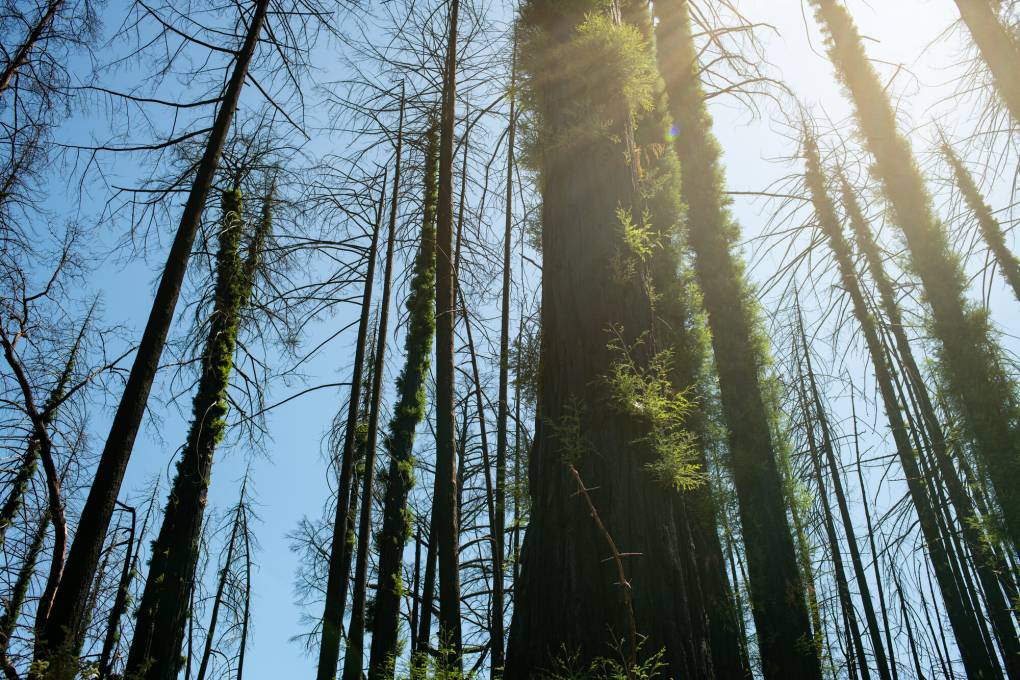
"caption": "New growth on trees in Big Basin Redwoods State Park in Boulder Creek on August 17, 2021, one year after the CZU Lightning Complex wildfire swept through the area.",
"credit": "Beth LaBerge/KQED",
"altTag": null,
"description": null,
"imgSizes": {
"medium": {
"file": "https://cdn.kqed.org/wp-content/uploads/sites/10/2024/10/004_BoulderCreek_BigBasinRedwoods_08172021_qed-800x533.jpg",
"width": 800,
"height": 533,
"mimeType": "image/jpeg"
},
"large": {
"file": "https://cdn.kqed.org/wp-content/uploads/sites/10/2024/10/004_BoulderCreek_BigBasinRedwoods_08172021_qed-1020x680.jpg",
"width": 1020,
"height": 680,
"mimeType": "image/jpeg"
},
"thumbnail": {
"file": "https://cdn.kqed.org/wp-content/uploads/sites/10/2024/10/004_BoulderCreek_BigBasinRedwoods_08172021_qed-160x107.jpg",
"width": 160,
"height": 107,
"mimeType": "image/jpeg"
},
"1536x1536": {
"file": "https://cdn.kqed.org/wp-content/uploads/sites/10/2024/10/004_BoulderCreek_BigBasinRedwoods_08172021_qed-1536x1024.jpg",
"width": 1536,
"height": 1024,
"mimeType": "image/jpeg"
},
"post-thumbnail": {
"file": "https://cdn.kqed.org/wp-content/uploads/sites/10/2024/10/004_BoulderCreek_BigBasinRedwoods_08172021_qed-672x372.jpg",
"width": 672,
"height": 372,
"mimeType": "image/jpeg"
},
"twentyfourteen-full-width": {
"file": "https://cdn.kqed.org/wp-content/uploads/sites/10/2024/10/004_BoulderCreek_BigBasinRedwoods_08172021_qed-1038x576.jpg",
"width": 1038,
"height": 576,
"mimeType": "image/jpeg"
},
"full-width": {
"file": "https://cdn.kqed.org/wp-content/uploads/sites/10/2024/10/004_BoulderCreek_BigBasinRedwoods_08172021_qed-1920x1280.jpg",
"width": 1920,
"height": 1280,
"mimeType": "image/jpeg"
},
"kqedFullSize": {
"file": "https://cdn.kqed.org/wp-content/uploads/sites/10/2024/10/004_BoulderCreek_BigBasinRedwoods_08172021_qed.jpg",
"width": 2000,
"height": 1333
}
},
"isLoading": false,
"fetchFailed": false
},
"news_12067916": {
"type": "attachments",
"id": "news_12067916",
"meta": {
"index": "attachments_1716263798",
"site": "news",
"id": "12067916",
"found": true
},
"title": "MigrantDayKQED",
"publishDate": 1766104573,
"status": "inherit",
"parent": 12067803,
"modified": 1766107014,
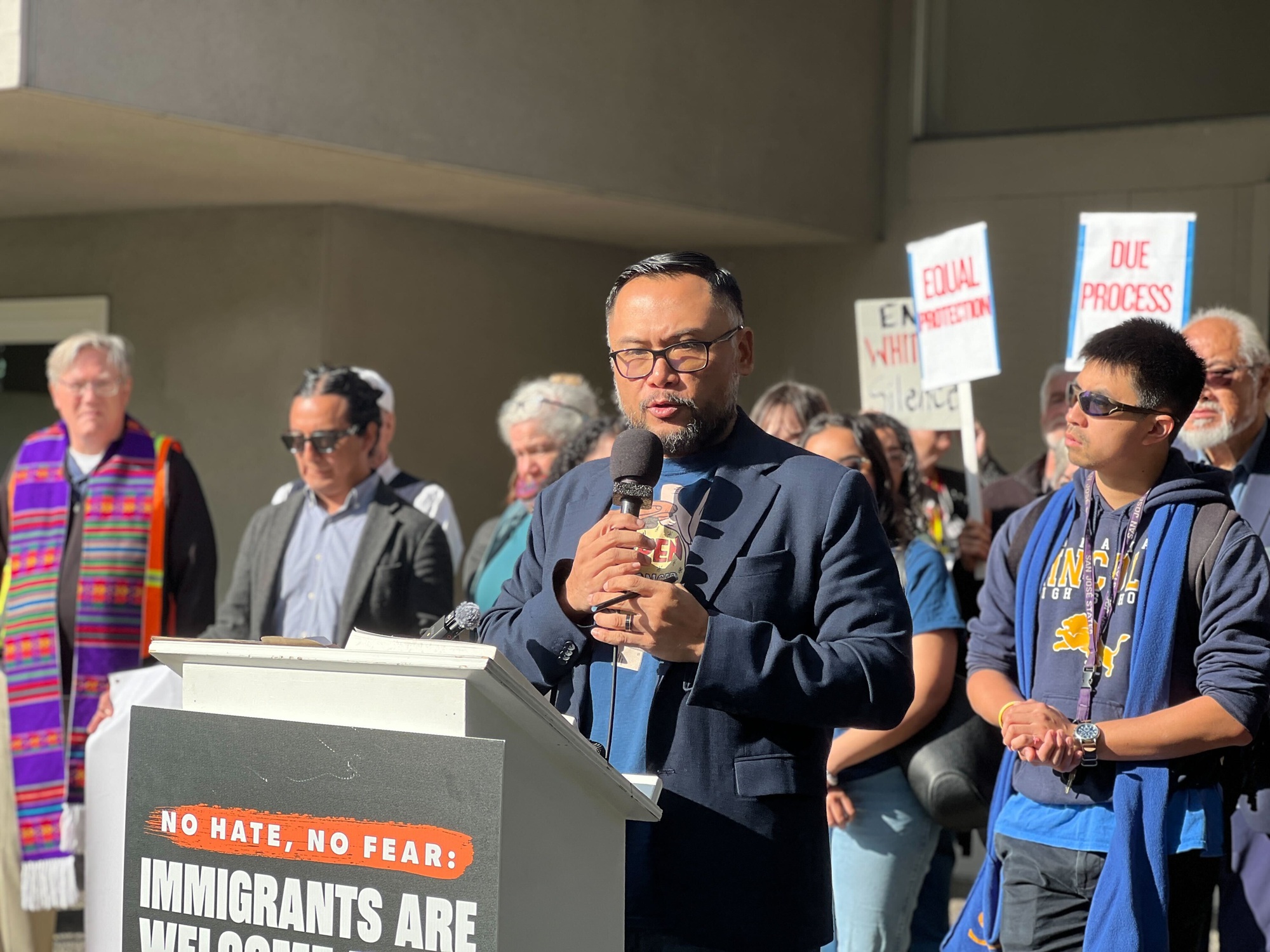
"caption": "Services, Immigrant Rights & Education Network’s Executive Director Huy Tran speaks during an International Migrants Day press conference on Dec. 18, 2025.",
"credit": "Ayah Ali-Ahmad/KQED",
"altTag": null,
"description": null,
"imgSizes": {
"thumbnail": {
"file": "https://cdn.kqed.org/wp-content/uploads/sites/10/2025/12/MigrantDayKQED-160x120.jpg",
"width": 160,
"height": 120,
"mimeType": "image/jpeg"
},
"1536x1536": {
"file": "https://cdn.kqed.org/wp-content/uploads/sites/10/2025/12/MigrantDayKQED-1536x1152.jpg",
"width": 1536,
"height": 1152,
"mimeType": "image/jpeg"
},
"post-thumbnail": {
"file": "https://cdn.kqed.org/wp-content/uploads/sites/10/2025/12/MigrantDayKQED-672x372.jpg",
"width": 672,
"height": 372,
"mimeType": "image/jpeg"
},
"twentyfourteen-full-width": {
"file": "https://cdn.kqed.org/wp-content/uploads/sites/10/2025/12/MigrantDayKQED-1038x576.jpg",
"width": 1038,
"height": 576,
"mimeType": "image/jpeg"
},
"npr-cds-wide": {
"file": "https://cdn.kqed.org/wp-content/uploads/sites/10/2025/12/MigrantDayKQED-1200x675.jpg",
"width": 1200,
"height": 675,
"mimeType": "image/jpeg"
},
"kqedFullSize": {
"file": "https://cdn.kqed.org/wp-content/uploads/sites/10/2025/12/MigrantDayKQED.jpg",
"width": 2000,
"height": 1500
}
},
"isLoading": false,
"fetchFailed": false
},
"news_12067436": {
"type": "attachments",
"id": "news_12067436",
"meta": {
"index": "attachments_1716263798",
"site": "news",
"id": "12067436",
"found": true
},
"title": "Glide Memorial Church Christmas Dinner",
"publishDate": 1765914632,
"status": "inherit",
"parent": 12067415,
"modified": 1766539744,
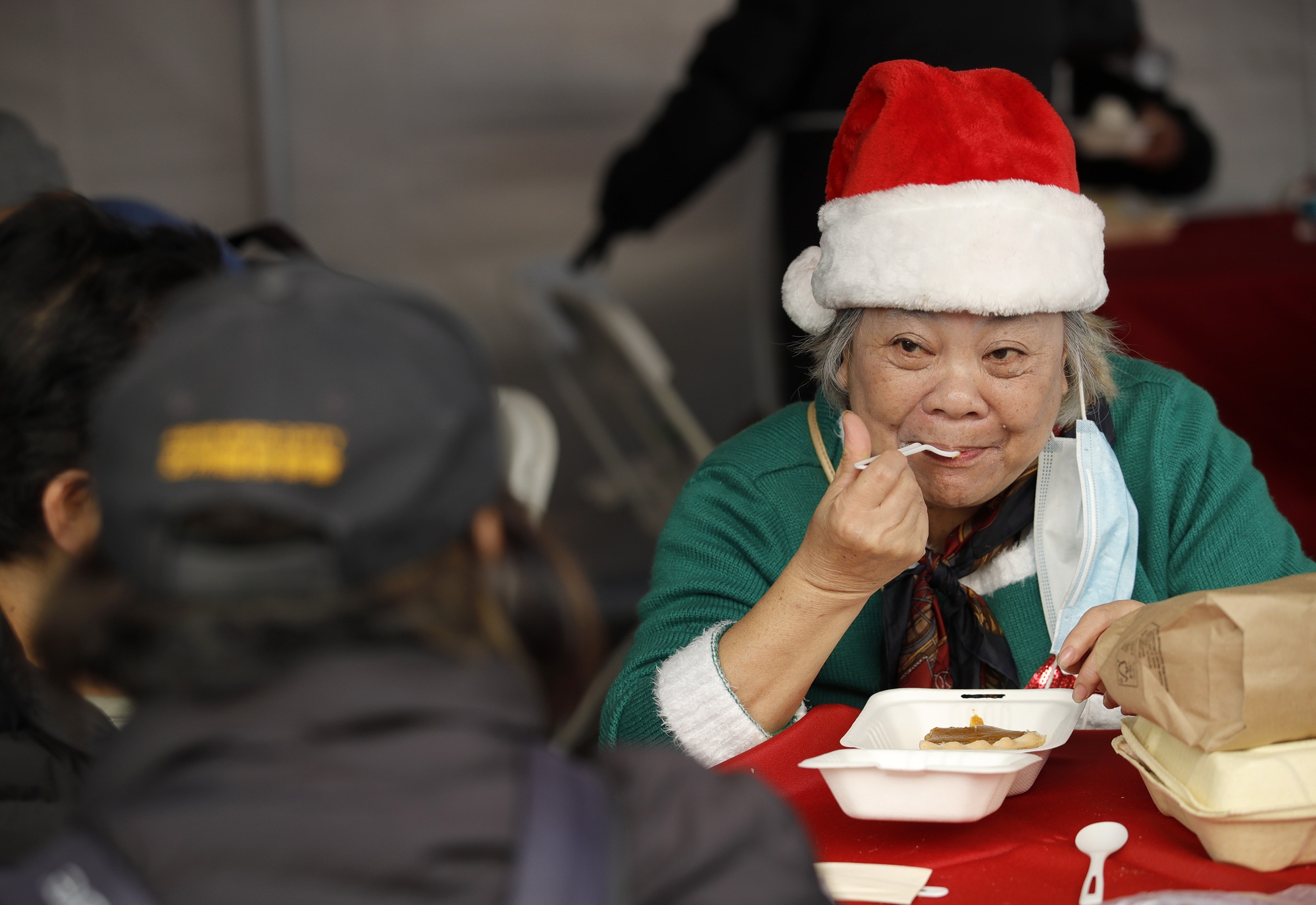
"caption": "A resident eats a holiday meal at Glide Memorial Church in San Francisco, California, on Sunday, Dec. 25, 2022.",
"credit": "Jane Tyska/Digital First Media/East Bay Times via Getty Images",
"altTag": null,
"description": null,
"imgSizes": {
"thumbnail": {
"file": "https://cdn.kqed.org/wp-content/uploads/sites/10/2025/12/GlideChurchSFGetty-160x110.jpg",
"width": 160,
"height": 110,
"mimeType": "image/jpeg"
},
"1536x1536": {
"file": "https://cdn.kqed.org/wp-content/uploads/sites/10/2025/12/GlideChurchSFGetty-1536x1057.jpg",
"width": 1536,
"height": 1057,
"mimeType": "image/jpeg"
},
"post-thumbnail": {
"file": "https://cdn.kqed.org/wp-content/uploads/sites/10/2025/12/GlideChurchSFGetty-672x372.jpg",
"width": 672,
"height": 372,
"mimeType": "image/jpeg"
},
"twentyfourteen-full-width": {
"file": "https://cdn.kqed.org/wp-content/uploads/sites/10/2025/12/GlideChurchSFGetty-1038x576.jpg",
"width": 1038,
"height": 576,
"mimeType": "image/jpeg"
},
"npr-cds-wide": {
"file": "https://cdn.kqed.org/wp-content/uploads/sites/10/2025/12/GlideChurchSFGetty-1200x675.jpg",
"width": 1200,
"height": 675,
"mimeType": "image/jpeg"
},
"kqedFullSize": {
"file": "https://cdn.kqed.org/wp-content/uploads/sites/10/2025/12/GlideChurchSFGetty.jpg",
"width": 2000,
"height": 1376
}
},
"isLoading": false,
"fetchFailed": false
},
"news_12067033": {
"type": "attachments",
"id": "news_12067033",
"meta": {
"index": "attachments_1716263798",
"site": "news",
"id": "12067033",
"found": true
},
"title": "251212-Stanford Student Death-01-KQED",
"publishDate": 1765585715,
"status": "inherit",
"parent": 12067110,
"modified": 1765845071,
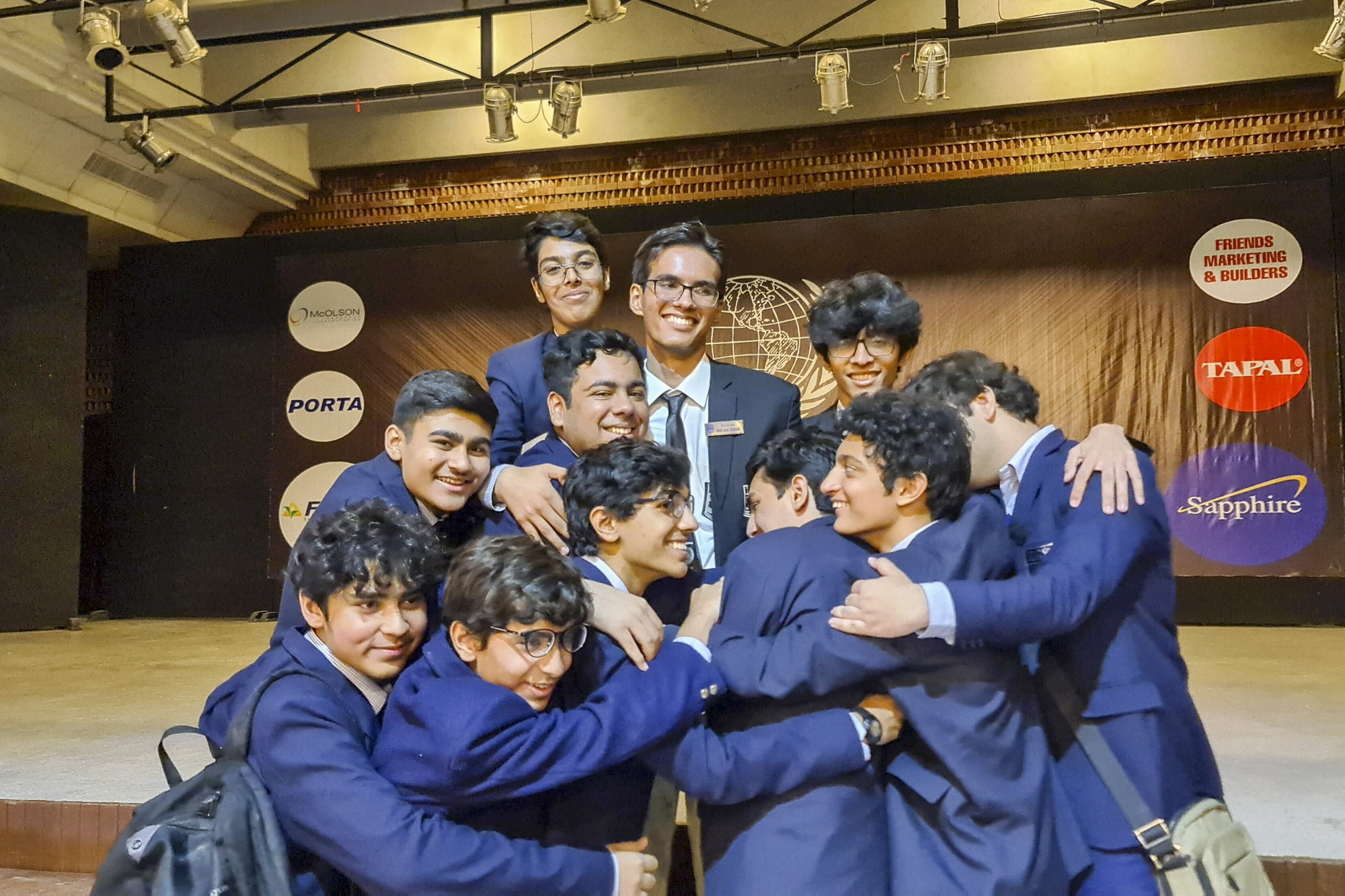
"caption": "Aradshar Chaddar (top center) was the president of his high school Model United Nations team in Lahore, Pakistan.",
"credit": "Courtesy of Ismail Iftikhar",
"altTag": null,
"description": null,
"imgSizes": {
"thumbnail": {
"file": "https://cdn.kqed.org/wp-content/uploads/sites/10/2025/12/251212-Stanford-Student-Death-01-KQED-160x107.jpg",
"width": 160,
"height": 107,
"mimeType": "image/jpeg"
},
"1536x1536": {
"file": "https://cdn.kqed.org/wp-content/uploads/sites/10/2025/12/251212-Stanford-Student-Death-01-KQED-1536x1024.jpg",
"width": 1536,
"height": 1024,
"mimeType": "image/jpeg"
},
"post-thumbnail": {
"file": "https://cdn.kqed.org/wp-content/uploads/sites/10/2025/12/251212-Stanford-Student-Death-01-KQED-672x372.jpg",
"width": 672,
"height": 372,
"mimeType": "image/jpeg"
},
"twentyfourteen-full-width": {
"file": "https://cdn.kqed.org/wp-content/uploads/sites/10/2025/12/251212-Stanford-Student-Death-01-KQED-1038x576.jpg",
"width": 1038,
"height": 576,
"mimeType": "image/jpeg"
},
"npr-cds-wide": {
"file": "https://cdn.kqed.org/wp-content/uploads/sites/10/2025/12/251212-Stanford-Student-Death-01-KQED-1200x675.jpg",
"width": 1200,
"height": 675,
"mimeType": "image/jpeg"
},
"kqedFullSize": {
"file": "https://cdn.kqed.org/wp-content/uploads/sites/10/2025/12/251212-Stanford-Student-Death-01-KQED.jpg",
"width": 2000,
"height": 1333
}
},
"isLoading": false,
"fetchFailed": false
},
"news_12066914": {
"type": "attachments",
"id": "news_12066914",
"meta": {
"index": "attachments_1716263798",
"site": "news",
"id": "12066914",
"found": true
},
"title": "President Trump Signs Executive Orders In The Oval Office",
"publishDate": 1765563347,
"status": "inherit",
"parent": 12066910,
"modified": 1765563390,
"caption": "U.S. President Donald Trump displays a signed executive order in the Oval Office of the White House on Dec. 11, 2025, in Washington, D.C. The executive order curbs states' ability to regulate artificial intelligence, something for which the tech industry has been lobbying. ",
"credit": "Alex Wong/Getty Images",
"altTag": null,
"description": null,
"imgSizes": {
"thumbnail": {
"file": "https://cdn.kqed.org/wp-content/uploads/sites/10/2025/12/DonaldTrumpGetty1-160x110.jpg",
"width": 160,
"height": 110,
"mimeType": "image/jpeg"
},
"1536x1536": {
"file": "https://cdn.kqed.org/wp-content/uploads/sites/10/2025/12/DonaldTrumpGetty1-1536x1059.jpg",
"width": 1536,
"height": 1059,
"mimeType": "image/jpeg"
},
"post-thumbnail": {
"file": "https://cdn.kqed.org/wp-content/uploads/sites/10/2025/12/DonaldTrumpGetty1-672x372.jpg",
"width": 672,
"height": 372,
"mimeType": "image/jpeg"
},
"twentyfourteen-full-width": {
"file": "https://cdn.kqed.org/wp-content/uploads/sites/10/2025/12/DonaldTrumpGetty1-1038x576.jpg",
"width": 1038,
"height": 576,
"mimeType": "image/jpeg"
},
"npr-cds-wide": {
"file": "https://cdn.kqed.org/wp-content/uploads/sites/10/2025/12/DonaldTrumpGetty1-1200x675.jpg",
"width": 1200,
"height": 675,
"mimeType": "image/jpeg"
},
"kqedFullSize": {
"file": "https://cdn.kqed.org/wp-content/uploads/sites/10/2025/12/DonaldTrumpGetty1.jpg",
"width": 2000,
"height": 1379
}
},
"isLoading": false,
"fetchFailed": false
},
"news_12066596": {
"type": "attachments",
"id": "news_12066596",
"meta": {
"index": "attachments_1716263798",
"site": "news",
"id": "12066596",
"found": true
},
"title": "251209-STANFORDTRIAL-JG-9_qed",
"publishDate": 1765387168,
"status": "inherit",
"parent": 12066592,
"modified": 1765387180,
"caption": "Santa Clara County Deputy Public Defender Avanindar Singh is seen in a San José courtroom on Dec. 9, 2025, during a pretrial hearing in the case of pro-Palestinan protesters who have been charged with vandalism and conspiracy.",
"credit": "Joseph Geha/KQED",
"altTag": null,
"description": null,
"imgSizes": {
"thumbnail": {
"file": "https://cdn.kqed.org/wp-content/uploads/sites/10/2025/12/251209-STANFORDTRIAL-JG-9_qed-160x107.jpg",
"width": 160,
"height": 107,
"mimeType": "image/jpeg"
},
"1536x1536": {
"file": "https://cdn.kqed.org/wp-content/uploads/sites/10/2025/12/251209-STANFORDTRIAL-JG-9_qed-1536x1024.jpg",
"width": 1536,
"height": 1024,
"mimeType": "image/jpeg"
},
"post-thumbnail": {
"file": "https://cdn.kqed.org/wp-content/uploads/sites/10/2025/12/251209-STANFORDTRIAL-JG-9_qed-672x372.jpg",
"width": 672,
"height": 372,
"mimeType": "image/jpeg"
},
"twentyfourteen-full-width": {
"file": "https://cdn.kqed.org/wp-content/uploads/sites/10/2025/12/251209-STANFORDTRIAL-JG-9_qed-1038x576.jpg",
"width": 1038,
"height": 576,
"mimeType": "image/jpeg"
},
"npr-cds-wide": {
"file": "https://cdn.kqed.org/wp-content/uploads/sites/10/2025/12/251209-STANFORDTRIAL-JG-9_qed-1200x675.jpg",
"width": 1200,
"height": 675,
"mimeType": "image/jpeg"
},
"kqedFullSize": {
"file": "https://cdn.kqed.org/wp-content/uploads/sites/10/2025/12/251209-STANFORDTRIAL-JG-9_qed.jpg",
"width": 1999,
"height": 1333
}
},
"isLoading": false,
"fetchFailed": false
},
"news_11979156": {
"type": "attachments",
"id": "news_11979156",
"meta": {
"index": "attachments_1716263798",
"site": "news",
"id": "11979156",
"found": true
},
"title": "240212-ImmigrationCourt-31-BL_qut",
"publishDate": 1710283094,
"status": "inherit",
"parent": 11979131,
"modified": 1748456121,
"caption": "Immigration rights supporters stand outside the new Concord Immigration Court in Concord during a press conference on Feb. 12, 2024.",
"credit": "Beth LaBerge/KQED",
"altTag": null,
"description": null,
"imgSizes": {
"medium": {
"file": "https://cdn.kqed.org/wp-content/uploads/sites/10/2024/03/240212-ImmigrationCourt-31-BL_qut-800x533.jpg",
"width": 800,
"height": 533,
"mimeType": "image/jpeg"
},
"large": {
"file": "https://cdn.kqed.org/wp-content/uploads/sites/10/2024/03/240212-ImmigrationCourt-31-BL_qut-1020x680.jpg",
"width": 1020,
"height": 680,
"mimeType": "image/jpeg"
},
"thumbnail": {
"file": "https://cdn.kqed.org/wp-content/uploads/sites/10/2024/03/240212-ImmigrationCourt-31-BL_qut-160x107.jpg",
"width": 160,
"height": 107,
"mimeType": "image/jpeg"
},
"1536x1536": {
"file": "https://cdn.kqed.org/wp-content/uploads/sites/10/2024/03/240212-ImmigrationCourt-31-BL_qut-1536x1024.jpg",
"width": 1536,
"height": 1024,
"mimeType": "image/jpeg"
},
"post-thumbnail": {
"file": "https://cdn.kqed.org/wp-content/uploads/sites/10/2024/03/240212-ImmigrationCourt-31-BL_qut-672x372.jpg",
"width": 672,
"height": 372,
"mimeType": "image/jpeg"
},
"twentyfourteen-full-width": {
"file": "https://cdn.kqed.org/wp-content/uploads/sites/10/2024/03/240212-ImmigrationCourt-31-BL_qut-1038x576.jpg",
"width": 1038,
"height": 576,
"mimeType": "image/jpeg"
},
"kqedFullSize": {
"file": "https://cdn.kqed.org/wp-content/uploads/sites/10/2024/03/240212-ImmigrationCourt-31-BL_qut.jpg",
"width": 1920,
"height": 1280
}
},
"isLoading": false,
"fetchFailed": false
},
"news_12066410": {
"type": "attachments",
"id": "news_12066410",
"meta": {
"index": "attachments_1716263798",
"site": "news",
"id": "12066410",
"found": true
},
"title": "251208-BART SILICON VALLEY TOUR-MD- 03-KQED",
"publishDate": 1765238684,
"status": "inherit",
"parent": 0,
"modified": 1765238740,
"caption": "The tunnel under construction at the West Portal Site of the BART Silicon Valley Phase II Project in San José on Dec. 8, 2025.",
"credit": "Martin do Nascimento/KQED",
"altTag": null,
"description": null,
"imgSizes": {
"thumbnail": {
"file": "https://cdn.kqed.org/wp-content/uploads/sites/10/2025/12/251208-BART-SILICON-VALLEY-TOUR-MD-03-KQED-160x107.jpg",
"width": 160,
"height": 107,
"mimeType": "image/jpeg"
},
"1536x1536": {
"file": "https://cdn.kqed.org/wp-content/uploads/sites/10/2025/12/251208-BART-SILICON-VALLEY-TOUR-MD-03-KQED-1536x1024.jpg",
"width": 1536,
"height": 1024,
"mimeType": "image/jpeg"
},
"post-thumbnail": {
"file": "https://cdn.kqed.org/wp-content/uploads/sites/10/2025/12/251208-BART-SILICON-VALLEY-TOUR-MD-03-KQED-672x372.jpg",
"width": 672,
"height": 372,
"mimeType": "image/jpeg"
},
"twentyfourteen-full-width": {
"file": "https://cdn.kqed.org/wp-content/uploads/sites/10/2025/12/251208-BART-SILICON-VALLEY-TOUR-MD-03-KQED-1038x576.jpg",
"width": 1038,
"height": 576,
"mimeType": "image/jpeg"
},
"npr-cds-wide": {
"file": "https://cdn.kqed.org/wp-content/uploads/sites/10/2025/12/251208-BART-SILICON-VALLEY-TOUR-MD-03-KQED-1200x675.jpg",
"width": 1200,
"height": 675,
"mimeType": "image/jpeg"
},
"kqedFullSize": {
"file": "https://cdn.kqed.org/wp-content/uploads/sites/10/2025/12/251208-BART-SILICON-VALLEY-TOUR-MD-03-KQED.jpg",
"width": 2000,
"height": 1333
}
},
"isLoading": false,
"fetchFailed": false
},
"news_12066052": {
"type": "attachments",
"id": "news_12066052",
"meta": {
"index": "attachments_1716263798",
"site": "news",
"id": "12066052",
"found": true
},
"title": "251203-SJPRIESTIMMIGRATION00043_TV-KQED",
"publishDate": 1764868088,
"status": "inherit",
"parent": 0,
"modified": 1764868163,
"caption": "Father Jon Pedigo poses for a portrait at Our Lady of Guadalupe Church where he has worked as a priest, at 2020 East San Antonio Street in San Jose on December 3, 2025. Father Jon Pedigo, a priest who has worked with immigrant communities affected by ICE raids and deportations, is leaving his full time job as a priest to be a full time organizer.",
"credit": "Tâm Vũ/KQED",
"altTag": null,
"description": null,
"imgSizes": {
"thumbnail": {
"file": "https://cdn.kqed.org/wp-content/uploads/sites/10/2025/12/251203-SJPRIESTIMMIGRATION00043_TV-KQED-160x107.jpg",
"width": 160,
"height": 107,
"mimeType": "image/jpeg"
},
"1536x1536": {
"file": "https://cdn.kqed.org/wp-content/uploads/sites/10/2025/12/251203-SJPRIESTIMMIGRATION00043_TV-KQED-1536x1024.jpg",
"width": 1536,
"height": 1024,
"mimeType": "image/jpeg"
},
"post-thumbnail": {
"file": "https://cdn.kqed.org/wp-content/uploads/sites/10/2025/12/251203-SJPRIESTIMMIGRATION00043_TV-KQED-672x372.jpg",
"width": 672,
"height": 372,
"mimeType": "image/jpeg"
},
"twentyfourteen-full-width": {
"file": "https://cdn.kqed.org/wp-content/uploads/sites/10/2025/12/251203-SJPRIESTIMMIGRATION00043_TV-KQED-1038x576.jpg",
"width": 1038,
"height": 576,
"mimeType": "image/jpeg"
},
"npr-cds-wide": {
"file": "https://cdn.kqed.org/wp-content/uploads/sites/10/2025/12/251203-SJPRIESTIMMIGRATION00043_TV-KQED-1200x675.jpg",
"width": 1200,
"height": 675,
"mimeType": "image/jpeg"
},
"kqedFullSize": {
"file": "https://cdn.kqed.org/wp-content/uploads/sites/10/2025/12/251203-SJPRIESTIMMIGRATION00043_TV-KQED.jpg",
"width": 2000,
"height": 1333
}
},
"isLoading": false,
"fetchFailed": false
},
"news_12047902": {
"type": "attachments",
"id": "news_12047902",
"meta": {
"index": "attachments_1716263798",
"site": "news",
"id": "12047902",
"found": true
},
"title": "240418-SJPDFILE-JG-6_qed",
"publishDate": 1752514544,
"status": "inherit",
"parent": 12047900,
"modified": 1763510734,
"caption": "The exterior of the San José Police Department headquarters on April 18, 2024.",
"credit": "Joseph Geha/KQED",
"altTag": null,
"description": null,
"imgSizes": {
"thumbnail": {
"file": "https://cdn.kqed.org/wp-content/uploads/sites/10/2025/07/240418-SJPDFILE-JG-6_qed-160x107.jpg",
"width": 160,
"height": 107,
"mimeType": "image/jpeg"
},
"1536x1536": {
"file": "https://cdn.kqed.org/wp-content/uploads/sites/10/2025/07/240418-SJPDFILE-JG-6_qed-1536x1024.jpg",
"width": 1536,
"height": 1024,
"mimeType": "image/jpeg"
},
"post-thumbnail": {
"file": "https://cdn.kqed.org/wp-content/uploads/sites/10/2025/07/240418-SJPDFILE-JG-6_qed-672x372.jpg",
"width": 672,
"height": 372,
"mimeType": "image/jpeg"
},
"twentyfourteen-full-width": {
"file": "https://cdn.kqed.org/wp-content/uploads/sites/10/2025/07/240418-SJPDFILE-JG-6_qed-1038x576.jpg",
"width": 1038,
"height": 576,
"mimeType": "image/jpeg"
},
"kqedFullSize": {
"file": "https://cdn.kqed.org/wp-content/uploads/sites/10/2025/07/240418-SJPDFILE-JG-6_qed.jpg",
"width": 2000,
"height": 1333
}
},
"isLoading": false,
"fetchFailed": false
},
"news_12065387": {
"type": "attachments",
"id": "news_12065387",
"meta": {
"index": "attachments_1716263798",
"site": "news",
"id": "12065387",
"found": true
},
"title": "251124-SJHUDCUTS-JG-05-KQED",
"publishDate": 1764111364,
"status": "inherit",
"parent": 0,
"modified": 1764111398,
"caption": "Kaytana Alvarido, center, with her son Lucius and her husband Alberto Barragan, speaks during a press conference in San José about changes to a federal housing program’s funding by the Trump administration on Nov. 24, 2025, shortly before moving into a new, affordable apartment complex.",
"credit": "Joseph Geha/KQED",
"altTag": null,
"description": null,
"imgSizes": {
"thumbnail": {
"file": "https://cdn.kqed.org/wp-content/uploads/sites/10/2025/11/251124-SJHUDCUTS-JG-05-KQED-160x107.jpg",
"width": 160,
"height": 107,
"mimeType": "image/jpeg"
},
"1536x1536": {
"file": "https://cdn.kqed.org/wp-content/uploads/sites/10/2025/11/251124-SJHUDCUTS-JG-05-KQED-1536x1024.jpg",
"width": 1536,
"height": 1024,
"mimeType": "image/jpeg"
},
"post-thumbnail": {
"file": "https://cdn.kqed.org/wp-content/uploads/sites/10/2025/11/251124-SJHUDCUTS-JG-05-KQED-672x372.jpg",
"width": 672,
"height": 372,
"mimeType": "image/jpeg"
},
"twentyfourteen-full-width": {
"file": "https://cdn.kqed.org/wp-content/uploads/sites/10/2025/11/251124-SJHUDCUTS-JG-05-KQED-1038x576.jpg",
"width": 1038,
"height": 576,
"mimeType": "image/jpeg"
},
"npr-cds-wide": {
"file": "https://cdn.kqed.org/wp-content/uploads/sites/10/2025/11/251124-SJHUDCUTS-JG-05-KQED-1200x675.jpg",
"width": 1200,
"height": 675,
"mimeType": "image/jpeg"
},
"kqedFullSize": {
"file": "https://cdn.kqed.org/wp-content/uploads/sites/10/2025/11/251124-SJHUDCUTS-JG-05-KQED.jpg",
"width": 2000,
"height": 1333
}
},
"isLoading": false,
"fetchFailed": false
},
"news_12064595": {
"type": "attachments",
"id": "news_12064595",
"meta": {
"index": "attachments_1716263798",
"site": "news",
"id": "12064595",
"found": true
},
"title": "image (9)",
"publishDate": 1763494109,
"status": "inherit",
"parent": 12064587,
"modified": 1763494167,
"caption": "San José Mayor Matt Mahan helps to install a Flock Safety brand automated license plate reader on April 23, 2024. The city and Mahan are now being sued by civil liberties groups over the technology's uses.",
"credit": "Joseph Geha/KQED",
"altTag": null,
"description": null,
"imgSizes": {
"thumbnail": {
"file": "https://cdn.kqed.org/wp-content/uploads/sites/10/2025/11/image-9-160x107.png",
"width": 160,
"height": 107,
"mimeType": "image/png"
},
"1536x1536": {
"file": "https://cdn.kqed.org/wp-content/uploads/sites/10/2025/11/image-9-1536x1024.png",
"width": 1536,
"height": 1024,
"mimeType": "image/png"
},
"post-thumbnail": {
"file": "https://cdn.kqed.org/wp-content/uploads/sites/10/2025/11/image-9-672x372.png",
"width": 672,
"height": 372,
"mimeType": "image/png"
},
"twentyfourteen-full-width": {
"file": "https://cdn.kqed.org/wp-content/uploads/sites/10/2025/11/image-9-1038x576.png",
"width": 1038,
"height": 576,
"mimeType": "image/png"
},
"npr-cds-wide": {
"file": "https://cdn.kqed.org/wp-content/uploads/sites/10/2025/11/image-9-1200x675.png",
"width": 1200,
"height": 675,
"mimeType": "image/png"
},
"kqedFullSize": {
"file": "https://cdn.kqed.org/wp-content/uploads/sites/10/2025/11/image-9.png",
"width": 2000,
"height": 1333
}
},
"isLoading": false,
"fetchFailed": false
}
},
"audioPlayerReducer": {
"postId": "stream_live",
"isPaused": true,
"isPlaying": false,
"pfsActive": false,
"pledgeModalIsOpen": true,
"playerDrawerIsOpen": false,
"liveAudioPlayStartedAt": 0,
"liveAudioPlayContext": ""
},
"authorsReducer": {
"rachael-myrow": {
"type": "authors",
"id": "251",
"meta": {
"index": "authors_1716337520",
"id": "251",
"found": true
},
"name": "Rachael Myrow",
"firstName": "Rachael",
"lastName": "Myrow",
"slug": "rachael-myrow",
"email": "rmyrow@kqed.org",
"display_author_email": true,
"staff_mastheads": [
"news"
],
"title": "Senior Editor of KQED's Silicon Valley News Desk",
"bio": "• I write and edit stories about how Silicon Valley power and policies shape everyday life in California. I’m also passionate about making Bay Area history and culture more accessible to a broad public. • I’ve been a journalist for most of my life, starting in high school with The Franklin Press in Los Angeles, where I grew up. While earning my first degree in English at UC Berkeley, I got my start in public radio at KALX-FM. After completing a second degree in journalism at Cal, I landed my first professional job at Marketplace, then moved on to KPCC (now LAist), and then KQED, where I hosted The California Report for more than seven years. • My reporting has appeared on NPR, The World, WBUR’s \u003ci>Here & Now\u003c/i>, and the BBC. I also guest host for KQED’s \u003ci>Forum\u003c/i>, as well as the Commonwealth Club in San Francisco. • I speak periodically on media, democracy and technology issues, and do voiceover work for documentaries and educational video projects. • Outside of the studio, you'll find me hiking Bay Area trails and whipping up Insta-ready meals in my kitchen. • I do not accept gifts, money, or favors from anyone connected to my reporting, I don't pay people for information, and I do not support or donate to political causes. • I strive to treat the people I report on with fairness, honesty, and respect. I also recognize there are often multiple sides to a story and work to verify information through multiple sources and documentation. If I get something wrong, I correct it.",
"avatar": "https://secure.gravatar.com/avatar/3ed8a3c5f26025e4a805ba634cda8cd764906b97438a6d9ce216b044e340da4e?s=600&d=blank&r=g",
"twitter": "rachaelmyrow",
"bluesky": null,
"facebook": null,
"instagram": null,
"linkedin": "https://www.linkedin.com/in/rachaelmyrow/",
"sites": [
{
"site": "arts",
"roles": [
"administrator"
]
},
{
"site": "news",
"roles": [
"edit_others_posts",
"editor"
]
},
{
"site": "futureofyou",
"roles": [
"editor"
]
},
{
"site": "bayareabites",
"roles": [
"editor"
]
},
{
"site": "stateofhealth",
"roles": [
"editor"
]
},
{
"site": "science",
"roles": [
"editor"
]
},
{
"site": "food",
"roles": [
"editor"
]
},
{
"site": "forum",
"roles": [
"editor"
]
},
{
"site": "liveblog",
"roles": [
"author"
]
}
],
"headData": {
"title": "Rachael Myrow | KQED",
"description": "Senior Editor of KQED's Silicon Valley News Desk",
"ogImgSrc": "https://secure.gravatar.com/avatar/3ed8a3c5f26025e4a805ba634cda8cd764906b97438a6d9ce216b044e340da4e?s=600&d=blank&r=g",
"twImgSrc": "https://secure.gravatar.com/avatar/3ed8a3c5f26025e4a805ba634cda8cd764906b97438a6d9ce216b044e340da4e?s=600&d=blank&r=g"
},
"isLoading": false,
"link": "/author/rachael-myrow"
},
"tychehendricks": {
"type": "authors",
"id": "259",
"meta": {
"index": "authors_1716337520",
"id": "259",
"found": true
},
"name": "Tyche Hendricks",
"firstName": "Tyche",
"lastName": "Hendricks",
"slug": "tychehendricks",
"email": "thendricks@kqed.org",
"display_author_email": true,
"staff_mastheads": [
"news"
],
"title": "KQED Senior Editor, Immigration",
"bio": "\u003cspan style=\"font-weight: 400;\">Tyche Hendricks is KQED’s senior editor for immigration, leading coverage of the policy and politics that affect California’s immigrant communities. Her work for KQED’s radio and online audiences is also carried on NPR and other national outlets. She has been recognized with awards from the Radio and Television News Directors Association, the Society for Professional Journalists; the Education Writers Association; the Best of the West and the National Federation of Community Broadcasters. Before joining KQED in 2010, Tyche spent more than a dozen years as a newspaper reporter, notably at the \u003c/span>\u003ci>\u003cspan style=\"font-weight: 400;\">San Francisco Chronicle\u003c/span>\u003c/i>\u003cspan style=\"font-weight: 400;\">. At different times she has covered criminal justice, government and politics and urban planning. Tyche has taught in the MFA Creative Writing program at the University of San Francisco and at UC Berkeley’s Graduate School of Journalism, where she was co-director of a national immigration symposium for professional journalists. She is the author of \u003c/span>\u003ci>\u003cspan style=\"font-weight: 400;\">The Wind Doesn't Need a Passport: Stories from the U.S.-Mexico Borderlands\u003c/span>\u003c/i>\u003cspan style=\"font-weight: 400;\"> (University of California Press). \u003c/span>",
"avatar": "https://secure.gravatar.com/avatar/b8ee458e2731c2d43df86882ce17267e?s=600&d=blank&r=g",
"twitter": "tychehendricks",
"facebook": null,
"instagram": null,
"linkedin": null,
"sites": [
{
"site": "news",
"roles": [
"editor"
]
},
{
"site": "stateofhealth",
"roles": [
"editor"
]
}
],
"headData": {
"title": "Tyche Hendricks | KQED",
"description": "KQED Senior Editor, Immigration",
"ogImgSrc": "https://secure.gravatar.com/avatar/b8ee458e2731c2d43df86882ce17267e?s=600&d=blank&r=g",
"twImgSrc": "https://secure.gravatar.com/avatar/b8ee458e2731c2d43df86882ce17267e?s=600&d=blank&r=g"
},
"isLoading": false,
"link": "/author/tychehendricks"
},
"ecruzguevarra": {
"type": "authors",
"id": "8654",
"meta": {
"index": "authors_1716337520",
"id": "8654",
"found": true
},
"name": "Ericka Cruz Guevarra",
"firstName": "Ericka",
"lastName": "Cruz Guevarra",
"slug": "ecruzguevarra",
"email": "ecruzguevarra@kqed.org",
"display_author_email": true,
"staff_mastheads": [
"news"
],
"title": "Producer, The Bay Podcast",
"bio": "Ericka Cruz Guevarra is host of \u003ca href=\"https://www.kqed.org/podcasts/thebay\">\u003cem>The Bay\u003c/em>\u003c/a> podcast at KQED. Before host, she was the show’s producer. Her work in that capacity includes a three-part reported series on policing in Vallejo, which won a 2020 excellence in journalism award from the Society of Professional Journalists. Ericka has worked as a breaking news reporter at Oregon Public Broadcasting, helped produce the Code Switch podcast, and was KQED’s inaugural Raul Ramirez Diversity Fund intern. She’s also an alumna of NPR’s Next Generation Radio program. Send her an email if you have strong feelings about whether Fairfield and Suisun City are the Bay. Ericka is represented by SAG-AFTRA.",
"avatar": "https://secure.gravatar.com/avatar/accefc1de4bafc7e234b69bcb9b6f6536c130fd84709bc3069ef11a78787e1bb?s=600&d=blank&r=g",
"twitter": "NotoriousECG",
"bluesky": null,
"facebook": null,
"instagram": null,
"linkedin": null,
"sites": [
{
"site": "arts",
"roles": [
"subscriber"
]
},
{
"site": "news",
"roles": [
"editor",
"manage_categories"
]
},
{
"site": "futureofyou",
"roles": [
"subscriber"
]
},
{
"site": "stateofhealth",
"roles": [
"subscriber"
]
},
{
"site": "science",
"roles": [
"editor"
]
},
{
"site": "forum",
"roles": [
"subscriber"
]
}
],
"headData": {
"title": "Ericka Cruz Guevarra | KQED",
"description": "Producer, The Bay Podcast",
"ogImgSrc": "https://secure.gravatar.com/avatar/accefc1de4bafc7e234b69bcb9b6f6536c130fd84709bc3069ef11a78787e1bb?s=600&d=blank&r=g",
"twImgSrc": "https://secure.gravatar.com/avatar/accefc1de4bafc7e234b69bcb9b6f6536c130fd84709bc3069ef11a78787e1bb?s=600&d=blank&r=g"
},
"isLoading": false,
"link": "/author/ecruzguevarra"
},
"amontecillo": {
"type": "authors",
"id": "11649",
"meta": {
"index": "authors_1716337520",
"id": "11649",
"found": true
},
"name": "Alan Montecillo",
"firstName": "Alan",
"lastName": "Montecillo",
"slug": "amontecillo",
"email": "amontecillo@kqed.org",
"display_author_email": false,
"staff_mastheads": [
"news"
],
"title": "KQED Contributor",
"bio": "Alan Montecillo is the senior editor of \u003cem>\u003ca href=\"http://kqed.org/thebay\">The Bay\u003c/a>, \u003c/em> KQED's local news podcast. Before moving to the Bay Area, he worked as a senior talk show producer for WILL in Champaign-Urbana, Illinois and at Oregon Public Broadcasting in Portland, Oregon. He has won journalism awards from the Society of Professional Journalists Northern California, the Public Media Journalists Association, The Signal Awards, and has also received a regional Edward R. Murrow award. Alan is a Filipino American from Hong Kong and a graduate of Reed College.",
"avatar": "https://secure.gravatar.com/avatar/268f53a2066899ea9efdd8a5900218b17c822d9862cbc9326cccec53ef41d349?s=600&d=blank&r=g",
"twitter": "alanmontecillo",
"bluesky": null,
"facebook": null,
"instagram": null,
"linkedin": null,
"sites": [
{
"site": "",
"roles": [
"editor"
]
},
{
"site": "news",
"roles": [
"editor",
"manage_categories"
]
}
],
"headData": {
"title": "Alan Montecillo | KQED",
"description": "KQED Contributor",
"ogImgSrc": "https://secure.gravatar.com/avatar/268f53a2066899ea9efdd8a5900218b17c822d9862cbc9326cccec53ef41d349?s=600&d=blank&r=g",
"twImgSrc": "https://secure.gravatar.com/avatar/268f53a2066899ea9efdd8a5900218b17c822d9862cbc9326cccec53ef41d349?s=600&d=blank&r=g"
},
"isLoading": false,
"link": "/author/amontecillo"
},
"jessicakariisa": {
"type": "authors",
"id": "11831",
"meta": {
"index": "authors_1716337520",
"id": "11831",
"found": true
},
"name": "Jessica Kariisa",
"firstName": "Jessica",
"lastName": "Kariisa",
"slug": "jessicakariisa",
"email": "jkariisa@kqed.org",
"display_author_email": false,
"staff_mastheads": [],
"title": "Producer, The Bay",
"bio": "Jessica Kariisa is the producer of The Bay. She first joined KQED as an intern for The California Report Magazine, after which she became an on-call producer. She reported a Bay Curious episode on the use of rap lyrics in criminal trials which won a Society of Professional Journalists award in 2023 for Excellence in Features Journalism and the 2023 Signal Award for Best Conversation Starter. She’s worked on podcasts for Snap Judgment and American Public Media. Before embarking on her audio career, she was a music journalist.\r\n\r\nJessica Kariisa is represented by SAG-AFTRA.",
"avatar": "https://secure.gravatar.com/avatar/522e97b28ac0b3d411621c0fde8f3419c7b71ea2c5c262c57c4bb600963f328c?s=600&d=blank&r=g",
"twitter": null,
"bluesky": null,
"facebook": null,
"instagram": null,
"linkedin": null,
"sites": [
{
"site": "arts",
"roles": [
"author"
]
},
{
"site": "news",
"roles": [
"editor",
"manage_categories"
]
}
],
"headData": {
"title": "Jessica Kariisa | KQED",
"description": "Producer, The Bay",
"ogImgSrc": "https://secure.gravatar.com/avatar/522e97b28ac0b3d411621c0fde8f3419c7b71ea2c5c262c57c4bb600963f328c?s=600&d=blank&r=g",
"twImgSrc": "https://secure.gravatar.com/avatar/522e97b28ac0b3d411621c0fde8f3419c7b71ea2c5c262c57c4bb600963f328c?s=600&d=blank&r=g"
},
"isLoading": false,
"link": "/author/jessicakariisa"
},
"nkhan": {
"type": "authors",
"id": "11867",
"meta": {
"index": "authors_1716337520",
"id": "11867",
"found": true
},
"name": "Nisa Khan",
"firstName": "Nisa",
"lastName": "Khan",
"slug": "nkhan",
"email": "nkhan@kqed.org",
"display_author_email": false,
"staff_mastheads": [],
"title": "KQED Contributor",
"bio": "Nisa Khan is a reporter for KQED's Audience News Desk. She was formerly a data reporter at Michigan Radio. She earned a Bachelor of Science in Information from the University of Michigan and a Master of Arts in Communication from Stanford University.",
"avatar": "https://secure.gravatar.com/avatar/8720459eef081ff64582b3506b124d58523e80e120704a0cbd9892533c914991?s=600&d=blank&r=g",
"twitter": "mnisakhan",
"bluesky": null,
"facebook": null,
"instagram": null,
"linkedin": null,
"sites": [
{
"site": "arts",
"roles": [
"editor"
]
},
{
"site": "news",
"roles": [
"editor"
]
},
{
"site": "science",
"roles": [
"editor",
"author"
]
},
{
"site": "forum",
"roles": [
"editor"
]
},
{
"site": "liveblog",
"roles": [
"contributor"
]
}
],
"headData": {
"title": "Nisa Khan | KQED",
"description": "KQED Contributor",
"ogImgSrc": "https://secure.gravatar.com/avatar/8720459eef081ff64582b3506b124d58523e80e120704a0cbd9892533c914991?s=600&d=blank&r=g",
"twImgSrc": "https://secure.gravatar.com/avatar/8720459eef081ff64582b3506b124d58523e80e120704a0cbd9892533c914991?s=600&d=blank&r=g"
},
"isLoading": false,
"link": "/author/nkhan"
},
"jgeha": {
"type": "authors",
"id": "11906",
"meta": {
"index": "authors_1716337520",
"id": "11906",
"found": true
},
"name": "Joseph Geha",
"firstName": "Joseph",
"lastName": "Geha",
"slug": "jgeha",
"email": "jgeha@kqed.org",
"display_author_email": false,
"staff_mastheads": [
"news",
"science"
],
"title": "KQED Contributor",
"bio": null,
"avatar": "https://secure.gravatar.com/avatar/ea84d2b6dd93d6369d453edf19dd583f117cd1759d2d9c9c92f9de77017354fe?s=600&d=blank&r=g",
"twitter": null,
"bluesky": null,
"facebook": null,
"instagram": null,
"linkedin": null,
"sites": [
{
"site": "news",
"roles": [
"editor"
]
},
{
"site": "liveblog",
"roles": [
"author"
]
}
],
"headData": {
"title": "Joseph Geha | KQED",
"description": "KQED Contributor",
"ogImgSrc": "https://secure.gravatar.com/avatar/ea84d2b6dd93d6369d453edf19dd583f117cd1759d2d9c9c92f9de77017354fe?s=600&d=blank&r=g",
"twImgSrc": "https://secure.gravatar.com/avatar/ea84d2b6dd93d6369d453edf19dd583f117cd1759d2d9c9c92f9de77017354fe?s=600&d=blank&r=g"
},
"isLoading": false,
"link": "/author/jgeha"
},
"sarahwright": {
"type": "authors",
"id": "11956",
"meta": {
"index": "authors_1716337520",
"id": "11956",
"found": true
},
"name": "Sarah Wright",
"firstName": "Sarah",
"lastName": "Wright",
"slug": "sarahwright",
"email": "swright@kqed.org",
"display_author_email": true,
"staff_mastheads": [],
"title": "Outdoors Engagement Reporter",
"bio": "Sarah Wright is KQED's Outdoors Engagement Reporter. Originally from Lake Tahoe, she completed a thru-hike of the Pacific Crest Trail in 2019 and was a U.S. Fulbright Program grantee to Argentina in 2023. Her journalism has appeared in The Guardian, The San Francisco Standard, The Palo Alto Weekly and the Half Moon Bay Review.",
"avatar": "https://secure.gravatar.com/avatar/c161a3d6441865cba25e6db4fa561099ad665799e9432e34da2b84d7e371524c?s=600&d=blank&r=g",
"twitter": null,
"bluesky": null,
"facebook": null,
"instagram": null,
"linkedin": null,
"sites": [
{
"site": "arts",
"roles": [
"editor"
]
},
{
"site": "news",
"roles": [
"editor"
]
},
{
"site": "science",
"roles": [
"contributor",
"author"
]
},
{
"site": "forum",
"roles": [
"editor"
]
}
],
"headData": {
"title": "Sarah Wright | KQED",
"description": "Outdoors Engagement Reporter",
"ogImgSrc": "https://secure.gravatar.com/avatar/c161a3d6441865cba25e6db4fa561099ad665799e9432e34da2b84d7e371524c?s=600&d=blank&r=g",
"twImgSrc": "https://secure.gravatar.com/avatar/c161a3d6441865cba25e6db4fa561099ad665799e9432e34da2b84d7e371524c?s=600&d=blank&r=g"
},
"isLoading": false,
"link": "/author/sarahwright"
},
"aaliahmad": {
"type": "authors",
"id": "11986",
"meta": {
"index": "authors_1716337520",
"id": "11986",
"found": true
},
"name": "Ayah Ali-Ahmad",
"firstName": "Ayah",
"lastName": "Ali-Ahmad",
"slug": "aaliahmad",
"email": "aaliahmad@KQED.org",
"display_author_email": false,
"staff_mastheads": [],
"title": "KQED Contributor",
"bio": null,
"avatar": "https://secure.gravatar.com/avatar/1cf54f187a5e1064b2cfef3f3d2f1e4f93e453395d56912aca6382a6071ec3ed?s=600&d=blank&r=g",
"twitter": "ayahaliahmad",
"bluesky": null,
"facebook": null,
"instagram": null,
"linkedin": null,
"sites": [
{
"site": "news",
"roles": [
"subscriber"
]
}
],
"headData": {
"title": "Ayah Ali-Ahmad | KQED",
"description": "KQED Contributor",
"ogImgSrc": "https://secure.gravatar.com/avatar/1cf54f187a5e1064b2cfef3f3d2f1e4f93e453395d56912aca6382a6071ec3ed?s=600&d=blank&r=g",
"twImgSrc": "https://secure.gravatar.com/avatar/1cf54f187a5e1064b2cfef3f3d2f1e4f93e453395d56912aca6382a6071ec3ed?s=600&d=blank&r=g"
},
"isLoading": false,
"link": "/author/aaliahmad"
}
},
"pagesReducer": {
"news_tag_south-bay": {
"type": "terms",
"id": "news_21285",
"meta": {
"index": "terms_1716263798",
"site": "news",
"id": "21285",
"score": 7.0833073
},
"featImg": null,
"name": "South Bay",
"description": null,
"taxonomy": "tag",
"headData": {
"twImgId": null,
"twTitle": null,
"ogTitle": null,
"ogImgId": null,
"twDescription": null,
"description": null,
"title": "South Bay Archives | KQED News",
"ogDescription": null
},
"ttid": 21302,
"slug": "south-bay",
"isLoading": false,
"title": "South Bay",
"pageMeta": {
"site": "news",
"WpPageTemplate": "page-topic-editorial",
"currentPage": 11
},
"blocks": [
{
"blockName": "kqed/post-list",
"attrs": {
"layout": "cardArticle2",
"query": "posts/news?tag=south-bay",
"seeMore": false,
"paginated": true,
"page": 11
}
},
{
"blockName": "kqed/ad"
}
]
}
},
"pfsSessionReducer": {},
"postsReducer": {
"stream_live": {
"type": "live",
"id": "stream_live",
"audioUrl": "https://streams.kqed.org/kqedradio",
"title": "Live Stream",
"excerpt": "Live Stream information currently unavailable.",
"link": "/radio",
"featImg": "",
"label": {
"name": "KQED Live",
"link": "/"
}
},
"stream_kqedNewscast": {
"type": "posts",
"id": "stream_kqedNewscast",
"audioUrl": "https://www.kqed.org/.stream/anon/radio/RDnews/newscast.mp3?_=1",
"title": "KQED Newscast",
"featImg": "",
"label": {
"name": "88.5 FM",
"link": "/"
}
},
"news_12068400": {
"type": "posts",
"id": "news_12068400",
"meta": {
"index": "posts_1716263798",
"site": "news",
"id": "12068400",
"score": null,
"sort": [
1767009616000
]
},
"guestAuthors": [],
"slug": "get-outside-on-new-years-day-with-these-guided-hikes",
"title": "Get Outside On New Years Day With These Guided Hikes",
"publishDate": 1767009616,
"format": "standard",
"headTitle": "Get Outside On New Years Day With These Guided Hikes | KQED",
"labelTerm": {
"site": "news"
},
"content": "\u003cp>One year ago, I went on a \u003ca href=\"https://www.kqed.org/explainers\">New Year’s Day hike\u003c/a> at Lands End. It was cloudy, and to be honest, I didn’t really want to leave my cozy house.\u003c/p>\n\u003cp>But I met up with a group of friends, and as soon as I got my feet moving, I was happy to be there.\u003c/p>\n\u003cp>It was an opportunity to start the year off socially, but also reflectively. And along the way, I found myself ruminating on the past year and gaining new clarity about my goals for 2025. For the first time in a while, I set a clear New Year’s resolution.\u003c/p>\n\u003cp>[ad fullwidth]\u003c/p>\n\u003cp>Now, I swear by this method of walking reflection.\u003c/p>\n\u003cp>In fact, the idea is rooted in science. Emiliana Simon-Thomas, science director for the Greater Good Science Center at UC Berkeley, said going outside can open us up to awe — “when you’re in the presence of something vast and extraordinary, that defies your routine expectations about who you are and where you are and what’s going on around you.”\u003c/p>\n\u003cfigure id=\"attachment_12068415\" class=\"wp-caption aligncenter\" style=\"max-width: 1500px\">\u003ca href=\"https://cdn.kqed.org/wp-content/uploads/sites/10/2025/12/big-basin-courtesy-california-state-parks.jpg\">\u003cimg loading=\"lazy\" decoding=\"async\" class=\"size-full wp-image-12068415\" title=\"\" src=\"https://cdn.kqed.org/wp-content/uploads/sites/10/2025/12/big-basin-courtesy-california-state-parks.jpg\" alt=\"\" width=\"1500\" height=\"1000\" srcset=\"https://cdn.kqed.org/wp-content/uploads/sites/10/2025/12/big-basin-courtesy-california-state-parks.jpg 1500w, https://cdn.kqed.org/wp-content/uploads/sites/10/2025/12/big-basin-courtesy-california-state-parks-160x107.jpg 160w\" sizes=\"auto, (max-width: 1500px) 100vw, 1500px\">\u003c/a>\u003cfigcaption class=\"wp-caption-text\">Hikers explore Big Basin Redwoods State Park, where a Jan. 1 New Years hike is planned this year. \u003ccite>(California State Parks. Photo by Brian Baer)\u003c/cite>\u003c/figcaption>\u003c/figure>\n\u003cp>“Nature is one of the easiest ways to elicit awe in anyone’s life,” she said.\u003c/p>\n\u003cp>The feeling of awe, Simon-Thomas said, creates a greater sense of belonging, connection with others and alignment with core values. Embarking on a hike with others — when the rhythm of your steps matches theirs — can strengthen that sense of closeness.\u003c/p>\n\u003cp>Want to try this out? One chance to do so at the start of 2026 is through the California State Parks’ \u003ca href=\"https://www.parks.ca.gov/?page_id=30737\">First Day Hikes\u003c/a>, a statewide effort to ring in the new year with guided hikes at parks across California on Jan. 1, including several in the Bay Area.\u003c/p>\n\u003cp>Ryan Forbes, a state park interpreter, said every guided hike is different. The one coming up at \u003ca href=\"https://www.parks.ca.gov/?page_id=471\">Mount Tamalpais State Park\u003c/a>, for example, will focus on local geology and forest wildlife. Others may emphasize history or mindfulness to help you reflect on the year ahead.\u003c/p>\n\u003cp>While state parks run guided hikes year-round, Forbes said the Jan. 1 treks are focused on “starting the new year off in a healthy way outdoors.”\u003c/p>\n\u003cp>Read on to hear from experts on what makes a good resolution and to find a New Year’s Day hike near you.\u003c/p>\n\u003cfigure id=\"attachment_12044415\" class=\"wp-caption aligncenter\" style=\"max-width: 1777px\">\u003ca href=\"https://cdn.kqed.org/wp-content/uploads/sites/10/2025/06/IMG_4087_qed.jpg\">\u003cimg loading=\"lazy\" decoding=\"async\" class=\"size-full wp-image-12044415\" src=\"https://cdn.kqed.org/wp-content/uploads/sites/10/2025/06/IMG_4087_qed.jpg\" alt=\"\" width=\"1777\" height=\"1333\" srcset=\"https://cdn.kqed.org/wp-content/uploads/sites/10/2025/06/IMG_4087_qed.jpg 1777w, https://cdn.kqed.org/wp-content/uploads/sites/10/2025/06/IMG_4087_qed-160x120.jpg 160w, https://cdn.kqed.org/wp-content/uploads/sites/10/2025/06/IMG_4087_qed-1536x1152.jpg 1536w\" sizes=\"auto, (max-width: 1777px) 100vw, 1777px\">\u003c/a>\u003cfigcaption class=\"wp-caption-text\">Mount Tamalpais rises more than 2,500 feet above San Francisco Bay, providing 360-degree views of the Bay, San Francisco, and Marin coast. \u003ccite>(Craig Miller/KQED)\u003c/cite>\u003c/figcaption>\u003c/figure>\n\u003cp>Jump straight to:\u003c/p>\n\u003cul>\n\u003cli>\u003ca href=\"#Science\">The science of resolutions\u003c/a>\u003c/li>\n\u003cli>\u003ca href=\"#Tips\">Tips from the experts\u003c/a>\u003c/li>\n\u003cli>\u003ca href=\"#Firstday\">First Day hikes in the Bay Area\u003c/a>\u003c/li>\n\u003c/ul>\n\u003cp>\u003cstrong>What makes a good goal?\u003c/strong>\u003c/p>\n\u003cp>When it comes to learning and growing, it’s all about the reward cycle, said Gaia Molinaro, a doctoral candidate at UC Berkeley who researches neuroscience, specifically how goals affect how we learn things.\u003c/p>\n\u003cp>“Primary” rewards include food and water and there are also “secondary” rewards, such as money. But humans, she explained, can work toward other types of rewards “even when our objectives go against our evolutionary constraints.”[aside postID=news_12066120 hero='https://cdn.kqed.org/wp-content/uploads/sites/10/2025/12/CalFreshGetty.jpg']“Think about people doing a marathon,” Molinaro said. “They’re not getting any more food or water. In fact, the opposite, they’re losing a lot of energy and even muscle in extreme cases. But the fact that they set a goal makes them value something even above and beyond those primary rewards.”\u003c/p>\n\u003cp>Setting those types of goals is not only possible, she said, it’s actually the most difficult step.\u003c/p>\n\u003cp>“Once we set our goal, then most of the job is done,” Molinaro said. “The hardest part is to basically reconfigure our brain to be oriented towards that goal. In the case of running a marathon, you want to pick things that are challenging enough that you’re not guaranteed to succeed, but also still feasible.”\u003c/p>\n\u003cp>You’re more likely to achieve your goal if you have a plan, she said — \u003cem>and\u003c/em> if the path to achieving it is something you enjoy.\u003c/p>\n\u003cp>That’s the basis\u003ca id=\"Science\">\u003c/a> for a \u003ca href=\"https://pubmed.ncbi.nlm.nih.gov/40663621/\">study\u003c/a> conducted by Ayelet Fishbach, a social psychologist and behavioral scientist at the University of Chicago Booth School of Business.\u003c/p>\n\u003cp>Fishbach’s study looked at New Year’s resolutions, specifically: How likely it is that someone will achieve their goal? Following 2,000 people from New Year’s Day 2024 through November, she found that intrinsic motivation — not the importance of the goal — was the biggest driver.\u003c/p>\n\u003cp>That means that people who were driven by \u003cem>doing \u003c/em>their goal — such as those who genuinely enjoy running — were more likely to achieve it than those who primarily want to become a person who runs a marathon.\u003c/p>\n\u003cp>“Do you want to be the person that achieved it, or do you want to be the person that’s doing it?” Fishbach said. “Do you want to be on the other side, or do you want to engage?”\u003c/p>\n\u003cp>If you’re struggling with a difficult goal, she said, try to make the process as fun or desirable as possible. For example, if you’re trying to become more physically active, pick a type of exercise or activity that you actually enjoy doing.\u003c/p>\n\u003cp>“The best resolutions are those where you’re already taking a peek in December to see how you are going to do it,” she said.\u003c/p>\n\u003cfigure id=\"attachment_12055163\" class=\"wp-caption aligncenter\" style=\"max-width: 2000px\">\u003ca href=\"https://cdn.kqed.org/wp-content/uploads/sites/10/2025/09/AngelIslandGGBridgeGetty.jpg\">\u003cimg loading=\"lazy\" decoding=\"async\" class=\"size-full wp-image-12055163\" title=\"\" src=\"https://cdn.kqed.org/wp-content/uploads/sites/10/2025/09/AngelIslandGGBridgeGetty.jpg\" alt=\"\" width=\"2000\" height=\"1333\" srcset=\"https://cdn.kqed.org/wp-content/uploads/sites/10/2025/09/AngelIslandGGBridgeGetty.jpg 2000w, https://cdn.kqed.org/wp-content/uploads/sites/10/2025/09/AngelIslandGGBridgeGetty-160x107.jpg 160w, https://cdn.kqed.org/wp-content/uploads/sites/10/2025/09/AngelIslandGGBridgeGetty-1536x1024.jpg 1536w\" sizes=\"auto, (max-width: 2000px) 100vw, 2000px\">\u003c/a>\u003cfigcaption class=\"wp-caption-text\">The Golden Gate Bridge as seen from Angel Island, California, on March 8, 2019. \u003ccite>(Sundry Photography/Getty Images)\u003c/cite>\u003c/figcaption>\u003c/figure>\n\u003cp>The biggest surprise of her research was that the perceived importance of the goal didn’t matter at all.\u003c/p>\n\u003cp>Instead, here are the \u003ca id=\"Tips\">\u003c/a>tips she offered for good goal-setting:\u003c/p>\n\u003cul>\n\u003cli>\u003cstrong>Add, don’t remove\u003c/strong>: “It’s easier to be excited about eating more berries than eating fewer cookies.”\u003c/li>\n\u003cli>\u003cstrong>Have a target\u003c/strong>: “Something that tells you what’s the number that makes it easy to monitor the goal and that increases adherence.”\u003c/li>\n\u003cli>\u003cstrong>Accept setbacks\u003c/strong>: “Learn from setbacks and know that setbacks are likely to happen.”\u003c/li>\n\u003cli>\u003cstrong>Build social support\u003c/strong>: “Who in your life is helping?”\u003c/li>\n\u003cli>\u003cstrong>Create space: \u003c/strong>“Can you arrange the other things in your life to support this one?”\u003c/li>\n\u003c/ul>\n\u003cp>Most of all, Fishbach said, \u003cstrong>be sympathetic to your future self \u003c/strong>— and “be excited, it’s a new year.”\u003c/p>\n\u003cp>“It’s an opportunity to try out something new,” she added. “Be open-minded, willing to experiment, and you’ll figure it out.”\u003c/p>\n\u003ch2>\u003cstrong>First \u003ca id=\"Firstday\">\u003c/a>Day Hikes in the Bay Area\u003c/strong>\u003c/h2>\n\u003cp>A full list of First Day Hikes, all of which are held on Jan. 1, \u003ca href=\"https://www.parks.ca.gov/?page_id=30737\">is available on the \u003c/a>California State Parks’ website. Don’t forget to check the route’s difficulty, whether or not you need to register and the plan in case of rain.\u003c/p>\n\u003cp>\u003ca href=\"https://www.parks.ca.gov/?page_id=471\">\u003cstrong>Mount Tamalpais State Park\u003c/strong>\u003c/a>\u003c/p>\n\u003cp>Time: 9 a.m.\u003cbr>\nParking: No fee\u003cbr>\nDistance: 7 miles, 4 hours\u003cbr>\nLocation: Rock Spring Parking Lot at the intersection of Pantoll Road and Ridgecrest Boulevard\u003cbr>\nRegistration: No registration required\u003c/p>\n\u003cp>\u003ca href=\"https://www.parks.ca.gov/?page_id=517\">\u003cstrong>Mount Diablo State Park\u003c/strong>\u003c/a>\u003cbr>\nTime: 10 a.m.\u003cbr>\nParking: $6 per vehicle, exact cash required\u003cbr>\nDistance: 4 miles, 4 hours\u003cbr>\nLocation: Mitchell Canyon Visitor Center\u003cbr>\nRegistration: Email \u003ca href=\"mailto:onesuperhiker@aol.com\">onesuperhiker@aol.com\u003c/a>\u003c/p>\n\u003cp>\u003ca href=\"https://www.parks.ca.gov/?page_id=532\">\u003cstrong>Montara State Beach\u003c/strong>\u003c/a>\u003cbr>\nTime: 10 a.m.\u003cbr>\nParking: Free\u003cbr>\nDistance: 2 miles, 2 hours\u003cbr>\nLocation: North side of Gray Whale Cove State Beach parking lot\u003cbr>\nRegistration: Walkups welcome, or \u003ca href=\"https://santacruzstateparks.as.me/GrayWhaleCoveTrailHike\">register\u003c/a> ahead of time\u003c/p>\n\u003cp>\u003ca href=\"https://www.parks.ca.gov/?page_id=466\">\u003cstrong>China Camp State Park\u003c/strong>\u003c/a>\u003cbr>\nTime: 6:15 a.m.\u003cbr>\nParking: $5 cash or card\u003cbr>\nDistance: 4 miles, 3 hours\u003cbr>\nLocation: China Camp Point Parking Lot\u003cbr>\nRegistration: \u003ca href=\"https://friendsofchinacamp.org/event/new-years-sunrise-hike-say-hi-to-2026/\">Register here\u003c/a>\u003c/p>\n\u003cp>\u003ca href=\"https://www.parks.ca.gov/?page_id=540\">\u003cstrong>Big Basin Redwoods State Park\u003c/strong>\u003c/a>\u003cbr>\nTime: 10 a.m.\u003cbr>\nParking: $10\u003cbr>\nDistance: 5 miles, 4 hours\u003cbr>\nLocation: Visitor Center\u003cbr>\nRegistration: Not required\u003c/p>\n\u003cp>\u003ca href=\"http://www.parks.ca.gov/?page_id=535\">\u003cstrong>Burleigh H. Murray Ranch\u003c/strong>\u003c/a>\u003cbr>\nTime: 10 a.m.\u003cbr>\nParking: No fee\u003cbr>\nDistance: 2.5 miles, 2 hours\u003cbr>\nLocation: Burleigh H. Murray Ranch parking lot\u003cbr>\nRegistration: Register \u003ca href=\"https://santacruzstateparks.as.me/BMRWalk\">here\u003c/a>, walkups welcome\u003c/p>\n\u003cp>\u003ca href=\"http://www.parks.ca.gov/?page_id=468\">\u003cstrong>Angel Island State Park\u003c/strong>\u003c/a>\u003cbr>\nTime: 10:30 a.m.\u003cbr>\nParking: Purchase parking and ferry tickets \u003ca href=\"https://angelislandferry.com/\">here\u003c/a>.\u003cbr>\nDistance: 2.5 miles, 3 hours\u003cbr>\nLocation: Ayala Cove\u003cbr>\nRegistration: Not required\u003c/p>\n\u003cp>\u003cimg id=\"hzDownscaled\" style=\"position: absolute;top: -10000px\">\u003c/p>\n\u003cp>[ad floatright]\u003c/p>\n",
"blocks": [],
"excerpt": "Plus, here's what experts say about how to set a New Years resolution you’ll actually follow.",
"status": "publish",
"parent": 0,
"modified": 1767206067,
"stats": {
"hasAudio": false,
"hasVideo": false,
"hasChartOrMap": false,
"iframeSrcs": [],
"hasGoogleForm": false,
"hasGallery": false,
"hasHearkenModule": false,
"hasPolis": false,
"paragraphCount": 40,
"wordCount": 1422
},
"headData": {
"title": "Get Outside On New Years Day With These Guided Hikes | KQED",
"description": "Plus, here's what experts say about how to set a New Years resolution you’ll actually follow.",
"ogTitle": "",
"ogDescription": "",
"ogImgId": "",
"twTitle": "",
"twDescription": "",
"twImgId": "",
"schema": {
"@context": "https://schema.org",
"@type": "NewsArticle",
"headline": "Get Outside On New Years Day With These Guided Hikes",
"datePublished": "2025-12-29T04:00:16-08:00",
"dateModified": "2025-12-31T10:34:27-08:00",
"image": "https://cdn.kqed.org/wp-content/uploads/2020/02/KQED-OG-Image@1x.png",
"isAccessibleForFree": "True",
"publisher": {
"@type": "NewsMediaOrganization",
"@id": "https://www.kqed.org/#organization",
"name": "KQED",
"logo": "https://cdn.kqed.org/wp-content/uploads/2020/02/KQED-OG-Image@1x.png",
"url": "https://www.kqed.org",
"sameAs": [
"https://www.facebook.com/KQED",
"https://twitter.com/KQED",
"https://www.instagram.com/kqed/",
"https://www.tiktok.com/@kqedofficial",
"https://www.linkedin.com/company/kqed",
"https://www.youtube.com/channel/UCeC0IOo7i1P_61zVUWbJ4nw"
]
}
}
},
"primaryCategory": {
"termId": 19906,
"slug": "environment",
"name": "Environment"
},
"sticky": false,
"nprStoryId": "kqed-12068400",
"templateType": "standard",
"featuredImageType": "standard",
"excludeFromSiteSearch": "Include",
"articleAge": "0",
"path": "/news/12068400/get-outside-on-new-years-day-with-these-guided-hikes",
"audioTrackLength": null,
"parsedContent": [
{
"type": "contentString",
"content": "\u003cdiv class=\"post-body\">\u003cp>\u003cp>One year ago, I went on a \u003ca href=\"https://www.kqed.org/explainers\">New Year’s Day hike\u003c/a> at Lands End. It was cloudy, and to be honest, I didn’t really want to leave my cozy house.\u003c/p>\n\u003cp>But I met up with a group of friends, and as soon as I got my feet moving, I was happy to be there.\u003c/p>\n\u003cp>It was an opportunity to start the year off socially, but also reflectively. And along the way, I found myself ruminating on the past year and gaining new clarity about my goals for 2025. For the first time in a while, I set a clear New Year’s resolution.\u003c/p>\n\u003cp>\u003c/p>\u003c/div>",
"attributes": {
"named": {},
"numeric": []
}
},
{
"type": "component",
"content": "",
"name": "ad",
"attributes": {
"named": {
"label": "fullwidth"
},
"numeric": [
"fullwidth"
]
}
},
{
"type": "contentString",
"content": "\u003cdiv class=\"post-body\">\u003cp>\u003c/p>\n\u003cp>Now, I swear by this method of walking reflection.\u003c/p>\n\u003cp>In fact, the idea is rooted in science. Emiliana Simon-Thomas, science director for the Greater Good Science Center at UC Berkeley, said going outside can open us up to awe — “when you’re in the presence of something vast and extraordinary, that defies your routine expectations about who you are and where you are and what’s going on around you.”\u003c/p>\n\u003cfigure id=\"attachment_12068415\" class=\"wp-caption aligncenter\" style=\"max-width: 1500px\">\u003ca href=\"https://cdn.kqed.org/wp-content/uploads/sites/10/2025/12/big-basin-courtesy-california-state-parks.jpg\">\u003cimg loading=\"lazy\" decoding=\"async\" class=\"size-full wp-image-12068415\" title=\"\" src=\"https://cdn.kqed.org/wp-content/uploads/sites/10/2025/12/big-basin-courtesy-california-state-parks.jpg\" alt=\"\" width=\"1500\" height=\"1000\" srcset=\"https://cdn.kqed.org/wp-content/uploads/sites/10/2025/12/big-basin-courtesy-california-state-parks.jpg 1500w, https://cdn.kqed.org/wp-content/uploads/sites/10/2025/12/big-basin-courtesy-california-state-parks-160x107.jpg 160w\" sizes=\"auto, (max-width: 1500px) 100vw, 1500px\">\u003c/a>\u003cfigcaption class=\"wp-caption-text\">Hikers explore Big Basin Redwoods State Park, where a Jan. 1 New Years hike is planned this year. \u003ccite>(California State Parks. Photo by Brian Baer)\u003c/cite>\u003c/figcaption>\u003c/figure>\n\u003cp>“Nature is one of the easiest ways to elicit awe in anyone’s life,” she said.\u003c/p>\n\u003cp>The feeling of awe, Simon-Thomas said, creates a greater sense of belonging, connection with others and alignment with core values. Embarking on a hike with others — when the rhythm of your steps matches theirs — can strengthen that sense of closeness.\u003c/p>\n\u003cp>Want to try this out? One chance to do so at the start of 2026 is through the California State Parks’ \u003ca href=\"https://www.parks.ca.gov/?page_id=30737\">First Day Hikes\u003c/a>, a statewide effort to ring in the new year with guided hikes at parks across California on Jan. 1, including several in the Bay Area.\u003c/p>\n\u003cp>Ryan Forbes, a state park interpreter, said every guided hike is different. The one coming up at \u003ca href=\"https://www.parks.ca.gov/?page_id=471\">Mount Tamalpais State Park\u003c/a>, for example, will focus on local geology and forest wildlife. Others may emphasize history or mindfulness to help you reflect on the year ahead.\u003c/p>\n\u003cp>While state parks run guided hikes year-round, Forbes said the Jan. 1 treks are focused on “starting the new year off in a healthy way outdoors.”\u003c/p>\n\u003cp>Read on to hear from experts on what makes a good resolution and to find a New Year’s Day hike near you.\u003c/p>\n\u003cfigure id=\"attachment_12044415\" class=\"wp-caption aligncenter\" style=\"max-width: 1777px\">\u003ca href=\"https://cdn.kqed.org/wp-content/uploads/sites/10/2025/06/IMG_4087_qed.jpg\">\u003cimg loading=\"lazy\" decoding=\"async\" class=\"size-full wp-image-12044415\" src=\"https://cdn.kqed.org/wp-content/uploads/sites/10/2025/06/IMG_4087_qed.jpg\" alt=\"\" width=\"1777\" height=\"1333\" srcset=\"https://cdn.kqed.org/wp-content/uploads/sites/10/2025/06/IMG_4087_qed.jpg 1777w, https://cdn.kqed.org/wp-content/uploads/sites/10/2025/06/IMG_4087_qed-160x120.jpg 160w, https://cdn.kqed.org/wp-content/uploads/sites/10/2025/06/IMG_4087_qed-1536x1152.jpg 1536w\" sizes=\"auto, (max-width: 1777px) 100vw, 1777px\">\u003c/a>\u003cfigcaption class=\"wp-caption-text\">Mount Tamalpais rises more than 2,500 feet above San Francisco Bay, providing 360-degree views of the Bay, San Francisco, and Marin coast. \u003ccite>(Craig Miller/KQED)\u003c/cite>\u003c/figcaption>\u003c/figure>\n\u003cp>Jump straight to:\u003c/p>\n\u003cul>\n\u003cli>\u003ca href=\"#Science\">The science of resolutions\u003c/a>\u003c/li>\n\u003cli>\u003ca href=\"#Tips\">Tips from the experts\u003c/a>\u003c/li>\n\u003cli>\u003ca href=\"#Firstday\">First Day hikes in the Bay Area\u003c/a>\u003c/li>\n\u003c/ul>\n\u003cp>\u003cstrong>What makes a good goal?\u003c/strong>\u003c/p>\n\u003cp>When it comes to learning and growing, it’s all about the reward cycle, said Gaia Molinaro, a doctoral candidate at UC Berkeley who researches neuroscience, specifically how goals affect how we learn things.\u003c/p>\n\u003cp>“Primary” rewards include food and water and there are also “secondary” rewards, such as money. But humans, she explained, can work toward other types of rewards “even when our objectives go against our evolutionary constraints.”\u003c/p>\u003c/div>",
"attributes": {
"named": {},
"numeric": []
}
},
{
"type": "component",
"content": "",
"name": "aside",
"attributes": {
"named": {
"postid": "news_12066120",
"hero": "https://cdn.kqed.org/wp-content/uploads/sites/10/2025/12/CalFreshGetty.jpg",
"label": ""
},
"numeric": []
}
},
{
"type": "contentString",
"content": "\u003cdiv class=\"post-body\">\u003cp>“Think about people doing a marathon,” Molinaro said. “They’re not getting any more food or water. In fact, the opposite, they’re losing a lot of energy and even muscle in extreme cases. But the fact that they set a goal makes them value something even above and beyond those primary rewards.”\u003c/p>\n\u003cp>Setting those types of goals is not only possible, she said, it’s actually the most difficult step.\u003c/p>\n\u003cp>“Once we set our goal, then most of the job is done,” Molinaro said. “The hardest part is to basically reconfigure our brain to be oriented towards that goal. In the case of running a marathon, you want to pick things that are challenging enough that you’re not guaranteed to succeed, but also still feasible.”\u003c/p>\n\u003cp>You’re more likely to achieve your goal if you have a plan, she said — \u003cem>and\u003c/em> if the path to achieving it is something you enjoy.\u003c/p>\n\u003cp>That’s the basis\u003ca id=\"Science\">\u003c/a> for a \u003ca href=\"https://pubmed.ncbi.nlm.nih.gov/40663621/\">study\u003c/a> conducted by Ayelet Fishbach, a social psychologist and behavioral scientist at the University of Chicago Booth School of Business.\u003c/p>\n\u003cp>Fishbach’s study looked at New Year’s resolutions, specifically: How likely it is that someone will achieve their goal? Following 2,000 people from New Year’s Day 2024 through November, she found that intrinsic motivation — not the importance of the goal — was the biggest driver.\u003c/p>\n\u003cp>That means that people who were driven by \u003cem>doing \u003c/em>their goal — such as those who genuinely enjoy running — were more likely to achieve it than those who primarily want to become a person who runs a marathon.\u003c/p>\n\u003cp>“Do you want to be the person that achieved it, or do you want to be the person that’s doing it?” Fishbach said. “Do you want to be on the other side, or do you want to engage?”\u003c/p>\n\u003cp>If you’re struggling with a difficult goal, she said, try to make the process as fun or desirable as possible. For example, if you’re trying to become more physically active, pick a type of exercise or activity that you actually enjoy doing.\u003c/p>\n\u003cp>“The best resolutions are those where you’re already taking a peek in December to see how you are going to do it,” she said.\u003c/p>\n\u003cfigure id=\"attachment_12055163\" class=\"wp-caption aligncenter\" style=\"max-width: 2000px\">\u003ca href=\"https://cdn.kqed.org/wp-content/uploads/sites/10/2025/09/AngelIslandGGBridgeGetty.jpg\">\u003cimg loading=\"lazy\" decoding=\"async\" class=\"size-full wp-image-12055163\" title=\"\" src=\"https://cdn.kqed.org/wp-content/uploads/sites/10/2025/09/AngelIslandGGBridgeGetty.jpg\" alt=\"\" width=\"2000\" height=\"1333\" srcset=\"https://cdn.kqed.org/wp-content/uploads/sites/10/2025/09/AngelIslandGGBridgeGetty.jpg 2000w, https://cdn.kqed.org/wp-content/uploads/sites/10/2025/09/AngelIslandGGBridgeGetty-160x107.jpg 160w, https://cdn.kqed.org/wp-content/uploads/sites/10/2025/09/AngelIslandGGBridgeGetty-1536x1024.jpg 1536w\" sizes=\"auto, (max-width: 2000px) 100vw, 2000px\">\u003c/a>\u003cfigcaption class=\"wp-caption-text\">The Golden Gate Bridge as seen from Angel Island, California, on March 8, 2019. \u003ccite>(Sundry Photography/Getty Images)\u003c/cite>\u003c/figcaption>\u003c/figure>\n\u003cp>The biggest surprise of her research was that the perceived importance of the goal didn’t matter at all.\u003c/p>\n\u003cp>Instead, here are the \u003ca id=\"Tips\">\u003c/a>tips she offered for good goal-setting:\u003c/p>\n\u003cul>\n\u003cli>\u003cstrong>Add, don’t remove\u003c/strong>: “It’s easier to be excited about eating more berries than eating fewer cookies.”\u003c/li>\n\u003cli>\u003cstrong>Have a target\u003c/strong>: “Something that tells you what’s the number that makes it easy to monitor the goal and that increases adherence.”\u003c/li>\n\u003cli>\u003cstrong>Accept setbacks\u003c/strong>: “Learn from setbacks and know that setbacks are likely to happen.”\u003c/li>\n\u003cli>\u003cstrong>Build social support\u003c/strong>: “Who in your life is helping?”\u003c/li>\n\u003cli>\u003cstrong>Create space: \u003c/strong>“Can you arrange the other things in your life to support this one?”\u003c/li>\n\u003c/ul>\n\u003cp>Most of all, Fishbach said, \u003cstrong>be sympathetic to your future self \u003c/strong>— and “be excited, it’s a new year.”\u003c/p>\n\u003cp>“It’s an opportunity to try out something new,” she added. “Be open-minded, willing to experiment, and you’ll figure it out.”\u003c/p>\n\u003ch2>\u003cstrong>First \u003ca id=\"Firstday\">\u003c/a>Day Hikes in the Bay Area\u003c/strong>\u003c/h2>\n\u003cp>A full list of First Day Hikes, all of which are held on Jan. 1, \u003ca href=\"https://www.parks.ca.gov/?page_id=30737\">is available on the \u003c/a>California State Parks’ website. Don’t forget to check the route’s difficulty, whether or not you need to register and the plan in case of rain.\u003c/p>\n\u003cp>\u003ca href=\"https://www.parks.ca.gov/?page_id=471\">\u003cstrong>Mount Tamalpais State Park\u003c/strong>\u003c/a>\u003c/p>\n\u003cp>Time: 9 a.m.\u003cbr>\nParking: No fee\u003cbr>\nDistance: 7 miles, 4 hours\u003cbr>\nLocation: Rock Spring Parking Lot at the intersection of Pantoll Road and Ridgecrest Boulevard\u003cbr>\nRegistration: No registration required\u003c/p>\n\u003cp>\u003ca href=\"https://www.parks.ca.gov/?page_id=517\">\u003cstrong>Mount Diablo State Park\u003c/strong>\u003c/a>\u003cbr>\nTime: 10 a.m.\u003cbr>\nParking: $6 per vehicle, exact cash required\u003cbr>\nDistance: 4 miles, 4 hours\u003cbr>\nLocation: Mitchell Canyon Visitor Center\u003cbr>\nRegistration: Email \u003ca href=\"mailto:onesuperhiker@aol.com\">onesuperhiker@aol.com\u003c/a>\u003c/p>\n\u003cp>\u003ca href=\"https://www.parks.ca.gov/?page_id=532\">\u003cstrong>Montara State Beach\u003c/strong>\u003c/a>\u003cbr>\nTime: 10 a.m.\u003cbr>\nParking: Free\u003cbr>\nDistance: 2 miles, 2 hours\u003cbr>\nLocation: North side of Gray Whale Cove State Beach parking lot\u003cbr>\nRegistration: Walkups welcome, or \u003ca href=\"https://santacruzstateparks.as.me/GrayWhaleCoveTrailHike\">register\u003c/a> ahead of time\u003c/p>\n\u003cp>\u003ca href=\"https://www.parks.ca.gov/?page_id=466\">\u003cstrong>China Camp State Park\u003c/strong>\u003c/a>\u003cbr>\nTime: 6:15 a.m.\u003cbr>\nParking: $5 cash or card\u003cbr>\nDistance: 4 miles, 3 hours\u003cbr>\nLocation: China Camp Point Parking Lot\u003cbr>\nRegistration: \u003ca href=\"https://friendsofchinacamp.org/event/new-years-sunrise-hike-say-hi-to-2026/\">Register here\u003c/a>\u003c/p>\n\u003cp>\u003ca href=\"https://www.parks.ca.gov/?page_id=540\">\u003cstrong>Big Basin Redwoods State Park\u003c/strong>\u003c/a>\u003cbr>\nTime: 10 a.m.\u003cbr>\nParking: $10\u003cbr>\nDistance: 5 miles, 4 hours\u003cbr>\nLocation: Visitor Center\u003cbr>\nRegistration: Not required\u003c/p>\n\u003cp>\u003ca href=\"http://www.parks.ca.gov/?page_id=535\">\u003cstrong>Burleigh H. Murray Ranch\u003c/strong>\u003c/a>\u003cbr>\nTime: 10 a.m.\u003cbr>\nParking: No fee\u003cbr>\nDistance: 2.5 miles, 2 hours\u003cbr>\nLocation: Burleigh H. Murray Ranch parking lot\u003cbr>\nRegistration: Register \u003ca href=\"https://santacruzstateparks.as.me/BMRWalk\">here\u003c/a>, walkups welcome\u003c/p>\n\u003cp>\u003ca href=\"http://www.parks.ca.gov/?page_id=468\">\u003cstrong>Angel Island State Park\u003c/strong>\u003c/a>\u003cbr>\nTime: 10:30 a.m.\u003cbr>\nParking: Purchase parking and ferry tickets \u003ca href=\"https://angelislandferry.com/\">here\u003c/a>.\u003cbr>\nDistance: 2.5 miles, 3 hours\u003cbr>\nLocation: Ayala Cove\u003cbr>\nRegistration: Not required\u003c/p>\n\u003cp>\u003cimg id=\"hzDownscaled\" style=\"position: absolute;top: -10000px\">\u003c/p>\n\u003cp>\u003c/p>\u003c/div>",
"attributes": {
"named": {},
"numeric": []
}
},
{
"type": "component",
"content": "",
"name": "ad",
"attributes": {
"named": {
"label": "floatright"
},
"numeric": [
"floatright"
]
}
},
{
"type": "contentString",
"content": "\u003cdiv class=\"post-body\">\u003cp>\u003c/p>\n\u003c/div>\u003c/p>",
"attributes": {
"named": {},
"numeric": []
}
}
],
"link": "/news/12068400/get-outside-on-new-years-day-with-these-guided-hikes",
"authors": [
"11956"
],
"categories": [
"news_34165",
"news_19906",
"news_34168",
"news_28250",
"news_8"
],
"tags": [
"news_32707",
"news_1386",
"news_18909",
"news_35888",
"news_27626",
"news_20138",
"news_34054",
"news_38",
"news_18541",
"news_19192",
"news_21285"
],
"featImg": "news_12010728",
"label": "news"
},
"news_12067803": {
"type": "posts",
"id": "news_12067803",
"meta": {
"index": "posts_1716263798",
"site": "news",
"id": "12067803",
"score": null,
"sort": [
1766160018000
]
},
"guestAuthors": [],
"slug": "san-jose-activists-march-on-international-migrants-day-at-a-time-of-unprecedented-threats",
"title": "San José Activists March on International Migrants Day, at a Time of Unprecedented Threats",
"publishDate": 1766160018,
"format": "standard",
"headTitle": "San José Activists March on International Migrants Day, at a Time of Unprecedented Threats | KQED",
"labelTerm": {
"site": "news"
},
"content": "\u003cp>In commemoration of International Migrants Day, dozens of faith leaders, activists and residents marched through \u003ca href=\"https://www.kqed.org/news/tag/san-jose\">San José\u003c/a> on Thursday to protest the Trump administration’s immigration policies and pressure the city to bolster investments in \u003ca href=\"https://www.kqed.org/news/tag/immigration\">immigration\u003c/a> legal services.\u003c/p>\n\u003cp>Participants from the nonprofit Services, Immigrant Rights & Education Network and the multi-faith group PACT reenacted “La Posada,” a Latin American tradition dramatizing a scene in the Bible where Mary and Joseph seek shelter but are repeatedly turned away — a metaphor for the U.S.’s treatment of asylum seekers today, advocates said.\u003c/p>\n\u003cp>Joanna Becerra, a community leader with Amigos de Guadalupe, spoke through an interpreter about the critical need for legal representation. She cited the administration’s expanded funding for enforcement — an estimated $\u003ca href=\"https://www.kqed.org/forum/2010101910650/ices-budget-just-tripled-whats-next\">170 billion federal budget for ICE\u003c/a> — as a direct threat to families in the South Bay.\u003c/p>\n\u003cp>[ad fullwidth]\u003c/p>\n\u003cp>“The Trump administration has put together a massive machine to deport millions of people,” Becerra said. “When people facing deportation have access to legal representation, they have a way better chance at a positive outcome.”\u003c/p>\n\u003cp>The coalition, which includes the South Bay Labor Council and Amigos de Guadalupe, is demanding that the San José City Council allocate an additional $500,000 toward the legal defense of immigrant communities. This would bring the city’s total commitment to roughly $1.5 million for legal services and rapid response networks.\u003c/p>\n\u003cfigure id=\"attachment_12060896\" class=\"wp-caption aligncenter\" style=\"max-width: 2000px\">\u003cimg loading=\"lazy\" decoding=\"async\" class=\"size-full wp-image-12060896\" src=\"https://cdn.kqed.org/wp-content/uploads/sites/10/2025/10/PeterOrtizKQED.jpg\" alt=\"\" width=\"2000\" height=\"1505\" srcset=\"https://cdn.kqed.org/wp-content/uploads/sites/10/2025/10/PeterOrtizKQED.jpg 2000w, https://cdn.kqed.org/wp-content/uploads/sites/10/2025/10/PeterOrtizKQED-160x120.jpg 160w, https://cdn.kqed.org/wp-content/uploads/sites/10/2025/10/PeterOrtizKQED-1536x1156.jpg 1536w\" sizes=\"auto, (max-width: 2000px) 100vw, 2000px\">\u003cfigcaption class=\"wp-caption-text\">District 5 San José City Councilmember Peter Ortiz speaks during a protest against ICE in South San José on June 6, 2025. \u003ccite>(Joseph Geha/KQED)\u003c/cite>\u003c/figcaption>\u003c/figure>\n\u003cp>The push follows similar moves in neighboring \u003ca href=\"https://www.kqed.org/news/12059894/alameda-county-approves-3-5-million-to-scale-up-immigrant-defense-amid-ice-surge\">Alameda County\u003c/a> and \u003ca href=\"https://www.kqed.org/news/12061844/after-trump-surge-scare-sf-supervisors-race-to-fund-immigrant-legal-defense\">San Francisco\u003c/a>, where officials recently increased their own funding for immigrant legal defense in anticipation of federal policy changes.\u003c/p>\n\u003cp>With President Donald Trump’s mass deportation program recently expanding to include attacks on naturalized citizens and challenges to birthright citizenship in the Supreme Court, San José leaders are racing to fortify local protections.\u003c/p>\n\u003cp>The council moved forward with measures to establish “\u003ca href=\"https://www.kqed.org/news/12060893/south-bay-leaders-aim-to-create-ice-free-zones\">ICE-free zones\u003c/a>” on city property—barring federal agents from using city parking lots or facilities for operations—and \u003ca href=\"https://www.kqed.org/news/12058155/san-jose-city-council-supports-ice-mask-ban-after-plainclothes-arrest\">banned federal immigration officers\u003c/a> from concealing their identities with \u003ca href=\"https://www.kqed.org/news/12059900/san-jose-could-soon-ban-ice-from-wearing-masks\">masks\u003c/a>.\u003c/p>\n\u003cp>“We’re on the offense,” said San José Councilmember Peter Ortiz, who led both of those initiatives, and who joined the march. “I was watching what happened in Chicago and Los Angeles … so I took those test cases and started doing what those legislators were doing.”[aside postID=news_12066314 hero='https://cdn.kqed.org/wp-content/uploads/sites/10/2025/12/251203-SJPRIESTIMMIGRATION00043_TV-KQED.jpg']Ortiz acknowledged that the city faces a budget shortfall, meaning difficult choices lie ahead during the mid-year budget review. He stressed that funding legal defense might require cuts to other programs or outreach to philanthropy, but argued inaction is not an option.\u003c/p>\n\u003cp>The threat of raids has already rippled through the local economy in East San José, Ortiz said. La Perla Taqueria, a small business in his district, recently announced it would close. He attributed the struggle, in part, to a drop in clientele as fear grips the neighborhood.\u003c/p>\n\u003cp>“I’ve spoken to businesses who have seen a 40%-50% decrease in their customers,” Ortiz said. “They’re scared to go to their local restaurants … and it’s impacting our entire ecosystem.”\u003c/p>\n\u003cp>The march made strategic stops to deliver their demands, including at the office of U.S. Rep. Zoe Lofgren (D-San José). While \u003ca href=\"https://www.kqed.org/news/12066314/as-immigration-enforcement-escalates-how-one-south-bay-priest-is-pushing-back\">Father Jon Pedigo\u003c/a>, executive director of PACT, praised Lofgren as a longstanding ally in Congress, the group asked federal lawmakers to act with greater urgency.\u003c/p>\n\u003cp>Pedigo noted that while the Posada is traditionally a celebration of hope, the mood this year has shifted toward vigilance against rising “intolerance” and “white Christian nationalism.”\u003c/p>\n\u003cp>“We see the light getting darker,” Pedigo said. “We’re knocking on doors. Not just asking, but demanding a response for justice for immigrants.”\u003c/p>\n\u003cfigure id=\"attachment_12066050\" class=\"wp-caption aligncenter\" style=\"max-width: 2000px\">\u003cimg loading=\"lazy\" decoding=\"async\" class=\"wp-image-12066050 size-full\" src=\"https://cdn.kqed.org/wp-content/uploads/sites/10/2025/12/251203-SJPRIESTIMMIGRATION00002_TV-KQED.jpg\" alt=\"\" width=\"2000\" height=\"1333\" srcset=\"https://cdn.kqed.org/wp-content/uploads/sites/10/2025/12/251203-SJPRIESTIMMIGRATION00002_TV-KQED.jpg 2000w, https://cdn.kqed.org/wp-content/uploads/sites/10/2025/12/251203-SJPRIESTIMMIGRATION00002_TV-KQED-160x107.jpg 160w, https://cdn.kqed.org/wp-content/uploads/sites/10/2025/12/251203-SJPRIESTIMMIGRATION00002_TV-KQED-1536x1024.jpg 1536w\" sizes=\"auto, (max-width: 2000px) 100vw, 2000px\">\u003cfigcaption class=\"wp-caption-text\">A mural decorates the exterior of Our Lady of Guadalupe Church, where Father Jon Pedigo has worked as a priest in San José on Dec. 3, 2025. Father Pedigo, who worked with immigrant communities affected by ICE raids and deportations, left his full-time job as a priest to be a full-time organizer. \u003ccite>(Tâm Vũ/KQED)\u003c/cite>\u003c/figcaption>\u003c/figure>\n\u003cp>The coalition’s demands also highlighted the intersection of immigration status and housing, calling for services that specifically include unhoused residents in their planning.\u003c/p>\n\u003cp>Paul Fong of the South Bay Labor Council emphasized that the fight for immigrant rights is inextricably linked to labor rights in the region.\u003c/p>\n\u003cp>“Our unions are negotiating right now for strong contracts, fair wages and safe working conditions,” Fong said. “The work succeeds when the broader community stands with us, especially as immigrant workers are targeted and exploited to weaken labor standards for everyone.”\u003c/p>\n\u003cp>Speaking to the crowd, Huy Tran, SIREN’s executive director, reflected on his own family’s journey as refugees from Vietnam.\u003c/p>\n\u003cp>“I knew that all of us came here for the same reasons: Safety. Security. Stability,” Tran said. “We are as American as anybody else in this country. No document or decree can take that from us.”\u003c/p>\n\u003cp>The demonstration in San José coincided with similar actions in Fresno and 25 other cities across the U.S. as part of a national mobilization by the Fair Immigration Reform Movement.\u003c/p>\n\u003cp>\u003c/p>\n",
"blocks": [],
"excerpt": "“Inaction” in the face of threats to the city’s immigrant community “is not an option,” San José city Councilmember Pete Ortiz said.",
"status": "publish",
"parent": 0,
"modified": 1766165270,
"stats": {
"hasAudio": false,
"hasVideo": false,
"hasChartOrMap": false,
"iframeSrcs": [],
"hasGoogleForm": false,
"hasGallery": false,
"hasHearkenModule": false,
"hasPolis": false,
"paragraphCount": 22,
"wordCount": 940
},
"headData": {
"title": "San José Activists March on International Migrants Day, at a Time of Unprecedented Threats | KQED",
"description": "“Inaction” in the face of threats to the city’s immigrant community “is not an option,” San José city Councilmember Pete Ortiz said.",
"ogTitle": "",
"ogDescription": "",
"ogImgId": "",
"twTitle": "",
"twDescription": "",
"twImgId": "",
"schema": {
"@context": "https://schema.org",
"@type": "NewsArticle",
"headline": "San José Activists March on International Migrants Day, at a Time of Unprecedented Threats",
"datePublished": "2025-12-19T08:00:18-08:00",
"dateModified": "2025-12-19T09:27:50-08:00",
"image": "https://cdn.kqed.org/wp-content/uploads/2020/02/KQED-OG-Image@1x.png",
"isAccessibleForFree": "True",
"publisher": {
"@type": "NewsMediaOrganization",
"@id": "https://www.kqed.org/#organization",
"name": "KQED",
"logo": "https://cdn.kqed.org/wp-content/uploads/2020/02/KQED-OG-Image@1x.png",
"url": "https://www.kqed.org",
"sameAs": [
"https://www.facebook.com/KQED",
"https://twitter.com/KQED",
"https://www.instagram.com/kqed/",
"https://www.tiktok.com/@kqedofficial",
"https://www.linkedin.com/company/kqed",
"https://www.youtube.com/channel/UCeC0IOo7i1P_61zVUWbJ4nw"
]
}
}
},
"primaryCategory": {
"termId": 1169,
"slug": "immigration",
"name": "Immigration"
},
"audioUrl": "https://traffic.omny.fm/d/clips/0af137ef-751e-4b19-a055-aaef00d2d578/ffca7e9f-6831-41c5-bcaf-aaef00f5a073/232caada-dc05-48e6-8699-b3b8011e204f/audio.mp3",
"sticky": false,
"nprStoryId": "kqed-12067803",
"templateType": "standard",
"featuredImageType": "standard",
"excludeFromSiteSearch": "Include",
"articleAge": "0",
"path": "/news/12067803/san-jose-activists-march-on-international-migrants-day-at-a-time-of-unprecedented-threats",
"audioTrackLength": null,
"parsedContent": [
{
"type": "contentString",
"content": "\u003cdiv class=\"post-body\">\u003cp>\u003cp>In commemoration of International Migrants Day, dozens of faith leaders, activists and residents marched through \u003ca href=\"https://www.kqed.org/news/tag/san-jose\">San José\u003c/a> on Thursday to protest the Trump administration’s immigration policies and pressure the city to bolster investments in \u003ca href=\"https://www.kqed.org/news/tag/immigration\">immigration\u003c/a> legal services.\u003c/p>\n\u003cp>Participants from the nonprofit Services, Immigrant Rights & Education Network and the multi-faith group PACT reenacted “La Posada,” a Latin American tradition dramatizing a scene in the Bible where Mary and Joseph seek shelter but are repeatedly turned away — a metaphor for the U.S.’s treatment of asylum seekers today, advocates said.\u003c/p>\n\u003cp>Joanna Becerra, a community leader with Amigos de Guadalupe, spoke through an interpreter about the critical need for legal representation. She cited the administration’s expanded funding for enforcement — an estimated $\u003ca href=\"https://www.kqed.org/forum/2010101910650/ices-budget-just-tripled-whats-next\">170 billion federal budget for ICE\u003c/a> — as a direct threat to families in the South Bay.\u003c/p>\n\u003cp>\u003c/p>\u003c/div>",
"attributes": {
"named": {},
"numeric": []
}
},
{
"type": "component",
"content": "",
"name": "ad",
"attributes": {
"named": {
"label": "fullwidth"
},
"numeric": [
"fullwidth"
]
}
},
{
"type": "contentString",
"content": "\u003cdiv class=\"post-body\">\u003cp>\u003c/p>\n\u003cp>“The Trump administration has put together a massive machine to deport millions of people,” Becerra said. “When people facing deportation have access to legal representation, they have a way better chance at a positive outcome.”\u003c/p>\n\u003cp>The coalition, which includes the South Bay Labor Council and Amigos de Guadalupe, is demanding that the San José City Council allocate an additional $500,000 toward the legal defense of immigrant communities. This would bring the city’s total commitment to roughly $1.5 million for legal services and rapid response networks.\u003c/p>\n\u003cfigure id=\"attachment_12060896\" class=\"wp-caption aligncenter\" style=\"max-width: 2000px\">\u003cimg loading=\"lazy\" decoding=\"async\" class=\"size-full wp-image-12060896\" src=\"https://cdn.kqed.org/wp-content/uploads/sites/10/2025/10/PeterOrtizKQED.jpg\" alt=\"\" width=\"2000\" height=\"1505\" srcset=\"https://cdn.kqed.org/wp-content/uploads/sites/10/2025/10/PeterOrtizKQED.jpg 2000w, https://cdn.kqed.org/wp-content/uploads/sites/10/2025/10/PeterOrtizKQED-160x120.jpg 160w, https://cdn.kqed.org/wp-content/uploads/sites/10/2025/10/PeterOrtizKQED-1536x1156.jpg 1536w\" sizes=\"auto, (max-width: 2000px) 100vw, 2000px\">\u003cfigcaption class=\"wp-caption-text\">District 5 San José City Councilmember Peter Ortiz speaks during a protest against ICE in South San José on June 6, 2025. \u003ccite>(Joseph Geha/KQED)\u003c/cite>\u003c/figcaption>\u003c/figure>\n\u003cp>The push follows similar moves in neighboring \u003ca href=\"https://www.kqed.org/news/12059894/alameda-county-approves-3-5-million-to-scale-up-immigrant-defense-amid-ice-surge\">Alameda County\u003c/a> and \u003ca href=\"https://www.kqed.org/news/12061844/after-trump-surge-scare-sf-supervisors-race-to-fund-immigrant-legal-defense\">San Francisco\u003c/a>, where officials recently increased their own funding for immigrant legal defense in anticipation of federal policy changes.\u003c/p>\n\u003cp>With President Donald Trump’s mass deportation program recently expanding to include attacks on naturalized citizens and challenges to birthright citizenship in the Supreme Court, San José leaders are racing to fortify local protections.\u003c/p>\n\u003cp>The council moved forward with measures to establish “\u003ca href=\"https://www.kqed.org/news/12060893/south-bay-leaders-aim-to-create-ice-free-zones\">ICE-free zones\u003c/a>” on city property—barring federal agents from using city parking lots or facilities for operations—and \u003ca href=\"https://www.kqed.org/news/12058155/san-jose-city-council-supports-ice-mask-ban-after-plainclothes-arrest\">banned federal immigration officers\u003c/a> from concealing their identities with \u003ca href=\"https://www.kqed.org/news/12059900/san-jose-could-soon-ban-ice-from-wearing-masks\">masks\u003c/a>.\u003c/p>\n\u003cp>“We’re on the offense,” said San José Councilmember Peter Ortiz, who led both of those initiatives, and who joined the march. “I was watching what happened in Chicago and Los Angeles … so I took those test cases and started doing what those legislators were doing.”\u003c/p>\u003c/div>",
"attributes": {
"named": {},
"numeric": []
}
},
{
"type": "component",
"content": "",
"name": "aside",
"attributes": {
"named": {
"postid": "news_12066314",
"hero": "https://cdn.kqed.org/wp-content/uploads/sites/10/2025/12/251203-SJPRIESTIMMIGRATION00043_TV-KQED.jpg",
"label": ""
},
"numeric": []
}
},
{
"type": "contentString",
"content": "\u003cdiv class=\"post-body\">\u003cp>Ortiz acknowledged that the city faces a budget shortfall, meaning difficult choices lie ahead during the mid-year budget review. He stressed that funding legal defense might require cuts to other programs or outreach to philanthropy, but argued inaction is not an option.\u003c/p>\n\u003cp>The threat of raids has already rippled through the local economy in East San José, Ortiz said. La Perla Taqueria, a small business in his district, recently announced it would close. He attributed the struggle, in part, to a drop in clientele as fear grips the neighborhood.\u003c/p>\n\u003cp>“I’ve spoken to businesses who have seen a 40%-50% decrease in their customers,” Ortiz said. “They’re scared to go to their local restaurants … and it’s impacting our entire ecosystem.”\u003c/p>\n\u003cp>The march made strategic stops to deliver their demands, including at the office of U.S. Rep. Zoe Lofgren (D-San José). While \u003ca href=\"https://www.kqed.org/news/12066314/as-immigration-enforcement-escalates-how-one-south-bay-priest-is-pushing-back\">Father Jon Pedigo\u003c/a>, executive director of PACT, praised Lofgren as a longstanding ally in Congress, the group asked federal lawmakers to act with greater urgency.\u003c/p>\n\u003cp>Pedigo noted that while the Posada is traditionally a celebration of hope, the mood this year has shifted toward vigilance against rising “intolerance” and “white Christian nationalism.”\u003c/p>\n\u003cp>“We see the light getting darker,” Pedigo said. “We’re knocking on doors. Not just asking, but demanding a response for justice for immigrants.”\u003c/p>\n\u003cfigure id=\"attachment_12066050\" class=\"wp-caption aligncenter\" style=\"max-width: 2000px\">\u003cimg loading=\"lazy\" decoding=\"async\" class=\"wp-image-12066050 size-full\" src=\"https://cdn.kqed.org/wp-content/uploads/sites/10/2025/12/251203-SJPRIESTIMMIGRATION00002_TV-KQED.jpg\" alt=\"\" width=\"2000\" height=\"1333\" srcset=\"https://cdn.kqed.org/wp-content/uploads/sites/10/2025/12/251203-SJPRIESTIMMIGRATION00002_TV-KQED.jpg 2000w, https://cdn.kqed.org/wp-content/uploads/sites/10/2025/12/251203-SJPRIESTIMMIGRATION00002_TV-KQED-160x107.jpg 160w, https://cdn.kqed.org/wp-content/uploads/sites/10/2025/12/251203-SJPRIESTIMMIGRATION00002_TV-KQED-1536x1024.jpg 1536w\" sizes=\"auto, (max-width: 2000px) 100vw, 2000px\">\u003cfigcaption class=\"wp-caption-text\">A mural decorates the exterior of Our Lady of Guadalupe Church, where Father Jon Pedigo has worked as a priest in San José on Dec. 3, 2025. Father Pedigo, who worked with immigrant communities affected by ICE raids and deportations, left his full-time job as a priest to be a full-time organizer. \u003ccite>(Tâm Vũ/KQED)\u003c/cite>\u003c/figcaption>\u003c/figure>\n\u003cp>The coalition’s demands also highlighted the intersection of immigration status and housing, calling for services that specifically include unhoused residents in their planning.\u003c/p>\n\u003cp>Paul Fong of the South Bay Labor Council emphasized that the fight for immigrant rights is inextricably linked to labor rights in the region.\u003c/p>\n\u003cp>“Our unions are negotiating right now for strong contracts, fair wages and safe working conditions,” Fong said. “The work succeeds when the broader community stands with us, especially as immigrant workers are targeted and exploited to weaken labor standards for everyone.”\u003c/p>\n\u003cp>Speaking to the crowd, Huy Tran, SIREN’s executive director, reflected on his own family’s journey as refugees from Vietnam.\u003c/p>\n\u003cp>“I knew that all of us came here for the same reasons: Safety. Security. Stability,” Tran said. “We are as American as anybody else in this country. No document or decree can take that from us.”\u003c/p>\n\u003cp>The demonstration in San José coincided with similar actions in Fresno and 25 other cities across the U.S. as part of a national mobilization by the Fair Immigration Reform Movement.\u003c/p>\n\u003cp>\u003c/p>\n\u003c/div>\u003c/p>",
"attributes": {
"named": {},
"numeric": []
}
}
],
"link": "/news/12067803/san-jose-activists-march-on-international-migrants-day-at-a-time-of-unprecedented-threats",
"authors": [
"11986"
],
"categories": [
"news_31795",
"news_1169",
"news_28250",
"news_8"
],
"tags": [
"news_1386",
"news_18538",
"news_1323",
"news_17708",
"news_20202",
"news_23978",
"news_17968",
"news_18541",
"news_21285",
"news_244"
],
"featImg": "news_12067916",
"label": "news"
},
"news_12067415": {
"type": "posts",
"id": "news_12067415",
"meta": {
"index": "posts_1716263798",
"site": "news",
"id": "12067415",
"score": null,
"sort": [
1765994405000
]
},
"guestAuthors": [],
"slug": "this-holiday-season-where-to-find-free-food-clothing-and-hot-meals-in-the-bay-area",
"title": "This Holiday Season, Where to Find Free Food, Clothing and Hot Meals in the Bay Area",
"publishDate": 1765994405,
"format": "standard",
"headTitle": "This Holiday Season, Where to Find Free Food, Clothing and Hot Meals in the Bay Area | KQED",
"labelTerm": {
"site": "news"
},
"content": "\u003cp>Between the Bay Area’s recent\u003ca href=\"https://www.kqed.org/news/12066736/bay-area-stuck-with-unusually-cold-weather-thanks-to-this-naturally-occurring-culprit\"> cold spell \u003c/a>and \u003ca href=\"https://www.kqed.org/news/12064126/snap-benefits-hung-in-limbo-for-weeks-it-was-a-peek-at-life-under-long-term-cuts\">delays in distributing\u003c/a> Supplemental Nutrition Assistance Program funds during the federal government shutdown, you or your neighbors may be in need of some extra help this holiday season.\u003c/p>\n\u003cp>The good news is that there are ample organizations working to get free pantry staples, warm clothes and even hot meals to Bay Area residents this time of year — and many of them offer volunteer opportunities if you’ve got a little extra time on your hands.\u003c/p>\n\u003cp>Read on for more information on how to access these and other resources this winter and how to lend a helping hand.\u003c/p>\n\u003cp>[ad fullwidth]\u003c/p>\n\u003cp>Jump straight to:\u003c/p>\n\u003cul>\n\u003cli>\u003ca href=\"#Wheretogetfreegroceries\">Where to get free groceries\u003c/a>\u003c/li>\n\u003cli>\u003ca href=\"#Wheretofindahotmealduringtheholidays\">Where to find a hot meal during the holidays\u003c/a>\u003c/li>\n\u003cli>\u003ca href=\"#Wheretogetclothesgiftsandothersupplies\">Where to get clothes, gifts and other supplies\u003c/a>\u003c/li>\n\u003c/ul>\n\u003ch2>\u003ca id=\"Wheretogetfreegroceries\">\u003c/a>Pantry food\u003c/h2>\n\u003cp>\u003ca href=\"https://www.alamedafoodbank.org/get-food/\">\u003cstrong>Alameda Food Bank\u003c/strong>\u003c/a>\u003cstrong>, 677 West Ranger Ave., Alameda\u003c/strong>\u003c/p>\n\u003cp>In-person shopping and online ordering for curbside pick up for clients with mobility needs are both available at this East Bay location.\u003c/p>\n\u003cp>Pick up is limited to those living, working or going to school in Alameda, but if you don’t qualify, you can call the helpline at (510) 635-3663 to find options elsewhere in the region.\u003c/p>\n\u003cfigure id=\"attachment_12064885\" class=\"wp-caption aligncenter\" style=\"max-width: 2000px\">\u003cimg loading=\"lazy\" decoding=\"async\" class=\"wp-image-12064885 size-full\" src=\"https://cdn.kqed.org/wp-content/uploads/sites/10/2025/11/251113-SNAPdelaysfeature00921_TV_qed.jpg\" alt=\"\" width=\"2000\" height=\"1333\" srcset=\"https://cdn.kqed.org/wp-content/uploads/sites/10/2025/11/251113-SNAPdelaysfeature00921_TV_qed.jpg 2000w, https://cdn.kqed.org/wp-content/uploads/sites/10/2025/11/251113-SNAPdelaysfeature00921_TV_qed-160x107.jpg 160w, https://cdn.kqed.org/wp-content/uploads/sites/10/2025/11/251113-SNAPdelaysfeature00921_TV_qed-1536x1024.jpg 1536w\" sizes=\"auto, (max-width: 2000px) 100vw, 2000px\">\u003cfigcaption class=\"wp-caption-text\">A person shops at the Alameda Food Bank on Nov. 14, 2025. \u003ccite>(Tâm Vũ/KQED)\u003c/cite>\u003c/figcaption>\u003c/figure>\n\u003cp>\u003cem>For volunteers: \u003c/em>\u003ca href=\"https://www.alamedafoodbank.org/volunteer/\">Sign up here\u003c/a> to make an ongoing commitment to the food bank.\u003c/p>\n\u003cp>\u003ca href=\"https://samaritanhousesanmateo.org/service/holiday-programs/\">\u003cstrong>Samaritan House of San Mateo\u003c/strong>\u003c/a>\u003cstrong>, 4031 Pacific Blvd., San Mateo\u003c/strong>\u003c/p>\n\u003cp>Sign up to receive donated food or for \u003ca href=\"https://samaritanhousesanmateo.org/family-sharing-program/\">Samaritan House’s Family Sharing\u003c/a> Program, where families from San Mateo County get matched with donors for the holiday season.[aside postID=news_12066120 hero='https://cdn.kqed.org/wp-content/uploads/sites/10/2025/12/CalFreshGetty.jpg']\u003cem>For volunteers: \u003c/em>You can \u003ca href=\"https://samaritanhousesanmateo.org/volunteer/\">sign up\u003c/a> to serve food or help with meal delivery here.\u003c/p>\n\u003cp>\u003ca href=\"https://www.marthas-kitchen.org/ourservices\">\u003cstrong>Martha’s Community Market\u003c/strong>\u003c/a>\u003cstrong>, 749 Story Road, San José\u003c/strong>\u003c/p>\n\u003cp>Open 10 a.m. to 2 p.m., you can swing by and shop for free groceries and dry goods, just make an \u003ca href=\"https://limiter.addonforge.com/limiter?formId=1FAIpQLSf3c40kWeqC8k-kKoayKg2GTtLMSeKXqDWgS6tI6UEEM-66RA\">appointment \u003c/a>and make sure you’re already signed up for services through the organization.\u003c/p>\n\u003cp>\u003cem>For volunteers: \u003c/em>Register to help out this holiday season \u003ca href=\"https://www.marthas-kitchen.org/volunteer\">here\u003c/a>.\u003c/p>\n\u003cp>\u003ca href=\"https://www.ccscc.org/free-food-distribution?locale=en\">\u003cstrong>Catholic Charities of Santa Clara County\u003c/strong>\u003c/a>\u003cstrong>, San José\u003c/strong>\u003c/p>\n\u003cp>Check the schedule for \u003ca href=\"https://www.ccscc.org/free-food-distribution?locale=en\">market times and locations\u003c/a> to get free groceries all across the South Bay, but be aware of some closures at the end of December.\u003c/p>\n\u003cp>\u003cem>For volunteers: \u003c/em>\u003ca href=\"https://www.ccscc.org/become-a-volunteer?locale=en\">Volunteers are needed\u003c/a> to help serve and organize food and groceries.\u003c/p>\n\u003cp>\u003ca href=\"https://www.kqed.org/news/12061440/calfresh-snap-ebt-shutdown-find-food-banks-near-me-san-francisco-bay-area-alameda-oakland-contra-costa-newsom-national-guard\">Find a more comprehensive list of food banks across the Bay Area here.\u003c/a>\u003c/p>\n\u003ch2>\u003ca id=\"Wheretofindahotmealduringtheholidays\">\u003c/a>Hot meals\u003c/h2>\n\u003cp>\u003ca href=\"https://www.glide.org/holidays-at-glide/\">\u003cstrong>GLIDE\u003c/strong>\u003c/a>\u003cstrong>, 330 Ellis St., San Francisco\u003c/strong>\u003c/p>\n\u003cp>The Christmas Eve Luncheon Celebration is scheduled for Dec. 24 from 11 a.m. to 1 p.m., with prime rib and sides provided by San Francisco’s House of Prime Rib.\u003c/p>\n\u003cp>On Christmas Day, ham, turkey and all the fixings will be served to nearly 2,500 people from 11 a.m. to 1 p.m.\u003c/p>\n\u003cp>\u003cem>For volunteers: \u003c/em>Shifts fill up quickly, so sign up \u003ca href=\"https://www.glide.org/volunteer/\">here\u003c/a>, and check back for openings often.\u003c/p>\n\u003cfigure id=\"attachment_12067444\" class=\"wp-caption aligncenter\" style=\"max-width: 2000px\">\u003cimg loading=\"lazy\" decoding=\"async\" class=\"size-full wp-image-12067444\" src=\"https://cdn.kqed.org/wp-content/uploads/sites/10/2025/12/GlideChurchSFGetty2.jpg\" alt=\"\" width=\"2000\" height=\"1357\" srcset=\"https://cdn.kqed.org/wp-content/uploads/sites/10/2025/12/GlideChurchSFGetty2.jpg 2000w, https://cdn.kqed.org/wp-content/uploads/sites/10/2025/12/GlideChurchSFGetty2-160x109.jpg 160w, https://cdn.kqed.org/wp-content/uploads/sites/10/2025/12/GlideChurchSFGetty2-1536x1042.jpg 1536w\" sizes=\"auto, (max-width: 2000px) 100vw, 2000px\">\u003cfigcaption class=\"wp-caption-text\">Volunteers serve holiday meals at Glide Memorial Church in San Francisco, California, on Sunday, Dec. 25, 2022. \u003ccite>(Jane Tyska/Digital First Media/East Bay Times via Getty Images)\u003c/cite>\u003c/figcaption>\u003c/figure>\n\u003cp>\u003ca href=\"https://martindeporres.org/\">\u003cstrong>Martin de Porres House of Hospitality\u003c/strong>\u003c/a>\u003cstrong>, 225 Potrero Ave., San Francisco\u003c/strong>\u003c/p>\n\u003cp>Christmas Eve lunch will include vegetarian turkey roasts, mashed potatoes and plenty of cookies.\u003c/p>\n\u003cp>\u003cem>For volunteers: \u003c/em>Sign up to help out using the form on this \u003ca href=\"https://martindeporres.org/\">page\u003c/a>.\u003c/p>\n\u003cp>\u003ca href=\"https://www.tenderlointessie.com/\">\u003cstrong>Tenderloin Tessie Holiday Dinners\u003c/strong>\u003c/a>\u003cstrong>, 1187 Franklin St., San Francisco\u003c/strong>\u003c/p>\n\u003cp>Christmas Dinner will be served from 1 p.m. to 4 p.m. at First Unitarian Universalist Church.\u003c/p>\n\u003cp>\u003cem>For volunteers: \u003c/em>Reach out by calling (415) 584-3252 or via email at \u003ca href=\"mailto:tenderlointessie@gmail.com\">tenderlointessie@gmail.com\u003c/a> to help with holiday meals.\u003c/p>\n\u003ch2>\u003ca id=\"Wheretogetclothesgiftsandothersupplies\">\u003c/a>Clothing and supplies\u003c/h2>\n\u003cp>\u003ca href=\"http://stanthonysf.org/services/clothing/\">\u003cstrong>St. Anthony’s\u003c/strong>\u003c/a>\u003cstrong>, 150 Golden Gate Ave., San Francisco\u003c/strong>\u003c/p>\n\u003cp>Sign up for an \u003ca href=\"https://www.stanthonysf.org/services/clothing/shop-for-clothes/\">appointment \u003c/a>to shop at the Free Clothing Store at 121 Golden Gate Ave. There are no eligibility requirements, but staff may request to see ID to confirm your enrollment status.\u003c/p>\n\u003cfigure id=\"attachment_12067453\" class=\"wp-caption aligncenter\" style=\"max-width: 1999px\">\u003cimg loading=\"lazy\" decoding=\"async\" class=\"size-full wp-image-12067453\" src=\"https://cdn.kqed.org/wp-content/uploads/sites/10/2025/12/111918_AW_SoupKitchen_19_qed.jpg\" alt=\"\" width=\"1999\" height=\"1333\" srcset=\"https://cdn.kqed.org/wp-content/uploads/sites/10/2025/12/111918_AW_SoupKitchen_19_qed.jpg 1999w, https://cdn.kqed.org/wp-content/uploads/sites/10/2025/12/111918_AW_SoupKitchen_19_qed-160x107.jpg 160w, https://cdn.kqed.org/wp-content/uploads/sites/10/2025/12/111918_AW_SoupKitchen_19_qed-1536x1024.jpg 1536w\" sizes=\"auto, (max-width: 1999px) 100vw, 1999px\">\u003cfigcaption class=\"wp-caption-text\">Rows of women’s clothing in the storage area of the St. Anthony’s free clothing program on Nov. 19, 2018. Clothing donations increase significantly around the holidays. \u003ccite>(Anne Wernikoff/KQED)\u003c/cite>\u003c/figcaption>\u003c/figure>\n\u003cp>\u003cem>For volunteers: \u003c/em>You can \u003ca href=\"https://www.stanthonysf.org/services/clothing/how-to-donate/\">donate\u003c/a> clean, new and gently used clothing or \u003ca href=\"https://www.stanthonysf.org/volunteer/\">give your time\u003c/a> to help with the program.\u003c/p>\n\u003cp>\u003ca href=\"https://www.sacredheartcs.org/programs-food-clothing\">\u003cstrong>Sacred Heart Community Service\u003c/strong>\u003c/a>\u003cstrong>, 1281 South First St., San José\u003c/strong>\u003c/p>\n\u003cp>The Clothes Closet is open weekdays starting at 9 a.m. Anyone in need of clothes can shop twice per month and take home up to five articles of clothing for free.\u003c/p>\n\u003cp>\u003cem>For volunteers: \u003c/em>New volunteers can learn about the process and apply \u003ca href=\"https://www.sacredheartcs.org/volunteer\">here\u003c/a>.\u003c/p>\n\u003cp>\u003c/p>\n",
"blocks": [],
"excerpt": "Volunteers are still needed to help with food and clothing distribution.",
"status": "publish",
"parent": 0,
"modified": 1765924825,
"stats": {
"hasAudio": false,
"hasVideo": false,
"hasChartOrMap": false,
"iframeSrcs": [],
"hasGoogleForm": false,
"hasGallery": false,
"hasHearkenModule": false,
"hasPolis": false,
"paragraphCount": 35,
"wordCount": 782
},
"headData": {
"title": "This Holiday Season, Where to Find Free Food, Clothing and Hot Meals in the Bay Area | KQED",
"description": "Volunteers are still needed to help with food and clothing distribution.",
"ogTitle": "",
"ogDescription": "",
"ogImgId": "",
"twTitle": "",
"twDescription": "",
"twImgId": "",
"schema": {
"@context": "https://schema.org",
"@type": "NewsArticle",
"headline": "This Holiday Season, Where to Find Free Food, Clothing and Hot Meals in the Bay Area",
"datePublished": "2025-12-17T10:00:05-08:00",
"dateModified": "2025-12-16T14:40:25-08:00",
"image": "https://cdn.kqed.org/wp-content/uploads/2020/02/KQED-OG-Image@1x.png",
"isAccessibleForFree": "True",
"publisher": {
"@type": "NewsMediaOrganization",
"@id": "https://www.kqed.org/#organization",
"name": "KQED",
"logo": "https://cdn.kqed.org/wp-content/uploads/2020/02/KQED-OG-Image@1x.png",
"url": "https://www.kqed.org",
"sameAs": [
"https://www.facebook.com/KQED",
"https://twitter.com/KQED",
"https://www.instagram.com/kqed/",
"https://www.tiktok.com/@kqedofficial",
"https://www.linkedin.com/company/kqed",
"https://www.youtube.com/channel/UCeC0IOo7i1P_61zVUWbJ4nw"
]
}
}
},
"primaryCategory": {
"termId": 34168,
"slug": "guides-and-explainers",
"name": "Guides and Explainers"
},
"sticky": false,
"templateType": "standard",
"featuredImageType": "standard",
"excludeFromSiteSearch": "Include",
"articleAge": "0",
"path": "/news/12067415/this-holiday-season-where-to-find-free-food-clothing-and-hot-meals-in-the-bay-area",
"audioTrackLength": null,
"parsedContent": [
{
"type": "contentString",
"content": "\u003cdiv class=\"post-body\">\u003cp>\u003cp>Between the Bay Area’s recent\u003ca href=\"https://www.kqed.org/news/12066736/bay-area-stuck-with-unusually-cold-weather-thanks-to-this-naturally-occurring-culprit\"> cold spell \u003c/a>and \u003ca href=\"https://www.kqed.org/news/12064126/snap-benefits-hung-in-limbo-for-weeks-it-was-a-peek-at-life-under-long-term-cuts\">delays in distributing\u003c/a> Supplemental Nutrition Assistance Program funds during the federal government shutdown, you or your neighbors may be in need of some extra help this holiday season.\u003c/p>\n\u003cp>The good news is that there are ample organizations working to get free pantry staples, warm clothes and even hot meals to Bay Area residents this time of year — and many of them offer volunteer opportunities if you’ve got a little extra time on your hands.\u003c/p>\n\u003cp>Read on for more information on how to access these and other resources this winter and how to lend a helping hand.\u003c/p>\n\u003cp>\u003c/p>\u003c/div>",
"attributes": {
"named": {},
"numeric": []
}
},
{
"type": "component",
"content": "",
"name": "ad",
"attributes": {
"named": {
"label": "fullwidth"
},
"numeric": [
"fullwidth"
]
}
},
{
"type": "contentString",
"content": "\u003cdiv class=\"post-body\">\u003cp>\u003c/p>\n\u003cp>Jump straight to:\u003c/p>\n\u003cul>\n\u003cli>\u003ca href=\"#Wheretogetfreegroceries\">Where to get free groceries\u003c/a>\u003c/li>\n\u003cli>\u003ca href=\"#Wheretofindahotmealduringtheholidays\">Where to find a hot meal during the holidays\u003c/a>\u003c/li>\n\u003cli>\u003ca href=\"#Wheretogetclothesgiftsandothersupplies\">Where to get clothes, gifts and other supplies\u003c/a>\u003c/li>\n\u003c/ul>\n\u003ch2>\u003ca id=\"Wheretogetfreegroceries\">\u003c/a>Pantry food\u003c/h2>\n\u003cp>\u003ca href=\"https://www.alamedafoodbank.org/get-food/\">\u003cstrong>Alameda Food Bank\u003c/strong>\u003c/a>\u003cstrong>, 677 West Ranger Ave., Alameda\u003c/strong>\u003c/p>\n\u003cp>In-person shopping and online ordering for curbside pick up for clients with mobility needs are both available at this East Bay location.\u003c/p>\n\u003cp>Pick up is limited to those living, working or going to school in Alameda, but if you don’t qualify, you can call the helpline at (510) 635-3663 to find options elsewhere in the region.\u003c/p>\n\u003cfigure id=\"attachment_12064885\" class=\"wp-caption aligncenter\" style=\"max-width: 2000px\">\u003cimg loading=\"lazy\" decoding=\"async\" class=\"wp-image-12064885 size-full\" src=\"https://cdn.kqed.org/wp-content/uploads/sites/10/2025/11/251113-SNAPdelaysfeature00921_TV_qed.jpg\" alt=\"\" width=\"2000\" height=\"1333\" srcset=\"https://cdn.kqed.org/wp-content/uploads/sites/10/2025/11/251113-SNAPdelaysfeature00921_TV_qed.jpg 2000w, https://cdn.kqed.org/wp-content/uploads/sites/10/2025/11/251113-SNAPdelaysfeature00921_TV_qed-160x107.jpg 160w, https://cdn.kqed.org/wp-content/uploads/sites/10/2025/11/251113-SNAPdelaysfeature00921_TV_qed-1536x1024.jpg 1536w\" sizes=\"auto, (max-width: 2000px) 100vw, 2000px\">\u003cfigcaption class=\"wp-caption-text\">A person shops at the Alameda Food Bank on Nov. 14, 2025. \u003ccite>(Tâm Vũ/KQED)\u003c/cite>\u003c/figcaption>\u003c/figure>\n\u003cp>\u003cem>For volunteers: \u003c/em>\u003ca href=\"https://www.alamedafoodbank.org/volunteer/\">Sign up here\u003c/a> to make an ongoing commitment to the food bank.\u003c/p>\n\u003cp>\u003ca href=\"https://samaritanhousesanmateo.org/service/holiday-programs/\">\u003cstrong>Samaritan House of San Mateo\u003c/strong>\u003c/a>\u003cstrong>, 4031 Pacific Blvd., San Mateo\u003c/strong>\u003c/p>\n\u003cp>Sign up to receive donated food or for \u003ca href=\"https://samaritanhousesanmateo.org/family-sharing-program/\">Samaritan House’s Family Sharing\u003c/a> Program, where families from San Mateo County get matched with donors for the holiday season.\u003c/p>\u003c/div>",
"attributes": {
"named": {},
"numeric": []
}
},
{
"type": "component",
"content": "",
"name": "aside",
"attributes": {
"named": {
"postid": "news_12066120",
"hero": "https://cdn.kqed.org/wp-content/uploads/sites/10/2025/12/CalFreshGetty.jpg",
"label": ""
},
"numeric": []
}
},
{
"type": "contentString",
"content": "\u003cdiv class=\"post-body\">\u003cp>\u003cem>For volunteers: \u003c/em>You can \u003ca href=\"https://samaritanhousesanmateo.org/volunteer/\">sign up\u003c/a> to serve food or help with meal delivery here.\u003c/p>\n\u003cp>\u003ca href=\"https://www.marthas-kitchen.org/ourservices\">\u003cstrong>Martha’s Community Market\u003c/strong>\u003c/a>\u003cstrong>, 749 Story Road, San José\u003c/strong>\u003c/p>\n\u003cp>Open 10 a.m. to 2 p.m., you can swing by and shop for free groceries and dry goods, just make an \u003ca href=\"https://limiter.addonforge.com/limiter?formId=1FAIpQLSf3c40kWeqC8k-kKoayKg2GTtLMSeKXqDWgS6tI6UEEM-66RA\">appointment \u003c/a>and make sure you’re already signed up for services through the organization.\u003c/p>\n\u003cp>\u003cem>For volunteers: \u003c/em>Register to help out this holiday season \u003ca href=\"https://www.marthas-kitchen.org/volunteer\">here\u003c/a>.\u003c/p>\n\u003cp>\u003ca href=\"https://www.ccscc.org/free-food-distribution?locale=en\">\u003cstrong>Catholic Charities of Santa Clara County\u003c/strong>\u003c/a>\u003cstrong>, San José\u003c/strong>\u003c/p>\n\u003cp>Check the schedule for \u003ca href=\"https://www.ccscc.org/free-food-distribution?locale=en\">market times and locations\u003c/a> to get free groceries all across the South Bay, but be aware of some closures at the end of December.\u003c/p>\n\u003cp>\u003cem>For volunteers: \u003c/em>\u003ca href=\"https://www.ccscc.org/become-a-volunteer?locale=en\">Volunteers are needed\u003c/a> to help serve and organize food and groceries.\u003c/p>\n\u003cp>\u003ca href=\"https://www.kqed.org/news/12061440/calfresh-snap-ebt-shutdown-find-food-banks-near-me-san-francisco-bay-area-alameda-oakland-contra-costa-newsom-national-guard\">Find a more comprehensive list of food banks across the Bay Area here.\u003c/a>\u003c/p>\n\u003ch2>\u003ca id=\"Wheretofindahotmealduringtheholidays\">\u003c/a>Hot meals\u003c/h2>\n\u003cp>\u003ca href=\"https://www.glide.org/holidays-at-glide/\">\u003cstrong>GLIDE\u003c/strong>\u003c/a>\u003cstrong>, 330 Ellis St., San Francisco\u003c/strong>\u003c/p>\n\u003cp>The Christmas Eve Luncheon Celebration is scheduled for Dec. 24 from 11 a.m. to 1 p.m., with prime rib and sides provided by San Francisco’s House of Prime Rib.\u003c/p>\n\u003cp>On Christmas Day, ham, turkey and all the fixings will be served to nearly 2,500 people from 11 a.m. to 1 p.m.\u003c/p>\n\u003cp>\u003cem>For volunteers: \u003c/em>Shifts fill up quickly, so sign up \u003ca href=\"https://www.glide.org/volunteer/\">here\u003c/a>, and check back for openings often.\u003c/p>\n\u003cfigure id=\"attachment_12067444\" class=\"wp-caption aligncenter\" style=\"max-width: 2000px\">\u003cimg loading=\"lazy\" decoding=\"async\" class=\"size-full wp-image-12067444\" src=\"https://cdn.kqed.org/wp-content/uploads/sites/10/2025/12/GlideChurchSFGetty2.jpg\" alt=\"\" width=\"2000\" height=\"1357\" srcset=\"https://cdn.kqed.org/wp-content/uploads/sites/10/2025/12/GlideChurchSFGetty2.jpg 2000w, https://cdn.kqed.org/wp-content/uploads/sites/10/2025/12/GlideChurchSFGetty2-160x109.jpg 160w, https://cdn.kqed.org/wp-content/uploads/sites/10/2025/12/GlideChurchSFGetty2-1536x1042.jpg 1536w\" sizes=\"auto, (max-width: 2000px) 100vw, 2000px\">\u003cfigcaption class=\"wp-caption-text\">Volunteers serve holiday meals at Glide Memorial Church in San Francisco, California, on Sunday, Dec. 25, 2022. \u003ccite>(Jane Tyska/Digital First Media/East Bay Times via Getty Images)\u003c/cite>\u003c/figcaption>\u003c/figure>\n\u003cp>\u003ca href=\"https://martindeporres.org/\">\u003cstrong>Martin de Porres House of Hospitality\u003c/strong>\u003c/a>\u003cstrong>, 225 Potrero Ave., San Francisco\u003c/strong>\u003c/p>\n\u003cp>Christmas Eve lunch will include vegetarian turkey roasts, mashed potatoes and plenty of cookies.\u003c/p>\n\u003cp>\u003cem>For volunteers: \u003c/em>Sign up to help out using the form on this \u003ca href=\"https://martindeporres.org/\">page\u003c/a>.\u003c/p>\n\u003cp>\u003ca href=\"https://www.tenderlointessie.com/\">\u003cstrong>Tenderloin Tessie Holiday Dinners\u003c/strong>\u003c/a>\u003cstrong>, 1187 Franklin St., San Francisco\u003c/strong>\u003c/p>\n\u003cp>Christmas Dinner will be served from 1 p.m. to 4 p.m. at First Unitarian Universalist Church.\u003c/p>\n\u003cp>\u003cem>For volunteers: \u003c/em>Reach out by calling (415) 584-3252 or via email at \u003ca href=\"mailto:tenderlointessie@gmail.com\">tenderlointessie@gmail.com\u003c/a> to help with holiday meals.\u003c/p>\n\u003ch2>\u003ca id=\"Wheretogetclothesgiftsandothersupplies\">\u003c/a>Clothing and supplies\u003c/h2>\n\u003cp>\u003ca href=\"http://stanthonysf.org/services/clothing/\">\u003cstrong>St. Anthony’s\u003c/strong>\u003c/a>\u003cstrong>, 150 Golden Gate Ave., San Francisco\u003c/strong>\u003c/p>\n\u003cp>Sign up for an \u003ca href=\"https://www.stanthonysf.org/services/clothing/shop-for-clothes/\">appointment \u003c/a>to shop at the Free Clothing Store at 121 Golden Gate Ave. There are no eligibility requirements, but staff may request to see ID to confirm your enrollment status.\u003c/p>\n\u003cfigure id=\"attachment_12067453\" class=\"wp-caption aligncenter\" style=\"max-width: 1999px\">\u003cimg loading=\"lazy\" decoding=\"async\" class=\"size-full wp-image-12067453\" src=\"https://cdn.kqed.org/wp-content/uploads/sites/10/2025/12/111918_AW_SoupKitchen_19_qed.jpg\" alt=\"\" width=\"1999\" height=\"1333\" srcset=\"https://cdn.kqed.org/wp-content/uploads/sites/10/2025/12/111918_AW_SoupKitchen_19_qed.jpg 1999w, https://cdn.kqed.org/wp-content/uploads/sites/10/2025/12/111918_AW_SoupKitchen_19_qed-160x107.jpg 160w, https://cdn.kqed.org/wp-content/uploads/sites/10/2025/12/111918_AW_SoupKitchen_19_qed-1536x1024.jpg 1536w\" sizes=\"auto, (max-width: 1999px) 100vw, 1999px\">\u003cfigcaption class=\"wp-caption-text\">Rows of women’s clothing in the storage area of the St. Anthony’s free clothing program on Nov. 19, 2018. Clothing donations increase significantly around the holidays. \u003ccite>(Anne Wernikoff/KQED)\u003c/cite>\u003c/figcaption>\u003c/figure>\n\u003cp>\u003cem>For volunteers: \u003c/em>You can \u003ca href=\"https://www.stanthonysf.org/services/clothing/how-to-donate/\">donate\u003c/a> clean, new and gently used clothing or \u003ca href=\"https://www.stanthonysf.org/volunteer/\">give your time\u003c/a> to help with the program.\u003c/p>\n\u003cp>\u003ca href=\"https://www.sacredheartcs.org/programs-food-clothing\">\u003cstrong>Sacred Heart Community Service\u003c/strong>\u003c/a>\u003cstrong>, 1281 South First St., San José\u003c/strong>\u003c/p>\n\u003cp>The Clothes Closet is open weekdays starting at 9 a.m. Anyone in need of clothes can shop twice per month and take home up to five articles of clothing for free.\u003c/p>\n\u003cp>\u003cem>For volunteers: \u003c/em>New volunteers can learn about the process and apply \u003ca href=\"https://www.sacredheartcs.org/volunteer\">here\u003c/a>.\u003c/p>\n\u003cp>\u003c/p>\n\u003c/div>\u003c/p>",
"attributes": {
"named": {},
"numeric": []
}
}
],
"link": "/news/12067415/this-holiday-season-where-to-find-free-food-clothing-and-hot-meals-in-the-bay-area",
"authors": [
"11956"
],
"categories": [
"news_1758",
"news_24114",
"news_34168",
"news_457",
"news_28250",
"news_8"
],
"tags": [
"news_18848",
"news_260",
"news_32707",
"news_1386",
"news_3651",
"news_18909",
"news_18545",
"news_35888",
"news_20337",
"news_20138",
"news_34054",
"news_38",
"news_18541",
"news_19192",
"news_21285"
],
"featImg": "news_12067436",
"label": "news"
},
"news_12067110": {
"type": "posts",
"id": "news_12067110",
"meta": {
"index": "posts_1716263798",
"site": "news",
"id": "12067110",
"score": null,
"sort": [
1765972813000
]
},
"guestAuthors": [],
"slug": "stanfords-aradshar-chaddar-dreamed-big-and-left-a-lasting-impact",
"title": "Stanford’s Aradshar Chaddar Dreamed Big — and Left a Lasting Impact",
"publishDate": 1765972813,
"format": "standard",
"headTitle": "Stanford’s Aradshar Chaddar Dreamed Big — and Left a Lasting Impact | KQED",
"labelTerm": {
"site": "news"
},
"content": "\u003cp>Aradshar Chaddar spent his life chasing big dreams — from debate halls and stages in Lahore to \u003ca href=\"https://www.kqed.org/news/tag/stanford-university\">Stanford University\u003c/a>.\u003c/p>\n\u003cp>This spring, at 21, the Stanford sophomore was killed in a bike collision on campus, a death that stunned friends and family across two continents and cut short a life defined by ambition.\u003c/p>\n\u003cp>His death — the first bike fatality on Stanford’s campus in nearly six years — rattled those who knew him as more than an accomplished student. To loved ones, Chaddar was someone who lifted up the people around him, carried the hopes of his family in Pakistan, and made others believe in the magnitude of their own dreams.\u003c/p>\n\u003cp>[ad fullwidth]\u003c/p>\n\u003cp>“This is the gravest blow,” his father, Sessions Judge Zafaryab Chaddar, said to KQED from Pakistan. “I would have gone to a grave before Aradshar, but life is very cruel.”\u003c/p>\n\u003cp>“He was so smart, he was so beautiful.”\u003c/p>\n\u003cp>Chaddar’s determination showed early. At 7, he was one of the top students in his school’s debate competitions. The topics for first graders were simple, but his peers could tell he was something special. Born in the United States and raised in Pakistan, he quickly stood out among his classmates.\u003c/p>\n\u003cfigure id=\"attachment_12067143\" class=\"wp-caption aligncenter\" style=\"max-width: 2000px\">\u003cimg loading=\"lazy\" decoding=\"async\" class=\"size-full wp-image-12067143\" src=\"https://cdn.kqed.org/wp-content/uploads/sites/10/2025/12/251210-STANFORDSTUDENTDEATH00717_TV-KQED.jpg\" alt=\"\" width=\"2000\" height=\"1333\" srcset=\"https://cdn.kqed.org/wp-content/uploads/sites/10/2025/12/251210-STANFORDSTUDENTDEATH00717_TV-KQED.jpg 2000w, https://cdn.kqed.org/wp-content/uploads/sites/10/2025/12/251210-STANFORDSTUDENTDEATH00717_TV-KQED-160x107.jpg 160w, https://cdn.kqed.org/wp-content/uploads/sites/10/2025/12/251210-STANFORDSTUDENTDEATH00717_TV-KQED-1536x1024.jpg 1536w\" sizes=\"auto, (max-width: 2000px) 100vw, 2000px\">\u003cfigcaption class=\"wp-caption-text\">The intersection of Arboretum Road and Palm Drive, where 21-year-old Stanford sophomore Aradshar Chaddar was hit and killed in a bike collision this past summer at Stanford University in Palo Alto on Dec. 10, 2025. \u003ccite>(Tâm Vũ/KQED)\u003c/cite>\u003c/figcaption>\u003c/figure>\n\u003cp>“He was way ahead of everyone else around him,” said Ismail Iftikhar, his classmate and friend.\u003c/p>\n\u003cp>At 13, Chaddar, known as Arad or Chad to friends and family, began going to Model United Nations conferences, where he came alive during long, winding speeches about world affairs.\u003c/p>\n\u003cp>“You could tell that beneath the words, there were larger dreams and visions of a world that’s better,” said Mustafa Khan, who attended the same high school as Chaddar.\u003c/p>\n\u003cp>At 18, he shot up to 6-foot-3 — a college student with glasses, neat dark hair, a wide smile and a glimmer in his eyes as he would rope his friend Léon Garcia to help him run the Stanford Democrats or into a last-minute trek to San Francisco’s Chinatown.[aside postID=news_12047968 hero='https://cdn.kqed.org/wp-content/uploads/sites/10/2025/07/250630-HUMANITARIANPAROLEDEEPDIVE-13-BL-KQED.jpg']“He would go out of his way to talk to people on the street whom he ran into, who he thought he could learn something interesting from,” Garcia said.\u003c/p>\n\u003cp>At 21, Chaddar ran into his high school history teacher, Shaan Tahir, in Lahore, Pakistan. His teacher asked him: “Arad. Ambitious as ever?”\u003c/p>\n\u003cp>“Sir. Is there any other way?” Chaddar said.\u003c/p>\n\u003cp>“What are you aiming for?”\u003c/p>\n\u003cp>“President of the USA,” he confidently responded.\u003c/p>\n\u003cp>Tahir laughed, then remembered who he was talking to.\u003c/p>\n\u003cp>“I don’t doubt it,” he said to his former student.\u003c/p>\n\u003cp>Months later, at a memorial service at the high school, Tahir recalled the memory as he sat among a crowd wracked with grief.\u003c/p>\n\u003cp>“I knew that he meant it … He is possibly the most ambitious person that I’ve ever met in my life,” Tahir told KQED. “Extremely determined to be someone in life and be something in life.”\u003c/p>\n\u003cp>Chaddar’s story is “about dreaming,” Khan said. “Not just for yourself, but dreaming for other people. Recognizing other people’s dreams and making them feel like they’re capable of achieving them because they are.”\u003c/p>\n\u003ch2>Chasing big dreams\u003c/h2>\n\u003cp>Iftikhar was 7 when he met Chaddar, and the first impression was not positive.\u003c/p>\n\u003cp>“I thought he was full of himself,” Iftikhar said, laughing. “I thought he was incredibly selfish.”\u003c/p>\n\u003cp>But even then, he could tell Chaddar was ambitious and smart. They were among the top students at their school in Lahore, a city of over 14 million people and Pakistan’s academic center. Their friendly rivalry persisted until eighth grade, when Chaddar asked Iftikhar to join his Model United Nations team.\u003c/p>\n\u003cp>Iftikhar agreed.\u003c/p>\n\u003cfigure id=\"attachment_12067034\" class=\"wp-caption alignleft\" style=\"max-width: 1500px\">\u003cimg loading=\"lazy\" decoding=\"async\" class=\"size-full wp-image-12067034\" src=\"https://cdn.kqed.org/wp-content/uploads/sites/10/2025/12/251212-Stanford-Student-Death-02-KQED.jpg\" alt=\"\" width=\"1500\" height=\"2000\" srcset=\"https://cdn.kqed.org/wp-content/uploads/sites/10/2025/12/251212-Stanford-Student-Death-02-KQED.jpg 1500w, https://cdn.kqed.org/wp-content/uploads/sites/10/2025/12/251212-Stanford-Student-Death-02-KQED-160x213.jpg 160w, https://cdn.kqed.org/wp-content/uploads/sites/10/2025/12/251212-Stanford-Student-Death-02-KQED-1152x1536.jpg 1152w\" sizes=\"auto, (max-width: 1500px) 100vw, 1500px\">\u003cfigcaption class=\"wp-caption-text\">Chaddar once described himself as “an avid mountaineer.” In a 2023 Instagram post, he said he hoped to “summit all the eight thousander peaks.” \u003ccite>(Courtesy of Ismail Iftikhar)\u003c/cite>\u003c/figcaption>\u003c/figure>\n\u003cp>“I realized that selfish is the last word I would use for him,” Iftikhar said.\u003c/p>\n\u003cp>It was the type of friendship only two high achievers could have, one that endlessly pushed each other. They were prefects together and ran the Model UN club together. They poured over films together, diving into dialogue, politics and themes.\u003c/p>\n\u003cp>“I couldn’t name a single thing he hadn’t seen,” he said. “There was basically nothing I could beat him in.”\u003c/p>\n\u003cp>Chaddar’s favorite directors were Ingmar Bergman and Akira Kurosawa. He devoured books. While it’s common for Americans to be fans of the 2015 biographical musical \u003cem>Hamilton\u003c/em>, it’s less common for a kid from Pakistan — and Iftikhar said that Chaddar knew the dialogue by heart. He commanded English and Urdu with ease. He had a course load that confounded teachers. He brought home awards and distinctions.\u003c/p>\n\u003cp>Vulnerability was hard for Chaddar, who felt deeply for the people around him, as if there was no separation between someone’s sorrow and his own. Their happiness was his.\u003c/p>\n\u003cp>Sometimes the emotions got to him. In high school, Iftikhar and Chaddar’s team lost a Model UN competition. Chaddar was “a really bad loser, because he wasn’t used to losing,” Iftikhar said.\u003c/p>\n\u003cp>At home, after the rest of the team left, Iftikhar found Chaddar lying down on the couch. He was clearly distressed, almost on the verge of tears. Iftikhar walked over and hugged him. Chaddar cried.\u003c/p>\n\u003cp>“Later on, he told me that that was like his favorite memory of us,” Iftikhar, now 21 and living in Southern California, said. “It just holds a special place in my heart.”\u003c/p>\n\u003cp>It felt natural that they would be the only two of their class to go to California for college — Iftikhar to Claremont McKenna College near Los Angeles, Chaddar to Stanford in the Bay Area.\u003c/p>\n\u003ch2>A life cut short\u003c/h2>\n\u003cp>Chaddar arrived at Stanford in fall 2023 on a scholarship, planning to study political science and international relations. He tried to convince Garcia, a fellow freshman, to drop physics and pursue the same path.\u003c/p>\n\u003cp>“He was a big evangelist for the humanities,” Garcia said. “He believed that it was his job to lift up the people around him.”\u003c/p>\n\u003cp>If Chaddar’s goal was to be president, spending time with him felt like being on the campaign trail. To Garcia, he was a “Don Quixote-style character.” When he wasn’t studying, Chaddar was pushing Garcia to leave the Stanford bubble and venture into San Francisco, where Chaddar knew people and places as if he lived in the city.\u003c/p>\n\u003cfigure id=\"attachment_12067144\" class=\"wp-caption aligncenter\" style=\"max-width: 2000px\">\u003cimg loading=\"lazy\" decoding=\"async\" class=\"size-full wp-image-12067144\" src=\"https://cdn.kqed.org/wp-content/uploads/sites/10/2025/12/251210-STANFORDSTUDENTDEATH00786_TV-KQED.jpg\" alt=\"\" width=\"2000\" height=\"1333\" srcset=\"https://cdn.kqed.org/wp-content/uploads/sites/10/2025/12/251210-STANFORDSTUDENTDEATH00786_TV-KQED.jpg 2000w, https://cdn.kqed.org/wp-content/uploads/sites/10/2025/12/251210-STANFORDSTUDENTDEATH00786_TV-KQED-160x107.jpg 160w, https://cdn.kqed.org/wp-content/uploads/sites/10/2025/12/251210-STANFORDSTUDENTDEATH00786_TV-KQED-1536x1024.jpg 1536w\" sizes=\"auto, (max-width: 2000px) 100vw, 2000px\">\u003cfigcaption class=\"wp-caption-text\">A vigil for 21-year-old Stanford sophomore Aradshar Chaddar, who was hit and killed in a bike collision this past summer, sits under a tree at Terman Fountain at Stanford University in Palo Alto on Dec. 10, 2025. \u003ccite>(Tâm Vũ/KQED)\u003c/cite>\u003c/figcaption>\u003c/figure>\n\u003cp>“He kind of lived life in his own world, almost, and he brought everybody around him into that world,” Garcia said. “He was like one of the last true romantics.”\u003c/p>\n\u003cp>He would spontaneously pop up at the San Francisco apartment of Khan, who graduated from Stanford.\u003c/p>\n\u003cp>“His energy is quite infectious as well. Always having this cheeky grin on his face,” Khan said. “It was hard not to fall in love with.”\u003c/p>\n\u003cp>It was hard to imagine someone so full of life being gone.\u003c/p>\n\u003cp>On May 31, Chaddar was riding an electric bike on the Stanford University campus when, around 3 a.m., he was struck by a car. He was taken to a hospital, where he died at 3:25 a.m.\u003c/p>\n\u003cp>He had been crossing the intersection of Palm Drive and Arboretum Road in the dark, with limited visibility, when an Uber driver entered the intersection and hit him on his left side.\u003c/p>\n\u003cp>When a collision on campus results in an injury, CHP responds for an investigation and a report, said Bill Larson, public information officer for Stanford’s Department of Public Safety.[aside postID=news_12067175 hero='https://cdn.kqed.org/wp-content/uploads/sites/10/2025/12/250418-SFPDFile-46-BL_qed.jpg']Stanford data shows that from December 2018 to November 2025, there were 120 bike collisions on campus that resulted in a CHP investigation. Around 60% of those collisions were between a bike and a vehicle that resulted in an injury.\u003c/p>\n\u003cp>When expanding the dataset beyond collisions resulting in a CHP investigation, there have been almost 240 bike accidents on campus reported from September 2018 to October 2025. According to the Stanford Daily, some \u003ca href=\"https://stanforddaily.com/2020/02/11/mapping-bike-accidents-on-campus/\">spots on campus\u003c/a> have a kind of notoriety for being dangerous for cyclists. For example, the roundabout near the school’s Clock Tower is called the “Circle of Death.”\u003c/p>\n\u003cp>“A lot of the roads at Stanford are not very well lit,” Khan said. “I am so afraid every time I drive through.”\u003c/p>\n\u003cp>Iftikhar said around the time of the collision, speculation arose about what happened. It made sense that people were searching for more answers, he said, trying to understand the sudden death of someone so loved. But he wasn’t sure there was more to know.\u003c/p>\n\u003cp>Iftikhar learned about Chaddar at 7:20 a.m. on June 2, 2025, after getting a message from Chaddar’s mother. Iftikhar was working on the Claremont McKenna College campus that summer and was the closest of his friends to the Bay Area. He booked a flight the same day.\u003c/p>\n\u003cp>Chaddar’s aunt from North Carolina also arrived. What followed was a succession of office visits. They went to the medical examiner’s office. They couldn’t see the body right away because the investigation was still ongoing. So they went to a funeral home and talked to the coroner. They signed documents and packed his dorm room. They attended a hastily organized vigil on campus, joining more than 200 students, staff and faculty as stories were shared and music played. Even more watched online.\u003c/p>\n\u003cp>A courier company predicted it would take at least weeks to bring Chaddar home to Pakistan, citing logistics. Iftikhar worked with Chaddar’s aunt to expedite the process — filling out documents, contacting the U.S. State Department and the Pakistani embassy. In early June, Chaddar was able to be transported back to Pakistan.\u003c/p>\n\u003cp>“I just was very restless,” he said. “I don’t know. I just ended up doing things, and that’s my way of dealing with things.”\u003c/p>\n\u003cp>The boys went to California together. Now they were going home together.\u003c/p>\n\u003ch2>A life remembered\u003c/h2>\n\u003cp>While he went to school in Lahore, Chaddar’s family was from Mano Chak, a village three hours away.\u003c/p>\n\u003cp>Chaddar was buried there, near his younger sister, who died a few years earlier. At the service, Iftikhar said he saw “more people than I’ve ever seen” in the village — all gathered for him. Friends from Stanford, including his girlfriend, also flew from California to see him.\u003c/p>\n\u003cp>He is survived by his father, mother and his 12-year-old sister.\u003c/p>\n\u003cfigure id=\"attachment_12067141\" class=\"wp-caption aligncenter\" style=\"max-width: 2000px\">\u003cimg loading=\"lazy\" decoding=\"async\" class=\"size-full wp-image-12067141\" src=\"https://cdn.kqed.org/wp-content/uploads/sites/10/2025/12/251210-STANFORDFILE00607_TV-KQED.jpg\" alt=\"\" width=\"2000\" height=\"1333\" srcset=\"https://cdn.kqed.org/wp-content/uploads/sites/10/2025/12/251210-STANFORDFILE00607_TV-KQED.jpg 2000w, https://cdn.kqed.org/wp-content/uploads/sites/10/2025/12/251210-STANFORDFILE00607_TV-KQED-160x107.jpg 160w, https://cdn.kqed.org/wp-content/uploads/sites/10/2025/12/251210-STANFORDFILE00607_TV-KQED-1536x1024.jpg 1536w\" sizes=\"auto, (max-width: 2000px) 100vw, 2000px\">\u003cfigcaption class=\"wp-caption-text\">Hoover Tower at Stanford University in Palo Alto on Dec. 10, 2025. \u003ccite>(Tâm Vũ/KQED)\u003c/cite>\u003c/figcaption>\u003c/figure>\n\u003cp>“He was such a friendly baby,” his mother, gynecologist Sadia Chaddar, said. He had a sweet disposition and happily chirped, “Yes, I can do it, Mama!” whenever she needed his help.\u003c/p>\n\u003cp>She laughed when remembering how the kids called him Mr. President.\u003c/p>\n\u003cp>“I used to argue with him,” she said. “Ardi, there are many other options. Why do you want to be the President of the USA?’ But she supported him, no matter what. Whatever he wanted to do, she would be there.\u003c/p>\n\u003cp>“I can’t get my baby out of my mind,” his mother said. “I just sleep with his thoughts in my mind. I wake up with his thoughts in my mind.”[aside postID=arts_13893843 hero='https://ww2.kqed.org/app/uploads/sites/2/2021/03/guillaume-de-germain-Z_br8TOcCpE-unsplash-1020x681.jpg']She thinks of him when she looks at her daughter, Farazeen. She is just like her big brother – sharp, thoughtful, ambitious.\u003c/p>\n\u003cp>“He’s basically my motivation whenever I’m studying,” Farazeen said. “He was a role model for me growing up.”\u003c/p>\n\u003cp>Chaddar’s room – and library full of books he devoured – is preserved just the way it was when he would visit home.\u003c/p>\n\u003cp>His father pores over his son’s writing, his debates, his speeches, his pictures, the tributes to him. His pride and love radiate as he talks about his eldest child; his grief immense.\u003c/p>\n\u003cp>“It is not my personal loss. People claim that it is a national loss,” his father said. “Pakistan has lost a brilliant man.”\u003c/p>\n\u003cp>In a \u003ca href=\"https://theazb.com/does-the-american-dream-still-hold-true/#google_vignette\">June column\u003c/a> for an English-language online publication focused on Pakistan, Chaddar wrote that his middle-class background gave him opportunities not afforded to others in his village. When he was home, he said it was common to hear advice like, “There is nothing for you here,” and “Get out of here as soon as possible.”\u003c/p>\n\u003cp>Despite this, being from Mano Chak and Pakistan meant everything to Chaddar. He missed home fiercely, especially when coming to the United States, Iftikhar said.\u003c/p>\n\u003cp>Chaddar knew his ambition would always take him away from home and the family he loved. He struggled with that, writing his thoughts out in his journal and sharing them with Iftikhar.\u003c/p>\n\u003cp>“The village was a place that offered a lot of peace, a lot of security,” Iftikhar said.\u003c/p>\n\u003cp>It is also where he drew his strength from. Chaddar wanted to be the best. Even more, his friend said, “He wanted to make his family proud.”\u003c/p>\n\u003cp>[ad floatright]\u003c/p>\n",
"blocks": [],
"excerpt": "Aradshar Chaddar, a 21-year-old Stanford student born in the U.S. and raised in Pakistan, died in a campus bike accident, leaving friends and family mourning his ambition and impact.",
"status": "publish",
"parent": 0,
"modified": 1765912507,
"stats": {
"hasAudio": false,
"hasVideo": false,
"hasChartOrMap": false,
"iframeSrcs": [],
"hasGoogleForm": false,
"hasGallery": false,
"hasHearkenModule": false,
"hasPolis": false,
"paragraphCount": 68,
"wordCount": 2444
},
"headData": {
"title": "Stanford’s Aradshar Chaddar Dreamed Big — and Left a Lasting Impact | KQED",
"description": "Aradshar Chaddar, a 21-year-old Stanford student born in the U.S. and raised in Pakistan, died in a campus bike accident, leaving friends and family mourning his ambition and impact.",
"ogTitle": "",
"ogDescription": "",
"ogImgId": "",
"twTitle": "",
"twDescription": "",
"twImgId": "",
"schema": {
"@context": "https://schema.org",
"@type": "NewsArticle",
"headline": "Stanford’s Aradshar Chaddar Dreamed Big — and Left a Lasting Impact",
"datePublished": "2025-12-17T04:00:13-08:00",
"dateModified": "2025-12-16T11:15:07-08:00",
"image": "https://cdn.kqed.org/wp-content/uploads/2020/02/KQED-OG-Image@1x.png",
"isAccessibleForFree": "True",
"publisher": {
"@type": "NewsMediaOrganization",
"@id": "https://www.kqed.org/#organization",
"name": "KQED",
"logo": "https://cdn.kqed.org/wp-content/uploads/2020/02/KQED-OG-Image@1x.png",
"url": "https://www.kqed.org",
"sameAs": [
"https://www.facebook.com/KQED",
"https://twitter.com/KQED",
"https://www.instagram.com/kqed/",
"https://www.tiktok.com/@kqedofficial",
"https://www.linkedin.com/company/kqed",
"https://www.youtube.com/channel/UCeC0IOo7i1P_61zVUWbJ4nw"
]
}
}
},
"primaryCategory": {
"termId": 28250,
"slug": "local",
"name": "Local"
},
"sticky": false,
"templateType": "standard",
"featuredImageType": "standard",
"excludeFromSiteSearch": "Include",
"articleAge": "0",
"path": "/news/12067110/stanfords-aradshar-chaddar-dreamed-big-and-left-a-lasting-impact",
"audioTrackLength": null,
"parsedContent": [
{
"type": "contentString",
"content": "\u003cdiv class=\"post-body\">\u003cp>\u003cp>Aradshar Chaddar spent his life chasing big dreams — from debate halls and stages in Lahore to \u003ca href=\"https://www.kqed.org/news/tag/stanford-university\">Stanford University\u003c/a>.\u003c/p>\n\u003cp>This spring, at 21, the Stanford sophomore was killed in a bike collision on campus, a death that stunned friends and family across two continents and cut short a life defined by ambition.\u003c/p>\n\u003cp>His death — the first bike fatality on Stanford’s campus in nearly six years — rattled those who knew him as more than an accomplished student. To loved ones, Chaddar was someone who lifted up the people around him, carried the hopes of his family in Pakistan, and made others believe in the magnitude of their own dreams.\u003c/p>\n\u003cp>\u003c/p>\u003c/div>",
"attributes": {
"named": {},
"numeric": []
}
},
{
"type": "component",
"content": "",
"name": "ad",
"attributes": {
"named": {
"label": "fullwidth"
},
"numeric": [
"fullwidth"
]
}
},
{
"type": "contentString",
"content": "\u003cdiv class=\"post-body\">\u003cp>\u003c/p>\n\u003cp>“This is the gravest blow,” his father, Sessions Judge Zafaryab Chaddar, said to KQED from Pakistan. “I would have gone to a grave before Aradshar, but life is very cruel.”\u003c/p>\n\u003cp>“He was so smart, he was so beautiful.”\u003c/p>\n\u003cp>Chaddar’s determination showed early. At 7, he was one of the top students in his school’s debate competitions. The topics for first graders were simple, but his peers could tell he was something special. Born in the United States and raised in Pakistan, he quickly stood out among his classmates.\u003c/p>\n\u003cfigure id=\"attachment_12067143\" class=\"wp-caption aligncenter\" style=\"max-width: 2000px\">\u003cimg loading=\"lazy\" decoding=\"async\" class=\"size-full wp-image-12067143\" src=\"https://cdn.kqed.org/wp-content/uploads/sites/10/2025/12/251210-STANFORDSTUDENTDEATH00717_TV-KQED.jpg\" alt=\"\" width=\"2000\" height=\"1333\" srcset=\"https://cdn.kqed.org/wp-content/uploads/sites/10/2025/12/251210-STANFORDSTUDENTDEATH00717_TV-KQED.jpg 2000w, https://cdn.kqed.org/wp-content/uploads/sites/10/2025/12/251210-STANFORDSTUDENTDEATH00717_TV-KQED-160x107.jpg 160w, https://cdn.kqed.org/wp-content/uploads/sites/10/2025/12/251210-STANFORDSTUDENTDEATH00717_TV-KQED-1536x1024.jpg 1536w\" sizes=\"auto, (max-width: 2000px) 100vw, 2000px\">\u003cfigcaption class=\"wp-caption-text\">The intersection of Arboretum Road and Palm Drive, where 21-year-old Stanford sophomore Aradshar Chaddar was hit and killed in a bike collision this past summer at Stanford University in Palo Alto on Dec. 10, 2025. \u003ccite>(Tâm Vũ/KQED)\u003c/cite>\u003c/figcaption>\u003c/figure>\n\u003cp>“He was way ahead of everyone else around him,” said Ismail Iftikhar, his classmate and friend.\u003c/p>\n\u003cp>At 13, Chaddar, known as Arad or Chad to friends and family, began going to Model United Nations conferences, where he came alive during long, winding speeches about world affairs.\u003c/p>\n\u003cp>“You could tell that beneath the words, there were larger dreams and visions of a world that’s better,” said Mustafa Khan, who attended the same high school as Chaddar.\u003c/p>\n\u003cp>At 18, he shot up to 6-foot-3 — a college student with glasses, neat dark hair, a wide smile and a glimmer in his eyes as he would rope his friend Léon Garcia to help him run the Stanford Democrats or into a last-minute trek to San Francisco’s Chinatown.\u003c/p>\u003c/div>",
"attributes": {
"named": {},
"numeric": []
}
},
{
"type": "component",
"content": "",
"name": "aside",
"attributes": {
"named": {
"postid": "news_12047968",
"hero": "https://cdn.kqed.org/wp-content/uploads/sites/10/2025/07/250630-HUMANITARIANPAROLEDEEPDIVE-13-BL-KQED.jpg",
"label": ""
},
"numeric": []
}
},
{
"type": "contentString",
"content": "\u003cdiv class=\"post-body\">\u003cp>“He would go out of his way to talk to people on the street whom he ran into, who he thought he could learn something interesting from,” Garcia said.\u003c/p>\n\u003cp>At 21, Chaddar ran into his high school history teacher, Shaan Tahir, in Lahore, Pakistan. His teacher asked him: “Arad. Ambitious as ever?”\u003c/p>\n\u003cp>“Sir. Is there any other way?” Chaddar said.\u003c/p>\n\u003cp>“What are you aiming for?”\u003c/p>\n\u003cp>“President of the USA,” he confidently responded.\u003c/p>\n\u003cp>Tahir laughed, then remembered who he was talking to.\u003c/p>\n\u003cp>“I don’t doubt it,” he said to his former student.\u003c/p>\n\u003cp>Months later, at a memorial service at the high school, Tahir recalled the memory as he sat among a crowd wracked with grief.\u003c/p>\n\u003cp>“I knew that he meant it … He is possibly the most ambitious person that I’ve ever met in my life,” Tahir told KQED. “Extremely determined to be someone in life and be something in life.”\u003c/p>\n\u003cp>Chaddar’s story is “about dreaming,” Khan said. “Not just for yourself, but dreaming for other people. Recognizing other people’s dreams and making them feel like they’re capable of achieving them because they are.”\u003c/p>\n\u003ch2>Chasing big dreams\u003c/h2>\n\u003cp>Iftikhar was 7 when he met Chaddar, and the first impression was not positive.\u003c/p>\n\u003cp>“I thought he was full of himself,” Iftikhar said, laughing. “I thought he was incredibly selfish.”\u003c/p>\n\u003cp>But even then, he could tell Chaddar was ambitious and smart. They were among the top students at their school in Lahore, a city of over 14 million people and Pakistan’s academic center. Their friendly rivalry persisted until eighth grade, when Chaddar asked Iftikhar to join his Model United Nations team.\u003c/p>\n\u003cp>Iftikhar agreed.\u003c/p>\n\u003cfigure id=\"attachment_12067034\" class=\"wp-caption alignleft\" style=\"max-width: 1500px\">\u003cimg loading=\"lazy\" decoding=\"async\" class=\"size-full wp-image-12067034\" src=\"https://cdn.kqed.org/wp-content/uploads/sites/10/2025/12/251212-Stanford-Student-Death-02-KQED.jpg\" alt=\"\" width=\"1500\" height=\"2000\" srcset=\"https://cdn.kqed.org/wp-content/uploads/sites/10/2025/12/251212-Stanford-Student-Death-02-KQED.jpg 1500w, https://cdn.kqed.org/wp-content/uploads/sites/10/2025/12/251212-Stanford-Student-Death-02-KQED-160x213.jpg 160w, https://cdn.kqed.org/wp-content/uploads/sites/10/2025/12/251212-Stanford-Student-Death-02-KQED-1152x1536.jpg 1152w\" sizes=\"auto, (max-width: 1500px) 100vw, 1500px\">\u003cfigcaption class=\"wp-caption-text\">Chaddar once described himself as “an avid mountaineer.” In a 2023 Instagram post, he said he hoped to “summit all the eight thousander peaks.” \u003ccite>(Courtesy of Ismail Iftikhar)\u003c/cite>\u003c/figcaption>\u003c/figure>\n\u003cp>“I realized that selfish is the last word I would use for him,” Iftikhar said.\u003c/p>\n\u003cp>It was the type of friendship only two high achievers could have, one that endlessly pushed each other. They were prefects together and ran the Model UN club together. They poured over films together, diving into dialogue, politics and themes.\u003c/p>\n\u003cp>“I couldn’t name a single thing he hadn’t seen,” he said. “There was basically nothing I could beat him in.”\u003c/p>\n\u003cp>Chaddar’s favorite directors were Ingmar Bergman and Akira Kurosawa. He devoured books. While it’s common for Americans to be fans of the 2015 biographical musical \u003cem>Hamilton\u003c/em>, it’s less common for a kid from Pakistan — and Iftikhar said that Chaddar knew the dialogue by heart. He commanded English and Urdu with ease. He had a course load that confounded teachers. He brought home awards and distinctions.\u003c/p>\n\u003cp>Vulnerability was hard for Chaddar, who felt deeply for the people around him, as if there was no separation between someone’s sorrow and his own. Their happiness was his.\u003c/p>\n\u003cp>Sometimes the emotions got to him. In high school, Iftikhar and Chaddar’s team lost a Model UN competition. Chaddar was “a really bad loser, because he wasn’t used to losing,” Iftikhar said.\u003c/p>\n\u003cp>At home, after the rest of the team left, Iftikhar found Chaddar lying down on the couch. He was clearly distressed, almost on the verge of tears. Iftikhar walked over and hugged him. Chaddar cried.\u003c/p>\n\u003cp>“Later on, he told me that that was like his favorite memory of us,” Iftikhar, now 21 and living in Southern California, said. “It just holds a special place in my heart.”\u003c/p>\n\u003cp>It felt natural that they would be the only two of their class to go to California for college — Iftikhar to Claremont McKenna College near Los Angeles, Chaddar to Stanford in the Bay Area.\u003c/p>\n\u003ch2>A life cut short\u003c/h2>\n\u003cp>Chaddar arrived at Stanford in fall 2023 on a scholarship, planning to study political science and international relations. He tried to convince Garcia, a fellow freshman, to drop physics and pursue the same path.\u003c/p>\n\u003cp>“He was a big evangelist for the humanities,” Garcia said. “He believed that it was his job to lift up the people around him.”\u003c/p>\n\u003cp>If Chaddar’s goal was to be president, spending time with him felt like being on the campaign trail. To Garcia, he was a “Don Quixote-style character.” When he wasn’t studying, Chaddar was pushing Garcia to leave the Stanford bubble and venture into San Francisco, where Chaddar knew people and places as if he lived in the city.\u003c/p>\n\u003cfigure id=\"attachment_12067144\" class=\"wp-caption aligncenter\" style=\"max-width: 2000px\">\u003cimg loading=\"lazy\" decoding=\"async\" class=\"size-full wp-image-12067144\" src=\"https://cdn.kqed.org/wp-content/uploads/sites/10/2025/12/251210-STANFORDSTUDENTDEATH00786_TV-KQED.jpg\" alt=\"\" width=\"2000\" height=\"1333\" srcset=\"https://cdn.kqed.org/wp-content/uploads/sites/10/2025/12/251210-STANFORDSTUDENTDEATH00786_TV-KQED.jpg 2000w, https://cdn.kqed.org/wp-content/uploads/sites/10/2025/12/251210-STANFORDSTUDENTDEATH00786_TV-KQED-160x107.jpg 160w, https://cdn.kqed.org/wp-content/uploads/sites/10/2025/12/251210-STANFORDSTUDENTDEATH00786_TV-KQED-1536x1024.jpg 1536w\" sizes=\"auto, (max-width: 2000px) 100vw, 2000px\">\u003cfigcaption class=\"wp-caption-text\">A vigil for 21-year-old Stanford sophomore Aradshar Chaddar, who was hit and killed in a bike collision this past summer, sits under a tree at Terman Fountain at Stanford University in Palo Alto on Dec. 10, 2025. \u003ccite>(Tâm Vũ/KQED)\u003c/cite>\u003c/figcaption>\u003c/figure>\n\u003cp>“He kind of lived life in his own world, almost, and he brought everybody around him into that world,” Garcia said. “He was like one of the last true romantics.”\u003c/p>\n\u003cp>He would spontaneously pop up at the San Francisco apartment of Khan, who graduated from Stanford.\u003c/p>\n\u003cp>“His energy is quite infectious as well. Always having this cheeky grin on his face,” Khan said. “It was hard not to fall in love with.”\u003c/p>\n\u003cp>It was hard to imagine someone so full of life being gone.\u003c/p>\n\u003cp>On May 31, Chaddar was riding an electric bike on the Stanford University campus when, around 3 a.m., he was struck by a car. He was taken to a hospital, where he died at 3:25 a.m.\u003c/p>\n\u003cp>He had been crossing the intersection of Palm Drive and Arboretum Road in the dark, with limited visibility, when an Uber driver entered the intersection and hit him on his left side.\u003c/p>\n\u003cp>When a collision on campus results in an injury, CHP responds for an investigation and a report, said Bill Larson, public information officer for Stanford’s Department of Public Safety.\u003c/p>\u003c/div>",
"attributes": {
"named": {},
"numeric": []
}
},
{
"type": "component",
"content": "",
"name": "aside",
"attributes": {
"named": {
"postid": "news_12067175",
"hero": "https://cdn.kqed.org/wp-content/uploads/sites/10/2025/12/250418-SFPDFile-46-BL_qed.jpg",
"label": ""
},
"numeric": []
}
},
{
"type": "contentString",
"content": "\u003cdiv class=\"post-body\">\u003cp>Stanford data shows that from December 2018 to November 2025, there were 120 bike collisions on campus that resulted in a CHP investigation. Around 60% of those collisions were between a bike and a vehicle that resulted in an injury.\u003c/p>\n\u003cp>When expanding the dataset beyond collisions resulting in a CHP investigation, there have been almost 240 bike accidents on campus reported from September 2018 to October 2025. According to the Stanford Daily, some \u003ca href=\"https://stanforddaily.com/2020/02/11/mapping-bike-accidents-on-campus/\">spots on campus\u003c/a> have a kind of notoriety for being dangerous for cyclists. For example, the roundabout near the school’s Clock Tower is called the “Circle of Death.”\u003c/p>\n\u003cp>“A lot of the roads at Stanford are not very well lit,” Khan said. “I am so afraid every time I drive through.”\u003c/p>\n\u003cp>Iftikhar said around the time of the collision, speculation arose about what happened. It made sense that people were searching for more answers, he said, trying to understand the sudden death of someone so loved. But he wasn’t sure there was more to know.\u003c/p>\n\u003cp>Iftikhar learned about Chaddar at 7:20 a.m. on June 2, 2025, after getting a message from Chaddar’s mother. Iftikhar was working on the Claremont McKenna College campus that summer and was the closest of his friends to the Bay Area. He booked a flight the same day.\u003c/p>\n\u003cp>Chaddar’s aunt from North Carolina also arrived. What followed was a succession of office visits. They went to the medical examiner’s office. They couldn’t see the body right away because the investigation was still ongoing. So they went to a funeral home and talked to the coroner. They signed documents and packed his dorm room. They attended a hastily organized vigil on campus, joining more than 200 students, staff and faculty as stories were shared and music played. Even more watched online.\u003c/p>\n\u003cp>A courier company predicted it would take at least weeks to bring Chaddar home to Pakistan, citing logistics. Iftikhar worked with Chaddar’s aunt to expedite the process — filling out documents, contacting the U.S. State Department and the Pakistani embassy. In early June, Chaddar was able to be transported back to Pakistan.\u003c/p>\n\u003cp>“I just was very restless,” he said. “I don’t know. I just ended up doing things, and that’s my way of dealing with things.”\u003c/p>\n\u003cp>The boys went to California together. Now they were going home together.\u003c/p>\n\u003ch2>A life remembered\u003c/h2>\n\u003cp>While he went to school in Lahore, Chaddar’s family was from Mano Chak, a village three hours away.\u003c/p>\n\u003cp>Chaddar was buried there, near his younger sister, who died a few years earlier. At the service, Iftikhar said he saw “more people than I’ve ever seen” in the village — all gathered for him. Friends from Stanford, including his girlfriend, also flew from California to see him.\u003c/p>\n\u003cp>He is survived by his father, mother and his 12-year-old sister.\u003c/p>\n\u003cfigure id=\"attachment_12067141\" class=\"wp-caption aligncenter\" style=\"max-width: 2000px\">\u003cimg loading=\"lazy\" decoding=\"async\" class=\"size-full wp-image-12067141\" src=\"https://cdn.kqed.org/wp-content/uploads/sites/10/2025/12/251210-STANFORDFILE00607_TV-KQED.jpg\" alt=\"\" width=\"2000\" height=\"1333\" srcset=\"https://cdn.kqed.org/wp-content/uploads/sites/10/2025/12/251210-STANFORDFILE00607_TV-KQED.jpg 2000w, https://cdn.kqed.org/wp-content/uploads/sites/10/2025/12/251210-STANFORDFILE00607_TV-KQED-160x107.jpg 160w, https://cdn.kqed.org/wp-content/uploads/sites/10/2025/12/251210-STANFORDFILE00607_TV-KQED-1536x1024.jpg 1536w\" sizes=\"auto, (max-width: 2000px) 100vw, 2000px\">\u003cfigcaption class=\"wp-caption-text\">Hoover Tower at Stanford University in Palo Alto on Dec. 10, 2025. \u003ccite>(Tâm Vũ/KQED)\u003c/cite>\u003c/figcaption>\u003c/figure>\n\u003cp>“He was such a friendly baby,” his mother, gynecologist Sadia Chaddar, said. He had a sweet disposition and happily chirped, “Yes, I can do it, Mama!” whenever she needed his help.\u003c/p>\n\u003cp>She laughed when remembering how the kids called him Mr. President.\u003c/p>\n\u003cp>“I used to argue with him,” she said. “Ardi, there are many other options. Why do you want to be the President of the USA?’ But she supported him, no matter what. Whatever he wanted to do, she would be there.\u003c/p>\n\u003cp>“I can’t get my baby out of my mind,” his mother said. “I just sleep with his thoughts in my mind. I wake up with his thoughts in my mind.”\u003c/p>\u003c/div>",
"attributes": {
"named": {},
"numeric": []
}
},
{
"type": "component",
"content": "",
"name": "aside",
"attributes": {
"named": {
"postid": "arts_13893843",
"hero": "https://ww2.kqed.org/app/uploads/sites/2/2021/03/guillaume-de-germain-Z_br8TOcCpE-unsplash-1020x681.jpg",
"label": ""
},
"numeric": []
}
},
{
"type": "contentString",
"content": "\u003cdiv class=\"post-body\">\u003cp>She thinks of him when she looks at her daughter, Farazeen. She is just like her big brother – sharp, thoughtful, ambitious.\u003c/p>\n\u003cp>“He’s basically my motivation whenever I’m studying,” Farazeen said. “He was a role model for me growing up.”\u003c/p>\n\u003cp>Chaddar’s room – and library full of books he devoured – is preserved just the way it was when he would visit home.\u003c/p>\n\u003cp>His father pores over his son’s writing, his debates, his speeches, his pictures, the tributes to him. His pride and love radiate as he talks about his eldest child; his grief immense.\u003c/p>\n\u003cp>“It is not my personal loss. People claim that it is a national loss,” his father said. “Pakistan has lost a brilliant man.”\u003c/p>\n\u003cp>In a \u003ca href=\"https://theazb.com/does-the-american-dream-still-hold-true/#google_vignette\">June column\u003c/a> for an English-language online publication focused on Pakistan, Chaddar wrote that his middle-class background gave him opportunities not afforded to others in his village. When he was home, he said it was common to hear advice like, “There is nothing for you here,” and “Get out of here as soon as possible.”\u003c/p>\n\u003cp>Despite this, being from Mano Chak and Pakistan meant everything to Chaddar. He missed home fiercely, especially when coming to the United States, Iftikhar said.\u003c/p>\n\u003cp>Chaddar knew his ambition would always take him away from home and the family he loved. He struggled with that, writing his thoughts out in his journal and sharing them with Iftikhar.\u003c/p>\n\u003cp>“The village was a place that offered a lot of peace, a lot of security,” Iftikhar said.\u003c/p>\n\u003cp>It is also where he drew his strength from. Chaddar wanted to be the best. Even more, his friend said, “He wanted to make his family proud.”\u003c/p>\n\u003cp>\u003c/p>\u003c/div>",
"attributes": {
"named": {},
"numeric": []
}
},
{
"type": "component",
"content": "",
"name": "ad",
"attributes": {
"named": {
"label": "floatright"
},
"numeric": [
"floatright"
]
}
},
{
"type": "contentString",
"content": "\u003cdiv class=\"post-body\">\u003cp>\u003c/p>\n\u003c/div>\u003c/p>",
"attributes": {
"named": {},
"numeric": []
}
}
],
"link": "/news/12067110/stanfords-aradshar-chaddar-dreamed-big-and-left-a-lasting-impact",
"authors": [
"11867"
],
"categories": [
"news_34167",
"news_18540",
"news_28250",
"news_8"
],
"tags": [
"news_3234",
"news_36084",
"news_17725",
"news_22434",
"news_35352",
"news_27626",
"news_22456",
"news_21285",
"news_178",
"news_1928"
],
"featImg": "news_12067033",
"label": "news"
},
"news_12066910": {
"type": "posts",
"id": "news_12066910",
"meta": {
"index": "posts_1716263798",
"site": "news",
"id": "12066910",
"score": null,
"sort": [
1765573663000
]
},
"guestAuthors": [],
"slug": "trumps-ai-order-provokes-pushback-from-california-officials-and-consumer-advocates",
"title": "Trump’s AI Order Provokes Pushback from California Officials and Consumer Advocates",
"publishDate": 1765573663,
"format": "audio",
"headTitle": "Trump’s AI Order Provokes Pushback from California Officials and Consumer Advocates | KQED",
"labelTerm": {
"site": "news"
},
"content": "\u003cp>In the last decade, California has passed 42 laws to regulate artificial intelligence, more than any other state, according to \u003ca href=\"https://hai.stanford.edu/ai-index/2025-ai-index-report\">Stanford’s Institute for Human-Centered AI\u003c/a>. So it comes as no surprise that state leaders reacted with ire to President Donald Trump’s \u003ca href=\"https://www.whitehouse.gov/presidential-actions/2025/12/eliminating-state-law-obstruction-of-national-artificial-intelligence-policy/\">executive order\u003c/a> slapping down state efforts to regulate AI.\u003c/p>\n\u003cp>The clash highlights the growing friction between California’s push for consumer protections and the tech industry’s efforts to neutralize regulation. The executive order follows \u003ca href=\"https://www.wsj.com/tech/ai/the-silicon-valley-campaign-to-win-trump-over-on-ai-regulation-214bd6bd\">previous failures\u003c/a> led by Silicon Valley venture capitalist David Sacks, now the president’s AI and crypto advisor, to pass a moratorium on state AI regulation through Congress.\u003c/p>\n\u003cp>“President Trump and Davis Sacks aren’t making policy — they’re running a con. And every day, they push the limits to see how far they can take it,” Gov. Gavin Newsom wrote in a statement on Thursday.\u003c/p>\n\u003cp>[ad fullwidth]\u003c/p>\n\u003cp>As an earlier draft of the order circulated in Washington, critics warned it would neuter state laws designed to protect children and adults from the more predatory forms of commercial AI.\u003c/p>\n\u003cp>Trump’s executive order echoed talking points articulated by Silicon Valley leaders, including calls for a uniform federal regulatory framework, and concerns that state regulations could slow the pace of AI innovation.\u003c/p>\n\u003cp>“POTUS stepping in creates space for builders to focus on innovation while Congress finishes the job,”\u003ca href=\"https://x.com/Collin_McCune/status/1999264399459066212?s=20\"> wrote\u003c/a> Collin McCune, who leads government affairs for the Menlo Park-based venture capital firm Andreessen Horowitz, which is among the companies that have spent tens of millions of dollars to block or weaken Congressional action. “Now lawmakers have to act. Our standing in the global AI race—and the direct benefits Americans will see from it—depend on it,” he added.\u003c/p>\n\u003cp>https://twitter.com/RapidResponse47/status/1999257391356125348\u003c/p>\n\u003cp>The industry push to get the White House to supersede state legislation is “shortsighted,” said State Sen. Josh Becker, D-Menlo Park, who has worked to pass several of California’s state bills governing AI. “I think they’re going to pay the price in the long run.”\u003c/p>\n\u003cp>But just how big of an effect the order will have on California’s AI regulations is unclear. It includes exemptions for laws that cover child safety, data center infrastructure, state government use of AI and “other topics as shall be determined.”\u003c/p>\n\u003cp>“This is going to sow massive confusion in the industry,” Becker said.\u003c/p>\n\u003cp>Becker is wondering about the future of several AI bills he co-authored, including one regulating AI companion chatbots, due to go into effect in January, which Newsom \u003ca href=\"https://www.gov.ca.gov/2025/10/13/governor-newsom-signs-bills-to-further-strengthen-californias-leadership-in-protecting-children-online/\">signed\u003c/a> into law as part of a \u003ca href=\"https://www.kqed.org/news/12059714/newsom-vetoes-most-watched-childrens-ai-bill-signs-16-others-targeting-tech\">broader package\u003c/a> of online safety and emerging-tech protections.\u003c/p>\n\u003cp>“Is that affected by this? Because there’s a big part of it that deals with kids and chatbots, but there were parts of the bill that dealt with other things,” Becker said.[aside postID=forum_2010101912169 hero='https://cdn.kqed.org/wp-content/uploads/sites/43/2025/11/GettyImages-2203864303-2000x1333.jpg']The executive order is widely expected to prompt legal challenges because only Congress has the authority to override state laws. Speaking in Sacramento on Friday, California Attorney General Rob Bonta said it was too early to determine any legal action.\u003c/p>\n\u003cp>“Where it’s headed, and what it intends to do, raises great concerns and flags. But we don’t sue until there’s action that we can take. Sometimes that’s upon the issuance of the executive order. Sometimes it’s later,” said Bonta, whose office has sued the Trump administration 49 times this year.\u003c/p>\n\u003cp>Bonta’s measured stance contrasts with state lawmakers who see imminent danger in this latest move from the White House.\u003c/p>\n\u003cp>“President Trump’s executive order is a dangerous attack on states’ constitutional authority to protect our residents from urgent AI harms,” wrote Assemblymember Rebecca Bauer-Kahan, D-Orinda, who has authored multiple AI bills regulating everything from algorithmic discrimination and transparency to protections for children and Hollywood creatives.\u003c/p>\n\u003cp>“While the tech industry lobbies for deregulation, women are being victimized by AI-powered nudification apps, artists and creators are having their livelihoods cannibalized without notice, deepfakes are being weaponized for harassment and fraud, and AI systems are perpetuating discrimination in housing, employment, and lending. These aren’t theoretical risks— they’re happening now and demand action,” Bauer-Kahan wrote.\u003c/p>\n\u003cp>California is not alone in its efforts to regulate AI at the state level. This year, all 50 states and territories introduced AI legislation and 38 states adopted about 100 laws, according to the \u003ca href=\"https://www.ncsl.org/state-legislatures-news/details/as-ai-tools-become-commonplace-so-do-concerns\">National Conference of State Legislatures\u003c/a>.\u003c/p>\n\u003cp>“This executive order is an outrageous betrayal of the states that, as Congress has stalled, have worked tirelessly to protect their residents from the very real risks of AI,” wrote James Steyer, head of Common Sense Media. The advocacy group has sponsored state bills in California and elsewhere. “Stripping states of their constitutional rights to protect their residents from unsafe AI — while holding critical broadband funding hostage, no less — erases the progress they are making and puts lives in danger,” Steyer wrote.\u003c/p>\n\u003cp>\u003c/p>\n",
"blocks": [],
"excerpt": "President Trump’s executive order directing federal agencies to challenge, preempt or otherwise neutralize state AI rules is widely seen as a win for Silicon Valley companies that lobbied against regulation, but blowback is expected imminently.\r\n",
"status": "publish",
"parent": 0,
"modified": 1765654804,
"stats": {
"hasAudio": false,
"hasVideo": false,
"hasChartOrMap": false,
"iframeSrcs": [],
"hasGoogleForm": false,
"hasGallery": false,
"hasHearkenModule": false,
"hasPolis": false,
"paragraphCount": 19,
"wordCount": 890
},
"headData": {
"title": "Trump’s AI Order Provokes Pushback from California Officials and Consumer Advocates | KQED",
"description": "President Trump’s executive order directing federal agencies to challenge, preempt or otherwise neutralize state AI rules is widely seen as a win for Silicon Valley companies that lobbied against regulation, but blowback is expected imminently.\r\n",
"ogTitle": "",
"ogDescription": "",
"ogImgId": "",
"twTitle": "",
"twDescription": "",
"twImgId": "",
"schema": {
"@context": "https://schema.org",
"@type": "NewsArticle",
"headline": "Trump’s AI Order Provokes Pushback from California Officials and Consumer Advocates",
"datePublished": "2025-12-12T13:07:43-08:00",
"dateModified": "2025-12-13T11:40:04-08:00",
"image": "https://cdn.kqed.org/wp-content/uploads/2020/02/KQED-OG-Image@1x.png",
"isAccessibleForFree": "True",
"publisher": {
"@type": "NewsMediaOrganization",
"@id": "https://www.kqed.org/#organization",
"name": "KQED",
"logo": "https://cdn.kqed.org/wp-content/uploads/2020/02/KQED-OG-Image@1x.png",
"url": "https://www.kqed.org",
"sameAs": [
"https://www.facebook.com/KQED",
"https://twitter.com/KQED",
"https://www.instagram.com/kqed/",
"https://www.tiktok.com/@kqedofficial",
"https://www.linkedin.com/company/kqed",
"https://www.youtube.com/channel/UCeC0IOo7i1P_61zVUWbJ4nw"
]
}
}
},
"primaryCategory": {
"termId": 248,
"slug": "technology",
"name": "Technology"
},
"audioUrl": "https://traffic.omny.fm/d/clips/0af137ef-751e-4b19-a055-aaef00d2d578/ffca7e9f-6831-4[…]f-aaef00f5a073/6afb0475-7a02-409c-abe7-b3b200048172/audio.mp3",
"sticky": false,
"nprStoryId": "kqed-12066910",
"templateType": "standard",
"featuredImageType": "standard",
"excludeFromSiteSearch": "Include",
"articleAge": "0",
"path": "/news/12066910/trumps-ai-order-provokes-pushback-from-california-officials-and-consumer-advocates",
"audioTrackLength": null,
"parsedContent": [
{
"type": "contentString",
"content": "\u003cdiv class=\"post-body\">\u003cp>\u003cp>In the last decade, California has passed 42 laws to regulate artificial intelligence, more than any other state, according to \u003ca href=\"https://hai.stanford.edu/ai-index/2025-ai-index-report\">Stanford’s Institute for Human-Centered AI\u003c/a>. So it comes as no surprise that state leaders reacted with ire to President Donald Trump’s \u003ca href=\"https://www.whitehouse.gov/presidential-actions/2025/12/eliminating-state-law-obstruction-of-national-artificial-intelligence-policy/\">executive order\u003c/a> slapping down state efforts to regulate AI.\u003c/p>\n\u003cp>The clash highlights the growing friction between California’s push for consumer protections and the tech industry’s efforts to neutralize regulation. The executive order follows \u003ca href=\"https://www.wsj.com/tech/ai/the-silicon-valley-campaign-to-win-trump-over-on-ai-regulation-214bd6bd\">previous failures\u003c/a> led by Silicon Valley venture capitalist David Sacks, now the president’s AI and crypto advisor, to pass a moratorium on state AI regulation through Congress.\u003c/p>\n\u003cp>“President Trump and Davis Sacks aren’t making policy — they’re running a con. And every day, they push the limits to see how far they can take it,” Gov. Gavin Newsom wrote in a statement on Thursday.\u003c/p>\n\u003cp>\u003c/p>\u003c/div>",
"attributes": {
"named": {},
"numeric": []
}
},
{
"type": "component",
"content": "",
"name": "ad",
"attributes": {
"named": {
"label": "fullwidth"
},
"numeric": [
"fullwidth"
]
}
},
{
"type": "contentString",
"content": "\u003cdiv class=\"post-body\">\u003cp>\u003c/p>\n\u003cp>As an earlier draft of the order circulated in Washington, critics warned it would neuter state laws designed to protect children and adults from the more predatory forms of commercial AI.\u003c/p>\n\u003cp>Trump’s executive order echoed talking points articulated by Silicon Valley leaders, including calls for a uniform federal regulatory framework, and concerns that state regulations could slow the pace of AI innovation.\u003c/p>\n\u003cp>“POTUS stepping in creates space for builders to focus on innovation while Congress finishes the job,”\u003ca href=\"https://x.com/Collin_McCune/status/1999264399459066212?s=20\"> wrote\u003c/a> Collin McCune, who leads government affairs for the Menlo Park-based venture capital firm Andreessen Horowitz, which is among the companies that have spent tens of millions of dollars to block or weaken Congressional action. “Now lawmakers have to act. Our standing in the global AI race—and the direct benefits Americans will see from it—depend on it,” he added.\u003c/p>\u003c/p>\u003c/div>",
"attributes": {
"named": {},
"numeric": []
}
},
{
"type": "component",
"content": "",
"name": "singleTwitterStatus",
"attributes": {
"named": {
"id": "1999257391356125348"
},
"numeric": []
}
},
{
"type": "contentString",
"content": "\u003cdiv class=\"post-body\">\u003cp>\n\u003cp>The industry push to get the White House to supersede state legislation is “shortsighted,” said State Sen. Josh Becker, D-Menlo Park, who has worked to pass several of California’s state bills governing AI. “I think they’re going to pay the price in the long run.”\u003c/p>\n\u003cp>But just how big of an effect the order will have on California’s AI regulations is unclear. It includes exemptions for laws that cover child safety, data center infrastructure, state government use of AI and “other topics as shall be determined.”\u003c/p>\n\u003cp>“This is going to sow massive confusion in the industry,” Becker said.\u003c/p>\n\u003cp>Becker is wondering about the future of several AI bills he co-authored, including one regulating AI companion chatbots, due to go into effect in January, which Newsom \u003ca href=\"https://www.gov.ca.gov/2025/10/13/governor-newsom-signs-bills-to-further-strengthen-californias-leadership-in-protecting-children-online/\">signed\u003c/a> into law as part of a \u003ca href=\"https://www.kqed.org/news/12059714/newsom-vetoes-most-watched-childrens-ai-bill-signs-16-others-targeting-tech\">broader package\u003c/a> of online safety and emerging-tech protections.\u003c/p>\n\u003cp>“Is that affected by this? Because there’s a big part of it that deals with kids and chatbots, but there were parts of the bill that dealt with other things,” Becker said.\u003c/p>\u003c/div>",
"attributes": {
"named": {},
"numeric": []
}
},
{
"type": "component",
"content": "",
"name": "aside",
"attributes": {
"named": {
"postid": "forum_2010101912169",
"hero": "https://cdn.kqed.org/wp-content/uploads/sites/43/2025/11/GettyImages-2203864303-2000x1333.jpg",
"label": ""
},
"numeric": []
}
},
{
"type": "contentString",
"content": "\u003cdiv class=\"post-body\">\u003cp>The executive order is widely expected to prompt legal challenges because only Congress has the authority to override state laws. Speaking in Sacramento on Friday, California Attorney General Rob Bonta said it was too early to determine any legal action.\u003c/p>\n\u003cp>“Where it’s headed, and what it intends to do, raises great concerns and flags. But we don’t sue until there’s action that we can take. Sometimes that’s upon the issuance of the executive order. Sometimes it’s later,” said Bonta, whose office has sued the Trump administration 49 times this year.\u003c/p>\n\u003cp>Bonta’s measured stance contrasts with state lawmakers who see imminent danger in this latest move from the White House.\u003c/p>\n\u003cp>“President Trump’s executive order is a dangerous attack on states’ constitutional authority to protect our residents from urgent AI harms,” wrote Assemblymember Rebecca Bauer-Kahan, D-Orinda, who has authored multiple AI bills regulating everything from algorithmic discrimination and transparency to protections for children and Hollywood creatives.\u003c/p>\n\u003cp>“While the tech industry lobbies for deregulation, women are being victimized by AI-powered nudification apps, artists and creators are having their livelihoods cannibalized without notice, deepfakes are being weaponized for harassment and fraud, and AI systems are perpetuating discrimination in housing, employment, and lending. These aren’t theoretical risks— they’re happening now and demand action,” Bauer-Kahan wrote.\u003c/p>\n\u003cp>California is not alone in its efforts to regulate AI at the state level. This year, all 50 states and territories introduced AI legislation and 38 states adopted about 100 laws, according to the \u003ca href=\"https://www.ncsl.org/state-legislatures-news/details/as-ai-tools-become-commonplace-so-do-concerns\">National Conference of State Legislatures\u003c/a>.\u003c/p>\n\u003cp>“This executive order is an outrageous betrayal of the states that, as Congress has stalled, have worked tirelessly to protect their residents from the very real risks of AI,” wrote James Steyer, head of Common Sense Media. The advocacy group has sponsored state bills in California and elsewhere. “Stripping states of their constitutional rights to protect their residents from unsafe AI — while holding critical broadband funding hostage, no less — erases the progress they are making and puts lives in danger,” Steyer wrote.\u003c/p>\n\u003cp>\u003c/p>\n\u003c/div>\u003c/p>",
"attributes": {
"named": {},
"numeric": []
}
}
],
"link": "/news/12066910/trumps-ai-order-provokes-pushback-from-california-officials-and-consumer-advocates",
"authors": [
"251"
],
"categories": [
"news_31795",
"news_8",
"news_13",
"news_248"
],
"tags": [
"news_25184",
"news_32664",
"news_34755",
"news_1386",
"news_18538",
"news_32668",
"news_1323",
"news_17968",
"news_34586",
"news_21285",
"news_1631"
],
"featImg": "news_12066914",
"label": "news"
},
"news_12066592": {
"type": "posts",
"id": "news_12066592",
"meta": {
"index": "posts_1716263798",
"site": "news",
"id": "12066592",
"score": null,
"sort": [
1765388000000
]
},
"guestAuthors": [],
"slug": "arguments-over-genocide-dominate-stanford-protester-trial-hearing",
"title": "Arguments Over Genocide Dominate Stanford Protester Trial Hearing",
"publishDate": 1765388000,
"format": "standard",
"headTitle": "Arguments Over Genocide Dominate Stanford Protester Trial Hearing | KQED",
"labelTerm": {
"site": "news"
},
"content": "\u003cp>A hearing in the case of pro-Palestinian protesters arrested for breaking into and vandalizing the \u003ca href=\"https://www.kqed.org/news/tag/stanford-university\">Stanford University\u003c/a> president’s office was marked Tuesday by heated discussions over the word genocide.\u003c/p>\n\u003cp>In the court session focused on pretrial motions — which attorneys and the judge use to lay out the ground rules for a trial — a debate over whether the term genocide should be allowed during the proceedings elicited the most impassioned arguments from defense attorneys and a deputy district attorney alike.\u003c/p>\n\u003cp>At one point, defense attorneys and the county prosecutor verbally sparred over whether Israel’s actions in Gaza being characterized as a genocide is a settled fact.\u003c/p>\n\u003cp>“Using the word genocide is the same as saying the sky is blue. It is what it is,” Leah Gillis, a defense attorney in the case, said in court.\u003c/p>\n\u003cp>[ad fullwidth]\u003c/p>\n\u003cp>But Robert Baker, the prosecutor heading up the case for the Santa Clara County District Attorney’s Office, said Gillis’ comment was offensive.\u003c/p>\n\u003cp>“That’s absolutely absurd. And I think there’s people who were murdered in World War II that would probably think that the word genocide is a lot different than just the word blue,” Baker said, raising his voice.\u003c/p>\n\u003cp>The flashpoint between attorneys in court stemmed from discussions on Tuesday about one of the central fights in the case thus far: the motivations of the protesters during their action on June 5, 2024.\u003c/p>\n\u003cfigure id=\"attachment_12066600\" class=\"wp-caption aligncenter\" style=\"max-width: 1999px\">\u003cimg loading=\"lazy\" decoding=\"async\" class=\"size-full wp-image-12066600\" src=\"https://cdn.kqed.org/wp-content/uploads/sites/10/2025/12/251209-STANFORDTRIAL-JG-4_qed.jpg\" alt=\"\" width=\"1999\" height=\"1333\" srcset=\"https://cdn.kqed.org/wp-content/uploads/sites/10/2025/12/251209-STANFORDTRIAL-JG-4_qed.jpg 1999w, https://cdn.kqed.org/wp-content/uploads/sites/10/2025/12/251209-STANFORDTRIAL-JG-4_qed-160x107.jpg 160w, https://cdn.kqed.org/wp-content/uploads/sites/10/2025/12/251209-STANFORDTRIAL-JG-4_qed-1536x1024.jpg 1536w\" sizes=\"auto, (max-width: 1999px) 100vw, 1999px\">\u003cfigcaption class=\"wp-caption-text\">Santa Clara County Deputy District Attorney Robert Baker listens during a Dec. 9, 2025, pretrial hearing in San José in the case of a group of pro-Palestinian protesters charged with vandalism and conspiracy for breaking into the Stanford University president’s office last year. \u003ccite>(Joseph Geha/KQED)\u003c/cite>\u003c/figcaption>\u003c/figure>\n\u003cp>Gillis and other defense attorneys representing the five former and current Stanford students in the trial have emphasized in court filings and in court on Tuesday that their clients’ actions were motivated by what they believe is a genocide in Gaza, and their protest was aimed at saving Palestinian lives.\u003c/p>\n\u003cp>The prosecution has questioned the validity of those arguments and has tried to limit the scope of what the jury could be influenced by during the trial.\u003c/p>\n\u003cp>“It’s very clear the whole point of this argument is to prevent the defense from blaming a country that is currently litigating that very point,” Baker said of Israel’s dispute over its actions being labeled as genocide. “It is currently the subject of litigation in the United Nations.”\u003c/p>\n\u003cp>While Santa Clara County Superior Court Judge Hanley Chew ultimately agreed to allow the use of the word genocide, he asked defense attorneys to be “very judicious” about it, and warned that if he felt they overused it, he would change his mind.[aside postID=news_12064351 hero='https://cdn.kqed.org/wp-content/uploads/sites/10/2025/11/251117-STANFORDTRIAL-JG-7_qed.jpg']“I’m not going to exclude the use of the word genocide, but I don’t want the word genocide paraded throughout this trial. And if it is, I will exclude it,” Chew said. “As all of you have pointed out, the word genocide is very powerful and is very politically charged. And if I feel that the parties are exploiting that word with their own use … I will exclude its further use.”\u003c/p>\n\u003cp>The courtroom at the Hall of Justice in San José was packed with several dozen people on Tuesday, nearly all of whom appeared to be supporting the protesters and donning keffiyehs, patterned black and white scarves that have become a visible signifier of Palestinian solidarity and resistance.\u003c/p>\n\u003cp>The group of what was 12 protesters said on social media at the time they entered the university offices that they wanted Stanford leaders to “address their role in enabling and profiting from the ongoing genocide in Gaza.”\u003c/p>\n\u003cp>The action came amid a series of larger campus demonstrations aimed at pressuring the school to divest from companies that support Israel’s military bombardment in Gaza.\u003c/p>\n\u003cp>Defense attorneys emphasized that international bodies and experts, such as the International Association of Genocide Scholars and an independent United Nations commission, have labeled Israel’s actions genocide.\u003c/p>\n\u003cp>Using a word like genocide is “setting the stage” for what was in the minds of their clients when they took their actions, Gillis said.\u003c/p>\n\u003cfigure id=\"attachment_12062229\" class=\"wp-caption aligncenter\" style=\"max-width: 2000px\">\u003cimg loading=\"lazy\" decoding=\"async\" class=\"size-full wp-image-12062229\" src=\"https://cdn.kqed.org/wp-content/uploads/sites/10/2025/10/20251029_STANFORDFILE-_GH-6-KQED.jpg\" alt=\"\" width=\"2000\" height=\"1333\" srcset=\"https://cdn.kqed.org/wp-content/uploads/sites/10/2025/10/20251029_STANFORDFILE-_GH-6-KQED.jpg 2000w, https://cdn.kqed.org/wp-content/uploads/sites/10/2025/10/20251029_STANFORDFILE-_GH-6-KQED-160x107.jpg 160w, https://cdn.kqed.org/wp-content/uploads/sites/10/2025/10/20251029_STANFORDFILE-_GH-6-KQED-1536x1024.jpg 1536w\" sizes=\"auto, (max-width: 2000px) 100vw, 2000px\">\u003cfigcaption class=\"wp-caption-text\">A view of Hoover Tower on the Stanford University campus in Stanford on Oct. 29, 2025. \u003ccite>(Gustavo Hernandez/KQED)\u003c/cite>\u003c/figcaption>\u003c/figure>\n\u003cp>The prosecution asked the court to bar all use of the word genocide, arguing it is “inflammatory” and could prejudice the case, and also sought to exclude explanations of the motives of the protesters during testimony.\u003c/p>\n\u003cp>Baker said the motives of the protesters are irrelevant to a jury trying to decide whether they are guilty of felony vandalism and conspiracy charges.\u003c/p>\n\u003cp>“If they were protesting the Gaza War, if they were protesting the 2020 election, if they were protesting President Biden, if they were protesting President Trump, it makes no difference,” Baker said.\u003c/p>\n\u003cp>“They’re going to transform this trial into a political forum rather than a search for the truth and determinative facts,” Baker said. “I think there needs to be significant limitations to sanitize what is presented to a jury.”\u003c/p>\n\u003cp>Judge Chew took a middle stance in his ruling.\u003c/p>\n\u003cfigure id=\"attachment_12062228\" class=\"wp-caption aligncenter\" style=\"max-width: 2000px\">\u003cimg loading=\"lazy\" decoding=\"async\" class=\"size-full wp-image-12062228\" src=\"https://cdn.kqed.org/wp-content/uploads/sites/10/2025/10/20251029_STANFORDFILE-_GH-3-KQED.jpg\" alt=\"\" width=\"2000\" height=\"1333\" srcset=\"https://cdn.kqed.org/wp-content/uploads/sites/10/2025/10/20251029_STANFORDFILE-_GH-3-KQED.jpg 2000w, https://cdn.kqed.org/wp-content/uploads/sites/10/2025/10/20251029_STANFORDFILE-_GH-3-KQED-160x107.jpg 160w, https://cdn.kqed.org/wp-content/uploads/sites/10/2025/10/20251029_STANFORDFILE-_GH-3-KQED-1536x1024.jpg 1536w\" sizes=\"auto, (max-width: 2000px) 100vw, 2000px\">\u003cfigcaption class=\"wp-caption-text\">Students walk and bike past the fountain outside Memorial Auditorium at Stanford University in Stanford on Oct. 29, 2025. \u003ccite>(Gustavo Hernandez/KQED)\u003c/cite>\u003c/figcaption>\u003c/figure>\n\u003cp>“I’m not going to do a blanket prohibition on defendants speaking about their motivation. However, I will severely limit that ability to speak about motivation,” Chew said, noting he would ban any hearsay evidence.\u003c/p>\n\u003cp>Chew also decided to exclude, for now, testimony from a professor of human rights whom Gillis argued the defense should be able to use during the trial as an expert witness, to help establish facts around “Palestine and the genocide and the motivations of these young people in their request to Stanford to divest.”\u003c/p>\n\u003cp>At one point during the hearing, some people in the audience of the courtroom chuckled, sighed or let out brief comments in response to arguments from Baker, prompting Chew to later issue a warning.\u003c/p>\n\u003cp>“This is the court, and you should act in accordance with the fact that you are in a courtroom. If there are any additional outbursts, I will clear this courtroom. You understand that?” Chew said.\u003c/p>\n\u003cp>Hunter Taylor-Black, one of the defendants, said the trial amounts to “political persecution.”[aside postID=news_12065375 hero='https://cdn.kqed.org/wp-content/uploads/sites/10/2025/11/240508-Berkeley-High-File-MD-03_qed.jpg']Taylor-Black said the case from prosecutors feels “meant to discourage future student activists from acting on the things they believe in in the ways that student activists have acted in the past.”\u003c/p>\n\u003cp>While students at campuses across the country were arrested last spring for Gaza-related demonstrations, few of those arrests resulted in felony charges or trials, making the Stanford case unusual. And defense attorneys argued earlier this year that the District Attorney’s office was overcharging the case.\u003c/p>\n\u003cp>The five defendants chose to go to trial last month, after six other protesters who were charged in the case entered into mental health diversion programs, or indicated they would take a court-offered deal that would include pleading guilty to misdemeanor charges, with a pathway to potential dismissal.\u003c/p>\n\u003cp>One other protester, Jack Richardson, served as a witness for prosecutors in a grand jury indictment and is now enrolled in a youth deferred entry of judgment program. Such programs allow young people to eventually have a charge dismissed if they do not commit crimes while free, and often include rehabilitative requirements like counseling and community service.\u003c/p>\n\u003cp>Germán González, also a defendant in the trial, said after the court hearing that it was disheartening to hear “genocide denialism” in the courtroom.\u003c/p>\n\u003cp>“Throughout this sort of fear and anxiety that I do feel in the courtroom, I am just reminding myself that it is a privilege,” González said. “Nothing that happens in a courtroom or what happened to me is as severe as what’s happening to the Palestinians, who are facing genocide right now.”\u003c/p>\n\u003cp>More pretrial conferences are scheduled this week, including a hearing over whether or not the provost of Stanford, Jenny Martinez, will be called to testify as a witness.\u003c/p>\n\u003cp>Jury selection in the trial is set to begin in early January.\u003c/p>\n\u003cp>[ad floatright]\u003c/p>\n",
"blocks": [],
"excerpt": "Arguments about the word genocide dominated a pretrial hearing in the case of five pro-Palestinian protesters.",
"status": "publish",
"parent": 0,
"modified": 1765392124,
"stats": {
"hasAudio": false,
"hasVideo": false,
"hasChartOrMap": false,
"iframeSrcs": [],
"hasGoogleForm": false,
"hasGallery": false,
"hasHearkenModule": false,
"hasPolis": false,
"paragraphCount": 35,
"wordCount": 1463
},
"headData": {
"title": "Arguments Over Genocide Dominate Stanford Protester Trial Hearing | KQED",
"description": "Arguments about the word genocide dominated a pretrial hearing in the case of five pro-Palestinian protesters.",
"ogTitle": "",
"ogDescription": "",
"ogImgId": "",
"twTitle": "",
"twDescription": "",
"twImgId": "",
"schema": {
"@context": "https://schema.org",
"@type": "NewsArticle",
"headline": "Arguments Over Genocide Dominate Stanford Protester Trial Hearing",
"datePublished": "2025-12-10T09:33:20-08:00",
"dateModified": "2025-12-10T10:42:04-08:00",
"image": "https://cdn.kqed.org/wp-content/uploads/2020/02/KQED-OG-Image@1x.png",
"isAccessibleForFree": "True",
"publisher": {
"@type": "NewsMediaOrganization",
"@id": "https://www.kqed.org/#organization",
"name": "KQED",
"logo": "https://cdn.kqed.org/wp-content/uploads/2020/02/KQED-OG-Image@1x.png",
"url": "https://www.kqed.org",
"sameAs": [
"https://www.facebook.com/KQED",
"https://twitter.com/KQED",
"https://www.instagram.com/kqed/",
"https://www.tiktok.com/@kqedofficial",
"https://www.linkedin.com/company/kqed",
"https://www.youtube.com/channel/UCeC0IOo7i1P_61zVUWbJ4nw"
]
}
}
},
"primaryCategory": {
"termId": 34167,
"slug": "criminal-justice",
"name": "Criminal Justice"
},
"sticky": false,
"nprStoryId": "kqed-12066592",
"templateType": "standard",
"featuredImageType": "standard",
"excludeFromSiteSearch": "Include",
"articleAge": "0",
"path": "/news/12066592/arguments-over-genocide-dominate-stanford-protester-trial-hearing",
"audioTrackLength": null,
"parsedContent": [
{
"type": "contentString",
"content": "\u003cdiv class=\"post-body\">\u003cp>\u003cp>A hearing in the case of pro-Palestinian protesters arrested for breaking into and vandalizing the \u003ca href=\"https://www.kqed.org/news/tag/stanford-university\">Stanford University\u003c/a> president’s office was marked Tuesday by heated discussions over the word genocide.\u003c/p>\n\u003cp>In the court session focused on pretrial motions — which attorneys and the judge use to lay out the ground rules for a trial — a debate over whether the term genocide should be allowed during the proceedings elicited the most impassioned arguments from defense attorneys and a deputy district attorney alike.\u003c/p>\n\u003cp>At one point, defense attorneys and the county prosecutor verbally sparred over whether Israel’s actions in Gaza being characterized as a genocide is a settled fact.\u003c/p>\n\u003cp>“Using the word genocide is the same as saying the sky is blue. It is what it is,” Leah Gillis, a defense attorney in the case, said in court.\u003c/p>\n\u003cp>\u003c/p>\u003c/div>",
"attributes": {
"named": {},
"numeric": []
}
},
{
"type": "component",
"content": "",
"name": "ad",
"attributes": {
"named": {
"label": "fullwidth"
},
"numeric": [
"fullwidth"
]
}
},
{
"type": "contentString",
"content": "\u003cdiv class=\"post-body\">\u003cp>\u003c/p>\n\u003cp>But Robert Baker, the prosecutor heading up the case for the Santa Clara County District Attorney’s Office, said Gillis’ comment was offensive.\u003c/p>\n\u003cp>“That’s absolutely absurd. And I think there’s people who were murdered in World War II that would probably think that the word genocide is a lot different than just the word blue,” Baker said, raising his voice.\u003c/p>\n\u003cp>The flashpoint between attorneys in court stemmed from discussions on Tuesday about one of the central fights in the case thus far: the motivations of the protesters during their action on June 5, 2024.\u003c/p>\n\u003cfigure id=\"attachment_12066600\" class=\"wp-caption aligncenter\" style=\"max-width: 1999px\">\u003cimg loading=\"lazy\" decoding=\"async\" class=\"size-full wp-image-12066600\" src=\"https://cdn.kqed.org/wp-content/uploads/sites/10/2025/12/251209-STANFORDTRIAL-JG-4_qed.jpg\" alt=\"\" width=\"1999\" height=\"1333\" srcset=\"https://cdn.kqed.org/wp-content/uploads/sites/10/2025/12/251209-STANFORDTRIAL-JG-4_qed.jpg 1999w, https://cdn.kqed.org/wp-content/uploads/sites/10/2025/12/251209-STANFORDTRIAL-JG-4_qed-160x107.jpg 160w, https://cdn.kqed.org/wp-content/uploads/sites/10/2025/12/251209-STANFORDTRIAL-JG-4_qed-1536x1024.jpg 1536w\" sizes=\"auto, (max-width: 1999px) 100vw, 1999px\">\u003cfigcaption class=\"wp-caption-text\">Santa Clara County Deputy District Attorney Robert Baker listens during a Dec. 9, 2025, pretrial hearing in San José in the case of a group of pro-Palestinian protesters charged with vandalism and conspiracy for breaking into the Stanford University president’s office last year. \u003ccite>(Joseph Geha/KQED)\u003c/cite>\u003c/figcaption>\u003c/figure>\n\u003cp>Gillis and other defense attorneys representing the five former and current Stanford students in the trial have emphasized in court filings and in court on Tuesday that their clients’ actions were motivated by what they believe is a genocide in Gaza, and their protest was aimed at saving Palestinian lives.\u003c/p>\n\u003cp>The prosecution has questioned the validity of those arguments and has tried to limit the scope of what the jury could be influenced by during the trial.\u003c/p>\n\u003cp>“It’s very clear the whole point of this argument is to prevent the defense from blaming a country that is currently litigating that very point,” Baker said of Israel’s dispute over its actions being labeled as genocide. “It is currently the subject of litigation in the United Nations.”\u003c/p>\n\u003cp>While Santa Clara County Superior Court Judge Hanley Chew ultimately agreed to allow the use of the word genocide, he asked defense attorneys to be “very judicious” about it, and warned that if he felt they overused it, he would change his mind.\u003c/p>\u003c/div>",
"attributes": {
"named": {},
"numeric": []
}
},
{
"type": "component",
"content": "",
"name": "aside",
"attributes": {
"named": {
"postid": "news_12064351",
"hero": "https://cdn.kqed.org/wp-content/uploads/sites/10/2025/11/251117-STANFORDTRIAL-JG-7_qed.jpg",
"label": ""
},
"numeric": []
}
},
{
"type": "contentString",
"content": "\u003cdiv class=\"post-body\">\u003cp>“I’m not going to exclude the use of the word genocide, but I don’t want the word genocide paraded throughout this trial. And if it is, I will exclude it,” Chew said. “As all of you have pointed out, the word genocide is very powerful and is very politically charged. And if I feel that the parties are exploiting that word with their own use … I will exclude its further use.”\u003c/p>\n\u003cp>The courtroom at the Hall of Justice in San José was packed with several dozen people on Tuesday, nearly all of whom appeared to be supporting the protesters and donning keffiyehs, patterned black and white scarves that have become a visible signifier of Palestinian solidarity and resistance.\u003c/p>\n\u003cp>The group of what was 12 protesters said on social media at the time they entered the university offices that they wanted Stanford leaders to “address their role in enabling and profiting from the ongoing genocide in Gaza.”\u003c/p>\n\u003cp>The action came amid a series of larger campus demonstrations aimed at pressuring the school to divest from companies that support Israel’s military bombardment in Gaza.\u003c/p>\n\u003cp>Defense attorneys emphasized that international bodies and experts, such as the International Association of Genocide Scholars and an independent United Nations commission, have labeled Israel’s actions genocide.\u003c/p>\n\u003cp>Using a word like genocide is “setting the stage” for what was in the minds of their clients when they took their actions, Gillis said.\u003c/p>\n\u003cfigure id=\"attachment_12062229\" class=\"wp-caption aligncenter\" style=\"max-width: 2000px\">\u003cimg loading=\"lazy\" decoding=\"async\" class=\"size-full wp-image-12062229\" src=\"https://cdn.kqed.org/wp-content/uploads/sites/10/2025/10/20251029_STANFORDFILE-_GH-6-KQED.jpg\" alt=\"\" width=\"2000\" height=\"1333\" srcset=\"https://cdn.kqed.org/wp-content/uploads/sites/10/2025/10/20251029_STANFORDFILE-_GH-6-KQED.jpg 2000w, https://cdn.kqed.org/wp-content/uploads/sites/10/2025/10/20251029_STANFORDFILE-_GH-6-KQED-160x107.jpg 160w, https://cdn.kqed.org/wp-content/uploads/sites/10/2025/10/20251029_STANFORDFILE-_GH-6-KQED-1536x1024.jpg 1536w\" sizes=\"auto, (max-width: 2000px) 100vw, 2000px\">\u003cfigcaption class=\"wp-caption-text\">A view of Hoover Tower on the Stanford University campus in Stanford on Oct. 29, 2025. \u003ccite>(Gustavo Hernandez/KQED)\u003c/cite>\u003c/figcaption>\u003c/figure>\n\u003cp>The prosecution asked the court to bar all use of the word genocide, arguing it is “inflammatory” and could prejudice the case, and also sought to exclude explanations of the motives of the protesters during testimony.\u003c/p>\n\u003cp>Baker said the motives of the protesters are irrelevant to a jury trying to decide whether they are guilty of felony vandalism and conspiracy charges.\u003c/p>\n\u003cp>“If they were protesting the Gaza War, if they were protesting the 2020 election, if they were protesting President Biden, if they were protesting President Trump, it makes no difference,” Baker said.\u003c/p>\n\u003cp>“They’re going to transform this trial into a political forum rather than a search for the truth and determinative facts,” Baker said. “I think there needs to be significant limitations to sanitize what is presented to a jury.”\u003c/p>\n\u003cp>Judge Chew took a middle stance in his ruling.\u003c/p>\n\u003cfigure id=\"attachment_12062228\" class=\"wp-caption aligncenter\" style=\"max-width: 2000px\">\u003cimg loading=\"lazy\" decoding=\"async\" class=\"size-full wp-image-12062228\" src=\"https://cdn.kqed.org/wp-content/uploads/sites/10/2025/10/20251029_STANFORDFILE-_GH-3-KQED.jpg\" alt=\"\" width=\"2000\" height=\"1333\" srcset=\"https://cdn.kqed.org/wp-content/uploads/sites/10/2025/10/20251029_STANFORDFILE-_GH-3-KQED.jpg 2000w, https://cdn.kqed.org/wp-content/uploads/sites/10/2025/10/20251029_STANFORDFILE-_GH-3-KQED-160x107.jpg 160w, https://cdn.kqed.org/wp-content/uploads/sites/10/2025/10/20251029_STANFORDFILE-_GH-3-KQED-1536x1024.jpg 1536w\" sizes=\"auto, (max-width: 2000px) 100vw, 2000px\">\u003cfigcaption class=\"wp-caption-text\">Students walk and bike past the fountain outside Memorial Auditorium at Stanford University in Stanford on Oct. 29, 2025. \u003ccite>(Gustavo Hernandez/KQED)\u003c/cite>\u003c/figcaption>\u003c/figure>\n\u003cp>“I’m not going to do a blanket prohibition on defendants speaking about their motivation. However, I will severely limit that ability to speak about motivation,” Chew said, noting he would ban any hearsay evidence.\u003c/p>\n\u003cp>Chew also decided to exclude, for now, testimony from a professor of human rights whom Gillis argued the defense should be able to use during the trial as an expert witness, to help establish facts around “Palestine and the genocide and the motivations of these young people in their request to Stanford to divest.”\u003c/p>\n\u003cp>At one point during the hearing, some people in the audience of the courtroom chuckled, sighed or let out brief comments in response to arguments from Baker, prompting Chew to later issue a warning.\u003c/p>\n\u003cp>“This is the court, and you should act in accordance with the fact that you are in a courtroom. If there are any additional outbursts, I will clear this courtroom. You understand that?” Chew said.\u003c/p>\n\u003cp>Hunter Taylor-Black, one of the defendants, said the trial amounts to “political persecution.”\u003c/p>\u003c/div>",
"attributes": {
"named": {},
"numeric": []
}
},
{
"type": "component",
"content": "",
"name": "aside",
"attributes": {
"named": {
"postid": "news_12065375",
"hero": "https://cdn.kqed.org/wp-content/uploads/sites/10/2025/11/240508-Berkeley-High-File-MD-03_qed.jpg",
"label": ""
},
"numeric": []
}
},
{
"type": "contentString",
"content": "\u003cdiv class=\"post-body\">\u003cp>Taylor-Black said the case from prosecutors feels “meant to discourage future student activists from acting on the things they believe in in the ways that student activists have acted in the past.”\u003c/p>\n\u003cp>While students at campuses across the country were arrested last spring for Gaza-related demonstrations, few of those arrests resulted in felony charges or trials, making the Stanford case unusual. And defense attorneys argued earlier this year that the District Attorney’s office was overcharging the case.\u003c/p>\n\u003cp>The five defendants chose to go to trial last month, after six other protesters who were charged in the case entered into mental health diversion programs, or indicated they would take a court-offered deal that would include pleading guilty to misdemeanor charges, with a pathway to potential dismissal.\u003c/p>\n\u003cp>One other protester, Jack Richardson, served as a witness for prosecutors in a grand jury indictment and is now enrolled in a youth deferred entry of judgment program. Such programs allow young people to eventually have a charge dismissed if they do not commit crimes while free, and often include rehabilitative requirements like counseling and community service.\u003c/p>\n\u003cp>Germán González, also a defendant in the trial, said after the court hearing that it was disheartening to hear “genocide denialism” in the courtroom.\u003c/p>\n\u003cp>“Throughout this sort of fear and anxiety that I do feel in the courtroom, I am just reminding myself that it is a privilege,” González said. “Nothing that happens in a courtroom or what happened to me is as severe as what’s happening to the Palestinians, who are facing genocide right now.”\u003c/p>\n\u003cp>More pretrial conferences are scheduled this week, including a hearing over whether or not the provost of Stanford, Jenny Martinez, will be called to testify as a witness.\u003c/p>\n\u003cp>Jury selection in the trial is set to begin in early January.\u003c/p>\n\u003cp>\u003c/p>\u003c/div>",
"attributes": {
"named": {},
"numeric": []
}
},
{
"type": "component",
"content": "",
"name": "ad",
"attributes": {
"named": {
"label": "floatright"
},
"numeric": [
"floatright"
]
}
},
{
"type": "contentString",
"content": "\u003cdiv class=\"post-body\">\u003cp>\u003c/p>\n\u003c/div>\u003c/p>",
"attributes": {
"named": {},
"numeric": []
}
}
],
"link": "/news/12066592/arguments-over-genocide-dominate-stanford-protester-trial-hearing",
"authors": [
"11906"
],
"categories": [
"news_31795",
"news_34167",
"news_18540",
"news_28250",
"news_8",
"news_13"
],
"tags": [
"news_1386",
"news_17725",
"news_20013",
"news_6631",
"news_33333",
"news_19954",
"news_17968",
"news_33647",
"news_34586",
"news_21285",
"news_178",
"news_1928"
],
"featImg": "news_12066596",
"label": "news"
},
"news_12066492": {
"type": "posts",
"id": "news_12066492",
"meta": {
"index": "posts_1716263798",
"site": "news",
"id": "12066492",
"score": null,
"sort": [
1765328716000
]
},
"guestAuthors": [],
"slug": "us-judge-hears-lawsuits-over-ice-arrests-at-courthouses-immigration-check-ins",
"title": "US Judge Hears Lawsuits Over ICE Arrests at Courthouses, Immigration Check-Ins",
"publishDate": 1765328716,
"format": "standard",
"headTitle": "US Judge Hears Lawsuits Over ICE Arrests at Courthouses, Immigration Check-Ins | KQED",
"labelTerm": {
"site": "news"
},
"content": "\u003cp>After hearings on Tuesday in two related cases, a federal judge in San José is set to decide whether to temporarily block Trump administration \u003ca href=\"https://www.kqed.org/news/12056762/bay-area-immigrant-advocates-sue-the-trump-administration-to-end-courthouse-arrests\">arrests at immigration courthouses\u003c/a> and check-in appointments.\u003c/p>\n\u003cp>U.S. District Judge P. Casey Pitts quizzed lawyers for the government, as well as for the Bay Area civil rights organizations that brought the lawsuits alleging U.S. Immigration and Customs Enforcement has essentially turned mandatory court hearings and ICE check-ins into traps — ensnaring people who are following the rules in hopes of winning a legal way to stay in the country.\u003c/p>\n\u003cp>The cases are \u003ca href=\"https://www.kqed.org/news/12060821/bay-area-advocates-head-to-court-to-halt-trump-administrations-immigration-policies\">part of a larger legal pushback\u003c/a> by immigrant advocacy groups across the country, challenging the Trump administration’s aggressive immigration enforcement tactics.\u003c/p>\n\u003cp>[ad fullwidth]\u003c/p>\n\u003cp>Since May, U.S. Immigration and Customs Enforcement has been handcuffing asylum seekers and others in the halls of immigration courthouses and at required check-ins with ICE, resulting in more than 100 arrests in Northern and Central California. Many of those arrested had previously been granted conditional release and allowed to remain out of custody, typically after border agents had determined they were not dangerous and would show up for their hearings.\u003c/p>\n\u003cp>Lawyers representing immigrants in the two cases argued that both the \u003ca href=\"https://www.google.com/url?q=https://lccrsf.org/wp-content/uploads/2025/10/2025-10-16-Dkt-No-94-705-Motion-Courthouse-Arrests.pdf&sa=D&source=docs&ust=1765332439579751&usg=AOvVaw2ilDpL-79bjt4YO7Bha2hI\" target=\"_blank\" rel=\"noopener\">courthouse arrests\u003c/a> and the \u003ca href=\"https://www.google.com/url?q=https://www.aclunc.org/sites/default/files/2025.10.16%2520%255B48%255D%2520Plts%2520705%2520Motion%2520to%2520Postpone%2520Effective%2520Date%2520of%2520Agency%2520Action%2520or%2520Preserve%2520Status%2520or%2520Rights.pdf&sa=D&source=docs&ust=1765332475568008&usg=AOvVaw1zmcS1lxWUxXtP8-mIRY04\" target=\"_blank\" rel=\"noopener\">rearrest of people\u003c/a> who had been previously released were unheard of before this year — and called the actions arbitrary and illegal.\u003c/p>\n\u003cp>“Just imagine if the government changed a [policy] and all of a sudden you could be thrown in jail at any time. Imagine how that would harm you. That’s how it harms our clients,” said Bree Bernwanger, a senior staff attorney for the ACLU of Northern California, who is representing plaintiffs in the lawsuit challenging rearrests.\u003c/p>\n\u003cfigure id=\"attachment_12063685\" class=\"wp-caption aligncenter\" style=\"max-width: 2000px\">\u003cimg loading=\"lazy\" decoding=\"async\" class=\"size-full wp-image-12063685\" src=\"https://cdn.kqed.org/wp-content/uploads/sites/10/2025/11/20251106_ICE-Vigil_GH-15_qed.jpg\" alt=\"\" width=\"2000\" height=\"1333\" srcset=\"https://cdn.kqed.org/wp-content/uploads/sites/10/2025/11/20251106_ICE-Vigil_GH-15_qed.jpg 2000w, https://cdn.kqed.org/wp-content/uploads/sites/10/2025/11/20251106_ICE-Vigil_GH-15_qed-160x107.jpg 160w, https://cdn.kqed.org/wp-content/uploads/sites/10/2025/11/20251106_ICE-Vigil_GH-15_qed-1536x1024.jpg 1536w\" sizes=\"auto, (max-width: 2000px) 100vw, 2000px\">\u003cfigcaption class=\"wp-caption-text\">A demonstrator holds a sign reading “Santuario: Manteniendo Familias Unidas” (“Sanctuary: Keeping Families United”) during the Faith in Action “Walking Our Faith” vigil outside the San Francisco Immigration Court on Nov. 6, 2025. The multi-faith gathering called for compassion and protection for immigrant families. \u003ccite>(Gustavo Hernandez/KQED)\u003c/cite>\u003c/figcaption>\u003c/figure>\n\u003cp>She said the courthouse arrests — challenged in the other case, which was argued by attorneys with the Lawyers’ Committee for Civil Rights of the San Francisco Bay Area — are also causing irreparable harm to people trying to defend themselves in immigration court.\u003c/p>\n\u003cp>If an immigrant fails to appear for a hearing, they automatically lose their case and are ordered deported in absentia.\u003c/p>\n\u003cp>The plaintiffs have asked Pitts, who was appointed to the bench by former President Joe Biden, to halt the arrests while the cases are decided.\u003c/p>\n\u003cp>Lawyers for the government argued that ICE has the authority to make arrests where and how the agency deems fit. They say new policies for\u003ca href=\"https://www.ice.gov/doclib/foia/policy/11072.4.pdf\"> ICE\u003c/a> and the \u003ca href=\"https://perma.cc/S9CB-FP96\">immigration courts \u003c/a>that now deem arrests in or near courthouses acceptable simply reflect the will of voters who elected President Donald Trump on a promise to crack down on illegal immigration.\u003c/p>\n\u003cp>In late May, ICE officials acknowledged the courthouse operations in a statement that read, in part: “Secretary Noem is reversing Biden’s catch and release policy that allowed millions of unvetted illegal aliens to be let loose on American streets. This Administration is once again implementing the rule of law.”[aside postID=news_12062774 hero='https://cdn.kqed.org/wp-content/uploads/sites/10/2025/06/CORECIVICCALCITY1-KQED.jpg']With regard to rearresting immigrants who are following the law and abiding by the terms of their release, the government lawyers deny there’s a new policy and say the Trump administration is simply reinterpreting the law.\u003c/p>\n\u003cp>But Bernwanger said the administration has radically reversed a four-decade-long policy of not redetaining immigrants unless there is a material change in their circumstances.\u003c/p>\n\u003cp>“Congress has never interpreted the detention statutes that way,” she said. “Immigration agencies, under every prior president since these immigration statutes were enacted, have never interpreted the laws that way. And that’s because that’s just not what they say.”\u003c/p>\n\u003cp>The cases are being heard at a time when California immigration lawyers say they are seeing another new and unprecedented trend: immigrants who are in the process of becoming legal U.S. residents being arrested when they attend their green card interviews.\u003c/p>\n\u003cp>Late last month, in a ruling on a separate part of the courthouse arrest case, Pitts ordered ICE to immediately improve the conditions in its short-term holding cells in downtown San Francisco, where the agency has begun detaining people for days at a time in a facility not meant for overnight use.\u003c/p>\n\u003cp>Detainees claimed the conditions were punishing and inhumane. Pitts agreed and ordered ICE to provide mattresses and clean bedding, hygiene supplies and medical care, and to dim the lights at night.\u003c/p>\n\u003cp>On the current question of halting the arrests while the cases play out, Pitts said he will rule “as quickly as possible.”\u003c/p>\n\u003cp>\u003c/p>\n",
"blocks": [],
"excerpt": "The lawsuits, brought by Bay Area civil rights groups, challenge the Trump administration’s aggressive immigration enforcement tactics. ",
"status": "publish",
"parent": 0,
"modified": 1765388487,
"stats": {
"hasAudio": false,
"hasVideo": false,
"hasChartOrMap": false,
"iframeSrcs": [],
"hasGoogleForm": false,
"hasGallery": false,
"hasHearkenModule": false,
"hasPolis": false,
"paragraphCount": 19,
"wordCount": 831
},
"headData": {
"title": "US Judge Hears Lawsuits Over ICE Arrests at Courthouses, Immigration Check-Ins | KQED",
"description": "The lawsuits, brought by Bay Area civil rights groups, challenge the Trump administration’s aggressive immigration enforcement tactics. ",
"ogTitle": "",
"ogDescription": "",
"ogImgId": "",
"twTitle": "",
"twDescription": "",
"twImgId": "",
"schema": {
"@context": "https://schema.org",
"@type": "NewsArticle",
"headline": "US Judge Hears Lawsuits Over ICE Arrests at Courthouses, Immigration Check-Ins",
"datePublished": "2025-12-09T17:05:16-08:00",
"dateModified": "2025-12-10T09:41:27-08:00",
"image": "https://cdn.kqed.org/wp-content/uploads/2020/02/KQED-OG-Image@1x.png",
"isAccessibleForFree": "True",
"publisher": {
"@type": "NewsMediaOrganization",
"@id": "https://www.kqed.org/#organization",
"name": "KQED",
"logo": "https://cdn.kqed.org/wp-content/uploads/2020/02/KQED-OG-Image@1x.png",
"url": "https://www.kqed.org",
"sameAs": [
"https://www.facebook.com/KQED",
"https://twitter.com/KQED",
"https://www.instagram.com/kqed/",
"https://www.tiktok.com/@kqedofficial",
"https://www.linkedin.com/company/kqed",
"https://www.youtube.com/channel/UCeC0IOo7i1P_61zVUWbJ4nw"
]
}
}
},
"primaryCategory": {
"termId": 1169,
"slug": "immigration",
"name": "Immigration"
},
"audioUrl": "https://traffic.omny.fm/d/clips/0af137ef-751e-4b19-a055-aaef00d2d578/ffca7e9f-6831-41c5-bcaf-aaef00f5a073/42cbb5bf-934a-4be8-8f1a-b3af011f4668/audio.mp3",
"sticky": false,
"nprStoryId": "kqed-12066492",
"templateType": "standard",
"featuredImageType": "standard",
"excludeFromSiteSearch": "Include",
"articleAge": "0",
"path": "/news/12066492/us-judge-hears-lawsuits-over-ice-arrests-at-courthouses-immigration-check-ins",
"audioTrackLength": null,
"parsedContent": [
{
"type": "contentString",
"content": "\u003cdiv class=\"post-body\">\u003cp>\u003cp>After hearings on Tuesday in two related cases, a federal judge in San José is set to decide whether to temporarily block Trump administration \u003ca href=\"https://www.kqed.org/news/12056762/bay-area-immigrant-advocates-sue-the-trump-administration-to-end-courthouse-arrests\">arrests at immigration courthouses\u003c/a> and check-in appointments.\u003c/p>\n\u003cp>U.S. District Judge P. Casey Pitts quizzed lawyers for the government, as well as for the Bay Area civil rights organizations that brought the lawsuits alleging U.S. Immigration and Customs Enforcement has essentially turned mandatory court hearings and ICE check-ins into traps — ensnaring people who are following the rules in hopes of winning a legal way to stay in the country.\u003c/p>\n\u003cp>The cases are \u003ca href=\"https://www.kqed.org/news/12060821/bay-area-advocates-head-to-court-to-halt-trump-administrations-immigration-policies\">part of a larger legal pushback\u003c/a> by immigrant advocacy groups across the country, challenging the Trump administration’s aggressive immigration enforcement tactics.\u003c/p>\n\u003cp>\u003c/p>\u003c/div>",
"attributes": {
"named": {},
"numeric": []
}
},
{
"type": "component",
"content": "",
"name": "ad",
"attributes": {
"named": {
"label": "fullwidth"
},
"numeric": [
"fullwidth"
]
}
},
{
"type": "contentString",
"content": "\u003cdiv class=\"post-body\">\u003cp>\u003c/p>\n\u003cp>Since May, U.S. Immigration and Customs Enforcement has been handcuffing asylum seekers and others in the halls of immigration courthouses and at required check-ins with ICE, resulting in more than 100 arrests in Northern and Central California. Many of those arrested had previously been granted conditional release and allowed to remain out of custody, typically after border agents had determined they were not dangerous and would show up for their hearings.\u003c/p>\n\u003cp>Lawyers representing immigrants in the two cases argued that both the \u003ca href=\"https://www.google.com/url?q=https://lccrsf.org/wp-content/uploads/2025/10/2025-10-16-Dkt-No-94-705-Motion-Courthouse-Arrests.pdf&sa=D&source=docs&ust=1765332439579751&usg=AOvVaw2ilDpL-79bjt4YO7Bha2hI\" target=\"_blank\" rel=\"noopener\">courthouse arrests\u003c/a> and the \u003ca href=\"https://www.google.com/url?q=https://www.aclunc.org/sites/default/files/2025.10.16%2520%255B48%255D%2520Plts%2520705%2520Motion%2520to%2520Postpone%2520Effective%2520Date%2520of%2520Agency%2520Action%2520or%2520Preserve%2520Status%2520or%2520Rights.pdf&sa=D&source=docs&ust=1765332475568008&usg=AOvVaw1zmcS1lxWUxXtP8-mIRY04\" target=\"_blank\" rel=\"noopener\">rearrest of people\u003c/a> who had been previously released were unheard of before this year — and called the actions arbitrary and illegal.\u003c/p>\n\u003cp>“Just imagine if the government changed a [policy] and all of a sudden you could be thrown in jail at any time. Imagine how that would harm you. That’s how it harms our clients,” said Bree Bernwanger, a senior staff attorney for the ACLU of Northern California, who is representing plaintiffs in the lawsuit challenging rearrests.\u003c/p>\n\u003cfigure id=\"attachment_12063685\" class=\"wp-caption aligncenter\" style=\"max-width: 2000px\">\u003cimg loading=\"lazy\" decoding=\"async\" class=\"size-full wp-image-12063685\" src=\"https://cdn.kqed.org/wp-content/uploads/sites/10/2025/11/20251106_ICE-Vigil_GH-15_qed.jpg\" alt=\"\" width=\"2000\" height=\"1333\" srcset=\"https://cdn.kqed.org/wp-content/uploads/sites/10/2025/11/20251106_ICE-Vigil_GH-15_qed.jpg 2000w, https://cdn.kqed.org/wp-content/uploads/sites/10/2025/11/20251106_ICE-Vigil_GH-15_qed-160x107.jpg 160w, https://cdn.kqed.org/wp-content/uploads/sites/10/2025/11/20251106_ICE-Vigil_GH-15_qed-1536x1024.jpg 1536w\" sizes=\"auto, (max-width: 2000px) 100vw, 2000px\">\u003cfigcaption class=\"wp-caption-text\">A demonstrator holds a sign reading “Santuario: Manteniendo Familias Unidas” (“Sanctuary: Keeping Families United”) during the Faith in Action “Walking Our Faith” vigil outside the San Francisco Immigration Court on Nov. 6, 2025. The multi-faith gathering called for compassion and protection for immigrant families. \u003ccite>(Gustavo Hernandez/KQED)\u003c/cite>\u003c/figcaption>\u003c/figure>\n\u003cp>She said the courthouse arrests — challenged in the other case, which was argued by attorneys with the Lawyers’ Committee for Civil Rights of the San Francisco Bay Area — are also causing irreparable harm to people trying to defend themselves in immigration court.\u003c/p>\n\u003cp>If an immigrant fails to appear for a hearing, they automatically lose their case and are ordered deported in absentia.\u003c/p>\n\u003cp>The plaintiffs have asked Pitts, who was appointed to the bench by former President Joe Biden, to halt the arrests while the cases are decided.\u003c/p>\n\u003cp>Lawyers for the government argued that ICE has the authority to make arrests where and how the agency deems fit. They say new policies for\u003ca href=\"https://www.ice.gov/doclib/foia/policy/11072.4.pdf\"> ICE\u003c/a> and the \u003ca href=\"https://perma.cc/S9CB-FP96\">immigration courts \u003c/a>that now deem arrests in or near courthouses acceptable simply reflect the will of voters who elected President Donald Trump on a promise to crack down on illegal immigration.\u003c/p>\n\u003cp>In late May, ICE officials acknowledged the courthouse operations in a statement that read, in part: “Secretary Noem is reversing Biden’s catch and release policy that allowed millions of unvetted illegal aliens to be let loose on American streets. This Administration is once again implementing the rule of law.”\u003c/p>\u003c/div>",
"attributes": {
"named": {},
"numeric": []
}
},
{
"type": "component",
"content": "",
"name": "aside",
"attributes": {
"named": {
"postid": "news_12062774",
"hero": "https://cdn.kqed.org/wp-content/uploads/sites/10/2025/06/CORECIVICCALCITY1-KQED.jpg",
"label": ""
},
"numeric": []
}
},
{
"type": "contentString",
"content": "\u003cdiv class=\"post-body\">\u003cp>With regard to rearresting immigrants who are following the law and abiding by the terms of their release, the government lawyers deny there’s a new policy and say the Trump administration is simply reinterpreting the law.\u003c/p>\n\u003cp>But Bernwanger said the administration has radically reversed a four-decade-long policy of not redetaining immigrants unless there is a material change in their circumstances.\u003c/p>\n\u003cp>“Congress has never interpreted the detention statutes that way,” she said. “Immigration agencies, under every prior president since these immigration statutes were enacted, have never interpreted the laws that way. And that’s because that’s just not what they say.”\u003c/p>\n\u003cp>The cases are being heard at a time when California immigration lawyers say they are seeing another new and unprecedented trend: immigrants who are in the process of becoming legal U.S. residents being arrested when they attend their green card interviews.\u003c/p>\n\u003cp>Late last month, in a ruling on a separate part of the courthouse arrest case, Pitts ordered ICE to immediately improve the conditions in its short-term holding cells in downtown San Francisco, where the agency has begun detaining people for days at a time in a facility not meant for overnight use.\u003c/p>\n\u003cp>Detainees claimed the conditions were punishing and inhumane. Pitts agreed and ordered ICE to provide mattresses and clean bedding, hygiene supplies and medical care, and to dim the lights at night.\u003c/p>\n\u003cp>On the current question of halting the arrests while the cases play out, Pitts said he will rule “as quickly as possible.”\u003c/p>\n\u003cp>\u003c/p>\n\u003c/div>\u003c/p>",
"attributes": {
"named": {},
"numeric": []
}
}
],
"link": "/news/12066492/us-judge-hears-lawsuits-over-ice-arrests-at-courthouses-immigration-check-ins",
"authors": [
"259"
],
"categories": [
"news_31795",
"news_34167",
"news_1169",
"news_6188",
"news_8",
"news_13"
],
"tags": [
"news_350",
"news_4750",
"news_17725",
"news_1323",
"news_27626",
"news_35606",
"news_17708",
"news_20202",
"news_19954",
"news_18541",
"news_21285",
"news_20529",
"news_244"
],
"featImg": "news_11979156",
"label": "news"
},
"news_12066245": {
"type": "posts",
"id": "news_12066245",
"meta": {
"index": "posts_1716263798",
"site": "news",
"id": "12066245",
"score": null,
"sort": [
1765300813000
]
},
"guestAuthors": [],
"slug": "where-the-journey-begins-south-bay-bart-extension-work-pushes-ahead",
"title": "‘Where the Journey Begins’: South Bay BART Extension Work Pushes Ahead",
"publishDate": 1765300813,
"format": "standard",
"headTitle": "‘Where the Journey Begins’: South Bay BART Extension Work Pushes Ahead | KQED",
"labelTerm": {
"site": "news"
},
"content": "\u003cp>Plenty of questions remain about the long-running plans to extend BART through downtown San José and into Santa Clara: concerns about costs, schedule, \u003ca href=\"https://www.kqed.org/news/12043328/vta-officials-want-to-ditch-contractor-on-south-bay-bart-extension\">disputes\u003c/a> with contractors, and whether President Donald Trump might interfere with its \u003ca href=\"https://www.kqed.org/news/12063022/south-bay-transit-officials-working-on-plan-b-in-case-trump-cuts-bart-funding\">federal funding\u003c/a> are just some of the worries being weighed by local leaders.\u003c/p>\n\u003cp>Even as those questions persist, however, the first major construction since the $12.7 billion project was conceived decades ago is pushing ahead.\u003c/p>\n\u003cp>“We can see progress, and we have momentum, and we need to keep that momentum going,” said Tom Maguire, the chief megaprojects delivery officer for the Santa Clara Valley Transportation Authority, known locally as VTA.\u003c/p>\n\u003cp>[ad fullwidth]\u003c/p>\n\u003cp>The VTA is building the four-station, six-mile extension, which will eventually tie into existing BART service that currently terminates at the Berryessa/North San José Station, which opened in 2020, along with the Milpitas station.\u003c/p>\n\u003cp>New stations along the extension are planned for 28th Street/Little Portugal, Downtown San José at First Street, Diridon Station and the current Santa Clara Caltrain station.\u003c/p>\n\u003cfigure id=\"attachment_12066408\" class=\"wp-caption aligncenter\" style=\"max-width: 2000px\">\u003cimg loading=\"lazy\" decoding=\"async\" class=\"size-full wp-image-12066408\" src=\"https://cdn.kqed.org/wp-content/uploads/sites/10/2025/12/251208-BART-SILICON-VALLEY-TOUR-MD-01-KQED.jpg\" alt=\"\" width=\"2000\" height=\"1333\" srcset=\"https://cdn.kqed.org/wp-content/uploads/sites/10/2025/12/251208-BART-SILICON-VALLEY-TOUR-MD-01-KQED.jpg 2000w, https://cdn.kqed.org/wp-content/uploads/sites/10/2025/12/251208-BART-SILICON-VALLEY-TOUR-MD-01-KQED-160x107.jpg 160w, https://cdn.kqed.org/wp-content/uploads/sites/10/2025/12/251208-BART-SILICON-VALLEY-TOUR-MD-01-KQED-1536x1024.jpg 1536w\" sizes=\"auto, (max-width: 2000px) 100vw, 2000px\">\u003cfigcaption class=\"wp-caption-text\">Construction crews work at the West Portal Site of the BART Silicon Valley Phase II Project in San José on Dec. 8, 2025. \u003ccite>(Martin do Nascimento/KQED)\u003c/cite>\u003c/figcaption>\u003c/figure>\n\u003cp>Project officials said over roughly the past month, major excavation work has ramped up at the West Portal site on the border of San José and Santa Clara, near PayPal Park and San José Mineta International Airport.\u003c/p>\n\u003cp>Contractors are digging out a large ramp leading down to a 133-foot hole in the ground, which is being reinforced with huge rebar cages filled with concrete, some of which required a 217-foot crane and specialized equipment to drop into place.\u003c/p>\n\u003cp>“We’re rapidly opening up the ground. And for the first time, folks who have been waiting for this project for decades can start to see where the trains they’ve been paying for and hoping for are actually going to run,” Maguire said Monday morning during a media tour of the West Portal site.[aside postID=news_12053738 hero='https://cdn.kqed.org/wp-content/uploads/sites/10/2025/08/250623-VTAWESTPORTAL-JG-4_qed.jpg']The massive hole, and most of the construction happening around it, is in service of what’s called the launch structure. It’s where a $76 million tunnel boring machine recently assembled in Germany will eventually be dropped 82 feet into the earth to begin chewing through miles of muck.\u003c/p>\n\u003cp>It’ll bore out a 53-foot diameter tunnel shaft for five of the six miles of the extension, which will eventually contain train tracks, platforms and stairs or escalators for future passengers.\u003c/p>\n\u003cp>“Right here beneath our feet, we’re building the gateway that will connect BART to downtown San José and Berryessa and beyond,” Sarah Wilson, the construction director for the project, said during the tour. “This is where the journey begins, literally and symbolically.”\u003c/p>\n\u003cp>The vast expanse of the ramp is reinforced with large, cylindrical steel braces, which will help hold back the earth during construction and further excavation.\u003c/p>\n\u003cp>Small teams of workers on the ground were seen Monday morning coordinating with backhoe operators to check the integrity of the braces and fit them into place.\u003c/p>\n\u003cfigure id=\"attachment_12066411\" class=\"wp-caption aligncenter\" style=\"max-width: 2000px\">\u003cimg loading=\"lazy\" decoding=\"async\" class=\"size-full wp-image-12066411\" src=\"https://cdn.kqed.org/wp-content/uploads/sites/10/2025/12/251208-BART-SILICON-VALLEY-TOUR-MD-05-KQED.jpg\" alt=\"\" width=\"2000\" height=\"1334\" srcset=\"https://cdn.kqed.org/wp-content/uploads/sites/10/2025/12/251208-BART-SILICON-VALLEY-TOUR-MD-05-KQED.jpg 2000w, https://cdn.kqed.org/wp-content/uploads/sites/10/2025/12/251208-BART-SILICON-VALLEY-TOUR-MD-05-KQED-160x107.jpg 160w, https://cdn.kqed.org/wp-content/uploads/sites/10/2025/12/251208-BART-SILICON-VALLEY-TOUR-MD-05-KQED-1536x1025.jpg 1536w\" sizes=\"auto, (max-width: 2000px) 100vw, 2000px\">\u003cfigcaption class=\"wp-caption-text\">Chief Megaprojects Delivery Officer for the Santa Clara Valley Transportation Authority Tom Macguire addresses the media at the West Portal Site of the BART Silicon Valley Phase II Project in San José on Dec. 8, 2025. \u003ccite>(Martin do Nascimento/KQED)\u003c/cite>\u003c/figcaption>\u003c/figure>\n\u003cp>Maguire and other officials have emphasized the importance of getting the tunnel built as soon as possible as a means to help ensure the project doesn’t incur any further cost or schedule overruns.\u003c/p>\n\u003cp>The project, originally estimated by VTA in 2014 to cost about $4.7 billion and be completed in 2026, has ballooned in cost multiple times to its current figure, and is currently estimated to be completed sometime in the year 2037.\u003c/p>\n\u003cp>“It’s a significant project, it’s going to take a decade to build it, but the best way we can shrink that timeframe is getting this launch structure done and getting the tunnel boring machine moving as fast as possible,” Maguire said.\u003c/p>\n\u003cfigure id=\"attachment_12066413\" class=\"wp-caption aligncenter\" style=\"max-width: 2000px\">\u003cimg loading=\"lazy\" decoding=\"async\" class=\"wp-image-12066413 size-full\" src=\"https://cdn.kqed.org/wp-content/uploads/sites/10/2025/12/251208-BART-SILICON-VALLEY-TOUR-MD-07-KQED.jpg\" alt=\"\" width=\"2000\" height=\"1334\" srcset=\"https://cdn.kqed.org/wp-content/uploads/sites/10/2025/12/251208-BART-SILICON-VALLEY-TOUR-MD-07-KQED.jpg 2000w, https://cdn.kqed.org/wp-content/uploads/sites/10/2025/12/251208-BART-SILICON-VALLEY-TOUR-MD-07-KQED-160x107.jpg 160w, https://cdn.kqed.org/wp-content/uploads/sites/10/2025/12/251208-BART-SILICON-VALLEY-TOUR-MD-07-KQED-1536x1025.jpg 1536w\" sizes=\"auto, (max-width: 2000px) 100vw, 2000px\">\u003cfigcaption class=\"wp-caption-text\">The tunnel under construction at the West Portal Site of the BART Silicon Valley Phase II Project in San José on Dec. 8, 2025. \u003ccite>(Martin do Nascimento/KQED)\u003c/cite>\u003c/figcaption>\u003c/figure>\n\u003cp>But even as the crews of anywhere between 30 to 80 workers toil on rotating shifts at the West Portal site 24 hours a day, VTA is seemingly already off the optimal mark.\u003c/p>\n\u003cp>Its tunnel boring machine just recently finished quality assurance testing in Germany, and is being disassembled to be packed away in storage before eventually being shipped to San José.\u003c/p>\n\u003cp>However, Maguire said Monday the launch structure won’t be complete until spring 2027, and a series of other jobs need to be completed on the site before the machine can be brought to the site and start digging, including setting up major power supplies to run it.\u003c/p>\n\u003cfigure id=\"attachment_12066414\" class=\"wp-caption aligncenter\" style=\"max-width: 2000px\">\u003cimg loading=\"lazy\" decoding=\"async\" class=\"size-full wp-image-12066414\" src=\"https://cdn.kqed.org/wp-content/uploads/sites/10/2025/12/251208-BART-SILICON-VALLEY-TOUR-MD-08-KQED.jpg\" alt=\"\" width=\"2000\" height=\"1334\" srcset=\"https://cdn.kqed.org/wp-content/uploads/sites/10/2025/12/251208-BART-SILICON-VALLEY-TOUR-MD-08-KQED.jpg 2000w, https://cdn.kqed.org/wp-content/uploads/sites/10/2025/12/251208-BART-SILICON-VALLEY-TOUR-MD-08-KQED-160x107.jpg 160w, https://cdn.kqed.org/wp-content/uploads/sites/10/2025/12/251208-BART-SILICON-VALLEY-TOUR-MD-08-KQED-1536x1025.jpg 1536w\" sizes=\"auto, (max-width: 2000px) 100vw, 2000px\">\u003cfigcaption class=\"wp-caption-text\">Construction Director Sarah Wilson speaks with the media at the West Portal Site of the BART Silicon Valley Phase II Project in San José on Dec. 8, 2025. \u003ccite>(Martin do Nascimento/KQED)\u003c/cite>\u003c/figcaption>\u003c/figure>\n\u003cp>Wilson said VTA estimates tunneling won’t begin until either 2028 or 2029, and could take roughly three-and-a-half years to complete, barring any significant delays from unforeseen challenges.\u003c/p>\n\u003cp>Part of the delay stems from the agency’s decision to ditch its main tunneling and trackwork contractor over a cost dispute. That so-called “offramp” the agency elected to take could be responsible for up to an 18-month setback, Maguire said earlier this year.\u003c/p>\n\u003cp>It’s unclear at this point if VTA will find another contractor altogether or renegotiate with its previous partner to get the major tunneling work done, as some outside transit consultants have recommended they do.\u003c/p>\n\u003cfigure id=\"attachment_12066417\" class=\"wp-caption aligncenter\" style=\"max-width: 2000px\">\u003cimg loading=\"lazy\" decoding=\"async\" class=\"wp-image-12066417 size-full\" src=\"https://cdn.kqed.org/wp-content/uploads/sites/10/2025/12/251208-BART-SILICON-VALLEY-TOUR-MD-10-KQED.jpg\" alt=\"\" width=\"2000\" height=\"1333\" srcset=\"https://cdn.kqed.org/wp-content/uploads/sites/10/2025/12/251208-BART-SILICON-VALLEY-TOUR-MD-10-KQED.jpg 2000w, https://cdn.kqed.org/wp-content/uploads/sites/10/2025/12/251208-BART-SILICON-VALLEY-TOUR-MD-10-KQED-160x107.jpg 160w, https://cdn.kqed.org/wp-content/uploads/sites/10/2025/12/251208-BART-SILICON-VALLEY-TOUR-MD-10-KQED-1536x1024.jpg 1536w\" sizes=\"auto, (max-width: 2000px) 100vw, 2000px\">\u003cfigcaption class=\"wp-caption-text\">Construction crews work at the West Portal Site of the BART Silicon Valley Phase II Project in San José on Dec. 8, 2025. \u003ccite>(Martin do Nascimento/KQED)\u003c/cite>\u003c/figcaption>\u003c/figure>\n\u003cp>Maguire said there’s been a lot of interest shown by the industry in the job.\u003c/p>\n\u003cp>“All the major tunneling contractors around the globe who are capable of doing this work are interested in doing this work,” he said. “Lots of people want to be part of this project. It’s a once-in-a-generation project.”\u003c/p>\n\u003cp>[ad floatright]\u003c/p>\n",
"blocks": [],
"excerpt": "Crews are working around the clock to set the stage for an enormous tunnel boring machine’s arrival.",
"status": "publish",
"parent": 0,
"modified": 1765485337,
"stats": {
"hasAudio": false,
"hasVideo": false,
"hasChartOrMap": false,
"iframeSrcs": [],
"hasGoogleForm": false,
"hasGallery": false,
"hasHearkenModule": false,
"hasPolis": false,
"paragraphCount": 25,
"wordCount": 1102
},
"headData": {
"title": "‘Where the Journey Begins’: South Bay BART Extension Work Pushes Ahead | KQED",
"description": "Crews are working around the clock to set the stage for an enormous tunnel boring machine’s arrival.",
"ogTitle": "",
"ogDescription": "",
"ogImgId": "",
"twTitle": "",
"twDescription": "",
"twImgId": "",
"schema": {
"@context": "https://schema.org",
"@type": "NewsArticle",
"headline": "‘Where the Journey Begins’: South Bay BART Extension Work Pushes Ahead",
"datePublished": "2025-12-09T09:20:13-08:00",
"dateModified": "2025-12-11T12:35:37-08:00",
"image": "https://cdn.kqed.org/wp-content/uploads/2020/02/KQED-OG-Image@1x.png",
"isAccessibleForFree": "True",
"publisher": {
"@type": "NewsMediaOrganization",
"@id": "https://www.kqed.org/#organization",
"name": "KQED",
"logo": "https://cdn.kqed.org/wp-content/uploads/2020/02/KQED-OG-Image@1x.png",
"url": "https://www.kqed.org",
"sameAs": [
"https://www.facebook.com/KQED",
"https://twitter.com/KQED",
"https://www.instagram.com/kqed/",
"https://www.tiktok.com/@kqedofficial",
"https://www.linkedin.com/company/kqed",
"https://www.youtube.com/channel/UCeC0IOo7i1P_61zVUWbJ4nw"
]
}
}
},
"primaryCategory": {
"termId": 1397,
"slug": "transportation",
"name": "Transportation"
},
"audioUrl": "https://traffic.omny.fm/d/clips/0af137ef-751e-4b19-a055-aaef00d2d578/ffca7e9f-6831-41c5-bcaf-aaef00f5a073/57aeac6b-484c-48a4-ae20-b3ae012103bc/audio.mp3",
"sticky": false,
"nprStoryId": "kqed-12066245",
"templateType": "standard",
"featuredImageType": "standard",
"excludeFromSiteSearch": "Include",
"articleAge": "0",
"path": "/news/12066245/where-the-journey-begins-south-bay-bart-extension-work-pushes-ahead",
"audioTrackLength": null,
"parsedContent": [
{
"type": "contentString",
"content": "\u003cdiv class=\"post-body\">\u003cp>\u003cp>Plenty of questions remain about the long-running plans to extend BART through downtown San José and into Santa Clara: concerns about costs, schedule, \u003ca href=\"https://www.kqed.org/news/12043328/vta-officials-want-to-ditch-contractor-on-south-bay-bart-extension\">disputes\u003c/a> with contractors, and whether President Donald Trump might interfere with its \u003ca href=\"https://www.kqed.org/news/12063022/south-bay-transit-officials-working-on-plan-b-in-case-trump-cuts-bart-funding\">federal funding\u003c/a> are just some of the worries being weighed by local leaders.\u003c/p>\n\u003cp>Even as those questions persist, however, the first major construction since the $12.7 billion project was conceived decades ago is pushing ahead.\u003c/p>\n\u003cp>“We can see progress, and we have momentum, and we need to keep that momentum going,” said Tom Maguire, the chief megaprojects delivery officer for the Santa Clara Valley Transportation Authority, known locally as VTA.\u003c/p>\n\u003cp>\u003c/p>\u003c/div>",
"attributes": {
"named": {},
"numeric": []
}
},
{
"type": "component",
"content": "",
"name": "ad",
"attributes": {
"named": {
"label": "fullwidth"
},
"numeric": [
"fullwidth"
]
}
},
{
"type": "contentString",
"content": "\u003cdiv class=\"post-body\">\u003cp>\u003c/p>\n\u003cp>The VTA is building the four-station, six-mile extension, which will eventually tie into existing BART service that currently terminates at the Berryessa/North San José Station, which opened in 2020, along with the Milpitas station.\u003c/p>\n\u003cp>New stations along the extension are planned for 28th Street/Little Portugal, Downtown San José at First Street, Diridon Station and the current Santa Clara Caltrain station.\u003c/p>\n\u003cfigure id=\"attachment_12066408\" class=\"wp-caption aligncenter\" style=\"max-width: 2000px\">\u003cimg loading=\"lazy\" decoding=\"async\" class=\"size-full wp-image-12066408\" src=\"https://cdn.kqed.org/wp-content/uploads/sites/10/2025/12/251208-BART-SILICON-VALLEY-TOUR-MD-01-KQED.jpg\" alt=\"\" width=\"2000\" height=\"1333\" srcset=\"https://cdn.kqed.org/wp-content/uploads/sites/10/2025/12/251208-BART-SILICON-VALLEY-TOUR-MD-01-KQED.jpg 2000w, https://cdn.kqed.org/wp-content/uploads/sites/10/2025/12/251208-BART-SILICON-VALLEY-TOUR-MD-01-KQED-160x107.jpg 160w, https://cdn.kqed.org/wp-content/uploads/sites/10/2025/12/251208-BART-SILICON-VALLEY-TOUR-MD-01-KQED-1536x1024.jpg 1536w\" sizes=\"auto, (max-width: 2000px) 100vw, 2000px\">\u003cfigcaption class=\"wp-caption-text\">Construction crews work at the West Portal Site of the BART Silicon Valley Phase II Project in San José on Dec. 8, 2025. \u003ccite>(Martin do Nascimento/KQED)\u003c/cite>\u003c/figcaption>\u003c/figure>\n\u003cp>Project officials said over roughly the past month, major excavation work has ramped up at the West Portal site on the border of San José and Santa Clara, near PayPal Park and San José Mineta International Airport.\u003c/p>\n\u003cp>Contractors are digging out a large ramp leading down to a 133-foot hole in the ground, which is being reinforced with huge rebar cages filled with concrete, some of which required a 217-foot crane and specialized equipment to drop into place.\u003c/p>\n\u003cp>“We’re rapidly opening up the ground. And for the first time, folks who have been waiting for this project for decades can start to see where the trains they’ve been paying for and hoping for are actually going to run,” Maguire said Monday morning during a media tour of the West Portal site.\u003c/p>\u003c/div>",
"attributes": {
"named": {},
"numeric": []
}
},
{
"type": "component",
"content": "",
"name": "aside",
"attributes": {
"named": {
"postid": "news_12053738",
"hero": "https://cdn.kqed.org/wp-content/uploads/sites/10/2025/08/250623-VTAWESTPORTAL-JG-4_qed.jpg",
"label": ""
},
"numeric": []
}
},
{
"type": "contentString",
"content": "\u003cdiv class=\"post-body\">\u003cp>The massive hole, and most of the construction happening around it, is in service of what’s called the launch structure. It’s where a $76 million tunnel boring machine recently assembled in Germany will eventually be dropped 82 feet into the earth to begin chewing through miles of muck.\u003c/p>\n\u003cp>It’ll bore out a 53-foot diameter tunnel shaft for five of the six miles of the extension, which will eventually contain train tracks, platforms and stairs or escalators for future passengers.\u003c/p>\n\u003cp>“Right here beneath our feet, we’re building the gateway that will connect BART to downtown San José and Berryessa and beyond,” Sarah Wilson, the construction director for the project, said during the tour. “This is where the journey begins, literally and symbolically.”\u003c/p>\n\u003cp>The vast expanse of the ramp is reinforced with large, cylindrical steel braces, which will help hold back the earth during construction and further excavation.\u003c/p>\n\u003cp>Small teams of workers on the ground were seen Monday morning coordinating with backhoe operators to check the integrity of the braces and fit them into place.\u003c/p>\n\u003cfigure id=\"attachment_12066411\" class=\"wp-caption aligncenter\" style=\"max-width: 2000px\">\u003cimg loading=\"lazy\" decoding=\"async\" class=\"size-full wp-image-12066411\" src=\"https://cdn.kqed.org/wp-content/uploads/sites/10/2025/12/251208-BART-SILICON-VALLEY-TOUR-MD-05-KQED.jpg\" alt=\"\" width=\"2000\" height=\"1334\" srcset=\"https://cdn.kqed.org/wp-content/uploads/sites/10/2025/12/251208-BART-SILICON-VALLEY-TOUR-MD-05-KQED.jpg 2000w, https://cdn.kqed.org/wp-content/uploads/sites/10/2025/12/251208-BART-SILICON-VALLEY-TOUR-MD-05-KQED-160x107.jpg 160w, https://cdn.kqed.org/wp-content/uploads/sites/10/2025/12/251208-BART-SILICON-VALLEY-TOUR-MD-05-KQED-1536x1025.jpg 1536w\" sizes=\"auto, (max-width: 2000px) 100vw, 2000px\">\u003cfigcaption class=\"wp-caption-text\">Chief Megaprojects Delivery Officer for the Santa Clara Valley Transportation Authority Tom Macguire addresses the media at the West Portal Site of the BART Silicon Valley Phase II Project in San José on Dec. 8, 2025. \u003ccite>(Martin do Nascimento/KQED)\u003c/cite>\u003c/figcaption>\u003c/figure>\n\u003cp>Maguire and other officials have emphasized the importance of getting the tunnel built as soon as possible as a means to help ensure the project doesn’t incur any further cost or schedule overruns.\u003c/p>\n\u003cp>The project, originally estimated by VTA in 2014 to cost about $4.7 billion and be completed in 2026, has ballooned in cost multiple times to its current figure, and is currently estimated to be completed sometime in the year 2037.\u003c/p>\n\u003cp>“It’s a significant project, it’s going to take a decade to build it, but the best way we can shrink that timeframe is getting this launch structure done and getting the tunnel boring machine moving as fast as possible,” Maguire said.\u003c/p>\n\u003cfigure id=\"attachment_12066413\" class=\"wp-caption aligncenter\" style=\"max-width: 2000px\">\u003cimg loading=\"lazy\" decoding=\"async\" class=\"wp-image-12066413 size-full\" src=\"https://cdn.kqed.org/wp-content/uploads/sites/10/2025/12/251208-BART-SILICON-VALLEY-TOUR-MD-07-KQED.jpg\" alt=\"\" width=\"2000\" height=\"1334\" srcset=\"https://cdn.kqed.org/wp-content/uploads/sites/10/2025/12/251208-BART-SILICON-VALLEY-TOUR-MD-07-KQED.jpg 2000w, https://cdn.kqed.org/wp-content/uploads/sites/10/2025/12/251208-BART-SILICON-VALLEY-TOUR-MD-07-KQED-160x107.jpg 160w, https://cdn.kqed.org/wp-content/uploads/sites/10/2025/12/251208-BART-SILICON-VALLEY-TOUR-MD-07-KQED-1536x1025.jpg 1536w\" sizes=\"auto, (max-width: 2000px) 100vw, 2000px\">\u003cfigcaption class=\"wp-caption-text\">The tunnel under construction at the West Portal Site of the BART Silicon Valley Phase II Project in San José on Dec. 8, 2025. \u003ccite>(Martin do Nascimento/KQED)\u003c/cite>\u003c/figcaption>\u003c/figure>\n\u003cp>But even as the crews of anywhere between 30 to 80 workers toil on rotating shifts at the West Portal site 24 hours a day, VTA is seemingly already off the optimal mark.\u003c/p>\n\u003cp>Its tunnel boring machine just recently finished quality assurance testing in Germany, and is being disassembled to be packed away in storage before eventually being shipped to San José.\u003c/p>\n\u003cp>However, Maguire said Monday the launch structure won’t be complete until spring 2027, and a series of other jobs need to be completed on the site before the machine can be brought to the site and start digging, including setting up major power supplies to run it.\u003c/p>\n\u003cfigure id=\"attachment_12066414\" class=\"wp-caption aligncenter\" style=\"max-width: 2000px\">\u003cimg loading=\"lazy\" decoding=\"async\" class=\"size-full wp-image-12066414\" src=\"https://cdn.kqed.org/wp-content/uploads/sites/10/2025/12/251208-BART-SILICON-VALLEY-TOUR-MD-08-KQED.jpg\" alt=\"\" width=\"2000\" height=\"1334\" srcset=\"https://cdn.kqed.org/wp-content/uploads/sites/10/2025/12/251208-BART-SILICON-VALLEY-TOUR-MD-08-KQED.jpg 2000w, https://cdn.kqed.org/wp-content/uploads/sites/10/2025/12/251208-BART-SILICON-VALLEY-TOUR-MD-08-KQED-160x107.jpg 160w, https://cdn.kqed.org/wp-content/uploads/sites/10/2025/12/251208-BART-SILICON-VALLEY-TOUR-MD-08-KQED-1536x1025.jpg 1536w\" sizes=\"auto, (max-width: 2000px) 100vw, 2000px\">\u003cfigcaption class=\"wp-caption-text\">Construction Director Sarah Wilson speaks with the media at the West Portal Site of the BART Silicon Valley Phase II Project in San José on Dec. 8, 2025. \u003ccite>(Martin do Nascimento/KQED)\u003c/cite>\u003c/figcaption>\u003c/figure>\n\u003cp>Wilson said VTA estimates tunneling won’t begin until either 2028 or 2029, and could take roughly three-and-a-half years to complete, barring any significant delays from unforeseen challenges.\u003c/p>\n\u003cp>Part of the delay stems from the agency’s decision to ditch its main tunneling and trackwork contractor over a cost dispute. That so-called “offramp” the agency elected to take could be responsible for up to an 18-month setback, Maguire said earlier this year.\u003c/p>\n\u003cp>It’s unclear at this point if VTA will find another contractor altogether or renegotiate with its previous partner to get the major tunneling work done, as some outside transit consultants have recommended they do.\u003c/p>\n\u003cfigure id=\"attachment_12066417\" class=\"wp-caption aligncenter\" style=\"max-width: 2000px\">\u003cimg loading=\"lazy\" decoding=\"async\" class=\"wp-image-12066417 size-full\" src=\"https://cdn.kqed.org/wp-content/uploads/sites/10/2025/12/251208-BART-SILICON-VALLEY-TOUR-MD-10-KQED.jpg\" alt=\"\" width=\"2000\" height=\"1333\" srcset=\"https://cdn.kqed.org/wp-content/uploads/sites/10/2025/12/251208-BART-SILICON-VALLEY-TOUR-MD-10-KQED.jpg 2000w, https://cdn.kqed.org/wp-content/uploads/sites/10/2025/12/251208-BART-SILICON-VALLEY-TOUR-MD-10-KQED-160x107.jpg 160w, https://cdn.kqed.org/wp-content/uploads/sites/10/2025/12/251208-BART-SILICON-VALLEY-TOUR-MD-10-KQED-1536x1024.jpg 1536w\" sizes=\"auto, (max-width: 2000px) 100vw, 2000px\">\u003cfigcaption class=\"wp-caption-text\">Construction crews work at the West Portal Site of the BART Silicon Valley Phase II Project in San José on Dec. 8, 2025. \u003ccite>(Martin do Nascimento/KQED)\u003c/cite>\u003c/figcaption>\u003c/figure>\n\u003cp>Maguire said there’s been a lot of interest shown by the industry in the job.\u003c/p>\n\u003cp>“All the major tunneling contractors around the globe who are capable of doing this work are interested in doing this work,” he said. “Lots of people want to be part of this project. It’s a once-in-a-generation project.”\u003c/p>\n\u003cp>\u003c/p>\u003c/div>",
"attributes": {
"named": {},
"numeric": []
}
},
{
"type": "component",
"content": "",
"name": "ad",
"attributes": {
"named": {
"label": "floatright"
},
"numeric": [
"floatright"
]
}
},
{
"type": "contentString",
"content": "\u003cdiv class=\"post-body\">\u003cp>\u003c/p>\n\u003c/div>\u003c/p>",
"attributes": {
"named": {},
"numeric": []
}
}
],
"link": "/news/12066245/where-the-journey-begins-south-bay-bart-extension-work-pushes-ahead",
"authors": [
"11906"
],
"categories": [
"news_8",
"news_1397"
],
"tags": [
"news_269",
"news_2672",
"news_1764",
"news_1533",
"news_34586",
"news_21285",
"news_20517"
],
"featImg": "news_12066410",
"label": "news"
},
"news_12066314": {
"type": "posts",
"id": "news_12066314",
"meta": {
"index": "posts_1716263798",
"site": "news",
"id": "12066314",
"score": null,
"sort": [
1765191643000
]
},
"guestAuthors": [],
"slug": "as-immigration-enforcement-escalates-how-one-south-bay-priest-is-pushing-back",
"title": "As Immigration Enforcement Escalates, How One South Bay Priest Is Pushing Back",
"publishDate": 1765191643,
"format": "audio",
"headTitle": "As Immigration Enforcement Escalates, How One South Bay Priest Is Pushing Back | KQED",
"labelTerm": {},
"content": "\u003cp>\u003cspan data-slate-fragment=\"JTVCJTdCJTIydHlwZSUyMiUzQSUyMnBhcmFncmFwaCUyMiUyQyUyMmNoaWxkcmVuJTIyJTNBJTVCJTdCJTIydGV4dCUyMiUzQSUyMkluc2lkZSUyME91ciUyMExhZHklMjBvZiUyMEd1YWRhbHVwZSUyMFBhcmlzaCUyMCVFMiU4MCU5NCUyMGhvbWUlMjB0byUyMGhpc3RvcmljJTIwZmFybXdvcmtlciUyMG9yZ2FuaXppbmclMjBpbiUyMEVhc3QlMjBTYW4lMjBKb3NlJTIwJUUyJTgwJTk0JTIwd2UlMjBzaXQlMjBkb3duJTIwd2l0aCUyMEZhdGhlciUyMEpvbiUyMFBlZGlnbyUyQyUyMGElMjBDYXRob2xpYyUyMHByaWVzdCUyMGluJTIwdGhlJTIwU291dGglMjBCYXklMkMlMjB0byUyMHRhbGslMjBhYm91dCUyMHRoZSUyMHJvbGUlMjBvZiUyMGZhaXRoJTIwYW5kJTIwaG91c2VzJTIwb2YlMjB3b3JzaGlwJTIwdW5kZXIlMjB0aGUlMjBUcnVtcCUyMEFkbWluaXN0cmF0aW9uJTJDJTIwd2hhdCUyMGhlJUUyJTgwJTk5cyUyMHNlZW4lMjBpbiUyMGhpcyUyMHByaW1hcmlseSUyMFNwYW5pc2gtc3BlYWtpbmclMjBjb21tdW5pdGllcyUyQyUyMGFuZCUyMHdoeSUyMGhlJ3MlMjBsZWF2aW5nJTIwdGhlJTIwcHVscGl0JTIwdG8lMjBiZWNvbWUlMjBhJTIwZnVsbC10aW1lJTIwb3JnYW5pemVyLiVDMiVBMCUyMiU3RCU1RCU3RCU1RA==\">Inside Our Lady of Guadalupe Parish — home to historic farmworker organizing in East San Jose — we sit down with Father Jon Pedigo, a Catholic priest in the South Bay, to talk about the role of faith and houses of worship under the Trump Administration, what he’s seen in his primarily Spanish-speaking communities, and why he’s leaving the pulpit to become a full-time organizer. \u003c/span>\u003c/p>\n\u003cp>\u003ci>\u003cspan style=\"font-weight: 400\">Some members of the KQED podcast team are represented by The Screen Actors Guild, American Federation of Television and Radio Artists, San Francisco-Northern California Local.\u003c/span>\u003c/i>\u003c/p>\n\u003cp>\u003c!-- iframe plugin v.4.3 wordpress.org/plugins/iframe/ -->\u003cbr>\n\u003ciframe loading=\"lazy\" frameborder=\"0\" height=\"200\" scrolling=\"no\" src=\"https://playlist.megaphone.fm?e=KQINC6411062460&light=true\" width=\"100%\" class=\"iframe-class\">\u003c/iframe>\u003c/p>\n\u003cp>\u003cem>This is a computer-generated transcript. While our team has reviewed it, there may be errors.\u003c/em>\u003c/p>\n\u003cp>\u003cstrong>Ericka Cruz Guevarra \u003c/strong>[00:00:00] I’m Ericka Cruz Guevarra and welcome to the Bay, local news to keep you rooted.\u003c/p>\n\u003cp>[ad fullwidth]\u003c/p>\n\u003cp>\u003cstrong>Fr. Jon Pedigo \u003c/strong>[00:00:07] I was at St. Lucy’s and it was after Mass. And this lady, you know, comes up and says, I need a blessing, I need a blessing.\u003c/p>\n\u003cp>\u003cstrong>Ericka Cruz Guevarra \u003c/strong>[00:00:17] This is Father John Pedigo. He’s a Catholic priest who’s worked as a pastor in the South Bay for decades, primarily in Spanish-speaking communities in Campbell, Morgan Hill, and San Jose. Communities that have now been hit hard by President Donald Trump’s immigration policies.\u003c/p>\n\u003cp>\u003cstrong>Fr. Jon Pedigo \u003c/strong>[00:00:39] Her son has been taken from her.\u003c/p>\n\u003cp>\u003cstrong>Ericka Cruz Guevarra \u003c/strong>[00:00:42] Taken by immigration.\u003c/p>\n\u003cp>\u003cstrong>Fr. Jon Pedigo \u003c/strong>[00:00:43] Taken by immigration, deta detained. They’ve she’s given no information about it. She’s desperate. And so she’s wailing. But what do you say to her? You as a priest. Right. As a priest you say, I need to just h I need to hold the space with you. I need to cry with you. I need to just hold the space. And I ask people to come up and just kind of hold her in prayer. So they’re kind of h putting her hands on her shoulder and praying with her. I mean that’s all really you can kind of do.\u003c/p>\n\u003cp>\u003cstrong>Ericka Cruz Guevarra \u003c/strong>[00:01:10] Father John knows that faith leaders and houses of worship have an important role to play in moments like this. Moments of political and social chaos, where people are afraid, want to be consoled, and are seeking a sense of safety and community. He’s also someone who wrestles with the limits of his work at the church pulpit.\u003c/p>\n\u003cp>\u003cstrong>Fr. Jon Pedigo \u003c/strong>[00:01:39] For me, I found it I needed more than the sacramental and the pastoral dimension of holding a person who is inconsolable. There has to also be about getting people to think about how are we building power in our neighborhood.\u003c/p>\n\u003cp>\u003cstrong>Ericka Cruz Guevarra \u003c/strong>[00:01:59] When President Trump began his second term, Father John committed himself to do more, taking his faith and the stories from people in his ministry with him to step up his community organizing. So today we sit with Father John Pedigo and talk with him about the role of faith leaders when immigrants are under attack.\u003c/p>\n\u003cp>\u003cstrong>Fr. Jon Pedigo \u003c/strong>[00:02:33] My name’s Father John Pedigo. I’m the executive director of People Acting in Community Together, Pact. We’re at our Lady of Guadalupe Parish. It’s in the east side, the heart of East Side San Jose, in the former neighborhood called Sal Si Puedes, meaning “get out if you can” neighborhood. We call it now the Mayfair neighborhood.\u003c/p>\n\u003cp>\u003cstrong>Ericka Cruz Guevarra \u003c/strong>[00:02:51] What was it called?\u003c/p>\n\u003cp>\u003cstrong>Fr. Jon Pedigo \u003c/strong>[00:02:52] What is well Sal Si Puedes means that it was one of the last places in Santa Clara County to have pavement and sewage. It was former farm workers that are here and they didn’t really have the resources like other parts of San Jose. And so when it would rain, it would be this mud that you couldn’t get out. So they always say, Leave if you can, sal si puedes – get out if you can. When Dolores Huerta came here with Cesar Chavez – his organizing roots are here in San Jose East Side – that phrase Sal Si Puede they turn it around to say si se puede.\u003c/p>\n\u003cfigure id=\"attachment_12066648\" class=\"wp-caption alignnone\" style=\"max-width: 2000px\">\u003cimg loading=\"lazy\" decoding=\"async\" class=\"size-full wp-image-12066648\" src=\"https://cdn.kqed.org/wp-content/uploads/sites/10/2025/12/251203-sjpriestimmigration00002_TV_qed.jpg\" alt=\"\" width=\"2000\" height=\"1333\" srcset=\"https://cdn.kqed.org/wp-content/uploads/sites/10/2025/12/251203-sjpriestimmigration00002_TV_qed.jpg 2000w, https://cdn.kqed.org/wp-content/uploads/sites/10/2025/12/251203-sjpriestimmigration00002_TV_qed-160x107.jpg 160w, https://cdn.kqed.org/wp-content/uploads/sites/10/2025/12/251203-sjpriestimmigration00002_TV_qed-1536x1024.jpg 1536w\" sizes=\"auto, (max-width: 2000px) 100vw, 2000px\">\u003cfigcaption class=\"wp-caption-text\">A mural decorates the exterior of Our Lady of Guadalupe Church, where Father Jon Pedigo has worked as a priest, at 2020 East San Antonio Street in San Jose on December 3, 2025. Father Jon Pedigo, a priest who has worked with immigrant communities affected by ICE raids and deportations, is leaving his full time job as a priest to be a full time organizer. \u003ccite>(Tâm Vũ/KQED)\u003c/cite>\u003c/figcaption>\u003c/figure>\n\u003cp>\u003cstrong>Ericka Cruz Guevarra \u003c/strong>[00:03:46] I wanna step back and really like sort of help people to understand the particular community that we’re that we’re in, who you serve and and just like a little bit more about who you are. We’re in Mayfair.\u003c/p>\n\u003cp>\u003cstrong>Fr. Jon Pedigo \u003c/strong>[00:04:00] We’re in the Mayfair community, right.\u003c/p>\n\u003cp>\u003cstrong>Ericka Cruz Guevarra \u003c/strong>[00:04:01] Mayfair community in East San Jose, predominantly immigrant community.\u003c/p>\n\u003cp>\u003cstrong>Fr. Jon Pedigo \u003c/strong>[00:04:05] Primarily Spanish speaking monolingual community in East Side is a heart of the East Side and it has always been a place where Spanish speaking folks will come. So when I was a pastor here a few years ago, it was predominantly Mexican immigrants with a few Chicanos that were old farm worker families. So we have an English mass, but then we were getting at the Spanish Mass is a lot of new folks from Mexico. Then we started when I was here, we started to see more Central Americans. Now we’re seeing a lot more people from Colombia, Venezuela, Honduras, Salvador. So immigration reform has always been a huge issue here. Education of children has been a an another large issue in health. You know, public safety and health are our big issues of the people that are here.\u003c/p>\n\u003cp>\u003cstrong>Ericka Cruz Guevarra \u003c/strong>[00:04:55] How long have you been sort of rooted in this community?\u003c/p>\n\u003cp>\u003cstrong>Fr. Jon Pedigo \u003c/strong>[00:05:00] Late nineties maybe?\u003c/p>\n\u003cp>\u003cstrong>Ericka Cruz Guevarra \u003c/strong>[00:05:01] Okay, a long time.\u003c/p>\n\u003cp>\u003cstrong>Fr. Jon Pedigo \u003c/strong>[00:05:02] This has been a long time. It’s been a long time.\u003c/p>\n\u003cp>\u003cstrong>Ericka Cruz Guevarra \u003c/strong>[00:05:05] I I don’t imagine most priests come into this work because of an interest in immigration, but how did how did that sort of happen for you? Was that always the case that immigration has been part of your work as a priest or\u003c/p>\n\u003cp>\u003cstrong>Fr. Jon Pedigo \u003c/strong>[00:05:23] No, strangely no. When I first started, it was not an issue. So I was ordained in ninety-one. I was in Morgan Hill. We were just I was just working with the Spanish speaking community and it was English and English community and Spanish speaking community. And it was mostly just people wanting to just get along and be be part of the community. People were looking to integrate and not forget their roots. And over t just just a few short years, everything became really racialized. And it was like very anti-immigrant or anti-Mexican. And that just became more and more anti-immigrant as the years went on. So I was in it because I was working with the working partnerships, USA. I was one of the clergy members of their board and we did a lot of work with hotel workers, most were immigrants.\u003c/p>\n\u003cfigure id=\"attachment_12066649\" class=\"wp-caption alignnone\" style=\"max-width: 2000px\">\u003cimg loading=\"lazy\" decoding=\"async\" class=\"size-full wp-image-12066649\" src=\"https://cdn.kqed.org/wp-content/uploads/sites/10/2025/12/251203-sjpriestimmigration00063_TV_qed.jpg\" alt=\"\" width=\"2000\" height=\"1333\" srcset=\"https://cdn.kqed.org/wp-content/uploads/sites/10/2025/12/251203-sjpriestimmigration00063_TV_qed.jpg 2000w, https://cdn.kqed.org/wp-content/uploads/sites/10/2025/12/251203-sjpriestimmigration00063_TV_qed-160x107.jpg 160w, https://cdn.kqed.org/wp-content/uploads/sites/10/2025/12/251203-sjpriestimmigration00063_TV_qed-1536x1024.jpg 1536w\" sizes=\"auto, (max-width: 2000px) 100vw, 2000px\">\u003cfigcaption class=\"wp-caption-text\">The Our Lady of Guadalupe Church is located at 2020 East San Antonio Street in San Jose on December 3, 2025. Father Jon Pedigo, a priest who has worked with immigrant communities affected by ICE raids and deportations, is leaving his full time job as a priest to be a full time organizer. \u003ccite>(Tâm Vũ/KQED)\u003c/cite>\u003c/figcaption>\u003c/figure>\n\u003cp>\u003cstrong>Ericka Cruz Guevarra \u003c/strong>[00:06:12] But why? Was it just ’cause it was your community?\u003c/p>\n\u003cp>\u003cstrong>Fr. Jon Pedigo \u003c/strong>[00:06:16] Well, my mother asked the same question.\u003c/p>\n\u003cp>\u003cstrong>Ericka Cruz Guevarra \u003c/strong>[00:06:19] Like why do immigration work on top of being a priest or\u003c/p>\n\u003cp>\u003cstrong>Fr. Jon Pedigo \u003c/strong>[00:06:24] It’s you can’t really do at least when you’re working, at least as I was working, I didn’t really see a division between that, is because whatever the needs of the people are, that’s my needs. So whatever their worries are, those are my worries. Whatever their joys are, those are my joys. As a priest, we believe in the spiritual dimension of sacramental life, meaning that that it’s the divine is you disclose in ordinary, everyday things that we do. The the divine emerges from the hearts of the people. My first week at St. Catharine’s was I learned to do one-to-one. So first thing I did is like knock on doors and just get to know people. I I had a dinner and a dessert meeting with two different families. One was in Coyote Valley. There’s some farm labor camps that are in that area. And one of these small camps was a very wonderful, beautiful family that had tons of kids, they’re all super smart kids, wonderful kids, but they lived in this kind of farm worker house, which was like cardboard and plywood, and they had the most delicious food. They’re all laughing, they’re all talking, all the kids are present. It was really wonderful. Then I says, Okay, I gotta I gotta go to another one-to-one, which is up in the Holiday Lakes Estates. Which was in Morgan Hill. It’s a very nicey nice houses and go to this house. You had to walk over a bridge because they had a stream in front of their house. You go in, you take your shoes off, and you kind of meet the people. They had nice soft jazz playing. And then they their teenage and college age kids are sitting there very poised in nice shirts and you know, clothes, and they’re all sitting there around in a circle in the in the living room. So you gotta talk to the parents and they said, Oh, I want you to talk to young people. And it was it was very different experience because they had -.\u003c/p>\n\u003cp>\u003cstrong>Ericka Cruz Guevarra \u003c/strong>[00:08:16] Night and day.\u003c/p>\n\u003cp>\u003cstrong>Fr. Jon Pedigo \u003c/strong>[00:08:18] Night and day. And I realized that that was for me showing that a lot of the Spanish speaking people and the English speaking people, though they were at the same table at the church, they really were in different dimensions of realities. My mom grew up as a farm worker in Hawaii. So I’m half Asian. And so I ex experienced some other racial issues that my mom would speak about when she would work for the government. She worked for the government for a while, and and I don’t think she was thinking that she was kind of raising me to be radical. These are just regular t you know, talk story. You know, in Hawaii, you just hang around talk story. And and just kind of the vibe and the feeling of what happens when you’re having conversations with people, getting to know them and and talk to them and hearing what their stories are. And I brought that into ministry with me.\u003c/p>\n\u003cp>\u003cstrong>Ericka Cruz Guevarra \u003c/strong>[00:09:15] Was there a moment within this last year that you realized that this was gonna be a particularly chaotic, scary, frightening year for the community that you serve here in San Jose?\u003c/p>\n\u003cp>\u003cstrong>Fr. Jon Pedigo \u003c/strong>[00:09:35] I would after the election, lead and facilitate healing circles here in the neighborhood, here in the in the Mayfair.\u003c/p>\n\u003cp>\u003cstrong>Ericka Cruz Guevarra \u003c/strong>[00:09:43] What was that like?\u003c/p>\n\u003cp>\u003cstrong>Ericka Cruz Guevarra \u003c/strong>[00:09:46] It was humbling because people really, really, really fearful about what’s happening. So people in different organizations and different collectives, one of the schools, they asked if I would come in and just sort of work with the kids or work with the the staff or work with the population. So they can process some of their issues and what’s going on. What are you feeling? I had one small healing circle at Saint Lucy’s. It was requested by the teenagers because they’re they were concerned about their moms. And so what we did is we kind of sat everyone in a circle and then we just had people share briefly what’s going on. And then we broke into small groups and just said, All right, let’s pretend that we’re family. How are we having this conversation? Someone’s having to go, you know, back to wherever they’re coming from. How are you breaking the news?\u003c/p>\n\u003cp>\u003cstrong>Ericka Cruz Guevarra \u003c/strong>[00:10:36] Oh.\u003c/p>\n\u003cp>\u003cstrong>Fr. Jon Pedigo \u003c/strong>[00:10:37] To each other and what are you all feeling? And so they break broke into small groups. Like there was someone that was assigned the role of a mother, and then three were assigned the roles of of a of of kids. It’s intense. It was very yeah, it was intense. It was real sad.\u003c/p>\n\u003cfigure id=\"attachment_12066651\" class=\"wp-caption alignnone\" style=\"max-width: 2000px\">\u003cimg loading=\"lazy\" decoding=\"async\" class=\"size-full wp-image-12066651\" src=\"https://cdn.kqed.org/wp-content/uploads/sites/10/2025/12/251203-sjpriestimmigration00035_TV_qed.jpg\" alt=\"\" width=\"2000\" height=\"1333\" srcset=\"https://cdn.kqed.org/wp-content/uploads/sites/10/2025/12/251203-sjpriestimmigration00035_TV_qed.jpg 2000w, https://cdn.kqed.org/wp-content/uploads/sites/10/2025/12/251203-sjpriestimmigration00035_TV_qed-160x107.jpg 160w, https://cdn.kqed.org/wp-content/uploads/sites/10/2025/12/251203-sjpriestimmigration00035_TV_qed-1536x1024.jpg 1536w\" sizes=\"auto, (max-width: 2000px) 100vw, 2000px\">\u003cfigcaption class=\"wp-caption-text\">Father Jon Pedigo poses for a portrait at Our Lady of Guadalupe Church where he has worked as a priest, at 2020 East San Antonio Street in San Jose on December 3, 2025. Father Jon Pedigo, a priest who has worked with immigrant communities affected by ICE raids and deportations, is leaving his full time job as a priest to be a full time organizer. \u003ccite>(Tâm Vũ/KQED)\u003c/cite>\u003c/figcaption>\u003c/figure>\n\u003cp>\u003cstrong>Ericka Cruz Guevarra \u003c/strong>[00:10:51] But I’m getting the sense that in some ways you found your role as a priest a bit limiting, maybe in this for this moment that we’re in.\u003c/p>\n\u003cp>\u003cstrong>Fr. Jon Pedigo \u003c/strong>[00:11:02] Very limiting. I think there’s there’s very limiting. I think that some would say, No, that’s what you do as a priest. It’s all you and that is what is fully expected of you. For me, I found it I needed more than the sacramental and the pastoral dimension of holding a person who is inconsolable. And I said, God, I am right now working full-time in a parish. And I said, I there has to be something more to helping people make real decisions, to to to move them from, you know, isolation, desperation, and fear into realizing their own potential, their inner potential.\u003c/p>\n\u003cp>\u003cstrong>Ericka Cruz Guevarra \u003c/strong>[00:11:46] Did you did you not feel like you could do that at the pulpit, on church? I could\u003c/p>\n\u003cp>\u003cstrong>Fr. Jon Pedigo \u003c/strong>[00:11:52] I keep it I was I was getting push back from the English speaking community on it, and even the Spanish because it’s really difficult because people also want us to be comforted. I look at sacred text and I ask where is the liberation message here? What’s the where are people being freed? You know, listening and bringing people into community and that’s really important. But you need to also have a focus and an effort to take people to that next level.\u003c/p>\n\u003cp>\u003cstrong>Ericka Cruz Guevarra \u003c/strong>[00:12:27] In March of this year, Father Jon got permission to leave his job as a parochial vicar at St. Lucie Parish in Campbell to work instead as a full-time executive director at the multi-faith community organization called PACT, or People Acting in Community Together.\u003c/p>\n\u003cp>\u003cstrong>Ericka Cruz Guevarra \u003c/strong>[00:12:53] How different is what you’re what you’re doing now with PACT with these other community organizations and religious organizations? How is it different than the work that you were doing as a priest in terms of helping the immigrant community here in San Jose?\u003c/p>\n\u003cp>\u003cstrong>Fr. Jon Pedigo \u003c/strong>[00:13:09] So my work now is really focused on building power. That means that this craziness is gonna come to an end. And at the end of when it happens, are we gonna be in a position where we don’t repeat the same cycle to get us in this mess again? So the first thing is you gotta get people to kind of get to that place, to see themselves different. So that we do that in in our leadership development, and then we get them to start working with other people, to start organizing with other people.\u003c/p>\n\u003cp>\u003cstrong>Ericka Cruz Guevarra \u003c/strong>[00:13:41] Any specific issues that you’re you’re pushing?\u003c/p>\n\u003cp>\u003cstrong>Fr. Jon Pedigo \u003c/strong>[00:13:44] One of the big things is is universal legal representation. People without a lawyer are ten and a half times more likely to, you know, get out. And so all this illegality that’s going on, people not being presented with a warrant, there’s no way there to kind of bring this to the front. And so we’re working with members of the board of supervisors, working with members of the state senate, we’re looking with assembly members to you know look at this issue and how do we how do we structure it so it’s sustainable? The other piece is activating faith communities to be accompaniment teams. Accompaniment teams can do a bunch of different things, and we train different teams to handle different kinds of problems. And so there’s one team that works with a simple walking with people and helping them get connected to social services that they qualify for. Other forms of accompaniment can be going with somebody to court to an immigration check-in because you need to have people there showing that you have community support. It’s they’re less less likely to be taken away when you have a lot of people there. And so we’re now in the process of working with faith communities who have chosen to do one or more dimensions of accompaniment, and we’re opening that up even more. But it’s just basic organizing. And when you do that, with the belief that God wants you to do it, you’re you’re and there’s no stopping you because you’re already you’re already in a value based system where you believe the divine spark is the energy that’s moving you forward. Ain’t no one gonna stop you.\u003c/p>\n\u003cp>\u003cstrong>Ericka Cruz Guevarra \u003c/strong>[00:15:13] It is a lot more work than I’d ever expect a priest to do. But at the end of the day you’re still a priest. And i it seems like there is still a very important role that churches, houses of worship, faith leaders can play in this moment. How w what do you think is the role of a faith leader in times like these?\u003c/p>\n\u003cp>[ad floatright]\u003c/p>\n\u003cp>\u003cstrong>Fr. Jon Pedigo \u003c/strong>[00:15:39] As a minister, as a priest, as a rabbi, we all understand there is a power in community, that people need to connect to each other, and that we need to support the weaker link. We need to challenge the missing link. We need to invite and heal. I think that if faith communities are going to be relevant in the future, they need to be sure they’re damn well sure they’re they’re convening people, they’re facilitating conversations. They are not trying to create litmus tests on who belongs to my network, who doesn’t belong to my network. People aren’t asking that question. They’re saying, who is going to be ready to be with me and stand up with me and help me? Churches need to do that as well. Synagogues need to do that, and all the different temples need to do that. Songhas need to do that. We all need to figure out how do we get on board together. Believing that there is a divine spark in every human being, believing in the power of the divine to shape, change, and transform the person and society, knowing that with the divine, with God, all things are possible.\u003c/p>\n\n",
"blocks": [],
"excerpt": "Father Jon Pedigo, a Catholic priest in the South Bay, talks about the role of houses of worship under Trump and why he's leaving the pulpit to become a full-time organizer. ",
"status": "publish",
"parent": 0,
"modified": 1765395497,
"stats": {
"hasAudio": true,
"hasVideo": false,
"hasChartOrMap": false,
"iframeSrcs": [],
"hasGoogleForm": false,
"hasGallery": false,
"hasHearkenModule": false,
"hasPolis": false,
"paragraphCount": 51,
"wordCount": 3517
},
"headData": {
"title": "As Immigration Enforcement Escalates, How One South Bay Priest Is Pushing Back | KQED",
"description": "Father Jon Pedigo, a Catholic priest in the South Bay, talks about the role of houses of worship under Trump and why he's leaving the pulpit to become a full-time organizer. ",
"ogTitle": "",
"ogDescription": "",
"ogImgId": "",
"twTitle": "",
"twDescription": "",
"twImgId": "",
"schema": {
"@context": "https://schema.org",
"@type": "NewsArticle",
"headline": "As Immigration Enforcement Escalates, How One South Bay Priest Is Pushing Back",
"datePublished": "2025-12-08T03:00:43-08:00",
"dateModified": "2025-12-10T11:38:17-08:00",
"image": "https://cdn.kqed.org/wp-content/uploads/2020/02/KQED-OG-Image@1x.png",
"isAccessibleForFree": "True",
"publisher": {
"@type": "NewsMediaOrganization",
"@id": "https://www.kqed.org/#organization",
"name": "KQED",
"logo": "https://cdn.kqed.org/wp-content/uploads/2020/02/KQED-OG-Image@1x.png",
"url": "https://www.kqed.org",
"sameAs": [
"https://www.facebook.com/KQED",
"https://twitter.com/KQED",
"https://www.instagram.com/kqed/",
"https://www.tiktok.com/@kqedofficial",
"https://www.linkedin.com/company/kqed",
"https://www.youtube.com/channel/UCeC0IOo7i1P_61zVUWbJ4nw"
]
}
}
},
"primaryCategory": {
"termId": 8,
"slug": "news",
"name": "News"
},
"source": "The Bay",
"sourceUrl": "https://www.kqed.org/podcasts/thebay",
"audioUrl": "https://www.podtrac.com/pts/redirect.mp3/traffic.megaphone.fm/KQINC6411062460.mp3",
"sticky": false,
"nprStoryId": "kqed-12066314",
"templateType": "standard",
"featuredImageType": "standard",
"excludeFromSiteSearch": "Include",
"articleAge": "0",
"path": "/news/12066314/as-immigration-enforcement-escalates-how-one-south-bay-priest-is-pushing-back",
"audioTrackLength": null,
"parsedContent": [
{
"type": "contentString",
"content": "\u003cdiv class=\"post-body\">\u003cp>\u003cp>\u003cspan data-slate-fragment=\"JTVCJTdCJTIydHlwZSUyMiUzQSUyMnBhcmFncmFwaCUyMiUyQyUyMmNoaWxkcmVuJTIyJTNBJTVCJTdCJTIydGV4dCUyMiUzQSUyMkluc2lkZSUyME91ciUyMExhZHklMjBvZiUyMEd1YWRhbHVwZSUyMFBhcmlzaCUyMCVFMiU4MCU5NCUyMGhvbWUlMjB0byUyMGhpc3RvcmljJTIwZmFybXdvcmtlciUyMG9yZ2FuaXppbmclMjBpbiUyMEVhc3QlMjBTYW4lMjBKb3NlJTIwJUUyJTgwJTk0JTIwd2UlMjBzaXQlMjBkb3duJTIwd2l0aCUyMEZhdGhlciUyMEpvbiUyMFBlZGlnbyUyQyUyMGElMjBDYXRob2xpYyUyMHByaWVzdCUyMGluJTIwdGhlJTIwU291dGglMjBCYXklMkMlMjB0byUyMHRhbGslMjBhYm91dCUyMHRoZSUyMHJvbGUlMjBvZiUyMGZhaXRoJTIwYW5kJTIwaG91c2VzJTIwb2YlMjB3b3JzaGlwJTIwdW5kZXIlMjB0aGUlMjBUcnVtcCUyMEFkbWluaXN0cmF0aW9uJTJDJTIwd2hhdCUyMGhlJUUyJTgwJTk5cyUyMHNlZW4lMjBpbiUyMGhpcyUyMHByaW1hcmlseSUyMFNwYW5pc2gtc3BlYWtpbmclMjBjb21tdW5pdGllcyUyQyUyMGFuZCUyMHdoeSUyMGhlJ3MlMjBsZWF2aW5nJTIwdGhlJTIwcHVscGl0JTIwdG8lMjBiZWNvbWUlMjBhJTIwZnVsbC10aW1lJTIwb3JnYW5pemVyLiVDMiVBMCUyMiU3RCU1RCU3RCU1RA==\">Inside Our Lady of Guadalupe Parish — home to historic farmworker organizing in East San Jose — we sit down with Father Jon Pedigo, a Catholic priest in the South Bay, to talk about the role of faith and houses of worship under the Trump Administration, what he’s seen in his primarily Spanish-speaking communities, and why he’s leaving the pulpit to become a full-time organizer. \u003c/span>\u003c/p>\n\u003cp>\u003ci>\u003cspan style=\"font-weight: 400\">Some members of the KQED podcast team are represented by The Screen Actors Guild, American Federation of Television and Radio Artists, San Francisco-Northern California Local.\u003c/span>\u003c/i>\u003c/p>\n\u003cp>\u003c!-- iframe plugin v.4.3 wordpress.org/plugins/iframe/ -->\u003cbr>\n\u003ciframe loading=\"lazy\" frameborder=\"0\" height=\"200\" scrolling=\"no\" src=\"https://playlist.megaphone.fm?e=KQINC6411062460&light=true\" width=\"100%\" class=\"iframe-class\">\u003c/iframe>\u003c/p>\n\u003cp>\u003cem>This is a computer-generated transcript. While our team has reviewed it, there may be errors.\u003c/em>\u003c/p>\n\u003cp>\u003cstrong>Ericka Cruz Guevarra \u003c/strong>[00:00:00] I’m Ericka Cruz Guevarra and welcome to the Bay, local news to keep you rooted.\u003c/p>\n\u003cp>\u003c/p>\u003c/div>",
"attributes": {
"named": {},
"numeric": []
}
},
{
"type": "component",
"content": "",
"name": "ad",
"attributes": {
"named": {
"label": "fullwidth"
},
"numeric": [
"fullwidth"
]
}
},
{
"type": "contentString",
"content": "\u003cdiv class=\"post-body\">\u003cp>\u003c/p>\n\u003cp>\u003cstrong>Fr. Jon Pedigo \u003c/strong>[00:00:07] I was at St. Lucy’s and it was after Mass. And this lady, you know, comes up and says, I need a blessing, I need a blessing.\u003c/p>\n\u003cp>\u003cstrong>Ericka Cruz Guevarra \u003c/strong>[00:00:17] This is Father John Pedigo. He’s a Catholic priest who’s worked as a pastor in the South Bay for decades, primarily in Spanish-speaking communities in Campbell, Morgan Hill, and San Jose. Communities that have now been hit hard by President Donald Trump’s immigration policies.\u003c/p>\n\u003cp>\u003cstrong>Fr. Jon Pedigo \u003c/strong>[00:00:39] Her son has been taken from her.\u003c/p>\n\u003cp>\u003cstrong>Ericka Cruz Guevarra \u003c/strong>[00:00:42] Taken by immigration.\u003c/p>\n\u003cp>\u003cstrong>Fr. Jon Pedigo \u003c/strong>[00:00:43] Taken by immigration, deta detained. They’ve she’s given no information about it. She’s desperate. And so she’s wailing. But what do you say to her? You as a priest. Right. As a priest you say, I need to just h I need to hold the space with you. I need to cry with you. I need to just hold the space. And I ask people to come up and just kind of hold her in prayer. So they’re kind of h putting her hands on her shoulder and praying with her. I mean that’s all really you can kind of do.\u003c/p>\n\u003cp>\u003cstrong>Ericka Cruz Guevarra \u003c/strong>[00:01:10] Father John knows that faith leaders and houses of worship have an important role to play in moments like this. Moments of political and social chaos, where people are afraid, want to be consoled, and are seeking a sense of safety and community. He’s also someone who wrestles with the limits of his work at the church pulpit.\u003c/p>\n\u003cp>\u003cstrong>Fr. Jon Pedigo \u003c/strong>[00:01:39] For me, I found it I needed more than the sacramental and the pastoral dimension of holding a person who is inconsolable. There has to also be about getting people to think about how are we building power in our neighborhood.\u003c/p>\n\u003cp>\u003cstrong>Ericka Cruz Guevarra \u003c/strong>[00:01:59] When President Trump began his second term, Father John committed himself to do more, taking his faith and the stories from people in his ministry with him to step up his community organizing. So today we sit with Father John Pedigo and talk with him about the role of faith leaders when immigrants are under attack.\u003c/p>\n\u003cp>\u003cstrong>Fr. Jon Pedigo \u003c/strong>[00:02:33] My name’s Father John Pedigo. I’m the executive director of People Acting in Community Together, Pact. We’re at our Lady of Guadalupe Parish. It’s in the east side, the heart of East Side San Jose, in the former neighborhood called Sal Si Puedes, meaning “get out if you can” neighborhood. We call it now the Mayfair neighborhood.\u003c/p>\n\u003cp>\u003cstrong>Ericka Cruz Guevarra \u003c/strong>[00:02:51] What was it called?\u003c/p>\n\u003cp>\u003cstrong>Fr. Jon Pedigo \u003c/strong>[00:02:52] What is well Sal Si Puedes means that it was one of the last places in Santa Clara County to have pavement and sewage. It was former farm workers that are here and they didn’t really have the resources like other parts of San Jose. And so when it would rain, it would be this mud that you couldn’t get out. So they always say, Leave if you can, sal si puedes – get out if you can. When Dolores Huerta came here with Cesar Chavez – his organizing roots are here in San Jose East Side – that phrase Sal Si Puede they turn it around to say si se puede.\u003c/p>\n\u003cfigure id=\"attachment_12066648\" class=\"wp-caption alignnone\" style=\"max-width: 2000px\">\u003cimg loading=\"lazy\" decoding=\"async\" class=\"size-full wp-image-12066648\" src=\"https://cdn.kqed.org/wp-content/uploads/sites/10/2025/12/251203-sjpriestimmigration00002_TV_qed.jpg\" alt=\"\" width=\"2000\" height=\"1333\" srcset=\"https://cdn.kqed.org/wp-content/uploads/sites/10/2025/12/251203-sjpriestimmigration00002_TV_qed.jpg 2000w, https://cdn.kqed.org/wp-content/uploads/sites/10/2025/12/251203-sjpriestimmigration00002_TV_qed-160x107.jpg 160w, https://cdn.kqed.org/wp-content/uploads/sites/10/2025/12/251203-sjpriestimmigration00002_TV_qed-1536x1024.jpg 1536w\" sizes=\"auto, (max-width: 2000px) 100vw, 2000px\">\u003cfigcaption class=\"wp-caption-text\">A mural decorates the exterior of Our Lady of Guadalupe Church, where Father Jon Pedigo has worked as a priest, at 2020 East San Antonio Street in San Jose on December 3, 2025. Father Jon Pedigo, a priest who has worked with immigrant communities affected by ICE raids and deportations, is leaving his full time job as a priest to be a full time organizer. \u003ccite>(Tâm Vũ/KQED)\u003c/cite>\u003c/figcaption>\u003c/figure>\n\u003cp>\u003cstrong>Ericka Cruz Guevarra \u003c/strong>[00:03:46] I wanna step back and really like sort of help people to understand the particular community that we’re that we’re in, who you serve and and just like a little bit more about who you are. We’re in Mayfair.\u003c/p>\n\u003cp>\u003cstrong>Fr. Jon Pedigo \u003c/strong>[00:04:00] We’re in the Mayfair community, right.\u003c/p>\n\u003cp>\u003cstrong>Ericka Cruz Guevarra \u003c/strong>[00:04:01] Mayfair community in East San Jose, predominantly immigrant community.\u003c/p>\n\u003cp>\u003cstrong>Fr. Jon Pedigo \u003c/strong>[00:04:05] Primarily Spanish speaking monolingual community in East Side is a heart of the East Side and it has always been a place where Spanish speaking folks will come. So when I was a pastor here a few years ago, it was predominantly Mexican immigrants with a few Chicanos that were old farm worker families. So we have an English mass, but then we were getting at the Spanish Mass is a lot of new folks from Mexico. Then we started when I was here, we started to see more Central Americans. Now we’re seeing a lot more people from Colombia, Venezuela, Honduras, Salvador. So immigration reform has always been a huge issue here. Education of children has been a an another large issue in health. You know, public safety and health are our big issues of the people that are here.\u003c/p>\n\u003cp>\u003cstrong>Ericka Cruz Guevarra \u003c/strong>[00:04:55] How long have you been sort of rooted in this community?\u003c/p>\n\u003cp>\u003cstrong>Fr. Jon Pedigo \u003c/strong>[00:05:00] Late nineties maybe?\u003c/p>\n\u003cp>\u003cstrong>Ericka Cruz Guevarra \u003c/strong>[00:05:01] Okay, a long time.\u003c/p>\n\u003cp>\u003cstrong>Fr. Jon Pedigo \u003c/strong>[00:05:02] This has been a long time. It’s been a long time.\u003c/p>\n\u003cp>\u003cstrong>Ericka Cruz Guevarra \u003c/strong>[00:05:05] I I don’t imagine most priests come into this work because of an interest in immigration, but how did how did that sort of happen for you? Was that always the case that immigration has been part of your work as a priest or\u003c/p>\n\u003cp>\u003cstrong>Fr. Jon Pedigo \u003c/strong>[00:05:23] No, strangely no. When I first started, it was not an issue. So I was ordained in ninety-one. I was in Morgan Hill. We were just I was just working with the Spanish speaking community and it was English and English community and Spanish speaking community. And it was mostly just people wanting to just get along and be be part of the community. People were looking to integrate and not forget their roots. And over t just just a few short years, everything became really racialized. And it was like very anti-immigrant or anti-Mexican. And that just became more and more anti-immigrant as the years went on. So I was in it because I was working with the working partnerships, USA. I was one of the clergy members of their board and we did a lot of work with hotel workers, most were immigrants.\u003c/p>\n\u003cfigure id=\"attachment_12066649\" class=\"wp-caption alignnone\" style=\"max-width: 2000px\">\u003cimg loading=\"lazy\" decoding=\"async\" class=\"size-full wp-image-12066649\" src=\"https://cdn.kqed.org/wp-content/uploads/sites/10/2025/12/251203-sjpriestimmigration00063_TV_qed.jpg\" alt=\"\" width=\"2000\" height=\"1333\" srcset=\"https://cdn.kqed.org/wp-content/uploads/sites/10/2025/12/251203-sjpriestimmigration00063_TV_qed.jpg 2000w, https://cdn.kqed.org/wp-content/uploads/sites/10/2025/12/251203-sjpriestimmigration00063_TV_qed-160x107.jpg 160w, https://cdn.kqed.org/wp-content/uploads/sites/10/2025/12/251203-sjpriestimmigration00063_TV_qed-1536x1024.jpg 1536w\" sizes=\"auto, (max-width: 2000px) 100vw, 2000px\">\u003cfigcaption class=\"wp-caption-text\">The Our Lady of Guadalupe Church is located at 2020 East San Antonio Street in San Jose on December 3, 2025. Father Jon Pedigo, a priest who has worked with immigrant communities affected by ICE raids and deportations, is leaving his full time job as a priest to be a full time organizer. \u003ccite>(Tâm Vũ/KQED)\u003c/cite>\u003c/figcaption>\u003c/figure>\n\u003cp>\u003cstrong>Ericka Cruz Guevarra \u003c/strong>[00:06:12] But why? Was it just ’cause it was your community?\u003c/p>\n\u003cp>\u003cstrong>Fr. Jon Pedigo \u003c/strong>[00:06:16] Well, my mother asked the same question.\u003c/p>\n\u003cp>\u003cstrong>Ericka Cruz Guevarra \u003c/strong>[00:06:19] Like why do immigration work on top of being a priest or\u003c/p>\n\u003cp>\u003cstrong>Fr. Jon Pedigo \u003c/strong>[00:06:24] It’s you can’t really do at least when you’re working, at least as I was working, I didn’t really see a division between that, is because whatever the needs of the people are, that’s my needs. So whatever their worries are, those are my worries. Whatever their joys are, those are my joys. As a priest, we believe in the spiritual dimension of sacramental life, meaning that that it’s the divine is you disclose in ordinary, everyday things that we do. The the divine emerges from the hearts of the people. My first week at St. Catharine’s was I learned to do one-to-one. So first thing I did is like knock on doors and just get to know people. I I had a dinner and a dessert meeting with two different families. One was in Coyote Valley. There’s some farm labor camps that are in that area. And one of these small camps was a very wonderful, beautiful family that had tons of kids, they’re all super smart kids, wonderful kids, but they lived in this kind of farm worker house, which was like cardboard and plywood, and they had the most delicious food. They’re all laughing, they’re all talking, all the kids are present. It was really wonderful. Then I says, Okay, I gotta I gotta go to another one-to-one, which is up in the Holiday Lakes Estates. Which was in Morgan Hill. It’s a very nicey nice houses and go to this house. You had to walk over a bridge because they had a stream in front of their house. You go in, you take your shoes off, and you kind of meet the people. They had nice soft jazz playing. And then they their teenage and college age kids are sitting there very poised in nice shirts and you know, clothes, and they’re all sitting there around in a circle in the in the living room. So you gotta talk to the parents and they said, Oh, I want you to talk to young people. And it was it was very different experience because they had -.\u003c/p>\n\u003cp>\u003cstrong>Ericka Cruz Guevarra \u003c/strong>[00:08:16] Night and day.\u003c/p>\n\u003cp>\u003cstrong>Fr. Jon Pedigo \u003c/strong>[00:08:18] Night and day. And I realized that that was for me showing that a lot of the Spanish speaking people and the English speaking people, though they were at the same table at the church, they really were in different dimensions of realities. My mom grew up as a farm worker in Hawaii. So I’m half Asian. And so I ex experienced some other racial issues that my mom would speak about when she would work for the government. She worked for the government for a while, and and I don’t think she was thinking that she was kind of raising me to be radical. These are just regular t you know, talk story. You know, in Hawaii, you just hang around talk story. And and just kind of the vibe and the feeling of what happens when you’re having conversations with people, getting to know them and and talk to them and hearing what their stories are. And I brought that into ministry with me.\u003c/p>\n\u003cp>\u003cstrong>Ericka Cruz Guevarra \u003c/strong>[00:09:15] Was there a moment within this last year that you realized that this was gonna be a particularly chaotic, scary, frightening year for the community that you serve here in San Jose?\u003c/p>\n\u003cp>\u003cstrong>Fr. Jon Pedigo \u003c/strong>[00:09:35] I would after the election, lead and facilitate healing circles here in the neighborhood, here in the in the Mayfair.\u003c/p>\n\u003cp>\u003cstrong>Ericka Cruz Guevarra \u003c/strong>[00:09:43] What was that like?\u003c/p>\n\u003cp>\u003cstrong>Ericka Cruz Guevarra \u003c/strong>[00:09:46] It was humbling because people really, really, really fearful about what’s happening. So people in different organizations and different collectives, one of the schools, they asked if I would come in and just sort of work with the kids or work with the the staff or work with the population. So they can process some of their issues and what’s going on. What are you feeling? I had one small healing circle at Saint Lucy’s. It was requested by the teenagers because they’re they were concerned about their moms. And so what we did is we kind of sat everyone in a circle and then we just had people share briefly what’s going on. And then we broke into small groups and just said, All right, let’s pretend that we’re family. How are we having this conversation? Someone’s having to go, you know, back to wherever they’re coming from. How are you breaking the news?\u003c/p>\n\u003cp>\u003cstrong>Ericka Cruz Guevarra \u003c/strong>[00:10:36] Oh.\u003c/p>\n\u003cp>\u003cstrong>Fr. Jon Pedigo \u003c/strong>[00:10:37] To each other and what are you all feeling? And so they break broke into small groups. Like there was someone that was assigned the role of a mother, and then three were assigned the roles of of a of of kids. It’s intense. It was very yeah, it was intense. It was real sad.\u003c/p>\n\u003cfigure id=\"attachment_12066651\" class=\"wp-caption alignnone\" style=\"max-width: 2000px\">\u003cimg loading=\"lazy\" decoding=\"async\" class=\"size-full wp-image-12066651\" src=\"https://cdn.kqed.org/wp-content/uploads/sites/10/2025/12/251203-sjpriestimmigration00035_TV_qed.jpg\" alt=\"\" width=\"2000\" height=\"1333\" srcset=\"https://cdn.kqed.org/wp-content/uploads/sites/10/2025/12/251203-sjpriestimmigration00035_TV_qed.jpg 2000w, https://cdn.kqed.org/wp-content/uploads/sites/10/2025/12/251203-sjpriestimmigration00035_TV_qed-160x107.jpg 160w, https://cdn.kqed.org/wp-content/uploads/sites/10/2025/12/251203-sjpriestimmigration00035_TV_qed-1536x1024.jpg 1536w\" sizes=\"auto, (max-width: 2000px) 100vw, 2000px\">\u003cfigcaption class=\"wp-caption-text\">Father Jon Pedigo poses for a portrait at Our Lady of Guadalupe Church where he has worked as a priest, at 2020 East San Antonio Street in San Jose on December 3, 2025. Father Jon Pedigo, a priest who has worked with immigrant communities affected by ICE raids and deportations, is leaving his full time job as a priest to be a full time organizer. \u003ccite>(Tâm Vũ/KQED)\u003c/cite>\u003c/figcaption>\u003c/figure>\n\u003cp>\u003cstrong>Ericka Cruz Guevarra \u003c/strong>[00:10:51] But I’m getting the sense that in some ways you found your role as a priest a bit limiting, maybe in this for this moment that we’re in.\u003c/p>\n\u003cp>\u003cstrong>Fr. Jon Pedigo \u003c/strong>[00:11:02] Very limiting. I think there’s there’s very limiting. I think that some would say, No, that’s what you do as a priest. It’s all you and that is what is fully expected of you. For me, I found it I needed more than the sacramental and the pastoral dimension of holding a person who is inconsolable. And I said, God, I am right now working full-time in a parish. And I said, I there has to be something more to helping people make real decisions, to to to move them from, you know, isolation, desperation, and fear into realizing their own potential, their inner potential.\u003c/p>\n\u003cp>\u003cstrong>Ericka Cruz Guevarra \u003c/strong>[00:11:46] Did you did you not feel like you could do that at the pulpit, on church? I could\u003c/p>\n\u003cp>\u003cstrong>Fr. Jon Pedigo \u003c/strong>[00:11:52] I keep it I was I was getting push back from the English speaking community on it, and even the Spanish because it’s really difficult because people also want us to be comforted. I look at sacred text and I ask where is the liberation message here? What’s the where are people being freed? You know, listening and bringing people into community and that’s really important. But you need to also have a focus and an effort to take people to that next level.\u003c/p>\n\u003cp>\u003cstrong>Ericka Cruz Guevarra \u003c/strong>[00:12:27] In March of this year, Father Jon got permission to leave his job as a parochial vicar at St. Lucie Parish in Campbell to work instead as a full-time executive director at the multi-faith community organization called PACT, or People Acting in Community Together.\u003c/p>\n\u003cp>\u003cstrong>Ericka Cruz Guevarra \u003c/strong>[00:12:53] How different is what you’re what you’re doing now with PACT with these other community organizations and religious organizations? How is it different than the work that you were doing as a priest in terms of helping the immigrant community here in San Jose?\u003c/p>\n\u003cp>\u003cstrong>Fr. Jon Pedigo \u003c/strong>[00:13:09] So my work now is really focused on building power. That means that this craziness is gonna come to an end. And at the end of when it happens, are we gonna be in a position where we don’t repeat the same cycle to get us in this mess again? So the first thing is you gotta get people to kind of get to that place, to see themselves different. So that we do that in in our leadership development, and then we get them to start working with other people, to start organizing with other people.\u003c/p>\n\u003cp>\u003cstrong>Ericka Cruz Guevarra \u003c/strong>[00:13:41] Any specific issues that you’re you’re pushing?\u003c/p>\n\u003cp>\u003cstrong>Fr. Jon Pedigo \u003c/strong>[00:13:44] One of the big things is is universal legal representation. People without a lawyer are ten and a half times more likely to, you know, get out. And so all this illegality that’s going on, people not being presented with a warrant, there’s no way there to kind of bring this to the front. And so we’re working with members of the board of supervisors, working with members of the state senate, we’re looking with assembly members to you know look at this issue and how do we how do we structure it so it’s sustainable? The other piece is activating faith communities to be accompaniment teams. Accompaniment teams can do a bunch of different things, and we train different teams to handle different kinds of problems. And so there’s one team that works with a simple walking with people and helping them get connected to social services that they qualify for. Other forms of accompaniment can be going with somebody to court to an immigration check-in because you need to have people there showing that you have community support. It’s they’re less less likely to be taken away when you have a lot of people there. And so we’re now in the process of working with faith communities who have chosen to do one or more dimensions of accompaniment, and we’re opening that up even more. But it’s just basic organizing. And when you do that, with the belief that God wants you to do it, you’re you’re and there’s no stopping you because you’re already you’re already in a value based system where you believe the divine spark is the energy that’s moving you forward. Ain’t no one gonna stop you.\u003c/p>\n\u003cp>\u003cstrong>Ericka Cruz Guevarra \u003c/strong>[00:15:13] It is a lot more work than I’d ever expect a priest to do. But at the end of the day you’re still a priest. And i it seems like there is still a very important role that churches, houses of worship, faith leaders can play in this moment. How w what do you think is the role of a faith leader in times like these?\u003c/p>\n\u003cp>\u003c/p>\u003c/div>",
"attributes": {
"named": {},
"numeric": []
}
},
{
"type": "component",
"content": "",
"name": "ad",
"attributes": {
"named": {
"label": "floatright"
},
"numeric": [
"floatright"
]
}
},
{
"type": "contentString",
"content": "\u003cdiv class=\"post-body\">\u003cp>\u003c/p>\n\u003cp>\u003cstrong>Fr. Jon Pedigo \u003c/strong>[00:15:39] As a minister, as a priest, as a rabbi, we all understand there is a power in community, that people need to connect to each other, and that we need to support the weaker link. We need to challenge the missing link. We need to invite and heal. I think that if faith communities are going to be relevant in the future, they need to be sure they’re damn well sure they’re they’re convening people, they’re facilitating conversations. They are not trying to create litmus tests on who belongs to my network, who doesn’t belong to my network. People aren’t asking that question. They’re saying, who is going to be ready to be with me and stand up with me and help me? Churches need to do that as well. Synagogues need to do that, and all the different temples need to do that. Songhas need to do that. We all need to figure out how do we get on board together. Believing that there is a divine spark in every human being, believing in the power of the divine to shape, change, and transform the person and society, knowing that with the divine, with God, all things are possible.\u003c/p>\n\n\u003c/div>\u003c/p>",
"attributes": {
"named": {},
"numeric": []
}
}
],
"link": "/news/12066314/as-immigration-enforcement-escalates-how-one-south-bay-priest-is-pushing-back",
"authors": [
"8654",
"11831",
"11649"
],
"categories": [
"news_8"
],
"tags": [
"news_1177",
"news_20202",
"news_33812",
"news_856",
"news_18541",
"news_21285",
"news_22598"
],
"featImg": "news_12066052",
"label": "source_news_12066314"
},
"news_12065629": {
"type": "posts",
"id": "news_12065629",
"meta": {
"index": "posts_1716263798",
"site": "news",
"id": "12065629",
"score": null,
"sort": [
1764625681000
]
},
"guestAuthors": [],
"slug": "san-jose-police-arrest-suspect-in-valley-fair-mall-shooting",
"title": "San José Police Arrest Suspect in Valley Fair Mall Shooting",
"publishDate": 1764625681,
"format": "standard",
"headTitle": "San José Police Arrest Suspect in Valley Fair Mall Shooting | KQED",
"labelTerm": {
"site": "news"
},
"content": "\u003cp>\u003ca href=\"https://www.kqed.org/news/tag/san-jose\">San José\u003c/a>\u003cspan style=\"font-weight: 400;\"> police arrested a 17-year-old boy suspected of shooting and injuring three people at the Westfield Valley Fair mall on Black Friday in what authorities described as a gang-motivated act.\u003c/span>\u003c/p>\n\u003cp>\u003cspan style=\"font-weight: 400;\">The arrest came Sunday night, a little more than two days after the shooting at the mall, which caused chaos and fear of a mass shooting among throngs of holiday shoppers who fled to parking lots en masse after hearing gunshots. \u003c/span>\u003c/p>\n\u003cp>\u003cspan style=\"font-weight: 400;\">While the teenager will not be identified publicly because he is a minor, Police Chief Paul Joseph said Monday afternoon the same suspect was arrested earlier this year for carrying a concealed and loaded gun, but was released as part of a probationary program. \u003c/span>\u003c/p>\n\u003cp>[ad fullwidth]\u003c/p>\n\u003cp>\u003cspan style=\"font-weight: 400;\">Joseph, along with San José Mayor Matt Mahan, condemned the violence and called for changes to state laws to allow for harsher penalties against people who commit gun violence, including minors. \u003c/span>\u003c/p>\n\u003cp>\u003cspan style=\"font-weight: 400;\">“In California, our laws do not treat gun violence with meaningful consequences. And if you’re a juvenile, the consequences are, quite frankly, almost nonexistent,” Joseph said during a press conference. “When there are little to no meaningful consequences for committing a gun crime, we should not be surprised when more gun crimes follow.”\u003c/span>\u003c/p>\n\u003cp>\u003cspan style=\"font-weight: 400;\">In statements issued over the weekend, San José police said their officers and other law enforcement agencies responded to the mall around 5:40 p.m. Friday after multiple reports of a shooting, and “determined the incident was isolated and not an active-shooter event.”\u003c/span>\u003c/p>\n\u003cfigure id=\"attachment_11998945\" class=\"wp-caption aligncenter\" style=\"max-width: 2000px\">\u003cimg loading=\"lazy\" decoding=\"async\" class=\"wp-image-11998945 size-full\" src=\"https://cdn.kqed.org/wp-content/uploads/sites/10/2024/08/240805-SJCSO-JG-7-KQED.jpg\" alt=\"\" width=\"2000\" height=\"1333\" srcset=\"https://cdn.kqed.org/wp-content/uploads/sites/10/2024/08/240805-SJCSO-JG-7-KQED.jpg 2000w, https://cdn.kqed.org/wp-content/uploads/sites/10/2024/08/240805-SJCSO-JG-7-KQED-800x533.jpg 800w, https://cdn.kqed.org/wp-content/uploads/sites/10/2024/08/240805-SJCSO-JG-7-KQED-1020x680.jpg 1020w, https://cdn.kqed.org/wp-content/uploads/sites/10/2024/08/240805-SJCSO-JG-7-KQED-160x107.jpg 160w, https://cdn.kqed.org/wp-content/uploads/sites/10/2024/08/240805-SJCSO-JG-7-KQED-1536x1024.jpg 1536w, https://cdn.kqed.org/wp-content/uploads/sites/10/2024/08/240805-SJCSO-JG-7-KQED-1920x1280.jpg 1920w\" sizes=\"auto, (max-width: 2000px) 100vw, 2000px\">\u003cfigcaption class=\"wp-caption-text\">San José Acting Police Chief Paul Joseph speaks during a news conference in San José on Aug. 5, 2025. \u003ccite>(Joseph Geha/KQED)\u003c/cite>\u003c/figcaption>\u003c/figure>\n\u003cp>\u003cspan style=\"font-weight: 400;\">Joseph said the teenager went to the mall with a group of people and was wearing gang-affiliated clothing when he spotted a man who was allegedly in a rival gang. \u003c/span>\u003c/p>\n\u003cp>\u003cspan style=\"font-weight: 400;\">After a short interaction, the teenager pulled a gun out and fired multiple rounds, hitting the man who was his intended target and also striking two bystanders, a woman and a 16-year-old girl who were not involved in the conflict, police said.\u003c/span>\u003c/p>\n\u003cp>\u003cspan style=\"font-weight: 400;\">“Sorting through a chaotic incident like this and tracking down a suspect who fled into a crowd of thousands is no small feat,” Joseph said. \u003c/span>\u003c/p>\n\u003cp>\u003cspan style=\"font-weight: 400;\">Santa Clara County District Attorney Jeff Rosen said his office will be filing “serious charges” against the teenager suspected of the shooting, as well as against a woman who was with him in the mall and allegedly helped him escape after the incident. Both people are in police custody, officials said.[aside postID=news_12064370 hero='https://cdn.kqed.org/wp-content/uploads/sites/10/2025/11/LaneyCollegeGetty4.jpg']\u003c/span>\u003cspan style=\"font-weight: 400;\">“This is a place where we bring our families and our children. But this minor brought a semi-automatic handgun with him,” Rosen said. “We’re thankful that no one was killed, miraculously.”\u003c/span>\u003c/p>\n\u003cp>\u003cspan style=\"font-weight: 400;\">The mall straddles the border of San José and Santa Clara, and police from both cities responded to the incident. San José police said agents from the California Highway Patrol, the Santa Clara County Sheriff’s Office and the Bureau of Alcohol, Tobacco and Firearms also responded to the mall. \u003c/span>\u003c/p>\n\u003cp>\u003cspan style=\"font-weight: 400;\">Joseph said the department increased patrols at the mall over the weekend. \u003c/span>\u003c/p>\n\u003cp>\u003cspan style=\"font-weight: 400;\">In an Instagram post on Saturday featuring an image of police officers smiling in the mall, Joseph and the police department wrote, “A single violent act won’t define this community or this city. Today, Valley Fair is alive again with families shopping, friends gathering, and officers standing watch to ensure everyone feels safe.” \u003c/span>\u003c/p>\n\u003cp>\u003cspan style=\"font-weight: 400;\">In social media videos posted by people at the mall during the shooting, large crowds of people can be seen running through the mall to get outside, while others were huddled in stores or backrooms before being evacuated with hands raised as officers monitored doors and exits. \u003c/span>\u003c/p>\n\u003cp>\u003cspan style=\"font-weight: 400;\">Mahan said he felt for the thousands of people who were just trying to enjoy a shopping trip during the incident. \u003c/span>\u003c/p>\n\u003cfigure id=\"attachment_12000577\" class=\"wp-caption aligncenter\" style=\"max-width: 1999px\">\u003cimg loading=\"lazy\" decoding=\"async\" class=\"wp-image-12000577 size-full\" src=\"https://cdn.kqed.org/wp-content/uploads/sites/10/2024/08/240409-MAHAN-HOMELESS-JG-01_qed.jpg\" alt=\"\" width=\"1999\" height=\"1333\" srcset=\"https://cdn.kqed.org/wp-content/uploads/sites/10/2024/08/240409-MAHAN-HOMELESS-JG-01_qed.jpg 1999w, https://cdn.kqed.org/wp-content/uploads/sites/10/2024/08/240409-MAHAN-HOMELESS-JG-01_qed-800x533.jpg 800w, https://cdn.kqed.org/wp-content/uploads/sites/10/2024/08/240409-MAHAN-HOMELESS-JG-01_qed-1020x680.jpg 1020w, https://cdn.kqed.org/wp-content/uploads/sites/10/2024/08/240409-MAHAN-HOMELESS-JG-01_qed-160x107.jpg 160w, https://cdn.kqed.org/wp-content/uploads/sites/10/2024/08/240409-MAHAN-HOMELESS-JG-01_qed-1536x1024.jpg 1536w, https://cdn.kqed.org/wp-content/uploads/sites/10/2024/08/240409-MAHAN-HOMELESS-JG-01_qed-1920x1280.jpg 1920w\" sizes=\"auto, (max-width: 1999px) 100vw, 1999px\">\u003cfigcaption class=\"wp-caption-text\">San José Mayor Matt Mahan speaking outside City Hall on April 9, 2024. \u003ccite>(Joseph Geha/KQED)\u003c/cite>\u003c/figcaption>\u003c/figure>\n\u003cp>\u003cspan style=\"font-weight: 400;\">“This arrest means a lot to our city because there were not just three victims on Friday. There were thousands. The suspect caused bodily harm to a few victims and emotional harm to many.”\u003c/span>\u003c/p>\n\u003cp>\u003cspan style=\"font-weight: 400;\">Mahan recalled a violent, allegedly gang-motivated stabbing in February in which a 13-year-old is alleged to have killed a 15-year-old at Santana Row, another very popular and upscale shopping center across the street from Valley Fair.\u003c/span>\u003c/p>\n\u003cp>\u003cspan style=\"font-weight: 400;\">“I’m afraid that if we don’t change the way our system holds young repeat offenders accountable, we may be providing a perverse incentive for gangs to recruit children at younger and younger ages,” Mahan said Monday. \u003c/span>\u003c/p>\n\u003cp>\u003cspan style=\"font-weight: 400;\">“In addition to enhancing penalties for those who commit or attempt murder and those who push our young people into a life of crime, we need to also double down on prevention and alternative pathways,” Mahan said, highlighting San Jose’s Youth Empowerment Alliance, previously called the Mayor’s Gang Prevention Task Force. \u003c/span>\u003c/p>\n\u003cp>\u003cspan style=\"font-weight: 400;\">“Clearly, there’s still a lot of work to do,” Mahan said. “This horrible tragedy is yet another reminder that protecting our children is one of the best investments we can make in creating a safer city.” \u003c/span>\u003c/p>\n\u003cp>\u003c/p>\n",
"blocks": [],
"excerpt": "San José police have arrested a person suspected of shooting three people at a popular South Bay mall on Black Friday. ",
"status": "publish",
"parent": 0,
"modified": 1764696879,
"stats": {
"hasAudio": false,
"hasVideo": false,
"hasChartOrMap": false,
"iframeSrcs": [],
"hasGoogleForm": false,
"hasGallery": false,
"hasHearkenModule": false,
"hasPolis": false,
"paragraphCount": 22,
"wordCount": 932
},
"headData": {
"title": "San José Police Arrest Suspect in Valley Fair Mall Shooting | KQED",
"description": "San José police have arrested a person suspected of shooting three people at a popular South Bay mall on Black Friday. ",
"ogTitle": "",
"ogDescription": "",
"ogImgId": "",
"twTitle": "",
"twDescription": "",
"twImgId": "",
"schema": {
"@context": "https://schema.org",
"@type": "NewsArticle",
"headline": "San José Police Arrest Suspect in Valley Fair Mall Shooting",
"datePublished": "2025-12-01T13:48:01-08:00",
"dateModified": "2025-12-02T09:34:39-08:00",
"image": "https://cdn.kqed.org/wp-content/uploads/2020/02/KQED-OG-Image@1x.png",
"isAccessibleForFree": "True",
"publisher": {
"@type": "NewsMediaOrganization",
"@id": "https://www.kqed.org/#organization",
"name": "KQED",
"logo": "https://cdn.kqed.org/wp-content/uploads/2020/02/KQED-OG-Image@1x.png",
"url": "https://www.kqed.org",
"sameAs": [
"https://www.facebook.com/KQED",
"https://twitter.com/KQED",
"https://www.instagram.com/kqed/",
"https://www.tiktok.com/@kqedofficial",
"https://www.linkedin.com/company/kqed",
"https://www.youtube.com/channel/UCeC0IOo7i1P_61zVUWbJ4nw"
]
}
}
},
"primaryCategory": {
"termId": 34167,
"slug": "criminal-justice",
"name": "Criminal Justice"
},
"sticky": false,
"nprStoryId": "kqed-12065629",
"templateType": "standard",
"featuredImageType": "standard",
"excludeFromSiteSearch": "Include",
"articleAge": "0",
"path": "/news/12065629/san-jose-police-arrest-suspect-in-valley-fair-mall-shooting",
"audioTrackLength": null,
"parsedContent": [
{
"type": "contentString",
"content": "\u003cdiv class=\"post-body\">\u003cp>\u003cp>\u003ca href=\"https://www.kqed.org/news/tag/san-jose\">San José\u003c/a>\u003cspan style=\"font-weight: 400;\"> police arrested a 17-year-old boy suspected of shooting and injuring three people at the Westfield Valley Fair mall on Black Friday in what authorities described as a gang-motivated act.\u003c/span>\u003c/p>\n\u003cp>\u003cspan style=\"font-weight: 400;\">The arrest came Sunday night, a little more than two days after the shooting at the mall, which caused chaos and fear of a mass shooting among throngs of holiday shoppers who fled to parking lots en masse after hearing gunshots. \u003c/span>\u003c/p>\n\u003cp>\u003cspan style=\"font-weight: 400;\">While the teenager will not be identified publicly because he is a minor, Police Chief Paul Joseph said Monday afternoon the same suspect was arrested earlier this year for carrying a concealed and loaded gun, but was released as part of a probationary program. \u003c/span>\u003c/p>\n\u003cp>\u003c/p>\u003c/div>",
"attributes": {
"named": {},
"numeric": []
}
},
{
"type": "component",
"content": "",
"name": "ad",
"attributes": {
"named": {
"label": "fullwidth"
},
"numeric": [
"fullwidth"
]
}
},
{
"type": "contentString",
"content": "\u003cdiv class=\"post-body\">\u003cp>\u003c/p>\n\u003cp>\u003cspan style=\"font-weight: 400;\">Joseph, along with San José Mayor Matt Mahan, condemned the violence and called for changes to state laws to allow for harsher penalties against people who commit gun violence, including minors. \u003c/span>\u003c/p>\n\u003cp>\u003cspan style=\"font-weight: 400;\">“In California, our laws do not treat gun violence with meaningful consequences. And if you’re a juvenile, the consequences are, quite frankly, almost nonexistent,” Joseph said during a press conference. “When there are little to no meaningful consequences for committing a gun crime, we should not be surprised when more gun crimes follow.”\u003c/span>\u003c/p>\n\u003cp>\u003cspan style=\"font-weight: 400;\">In statements issued over the weekend, San José police said their officers and other law enforcement agencies responded to the mall around 5:40 p.m. Friday after multiple reports of a shooting, and “determined the incident was isolated and not an active-shooter event.”\u003c/span>\u003c/p>\n\u003cfigure id=\"attachment_11998945\" class=\"wp-caption aligncenter\" style=\"max-width: 2000px\">\u003cimg loading=\"lazy\" decoding=\"async\" class=\"wp-image-11998945 size-full\" src=\"https://cdn.kqed.org/wp-content/uploads/sites/10/2024/08/240805-SJCSO-JG-7-KQED.jpg\" alt=\"\" width=\"2000\" height=\"1333\" srcset=\"https://cdn.kqed.org/wp-content/uploads/sites/10/2024/08/240805-SJCSO-JG-7-KQED.jpg 2000w, https://cdn.kqed.org/wp-content/uploads/sites/10/2024/08/240805-SJCSO-JG-7-KQED-800x533.jpg 800w, https://cdn.kqed.org/wp-content/uploads/sites/10/2024/08/240805-SJCSO-JG-7-KQED-1020x680.jpg 1020w, https://cdn.kqed.org/wp-content/uploads/sites/10/2024/08/240805-SJCSO-JG-7-KQED-160x107.jpg 160w, https://cdn.kqed.org/wp-content/uploads/sites/10/2024/08/240805-SJCSO-JG-7-KQED-1536x1024.jpg 1536w, https://cdn.kqed.org/wp-content/uploads/sites/10/2024/08/240805-SJCSO-JG-7-KQED-1920x1280.jpg 1920w\" sizes=\"auto, (max-width: 2000px) 100vw, 2000px\">\u003cfigcaption class=\"wp-caption-text\">San José Acting Police Chief Paul Joseph speaks during a news conference in San José on Aug. 5, 2025. \u003ccite>(Joseph Geha/KQED)\u003c/cite>\u003c/figcaption>\u003c/figure>\n\u003cp>\u003cspan style=\"font-weight: 400;\">Joseph said the teenager went to the mall with a group of people and was wearing gang-affiliated clothing when he spotted a man who was allegedly in a rival gang. \u003c/span>\u003c/p>\n\u003cp>\u003cspan style=\"font-weight: 400;\">After a short interaction, the teenager pulled a gun out and fired multiple rounds, hitting the man who was his intended target and also striking two bystanders, a woman and a 16-year-old girl who were not involved in the conflict, police said.\u003c/span>\u003c/p>\n\u003cp>\u003cspan style=\"font-weight: 400;\">“Sorting through a chaotic incident like this and tracking down a suspect who fled into a crowd of thousands is no small feat,” Joseph said. \u003c/span>\u003c/p>\n\u003cp>\u003cspan style=\"font-weight: 400;\">Santa Clara County District Attorney Jeff Rosen said his office will be filing “serious charges” against the teenager suspected of the shooting, as well as against a woman who was with him in the mall and allegedly helped him escape after the incident. Both people are in police custody, officials said.\u003c/p>\u003c/div>",
"attributes": {
"named": {},
"numeric": []
}
},
{
"type": "component",
"content": "",
"name": "aside",
"attributes": {
"named": {
"postid": "news_12064370",
"hero": "https://cdn.kqed.org/wp-content/uploads/sites/10/2025/11/LaneyCollegeGetty4.jpg",
"label": ""
},
"numeric": []
}
},
{
"type": "contentString",
"content": "\u003cdiv class=\"post-body\">\u003cp>\u003c/span>\u003cspan style=\"font-weight: 400;\">“This is a place where we bring our families and our children. But this minor brought a semi-automatic handgun with him,” Rosen said. “We’re thankful that no one was killed, miraculously.”\u003c/span>\u003c/p>\n\u003cp>\u003cspan style=\"font-weight: 400;\">The mall straddles the border of San José and Santa Clara, and police from both cities responded to the incident. San José police said agents from the California Highway Patrol, the Santa Clara County Sheriff’s Office and the Bureau of Alcohol, Tobacco and Firearms also responded to the mall. \u003c/span>\u003c/p>\n\u003cp>\u003cspan style=\"font-weight: 400;\">Joseph said the department increased patrols at the mall over the weekend. \u003c/span>\u003c/p>\n\u003cp>\u003cspan style=\"font-weight: 400;\">In an Instagram post on Saturday featuring an image of police officers smiling in the mall, Joseph and the police department wrote, “A single violent act won’t define this community or this city. Today, Valley Fair is alive again with families shopping, friends gathering, and officers standing watch to ensure everyone feels safe.” \u003c/span>\u003c/p>\n\u003cp>\u003cspan style=\"font-weight: 400;\">In social media videos posted by people at the mall during the shooting, large crowds of people can be seen running through the mall to get outside, while others were huddled in stores or backrooms before being evacuated with hands raised as officers monitored doors and exits. \u003c/span>\u003c/p>\n\u003cp>\u003cspan style=\"font-weight: 400;\">Mahan said he felt for the thousands of people who were just trying to enjoy a shopping trip during the incident. \u003c/span>\u003c/p>\n\u003cfigure id=\"attachment_12000577\" class=\"wp-caption aligncenter\" style=\"max-width: 1999px\">\u003cimg loading=\"lazy\" decoding=\"async\" class=\"wp-image-12000577 size-full\" src=\"https://cdn.kqed.org/wp-content/uploads/sites/10/2024/08/240409-MAHAN-HOMELESS-JG-01_qed.jpg\" alt=\"\" width=\"1999\" height=\"1333\" srcset=\"https://cdn.kqed.org/wp-content/uploads/sites/10/2024/08/240409-MAHAN-HOMELESS-JG-01_qed.jpg 1999w, https://cdn.kqed.org/wp-content/uploads/sites/10/2024/08/240409-MAHAN-HOMELESS-JG-01_qed-800x533.jpg 800w, https://cdn.kqed.org/wp-content/uploads/sites/10/2024/08/240409-MAHAN-HOMELESS-JG-01_qed-1020x680.jpg 1020w, https://cdn.kqed.org/wp-content/uploads/sites/10/2024/08/240409-MAHAN-HOMELESS-JG-01_qed-160x107.jpg 160w, https://cdn.kqed.org/wp-content/uploads/sites/10/2024/08/240409-MAHAN-HOMELESS-JG-01_qed-1536x1024.jpg 1536w, https://cdn.kqed.org/wp-content/uploads/sites/10/2024/08/240409-MAHAN-HOMELESS-JG-01_qed-1920x1280.jpg 1920w\" sizes=\"auto, (max-width: 1999px) 100vw, 1999px\">\u003cfigcaption class=\"wp-caption-text\">San José Mayor Matt Mahan speaking outside City Hall on April 9, 2024. \u003ccite>(Joseph Geha/KQED)\u003c/cite>\u003c/figcaption>\u003c/figure>\n\u003cp>\u003cspan style=\"font-weight: 400;\">“This arrest means a lot to our city because there were not just three victims on Friday. There were thousands. The suspect caused bodily harm to a few victims and emotional harm to many.”\u003c/span>\u003c/p>\n\u003cp>\u003cspan style=\"font-weight: 400;\">Mahan recalled a violent, allegedly gang-motivated stabbing in February in which a 13-year-old is alleged to have killed a 15-year-old at Santana Row, another very popular and upscale shopping center across the street from Valley Fair.\u003c/span>\u003c/p>\n\u003cp>\u003cspan style=\"font-weight: 400;\">“I’m afraid that if we don’t change the way our system holds young repeat offenders accountable, we may be providing a perverse incentive for gangs to recruit children at younger and younger ages,” Mahan said Monday. \u003c/span>\u003c/p>\n\u003cp>\u003cspan style=\"font-weight: 400;\">“In addition to enhancing penalties for those who commit or attempt murder and those who push our young people into a life of crime, we need to also double down on prevention and alternative pathways,” Mahan said, highlighting San Jose’s Youth Empowerment Alliance, previously called the Mayor’s Gang Prevention Task Force. \u003c/span>\u003c/p>\n\u003cp>\u003cspan style=\"font-weight: 400;\">“Clearly, there’s still a lot of work to do,” Mahan said. “This horrible tragedy is yet another reminder that protecting our children is one of the best investments we can make in creating a safer city.” \u003c/span>\u003c/p>\n\u003cp>\u003c/p>\n\u003c/div>\u003c/p>",
"attributes": {
"named": {},
"numeric": []
}
}
],
"link": "/news/12065629/san-jose-police-arrest-suspect-in-valley-fair-mall-shooting",
"authors": [
"11906"
],
"categories": [
"news_34167",
"news_28250",
"news_8"
],
"tags": [
"news_17725",
"news_35784",
"news_19954",
"news_18541",
"news_21285"
],
"featImg": "news_12047902",
"label": "news"
},
"news_12065271": {
"type": "posts",
"id": "news_12065271",
"meta": {
"index": "posts_1716263798",
"site": "news",
"id": "12065271",
"score": null,
"sort": [
1764112304000
]
},
"guestAuthors": [],
"slug": "trump-hud-cuts-dampen-new-affordable-apartment-openings-in-south-bay",
"title": "Trump HUD Cuts Dampen New Affordable Apartment Openings in South Bay",
"publishDate": 1764112304,
"format": "standard",
"headTitle": "Trump HUD Cuts Dampen New Affordable Apartment Openings in South Bay | KQED",
"labelTerm": {
"site": "news"
},
"content": "\u003cp>\u003ca href=\"https://www.kqed.org/news/tag/south-bay\">South Bay\u003c/a> housing officials are cheering the opening of a new affordable apartment complex adjacent to a once massive homeless encampment in \u003ca href=\"https://www.kqed.org/news/tag/san-jose\">San José\u003c/a>, but the celebration has been dampened by looming cuts to federal housing funding by the \u003ca href=\"https://www.kqed.org/news/tag/donald-trump\">Trump administration\u003c/a>.\u003c/p>\n\u003cp>Elected leaders and advocates for the unhoused in the region say changes to a longstanding federal homelessness support program will make it harder to get and keep people housed, and threaten the stability of thousands of families in pricey Silicon Valley.\u003c/p>\n\u003cp>“We are not going to get more people off the street by pushing others onto it,” Rep. Sam Liccardo said Monday while standing in front of a new building for formerly homeless and lower-income families in the Little Saigon district. “This strategy by the Trump administration amounts to cutting one end of the fabric and stapling it onto the other and calling it one big, beautiful blanket. It is not going to cover us.”\u003c/p>\n\u003cp>[ad fullwidth]\u003c/p>\n\u003cp>Liccardo, a Democrat whose district runs from Los Gatos up through parts of the Peninsula, made the comments this week outside The Charles, a new building opening for occupancy this month, just minutes before 23-year-old Kaytana Alvarido and her family were shown their brand-new, two-bedroom apartment for the first time.\u003c/p>\n\u003cp>Alvarido teared up with joy as she and her husband, Alberto Barragan, 28, and their 1-year-old son Lucius walked through the door into the living room.\u003c/p>\n\u003cp>“Wow, it’s beautiful. This is your new home, baby,” Alvarido said to the toddler.\u003c/p>\n\u003cfigure id=\"attachment_12065390\" class=\"wp-caption aligncenter\" style=\"max-width: 2000px\">\u003cimg loading=\"lazy\" decoding=\"async\" class=\"size-full wp-image-12065390\" src=\"https://cdn.kqed.org/wp-content/uploads/sites/10/2025/11/251124-SJHUDCUTS-JG-13-KQED.jpg\" alt=\"\" width=\"2000\" height=\"1333\" srcset=\"https://cdn.kqed.org/wp-content/uploads/sites/10/2025/11/251124-SJHUDCUTS-JG-13-KQED.jpg 2000w, https://cdn.kqed.org/wp-content/uploads/sites/10/2025/11/251124-SJHUDCUTS-JG-13-KQED-160x107.jpg 160w, https://cdn.kqed.org/wp-content/uploads/sites/10/2025/11/251124-SJHUDCUTS-JG-13-KQED-1536x1024.jpg 1536w\" sizes=\"auto, (max-width: 2000px) 100vw, 2000px\">\u003cfigcaption class=\"wp-caption-text\">A view of The Charles, a 99-unit affordable apartment complex in San José, on Nov. 24, 2025. \u003ccite>(Joseph Geha/KQED)\u003c/cite>\u003c/figcaption>\u003c/figure>\n\u003cp>The family’s apartment is one of 99 at the complex, which is named in honor of the late Dr. Charles Preston, the former Director of Psychology Services for the Valley Homeless Healthcare Program in Santa Clara County.\u003c/p>\n\u003cp>“I think the most important thing I’m looking forward to is setting up our son’s room because we never thought that we would even have the space for that,” Alvarido said. “Just having his own space to play and be free is so important and so exciting.”\u003c/p>\n\u003cp>She and Barragan lived in a shelter for the past year with Lucius, and before that, the couple spent time living on the streets, in their car, and in motels while Alvarido was pregnant.\u003c/p>\n\u003cp>“There were a lot of times where my husband would go even without eating to make sure that I would eat and that we could pay for a room to not have to sleep outside,” Alvarido said.[aside postID=news_12064324 hero='https://cdn.kqed.org/wp-content/uploads/sites/10/2025/11/240522-ERPressure-09-BL_qed.jpg']The building is located less than a block away from the site of a formerly sprawling homeless encampment infamously dubbed The Jungle, where hundreds of people lived in rough conditions, exemplifying the region’s harsh wealth gaps and intense unaffordability.\u003c/p>\n\u003cp>While The Charles was built using a substantial mix of funding from a local homelessness tax measure, state and city grants and credits, officials say the money to support rental subsidies for tenants and building operations is largely paid for by the federal funding that is being redirected.\u003c/p>\n\u003cp>The move hangs a cloud of uncertainty around the future of existing housing projects like The Charles, and could prevent other similar projects in the region from opening.\u003c/p>\n\u003cp>The U.S. Department of Housing and Urban Development, headed by Secretary Scott Turner, issued new guidelines earlier this month that will shift the majority of the $3.9 billion program\u003c/p>\n\u003cp>funding away from permanent housing and rapid rehousing efforts, toward more temporary or transitional housing and supportive services for substance abuse and mental health.\u003c/p>\n\u003cp>In Santa Clara and San Mateo counties, that could amount to as much as a cumulative $35 million loss annually, amid a potential $100 million hit across the entire Bay Area.\u003c/p>\n\u003cp>Turner, in a statement, called the program a “Biden-era slush fund that fueled the homelessness crisis,” and said the change “restores accountability to homelessness programs and promotes self-sufficiency among vulnerable Americans.”\u003c/p>\n\u003cfigure id=\"attachment_12065392\" class=\"wp-caption aligncenter\" style=\"max-width: 1999px\">\u003cimg loading=\"lazy\" decoding=\"async\" class=\"size-full wp-image-12065392\" src=\"https://cdn.kqed.org/wp-content/uploads/sites/10/2025/11/251124-SJHUDCUTS-JG-06_qed.jpg\" alt=\"\" width=\"1999\" height=\"1333\" srcset=\"https://cdn.kqed.org/wp-content/uploads/sites/10/2025/11/251124-SJHUDCUTS-JG-06_qed.jpg 1999w, https://cdn.kqed.org/wp-content/uploads/sites/10/2025/11/251124-SJHUDCUTS-JG-06_qed-160x107.jpg 160w, https://cdn.kqed.org/wp-content/uploads/sites/10/2025/11/251124-SJHUDCUTS-JG-06_qed-1536x1024.jpg 1536w\" sizes=\"auto, (max-width: 1999px) 100vw, 1999px\">\u003cfigcaption class=\"wp-caption-text\">Vivian Wan, CEO of the nonprofit housing provider Abode Services, speaks about the impacts of changes to a federal housing program’s funding by the Trump administration on Nov. 24, 2025, during a press conference in San José. \u003ccite>(Joseph Geha/KQED)\u003c/cite>\u003c/figcaption>\u003c/figure>\n\u003cp>Vivian Wan, the CEO of Abode Services, a Fremont-based nonprofit housing provider in the Bay Area, said the federal government’s move away from “housing first” approaches to helping people get off the street isn’t just a policy change, it’s a moral shift.\u003c/p>\n\u003cp>“Everyone in our community deserves a stable place to call home, regardless of how much money they make,” Wan said during a press conference on Monday. “We must continue to invest in permanent housing solutions or people will just get stuck in shelters, transitional housing, interim housing, and many people will stay outside and be pushed outside.”\u003c/p>\n\u003cp>Liccardo sent a letter to federal housing officials on Monday. More than 30 other members of Congress, including Zoe Lofgren and Speaker Emerita Nancy Pelosi, signed onto the letter, which challenges the administration’s decision and asks for more information.\u003c/p>\n\u003cp>“It does not move the ball forward a single inch to be pushing hundreds of thousands of people out of their existing homes and claiming that we’re going to come up with better solutions for homelessness,” Liccardo said. “We need to keep people housed while we are working on these more intractable challenges.”\u003c/p>\n\u003cfigure id=\"attachment_12065389\" class=\"wp-caption aligncenter\" style=\"max-width: 2000px\">\u003cimg loading=\"lazy\" decoding=\"async\" class=\"size-full wp-image-12065389\" src=\"https://cdn.kqed.org/wp-content/uploads/sites/10/2025/11/251124-SJHUDCUTS-JG-07-KQED.jpg\" alt=\"\" width=\"2000\" height=\"1333\" srcset=\"https://cdn.kqed.org/wp-content/uploads/sites/10/2025/11/251124-SJHUDCUTS-JG-07-KQED.jpg 2000w, https://cdn.kqed.org/wp-content/uploads/sites/10/2025/11/251124-SJHUDCUTS-JG-07-KQED-160x107.jpg 160w, https://cdn.kqed.org/wp-content/uploads/sites/10/2025/11/251124-SJHUDCUTS-JG-07-KQED-1536x1024.jpg 1536w\" sizes=\"auto, (max-width: 2000px) 100vw, 2000px\">\u003cfigcaption class=\"wp-caption-text\">Rep. Sam Liccardo speaks during a press conference in San José about changes to a federal housing program’s funding by the Trump administration on Nov. 24, 2025. \u003ccite>(Joseph Geha/KQED)\u003c/cite>\u003c/figcaption>\u003c/figure>\n\u003cp>He also said he plans to talk to his Republican counterparts whose districts are also affected by the changes to “see if we could put together legislation to reverse the administration’s decision.”\u003c/p>\n\u003cp>Gov. Gavin Newsom on Tuesday announced that California, as part of a 20-state coalition, filed a lawsuit over the changes.\u003c/p>\n\u003cp>“The Trump administration’s callous and unlawful decision threatens to upend generational progress and strategies that are making a difference in turning the nationwide homelessness crisis around and jeopardize housing access for American families,” Newsom’s office said in a statement.\u003c/p>\n\u003cp>Alvarido said she hopes the funding for programs like the one supporting her family can continue.\u003c/p>\n\u003cp>“Because all families, especially families with children, they deserve to have a chance to have this security and the feeling of safety that we get to feel now,” she said.\u003c/p>\n\u003cp>The first day in their new home was one filled with excitement and possibilities. She and Barragan talked about how important it is to have a space they can properly baby-proof, how she is looking forward to making a big batch of brownies in their new kitchen, and taking a shower in a private bathroom.\u003c/p>\n\u003cp>“My husband was saying that we should host Christmas, so I guess that might be on the table,” Alvarido said. “And definitely having our friends and family over to enjoy the new space with us and start creating memories.”\u003c/p>\n\u003cp>[ad floatright]\u003c/p>\n",
"blocks": [],
"excerpt": "Regional leaders say housing for thousands of people in Silicon Valley is threatened by the Trump administration’s new homeless funding changes. ",
"status": "publish",
"parent": 0,
"modified": 1764114341,
"stats": {
"hasAudio": false,
"hasVideo": false,
"hasChartOrMap": false,
"iframeSrcs": [],
"hasGoogleForm": false,
"hasGallery": false,
"hasHearkenModule": false,
"hasPolis": false,
"paragraphCount": 29,
"wordCount": 1252
},
"headData": {
"title": "Trump HUD Cuts Dampen New Affordable Apartment Openings in South Bay | KQED",
"description": "Regional leaders say housing for thousands of people in Silicon Valley is threatened by the Trump administration’s new homeless funding changes. ",
"ogTitle": "",
"ogDescription": "",
"ogImgId": "",
"twTitle": "",
"twDescription": "",
"twImgId": "",
"schema": {
"@context": "https://schema.org",
"@type": "NewsArticle",
"headline": "Trump HUD Cuts Dampen New Affordable Apartment Openings in South Bay",
"datePublished": "2025-11-25T15:11:44-08:00",
"dateModified": "2025-11-25T15:45:41-08:00",
"image": "https://cdn.kqed.org/wp-content/uploads/2020/02/KQED-OG-Image@1x.png",
"isAccessibleForFree": "True",
"publisher": {
"@type": "NewsMediaOrganization",
"@id": "https://www.kqed.org/#organization",
"name": "KQED",
"logo": "https://cdn.kqed.org/wp-content/uploads/2020/02/KQED-OG-Image@1x.png",
"url": "https://www.kqed.org",
"sameAs": [
"https://www.facebook.com/KQED",
"https://twitter.com/KQED",
"https://www.instagram.com/kqed/",
"https://www.tiktok.com/@kqedofficial",
"https://www.linkedin.com/company/kqed",
"https://www.youtube.com/channel/UCeC0IOo7i1P_61zVUWbJ4nw"
]
}
}
},
"primaryCategory": {
"termId": 6266,
"slug": "housing",
"name": "Housing"
},
"sticky": false,
"nprStoryId": "kqed-12065271",
"templateType": "standard",
"featuredImageType": "standard",
"excludeFromSiteSearch": "Include",
"articleAge": "0",
"path": "/news/12065271/trump-hud-cuts-dampen-new-affordable-apartment-openings-in-south-bay",
"audioTrackLength": null,
"parsedContent": [
{
"type": "contentString",
"content": "\u003cdiv class=\"post-body\">\u003cp>\u003cp>\u003ca href=\"https://www.kqed.org/news/tag/south-bay\">South Bay\u003c/a> housing officials are cheering the opening of a new affordable apartment complex adjacent to a once massive homeless encampment in \u003ca href=\"https://www.kqed.org/news/tag/san-jose\">San José\u003c/a>, but the celebration has been dampened by looming cuts to federal housing funding by the \u003ca href=\"https://www.kqed.org/news/tag/donald-trump\">Trump administration\u003c/a>.\u003c/p>\n\u003cp>Elected leaders and advocates for the unhoused in the region say changes to a longstanding federal homelessness support program will make it harder to get and keep people housed, and threaten the stability of thousands of families in pricey Silicon Valley.\u003c/p>\n\u003cp>“We are not going to get more people off the street by pushing others onto it,” Rep. Sam Liccardo said Monday while standing in front of a new building for formerly homeless and lower-income families in the Little Saigon district. “This strategy by the Trump administration amounts to cutting one end of the fabric and stapling it onto the other and calling it one big, beautiful blanket. It is not going to cover us.”\u003c/p>\n\u003cp>\u003c/p>\u003c/div>",
"attributes": {
"named": {},
"numeric": []
}
},
{
"type": "component",
"content": "",
"name": "ad",
"attributes": {
"named": {
"label": "fullwidth"
},
"numeric": [
"fullwidth"
]
}
},
{
"type": "contentString",
"content": "\u003cdiv class=\"post-body\">\u003cp>\u003c/p>\n\u003cp>Liccardo, a Democrat whose district runs from Los Gatos up through parts of the Peninsula, made the comments this week outside The Charles, a new building opening for occupancy this month, just minutes before 23-year-old Kaytana Alvarido and her family were shown their brand-new, two-bedroom apartment for the first time.\u003c/p>\n\u003cp>Alvarido teared up with joy as she and her husband, Alberto Barragan, 28, and their 1-year-old son Lucius walked through the door into the living room.\u003c/p>\n\u003cp>“Wow, it’s beautiful. This is your new home, baby,” Alvarido said to the toddler.\u003c/p>\n\u003cfigure id=\"attachment_12065390\" class=\"wp-caption aligncenter\" style=\"max-width: 2000px\">\u003cimg loading=\"lazy\" decoding=\"async\" class=\"size-full wp-image-12065390\" src=\"https://cdn.kqed.org/wp-content/uploads/sites/10/2025/11/251124-SJHUDCUTS-JG-13-KQED.jpg\" alt=\"\" width=\"2000\" height=\"1333\" srcset=\"https://cdn.kqed.org/wp-content/uploads/sites/10/2025/11/251124-SJHUDCUTS-JG-13-KQED.jpg 2000w, https://cdn.kqed.org/wp-content/uploads/sites/10/2025/11/251124-SJHUDCUTS-JG-13-KQED-160x107.jpg 160w, https://cdn.kqed.org/wp-content/uploads/sites/10/2025/11/251124-SJHUDCUTS-JG-13-KQED-1536x1024.jpg 1536w\" sizes=\"auto, (max-width: 2000px) 100vw, 2000px\">\u003cfigcaption class=\"wp-caption-text\">A view of The Charles, a 99-unit affordable apartment complex in San José, on Nov. 24, 2025. \u003ccite>(Joseph Geha/KQED)\u003c/cite>\u003c/figcaption>\u003c/figure>\n\u003cp>The family’s apartment is one of 99 at the complex, which is named in honor of the late Dr. Charles Preston, the former Director of Psychology Services for the Valley Homeless Healthcare Program in Santa Clara County.\u003c/p>\n\u003cp>“I think the most important thing I’m looking forward to is setting up our son’s room because we never thought that we would even have the space for that,” Alvarido said. “Just having his own space to play and be free is so important and so exciting.”\u003c/p>\n\u003cp>She and Barragan lived in a shelter for the past year with Lucius, and before that, the couple spent time living on the streets, in their car, and in motels while Alvarido was pregnant.\u003c/p>\n\u003cp>“There were a lot of times where my husband would go even without eating to make sure that I would eat and that we could pay for a room to not have to sleep outside,” Alvarido said.\u003c/p>\u003c/div>",
"attributes": {
"named": {},
"numeric": []
}
},
{
"type": "component",
"content": "",
"name": "aside",
"attributes": {
"named": {
"postid": "news_12064324",
"hero": "https://cdn.kqed.org/wp-content/uploads/sites/10/2025/11/240522-ERPressure-09-BL_qed.jpg",
"label": ""
},
"numeric": []
}
},
{
"type": "contentString",
"content": "\u003cdiv class=\"post-body\">\u003cp>The building is located less than a block away from the site of a formerly sprawling homeless encampment infamously dubbed The Jungle, where hundreds of people lived in rough conditions, exemplifying the region’s harsh wealth gaps and intense unaffordability.\u003c/p>\n\u003cp>While The Charles was built using a substantial mix of funding from a local homelessness tax measure, state and city grants and credits, officials say the money to support rental subsidies for tenants and building operations is largely paid for by the federal funding that is being redirected.\u003c/p>\n\u003cp>The move hangs a cloud of uncertainty around the future of existing housing projects like The Charles, and could prevent other similar projects in the region from opening.\u003c/p>\n\u003cp>The U.S. Department of Housing and Urban Development, headed by Secretary Scott Turner, issued new guidelines earlier this month that will shift the majority of the $3.9 billion program\u003c/p>\n\u003cp>funding away from permanent housing and rapid rehousing efforts, toward more temporary or transitional housing and supportive services for substance abuse and mental health.\u003c/p>\n\u003cp>In Santa Clara and San Mateo counties, that could amount to as much as a cumulative $35 million loss annually, amid a potential $100 million hit across the entire Bay Area.\u003c/p>\n\u003cp>Turner, in a statement, called the program a “Biden-era slush fund that fueled the homelessness crisis,” and said the change “restores accountability to homelessness programs and promotes self-sufficiency among vulnerable Americans.”\u003c/p>\n\u003cfigure id=\"attachment_12065392\" class=\"wp-caption aligncenter\" style=\"max-width: 1999px\">\u003cimg loading=\"lazy\" decoding=\"async\" class=\"size-full wp-image-12065392\" src=\"https://cdn.kqed.org/wp-content/uploads/sites/10/2025/11/251124-SJHUDCUTS-JG-06_qed.jpg\" alt=\"\" width=\"1999\" height=\"1333\" srcset=\"https://cdn.kqed.org/wp-content/uploads/sites/10/2025/11/251124-SJHUDCUTS-JG-06_qed.jpg 1999w, https://cdn.kqed.org/wp-content/uploads/sites/10/2025/11/251124-SJHUDCUTS-JG-06_qed-160x107.jpg 160w, https://cdn.kqed.org/wp-content/uploads/sites/10/2025/11/251124-SJHUDCUTS-JG-06_qed-1536x1024.jpg 1536w\" sizes=\"auto, (max-width: 1999px) 100vw, 1999px\">\u003cfigcaption class=\"wp-caption-text\">Vivian Wan, CEO of the nonprofit housing provider Abode Services, speaks about the impacts of changes to a federal housing program’s funding by the Trump administration on Nov. 24, 2025, during a press conference in San José. \u003ccite>(Joseph Geha/KQED)\u003c/cite>\u003c/figcaption>\u003c/figure>\n\u003cp>Vivian Wan, the CEO of Abode Services, a Fremont-based nonprofit housing provider in the Bay Area, said the federal government’s move away from “housing first” approaches to helping people get off the street isn’t just a policy change, it’s a moral shift.\u003c/p>\n\u003cp>“Everyone in our community deserves a stable place to call home, regardless of how much money they make,” Wan said during a press conference on Monday. “We must continue to invest in permanent housing solutions or people will just get stuck in shelters, transitional housing, interim housing, and many people will stay outside and be pushed outside.”\u003c/p>\n\u003cp>Liccardo sent a letter to federal housing officials on Monday. More than 30 other members of Congress, including Zoe Lofgren and Speaker Emerita Nancy Pelosi, signed onto the letter, which challenges the administration’s decision and asks for more information.\u003c/p>\n\u003cp>“It does not move the ball forward a single inch to be pushing hundreds of thousands of people out of their existing homes and claiming that we’re going to come up with better solutions for homelessness,” Liccardo said. “We need to keep people housed while we are working on these more intractable challenges.”\u003c/p>\n\u003cfigure id=\"attachment_12065389\" class=\"wp-caption aligncenter\" style=\"max-width: 2000px\">\u003cimg loading=\"lazy\" decoding=\"async\" class=\"size-full wp-image-12065389\" src=\"https://cdn.kqed.org/wp-content/uploads/sites/10/2025/11/251124-SJHUDCUTS-JG-07-KQED.jpg\" alt=\"\" width=\"2000\" height=\"1333\" srcset=\"https://cdn.kqed.org/wp-content/uploads/sites/10/2025/11/251124-SJHUDCUTS-JG-07-KQED.jpg 2000w, https://cdn.kqed.org/wp-content/uploads/sites/10/2025/11/251124-SJHUDCUTS-JG-07-KQED-160x107.jpg 160w, https://cdn.kqed.org/wp-content/uploads/sites/10/2025/11/251124-SJHUDCUTS-JG-07-KQED-1536x1024.jpg 1536w\" sizes=\"auto, (max-width: 2000px) 100vw, 2000px\">\u003cfigcaption class=\"wp-caption-text\">Rep. Sam Liccardo speaks during a press conference in San José about changes to a federal housing program’s funding by the Trump administration on Nov. 24, 2025. \u003ccite>(Joseph Geha/KQED)\u003c/cite>\u003c/figcaption>\u003c/figure>\n\u003cp>He also said he plans to talk to his Republican counterparts whose districts are also affected by the changes to “see if we could put together legislation to reverse the administration’s decision.”\u003c/p>\n\u003cp>Gov. Gavin Newsom on Tuesday announced that California, as part of a 20-state coalition, filed a lawsuit over the changes.\u003c/p>\n\u003cp>“The Trump administration’s callous and unlawful decision threatens to upend generational progress and strategies that are making a difference in turning the nationwide homelessness crisis around and jeopardize housing access for American families,” Newsom’s office said in a statement.\u003c/p>\n\u003cp>Alvarido said she hopes the funding for programs like the one supporting her family can continue.\u003c/p>\n\u003cp>“Because all families, especially families with children, they deserve to have a chance to have this security and the feeling of safety that we get to feel now,” she said.\u003c/p>\n\u003cp>The first day in their new home was one filled with excitement and possibilities. She and Barragan talked about how important it is to have a space they can properly baby-proof, how she is looking forward to making a big batch of brownies in their new kitchen, and taking a shower in a private bathroom.\u003c/p>\n\u003cp>“My husband was saying that we should host Christmas, so I guess that might be on the table,” Alvarido said. “And definitely having our friends and family over to enjoy the new space with us and start creating memories.”\u003c/p>\n\u003cp>\u003c/p>\u003c/div>",
"attributes": {
"named": {},
"numeric": []
}
},
{
"type": "component",
"content": "",
"name": "ad",
"attributes": {
"named": {
"label": "floatright"
},
"numeric": [
"floatright"
]
}
},
{
"type": "contentString",
"content": "\u003cdiv class=\"post-body\">\u003cp>\u003c/p>\n\u003c/div>\u003c/p>",
"attributes": {
"named": {},
"numeric": []
}
}
],
"link": "/news/12065271/trump-hud-cuts-dampen-new-affordable-apartment-openings-in-south-bay",
"authors": [
"11906"
],
"categories": [
"news_6266",
"news_28250",
"news_8"
],
"tags": [
"news_3921",
"news_1323",
"news_35063",
"news_35213",
"news_4020",
"news_1775",
"news_17968",
"news_18188",
"news_21285"
],
"featImg": "news_12065387",
"label": "news"
},
"news_12064587": {
"type": "posts",
"id": "news_12064587",
"meta": {
"index": "posts_1716263798",
"site": "news",
"id": "12064587",
"score": null,
"sort": [
1763511398000
]
},
"guestAuthors": [],
"slug": "civil-liberties-groups-sue-san-jose-over-license-plate-reader-use",
"title": "Civil Liberties Groups Sue San José Over License Plate Reader Use",
"publishDate": 1763511398,
"format": "standard",
"headTitle": "Civil Liberties Groups Sue San José Over License Plate Reader Use | KQED",
"labelTerm": {
"site": "news"
},
"content": "\u003cp>A group of civil liberties and immigrant support organizations is suing \u003ca href=\"https://www.kqed.org/news/tag/san-jose\">San José\u003c/a>, alleging the city’s widespread use of hundreds of automated license plate readers amounts to a “deeply invasive” mass surveillance system that violates residents’ rights to privacy in California.\u003c/p>\n\u003cp>The city’s \u003ca href=\"https://www.kqed.org/news/11983813/san-jose-adding-hundreds-of-license-plate-readers-amid-privacy-and-efficacy-concerns\">current arsenal of readers\u003c/a>, often mounted on streetlight poles, is approaching 500, following an aggressive expansion push last year headed up by San José’s Police Chief Paul Joseph and Mayor Matt Mahan, under the banner of improved safety for residents. The lawsuit said the cameras scanned more than 361 million license plates last year in the city.\u003c/p>\n\u003cp>San José is far from alone in relying heavily on mass surveillance technologies, and not the only city to be sued for its alleged misuse.\u003c/p>\n\u003cp>[ad fullwidth]\u003c/p>\n\u003cp>Many \u003ca href=\"https://www.kqed.org/news/11989977/san-franciscos-new-license-plate-readers-are-leading-to-arrests-and-concerns-about-privacy\">other cities\u003c/a> are also adding to their arrays of cameras, listening devices and scanners, and on Tuesday, the same day the lawsuit against San José was filed, Oakland was also sued, alleging that its police department has shared license plate reader data with federal agencies, going against state law.\u003c/p>\n\u003cp>California’s Attorney General Rob Bonta has also cracked down on similar violations, suing the city of El Cajon in October over its refusal to comply with the more than decade-old state law, SB 34, that bans such data from being shared with federal agencies or out-of-state law enforcement.\u003c/p>\n\u003cfigure id=\"attachment_12047902\" class=\"wp-caption aligncenter\" style=\"max-width: 2000px\">\u003cimg loading=\"lazy\" decoding=\"async\" class=\"size-full wp-image-12047902\" src=\"https://cdn.kqed.org/wp-content/uploads/sites/10/2025/07/240418-SJPDFILE-JG-6_qed.jpg\" alt=\"\" width=\"2000\" height=\"1333\" srcset=\"https://cdn.kqed.org/wp-content/uploads/sites/10/2025/07/240418-SJPDFILE-JG-6_qed.jpg 2000w, https://cdn.kqed.org/wp-content/uploads/sites/10/2025/07/240418-SJPDFILE-JG-6_qed-160x107.jpg 160w, https://cdn.kqed.org/wp-content/uploads/sites/10/2025/07/240418-SJPDFILE-JG-6_qed-1536x1024.jpg 1536w\" sizes=\"auto, (max-width: 2000px) 100vw, 2000px\">\u003cfigcaption class=\"wp-caption-text\">The exterior of the San José Police Department headquarters on April 18, 2024. \u003ccite>(Joseph Geha/KQED)\u003c/cite>\u003c/figcaption>\u003c/figure>\n\u003cp>In San José, attorneys with the American Civil Liberties Union of Northern California and the Electronic Frontier Foundation, the organizations that filed the suit, say that because the city has so many readers and retains the plate and car data for a year, its surveillance of residents “is especially pervasive in both time and space.”\u003c/p>\n\u003cp>The lawsuit was filed on behalf of the California chapter of the Council on American Islamic Relations, known as CAIR-CA, and the Services, Immigrant Rights and Education Network, known as SIREN.\u003c/p>\n\u003cp>“For Muslim, immigrant, and other marginalized communities that already live with profiling, the idea that police can map your trips to the mosque, your lawyer, or your doctor — without a warrant — is chilling,” Zahra Billoo, executive director of the San Francisco Bay Area office of CAIR, wrote in an email.\u003c/p>\n\u003cp>The city’s cameras, from surveillance company Flock Safety, capture license plates on cars, but also the car’s make and model and other characteristics like roof racks or bumper stickers, and those captures happen millions of times each month. Flock’s software pings police when a car matching a “hotlist” is scanned by the cameras.[aside postID=news_11983813 hero='https://cdn.kqed.org/wp-content/uploads/sites/10/2024/04/SAN-JOSE-LICENSE-PLATE-READERS-11-KQED-1020x680.jpg']However, the lawsuit filed Tuesday doesn’t attack the use of the systems for quickly comparing cars to any current hotlists, attorneys say. Rather, the alleged violations of privacy rights and rights to be free from unreasonable searches and seizures stem from the police department’s retrospective reviews of the millions of data points the city keeps for a year.\u003c/p>\n\u003cp>Nick Hidalgo, a staff attorney for the ACLU of Northern California, said the lawsuit asks a judge to require San José police officers and other law enforcement agencies to get a warrant when they want to search the vast troves of stored data.\u003c/p>\n\u003cp>“It would be one thing if San José retained information for three minutes to check a license plate against a hotlist to make sure it wasn’t actively involved in an ongoing crime or an investigation,” Hidalgo said. “But that’s not what they do. They keep them for an entire year, which means that they can go back and look and see where a driver went to obtain medical care, where they worked, whether they attended a protest, or where they take their kids to school. It’s a huge overall scope problem.”\u003c/p>\n\u003cp>In April 2024, following a promotional event where Mayor Mahan climbed a ladder to help install a Flock camera in an East Side neighborhood, the city’s own data privacy officer, Albert Gehami, told KQED that keeping data not related to an investigation for a year is “excessive” and out of line with what many other police departments do.\u003c/p>\n\u003cp>The city attorney’s office at the time said if the City Council wanted to change the city’s policy on how long data is retained, they could, but no such action has been proposed.\u003c/p>\n\u003cfigure id=\"attachment_12005552\" class=\"wp-caption aligncenter\" style=\"max-width: 2000px\">\u003cimg loading=\"lazy\" decoding=\"async\" class=\"size-full wp-image-12005552\" src=\"https://cdn.kqed.org/wp-content/uploads/sites/10/2024/09/SFLicensePlateReader.jpg\" alt=\"\" width=\"2000\" height=\"1323\" srcset=\"https://cdn.kqed.org/wp-content/uploads/sites/10/2024/09/SFLicensePlateReader.jpg 2000w, https://cdn.kqed.org/wp-content/uploads/sites/10/2024/09/SFLicensePlateReader-800x529.jpg 800w, https://cdn.kqed.org/wp-content/uploads/sites/10/2024/09/SFLicensePlateReader-1020x675.jpg 1020w, https://cdn.kqed.org/wp-content/uploads/sites/10/2024/09/SFLicensePlateReader-160x106.jpg 160w, https://cdn.kqed.org/wp-content/uploads/sites/10/2024/09/SFLicensePlateReader-1536x1016.jpg 1536w, https://cdn.kqed.org/wp-content/uploads/sites/10/2024/09/SFLicensePlateReader-1920x1270.jpg 1920w\" sizes=\"auto, (max-width: 2000px) 100vw, 2000px\">\u003cfigcaption class=\"wp-caption-text\">An automated license plate reader is seen mounted on a pole on June 13, 2024, in San Francisco, California. Just across the Bay Bridge, Oakland is installing new automated license plate readers from the state. \u003ccite>(Justin Sullivan/Getty Images)\u003c/cite>\u003c/figcaption>\u003c/figure>\n\u003cp>The city attorney’s office did not respond to a request for comment on Tuesday. The police department declined to comment due to the pending litigation.\u003c/p>\n\u003cp>Mahan, in a statement sent to KQED, said the city has “built in robust data privacy and security measures throughout our ALPR system, including regular deletion of collected data that is not being actively used in an investigation.”\u003c/p>\n\u003cp>“While we take seriously our responsibility for data privacy and security, we can’t let fear of new tools get in the way of the safety of our families, especially given that this system is a big part of the reason we’ve solved 100% of homicides over the past three years,” he said.\u003c/p>\n\u003cp>The lawsuit cites the city’s Flock Transparency Portal data, showing there were 923,159 hotlist hits out of the city’s 361,494,941 total scans in 2024, or roughly 0.2% of scans. “In other words, nearly everyone whose ALPR information is stored by San José were under no suspicion whatsoever at the time the ALPR system captured that information,” the lawsuit said.[aside postID=news_12058285 hero='https://cdn.kqed.org/wp-content/uploads/sites/10/2025/10/GettyImages-1073937084-2000x1333.jpg']Between June 5, 2024, and June 17, 2025, the lawsuit said San José police officers conducted 261,711 searches of its Flock database, averaging several hundred times per day.\u003c/p>\n\u003cp>But because the department also shares its data with law enforcement agencies up and down the state, the database was searched a total of 3,965,519 times during that same period.\u003c/p>\n\u003cp>“Short of choosing not to drive, there is no way for a person traveling within the city of San José to avoid having their location information caught up in the SJPD’s ALPR surveillance web,” the lawsuit said. “Yet many San José residents have no choice but to drive because the city is a car-dependent series of communities, too large to commute by foot and often lacking meaningful public transportation alternatives.”\u003c/p>\n\u003cp>While public safety officials have touted the use of the readers as a way to cut down crime and improve safety, the police department has previously refused to offer data points or metrics to show how the systems are a success.\u003c/p>\n\u003cp>“We like to measure our success in terms of usefulness in our pursuit of public safety by solving and reducing crime,” Sgt. Jorge Garibay, a department spokesperson, told KQED in 2024.\u003c/p>\n\u003cp>“Crime trends fluctuate, as do crime types. What most of these have in common is a mode of transportation to and from the scene of crime. When that mode is a vehicle, ALPR success is achieved when a hit has been broadcasted and officers have a tangible lead to follow up on.”\u003c/p>\n\u003cfigure id=\"attachment_11989256\" class=\"wp-caption aligncenter\" style=\"max-width: 2000px\">\u003cimg loading=\"lazy\" decoding=\"async\" class=\"size-full wp-image-11989256\" src=\"https://cdn.kqed.org/wp-content/uploads/sites/10/2024/06/240424-SJPD-MD-01-KQED.jpg\" alt=\"\" width=\"2000\" height=\"1333\" srcset=\"https://cdn.kqed.org/wp-content/uploads/sites/10/2024/06/240424-SJPD-MD-01-KQED.jpg 2000w, https://cdn.kqed.org/wp-content/uploads/sites/10/2024/06/240424-SJPD-MD-01-KQED-800x533.jpg 800w, https://cdn.kqed.org/wp-content/uploads/sites/10/2024/06/240424-SJPD-MD-01-KQED-1020x680.jpg 1020w, https://cdn.kqed.org/wp-content/uploads/sites/10/2024/06/240424-SJPD-MD-01-KQED-160x107.jpg 160w, https://cdn.kqed.org/wp-content/uploads/sites/10/2024/06/240424-SJPD-MD-01-KQED-1536x1024.jpg 1536w, https://cdn.kqed.org/wp-content/uploads/sites/10/2024/06/240424-SJPD-MD-01-KQED-1920x1280.jpg 1920w\" sizes=\"auto, (max-width: 2000px) 100vw, 2000px\">\u003cfigcaption class=\"wp-caption-text\">A San José Police Department squad car in San José on April 18, 2024. \u003ccite>(Martin do Nascimento/KQED)\u003c/cite>\u003c/figcaption>\u003c/figure>\n\u003cp>Hidalgo, from the ACLU, said the system vendors like Flock Safety or Vigilant will always point to a handful of cases where the technology was useful for law enforcement. The San José Police Department’s Flock Safety portal, for example, also has a list of about 30 past incidents in 2024 and 2023 where the technology was used to make an arrest.\u003c/p>\n\u003cp>“But when you compare how often they are actually useful to just how much information they’re collecting and how rare those hits are … it really shows you that these are not the right technologies to protect people,” Hidalgo said.\u003c/p>\n\u003cp>The attorneys could have brought a similar lawsuit in many cities or jurisdictions in the state, Hidalgo said, as dragnet surveillance has become more commonplace. But the privacy violations are even worse in San José, due to the size and scope of its system, he said.\u003c/p>\n\u003cp>“But we’re very hopeful that if we obtain a positive ruling in this case, that it will encourage other jurisdictions … to reconsider how they use their license plate reader data.”\u003c/p>\n\u003cp>[ad floatright]\u003c/p>\n",
"blocks": [],
"excerpt": "A group of civil liberties organizations is suing San José over its use of license plate reader data.",
"status": "publish",
"parent": 0,
"modified": 1763513121,
"stats": {
"hasAudio": false,
"hasVideo": false,
"hasChartOrMap": false,
"iframeSrcs": [],
"hasGoogleForm": false,
"hasGallery": false,
"hasHearkenModule": false,
"hasPolis": false,
"paragraphCount": 28,
"wordCount": 1529
},
"headData": {
"title": "Civil Liberties Groups Sue San José Over License Plate Reader Use | KQED",
"description": "A group of civil liberties organizations is suing San José over its use of license plate reader data.",
"ogTitle": "",
"ogDescription": "",
"ogImgId": "",
"twTitle": "",
"twDescription": "",
"twImgId": "",
"schema": {
"@context": "https://schema.org",
"@type": "NewsArticle",
"headline": "Civil Liberties Groups Sue San José Over License Plate Reader Use",
"datePublished": "2025-11-18T16:16:38-08:00",
"dateModified": "2025-11-18T16:45:21-08:00",
"image": "https://cdn.kqed.org/wp-content/uploads/2020/02/KQED-OG-Image@1x.png",
"isAccessibleForFree": "True",
"publisher": {
"@type": "NewsMediaOrganization",
"@id": "https://www.kqed.org/#organization",
"name": "KQED",
"logo": "https://cdn.kqed.org/wp-content/uploads/2020/02/KQED-OG-Image@1x.png",
"url": "https://www.kqed.org",
"sameAs": [
"https://www.facebook.com/KQED",
"https://twitter.com/KQED",
"https://www.instagram.com/kqed/",
"https://www.tiktok.com/@kqedofficial",
"https://www.linkedin.com/company/kqed",
"https://www.youtube.com/channel/UCeC0IOo7i1P_61zVUWbJ4nw"
]
}
}
},
"primaryCategory": {
"termId": 8,
"slug": "news",
"name": "News"
},
"sticky": false,
"nprStoryId": "kqed-12064587",
"templateType": "standard",
"featuredImageType": "standard",
"excludeFromSiteSearch": "Include",
"articleAge": "0",
"path": "/news/12064587/civil-liberties-groups-sue-san-jose-over-license-plate-reader-use",
"audioTrackLength": null,
"parsedContent": [
{
"type": "contentString",
"content": "\u003cdiv class=\"post-body\">\u003cp>\u003cp>A group of civil liberties and immigrant support organizations is suing \u003ca href=\"https://www.kqed.org/news/tag/san-jose\">San José\u003c/a>, alleging the city’s widespread use of hundreds of automated license plate readers amounts to a “deeply invasive” mass surveillance system that violates residents’ rights to privacy in California.\u003c/p>\n\u003cp>The city’s \u003ca href=\"https://www.kqed.org/news/11983813/san-jose-adding-hundreds-of-license-plate-readers-amid-privacy-and-efficacy-concerns\">current arsenal of readers\u003c/a>, often mounted on streetlight poles, is approaching 500, following an aggressive expansion push last year headed up by San José’s Police Chief Paul Joseph and Mayor Matt Mahan, under the banner of improved safety for residents. The lawsuit said the cameras scanned more than 361 million license plates last year in the city.\u003c/p>\n\u003cp>San José is far from alone in relying heavily on mass surveillance technologies, and not the only city to be sued for its alleged misuse.\u003c/p>\n\u003cp>\u003c/p>\u003c/div>",
"attributes": {
"named": {},
"numeric": []
}
},
{
"type": "component",
"content": "",
"name": "ad",
"attributes": {
"named": {
"label": "fullwidth"
},
"numeric": [
"fullwidth"
]
}
},
{
"type": "contentString",
"content": "\u003cdiv class=\"post-body\">\u003cp>\u003c/p>\n\u003cp>Many \u003ca href=\"https://www.kqed.org/news/11989977/san-franciscos-new-license-plate-readers-are-leading-to-arrests-and-concerns-about-privacy\">other cities\u003c/a> are also adding to their arrays of cameras, listening devices and scanners, and on Tuesday, the same day the lawsuit against San José was filed, Oakland was also sued, alleging that its police department has shared license plate reader data with federal agencies, going against state law.\u003c/p>\n\u003cp>California’s Attorney General Rob Bonta has also cracked down on similar violations, suing the city of El Cajon in October over its refusal to comply with the more than decade-old state law, SB 34, that bans such data from being shared with federal agencies or out-of-state law enforcement.\u003c/p>\n\u003cfigure id=\"attachment_12047902\" class=\"wp-caption aligncenter\" style=\"max-width: 2000px\">\u003cimg loading=\"lazy\" decoding=\"async\" class=\"size-full wp-image-12047902\" src=\"https://cdn.kqed.org/wp-content/uploads/sites/10/2025/07/240418-SJPDFILE-JG-6_qed.jpg\" alt=\"\" width=\"2000\" height=\"1333\" srcset=\"https://cdn.kqed.org/wp-content/uploads/sites/10/2025/07/240418-SJPDFILE-JG-6_qed.jpg 2000w, https://cdn.kqed.org/wp-content/uploads/sites/10/2025/07/240418-SJPDFILE-JG-6_qed-160x107.jpg 160w, https://cdn.kqed.org/wp-content/uploads/sites/10/2025/07/240418-SJPDFILE-JG-6_qed-1536x1024.jpg 1536w\" sizes=\"auto, (max-width: 2000px) 100vw, 2000px\">\u003cfigcaption class=\"wp-caption-text\">The exterior of the San José Police Department headquarters on April 18, 2024. \u003ccite>(Joseph Geha/KQED)\u003c/cite>\u003c/figcaption>\u003c/figure>\n\u003cp>In San José, attorneys with the American Civil Liberties Union of Northern California and the Electronic Frontier Foundation, the organizations that filed the suit, say that because the city has so many readers and retains the plate and car data for a year, its surveillance of residents “is especially pervasive in both time and space.”\u003c/p>\n\u003cp>The lawsuit was filed on behalf of the California chapter of the Council on American Islamic Relations, known as CAIR-CA, and the Services, Immigrant Rights and Education Network, known as SIREN.\u003c/p>\n\u003cp>“For Muslim, immigrant, and other marginalized communities that already live with profiling, the idea that police can map your trips to the mosque, your lawyer, or your doctor — without a warrant — is chilling,” Zahra Billoo, executive director of the San Francisco Bay Area office of CAIR, wrote in an email.\u003c/p>\n\u003cp>The city’s cameras, from surveillance company Flock Safety, capture license plates on cars, but also the car’s make and model and other characteristics like roof racks or bumper stickers, and those captures happen millions of times each month. Flock’s software pings police when a car matching a “hotlist” is scanned by the cameras.\u003c/p>\u003c/div>",
"attributes": {
"named": {},
"numeric": []
}
},
{
"type": "component",
"content": "",
"name": "aside",
"attributes": {
"named": {
"postid": "news_11983813",
"hero": "https://cdn.kqed.org/wp-content/uploads/sites/10/2024/04/SAN-JOSE-LICENSE-PLATE-READERS-11-KQED-1020x680.jpg",
"label": ""
},
"numeric": []
}
},
{
"type": "contentString",
"content": "\u003cdiv class=\"post-body\">\u003cp>However, the lawsuit filed Tuesday doesn’t attack the use of the systems for quickly comparing cars to any current hotlists, attorneys say. Rather, the alleged violations of privacy rights and rights to be free from unreasonable searches and seizures stem from the police department’s retrospective reviews of the millions of data points the city keeps for a year.\u003c/p>\n\u003cp>Nick Hidalgo, a staff attorney for the ACLU of Northern California, said the lawsuit asks a judge to require San José police officers and other law enforcement agencies to get a warrant when they want to search the vast troves of stored data.\u003c/p>\n\u003cp>“It would be one thing if San José retained information for three minutes to check a license plate against a hotlist to make sure it wasn’t actively involved in an ongoing crime or an investigation,” Hidalgo said. “But that’s not what they do. They keep them for an entire year, which means that they can go back and look and see where a driver went to obtain medical care, where they worked, whether they attended a protest, or where they take their kids to school. It’s a huge overall scope problem.”\u003c/p>\n\u003cp>In April 2024, following a promotional event where Mayor Mahan climbed a ladder to help install a Flock camera in an East Side neighborhood, the city’s own data privacy officer, Albert Gehami, told KQED that keeping data not related to an investigation for a year is “excessive” and out of line with what many other police departments do.\u003c/p>\n\u003cp>The city attorney’s office at the time said if the City Council wanted to change the city’s policy on how long data is retained, they could, but no such action has been proposed.\u003c/p>\n\u003cfigure id=\"attachment_12005552\" class=\"wp-caption aligncenter\" style=\"max-width: 2000px\">\u003cimg loading=\"lazy\" decoding=\"async\" class=\"size-full wp-image-12005552\" src=\"https://cdn.kqed.org/wp-content/uploads/sites/10/2024/09/SFLicensePlateReader.jpg\" alt=\"\" width=\"2000\" height=\"1323\" srcset=\"https://cdn.kqed.org/wp-content/uploads/sites/10/2024/09/SFLicensePlateReader.jpg 2000w, https://cdn.kqed.org/wp-content/uploads/sites/10/2024/09/SFLicensePlateReader-800x529.jpg 800w, https://cdn.kqed.org/wp-content/uploads/sites/10/2024/09/SFLicensePlateReader-1020x675.jpg 1020w, https://cdn.kqed.org/wp-content/uploads/sites/10/2024/09/SFLicensePlateReader-160x106.jpg 160w, https://cdn.kqed.org/wp-content/uploads/sites/10/2024/09/SFLicensePlateReader-1536x1016.jpg 1536w, https://cdn.kqed.org/wp-content/uploads/sites/10/2024/09/SFLicensePlateReader-1920x1270.jpg 1920w\" sizes=\"auto, (max-width: 2000px) 100vw, 2000px\">\u003cfigcaption class=\"wp-caption-text\">An automated license plate reader is seen mounted on a pole on June 13, 2024, in San Francisco, California. Just across the Bay Bridge, Oakland is installing new automated license plate readers from the state. \u003ccite>(Justin Sullivan/Getty Images)\u003c/cite>\u003c/figcaption>\u003c/figure>\n\u003cp>The city attorney’s office did not respond to a request for comment on Tuesday. The police department declined to comment due to the pending litigation.\u003c/p>\n\u003cp>Mahan, in a statement sent to KQED, said the city has “built in robust data privacy and security measures throughout our ALPR system, including regular deletion of collected data that is not being actively used in an investigation.”\u003c/p>\n\u003cp>“While we take seriously our responsibility for data privacy and security, we can’t let fear of new tools get in the way of the safety of our families, especially given that this system is a big part of the reason we’ve solved 100% of homicides over the past three years,” he said.\u003c/p>\n\u003cp>The lawsuit cites the city’s Flock Transparency Portal data, showing there were 923,159 hotlist hits out of the city’s 361,494,941 total scans in 2024, or roughly 0.2% of scans. “In other words, nearly everyone whose ALPR information is stored by San José were under no suspicion whatsoever at the time the ALPR system captured that information,” the lawsuit said.\u003c/p>\u003c/div>",
"attributes": {
"named": {},
"numeric": []
}
},
{
"type": "component",
"content": "",
"name": "aside",
"attributes": {
"named": {
"postid": "news_12058285",
"hero": "https://cdn.kqed.org/wp-content/uploads/sites/10/2025/10/GettyImages-1073937084-2000x1333.jpg",
"label": ""
},
"numeric": []
}
},
{
"type": "contentString",
"content": "\u003cdiv class=\"post-body\">\u003cp>Between June 5, 2024, and June 17, 2025, the lawsuit said San José police officers conducted 261,711 searches of its Flock database, averaging several hundred times per day.\u003c/p>\n\u003cp>But because the department also shares its data with law enforcement agencies up and down the state, the database was searched a total of 3,965,519 times during that same period.\u003c/p>\n\u003cp>“Short of choosing not to drive, there is no way for a person traveling within the city of San José to avoid having their location information caught up in the SJPD’s ALPR surveillance web,” the lawsuit said. “Yet many San José residents have no choice but to drive because the city is a car-dependent series of communities, too large to commute by foot and often lacking meaningful public transportation alternatives.”\u003c/p>\n\u003cp>While public safety officials have touted the use of the readers as a way to cut down crime and improve safety, the police department has previously refused to offer data points or metrics to show how the systems are a success.\u003c/p>\n\u003cp>“We like to measure our success in terms of usefulness in our pursuit of public safety by solving and reducing crime,” Sgt. Jorge Garibay, a department spokesperson, told KQED in 2024.\u003c/p>\n\u003cp>“Crime trends fluctuate, as do crime types. What most of these have in common is a mode of transportation to and from the scene of crime. When that mode is a vehicle, ALPR success is achieved when a hit has been broadcasted and officers have a tangible lead to follow up on.”\u003c/p>\n\u003cfigure id=\"attachment_11989256\" class=\"wp-caption aligncenter\" style=\"max-width: 2000px\">\u003cimg loading=\"lazy\" decoding=\"async\" class=\"size-full wp-image-11989256\" src=\"https://cdn.kqed.org/wp-content/uploads/sites/10/2024/06/240424-SJPD-MD-01-KQED.jpg\" alt=\"\" width=\"2000\" height=\"1333\" srcset=\"https://cdn.kqed.org/wp-content/uploads/sites/10/2024/06/240424-SJPD-MD-01-KQED.jpg 2000w, https://cdn.kqed.org/wp-content/uploads/sites/10/2024/06/240424-SJPD-MD-01-KQED-800x533.jpg 800w, https://cdn.kqed.org/wp-content/uploads/sites/10/2024/06/240424-SJPD-MD-01-KQED-1020x680.jpg 1020w, https://cdn.kqed.org/wp-content/uploads/sites/10/2024/06/240424-SJPD-MD-01-KQED-160x107.jpg 160w, https://cdn.kqed.org/wp-content/uploads/sites/10/2024/06/240424-SJPD-MD-01-KQED-1536x1024.jpg 1536w, https://cdn.kqed.org/wp-content/uploads/sites/10/2024/06/240424-SJPD-MD-01-KQED-1920x1280.jpg 1920w\" sizes=\"auto, (max-width: 2000px) 100vw, 2000px\">\u003cfigcaption class=\"wp-caption-text\">A San José Police Department squad car in San José on April 18, 2024. \u003ccite>(Martin do Nascimento/KQED)\u003c/cite>\u003c/figcaption>\u003c/figure>\n\u003cp>Hidalgo, from the ACLU, said the system vendors like Flock Safety or Vigilant will always point to a handful of cases where the technology was useful for law enforcement. The San José Police Department’s Flock Safety portal, for example, also has a list of about 30 past incidents in 2024 and 2023 where the technology was used to make an arrest.\u003c/p>\n\u003cp>“But when you compare how often they are actually useful to just how much information they’re collecting and how rare those hits are … it really shows you that these are not the right technologies to protect people,” Hidalgo said.\u003c/p>\n\u003cp>The attorneys could have brought a similar lawsuit in many cities or jurisdictions in the state, Hidalgo said, as dragnet surveillance has become more commonplace. But the privacy violations are even worse in San José, due to the size and scope of its system, he said.\u003c/p>\n\u003cp>“But we’re very hopeful that if we obtain a positive ruling in this case, that it will encourage other jurisdictions … to reconsider how they use their license plate reader data.”\u003c/p>\n\u003cp>\u003c/p>\u003c/div>",
"attributes": {
"named": {},
"numeric": []
}
},
{
"type": "component",
"content": "",
"name": "ad",
"attributes": {
"named": {
"label": "floatright"
},
"numeric": [
"floatright"
]
}
},
{
"type": "contentString",
"content": "\u003cdiv class=\"post-body\">\u003cp>\u003c/p>\n\u003c/div>\u003c/p>",
"attributes": {
"named": {},
"numeric": []
}
}
],
"link": "/news/12064587/civil-liberties-groups-sue-san-jose-over-license-plate-reader-use",
"authors": [
"11906"
],
"categories": [
"news_28250",
"news_8",
"news_248"
],
"tags": [
"news_1386",
"news_22844",
"news_31197",
"news_5535",
"news_22456",
"news_3674",
"news_18541",
"news_667",
"news_21285",
"news_4289",
"news_1631"
],
"featImg": "news_12064595",
"label": "news"
}
},
"podcastsReducer": {
"isFetching": false,
"fetchFailed": false,
"hasFetched": false,
"podcasts": {}
},
"radioProgramsReducer": {
"isFetching": false,
"fetchFailed": false,
"hasFetched": false,
"radioPrograms": {}
},
"radioSearchSegmentsReducer": {},
"programsReducer": {
"all-things-considered": {
"id": "all-things-considered",
"title": "All Things Considered",
"info": "Every weekday, \u003cem>All Things Considered\u003c/em> hosts Robert Siegel, Audie Cornish, Ari Shapiro, and Kelly McEvers present the program's trademark mix of news, interviews, commentaries, reviews, and offbeat features. Michel Martin hosts on the weekends.",
"airtime": "MON-FRI 1pm-2pm, 4:30pm-6:30pm\u003cbr />SAT-SUN 5pm-6pm",
"imageSrc": "https://cdn.kqed.org/wp-content/uploads/2024/04/All-Things-Considered-Podcast-Tile-360x360-1.jpg",
"officialWebsiteLink": "https://www.npr.org/programs/all-things-considered/",
"meta": {
"site": "news",
"source": "npr"
},
"link": "/radio/program/all-things-considered"
},
"american-suburb-podcast": {
"id": "american-suburb-podcast",
"title": "American Suburb: The Podcast",
"tagline": "The flip side of gentrification, told through one town",
"info": "Gentrification is changing cities across America, forcing people from neighborhoods they have long called home. Call them the displaced. Now those priced out of the Bay Area are looking for a better life in an unlikely place. American Suburb follows this migration to one California town along the Delta, 45 miles from San Francisco. But is this once sleepy suburb ready for them?",
"imageSrc": "https://cdn.kqed.org/wp-content/uploads/2024/04/American-Suburb-Podcast-Tile-703x703-1.jpg",
"officialWebsiteLink": "/news/series/american-suburb-podcast",
"meta": {
"site": "news",
"source": "kqed",
"order": 19
},
"link": "/news/series/american-suburb-podcast/",
"subscribe": {
"npr": "https://rpb3r.app.goo.gl/RBrW",
"apple": "https://itunes.apple.com/WebObjects/MZStore.woa/wa/viewPodcast?mt=2&id=1287748328",
"tuneIn": "https://tunein.com/radio/American-Suburb-p1086805/",
"rss": "https://ww2.kqed.org/news/series/american-suburb-podcast/feed/podcast",
"google": "https://podcasts.google.com/feed/aHR0cHM6Ly9mZWVkcy5tZWdhcGhvbmUuZm0vS1FJTkMzMDExODgxNjA5"
}
},
"baycurious": {
"id": "baycurious",
"title": "Bay Curious",
"tagline": "Exploring the Bay Area, one question at a time",
"info": "KQED’s new podcast, Bay Curious, gets to the bottom of the mysteries — both profound and peculiar — that give the Bay Area its unique identity. And we’ll do it with your help! You ask the questions. You decide what Bay Curious investigates. And you join us on the journey to find the answers.",
"imageSrc": "https://cdn.kqed.org/wp-content/uploads/2024/04/Bay-Curious-Podcast-Tile-703x703-1.jpg",
"imageAlt": "KQED Bay Curious",
"officialWebsiteLink": "/news/series/baycurious",
"meta": {
"site": "news",
"source": "kqed",
"order": 3
},
"link": "/podcasts/baycurious",
"subscribe": {
"apple": "https://podcasts.apple.com/us/podcast/bay-curious/id1172473406",
"npr": "https://www.npr.org/podcasts/500557090/bay-curious",
"rss": "https://ww2.kqed.org/news/category/bay-curious-podcast/feed/podcast",
"amazon": "https://music.amazon.com/podcasts/9a90d476-aa04-455d-9a4c-0871ed6216d4/bay-curious",
"stitcher": "https://www.stitcher.com/podcast/kqed/bay-curious",
"spotify": "https://open.spotify.com/show/6O76IdmhixfijmhTZLIJ8k"
}
},
"bbc-world-service": {
"id": "bbc-world-service",
"title": "BBC World Service",
"info": "The day's top stories from BBC News compiled twice daily in the week, once at weekends.",
"airtime": "MON-FRI 9pm-10pm, TUE-FRI 1am-2am",
"imageSrc": "https://cdn.kqed.org/wp-content/uploads/2024/04/BBC-World-Service-Podcast-Tile-360x360-1.jpg",
"officialWebsiteLink": "https://www.bbc.co.uk/sounds/play/live:bbc_world_service",
"meta": {
"site": "news",
"source": "BBC World Service"
},
"link": "/radio/program/bbc-world-service",
"subscribe": {
"apple": "https://itunes.apple.com/us/podcast/global-news-podcast/id135067274?mt=2",
"tuneIn": "https://tunein.com/radio/BBC-World-Service-p455581/",
"rss": "https://podcasts.files.bbci.co.uk/p02nq0gn.rss"
}
},
"californiareport": {
"id": "californiareport",
"title": "The California Report",
"tagline": "California, day by day",
"info": "KQED’s statewide radio news program providing daily coverage of issues, trends and public policy decisions.",
"imageSrc": "https://cdn.kqed.org/wp-content/uploads/2024/04/The-California-Report-Podcast-Tile-703x703-1.jpg",
"imageAlt": "KQED The California Report",
"officialWebsiteLink": "/californiareport",
"meta": {
"site": "news",
"source": "kqed",
"order": 8
},
"link": "/californiareport",
"subscribe": {
"apple": "https://podcasts.apple.com/us/podcast/kqeds-the-california-report/id79681292",
"amazon": "https://music.amazon.com/podcasts/26099305-72af-4542-9dde-ac1807fe36d5/kqed-s-the-california-report",
"npr": "https://www.npr.org/podcasts/432285393/the-california-report",
"stitcher": "https://www.stitcher.com/podcast/kqedfm-kqeds-the-california-report-podcast-8838",
"rss": "https://ww2.kqed.org/news/tag/tcram/feed/podcast"
}
},
"californiareportmagazine": {
"id": "californiareportmagazine",
"title": "The California Report Magazine",
"tagline": "Your state, your stories",
"info": "Every week, The California Report Magazine takes you on a road trip for the ears: to visit the places and meet the people who make California unique. The in-depth storytelling podcast from the California Report.",
"airtime": "FRI 4:30pm-5pm, 6:30pm-7pm, 11pm-11:30pm",
"imageSrc": "https://cdn.kqed.org/wp-content/uploads/2024/04/The-California-Report-Magazine-Podcast-Tile-703x703-1.jpg",
"imageAlt": "KQED The California Report Magazine",
"officialWebsiteLink": "/californiareportmagazine",
"meta": {
"site": "news",
"source": "kqed",
"order": 10
},
"link": "/californiareportmagazine",
"subscribe": {
"apple": "https://podcasts.apple.com/us/podcast/the-california-report-magazine/id1314750545",
"google": "https://podcasts.google.com/feed/aHR0cHM6Ly9mZWVkcy5tZWdhcGhvbmUuZm0vS1FJTkM3NjkwNjk1OTAz",
"npr": "https://www.npr.org/podcasts/564733126/the-california-report-magazine",
"stitcher": "https://www.stitcher.com/podcast/kqed/the-california-report-magazine",
"rss": "https://ww2.kqed.org/news/tag/tcrmag/feed/podcast"
}
},
"city-arts": {
"id": "city-arts",
"title": "City Arts & Lectures",
"info": "A one-hour radio program to hear celebrated writers, artists and thinkers address contemporary ideas and values, often discussing the creative process. Please note: tapes or transcripts are not available",
"imageSrc": "https://ww2.kqed.org/radio/wp-content/uploads/sites/50/2018/05/cityartsandlecture-300x300.jpg",
"officialWebsiteLink": "https://www.cityarts.net/",
"airtime": "SUN 1pm-2pm, TUE 10pm, WED 1am",
"meta": {
"site": "news",
"source": "City Arts & Lectures"
},
"link": "https://www.cityarts.net",
"subscribe": {
"tuneIn": "https://tunein.com/radio/City-Arts-and-Lectures-p692/",
"rss": "https://www.cityarts.net/feed/"
}
},
"closealltabs": {
"id": "closealltabs",
"title": "Close All Tabs",
"tagline": "Your irreverent guide to the trends redefining our world",
"info": "Close All Tabs breaks down how digital culture shapes our world through thoughtful insights and irreverent humor.",
"imageSrc": "https://cdn.kqed.org/wp-content/uploads/2025/02/CAT_2_Tile-scaled.jpg",
"imageAlt": "KQED Close All Tabs",
"officialWebsiteLink": "/podcasts/closealltabs",
"meta": {
"site": "news",
"source": "kqed",
"order": 1
},
"link": "/podcasts/closealltabs",
"subscribe": {
"apple": "https://podcasts.apple.com/us/podcast/close-all-tabs/id214663465",
"rss": "https://feeds.megaphone.fm/KQINC6993880386",
"amazon": "https://music.amazon.com/podcasts/92d9d4ac-67a3-4eed-b10a-fb45d45b1ef2/close-all-tabs",
"spotify": "https://open.spotify.com/show/6LAJFHnGK1pYXYzv6SIol6?si=deb0cae19813417c"
}
},
"code-switch-life-kit": {
"id": "code-switch-life-kit",
"title": "Code Switch / Life Kit",
"info": "\u003cem>Code Switch\u003c/em>, which listeners will hear in the first part of the hour, has fearless and much-needed conversations about race. Hosted by journalists of color, the show tackles the subject of race head-on, exploring how it impacts every part of society — from politics and pop culture to history, sports and more.\u003cbr />\u003cbr />\u003cem>Life Kit\u003c/em>, which will be in the second part of the hour, guides you through spaces and feelings no one prepares you for — from finances to mental health, from workplace microaggressions to imposter syndrome, from relationships to parenting. The show features experts with real world experience and shares their knowledge. Because everyone needs a little help being human.\u003cbr />\u003cbr />\u003ca href=\"https://www.npr.org/podcasts/510312/codeswitch\">\u003cem>Code Switch\u003c/em> offical site and podcast\u003c/a>\u003cbr />\u003ca href=\"https://www.npr.org/lifekit\">\u003cem>Life Kit\u003c/em> offical site and podcast\u003c/a>\u003cbr />",
"airtime": "SUN 9pm-10pm",
"imageSrc": "https://cdn.kqed.org/wp-content/uploads/2024/04/Code-Switch-Life-Kit-Podcast-Tile-360x360-1.jpg",
"meta": {
"site": "radio",
"source": "npr"
},
"link": "/radio/program/code-switch-life-kit",
"subscribe": {
"apple": "https://podcasts.apple.com/podcast/1112190608?mt=2&at=11l79Y&ct=nprdirectory",
"google": "https://podcasts.google.com/feed/aHR0cHM6Ly93d3cubnByLm9yZy9yc3MvcG9kY2FzdC5waHA_aWQ9NTEwMzEy",
"spotify": "https://open.spotify.com/show/3bExJ9JQpkwNhoHvaIIuyV",
"rss": "https://feeds.npr.org/510312/podcast.xml"
}
},
"commonwealth-club": {
"id": "commonwealth-club",
"title": "Commonwealth Club of California Podcast",
"info": "The Commonwealth Club of California is the nation's oldest and largest public affairs forum. As a non-partisan forum, The Club brings to the public airwaves diverse viewpoints on important topics. The Club's weekly radio broadcast - the oldest in the U.S., dating back to 1924 - is carried across the nation on public radio stations and is now podcasting. Our website archive features audio of our recent programs, as well as selected speeches from our long and distinguished history. This podcast feed is usually updated twice a week and is always un-edited.",
"airtime": "THU 10pm, FRI 1am",
"imageSrc": "https://cdn.kqed.org/wp-content/uploads/2024/04/Commonwealth-Club-Podcast-Tile-360x360-1.jpg",
"officialWebsiteLink": "https://www.commonwealthclub.org/podcasts",
"meta": {
"site": "news",
"source": "Commonwealth Club of California"
},
"link": "/radio/program/commonwealth-club",
"subscribe": {
"apple": "https://itunes.apple.com/us/podcast/commonwealth-club-of-california-podcast/id976334034?mt=2",
"google": "https://podcasts.google.com/feed/aHR0cDovL3d3dy5jb21tb253ZWFsdGhjbHViLm9yZy9hdWRpby9wb2RjYXN0L3dlZWtseS54bWw",
"tuneIn": "https://tunein.com/radio/Commonwealth-Club-of-California-p1060/"
}
},
"forum": {
"id": "forum",
"title": "Forum",
"tagline": "The conversation starts here",
"info": "KQED’s live call-in program discussing local, state, national and international issues, as well as in-depth interviews.",
"airtime": "MON-FRI 9am-11am, 10pm-11pm",
"imageSrc": "https://cdn.kqed.org/wp-content/uploads/2024/04/Forum-Podcast-Tile-703x703-1.jpg",
"imageAlt": "KQED Forum with Mina Kim and Alexis Madrigal",
"officialWebsiteLink": "/forum",
"meta": {
"site": "news",
"source": "kqed",
"order": 9
},
"link": "/forum",
"subscribe": {
"apple": "https://podcasts.apple.com/us/podcast/kqeds-forum/id73329719",
"google": "https://podcasts.google.com/feed/aHR0cHM6Ly9mZWVkcy5tZWdhcGhvbmUuZm0vS1FJTkM5NTU3MzgxNjMz",
"npr": "https://www.npr.org/podcasts/432307980/forum",
"stitcher": "https://www.stitcher.com/podcast/kqedfm-kqeds-forum-podcast",
"rss": "https://feeds.megaphone.fm/KQINC9557381633"
}
},
"freakonomics-radio": {
"id": "freakonomics-radio",
"title": "Freakonomics Radio",
"info": "Freakonomics Radio is a one-hour award-winning podcast and public-radio project hosted by Stephen Dubner, with co-author Steve Levitt as a regular guest. It is produced in partnership with WNYC.",
"imageSrc": "https://ww2.kqed.org/news/wp-content/uploads/sites/10/2018/05/freakonomicsRadio.png",
"officialWebsiteLink": "http://freakonomics.com/",
"airtime": "SUN 1am-2am, SAT 3pm-4pm",
"meta": {
"site": "radio",
"source": "WNYC"
},
"link": "/radio/program/freakonomics-radio",
"subscribe": {
"npr": "https://rpb3r.app.goo.gl/4s8b",
"apple": "https://itunes.apple.com/us/podcast/freakonomics-radio/id354668519",
"tuneIn": "https://tunein.com/podcasts/WNYC-Podcasts/Freakonomics-Radio-p272293/",
"rss": "https://feeds.feedburner.com/freakonomicsradio"
}
},
"fresh-air": {
"id": "fresh-air",
"title": "Fresh Air",
"info": "Hosted by Terry Gross, \u003cem>Fresh Air from WHYY\u003c/em> is the Peabody Award-winning weekday magazine of contemporary arts and issues. One of public radio's most popular programs, Fresh Air features intimate conversations with today's biggest luminaries.",
"airtime": "MON-FRI 7pm-8pm",
"imageSrc": "https://cdn.kqed.org/wp-content/uploads/2024/04/Fresh-Air-Podcast-Tile-360x360-1.jpg",
"officialWebsiteLink": "https://www.npr.org/programs/fresh-air/",
"meta": {
"site": "radio",
"source": "npr"
},
"link": "/radio/program/fresh-air",
"subscribe": {
"npr": "https://rpb3r.app.goo.gl/4s8b",
"apple": "https://itunes.apple.com/WebObjects/MZStore.woa/wa/viewPodcast?s=143441&mt=2&id=214089682&at=11l79Y&ct=nprdirectory",
"tuneIn": "https://tunein.com/radio/Fresh-Air-p17/",
"rss": "https://feeds.npr.org/381444908/podcast.xml"
}
},
"here-and-now": {
"id": "here-and-now",
"title": "Here & Now",
"info": "A live production of NPR and WBUR Boston, in collaboration with stations across the country, Here & Now reflects the fluid world of news as it's happening in the middle of the day, with timely, in-depth news, interviews and conversation. Hosted by Robin Young, Jeremy Hobson and Tonya Mosley.",
"airtime": "MON-THU 11am-12pm",
"imageSrc": "https://cdn.kqed.org/wp-content/uploads/2024/04/Here-And-Now-Podcast-Tile-360x360-1.jpg",
"officialWebsiteLink": "http://www.wbur.org/hereandnow",
"meta": {
"site": "news",
"source": "npr"
},
"link": "/radio/program/here-and-now",
"subsdcribe": {
"apple": "https://itunes.apple.com/WebObjects/MZStore.woa/wa/viewPodcast?mt=2&id=426698661",
"tuneIn": "https://tunein.com/radio/Here--Now-p211/",
"rss": "https://feeds.npr.org/510051/podcast.xml"
}
},
"hidden-brain": {
"id": "hidden-brain",
"title": "Hidden Brain",
"info": "Shankar Vedantam uses science and storytelling to reveal the unconscious patterns that drive human behavior, shape our choices and direct our relationships.",
"imageSrc": "https://ww2.kqed.org/radio/wp-content/uploads/sites/50/2018/05/hiddenbrain.jpg",
"officialWebsiteLink": "https://www.npr.org/series/423302056/hidden-brain",
"airtime": "SUN 7pm-8pm",
"meta": {
"site": "news",
"source": "NPR"
},
"link": "/radio/program/hidden-brain",
"subscribe": {
"apple": "https://itunes.apple.com/us/podcast/hidden-brain/id1028908750?mt=2",
"tuneIn": "https://tunein.com/podcasts/Science-Podcasts/Hidden-Brain-p787503/",
"rss": "https://feeds.npr.org/510308/podcast.xml"
}
},
"how-i-built-this": {
"id": "how-i-built-this",
"title": "How I Built This with Guy Raz",
"info": "Guy Raz dives into the stories behind some of the world's best known companies. How I Built This weaves a narrative journey about innovators, entrepreneurs and idealists—and the movements they built.",
"imageSrc": "https://ww2.kqed.org/news/wp-content/uploads/sites/10/2018/05/howIBuiltThis.png",
"officialWebsiteLink": "https://www.npr.org/podcasts/510313/how-i-built-this",
"airtime": "SUN 7:30pm-8pm",
"meta": {
"site": "news",
"source": "npr"
},
"link": "/radio/program/how-i-built-this",
"subscribe": {
"npr": "https://rpb3r.app.goo.gl/3zxy",
"apple": "https://itunes.apple.com/us/podcast/how-i-built-this-with-guy-raz/id1150510297?mt=2",
"tuneIn": "https://tunein.com/podcasts/Arts--Culture-Podcasts/How-I-Built-This-p910896/",
"rss": "https://feeds.npr.org/510313/podcast.xml"
}
},
"hyphenacion": {
"id": "hyphenacion",
"title": "Hyphenación",
"tagline": "Where conversation and cultura meet",
"info": "What kind of no sabo word is Hyphenación? For us, it’s about living within a hyphenation. Like being a third-gen Mexican-American from the Texas border now living that Bay Area Chicano life. Like Xorje! Each week we bring together a couple of hyphenated Latinos to talk all about personal life choices: family, careers, relationships, belonging … everything is on the table. ",
"imageSrc": "https://cdn.kqed.org/wp-content/uploads/2025/03/Hyphenacion_FinalAssets_PodcastTile.png",
"imageAlt": "KQED Hyphenación",
"officialWebsiteLink": "/podcasts/hyphenacion",
"meta": {
"site": "news",
"source": "kqed",
"order": 15
},
"link": "/podcasts/hyphenacion",
"subscribe": {
"apple": "https://podcasts.apple.com/us/podcast/hyphenaci%C3%B3n/id1191591838",
"spotify": "https://open.spotify.com/show/2p3Fifq96nw9BPcmFdIq0o?si=39209f7b25774f38",
"youtube": "https://www.youtube.com/c/kqedarts",
"amazon": "https://music.amazon.com/podcasts/6c3dd23c-93fb-4aab-97ba-1725fa6315f1/hyphenaci%C3%B3n",
"rss": "https://feeds.megaphone.fm/KQINC2275451163"
}
},
"jerrybrown": {
"id": "jerrybrown",
"title": "The Political Mind of Jerry Brown",
"tagline": "Lessons from a lifetime in politics",
"info": "The Political Mind of Jerry Brown brings listeners the wisdom of the former Governor, Mayor, and presidential candidate. Scott Shafer interviewed Brown for more than 40 hours, covering the former governor's life and half-century in the political game – and Brown has some lessons he'd like to share. ",
"imageSrc": "https://cdn.kqed.org/wp-content/uploads/2024/04/The-Political-Mind-of-Jerry-Brown-Podcast-Tile-703x703-1.jpg",
"imageAlt": "KQED The Political Mind of Jerry Brown",
"officialWebsiteLink": "/podcasts/jerrybrown",
"meta": {
"site": "news",
"source": "kqed",
"order": 18
},
"link": "/podcasts/jerrybrown",
"subscribe": {
"npr": "https://www.npr.org/podcasts/790253322/the-political-mind-of-jerry-brown",
"apple": "https://itunes.apple.com/us/podcast/id1492194549",
"rss": "https://ww2.kqed.org/news/series/jerrybrown/feed/podcast/",
"tuneIn": "http://tun.in/pjGcK",
"stitcher": "https://www.stitcher.com/podcast/kqed/the-political-mind-of-jerry-brown",
"spotify": "https://open.spotify.com/show/54C1dmuyFyKMFttY6X2j6r?si=K8SgRCoISNK6ZbjpXrX5-w",
"amazon": "https://music.amazon.com/podcasts/44420f75-3b0e-4301-ab3b-16da6b09e543/the-political-mind-of-jerry-brown"
}
},
"latino-usa": {
"id": "latino-usa",
"title": "Latino USA",
"airtime": "MON 1am-2am, SUN 6pm-7pm",
"info": "Latino USA, the radio journal of news and culture, is the only national, English-language radio program produced from a Latino perspective.",
"imageSrc": "https://ww2.kqed.org/radio/wp-content/uploads/sites/50/2018/04/latinoUsa.jpg",
"officialWebsiteLink": "http://latinousa.org/",
"meta": {
"site": "news",
"source": "npr"
},
"link": "/radio/program/latino-usa",
"subscribe": {
"npr": "https://rpb3r.app.goo.gl/xtTd",
"apple": "https://itunes.apple.com/WebObjects/MZStore.woa/wa/viewPodcast?s=143441&mt=2&id=79681317&at=11l79Y&ct=nprdirectory",
"tuneIn": "https://tunein.com/radio/Latino-USA-p621/",
"rss": "https://feeds.npr.org/510016/podcast.xml"
}
},
"marketplace": {
"id": "marketplace",
"title": "Marketplace",
"info": "Our flagship program, helmed by Kai Ryssdal, examines what the day in money delivered, through stories, conversations, newsworthy numbers and more. Updated Monday through Friday at about 3:30 p.m. PT.",
"airtime": "MON-FRI 4pm-4:30pm, MON-WED 6:30pm-7pm",
"imageSrc": "https://cdn.kqed.org/wp-content/uploads/2024/04/Marketplace-Podcast-Tile-360x360-1.jpg",
"officialWebsiteLink": "https://www.marketplace.org/",
"meta": {
"site": "news",
"source": "American Public Media"
},
"link": "/radio/program/marketplace",
"subscribe": {
"apple": "https://itunes.apple.com/WebObjects/MZStore.woa/wa/viewPodcast?s=143441&mt=2&id=201853034&at=11l79Y&ct=nprdirectory",
"tuneIn": "https://tunein.com/radio/APM-Marketplace-p88/",
"rss": "https://feeds.publicradio.org/public_feeds/marketplace-pm/rss/rss"
}
},
"masters-of-scale": {
"id": "masters-of-scale",
"title": "Masters of Scale",
"info": "Masters of Scale is an original podcast in which LinkedIn co-founder and Greylock Partner Reid Hoffman sets out to describe and prove theories that explain how great entrepreneurs take their companies from zero to a gazillion in ingenious fashion.",
"airtime": "Every other Wednesday June 12 through October 16 at 8pm (repeats Thursdays at 2am)",
"imageSrc": "https://cdn.kqed.org/wp-content/uploads/2024/04/Masters-of-Scale-Podcast-Tile-360x360-1.jpg",
"officialWebsiteLink": "https://mastersofscale.com/",
"meta": {
"site": "radio",
"source": "WaitWhat"
},
"link": "/radio/program/masters-of-scale",
"subscribe": {
"apple": "http://mastersofscale.app.link/",
"rss": "https://rss.art19.com/masters-of-scale"
}
},
"mindshift": {
"id": "mindshift",
"title": "MindShift",
"tagline": "A podcast about the future of learning and how we raise our kids",
"info": "The MindShift podcast explores the innovations in education that are shaping how kids learn. Hosts Ki Sung and Katrina Schwartz introduce listeners to educators, researchers, parents and students who are developing effective ways to improve how kids learn. We cover topics like how fed-up administrators are developing surprising tactics to deal with classroom disruptions; how listening to podcasts are helping kids develop reading skills; the consequences of overparenting; and why interdisciplinary learning can engage students on all ends of the traditional achievement spectrum. This podcast is part of the MindShift education site, a division of KQED News. KQED is an NPR/PBS member station based in San Francisco. You can also visit the MindShift website for episodes and supplemental blog posts or tweet us \u003ca href=\"https://twitter.com/MindShiftKQED\">@MindShiftKQED\u003c/a> or visit us at \u003ca href=\"/mindshift\">MindShift.KQED.org\u003c/a>",
"imageSrc": "https://cdn.kqed.org/wp-content/uploads/2024/04/Mindshift-Podcast-Tile-703x703-1.jpg",
"imageAlt": "KQED MindShift: How We Will Learn",
"officialWebsiteLink": "/mindshift/",
"meta": {
"site": "news",
"source": "kqed",
"order": 12
},
"link": "/podcasts/mindshift",
"subscribe": {
"apple": "https://podcasts.apple.com/us/podcast/mindshift-podcast/id1078765985",
"google": "https://podcasts.google.com/feed/aHR0cHM6Ly9mZWVkcy5tZWdhcGhvbmUuZm0vS1FJTkM1NzY0NjAwNDI5",
"npr": "https://www.npr.org/podcasts/464615685/mind-shift-podcast",
"stitcher": "https://www.stitcher.com/podcast/kqed/stories-teachers-share",
"spotify": "https://open.spotify.com/show/0MxSpNYZKNprFLCl7eEtyx"
}
},
"morning-edition": {
"id": "morning-edition",
"title": "Morning Edition",
"info": "\u003cem>Morning Edition\u003c/em> takes listeners around the country and the world with multi-faceted stories and commentaries every weekday. Hosts Steve Inskeep, David Greene and Rachel Martin bring you the latest breaking news and features to prepare you for the day.",
"airtime": "MON-FRI 3am-9am",
"imageSrc": "https://cdn.kqed.org/wp-content/uploads/2024/04/Morning-Edition-Podcast-Tile-360x360-1.jpg",
"officialWebsiteLink": "https://www.npr.org/programs/morning-edition/",
"meta": {
"site": "news",
"source": "npr"
},
"link": "/radio/program/morning-edition"
},
"onourwatch": {
"id": "onourwatch",
"title": "On Our Watch",
"tagline": "Deeply-reported investigative journalism",
"info": "For decades, the process for how police police themselves has been inconsistent – if not opaque. In some states, like California, these proceedings were completely hidden. After a new police transparency law unsealed scores of internal affairs files, our reporters set out to examine these cases and the shadow world of police discipline. On Our Watch brings listeners into the rooms where officers are questioned and witnesses are interrogated to find out who this system is really protecting. Is it the officers, or the public they've sworn to serve?",
"imageSrc": "https://cdn.kqed.org/wp-content/uploads/2024/04/On-Our-Watch-Podcast-Tile-703x703-1.jpg",
"imageAlt": "On Our Watch from NPR and KQED",
"officialWebsiteLink": "/podcasts/onourwatch",
"meta": {
"site": "news",
"source": "kqed",
"order": 11
},
"link": "/podcasts/onourwatch",
"subscribe": {
"apple": "https://podcasts.apple.com/podcast/id1567098962",
"google": "https://podcasts.google.com/feed/aHR0cHM6Ly9mZWVkcy5ucHIub3JnLzUxMDM2MC9wb2RjYXN0LnhtbD9zYz1nb29nbGVwb2RjYXN0cw",
"npr": "https://rpb3r.app.goo.gl/onourwatch",
"spotify": "https://open.spotify.com/show/0OLWoyizopu6tY1XiuX70x",
"tuneIn": "https://tunein.com/radio/On-Our-Watch-p1436229/",
"stitcher": "https://www.stitcher.com/show/on-our-watch",
"rss": "https://feeds.npr.org/510360/podcast.xml"
}
},
"on-the-media": {
"id": "on-the-media",
"title": "On The Media",
"info": "Our weekly podcast explores how the media 'sausage' is made, casts an incisive eye on fluctuations in the marketplace of ideas, and examines threats to the freedom of information and expression in America and abroad. For one hour a week, the show tries to lift the veil from the process of \"making media,\" especially news media, because it's through that lens that we see the world and the world sees us",
"airtime": "SUN 2pm-3pm, MON 12am-1am",
"imageSrc": "https://ww2.kqed.org/radio/wp-content/uploads/sites/50/2018/04/onTheMedia.png",
"officialWebsiteLink": "https://www.wnycstudios.org/shows/otm",
"meta": {
"site": "news",
"source": "wnyc"
},
"link": "/radio/program/on-the-media",
"subscribe": {
"apple": "https://itunes.apple.com/us/podcast/on-the-media/id73330715?mt=2",
"tuneIn": "https://tunein.com/radio/On-the-Media-p69/",
"rss": "http://feeds.wnyc.org/onthemedia"
}
},
"pbs-newshour": {
"id": "pbs-newshour",
"title": "PBS NewsHour",
"info": "Analysis, background reports and updates from the PBS NewsHour putting today's news in context.",
"airtime": "MON-FRI 3pm-4pm",
"imageSrc": "https://cdn.kqed.org/wp-content/uploads/2024/04/PBS-News-Hour-Podcast-Tile-360x360-1.jpg",
"officialWebsiteLink": "https://www.pbs.org/newshour/",
"meta": {
"site": "news",
"source": "pbs"
},
"link": "/radio/program/pbs-newshour",
"subscribe": {
"apple": "https://itunes.apple.com/us/podcast/pbs-newshour-full-show/id394432287?mt=2",
"tuneIn": "https://tunein.com/radio/PBS-NewsHour---Full-Show-p425698/",
"rss": "https://www.pbs.org/newshour/feeds/rss/podcasts/show"
}
},
"perspectives": {
"id": "perspectives",
"title": "Perspectives",
"tagline": "KQED's series of daily listener commentaries since 1991",
"info": "KQED's series of daily listener commentaries since 1991.",
"imageSrc": "https://cdn.kqed.org/wp-content/uploads/2025/01/Perspectives_Tile_Final.jpg",
"imageAlt": "KQED Perspectives",
"officialWebsiteLink": "/perspectives/",
"meta": {
"site": "radio",
"source": "kqed",
"order": 14
},
"link": "/perspectives",
"subscribe": {
"apple": "https://podcasts.apple.com/us/podcast/id73801135",
"npr": "https://www.npr.org/podcasts/432309616/perspectives",
"rss": "https://ww2.kqed.org/perspectives/category/perspectives/feed/",
"google": "https://podcasts.google.com/feed/aHR0cHM6Ly93dzIua3FlZC5vcmcvcGVyc3BlY3RpdmVzL2NhdGVnb3J5L3BlcnNwZWN0aXZlcy9mZWVkLw"
}
},
"planet-money": {
"id": "planet-money",
"title": "Planet Money",
"info": "The economy explained. Imagine you could call up a friend and say, Meet me at the bar and tell me what's going on with the economy. Now imagine that's actually a fun evening.",
"airtime": "SUN 3pm-4pm",
"imageSrc": "https://ww2.kqed.org/radio/wp-content/uploads/sites/50/2018/04/planetmoney.jpg",
"officialWebsiteLink": "https://www.npr.org/sections/money/",
"meta": {
"site": "news",
"source": "npr"
},
"link": "/radio/program/planet-money",
"subscribe": {
"npr": "https://rpb3r.app.goo.gl/M4f5",
"apple": "https://itunes.apple.com/us/podcast/planet-money/id290783428?mt=2",
"tuneIn": "https://tunein.com/podcasts/Business--Economics-Podcasts/Planet-Money-p164680/",
"rss": "https://feeds.npr.org/510289/podcast.xml"
}
},
"politicalbreakdown": {
"id": "politicalbreakdown",
"title": "Political Breakdown",
"tagline": "Politics from a personal perspective",
"info": "Political Breakdown is a new series that explores the political intersection of California and the nation. Each week hosts Scott Shafer and Marisa Lagos are joined with a new special guest to unpack politics -- with personality — and offer an insider’s glimpse at how politics happens.",
"airtime": "THU 6:30pm-7pm",
"imageSrc": "https://cdn.kqed.org/wp-content/uploads/2024/04/Political-Breakdown-2024-Podcast-Tile-703x703-1.jpg",
"imageAlt": "KQED Political Breakdown",
"officialWebsiteLink": "/podcasts/politicalbreakdown",
"meta": {
"site": "radio",
"source": "kqed",
"order": 5
},
"link": "/podcasts/politicalbreakdown",
"subscribe": {
"apple": "https://podcasts.apple.com/us/podcast/political-breakdown/id1327641087",
"amazon": "https://music.amazon.com/podcasts/e0c2d153-ad36-4c8d-901d-f1da6a724824/political-breakdown",
"npr": "https://www.npr.org/podcasts/572155894/political-breakdown",
"stitcher": "https://www.stitcher.com/podcast/kqed/political-breakdown",
"spotify": "https://open.spotify.com/show/07RVyIjIdk2WDuVehvBMoN",
"rss": "https://ww2.kqed.org/news/tag/political-breakdown/feed/podcast"
}
},
"possible": {
"id": "possible",
"title": "Possible",
"info": "Possible is hosted by entrepreneur Reid Hoffman and writer Aria Finger. Together in Possible, Hoffman and Finger lead enlightening discussions about building a brighter collective future. The show features interviews with visionary guests like Trevor Noah, Sam Altman and Janette Sadik-Khan. Possible paints an optimistic portrait of the world we can create through science, policy, business, art and our shared humanity. It asks: What if everything goes right for once? How can we get there? Each episode also includes a short fiction story generated by advanced AI GPT-4, serving as a thought-provoking springboard to speculate how humanity could leverage technology for good.",
"airtime": "SUN 2pm",
"imageSrc": "https://cdn.kqed.org/wp-content/uploads/2024/04/Possible-Podcast-Tile-360x360-1.jpg",
"officialWebsiteLink": "https://www.possible.fm/",
"meta": {
"site": "news",
"source": "Possible"
},
"link": "/radio/program/possible",
"subscribe": {
"apple": "https://podcasts.apple.com/us/podcast/possible/id1677184070",
"spotify": "https://open.spotify.com/show/730YpdUSNlMyPQwNnyjp4k"
}
},
"pri-the-world": {
"id": "pri-the-world",
"title": "PRI's The World: Latest Edition",
"info": "Each weekday, host Marco Werman and his team of producers bring you the world's most interesting stories in an hour of radio that reminds us just how small our planet really is.",
"airtime": "MON-FRI 2pm-3pm",
"imageSrc": "https://cdn.kqed.org/wp-content/uploads/2024/04/The-World-Podcast-Tile-360x360-1.jpg",
"officialWebsiteLink": "https://www.pri.org/programs/the-world",
"meta": {
"site": "news",
"source": "PRI"
},
"link": "/radio/program/pri-the-world",
"subscribe": {
"apple": "https://itunes.apple.com/us/podcast/pris-the-world-latest-edition/id278196007?mt=2",
"tuneIn": "https://tunein.com/podcasts/News--Politics-Podcasts/PRIs-The-World-p24/",
"rss": "http://feeds.feedburner.com/pri/theworld"
}
},
"radiolab": {
"id": "radiolab",
"title": "Radiolab",
"info": "A two-time Peabody Award-winner, Radiolab is an investigation told through sounds and stories, and centered around one big idea. In the Radiolab world, information sounds like music and science and culture collide. Hosted by Jad Abumrad and Robert Krulwich, the show is designed for listeners who demand skepticism, but appreciate wonder. WNYC Studios is the producer of other leading podcasts including Freakonomics Radio, Death, Sex & Money, On the Media and many more.",
"airtime": "SUN 12am-1am, SAT 2pm-3pm",
"imageSrc": "https://ww2.kqed.org/radio/wp-content/uploads/sites/50/2018/04/radiolab1400.png",
"officialWebsiteLink": "https://www.wnycstudios.org/shows/radiolab/",
"meta": {
"site": "science",
"source": "WNYC"
},
"link": "/radio/program/radiolab",
"subscribe": {
"apple": "https://itunes.apple.com/us/podcast/radiolab/id152249110?mt=2",
"tuneIn": "https://tunein.com/radio/RadioLab-p68032/",
"rss": "https://feeds.wnyc.org/radiolab"
}
},
"reveal": {
"id": "reveal",
"title": "Reveal",
"info": "Created by The Center for Investigative Reporting and PRX, Reveal is public radios first one-hour weekly radio show and podcast dedicated to investigative reporting. Credible, fact based and without a partisan agenda, Reveal combines the power and artistry of driveway moment storytelling with data-rich reporting on critically important issues. The result is stories that inform and inspire, arming our listeners with information to right injustices, hold the powerful accountable and improve lives.Reveal is hosted by Al Letson and showcases the award-winning work of CIR and newsrooms large and small across the nation. In a radio and podcast market crowded with choices, Reveal focuses on important and often surprising stories that illuminate the world for our listeners.",
"airtime": "SAT 4pm-5pm",
"imageSrc": "https://ww2.kqed.org/radio/wp-content/uploads/sites/50/2018/04/reveal300px.png",
"officialWebsiteLink": "https://www.revealnews.org/episodes/",
"meta": {
"site": "news",
"source": "npr"
},
"link": "/radio/program/reveal",
"subscribe": {
"apple": "https://itunes.apple.com/us/podcast/reveal/id886009669",
"tuneIn": "https://tunein.com/radio/Reveal-p679597/",
"rss": "http://feeds.revealradio.org/revealpodcast"
}
},
"rightnowish": {
"id": "rightnowish",
"title": "Rightnowish",
"tagline": "Art is where you find it",
"info": "Rightnowish digs into life in the Bay Area right now… ish. Journalist Pendarvis Harshaw takes us to galleries painted on the sides of liquor stores in West Oakland. We'll dance in warehouses in the Bayview, make smoothies with kids in South Berkeley, and listen to classical music in a 1984 Cutlass Supreme in Richmond. Every week, Pen talks to movers and shakers about how the Bay Area shapes what they create, and how they shape the place we call home.",
"imageSrc": "https://cdn.kqed.org/wp-content/uploads/2024/04/Rightnowish-Podcast-Tile-500x500-1.jpg",
"imageAlt": "KQED Rightnowish with Pendarvis Harshaw",
"officialWebsiteLink": "/podcasts/rightnowish",
"meta": {
"site": "arts",
"source": "kqed",
"order": 16
},
"link": "/podcasts/rightnowish",
"subscribe": {
"npr": "https://www.npr.org/podcasts/721590300/rightnowish",
"rss": "https://ww2.kqed.org/arts/programs/rightnowish/feed/podcast",
"apple": "https://podcasts.apple.com/us/podcast/rightnowish/id1482187648",
"stitcher": "https://www.stitcher.com/podcast/kqed/rightnowish",
"google": "https://podcasts.google.com/feed/aHR0cHM6Ly9mZWVkcy5tZWdhcGhvbmUuZm0vS1FJTkMxMjU5MTY3NDc4",
"spotify": "https://open.spotify.com/show/7kEJuafTzTVan7B78ttz1I"
}
},
"science-friday": {
"id": "science-friday",
"title": "Science Friday",
"info": "Science Friday is a weekly science talk show, broadcast live over public radio stations nationwide. Each week, the show focuses on science topics that are in the news and tries to bring an educated, balanced discussion to bear on the scientific issues at hand. Panels of expert guests join host Ira Flatow, a veteran science journalist, to discuss science and to take questions from listeners during the call-in portion of the program.",
"airtime": "FRI 11am-1pm",
"imageSrc": "https://cdn.kqed.org/wp-content/uploads/2024/04/Science-Friday-Podcast-Tile-360x360-1.jpg",
"officialWebsiteLink": "https://www.wnycstudios.org/shows/science-friday",
"meta": {
"site": "news",
"source": "npr"
},
"link": "/radio/program/science-friday",
"subscribe": {
"apple": "https://itunes.apple.com/WebObjects/MZStore.woa/wa/viewPodcast?s=143441&mt=2&id=73329284&at=11l79Y&ct=nprdirectory",
"tuneIn": "https://tunein.com/radio/Science-Friday-p394/",
"rss": "http://feeds.wnyc.org/science-friday"
}
},
"snap-judgment": {
"id": "snap-judgment",
"title": "Snap Judgment",
"tagline": "Real stories with killer beats",
"info": "The Snap Judgment radio show and podcast mixes real stories with killer beats to produce cinematic, dramatic radio. Snap's musical brand of storytelling dares listeners to see the world through the eyes of another. This is storytelling... with a BEAT!! Snap first aired on public radio stations nationwide in July 2010. Today, Snap Judgment airs on over 450 public radio stations and is brought to the airwaves by KQED & PRX.",
"airtime": "SAT 1pm-2pm, 9pm-10pm",
"imageSrc": "https://cdn.kqed.org/wp-content/uploads/2024/05/Snap-Judgment-Podcast-Tile-703x703-1.jpg",
"imageAlt": "KQED Snap Judgment",
"officialWebsiteLink": "https://snapjudgment.org",
"meta": {
"site": "arts",
"source": "kqed",
"order": 4
},
"link": "https://snapjudgment.org",
"subscribe": {
"apple": "https://podcasts.apple.com/us/podcast/snap-judgment/id283657561",
"npr": "https://www.npr.org/podcasts/449018144/snap-judgment",
"stitcher": "https://www.pandora.com/podcast/snap-judgment/PC:241?source=stitcher-sunset",
"spotify": "https://open.spotify.com/show/3Cct7ZWmxHNAtLgBTqjC5v",
"rss": "https://snap.feed.snapjudgment.org/"
}
},
"soldout": {
"id": "soldout",
"title": "SOLD OUT: Rethinking Housing in America",
"tagline": "A new future for housing",
"info": "Sold Out: Rethinking Housing in America",
"imageSrc": "https://cdn.kqed.org/wp-content/uploads/2024/04/Sold-Out-Podcast-Tile-703x703-1.jpg",
"imageAlt": "KQED Sold Out: Rethinking Housing in America",
"officialWebsiteLink": "/podcasts/soldout",
"meta": {
"site": "news",
"source": "kqed",
"order": 13
},
"link": "/podcasts/soldout",
"subscribe": {
"npr": "https://www.npr.org/podcasts/911586047/s-o-l-d-o-u-t-a-new-future-for-housing",
"apple": "https://podcasts.apple.com/us/podcast/introducing-sold-out-rethinking-housing-in-america/id1531354937",
"rss": "https://feeds.megaphone.fm/soldout",
"spotify": "https://open.spotify.com/show/38dTBSk2ISFoPiyYNoKn1X",
"stitcher": "https://www.stitcher.com/podcast/kqed/sold-out-rethinking-housing-in-america",
"tunein": "https://tunein.com/radio/SOLD-OUT-Rethinking-Housing-in-America-p1365871/"
}
},
"spooked": {
"id": "spooked",
"title": "Spooked",
"tagline": "True-life supernatural stories",
"info": "",
"imageSrc": "https://cdn.kqed.org/wp-content/uploads/2024/10/Spooked-Podcast-Tile-703x703-1.jpg",
"imageAlt": "KQED Spooked",
"officialWebsiteLink": "https://spookedpodcast.org/",
"meta": {
"site": "news",
"source": "kqed",
"order": 7
},
"link": "https://spookedpodcast.org/",
"subscribe": {
"apple": "https://podcasts.apple.com/us/podcast/spooked/id1279361017",
"npr": "https://www.npr.org/podcasts/549547848/snap-judgment-presents-spooked",
"spotify": "https://open.spotify.com/show/76571Rfl3m7PLJQZKQIGCT",
"rss": "https://feeds.simplecast.com/TBotaapn"
}
},
"tech-nation": {
"id": "tech-nation",
"title": "Tech Nation Radio Podcast",
"info": "Tech Nation is a weekly public radio program, hosted by Dr. Moira Gunn. Founded in 1993, it has grown from a simple interview show to a multi-faceted production, featuring conversations with noted technology and science leaders, and a weekly science and technology-related commentary.",
"airtime": "FRI 10pm",
"imageSrc": "https://cdn.kqed.org/wp-content/uploads/2024/04/Tech-Nation-Radio-Podcast-Tile-360x360-1.jpg",
"officialWebsiteLink": "http://technation.podomatic.com/",
"meta": {
"site": "science",
"source": "Tech Nation Media"
},
"link": "/radio/program/tech-nation",
"subscribe": {
"rss": "https://technation.podomatic.com/rss2.xml"
}
},
"ted-radio-hour": {
"id": "ted-radio-hour",
"title": "TED Radio Hour",
"info": "The TED Radio Hour is a journey through fascinating ideas, astonishing inventions, fresh approaches to old problems, and new ways to think and create.",
"airtime": "SUN 3pm-4pm, SAT 10pm-11pm",
"imageSrc": "https://ww2.kqed.org/radio/wp-content/uploads/sites/50/2018/04/tedRadioHour.jpg",
"officialWebsiteLink": "https://www.npr.org/programs/ted-radio-hour/?showDate=2018-06-22",
"meta": {
"site": "news",
"source": "npr"
},
"link": "/radio/program/ted-radio-hour",
"subscribe": {
"npr": "https://rpb3r.app.goo.gl/8vsS",
"apple": "https://itunes.apple.com/WebObjects/MZStore.woa/wa/viewPodcast?s=143441&mt=2&id=523121474&at=11l79Y&ct=nprdirectory",
"tuneIn": "https://tunein.com/radio/TED-Radio-Hour-p418021/",
"rss": "https://feeds.npr.org/510298/podcast.xml"
}
},
"thebay": {
"id": "thebay",
"title": "The Bay",
"tagline": "Local news to keep you rooted",
"info": "Host Devin Katayama walks you through the biggest story of the day with reporters and newsmakers.",
"imageSrc": "https://cdn.kqed.org/wp-content/uploads/2024/04/The-Bay-Podcast-Tile-703x703-1.jpg",
"imageAlt": "KQED The Bay",
"officialWebsiteLink": "/podcasts/thebay",
"meta": {
"site": "radio",
"source": "kqed",
"order": 2
},
"link": "/podcasts/thebay",
"subscribe": {
"apple": "https://podcasts.apple.com/us/podcast/the-bay/id1350043452",
"amazon": "https://music.amazon.com/podcasts/d800ea4c-7a2c-42f2-b861-edaf78a5db0b/the-bay",
"npr": "https://www.npr.org/podcasts/586725995/the-bay",
"stitcher": "https://www.stitcher.com/podcast/kqed/the-bay",
"spotify": "https://open.spotify.com/show/4BIKBKIujizLHlIlBNaAqQ",
"rss": "https://feeds.megaphone.fm/KQINC8259786327"
}
},
"thelatest": {
"id": "thelatest",
"title": "The Latest",
"tagline": "Trusted local news in real time",
"info": "",
"imageSrc": "https://cdn.kqed.org/wp-content/uploads/2025/05/The-Latest-2025-Podcast-Tile-703x703-1.jpg",
"imageAlt": "KQED The Latest",
"officialWebsiteLink": "/thelatest",
"meta": {
"site": "news",
"source": "kqed",
"order": 6
},
"link": "/thelatest",
"subscribe": {
"apple": "https://podcasts.apple.com/us/podcast/the-latest-from-kqed/id1197721799",
"npr": "https://www.npr.org/podcasts/1257949365/the-latest-from-k-q-e-d",
"spotify": "https://open.spotify.com/show/5KIIXMgM9GTi5AepwOYvIZ?si=bd3053fec7244dba",
"rss": "https://feeds.megaphone.fm/KQINC9137121918"
}
},
"theleap": {
"id": "theleap",
"title": "The Leap",
"tagline": "What if you closed your eyes, and jumped?",
"info": "Stories about people making dramatic, risky changes, told by award-winning public radio reporter Judy Campbell.",
"imageSrc": "https://cdn.kqed.org/wp-content/uploads/2024/04/The-Leap-Podcast-Tile-703x703-1.jpg",
"imageAlt": "KQED The Leap",
"officialWebsiteLink": "/podcasts/theleap",
"meta": {
"site": "news",
"source": "kqed",
"order": 17
},
"link": "/podcasts/theleap",
"subscribe": {
"apple": "https://podcasts.apple.com/us/podcast/the-leap/id1046668171",
"npr": "https://www.npr.org/podcasts/447248267/the-leap",
"stitcher": "https://www.stitcher.com/podcast/kqed/the-leap",
"spotify": "https://open.spotify.com/show/3sSlVHHzU0ytLwuGs1SD1U",
"rss": "https://ww2.kqed.org/news/programs/the-leap/feed/podcast"
}
},
"the-moth-radio-hour": {
"id": "the-moth-radio-hour",
"title": "The Moth Radio Hour",
"info": "Since its launch in 1997, The Moth has presented thousands of true stories, told live and without notes, to standing-room-only crowds worldwide. Moth storytellers stand alone, under a spotlight, with only a microphone and a roomful of strangers. The storyteller and the audience embark on a high-wire act of shared experience which is both terrifying and exhilarating. Since 2008, The Moth podcast has featured many of our favorite stories told live on Moth stages around the country. For information on all of our programs and live events, visit themoth.org.",
"airtime": "SAT 8pm-9pm and SUN 11am-12pm",
"imageSrc": "https://ww2.kqed.org/radio/wp-content/uploads/sites/50/2018/04/theMoth.jpg",
"officialWebsiteLink": "https://themoth.org/",
"meta": {
"site": "arts",
"source": "prx"
},
"link": "/radio/program/the-moth-radio-hour",
"subscribe": {
"apple": "https://itunes.apple.com/us/podcast/the-moth-podcast/id275699983?mt=2",
"tuneIn": "https://tunein.com/radio/The-Moth-p273888/",
"rss": "http://feeds.themoth.org/themothpodcast"
}
},
"the-new-yorker-radio-hour": {
"id": "the-new-yorker-radio-hour",
"title": "The New Yorker Radio Hour",
"info": "The New Yorker Radio Hour is a weekly program presented by the magazine's editor, David Remnick, and produced by WNYC Studios and The New Yorker. Each episode features a diverse mix of interviews, profiles, storytelling, and an occasional burst of humor inspired by the magazine, and shaped by its writers, artists, and editors. This isn't a radio version of a magazine, but something all its own, reflecting the rich possibilities of audio storytelling and conversation. Theme music for the show was composed and performed by Merrill Garbus of tUnE-YArDs.",
"airtime": "SAT 10am-11am",
"imageSrc": "https://cdn.kqed.org/wp-content/uploads/2024/04/The-New-Yorker-Podcast-Tile-360x360-1.jpg",
"officialWebsiteLink": "https://www.wnycstudios.org/shows/tnyradiohour",
"meta": {
"site": "arts",
"source": "WNYC"
},
"link": "/radio/program/the-new-yorker-radio-hour",
"subscribe": {
"apple": "https://itunes.apple.com/us/podcast/id1050430296",
"tuneIn": "https://tunein.com/podcasts/WNYC-Podcasts/New-Yorker-Radio-Hour-p803804/",
"rss": "https://feeds.feedburner.com/newyorkerradiohour"
}
},
"the-sam-sanders-show": {
"id": "the-sam-sanders-show",
"title": "The Sam Sanders Show",
"info": "One of public radio's most dynamic voices, Sam Sanders helped launch The NPR Politics Podcast and hosted NPR's hit show It's Been A Minute. Now, the award-winning host returns with something brand new, The Sam Sanders Show. Every week, Sam Sanders and friends dig into the culture that shapes our lives: what's driving the biggest trends, how artists really think, and even the memes you can't stop scrolling past. Sam is beloved for his way of unpacking the world and bringing you up close to fresh currents and engaging conversations. The Sam Sanders Show is smart, funny and always a good time.",
"airtime": "FRI 12-1pm AND SAT 11am-12pm",
"imageSrc": "https://cdn.kqed.org/wp-content/uploads/2025/11/The-Sam-Sanders-Show-Podcast-Tile-400x400-1.jpg",
"officialWebsiteLink": "https://www.kcrw.com/shows/the-sam-sanders-show/latest",
"meta": {
"site": "arts",
"source": "KCRW"
},
"link": "https://www.kcrw.com/shows/the-sam-sanders-show/latest",
"subscribe": {
"rss": "https://feed.cdnstream1.com/zjb/feed/download/ac/28/59/ac28594c-e1d0-4231-8728-61865cdc80e8.xml"
}
},
"the-splendid-table": {
"id": "the-splendid-table",
"title": "The Splendid Table",
"info": "\u003cem>The Splendid Table\u003c/em> hosts our nation's conversations about cooking, sustainability and food culture.",
"imageSrc": "https://cdn.kqed.org/wp-content/uploads/2024/04/The-Splendid-Table-Podcast-Tile-360x360-1.jpg",
"officialWebsiteLink": "https://www.splendidtable.org/",
"airtime": "SUN 10-11 pm",
"meta": {
"site": "radio",
"source": "npr"
},
"link": "/radio/program/the-splendid-table"
},
"this-american-life": {
"id": "this-american-life",
"title": "This American Life",
"info": "This American Life is a weekly public radio show, heard by 2.2 million people on more than 500 stations. Another 2.5 million people download the weekly podcast. It is hosted by Ira Glass, produced in collaboration with Chicago Public Media, delivered to stations by PRX The Public Radio Exchange, and has won all of the major broadcasting awards.",
"airtime": "SAT 12pm-1pm, 7pm-8pm",
"imageSrc": "https://ww2.kqed.org/radio/wp-content/uploads/sites/50/2018/04/thisAmericanLife.png",
"officialWebsiteLink": "https://www.thisamericanlife.org/",
"meta": {
"site": "news",
"source": "wbez"
},
"link": "/radio/program/this-american-life",
"subscribe": {
"apple": "https://itunes.apple.com/WebObjects/MZStore.woa/wa/viewPodcast?s=143441&mt=2&id=201671138&at=11l79Y&ct=nprdirectory",
"rss": "https://www.thisamericanlife.org/podcast/rss.xml"
}
},
"tinydeskradio": {
"id": "tinydeskradio",
"title": "Tiny Desk Radio",
"info": "We're bringing the best of Tiny Desk to the airwaves, only on public radio.",
"airtime": "SUN 8pm and SAT 9pm",
"imageSrc": "https://cdn.kqed.org/wp-content/uploads/2025/04/300x300-For-Member-Station-Logo-Tiny-Desk-Radio-@2x.png",
"officialWebsiteLink": "https://www.npr.org/series/g-s1-52030/tiny-desk-radio",
"meta": {
"site": "news",
"source": "npr"
},
"link": "/radio/program/tinydeskradio",
"subscribe": {
"rss": "https://feeds.npr.org/g-s1-52030/rss.xml"
}
},
"wait-wait-dont-tell-me": {
"id": "wait-wait-dont-tell-me",
"title": "Wait Wait... Don't Tell Me!",
"info": "Peter Sagal and Bill Kurtis host the weekly NPR News quiz show alongside some of the best and brightest news and entertainment personalities.",
"airtime": "SUN 10am-11am, SAT 11am-12pm, SAT 6pm-7pm",
"imageSrc": "https://cdn.kqed.org/wp-content/uploads/2024/04/Wait-Wait-Podcast-Tile-300x300-1.jpg",
"officialWebsiteLink": "https://www.npr.org/programs/wait-wait-dont-tell-me/",
"meta": {
"site": "news",
"source": "npr"
},
"link": "/radio/program/wait-wait-dont-tell-me",
"subscribe": {
"npr": "https://rpb3r.app.goo.gl/Xogv",
"apple": "https://itunes.apple.com/WebObjects/MZStore.woa/wa/viewPodcast?s=143441&mt=2&id=121493804&at=11l79Y&ct=nprdirectory",
"tuneIn": "https://tunein.com/radio/Wait-Wait-Dont-Tell-Me-p46/",
"rss": "https://feeds.npr.org/344098539/podcast.xml"
}
},
"weekend-edition-saturday": {
"id": "weekend-edition-saturday",
"title": "Weekend Edition Saturday",
"info": "Weekend Edition Saturday wraps up the week's news and offers a mix of analysis and features on a wide range of topics, including arts, sports, entertainment, and human interest stories. The two-hour program is hosted by NPR's Peabody Award-winning Scott Simon.",
"airtime": "SAT 5am-10am",
"imageSrc": "https://cdn.kqed.org/wp-content/uploads/2024/04/Weekend-Edition-Podcast-Tile-360x360-1.jpg",
"officialWebsiteLink": "https://www.npr.org/programs/weekend-edition-saturday/",
"meta": {
"site": "news",
"source": "npr"
},
"link": "/radio/program/weekend-edition-saturday"
},
"weekend-edition-sunday": {
"id": "weekend-edition-sunday",
"title": "Weekend Edition Sunday",
"info": "Weekend Edition Sunday features interviews with newsmakers, artists, scientists, politicians, musicians, writers, theologians and historians. The program has covered news events from Nelson Mandela's 1990 release from a South African prison to the capture of Saddam Hussein.",
"airtime": "SUN 5am-10am",
"imageSrc": "https://cdn.kqed.org/wp-content/uploads/2024/04/Weekend-Edition-Podcast-Tile-360x360-1.jpg",
"officialWebsiteLink": "https://www.npr.org/programs/weekend-edition-sunday/",
"meta": {
"site": "news",
"source": "npr"
},
"link": "/radio/program/weekend-edition-sunday"
}
},
"racesReducer": {},
"racesGenElectionReducer": {},
"racesGenElection2026Reducer": {},
"radioSchedulesReducer": {},
"listsReducer": {
"posts/news?tag=south-bay": {
"isFetching": false,
"latestQuery": {
"from": 120,
"size": 12
},
"vitalsOnly": false,
"totalRequested": 12,
"isLoading": false,
"isLoadingMore": true,
"total": {
"value": 319,
"relation": "eq"
},
"items": [
"news_12068400",
"news_12067803",
"news_12067415",
"news_12067110",
"news_12066910",
"news_12066592",
"news_12066492",
"news_12066245",
"news_12066314",
"news_12065629",
"news_12065271",
"news_12064587"
],
"complete": true
}
},
"recallGuideReducer": {
"intros": {},
"policy": {},
"candidates": {}
},
"savedArticleReducer": {
"articles": [],
"status": {}
},
"newslettersReducer": {
"isFetching": false,
"fetchFailed": false,
"hasFetched": false,
"newsletters": {},
"isSubscribing": false,
"isUnsubscribing": false,
"subscribedNewsletters": {}
},
"termsReducer": {
"about": {
"name": "About",
"type": "terms",
"id": "about",
"slug": "about",
"link": "/about",
"taxonomy": "site"
},
"arts": {
"name": "Arts & Culture",
"grouping": [
"arts",
"pop",
"trulyca"
],
"description": "KQED Arts provides daily in-depth coverage of the Bay Area's music, art, film, performing arts, literature and arts news, as well as cultural commentary and criticism.",
"type": "terms",
"id": "arts",
"slug": "arts",
"link": "/arts",
"taxonomy": "site"
},
"artschool": {
"name": "Art School",
"parent": "arts",
"type": "terms",
"id": "artschool",
"slug": "artschool",
"link": "/artschool",
"taxonomy": "site"
},
"bayareabites": {
"name": "KQED food",
"grouping": [
"food",
"bayareabites",
"checkplease"
],
"parent": "food",
"type": "terms",
"id": "bayareabites",
"slug": "bayareabites",
"link": "/food",
"taxonomy": "site"
},
"bayareahiphop": {
"name": "Bay Area Hiphop",
"type": "terms",
"id": "bayareahiphop",
"slug": "bayareahiphop",
"link": "/bayareahiphop",
"taxonomy": "site"
},
"campaign21": {
"name": "Campaign 21",
"type": "terms",
"id": "campaign21",
"slug": "campaign21",
"link": "/campaign21",
"taxonomy": "site"
},
"careers": {
"name": "Careers",
"type": "terms",
"id": "careers",
"slug": "careers",
"link": "/careers",
"taxonomy": "site"
},
"checkplease": {
"name": "KQED food",
"grouping": [
"food",
"bayareabites",
"checkplease"
],
"parent": "food",
"type": "terms",
"id": "checkplease",
"slug": "checkplease",
"link": "/food",
"taxonomy": "site"
},
"education": {
"name": "Education",
"grouping": [
"education"
],
"type": "terms",
"id": "education",
"slug": "education",
"link": "/education",
"taxonomy": "site"
},
"elections": {
"name": "Elections",
"type": "terms",
"id": "elections",
"slug": "elections",
"link": "/elections",
"taxonomy": "site"
},
"events": {
"name": "Events",
"type": "terms",
"id": "events",
"slug": "events",
"link": "/events",
"taxonomy": "site"
},
"event": {
"name": "Event",
"alias": "events",
"type": "terms",
"id": "event",
"slug": "event",
"link": "/event",
"taxonomy": "site"
},
"filmschoolshorts": {
"name": "Film School Shorts",
"type": "terms",
"id": "filmschoolshorts",
"slug": "filmschoolshorts",
"link": "/filmschoolshorts",
"taxonomy": "site"
},
"food": {
"name": "KQED food",
"grouping": [
"food",
"bayareabites",
"checkplease"
],
"type": "terms",
"id": "food",
"slug": "food",
"link": "/food",
"taxonomy": "site"
},
"forum": {
"name": "Forum",
"relatedContentQuery": "posts/forum?",
"parent": "news",
"type": "terms",
"id": "forum",
"slug": "forum",
"link": "/forum",
"taxonomy": "site"
},
"futureofyou": {
"name": "Future of You",
"grouping": [
"science",
"futureofyou"
],
"parent": "science",
"type": "terms",
"id": "futureofyou",
"slug": "futureofyou",
"link": "/futureofyou",
"taxonomy": "site"
},
"jpepinheart": {
"name": "KQED food",
"relatedContentQuery": "posts/food,bayareabites,checkplease",
"parent": "food",
"type": "terms",
"id": "jpepinheart",
"slug": "jpepinheart",
"link": "/food",
"taxonomy": "site"
},
"liveblog": {
"name": "Live Blog",
"type": "terms",
"id": "liveblog",
"slug": "liveblog",
"link": "/liveblog",
"taxonomy": "site"
},
"livetv": {
"name": "Live TV",
"parent": "tv",
"type": "terms",
"id": "livetv",
"slug": "livetv",
"link": "/livetv",
"taxonomy": "site"
},
"lowdown": {
"name": "The Lowdown",
"relatedContentQuery": "posts/lowdown?",
"parent": "news",
"type": "terms",
"id": "lowdown",
"slug": "lowdown",
"link": "/lowdown",
"taxonomy": "site"
},
"mindshift": {
"name": "Mindshift",
"parent": "news",
"description": "MindShift explores the future of education by highlighting the innovative – and sometimes counterintuitive – ways educators and parents are helping all children succeed.",
"type": "terms",
"id": "mindshift",
"slug": "mindshift",
"link": "/mindshift",
"taxonomy": "site"
},
"news": {
"name": "News",
"grouping": [
"news",
"forum"
],
"type": "terms",
"id": "news",
"slug": "news",
"link": "/news",
"taxonomy": "site"
},
"newsletters": {
"name": "newsletters",
"type": "terms",
"id": "newsletters",
"slug": "newsletters",
"link": "/newsletters",
"taxonomy": "site"
},
"perspectives": {
"name": "Perspectives",
"parent": "radio",
"type": "terms",
"id": "perspectives",
"slug": "perspectives",
"link": "/perspectives",
"taxonomy": "site"
},
"podcasts": {
"name": "Podcasts",
"type": "terms",
"id": "podcasts",
"slug": "podcasts",
"link": "/podcasts",
"taxonomy": "site"
},
"pop": {
"name": "Pop",
"parent": "arts",
"type": "terms",
"id": "pop",
"slug": "pop",
"link": "/pop",
"taxonomy": "site"
},
"pressroom": {
"name": "Pressroom",
"type": "terms",
"id": "pressroom",
"slug": "pressroom",
"link": "/pressroom",
"taxonomy": "site"
},
"quest": {
"name": "Quest",
"parent": "science",
"type": "terms",
"id": "quest",
"slug": "quest",
"link": "/quest",
"taxonomy": "site"
},
"radio": {
"name": "Radio",
"grouping": [
"forum",
"perspectives"
],
"description": "Listen to KQED Public Radio – home of Forum and The California Report – on 88.5 FM in San Francisco, 89.3 FM in Sacramento, 88.3 FM in Santa Rosa and 88.1 FM in Martinez.",
"type": "terms",
"id": "radio",
"slug": "radio",
"link": "/radio",
"taxonomy": "site"
},
"root": {
"name": "KQED",
"image": "https://ww2.kqed.org/app/uploads/2020/02/KQED-OG-Image@1x.png",
"imageWidth": 1200,
"imageHeight": 630,
"headData": {
"title": "KQED | News, Radio, Podcasts, TV | Public Media for Northern California",
"description": "KQED provides public radio, television, and independent reporting on issues that matter to the Bay Area. We’re the NPR and PBS member station for Northern California."
},
"type": "terms",
"id": "root",
"slug": "root",
"link": "/root",
"taxonomy": "site"
},
"science": {
"name": "Science",
"grouping": [
"science",
"futureofyou"
],
"description": "KQED Science brings you award-winning science and environment coverage from the Bay Area and beyond.",
"type": "terms",
"id": "science",
"slug": "science",
"link": "/science",
"taxonomy": "site"
},
"stateofhealth": {
"name": "State of Health",
"parent": "science",
"type": "terms",
"id": "stateofhealth",
"slug": "stateofhealth",
"link": "/stateofhealth",
"taxonomy": "site"
},
"support": {
"name": "Support",
"type": "terms",
"id": "support",
"slug": "support",
"link": "/support",
"taxonomy": "site"
},
"thedolist": {
"name": "The Do List",
"parent": "arts",
"type": "terms",
"id": "thedolist",
"slug": "thedolist",
"link": "/thedolist",
"taxonomy": "site"
},
"trulyca": {
"name": "Truly CA",
"grouping": [
"arts",
"pop",
"trulyca"
],
"parent": "arts",
"type": "terms",
"id": "trulyca",
"slug": "trulyca",
"link": "/trulyca",
"taxonomy": "site"
},
"tv": {
"name": "TV",
"type": "terms",
"id": "tv",
"slug": "tv",
"link": "/tv",
"taxonomy": "site"
},
"voterguide": {
"name": "Voter Guide",
"parent": "elections",
"alias": "elections",
"type": "terms",
"id": "voterguide",
"slug": "voterguide",
"link": "/voterguide",
"taxonomy": "site"
},
"guiaelectoral": {
"name": "Guia Electoral",
"parent": "elections",
"alias": "elections",
"type": "terms",
"id": "guiaelectoral",
"slug": "guiaelectoral",
"link": "/guiaelectoral",
"taxonomy": "site"
},
"news_tag_south-bay": {
"isLoading": true
},
"news_21285": {
"type": "terms",
"id": "news_21285",
"meta": {
"index": "terms_1716263798",
"site": "news",
"id": "21285",
"found": true
},
"relationships": {},
"featImg": null,
"name": "South Bay",
"description": null,
"taxonomy": "tag",
"headData": {
"twImgId": null,
"twTitle": null,
"ogTitle": null,
"ogImgId": null,
"twDescription": null,
"description": null,
"title": "South Bay Archives | KQED News",
"ogDescription": null
},
"ttid": 21302,
"slug": "south-bay",
"isLoading": false,
"link": "/news/tag/south-bay"
},
"source_news_12066314": {
"type": "terms",
"id": "source_news_12066314",
"meta": {
"override": true
},
"name": "The Bay",
"link": "https://www.kqed.org/podcasts/thebay",
"isLoading": false
},
"news_34165": {
"type": "terms",
"id": "news_34165",
"meta": {
"index": "terms_1716263798",
"site": "news",
"id": "34165",
"found": true
},
"relationships": {},
"name": "Climate",
"slug": "climate",
"taxonomy": "category",
"description": null,
"featImg": null,
"headData": {
"title": "Climate Archives | KQED News",
"description": null,
"ogTitle": null,
"ogDescription": null,
"ogImgId": null,
"twTitle": null,
"twDescription": null,
"twImgId": null
},
"ttid": 34182,
"isLoading": false,
"link": "/news/category/climate"
},
"news_19906": {
"type": "terms",
"id": "news_19906",
"meta": {
"index": "terms_1716263798",
"site": "news",
"id": "19906",
"found": true
},
"relationships": {},
"featImg": null,
"name": "Environment",
"description": null,
"taxonomy": "category",
"headData": {
"twImgId": null,
"twTitle": null,
"ogTitle": null,
"ogImgId": null,
"twDescription": null,
"description": null,
"title": "Environment Archives | KQED News",
"ogDescription": null
},
"ttid": 19923,
"slug": "environment",
"isLoading": false,
"link": "/news/category/environment"
},
"news_34168": {
"type": "terms",
"id": "news_34168",
"meta": {
"index": "terms_1716263798",
"site": "news",
"id": "34168",
"found": true
},
"relationships": {},
"name": "Guides and Explainers",
"slug": "guides-and-explainers",
"taxonomy": "category",
"description": null,
"featImg": null,
"headData": {
"title": "Guides and Explainers Archives | KQED News",
"description": null,
"ogTitle": null,
"ogDescription": null,
"ogImgId": null,
"twTitle": null,
"twDescription": null,
"twImgId": null
},
"ttid": 34185,
"isLoading": false,
"link": "/news/category/guides-and-explainers"
},
"news_28250": {
"type": "terms",
"id": "news_28250",
"meta": {
"index": "terms_1716263798",
"site": "news",
"id": "28250",
"found": true
},
"relationships": {},
"featImg": null,
"name": "Local",
"description": null,
"taxonomy": "category",
"headData": {
"twImgId": null,
"twTitle": null,
"ogTitle": null,
"ogImgId": null,
"twDescription": null,
"description": null,
"title": "Local Archives | KQED News",
"ogDescription": null
},
"ttid": 28267,
"slug": "local",
"isLoading": false,
"link": "/news/category/local"
},
"news_8": {
"type": "terms",
"id": "news_8",
"meta": {
"index": "terms_1716263798",
"site": "news",
"id": "8",
"found": true
},
"relationships": {},
"featImg": null,
"name": "News",
"description": null,
"taxonomy": "category",
"headData": {
"twImgId": null,
"twTitle": null,
"ogTitle": null,
"ogImgId": null,
"twDescription": null,
"description": null,
"title": "News Archives | KQED News",
"ogDescription": null
},
"ttid": 8,
"slug": "news",
"isLoading": false,
"link": "/news/category/news"
},
"news_32707": {
"type": "terms",
"id": "news_32707",
"meta": {
"index": "terms_1716263798",
"site": "news",
"id": "32707",
"found": true
},
"relationships": {},
"featImg": null,
"name": "audience-news",
"description": null,
"taxonomy": "tag",
"headData": {
"twImgId": null,
"twTitle": null,
"ogTitle": null,
"ogImgId": null,
"twDescription": null,
"description": null,
"title": "audience-news Archives | KQED News",
"ogDescription": null
},
"ttid": 32724,
"slug": "audience-news",
"isLoading": false,
"link": "/news/tag/audience-news"
},
"news_1386": {
"type": "terms",
"id": "news_1386",
"meta": {
"index": "terms_1716263798",
"site": "news",
"id": "1386",
"found": true
},
"relationships": {},
"featImg": null,
"name": "Bay Area",
"description": null,
"taxonomy": "tag",
"headData": {
"twImgId": null,
"twTitle": null,
"ogTitle": null,
"ogImgId": null,
"twDescription": null,
"description": null,
"title": "Bay Area Archives | KQED News",
"ogDescription": null
},
"ttid": 1398,
"slug": "bay-area",
"isLoading": false,
"link": "/news/tag/bay-area"
},
"news_18909": {
"type": "terms",
"id": "news_18909",
"meta": {
"index": "terms_1716263798",
"site": "news",
"id": "18909",
"found": true
},
"relationships": {},
"featImg": null,
"name": "Christmas",
"description": null,
"taxonomy": "tag",
"headData": {
"twImgId": null,
"twTitle": null,
"ogTitle": null,
"ogImgId": null,
"twDescription": null,
"description": null,
"title": "Christmas Archives | KQED News",
"ogDescription": null
},
"ttid": 18926,
"slug": "christmas",
"isLoading": false,
"link": "/news/tag/christmas"
},
"news_35888": {
"type": "terms",
"id": "news_35888",
"meta": {
"index": "terms_1716263798",
"site": "news",
"id": "35888",
"found": true
},
"relationships": {},
"name": "featured-audience-news",
"slug": "featured-audience-news",
"taxonomy": "tag",
"description": null,
"featImg": null,
"headData": {
"title": "featured-audience-news | KQED News",
"description": null,
"ogTitle": null,
"ogDescription": null,
"ogImgId": null,
"twTitle": null,
"twDescription": null,
"twImgId": null
},
"ttid": 35905,
"isLoading": false,
"link": "/news/tag/featured-audience-news"
},
"news_27626": {
"type": "terms",
"id": "news_27626",
"meta": {
"index": "terms_1716263798",
"site": "news",
"id": "27626",
"found": true
},
"relationships": {},
"featImg": null,
"name": "featured-news",
"description": null,
"taxonomy": "tag",
"headData": {
"twImgId": null,
"twTitle": null,
"ogTitle": null,
"ogImgId": null,
"twDescription": null,
"description": null,
"title": "featured-news Archives | KQED News",
"ogDescription": null
},
"ttid": 27643,
"slug": "featured-news",
"isLoading": false,
"link": "/news/tag/featured-news"
},
"news_20138": {
"type": "terms",
"id": "news_20138",
"meta": {
"index": "terms_1716263798",
"site": "news",
"id": "20138",
"found": true
},
"relationships": {},
"featImg": null,
"name": "holidays",
"description": null,
"taxonomy": "tag",
"headData": {
"twImgId": null,
"twTitle": null,
"ogTitle": null,
"ogImgId": null,
"twDescription": null,
"description": null,
"title": "holidays Archives | KQED News",
"ogDescription": null
},
"ttid": 20155,
"slug": "holidays",
"isLoading": false,
"link": "/news/tag/holidays"
},
"news_34054": {
"type": "terms",
"id": "news_34054",
"meta": {
"index": "terms_1716263798",
"site": "news",
"id": "34054",
"found": true
},
"relationships": {},
"featImg": null,
"name": "oakland",
"description": null,
"taxonomy": "tag",
"headData": {
"twImgId": null,
"twTitle": null,
"ogTitle": null,
"ogImgId": null,
"twDescription": null,
"description": null,
"title": "oakland Archives | KQED News",
"ogDescription": null
},
"ttid": 34071,
"slug": "oakland",
"isLoading": false,
"link": "/news/tag/oakland"
},
"news_38": {
"type": "terms",
"id": "news_38",
"meta": {
"index": "terms_1716263798",
"site": "news",
"id": "38",
"found": true
},
"relationships": {},
"featImg": null,
"name": "San Francisco",
"description": null,
"taxonomy": "tag",
"headData": {
"twImgId": null,
"twTitle": null,
"ogTitle": null,
"ogImgId": null,
"twDescription": null,
"description": null,
"title": "San Francisco Archives | KQED News",
"ogDescription": null
},
"ttid": 58,
"slug": "san-francisco",
"isLoading": false,
"link": "/news/tag/san-francisco"
},
"news_18541": {
"type": "terms",
"id": "news_18541",
"meta": {
"index": "terms_1716263798",
"site": "news",
"id": "18541",
"found": true
},
"relationships": {},
"featImg": null,
"name": "San Jose",
"description": null,
"taxonomy": "tag",
"headData": {
"twImgId": null,
"twTitle": null,
"ogTitle": null,
"ogImgId": null,
"twDescription": null,
"description": null,
"title": "San Jose Archives | KQED News",
"ogDescription": null
},
"ttid": 91,
"slug": "san-jose",
"isLoading": false,
"link": "/news/tag/san-jose"
},
"news_19192": {
"type": "terms",
"id": "news_19192",
"meta": {
"index": "terms_1716263798",
"site": "news",
"id": "19192",
"found": true
},
"relationships": {},
"featImg": null,
"name": "San Mateo",
"description": null,
"taxonomy": "tag",
"headData": {
"twImgId": null,
"twTitle": null,
"ogTitle": null,
"ogImgId": null,
"twDescription": null,
"description": null,
"title": "San Mateo Archives | KQED News",
"ogDescription": null
},
"ttid": 19209,
"slug": "san-mateo",
"isLoading": false,
"link": "/news/tag/san-mateo"
},
"news_33735": {
"type": "terms",
"id": "news_33735",
"meta": {
"index": "terms_1716263798",
"site": "news",
"id": "33735",
"found": true
},
"relationships": {},
"featImg": null,
"name": "Food and Drink",
"description": null,
"taxonomy": "interest",
"headData": {
"twImgId": null,
"twTitle": null,
"ogTitle": null,
"ogImgId": null,
"twDescription": null,
"description": null,
"title": "Food and Drink Archives | KQED News",
"ogDescription": null
},
"ttid": 33752,
"slug": "food-and-drink",
"isLoading": false,
"link": "/news/interest/food-and-drink"
},
"news_33733": {
"type": "terms",
"id": "news_33733",
"meta": {
"index": "terms_1716263798",
"site": "news",
"id": "33733",
"found": true
},
"relationships": {},
"featImg": null,
"name": "News",
"description": null,
"taxonomy": "interest",
"headData": {
"twImgId": null,
"twTitle": null,
"ogTitle": null,
"ogImgId": null,
"twDescription": null,
"description": null,
"title": "News Archives | KQED News",
"ogDescription": null
},
"ttid": 33750,
"slug": "news",
"isLoading": false,
"link": "/news/interest/news"
},
"news_33729": {
"type": "terms",
"id": "news_33729",
"meta": {
"index": "terms_1716263798",
"site": "news",
"id": "33729",
"found": true
},
"relationships": {},
"featImg": null,
"name": "San Francisco",
"description": null,
"taxonomy": "interest",
"headData": {
"twImgId": null,
"twTitle": null,
"ogTitle": null,
"ogImgId": null,
"twDescription": null,
"description": null,
"title": "San Francisco Archives | KQED News",
"ogDescription": null
},
"ttid": 33746,
"slug": "san-francisco",
"isLoading": false,
"link": "/news/interest/san-francisco"
},
"news_31795": {
"type": "terms",
"id": "news_31795",
"meta": {
"index": "terms_1716263798",
"site": "news",
"id": "31795",
"found": true
},
"relationships": {},
"featImg": null,
"name": "California",
"description": null,
"taxonomy": "category",
"headData": {
"twImgId": null,
"twTitle": null,
"ogTitle": null,
"ogImgId": null,
"twDescription": null,
"description": null,
"title": "California Archives | KQED News",
"ogDescription": null
},
"ttid": 31812,
"slug": "california",
"isLoading": false,
"link": "/news/category/california"
},
"news_1169": {
"type": "terms",
"id": "news_1169",
"meta": {
"index": "terms_1716263798",
"site": "news",
"id": "1169",
"found": true
},
"relationships": {},
"featImg": null,
"name": "Immigration",
"description": null,
"taxonomy": "category",
"headData": {
"twImgId": null,
"twTitle": null,
"ogTitle": null,
"ogImgId": null,
"twDescription": null,
"description": null,
"title": "Immigration Archives | KQED News",
"ogDescription": null
},
"ttid": 1180,
"slug": "immigration",
"isLoading": false,
"link": "/news/category/immigration"
},
"news_18538": {
"type": "terms",
"id": "news_18538",
"meta": {
"index": "terms_1716263798",
"site": "news",
"id": "18538",
"found": true
},
"relationships": {},
"featImg": null,
"name": "California",
"description": null,
"taxonomy": "tag",
"headData": {
"twImgId": null,
"twTitle": null,
"ogTitle": null,
"ogImgId": null,
"twDescription": null,
"description": null,
"title": "California Archives | KQED News",
"ogDescription": null
},
"ttid": 31,
"slug": "california",
"isLoading": false,
"link": "/news/tag/california"
},
"news_1323": {
"type": "terms",
"id": "news_1323",
"meta": {
"index": "terms_1716263798",
"site": "news",
"id": "1323",
"found": true
},
"relationships": {},
"featImg": null,
"name": "Donald Trump",
"description": null,
"taxonomy": "tag",
"headData": {
"twImgId": null,
"twTitle": null,
"ogTitle": null,
"ogImgId": null,
"twDescription": null,
"description": null,
"title": "Donald Trump Archives | KQED News",
"ogDescription": null
},
"ttid": 1335,
"slug": "donald-trump",
"isLoading": false,
"link": "/news/tag/donald-trump"
},
"news_17708": {
"type": "terms",
"id": "news_17708",
"meta": {
"index": "terms_1716263798",
"site": "news",
"id": "17708",
"found": true
},
"relationships": {},
"featImg": null,
"name": "immigrants",
"description": null,
"taxonomy": "tag",
"headData": {
"twImgId": null,
"twTitle": null,
"ogTitle": null,
"ogImgId": null,
"twDescription": null,
"description": null,
"title": "immigrants Archives | KQED News",
"ogDescription": null
},
"ttid": 17742,
"slug": "immigrants",
"isLoading": false,
"link": "/news/tag/immigrants"
},
"news_20202": {
"type": "terms",
"id": "news_20202",
"meta": {
"index": "terms_1716263798",
"site": "news",
"id": "20202",
"found": true
},
"relationships": {},
"featImg": null,
"name": "immigration",
"description": null,
"taxonomy": "tag",
"headData": {
"twImgId": null,
"twTitle": null,
"ogTitle": null,
"ogImgId": null,
"twDescription": null,
"description": null,
"title": "immigration Archives | KQED News",
"ogDescription": null
},
"ttid": 20219,
"slug": "immigration",
"isLoading": false,
"link": "/news/tag/immigration"
},
"news_23978": {
"type": "terms",
"id": "news_23978",
"meta": {
"index": "terms_1716263798",
"site": "news",
"id": "23978",
"found": true
},
"relationships": {},
"featImg": null,
"name": "migrants",
"description": null,
"taxonomy": "tag",
"headData": {
"twImgId": null,
"twTitle": null,
"ogTitle": null,
"ogImgId": null,
"twDescription": null,
"description": null,
"title": "migrants Archives | KQED News",
"ogDescription": null
},
"ttid": 23995,
"slug": "migrants",
"isLoading": false,
"link": "/news/tag/migrants"
},
"news_17968": {
"type": "terms",
"id": "news_17968",
"meta": {
"index": "terms_1716263798",
"site": "news",
"id": "17968",
"found": true
},
"relationships": {},
"name": "Politics",
"slug": "politics",
"taxonomy": "tag",
"description": null,
"featImg": null,
"headData": {
"title": "Politics | KQED News",
"description": null,
"ogTitle": null,
"ogDescription": null,
"ogImgId": null,
"twTitle": null,
"twDescription": null,
"twImgId": null
},
"ttid": 18002,
"isLoading": false,
"link": "/news/tag/politics"
},
"news_244": {
"type": "terms",
"id": "news_244",
"meta": {
"index": "terms_1716263798",
"site": "news",
"id": "244",
"found": true
},
"relationships": {},
"featImg": null,
"name": "undocumented immigrants",
"description": null,
"taxonomy": "tag",
"headData": {
"twImgId": null,
"twTitle": null,
"ogTitle": null,
"ogImgId": null,
"twDescription": null,
"description": null,
"title": "undocumented immigrants Archives | KQED News",
"ogDescription": null
},
"ttid": 252,
"slug": "undocumented-immigrants",
"isLoading": false,
"link": "/news/tag/undocumented-immigrants"
},
"news_33738": {
"type": "terms",
"id": "news_33738",
"meta": {
"index": "terms_1716263798",
"site": "news",
"id": "33738",
"found": true
},
"relationships": {},
"featImg": null,
"name": "California",
"description": null,
"taxonomy": "interest",
"headData": {
"twImgId": null,
"twTitle": null,
"ogTitle": null,
"ogImgId": null,
"twDescription": null,
"description": null,
"title": "California Archives | KQED News",
"ogDescription": null
},
"ttid": 33755,
"slug": "california",
"isLoading": false,
"link": "/news/interest/california"
},
"news_33748": {
"type": "terms",
"id": "news_33748",
"meta": {
"index": "terms_1716263798",
"site": "news",
"id": "33748",
"found": true
},
"relationships": {},
"featImg": null,
"name": "Immigration",
"description": null,
"taxonomy": "interest",
"headData": {
"twImgId": null,
"twTitle": null,
"ogTitle": null,
"ogImgId": null,
"twDescription": null,
"description": null,
"title": "Immigration Archives | KQED News",
"ogDescription": null
},
"ttid": 33765,
"slug": "immigration",
"isLoading": false,
"link": "/news/interest/immigration"
},
"news_1758": {
"type": "terms",
"id": "news_1758",
"meta": {
"index": "terms_1716263798",
"site": "news",
"id": "1758",
"found": true
},
"relationships": {},
"featImg": null,
"name": "Economy",
"description": null,
"taxonomy": "category",
"headData": {
"twImgId": null,
"twTitle": null,
"ogTitle": null,
"ogImgId": null,
"twDescription": null,
"description": "Full coverage of the economy",
"title": "Economy Archives | KQED News",
"ogDescription": null
},
"ttid": 2648,
"slug": "economy",
"isLoading": false,
"link": "/news/category/economy"
},
"news_24114": {
"type": "terms",
"id": "news_24114",
"meta": {
"index": "terms_1716263798",
"site": "news",
"id": "24114",
"found": true
},
"relationships": {},
"featImg": null,
"name": "Food",
"description": null,
"taxonomy": "category",
"headData": {
"twImgId": null,
"twTitle": null,
"ogTitle": null,
"ogImgId": null,
"twDescription": null,
"description": null,
"title": "Food Archives | KQED News",
"ogDescription": null
},
"ttid": 24131,
"slug": "food",
"isLoading": false,
"link": "/news/category/food"
},
"news_457": {
"type": "terms",
"id": "news_457",
"meta": {
"index": "terms_1716263798",
"site": "news",
"id": "457",
"found": true
},
"relationships": {},
"featImg": null,
"name": "Health",
"description": null,
"taxonomy": "category",
"headData": {
"twImgId": null,
"twTitle": null,
"ogTitle": null,
"ogImgId": null,
"twDescription": null,
"description": null,
"title": "Health Archives | KQED News",
"ogDescription": null
},
"ttid": 16998,
"slug": "health",
"isLoading": false,
"link": "/news/category/health"
},
"news_18848": {
"type": "terms",
"id": "news_18848",
"meta": {
"index": "terms_1716263798",
"site": "news",
"id": "18848",
"found": true
},
"relationships": {},
"featImg": null,
"name": "Alameda",
"description": null,
"taxonomy": "tag",
"headData": {
"twImgId": null,
"twTitle": null,
"ogTitle": null,
"ogImgId": null,
"twDescription": null,
"description": null,
"title": "Alameda Archives | KQED News",
"ogDescription": null
},
"ttid": 18865,
"slug": "alameda",
"isLoading": false,
"link": "/news/tag/alameda"
},
"news_260": {
"type": "terms",
"id": "news_260",
"meta": {
"index": "terms_1716263798",
"site": "news",
"id": "260",
"found": true
},
"relationships": {},
"featImg": null,
"name": "Alameda County",
"description": null,
"taxonomy": "tag",
"headData": {
"twImgId": null,
"twTitle": null,
"ogTitle": null,
"ogImgId": null,
"twDescription": null,
"description": null,
"title": "Alameda County Archives | KQED News",
"ogDescription": null
},
"ttid": 268,
"slug": "alameda-county",
"isLoading": false,
"link": "/news/tag/alameda-county"
},
"news_3651": {
"type": "terms",
"id": "news_3651",
"meta": {
"index": "terms_1716263798",
"site": "news",
"id": "3651",
"found": true
},
"relationships": {},
"featImg": null,
"name": "California economy",
"description": null,
"taxonomy": "tag",
"headData": {
"twImgId": null,
"twTitle": null,
"ogTitle": null,
"ogImgId": null,
"twDescription": null,
"description": null,
"title": "California economy Archives | KQED News",
"ogDescription": null
},
"ttid": 3669,
"slug": "california-economy",
"isLoading": false,
"link": "/news/tag/california-economy"
},
"news_18545": {
"type": "terms",
"id": "news_18545",
"meta": {
"index": "terms_1716263798",
"site": "news",
"id": "18545",
"found": true
},
"relationships": {},
"featImg": null,
"name": "Economy",
"description": null,
"taxonomy": "tag",
"headData": {
"twImgId": null,
"twTitle": null,
"ogTitle": null,
"ogImgId": null,
"twDescription": null,
"description": null,
"title": "Economy Archives | KQED News",
"ogDescription": null
},
"ttid": 1771,
"slug": "economy",
"isLoading": false,
"link": "/news/tag/economy"
},
"news_20337": {
"type": "terms",
"id": "news_20337",
"meta": {
"index": "terms_1716263798",
"site": "news",
"id": "20337",
"found": true
},
"relationships": {},
"featImg": null,
"name": "food banks",
"description": null,
"taxonomy": "tag",
"headData": {
"twImgId": null,
"twTitle": null,
"ogTitle": null,
"ogImgId": null,
"twDescription": null,
"description": null,
"title": "food banks Archives | KQED News",
"ogDescription": null
},
"ttid": 20354,
"slug": "food-banks",
"isLoading": false,
"link": "/news/tag/food-banks"
},
"news_34167": {
"type": "terms",
"id": "news_34167",
"meta": {
"index": "terms_1716263798",
"site": "news",
"id": "34167",
"found": true
},
"relationships": {},
"name": "Criminal Justice",
"slug": "criminal-justice",
"taxonomy": "category",
"description": null,
"featImg": null,
"headData": {
"title": "Criminal Justice Archives | KQED News",
"description": null,
"ogTitle": null,
"ogDescription": null,
"ogImgId": null,
"twTitle": null,
"twDescription": null,
"twImgId": null
},
"ttid": 34184,
"isLoading": false,
"link": "/news/category/criminal-justice"
},
"news_18540": {
"type": "terms",
"id": "news_18540",
"meta": {
"index": "terms_1716263798",
"site": "news",
"id": "18540",
"found": true
},
"relationships": {},
"featImg": null,
"name": "Education",
"description": null,
"taxonomy": "category",
"headData": {
"twImgId": null,
"twTitle": null,
"ogTitle": null,
"ogImgId": null,
"twDescription": null,
"description": null,
"title": "Education Archives | KQED News",
"ogDescription": null
},
"ttid": 2595,
"slug": "education",
"isLoading": false,
"link": "/news/category/education"
},
"news_3234": {
"type": "terms",
"id": "news_3234",
"meta": {
"index": "terms_1716263798",
"site": "news",
"id": "3234",
"found": true
},
"relationships": {},
"featImg": null,
"name": "bicyclists",
"description": null,
"taxonomy": "tag",
"headData": {
"twImgId": null,
"twTitle": null,
"ogTitle": null,
"ogImgId": null,
"twDescription": null,
"description": null,
"title": "bicyclists Archives | KQED News",
"ogDescription": null
},
"ttid": 3252,
"slug": "bicyclists",
"isLoading": false,
"link": "/news/tag/bicyclists"
},
"news_36084": {
"type": "terms",
"id": "news_36084",
"meta": {
"index": "terms_1716263798",
"site": "news",
"id": "36084",
"found": true
},
"relationships": {},
"name": "college students",
"slug": "college-students",
"taxonomy": "tag",
"description": null,
"featImg": null,
"headData": {
"title": "college students | KQED News",
"description": null,
"ogTitle": null,
"ogDescription": null,
"ogImgId": null,
"twTitle": null,
"twDescription": null,
"twImgId": null
},
"ttid": 36101,
"isLoading": false,
"link": "/news/tag/college-students"
},
"news_17725": {
"type": "terms",
"id": "news_17725",
"meta": {
"index": "terms_1716263798",
"site": "news",
"id": "17725",
"found": true
},
"relationships": {},
"featImg": null,
"name": "criminal justice",
"description": null,
"taxonomy": "tag",
"headData": {
"twImgId": null,
"twTitle": null,
"ogTitle": null,
"ogImgId": null,
"twDescription": null,
"description": null,
"title": "criminal justice Archives | KQED News",
"ogDescription": null
},
"ttid": 17759,
"slug": "criminal-justice",
"isLoading": false,
"link": "/news/tag/criminal-justice"
},
"news_22434": {
"type": "terms",
"id": "news_22434",
"meta": {
"index": "terms_1716263798",
"site": "news",
"id": "22434",
"found": true
},
"relationships": {},
"featImg": null,
"name": "death",
"description": null,
"taxonomy": "tag",
"headData": {
"twImgId": null,
"twTitle": null,
"ogTitle": null,
"ogImgId": null,
"twDescription": null,
"description": null,
"title": "death Archives | KQED News",
"ogDescription": null
},
"ttid": 22451,
"slug": "death",
"isLoading": false,
"link": "/news/tag/death"
},
"news_35352": {
"type": "terms",
"id": "news_35352",
"meta": {
"index": "terms_1716263798",
"site": "news",
"id": "35352",
"found": true
},
"relationships": {},
"name": "fatal collision",
"slug": "fatal-collision",
"taxonomy": "tag",
"description": null,
"featImg": null,
"headData": {
"title": "fatal collision | KQED News",
"description": null,
"ogTitle": null,
"ogDescription": null,
"ogImgId": null,
"twTitle": null,
"twDescription": null,
"twImgId": null
},
"ttid": 35369,
"isLoading": false,
"link": "/news/tag/fatal-collision"
},
"news_22456": {
"type": "terms",
"id": "news_22456",
"meta": {
"index": "terms_1716263798",
"site": "news",
"id": "22456",
"found": true
},
"relationships": {},
"featImg": null,
"name": "public safety",
"description": null,
"taxonomy": "tag",
"headData": {
"twImgId": null,
"twTitle": null,
"ogTitle": null,
"ogImgId": null,
"twDescription": null,
"description": null,
"title": "public safety Archives | KQED News",
"ogDescription": null
},
"ttid": 22473,
"slug": "public-safety",
"isLoading": false,
"link": "/news/tag/public-safety"
},
"news_178": {
"type": "terms",
"id": "news_178",
"meta": {
"index": "terms_1716263798",
"site": "news",
"id": "178",
"found": true
},
"relationships": {},
"featImg": null,
"name": "Stanford",
"description": null,
"taxonomy": "tag",
"headData": {
"twImgId": null,
"twTitle": null,
"ogTitle": null,
"ogImgId": null,
"twDescription": null,
"description": null,
"title": "Stanford Archives | KQED News",
"ogDescription": null
},
"ttid": 185,
"slug": "stanford",
"isLoading": false,
"link": "/news/tag/stanford"
},
"news_1928": {
"type": "terms",
"id": "news_1928",
"meta": {
"index": "terms_1716263798",
"site": "news",
"id": "1928",
"found": true
},
"relationships": {},
"featImg": null,
"name": "Stanford University",
"description": null,
"taxonomy": "tag",
"headData": {
"twImgId": null,
"twTitle": null,
"ogTitle": null,
"ogImgId": null,
"twDescription": null,
"description": null,
"title": "Stanford University Archives | KQED News",
"ogDescription": null
},
"ttid": 1943,
"slug": "stanford-university",
"isLoading": false,
"link": "/news/tag/stanford-university"
},
"news_33746": {
"type": "terms",
"id": "news_33746",
"meta": {
"index": "terms_1716263798",
"site": "news",
"id": "33746",
"found": true
},
"relationships": {},
"featImg": null,
"name": "Education",
"description": null,
"taxonomy": "interest",
"headData": {
"twImgId": null,
"twTitle": null,
"ogTitle": null,
"ogImgId": null,
"twDescription": null,
"description": null,
"title": "Education Archives | KQED News",
"ogDescription": null
},
"ttid": 33763,
"slug": "education",
"isLoading": false,
"link": "/news/interest/education"
},
"news_33731": {
"type": "terms",
"id": "news_33731",
"meta": {
"index": "terms_1716263798",
"site": "news",
"id": "33731",
"found": true
},
"relationships": {},
"featImg": null,
"name": "South Bay",
"description": null,
"taxonomy": "interest",
"headData": {
"twImgId": null,
"twTitle": null,
"ogTitle": null,
"ogImgId": null,
"twDescription": null,
"description": null,
"title": "South Bay Archives | KQED News",
"ogDescription": null
},
"ttid": 33748,
"slug": "south-bay",
"isLoading": false,
"link": "/news/interest/south-bay"
},
"news_13": {
"type": "terms",
"id": "news_13",
"meta": {
"index": "terms_1716263798",
"site": "news",
"id": "13",
"found": true
},
"relationships": {},
"name": "Politics",
"slug": "politics",
"taxonomy": "category",
"description": null,
"featImg": null,
"headData": {
"title": "Politics | KQED News",
"description": null,
"ogTitle": null,
"ogDescription": null,
"ogImgId": null,
"twTitle": null,
"twDescription": null,
"twImgId": null
},
"ttid": 13,
"isLoading": false,
"link": "/news/category/politics"
},
"news_248": {
"type": "terms",
"id": "news_248",
"meta": {
"index": "terms_1716263798",
"site": "news",
"id": "248",
"found": true
},
"relationships": {},
"featImg": null,
"name": "Technology",
"description": null,
"taxonomy": "category",
"headData": {
"twImgId": null,
"twTitle": null,
"ogTitle": null,
"ogImgId": null,
"twDescription": null,
"description": null,
"title": "Technology Archives | KQED News",
"ogDescription": null
},
"ttid": 256,
"slug": "technology",
"isLoading": false,
"link": "/news/category/technology"
},
"news_25184": {
"type": "terms",
"id": "news_25184",
"meta": {
"index": "terms_1716263798",
"site": "news",
"id": "25184",
"found": true
},
"relationships": {},
"featImg": null,
"name": "AI",
"description": null,
"taxonomy": "tag",
"headData": {
"twImgId": null,
"twTitle": null,
"ogTitle": null,
"ogImgId": null,
"twDescription": null,
"description": null,
"title": "AI Archives | KQED News",
"ogDescription": null
},
"ttid": 25201,
"slug": "ai",
"isLoading": false,
"link": "/news/tag/ai"
},
"news_32664": {
"type": "terms",
"id": "news_32664",
"meta": {
"index": "terms_1716263798",
"site": "news",
"id": "32664",
"found": true
},
"relationships": {},
"name": "AI software",
"slug": "ai-software",
"taxonomy": "tag",
"description": null,
"featImg": null,
"headData": {
"title": "AI software | KQED News",
"description": null,
"ogTitle": null,
"ogDescription": null,
"ogImgId": null,
"twTitle": null,
"twDescription": null,
"twImgId": null
},
"ttid": 32681,
"isLoading": false,
"link": "/news/tag/ai-software"
},
"news_34755": {
"type": "terms",
"id": "news_34755",
"meta": {
"index": "terms_1716263798",
"site": "news",
"id": "34755",
"found": true
},
"relationships": {},
"name": "artificial intelligence",
"slug": "artificial-intelligence",
"taxonomy": "tag",
"description": null,
"featImg": null,
"headData": {
"title": "artificial intelligence | KQED News",
"description": null,
"ogTitle": null,
"ogDescription": null,
"ogImgId": null,
"twTitle": null,
"twDescription": null,
"twImgId": null
},
"ttid": 34772,
"isLoading": false,
"link": "/news/tag/artificial-intelligence"
},
"news_32668": {
"type": "terms",
"id": "news_32668",
"meta": {
"index": "terms_1716263798",
"site": "news",
"id": "32668",
"found": true
},
"relationships": {},
"featImg": null,
"name": "ChatGPT",
"description": null,
"taxonomy": "tag",
"headData": {
"twImgId": null,
"twTitle": null,
"ogTitle": null,
"ogImgId": null,
"twDescription": null,
"description": null,
"title": "ChatGPT Archives | KQED News",
"ogDescription": null
},
"ttid": 32685,
"slug": "chatgpt",
"isLoading": false,
"link": "/news/tag/chatgpt"
},
"news_34586": {
"type": "terms",
"id": "news_34586",
"meta": {
"index": "terms_1716263798",
"site": "news",
"id": "34586",
"found": true
},
"relationships": {},
"name": "Silicon Valley",
"slug": "silicon-valley",
"taxonomy": "tag",
"description": null,
"featImg": null,
"headData": {
"title": "Silicon Valley | KQED News",
"description": null,
"ogTitle": null,
"ogDescription": null,
"ogImgId": null,
"twTitle": null,
"twDescription": null,
"twImgId": null
},
"ttid": 34603,
"isLoading": false,
"link": "/news/tag/silicon-valley"
},
"news_1631": {
"type": "terms",
"id": "news_1631",
"meta": {
"index": "terms_1716263798",
"site": "news",
"id": "1631",
"found": true
},
"relationships": {},
"name": "Technology",
"slug": "technology",
"taxonomy": "tag",
"description": null,
"featImg": null,
"headData": {
"title": "Technology | KQED News",
"description": null,
"ogTitle": null,
"ogDescription": null,
"ogImgId": null,
"twTitle": null,
"twDescription": null,
"twImgId": null
},
"ttid": 1643,
"isLoading": false,
"link": "/news/tag/technology"
},
"news_33732": {
"type": "terms",
"id": "news_33732",
"meta": {
"index": "terms_1716263798",
"site": "news",
"id": "33732",
"found": true
},
"relationships": {},
"featImg": null,
"name": "Technology",
"description": null,
"taxonomy": "interest",
"headData": {
"twImgId": null,
"twTitle": null,
"ogTitle": null,
"ogImgId": null,
"twDescription": null,
"description": null,
"title": "Technology Archives | KQED News",
"ogDescription": null
},
"ttid": 33749,
"slug": "technology",
"isLoading": false,
"link": "/news/interest/technology"
},
"news_20013": {
"type": "terms",
"id": "news_20013",
"meta": {
"index": "terms_1716263798",
"site": "news",
"id": "20013",
"found": true
},
"relationships": {},
"featImg": null,
"name": "education",
"description": null,
"taxonomy": "tag",
"headData": {
"twImgId": null,
"twTitle": null,
"ogTitle": null,
"ogImgId": null,
"twDescription": null,
"description": null,
"title": "education Archives | KQED News",
"ogDescription": null
},
"ttid": 20030,
"slug": "education",
"isLoading": false,
"link": "/news/tag/education"
},
"news_6631": {
"type": "terms",
"id": "news_6631",
"meta": {
"index": "terms_1716263798",
"site": "news",
"id": "6631",
"found": true
},
"relationships": {},
"featImg": null,
"name": "Gaza",
"description": null,
"taxonomy": "tag",
"headData": {
"twImgId": null,
"twTitle": null,
"ogTitle": null,
"ogImgId": null,
"twDescription": null,
"description": null,
"title": "Gaza Archives | KQED News",
"ogDescription": null
},
"ttid": 6655,
"slug": "gaza",
"isLoading": false,
"link": "/news/tag/gaza"
},
"news_33333": {
"type": "terms",
"id": "news_33333",
"meta": {
"index": "terms_1716263798",
"site": "news",
"id": "33333",
"found": true
},
"relationships": {},
"featImg": null,
"name": "Israel-Hamas War",
"description": null,
"taxonomy": "tag",
"headData": {
"twImgId": null,
"twTitle": null,
"ogTitle": null,
"ogImgId": null,
"twDescription": null,
"description": null,
"title": "Israel-Hamas War Archives | KQED News",
"ogDescription": null
},
"ttid": 33350,
"slug": "israel-hamas-war",
"isLoading": false,
"link": "/news/tag/israel-hamas-war"
},
"news_19954": {
"type": "terms",
"id": "news_19954",
"meta": {
"index": "terms_1716263798",
"site": "news",
"id": "19954",
"found": true
},
"relationships": {},
"featImg": null,
"name": "Law and Justice",
"description": null,
"taxonomy": "tag",
"headData": {
"twImgId": null,
"twTitle": null,
"ogTitle": null,
"ogImgId": null,
"twDescription": null,
"description": null,
"title": "Law and Justice Archives | KQED News",
"ogDescription": null
},
"ttid": 19971,
"slug": "law-and-justice",
"isLoading": false,
"link": "/news/tag/law-and-justice"
},
"news_33647": {
"type": "terms",
"id": "news_33647",
"meta": {
"index": "terms_1716263798",
"site": "news",
"id": "33647",
"found": true
},
"relationships": {},
"featImg": null,
"name": "pro-palestinian protest",
"description": null,
"taxonomy": "tag",
"headData": {
"twImgId": null,
"twTitle": null,
"ogTitle": null,
"ogImgId": null,
"twDescription": null,
"description": null,
"title": "pro-palestinian protest Archives | KQED News",
"ogDescription": null
},
"ttid": 33664,
"slug": "pro-palestinian-protest",
"isLoading": false,
"link": "/news/tag/pro-palestinian-protest"
},
"news_33745": {
"type": "terms",
"id": "news_33745",
"meta": {
"index": "terms_1716263798",
"site": "news",
"id": "33745",
"found": true
},
"relationships": {},
"featImg": null,
"name": "Criminal Justice",
"description": null,
"taxonomy": "interest",
"headData": {
"twImgId": null,
"twTitle": null,
"ogTitle": null,
"ogImgId": null,
"twDescription": null,
"description": null,
"title": "Criminal Justice Archives | KQED News",
"ogDescription": null
},
"ttid": 33762,
"slug": "criminal-justice",
"isLoading": false,
"link": "/news/interest/criminal-justice"
},
"news_6188": {
"type": "terms",
"id": "news_6188",
"meta": {
"index": "terms_1716263798",
"site": "news",
"id": "6188",
"found": true
},
"relationships": {},
"featImg": null,
"name": "Law and Justice",
"description": null,
"taxonomy": "category",
"headData": {
"twImgId": null,
"twTitle": null,
"ogTitle": null,
"ogImgId": null,
"twDescription": null,
"description": null,
"title": "Law and Justice Archives | KQED News",
"ogDescription": null
},
"ttid": 6212,
"slug": "law-and-justice",
"isLoading": false,
"link": "/news/category/law-and-justice"
},
"news_350": {
"type": "terms",
"id": "news_350",
"meta": {
"index": "terms_1716263798",
"site": "news",
"id": "350",
"found": true
},
"relationships": {},
"featImg": null,
"name": "ACLU",
"description": null,
"taxonomy": "tag",
"headData": {
"twImgId": null,
"twTitle": null,
"ogTitle": null,
"ogImgId": null,
"twDescription": null,
"description": null,
"title": "ACLU Archives | KQED News",
"ogDescription": null
},
"ttid": 358,
"slug": "aclu",
"isLoading": false,
"link": "/news/tag/aclu"
},
"news_4750": {
"type": "terms",
"id": "news_4750",
"meta": {
"index": "terms_1716263798",
"site": "news",
"id": "4750",
"found": true
},
"relationships": {},
"featImg": null,
"name": "civil rights",
"description": null,
"taxonomy": "tag",
"headData": {
"twImgId": null,
"twTitle": null,
"ogTitle": null,
"ogImgId": null,
"twDescription": null,
"description": null,
"title": "civil rights Archives | KQED News",
"ogDescription": null
},
"ttid": 4769,
"slug": "civil-rights",
"isLoading": false,
"link": "/news/tag/civil-rights"
},
"news_35606": {
"type": "terms",
"id": "news_35606",
"meta": {
"index": "terms_1716263798",
"site": "news",
"id": "35606",
"found": true
},
"relationships": {},
"name": "ICE raids",
"slug": "ice-raids",
"taxonomy": "tag",
"description": null,
"featImg": null,
"headData": {
"title": "ICE raids | KQED News",
"description": null,
"ogTitle": null,
"ogDescription": null,
"ogImgId": null,
"twTitle": null,
"twDescription": null,
"twImgId": null
},
"ttid": 35623,
"isLoading": false,
"link": "/news/tag/ice-raids"
},
"news_20529": {
"type": "terms",
"id": "news_20529",
"meta": {
"index": "terms_1716263798",
"site": "news",
"id": "20529",
"found": true
},
"relationships": {},
"featImg": null,
"name": "U.S. Immigration and Customs Enforcement",
"description": null,
"taxonomy": "tag",
"headData": {
"twImgId": null,
"twTitle": null,
"ogTitle": null,
"ogImgId": null,
"twDescription": null,
"description": null,
"title": "U.S. Immigration and Customs Enforcement Archives | KQED News",
"ogDescription": null
},
"ttid": 20546,
"slug": "u-s-immigration-and-customs-enforcement",
"isLoading": false,
"link": "/news/tag/u-s-immigration-and-customs-enforcement"
},
"news_1397": {
"type": "terms",
"id": "news_1397",
"meta": {
"index": "terms_1716263798",
"site": "news",
"id": "1397",
"found": true
},
"relationships": {},
"featImg": null,
"name": "Transportation",
"description": null,
"taxonomy": "category",
"headData": {
"twImgId": null,
"twTitle": null,
"ogTitle": null,
"ogImgId": null,
"twDescription": null,
"description": null,
"title": "Transportation Archives | KQED News",
"ogDescription": null
},
"ttid": 1409,
"slug": "transportation",
"isLoading": false,
"link": "/news/category/transportation"
},
"news_269": {
"type": "terms",
"id": "news_269",
"meta": {
"index": "terms_1716263798",
"site": "news",
"id": "269",
"found": true
},
"relationships": {},
"featImg": null,
"name": "BART",
"description": null,
"taxonomy": "tag",
"headData": {
"twImgId": null,
"twTitle": null,
"ogTitle": null,
"ogImgId": null,
"twDescription": null,
"description": null,
"title": "BART Archives | KQED News",
"ogDescription": null
},
"ttid": 277,
"slug": "bart",
"isLoading": false,
"link": "/news/tag/bart"
},
"news_2672": {
"type": "terms",
"id": "news_2672",
"meta": {
"index": "terms_1716263798",
"site": "news",
"id": "2672",
"found": true
},
"relationships": {},
"featImg": null,
"name": "Photography",
"description": "Witness the Bay Area through captivating images and compelling narratives. Explore the latest visually-driven storytelling by KQED and immerse yourself in the heart of our community.",
"taxonomy": "tag",
"headData": {
"twImgId": null,
"twTitle": null,
"ogTitle": null,
"ogImgId": null,
"twDescription": null,
"description": "Witness the Bay Area through captivating images and compelling narratives. Explore the latest visually-driven storytelling by KQED and immerse yourself in the heart of our community.",
"title": "Photography Archives | KQED News",
"ogDescription": null
},
"ttid": 2689,
"slug": "photography",
"isLoading": false,
"link": "/news/tag/photography"
},
"news_1764": {
"type": "terms",
"id": "news_1764",
"meta": {
"index": "terms_1716263798",
"site": "news",
"id": "1764",
"found": true
},
"relationships": {},
"featImg": null,
"name": "public transit",
"description": null,
"taxonomy": "tag",
"headData": {
"twImgId": null,
"twTitle": null,
"ogTitle": null,
"ogImgId": null,
"twDescription": null,
"description": null,
"title": "public transit Archives | KQED News",
"ogDescription": null
},
"ttid": 1777,
"slug": "public-transit",
"isLoading": false,
"link": "/news/tag/public-transit"
},
"news_1533": {
"type": "terms",
"id": "news_1533",
"meta": {
"index": "terms_1716263798",
"site": "news",
"id": "1533",
"found": true
},
"relationships": {},
"featImg": null,
"name": "public transportation",
"description": null,
"taxonomy": "tag",
"headData": {
"twImgId": null,
"twTitle": null,
"ogTitle": null,
"ogImgId": null,
"twDescription": null,
"description": null,
"title": "public transportation Archives | KQED News",
"ogDescription": null
},
"ttid": 1545,
"slug": "public-transportation",
"isLoading": false,
"link": "/news/tag/public-transportation"
},
"news_20517": {
"type": "terms",
"id": "news_20517",
"meta": {
"index": "terms_1716263798",
"site": "news",
"id": "20517",
"found": true
},
"relationships": {},
"featImg": null,
"name": "transportation",
"description": null,
"taxonomy": "tag",
"headData": {
"twImgId": null,
"twTitle": null,
"ogTitle": null,
"ogImgId": null,
"twDescription": null,
"description": null,
"title": "transportation Archives | KQED News",
"ogDescription": null
},
"ttid": 20534,
"slug": "transportation",
"isLoading": false,
"link": "/news/tag/transportation"
},
"news_1177": {
"type": "terms",
"id": "news_1177",
"meta": {
"index": "terms_1716263798",
"site": "news",
"id": "1177",
"found": true
},
"relationships": {},
"featImg": null,
"name": "Catholic Church",
"description": null,
"taxonomy": "tag",
"headData": {
"twImgId": null,
"twTitle": null,
"ogTitle": null,
"ogImgId": null,
"twDescription": null,
"description": null,
"title": "Catholic Church Archives | KQED News",
"ogDescription": null
},
"ttid": 1188,
"slug": "catholic-church",
"isLoading": false,
"link": "/news/tag/catholic-church"
},
"news_33812": {
"type": "terms",
"id": "news_33812",
"meta": {
"index": "terms_1716263798",
"site": "news",
"id": "33812",
"found": true
},
"relationships": {},
"featImg": null,
"name": "Interests",
"description": null,
"taxonomy": "tag",
"headData": {
"twImgId": null,
"twTitle": null,
"ogTitle": null,
"ogImgId": null,
"twDescription": null,
"description": null,
"title": "Interests Archives | KQED News",
"ogDescription": null
},
"ttid": 33829,
"slug": "interests",
"isLoading": false,
"link": "/news/tag/interests"
},
"news_856": {
"type": "terms",
"id": "news_856",
"meta": {
"index": "terms_1716263798",
"site": "news",
"id": "856",
"found": true
},
"relationships": {},
"featImg": null,
"name": "Religion",
"description": null,
"taxonomy": "tag",
"headData": {
"twImgId": null,
"twTitle": null,
"ogTitle": null,
"ogImgId": null,
"twDescription": null,
"description": null,
"title": "Religion Archives | KQED News",
"ogDescription": null
},
"ttid": 866,
"slug": "religion",
"isLoading": false,
"link": "/news/tag/religion"
},
"news_22598": {
"type": "terms",
"id": "news_22598",
"meta": {
"index": "terms_1716263798",
"site": "news",
"id": "22598",
"found": true
},
"relationships": {},
"featImg": null,
"name": "The Bay",
"description": "\u003cimg class=\"alignnone size-medium wp-image-11638190\" src=\"https://ww2.kqed.org/news/wp-content/uploads/sites/10/2018/02/TheBay_1200x6301.png\" alt=\"\" />\r\n\u003cbr/>\r\n\r\nEvery good story starts local. So that’s where we start. \u003ci>The Bay\u003c/i> is storytelling for daily news. KQED host Devin Katayama talks with reporters to help us make sense of what’s happening in the Bay Area. One story. One conversation. One idea.\r\n\r\n\u003cstrong>Subscribe to The Bay:\u003c/strong>\r\n\r\n\u003ca href=\"https://itunes.apple.com/us/podcast/the-bay/id1350043452?mt=2\">\u003cimg src=\"https://ww2.kqed.org/news/wp-content/uploads/sites/10/2018/01/Listen_on_Apple_Podcasts_sRGB_US-e1515635079510.png\" />\u003c/a>",
"taxonomy": "tag",
"headData": {
"twImgId": null,
"twTitle": null,
"ogTitle": null,
"ogImgId": null,
"twDescription": null,
"description": "Every good story starts local. So that’s where we start. The Bay is storytelling for daily news. KQED host Devin Katayama talks with reporters to help us make sense of what’s happening in the Bay Area. One story. One conversation. One idea. Subscribe to The Bay:",
"title": "The Bay Archives | KQED News",
"ogDescription": null
},
"ttid": 22615,
"slug": "the-bay",
"isLoading": false,
"link": "/news/tag/the-bay"
},
"news_35784": {
"type": "terms",
"id": "news_35784",
"meta": {
"index": "terms_1716263798",
"site": "news",
"id": "35784",
"found": true
},
"relationships": {},
"name": "gun violence",
"slug": "gun-violence",
"taxonomy": "tag",
"description": null,
"featImg": null,
"headData": {
"title": "gun violence | KQED News",
"description": null,
"ogTitle": null,
"ogDescription": null,
"ogImgId": null,
"twTitle": null,
"twDescription": null,
"twImgId": null
},
"ttid": 35801,
"isLoading": false,
"link": "/news/tag/gun-violence"
},
"news_6266": {
"type": "terms",
"id": "news_6266",
"meta": {
"index": "terms_1716263798",
"site": "news",
"id": "6266",
"found": true
},
"relationships": {},
"featImg": null,
"name": "Housing",
"description": null,
"taxonomy": "category",
"headData": {
"twImgId": null,
"twTitle": null,
"ogTitle": null,
"ogImgId": null,
"twDescription": null,
"description": null,
"title": "Housing Archives | KQED News",
"ogDescription": null
},
"ttid": 6290,
"slug": "housing",
"isLoading": false,
"link": "/news/category/housing"
},
"news_3921": {
"type": "terms",
"id": "news_3921",
"meta": {
"index": "terms_1716263798",
"site": "news",
"id": "3921",
"found": true
},
"relationships": {},
"featImg": null,
"name": "affordable housing",
"description": null,
"taxonomy": "tag",
"headData": {
"twImgId": null,
"twTitle": null,
"ogTitle": null,
"ogImgId": null,
"twDescription": null,
"description": null,
"title": "affordable housing Archives | KQED News",
"ogDescription": null
},
"ttid": 3940,
"slug": "affordable-housing",
"isLoading": false,
"link": "/news/tag/affordable-housing"
},
"news_35063": {
"type": "terms",
"id": "news_35063",
"meta": {
"index": "terms_1716263798",
"site": "news",
"id": "35063",
"found": true
},
"relationships": {},
"name": "federal funding",
"slug": "federal-funding",
"taxonomy": "tag",
"description": null,
"featImg": null,
"headData": {
"title": "federal funding | KQED News",
"description": null,
"ogTitle": null,
"ogDescription": null,
"ogImgId": null,
"twTitle": null,
"twDescription": null,
"twImgId": null
},
"ttid": 35080,
"isLoading": false,
"link": "/news/tag/federal-funding"
},
"news_35213": {
"type": "terms",
"id": "news_35213",
"meta": {
"index": "terms_1716263798",
"site": "news",
"id": "35213",
"found": true
},
"relationships": {},
"name": "homeless shelters",
"slug": "homeless-shelters",
"taxonomy": "tag",
"description": null,
"featImg": null,
"headData": {
"title": "homeless shelters | KQED News",
"description": null,
"ogTitle": null,
"ogDescription": null,
"ogImgId": null,
"twTitle": null,
"twDescription": null,
"twImgId": null
},
"ttid": 35230,
"isLoading": false,
"link": "/news/tag/homeless-shelters"
},
"news_4020": {
"type": "terms",
"id": "news_4020",
"meta": {
"index": "terms_1716263798",
"site": "news",
"id": "4020",
"found": true
},
"relationships": {},
"name": "Homelessness",
"slug": "homelessness",
"taxonomy": "tag",
"description": null,
"featImg": null,
"headData": {
"title": "Homelessness | KQED News",
"description": null,
"ogTitle": null,
"ogDescription": null,
"ogImgId": null,
"twTitle": null,
"twDescription": null,
"twImgId": null,
"metaRobotsNoIndex": "index"
},
"ttid": 4039,
"isLoading": false,
"link": "/news/tag/homelessness"
},
"news_1775": {
"type": "terms",
"id": "news_1775",
"meta": {
"index": "terms_1716263798",
"site": "news",
"id": "1775",
"found": true
},
"relationships": {},
"featImg": null,
"name": "housing",
"description": null,
"taxonomy": "tag",
"headData": {
"twImgId": null,
"twTitle": null,
"ogTitle": null,
"ogImgId": null,
"twDescription": null,
"description": null,
"title": "housing Archives | KQED News",
"ogDescription": null
},
"ttid": 1790,
"slug": "housing",
"isLoading": false,
"link": "/news/tag/housing"
},
"news_18188": {
"type": "terms",
"id": "news_18188",
"meta": {
"index": "terms_1716263798",
"site": "news",
"id": "18188",
"found": true
},
"relationships": {},
"featImg": null,
"name": "Santa Clara County",
"description": null,
"taxonomy": "tag",
"headData": {
"twImgId": null,
"twTitle": null,
"ogTitle": null,
"ogImgId": null,
"twDescription": null,
"description": null,
"title": "Santa Clara County Archives | KQED News",
"ogDescription": null
},
"ttid": 18222,
"slug": "santa-clara-county",
"isLoading": false,
"link": "/news/tag/santa-clara-county"
},
"news_33739": {
"type": "terms",
"id": "news_33739",
"meta": {
"index": "terms_1716263798",
"site": "news",
"id": "33739",
"found": true
},
"relationships": {},
"featImg": null,
"name": "Housing",
"description": null,
"taxonomy": "interest",
"headData": {
"twImgId": null,
"twTitle": null,
"ogTitle": null,
"ogImgId": null,
"twDescription": null,
"description": null,
"title": "Housing Archives | KQED News",
"ogDescription": null
},
"ttid": 33756,
"slug": "housing",
"isLoading": false,
"link": "/news/interest/housing"
},
"news_22844": {
"type": "terms",
"id": "news_22844",
"meta": {
"index": "terms_1716263798",
"site": "news",
"id": "22844",
"found": true
},
"relationships": {},
"featImg": null,
"name": "Data Privacy",
"description": null,
"taxonomy": "tag",
"headData": {
"twImgId": null,
"twTitle": null,
"ogTitle": null,
"ogImgId": null,
"twDescription": null,
"description": null,
"title": "Data Privacy Archives | KQED News",
"ogDescription": null
},
"ttid": 22861,
"slug": "data-privacy",
"isLoading": false,
"link": "/news/tag/data-privacy"
},
"news_31197": {
"type": "terms",
"id": "news_31197",
"meta": {
"index": "terms_1716263798",
"site": "news",
"id": "31197",
"found": true
},
"relationships": {},
"name": "Matt Mahan",
"slug": "matt-mahan",
"taxonomy": "tag",
"description": null,
"featImg": null,
"headData": {
"title": "Matt Mahan | KQED News",
"description": null,
"ogTitle": null,
"ogDescription": null,
"ogImgId": null,
"twTitle": null,
"twDescription": null,
"twImgId": null
},
"ttid": 31214,
"isLoading": false,
"link": "/news/tag/matt-mahan"
},
"news_5535": {
"type": "terms",
"id": "news_5535",
"meta": {
"index": "terms_1716263798",
"site": "news",
"id": "5535",
"found": true
},
"relationships": {},
"featImg": null,
"name": "pedestrian safety",
"description": null,
"taxonomy": "tag",
"headData": {
"twImgId": null,
"twTitle": null,
"ogTitle": null,
"ogImgId": null,
"twDescription": null,
"description": null,
"title": "pedestrian safety Archives | KQED News",
"ogDescription": null
},
"ttid": 5558,
"slug": "pedestrian-safety",
"isLoading": false,
"link": "/news/tag/pedestrian-safety"
},
"news_3674": {
"type": "terms",
"id": "news_3674",
"meta": {
"index": "terms_1716263798",
"site": "news",
"id": "3674",
"found": true
},
"relationships": {},
"featImg": null,
"name": "Rob Bonta",
"description": null,
"taxonomy": "tag",
"headData": {
"twImgId": null,
"twTitle": null,
"ogTitle": null,
"ogImgId": null,
"twDescription": null,
"description": null,
"title": "Rob Bonta Archives | KQED News",
"ogDescription": null
},
"ttid": 3692,
"slug": "rob-bonta",
"isLoading": false,
"link": "/news/tag/rob-bonta"
},
"news_667": {
"type": "terms",
"id": "news_667",
"meta": {
"index": "terms_1716263798",
"site": "news",
"id": "667",
"found": true
},
"relationships": {},
"featImg": null,
"name": "San Jose police",
"description": null,
"taxonomy": "tag",
"headData": {
"twImgId": null,
"twTitle": null,
"ogTitle": null,
"ogImgId": null,
"twDescription": null,
"description": null,
"title": "San Jose police Archives | KQED News",
"ogDescription": null
},
"ttid": 676,
"slug": "san-jose-police",
"isLoading": false,
"link": "/news/tag/san-jose-police"
},
"news_4289": {
"type": "terms",
"id": "news_4289",
"meta": {
"index": "terms_1716263798",
"site": "news",
"id": "4289",
"found": true
},
"relationships": {},
"featImg": null,
"name": "surveillance",
"description": null,
"taxonomy": "tag",
"headData": {
"twImgId": null,
"twTitle": null,
"ogTitle": null,
"ogImgId": null,
"twDescription": null,
"description": null,
"title": "surveillance Archives | KQED News",
"ogDescription": null
},
"ttid": 4308,
"slug": "surveillance",
"isLoading": false,
"link": "/news/tag/surveillance"
}
},
"userPermissionsReducer": {
"wpLoggedIn": false
},
"eventsReducer": {},
"fssReducer": {},
"tvDailyScheduleReducer": {},
"tvWeeklyScheduleReducer": {},
"tvPrimetimeScheduleReducer": {},
"tvMonthlyScheduleReducer": {},
"userAccountReducer": {
"user": {
"email": null,
"emailStatus": "EMAIL_UNVALIDATED",
"loggedStatus": "LOGGED_OUT",
"loggingChecked": false,
"articles": [],
"firstName": null,
"lastName": null,
"phoneNumber": null,
"fetchingMembership": false,
"membershipError": false,
"memberships": [
{
"id": null,
"startDate": null,
"firstName": null,
"lastName": null,
"familyNumber": null,
"memberNumber": null,
"memberSince": null,
"expirationDate": null,
"pfsEligible": false,
"isSustaining": false,
"membershipLevel": "Prospect",
"membershipStatus": "Non Member",
"lastGiftDate": null,
"renewalDate": null,
"lastDonationAmount": null
}
]
},
"authModal": {
"isOpen": false,
"view": "LANDING_VIEW"
},
"error": null
},
"youthMediaReducer": {},
"checkPleaseReducer": {
"filterData": {
"region": {
"key": "Restaurant Region",
"filters": [
"Any Region"
]
},
"cuisine": {
"key": "Restaurant Cuisine",
"filters": [
"Any Cuisine"
]
}
},
"restaurantDataById": {},
"restaurantIdsSorted": [],
"error": null
},
"userAgentReducer": {
"userAgent": "Mozilla/5.0 AppleWebKit/537.36 (KHTML, like Gecko; compatible; ClaudeBot/1.0; +claudebot@anthropic.com)",
"isBot": true
},
"requestOutcomesReducer": {
"notFound": []
}
}