window.__IS_SSR__=true
window.__INITIAL_STATE__={
"attachmentsReducer": {
"audio_0": {
"type": "attachments",
"id": "audio_0",
"imgSizes": {
"kqedFullSize": {
"file": "https://ww2.kqed.org/news/wp-content/themes/KQED-unified/img/audio_bgs/background0.jpg"
}
}
},
"audio_1": {
"type": "attachments",
"id": "audio_1",
"imgSizes": {
"kqedFullSize": {
"file": "https://ww2.kqed.org/news/wp-content/themes/KQED-unified/img/audio_bgs/background1.jpg"
}
}
},
"audio_2": {
"type": "attachments",
"id": "audio_2",
"imgSizes": {
"kqedFullSize": {
"file": "https://ww2.kqed.org/news/wp-content/themes/KQED-unified/img/audio_bgs/background2.jpg"
}
}
},
"audio_3": {
"type": "attachments",
"id": "audio_3",
"imgSizes": {
"kqedFullSize": {
"file": "https://ww2.kqed.org/news/wp-content/themes/KQED-unified/img/audio_bgs/background3.jpg"
}
}
},
"audio_4": {
"type": "attachments",
"id": "audio_4",
"imgSizes": {
"kqedFullSize": {
"file": "https://ww2.kqed.org/news/wp-content/themes/KQED-unified/img/audio_bgs/background4.jpg"
}
}
},
"placeholder": {
"type": "attachments",
"id": "placeholder",
"imgSizes": {
"thumbnail": {
"file": "https://cdn.kqed.org/wp-content/uploads/2024/12/KQED-Default-Image-816638274-2000x1333-1-160x107.jpg",
"width": 160,
"height": 107,
"mimeType": "image/jpeg"
},
"medium": {
"file": "https://cdn.kqed.org/wp-content/uploads/2024/12/KQED-Default-Image-816638274-2000x1333-1-800x533.jpg",
"width": 800,
"height": 533,
"mimeType": "image/jpeg"
},
"medium_large": {
"file": "https://cdn.kqed.org/wp-content/uploads/2024/12/KQED-Default-Image-816638274-2000x1333-1-768x512.jpg",
"width": 768,
"height": 512,
"mimeType": "image/jpeg"
},
"large": {
"file": "https://cdn.kqed.org/wp-content/uploads/2024/12/KQED-Default-Image-816638274-2000x1333-1-1020x680.jpg",
"width": 1020,
"height": 680,
"mimeType": "image/jpeg"
},
"1536x1536": {
"file": "https://cdn.kqed.org/wp-content/uploads/2024/12/KQED-Default-Image-816638274-2000x1333-1-1536x1024.jpg",
"width": 1536,
"height": 1024,
"mimeType": "image/jpeg"
},
"fd-lrg": {
"file": "https://cdn.kqed.org/wp-content/uploads/2024/12/KQED-Default-Image-816638274-2000x1333-1-1536x1024.jpg",
"width": 1536,
"height": 1024,
"mimeType": "image/jpeg"
},
"fd-med": {
"file": "https://cdn.kqed.org/wp-content/uploads/2024/12/KQED-Default-Image-816638274-2000x1333-1-1020x680.jpg",
"width": 1020,
"height": 680,
"mimeType": "image/jpeg"
},
"fd-sm": {
"file": "https://cdn.kqed.org/wp-content/uploads/2024/12/KQED-Default-Image-816638274-2000x1333-1-800x533.jpg",
"width": 800,
"height": 533,
"mimeType": "image/jpeg"
},
"post-thumbnail": {
"file": "https://cdn.kqed.org/wp-content/uploads/2024/12/KQED-Default-Image-816638274-2000x1333-1-672x372.jpg",
"width": 672,
"height": 372,
"mimeType": "image/jpeg"
},
"twentyfourteen-full-width": {
"file": "https://cdn.kqed.org/wp-content/uploads/2024/12/KQED-Default-Image-816638274-2000x1333-1-1038x576.jpg",
"width": 1038,
"height": 576,
"mimeType": "image/jpeg"
},
"xxsmall": {
"file": "https://cdn.kqed.org/wp-content/uploads/2024/12/KQED-Default-Image-816638274-2000x1333-1-160x107.jpg",
"width": 160,
"height": 107,
"mimeType": "image/jpeg"
},
"xsmall": {
"file": "https://cdn.kqed.org/wp-content/uploads/2024/12/KQED-Default-Image-816638274-2000x1333-1-672x372.jpg",
"width": 672,
"height": 372,
"mimeType": "image/jpeg"
},
"small": {
"file": "https://cdn.kqed.org/wp-content/uploads/2024/12/KQED-Default-Image-816638274-2000x1333-1-672x372.jpg",
"width": 672,
"height": 372,
"mimeType": "image/jpeg"
},
"xlarge": {
"file": "https://cdn.kqed.org/wp-content/uploads/2024/12/KQED-Default-Image-816638274-2000x1333-1-1020x680.jpg",
"width": 1020,
"height": 680,
"mimeType": "image/jpeg"
},
"full-width": {
"file": "https://cdn.kqed.org/wp-content/uploads/2024/12/KQED-Default-Image-816638274-2000x1333-1-1920x1280.jpg",
"width": 1920,
"height": 1280,
"mimeType": "image/jpeg"
},
"guest-author-32": {
"file": "https://cdn.kqed.org/wp-content/uploads/2025/01/KQED-Default-Image-816638274-1333x1333-1-160x160.jpg",
"width": 32,
"height": 32,
"mimeType": "image/jpeg"
},
"guest-author-50": {
"file": "https://cdn.kqed.org/wp-content/uploads/2025/01/KQED-Default-Image-816638274-1333x1333-1-160x160.jpg",
"width": 50,
"height": 50,
"mimeType": "image/jpeg"
},
"guest-author-64": {
"file": "https://cdn.kqed.org/wp-content/uploads/2025/01/KQED-Default-Image-816638274-1333x1333-1-160x160.jpg",
"width": 64,
"height": 64,
"mimeType": "image/jpeg"
},
"guest-author-96": {
"file": "https://cdn.kqed.org/wp-content/uploads/2025/01/KQED-Default-Image-816638274-1333x1333-1-160x160.jpg",
"width": 96,
"height": 96,
"mimeType": "image/jpeg"
},
"guest-author-128": {
"file": "https://cdn.kqed.org/wp-content/uploads/2025/01/KQED-Default-Image-816638274-1333x1333-1-160x160.jpg",
"width": 128,
"height": 128,
"mimeType": "image/jpeg"
},
"detail": {
"file": "https://cdn.kqed.org/wp-content/uploads/2025/01/KQED-Default-Image-816638274-1333x1333-1-160x160.jpg",
"width": 160,
"height": 160,
"mimeType": "image/jpeg"
},
"kqedFullSize": {
"file": "https://cdn.kqed.org/wp-content/uploads/2024/12/KQED-Default-Image-816638274-2000x1333-1.jpg",
"width": 2000,
"height": 1333
}
}
},
"news_11976086": {
"type": "attachments",
"id": "news_11976086",
"meta": {
"index": "attachments_1716263798",
"site": "news",
"id": "11976086",
"found": true
},
"title": "03_Downtown plaza with transit_IMAGE CREDIT_Designed by SITELAB urban studio_CMG",
"publishDate": 1708037373,
"status": "inherit",
"parent": 12037142,
"modified": 1745426106,
"caption": "A rendering of the downtown center in the new city California Forever is proposing to build in Solano County. ",
"credit": "Courtesy California Forever",
"altTag": "An illustration of a downtown center with people sitting and walking around with various buildings, a food truck and structures on display.",
"description": null,
"imgSizes": {
"medium": {
"file": "https://cdn.kqed.org/wp-content/uploads/sites/10/2024/02/03_Downtown-plaza-with-transit_IMAGE-CREDIT_Designed-by-SITELAB-urban-studio_CMG-800x450.jpg",
"width": 800,
"height": 450,
"mimeType": "image/jpeg"
},
"large": {
"file": "https://cdn.kqed.org/wp-content/uploads/sites/10/2024/02/03_Downtown-plaza-with-transit_IMAGE-CREDIT_Designed-by-SITELAB-urban-studio_CMG-1020x574.jpg",
"width": 1020,
"height": 574,
"mimeType": "image/jpeg"
},
"thumbnail": {
"file": "https://cdn.kqed.org/wp-content/uploads/sites/10/2024/02/03_Downtown-plaza-with-transit_IMAGE-CREDIT_Designed-by-SITELAB-urban-studio_CMG-160x90.jpg",
"width": 160,
"height": 90,
"mimeType": "image/jpeg"
},
"1536x1536": {
"file": "https://cdn.kqed.org/wp-content/uploads/sites/10/2024/02/03_Downtown-plaza-with-transit_IMAGE-CREDIT_Designed-by-SITELAB-urban-studio_CMG-1536x864.jpg",
"width": 1536,
"height": 864,
"mimeType": "image/jpeg"
},
"2048x2048": {
"file": "https://cdn.kqed.org/wp-content/uploads/sites/10/2024/02/03_Downtown-plaza-with-transit_IMAGE-CREDIT_Designed-by-SITELAB-urban-studio_CMG-2048x1152.jpg",
"width": 2048,
"height": 1152,
"mimeType": "image/jpeg"
},
"post-thumbnail": {
"file": "https://cdn.kqed.org/wp-content/uploads/sites/10/2024/02/03_Downtown-plaza-with-transit_IMAGE-CREDIT_Designed-by-SITELAB-urban-studio_CMG-672x372.jpg",
"width": 672,
"height": 372,
"mimeType": "image/jpeg"
},
"twentyfourteen-full-width": {
"file": "https://cdn.kqed.org/wp-content/uploads/sites/10/2024/02/03_Downtown-plaza-with-transit_IMAGE-CREDIT_Designed-by-SITELAB-urban-studio_CMG-1038x576.jpg",
"width": 1038,
"height": 576,
"mimeType": "image/jpeg"
},
"full-width": {
"file": "https://cdn.kqed.org/wp-content/uploads/sites/10/2024/02/03_Downtown-plaza-with-transit_IMAGE-CREDIT_Designed-by-SITELAB-urban-studio_CMG-1920x1080.jpg",
"width": 1920,
"height": 1080,
"mimeType": "image/jpeg"
},
"kqedFullSize": {
"file": "https://cdn.kqed.org/wp-content/uploads/sites/10/2024/02/03_Downtown-plaza-with-transit_IMAGE-CREDIT_Designed-by-SITELAB-urban-studio_CMG.jpg",
"width": 2520,
"height": 1418
}
},
"isLoading": false,
"fetchFailed": false
},
"news_11969280": {
"type": "attachments",
"id": "news_11969280",
"meta": {
"index": "attachments_1716263798",
"site": "news",
"id": "11969280",
"found": true
},
"parent": 11972769,
"imgSizes": {
"twentyfourteen-full-width": {
"file": "https://cdn.kqed.org/wp-content/uploads/sites/10/2023/12/231205-SolanoCountyFarmers-61-BL-KQED-1038x576.jpg",
"width": 1038,
"mimeType": "image/jpeg",
"height": 576
},
"thumbnail": {
"file": "https://cdn.kqed.org/wp-content/uploads/sites/10/2023/12/231205-SolanoCountyFarmers-61-BL-KQED-160x107.jpg",
"width": 160,
"mimeType": "image/jpeg",
"height": 107
},
"post-thumbnail": {
"file": "https://cdn.kqed.org/wp-content/uploads/sites/10/2023/12/231205-SolanoCountyFarmers-61-BL-KQED-672x372.jpg",
"width": 672,
"mimeType": "image/jpeg",
"height": 372
},
"kqedFullSize": {
"file": "https://cdn.kqed.org/wp-content/uploads/sites/10/2023/12/231205-SolanoCountyFarmers-61-BL-KQED.jpg",
"width": 2000,
"height": 1333
},
"large": {
"file": "https://cdn.kqed.org/wp-content/uploads/sites/10/2023/12/231205-SolanoCountyFarmers-61-BL-KQED-1020x680.jpg",
"width": 1020,
"mimeType": "image/jpeg",
"height": 680
},
"1536x1536": {
"file": "https://cdn.kqed.org/wp-content/uploads/sites/10/2023/12/231205-SolanoCountyFarmers-61-BL-KQED-1536x1024.jpg",
"width": 1536,
"mimeType": "image/jpeg",
"height": 1024
},
"full-width": {
"file": "https://cdn.kqed.org/wp-content/uploads/sites/10/2023/12/231205-SolanoCountyFarmers-61-BL-KQED-1920x1280.jpg",
"width": 1920,
"mimeType": "image/jpeg",
"height": 1280
},
"medium": {
"file": "https://cdn.kqed.org/wp-content/uploads/sites/10/2023/12/231205-SolanoCountyFarmers-61-BL-KQED-800x533.jpg",
"width": 800,
"mimeType": "image/jpeg",
"height": 533
}
},
"publishDate": 1701975687,
"modified": 1705536657,
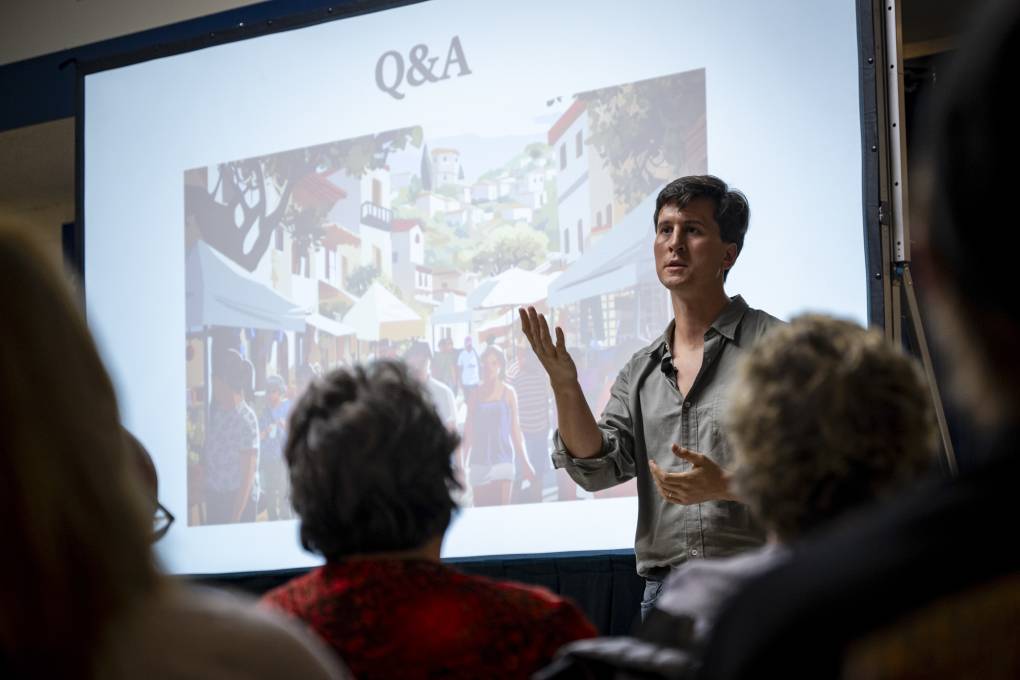
"caption": "Jan Sramek, CEO of California Forever, speaks during a town hall meeting in Rio Vista on Dec. 5, 2023, for the proposed California city backed by Silicon Valley investors on farmland in eastern Solano County.",
"description": null,
"title": "231205-SolanoCountyFarmers-61-BL-KQED",
"credit": "Beth LaBerge/KQED",
"status": "inherit",
"altTag": null,
"isLoading": false,
"fetchFailed": false
},
"news_11972764": {
"type": "attachments",
"id": "news_11972764",
"meta": {
"index": "attachments_1716263798",
"site": "news",
"id": "11972764",
"found": true
},
"parent": 0,
"imgSizes": {
"twentyfourteen-full-width": {
"file": "https://cdn.kqed.org/wp-content/uploads/sites/10/2024/01/240116-CA-FOREVER-GETTY-JE-KQED-1038x576.jpg",
"width": 1038,
"mimeType": "image/jpeg",
"height": 576
},
"thumbnail": {
"file": "https://cdn.kqed.org/wp-content/uploads/sites/10/2024/01/240116-CA-FOREVER-GETTY-JE-KQED-160x107.jpg",
"width": 160,
"mimeType": "image/jpeg",
"height": 107
},
"post-thumbnail": {
"file": "https://cdn.kqed.org/wp-content/uploads/sites/10/2024/01/240116-CA-FOREVER-GETTY-JE-KQED-672x372.jpg",
"width": 672,
"mimeType": "image/jpeg",
"height": 372
},
"kqedFullSize": {
"file": "https://cdn.kqed.org/wp-content/uploads/sites/10/2024/01/240116-CA-FOREVER-GETTY-JE-KQED.jpg",
"width": 2000,
"height": 1333
},
"large": {
"file": "https://cdn.kqed.org/wp-content/uploads/sites/10/2024/01/240116-CA-FOREVER-GETTY-JE-KQED-1020x680.jpg",
"width": 1020,
"mimeType": "image/jpeg",
"height": 680
},
"1536x1536": {
"file": "https://cdn.kqed.org/wp-content/uploads/sites/10/2024/01/240116-CA-FOREVER-GETTY-JE-KQED-1536x1024.jpg",
"width": 1536,
"mimeType": "image/jpeg",
"height": 1024
},
"full-width": {
"file": "https://cdn.kqed.org/wp-content/uploads/sites/10/2024/01/240116-CA-FOREVER-GETTY-JE-KQED-1920x1280.jpg",
"width": 1920,
"mimeType": "image/jpeg",
"height": 1280
},
"medium": {
"file": "https://cdn.kqed.org/wp-content/uploads/sites/10/2024/01/240116-CA-FOREVER-GETTY-JE-KQED-800x533.jpg",
"width": 800,
"mimeType": "image/jpeg",
"height": 533
}
},
"publishDate": 1705448265,
"modified": 1705448403,
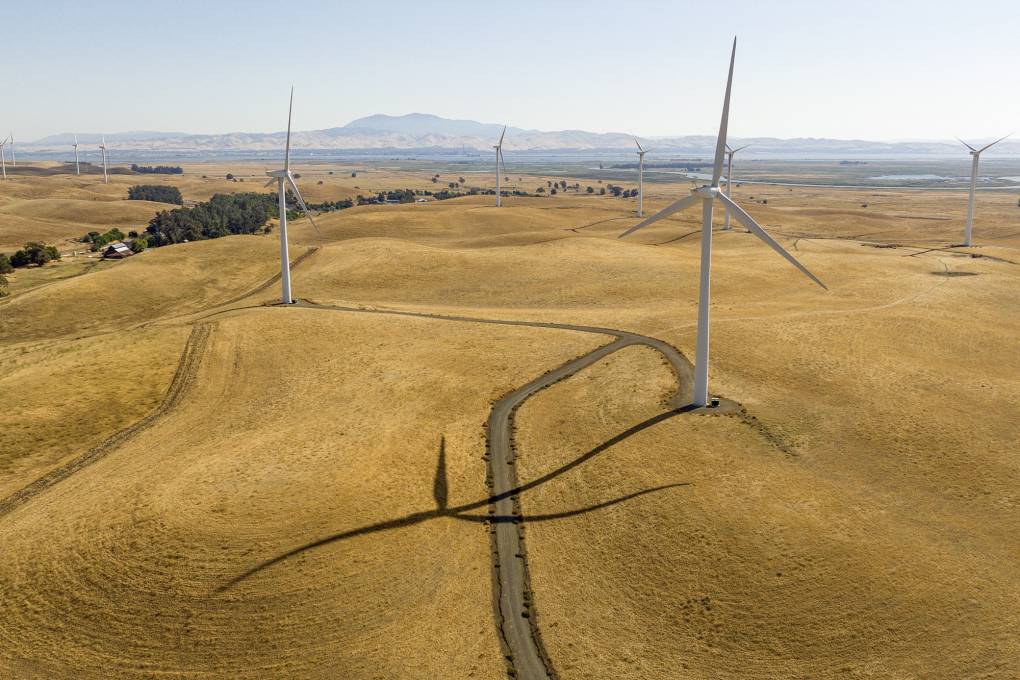
"caption": "A parcel of land recently purchased by Flannery Associates near Rio Vista on Sept. 15, 2023.",
"description": null,
"title": "US-TECH-LAND",
"credit": "Josh Edelson/AFP via Getty Images",
"status": "inherit",
"altTag": "Windmills atop golden hillsides with a large mountain in the distance.",
"isLoading": false,
"fetchFailed": false
},
"news_11969276": {
"type": "attachments",
"id": "news_11969276",
"meta": {
"index": "attachments_1716263798",
"site": "news",
"id": "11969276",
"found": true
},
"parent": 0,
"imgSizes": {
"twentyfourteen-full-width": {
"file": "https://cdn.kqed.org/wp-content/uploads/sites/10/2023/12/231205-SolanoCountyFarmers-03-BL-KQED-1038x576.jpg",
"width": 1038,
"mimeType": "image/jpeg",
"height": 576
},
"thumbnail": {
"file": "https://cdn.kqed.org/wp-content/uploads/sites/10/2023/12/231205-SolanoCountyFarmers-03-BL-KQED-160x107.jpg",
"width": 160,
"mimeType": "image/jpeg",
"height": 107
},
"post-thumbnail": {
"file": "https://cdn.kqed.org/wp-content/uploads/sites/10/2023/12/231205-SolanoCountyFarmers-03-BL-KQED-672x372.jpg",
"width": 672,
"mimeType": "image/jpeg",
"height": 372
},
"kqedFullSize": {
"file": "https://cdn.kqed.org/wp-content/uploads/sites/10/2023/12/231205-SolanoCountyFarmers-03-BL-KQED.jpg",
"width": 2000,
"height": 1333
},
"large": {
"file": "https://cdn.kqed.org/wp-content/uploads/sites/10/2023/12/231205-SolanoCountyFarmers-03-BL-KQED-1020x680.jpg",
"width": 1020,
"mimeType": "image/jpeg",
"height": 680
},
"1536x1536": {
"file": "https://cdn.kqed.org/wp-content/uploads/sites/10/2023/12/231205-SolanoCountyFarmers-03-BL-KQED-1536x1024.jpg",
"width": 1536,
"mimeType": "image/jpeg",
"height": 1024
},
"full-width": {
"file": "https://cdn.kqed.org/wp-content/uploads/sites/10/2023/12/231205-SolanoCountyFarmers-03-BL-KQED-1920x1280.jpg",
"width": 1920,
"mimeType": "image/jpeg",
"height": 1280
},
"medium": {
"file": "https://cdn.kqed.org/wp-content/uploads/sites/10/2023/12/231205-SolanoCountyFarmers-03-BL-KQED-800x533.jpg",
"width": 800,
"mimeType": "image/jpeg",
"height": 533
}
},
"publishDate": 1701975660,
"modified": 1703209777,
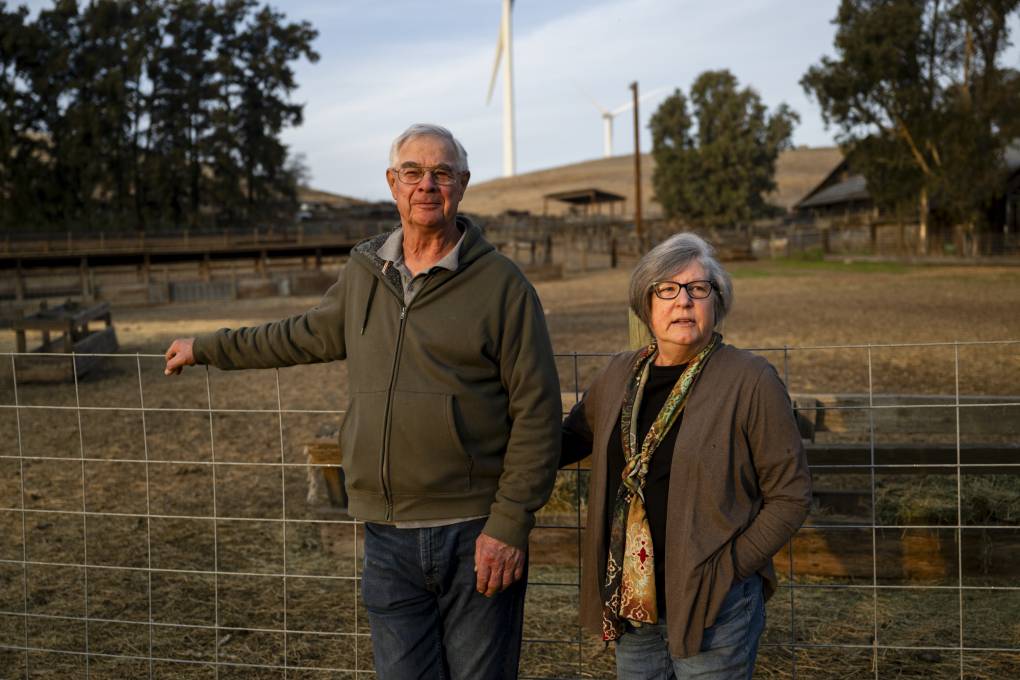
"caption": "Margaret and Ian Anderson stand on the farmland the Anderson family has owned for generations in Birds Landing, Solano County, on Dec. 5, 2023, before a town hall meeting for California Forever, a proposed new California city backed by Silicon Valley investors on farmland in eastern Solano County.",
"description": null,
"title": "231205-SolanoCountyFarmers-03-BL-KQED",
"credit": "Beth LaBerge/KQED",
"status": "inherit",
"altTag": "An older white man and an older white woman, stand on farmland looking at the camera.",
"isLoading": false,
"fetchFailed": false
},
"news_11968827": {
"type": "attachments",
"id": "news_11968827",
"meta": {
"index": "attachments_1716263798",
"site": "news",
"id": "11968827",
"found": true
},
"parent": 11968825,
"imgSizes": {
"twentyfourteen-full-width": {
"file": "https://ww2.kqed.org/app/uploads/sites/10/2023/12/IMG_4185-1038x576.jpg",
"width": 1038,
"mimeType": "image/jpeg",
"height": 576
},
"thumbnail": {
"file": "https://ww2.kqed.org/app/uploads/sites/10/2023/12/IMG_4185-160x120.jpg",
"width": 160,
"mimeType": "image/jpeg",
"height": 120
},
"post-thumbnail": {
"file": "https://ww2.kqed.org/app/uploads/sites/10/2023/12/IMG_4185-672x372.jpg",
"width": 672,
"mimeType": "image/jpeg",
"height": 372
},
"kqedFullSize": {
"file": "https://ww2.kqed.org/app/uploads/sites/10/2023/12/IMG_4185-scaled.jpg",
"width": 2560,
"height": 1920
},
"2048x2048": {
"file": "https://ww2.kqed.org/app/uploads/sites/10/2023/12/IMG_4185-2048x1536.jpg",
"width": 2048,
"mimeType": "image/jpeg",
"height": 1536
},
"large": {
"file": "https://ww2.kqed.org/app/uploads/sites/10/2023/12/IMG_4185-1020x765.jpg",
"width": 1020,
"mimeType": "image/jpeg",
"height": 765
},
"1536x1536": {
"file": "https://ww2.kqed.org/app/uploads/sites/10/2023/12/IMG_4185-1536x1152.jpg",
"width": 1536,
"mimeType": "image/jpeg",
"height": 1152
},
"full-width": {
"file": "https://ww2.kqed.org/app/uploads/sites/10/2023/12/IMG_4185-1920x1440.jpg",
"width": 1920,
"mimeType": "image/jpeg",
"height": 1440
},
"medium": {
"file": "https://ww2.kqed.org/app/uploads/sites/10/2023/12/IMG_4185-800x600.jpg",
"width": 800,
"mimeType": "image/jpeg",
"height": 600
}
},
"publishDate": 1701467258,
"modified": 1701467313,
"caption": "California Forever, the group funded by Silicon Valley investors who want to build a new city in Solano County, held its first town hall meeting in Vallejo on Wed, Nov. 29.",
"description": null,
"title": "IMG_4185",
"credit": "KQED/Adhiti Bandlamudi",
"status": "inherit",
"altTag": null,
"isLoading": false,
"fetchFailed": false
},
"news_11963415": {
"type": "attachments",
"id": "news_11963415",
"meta": {
"index": "attachments_1716263798",
"site": "news",
"id": "11963415",
"found": true
},
"parent": 0,
"imgSizes": {
"twentyfourteen-full-width": {
"file": "https://ww2.kqed.org/app/uploads/sites/10/2023/10/231004-Mychal-Threets-01-KQED-1038x576.jpg",
"width": 1038,
"mimeType": "image/jpeg",
"height": 576
},
"thumbnail": {
"file": "https://ww2.kqed.org/app/uploads/sites/10/2023/10/231004-Mychal-Threets-01-KQED-160x107.jpg",
"width": 160,
"mimeType": "image/jpeg",
"height": 107
},
"post-thumbnail": {
"file": "https://ww2.kqed.org/app/uploads/sites/10/2023/10/231004-Mychal-Threets-01-KQED-672x372.jpg",
"width": 672,
"mimeType": "image/jpeg",
"height": 372
},
"kqedFullSize": {
"file": "https://ww2.kqed.org/app/uploads/sites/10/2023/10/231004-Mychal-Threets-01-KQED.jpg",
"width": 2000,
"height": 1333
},
"large": {
"file": "https://ww2.kqed.org/app/uploads/sites/10/2023/10/231004-Mychal-Threets-01-KQED-1020x680.jpg",
"width": 1020,
"mimeType": "image/jpeg",
"height": 680
},
"1536x1536": {
"file": "https://ww2.kqed.org/app/uploads/sites/10/2023/10/231004-Mychal-Threets-01-KQED-1536x1024.jpg",
"width": 1536,
"mimeType": "image/jpeg",
"height": 1024
},
"full-width": {
"file": "https://ww2.kqed.org/app/uploads/sites/10/2023/10/231004-Mychal-Threets-01-KQED-1920x1280.jpg",
"width": 1920,
"mimeType": "image/jpeg",
"height": 1280
},
"medium": {
"file": "https://ww2.kqed.org/app/uploads/sites/10/2023/10/231004-Mychal-Threets-01-KQED-800x533.jpg",
"width": 800,
"mimeType": "image/jpeg",
"height": 533
}
},
"publishDate": 1696445984,
"modified": 1696520351,
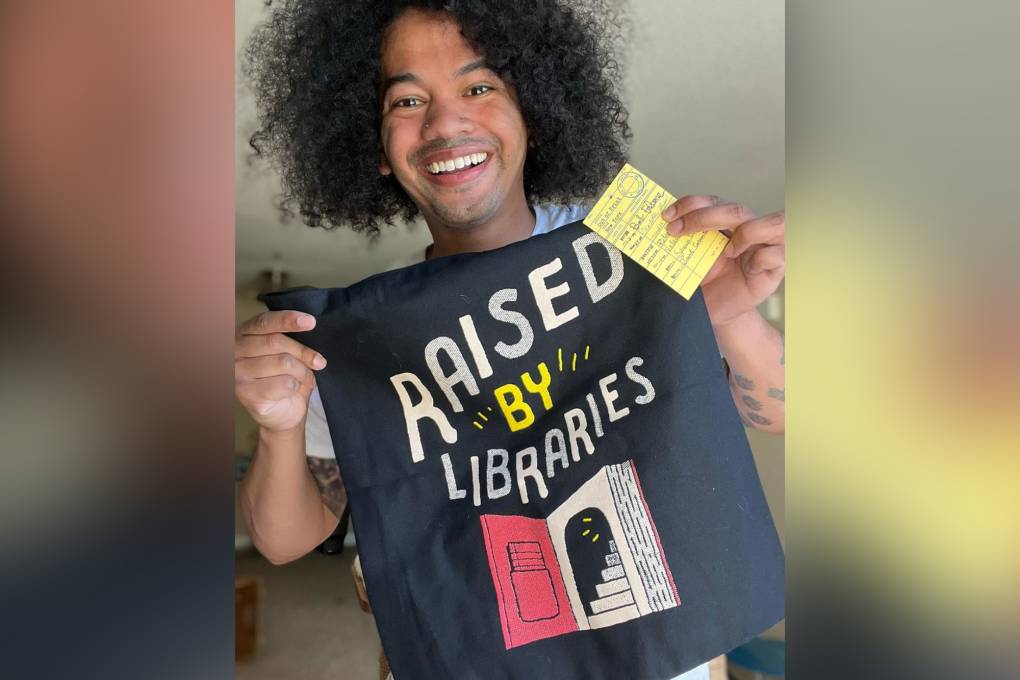
"caption": "A photo from Mychal Threets's Instagram account posted for National Library Week on April 23, 2023.",
"description": null,
"title": "231004-Mychal Threets-01-KQED",
"credit": "Photo via Instagram",
"status": "inherit",
"altTag": "A person holds up a tote bag that reads \"Raised by libraries\" and smiles at the camera.",
"isLoading": false,
"fetchFailed": false
},
"news_11959847": {
"type": "attachments",
"id": "news_11959847",
"meta": {
"index": "attachments_1716263798",
"site": "news",
"id": "11959847",
"found": true
},
"parent": 11959845,
"imgSizes": {
"twentyfourteen-full-width": {
"file": "https://ww2.kqed.org/app/uploads/sites/10/2023/08/GettyImages-1646870514-1024x576.jpg",
"width": 1024,
"mimeType": "image/jpeg",
"height": 576
},
"thumbnail": {
"file": "https://ww2.kqed.org/app/uploads/sites/10/2023/08/GettyImages-1646870514-160x103.jpg",
"width": 160,
"mimeType": "image/jpeg",
"height": 103
},
"post-thumbnail": {
"file": "https://ww2.kqed.org/app/uploads/sites/10/2023/08/GettyImages-1646870514-672x372.jpg",
"width": 672,
"mimeType": "image/jpeg",
"height": 372
},
"kqedFullSize": {
"file": "https://ww2.kqed.org/app/uploads/sites/10/2023/08/GettyImages-1646870514.jpg",
"width": 1024,
"height": 659
},
"large": {
"file": "https://ww2.kqed.org/app/uploads/sites/10/2023/08/GettyImages-1646870514-1020x656.jpg",
"width": 1020,
"mimeType": "image/jpeg",
"height": 656
},
"medium": {
"file": "https://ww2.kqed.org/app/uploads/sites/10/2023/08/GettyImages-1646870514-800x515.jpg",
"width": 800,
"mimeType": "image/jpeg",
"height": 515
}
},
"publishDate": 1693524354,
"modified": 1693524354,
"caption": "RIO VISTA, CALIFORNIA - AUGUST 29: In an aerial view, trucks work on a parcel of land that was recently purchased near Travis Air Force Base on August 29, 2023 near Rio Vista, California. Silicon Valley investors Michael Moritz, Reid Hoffman, Marc Andreessen and Chris Dixon are backing a company called Flannery Associates that has been buying large parcels of land adjacent to Travis Air Force base approximately 60 miles northeast of San Francisco. Flannery Associates has spent more than $800 million to secure thousands of acres of farmland, often paying over the market rate. The company hopes to convert the rural agricultural land into a community with housing and clean energy infrastructure for tens of thousands of residents. (Photo by Justin Sullivan/Getty Images)",
"description": null,
"title": "Silicon Valley Leaders And Investors Behind Company Purchasing Land In Solano County, California",
"credit": null,
"status": "inherit",
"altTag": null,
"isLoading": false,
"fetchFailed": false
},
"news_11959418": {
"type": "attachments",
"id": "news_11959418",
"meta": {
"index": "attachments_1716263798",
"site": "news",
"id": "11959418",
"found": true
},
"parent": 11959390,
"imgSizes": {
"twentyfourteen-full-width": {
"file": "https://ww2.kqed.org/app/uploads/sites/10/2023/08/RS68412_GettyImages-1495481919-1-qut-1038x576.jpg",
"width": 1038,
"mimeType": "image/jpeg",
"height": 576
},
"thumbnail": {
"file": "https://ww2.kqed.org/app/uploads/sites/10/2023/08/RS68412_GettyImages-1495481919-1-qut-160x108.jpg",
"width": 160,
"mimeType": "image/jpeg",
"height": 108
},
"post-thumbnail": {
"file": "https://ww2.kqed.org/app/uploads/sites/10/2023/08/RS68412_GettyImages-1495481919-1-qut-672x372.jpg",
"width": 672,
"mimeType": "image/jpeg",
"height": 372
},
"kqedFullSize": {
"file": "https://ww2.kqed.org/app/uploads/sites/10/2023/08/RS68412_GettyImages-1495481919-1-qut.jpg",
"width": 2000,
"height": 1347
},
"large": {
"file": "https://ww2.kqed.org/app/uploads/sites/10/2023/08/RS68412_GettyImages-1495481919-1-qut-1020x687.jpg",
"width": 1020,
"mimeType": "image/jpeg",
"height": 687
},
"1536x1536": {
"file": "https://ww2.kqed.org/app/uploads/sites/10/2023/08/RS68412_GettyImages-1495481919-1-qut-1536x1034.jpg",
"width": 1536,
"mimeType": "image/jpeg",
"height": 1034
},
"full-width": {
"file": "https://ww2.kqed.org/app/uploads/sites/10/2023/08/RS68412_GettyImages-1495481919-1-qut-1920x1293.jpg",
"width": 1920,
"mimeType": "image/jpeg",
"height": 1293
},
"medium": {
"file": "https://ww2.kqed.org/app/uploads/sites/10/2023/08/RS68412_GettyImages-1495481919-1-qut-800x539.jpg",
"width": 800,
"mimeType": "image/jpeg",
"height": 539
}
},
"publishDate": 1693270672,
"modified": 1693327127,
"caption": "The small town of Rio Vista, located along the Sacramento River and Highway 12. The town's mayor said a group of Silicon Valley investors bought land surrounding the city and parcels within the city limits. ",
"description": null,
"title": "Aerial Photos of California's Delta",
"credit": "George Rose/Getty Images",
"status": "inherit",
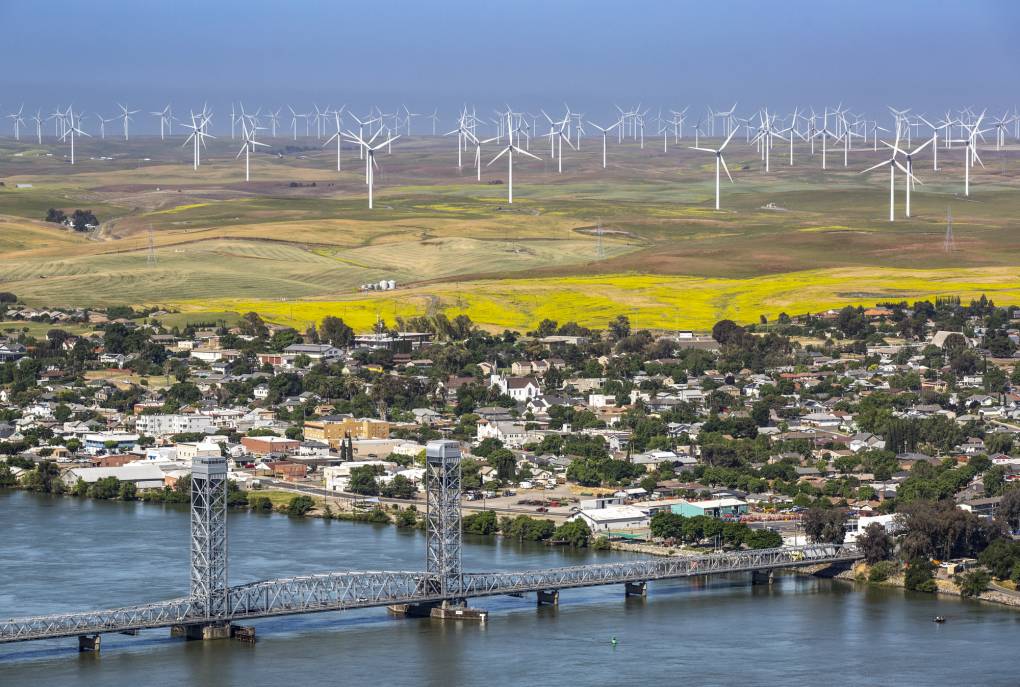
"altTag": "a town seen from above, next to a river, with fields and windmills in the background",
"isLoading": false,
"fetchFailed": false
},
"news_11959209": {
"type": "attachments",
"id": "news_11959209",
"meta": {
"index": "attachments_1716263798",
"site": "news",
"id": "11959209",
"found": true
},
"parent": 11959051,
"imgSizes": {
"twentyfourteen-full-width": {
"file": "https://ww2.kqed.org/app/uploads/sites/10/2023/08/TheBay_iTunesTile_01-1020x1020-1-1020x576.jpg",
"width": 1020,
"mimeType": "image/jpeg",
"height": 576
},
"thumbnail": {
"file": "https://ww2.kqed.org/app/uploads/sites/10/2023/08/TheBay_iTunesTile_01-1020x1020-1-160x160.jpg",
"width": 160,
"mimeType": "image/jpeg",
"height": 160
},
"post-thumbnail": {
"file": "https://ww2.kqed.org/app/uploads/sites/10/2023/08/TheBay_iTunesTile_01-1020x1020-1-672x372.jpg",
"width": 672,
"mimeType": "image/jpeg",
"height": 372
},
"kqedFullSize": {
"file": "https://ww2.kqed.org/app/uploads/sites/10/2023/08/TheBay_iTunesTile_01-1020x1020-1.jpg",
"width": 1020,
"height": 1020
},
"medium": {
"file": "https://ww2.kqed.org/app/uploads/sites/10/2023/08/TheBay_iTunesTile_01-1020x1020-1-800x800.jpg",
"width": 800,
"mimeType": "image/jpeg",
"height": 800
}
},
"publishDate": 1692992131,
"modified": 1692992131,
"caption": null,
"description": null,
"title": "TheBay_iTunesTile_01-1020x1020",
"credit": null,
"status": "inherit",
"altTag": null,
"isLoading": false,
"fetchFailed": false
},
"news_11957214": {
"type": "attachments",
"id": "news_11957214",
"meta": {
"index": "attachments_1716263798",
"site": "news",
"id": "11957214",
"found": true
},
"parent": 0,
"imgSizes": {
"twentyfourteen-full-width": {
"file": "https://ww2.kqed.org/app/uploads/sites/10/2023/08/GettyImages-1371458544-1038x576.jpg",
"width": 1038,
"mimeType": "image/jpeg",
"height": 576
},
"thumbnail": {
"file": "https://ww2.kqed.org/app/uploads/sites/10/2023/08/GettyImages-1371458544-160x107.jpg",
"width": 160,
"mimeType": "image/jpeg",
"height": 107
},
"post-thumbnail": {
"file": "https://ww2.kqed.org/app/uploads/sites/10/2023/08/GettyImages-1371458544-672x372.jpg",
"width": 672,
"mimeType": "image/jpeg",
"height": 372
},
"kqedFullSize": {
"file": "https://ww2.kqed.org/app/uploads/sites/10/2023/08/GettyImages-1371458544-scaled.jpg",
"width": 2560,
"height": 1709
},
"2048x2048": {
"file": "https://ww2.kqed.org/app/uploads/sites/10/2023/08/GettyImages-1371458544-2048x1367.jpg",
"width": 2048,
"mimeType": "image/jpeg",
"height": 1367
},
"large": {
"file": "https://ww2.kqed.org/app/uploads/sites/10/2023/08/GettyImages-1371458544-1020x681.jpg",
"width": 1020,
"mimeType": "image/jpeg",
"height": 681
},
"1536x1536": {
"file": "https://ww2.kqed.org/app/uploads/sites/10/2023/08/GettyImages-1371458544-1536x1025.jpg",
"width": 1536,
"mimeType": "image/jpeg",
"height": 1025
},
"full-width": {
"file": "https://ww2.kqed.org/app/uploads/sites/10/2023/08/GettyImages-1371458544-1920x1281.jpg",
"width": 1920,
"mimeType": "image/jpeg",
"height": 1281
},
"medium": {
"file": "https://ww2.kqed.org/app/uploads/sites/10/2023/08/GettyImages-1371458544-800x534.jpg",
"width": 800,
"mimeType": "image/jpeg",
"height": 534
}
},
"publishDate": 1691006232,
"modified": 1691011452,
"caption": "A KC-10 Extender is parked on the ramp as a C-5M Super Galaxy takes off at Travis Air Force Base in Solano County, March 16, 2017. ",
"description": null,
"title": "A KC-10 Extender is parked on the ramp as a C-5M Super Galaxy takes off at Travis Air Force Base, Calif., March 16, 2017.",
"credit": "Hum Images/Universal Images Group via Getty Images",
"status": "inherit",
"altTag": "A jet is parked on a tarmac. Another airplane takes off in the sky in the background. It's daytime.",
"isLoading": false,
"fetchFailed": false
},
"news_11942182": {
"type": "attachments",
"id": "news_11942182",
"meta": {
"index": "attachments_1716263798",
"site": "news",
"id": "11942182",
"found": true
},
"parent": 11942106,
"imgSizes": {
"twentyfourteen-full-width": {
"file": "https://ww2.kqed.org/app/uploads/sites/10/2023/02/RS46906_010_SanJose_AntiEvictionProtest_01272021-qut-1038x576.jpg",
"width": 1038,
"mimeType": "image/jpeg",
"height": 576
},
"thumbnail": {
"file": "https://ww2.kqed.org/app/uploads/sites/10/2023/02/RS46906_010_SanJose_AntiEvictionProtest_01272021-qut-160x107.jpg",
"width": 160,
"mimeType": "image/jpeg",
"height": 107
},
"post-thumbnail": {
"file": "https://ww2.kqed.org/app/uploads/sites/10/2023/02/RS46906_010_SanJose_AntiEvictionProtest_01272021-qut-672x372.jpg",
"width": 672,
"mimeType": "image/jpeg",
"height": 372
},
"kqedFullSize": {
"file": "https://ww2.kqed.org/app/uploads/sites/10/2023/02/RS46906_010_SanJose_AntiEvictionProtest_01272021-qut.jpg",
"width": 1920,
"height": 1280
},
"large": {
"file": "https://ww2.kqed.org/app/uploads/sites/10/2023/02/RS46906_010_SanJose_AntiEvictionProtest_01272021-qut-1020x680.jpg",
"width": 1020,
"mimeType": "image/jpeg",
"height": 680
},
"1536x1536": {
"file": "https://ww2.kqed.org/app/uploads/sites/10/2023/02/RS46906_010_SanJose_AntiEvictionProtest_01272021-qut-1536x1024.jpg",
"width": 1536,
"mimeType": "image/jpeg",
"height": 1024
},
"medium": {
"file": "https://ww2.kqed.org/app/uploads/sites/10/2023/02/RS46906_010_SanJose_AntiEvictionProtest_01272021-qut-800x533.jpg",
"width": 800,
"mimeType": "image/jpeg",
"height": 533
}
},
"publishDate": 1677633410,
"modified": 1677633452,
"caption": "An anti-eviction protester stands in front of Santa Clara County Superior Court on Jan. 27, 2021, during a demonstration calling for stronger statewide eviction protections.",
"description": null,
"title": "RS46906_010_SanJose_AntiEvictionProtest_01272021-qut",
"credit": "Beth LaBerge/KQED",
"status": "inherit",
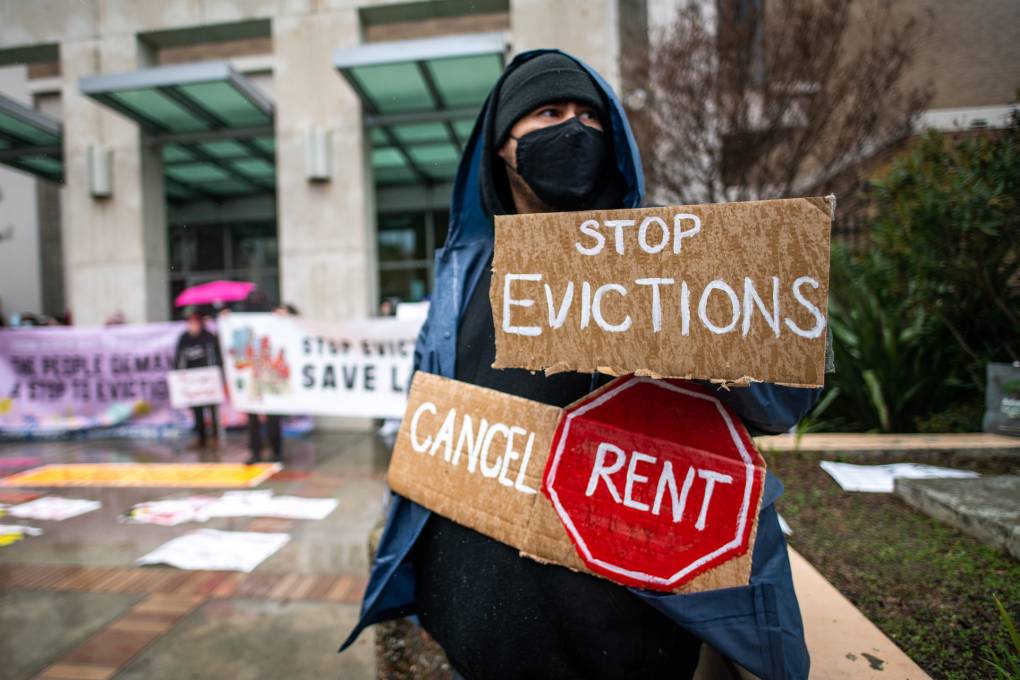
"altTag": "A protester holds up a sign that says \"Stop Evictions, Cancel Rent.\"",
"isLoading": false,
"fetchFailed": false
},
"news_11934911": {
"type": "attachments",
"id": "news_11934911",
"meta": {
"index": "attachments_1716263798",
"site": "news",
"id": "11934911",
"found": true
},
"parent": 11934868,
"imgSizes": {
"twentyfourteen-full-width": {
"file": "https://ww2.kqed.org/app/uploads/sites/10/2022/12/RS50433_006_Emeryville_COVIDMasks_07282021-qut-1038x576.jpg",
"width": 1038,
"mimeType": "image/jpeg",
"height": 576
},
"thumbnail": {
"file": "https://ww2.kqed.org/app/uploads/sites/10/2022/12/RS50433_006_Emeryville_COVIDMasks_07282021-qut-160x107.jpg",
"width": 160,
"mimeType": "image/jpeg",
"height": 107
},
"post-thumbnail": {
"file": "https://ww2.kqed.org/app/uploads/sites/10/2022/12/RS50433_006_Emeryville_COVIDMasks_07282021-qut-672x372.jpg",
"width": 672,
"mimeType": "image/jpeg",
"height": 372
},
"kqedFullSize": {
"file": "https://ww2.kqed.org/app/uploads/sites/10/2022/12/RS50433_006_Emeryville_COVIDMasks_07282021-qut.jpg",
"width": 1920,
"height": 1280
},
"large": {
"file": "https://ww2.kqed.org/app/uploads/sites/10/2022/12/RS50433_006_Emeryville_COVIDMasks_07282021-qut-1020x680.jpg",
"width": 1020,
"mimeType": "image/jpeg",
"height": 680
},
"1536x1536": {
"file": "https://ww2.kqed.org/app/uploads/sites/10/2022/12/RS50433_006_Emeryville_COVIDMasks_07282021-qut-1536x1024.jpg",
"width": 1536,
"mimeType": "image/jpeg",
"height": 1024
},
"medium": {
"file": "https://ww2.kqed.org/app/uploads/sites/10/2022/12/RS50433_006_Emeryville_COVIDMasks_07282021-qut-800x533.jpg",
"width": 800,
"mimeType": "image/jpeg",
"height": 533
}
},
"publishDate": 1670634672,
"modified": 1670636148,
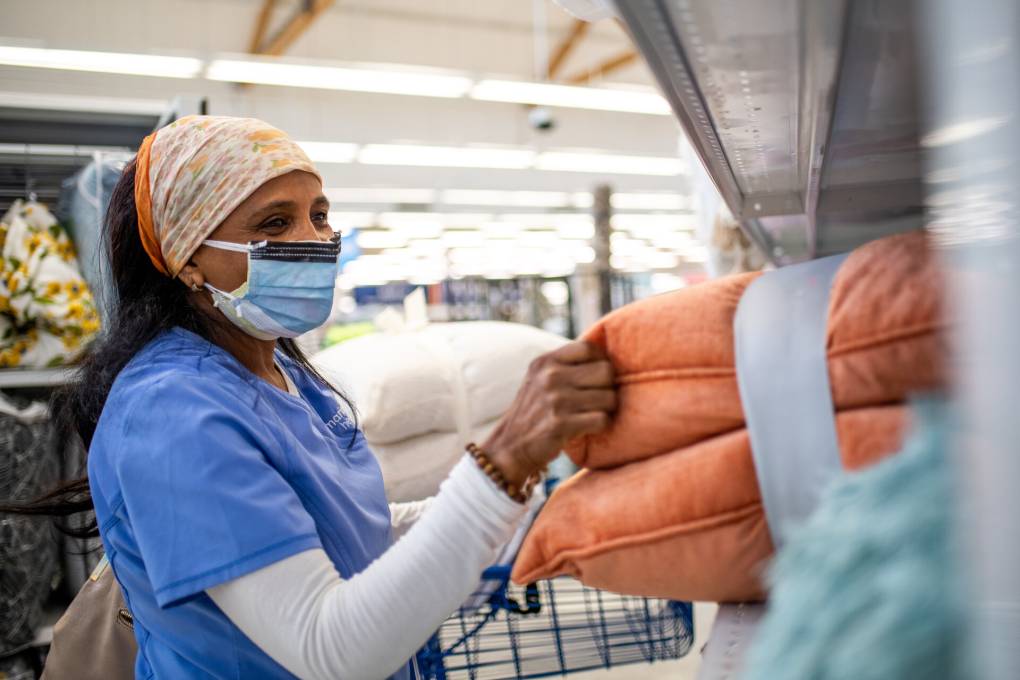
"caption": "A woman wearing a mask shops at Ross in Emeryville in July 2021. As COVID hospitalization rates tick upward, officials in some Bay Area counties are again requiring masking in certain high-risk settings — while also recommending masking in public settings such as crowded stores.",
"description": null,
"title": "Teberh Gebreslassie shops at Ross in Emeryville on July 28, 2021.",
"credit": "Beth LaBerge/KQED",
"status": "inherit",
"altTag": "a woman with smiling eyes wearing a mask and blue short sleeve shirt with long sleeve white shirt underneath examines some bedding on the shelf of a department store",
"isLoading": false,
"fetchFailed": false
}
},
"audioPlayerReducer": {
"postId": "stream_live",
"isPaused": true,
"isPlaying": false,
"pfsActive": false,
"pledgeModalIsOpen": true,
"playerDrawerIsOpen": false,
"liveAudioPlayStartedAt": 0,
"liveAudioPlayContext": ""
},
"authorsReducer": {
"ecruzguevarra": {
"type": "authors",
"id": "8654",
"meta": {
"index": "authors_1716337520",
"id": "8654",
"found": true
},
"name": "Ericka Cruz Guevarra",
"firstName": "Ericka",
"lastName": "Cruz Guevarra",
"slug": "ecruzguevarra",
"email": "ecruzguevarra@kqed.org",
"display_author_email": true,
"staff_mastheads": [
"news"
],
"title": "Producer, The Bay Podcast",
"bio": "Ericka Cruz Guevarra is host of \u003ca href=\"https://www.kqed.org/podcasts/thebay\">\u003cem>The Bay\u003c/em>\u003c/a> podcast at KQED. Before host, she was the show’s producer. Her work in that capacity includes a three-part reported series on policing in Vallejo, which won a 2020 excellence in journalism award from the Society of Professional Journalists. Ericka has worked as a breaking news reporter at Oregon Public Broadcasting, helped produce the Code Switch podcast, and was KQED’s inaugural Raul Ramirez Diversity Fund intern. She’s also an alumna of NPR’s Next Generation Radio program. Send her an email if you have strong feelings about whether Fairfield and Suisun City are the Bay. Ericka is represented by SAG-AFTRA.",
"avatar": "https://secure.gravatar.com/avatar/accefc1de4bafc7e234b69bcb9b6f6536c130fd84709bc3069ef11a78787e1bb?s=600&d=blank&r=g",
"twitter": "NotoriousECG",
"bluesky": null,
"facebook": null,
"instagram": null,
"linkedin": null,
"sites": [
{
"site": "arts",
"roles": [
"subscriber"
]
},
{
"site": "news",
"roles": [
"editor",
"manage_categories"
]
},
{
"site": "futureofyou",
"roles": [
"subscriber"
]
},
{
"site": "stateofhealth",
"roles": [
"subscriber"
]
},
{
"site": "science",
"roles": [
"editor"
]
},
{
"site": "forum",
"roles": [
"subscriber"
]
}
],
"headData": {
"title": "Ericka Cruz Guevarra | KQED",
"description": "Producer, The Bay Podcast",
"ogImgSrc": "https://secure.gravatar.com/avatar/accefc1de4bafc7e234b69bcb9b6f6536c130fd84709bc3069ef11a78787e1bb?s=600&d=blank&r=g",
"twImgSrc": "https://secure.gravatar.com/avatar/accefc1de4bafc7e234b69bcb9b6f6536c130fd84709bc3069ef11a78787e1bb?s=600&d=blank&r=g"
},
"isLoading": false,
"link": "/author/ecruzguevarra"
},
"bwatt": {
"type": "authors",
"id": "11238",
"meta": {
"index": "authors_1716337520",
"id": "11238",
"found": true
},
"name": "Brian Watt",
"firstName": "Brian",
"lastName": "Watt",
"slug": "bwatt",
"email": "bwatt@KQED.org",
"display_author_email": false,
"staff_mastheads": [
"news"
],
"title": "Morning News Anchor",
"bio": "Brian Watt is KQED's morning radio news anchor. He joined the KQED News team in April of 2016. Prior to that, he worked as a Reporter for KPCC in Los Angeles and a producer at \u003cem>Marketplace.\u003c/em>\r\n\r\nDuring eight years at KPCC, Brian covered business and economics, and his work won several awards. In 2008, he won the Los Angeles Press Club’s first-place award for Business and Financial Reporting, Broadcast. He’s also received honorable mention and been first runner up for the Press Club’s Radio Journalist of the Year. He won two Golden Mike awards from the Radio and TV News Association of Southern California.\r\n\r\nBrian holds degrees in theater from Yale University and the Sorbonne, and has worked as an actor in France, Italy, Brazil, Hungary and . . . Hollywood. He appeared in a few television shows, including \u003cem>The West Wing, Judging Amy\u003c/em> and \u003cem>The District.\u003c/em>\r\n\r\nEmail: bwatt@KQED.org Twitter: @RadioBWatt",
"avatar": "https://secure.gravatar.com/avatar/55393ff57ed34e2be773ba4789dd6a19?s=600&d=blank&r=g",
"twitter": "@RadioBWatt",
"facebook": null,
"instagram": null,
"linkedin": null,
"sites": [
{
"site": "arts",
"roles": [
"contributor"
]
},
{
"site": "news",
"roles": [
"editor"
]
}
],
"headData": {
"title": "Brian Watt | KQED",
"description": "Morning News Anchor",
"ogImgSrc": "https://secure.gravatar.com/avatar/55393ff57ed34e2be773ba4789dd6a19?s=600&d=blank&r=g",
"twImgSrc": "https://secure.gravatar.com/avatar/55393ff57ed34e2be773ba4789dd6a19?s=600&d=blank&r=g"
},
"isLoading": false,
"link": "/author/bwatt"
},
"vrancano": {
"type": "authors",
"id": "11276",
"meta": {
"index": "authors_1716337520",
"id": "11276",
"found": true
},
"name": "Vanessa Rancaño",
"firstName": "Vanessa",
"lastName": "Rancaño",
"slug": "vrancano",
"email": "vrancano@kqed.org",
"display_author_email": false,
"staff_mastheads": [
"news"
],
"title": "Reporter",
"bio": "Vanessa Rancaño is a features reporter for KQED. She’s also covered homelessness and education for the station and reported from the Central Valley. Her work has aired across public radio, from flagship national news shows to longform narrative podcasts. Before taking up a mic, she worked as a freelance print journalist. She’s been recognized with a number of national and regional awards. Vanessa grew up in California's Central Valley. She's a former NPR Kroc Fellow, and a graduate of the UC Berkeley Graduate School of Journalism.",
"avatar": "https://secure.gravatar.com/avatar/b3a383dfb0e7ee1c17568f2cf067904ab654d6e3de9743fc661f3c788ade1bed?s=600&d=blank&r=g",
"twitter": "vanessarancano",
"bluesky": null,
"facebook": null,
"instagram": null,
"linkedin": null,
"sites": [
{
"site": "arts",
"roles": [
"editor"
]
},
{
"site": "news",
"roles": [
"editor"
]
},
{
"site": "liveblog",
"roles": [
"contributor"
]
}
],
"headData": {
"title": "Vanessa Rancaño | KQED",
"description": "Reporter",
"ogImgSrc": "https://secure.gravatar.com/avatar/b3a383dfb0e7ee1c17568f2cf067904ab654d6e3de9743fc661f3c788ade1bed?s=600&d=blank&r=g",
"twImgSrc": "https://secure.gravatar.com/avatar/b3a383dfb0e7ee1c17568f2cf067904ab654d6e3de9743fc661f3c788ade1bed?s=600&d=blank&r=g"
},
"isLoading": false,
"link": "/author/vrancano"
},
"amontecillo": {
"type": "authors",
"id": "11649",
"meta": {
"index": "authors_1716337520",
"id": "11649",
"found": true
},
"name": "Alan Montecillo",
"firstName": "Alan",
"lastName": "Montecillo",
"slug": "amontecillo",
"email": "amontecillo@kqed.org",
"display_author_email": false,
"staff_mastheads": [
"news"
],
"title": "KQED Contributor",
"bio": "Alan Montecillo is the senior editor of \u003cem>\u003ca href=\"http://kqed.org/thebay\">The Bay\u003c/a>, \u003c/em> KQED's local news podcast. Before moving to the Bay Area, he worked as a senior talk show producer for WILL in Champaign-Urbana, Illinois and at Oregon Public Broadcasting in Portland, Oregon. He has won journalism awards from the Society of Professional Journalists Northern California, the Public Media Journalists Association, The Signal Awards, and has also received a regional Edward R. Murrow award. Alan is a Filipino American from Hong Kong and a graduate of Reed College.",
"avatar": "https://secure.gravatar.com/avatar/268f53a2066899ea9efdd8a5900218b17c822d9862cbc9326cccec53ef41d349?s=600&d=blank&r=g",
"twitter": "alanmontecillo",
"bluesky": null,
"facebook": null,
"instagram": null,
"linkedin": null,
"sites": [
{
"site": "",
"roles": [
"editor"
]
},
{
"site": "news",
"roles": [
"editor",
"manage_categories"
]
}
],
"headData": {
"title": "Alan Montecillo | KQED",
"description": "KQED Contributor",
"ogImgSrc": "https://secure.gravatar.com/avatar/268f53a2066899ea9efdd8a5900218b17c822d9862cbc9326cccec53ef41d349?s=600&d=blank&r=g",
"twImgSrc": "https://secure.gravatar.com/avatar/268f53a2066899ea9efdd8a5900218b17c822d9862cbc9326cccec53ef41d349?s=600&d=blank&r=g"
},
"isLoading": false,
"link": "/author/amontecillo"
},
"ebaldassari": {
"type": "authors",
"id": "11652",
"meta": {
"index": "authors_1716337520",
"id": "11652",
"found": true
},
"name": "Erin Baldassari",
"firstName": "Erin",
"lastName": "Baldassari",
"slug": "ebaldassari",
"email": "ebaldassari@KQED.org",
"display_author_email": true,
"staff_mastheads": [
"news"
],
"title": "Staff Writer",
"bio": "Erin Baldassari covers housing for KQED. She's a former print journalist and most recently worked as the transportation reporter for the \u003cem>Mercury News\u003c/em> and \u003cem>East Bay Times. \u003c/em>There, she focused on how the Bay Area’s housing shortage has changed the way people move around the region. She also served on the \u003cem>East Bay Times\u003c/em>’ 2017 Pulitzer Prize-winning team for coverage of the Ghost Ship Fire in Oakland. Prior to that, Erin worked as a breaking news and general assignment reporter for a variety of outlets in the Bay Area and the greater Boston area. A Tufts University alumna, Erin grew up in the foothills of the Sierra Nevada mountains and in Sonoma County. She is a life-long KQED listener.",
"avatar": "https://secure.gravatar.com/avatar/5e95cad64a8ca08288082212e199d2b0cbeb4fd8e8ef5339395f361032bbe005?s=600&d=blank&r=g",
"twitter": "e_baldi",
"bluesky": null,
"facebook": null,
"instagram": null,
"linkedin": null,
"sites": [
{
"site": "news",
"roles": [
"edit_others_posts",
"editor"
]
},
{
"site": "science",
"roles": [
"editor"
]
},
{
"site": "liveblog",
"roles": [
"editor"
]
}
],
"headData": {
"title": "Erin Baldassari | KQED",
"description": "Staff Writer",
"ogImgSrc": "https://secure.gravatar.com/avatar/5e95cad64a8ca08288082212e199d2b0cbeb4fd8e8ef5339395f361032bbe005?s=600&d=blank&r=g",
"twImgSrc": "https://secure.gravatar.com/avatar/5e95cad64a8ca08288082212e199d2b0cbeb4fd8e8ef5339395f361032bbe005?s=600&d=blank&r=g"
},
"isLoading": false,
"link": "/author/ebaldassari"
},
"abandlamudi": {
"type": "authors",
"id": "11672",
"meta": {
"index": "authors_1716337520",
"id": "11672",
"found": true
},
"name": "Adhiti Bandlamudi",
"firstName": "Adhiti",
"lastName": "Bandlamudi",
"slug": "abandlamudi",
"email": "abandlamudi@kqed.org",
"display_author_email": false,
"staff_mastheads": [
"news"
],
"title": "KQED Housing Reporter",
"bio": "Adhiti Bandlamudi reports for KQED's Housing desk. She focuses on how housing gets built across the Bay Area. Before joining KQED in 2020, she reported for WUNC in Durham, North Carolina, WABE in Atlanta, Georgia and Capital Public Radio in Sacramento. In 2017, she was awarded a Kroc Fellowship at NPR where she reported on everything from sprinkles to the Golden State Killer's arrest. When she's not reporting, she's baking new recipes in her kitchen or watching movies with friends and family. She's originally from Georgia and has strong opinions about Great British Bake Off.",
"avatar": "https://secure.gravatar.com/avatar/868129c8b257bb99a3500e2c86a65400?s=600&d=mm&r=g",
"twitter": "oddity_adhiti",
"facebook": null,
"instagram": null,
"linkedin": null,
"sites": [
{
"site": "arts",
"roles": [
"author"
]
},
{
"site": "news",
"roles": [
"editor"
]
},
{
"site": "liveblog",
"roles": [
"author"
]
}
],
"headData": {
"title": "Adhiti Bandlamudi | KQED",
"description": "KQED Housing Reporter",
"ogImgSrc": "https://secure.gravatar.com/avatar/868129c8b257bb99a3500e2c86a65400?s=600&d=mm&r=g",
"twImgSrc": "https://secure.gravatar.com/avatar/868129c8b257bb99a3500e2c86a65400?s=600&d=mm&r=g"
},
"isLoading": false,
"link": "/author/abandlamudi"
},
"agonzalez": {
"type": "authors",
"id": "11724",
"meta": {
"index": "authors_1716337520",
"id": "11724",
"found": true
},
"name": "Alexander Gonzalez",
"firstName": "Alexander",
"lastName": "Gonzalez",
"slug": "agonzalez",
"email": "AlexanderGonzalez@KQED.org",
"display_author_email": false,
"staff_mastheads": [
"news"
],
"title": "KQED Contributor",
"bio": null,
"avatar": "https://secure.gravatar.com/avatar/9e291ed34e154df4c662edf858b641d70b4859939bfe40be478408f9dfd057d2?s=600&d=blank&r=g",
"twitter": null,
"bluesky": null,
"facebook": null,
"instagram": null,
"linkedin": null,
"sites": [
{
"site": "arts",
"roles": [
"editor"
]
},
{
"site": "news",
"roles": [
"editor"
]
},
{
"site": "science",
"roles": [
"editor"
]
}
],
"headData": {
"title": "Alexander Gonzalez | KQED",
"description": "KQED Contributor",
"ogImgSrc": "https://secure.gravatar.com/avatar/9e291ed34e154df4c662edf858b641d70b4859939bfe40be478408f9dfd057d2?s=600&d=blank&r=g",
"twImgSrc": "https://secure.gravatar.com/avatar/9e291ed34e154df4c662edf858b641d70b4859939bfe40be478408f9dfd057d2?s=600&d=blank&r=g"
},
"isLoading": false,
"link": "/author/agonzalez"
},
"mesquinca": {
"type": "authors",
"id": "11802",
"meta": {
"index": "authors_1716337520",
"id": "11802",
"found": true
},
"name": "Maria Esquinca",
"firstName": "Maria",
"lastName": "Esquinca",
"slug": "mesquinca",
"email": "mesquinca@kqed.org",
"display_author_email": false,
"staff_mastheads": [],
"title": "Producer, The Bay",
"bio": "María Esquinca is a producer of The Bay. Before that, she was a New York Women’s Foundation IGNITE Fellow at Latino USA. She worked at Radio Bilingue where she covered the San Joaquin Valley. Maria has interned at WLRN, News 21, The New York Times Student Journalism Institute and at Crain’s Detroit Business as a Dow Jones News Fund Business Reporting Intern. She is an MFA graduate from the University of Miami. In 2017, she graduated from the Walter Cronkite School of Journalism and Mass Communication with a Master of Mass Communication. A fronteriza, she was born in Ciudad Juárez, Chihuahua, Mexico and grew up in El Paso, Texas.",
"avatar": "https://secure.gravatar.com/avatar/77cedba18aae91da775038ba06dcd8d0?s=600&d=blank&r=g",
"twitter": "@m_esquinca",
"facebook": null,
"instagram": null,
"linkedin": null,
"sites": [
{
"site": "news",
"roles": []
}
],
"headData": {
"title": "Maria Esquinca | KQED",
"description": "Producer, The Bay",
"ogImgSrc": "https://secure.gravatar.com/avatar/77cedba18aae91da775038ba06dcd8d0?s=600&d=blank&r=g",
"twImgSrc": "https://secure.gravatar.com/avatar/77cedba18aae91da775038ba06dcd8d0?s=600&d=blank&r=g"
},
"isLoading": false,
"link": "/author/mesquinca"
},
"apelit": {
"type": "authors",
"id": "11812",
"meta": {
"index": "authors_1716337520",
"id": "11812",
"found": true
},
"name": "Attila Pelit",
"firstName": "Attila",
"lastName": "Pelit",
"slug": "apelit",
"email": "apelit@kqed.org",
"display_author_email": false,
"staff_mastheads": [],
"title": "KQED Contributor",
"bio": null,
"avatar": "https://secure.gravatar.com/avatar/9b7b8a9e595d58a1f4d853f8608ae584?s=600&d=mm&r=g",
"twitter": null,
"facebook": null,
"instagram": null,
"linkedin": null,
"sites": [
{
"site": "news",
"roles": [
"editor"
]
},
{
"site": "science",
"roles": [
"editor"
]
},
{
"site": "elections",
"roles": [
"editor"
]
},
{
"site": "liveblog",
"roles": [
"editor"
]
}
],
"headData": {
"title": "Attila Pelit | KQED",
"description": "KQED Contributor",
"ogImgSrc": "https://secure.gravatar.com/avatar/9b7b8a9e595d58a1f4d853f8608ae584?s=600&d=mm&r=g",
"twImgSrc": "https://secure.gravatar.com/avatar/9b7b8a9e595d58a1f4d853f8608ae584?s=600&d=mm&r=g"
},
"isLoading": false,
"link": "/author/apelit"
},
"daisynguyen": {
"type": "authors",
"id": "11829",
"meta": {
"index": "authors_1716337520",
"id": "11829",
"found": true
},
"name": "Daisy Nguyen",
"firstName": "Daisy",
"lastName": "Nguyen",
"slug": "daisynguyen",
"email": "daisynguyen@kqed.org",
"display_author_email": true,
"staff_mastheads": [
"news"
],
"title": "KQED Contributor",
"bio": "I have covered early childhood education and child care for KQED since 2022. I focus on policies aimed at increasing access to early care and education and how they shape individual lives. I've been a journalist for more than two decades, with most of that time devoted to covering breaking news throughout California for The Associated Press. I grew up in San Francisco and studied at UC Davis and Columbia University's Graduate School of Journalism. I live in Oakland with my husband and two kids.",
"avatar": "https://secure.gravatar.com/avatar/2da2127c27f7143b53ebd419800fd55f?s=600&d=blank&r=g",
"twitter": null,
"facebook": null,
"instagram": null,
"linkedin": "https://www.linkedin.com/in/daisynguyen/",
"sites": [
{
"site": "news",
"roles": [
"author"
]
},
{
"site": "liveblog",
"roles": [
"author"
]
}
],
"headData": {
"title": "Daisy Nguyen | KQED",
"description": "KQED Contributor",
"ogImgSrc": "https://secure.gravatar.com/avatar/2da2127c27f7143b53ebd419800fd55f?s=600&d=blank&r=g",
"twImgSrc": "https://secure.gravatar.com/avatar/2da2127c27f7143b53ebd419800fd55f?s=600&d=blank&r=g"
},
"isLoading": false,
"link": "/author/daisynguyen"
},
"sjohnson": {
"type": "authors",
"id": "11840",
"meta": {
"index": "authors_1716337520",
"id": "11840",
"found": true
},
"name": "Sydney Johnson",
"firstName": "Sydney",
"lastName": "Johnson",
"slug": "sjohnson",
"email": "sjohnson@kqed.org",
"display_author_email": false,
"staff_mastheads": [
"news"
],
"title": "KQED Reporter",
"bio": "Sydney Johnson is a general assignment reporter at KQED. She previously reported on public health and city government at the San Francisco Examiner, and before that, she covered statewide education policy for EdSource. Her reporting has won multiple local, state and national awards. Sydney is a graduate of the University of California, Berkeley and lives in San Francisco.",
"avatar": "https://secure.gravatar.com/avatar/97855f2719b72ad6190b7c535fe642c8?s=600&d=blank&r=g",
"twitter": "sydneyfjohnson",
"facebook": null,
"instagram": null,
"linkedin": null,
"sites": [
{
"site": "news",
"roles": [
"editor"
]
}
],
"headData": {
"title": "Sydney Johnson | KQED",
"description": "KQED Reporter",
"ogImgSrc": "https://secure.gravatar.com/avatar/97855f2719b72ad6190b7c535fe642c8?s=600&d=blank&r=g",
"twImgSrc": "https://secure.gravatar.com/avatar/97855f2719b72ad6190b7c535fe642c8?s=600&d=blank&r=g"
},
"isLoading": false,
"link": "/author/sjohnson"
}
},
"pagesReducer": {
"news_tag_solano-county": {
"type": "terms",
"id": "news_23938",
"meta": {
"index": "terms_1716263798",
"site": "news",
"id": "23938",
"score": 9.55733
},
"featImg": null,
"name": "Solano County",
"description": null,
"taxonomy": "tag",
"headData": {
"twImgId": null,
"twTitle": null,
"ogTitle": null,
"ogImgId": null,
"twDescription": null,
"description": null,
"title": "Solano County Archives | KQED News",
"ogDescription": null
},
"ttid": 23955,
"slug": "solano-county",
"isLoading": false,
"title": "Solano County",
"pageMeta": {
"site": "news",
"WpPageTemplate": "page-topic-editorial",
"currentPage": 4
},
"blocks": [
{
"blockName": "kqed/post-list",
"attrs": {
"layout": "cardArticle2",
"query": "posts/news?tag=solano-county",
"seeMore": false,
"paginated": true,
"page": 4
}
},
{
"blockName": "kqed/ad"
}
]
}
},
"pfsSessionReducer": {},
"postsReducer": {
"stream_live": {
"type": "live",
"id": "stream_live",
"audioUrl": "https://streams.kqed.org/kqedradio",
"title": "Live Stream",
"excerpt": "Live Stream information currently unavailable.",
"link": "/radio",
"featImg": "",
"label": {
"name": "KQED Live",
"link": "/"
}
},
"stream_kqedNewscast": {
"type": "posts",
"id": "stream_kqedNewscast",
"audioUrl": "https://www.kqed.org/.stream/anon/radio/RDnews/newscast.mp3?_=1",
"title": "KQED Newscast",
"featImg": "",
"label": {
"name": "88.5 FM",
"link": "/"
}
},
"news_11976108": {
"type": "posts",
"id": "news_11976108",
"meta": {
"index": "posts_1716263798",
"site": "news",
"id": "11976108",
"score": null,
"sort": [
1708088409000
]
},
"guestAuthors": [],
"slug": "california-forever-faces-resistance-from-federal-lawmakers-and-local-leaders-in-solano-county",
"title": "California Forever Faces Resistance From Federal Lawmakers and Local Leaders in Solano County",
"publishDate": 1708088409,
"format": "standard",
"headTitle": "California Forever Faces Resistance From Federal Lawmakers and Local Leaders in Solano County | KQED",
"labelTerm": {
"site": "news"
},
"content": "\u003cp>Two federal lawmakers on Thursday joined a growing chorus of local elected officials raising concerns about California Forever’s \u003ca href=\"https://www.kqed.org/news/11972769/not-just-a-crazy-idea-california-forever-releases-ballot-details-for-new-bay-area-city\">proposal to build a new city\u003c/a> in Solano County.\u003c/p>\n\u003cp>And it comes as California Forever, a company with funding from noted tech billionaires, is seeking approval from voters for its plan to add shops, office and industrial space and enough homes for up to 400,000 new residents on what is now around 17,500 acres of farmland.\u003c/p>\n\u003cp>Democratic California Reps. John Garamendi and Mike Thompson said the development could impede training exercises for Travis Air Force personnel, strain the local water supply, and raise public transit infrastructure costs.\u003c/p>\n\u003cp>[pullquote size=\"medium\" align=\"right\" citation=\"Rep. John Garamendi (D-Calif.)\"]‘Bottom line is this is no place for a 400,000 person city.’[/pullquote]“My concern has always been our national security and our food security and the fact that the people of Solano County have a role in what happens in their county,” Thompson said. “I think this company has put all those issues at risk and violated the trust of the public.”\u003c/p>\n\u003cp>The comments made to reporters came after several local elected officials have been critical of the project, including Suisun Mayor Pro Tem Princess Washington, Solano County Supervisor Mitch Mashburn, Will Brazelton of the Solano County Farm Bureau and Vallejo Councilmember Charles Palmares.\u003c/p>\n\u003cfigure id=\"attachment_11976084\" class=\"wp-caption aligncenter\" style=\"max-width: 2160px\">\u003ca href=\"https://cdn.kqed.org/wp-content/uploads/sites/10/2024/02/01_Building-complete-neighborhoods_IMAGE-CREDIT_-Designed-by-SITELAB-urban-studio_CMG.jpg\">\u003cimg loading=\"lazy\" decoding=\"async\" class=\"size-full wp-image-11976084\" src=\"https://cdn.kqed.org/wp-content/uploads/sites/10/2024/02/01_Building-complete-neighborhoods_IMAGE-CREDIT_-Designed-by-SITELAB-urban-studio_CMG.jpg\" alt=\"An illustration of an aerial view of a large residential area and city.\" width=\"2160\" height=\"1215\" srcset=\"https://cdn.kqed.org/wp-content/uploads/sites/10/2024/02/01_Building-complete-neighborhoods_IMAGE-CREDIT_-Designed-by-SITELAB-urban-studio_CMG.jpg 2160w, https://cdn.kqed.org/wp-content/uploads/sites/10/2024/02/01_Building-complete-neighborhoods_IMAGE-CREDIT_-Designed-by-SITELAB-urban-studio_CMG-800x450.jpg 800w, https://cdn.kqed.org/wp-content/uploads/sites/10/2024/02/01_Building-complete-neighborhoods_IMAGE-CREDIT_-Designed-by-SITELAB-urban-studio_CMG-1020x574.jpg 1020w, https://cdn.kqed.org/wp-content/uploads/sites/10/2024/02/01_Building-complete-neighborhoods_IMAGE-CREDIT_-Designed-by-SITELAB-urban-studio_CMG-160x90.jpg 160w, https://cdn.kqed.org/wp-content/uploads/sites/10/2024/02/01_Building-complete-neighborhoods_IMAGE-CREDIT_-Designed-by-SITELAB-urban-studio_CMG-1536x864.jpg 1536w, https://cdn.kqed.org/wp-content/uploads/sites/10/2024/02/01_Building-complete-neighborhoods_IMAGE-CREDIT_-Designed-by-SITELAB-urban-studio_CMG-2048x1152.jpg 2048w, https://cdn.kqed.org/wp-content/uploads/sites/10/2024/02/01_Building-complete-neighborhoods_IMAGE-CREDIT_-Designed-by-SITELAB-urban-studio_CMG-1920x1080.jpg 1920w\" sizes=\"(max-width: 2160px) 100vw, 2160px\">\u003c/a>\u003cfigcaption class=\"wp-caption-text\">A rendering of California Forever’s proposed new city in Solano County. The company said it would include a mix of apartments and townhomes, along with shops, offices and industrial uses. \u003ccite>(Courtesy California Forever)\u003c/cite>\u003c/figcaption>\u003c/figure>\n\u003cp>In a statement following the formation of a new group opposed to the project called Solano Together, Mashburn decried California Forever’s ballot initiative as “shockingly light on real details.\u003c/p>\n\u003cp>[ad fullwidth]\u003c/p>\n\u003cp>[aside postID=\"news_11972769,news_11970694\" label=\"Related Stories\"]“Should the initiative qualify for a November ballot, our community will be asked to provide an up or down on the project,” he said. “We’d be asked to make this decision without basic facts needed to make an informed decision. That should make everyone concerned.”\u003c/p>\n\u003cp>But the company remains steadfast in its race to November’s ballot. Brian Brokaw, a spokesperson for the company, has great respect for elected officials but said, “They don’t get to make up their own ‘facts.’”\u003c/p>\n\u003cp>“The initiative spells out very clearly what the proposal is — and what it is not — and includes ten voter guarantees to ensure accountability,” he told KQED. “We are delighted with the feedback we are receiving from Solano voters since publishing the full plan this January and we know that the voters will make their own decisions based on the facts this November.”\u003c/p>\n\u003cp>But many local elected leaders remain skeptical as to why California Forever’s subsidiary company, Flannery Associates, began in 2017 buying tens of thousands of acres in the Montezuma Hills without revealing their identity or intentions until just last year.\u003c/p>\n\u003cp>Thompson and Garamendi have been vocal opponents of the project even before details emerged. Last July, before California Forever officially announced its plans, Garamendi, who serves on the House Armed Services Committee’s readiness panel, asked the Treasury Department’s Committee on Foreign Investment to investigate the land purchase. That inquiry prompted California Forever to go public with their plans in August.\u003c/p>\n\u003cfigure id=\"attachment_11976085\" class=\"wp-caption aligncenter\" style=\"max-width: 2160px\">\u003ca href=\"https://cdn.kqed.org/wp-content/uploads/sites/10/2024/02/02_Safe-and-slow-streets_IMAGE-CREDIT_-Designed-by-SITELAB-urban-studio_CMG.jpg\">\u003cimg loading=\"lazy\" decoding=\"async\" class=\"size-full wp-image-11976085\" src=\"https://cdn.kqed.org/wp-content/uploads/sites/10/2024/02/02_Safe-and-slow-streets_IMAGE-CREDIT_-Designed-by-SITELAB-urban-studio_CMG.jpg\" alt=\"An illustration of a neighborhood with trees and people sitting on benches and stairs of buildings.\" width=\"2160\" height=\"1215\" srcset=\"https://cdn.kqed.org/wp-content/uploads/sites/10/2024/02/02_Safe-and-slow-streets_IMAGE-CREDIT_-Designed-by-SITELAB-urban-studio_CMG.jpg 2160w, https://cdn.kqed.org/wp-content/uploads/sites/10/2024/02/02_Safe-and-slow-streets_IMAGE-CREDIT_-Designed-by-SITELAB-urban-studio_CMG-800x450.jpg 800w, https://cdn.kqed.org/wp-content/uploads/sites/10/2024/02/02_Safe-and-slow-streets_IMAGE-CREDIT_-Designed-by-SITELAB-urban-studio_CMG-1020x574.jpg 1020w, https://cdn.kqed.org/wp-content/uploads/sites/10/2024/02/02_Safe-and-slow-streets_IMAGE-CREDIT_-Designed-by-SITELAB-urban-studio_CMG-160x90.jpg 160w, https://cdn.kqed.org/wp-content/uploads/sites/10/2024/02/02_Safe-and-slow-streets_IMAGE-CREDIT_-Designed-by-SITELAB-urban-studio_CMG-1536x864.jpg 1536w, https://cdn.kqed.org/wp-content/uploads/sites/10/2024/02/02_Safe-and-slow-streets_IMAGE-CREDIT_-Designed-by-SITELAB-urban-studio_CMG-2048x1152.jpg 2048w, https://cdn.kqed.org/wp-content/uploads/sites/10/2024/02/02_Safe-and-slow-streets_IMAGE-CREDIT_-Designed-by-SITELAB-urban-studio_CMG-1920x1080.jpg 1920w\" sizes=\"(max-width: 2160px) 100vw, 2160px\">\u003c/a>\u003cfigcaption class=\"wp-caption-text\">A rendering of a residential street in the city California Forever is proposing to build in Solano County. \u003ccite>(Courtesy California Forever)\u003c/cite>\u003c/figcaption>\u003c/figure>\n\u003cp>Garamendi is particularly concerned about the Travis Air Force Base and how the development could interfere with operations there. In January, California Forever amended its ballot measure text to locate the town back farther away from the Air Force base, but Garamendi said light pollution from the proposed city could impact training for nighttime raids and sorties. The base also generates loud noises that Garamendi said could impact residents in the new city.\u003c/p>\n\u003cp>“Bottom line is this is no place for a 400,000 person city,” Garamendi said. “There is no way that Travis Air Force Base will be positively affected [by this development]. It’s all negative.”\u003c/p>\n\u003cp>On Wednesday, just a day before Garamendi and Thompson officially conveyed their concerns about the plan, California Forever announced in a \u003ca href=\"https://californiaforever.com/news/we-revised-our-initiative-to-provide-additional-protections-for-travis-afb\">blog post\u003c/a> that it would move the town even farther away from the base than initially proposed and create a “Travis Security Zone” which would double the size of the current area around the base from 7,971 acres to 14,900 acres.\u003c/p>\n\u003cfigure id=\"attachment_11976131\" class=\"wp-caption aligncenter\" style=\"max-width: 1476px\">\u003ca href=\"https://cdn.kqed.org/wp-content/uploads/sites/10/2024/02/Screenshot-2024-02-15-at-3.58.52-PM.png\">\u003cimg loading=\"lazy\" decoding=\"async\" class=\"size-full wp-image-11976131\" src=\"https://cdn.kqed.org/wp-content/uploads/sites/10/2024/02/Screenshot-2024-02-15-at-3.58.52-PM.png\" alt=\"\" width=\"1476\" height=\"1680\" srcset=\"https://cdn.kqed.org/wp-content/uploads/sites/10/2024/02/Screenshot-2024-02-15-at-3.58.52-PM.png 1476w, https://cdn.kqed.org/wp-content/uploads/sites/10/2024/02/Screenshot-2024-02-15-at-3.58.52-PM-800x911.png 800w, https://cdn.kqed.org/wp-content/uploads/sites/10/2024/02/Screenshot-2024-02-15-at-3.58.52-PM-1020x1161.png 1020w, https://cdn.kqed.org/wp-content/uploads/sites/10/2024/02/Screenshot-2024-02-15-at-3.58.52-PM-160x182.png 160w, https://cdn.kqed.org/wp-content/uploads/sites/10/2024/02/Screenshot-2024-02-15-at-3.58.52-PM-1349x1536.png 1349w\" sizes=\"(max-width: 1476px) 100vw, 1476px\">\u003c/a>\u003cfigcaption class=\"wp-caption-text\">A map showing the proposed area for the new city within Solano County. \u003ccite>(Courtesy California Forever)\u003c/cite>\u003c/figcaption>\u003c/figure>\n\u003cp>The base abuts the northwestern part of the new development. California Forever’s amended ballot initiative, which was filed on Wednesday, includes an additional 4,200 acres zoned as “Travis Compatible Infrastructure,” where the only permitted uses are “infrastructure, agriculture, and habitat preservation.” The residential areas of the new city will also be moved farther away from the base, and the downtown area will be relocated one mile south to address light pollution.\u003c/p>\n\u003cp>“We’re committed to being a strong and productive partner to the base and its families for decades to come and to supporting the critical role it plays for both our national security and for Solano County,” the blog post reads. “Our swift action to modify our plans and the initiative is proof of that unwavering commitment.”\u003c/p>\n\u003cp>But the amended ballot initiative only spurred more questions from officials who worry California Forever’s vision isn’t as clear as it appears. Garamendi raised questions about what kind of infrastructure would be included in the 4,200-acre zone and said his concerns about who will pay for that infrastructure remain unaddressed.\u003c/p>\n\u003cp>\u003c/p>\n\u003cp>“There are enormous issues of who is going to pay the cost of infrastructure,” Garamendi said. “Flannery [Associates] says they’ll pay their fair share. Guaranteed, the rest of Solano County will be picking up a huge tax bill here. My opposition to this [development] is even stronger today.”\u003c/p>\n\n",
"blocks": [],
"excerpt": "Opposition is mounting against a controversial plan from Silicon Valley tech billionaires to build a city from scratch in eastern Solano County. On Thursday, Reps. John Garamendi and Mike Thompson joined the fray.",
"status": "publish",
"parent": 0,
"modified": 1729027278,
"stats": {
"hasAudio": false,
"hasVideo": false,
"hasChartOrMap": false,
"iframeSrcs": [],
"hasGoogleForm": false,
"hasGallery": false,
"hasHearkenModule": false,
"hasPolis": false,
"paragraphCount": 20,
"wordCount": 1042
},
"headData": {
"title": "California Forever Faces Resistance From Federal Lawmakers and Local Leaders in Solano County | KQED",
"description": "Opposition is mounting against a controversial plan from Silicon Valley tech billionaires to build a city from scratch in eastern Solano County. On Thursday, Reps. John Garamendi and Mike Thompson joined the fray.",
"ogTitle": "",
"ogDescription": "",
"ogImgId": "",
"twTitle": "",
"twDescription": "",
"twImgId": "",
"schema": {
"@context": "https://schema.org",
"@type": "NewsArticle",
"headline": "California Forever Faces Resistance From Federal Lawmakers and Local Leaders in Solano County",
"datePublished": "2024-02-16T05:00:09-08:00",
"dateModified": "2024-10-15T14:21:18-07:00",
"image": "https://cdn.kqed.org/wp-content/uploads/2020/02/KQED-OG-Image@1x.png",
"isAccessibleForFree": "True",
"publisher": {
"@type": "NewsMediaOrganization",
"@id": "https://www.kqed.org/#organization",
"name": "KQED",
"logo": "https://cdn.kqed.org/wp-content/uploads/2020/02/KQED-OG-Image@1x.png",
"url": "https://www.kqed.org",
"sameAs": [
"https://www.facebook.com/KQED",
"https://twitter.com/KQED",
"https://www.instagram.com/kqed/",
"https://www.tiktok.com/@kqedofficial",
"https://www.linkedin.com/company/kqed",
"https://www.youtube.com/channel/UCeC0IOo7i1P_61zVUWbJ4nw"
]
}
}
},
"sticky": false,
"excludeFromSiteSearch": "Include",
"articleAge": "0",
"path": "/news/11976108/california-forever-faces-resistance-from-federal-lawmakers-and-local-leaders-in-solano-county",
"audioTrackLength": null,
"parsedContent": [
{
"type": "contentString",
"content": "\u003cdiv class=\"post-body\">\u003cp>\u003cp>Two federal lawmakers on Thursday joined a growing chorus of local elected officials raising concerns about California Forever’s \u003ca href=\"https://www.kqed.org/news/11972769/not-just-a-crazy-idea-california-forever-releases-ballot-details-for-new-bay-area-city\">proposal to build a new city\u003c/a> in Solano County.\u003c/p>\n\u003cp>And it comes as California Forever, a company with funding from noted tech billionaires, is seeking approval from voters for its plan to add shops, office and industrial space and enough homes for up to 400,000 new residents on what is now around 17,500 acres of farmland.\u003c/p>\n\u003cp>Democratic California Reps. John Garamendi and Mike Thompson said the development could impede training exercises for Travis Air Force personnel, strain the local water supply, and raise public transit infrastructure costs.\u003c/p>\n\u003cp>\u003c/p>\u003c/div>",
"attributes": {
"named": {},
"numeric": []
}
},
{
"type": "component",
"content": "‘Bottom line is this is no place for a 400,000 person city.’",
"name": "pullquote",
"attributes": {
"named": {
"size": "medium",
"align": "right",
"citation": "Rep. John Garamendi (D-Calif.)",
"label": ""
},
"numeric": []
}
},
{
"type": "contentString",
"content": "\u003cdiv class=\"post-body\">\u003cp>“My concern has always been our national security and our food security and the fact that the people of Solano County have a role in what happens in their county,” Thompson said. “I think this company has put all those issues at risk and violated the trust of the public.”\u003c/p>\n\u003cp>The comments made to reporters came after several local elected officials have been critical of the project, including Suisun Mayor Pro Tem Princess Washington, Solano County Supervisor Mitch Mashburn, Will Brazelton of the Solano County Farm Bureau and Vallejo Councilmember Charles Palmares.\u003c/p>\n\u003cfigure id=\"attachment_11976084\" class=\"wp-caption aligncenter\" style=\"max-width: 2160px\">\u003ca href=\"https://cdn.kqed.org/wp-content/uploads/sites/10/2024/02/01_Building-complete-neighborhoods_IMAGE-CREDIT_-Designed-by-SITELAB-urban-studio_CMG.jpg\">\u003cimg loading=\"lazy\" decoding=\"async\" class=\"size-full wp-image-11976084\" src=\"https://cdn.kqed.org/wp-content/uploads/sites/10/2024/02/01_Building-complete-neighborhoods_IMAGE-CREDIT_-Designed-by-SITELAB-urban-studio_CMG.jpg\" alt=\"An illustration of an aerial view of a large residential area and city.\" width=\"2160\" height=\"1215\" srcset=\"https://cdn.kqed.org/wp-content/uploads/sites/10/2024/02/01_Building-complete-neighborhoods_IMAGE-CREDIT_-Designed-by-SITELAB-urban-studio_CMG.jpg 2160w, https://cdn.kqed.org/wp-content/uploads/sites/10/2024/02/01_Building-complete-neighborhoods_IMAGE-CREDIT_-Designed-by-SITELAB-urban-studio_CMG-800x450.jpg 800w, https://cdn.kqed.org/wp-content/uploads/sites/10/2024/02/01_Building-complete-neighborhoods_IMAGE-CREDIT_-Designed-by-SITELAB-urban-studio_CMG-1020x574.jpg 1020w, https://cdn.kqed.org/wp-content/uploads/sites/10/2024/02/01_Building-complete-neighborhoods_IMAGE-CREDIT_-Designed-by-SITELAB-urban-studio_CMG-160x90.jpg 160w, https://cdn.kqed.org/wp-content/uploads/sites/10/2024/02/01_Building-complete-neighborhoods_IMAGE-CREDIT_-Designed-by-SITELAB-urban-studio_CMG-1536x864.jpg 1536w, https://cdn.kqed.org/wp-content/uploads/sites/10/2024/02/01_Building-complete-neighborhoods_IMAGE-CREDIT_-Designed-by-SITELAB-urban-studio_CMG-2048x1152.jpg 2048w, https://cdn.kqed.org/wp-content/uploads/sites/10/2024/02/01_Building-complete-neighborhoods_IMAGE-CREDIT_-Designed-by-SITELAB-urban-studio_CMG-1920x1080.jpg 1920w\" sizes=\"(max-width: 2160px) 100vw, 2160px\">\u003c/a>\u003cfigcaption class=\"wp-caption-text\">A rendering of California Forever’s proposed new city in Solano County. The company said it would include a mix of apartments and townhomes, along with shops, offices and industrial uses. \u003ccite>(Courtesy California Forever)\u003c/cite>\u003c/figcaption>\u003c/figure>\n\u003cp>In a statement following the formation of a new group opposed to the project called Solano Together, Mashburn decried California Forever’s ballot initiative as “shockingly light on real details.\u003c/p>\n\u003cp>\u003c/p>\u003c/div>",
"attributes": {
"named": {},
"numeric": []
}
},
{
"type": "component",
"content": "",
"name": "ad",
"attributes": {
"named": {
"label": "fullwidth"
},
"numeric": [
"fullwidth"
]
}
},
{
"type": "contentString",
"content": "\u003cdiv class=\"post-body\">\u003cp>\u003c/p>\n\u003cp>\u003c/p>\u003c/div>",
"attributes": {
"named": {},
"numeric": []
}
},
{
"type": "component",
"content": "",
"name": "aside",
"attributes": {
"named": {
"postid": "news_11972769,news_11970694",
"label": "Related Stories "
},
"numeric": []
}
},
{
"type": "contentString",
"content": "\u003cdiv class=\"post-body\">\u003cp>“Should the initiative qualify for a November ballot, our community will be asked to provide an up or down on the project,” he said. “We’d be asked to make this decision without basic facts needed to make an informed decision. That should make everyone concerned.”\u003c/p>\n\u003cp>But the company remains steadfast in its race to November’s ballot. Brian Brokaw, a spokesperson for the company, has great respect for elected officials but said, “They don’t get to make up their own ‘facts.’”\u003c/p>\n\u003cp>“The initiative spells out very clearly what the proposal is — and what it is not — and includes ten voter guarantees to ensure accountability,” he told KQED. “We are delighted with the feedback we are receiving from Solano voters since publishing the full plan this January and we know that the voters will make their own decisions based on the facts this November.”\u003c/p>\n\u003cp>But many local elected leaders remain skeptical as to why California Forever’s subsidiary company, Flannery Associates, began in 2017 buying tens of thousands of acres in the Montezuma Hills without revealing their identity or intentions until just last year.\u003c/p>\n\u003cp>Thompson and Garamendi have been vocal opponents of the project even before details emerged. Last July, before California Forever officially announced its plans, Garamendi, who serves on the House Armed Services Committee’s readiness panel, asked the Treasury Department’s Committee on Foreign Investment to investigate the land purchase. That inquiry prompted California Forever to go public with their plans in August.\u003c/p>\n\u003cfigure id=\"attachment_11976085\" class=\"wp-caption aligncenter\" style=\"max-width: 2160px\">\u003ca href=\"https://cdn.kqed.org/wp-content/uploads/sites/10/2024/02/02_Safe-and-slow-streets_IMAGE-CREDIT_-Designed-by-SITELAB-urban-studio_CMG.jpg\">\u003cimg loading=\"lazy\" decoding=\"async\" class=\"size-full wp-image-11976085\" src=\"https://cdn.kqed.org/wp-content/uploads/sites/10/2024/02/02_Safe-and-slow-streets_IMAGE-CREDIT_-Designed-by-SITELAB-urban-studio_CMG.jpg\" alt=\"An illustration of a neighborhood with trees and people sitting on benches and stairs of buildings.\" width=\"2160\" height=\"1215\" srcset=\"https://cdn.kqed.org/wp-content/uploads/sites/10/2024/02/02_Safe-and-slow-streets_IMAGE-CREDIT_-Designed-by-SITELAB-urban-studio_CMG.jpg 2160w, https://cdn.kqed.org/wp-content/uploads/sites/10/2024/02/02_Safe-and-slow-streets_IMAGE-CREDIT_-Designed-by-SITELAB-urban-studio_CMG-800x450.jpg 800w, https://cdn.kqed.org/wp-content/uploads/sites/10/2024/02/02_Safe-and-slow-streets_IMAGE-CREDIT_-Designed-by-SITELAB-urban-studio_CMG-1020x574.jpg 1020w, https://cdn.kqed.org/wp-content/uploads/sites/10/2024/02/02_Safe-and-slow-streets_IMAGE-CREDIT_-Designed-by-SITELAB-urban-studio_CMG-160x90.jpg 160w, https://cdn.kqed.org/wp-content/uploads/sites/10/2024/02/02_Safe-and-slow-streets_IMAGE-CREDIT_-Designed-by-SITELAB-urban-studio_CMG-1536x864.jpg 1536w, https://cdn.kqed.org/wp-content/uploads/sites/10/2024/02/02_Safe-and-slow-streets_IMAGE-CREDIT_-Designed-by-SITELAB-urban-studio_CMG-2048x1152.jpg 2048w, https://cdn.kqed.org/wp-content/uploads/sites/10/2024/02/02_Safe-and-slow-streets_IMAGE-CREDIT_-Designed-by-SITELAB-urban-studio_CMG-1920x1080.jpg 1920w\" sizes=\"(max-width: 2160px) 100vw, 2160px\">\u003c/a>\u003cfigcaption class=\"wp-caption-text\">A rendering of a residential street in the city California Forever is proposing to build in Solano County. \u003ccite>(Courtesy California Forever)\u003c/cite>\u003c/figcaption>\u003c/figure>\n\u003cp>Garamendi is particularly concerned about the Travis Air Force Base and how the development could interfere with operations there. In January, California Forever amended its ballot measure text to locate the town back farther away from the Air Force base, but Garamendi said light pollution from the proposed city could impact training for nighttime raids and sorties. The base also generates loud noises that Garamendi said could impact residents in the new city.\u003c/p>\n\u003cp>“Bottom line is this is no place for a 400,000 person city,” Garamendi said. “There is no way that Travis Air Force Base will be positively affected [by this development]. It’s all negative.”\u003c/p>\n\u003cp>On Wednesday, just a day before Garamendi and Thompson officially conveyed their concerns about the plan, California Forever announced in a \u003ca href=\"https://californiaforever.com/news/we-revised-our-initiative-to-provide-additional-protections-for-travis-afb\">blog post\u003c/a> that it would move the town even farther away from the base than initially proposed and create a “Travis Security Zone” which would double the size of the current area around the base from 7,971 acres to 14,900 acres.\u003c/p>\n\u003cfigure id=\"attachment_11976131\" class=\"wp-caption aligncenter\" style=\"max-width: 1476px\">\u003ca href=\"https://cdn.kqed.org/wp-content/uploads/sites/10/2024/02/Screenshot-2024-02-15-at-3.58.52-PM.png\">\u003cimg loading=\"lazy\" decoding=\"async\" class=\"size-full wp-image-11976131\" src=\"https://cdn.kqed.org/wp-content/uploads/sites/10/2024/02/Screenshot-2024-02-15-at-3.58.52-PM.png\" alt=\"\" width=\"1476\" height=\"1680\" srcset=\"https://cdn.kqed.org/wp-content/uploads/sites/10/2024/02/Screenshot-2024-02-15-at-3.58.52-PM.png 1476w, https://cdn.kqed.org/wp-content/uploads/sites/10/2024/02/Screenshot-2024-02-15-at-3.58.52-PM-800x911.png 800w, https://cdn.kqed.org/wp-content/uploads/sites/10/2024/02/Screenshot-2024-02-15-at-3.58.52-PM-1020x1161.png 1020w, https://cdn.kqed.org/wp-content/uploads/sites/10/2024/02/Screenshot-2024-02-15-at-3.58.52-PM-160x182.png 160w, https://cdn.kqed.org/wp-content/uploads/sites/10/2024/02/Screenshot-2024-02-15-at-3.58.52-PM-1349x1536.png 1349w\" sizes=\"(max-width: 1476px) 100vw, 1476px\">\u003c/a>\u003cfigcaption class=\"wp-caption-text\">A map showing the proposed area for the new city within Solano County. \u003ccite>(Courtesy California Forever)\u003c/cite>\u003c/figcaption>\u003c/figure>\n\u003cp>The base abuts the northwestern part of the new development. California Forever’s amended ballot initiative, which was filed on Wednesday, includes an additional 4,200 acres zoned as “Travis Compatible Infrastructure,” where the only permitted uses are “infrastructure, agriculture, and habitat preservation.” The residential areas of the new city will also be moved farther away from the base, and the downtown area will be relocated one mile south to address light pollution.\u003c/p>\n\u003cp>“We’re committed to being a strong and productive partner to the base and its families for decades to come and to supporting the critical role it plays for both our national security and for Solano County,” the blog post reads. “Our swift action to modify our plans and the initiative is proof of that unwavering commitment.”\u003c/p>\n\u003cp>But the amended ballot initiative only spurred more questions from officials who worry California Forever’s vision isn’t as clear as it appears. Garamendi raised questions about what kind of infrastructure would be included in the 4,200-acre zone and said his concerns about who will pay for that infrastructure remain unaddressed.\u003c/p>\n\u003cp>\u003c/p>\n\u003cp>“There are enormous issues of who is going to pay the cost of infrastructure,” Garamendi said. “Flannery [Associates] says they’ll pay their fair share. Guaranteed, the rest of Solano County will be picking up a huge tax bill here. My opposition to this [development] is even stronger today.”\u003c/p>\n\n\u003c/div>\u003c/p>",
"attributes": {
"named": {},
"numeric": []
}
}
],
"link": "/news/11976108/california-forever-faces-resistance-from-federal-lawmakers-and-local-leaders-in-solano-county",
"authors": [
"11672"
],
"categories": [
"news_6266",
"news_8",
"news_248"
],
"tags": [
"news_33689",
"news_27626",
"news_1775",
"news_23938",
"news_1631"
],
"featImg": "news_11976086",
"label": "news"
},
"news_11973036": {
"type": "posts",
"id": "news_11973036",
"meta": {
"index": "posts_1716263798",
"site": "news",
"id": "11973036",
"score": null,
"sort": [
1705662051000
]
},
"parent": 0,
"labelTerm": {},
"blocks": [],
"publishDate": 1705662051,
"format": "audio",
"title": "California Forever Unveils Ballot Measure Plans for Its New City",
"headTitle": "California Forever Unveils Ballot Measure Plans for Its New City | KQED",
"content": "\u003cp>\u003ca href=\"#episode-transcript\">\u003ci>\u003cspan style=\"font-weight: 400\">View the full episode transcript.\u003c/span>\u003c/i>\u003c/a>\u003c/p>\n\u003cp>\u003cspan style=\"font-weight: 400\">California Forever, the billionaire-funded company behind the controversial plan to build a new city from scratch in Solano County, has released language for a ballot measure they hope to bring before voters. KQED’s Erin Baldassari tells us what’s in the plan, and how residents are feeling about it. \u003c/span>\u003c/p>\n\u003cp id=\"embed-code\" class=\"inconsolata\">\n\u003c!-- iframe plugin v.4.3 wordpress.org/plugins/iframe/ -->\u003cbr>\n\u003ciframe loading=\"lazy\" frameborder=\"0\" height=\"200\" scrolling=\"no\" src=\"https://playlist.megaphone.fm/?e=KQINC7105220546&light=true\" width=\"100%\" class=\"iframe-class\">\u003c/iframe>\n\u003c/p>\n\u003ch2 id=\"episode-transcript\">Episode Transcript\u003c/h2>\n\u003cp class=\"p1\">\u003ci>This is a computer-generated transcript. While our team has reviewed it, there may be errors.\u003c/i>\u003c/p>\n\u003cp>\u003cstrong>Ericka Cruz Guevarra: \u003c/strong>I’m Ericka Cruz Guevarra, and welcome to the Bay. Local news to keep you rooted. So if the billionaire investors behind the group California for ever really want to build a new city from scratch in Solano County, they’re going to need permission from voters first. After years of buying up land in the county in secret California for ever released language for a ballot measure that they want to take to voters this November, with hopes of getting their blessing to build a new utopia on undeveloped farmland.\u003c/p>\n\u003cp>[ad fullwidth]\u003c/p>\n\u003cp>\u003cstrong>Jan Sramek: \u003c/strong>It’s no different than a company doing, research and development to design a new gadget or a new car. And then you come out and you announce, this is the project. And, that’s exactly what we’ve done.\u003c/p>\n\u003cp>\u003cstrong>Ericka Cruz Guevarra: \u003c/strong>Today, what Solano County could be voting on and what California Forever is offering in return. Well, Aaron, I’m wondering if you could just first tell me about this press conference that you went to this week. Where was it and what was the mood like?\u003c/p>\n\u003cp>\u003cstrong>Erin Baldassari: \u003c/strong>It was in the Veterans Memorial Building in Rio Vista.\u003c/p>\n\u003cp>\u003cstrong>Ericka Cruz Guevarra: \u003c/strong>Erin Baldassari is senior editor of KQED housing affordability desk.\u003c/p>\n\u003cp>\u003cstrong>Erin Baldassari: \u003c/strong>You know, there was a lot of reporters and TV cameras there. Obviously.\u003c/p>\n\u003cp>\u003cstrong>Jan Sramek: \u003c/strong>Today is a day that, many of us have been looking for, looking forward for a long time.\u003c/p>\n\u003cp>\u003cstrong>Erin Baldassari: \u003c/strong>But also some local elected officials, members of the Community advisory board and other members of the public who were generally supportive of California Forever’s plan. And those were the people who were invited inside to try to. And I think there was probably maybe a couple dozen people outside who had wanted to hear more about what California Forever was proposing.\u003c/p>\n\u003cp>\u003cstrong>Erin Baldassari: \u003c/strong>There was a number of people who maybe had more questions about the plan. Some people were holding signs saying things like save our farmlands, but they were not allowed in for this meeting. And why? Rio Vista Rio Vista was a really intentional choice. You know, it will be one of the most impacted by this new development. It is, you know, directly adjacent to the proposed new community.\u003c/p>\n\u003cp>\u003cstrong>Erin Baldassari: \u003c/strong>Driving through, I saw farmhouses and livestock and wind farms and croplands, and it’s got this small but kind of quaint downtown with neon signs and, you know, painted facades that has, you know, it’s very reminiscent of, like, small town, 1950s vibes. And originally the meeting was supposed to happen in the old movie theater in Rio Vista, but at the last minute they moved it to the Veterans Memorial Building, I think, just to accommodate more people.\u003c/p>\n\u003cp>\u003cstrong>Jan Sramek: \u003c/strong>I do want to talk about the venue that we want it to be initially, because I think it’s a microcosm of what we hope to achieve here in Solano County.\u003c/p>\n\u003cp>\u003cstrong>Erin Baldassari: \u003c/strong>And Jan Sramek, the CEO of California Forever, said he really wanted to unveil their proposal at that movie theater because to him, you know, it represents a new chapter for towns in Solano County like Rio Vista, that haven’t shared in that urban growth and development and and also economic investment that the rest of the Bay area has had.\u003c/p>\n\u003cp>\u003cstrong>Jan Sramek: \u003c/strong>We believe that, we can have a very special relationship with Rio Vista, and bring some of the things that the community needs, whilst at the same time allowing Rio Vista to keep its small town character and the identity that makes those special.\u003c/p>\n\u003cp>\u003cstrong>Ericka Cruz Guevarra: \u003c/strong>So the purpose of this press conference was to unveil more details about this brand new city that California forever wants to build. But of course, they need the okay from Solano County voters first. Can you remind us, what do they need voters permission to do exactly?\u003c/p>\n\u003cp>\u003cstrong>Erin Baldassari: \u003c/strong>So Solano County, like a lot of more, rural or agricultural counties in the state, has an orderly growth ordinance. So basically these were ordinance passed in the 1970s and 80s that limited development to within city boundaries. Environmentalists at the time wanted to combat sprawl. There was a housing crunch then, as now, and so developers were eyeing orchards and farms and other open spaces to put new tract housing. So that’s where these orderly growth ordinances come in.\u003c/p>\n\u003cp>\u003cstrong>Erin Baldassari: \u003c/strong>And so basically it says that if you want to build outside of these existing cities, you need a vote of the people to do that first. Now, I think it’s worth noting that there was another attempt to do something similar to what California Forever is proposing, albeit on a smaller scale, in the 80s in Solano County. Back then, a San Francisco developer, Hiram Wu, wanted to turn nearly 900 acres of pasture land into a new town with about 6000 residents. But voters at the time did not go with that plan. They turned it down.\u003c/p>\n\u003cp>\u003cstrong>Ericka Cruz Guevarra: \u003c/strong>So what are voters going to be asked to decide exactly in November?\u003c/p>\n\u003cp>\u003cstrong>Erin Baldassari: \u003c/strong>It’s actually kind of a lot. The initiative that California Forever put forward is 83 pages long.\u003c/p>\n\u003cp>\u003cstrong>Ericka Cruz Guevarra: \u003c/strong>Oh my goodness.\u003c/p>\n\u003cp>\u003cstrong>Erin Baldassari: \u003c/strong>Yeah. It’s a lot to digest. They’re going to be asked to agree to changes to the county’s general plan, as well as what’s called a specific plan, which is basically rezoning the land as well as open space requirements and community benefits.\u003c/p>\n\u003cp>\u003cstrong>Ericka Cruz Guevarra: \u003c/strong>Okay. So they’re asking voters for basically permission to build this new city. How many people are going to live in this new community they want to build in? And what is the idea exactly again?\u003c/p>\n\u003cp>\u003cstrong>Erin Baldassari: \u003c/strong>California Forever wants to transform what is now around 60,000 acres of farmland into a new city, with as many as 400,000 people over the next half century. So they’re envisioning this as a medium density community. That means a lot of rowhouses and apartment buildings. They want to have lots of bike lanes. They want their own rapid bus system and parks of various sizes, and they want all the neighborhoods to be mixed use so they can have shops and restaurants and offices mixed in with housing.\u003c/p>\n\u003cp>\u003cstrong>Erin Baldassari: \u003c/strong>And while they’re contemplating that this community will grow over many decades to, as I said, around 400,000 people, the critical number to think about is 50,000. And that’s sort of the medium term number of residents that developers are contemplating. And that’s also tied to a lot of the community benefits that they’re promising.\u003c/p>\n\u003cp>\u003cstrong>Ericka Cruz Guevarra: \u003c/strong>Right. Tell us a little bit more about what California Forever is offering to do in order to kind of convince voters to make this happen?\u003c/p>\n\u003cp>\u003cstrong>Erin Baldassari: \u003c/strong>California Forever is saying that they will pay $500 million in community benefits for every 50,000 residents that the new city adds, so that community benefits package includes $400 million in down payment assistance and affordable housing funds. There’s $70 million in grants for college tuition or vocational training, or to start a new business. And there’s 30 million for parks and ecological habitat.\u003c/p>\n\u003cp>\u003cstrong>Erin Baldassari: \u003c/strong>Every time the new city adds another 50,000 residents, they will put in another $500 million into those community benefits funds. And then a second fund called Solano Downtowns, would contribute 200 million in for profit investments for every 50,000 new residents. Again, scaling up as the community scales up. And that would support, you know, designed to sort of revitalize the downtowns in existing Solano County cities. They’re also saying that they will pay for all of the infrastructure in this new community.\u003c/p>\n\u003cp>\u003cstrong>Erin Baldassari: \u003c/strong>So that’s things like waterlines and roads that normally the county or, you know, another municipality would pay for. So they’re saying that taxpayers who reside outside of this new community will not have to pay for these traditional county funded services or infrastructure.\u003c/p>\n\u003cp>\u003cstrong>Ericka Cruz Guevarra: \u003c/strong>It seems like some of what is being offered is sort of intended to respond to some of the criticism. I mean, like this idea of promising money to help already existing cities in Solano County and in saying it won’t become a bedroom community. I mean, I feel like that’s sort of a criticism, that came up during some of the town halls.\u003c/p>\n\u003cp>\u003cstrong>Erin Baldassari: \u003c/strong>Yeah, definitely. I mean, I think they really wanted to tout the fact that they are listening and that they are trying to incorporate feedback from existing Solano County residents.\u003c/p>\n\u003cp>\u003cstrong>Patrice Lewis: \u003c/strong>I see this project as something that can definitely help interconnect the county as a whole and bring the county up as a whole.\u003c/p>\n\u003cp>\u003cstrong>Erin Baldassari: \u003c/strong>And I spoke with a community advisory board member, Patrice Lewis, who said that she was really heartened to see that it did seem like they were incorporating that input.\u003c/p>\n\u003cp>\u003cstrong>Patrice Lewis: \u003c/strong>Instead of looking at kind of the negatives of what went on in other kind of tech related regions of our state. We can actually do it the right way and have that community input that we actually need.\u003c/p>\n\u003cp>\u003cstrong>Erin Baldassari: \u003c/strong>And one of the big things that they are saying that they’re going to do is a promise to limit growth to 50,000 residents. If the new city doesn’t produce good paying jobs. So they’re saying they want to produce at least 15,000 jobs that pay 125% of the county’s average weekly salary.\u003c/p>\n\u003cp>\u003cstrong>Erin Baldassari: \u003c/strong>And if they don’t do that, they will stop adding new residents. And that was a direct outcome of this community input process. And as you said, this desire that this new community doesn’t become a bedroom community, that it has local jobs that folks can, can go to and and not have to crowd the existing highways into the Bay area.\u003c/p>\n\u003cp>\u003cstrong>Ericka Cruz Guevarra: \u003c/strong>Coming up, we’ll hear from Rio Vista residents about what they think about California Forever’s offer and what Solano County voters can expect ahead of the November election.\u003c/p>\n\u003cp>\u003cstrong>Ericka Cruz Guevarra: \u003c/strong>What is your sense of how people are responding so far now that California Forever has had a few town halls, and then also has really revealed more about what it plans to do and how it plans to do it?\u003c/p>\n\u003cp>\u003cstrong>Erin Baldassari: \u003c/strong>Yeah. You know, I mean, I think it’s just a mix, right? First off, for a long time people did not know who these people were. And and so I think there’s just this fear and suspicion that, you know, they had been operating in the shadows for so long, and now they’re coming out with these grand promises. And that’s just a big hurdle to overcome for a lot of people. There’s a lot of concerns about water and infrastructure.\u003c/p>\n\u003cp>\u003cstrong>Erin Baldassari: \u003c/strong>A lot of folks out in Solano County have a really grueling commute into Oakland and San Francisco and other parts of the Bay area, and highway 80 is already really congested. These smaller highways that folks are commuting on are also really crowded. So adding more people, even if some of them will work locally, is definitely a concern.\u003c/p>\n\u003cp>\u003cstrong>Bill Mortimore: \u003c/strong>I’m skeptical, but they barred me from coming in. So how do I make a decision?\u003c/p>\n\u003cp>\u003cstrong>Ericka Cruz Guevarra: \u003c/strong>One guy that I talked to outside of the meeting on Wednesday, Bill Mortimore, is a longtime Rio Vista resident, and I think for him, it’s just it’s just such an incredible large project that it’s hard for him to even wrap his mind around it. Pie in the Sky is how he described it.\u003c/p>\n\u003cp>\u003cstrong>Bill Mortimore: \u003c/strong>Talk to other developers and look at their projects and what they build to turn a profit. And you’ll see what reality is. The difference between conceptual and reality is a whole different ballgame.\u003c/p>\n\u003cp>\u003cstrong>Erin Baldassari: \u003c/strong>The folks who spoke during the meeting were. All from outside of Rio Vista. And I think that was a huge frustration for the folks in Rio Vista who saw that this meeting was happening. Maybe assume that it was open to the public, because there have been a lot of town hall meetings and and opportunities for folks to to weigh in and give input, and were frustrated that they were ultimately barred from coming in.\u003c/p>\n\u003cp>\u003cstrong>Erin Baldassari: \u003c/strong>You know, so I think things like that also do not engender trust. But, you know, on the other hand, the housing crisis is real, and there’s a lot of people who really want housing, who want housing that’s more affordable. And if you know, California forever is seeing that they can provide that. I mean, I think folks are at least open to the idea.\u003c/p>\n\u003cp>\u003cstrong>Ericka Cruz Guevarra: \u003c/strong>And what about local leaders in Solano County, Erin? What’s your sense of how they’re feeling? Because I know they’re among some of the more skeptical, given so many of them had been trying for years to figure out who was behind buying up all this land in Solano County. So what’s your sense now?\u003c/p>\n\u003cp>\u003cstrong>Erin Baldassari: \u003c/strong>I talked to one city council member in Rio Vista, Sarah Donnelly who was actually at the Veterans Memorial Building on Wednesday. She first off won’t take a position for or against the plan.\u003c/p>\n\u003cp>\u003cstrong>Sarah Donnelly: \u003c/strong>Well, I’m just going to start with again. Our legal counsel has told us that we should not take a position for or against. So but I think we can still be skeptical. And I think the voters should be skeptical.\u003c/p>\n\u003cp>\u003cstrong>Erin Baldassari: \u003c/strong>And I think some of that skepticism comes from a lot of the big promises that California Forever is making and questions about, you know, what happens if there’s a recession, what happens if inflation goes crazy? Again? What if there are unintended consequences from this development that they hadn’t yet anticipated? But someone like her in Rio Vista will have to deal with once those problems creep up.\u003c/p>\n\u003cp>\u003cstrong>Sarah Donnelly: \u003c/strong>This is ground zero. This is where they’re the most impact will happen right up against us, and we have the fewer fewest votes.\u003c/p>\n\u003cp>\u003cstrong>Erin Baldassari: \u003c/strong>But on a more human level, you know, Rio Vista is a really small community. And I get the sense that it’s really tight knit. And so, you know, part of her skepticism comes from some of California forevers past actions, including suing some people in Solano County and folks who haven’t agreed to sell their land yet, who they allege were price fixing. You know, she’s looking at that behavior and and seeing it as maybe not the most, friendly or collaborative.\u003c/p>\n\u003cp>\u003cstrong>Sarah Donnelly: \u003c/strong>I’m skeptical about them guaranteeing anything when they’re doing what you’ve already heard of, you know, suing our friends and neighbors, to try to get their way in a situation.\u003c/p>\n\u003cp>\u003cstrong>Ericka Cruz Guevarra: \u003c/strong>Do we know now, Erin, whether this is going to be on the ballot in November?\u003c/p>\n\u003cp>\u003cstrong>Erin Baldassari: \u003c/strong>It’s not a guarantee. First, they have to gather, a requisite number of signatures. I think it’s somewhere in the range of 13 to 14,000 from across the county. Those have to be verified. And then the Board of Supervisors votes to put it onto the ballot. So there’s still a number of steps. It seems unlikely that it would not be on the ballot.\u003c/p>\n\u003cp>\u003cstrong>Jan Sramek; \u003c/strong>And a lot of the people who have been excited about this or who’ve been open minded about it. Are going to come out and they’re going to tell their neighbors, hey, I believe in this…\u003c/p>\n\u003cp>\u003cstrong>Ericka Cruz Guevarra: \u003c/strong>Jan Sramek, the CEO of California Forever said, you know, they were willing to spend as much money as it takes to win this ballot measure in November. So I think we’re going to see some really aggressive campaigning between now and then.\u003c/p>\n\u003cp>\u003cstrong>Jan Sramek: \u003c/strong>I’m going to make this happen no matter what.\u003c/p>\n\u003cp>\u003cstrong>Erin Baldassari: \u003c/strong>They’ll have more town hall meetings, people doing outreach, and I’m sure we’ll begin to see lots of ads and, mailers and all the traditional, tools of election campaigns.\u003c/p>\n\u003cp>\u003cstrong>Ericka Cruz Guevarra: \u003c/strong>Yeah, I am actually already seeing those, so. Oh, well, yeah, I’m sure they’re just going to, gearing up from here. Do we have a sense yet of Solano County voters willingness to approve something like this?\u003c/p>\n\u003cp>\u003cstrong>Erin Baldassari: \u003c/strong>I don’t know. I think some people already made up their mind about how they feel about California forever. And some people, I think, who are already open to the idea, might look at these community benefits and say, oh, you know, I see something for myself in here. I see scholarships and, you know, help with starting new businesses, money for open space. I mean, I think all of that is really appealing to folks, and obviously people really want housing. So, we’ll see as we get closer to November, in the last several election cycles, going back to 2016, voters in the Bay area have pretty strongly supported housing measures.\u003c/p>\n\u003cp>\u003cstrong>Erin Baldassari: \u003c/strong>So funding for affordable housing, measures to approve, affordable housing developments. But voters in Solano County have been less willing to support those measures than other Bay area counties. And so I think one thing that’ll be really interesting to see is whether this sort of historical resistance will continue in Solano County, or if this desire to have more housing and more affordable housing will win over.\u003c/p>\n\u003cp>\u003cstrong>Ericka Cruz Guevarra: \u003c/strong>Erin, thank you so much for talking with me, I appreciate it.\u003c/p>\n\u003cp>\u003cstrong>Erin Baldassari: \u003c/strong>Yeah, absolutely. Thanks for having me.\u003c/p>\n\u003cp>\u003cstrong>Ericka Cruz Guevarra: \u003c/strong>That was Erin Baldassari, senior editor of KQED’s housing affordability desk. This 30 minute conversation with Erin was cut down and edited by producer Maria Esquinca, and Alan Montecillo is our senior editor. He scored this episode and added all the tape. Music courtesy of NPR, First Call Music and the Audio Network.\u003c/p>\n\u003cp>[ad floatright]\u003c/p>\n\u003cp>\u003cstrong>Ericka Cruz Guevarra: \u003c/strong>The rest of our podcast team here at KQED includes Jen Chien, our director of podcasts, Katie Sprenger, our podcast operations manager, Cesar Saldana, our podcast engagement producer and Maha Sanad, our podcast Engagement Intern. The Bay is a production of member supported KQED in San Francisco. I’m Ericka Cruz Guevarra. Thanks so much for listening. Talk to you next time.\u003c/p>\n\n",
"stats": {
"hasVideo": false,
"hasChartOrMap": false,
"hasAudio": true,
"hasPolis": false,
"wordCount": 3317,
"hasGoogleForm": false,
"hasGallery": false,
"hasHearkenModule": false,
"iframeSrcs": [],
"paragraphCount": 67
},
"modified": 1707955741,
"excerpt": "California Forever, the billionaire-funded company behind the controversial plan to build a new city from scratch in Solano County, has released language for a ballot measure they hope to bring before voters.",
"headData": {
"twImgId": "",
"twTitle": "",
"ogTitle": "",
"ogImgId": "",
"twDescription": "",
"description": "California Forever, the billionaire-funded company behind the controversial plan to build a new city from scratch in Solano County, has released language for a ballot measure they hope to bring before voters.",
"title": "California Forever Unveils Ballot Measure Plans for Its New City | KQED",
"ogDescription": "",
"schema": {
"@context": "https://schema.org",
"@type": "NewsArticle",
"headline": "California Forever Unveils Ballot Measure Plans for Its New City",
"datePublished": "2024-01-19T03:00:51-08:00",
"dateModified": "2024-02-14T16:09:01-08:00",
"image": "https://cdn.kqed.org/wp-content/uploads/2020/02/KQED-OG-Image@1x.png",
"isAccessibleForFree": "True",
"publisher": {
"@type": "NewsMediaOrganization",
"@id": "https://www.kqed.org/#organization",
"name": "KQED",
"logo": "https://cdn.kqed.org/wp-content/uploads/2020/02/KQED-OG-Image@1x.png",
"url": "https://www.kqed.org",
"sameAs": [
"https://www.facebook.com/KQED",
"https://twitter.com/KQED",
"https://www.instagram.com/kqed/",
"https://www.tiktok.com/@kqedofficial",
"https://www.linkedin.com/company/kqed",
"https://www.youtube.com/channel/UCeC0IOo7i1P_61zVUWbJ4nw"
]
}
}
},
"guestAuthors": [],
"slug": "california-forever-unveils-ballot-measure-plans-for-its-new-city",
"status": "publish",
"sourceUrl": "https://www.kqed.org/podcasts/thebay",
"audioUrl": "https://www.podtrac.com/pts/redirect.mp3/chrt.fm/track/G6C7C3/traffic.megaphone.fm/KQINC7105220546.mp3?updated=1705622842",
"excludeFromSiteSearch": "Include",
"sticky": false,
"source": "The Bay",
"articleAge": "0",
"path": "/news/11973036/california-forever-unveils-ballot-measure-plans-for-its-new-city",
"audioTrackLength": null,
"parsedContent": [
{
"type": "contentString",
"content": "\u003cdiv class=\"post-body\">\u003cp>\u003cp>\u003ca href=\"#episode-transcript\">\u003ci>\u003cspan style=\"font-weight: 400\">View the full episode transcript.\u003c/span>\u003c/i>\u003c/a>\u003c/p>\n\u003cp>\u003cspan style=\"font-weight: 400\">California Forever, the billionaire-funded company behind the controversial plan to build a new city from scratch in Solano County, has released language for a ballot measure they hope to bring before voters. KQED’s Erin Baldassari tells us what’s in the plan, and how residents are feeling about it. \u003c/span>\u003c/p>\n\u003cp id=\"embed-code\" class=\"inconsolata\">\n\u003c!-- iframe plugin v.4.3 wordpress.org/plugins/iframe/ -->\u003cbr>\n\u003ciframe loading=\"lazy\" frameborder=\"0\" height=\"200\" scrolling=\"no\" src=\"https://playlist.megaphone.fm/?e=KQINC7105220546&light=true\" width=\"100%\" class=\"iframe-class\">\u003c/iframe>\u003c/div>",
"attributes": {
"named": {},
"numeric": []
}
},
{
"type": "contentString",
"content": "\u003cdiv class=\"post-content post-body\">\u003ch2 id=\"episode-transcript\">Episode Transcript\u003c/h2>\n\u003cp class=\"p1\">\u003ci>This is a computer-generated transcript. While our team has reviewed it, there may be errors.\u003c/i>\u003c/p>\n\u003cp>\u003cstrong>Ericka Cruz Guevarra: \u003c/strong>I’m Ericka Cruz Guevarra, and welcome to the Bay. Local news to keep you rooted. So if the billionaire investors behind the group California for ever really want to build a new city from scratch in Solano County, they’re going to need permission from voters first. After years of buying up land in the county in secret California for ever released language for a ballot measure that they want to take to voters this November, with hopes of getting their blessing to build a new utopia on undeveloped farmland.\u003c/p>\n\u003cp>\u003c/p>\n\u003cp>\u003cstrong>Jan Sramek: \u003c/strong>It’s no different than a company doing, research and development to design a new gadget or a new car. And then you come out and you announce, this is the project. And, that’s exactly what we’ve done.\u003c/p>\n\u003cp>\u003cstrong>Ericka Cruz Guevarra: \u003c/strong>Today, what Solano County could be voting on and what California Forever is offering in return. Well, Aaron, I’m wondering if you could just first tell me about this press conference that you went to this week. Where was it and what was the mood like?\u003c/p>\n\u003cp>\u003cstrong>Erin Baldassari: \u003c/strong>It was in the Veterans Memorial Building in Rio Vista.\u003c/p>\n\u003cp>\u003cstrong>Ericka Cruz Guevarra: \u003c/strong>Erin Baldassari is senior editor of KQED housing affordability desk.\u003c/p>\n\u003cp>\u003cstrong>Erin Baldassari: \u003c/strong>You know, there was a lot of reporters and TV cameras there. Obviously.\u003c/p>\n\u003cp>\u003cstrong>Jan Sramek: \u003c/strong>Today is a day that, many of us have been looking for, looking forward for a long time.\u003c/p>\n\u003cp>\u003cstrong>Erin Baldassari: \u003c/strong>But also some local elected officials, members of the Community advisory board and other members of the public who were generally supportive of California Forever’s plan. And those were the people who were invited inside to try to. And I think there was probably maybe a couple dozen people outside who had wanted to hear more about what California Forever was proposing.\u003c/p>\n\u003cp>\u003cstrong>Erin Baldassari: \u003c/strong>There was a number of people who maybe had more questions about the plan. Some people were holding signs saying things like save our farmlands, but they were not allowed in for this meeting. And why? Rio Vista Rio Vista was a really intentional choice. You know, it will be one of the most impacted by this new development. It is, you know, directly adjacent to the proposed new community.\u003c/p>\n\u003cp>\u003cstrong>Erin Baldassari: \u003c/strong>Driving through, I saw farmhouses and livestock and wind farms and croplands, and it’s got this small but kind of quaint downtown with neon signs and, you know, painted facades that has, you know, it’s very reminiscent of, like, small town, 1950s vibes. And originally the meeting was supposed to happen in the old movie theater in Rio Vista, but at the last minute they moved it to the Veterans Memorial Building, I think, just to accommodate more people.\u003c/p>\n\u003cp>\u003cstrong>Jan Sramek: \u003c/strong>I do want to talk about the venue that we want it to be initially, because I think it’s a microcosm of what we hope to achieve here in Solano County.\u003c/p>\n\u003cp>\u003cstrong>Erin Baldassari: \u003c/strong>And Jan Sramek, the CEO of California Forever, said he really wanted to unveil their proposal at that movie theater because to him, you know, it represents a new chapter for towns in Solano County like Rio Vista, that haven’t shared in that urban growth and development and and also economic investment that the rest of the Bay area has had.\u003c/p>\n\u003cp>\u003cstrong>Jan Sramek: \u003c/strong>We believe that, we can have a very special relationship with Rio Vista, and bring some of the things that the community needs, whilst at the same time allowing Rio Vista to keep its small town character and the identity that makes those special.\u003c/p>\n\u003cp>\u003cstrong>Ericka Cruz Guevarra: \u003c/strong>So the purpose of this press conference was to unveil more details about this brand new city that California forever wants to build. But of course, they need the okay from Solano County voters first. Can you remind us, what do they need voters permission to do exactly?\u003c/p>\n\u003cp>\u003cstrong>Erin Baldassari: \u003c/strong>So Solano County, like a lot of more, rural or agricultural counties in the state, has an orderly growth ordinance. So basically these were ordinance passed in the 1970s and 80s that limited development to within city boundaries. Environmentalists at the time wanted to combat sprawl. There was a housing crunch then, as now, and so developers were eyeing orchards and farms and other open spaces to put new tract housing. So that’s where these orderly growth ordinances come in.\u003c/p>\n\u003cp>\u003cstrong>Erin Baldassari: \u003c/strong>And so basically it says that if you want to build outside of these existing cities, you need a vote of the people to do that first. Now, I think it’s worth noting that there was another attempt to do something similar to what California Forever is proposing, albeit on a smaller scale, in the 80s in Solano County. Back then, a San Francisco developer, Hiram Wu, wanted to turn nearly 900 acres of pasture land into a new town with about 6000 residents. But voters at the time did not go with that plan. They turned it down.\u003c/p>\n\u003cp>\u003cstrong>Ericka Cruz Guevarra: \u003c/strong>So what are voters going to be asked to decide exactly in November?\u003c/p>\n\u003cp>\u003cstrong>Erin Baldassari: \u003c/strong>It’s actually kind of a lot. The initiative that California Forever put forward is 83 pages long.\u003c/p>\n\u003cp>\u003cstrong>Ericka Cruz Guevarra: \u003c/strong>Oh my goodness.\u003c/p>\n\u003cp>\u003cstrong>Erin Baldassari: \u003c/strong>Yeah. It’s a lot to digest. They’re going to be asked to agree to changes to the county’s general plan, as well as what’s called a specific plan, which is basically rezoning the land as well as open space requirements and community benefits.\u003c/p>\n\u003cp>\u003cstrong>Ericka Cruz Guevarra: \u003c/strong>Okay. So they’re asking voters for basically permission to build this new city. How many people are going to live in this new community they want to build in? And what is the idea exactly again?\u003c/p>\n\u003cp>\u003cstrong>Erin Baldassari: \u003c/strong>California Forever wants to transform what is now around 60,000 acres of farmland into a new city, with as many as 400,000 people over the next half century. So they’re envisioning this as a medium density community. That means a lot of rowhouses and apartment buildings. They want to have lots of bike lanes. They want their own rapid bus system and parks of various sizes, and they want all the neighborhoods to be mixed use so they can have shops and restaurants and offices mixed in with housing.\u003c/p>\n\u003cp>\u003cstrong>Erin Baldassari: \u003c/strong>And while they’re contemplating that this community will grow over many decades to, as I said, around 400,000 people, the critical number to think about is 50,000. And that’s sort of the medium term number of residents that developers are contemplating. And that’s also tied to a lot of the community benefits that they’re promising.\u003c/p>\n\u003cp>\u003cstrong>Ericka Cruz Guevarra: \u003c/strong>Right. Tell us a little bit more about what California Forever is offering to do in order to kind of convince voters to make this happen?\u003c/p>\n\u003cp>\u003cstrong>Erin Baldassari: \u003c/strong>California Forever is saying that they will pay $500 million in community benefits for every 50,000 residents that the new city adds, so that community benefits package includes $400 million in down payment assistance and affordable housing funds. There’s $70 million in grants for college tuition or vocational training, or to start a new business. And there’s 30 million for parks and ecological habitat.\u003c/p>\n\u003cp>\u003cstrong>Erin Baldassari: \u003c/strong>Every time the new city adds another 50,000 residents, they will put in another $500 million into those community benefits funds. And then a second fund called Solano Downtowns, would contribute 200 million in for profit investments for every 50,000 new residents. Again, scaling up as the community scales up. And that would support, you know, designed to sort of revitalize the downtowns in existing Solano County cities. They’re also saying that they will pay for all of the infrastructure in this new community.\u003c/p>\n\u003cp>\u003cstrong>Erin Baldassari: \u003c/strong>So that’s things like waterlines and roads that normally the county or, you know, another municipality would pay for. So they’re saying that taxpayers who reside outside of this new community will not have to pay for these traditional county funded services or infrastructure.\u003c/p>\n\u003cp>\u003cstrong>Ericka Cruz Guevarra: \u003c/strong>It seems like some of what is being offered is sort of intended to respond to some of the criticism. I mean, like this idea of promising money to help already existing cities in Solano County and in saying it won’t become a bedroom community. I mean, I feel like that’s sort of a criticism, that came up during some of the town halls.\u003c/p>\n\u003cp>\u003cstrong>Erin Baldassari: \u003c/strong>Yeah, definitely. I mean, I think they really wanted to tout the fact that they are listening and that they are trying to incorporate feedback from existing Solano County residents.\u003c/p>\n\u003cp>\u003cstrong>Patrice Lewis: \u003c/strong>I see this project as something that can definitely help interconnect the county as a whole and bring the county up as a whole.\u003c/p>\n\u003cp>\u003cstrong>Erin Baldassari: \u003c/strong>And I spoke with a community advisory board member, Patrice Lewis, who said that she was really heartened to see that it did seem like they were incorporating that input.\u003c/p>\n\u003cp>\u003cstrong>Patrice Lewis: \u003c/strong>Instead of looking at kind of the negatives of what went on in other kind of tech related regions of our state. We can actually do it the right way and have that community input that we actually need.\u003c/p>\n\u003cp>\u003cstrong>Erin Baldassari: \u003c/strong>And one of the big things that they are saying that they’re going to do is a promise to limit growth to 50,000 residents. If the new city doesn’t produce good paying jobs. So they’re saying they want to produce at least 15,000 jobs that pay 125% of the county’s average weekly salary.\u003c/p>\n\u003cp>\u003cstrong>Erin Baldassari: \u003c/strong>And if they don’t do that, they will stop adding new residents. And that was a direct outcome of this community input process. And as you said, this desire that this new community doesn’t become a bedroom community, that it has local jobs that folks can, can go to and and not have to crowd the existing highways into the Bay area.\u003c/p>\n\u003cp>\u003cstrong>Ericka Cruz Guevarra: \u003c/strong>Coming up, we’ll hear from Rio Vista residents about what they think about California Forever’s offer and what Solano County voters can expect ahead of the November election.\u003c/p>\n\u003cp>\u003cstrong>Ericka Cruz Guevarra: \u003c/strong>What is your sense of how people are responding so far now that California Forever has had a few town halls, and then also has really revealed more about what it plans to do and how it plans to do it?\u003c/p>\n\u003cp>\u003cstrong>Erin Baldassari: \u003c/strong>Yeah. You know, I mean, I think it’s just a mix, right? First off, for a long time people did not know who these people were. And and so I think there’s just this fear and suspicion that, you know, they had been operating in the shadows for so long, and now they’re coming out with these grand promises. And that’s just a big hurdle to overcome for a lot of people. There’s a lot of concerns about water and infrastructure.\u003c/p>\n\u003cp>\u003cstrong>Erin Baldassari: \u003c/strong>A lot of folks out in Solano County have a really grueling commute into Oakland and San Francisco and other parts of the Bay area, and highway 80 is already really congested. These smaller highways that folks are commuting on are also really crowded. So adding more people, even if some of them will work locally, is definitely a concern.\u003c/p>\n\u003cp>\u003cstrong>Bill Mortimore: \u003c/strong>I’m skeptical, but they barred me from coming in. So how do I make a decision?\u003c/p>\n\u003cp>\u003cstrong>Ericka Cruz Guevarra: \u003c/strong>One guy that I talked to outside of the meeting on Wednesday, Bill Mortimore, is a longtime Rio Vista resident, and I think for him, it’s just it’s just such an incredible large project that it’s hard for him to even wrap his mind around it. Pie in the Sky is how he described it.\u003c/p>\n\u003cp>\u003cstrong>Bill Mortimore: \u003c/strong>Talk to other developers and look at their projects and what they build to turn a profit. And you’ll see what reality is. The difference between conceptual and reality is a whole different ballgame.\u003c/p>\n\u003cp>\u003cstrong>Erin Baldassari: \u003c/strong>The folks who spoke during the meeting were. All from outside of Rio Vista. And I think that was a huge frustration for the folks in Rio Vista who saw that this meeting was happening. Maybe assume that it was open to the public, because there have been a lot of town hall meetings and and opportunities for folks to to weigh in and give input, and were frustrated that they were ultimately barred from coming in.\u003c/p>\n\u003cp>\u003cstrong>Erin Baldassari: \u003c/strong>You know, so I think things like that also do not engender trust. But, you know, on the other hand, the housing crisis is real, and there’s a lot of people who really want housing, who want housing that’s more affordable. And if you know, California forever is seeing that they can provide that. I mean, I think folks are at least open to the idea.\u003c/p>\n\u003cp>\u003cstrong>Ericka Cruz Guevarra: \u003c/strong>And what about local leaders in Solano County, Erin? What’s your sense of how they’re feeling? Because I know they’re among some of the more skeptical, given so many of them had been trying for years to figure out who was behind buying up all this land in Solano County. So what’s your sense now?\u003c/p>\n\u003cp>\u003cstrong>Erin Baldassari: \u003c/strong>I talked to one city council member in Rio Vista, Sarah Donnelly who was actually at the Veterans Memorial Building on Wednesday. She first off won’t take a position for or against the plan.\u003c/p>\n\u003cp>\u003cstrong>Sarah Donnelly: \u003c/strong>Well, I’m just going to start with again. Our legal counsel has told us that we should not take a position for or against. So but I think we can still be skeptical. And I think the voters should be skeptical.\u003c/p>\n\u003cp>\u003cstrong>Erin Baldassari: \u003c/strong>And I think some of that skepticism comes from a lot of the big promises that California Forever is making and questions about, you know, what happens if there’s a recession, what happens if inflation goes crazy? Again? What if there are unintended consequences from this development that they hadn’t yet anticipated? But someone like her in Rio Vista will have to deal with once those problems creep up.\u003c/p>\n\u003cp>\u003cstrong>Sarah Donnelly: \u003c/strong>This is ground zero. This is where they’re the most impact will happen right up against us, and we have the fewer fewest votes.\u003c/p>\n\u003cp>\u003cstrong>Erin Baldassari: \u003c/strong>But on a more human level, you know, Rio Vista is a really small community. And I get the sense that it’s really tight knit. And so, you know, part of her skepticism comes from some of California forevers past actions, including suing some people in Solano County and folks who haven’t agreed to sell their land yet, who they allege were price fixing. You know, she’s looking at that behavior and and seeing it as maybe not the most, friendly or collaborative.\u003c/p>\n\u003cp>\u003cstrong>Sarah Donnelly: \u003c/strong>I’m skeptical about them guaranteeing anything when they’re doing what you’ve already heard of, you know, suing our friends and neighbors, to try to get their way in a situation.\u003c/p>\n\u003cp>\u003cstrong>Ericka Cruz Guevarra: \u003c/strong>Do we know now, Erin, whether this is going to be on the ballot in November?\u003c/p>\n\u003cp>\u003cstrong>Erin Baldassari: \u003c/strong>It’s not a guarantee. First, they have to gather, a requisite number of signatures. I think it’s somewhere in the range of 13 to 14,000 from across the county. Those have to be verified. And then the Board of Supervisors votes to put it onto the ballot. So there’s still a number of steps. It seems unlikely that it would not be on the ballot.\u003c/p>\n\u003cp>\u003cstrong>Jan Sramek; \u003c/strong>And a lot of the people who have been excited about this or who’ve been open minded about it. Are going to come out and they’re going to tell their neighbors, hey, I believe in this…\u003c/p>\n\u003cp>\u003cstrong>Ericka Cruz Guevarra: \u003c/strong>Jan Sramek, the CEO of California Forever said, you know, they were willing to spend as much money as it takes to win this ballot measure in November. So I think we’re going to see some really aggressive campaigning between now and then.\u003c/p>\n\u003cp>\u003cstrong>Jan Sramek: \u003c/strong>I’m going to make this happen no matter what.\u003c/p>\n\u003cp>\u003cstrong>Erin Baldassari: \u003c/strong>They’ll have more town hall meetings, people doing outreach, and I’m sure we’ll begin to see lots of ads and, mailers and all the traditional, tools of election campaigns.\u003c/p>\n\u003cp>\u003cstrong>Ericka Cruz Guevarra: \u003c/strong>Yeah, I am actually already seeing those, so. Oh, well, yeah, I’m sure they’re just going to, gearing up from here. Do we have a sense yet of Solano County voters willingness to approve something like this?\u003c/p>\n\u003cp>\u003cstrong>Erin Baldassari: \u003c/strong>I don’t know. I think some people already made up their mind about how they feel about California forever. And some people, I think, who are already open to the idea, might look at these community benefits and say, oh, you know, I see something for myself in here. I see scholarships and, you know, help with starting new businesses, money for open space. I mean, I think all of that is really appealing to folks, and obviously people really want housing. So, we’ll see as we get closer to November, in the last several election cycles, going back to 2016, voters in the Bay area have pretty strongly supported housing measures.\u003c/p>\n\u003cp>\u003cstrong>Erin Baldassari: \u003c/strong>So funding for affordable housing, measures to approve, affordable housing developments. But voters in Solano County have been less willing to support those measures than other Bay area counties. And so I think one thing that’ll be really interesting to see is whether this sort of historical resistance will continue in Solano County, or if this desire to have more housing and more affordable housing will win over.\u003c/p>\n\u003cp>\u003cstrong>Ericka Cruz Guevarra: \u003c/strong>Erin, thank you so much for talking with me, I appreciate it.\u003c/p>\n\u003cp>\u003cstrong>Erin Baldassari: \u003c/strong>Yeah, absolutely. Thanks for having me.\u003c/p>\n\u003cp>\u003cstrong>Ericka Cruz Guevarra: \u003c/strong>That was Erin Baldassari, senior editor of KQED’s housing affordability desk. This 30 minute conversation with Erin was cut down and edited by producer Maria Esquinca, and Alan Montecillo is our senior editor. He scored this episode and added all the tape. Music courtesy of NPR, First Call Music and the Audio Network.\u003c/p>\n\u003cp>\u003c/p>\n\u003cp>\u003cstrong>Ericka Cruz Guevarra: \u003c/strong>The rest of our podcast team here at KQED includes Jen Chien, our director of podcasts, Katie Sprenger, our podcast operations manager, Cesar Saldana, our podcast engagement producer and Maha Sanad, our podcast Engagement Intern. The Bay is a production of member supported KQED in San Francisco. I’m Ericka Cruz Guevarra. Thanks so much for listening. Talk to you next time.\u003c/p>\n\n\u003c/div>"
}
],
"link": "/news/11973036/california-forever-unveils-ballot-measure-plans-for-its-new-city",
"authors": [
"8654",
"11652",
"11649",
"11802"
],
"categories": [
"news_8"
],
"tags": [
"news_33689",
"news_33751",
"news_28225",
"news_23938",
"news_22598"
],
"featImg": "news_11969280",
"label": "source_news_11973036"
},
"news_11972769": {
"type": "posts",
"id": "news_11972769",
"meta": {
"index": "posts_1716263798",
"site": "news",
"id": "11972769",
"score": null,
"sort": [
1705478514000
]
},
"parent": 0,
"labelTerm": {
"site": "news"
},
"blocks": [],
"publishDate": 1705478514,
"format": "standard",
"title": "'Not Just a Crazy Idea': California Forever Releases Ballot Details for New Bay Area City",
"headTitle": "‘Not Just a Crazy Idea’: California Forever Releases Ballot Details for New Bay Area City | KQED",
"content": "\u003cp>Inside the modestly decorated Veterans Memorial Building in Solano County’s Rio Vista on Wednesday, representatives for a company aiming to build a new Bay Area city described their bold aspirations and promises they hope will win voter support for the project.\u003c/p>\n\u003cp>The \u003ca href=\"https://downloads.ctfassets.net/ivxuf0dn6dhw/7HRDCpGCxsRHFXTv0ZxDVZ/ed92f55f60f182530fab988d382da028/East_Solano_Homes_Jobs_and_Clean_Energy_Initiative_-_Submitted_to_Solano_ROV.pdf\">83-page initiative\u003c/a>, which could be on the ballot in November, lays out a series of commitments to existing Solano County residents, as well as plans to construct row houses, apartments, shops, parks and industrial spaces.\u003c/p>\n\u003cp>[pullquote size=\"medium\" align=\"right\" citation=\"Anyé Spivey, director of development planning, California Forever\"]‘Everything we need has to be paid for by the residents and employers in the new community and not by anyone who resides outside it.’[/pullquote]California Forever CEO Jan Sramek said the grandeur of his company’s ambitions reflects the state of the region’s housing affordability crisis.\u003c/p>\n\u003cp>“We have a big problem to solve,” Sramek said. “In California, we have dug ourselves into such a deficit in terms of housing.”\u003c/p>\n\u003cp>The project – which aims to transform more than 60,000 acres of wheat, safflower, canola and other crop lands into a moderately-dense urban city, with as many as 400,000 new residents moving in over the next half century – would help solve that problem by taking advantage of economies of scale, Sramek said.\u003c/p>\n\u003cp>[ad fullwidth]\u003c/p>\n\u003cp>“We can deliver a big solution to the problem,” he said.\u003c/p>\n\u003cp>\u003ca href=\"https://cdn.kqed.org/wp-content/uploads/sites/10/2024/01/09_A-zoning-map-of-the-new-community-and-relationships-to-Travis-Air-Force-Base-and-Rio-Vista_IMAGE-CREDIT_-SITELAB-urban-studio_CMG.jpg\">\u003cimg loading=\"lazy\" decoding=\"async\" class=\"aligncenter size-full wp-image-11972894\" src=\"https://cdn.kqed.org/wp-content/uploads/sites/10/2024/01/09_A-zoning-map-of-the-new-community-and-relationships-to-Travis-Air-Force-Base-and-Rio-Vista_IMAGE-CREDIT_-SITELAB-urban-studio_CMG.jpg\" alt=\"\" width=\"1650\" height=\"1050\" srcset=\"https://cdn.kqed.org/wp-content/uploads/sites/10/2024/01/09_A-zoning-map-of-the-new-community-and-relationships-to-Travis-Air-Force-Base-and-Rio-Vista_IMAGE-CREDIT_-SITELAB-urban-studio_CMG.jpg 1650w, https://cdn.kqed.org/wp-content/uploads/sites/10/2024/01/09_A-zoning-map-of-the-new-community-and-relationships-to-Travis-Air-Force-Base-and-Rio-Vista_IMAGE-CREDIT_-SITELAB-urban-studio_CMG-800x509.jpg 800w, https://cdn.kqed.org/wp-content/uploads/sites/10/2024/01/09_A-zoning-map-of-the-new-community-and-relationships-to-Travis-Air-Force-Base-and-Rio-Vista_IMAGE-CREDIT_-SITELAB-urban-studio_CMG-1020x649.jpg 1020w, https://cdn.kqed.org/wp-content/uploads/sites/10/2024/01/09_A-zoning-map-of-the-new-community-and-relationships-to-Travis-Air-Force-Base-and-Rio-Vista_IMAGE-CREDIT_-SITELAB-urban-studio_CMG-160x102.jpg 160w, https://cdn.kqed.org/wp-content/uploads/sites/10/2024/01/09_A-zoning-map-of-the-new-community-and-relationships-to-Travis-Air-Force-Base-and-Rio-Vista_IMAGE-CREDIT_-SITELAB-urban-studio_CMG-1536x977.jpg 1536w\" sizes=\"(max-width: 1650px) 100vw, 1650px\">\u003c/a>The new community would include downtown centers, a rapid bus network, manufacturing and makerspaces that Sramek said would add jobs to the region, helping solve a twin problem of people commuting long distances into San Francisco, Oakland and other Bay Area cities for work.\u003c/p>\n\u003cp>Neighborhoods would be a mix of row houses, apartment buildings and retail. Stretching from west to east between Travis Air Force Base and Rio Vista, it would double the security zone, or open space, abutting the base, and include a park separating it from Rio Vista.\u003c/p>\n\u003cp>[aside postID=\"news_11970694\" label=\"Related Story\"]But before development can begin, the company must first secure voter approval. Solano County’s \u003ca href=\"https://www.solanocounty.com/civicax/filebank/blobdload.aspx?BlobID=6506\">Orderly Growth Initiative\u003c/a> requires urban development to be concentrated in cities where housing already exists. The proposed ballot measure California Forever released Wednesday is the first step to reclassifying its Solano County landholdings as eligible for this new development.\u003c/p>\n\u003cp> \u003c/p>\n\u003cp>At a press conference announcing the initiative, Srameck told reporters he was confident the measure would pass and committed to spending “as much [money] as we need to win.”\u003c/p>\n\u003cp>\u003ca href=\"https://cdn.kqed.org/wp-content/uploads/sites/10/2024/01/10_An-illustrative-example-of-a-neighborhood-map-emphasizing-walkable-complete-and-connected-neighborhoods_IMAGE-CREDIT_-SITELAB-urban-studio_CMG-scaled.jpg\">\u003cimg loading=\"lazy\" decoding=\"async\" class=\"aligncenter size-full wp-image-11972895\" src=\"https://cdn.kqed.org/wp-content/uploads/sites/10/2024/01/10_An-illustrative-example-of-a-neighborhood-map-emphasizing-walkable-complete-and-connected-neighborhoods_IMAGE-CREDIT_-SITELAB-urban-studio_CMG-scaled.jpg\" alt=\"\" width=\"1862\" height=\"2560\" srcset=\"https://cdn.kqed.org/wp-content/uploads/sites/10/2024/01/10_An-illustrative-example-of-a-neighborhood-map-emphasizing-walkable-complete-and-connected-neighborhoods_IMAGE-CREDIT_-SITELAB-urban-studio_CMG-scaled.jpg 1862w, https://cdn.kqed.org/wp-content/uploads/sites/10/2024/01/10_An-illustrative-example-of-a-neighborhood-map-emphasizing-walkable-complete-and-connected-neighborhoods_IMAGE-CREDIT_-SITELAB-urban-studio_CMG-800x1100.jpg 800w, https://cdn.kqed.org/wp-content/uploads/sites/10/2024/01/10_An-illustrative-example-of-a-neighborhood-map-emphasizing-walkable-complete-and-connected-neighborhoods_IMAGE-CREDIT_-SITELAB-urban-studio_CMG-1020x1402.jpg 1020w, https://cdn.kqed.org/wp-content/uploads/sites/10/2024/01/10_An-illustrative-example-of-a-neighborhood-map-emphasizing-walkable-complete-and-connected-neighborhoods_IMAGE-CREDIT_-SITELAB-urban-studio_CMG-160x220.jpg 160w, https://cdn.kqed.org/wp-content/uploads/sites/10/2024/01/10_An-illustrative-example-of-a-neighborhood-map-emphasizing-walkable-complete-and-connected-neighborhoods_IMAGE-CREDIT_-SITELAB-urban-studio_CMG-1117x1536.jpg 1117w, https://cdn.kqed.org/wp-content/uploads/sites/10/2024/01/10_An-illustrative-example-of-a-neighborhood-map-emphasizing-walkable-complete-and-connected-neighborhoods_IMAGE-CREDIT_-SITELAB-urban-studio_CMG-1490x2048.jpg 1490w, https://cdn.kqed.org/wp-content/uploads/sites/10/2024/01/10_An-illustrative-example-of-a-neighborhood-map-emphasizing-walkable-complete-and-connected-neighborhoods_IMAGE-CREDIT_-SITELAB-urban-studio_CMG-1920x2640.jpg 1920w\" sizes=\"(max-width: 1862px) 100vw, 1862px\">\u003c/a>But outside the Veterans Memorial Building, curious residents expressed anger that they hadn’t been allowed inside the meeting, which was closed to the public.\u003c/p>\n\u003cp>“They barred me from coming in,” said Rio Vista resident Bill Mortimore, adding he had hoped it would be an opportunity to learn more. “How can I make a decision? I can’t.”\u003c/p>\n\u003cp>The project had been \u003ca href=\"https://www.timesheraldonline.com/2019/07/05/large-rural-land-purchase-near-suisun-city-draws-questions/\">shrouded in secrecy for years\u003c/a> as Flannery Associates, a subsidiary of California Forever, discretely spent upward of \u003ca href=\"https://www.nytimes.com/2023/08/25/business/land-purchases-solano-county.html\">$800 million\u003c/a> to purchase some 140 properties between Rio Vista and the Travis Air Force Base, \u003ca href=\"https://www.sfchronicle.com/bayarea/article/mystery-company-buying-bay-area-land-new-city-18321807.php\">inviting\u003c/a> \u003ca href=\"https://www.wsj.com/articles/investors-bought-nearly-1-billion-in-land-near-a-cali%5B%E2%80%A6%5Dforce-base-officials-want-to-know-who-exactly-they-are-fd868e38\">speculation\u003c/a> about the investors’ intentions.\u003c/p>\n\u003cp>Brian Brokaw, a spokesperson for California Forever, acknowledged the air of secrecy was one obstacle the company would have to overcome.\u003c/p>\n\u003cp>\u003cspan style=\"font-weight: 400\">“People have a right to be skeptical,” Brokaw said. “Hopefully now, when people actually can see what we are putting forward, they just give it a fresh look, and see that this is not just a crazy idea on a website. This is something that’s real.”\u003c/span>\u003c/p>\n\u003cfigure id=\"attachment_11969280\" class=\"wp-caption aligncenter\" style=\"max-width: 2000px\">\u003ca href=\"https://cdn.kqed.org/wp-content/uploads/sites/10/2023/12/231205-SolanoCountyFarmers-61-BL-KQED.jpg\">\u003cimg loading=\"lazy\" decoding=\"async\" class=\"size-full wp-image-11969280\" src=\"https://cdn.kqed.org/wp-content/uploads/sites/10/2023/12/231205-SolanoCountyFarmers-61-BL-KQED.jpg\" alt=\"\" width=\"2000\" height=\"1333\" srcset=\"https://cdn.kqed.org/wp-content/uploads/sites/10/2023/12/231205-SolanoCountyFarmers-61-BL-KQED.jpg 2000w, https://cdn.kqed.org/wp-content/uploads/sites/10/2023/12/231205-SolanoCountyFarmers-61-BL-KQED-800x533.jpg 800w, https://cdn.kqed.org/wp-content/uploads/sites/10/2023/12/231205-SolanoCountyFarmers-61-BL-KQED-1020x680.jpg 1020w, https://cdn.kqed.org/wp-content/uploads/sites/10/2023/12/231205-SolanoCountyFarmers-61-BL-KQED-160x107.jpg 160w, https://cdn.kqed.org/wp-content/uploads/sites/10/2023/12/231205-SolanoCountyFarmers-61-BL-KQED-1536x1024.jpg 1536w, https://cdn.kqed.org/wp-content/uploads/sites/10/2023/12/231205-SolanoCountyFarmers-61-BL-KQED-1920x1280.jpg 1920w\" sizes=\"(max-width: 2000px) 100vw, 2000px\">\u003c/a>\u003cfigcaption class=\"wp-caption-text\">Jan Sramek, CEO of California Forever, speaks during a town hall meeting in Rio Vista on Dec. 5, 2023, for the proposed California city backed by Silicon Valley investors on farmland in eastern Solano County. \u003ccite>(Beth LaBerge/KQED)\u003c/cite>\u003c/figcaption>\u003c/figure>\n\u003cp>As part of the ballot measure, the company is making a number of commitments to the community, said Anyé Spivey, director of development planning for California Forever.\u003c/p>\n\u003cp>Chief among them, Spivey said, is a promise to limit growth to 50,000 residents if the new city does not produce at least 15,000 jobs that pay 125% of the county’s average weekly salary.\u003c/p>\n\u003cp>“This guarantee values the dignity of hard work and the concern that so many working families share: getting and keeping good paying jobs,” he said.\u003c/p>\n\u003cp>Spivey said California Forever would also pay the county $500 million for every 50,000 residents the new city adds – a community benefits package that includes $400 million in down payment assistance and affordable housing funds; $70 million in grants for college or vocational training, or to start new businesses; and $30 million for parks and ecological habitats.\u003c/p>\n\u003cp>A second fund, called Solano Downtowns, would contribute $200 million in for-profit investments for every 50,000 new residents to support infill development within the county’s existing cities, Spivey said.\u003c/p>\n\u003cp>Sarah Donnelly, a Rio Vista city councilmember, declined to voice support for or against the project but said she was skeptical of California Forever’s promised investments.\u003c/p>\n\u003cp>“I’m skeptical about them guaranteeing anything when they’re doing what you already heard of – \u003ca href=\"https://www.kqed.org/news/11970694/california-forever-lawsuit-looms-as-solano-county-farmers-fight-back\">suing our friends and neighbors\u003c/a> – so they can get their way,” Donnelly said after the meeting.\u003c/p>\n\u003cp>Rio Vista will bear the brunt of the new developments impact on traffic, home prices, and water, Donnelly said.\u003c/p>\n\u003cp>“This is where the most impact will happen, right up against us,” she said.\u003c/p>\n\u003cfigure id=\"attachment_11969281\" class=\"wp-caption aligncenter\" style=\"max-width: 2000px\">\u003ca href=\"https://cdn.kqed.org/wp-content/uploads/sites/10/2023/12/231205-SolanoCountyFarmers-75-BL-KQED.jpg\">\u003cimg loading=\"lazy\" decoding=\"async\" class=\"size-full wp-image-11969281\" src=\"https://cdn.kqed.org/wp-content/uploads/sites/10/2023/12/231205-SolanoCountyFarmers-75-BL-KQED.jpg\" alt=\"\" width=\"2000\" height=\"1333\" srcset=\"https://cdn.kqed.org/wp-content/uploads/sites/10/2023/12/231205-SolanoCountyFarmers-75-BL-KQED.jpg 2000w, https://cdn.kqed.org/wp-content/uploads/sites/10/2023/12/231205-SolanoCountyFarmers-75-BL-KQED-800x533.jpg 800w, https://cdn.kqed.org/wp-content/uploads/sites/10/2023/12/231205-SolanoCountyFarmers-75-BL-KQED-1020x680.jpg 1020w, https://cdn.kqed.org/wp-content/uploads/sites/10/2023/12/231205-SolanoCountyFarmers-75-BL-KQED-160x107.jpg 160w, https://cdn.kqed.org/wp-content/uploads/sites/10/2023/12/231205-SolanoCountyFarmers-75-BL-KQED-1536x1024.jpg 1536w, https://cdn.kqed.org/wp-content/uploads/sites/10/2023/12/231205-SolanoCountyFarmers-75-BL-KQED-1920x1280.jpg 1920w\" sizes=\"(max-width: 2000px) 100vw, 2000px\">\u003c/a>\u003cfigcaption class=\"wp-caption-text\">Roxanne Stiles-Donnelly speaks during a town hall meeting in Rio Vista on Dec. 5, 2023, for California Forever, a proposed California city backed by Silicon Valley investors on farmland in eastern Solano County. \u003ccite>(Beth LaBerge/KQED)\u003c/cite>\u003c/figcaption>\u003c/figure>\n\u003cp>To mitigate some of those impacts, Spivey said California Forever would be on the hook to supply the right-of-way and part of the financing to widen highways 12 and 113. The plan also includes a bypass along the portion of HWY 12 adjacent to the new city, as a means of redirecting local traffic.\u003c/p>\n\u003cp>Finally, Spivey said California Forever would also pay to construct its own schools, which would be incorporated into local school districts, as well as its own utility infrastructure and municipal services.\u003c/p>\n\u003cp>“Our taxpayer guarantee says that the new community has to pay its own way for both infrastructure and services,” he said. “Everything we need has to be paid for by the residents and employers in the new community and not by anyone who resides outside it.”\u003c/p>\n\u003cp>Envisioned as a moderately-dense urban area, the proposed city conflicts with anti-sprawl efforts the county first enacted more than four decades ago. Another attempt to override those restrictions failed.\u003c/p>\n\u003cfigure id=\"attachment_11972787\" class=\"wp-caption aligncenter\" style=\"max-width: 1920px\">\u003ca href=\"https://cdn.kqed.org/wp-content/uploads/sites/10/2024/01/231205-SolanoCountyFarmers-68-BL-qut-1.jpg\">\u003cimg loading=\"lazy\" decoding=\"async\" class=\"size-full wp-image-11972787\" src=\"https://cdn.kqed.org/wp-content/uploads/sites/10/2024/01/231205-SolanoCountyFarmers-68-BL-qut-1.jpg\" alt=\"\" width=\"1920\" height=\"1280\" srcset=\"https://cdn.kqed.org/wp-content/uploads/sites/10/2024/01/231205-SolanoCountyFarmers-68-BL-qut-1.jpg 1920w, https://cdn.kqed.org/wp-content/uploads/sites/10/2024/01/231205-SolanoCountyFarmers-68-BL-qut-1-800x533.jpg 800w, https://cdn.kqed.org/wp-content/uploads/sites/10/2024/01/231205-SolanoCountyFarmers-68-BL-qut-1-1020x680.jpg 1020w, https://cdn.kqed.org/wp-content/uploads/sites/10/2024/01/231205-SolanoCountyFarmers-68-BL-qut-1-160x107.jpg 160w, https://cdn.kqed.org/wp-content/uploads/sites/10/2024/01/231205-SolanoCountyFarmers-68-BL-qut-1-1536x1024.jpg 1536w\" sizes=\"(max-width: 1920px) 100vw, 1920px\">\u003c/a>\u003cfigcaption class=\"wp-caption-text\">Local residents fill a town hall meeting in Rio Vista on Dec. 5, 2023, for California Forever, a proposed California city backed by Silicon Valley investors on farmland in eastern Solano County. \u003ccite>(Beth LaBerge/KQED)\u003c/cite>\u003c/figcaption>\u003c/figure>\n\u003cp>\u003ca href=\"https://www.newspapers.com/article/the-san-francisco-examiner/131194680/\">In 1984, San Francisco developer Hiram Woo\u003c/a> proposed turning 886 acres of pasture land into a residential town called Manzanita, which promised to house almost 6,000 residents with 2,000 homes powered by solar energy with a matrix of bike paths and sidewalks connecting people’s homes with their jobs, restaurants and shops. The vision was not far off from what California Forever is proposing today.\u003c/p>\n\u003cp>The plan was struck down by voters, many who believed farmland should be protected from encroaching developers. But today, amidst California’s increasingly dire housing shortage, some Solano County residents are open to a new development that could provide them with affordable housing and nearby jobs.\u003c/p>\n\u003cp>Still, the company is trying to win the trust of residents who wonder whether this new town will have a place for them, much less be built. Late last year, the company announced it was \u003ca href=\"https://californiaforever.com/news/grants/\">distributing $500,000\u003c/a> to local nonprofits, including a homeless shelter in Vacaville and two groups supporting people affected by domestic violence.\u003c/p>\n\u003cp>The company also announced it opened offices in Fairfield, Vallejo and Vacaville, where people can ask questions and share concerns with staff members in person.\u003c/p>\n\u003cp>[ad floatright]\u003c/p>\n\u003cp>Sramek has promised to host another series of town hall meetings in February, similar to those held late last year, to answer questions from residents about the ballot text and next steps on the road to election day.\u003c/p>\n\n",
"stats": {
"hasVideo": false,
"hasChartOrMap": false,
"hasAudio": false,
"hasPolis": false,
"wordCount": 1410,
"hasGoogleForm": false,
"hasGallery": false,
"hasHearkenModule": false,
"iframeSrcs": [],
"paragraphCount": 35
},
"modified": 1705537889,
"excerpt": "The company behind the controversial plan to turn more than 60,000 acres of Solano County farmland into a dense urban city released the ballot language for its plan, which voters must approve. \r\n",
"headData": {
"twImgId": "",
"twTitle": "",
"ogTitle": "",
"ogImgId": "",
"twDescription": "",
"description": "The company behind the controversial plan to turn more than 60,000 acres of Solano County farmland into a dense urban city released the ballot language for its plan, which voters must approve. \r\n",
"title": "'Not Just a Crazy Idea': California Forever Releases Ballot Details for New Bay Area City | KQED",
"ogDescription": "",
"schema": {
"@context": "https://schema.org",
"@type": "NewsArticle",
"headline": "'Not Just a Crazy Idea': California Forever Releases Ballot Details for New Bay Area City",
"datePublished": "2024-01-17T00:01:54-08:00",
"dateModified": "2024-01-17T16:31:29-08:00",
"image": "https://cdn.kqed.org/wp-content/uploads/2020/02/KQED-OG-Image@1x.png",
"isAccessibleForFree": "True",
"publisher": {
"@type": "NewsMediaOrganization",
"@id": "https://www.kqed.org/#organization",
"name": "KQED",
"logo": "https://cdn.kqed.org/wp-content/uploads/2020/02/KQED-OG-Image@1x.png",
"url": "https://www.kqed.org",
"sameAs": [
"https://www.facebook.com/KQED",
"https://twitter.com/KQED",
"https://www.instagram.com/kqed/",
"https://www.tiktok.com/@kqedofficial",
"https://www.linkedin.com/company/kqed",
"https://www.youtube.com/channel/UCeC0IOo7i1P_61zVUWbJ4nw"
]
}
}
},
"guestAuthors": [],
"slug": "not-just-a-crazy-idea-california-forever-releases-ballot-details-for-new-bay-area-city",
"status": "publish",
"excludeFromSiteSearch": "Include",
"sticky": false,
"articleAge": "0",
"path": "/news/11972769/not-just-a-crazy-idea-california-forever-releases-ballot-details-for-new-bay-area-city",
"audioTrackLength": null,
"parsedContent": [
{
"type": "contentString",
"content": "\u003cdiv class=\"post-body\">\u003cp>\u003cp>Inside the modestly decorated Veterans Memorial Building in Solano County’s Rio Vista on Wednesday, representatives for a company aiming to build a new Bay Area city described their bold aspirations and promises they hope will win voter support for the project.\u003c/p>\n\u003cp>The \u003ca href=\"https://downloads.ctfassets.net/ivxuf0dn6dhw/7HRDCpGCxsRHFXTv0ZxDVZ/ed92f55f60f182530fab988d382da028/East_Solano_Homes_Jobs_and_Clean_Energy_Initiative_-_Submitted_to_Solano_ROV.pdf\">83-page initiative\u003c/a>, which could be on the ballot in November, lays out a series of commitments to existing Solano County residents, as well as plans to construct row houses, apartments, shops, parks and industrial spaces.\u003c/p>\n\u003cp>\u003c/p>\u003c/div>",
"attributes": {
"named": {},
"numeric": []
}
},
{
"type": "component",
"content": "‘Everything we need has to be paid for by the residents and employers in the new community and not by anyone who resides outside it.’",
"name": "pullquote",
"attributes": {
"named": {
"size": "medium",
"align": "right",
"citation": "Anyé Spivey, director of development planning, California Forever",
"label": ""
},
"numeric": []
}
},
{
"type": "contentString",
"content": "\u003cdiv class=\"post-body\">\u003cp>California Forever CEO Jan Sramek said the grandeur of his company’s ambitions reflects the state of the region’s housing affordability crisis.\u003c/p>\n\u003cp>“We have a big problem to solve,” Sramek said. “In California, we have dug ourselves into such a deficit in terms of housing.”\u003c/p>\n\u003cp>The project – which aims to transform more than 60,000 acres of wheat, safflower, canola and other crop lands into a moderately-dense urban city, with as many as 400,000 new residents moving in over the next half century – would help solve that problem by taking advantage of economies of scale, Sramek said.\u003c/p>\n\u003cp>\u003c/p>\u003c/div>",
"attributes": {
"named": {},
"numeric": []
}
},
{
"type": "component",
"content": "",
"name": "ad",
"attributes": {
"named": {
"label": "fullwidth"
},
"numeric": [
"fullwidth"
]
}
},
{
"type": "contentString",
"content": "\u003cdiv class=\"post-body\">\u003cp>\u003c/p>\n\u003cp>“We can deliver a big solution to the problem,” he said.\u003c/p>\n\u003cp>\u003ca href=\"https://cdn.kqed.org/wp-content/uploads/sites/10/2024/01/09_A-zoning-map-of-the-new-community-and-relationships-to-Travis-Air-Force-Base-and-Rio-Vista_IMAGE-CREDIT_-SITELAB-urban-studio_CMG.jpg\">\u003cimg loading=\"lazy\" decoding=\"async\" class=\"aligncenter size-full wp-image-11972894\" src=\"https://cdn.kqed.org/wp-content/uploads/sites/10/2024/01/09_A-zoning-map-of-the-new-community-and-relationships-to-Travis-Air-Force-Base-and-Rio-Vista_IMAGE-CREDIT_-SITELAB-urban-studio_CMG.jpg\" alt=\"\" width=\"1650\" height=\"1050\" srcset=\"https://cdn.kqed.org/wp-content/uploads/sites/10/2024/01/09_A-zoning-map-of-the-new-community-and-relationships-to-Travis-Air-Force-Base-and-Rio-Vista_IMAGE-CREDIT_-SITELAB-urban-studio_CMG.jpg 1650w, https://cdn.kqed.org/wp-content/uploads/sites/10/2024/01/09_A-zoning-map-of-the-new-community-and-relationships-to-Travis-Air-Force-Base-and-Rio-Vista_IMAGE-CREDIT_-SITELAB-urban-studio_CMG-800x509.jpg 800w, https://cdn.kqed.org/wp-content/uploads/sites/10/2024/01/09_A-zoning-map-of-the-new-community-and-relationships-to-Travis-Air-Force-Base-and-Rio-Vista_IMAGE-CREDIT_-SITELAB-urban-studio_CMG-1020x649.jpg 1020w, https://cdn.kqed.org/wp-content/uploads/sites/10/2024/01/09_A-zoning-map-of-the-new-community-and-relationships-to-Travis-Air-Force-Base-and-Rio-Vista_IMAGE-CREDIT_-SITELAB-urban-studio_CMG-160x102.jpg 160w, https://cdn.kqed.org/wp-content/uploads/sites/10/2024/01/09_A-zoning-map-of-the-new-community-and-relationships-to-Travis-Air-Force-Base-and-Rio-Vista_IMAGE-CREDIT_-SITELAB-urban-studio_CMG-1536x977.jpg 1536w\" sizes=\"(max-width: 1650px) 100vw, 1650px\">\u003c/a>The new community would include downtown centers, a rapid bus network, manufacturing and makerspaces that Sramek said would add jobs to the region, helping solve a twin problem of people commuting long distances into San Francisco, Oakland and other Bay Area cities for work.\u003c/p>\n\u003cp>Neighborhoods would be a mix of row houses, apartment buildings and retail. Stretching from west to east between Travis Air Force Base and Rio Vista, it would double the security zone, or open space, abutting the base, and include a park separating it from Rio Vista.\u003c/p>\n\u003cp>\u003c/p>\u003c/div>",
"attributes": {
"named": {},
"numeric": []
}
},
{
"type": "component",
"content": "",
"name": "aside",
"attributes": {
"named": {
"postid": "news_11970694",
"label": "Related Story "
},
"numeric": []
}
},
{
"type": "contentString",
"content": "\u003cdiv class=\"post-body\">\u003cp>But before development can begin, the company must first secure voter approval. Solano County’s \u003ca href=\"https://www.solanocounty.com/civicax/filebank/blobdload.aspx?BlobID=6506\">Orderly Growth Initiative\u003c/a> requires urban development to be concentrated in cities where housing already exists. The proposed ballot measure California Forever released Wednesday is the first step to reclassifying its Solano County landholdings as eligible for this new development.\u003c/p>\n\u003cp> \u003c/p>\n\u003cp>At a press conference announcing the initiative, Srameck told reporters he was confident the measure would pass and committed to spending “as much [money] as we need to win.”\u003c/p>\n\u003cp>\u003ca href=\"https://cdn.kqed.org/wp-content/uploads/sites/10/2024/01/10_An-illustrative-example-of-a-neighborhood-map-emphasizing-walkable-complete-and-connected-neighborhoods_IMAGE-CREDIT_-SITELAB-urban-studio_CMG-scaled.jpg\">\u003cimg loading=\"lazy\" decoding=\"async\" class=\"aligncenter size-full wp-image-11972895\" src=\"https://cdn.kqed.org/wp-content/uploads/sites/10/2024/01/10_An-illustrative-example-of-a-neighborhood-map-emphasizing-walkable-complete-and-connected-neighborhoods_IMAGE-CREDIT_-SITELAB-urban-studio_CMG-scaled.jpg\" alt=\"\" width=\"1862\" height=\"2560\" srcset=\"https://cdn.kqed.org/wp-content/uploads/sites/10/2024/01/10_An-illustrative-example-of-a-neighborhood-map-emphasizing-walkable-complete-and-connected-neighborhoods_IMAGE-CREDIT_-SITELAB-urban-studio_CMG-scaled.jpg 1862w, https://cdn.kqed.org/wp-content/uploads/sites/10/2024/01/10_An-illustrative-example-of-a-neighborhood-map-emphasizing-walkable-complete-and-connected-neighborhoods_IMAGE-CREDIT_-SITELAB-urban-studio_CMG-800x1100.jpg 800w, https://cdn.kqed.org/wp-content/uploads/sites/10/2024/01/10_An-illustrative-example-of-a-neighborhood-map-emphasizing-walkable-complete-and-connected-neighborhoods_IMAGE-CREDIT_-SITELAB-urban-studio_CMG-1020x1402.jpg 1020w, https://cdn.kqed.org/wp-content/uploads/sites/10/2024/01/10_An-illustrative-example-of-a-neighborhood-map-emphasizing-walkable-complete-and-connected-neighborhoods_IMAGE-CREDIT_-SITELAB-urban-studio_CMG-160x220.jpg 160w, https://cdn.kqed.org/wp-content/uploads/sites/10/2024/01/10_An-illustrative-example-of-a-neighborhood-map-emphasizing-walkable-complete-and-connected-neighborhoods_IMAGE-CREDIT_-SITELAB-urban-studio_CMG-1117x1536.jpg 1117w, https://cdn.kqed.org/wp-content/uploads/sites/10/2024/01/10_An-illustrative-example-of-a-neighborhood-map-emphasizing-walkable-complete-and-connected-neighborhoods_IMAGE-CREDIT_-SITELAB-urban-studio_CMG-1490x2048.jpg 1490w, https://cdn.kqed.org/wp-content/uploads/sites/10/2024/01/10_An-illustrative-example-of-a-neighborhood-map-emphasizing-walkable-complete-and-connected-neighborhoods_IMAGE-CREDIT_-SITELAB-urban-studio_CMG-1920x2640.jpg 1920w\" sizes=\"(max-width: 1862px) 100vw, 1862px\">\u003c/a>But outside the Veterans Memorial Building, curious residents expressed anger that they hadn’t been allowed inside the meeting, which was closed to the public.\u003c/p>\n\u003cp>“They barred me from coming in,” said Rio Vista resident Bill Mortimore, adding he had hoped it would be an opportunity to learn more. “How can I make a decision? I can’t.”\u003c/p>\n\u003cp>The project had been \u003ca href=\"https://www.timesheraldonline.com/2019/07/05/large-rural-land-purchase-near-suisun-city-draws-questions/\">shrouded in secrecy for years\u003c/a> as Flannery Associates, a subsidiary of California Forever, discretely spent upward of \u003ca href=\"https://www.nytimes.com/2023/08/25/business/land-purchases-solano-county.html\">$800 million\u003c/a> to purchase some 140 properties between Rio Vista and the Travis Air Force Base, \u003ca href=\"https://www.sfchronicle.com/bayarea/article/mystery-company-buying-bay-area-land-new-city-18321807.php\">inviting\u003c/a> \u003ca href=\"https://www.wsj.com/articles/investors-bought-nearly-1-billion-in-land-near-a-cali%5B%E2%80%A6%5Dforce-base-officials-want-to-know-who-exactly-they-are-fd868e38\">speculation\u003c/a> about the investors’ intentions.\u003c/p>\n\u003cp>Brian Brokaw, a spokesperson for California Forever, acknowledged the air of secrecy was one obstacle the company would have to overcome.\u003c/p>\n\u003cp>\u003cspan style=\"font-weight: 400\">“People have a right to be skeptical,” Brokaw said. “Hopefully now, when people actually can see what we are putting forward, they just give it a fresh look, and see that this is not just a crazy idea on a website. This is something that’s real.”\u003c/span>\u003c/p>\n\u003cfigure id=\"attachment_11969280\" class=\"wp-caption aligncenter\" style=\"max-width: 2000px\">\u003ca href=\"https://cdn.kqed.org/wp-content/uploads/sites/10/2023/12/231205-SolanoCountyFarmers-61-BL-KQED.jpg\">\u003cimg loading=\"lazy\" decoding=\"async\" class=\"size-full wp-image-11969280\" src=\"https://cdn.kqed.org/wp-content/uploads/sites/10/2023/12/231205-SolanoCountyFarmers-61-BL-KQED.jpg\" alt=\"\" width=\"2000\" height=\"1333\" srcset=\"https://cdn.kqed.org/wp-content/uploads/sites/10/2023/12/231205-SolanoCountyFarmers-61-BL-KQED.jpg 2000w, https://cdn.kqed.org/wp-content/uploads/sites/10/2023/12/231205-SolanoCountyFarmers-61-BL-KQED-800x533.jpg 800w, https://cdn.kqed.org/wp-content/uploads/sites/10/2023/12/231205-SolanoCountyFarmers-61-BL-KQED-1020x680.jpg 1020w, https://cdn.kqed.org/wp-content/uploads/sites/10/2023/12/231205-SolanoCountyFarmers-61-BL-KQED-160x107.jpg 160w, https://cdn.kqed.org/wp-content/uploads/sites/10/2023/12/231205-SolanoCountyFarmers-61-BL-KQED-1536x1024.jpg 1536w, https://cdn.kqed.org/wp-content/uploads/sites/10/2023/12/231205-SolanoCountyFarmers-61-BL-KQED-1920x1280.jpg 1920w\" sizes=\"(max-width: 2000px) 100vw, 2000px\">\u003c/a>\u003cfigcaption class=\"wp-caption-text\">Jan Sramek, CEO of California Forever, speaks during a town hall meeting in Rio Vista on Dec. 5, 2023, for the proposed California city backed by Silicon Valley investors on farmland in eastern Solano County. \u003ccite>(Beth LaBerge/KQED)\u003c/cite>\u003c/figcaption>\u003c/figure>\n\u003cp>As part of the ballot measure, the company is making a number of commitments to the community, said Anyé Spivey, director of development planning for California Forever.\u003c/p>\n\u003cp>Chief among them, Spivey said, is a promise to limit growth to 50,000 residents if the new city does not produce at least 15,000 jobs that pay 125% of the county’s average weekly salary.\u003c/p>\n\u003cp>“This guarantee values the dignity of hard work and the concern that so many working families share: getting and keeping good paying jobs,” he said.\u003c/p>\n\u003cp>Spivey said California Forever would also pay the county $500 million for every 50,000 residents the new city adds – a community benefits package that includes $400 million in down payment assistance and affordable housing funds; $70 million in grants for college or vocational training, or to start new businesses; and $30 million for parks and ecological habitats.\u003c/p>\n\u003cp>A second fund, called Solano Downtowns, would contribute $200 million in for-profit investments for every 50,000 new residents to support infill development within the county’s existing cities, Spivey said.\u003c/p>\n\u003cp>Sarah Donnelly, a Rio Vista city councilmember, declined to voice support for or against the project but said she was skeptical of California Forever’s promised investments.\u003c/p>\n\u003cp>“I’m skeptical about them guaranteeing anything when they’re doing what you already heard of – \u003ca href=\"https://www.kqed.org/news/11970694/california-forever-lawsuit-looms-as-solano-county-farmers-fight-back\">suing our friends and neighbors\u003c/a> – so they can get their way,” Donnelly said after the meeting.\u003c/p>\n\u003cp>Rio Vista will bear the brunt of the new developments impact on traffic, home prices, and water, Donnelly said.\u003c/p>\n\u003cp>“This is where the most impact will happen, right up against us,” she said.\u003c/p>\n\u003cfigure id=\"attachment_11969281\" class=\"wp-caption aligncenter\" style=\"max-width: 2000px\">\u003ca href=\"https://cdn.kqed.org/wp-content/uploads/sites/10/2023/12/231205-SolanoCountyFarmers-75-BL-KQED.jpg\">\u003cimg loading=\"lazy\" decoding=\"async\" class=\"size-full wp-image-11969281\" src=\"https://cdn.kqed.org/wp-content/uploads/sites/10/2023/12/231205-SolanoCountyFarmers-75-BL-KQED.jpg\" alt=\"\" width=\"2000\" height=\"1333\" srcset=\"https://cdn.kqed.org/wp-content/uploads/sites/10/2023/12/231205-SolanoCountyFarmers-75-BL-KQED.jpg 2000w, https://cdn.kqed.org/wp-content/uploads/sites/10/2023/12/231205-SolanoCountyFarmers-75-BL-KQED-800x533.jpg 800w, https://cdn.kqed.org/wp-content/uploads/sites/10/2023/12/231205-SolanoCountyFarmers-75-BL-KQED-1020x680.jpg 1020w, https://cdn.kqed.org/wp-content/uploads/sites/10/2023/12/231205-SolanoCountyFarmers-75-BL-KQED-160x107.jpg 160w, https://cdn.kqed.org/wp-content/uploads/sites/10/2023/12/231205-SolanoCountyFarmers-75-BL-KQED-1536x1024.jpg 1536w, https://cdn.kqed.org/wp-content/uploads/sites/10/2023/12/231205-SolanoCountyFarmers-75-BL-KQED-1920x1280.jpg 1920w\" sizes=\"(max-width: 2000px) 100vw, 2000px\">\u003c/a>\u003cfigcaption class=\"wp-caption-text\">Roxanne Stiles-Donnelly speaks during a town hall meeting in Rio Vista on Dec. 5, 2023, for California Forever, a proposed California city backed by Silicon Valley investors on farmland in eastern Solano County. \u003ccite>(Beth LaBerge/KQED)\u003c/cite>\u003c/figcaption>\u003c/figure>\n\u003cp>To mitigate some of those impacts, Spivey said California Forever would be on the hook to supply the right-of-way and part of the financing to widen highways 12 and 113. The plan also includes a bypass along the portion of HWY 12 adjacent to the new city, as a means of redirecting local traffic.\u003c/p>\n\u003cp>Finally, Spivey said California Forever would also pay to construct its own schools, which would be incorporated into local school districts, as well as its own utility infrastructure and municipal services.\u003c/p>\n\u003cp>“Our taxpayer guarantee says that the new community has to pay its own way for both infrastructure and services,” he said. “Everything we need has to be paid for by the residents and employers in the new community and not by anyone who resides outside it.”\u003c/p>\n\u003cp>Envisioned as a moderately-dense urban area, the proposed city conflicts with anti-sprawl efforts the county first enacted more than four decades ago. Another attempt to override those restrictions failed.\u003c/p>\n\u003cfigure id=\"attachment_11972787\" class=\"wp-caption aligncenter\" style=\"max-width: 1920px\">\u003ca href=\"https://cdn.kqed.org/wp-content/uploads/sites/10/2024/01/231205-SolanoCountyFarmers-68-BL-qut-1.jpg\">\u003cimg loading=\"lazy\" decoding=\"async\" class=\"size-full wp-image-11972787\" src=\"https://cdn.kqed.org/wp-content/uploads/sites/10/2024/01/231205-SolanoCountyFarmers-68-BL-qut-1.jpg\" alt=\"\" width=\"1920\" height=\"1280\" srcset=\"https://cdn.kqed.org/wp-content/uploads/sites/10/2024/01/231205-SolanoCountyFarmers-68-BL-qut-1.jpg 1920w, https://cdn.kqed.org/wp-content/uploads/sites/10/2024/01/231205-SolanoCountyFarmers-68-BL-qut-1-800x533.jpg 800w, https://cdn.kqed.org/wp-content/uploads/sites/10/2024/01/231205-SolanoCountyFarmers-68-BL-qut-1-1020x680.jpg 1020w, https://cdn.kqed.org/wp-content/uploads/sites/10/2024/01/231205-SolanoCountyFarmers-68-BL-qut-1-160x107.jpg 160w, https://cdn.kqed.org/wp-content/uploads/sites/10/2024/01/231205-SolanoCountyFarmers-68-BL-qut-1-1536x1024.jpg 1536w\" sizes=\"(max-width: 1920px) 100vw, 1920px\">\u003c/a>\u003cfigcaption class=\"wp-caption-text\">Local residents fill a town hall meeting in Rio Vista on Dec. 5, 2023, for California Forever, a proposed California city backed by Silicon Valley investors on farmland in eastern Solano County. \u003ccite>(Beth LaBerge/KQED)\u003c/cite>\u003c/figcaption>\u003c/figure>\n\u003cp>\u003ca href=\"https://www.newspapers.com/article/the-san-francisco-examiner/131194680/\">In 1984, San Francisco developer Hiram Woo\u003c/a> proposed turning 886 acres of pasture land into a residential town called Manzanita, which promised to house almost 6,000 residents with 2,000 homes powered by solar energy with a matrix of bike paths and sidewalks connecting people’s homes with their jobs, restaurants and shops. The vision was not far off from what California Forever is proposing today.\u003c/p>\n\u003cp>The plan was struck down by voters, many who believed farmland should be protected from encroaching developers. But today, amidst California’s increasingly dire housing shortage, some Solano County residents are open to a new development that could provide them with affordable housing and nearby jobs.\u003c/p>\n\u003cp>Still, the company is trying to win the trust of residents who wonder whether this new town will have a place for them, much less be built. Late last year, the company announced it was \u003ca href=\"https://californiaforever.com/news/grants/\">distributing $500,000\u003c/a> to local nonprofits, including a homeless shelter in Vacaville and two groups supporting people affected by domestic violence.\u003c/p>\n\u003cp>The company also announced it opened offices in Fairfield, Vallejo and Vacaville, where people can ask questions and share concerns with staff members in person.\u003c/p>\n\u003cp>\u003c/p>\u003c/div>",
"attributes": {
"named": {},
"numeric": []
}
},
{
"type": "component",
"content": "",
"name": "ad",
"attributes": {
"named": {
"label": "floatright"
},
"numeric": [
"floatright"
]
}
},
{
"type": "contentString",
"content": "\u003cdiv class=\"post-body\">\u003cp>\u003c/p>\n\u003cp>Sramek has promised to host another series of town hall meetings in February, similar to those held late last year, to answer questions from residents about the ballot text and next steps on the road to election day.\u003c/p>\n\n\u003c/div>\u003c/p>",
"attributes": {
"named": {},
"numeric": []
}
}
],
"link": "/news/11972769/not-just-a-crazy-idea-california-forever-releases-ballot-details-for-new-bay-area-city",
"authors": [
"11672",
"11652"
],
"categories": [
"news_31795",
"news_6266",
"news_28250",
"news_8"
],
"tags": [
"news_33689",
"news_27626",
"news_23938"
],
"featImg": "news_11972764",
"label": "news"
},
"news_11970694": {
"type": "posts",
"id": "news_11970694",
"meta": {
"index": "posts_1716263798",
"site": "news",
"id": "11970694",
"score": null,
"sort": [
1703604650000
]
},
"guestAuthors": [],
"slug": "california-forever-lawsuit-looms-as-solano-county-farmers-fight-back",
"title": "California Forever Lawsuit Looms as Solano County Farmers Fight Back",
"publishDate": 1703604650,
"format": "standard",
"headTitle": "California Forever Lawsuit Looms as Solano County Farmers Fight Back | KQED",
"labelTerm": {
"term": 72,
"site": "news"
},
"content": "\u003cp>Ian and Margaret Anderson’s lives revolve around their over 100-year-old farm, E.A. Anderson and Son Ranch., in the Montezuma Hills of Solano County. They raise thousands of sheep and grow grains like wheat, safflower and canola. Recently, they started growing malting barley, which can be used to make beer.\u003c/p>\n\u003cp>“Grains are the most productive crops here,” said Ian Anderson. “We’ve had really good crops over the last few years.”\u003c/p>\n\u003cp>The Andersons own about 1,500 acres, but have always farmed on thousands of acres more that they rent from relatives, neighbors and utility agencies. Each year, a third of the land is reserved for sheep grazing, another third for crops and the final third lays fallow to let the soil rest.\u003c/p>\n\u003cfigure id=\"attachment_11969277\" class=\"wp-caption alignnone\" style=\"max-width: 2000px\">\u003cimg loading=\"lazy\" decoding=\"async\" class=\"size-full wp-image-11969277\" src=\"https://cdn.kqed.org/wp-content/uploads/sites/10/2023/12/231205-SolanoCountyFarmers-05-BL-KQED.jpg\" alt=\"An older white man seen from behind with sheep and a farmhouse in the background.\" width=\"2000\" height=\"1333\" srcset=\"https://cdn.kqed.org/wp-content/uploads/sites/10/2023/12/231205-SolanoCountyFarmers-05-BL-KQED.jpg 2000w, https://cdn.kqed.org/wp-content/uploads/sites/10/2023/12/231205-SolanoCountyFarmers-05-BL-KQED-800x533.jpg 800w, https://cdn.kqed.org/wp-content/uploads/sites/10/2023/12/231205-SolanoCountyFarmers-05-BL-KQED-1020x680.jpg 1020w, https://cdn.kqed.org/wp-content/uploads/sites/10/2023/12/231205-SolanoCountyFarmers-05-BL-KQED-160x107.jpg 160w, https://cdn.kqed.org/wp-content/uploads/sites/10/2023/12/231205-SolanoCountyFarmers-05-BL-KQED-1536x1024.jpg 1536w, https://cdn.kqed.org/wp-content/uploads/sites/10/2023/12/231205-SolanoCountyFarmers-05-BL-KQED-1920x1280.jpg 1920w\" sizes=\"(max-width: 2000px) 100vw, 2000px\">\u003cfigcaption class=\"wp-caption-text\">Ian Anderson walks through the farmland the Anderson family has owned for generations in Birds Landing, Solano County, on Dec. 5, 2023. \u003ccite>(Beth LaBerge/KQED)\u003c/cite>\u003c/figcaption>\u003c/figure>\n\u003cp>But a few years ago, their world started to turn upside down. In 2017, Flannery Associates, a company backed by Silicon Valley billionaires, started buying thousands of acres of farmland around them \u003ca href=\"https://californiaforever.com/\">to build a new city from scratch\u003c/a>. The Andersons weren’t interested in selling their land when the company first approached them in 2019.\u003c/p>\n\u003cp>“It’s not just about the money,” said Ian. “It’s about who we are and what we do. We have value in growing our crops and raising our livestock. That is more meaningful than cashing in on money and then trying to start a new life somewhere else.”\u003c/p>\n\u003cp>Now, the Andersons and other landowners are embroiled in a bitter lawsuit with the company. Even if the case gets dismissed, the Andersons are unsure whether they can continue operating their farm as the hills change around them.\u003c/p>\n\u003ch2>A new California dream\u003c/h2>\n\u003cp>California Forever, the parent company of Flannery Associates, wants to “bring back the California Dream” — a dream that includes offices close to homes, with restaurants and small businesses lining the streets in between. The details of how that city will be built are still hazy.\u003c/p>\n\u003cp>Jan Sramek, the company’s CEO, envisions a sustainable city with plenty of bike paths and public transportation to rival Berlin or Paris. They aim to solve some of the state’s biggest problems: housing affordability, long commutes and clean energy.\u003c/p>\n\u003cfigure id=\"attachment_11969283\" class=\"wp-caption alignnone\" style=\"max-width: 2000px\">\u003cimg loading=\"lazy\" decoding=\"async\" class=\"size-full wp-image-11969283\" src=\"https://cdn.kqed.org/wp-content/uploads/sites/10/2023/12/231205-SolanoCountyFarmers-92-BL-KQED.jpg\" alt=\"An older white woman and a younger white woman to her left during a town hall, the older woman is speaking into a microphone.\" width=\"2000\" height=\"1333\" srcset=\"https://cdn.kqed.org/wp-content/uploads/sites/10/2023/12/231205-SolanoCountyFarmers-92-BL-KQED.jpg 2000w, https://cdn.kqed.org/wp-content/uploads/sites/10/2023/12/231205-SolanoCountyFarmers-92-BL-KQED-800x533.jpg 800w, https://cdn.kqed.org/wp-content/uploads/sites/10/2023/12/231205-SolanoCountyFarmers-92-BL-KQED-1020x680.jpg 1020w, https://cdn.kqed.org/wp-content/uploads/sites/10/2023/12/231205-SolanoCountyFarmers-92-BL-KQED-160x107.jpg 160w, https://cdn.kqed.org/wp-content/uploads/sites/10/2023/12/231205-SolanoCountyFarmers-92-BL-KQED-1536x1024.jpg 1536w, https://cdn.kqed.org/wp-content/uploads/sites/10/2023/12/231205-SolanoCountyFarmers-92-BL-KQED-1920x1280.jpg 1920w\" sizes=\"(max-width: 2000px) 100vw, 2000px\">\u003cfigcaption class=\"wp-caption-text\">Margaret Anderson and her daughter Maryn Johnson speak during a town hall meeting in Rio Vista on Dec. 5, 2023. \u003ccite>(Beth LaBerge/KQED)\u003c/cite>\u003c/figcaption>\u003c/figure>\n\u003cp>“People have been trying to solve these issues for 30 years,” said Sramek. “Every time someone says ‘I don’t like your project for these reasons’ we say, okay, what’s your proposal for fixing these issues? Because it’s really easy to be a critic.”\u003c/p>\n\u003cp>Sramek and his team have been coming face to face with some of their critics, as they have spent the past month campaigning across Solano County to get more residents on board with the planned community. Before it can be built, voters will have to approve the project when it appears on their November ballot.\u003c/p>\n\u003cp>[pullquote align=\"right\" size=\"medium\" citation=\"Ian Anderson, E.A. Anderson and Son Ranch\"]‘It’s not just about the money. It’s about who we are and what we do. We have value in growing our crops and raising our livestock. That is more meaningful than cashing in on money and then trying to start a new life somewhere else.’[/pullquote]But the company has faced trouble earning trust among residents who have shown up to question Sramek at a series of town hall meetings. Some are unsure how it will make its proposed plans a reality, which show, among other things, a high-speed rail line running through this remote farmland. Others are still skeptical of Flannery’s motives after it started purchasing more than 60,000 acres in secrecy in 2017.\u003c/p>\n\u003cp>Though the Andersons say they were uninterested in selling their land to the company, the lawsuit Flannery Associates filed in May alleged they and about 35 farmers and landowners colluded with each other to price-fix their land and not sell to the company unless it met a specific price.\u003c/p>\n\u003cp>Though Ian and Margaret Anderson have held onto the land they own, many of the neighbors whose land they rented have sold to Flannery. Last season, the Andersons continued to farm on 1,200 acres of that land, renting it from Flannery on a monthly basis. In February, they received an eviction notice with a 30-day notice to vacate the land. They had been growing wheat and barley there.\u003c/p>\n\u003cp>“I was really excited to have this over 2-ton crop of barley and wheat,” said Ian. “It’s kinda how you value your life when you’re a farmer, when you grow great crops, it makes you feel good, when the ground is suitable for growing really great crops. We fought and fought and fought to avoid losing the entire crop.”\u003c/p>\n\u003cfigure id=\"attachment_11969282\" class=\"wp-caption alignnone\" style=\"max-width: 2000px\">\u003cimg loading=\"lazy\" decoding=\"async\" class=\"size-full wp-image-11969282\" src=\"https://cdn.kqed.org/wp-content/uploads/sites/10/2023/12/231205-SolanoCountyFarmers-88-BL-KQED.jpg\" alt=\"A white middle aged man gestures as he speaks to a woman.\" width=\"2000\" height=\"1333\" srcset=\"https://cdn.kqed.org/wp-content/uploads/sites/10/2023/12/231205-SolanoCountyFarmers-88-BL-KQED.jpg 2000w, https://cdn.kqed.org/wp-content/uploads/sites/10/2023/12/231205-SolanoCountyFarmers-88-BL-KQED-800x533.jpg 800w, https://cdn.kqed.org/wp-content/uploads/sites/10/2023/12/231205-SolanoCountyFarmers-88-BL-KQED-1020x680.jpg 1020w, https://cdn.kqed.org/wp-content/uploads/sites/10/2023/12/231205-SolanoCountyFarmers-88-BL-KQED-160x107.jpg 160w, https://cdn.kqed.org/wp-content/uploads/sites/10/2023/12/231205-SolanoCountyFarmers-88-BL-KQED-1536x1024.jpg 1536w, https://cdn.kqed.org/wp-content/uploads/sites/10/2023/12/231205-SolanoCountyFarmers-88-BL-KQED-1920x1280.jpg 1920w\" sizes=\"(max-width: 2000px) 100vw, 2000px\">\u003cfigcaption class=\"wp-caption-text\">Jan Sramek, CEO of California Forever, answers a question from Maryn Johnson, daughter of Ian and Margaret Anderson, during a town hall meeting in Rio Vista on Dec. 5, 2023. \u003ccite>(Beth LaBerge/KQED)\u003c/cite>\u003c/figcaption>\u003c/figure>\n\u003cp>Eventually, they were allowed to harvest the crops, but had to pay 30% of the revenue to the company. Now, the Andersons have gone from grazing and planting on about 10,000 acres to just about 3,500.\u003c/p>\n\u003cp>They’re hoping the case gets dismissed, but they say the lawsuit, now seven months old, has been a financial drain. While they still have savings for retirement, they’ve reduced their farmhand staff from 10 employees to five and have started selling some of their sheep to keep their farm financially afloat.\u003c/p>\n\u003cp>“We’re no longer looking to invest in new equipment,” said Ian Anderson. “We’re basically trying to figure out a downsized operation — if we can still keep doing it.”\u003c/p>\n\u003ch2>A farm that has adapted\u003c/h2>\n\u003cp>Ian Anderson’s great-grandfather moved from Denmark to the Montezuma Hills sometime after 1865. He secured farmland for himself and, ultimately, for each of his sons as they reached adulthood. One of those sons, Ian’s grandfather, started a farming operation that morphed into E.A. Anderson & Son.\u003c/p>\n\u003cp>[aside label=\"Related Stories\" postID=\"news_11959924,forum_2010101894493,news_11959390\"]The Andersons don’t rely on irrigation, instead practicing dryland or rain-fed farming, which requires large swaths of land to soak up the rain. As climate change has brought whiplash between heavy rainfall and intense drought, they have had to adapt their methods. Instead of plowing their fallow land, they now disk the fields, which just turns the soil over and conserves more moisture from one season to the next.\u003c/p>\n\u003cp>But now that most of the land is gone, the Andersons are unsure whether they can adapt enough to carry on. They had hoped their son Neil would eventually take over the family farm.\u003c/p>\n\u003cp>“Since he was a toddler, he wanted nothing more than to be out on the farm,” Margaret said. “When Ian came back from college and was working with his dad, he took the farm to the next level beyond what his dad did. And Neil is doing the same kind of thing. But all of a sudden, it’s very questionable.”\u003c/p>\n\u003ch2>The need for more housing\u003c/h2>\n\u003cp>Ian and Margaret Anderson understand the need for more housing and jobs in Solano County. They can respect where Jan Sramek’s desire for a truly dense city comes from. But to build all that in the middle of the Montezuma Hills, far away from highways, public transportation and most of the jobs people already have doesn’t make sense to them.\u003c/p>\n\u003cfigure id=\"attachment_11969279\" class=\"wp-caption alignnone\" style=\"max-width: 2000px\">\u003cimg loading=\"lazy\" decoding=\"async\" class=\"size-full wp-image-11969279\" src=\"https://cdn.kqed.org/wp-content/uploads/sites/10/2023/12/231205-SolanoCountyFarmers-28-BL-KQED.jpg\" alt=\"A farmhouse with trees behind it and windvanes on a hill in the background. \" width=\"2000\" height=\"1333\" srcset=\"https://cdn.kqed.org/wp-content/uploads/sites/10/2023/12/231205-SolanoCountyFarmers-28-BL-KQED.jpg 2000w, https://cdn.kqed.org/wp-content/uploads/sites/10/2023/12/231205-SolanoCountyFarmers-28-BL-KQED-800x533.jpg 800w, https://cdn.kqed.org/wp-content/uploads/sites/10/2023/12/231205-SolanoCountyFarmers-28-BL-KQED-1020x680.jpg 1020w, https://cdn.kqed.org/wp-content/uploads/sites/10/2023/12/231205-SolanoCountyFarmers-28-BL-KQED-160x107.jpg 160w, https://cdn.kqed.org/wp-content/uploads/sites/10/2023/12/231205-SolanoCountyFarmers-28-BL-KQED-1536x1024.jpg 1536w, https://cdn.kqed.org/wp-content/uploads/sites/10/2023/12/231205-SolanoCountyFarmers-28-BL-KQED-1920x1280.jpg 1920w\" sizes=\"(max-width: 2000px) 100vw, 2000px\">\u003cfigcaption class=\"wp-caption-text\">A barn stands on the EA Anderson Ranch, farmland the Anderson family has owned for generations, in Birds Landing, Solano County, on Dec. 5, 2023. \u003ccite>(Beth LaBerge/KQED)\u003c/cite>\u003c/figcaption>\u003c/figure>\n\u003cp>“When we see our cities in Solano County that really could use a boost to increase the quality of housing and volume of housing, versus going out into a brand new area and starting every bit of infrastructure from scratch, it can’t be anything other than what could be called sprawl.”\u003c/p>\n\u003cp>They are worried California Forever will turn the hills into another San José, a sprawling suburban city that used to be farmland too.\u003c/p>\n\u003cp>According to the \u003ca href=\"https://farmland.org/american-farmland-trusts-statement-about-solano-county-ca-model-city/\">American Farmland Trust\u003c/a>, the U.S. loses 2000 acres of farmland per day. California Forever justifies building their new city in the Montezuma Hills because the farmland is not considered “prime.” But the Andersons disagree.\u003c/p>\n\u003cp>“For generations, we have grown crops that don’t further drain from California’s limited water supply,” said Margaret. “We can’t continue [developing] at this pace and expect our country to remain food secure.”\u003c/p>\n\u003cp>[ad fullwidth]\u003c/p>\n\u003cp>[ad floatright]\u003c/p>\n",
"blocks": [],
"excerpt": "The company behind the utopian California Forever project is weighing heavy on a Solano County farm family and its way of life.",
"status": "publish",
"parent": 0,
"modified": 1729027293,
"stats": {
"hasAudio": false,
"hasVideo": false,
"hasChartOrMap": false,
"iframeSrcs": [],
"hasGoogleForm": false,
"hasGallery": false,
"hasHearkenModule": false,
"hasPolis": false,
"paragraphCount": 28,
"wordCount": 1524
},
"headData": {
"title": "California Forever Lawsuit Looms as Solano County Farmers Fight Back | KQED",
"description": "The company behind the utopian California Forever project is weighing heavy on a Solano County farm family and its way of life.",
"ogTitle": "",
"ogDescription": "",
"ogImgId": "",
"twTitle": "",
"twDescription": "",
"twImgId": "",
"schema": {
"@context": "https://schema.org",
"@type": "NewsArticle",
"headline": "California Forever Lawsuit Looms as Solano County Farmers Fight Back",
"datePublished": "2023-12-26T07:30:50-08:00",
"dateModified": "2024-10-15T14:21:33-07:00",
"image": "https://cdn.kqed.org/wp-content/uploads/2020/02/KQED-OG-Image@1x.png",
"isAccessibleForFree": "True",
"publisher": {
"@type": "NewsMediaOrganization",
"@id": "https://www.kqed.org/#organization",
"name": "KQED",
"logo": "https://cdn.kqed.org/wp-content/uploads/2020/02/KQED-OG-Image@1x.png",
"url": "https://www.kqed.org",
"sameAs": [
"https://www.facebook.com/KQED",
"https://twitter.com/KQED",
"https://www.instagram.com/kqed/",
"https://www.tiktok.com/@kqedofficial",
"https://www.linkedin.com/company/kqed",
"https://www.youtube.com/channel/UCeC0IOo7i1P_61zVUWbJ4nw"
]
}
}
},
"audioUrl": "https://traffic.omny.fm/d/clips/0af137ef-751e-4b19-a055-aaef00d2d578/ffca7e9f-6831-41c5-bcaf-aaef00f5a073/9289b198-e7f2-4c8e-be8c-b0df01101d8a/audio.mp3",
"sticky": false,
"excludeFromSiteSearch": "Include",
"articleAge": "0",
"path": "/news/11970694/california-forever-lawsuit-looms-as-solano-county-farmers-fight-back",
"audioTrackLength": null,
"parsedContent": [
{
"type": "contentString",
"content": "\u003cdiv class=\"post-body\">\u003cp>\u003cp>Ian and Margaret Anderson’s lives revolve around their over 100-year-old farm, E.A. Anderson and Son Ranch., in the Montezuma Hills of Solano County. They raise thousands of sheep and grow grains like wheat, safflower and canola. Recently, they started growing malting barley, which can be used to make beer.\u003c/p>\n\u003cp>“Grains are the most productive crops here,” said Ian Anderson. “We’ve had really good crops over the last few years.”\u003c/p>\n\u003cp>The Andersons own about 1,500 acres, but have always farmed on thousands of acres more that they rent from relatives, neighbors and utility agencies. Each year, a third of the land is reserved for sheep grazing, another third for crops and the final third lays fallow to let the soil rest.\u003c/p>\n\u003cfigure id=\"attachment_11969277\" class=\"wp-caption alignnone\" style=\"max-width: 2000px\">\u003cimg loading=\"lazy\" decoding=\"async\" class=\"size-full wp-image-11969277\" src=\"https://cdn.kqed.org/wp-content/uploads/sites/10/2023/12/231205-SolanoCountyFarmers-05-BL-KQED.jpg\" alt=\"An older white man seen from behind with sheep and a farmhouse in the background.\" width=\"2000\" height=\"1333\" srcset=\"https://cdn.kqed.org/wp-content/uploads/sites/10/2023/12/231205-SolanoCountyFarmers-05-BL-KQED.jpg 2000w, https://cdn.kqed.org/wp-content/uploads/sites/10/2023/12/231205-SolanoCountyFarmers-05-BL-KQED-800x533.jpg 800w, https://cdn.kqed.org/wp-content/uploads/sites/10/2023/12/231205-SolanoCountyFarmers-05-BL-KQED-1020x680.jpg 1020w, https://cdn.kqed.org/wp-content/uploads/sites/10/2023/12/231205-SolanoCountyFarmers-05-BL-KQED-160x107.jpg 160w, https://cdn.kqed.org/wp-content/uploads/sites/10/2023/12/231205-SolanoCountyFarmers-05-BL-KQED-1536x1024.jpg 1536w, https://cdn.kqed.org/wp-content/uploads/sites/10/2023/12/231205-SolanoCountyFarmers-05-BL-KQED-1920x1280.jpg 1920w\" sizes=\"(max-width: 2000px) 100vw, 2000px\">\u003cfigcaption class=\"wp-caption-text\">Ian Anderson walks through the farmland the Anderson family has owned for generations in Birds Landing, Solano County, on Dec. 5, 2023. \u003ccite>(Beth LaBerge/KQED)\u003c/cite>\u003c/figcaption>\u003c/figure>\n\u003cp>But a few years ago, their world started to turn upside down. In 2017, Flannery Associates, a company backed by Silicon Valley billionaires, started buying thousands of acres of farmland around them \u003ca href=\"https://californiaforever.com/\">to build a new city from scratch\u003c/a>. The Andersons weren’t interested in selling their land when the company first approached them in 2019.\u003c/p>\n\u003cp>“It’s not just about the money,” said Ian. “It’s about who we are and what we do. We have value in growing our crops and raising our livestock. That is more meaningful than cashing in on money and then trying to start a new life somewhere else.”\u003c/p>\n\u003cp>Now, the Andersons and other landowners are embroiled in a bitter lawsuit with the company. Even if the case gets dismissed, the Andersons are unsure whether they can continue operating their farm as the hills change around them.\u003c/p>\n\u003ch2>A new California dream\u003c/h2>\n\u003cp>California Forever, the parent company of Flannery Associates, wants to “bring back the California Dream” — a dream that includes offices close to homes, with restaurants and small businesses lining the streets in between. The details of how that city will be built are still hazy.\u003c/p>\n\u003cp>Jan Sramek, the company’s CEO, envisions a sustainable city with plenty of bike paths and public transportation to rival Berlin or Paris. They aim to solve some of the state’s biggest problems: housing affordability, long commutes and clean energy.\u003c/p>\n\u003cfigure id=\"attachment_11969283\" class=\"wp-caption alignnone\" style=\"max-width: 2000px\">\u003cimg loading=\"lazy\" decoding=\"async\" class=\"size-full wp-image-11969283\" src=\"https://cdn.kqed.org/wp-content/uploads/sites/10/2023/12/231205-SolanoCountyFarmers-92-BL-KQED.jpg\" alt=\"An older white woman and a younger white woman to her left during a town hall, the older woman is speaking into a microphone.\" width=\"2000\" height=\"1333\" srcset=\"https://cdn.kqed.org/wp-content/uploads/sites/10/2023/12/231205-SolanoCountyFarmers-92-BL-KQED.jpg 2000w, https://cdn.kqed.org/wp-content/uploads/sites/10/2023/12/231205-SolanoCountyFarmers-92-BL-KQED-800x533.jpg 800w, https://cdn.kqed.org/wp-content/uploads/sites/10/2023/12/231205-SolanoCountyFarmers-92-BL-KQED-1020x680.jpg 1020w, https://cdn.kqed.org/wp-content/uploads/sites/10/2023/12/231205-SolanoCountyFarmers-92-BL-KQED-160x107.jpg 160w, https://cdn.kqed.org/wp-content/uploads/sites/10/2023/12/231205-SolanoCountyFarmers-92-BL-KQED-1536x1024.jpg 1536w, https://cdn.kqed.org/wp-content/uploads/sites/10/2023/12/231205-SolanoCountyFarmers-92-BL-KQED-1920x1280.jpg 1920w\" sizes=\"(max-width: 2000px) 100vw, 2000px\">\u003cfigcaption class=\"wp-caption-text\">Margaret Anderson and her daughter Maryn Johnson speak during a town hall meeting in Rio Vista on Dec. 5, 2023. \u003ccite>(Beth LaBerge/KQED)\u003c/cite>\u003c/figcaption>\u003c/figure>\n\u003cp>“People have been trying to solve these issues for 30 years,” said Sramek. “Every time someone says ‘I don’t like your project for these reasons’ we say, okay, what’s your proposal for fixing these issues? Because it’s really easy to be a critic.”\u003c/p>\n\u003cp>Sramek and his team have been coming face to face with some of their critics, as they have spent the past month campaigning across Solano County to get more residents on board with the planned community. Before it can be built, voters will have to approve the project when it appears on their November ballot.\u003c/p>\n\u003cp>\u003c/p>\u003c/div>",
"attributes": {
"named": {},
"numeric": []
}
},
{
"type": "component",
"content": "‘It’s not just about the money. It’s about who we are and what we do. We have value in growing our crops and raising our livestock. That is more meaningful than cashing in on money and then trying to start a new life somewhere else.’",
"name": "pullquote",
"attributes": {
"named": {
"align": "right",
"size": "medium",
"citation": "Ian Anderson, E.A. Anderson and Son Ranch",
"label": ""
},
"numeric": []
}
},
{
"type": "contentString",
"content": "\u003cdiv class=\"post-body\">\u003cp>But the company has faced trouble earning trust among residents who have shown up to question Sramek at a series of town hall meetings. Some are unsure how it will make its proposed plans a reality, which show, among other things, a high-speed rail line running through this remote farmland. Others are still skeptical of Flannery’s motives after it started purchasing more than 60,000 acres in secrecy in 2017.\u003c/p>\n\u003cp>Though the Andersons say they were uninterested in selling their land to the company, the lawsuit Flannery Associates filed in May alleged they and about 35 farmers and landowners colluded with each other to price-fix their land and not sell to the company unless it met a specific price.\u003c/p>\n\u003cp>Though Ian and Margaret Anderson have held onto the land they own, many of the neighbors whose land they rented have sold to Flannery. Last season, the Andersons continued to farm on 1,200 acres of that land, renting it from Flannery on a monthly basis. In February, they received an eviction notice with a 30-day notice to vacate the land. They had been growing wheat and barley there.\u003c/p>\n\u003cp>“I was really excited to have this over 2-ton crop of barley and wheat,” said Ian. “It’s kinda how you value your life when you’re a farmer, when you grow great crops, it makes you feel good, when the ground is suitable for growing really great crops. We fought and fought and fought to avoid losing the entire crop.”\u003c/p>\n\u003cfigure id=\"attachment_11969282\" class=\"wp-caption alignnone\" style=\"max-width: 2000px\">\u003cimg loading=\"lazy\" decoding=\"async\" class=\"size-full wp-image-11969282\" src=\"https://cdn.kqed.org/wp-content/uploads/sites/10/2023/12/231205-SolanoCountyFarmers-88-BL-KQED.jpg\" alt=\"A white middle aged man gestures as he speaks to a woman.\" width=\"2000\" height=\"1333\" srcset=\"https://cdn.kqed.org/wp-content/uploads/sites/10/2023/12/231205-SolanoCountyFarmers-88-BL-KQED.jpg 2000w, https://cdn.kqed.org/wp-content/uploads/sites/10/2023/12/231205-SolanoCountyFarmers-88-BL-KQED-800x533.jpg 800w, https://cdn.kqed.org/wp-content/uploads/sites/10/2023/12/231205-SolanoCountyFarmers-88-BL-KQED-1020x680.jpg 1020w, https://cdn.kqed.org/wp-content/uploads/sites/10/2023/12/231205-SolanoCountyFarmers-88-BL-KQED-160x107.jpg 160w, https://cdn.kqed.org/wp-content/uploads/sites/10/2023/12/231205-SolanoCountyFarmers-88-BL-KQED-1536x1024.jpg 1536w, https://cdn.kqed.org/wp-content/uploads/sites/10/2023/12/231205-SolanoCountyFarmers-88-BL-KQED-1920x1280.jpg 1920w\" sizes=\"(max-width: 2000px) 100vw, 2000px\">\u003cfigcaption class=\"wp-caption-text\">Jan Sramek, CEO of California Forever, answers a question from Maryn Johnson, daughter of Ian and Margaret Anderson, during a town hall meeting in Rio Vista on Dec. 5, 2023. \u003ccite>(Beth LaBerge/KQED)\u003c/cite>\u003c/figcaption>\u003c/figure>\n\u003cp>Eventually, they were allowed to harvest the crops, but had to pay 30% of the revenue to the company. Now, the Andersons have gone from grazing and planting on about 10,000 acres to just about 3,500.\u003c/p>\n\u003cp>They’re hoping the case gets dismissed, but they say the lawsuit, now seven months old, has been a financial drain. While they still have savings for retirement, they’ve reduced their farmhand staff from 10 employees to five and have started selling some of their sheep to keep their farm financially afloat.\u003c/p>\n\u003cp>“We’re no longer looking to invest in new equipment,” said Ian Anderson. “We’re basically trying to figure out a downsized operation — if we can still keep doing it.”\u003c/p>\n\u003ch2>A farm that has adapted\u003c/h2>\n\u003cp>Ian Anderson’s great-grandfather moved from Denmark to the Montezuma Hills sometime after 1865. He secured farmland for himself and, ultimately, for each of his sons as they reached adulthood. One of those sons, Ian’s grandfather, started a farming operation that morphed into E.A. Anderson & Son.\u003c/p>\n\u003cp>\u003c/p>\u003c/div>",
"attributes": {
"named": {},
"numeric": []
}
},
{
"type": "component",
"content": "",
"name": "aside",
"attributes": {
"named": {
"label": "Related Stories ",
"postid": "news_11959924,forum_2010101894493,news_11959390"
},
"numeric": []
}
},
{
"type": "contentString",
"content": "\u003cdiv class=\"post-body\">\u003cp>The Andersons don’t rely on irrigation, instead practicing dryland or rain-fed farming, which requires large swaths of land to soak up the rain. As climate change has brought whiplash between heavy rainfall and intense drought, they have had to adapt their methods. Instead of plowing their fallow land, they now disk the fields, which just turns the soil over and conserves more moisture from one season to the next.\u003c/p>\n\u003cp>But now that most of the land is gone, the Andersons are unsure whether they can adapt enough to carry on. They had hoped their son Neil would eventually take over the family farm.\u003c/p>\n\u003cp>“Since he was a toddler, he wanted nothing more than to be out on the farm,” Margaret said. “When Ian came back from college and was working with his dad, he took the farm to the next level beyond what his dad did. And Neil is doing the same kind of thing. But all of a sudden, it’s very questionable.”\u003c/p>\n\u003ch2>The need for more housing\u003c/h2>\n\u003cp>Ian and Margaret Anderson understand the need for more housing and jobs in Solano County. They can respect where Jan Sramek’s desire for a truly dense city comes from. But to build all that in the middle of the Montezuma Hills, far away from highways, public transportation and most of the jobs people already have doesn’t make sense to them.\u003c/p>\n\u003cfigure id=\"attachment_11969279\" class=\"wp-caption alignnone\" style=\"max-width: 2000px\">\u003cimg loading=\"lazy\" decoding=\"async\" class=\"size-full wp-image-11969279\" src=\"https://cdn.kqed.org/wp-content/uploads/sites/10/2023/12/231205-SolanoCountyFarmers-28-BL-KQED.jpg\" alt=\"A farmhouse with trees behind it and windvanes on a hill in the background. \" width=\"2000\" height=\"1333\" srcset=\"https://cdn.kqed.org/wp-content/uploads/sites/10/2023/12/231205-SolanoCountyFarmers-28-BL-KQED.jpg 2000w, https://cdn.kqed.org/wp-content/uploads/sites/10/2023/12/231205-SolanoCountyFarmers-28-BL-KQED-800x533.jpg 800w, https://cdn.kqed.org/wp-content/uploads/sites/10/2023/12/231205-SolanoCountyFarmers-28-BL-KQED-1020x680.jpg 1020w, https://cdn.kqed.org/wp-content/uploads/sites/10/2023/12/231205-SolanoCountyFarmers-28-BL-KQED-160x107.jpg 160w, https://cdn.kqed.org/wp-content/uploads/sites/10/2023/12/231205-SolanoCountyFarmers-28-BL-KQED-1536x1024.jpg 1536w, https://cdn.kqed.org/wp-content/uploads/sites/10/2023/12/231205-SolanoCountyFarmers-28-BL-KQED-1920x1280.jpg 1920w\" sizes=\"(max-width: 2000px) 100vw, 2000px\">\u003cfigcaption class=\"wp-caption-text\">A barn stands on the EA Anderson Ranch, farmland the Anderson family has owned for generations, in Birds Landing, Solano County, on Dec. 5, 2023. \u003ccite>(Beth LaBerge/KQED)\u003c/cite>\u003c/figcaption>\u003c/figure>\n\u003cp>“When we see our cities in Solano County that really could use a boost to increase the quality of housing and volume of housing, versus going out into a brand new area and starting every bit of infrastructure from scratch, it can’t be anything other than what could be called sprawl.”\u003c/p>\n\u003cp>They are worried California Forever will turn the hills into another San José, a sprawling suburban city that used to be farmland too.\u003c/p>\n\u003cp>According to the \u003ca href=\"https://farmland.org/american-farmland-trusts-statement-about-solano-county-ca-model-city/\">American Farmland Trust\u003c/a>, the U.S. loses 2000 acres of farmland per day. California Forever justifies building their new city in the Montezuma Hills because the farmland is not considered “prime.” But the Andersons disagree.\u003c/p>\n\u003cp>“For generations, we have grown crops that don’t further drain from California’s limited water supply,” said Margaret. “We can’t continue [developing] at this pace and expect our country to remain food secure.”\u003c/p>\n\u003cp>\u003c/p>\u003c/div>",
"attributes": {
"named": {},
"numeric": []
}
},
{
"type": "component",
"content": "",
"name": "ad",
"attributes": {
"named": {
"label": "fullwidth"
},
"numeric": [
"fullwidth"
]
}
},
{
"type": "contentString",
"content": "\u003cdiv class=\"post-body\">\u003cp>\u003c/p>\n\u003cp>\u003c/p>\u003c/div>",
"attributes": {
"named": {},
"numeric": []
}
},
{
"type": "component",
"content": "",
"name": "ad",
"attributes": {
"named": {
"label": "floatright"
},
"numeric": [
"floatright"
]
}
},
{
"type": "contentString",
"content": "\u003cdiv class=\"post-body\">\u003cp>\u003c/p>\n\u003c/div>\u003c/p>",
"attributes": {
"named": {},
"numeric": []
}
}
],
"link": "/news/11970694/california-forever-lawsuit-looms-as-solano-county-farmers-fight-back",
"authors": [
"11672"
],
"programs": [
"news_72"
],
"categories": [
"news_6266",
"news_8",
"news_248"
],
"tags": [
"news_33689",
"news_27626",
"news_32978",
"news_1775",
"news_23938",
"news_1631"
],
"featImg": "news_11969276",
"label": "news_72"
},
"news_11968825": {
"type": "posts",
"id": "news_11968825",
"meta": {
"index": "posts_1716263798",
"site": "news",
"id": "11968825",
"score": null,
"sort": [
1701687650000
]
},
"guestAuthors": [],
"slug": "can-silicon-valley-investors-win-over-solano-county",
"title": "Silicon Valley Investors Want to Build a New City. Can They Convince Solano County Voters?",
"publishDate": 1701687650,
"format": "audio",
"headTitle": "Silicon Valley Investors Want to Build a New City. Can They Convince Solano County Voters? | KQED",
"labelTerm": {},
"content": "\u003cp>\u003ca href=\"#episode-transcript\">\u003ci>\u003cspan style=\"font-weight: 400\">View the full episode transcript.\u003c/span>\u003c/i>\u003c/a>\u003c/p>\n\u003cp>\u003cspan style=\"font-weight: 400\">California Forever, the group of Silicon Valley investors and billionaires who want to build a new city from scratch in Solano County, are on something of a public relations campaign.\u003c/span>\u003c/p>\n\u003cp>\u003cspan style=\"font-weight: 400\">The group held its first town hall meeting in Vallejo on Wednesday night. And it will be the first of many — because if they really want to build a new city on the county’s outskirts, they’ll need to win over the hearts and minds of voters first. \u003c/span>\u003c/p>\n\u003cdiv class=\"card card--enclosed grey\">\n\u003cp id=\"embed-code\" class=\"inconsolata\">\n\u003c!-- iframe plugin v.4.3 wordpress.org/plugins/iframe/ -->\u003cbr>\n\u003ciframe loading=\"lazy\" frameborder=\"0\" height=\"200\" scrolling=\"no\" src=\"https://playlist.megaphone.fm/?e=KQINC6493768949&light=true\" width=\"100%\" class=\"iframe-class\">\u003c/iframe>\n\u003c/p>\n\u003c/div>\n\u003cp>\u003cb>Links:\u003c/b>\u003c/p>\n\u003cul>\n\u003cli>LISTEN: \u003ca href=\"https://www.kqed.org/news/11959845/the-silicon-valley-giants-who-want-to-build-a-new-city-in-solano-county\">The Silicon Valley Giants Who Want to Build a New City in Solano County\u003c/a>\u003c/li>\n\u003c/ul>\n\u003ch2 id=\"episode-transcript\">Episode Transcript\u003c/h2>\n\u003cp>\u003ci>\u003cspan style=\"font-weight: 400\">This is a computer-generated transcript. While our team has reviewed it, there may be errors.\u003c/span>\u003c/i>\u003c/p>\n\u003cp>[ad fullwidth]\u003c/p>\n\u003cp>\u003cstrong>Ericka Cruz Guevarra: \u003c/strong>I’m Ericka Cruz Guevarra and welcome to the bay. Local news to keep you rooted. Over the last few months, the Silicon Valley investors and billionaires who want to build a new city in Solano County have been gearing up for something of a public relations tour, an elevator pitch to the public. You see, for years, these Silicon Valley giants had been secretly buying up a bunch of land in Fairfield and Rio Vista. And nobody, not even the U.S. government, knew their identities. But ever since The New York Times revealed who they were and their plans, these investors who formed the group California Forever have some big questions to answer.\u003c/p>\n\u003cp>\u003cstrong>\u003cem> \u003c/em>\u003c/strong>\u003cem>[Solana County voter]\u003c/em> I mean, ultimately, they need our approval, right? So I guess in other words, we’re kind of asking what’s in it for us?\u003c/p>\n\u003cp>\u003cstrong>Ericka Cruz Guevarra: \u003c/strong>If they want to see their plans through California forever is going to have to win over the hearts and minds of Solano County voters. Today, KQED housing reporter Adhiti Bandlamudi, takes us to Vallejo. And inside the very first town hall between California forever and Solano County residents.\u003c/p>\n\u003cp>\u003cstrong>Adhiti Bandlamudi: \u003c/strong>The meeting was at the Vallejo Naval and Historical Museum. To attend the meeting, you basically had to like reserve a seat through Eventbrite. It was 100% free. There were about like 50 people there. It wasn’t a full hall.\u003c/p>\n\u003cp>\u003cstrong>Ericka Cruz Guevarra: \u003c/strong>Adhiti, who was at this meeting, or specifically representatives of California forever, who was there.\u003c/p>\n\u003cp>\u003cstrong>Adhiti Bandlamudi: \u003c/strong>So there were actually quite a few people from California forever. Not the investors necessarily, but the staff. The main person who is like the face of this project, who was the only one who would talk on the record, was Jan Sramek, who’s the California forever’s CEO? Jan Sramek is really interesting. He was born in the Czech Republic. He was educated at the University of Cambridge and then like London School of Economics. It was trading for Goldman Sachs when he was like 22. He definitely has a lot of sway. And that Sway has gotten him a lot of investment from billionaires like LinkedIn founder Reid Hoffman, Stripe co-founders Patrick and John Collison. Andreessen Horowitz, founder Marc Andreessen and partner Chris Dixon.\u003c/p>\n\u003cp>\u003cstrong>Adhiti Bandlamudi: \u003c/strong>So he definitely has a lot of influence. And this idea of building a city from scratch, this is really his idea, right? It is. Basically, the idea is pretty simple Build a walkable city where you can walk down the street and, you know, grab a cup of coffee, go to your work, and your work isn’t super far away. You know, in Solano County, a lot of the residents there travel two hours into the city or down to the peninsula or the South Bay. What Jan Sramek and the people at California forever are saying is, what if that wasn’t the case? What if we could also build the local economy out in farmland that we feel could be better used to serve the public?\u003c/p>\n\u003cp>\u003cstrong>Ericka Cruz Guevarra: \u003c/strong>Well, already this first meeting, as we were just saying, was in Vallejo, which, to be clear, is actually like nearly an hour away from the land that California forever plans or hopes to develop. So why does California forever seem to want Vallejo’s blessing in this as well?\u003c/p>\n\u003cp>\u003cstrong>Adhiti Bandlamudi: \u003c/strong>They’re going not only to Vallejo, but like, you know, Fairfield and Rio Vista. And the reason why is that the entire county has to vote to approve this project. And so they really can’t just to concentrate their efforts to where it really will be. They have to get everybody’s buy in. Audie, what did California forever share with Solano County residents at this meeting about their plans so far? The meeting started by basically introducing who is backing this. Where is this money coming from? And while the names of, you know, LinkedIn executives and Stripe executives are very interesting and impressive to a certain demographic in the Bay Area, to some people, they don’t really mean much. They just mean money.\u003c/p>\n\u003cp>\u003cstrong>Adhiti Bandlamudi: \u003c/strong>What they did talk about is water rights, where they’re getting water from. So they answered that they actually have their own water source and that’s going to be fine. They won’t have to siphon it off from another city transportation. The project is close to Highway 12, which is super heavily congested. It’s also one of the deadliest highways. And they talked about plans to potentially widen it or make it, you know, beneficial for all of Solano County while also being beneficial for California forever. They talked about the kind of housing that they want to build, not specifically, but more generally, talking about how, you know, they want to provide housing for all residents of many different income brackets.\u003c/p>\n\u003cp>\u003cstrong>Adhiti Bandlamudi: \u003c/strong>They talked a very big picture and made a lot of promises. And I think there were some people in the community who saw that and said, well, okay, I’m going to look further into this later on. And there were other people who heard that and said, this is really shady. They’re not telling us anything. What’s the deal here?\u003c/p>\n\u003cp>\u003cstrong>Ericka Cruz Guevarra \u003c/strong>Well, I mean, on that note, what was your sense of how people were responding to this presentation by California forever? Just generally, what how would you maybe characterize the mood?\u003c/p>\n\u003cp>\u003cstrong>Adhiti Bandlamudi: \u003c/strong>The mood was very skeptical. Anyone who was like supporting the project did so quietly. The California forever. People who are who are presenting this idea are very confident in their plan and they’re trying to sell it. Right. They’re trying to say like, hey, this is good for you, this is good for everyone. But that confident attitude was taken as arrogant and forceful by some in the audience.\u003c/p>\n\u003cp>\u003cstrong>Adhiti Bandlamudi: \u003c/strong>You know, the beginning of the meeting was informational and it was pretty tame. Then people were getting upset and they started yelling out questions and it got a little bit contentious. I could see Jan becoming, like, visibly aggravated.\u003c/p>\n\u003cp>\u003cstrong>Adhiti Bandlamudi: \u003c/strong>I heard a lot of people at the meeting saying that, you know, look, we’re already competing for resources with other cities like water and electricity and even jobs. So why are you going to add a new city if things are already bad for us here? There were other people who are sort of like, why did you have a submit questions ahead of time if you really wanted to talk to us, like let’s talk now. You’re making all these big promises, but there’s no proven track record of what it’s actually going to do.\u003c/p>\n\u003cp>\u003cstrong>Adhiti Bandlamudi: \u003c/strong>So what happens when this fails? Like, are you going to leave us high and dry? I could feel these, like, old seeds of, like, maybe like betrayal or like just being promised big things too many times and those big promises not coming to fruition and people feeling like, you know, we’ve seen this song and dance before and we’re not having it.\u003c/p>\n\u003cp>\u003cstrong>Ericka Cruz Guevarra: \u003c/strong>Coming up, we hear from residents about what they think of the plan and we hear directly from California forever. Stay with us.\u003c/p>\n\u003cp>\u003cstrong>Ericka Cruz Guevarra: \u003c/strong>I know you had a chance to speak to some of the people who went to the meeting to hear a little bit more about their perspectives. Tell me more about what those conversations were like.\u003c/p>\n\u003cp>\u003cstrong>Adhiti Bandlamudi: \u003c/strong>The first person I talked to was Paula Conley. And tell me how you’re feeling today.\u003c/p>\n\u003cp>\u003cstrong>Paula Conley: \u003c/strong>Well, I’m a native Vallejoen, and I’m very proud of our city, and it’s had a lot of disadvantages.\u003c/p>\n\u003cp>\u003cstrong>Adhiti Bandlamudi: \u003c/strong>She actually was holding a sign. It was a little cardboard sign. And I think it said something like, leave Solano County forever. Paula had a lot of concerns. One of them was mainly about California forever’s attitude about the project.\u003c/p>\n\u003cp>\u003cstrong>Paula Conley: \u003c/strong>But what bothers me is the incredible hubris of billionaires who think because they have money, they know everything and they can just come in.\u003c/p>\n\u003cp>\u003cstrong>Adhiti Bandlamudi: \u003c/strong>You know, Paula was also really concerned about what happens if this fails. I mean, in Paula’s mind, just sort of like what happens when this fails. And she was kind of like, if this isn’t going to do anything for my town, why should I even support it?\u003c/p>\n\u003cp>\u003cstrong>Paula Conley: \u003c/strong>So we have a beautiful area. It’s not to say we don’t need development, but we have lots of towns struggling. And if you’ve got the money, help the people who are here. You’re talking about helping people. There’s people right here that need the help.\u003c/p>\n\u003cp>\u003cstrong>Ericka Cruz Guevarra: \u003c/strong>Did you talk with anyone who’s more open to this idea? Potentially.\u003c/p>\n\u003cp>\u003cstrong>Adhiti Bandlamudi: \u003c/strong>You know, I met Patrice Lewis. I actually saw her talking to one of the California Forever people. And she had like this notebook.\u003c/p>\n\u003cp>\u003cstrong>Patrice Lewis: \u003c/strong>A project like this is crucial and it’s going to be vital to Vallejo. And I’m just looking at how it’s going to be an event below because that’s my major concern here. So I’ve seen some things on the news.\u003c/p>\n\u003cp>\u003cstrong>Adhiti Bandlamudi: \u003c/strong>She kind of was like, either I can come to these meetings and engage in the process and try to tell them what I want or get left out entirely.\u003c/p>\n\u003cp>\u003cstrong>Patrice Lewis: \u003c/strong>I don’t know if I want to do anyway. They have the money. They already purchased the land. You know, I don’t want to go on to get along, but definitely be, you know, a voice in the room and be able to sit and listen and have a conversation so my city can get something. But also, like add to whatever the plan is going to be and to know what it looks like and not just be like totally against it, I guess.\u003c/p>\n\u003cp>\u003cstrong>Adhiti Bandlamudi: \u003c/strong>Yeah, Patrice is definitely one of those people who is sort of like optimistic that maybe things are going to happen, but also cautious and, you know, maybe a little bit realistic that like, they may not listen, but I have to do the best that I can.\u003c/p>\n\u003cp>\u003cstrong>Sam Houston: \u003c/strong>My name is Sam Houston. Like the city. Oh, wow. Yeah.\u003c/p>\n\u003cp>\u003cstrong>Adhiti Bandlamudi: \u003c/strong>Yeah. Yeah. And where do you live?\u003c/p>\n\u003cp>\u003cstrong>Sam Houston: \u003c/strong>I live here in Vallejo.\u003c/p>\n\u003cp>\u003cstrong>Adhiti Bandlamudi: \u003c/strong>So there was one person who I talked to. His name is Sam Houston. How long have you all lived in Vallejo?\u003c/p>\n\u003cp>\u003cstrong>Sam Houston: \u003c/strong>I’ve lived in Vallejo for five years.\u003c/p>\n\u003cp>\u003cstrong>Adhiti Bandlamudi: \u003c/strong>Right now, his wife and him, they commute to San Francisco and spend two hours in traffic.\u003c/p>\n\u003cp>\u003cstrong>Sam Houston: \u003c/strong>Before that, I lived in Richmond and then lived in San Francisco. We’ve just kind of been progressively pushed out because of rent.\u003c/p>\n\u003cp>\u003cstrong>Adhiti Bandlamudi: \u003c/strong>And I think they’ve been wondering if Solano County is a place where they can put down roots and they haven’t figured that out yet. You know.\u003c/p>\n\u003cp>\u003cstrong>Sam Houston: \u003c/strong>My wife and I are building a family now, and so also thinking about the future. Like, where can people that live here, where can they work? Is there opportunity? Is there like a path to success for people here if there are really great jobs in this new city? How can people.\u003c/p>\n\u003cp>\u003cstrong>Adhiti Bandlamudi: \u003c/strong>California forever makes a good pitch for someone like him. So Sam said that he is actually going to attend some more meetings and he’s going to keep an open mind about what this project could do for him.\u003c/p>\n\u003cp>\u003cstrong>Sam Houston: \u003c/strong>I’m open minded. I think part of the challenge for for the company is that they did acquire all this land in secret, and I understand why they did do it in secret. But it’s just hard to build trust by doing what they did, I guess. So they’re just kind of starting on the back foot, so to speak.\u003c/p>\n\u003cp>\u003cstrong>Ericka Cruz Guevarra: \u003c/strong>Well, Adhiti if the whole point of this meeting was to really engage with the community, I’m curious how representatives of California forever responded to some of what was said at the meeting, particularly this idea that, you know, have the Silicon Valley outsiders coming into a community they know absolutely nothing about and that there is some fear there.\u003c/p>\n\u003cp>\u003cstrong>Adhiti Bandlamudi: \u003c/strong>Yeah. So the last person I talked to that night was Jan Sramek. I asked him like, how how did you respond? Like it seemed like people were really upset about this project. And he responded with this glowing confidence.\u003c/p>\n\u003cp>\u003cstrong>Jan Sramek: \u003c/strong>I’m excited that we are out in the community talking to people. I mean, obviously there are other people in the room who have strong opinions, but we think it’s important that they hear the story from us. And then some of them are…\u003c/p>\n\u003cp>\u003cstrong>Adhiti Bandlamudi: \u003c/strong>Basically was feeling really confident that he can win people over, that this project is a net good. And he also mentioned that, you know, while there are some loud opponents of the project, he said most people came up to him and said, actually, I’m pretty open minded about this and I think I could be on board with this kind of thing.\u003c/p>\n\u003cp>\u003cstrong>Jan Sramek: \u003c/strong>So many people came and said, you know, I know that some people are against it and very vocal about we are in favor of the project and we actually kind of feel stifled by the loud opposition to the project, which is making it difficult.\u003c/p>\n\u003cp>\u003cstrong>Adhiti Bandlamudi: \u003c/strong>And I asked him to you know, look, I have heard from multiple people who say like, you’re an outsider and you’re coming in and like, you don’t know the history of this place. And he sort of said like, you know, actually for the past several years, like I’ve been doing a lot of research on Solano County and Vallejo and all of the cities. And I know more than you think I know.\u003c/p>\n\u003cp>\u003cstrong>Jan Sramek: \u003c/strong>There is a lot that we understand about the county and we didn’t invest money here lately. And so before we ever started investing, we did a lot of research on the county. We read a lot of historical documents. We’ve spoken to little people. We’ve done a lot of surveys. And so, actually, we do know more about the county than almost any other developer that would come in here.\u003c/p>\n\u003cp>\u003cstrong>Adhiti Bandlamudi: \u003c/strong>There were people who are sort of like, this is not a good plan. While we agree that this kind of plan might be good for some people, we don’t like how you’re going about it and we don’t like what you’re about. And his response to that is. Fine. Then give me an alternative.\u003c/p>\n\u003cp>\u003cstrong>Jan Sramek: \u003c/strong>There are very serious issues in Solano County that have been going on for a long time. And so overall, it’s a it’s a wonderful place to live. It’s in a great location. There’s there’s a lot of really great people and great communities. But there have been ongoing issues with housing affordability, with the lack of good paying local jobs. And so every time someone says, I don’t like your project, we say, okay, what’s your proposal for fixing these issues? Because it’s really easy to be a critic. It’s really hard to build something in the world today.\u003c/p>\n\u003cp>\u003cstrong>Ericka Cruz Guevarra: \u003c/strong>I want to talk about what is ahead already. This is, of course, the first of a handful of town halls that California forever is hosting around the county. So what is the goal here?\u003c/p>\n\u003cp>\u003cstrong>Adhiti Bandlamudi: \u003c/strong>So there are five more stops all over the county, and the goal is to basically prime people for what’s to come ahead. Solano County has this policy that whenever they change the zoning in a particular district to build this kind of like dense urban development, that the voters need to approve it first. And voters are basically going to get a chance to decide whether they want to relax some of the restrictions on zoning that would make way for a dense urban project like this. There are a lot of steps before we’re actually going to see any like housing getting constructed here. So we have a long way to go.\u003c/p>\n\u003cp>\u003cstrong>Ericka Cruz Guevarra: \u003c/strong>Well, my last question for you already. I mean, there are fights about housing all over California all the time, but there is something that feels very different about this particular project, not just the fact that these are like tech billionaires and this like Silicon Valley element, but also the way that it’s like Silicon Valley sort of colliding with a place like Solano County, which I feel like can’t feel farther enough away from Silicon Valley. You know, so I’m curious how I guess this housing fight that you’re seeing here compares to other housing debates that you’ve seen or covered.\u003c/p>\n\u003cp>\u003cstrong>Adhiti Bandlamudi: \u003c/strong>You know, there’s like this disconnect. I think the people who live there who are like, I see what you’re saying, and I see how that would be good for some people, but I don’t see myself in that vision. That’s like not what I want. What’s more is that Solano County is one of the places where people who can’t find housing in the big cities are going out to to find housing there. And residents who already live there are already facing the pressures of like richer people moving in, driving up the housing prices like they’re already facing that. So when they see California for forever coming in and promising this big thing of even more change and potentially even more displacement, they’re really skeptical and honestly, really scared about it.\u003c/p>\n\u003cp>\u003cstrong>Ericka Cruz Guevarra: \u003c/strong>Adhiti, thank you so much.\u003c/p>\n\u003cp>\u003cstrong>Adhiti Bandlamudi: \u003c/strong>Thanks for having me.\u003c/p>\n\u003cp>[ad floatright]\u003c/p>\n\u003cp>\u003cstrong>Ericka Cruz Guevarra: \u003c/strong>That was Adhiti Bandlamudi, a housing reporter for KQED. This 42 minute conversation with Adhiti was cut down by producer Maria Esquinca. Allan Montecillo is our senior editor. He scored this episode and added all the tape. It was pitched by me. By the way, we did another episode that dives deeper into the Silicon Valley giants behind California forever. We actually talked to The New York Times reporter who broke that story. It’s a really good episode. So if you are a Solano County resident and you are curious to know more, I’ll give you a link to that in our show notes. The Bay is a production of member supported KQED in San Francisco. I’m Ericka Cruz Guevarra. Peace.\u003c/p>\n\n",
"blocks": [],
"excerpt": "The group of Silicon Valley investors and billionaires who want to build a new city from scratch in Solano County, are on something of a public relations campaign.",
"status": "publish",
"parent": 0,
"modified": 1729027305,
"stats": {
"hasAudio": true,
"hasVideo": false,
"hasChartOrMap": false,
"iframeSrcs": [],
"hasGoogleForm": false,
"hasGallery": false,
"hasHearkenModule": false,
"hasPolis": false,
"paragraphCount": 63,
"wordCount": 3446
},
"headData": {
"title": "Silicon Valley Investors Want to Build a New City. Can They Convince Solano County Voters? | KQED",
"description": "The group of Silicon Valley investors and billionaires who want to build a new city from scratch in Solano County, are on something of a public relations campaign.",
"ogTitle": "",
"ogDescription": "",
"ogImgId": "",
"twTitle": "",
"twDescription": "",
"twImgId": "",
"schema": {
"@context": "https://schema.org",
"@type": "NewsArticle",
"headline": "Silicon Valley Investors Want to Build a New City. Can They Convince Solano County Voters?",
"datePublished": "2023-12-04T03:00:50-08:00",
"dateModified": "2024-10-15T14:21:45-07:00",
"image": "https://cdn.kqed.org/wp-content/uploads/2020/02/KQED-OG-Image@1x.png",
"isAccessibleForFree": "True",
"publisher": {
"@type": "NewsMediaOrganization",
"@id": "https://www.kqed.org/#organization",
"name": "KQED",
"logo": "https://cdn.kqed.org/wp-content/uploads/2020/02/KQED-OG-Image@1x.png",
"url": "https://www.kqed.org",
"sameAs": [
"https://www.facebook.com/KQED",
"https://twitter.com/KQED",
"https://www.instagram.com/kqed/",
"https://www.tiktok.com/@kqedofficial",
"https://www.linkedin.com/company/kqed",
"https://www.youtube.com/channel/UCeC0IOo7i1P_61zVUWbJ4nw"
]
}
}
},
"source": "The Bay",
"sourceUrl": "https://www.kqed.org/podcasts/thebay",
"audioUrl": "https://www.podtrac.com/pts/redirect.mp3/chrt.fm/track/G6C7C3/traffic.megaphone.fm/KQINC6493768949.mp3?updated=1701467729",
"sticky": false,
"excludeFromSiteSearch": "Include",
"articleAge": "0",
"path": "/news/11968825/can-silicon-valley-investors-win-over-solano-county",
"audioTrackLength": null,
"parsedContent": [
{
"type": "contentString",
"content": "\u003cdiv class=\"post-body\">\u003cp>\u003cp>\u003ca href=\"#episode-transcript\">\u003ci>\u003cspan style=\"font-weight: 400\">View the full episode transcript.\u003c/span>\u003c/i>\u003c/a>\u003c/p>\n\u003cp>\u003cspan style=\"font-weight: 400\">California Forever, the group of Silicon Valley investors and billionaires who want to build a new city from scratch in Solano County, are on something of a public relations campaign.\u003c/span>\u003c/p>\n\u003cp>\u003cspan style=\"font-weight: 400\">The group held its first town hall meeting in Vallejo on Wednesday night. And it will be the first of many — because if they really want to build a new city on the county’s outskirts, they’ll need to win over the hearts and minds of voters first. \u003c/span>\u003c/p>\n\u003cdiv class=\"card card--enclosed grey\">\n\u003cp id=\"embed-code\" class=\"inconsolata\">\n\u003c!-- iframe plugin v.4.3 wordpress.org/plugins/iframe/ -->\u003cbr>\n\u003ciframe loading=\"lazy\" frameborder=\"0\" height=\"200\" scrolling=\"no\" src=\"https://playlist.megaphone.fm/?e=KQINC6493768949&light=true\" width=\"100%\" class=\"iframe-class\">\u003c/iframe>\n\u003c/p>\n\u003c/div>\n\u003cp>\u003cb>Links:\u003c/b>\u003c/p>\n\u003cul>\n\u003cli>LISTEN: \u003ca href=\"https://www.kqed.org/news/11959845/the-silicon-valley-giants-who-want-to-build-a-new-city-in-solano-county\">The Silicon Valley Giants Who Want to Build a New City in Solano County\u003c/a>\u003c/li>\n\u003c/ul>\u003c/div>",
"attributes": {
"named": {},
"numeric": []
}
},
{
"type": "contentString",
"content": "\u003cdiv class=\"post-content post-body\">\u003ch2 id=\"episode-transcript\">Episode Transcript\u003c/h2>\n\u003cp>\u003ci>\u003cspan style=\"font-weight: 400\">This is a computer-generated transcript. While our team has reviewed it, there may be errors.\u003c/span>\u003c/i>\u003c/p>\n\u003cp>\u003c/p>\n\u003cp>\u003cstrong>Ericka Cruz Guevarra: \u003c/strong>I’m Ericka Cruz Guevarra and welcome to the bay. Local news to keep you rooted. Over the last few months, the Silicon Valley investors and billionaires who want to build a new city in Solano County have been gearing up for something of a public relations tour, an elevator pitch to the public. You see, for years, these Silicon Valley giants had been secretly buying up a bunch of land in Fairfield and Rio Vista. And nobody, not even the U.S. government, knew their identities. But ever since The New York Times revealed who they were and their plans, these investors who formed the group California Forever have some big questions to answer.\u003c/p>\n\u003cp>\u003cstrong>\u003cem> \u003c/em>\u003c/strong>\u003cem>[Solana County voter]\u003c/em> I mean, ultimately, they need our approval, right? So I guess in other words, we’re kind of asking what’s in it for us?\u003c/p>\n\u003cp>\u003cstrong>Ericka Cruz Guevarra: \u003c/strong>If they want to see their plans through California forever is going to have to win over the hearts and minds of Solano County voters. Today, KQED housing reporter Adhiti Bandlamudi, takes us to Vallejo. And inside the very first town hall between California forever and Solano County residents.\u003c/p>\n\u003cp>\u003cstrong>Adhiti Bandlamudi: \u003c/strong>The meeting was at the Vallejo Naval and Historical Museum. To attend the meeting, you basically had to like reserve a seat through Eventbrite. It was 100% free. There were about like 50 people there. It wasn’t a full hall.\u003c/p>\n\u003cp>\u003cstrong>Ericka Cruz Guevarra: \u003c/strong>Adhiti, who was at this meeting, or specifically representatives of California forever, who was there.\u003c/p>\n\u003cp>\u003cstrong>Adhiti Bandlamudi: \u003c/strong>So there were actually quite a few people from California forever. Not the investors necessarily, but the staff. The main person who is like the face of this project, who was the only one who would talk on the record, was Jan Sramek, who’s the California forever’s CEO? Jan Sramek is really interesting. He was born in the Czech Republic. He was educated at the University of Cambridge and then like London School of Economics. It was trading for Goldman Sachs when he was like 22. He definitely has a lot of sway. And that Sway has gotten him a lot of investment from billionaires like LinkedIn founder Reid Hoffman, Stripe co-founders Patrick and John Collison. Andreessen Horowitz, founder Marc Andreessen and partner Chris Dixon.\u003c/p>\n\u003cp>\u003cstrong>Adhiti Bandlamudi: \u003c/strong>So he definitely has a lot of influence. And this idea of building a city from scratch, this is really his idea, right? It is. Basically, the idea is pretty simple Build a walkable city where you can walk down the street and, you know, grab a cup of coffee, go to your work, and your work isn’t super far away. You know, in Solano County, a lot of the residents there travel two hours into the city or down to the peninsula or the South Bay. What Jan Sramek and the people at California forever are saying is, what if that wasn’t the case? What if we could also build the local economy out in farmland that we feel could be better used to serve the public?\u003c/p>\n\u003cp>\u003cstrong>Ericka Cruz Guevarra: \u003c/strong>Well, already this first meeting, as we were just saying, was in Vallejo, which, to be clear, is actually like nearly an hour away from the land that California forever plans or hopes to develop. So why does California forever seem to want Vallejo’s blessing in this as well?\u003c/p>\n\u003cp>\u003cstrong>Adhiti Bandlamudi: \u003c/strong>They’re going not only to Vallejo, but like, you know, Fairfield and Rio Vista. And the reason why is that the entire county has to vote to approve this project. And so they really can’t just to concentrate their efforts to where it really will be. They have to get everybody’s buy in. Audie, what did California forever share with Solano County residents at this meeting about their plans so far? The meeting started by basically introducing who is backing this. Where is this money coming from? And while the names of, you know, LinkedIn executives and Stripe executives are very interesting and impressive to a certain demographic in the Bay Area, to some people, they don’t really mean much. They just mean money.\u003c/p>\n\u003cp>\u003cstrong>Adhiti Bandlamudi: \u003c/strong>What they did talk about is water rights, where they’re getting water from. So they answered that they actually have their own water source and that’s going to be fine. They won’t have to siphon it off from another city transportation. The project is close to Highway 12, which is super heavily congested. It’s also one of the deadliest highways. And they talked about plans to potentially widen it or make it, you know, beneficial for all of Solano County while also being beneficial for California forever. They talked about the kind of housing that they want to build, not specifically, but more generally, talking about how, you know, they want to provide housing for all residents of many different income brackets.\u003c/p>\n\u003cp>\u003cstrong>Adhiti Bandlamudi: \u003c/strong>They talked a very big picture and made a lot of promises. And I think there were some people in the community who saw that and said, well, okay, I’m going to look further into this later on. And there were other people who heard that and said, this is really shady. They’re not telling us anything. What’s the deal here?\u003c/p>\n\u003cp>\u003cstrong>Ericka Cruz Guevarra \u003c/strong>Well, I mean, on that note, what was your sense of how people were responding to this presentation by California forever? Just generally, what how would you maybe characterize the mood?\u003c/p>\n\u003cp>\u003cstrong>Adhiti Bandlamudi: \u003c/strong>The mood was very skeptical. Anyone who was like supporting the project did so quietly. The California forever. People who are who are presenting this idea are very confident in their plan and they’re trying to sell it. Right. They’re trying to say like, hey, this is good for you, this is good for everyone. But that confident attitude was taken as arrogant and forceful by some in the audience.\u003c/p>\n\u003cp>\u003cstrong>Adhiti Bandlamudi: \u003c/strong>You know, the beginning of the meeting was informational and it was pretty tame. Then people were getting upset and they started yelling out questions and it got a little bit contentious. I could see Jan becoming, like, visibly aggravated.\u003c/p>\n\u003cp>\u003cstrong>Adhiti Bandlamudi: \u003c/strong>I heard a lot of people at the meeting saying that, you know, look, we’re already competing for resources with other cities like water and electricity and even jobs. So why are you going to add a new city if things are already bad for us here? There were other people who are sort of like, why did you have a submit questions ahead of time if you really wanted to talk to us, like let’s talk now. You’re making all these big promises, but there’s no proven track record of what it’s actually going to do.\u003c/p>\n\u003cp>\u003cstrong>Adhiti Bandlamudi: \u003c/strong>So what happens when this fails? Like, are you going to leave us high and dry? I could feel these, like, old seeds of, like, maybe like betrayal or like just being promised big things too many times and those big promises not coming to fruition and people feeling like, you know, we’ve seen this song and dance before and we’re not having it.\u003c/p>\n\u003cp>\u003cstrong>Ericka Cruz Guevarra: \u003c/strong>Coming up, we hear from residents about what they think of the plan and we hear directly from California forever. Stay with us.\u003c/p>\n\u003cp>\u003cstrong>Ericka Cruz Guevarra: \u003c/strong>I know you had a chance to speak to some of the people who went to the meeting to hear a little bit more about their perspectives. Tell me more about what those conversations were like.\u003c/p>\n\u003cp>\u003cstrong>Adhiti Bandlamudi: \u003c/strong>The first person I talked to was Paula Conley. And tell me how you’re feeling today.\u003c/p>\n\u003cp>\u003cstrong>Paula Conley: \u003c/strong>Well, I’m a native Vallejoen, and I’m very proud of our city, and it’s had a lot of disadvantages.\u003c/p>\n\u003cp>\u003cstrong>Adhiti Bandlamudi: \u003c/strong>She actually was holding a sign. It was a little cardboard sign. And I think it said something like, leave Solano County forever. Paula had a lot of concerns. One of them was mainly about California forever’s attitude about the project.\u003c/p>\n\u003cp>\u003cstrong>Paula Conley: \u003c/strong>But what bothers me is the incredible hubris of billionaires who think because they have money, they know everything and they can just come in.\u003c/p>\n\u003cp>\u003cstrong>Adhiti Bandlamudi: \u003c/strong>You know, Paula was also really concerned about what happens if this fails. I mean, in Paula’s mind, just sort of like what happens when this fails. And she was kind of like, if this isn’t going to do anything for my town, why should I even support it?\u003c/p>\n\u003cp>\u003cstrong>Paula Conley: \u003c/strong>So we have a beautiful area. It’s not to say we don’t need development, but we have lots of towns struggling. And if you’ve got the money, help the people who are here. You’re talking about helping people. There’s people right here that need the help.\u003c/p>\n\u003cp>\u003cstrong>Ericka Cruz Guevarra: \u003c/strong>Did you talk with anyone who’s more open to this idea? Potentially.\u003c/p>\n\u003cp>\u003cstrong>Adhiti Bandlamudi: \u003c/strong>You know, I met Patrice Lewis. I actually saw her talking to one of the California Forever people. And she had like this notebook.\u003c/p>\n\u003cp>\u003cstrong>Patrice Lewis: \u003c/strong>A project like this is crucial and it’s going to be vital to Vallejo. And I’m just looking at how it’s going to be an event below because that’s my major concern here. So I’ve seen some things on the news.\u003c/p>\n\u003cp>\u003cstrong>Adhiti Bandlamudi: \u003c/strong>She kind of was like, either I can come to these meetings and engage in the process and try to tell them what I want or get left out entirely.\u003c/p>\n\u003cp>\u003cstrong>Patrice Lewis: \u003c/strong>I don’t know if I want to do anyway. They have the money. They already purchased the land. You know, I don’t want to go on to get along, but definitely be, you know, a voice in the room and be able to sit and listen and have a conversation so my city can get something. But also, like add to whatever the plan is going to be and to know what it looks like and not just be like totally against it, I guess.\u003c/p>\n\u003cp>\u003cstrong>Adhiti Bandlamudi: \u003c/strong>Yeah, Patrice is definitely one of those people who is sort of like optimistic that maybe things are going to happen, but also cautious and, you know, maybe a little bit realistic that like, they may not listen, but I have to do the best that I can.\u003c/p>\n\u003cp>\u003cstrong>Sam Houston: \u003c/strong>My name is Sam Houston. Like the city. Oh, wow. Yeah.\u003c/p>\n\u003cp>\u003cstrong>Adhiti Bandlamudi: \u003c/strong>Yeah. Yeah. And where do you live?\u003c/p>\n\u003cp>\u003cstrong>Sam Houston: \u003c/strong>I live here in Vallejo.\u003c/p>\n\u003cp>\u003cstrong>Adhiti Bandlamudi: \u003c/strong>So there was one person who I talked to. His name is Sam Houston. How long have you all lived in Vallejo?\u003c/p>\n\u003cp>\u003cstrong>Sam Houston: \u003c/strong>I’ve lived in Vallejo for five years.\u003c/p>\n\u003cp>\u003cstrong>Adhiti Bandlamudi: \u003c/strong>Right now, his wife and him, they commute to San Francisco and spend two hours in traffic.\u003c/p>\n\u003cp>\u003cstrong>Sam Houston: \u003c/strong>Before that, I lived in Richmond and then lived in San Francisco. We’ve just kind of been progressively pushed out because of rent.\u003c/p>\n\u003cp>\u003cstrong>Adhiti Bandlamudi: \u003c/strong>And I think they’ve been wondering if Solano County is a place where they can put down roots and they haven’t figured that out yet. You know.\u003c/p>\n\u003cp>\u003cstrong>Sam Houston: \u003c/strong>My wife and I are building a family now, and so also thinking about the future. Like, where can people that live here, where can they work? Is there opportunity? Is there like a path to success for people here if there are really great jobs in this new city? How can people.\u003c/p>\n\u003cp>\u003cstrong>Adhiti Bandlamudi: \u003c/strong>California forever makes a good pitch for someone like him. So Sam said that he is actually going to attend some more meetings and he’s going to keep an open mind about what this project could do for him.\u003c/p>\n\u003cp>\u003cstrong>Sam Houston: \u003c/strong>I’m open minded. I think part of the challenge for for the company is that they did acquire all this land in secret, and I understand why they did do it in secret. But it’s just hard to build trust by doing what they did, I guess. So they’re just kind of starting on the back foot, so to speak.\u003c/p>\n\u003cp>\u003cstrong>Ericka Cruz Guevarra: \u003c/strong>Well, Adhiti if the whole point of this meeting was to really engage with the community, I’m curious how representatives of California forever responded to some of what was said at the meeting, particularly this idea that, you know, have the Silicon Valley outsiders coming into a community they know absolutely nothing about and that there is some fear there.\u003c/p>\n\u003cp>\u003cstrong>Adhiti Bandlamudi: \u003c/strong>Yeah. So the last person I talked to that night was Jan Sramek. I asked him like, how how did you respond? Like it seemed like people were really upset about this project. And he responded with this glowing confidence.\u003c/p>\n\u003cp>\u003cstrong>Jan Sramek: \u003c/strong>I’m excited that we are out in the community talking to people. I mean, obviously there are other people in the room who have strong opinions, but we think it’s important that they hear the story from us. And then some of them are…\u003c/p>\n\u003cp>\u003cstrong>Adhiti Bandlamudi: \u003c/strong>Basically was feeling really confident that he can win people over, that this project is a net good. And he also mentioned that, you know, while there are some loud opponents of the project, he said most people came up to him and said, actually, I’m pretty open minded about this and I think I could be on board with this kind of thing.\u003c/p>\n\u003cp>\u003cstrong>Jan Sramek: \u003c/strong>So many people came and said, you know, I know that some people are against it and very vocal about we are in favor of the project and we actually kind of feel stifled by the loud opposition to the project, which is making it difficult.\u003c/p>\n\u003cp>\u003cstrong>Adhiti Bandlamudi: \u003c/strong>And I asked him to you know, look, I have heard from multiple people who say like, you’re an outsider and you’re coming in and like, you don’t know the history of this place. And he sort of said like, you know, actually for the past several years, like I’ve been doing a lot of research on Solano County and Vallejo and all of the cities. And I know more than you think I know.\u003c/p>\n\u003cp>\u003cstrong>Jan Sramek: \u003c/strong>There is a lot that we understand about the county and we didn’t invest money here lately. And so before we ever started investing, we did a lot of research on the county. We read a lot of historical documents. We’ve spoken to little people. We’ve done a lot of surveys. And so, actually, we do know more about the county than almost any other developer that would come in here.\u003c/p>\n\u003cp>\u003cstrong>Adhiti Bandlamudi: \u003c/strong>There were people who are sort of like, this is not a good plan. While we agree that this kind of plan might be good for some people, we don’t like how you’re going about it and we don’t like what you’re about. And his response to that is. Fine. Then give me an alternative.\u003c/p>\n\u003cp>\u003cstrong>Jan Sramek: \u003c/strong>There are very serious issues in Solano County that have been going on for a long time. And so overall, it’s a it’s a wonderful place to live. It’s in a great location. There’s there’s a lot of really great people and great communities. But there have been ongoing issues with housing affordability, with the lack of good paying local jobs. And so every time someone says, I don’t like your project, we say, okay, what’s your proposal for fixing these issues? Because it’s really easy to be a critic. It’s really hard to build something in the world today.\u003c/p>\n\u003cp>\u003cstrong>Ericka Cruz Guevarra: \u003c/strong>I want to talk about what is ahead already. This is, of course, the first of a handful of town halls that California forever is hosting around the county. So what is the goal here?\u003c/p>\n\u003cp>\u003cstrong>Adhiti Bandlamudi: \u003c/strong>So there are five more stops all over the county, and the goal is to basically prime people for what’s to come ahead. Solano County has this policy that whenever they change the zoning in a particular district to build this kind of like dense urban development, that the voters need to approve it first. And voters are basically going to get a chance to decide whether they want to relax some of the restrictions on zoning that would make way for a dense urban project like this. There are a lot of steps before we’re actually going to see any like housing getting constructed here. So we have a long way to go.\u003c/p>\n\u003cp>\u003cstrong>Ericka Cruz Guevarra: \u003c/strong>Well, my last question for you already. I mean, there are fights about housing all over California all the time, but there is something that feels very different about this particular project, not just the fact that these are like tech billionaires and this like Silicon Valley element, but also the way that it’s like Silicon Valley sort of colliding with a place like Solano County, which I feel like can’t feel farther enough away from Silicon Valley. You know, so I’m curious how I guess this housing fight that you’re seeing here compares to other housing debates that you’ve seen or covered.\u003c/p>\n\u003cp>\u003cstrong>Adhiti Bandlamudi: \u003c/strong>You know, there’s like this disconnect. I think the people who live there who are like, I see what you’re saying, and I see how that would be good for some people, but I don’t see myself in that vision. That’s like not what I want. What’s more is that Solano County is one of the places where people who can’t find housing in the big cities are going out to to find housing there. And residents who already live there are already facing the pressures of like richer people moving in, driving up the housing prices like they’re already facing that. So when they see California for forever coming in and promising this big thing of even more change and potentially even more displacement, they’re really skeptical and honestly, really scared about it.\u003c/p>\n\u003cp>\u003cstrong>Ericka Cruz Guevarra: \u003c/strong>Adhiti, thank you so much.\u003c/p>\n\u003cp>\u003cstrong>Adhiti Bandlamudi: \u003c/strong>Thanks for having me.\u003c/p>\n\u003cp>\u003c/p>\n\u003cp>\u003cstrong>Ericka Cruz Guevarra: \u003c/strong>That was Adhiti Bandlamudi, a housing reporter for KQED. This 42 minute conversation with Adhiti was cut down by producer Maria Esquinca. Allan Montecillo is our senior editor. He scored this episode and added all the tape. It was pitched by me. By the way, we did another episode that dives deeper into the Silicon Valley giants behind California forever. We actually talked to The New York Times reporter who broke that story. It’s a really good episode. So if you are a Solano County resident and you are curious to know more, I’ll give you a link to that in our show notes. The Bay is a production of member supported KQED in San Francisco. I’m Ericka Cruz Guevarra. Peace.\u003c/p>\n\n\u003c/div>"
}
],
"link": "/news/11968825/can-silicon-valley-investors-win-over-solano-county",
"authors": [
"8654",
"11672",
"11802",
"11649"
],
"categories": [
"news_8",
"news_248"
],
"tags": [
"news_23938",
"news_1631",
"news_22598"
],
"featImg": "news_11968827",
"label": "source_news_11968825"
},
"news_11963461": {
"type": "posts",
"id": "news_11963461",
"meta": {
"index": "posts_1716263798",
"site": "news",
"id": "11963461",
"score": null,
"sort": [
1696516229000
]
},
"guestAuthors": [],
"slug": "this-solano-county-librarian-draws-on-his-viral-social-media-posts-to-promote-book-freedom",
"title": "Amid Book Bans, This Bay Area Librarian Is Focusing on Book Joy",
"publishDate": 1696516229,
"format": "standard",
"headTitle": "Amid Book Bans, This Bay Area Librarian Is Focusing on Book Joy | KQED",
"labelTerm": {
"site": "news"
},
"content": "\u003cp>Many librarians like Mychal Threets have rallied together in support of book freedom, as school districts and state legislatures across the country have attempted to establish book bans of themes related to race and gender.\u003c/p>\n\u003cp>“Books must be accessible. Books are joy,” said Threets, who works at the Fairfield Civic Center branch in Solano County, in a social media video amplified by Gov. Gavin Newsom’s office recently. “Students deserve to see themselves represented on school bookshelves, on library bookshelves, to see their friends, families and classmates represented.”\u003c/p>\n\u003cp>https://www.instagram.com/reel/CxtbM38Sure/?utm_source=ig_web_copy_link&igshid=MzRlODBiNWFlZA==\u003c/p>\n\u003cp>Last week, Newsom signed a bill into law that will block school boards from banning certain textbooks for trying to be inclusive of race and LGBTQ topics. The proposal is meant in part to address situations like one over the summer when the Temecula Valley Unified School District’s school board \u003ca href=\"https://www.kqed.org/news/11953735/task-force-says-california-textbooks-should-reflect-states-diversity\">rejected\u003c/a> a social studies curriculum for elementary students that addressed Harvey Milk — who became the first openly gay man elected to public office in California on San Francisco’s Board of Supervisors.\u003c/p>\n\u003cp>[aside postID=\"forum_2010101893478,news_11961363\" label=\"Related Posts\"]“This banning binge, this cultural purge that we’re experiencing all throughout America and increasingly here in the state of California where we have school districts large and small, banning books, banning free speech, criminalizing librarians and teachers, and we want to do more than just push back rhetorically,” Newsom said in the bill signing posted on social media.\u003c/p>\n\u003cp>The politics have been in the spotlight just as libraries around the country mark the annual Banned Books Week campaign, which runs Oct. 1–7 and highlights the historical and current efforts to censor books.\u003c/p>\n\u003cp>The American Library Association has been tracking attempted book bans for over 20 years, and its Office of Intellectual Freedom recorded nearly 1,270 attempted book bans last year — the highest number since the ALA began compiling this kind of \u003ca href=\"https://www.ala.org/advocacy/bbooks/book-ban-data\">data\u003c/a>.\u003c/p>\n\u003cp>For librarians, like Threets, who are caught in the middle of divisive politics, they see their mission just as vital now. He talked about all this and what libraries have meant to him with KQED’s Brian Watt.\u003c/p>\n\u003cp>Here’s an excerpt of their interview which has been edited for brevity and clarity.\u003c/p>\n\u003cp>\u003cstrong>BRIAN WATT: You have taken your love of books and the library online. You have a huge social media following with over half a million followers combined across Instagram and Tik Tok. What made you want to do this?\u003c/strong>\u003c/p>\n\u003cp>\u003cstrong>MYCHAL THREETS:\u003c/strong> When I first started posting those videos, I was hoping for a thousand views. I think the first one that went “viral” was about a library kid coming up to me at the children’s desk. They said, “Is it … is it a boy librarian or is it a girl librarian?”\u003c/p>\n\u003cp>https://www.instagram.com/reel/Cqo3bETAXot/\u003c/p>\n\u003cp>You could just see, the mom’s eyes widened. I said, “I’m a boy librarian.” And that story just shook up my heart, shook up my soul. I was like, “That was a funny, honest encounter; let me share it with the world. Maybe a thousand people will see it.” It took off. Millions of people saw it. From then on, I started sharing more stories on a weekly basis.\u003c/p>\n\u003cp>\u003cstrong>You work at the same library that you grew up going to. What does it mean to see families coming in and asking for the same books that you once asked for as a kid?\u003c/strong>\u003c/p>\n\u003cp>I was a very shy kid, stricken by anxiety. I’m not as shy as an adult, but I’m still crippled by anxiety and other mental health things. Books and libraries, ever since I can remember, have been my first friends. They’ve been the way that I’ve made friends [and] connections. I feel like when I get around books, get around libraries, I become a whole different person. They just bring out whatever light is inside of me. Those books and libraries have the power to pull it out.\u003c/p>\n\u003cp>Like you said, I got my first library card at the Fairfield Civic Center Library when I was 5 years old. That’s where I got my first library job. It’s where I’m now the supervisor. So to be able to see kids come in and ask for books by Louis Sachar and Beverly Cleary, or they want to check out \u003cem>Encyclopedia Brown\u003c/em>, it’s like a dream come true. It’s a full circle moment for me.\u003c/p>\n\u003cp>[ad fullwidth]\u003c/p>\n\u003cp>\u003cstrong>Let’s talk about the politics. Politicians in the U.S. arguing for banning books is nothing new. That’s been happening for decades now, but this issue has heated up in the last couple of years. So I’m curious to know what you’ve been making of this from where you stand as a librarian.\u003c/strong>\u003c/p>\n\u003cp>From my perspective, as a librarian, what you just asked is just so difficult. So books should not be something that is political. I always go on and on about the joy of books. We should just be talking about putting as many books as possible in the arms, in the backpacks and on the house shelves.\u003c/p>\n\u003cp>\u003cstrong>How has this manifested in your library branch? This uptick in the tension in the issue of banning books.\u003c/strong>\u003c/p>\n\u003cp>It’s rare for my library system. Solano County is one of the most diverse counties in the United States, but we still have issues there. A couple of years ago, we did a Banned Books Month celebration instead of Ban Books Week, where we were encouraging people to exercise their freedom to read. And that meant that we put the banned books on display in the library front and center. Many of the themes of banned books are people of color, LGBTQIA+ themes, and those are all things that people simply \u003cem>are\u003c/em>. And more often than not, we just got words of encouragement. But there were still instances where you could see people shake their head and say under their breath, “Not one of those books I know. I don’t know if the kids should be reading those books.”\u003c/p>\n\u003cp>So for me, fellow like-minded library workers, we’re all just trying to do what we can to ensure that kids, teens, grownups, everybody continues to have access to all the beautiful books that are being created.\u003c/p>\n\u003cp>People are people of color, they are LGBTQ+, and there’s nothing wrong with that. And when I hear books being banned, books being challenged, that is what you’re essentially telling kids, telling teens that there’s something wrong with what they’re reading about, especially in an age where in the last three or four years, libraries, schools have seen an uptick of authors of color, illustrators of color.\u003c/p>\n\u003cp>[ad floatright]\u003c/p>\n",
"blocks": [],
"excerpt": "Mychal Threets has garnered a big following on social media, sharing personal stories and supporting fellow librarians caught in the middle of divisive politics.",
"status": "publish",
"parent": 0,
"modified": 1721118968,
"stats": {
"hasAudio": false,
"hasVideo": false,
"hasChartOrMap": false,
"iframeSrcs": [],
"hasGoogleForm": false,
"hasGallery": false,
"hasHearkenModule": false,
"hasPolis": false,
"paragraphCount": 22,
"wordCount": 1189
},
"headData": {
"title": "Amid Book Bans, This Bay Area Librarian Is Focusing on Book Joy | KQED",
"description": "Mychal Threets has garnered a big following on social media, sharing personal stories and supporting fellow librarians caught in the middle of divisive politics.",
"ogTitle": "",
"ogDescription": "",
"ogImgId": "",
"twTitle": "",
"twDescription": "",
"twImgId": "",
"schema": {
"@context": "https://schema.org",
"@type": "NewsArticle",
"headline": "Amid Book Bans, This Bay Area Librarian Is Focusing on Book Joy",
"datePublished": "2023-10-05T07:30:29-07:00",
"dateModified": "2024-07-16T01:36:08-07:00",
"image": "https://cdn.kqed.org/wp-content/uploads/2020/02/KQED-OG-Image@1x.png",
"isAccessibleForFree": "True",
"publisher": {
"@type": "NewsMediaOrganization",
"@id": "https://www.kqed.org/#organization",
"name": "KQED",
"logo": "https://cdn.kqed.org/wp-content/uploads/2020/02/KQED-OG-Image@1x.png",
"url": "https://www.kqed.org",
"sameAs": [
"https://www.facebook.com/KQED",
"https://twitter.com/KQED",
"https://www.instagram.com/kqed/",
"https://www.tiktok.com/@kqedofficial",
"https://www.linkedin.com/company/kqed",
"https://www.youtube.com/channel/UCeC0IOo7i1P_61zVUWbJ4nw"
]
}
}
},
"audioUrl": "https://ww2.kqed.org/app/uploads/sites/10/2023/10/Bay-Area-Libraries-Celebrate-Banned-Books-Week.mp3",
"sticky": false,
"excludeFromSiteSearch": "Include",
"articleAge": "0",
"path": "/news/11963461/this-solano-county-librarian-draws-on-his-viral-social-media-posts-to-promote-book-freedom",
"audioTrackLength": null,
"parsedContent": [
{
"type": "contentString",
"content": "\u003cdiv class=\"post-body\">\u003cp>\u003cp>Many librarians like Mychal Threets have rallied together in support of book freedom, as school districts and state legislatures across the country have attempted to establish book bans of themes related to race and gender.\u003c/p>\n\u003cp>“Books must be accessible. Books are joy,” said Threets, who works at the Fairfield Civic Center branch in Solano County, in a social media video amplified by Gov. Gavin Newsom’s office recently. “Students deserve to see themselves represented on school bookshelves, on library bookshelves, to see their friends, families and classmates represented.”\u003c/p>\u003c/p>\u003c/div>",
"attributes": {
"named": {},
"numeric": []
}
},
{
"type": "component",
"content": "",
"name": "instagramLink",
"attributes": {
"named": {
"instagramUrl": "https://www.instagram.com/reel/CxtbM38Sure/?utm_source=ig_web_copy_link&igshid=MzRlODBiNWFlZA=="
},
"numeric": []
}
},
{
"type": "contentString",
"content": "\u003cdiv class=\"post-body\">\u003cp>\u003cp>Last week, Newsom signed a bill into law that will block school boards from banning certain textbooks for trying to be inclusive of race and LGBTQ topics. The proposal is meant in part to address situations like one over the summer when the Temecula Valley Unified School District’s school board \u003ca href=\"https://www.kqed.org/news/11953735/task-force-says-california-textbooks-should-reflect-states-diversity\">rejected\u003c/a> a social studies curriculum for elementary students that addressed Harvey Milk — who became the first openly gay man elected to public office in California on San Francisco’s Board of Supervisors.\u003c/p>\n\u003cp>\u003c/p>\u003c/div>",
"attributes": {
"named": {},
"numeric": []
}
},
{
"type": "component",
"content": "",
"name": "aside",
"attributes": {
"named": {
"postid": "forum_2010101893478,news_11961363",
"label": "Related Posts "
},
"numeric": []
}
},
{
"type": "contentString",
"content": "\u003cdiv class=\"post-body\">\u003cp>“This banning binge, this cultural purge that we’re experiencing all throughout America and increasingly here in the state of California where we have school districts large and small, banning books, banning free speech, criminalizing librarians and teachers, and we want to do more than just push back rhetorically,” Newsom said in the bill signing posted on social media.\u003c/p>\n\u003cp>The politics have been in the spotlight just as libraries around the country mark the annual Banned Books Week campaign, which runs Oct. 1–7 and highlights the historical and current efforts to censor books.\u003c/p>\n\u003cp>The American Library Association has been tracking attempted book bans for over 20 years, and its Office of Intellectual Freedom recorded nearly 1,270 attempted book bans last year — the highest number since the ALA began compiling this kind of \u003ca href=\"https://www.ala.org/advocacy/bbooks/book-ban-data\">data\u003c/a>.\u003c/p>\n\u003cp>For librarians, like Threets, who are caught in the middle of divisive politics, they see their mission just as vital now. He talked about all this and what libraries have meant to him with KQED’s Brian Watt.\u003c/p>\n\u003cp>Here’s an excerpt of their interview which has been edited for brevity and clarity.\u003c/p>\n\u003cp>\u003cstrong>BRIAN WATT: You have taken your love of books and the library online. You have a huge social media following with over half a million followers combined across Instagram and Tik Tok. What made you want to do this?\u003c/strong>\u003c/p>\n\u003cp>\u003cstrong>MYCHAL THREETS:\u003c/strong> When I first started posting those videos, I was hoping for a thousand views. I think the first one that went “viral” was about a library kid coming up to me at the children’s desk. They said, “Is it … is it a boy librarian or is it a girl librarian?”\u003c/p>\u003c/p>\u003c/div>",
"attributes": {
"named": {},
"numeric": []
}
},
{
"type": "component",
"content": "",
"name": "instagramLink",
"attributes": {
"named": {
"instagramUrl": "https://www.instagram.com/reel/Cqo3bETAXot/"
},
"numeric": []
}
},
{
"type": "contentString",
"content": "\u003cdiv class=\"post-body\">\u003cp>\u003cp>You could just see, the mom’s eyes widened. I said, “I’m a boy librarian.” And that story just shook up my heart, shook up my soul. I was like, “That was a funny, honest encounter; let me share it with the world. Maybe a thousand people will see it.” It took off. Millions of people saw it. From then on, I started sharing more stories on a weekly basis.\u003c/p>\n\u003cp>\u003cstrong>You work at the same library that you grew up going to. What does it mean to see families coming in and asking for the same books that you once asked for as a kid?\u003c/strong>\u003c/p>\n\u003cp>I was a very shy kid, stricken by anxiety. I’m not as shy as an adult, but I’m still crippled by anxiety and other mental health things. Books and libraries, ever since I can remember, have been my first friends. They’ve been the way that I’ve made friends [and] connections. I feel like when I get around books, get around libraries, I become a whole different person. They just bring out whatever light is inside of me. Those books and libraries have the power to pull it out.\u003c/p>\n\u003cp>Like you said, I got my first library card at the Fairfield Civic Center Library when I was 5 years old. That’s where I got my first library job. It’s where I’m now the supervisor. So to be able to see kids come in and ask for books by Louis Sachar and Beverly Cleary, or they want to check out \u003cem>Encyclopedia Brown\u003c/em>, it’s like a dream come true. It’s a full circle moment for me.\u003c/p>\n\u003cp>\u003c/p>\u003c/div>",
"attributes": {
"named": {},
"numeric": []
}
},
{
"type": "component",
"content": "",
"name": "ad",
"attributes": {
"named": {
"label": "fullwidth"
},
"numeric": [
"fullwidth"
]
}
},
{
"type": "contentString",
"content": "\u003cdiv class=\"post-body\">\u003cp>\u003c/p>\n\u003cp>\u003cstrong>Let’s talk about the politics. Politicians in the U.S. arguing for banning books is nothing new. That’s been happening for decades now, but this issue has heated up in the last couple of years. So I’m curious to know what you’ve been making of this from where you stand as a librarian.\u003c/strong>\u003c/p>\n\u003cp>From my perspective, as a librarian, what you just asked is just so difficult. So books should not be something that is political. I always go on and on about the joy of books. We should just be talking about putting as many books as possible in the arms, in the backpacks and on the house shelves.\u003c/p>\n\u003cp>\u003cstrong>How has this manifested in your library branch? This uptick in the tension in the issue of banning books.\u003c/strong>\u003c/p>\n\u003cp>It’s rare for my library system. Solano County is one of the most diverse counties in the United States, but we still have issues there. A couple of years ago, we did a Banned Books Month celebration instead of Ban Books Week, where we were encouraging people to exercise their freedom to read. And that meant that we put the banned books on display in the library front and center. Many of the themes of banned books are people of color, LGBTQIA+ themes, and those are all things that people simply \u003cem>are\u003c/em>. And more often than not, we just got words of encouragement. But there were still instances where you could see people shake their head and say under their breath, “Not one of those books I know. I don’t know if the kids should be reading those books.”\u003c/p>\n\u003cp>So for me, fellow like-minded library workers, we’re all just trying to do what we can to ensure that kids, teens, grownups, everybody continues to have access to all the beautiful books that are being created.\u003c/p>\n\u003cp>People are people of color, they are LGBTQ+, and there’s nothing wrong with that. And when I hear books being banned, books being challenged, that is what you’re essentially telling kids, telling teens that there’s something wrong with what they’re reading about, especially in an age where in the last three or four years, libraries, schools have seen an uptick of authors of color, illustrators of color.\u003c/p>\n\u003cp>\u003c/p>\u003c/div>",
"attributes": {
"named": {},
"numeric": []
}
},
{
"type": "component",
"content": "",
"name": "ad",
"attributes": {
"named": {
"label": "floatright"
},
"numeric": [
"floatright"
]
}
},
{
"type": "contentString",
"content": "\u003cdiv class=\"post-body\">\u003cp>\u003c/p>\n\u003c/div>\u003c/p>",
"attributes": {
"named": {},
"numeric": []
}
}
],
"link": "/news/11963461/this-solano-county-librarian-draws-on-his-viral-social-media-posts-to-promote-book-freedom",
"authors": [
"11724",
"11238"
],
"categories": [
"news_8"
],
"tags": [
"news_31484",
"news_18880",
"news_20013",
"news_33293",
"news_18179",
"news_23938"
],
"featImg": "news_11963415",
"label": "news"
},
"news_11959845": {
"type": "posts",
"id": "news_11959845",
"meta": {
"index": "posts_1716263798",
"site": "news",
"id": "11959845",
"score": null,
"sort": [
1693562450000
]
},
"guestAuthors": [],
"slug": "the-silicon-valley-giants-who-want-to-build-a-new-city-in-solano-county",
"title": "The Silicon Valley Giants Who Want to Build a New City in Solano County",
"publishDate": 1693562450,
"format": "audio",
"headTitle": "The Silicon Valley Giants Who Want to Build a New City in Solano County | KQED",
"labelTerm": {},
"content": "\u003cdiv class=\"c-message_kit__blocks c-message_kit__blocks--rich_text\">\n\u003cdiv class=\"c-message__message_blocks c-message__message_blocks--rich_text\" data-qa=\"message-text\">\n\u003cdiv class=\"p-block_kit_renderer\" data-qa=\"block-kit-renderer\">\n\u003cdiv class=\"p-block_kit_renderer__block_wrapper p-block_kit_renderer__block_wrapper--first\">\n\u003cdiv class=\"p-rich_text_block\" dir=\"auto\">\u003c/div>\n\u003c/div>\n\u003c/div>\n\u003c/div>\n\u003c/div>\n\u003cp>\u003cspan style=\"font-weight: 400\">\u003ca href=\"#episode-transcript\">\u003ci>View the full episode transcript.\u003c/i>\u003c/a>\u003c/span>\u003c/p>\n\u003cp>\u003cspan style=\"font-weight: 400\">Some of the richest, most outspoken investors in the tech world are behind a company that has bought nearly 60,000 acres of mostly farmland in Solano County. They say they want to build a new city from scratch. \u003c/span>\u003c/p>\n\u003cp>\u003cspan style=\"font-weight: 400\">But who are they? And why do they want to do this? Erin Griffith with The New York Times explains.\u003c/span>\u003c/p>\n\u003cdiv class=\"card card--enclosed grey\">\n\u003cp id=\"embed-code\" class=\"inconsolata\">\n\u003c!-- iframe plugin v.4.3 wordpress.org/plugins/iframe/ -->\u003cbr>\n\u003ciframe loading=\"lazy\" frameborder=\"0\" height=\"200\" scrolling=\"no\" src=\"https://playlist.megaphone.fm/?e=KQINC4817131855&light=true\" width=\"100%\" class=\"iframe-class\">\u003c/iframe>\n\u003c/p>\n\u003c/div>\n\u003cp>\u003cstrong>Links: \u003c/strong>\u003c/p>\n\u003cp> \u003c/p>\n\u003cdiv class=\"css-1vkm6nb ehdk2mb0\">\n\u003cul>\n\u003cli id=\"link-1d6b8ab\" class=\"css-1l8buln e1h9rw200\" data-testid=\"headline\">\u003ca href=\"https://www.nytimes.com/2023/08/25/business/land-purchases-solano-county.html\">The Silicon Valley Elite Who Want to Build a City From Scratch\u003c/a>\u003c/li>\n\u003cli data-testid=\"headline\">\u003ca href=\"https://www.kqed.org/news/11959390/elected-officials-to-meet-with-silicon-valley-investors-behind-800-million-solano-county-land-grab\">Elected Officials to Meet with Silicon Valley Investors Behind $800 Million Solano County Land Grab\u003c/a>\u003c/li>\n\u003c/ul>\n\u003ch2 id=\"episode-transcript\">Episode Transcript\u003c/h2>\n\u003cp>\u003ci>\u003cspan style=\"font-weight: 400\">This is a computer-generated transcript. While our team has reviewed it, there may be errors.\u003c/span>\u003c/i>\u003c/p>\n\u003c/div>\n\u003cp style=\"font-weight: 400\">\u003cstrong>Ericka Cruz Guevarra: \u003c/strong>I’m Ericka Cruz Guevarra, and welcome to The Bay. Local news to keep you rooted. I can’t think of another county in the Bay area that feels farther away from Silicon Valley than Solano County. I’m talking literally, but also culturally, economically and dare I say, spiritually. But Silicon Valley and Solano County are beginning to collide now that a who’s who of tech billionaires under the name Flannery Associates have bought up nearly 60,000 acres of agricultural land near Fairfield and Rio Vista with plans to build a new city. For years, their identities were a mystery, even to local leaders.\u003c/p>\n\u003cp>[ad fullwidth]\u003c/p>\n\u003cp style=\"font-weight: 400\">\u003cstrong>Ron Kott: \u003c/strong>This big plan kind of all of a sudden drops on everyone’s doorstep. We were all wondering who these people are. Now we know what they are, and now we’re wondering now what, you know?\u003c/p>\n\u003cp style=\"font-weight: 400\">\u003cstrong>Ericka Cruz Guevarra: \u003c/strong>But last Friday, the public finally learned who they were, and now they’re going to have to win over the hearts and minds of residents and lawmakers who are feeling a little skeptical.\u003c/p>\n\u003cp style=\"font-weight: 400\">\u003cstrong>John Garamendi: \u003c/strong>They need to know that they have thoroughly, thoroughly soured the entire Solano County by their eyes towards bullying of landowners, by their unwillingness to talk to anybody for more than four years now and then to come out with a pie in the sky development program that will have enormous impact.\u003c/p>\n\u003cp style=\"font-weight: 400\">\u003cstrong>Ericka Cruz Guevarra: \u003c/strong>So today we’re talking with Erin Griffith, one of the New York Times reporters who broke this news about the billionaires behind Flannery Associates and what we know about them. Stay with us.\u003c/p>\n\u003cp style=\"font-weight: 400\">\u003cstrong>Ericka Cruz Guevarra: \u003c/strong>Erin, can you take me back to 2017 when this idea of a new city was first planted? Who was behind this idea?\u003c/p>\n\u003cp style=\"font-weight: 400\">\u003cstrong>Erin Griffith: \u003c/strong>What we reported last week was that Michael Moritz, who was a longtime venture capital investor at Sequoia Capital, the top VC firm in Silicon Valley, was sending emails out to potential investors asking about this project. And that’s sort of the first thing that we have seen about this kind of seed of this idea. He is raising money on behalf of a different person, an entrepreneur named Jan Sramek, who is kind of this interesting figure. He was born in the Czech Republic. He came to the U.S. He’s a hotshot trader at Goldman Sachs, a rising star on Wall Street. But sometime in the mid 20 tens, he comes out to Silicon Valley to try to make it as a startup founder. He had a couple of startups that didn’t really take off, but at some point he connects with Michael Moritz and pitches him this idea on building a new city from scratch. And from there, Michael Moritz starts, you know, tapping his network of powerful, wealthy investor types to see if they’d be interested. The gist of the pitch that my colleague Connor Doherty and I saw and reported on is that this is going to be a brand new city.\u003c/p>\n\u003cp style=\"font-weight: 400\">\u003cstrong>Ericka Cruz Guevarra: \u003c/strong>And I know it’s sort of like has this utopian vibe. Can you describe a little bit of what we know about, I guess, the sort of vision for what kind of city this was going to be?\u003c/p>\n\u003cp style=\"font-weight: 400\">\u003cstrong>Erin Griffith: \u003c/strong>In this pitch, it’s a walkable city like, you know, comparable to Paris. And it’s this idea of we’re going to perhaps rethink everything from governance to building and construction. We’re going to start with a blank slate. We’re not going to have any of the sort of entrenched, intractable problems that many cities, but particularly in California, have had. And that has kind of held them back from being able to build the housing that we need and that has contributed to this terrible housing and homelessness crisis that the state has been dealing with for a long time now.\u003c/p>\n\u003cp style=\"font-weight: 400\">\u003cstrong>Ericka Cruz Guevarra: \u003c/strong>Since then, this idea really has taken flight. And I know a company called Flannery Associates has been very busy in Solano County. Can you remind us, what have they been up to? Exactly.\u003c/p>\n\u003cp style=\"font-weight: 400\">\u003cstrong>Erin Griffith: \u003c/strong>Yeah. So the company that he was pitching at, he didn’t name it in his pitch, but eventually it turned out to be a company called Flannery Associates, which has been aggressively snapping up mostly farmland in Solano County. They started out buying land at just like $5 an acre. But as the locals have caught on to like this, this is the same company that’s buying land from everyone. And they’re making offers and it has the price has gone up and to to $20,000 an acre. So they’re wildly overpaying, but they have bought a lot of land. It has caused a lot of confusion because they have remained a mystery. You know, up until last week, we didn’t know who Flannery Associates was or what they were planning to do. So lots of rumors and speculation and investigations into who is actually behind this.\u003c/p>\n\u003cp style=\"font-weight: 400\">\u003cstrong>Ericka Cruz Guevarra: \u003c/strong>You and your colleague have since broke the story about who is behind Flannery. How would you, I guess, characterize this group of people behind Flannery Associates, these people buying up all this land in Solano County?\u003c/p>\n\u003cp style=\"font-weight: 400\">\u003cstrong>Erin Griffith: \u003c/strong>It was a group of very powerful and very wealthy Silicon Valley investors. We have Michael Moritz, who I mentioned earlier, who was a journalist who became a venture capitalist as one of the most successful venture capitalists. He’s, you know, early investor in companies that, you know, like Google or PayPal.\u003c/p>\n\u003cp style=\"font-weight: 400\">\u003cstrong>Michael Moritz: \u003c/strong>You absolutely have to have as the guiding force of an abiding, enduring technology company, a person or people at the helm who have products in their DNA.\u003c/p>\n\u003cp style=\"font-weight: 400\">\u003cstrong>Erin Griffith: \u003c/strong>Reid Hoffman, who co-founded LinkedIn. He’s been a venture capitalist now for a while. Marc Andreessen and Chris Dixon, who are two investors at the end and Horowitz firm. They’re both also entrepreneurs who became venture capitalists. Patrick and John Collison, the co-founders of Stripe, which is one of the most valuable startups in Silicon Valley. It’s a payments company. Laurene Powell Jobs, who is the widow of Steve Jobs and who runs this nonprofit called Emerson Collective. She’s also very active in Democratic politics. And then now Friedman and Daniel GROSS, who are two entrepreneurs who are now angel investors. Now, Friedman is notable because he also is the co-founder of California Yimby, which is a political group that has been pushing for a lot of effort for California to build more housing.\u003c/p>\n\u003cp style=\"font-weight: 400\">\u003cstrong>Ericka Cruz Guevarra: \u003c/strong>I know you tweeted these are sort of the boldface names of Silicon Valley. Can you explain what you mean by that?\u003c/p>\n\u003cp style=\"font-weight: 400\">\u003cstrong>Erin Griffith: \u003c/strong>Yeah, I mean, there’s just some of the most famous, partly because they’re among the most successful, but also because they are kind of thought leaders. You know, Marc Andreessen, he tweets, he blogs, he goes on podcasts. He has very strong and bold opinions.\u003c/p>\n\u003cp style=\"font-weight: 400\">\u003cstrong>Marc Andreessen: \u003c/strong>What you need is if you want to replace the elite that you have today, what you need to do is you need to have a better elite. And there’s only one way out if you don’t like the current oligarchic elite. That doesn’t result in just mass deaths. The only way out is a superior elite.\u003c/p>\n\u003cp style=\"font-weight: 400\">\u003cstrong>Erin Griffith: \u003c/strong>You know, Reid Hoffman is very well known.\u003c/p>\n\u003cp style=\"font-weight: 400\">\u003cstrong>Reid Hoffman: \u003c/strong>If you look at a lot of these companies that ten years ago were were ideas back on napkins in tiny and now are global transformational companies. This is the set of techniques that we’ve learned in Silicon Valley. In order to do that, and we would like to spread those techniques to as many places as possible.\u003c/p>\n\u003cp style=\"font-weight: 400\">\u003cstrong>Erin Griffith: \u003c/strong>I mean, he’s a big, big donor to presidential campaigns as well as a local Democratic. These are just like if you were going to name the most famous venture capitalist, these are the ones that everyone kind of in the industry holds up as the most well known ones, the most successful ones and the wealthiest ones.\u003c/p>\n\u003cp style=\"font-weight: 400\">\u003cstrong>Ericka Cruz Guevarra: \u003c/strong>I want to understand their motivation a little bit more here. Do we know anything about why an idea like this is something that would be of interest to this group of people?\u003c/p>\n\u003cp style=\"font-weight: 400\">\u003cstrong>Erin Griffith: \u003c/strong>These investors all have differing politics, but I think they all agree on the Silicon Valley idea of taking big swings. They’re like, why can’t we, you know, take the ambition and outside the box thinking that we apply to our businesses and use it to solve this problem that’s right in front of our eyes. I think there’s a little bit of that. There’s also just this perennial attraction to this idea of building a new city from scratch. It’s not a new idea. Y Combinator, which is a startup accelerator that’s here, had this whole program to the idea of building a new cities in the mid 20 tens. There’s another 100 millionaire in New York who’s trying to build a new city somewhere in the Nevada desert. There is some kind of strange attraction to just starting over with a clean slate and not having to solve some of the hard problems that are really deeply entrenched today in our existing cities.\u003c/p>\n\u003cp style=\"font-weight: 400\">\u003cstrong>Ericka Cruz Guevarra: \u003c/strong>I know Michael Moritz is actually also someone who has written some op eds about San Francisco’s plight in particular that I know got a lot of big responses for how he sort of painted problems in the city. And yeah, I imagine for these folks, it’s maybe more appealing to build a city in your image than it is to try and fix these problems that you see in cities like San Francisco that it almost feels like no one is able to fix.\u003c/p>\n\u003cp style=\"font-weight: 400\">\u003cstrong>Erin Griffith: \u003c/strong>Yeah, I think that that’s a part of it.\u003c/p>\n\u003cp style=\"font-weight: 400\">\u003cstrong>Ericka Cruz Guevarra: \u003c/strong>One question that I have been thinking about is, you know, if if this is an idea that they really believe in, that they think can help solve some of the these intractable problems that we see in California, why keep it a secret for so long?\u003c/p>\n\u003cp style=\"font-weight: 400\">\u003cstrong>Erin Griffith: \u003c/strong>Yeah, I think that’s a question a lot of people have had because that, I think, fostered a lot of skepticism or distrust because of all these years of not knowing. My understanding is that I don’t think they thought they would have been able to buy the land that they have. And it wouldn’t have it wouldn’t have worked if they had said who they are. I mean, they already have escalated the price they’re paying from very expensive $5 an acre to $20,000 an acre. So I think they believe that was part of the only way that this could happen. But again, I think we’re going to have to wait and hear from them. And now. Obviously flipping. The charm offensive mode.\u003c/p>\n\u003cp style=\"font-weight: 400\">\u003cstrong>Ericka Cruz Guevarra: \u003c/strong>That made my, I don’t know, my antennas tingle a little bit because I do imagine they have to be at least somewhat aware of the perception of them may be and what it might look like to to be billionaires coming into these like smaller communities. And I mean, I have to admit, I feel really protective of this place. As someone who is from Solano County, I mean, what reactions have you seen so far from locals?\u003c/p>\n\u003cp style=\"font-weight: 400\">\u003cstrong>Erin Griffith: \u003c/strong>I think people are, you know, naturally skeptical as you would be in such an unusual situation like this. I think maybe a little baffled. And, you know, I think there’s a little bit of fear. They wanted to live there for a reason, you know, because they don’t want to live in a city. And so I think people are worried about maybe being priced out. And if you can imagine putting yourself in the position of these local officials who for years have been trying to figure out who this group is and had no idea, you know, it’s it’s a little awkward.\u003c/p>\n\u003cp style=\"font-weight: 400\">\u003cstrong>Ericka Cruz Guevarra: \u003c/strong>Local officials have mentioned several barriers to this idea. Fairfield Mayor Catherine Moyer told KQED that resources are going to be a huge deal. Like water and transportation, Moy says the single two lane highway in the area, Highway 12, just isn’t going to cut it for a new city. It’s notoriously deadly and would be difficult to expand because of existing protective species laws. Then there’s Congressman John Garamendi, who says Flanary is going to have to earn the trust of people in the area, especially farmers, some of whom are being sued by Flanary on accusations of colluding to jack up the price of their land, not to mention his concerns about what this is going to mean for Travis Air Force Base, which is now surrounded by Flanary owned land on three sides. So the people behind Flanary have got a lot of work to do if they want to win the hearts and minds of Solano County residents. But Erin says in the tech world, people have had a much more positive reaction to this news.\u003c/p>\n\u003cp style=\"font-weight: 400\">\u003cstrong>Erin Griffith: \u003c/strong>It’s very interesting. Silicon Valley is a place where you can essentially go to a party and say, I’m going to build a new city from scratch and people will take you seriously and maybe even give you $1,000,000,000 to do it, you know? So I think people admire the ambition and are like, yes, it seems like a huge long shot, but. Good for them for trying. And I and I hope I hope they succeed. I think people are very curious about it. And there’s a lot of people who are interested in urbanism and new ways of doing things and, you know, bringing innovation to our cities. So I’ve heard, you know, from tech people who are are very curious and and interested and even want to work on it, which is, I think, different than the broader skepticism that I’ve that I’ve seen from non-tech people.\u003c/p>\n\u003cp style=\"font-weight: 400\">\u003cstrong>Ericka Cruz Guevarra: \u003c/strong>You report on venture capital. You’re familiar with the people behind Flannery, which most people who maybe aren’t in the tech world aren’t as familiar with. So how do you, I guess, foresee this group of people exercising their money and also their power to build the city in this place where honestly, I think a lot of people aren’t used to. I mean, one, the attention and then two big billionaires rolling through with big ideas like this.\u003c/p>\n\u003cp style=\"font-weight: 400\">\u003cstrong>Erin Griffith: \u003c/strong>These are tech titans of industry who all have very strong opinions. Oh, that is a very, very different world than politics. And, you know, dealing with people’s livelihoods in business, everything comes down to the bottom line. And things are a lot more emotional when it comes to your town and your life in the way and the way that you live. So yeah, they’re going to have to like really embrace some of that, like politics and soft skills kind of things. And they’ve already, you know, they’ve hired people in Sacramento to help do that. They’re going to dangle things like local jobs, you know, infrastructure, parks, other kinds of amenities, and hope that that will be enough to convince people that this is a good idea. It could work or it could backfire spectacularly. And maybe they’ll sell the land. I think that they believe that they will succeed where others have failed. But yeah, it’s it’s a wild one.\u003c/p>\n\u003cp style=\"font-weight: 400\">\u003cstrong>Ericka Cruz Guevarra: \u003c/strong>Well, Erin, thank you so much for for joining us and sharing your reporting with us. I really appreciate it.\u003c/p>\n\u003cp style=\"font-weight: 400\">\u003cstrong>Erin Griffith: \u003c/strong>Yeah, thanks for having me.\u003c/p>\n\u003cp style=\"font-weight: 400\">\u003cstrong>Ericka Cruz Guevarra: \u003c/strong>A representative with Flanary, told KQED that the company plans to launch a ballot initiative in Solano County to help speed up development. There are going to be many, many more political fights about this in the months and maybe even years to come. That was Erin Griffith, a reporter with The New York Times, covering startups and venture capital. At the top of this episode, you heard from Rio Vista Mayor Ron Kott and Congressman John Garamendi. Thanks to KQED and Alex Phinney and Billy Cruz for that tape. The interview you heard with Michael Moritz was from PBS. The interview you heard with Reid Hoffman was from CBS This Morning, and the clip of Mark Andreasen was from the Upstream podcast with Eric Kornberg. This 30-minute conversation with Erin was cut down and edited by senior editor Alan Montecillo. It was produced by Maria Esquinca to shout out to the rest of the podcast team here at KQED. That’s Jen Chien, our director of podcasts, Katie Sprenger, our podcast operations manager. We get audience engagement support from César Saldaña. And Holly Kernan is our chief content officer. If you liked this episode, consider sharing it with your homies. Word of mouth is the best way to help us grow. The Bay is a production of KQED in San Francisco. I’m Ericka Cruz Guevarra. Peace.\u003c/p>\n\u003cp>[ad floatright]\u003c/p>\n\u003cp style=\"font-weight: 400\">\n\u003c/p>\n",
"blocks": [],
"excerpt": null,
"status": "publish",
"parent": 0,
"modified": 1726868391,
"stats": {
"hasAudio": true,
"hasVideo": false,
"hasChartOrMap": false,
"iframeSrcs": [],
"hasGoogleForm": false,
"hasGallery": false,
"hasHearkenModule": false,
"hasPolis": false,
"paragraphCount": 7,
"wordCount": 3158
},
"headData": {
"title": "The Silicon Valley Giants Who Want to Build a New City in Solano County | KQED",
"description": "View the full episode transcript. Some of the richest, most outspoken investors in the tech world are behind a company that has bought nearly 60,000 acres of mostly farmland in Solano County. They say they want to build a new city from scratch. But who are they? And why do they want to do this? Erin Griffith with The New York Times explains. Links: The Silicon Valley Elite Who Want to Build a City From Scratch Elected Officials to Meet with Silicon Valley Investors Behind $800 Million Solano County Land Grab Episode Transcript This is a computer-generated transcript. While",
"ogTitle": "",
"ogDescription": "",
"ogImgId": "",
"twTitle": "",
"twDescription": "",
"twImgId": "",
"schema": {
"@context": "https://schema.org",
"@type": "NewsArticle",
"headline": "The Silicon Valley Giants Who Want to Build a New City in Solano County",
"datePublished": "2023-09-01T03:00:50-07:00",
"dateModified": "2024-09-20T14:39:51-07:00",
"image": "https://cdn.kqed.org/wp-content/uploads/2020/02/KQED-OG-Image@1x.png",
"isAccessibleForFree": "True",
"publisher": {
"@type": "NewsMediaOrganization",
"@id": "https://www.kqed.org/#organization",
"name": "KQED",
"logo": "https://cdn.kqed.org/wp-content/uploads/2020/02/KQED-OG-Image@1x.png",
"url": "https://www.kqed.org",
"sameAs": [
"https://www.facebook.com/KQED",
"https://twitter.com/KQED",
"https://www.instagram.com/kqed/",
"https://www.tiktok.com/@kqedofficial",
"https://www.linkedin.com/company/kqed",
"https://www.youtube.com/channel/UCeC0IOo7i1P_61zVUWbJ4nw"
]
}
}
},
"source": "The Bay",
"sourceUrl": "https://www.kqed.org/podcasts/thebay",
"audioUrl": "https://www.podtrac.com/pts/redirect.mp3/chrt.fm/track/G6C7C3/traffic.megaphone.fm/KQINC4817131855.mp3?updated=1693524946",
"sticky": false,
"excludeFromSiteSearch": "Include",
"articleAge": "0",
"path": "/news/11959845/the-silicon-valley-giants-who-want-to-build-a-new-city-in-solano-county",
"audioTrackLength": null,
"parsedContent": [
{
"type": "contentString",
"content": "\u003cdiv class=\"post-body\">\u003cp>\u003cdiv class=\"c-message_kit__blocks c-message_kit__blocks--rich_text\">\n\u003cdiv class=\"c-message__message_blocks c-message__message_blocks--rich_text\" data-qa=\"message-text\">\n\u003cdiv class=\"p-block_kit_renderer\" data-qa=\"block-kit-renderer\">\n\u003cdiv class=\"p-block_kit_renderer__block_wrapper p-block_kit_renderer__block_wrapper--first\">\n\u003cdiv class=\"p-rich_text_block\" dir=\"auto\">\u003c/div>\n\u003c/div>\n\u003c/div>\n\u003c/div>\n\u003c/div>\n\u003cp>\u003cspan style=\"font-weight: 400\">\u003ca href=\"#episode-transcript\">\u003ci>View the full episode transcript.\u003c/i>\u003c/a>\u003c/span>\u003c/p>\n\u003cp>\u003cspan style=\"font-weight: 400\">Some of the richest, most outspoken investors in the tech world are behind a company that has bought nearly 60,000 acres of mostly farmland in Solano County. They say they want to build a new city from scratch. \u003c/span>\u003c/p>\n\u003cp>\u003cspan style=\"font-weight: 400\">But who are they? And why do they want to do this? Erin Griffith with The New York Times explains.\u003c/span>\u003c/p>\n\u003cdiv class=\"card card--enclosed grey\">\n\u003cp id=\"embed-code\" class=\"inconsolata\">\n\u003c!-- iframe plugin v.4.3 wordpress.org/plugins/iframe/ -->\u003cbr>\n\u003ciframe loading=\"lazy\" frameborder=\"0\" height=\"200\" scrolling=\"no\" src=\"https://playlist.megaphone.fm/?e=KQINC4817131855&light=true\" width=\"100%\" class=\"iframe-class\">\u003c/iframe>\n\u003c/p>\n\u003c/div>\n\u003cp>\u003cstrong>Links: \u003c/strong>\u003c/p>\n\u003cp> \u003c/p>\n\u003cdiv class=\"css-1vkm6nb ehdk2mb0\">\n\u003cul>\n\u003cli id=\"link-1d6b8ab\" class=\"css-1l8buln e1h9rw200\" data-testid=\"headline\">\u003ca href=\"https://www.nytimes.com/2023/08/25/business/land-purchases-solano-county.html\">The Silicon Valley Elite Who Want to Build a City From Scratch\u003c/a>\u003c/li>\n\u003cli data-testid=\"headline\">\u003ca href=\"https://www.kqed.org/news/11959390/elected-officials-to-meet-with-silicon-valley-investors-behind-800-million-solano-county-land-grab\">Elected Officials to Meet with Silicon Valley Investors Behind $800 Million Solano County Land Grab\u003c/a>\u003c/li>\n\u003c/ul>\u003c/div>",
"attributes": {
"named": {},
"numeric": []
}
},
{
"type": "contentString",
"content": "\u003cdiv class=\"post-content post-body\">\u003ch2 id=\"episode-transcript\">Episode Transcript\u003c/h2>\n\u003cp>\u003ci>\u003cspan style=\"font-weight: 400\">This is a computer-generated transcript. While our team has reviewed it, there may be errors.\u003c/span>\u003c/i>\u003c/p>\n\u003c/div>\n\u003cp style=\"font-weight: 400\">\u003cstrong>Ericka Cruz Guevarra: \u003c/strong>I’m Ericka Cruz Guevarra, and welcome to The Bay. Local news to keep you rooted. I can’t think of another county in the Bay area that feels farther away from Silicon Valley than Solano County. I’m talking literally, but also culturally, economically and dare I say, spiritually. But Silicon Valley and Solano County are beginning to collide now that a who’s who of tech billionaires under the name Flannery Associates have bought up nearly 60,000 acres of agricultural land near Fairfield and Rio Vista with plans to build a new city. For years, their identities were a mystery, even to local leaders.\u003c/p>\n\u003cp>\u003c/p>\n\u003cp style=\"font-weight: 400\">\u003cstrong>Ron Kott: \u003c/strong>This big plan kind of all of a sudden drops on everyone’s doorstep. We were all wondering who these people are. Now we know what they are, and now we’re wondering now what, you know?\u003c/p>\n\u003cp style=\"font-weight: 400\">\u003cstrong>Ericka Cruz Guevarra: \u003c/strong>But last Friday, the public finally learned who they were, and now they’re going to have to win over the hearts and minds of residents and lawmakers who are feeling a little skeptical.\u003c/p>\n\u003cp style=\"font-weight: 400\">\u003cstrong>John Garamendi: \u003c/strong>They need to know that they have thoroughly, thoroughly soured the entire Solano County by their eyes towards bullying of landowners, by their unwillingness to talk to anybody for more than four years now and then to come out with a pie in the sky development program that will have enormous impact.\u003c/p>\n\u003cp style=\"font-weight: 400\">\u003cstrong>Ericka Cruz Guevarra: \u003c/strong>So today we’re talking with Erin Griffith, one of the New York Times reporters who broke this news about the billionaires behind Flannery Associates and what we know about them. Stay with us.\u003c/p>\n\u003cp style=\"font-weight: 400\">\u003cstrong>Ericka Cruz Guevarra: \u003c/strong>Erin, can you take me back to 2017 when this idea of a new city was first planted? Who was behind this idea?\u003c/p>\n\u003cp style=\"font-weight: 400\">\u003cstrong>Erin Griffith: \u003c/strong>What we reported last week was that Michael Moritz, who was a longtime venture capital investor at Sequoia Capital, the top VC firm in Silicon Valley, was sending emails out to potential investors asking about this project. And that’s sort of the first thing that we have seen about this kind of seed of this idea. He is raising money on behalf of a different person, an entrepreneur named Jan Sramek, who is kind of this interesting figure. He was born in the Czech Republic. He came to the U.S. He’s a hotshot trader at Goldman Sachs, a rising star on Wall Street. But sometime in the mid 20 tens, he comes out to Silicon Valley to try to make it as a startup founder. He had a couple of startups that didn’t really take off, but at some point he connects with Michael Moritz and pitches him this idea on building a new city from scratch. And from there, Michael Moritz starts, you know, tapping his network of powerful, wealthy investor types to see if they’d be interested. The gist of the pitch that my colleague Connor Doherty and I saw and reported on is that this is going to be a brand new city.\u003c/p>\n\u003cp style=\"font-weight: 400\">\u003cstrong>Ericka Cruz Guevarra: \u003c/strong>And I know it’s sort of like has this utopian vibe. Can you describe a little bit of what we know about, I guess, the sort of vision for what kind of city this was going to be?\u003c/p>\n\u003cp style=\"font-weight: 400\">\u003cstrong>Erin Griffith: \u003c/strong>In this pitch, it’s a walkable city like, you know, comparable to Paris. And it’s this idea of we’re going to perhaps rethink everything from governance to building and construction. We’re going to start with a blank slate. We’re not going to have any of the sort of entrenched, intractable problems that many cities, but particularly in California, have had. And that has kind of held them back from being able to build the housing that we need and that has contributed to this terrible housing and homelessness crisis that the state has been dealing with for a long time now.\u003c/p>\n\u003cp style=\"font-weight: 400\">\u003cstrong>Ericka Cruz Guevarra: \u003c/strong>Since then, this idea really has taken flight. And I know a company called Flannery Associates has been very busy in Solano County. Can you remind us, what have they been up to? Exactly.\u003c/p>\n\u003cp style=\"font-weight: 400\">\u003cstrong>Erin Griffith: \u003c/strong>Yeah. So the company that he was pitching at, he didn’t name it in his pitch, but eventually it turned out to be a company called Flannery Associates, which has been aggressively snapping up mostly farmland in Solano County. They started out buying land at just like $5 an acre. But as the locals have caught on to like this, this is the same company that’s buying land from everyone. And they’re making offers and it has the price has gone up and to to $20,000 an acre. So they’re wildly overpaying, but they have bought a lot of land. It has caused a lot of confusion because they have remained a mystery. You know, up until last week, we didn’t know who Flannery Associates was or what they were planning to do. So lots of rumors and speculation and investigations into who is actually behind this.\u003c/p>\n\u003cp style=\"font-weight: 400\">\u003cstrong>Ericka Cruz Guevarra: \u003c/strong>You and your colleague have since broke the story about who is behind Flannery. How would you, I guess, characterize this group of people behind Flannery Associates, these people buying up all this land in Solano County?\u003c/p>\n\u003cp style=\"font-weight: 400\">\u003cstrong>Erin Griffith: \u003c/strong>It was a group of very powerful and very wealthy Silicon Valley investors. We have Michael Moritz, who I mentioned earlier, who was a journalist who became a venture capitalist as one of the most successful venture capitalists. He’s, you know, early investor in companies that, you know, like Google or PayPal.\u003c/p>\n\u003cp style=\"font-weight: 400\">\u003cstrong>Michael Moritz: \u003c/strong>You absolutely have to have as the guiding force of an abiding, enduring technology company, a person or people at the helm who have products in their DNA.\u003c/p>\n\u003cp style=\"font-weight: 400\">\u003cstrong>Erin Griffith: \u003c/strong>Reid Hoffman, who co-founded LinkedIn. He’s been a venture capitalist now for a while. Marc Andreessen and Chris Dixon, who are two investors at the end and Horowitz firm. They’re both also entrepreneurs who became venture capitalists. Patrick and John Collison, the co-founders of Stripe, which is one of the most valuable startups in Silicon Valley. It’s a payments company. Laurene Powell Jobs, who is the widow of Steve Jobs and who runs this nonprofit called Emerson Collective. She’s also very active in Democratic politics. And then now Friedman and Daniel GROSS, who are two entrepreneurs who are now angel investors. Now, Friedman is notable because he also is the co-founder of California Yimby, which is a political group that has been pushing for a lot of effort for California to build more housing.\u003c/p>\n\u003cp style=\"font-weight: 400\">\u003cstrong>Ericka Cruz Guevarra: \u003c/strong>I know you tweeted these are sort of the boldface names of Silicon Valley. Can you explain what you mean by that?\u003c/p>\n\u003cp style=\"font-weight: 400\">\u003cstrong>Erin Griffith: \u003c/strong>Yeah, I mean, there’s just some of the most famous, partly because they’re among the most successful, but also because they are kind of thought leaders. You know, Marc Andreessen, he tweets, he blogs, he goes on podcasts. He has very strong and bold opinions.\u003c/p>\n\u003cp style=\"font-weight: 400\">\u003cstrong>Marc Andreessen: \u003c/strong>What you need is if you want to replace the elite that you have today, what you need to do is you need to have a better elite. And there’s only one way out if you don’t like the current oligarchic elite. That doesn’t result in just mass deaths. The only way out is a superior elite.\u003c/p>\n\u003cp style=\"font-weight: 400\">\u003cstrong>Erin Griffith: \u003c/strong>You know, Reid Hoffman is very well known.\u003c/p>\n\u003cp style=\"font-weight: 400\">\u003cstrong>Reid Hoffman: \u003c/strong>If you look at a lot of these companies that ten years ago were were ideas back on napkins in tiny and now are global transformational companies. This is the set of techniques that we’ve learned in Silicon Valley. In order to do that, and we would like to spread those techniques to as many places as possible.\u003c/p>\n\u003cp style=\"font-weight: 400\">\u003cstrong>Erin Griffith: \u003c/strong>I mean, he’s a big, big donor to presidential campaigns as well as a local Democratic. These are just like if you were going to name the most famous venture capitalist, these are the ones that everyone kind of in the industry holds up as the most well known ones, the most successful ones and the wealthiest ones.\u003c/p>\n\u003cp style=\"font-weight: 400\">\u003cstrong>Ericka Cruz Guevarra: \u003c/strong>I want to understand their motivation a little bit more here. Do we know anything about why an idea like this is something that would be of interest to this group of people?\u003c/p>\n\u003cp style=\"font-weight: 400\">\u003cstrong>Erin Griffith: \u003c/strong>These investors all have differing politics, but I think they all agree on the Silicon Valley idea of taking big swings. They’re like, why can’t we, you know, take the ambition and outside the box thinking that we apply to our businesses and use it to solve this problem that’s right in front of our eyes. I think there’s a little bit of that. There’s also just this perennial attraction to this idea of building a new city from scratch. It’s not a new idea. Y Combinator, which is a startup accelerator that’s here, had this whole program to the idea of building a new cities in the mid 20 tens. There’s another 100 millionaire in New York who’s trying to build a new city somewhere in the Nevada desert. There is some kind of strange attraction to just starting over with a clean slate and not having to solve some of the hard problems that are really deeply entrenched today in our existing cities.\u003c/p>\n\u003cp style=\"font-weight: 400\">\u003cstrong>Ericka Cruz Guevarra: \u003c/strong>I know Michael Moritz is actually also someone who has written some op eds about San Francisco’s plight in particular that I know got a lot of big responses for how he sort of painted problems in the city. And yeah, I imagine for these folks, it’s maybe more appealing to build a city in your image than it is to try and fix these problems that you see in cities like San Francisco that it almost feels like no one is able to fix.\u003c/p>\n\u003cp style=\"font-weight: 400\">\u003cstrong>Erin Griffith: \u003c/strong>Yeah, I think that that’s a part of it.\u003c/p>\n\u003cp style=\"font-weight: 400\">\u003cstrong>Ericka Cruz Guevarra: \u003c/strong>One question that I have been thinking about is, you know, if if this is an idea that they really believe in, that they think can help solve some of the these intractable problems that we see in California, why keep it a secret for so long?\u003c/p>\n\u003cp style=\"font-weight: 400\">\u003cstrong>Erin Griffith: \u003c/strong>Yeah, I think that’s a question a lot of people have had because that, I think, fostered a lot of skepticism or distrust because of all these years of not knowing. My understanding is that I don’t think they thought they would have been able to buy the land that they have. And it wouldn’t have it wouldn’t have worked if they had said who they are. I mean, they already have escalated the price they’re paying from very expensive $5 an acre to $20,000 an acre. So I think they believe that was part of the only way that this could happen. But again, I think we’re going to have to wait and hear from them. And now. Obviously flipping. The charm offensive mode.\u003c/p>\n\u003cp style=\"font-weight: 400\">\u003cstrong>Ericka Cruz Guevarra: \u003c/strong>That made my, I don’t know, my antennas tingle a little bit because I do imagine they have to be at least somewhat aware of the perception of them may be and what it might look like to to be billionaires coming into these like smaller communities. And I mean, I have to admit, I feel really protective of this place. As someone who is from Solano County, I mean, what reactions have you seen so far from locals?\u003c/p>\n\u003cp style=\"font-weight: 400\">\u003cstrong>Erin Griffith: \u003c/strong>I think people are, you know, naturally skeptical as you would be in such an unusual situation like this. I think maybe a little baffled. And, you know, I think there’s a little bit of fear. They wanted to live there for a reason, you know, because they don’t want to live in a city. And so I think people are worried about maybe being priced out. And if you can imagine putting yourself in the position of these local officials who for years have been trying to figure out who this group is and had no idea, you know, it’s it’s a little awkward.\u003c/p>\n\u003cp style=\"font-weight: 400\">\u003cstrong>Ericka Cruz Guevarra: \u003c/strong>Local officials have mentioned several barriers to this idea. Fairfield Mayor Catherine Moyer told KQED that resources are going to be a huge deal. Like water and transportation, Moy says the single two lane highway in the area, Highway 12, just isn’t going to cut it for a new city. It’s notoriously deadly and would be difficult to expand because of existing protective species laws. Then there’s Congressman John Garamendi, who says Flanary is going to have to earn the trust of people in the area, especially farmers, some of whom are being sued by Flanary on accusations of colluding to jack up the price of their land, not to mention his concerns about what this is going to mean for Travis Air Force Base, which is now surrounded by Flanary owned land on three sides. So the people behind Flanary have got a lot of work to do if they want to win the hearts and minds of Solano County residents. But Erin says in the tech world, people have had a much more positive reaction to this news.\u003c/p>\n\u003cp style=\"font-weight: 400\">\u003cstrong>Erin Griffith: \u003c/strong>It’s very interesting. Silicon Valley is a place where you can essentially go to a party and say, I’m going to build a new city from scratch and people will take you seriously and maybe even give you $1,000,000,000 to do it, you know? So I think people admire the ambition and are like, yes, it seems like a huge long shot, but. Good for them for trying. And I and I hope I hope they succeed. I think people are very curious about it. And there’s a lot of people who are interested in urbanism and new ways of doing things and, you know, bringing innovation to our cities. So I’ve heard, you know, from tech people who are are very curious and and interested and even want to work on it, which is, I think, different than the broader skepticism that I’ve that I’ve seen from non-tech people.\u003c/p>\n\u003cp style=\"font-weight: 400\">\u003cstrong>Ericka Cruz Guevarra: \u003c/strong>You report on venture capital. You’re familiar with the people behind Flannery, which most people who maybe aren’t in the tech world aren’t as familiar with. So how do you, I guess, foresee this group of people exercising their money and also their power to build the city in this place where honestly, I think a lot of people aren’t used to. I mean, one, the attention and then two big billionaires rolling through with big ideas like this.\u003c/p>\n\u003cp style=\"font-weight: 400\">\u003cstrong>Erin Griffith: \u003c/strong>These are tech titans of industry who all have very strong opinions. Oh, that is a very, very different world than politics. And, you know, dealing with people’s livelihoods in business, everything comes down to the bottom line. And things are a lot more emotional when it comes to your town and your life in the way and the way that you live. So yeah, they’re going to have to like really embrace some of that, like politics and soft skills kind of things. And they’ve already, you know, they’ve hired people in Sacramento to help do that. They’re going to dangle things like local jobs, you know, infrastructure, parks, other kinds of amenities, and hope that that will be enough to convince people that this is a good idea. It could work or it could backfire spectacularly. And maybe they’ll sell the land. I think that they believe that they will succeed where others have failed. But yeah, it’s it’s a wild one.\u003c/p>\n\u003cp style=\"font-weight: 400\">\u003cstrong>Ericka Cruz Guevarra: \u003c/strong>Well, Erin, thank you so much for for joining us and sharing your reporting with us. I really appreciate it.\u003c/p>\n\u003cp style=\"font-weight: 400\">\u003cstrong>Erin Griffith: \u003c/strong>Yeah, thanks for having me.\u003c/p>\n\u003cp style=\"font-weight: 400\">\u003cstrong>Ericka Cruz Guevarra: \u003c/strong>A representative with Flanary, told KQED that the company plans to launch a ballot initiative in Solano County to help speed up development. There are going to be many, many more political fights about this in the months and maybe even years to come. That was Erin Griffith, a reporter with The New York Times, covering startups and venture capital. At the top of this episode, you heard from Rio Vista Mayor Ron Kott and Congressman John Garamendi. Thanks to KQED and Alex Phinney and Billy Cruz for that tape. The interview you heard with Michael Moritz was from PBS. The interview you heard with Reid Hoffman was from CBS This Morning, and the clip of Mark Andreasen was from the Upstream podcast with Eric Kornberg. This 30-minute conversation with Erin was cut down and edited by senior editor Alan Montecillo. It was produced by Maria Esquinca to shout out to the rest of the podcast team here at KQED. That’s Jen Chien, our director of podcasts, Katie Sprenger, our podcast operations manager. We get audience engagement support from César Saldaña. And Holly Kernan is our chief content officer. If you liked this episode, consider sharing it with your homies. Word of mouth is the best way to help us grow. The Bay is a production of KQED in San Francisco. I’m Ericka Cruz Guevarra. Peace.\u003c/p>\n\u003cp>\u003c/p>\n\u003cp style=\"font-weight: 400\">\n\u003c/p>\n\u003c/div>"
}
],
"link": "/news/11959845/the-silicon-valley-giants-who-want-to-build-a-new-city-in-solano-county",
"authors": [
"8654",
"11802",
"11649"
],
"programs": [
"news_28779"
],
"categories": [
"news_8",
"news_33520",
"news_34166"
],
"tags": [
"news_23938",
"news_1631",
"news_22598"
],
"featImg": "news_11959847",
"label": "source_news_11959845"
},
"news_11959390": {
"type": "posts",
"id": "news_11959390",
"meta": {
"index": "posts_1716263798",
"site": "news",
"id": "11959390",
"score": null,
"sort": [
1693319401000
]
},
"guestAuthors": [],
"slug": "elected-officials-to-meet-with-silicon-valley-investors-behind-800-million-solano-county-land-grab",
"title": "Elected Officials to Meet With Silicon Valley Investors Behind $800 Million Solano County Land Grab",
"publishDate": 1693319401,
"format": "standard",
"headTitle": "Elected Officials to Meet With Silicon Valley Investors Behind $800 Million Solano County Land Grab | KQED",
"labelTerm": {
"site": "news"
},
"content": "\u003cp>Elected officials in Solano County will meet this week with a group of Silicon Valley billionaires who want to construct a new city on \u003ca href=\"https://www.kqed.org/news/11957208/near-1-billion-land-purchase-around-california-air-base-under-investigation\">nearly $1 billion worth of land they secretly purchased\u003c/a>.\u003c/p>\n\u003cp>Over the last five years, Flannery Associates has purchased $800 million worth of land just outside of Travis Air Force Base. After the land was bought for much more than its present value, government officials started investigating the group due to homeland security concerns with the location next to a military base.\u003c/p>\n\u003cp>But \u003ca href=\"https://www.nytimes.com/2023/08/25/business/land-purchases-solano-county.html?unlocked_article_code=lqPwMvckq8b2_rCBT3bCfqEBKHLRVLY1VceXY7F2eu_6gXn3srltmqkIDjuqfsIjsesKJTwxkRIMcYS93koSdXA7j9b-qkDPbOXgJq3-xayu_yOTctxF94n10TNymak_LDE-wxcHhKzHOWqhHauUR6DZXbVh4tDQPkv1YNkkrxuWRJxILgye0sQWYhBqdV6qlyVZTPU0UX9IAh0xh5_if3A_AqEdG0jXafrwMIpGCwz8jj3y0BM4waeBknRWEy9ZXtiXjXPH3OYDByTK9Feqgtv9FPYTfjWe4JztlkAt4iPg-CMWBxztH13SEZr5-7v34eCQyOBPw6XE21C3G9q0Sed6lnthR3w&smid=url-share\">The New York Times recently revealed\u003c/a> that, rather than a foreign adversary, Silicon Valley tech giants have been buying up the agricultural land — in hopes of starting a city from scratch. According to the Times, those backing Flannery Associates include Laurene Powell Jobs, entrepreneur and founder of Emerson Collective, venture capitalist Michael Moritz, Reid Hoffman, co-founder of LinkedIn and Marc Andreessen and Chris Dixon, investors at the Andreessen Horowitz venture capital firm.\u003c/p>\n\u003cp>The revelation has not soothed the concerns of local officials and existing community members.\u003c/p>\n\u003cp>“We were concerned it might be the Chinese. Well, we’re still concerned. A bunch of wealthy Silicon Valley billionaires putting together an initiative that suits their purpose may be a very serious threat to Travis Air Force Base and our national security,” U.S. Rep. John Garamendi, who represents Solano County, told KQED. “Flannery Associates have proven themselves to be terrible bad actors, using strong-arm techniques that you might find in the mafia, forcing people to sell their land even though they did not want to, and engaging in practices that are just despicable.”\u003c/p>\n\u003cp>[ad fullwidth]\u003c/p>\n\u003cp>Representatives from Flannery will meet with elected officials, starting this week, to discuss their ambitious plans to build a new city in an area that’s about halfway between San Francisco and Sacramento.\u003c/p>\n\u003cp>“We care deeply about the future of Solano County and California and believe their best days are ahead. We are proud to partner on a project that aims to deliver access to good-paying jobs, affordable housing, clean energy, sustainable infrastructure, open space and a healthy environment to residents of Solano County,” Brian Brokaw, a Flannery spokesperson, said in a text message to KQED. “We are excited to start working with residents and elected officials, as well as with Travis Air Force Base, on making that happen.”\u003c/p>\n\u003cp>Before investors were revealed, Flannery sent out a poll to local residents asking about building the new city between Fairfield and Rio Vista.\u003c/p>\n\u003cp>The poll, obtained by KQED, suggested that Flannery Associates could try for a ballot measure as soon as next year to begin approving development plans, which are still very unclear.[pullquote size='medium' align='right' citation=\"Mayor Ron Kott, City of Rio Vista\"]‘Flannery has never contacted anybody in Rio Vista, nobody in the city government. Not a word. And we’re surrounded by it. So whatever decisions they make, it affects our city directly, both good and bad.’[/pullquote]A representative from Flannery told KQED that the company is looking to launch a voter initiative to change zoning laws on the land, predominantly used for agriculture.\u003c/p>\n\u003cp>In addition to building housing in the area, the company is interested in agricultural investments in the long- and short-term, correspondence from 2018 and 2019 between Flannery and Solano County’s Department of Resource Management shows.\u003c/p>\n\u003cp>The news has brought much confusion and concern for local leaders, like Rio Vista Mayor Ron Kott.\u003c/p>\n\u003cp>He acknowledged some opportunities that rezoning the area could bring, including an influx of property taxes and investment in renewable energies like solar or wind farms. But the covert nature of the operation has perplexed him.\u003c/p>\n\u003cp>“Flannery has never contacted anybody in Rio Vista, nobody in the city government. Not a word,” he said. “And we’re surrounded by it. So whatever decisions they make, it affects our city directly, both good and bad.”\u003c/p>\n\u003cp>U.S. Rep. Mike Thompson represents parts of Sonoma and Solano, along with Napa and Lake counties.\u003c/p>\n\u003cp>“If they have a proposal or a plan to develop the properties that they purchased or plan to purchase, they’re going to need to work with the local community,” Thompson told KQED. “They’re going to have to be part of the community and they’re going to have to treat the local community with respect and work with them, not work against them.”\u003c/p>\n\u003cp>Plans for the unnamed city have been in discussion as far back as 2017, when billionaire investor Michael Moritz wrote to potential investors about the chance to get in on the creation of an entirely new California community, \u003cem>The New York Times\u003c/em> first reported.\u003c/p>\n\u003cp>Flannery was then developed by former Goldman Sachs trader Jan Sramek, according to a pitch deck for the project that Moritz circulated, which outlined ideas such as a community built off the clean energy economy, robust public transportation and urban life.[pullquote size='medium' align='right' citation=\"Rep. John Garamendi (D-Calif.)\"]‘Never in all my years have I ever heard of somebody suing a group of farmers to try to force them to sell their land.’[/pullquote]Since then, Flannery has purchased nearly 140 properties, many of which were bought higher than their present value, totaling nearly $1 billion.\u003c/p>\n\u003cp>But Flannery representatives would not say who they have been in discussions with in terms of actual city planning.\u003c/p>\n\u003cp>“It’s going to pose some serious water issues and it’s going to cause some serious transportation issues, because our transportation system right now is already strained,” Kott said. “Their land purchases have pretty much surrounded the city of Rio Vista, including some parcels within the city limits.”\u003c/p>\n\u003cp>Flannery’s land grab came under the microscope earlier this year when the company filed a lawsuit alleging local farmers were inflating land prices.\u003c/p>\n\u003cp>The lawsuit states that the company bought about 140 parcels of land from 400 landowners. Flannery accused a group of landowners, who held off on selling, of price fixing and violating anti-trust in order to collectively raise their prices.\u003c/p>\n\u003cp>Some of the landowners have reached a settlement with Flannery, while others have motioned to dismiss the lawsuit.\u003c/p>\n\u003cp>“These are five-, six-generation family farmers in the area. Some refused to sell. So Flannery filed a lawsuit against seven family farmers, claiming that they were engaged in an illegal constraint of trade to raise the prices,” Garamendi said. “Never in all my years have I ever heard of somebody suing a group of farmers to try to force them to sell their land.”\u003c/p>\n\u003cp>[ad floatright]\u003c/p>\n\u003cp>\u003cem>KQED reporters Billy Cruz, Annelise Finney and Dan Brekke contributed to this story.\u003c/em>\u003c/p>\n\n",
"blocks": [],
"excerpt": "Silicon Valley tech giants have been buying up agricultural land — in hopes of starting a utopian city from scratch.",
"status": "publish",
"parent": 0,
"modified": 1729027487,
"stats": {
"hasAudio": false,
"hasVideo": false,
"hasChartOrMap": false,
"iframeSrcs": [],
"hasGoogleForm": false,
"hasGallery": false,
"hasHearkenModule": false,
"hasPolis": false,
"paragraphCount": 26,
"wordCount": 1145
},
"headData": {
"title": "Elected Officials to Meet With Silicon Valley Investors Behind $800 Million Solano County Land Grab | KQED",
"description": "Silicon Valley tech giants have been buying up agricultural land — in hopes of starting a utopian city from scratch.",
"ogTitle": "",
"ogDescription": "",
"ogImgId": "",
"twTitle": "",
"twDescription": "",
"twImgId": "",
"schema": {
"@context": "https://schema.org",
"@type": "NewsArticle",
"headline": "Elected Officials to Meet With Silicon Valley Investors Behind $800 Million Solano County Land Grab",
"datePublished": "2023-08-29T07:30:01-07:00",
"dateModified": "2024-10-15T14:24:47-07:00",
"image": "https://cdn.kqed.org/wp-content/uploads/2020/02/KQED-OG-Image@1x.png",
"isAccessibleForFree": "True",
"publisher": {
"@type": "NewsMediaOrganization",
"@id": "https://www.kqed.org/#organization",
"name": "KQED",
"logo": "https://cdn.kqed.org/wp-content/uploads/2020/02/KQED-OG-Image@1x.png",
"url": "https://www.kqed.org",
"sameAs": [
"https://www.facebook.com/KQED",
"https://twitter.com/KQED",
"https://www.instagram.com/kqed/",
"https://www.tiktok.com/@kqedofficial",
"https://www.linkedin.com/company/kqed",
"https://www.youtube.com/channel/UCeC0IOo7i1P_61zVUWbJ4nw"
]
}
}
},
"sticky": false,
"excludeFromSiteSearch": "Include",
"articleAge": "0",
"path": "/news/11959390/elected-officials-to-meet-with-silicon-valley-investors-behind-800-million-solano-county-land-grab",
"audioTrackLength": null,
"parsedContent": [
{
"type": "contentString",
"content": "\u003cdiv class=\"post-body\">\u003cp>\u003cp>Elected officials in Solano County will meet this week with a group of Silicon Valley billionaires who want to construct a new city on \u003ca href=\"https://www.kqed.org/news/11957208/near-1-billion-land-purchase-around-california-air-base-under-investigation\">nearly $1 billion worth of land they secretly purchased\u003c/a>.\u003c/p>\n\u003cp>Over the last five years, Flannery Associates has purchased $800 million worth of land just outside of Travis Air Force Base. After the land was bought for much more than its present value, government officials started investigating the group due to homeland security concerns with the location next to a military base.\u003c/p>\n\u003cp>But \u003ca href=\"https://www.nytimes.com/2023/08/25/business/land-purchases-solano-county.html?unlocked_article_code=lqPwMvckq8b2_rCBT3bCfqEBKHLRVLY1VceXY7F2eu_6gXn3srltmqkIDjuqfsIjsesKJTwxkRIMcYS93koSdXA7j9b-qkDPbOXgJq3-xayu_yOTctxF94n10TNymak_LDE-wxcHhKzHOWqhHauUR6DZXbVh4tDQPkv1YNkkrxuWRJxILgye0sQWYhBqdV6qlyVZTPU0UX9IAh0xh5_if3A_AqEdG0jXafrwMIpGCwz8jj3y0BM4waeBknRWEy9ZXtiXjXPH3OYDByTK9Feqgtv9FPYTfjWe4JztlkAt4iPg-CMWBxztH13SEZr5-7v34eCQyOBPw6XE21C3G9q0Sed6lnthR3w&smid=url-share\">The New York Times recently revealed\u003c/a> that, rather than a foreign adversary, Silicon Valley tech giants have been buying up the agricultural land — in hopes of starting a city from scratch. According to the Times, those backing Flannery Associates include Laurene Powell Jobs, entrepreneur and founder of Emerson Collective, venture capitalist Michael Moritz, Reid Hoffman, co-founder of LinkedIn and Marc Andreessen and Chris Dixon, investors at the Andreessen Horowitz venture capital firm.\u003c/p>\n\u003cp>The revelation has not soothed the concerns of local officials and existing community members.\u003c/p>\n\u003cp>“We were concerned it might be the Chinese. Well, we’re still concerned. A bunch of wealthy Silicon Valley billionaires putting together an initiative that suits their purpose may be a very serious threat to Travis Air Force Base and our national security,” U.S. Rep. John Garamendi, who represents Solano County, told KQED. “Flannery Associates have proven themselves to be terrible bad actors, using strong-arm techniques that you might find in the mafia, forcing people to sell their land even though they did not want to, and engaging in practices that are just despicable.”\u003c/p>\n\u003cp>\u003c/p>\u003c/div>",
"attributes": {
"named": {},
"numeric": []
}
},
{
"type": "component",
"content": "",
"name": "ad",
"attributes": {
"named": {
"label": "fullwidth"
},
"numeric": [
"fullwidth"
]
}
},
{
"type": "contentString",
"content": "\u003cdiv class=\"post-body\">\u003cp>\u003c/p>\n\u003cp>Representatives from Flannery will meet with elected officials, starting this week, to discuss their ambitious plans to build a new city in an area that’s about halfway between San Francisco and Sacramento.\u003c/p>\n\u003cp>“We care deeply about the future of Solano County and California and believe their best days are ahead. We are proud to partner on a project that aims to deliver access to good-paying jobs, affordable housing, clean energy, sustainable infrastructure, open space and a healthy environment to residents of Solano County,” Brian Brokaw, a Flannery spokesperson, said in a text message to KQED. “We are excited to start working with residents and elected officials, as well as with Travis Air Force Base, on making that happen.”\u003c/p>\n\u003cp>Before investors were revealed, Flannery sent out a poll to local residents asking about building the new city between Fairfield and Rio Vista.\u003c/p>\n\u003cp>The poll, obtained by KQED, suggested that Flannery Associates could try for a ballot measure as soon as next year to begin approving development plans, which are still very unclear.\u003c/p>\u003c/div>",
"attributes": {
"named": {},
"numeric": []
}
},
{
"type": "component",
"content": "‘Flannery has never contacted anybody in Rio Vista, nobody in the city government. Not a word. And we’re surrounded by it. So whatever decisions they make, it affects our city directly, both good and bad.’",
"name": "pullquote",
"attributes": {
"named": {
"size": "medium",
"align": "right",
"citation": "Mayor Ron Kott, City of Rio Vista",
"label": ""
},
"numeric": []
}
},
{
"type": "contentString",
"content": "\u003cdiv class=\"post-body\">\u003cp>A representative from Flannery told KQED that the company is looking to launch a voter initiative to change zoning laws on the land, predominantly used for agriculture.\u003c/p>\n\u003cp>In addition to building housing in the area, the company is interested in agricultural investments in the long- and short-term, correspondence from 2018 and 2019 between Flannery and Solano County’s Department of Resource Management shows.\u003c/p>\n\u003cp>The news has brought much confusion and concern for local leaders, like Rio Vista Mayor Ron Kott.\u003c/p>\n\u003cp>He acknowledged some opportunities that rezoning the area could bring, including an influx of property taxes and investment in renewable energies like solar or wind farms. But the covert nature of the operation has perplexed him.\u003c/p>\n\u003cp>“Flannery has never contacted anybody in Rio Vista, nobody in the city government. Not a word,” he said. “And we’re surrounded by it. So whatever decisions they make, it affects our city directly, both good and bad.”\u003c/p>\n\u003cp>U.S. Rep. Mike Thompson represents parts of Sonoma and Solano, along with Napa and Lake counties.\u003c/p>\n\u003cp>“If they have a proposal or a plan to develop the properties that they purchased or plan to purchase, they’re going to need to work with the local community,” Thompson told KQED. “They’re going to have to be part of the community and they’re going to have to treat the local community with respect and work with them, not work against them.”\u003c/p>\n\u003cp>Plans for the unnamed city have been in discussion as far back as 2017, when billionaire investor Michael Moritz wrote to potential investors about the chance to get in on the creation of an entirely new California community, \u003cem>The New York Times\u003c/em> first reported.\u003c/p>\n\u003cp>Flannery was then developed by former Goldman Sachs trader Jan Sramek, according to a pitch deck for the project that Moritz circulated, which outlined ideas such as a community built off the clean energy economy, robust public transportation and urban life.\u003c/p>\u003c/div>",
"attributes": {
"named": {},
"numeric": []
}
},
{
"type": "component",
"content": "‘Never in all my years have I ever heard of somebody suing a group of farmers to try to force them to sell their land.’",
"name": "pullquote",
"attributes": {
"named": {
"size": "medium",
"align": "right",
"citation": "Rep. John Garamendi (D-Calif.)",
"label": ""
},
"numeric": []
}
},
{
"type": "contentString",
"content": "\u003cdiv class=\"post-body\">\u003cp>Since then, Flannery has purchased nearly 140 properties, many of which were bought higher than their present value, totaling nearly $1 billion.\u003c/p>\n\u003cp>But Flannery representatives would not say who they have been in discussions with in terms of actual city planning.\u003c/p>\n\u003cp>“It’s going to pose some serious water issues and it’s going to cause some serious transportation issues, because our transportation system right now is already strained,” Kott said. “Their land purchases have pretty much surrounded the city of Rio Vista, including some parcels within the city limits.”\u003c/p>\n\u003cp>Flannery’s land grab came under the microscope earlier this year when the company filed a lawsuit alleging local farmers were inflating land prices.\u003c/p>\n\u003cp>The lawsuit states that the company bought about 140 parcels of land from 400 landowners. Flannery accused a group of landowners, who held off on selling, of price fixing and violating anti-trust in order to collectively raise their prices.\u003c/p>\n\u003cp>Some of the landowners have reached a settlement with Flannery, while others have motioned to dismiss the lawsuit.\u003c/p>\n\u003cp>“These are five-, six-generation family farmers in the area. Some refused to sell. So Flannery filed a lawsuit against seven family farmers, claiming that they were engaged in an illegal constraint of trade to raise the prices,” Garamendi said. “Never in all my years have I ever heard of somebody suing a group of farmers to try to force them to sell their land.”\u003c/p>\n\u003cp>\u003c/p>\u003c/div>",
"attributes": {
"named": {},
"numeric": []
}
},
{
"type": "component",
"content": "",
"name": "ad",
"attributes": {
"named": {
"label": "floatright"
},
"numeric": [
"floatright"
]
}
},
{
"type": "contentString",
"content": "\u003cdiv class=\"post-body\">\u003cp>\u003c/p>\n\u003cp>\u003cem>KQED reporters Billy Cruz, Annelise Finney and Dan Brekke contributed to this story.\u003c/em>\u003c/p>\n\n\u003c/div>\u003c/p>",
"attributes": {
"named": {},
"numeric": []
}
}
],
"link": "/news/11959390/elected-officials-to-meet-with-silicon-valley-investors-behind-800-million-solano-county-land-grab",
"authors": [
"11840"
],
"categories": [
"news_8",
"news_248"
],
"tags": [
"news_32978",
"news_1537",
"news_24484",
"news_28225",
"news_23938",
"news_1631",
"news_21140"
],
"featImg": "news_11959418",
"label": "news"
},
"news_11959051": {
"type": "posts",
"id": "news_11959051",
"meta": {
"index": "posts_1716263798",
"site": "news",
"id": "11959051",
"score": null,
"sort": [
1692957635000
]
},
"parent": 0,
"labelTerm": {},
"blocks": [],
"publishDate": 1692957635,
"format": "audio",
"title": "The Bay's August News Roundup: San José Strike Averted, Henrietta Lacks’ Family Sues, and A Mysterious Land Purchase in Solano County",
"headTitle": "The Bay’s August News Roundup: San José Strike Averted, Henrietta Lacks’ Family Sues, and A Mysterious Land Purchase in Solano County | KQED",
"content": "\u003cp dir=\"ltr\">\u003ca href=\"#episode-transcript\">\u003ci>\u003cspan style=\"font-weight: 400\">View the full episode transcript.\u003c/span>\u003c/i>\u003c/a>\u003c/p>\n\u003cp dir=\"ltr\">We bring you 3 stories a week, but there’s so much more that’s happening in the Bay Area than we can get to. Today, Ericka, Maria and Alan each bring a story they’ve been following in a new monthly news roundup segment.\u003c/p>\n\u003cdiv class=\"card card--enclosed grey\">\n\u003cp id=\"embed-code\" class=\"inconsolata\">\n\u003c!-- iframe plugin v.4.3 wordpress.org/plugins/iframe/ -->\u003cbr>\n\u003ciframe loading=\"lazy\" frameborder=\"0\" height=\"200\" scrolling=\"no\" src=\"https://playlist.megaphone.fm/?e=KQINC6539131865&light=true\" width=\"100%\" class=\"iframe-class\">\u003c/iframe>\n\u003c/p>\n\u003c/div>\n\u003cp dir=\"ltr\">\u003cstrong>Links:\u003c/strong>\u003c/p>\n\u003cul>\n\u003cli dir=\"ltr\">\n\u003cp dir=\"ltr\" role=\"presentation\">\u003ca href=\"https://www.kqed.org/news/11957208/near-1-billion-land-purchase-around-california-air-base-under-investigation\">Near $1 Billion Land Purchase Around California Air Base Under Investigation\u003c/a>\u003c/p>\n\u003c/li>\n\u003cli dir=\"ltr\">\n\u003cp dir=\"ltr\" role=\"presentation\">\u003ca href=\"https://www.kqed.org/news/11958290/san-jose-city-council-approves-agreements-with-unions-to-avoid-strike\">San Jose City Council Approves Agreements With Unions to Avoid Strike\u003c/a>\u003c/p>\n\u003c/li>\n\u003cli dir=\"ltr\">\n\u003cp dir=\"ltr\" role=\"presentation\">\u003ca href=\"https://www.sfchronicle.com/politics/article/henrietta-lacks-lawsuit-18290615.php\">Henrietta Lacks’ Family Sues Bay Area Company Over Use of Stolen Cells\u003c/a>\u003c/p>\n\u003c/li>\n\u003c/ul>\n\u003ch2 id=\"episode-transcript\">Episode Transcript\u003c/h2>\n\u003cp>\u003ci>\u003cspan style=\"font-weight: 400\">This is a computer-generated transcript. While our team has reviewed it, there may be errors.\u003c/span>\u003c/i>\u003c/p>\n\u003cp style=\"font-weight: 400\">\u003cstrong>Ericka Cruz Guevarra: \u003c/strong>I’m Ericka Cruz Guevarra. And welcome to The Bay. Local news to keep you rooted. Today I’ve got senior editor Alan Montecillo in the studio with me. Hey, Alan.\u003c/p>\n\u003cp>[ad fullwidth]\u003c/p>\n\u003cp style=\"font-weight: 400\">\u003cstrong>Alan Montecillo: \u003c/strong>Hi.\u003c/p>\n\u003cp style=\"font-weight: 400\">\u003cstrong>Ericka Cruz Guevarra: \u003c/strong>And I also have our producer, Maria Esquinca. What’s up, Maria?\u003c/p>\n\u003cp style=\"font-weight: 400\">\u003cstrong>Maria Esquinca: \u003c/strong>Hello.\u003c/p>\n\u003cp style=\"font-weight: 400\">\u003cstrong>Ericka Cruz Guevarra: \u003c/strong>And here’s the deal. We’re kind of doing something a little different today. We only get three slots a week to bring you a story. And there’s so much happening in the Bay Area that we definitely cannot get into. Can you talk a little bit more about that, Maria?\u003c/p>\n\u003cp style=\"font-weight: 400\">\u003cstrong>Maria Esquinca: \u003c/strong>Yeah, so I think three slots sounds like a lot, but there’s a lot going on in the Bay Area, so we don’t always really get to talk about things that we’re really interested about. And so yeah, I think we are all news people and we all have other things that we want to talk about and we thought this would be like a cool idea to bring something a little bit different.\u003c/p>\n\u003cp style=\"font-weight: 400\">\u003cstrong>Ericka Cruz Guevarra: \u003c/strong>Right. So, today we’re bringing you a little peek into what we call the white board. Alan, can you explain what the white board is or was, I guess?\u003c/p>\n\u003cp style=\"font-weight: 400\">\u003cstrong>Alan Montecillo: \u003c/strong>Well, until March of 2020, I was a literal white board, and I hold office, which included everything from our plans for the week, you know, meetings that we had to go to and stuff, but really story ideas. The white board is now a Google doc.\u003c/p>\n\u003cp style=\"font-weight: 400\">\u003cstrong>Ericka Cruz Guevarra: \u003c/strong>Thanks to the pandemic.\u003c/p>\n\u003cp style=\"font-weight: 400\">\u003cstrong>Alan Montecillo: \u003c/strong>Yeah. And so we wanted to just give listeners a peek into some of the other things that each of us individually has been following beyond the sort of three-day-a-week deep-dive kind of storytelling that folks are used to hearing.\u003c/p>\n\u003cp style=\"font-weight: 400\">\u003cstrong>Ericka Cruz Guevarra: \u003c/strong>All right. So today, me, Maria and Alan, the Bay team are going to talk about three stories that were on our radars this month. Alan, I will start with you. What story did you pick?\u003c/p>\n\u003cp style=\"font-weight: 400\">\u003cstrong>Alan Montecillo: \u003c/strong>Well, my story is more of an update to an episode we did earlier this month, and that’s the San Jose City workers strike, or lack thereof. Actually, there was going to be a strike with about 4500 city workers beginning Tuesday the 15th. But at the last minute, the city council and the two unions representing those workers reached a tentative deal and the strike was called off.\u003c/p>\n\u003cp style=\"font-weight: 400\">\u003cstrong>Ericka Cruz Guevarra: \u003c/strong>And it was actually going to be one of the biggest strikes in the city’s history, right?\u003c/p>\n\u003cp style=\"font-weight: 400\">\u003cstrong>Alan Montecillo: \u003c/strong>Yeah, By some estimates, it would have been the largest strike of that size in San Jose since the 1980s. I mean, it would have been enormous. You’re talking about workers from the airport to the zoo to the libraries, not fire and police and not garbage. But there’s no doubt this strike would have had a huge impact.\u003c/p>\n\u003cp style=\"font-weight: 400\">\u003cstrong>Ericka Cruz Guevarra: \u003c/strong>So, what happened? How did they what was the deal that they came to?\u003c/p>\n\u003cp style=\"font-weight: 400\">\u003cstrong>Alan Montecillo: \u003c/strong>So, there are a number of things in the tentative agreement. I mean, these negotiations are always very complex with pay and benefits. But really the sticking point has always been about wage increases. And so initially the two unions wanted pay increases over three fiscal years of 7%, 6% and 5%. And then the city’s offer was 5%, 4%, 3% over that same period. So seven, six five versus five, four, three. In a literal sense, the two sides really did meet in the middle on this because the agreement that was reached was for 6% the first fiscal year, 5% the second fiscal year, and 4% the next fiscal year.\u003c/p>\n\u003cp style=\"font-weight: 400\">\u003cstrong>Maria Esquinca: \u003c/strong>So, back when we did our episode on this with Guy Marzorati, I remember that the mayor wasn’t exactly too enthused about potentially reaching a deal. I think his concern was reopening the budget. And I think since the deal, he kind of came out with similar sentiments. But I’m curious, where does he stand now and where does the rest of the city council stand in there as well?\u003c/p>\n\u003cp style=\"font-weight: 400\">\u003cstrong>Alan Montecillo: \u003c/strong>Yeah, I mean, I think Mayor Matt Mahan would have been happy if they did reach a deal and the deal stuck at 5% because that’s the number that he really wanted. Now, it’s important to note that the mayor is not the chief decider on this. It’s the city council. And actually that they’re the ones who empower the city manager to negotiate with the unions, I should say, voted to approve this sort of six, five, four compromise. And Mahan came out again and said he wasn’t happy with this deal.\u003c/p>\n\u003cp style=\"font-weight: 400\">\u003cstrong>Matt Mahan: \u003c/strong>But our council did not do its job. Our leaders were elected to represent the people and the needs of the people took a backseat.\u003c/p>\n\u003cp style=\"font-weight: 400\">\u003cstrong>Alan Montecillo: \u003c/strong>He felt like the city couldn’t afford it. He had said in the past that if you go too high, the council would have to go back into the budget that they already approved to try and find the money to reach to go up from that 5% that they budgeted for up to 6%, and that that would mean cuts in important services. But in the end, I mean, Mahan was outvoted. You know, he is the mayor. He’s the most public face of the city. But he was only one vote on the city council. Another council member who was really pushing to bring the council back and negotiate over this was Pam Foley. She said, look, you know, this compromise was necessary to keep city services running.\u003c/p>\n\u003cp style=\"font-weight: 400\">\u003cstrong>Pam Foley: \u003c/strong>We really depend on public works, Department of Transportation, Parks and Rec, all of those staff to help make life easier for our residents.\u003c/p>\n\u003cp style=\"font-weight: 400\">\u003cstrong>Maria Esquinca: \u003c/strong>So I’m kind of curious, like what happens next, Alan?\u003c/p>\n\u003cp style=\"font-weight: 400\">\u003cstrong>Alan Montecillo: \u003c/strong>Well, actually, as we’re taping on this, the union is voting on it right now. They’re widely expected to approve the deal. I mean, workers, that guy kind of circled back with from his original reporting said that they are pleased to see this increase. Assuming the union approves it and the council will have to go back into the budget that they passed and find ways to get up to that 6% pay increase. And we’ll see if what Mayor Mahan says is true, you know, whether or not the council really will need to make cuts in other areas that will harm residents in other ways, or maybe that won’t be the case. Maybe there will be money elsewhere and areas that residents won’t notice. We’ll just have to see how it goes. I mean, you know, budget stuff is is not the most exciting thing, but in the end, it’s about providing services to residents. So we’ll see what happens.\u003c/p>\n\u003cp style=\"font-weight: 400\">\u003cstrong>Ericka Cruz Guevarra: \u003c/strong>Okay. Now it’s actually my turn. And I’ve got this really interesting story out of Fairfield of Solano County, the 707 say it backwards. Basically, what’s happening is that there is a new land owner in Solano County. Actually, they’re now the biggest land owners in the entire county, and no one knows who they are. So this is a story that was actually first reported by The Wall Street Journal, and it’s about this investment firm called Flannery Associates. And this firm purchased 50,000 acres of land in Solano County for nearly $1,000,000,000, an amount that the investment firm itself has acknowledged is actually way over market value. So they spent a lot of a lot of money on this land. And what’s interesting about this story is that it’s. Not just any land. It’s actually this sort of dry, agricultural, grazing land that now surrounds the Travis Air Force Base on three sides.\u003c/p>\n\u003cp style=\"font-weight: 400\">\u003cstrong>Maria Esquinca: \u003c/strong>I’m curious, like, what are people saying or talking about?\u003c/p>\n\u003cp style=\"font-weight: 400\">\u003cstrong>Ericka Cruz Guevarra: \u003c/strong>It’s actually raising a lot of red flags, especially among lawmakers who represent this area for them, like what’s happening here and the fact that there is so much that we don’t know about who is buying this land is raising a lot of actually national security concerns because of just the significance of Travis Air Force Base. So I have this clip from John Garamendi, who is a Democrat who represents this part of Solano County, just kind of talking about how important Travis Air Force Base is.\u003c/p>\n\u003cp style=\"font-weight: 400\">\u003cstrong>John Garamendi \u003c/strong>Travis Air Force Base is absolutely a critical national defense. The munitions for Ukraine. A lot of that flights out of Travis Air Force Base all the way to Poland. And it is also the gateway to the Pacific. So what’s happening here? We don’t know.\u003c/p>\n\u003cp style=\"font-weight: 400\">\u003cstrong>Alan Montecillo: \u003c/strong>Are there any theories as to who might be behind Flannery? Because that clip you played from Congressman Garamendi suggests that he – I mean, he specifically is suggesting that this is some sort of national security risk.\u003c/p>\n\u003cp style=\"font-weight: 400\">\u003cstrong>Ericka Cruz Guevarra: \u003c/strong>Right. The Wall Street Journal reported that Flannery had previously told the county that the entity is basically just a bunch of American and European families looking to diversify their portfolio. And The Hill reported that the firm is registered as an agricultural company. We also know from The Wall Street Journal that Flannery is registered actually in Delaware, where I didn’t know this, but L.L.C.’s don’t have to publicly disclose the identity of their owners in Delaware. So, that sort of adds to the like difficulty around figuring out who these people actually are. But yeah, it’s just sort of a weird story.\u003c/p>\n\u003cp style=\"font-weight: 400\">\u003cstrong>Maria Esquinca: \u003c/strong>It’s spooky.\u003c/p>\n\u003cp style=\"font-weight: 400\">\u003cstrong>Ericka Cruz Guevarra: \u003c/strong>Actually, the FBI and the Treasury Department and the Department of Defense are all now investigating Flannery and its investments. And the reason why is because there is sort of context to this story, which is that there was a previous attempt by a Chinese owned firm to buy up land in North Dakota. And this was a purchase that the Air Force base there had opposed, citing national security risk. So, there is this fear that being so close to an an Air Force base like Travis kind of sort of opened the door for spying. But KQED has reported that there is no evidence so far to suggest that Flannery has ties with China.\u003c/p>\n\u003cp style=\"font-weight: 400\">\u003cstrong>Alan Montecillo: \u003c/strong>Do we have any idea what these folks want to do with this land?\u003c/p>\n\u003cp style=\"font-weight: 400\">\u003cstrong>Ericka Cruz Guevarra: \u003c/strong>The most we know is that earlier this week, the mayor of Fairfield, Catherine Moy, actually posted something on Facebook about how she’s been hearing from Solano County residents about this, a supposed poll that has been sent out by Flannery to Solano County residents that kind of outlines a sort of proposal for what they want to do with the land. And it includes a plan to build tens of thousands of new homes, a large solar energy farm, orchards with over a million new trees and over 10,000 acres of new parks and open space. I mean, I think it’s still kind of unclear what exactly is going to happen with this land. But I think at the end of the day, we still have no idea who is behind Flannery.\u003c/p>\n\u003cp style=\"font-weight: 400\">\u003cstrong>Alan Montecillo: \u003c/strong>It’s also a little strange that the most info we know is coming from a poll that the mayor is finding out secondhand.\u003c/p>\n\u003cp style=\"font-weight: 400\">\u003cstrong>Ericka Cruz Guevarra: \u003c/strong>Yeah, definitely. And also it’s kind of strange that this kind of came out on Facebook when there’s also like an FBI and federal investigations into this group. So, yeah, I guess it remains to be seen who exactly is behind Flannery and why are they so interested in Fairfield. So that is my story. Last but not least, Maria. What story is on your radar this month?\u003c/p>\n\u003cp style=\"font-weight: 400\">\u003cstrong>Maria Esquinca: \u003c/strong>So, a story that stood out to me was the story about the family of Henrietta Lacks. They’re suing a Bay Area company called Ultragenyx Pharmaceutical based in Novato.\u003c/p>\n\u003cp style=\"font-weight: 400\">\u003cstrong>Alan Montecillo: \u003c/strong>Henrietta Lacks is a pretty, I’d say pretty famous name, but I don’t know if everyone remembers her story. So can you remind us about that?\u003c/p>\n\u003cp style=\"font-weight: 400\">\u003cstrong>Maria Esquinca: \u003c/strong>We have to go back to 1951 Henrietta Lacks. She was a black woman at the time that had cervical cancer, and she was being treated for Johns Hopkins. And basically doctors took her cells from her womb without her consent or without her knowledge. And the reason they they did that was because at the time, they were kind of trying to see if cells could survive out of the body. They had not been able to do this with anyone. But Henrietta’s cells were different. She she’s actually described as miraculous. Some people have called her cells an immortal cell line because once they were outside of her body, they didn’t instantly die and they were actually able to reproduce every 24 to 48 hours. Her cells have contributed, I think, to all of our lives. Her cells have been used to create the polio vaccine. They helped create the COVID vaccine. They’ve helped with genetic mapping, cancer care, HIV treatment. But this all happened without her consent. It was a very clear case of medical racism. And her family has obviously very strong feelings about this. One of her granddaughters, Kimberly Lux, spoke about just her grandmother just sitting there not knowing what was going on with her.\u003c/p>\n\u003cp style=\"font-weight: 400\">\u003cstrong>Kimberley Lacks: \u003c/strong>I think about my grandmother, as I said before, laying and then hospital room and how they came in there when she had radiation going through her body in horrific pain. But all they were concerned about was taken cell tissues from her body.\u003c/p>\n\u003cp style=\"font-weight: 400\">\u003cstrong>Ericka Cruz Guevarra: \u003c/strong>So you mentioned that this actually happened to Henrietta at Johns Hopkins, but what connection does the story have to the Bay Area?\u003c/p>\n\u003cp style=\"font-weight: 400\">\u003cstrong>Maria Esquinca: \u003c/strong>So, the connection to the Bay Area is that the family is suing this Bay Area pharmaceutical company that does gene therapy because they argue that they’ve benefited from her cells and they – this is like a multibillion dollar company and they have been successful with a similar case. In 2021, they sued another pharmaceutical company. And this year, actually the beginning of this month, they reached a settlement with that company.\u003c/p>\n\u003cp style=\"font-weight: 400\">\u003cstrong>Ericka Cruz Guevarra: \u003c/strong>So, basically they’re suing this Bay Area company for profiting off of these cells.\u003c/p>\n\u003cp style=\"font-weight: 400\">\u003cstrong>Maria Esquinca: \u003c/strong>Exactly.\u003c/p>\n\u003cp style=\"font-weight: 400\">\u003cstrong>Kimberley Lacks: \u003c/strong>Has the family or their attorney said anything about this case specifically against Ultragenyx in Novato?\u003c/p>\n\u003cp style=\"font-weight: 400\">\u003cstrong>Maria Esquinca: \u003c/strong>No, specifically about ultragenyx. The family attorney ben crump actually was on democracy now! And he does talk about how the lawsuit is based on this idea of genetic justice and this belief that justice should flow from like one family to the next.\u003c/p>\n\u003cp style=\"font-weight: 400\">\u003cstrong>Attorney for Henrietta Lacks’ Family: \u003c/strong>If you are unjustly rich from the wrong doing, then you should not be allowed to continue to benefit the pearl of the victim, which is Henrietta Lacks.\u003c/p>\n\u003cp style=\"font-weight: 400\">\u003cstrong>Maria Esquinca: \u003c/strong>At the time they were specifically talking about this other settlement that just happened, but he did mention that they are that they plan to sue other other pharmaceutical companies.\u003c/p>\n\u003cp style=\"font-weight: 400\">\u003cstrong>Ericka Cruz Guevarra: \u003c/strong>Well, that is it for the day’s first ever August news roundup. There’s still so much more on our whiteboard that we did not get to, but at least we got to do three more.\u003c/p>\n\u003cp style=\"font-weight: 400\">\u003cstrong>Alan Montecillo: \u003c/strong>We be here a long time.\u003c/p>\n\u003cp style=\"font-weight: 400\">\u003cstrong>Ericka Cruz Guevarra: \u003c/strong>We be here a real long time. Maria and Alan, thank you all so much.\u003c/p>\n\u003cp style=\"font-weight: 400\">\u003cstrong>Alan Montecillo: \u003c/strong>Thank you.\u003c/p>\n\u003cp style=\"font-weight: 400\">\u003cstrong>Maria Esquinca: \u003c/strong>Thank you.\u003c/p>\n\u003cp>[ad floatright]\u003c/p>\n\u003cp style=\"font-weight: 400\">\u003cstrong>Ericka Cruz Guevarra: \u003c/strong>Before we go, just a little fact check. In this episode, Alan said that the agreement between the city of San Jose and its workers would provide a 4% raise in the fiscal year beginning July 2025. It’s actually 3.5%. Unless the city has a surplus of $10 million or more. If that happens, workers will get 4%. If you’re interested in reading more about the stories that we talked about today, peep the links in our show notes. The Bay is made by senior editor Alan Montecillo, producer Maria Esquinca, and me. Shout out as well to the rest of the podcast squad here at KQED. That’s Jen Chien, the director of podcasts; Katie Sprenger, our podcast operations manager. We also get audience engagement support from César Saldaña. And Holly Kernan is our chief content officer. We’re a production of member-supported, people-powered KQED in San Francisco. Thanks for listening. Peace.\u003c/p>\n\n",
"stats": {
"hasVideo": false,
"hasChartOrMap": false,
"hasAudio": true,
"hasPolis": false,
"wordCount": 3058,
"hasGoogleForm": false,
"hasGallery": false,
"hasHearkenModule": false,
"iframeSrcs": [],
"paragraphCount": 3
},
"modified": 1700689166,
"excerpt": "Today, Ericka, Maria and Alan each bring a story they’ve been following in a new monthly news roundup segment.",
"headData": {
"twImgId": "",
"twTitle": "",
"ogTitle": "",
"ogImgId": "",
"twDescription": "",
"description": "Today, Ericka, Maria and Alan each bring a story they’ve been following in a new monthly news roundup segment.",
"title": "The Bay's August News Roundup: San José Strike Averted, Henrietta Lacks’ Family Sues, and A Mysterious Land Purchase in Solano County | KQED",
"ogDescription": "",
"schema": {
"@context": "https://schema.org",
"@type": "NewsArticle",
"headline": "The Bay's August News Roundup: San José Strike Averted, Henrietta Lacks’ Family Sues, and A Mysterious Land Purchase in Solano County",
"datePublished": "2023-08-25T03:00:35-07:00",
"dateModified": "2023-11-22T13:39:26-08:00",
"image": "https://cdn.kqed.org/wp-content/uploads/2020/02/KQED-OG-Image@1x.png",
"isAccessibleForFree": "True",
"publisher": {
"@type": "NewsMediaOrganization",
"@id": "https://www.kqed.org/#organization",
"name": "KQED",
"logo": "https://cdn.kqed.org/wp-content/uploads/2020/02/KQED-OG-Image@1x.png",
"url": "https://www.kqed.org",
"sameAs": [
"https://www.facebook.com/KQED",
"https://twitter.com/KQED",
"https://www.instagram.com/kqed/",
"https://www.tiktok.com/@kqedofficial",
"https://www.linkedin.com/company/kqed",
"https://www.youtube.com/channel/UCeC0IOo7i1P_61zVUWbJ4nw"
]
}
}
},
"guestAuthors": [],
"slug": "the-bays-august-news-roundup-san-jose-strike-averted-henrietta-lacks-family-sues-and-a-mysterious-land-purchase-in-solano-county",
"status": "publish",
"sourceUrl": "https://www.kqed.org/podcasts/thebay",
"audioUrl": "https://www.podtrac.com/pts/redirect.mp3/chrt.fm/track/G6C7C3/traffic.megaphone.fm/KQINC6539131865.mp3?updated=1692920795",
"excludeFromSiteSearch": "Include",
"source": "The Bay",
"articleAge": "0",
"path": "/news/11959051/the-bays-august-news-roundup-san-jose-strike-averted-henrietta-lacks-family-sues-and-a-mysterious-land-purchase-in-solano-county",
"audioTrackLength": null,
"parsedContent": [
{
"type": "contentString",
"content": "\u003cdiv class=\"post-body\">\u003cp>\u003cp dir=\"ltr\">\u003ca href=\"#episode-transcript\">\u003ci>\u003cspan style=\"font-weight: 400\">View the full episode transcript.\u003c/span>\u003c/i>\u003c/a>\u003c/p>\n\u003cp dir=\"ltr\">We bring you 3 stories a week, but there’s so much more that’s happening in the Bay Area than we can get to. Today, Ericka, Maria and Alan each bring a story they’ve been following in a new monthly news roundup segment.\u003c/p>\n\u003cdiv class=\"card card--enclosed grey\">\n\u003cp id=\"embed-code\" class=\"inconsolata\">\n\u003c!-- iframe plugin v.4.3 wordpress.org/plugins/iframe/ -->\u003cbr>\n\u003ciframe loading=\"lazy\" frameborder=\"0\" height=\"200\" scrolling=\"no\" src=\"https://playlist.megaphone.fm/?e=KQINC6539131865&light=true\" width=\"100%\" class=\"iframe-class\">\u003c/iframe>\n\u003c/p>\n\u003c/div>\n\u003cp dir=\"ltr\">\u003cstrong>Links:\u003c/strong>\u003c/p>\n\u003cul>\n\u003cli dir=\"ltr\">\n\u003cp dir=\"ltr\" role=\"presentation\">\u003ca href=\"https://www.kqed.org/news/11957208/near-1-billion-land-purchase-around-california-air-base-under-investigation\">Near $1 Billion Land Purchase Around California Air Base Under Investigation\u003c/a>\u003c/p>\n\u003c/li>\n\u003cli dir=\"ltr\">\n\u003cp dir=\"ltr\" role=\"presentation\">\u003ca href=\"https://www.kqed.org/news/11958290/san-jose-city-council-approves-agreements-with-unions-to-avoid-strike\">San Jose City Council Approves Agreements With Unions to Avoid Strike\u003c/a>\u003c/p>\n\u003c/li>\n\u003cli dir=\"ltr\">\n\u003cp dir=\"ltr\" role=\"presentation\">\u003ca href=\"https://www.sfchronicle.com/politics/article/henrietta-lacks-lawsuit-18290615.php\">Henrietta Lacks’ Family Sues Bay Area Company Over Use of Stolen Cells\u003c/a>\u003c/p>\n\u003c/li>\n\u003c/ul>\u003c/div>",
"attributes": {
"named": {},
"numeric": []
}
},
{
"type": "contentString",
"content": "\u003cdiv class=\"post-content post-body\">\u003ch2 id=\"episode-transcript\">Episode Transcript\u003c/h2>\n\u003cp>\u003ci>\u003cspan style=\"font-weight: 400\">This is a computer-generated transcript. While our team has reviewed it, there may be errors.\u003c/span>\u003c/i>\u003c/p>\n\u003cp style=\"font-weight: 400\">\u003cstrong>Ericka Cruz Guevarra: \u003c/strong>I’m Ericka Cruz Guevarra. And welcome to The Bay. Local news to keep you rooted. Today I’ve got senior editor Alan Montecillo in the studio with me. Hey, Alan.\u003c/p>\n\u003cp>\u003c/p>\n\u003cp style=\"font-weight: 400\">\u003cstrong>Alan Montecillo: \u003c/strong>Hi.\u003c/p>\n\u003cp style=\"font-weight: 400\">\u003cstrong>Ericka Cruz Guevarra: \u003c/strong>And I also have our producer, Maria Esquinca. What’s up, Maria?\u003c/p>\n\u003cp style=\"font-weight: 400\">\u003cstrong>Maria Esquinca: \u003c/strong>Hello.\u003c/p>\n\u003cp style=\"font-weight: 400\">\u003cstrong>Ericka Cruz Guevarra: \u003c/strong>And here’s the deal. We’re kind of doing something a little different today. We only get three slots a week to bring you a story. And there’s so much happening in the Bay Area that we definitely cannot get into. Can you talk a little bit more about that, Maria?\u003c/p>\n\u003cp style=\"font-weight: 400\">\u003cstrong>Maria Esquinca: \u003c/strong>Yeah, so I think three slots sounds like a lot, but there’s a lot going on in the Bay Area, so we don’t always really get to talk about things that we’re really interested about. And so yeah, I think we are all news people and we all have other things that we want to talk about and we thought this would be like a cool idea to bring something a little bit different.\u003c/p>\n\u003cp style=\"font-weight: 400\">\u003cstrong>Ericka Cruz Guevarra: \u003c/strong>Right. So, today we’re bringing you a little peek into what we call the white board. Alan, can you explain what the white board is or was, I guess?\u003c/p>\n\u003cp style=\"font-weight: 400\">\u003cstrong>Alan Montecillo: \u003c/strong>Well, until March of 2020, I was a literal white board, and I hold office, which included everything from our plans for the week, you know, meetings that we had to go to and stuff, but really story ideas. The white board is now a Google doc.\u003c/p>\n\u003cp style=\"font-weight: 400\">\u003cstrong>Ericka Cruz Guevarra: \u003c/strong>Thanks to the pandemic.\u003c/p>\n\u003cp style=\"font-weight: 400\">\u003cstrong>Alan Montecillo: \u003c/strong>Yeah. And so we wanted to just give listeners a peek into some of the other things that each of us individually has been following beyond the sort of three-day-a-week deep-dive kind of storytelling that folks are used to hearing.\u003c/p>\n\u003cp style=\"font-weight: 400\">\u003cstrong>Ericka Cruz Guevarra: \u003c/strong>All right. So today, me, Maria and Alan, the Bay team are going to talk about three stories that were on our radars this month. Alan, I will start with you. What story did you pick?\u003c/p>\n\u003cp style=\"font-weight: 400\">\u003cstrong>Alan Montecillo: \u003c/strong>Well, my story is more of an update to an episode we did earlier this month, and that’s the San Jose City workers strike, or lack thereof. Actually, there was going to be a strike with about 4500 city workers beginning Tuesday the 15th. But at the last minute, the city council and the two unions representing those workers reached a tentative deal and the strike was called off.\u003c/p>\n\u003cp style=\"font-weight: 400\">\u003cstrong>Ericka Cruz Guevarra: \u003c/strong>And it was actually going to be one of the biggest strikes in the city’s history, right?\u003c/p>\n\u003cp style=\"font-weight: 400\">\u003cstrong>Alan Montecillo: \u003c/strong>Yeah, By some estimates, it would have been the largest strike of that size in San Jose since the 1980s. I mean, it would have been enormous. You’re talking about workers from the airport to the zoo to the libraries, not fire and police and not garbage. But there’s no doubt this strike would have had a huge impact.\u003c/p>\n\u003cp style=\"font-weight: 400\">\u003cstrong>Ericka Cruz Guevarra: \u003c/strong>So, what happened? How did they what was the deal that they came to?\u003c/p>\n\u003cp style=\"font-weight: 400\">\u003cstrong>Alan Montecillo: \u003c/strong>So, there are a number of things in the tentative agreement. I mean, these negotiations are always very complex with pay and benefits. But really the sticking point has always been about wage increases. And so initially the two unions wanted pay increases over three fiscal years of 7%, 6% and 5%. And then the city’s offer was 5%, 4%, 3% over that same period. So seven, six five versus five, four, three. In a literal sense, the two sides really did meet in the middle on this because the agreement that was reached was for 6% the first fiscal year, 5% the second fiscal year, and 4% the next fiscal year.\u003c/p>\n\u003cp style=\"font-weight: 400\">\u003cstrong>Maria Esquinca: \u003c/strong>So, back when we did our episode on this with Guy Marzorati, I remember that the mayor wasn’t exactly too enthused about potentially reaching a deal. I think his concern was reopening the budget. And I think since the deal, he kind of came out with similar sentiments. But I’m curious, where does he stand now and where does the rest of the city council stand in there as well?\u003c/p>\n\u003cp style=\"font-weight: 400\">\u003cstrong>Alan Montecillo: \u003c/strong>Yeah, I mean, I think Mayor Matt Mahan would have been happy if they did reach a deal and the deal stuck at 5% because that’s the number that he really wanted. Now, it’s important to note that the mayor is not the chief decider on this. It’s the city council. And actually that they’re the ones who empower the city manager to negotiate with the unions, I should say, voted to approve this sort of six, five, four compromise. And Mahan came out again and said he wasn’t happy with this deal.\u003c/p>\n\u003cp style=\"font-weight: 400\">\u003cstrong>Matt Mahan: \u003c/strong>But our council did not do its job. Our leaders were elected to represent the people and the needs of the people took a backseat.\u003c/p>\n\u003cp style=\"font-weight: 400\">\u003cstrong>Alan Montecillo: \u003c/strong>He felt like the city couldn’t afford it. He had said in the past that if you go too high, the council would have to go back into the budget that they already approved to try and find the money to reach to go up from that 5% that they budgeted for up to 6%, and that that would mean cuts in important services. But in the end, I mean, Mahan was outvoted. You know, he is the mayor. He’s the most public face of the city. But he was only one vote on the city council. Another council member who was really pushing to bring the council back and negotiate over this was Pam Foley. She said, look, you know, this compromise was necessary to keep city services running.\u003c/p>\n\u003cp style=\"font-weight: 400\">\u003cstrong>Pam Foley: \u003c/strong>We really depend on public works, Department of Transportation, Parks and Rec, all of those staff to help make life easier for our residents.\u003c/p>\n\u003cp style=\"font-weight: 400\">\u003cstrong>Maria Esquinca: \u003c/strong>So I’m kind of curious, like what happens next, Alan?\u003c/p>\n\u003cp style=\"font-weight: 400\">\u003cstrong>Alan Montecillo: \u003c/strong>Well, actually, as we’re taping on this, the union is voting on it right now. They’re widely expected to approve the deal. I mean, workers, that guy kind of circled back with from his original reporting said that they are pleased to see this increase. Assuming the union approves it and the council will have to go back into the budget that they passed and find ways to get up to that 6% pay increase. And we’ll see if what Mayor Mahan says is true, you know, whether or not the council really will need to make cuts in other areas that will harm residents in other ways, or maybe that won’t be the case. Maybe there will be money elsewhere and areas that residents won’t notice. We’ll just have to see how it goes. I mean, you know, budget stuff is is not the most exciting thing, but in the end, it’s about providing services to residents. So we’ll see what happens.\u003c/p>\n\u003cp style=\"font-weight: 400\">\u003cstrong>Ericka Cruz Guevarra: \u003c/strong>Okay. Now it’s actually my turn. And I’ve got this really interesting story out of Fairfield of Solano County, the 707 say it backwards. Basically, what’s happening is that there is a new land owner in Solano County. Actually, they’re now the biggest land owners in the entire county, and no one knows who they are. So this is a story that was actually first reported by The Wall Street Journal, and it’s about this investment firm called Flannery Associates. And this firm purchased 50,000 acres of land in Solano County for nearly $1,000,000,000, an amount that the investment firm itself has acknowledged is actually way over market value. So they spent a lot of a lot of money on this land. And what’s interesting about this story is that it’s. Not just any land. It’s actually this sort of dry, agricultural, grazing land that now surrounds the Travis Air Force Base on three sides.\u003c/p>\n\u003cp style=\"font-weight: 400\">\u003cstrong>Maria Esquinca: \u003c/strong>I’m curious, like, what are people saying or talking about?\u003c/p>\n\u003cp style=\"font-weight: 400\">\u003cstrong>Ericka Cruz Guevarra: \u003c/strong>It’s actually raising a lot of red flags, especially among lawmakers who represent this area for them, like what’s happening here and the fact that there is so much that we don’t know about who is buying this land is raising a lot of actually national security concerns because of just the significance of Travis Air Force Base. So I have this clip from John Garamendi, who is a Democrat who represents this part of Solano County, just kind of talking about how important Travis Air Force Base is.\u003c/p>\n\u003cp style=\"font-weight: 400\">\u003cstrong>John Garamendi \u003c/strong>Travis Air Force Base is absolutely a critical national defense. The munitions for Ukraine. A lot of that flights out of Travis Air Force Base all the way to Poland. And it is also the gateway to the Pacific. So what’s happening here? We don’t know.\u003c/p>\n\u003cp style=\"font-weight: 400\">\u003cstrong>Alan Montecillo: \u003c/strong>Are there any theories as to who might be behind Flannery? Because that clip you played from Congressman Garamendi suggests that he – I mean, he specifically is suggesting that this is some sort of national security risk.\u003c/p>\n\u003cp style=\"font-weight: 400\">\u003cstrong>Ericka Cruz Guevarra: \u003c/strong>Right. The Wall Street Journal reported that Flannery had previously told the county that the entity is basically just a bunch of American and European families looking to diversify their portfolio. And The Hill reported that the firm is registered as an agricultural company. We also know from The Wall Street Journal that Flannery is registered actually in Delaware, where I didn’t know this, but L.L.C.’s don’t have to publicly disclose the identity of their owners in Delaware. So, that sort of adds to the like difficulty around figuring out who these people actually are. But yeah, it’s just sort of a weird story.\u003c/p>\n\u003cp style=\"font-weight: 400\">\u003cstrong>Maria Esquinca: \u003c/strong>It’s spooky.\u003c/p>\n\u003cp style=\"font-weight: 400\">\u003cstrong>Ericka Cruz Guevarra: \u003c/strong>Actually, the FBI and the Treasury Department and the Department of Defense are all now investigating Flannery and its investments. And the reason why is because there is sort of context to this story, which is that there was a previous attempt by a Chinese owned firm to buy up land in North Dakota. And this was a purchase that the Air Force base there had opposed, citing national security risk. So, there is this fear that being so close to an an Air Force base like Travis kind of sort of opened the door for spying. But KQED has reported that there is no evidence so far to suggest that Flannery has ties with China.\u003c/p>\n\u003cp style=\"font-weight: 400\">\u003cstrong>Alan Montecillo: \u003c/strong>Do we have any idea what these folks want to do with this land?\u003c/p>\n\u003cp style=\"font-weight: 400\">\u003cstrong>Ericka Cruz Guevarra: \u003c/strong>The most we know is that earlier this week, the mayor of Fairfield, Catherine Moy, actually posted something on Facebook about how she’s been hearing from Solano County residents about this, a supposed poll that has been sent out by Flannery to Solano County residents that kind of outlines a sort of proposal for what they want to do with the land. And it includes a plan to build tens of thousands of new homes, a large solar energy farm, orchards with over a million new trees and over 10,000 acres of new parks and open space. I mean, I think it’s still kind of unclear what exactly is going to happen with this land. But I think at the end of the day, we still have no idea who is behind Flannery.\u003c/p>\n\u003cp style=\"font-weight: 400\">\u003cstrong>Alan Montecillo: \u003c/strong>It’s also a little strange that the most info we know is coming from a poll that the mayor is finding out secondhand.\u003c/p>\n\u003cp style=\"font-weight: 400\">\u003cstrong>Ericka Cruz Guevarra: \u003c/strong>Yeah, definitely. And also it’s kind of strange that this kind of came out on Facebook when there’s also like an FBI and federal investigations into this group. So, yeah, I guess it remains to be seen who exactly is behind Flannery and why are they so interested in Fairfield. So that is my story. Last but not least, Maria. What story is on your radar this month?\u003c/p>\n\u003cp style=\"font-weight: 400\">\u003cstrong>Maria Esquinca: \u003c/strong>So, a story that stood out to me was the story about the family of Henrietta Lacks. They’re suing a Bay Area company called Ultragenyx Pharmaceutical based in Novato.\u003c/p>\n\u003cp style=\"font-weight: 400\">\u003cstrong>Alan Montecillo: \u003c/strong>Henrietta Lacks is a pretty, I’d say pretty famous name, but I don’t know if everyone remembers her story. So can you remind us about that?\u003c/p>\n\u003cp style=\"font-weight: 400\">\u003cstrong>Maria Esquinca: \u003c/strong>We have to go back to 1951 Henrietta Lacks. She was a black woman at the time that had cervical cancer, and she was being treated for Johns Hopkins. And basically doctors took her cells from her womb without her consent or without her knowledge. And the reason they they did that was because at the time, they were kind of trying to see if cells could survive out of the body. They had not been able to do this with anyone. But Henrietta’s cells were different. She she’s actually described as miraculous. Some people have called her cells an immortal cell line because once they were outside of her body, they didn’t instantly die and they were actually able to reproduce every 24 to 48 hours. Her cells have contributed, I think, to all of our lives. Her cells have been used to create the polio vaccine. They helped create the COVID vaccine. They’ve helped with genetic mapping, cancer care, HIV treatment. But this all happened without her consent. It was a very clear case of medical racism. And her family has obviously very strong feelings about this. One of her granddaughters, Kimberly Lux, spoke about just her grandmother just sitting there not knowing what was going on with her.\u003c/p>\n\u003cp style=\"font-weight: 400\">\u003cstrong>Kimberley Lacks: \u003c/strong>I think about my grandmother, as I said before, laying and then hospital room and how they came in there when she had radiation going through her body in horrific pain. But all they were concerned about was taken cell tissues from her body.\u003c/p>\n\u003cp style=\"font-weight: 400\">\u003cstrong>Ericka Cruz Guevarra: \u003c/strong>So you mentioned that this actually happened to Henrietta at Johns Hopkins, but what connection does the story have to the Bay Area?\u003c/p>\n\u003cp style=\"font-weight: 400\">\u003cstrong>Maria Esquinca: \u003c/strong>So, the connection to the Bay Area is that the family is suing this Bay Area pharmaceutical company that does gene therapy because they argue that they’ve benefited from her cells and they – this is like a multibillion dollar company and they have been successful with a similar case. In 2021, they sued another pharmaceutical company. And this year, actually the beginning of this month, they reached a settlement with that company.\u003c/p>\n\u003cp style=\"font-weight: 400\">\u003cstrong>Ericka Cruz Guevarra: \u003c/strong>So, basically they’re suing this Bay Area company for profiting off of these cells.\u003c/p>\n\u003cp style=\"font-weight: 400\">\u003cstrong>Maria Esquinca: \u003c/strong>Exactly.\u003c/p>\n\u003cp style=\"font-weight: 400\">\u003cstrong>Kimberley Lacks: \u003c/strong>Has the family or their attorney said anything about this case specifically against Ultragenyx in Novato?\u003c/p>\n\u003cp style=\"font-weight: 400\">\u003cstrong>Maria Esquinca: \u003c/strong>No, specifically about ultragenyx. The family attorney ben crump actually was on democracy now! And he does talk about how the lawsuit is based on this idea of genetic justice and this belief that justice should flow from like one family to the next.\u003c/p>\n\u003cp style=\"font-weight: 400\">\u003cstrong>Attorney for Henrietta Lacks’ Family: \u003c/strong>If you are unjustly rich from the wrong doing, then you should not be allowed to continue to benefit the pearl of the victim, which is Henrietta Lacks.\u003c/p>\n\u003cp style=\"font-weight: 400\">\u003cstrong>Maria Esquinca: \u003c/strong>At the time they were specifically talking about this other settlement that just happened, but he did mention that they are that they plan to sue other other pharmaceutical companies.\u003c/p>\n\u003cp style=\"font-weight: 400\">\u003cstrong>Ericka Cruz Guevarra: \u003c/strong>Well, that is it for the day’s first ever August news roundup. There’s still so much more on our whiteboard that we did not get to, but at least we got to do three more.\u003c/p>\n\u003cp style=\"font-weight: 400\">\u003cstrong>Alan Montecillo: \u003c/strong>We be here a long time.\u003c/p>\n\u003cp style=\"font-weight: 400\">\u003cstrong>Ericka Cruz Guevarra: \u003c/strong>We be here a real long time. Maria and Alan, thank you all so much.\u003c/p>\n\u003cp style=\"font-weight: 400\">\u003cstrong>Alan Montecillo: \u003c/strong>Thank you.\u003c/p>\n\u003cp style=\"font-weight: 400\">\u003cstrong>Maria Esquinca: \u003c/strong>Thank you.\u003c/p>\n\u003cp>\u003c/p>\n\u003cp style=\"font-weight: 400\">\u003cstrong>Ericka Cruz Guevarra: \u003c/strong>Before we go, just a little fact check. In this episode, Alan said that the agreement between the city of San Jose and its workers would provide a 4% raise in the fiscal year beginning July 2025. It’s actually 3.5%. Unless the city has a surplus of $10 million or more. If that happens, workers will get 4%. If you’re interested in reading more about the stories that we talked about today, peep the links in our show notes. The Bay is made by senior editor Alan Montecillo, producer Maria Esquinca, and me. Shout out as well to the rest of the podcast squad here at KQED. That’s Jen Chien, the director of podcasts; Katie Sprenger, our podcast operations manager. We also get audience engagement support from César Saldaña. And Holly Kernan is our chief content officer. We’re a production of member-supported, people-powered KQED in San Francisco. Thanks for listening. Peace.\u003c/p>\n\n\u003c/div>"
}
],
"link": "/news/11959051/the-bays-august-news-roundup-san-jose-strike-averted-henrietta-lacks-family-sues-and-a-mysterious-land-purchase-in-solano-county",
"authors": [
"8654",
"11802",
"11649"
],
"programs": [
"news_28779"
],
"categories": [
"news_8",
"news_33520"
],
"tags": [
"news_33082",
"news_33081",
"news_20199",
"news_18541",
"news_23938",
"news_2759",
"news_22598"
],
"featImg": "news_11959209",
"label": "source_news_11959051"
},
"news_11957208": {
"type": "posts",
"id": "news_11957208",
"meta": {
"index": "posts_1716263798",
"site": "news",
"id": "11957208",
"score": null,
"sort": [
1691013203000
]
},
"guestAuthors": [],
"slug": "near-1-billion-land-purchase-around-california-air-base-under-investigation",
"title": "Near $1 Billion Land Purchase Around California Air Base Under Investigation",
"publishDate": 1691013203,
"format": "standard",
"headTitle": "Near $1 Billion Land Purchase Around California Air Base Under Investigation | KQED",
"labelTerm": {
"site": "news"
},
"content": "\u003cp>Federal authorities are investigating a mysterious investment firm that bought nearly $1 billion worth of land surrounding Travis Air Force base, a prominent military base in Solano County.\u003c/p>\n\u003cp>Since 2018, Flannery Associates purchased 50,000 acres of agricultural land adjacent to Travis Air Force Base, the \u003cem>\u003ca href=\"https://www.wsj.com/articles/investors-bought-nearly-1-billion-in-land-near-a-california-air-force-base-officials-want-to-know-who-exactly-they-are-fd868e38\">Wall Street Journal\u003c/a>\u003c/em> reports, located about halfway between San Francisco and Sacramento in Solano County. Little is known about the investment firm. But local and federal policymakers say they are concerned about potential national security threats.\u003c/p>\n\u003cp>“They now surround three sides of Travis Air Force Base, which is a critical national security asset. That has raised significant concern for the Air Force,” Rep. John Garamendi (D-California), whose district includes the airbase, told KQED. “No one has been able to figure out where the $900 million has come from to purchase all the land in the area and what their intent is.”\u003c/p>\n\u003cp>[ad fullwidth]\u003c/p>\n\u003cp>The Federal Bureau of Investigation, the Treasury Department and the Department of Defense are all now investigating the group and its investments, Garamendi said. But because Flannery is incorporated in Delaware, a state with strong legal protections to shield corporate ownership, those probes have not yet uncovered who is behind the group.\u003c/p>\n\u003cp>Travis Air Force base contains the largest wing of the Air Force’s Air Mobility Command with aircraft regularly departing the site to send munitions to Europe and Ukraine. It’s “the Gateway to Europe and the Pacific,” Garamendi said. [pullquote size=\"medium\" align=\"right\" citation=\"Rep. John Garamendi (D-California)\"]‘They now surround three sides of Travis Air Force Base, which is a critical national security asset. That has raised significant concern for the Air Force.’[/pullquote] In May, \u003ca href=\"https://fingfx.thomsonreuters.com/gfx/legaldocs/zdpxdejmlpx/Flannery%20Associates%20-%20ED%20California%20-%202023-05-18.pdf\">Flannery filed a lawsuit against (PDF)\u003c/a> a handful of the family farms that the group wanted to buy up, alleging they were conspiring to hike up prices and deter a sale. But, Garamendi said, Flannery has already paid an unusually high amount for the dry, agricultural grazing land that it did buy.\u003c/p>\n\u003cp>“Flannery’s purchases are surrounding Travis Air Force Base, one of the most significant national security sites in our country, and it’s been devastating to family farmers due to related lawsuits,” Rep. Mike Thompson, whose district includes parts of Solano County, told KQED. “I will continue to work with local and federal partners to ensure that the concerns of our community are addressed and that we protect our national and food security.”\u003c/p>\n\u003cp>Flannery purchased land where the majority of wind turbines in Solano County are located, along with other critical electrical transmission lines.\u003c/p>\n\u003cp>Fueling the lawmakers’ concerns are recent attempts by Chinese companies to build a corn mill adjacent to the Grand Forks Air Base in North Dakota, another high-security base from which military aircraft take off for missions around the world. [aside label='More on Politics' tag='politics'] The project was initially boosted as an economic driver for the region, but has since halted after \u003ca href=\"https://www.hoeven.senate.gov/imo/media/doc/USAIRFORCE-FUFENG-LETTER-HOEVEN.pdf\">Air Force officials wrote to local government leaders with security concerns (PDF)\u003c/a> that the mill could be used to spy on the Air Force. The company denied those accusations, \u003ca href=\"https://www.nytimes.com/2023/01/31/us/corn-mill-fufeng-china-north-dakota.html\">\u003cem>The New York Times\u003c/em>\u003c/a> reported.\u003c/p>\n\u003cp>There’s no evidence so far to suggest Flannery has ties with China, but little is known about the group at all.\u003c/p>\n\u003cp>“The lawyer representing the company says not to worry, these are American investors and a couple Europeans,” Garamendi said. “We just don’t know. And until we know, we will remain very concerned.”\u003c/p>\n\u003cp>Lawmakers in nearly two dozen other states have passed or are seeking to pass legislation in recent years limiting farmland Chinese investors from purchasing U.S. farmland.[pullquote size=\"medium\" align=\"right\" citation=\"Rep. Mike Thompson (D-Napa)\"]‘Protecting national security and food security go hand in hand in our region — which is why it is vital to know who owns land around national security sites.’[/pullquote]Earlier this month, \u003ca href=\"https://mikethompson.house.gov/sites/evo-subsites/mikethompson.house.gov/files/evo-media-document/thompson-gallagher-land-purchase-bill-text.pdf\">Thompson introduced legislation (PDF)\u003c/a> to strengthen protections and reporting structures around national security sites, infrastructure and farmland. The bill would authorize the U.S. Department of the Treasury Committee on Foreign Investment in the United States (CFIUS) to review certain foreign investment transactions to evaluate security risk for all land purchases — except some real estate like single housing units — by foreign adversary entities. It would also expand the list of types of sites under the CFIUS to include all military facilities, intelligence sites, laboratories and other defense-funded research sites.\u003c/p>\n\u003cp>The bill is co-sponsored by Mike Gallagher, Chairman of the Select Committee on Strategic Competition, between the United States and the Chinese Communist Party.\u003c/p>\n\u003cp>“Protecting national security and food security go hand in hand in our region — which is why it is vital to know who owns land around national security sites,” Rep. Thompson said in a press release when the legislation was announced. “The bipartisan legislation I am introducing with Chairman Gallagher will help identify foreign actors who are seeking to purchase land near military installations while maintaining food security throughout our country.”\u003c/p>\n\u003cp>\u003c/p>\n",
"blocks": [],
"excerpt": "A mysterious firm called Flannery Associates bought 50,000 acres of agricultural land adjacent to Travis Air Force Base, raising national security concerns.",
"status": "publish",
"parent": 0,
"modified": 1728425480,
"stats": {
"hasAudio": false,
"hasVideo": false,
"hasChartOrMap": false,
"iframeSrcs": [],
"hasGoogleForm": false,
"hasGallery": false,
"hasHearkenModule": false,
"hasPolis": false,
"paragraphCount": 15,
"wordCount": 869
},
"headData": {
"title": "Near $1 Billion Land Purchase Around California Air Base Under Investigation | KQED",
"description": "A mysterious firm called Flannery Associates bought 50,000 acres of agricultural land adjacent to Travis Air Force Base, raising national security concerns.",
"ogTitle": "",
"ogDescription": "",
"ogImgId": "",
"twTitle": "",
"twDescription": "",
"twImgId": "",
"schema": {
"@context": "https://schema.org",
"@type": "NewsArticle",
"headline": "Near $1 Billion Land Purchase Around California Air Base Under Investigation",
"datePublished": "2023-08-02T14:53:23-07:00",
"dateModified": "2024-10-08T15:11:20-07:00",
"image": "https://cdn.kqed.org/wp-content/uploads/2020/02/KQED-OG-Image@1x.png",
"isAccessibleForFree": "True",
"publisher": {
"@type": "NewsMediaOrganization",
"@id": "https://www.kqed.org/#organization",
"name": "KQED",
"logo": "https://cdn.kqed.org/wp-content/uploads/2020/02/KQED-OG-Image@1x.png",
"url": "https://www.kqed.org",
"sameAs": [
"https://www.facebook.com/KQED",
"https://twitter.com/KQED",
"https://www.instagram.com/kqed/",
"https://www.tiktok.com/@kqedofficial",
"https://www.linkedin.com/company/kqed",
"https://www.youtube.com/channel/UCeC0IOo7i1P_61zVUWbJ4nw"
]
}
}
},
"sticky": false,
"excludeFromSiteSearch": "Include",
"articleAge": "0",
"path": "/news/11957208/near-1-billion-land-purchase-around-california-air-base-under-investigation",
"audioTrackLength": null,
"parsedContent": [
{
"type": "contentString",
"content": "\u003cdiv class=\"post-body\">\u003cp>\u003cp>Federal authorities are investigating a mysterious investment firm that bought nearly $1 billion worth of land surrounding Travis Air Force base, a prominent military base in Solano County.\u003c/p>\n\u003cp>Since 2018, Flannery Associates purchased 50,000 acres of agricultural land adjacent to Travis Air Force Base, the \u003cem>\u003ca href=\"https://www.wsj.com/articles/investors-bought-nearly-1-billion-in-land-near-a-california-air-force-base-officials-want-to-know-who-exactly-they-are-fd868e38\">Wall Street Journal\u003c/a>\u003c/em> reports, located about halfway between San Francisco and Sacramento in Solano County. Little is known about the investment firm. But local and federal policymakers say they are concerned about potential national security threats.\u003c/p>\n\u003cp>“They now surround three sides of Travis Air Force Base, which is a critical national security asset. That has raised significant concern for the Air Force,” Rep. John Garamendi (D-California), whose district includes the airbase, told KQED. “No one has been able to figure out where the $900 million has come from to purchase all the land in the area and what their intent is.”\u003c/p>\n\u003cp>\u003c/p>\u003c/div>",
"attributes": {
"named": {},
"numeric": []
}
},
{
"type": "component",
"content": "",
"name": "ad",
"attributes": {
"named": {
"label": "fullwidth"
},
"numeric": [
"fullwidth"
]
}
},
{
"type": "contentString",
"content": "\u003cdiv class=\"post-body\">\u003cp>\u003c/p>\n\u003cp>The Federal Bureau of Investigation, the Treasury Department and the Department of Defense are all now investigating the group and its investments, Garamendi said. But because Flannery is incorporated in Delaware, a state with strong legal protections to shield corporate ownership, those probes have not yet uncovered who is behind the group.\u003c/p>\n\u003cp>Travis Air Force base contains the largest wing of the Air Force’s Air Mobility Command with aircraft regularly departing the site to send munitions to Europe and Ukraine. It’s “the Gateway to Europe and the Pacific,” Garamendi said. \u003c/p>\u003c/div>",
"attributes": {
"named": {},
"numeric": []
}
},
{
"type": "component",
"content": "‘They now surround three sides of Travis Air Force Base, which is a critical national security asset. That has raised significant concern for the Air Force.’",
"name": "pullquote",
"attributes": {
"named": {
"size": "medium",
"align": "right",
"citation": "Rep. John Garamendi (D-California)",
"label": ""
},
"numeric": []
}
},
{
"type": "contentString",
"content": "\u003cdiv class=\"post-body\">\u003cp> In May, \u003ca href=\"https://fingfx.thomsonreuters.com/gfx/legaldocs/zdpxdejmlpx/Flannery%20Associates%20-%20ED%20California%20-%202023-05-18.pdf\">Flannery filed a lawsuit against (PDF)\u003c/a> a handful of the family farms that the group wanted to buy up, alleging they were conspiring to hike up prices and deter a sale. But, Garamendi said, Flannery has already paid an unusually high amount for the dry, agricultural grazing land that it did buy.\u003c/p>\n\u003cp>“Flannery’s purchases are surrounding Travis Air Force Base, one of the most significant national security sites in our country, and it’s been devastating to family farmers due to related lawsuits,” Rep. Mike Thompson, whose district includes parts of Solano County, told KQED. “I will continue to work with local and federal partners to ensure that the concerns of our community are addressed and that we protect our national and food security.”\u003c/p>\n\u003cp>Flannery purchased land where the majority of wind turbines in Solano County are located, along with other critical electrical transmission lines.\u003c/p>\n\u003cp>Fueling the lawmakers’ concerns are recent attempts by Chinese companies to build a corn mill adjacent to the Grand Forks Air Base in North Dakota, another high-security base from which military aircraft take off for missions around the world. \u003c/p>\u003c/div>",
"attributes": {
"named": {},
"numeric": []
}
},
{
"type": "component",
"content": "",
"name": "aside",
"attributes": {
"named": {
"label": "More on Politics ",
"tag": "politics"
},
"numeric": []
}
},
{
"type": "contentString",
"content": "\u003cdiv class=\"post-body\">\u003cp> The project was initially boosted as an economic driver for the region, but has since halted after \u003ca href=\"https://www.hoeven.senate.gov/imo/media/doc/USAIRFORCE-FUFENG-LETTER-HOEVEN.pdf\">Air Force officials wrote to local government leaders with security concerns (PDF)\u003c/a> that the mill could be used to spy on the Air Force. The company denied those accusations, \u003ca href=\"https://www.nytimes.com/2023/01/31/us/corn-mill-fufeng-china-north-dakota.html\">\u003cem>The New York Times\u003c/em>\u003c/a> reported.\u003c/p>\n\u003cp>There’s no evidence so far to suggest Flannery has ties with China, but little is known about the group at all.\u003c/p>\n\u003cp>“The lawyer representing the company says not to worry, these are American investors and a couple Europeans,” Garamendi said. “We just don’t know. And until we know, we will remain very concerned.”\u003c/p>\n\u003cp>Lawmakers in nearly two dozen other states have passed or are seeking to pass legislation in recent years limiting farmland Chinese investors from purchasing U.S. farmland.\u003c/p>\u003c/div>",
"attributes": {
"named": {},
"numeric": []
}
},
{
"type": "component",
"content": "‘Protecting national security and food security go hand in hand in our region — which is why it is vital to know who owns land around national security sites.’",
"name": "pullquote",
"attributes": {
"named": {
"size": "medium",
"align": "right",
"citation": "Rep. Mike Thompson (D-Napa)",
"label": ""
},
"numeric": []
}
},
{
"type": "contentString",
"content": "\u003cdiv class=\"post-body\">\u003cp>Earlier this month, \u003ca href=\"https://mikethompson.house.gov/sites/evo-subsites/mikethompson.house.gov/files/evo-media-document/thompson-gallagher-land-purchase-bill-text.pdf\">Thompson introduced legislation (PDF)\u003c/a> to strengthen protections and reporting structures around national security sites, infrastructure and farmland. The bill would authorize the U.S. Department of the Treasury Committee on Foreign Investment in the United States (CFIUS) to review certain foreign investment transactions to evaluate security risk for all land purchases — except some real estate like single housing units — by foreign adversary entities. It would also expand the list of types of sites under the CFIUS to include all military facilities, intelligence sites, laboratories and other defense-funded research sites.\u003c/p>\n\u003cp>The bill is co-sponsored by Mike Gallagher, Chairman of the Select Committee on Strategic Competition, between the United States and the Chinese Communist Party.\u003c/p>\n\u003cp>“Protecting national security and food security go hand in hand in our region — which is why it is vital to know who owns land around national security sites,” Rep. Thompson said in a press release when the legislation was announced. “The bipartisan legislation I am introducing with Chairman Gallagher will help identify foreign actors who are seeking to purchase land near military installations while maintaining food security throughout our country.”\u003c/p>\n\u003cp>\u003c/p>\n\u003c/div>\u003c/p>",
"attributes": {
"named": {},
"numeric": []
}
}
],
"link": "/news/11957208/near-1-billion-land-purchase-around-california-air-base-under-investigation",
"authors": [
"11840"
],
"categories": [
"news_31795",
"news_8"
],
"tags": [
"news_21653",
"news_18538",
"news_27626",
"news_32978",
"news_1537",
"news_24484",
"news_17968",
"news_23938",
"news_21140"
],
"featImg": "news_11957214",
"label": "news"
},
"news_11942106": {
"type": "posts",
"id": "news_11942106",
"meta": {
"index": "posts_1716263798",
"site": "news",
"id": "11942106",
"score": null,
"sort": [
1677690414000
]
},
"guestAuthors": [],
"slug": "as-bay-area-eviction-moratoriums-expire-local-lawmakers-scramble",
"title": "As Bay Area Eviction Moratoriums Expire, Local Lawmakers Scramble",
"publishDate": 1677690414,
"format": "standard",
"headTitle": "As Bay Area Eviction Moratoriums Expire, Local Lawmakers Scramble | KQED",
"labelTerm": {
"site": "news"
},
"content": "\u003cp>George Wu is willing to die to end Alameda County’s eviction ban.\u003c/p>\n\u003cp>The San Leandro property owner launched a hunger strike Sunday to protest the moratorium, which he blames for $120,000 and counting in unpaid rent. Wu plans to camp out in front of the county administration building day and night, through cold and rain, until lawmakers lift the ban.\u003c/p>\n\u003cp>“I need the rent to feed my family,” said Wu, whose triplex is his primary source of income. “I will continue there until the government listens to my story and until they have a new fair policy.”\u003c/p>\n\u003cp>While COVID eviction protections are long expired in most cities and counties around the state, Alameda County is one of three Bay Area counties holding out — but not for much longer. \u003ca href=\"https://covid-19.acgov.org/covid19-assets/docs/press/press-release-2023.02.28.pdf\">The county’s local COVID-19 public health emergency expired Tuesday (PDF)\u003c/a>, the same day as the state’s. With it gone, the county’s eviction moratorium will sunset in 60 days.\u003c/p>\n\u003cp>Tenants in Solano County, another Bay Area county with a moratorium in place, will lose their pandemic-era protections in 90 days. And in San Francisco, there’s no end date yet, but advocates speculate that will come in the summer.\u003c/p>\n\u003cp>[ad fullwidth]\u003c/p>\n\u003cp>That has lawmakers and advocates in the three counties scrambling to put in place new policies to stem a wave of evictions they fear will follow, while property owners who desperately want out from under the bans are pushing back.\u003c/p>\n\u003cp>Wu wants Alameda County to fully reimburse landlords for lost rent and end its moratorium immediately. But local officials there have cautioned against an abrupt end to these pandemic-era protections.[pullquote size='medium' align='right' citation=\"Nate Miley, president, Alameda County Board of Supervisors\"]‘We know there’s going to be an eviction tsunami. I feel the board, because we’ve put ourselves in this hole, we also have an obligation to help vulnerable populations. We need to figure out how we’re going to mitigate the damage that we’ve caused.’[/pullquote]\u003c/p>\n\u003cp>“We know there’s going to be an eviction tsunami,” said Alameda County Board of Supervisors President Nate Miley, who aims to develop a program to support tenants and landlords coming out of the moratorium. He sees it as causing harm to both landlords and tenants who’ve racked up debt. “I feel the board, because we’ve put ourselves in this hole, we also have an obligation to help vulnerable populations. We need to figure out how we’re going to mitigate the damage that we’ve caused.”\u003c/p>\n\u003cp>In Sonoma County, where the local eviction moratorium ended in September of last year, attorney Sunny Noh of Legal Aid of Sonoma County said that surge of evictions never came.\u003c/p>\n\u003cp>“We expected kind of a tidal wave of cases, and that’s not what we saw,” Noh said. Instead, she said they’ve seen a gradual increase, which they expect will ultimately top pre-pandemic eviction numbers.\u003c/p>\n\u003cp>The moratorium reduced evictions by two-thirds compared to pre-pandemic numbers, said Margaret DeMatteo, housing policy attorney for Legal Aid of Sonoma County.\u003c/p>\n\u003cp>According to DeMatteo’s analysis of court data, in 2019, there were 932 unlawful detainers in the county. In 2021, the only full year covered by the moratorium, the figure dropped to 332. In 2022, with the moratorium in effect through September, numbers rebounded to 786. The figures don’t account for illegal evictions or notices that lead people to move before an eviction goes to court.\u003c/p>\n\u003cp>“That’s our workforce. Those are vulnerable populations,” she said. “My takeaway is that the county has a lot of power to stabilize the community and improve the ability for our workforce to remain and our seniors and people with disabilities.”\u003c/p>\n\u003cp>Leaders in Alameda and San Francisco counties are weighing their options to lessen the blow of losing eviction protections for tenants, but it hasn’t come without pushback.\u003c/p>\n\u003cp>San Leandro City Councilmember Celina Reynes’ recent proposal to extend the city’s eviction moratorium was met with a threat, wishing for her to have a miscarriage and get hit by a car, according to a social media post she shared with KQED. But \u003ca href=\"https://sanleandro.legistar.com/MeetingDetail.aspx?ID=1060044&GUID=D7E045C3-8D7C-4AAD-A2D2-8681EE919B4B&Options=info%7C&Search=\">last week city leaders backed her plan\u003c/a>, shielding renters affected by COVID from evictions through February 2024. Tenants must be able to prove that their inability to pay is due to the pandemic to qualify.\u003c/p>\n\u003cp>“It’s a very narrow ordinance, but what it’s doing is protecting some of our residents who are most vulnerable to displacement and homelessness,” Reynes said, noting the city doesn’t have rent stabilization or just cause eviction protections in place. “It gives us time to work on more permanent solutions for both tenants and housing providers in our city.”\u003c/p>\n\u003cp>[aside postID=news_11920788,news_11919866 label='Related Coverage']San Leandro isn’t the first city to enact tougher renter protections in the wake of temporary COVID measures lapsing. These solutions have proliferated across the state over the past couple of years as cities adopted or strengthened rent control and just cause eviction laws, \u003ca href=\"https://www.oaklandca.gov/topics/understanding-evictions-in-oakland\">which limit evictions to those a city deems reasonable\u003c/a>, like failure to pay rent, significantly damaging a unit or violating the lease after receiving a written notice to stop. In the Bay Area, Antioch, Richmond and Oakland all increased protections last year.\u003c/p>\n\u003cp>“People are going back to the toolkit of policies that we’ve been advocating for years,” said Shanti Singh, communications and legislative director for Tenants Together.\u003c/p>\n\u003cp>In San Francisco, where Singh is based, there are already strong rules in place to protect tenants. What she hopes to see before the moratorium lifts is a new infusion of funding for city programs that offer \u003ca href=\"https://sf.gov/renthelp\">emergency rent relief\u003c/a> and \u003ca href=\"https://evictiondefense.org/services/right-to-counsel/#:~:text=The%20%E2%80%9CNo%20Eviction%20without%20Representation%20Act%E2%80%9D%20requires%20that%20all%20eligible,to%20Counsel%20program%20(TRC).\">provide attorneys for tenants facing eviction\u003c/a>. As for a policy solution, advocates in the city say they’re just beginning to think about what a phaseout of the eviction moratorium should look like.\u003c/p>\n\u003cp>In Berkeley, the city council adopted \u003ca href=\"https://berkeleyca.gov/city-council-special-eagenda-february-27-2023\">a proposal to stretch the city’s moratorium for an additional 60 days\u003c/a> after the end of the local emergency. The plan would create a transition period through the end of August during which only certain kinds of evictions would be allowed, including some due to an owner moving back into the property, those due to health and safety issues and those for nonpayment, unless a tenant has proof the delay is related to the pandemic.\u003c/p>\n\u003cp>“We just can’t end this right now. We have to have a plan,” Berkeley Mayor Jesse Arreguín said, adding that the proposal is meant to prevent people from becoming homeless. “We don’t need thousands more people on the streets just because we didn’t give them the time and the space and the resources to be able to pay back the rent that they owe.”\u003c/p>\n\u003cp>He’s also asking for another $300,000 for the city’s COVID rent relief program, which now has a waitlist of six tenants seeking a total of $44,142.86, according to the resolution. He expects demand to grow when the eviction ban lifts.[pullquote size='medium' align='right' citation=\"Berkeley Mayor Jesse Arreguín\"]‘We just can’t end this right now. We have to have a plan. We don’t need thousands more people on the streets just because we didn’t give them the time and the space and the resources to be able to pay back the rent that they owe.’[/pullquote]In Oakland, City Council President Nikki Fortunato Bas is working on a plan to phase the city’s moratorium out. She said she’s listening to input from both tenants and small property owners as she drafts the proposal.\u003c/p>\n\u003cp>“I am hopeful that we will craft a proposal that helps provide housing security to tenants and balances the concerns of small property owners,” she said in an email.\u003c/p>\n\u003cp>As lawmakers consider ways to ease out of the bans, landlords are pushing to take back greater control over their properties.\u003c/p>\n\u003cp>“These elected officials set these tenants up for failure by allowing them to continue to accumulate debt,” said Krista Gulbransen, executive director of the Berkeley Property Owners Association, “but they’re never, ever going to be able to pay [it] back.”\u003c/p>\n\u003cp>The association recently surveyed members and found the average respondent had at least two units with tenants who hadn’t been paying rent for an extended period of time. The amount of debt ranged from $1,000 to north of $80,000, with an average of about $30,000 that wasn’t covered by rent relief funds.\u003c/p>\n\u003cp>As Gulbransen sees it, the best solution is to require cities to cover any remaining debt through its rent relief program.\u003c/p>\n\u003cp>“That really is the only thing that’s going to keep tenants housed,” she said. [pullquote size='medium' align='right' citation=\"Krista Gulbransen, executive director, Berkeley Property Owners Association\"]‘These elected officials set these tenants up for failure by allowing them to continue to accumulate debt.’[/pullquote]Miley, the Alameda County Board of Supervisors president, has asked county staff to look into resources available to support the transition out of the moratorium.\u003c/p>\n\u003cp>“We need to come up with programs that are going to help work with landlords and tenants to ameliorate and hopefully bring about some type of compromise,” he said, “so that we don’t have the level of evictions that are anticipated.”\u003c/p>\n\u003cp>While the county may not have the money to make landlords whole, Miley said he’d like to see it cover a portion of the debt.\u003c/p>\n\u003cp>Leah Simon-Weisberg, legal director for the Alliance of Californians for Community Empowerment Institute, wants local leaders to think bigger. Housing affordability in California was a crisis before the pandemic. And, she said it’s still a crisis for millions of families in the state.\u003c/p>\n\u003cp>[ad floatright]\u003c/p>\n\u003cp>“The real question is, what do we do for the folks who can’t pay for their housing on minimum wage, who can’t have three jobs now because there aren’t three jobs to have?” she said. “We’ve now returned to our regularly scheduled housing crisis.”\u003c/p>\n\n",
"blocks": [],
"excerpt": "Lawmakers in the three Bay Area counties that still have eviction moratoriums want to stem what they fear will be a wave of evictions. Property owners who desperately want out from under the bans are pushing back.",
"status": "publish",
"parent": 0,
"modified": 1721134947,
"stats": {
"hasAudio": false,
"hasVideo": false,
"hasChartOrMap": false,
"iframeSrcs": [],
"hasGoogleForm": false,
"hasGallery": false,
"hasHearkenModule": false,
"hasPolis": false,
"paragraphCount": 34,
"wordCount": 1788
},
"headData": {
"title": "As Bay Area Eviction Moratoriums Expire, Local Lawmakers Scramble | KQED",
"description": "Lawmakers in the three Bay Area counties that still have eviction moratoriums want to stem what they fear will be a wave of evictions. Property owners who desperately want out from under the bans are pushing back.",
"ogTitle": "",
"ogDescription": "",
"ogImgId": "",
"twTitle": "",
"twDescription": "",
"twImgId": "",
"schema": {
"@context": "https://schema.org",
"@type": "NewsArticle",
"headline": "As Bay Area Eviction Moratoriums Expire, Local Lawmakers Scramble",
"datePublished": "2023-03-01T09:06:54-08:00",
"dateModified": "2024-07-16T06:02:27-07:00",
"image": "https://cdn.kqed.org/wp-content/uploads/2020/02/KQED-OG-Image@1x.png",
"isAccessibleForFree": "True",
"publisher": {
"@type": "NewsMediaOrganization",
"@id": "https://www.kqed.org/#organization",
"name": "KQED",
"logo": "https://cdn.kqed.org/wp-content/uploads/2020/02/KQED-OG-Image@1x.png",
"url": "https://www.kqed.org",
"sameAs": [
"https://www.facebook.com/KQED",
"https://twitter.com/KQED",
"https://www.instagram.com/kqed/",
"https://www.tiktok.com/@kqedofficial",
"https://www.linkedin.com/company/kqed",
"https://www.youtube.com/channel/UCeC0IOo7i1P_61zVUWbJ4nw"
]
}
}
},
"sticky": false,
"excludeFromSiteSearch": "Include",
"articleAge": "0",
"path": "/news/11942106/as-bay-area-eviction-moratoriums-expire-local-lawmakers-scramble",
"audioTrackLength": null,
"parsedContent": [
{
"type": "contentString",
"content": "\u003cdiv class=\"post-body\">\u003cp>\u003cp>George Wu is willing to die to end Alameda County’s eviction ban.\u003c/p>\n\u003cp>The San Leandro property owner launched a hunger strike Sunday to protest the moratorium, which he blames for $120,000 and counting in unpaid rent. Wu plans to camp out in front of the county administration building day and night, through cold and rain, until lawmakers lift the ban.\u003c/p>\n\u003cp>“I need the rent to feed my family,” said Wu, whose triplex is his primary source of income. “I will continue there until the government listens to my story and until they have a new fair policy.”\u003c/p>\n\u003cp>While COVID eviction protections are long expired in most cities and counties around the state, Alameda County is one of three Bay Area counties holding out — but not for much longer. \u003ca href=\"https://covid-19.acgov.org/covid19-assets/docs/press/press-release-2023.02.28.pdf\">The county’s local COVID-19 public health emergency expired Tuesday (PDF)\u003c/a>, the same day as the state’s. With it gone, the county’s eviction moratorium will sunset in 60 days.\u003c/p>\n\u003cp>Tenants in Solano County, another Bay Area county with a moratorium in place, will lose their pandemic-era protections in 90 days. And in San Francisco, there’s no end date yet, but advocates speculate that will come in the summer.\u003c/p>\n\u003cp>\u003c/p>\u003c/div>",
"attributes": {
"named": {},
"numeric": []
}
},
{
"type": "component",
"content": "",
"name": "ad",
"attributes": {
"named": {
"label": "fullwidth"
},
"numeric": [
"fullwidth"
]
}
},
{
"type": "contentString",
"content": "\u003cdiv class=\"post-body\">\u003cp>\u003c/p>\n\u003cp>That has lawmakers and advocates in the three counties scrambling to put in place new policies to stem a wave of evictions they fear will follow, while property owners who desperately want out from under the bans are pushing back.\u003c/p>\n\u003cp>Wu wants Alameda County to fully reimburse landlords for lost rent and end its moratorium immediately. But local officials there have cautioned against an abrupt end to these pandemic-era protections.\u003c/p>\u003c/div>",
"attributes": {
"named": {},
"numeric": []
}
},
{
"type": "component",
"content": "‘We know there’s going to be an eviction tsunami. I feel the board, because we’ve put ourselves in this hole, we also have an obligation to help vulnerable populations. We need to figure out how we’re going to mitigate the damage that we’ve caused.’",
"name": "pullquote",
"attributes": {
"named": {
"size": "medium",
"align": "right",
"citation": "Nate Miley, president, Alameda County Board of Supervisors",
"label": ""
},
"numeric": []
}
},
{
"type": "contentString",
"content": "\u003cdiv class=\"post-body\">\u003cp>\u003c/p>\n\u003cp>“We know there’s going to be an eviction tsunami,” said Alameda County Board of Supervisors President Nate Miley, who aims to develop a program to support tenants and landlords coming out of the moratorium. He sees it as causing harm to both landlords and tenants who’ve racked up debt. “I feel the board, because we’ve put ourselves in this hole, we also have an obligation to help vulnerable populations. We need to figure out how we’re going to mitigate the damage that we’ve caused.”\u003c/p>\n\u003cp>In Sonoma County, where the local eviction moratorium ended in September of last year, attorney Sunny Noh of Legal Aid of Sonoma County said that surge of evictions never came.\u003c/p>\n\u003cp>“We expected kind of a tidal wave of cases, and that’s not what we saw,” Noh said. Instead, she said they’ve seen a gradual increase, which they expect will ultimately top pre-pandemic eviction numbers.\u003c/p>\n\u003cp>The moratorium reduced evictions by two-thirds compared to pre-pandemic numbers, said Margaret DeMatteo, housing policy attorney for Legal Aid of Sonoma County.\u003c/p>\n\u003cp>According to DeMatteo’s analysis of court data, in 2019, there were 932 unlawful detainers in the county. In 2021, the only full year covered by the moratorium, the figure dropped to 332. In 2022, with the moratorium in effect through September, numbers rebounded to 786. The figures don’t account for illegal evictions or notices that lead people to move before an eviction goes to court.\u003c/p>\n\u003cp>“That’s our workforce. Those are vulnerable populations,” she said. “My takeaway is that the county has a lot of power to stabilize the community and improve the ability for our workforce to remain and our seniors and people with disabilities.”\u003c/p>\n\u003cp>Leaders in Alameda and San Francisco counties are weighing their options to lessen the blow of losing eviction protections for tenants, but it hasn’t come without pushback.\u003c/p>\n\u003cp>San Leandro City Councilmember Celina Reynes’ recent proposal to extend the city’s eviction moratorium was met with a threat, wishing for her to have a miscarriage and get hit by a car, according to a social media post she shared with KQED. But \u003ca href=\"https://sanleandro.legistar.com/MeetingDetail.aspx?ID=1060044&GUID=D7E045C3-8D7C-4AAD-A2D2-8681EE919B4B&Options=info%7C&Search=\">last week city leaders backed her plan\u003c/a>, shielding renters affected by COVID from evictions through February 2024. Tenants must be able to prove that their inability to pay is due to the pandemic to qualify.\u003c/p>\n\u003cp>“It’s a very narrow ordinance, but what it’s doing is protecting some of our residents who are most vulnerable to displacement and homelessness,” Reynes said, noting the city doesn’t have rent stabilization or just cause eviction protections in place. “It gives us time to work on more permanent solutions for both tenants and housing providers in our city.”\u003c/p>\n\u003cp>\u003c/p>\u003c/div>",
"attributes": {
"named": {},
"numeric": []
}
},
{
"type": "component",
"content": "",
"name": "aside",
"attributes": {
"named": {
"postid": "news_11920788,news_11919866",
"label": "Related Coverage "
},
"numeric": []
}
},
{
"type": "contentString",
"content": "\u003cdiv class=\"post-body\">\u003cp>San Leandro isn’t the first city to enact tougher renter protections in the wake of temporary COVID measures lapsing. These solutions have proliferated across the state over the past couple of years as cities adopted or strengthened rent control and just cause eviction laws, \u003ca href=\"https://www.oaklandca.gov/topics/understanding-evictions-in-oakland\">which limit evictions to those a city deems reasonable\u003c/a>, like failure to pay rent, significantly damaging a unit or violating the lease after receiving a written notice to stop. In the Bay Area, Antioch, Richmond and Oakland all increased protections last year.\u003c/p>\n\u003cp>“People are going back to the toolkit of policies that we’ve been advocating for years,” said Shanti Singh, communications and legislative director for Tenants Together.\u003c/p>\n\u003cp>In San Francisco, where Singh is based, there are already strong rules in place to protect tenants. What she hopes to see before the moratorium lifts is a new infusion of funding for city programs that offer \u003ca href=\"https://sf.gov/renthelp\">emergency rent relief\u003c/a> and \u003ca href=\"https://evictiondefense.org/services/right-to-counsel/#:~:text=The%20%E2%80%9CNo%20Eviction%20without%20Representation%20Act%E2%80%9D%20requires%20that%20all%20eligible,to%20Counsel%20program%20(TRC).\">provide attorneys for tenants facing eviction\u003c/a>. As for a policy solution, advocates in the city say they’re just beginning to think about what a phaseout of the eviction moratorium should look like.\u003c/p>\n\u003cp>In Berkeley, the city council adopted \u003ca href=\"https://berkeleyca.gov/city-council-special-eagenda-february-27-2023\">a proposal to stretch the city’s moratorium for an additional 60 days\u003c/a> after the end of the local emergency. The plan would create a transition period through the end of August during which only certain kinds of evictions would be allowed, including some due to an owner moving back into the property, those due to health and safety issues and those for nonpayment, unless a tenant has proof the delay is related to the pandemic.\u003c/p>\n\u003cp>“We just can’t end this right now. We have to have a plan,” Berkeley Mayor Jesse Arreguín said, adding that the proposal is meant to prevent people from becoming homeless. “We don’t need thousands more people on the streets just because we didn’t give them the time and the space and the resources to be able to pay back the rent that they owe.”\u003c/p>\n\u003cp>He’s also asking for another $300,000 for the city’s COVID rent relief program, which now has a waitlist of six tenants seeking a total of $44,142.86, according to the resolution. He expects demand to grow when the eviction ban lifts.\u003c/p>\u003c/div>",
"attributes": {
"named": {},
"numeric": []
}
},
{
"type": "component",
"content": "‘We just can’t end this right now. We have to have a plan. We don’t need thousands more people on the streets just because we didn’t give them the time and the space and the resources to be able to pay back the rent that they owe.’",
"name": "pullquote",
"attributes": {
"named": {
"size": "medium",
"align": "right",
"citation": "Berkeley Mayor Jesse Arreguín",
"label": ""
},
"numeric": []
}
},
{
"type": "contentString",
"content": "\u003cdiv class=\"post-body\">\u003cp>In Oakland, City Council President Nikki Fortunato Bas is working on a plan to phase the city’s moratorium out. She said she’s listening to input from both tenants and small property owners as she drafts the proposal.\u003c/p>\n\u003cp>“I am hopeful that we will craft a proposal that helps provide housing security to tenants and balances the concerns of small property owners,” she said in an email.\u003c/p>\n\u003cp>As lawmakers consider ways to ease out of the bans, landlords are pushing to take back greater control over their properties.\u003c/p>\n\u003cp>“These elected officials set these tenants up for failure by allowing them to continue to accumulate debt,” said Krista Gulbransen, executive director of the Berkeley Property Owners Association, “but they’re never, ever going to be able to pay [it] back.”\u003c/p>\n\u003cp>The association recently surveyed members and found the average respondent had at least two units with tenants who hadn’t been paying rent for an extended period of time. The amount of debt ranged from $1,000 to north of $80,000, with an average of about $30,000 that wasn’t covered by rent relief funds.\u003c/p>\n\u003cp>As Gulbransen sees it, the best solution is to require cities to cover any remaining debt through its rent relief program.\u003c/p>\n\u003cp>“That really is the only thing that’s going to keep tenants housed,” she said. \u003c/p>\u003c/div>",
"attributes": {
"named": {},
"numeric": []
}
},
{
"type": "component",
"content": "‘These elected officials set these tenants up for failure by allowing them to continue to accumulate debt.’",
"name": "pullquote",
"attributes": {
"named": {
"size": "medium",
"align": "right",
"citation": "Krista Gulbransen, executive director, Berkeley Property Owners Association",
"label": ""
},
"numeric": []
}
},
{
"type": "contentString",
"content": "\u003cdiv class=\"post-body\">\u003cp>Miley, the Alameda County Board of Supervisors president, has asked county staff to look into resources available to support the transition out of the moratorium.\u003c/p>\n\u003cp>“We need to come up with programs that are going to help work with landlords and tenants to ameliorate and hopefully bring about some type of compromise,” he said, “so that we don’t have the level of evictions that are anticipated.”\u003c/p>\n\u003cp>While the county may not have the money to make landlords whole, Miley said he’d like to see it cover a portion of the debt.\u003c/p>\n\u003cp>Leah Simon-Weisberg, legal director for the Alliance of Californians for Community Empowerment Institute, wants local leaders to think bigger. Housing affordability in California was a crisis before the pandemic. And, she said it’s still a crisis for millions of families in the state.\u003c/p>\n\u003cp>\u003c/p>\u003c/div>",
"attributes": {
"named": {},
"numeric": []
}
},
{
"type": "component",
"content": "",
"name": "ad",
"attributes": {
"named": {
"label": "floatright"
},
"numeric": [
"floatright"
]
}
},
{
"type": "contentString",
"content": "\u003cdiv class=\"post-body\">\u003cp>\u003c/p>\n\u003cp>“The real question is, what do we do for the folks who can’t pay for their housing on minimum wage, who can’t have three jobs now because there aren’t three jobs to have?” she said. “We’ve now returned to our regularly scheduled housing crisis.”\u003c/p>\n\n\u003c/div>\u003c/p>",
"attributes": {
"named": {},
"numeric": []
}
}
],
"link": "/news/11942106/as-bay-area-eviction-moratoriums-expire-local-lawmakers-scramble",
"authors": [
"11276"
],
"categories": [
"news_6266",
"news_8"
],
"tags": [
"news_260",
"news_27989",
"news_27701",
"news_1775",
"news_38",
"news_23938"
],
"featImg": "news_11942182",
"label": "news"
},
"news_11934868": {
"type": "posts",
"id": "news_11934868",
"meta": {
"index": "posts_1716263798",
"site": "news",
"id": "11934868",
"score": null,
"sort": [
1670636324000
]
},
"guestAuthors": [],
"slug": "masking-required-again-in-high-risk-settings-in-3-bay-area-counties",
"title": "Santa Clara County Moves Into High COVID Tier After Sewer System Tests",
"publishDate": 1670636324,
"format": "standard",
"headTitle": "Santa Clara County Moves Into High COVID Tier After Sewer System Tests | KQED",
"labelTerm": {
"site": "news"
},
"content": "\u003cp>\u003cstrong>Update, 5:30 p.m. Sunday:\u003c/strong> Santa Clara County officials are warning that the upcoming holiday season is expected to coincide with a spike in COVID-19, nearly as severe as the omicron surge last year. The county moved into the high-risk designation over the weekend, prompting the federal Centers for Disease Control and Prevention to recommend people wear high-quality masks in public spaces. Dr. Sara Cody, the county’s health officer, says levels of the virus in San José’s sewer system — which draws from three quarters of the county’s population — are already at about 84% of the omicron peak.\u003c/p>\n\u003cp>“We not only have COVID as we’ve had the last two winters, but we have flu and RSV and other viruses circulating as well,” said Cody. “So it’s like a winter of viral soup. There’s a ton of virus circulating and if you want to be healthy for the holidays, you need to take action and you need to do it now.”\u003c/p>\n\u003cp>RSV refers to respiratory syncytial virus, a respiratory infection common in childhood, that can potentially cause pneumonia and other serious lung ailments. Cody said the flu and RSV seasons also began early this year, though RSV is beginning to plateau.\u003c/p>\n\u003cp>\u003cstrong>Original story, 5:30 p.m. Friday:\u003c/strong> More stringent masking rules have been reinstated for certain high-risk settings in Alameda, Contra Costa and Napa counties to protect against the spread of COVID-19, health officials said Friday.\u003c/p>\n\u003cp>Universal masking is now required for staff and residents in homeless shelters, emergency shelters and cooling and heating centers. It’s also now required in county correctional and detention centers.\u003c/p>\n\u003cp>Per \u003ca href=\"https://www.cdph.ca.gov/Programs/CID/DCDC/Pages/COVID-19/guidance-for-face-coverings.aspx\">state guidance\u003c/a>, masking in these settings becomes required after the level of community spread of COVID-19, as defined by the federal Centers for Disease Control and Prevention, shifts from low to medium. Alameda and Contra Costa county officials said community spread moved from low to medium on Thursday, and that they will require high-risk settings to abide by the state’s guidance. Napa County officials on Friday said they also now are at medium, and will likewise require masking per state guidance.\u003c/p>\n\u003cp>Masking continues to be required in health care and long-term care facilities.\u003c/p>\n\u003cp>[pullquote align=\"right\" size=\"medium\" citation=\"Dr. Joanna Locke, COVID guidance lead, Alameda County Public Health Department\"]‘I don’t think we anticipate getting up to the peak of last winter, but I definitely don’t think we’ve peaked.’[/pullquote]\u003c/p>\n\u003cp>“We moved into medium [level] because we reached over 10 new COVID hospital admissions per 100,000 persons,” said Joanna Locke, COVID guidance lead for Alameda County’s public health department, on Friday. As of Thursday, 149 county residents were hospitalized with COVID-19, she said.\u003c/p>\n\u003cp>“Right now we’re averaging a little over 20 cases per day per 100,000,” said Locke. “The peak of our spring-summer wave was around 50, and our winter peak last year was obviously much higher … I don’t think we anticipate getting up to the peak of last winter, but I definitely don’t think we’ve peaked.”\u003c/p>\n\u003cp>Locke said with the high level of winter respiratory viruses circulating in addition to COVID-19, she thinks everyone should consider wearing a mask in indoor public settings.\u003c/p>\n\u003cp>“I definitely am masking up now when I go into the grocery store. I took a little break earlier in the year and now I’m sending my kids back to school in masks. Really, we all have these masks in our house now and I think [we’re] shifting our culture to the way that some other countries have been for a long time where, when there’s high levels of any virus, you put on your mask.”\u003c/p>\n\u003cp>Alameda County Health Officer Dr. Nicholas Moss reaffirmed the importance of masking as numbers continue to rise in Alameda and Contra Costa.\u003c/p>\n\u003cp>“We have observed worsening increases in COVID-19 case reports and hospitalizations since October,” Moss said in a statement. “Taking actions like masking and staying home when sick can prevent spreading illnesses like COVID-19, flu, and RSV and help protect our health care system from strain.”\u003c/p>\n\u003cp>Solano County also is now at the medium level of community spread, according to the CDC, but the county has not indicated whether it’s reinstating masking rules in those high-risk settings where it’s required by state guidelines. A message to the county’s public health administrator was not returned.\u003c/p>\n\u003cp>\u003cem>This story includes reporting from Bay City News.\u003c/em>\u003c/p>\n\u003cp>[ad fullwidth]\u003c/p>\n\u003cp>\u003c/p>\n",
"blocks": [],
"excerpt": "Santa Clara County officials are warning that the upcoming holiday season is expected to coincide with a spike in COVID-19, nearly as severe as the omicron surge last year. As case rates and hospitalizations tick upward, officials recommend masking in crowded public settings.",
"status": "publish",
"parent": 0,
"modified": 1726005098,
"stats": {
"hasAudio": false,
"hasVideo": false,
"hasChartOrMap": false,
"iframeSrcs": [],
"hasGoogleForm": false,
"hasGallery": false,
"hasHearkenModule": false,
"hasPolis": false,
"paragraphCount": 18,
"wordCount": 804
},
"headData": {
"title": "Santa Clara County Moves Into High COVID Tier After Sewer System Tests | KQED",
"description": "Santa Clara County officials are warning that the upcoming holiday season is expected to coincide with a spike in COVID-19, nearly as severe as the omicron surge last year. As case rates and hospitalizations tick upward, officials recommend masking in crowded public settings.",
"ogTitle": "",
"ogDescription": "",
"ogImgId": "",
"twTitle": "",
"twDescription": "",
"twImgId": "",
"schema": {
"@context": "https://schema.org",
"@type": "NewsArticle",
"headline": "Santa Clara County Moves Into High COVID Tier After Sewer System Tests",
"datePublished": "2022-12-09T17:38:44-08:00",
"dateModified": "2024-09-10T14:51:38-07:00",
"image": "https://cdn.kqed.org/wp-content/uploads/2020/02/KQED-OG-Image@1x.png",
"isAccessibleForFree": "True",
"publisher": {
"@type": "NewsMediaOrganization",
"@id": "https://www.kqed.org/#organization",
"name": "KQED",
"logo": "https://cdn.kqed.org/wp-content/uploads/2020/02/KQED-OG-Image@1x.png",
"url": "https://www.kqed.org",
"sameAs": [
"https://www.facebook.com/KQED",
"https://twitter.com/KQED",
"https://www.instagram.com/kqed/",
"https://www.tiktok.com/@kqedofficial",
"https://www.linkedin.com/company/kqed",
"https://www.youtube.com/channel/UCeC0IOo7i1P_61zVUWbJ4nw"
]
}
}
},
"sticky": false,
"excludeFromSiteSearch": "Include",
"path": "/news/11934868/masking-required-again-in-high-risk-settings-in-3-bay-area-counties",
"audioTrackLength": null,
"parsedContent": [
{
"type": "contentString",
"content": "\u003cdiv class=\"post-body\">\u003cp>\u003cp>\u003cstrong>Update, 5:30 p.m. Sunday:\u003c/strong> Santa Clara County officials are warning that the upcoming holiday season is expected to coincide with a spike in COVID-19, nearly as severe as the omicron surge last year. The county moved into the high-risk designation over the weekend, prompting the federal Centers for Disease Control and Prevention to recommend people wear high-quality masks in public spaces. Dr. Sara Cody, the county’s health officer, says levels of the virus in San José’s sewer system — which draws from three quarters of the county’s population — are already at about 84% of the omicron peak.\u003c/p>\n\u003cp>“We not only have COVID as we’ve had the last two winters, but we have flu and RSV and other viruses circulating as well,” said Cody. “So it’s like a winter of viral soup. There’s a ton of virus circulating and if you want to be healthy for the holidays, you need to take action and you need to do it now.”\u003c/p>\n\u003cp>RSV refers to respiratory syncytial virus, a respiratory infection common in childhood, that can potentially cause pneumonia and other serious lung ailments. Cody said the flu and RSV seasons also began early this year, though RSV is beginning to plateau.\u003c/p>\n\u003cp>\u003cstrong>Original story, 5:30 p.m. Friday:\u003c/strong> More stringent masking rules have been reinstated for certain high-risk settings in Alameda, Contra Costa and Napa counties to protect against the spread of COVID-19, health officials said Friday.\u003c/p>\n\u003cp>Universal masking is now required for staff and residents in homeless shelters, emergency shelters and cooling and heating centers. It’s also now required in county correctional and detention centers.\u003c/p>\n\u003cp>Per \u003ca href=\"https://www.cdph.ca.gov/Programs/CID/DCDC/Pages/COVID-19/guidance-for-face-coverings.aspx\">state guidance\u003c/a>, masking in these settings becomes required after the level of community spread of COVID-19, as defined by the federal Centers for Disease Control and Prevention, shifts from low to medium. Alameda and Contra Costa county officials said community spread moved from low to medium on Thursday, and that they will require high-risk settings to abide by the state’s guidance. Napa County officials on Friday said they also now are at medium, and will likewise require masking per state guidance.\u003c/p>\n\u003cp>Masking continues to be required in health care and long-term care facilities.\u003c/p>\n\u003cp>\u003c/p>\u003c/div>",
"attributes": {
"named": {},
"numeric": []
}
},
{
"type": "component",
"content": "‘I don’t think we anticipate getting up to the peak of last winter, but I definitely don’t think we’ve peaked.’",
"name": "pullquote",
"attributes": {
"named": {
"align": "right",
"size": "medium",
"citation": "Dr. Joanna Locke, COVID guidance lead, Alameda County Public Health Department",
"label": ""
},
"numeric": []
}
},
{
"type": "contentString",
"content": "\u003cdiv class=\"post-body\">\u003cp>\u003c/p>\n\u003cp>“We moved into medium [level] because we reached over 10 new COVID hospital admissions per 100,000 persons,” said Joanna Locke, COVID guidance lead for Alameda County’s public health department, on Friday. As of Thursday, 149 county residents were hospitalized with COVID-19, she said.\u003c/p>\n\u003cp>“Right now we’re averaging a little over 20 cases per day per 100,000,” said Locke. “The peak of our spring-summer wave was around 50, and our winter peak last year was obviously much higher … I don’t think we anticipate getting up to the peak of last winter, but I definitely don’t think we’ve peaked.”\u003c/p>\n\u003cp>Locke said with the high level of winter respiratory viruses circulating in addition to COVID-19, she thinks everyone should consider wearing a mask in indoor public settings.\u003c/p>\n\u003cp>“I definitely am masking up now when I go into the grocery store. I took a little break earlier in the year and now I’m sending my kids back to school in masks. Really, we all have these masks in our house now and I think [we’re] shifting our culture to the way that some other countries have been for a long time where, when there’s high levels of any virus, you put on your mask.”\u003c/p>\n\u003cp>Alameda County Health Officer Dr. Nicholas Moss reaffirmed the importance of masking as numbers continue to rise in Alameda and Contra Costa.\u003c/p>\n\u003cp>“We have observed worsening increases in COVID-19 case reports and hospitalizations since October,” Moss said in a statement. “Taking actions like masking and staying home when sick can prevent spreading illnesses like COVID-19, flu, and RSV and help protect our health care system from strain.”\u003c/p>\n\u003cp>Solano County also is now at the medium level of community spread, according to the CDC, but the county has not indicated whether it’s reinstating masking rules in those high-risk settings where it’s required by state guidelines. A message to the county’s public health administrator was not returned.\u003c/p>\n\u003cp>\u003cem>This story includes reporting from Bay City News.\u003c/em>\u003c/p>\n\u003cp>\u003c/p>\u003c/div>",
"attributes": {
"named": {},
"numeric": []
}
},
{
"type": "component",
"content": "",
"name": "ad",
"attributes": {
"named": {
"label": "fullwidth"
},
"numeric": [
"fullwidth"
]
}
},
{
"type": "contentString",
"content": "\u003cdiv class=\"post-body\">\u003cp>\u003c/p>\n\u003cp>\u003c/p>\n\u003c/div>\u003c/p>",
"attributes": {
"named": {},
"numeric": []
}
}
],
"link": "/news/11934868/masking-required-again-in-high-risk-settings-in-3-bay-area-counties",
"authors": [
"11812",
"11829"
],
"categories": [
"news_457",
"news_8"
],
"tags": [
"news_260",
"news_6456",
"news_1467",
"news_27350",
"news_27804",
"news_27626",
"news_18543",
"news_6565",
"news_23938"
],
"featImg": "news_11934911",
"label": "news"
}
},
"podcastsReducer": {
"isFetching": false,
"fetchFailed": false,
"hasFetched": false,
"podcasts": {}
},
"radioProgramsReducer": {
"isFetching": false,
"fetchFailed": false,
"hasFetched": false,
"radioPrograms": {}
},
"radioSearchSegmentsReducer": {},
"programsReducer": {
"all-things-considered": {
"id": "all-things-considered",
"title": "All Things Considered",
"info": "Every weekday, \u003cem>All Things Considered\u003c/em> hosts Robert Siegel, Audie Cornish, Ari Shapiro, and Kelly McEvers present the program's trademark mix of news, interviews, commentaries, reviews, and offbeat features. Michel Martin hosts on the weekends.",
"airtime": "MON-FRI 1pm-2pm, 4:30pm-6:30pm\u003cbr />SAT-SUN 5pm-6pm",
"imageSrc": "https://cdn.kqed.org/wp-content/uploads/2024/04/All-Things-Considered-Podcast-Tile-360x360-1.jpg",
"officialWebsiteLink": "https://www.npr.org/programs/all-things-considered/",
"meta": {
"site": "news",
"source": "npr"
},
"link": "/radio/program/all-things-considered"
},
"american-suburb-podcast": {
"id": "american-suburb-podcast",
"title": "American Suburb: The Podcast",
"tagline": "The flip side of gentrification, told through one town",
"info": "Gentrification is changing cities across America, forcing people from neighborhoods they have long called home. Call them the displaced. Now those priced out of the Bay Area are looking for a better life in an unlikely place. American Suburb follows this migration to one California town along the Delta, 45 miles from San Francisco. But is this once sleepy suburb ready for them?",
"imageSrc": "https://cdn.kqed.org/wp-content/uploads/2024/04/American-Suburb-Podcast-Tile-703x703-1.jpg",
"officialWebsiteLink": "/news/series/american-suburb-podcast",
"meta": {
"site": "news",
"source": "kqed",
"order": 19
},
"link": "/news/series/american-suburb-podcast/",
"subscribe": {
"npr": "https://rpb3r.app.goo.gl/RBrW",
"apple": "https://itunes.apple.com/WebObjects/MZStore.woa/wa/viewPodcast?mt=2&id=1287748328",
"tuneIn": "https://tunein.com/radio/American-Suburb-p1086805/",
"rss": "https://ww2.kqed.org/news/series/american-suburb-podcast/feed/podcast",
"google": "https://podcasts.google.com/feed/aHR0cHM6Ly9mZWVkcy5tZWdhcGhvbmUuZm0vS1FJTkMzMDExODgxNjA5"
}
},
"baycurious": {
"id": "baycurious",
"title": "Bay Curious",
"tagline": "Exploring the Bay Area, one question at a time",
"info": "KQED’s new podcast, Bay Curious, gets to the bottom of the mysteries — both profound and peculiar — that give the Bay Area its unique identity. And we’ll do it with your help! You ask the questions. You decide what Bay Curious investigates. And you join us on the journey to find the answers.",
"imageSrc": "https://cdn.kqed.org/wp-content/uploads/2024/04/Bay-Curious-Podcast-Tile-703x703-1.jpg",
"imageAlt": "KQED Bay Curious",
"officialWebsiteLink": "/news/series/baycurious",
"meta": {
"site": "news",
"source": "kqed",
"order": 3
},
"link": "/podcasts/baycurious",
"subscribe": {
"apple": "https://podcasts.apple.com/us/podcast/bay-curious/id1172473406",
"npr": "https://www.npr.org/podcasts/500557090/bay-curious",
"rss": "https://ww2.kqed.org/news/category/bay-curious-podcast/feed/podcast",
"amazon": "https://music.amazon.com/podcasts/9a90d476-aa04-455d-9a4c-0871ed6216d4/bay-curious",
"stitcher": "https://www.stitcher.com/podcast/kqed/bay-curious",
"spotify": "https://open.spotify.com/show/6O76IdmhixfijmhTZLIJ8k"
}
},
"bbc-world-service": {
"id": "bbc-world-service",
"title": "BBC World Service",
"info": "The day's top stories from BBC News compiled twice daily in the week, once at weekends.",
"airtime": "MON-FRI 9pm-10pm, TUE-FRI 1am-2am",
"imageSrc": "https://cdn.kqed.org/wp-content/uploads/2024/04/BBC-World-Service-Podcast-Tile-360x360-1.jpg",
"officialWebsiteLink": "https://www.bbc.co.uk/sounds/play/live:bbc_world_service",
"meta": {
"site": "news",
"source": "BBC World Service"
},
"link": "/radio/program/bbc-world-service",
"subscribe": {
"apple": "https://itunes.apple.com/us/podcast/global-news-podcast/id135067274?mt=2",
"tuneIn": "https://tunein.com/radio/BBC-World-Service-p455581/",
"rss": "https://podcasts.files.bbci.co.uk/p02nq0gn.rss"
}
},
"californiareport": {
"id": "californiareport",
"title": "The California Report",
"tagline": "California, day by day",
"info": "KQED’s statewide radio news program providing daily coverage of issues, trends and public policy decisions.",
"imageSrc": "https://cdn.kqed.org/wp-content/uploads/2024/04/The-California-Report-Podcast-Tile-703x703-1.jpg",
"imageAlt": "KQED The California Report",
"officialWebsiteLink": "/californiareport",
"meta": {
"site": "news",
"source": "kqed",
"order": 8
},
"link": "/californiareport",
"subscribe": {
"apple": "https://podcasts.apple.com/us/podcast/kqeds-the-california-report/id79681292",
"amazon": "https://music.amazon.com/podcasts/26099305-72af-4542-9dde-ac1807fe36d5/kqed-s-the-california-report",
"npr": "https://www.npr.org/podcasts/432285393/the-california-report",
"stitcher": "https://www.stitcher.com/podcast/kqedfm-kqeds-the-california-report-podcast-8838",
"rss": "https://ww2.kqed.org/news/tag/tcram/feed/podcast"
}
},
"californiareportmagazine": {
"id": "californiareportmagazine",
"title": "The California Report Magazine",
"tagline": "Your state, your stories",
"info": "Every week, The California Report Magazine takes you on a road trip for the ears: to visit the places and meet the people who make California unique. The in-depth storytelling podcast from the California Report.",
"airtime": "FRI 4:30pm-5pm, 6:30pm-7pm, 11pm-11:30pm",
"imageSrc": "https://cdn.kqed.org/wp-content/uploads/2024/04/The-California-Report-Magazine-Podcast-Tile-703x703-1.jpg",
"imageAlt": "KQED The California Report Magazine",
"officialWebsiteLink": "/californiareportmagazine",
"meta": {
"site": "news",
"source": "kqed",
"order": 10
},
"link": "/californiareportmagazine",
"subscribe": {
"apple": "https://podcasts.apple.com/us/podcast/the-california-report-magazine/id1314750545",
"google": "https://podcasts.google.com/feed/aHR0cHM6Ly9mZWVkcy5tZWdhcGhvbmUuZm0vS1FJTkM3NjkwNjk1OTAz",
"npr": "https://www.npr.org/podcasts/564733126/the-california-report-magazine",
"stitcher": "https://www.stitcher.com/podcast/kqed/the-california-report-magazine",
"rss": "https://ww2.kqed.org/news/tag/tcrmag/feed/podcast"
}
},
"city-arts": {
"id": "city-arts",
"title": "City Arts & Lectures",
"info": "A one-hour radio program to hear celebrated writers, artists and thinkers address contemporary ideas and values, often discussing the creative process. Please note: tapes or transcripts are not available",
"imageSrc": "https://ww2.kqed.org/radio/wp-content/uploads/sites/50/2018/05/cityartsandlecture-300x300.jpg",
"officialWebsiteLink": "https://www.cityarts.net/",
"airtime": "SUN 1pm-2pm, TUE 10pm, WED 1am",
"meta": {
"site": "news",
"source": "City Arts & Lectures"
},
"link": "https://www.cityarts.net",
"subscribe": {
"tuneIn": "https://tunein.com/radio/City-Arts-and-Lectures-p692/",
"rss": "https://www.cityarts.net/feed/"
}
},
"closealltabs": {
"id": "closealltabs",
"title": "Close All Tabs",
"tagline": "Your irreverent guide to the trends redefining our world",
"info": "Close All Tabs breaks down how digital culture shapes our world through thoughtful insights and irreverent humor.",
"imageSrc": "https://cdn.kqed.org/wp-content/uploads/2025/02/CAT_2_Tile-scaled.jpg",
"imageAlt": "KQED Close All Tabs",
"officialWebsiteLink": "/podcasts/closealltabs",
"meta": {
"site": "news",
"source": "kqed",
"order": 1
},
"link": "/podcasts/closealltabs",
"subscribe": {
"apple": "https://podcasts.apple.com/us/podcast/close-all-tabs/id214663465",
"rss": "https://feeds.megaphone.fm/KQINC6993880386",
"amazon": "https://music.amazon.com/podcasts/92d9d4ac-67a3-4eed-b10a-fb45d45b1ef2/close-all-tabs",
"spotify": "https://open.spotify.com/show/6LAJFHnGK1pYXYzv6SIol6?si=deb0cae19813417c"
}
},
"code-switch-life-kit": {
"id": "code-switch-life-kit",
"title": "Code Switch / Life Kit",
"info": "\u003cem>Code Switch\u003c/em>, which listeners will hear in the first part of the hour, has fearless and much-needed conversations about race. Hosted by journalists of color, the show tackles the subject of race head-on, exploring how it impacts every part of society — from politics and pop culture to history, sports and more.\u003cbr />\u003cbr />\u003cem>Life Kit\u003c/em>, which will be in the second part of the hour, guides you through spaces and feelings no one prepares you for — from finances to mental health, from workplace microaggressions to imposter syndrome, from relationships to parenting. The show features experts with real world experience and shares their knowledge. Because everyone needs a little help being human.\u003cbr />\u003cbr />\u003ca href=\"https://www.npr.org/podcasts/510312/codeswitch\">\u003cem>Code Switch\u003c/em> offical site and podcast\u003c/a>\u003cbr />\u003ca href=\"https://www.npr.org/lifekit\">\u003cem>Life Kit\u003c/em> offical site and podcast\u003c/a>\u003cbr />",
"airtime": "SUN 9pm-10pm",
"imageSrc": "https://cdn.kqed.org/wp-content/uploads/2024/04/Code-Switch-Life-Kit-Podcast-Tile-360x360-1.jpg",
"meta": {
"site": "radio",
"source": "npr"
},
"link": "/radio/program/code-switch-life-kit",
"subscribe": {
"apple": "https://podcasts.apple.com/podcast/1112190608?mt=2&at=11l79Y&ct=nprdirectory",
"google": "https://podcasts.google.com/feed/aHR0cHM6Ly93d3cubnByLm9yZy9yc3MvcG9kY2FzdC5waHA_aWQ9NTEwMzEy",
"spotify": "https://open.spotify.com/show/3bExJ9JQpkwNhoHvaIIuyV",
"rss": "https://feeds.npr.org/510312/podcast.xml"
}
},
"commonwealth-club": {
"id": "commonwealth-club",
"title": "Commonwealth Club of California Podcast",
"info": "The Commonwealth Club of California is the nation's oldest and largest public affairs forum. As a non-partisan forum, The Club brings to the public airwaves diverse viewpoints on important topics. The Club's weekly radio broadcast - the oldest in the U.S., dating back to 1924 - is carried across the nation on public radio stations and is now podcasting. Our website archive features audio of our recent programs, as well as selected speeches from our long and distinguished history. This podcast feed is usually updated twice a week and is always un-edited.",
"airtime": "THU 10pm, FRI 1am",
"imageSrc": "https://cdn.kqed.org/wp-content/uploads/2024/04/Commonwealth-Club-Podcast-Tile-360x360-1.jpg",
"officialWebsiteLink": "https://www.commonwealthclub.org/podcasts",
"meta": {
"site": "news",
"source": "Commonwealth Club of California"
},
"link": "/radio/program/commonwealth-club",
"subscribe": {
"apple": "https://itunes.apple.com/us/podcast/commonwealth-club-of-california-podcast/id976334034?mt=2",
"google": "https://podcasts.google.com/feed/aHR0cDovL3d3dy5jb21tb253ZWFsdGhjbHViLm9yZy9hdWRpby9wb2RjYXN0L3dlZWtseS54bWw",
"tuneIn": "https://tunein.com/radio/Commonwealth-Club-of-California-p1060/"
}
},
"forum": {
"id": "forum",
"title": "Forum",
"tagline": "The conversation starts here",
"info": "KQED’s live call-in program discussing local, state, national and international issues, as well as in-depth interviews.",
"airtime": "MON-FRI 9am-11am, 10pm-11pm",
"imageSrc": "https://cdn.kqed.org/wp-content/uploads/2024/04/Forum-Podcast-Tile-703x703-1.jpg",
"imageAlt": "KQED Forum with Mina Kim and Alexis Madrigal",
"officialWebsiteLink": "/forum",
"meta": {
"site": "news",
"source": "kqed",
"order": 9
},
"link": "/forum",
"subscribe": {
"apple": "https://podcasts.apple.com/us/podcast/kqeds-forum/id73329719",
"google": "https://podcasts.google.com/feed/aHR0cHM6Ly9mZWVkcy5tZWdhcGhvbmUuZm0vS1FJTkM5NTU3MzgxNjMz",
"npr": "https://www.npr.org/podcasts/432307980/forum",
"stitcher": "https://www.stitcher.com/podcast/kqedfm-kqeds-forum-podcast",
"rss": "https://feeds.megaphone.fm/KQINC9557381633"
}
},
"freakonomics-radio": {
"id": "freakonomics-radio",
"title": "Freakonomics Radio",
"info": "Freakonomics Radio is a one-hour award-winning podcast and public-radio project hosted by Stephen Dubner, with co-author Steve Levitt as a regular guest. It is produced in partnership with WNYC.",
"imageSrc": "https://ww2.kqed.org/news/wp-content/uploads/sites/10/2018/05/freakonomicsRadio.png",
"officialWebsiteLink": "http://freakonomics.com/",
"airtime": "SUN 1am-2am, SAT 3pm-4pm",
"meta": {
"site": "radio",
"source": "WNYC"
},
"link": "/radio/program/freakonomics-radio",
"subscribe": {
"npr": "https://rpb3r.app.goo.gl/4s8b",
"apple": "https://itunes.apple.com/us/podcast/freakonomics-radio/id354668519",
"tuneIn": "https://tunein.com/podcasts/WNYC-Podcasts/Freakonomics-Radio-p272293/",
"rss": "https://feeds.feedburner.com/freakonomicsradio"
}
},
"fresh-air": {
"id": "fresh-air",
"title": "Fresh Air",
"info": "Hosted by Terry Gross, \u003cem>Fresh Air from WHYY\u003c/em> is the Peabody Award-winning weekday magazine of contemporary arts and issues. One of public radio's most popular programs, Fresh Air features intimate conversations with today's biggest luminaries.",
"airtime": "MON-FRI 7pm-8pm",
"imageSrc": "https://cdn.kqed.org/wp-content/uploads/2024/04/Fresh-Air-Podcast-Tile-360x360-1.jpg",
"officialWebsiteLink": "https://www.npr.org/programs/fresh-air/",
"meta": {
"site": "radio",
"source": "npr"
},
"link": "/radio/program/fresh-air",
"subscribe": {
"npr": "https://rpb3r.app.goo.gl/4s8b",
"apple": "https://itunes.apple.com/WebObjects/MZStore.woa/wa/viewPodcast?s=143441&mt=2&id=214089682&at=11l79Y&ct=nprdirectory",
"tuneIn": "https://tunein.com/radio/Fresh-Air-p17/",
"rss": "https://feeds.npr.org/381444908/podcast.xml"
}
},
"here-and-now": {
"id": "here-and-now",
"title": "Here & Now",
"info": "A live production of NPR and WBUR Boston, in collaboration with stations across the country, Here & Now reflects the fluid world of news as it's happening in the middle of the day, with timely, in-depth news, interviews and conversation. Hosted by Robin Young, Jeremy Hobson and Tonya Mosley.",
"airtime": "MON-THU 11am-12pm",
"imageSrc": "https://cdn.kqed.org/wp-content/uploads/2024/04/Here-And-Now-Podcast-Tile-360x360-1.jpg",
"officialWebsiteLink": "http://www.wbur.org/hereandnow",
"meta": {
"site": "news",
"source": "npr"
},
"link": "/radio/program/here-and-now",
"subsdcribe": {
"apple": "https://itunes.apple.com/WebObjects/MZStore.woa/wa/viewPodcast?mt=2&id=426698661",
"tuneIn": "https://tunein.com/radio/Here--Now-p211/",
"rss": "https://feeds.npr.org/510051/podcast.xml"
}
},
"hidden-brain": {
"id": "hidden-brain",
"title": "Hidden Brain",
"info": "Shankar Vedantam uses science and storytelling to reveal the unconscious patterns that drive human behavior, shape our choices and direct our relationships.",
"imageSrc": "https://ww2.kqed.org/radio/wp-content/uploads/sites/50/2018/05/hiddenbrain.jpg",
"officialWebsiteLink": "https://www.npr.org/series/423302056/hidden-brain",
"airtime": "SUN 7pm-8pm",
"meta": {
"site": "news",
"source": "NPR"
},
"link": "/radio/program/hidden-brain",
"subscribe": {
"apple": "https://itunes.apple.com/us/podcast/hidden-brain/id1028908750?mt=2",
"tuneIn": "https://tunein.com/podcasts/Science-Podcasts/Hidden-Brain-p787503/",
"rss": "https://feeds.npr.org/510308/podcast.xml"
}
},
"how-i-built-this": {
"id": "how-i-built-this",
"title": "How I Built This with Guy Raz",
"info": "Guy Raz dives into the stories behind some of the world's best known companies. How I Built This weaves a narrative journey about innovators, entrepreneurs and idealists—and the movements they built.",
"imageSrc": "https://ww2.kqed.org/news/wp-content/uploads/sites/10/2018/05/howIBuiltThis.png",
"officialWebsiteLink": "https://www.npr.org/podcasts/510313/how-i-built-this",
"airtime": "SUN 7:30pm-8pm",
"meta": {
"site": "news",
"source": "npr"
},
"link": "/radio/program/how-i-built-this",
"subscribe": {
"npr": "https://rpb3r.app.goo.gl/3zxy",
"apple": "https://itunes.apple.com/us/podcast/how-i-built-this-with-guy-raz/id1150510297?mt=2",
"tuneIn": "https://tunein.com/podcasts/Arts--Culture-Podcasts/How-I-Built-This-p910896/",
"rss": "https://feeds.npr.org/510313/podcast.xml"
}
},
"hyphenacion": {
"id": "hyphenacion",
"title": "Hyphenación",
"tagline": "Where conversation and cultura meet",
"info": "What kind of no sabo word is Hyphenación? For us, it’s about living within a hyphenation. Like being a third-gen Mexican-American from the Texas border now living that Bay Area Chicano life. Like Xorje! Each week we bring together a couple of hyphenated Latinos to talk all about personal life choices: family, careers, relationships, belonging … everything is on the table. ",
"imageSrc": "https://cdn.kqed.org/wp-content/uploads/2025/03/Hyphenacion_FinalAssets_PodcastTile.png",
"imageAlt": "KQED Hyphenación",
"officialWebsiteLink": "/podcasts/hyphenacion",
"meta": {
"site": "news",
"source": "kqed",
"order": 15
},
"link": "/podcasts/hyphenacion",
"subscribe": {
"apple": "https://podcasts.apple.com/us/podcast/hyphenaci%C3%B3n/id1191591838",
"spotify": "https://open.spotify.com/show/2p3Fifq96nw9BPcmFdIq0o?si=39209f7b25774f38",
"youtube": "https://www.youtube.com/c/kqedarts",
"amazon": "https://music.amazon.com/podcasts/6c3dd23c-93fb-4aab-97ba-1725fa6315f1/hyphenaci%C3%B3n",
"rss": "https://feeds.megaphone.fm/KQINC2275451163"
}
},
"jerrybrown": {
"id": "jerrybrown",
"title": "The Political Mind of Jerry Brown",
"tagline": "Lessons from a lifetime in politics",
"info": "The Political Mind of Jerry Brown brings listeners the wisdom of the former Governor, Mayor, and presidential candidate. Scott Shafer interviewed Brown for more than 40 hours, covering the former governor's life and half-century in the political game – and Brown has some lessons he'd like to share. ",
"imageSrc": "https://cdn.kqed.org/wp-content/uploads/2024/04/The-Political-Mind-of-Jerry-Brown-Podcast-Tile-703x703-1.jpg",
"imageAlt": "KQED The Political Mind of Jerry Brown",
"officialWebsiteLink": "/podcasts/jerrybrown",
"meta": {
"site": "news",
"source": "kqed",
"order": 18
},
"link": "/podcasts/jerrybrown",
"subscribe": {
"npr": "https://www.npr.org/podcasts/790253322/the-political-mind-of-jerry-brown",
"apple": "https://itunes.apple.com/us/podcast/id1492194549",
"rss": "https://ww2.kqed.org/news/series/jerrybrown/feed/podcast/",
"tuneIn": "http://tun.in/pjGcK",
"stitcher": "https://www.stitcher.com/podcast/kqed/the-political-mind-of-jerry-brown",
"spotify": "https://open.spotify.com/show/54C1dmuyFyKMFttY6X2j6r?si=K8SgRCoISNK6ZbjpXrX5-w",
"amazon": "https://music.amazon.com/podcasts/44420f75-3b0e-4301-ab3b-16da6b09e543/the-political-mind-of-jerry-brown"
}
},
"latino-usa": {
"id": "latino-usa",
"title": "Latino USA",
"airtime": "MON 1am-2am, SUN 6pm-7pm",
"info": "Latino USA, the radio journal of news and culture, is the only national, English-language radio program produced from a Latino perspective.",
"imageSrc": "https://ww2.kqed.org/radio/wp-content/uploads/sites/50/2018/04/latinoUsa.jpg",
"officialWebsiteLink": "http://latinousa.org/",
"meta": {
"site": "news",
"source": "npr"
},
"link": "/radio/program/latino-usa",
"subscribe": {
"npr": "https://rpb3r.app.goo.gl/xtTd",
"apple": "https://itunes.apple.com/WebObjects/MZStore.woa/wa/viewPodcast?s=143441&mt=2&id=79681317&at=11l79Y&ct=nprdirectory",
"tuneIn": "https://tunein.com/radio/Latino-USA-p621/",
"rss": "https://feeds.npr.org/510016/podcast.xml"
}
},
"marketplace": {
"id": "marketplace",
"title": "Marketplace",
"info": "Our flagship program, helmed by Kai Ryssdal, examines what the day in money delivered, through stories, conversations, newsworthy numbers and more. Updated Monday through Friday at about 3:30 p.m. PT.",
"airtime": "MON-FRI 4pm-4:30pm, MON-WED 6:30pm-7pm",
"imageSrc": "https://cdn.kqed.org/wp-content/uploads/2024/04/Marketplace-Podcast-Tile-360x360-1.jpg",
"officialWebsiteLink": "https://www.marketplace.org/",
"meta": {
"site": "news",
"source": "American Public Media"
},
"link": "/radio/program/marketplace",
"subscribe": {
"apple": "https://itunes.apple.com/WebObjects/MZStore.woa/wa/viewPodcast?s=143441&mt=2&id=201853034&at=11l79Y&ct=nprdirectory",
"tuneIn": "https://tunein.com/radio/APM-Marketplace-p88/",
"rss": "https://feeds.publicradio.org/public_feeds/marketplace-pm/rss/rss"
}
},
"masters-of-scale": {
"id": "masters-of-scale",
"title": "Masters of Scale",
"info": "Masters of Scale is an original podcast in which LinkedIn co-founder and Greylock Partner Reid Hoffman sets out to describe and prove theories that explain how great entrepreneurs take their companies from zero to a gazillion in ingenious fashion.",
"airtime": "Every other Wednesday June 12 through October 16 at 8pm (repeats Thursdays at 2am)",
"imageSrc": "https://cdn.kqed.org/wp-content/uploads/2024/04/Masters-of-Scale-Podcast-Tile-360x360-1.jpg",
"officialWebsiteLink": "https://mastersofscale.com/",
"meta": {
"site": "radio",
"source": "WaitWhat"
},
"link": "/radio/program/masters-of-scale",
"subscribe": {
"apple": "http://mastersofscale.app.link/",
"rss": "https://rss.art19.com/masters-of-scale"
}
},
"mindshift": {
"id": "mindshift",
"title": "MindShift",
"tagline": "A podcast about the future of learning and how we raise our kids",
"info": "The MindShift podcast explores the innovations in education that are shaping how kids learn. Hosts Ki Sung and Katrina Schwartz introduce listeners to educators, researchers, parents and students who are developing effective ways to improve how kids learn. We cover topics like how fed-up administrators are developing surprising tactics to deal with classroom disruptions; how listening to podcasts are helping kids develop reading skills; the consequences of overparenting; and why interdisciplinary learning can engage students on all ends of the traditional achievement spectrum. This podcast is part of the MindShift education site, a division of KQED News. KQED is an NPR/PBS member station based in San Francisco. You can also visit the MindShift website for episodes and supplemental blog posts or tweet us \u003ca href=\"https://twitter.com/MindShiftKQED\">@MindShiftKQED\u003c/a> or visit us at \u003ca href=\"/mindshift\">MindShift.KQED.org\u003c/a>",
"imageSrc": "https://cdn.kqed.org/wp-content/uploads/2024/04/Mindshift-Podcast-Tile-703x703-1.jpg",
"imageAlt": "KQED MindShift: How We Will Learn",
"officialWebsiteLink": "/mindshift/",
"meta": {
"site": "news",
"source": "kqed",
"order": 12
},
"link": "/podcasts/mindshift",
"subscribe": {
"apple": "https://podcasts.apple.com/us/podcast/mindshift-podcast/id1078765985",
"google": "https://podcasts.google.com/feed/aHR0cHM6Ly9mZWVkcy5tZWdhcGhvbmUuZm0vS1FJTkM1NzY0NjAwNDI5",
"npr": "https://www.npr.org/podcasts/464615685/mind-shift-podcast",
"stitcher": "https://www.stitcher.com/podcast/kqed/stories-teachers-share",
"spotify": "https://open.spotify.com/show/0MxSpNYZKNprFLCl7eEtyx"
}
},
"morning-edition": {
"id": "morning-edition",
"title": "Morning Edition",
"info": "\u003cem>Morning Edition\u003c/em> takes listeners around the country and the world with multi-faceted stories and commentaries every weekday. Hosts Steve Inskeep, David Greene and Rachel Martin bring you the latest breaking news and features to prepare you for the day.",
"airtime": "MON-FRI 3am-9am",
"imageSrc": "https://cdn.kqed.org/wp-content/uploads/2024/04/Morning-Edition-Podcast-Tile-360x360-1.jpg",
"officialWebsiteLink": "https://www.npr.org/programs/morning-edition/",
"meta": {
"site": "news",
"source": "npr"
},
"link": "/radio/program/morning-edition"
},
"onourwatch": {
"id": "onourwatch",
"title": "On Our Watch",
"tagline": "Deeply-reported investigative journalism",
"info": "For decades, the process for how police police themselves has been inconsistent – if not opaque. In some states, like California, these proceedings were completely hidden. After a new police transparency law unsealed scores of internal affairs files, our reporters set out to examine these cases and the shadow world of police discipline. On Our Watch brings listeners into the rooms where officers are questioned and witnesses are interrogated to find out who this system is really protecting. Is it the officers, or the public they've sworn to serve?",
"imageSrc": "https://cdn.kqed.org/wp-content/uploads/2024/04/On-Our-Watch-Podcast-Tile-703x703-1.jpg",
"imageAlt": "On Our Watch from NPR and KQED",
"officialWebsiteLink": "/podcasts/onourwatch",
"meta": {
"site": "news",
"source": "kqed",
"order": 11
},
"link": "/podcasts/onourwatch",
"subscribe": {
"apple": "https://podcasts.apple.com/podcast/id1567098962",
"google": "https://podcasts.google.com/feed/aHR0cHM6Ly9mZWVkcy5ucHIub3JnLzUxMDM2MC9wb2RjYXN0LnhtbD9zYz1nb29nbGVwb2RjYXN0cw",
"npr": "https://rpb3r.app.goo.gl/onourwatch",
"spotify": "https://open.spotify.com/show/0OLWoyizopu6tY1XiuX70x",
"tuneIn": "https://tunein.com/radio/On-Our-Watch-p1436229/",
"stitcher": "https://www.stitcher.com/show/on-our-watch",
"rss": "https://feeds.npr.org/510360/podcast.xml"
}
},
"on-the-media": {
"id": "on-the-media",
"title": "On The Media",
"info": "Our weekly podcast explores how the media 'sausage' is made, casts an incisive eye on fluctuations in the marketplace of ideas, and examines threats to the freedom of information and expression in America and abroad. For one hour a week, the show tries to lift the veil from the process of \"making media,\" especially news media, because it's through that lens that we see the world and the world sees us",
"airtime": "SUN 2pm-3pm, MON 12am-1am",
"imageSrc": "https://ww2.kqed.org/radio/wp-content/uploads/sites/50/2018/04/onTheMedia.png",
"officialWebsiteLink": "https://www.wnycstudios.org/shows/otm",
"meta": {
"site": "news",
"source": "wnyc"
},
"link": "/radio/program/on-the-media",
"subscribe": {
"apple": "https://itunes.apple.com/us/podcast/on-the-media/id73330715?mt=2",
"tuneIn": "https://tunein.com/radio/On-the-Media-p69/",
"rss": "http://feeds.wnyc.org/onthemedia"
}
},
"pbs-newshour": {
"id": "pbs-newshour",
"title": "PBS NewsHour",
"info": "Analysis, background reports and updates from the PBS NewsHour putting today's news in context.",
"airtime": "MON-FRI 3pm-4pm",
"imageSrc": "https://cdn.kqed.org/wp-content/uploads/2024/04/PBS-News-Hour-Podcast-Tile-360x360-1.jpg",
"officialWebsiteLink": "https://www.pbs.org/newshour/",
"meta": {
"site": "news",
"source": "pbs"
},
"link": "/radio/program/pbs-newshour",
"subscribe": {
"apple": "https://itunes.apple.com/us/podcast/pbs-newshour-full-show/id394432287?mt=2",
"tuneIn": "https://tunein.com/radio/PBS-NewsHour---Full-Show-p425698/",
"rss": "https://www.pbs.org/newshour/feeds/rss/podcasts/show"
}
},
"perspectives": {
"id": "perspectives",
"title": "Perspectives",
"tagline": "KQED's series of daily listener commentaries since 1991",
"info": "KQED's series of daily listener commentaries since 1991.",
"imageSrc": "https://cdn.kqed.org/wp-content/uploads/2025/01/Perspectives_Tile_Final.jpg",
"imageAlt": "KQED Perspectives",
"officialWebsiteLink": "/perspectives/",
"meta": {
"site": "radio",
"source": "kqed",
"order": 14
},
"link": "/perspectives",
"subscribe": {
"apple": "https://podcasts.apple.com/us/podcast/id73801135",
"npr": "https://www.npr.org/podcasts/432309616/perspectives",
"rss": "https://ww2.kqed.org/perspectives/category/perspectives/feed/",
"google": "https://podcasts.google.com/feed/aHR0cHM6Ly93dzIua3FlZC5vcmcvcGVyc3BlY3RpdmVzL2NhdGVnb3J5L3BlcnNwZWN0aXZlcy9mZWVkLw"
}
},
"planet-money": {
"id": "planet-money",
"title": "Planet Money",
"info": "The economy explained. Imagine you could call up a friend and say, Meet me at the bar and tell me what's going on with the economy. Now imagine that's actually a fun evening.",
"airtime": "SUN 3pm-4pm",
"imageSrc": "https://ww2.kqed.org/radio/wp-content/uploads/sites/50/2018/04/planetmoney.jpg",
"officialWebsiteLink": "https://www.npr.org/sections/money/",
"meta": {
"site": "news",
"source": "npr"
},
"link": "/radio/program/planet-money",
"subscribe": {
"npr": "https://rpb3r.app.goo.gl/M4f5",
"apple": "https://itunes.apple.com/us/podcast/planet-money/id290783428?mt=2",
"tuneIn": "https://tunein.com/podcasts/Business--Economics-Podcasts/Planet-Money-p164680/",
"rss": "https://feeds.npr.org/510289/podcast.xml"
}
},
"politicalbreakdown": {
"id": "politicalbreakdown",
"title": "Political Breakdown",
"tagline": "Politics from a personal perspective",
"info": "Political Breakdown is a new series that explores the political intersection of California and the nation. Each week hosts Scott Shafer and Marisa Lagos are joined with a new special guest to unpack politics -- with personality — and offer an insider’s glimpse at how politics happens.",
"airtime": "THU 6:30pm-7pm",
"imageSrc": "https://cdn.kqed.org/wp-content/uploads/2024/04/Political-Breakdown-2024-Podcast-Tile-703x703-1.jpg",
"imageAlt": "KQED Political Breakdown",
"officialWebsiteLink": "/podcasts/politicalbreakdown",
"meta": {
"site": "radio",
"source": "kqed",
"order": 5
},
"link": "/podcasts/politicalbreakdown",
"subscribe": {
"apple": "https://podcasts.apple.com/us/podcast/political-breakdown/id1327641087",
"amazon": "https://music.amazon.com/podcasts/e0c2d153-ad36-4c8d-901d-f1da6a724824/political-breakdown",
"npr": "https://www.npr.org/podcasts/572155894/political-breakdown",
"stitcher": "https://www.stitcher.com/podcast/kqed/political-breakdown",
"spotify": "https://open.spotify.com/show/07RVyIjIdk2WDuVehvBMoN",
"rss": "https://ww2.kqed.org/news/tag/political-breakdown/feed/podcast"
}
},
"possible": {
"id": "possible",
"title": "Possible",
"info": "Possible is hosted by entrepreneur Reid Hoffman and writer Aria Finger. Together in Possible, Hoffman and Finger lead enlightening discussions about building a brighter collective future. The show features interviews with visionary guests like Trevor Noah, Sam Altman and Janette Sadik-Khan. Possible paints an optimistic portrait of the world we can create through science, policy, business, art and our shared humanity. It asks: What if everything goes right for once? How can we get there? Each episode also includes a short fiction story generated by advanced AI GPT-4, serving as a thought-provoking springboard to speculate how humanity could leverage technology for good.",
"airtime": "SUN 2pm",
"imageSrc": "https://cdn.kqed.org/wp-content/uploads/2024/04/Possible-Podcast-Tile-360x360-1.jpg",
"officialWebsiteLink": "https://www.possible.fm/",
"meta": {
"site": "news",
"source": "Possible"
},
"link": "/radio/program/possible",
"subscribe": {
"apple": "https://podcasts.apple.com/us/podcast/possible/id1677184070",
"spotify": "https://open.spotify.com/show/730YpdUSNlMyPQwNnyjp4k"
}
},
"pri-the-world": {
"id": "pri-the-world",
"title": "PRI's The World: Latest Edition",
"info": "Each weekday, host Marco Werman and his team of producers bring you the world's most interesting stories in an hour of radio that reminds us just how small our planet really is.",
"airtime": "MON-FRI 2pm-3pm",
"imageSrc": "https://cdn.kqed.org/wp-content/uploads/2024/04/The-World-Podcast-Tile-360x360-1.jpg",
"officialWebsiteLink": "https://www.pri.org/programs/the-world",
"meta": {
"site": "news",
"source": "PRI"
},
"link": "/radio/program/pri-the-world",
"subscribe": {
"apple": "https://itunes.apple.com/us/podcast/pris-the-world-latest-edition/id278196007?mt=2",
"tuneIn": "https://tunein.com/podcasts/News--Politics-Podcasts/PRIs-The-World-p24/",
"rss": "http://feeds.feedburner.com/pri/theworld"
}
},
"radiolab": {
"id": "radiolab",
"title": "Radiolab",
"info": "A two-time Peabody Award-winner, Radiolab is an investigation told through sounds and stories, and centered around one big idea. In the Radiolab world, information sounds like music and science and culture collide. Hosted by Jad Abumrad and Robert Krulwich, the show is designed for listeners who demand skepticism, but appreciate wonder. WNYC Studios is the producer of other leading podcasts including Freakonomics Radio, Death, Sex & Money, On the Media and many more.",
"airtime": "SUN 12am-1am, SAT 2pm-3pm",
"imageSrc": "https://ww2.kqed.org/radio/wp-content/uploads/sites/50/2018/04/radiolab1400.png",
"officialWebsiteLink": "https://www.wnycstudios.org/shows/radiolab/",
"meta": {
"site": "science",
"source": "WNYC"
},
"link": "/radio/program/radiolab",
"subscribe": {
"apple": "https://itunes.apple.com/us/podcast/radiolab/id152249110?mt=2",
"tuneIn": "https://tunein.com/radio/RadioLab-p68032/",
"rss": "https://feeds.wnyc.org/radiolab"
}
},
"reveal": {
"id": "reveal",
"title": "Reveal",
"info": "Created by The Center for Investigative Reporting and PRX, Reveal is public radios first one-hour weekly radio show and podcast dedicated to investigative reporting. Credible, fact based and without a partisan agenda, Reveal combines the power and artistry of driveway moment storytelling with data-rich reporting on critically important issues. The result is stories that inform and inspire, arming our listeners with information to right injustices, hold the powerful accountable and improve lives.Reveal is hosted by Al Letson and showcases the award-winning work of CIR and newsrooms large and small across the nation. In a radio and podcast market crowded with choices, Reveal focuses on important and often surprising stories that illuminate the world for our listeners.",
"airtime": "SAT 4pm-5pm",
"imageSrc": "https://ww2.kqed.org/radio/wp-content/uploads/sites/50/2018/04/reveal300px.png",
"officialWebsiteLink": "https://www.revealnews.org/episodes/",
"meta": {
"site": "news",
"source": "npr"
},
"link": "/radio/program/reveal",
"subscribe": {
"apple": "https://itunes.apple.com/us/podcast/reveal/id886009669",
"tuneIn": "https://tunein.com/radio/Reveal-p679597/",
"rss": "http://feeds.revealradio.org/revealpodcast"
}
},
"rightnowish": {
"id": "rightnowish",
"title": "Rightnowish",
"tagline": "Art is where you find it",
"info": "Rightnowish digs into life in the Bay Area right now… ish. Journalist Pendarvis Harshaw takes us to galleries painted on the sides of liquor stores in West Oakland. We'll dance in warehouses in the Bayview, make smoothies with kids in South Berkeley, and listen to classical music in a 1984 Cutlass Supreme in Richmond. Every week, Pen talks to movers and shakers about how the Bay Area shapes what they create, and how they shape the place we call home.",
"imageSrc": "https://cdn.kqed.org/wp-content/uploads/2024/04/Rightnowish-Podcast-Tile-500x500-1.jpg",
"imageAlt": "KQED Rightnowish with Pendarvis Harshaw",
"officialWebsiteLink": "/podcasts/rightnowish",
"meta": {
"site": "arts",
"source": "kqed",
"order": 16
},
"link": "/podcasts/rightnowish",
"subscribe": {
"npr": "https://www.npr.org/podcasts/721590300/rightnowish",
"rss": "https://ww2.kqed.org/arts/programs/rightnowish/feed/podcast",
"apple": "https://podcasts.apple.com/us/podcast/rightnowish/id1482187648",
"stitcher": "https://www.stitcher.com/podcast/kqed/rightnowish",
"google": "https://podcasts.google.com/feed/aHR0cHM6Ly9mZWVkcy5tZWdhcGhvbmUuZm0vS1FJTkMxMjU5MTY3NDc4",
"spotify": "https://open.spotify.com/show/7kEJuafTzTVan7B78ttz1I"
}
},
"science-friday": {
"id": "science-friday",
"title": "Science Friday",
"info": "Science Friday is a weekly science talk show, broadcast live over public radio stations nationwide. Each week, the show focuses on science topics that are in the news and tries to bring an educated, balanced discussion to bear on the scientific issues at hand. Panels of expert guests join host Ira Flatow, a veteran science journalist, to discuss science and to take questions from listeners during the call-in portion of the program.",
"airtime": "FRI 11am-1pm",
"imageSrc": "https://cdn.kqed.org/wp-content/uploads/2024/04/Science-Friday-Podcast-Tile-360x360-1.jpg",
"officialWebsiteLink": "https://www.wnycstudios.org/shows/science-friday",
"meta": {
"site": "news",
"source": "npr"
},
"link": "/radio/program/science-friday",
"subscribe": {
"apple": "https://itunes.apple.com/WebObjects/MZStore.woa/wa/viewPodcast?s=143441&mt=2&id=73329284&at=11l79Y&ct=nprdirectory",
"tuneIn": "https://tunein.com/radio/Science-Friday-p394/",
"rss": "http://feeds.wnyc.org/science-friday"
}
},
"snap-judgment": {
"id": "snap-judgment",
"title": "Snap Judgment",
"tagline": "Real stories with killer beats",
"info": "The Snap Judgment radio show and podcast mixes real stories with killer beats to produce cinematic, dramatic radio. Snap's musical brand of storytelling dares listeners to see the world through the eyes of another. This is storytelling... with a BEAT!! Snap first aired on public radio stations nationwide in July 2010. Today, Snap Judgment airs on over 450 public radio stations and is brought to the airwaves by KQED & PRX.",
"airtime": "SAT 1pm-2pm, 9pm-10pm",
"imageSrc": "https://cdn.kqed.org/wp-content/uploads/2024/05/Snap-Judgment-Podcast-Tile-703x703-1.jpg",
"imageAlt": "KQED Snap Judgment",
"officialWebsiteLink": "https://snapjudgment.org",
"meta": {
"site": "arts",
"source": "kqed",
"order": 4
},
"link": "https://snapjudgment.org",
"subscribe": {
"apple": "https://podcasts.apple.com/us/podcast/snap-judgment/id283657561",
"npr": "https://www.npr.org/podcasts/449018144/snap-judgment",
"stitcher": "https://www.pandora.com/podcast/snap-judgment/PC:241?source=stitcher-sunset",
"spotify": "https://open.spotify.com/show/3Cct7ZWmxHNAtLgBTqjC5v",
"rss": "https://snap.feed.snapjudgment.org/"
}
},
"soldout": {
"id": "soldout",
"title": "SOLD OUT: Rethinking Housing in America",
"tagline": "A new future for housing",
"info": "Sold Out: Rethinking Housing in America",
"imageSrc": "https://cdn.kqed.org/wp-content/uploads/2024/04/Sold-Out-Podcast-Tile-703x703-1.jpg",
"imageAlt": "KQED Sold Out: Rethinking Housing in America",
"officialWebsiteLink": "/podcasts/soldout",
"meta": {
"site": "news",
"source": "kqed",
"order": 13
},
"link": "/podcasts/soldout",
"subscribe": {
"npr": "https://www.npr.org/podcasts/911586047/s-o-l-d-o-u-t-a-new-future-for-housing",
"apple": "https://podcasts.apple.com/us/podcast/introducing-sold-out-rethinking-housing-in-america/id1531354937",
"rss": "https://feeds.megaphone.fm/soldout",
"spotify": "https://open.spotify.com/show/38dTBSk2ISFoPiyYNoKn1X",
"stitcher": "https://www.stitcher.com/podcast/kqed/sold-out-rethinking-housing-in-america",
"tunein": "https://tunein.com/radio/SOLD-OUT-Rethinking-Housing-in-America-p1365871/"
}
},
"spooked": {
"id": "spooked",
"title": "Spooked",
"tagline": "True-life supernatural stories",
"info": "",
"imageSrc": "https://cdn.kqed.org/wp-content/uploads/2024/10/Spooked-Podcast-Tile-703x703-1.jpg",
"imageAlt": "KQED Spooked",
"officialWebsiteLink": "https://spookedpodcast.org/",
"meta": {
"site": "news",
"source": "kqed",
"order": 7
},
"link": "https://spookedpodcast.org/",
"subscribe": {
"apple": "https://podcasts.apple.com/us/podcast/spooked/id1279361017",
"npr": "https://www.npr.org/podcasts/549547848/snap-judgment-presents-spooked",
"spotify": "https://open.spotify.com/show/76571Rfl3m7PLJQZKQIGCT",
"rss": "https://feeds.simplecast.com/TBotaapn"
}
},
"tech-nation": {
"id": "tech-nation",
"title": "Tech Nation Radio Podcast",
"info": "Tech Nation is a weekly public radio program, hosted by Dr. Moira Gunn. Founded in 1993, it has grown from a simple interview show to a multi-faceted production, featuring conversations with noted technology and science leaders, and a weekly science and technology-related commentary.",
"airtime": "FRI 10pm",
"imageSrc": "https://cdn.kqed.org/wp-content/uploads/2024/04/Tech-Nation-Radio-Podcast-Tile-360x360-1.jpg",
"officialWebsiteLink": "http://technation.podomatic.com/",
"meta": {
"site": "science",
"source": "Tech Nation Media"
},
"link": "/radio/program/tech-nation",
"subscribe": {
"rss": "https://technation.podomatic.com/rss2.xml"
}
},
"ted-radio-hour": {
"id": "ted-radio-hour",
"title": "TED Radio Hour",
"info": "The TED Radio Hour is a journey through fascinating ideas, astonishing inventions, fresh approaches to old problems, and new ways to think and create.",
"airtime": "SUN 3pm-4pm, SAT 10pm-11pm",
"imageSrc": "https://ww2.kqed.org/radio/wp-content/uploads/sites/50/2018/04/tedRadioHour.jpg",
"officialWebsiteLink": "https://www.npr.org/programs/ted-radio-hour/?showDate=2018-06-22",
"meta": {
"site": "news",
"source": "npr"
},
"link": "/radio/program/ted-radio-hour",
"subscribe": {
"npr": "https://rpb3r.app.goo.gl/8vsS",
"apple": "https://itunes.apple.com/WebObjects/MZStore.woa/wa/viewPodcast?s=143441&mt=2&id=523121474&at=11l79Y&ct=nprdirectory",
"tuneIn": "https://tunein.com/radio/TED-Radio-Hour-p418021/",
"rss": "https://feeds.npr.org/510298/podcast.xml"
}
},
"thebay": {
"id": "thebay",
"title": "The Bay",
"tagline": "Local news to keep you rooted",
"info": "Host Devin Katayama walks you through the biggest story of the day with reporters and newsmakers.",
"imageSrc": "https://cdn.kqed.org/wp-content/uploads/2024/04/The-Bay-Podcast-Tile-703x703-1.jpg",
"imageAlt": "KQED The Bay",
"officialWebsiteLink": "/podcasts/thebay",
"meta": {
"site": "radio",
"source": "kqed",
"order": 2
},
"link": "/podcasts/thebay",
"subscribe": {
"apple": "https://podcasts.apple.com/us/podcast/the-bay/id1350043452",
"amazon": "https://music.amazon.com/podcasts/d800ea4c-7a2c-42f2-b861-edaf78a5db0b/the-bay",
"npr": "https://www.npr.org/podcasts/586725995/the-bay",
"stitcher": "https://www.stitcher.com/podcast/kqed/the-bay",
"spotify": "https://open.spotify.com/show/4BIKBKIujizLHlIlBNaAqQ",
"rss": "https://feeds.megaphone.fm/KQINC8259786327"
}
},
"thelatest": {
"id": "thelatest",
"title": "The Latest",
"tagline": "Trusted local news in real time",
"info": "",
"imageSrc": "https://cdn.kqed.org/wp-content/uploads/2025/05/The-Latest-2025-Podcast-Tile-703x703-1.jpg",
"imageAlt": "KQED The Latest",
"officialWebsiteLink": "/thelatest",
"meta": {
"site": "news",
"source": "kqed",
"order": 6
},
"link": "/thelatest",
"subscribe": {
"apple": "https://podcasts.apple.com/us/podcast/the-latest-from-kqed/id1197721799",
"npr": "https://www.npr.org/podcasts/1257949365/the-latest-from-k-q-e-d",
"spotify": "https://open.spotify.com/show/5KIIXMgM9GTi5AepwOYvIZ?si=bd3053fec7244dba",
"rss": "https://feeds.megaphone.fm/KQINC9137121918"
}
},
"theleap": {
"id": "theleap",
"title": "The Leap",
"tagline": "What if you closed your eyes, and jumped?",
"info": "Stories about people making dramatic, risky changes, told by award-winning public radio reporter Judy Campbell.",
"imageSrc": "https://cdn.kqed.org/wp-content/uploads/2024/04/The-Leap-Podcast-Tile-703x703-1.jpg",
"imageAlt": "KQED The Leap",
"officialWebsiteLink": "/podcasts/theleap",
"meta": {
"site": "news",
"source": "kqed",
"order": 17
},
"link": "/podcasts/theleap",
"subscribe": {
"apple": "https://podcasts.apple.com/us/podcast/the-leap/id1046668171",
"npr": "https://www.npr.org/podcasts/447248267/the-leap",
"stitcher": "https://www.stitcher.com/podcast/kqed/the-leap",
"spotify": "https://open.spotify.com/show/3sSlVHHzU0ytLwuGs1SD1U",
"rss": "https://ww2.kqed.org/news/programs/the-leap/feed/podcast"
}
},
"the-moth-radio-hour": {
"id": "the-moth-radio-hour",
"title": "The Moth Radio Hour",
"info": "Since its launch in 1997, The Moth has presented thousands of true stories, told live and without notes, to standing-room-only crowds worldwide. Moth storytellers stand alone, under a spotlight, with only a microphone and a roomful of strangers. The storyteller and the audience embark on a high-wire act of shared experience which is both terrifying and exhilarating. Since 2008, The Moth podcast has featured many of our favorite stories told live on Moth stages around the country. For information on all of our programs and live events, visit themoth.org.",
"airtime": "SAT 8pm-9pm and SUN 11am-12pm",
"imageSrc": "https://ww2.kqed.org/radio/wp-content/uploads/sites/50/2018/04/theMoth.jpg",
"officialWebsiteLink": "https://themoth.org/",
"meta": {
"site": "arts",
"source": "prx"
},
"link": "/radio/program/the-moth-radio-hour",
"subscribe": {
"apple": "https://itunes.apple.com/us/podcast/the-moth-podcast/id275699983?mt=2",
"tuneIn": "https://tunein.com/radio/The-Moth-p273888/",
"rss": "http://feeds.themoth.org/themothpodcast"
}
},
"the-new-yorker-radio-hour": {
"id": "the-new-yorker-radio-hour",
"title": "The New Yorker Radio Hour",
"info": "The New Yorker Radio Hour is a weekly program presented by the magazine's editor, David Remnick, and produced by WNYC Studios and The New Yorker. Each episode features a diverse mix of interviews, profiles, storytelling, and an occasional burst of humor inspired by the magazine, and shaped by its writers, artists, and editors. This isn't a radio version of a magazine, but something all its own, reflecting the rich possibilities of audio storytelling and conversation. Theme music for the show was composed and performed by Merrill Garbus of tUnE-YArDs.",
"airtime": "SAT 10am-11am",
"imageSrc": "https://cdn.kqed.org/wp-content/uploads/2024/04/The-New-Yorker-Podcast-Tile-360x360-1.jpg",
"officialWebsiteLink": "https://www.wnycstudios.org/shows/tnyradiohour",
"meta": {
"site": "arts",
"source": "WNYC"
},
"link": "/radio/program/the-new-yorker-radio-hour",
"subscribe": {
"apple": "https://itunes.apple.com/us/podcast/id1050430296",
"tuneIn": "https://tunein.com/podcasts/WNYC-Podcasts/New-Yorker-Radio-Hour-p803804/",
"rss": "https://feeds.feedburner.com/newyorkerradiohour"
}
},
"the-sam-sanders-show": {
"id": "the-sam-sanders-show",
"title": "The Sam Sanders Show",
"info": "One of public radio's most dynamic voices, Sam Sanders helped launch The NPR Politics Podcast and hosted NPR's hit show It's Been A Minute. Now, the award-winning host returns with something brand new, The Sam Sanders Show. Every week, Sam Sanders and friends dig into the culture that shapes our lives: what's driving the biggest trends, how artists really think, and even the memes you can't stop scrolling past. Sam is beloved for his way of unpacking the world and bringing you up close to fresh currents and engaging conversations. The Sam Sanders Show is smart, funny and always a good time.",
"airtime": "FRI 12-1pm AND SAT 11am-12pm",
"imageSrc": "https://cdn.kqed.org/wp-content/uploads/2025/11/The-Sam-Sanders-Show-Podcast-Tile-400x400-1.jpg",
"officialWebsiteLink": "https://www.kcrw.com/shows/the-sam-sanders-show/latest",
"meta": {
"site": "arts",
"source": "KCRW"
},
"link": "https://www.kcrw.com/shows/the-sam-sanders-show/latest",
"subscribe": {
"rss": "https://feed.cdnstream1.com/zjb/feed/download/ac/28/59/ac28594c-e1d0-4231-8728-61865cdc80e8.xml"
}
},
"the-splendid-table": {
"id": "the-splendid-table",
"title": "The Splendid Table",
"info": "\u003cem>The Splendid Table\u003c/em> hosts our nation's conversations about cooking, sustainability and food culture.",
"imageSrc": "https://cdn.kqed.org/wp-content/uploads/2024/04/The-Splendid-Table-Podcast-Tile-360x360-1.jpg",
"officialWebsiteLink": "https://www.splendidtable.org/",
"airtime": "SUN 10-11 pm",
"meta": {
"site": "radio",
"source": "npr"
},
"link": "/radio/program/the-splendid-table"
},
"this-american-life": {
"id": "this-american-life",
"title": "This American Life",
"info": "This American Life is a weekly public radio show, heard by 2.2 million people on more than 500 stations. Another 2.5 million people download the weekly podcast. It is hosted by Ira Glass, produced in collaboration with Chicago Public Media, delivered to stations by PRX The Public Radio Exchange, and has won all of the major broadcasting awards.",
"airtime": "SAT 12pm-1pm, 7pm-8pm",
"imageSrc": "https://ww2.kqed.org/radio/wp-content/uploads/sites/50/2018/04/thisAmericanLife.png",
"officialWebsiteLink": "https://www.thisamericanlife.org/",
"meta": {
"site": "news",
"source": "wbez"
},
"link": "/radio/program/this-american-life",
"subscribe": {
"apple": "https://itunes.apple.com/WebObjects/MZStore.woa/wa/viewPodcast?s=143441&mt=2&id=201671138&at=11l79Y&ct=nprdirectory",
"rss": "https://www.thisamericanlife.org/podcast/rss.xml"
}
},
"tinydeskradio": {
"id": "tinydeskradio",
"title": "Tiny Desk Radio",
"info": "We're bringing the best of Tiny Desk to the airwaves, only on public radio.",
"airtime": "SUN 8pm and SAT 9pm",
"imageSrc": "https://cdn.kqed.org/wp-content/uploads/2025/04/300x300-For-Member-Station-Logo-Tiny-Desk-Radio-@2x.png",
"officialWebsiteLink": "https://www.npr.org/series/g-s1-52030/tiny-desk-radio",
"meta": {
"site": "news",
"source": "npr"
},
"link": "/radio/program/tinydeskradio",
"subscribe": {
"rss": "https://feeds.npr.org/g-s1-52030/rss.xml"
}
},
"wait-wait-dont-tell-me": {
"id": "wait-wait-dont-tell-me",
"title": "Wait Wait... Don't Tell Me!",
"info": "Peter Sagal and Bill Kurtis host the weekly NPR News quiz show alongside some of the best and brightest news and entertainment personalities.",
"airtime": "SUN 10am-11am, SAT 11am-12pm, SAT 6pm-7pm",
"imageSrc": "https://cdn.kqed.org/wp-content/uploads/2024/04/Wait-Wait-Podcast-Tile-300x300-1.jpg",
"officialWebsiteLink": "https://www.npr.org/programs/wait-wait-dont-tell-me/",
"meta": {
"site": "news",
"source": "npr"
},
"link": "/radio/program/wait-wait-dont-tell-me",
"subscribe": {
"npr": "https://rpb3r.app.goo.gl/Xogv",
"apple": "https://itunes.apple.com/WebObjects/MZStore.woa/wa/viewPodcast?s=143441&mt=2&id=121493804&at=11l79Y&ct=nprdirectory",
"tuneIn": "https://tunein.com/radio/Wait-Wait-Dont-Tell-Me-p46/",
"rss": "https://feeds.npr.org/344098539/podcast.xml"
}
},
"weekend-edition-saturday": {
"id": "weekend-edition-saturday",
"title": "Weekend Edition Saturday",
"info": "Weekend Edition Saturday wraps up the week's news and offers a mix of analysis and features on a wide range of topics, including arts, sports, entertainment, and human interest stories. The two-hour program is hosted by NPR's Peabody Award-winning Scott Simon.",
"airtime": "SAT 5am-10am",
"imageSrc": "https://cdn.kqed.org/wp-content/uploads/2024/04/Weekend-Edition-Podcast-Tile-360x360-1.jpg",
"officialWebsiteLink": "https://www.npr.org/programs/weekend-edition-saturday/",
"meta": {
"site": "news",
"source": "npr"
},
"link": "/radio/program/weekend-edition-saturday"
},
"weekend-edition-sunday": {
"id": "weekend-edition-sunday",
"title": "Weekend Edition Sunday",
"info": "Weekend Edition Sunday features interviews with newsmakers, artists, scientists, politicians, musicians, writers, theologians and historians. The program has covered news events from Nelson Mandela's 1990 release from a South African prison to the capture of Saddam Hussein.",
"airtime": "SUN 5am-10am",
"imageSrc": "https://cdn.kqed.org/wp-content/uploads/2024/04/Weekend-Edition-Podcast-Tile-360x360-1.jpg",
"officialWebsiteLink": "https://www.npr.org/programs/weekend-edition-sunday/",
"meta": {
"site": "news",
"source": "npr"
},
"link": "/radio/program/weekend-edition-sunday"
}
},
"racesReducer": {},
"racesGenElectionReducer": {},
"racesGenElection2026Reducer": {},
"racesGenElection2026PresidentialReducer": {},
"radioSchedulesReducer": {},
"listsReducer": {
"posts/news?tag=solano-county": {
"isFetching": false,
"latestQuery": {
"from": 36,
"size": 12
},
"vitalsOnly": false,
"totalRequested": 12,
"isLoading": false,
"isLoadingMore": true,
"total": {
"value": 60,
"relation": "eq"
},
"items": [
"news_11976108",
"news_11973036",
"news_11972769",
"news_11970694",
"news_11968825",
"news_11963461",
"news_11959845",
"news_11959390",
"news_11959051",
"news_11957208",
"news_11942106",
"news_11934868"
],
"complete": true
}
},
"recallGuideReducer": {
"intros": {},
"policy": {},
"candidates": {}
},
"savedArticleReducer": {
"articles": [],
"status": {}
},
"newslettersReducer": {
"isFetching": false,
"fetchFailed": false,
"hasFetched": false,
"newsletters": {},
"isSubscribing": false,
"isUnsubscribing": false,
"subscribedNewsletters": {}
},
"termsReducer": {
"about": {
"name": "About",
"type": "terms",
"id": "about",
"slug": "about",
"link": "/about",
"taxonomy": "site"
},
"arts": {
"name": "Arts & Culture",
"grouping": [
"arts",
"pop",
"trulyca"
],
"description": "KQED Arts provides daily in-depth coverage of the Bay Area's music, art, film, performing arts, literature and arts news, as well as cultural commentary and criticism.",
"type": "terms",
"id": "arts",
"slug": "arts",
"link": "/arts",
"taxonomy": "site"
},
"artschool": {
"name": "Art School",
"parent": "arts",
"type": "terms",
"id": "artschool",
"slug": "artschool",
"link": "/artschool",
"taxonomy": "site"
},
"bayareabites": {
"name": "KQED food",
"grouping": [
"food",
"bayareabites",
"checkplease"
],
"parent": "food",
"type": "terms",
"id": "bayareabites",
"slug": "bayareabites",
"link": "/food",
"taxonomy": "site"
},
"bayareahiphop": {
"name": "Bay Area Hiphop",
"type": "terms",
"id": "bayareahiphop",
"slug": "bayareahiphop",
"link": "/bayareahiphop",
"taxonomy": "site"
},
"campaign21": {
"name": "Campaign 21",
"type": "terms",
"id": "campaign21",
"slug": "campaign21",
"link": "/campaign21",
"taxonomy": "site"
},
"careers": {
"name": "Careers",
"type": "terms",
"id": "careers",
"slug": "careers",
"link": "/careers",
"taxonomy": "site"
},
"checkplease": {
"name": "KQED food",
"grouping": [
"food",
"bayareabites",
"checkplease"
],
"parent": "food",
"type": "terms",
"id": "checkplease",
"slug": "checkplease",
"link": "/food",
"taxonomy": "site"
},
"education": {
"name": "Education",
"grouping": [
"education"
],
"type": "terms",
"id": "education",
"slug": "education",
"link": "/education",
"taxonomy": "site"
},
"elections": {
"name": "Elections",
"type": "terms",
"id": "elections",
"slug": "elections",
"link": "/elections",
"taxonomy": "site"
},
"events": {
"name": "Events",
"type": "terms",
"id": "events",
"slug": "events",
"link": "/events",
"taxonomy": "site"
},
"event": {
"name": "Event",
"alias": "events",
"type": "terms",
"id": "event",
"slug": "event",
"link": "/event",
"taxonomy": "site"
},
"filmschoolshorts": {
"name": "Film School Shorts",
"type": "terms",
"id": "filmschoolshorts",
"slug": "filmschoolshorts",
"link": "/filmschoolshorts",
"taxonomy": "site"
},
"food": {
"name": "KQED food",
"grouping": [
"food",
"bayareabites",
"checkplease"
],
"type": "terms",
"id": "food",
"slug": "food",
"link": "/food",
"taxonomy": "site"
},
"forum": {
"name": "Forum",
"relatedContentQuery": "posts/forum?",
"parent": "news",
"type": "terms",
"id": "forum",
"slug": "forum",
"link": "/forum",
"taxonomy": "site"
},
"futureofyou": {
"name": "Future of You",
"grouping": [
"science",
"futureofyou"
],
"parent": "science",
"type": "terms",
"id": "futureofyou",
"slug": "futureofyou",
"link": "/futureofyou",
"taxonomy": "site"
},
"jpepinheart": {
"name": "KQED food",
"relatedContentQuery": "posts/food,bayareabites,checkplease",
"parent": "food",
"type": "terms",
"id": "jpepinheart",
"slug": "jpepinheart",
"link": "/food",
"taxonomy": "site"
},
"liveblog": {
"name": "Live Blog",
"type": "terms",
"id": "liveblog",
"slug": "liveblog",
"link": "/liveblog",
"taxonomy": "site"
},
"livetv": {
"name": "Live TV",
"parent": "tv",
"type": "terms",
"id": "livetv",
"slug": "livetv",
"link": "/livetv",
"taxonomy": "site"
},
"lowdown": {
"name": "The Lowdown",
"relatedContentQuery": "posts/lowdown?",
"parent": "news",
"type": "terms",
"id": "lowdown",
"slug": "lowdown",
"link": "/lowdown",
"taxonomy": "site"
},
"mindshift": {
"name": "Mindshift",
"parent": "news",
"description": "MindShift explores the future of education by highlighting the innovative – and sometimes counterintuitive – ways educators and parents are helping all children succeed.",
"type": "terms",
"id": "mindshift",
"slug": "mindshift",
"link": "/mindshift",
"taxonomy": "site"
},
"news": {
"name": "News",
"grouping": [
"news",
"forum"
],
"type": "terms",
"id": "news",
"slug": "news",
"link": "/news",
"taxonomy": "site"
},
"newsletters": {
"name": "newsletters",
"type": "terms",
"id": "newsletters",
"slug": "newsletters",
"link": "/newsletters",
"taxonomy": "site"
},
"perspectives": {
"name": "Perspectives",
"parent": "radio",
"type": "terms",
"id": "perspectives",
"slug": "perspectives",
"link": "/perspectives",
"taxonomy": "site"
},
"podcasts": {
"name": "Podcasts",
"type": "terms",
"id": "podcasts",
"slug": "podcasts",
"link": "/podcasts",
"taxonomy": "site"
},
"pop": {
"name": "Pop",
"parent": "arts",
"type": "terms",
"id": "pop",
"slug": "pop",
"link": "/pop",
"taxonomy": "site"
},
"pressroom": {
"name": "Pressroom",
"type": "terms",
"id": "pressroom",
"slug": "pressroom",
"link": "/pressroom",
"taxonomy": "site"
},
"quest": {
"name": "Quest",
"parent": "science",
"type": "terms",
"id": "quest",
"slug": "quest",
"link": "/quest",
"taxonomy": "site"
},
"radio": {
"name": "Radio",
"grouping": [
"forum",
"perspectives"
],
"description": "Listen to KQED Public Radio – home of Forum and The California Report – on 88.5 FM in San Francisco, 89.3 FM in Sacramento, 88.3 FM in Santa Rosa and 88.1 FM in Martinez.",
"type": "terms",
"id": "radio",
"slug": "radio",
"link": "/radio",
"taxonomy": "site"
},
"root": {
"name": "KQED",
"image": "https://ww2.kqed.org/app/uploads/2020/02/KQED-OG-Image@1x.png",
"imageWidth": 1200,
"imageHeight": 630,
"headData": {
"title": "KQED | News, Radio, Podcasts, TV | Public Media for Northern California",
"description": "KQED provides public radio, television, and independent reporting on issues that matter to the Bay Area. We’re the NPR and PBS member station for Northern California."
},
"type": "terms",
"id": "root",
"slug": "root",
"link": "/root",
"taxonomy": "site"
},
"science": {
"name": "Science",
"grouping": [
"science",
"futureofyou"
],
"description": "KQED Science brings you award-winning science and environment coverage from the Bay Area and beyond.",
"type": "terms",
"id": "science",
"slug": "science",
"link": "/science",
"taxonomy": "site"
},
"stateofhealth": {
"name": "State of Health",
"parent": "science",
"type": "terms",
"id": "stateofhealth",
"slug": "stateofhealth",
"link": "/stateofhealth",
"taxonomy": "site"
},
"support": {
"name": "Support",
"type": "terms",
"id": "support",
"slug": "support",
"link": "/support",
"taxonomy": "site"
},
"thedolist": {
"name": "The Do List",
"parent": "arts",
"type": "terms",
"id": "thedolist",
"slug": "thedolist",
"link": "/thedolist",
"taxonomy": "site"
},
"trulyca": {
"name": "Truly CA",
"grouping": [
"arts",
"pop",
"trulyca"
],
"parent": "arts",
"type": "terms",
"id": "trulyca",
"slug": "trulyca",
"link": "/trulyca",
"taxonomy": "site"
},
"tv": {
"name": "TV",
"type": "terms",
"id": "tv",
"slug": "tv",
"link": "/tv",
"taxonomy": "site"
},
"voterguide": {
"name": "Voter Guide",
"parent": "elections",
"alias": "elections",
"type": "terms",
"id": "voterguide",
"slug": "voterguide",
"link": "/voterguide",
"taxonomy": "site"
},
"guiaelectoral": {
"name": "Guia Electoral",
"parent": "elections",
"alias": "elections",
"type": "terms",
"id": "guiaelectoral",
"slug": "guiaelectoral",
"link": "/guiaelectoral",
"taxonomy": "site"
},
"news_tag_solano-county": {
"isLoading": true
},
"news_23938": {
"type": "terms",
"id": "news_23938",
"meta": {
"index": "terms_1716263798",
"site": "news",
"id": "23938",
"found": true
},
"relationships": {},
"featImg": null,
"name": "Solano County",
"description": null,
"taxonomy": "tag",
"headData": {
"twImgId": null,
"twTitle": null,
"ogTitle": null,
"ogImgId": null,
"twDescription": null,
"description": null,
"title": "Solano County Archives | KQED News",
"ogDescription": null
},
"ttid": 23955,
"slug": "solano-county",
"isLoading": false,
"link": "/news/tag/solano-county"
},
"source_news_11973036": {
"type": "terms",
"id": "source_news_11973036",
"meta": {
"override": true
},
"name": "The Bay",
"link": "https://www.kqed.org/podcasts/thebay",
"isLoading": false
},
"source_news_11968825": {
"type": "terms",
"id": "source_news_11968825",
"meta": {
"override": true
},
"name": "The Bay",
"link": "https://www.kqed.org/podcasts/thebay",
"isLoading": false
},
"source_news_11959845": {
"type": "terms",
"id": "source_news_11959845",
"meta": {
"override": true
},
"name": "The Bay",
"link": "https://www.kqed.org/podcasts/thebay",
"isLoading": false
},
"source_news_11959051": {
"type": "terms",
"id": "source_news_11959051",
"meta": {
"override": true
},
"name": "The Bay",
"link": "https://www.kqed.org/podcasts/thebay",
"isLoading": false
},
"news_6266": {
"type": "terms",
"id": "news_6266",
"meta": {
"index": "terms_1716263798",
"site": "news",
"id": "6266",
"found": true
},
"relationships": {},
"featImg": null,
"name": "Housing",
"description": null,
"taxonomy": "category",
"headData": {
"twImgId": null,
"twTitle": null,
"ogTitle": null,
"ogImgId": null,
"twDescription": null,
"description": null,
"title": "Housing Archives | KQED News",
"ogDescription": null
},
"ttid": 6290,
"slug": "housing",
"isLoading": false,
"link": "/news/category/housing"
},
"news_8": {
"type": "terms",
"id": "news_8",
"meta": {
"index": "terms_1716263798",
"site": "news",
"id": "8",
"found": true
},
"relationships": {},
"featImg": null,
"name": "News",
"description": null,
"taxonomy": "category",
"headData": {
"twImgId": null,
"twTitle": null,
"ogTitle": null,
"ogImgId": null,
"twDescription": null,
"description": null,
"title": "News Archives | KQED News",
"ogDescription": null
},
"ttid": 8,
"slug": "news",
"isLoading": false,
"link": "/news/category/news"
},
"news_248": {
"type": "terms",
"id": "news_248",
"meta": {
"index": "terms_1716263798",
"site": "news",
"id": "248",
"found": true
},
"relationships": {},
"featImg": null,
"name": "Technology",
"description": null,
"taxonomy": "category",
"headData": {
"twImgId": null,
"twTitle": null,
"ogTitle": null,
"ogImgId": null,
"twDescription": null,
"description": null,
"title": "Technology Archives | KQED News",
"ogDescription": null
},
"ttid": 256,
"slug": "technology",
"isLoading": false,
"link": "/news/category/technology"
},
"news_33689": {
"type": "terms",
"id": "news_33689",
"meta": {
"index": "terms_1716263798",
"site": "news",
"id": "33689",
"found": true
},
"relationships": {},
"featImg": null,
"name": "california forever",
"description": null,
"taxonomy": "tag",
"headData": {
"twImgId": null,
"twTitle": null,
"ogTitle": null,
"ogImgId": null,
"twDescription": null,
"description": null,
"title": "california forever Archives | KQED News",
"ogDescription": null
},
"ttid": 33706,
"slug": "california-forever",
"isLoading": false,
"link": "/news/tag/california-forever"
},
"news_27626": {
"type": "terms",
"id": "news_27626",
"meta": {
"index": "terms_1716263798",
"site": "news",
"id": "27626",
"found": true
},
"relationships": {},
"featImg": null,
"name": "featured-news",
"description": null,
"taxonomy": "tag",
"headData": {
"twImgId": null,
"twTitle": null,
"ogTitle": null,
"ogImgId": null,
"twDescription": null,
"description": null,
"title": "featured-news Archives | KQED News",
"ogDescription": null
},
"ttid": 27643,
"slug": "featured-news",
"isLoading": false,
"link": "/news/tag/featured-news"
},
"news_1775": {
"type": "terms",
"id": "news_1775",
"meta": {
"index": "terms_1716263798",
"site": "news",
"id": "1775",
"found": true
},
"relationships": {},
"featImg": null,
"name": "housing",
"description": null,
"taxonomy": "tag",
"headData": {
"twImgId": null,
"twTitle": null,
"ogTitle": null,
"ogImgId": null,
"twDescription": null,
"description": null,
"title": "housing Archives | KQED News",
"ogDescription": null
},
"ttid": 1790,
"slug": "housing",
"isLoading": false,
"link": "/news/tag/housing"
},
"news_1631": {
"type": "terms",
"id": "news_1631",
"meta": {
"index": "terms_1716263798",
"site": "news",
"id": "1631",
"found": true
},
"relationships": {},
"name": "Technology",
"slug": "technology",
"taxonomy": "tag",
"description": null,
"featImg": null,
"headData": {
"title": "Technology | KQED News",
"description": null,
"ogTitle": null,
"ogDescription": null,
"ogImgId": null,
"twTitle": null,
"twDescription": null,
"twImgId": null
},
"ttid": 1643,
"isLoading": false,
"link": "/news/tag/technology"
},
"news_28225": {
"type": "terms",
"id": "news_28225",
"meta": {
"index": "terms_1716263798",
"site": "news",
"id": "28225",
"found": true
},
"relationships": {},
"featImg": null,
"name": "rio vista",
"description": null,
"taxonomy": "tag",
"headData": {
"twImgId": null,
"twTitle": null,
"ogTitle": null,
"ogImgId": null,
"twDescription": null,
"description": null,
"title": "rio vista Archives | KQED News",
"ogDescription": null
},
"ttid": 28242,
"slug": "rio-vista",
"isLoading": false,
"link": "/news/tag/rio-vista"
},
"news_22598": {
"type": "terms",
"id": "news_22598",
"meta": {
"index": "terms_1716263798",
"site": "news",
"id": "22598",
"found": true
},
"relationships": {},
"featImg": null,
"name": "The Bay",
"description": "\u003cimg class=\"alignnone size-medium wp-image-11638190\" src=\"https://ww2.kqed.org/news/wp-content/uploads/sites/10/2018/02/TheBay_1200x6301.png\" alt=\"\" />\r\n\u003cbr/>\r\n\r\nEvery good story starts local. So that’s where we start. \u003ci>The Bay\u003c/i> is storytelling for daily news. KQED host Devin Katayama talks with reporters to help us make sense of what’s happening in the Bay Area. One story. One conversation. One idea.\r\n\r\n\u003cstrong>Subscribe to The Bay:\u003c/strong>\r\n\r\n\u003ca href=\"https://itunes.apple.com/us/podcast/the-bay/id1350043452?mt=2\">\u003cimg src=\"https://ww2.kqed.org/news/wp-content/uploads/sites/10/2018/01/Listen_on_Apple_Podcasts_sRGB_US-e1515635079510.png\" />\u003c/a>",
"taxonomy": "tag",
"headData": {
"twImgId": null,
"twTitle": null,
"ogTitle": null,
"ogImgId": null,
"twDescription": null,
"description": "Every good story starts local. So that’s where we start. The Bay is storytelling for daily news. KQED host Devin Katayama talks with reporters to help us make sense of what’s happening in the Bay Area. One story. One conversation. One idea. Subscribe to The Bay:",
"title": "The Bay Archives | KQED News",
"ogDescription": null
},
"ttid": 22615,
"slug": "the-bay",
"isLoading": false,
"link": "/news/tag/the-bay"
},
"news_31795": {
"type": "terms",
"id": "news_31795",
"meta": {
"index": "terms_1716263798",
"site": "news",
"id": "31795",
"found": true
},
"relationships": {},
"featImg": null,
"name": "California",
"description": null,
"taxonomy": "category",
"headData": {
"twImgId": null,
"twTitle": null,
"ogTitle": null,
"ogImgId": null,
"twDescription": null,
"description": null,
"title": "California Archives | KQED News",
"ogDescription": null
},
"ttid": 31812,
"slug": "california",
"isLoading": false,
"link": "/news/category/california"
},
"news_28250": {
"type": "terms",
"id": "news_28250",
"meta": {
"index": "terms_1716263798",
"site": "news",
"id": "28250",
"found": true
},
"relationships": {},
"featImg": null,
"name": "Local",
"description": null,
"taxonomy": "category",
"headData": {
"twImgId": null,
"twTitle": null,
"ogTitle": null,
"ogImgId": null,
"twDescription": null,
"description": null,
"title": "Local Archives | KQED News",
"ogDescription": null
},
"ttid": 28267,
"slug": "local",
"isLoading": false,
"link": "/news/category/local"
},
"news_72": {
"type": "terms",
"id": "news_72",
"meta": {
"index": "terms_1716263798",
"site": "news",
"id": "72",
"found": true
},
"relationships": {},
"featImg": "https://ww2.kqed.org/app/uploads/sites/10/2014/10/TCR-2-Logo-Web-Banners-03.png",
"name": "The California Report",
"description": null,
"taxonomy": "program",
"headData": {
"twImgId": null,
"twTitle": null,
"ogTitle": null,
"ogImgId": null,
"twDescription": null,
"description": null,
"title": "The California Report Archives | KQED News",
"ogDescription": null
},
"ttid": 6969,
"slug": "the-california-report",
"isLoading": false,
"link": "/news/program/the-california-report"
},
"news_32978": {
"type": "terms",
"id": "news_32978",
"meta": {
"index": "terms_1716263798",
"site": "news",
"id": "32978",
"found": true
},
"relationships": {},
"name": "Flannery Associates",
"slug": "flannery-associates",
"taxonomy": "tag",
"description": null,
"featImg": null,
"headData": {
"title": "Flannery Associates | KQED News",
"description": null,
"ogTitle": null,
"ogDescription": null,
"ogImgId": null,
"twTitle": null,
"twDescription": null,
"twImgId": null,
"metaRobotsNoIndex": "noindex"
},
"ttid": 32995,
"isLoading": false,
"link": "/news/tag/flannery-associates"
},
"news_33738": {
"type": "terms",
"id": "news_33738",
"meta": {
"index": "terms_1716263798",
"site": "news",
"id": "33738",
"found": true
},
"relationships": {},
"featImg": null,
"name": "California",
"description": null,
"taxonomy": "interest",
"headData": {
"twImgId": null,
"twTitle": null,
"ogTitle": null,
"ogImgId": null,
"twDescription": null,
"description": null,
"title": "California Archives | KQED News",
"ogDescription": null
},
"ttid": 33755,
"slug": "california",
"isLoading": false,
"link": "/news/interest/california"
},
"news_33741": {
"type": "terms",
"id": "news_33741",
"meta": {
"index": "terms_1716263798",
"site": "news",
"id": "33741",
"found": true
},
"relationships": {},
"featImg": null,
"name": "East Bay",
"description": null,
"taxonomy": "interest",
"headData": {
"twImgId": null,
"twTitle": null,
"ogTitle": null,
"ogImgId": null,
"twDescription": null,
"description": null,
"title": "East Bay Archives | KQED News",
"ogDescription": null
},
"ttid": 33758,
"slug": "east-bay",
"isLoading": false,
"link": "/news/interest/east-bay"
},
"news_33739": {
"type": "terms",
"id": "news_33739",
"meta": {
"index": "terms_1716263798",
"site": "news",
"id": "33739",
"found": true
},
"relationships": {},
"featImg": null,
"name": "Housing",
"description": null,
"taxonomy": "interest",
"headData": {
"twImgId": null,
"twTitle": null,
"ogTitle": null,
"ogImgId": null,
"twDescription": null,
"description": null,
"title": "Housing Archives | KQED News",
"ogDescription": null
},
"ttid": 33756,
"slug": "housing",
"isLoading": false,
"link": "/news/interest/housing"
},
"news_31484": {
"type": "terms",
"id": "news_31484",
"meta": {
"index": "terms_1716263798",
"site": "news",
"id": "31484",
"found": true
},
"relationships": {},
"name": "book bans",
"slug": "book-bans",
"taxonomy": "tag",
"description": null,
"featImg": null,
"headData": {
"title": "book bans | KQED News",
"description": null,
"ogTitle": null,
"ogDescription": null,
"ogImgId": null,
"twTitle": null,
"twDescription": null,
"twImgId": null,
"metaRobotsNoIndex": "noindex"
},
"ttid": 31501,
"isLoading": false,
"link": "/news/tag/book-bans"
},
"news_18880": {
"type": "terms",
"id": "news_18880",
"meta": {
"index": "terms_1716263798",
"site": "news",
"id": "18880",
"found": true
},
"relationships": {},
"featImg": null,
"name": "books",
"description": null,
"taxonomy": "tag",
"headData": {
"twImgId": null,
"twTitle": null,
"ogTitle": null,
"ogImgId": null,
"twDescription": null,
"description": null,
"title": "books Archives | KQED News",
"ogDescription": null
},
"ttid": 18897,
"slug": "books",
"isLoading": false,
"link": "/news/tag/books"
},
"news_20013": {
"type": "terms",
"id": "news_20013",
"meta": {
"index": "terms_1716263798",
"site": "news",
"id": "20013",
"found": true
},
"relationships": {},
"featImg": null,
"name": "education",
"description": null,
"taxonomy": "tag",
"headData": {
"twImgId": null,
"twTitle": null,
"ogTitle": null,
"ogImgId": null,
"twDescription": null,
"description": null,
"title": "education Archives | KQED News",
"ogDescription": null
},
"ttid": 20030,
"slug": "education",
"isLoading": false,
"link": "/news/tag/education"
},
"news_33293": {
"type": "terms",
"id": "news_33293",
"meta": {
"index": "terms_1716263798",
"site": "news",
"id": "33293",
"found": true
},
"relationships": {},
"featImg": null,
"name": "Fairfield Civic Center Library",
"description": null,
"taxonomy": "tag",
"headData": {
"twImgId": null,
"twTitle": null,
"ogTitle": null,
"ogImgId": null,
"twDescription": null,
"description": null,
"title": "Fairfield Civic Center Library Archives | KQED News",
"ogDescription": null
},
"ttid": 33310,
"slug": "fairfield-civic-center-library",
"isLoading": false,
"link": "/news/tag/fairfield-civic-center-library"
},
"news_18179": {
"type": "terms",
"id": "news_18179",
"meta": {
"index": "terms_1716263798",
"site": "news",
"id": "18179",
"found": true
},
"relationships": {},
"featImg": null,
"name": "libraries",
"description": null,
"taxonomy": "tag",
"headData": {
"twImgId": null,
"twTitle": null,
"ogTitle": null,
"ogImgId": null,
"twDescription": null,
"description": null,
"title": "libraries Archives | KQED News",
"ogDescription": null
},
"ttid": 18213,
"slug": "libraries",
"isLoading": false,
"link": "/news/tag/libraries"
},
"news_28779": {
"type": "terms",
"id": "news_28779",
"meta": {
"index": "terms_1716263798",
"site": "news",
"id": "28779",
"found": true
},
"relationships": {},
"featImg": null,
"name": "The Bay",
"description": null,
"taxonomy": "program",
"headData": {
"twImgId": null,
"twTitle": null,
"ogTitle": null,
"ogImgId": null,
"twDescription": null,
"description": "The Bay is a daily news and culture program from KQED that covers the latest headlines, trends, and stories that matter to the Bay Area.",
"title": "The Bay Area Archives | KQED",
"ogDescription": null
},
"ttid": 28796,
"slug": "the-bay",
"isLoading": false,
"link": "/news/program/the-bay"
},
"news_33520": {
"type": "terms",
"id": "news_33520",
"meta": {
"index": "terms_1716263798",
"site": "news",
"id": "33520",
"found": true
},
"relationships": {},
"featImg": null,
"name": "Podcast",
"description": null,
"taxonomy": "category",
"headData": {
"twImgId": null,
"twTitle": null,
"ogTitle": null,
"ogImgId": null,
"twDescription": null,
"description": null,
"title": "Podcast Archives | KQED News",
"ogDescription": null
},
"ttid": 33537,
"slug": "podcast",
"isLoading": false,
"link": "/news/category/podcast"
},
"news_1537": {
"type": "terms",
"id": "news_1537",
"meta": {
"index": "terms_1716263798",
"site": "news",
"id": "1537",
"found": true
},
"relationships": {},
"featImg": null,
"name": "John Garamendi",
"description": null,
"taxonomy": "tag",
"headData": {
"twImgId": null,
"twTitle": null,
"ogTitle": null,
"ogImgId": null,
"twDescription": null,
"description": null,
"title": "John Garamendi Archives | KQED News",
"ogDescription": null
},
"ttid": 1549,
"slug": "john-garamendi",
"isLoading": false,
"link": "/news/tag/john-garamendi"
},
"news_24484": {
"type": "terms",
"id": "news_24484",
"meta": {
"index": "terms_1716263798",
"site": "news",
"id": "24484",
"found": true
},
"relationships": {},
"featImg": null,
"name": "mike thompson",
"description": null,
"taxonomy": "tag",
"headData": {
"twImgId": null,
"twTitle": null,
"ogTitle": null,
"ogImgId": null,
"twDescription": null,
"description": null,
"title": "mike thompson Archives | KQED News",
"ogDescription": null
},
"ttid": 24501,
"slug": "mike-thompson",
"isLoading": false,
"link": "/news/tag/mike-thompson"
},
"news_21140": {
"type": "terms",
"id": "news_21140",
"meta": {
"index": "terms_1716263798",
"site": "news",
"id": "21140",
"found": true
},
"relationships": {},
"featImg": null,
"name": "Travis Air Force Base",
"description": null,
"taxonomy": "tag",
"headData": {
"twImgId": null,
"twTitle": null,
"ogTitle": null,
"ogImgId": null,
"twDescription": null,
"description": null,
"title": "Travis Air Force Base Archives | KQED News",
"ogDescription": null
},
"ttid": 21157,
"slug": "travis-air-force-base",
"isLoading": false,
"link": "/news/tag/travis-air-force-base"
},
"news_20199": {
"type": "terms",
"id": "news_20199",
"meta": {
"index": "terms_1716263798",
"site": "news",
"id": "20199",
"found": true
},
"relationships": {},
"featImg": null,
"name": "lawsuit",
"description": null,
"taxonomy": "tag",
"headData": {
"twImgId": null,
"twTitle": null,
"ogTitle": null,
"ogImgId": null,
"twDescription": null,
"description": null,
"title": "lawsuit Archives | KQED News",
"ogDescription": null
},
"ttid": 20216,
"slug": "lawsuit",
"isLoading": false,
"link": "/news/tag/lawsuit"
},
"news_18541": {
"type": "terms",
"id": "news_18541",
"meta": {
"index": "terms_1716263798",
"site": "news",
"id": "18541",
"found": true
},
"relationships": {},
"featImg": null,
"name": "San Jose",
"description": null,
"taxonomy": "tag",
"headData": {
"twImgId": null,
"twTitle": null,
"ogTitle": null,
"ogImgId": null,
"twDescription": null,
"description": null,
"title": "San Jose Archives | KQED News",
"ogDescription": null
},
"ttid": 91,
"slug": "san-jose",
"isLoading": false,
"link": "/news/tag/san-jose"
},
"news_2759": {
"type": "terms",
"id": "news_2759",
"meta": {
"index": "terms_1716263798",
"site": "news",
"id": "2759",
"found": true
},
"relationships": {},
"featImg": null,
"name": "Strike",
"description": null,
"taxonomy": "tag",
"headData": {
"twImgId": null,
"twTitle": null,
"ogTitle": null,
"ogImgId": null,
"twDescription": null,
"description": null,
"title": "Strike Archives | KQED News",
"ogDescription": null
},
"ttid": 2777,
"slug": "strike",
"isLoading": false,
"link": "/news/tag/strike"
},
"news_21653": {
"type": "terms",
"id": "news_21653",
"meta": {
"index": "terms_1716263798",
"site": "news",
"id": "21653",
"found": true
},
"relationships": {},
"featImg": null,
"name": "Air Force",
"description": null,
"taxonomy": "tag",
"headData": {
"twImgId": null,
"twTitle": null,
"ogTitle": null,
"ogImgId": null,
"twDescription": null,
"description": null,
"title": "Air Force Archives | KQED News",
"ogDescription": null
},
"ttid": 21670,
"slug": "air-force",
"isLoading": false,
"link": "/news/tag/air-force"
},
"news_18538": {
"type": "terms",
"id": "news_18538",
"meta": {
"index": "terms_1716263798",
"site": "news",
"id": "18538",
"found": true
},
"relationships": {},
"featImg": null,
"name": "California",
"description": null,
"taxonomy": "tag",
"headData": {
"twImgId": null,
"twTitle": null,
"ogTitle": null,
"ogImgId": null,
"twDescription": null,
"description": null,
"title": "California Archives | KQED News",
"ogDescription": null
},
"ttid": 31,
"slug": "california",
"isLoading": false,
"link": "/news/tag/california"
},
"news_17968": {
"type": "terms",
"id": "news_17968",
"meta": {
"index": "terms_1716263798",
"site": "news",
"id": "17968",
"found": true
},
"relationships": {},
"name": "Politics",
"slug": "politics",
"taxonomy": "tag",
"description": null,
"featImg": null,
"headData": {
"title": "Politics | KQED News",
"description": null,
"ogTitle": null,
"ogDescription": null,
"ogImgId": null,
"twTitle": null,
"twDescription": null,
"twImgId": null
},
"ttid": 18002,
"isLoading": false,
"link": "/news/tag/politics"
},
"news_260": {
"type": "terms",
"id": "news_260",
"meta": {
"index": "terms_1716263798",
"site": "news",
"id": "260",
"found": true
},
"relationships": {},
"featImg": null,
"name": "Alameda County",
"description": null,
"taxonomy": "tag",
"headData": {
"twImgId": null,
"twTitle": null,
"ogTitle": null,
"ogImgId": null,
"twDescription": null,
"description": null,
"title": "Alameda County Archives | KQED News",
"ogDescription": null
},
"ttid": 268,
"slug": "alameda-county",
"isLoading": false,
"link": "/news/tag/alameda-county"
},
"news_27989": {
"type": "terms",
"id": "news_27989",
"meta": {
"index": "terms_1716263798",
"site": "news",
"id": "27989",
"found": true
},
"relationships": {},
"featImg": null,
"name": "covid",
"description": null,
"taxonomy": "tag",
"headData": {
"twImgId": null,
"twTitle": null,
"ogTitle": null,
"ogImgId": null,
"twDescription": null,
"description": null,
"title": "covid Archives | KQED News",
"ogDescription": null
},
"ttid": 28006,
"slug": "covid",
"isLoading": false,
"link": "/news/tag/covid"
},
"news_27701": {
"type": "terms",
"id": "news_27701",
"meta": {
"index": "terms_1716263798",
"site": "news",
"id": "27701",
"found": true
},
"relationships": {},
"featImg": null,
"name": "eviction moratorium",
"description": null,
"taxonomy": "tag",
"headData": {
"twImgId": null,
"twTitle": null,
"ogTitle": null,
"ogImgId": null,
"twDescription": null,
"description": null,
"title": "eviction moratorium Archives | KQED News",
"ogDescription": null
},
"ttid": 27718,
"slug": "eviction-moratorium",
"isLoading": false,
"link": "/news/tag/eviction-moratorium"
},
"news_38": {
"type": "terms",
"id": "news_38",
"meta": {
"index": "terms_1716263798",
"site": "news",
"id": "38",
"found": true
},
"relationships": {},
"featImg": null,
"name": "San Francisco",
"description": null,
"taxonomy": "tag",
"headData": {
"twImgId": null,
"twTitle": null,
"ogTitle": null,
"ogImgId": null,
"twDescription": null,
"description": null,
"title": "San Francisco Archives | KQED News",
"ogDescription": null
},
"ttid": 58,
"slug": "san-francisco",
"isLoading": false,
"link": "/news/tag/san-francisco"
},
"news_457": {
"type": "terms",
"id": "news_457",
"meta": {
"index": "terms_1716263798",
"site": "news",
"id": "457",
"found": true
},
"relationships": {},
"featImg": null,
"name": "Health",
"description": null,
"taxonomy": "category",
"headData": {
"twImgId": null,
"twTitle": null,
"ogTitle": null,
"ogImgId": null,
"twDescription": null,
"description": null,
"title": "Health Archives | KQED News",
"ogDescription": null
},
"ttid": 16998,
"slug": "health",
"isLoading": false,
"link": "/news/category/health"
},
"news_6456": {
"type": "terms",
"id": "news_6456",
"meta": {
"index": "terms_1716263798",
"site": "news",
"id": "6456",
"found": true
},
"relationships": {},
"featImg": null,
"name": "CDPH",
"description": null,
"taxonomy": "tag",
"headData": {
"twImgId": null,
"twTitle": null,
"ogTitle": null,
"ogImgId": null,
"twDescription": null,
"description": null,
"title": "CDPH Archives | KQED News",
"ogDescription": null
},
"ttid": 6480,
"slug": "cdph",
"isLoading": false,
"link": "/news/tag/cdph"
},
"news_1467": {
"type": "terms",
"id": "news_1467",
"meta": {
"index": "terms_1716263798",
"site": "news",
"id": "1467",
"found": true
},
"relationships": {},
"featImg": null,
"name": "Contra Costa County",
"description": null,
"taxonomy": "tag",
"headData": {
"twImgId": null,
"twTitle": null,
"ogTitle": null,
"ogImgId": null,
"twDescription": null,
"description": null,
"title": "Contra Costa County Archives | KQED News",
"ogDescription": null
},
"ttid": 1479,
"slug": "contra-costa-county",
"isLoading": false,
"link": "/news/tag/contra-costa-county"
},
"news_27350": {
"type": "terms",
"id": "news_27350",
"meta": {
"index": "terms_1716263798",
"site": "news",
"id": "27350",
"found": true
},
"relationships": {},
"featImg": null,
"name": "coronavirus",
"description": null,
"taxonomy": "tag",
"headData": {
"twImgId": null,
"twTitle": null,
"ogTitle": null,
"ogImgId": null,
"twDescription": null,
"description": null,
"title": "coronavirus Archives | KQED News",
"ogDescription": null
},
"ttid": 27367,
"slug": "coronavirus",
"isLoading": false,
"link": "/news/tag/coronavirus"
},
"news_27804": {
"type": "terms",
"id": "news_27804",
"meta": {
"index": "terms_1716263798",
"site": "news",
"id": "27804",
"found": true
},
"relationships": {},
"featImg": null,
"name": "face masks",
"description": null,
"taxonomy": "tag",
"headData": {
"twImgId": null,
"twTitle": null,
"ogTitle": null,
"ogImgId": null,
"twDescription": null,
"description": null,
"title": "face masks Archives | KQED News",
"ogDescription": null
},
"ttid": 27821,
"slug": "face-masks",
"isLoading": false,
"link": "/news/tag/face-masks"
},
"news_18543": {
"type": "terms",
"id": "news_18543",
"meta": {
"index": "terms_1716263798",
"site": "news",
"id": "18543",
"found": true
},
"relationships": {},
"featImg": null,
"name": "Health",
"description": null,
"taxonomy": "tag",
"headData": {
"twImgId": null,
"twTitle": null,
"ogTitle": null,
"ogImgId": null,
"twDescription": null,
"description": null,
"title": "Health Archives | KQED News",
"ogDescription": null
},
"ttid": 466,
"slug": "health",
"isLoading": false,
"link": "/news/tag/health"
},
"news_6565": {
"type": "terms",
"id": "news_6565",
"meta": {
"index": "terms_1716263798",
"site": "news",
"id": "6565",
"found": true
},
"relationships": {},
"featImg": null,
"name": "Napa County",
"description": null,
"taxonomy": "tag",
"headData": {
"twImgId": null,
"twTitle": null,
"ogTitle": null,
"ogImgId": null,
"twDescription": null,
"description": null,
"title": "Napa County Archives | KQED News",
"ogDescription": null
},
"ttid": 6589,
"slug": "napa-county",
"isLoading": false,
"link": "/news/tag/napa-county"
}
},
"userPermissionsReducer": {
"wpLoggedIn": false
},
"eventsReducer": {},
"fssReducer": {},
"tvDailyScheduleReducer": {},
"tvWeeklyScheduleReducer": {},
"tvPrimetimeScheduleReducer": {},
"tvMonthlyScheduleReducer": {},
"userAccountReducer": {
"user": {
"email": null,
"emailStatus": "EMAIL_UNVALIDATED",
"loggedStatus": "LOGGED_OUT",
"loggingChecked": false,
"articles": [],
"firstName": null,
"lastName": null,
"phoneNumber": null,
"fetchingMembership": false,
"membershipError": false,
"memberships": [
{
"id": null,
"startDate": null,
"firstName": null,
"lastName": null,
"familyNumber": null,
"memberNumber": null,
"memberSince": null,
"expirationDate": null,
"pfsEligible": false,
"isSustaining": false,
"membershipLevel": "Prospect",
"membershipStatus": "Non Member",
"lastGiftDate": null,
"renewalDate": null,
"lastDonationAmount": null
}
]
},
"authModal": {
"isOpen": false,
"view": "LANDING_VIEW"
},
"error": null
},
"youthMediaReducer": {},
"checkPleaseReducer": {
"filterData": {
"region": {
"key": "Restaurant Region",
"filters": [
"Any Region"
]
},
"cuisine": {
"key": "Restaurant Cuisine",
"filters": [
"Any Cuisine"
]
}
},
"restaurantDataById": {},
"restaurantIdsSorted": [],
"error": null
},
"userAgentReducer": {
"userAgent": "Mozilla/5.0 AppleWebKit/537.36 (KHTML, like Gecko; compatible; ClaudeBot/1.0; +claudebot@anthropic.com)",
"isBot": true
},
"requestOutcomesReducer": {
"notFound": []
}
}