window.__IS_SSR__=true
window.__INITIAL_STATE__={
"attachmentsReducer": {
"audio_0": {
"type": "attachments",
"id": "audio_0",
"imgSizes": {
"kqedFullSize": {
"file": "https://ww2.kqed.org/news/wp-content/themes/KQED-unified/img/audio_bgs/background0.jpg"
}
}
},
"audio_1": {
"type": "attachments",
"id": "audio_1",
"imgSizes": {
"kqedFullSize": {
"file": "https://ww2.kqed.org/news/wp-content/themes/KQED-unified/img/audio_bgs/background1.jpg"
}
}
},
"audio_2": {
"type": "attachments",
"id": "audio_2",
"imgSizes": {
"kqedFullSize": {
"file": "https://ww2.kqed.org/news/wp-content/themes/KQED-unified/img/audio_bgs/background2.jpg"
}
}
},
"audio_3": {
"type": "attachments",
"id": "audio_3",
"imgSizes": {
"kqedFullSize": {
"file": "https://ww2.kqed.org/news/wp-content/themes/KQED-unified/img/audio_bgs/background3.jpg"
}
}
},
"audio_4": {
"type": "attachments",
"id": "audio_4",
"imgSizes": {
"kqedFullSize": {
"file": "https://ww2.kqed.org/news/wp-content/themes/KQED-unified/img/audio_bgs/background4.jpg"
}
}
},
"placeholder": {
"type": "attachments",
"id": "placeholder",
"imgSizes": {
"thumbnail": {
"file": "https://cdn.kqed.org/wp-content/uploads/2024/12/KQED-Default-Image-816638274-2000x1333-1-160x107.jpg",
"width": 160,
"height": 107,
"mimeType": "image/jpeg"
},
"medium": {
"file": "https://cdn.kqed.org/wp-content/uploads/2024/12/KQED-Default-Image-816638274-2000x1333-1-800x533.jpg",
"width": 800,
"height": 533,
"mimeType": "image/jpeg"
},
"medium_large": {
"file": "https://cdn.kqed.org/wp-content/uploads/2024/12/KQED-Default-Image-816638274-2000x1333-1-768x512.jpg",
"width": 768,
"height": 512,
"mimeType": "image/jpeg"
},
"large": {
"file": "https://cdn.kqed.org/wp-content/uploads/2024/12/KQED-Default-Image-816638274-2000x1333-1-1020x680.jpg",
"width": 1020,
"height": 680,
"mimeType": "image/jpeg"
},
"1536x1536": {
"file": "https://cdn.kqed.org/wp-content/uploads/2024/12/KQED-Default-Image-816638274-2000x1333-1-1536x1024.jpg",
"width": 1536,
"height": 1024,
"mimeType": "image/jpeg"
},
"fd-lrg": {
"file": "https://cdn.kqed.org/wp-content/uploads/2024/12/KQED-Default-Image-816638274-2000x1333-1-1536x1024.jpg",
"width": 1536,
"height": 1024,
"mimeType": "image/jpeg"
},
"fd-med": {
"file": "https://cdn.kqed.org/wp-content/uploads/2024/12/KQED-Default-Image-816638274-2000x1333-1-1020x680.jpg",
"width": 1020,
"height": 680,
"mimeType": "image/jpeg"
},
"fd-sm": {
"file": "https://cdn.kqed.org/wp-content/uploads/2024/12/KQED-Default-Image-816638274-2000x1333-1-800x533.jpg",
"width": 800,
"height": 533,
"mimeType": "image/jpeg"
},
"post-thumbnail": {
"file": "https://cdn.kqed.org/wp-content/uploads/2024/12/KQED-Default-Image-816638274-2000x1333-1-672x372.jpg",
"width": 672,
"height": 372,
"mimeType": "image/jpeg"
},
"twentyfourteen-full-width": {
"file": "https://cdn.kqed.org/wp-content/uploads/2024/12/KQED-Default-Image-816638274-2000x1333-1-1038x576.jpg",
"width": 1038,
"height": 576,
"mimeType": "image/jpeg"
},
"xxsmall": {
"file": "https://cdn.kqed.org/wp-content/uploads/2024/12/KQED-Default-Image-816638274-2000x1333-1-160x107.jpg",
"width": 160,
"height": 107,
"mimeType": "image/jpeg"
},
"xsmall": {
"file": "https://cdn.kqed.org/wp-content/uploads/2024/12/KQED-Default-Image-816638274-2000x1333-1-672x372.jpg",
"width": 672,
"height": 372,
"mimeType": "image/jpeg"
},
"small": {
"file": "https://cdn.kqed.org/wp-content/uploads/2024/12/KQED-Default-Image-816638274-2000x1333-1-672x372.jpg",
"width": 672,
"height": 372,
"mimeType": "image/jpeg"
},
"xlarge": {
"file": "https://cdn.kqed.org/wp-content/uploads/2024/12/KQED-Default-Image-816638274-2000x1333-1-1020x680.jpg",
"width": 1020,
"height": 680,
"mimeType": "image/jpeg"
},
"full-width": {
"file": "https://cdn.kqed.org/wp-content/uploads/2024/12/KQED-Default-Image-816638274-2000x1333-1-1920x1280.jpg",
"width": 1920,
"height": 1280,
"mimeType": "image/jpeg"
},
"guest-author-32": {
"file": "https://cdn.kqed.org/wp-content/uploads/2025/01/KQED-Default-Image-816638274-1333x1333-1-160x160.jpg",
"width": 32,
"height": 32,
"mimeType": "image/jpeg"
},
"guest-author-50": {
"file": "https://cdn.kqed.org/wp-content/uploads/2025/01/KQED-Default-Image-816638274-1333x1333-1-160x160.jpg",
"width": 50,
"height": 50,
"mimeType": "image/jpeg"
},
"guest-author-64": {
"file": "https://cdn.kqed.org/wp-content/uploads/2025/01/KQED-Default-Image-816638274-1333x1333-1-160x160.jpg",
"width": 64,
"height": 64,
"mimeType": "image/jpeg"
},
"guest-author-96": {
"file": "https://cdn.kqed.org/wp-content/uploads/2025/01/KQED-Default-Image-816638274-1333x1333-1-160x160.jpg",
"width": 96,
"height": 96,
"mimeType": "image/jpeg"
},
"guest-author-128": {
"file": "https://cdn.kqed.org/wp-content/uploads/2025/01/KQED-Default-Image-816638274-1333x1333-1-160x160.jpg",
"width": 128,
"height": 128,
"mimeType": "image/jpeg"
},
"detail": {
"file": "https://cdn.kqed.org/wp-content/uploads/2025/01/KQED-Default-Image-816638274-1333x1333-1-160x160.jpg",
"width": 160,
"height": 160,
"mimeType": "image/jpeg"
},
"kqedFullSize": {
"file": "https://cdn.kqed.org/wp-content/uploads/2024/12/KQED-Default-Image-816638274-2000x1333-1.jpg",
"width": 2000,
"height": 1333
}
}
},
"news_11928939": {
"type": "attachments",
"id": "news_11928939",
"meta": {
"index": "attachments_1716263798",
"site": "news",
"id": "11928939",
"found": true
},
"parent": 11928937,
"imgSizes": {
"twentyfourteen-full-width": {
"file": "https://ww2.kqed.org/app/uploads/sites/10/2022/10/Screen-Shot-2022-10-14-at-12.19.22-PM-1038x576.png",
"width": 1038,
"mimeType": "image/png",
"height": 576
},
"thumbnail": {
"file": "https://ww2.kqed.org/app/uploads/sites/10/2022/10/Screen-Shot-2022-10-14-at-12.19.22-PM-160x102.png",
"width": 160,
"mimeType": "image/png",
"height": 102
},
"post-thumbnail": {
"file": "https://ww2.kqed.org/app/uploads/sites/10/2022/10/Screen-Shot-2022-10-14-at-12.19.22-PM-672x372.png",
"width": 672,
"mimeType": "image/png",
"height": 372
},
"kqedFullSize": {
"file": "https://ww2.kqed.org/app/uploads/sites/10/2022/10/Screen-Shot-2022-10-14-at-12.19.22-PM.png",
"width": 2256,
"height": 1445
},
"2048x2048": {
"file": "https://ww2.kqed.org/app/uploads/sites/10/2022/10/Screen-Shot-2022-10-14-at-12.19.22-PM-2048x1312.png",
"width": 2048,
"mimeType": "image/png",
"height": 1312
},
"large": {
"file": "https://ww2.kqed.org/app/uploads/sites/10/2022/10/Screen-Shot-2022-10-14-at-12.19.22-PM-1020x653.png",
"width": 1020,
"mimeType": "image/png",
"height": 653
},
"1536x1536": {
"file": "https://ww2.kqed.org/app/uploads/sites/10/2022/10/Screen-Shot-2022-10-14-at-12.19.22-PM-1536x984.png",
"width": 1536,
"mimeType": "image/png",
"height": 984
},
"full-width": {
"file": "https://ww2.kqed.org/app/uploads/sites/10/2022/10/Screen-Shot-2022-10-14-at-12.19.22-PM-1920x1230.png",
"width": 1920,
"mimeType": "image/png",
"height": 1230
},
"medium": {
"file": "https://ww2.kqed.org/app/uploads/sites/10/2022/10/Screen-Shot-2022-10-14-at-12.19.22-PM-800x512.png",
"width": 800,
"mimeType": "image/png",
"height": 512
}
},
"publishDate": 1665775191,
"modified": 1667869300,
"caption": "Santa Clara County Supervisor Cindy Chavez and San José City Council member Matt Mahan debate at a San José mayoral forum on Oct. 13, 2022.",
"description": null,
"title": "Screen Shot 2022-10-14 at 12.19.22 PM",
"credit": "KQED Live",
"status": "inherit",
"altTag": "A man and woman sit together on a stage.",
"isLoading": false,
"fetchFailed": false
},
"news_11928158": {
"type": "attachments",
"id": "news_11928158",
"meta": {
"index": "attachments_1716263798",
"site": "news",
"id": "11928158",
"found": true
},
"parent": 11928149,
"imgSizes": {
"twentyfourteen-full-width": {
"file": "https://ww2.kqed.org/app/uploads/sites/10/2022/10/RS36032__M6A0599-qut-1038x576.jpg",
"width": 1038,
"mimeType": "image/jpeg",
"height": 576
},
"thumbnail": {
"file": "https://ww2.kqed.org/app/uploads/sites/10/2022/10/RS36032__M6A0599-qut-160x107.jpg",
"width": 160,
"mimeType": "image/jpeg",
"height": 107
},
"post-thumbnail": {
"file": "https://ww2.kqed.org/app/uploads/sites/10/2022/10/RS36032__M6A0599-qut-672x372.jpg",
"width": 672,
"mimeType": "image/jpeg",
"height": 372
},
"kqedFullSize": {
"file": "https://ww2.kqed.org/app/uploads/sites/10/2022/10/RS36032__M6A0599-qut.jpg",
"width": 1920,
"height": 1280
},
"large": {
"file": "https://ww2.kqed.org/app/uploads/sites/10/2022/10/RS36032__M6A0599-qut-1020x680.jpg",
"width": 1020,
"mimeType": "image/jpeg",
"height": 680
},
"1536x1536": {
"file": "https://ww2.kqed.org/app/uploads/sites/10/2022/10/RS36032__M6A0599-qut-1536x1024.jpg",
"width": 1536,
"mimeType": "image/jpeg",
"height": 1024
},
"medium": {
"file": "https://ww2.kqed.org/app/uploads/sites/10/2022/10/RS36032__M6A0599-qut-800x533.jpg",
"width": 800,
"mimeType": "image/jpeg",
"height": 533
}
},
"publishDate": 1665261056,
"modified": 1665435581,
"caption": "The winner of the November 8 runoff faces a short runway to show results. San José's mayor has few powers beyond that of a councilmember, but both Mahan and Chavez feel an urgency to show immediate results.",
"description": null,
"title": "RS36032__M6A0599-qut",
"credit": "Sruti Mamidanna/KQED",
"status": "inherit",
"altTag": "A view of San Jose City Hall, a large modern white 15-story building with a glass dome in the foreground and a sign out front that says \"San Jose City Hall\"",
"isLoading": false,
"fetchFailed": false
},
"news_11927351": {
"type": "attachments",
"id": "news_11927351",
"meta": {
"index": "attachments_1716263798",
"site": "news",
"id": "11927351",
"found": true
},
"parent": 11926990,
"imgSizes": {
"twentyfourteen-full-width": {
"file": "https://ww2.kqed.org/app/uploads/sites/10/2022/09/IMG_4866-News-and-banh-mi-1020x765-1-1019x576.jpeg",
"width": 1019,
"mimeType": "image/jpeg",
"height": 576
},
"thumbnail": {
"file": "https://ww2.kqed.org/app/uploads/sites/10/2022/09/IMG_4866-News-and-banh-mi-1020x765-1-160x108.jpeg",
"width": 160,
"mimeType": "image/jpeg",
"height": 108
},
"post-thumbnail": {
"file": "https://ww2.kqed.org/app/uploads/sites/10/2022/09/IMG_4866-News-and-banh-mi-1020x765-1-672x372.jpeg",
"width": 672,
"mimeType": "image/jpeg",
"height": 372
},
"kqedFullSize": {
"file": "https://ww2.kqed.org/app/uploads/sites/10/2022/09/IMG_4866-News-and-banh-mi-1020x765-1.jpeg",
"width": 1019,
"height": 690
},
"medium": {
"file": "https://ww2.kqed.org/app/uploads/sites/10/2022/09/IMG_4866-News-and-banh-mi-1020x765-1-800x542.jpeg",
"width": 800,
"mimeType": "image/jpeg",
"height": 542
}
},
"publishDate": 1664571671,
"modified": 1664571772,
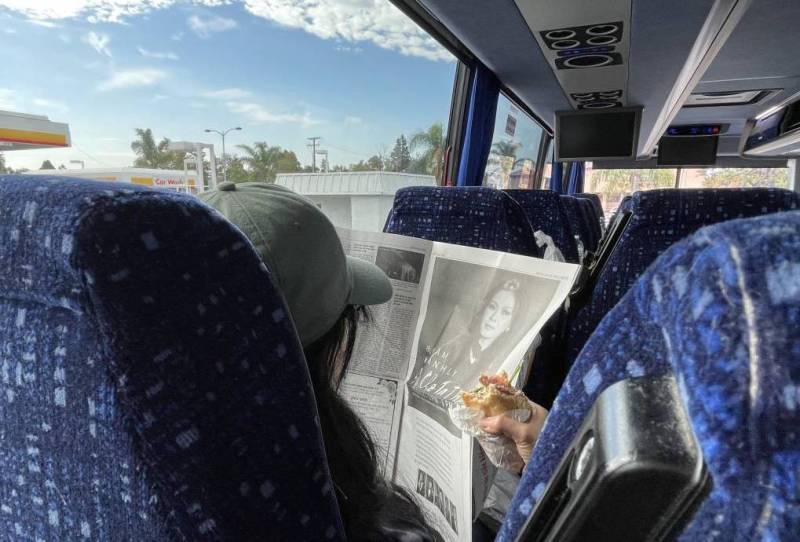
"caption": "Hương Nguyễn catches up on the news while eating a bánh mì.",
"description": null,
"title": "IMG_4866-News-and-banh-mi-1020x765",
"credit": "Christine Nguyen/KQED",
"status": "inherit",
"altTag": "A person wearing a hat holds a half-eaten sandwich and a newspaper in a bus seat.",
"isLoading": false,
"fetchFailed": false
},
"news_11927483": {
"type": "attachments",
"id": "news_11927483",
"meta": {
"index": "attachments_1716263798",
"site": "news",
"id": "11927483",
"found": true
},
"parent": 11927473,
"imgSizes": {
"thumbnail": {
"file": "https://ww2.kqed.org/app/uploads/sites/10/2022/10/CampaignContributions-160x90.jpg",
"width": 160,
"mimeType": "image/jpeg",
"height": 90
},
"post-thumbnail": {
"file": "https://ww2.kqed.org/app/uploads/sites/10/2022/10/CampaignContributions-672x372.jpg",
"width": 672,
"mimeType": "image/jpeg",
"height": 372
},
"kqedFullSize": {
"file": "https://ww2.kqed.org/app/uploads/sites/10/2022/10/CampaignContributions.jpg",
"width": 927,
"height": 524
},
"medium": {
"file": "https://ww2.kqed.org/app/uploads/sites/10/2022/10/CampaignContributions-800x452.jpg",
"width": 800,
"mimeType": "image/jpeg",
"height": 452
}
},
"publishDate": 1664669322,
"modified": 1664671034,
"caption": "Candidates for elected office in California and across the Bay Area publicly filed their campaign finance records at the end of September. Pictured: Gov. Gavin Newsom, Republican political analyst and state controller candidate Lanhee Chen, San Jose mayor candidate Cindy Chavez, and San Francisco District Attorney Brooke Jenkins.",
"description": null,
"title": "CampaignContributions",
"credit": "Photo Illustration by KQED",
"status": "inherit",
"altTag": "A split screen photo illustration showing four politicians in a row.",
"isLoading": false,
"fetchFailed": false
},
"news_11926289": {
"type": "attachments",
"id": "news_11926289",
"meta": {
"index": "attachments_1716263798",
"site": "news",
"id": "11926289",
"found": true
},
"parent": 11926282,
"imgSizes": {
"twentyfourteen-full-width": {
"file": "https://ww2.kqed.org/app/uploads/sites/10/2022/09/IMG_6205-1-1038x576.jpg",
"width": 1038,
"mimeType": "image/jpeg",
"height": 576
},
"thumbnail": {
"file": "https://ww2.kqed.org/app/uploads/sites/10/2022/09/IMG_6205-1-160x107.jpg",
"width": 160,
"mimeType": "image/jpeg",
"height": 107
},
"post-thumbnail": {
"file": "https://ww2.kqed.org/app/uploads/sites/10/2022/09/IMG_6205-1-672x372.jpg",
"width": 672,
"mimeType": "image/jpeg",
"height": 372
},
"kqedFullSize": {
"file": "https://ww2.kqed.org/app/uploads/sites/10/2022/09/IMG_6205-1-scaled.jpg",
"width": 2560,
"height": 1707
},
"2048x2048": {
"file": "https://ww2.kqed.org/app/uploads/sites/10/2022/09/IMG_6205-1-2048x1365.jpg",
"width": 2048,
"mimeType": "image/jpeg",
"height": 1365
},
"large": {
"file": "https://ww2.kqed.org/app/uploads/sites/10/2022/09/IMG_6205-1-1020x680.jpg",
"width": 1020,
"mimeType": "image/jpeg",
"height": 680
},
"1536x1536": {
"file": "https://ww2.kqed.org/app/uploads/sites/10/2022/09/IMG_6205-1-1536x1024.jpg",
"width": 1536,
"mimeType": "image/jpeg",
"height": 1024
},
"full-width": {
"file": "https://ww2.kqed.org/app/uploads/sites/10/2022/09/IMG_6205-1-1920x1280.jpg",
"width": 1920,
"mimeType": "image/jpeg",
"height": 1280
},
"medium": {
"file": "https://ww2.kqed.org/app/uploads/sites/10/2022/09/IMG_6205-1-800x533.jpg",
"width": 800,
"mimeType": "image/jpeg",
"height": 533
}
},
"publishDate": 1663708429,
"modified": 1663708452,
"caption": null,
"description": null,
"title": "IMG_6205 (1)",
"credit": "Jana Kadah / San Jose Spotlight",
"status": "inherit",
"altTag": null,
"isLoading": false,
"fetchFailed": false
},
"news_11924211": {
"type": "attachments",
"id": "news_11924211",
"meta": {
"index": "attachments_1716263798",
"site": "news",
"id": "11924211",
"found": true
},
"parent": 11924122,
"imgSizes": {
"twentyfourteen-full-width": {
"file": "https://ww2.kqed.org/app/uploads/sites/10/2022/08/IMG_8107-scaled-e1661965990222-1038x576.jpg",
"width": 1038,
"mimeType": "image/jpeg",
"height": 576
},
"thumbnail": {
"file": "https://ww2.kqed.org/app/uploads/sites/10/2022/08/IMG_8107-scaled-e1661965990222-160x123.jpg",
"width": 160,
"mimeType": "image/jpeg",
"height": 123
},
"post-thumbnail": {
"file": "https://ww2.kqed.org/app/uploads/sites/10/2022/08/IMG_8107-scaled-e1661965990222-672x372.jpg",
"width": 672,
"mimeType": "image/jpeg",
"height": 372
},
"kqedFullSize": {
"file": "https://ww2.kqed.org/app/uploads/sites/10/2022/08/IMG_8107-scaled-e1661965990222.jpg",
"width": 1920,
"height": 1472
},
"2048x2048": {
"file": "https://ww2.kqed.org/app/uploads/sites/10/2022/08/IMG_8107-1536x2048.jpg",
"width": 1536,
"mimeType": "image/jpeg",
"height": 2048
},
"large": {
"file": "https://ww2.kqed.org/app/uploads/sites/10/2022/08/IMG_8107-scaled-e1661965990222-1020x782.jpg",
"width": 1020,
"mimeType": "image/jpeg",
"height": 782
},
"1536x1536": {
"file": "https://ww2.kqed.org/app/uploads/sites/10/2022/08/IMG_8107-scaled-e1661965990222-1536x1178.jpg",
"width": 1536,
"mimeType": "image/jpeg",
"height": 1178
},
"full-width": {
"file": "https://ww2.kqed.org/app/uploads/sites/10/2022/08/IMG_8107-1920x2560.jpg",
"width": 1920,
"mimeType": "image/jpeg",
"height": 2560
},
"medium": {
"file": "https://ww2.kqed.org/app/uploads/sites/10/2022/08/IMG_8107-scaled-e1661965990222-800x613.jpg",
"width": 800,
"mimeType": "image/jpeg",
"height": 613
}
},
"publishDate": 1661965921,
"modified": 1661979541,
"caption": "Anthony Segura, a staff member at Animal Care and Services, gets a kiss from Kramer. Kramer and Segura attended the San José City Council meeting Tuesday, where the council gave a commendation to Animal Care and Services for their 'extraordinary work' supporting animals during the pandemic.",
"description": "Kramer gives a kiss to Anthony Segura, a staff member at Animal Care & Services. Kramer and Segura attended the San Jose City Council meeting Tuesday, where the Council gave a commendation to the Animal Care and Services Division for their \"extraordinary work\" supporting animals during the pandemic. ",
"title": "San Jose veterinarian shelter",
"credit": "Erin Cizan/Animal Care and Services",
"status": "inherit",
"altTag": "A medium-sized dog with short red-brown fur, and white stripes around his neck and down his forehead gives a kiss on the ear to a man sitting on a stair step. The dog has his white-tipped paws on the man's legs. The man has pale pinkish skin and a buzz cut. He's wearing black jeans, a navy short-sleeved staff shirt and a bright blue face mask.",
"isLoading": false,
"fetchFailed": false
},
"news_11918905": {
"type": "attachments",
"id": "news_11918905",
"meta": {
"index": "attachments_1716263798",
"site": "news",
"id": "11918905",
"found": true
},
"parent": 11918904,
"imgSizes": {
"twentyfourteen-full-width": {
"file": "https://ww2.kqed.org/app/uploads/sites/10/2022/07/ap22186739539668_custom-883ac441483029313752e9ce65e251aaacf30517-1038x576.jpg",
"width": 1038,
"mimeType": "image/jpeg",
"height": 576
},
"thumbnail": {
"file": "https://ww2.kqed.org/app/uploads/sites/10/2022/07/ap22186739539668_custom-883ac441483029313752e9ce65e251aaacf30517-160x107.jpg",
"width": 160,
"mimeType": "image/jpeg",
"height": 107
},
"post-thumbnail": {
"file": "https://ww2.kqed.org/app/uploads/sites/10/2022/07/ap22186739539668_custom-883ac441483029313752e9ce65e251aaacf30517-672x372.jpg",
"width": 672,
"mimeType": "image/jpeg",
"height": 372
},
"kqedFullSize": {
"file": "https://ww2.kqed.org/app/uploads/sites/10/2022/07/ap22186739539668_custom-883ac441483029313752e9ce65e251aaacf30517-scaled.jpg",
"width": 2560,
"height": 1708
},
"2048x2048": {
"file": "https://ww2.kqed.org/app/uploads/sites/10/2022/07/ap22186739539668_custom-883ac441483029313752e9ce65e251aaacf30517-2048x1366.jpg",
"width": 2048,
"mimeType": "image/jpeg",
"height": 1366
},
"large": {
"file": "https://ww2.kqed.org/app/uploads/sites/10/2022/07/ap22186739539668_custom-883ac441483029313752e9ce65e251aaacf30517-1020x681.jpg",
"width": 1020,
"mimeType": "image/jpeg",
"height": 681
},
"1536x1536": {
"file": "https://ww2.kqed.org/app/uploads/sites/10/2022/07/ap22186739539668_custom-883ac441483029313752e9ce65e251aaacf30517-1536x1025.jpg",
"width": 1536,
"mimeType": "image/jpeg",
"height": 1025
},
"full-width": {
"file": "https://ww2.kqed.org/app/uploads/sites/10/2022/07/ap22186739539668_custom-883ac441483029313752e9ce65e251aaacf30517-1920x1281.jpg",
"width": 1920,
"mimeType": "image/jpeg",
"height": 1281
},
"medium": {
"file": "https://ww2.kqed.org/app/uploads/sites/10/2022/07/ap22186739539668_custom-883ac441483029313752e9ce65e251aaacf30517-800x534.jpg",
"width": 800,
"mimeType": "image/jpeg",
"height": 534
}
},
"publishDate": 1657148145,
"modified": 1657148145,
"caption": null,
"description": "Mike Grier poses for photos as he is introduced as the new general manager of the San Jose Sharks at a news conference in San Jose, Calif., Tuesday, July 5, 2022. (AP Photo/Jeff Chiu)",
"title": "Mike Grier poses for photos as he is introduced as the new general manager of the San Jose Sharks at a news conference in San Jose, Calif., Tuesday, July 5, 2022.",
"credit": null,
"status": "inherit",
"altTag": null,
"isLoading": false,
"fetchFailed": false
},
"news_11916850": {
"type": "attachments",
"id": "news_11916850",
"meta": {
"index": "attachments_1716263798",
"site": "news",
"id": "11916850",
"found": true
},
"parent": 11916729,
"imgSizes": {
"twentyfourteen-full-width": {
"file": "https://ww2.kqed.org/app/uploads/sites/10/2022/06/RS56053_20220402_SJFleaMarket_RamosWhites-07-2-qut-1038x576.jpg",
"width": 1038,
"mimeType": "image/jpeg",
"height": 576
},
"thumbnail": {
"file": "https://ww2.kqed.org/app/uploads/sites/10/2022/06/RS56053_20220402_SJFleaMarket_RamosWhites-07-2-qut-160x107.jpg",
"width": 160,
"mimeType": "image/jpeg",
"height": 107
},
"post-thumbnail": {
"file": "https://ww2.kqed.org/app/uploads/sites/10/2022/06/RS56053_20220402_SJFleaMarket_RamosWhites-07-2-qut-672x372.jpg",
"width": 672,
"mimeType": "image/jpeg",
"height": 372
},
"kqedFullSize": {
"file": "https://ww2.kqed.org/app/uploads/sites/10/2022/06/RS56053_20220402_SJFleaMarket_RamosWhites-07-2-qut.jpg",
"width": 1920,
"height": 1280
},
"large": {
"file": "https://ww2.kqed.org/app/uploads/sites/10/2022/06/RS56053_20220402_SJFleaMarket_RamosWhites-07-2-qut-1020x680.jpg",
"width": 1020,
"mimeType": "image/jpeg",
"height": 680
},
"1536x1536": {
"file": "https://ww2.kqed.org/app/uploads/sites/10/2022/06/RS56053_20220402_SJFleaMarket_RamosWhites-07-2-qut-1536x1024.jpg",
"width": 1536,
"mimeType": "image/jpeg",
"height": 1024
},
"medium": {
"file": "https://ww2.kqed.org/app/uploads/sites/10/2022/06/RS56053_20220402_SJFleaMarket_RamosWhites-07-2-qut-800x533.jpg",
"width": 800,
"mimeType": "image/jpeg",
"height": 533
}
},
"publishDate": 1654903337,
"modified": 1655152356,
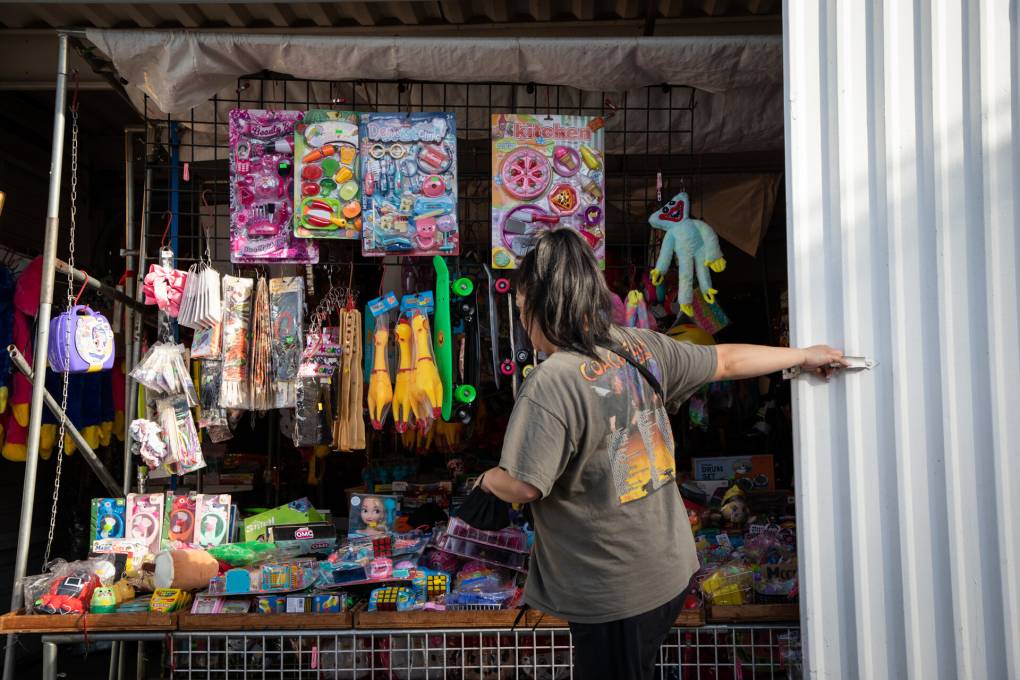
"caption": "Katrina Ramos White closes up the vending stall she runs with her husband on April 2, 2022. Ramos White took over the family business in 2020 after her parents retired.",
"description": null,
"title": "RS56053_20220402_SJFleaMarket_RamosWhites-07-2-qut",
"credit": "Amaya Edwards/KQED",
"status": "inherit",
"altTag": null,
"isLoading": false,
"fetchFailed": false
},
"news_11916460": {
"type": "attachments",
"id": "news_11916460",
"meta": {
"index": "attachments_1716263798",
"site": "news",
"id": "11916460",
"found": true
},
"parent": 11915899,
"imgSizes": {
"twentyfourteen-full-width": {
"file": "https://ww2.kqed.org/app/uploads/sites/10/2022/06/SJ-race-1-1038x576.jpg",
"width": 1038,
"mimeType": "image/jpeg",
"height": 576
},
"thumbnail": {
"file": "https://ww2.kqed.org/app/uploads/sites/10/2022/06/SJ-race-1-160x89.jpg",
"width": 160,
"mimeType": "image/jpeg",
"height": 89
},
"post-thumbnail": {
"file": "https://ww2.kqed.org/app/uploads/sites/10/2022/06/SJ-race-1-672x372.jpg",
"width": 672,
"mimeType": "image/jpeg",
"height": 372
},
"kqedFullSize": {
"file": "https://ww2.kqed.org/app/uploads/sites/10/2022/06/SJ-race-1.jpg",
"width": 1654,
"height": 922
},
"large": {
"file": "https://ww2.kqed.org/app/uploads/sites/10/2022/06/SJ-race-1-1020x569.jpg",
"width": 1020,
"mimeType": "image/jpeg",
"height": 569
},
"1536x1536": {
"file": "https://ww2.kqed.org/app/uploads/sites/10/2022/06/SJ-race-1-1536x856.jpg",
"width": 1536,
"mimeType": "image/jpeg",
"height": 856
},
"medium": {
"file": "https://ww2.kqed.org/app/uploads/sites/10/2022/06/SJ-race-1-800x446.jpg",
"width": 800,
"mimeType": "image/jpeg",
"height": 446
}
},
"publishDate": 1654672562,
"modified": 1654672625,
"caption": "Santa Clara County Supervisor Cindy Chavez, left, and San José City Councilmember Matt Mahan will face each other in San José's November mayoral election.",
"description": null,
"title": "SJ-race",
"credit": "Carlos Cabrera-Lomelí/KQED",
"status": "inherit",
"altTag": null,
"isLoading": false,
"fetchFailed": false
},
"news_11915516": {
"type": "attachments",
"id": "news_11915516",
"meta": {
"index": "attachments_1716263798",
"site": "news",
"id": "11915516",
"found": true
},
"parent": 11915515,
"imgSizes": {
"twentyfourteen-full-width": {
"file": "https://ww2.kqed.org/app/uploads/sites/10/2022/05/RS36032__M6A0599-qut-1038x576.jpg",
"width": 1038,
"mimeType": "image/jpeg",
"height": 576
},
"thumbnail": {
"file": "https://ww2.kqed.org/app/uploads/sites/10/2022/05/RS36032__M6A0599-qut-160x107.jpg",
"width": 160,
"mimeType": "image/jpeg",
"height": 107
},
"post-thumbnail": {
"file": "https://ww2.kqed.org/app/uploads/sites/10/2022/05/RS36032__M6A0599-qut-672x372.jpg",
"width": 672,
"mimeType": "image/jpeg",
"height": 372
},
"kqedFullSize": {
"file": "https://ww2.kqed.org/app/uploads/sites/10/2022/05/RS36032__M6A0599-qut.jpg",
"width": 1920,
"height": 1280
},
"large": {
"file": "https://ww2.kqed.org/app/uploads/sites/10/2022/05/RS36032__M6A0599-qut-1020x680.jpg",
"width": 1020,
"mimeType": "image/jpeg",
"height": 680
},
"1536x1536": {
"file": "https://ww2.kqed.org/app/uploads/sites/10/2022/05/RS36032__M6A0599-qut-1536x1024.jpg",
"width": 1536,
"mimeType": "image/jpeg",
"height": 1024
},
"medium": {
"file": "https://ww2.kqed.org/app/uploads/sites/10/2022/05/RS36032__M6A0599-qut-800x533.jpg",
"width": 800,
"mimeType": "image/jpeg",
"height": 533
}
},
"publishDate": 1654021797,
"modified": 1654022646,
"caption": null,
"description": null,
"title": "RS36032__M6A0599-qut",
"credit": "Sruti Mamidanna/KQED",
"status": "inherit",
"altTag": null,
"isLoading": false,
"fetchFailed": false
},
"news_11914774": {
"type": "attachments",
"id": "news_11914774",
"meta": {
"index": "attachments_1716263798",
"site": "news",
"id": "11914774",
"found": true
},
"parent": 11914773,
"imgSizes": {
"twentyfourteen-full-width": {
"file": "https://ww2.kqed.org/app/uploads/sites/10/2022/05/image1-1038x576.jpg",
"width": 1038,
"mimeType": "image/jpeg",
"height": 576
},
"thumbnail": {
"file": "https://ww2.kqed.org/app/uploads/sites/10/2022/05/image1-160x107.jpg",
"width": 160,
"mimeType": "image/jpeg",
"height": 107
},
"post-thumbnail": {
"file": "https://ww2.kqed.org/app/uploads/sites/10/2022/05/image1-672x372.jpg",
"width": 672,
"mimeType": "image/jpeg",
"height": 372
},
"kqedFullSize": {
"file": "https://ww2.kqed.org/app/uploads/sites/10/2022/05/image1.jpg",
"width": 1920,
"height": 1280
},
"large": {
"file": "https://ww2.kqed.org/app/uploads/sites/10/2022/05/image1-1020x680.jpg",
"width": 1020,
"mimeType": "image/jpeg",
"height": 680
},
"1536x1536": {
"file": "https://ww2.kqed.org/app/uploads/sites/10/2022/05/image1-1536x1024.jpg",
"width": 1536,
"mimeType": "image/jpeg",
"height": 1024
},
"medium": {
"file": "https://ww2.kqed.org/app/uploads/sites/10/2022/05/image1-800x533.jpg",
"width": 800,
"mimeType": "image/jpeg",
"height": 533
}
},
"publishDate": 1653078669,
"modified": 1653078669,
"caption": null,
"description": null,
"title": "image1",
"credit": null,
"status": "inherit",
"altTag": null,
"isLoading": false,
"fetchFailed": false
},
"news_11913062": {
"type": "attachments",
"id": "news_11913062",
"meta": {
"index": "attachments_1716263798",
"site": "news",
"id": "11913062",
"found": true
},
"parent": 11913046,
"imgSizes": {
"twentyfourteen-full-width": {
"file": "https://ww2.kqed.org/app/uploads/sites/10/2022/05/GettyImages-1172815287-1038x576.jpg",
"width": 1038,
"mimeType": "image/jpeg",
"height": 576
},
"thumbnail": {
"file": "https://ww2.kqed.org/app/uploads/sites/10/2022/05/GettyImages-1172815287-160x107.jpg",
"width": 160,
"mimeType": "image/jpeg",
"height": 107
},
"post-thumbnail": {
"file": "https://ww2.kqed.org/app/uploads/sites/10/2022/05/GettyImages-1172815287-672x372.jpg",
"width": 672,
"mimeType": "image/jpeg",
"height": 372
},
"kqedFullSize": {
"file": "https://ww2.kqed.org/app/uploads/sites/10/2022/05/GettyImages-1172815287.jpg",
"width": 1784,
"height": 1189
},
"large": {
"file": "https://ww2.kqed.org/app/uploads/sites/10/2022/05/GettyImages-1172815287-1020x680.jpg",
"width": 1020,
"mimeType": "image/jpeg",
"height": 680
},
"1536x1536": {
"file": "https://ww2.kqed.org/app/uploads/sites/10/2022/05/GettyImages-1172815287-1536x1024.jpg",
"width": 1536,
"mimeType": "image/jpeg",
"height": 1024
},
"medium": {
"file": "https://ww2.kqed.org/app/uploads/sites/10/2022/05/GettyImages-1172815287-800x533.jpg",
"width": 800,
"mimeType": "image/jpeg",
"height": 533
}
},
"publishDate": 1651619381,
"modified": 1651622801,
"caption": "Former Secretary of Transportation Norman Mineta talks to the media at Mineta San José International Airport on Friday, January 11, 2013. In 2001, the airport was renamed to honor Mineta, who was mayor of San José from 1971 to 1975 and later represented the city in Congress from 1975 to 1995.",
"description": "Former Secretary of Transportation, Norman Mineta, talks to the media as the the All Nippon Airways Dreamliner 787 arrives at Mineta San José International Airport for its inaugural San José to Tokyo flight in San José on Friday, January 11, 2013.",
"title": "Former Secretary of Transportation, Norman Mineta, talks to the media as the the All Nippon Airways Dreamliner 787 arrives at Mineta San Jose International Airport for its inaugural San Jose to Tokyo flight in San Jose, Calif. on Friday, January 11, 2013.",
"credit": "Gary Reyes/MediaNews Group/Bay Area News via Getty Images",
"status": "inherit",
"altTag": "Norman Minetastands inside an airport, in front of a large sign. Many cameras and reporters surround him asking hi questions, he looks over at one member of the media.",
"isLoading": false,
"fetchFailed": false
}
},
"audioPlayerReducer": {
"postId": "stream_live",
"isPaused": true,
"isPlaying": false,
"pfsActive": false,
"pledgeModalIsOpen": true,
"playerDrawerIsOpen": false,
"liveAudioPlayStartedAt": 0,
"liveAudioPlayContext": ""
},
"authorsReducer": {
"byline_news_11926990": {
"type": "authors",
"id": "byline_news_11926990",
"meta": {
"override": true
},
"slug": "byline_news_11926990",
"name": "\u003ca href=\"https://twitter.com/christinenguyen\">Christine Nguyen\u003c/a>",
"isLoading": false
},
"byline_news_11918904": {
"type": "authors",
"id": "byline_news_11918904",
"meta": {
"override": true
},
"slug": "byline_news_11918904",
"name": "\u003ca href=\"https://www.npr.org/people/1105320769/shruti-rajkumar\">Shruti Rajkumar\u003c/a>",
"isLoading": false
},
"byline_news_11913046": {
"type": "authors",
"id": "byline_news_11913046",
"meta": {
"override": true
},
"slug": "byline_news_11913046",
"name": "Brian Witte, Terence Chea \u003cbr> The Associated Press",
"isLoading": false
},
"gmarzorati": {
"type": "authors",
"id": "227",
"meta": {
"index": "authors_1716337520",
"id": "227",
"found": true
},
"name": "Guy Marzorati",
"firstName": "Guy",
"lastName": "Marzorati",
"slug": "gmarzorati",
"email": "gmarzorati@KQED.org",
"display_author_email": true,
"staff_mastheads": [
"news"
],
"title": "Correspondent",
"bio": "Guy Marzorati is a correspondent on KQED's California Politics and Government Desk, based in San Jose. A graduate of Santa Clara University, Guy joined KQED in 2013. He reports on state and local politics and produces KQED's digital voter guide.",
"avatar": "https://secure.gravatar.com/avatar/e7038b8dbfd55b104369b76b1cd0b9de?s=600&d=blank&r=g",
"twitter": "guymarzorati",
"facebook": null,
"instagram": null,
"linkedin": null,
"sites": [
{
"site": "",
"roles": [
"editor"
]
},
{
"site": "news",
"roles": [
"editor"
]
},
{
"site": "science",
"roles": [
"editor"
]
},
{
"site": "forum",
"roles": [
"editor"
]
},
{
"site": "elections",
"roles": [
"editor"
]
},
{
"site": "liveblog",
"roles": [
"editor"
]
}
],
"headData": {
"title": "Guy Marzorati | KQED",
"description": "Correspondent",
"ogImgSrc": "https://secure.gravatar.com/avatar/e7038b8dbfd55b104369b76b1cd0b9de?s=600&d=blank&r=g",
"twImgSrc": "https://secure.gravatar.com/avatar/e7038b8dbfd55b104369b76b1cd0b9de?s=600&d=blank&r=g"
},
"isLoading": false,
"link": "/author/gmarzorati"
},
"kqed": {
"type": "authors",
"id": "236",
"meta": {
"index": "authors_1716337520",
"id": "236",
"found": true
},
"name": "KQED News Staff",
"firstName": "KQED News Staff",
"lastName": null,
"slug": "kqed",
"email": "faq@kqed.org",
"display_author_email": false,
"staff_mastheads": [],
"title": null,
"bio": null,
"avatar": "https://secure.gravatar.com/avatar/ef0e801a68c4c54afa9180db14084167?s=600&d=blank&r=g",
"twitter": null,
"facebook": null,
"instagram": null,
"linkedin": null,
"sites": [
{
"site": "arts",
"roles": [
"contributor"
]
},
{
"site": "news",
"roles": [
"editor"
]
},
{
"site": "futureofyou",
"roles": [
"author"
]
}
],
"headData": {
"title": "KQED News Staff | KQED",
"description": null,
"ogImgSrc": "https://secure.gravatar.com/avatar/ef0e801a68c4c54afa9180db14084167?s=600&d=blank&r=g",
"twImgSrc": "https://secure.gravatar.com/avatar/ef0e801a68c4c54afa9180db14084167?s=600&d=blank&r=g"
},
"isLoading": false,
"link": "/author/kqed"
},
"scottshafer": {
"type": "authors",
"id": "255",
"meta": {
"index": "authors_1716337520",
"id": "255",
"found": true
},
"name": "Scott Shafer",
"firstName": "Scott",
"lastName": "Shafer",
"slug": "scottshafer",
"email": "sshafer@kqed.org",
"display_author_email": false,
"staff_mastheads": [
"news"
],
"title": "KQED Contributor",
"bio": "Scott Shafer is a senior editor with the KQED Politics and Government desk. He is co-host of Political Breakdown, the award-winning radio show and podcast with a personal take on the world of politics. Scott came to KQED in 1998 to host the statewide\u003cem> California Report\u003c/em>. Prior to that he had extended stints in politics and government\u003cem>.\u003c/em> He uses that inside experience at KQED in his, reporting, hosting and analysis for the politics desk. Scott collaborated \u003cem>Political Breakdown a\u003c/em>nd on \u003cem>The Political Mind of Jerry Brown, \u003c/em>an eight-part series about the life and extraordinary political career of the former governor. For fun, he plays water polo with the San Francisco Tsunami.",
"avatar": "https://secure.gravatar.com/avatar/a62ebae45b79d7aed1a39a0e3bf68104?s=600&d=blank&r=g",
"twitter": "scottshafer",
"bluesky": null,
"facebook": null,
"instagram": null,
"linkedin": null,
"sites": [
{
"site": "news",
"roles": [
"editor"
]
},
{
"site": "stateofhealth",
"roles": [
"author"
]
},
{
"site": "science",
"roles": [
"author"
]
},
{
"site": "forum",
"roles": [
"subscriber"
]
},
{
"site": "liveblog",
"roles": [
"author"
]
}
],
"headData": {
"title": "Scott Shafer | KQED",
"description": "KQED Contributor",
"ogImgSrc": "https://secure.gravatar.com/avatar/a62ebae45b79d7aed1a39a0e3bf68104?s=600&d=blank&r=g",
"twImgSrc": "https://secure.gravatar.com/avatar/a62ebae45b79d7aed1a39a0e3bf68104?s=600&d=blank&r=g"
},
"isLoading": false,
"link": "/author/scottshafer"
},
"mlagos": {
"type": "authors",
"id": "3239",
"meta": {
"index": "authors_1716337520",
"id": "3239",
"found": true
},
"name": "Marisa Lagos",
"firstName": "Marisa",
"lastName": "Lagos",
"slug": "mlagos",
"email": "mlagos@kqed.org",
"display_author_email": false,
"staff_mastheads": [
"news"
],
"title": "KQED Contributor",
"bio": "Marisa Lagos is a correspondent for KQED’s California Politics and Government Desk and co-hosts the award-winning show and podcast, Political Breakdown. At KQED, Lagos also conducts reporting, analysis and investigations into state, local and national politics for radio, TV, online and onstage. In 2022, she and co-host, Scott Shafer, moderated the only gubernatorial debate in California. In 2020, the \u003ci>Washington Post\u003c/i> named her one of the top political journalists in California; she was nominated for a Peabody and won several other awards for her work investigating the 2017 California wildfires. She has worked at the \u003ci>San Francisco Chronicle\u003c/i>, \u003ci>San Francisco Examiner\u003c/i> and \u003ci>Los Angeles Times\u003c/i>. A UC Santa Barbara graduate, she lives in San Francisco with her two sons and husband.",
"avatar": "https://secure.gravatar.com/avatar/a261a0d3696fc066871ef96b85b5e7d2?s=600&d=blank&r=g",
"twitter": "@mlagos",
"facebook": null,
"instagram": null,
"linkedin": null,
"sites": [
{
"site": "arts",
"roles": [
"author"
]
},
{
"site": "news",
"roles": [
"editor"
]
},
{
"site": "science",
"roles": [
"editor"
]
},
{
"site": "forum",
"roles": [
"author"
]
},
{
"site": "liveblog",
"roles": [
"author"
]
}
],
"headData": {
"title": "Marisa Lagos | KQED",
"description": "KQED Contributor",
"ogImgSrc": "https://secure.gravatar.com/avatar/a261a0d3696fc066871ef96b85b5e7d2?s=600&d=blank&r=g",
"twImgSrc": "https://secure.gravatar.com/avatar/a261a0d3696fc066871ef96b85b5e7d2?s=600&d=blank&r=g"
},
"isLoading": false,
"link": "/author/mlagos"
},
"ecruzguevarra": {
"type": "authors",
"id": "8654",
"meta": {
"index": "authors_1716337520",
"id": "8654",
"found": true
},
"name": "Ericka Cruz Guevarra",
"firstName": "Ericka",
"lastName": "Cruz Guevarra",
"slug": "ecruzguevarra",
"email": "ecruzguevarra@kqed.org",
"display_author_email": true,
"staff_mastheads": [
"news"
],
"title": "Producer, The Bay Podcast",
"bio": "Ericka Cruz Guevarra is host of \u003ca href=\"https://www.kqed.org/podcasts/thebay\">\u003cem>The Bay\u003c/em>\u003c/a> podcast at KQED. Before host, she was the show’s producer. Her work in that capacity includes a three-part reported series on policing in Vallejo, which won a 2020 excellence in journalism award from the Society of Professional Journalists. Ericka has worked as a breaking news reporter at Oregon Public Broadcasting, helped produce the Code Switch podcast, and was KQED’s inaugural Raul Ramirez Diversity Fund intern. She’s also an alumna of NPR’s Next Generation Radio program. Send her an email if you have strong feelings about whether Fairfield and Suisun City are the Bay. Ericka is represented by SAG-AFTRA.",
"avatar": "https://secure.gravatar.com/avatar/accefc1de4bafc7e234b69bcb9b6f6536c130fd84709bc3069ef11a78787e1bb?s=600&d=blank&r=g",
"twitter": "NotoriousECG",
"bluesky": null,
"facebook": null,
"instagram": null,
"linkedin": null,
"sites": [
{
"site": "arts",
"roles": [
"subscriber"
]
},
{
"site": "news",
"roles": [
"editor",
"manage_categories"
]
},
{
"site": "futureofyou",
"roles": [
"subscriber"
]
},
{
"site": "stateofhealth",
"roles": [
"subscriber"
]
},
{
"site": "science",
"roles": [
"editor"
]
},
{
"site": "forum",
"roles": [
"subscriber"
]
}
],
"headData": {
"title": "Ericka Cruz Guevarra | KQED",
"description": "Producer, The Bay Podcast",
"ogImgSrc": "https://secure.gravatar.com/avatar/accefc1de4bafc7e234b69bcb9b6f6536c130fd84709bc3069ef11a78787e1bb?s=600&d=blank&r=g",
"twImgSrc": "https://secure.gravatar.com/avatar/accefc1de4bafc7e234b69bcb9b6f6536c130fd84709bc3069ef11a78787e1bb?s=600&d=blank&r=g"
},
"isLoading": false,
"link": "/author/ecruzguevarra"
},
"amontecillo": {
"type": "authors",
"id": "11649",
"meta": {
"index": "authors_1716337520",
"id": "11649",
"found": true
},
"name": "Alan Montecillo",
"firstName": "Alan",
"lastName": "Montecillo",
"slug": "amontecillo",
"email": "amontecillo@kqed.org",
"display_author_email": false,
"staff_mastheads": [
"news"
],
"title": "KQED Contributor",
"bio": "Alan Montecillo is the senior editor of \u003cem>\u003ca href=\"http://kqed.org/thebay\">The Bay\u003c/a>, \u003c/em> KQED's local news podcast. Before moving to the Bay Area, he worked as a senior talk show producer for WILL in Champaign-Urbana, Illinois and at Oregon Public Broadcasting in Portland, Oregon. He has won journalism awards from the Society of Professional Journalists Northern California, the Public Media Journalists Association, The Signal Awards, and has also received a regional Edward R. Murrow award. Alan is a Filipino American from Hong Kong and a graduate of Reed College.",
"avatar": "https://secure.gravatar.com/avatar/268f53a2066899ea9efdd8a5900218b17c822d9862cbc9326cccec53ef41d349?s=600&d=blank&r=g",
"twitter": "alanmontecillo",
"bluesky": null,
"facebook": null,
"instagram": null,
"linkedin": null,
"sites": [
{
"site": "",
"roles": [
"editor"
]
},
{
"site": "news",
"roles": [
"editor",
"manage_categories"
]
}
],
"headData": {
"title": "Alan Montecillo | KQED",
"description": "KQED Contributor",
"ogImgSrc": "https://secure.gravatar.com/avatar/268f53a2066899ea9efdd8a5900218b17c822d9862cbc9326cccec53ef41d349?s=600&d=blank&r=g",
"twImgSrc": "https://secure.gravatar.com/avatar/268f53a2066899ea9efdd8a5900218b17c822d9862cbc9326cccec53ef41d349?s=600&d=blank&r=g"
},
"isLoading": false,
"link": "/author/amontecillo"
},
"abandlamudi": {
"type": "authors",
"id": "11672",
"meta": {
"index": "authors_1716337520",
"id": "11672",
"found": true
},
"name": "Adhiti Bandlamudi",
"firstName": "Adhiti",
"lastName": "Bandlamudi",
"slug": "abandlamudi",
"email": "abandlamudi@kqed.org",
"display_author_email": false,
"staff_mastheads": [
"news"
],
"title": "KQED Housing Reporter",
"bio": "Adhiti Bandlamudi reports for KQED's Housing desk. She focuses on how housing gets built across the Bay Area. Before joining KQED in 2020, she reported for WUNC in Durham, North Carolina, WABE in Atlanta, Georgia and Capital Public Radio in Sacramento. In 2017, she was awarded a Kroc Fellowship at NPR where she reported on everything from sprinkles to the Golden State Killer's arrest. When she's not reporting, she's baking new recipes in her kitchen or watching movies with friends and family. She's originally from Georgia and has strong opinions about Great British Bake Off.",
"avatar": "https://secure.gravatar.com/avatar/868129c8b257bb99a3500e2c86a65400?s=600&d=mm&r=g",
"twitter": "oddity_adhiti",
"facebook": null,
"instagram": null,
"linkedin": null,
"sites": [
{
"site": "arts",
"roles": [
"author"
]
},
{
"site": "news",
"roles": [
"editor"
]
},
{
"site": "liveblog",
"roles": [
"author"
]
}
],
"headData": {
"title": "Adhiti Bandlamudi | KQED",
"description": "KQED Housing Reporter",
"ogImgSrc": "https://secure.gravatar.com/avatar/868129c8b257bb99a3500e2c86a65400?s=600&d=mm&r=g",
"twImgSrc": "https://secure.gravatar.com/avatar/868129c8b257bb99a3500e2c86a65400?s=600&d=mm&r=g"
},
"isLoading": false,
"link": "/author/abandlamudi"
},
"jrodriguez": {
"type": "authors",
"id": "11690",
"meta": {
"index": "authors_1716337520",
"id": "11690",
"found": true
},
"name": "Joe Fitzgerald Rodriguez",
"firstName": "Joe",
"lastName": "Fitzgerald Rodriguez",
"slug": "jrodriguez",
"email": "jrodriguez@kqed.org",
"display_author_email": true,
"staff_mastheads": [
"news"
],
"title": "Reporter and Producer",
"bio": "Joe Fitzgerald Rodriguez is a reporter and digital producer for KQED covering politics. Joe most recently wrote for the \u003cem>San Francisco Examiner\u003c/em> as a political columnist covering The City. He was raised in San Francisco and has spent his reporting career in his beloved, foggy, city by the bay. Joe was 12-years-old when he conducted his first interview in journalism, grilling former San Francisco Mayor Willie Brown for the Marina Middle School newspaper, \u003cem>The Penguin Press, \u003c/em>and he continues to report on the San Francisco Bay Area to this day.",
"avatar": "https://secure.gravatar.com/avatar/2247beb0564c1e9c62228d5649d2edac?s=600&d=blank&r=g",
"twitter": "FitztheReporter",
"facebook": null,
"instagram": "https://www.instagram.com/fitzthereporter/",
"linkedin": null,
"sites": [
{
"site": "",
"roles": [
"editor"
]
},
{
"site": "arts",
"roles": [
"editor"
]
},
{
"site": "news",
"roles": [
"editor"
]
},
{
"site": "science",
"roles": [
"editor"
]
},
{
"site": "elections",
"roles": [
"editor"
]
},
{
"site": "liveblog",
"roles": [
"editor"
]
}
],
"headData": {
"title": "Joe Fitzgerald Rodriguez | KQED",
"description": "Reporter and Producer",
"ogImgSrc": "https://secure.gravatar.com/avatar/2247beb0564c1e9c62228d5649d2edac?s=600&d=blank&r=g",
"twImgSrc": "https://secure.gravatar.com/avatar/2247beb0564c1e9c62228d5649d2edac?s=600&d=blank&r=g"
},
"isLoading": false,
"link": "/author/jrodriguez"
},
"ccabreralomeli": {
"type": "authors",
"id": "11708",
"meta": {
"index": "authors_1716337520",
"id": "11708",
"found": true
},
"name": "Carlos Cabrera-Lomelí",
"firstName": "Carlos",
"lastName": "Cabrera-Lomelí",
"slug": "ccabreralomeli",
"email": "ccabreralomeli@KQED.org",
"display_author_email": true,
"staff_mastheads": [
"news"
],
"title": "Community Reporter",
"bio": "Carlos Cabrera-Lomelí is a community reporter with KQED's digital engagement team. He also reports and co-produces for KQED's bilingual news hub KQED en Español. He grew up in San Francisco's Mission District and has previously worked with Univision, 48 Hills and REFORMA in Mexico City.",
"avatar": "https://secure.gravatar.com/avatar/c309be9665e484f887b818c89e273ecc673004f426f36b24d00a4d813a2e0518?s=600&d=blank&r=g",
"twitter": "@LomeliCabrera",
"bluesky": null,
"facebook": null,
"instagram": null,
"linkedin": null,
"sites": [
{
"site": "arts",
"roles": [
"editor"
]
},
{
"site": "news",
"roles": [
"editor"
]
},
{
"site": "about",
"roles": [
"editor"
]
},
{
"site": "science",
"roles": [
"editor"
]
},
{
"site": "perspectives",
"roles": [
"editor"
]
},
{
"site": "elections",
"roles": [
"editor"
]
},
{
"site": "liveblog",
"roles": [
"contributor"
]
}
],
"headData": {
"title": "Carlos Cabrera-Lomelí | KQED",
"description": "Community Reporter",
"ogImgSrc": "https://secure.gravatar.com/avatar/c309be9665e484f887b818c89e273ecc673004f426f36b24d00a4d813a2e0518?s=600&d=blank&r=g",
"twImgSrc": "https://secure.gravatar.com/avatar/c309be9665e484f887b818c89e273ecc673004f426f36b24d00a4d813a2e0518?s=600&d=blank&r=g"
},
"isLoading": false,
"link": "/author/ccabreralomeli"
},
"ehung": {
"type": "authors",
"id": "11730",
"meta": {
"index": "authors_1716337520",
"id": "11730",
"found": true
},
"name": "Emily Hung",
"firstName": "Emily",
"lastName": "Hung",
"slug": "ehung",
"email": "ehung@kqed.org",
"display_author_email": false,
"staff_mastheads": [],
"title": "KQED Contributor",
"bio": null,
"avatar": "https://secure.gravatar.com/avatar/a7f01e26e3d60d4e8a1d5d22bca0618b?s=600&d=blank&r=g",
"twitter": "emilyhung_",
"facebook": null,
"instagram": null,
"linkedin": null,
"sites": [
{
"site": "news",
"roles": [
"author"
]
},
{
"site": "forum",
"roles": [
"editor"
]
},
{
"site": "perspectives",
"roles": [
"administrator"
]
}
],
"headData": {
"title": "Emily Hung | KQED",
"description": "KQED Contributor",
"ogImgSrc": "https://secure.gravatar.com/avatar/a7f01e26e3d60d4e8a1d5d22bca0618b?s=600&d=blank&r=g",
"twImgSrc": "https://secure.gravatar.com/avatar/a7f01e26e3d60d4e8a1d5d22bca0618b?s=600&d=blank&r=g"
},
"isLoading": false,
"link": "/author/ehung"
},
"mesquinca": {
"type": "authors",
"id": "11802",
"meta": {
"index": "authors_1716337520",
"id": "11802",
"found": true
},
"name": "Maria Esquinca",
"firstName": "Maria",
"lastName": "Esquinca",
"slug": "mesquinca",
"email": "mesquinca@kqed.org",
"display_author_email": false,
"staff_mastheads": [],
"title": "Producer, The Bay",
"bio": "María Esquinca is a producer of The Bay. Before that, she was a New York Women’s Foundation IGNITE Fellow at Latino USA. She worked at Radio Bilingue where she covered the San Joaquin Valley. Maria has interned at WLRN, News 21, The New York Times Student Journalism Institute and at Crain’s Detroit Business as a Dow Jones News Fund Business Reporting Intern. She is an MFA graduate from the University of Miami. In 2017, she graduated from the Walter Cronkite School of Journalism and Mass Communication with a Master of Mass Communication. A fronteriza, she was born in Ciudad Juárez, Chihuahua, Mexico and grew up in El Paso, Texas.",
"avatar": "https://secure.gravatar.com/avatar/77cedba18aae91da775038ba06dcd8d0?s=600&d=blank&r=g",
"twitter": "@m_esquinca",
"facebook": null,
"instagram": null,
"linkedin": null,
"sites": [
{
"site": "news",
"roles": []
}
],
"headData": {
"title": "Maria Esquinca | KQED",
"description": "Producer, The Bay",
"ogImgSrc": "https://secure.gravatar.com/avatar/77cedba18aae91da775038ba06dcd8d0?s=600&d=blank&r=g",
"twImgSrc": "https://secure.gravatar.com/avatar/77cedba18aae91da775038ba06dcd8d0?s=600&d=blank&r=g"
},
"isLoading": false,
"link": "/author/mesquinca"
}
},
"pagesReducer": {
"news_tag_san-jose": {
"type": "terms",
"id": "news_18541",
"meta": {
"index": "terms_1716263798",
"site": "news",
"id": "18541",
"score": 8.005313
},
"featImg": null,
"name": "San Jose",
"description": null,
"taxonomy": "tag",
"headData": {
"twImgId": null,
"twTitle": null,
"ogTitle": null,
"ogImgId": null,
"twDescription": null,
"description": null,
"title": "San Jose Archives | KQED News",
"ogDescription": null
},
"ttid": 91,
"slug": "san-jose",
"isLoading": false,
"title": "San Jose",
"pageMeta": {
"site": "news",
"WpPageTemplate": "page-topic-editorial",
"currentPage": 27
},
"blocks": [
{
"blockName": "kqed/post-list",
"attrs": {
"layout": "cardArticle2",
"query": "posts/news?tag=san-jose",
"seeMore": false,
"paginated": true,
"page": 27
}
},
{
"blockName": "kqed/ad"
}
]
}
},
"pfsSessionReducer": {},
"postsReducer": {
"stream_live": {
"type": "live",
"id": "stream_live",
"audioUrl": "https://streams.kqed.org/kqedradio",
"title": "Live Stream",
"excerpt": "Live Stream information currently unavailable.",
"link": "/radio",
"featImg": "",
"label": {
"name": "KQED Live",
"link": "/"
}
},
"stream_kqedNewscast": {
"type": "posts",
"id": "stream_kqedNewscast",
"audioUrl": "https://www.kqed.org/.stream/anon/radio/RDnews/newscast.mp3?_=1",
"title": "KQED Newscast",
"featImg": "",
"label": {
"name": "88.5 FM",
"link": "/"
}
},
"news_11928937": {
"type": "posts",
"id": "news_11928937",
"meta": {
"index": "posts_1716263798",
"site": "news",
"id": "11928937",
"score": null,
"sort": [
1666000832000
]
},
"guestAuthors": [],
"slug": "san-jose-mayoral-candidates-forum",
"title": "KQED Live: A San José Mayoral Candidates Forum",
"publishDate": 1666000832,
"format": "audio",
"headTitle": "KQED Live: A San José Mayoral Candidates Forum | KQED",
"labelTerm": {},
"content": "\u003cp>This November, San José residents will make a big decision about the future of the nation’s 10th largest city. The San José mayor’s race is between two candidates: Santa Clara County Supervisor Cindy Chavez and San José City Council member Matt Mahan.\u003c/p>\n\u003cp>Whoever becomes mayor will be responsible for big issues like homelessness, affordable housing, policing and the future of the city’s downtown.\u003c/p>\n\u003cp>Today, we’re sharing a \u003ca href=\"https://www.kqed.org/event/2501\" target=\"_blank\" rel=\"noopener noreferrer\">mayoral forum\u003c/a> hosted by KQED in partnership with Univision, where Chavez and Mahan discuss their visions for the city.\u003c/p>\n\u003cp>\u003c!-- iframe plugin v.4.3 wordpress.org/plugins/iframe/ -->\u003cbr>\n\u003ciframe loading=\"lazy\" frameborder=\"0\" height=\"200\" scrolling=\"no\" src=\"https://playlist.megaphone.fm?e=KQINC8986047006\" width=\"100%\" class=\"iframe-class\">\u003c/iframe>\u003c/p>\n\u003cp>[ad fullwidth]\u003c/p>\u003cp>\u003c/p>\n",
"blocks": [],
"excerpt": "Cindy Chavez and Matt Mahan share their visions on homelessness, public safety, housing and more.",
"status": "publish",
"parent": 0,
"modified": 1721132865,
"stats": {
"hasAudio": true,
"hasVideo": false,
"hasChartOrMap": false,
"iframeSrcs": [],
"hasGoogleForm": false,
"hasGallery": false,
"hasHearkenModule": false,
"hasPolis": false,
"paragraphCount": 6,
"wordCount": 99
},
"headData": {
"title": "KQED Live: A San José Mayoral Candidates Forum | KQED",
"description": "Cindy Chavez and Matt Mahan share their visions on homelessness, public safety, housing and more.",
"ogTitle": "",
"ogDescription": "",
"ogImgId": "",
"twTitle": "",
"twDescription": "",
"twImgId": "",
"schema": {
"@context": "https://schema.org",
"@type": "NewsArticle",
"headline": "KQED Live: A San José Mayoral Candidates Forum",
"datePublished": "2022-10-17T03:00:32-07:00",
"dateModified": "2024-07-16T05:27:45-07:00",
"image": "https://cdn.kqed.org/wp-content/uploads/2020/02/KQED-OG-Image@1x.png",
"isAccessibleForFree": "True",
"publisher": {
"@type": "NewsMediaOrganization",
"@id": "https://www.kqed.org/#organization",
"name": "KQED",
"logo": "https://cdn.kqed.org/wp-content/uploads/2020/02/KQED-OG-Image@1x.png",
"url": "https://www.kqed.org",
"sameAs": [
"https://www.facebook.com/KQED",
"https://twitter.com/KQED",
"https://www.instagram.com/kqed/",
"https://www.tiktok.com/@kqedofficial",
"https://www.linkedin.com/company/kqed",
"https://www.youtube.com/channel/UCeC0IOo7i1P_61zVUWbJ4nw"
]
}
}
},
"source": "The Bay",
"sourceUrl": "https://www.kqed.org/podcasts/thebay",
"audioUrl": "https://www.podtrac.com/pts/redirect.mp3/traffic.megaphone.fm/KQINC8986047006.mp3",
"sticky": false,
"excludeFromSiteSearch": "Include",
"path": "/news/11928937/san-jose-mayoral-candidates-forum",
"audioTrackLength": null,
"parsedContent": [
{
"type": "contentString",
"content": "\u003cdiv class=\"post-body\">\u003cp>\u003cp>This November, San José residents will make a big decision about the future of the nation’s 10th largest city. The San José mayor’s race is between two candidates: Santa Clara County Supervisor Cindy Chavez and San José City Council member Matt Mahan.\u003c/p>\n\u003cp>Whoever becomes mayor will be responsible for big issues like homelessness, affordable housing, policing and the future of the city’s downtown.\u003c/p>\n\u003cp>Today, we’re sharing a \u003ca href=\"https://www.kqed.org/event/2501\" target=\"_blank\" rel=\"noopener noreferrer\">mayoral forum\u003c/a> hosted by KQED in partnership with Univision, where Chavez and Mahan discuss their visions for the city.\u003c/p>\n\u003cp>\u003c!-- iframe plugin v.4.3 wordpress.org/plugins/iframe/ -->\u003cbr>\n\u003ciframe loading=\"lazy\" frameborder=\"0\" height=\"200\" scrolling=\"no\" src=\"https://playlist.megaphone.fm?e=KQINC8986047006\" width=\"100%\" class=\"iframe-class\">\u003c/iframe>\u003c/p>\n\u003cp>\u003c/p>\u003c/div>",
"attributes": {
"named": {},
"numeric": []
}
},
{
"type": "component",
"content": "",
"name": "ad",
"attributes": {
"named": {
"label": "fullwidth"
},
"numeric": [
"fullwidth"
]
}
},
{
"type": "contentString",
"content": "\u003cdiv class=\"post-body\">\u003cp>\u003c/p>\u003cp>\u003c/p>\n\u003c/div>\u003c/p>",
"attributes": {
"named": {},
"numeric": []
}
}
],
"link": "/news/11928937/san-jose-mayoral-candidates-forum",
"authors": [
"8654",
"227",
"11649"
],
"programs": [
"news_28779"
],
"categories": [
"news_8",
"news_33520"
],
"tags": [
"news_31196",
"news_30879",
"news_23394",
"news_31197",
"news_18541",
"news_22598"
],
"featImg": "news_11928939",
"label": "source_news_11928937"
},
"news_11928149": {
"type": "posts",
"id": "news_11928149",
"meta": {
"index": "posts_1716263798",
"site": "news",
"id": "11928149",
"score": null,
"sort": [
1665406842000
]
},
"guestAuthors": [],
"slug": "cindy-chavez-and-matt-mahan-vie-to-be-change-agent-for-san-jose",
"title": "Mayoral Candidates Cindy Chavez and Matt Mahan Vie to Be Change Agent for San José",
"publishDate": 1665406842,
"format": "standard",
"headTitle": "Mayoral Candidates Cindy Chavez and Matt Mahan Vie to Be Change Agent for San José | KQED",
"labelTerm": {
"site": "news"
},
"content": "\u003cp>\u003cspan style=\"font-weight: 400\">As voting gets underway Monday in the runoff election for San José mayor, Santa Clara County Supervisor Cindy Chavez and San José City Council member Matt Mahan are hoping to convince voters that they can move city government in a new direction in the nation’s 10th-largest city.\u003c/span>\u003c/p>\n\u003cp>\u003cspan style=\"font-weight: 400\">The question of which candidate is better positioned to be a force for change has assumed a central role in the race to lead a city grappling with rising homelessness, lack of affordable housing and\u003c/span>\u003cspan style=\"font-weight: 400\"> thinly staffed city departments like police and planning.\u003c/span>\u003cspan style=\"font-weight: 400\"> In interviews with KQED, Mahan and Chavez laid out their immediate and long-term visions, with a recent amendment to the city charter giving the winner of this race an opportunity to hold office for a decade. \u003c/span>\u003c/p>\n\u003cp>\u003cspan style=\"font-weight: 400\">Chavez has served in local government for most of the last quarter-century, first winning election to the San José City Council in 1998. Still, she has billed herself as a departure from current Mayor Sam Liccardo — who is supporting Mahan — by promising to bolster city staffing and to bring harmony to the council. \u003c/span>\u003c/p>\n\u003cp>\u003cspan style=\"font-weight: 400\">Mahan is a relative newcomer to San José politics, having won election to the Council in 2020 after a career in the tech industry. Liccardo and his business-aligned allies have spent heavily to back Mahan, but the first-term councilmember has run on a vow to shake up the city bureaucracy \u003c/span>\u003cspan style=\"font-weight: 400\">— \u003c/span>\u003cspan style=\"font-weight: 400\">in part by tying pay increases for city leaders, nearly all of whom are supporting Chavez, to progress on issues such as crime and homelessness. \u003c/span>\u003c/p>\n\u003cp>\u003cspan style=\"font-weight: 400\">With San José’s unhoused population \u003ca href=\"https://www.sanjoseca.gov/Home/Components/News/News/4103/4699#:~:text=The%20overall%20number%20of%20homeless,city%20limits%20of%20San%20Jos%C3%A9.%22\" target=\"_blank\" rel=\"noopener noreferrer\">rising 11% during the pandemic\u003c/a>, Mahan has attacked Chavez’s focus on constructing permanent supportive housing with services and has instead advocated to house the unhoused in quick-build tiny homes known as emergency interim housing. \u003c/span>\u003c/p>\n\u003cp>\u003cspan style=\"font-weight: 400\">“If it’s really a crisis, let’s go after scalable, efficient solutions to get people indoors and then invest in the supportive services from mental health and addiction counseling to job training, job placement,” Mahan said. “We should be buying (homes) in bulk rather than what we do today, which is extremely incremental and still leans far too heavily on building brand-new apartments.” \u003c/span>\u003c/p>\n\u003cfigure id=\"attachment_11928237\" class=\"wp-caption alignnone\" style=\"max-width: 800px\">\u003cimg loading=\"lazy\" decoding=\"async\" class=\"wp-image-11928237 size-medium\" src=\"https://ww2.kqed.org/app/uploads/sites/10/2022/10/RS59222_IMG_4462-qut-800x517.jpg\" alt=\"\" width=\"800\" height=\"517\" srcset=\"https://cdn.kqed.org/wp-content/uploads/sites/10/2022/10/RS59222_IMG_4462-qut-800x517.jpg 800w, https://cdn.kqed.org/wp-content/uploads/sites/10/2022/10/RS59222_IMG_4462-qut-1020x659.jpg 1020w, https://cdn.kqed.org/wp-content/uploads/sites/10/2022/10/RS59222_IMG_4462-qut-160x103.jpg 160w, https://cdn.kqed.org/wp-content/uploads/sites/10/2022/10/RS59222_IMG_4462-qut-1536x992.jpg 1536w, https://cdn.kqed.org/wp-content/uploads/sites/10/2022/10/RS59222_IMG_4462-qut.jpg 1919w\" sizes=\"(max-width: 800px) 100vw, 800px\">\u003cfigcaption class=\"wp-caption-text\">Santa Clara County Supervisor Cindy Chavez at an election night party for her campaign for mayor, at the San José Woman’s Club on June 7, 2022. \u003ccite>(Carlos Cabrera-Lomelí/KQED)\u003c/cite>\u003c/figcaption>\u003c/figure>\n\u003cp>\u003cspan style=\"font-weight: 400\">But the tiny-home policy has still generated predictable pushback from residents who don’t want unhoused people in their neighborhoods. When the City Council voted in June on four new and expanded emergency interim housing sites, Mahan was one of two “no” votes, asking city staff to spend more time exploring an alternative to the site proposed in his council district. \u003c/span>\u003c/p>\n\u003cp>\u003cspan style=\"font-weight: 400\">Chavez has defended the county’s focus on building supportive housing, a policy funded through Measure A, a $950 million housing bond that was voted on in 2016 and that Chavez championed. And she has pointed to Santa Clara County’s smaller increase in homelessness compared to neighboring counties. \u003c/span>\u003c/p>\n\u003cp>\u003cspan style=\"font-weight: 400\">“The reason for that is we kept thousands of families from becoming homeless, and we kept moving our program forward,” she said. “We kept building and we kept putting people in housing.” \u003c/span>\u003c/p>\n\u003cp>\u003cspan style=\"font-weight: 400\">Chavez has honed in on the issue of police staffing in her attempt to tie Mahan with the current administration. Over the summer, she blamed Liccardo and Mahan for allowing “dangerously low staffing levels” in San José, which employs fewer officers than most cities of its size. Notably, the critiques came as San José’s Police Officers’ Association, which has endorsed Chavez and spent heavily on her behalf, negotiated a new contract with the city. \u003c/span>\u003c/p>\n\u003cp>\u003cspan style=\"font-weight: 400\">Chavez has promised to hire 45 new officers every year, arguing that, regardless of contract talks, “if you live in San José, you know that when you dial 911, you’re waiting longer than you should. \u003c/span>\u003c/p>\n\u003cp>\u003cspan style=\"font-weight: 400\">“That is all about how many people we have that can respond to calls for service,” she added. “We do not have enough police officers, period.” \u003c/span>\u003c/p>\n\u003cfigure id=\"attachment_11928238\" class=\"wp-caption alignnone\" style=\"max-width: 800px\">\u003cimg loading=\"lazy\" decoding=\"async\" class=\"wp-image-11928238 size-medium\" src=\"https://ww2.kqed.org/app/uploads/sites/10/2022/10/RS59221_IMG_4461-qut-800x481.jpg\" alt=\"\" width=\"800\" height=\"481\" srcset=\"https://cdn.kqed.org/wp-content/uploads/sites/10/2022/10/RS59221_IMG_4461-qut-800x481.jpg 800w, https://cdn.kqed.org/wp-content/uploads/sites/10/2022/10/RS59221_IMG_4461-qut-1020x613.jpg 1020w, https://cdn.kqed.org/wp-content/uploads/sites/10/2022/10/RS59221_IMG_4461-qut-160x96.jpg 160w, https://cdn.kqed.org/wp-content/uploads/sites/10/2022/10/RS59221_IMG_4461-qut-1536x923.jpg 1536w, https://cdn.kqed.org/wp-content/uploads/sites/10/2022/10/RS59221_IMG_4461-qut.jpg 1918w\" sizes=\"(max-width: 800px) 100vw, 800px\">\u003cfigcaption class=\"wp-caption-text\">San José City Council member Matt Mahan at his election night party in downtown San José for his campaign for mayor on June 7, 2022. \u003ccite>(Carlos Cabrera-Lomelí/KQED)\u003c/cite>\u003c/figcaption>\u003c/figure>\n\u003cp>\u003cspan style=\"font-weight: 400\">Mahan said he will also work to increase staffing at the department, but said the financial limitations the city faces in hiring new employees can be traced back to overly generous health and retirement benefits for police that Chavez voted for as a councilmember in the early 2000s. \u003c/span>\u003c/p>\n\u003cp>\u003cspan style=\"font-weight: 400\">“We could hire hundreds of police officers if we didn’t have the legacy of that accumulated debt,” Mahan said. “Let’s not rewrite history here or promise something to the public that isn’t realistic or fiscally responsible.” \u003c/span>\u003c/p>\n\u003cp>\u003cspan style=\"font-weight: 400\">The winner of the November 8 runoff faces a short runway to show results. Measure B, approved by city voters in June, will align future mayoral contests with presidential elections, beginning in 2024. San José’s mayor has few powers beyond that of a councilmember, but both candidates feel an urgency to show immediate results.\u003c/span>\u003c/p>\n\u003cp>\u003cspan style=\"font-weight: 400\">“People will see a difference in the number of homeless people that we see on the streets, because I think that if we’re assertive about the programming that we’re doing and we’re collaborative with the county and the state and the federal government, that we’re going to be able to not just move the dial on paper, but people will be able to see the difference almost right away,” Chavez said. \u003c/span>\u003c/p>\n\u003cp>\u003cspan style=\"font-weight: 400\">But the time pressure created by Measure B comes with a trade-off: The next mayor will be allowed to run for two additional terms after 2024, with the potential of holding office until early 2033. With construction of Google’s Downtown West development and the projected arrival of BART at Diridon Station, the city’s downtown stands to be transformed during the next administration. \u003c/span>\u003c/p>\n\u003cp>\u003cspan style=\"font-weight: 400\">“I believe over the course of 10 years, if we fully staff our planning department, streamline some of those permitting processes, speed up our inspections, become a more business-friendly city, we could see a downtown that attracts the investment in housing and jobs and transit that we need, which can be transformative for our entire city,” Mahan said. \u003c/span>\u003c/p>\n\u003cp>[ad fullwidth]\u003c/p>\n\u003cp>[ad floatright]\u003c/p>\n",
"blocks": [],
"excerpt": "Voting begins Monday in the race to lead the Bay Area's largest city.",
"status": "publish",
"parent": 0,
"modified": 1728429336,
"stats": {
"hasAudio": false,
"hasVideo": false,
"hasChartOrMap": false,
"iframeSrcs": [],
"hasGoogleForm": false,
"hasGallery": false,
"hasHearkenModule": false,
"hasPolis": false,
"paragraphCount": 20,
"wordCount": 1133
},
"headData": {
"title": "Mayoral Candidates Cindy Chavez and Matt Mahan Vie to Be Change Agent for San José | KQED",
"description": "Voting begins Monday in the race to lead the Bay Area's largest city.",
"ogTitle": "",
"ogDescription": "",
"ogImgId": "",
"twTitle": "",
"twDescription": "",
"twImgId": "",
"schema": {
"@context": "https://schema.org",
"@type": "NewsArticle",
"headline": "Mayoral Candidates Cindy Chavez and Matt Mahan Vie to Be Change Agent for San José",
"datePublished": "2022-10-10T06:00:42-07:00",
"dateModified": "2024-10-08T16:15:36-07:00",
"image": "https://cdn.kqed.org/wp-content/uploads/2020/02/KQED-OG-Image@1x.png",
"isAccessibleForFree": "True",
"publisher": {
"@type": "NewsMediaOrganization",
"@id": "https://www.kqed.org/#organization",
"name": "KQED",
"logo": "https://cdn.kqed.org/wp-content/uploads/2020/02/KQED-OG-Image@1x.png",
"url": "https://www.kqed.org",
"sameAs": [
"https://www.facebook.com/KQED",
"https://twitter.com/KQED",
"https://www.instagram.com/kqed/",
"https://www.tiktok.com/@kqedofficial",
"https://www.linkedin.com/company/kqed",
"https://www.youtube.com/channel/UCeC0IOo7i1P_61zVUWbJ4nw"
]
}
}
},
"sticky": false,
"excludeFromSiteSearch": "Include",
"path": "/news/11928149/cindy-chavez-and-matt-mahan-vie-to-be-change-agent-for-san-jose",
"audioTrackLength": null,
"parsedContent": [
{
"type": "contentString",
"content": "\u003cdiv class=\"post-body\">\u003cp>\u003cp>\u003cspan style=\"font-weight: 400\">As voting gets underway Monday in the runoff election for San José mayor, Santa Clara County Supervisor Cindy Chavez and San José City Council member Matt Mahan are hoping to convince voters that they can move city government in a new direction in the nation’s 10th-largest city.\u003c/span>\u003c/p>\n\u003cp>\u003cspan style=\"font-weight: 400\">The question of which candidate is better positioned to be a force for change has assumed a central role in the race to lead a city grappling with rising homelessness, lack of affordable housing and\u003c/span>\u003cspan style=\"font-weight: 400\"> thinly staffed city departments like police and planning.\u003c/span>\u003cspan style=\"font-weight: 400\"> In interviews with KQED, Mahan and Chavez laid out their immediate and long-term visions, with a recent amendment to the city charter giving the winner of this race an opportunity to hold office for a decade. \u003c/span>\u003c/p>\n\u003cp>\u003cspan style=\"font-weight: 400\">Chavez has served in local government for most of the last quarter-century, first winning election to the San José City Council in 1998. Still, she has billed herself as a departure from current Mayor Sam Liccardo — who is supporting Mahan — by promising to bolster city staffing and to bring harmony to the council. \u003c/span>\u003c/p>\n\u003cp>\u003cspan style=\"font-weight: 400\">Mahan is a relative newcomer to San José politics, having won election to the Council in 2020 after a career in the tech industry. Liccardo and his business-aligned allies have spent heavily to back Mahan, but the first-term councilmember has run on a vow to shake up the city bureaucracy \u003c/span>\u003cspan style=\"font-weight: 400\">— \u003c/span>\u003cspan style=\"font-weight: 400\">in part by tying pay increases for city leaders, nearly all of whom are supporting Chavez, to progress on issues such as crime and homelessness. \u003c/span>\u003c/p>\n\u003cp>\u003cspan style=\"font-weight: 400\">With San José’s unhoused population \u003ca href=\"https://www.sanjoseca.gov/Home/Components/News/News/4103/4699#:~:text=The%20overall%20number%20of%20homeless,city%20limits%20of%20San%20Jos%C3%A9.%22\" target=\"_blank\" rel=\"noopener noreferrer\">rising 11% during the pandemic\u003c/a>, Mahan has attacked Chavez’s focus on constructing permanent supportive housing with services and has instead advocated to house the unhoused in quick-build tiny homes known as emergency interim housing. \u003c/span>\u003c/p>\n\u003cp>\u003cspan style=\"font-weight: 400\">“If it’s really a crisis, let’s go after scalable, efficient solutions to get people indoors and then invest in the supportive services from mental health and addiction counseling to job training, job placement,” Mahan said. “We should be buying (homes) in bulk rather than what we do today, which is extremely incremental and still leans far too heavily on building brand-new apartments.” \u003c/span>\u003c/p>\n\u003cfigure id=\"attachment_11928237\" class=\"wp-caption alignnone\" style=\"max-width: 800px\">\u003cimg loading=\"lazy\" decoding=\"async\" class=\"wp-image-11928237 size-medium\" src=\"https://ww2.kqed.org/app/uploads/sites/10/2022/10/RS59222_IMG_4462-qut-800x517.jpg\" alt=\"\" width=\"800\" height=\"517\" srcset=\"https://cdn.kqed.org/wp-content/uploads/sites/10/2022/10/RS59222_IMG_4462-qut-800x517.jpg 800w, https://cdn.kqed.org/wp-content/uploads/sites/10/2022/10/RS59222_IMG_4462-qut-1020x659.jpg 1020w, https://cdn.kqed.org/wp-content/uploads/sites/10/2022/10/RS59222_IMG_4462-qut-160x103.jpg 160w, https://cdn.kqed.org/wp-content/uploads/sites/10/2022/10/RS59222_IMG_4462-qut-1536x992.jpg 1536w, https://cdn.kqed.org/wp-content/uploads/sites/10/2022/10/RS59222_IMG_4462-qut.jpg 1919w\" sizes=\"(max-width: 800px) 100vw, 800px\">\u003cfigcaption class=\"wp-caption-text\">Santa Clara County Supervisor Cindy Chavez at an election night party for her campaign for mayor, at the San José Woman’s Club on June 7, 2022. \u003ccite>(Carlos Cabrera-Lomelí/KQED)\u003c/cite>\u003c/figcaption>\u003c/figure>\n\u003cp>\u003cspan style=\"font-weight: 400\">But the tiny-home policy has still generated predictable pushback from residents who don’t want unhoused people in their neighborhoods. When the City Council voted in June on four new and expanded emergency interim housing sites, Mahan was one of two “no” votes, asking city staff to spend more time exploring an alternative to the site proposed in his council district. \u003c/span>\u003c/p>\n\u003cp>\u003cspan style=\"font-weight: 400\">Chavez has defended the county’s focus on building supportive housing, a policy funded through Measure A, a $950 million housing bond that was voted on in 2016 and that Chavez championed. And she has pointed to Santa Clara County’s smaller increase in homelessness compared to neighboring counties. \u003c/span>\u003c/p>\n\u003cp>\u003cspan style=\"font-weight: 400\">“The reason for that is we kept thousands of families from becoming homeless, and we kept moving our program forward,” she said. “We kept building and we kept putting people in housing.” \u003c/span>\u003c/p>\n\u003cp>\u003cspan style=\"font-weight: 400\">Chavez has honed in on the issue of police staffing in her attempt to tie Mahan with the current administration. Over the summer, she blamed Liccardo and Mahan for allowing “dangerously low staffing levels” in San José, which employs fewer officers than most cities of its size. Notably, the critiques came as San José’s Police Officers’ Association, which has endorsed Chavez and spent heavily on her behalf, negotiated a new contract with the city. \u003c/span>\u003c/p>\n\u003cp>\u003cspan style=\"font-weight: 400\">Chavez has promised to hire 45 new officers every year, arguing that, regardless of contract talks, “if you live in San José, you know that when you dial 911, you’re waiting longer than you should. \u003c/span>\u003c/p>\n\u003cp>\u003cspan style=\"font-weight: 400\">“That is all about how many people we have that can respond to calls for service,” she added. “We do not have enough police officers, period.” \u003c/span>\u003c/p>\n\u003cfigure id=\"attachment_11928238\" class=\"wp-caption alignnone\" style=\"max-width: 800px\">\u003cimg loading=\"lazy\" decoding=\"async\" class=\"wp-image-11928238 size-medium\" src=\"https://ww2.kqed.org/app/uploads/sites/10/2022/10/RS59221_IMG_4461-qut-800x481.jpg\" alt=\"\" width=\"800\" height=\"481\" srcset=\"https://cdn.kqed.org/wp-content/uploads/sites/10/2022/10/RS59221_IMG_4461-qut-800x481.jpg 800w, https://cdn.kqed.org/wp-content/uploads/sites/10/2022/10/RS59221_IMG_4461-qut-1020x613.jpg 1020w, https://cdn.kqed.org/wp-content/uploads/sites/10/2022/10/RS59221_IMG_4461-qut-160x96.jpg 160w, https://cdn.kqed.org/wp-content/uploads/sites/10/2022/10/RS59221_IMG_4461-qut-1536x923.jpg 1536w, https://cdn.kqed.org/wp-content/uploads/sites/10/2022/10/RS59221_IMG_4461-qut.jpg 1918w\" sizes=\"(max-width: 800px) 100vw, 800px\">\u003cfigcaption class=\"wp-caption-text\">San José City Council member Matt Mahan at his election night party in downtown San José for his campaign for mayor on June 7, 2022. \u003ccite>(Carlos Cabrera-Lomelí/KQED)\u003c/cite>\u003c/figcaption>\u003c/figure>\n\u003cp>\u003cspan style=\"font-weight: 400\">Mahan said he will also work to increase staffing at the department, but said the financial limitations the city faces in hiring new employees can be traced back to overly generous health and retirement benefits for police that Chavez voted for as a councilmember in the early 2000s. \u003c/span>\u003c/p>\n\u003cp>\u003cspan style=\"font-weight: 400\">“We could hire hundreds of police officers if we didn’t have the legacy of that accumulated debt,” Mahan said. “Let’s not rewrite history here or promise something to the public that isn’t realistic or fiscally responsible.” \u003c/span>\u003c/p>\n\u003cp>\u003cspan style=\"font-weight: 400\">The winner of the November 8 runoff faces a short runway to show results. Measure B, approved by city voters in June, will align future mayoral contests with presidential elections, beginning in 2024. San José’s mayor has few powers beyond that of a councilmember, but both candidates feel an urgency to show immediate results.\u003c/span>\u003c/p>\n\u003cp>\u003cspan style=\"font-weight: 400\">“People will see a difference in the number of homeless people that we see on the streets, because I think that if we’re assertive about the programming that we’re doing and we’re collaborative with the county and the state and the federal government, that we’re going to be able to not just move the dial on paper, but people will be able to see the difference almost right away,” Chavez said. \u003c/span>\u003c/p>\n\u003cp>\u003cspan style=\"font-weight: 400\">But the time pressure created by Measure B comes with a trade-off: The next mayor will be allowed to run for two additional terms after 2024, with the potential of holding office until early 2033. With construction of Google’s Downtown West development and the projected arrival of BART at Diridon Station, the city’s downtown stands to be transformed during the next administration. \u003c/span>\u003c/p>\n\u003cp>\u003cspan style=\"font-weight: 400\">“I believe over the course of 10 years, if we fully staff our planning department, streamline some of those permitting processes, speed up our inspections, become a more business-friendly city, we could see a downtown that attracts the investment in housing and jobs and transit that we need, which can be transformative for our entire city,” Mahan said. \u003c/span>\u003c/p>\n\u003cp>\u003c/p>\u003c/div>",
"attributes": {
"named": {},
"numeric": []
}
},
{
"type": "component",
"content": "",
"name": "ad",
"attributes": {
"named": {
"label": "fullwidth"
},
"numeric": [
"fullwidth"
]
}
},
{
"type": "contentString",
"content": "\u003cdiv class=\"post-body\">\u003cp>\u003c/p>\n\u003cp>\u003c/p>\u003c/div>",
"attributes": {
"named": {},
"numeric": []
}
},
{
"type": "component",
"content": "",
"name": "ad",
"attributes": {
"named": {
"label": "floatright"
},
"numeric": [
"floatright"
]
}
},
{
"type": "contentString",
"content": "\u003cdiv class=\"post-body\">\u003cp>\u003c/p>\n\u003c/div>\u003c/p>",
"attributes": {
"named": {},
"numeric": []
}
}
],
"link": "/news/11928149/cindy-chavez-and-matt-mahan-vie-to-be-change-agent-for-san-jose",
"authors": [
"227"
],
"categories": [
"news_8",
"news_13"
],
"tags": [
"news_31196",
"news_31197",
"news_17968",
"news_18541"
],
"featImg": "news_11928158",
"label": "news"
},
"news_11926990": {
"type": "posts",
"id": "news_11926990",
"meta": {
"index": "posts_1716263798",
"site": "news",
"id": "11926990",
"score": null,
"sort": [
1665180903000
]
},
"parent": 0,
"labelTerm": {},
"blocks": [],
"publishDate": 1665180903,
"format": "standard",
"disqusTitle": "From San José to Little Saigon, on the Bánh Mì Bus",
"title": "From San José to Little Saigon, on the Bánh Mì Bus",
"headTitle": "The California Report Magazine | KQED News",
"content": "\u003cp>\u003cspan style=\"font-weight: 400\">The mention of a certain north-south bus line makes many Vietnamese Californians smile.\u003c/span>\u003c/p>\n\u003cp>\u003cspan style=\"font-weight: 400\">“The first time riding this bus, I was feeling like I was sitting in central Saigon's sidewalk. We ate Vietnamese sandwiches and watched a Vietnamese music show on TV,” wrote Hồng Cao, director of operations at the Việt Museum in San José, in a text. “People on the bus were so talkative. They exchanged all the news that happened in San Jose and in Orange County. You did not need to read the newspaper to know what was happening in your areas.”\u003c/span>\u003c/p>\n\u003cp>\u003cspan style=\"font-weight: 400\">SFO and LAX may be the largest airports in California, but two strip malls, one in East San José and another in Westminster, have also become transportation hubs, connecting the two largest Vietnamese communities outside Vietnam.\u003c/span>\u003c/p>\n\u003cp>\u003cspan style=\"font-weight: 400\">Since 1998, seniors, students, reluctant drivers and bargain hunters of all ethnicities have relied on the \u003c/span>\u003ca href=\"https://www.xedohoang.com/index.php/en/\">\u003cspan style=\"font-weight: 400\">Xe Đò Hoàng\u003c/span>\u003c/a>\u003cspan style=\"font-weight: 400\"> bus line. Service runs from multiple Vietnamese commercial centers in California and Arizona, but the flagship route remains the one along Interstate 5 between San José and Westminster, the original Little Saigon. \u003c/span>\u003c/p>\n\u003cp>\u003cspan style=\"font-weight: 400\">Most major stops are near at least one shop selling bánh mì, the iconic Vietnamese sandwich: a baguette filled with grilled meat, cold cuts or pâté, pickled vegetables, herbs, chilis and proprietary seasonings. Before COVID, the on-bus service included a free bánh mì from a nearby shop. That’s how the line got its nickname: the \u003c/span>\u003ca href=\"https://docs.google.com/document/d/1CXrT74BvBMDCqrn6nptZCrQCTfvtbZETjd83DakrEWw/edit?usp=sharing\">\u003cspan style=\"font-weight: 400\">bánh mì bus\u003c/span>\u003c/a>\u003cspan style=\"font-weight: 400\">. Now, passengers bring their own food.\u003c/span>\u003c/p>\n\u003cp>\u003cspan style=\"font-weight: 400\">For the uninitiated, the first time at a Xe Đò Hoàng bus stop can bring feelings of uncertainty, especially because the white tour coaches have no logos and the stop has no signs.\u003c/span>\u003c/p>\n\u003cp>\u003cspan style=\"font-weight: 400\">“There will be no markings other than Asian people hanging out under the shade of the trees,” writes \u003c/span>\u003ca href=\"https://drive.google.com/file/d/1EvSFkB_ecdM2__zovMF7zk6gb397BJPw/view?usp=sharing\">\u003cspan style=\"font-weight: 400\">Penelope M.\u003c/span>\u003c/a>\u003cspan style=\"font-weight: 400\"> from Los Angeles in a Yelp review.\u003c/span>\u003c/p>\n\u003cp>\u003cspan style=\"font-weight: 400\">I had heard about the bus for years. My teenager loves to eat, and this summer, she requested a trip to Orange County to gorge at the weekend \u003c/span>\u003ca href=\"https://www.littlesaigonnow.com/asian-garden-night-market-1170.html\">\u003cspan style=\"font-weight: 400\">night market\u003c/span>\u003c/a>\u003cspan style=\"font-weight: 400\">. I thought, why not go in real Viet style? \u003c/span>\u003c/p>\n\u003cp>\u003cspan style=\"font-weight: 400\">So early on a recent Thursday morning, we headed to an East San José strip mall. As the kind of mom who needs to ensure there’s enough to eat, I was relieved to find four bánh mì shops in a one-block radius. \u003c/span>\u003ca href=\"https://www.yelp.com/biz/kims-sandwiches-san-jose\">\u003cspan style=\"font-weight: 400\">Kim’s Sandwiches\u003c/span>\u003c/a>\u003cspan style=\"font-weight: 400\"> has house-made mayonnaise, which, for me, earns it an extra star in ratings. We hurried to choose our on-board meal, because the bus leaves at exactly 8:30. \u003c/span>\u003c/p>\n\u003cp>\u003cspan style=\"font-weight: 400\">A\u003c/span>\u003cspan style=\"font-weight: 400\">t the bus stop — on the corner of \u003c/span>\u003cspan style=\"font-weight: 400\">Burdette Drive and S. King Road — I spotted Asian people with reusable shopping bags and rolling luggage, just like “Penelope M.” promised. I was in the right place.\u003c/span>\u003c/p>\n\u003cp>\u003cspan style=\"font-weight: 400\">Tùng Đỗ, the driver, checked my name off his iPad. Reservations are available by phone or through online third-party vendors but are not necessary. Another employee with a mask on his chin, cigarette dangling from his mouth, placed my duffel in the cargo bay next to several crates of papayas and someone’s portable air conditioner.\u003c/span>\u003c/p>\n\u003cfigure id=\"attachment_11927005\" class=\"wp-caption aligncenter\" style=\"max-width: 800px\">\u003ca href=\"https://ww2.kqed.org/app/uploads/sites/10/2022/09/IMG_4640-Tung-Do-scaled.jpeg\">\u003cimg class=\"size-medium wp-image-11927005\" src=\"https://ww2.kqed.org/app/uploads/sites/10/2022/09/IMG_4640-Tung-Do-800x600.jpeg\" alt=\"Five people are next to a bus with one person walking next to it.\" width=\"800\" height=\"600\" srcset=\"https://ww2.kqed.org/app/uploads/sites/10/2022/09/IMG_4640-Tung-Do-800x600.jpeg 800w, https://ww2.kqed.org/app/uploads/sites/10/2022/09/IMG_4640-Tung-Do-1020x765.jpeg 1020w, https://ww2.kqed.org/app/uploads/sites/10/2022/09/IMG_4640-Tung-Do-160x120.jpeg 160w, https://ww2.kqed.org/app/uploads/sites/10/2022/09/IMG_4640-Tung-Do-1536x1152.jpeg 1536w, https://ww2.kqed.org/app/uploads/sites/10/2022/09/IMG_4640-Tung-Do-2048x1536.jpeg 2048w, https://ww2.kqed.org/app/uploads/sites/10/2022/09/IMG_4640-Tung-Do-1920x1440.jpeg 1920w\" sizes=\"(max-width: 800px) 100vw, 800px\">\u003c/a>\u003cfigcaption class=\"wp-caption-text\">Tùng Đỗ, a professional driver for 30 years, says the job runs in his veins. \u003ccite>(Christine Nguyen/KQED)\u003c/cite>\u003c/figcaption>\u003c/figure>\n\u003ch3>Like Greyhound, but Vietnamesified\u003c/h3>\n\u003cp>\u003cspan style=\"font-weight: 400\">The Xe Đò Hoàng bus company started when its founder, \u003c/span>\u003cspan style=\"font-weight: 400\">Linh Hoàng Nguyễn, saw an opportunity. Around \u003c/span>\u003ca href=\"http://facts.aapidata.com/nationaldata/\">\u003cspan style=\"font-weight: 400\">700,000\u003c/span>\u003c/a>\u003cspan style=\"font-weight: 400\"> Vietnamese Americans live in California. San José and Little Saigon in Orange County anchor the community, much like \u003c/span>\u003cspan style=\"font-weight: 400\">Hanoi\u003c/span>\u003cspan style=\"font-weight: 400\"> and \u003c/span>\u003cspan style=\"font-weight: 400\">Saigon\u003c/span>\u003cspan style=\"font-weight: 400\">, the historical northern and southern capitals of Vietnam.\u003c/span>\u003c/p>\n\u003cp>\u003cspan style=\"font-weight: 400\">In the late 1990s, Linh, a former refugee-turned-professional driver, voluntarily helped other Vietnamese people navigate airport check-ins at Orange County’s John Wayne Airport. For many immigrants who didn’t “know the way to San José,” the airport and the language barrier were overwhelming. There had to be an easier way.\u003c/span>\u003c/p>\n\u003cp>\u003cspan style=\"font-weight: 400\">Linh \u003c/span>\u003cspan style=\"font-weight: 400\">wondered, what if he drove people himself? He \u003c/span>\u003cspan style=\"font-weight: 400\">started with a few vans between San José and Westminster. He charged less than Greyhound and the route was three hours faster. Eventually his company expanded into a fleet of tour coaches. By providing folksy service, Vietnamese-speaking staff, familiar entertainment and a free bánh mì, Linh created Vietnamese #vanlife or #buslife culture.\u003c/span>\u003c/p>\n\u003cp>\u003cspan style=\"font-weight: 400\">With enough food to last us the six-hour ride, my daughter and I settle into our seats. We roll down Highway 101, past Gilroy’s garlic fields. Spanish, Tagalog and Chinese conversations intersperse with Vietnamese. \u003c/span>\u003c/p>\n\u003cp>\u003cspan style=\"font-weight: 400\">Behind me, \u003c/span>\u003cspan style=\"font-weight: 400\">Hiền \u003c/span>\u003cspan style=\"font-weight: 400\">Nguyễn, 73, marvels at the low prices for avocados at roadside stands. I’m also a farm stand aficionado, and we quickly fall into a conversation about fruit prices. \u003c/span>\u003cspan style=\"font-weight: 400\">Hiền \u003c/span>\u003cspan style=\"font-weight: 400\">smiles approvingly at my daughter. She tells me she and her husband, Ly, don’t feel confident driving the 400 miles to see their grandchildren. They’d rather relax.\u003c/span>\u003c/p>\n\u003cp>\u003cspan style=\"font-weight: 400\">Today’s trip is relatively quiet except for opera drifting from someone’s phone. On-board entertainment depends on the driver’s mood. The bus line is known for playing back-to-back episodes of \"\u003c/span>\u003ca href=\"https://thuynga.com/en_us/\">\u003cspan style=\"font-weight: 400\">Paris by Night\u003c/span>\u003c/a>\u003cspan style=\"font-weight: 400\">,\" the blockbuster Vietnamese variety show, from the drop-down screens, but today, driver Tùng Đỗ lets riders choose their own entertainment.\u003c/span>\u003c/p>\n\u003cfigure id=\"attachment_11927008\" class=\"wp-caption aligncenter\" style=\"max-width: 800px\">\u003ca href=\"https://ww2.kqed.org/app/uploads/sites/10/2022/09/IMG_4659-feet-relax-scaled.jpeg\">\u003cimg class=\"size-medium wp-image-11927008\" src=\"https://ww2.kqed.org/app/uploads/sites/10/2022/09/IMG_4659-feet-relax-800x1067.jpeg\" alt=\"Bare feet are seen coming from a seat while people sit on a bus.\" width=\"800\" height=\"1067\" srcset=\"https://ww2.kqed.org/app/uploads/sites/10/2022/09/IMG_4659-feet-relax-800x1067.jpeg 800w, https://ww2.kqed.org/app/uploads/sites/10/2022/09/IMG_4659-feet-relax-1020x1360.jpeg 1020w, https://ww2.kqed.org/app/uploads/sites/10/2022/09/IMG_4659-feet-relax-160x213.jpeg 160w, https://ww2.kqed.org/app/uploads/sites/10/2022/09/IMG_4659-feet-relax-1152x1536.jpeg 1152w, https://ww2.kqed.org/app/uploads/sites/10/2022/09/IMG_4659-feet-relax-1536x2048.jpeg 1536w, https://ww2.kqed.org/app/uploads/sites/10/2022/09/IMG_4659-feet-relax-scaled.jpeg 1920w\" sizes=\"(max-width: 800px) 100vw, 800px\">\u003c/a>\u003cfigcaption class=\"wp-caption-text\">Elders would rather relax than drive the 400 miles between San José and Little Saigon. \u003ccite>(Christine Nguyen/KQED)\u003c/cite>\u003c/figcaption>\u003c/figure>\n\u003cp>\u003cspan style=\"font-weight: 400\">Andrew \u003c/span>\u003cspan style=\"font-weight: 400\">Lê\u003c/span>\u003cspan style=\"font-weight: 400\">, 18, has on earbuds and scrolls through his phone. He’s unfazed that the woman behind him has propped her bare foot on his arm rest. He just graduated from high school and is on his way south to meet cousins at an electronic dance music festival. He says he looked into a train, but didn’t feel confident he could manage all the transfers. Plus, the journey would have taken over 12 hours. His mother booked him this trip and sent him with a bánh mì.\u003c/span>\u003c/p>\n\u003cp>\u003cspan style=\"font-weight: 400\">We pass the Harris Cattle Ranch, California’s largest feedlot, outside Coalinga. I’m thankful for the aggressive air-conditioning that quickly circulates air. Gentle snoring mixes with the hum of the bus engine.\u003c/span>\u003c/p>\n\u003cp>\u003cspan style=\"font-weight: 400\">Hiền\u003c/span>\u003cspan style=\"font-weight: 400\">, smiling, passes me an adorable cluster of apple bananas. The fruit is firm and fragrant, and tastes faintly of pineapple.\u003c/span>\u003c/p>\n\u003cfigure id=\"attachment_11927007\" class=\"wp-caption aligncenter\" style=\"max-width: 800px\">\u003ca href=\"https://ww2.kqed.org/app/uploads/sites/10/2022/09/IMG_4654-bananas-scaled-e1664402767605.jpeg\">\u003cimg class=\"size-medium wp-image-11927007\" src=\"https://ww2.kqed.org/app/uploads/sites/10/2022/09/IMG_4654-bananas-scaled-e1664402767605-800x1067.jpeg\" alt=\"A person wearing a mask holding bananas.\" width=\"800\" height=\"1067\" srcset=\"https://ww2.kqed.org/app/uploads/sites/10/2022/09/IMG_4654-bananas-scaled-e1664402767605-800x1067.jpeg 800w, https://ww2.kqed.org/app/uploads/sites/10/2022/09/IMG_4654-bananas-scaled-e1664402767605-1020x1360.jpeg 1020w, https://ww2.kqed.org/app/uploads/sites/10/2022/09/IMG_4654-bananas-scaled-e1664402767605-160x213.jpeg 160w, https://ww2.kqed.org/app/uploads/sites/10/2022/09/IMG_4654-bananas-scaled-e1664402767605-1152x1536.jpeg 1152w, https://ww2.kqed.org/app/uploads/sites/10/2022/09/IMG_4654-bananas-scaled-e1664402767605-1536x2048.jpeg 1536w, https://ww2.kqed.org/app/uploads/sites/10/2022/09/IMG_4654-bananas-scaled-e1664402767605.jpeg 1920w\" sizes=\"(max-width: 800px) 100vw, 800px\">\u003c/a>\u003cfigcaption class=\"wp-caption-text\">The author’s daughter enjoys a gift from fellow rider Hiền Nguyễn. \u003ccite>(Christine Nguyen/KQED)\u003c/cite>\u003c/figcaption>\u003c/figure>\n\u003ch3>Surviving pandemic challenges … and attempted murder\u003c/h3>\n\u003cp>\u003cspan style=\"font-weight: 400\">Like many businesses, Xe Đò Hoàng had to make adjustments during the pandemic. When indoor dining was prohibited, its long tradition of providing free lunch ended. What was once many buses a day became a single bus in each direction. But customers are coming back. More recently, a second afternoon run resumed on weekends, but rising gas prices have also cut into the company’s profits. \u003c/span>\u003cspan style=\"font-weight: 400\">A ride is now $50, but when I rode, staff made accommodations for seniors who were used to previous pricing.\u003c/span>\u003c/p>\n\u003cp>\u003cspan style=\"font-weight: 400\">Employees tell me Xe Đò Hoàng has leaned on its same-day shipping service to maintain income. The flat-rate shipping — $5 for small items to $20 for items up to 60 pounds — is cheaper than FedEx. \u003c/span>\u003cspan style=\"font-weight: 400\">A scale was available, but no one really seemed to bother weighing anything. I counted eight tropical fruit trees by the cargo bay. I don’t know how they stuffed them inside.\u003c/span>\u003c/p>\n\u003cfigure id=\"attachment_11927066\" class=\"wp-caption aligncenter\" style=\"max-width: 800px\">\u003ca href=\"https://ww2.kqed.org/app/uploads/sites/10/2022/09/IMG_4843-plants-1-scaled.jpeg\">\u003cimg class=\"size-medium wp-image-11927066\" src=\"https://ww2.kqed.org/app/uploads/sites/10/2022/09/IMG_4843-plants-1-800x600.jpeg\" alt=\"A man reaches into the storage under a bus with potted plants in front of him.\" width=\"800\" height=\"600\" srcset=\"https://ww2.kqed.org/app/uploads/sites/10/2022/09/IMG_4843-plants-1-800x600.jpeg 800w, https://ww2.kqed.org/app/uploads/sites/10/2022/09/IMG_4843-plants-1-1020x765.jpeg 1020w, https://ww2.kqed.org/app/uploads/sites/10/2022/09/IMG_4843-plants-1-160x120.jpeg 160w, https://ww2.kqed.org/app/uploads/sites/10/2022/09/IMG_4843-plants-1-1536x1152.jpeg 1536w, https://ww2.kqed.org/app/uploads/sites/10/2022/09/IMG_4843-plants-1-2048x1536.jpeg 2048w, https://ww2.kqed.org/app/uploads/sites/10/2022/09/IMG_4843-plants-1-1920x1440.jpeg 1920w\" sizes=\"(max-width: 800px) 100vw, 800px\">\u003c/a>\u003cfigcaption class=\"wp-caption-text\">An employee arranges plants and tropical fruits for shipping. \u003ccite>(Christine Nguyen/KQED)\u003c/cite>\u003c/figcaption>\u003c/figure>\n\u003cp>\u003cspan style=\"font-weight: 400\">Besides \u003c/span>\u003ca href=\"https://www.xedohoang.com/index.php/en/package-shipping\">\u003cspan style=\"font-weight: 400\">weapons, explosives, and illegal substances\u003c/span>\u003c/a>\u003cspan style=\"font-weight: 400\">, only a few items are off-limits. While staff discourage odiferous foodstuffs like fish sauce, durian or jackfruit, I spotted a jackfruit in the shadows of the cargo bay. It must have weighed 40 pounds.\u003c/span>\u003c/p>\n\u003cp>\u003cspan style=\"font-weight: 400\">Xe Đò Hoàng bus company has survived previous existential challenges. In the early aughts, business was so lucrative, copycats pushed owner Linh Hoàng Nguyễn into a “bus war.” What happened is part of California Vietnamese lore: Prices dropped. Someone torched two buses. A driver was assaulted. Then came the attempted murder.\u003c/span>\u003c/p>\n\u003cp>\u003cspan style=\"font-weight: 400\">On July 23, 2005, as Linh got into his car at his home in Fountain Valley to go to work, a gunman fired six shots through his window. Linh took bullets in the neck, shoulder blade and arm. He was admitted to UC Irvine Medical Center’s intensive care unit.\u003c/span>\u003c/p>\n\u003cp>\u003cspan style=\"font-weight: 400\">News of the attempted killing ricocheted throughout Vietnamese communities as far as Australia and France. And people rallied around Linh. Two weeks after being shot, he was out and about, on a thank-you tour through Little Saigon. \u003c/span>\u003c/p>\n\u003cp>\u003cspan style=\"font-weight: 400\">Following the shooting, business actually improved. An investigation that spanned Northern and Southern California concluded that the incident was an attempted murder for hire, ordered by a competitor. Eventually, in 2009, \u003ca href=\"https://www.ocregister.com/2009/12/04/man-sentenced-to-30-years-for-driveway-shooting/\">three hitmen were convicted\u003c/a>.\u003c/span>\u003c/p>\n\u003cp>\u003cspan style=\"font-weight: 400\">Today, Linh is on top again, one competitor after another gone.\u003c/span>\u003c/p>\n\u003ch3>Vietnamese #buslife\u003c/h3>\n\u003cp>\u003cspan style=\"font-weight: 400\">The Xe Đò Hoàng is a vital part of the community: Linh’s buses have given free rides to political protests. Newspapers and specialty food vendors use the bus for their north-south distribution network. During Tết, the Lunar New Year, families ship their loved ones gifts. The company sponsors an \u003c/span>\u003ca href=\"https://vietbao.com/a208487/gioi-thieu-cac-nha-tai-tro-giai-thuong-viet-ve-nuoc-my-2013-xe-do-hoang-net-van-hoa-rieng-cua-nguoi-viet-o-my\">\u003cspan style=\"font-weight: 400\">annual contest\u003c/span>\u003c/a>\u003cspan style=\"font-weight: 400\"> called “Writing About America,” with essays that include meditations on\u003c/span>\u003ca href=\"https://vvnm.vietbao.com/a203317/chuyen-nghe-lom-tren-xe-do-hoang\">\u003cspan style=\"font-weight: 400\"> riding the bus\u003c/span>\u003c/a>\u003cspan style=\"font-weight: 400\">.\u003c/span>\u003c/p>\n\u003cfigure id=\"attachment_11927006\" class=\"wp-caption aligncenter\" style=\"max-width: 800px\">\u003ca href=\"https://ww2.kqed.org/app/uploads/sites/10/2022/09/IMG_4646-aisle-scaled.jpeg\">\u003cimg class=\"size-medium wp-image-11927006\" src=\"https://ww2.kqed.org/app/uploads/sites/10/2022/09/IMG_4646-aisle-800x600.jpeg\" alt=\"A bus with multiple people sitting in rows.\" width=\"800\" height=\"600\" srcset=\"https://ww2.kqed.org/app/uploads/sites/10/2022/09/IMG_4646-aisle-800x600.jpeg 800w, https://ww2.kqed.org/app/uploads/sites/10/2022/09/IMG_4646-aisle-1020x765.jpeg 1020w, https://ww2.kqed.org/app/uploads/sites/10/2022/09/IMG_4646-aisle-160x120.jpeg 160w, https://ww2.kqed.org/app/uploads/sites/10/2022/09/IMG_4646-aisle-1536x1152.jpeg 1536w, https://ww2.kqed.org/app/uploads/sites/10/2022/09/IMG_4646-aisle-2048x1536.jpeg 2048w, https://ww2.kqed.org/app/uploads/sites/10/2022/09/IMG_4646-aisle-1920x1440.jpeg 1920w\" sizes=\"(max-width: 800px) 100vw, 800px\">\u003c/a>\u003cfigcaption class=\"wp-caption-text\">Since 1998, seniors, students and reluctant drivers have relied on the Xe Đò Hoàng bus line. \u003ccite>(Christine Nguyen)\u003c/cite>\u003c/figcaption>\u003c/figure>\n\u003cp>\u003cspan style=\"font-weight: 400\">Even Vietnamese in Vietnam know about the bus. YouTubers document their American vacations on the Xe Đò Hoàng on channels like “\u003c/span>\u003ca href=\"https://youtu.be/GxAqAL0CWrg\">\u003cspan style=\"font-weight: 400\">Khánh Nguyễn’s \u003c/span>\u003cspan style=\"font-weight: 400\">American Life\u003c/span>\u003c/a>\u003cspan style=\"font-weight: 400\">” and “\u003c/span>\u003ca href=\"https://youtu.be/t-0sxv7848w\">\u003cspan style=\"font-weight: 400\">The Lady Who Sells Phở\u003c/span>\u003c/a>\u003cspan style=\"font-weight: 400\">.”\u003c/span>\u003c/p>\n\u003cp>\u003cspan style=\"font-weight: 400\">Outside, a cluster of umbrellas in rainbow colors shade fieldworkers. I keep time by watching a young man ahead of me struggle to sleep. Every few minutes, his head drifts precariously into the central aisle. He then straightens his neck, but eventually his head slips down again. A Buddhist nun drinks soy milk directly from a half gallon carton.\u003c/span>\u003c/p>\n\u003cp>\u003cspan style=\"font-weight: 400\">A Tupperware container suddenly materializes over my shoulder. It’s Hiền again, and this time, she’s got homemade \u003c/span>\u003cspan style=\"font-weight: 400\">xôi vò\u003c/span>\u003cspan style=\"font-weight: 400\">. Xôi vò is sweet rice dusted with mung bean powder and a hint of coconut. It was my favorite childhood food. \u003c/span>\u003cspan style=\"font-weight: 400\">Hiền’s \u003c/span>\u003cspan style=\"font-weight: 400\">topped hers with thick matchstick slices of \u003c/span>\u003cspan style=\"font-weight: 400\">chả lụa\u003c/span>\u003cspan style=\"font-weight: 400\">, which looks like mortadella steamed in banana leaves. She hands me a package of disposable utensils. I dig in.\u003c/span>\u003c/p>\n\u003cp>\u003cspan style=\"font-weight: 400\">During the only break at the Buttonwillow Travel Center outside Bakersfield, elders stretch in the parking lot.\u003c/span>\u003c/p>\n\u003cp>\u003cspan style=\"font-weight: 400\">Next to a businessman who doesn’t want to be disturbed is Tsui-Ching Kim, 67. By her count, she’s ridden the bus at least 30 times in the past decade. She lives in Los Angeles, but visits her son who works in the Bay Area. There’s the \u003c/span>\u003ca href=\"https://www.chinatown-bus.org/\">\u003cspan style=\"font-weight: 400\">Chinatown Bus\u003c/span>\u003c/a>\u003cspan style=\"font-weight: 400\">, which caters to Chinese people like her, but she still prefers the Xe Đò Hoàng.\u003c/span>\u003c/p>\n\u003cp>\u003cspan style=\"font-weight: 400\">“Because I know the driver. He is a good driver,” says Tsui-Ching.\u003c/span>\u003c/p>\n\u003cp>\u003cspan style=\"font-weight: 400\">Tùng Đỗ\u003c/span>\u003cspan style=\"font-weight: 400\">, the driver, scarfs down his lunch: \u003c/span>\u003cspan style=\"font-weight: 400\">bánh cuốn\u003c/span>\u003cspan style=\"font-weight: 400\">, a rice-paper crepe filled with ground pork. He’s been a driver for 30 years, six for Xe Đò Hoàng.\u003c/span>\u003c/p>\n\u003cp>\u003cspan style=\"font-weight: 400\">“I drive because I love this work,” says Tùng. “If you love your job, then you can do your job well and keep going.”\u003c/span>\u003c/p>\n\u003cp>\u003cspan style=\"font-weight: 400\">It’s a family calling. Before 1975, when South Vietnam fell to the north, his grandparents had a similar business shuttling passengers from Saigon to the resort town of \u003c/span>\u003cspan style=\"font-weight: 400\">Đà Lạt\u003c/span>\u003cspan style=\"font-weight: 400\">.\u003c/span>\u003c/p>\n\u003cp>\u003cspan style=\"font-weight: 400\">The bus is already rolling again when a group runs across the parking lot to board. Xe Đò Hoàng has a reputation for being punctual. Tùng stops to let the stragglers back on. They’re out of breath, laughing and holding their bags of Popeyes fried chicken.\u003c/span>\u003c/p>\n\u003ch3>Echoes of home\u003c/h3>\n\u003cp>\u003cspan style=\"font-weight: 400\">We pass oil donkeys on flat scrubland. What looks like a concrete-lined river is the California Aqueduct, which collects water from northern rivers to distribute to the rest of the state. Climbing the San Emigdio Mountains, we pass Pyramid Lake, a major pumping station, then descend to the Los Angeles Basin.\u003c/span>\u003c/p>\n\u003cp>\u003cspan style=\"font-weight: 400\">Hiền — my friendly auntie who keeps feeding me — and her husband say the mountains remind them of Đà Lạt. Once called “Petit Paris,” Đà Lạt has a kind of mythical quality for many older Vietnamese. It’s 5,000 feet above sea level and surrounded by pine trees. In the past, it was a getaway for French colonialists, artists and newlyweds. It seems anytime there are trees and a mountain, an elder will say it looks like Đà Lạt. I squint at the Six Flags Magic Mountain theme park and try to relate.\u003c/span>\u003c/p>\n\u003cp>\u003cspan style=\"font-weight: 400\">After brief stops in LA’s Chinatown and El Monte, and more than five hours on the road, someone decides now is the time to crack open some fish sauce.\u003c/span>\u003c/p>\n\u003cp>\u003cspan style=\"font-weight: 400\">“Sister, please close it, you can’t use fish sauce on the bus,” says Tùng, averting a potential disaster. “The rules are the same: fish sauce, salt sauce, please close it.”\u003c/span>\u003c/p>\n\u003cp>\u003cspan style=\"font-weight: 400\">Forty-five minutes later, we arrive at ABC Supermarket in Westminster. Tùng helps a woman with a cane disembark. Family members crowd to collect relatives and cargo.\u003c/span>\u003c/p>\n\u003cfigure id=\"attachment_11927010\" class=\"wp-caption aligncenter\" style=\"max-width: 800px\">\u003ca href=\"https://ww2.kqed.org/app/uploads/sites/10/2022/09/IMG_4685-ABC-lot-scaled.jpeg\">\u003cimg class=\"size-medium wp-image-11927010\" src=\"https://ww2.kqed.org/app/uploads/sites/10/2022/09/IMG_4685-ABC-lot-800x600.jpeg\" alt=\"Multiple people holding luggage near a bus.\" width=\"800\" height=\"600\" srcset=\"https://ww2.kqed.org/app/uploads/sites/10/2022/09/IMG_4685-ABC-lot-800x600.jpeg 800w, https://ww2.kqed.org/app/uploads/sites/10/2022/09/IMG_4685-ABC-lot-1020x765.jpeg 1020w, https://ww2.kqed.org/app/uploads/sites/10/2022/09/IMG_4685-ABC-lot-160x120.jpeg 160w, https://ww2.kqed.org/app/uploads/sites/10/2022/09/IMG_4685-ABC-lot-1536x1152.jpeg 1536w, https://ww2.kqed.org/app/uploads/sites/10/2022/09/IMG_4685-ABC-lot-2048x1536.jpeg 2048w, https://ww2.kqed.org/app/uploads/sites/10/2022/09/IMG_4685-ABC-lot-1920x1440.jpeg 1920w\" sizes=\"(max-width: 800px) 100vw, 800px\">\u003c/a>\u003cfigcaption class=\"wp-caption-text\">Passengers collect their belongings at the ABC Supermarket parking lot. \u003ccite>(Christine Nguyen)\u003c/cite>\u003c/figcaption>\u003c/figure>\n\u003cp>\u003cspan style=\"font-weight: 400\">The corner of Magnolia Street and Bolsa Avenue does not have summer getaway vibes. But I’m not in Little Saigon to hang out at the beach. I’ve got a list of food to eat.\u003c/span>\u003c/p>\n\u003cfigure id=\"attachment_11927012\" class=\"wp-caption aligncenter\" style=\"max-width: 800px\">\u003ca href=\"https://ww2.kqed.org/app/uploads/sites/10/2022/09/IMG_4786-night-market-scaled.jpeg\">\u003cimg class=\"size-medium wp-image-11927012\" src=\"https://ww2.kqed.org/app/uploads/sites/10/2022/09/IMG_4786-night-market-800x600.jpeg\" alt=\"Two people are seen holding utensils over food that is cooking in a restaurant.\" width=\"800\" height=\"600\" srcset=\"https://ww2.kqed.org/app/uploads/sites/10/2022/09/IMG_4786-night-market-800x600.jpeg 800w, https://ww2.kqed.org/app/uploads/sites/10/2022/09/IMG_4786-night-market-1020x765.jpeg 1020w, https://ww2.kqed.org/app/uploads/sites/10/2022/09/IMG_4786-night-market-160x120.jpeg 160w, https://ww2.kqed.org/app/uploads/sites/10/2022/09/IMG_4786-night-market-1536x1152.jpeg 1536w, https://ww2.kqed.org/app/uploads/sites/10/2022/09/IMG_4786-night-market-2048x1536.jpeg 2048w, https://ww2.kqed.org/app/uploads/sites/10/2022/09/IMG_4786-night-market-1920x1440.jpeg 1920w\" sizes=\"(max-width: 800px) 100vw, 800px\">\u003c/a>\u003cfigcaption class=\"wp-caption-text\">The summer night market at Asian Garden Mall features food from local vendors \u003ccite>(Christine Nguyen)\u003c/cite>\u003c/figcaption>\u003c/figure>\n\u003cp>\u003cspan style=\"font-weight: 400\">This year, \u003c/span>\u003ca href=\"https://www.merriam-webster.com/dictionary/banh%20mi\">\u003cspan style=\"font-weight: 400\">Merriam-Webster\u003c/span>\u003c/a>\u003cspan style=\"font-weight: 400\"> added “\u003c/span>\u003cspan style=\"font-weight: 400\">bánh mì”\u003c/span>\u003cspan style=\"font-weight: 400\"> to its lexicon. I think of the sandwich as a kind of Vietnamese gateway food. In its own way, a ride on the Xe Đò Hoàng feels like traveling to a new place that also somehow feels familiar — kind of like looking at a California amusement park, and swearing you’re in Đà Lạt.\u003c/span>\u003c/p>\n\u003cfigure id=\"attachment_11927014\" class=\"wp-caption aligncenter\" style=\"max-width: 800px\">\u003ca href=\"https://ww2.kqed.org/app/uploads/sites/10/2022/09/IMG_4839-Asian-Garden-Mall-scaled.jpeg\">\u003cimg class=\"size-medium wp-image-11927014\" src=\"https://ww2.kqed.org/app/uploads/sites/10/2022/09/IMG_4839-Asian-Garden-Mall-800x600.jpeg\" alt=\"A building and parking lot with people outside.\" width=\"800\" height=\"600\" srcset=\"https://ww2.kqed.org/app/uploads/sites/10/2022/09/IMG_4839-Asian-Garden-Mall-800x600.jpeg 800w, https://ww2.kqed.org/app/uploads/sites/10/2022/09/IMG_4839-Asian-Garden-Mall-1020x765.jpeg 1020w, https://ww2.kqed.org/app/uploads/sites/10/2022/09/IMG_4839-Asian-Garden-Mall-160x120.jpeg 160w, https://ww2.kqed.org/app/uploads/sites/10/2022/09/IMG_4839-Asian-Garden-Mall-1536x1152.jpeg 1536w, https://ww2.kqed.org/app/uploads/sites/10/2022/09/IMG_4839-Asian-Garden-Mall-2048x1536.jpeg 2048w, https://ww2.kqed.org/app/uploads/sites/10/2022/09/IMG_4839-Asian-Garden-Mall-1920x1440.jpeg 1920w\" sizes=\"(max-width: 800px) 100vw, 800px\">\u003c/a>\u003cfigcaption class=\"wp-caption-text\">The Asian Garden Mall anchors businesses in Little Saigon. \u003ccite>(Christine Nguyen)\u003c/cite>\u003c/figcaption>\u003c/figure>\n\u003ch3>If you go:\u003c/h3>\n\u003cul>\n\u003cli style=\"font-weight: 400\">\u003cspan style=\"font-weight: 400\">If you purchase a bánh mì to eat later, ask to have your pickled veggies/herbs/chilis bagged separately from your baguette filled with meat and seasonings. That way your bread will not get soggy and the veggies will retain a perfect cold-crisp crunch when it’s time to eat.\u003c/span>\u003c/li>\n\u003cli style=\"font-weight: 400\">\u003ca href=\"https://www.yelp.com/biz/duc-huong-san-jose?osq=gio+cha+duc+huong\">\u003cspan style=\"font-weight: 400\">Giò Chả Đức Hương\u003c/span>\u003c/a>\u003cspan style=\"font-weight: 400\"> has a polarizing reputation. Not to be confused with a nearby \u003c/span>\u003ca href=\"https://www.yelp.com/biz/duc-huong-gio-cha-sandwiches-san-jose?osq=duc+huong\">\u003cspan style=\"font-weight: 400\">sister location\u003c/span>\u003c/a>\u003cspan style=\"font-weight: 400\"> that sells one of the most popular bánh mì \u003c/span>\u003cspan style=\"font-weight: 400\">in \u003c/span>\u003cspan style=\"font-weight: 400\">San José\u003c/span>\u003cspan style=\"font-weight: 400\">,\u003c/span>\u003cspan style=\"font-weight: 400\"> this deli sells only the \u003c/span>\u003cspan style=\"font-weight: 400\">chả lụa,\u003c/span>\u003cspan style=\"font-weight: 400\"> among other ingredients, to make your \u003c/span>\u003cspan style=\"font-weight: 400\">own \u003c/span>\u003cspan style=\"font-weight: 400\">bánh mì\u003c/span>\u003cspan style=\"font-weight: 400\">. \u003c/span>\u003cspan style=\"font-weight: 400\">Relatives from Houston would bring food back home from this store. However, the customer service is brusque. \u003c/span>\u003c/li>\n\u003cli style=\"font-weight: 400\">\u003ca href=\"https://www.brodardrestaurant.net/about-us\">\u003cspan style=\"font-weight: 400\">Brodard\u003c/span>\u003c/a>\u003cspan style=\"font-weight: 400\"> is famous for its\u003c/span> \u003ca href=\"https://www.brodard.net/items/grilled-pork-spring-rolls-nem-nuong-cuon\">\u003cspan style=\"font-weight: 400\">n\u003c/span>\u003cspan style=\"font-weight: 400\">em cuốn\u003c/span>\u003c/a>\u003cspan style=\"font-weight: 400\">. The rice-paper wrapper for spring rolls quickly gets dry, brittle and chewy. Supermarket rolls suffer from this problem. But with an entire side of the kitchen continuously devoted to rolling up\u003c/span>\u003cspan style=\"font-weight: 400\"> nem cuốn\u003c/span>\u003cspan style=\"font-weight: 400\">, you know that the rolls here will be fresh. \u003c/span>\u003c/li>\n\u003cli style=\"font-weight: 400\">\u003ca href=\"http://www.coolteabar.com/\">\u003cspan style=\"font-weight: 400\">Cool Tea Bar\u003c/span>\u003c/a>\u003cspan style=\"font-weight: 400\"> in San José is part of a Taiwanese chain. Try their roasted milk tea with soft\u003c/span> \u003cspan style=\"font-weight: 400\">sương sáo\u003c/span> \u003cspan style=\"font-weight: 400\">(grass jelly). \u003c/span>\u003ca href=\"https://www.vice.com/en/article/kbkky9/sweet-black-grass-jelly-shouldnt-come-out-of-a-can\">\u003cspan style=\"font-weight: 400\">Grass jelly\u003c/span>\u003c/a>\u003cspan style=\"font-weight: 400\"> is made from the mesona herb and has a faintly bitter taste that prevents drinks from becoming cloyingly sweet. The smoke-colored grass jelly here is homemade, with a soft silky texture that no canned jelly can duplicate.\u003c/span>\u003c/li>\n\u003cli style=\"font-weight: 400\">\u003ca href=\"https://www.nepcafe.us/\">\u003cspan style=\"font-weight: 400\">Nếp Cafe\u003c/span>\u003c/a>\u003cspan style=\"font-weight: 400\"> is a coffee and brunch spot by day and a restaurant called \u003c/span>\u003ca href=\"https://www.gemdining.com/\">\u003cspan style=\"font-weight: 400\">Gem\u003c/span>\u003c/a>\u003cspan style=\"font-weight: 400\"> by night. Vietnamese coffee is becoming more ubiquitous, but what about \u003c/span>\u003ca href=\"http://vietnamenu.com/vietnamese-food-ca-phe-trung.html\">\u003cspan style=\"font-weight: 400\">cà phê trứng\u003c/span>\u003c/a>\u003cspan style=\"font-weight: 400\">, egg coffee? Their egg coffee, originally from northern Vietnam, is not what I expected (thankfully there was no goopy yolk oozing in my coffee). Egg yolk is whipped with condensed milk into an airy froth. It tastes like liquid tiramisu.\u003c/span>\u003c/li>\n\u003c/ul>\n\u003cp>[ad fullwidth]\u003c/p>\n\u003cp>[ad floatright]\u003c/p>\n",
"disqusIdentifier": "11926990 https://ww2.kqed.org/news/?p=11926990",
"disqusUrl": "https://ww2.kqed.org/news/2022/10/07/from-san-jose-to-little-saigon-on-the-banh-mi-bus/",
"stats": {
"hasVideo": false,
"hasChartOrMap": false,
"hasAudio": false,
"hasPolis": false,
"wordCount": 2869,
"hasGoogleForm": false,
"hasGallery": false,
"hasHearkenModule": false,
"iframeSrcs": [],
"paragraphCount": 48
},
"modified": 1666015848,
"excerpt": "Two strip malls, one in East San José and another in Westminster, have become transportation hubs, connecting the two largest Vietnamese communities outside Vietnam. And most major stops along the route are near at least one shop selling bánh mì, the iconic Vietnamese sandwich.",
"headData": {
"twImgId": "",
"twTitle": "",
"ogTitle": "",
"ogImgId": "",
"twDescription": "",
"description": "Two strip malls, one in East San José and another in Westminster, have become transportation hubs, connecting the two largest Vietnamese communities outside Vietnam. And most major stops along the route are near at least one shop selling bánh mì, the iconic Vietnamese sandwich.",
"title": "From San José to Little Saigon, on the Bánh Mì Bus | KQED",
"ogDescription": "",
"schema": {
"@context": "https://schema.org",
"@type": "NewsArticle",
"headline": "From San José to Little Saigon, on the Bánh Mì Bus",
"datePublished": "2022-10-07T15:15:03-07:00",
"dateModified": "2022-10-17T07:10:48-07:00",
"image": "https://cdn.kqed.org/wp-content/uploads/2020/02/KQED-OG-Image@1x.png",
"isAccessibleForFree": "True",
"publisher": {
"@type": "NewsMediaOrganization",
"@id": "https://www.kqed.org/#organization",
"name": "KQED",
"logo": "https://cdn.kqed.org/wp-content/uploads/2020/02/KQED-OG-Image@1x.png",
"url": "https://www.kqed.org",
"sameAs": [
"https://www.facebook.com/KQED",
"https://twitter.com/KQED",
"https://www.instagram.com/kqed/",
"https://www.tiktok.com/@kqedofficial",
"https://www.linkedin.com/company/kqed",
"https://www.youtube.com/channel/UCeC0IOo7i1P_61zVUWbJ4nw"
]
}
}
},
"guestAuthors": [],
"slug": "from-san-jose-to-little-saigon-on-the-banh-mi-bus",
"status": "publish",
"sourceUrl": "https://www.kqed.org/californiareportmagazine",
"audioUrl": "https://traffic.omny.fm/d/clips/0af137ef-751e-4b19-a055-aaef00d2d578/ffca7e9f-6831-41c5-bcaf-aaef00f5a073/27dbc2fd-571d-4f48-bef8-af2701573208/audio.mp3",
"nprByline": "\u003ca href=\"https://twitter.com/christinenguyen\">Christine Nguyen\u003c/a>",
"excludeFromSiteSearch": "Include",
"source": "The California Report ",
"showOnAuthorArchivePages": "No",
"path": "/news/11926990/from-san-jose-to-little-saigon-on-the-banh-mi-bus",
"audioTrackLength": null,
"parsedContent": [
{
"type": "contentString",
"content": "\u003cdiv class=\"post-body\">\u003cp>\u003cp>\u003cspan style=\"font-weight: 400\">The mention of a certain north-south bus line makes many Vietnamese Californians smile.\u003c/span>\u003c/p>\n\u003cp>\u003cspan style=\"font-weight: 400\">“The first time riding this bus, I was feeling like I was sitting in central Saigon's sidewalk. We ate Vietnamese sandwiches and watched a Vietnamese music show on TV,” wrote Hồng Cao, director of operations at the Việt Museum in San José, in a text. “People on the bus were so talkative. They exchanged all the news that happened in San Jose and in Orange County. You did not need to read the newspaper to know what was happening in your areas.”\u003c/span>\u003c/p>\n\u003cp>\u003cspan style=\"font-weight: 400\">SFO and LAX may be the largest airports in California, but two strip malls, one in East San José and another in Westminster, have also become transportation hubs, connecting the two largest Vietnamese communities outside Vietnam.\u003c/span>\u003c/p>\n\u003cp>\u003cspan style=\"font-weight: 400\">Since 1998, seniors, students, reluctant drivers and bargain hunters of all ethnicities have relied on the \u003c/span>\u003ca href=\"https://www.xedohoang.com/index.php/en/\">\u003cspan style=\"font-weight: 400\">Xe Đò Hoàng\u003c/span>\u003c/a>\u003cspan style=\"font-weight: 400\"> bus line. Service runs from multiple Vietnamese commercial centers in California and Arizona, but the flagship route remains the one along Interstate 5 between San José and Westminster, the original Little Saigon. \u003c/span>\u003c/p>\n\u003cp>\u003cspan style=\"font-weight: 400\">Most major stops are near at least one shop selling bánh mì, the iconic Vietnamese sandwich: a baguette filled with grilled meat, cold cuts or pâté, pickled vegetables, herbs, chilis and proprietary seasonings. Before COVID, the on-bus service included a free bánh mì from a nearby shop. That’s how the line got its nickname: the \u003c/span>\u003ca href=\"https://docs.google.com/document/d/1CXrT74BvBMDCqrn6nptZCrQCTfvtbZETjd83DakrEWw/edit?usp=sharing\">\u003cspan style=\"font-weight: 400\">bánh mì bus\u003c/span>\u003c/a>\u003cspan style=\"font-weight: 400\">. Now, passengers bring their own food.\u003c/span>\u003c/p>\n\u003cp>\u003cspan style=\"font-weight: 400\">For the uninitiated, the first time at a Xe Đò Hoàng bus stop can bring feelings of uncertainty, especially because the white tour coaches have no logos and the stop has no signs.\u003c/span>\u003c/p>\n\u003cp>\u003cspan style=\"font-weight: 400\">“There will be no markings other than Asian people hanging out under the shade of the trees,” writes \u003c/span>\u003ca href=\"https://drive.google.com/file/d/1EvSFkB_ecdM2__zovMF7zk6gb397BJPw/view?usp=sharing\">\u003cspan style=\"font-weight: 400\">Penelope M.\u003c/span>\u003c/a>\u003cspan style=\"font-weight: 400\"> from Los Angeles in a Yelp review.\u003c/span>\u003c/p>\n\u003cp>\u003cspan style=\"font-weight: 400\">I had heard about the bus for years. My teenager loves to eat, and this summer, she requested a trip to Orange County to gorge at the weekend \u003c/span>\u003ca href=\"https://www.littlesaigonnow.com/asian-garden-night-market-1170.html\">\u003cspan style=\"font-weight: 400\">night market\u003c/span>\u003c/a>\u003cspan style=\"font-weight: 400\">. I thought, why not go in real Viet style? \u003c/span>\u003c/p>\n\u003cp>\u003cspan style=\"font-weight: 400\">So early on a recent Thursday morning, we headed to an East San José strip mall. As the kind of mom who needs to ensure there’s enough to eat, I was relieved to find four bánh mì shops in a one-block radius. \u003c/span>\u003ca href=\"https://www.yelp.com/biz/kims-sandwiches-san-jose\">\u003cspan style=\"font-weight: 400\">Kim’s Sandwiches\u003c/span>\u003c/a>\u003cspan style=\"font-weight: 400\"> has house-made mayonnaise, which, for me, earns it an extra star in ratings. We hurried to choose our on-board meal, because the bus leaves at exactly 8:30. \u003c/span>\u003c/p>\n\u003cp>\u003cspan style=\"font-weight: 400\">A\u003c/span>\u003cspan style=\"font-weight: 400\">t the bus stop — on the corner of \u003c/span>\u003cspan style=\"font-weight: 400\">Burdette Drive and S. King Road — I spotted Asian people with reusable shopping bags and rolling luggage, just like “Penelope M.” promised. I was in the right place.\u003c/span>\u003c/p>\n\u003cp>\u003cspan style=\"font-weight: 400\">Tùng Đỗ, the driver, checked my name off his iPad. Reservations are available by phone or through online third-party vendors but are not necessary. Another employee with a mask on his chin, cigarette dangling from his mouth, placed my duffel in the cargo bay next to several crates of papayas and someone’s portable air conditioner.\u003c/span>\u003c/p>\n\u003cfigure id=\"attachment_11927005\" class=\"wp-caption aligncenter\" style=\"max-width: 800px\">\u003ca href=\"https://ww2.kqed.org/app/uploads/sites/10/2022/09/IMG_4640-Tung-Do-scaled.jpeg\">\u003cimg class=\"size-medium wp-image-11927005\" src=\"https://ww2.kqed.org/app/uploads/sites/10/2022/09/IMG_4640-Tung-Do-800x600.jpeg\" alt=\"Five people are next to a bus with one person walking next to it.\" width=\"800\" height=\"600\" srcset=\"https://ww2.kqed.org/app/uploads/sites/10/2022/09/IMG_4640-Tung-Do-800x600.jpeg 800w, https://ww2.kqed.org/app/uploads/sites/10/2022/09/IMG_4640-Tung-Do-1020x765.jpeg 1020w, https://ww2.kqed.org/app/uploads/sites/10/2022/09/IMG_4640-Tung-Do-160x120.jpeg 160w, https://ww2.kqed.org/app/uploads/sites/10/2022/09/IMG_4640-Tung-Do-1536x1152.jpeg 1536w, https://ww2.kqed.org/app/uploads/sites/10/2022/09/IMG_4640-Tung-Do-2048x1536.jpeg 2048w, https://ww2.kqed.org/app/uploads/sites/10/2022/09/IMG_4640-Tung-Do-1920x1440.jpeg 1920w\" sizes=\"(max-width: 800px) 100vw, 800px\">\u003c/a>\u003cfigcaption class=\"wp-caption-text\">Tùng Đỗ, a professional driver for 30 years, says the job runs in his veins. \u003ccite>(Christine Nguyen/KQED)\u003c/cite>\u003c/figcaption>\u003c/figure>\n\u003ch3>Like Greyhound, but Vietnamesified\u003c/h3>\n\u003cp>\u003cspan style=\"font-weight: 400\">The Xe Đò Hoàng bus company started when its founder, \u003c/span>\u003cspan style=\"font-weight: 400\">Linh Hoàng Nguyễn, saw an opportunity. Around \u003c/span>\u003ca href=\"http://facts.aapidata.com/nationaldata/\">\u003cspan style=\"font-weight: 400\">700,000\u003c/span>\u003c/a>\u003cspan style=\"font-weight: 400\"> Vietnamese Americans live in California. San José and Little Saigon in Orange County anchor the community, much like \u003c/span>\u003cspan style=\"font-weight: 400\">Hanoi\u003c/span>\u003cspan style=\"font-weight: 400\"> and \u003c/span>\u003cspan style=\"font-weight: 400\">Saigon\u003c/span>\u003cspan style=\"font-weight: 400\">, the historical northern and southern capitals of Vietnam.\u003c/span>\u003c/p>\n\u003cp>\u003cspan style=\"font-weight: 400\">In the late 1990s, Linh, a former refugee-turned-professional driver, voluntarily helped other Vietnamese people navigate airport check-ins at Orange County’s John Wayne Airport. For many immigrants who didn’t “know the way to San José,” the airport and the language barrier were overwhelming. There had to be an easier way.\u003c/span>\u003c/p>\n\u003cp>\u003cspan style=\"font-weight: 400\">Linh \u003c/span>\u003cspan style=\"font-weight: 400\">wondered, what if he drove people himself? He \u003c/span>\u003cspan style=\"font-weight: 400\">started with a few vans between San José and Westminster. He charged less than Greyhound and the route was three hours faster. Eventually his company expanded into a fleet of tour coaches. By providing folksy service, Vietnamese-speaking staff, familiar entertainment and a free bánh mì, Linh created Vietnamese #vanlife or #buslife culture.\u003c/span>\u003c/p>\n\u003cp>\u003cspan style=\"font-weight: 400\">With enough food to last us the six-hour ride, my daughter and I settle into our seats. We roll down Highway 101, past Gilroy’s garlic fields. Spanish, Tagalog and Chinese conversations intersperse with Vietnamese. \u003c/span>\u003c/p>\n\u003cp>\u003cspan style=\"font-weight: 400\">Behind me, \u003c/span>\u003cspan style=\"font-weight: 400\">Hiền \u003c/span>\u003cspan style=\"font-weight: 400\">Nguyễn, 73, marvels at the low prices for avocados at roadside stands. I’m also a farm stand aficionado, and we quickly fall into a conversation about fruit prices. \u003c/span>\u003cspan style=\"font-weight: 400\">Hiền \u003c/span>\u003cspan style=\"font-weight: 400\">smiles approvingly at my daughter. She tells me she and her husband, Ly, don’t feel confident driving the 400 miles to see their grandchildren. They’d rather relax.\u003c/span>\u003c/p>\n\u003cp>\u003cspan style=\"font-weight: 400\">Today’s trip is relatively quiet except for opera drifting from someone’s phone. On-board entertainment depends on the driver’s mood. The bus line is known for playing back-to-back episodes of \"\u003c/span>\u003ca href=\"https://thuynga.com/en_us/\">\u003cspan style=\"font-weight: 400\">Paris by Night\u003c/span>\u003c/a>\u003cspan style=\"font-weight: 400\">,\" the blockbuster Vietnamese variety show, from the drop-down screens, but today, driver Tùng Đỗ lets riders choose their own entertainment.\u003c/span>\u003c/p>\n\u003cfigure id=\"attachment_11927008\" class=\"wp-caption aligncenter\" style=\"max-width: 800px\">\u003ca href=\"https://ww2.kqed.org/app/uploads/sites/10/2022/09/IMG_4659-feet-relax-scaled.jpeg\">\u003cimg class=\"size-medium wp-image-11927008\" src=\"https://ww2.kqed.org/app/uploads/sites/10/2022/09/IMG_4659-feet-relax-800x1067.jpeg\" alt=\"Bare feet are seen coming from a seat while people sit on a bus.\" width=\"800\" height=\"1067\" srcset=\"https://ww2.kqed.org/app/uploads/sites/10/2022/09/IMG_4659-feet-relax-800x1067.jpeg 800w, https://ww2.kqed.org/app/uploads/sites/10/2022/09/IMG_4659-feet-relax-1020x1360.jpeg 1020w, https://ww2.kqed.org/app/uploads/sites/10/2022/09/IMG_4659-feet-relax-160x213.jpeg 160w, https://ww2.kqed.org/app/uploads/sites/10/2022/09/IMG_4659-feet-relax-1152x1536.jpeg 1152w, https://ww2.kqed.org/app/uploads/sites/10/2022/09/IMG_4659-feet-relax-1536x2048.jpeg 1536w, https://ww2.kqed.org/app/uploads/sites/10/2022/09/IMG_4659-feet-relax-scaled.jpeg 1920w\" sizes=\"(max-width: 800px) 100vw, 800px\">\u003c/a>\u003cfigcaption class=\"wp-caption-text\">Elders would rather relax than drive the 400 miles between San José and Little Saigon. \u003ccite>(Christine Nguyen/KQED)\u003c/cite>\u003c/figcaption>\u003c/figure>\n\u003cp>\u003cspan style=\"font-weight: 400\">Andrew \u003c/span>\u003cspan style=\"font-weight: 400\">Lê\u003c/span>\u003cspan style=\"font-weight: 400\">, 18, has on earbuds and scrolls through his phone. He’s unfazed that the woman behind him has propped her bare foot on his arm rest. He just graduated from high school and is on his way south to meet cousins at an electronic dance music festival. He says he looked into a train, but didn’t feel confident he could manage all the transfers. Plus, the journey would have taken over 12 hours. His mother booked him this trip and sent him with a bánh mì.\u003c/span>\u003c/p>\n\u003cp>\u003cspan style=\"font-weight: 400\">We pass the Harris Cattle Ranch, California’s largest feedlot, outside Coalinga. I’m thankful for the aggressive air-conditioning that quickly circulates air. Gentle snoring mixes with the hum of the bus engine.\u003c/span>\u003c/p>\n\u003cp>\u003cspan style=\"font-weight: 400\">Hiền\u003c/span>\u003cspan style=\"font-weight: 400\">, smiling, passes me an adorable cluster of apple bananas. The fruit is firm and fragrant, and tastes faintly of pineapple.\u003c/span>\u003c/p>\n\u003cfigure id=\"attachment_11927007\" class=\"wp-caption aligncenter\" style=\"max-width: 800px\">\u003ca href=\"https://ww2.kqed.org/app/uploads/sites/10/2022/09/IMG_4654-bananas-scaled-e1664402767605.jpeg\">\u003cimg class=\"size-medium wp-image-11927007\" src=\"https://ww2.kqed.org/app/uploads/sites/10/2022/09/IMG_4654-bananas-scaled-e1664402767605-800x1067.jpeg\" alt=\"A person wearing a mask holding bananas.\" width=\"800\" height=\"1067\" srcset=\"https://ww2.kqed.org/app/uploads/sites/10/2022/09/IMG_4654-bananas-scaled-e1664402767605-800x1067.jpeg 800w, https://ww2.kqed.org/app/uploads/sites/10/2022/09/IMG_4654-bananas-scaled-e1664402767605-1020x1360.jpeg 1020w, https://ww2.kqed.org/app/uploads/sites/10/2022/09/IMG_4654-bananas-scaled-e1664402767605-160x213.jpeg 160w, https://ww2.kqed.org/app/uploads/sites/10/2022/09/IMG_4654-bananas-scaled-e1664402767605-1152x1536.jpeg 1152w, https://ww2.kqed.org/app/uploads/sites/10/2022/09/IMG_4654-bananas-scaled-e1664402767605-1536x2048.jpeg 1536w, https://ww2.kqed.org/app/uploads/sites/10/2022/09/IMG_4654-bananas-scaled-e1664402767605.jpeg 1920w\" sizes=\"(max-width: 800px) 100vw, 800px\">\u003c/a>\u003cfigcaption class=\"wp-caption-text\">The author’s daughter enjoys a gift from fellow rider Hiền Nguyễn. \u003ccite>(Christine Nguyen/KQED)\u003c/cite>\u003c/figcaption>\u003c/figure>\n\u003ch3>Surviving pandemic challenges … and attempted murder\u003c/h3>\n\u003cp>\u003cspan style=\"font-weight: 400\">Like many businesses, Xe Đò Hoàng had to make adjustments during the pandemic. When indoor dining was prohibited, its long tradition of providing free lunch ended. What was once many buses a day became a single bus in each direction. But customers are coming back. More recently, a second afternoon run resumed on weekends, but rising gas prices have also cut into the company’s profits. \u003c/span>\u003cspan style=\"font-weight: 400\">A ride is now $50, but when I rode, staff made accommodations for seniors who were used to previous pricing.\u003c/span>\u003c/p>\n\u003cp>\u003cspan style=\"font-weight: 400\">Employees tell me Xe Đò Hoàng has leaned on its same-day shipping service to maintain income. The flat-rate shipping — $5 for small items to $20 for items up to 60 pounds — is cheaper than FedEx. \u003c/span>\u003cspan style=\"font-weight: 400\">A scale was available, but no one really seemed to bother weighing anything. I counted eight tropical fruit trees by the cargo bay. I don’t know how they stuffed them inside.\u003c/span>\u003c/p>\n\u003cfigure id=\"attachment_11927066\" class=\"wp-caption aligncenter\" style=\"max-width: 800px\">\u003ca href=\"https://ww2.kqed.org/app/uploads/sites/10/2022/09/IMG_4843-plants-1-scaled.jpeg\">\u003cimg class=\"size-medium wp-image-11927066\" src=\"https://ww2.kqed.org/app/uploads/sites/10/2022/09/IMG_4843-plants-1-800x600.jpeg\" alt=\"A man reaches into the storage under a bus with potted plants in front of him.\" width=\"800\" height=\"600\" srcset=\"https://ww2.kqed.org/app/uploads/sites/10/2022/09/IMG_4843-plants-1-800x600.jpeg 800w, https://ww2.kqed.org/app/uploads/sites/10/2022/09/IMG_4843-plants-1-1020x765.jpeg 1020w, https://ww2.kqed.org/app/uploads/sites/10/2022/09/IMG_4843-plants-1-160x120.jpeg 160w, https://ww2.kqed.org/app/uploads/sites/10/2022/09/IMG_4843-plants-1-1536x1152.jpeg 1536w, https://ww2.kqed.org/app/uploads/sites/10/2022/09/IMG_4843-plants-1-2048x1536.jpeg 2048w, https://ww2.kqed.org/app/uploads/sites/10/2022/09/IMG_4843-plants-1-1920x1440.jpeg 1920w\" sizes=\"(max-width: 800px) 100vw, 800px\">\u003c/a>\u003cfigcaption class=\"wp-caption-text\">An employee arranges plants and tropical fruits for shipping. \u003ccite>(Christine Nguyen/KQED)\u003c/cite>\u003c/figcaption>\u003c/figure>\n\u003cp>\u003cspan style=\"font-weight: 400\">Besides \u003c/span>\u003ca href=\"https://www.xedohoang.com/index.php/en/package-shipping\">\u003cspan style=\"font-weight: 400\">weapons, explosives, and illegal substances\u003c/span>\u003c/a>\u003cspan style=\"font-weight: 400\">, only a few items are off-limits. While staff discourage odiferous foodstuffs like fish sauce, durian or jackfruit, I spotted a jackfruit in the shadows of the cargo bay. It must have weighed 40 pounds.\u003c/span>\u003c/p>\n\u003cp>\u003cspan style=\"font-weight: 400\">Xe Đò Hoàng bus company has survived previous existential challenges. In the early aughts, business was so lucrative, copycats pushed owner Linh Hoàng Nguyễn into a “bus war.” What happened is part of California Vietnamese lore: Prices dropped. Someone torched two buses. A driver was assaulted. Then came the attempted murder.\u003c/span>\u003c/p>\n\u003cp>\u003cspan style=\"font-weight: 400\">On July 23, 2005, as Linh got into his car at his home in Fountain Valley to go to work, a gunman fired six shots through his window. Linh took bullets in the neck, shoulder blade and arm. He was admitted to UC Irvine Medical Center’s intensive care unit.\u003c/span>\u003c/p>\n\u003cp>\u003cspan style=\"font-weight: 400\">News of the attempted killing ricocheted throughout Vietnamese communities as far as Australia and France. And people rallied around Linh. Two weeks after being shot, he was out and about, on a thank-you tour through Little Saigon. \u003c/span>\u003c/p>\n\u003cp>\u003cspan style=\"font-weight: 400\">Following the shooting, business actually improved. An investigation that spanned Northern and Southern California concluded that the incident was an attempted murder for hire, ordered by a competitor. Eventually, in 2009, \u003ca href=\"https://www.ocregister.com/2009/12/04/man-sentenced-to-30-years-for-driveway-shooting/\">three hitmen were convicted\u003c/a>.\u003c/span>\u003c/p>\n\u003cp>\u003cspan style=\"font-weight: 400\">Today, Linh is on top again, one competitor after another gone.\u003c/span>\u003c/p>\n\u003ch3>Vietnamese #buslife\u003c/h3>\n\u003cp>\u003cspan style=\"font-weight: 400\">The Xe Đò Hoàng is a vital part of the community: Linh’s buses have given free rides to political protests. Newspapers and specialty food vendors use the bus for their north-south distribution network. During Tết, the Lunar New Year, families ship their loved ones gifts. The company sponsors an \u003c/span>\u003ca href=\"https://vietbao.com/a208487/gioi-thieu-cac-nha-tai-tro-giai-thuong-viet-ve-nuoc-my-2013-xe-do-hoang-net-van-hoa-rieng-cua-nguoi-viet-o-my\">\u003cspan style=\"font-weight: 400\">annual contest\u003c/span>\u003c/a>\u003cspan style=\"font-weight: 400\"> called “Writing About America,” with essays that include meditations on\u003c/span>\u003ca href=\"https://vvnm.vietbao.com/a203317/chuyen-nghe-lom-tren-xe-do-hoang\">\u003cspan style=\"font-weight: 400\"> riding the bus\u003c/span>\u003c/a>\u003cspan style=\"font-weight: 400\">.\u003c/span>\u003c/p>\n\u003cfigure id=\"attachment_11927006\" class=\"wp-caption aligncenter\" style=\"max-width: 800px\">\u003ca href=\"https://ww2.kqed.org/app/uploads/sites/10/2022/09/IMG_4646-aisle-scaled.jpeg\">\u003cimg class=\"size-medium wp-image-11927006\" src=\"https://ww2.kqed.org/app/uploads/sites/10/2022/09/IMG_4646-aisle-800x600.jpeg\" alt=\"A bus with multiple people sitting in rows.\" width=\"800\" height=\"600\" srcset=\"https://ww2.kqed.org/app/uploads/sites/10/2022/09/IMG_4646-aisle-800x600.jpeg 800w, https://ww2.kqed.org/app/uploads/sites/10/2022/09/IMG_4646-aisle-1020x765.jpeg 1020w, https://ww2.kqed.org/app/uploads/sites/10/2022/09/IMG_4646-aisle-160x120.jpeg 160w, https://ww2.kqed.org/app/uploads/sites/10/2022/09/IMG_4646-aisle-1536x1152.jpeg 1536w, https://ww2.kqed.org/app/uploads/sites/10/2022/09/IMG_4646-aisle-2048x1536.jpeg 2048w, https://ww2.kqed.org/app/uploads/sites/10/2022/09/IMG_4646-aisle-1920x1440.jpeg 1920w\" sizes=\"(max-width: 800px) 100vw, 800px\">\u003c/a>\u003cfigcaption class=\"wp-caption-text\">Since 1998, seniors, students and reluctant drivers have relied on the Xe Đò Hoàng bus line. \u003ccite>(Christine Nguyen)\u003c/cite>\u003c/figcaption>\u003c/figure>\n\u003cp>\u003cspan style=\"font-weight: 400\">Even Vietnamese in Vietnam know about the bus. YouTubers document their American vacations on the Xe Đò Hoàng on channels like “\u003c/span>\u003ca href=\"https://youtu.be/GxAqAL0CWrg\">\u003cspan style=\"font-weight: 400\">Khánh Nguyễn’s \u003c/span>\u003cspan style=\"font-weight: 400\">American Life\u003c/span>\u003c/a>\u003cspan style=\"font-weight: 400\">” and “\u003c/span>\u003ca href=\"https://youtu.be/t-0sxv7848w\">\u003cspan style=\"font-weight: 400\">The Lady Who Sells Phở\u003c/span>\u003c/a>\u003cspan style=\"font-weight: 400\">.”\u003c/span>\u003c/p>\n\u003cp>\u003cspan style=\"font-weight: 400\">Outside, a cluster of umbrellas in rainbow colors shade fieldworkers. I keep time by watching a young man ahead of me struggle to sleep. Every few minutes, his head drifts precariously into the central aisle. He then straightens his neck, but eventually his head slips down again. A Buddhist nun drinks soy milk directly from a half gallon carton.\u003c/span>\u003c/p>\n\u003cp>\u003cspan style=\"font-weight: 400\">A Tupperware container suddenly materializes over my shoulder. It’s Hiền again, and this time, she’s got homemade \u003c/span>\u003cspan style=\"font-weight: 400\">xôi vò\u003c/span>\u003cspan style=\"font-weight: 400\">. Xôi vò is sweet rice dusted with mung bean powder and a hint of coconut. It was my favorite childhood food. \u003c/span>\u003cspan style=\"font-weight: 400\">Hiền’s \u003c/span>\u003cspan style=\"font-weight: 400\">topped hers with thick matchstick slices of \u003c/span>\u003cspan style=\"font-weight: 400\">chả lụa\u003c/span>\u003cspan style=\"font-weight: 400\">, which looks like mortadella steamed in banana leaves. She hands me a package of disposable utensils. I dig in.\u003c/span>\u003c/p>\n\u003cp>\u003cspan style=\"font-weight: 400\">During the only break at the Buttonwillow Travel Center outside Bakersfield, elders stretch in the parking lot.\u003c/span>\u003c/p>\n\u003cp>\u003cspan style=\"font-weight: 400\">Next to a businessman who doesn’t want to be disturbed is Tsui-Ching Kim, 67. By her count, she’s ridden the bus at least 30 times in the past decade. She lives in Los Angeles, but visits her son who works in the Bay Area. There’s the \u003c/span>\u003ca href=\"https://www.chinatown-bus.org/\">\u003cspan style=\"font-weight: 400\">Chinatown Bus\u003c/span>\u003c/a>\u003cspan style=\"font-weight: 400\">, which caters to Chinese people like her, but she still prefers the Xe Đò Hoàng.\u003c/span>\u003c/p>\n\u003cp>\u003cspan style=\"font-weight: 400\">“Because I know the driver. He is a good driver,” says Tsui-Ching.\u003c/span>\u003c/p>\n\u003cp>\u003cspan style=\"font-weight: 400\">Tùng Đỗ\u003c/span>\u003cspan style=\"font-weight: 400\">, the driver, scarfs down his lunch: \u003c/span>\u003cspan style=\"font-weight: 400\">bánh cuốn\u003c/span>\u003cspan style=\"font-weight: 400\">, a rice-paper crepe filled with ground pork. He’s been a driver for 30 years, six for Xe Đò Hoàng.\u003c/span>\u003c/p>\n\u003cp>\u003cspan style=\"font-weight: 400\">“I drive because I love this work,” says Tùng. “If you love your job, then you can do your job well and keep going.”\u003c/span>\u003c/p>\n\u003cp>\u003cspan style=\"font-weight: 400\">It’s a family calling. Before 1975, when South Vietnam fell to the north, his grandparents had a similar business shuttling passengers from Saigon to the resort town of \u003c/span>\u003cspan style=\"font-weight: 400\">Đà Lạt\u003c/span>\u003cspan style=\"font-weight: 400\">.\u003c/span>\u003c/p>\n\u003cp>\u003cspan style=\"font-weight: 400\">The bus is already rolling again when a group runs across the parking lot to board. Xe Đò Hoàng has a reputation for being punctual. Tùng stops to let the stragglers back on. They’re out of breath, laughing and holding their bags of Popeyes fried chicken.\u003c/span>\u003c/p>\n\u003ch3>Echoes of home\u003c/h3>\n\u003cp>\u003cspan style=\"font-weight: 400\">We pass oil donkeys on flat scrubland. What looks like a concrete-lined river is the California Aqueduct, which collects water from northern rivers to distribute to the rest of the state. Climbing the San Emigdio Mountains, we pass Pyramid Lake, a major pumping station, then descend to the Los Angeles Basin.\u003c/span>\u003c/p>\n\u003cp>\u003cspan style=\"font-weight: 400\">Hiền — my friendly auntie who keeps feeding me — and her husband say the mountains remind them of Đà Lạt. Once called “Petit Paris,” Đà Lạt has a kind of mythical quality for many older Vietnamese. It’s 5,000 feet above sea level and surrounded by pine trees. In the past, it was a getaway for French colonialists, artists and newlyweds. It seems anytime there are trees and a mountain, an elder will say it looks like Đà Lạt. I squint at the Six Flags Magic Mountain theme park and try to relate.\u003c/span>\u003c/p>\n\u003cp>\u003cspan style=\"font-weight: 400\">After brief stops in LA’s Chinatown and El Monte, and more than five hours on the road, someone decides now is the time to crack open some fish sauce.\u003c/span>\u003c/p>\n\u003cp>\u003cspan style=\"font-weight: 400\">“Sister, please close it, you can’t use fish sauce on the bus,” says Tùng, averting a potential disaster. “The rules are the same: fish sauce, salt sauce, please close it.”\u003c/span>\u003c/p>\n\u003cp>\u003cspan style=\"font-weight: 400\">Forty-five minutes later, we arrive at ABC Supermarket in Westminster. Tùng helps a woman with a cane disembark. Family members crowd to collect relatives and cargo.\u003c/span>\u003c/p>\n\u003cfigure id=\"attachment_11927010\" class=\"wp-caption aligncenter\" style=\"max-width: 800px\">\u003ca href=\"https://ww2.kqed.org/app/uploads/sites/10/2022/09/IMG_4685-ABC-lot-scaled.jpeg\">\u003cimg class=\"size-medium wp-image-11927010\" src=\"https://ww2.kqed.org/app/uploads/sites/10/2022/09/IMG_4685-ABC-lot-800x600.jpeg\" alt=\"Multiple people holding luggage near a bus.\" width=\"800\" height=\"600\" srcset=\"https://ww2.kqed.org/app/uploads/sites/10/2022/09/IMG_4685-ABC-lot-800x600.jpeg 800w, https://ww2.kqed.org/app/uploads/sites/10/2022/09/IMG_4685-ABC-lot-1020x765.jpeg 1020w, https://ww2.kqed.org/app/uploads/sites/10/2022/09/IMG_4685-ABC-lot-160x120.jpeg 160w, https://ww2.kqed.org/app/uploads/sites/10/2022/09/IMG_4685-ABC-lot-1536x1152.jpeg 1536w, https://ww2.kqed.org/app/uploads/sites/10/2022/09/IMG_4685-ABC-lot-2048x1536.jpeg 2048w, https://ww2.kqed.org/app/uploads/sites/10/2022/09/IMG_4685-ABC-lot-1920x1440.jpeg 1920w\" sizes=\"(max-width: 800px) 100vw, 800px\">\u003c/a>\u003cfigcaption class=\"wp-caption-text\">Passengers collect their belongings at the ABC Supermarket parking lot. \u003ccite>(Christine Nguyen)\u003c/cite>\u003c/figcaption>\u003c/figure>\n\u003cp>\u003cspan style=\"font-weight: 400\">The corner of Magnolia Street and Bolsa Avenue does not have summer getaway vibes. But I’m not in Little Saigon to hang out at the beach. I’ve got a list of food to eat.\u003c/span>\u003c/p>\n\u003cfigure id=\"attachment_11927012\" class=\"wp-caption aligncenter\" style=\"max-width: 800px\">\u003ca href=\"https://ww2.kqed.org/app/uploads/sites/10/2022/09/IMG_4786-night-market-scaled.jpeg\">\u003cimg class=\"size-medium wp-image-11927012\" src=\"https://ww2.kqed.org/app/uploads/sites/10/2022/09/IMG_4786-night-market-800x600.jpeg\" alt=\"Two people are seen holding utensils over food that is cooking in a restaurant.\" width=\"800\" height=\"600\" srcset=\"https://ww2.kqed.org/app/uploads/sites/10/2022/09/IMG_4786-night-market-800x600.jpeg 800w, https://ww2.kqed.org/app/uploads/sites/10/2022/09/IMG_4786-night-market-1020x765.jpeg 1020w, https://ww2.kqed.org/app/uploads/sites/10/2022/09/IMG_4786-night-market-160x120.jpeg 160w, https://ww2.kqed.org/app/uploads/sites/10/2022/09/IMG_4786-night-market-1536x1152.jpeg 1536w, https://ww2.kqed.org/app/uploads/sites/10/2022/09/IMG_4786-night-market-2048x1536.jpeg 2048w, https://ww2.kqed.org/app/uploads/sites/10/2022/09/IMG_4786-night-market-1920x1440.jpeg 1920w\" sizes=\"(max-width: 800px) 100vw, 800px\">\u003c/a>\u003cfigcaption class=\"wp-caption-text\">The summer night market at Asian Garden Mall features food from local vendors \u003ccite>(Christine Nguyen)\u003c/cite>\u003c/figcaption>\u003c/figure>\n\u003cp>\u003cspan style=\"font-weight: 400\">This year, \u003c/span>\u003ca href=\"https://www.merriam-webster.com/dictionary/banh%20mi\">\u003cspan style=\"font-weight: 400\">Merriam-Webster\u003c/span>\u003c/a>\u003cspan style=\"font-weight: 400\"> added “\u003c/span>\u003cspan style=\"font-weight: 400\">bánh mì”\u003c/span>\u003cspan style=\"font-weight: 400\"> to its lexicon. I think of the sandwich as a kind of Vietnamese gateway food. In its own way, a ride on the Xe Đò Hoàng feels like traveling to a new place that also somehow feels familiar — kind of like looking at a California amusement park, and swearing you’re in Đà Lạt.\u003c/span>\u003c/p>\n\u003cfigure id=\"attachment_11927014\" class=\"wp-caption aligncenter\" style=\"max-width: 800px\">\u003ca href=\"https://ww2.kqed.org/app/uploads/sites/10/2022/09/IMG_4839-Asian-Garden-Mall-scaled.jpeg\">\u003cimg class=\"size-medium wp-image-11927014\" src=\"https://ww2.kqed.org/app/uploads/sites/10/2022/09/IMG_4839-Asian-Garden-Mall-800x600.jpeg\" alt=\"A building and parking lot with people outside.\" width=\"800\" height=\"600\" srcset=\"https://ww2.kqed.org/app/uploads/sites/10/2022/09/IMG_4839-Asian-Garden-Mall-800x600.jpeg 800w, https://ww2.kqed.org/app/uploads/sites/10/2022/09/IMG_4839-Asian-Garden-Mall-1020x765.jpeg 1020w, https://ww2.kqed.org/app/uploads/sites/10/2022/09/IMG_4839-Asian-Garden-Mall-160x120.jpeg 160w, https://ww2.kqed.org/app/uploads/sites/10/2022/09/IMG_4839-Asian-Garden-Mall-1536x1152.jpeg 1536w, https://ww2.kqed.org/app/uploads/sites/10/2022/09/IMG_4839-Asian-Garden-Mall-2048x1536.jpeg 2048w, https://ww2.kqed.org/app/uploads/sites/10/2022/09/IMG_4839-Asian-Garden-Mall-1920x1440.jpeg 1920w\" sizes=\"(max-width: 800px) 100vw, 800px\">\u003c/a>\u003cfigcaption class=\"wp-caption-text\">The Asian Garden Mall anchors businesses in Little Saigon. \u003ccite>(Christine Nguyen)\u003c/cite>\u003c/figcaption>\u003c/figure>\n\u003ch3>If you go:\u003c/h3>\n\u003cul>\n\u003cli style=\"font-weight: 400\">\u003cspan style=\"font-weight: 400\">If you purchase a bánh mì to eat later, ask to have your pickled veggies/herbs/chilis bagged separately from your baguette filled with meat and seasonings. That way your bread will not get soggy and the veggies will retain a perfect cold-crisp crunch when it’s time to eat.\u003c/span>\u003c/li>\n\u003cli style=\"font-weight: 400\">\u003ca href=\"https://www.yelp.com/biz/duc-huong-san-jose?osq=gio+cha+duc+huong\">\u003cspan style=\"font-weight: 400\">Giò Chả Đức Hương\u003c/span>\u003c/a>\u003cspan style=\"font-weight: 400\"> has a polarizing reputation. Not to be confused with a nearby \u003c/span>\u003ca href=\"https://www.yelp.com/biz/duc-huong-gio-cha-sandwiches-san-jose?osq=duc+huong\">\u003cspan style=\"font-weight: 400\">sister location\u003c/span>\u003c/a>\u003cspan style=\"font-weight: 400\"> that sells one of the most popular bánh mì \u003c/span>\u003cspan style=\"font-weight: 400\">in \u003c/span>\u003cspan style=\"font-weight: 400\">San José\u003c/span>\u003cspan style=\"font-weight: 400\">,\u003c/span>\u003cspan style=\"font-weight: 400\"> this deli sells only the \u003c/span>\u003cspan style=\"font-weight: 400\">chả lụa,\u003c/span>\u003cspan style=\"font-weight: 400\"> among other ingredients, to make your \u003c/span>\u003cspan style=\"font-weight: 400\">own \u003c/span>\u003cspan style=\"font-weight: 400\">bánh mì\u003c/span>\u003cspan style=\"font-weight: 400\">. \u003c/span>\u003cspan style=\"font-weight: 400\">Relatives from Houston would bring food back home from this store. However, the customer service is brusque. \u003c/span>\u003c/li>\n\u003cli style=\"font-weight: 400\">\u003ca href=\"https://www.brodardrestaurant.net/about-us\">\u003cspan style=\"font-weight: 400\">Brodard\u003c/span>\u003c/a>\u003cspan style=\"font-weight: 400\"> is famous for its\u003c/span> \u003ca href=\"https://www.brodard.net/items/grilled-pork-spring-rolls-nem-nuong-cuon\">\u003cspan style=\"font-weight: 400\">n\u003c/span>\u003cspan style=\"font-weight: 400\">em cuốn\u003c/span>\u003c/a>\u003cspan style=\"font-weight: 400\">. The rice-paper wrapper for spring rolls quickly gets dry, brittle and chewy. Supermarket rolls suffer from this problem. But with an entire side of the kitchen continuously devoted to rolling up\u003c/span>\u003cspan style=\"font-weight: 400\"> nem cuốn\u003c/span>\u003cspan style=\"font-weight: 400\">, you know that the rolls here will be fresh. \u003c/span>\u003c/li>\n\u003cli style=\"font-weight: 400\">\u003ca href=\"http://www.coolteabar.com/\">\u003cspan style=\"font-weight: 400\">Cool Tea Bar\u003c/span>\u003c/a>\u003cspan style=\"font-weight: 400\"> in San José is part of a Taiwanese chain. Try their roasted milk tea with soft\u003c/span> \u003cspan style=\"font-weight: 400\">sương sáo\u003c/span> \u003cspan style=\"font-weight: 400\">(grass jelly). \u003c/span>\u003ca href=\"https://www.vice.com/en/article/kbkky9/sweet-black-grass-jelly-shouldnt-come-out-of-a-can\">\u003cspan style=\"font-weight: 400\">Grass jelly\u003c/span>\u003c/a>\u003cspan style=\"font-weight: 400\"> is made from the mesona herb and has a faintly bitter taste that prevents drinks from becoming cloyingly sweet. The smoke-colored grass jelly here is homemade, with a soft silky texture that no canned jelly can duplicate.\u003c/span>\u003c/li>\n\u003cli style=\"font-weight: 400\">\u003ca href=\"https://www.nepcafe.us/\">\u003cspan style=\"font-weight: 400\">Nếp Cafe\u003c/span>\u003c/a>\u003cspan style=\"font-weight: 400\"> is a coffee and brunch spot by day and a restaurant called \u003c/span>\u003ca href=\"https://www.gemdining.com/\">\u003cspan style=\"font-weight: 400\">Gem\u003c/span>\u003c/a>\u003cspan style=\"font-weight: 400\"> by night. Vietnamese coffee is becoming more ubiquitous, but what about \u003c/span>\u003ca href=\"http://vietnamenu.com/vietnamese-food-ca-phe-trung.html\">\u003cspan style=\"font-weight: 400\">cà phê trứng\u003c/span>\u003c/a>\u003cspan style=\"font-weight: 400\">, egg coffee? Their egg coffee, originally from northern Vietnam, is not what I expected (thankfully there was no goopy yolk oozing in my coffee). Egg yolk is whipped with condensed milk into an airy froth. It tastes like liquid tiramisu.\u003c/span>\u003c/li>\n\u003c/ul>\n\u003cp>\u003c/p>\u003c/div>",
"attributes": {
"named": {},
"numeric": []
}
},
{
"type": "component",
"content": "",
"name": "ad",
"attributes": {
"named": {
"label": "fullwidth"
},
"numeric": [
"fullwidth"
]
}
},
{
"type": "contentString",
"content": "\u003cdiv class=\"post-body\">\u003cp>\u003c/p>\n\u003cp>\u003c/p>\u003c/div>",
"attributes": {
"named": {},
"numeric": []
}
},
{
"type": "component",
"content": "",
"name": "ad",
"attributes": {
"named": {
"label": "floatright"
},
"numeric": [
"floatright"
]
}
},
{
"type": "contentString",
"content": "\u003cdiv class=\"post-body\">\u003cp>\u003c/p>\n\u003c/div>\u003c/p>",
"attributes": {
"named": {},
"numeric": []
}
}
],
"link": "/news/11926990/from-san-jose-to-little-saigon-on-the-banh-mi-bus",
"authors": [
"byline_news_11926990"
],
"programs": [
"news_72",
"news_26731"
],
"categories": [
"news_8"
],
"tags": [
"news_31702",
"news_27626",
"news_31705",
"news_18541",
"news_31704",
"news_31703",
"news_31701"
],
"featImg": "news_11927351",
"label": "source_news_11926990"
},
"news_11927473": {
"type": "posts",
"id": "news_11927473",
"meta": {
"index": "posts_1716263798",
"site": "news",
"id": "11927473",
"score": null,
"sort": [
1664672612000
]
},
"guestAuthors": [],
"slug": "which-ca-and-bay-area-candidates-are-outraising-their-opponents-and-which-are-trailing-behind",
"title": "Which CA and Bay Area Candidates Are Outraising Their Opponents, and Which Are Trailing Behind?",
"publishDate": 1664672612,
"format": "standard",
"headTitle": "Which CA and Bay Area Candidates Are Outraising Their Opponents, and Which Are Trailing Behind? | KQED",
"labelTerm": {
"site": "news"
},
"content": "\u003cp>The end of September marks a major milestone in campaigns across California, as legal deadlines require candidates’ campaigns to reveal how much money they’ve raised over the past few months, tallying that alongside expenses.\u003c/p>\n\u003cp>Below is a roundup of some key races both large and small — from Gov. Gavin Newsom defending his job against his Republican challenger, to Board of Supervisors races in the city of San Francisco.\u003c/p>\n\u003cp>While we’re focusing on campaign finance in the coverage below, we’ve also got extensive reporting of candidates’ positions on top issues in our \u003ca href=\"https://www.kqed.org/voterguide\">KQED Election 2022 California Voter Guide.\u003c/a> Be sure to read it if you want to know what each candidate intends to do in office.\u003c/p>\n\u003ch2>Governor\u003c/h2>\n\u003cp>The governor’s race might top the ballot in November but the latest fundraising totals show why the contest between \u003ca href=\"https://cal-access.sos.ca.gov/Campaign/Committees/Detail.aspx?id=1414018&session=2021\">Gov. Gavin Newsom\u003c/a> and \u003ca href=\"https://cal-access.sos.ca.gov/Campaign/Committees/Detail.aspx?id=1444621&session=2021\">State Senator Brian Dahle\u003c/a> isn’t attracting much attention.\u003c/p>\n\u003cp>You’d expect a Democratic governor to outraise a Republican counterpart, but the numbers show how the state and national Republican parties are ignoring this race.\u003c/p>\n\u003cp>Newsom reports raising $2.1 million in the third quarter of 2022, bringing his total for the year to nearly $9 million. He has a whopping $23.2 million cash on hand.\u003c/p>\n\u003cp>By comparison, Dahle reports raising $590,579 in the last three months for a total of just over $2 million for the year. He has just $408,741 to spend between now and the November election.\u003c/p>\n\u003cp>In other words, Newsom has almost 57 times more cash than Dahle.\u003c/p>\n\u003cp>These financial reports do not include independent expenditures made for or against these candidates.\u003c/p>\n\u003ch2>State Controller\u003c/h2>\n\u003cp>In the race to succeed termed-out State Controller Betty Yee, it’s the Republican candidate who has the huge cash advantage.\u003c/p>\n\u003cp>\u003ca href=\"https://cal-access.sos.ca.gov/Campaign/Committees/Detail.aspx?id=1439261&session=2021&psort=AMOUNT&view=general\">Lanhee Chen\u003c/a>, a Stanford scholar and GOP political advisor who worked on the presidential campaigns of Mitt Romney and George W. Bush, reports raising $4.15 million overall, including $1.14 million in the third quarter. He has just over $3 million cash on hand.\u003c/p>\n\u003cp>By comparison, \u003ca href=\"https://cal-access.sos.ca.gov/Campaign/Committees/Detail.aspx?id=1437983&session=2021\">Democrat Malia Cohen\u003c/a> has raised $1.2 million in all of 2022, including $559,943 in the third quarter, with a relatively small $529,468 cash on hand.\u003c/p>\n\u003cp>Chen will need every penny of that cash and more to overcome the structural deficit his party faces among registered voters in California. As of May, the breakdown is roughly 47% registered Democratic, 24% Republican and 23% no party preference voters.\u003c/p>\n\u003cp>These financial reports do not include independent expenditures made for or against these candidates.\u003c/p>\n\u003ch2>Bay Area Mayor Races\u003c/h2>\n\u003cp>Filings also show spending ramping up in the region’s two high-profile mayor races, in San Jose and Oakland.\u003c/p>\n\u003cp>\u003ca href=\"https://www.kqed.org/news/11915899/cindy-chavez-and-matt-mahan-headed-to-runoff-in-san-jose-mayoral-race\">The two contenders for the top job in San Jose\u003c/a>, City Council member Matt Mahan and Santa Clara County Supervisor Cindy Chavez, both enter the final stretch of the campaign with ample war chests. Mahan reported raising $672,914 over the summer, while Chavez brought in close to $557,679. With just over a week until voting begins, Chavez is sitting on over $458,282 while Mahan reported nearly $444,552 on hand.\u003c/p>\n\u003cp>During the primary, voters saw a deluge of spending from outside groups: Labor unions spent heavily in support of Chavez while current Mayor Sam Liccardo recruited business and developer dollars into his super PAC supporting Mahan. The outside spending cooled off over the summer, but filings this week show that could change. On Tuesday, the San Francisco 49ers dropped a whopping $420,000 into their committee backing Chavez.\u003c/p>\n\u003cp>In Oakland, filings show City Council members Loren Taylor and Sheng Thao emerging as the leading fundraisers in the 10-candidate field. So far this year, Taylor has raised $266,141 and spent $168,143, ending the filing period with $276,602 on hand. Thao has raised $242,700, spent $209,841 and reported $161,693 on hand.\u003c/p>\n\u003cp>So far, Thao has been the beneficiary of outside spending by a group called “Working Families for a Better Oakland,” which is bankrolled by some of the region’s leading labor unions. The committee reported spending $190,271 to support Thao’s run.\u003c/p>\n\u003ch2>San Francisco District Attorney Race\u003c/h2>\n\u003cp>\u003ca href=\"https://www.kqed.org/news/11918804/breed-taps-boudin-critic-brooke-jenkins-as-new-san-francisco-da\">District Attorney Brooke Jenkins\u003c/a> has outraised her opponents in the election for San Francisco district attorney, the newest numbers show — though, with a caveat.\u003c/p>\n\u003cp>Jenkins, the tough-on-crime district attorney appointed by Mayor London Breed to replace progressive DA Chesa Boudin after he was recalled, raised $126,000 through the end of September. Her challenger from the left, former police commissioner John Hamasaki, raised $87,000, and another former police commissioner, and former fire commissioner, Joe Alioto Veronese, raised $56,000.\u003c/p>\n\u003cp>While that may make it seem like Alioto Veronese is trailing behind in fundraising, this is where things get a little muddy.\u003c/p>\n\u003cp>In a tweet, Friday, Alioto Veronese claimed he raised more money than Jenkins and Hamasaki.\u003c/p>\n\u003cp>“Early results of our campaign fundraiser are in and they’re good. We’ve outraised incumbent DA @BrookeUnionCity two-to-one and public defender @HamasakiLaw three-to-one. The momentum is strong in this one!” he wrote, \u003ca href=\"https://twitter.com/joeavero/status/1575938538121592841\">on Twitter\u003c/a>.\u003c/p>\n\u003cp>https://twitter.com/joeavero/status/1575824490390376450\u003c/p>\n\u003cp>That’s only half-true.\u003c/p>\n\u003cp>If you count the money he’s been raising since the start of the year — well before his opponents declared their intention to run in the race — then yes, he did outraise them financially. Veronese started his 2023 campaign committee in January this year. Jenkins started her campaign committee mid-July, and Hamasaki started in mid-August.\u003c/p>\n\u003cp>But recent contributions are arguably the best indicator of momentum. Measured in that way, Jenkins is handily leading the pack, with Hamasaki close behind, and Alioto Veronese in the dust.\u003c/p>\n\u003cp>Similar to Alioto Veronese, on Twitter, \u003ca href=\"https://twitter.com/HamasakiLaw/status/1575932326063722497\">Hamasaki touted\u003c/a> raising more than Jenkins in the period in which he raised money, since he filed to run later than Jenkins — not counting the total money she raised the month before. Maggie Muir, a campaign consultant for Jenkins, said Alioto Veronese and Hamasaki’s campaigns played fast and loose with the numbers.\u003c/p>\n\u003cp>“Hamasaki doesn’t seem to understand simple math. Joe Alioto Veronese is potentially illegally double dipping, counting the same donors twice. These two need to go back to school,” she said.\u003c/p>\n\u003cp>Speaking to KQED, Alioto Veronese countered that much of the funding from his older campaign accounts, though not all of it, can be transferred to the new one.\u003c/p>\n\u003cp>Last note: Some independent groups have raised their own money to support candidates. Most notably, the Alice B. Toklas LGBTQ Democratic Club has a cash balance of $41,492 to spend on candidates. They solely endorsed Jenkins for district attorney — expect to see her on their mailers advertising candidates to vote for. They’ve already spent roughly $5,000 on a billboard for her.\u003c/p>\n\u003ch2>San Francisco Board of Supervisors District 6 and District 4\u003c/h2>\n\u003cp>In the race to represent San Francisco’s District 6, including downtown, South of Market, Mission Bay, and Treasure Island neighborhoods, among others, candidate Honey Mahogany is leading, though not overwhelmingly.\u003c/p>\n\u003cp>Mahogany, a former aide to former supervisor and current Assembly member Matt Haney, has raised $389,000 so far. That sees Mahogany outraising the recently appointed District 6 Supervisor Matt Dorsey, who counts $348,000 in the bank. Roughly half of each of their contributions are through public financing provided by the city.\u003c/p>\n\u003cp>Accounting for how much they’ve spent already promoting their campaigns, Mahogany has a fairly sizable chunk of cash left in the bank relative to her opponent, with $233,000 compared to Dorsey’s $177,000.\u003c/p>\n\u003cp>And in the election to represent the Sunset, Parkside, and other west side neighborhoods of San Francisco’s District 4, challenger Joel Engardio has raised $376,000 compared to incumbent Supervisor Gordon Mar, who has raised $308,000. More than half of those funds for each candidate came from public financing provided by the city.\u003c/p>\n\u003cp>As far as fundraising from voters — an often-times helpful indicator on voter support — Engardio raised $120,000 this year through September, and Mar raised $92,000. Engardio is hoping to generate momentum based on his support for the recall in the district, which records show voted overwhelmingly to remove Boudin.\u003c/p>\n\u003cp>Lastly, \u003ca href=\"https://www.kqed.org/news/11924844/judge-bars-former-sf-supervisor-candidate-leanna-louie-from-appearing-on-november-ballot\">though she was stricken from the ballot by a judge\u003c/a> in early September for not living in the district she intended to represent in the required time period, former candidate Leanne Louie had previously raised $41,000, records show.\u003c/p>\n\u003ch2>Alameda County District Attorney\u003c/h2>\n\u003cp>Terry Wiley and Pamela Price are competing for the seat previously held by Nancy O’Malley, who was Alameda County’s district attorney for 13 years.\u003c/p>\n\u003cp>Candidates \u003ca href=\"https://oaklandside.org/2022/06/07/alameda-county-district-attorney-primary-election-results-2022/\">Pamela Price and Terry Wiley\u003c/a> both raised nearly half of their total fundraising this year in the last three months.\u003c/p>\n\u003cp>Terry Wiley is clearly out-fundraising Pamela Price, having raised just over $581,612 since the year began, more than $200,000 more than what Price raised in that same time period, roughly $314,580.\u003c/p>\n\u003cp>Moving into the final month before the election, Wiley has $173,560 on hand. Price has less to work with, counting $86,357 in hand and $92,875 in outstanding debt.\u003c/p>\n\u003cp>[ad fullwidth]\u003c/p>\n\u003cp>[ad floatright]\u003c/p>\n",
"blocks": [],
"excerpt": "From Gov. Gavin Newsom's gubernatorial race to San Francisco District Attorney Brooke Jenkins' move to win elected office, a look at the campaign finance totals in California and local races as of Oct. 1. ",
"status": "publish",
"parent": 0,
"modified": 1721135060,
"stats": {
"hasAudio": false,
"hasVideo": false,
"hasChartOrMap": false,
"iframeSrcs": [],
"hasGoogleForm": false,
"hasGallery": false,
"hasHearkenModule": false,
"hasPolis": false,
"paragraphCount": 43,
"wordCount": 1572
},
"headData": {
"title": "Which CA and Bay Area Candidates Are Outraising Their Opponents, and Which Are Trailing Behind? | KQED",
"description": "From Gov. Gavin Newsom's gubernatorial race to San Francisco District Attorney Brooke Jenkins' move to win elected office, a look at the campaign finance totals in California and local races as of Oct. 1. ",
"ogTitle": "",
"ogDescription": "",
"ogImgId": "",
"twTitle": "",
"twDescription": "",
"twImgId": "",
"schema": {
"@context": "https://schema.org",
"@type": "NewsArticle",
"headline": "Which CA and Bay Area Candidates Are Outraising Their Opponents, and Which Are Trailing Behind?",
"datePublished": "2022-10-01T18:03:32-07:00",
"dateModified": "2024-07-16T06:04:20-07:00",
"image": "https://cdn.kqed.org/wp-content/uploads/2020/02/KQED-OG-Image@1x.png",
"isAccessibleForFree": "True",
"publisher": {
"@type": "NewsMediaOrganization",
"@id": "https://www.kqed.org/#organization",
"name": "KQED",
"logo": "https://cdn.kqed.org/wp-content/uploads/2020/02/KQED-OG-Image@1x.png",
"url": "https://www.kqed.org",
"sameAs": [
"https://www.facebook.com/KQED",
"https://twitter.com/KQED",
"https://www.instagram.com/kqed/",
"https://www.tiktok.com/@kqedofficial",
"https://www.linkedin.com/company/kqed",
"https://www.youtube.com/channel/UCeC0IOo7i1P_61zVUWbJ4nw"
]
}
}
},
"sticky": false,
"excludeFromSiteSearch": "Include",
"path": "/news/11927473/which-ca-and-bay-area-candidates-are-outraising-their-opponents-and-which-are-trailing-behind",
"audioTrackLength": null,
"parsedContent": [
{
"type": "contentString",
"content": "\u003cdiv class=\"post-body\">\u003cp>\u003cp>The end of September marks a major milestone in campaigns across California, as legal deadlines require candidates’ campaigns to reveal how much money they’ve raised over the past few months, tallying that alongside expenses.\u003c/p>\n\u003cp>Below is a roundup of some key races both large and small — from Gov. Gavin Newsom defending his job against his Republican challenger, to Board of Supervisors races in the city of San Francisco.\u003c/p>\n\u003cp>While we’re focusing on campaign finance in the coverage below, we’ve also got extensive reporting of candidates’ positions on top issues in our \u003ca href=\"https://www.kqed.org/voterguide\">KQED Election 2022 California Voter Guide.\u003c/a> Be sure to read it if you want to know what each candidate intends to do in office.\u003c/p>\n\u003ch2>Governor\u003c/h2>\n\u003cp>The governor’s race might top the ballot in November but the latest fundraising totals show why the contest between \u003ca href=\"https://cal-access.sos.ca.gov/Campaign/Committees/Detail.aspx?id=1414018&session=2021\">Gov. Gavin Newsom\u003c/a> and \u003ca href=\"https://cal-access.sos.ca.gov/Campaign/Committees/Detail.aspx?id=1444621&session=2021\">State Senator Brian Dahle\u003c/a> isn’t attracting much attention.\u003c/p>\n\u003cp>You’d expect a Democratic governor to outraise a Republican counterpart, but the numbers show how the state and national Republican parties are ignoring this race.\u003c/p>\n\u003cp>Newsom reports raising $2.1 million in the third quarter of 2022, bringing his total for the year to nearly $9 million. He has a whopping $23.2 million cash on hand.\u003c/p>\n\u003cp>By comparison, Dahle reports raising $590,579 in the last three months for a total of just over $2 million for the year. He has just $408,741 to spend between now and the November election.\u003c/p>\n\u003cp>In other words, Newsom has almost 57 times more cash than Dahle.\u003c/p>\n\u003cp>These financial reports do not include independent expenditures made for or against these candidates.\u003c/p>\n\u003ch2>State Controller\u003c/h2>\n\u003cp>In the race to succeed termed-out State Controller Betty Yee, it’s the Republican candidate who has the huge cash advantage.\u003c/p>\n\u003cp>\u003ca href=\"https://cal-access.sos.ca.gov/Campaign/Committees/Detail.aspx?id=1439261&session=2021&psort=AMOUNT&view=general\">Lanhee Chen\u003c/a>, a Stanford scholar and GOP political advisor who worked on the presidential campaigns of Mitt Romney and George W. Bush, reports raising $4.15 million overall, including $1.14 million in the third quarter. He has just over $3 million cash on hand.\u003c/p>\n\u003cp>By comparison, \u003ca href=\"https://cal-access.sos.ca.gov/Campaign/Committees/Detail.aspx?id=1437983&session=2021\">Democrat Malia Cohen\u003c/a> has raised $1.2 million in all of 2022, including $559,943 in the third quarter, with a relatively small $529,468 cash on hand.\u003c/p>\n\u003cp>Chen will need every penny of that cash and more to overcome the structural deficit his party faces among registered voters in California. As of May, the breakdown is roughly 47% registered Democratic, 24% Republican and 23% no party preference voters.\u003c/p>\n\u003cp>These financial reports do not include independent expenditures made for or against these candidates.\u003c/p>\n\u003ch2>Bay Area Mayor Races\u003c/h2>\n\u003cp>Filings also show spending ramping up in the region’s two high-profile mayor races, in San Jose and Oakland.\u003c/p>\n\u003cp>\u003ca href=\"https://www.kqed.org/news/11915899/cindy-chavez-and-matt-mahan-headed-to-runoff-in-san-jose-mayoral-race\">The two contenders for the top job in San Jose\u003c/a>, City Council member Matt Mahan and Santa Clara County Supervisor Cindy Chavez, both enter the final stretch of the campaign with ample war chests. Mahan reported raising $672,914 over the summer, while Chavez brought in close to $557,679. With just over a week until voting begins, Chavez is sitting on over $458,282 while Mahan reported nearly $444,552 on hand.\u003c/p>\n\u003cp>During the primary, voters saw a deluge of spending from outside groups: Labor unions spent heavily in support of Chavez while current Mayor Sam Liccardo recruited business and developer dollars into his super PAC supporting Mahan. The outside spending cooled off over the summer, but filings this week show that could change. On Tuesday, the San Francisco 49ers dropped a whopping $420,000 into their committee backing Chavez.\u003c/p>\n\u003cp>In Oakland, filings show City Council members Loren Taylor and Sheng Thao emerging as the leading fundraisers in the 10-candidate field. So far this year, Taylor has raised $266,141 and spent $168,143, ending the filing period with $276,602 on hand. Thao has raised $242,700, spent $209,841 and reported $161,693 on hand.\u003c/p>\n\u003cp>So far, Thao has been the beneficiary of outside spending by a group called “Working Families for a Better Oakland,” which is bankrolled by some of the region’s leading labor unions. The committee reported spending $190,271 to support Thao’s run.\u003c/p>\n\u003ch2>San Francisco District Attorney Race\u003c/h2>\n\u003cp>\u003ca href=\"https://www.kqed.org/news/11918804/breed-taps-boudin-critic-brooke-jenkins-as-new-san-francisco-da\">District Attorney Brooke Jenkins\u003c/a> has outraised her opponents in the election for San Francisco district attorney, the newest numbers show — though, with a caveat.\u003c/p>\n\u003cp>Jenkins, the tough-on-crime district attorney appointed by Mayor London Breed to replace progressive DA Chesa Boudin after he was recalled, raised $126,000 through the end of September. Her challenger from the left, former police commissioner John Hamasaki, raised $87,000, and another former police commissioner, and former fire commissioner, Joe Alioto Veronese, raised $56,000.\u003c/p>\n\u003cp>While that may make it seem like Alioto Veronese is trailing behind in fundraising, this is where things get a little muddy.\u003c/p>\n\u003cp>In a tweet, Friday, Alioto Veronese claimed he raised more money than Jenkins and Hamasaki.\u003c/p>\n\u003cp>“Early results of our campaign fundraiser are in and they’re good. We’ve outraised incumbent DA @BrookeUnionCity two-to-one and public defender @HamasakiLaw three-to-one. The momentum is strong in this one!” he wrote, \u003ca href=\"https://twitter.com/joeavero/status/1575938538121592841\">on Twitter\u003c/a>.\u003c/p>\u003c/p>\u003c/div>",
"attributes": {
"named": {},
"numeric": []
}
},
{
"type": "component",
"content": "",
"name": "singleTwitterStatus",
"attributes": {
"named": {
"id": "1575824490390376450"
},
"numeric": []
}
},
{
"type": "contentString",
"content": "\u003cdiv class=\"post-body\">\u003cp>\n\u003cp>That’s only half-true.\u003c/p>\n\u003cp>If you count the money he’s been raising since the start of the year — well before his opponents declared their intention to run in the race — then yes, he did outraise them financially. Veronese started his 2023 campaign committee in January this year. Jenkins started her campaign committee mid-July, and Hamasaki started in mid-August.\u003c/p>\n\u003cp>But recent contributions are arguably the best indicator of momentum. Measured in that way, Jenkins is handily leading the pack, with Hamasaki close behind, and Alioto Veronese in the dust.\u003c/p>\n\u003cp>Similar to Alioto Veronese, on Twitter, \u003ca href=\"https://twitter.com/HamasakiLaw/status/1575932326063722497\">Hamasaki touted\u003c/a> raising more than Jenkins in the period in which he raised money, since he filed to run later than Jenkins — not counting the total money she raised the month before. Maggie Muir, a campaign consultant for Jenkins, said Alioto Veronese and Hamasaki’s campaigns played fast and loose with the numbers.\u003c/p>\n\u003cp>“Hamasaki doesn’t seem to understand simple math. Joe Alioto Veronese is potentially illegally double dipping, counting the same donors twice. These two need to go back to school,” she said.\u003c/p>\n\u003cp>Speaking to KQED, Alioto Veronese countered that much of the funding from his older campaign accounts, though not all of it, can be transferred to the new one.\u003c/p>\n\u003cp>Last note: Some independent groups have raised their own money to support candidates. Most notably, the Alice B. Toklas LGBTQ Democratic Club has a cash balance of $41,492 to spend on candidates. They solely endorsed Jenkins for district attorney — expect to see her on their mailers advertising candidates to vote for. They’ve already spent roughly $5,000 on a billboard for her.\u003c/p>\n\u003ch2>San Francisco Board of Supervisors District 6 and District 4\u003c/h2>\n\u003cp>In the race to represent San Francisco’s District 6, including downtown, South of Market, Mission Bay, and Treasure Island neighborhoods, among others, candidate Honey Mahogany is leading, though not overwhelmingly.\u003c/p>\n\u003cp>Mahogany, a former aide to former supervisor and current Assembly member Matt Haney, has raised $389,000 so far. That sees Mahogany outraising the recently appointed District 6 Supervisor Matt Dorsey, who counts $348,000 in the bank. Roughly half of each of their contributions are through public financing provided by the city.\u003c/p>\n\u003cp>Accounting for how much they’ve spent already promoting their campaigns, Mahogany has a fairly sizable chunk of cash left in the bank relative to her opponent, with $233,000 compared to Dorsey’s $177,000.\u003c/p>\n\u003cp>And in the election to represent the Sunset, Parkside, and other west side neighborhoods of San Francisco’s District 4, challenger Joel Engardio has raised $376,000 compared to incumbent Supervisor Gordon Mar, who has raised $308,000. More than half of those funds for each candidate came from public financing provided by the city.\u003c/p>\n\u003cp>As far as fundraising from voters — an often-times helpful indicator on voter support — Engardio raised $120,000 this year through September, and Mar raised $92,000. Engardio is hoping to generate momentum based on his support for the recall in the district, which records show voted overwhelmingly to remove Boudin.\u003c/p>\n\u003cp>Lastly, \u003ca href=\"https://www.kqed.org/news/11924844/judge-bars-former-sf-supervisor-candidate-leanna-louie-from-appearing-on-november-ballot\">though she was stricken from the ballot by a judge\u003c/a> in early September for not living in the district she intended to represent in the required time period, former candidate Leanne Louie had previously raised $41,000, records show.\u003c/p>\n\u003ch2>Alameda County District Attorney\u003c/h2>\n\u003cp>Terry Wiley and Pamela Price are competing for the seat previously held by Nancy O’Malley, who was Alameda County’s district attorney for 13 years.\u003c/p>\n\u003cp>Candidates \u003ca href=\"https://oaklandside.org/2022/06/07/alameda-county-district-attorney-primary-election-results-2022/\">Pamela Price and Terry Wiley\u003c/a> both raised nearly half of their total fundraising this year in the last three months.\u003c/p>\n\u003cp>Terry Wiley is clearly out-fundraising Pamela Price, having raised just over $581,612 since the year began, more than $200,000 more than what Price raised in that same time period, roughly $314,580.\u003c/p>\n\u003cp>Moving into the final month before the election, Wiley has $173,560 on hand. Price has less to work with, counting $86,357 in hand and $92,875 in outstanding debt.\u003c/p>\n\u003cp>\u003c/p>\u003c/div>",
"attributes": {
"named": {},
"numeric": []
}
},
{
"type": "component",
"content": "",
"name": "ad",
"attributes": {
"named": {
"label": "fullwidth"
},
"numeric": [
"fullwidth"
]
}
},
{
"type": "contentString",
"content": "\u003cdiv class=\"post-body\">\u003cp>\u003c/p>\n\u003cp>\u003c/p>\u003c/div>",
"attributes": {
"named": {},
"numeric": []
}
},
{
"type": "component",
"content": "",
"name": "ad",
"attributes": {
"named": {
"label": "floatright"
},
"numeric": [
"floatright"
]
}
},
{
"type": "contentString",
"content": "\u003cdiv class=\"post-body\">\u003cp>\u003c/p>\n\u003c/div>\u003c/p>",
"attributes": {
"named": {},
"numeric": []
}
}
],
"link": "/news/11927473/which-ca-and-bay-area-candidates-are-outraising-their-opponents-and-which-are-trailing-behind",
"authors": [
"11690",
"3239",
"227",
"255"
],
"categories": [
"news_8",
"news_13"
],
"tags": [
"news_31642",
"news_31298",
"news_31196",
"news_21479",
"news_16",
"news_27412",
"news_31578",
"news_17968",
"news_559",
"news_18541"
],
"featImg": "news_11927483",
"label": "news"
},
"news_11926282": {
"type": "posts",
"id": "news_11926282",
"meta": {
"index": "posts_1716263798",
"site": "news",
"id": "11926282",
"score": null,
"sort": [
1663754426000
]
},
"guestAuthors": [],
"slug": "san-jose-sweeps-one-of-its-largest-homeless-encampments",
"title": "San Jose Sweeps One of Its Largest Homeless Encampments",
"publishDate": 1663754426,
"format": "audio",
"headTitle": "San Jose Sweeps One of Its Largest Homeless Encampments | KQED",
"labelTerm": {},
"content": "\u003cp>At its peak, an estimated 500 people lived in tents, vehicles, and camper vans at an encampment near San Jose’s airport. The city has tried to clear it for years, under pressure from the Federal Aviation Administration. Now, it’s almost done.\u003c/p>\n\u003cp>San Jose also promised to find housing and fix the vehicles of the people who were moved out of the encampment. But just a fraction have been moved into housing, and only 14 vehicles have been fixed. In the meantime, most people have had to salvage what belongings they could, and find a safe place somewhere else.\u003c/p>\n\u003cp>\u003cstrong>Guest: \u003c/strong>\u003ca href=\"https://sanjosespotlight.com/profile/jana-kadah/\" target=\"_blank\" rel=\"noopener noreferrer\">Jana Kadah\u003c/a>, reporter covering city hall for the San Jose Spotlight\u003c/p>\n\u003cp>\u003ca href=\"https://bit.ly/3R2daKj\">\u003cem>Read the transcript\u003c/em>\u003c/a>\u003c/p>\n\u003cdiv class=\"card card--enclosed grey\">\n\u003cp id=\"embed-code\" class=\"inconsolata\">\n\u003c!-- iframe plugin v.4.3 wordpress.org/plugins/iframe/ -->\u003cbr>\n\u003ciframe loading=\"lazy\" frameborder=\"0\" height=\"200\" scrolling=\"no\" src=\"https://playlist.megaphone.fm?e=KQINC3549248177&light=true\" width=\"100%\" class=\"iframe-class\">\u003c/iframe>\n\u003c/p>\n\u003c/div>\n\u003cp> \u003c/p>\n\u003cp>[ad fullwidth]\u003c/p>\u003cp>\u003c/p>\n",
"blocks": [],
"excerpt": null,
"status": "publish",
"parent": 0,
"modified": 1725922444,
"stats": {
"hasAudio": true,
"hasVideo": false,
"hasChartOrMap": false,
"iframeSrcs": [],
"hasGoogleForm": false,
"hasGallery": false,
"hasHearkenModule": false,
"hasPolis": false,
"paragraphCount": 6,
"wordCount": 121
},
"headData": {
"title": "San Jose Sweeps One of Its Largest Homeless Encampments | KQED",
"description": "At its peak, an estimated 500 people lived in tents, vehicles, and camper vans at an encampment near San Jose’s airport. The city has tried to clear it for years, under pressure from the Federal Aviation Administration. Now, it's almost done. San Jose also promised to find housing and fix the vehicles of the people who were moved out of the encampment. But just a fraction have been moved into housing, and only 14 vehicles have been fixed. In the meantime, most people have had to salvage what belongings they could, and find a safe place somewhere else. Guest: Jana Kadah,",
"ogTitle": "",
"ogDescription": "",
"ogImgId": "",
"twTitle": "",
"twDescription": "",
"twImgId": "",
"schema": {
"@context": "https://schema.org",
"@type": "NewsArticle",
"headline": "San Jose Sweeps One of Its Largest Homeless Encampments",
"datePublished": "2022-09-21T03:00:26-07:00",
"dateModified": "2024-09-09T15:54:04-07:00",
"image": "https://cdn.kqed.org/wp-content/uploads/2020/02/KQED-OG-Image@1x.png",
"isAccessibleForFree": "True",
"publisher": {
"@type": "NewsMediaOrganization",
"@id": "https://www.kqed.org/#organization",
"name": "KQED",
"logo": "https://cdn.kqed.org/wp-content/uploads/2020/02/KQED-OG-Image@1x.png",
"url": "https://www.kqed.org",
"sameAs": [
"https://www.facebook.com/KQED",
"https://twitter.com/KQED",
"https://www.instagram.com/kqed/",
"https://www.tiktok.com/@kqedofficial",
"https://www.linkedin.com/company/kqed",
"https://www.youtube.com/channel/UCeC0IOo7i1P_61zVUWbJ4nw"
]
}
}
},
"source": "The Bay",
"sourceUrl": "https://www.kqed.org/podcasts/thebay",
"audioUrl": "https://www.podtrac.com/pts/redirect.mp3/traffic.megaphone.fm/KQINC3549248177.mp3",
"sticky": false,
"subhead": "The Bay Area's largest city has swept hundreds of people from an encampment near Mineta San Jose International Airport.",
"excludeFromSiteSearch": "Include",
"path": "/news/11926282/san-jose-sweeps-one-of-its-largest-homeless-encampments",
"audioTrackLength": null,
"parsedContent": [
{
"type": "contentString",
"content": "\u003cdiv class=\"post-body\">\u003cp>\u003cp>At its peak, an estimated 500 people lived in tents, vehicles, and camper vans at an encampment near San Jose’s airport. The city has tried to clear it for years, under pressure from the Federal Aviation Administration. Now, it’s almost done.\u003c/p>\n\u003cp>San Jose also promised to find housing and fix the vehicles of the people who were moved out of the encampment. But just a fraction have been moved into housing, and only 14 vehicles have been fixed. In the meantime, most people have had to salvage what belongings they could, and find a safe place somewhere else.\u003c/p>\n\u003cp>\u003cstrong>Guest: \u003c/strong>\u003ca href=\"https://sanjosespotlight.com/profile/jana-kadah/\" target=\"_blank\" rel=\"noopener noreferrer\">Jana Kadah\u003c/a>, reporter covering city hall for the San Jose Spotlight\u003c/p>\n\u003cp>\u003ca href=\"https://bit.ly/3R2daKj\">\u003cem>Read the transcript\u003c/em>\u003c/a>\u003c/p>\n\u003cdiv class=\"card card--enclosed grey\">\n\u003cp id=\"embed-code\" class=\"inconsolata\">\n\u003c!-- iframe plugin v.4.3 wordpress.org/plugins/iframe/ -->\u003cbr>\n\u003ciframe loading=\"lazy\" frameborder=\"0\" height=\"200\" scrolling=\"no\" src=\"https://playlist.megaphone.fm?e=KQINC3549248177&light=true\" width=\"100%\" class=\"iframe-class\">\u003c/iframe>\n\u003c/p>\n\u003c/div>\n\u003cp> \u003c/p>\n\u003cp>\u003c/p>\u003c/div>",
"attributes": {
"named": {},
"numeric": []
}
},
{
"type": "component",
"content": "",
"name": "ad",
"attributes": {
"named": {
"label": "fullwidth"
},
"numeric": [
"fullwidth"
]
}
},
{
"type": "contentString",
"content": "\u003cdiv class=\"post-body\">\u003cp>\u003c/p>\u003cp>\u003c/p>\n\u003c/div>\u003c/p>",
"attributes": {
"named": {},
"numeric": []
}
}
],
"link": "/news/11926282/san-jose-sweeps-one-of-its-largest-homeless-encampments",
"authors": [
"8654",
"11802",
"11649"
],
"programs": [
"news_28779"
],
"categories": [
"news_6266",
"news_8",
"news_33520"
],
"tags": [
"news_4020",
"news_1775",
"news_18541",
"news_22598"
],
"featImg": "news_11926289",
"label": "source_news_11926282"
},
"news_11924122": {
"type": "posts",
"id": "news_11924122",
"meta": {
"index": "posts_1716263798",
"site": "news",
"id": "11924122",
"score": null,
"sort": [
1661987202000
]
},
"guestAuthors": [],
"slug": "san-jose-boosts-salary-for-shelter-veterinarians-amid-nationwide-shortage",
"title": "San José Boosts Salary for Shelter Veterinarians, Amid Nationwide Shortage",
"publishDate": 1661987202,
"format": "standard",
"headTitle": "San José Boosts Salary for Shelter Veterinarians, Amid Nationwide Shortage | KQED",
"labelTerm": {
"site": "news"
},
"content": "\u003cp>San José is increasing the salary range for veterinarians for the second time this year, hoping to fill two months-long vacancies at its Animal Care and Services shelter.\u003c/p>\n\u003cp>To fill the gap, shelter staff have been working with regional partners, such as a \u003ca href=\"https://www.snipbus.org/\">\u003cspan style=\"font-weight: 400\">mobile spay and neuter service called SNIP Bus\u003c/span>\u003c/a>\u003cspan style=\"font-weight: 400\">,\u003c/span> as well as volunteer vets from the Humane Society of Silicon Valley.\u003c/p>\n\u003cp>\u003ca href=\"https://sanjose.legistar.com/View.ashx?M=F&ID=11146139&GUID=A130820E-CA6B-4167-8173-074E69F92EBE\">\u003cspan style=\"font-weight: 400\">The City Council passed the resolution\u003c/span>\u003c/a> last week, boosting the pay range for full-time vets by 12.36% and for part-time vets by 4.5%, effective September 4. New full-time hires also will receive a hiring incentive of $20,000, distributed across the span of a year.\u003c/p>\n\u003cp>[pullquote size='small' citation='Erin Cizan, San José Animal Care and Services']‘We are prioritizing the care and the welfare of the animals in our care, so it’s resulted in us not being able to offer community services such as low-cost spay and neuter.’[/pullquote]Both of the city’s two full-time veterinarian positions have been open and unfilled since February. Despite a substantial pay boost that month plus recruitment efforts,\u003cspan style=\"font-weight: 400\"> \u003c/span>\u003ca href=\"https://sanjose.legistar.com/View.ashx?M=F&ID=11146139&GUID=A130820E-CA6B-4167-8173-074E69F92EBE\">\u003cspan style=\"font-weight: 400\">there are still no qualified candidates, the city said in a memo\u003c/span>\u003c/a>\u003cspan style=\"font-weight: 400\">.\u003c/span>\u003c/p>\n\u003cp>Erin Cizan, spokesperson for the city’s Animal Care and Services Division, says the shortage of vets is rough.\u003c/p>\n\u003cp>“The way this has affected us is that we are prioritizing the care and the welfare of the animals in our care,” she said, “so it’s resulted in us not being able to offer community services such as low-cost spay and neuter.”\u003c/p>\n\u003cfigure id=\"attachment_11924219\" class=\"wp-caption alignright\" style=\"max-width: 800px\">\u003ca href=\"https://ww2.kqed.org/app/uploads/sites/10/2022/08/IMG_8109-scaled-e1661967373388.jpg\">\u003cimg loading=\"lazy\" decoding=\"async\" class=\"size-medium wp-image-11924219\" src=\"https://ww2.kqed.org/app/uploads/sites/10/2022/08/IMG_8109-scaled-e1661967373388-800x640.jpg\" alt=\"A large white dog with ears pointed up and a big smile sits on the lap of a man wearing gray denim pants, a gray short-sleeved staff t-shirt with a white circle logo for San Jose Animal Care & Services, and a blue surgical mask. The man has a hand on the dog's shoulder.\" width=\"800\" height=\"640\" srcset=\"https://cdn.kqed.org/wp-content/uploads/sites/10/2022/08/IMG_8109-scaled-e1661967373388-800x640.jpg 800w, https://cdn.kqed.org/wp-content/uploads/sites/10/2022/08/IMG_8109-scaled-e1661967373388-1020x816.jpg 1020w, https://cdn.kqed.org/wp-content/uploads/sites/10/2022/08/IMG_8109-scaled-e1661967373388-160x128.jpg 160w, https://cdn.kqed.org/wp-content/uploads/sites/10/2022/08/IMG_8109-scaled-e1661967373388-1536x1229.jpg 1536w, https://cdn.kqed.org/wp-content/uploads/sites/10/2022/08/IMG_8109-scaled-e1661967373388.jpg 1920w\" sizes=\"(max-width: 800px) 100vw, 800px\">\u003c/a>\u003cfigcaption class=\"wp-caption-text\">Edward Robinson, a staff member with Animal Care and Services, with Ghost, at San José City Hall on Tuesday, Aug. 30, 2022. \u003ccite>(Erin Cizan/Animal Care and Services)\u003c/cite>\u003c/figcaption>\u003c/figure>\n\u003cp>The center relies for medical services on many part-time veterinarians, in addition to the two full-time employees. With them the shelter has also cut back on its other services, such as the trap-neuter-release program for cats and its spay and neuter surgeries to prepare cats and dogs for adoption. Turnaround time for these services has slowed without full-time vets.\u003c/p>\n\u003cp>The problem extends beyond San José. According to the National Institute of Food and Agriculture, there’s \u003cspan style=\"font-weight: 400\">a \u003c/span>\u003ca href=\"https://www.nifa.usda.gov/vmlrp-map?state=52\">\u003cspan style=\"font-weight: 400\">nationwide shortage of vets\u003c/span>\u003c/a> at a time when they’re in high demand.\u003c/p>\n\u003cp>“It’s being driven by multiple factors,” Cizan said. “One of them has to do with older veterinarians. The baby boomer generation is retiring out of the practice.”\u003c/p>\n\u003cp>She also says there aren’t enough veterinary schools in the country and there are a limited number of seats in each school.\u003c/p>\n\u003cp>[aside postID='news_11907615']According to the American Veterinary Medical Association, there are \u003ca href=\"https://www.avma.org/sites/default/files/2022-02/colleges-accredited-1-2022.pdf\">\u003cspan style=\"font-weight: 400\">33 accredited colleges of veterinary medicine in the country\u003c/span>\u003c/a>. Two are located in California, at UC Davis and Western University of Health Sciences.\u003c/p>\n\u003cp>In February, San José increased salaries by 25% for full-time vets and 18.22% for part-time vets. Still, the only qualified candidate to submit an application then turned down the job because the pay was too low.\u003c/p>\n\u003cp>With the latest wage hike, the salary range for full-time vets in San José hired after September 4 moves from $123,926.40 to $150,966.40, up to $139,235.50 to $169,624. That puts the \u003ca href=\"https://www.labormarketinfo.edd.ca.gov/Occguides/AllOESWage.aspx?soccode=291131\">\u003cspan style=\"font-weight: 400\">bottom of the salary range above what full-time vets typically make in private practice\u003c/span>\u003c/a> in San Benito and Santa Clara counties.\u003c/p>\n\u003cp>The new salary range for part-time vets will be $122,491.20 to $169.624.\u003c/p>\n\u003cp>“Choosing to increase it again since the February increase one more time to make it more enticing is to get a quality candidate into that position,” Cizan said.\u003c/p>\n\u003cp>The city settled on the amount for the wage increases after conducting internal salary surveys across the city’s job classifications and talking to shelters around the state.\u003c/p>\n\u003cp>Cizan says she hopes increasing the salary of full-time vets this time around will attract more qualified candidates for the Animal Care and Services center’s vacant positions.\u003c/p>\n\u003cp>[ad fullwidth]\u003c/p>\n\u003cp>\u003c/p>\n",
"blocks": [],
"excerpt": "San José is struggling to fill two veterinary positions at its animal shelter. The shelter has cut back on community services such as low-cost spaying and neutering in order to care for its animals. ",
"status": "publish",
"parent": 0,
"modified": 1721132559,
"stats": {
"hasAudio": false,
"hasVideo": false,
"hasChartOrMap": false,
"iframeSrcs": [],
"hasGoogleForm": false,
"hasGallery": false,
"hasHearkenModule": false,
"hasPolis": false,
"paragraphCount": 19,
"wordCount": 705
},
"headData": {
"title": "San José Boosts Salary for Shelter Veterinarians, Amid Nationwide Shortage | KQED",
"description": "San José is struggling to fill two veterinary positions at its animal shelter. The shelter has cut back on community services such as low-cost spaying and neutering in order to care for its animals. ",
"ogTitle": "",
"ogDescription": "",
"ogImgId": "",
"twTitle": "",
"twDescription": "",
"twImgId": "",
"schema": {
"@context": "https://schema.org",
"@type": "NewsArticle",
"headline": "San José Boosts Salary for Shelter Veterinarians, Amid Nationwide Shortage",
"datePublished": "2022-08-31T16:06:42-07:00",
"dateModified": "2024-07-16T05:22:39-07:00",
"image": "https://cdn.kqed.org/wp-content/uploads/2020/02/KQED-OG-Image@1x.png",
"isAccessibleForFree": "True",
"publisher": {
"@type": "NewsMediaOrganization",
"@id": "https://www.kqed.org/#organization",
"name": "KQED",
"logo": "https://cdn.kqed.org/wp-content/uploads/2020/02/KQED-OG-Image@1x.png",
"url": "https://www.kqed.org",
"sameAs": [
"https://www.facebook.com/KQED",
"https://twitter.com/KQED",
"https://www.instagram.com/kqed/",
"https://www.tiktok.com/@kqedofficial",
"https://www.linkedin.com/company/kqed",
"https://www.youtube.com/channel/UCeC0IOo7i1P_61zVUWbJ4nw"
]
}
}
},
"sticky": false,
"excludeFromSiteSearch": "Include",
"path": "/news/11924122/san-jose-boosts-salary-for-shelter-veterinarians-amid-nationwide-shortage",
"audioTrackLength": null,
"parsedContent": [
{
"type": "contentString",
"content": "\u003cdiv class=\"post-body\">\u003cp>\u003cp>San José is increasing the salary range for veterinarians for the second time this year, hoping to fill two months-long vacancies at its Animal Care and Services shelter.\u003c/p>\n\u003cp>To fill the gap, shelter staff have been working with regional partners, such as a \u003ca href=\"https://www.snipbus.org/\">\u003cspan style=\"font-weight: 400\">mobile spay and neuter service called SNIP Bus\u003c/span>\u003c/a>\u003cspan style=\"font-weight: 400\">,\u003c/span> as well as volunteer vets from the Humane Society of Silicon Valley.\u003c/p>\n\u003cp>\u003ca href=\"https://sanjose.legistar.com/View.ashx?M=F&ID=11146139&GUID=A130820E-CA6B-4167-8173-074E69F92EBE\">\u003cspan style=\"font-weight: 400\">The City Council passed the resolution\u003c/span>\u003c/a> last week, boosting the pay range for full-time vets by 12.36% and for part-time vets by 4.5%, effective September 4. New full-time hires also will receive a hiring incentive of $20,000, distributed across the span of a year.\u003c/p>\n\u003cp>\u003c/p>\u003c/div>",
"attributes": {
"named": {},
"numeric": []
}
},
{
"type": "component",
"content": "‘We are prioritizing the care and the welfare of the animals in our care, so it’s resulted in us not being able to offer community services such as low-cost spay and neuter.’",
"name": "pullquote",
"attributes": {
"named": {
"size": "small",
"citation": "Erin Cizan, San José Animal Care and Services",
"label": ""
},
"numeric": []
}
},
{
"type": "contentString",
"content": "\u003cdiv class=\"post-body\">\u003cp>Both of the city’s two full-time veterinarian positions have been open and unfilled since February. Despite a substantial pay boost that month plus recruitment efforts,\u003cspan style=\"font-weight: 400\"> \u003c/span>\u003ca href=\"https://sanjose.legistar.com/View.ashx?M=F&ID=11146139&GUID=A130820E-CA6B-4167-8173-074E69F92EBE\">\u003cspan style=\"font-weight: 400\">there are still no qualified candidates, the city said in a memo\u003c/span>\u003c/a>\u003cspan style=\"font-weight: 400\">.\u003c/span>\u003c/p>\n\u003cp>Erin Cizan, spokesperson for the city’s Animal Care and Services Division, says the shortage of vets is rough.\u003c/p>\n\u003cp>“The way this has affected us is that we are prioritizing the care and the welfare of the animals in our care,” she said, “so it’s resulted in us not being able to offer community services such as low-cost spay and neuter.”\u003c/p>\n\u003cfigure id=\"attachment_11924219\" class=\"wp-caption alignright\" style=\"max-width: 800px\">\u003ca href=\"https://ww2.kqed.org/app/uploads/sites/10/2022/08/IMG_8109-scaled-e1661967373388.jpg\">\u003cimg loading=\"lazy\" decoding=\"async\" class=\"size-medium wp-image-11924219\" src=\"https://ww2.kqed.org/app/uploads/sites/10/2022/08/IMG_8109-scaled-e1661967373388-800x640.jpg\" alt=\"A large white dog with ears pointed up and a big smile sits on the lap of a man wearing gray denim pants, a gray short-sleeved staff t-shirt with a white circle logo for San Jose Animal Care & Services, and a blue surgical mask. The man has a hand on the dog's shoulder.\" width=\"800\" height=\"640\" srcset=\"https://cdn.kqed.org/wp-content/uploads/sites/10/2022/08/IMG_8109-scaled-e1661967373388-800x640.jpg 800w, https://cdn.kqed.org/wp-content/uploads/sites/10/2022/08/IMG_8109-scaled-e1661967373388-1020x816.jpg 1020w, https://cdn.kqed.org/wp-content/uploads/sites/10/2022/08/IMG_8109-scaled-e1661967373388-160x128.jpg 160w, https://cdn.kqed.org/wp-content/uploads/sites/10/2022/08/IMG_8109-scaled-e1661967373388-1536x1229.jpg 1536w, https://cdn.kqed.org/wp-content/uploads/sites/10/2022/08/IMG_8109-scaled-e1661967373388.jpg 1920w\" sizes=\"(max-width: 800px) 100vw, 800px\">\u003c/a>\u003cfigcaption class=\"wp-caption-text\">Edward Robinson, a staff member with Animal Care and Services, with Ghost, at San José City Hall on Tuesday, Aug. 30, 2022. \u003ccite>(Erin Cizan/Animal Care and Services)\u003c/cite>\u003c/figcaption>\u003c/figure>\n\u003cp>The center relies for medical services on many part-time veterinarians, in addition to the two full-time employees. With them the shelter has also cut back on its other services, such as the trap-neuter-release program for cats and its spay and neuter surgeries to prepare cats and dogs for adoption. Turnaround time for these services has slowed without full-time vets.\u003c/p>\n\u003cp>The problem extends beyond San José. According to the National Institute of Food and Agriculture, there’s \u003cspan style=\"font-weight: 400\">a \u003c/span>\u003ca href=\"https://www.nifa.usda.gov/vmlrp-map?state=52\">\u003cspan style=\"font-weight: 400\">nationwide shortage of vets\u003c/span>\u003c/a> at a time when they’re in high demand.\u003c/p>\n\u003cp>“It’s being driven by multiple factors,” Cizan said. “One of them has to do with older veterinarians. The baby boomer generation is retiring out of the practice.”\u003c/p>\n\u003cp>She also says there aren’t enough veterinary schools in the country and there are a limited number of seats in each school.\u003c/p>\n\u003cp>\u003c/p>\u003c/div>",
"attributes": {
"named": {},
"numeric": []
}
},
{
"type": "component",
"content": "",
"name": "aside",
"attributes": {
"named": {
"postid": "news_11907615",
"label": ""
},
"numeric": []
}
},
{
"type": "contentString",
"content": "\u003cdiv class=\"post-body\">\u003cp>According to the American Veterinary Medical Association, there are \u003ca href=\"https://www.avma.org/sites/default/files/2022-02/colleges-accredited-1-2022.pdf\">\u003cspan style=\"font-weight: 400\">33 accredited colleges of veterinary medicine in the country\u003c/span>\u003c/a>. Two are located in California, at UC Davis and Western University of Health Sciences.\u003c/p>\n\u003cp>In February, San José increased salaries by 25% for full-time vets and 18.22% for part-time vets. Still, the only qualified candidate to submit an application then turned down the job because the pay was too low.\u003c/p>\n\u003cp>With the latest wage hike, the salary range for full-time vets in San José hired after September 4 moves from $123,926.40 to $150,966.40, up to $139,235.50 to $169,624. That puts the \u003ca href=\"https://www.labormarketinfo.edd.ca.gov/Occguides/AllOESWage.aspx?soccode=291131\">\u003cspan style=\"font-weight: 400\">bottom of the salary range above what full-time vets typically make in private practice\u003c/span>\u003c/a> in San Benito and Santa Clara counties.\u003c/p>\n\u003cp>The new salary range for part-time vets will be $122,491.20 to $169.624.\u003c/p>\n\u003cp>“Choosing to increase it again since the February increase one more time to make it more enticing is to get a quality candidate into that position,” Cizan said.\u003c/p>\n\u003cp>The city settled on the amount for the wage increases after conducting internal salary surveys across the city’s job classifications and talking to shelters around the state.\u003c/p>\n\u003cp>Cizan says she hopes increasing the salary of full-time vets this time around will attract more qualified candidates for the Animal Care and Services center’s vacant positions.\u003c/p>\n\u003cp>\u003c/p>\u003c/div>",
"attributes": {
"named": {},
"numeric": []
}
},
{
"type": "component",
"content": "",
"name": "ad",
"attributes": {
"named": {
"label": "fullwidth"
},
"numeric": [
"fullwidth"
]
}
},
{
"type": "contentString",
"content": "\u003cdiv class=\"post-body\">\u003cp>\u003c/p>\n\u003cp>\u003c/p>\n\u003c/div>\u003c/p>",
"attributes": {
"named": {},
"numeric": []
}
}
],
"link": "/news/11924122/san-jose-boosts-salary-for-shelter-veterinarians-amid-nationwide-shortage",
"authors": [
"11730"
],
"categories": [
"news_8"
],
"tags": [
"news_18132",
"news_18541"
],
"featImg": "news_11924211",
"label": "news"
},
"news_11918904": {
"type": "posts",
"id": "news_11918904",
"meta": {
"index": "posts_1716263798",
"site": "news",
"id": "11918904",
"score": null,
"sort": [
1657148590000
]
},
"parent": 0,
"labelTerm": {},
"blocks": [],
"publishDate": 1657148590,
"format": "standard",
"disqusTitle": "Mike Grier Becomes the First Black General Manager in NHL History",
"title": "Mike Grier Becomes the First Black General Manager in NHL History",
"headTitle": "KQED News",
"content": "\u003cp>Mike Grier has been named the general manager of the San Jose Sharks, making him the first Black GM in National Hockey League history.\u003c/p>\n\u003cp>\"I am extremely proud and grateful to be given the opportunity to be the general manager of the San Jose Sharks,\" \u003ca href=\"https://www.nhl.com/sharks/news/sharks-name-mike-grier-as-general-manager/c-334805530\">the 47-year-old hockey veteran said\u003c/a> in a statement. \u003c/p>\n\u003cp>\"Along with my staff, I look forward to the challenge of building a fast, competitive, and hardworking team that Sharks fans will enjoy watching and be proud of.\"\u003c/p>\n\u003cp>Grier has been an NHL hockey player, scout, coach and executive. He spent 14 seasons in the league as a top defensive forwards and leader. Prior to the Sharks GM position, he was the New York Rangers' hockey operations adviser. \u003c/p>\n\u003cp>https://twitter.com/SanJoseSharks/status/1544377578244284416?s=20&t=ETkRI9qE9gJSUXUiXHeYCQ\u003c/p>\n\u003cp>[ad fullwidth]\u003c/p>\n\u003cp>In 1996, he became the first African American born and trained in the U.S. to play in the NHL, \u003ca href=\"https://www.nhl.com/sharks/news/sharks-name-mike-grier-as-general-manager/c-334805530\">according to NHL.com\u003c/a>. The NHL didn't track advanced statistics until the 2005-06 season, but Grier ranks 10th among all NHL forwards in blocked shots (315) and 33rd in hits (705). \u003c/p>\n\u003cp>Grier isn't the first general manager in his family, and comes from a line of sports executives. \u003c/p>\n\u003cp>His father, Bobby, serves as a consultant with the Miami Dolphins and is a long-time executive in the National Football League. Grier's brother, Chris, has been the Dolphins' GM since 2016, and previously worked in scouting with the New England Patriots. \u003c/p>\n\u003cp>\u003c/p>\n\u003cp>\"Mike's successful career on the ice speaks for itself, but what impressed me the most were his leadership qualities and his overwhelming desire to win,\" Sharks owner Hasso Plattner said. \u003c/p>\n\u003cdiv class=\"fullattribution\">Copyright 2022 NPR. To see more, visit \u003ca href=\"https://www.npr.org\">NPR.org\u003c/a>.\u003cimg src=\"https://www.google-analytics.com/__utm.gif?utmac=UA-5828686-4&utmdt=Mike+Grier+becomes+the+first+Black+general+manager+in+NHL+history&utme=8(APIKey)9(MDAxOTAwOTE4MDEyMTkxMDAzNjczZDljZA004)\">\u003c/div>\n\n",
"disqusIdentifier": "11918904 https://ww2.kqed.org/news/?p=11918904",
"disqusUrl": "https://ww2.kqed.org/news/2022/07/06/mike-grier-becomes-the-first-black-general-manager-in-nhl-history/",
"stats": {
"hasVideo": false,
"hasChartOrMap": false,
"hasAudio": false,
"hasPolis": false,
"wordCount": 290,
"hasGoogleForm": false,
"hasGallery": false,
"hasHearkenModule": false,
"iframeSrcs": [],
"paragraphCount": 10
},
"modified": 1657148590,
"excerpt": "The 47-year-old hockey veteran was just named the general manager of the San Jose Sharks. Grier comes from a line of sports executives, with both his father and brother working in the NFL.",
"headData": {
"twImgId": "",
"twTitle": "",
"ogTitle": "",
"ogImgId": "",
"twDescription": "",
"description": "The 47-year-old hockey veteran was just named the general manager of the San Jose Sharks. Grier comes from a line of sports executives, with both his father and brother working in the NFL.",
"title": "Mike Grier Becomes the First Black General Manager in NHL History | KQED",
"ogDescription": "",
"schema": {
"@context": "https://schema.org",
"@type": "NewsArticle",
"headline": "Mike Grier Becomes the First Black General Manager in NHL History",
"datePublished": "2022-07-06T16:03:10-07:00",
"dateModified": "2022-07-06T16:03:10-07:00",
"image": "https://cdn.kqed.org/wp-content/uploads/2020/02/KQED-OG-Image@1x.png",
"isAccessibleForFree": "True",
"publisher": {
"@type": "NewsMediaOrganization",
"@id": "https://www.kqed.org/#organization",
"name": "KQED",
"logo": "https://cdn.kqed.org/wp-content/uploads/2020/02/KQED-OG-Image@1x.png",
"url": "https://www.kqed.org",
"sameAs": [
"https://www.facebook.com/KQED",
"https://twitter.com/KQED",
"https://www.instagram.com/kqed/",
"https://www.tiktok.com/@kqedofficial",
"https://www.linkedin.com/company/kqed",
"https://www.youtube.com/channel/UCeC0IOo7i1P_61zVUWbJ4nw"
]
}
}
},
"guestAuthors": [],
"slug": "mike-grier-becomes-the-first-black-general-manager-in-nhl-history",
"status": "publish",
"nprApiLink": "http://api.npr.org/query?id=1110004459&apiKey=MDAxOTAwOTE4MDEyMTkxMDAzNjczZDljZA004",
"nprStoryDate": "Wed, 06 Jul 2022 12:22:47 -0400",
"excludeFromSiteSearch": "Include",
"nprLastModifiedDate": "Wed, 06 Jul 2022 13:15:29 -0400",
"nprHtmlLink": "https://www.npr.org/2022/07/06/1110004459/mike-grier-nhl-first-black-general-manager?ft=nprml&f=1110004459",
"nprImageAgency": "AP",
"source": "NPR",
"nprStoryId": "1110004459",
"sourceUrl": "https://www.npr.org/",
"nprByline": "\u003ca href=\"https://www.npr.org/people/1105320769/shruti-rajkumar\">Shruti Rajkumar\u003c/a>",
"nprImageCredit": "Jeff Chiu",
"showOnAuthorArchivePages": "No",
"nprRetrievedStory": "1",
"nprPubDate": "Wed, 06 Jul 2022 13:15:00 -0400",
"path": "/news/11918904/mike-grier-becomes-the-first-black-general-manager-in-nhl-history",
"audioTrackLength": null,
"parsedContent": [
{
"type": "contentString",
"content": "\u003cdiv class=\"post-body\">\u003cp>\u003cp>Mike Grier has been named the general manager of the San Jose Sharks, making him the first Black GM in National Hockey League history.\u003c/p>\n\u003cp>\"I am extremely proud and grateful to be given the opportunity to be the general manager of the San Jose Sharks,\" \u003ca href=\"https://www.nhl.com/sharks/news/sharks-name-mike-grier-as-general-manager/c-334805530\">the 47-year-old hockey veteran said\u003c/a> in a statement. \u003c/p>\n\u003cp>\"Along with my staff, I look forward to the challenge of building a fast, competitive, and hardworking team that Sharks fans will enjoy watching and be proud of.\"\u003c/p>\n\u003cp>Grier has been an NHL hockey player, scout, coach and executive. He spent 14 seasons in the league as a top defensive forwards and leader. Prior to the Sharks GM position, he was the New York Rangers' hockey operations adviser. \u003c/p>\u003c/p>\u003c/div>",
"attributes": {
"named": {},
"numeric": []
}
},
{
"type": "component",
"content": "",
"name": "singleTwitterStatus",
"attributes": {
"named": {
"id": "1544377578244284416"
},
"numeric": []
}
},
{
"type": "contentString",
"content": "\u003cdiv class=\"post-body\">\u003cp>\n\u003cp>\u003c/p>\u003c/div>",
"attributes": {
"named": {},
"numeric": []
}
},
{
"type": "component",
"content": "",
"name": "ad",
"attributes": {
"named": {
"label": "fullwidth"
},
"numeric": [
"fullwidth"
]
}
},
{
"type": "contentString",
"content": "\u003cdiv class=\"post-body\">\u003cp>\u003c/p>\n\u003cp>In 1996, he became the first African American born and trained in the U.S. to play in the NHL, \u003ca href=\"https://www.nhl.com/sharks/news/sharks-name-mike-grier-as-general-manager/c-334805530\">according to NHL.com\u003c/a>. The NHL didn't track advanced statistics until the 2005-06 season, but Grier ranks 10th among all NHL forwards in blocked shots (315) and 33rd in hits (705). \u003c/p>\n\u003cp>Grier isn't the first general manager in his family, and comes from a line of sports executives. \u003c/p>\n\u003cp>His father, Bobby, serves as a consultant with the Miami Dolphins and is a long-time executive in the National Football League. Grier's brother, Chris, has been the Dolphins' GM since 2016, and previously worked in scouting with the New England Patriots. \u003c/p>\n\u003cp>\u003c/p>\n\u003cp>\"Mike's successful career on the ice speaks for itself, but what impressed me the most were his leadership qualities and his overwhelming desire to win,\" Sharks owner Hasso Plattner said. \u003c/p>\n\u003cdiv class=\"fullattribution\">Copyright 2022 NPR. To see more, visit \u003ca href=\"https://www.npr.org\">NPR.org\u003c/a>.\u003cimg src=\"https://www.google-analytics.com/__utm.gif?utmac=UA-5828686-4&utmdt=Mike+Grier+becomes+the+first+Black+general+manager+in+NHL+history&utme=8(APIKey)9(MDAxOTAwOTE4MDEyMTkxMDAzNjczZDljZA004)\">\u003c/div>\n\n\u003c/div>\u003c/p>",
"attributes": {
"named": {},
"numeric": []
}
}
],
"link": "/news/11918904/mike-grier-becomes-the-first-black-general-manager-in-nhl-history",
"authors": [
"byline_news_11918904"
],
"categories": [
"news_8",
"news_10"
],
"tags": [
"news_4445",
"news_31297",
"news_1412",
"news_18541",
"news_1411"
],
"featImg": "news_11918905",
"label": "source_news_11918904"
},
"news_11916729": {
"type": "posts",
"id": "news_11916729",
"meta": {
"index": "posts_1716263798",
"site": "news",
"id": "11916729",
"score": null,
"sort": [
1655035282000
]
},
"guestAuthors": [],
"slug": "my-roots-are-at-the-flea-market-as-la-pulga-closure-looms-over-vendors-one-san-jose-family-weighs-the-future",
"title": "'My Roots Are at the Flea Market': As La Pulga Closure Looms Over Vendors, One San José Family Weighs the Future",
"publishDate": 1655035282,
"format": "audio",
"headTitle": "‘My Roots Are at the Flea Market’: As La Pulga Closure Looms Over Vendors, One San José Family Weighs the Future | KQED",
"labelTerm": {
"site": "news"
},
"content": "\u003cp>Katrina Ramos White pulls open the gate of the stall that houses her family’s toy business.\u003c/p>\n\u003cp>It’s 8 a.m. on a Saturday at San José’s Berryessa Flea Market and dozens of other businesses are already up and running at this swap meet — one of the biggest in the country.\u003c/p>\n\u003cp>Ramos White and her husband, Russ White, quickly set up their stall: assembling several tables where they place rows of colorful toys of all sizes, plush figurines, board games and bright backpacks all over the stall and winding up mechanical toys so kids walking by can play with them.\u003c/p>\n\u003cp>\u003c!-- iframe plugin v.4.3 wordpress.org/plugins/iframe/ -->\u003cbr>\n\u003ciframe loading=\"lazy\" frameborder=\"0\" height=\"200\" scrolling=\"no\" src=\"https://playlist.megaphone.fm?e=KQINC8709579774\" width=\"100%\" class=\"iframe-class\">\u003c/iframe>\u003c/p>\n\u003cp>Ramos White’s parents, Kim and Tony Ramos, opened up the stand in 1984 and worked there on the weekends for extra income. Monday through Friday, they both worked at Texas Instruments.\u003c/p>\n\u003cp>Ramos White and her siblings grew up running around the dozens of aisles of La Pulga, as the 61-year-old market is also known, making friends with the kids of other vendors. Their stall, one of more than 700 that make up the market, is now run by Katrina and Russ, who operate it on the weekends and work full-time tech jobs during the week.\u003c/p>\n\u003cfigure class=\"wp-caption alignnone\" style=\"max-width: 2046px\">\u003cimg loading=\"lazy\" decoding=\"async\" class=\"size-full wp-image-11916752\" src=\"https://ww2.kqed.org/app/uploads/sites/10/2022/06/Image-from-iOS-2.jpg\" alt=\"\" width=\"2046\" height=\"1363\" srcset=\"https://cdn.kqed.org/wp-content/uploads/sites/10/2022/06/Image-from-iOS-2.jpg 2046w, https://cdn.kqed.org/wp-content/uploads/sites/10/2022/06/Image-from-iOS-2-800x533.jpg 800w, https://cdn.kqed.org/wp-content/uploads/sites/10/2022/06/Image-from-iOS-2-1020x680.jpg 1020w, https://cdn.kqed.org/wp-content/uploads/sites/10/2022/06/Image-from-iOS-2-160x107.jpg 160w, https://cdn.kqed.org/wp-content/uploads/sites/10/2022/06/Image-from-iOS-2-1536x1023.jpg 1536w, https://cdn.kqed.org/wp-content/uploads/sites/10/2022/06/Image-from-iOS-2-1920x1279.jpg 1920w\" sizes=\"auto, (max-width: 2046px) 100vw, 2046px\">\u003cfigcaption class=\"wp-caption-text\">Katrina Ramos White and her husband, Russ White, pose for a portrait outside their home in San José. The couple is part of a younger generation of San José residents who entered the tech industry to have financial stability — but still have to work several jobs to get close to achieving their dream of owning their own home.\u003c/figcaption>\u003c/figure>\n\u003cp>“The flea market is one of those places where you can still see the same vendors’ faces, you can get a bag of roasted peanuts,” Ramos White said. “It’s those little parts of what made up San José’s energy.”\u003c/p>\n\u003cp>But La Pulga is only a couple years away from closing down and restructuring itself within the new Berryessa BART Urban Village — construction of which is set to begin in the summer of 2024. San José officials and members of the Bumb family, which owns the 60 acres of land the flea market sits on, have repeatedly told vendors that \u003ca href=\"https://sanjosespotlight.com/san-jose-berryessa-flea-market-fees-frustrate-vendors/\">the market won’t close forever\u003c/a>, but instead will shrink to a space of just 5 acres. Office buildings, condominiums and new shops will be built on the remaining space.\u003c/p>\n\u003cp>[pullquote align=\"right\" size=\"medium\" citation=\"Katrina Ramos White, flea market vendor\"]‘The flea market is one of those places where you can still see the same vendors’ faces … it’s those little parts of what made up San José’s energy.’[/pullquote]City officials \u003ca href=\"https://www.sanjoseca.gov/your-government/departments/planning-building-code-enforcement/planning-division/citywide-planning/urban-villages/urban-village-plans-under-development/berryessa-bart\">approved this plan last summer\u003c/a>, but since then, property developers have not provided much information on how hundreds of stalls — which provide an extensive range of goods including furniture, produce, crafts and clothing — will fit inside the much smaller space. This leaves many vendors feeling they have no other choice but to develop their own exit strategies if their business is not included in the transition.\u003c/p>\n\u003cp>Ramos White is part of a younger generation of San José residents who grew up at the market and are now employed in the tech industry — balancing two sides of San José. “It just feels like Big Tech is coming in and steamrolling all the little people out,” she said, “which is hard to say because I work in Big Tech. But my roots are at the flea market.”\u003c/p>\n\u003cfigure id=\"attachment_11916753\" class=\"wp-caption aligncenter\" style=\"max-width: 2047px\">\u003cimg loading=\"lazy\" decoding=\"async\" class=\"size-full wp-image-11916753\" src=\"https://ww2.kqed.org/app/uploads/sites/10/2022/06/Image-from-iOS-12.jpg\" alt=\"Katrina Ramos White and Russell White stand inside their stall moving metal hangers around and hanging plush figurines. They are surrounded by toys of many shapes, sizes and colors.\" width=\"2047\" height=\"1364\" srcset=\"https://cdn.kqed.org/wp-content/uploads/sites/10/2022/06/Image-from-iOS-12.jpg 2047w, https://cdn.kqed.org/wp-content/uploads/sites/10/2022/06/Image-from-iOS-12-800x533.jpg 800w, https://cdn.kqed.org/wp-content/uploads/sites/10/2022/06/Image-from-iOS-12-1020x680.jpg 1020w, https://cdn.kqed.org/wp-content/uploads/sites/10/2022/06/Image-from-iOS-12-160x107.jpg 160w, https://cdn.kqed.org/wp-content/uploads/sites/10/2022/06/Image-from-iOS-12-1536x1023.jpg 1536w, https://cdn.kqed.org/wp-content/uploads/sites/10/2022/06/Image-from-iOS-12-1920x1279.jpg 1920w\" sizes=\"auto, (max-width: 2047px) 100vw, 2047px\">\u003cfigcaption class=\"wp-caption-text\">Ramos White and her siblings grew up running around the dozens of aisles of La Pulga, while their parents worked at the toy stall. Her parents, Kim and Tony Ramos, are now retired. They worked for decades at the flea market on the weekends at the same time they had full-time jobs during weekdays. \u003ccite>(Amaya Edwards/KQED)\u003c/cite>\u003c/figcaption>\u003c/figure>\n\u003ch2>\u003cstrong>A safety net\u003c/strong>\u003c/h2>\n\u003cp>When Kim and Tony Ramos retired at the start of 2020 from both their full-time jobs and the flea market, they gave their children the option of either continuing to run their stall until La Pulga eventually closes, or close it before then, and sell off the inventory. Ramos White wasn’t ready to say goodbye to the stall, so she and her husband have kept the family business open — at least, for now.\u003c/p>\n\u003cp>“This is something that we could do for the next few years, especially with the end kind of nearing,” Ramos White said.\u003c/p>\n\u003cp>[aside postID=\"arts_13905374\" hero=\"https://ww2.kqed.org/app/uploads/sites/2/2021/10/006_SanJose_BerryessaFleaMarket_10222021-1920x1280.jpg\"]Ramos White is a community product manager at MyHealthTeam, a social networking app for people who have similar chronic illnesses to cultivate communities. White works in marketing for Dripto, a new cryptocurrency company. Both are in their late 20s, and they want to start a family in a home of their own.\u003c/p>\n\u003cp>The couple currently lives at home with Ramos White’s parents, just a few miles away from the flea market. By working at both their full-time jobs and at La Pulga on the weekends, they are saving as much as they can to afford buying a house of their own someday — but when they drive around San José today, a future there feels unattainable.\u003c/p>\n\u003cfigure id=\"attachment_11916754\" class=\"wp-caption aligncenter\" style=\"max-width: 2048px\">\u003cimg loading=\"lazy\" decoding=\"async\" class=\"size-full wp-image-11916754\" src=\"https://ww2.kqed.org/app/uploads/sites/10/2022/06/Image-from-iOS-3.jpg\" alt=\"\" width=\"2048\" height=\"1366\" srcset=\"https://cdn.kqed.org/wp-content/uploads/sites/10/2022/06/Image-from-iOS-3.jpg 2048w, https://cdn.kqed.org/wp-content/uploads/sites/10/2022/06/Image-from-iOS-3-800x534.jpg 800w, https://cdn.kqed.org/wp-content/uploads/sites/10/2022/06/Image-from-iOS-3-1020x680.jpg 1020w, https://cdn.kqed.org/wp-content/uploads/sites/10/2022/06/Image-from-iOS-3-160x107.jpg 160w, https://cdn.kqed.org/wp-content/uploads/sites/10/2022/06/Image-from-iOS-3-1536x1025.jpg 1536w, https://cdn.kqed.org/wp-content/uploads/sites/10/2022/06/Image-from-iOS-3-1920x1281.jpg 1920w\" sizes=\"auto, (max-width: 2048px) 100vw, 2048px\">\u003cfigcaption class=\"wp-caption-text\">Kim and Tony Ramos (front) have seen many of their children leave the Bay Area due to the high cost of living. ‘I don’t have any little grandkids around me anymore, like I used to,’ Kim Ramos said. \u003ccite>(Amaya Edwards/KQED)\u003c/cite>\u003c/figcaption>\u003c/figure>\n\u003cp>“Right down the street from where I grew up, these luxury condos and townhouses are popping up,” Ramos White said. “My husband and I, who make a decent amount, still wouldn’t be able to afford a one-bedroom apartment. I always dreamed about living in the same neighborhood, sending my kids to the same schools I went to. That’s not a reality unless we want to just live with my parents.”\u003c/p>\n\u003cp>In 2021, only 32% of potential first-time home buyers could afford a median-priced home in Santa Clara County, \u003ca href=\"https://jointventure.org/download-the-2022-index#:~:text=Download%20the%202022%20Silicon%20Valley%20Index&text=Updated%20annually%2C%20it%20is%20a,for%20leadership%20and%20decision%20making\">according to an annual report from Joint Venture Silicon Valley\u003c/a>, a think tank organization based in the South Bay. Over the past few years, Ramos White’s older siblings have moved out of California to find cheaper real estate. Now the family gets together a few times a year, as opposed to every night when everyone was living in the Bay Area. It’s been hard for her mom, Kim, to adjust to.\u003c/p>\n\u003cp>“I don’t have any little grandkids around me anymore, like I used to,” Kim Ramos said. “I used to look forward to getting out of work and going to pick up the two little ones and bring them home.”\u003c/p>\n\u003cp>[pullquote align=\"right\" size=\"medium\" citation=\"Katrina Ramos White, flea market vendor\"]‘I always dreamed about living in the same neighborhood, sending my kids to the same schools I went to. That’s not a reality unless we want to just live with my parents.’[/pullquote]It would have been impossible for Kim and Tony Ramos to buy their own home and raise their kids without the income from their toy stall, said Tony. The stall served as a sort of safety net that helped smooth over rough patches when their weekday jobs cut back on hours or expenses went up.\u003c/p>\n\u003cp>“I went to San José State. My older brother and older sister went to San José State, and the flea market paid for all of that,” Ramos White said. “Especially during the recession in 2008. My mom always says that the flea market really kept our family afloat.”\u003c/p>\n\u003cp>Kim and Tony are now enjoying retirement after decades of working every weekend at the toy stall. They are happy that Ramos White and her siblings went to college and have stable jobs, but realize their family’s relationship with the flea market is different from that of other families who solely rely on the flea market to pay the bills.\u003c/p>\n\u003cp>“We see people who are totally dependent on the flea market and it’s a different kind of scenario [for them],” said Tony. “There is no way out. They are hurting, but for us, we’re maintaining it [for] those times that Silicon Valley is up and down.”\u003c/p>\n\u003cfigure id=\"attachment_11916758\" class=\"wp-caption aligncenter\" style=\"max-width: 2048px\">\u003cimg loading=\"lazy\" decoding=\"async\" class=\"size-full wp-image-11916758\" src=\"https://ww2.kqed.org/app/uploads/sites/10/2022/06/Image-from-iOS-21.jpg\" alt=\"\" width=\"2048\" height=\"1366\" srcset=\"https://cdn.kqed.org/wp-content/uploads/sites/10/2022/06/Image-from-iOS-21.jpg 2048w, https://cdn.kqed.org/wp-content/uploads/sites/10/2022/06/Image-from-iOS-21-800x534.jpg 800w, https://cdn.kqed.org/wp-content/uploads/sites/10/2022/06/Image-from-iOS-21-1020x680.jpg 1020w, https://cdn.kqed.org/wp-content/uploads/sites/10/2022/06/Image-from-iOS-21-160x107.jpg 160w, https://cdn.kqed.org/wp-content/uploads/sites/10/2022/06/Image-from-iOS-21-1536x1025.jpg 1536w, https://cdn.kqed.org/wp-content/uploads/sites/10/2022/06/Image-from-iOS-21-1920x1281.jpg 1920w\" sizes=\"auto, (max-width: 2048px) 100vw, 2048px\">\u003cfigcaption class=\"wp-caption-text\">When the end of the day draws near, Katrina and Russ begin to pack up their stall, including hundreds of toys. Russ worries that a lot of the original essence of La Pulga will be lost if it becomes a digital marketplace. ‘How many vendors at the flea market are going to be selling their fruits online?’ he asks. \u003ccite>(Amaya Edwards/KQED)\u003c/cite>\u003c/figcaption>\u003c/figure>\n\u003ch2>\u003cstrong>An online flea market? It’s just not the same\u003c/strong>\u003c/h2>\n\u003cp>The Bumb family and the city of San José have been negotiating about how to downsize the flea market since 2007. That’s when the city voted to rezone the land as a “mixed-use transit village,” surrounding the new BART station, which opened last year.\u003c/p>\n\u003cp>At the start of 2020, a group of vendors formed the \u003ca href=\"https://www.facebook.com/berryessafleamarketvendorsassociation\">Berryessa Flea Market Vendor Association\u003c/a>, a nonprofit that has \u003ca href=\"https://www.kqed.org/news/11878548/san-jose-flea-market-leaders-end-hunger-strike-but-future-of-la-pulga-still-hangs-in-the-balance\">organized extensively to ensure that no vendors are displaced\u003c/a> as the Berryessa BART Urban Village is developed. City officials have been trying to work with vendors to potentially move their small businesses to an online marketplace, in case they do not have a spot in the reimagined indoor marketplace within the Urban Village.\u003c/p>\n\u003cp>[aside postID=\"news_11879717\" hero=\"https://ww2.kqed.org/app/uploads/sites/10/2021/06/RS49568_014_SanJose_FleaMarket_05262021-qut-1-1020x680.jpg\"]While a few vendors are embracing the shift to a digital marketplace, many lament what will be lost when the sights, sounds, smells and conversations that can be enjoyed in a huge, bustling flea market give way to something much smaller, much more sedate, sandwiched inside a mixed-use development.\u003c/p>\n\u003cp>“How many vendors at the flea market are going to be selling their fruits online?” asked White. “People will literally drive two hours from home to go to the San José flea market. [Closing it] will forever change things.”\u003c/p>\n\u003cp>Unlike his wife, White didn’t grow up going to the flea market each weekend; he started working at the toy stall as an adult. In his time working at the stall, he’s learned how other vendors and customers barter and haggle, skills that he believes give swap meets their character and energy — and that can’t be easily substituted online.\u003c/p>\n\u003cp>La Pulga is a place where so many immigrant families and their children come together to make their dreams of financial stability a reality, Ramos White said. Waking up at dawn, knowing how to pull in customers, haggling to never lose a sale and staying past sunset to clean up — that’s the hustle culture that she says defines the energy of both the market and the families that have made it into a San José landmark.\u003c/p>\n\u003cp>[aside label='More Stories from the South Bay' tag='san-jose']“Being children of immigrants, we know that they came to this country to give us a better life and everything that we do was built on their backs,” she said. “If you need to make money, you need to make money.”\u003c/p>\n\u003cp>She’s inherited this mentality from her parents, but has also incorporated what she’s learned from her own experiences at La Pulga. As she and Russ prepare for potentially letting go of their stall in a couple years, they’re not letting go of their dream of buying a home.\u003c/p>\n\u003cp>She says that the hundreds of families who work at the flea market are going to keep hustling to survive in the Bay Area, with or without La Pulga. “People’s backs are going to be up against the wall and they are going to make it happen because that’s all we know how to do,” she said.\u003c/p>\n\u003cp>[ad fullwidth]\u003c/p>\n\u003cp>[ad floatright]\u003c/p>\n",
"blocks": [],
"excerpt": "In two years, San José's Berryessa Flea Market, or La Pulga, will transform into an 'urban village,' potentially displacing hundreds of vendors. Here's how one family that's sold there for decades is preparing.",
"status": "publish",
"parent": 0,
"modified": 1767830249,
"stats": {
"hasAudio": true,
"hasVideo": false,
"hasChartOrMap": false,
"iframeSrcs": [],
"hasGoogleForm": false,
"hasGallery": false,
"hasHearkenModule": false,
"hasPolis": false,
"paragraphCount": 32,
"wordCount": 2077
},
"headData": {
"title": "'My Roots Are at the Flea Market': As La Pulga Closure Looms Over Vendors, One San José Family Weighs the Future | KQED",
"description": "In two years, San José's Berryessa Flea Market, or La Pulga, will transform into an 'urban village,' potentially displacing hundreds of vendors. Here's how one family that's sold there for decades is preparing.",
"ogTitle": "",
"ogDescription": "",
"ogImgId": "",
"twTitle": "",
"twDescription": "",
"twImgId": "",
"schema": {
"@context": "https://schema.org",
"@type": "NewsArticle",
"headline": "'My Roots Are at the Flea Market': As La Pulga Closure Looms Over Vendors, One San José Family Weighs the Future",
"datePublished": "2022-06-12T05:01:22-07:00",
"dateModified": "2026-01-07T15:57:29-08:00",
"image": "https://cdn.kqed.org/wp-content/uploads/2020/02/KQED-OG-Image@1x.png",
"isAccessibleForFree": "True",
"publisher": {
"@type": "NewsMediaOrganization",
"@id": "https://www.kqed.org/#organization",
"name": "KQED",
"logo": "https://cdn.kqed.org/wp-content/uploads/2020/02/KQED-OG-Image@1x.png",
"url": "https://www.kqed.org",
"sameAs": [
"https://www.facebook.com/KQED",
"https://twitter.com/KQED",
"https://www.instagram.com/kqed/",
"https://www.tiktok.com/@kqedofficial",
"https://www.linkedin.com/company/kqed",
"https://www.youtube.com/channel/UCeC0IOo7i1P_61zVUWbJ4nw"
]
}
}
},
"primaryCategory": {
"termId": 8,
"slug": "news",
"name": "News"
},
"audioUrl": "https://www.podtrac.com/pts/redirect.mp3/traffic.megaphone.fm/KQINC8709579774.mp3?updated=1651611820",
"sticky": false,
"templateType": "standard",
"featuredImageType": "standard",
"excludeFromSiteSearch": "Include",
"articleAge": "0",
"path": "/news/11916729/my-roots-are-at-the-flea-market-as-la-pulga-closure-looms-over-vendors-one-san-jose-family-weighs-the-future",
"audioTrackLength": null,
"parsedContent": [
{
"type": "contentString",
"content": "\u003cdiv class=\"post-body\">\u003cp>\u003cp>Katrina Ramos White pulls open the gate of the stall that houses her family’s toy business.\u003c/p>\n\u003cp>It’s 8 a.m. on a Saturday at San José’s Berryessa Flea Market and dozens of other businesses are already up and running at this swap meet — one of the biggest in the country.\u003c/p>\n\u003cp>Ramos White and her husband, Russ White, quickly set up their stall: assembling several tables where they place rows of colorful toys of all sizes, plush figurines, board games and bright backpacks all over the stall and winding up mechanical toys so kids walking by can play with them.\u003c/p>\n\u003cp>\u003c!-- iframe plugin v.4.3 wordpress.org/plugins/iframe/ -->\u003cbr>\n\u003ciframe loading=\"lazy\" frameborder=\"0\" height=\"200\" scrolling=\"no\" src=\"https://playlist.megaphone.fm?e=KQINC8709579774\" width=\"100%\" class=\"iframe-class\">\u003c/iframe>\u003c/p>\n\u003cp>Ramos White’s parents, Kim and Tony Ramos, opened up the stand in 1984 and worked there on the weekends for extra income. Monday through Friday, they both worked at Texas Instruments.\u003c/p>\n\u003cp>Ramos White and her siblings grew up running around the dozens of aisles of La Pulga, as the 61-year-old market is also known, making friends with the kids of other vendors. Their stall, one of more than 700 that make up the market, is now run by Katrina and Russ, who operate it on the weekends and work full-time tech jobs during the week.\u003c/p>\n\u003cfigure class=\"wp-caption alignnone\" style=\"max-width: 2046px\">\u003cimg loading=\"lazy\" decoding=\"async\" class=\"size-full wp-image-11916752\" src=\"https://ww2.kqed.org/app/uploads/sites/10/2022/06/Image-from-iOS-2.jpg\" alt=\"\" width=\"2046\" height=\"1363\" srcset=\"https://cdn.kqed.org/wp-content/uploads/sites/10/2022/06/Image-from-iOS-2.jpg 2046w, https://cdn.kqed.org/wp-content/uploads/sites/10/2022/06/Image-from-iOS-2-800x533.jpg 800w, https://cdn.kqed.org/wp-content/uploads/sites/10/2022/06/Image-from-iOS-2-1020x680.jpg 1020w, https://cdn.kqed.org/wp-content/uploads/sites/10/2022/06/Image-from-iOS-2-160x107.jpg 160w, https://cdn.kqed.org/wp-content/uploads/sites/10/2022/06/Image-from-iOS-2-1536x1023.jpg 1536w, https://cdn.kqed.org/wp-content/uploads/sites/10/2022/06/Image-from-iOS-2-1920x1279.jpg 1920w\" sizes=\"auto, (max-width: 2046px) 100vw, 2046px\">\u003cfigcaption class=\"wp-caption-text\">Katrina Ramos White and her husband, Russ White, pose for a portrait outside their home in San José. The couple is part of a younger generation of San José residents who entered the tech industry to have financial stability — but still have to work several jobs to get close to achieving their dream of owning their own home.\u003c/figcaption>\u003c/figure>\n\u003cp>“The flea market is one of those places where you can still see the same vendors’ faces, you can get a bag of roasted peanuts,” Ramos White said. “It’s those little parts of what made up San José’s energy.”\u003c/p>\n\u003cp>But La Pulga is only a couple years away from closing down and restructuring itself within the new Berryessa BART Urban Village — construction of which is set to begin in the summer of 2024. San José officials and members of the Bumb family, which owns the 60 acres of land the flea market sits on, have repeatedly told vendors that \u003ca href=\"https://sanjosespotlight.com/san-jose-berryessa-flea-market-fees-frustrate-vendors/\">the market won’t close forever\u003c/a>, but instead will shrink to a space of just 5 acres. Office buildings, condominiums and new shops will be built on the remaining space.\u003c/p>\n\u003cp>\u003c/p>\u003c/div>",
"attributes": {
"named": {},
"numeric": []
}
},
{
"type": "component",
"content": "‘The flea market is one of those places where you can still see the same vendors’ faces … it’s those little parts of what made up San José’s energy.’",
"name": "pullquote",
"attributes": {
"named": {
"align": "right",
"size": "medium",
"citation": "Katrina Ramos White, flea market vendor",
"label": ""
},
"numeric": []
}
},
{
"type": "contentString",
"content": "\u003cdiv class=\"post-body\">\u003cp>City officials \u003ca href=\"https://www.sanjoseca.gov/your-government/departments/planning-building-code-enforcement/planning-division/citywide-planning/urban-villages/urban-village-plans-under-development/berryessa-bart\">approved this plan last summer\u003c/a>, but since then, property developers have not provided much information on how hundreds of stalls — which provide an extensive range of goods including furniture, produce, crafts and clothing — will fit inside the much smaller space. This leaves many vendors feeling they have no other choice but to develop their own exit strategies if their business is not included in the transition.\u003c/p>\n\u003cp>Ramos White is part of a younger generation of San José residents who grew up at the market and are now employed in the tech industry — balancing two sides of San José. “It just feels like Big Tech is coming in and steamrolling all the little people out,” she said, “which is hard to say because I work in Big Tech. But my roots are at the flea market.”\u003c/p>\n\u003cfigure id=\"attachment_11916753\" class=\"wp-caption aligncenter\" style=\"max-width: 2047px\">\u003cimg loading=\"lazy\" decoding=\"async\" class=\"size-full wp-image-11916753\" src=\"https://ww2.kqed.org/app/uploads/sites/10/2022/06/Image-from-iOS-12.jpg\" alt=\"Katrina Ramos White and Russell White stand inside their stall moving metal hangers around and hanging plush figurines. They are surrounded by toys of many shapes, sizes and colors.\" width=\"2047\" height=\"1364\" srcset=\"https://cdn.kqed.org/wp-content/uploads/sites/10/2022/06/Image-from-iOS-12.jpg 2047w, https://cdn.kqed.org/wp-content/uploads/sites/10/2022/06/Image-from-iOS-12-800x533.jpg 800w, https://cdn.kqed.org/wp-content/uploads/sites/10/2022/06/Image-from-iOS-12-1020x680.jpg 1020w, https://cdn.kqed.org/wp-content/uploads/sites/10/2022/06/Image-from-iOS-12-160x107.jpg 160w, https://cdn.kqed.org/wp-content/uploads/sites/10/2022/06/Image-from-iOS-12-1536x1023.jpg 1536w, https://cdn.kqed.org/wp-content/uploads/sites/10/2022/06/Image-from-iOS-12-1920x1279.jpg 1920w\" sizes=\"auto, (max-width: 2047px) 100vw, 2047px\">\u003cfigcaption class=\"wp-caption-text\">Ramos White and her siblings grew up running around the dozens of aisles of La Pulga, while their parents worked at the toy stall. Her parents, Kim and Tony Ramos, are now retired. They worked for decades at the flea market on the weekends at the same time they had full-time jobs during weekdays. \u003ccite>(Amaya Edwards/KQED)\u003c/cite>\u003c/figcaption>\u003c/figure>\n\u003ch2>\u003cstrong>A safety net\u003c/strong>\u003c/h2>\n\u003cp>When Kim and Tony Ramos retired at the start of 2020 from both their full-time jobs and the flea market, they gave their children the option of either continuing to run their stall until La Pulga eventually closes, or close it before then, and sell off the inventory. Ramos White wasn’t ready to say goodbye to the stall, so she and her husband have kept the family business open — at least, for now.\u003c/p>\n\u003cp>“This is something that we could do for the next few years, especially with the end kind of nearing,” Ramos White said.\u003c/p>\n\u003cp>\u003c/p>\u003c/div>",
"attributes": {
"named": {},
"numeric": []
}
},
{
"type": "component",
"content": "",
"name": "aside",
"attributes": {
"named": {
"postid": "arts_13905374",
"hero": "https://ww2.kqed.org/app/uploads/sites/2/2021/10/006_SanJose_BerryessaFleaMarket_10222021-1920x1280.jpg",
"label": ""
},
"numeric": []
}
},
{
"type": "contentString",
"content": "\u003cdiv class=\"post-body\">\u003cp>Ramos White is a community product manager at MyHealthTeam, a social networking app for people who have similar chronic illnesses to cultivate communities. White works in marketing for Dripto, a new cryptocurrency company. Both are in their late 20s, and they want to start a family in a home of their own.\u003c/p>\n\u003cp>The couple currently lives at home with Ramos White’s parents, just a few miles away from the flea market. By working at both their full-time jobs and at La Pulga on the weekends, they are saving as much as they can to afford buying a house of their own someday — but when they drive around San José today, a future there feels unattainable.\u003c/p>\n\u003cfigure id=\"attachment_11916754\" class=\"wp-caption aligncenter\" style=\"max-width: 2048px\">\u003cimg loading=\"lazy\" decoding=\"async\" class=\"size-full wp-image-11916754\" src=\"https://ww2.kqed.org/app/uploads/sites/10/2022/06/Image-from-iOS-3.jpg\" alt=\"\" width=\"2048\" height=\"1366\" srcset=\"https://cdn.kqed.org/wp-content/uploads/sites/10/2022/06/Image-from-iOS-3.jpg 2048w, https://cdn.kqed.org/wp-content/uploads/sites/10/2022/06/Image-from-iOS-3-800x534.jpg 800w, https://cdn.kqed.org/wp-content/uploads/sites/10/2022/06/Image-from-iOS-3-1020x680.jpg 1020w, https://cdn.kqed.org/wp-content/uploads/sites/10/2022/06/Image-from-iOS-3-160x107.jpg 160w, https://cdn.kqed.org/wp-content/uploads/sites/10/2022/06/Image-from-iOS-3-1536x1025.jpg 1536w, https://cdn.kqed.org/wp-content/uploads/sites/10/2022/06/Image-from-iOS-3-1920x1281.jpg 1920w\" sizes=\"auto, (max-width: 2048px) 100vw, 2048px\">\u003cfigcaption class=\"wp-caption-text\">Kim and Tony Ramos (front) have seen many of their children leave the Bay Area due to the high cost of living. ‘I don’t have any little grandkids around me anymore, like I used to,’ Kim Ramos said. \u003ccite>(Amaya Edwards/KQED)\u003c/cite>\u003c/figcaption>\u003c/figure>\n\u003cp>“Right down the street from where I grew up, these luxury condos and townhouses are popping up,” Ramos White said. “My husband and I, who make a decent amount, still wouldn’t be able to afford a one-bedroom apartment. I always dreamed about living in the same neighborhood, sending my kids to the same schools I went to. That’s not a reality unless we want to just live with my parents.”\u003c/p>\n\u003cp>In 2021, only 32% of potential first-time home buyers could afford a median-priced home in Santa Clara County, \u003ca href=\"https://jointventure.org/download-the-2022-index#:~:text=Download%20the%202022%20Silicon%20Valley%20Index&text=Updated%20annually%2C%20it%20is%20a,for%20leadership%20and%20decision%20making\">according to an annual report from Joint Venture Silicon Valley\u003c/a>, a think tank organization based in the South Bay. Over the past few years, Ramos White’s older siblings have moved out of California to find cheaper real estate. Now the family gets together a few times a year, as opposed to every night when everyone was living in the Bay Area. It’s been hard for her mom, Kim, to adjust to.\u003c/p>\n\u003cp>“I don’t have any little grandkids around me anymore, like I used to,” Kim Ramos said. “I used to look forward to getting out of work and going to pick up the two little ones and bring them home.”\u003c/p>\n\u003cp>\u003c/p>\u003c/div>",
"attributes": {
"named": {},
"numeric": []
}
},
{
"type": "component",
"content": "‘I always dreamed about living in the same neighborhood, sending my kids to the same schools I went to. That’s not a reality unless we want to just live with my parents.’",
"name": "pullquote",
"attributes": {
"named": {
"align": "right",
"size": "medium",
"citation": "Katrina Ramos White, flea market vendor",
"label": ""
},
"numeric": []
}
},
{
"type": "contentString",
"content": "\u003cdiv class=\"post-body\">\u003cp>It would have been impossible for Kim and Tony Ramos to buy their own home and raise their kids without the income from their toy stall, said Tony. The stall served as a sort of safety net that helped smooth over rough patches when their weekday jobs cut back on hours or expenses went up.\u003c/p>\n\u003cp>“I went to San José State. My older brother and older sister went to San José State, and the flea market paid for all of that,” Ramos White said. “Especially during the recession in 2008. My mom always says that the flea market really kept our family afloat.”\u003c/p>\n\u003cp>Kim and Tony are now enjoying retirement after decades of working every weekend at the toy stall. They are happy that Ramos White and her siblings went to college and have stable jobs, but realize their family’s relationship with the flea market is different from that of other families who solely rely on the flea market to pay the bills.\u003c/p>\n\u003cp>“We see people who are totally dependent on the flea market and it’s a different kind of scenario [for them],” said Tony. “There is no way out. They are hurting, but for us, we’re maintaining it [for] those times that Silicon Valley is up and down.”\u003c/p>\n\u003cfigure id=\"attachment_11916758\" class=\"wp-caption aligncenter\" style=\"max-width: 2048px\">\u003cimg loading=\"lazy\" decoding=\"async\" class=\"size-full wp-image-11916758\" src=\"https://ww2.kqed.org/app/uploads/sites/10/2022/06/Image-from-iOS-21.jpg\" alt=\"\" width=\"2048\" height=\"1366\" srcset=\"https://cdn.kqed.org/wp-content/uploads/sites/10/2022/06/Image-from-iOS-21.jpg 2048w, https://cdn.kqed.org/wp-content/uploads/sites/10/2022/06/Image-from-iOS-21-800x534.jpg 800w, https://cdn.kqed.org/wp-content/uploads/sites/10/2022/06/Image-from-iOS-21-1020x680.jpg 1020w, https://cdn.kqed.org/wp-content/uploads/sites/10/2022/06/Image-from-iOS-21-160x107.jpg 160w, https://cdn.kqed.org/wp-content/uploads/sites/10/2022/06/Image-from-iOS-21-1536x1025.jpg 1536w, https://cdn.kqed.org/wp-content/uploads/sites/10/2022/06/Image-from-iOS-21-1920x1281.jpg 1920w\" sizes=\"auto, (max-width: 2048px) 100vw, 2048px\">\u003cfigcaption class=\"wp-caption-text\">When the end of the day draws near, Katrina and Russ begin to pack up their stall, including hundreds of toys. Russ worries that a lot of the original essence of La Pulga will be lost if it becomes a digital marketplace. ‘How many vendors at the flea market are going to be selling their fruits online?’ he asks. \u003ccite>(Amaya Edwards/KQED)\u003c/cite>\u003c/figcaption>\u003c/figure>\n\u003ch2>\u003cstrong>An online flea market? It’s just not the same\u003c/strong>\u003c/h2>\n\u003cp>The Bumb family and the city of San José have been negotiating about how to downsize the flea market since 2007. That’s when the city voted to rezone the land as a “mixed-use transit village,” surrounding the new BART station, which opened last year.\u003c/p>\n\u003cp>At the start of 2020, a group of vendors formed the \u003ca href=\"https://www.facebook.com/berryessafleamarketvendorsassociation\">Berryessa Flea Market Vendor Association\u003c/a>, a nonprofit that has \u003ca href=\"https://www.kqed.org/news/11878548/san-jose-flea-market-leaders-end-hunger-strike-but-future-of-la-pulga-still-hangs-in-the-balance\">organized extensively to ensure that no vendors are displaced\u003c/a> as the Berryessa BART Urban Village is developed. City officials have been trying to work with vendors to potentially move their small businesses to an online marketplace, in case they do not have a spot in the reimagined indoor marketplace within the Urban Village.\u003c/p>\n\u003cp>\u003c/p>\u003c/div>",
"attributes": {
"named": {},
"numeric": []
}
},
{
"type": "component",
"content": "",
"name": "aside",
"attributes": {
"named": {
"postid": "news_11879717",
"hero": "https://ww2.kqed.org/app/uploads/sites/10/2021/06/RS49568_014_SanJose_FleaMarket_05262021-qut-1-1020x680.jpg",
"label": ""
},
"numeric": []
}
},
{
"type": "contentString",
"content": "\u003cdiv class=\"post-body\">\u003cp>While a few vendors are embracing the shift to a digital marketplace, many lament what will be lost when the sights, sounds, smells and conversations that can be enjoyed in a huge, bustling flea market give way to something much smaller, much more sedate, sandwiched inside a mixed-use development.\u003c/p>\n\u003cp>“How many vendors at the flea market are going to be selling their fruits online?” asked White. “People will literally drive two hours from home to go to the San José flea market. [Closing it] will forever change things.”\u003c/p>\n\u003cp>Unlike his wife, White didn’t grow up going to the flea market each weekend; he started working at the toy stall as an adult. In his time working at the stall, he’s learned how other vendors and customers barter and haggle, skills that he believes give swap meets their character and energy — and that can’t be easily substituted online.\u003c/p>\n\u003cp>La Pulga is a place where so many immigrant families and their children come together to make their dreams of financial stability a reality, Ramos White said. Waking up at dawn, knowing how to pull in customers, haggling to never lose a sale and staying past sunset to clean up — that’s the hustle culture that she says defines the energy of both the market and the families that have made it into a San José landmark.\u003c/p>\n\u003cp>\u003c/p>\u003c/div>",
"attributes": {
"named": {},
"numeric": []
}
},
{
"type": "component",
"content": "",
"name": "aside",
"attributes": {
"named": {
"label": "More Stories from the South Bay ",
"tag": "san-jose"
},
"numeric": []
}
},
{
"type": "contentString",
"content": "\u003cdiv class=\"post-body\">\u003cp>“Being children of immigrants, we know that they came to this country to give us a better life and everything that we do was built on their backs,” she said. “If you need to make money, you need to make money.”\u003c/p>\n\u003cp>She’s inherited this mentality from her parents, but has also incorporated what she’s learned from her own experiences at La Pulga. As she and Russ prepare for potentially letting go of their stall in a couple years, they’re not letting go of their dream of buying a home.\u003c/p>\n\u003cp>She says that the hundreds of families who work at the flea market are going to keep hustling to survive in the Bay Area, with or without La Pulga. “People’s backs are going to be up against the wall and they are going to make it happen because that’s all we know how to do,” she said.\u003c/p>\n\u003cp>\u003c/p>\u003c/div>",
"attributes": {
"named": {},
"numeric": []
}
},
{
"type": "component",
"content": "",
"name": "ad",
"attributes": {
"named": {
"label": "fullwidth"
},
"numeric": [
"fullwidth"
]
}
},
{
"type": "contentString",
"content": "\u003cdiv class=\"post-body\">\u003cp>\u003c/p>\n\u003cp>\u003c/p>\u003c/div>",
"attributes": {
"named": {},
"numeric": []
}
},
{
"type": "component",
"content": "",
"name": "ad",
"attributes": {
"named": {
"label": "floatright"
},
"numeric": [
"floatright"
]
}
},
{
"type": "contentString",
"content": "\u003cdiv class=\"post-body\">\u003cp>\u003c/p>\n\u003c/div>\u003c/p>",
"attributes": {
"named": {},
"numeric": []
}
}
],
"link": "/news/11916729/my-roots-are-at-the-flea-market-as-la-pulga-closure-looms-over-vendors-one-san-jose-family-weighs-the-future",
"authors": [
"11708",
"11672"
],
"categories": [
"news_223",
"news_6266",
"news_28250",
"news_8"
],
"tags": [
"news_3921",
"news_269",
"news_20519",
"news_21405",
"news_23333",
"news_27626",
"news_4613",
"news_1775",
"news_29596",
"news_25409",
"news_18541",
"news_29632",
"news_21285"
],
"featImg": "news_11916850",
"label": "news"
},
"news_11915899": {
"type": "posts",
"id": "news_11915899",
"meta": {
"index": "posts_1716263798",
"site": "news",
"id": "11915899",
"score": null,
"sort": [
1654671379000
]
},
"guestAuthors": [],
"slug": "cindy-chavez-and-matt-mahan-headed-to-runoff-in-san-jose-mayoral-race",
"title": "Cindy Chavez and Matt Mahan Headed to Runoff in San José Mayoral Race",
"publishDate": 1654671379,
"format": "standard",
"headTitle": "Cindy Chavez and Matt Mahan Headed to Runoff in San José Mayoral Race | KQED",
"labelTerm": {
"site": "news"
},
"content": "\u003cp>Santa Clara County Supervisor Cindy Chavez took the lead in San José’s mayoral primary Tuesday, easily advancing to the November runoff, where she will face City Councilmember Matt Mahan for the top job in America’s 10th-largest city.\u003c/p>\n\u003cp>The first round of results showed Chavez with about 40% of votes, compared to Mahan’s 32%. Third-place finisher Dev Davis, also a city councilmember, trailed Mahan by some 22 points.\u003c/p>\n\u003cp>The runoff between Chavez and Mahan presents a \u003ca href=\"https://www.kqed.org/news/11915515/san-jose-is-choosing-a-new-mayor\" target=\"_blank\" rel=\"noopener noreferrer\">contrast of candidates running on experience and change\u003c/a>.\u003c/p>\n\u003cp>Chavez first ran for mayor in 2006, after two terms on the city council, losing to Chuck Reed that year. In her run this year, Chavez has focused on her work on the Santa Clara County Board of Supervisors, where she has served since 2013. In particular, she touts the county’s landmark affordable housing bond — Measure A — and its acquisition of O’Connor Hospital in San José, which faced potential closure.\u003c/p>\n\u003cp>“What I want people to understand is experience matters and it particularly matters when you can line up accomplishments. Because what faces this city in the future is so significant and so big,” Chavez said on election night.\u003c/p>\n\u003cp>[ad fullwidth]\u003c/p>\n\u003cp>Mahan, meanwhile, has promised to shake up city government, if elected, with a plan to tie councilmember and department-head raises to metrics measuring progress on reducing homelessness and crime. After co-founding Brigade, an app for civic engagement and political debate, Mahan was elected to the city council in 2020, representing Almaden Valley. As a mayoral candidate, he has vowed to reduce development fees and avoid levying new taxes on businesses as part of his effort to bring more jobs downtown.\u003c/p>\n\u003cp>“I think voters want real change, and I think they want accountability for results,” Mahan said. “And this November, they’re going to get a real choice between [me and] someone who’s been in the public eye for 30 years, and elected office for nearly 20, and has pushed much of the same policies that have us where we are today.”\u003c/p>\n\u003cp>Mahan’s pro-business platform puts him and Chavez on opposite sides of the business-labor divide that has long framed politics in the city. Before her election to the board of supervisors, Chavez ran the powerful South Bay AFL-CIO Labor Council.\u003c/p>\n\u003cp>For the most part, that divide steered the millions of dollars of outside spending that poured into the race. While Chavez and Mahan’s campaigns each spent north of $900,000, independent expenditure committees backed by the Labor Council and the San Jose Police Officers’ Association spent a combined $680,620 to bolster Chavez’s candidacy. Local business leader Carl Guardino and the San Francisco 49ers also threw their weight behind Chavez, spending hundreds of thousands of dollars to air digital and cable ads backing the supervisor.\u003c/p>\n\u003cp>Meanwhile, a super PAC created by current mayor Sam Liccardo brought together tech and developer dollars to spend $360,373 in support of Mahan.\u003c/p>\n\u003cp>Those resources helped Chavez and Mahan outpace Dev Davis and Raul Peralez, \u003ca href=\"https://omny.fm/shows/kqed-segmented-audio/meet-san-joses-mayoral-candidates\" target=\"_blank\" rel=\"noopener noreferrer\">the other two elected officials in the field\u003c/a>.\u003c/p>\n\u003cp>“They were able to do a lot of mailers and a lot more ads because of that outside money,” Davis said on Tuesday night. “And so it definitely gets in front of people’s eyes much more.”\u003c/p>\n\u003cp>Davis, whose District 6 council seat centers on Willow Glen, ran on a platform of what she called “tough love,” with a pledge to ban homeless encampments, staff up the city’s police force and strongly protect single-family zoning. During her tenure, Davis has chided her fellow councilmembers for pursuing legislation that requires gun owners to purchase insurance and allows noncitizens to vote.\u003c/p>\n\u003cp>[aside label='More Election Coverage' tag='election-2022']Peralez, a former city police officer who represents downtown on the council, hoped to challenge Chavez for the progressive vote. He garnered support from YIMBY groups with his push for more state involvement in housing laws, and promised to expand sanctioned homeless encampments and push for free public transit for lower-income residents and students.\u003c/p>\n\u003cp>“Having my roots here in the city have I think allowed me to be a voice for some of our communities that traditionally has not had that voice,” Peralez said on Tuesday, while adding “It’s sobering, disappointing not to be in the runoff.”\u003c/p>\n\u003cp>The top priority of whoever wins the race in November likely will be tackling the city’s worsening homelessness crisis. San José’s unhoused population has grown by 11% since 2019, according to the latest point-in-time count, and the federal government has pressured the city to clear its largest encampment, located on city land south of the Norman Y. Mineta San Jose International Airport. In his 2021 state of the city address, Liccardo called homelessness “our greatest failure.”\u003c/p>\n\u003cp>As part of San José’s weak-mayor system, the mayor has just one vote on the city council on major policy issues. But the winner of the November runoff nonetheless will have an opportunity to leave an indelible mark on the Bay Area’s largest city — where major downtown development projects, like Google’s Downtown West development and the planned BART extension to Diridon Station, are expected to break ground in the next decade.\u003c/p>\n\u003cp>\u003c/p>\n\u003cp>San José voters on Tuesday also appeared likely to approve \u003ca href=\"https://www.sanjoseca.gov/your-government/appointees/city-clerk/elections/measureb2022\">Measure B\u003c/a>, a proposal to shift future mayoral elections to presidential election years. That change will force the next mayor to go back on the ballot in just two years. But it also opens the possibility for that candidate to additionally serve two four-year terms, amounting to up to 10 years in office — the longest mayoral tenure in city history.\u003c/p>\n\n",
"blocks": [],
"excerpt": "Mahan's pro-business platform puts him and Chavez on opposite sides of the business-labor divide that has long framed politics in the city.",
"status": "publish",
"parent": 0,
"modified": 1728429342,
"stats": {
"hasAudio": false,
"hasVideo": false,
"hasChartOrMap": false,
"iframeSrcs": [],
"hasGoogleForm": false,
"hasGallery": false,
"hasHearkenModule": false,
"hasPolis": false,
"paragraphCount": 20,
"wordCount": 998
},
"headData": {
"title": "Cindy Chavez and Matt Mahan Headed to Runoff in San José Mayoral Race | KQED",
"description": "Mahan's pro-business platform puts him and Chavez on opposite sides of the business-labor divide that has long framed politics in the city.",
"ogTitle": "",
"ogDescription": "",
"ogImgId": "",
"twTitle": "",
"twDescription": "",
"twImgId": "",
"schema": {
"@context": "https://schema.org",
"@type": "NewsArticle",
"headline": "Cindy Chavez and Matt Mahan Headed to Runoff in San José Mayoral Race",
"datePublished": "2022-06-07T23:56:19-07:00",
"dateModified": "2024-10-08T16:15:42-07:00",
"image": "https://cdn.kqed.org/wp-content/uploads/2020/02/KQED-OG-Image@1x.png",
"isAccessibleForFree": "True",
"publisher": {
"@type": "NewsMediaOrganization",
"@id": "https://www.kqed.org/#organization",
"name": "KQED",
"logo": "https://cdn.kqed.org/wp-content/uploads/2020/02/KQED-OG-Image@1x.png",
"url": "https://www.kqed.org",
"sameAs": [
"https://www.facebook.com/KQED",
"https://twitter.com/KQED",
"https://www.instagram.com/kqed/",
"https://www.tiktok.com/@kqedofficial",
"https://www.linkedin.com/company/kqed",
"https://www.youtube.com/channel/UCeC0IOo7i1P_61zVUWbJ4nw"
]
}
}
},
"sticky": false,
"excludeFromSiteSearch": "Include",
"path": "/news/11915899/cindy-chavez-and-matt-mahan-headed-to-runoff-in-san-jose-mayoral-race",
"audioTrackLength": null,
"parsedContent": [
{
"type": "contentString",
"content": "\u003cdiv class=\"post-body\">\u003cp>\u003cp>Santa Clara County Supervisor Cindy Chavez took the lead in San José’s mayoral primary Tuesday, easily advancing to the November runoff, where she will face City Councilmember Matt Mahan for the top job in America’s 10th-largest city.\u003c/p>\n\u003cp>The first round of results showed Chavez with about 40% of votes, compared to Mahan’s 32%. Third-place finisher Dev Davis, also a city councilmember, trailed Mahan by some 22 points.\u003c/p>\n\u003cp>The runoff between Chavez and Mahan presents a \u003ca href=\"https://www.kqed.org/news/11915515/san-jose-is-choosing-a-new-mayor\" target=\"_blank\" rel=\"noopener noreferrer\">contrast of candidates running on experience and change\u003c/a>.\u003c/p>\n\u003cp>Chavez first ran for mayor in 2006, after two terms on the city council, losing to Chuck Reed that year. In her run this year, Chavez has focused on her work on the Santa Clara County Board of Supervisors, where she has served since 2013. In particular, she touts the county’s landmark affordable housing bond — Measure A — and its acquisition of O’Connor Hospital in San José, which faced potential closure.\u003c/p>\n\u003cp>“What I want people to understand is experience matters and it particularly matters when you can line up accomplishments. Because what faces this city in the future is so significant and so big,” Chavez said on election night.\u003c/p>\n\u003cp>\u003c/p>\u003c/div>",
"attributes": {
"named": {},
"numeric": []
}
},
{
"type": "component",
"content": "",
"name": "ad",
"attributes": {
"named": {
"label": "fullwidth"
},
"numeric": [
"fullwidth"
]
}
},
{
"type": "contentString",
"content": "\u003cdiv class=\"post-body\">\u003cp>\u003c/p>\n\u003cp>Mahan, meanwhile, has promised to shake up city government, if elected, with a plan to tie councilmember and department-head raises to metrics measuring progress on reducing homelessness and crime. After co-founding Brigade, an app for civic engagement and political debate, Mahan was elected to the city council in 2020, representing Almaden Valley. As a mayoral candidate, he has vowed to reduce development fees and avoid levying new taxes on businesses as part of his effort to bring more jobs downtown.\u003c/p>\n\u003cp>“I think voters want real change, and I think they want accountability for results,” Mahan said. “And this November, they’re going to get a real choice between [me and] someone who’s been in the public eye for 30 years, and elected office for nearly 20, and has pushed much of the same policies that have us where we are today.”\u003c/p>\n\u003cp>Mahan’s pro-business platform puts him and Chavez on opposite sides of the business-labor divide that has long framed politics in the city. Before her election to the board of supervisors, Chavez ran the powerful South Bay AFL-CIO Labor Council.\u003c/p>\n\u003cp>For the most part, that divide steered the millions of dollars of outside spending that poured into the race. While Chavez and Mahan’s campaigns each spent north of $900,000, independent expenditure committees backed by the Labor Council and the San Jose Police Officers’ Association spent a combined $680,620 to bolster Chavez’s candidacy. Local business leader Carl Guardino and the San Francisco 49ers also threw their weight behind Chavez, spending hundreds of thousands of dollars to air digital and cable ads backing the supervisor.\u003c/p>\n\u003cp>Meanwhile, a super PAC created by current mayor Sam Liccardo brought together tech and developer dollars to spend $360,373 in support of Mahan.\u003c/p>\n\u003cp>Those resources helped Chavez and Mahan outpace Dev Davis and Raul Peralez, \u003ca href=\"https://omny.fm/shows/kqed-segmented-audio/meet-san-joses-mayoral-candidates\" target=\"_blank\" rel=\"noopener noreferrer\">the other two elected officials in the field\u003c/a>.\u003c/p>\n\u003cp>“They were able to do a lot of mailers and a lot more ads because of that outside money,” Davis said on Tuesday night. “And so it definitely gets in front of people’s eyes much more.”\u003c/p>\n\u003cp>Davis, whose District 6 council seat centers on Willow Glen, ran on a platform of what she called “tough love,” with a pledge to ban homeless encampments, staff up the city’s police force and strongly protect single-family zoning. During her tenure, Davis has chided her fellow councilmembers for pursuing legislation that requires gun owners to purchase insurance and allows noncitizens to vote.\u003c/p>\n\u003cp>\u003c/p>\u003c/div>",
"attributes": {
"named": {},
"numeric": []
}
},
{
"type": "component",
"content": "",
"name": "aside",
"attributes": {
"named": {
"label": "More Election Coverage ",
"tag": "election-2022"
},
"numeric": []
}
},
{
"type": "contentString",
"content": "\u003cdiv class=\"post-body\">\u003cp>Peralez, a former city police officer who represents downtown on the council, hoped to challenge Chavez for the progressive vote. He garnered support from YIMBY groups with his push for more state involvement in housing laws, and promised to expand sanctioned homeless encampments and push for free public transit for lower-income residents and students.\u003c/p>\n\u003cp>“Having my roots here in the city have I think allowed me to be a voice for some of our communities that traditionally has not had that voice,” Peralez said on Tuesday, while adding “It’s sobering, disappointing not to be in the runoff.”\u003c/p>\n\u003cp>The top priority of whoever wins the race in November likely will be tackling the city’s worsening homelessness crisis. San José’s unhoused population has grown by 11% since 2019, according to the latest point-in-time count, and the federal government has pressured the city to clear its largest encampment, located on city land south of the Norman Y. Mineta San Jose International Airport. In his 2021 state of the city address, Liccardo called homelessness “our greatest failure.”\u003c/p>\n\u003cp>As part of San José’s weak-mayor system, the mayor has just one vote on the city council on major policy issues. But the winner of the November runoff nonetheless will have an opportunity to leave an indelible mark on the Bay Area’s largest city — where major downtown development projects, like Google’s Downtown West development and the planned BART extension to Diridon Station, are expected to break ground in the next decade.\u003c/p>\n\u003cp>\u003c/p>\n\u003cp>San José voters on Tuesday also appeared likely to approve \u003ca href=\"https://www.sanjoseca.gov/your-government/appointees/city-clerk/elections/measureb2022\">Measure B\u003c/a>, a proposal to shift future mayoral elections to presidential election years. That change will force the next mayor to go back on the ballot in just two years. But it also opens the possibility for that candidate to additionally serve two four-year terms, amounting to up to 10 years in office — the longest mayoral tenure in city history.\u003c/p>\n\n\u003c/div>\u003c/p>",
"attributes": {
"named": {},
"numeric": []
}
}
],
"link": "/news/11915899/cindy-chavez-and-matt-mahan-headed-to-runoff-in-san-jose-mayoral-race",
"authors": [
"227",
"11708"
],
"categories": [
"news_8",
"news_13"
],
"tags": [
"news_31196",
"news_30879",
"news_31197",
"news_17968",
"news_18541"
],
"featImg": "news_11916460",
"label": "news"
},
"news_11915515": {
"type": "posts",
"id": "news_11915515",
"meta": {
"index": "posts_1716263798",
"site": "news",
"id": "11915515",
"score": null,
"sort": [
1654077655000
]
},
"parent": 0,
"labelTerm": {},
"blocks": [],
"publishDate": 1654077655,
"format": "audio",
"title": "San Jose is Choosing a New Mayor",
"headTitle": "San Jose is Choosing a New Mayor | KQED",
"content": "\u003cp>For the first time since 2014, the race for mayor in San Jose has no incumbent running, since Mayor Sam Liccardo is term-limited. On June 7, San Jose voters will decide between 7 candidates, ranging from current elected officials to complete outsiders. If no candidate wins a majority of the votes in the June primary, the top 2 finishers face a November runoff.\u003c/p>\n\u003cp>Today, we’ll hear from voters and from the candidates who think they should be mayor of the Bay Area’s largest city.\u003c/p>\n\u003cp>\u003cstrong>Guests\u003c/strong>: \u003ca href=\"https://twitter.com/LomeliCabrera\">Carlos Cabrera-Lomeli\u003c/a>, community engagement reporter for KQED and \u003ca href=\"https://twitter.com/GuyMarzorati\">Guy Marzorati\u003c/a>, reporter and producer for KQED’s politics and government desk\u003c/p>\n\u003cdiv class=\"card card--enclosed grey\">\n\u003cp id=\"embed-code\" class=\"inconsolata\">\n\u003c!-- iframe plugin v.4.3 wordpress.org/plugins/iframe/ -->\u003cbr>\n\u003ciframe loading=\"lazy\" frameborder=\"0\" height=\"200\" scrolling=\"no\" src=\"https://playlist.megaphone.fm?e=KQINC8770310348&light=true\" width=\"100%\" class=\"iframe-class\">\u003c/iframe>\n\u003c/p>\n\u003cp>\u003ca href=\"https://bit.ly/3zmBRfo\">\u003cem>A transcript of this episode is available.\u003c/em>\u003c/a>\u003c/p>\n\u003c/div>\n\u003cp>[ad fullwidth]\u003c/p>\u003cp>\u003c/p>\n",
"stats": {
"hasVideo": false,
"hasChartOrMap": false,
"hasAudio": true,
"hasPolis": false,
"wordCount": 121,
"hasGoogleForm": false,
"hasGallery": false,
"hasHearkenModule": false,
"iframeSrcs": [],
"paragraphCount": 6
},
"modified": 1700690530,
"excerpt": null,
"headData": {
"twImgId": "",
"twTitle": "",
"ogTitle": "",
"ogImgId": "",
"twDescription": "",
"description": "For the first time since 2014, the race for mayor in San Jose has no incumbent running, since Mayor Sam Liccardo is term-limited. On June 7, San Jose voters will decide between 7 candidates, ranging from current elected officials to complete outsiders. If no candidate wins a majority of the votes in the June primary,",
"title": "San Jose is Choosing a New Mayor | KQED",
"ogDescription": "",
"schema": {
"@context": "https://schema.org",
"@type": "NewsArticle",
"headline": "San Jose is Choosing a New Mayor",
"datePublished": "2022-06-01T03:00:55-07:00",
"dateModified": "2023-11-22T14:02:10-08:00",
"image": "https://cdn.kqed.org/wp-content/uploads/2020/02/KQED-OG-Image@1x.png",
"isAccessibleForFree": "True",
"publisher": {
"@type": "NewsMediaOrganization",
"@id": "https://www.kqed.org/#organization",
"name": "KQED",
"logo": "https://cdn.kqed.org/wp-content/uploads/2020/02/KQED-OG-Image@1x.png",
"url": "https://www.kqed.org",
"sameAs": [
"https://www.facebook.com/KQED",
"https://twitter.com/KQED",
"https://www.instagram.com/kqed/",
"https://www.tiktok.com/@kqedofficial",
"https://www.linkedin.com/company/kqed",
"https://www.youtube.com/channel/UCeC0IOo7i1P_61zVUWbJ4nw"
]
}
}
},
"guestAuthors": [],
"slug": "san-jose-is-choosing-a-new-mayor",
"status": "publish",
"sourceUrl": "https://www.kqed.org/podcasts/thebay",
"audioUrl": "https://www.podtrac.com/pts/redirect.mp3/traffic.megaphone.fm/KQINC8770310348.mp3",
"excludeFromSiteSearch": "Include",
"subhead": "On June 7, the Bay Area's largest city will be voting on who should be its next mayor.",
"source": "The Bay",
"path": "/news/11915515/san-jose-is-choosing-a-new-mayor",
"audioTrackLength": null,
"parsedContent": [
{
"type": "contentString",
"content": "\u003cdiv class=\"post-body\">\u003cp>\u003cp>For the first time since 2014, the race for mayor in San Jose has no incumbent running, since Mayor Sam Liccardo is term-limited. On June 7, San Jose voters will decide between 7 candidates, ranging from current elected officials to complete outsiders. If no candidate wins a majority of the votes in the June primary, the top 2 finishers face a November runoff.\u003c/p>\n\u003cp>Today, we’ll hear from voters and from the candidates who think they should be mayor of the Bay Area’s largest city.\u003c/p>\n\u003cp>\u003cstrong>Guests\u003c/strong>: \u003ca href=\"https://twitter.com/LomeliCabrera\">Carlos Cabrera-Lomeli\u003c/a>, community engagement reporter for KQED and \u003ca href=\"https://twitter.com/GuyMarzorati\">Guy Marzorati\u003c/a>, reporter and producer for KQED’s politics and government desk\u003c/p>\n\u003cdiv class=\"card card--enclosed grey\">\n\u003cp id=\"embed-code\" class=\"inconsolata\">\n\u003c!-- iframe plugin v.4.3 wordpress.org/plugins/iframe/ -->\u003cbr>\n\u003ciframe loading=\"lazy\" frameborder=\"0\" height=\"200\" scrolling=\"no\" src=\"https://playlist.megaphone.fm?e=KQINC8770310348&light=true\" width=\"100%\" class=\"iframe-class\">\u003c/iframe>\n\u003c/p>\n\u003cp>\u003ca href=\"https://bit.ly/3zmBRfo\">\u003cem>A transcript of this episode is available.\u003c/em>\u003c/a>\u003c/p>\n\u003c/div>\n\u003cp>\u003c/p>\u003c/div>",
"attributes": {
"named": {},
"numeric": []
}
},
{
"type": "component",
"content": "",
"name": "ad",
"attributes": {
"named": {
"label": "fullwidth"
},
"numeric": [
"fullwidth"
]
}
},
{
"type": "contentString",
"content": "\u003cdiv class=\"post-body\">\u003cp>\u003c/p>\u003cp>\u003c/p>\n\u003c/div>\u003c/p>",
"attributes": {
"named": {},
"numeric": []
}
}
],
"link": "/news/11915515/san-jose-is-choosing-a-new-mayor",
"authors": [
"8654",
"11708",
"227",
"11649"
],
"programs": [
"news_28779"
],
"categories": [
"news_8",
"news_33520"
],
"tags": [
"news_30879",
"news_31748",
"news_18541",
"news_22598"
],
"featImg": "news_11915516",
"label": "source_news_11915515"
},
"news_11914773": {
"type": "posts",
"id": "news_11914773",
"meta": {
"index": "posts_1716263798",
"site": "news",
"id": "11914773",
"score": null,
"sort": [
1653091029000
]
},
"guestAuthors": [],
"slug": "sf-da-chesa-boudin-ca-extremists",
"title": "SF DA Chesa Boudin | CA Extremists",
"publishDate": 1653091029,
"format": "video",
"headTitle": "SF DA Chesa Boudin | CA Extremists | KQED",
"labelTerm": {
"term": 7052,
"site": "news"
},
"content": "\u003cp>\u003cb>San Francisco District Attorney Chesa Boudin\u003cbr>\n\u003c/b>\u003cspan style=\"font-weight: 400\">On June 7, San Francisco voters will determine whether the city’s top prosecutor will keep his job or be recalled. Those who want to remove \u003c/span>\u003cb>District Attorney Chesa Boudin \u003c/b>\u003cspan style=\"font-weight: 400\">from office say his policies are too soft on crime and that San Francisco has become unsafe. But many who support Boudin say he is being unfairly blamed for car break-ins, thefts and overdoses, and that a recall won’t solve the city’s problems.\u003c/span>\u003c/p>\n\u003cp>\u003cb>California Extremists Allegedly Plotted to Blow Up Democratic Headquarters\u003cbr>\n\u003c/b>\u003cspan style=\"font-weight: 400\">A special KQED investigation dives into the story of two Northern California men who are currently in federal custody on charges of conspiracy to blow up Democratic headquarters in Sacramento. One was a successful Napa business owner, and the other was a friend of his. What fueled their plot? And are they alone in their extremist views?\u003c/span>\u003c/p>\n\u003cp>\u003cspan style=\"font-weight: 400\">Guests: \u003c/span>\u003c/p>\n\u003cul>\n\u003cli style=\"font-weight: 400\">\u003cspan style=\"font-weight: 400\">Alex Hall, KQED Central Valley reporter\u003c/span>\u003c/li>\n\u003cli style=\"font-weight: 400\">\u003cspan style=\"font-weight: 400\">Julie Small, KQED criminal justice reporter \u003c/span>\u003c/li>\n\u003c/ul>\n\u003cp>\u003cb>Something Beautiful: San Jos\u003c/b>\u003cb>é\u003c/b>\u003cb> Walls\u003cbr>\n\u003c/b>\u003cspan style=\"font-weight: 400\">This week’s Something Beautiful is a look at San Jos\u003c/span>\u003cspan style=\"font-weight: 400\">é\u003c/span>\u003cspan style=\"font-weight: 400\"> Walls, a public art corridor along the Guadalupe River Trail. This year, this outdoor studio features several new murals at different sites, featuring an array of local artists as diverse as San Jos\u003c/span>\u003cspan style=\"font-weight: 400\">é\u003c/span>\u003cspan style=\"font-weight: 400\"> itself. \u003c/span>\u003c/p>\n\u003cp>[ad fullwidth]\u003c/p>\u003cp>\u003c/p>\n",
"blocks": [],
"excerpt": null,
"status": "publish",
"parent": 0,
"modified": 1727130510,
"stats": {
"hasAudio": false,
"hasVideo": false,
"hasChartOrMap": false,
"iframeSrcs": [],
"hasGoogleForm": false,
"hasGallery": false,
"hasHearkenModule": false,
"hasPolis": false,
"paragraphCount": 6,
"wordCount": 222
},
"headData": {
"title": "SF DA Chesa Boudin | CA Extremists | KQED",
"description": "San Francisco District Attorney Chesa Boudin On June 7, San Francisco voters will determine whether the city's top prosecutor will keep his job or be recalled. Those who want to remove District Attorney Chesa Boudin from office say his policies are too soft on crime and that San Francisco has become unsafe. But many who support Boudin say he is being unfairly blamed for car break-ins, thefts and overdoses, and that a recall won't solve the city's problems. California Extremists Allegedly Plotted to Blow Up Democratic Headquarters A special KQED investigation dives into the story of two Northern California men",
"ogTitle": "",
"ogDescription": "",
"ogImgId": "",
"twTitle": "",
"twDescription": "",
"twImgId": "",
"schema": {
"@context": "https://schema.org",
"@type": "NewsArticle",
"headline": "SF DA Chesa Boudin | CA Extremists",
"datePublished": "2022-05-20T16:57:09-07:00",
"dateModified": "2024-09-23T15:28:30-07:00",
"image": "https://cdn.kqed.org/wp-content/uploads/2020/02/KQED-OG-Image@1x.png",
"isAccessibleForFree": "True",
"publisher": {
"@type": "NewsMediaOrganization",
"@id": "https://www.kqed.org/#organization",
"name": "KQED",
"logo": "https://cdn.kqed.org/wp-content/uploads/2020/02/KQED-OG-Image@1x.png",
"url": "https://www.kqed.org",
"sameAs": [
"https://www.facebook.com/KQED",
"https://twitter.com/KQED",
"https://www.instagram.com/kqed/",
"https://www.tiktok.com/@kqedofficial",
"https://www.linkedin.com/company/kqed",
"https://www.youtube.com/channel/UCeC0IOo7i1P_61zVUWbJ4nw"
]
}
}
},
"videoEmbed": "https://youtu.be/Oh2y4Rh-S94",
"sticky": false,
"excludeFromSiteSearch": "Include",
"path": "/news/11914773/sf-da-chesa-boudin-ca-extremists",
"audioTrackLength": null,
"parsedContent": [
{
"type": "contentString",
"content": "\u003cdiv class=\"post-body\">\u003cp>\u003cp>\u003cb>San Francisco District Attorney Chesa Boudin\u003cbr>\n\u003c/b>\u003cspan style=\"font-weight: 400\">On June 7, San Francisco voters will determine whether the city’s top prosecutor will keep his job or be recalled. Those who want to remove \u003c/span>\u003cb>District Attorney Chesa Boudin \u003c/b>\u003cspan style=\"font-weight: 400\">from office say his policies are too soft on crime and that San Francisco has become unsafe. But many who support Boudin say he is being unfairly blamed for car break-ins, thefts and overdoses, and that a recall won’t solve the city’s problems.\u003c/span>\u003c/p>\n\u003cp>\u003cb>California Extremists Allegedly Plotted to Blow Up Democratic Headquarters\u003cbr>\n\u003c/b>\u003cspan style=\"font-weight: 400\">A special KQED investigation dives into the story of two Northern California men who are currently in federal custody on charges of conspiracy to blow up Democratic headquarters in Sacramento. One was a successful Napa business owner, and the other was a friend of his. What fueled their plot? And are they alone in their extremist views?\u003c/span>\u003c/p>\n\u003cp>\u003cspan style=\"font-weight: 400\">Guests: \u003c/span>\u003c/p>\n\u003cul>\n\u003cli style=\"font-weight: 400\">\u003cspan style=\"font-weight: 400\">Alex Hall, KQED Central Valley reporter\u003c/span>\u003c/li>\n\u003cli style=\"font-weight: 400\">\u003cspan style=\"font-weight: 400\">Julie Small, KQED criminal justice reporter \u003c/span>\u003c/li>\n\u003c/ul>\n\u003cp>\u003cb>Something Beautiful: San Jos\u003c/b>\u003cb>é\u003c/b>\u003cb> Walls\u003cbr>\n\u003c/b>\u003cspan style=\"font-weight: 400\">This week’s Something Beautiful is a look at San Jos\u003c/span>\u003cspan style=\"font-weight: 400\">é\u003c/span>\u003cspan style=\"font-weight: 400\"> Walls, a public art corridor along the Guadalupe River Trail. This year, this outdoor studio features several new murals at different sites, featuring an array of local artists as diverse as San Jos\u003c/span>\u003cspan style=\"font-weight: 400\">é\u003c/span>\u003cspan style=\"font-weight: 400\"> itself. \u003c/span>\u003c/p>\n\u003cp>\u003c/p>\u003c/div>",
"attributes": {
"named": {},
"numeric": []
}
},
{
"type": "component",
"content": "",
"name": "ad",
"attributes": {
"named": {
"label": "fullwidth"
},
"numeric": [
"fullwidth"
]
}
},
{
"type": "contentString",
"content": "\u003cdiv class=\"post-body\">\u003cp>\u003c/p>\u003cp>\u003c/p>\n\u003c/div>\u003c/p>",
"attributes": {
"named": {},
"numeric": []
}
}
],
"link": "/news/11914773/sf-da-chesa-boudin-ca-extremists",
"authors": [
"236"
],
"programs": [
"news_7052"
],
"categories": [
"news_223",
"news_6188",
"news_13"
],
"tags": [
"news_311",
"news_24162",
"news_29026",
"news_9",
"news_20297",
"news_19177",
"news_30740",
"news_21509",
"news_95",
"news_38",
"news_18541",
"news_30632"
],
"featImg": "news_11914774",
"label": "news_7052"
},
"news_11913046": {
"type": "posts",
"id": "news_11913046",
"meta": {
"index": "posts_1716263798",
"site": "news",
"id": "11913046",
"score": null,
"sort": [
1651621663000
]
},
"guestAuthors": [],
"slug": "norman-mineta-who-broke-many-barriers-for-asian-americans-in-politics-dies-at-90",
"title": "Norman Mineta, Who Broke Many Barriers for Asian Americans in Politics, Dies at 90",
"publishDate": 1651621663,
"format": "standard",
"headTitle": "Norman Mineta, Who Broke Many Barriers for Asian Americans in Politics, Dies at 90 | KQED",
"labelTerm": {
"site": "news"
},
"content": "\u003cp>Norman Mineta, who broke racial barriers for Asian Americans serving in high-profile government posts and ordered commercial flights grounded after the 9/11 terror attacks as the nation’s federal transportation secretary, died Tuesday. He was 90.\u003c/p>\n\u003cp>John Flaherty, Mineta’s former chief of staff, said Mineta died peacefully at his home surrounded by family in Edgewater, Maryland, east of the nation’s capital.\u003c/p>\n\u003cp>“His cause of death was a heart ailment,” Flaherty added. “He was an extraordinary public servant and a very dear friend.”\u003c/p>\n\u003cp>Mineta became the first Asian American mayor of San José early in his political career. He later became the first Asian American to become a federal Cabinet secretary, serving under both Democratic President Bill Clinton and Republican George W. Bush.\u003cbr>\n[ad fullwidth]\u003cbr>\nBush went on to award Mineta the nation’s highest civilian honor, the Presidential Medal of Freedom. In a statement, the former president said Mineta was “a wonderful American story about someone who overcame hardship and prejudice to serve in the United States Army, Congress, and the Cabinet of two Presidents.”\u003c/p>\n\u003cp>“As my Secretary of Transportation, he showed great leadership in helping prevent further attacks on and after 9/11. As I said when presenting him with the Presidential Medal of Freedom, Norm has given his country a lifetime of service, and he’s given his fellow citizens an example of leadership, devotion to duty, and personal character,” the former president said.\u003c/p>\n\u003cp>The son of Japanese immigrants who spent two years of his childhood at a World War II concentration camp, Mineta began his political career leading his hometown of San José before joining the Clinton administration as commerce secretary and then crossing party lines to serve in Bush’s Cabinet.\u003c/p>\n\u003cp>[pullquote align=\"right\" size=\"medium\" citation=\"President George W. Bush\"]‘[Mineta] showed great leadership in helping prevent further attacks on and after 9/11.’[/pullquote]As Bush’s transportation secretary, Mineta led the department during the crisis of Sept. 11, 2001, as hijacked commercial airliners barreled toward U.S. landmarks. After a second plane crashed into the World Trade Center, Mineta ordered the Federal Aviation Administration to ground all civilian aircraft — more than 4,500 in flight at the time. It was the first such order given in U.S. aviation history.\u003c/p>\n\u003cp>Mineta was subsequently tasked with restoring confidence in air travel in the aftermath of the terror attacks. He oversaw the hasty creation of the Transportation Security Administration, which took over responsibility for aviation security from the airlines.\u003c/p>\n\u003cp>Within a year, the TSA had hired tens of thousands of airport screeners, put air marshals on commercial flights and installed high-tech equipment to screen air travelers and their luggage for bombs.\u003c/p>\n\u003cp>The effort was derided at the time for wasteful spending and causing long lines at airports. But Mineta, widely liked and respected in Washington for his deep knowledge of transportation issues, managed to escape the brunt of that criticism.\u003c/p>\n\u003cp>In 2006, he resigned at age 74 after 5 and 1/2 years in his post, making him the longest-serving transportation secretary since the agency was created in 1967.\u003c/p>\n\u003cp>Born on Nov. 12, 1931, Norman Yoshio Mineta was 10 and wearing his Cub Scouts uniform when he and his parents were sent to the Heart Mountain concentration camp in Wyoming after Japan attacked Pearl Harbor.\u003c/p>\n\u003cp>He went on to graduate from the University of California, Berkeley, with a bachelor’s degree in business administration and served as an Army intelligence officer in Korea and Japan. After three years with the military, he returned to San José to run his father’s Mineta Insurance Agency.\u003c/p>\n\u003cp>[aside postID=\"forum_2010101871124\" hero=\"https://ww2.kqed.org/app/uploads/sites/43/2019/05/cropped-Norm-Mineta-speaking-to-GWB-and-others-1020x574.jpg\"]Mineta’s foray into politics came in 1967, when San José’s mayor tapped him to fill a vacant seat on the city council. He won reelection and served four more years on the council before winning the city’s top seat in 1971, making him the first Asian American mayor of a major city. It now has an airport that bears his name.\u003c/p>\n\u003cp>Mineta was elected to Congress in 1974 and served 10 terms representing Silicon Valley. During his tenure, he pushed for more funding for the FAA and co-authored a landmark law that gave state and local governments control over highway and mass transit decisions.\u003c/p>\n\u003cp>The co-founder of the Congressional Asian Pacific American Caucus also scored a personal victory when he helped win passage of the Civil Liberties Act of 1988, which required the U.S. government to apologize to the 120,000 Japanese Americans forced to live in wartime concentration camps. Survivors of these camps received reparations of $20,000 each.\u003c/p>\n\u003cp>In 1993, Mineta became chair of the House Public Works and Transportation Committee — another first — but he quickly lost that job after Republicans won control of the House in 1994.\u003c/p>\n\u003cp>Mineta resigned from Congress in 1995 to join Lockheed Martin Corp. as senior vice president of its transportation division, which built and operated electronic toll-collection systems.\u003c/p>\n\u003cp>But Washington came calling again five years later when Clinton, in the final months of his presidency, appointed him to replace William Daley as commerce secretary.\u003c/p>\n\u003cp>[aside label='Related Coverage' tag='san-jose']Mineta then became the first Cabinet secretary to make the switch directly from a Democratic to a Republican administration. He was the only Democrat in Bush’s cabinet.\u003c/p>\n\u003cp>As transportation secretary, Mineta successfully promoted private investment in roads and bridges such as the Chicago Skyway and the Indiana Toll Road and helped secure passage of a $286 billion highway spending plan after almost two years of wrangling with Congress.\u003c/p>\n\u003cp>After overseeing the rapid launch of the TSA, Mineta had his department downsized by almost two-thirds when the TSA and Coast Guard were moved to the Department of Homeland Security in 2003 in the biggest government reorganization in nearly six decades.\u003c/p>\n\u003cp>After retiring from public service, he joined the public relations firm Hill & Knowlton as vice chair and settled with his wife, Danealia, in Maryland near the Chesapeake Bay.\u003c/p>\n\u003cp>[ad fullwidth]\u003c/p>\n\u003cp>\u003c/p>\n",
"blocks": [],
"excerpt": "Born and raised in San José by Japanese immigrant parents, Norman Mineta had an outsized impact in politics. After becoming mayor of San José, he served in Congress and later led both the Department of Commerce and the Department of Transportation.",
"status": "publish",
"parent": 0,
"modified": 1721146817,
"stats": {
"hasAudio": false,
"hasVideo": false,
"hasChartOrMap": false,
"iframeSrcs": [],
"hasGoogleForm": false,
"hasGallery": false,
"hasHearkenModule": false,
"hasPolis": false,
"paragraphCount": 25,
"wordCount": 1057
},
"headData": {
"title": "Norman Mineta, Who Broke Many Barriers for Asian Americans in Politics, Dies at 90 | KQED",
"description": "Born and raised in San José by Japanese immigrant parents, Norman Mineta had an outsized impact in politics. After becoming mayor of San José, he served in Congress and later led both the Department of Commerce and the Department of Transportation.",
"ogTitle": "",
"ogDescription": "",
"ogImgId": "",
"twTitle": "",
"twDescription": "",
"twImgId": "",
"schema": {
"@context": "https://schema.org",
"@type": "NewsArticle",
"headline": "Norman Mineta, Who Broke Many Barriers for Asian Americans in Politics, Dies at 90",
"datePublished": "2022-05-03T16:47:43-07:00",
"dateModified": "2024-07-16T09:20:17-07:00",
"image": "https://cdn.kqed.org/wp-content/uploads/2020/02/KQED-OG-Image@1x.png",
"isAccessibleForFree": "True",
"publisher": {
"@type": "NewsMediaOrganization",
"@id": "https://www.kqed.org/#organization",
"name": "KQED",
"logo": "https://cdn.kqed.org/wp-content/uploads/2020/02/KQED-OG-Image@1x.png",
"url": "https://www.kqed.org",
"sameAs": [
"https://www.facebook.com/KQED",
"https://twitter.com/KQED",
"https://www.instagram.com/kqed/",
"https://www.tiktok.com/@kqedofficial",
"https://www.linkedin.com/company/kqed",
"https://www.youtube.com/channel/UCeC0IOo7i1P_61zVUWbJ4nw"
]
}
}
},
"sticky": false,
"nprByline": "Brian Witte, Terence Chea \u003cbr> The Associated Press",
"excludeFromSiteSearch": "Include",
"showOnAuthorArchivePages": "No",
"path": "/news/11913046/norman-mineta-who-broke-many-barriers-for-asian-americans-in-politics-dies-at-90",
"audioTrackLength": null,
"parsedContent": [
{
"type": "contentString",
"content": "\u003cdiv class=\"post-body\">\u003cp>\u003cp>Norman Mineta, who broke racial barriers for Asian Americans serving in high-profile government posts and ordered commercial flights grounded after the 9/11 terror attacks as the nation’s federal transportation secretary, died Tuesday. He was 90.\u003c/p>\n\u003cp>John Flaherty, Mineta’s former chief of staff, said Mineta died peacefully at his home surrounded by family in Edgewater, Maryland, east of the nation’s capital.\u003c/p>\n\u003cp>“His cause of death was a heart ailment,” Flaherty added. “He was an extraordinary public servant and a very dear friend.”\u003c/p>\n\u003cp>Mineta became the first Asian American mayor of San José early in his political career. He later became the first Asian American to become a federal Cabinet secretary, serving under both Democratic President Bill Clinton and Republican George W. Bush.\u003cbr>\n\u003c/p>\u003c/div>",
"attributes": {
"named": {},
"numeric": []
}
},
{
"type": "component",
"content": "",
"name": "ad",
"attributes": {
"named": {
"label": "fullwidth"
},
"numeric": [
"fullwidth"
]
}
},
{
"type": "contentString",
"content": "\u003cdiv class=\"post-body\">\u003cp>\u003cbr>\nBush went on to award Mineta the nation’s highest civilian honor, the Presidential Medal of Freedom. In a statement, the former president said Mineta was “a wonderful American story about someone who overcame hardship and prejudice to serve in the United States Army, Congress, and the Cabinet of two Presidents.”\u003c/p>\n\u003cp>“As my Secretary of Transportation, he showed great leadership in helping prevent further attacks on and after 9/11. As I said when presenting him with the Presidential Medal of Freedom, Norm has given his country a lifetime of service, and he’s given his fellow citizens an example of leadership, devotion to duty, and personal character,” the former president said.\u003c/p>\n\u003cp>The son of Japanese immigrants who spent two years of his childhood at a World War II concentration camp, Mineta began his political career leading his hometown of San José before joining the Clinton administration as commerce secretary and then crossing party lines to serve in Bush’s Cabinet.\u003c/p>\n\u003cp>\u003c/p>\u003c/div>",
"attributes": {
"named": {},
"numeric": []
}
},
{
"type": "component",
"content": "‘[Mineta] showed great leadership in helping prevent further attacks on and after 9/11.’",
"name": "pullquote",
"attributes": {
"named": {
"align": "right",
"size": "medium",
"citation": "President George W. Bush",
"label": ""
},
"numeric": []
}
},
{
"type": "contentString",
"content": "\u003cdiv class=\"post-body\">\u003cp>As Bush’s transportation secretary, Mineta led the department during the crisis of Sept. 11, 2001, as hijacked commercial airliners barreled toward U.S. landmarks. After a second plane crashed into the World Trade Center, Mineta ordered the Federal Aviation Administration to ground all civilian aircraft — more than 4,500 in flight at the time. It was the first such order given in U.S. aviation history.\u003c/p>\n\u003cp>Mineta was subsequently tasked with restoring confidence in air travel in the aftermath of the terror attacks. He oversaw the hasty creation of the Transportation Security Administration, which took over responsibility for aviation security from the airlines.\u003c/p>\n\u003cp>Within a year, the TSA had hired tens of thousands of airport screeners, put air marshals on commercial flights and installed high-tech equipment to screen air travelers and their luggage for bombs.\u003c/p>\n\u003cp>The effort was derided at the time for wasteful spending and causing long lines at airports. But Mineta, widely liked and respected in Washington for his deep knowledge of transportation issues, managed to escape the brunt of that criticism.\u003c/p>\n\u003cp>In 2006, he resigned at age 74 after 5 and 1/2 years in his post, making him the longest-serving transportation secretary since the agency was created in 1967.\u003c/p>\n\u003cp>Born on Nov. 12, 1931, Norman Yoshio Mineta was 10 and wearing his Cub Scouts uniform when he and his parents were sent to the Heart Mountain concentration camp in Wyoming after Japan attacked Pearl Harbor.\u003c/p>\n\u003cp>He went on to graduate from the University of California, Berkeley, with a bachelor’s degree in business administration and served as an Army intelligence officer in Korea and Japan. After three years with the military, he returned to San José to run his father’s Mineta Insurance Agency.\u003c/p>\n\u003cp>\u003c/p>\u003c/div>",
"attributes": {
"named": {},
"numeric": []
}
},
{
"type": "component",
"content": "",
"name": "aside",
"attributes": {
"named": {
"postid": "forum_2010101871124",
"hero": "https://ww2.kqed.org/app/uploads/sites/43/2019/05/cropped-Norm-Mineta-speaking-to-GWB-and-others-1020x574.jpg",
"label": ""
},
"numeric": []
}
},
{
"type": "contentString",
"content": "\u003cdiv class=\"post-body\">\u003cp>Mineta’s foray into politics came in 1967, when San José’s mayor tapped him to fill a vacant seat on the city council. He won reelection and served four more years on the council before winning the city’s top seat in 1971, making him the first Asian American mayor of a major city. It now has an airport that bears his name.\u003c/p>\n\u003cp>Mineta was elected to Congress in 1974 and served 10 terms representing Silicon Valley. During his tenure, he pushed for more funding for the FAA and co-authored a landmark law that gave state and local governments control over highway and mass transit decisions.\u003c/p>\n\u003cp>The co-founder of the Congressional Asian Pacific American Caucus also scored a personal victory when he helped win passage of the Civil Liberties Act of 1988, which required the U.S. government to apologize to the 120,000 Japanese Americans forced to live in wartime concentration camps. Survivors of these camps received reparations of $20,000 each.\u003c/p>\n\u003cp>In 1993, Mineta became chair of the House Public Works and Transportation Committee — another first — but he quickly lost that job after Republicans won control of the House in 1994.\u003c/p>\n\u003cp>Mineta resigned from Congress in 1995 to join Lockheed Martin Corp. as senior vice president of its transportation division, which built and operated electronic toll-collection systems.\u003c/p>\n\u003cp>But Washington came calling again five years later when Clinton, in the final months of his presidency, appointed him to replace William Daley as commerce secretary.\u003c/p>\n\u003cp>\u003c/p>\u003c/div>",
"attributes": {
"named": {},
"numeric": []
}
},
{
"type": "component",
"content": "",
"name": "aside",
"attributes": {
"named": {
"label": "Related Coverage ",
"tag": "san-jose"
},
"numeric": []
}
},
{
"type": "contentString",
"content": "\u003cdiv class=\"post-body\">\u003cp>Mineta then became the first Cabinet secretary to make the switch directly from a Democratic to a Republican administration. He was the only Democrat in Bush’s cabinet.\u003c/p>\n\u003cp>As transportation secretary, Mineta successfully promoted private investment in roads and bridges such as the Chicago Skyway and the Indiana Toll Road and helped secure passage of a $286 billion highway spending plan after almost two years of wrangling with Congress.\u003c/p>\n\u003cp>After overseeing the rapid launch of the TSA, Mineta had his department downsized by almost two-thirds when the TSA and Coast Guard were moved to the Department of Homeland Security in 2003 in the biggest government reorganization in nearly six decades.\u003c/p>\n\u003cp>After retiring from public service, he joined the public relations firm Hill & Knowlton as vice chair and settled with his wife, Danealia, in Maryland near the Chesapeake Bay.\u003c/p>\n\u003cp>\u003c/p>\u003c/div>",
"attributes": {
"named": {},
"numeric": []
}
},
{
"type": "component",
"content": "",
"name": "ad",
"attributes": {
"named": {
"label": "fullwidth"
},
"numeric": [
"fullwidth"
]
}
},
{
"type": "contentString",
"content": "\u003cdiv class=\"post-body\">\u003cp>\u003c/p>\n\u003cp>\u003c/p>\n\u003c/div>\u003c/p>",
"attributes": {
"named": {},
"numeric": []
}
}
],
"link": "/news/11913046/norman-mineta-who-broke-many-barriers-for-asian-americans-in-politics-dies-at-90",
"authors": [
"byline_news_11913046"
],
"categories": [
"news_8"
],
"tags": [
"news_29182",
"news_18541"
],
"featImg": "news_11913062",
"label": "news"
}
},
"podcastsReducer": {
"isFetching": false,
"fetchFailed": false,
"hasFetched": false,
"podcasts": {}
},
"radioProgramsReducer": {
"isFetching": false,
"fetchFailed": false,
"hasFetched": false,
"radioPrograms": {}
},
"radioSearchSegmentsReducer": {},
"programsReducer": {
"all-things-considered": {
"id": "all-things-considered",
"title": "All Things Considered",
"info": "Every weekday, \u003cem>All Things Considered\u003c/em> hosts Robert Siegel, Audie Cornish, Ari Shapiro, and Kelly McEvers present the program's trademark mix of news, interviews, commentaries, reviews, and offbeat features. Michel Martin hosts on the weekends.",
"airtime": "MON-FRI 1pm-2pm, 4:30pm-6:30pm\u003cbr />SAT-SUN 5pm-6pm",
"imageSrc": "https://cdn.kqed.org/wp-content/uploads/2024/04/All-Things-Considered-Podcast-Tile-360x360-1.jpg",
"officialWebsiteLink": "https://www.npr.org/programs/all-things-considered/",
"meta": {
"site": "news",
"source": "npr"
},
"link": "/radio/program/all-things-considered"
},
"american-suburb-podcast": {
"id": "american-suburb-podcast",
"title": "American Suburb: The Podcast",
"tagline": "The flip side of gentrification, told through one town",
"info": "Gentrification is changing cities across America, forcing people from neighborhoods they have long called home. Call them the displaced. Now those priced out of the Bay Area are looking for a better life in an unlikely place. American Suburb follows this migration to one California town along the Delta, 45 miles from San Francisco. But is this once sleepy suburb ready for them?",
"imageSrc": "https://cdn.kqed.org/wp-content/uploads/2024/04/American-Suburb-Podcast-Tile-703x703-1.jpg",
"officialWebsiteLink": "/news/series/american-suburb-podcast",
"meta": {
"site": "news",
"source": "kqed",
"order": 19
},
"link": "/news/series/american-suburb-podcast/",
"subscribe": {
"npr": "https://rpb3r.app.goo.gl/RBrW",
"apple": "https://itunes.apple.com/WebObjects/MZStore.woa/wa/viewPodcast?mt=2&id=1287748328",
"tuneIn": "https://tunein.com/radio/American-Suburb-p1086805/",
"rss": "https://ww2.kqed.org/news/series/american-suburb-podcast/feed/podcast",
"google": "https://podcasts.google.com/feed/aHR0cHM6Ly9mZWVkcy5tZWdhcGhvbmUuZm0vS1FJTkMzMDExODgxNjA5"
}
},
"baycurious": {
"id": "baycurious",
"title": "Bay Curious",
"tagline": "Exploring the Bay Area, one question at a time",
"info": "KQED’s new podcast, Bay Curious, gets to the bottom of the mysteries — both profound and peculiar — that give the Bay Area its unique identity. And we’ll do it with your help! You ask the questions. You decide what Bay Curious investigates. And you join us on the journey to find the answers.",
"imageSrc": "https://cdn.kqed.org/wp-content/uploads/2024/04/Bay-Curious-Podcast-Tile-703x703-1.jpg",
"imageAlt": "KQED Bay Curious",
"officialWebsiteLink": "/news/series/baycurious",
"meta": {
"site": "news",
"source": "kqed",
"order": 3
},
"link": "/podcasts/baycurious",
"subscribe": {
"apple": "https://podcasts.apple.com/us/podcast/bay-curious/id1172473406",
"npr": "https://www.npr.org/podcasts/500557090/bay-curious",
"rss": "https://ww2.kqed.org/news/category/bay-curious-podcast/feed/podcast",
"amazon": "https://music.amazon.com/podcasts/9a90d476-aa04-455d-9a4c-0871ed6216d4/bay-curious",
"stitcher": "https://www.stitcher.com/podcast/kqed/bay-curious",
"spotify": "https://open.spotify.com/show/6O76IdmhixfijmhTZLIJ8k"
}
},
"bbc-world-service": {
"id": "bbc-world-service",
"title": "BBC World Service",
"info": "The day's top stories from BBC News compiled twice daily in the week, once at weekends.",
"airtime": "MON-FRI 9pm-10pm, TUE-FRI 1am-2am",
"imageSrc": "https://cdn.kqed.org/wp-content/uploads/2024/04/BBC-World-Service-Podcast-Tile-360x360-1.jpg",
"officialWebsiteLink": "https://www.bbc.co.uk/sounds/play/live:bbc_world_service",
"meta": {
"site": "news",
"source": "BBC World Service"
},
"link": "/radio/program/bbc-world-service",
"subscribe": {
"apple": "https://itunes.apple.com/us/podcast/global-news-podcast/id135067274?mt=2",
"tuneIn": "https://tunein.com/radio/BBC-World-Service-p455581/",
"rss": "https://podcasts.files.bbci.co.uk/p02nq0gn.rss"
}
},
"californiareport": {
"id": "californiareport",
"title": "The California Report",
"tagline": "California, day by day",
"info": "KQED’s statewide radio news program providing daily coverage of issues, trends and public policy decisions.",
"imageSrc": "https://cdn.kqed.org/wp-content/uploads/2024/04/The-California-Report-Podcast-Tile-703x703-1.jpg",
"imageAlt": "KQED The California Report",
"officialWebsiteLink": "/californiareport",
"meta": {
"site": "news",
"source": "kqed",
"order": 8
},
"link": "/californiareport",
"subscribe": {
"apple": "https://podcasts.apple.com/us/podcast/kqeds-the-california-report/id79681292",
"amazon": "https://music.amazon.com/podcasts/26099305-72af-4542-9dde-ac1807fe36d5/kqed-s-the-california-report",
"npr": "https://www.npr.org/podcasts/432285393/the-california-report",
"stitcher": "https://www.stitcher.com/podcast/kqedfm-kqeds-the-california-report-podcast-8838",
"rss": "https://ww2.kqed.org/news/tag/tcram/feed/podcast"
}
},
"californiareportmagazine": {
"id": "californiareportmagazine",
"title": "The California Report Magazine",
"tagline": "Your state, your stories",
"info": "Every week, The California Report Magazine takes you on a road trip for the ears: to visit the places and meet the people who make California unique. The in-depth storytelling podcast from the California Report.",
"airtime": "FRI 4:30pm-5pm, 6:30pm-7pm, 11pm-11:30pm",
"imageSrc": "https://cdn.kqed.org/wp-content/uploads/2024/04/The-California-Report-Magazine-Podcast-Tile-703x703-1.jpg",
"imageAlt": "KQED The California Report Magazine",
"officialWebsiteLink": "/californiareportmagazine",
"meta": {
"site": "news",
"source": "kqed",
"order": 10
},
"link": "/californiareportmagazine",
"subscribe": {
"apple": "https://podcasts.apple.com/us/podcast/the-california-report-magazine/id1314750545",
"google": "https://podcasts.google.com/feed/aHR0cHM6Ly9mZWVkcy5tZWdhcGhvbmUuZm0vS1FJTkM3NjkwNjk1OTAz",
"npr": "https://www.npr.org/podcasts/564733126/the-california-report-magazine",
"stitcher": "https://www.stitcher.com/podcast/kqed/the-california-report-magazine",
"rss": "https://ww2.kqed.org/news/tag/tcrmag/feed/podcast"
}
},
"city-arts": {
"id": "city-arts",
"title": "City Arts & Lectures",
"info": "A one-hour radio program to hear celebrated writers, artists and thinkers address contemporary ideas and values, often discussing the creative process. Please note: tapes or transcripts are not available",
"imageSrc": "https://ww2.kqed.org/radio/wp-content/uploads/sites/50/2018/05/cityartsandlecture-300x300.jpg",
"officialWebsiteLink": "https://www.cityarts.net/",
"airtime": "SUN 1pm-2pm, TUE 10pm, WED 1am",
"meta": {
"site": "news",
"source": "City Arts & Lectures"
},
"link": "https://www.cityarts.net",
"subscribe": {
"tuneIn": "https://tunein.com/radio/City-Arts-and-Lectures-p692/",
"rss": "https://www.cityarts.net/feed/"
}
},
"closealltabs": {
"id": "closealltabs",
"title": "Close All Tabs",
"tagline": "Your irreverent guide to the trends redefining our world",
"info": "Close All Tabs breaks down how digital culture shapes our world through thoughtful insights and irreverent humor.",
"imageSrc": "https://cdn.kqed.org/wp-content/uploads/2025/02/CAT_2_Tile-scaled.jpg",
"imageAlt": "KQED Close All Tabs",
"officialWebsiteLink": "/podcasts/closealltabs",
"meta": {
"site": "news",
"source": "kqed",
"order": 1
},
"link": "/podcasts/closealltabs",
"subscribe": {
"apple": "https://podcasts.apple.com/us/podcast/close-all-tabs/id214663465",
"rss": "https://feeds.megaphone.fm/KQINC6993880386",
"amazon": "https://music.amazon.com/podcasts/92d9d4ac-67a3-4eed-b10a-fb45d45b1ef2/close-all-tabs",
"spotify": "https://open.spotify.com/show/6LAJFHnGK1pYXYzv6SIol6?si=deb0cae19813417c"
}
},
"code-switch-life-kit": {
"id": "code-switch-life-kit",
"title": "Code Switch / Life Kit",
"info": "\u003cem>Code Switch\u003c/em>, which listeners will hear in the first part of the hour, has fearless and much-needed conversations about race. Hosted by journalists of color, the show tackles the subject of race head-on, exploring how it impacts every part of society — from politics and pop culture to history, sports and more.\u003cbr />\u003cbr />\u003cem>Life Kit\u003c/em>, which will be in the second part of the hour, guides you through spaces and feelings no one prepares you for — from finances to mental health, from workplace microaggressions to imposter syndrome, from relationships to parenting. The show features experts with real world experience and shares their knowledge. Because everyone needs a little help being human.\u003cbr />\u003cbr />\u003ca href=\"https://www.npr.org/podcasts/510312/codeswitch\">\u003cem>Code Switch\u003c/em> offical site and podcast\u003c/a>\u003cbr />\u003ca href=\"https://www.npr.org/lifekit\">\u003cem>Life Kit\u003c/em> offical site and podcast\u003c/a>\u003cbr />",
"airtime": "SUN 9pm-10pm",
"imageSrc": "https://cdn.kqed.org/wp-content/uploads/2024/04/Code-Switch-Life-Kit-Podcast-Tile-360x360-1.jpg",
"meta": {
"site": "radio",
"source": "npr"
},
"link": "/radio/program/code-switch-life-kit",
"subscribe": {
"apple": "https://podcasts.apple.com/podcast/1112190608?mt=2&at=11l79Y&ct=nprdirectory",
"google": "https://podcasts.google.com/feed/aHR0cHM6Ly93d3cubnByLm9yZy9yc3MvcG9kY2FzdC5waHA_aWQ9NTEwMzEy",
"spotify": "https://open.spotify.com/show/3bExJ9JQpkwNhoHvaIIuyV",
"rss": "https://feeds.npr.org/510312/podcast.xml"
}
},
"commonwealth-club": {
"id": "commonwealth-club",
"title": "Commonwealth Club of California Podcast",
"info": "The Commonwealth Club of California is the nation's oldest and largest public affairs forum. As a non-partisan forum, The Club brings to the public airwaves diverse viewpoints on important topics. The Club's weekly radio broadcast - the oldest in the U.S., dating back to 1924 - is carried across the nation on public radio stations and is now podcasting. Our website archive features audio of our recent programs, as well as selected speeches from our long and distinguished history. This podcast feed is usually updated twice a week and is always un-edited.",
"airtime": "THU 10pm, FRI 1am",
"imageSrc": "https://cdn.kqed.org/wp-content/uploads/2024/04/Commonwealth-Club-Podcast-Tile-360x360-1.jpg",
"officialWebsiteLink": "https://www.commonwealthclub.org/podcasts",
"meta": {
"site": "news",
"source": "Commonwealth Club of California"
},
"link": "/radio/program/commonwealth-club",
"subscribe": {
"apple": "https://itunes.apple.com/us/podcast/commonwealth-club-of-california-podcast/id976334034?mt=2",
"google": "https://podcasts.google.com/feed/aHR0cDovL3d3dy5jb21tb253ZWFsdGhjbHViLm9yZy9hdWRpby9wb2RjYXN0L3dlZWtseS54bWw",
"tuneIn": "https://tunein.com/radio/Commonwealth-Club-of-California-p1060/"
}
},
"forum": {
"id": "forum",
"title": "Forum",
"tagline": "The conversation starts here",
"info": "KQED’s live call-in program discussing local, state, national and international issues, as well as in-depth interviews.",
"airtime": "MON-FRI 9am-11am, 10pm-11pm",
"imageSrc": "https://cdn.kqed.org/wp-content/uploads/2024/04/Forum-Podcast-Tile-703x703-1.jpg",
"imageAlt": "KQED Forum with Mina Kim and Alexis Madrigal",
"officialWebsiteLink": "/forum",
"meta": {
"site": "news",
"source": "kqed",
"order": 9
},
"link": "/forum",
"subscribe": {
"apple": "https://podcasts.apple.com/us/podcast/kqeds-forum/id73329719",
"google": "https://podcasts.google.com/feed/aHR0cHM6Ly9mZWVkcy5tZWdhcGhvbmUuZm0vS1FJTkM5NTU3MzgxNjMz",
"npr": "https://www.npr.org/podcasts/432307980/forum",
"stitcher": "https://www.stitcher.com/podcast/kqedfm-kqeds-forum-podcast",
"rss": "https://feeds.megaphone.fm/KQINC9557381633"
}
},
"freakonomics-radio": {
"id": "freakonomics-radio",
"title": "Freakonomics Radio",
"info": "Freakonomics Radio is a one-hour award-winning podcast and public-radio project hosted by Stephen Dubner, with co-author Steve Levitt as a regular guest. It is produced in partnership with WNYC.",
"imageSrc": "https://ww2.kqed.org/news/wp-content/uploads/sites/10/2018/05/freakonomicsRadio.png",
"officialWebsiteLink": "http://freakonomics.com/",
"airtime": "SUN 1am-2am, SAT 3pm-4pm",
"meta": {
"site": "radio",
"source": "WNYC"
},
"link": "/radio/program/freakonomics-radio",
"subscribe": {
"npr": "https://rpb3r.app.goo.gl/4s8b",
"apple": "https://itunes.apple.com/us/podcast/freakonomics-radio/id354668519",
"tuneIn": "https://tunein.com/podcasts/WNYC-Podcasts/Freakonomics-Radio-p272293/",
"rss": "https://feeds.feedburner.com/freakonomicsradio"
}
},
"fresh-air": {
"id": "fresh-air",
"title": "Fresh Air",
"info": "Hosted by Terry Gross, \u003cem>Fresh Air from WHYY\u003c/em> is the Peabody Award-winning weekday magazine of contemporary arts and issues. One of public radio's most popular programs, Fresh Air features intimate conversations with today's biggest luminaries.",
"airtime": "MON-FRI 7pm-8pm",
"imageSrc": "https://cdn.kqed.org/wp-content/uploads/2024/04/Fresh-Air-Podcast-Tile-360x360-1.jpg",
"officialWebsiteLink": "https://www.npr.org/programs/fresh-air/",
"meta": {
"site": "radio",
"source": "npr"
},
"link": "/radio/program/fresh-air",
"subscribe": {
"npr": "https://rpb3r.app.goo.gl/4s8b",
"apple": "https://itunes.apple.com/WebObjects/MZStore.woa/wa/viewPodcast?s=143441&mt=2&id=214089682&at=11l79Y&ct=nprdirectory",
"tuneIn": "https://tunein.com/radio/Fresh-Air-p17/",
"rss": "https://feeds.npr.org/381444908/podcast.xml"
}
},
"here-and-now": {
"id": "here-and-now",
"title": "Here & Now",
"info": "A live production of NPR and WBUR Boston, in collaboration with stations across the country, Here & Now reflects the fluid world of news as it's happening in the middle of the day, with timely, in-depth news, interviews and conversation. Hosted by Robin Young, Jeremy Hobson and Tonya Mosley.",
"airtime": "MON-THU 11am-12pm",
"imageSrc": "https://cdn.kqed.org/wp-content/uploads/2024/04/Here-And-Now-Podcast-Tile-360x360-1.jpg",
"officialWebsiteLink": "http://www.wbur.org/hereandnow",
"meta": {
"site": "news",
"source": "npr"
},
"link": "/radio/program/here-and-now",
"subsdcribe": {
"apple": "https://itunes.apple.com/WebObjects/MZStore.woa/wa/viewPodcast?mt=2&id=426698661",
"tuneIn": "https://tunein.com/radio/Here--Now-p211/",
"rss": "https://feeds.npr.org/510051/podcast.xml"
}
},
"hidden-brain": {
"id": "hidden-brain",
"title": "Hidden Brain",
"info": "Shankar Vedantam uses science and storytelling to reveal the unconscious patterns that drive human behavior, shape our choices and direct our relationships.",
"imageSrc": "https://ww2.kqed.org/radio/wp-content/uploads/sites/50/2018/05/hiddenbrain.jpg",
"officialWebsiteLink": "https://www.npr.org/series/423302056/hidden-brain",
"airtime": "SUN 7pm-8pm",
"meta": {
"site": "news",
"source": "NPR"
},
"link": "/radio/program/hidden-brain",
"subscribe": {
"apple": "https://itunes.apple.com/us/podcast/hidden-brain/id1028908750?mt=2",
"tuneIn": "https://tunein.com/podcasts/Science-Podcasts/Hidden-Brain-p787503/",
"rss": "https://feeds.npr.org/510308/podcast.xml"
}
},
"how-i-built-this": {
"id": "how-i-built-this",
"title": "How I Built This with Guy Raz",
"info": "Guy Raz dives into the stories behind some of the world's best known companies. How I Built This weaves a narrative journey about innovators, entrepreneurs and idealists—and the movements they built.",
"imageSrc": "https://ww2.kqed.org/news/wp-content/uploads/sites/10/2018/05/howIBuiltThis.png",
"officialWebsiteLink": "https://www.npr.org/podcasts/510313/how-i-built-this",
"airtime": "SUN 7:30pm-8pm",
"meta": {
"site": "news",
"source": "npr"
},
"link": "/radio/program/how-i-built-this",
"subscribe": {
"npr": "https://rpb3r.app.goo.gl/3zxy",
"apple": "https://itunes.apple.com/us/podcast/how-i-built-this-with-guy-raz/id1150510297?mt=2",
"tuneIn": "https://tunein.com/podcasts/Arts--Culture-Podcasts/How-I-Built-This-p910896/",
"rss": "https://feeds.npr.org/510313/podcast.xml"
}
},
"hyphenacion": {
"id": "hyphenacion",
"title": "Hyphenación",
"tagline": "Where conversation and cultura meet",
"info": "What kind of no sabo word is Hyphenación? For us, it’s about living within a hyphenation. Like being a third-gen Mexican-American from the Texas border now living that Bay Area Chicano life. Like Xorje! Each week we bring together a couple of hyphenated Latinos to talk all about personal life choices: family, careers, relationships, belonging … everything is on the table. ",
"imageSrc": "https://cdn.kqed.org/wp-content/uploads/2025/03/Hyphenacion_FinalAssets_PodcastTile.png",
"imageAlt": "KQED Hyphenación",
"officialWebsiteLink": "/podcasts/hyphenacion",
"meta": {
"site": "news",
"source": "kqed",
"order": 15
},
"link": "/podcasts/hyphenacion",
"subscribe": {
"apple": "https://podcasts.apple.com/us/podcast/hyphenaci%C3%B3n/id1191591838",
"spotify": "https://open.spotify.com/show/2p3Fifq96nw9BPcmFdIq0o?si=39209f7b25774f38",
"youtube": "https://www.youtube.com/c/kqedarts",
"amazon": "https://music.amazon.com/podcasts/6c3dd23c-93fb-4aab-97ba-1725fa6315f1/hyphenaci%C3%B3n",
"rss": "https://feeds.megaphone.fm/KQINC2275451163"
}
},
"jerrybrown": {
"id": "jerrybrown",
"title": "The Political Mind of Jerry Brown",
"tagline": "Lessons from a lifetime in politics",
"info": "The Political Mind of Jerry Brown brings listeners the wisdom of the former Governor, Mayor, and presidential candidate. Scott Shafer interviewed Brown for more than 40 hours, covering the former governor's life and half-century in the political game – and Brown has some lessons he'd like to share. ",
"imageSrc": "https://cdn.kqed.org/wp-content/uploads/2024/04/The-Political-Mind-of-Jerry-Brown-Podcast-Tile-703x703-1.jpg",
"imageAlt": "KQED The Political Mind of Jerry Brown",
"officialWebsiteLink": "/podcasts/jerrybrown",
"meta": {
"site": "news",
"source": "kqed",
"order": 18
},
"link": "/podcasts/jerrybrown",
"subscribe": {
"npr": "https://www.npr.org/podcasts/790253322/the-political-mind-of-jerry-brown",
"apple": "https://itunes.apple.com/us/podcast/id1492194549",
"rss": "https://ww2.kqed.org/news/series/jerrybrown/feed/podcast/",
"tuneIn": "http://tun.in/pjGcK",
"stitcher": "https://www.stitcher.com/podcast/kqed/the-political-mind-of-jerry-brown",
"spotify": "https://open.spotify.com/show/54C1dmuyFyKMFttY6X2j6r?si=K8SgRCoISNK6ZbjpXrX5-w",
"amazon": "https://music.amazon.com/podcasts/44420f75-3b0e-4301-ab3b-16da6b09e543/the-political-mind-of-jerry-brown"
}
},
"latino-usa": {
"id": "latino-usa",
"title": "Latino USA",
"airtime": "MON 1am-2am, SUN 6pm-7pm",
"info": "Latino USA, the radio journal of news and culture, is the only national, English-language radio program produced from a Latino perspective.",
"imageSrc": "https://ww2.kqed.org/radio/wp-content/uploads/sites/50/2018/04/latinoUsa.jpg",
"officialWebsiteLink": "http://latinousa.org/",
"meta": {
"site": "news",
"source": "npr"
},
"link": "/radio/program/latino-usa",
"subscribe": {
"npr": "https://rpb3r.app.goo.gl/xtTd",
"apple": "https://itunes.apple.com/WebObjects/MZStore.woa/wa/viewPodcast?s=143441&mt=2&id=79681317&at=11l79Y&ct=nprdirectory",
"tuneIn": "https://tunein.com/radio/Latino-USA-p621/",
"rss": "https://feeds.npr.org/510016/podcast.xml"
}
},
"marketplace": {
"id": "marketplace",
"title": "Marketplace",
"info": "Our flagship program, helmed by Kai Ryssdal, examines what the day in money delivered, through stories, conversations, newsworthy numbers and more. Updated Monday through Friday at about 3:30 p.m. PT.",
"airtime": "MON-FRI 4pm-4:30pm, MON-WED 6:30pm-7pm",
"imageSrc": "https://cdn.kqed.org/wp-content/uploads/2024/04/Marketplace-Podcast-Tile-360x360-1.jpg",
"officialWebsiteLink": "https://www.marketplace.org/",
"meta": {
"site": "news",
"source": "American Public Media"
},
"link": "/radio/program/marketplace",
"subscribe": {
"apple": "https://itunes.apple.com/WebObjects/MZStore.woa/wa/viewPodcast?s=143441&mt=2&id=201853034&at=11l79Y&ct=nprdirectory",
"tuneIn": "https://tunein.com/radio/APM-Marketplace-p88/",
"rss": "https://feeds.publicradio.org/public_feeds/marketplace-pm/rss/rss"
}
},
"masters-of-scale": {
"id": "masters-of-scale",
"title": "Masters of Scale",
"info": "Masters of Scale is an original podcast in which LinkedIn co-founder and Greylock Partner Reid Hoffman sets out to describe and prove theories that explain how great entrepreneurs take their companies from zero to a gazillion in ingenious fashion.",
"airtime": "Every other Wednesday June 12 through October 16 at 8pm (repeats Thursdays at 2am)",
"imageSrc": "https://cdn.kqed.org/wp-content/uploads/2024/04/Masters-of-Scale-Podcast-Tile-360x360-1.jpg",
"officialWebsiteLink": "https://mastersofscale.com/",
"meta": {
"site": "radio",
"source": "WaitWhat"
},
"link": "/radio/program/masters-of-scale",
"subscribe": {
"apple": "http://mastersofscale.app.link/",
"rss": "https://rss.art19.com/masters-of-scale"
}
},
"mindshift": {
"id": "mindshift",
"title": "MindShift",
"tagline": "A podcast about the future of learning and how we raise our kids",
"info": "The MindShift podcast explores the innovations in education that are shaping how kids learn. Hosts Ki Sung and Katrina Schwartz introduce listeners to educators, researchers, parents and students who are developing effective ways to improve how kids learn. We cover topics like how fed-up administrators are developing surprising tactics to deal with classroom disruptions; how listening to podcasts are helping kids develop reading skills; the consequences of overparenting; and why interdisciplinary learning can engage students on all ends of the traditional achievement spectrum. This podcast is part of the MindShift education site, a division of KQED News. KQED is an NPR/PBS member station based in San Francisco. You can also visit the MindShift website for episodes and supplemental blog posts or tweet us \u003ca href=\"https://twitter.com/MindShiftKQED\">@MindShiftKQED\u003c/a> or visit us at \u003ca href=\"/mindshift\">MindShift.KQED.org\u003c/a>",
"imageSrc": "https://cdn.kqed.org/wp-content/uploads/2024/04/Mindshift-Podcast-Tile-703x703-1.jpg",
"imageAlt": "KQED MindShift: How We Will Learn",
"officialWebsiteLink": "/mindshift/",
"meta": {
"site": "news",
"source": "kqed",
"order": 12
},
"link": "/podcasts/mindshift",
"subscribe": {
"apple": "https://podcasts.apple.com/us/podcast/mindshift-podcast/id1078765985",
"google": "https://podcasts.google.com/feed/aHR0cHM6Ly9mZWVkcy5tZWdhcGhvbmUuZm0vS1FJTkM1NzY0NjAwNDI5",
"npr": "https://www.npr.org/podcasts/464615685/mind-shift-podcast",
"stitcher": "https://www.stitcher.com/podcast/kqed/stories-teachers-share",
"spotify": "https://open.spotify.com/show/0MxSpNYZKNprFLCl7eEtyx"
}
},
"morning-edition": {
"id": "morning-edition",
"title": "Morning Edition",
"info": "\u003cem>Morning Edition\u003c/em> takes listeners around the country and the world with multi-faceted stories and commentaries every weekday. Hosts Steve Inskeep, David Greene and Rachel Martin bring you the latest breaking news and features to prepare you for the day.",
"airtime": "MON-FRI 3am-9am",
"imageSrc": "https://cdn.kqed.org/wp-content/uploads/2024/04/Morning-Edition-Podcast-Tile-360x360-1.jpg",
"officialWebsiteLink": "https://www.npr.org/programs/morning-edition/",
"meta": {
"site": "news",
"source": "npr"
},
"link": "/radio/program/morning-edition"
},
"onourwatch": {
"id": "onourwatch",
"title": "On Our Watch",
"tagline": "Deeply-reported investigative journalism",
"info": "For decades, the process for how police police themselves has been inconsistent – if not opaque. In some states, like California, these proceedings were completely hidden. After a new police transparency law unsealed scores of internal affairs files, our reporters set out to examine these cases and the shadow world of police discipline. On Our Watch brings listeners into the rooms where officers are questioned and witnesses are interrogated to find out who this system is really protecting. Is it the officers, or the public they've sworn to serve?",
"imageSrc": "https://cdn.kqed.org/wp-content/uploads/2024/04/On-Our-Watch-Podcast-Tile-703x703-1.jpg",
"imageAlt": "On Our Watch from NPR and KQED",
"officialWebsiteLink": "/podcasts/onourwatch",
"meta": {
"site": "news",
"source": "kqed",
"order": 11
},
"link": "/podcasts/onourwatch",
"subscribe": {
"apple": "https://podcasts.apple.com/podcast/id1567098962",
"google": "https://podcasts.google.com/feed/aHR0cHM6Ly9mZWVkcy5ucHIub3JnLzUxMDM2MC9wb2RjYXN0LnhtbD9zYz1nb29nbGVwb2RjYXN0cw",
"npr": "https://rpb3r.app.goo.gl/onourwatch",
"spotify": "https://open.spotify.com/show/0OLWoyizopu6tY1XiuX70x",
"tuneIn": "https://tunein.com/radio/On-Our-Watch-p1436229/",
"stitcher": "https://www.stitcher.com/show/on-our-watch",
"rss": "https://feeds.npr.org/510360/podcast.xml"
}
},
"on-the-media": {
"id": "on-the-media",
"title": "On The Media",
"info": "Our weekly podcast explores how the media 'sausage' is made, casts an incisive eye on fluctuations in the marketplace of ideas, and examines threats to the freedom of information and expression in America and abroad. For one hour a week, the show tries to lift the veil from the process of \"making media,\" especially news media, because it's through that lens that we see the world and the world sees us",
"airtime": "SUN 2pm-3pm, MON 12am-1am",
"imageSrc": "https://ww2.kqed.org/radio/wp-content/uploads/sites/50/2018/04/onTheMedia.png",
"officialWebsiteLink": "https://www.wnycstudios.org/shows/otm",
"meta": {
"site": "news",
"source": "wnyc"
},
"link": "/radio/program/on-the-media",
"subscribe": {
"apple": "https://itunes.apple.com/us/podcast/on-the-media/id73330715?mt=2",
"tuneIn": "https://tunein.com/radio/On-the-Media-p69/",
"rss": "http://feeds.wnyc.org/onthemedia"
}
},
"pbs-newshour": {
"id": "pbs-newshour",
"title": "PBS NewsHour",
"info": "Analysis, background reports and updates from the PBS NewsHour putting today's news in context.",
"airtime": "MON-FRI 3pm-4pm",
"imageSrc": "https://cdn.kqed.org/wp-content/uploads/2024/04/PBS-News-Hour-Podcast-Tile-360x360-1.jpg",
"officialWebsiteLink": "https://www.pbs.org/newshour/",
"meta": {
"site": "news",
"source": "pbs"
},
"link": "/radio/program/pbs-newshour",
"subscribe": {
"apple": "https://itunes.apple.com/us/podcast/pbs-newshour-full-show/id394432287?mt=2",
"tuneIn": "https://tunein.com/radio/PBS-NewsHour---Full-Show-p425698/",
"rss": "https://www.pbs.org/newshour/feeds/rss/podcasts/show"
}
},
"perspectives": {
"id": "perspectives",
"title": "Perspectives",
"tagline": "KQED's series of daily listener commentaries since 1991",
"info": "KQED's series of daily listener commentaries since 1991.",
"imageSrc": "https://cdn.kqed.org/wp-content/uploads/2025/01/Perspectives_Tile_Final.jpg",
"imageAlt": "KQED Perspectives",
"officialWebsiteLink": "/perspectives/",
"meta": {
"site": "radio",
"source": "kqed",
"order": 14
},
"link": "/perspectives",
"subscribe": {
"apple": "https://podcasts.apple.com/us/podcast/id73801135",
"npr": "https://www.npr.org/podcasts/432309616/perspectives",
"rss": "https://ww2.kqed.org/perspectives/category/perspectives/feed/",
"google": "https://podcasts.google.com/feed/aHR0cHM6Ly93dzIua3FlZC5vcmcvcGVyc3BlY3RpdmVzL2NhdGVnb3J5L3BlcnNwZWN0aXZlcy9mZWVkLw"
}
},
"planet-money": {
"id": "planet-money",
"title": "Planet Money",
"info": "The economy explained. Imagine you could call up a friend and say, Meet me at the bar and tell me what's going on with the economy. Now imagine that's actually a fun evening.",
"airtime": "SUN 3pm-4pm",
"imageSrc": "https://ww2.kqed.org/radio/wp-content/uploads/sites/50/2018/04/planetmoney.jpg",
"officialWebsiteLink": "https://www.npr.org/sections/money/",
"meta": {
"site": "news",
"source": "npr"
},
"link": "/radio/program/planet-money",
"subscribe": {
"npr": "https://rpb3r.app.goo.gl/M4f5",
"apple": "https://itunes.apple.com/us/podcast/planet-money/id290783428?mt=2",
"tuneIn": "https://tunein.com/podcasts/Business--Economics-Podcasts/Planet-Money-p164680/",
"rss": "https://feeds.npr.org/510289/podcast.xml"
}
},
"politicalbreakdown": {
"id": "politicalbreakdown",
"title": "Political Breakdown",
"tagline": "Politics from a personal perspective",
"info": "Political Breakdown is a new series that explores the political intersection of California and the nation. Each week hosts Scott Shafer and Marisa Lagos are joined with a new special guest to unpack politics -- with personality — and offer an insider’s glimpse at how politics happens.",
"airtime": "THU 6:30pm-7pm",
"imageSrc": "https://cdn.kqed.org/wp-content/uploads/2024/04/Political-Breakdown-2024-Podcast-Tile-703x703-1.jpg",
"imageAlt": "KQED Political Breakdown",
"officialWebsiteLink": "/podcasts/politicalbreakdown",
"meta": {
"site": "radio",
"source": "kqed",
"order": 5
},
"link": "/podcasts/politicalbreakdown",
"subscribe": {
"apple": "https://podcasts.apple.com/us/podcast/political-breakdown/id1327641087",
"amazon": "https://music.amazon.com/podcasts/e0c2d153-ad36-4c8d-901d-f1da6a724824/political-breakdown",
"npr": "https://www.npr.org/podcasts/572155894/political-breakdown",
"stitcher": "https://www.stitcher.com/podcast/kqed/political-breakdown",
"spotify": "https://open.spotify.com/show/07RVyIjIdk2WDuVehvBMoN",
"rss": "https://ww2.kqed.org/news/tag/political-breakdown/feed/podcast"
}
},
"possible": {
"id": "possible",
"title": "Possible",
"info": "Possible is hosted by entrepreneur Reid Hoffman and writer Aria Finger. Together in Possible, Hoffman and Finger lead enlightening discussions about building a brighter collective future. The show features interviews with visionary guests like Trevor Noah, Sam Altman and Janette Sadik-Khan. Possible paints an optimistic portrait of the world we can create through science, policy, business, art and our shared humanity. It asks: What if everything goes right for once? How can we get there? Each episode also includes a short fiction story generated by advanced AI GPT-4, serving as a thought-provoking springboard to speculate how humanity could leverage technology for good.",
"airtime": "SUN 2pm",
"imageSrc": "https://cdn.kqed.org/wp-content/uploads/2024/04/Possible-Podcast-Tile-360x360-1.jpg",
"officialWebsiteLink": "https://www.possible.fm/",
"meta": {
"site": "news",
"source": "Possible"
},
"link": "/radio/program/possible",
"subscribe": {
"apple": "https://podcasts.apple.com/us/podcast/possible/id1677184070",
"spotify": "https://open.spotify.com/show/730YpdUSNlMyPQwNnyjp4k"
}
},
"pri-the-world": {
"id": "pri-the-world",
"title": "PRI's The World: Latest Edition",
"info": "Each weekday, host Marco Werman and his team of producers bring you the world's most interesting stories in an hour of radio that reminds us just how small our planet really is.",
"airtime": "MON-FRI 2pm-3pm",
"imageSrc": "https://cdn.kqed.org/wp-content/uploads/2024/04/The-World-Podcast-Tile-360x360-1.jpg",
"officialWebsiteLink": "https://www.pri.org/programs/the-world",
"meta": {
"site": "news",
"source": "PRI"
},
"link": "/radio/program/pri-the-world",
"subscribe": {
"apple": "https://itunes.apple.com/us/podcast/pris-the-world-latest-edition/id278196007?mt=2",
"tuneIn": "https://tunein.com/podcasts/News--Politics-Podcasts/PRIs-The-World-p24/",
"rss": "http://feeds.feedburner.com/pri/theworld"
}
},
"radiolab": {
"id": "radiolab",
"title": "Radiolab",
"info": "A two-time Peabody Award-winner, Radiolab is an investigation told through sounds and stories, and centered around one big idea. In the Radiolab world, information sounds like music and science and culture collide. Hosted by Jad Abumrad and Robert Krulwich, the show is designed for listeners who demand skepticism, but appreciate wonder. WNYC Studios is the producer of other leading podcasts including Freakonomics Radio, Death, Sex & Money, On the Media and many more.",
"airtime": "SUN 12am-1am, SAT 2pm-3pm",
"imageSrc": "https://ww2.kqed.org/radio/wp-content/uploads/sites/50/2018/04/radiolab1400.png",
"officialWebsiteLink": "https://www.wnycstudios.org/shows/radiolab/",
"meta": {
"site": "science",
"source": "WNYC"
},
"link": "/radio/program/radiolab",
"subscribe": {
"apple": "https://itunes.apple.com/us/podcast/radiolab/id152249110?mt=2",
"tuneIn": "https://tunein.com/radio/RadioLab-p68032/",
"rss": "https://feeds.wnyc.org/radiolab"
}
},
"reveal": {
"id": "reveal",
"title": "Reveal",
"info": "Created by The Center for Investigative Reporting and PRX, Reveal is public radios first one-hour weekly radio show and podcast dedicated to investigative reporting. Credible, fact based and without a partisan agenda, Reveal combines the power and artistry of driveway moment storytelling with data-rich reporting on critically important issues. The result is stories that inform and inspire, arming our listeners with information to right injustices, hold the powerful accountable and improve lives.Reveal is hosted by Al Letson and showcases the award-winning work of CIR and newsrooms large and small across the nation. In a radio and podcast market crowded with choices, Reveal focuses on important and often surprising stories that illuminate the world for our listeners.",
"airtime": "SAT 4pm-5pm",
"imageSrc": "https://ww2.kqed.org/radio/wp-content/uploads/sites/50/2018/04/reveal300px.png",
"officialWebsiteLink": "https://www.revealnews.org/episodes/",
"meta": {
"site": "news",
"source": "npr"
},
"link": "/radio/program/reveal",
"subscribe": {
"apple": "https://itunes.apple.com/us/podcast/reveal/id886009669",
"tuneIn": "https://tunein.com/radio/Reveal-p679597/",
"rss": "http://feeds.revealradio.org/revealpodcast"
}
},
"rightnowish": {
"id": "rightnowish",
"title": "Rightnowish",
"tagline": "Art is where you find it",
"info": "Rightnowish digs into life in the Bay Area right now… ish. Journalist Pendarvis Harshaw takes us to galleries painted on the sides of liquor stores in West Oakland. We'll dance in warehouses in the Bayview, make smoothies with kids in South Berkeley, and listen to classical music in a 1984 Cutlass Supreme in Richmond. Every week, Pen talks to movers and shakers about how the Bay Area shapes what they create, and how they shape the place we call home.",
"imageSrc": "https://cdn.kqed.org/wp-content/uploads/2024/04/Rightnowish-Podcast-Tile-500x500-1.jpg",
"imageAlt": "KQED Rightnowish with Pendarvis Harshaw",
"officialWebsiteLink": "/podcasts/rightnowish",
"meta": {
"site": "arts",
"source": "kqed",
"order": 16
},
"link": "/podcasts/rightnowish",
"subscribe": {
"npr": "https://www.npr.org/podcasts/721590300/rightnowish",
"rss": "https://ww2.kqed.org/arts/programs/rightnowish/feed/podcast",
"apple": "https://podcasts.apple.com/us/podcast/rightnowish/id1482187648",
"stitcher": "https://www.stitcher.com/podcast/kqed/rightnowish",
"google": "https://podcasts.google.com/feed/aHR0cHM6Ly9mZWVkcy5tZWdhcGhvbmUuZm0vS1FJTkMxMjU5MTY3NDc4",
"spotify": "https://open.spotify.com/show/7kEJuafTzTVan7B78ttz1I"
}
},
"science-friday": {
"id": "science-friday",
"title": "Science Friday",
"info": "Science Friday is a weekly science talk show, broadcast live over public radio stations nationwide. Each week, the show focuses on science topics that are in the news and tries to bring an educated, balanced discussion to bear on the scientific issues at hand. Panels of expert guests join host Ira Flatow, a veteran science journalist, to discuss science and to take questions from listeners during the call-in portion of the program.",
"airtime": "FRI 11am-1pm",
"imageSrc": "https://cdn.kqed.org/wp-content/uploads/2024/04/Science-Friday-Podcast-Tile-360x360-1.jpg",
"officialWebsiteLink": "https://www.wnycstudios.org/shows/science-friday",
"meta": {
"site": "news",
"source": "npr"
},
"link": "/radio/program/science-friday",
"subscribe": {
"apple": "https://itunes.apple.com/WebObjects/MZStore.woa/wa/viewPodcast?s=143441&mt=2&id=73329284&at=11l79Y&ct=nprdirectory",
"tuneIn": "https://tunein.com/radio/Science-Friday-p394/",
"rss": "http://feeds.wnyc.org/science-friday"
}
},
"snap-judgment": {
"id": "snap-judgment",
"title": "Snap Judgment",
"tagline": "Real stories with killer beats",
"info": "The Snap Judgment radio show and podcast mixes real stories with killer beats to produce cinematic, dramatic radio. Snap's musical brand of storytelling dares listeners to see the world through the eyes of another. This is storytelling... with a BEAT!! Snap first aired on public radio stations nationwide in July 2010. Today, Snap Judgment airs on over 450 public radio stations and is brought to the airwaves by KQED & PRX.",
"airtime": "SAT 1pm-2pm, 9pm-10pm",
"imageSrc": "https://cdn.kqed.org/wp-content/uploads/2024/05/Snap-Judgment-Podcast-Tile-703x703-1.jpg",
"imageAlt": "KQED Snap Judgment",
"officialWebsiteLink": "https://snapjudgment.org",
"meta": {
"site": "arts",
"source": "kqed",
"order": 4
},
"link": "https://snapjudgment.org",
"subscribe": {
"apple": "https://podcasts.apple.com/us/podcast/snap-judgment/id283657561",
"npr": "https://www.npr.org/podcasts/449018144/snap-judgment",
"stitcher": "https://www.pandora.com/podcast/snap-judgment/PC:241?source=stitcher-sunset",
"spotify": "https://open.spotify.com/show/3Cct7ZWmxHNAtLgBTqjC5v",
"rss": "https://snap.feed.snapjudgment.org/"
}
},
"soldout": {
"id": "soldout",
"title": "SOLD OUT: Rethinking Housing in America",
"tagline": "A new future for housing",
"info": "Sold Out: Rethinking Housing in America",
"imageSrc": "https://cdn.kqed.org/wp-content/uploads/2024/04/Sold-Out-Podcast-Tile-703x703-1.jpg",
"imageAlt": "KQED Sold Out: Rethinking Housing in America",
"officialWebsiteLink": "/podcasts/soldout",
"meta": {
"site": "news",
"source": "kqed",
"order": 13
},
"link": "/podcasts/soldout",
"subscribe": {
"npr": "https://www.npr.org/podcasts/911586047/s-o-l-d-o-u-t-a-new-future-for-housing",
"apple": "https://podcasts.apple.com/us/podcast/introducing-sold-out-rethinking-housing-in-america/id1531354937",
"rss": "https://feeds.megaphone.fm/soldout",
"spotify": "https://open.spotify.com/show/38dTBSk2ISFoPiyYNoKn1X",
"stitcher": "https://www.stitcher.com/podcast/kqed/sold-out-rethinking-housing-in-america",
"tunein": "https://tunein.com/radio/SOLD-OUT-Rethinking-Housing-in-America-p1365871/"
}
},
"spooked": {
"id": "spooked",
"title": "Spooked",
"tagline": "True-life supernatural stories",
"info": "",
"imageSrc": "https://cdn.kqed.org/wp-content/uploads/2024/10/Spooked-Podcast-Tile-703x703-1.jpg",
"imageAlt": "KQED Spooked",
"officialWebsiteLink": "https://spookedpodcast.org/",
"meta": {
"site": "news",
"source": "kqed",
"order": 7
},
"link": "https://spookedpodcast.org/",
"subscribe": {
"apple": "https://podcasts.apple.com/us/podcast/spooked/id1279361017",
"npr": "https://www.npr.org/podcasts/549547848/snap-judgment-presents-spooked",
"spotify": "https://open.spotify.com/show/76571Rfl3m7PLJQZKQIGCT",
"rss": "https://feeds.simplecast.com/TBotaapn"
}
},
"tech-nation": {
"id": "tech-nation",
"title": "Tech Nation Radio Podcast",
"info": "Tech Nation is a weekly public radio program, hosted by Dr. Moira Gunn. Founded in 1993, it has grown from a simple interview show to a multi-faceted production, featuring conversations with noted technology and science leaders, and a weekly science and technology-related commentary.",
"airtime": "FRI 10pm",
"imageSrc": "https://cdn.kqed.org/wp-content/uploads/2024/04/Tech-Nation-Radio-Podcast-Tile-360x360-1.jpg",
"officialWebsiteLink": "http://technation.podomatic.com/",
"meta": {
"site": "science",
"source": "Tech Nation Media"
},
"link": "/radio/program/tech-nation",
"subscribe": {
"rss": "https://technation.podomatic.com/rss2.xml"
}
},
"ted-radio-hour": {
"id": "ted-radio-hour",
"title": "TED Radio Hour",
"info": "The TED Radio Hour is a journey through fascinating ideas, astonishing inventions, fresh approaches to old problems, and new ways to think and create.",
"airtime": "SUN 3pm-4pm, SAT 10pm-11pm",
"imageSrc": "https://ww2.kqed.org/radio/wp-content/uploads/sites/50/2018/04/tedRadioHour.jpg",
"officialWebsiteLink": "https://www.npr.org/programs/ted-radio-hour/?showDate=2018-06-22",
"meta": {
"site": "news",
"source": "npr"
},
"link": "/radio/program/ted-radio-hour",
"subscribe": {
"npr": "https://rpb3r.app.goo.gl/8vsS",
"apple": "https://itunes.apple.com/WebObjects/MZStore.woa/wa/viewPodcast?s=143441&mt=2&id=523121474&at=11l79Y&ct=nprdirectory",
"tuneIn": "https://tunein.com/radio/TED-Radio-Hour-p418021/",
"rss": "https://feeds.npr.org/510298/podcast.xml"
}
},
"thebay": {
"id": "thebay",
"title": "The Bay",
"tagline": "Local news to keep you rooted",
"info": "Host Devin Katayama walks you through the biggest story of the day with reporters and newsmakers.",
"imageSrc": "https://cdn.kqed.org/wp-content/uploads/2024/04/The-Bay-Podcast-Tile-703x703-1.jpg",
"imageAlt": "KQED The Bay",
"officialWebsiteLink": "/podcasts/thebay",
"meta": {
"site": "radio",
"source": "kqed",
"order": 2
},
"link": "/podcasts/thebay",
"subscribe": {
"apple": "https://podcasts.apple.com/us/podcast/the-bay/id1350043452",
"amazon": "https://music.amazon.com/podcasts/d800ea4c-7a2c-42f2-b861-edaf78a5db0b/the-bay",
"npr": "https://www.npr.org/podcasts/586725995/the-bay",
"stitcher": "https://www.stitcher.com/podcast/kqed/the-bay",
"spotify": "https://open.spotify.com/show/4BIKBKIujizLHlIlBNaAqQ",
"rss": "https://feeds.megaphone.fm/KQINC8259786327"
}
},
"thelatest": {
"id": "thelatest",
"title": "The Latest",
"tagline": "Trusted local news in real time",
"info": "",
"imageSrc": "https://cdn.kqed.org/wp-content/uploads/2025/05/The-Latest-2025-Podcast-Tile-703x703-1.jpg",
"imageAlt": "KQED The Latest",
"officialWebsiteLink": "/thelatest",
"meta": {
"site": "news",
"source": "kqed",
"order": 6
},
"link": "/thelatest",
"subscribe": {
"apple": "https://podcasts.apple.com/us/podcast/the-latest-from-kqed/id1197721799",
"npr": "https://www.npr.org/podcasts/1257949365/the-latest-from-k-q-e-d",
"spotify": "https://open.spotify.com/show/5KIIXMgM9GTi5AepwOYvIZ?si=bd3053fec7244dba",
"rss": "https://feeds.megaphone.fm/KQINC9137121918"
}
},
"theleap": {
"id": "theleap",
"title": "The Leap",
"tagline": "What if you closed your eyes, and jumped?",
"info": "Stories about people making dramatic, risky changes, told by award-winning public radio reporter Judy Campbell.",
"imageSrc": "https://cdn.kqed.org/wp-content/uploads/2024/04/The-Leap-Podcast-Tile-703x703-1.jpg",
"imageAlt": "KQED The Leap",
"officialWebsiteLink": "/podcasts/theleap",
"meta": {
"site": "news",
"source": "kqed",
"order": 17
},
"link": "/podcasts/theleap",
"subscribe": {
"apple": "https://podcasts.apple.com/us/podcast/the-leap/id1046668171",
"npr": "https://www.npr.org/podcasts/447248267/the-leap",
"stitcher": "https://www.stitcher.com/podcast/kqed/the-leap",
"spotify": "https://open.spotify.com/show/3sSlVHHzU0ytLwuGs1SD1U",
"rss": "https://ww2.kqed.org/news/programs/the-leap/feed/podcast"
}
},
"the-moth-radio-hour": {
"id": "the-moth-radio-hour",
"title": "The Moth Radio Hour",
"info": "Since its launch in 1997, The Moth has presented thousands of true stories, told live and without notes, to standing-room-only crowds worldwide. Moth storytellers stand alone, under a spotlight, with only a microphone and a roomful of strangers. The storyteller and the audience embark on a high-wire act of shared experience which is both terrifying and exhilarating. Since 2008, The Moth podcast has featured many of our favorite stories told live on Moth stages around the country. For information on all of our programs and live events, visit themoth.org.",
"airtime": "SAT 8pm-9pm and SUN 11am-12pm",
"imageSrc": "https://ww2.kqed.org/radio/wp-content/uploads/sites/50/2018/04/theMoth.jpg",
"officialWebsiteLink": "https://themoth.org/",
"meta": {
"site": "arts",
"source": "prx"
},
"link": "/radio/program/the-moth-radio-hour",
"subscribe": {
"apple": "https://itunes.apple.com/us/podcast/the-moth-podcast/id275699983?mt=2",
"tuneIn": "https://tunein.com/radio/The-Moth-p273888/",
"rss": "http://feeds.themoth.org/themothpodcast"
}
},
"the-new-yorker-radio-hour": {
"id": "the-new-yorker-radio-hour",
"title": "The New Yorker Radio Hour",
"info": "The New Yorker Radio Hour is a weekly program presented by the magazine's editor, David Remnick, and produced by WNYC Studios and The New Yorker. Each episode features a diverse mix of interviews, profiles, storytelling, and an occasional burst of humor inspired by the magazine, and shaped by its writers, artists, and editors. This isn't a radio version of a magazine, but something all its own, reflecting the rich possibilities of audio storytelling and conversation. Theme music for the show was composed and performed by Merrill Garbus of tUnE-YArDs.",
"airtime": "SAT 10am-11am",
"imageSrc": "https://cdn.kqed.org/wp-content/uploads/2024/04/The-New-Yorker-Podcast-Tile-360x360-1.jpg",
"officialWebsiteLink": "https://www.wnycstudios.org/shows/tnyradiohour",
"meta": {
"site": "arts",
"source": "WNYC"
},
"link": "/radio/program/the-new-yorker-radio-hour",
"subscribe": {
"apple": "https://itunes.apple.com/us/podcast/id1050430296",
"tuneIn": "https://tunein.com/podcasts/WNYC-Podcasts/New-Yorker-Radio-Hour-p803804/",
"rss": "https://feeds.feedburner.com/newyorkerradiohour"
}
},
"the-sam-sanders-show": {
"id": "the-sam-sanders-show",
"title": "The Sam Sanders Show",
"info": "One of public radio's most dynamic voices, Sam Sanders helped launch The NPR Politics Podcast and hosted NPR's hit show It's Been A Minute. Now, the award-winning host returns with something brand new, The Sam Sanders Show. Every week, Sam Sanders and friends dig into the culture that shapes our lives: what's driving the biggest trends, how artists really think, and even the memes you can't stop scrolling past. Sam is beloved for his way of unpacking the world and bringing you up close to fresh currents and engaging conversations. The Sam Sanders Show is smart, funny and always a good time.",
"airtime": "FRI 12-1pm AND SAT 11am-12pm",
"imageSrc": "https://cdn.kqed.org/wp-content/uploads/2025/11/The-Sam-Sanders-Show-Podcast-Tile-400x400-1.jpg",
"officialWebsiteLink": "https://www.kcrw.com/shows/the-sam-sanders-show/latest",
"meta": {
"site": "arts",
"source": "KCRW"
},
"link": "https://www.kcrw.com/shows/the-sam-sanders-show/latest",
"subscribe": {
"rss": "https://feed.cdnstream1.com/zjb/feed/download/ac/28/59/ac28594c-e1d0-4231-8728-61865cdc80e8.xml"
}
},
"the-splendid-table": {
"id": "the-splendid-table",
"title": "The Splendid Table",
"info": "\u003cem>The Splendid Table\u003c/em> hosts our nation's conversations about cooking, sustainability and food culture.",
"imageSrc": "https://cdn.kqed.org/wp-content/uploads/2024/04/The-Splendid-Table-Podcast-Tile-360x360-1.jpg",
"officialWebsiteLink": "https://www.splendidtable.org/",
"airtime": "SUN 10-11 pm",
"meta": {
"site": "radio",
"source": "npr"
},
"link": "/radio/program/the-splendid-table"
},
"this-american-life": {
"id": "this-american-life",
"title": "This American Life",
"info": "This American Life is a weekly public radio show, heard by 2.2 million people on more than 500 stations. Another 2.5 million people download the weekly podcast. It is hosted by Ira Glass, produced in collaboration with Chicago Public Media, delivered to stations by PRX The Public Radio Exchange, and has won all of the major broadcasting awards.",
"airtime": "SAT 12pm-1pm, 7pm-8pm",
"imageSrc": "https://ww2.kqed.org/radio/wp-content/uploads/sites/50/2018/04/thisAmericanLife.png",
"officialWebsiteLink": "https://www.thisamericanlife.org/",
"meta": {
"site": "news",
"source": "wbez"
},
"link": "/radio/program/this-american-life",
"subscribe": {
"apple": "https://itunes.apple.com/WebObjects/MZStore.woa/wa/viewPodcast?s=143441&mt=2&id=201671138&at=11l79Y&ct=nprdirectory",
"rss": "https://www.thisamericanlife.org/podcast/rss.xml"
}
},
"tinydeskradio": {
"id": "tinydeskradio",
"title": "Tiny Desk Radio",
"info": "We're bringing the best of Tiny Desk to the airwaves, only on public radio.",
"airtime": "SUN 8pm and SAT 9pm",
"imageSrc": "https://cdn.kqed.org/wp-content/uploads/2025/04/300x300-For-Member-Station-Logo-Tiny-Desk-Radio-@2x.png",
"officialWebsiteLink": "https://www.npr.org/series/g-s1-52030/tiny-desk-radio",
"meta": {
"site": "news",
"source": "npr"
},
"link": "/radio/program/tinydeskradio",
"subscribe": {
"rss": "https://feeds.npr.org/g-s1-52030/rss.xml"
}
},
"wait-wait-dont-tell-me": {
"id": "wait-wait-dont-tell-me",
"title": "Wait Wait... Don't Tell Me!",
"info": "Peter Sagal and Bill Kurtis host the weekly NPR News quiz show alongside some of the best and brightest news and entertainment personalities.",
"airtime": "SUN 10am-11am, SAT 11am-12pm, SAT 6pm-7pm",
"imageSrc": "https://cdn.kqed.org/wp-content/uploads/2024/04/Wait-Wait-Podcast-Tile-300x300-1.jpg",
"officialWebsiteLink": "https://www.npr.org/programs/wait-wait-dont-tell-me/",
"meta": {
"site": "news",
"source": "npr"
},
"link": "/radio/program/wait-wait-dont-tell-me",
"subscribe": {
"npr": "https://rpb3r.app.goo.gl/Xogv",
"apple": "https://itunes.apple.com/WebObjects/MZStore.woa/wa/viewPodcast?s=143441&mt=2&id=121493804&at=11l79Y&ct=nprdirectory",
"tuneIn": "https://tunein.com/radio/Wait-Wait-Dont-Tell-Me-p46/",
"rss": "https://feeds.npr.org/344098539/podcast.xml"
}
},
"weekend-edition-saturday": {
"id": "weekend-edition-saturday",
"title": "Weekend Edition Saturday",
"info": "Weekend Edition Saturday wraps up the week's news and offers a mix of analysis and features on a wide range of topics, including arts, sports, entertainment, and human interest stories. The two-hour program is hosted by NPR's Peabody Award-winning Scott Simon.",
"airtime": "SAT 5am-10am",
"imageSrc": "https://cdn.kqed.org/wp-content/uploads/2024/04/Weekend-Edition-Podcast-Tile-360x360-1.jpg",
"officialWebsiteLink": "https://www.npr.org/programs/weekend-edition-saturday/",
"meta": {
"site": "news",
"source": "npr"
},
"link": "/radio/program/weekend-edition-saturday"
},
"weekend-edition-sunday": {
"id": "weekend-edition-sunday",
"title": "Weekend Edition Sunday",
"info": "Weekend Edition Sunday features interviews with newsmakers, artists, scientists, politicians, musicians, writers, theologians and historians. The program has covered news events from Nelson Mandela's 1990 release from a South African prison to the capture of Saddam Hussein.",
"airtime": "SUN 5am-10am",
"imageSrc": "https://cdn.kqed.org/wp-content/uploads/2024/04/Weekend-Edition-Podcast-Tile-360x360-1.jpg",
"officialWebsiteLink": "https://www.npr.org/programs/weekend-edition-sunday/",
"meta": {
"site": "news",
"source": "npr"
},
"link": "/radio/program/weekend-edition-sunday"
}
},
"racesReducer": {},
"racesGenElectionReducer": {},
"racesGenElection2026Reducer": {},
"radioSchedulesReducer": {},
"listsReducer": {
"posts/news?tag=san-jose": {
"isFetching": false,
"latestQuery": {
"from": 312,
"size": 12
},
"vitalsOnly": false,
"totalRequested": 12,
"isLoading": false,
"isLoadingMore": true,
"total": {
"value": 687,
"relation": "eq"
},
"items": [
"news_11928937",
"news_11928149",
"news_11926990",
"news_11927473",
"news_11926282",
"news_11924122",
"news_11918904",
"news_11916729",
"news_11915899",
"news_11915515",
"news_11914773",
"news_11913046"
],
"complete": true
}
},
"recallGuideReducer": {
"intros": {},
"policy": {},
"candidates": {}
},
"savedArticleReducer": {
"articles": [],
"status": {}
},
"newslettersReducer": {
"isFetching": false,
"fetchFailed": false,
"hasFetched": false,
"newsletters": {},
"isSubscribing": false,
"isUnsubscribing": false,
"subscribedNewsletters": {}
},
"termsReducer": {
"about": {
"name": "About",
"type": "terms",
"id": "about",
"slug": "about",
"link": "/about",
"taxonomy": "site"
},
"arts": {
"name": "Arts & Culture",
"grouping": [
"arts",
"pop",
"trulyca"
],
"description": "KQED Arts provides daily in-depth coverage of the Bay Area's music, art, film, performing arts, literature and arts news, as well as cultural commentary and criticism.",
"type": "terms",
"id": "arts",
"slug": "arts",
"link": "/arts",
"taxonomy": "site"
},
"artschool": {
"name": "Art School",
"parent": "arts",
"type": "terms",
"id": "artschool",
"slug": "artschool",
"link": "/artschool",
"taxonomy": "site"
},
"bayareabites": {
"name": "KQED food",
"grouping": [
"food",
"bayareabites",
"checkplease"
],
"parent": "food",
"type": "terms",
"id": "bayareabites",
"slug": "bayareabites",
"link": "/food",
"taxonomy": "site"
},
"bayareahiphop": {
"name": "Bay Area Hiphop",
"type": "terms",
"id": "bayareahiphop",
"slug": "bayareahiphop",
"link": "/bayareahiphop",
"taxonomy": "site"
},
"campaign21": {
"name": "Campaign 21",
"type": "terms",
"id": "campaign21",
"slug": "campaign21",
"link": "/campaign21",
"taxonomy": "site"
},
"careers": {
"name": "Careers",
"type": "terms",
"id": "careers",
"slug": "careers",
"link": "/careers",
"taxonomy": "site"
},
"checkplease": {
"name": "KQED food",
"grouping": [
"food",
"bayareabites",
"checkplease"
],
"parent": "food",
"type": "terms",
"id": "checkplease",
"slug": "checkplease",
"link": "/food",
"taxonomy": "site"
},
"education": {
"name": "Education",
"grouping": [
"education"
],
"type": "terms",
"id": "education",
"slug": "education",
"link": "/education",
"taxonomy": "site"
},
"elections": {
"name": "Elections",
"type": "terms",
"id": "elections",
"slug": "elections",
"link": "/elections",
"taxonomy": "site"
},
"events": {
"name": "Events",
"type": "terms",
"id": "events",
"slug": "events",
"link": "/events",
"taxonomy": "site"
},
"event": {
"name": "Event",
"alias": "events",
"type": "terms",
"id": "event",
"slug": "event",
"link": "/event",
"taxonomy": "site"
},
"filmschoolshorts": {
"name": "Film School Shorts",
"type": "terms",
"id": "filmschoolshorts",
"slug": "filmschoolshorts",
"link": "/filmschoolshorts",
"taxonomy": "site"
},
"food": {
"name": "KQED food",
"grouping": [
"food",
"bayareabites",
"checkplease"
],
"type": "terms",
"id": "food",
"slug": "food",
"link": "/food",
"taxonomy": "site"
},
"forum": {
"name": "Forum",
"relatedContentQuery": "posts/forum?",
"parent": "news",
"type": "terms",
"id": "forum",
"slug": "forum",
"link": "/forum",
"taxonomy": "site"
},
"futureofyou": {
"name": "Future of You",
"grouping": [
"science",
"futureofyou"
],
"parent": "science",
"type": "terms",
"id": "futureofyou",
"slug": "futureofyou",
"link": "/futureofyou",
"taxonomy": "site"
},
"jpepinheart": {
"name": "KQED food",
"relatedContentQuery": "posts/food,bayareabites,checkplease",
"parent": "food",
"type": "terms",
"id": "jpepinheart",
"slug": "jpepinheart",
"link": "/food",
"taxonomy": "site"
},
"liveblog": {
"name": "Live Blog",
"type": "terms",
"id": "liveblog",
"slug": "liveblog",
"link": "/liveblog",
"taxonomy": "site"
},
"livetv": {
"name": "Live TV",
"parent": "tv",
"type": "terms",
"id": "livetv",
"slug": "livetv",
"link": "/livetv",
"taxonomy": "site"
},
"lowdown": {
"name": "The Lowdown",
"relatedContentQuery": "posts/lowdown?",
"parent": "news",
"type": "terms",
"id": "lowdown",
"slug": "lowdown",
"link": "/lowdown",
"taxonomy": "site"
},
"mindshift": {
"name": "Mindshift",
"parent": "news",
"description": "MindShift explores the future of education by highlighting the innovative – and sometimes counterintuitive – ways educators and parents are helping all children succeed.",
"type": "terms",
"id": "mindshift",
"slug": "mindshift",
"link": "/mindshift",
"taxonomy": "site"
},
"news": {
"name": "News",
"grouping": [
"news",
"forum"
],
"type": "terms",
"id": "news",
"slug": "news",
"link": "/news",
"taxonomy": "site"
},
"newsletters": {
"name": "newsletters",
"type": "terms",
"id": "newsletters",
"slug": "newsletters",
"link": "/newsletters",
"taxonomy": "site"
},
"perspectives": {
"name": "Perspectives",
"parent": "radio",
"type": "terms",
"id": "perspectives",
"slug": "perspectives",
"link": "/perspectives",
"taxonomy": "site"
},
"podcasts": {
"name": "Podcasts",
"type": "terms",
"id": "podcasts",
"slug": "podcasts",
"link": "/podcasts",
"taxonomy": "site"
},
"pop": {
"name": "Pop",
"parent": "arts",
"type": "terms",
"id": "pop",
"slug": "pop",
"link": "/pop",
"taxonomy": "site"
},
"pressroom": {
"name": "Pressroom",
"type": "terms",
"id": "pressroom",
"slug": "pressroom",
"link": "/pressroom",
"taxonomy": "site"
},
"quest": {
"name": "Quest",
"parent": "science",
"type": "terms",
"id": "quest",
"slug": "quest",
"link": "/quest",
"taxonomy": "site"
},
"radio": {
"name": "Radio",
"grouping": [
"forum",
"perspectives"
],
"description": "Listen to KQED Public Radio – home of Forum and The California Report – on 88.5 FM in San Francisco, 89.3 FM in Sacramento, 88.3 FM in Santa Rosa and 88.1 FM in Martinez.",
"type": "terms",
"id": "radio",
"slug": "radio",
"link": "/radio",
"taxonomy": "site"
},
"root": {
"name": "KQED",
"image": "https://ww2.kqed.org/app/uploads/2020/02/KQED-OG-Image@1x.png",
"imageWidth": 1200,
"imageHeight": 630,
"headData": {
"title": "KQED | News, Radio, Podcasts, TV | Public Media for Northern California",
"description": "KQED provides public radio, television, and independent reporting on issues that matter to the Bay Area. We’re the NPR and PBS member station for Northern California."
},
"type": "terms",
"id": "root",
"slug": "root",
"link": "/root",
"taxonomy": "site"
},
"science": {
"name": "Science",
"grouping": [
"science",
"futureofyou"
],
"description": "KQED Science brings you award-winning science and environment coverage from the Bay Area and beyond.",
"type": "terms",
"id": "science",
"slug": "science",
"link": "/science",
"taxonomy": "site"
},
"stateofhealth": {
"name": "State of Health",
"parent": "science",
"type": "terms",
"id": "stateofhealth",
"slug": "stateofhealth",
"link": "/stateofhealth",
"taxonomy": "site"
},
"support": {
"name": "Support",
"type": "terms",
"id": "support",
"slug": "support",
"link": "/support",
"taxonomy": "site"
},
"thedolist": {
"name": "The Do List",
"parent": "arts",
"type": "terms",
"id": "thedolist",
"slug": "thedolist",
"link": "/thedolist",
"taxonomy": "site"
},
"trulyca": {
"name": "Truly CA",
"grouping": [
"arts",
"pop",
"trulyca"
],
"parent": "arts",
"type": "terms",
"id": "trulyca",
"slug": "trulyca",
"link": "/trulyca",
"taxonomy": "site"
},
"tv": {
"name": "TV",
"type": "terms",
"id": "tv",
"slug": "tv",
"link": "/tv",
"taxonomy": "site"
},
"voterguide": {
"name": "Voter Guide",
"parent": "elections",
"alias": "elections",
"type": "terms",
"id": "voterguide",
"slug": "voterguide",
"link": "/voterguide",
"taxonomy": "site"
},
"guiaelectoral": {
"name": "Guia Electoral",
"parent": "elections",
"alias": "elections",
"type": "terms",
"id": "guiaelectoral",
"slug": "guiaelectoral",
"link": "/guiaelectoral",
"taxonomy": "site"
},
"news_tag_san-jose": {
"isLoading": true
},
"news_18541": {
"type": "terms",
"id": "news_18541",
"meta": {
"index": "terms_1716263798",
"site": "news",
"id": "18541",
"found": true
},
"relationships": {},
"featImg": null,
"name": "San Jose",
"description": null,
"taxonomy": "tag",
"headData": {
"twImgId": null,
"twTitle": null,
"ogTitle": null,
"ogImgId": null,
"twDescription": null,
"description": null,
"title": "San Jose Archives | KQED News",
"ogDescription": null
},
"ttid": 91,
"slug": "san-jose",
"isLoading": false,
"link": "/news/tag/san-jose"
},
"source_news_11928937": {
"type": "terms",
"id": "source_news_11928937",
"meta": {
"override": true
},
"name": "The Bay",
"link": "https://www.kqed.org/podcasts/thebay",
"isLoading": false
},
"source_news_11926990": {
"type": "terms",
"id": "source_news_11926990",
"meta": {
"override": true
},
"name": "The California Report ",
"link": "https://www.kqed.org/californiareportmagazine",
"isLoading": false
},
"source_news_11926282": {
"type": "terms",
"id": "source_news_11926282",
"meta": {
"override": true
},
"name": "The Bay",
"link": "https://www.kqed.org/podcasts/thebay",
"isLoading": false
},
"source_news_11918904": {
"type": "terms",
"id": "source_news_11918904",
"meta": {
"override": true
},
"name": "NPR",
"link": "https://www.npr.org/",
"isLoading": false
},
"source_news_11915515": {
"type": "terms",
"id": "source_news_11915515",
"meta": {
"override": true
},
"name": "The Bay",
"link": "https://www.kqed.org/podcasts/thebay",
"isLoading": false
},
"news_28779": {
"type": "terms",
"id": "news_28779",
"meta": {
"index": "terms_1716263798",
"site": "news",
"id": "28779",
"found": true
},
"relationships": {},
"featImg": null,
"name": "The Bay",
"description": null,
"taxonomy": "program",
"headData": {
"twImgId": null,
"twTitle": null,
"ogTitle": null,
"ogImgId": null,
"twDescription": null,
"description": "The Bay is a daily news and culture program from KQED that covers the latest headlines, trends, and stories that matter to the Bay Area.",
"title": "The Bay Area Archives | KQED",
"ogDescription": null
},
"ttid": 28796,
"slug": "the-bay",
"isLoading": false,
"link": "/news/program/the-bay"
},
"news_8": {
"type": "terms",
"id": "news_8",
"meta": {
"index": "terms_1716263798",
"site": "news",
"id": "8",
"found": true
},
"relationships": {},
"featImg": null,
"name": "News",
"description": null,
"taxonomy": "category",
"headData": {
"twImgId": null,
"twTitle": null,
"ogTitle": null,
"ogImgId": null,
"twDescription": null,
"description": null,
"title": "News Archives | KQED News",
"ogDescription": null
},
"ttid": 8,
"slug": "news",
"isLoading": false,
"link": "/news/category/news"
},
"news_33520": {
"type": "terms",
"id": "news_33520",
"meta": {
"index": "terms_1716263798",
"site": "news",
"id": "33520",
"found": true
},
"relationships": {},
"featImg": null,
"name": "Podcast",
"description": null,
"taxonomy": "category",
"headData": {
"twImgId": null,
"twTitle": null,
"ogTitle": null,
"ogImgId": null,
"twDescription": null,
"description": null,
"title": "Podcast Archives | KQED News",
"ogDescription": null
},
"ttid": 33537,
"slug": "podcast",
"isLoading": false,
"link": "/news/category/podcast"
},
"news_31196": {
"type": "terms",
"id": "news_31196",
"meta": {
"index": "terms_1716263798",
"site": "news",
"id": "31196",
"found": true
},
"relationships": {},
"featImg": null,
"name": "cindy chavez",
"description": null,
"taxonomy": "tag",
"headData": {
"twImgId": null,
"twTitle": null,
"ogTitle": null,
"ogImgId": null,
"twDescription": null,
"description": null,
"title": "cindy chavez Archives | KQED News",
"ogDescription": null
},
"ttid": 31213,
"slug": "cindy-chavez",
"isLoading": false,
"link": "/news/tag/cindy-chavez"
},
"news_30879": {
"type": "terms",
"id": "news_30879",
"meta": {
"index": "terms_1716263798",
"site": "news",
"id": "30879",
"found": true
},
"relationships": {},
"name": "Election 2022",
"slug": "election-2022",
"taxonomy": "tag",
"description": null,
"featImg": null,
"headData": {
"title": "Election 2022 | KQED News",
"description": null,
"ogTitle": null,
"ogDescription": null,
"ogImgId": null,
"twTitle": null,
"twDescription": null,
"twImgId": null
},
"ttid": 30896,
"isLoading": false,
"link": "/news/tag/election-2022"
},
"news_23394": {
"type": "terms",
"id": "news_23394",
"meta": {
"index": "terms_1716263798",
"site": "news",
"id": "23394",
"found": true
},
"relationships": {},
"featImg": null,
"name": "elections",
"description": null,
"taxonomy": "tag",
"headData": {
"twImgId": null,
"twTitle": null,
"ogTitle": null,
"ogImgId": null,
"twDescription": null,
"description": null,
"title": "elections Archives | KQED News",
"ogDescription": null
},
"ttid": 23411,
"slug": "elections",
"isLoading": false,
"link": "/news/tag/elections"
},
"news_31197": {
"type": "terms",
"id": "news_31197",
"meta": {
"index": "terms_1716263798",
"site": "news",
"id": "31197",
"found": true
},
"relationships": {},
"name": "Matt Mahan",
"slug": "matt-mahan",
"taxonomy": "tag",
"description": null,
"featImg": null,
"headData": {
"title": "Matt Mahan | KQED News",
"description": null,
"ogTitle": null,
"ogDescription": null,
"ogImgId": null,
"twTitle": null,
"twDescription": null,
"twImgId": null
},
"ttid": 31214,
"isLoading": false,
"link": "/news/tag/matt-mahan"
},
"news_22598": {
"type": "terms",
"id": "news_22598",
"meta": {
"index": "terms_1716263798",
"site": "news",
"id": "22598",
"found": true
},
"relationships": {},
"featImg": null,
"name": "The Bay",
"description": "\u003cimg class=\"alignnone size-medium wp-image-11638190\" src=\"https://ww2.kqed.org/news/wp-content/uploads/sites/10/2018/02/TheBay_1200x6301.png\" alt=\"\" />\r\n\u003cbr/>\r\n\r\nEvery good story starts local. So that’s where we start. \u003ci>The Bay\u003c/i> is storytelling for daily news. KQED host Devin Katayama talks with reporters to help us make sense of what’s happening in the Bay Area. One story. One conversation. One idea.\r\n\r\n\u003cstrong>Subscribe to The Bay:\u003c/strong>\r\n\r\n\u003ca href=\"https://itunes.apple.com/us/podcast/the-bay/id1350043452?mt=2\">\u003cimg src=\"https://ww2.kqed.org/news/wp-content/uploads/sites/10/2018/01/Listen_on_Apple_Podcasts_sRGB_US-e1515635079510.png\" />\u003c/a>",
"taxonomy": "tag",
"headData": {
"twImgId": null,
"twTitle": null,
"ogTitle": null,
"ogImgId": null,
"twDescription": null,
"description": "Every good story starts local. So that’s where we start. The Bay is storytelling for daily news. KQED host Devin Katayama talks with reporters to help us make sense of what’s happening in the Bay Area. One story. One conversation. One idea. Subscribe to The Bay:",
"title": "The Bay Archives | KQED News",
"ogDescription": null
},
"ttid": 22615,
"slug": "the-bay",
"isLoading": false,
"link": "/news/tag/the-bay"
},
"news_13": {
"type": "terms",
"id": "news_13",
"meta": {
"index": "terms_1716263798",
"site": "news",
"id": "13",
"found": true
},
"relationships": {},
"name": "Politics",
"slug": "politics",
"taxonomy": "category",
"description": null,
"featImg": null,
"headData": {
"title": "Politics | KQED News",
"description": null,
"ogTitle": null,
"ogDescription": null,
"ogImgId": null,
"twTitle": null,
"twDescription": null,
"twImgId": null
},
"ttid": 13,
"isLoading": false,
"link": "/news/category/politics"
},
"news_17968": {
"type": "terms",
"id": "news_17968",
"meta": {
"index": "terms_1716263798",
"site": "news",
"id": "17968",
"found": true
},
"relationships": {},
"name": "Politics",
"slug": "politics",
"taxonomy": "tag",
"description": null,
"featImg": null,
"headData": {
"title": "Politics | KQED News",
"description": null,
"ogTitle": null,
"ogDescription": null,
"ogImgId": null,
"twTitle": null,
"twDescription": null,
"twImgId": null
},
"ttid": 18002,
"isLoading": false,
"link": "/news/tag/politics"
},
"news_72": {
"type": "terms",
"id": "news_72",
"meta": {
"index": "terms_1716263798",
"site": "news",
"id": "72",
"found": true
},
"relationships": {},
"featImg": "https://ww2.kqed.org/app/uploads/sites/10/2014/10/TCR-2-Logo-Web-Banners-03.png",
"name": "The California Report",
"description": null,
"taxonomy": "program",
"headData": {
"twImgId": null,
"twTitle": null,
"ogTitle": null,
"ogImgId": null,
"twDescription": null,
"description": null,
"title": "The California Report Archives | KQED News",
"ogDescription": null
},
"ttid": 6969,
"slug": "the-california-report",
"isLoading": false,
"link": "/news/program/the-california-report"
},
"news_26731": {
"type": "terms",
"id": "news_26731",
"meta": {
"index": "terms_1716263798",
"site": "news",
"id": "26731",
"found": true
},
"relationships": {},
"featImg": null,
"name": "The California Report Magazine",
"description": null,
"taxonomy": "program",
"headData": {
"twImgId": null,
"twTitle": null,
"ogTitle": null,
"ogImgId": null,
"twDescription": null,
"description": null,
"title": "The California Report Magazine Archives | KQED News",
"ogDescription": null
},
"ttid": 26748,
"slug": "the-california-report-magazine",
"isLoading": false,
"link": "/news/program/the-california-report-magazine"
},
"news_27626": {
"type": "terms",
"id": "news_27626",
"meta": {
"index": "terms_1716263798",
"site": "news",
"id": "27626",
"found": true
},
"relationships": {},
"featImg": null,
"name": "featured-news",
"description": null,
"taxonomy": "tag",
"headData": {
"twImgId": null,
"twTitle": null,
"ogTitle": null,
"ogImgId": null,
"twDescription": null,
"description": null,
"title": "featured-news Archives | KQED News",
"ogDescription": null
},
"ttid": 27643,
"slug": "featured-news",
"isLoading": false,
"link": "/news/tag/featured-news"
},
"news_31642": {
"type": "terms",
"id": "news_31642",
"meta": {
"index": "terms_1716263798",
"site": "news",
"id": "31642",
"found": true
},
"relationships": {},
"featImg": null,
"name": "brian dahle",
"description": null,
"taxonomy": "tag",
"headData": {
"twImgId": null,
"twTitle": null,
"ogTitle": null,
"ogImgId": null,
"twDescription": null,
"description": null,
"title": "brian dahle Archives | KQED News",
"ogDescription": null
},
"ttid": 31659,
"slug": "brian-dahle",
"isLoading": false,
"link": "/news/tag/brian-dahle"
},
"news_31298": {
"type": "terms",
"id": "news_31298",
"meta": {
"index": "terms_1716263798",
"site": "news",
"id": "31298",
"found": true
},
"relationships": {},
"name": "Brooke Jenkins",
"slug": "brooke-jenkins",
"taxonomy": "tag",
"description": null,
"featImg": null,
"headData": {
"title": "Brooke Jenkins | KQED News",
"description": null,
"ogTitle": null,
"ogDescription": null,
"ogImgId": null,
"twTitle": null,
"twDescription": null,
"twImgId": null,
"metaRobotsNoIndex": "index"
},
"ttid": 31315,
"isLoading": false,
"link": "/news/tag/brooke-jenkins"
},
"news_21479": {
"type": "terms",
"id": "news_21479",
"meta": {
"index": "terms_1716263798",
"site": "news",
"id": "21479",
"found": true
},
"relationships": {},
"featImg": null,
"name": "District Attorney",
"description": null,
"taxonomy": "tag",
"headData": {
"twImgId": null,
"twTitle": null,
"ogTitle": null,
"ogImgId": null,
"twDescription": null,
"description": null,
"title": "District Attorney Archives | KQED News",
"ogDescription": null
},
"ttid": 21496,
"slug": "district-attorney",
"isLoading": false,
"link": "/news/tag/district-attorney"
},
"news_16": {
"type": "terms",
"id": "news_16",
"meta": {
"index": "terms_1716263798",
"site": "news",
"id": "16",
"found": true
},
"relationships": {},
"featImg": null,
"name": "Gavin Newsom",
"description": null,
"taxonomy": "tag",
"headData": {
"twImgId": null,
"twTitle": null,
"ogTitle": null,
"ogImgId": null,
"twDescription": null,
"description": null,
"title": "Gavin Newsom Archives | KQED News",
"ogDescription": null
},
"ttid": 16,
"slug": "gavin-newsom",
"isLoading": false,
"link": "/news/tag/gavin-newsom"
},
"news_27412": {
"type": "terms",
"id": "news_27412",
"meta": {
"index": "terms_1716263798",
"site": "news",
"id": "27412",
"found": true
},
"relationships": {},
"featImg": null,
"name": "gordon mar",
"description": null,
"taxonomy": "tag",
"headData": {
"twImgId": null,
"twTitle": null,
"ogTitle": null,
"ogImgId": null,
"twDescription": null,
"description": null,
"title": "gordon mar Archives | KQED News",
"ogDescription": null
},
"ttid": 27429,
"slug": "gordon-mar",
"isLoading": false,
"link": "/news/tag/gordon-mar"
},
"news_31578": {
"type": "terms",
"id": "news_31578",
"meta": {
"index": "terms_1716263798",
"site": "news",
"id": "31578",
"found": true
},
"relationships": {},
"featImg": null,
"name": "Joel Engardio",
"description": null,
"taxonomy": "tag",
"headData": {
"twImgId": null,
"twTitle": null,
"ogTitle": null,
"ogImgId": null,
"twDescription": null,
"description": null,
"title": "Joel Engardio Archives | KQED News",
"ogDescription": null
},
"ttid": 31595,
"slug": "joel-engardio",
"isLoading": false,
"link": "/news/tag/joel-engardio"
},
"news_559": {
"type": "terms",
"id": "news_559",
"meta": {
"index": "terms_1716263798",
"site": "news",
"id": "559",
"found": true
},
"relationships": {},
"featImg": null,
"name": "San Francisco District Attorney",
"description": null,
"taxonomy": "tag",
"headData": {
"twImgId": null,
"twTitle": null,
"ogTitle": null,
"ogImgId": null,
"twDescription": null,
"description": null,
"title": "San Francisco District Attorney Archives | KQED News",
"ogDescription": null
},
"ttid": 568,
"slug": "san-francisco-district-attorney",
"isLoading": false,
"link": "/news/tag/san-francisco-district-attorney"
},
"news_6266": {
"type": "terms",
"id": "news_6266",
"meta": {
"index": "terms_1716263798",
"site": "news",
"id": "6266",
"found": true
},
"relationships": {},
"featImg": null,
"name": "Housing",
"description": null,
"taxonomy": "category",
"headData": {
"twImgId": null,
"twTitle": null,
"ogTitle": null,
"ogImgId": null,
"twDescription": null,
"description": null,
"title": "Housing Archives | KQED News",
"ogDescription": null
},
"ttid": 6290,
"slug": "housing",
"isLoading": false,
"link": "/news/category/housing"
},
"news_4020": {
"type": "terms",
"id": "news_4020",
"meta": {
"index": "terms_1716263798",
"site": "news",
"id": "4020",
"found": true
},
"relationships": {},
"name": "Homelessness",
"slug": "homelessness",
"taxonomy": "tag",
"description": null,
"featImg": null,
"headData": {
"title": "Homelessness | KQED News",
"description": null,
"ogTitle": null,
"ogDescription": null,
"ogImgId": null,
"twTitle": null,
"twDescription": null,
"twImgId": null,
"metaRobotsNoIndex": "index"
},
"ttid": 4039,
"isLoading": false,
"link": "/news/tag/homelessness"
},
"news_1775": {
"type": "terms",
"id": "news_1775",
"meta": {
"index": "terms_1716263798",
"site": "news",
"id": "1775",
"found": true
},
"relationships": {},
"featImg": null,
"name": "housing",
"description": null,
"taxonomy": "tag",
"headData": {
"twImgId": null,
"twTitle": null,
"ogTitle": null,
"ogImgId": null,
"twDescription": null,
"description": null,
"title": "housing Archives | KQED News",
"ogDescription": null
},
"ttid": 1790,
"slug": "housing",
"isLoading": false,
"link": "/news/tag/housing"
},
"news_18132": {
"type": "terms",
"id": "news_18132",
"meta": {
"index": "terms_1716263798",
"site": "news",
"id": "18132",
"found": true
},
"relationships": {},
"featImg": null,
"name": "animals",
"description": null,
"taxonomy": "tag",
"headData": {
"twImgId": null,
"twTitle": null,
"ogTitle": null,
"ogImgId": null,
"twDescription": null,
"description": null,
"title": "animals Archives | KQED News",
"ogDescription": null
},
"ttid": 18166,
"slug": "animals",
"isLoading": false,
"link": "/news/tag/animals"
},
"news_10": {
"type": "terms",
"id": "news_10",
"meta": {
"index": "terms_1716263798",
"site": "news",
"id": "10",
"found": true
},
"relationships": {},
"featImg": null,
"name": "Sports",
"description": null,
"taxonomy": "category",
"headData": {
"twImgId": null,
"twTitle": null,
"ogTitle": null,
"ogImgId": null,
"twDescription": null,
"description": null,
"title": "Sports Archives | KQED News",
"ogDescription": null
},
"ttid": 10,
"slug": "sports",
"isLoading": false,
"link": "/news/category/sports"
},
"news_4445": {
"type": "terms",
"id": "news_4445",
"meta": {
"index": "terms_1716263798",
"site": "news",
"id": "4445",
"found": true
},
"relationships": {},
"featImg": null,
"name": "hockey",
"description": null,
"taxonomy": "tag",
"headData": {
"twImgId": null,
"twTitle": null,
"ogTitle": null,
"ogImgId": null,
"twDescription": null,
"description": null,
"title": "hockey Archives | KQED News",
"ogDescription": null
},
"ttid": 4464,
"slug": "hockey",
"isLoading": false,
"link": "/news/tag/hockey"
},
"news_1412": {
"type": "terms",
"id": "news_1412",
"meta": {
"index": "terms_1716263798",
"site": "news",
"id": "1412",
"found": true
},
"relationships": {},
"featImg": null,
"name": "NHL",
"description": null,
"taxonomy": "tag",
"headData": {
"twImgId": null,
"twTitle": null,
"ogTitle": null,
"ogImgId": null,
"twDescription": null,
"description": null,
"title": "NHL Archives | KQED News",
"ogDescription": null
},
"ttid": 1424,
"slug": "nhl",
"isLoading": false,
"link": "/news/tag/nhl"
},
"news_1411": {
"type": "terms",
"id": "news_1411",
"meta": {
"index": "terms_1716263798",
"site": "news",
"id": "1411",
"found": true
},
"relationships": {},
"featImg": null,
"name": "San Jose Sharks",
"description": null,
"taxonomy": "tag",
"headData": {
"twImgId": null,
"twTitle": null,
"ogTitle": null,
"ogImgId": null,
"twDescription": null,
"description": null,
"title": "San Jose Sharks Archives | KQED News",
"ogDescription": null
},
"ttid": 1423,
"slug": "san-jose-sharks",
"isLoading": false,
"link": "/news/tag/san-jose-sharks"
},
"news_223": {
"type": "terms",
"id": "news_223",
"meta": {
"index": "terms_1716263798",
"site": "news",
"id": "223",
"found": true
},
"relationships": {},
"featImg": null,
"name": "Arts and Culture",
"description": null,
"taxonomy": "category",
"headData": {
"twImgId": null,
"twTitle": null,
"ogTitle": null,
"ogImgId": null,
"twDescription": null,
"description": null,
"title": "Arts and Culture Archives | KQED News",
"ogDescription": null
},
"ttid": 231,
"slug": "arts-and-culture",
"isLoading": false,
"link": "/news/category/arts-and-culture"
},
"news_28250": {
"type": "terms",
"id": "news_28250",
"meta": {
"index": "terms_1716263798",
"site": "news",
"id": "28250",
"found": true
},
"relationships": {},
"featImg": null,
"name": "Local",
"description": null,
"taxonomy": "category",
"headData": {
"twImgId": null,
"twTitle": null,
"ogTitle": null,
"ogImgId": null,
"twDescription": null,
"description": null,
"title": "Local Archives | KQED News",
"ogDescription": null
},
"ttid": 28267,
"slug": "local",
"isLoading": false,
"link": "/news/category/local"
},
"news_3921": {
"type": "terms",
"id": "news_3921",
"meta": {
"index": "terms_1716263798",
"site": "news",
"id": "3921",
"found": true
},
"relationships": {},
"featImg": null,
"name": "affordable housing",
"description": null,
"taxonomy": "tag",
"headData": {
"twImgId": null,
"twTitle": null,
"ogTitle": null,
"ogImgId": null,
"twDescription": null,
"description": null,
"title": "affordable housing Archives | KQED News",
"ogDescription": null
},
"ttid": 3940,
"slug": "affordable-housing",
"isLoading": false,
"link": "/news/tag/affordable-housing"
},
"news_269": {
"type": "terms",
"id": "news_269",
"meta": {
"index": "terms_1716263798",
"site": "news",
"id": "269",
"found": true
},
"relationships": {},
"featImg": null,
"name": "BART",
"description": null,
"taxonomy": "tag",
"headData": {
"twImgId": null,
"twTitle": null,
"ogTitle": null,
"ogImgId": null,
"twDescription": null,
"description": null,
"title": "BART Archives | KQED News",
"ogDescription": null
},
"ttid": 277,
"slug": "bart",
"isLoading": false,
"link": "/news/tag/bart"
},
"news_20519": {
"type": "terms",
"id": "news_20519",
"meta": {
"index": "terms_1716263798",
"site": "news",
"id": "20519",
"found": true
},
"relationships": {},
"featImg": null,
"name": "displacement",
"description": null,
"taxonomy": "tag",
"headData": {
"twImgId": null,
"twTitle": null,
"ogTitle": null,
"ogImgId": null,
"twDescription": null,
"description": null,
"title": "displacement Archives | KQED News",
"ogDescription": null
},
"ttid": 20536,
"slug": "displacement",
"isLoading": false,
"link": "/news/tag/displacement"
},
"news_21405": {
"type": "terms",
"id": "news_21405",
"meta": {
"index": "terms_1716263798",
"site": "news",
"id": "21405",
"found": true
},
"relationships": {},
"featImg": null,
"name": "equity",
"description": null,
"taxonomy": "tag",
"headData": {
"twImgId": null,
"twTitle": null,
"ogTitle": null,
"ogImgId": null,
"twDescription": null,
"description": null,
"title": "equity Archives | KQED News",
"ogDescription": null
},
"ttid": 21422,
"slug": "equity",
"isLoading": false,
"link": "/news/tag/equity"
},
"news_23333": {
"type": "terms",
"id": "news_23333",
"meta": {
"index": "terms_1716263798",
"site": "news",
"id": "23333",
"found": true
},
"relationships": {},
"featImg": null,
"name": "families",
"description": null,
"taxonomy": "tag",
"headData": {
"twImgId": null,
"twTitle": null,
"ogTitle": null,
"ogImgId": null,
"twDescription": null,
"description": null,
"title": "families Archives | KQED News",
"ogDescription": null
},
"ttid": 23350,
"slug": "families",
"isLoading": false,
"link": "/news/tag/families"
},
"news_4613": {
"type": "terms",
"id": "news_4613",
"meta": {
"index": "terms_1716263798",
"site": "news",
"id": "4613",
"found": true
},
"relationships": {},
"featImg": null,
"name": "gentrification",
"description": null,
"taxonomy": "tag",
"headData": {
"twImgId": null,
"twTitle": null,
"ogTitle": null,
"ogImgId": null,
"twDescription": null,
"description": null,
"title": "gentrification Archives | KQED News",
"ogDescription": null
},
"ttid": 4632,
"slug": "gentrification",
"isLoading": false,
"link": "/news/tag/gentrification"
},
"news_29596": {
"type": "terms",
"id": "news_29596",
"meta": {
"index": "terms_1716263798",
"site": "news",
"id": "29596",
"found": true
},
"relationships": {},
"featImg": null,
"name": "la pulga",
"description": null,
"taxonomy": "tag",
"headData": {
"twImgId": null,
"twTitle": null,
"ogTitle": null,
"ogImgId": null,
"twDescription": null,
"description": null,
"title": "la pulga Archives | KQED News",
"ogDescription": null
},
"ttid": 29613,
"slug": "la-pulga",
"isLoading": false,
"link": "/news/tag/la-pulga"
},
"news_25409": {
"type": "terms",
"id": "news_25409",
"meta": {
"index": "terms_1716263798",
"site": "news",
"id": "25409",
"found": true
},
"relationships": {},
"featImg": null,
"name": "Latinx",
"description": null,
"taxonomy": "tag",
"headData": {
"twImgId": null,
"twTitle": null,
"ogTitle": null,
"ogImgId": null,
"twDescription": null,
"description": null,
"title": "Latinx Archives | KQED News",
"ogDescription": null
},
"ttid": 25426,
"slug": "latinx",
"isLoading": false,
"link": "/news/tag/latinx"
},
"news_29632": {
"type": "terms",
"id": "news_29632",
"meta": {
"index": "terms_1716263798",
"site": "news",
"id": "29632",
"found": true
},
"relationships": {},
"name": "san jose flea market",
"slug": "san-jose-flea-market",
"taxonomy": "tag",
"description": null,
"featImg": null,
"headData": {
"title": "san jose flea market | KQED News",
"description": null,
"ogTitle": null,
"ogDescription": null,
"ogImgId": null,
"twTitle": null,
"twDescription": null,
"twImgId": null,
"metaRobotsNoIndex": "noindex"
},
"ttid": 29649,
"isLoading": false,
"link": "/news/tag/san-jose-flea-market"
},
"news_21285": {
"type": "terms",
"id": "news_21285",
"meta": {
"index": "terms_1716263798",
"site": "news",
"id": "21285",
"found": true
},
"relationships": {},
"featImg": null,
"name": "South Bay",
"description": null,
"taxonomy": "tag",
"headData": {
"twImgId": null,
"twTitle": null,
"ogTitle": null,
"ogImgId": null,
"twDescription": null,
"description": null,
"title": "South Bay Archives | KQED News",
"ogDescription": null
},
"ttid": 21302,
"slug": "south-bay",
"isLoading": false,
"link": "/news/tag/south-bay"
},
"news_7052": {
"type": "terms",
"id": "news_7052",
"meta": {
"index": "terms_1716263798",
"site": "news",
"id": "7052",
"found": true
},
"relationships": {
"ogImgId": {
"data": {
"type": "attachments",
"id": "news_117396"
}
}
},
"featImg": "https://ww2.kqed.org/app/uploads/sites/10/2014/10/KQED-Newsroom-Logo-Web-Banners-051.png",
"name": "KQED Newsroom",
"description": null,
"taxonomy": "program",
"headData": {
"twImgId": null,
"twTitle": null,
"ogTitle": "KQED Newsroom",
"ogImgId": "news_117396",
"twDescription": null,
"description": "KQED Newsroom airs every Friday on KQED-9",
"title": "KQED Newsroom | KQED Arts",
"ogDescription": "KQED Newsroom is our weekly show highlighting the issues that matter most to the people of Northern California."
},
"ttid": 7078,
"slug": "kqed-newsroom",
"isLoading": false,
"link": "/news/program/kqed-newsroom"
},
"news_6188": {
"type": "terms",
"id": "news_6188",
"meta": {
"index": "terms_1716263798",
"site": "news",
"id": "6188",
"found": true
},
"relationships": {},
"featImg": null,
"name": "Law and Justice",
"description": null,
"taxonomy": "category",
"headData": {
"twImgId": null,
"twTitle": null,
"ogTitle": null,
"ogImgId": null,
"twDescription": null,
"description": null,
"title": "Law and Justice Archives | KQED News",
"ogDescription": null
},
"ttid": 6212,
"slug": "law-and-justice",
"isLoading": false,
"link": "/news/category/law-and-justice"
},
"news_311": {
"type": "terms",
"id": "news_311",
"meta": {
"index": "terms_1716263798",
"site": "news",
"id": "311",
"found": true
},
"relationships": {},
"featImg": null,
"name": "Central Valley",
"description": null,
"taxonomy": "tag",
"headData": {
"twImgId": null,
"twTitle": null,
"ogTitle": null,
"ogImgId": null,
"twDescription": null,
"description": null,
"title": "Central Valley Archives | KQED News",
"ogDescription": null
},
"ttid": 319,
"slug": "central-valley",
"isLoading": false,
"link": "/news/tag/central-valley"
},
"news_24162": {
"type": "terms",
"id": "news_24162",
"meta": {
"index": "terms_1716263798",
"site": "news",
"id": "24162",
"found": true
},
"relationships": {},
"featImg": null,
"name": "Chesa Boudin",
"description": null,
"taxonomy": "tag",
"headData": {
"twImgId": null,
"twTitle": null,
"ogTitle": null,
"ogImgId": null,
"twDescription": null,
"description": null,
"title": "Chesa Boudin Archives | KQED News",
"ogDescription": null
},
"ttid": 24179,
"slug": "chesa-boudin",
"isLoading": false,
"link": "/news/tag/chesa-boudin"
},
"news_29026": {
"type": "terms",
"id": "news_29026",
"meta": {
"index": "terms_1716263798",
"site": "news",
"id": "29026",
"found": true
},
"relationships": {},
"featImg": null,
"name": "extremism",
"description": null,
"taxonomy": "tag",
"headData": {
"twImgId": null,
"twTitle": null,
"ogTitle": null,
"ogImgId": null,
"twDescription": null,
"description": null,
"title": "extremism Archives | KQED News",
"ogDescription": null
},
"ttid": 29043,
"slug": "extremism",
"isLoading": false,
"link": "/news/tag/extremism"
},
"news_9": {
"type": "terms",
"id": "news_9",
"meta": {
"index": "terms_1716263798",
"site": "news",
"id": "9",
"found": true
},
"relationships": {},
"featImg": null,
"name": "KQED",
"description": null,
"taxonomy": "tag",
"headData": {
"twImgId": null,
"twTitle": null,
"ogTitle": null,
"ogImgId": null,
"twDescription": null,
"description": null,
"title": "KQED Archives | KQED News",
"ogDescription": null
},
"ttid": 150,
"slug": "kqed",
"isLoading": false,
"link": "/news/tag/kqed"
},
"news_20297": {
"type": "terms",
"id": "news_20297",
"meta": {
"index": "terms_1716263798",
"site": "news",
"id": "20297",
"found": true
},
"relationships": {},
"featImg": "https://ww2.kqed.org/app/uploads/sites/10/2014/10/KQED-Newsroom-Logo-Web-Banners-051.png",
"name": "KQED Newsroom Full Episodes",
"description": null,
"taxonomy": "tag",
"headData": {
"twImgId": null,
"twTitle": null,
"ogTitle": null,
"ogImgId": null,
"twDescription": null,
"description": null,
"title": "KQED Newsroom Full Episodes Archives | KQED News",
"ogDescription": null
},
"ttid": 20314,
"slug": "kqed-newsroom-episode",
"isLoading": false,
"link": "/news/tag/kqed-newsroom-episode"
},
"news_19177": {
"type": "terms",
"id": "news_19177",
"meta": {
"index": "terms_1716263798",
"site": "news",
"id": "19177",
"found": true
},
"relationships": {},
"featImg": null,
"name": "kqed-newsroom-featured",
"description": null,
"taxonomy": "tag",
"headData": {
"twImgId": null,
"twTitle": null,
"ogTitle": null,
"ogImgId": null,
"twDescription": null,
"description": null,
"title": "kqed-newsroom-featured Archives | KQED News",
"ogDescription": null
},
"ttid": 19194,
"slug": "kqed-newsroom-featured",
"isLoading": false,
"link": "/news/tag/kqed-newsroom-featured"
},
"news_30740": {
"type": "terms",
"id": "news_30740",
"meta": {
"index": "terms_1716263798",
"site": "news",
"id": "30740",
"found": true
},
"relationships": {},
"featImg": null,
"name": "Priya David Clemens",
"description": null,
"taxonomy": "tag",
"headData": {
"twImgId": null,
"twTitle": null,
"ogTitle": null,
"ogImgId": null,
"twDescription": null,
"description": null,
"title": "Priya David Clemens Archives | KQED News",
"ogDescription": null
},
"ttid": 30757,
"slug": "priya-david-clemens",
"isLoading": false,
"link": "/news/tag/priya-david-clemens"
},
"news_21509": {
"type": "terms",
"id": "news_21509",
"meta": {
"index": "terms_1716263798",
"site": "news",
"id": "21509",
"found": true
},
"relationships": {},
"featImg": null,
"name": "recall",
"description": null,
"taxonomy": "tag",
"headData": {
"twImgId": null,
"twTitle": null,
"ogTitle": null,
"ogImgId": null,
"twDescription": null,
"description": null,
"title": "recall Archives | KQED News",
"ogDescription": null
},
"ttid": 21526,
"slug": "recall",
"isLoading": false,
"link": "/news/tag/recall"
},
"news_95": {
"type": "terms",
"id": "news_95",
"meta": {
"index": "terms_1716263798",
"site": "news",
"id": "95",
"found": true
},
"relationships": {},
"featImg": null,
"name": "Sacramento",
"description": null,
"taxonomy": "tag",
"headData": {
"twImgId": null,
"twTitle": null,
"ogTitle": null,
"ogImgId": null,
"twDescription": null,
"description": null,
"title": "Sacramento Archives | KQED News",
"ogDescription": null
},
"ttid": 411,
"slug": "sacramento",
"isLoading": false,
"link": "/news/tag/sacramento"
},
"news_38": {
"type": "terms",
"id": "news_38",
"meta": {
"index": "terms_1716263798",
"site": "news",
"id": "38",
"found": true
},
"relationships": {},
"featImg": null,
"name": "San Francisco",
"description": null,
"taxonomy": "tag",
"headData": {
"twImgId": null,
"twTitle": null,
"ogTitle": null,
"ogImgId": null,
"twDescription": null,
"description": null,
"title": "San Francisco Archives | KQED News",
"ogDescription": null
},
"ttid": 58,
"slug": "san-francisco",
"isLoading": false,
"link": "/news/tag/san-francisco"
},
"news_30632": {
"type": "terms",
"id": "news_30632",
"meta": {
"index": "terms_1716263798",
"site": "news",
"id": "30632",
"found": true
},
"relationships": {},
"featImg": null,
"name": "Something Beautiful",
"description": null,
"taxonomy": "tag",
"headData": {
"twImgId": null,
"twTitle": null,
"ogTitle": null,
"ogImgId": null,
"twDescription": null,
"description": null,
"title": "Something Beautiful Archives | KQED News",
"ogDescription": null
},
"ttid": 30649,
"slug": "something-beautiful",
"isLoading": false,
"link": "/news/tag/something-beautiful"
},
"news_29182": {
"type": "terms",
"id": "news_29182",
"meta": {
"index": "terms_1716263798",
"site": "news",
"id": "29182",
"found": true
},
"relationships": {},
"featImg": null,
"name": "AAPI",
"description": null,
"taxonomy": "tag",
"headData": {
"twImgId": null,
"twTitle": null,
"ogTitle": null,
"ogImgId": null,
"twDescription": null,
"description": null,
"title": "AAPI Archives | KQED News",
"ogDescription": null
},
"ttid": 29199,
"slug": "aapi",
"isLoading": false,
"link": "/news/tag/aapi"
}
},
"userPermissionsReducer": {
"wpLoggedIn": false
},
"eventsReducer": {},
"fssReducer": {},
"tvDailyScheduleReducer": {},
"tvWeeklyScheduleReducer": {},
"tvPrimetimeScheduleReducer": {},
"tvMonthlyScheduleReducer": {},
"userAccountReducer": {
"user": {
"email": null,
"emailStatus": "EMAIL_UNVALIDATED",
"loggedStatus": "LOGGED_OUT",
"loggingChecked": false,
"articles": [],
"firstName": null,
"lastName": null,
"phoneNumber": null,
"fetchingMembership": false,
"membershipError": false,
"memberships": [
{
"id": null,
"startDate": null,
"firstName": null,
"lastName": null,
"familyNumber": null,
"memberNumber": null,
"memberSince": null,
"expirationDate": null,
"pfsEligible": false,
"isSustaining": false,
"membershipLevel": "Prospect",
"membershipStatus": "Non Member",
"lastGiftDate": null,
"renewalDate": null,
"lastDonationAmount": null
}
]
},
"authModal": {
"isOpen": false,
"view": "LANDING_VIEW"
},
"error": null
},
"youthMediaReducer": {},
"checkPleaseReducer": {
"filterData": {
"region": {
"key": "Restaurant Region",
"filters": [
"Any Region"
]
},
"cuisine": {
"key": "Restaurant Cuisine",
"filters": [
"Any Cuisine"
]
}
},
"restaurantDataById": {},
"restaurantIdsSorted": [],
"error": null
},
"userAgentReducer": {
"userAgent": "Mozilla/5.0 AppleWebKit/537.36 (KHTML, like Gecko; compatible; ClaudeBot/1.0; +claudebot@anthropic.com)",
"isBot": true
},
"requestOutcomesReducer": {
"notFound": []
}
}