window.__IS_SSR__=true
window.__INITIAL_STATE__={
"attachmentsReducer": {
"audio_0": {
"type": "attachments",
"id": "audio_0",
"imgSizes": {
"kqedFullSize": {
"file": "https://ww2.kqed.org/news/wp-content/themes/KQED-unified/img/audio_bgs/background0.jpg"
}
}
},
"audio_1": {
"type": "attachments",
"id": "audio_1",
"imgSizes": {
"kqedFullSize": {
"file": "https://ww2.kqed.org/news/wp-content/themes/KQED-unified/img/audio_bgs/background1.jpg"
}
}
},
"audio_2": {
"type": "attachments",
"id": "audio_2",
"imgSizes": {
"kqedFullSize": {
"file": "https://ww2.kqed.org/news/wp-content/themes/KQED-unified/img/audio_bgs/background2.jpg"
}
}
},
"audio_3": {
"type": "attachments",
"id": "audio_3",
"imgSizes": {
"kqedFullSize": {
"file": "https://ww2.kqed.org/news/wp-content/themes/KQED-unified/img/audio_bgs/background3.jpg"
}
}
},
"audio_4": {
"type": "attachments",
"id": "audio_4",
"imgSizes": {
"kqedFullSize": {
"file": "https://ww2.kqed.org/news/wp-content/themes/KQED-unified/img/audio_bgs/background4.jpg"
}
}
},
"placeholder": {
"type": "attachments",
"id": "placeholder",
"imgSizes": {
"thumbnail": {
"file": "https://cdn.kqed.org/wp-content/uploads/2024/12/KQED-Default-Image-816638274-2000x1333-1-160x107.jpg",
"width": 160,
"height": 107,
"mimeType": "image/jpeg"
},
"medium": {
"file": "https://cdn.kqed.org/wp-content/uploads/2024/12/KQED-Default-Image-816638274-2000x1333-1-800x533.jpg",
"width": 800,
"height": 533,
"mimeType": "image/jpeg"
},
"medium_large": {
"file": "https://cdn.kqed.org/wp-content/uploads/2024/12/KQED-Default-Image-816638274-2000x1333-1-768x512.jpg",
"width": 768,
"height": 512,
"mimeType": "image/jpeg"
},
"large": {
"file": "https://cdn.kqed.org/wp-content/uploads/2024/12/KQED-Default-Image-816638274-2000x1333-1-1020x680.jpg",
"width": 1020,
"height": 680,
"mimeType": "image/jpeg"
},
"1536x1536": {
"file": "https://cdn.kqed.org/wp-content/uploads/2024/12/KQED-Default-Image-816638274-2000x1333-1-1536x1024.jpg",
"width": 1536,
"height": 1024,
"mimeType": "image/jpeg"
},
"fd-lrg": {
"file": "https://cdn.kqed.org/wp-content/uploads/2024/12/KQED-Default-Image-816638274-2000x1333-1-1536x1024.jpg",
"width": 1536,
"height": 1024,
"mimeType": "image/jpeg"
},
"fd-med": {
"file": "https://cdn.kqed.org/wp-content/uploads/2024/12/KQED-Default-Image-816638274-2000x1333-1-1020x680.jpg",
"width": 1020,
"height": 680,
"mimeType": "image/jpeg"
},
"fd-sm": {
"file": "https://cdn.kqed.org/wp-content/uploads/2024/12/KQED-Default-Image-816638274-2000x1333-1-800x533.jpg",
"width": 800,
"height": 533,
"mimeType": "image/jpeg"
},
"post-thumbnail": {
"file": "https://cdn.kqed.org/wp-content/uploads/2024/12/KQED-Default-Image-816638274-2000x1333-1-672x372.jpg",
"width": 672,
"height": 372,
"mimeType": "image/jpeg"
},
"twentyfourteen-full-width": {
"file": "https://cdn.kqed.org/wp-content/uploads/2024/12/KQED-Default-Image-816638274-2000x1333-1-1038x576.jpg",
"width": 1038,
"height": 576,
"mimeType": "image/jpeg"
},
"xxsmall": {
"file": "https://cdn.kqed.org/wp-content/uploads/2024/12/KQED-Default-Image-816638274-2000x1333-1-160x107.jpg",
"width": 160,
"height": 107,
"mimeType": "image/jpeg"
},
"xsmall": {
"file": "https://cdn.kqed.org/wp-content/uploads/2024/12/KQED-Default-Image-816638274-2000x1333-1-672x372.jpg",
"width": 672,
"height": 372,
"mimeType": "image/jpeg"
},
"small": {
"file": "https://cdn.kqed.org/wp-content/uploads/2024/12/KQED-Default-Image-816638274-2000x1333-1-672x372.jpg",
"width": 672,
"height": 372,
"mimeType": "image/jpeg"
},
"xlarge": {
"file": "https://cdn.kqed.org/wp-content/uploads/2024/12/KQED-Default-Image-816638274-2000x1333-1-1020x680.jpg",
"width": 1020,
"height": 680,
"mimeType": "image/jpeg"
},
"full-width": {
"file": "https://cdn.kqed.org/wp-content/uploads/2024/12/KQED-Default-Image-816638274-2000x1333-1-1920x1280.jpg",
"width": 1920,
"height": 1280,
"mimeType": "image/jpeg"
},
"guest-author-32": {
"file": "https://cdn.kqed.org/wp-content/uploads/2025/01/KQED-Default-Image-816638274-1333x1333-1-160x160.jpg",
"width": 32,
"height": 32,
"mimeType": "image/jpeg"
},
"guest-author-50": {
"file": "https://cdn.kqed.org/wp-content/uploads/2025/01/KQED-Default-Image-816638274-1333x1333-1-160x160.jpg",
"width": 50,
"height": 50,
"mimeType": "image/jpeg"
},
"guest-author-64": {
"file": "https://cdn.kqed.org/wp-content/uploads/2025/01/KQED-Default-Image-816638274-1333x1333-1-160x160.jpg",
"width": 64,
"height": 64,
"mimeType": "image/jpeg"
},
"guest-author-96": {
"file": "https://cdn.kqed.org/wp-content/uploads/2025/01/KQED-Default-Image-816638274-1333x1333-1-160x160.jpg",
"width": 96,
"height": 96,
"mimeType": "image/jpeg"
},
"guest-author-128": {
"file": "https://cdn.kqed.org/wp-content/uploads/2025/01/KQED-Default-Image-816638274-1333x1333-1-160x160.jpg",
"width": 128,
"height": 128,
"mimeType": "image/jpeg"
},
"detail": {
"file": "https://cdn.kqed.org/wp-content/uploads/2025/01/KQED-Default-Image-816638274-1333x1333-1-160x160.jpg",
"width": 160,
"height": 160,
"mimeType": "image/jpeg"
},
"kqedFullSize": {
"file": "https://cdn.kqed.org/wp-content/uploads/2024/12/KQED-Default-Image-816638274-2000x1333-1.jpg",
"width": 2000,
"height": 1333
}
}
},
"news_12093641": {
"type": "attachments",
"id": "news_12093641",
"meta": {
"index": "attachments_1716263798",
"site": "news",
"id": "12093641",
"found": true
},
"title": "20260729_SJCITYWORKERS_GC-4-KQED",
"publishDate": 1785777182,
"status": "inherit",
"parent": 0,
"modified": 1786147469,
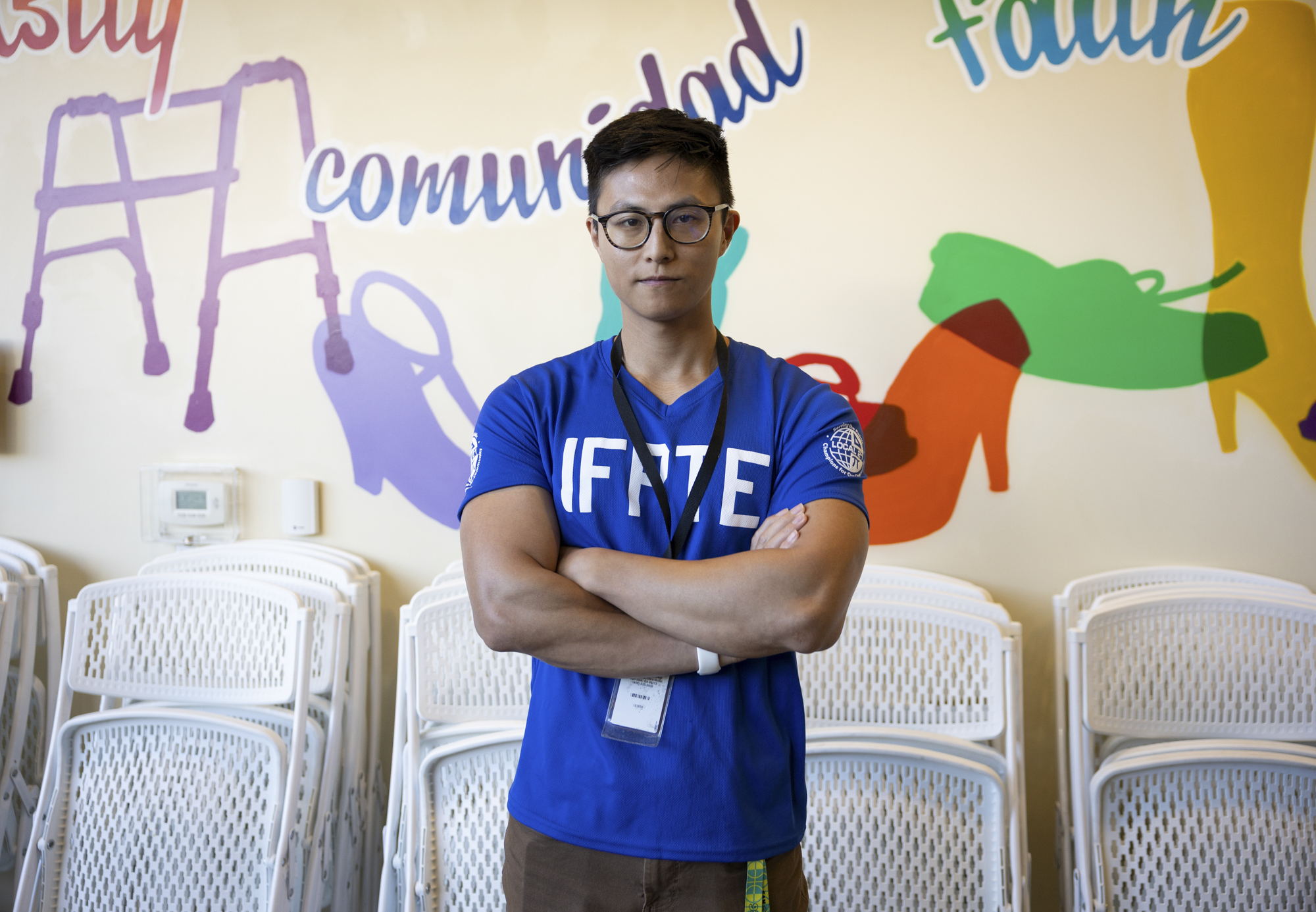
"caption": "Kyle Wong, associate transportation specialist for the Department of Transportation, poses for a photo in San Jose on July 29, 2026. A strike by MEF and IFPTE, which collectively represent more than 3,000 workers, would be the largest municipal work stoppage in San José since 1981.",
"credit": "Gina Castro for KQED",
"altTag": null,
"description": null,
"imgSizes": {
"thumbnail": {
"file": "https://cdn.kqed.org/wp-content/uploads/sites/10/2026/08/20260729_SJCITYWORKERS_GC-4-KQED-160x111.jpg",
"width": 160,
"height": 111,
"mimeType": "image/jpeg"
},
"1536x1536": {
"file": "https://cdn.kqed.org/wp-content/uploads/sites/10/2026/08/20260729_SJCITYWORKERS_GC-4-KQED-1536x1064.jpg",
"width": 1536,
"height": 1064,
"mimeType": "image/jpeg"
},
"post-thumbnail": {
"file": "https://cdn.kqed.org/wp-content/uploads/sites/10/2026/08/20260729_SJCITYWORKERS_GC-4-KQED-672x372.jpg",
"width": 672,
"height": 372,
"mimeType": "image/jpeg"
},
"twentyfourteen-full-width": {
"file": "https://cdn.kqed.org/wp-content/uploads/sites/10/2026/08/20260729_SJCITYWORKERS_GC-4-KQED-1038x576.jpg",
"width": 1038,
"height": 576,
"mimeType": "image/jpeg"
},
"npr-cds-wide": {
"file": "https://cdn.kqed.org/wp-content/uploads/sites/10/2026/08/20260729_SJCITYWORKERS_GC-4-KQED-1200x675.jpg",
"width": 1200,
"height": 675,
"mimeType": "image/jpeg"
},
"npr-cds-square": {
"file": "https://cdn.kqed.org/wp-content/uploads/sites/10/2026/08/20260729_SJCITYWORKERS_GC-4-KQED-600x600.jpg",
"width": 600,
"height": 600,
"mimeType": "image/jpeg"
},
"kqedFullSize": {
"file": "https://cdn.kqed.org/wp-content/uploads/sites/10/2026/08/20260729_SJCITYWORKERS_GC-4-KQED.jpg",
"width": 2000,
"height": 1386
}
},
"isLoading": false,
"fetchFailed": false
},
"news_12083771": {
"type": "attachments",
"id": "news_12083771",
"meta": {
"index": "attachments_1716263798",
"site": "news",
"id": "12083771",
"found": true
},
"title": "260514-GILROY ICE-ADE-03-KQED",
"publishDate": 1778798137,
"status": "inherit",
"parent": 12083600,
"modified": 1785368962,
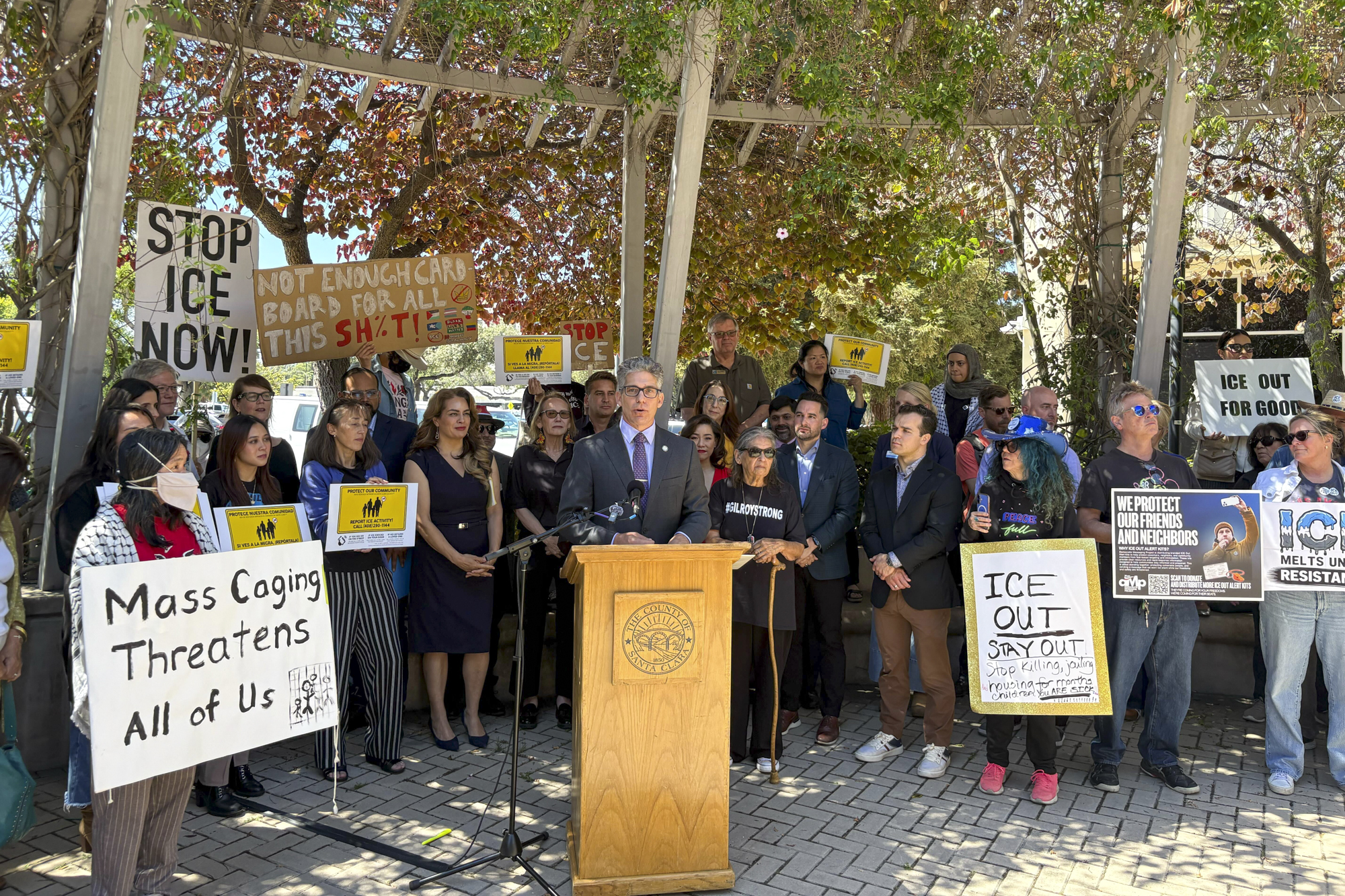
"caption": "Santa Clara County Counsel Tony LoPresti addresses a crowd at the Santa Clara County Government Center in San José on May 14, 2026.",
"credit": "Azul Dahlstrom-Eckman/KQED",
"altTag": null,
"description": null,
"imgSizes": {
"thumbnail": {
"file": "https://cdn.kqed.org/wp-content/uploads/sites/10/2026/05/260514-GILROY-ICE-ADE-03-KQED-160x107.jpg",
"width": 160,
"height": 107,
"mimeType": "image/jpeg"
},
"1536x1536": {
"file": "https://cdn.kqed.org/wp-content/uploads/sites/10/2026/05/260514-GILROY-ICE-ADE-03-KQED-1536x1024.jpg",
"width": 1536,
"height": 1024,
"mimeType": "image/jpeg"
},
"post-thumbnail": {
"file": "https://cdn.kqed.org/wp-content/uploads/sites/10/2026/05/260514-GILROY-ICE-ADE-03-KQED-672x372.jpg",
"width": 672,
"height": 372,
"mimeType": "image/jpeg"
},
"twentyfourteen-full-width": {
"file": "https://cdn.kqed.org/wp-content/uploads/sites/10/2026/05/260514-GILROY-ICE-ADE-03-KQED-1038x576.jpg",
"width": 1038,
"height": 576,
"mimeType": "image/jpeg"
},
"npr-cds-wide": {
"file": "https://cdn.kqed.org/wp-content/uploads/sites/10/2026/05/260514-GILROY-ICE-ADE-03-KQED-1200x675.jpg",
"width": 1200,
"height": 675,
"mimeType": "image/jpeg"
},
"npr-cds-square": {
"file": "https://cdn.kqed.org/wp-content/uploads/sites/10/2026/05/260514-GILROY-ICE-ADE-03-KQED-600x600.jpg",
"width": 600,
"height": 600,
"mimeType": "image/jpeg"
},
"kqedFullSize": {
"file": "https://cdn.kqed.org/wp-content/uploads/sites/10/2026/05/260514-GILROY-ICE-ADE-03-KQED.jpg",
"width": 2000,
"height": 1333
}
},
"isLoading": false,
"fetchFailed": false
},
"news_12092781": {
"type": "attachments",
"id": "news_12092781",
"meta": {
"index": "attachments_1716263798",
"site": "news",
"id": "12092781",
"found": true
},
"title": "260727-PLAZACESAR-JG-08-KQED",
"publishDate": 1785194597,
"status": "inherit",
"parent": 0,
"modified": 1785194631,
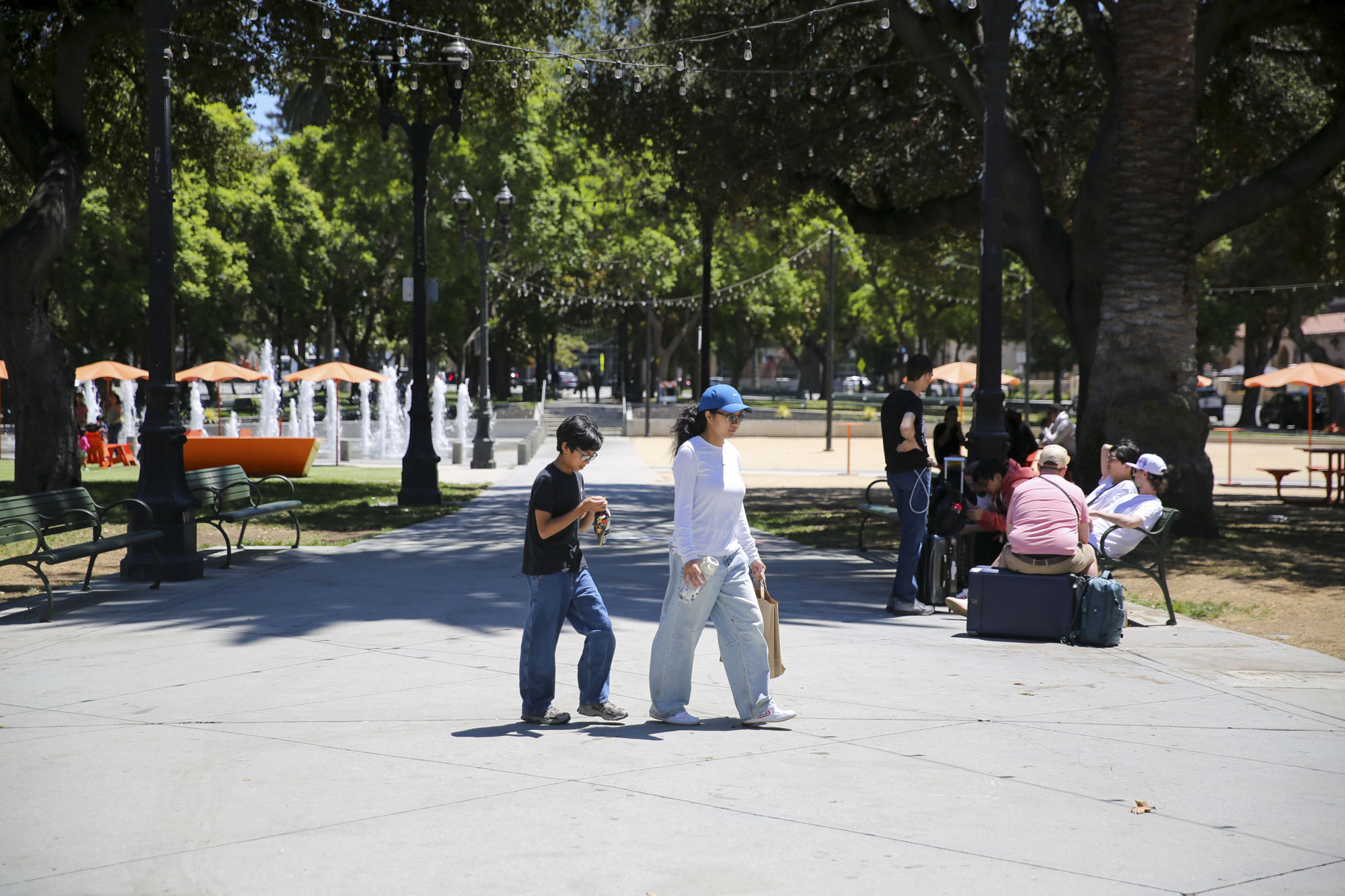
"caption": "People walk through Plaza de Cesar Chavez in downtown San José on Monday, July 27, 2026.",
"credit": "Joseph Geha/KQED",
"altTag": null,
"description": null,
"imgSizes": {
"thumbnail": {
"file": "https://cdn.kqed.org/wp-content/uploads/sites/10/2026/07/260727-PLAZACESAR-JG-08-KQED-160x107.jpg",
"width": 160,
"height": 107,
"mimeType": "image/jpeg"
},
"1536x1536": {
"file": "https://cdn.kqed.org/wp-content/uploads/sites/10/2026/07/260727-PLAZACESAR-JG-08-KQED-1536x1024.jpg",
"width": 1536,
"height": 1024,
"mimeType": "image/jpeg"
},
"post-thumbnail": {
"file": "https://cdn.kqed.org/wp-content/uploads/sites/10/2026/07/260727-PLAZACESAR-JG-08-KQED-672x372.jpg",
"width": 672,
"height": 372,
"mimeType": "image/jpeg"
},
"twentyfourteen-full-width": {
"file": "https://cdn.kqed.org/wp-content/uploads/sites/10/2026/07/260727-PLAZACESAR-JG-08-KQED-1038x576.jpg",
"width": 1038,
"height": 576,
"mimeType": "image/jpeg"
},
"npr-cds-wide": {
"file": "https://cdn.kqed.org/wp-content/uploads/sites/10/2026/07/260727-PLAZACESAR-JG-08-KQED-1200x675.jpg",
"width": 1200,
"height": 675,
"mimeType": "image/jpeg"
},
"npr-cds-square": {
"file": "https://cdn.kqed.org/wp-content/uploads/sites/10/2026/07/260727-PLAZACESAR-JG-08-KQED-600x600.jpg",
"width": 600,
"height": 600,
"mimeType": "image/jpeg"
},
"kqedFullSize": {
"file": "https://cdn.kqed.org/wp-content/uploads/sites/10/2026/07/260727-PLAZACESAR-JG-08-KQED.jpg",
"width": 2000,
"height": 1333
}
},
"isLoading": false,
"fetchFailed": false
},
"news_12092226": {
"type": "attachments",
"id": "news_12092226",
"meta": {
"index": "attachments_1716263798",
"site": "news",
"id": "12092226",
"found": true
},
"title": "260718-MaledaYouthSoccer-JY-16-KQED",
"publishDate": 1784757520,
"status": "inherit",
"parent": 0,
"modified": 1784758847,
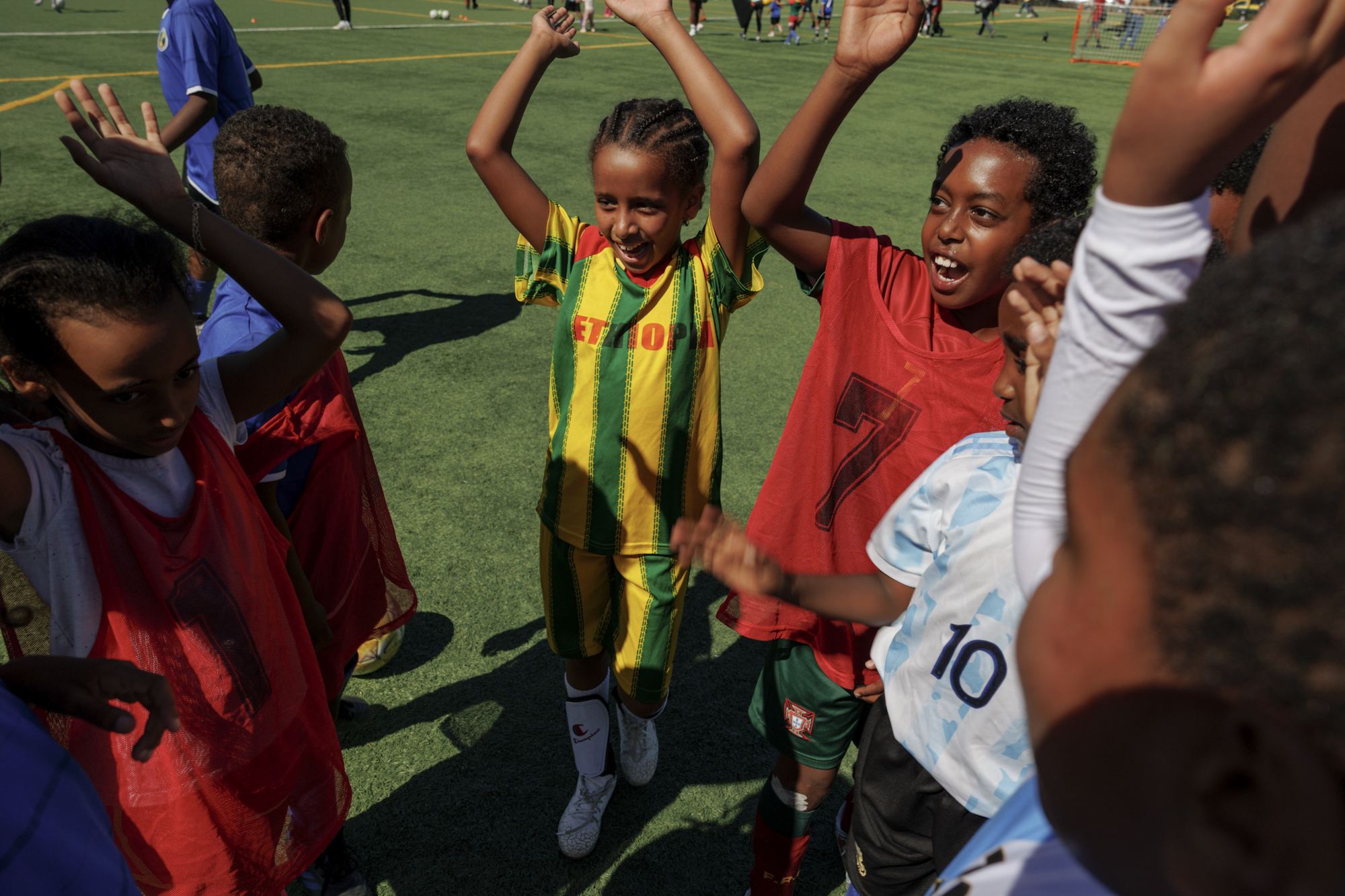
"caption": "Maleda Youth Soccer players cheer after practice at Del Monte Park in San José, California, on Saturday, July 18, 2026.",
"credit": "Juliana Yamada/KQED",
"altTag": null,
"description": null,
"imgSizes": {
"thumbnail": {
"file": "https://cdn.kqed.org/wp-content/uploads/sites/10/2026/07/260718-MaledaYouthSoccer-JY-16-KQED-160x107.jpg",
"width": 160,
"height": 107,
"mimeType": "image/jpeg"
},
"1536x1536": {
"file": "https://cdn.kqed.org/wp-content/uploads/sites/10/2026/07/260718-MaledaYouthSoccer-JY-16-KQED-1536x1024.jpg",
"width": 1536,
"height": 1024,
"mimeType": "image/jpeg"
},
"post-thumbnail": {
"file": "https://cdn.kqed.org/wp-content/uploads/sites/10/2026/07/260718-MaledaYouthSoccer-JY-16-KQED-672x372.jpg",
"width": 672,
"height": 372,
"mimeType": "image/jpeg"
},
"twentyfourteen-full-width": {
"file": "https://cdn.kqed.org/wp-content/uploads/sites/10/2026/07/260718-MaledaYouthSoccer-JY-16-KQED-1038x576.jpg",
"width": 1038,
"height": 576,
"mimeType": "image/jpeg"
},
"npr-cds-wide": {
"file": "https://cdn.kqed.org/wp-content/uploads/sites/10/2026/07/260718-MaledaYouthSoccer-JY-16-KQED-1200x675.jpg",
"width": 1200,
"height": 675,
"mimeType": "image/jpeg"
},
"npr-cds-square": {
"file": "https://cdn.kqed.org/wp-content/uploads/sites/10/2026/07/260718-MaledaYouthSoccer-JY-16-KQED-600x600.jpg",
"width": 600,
"height": 600,
"mimeType": "image/jpeg"
},
"kqedFullSize": {
"file": "https://cdn.kqed.org/wp-content/uploads/sites/10/2026/07/260718-MaledaYouthSoccer-JY-16-KQED.jpg",
"width": 2000,
"height": 1333
}
},
"isLoading": false,
"fetchFailed": false
},
"news_12037916": {
"type": "attachments",
"id": "news_12037916",
"meta": {
"index": "attachments_1716263798",
"site": "news",
"id": "12037916",
"found": true
},
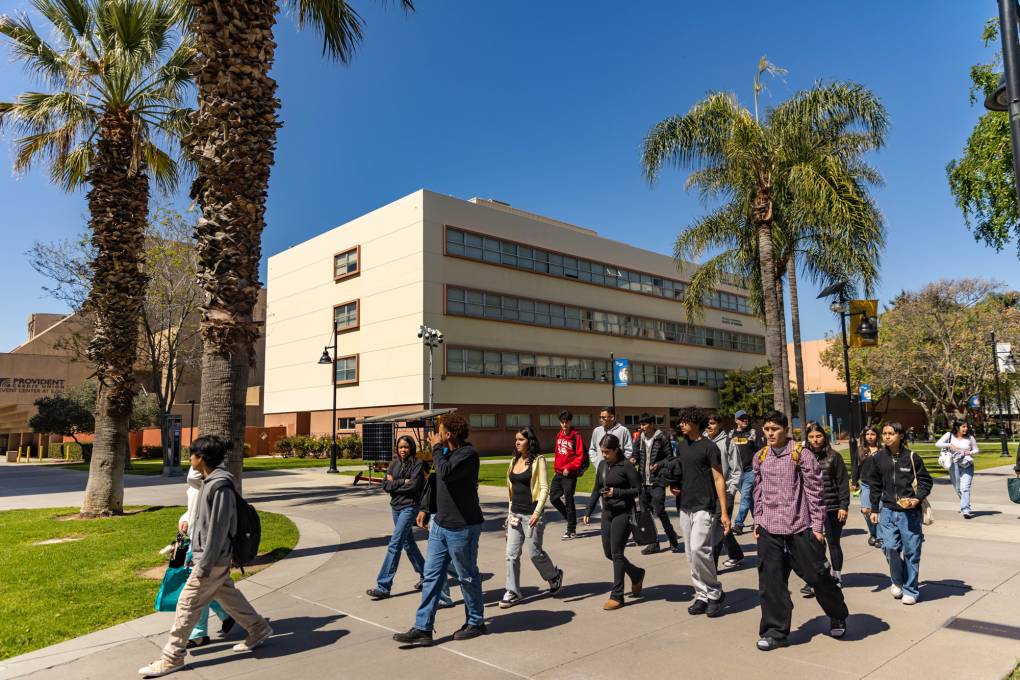
"title": "Students walk on campus at San Jose State University on April 3, 2025.",
"publishDate": 1745863056,
"status": "inherit",
"parent": 0,
"modified": 1745863071,
"caption": "Students walk on campus at San Jose State University on April 3, 2025.",
"credit": "Gina Castro/KQED",
"altTag": null,
"description": null,
"imgSizes": {
"medium": {
"file": "https://cdn.kqed.org/wp-content/uploads/sites/10/2025/04/20240403_SJSUFILE_GC-18-KQED-800x533.jpg",
"width": 800,
"height": 533,
"mimeType": "image/jpeg"
},
"large": {
"file": "https://cdn.kqed.org/wp-content/uploads/sites/10/2025/04/20240403_SJSUFILE_GC-18-KQED-1020x680.jpg",
"width": 1020,
"height": 680,
"mimeType": "image/jpeg"
},
"thumbnail": {
"file": "https://cdn.kqed.org/wp-content/uploads/sites/10/2025/04/20240403_SJSUFILE_GC-18-KQED-160x107.jpg",
"width": 160,
"height": 107,
"mimeType": "image/jpeg"
},
"1536x1536": {
"file": "https://cdn.kqed.org/wp-content/uploads/sites/10/2025/04/20240403_SJSUFILE_GC-18-KQED-1536x1024.jpg",
"width": 1536,
"height": 1024,
"mimeType": "image/jpeg"
},
"post-thumbnail": {
"file": "https://cdn.kqed.org/wp-content/uploads/sites/10/2025/04/20240403_SJSUFILE_GC-18-KQED-672x372.jpg",
"width": 672,
"height": 372,
"mimeType": "image/jpeg"
},
"twentyfourteen-full-width": {
"file": "https://cdn.kqed.org/wp-content/uploads/sites/10/2025/04/20240403_SJSUFILE_GC-18-KQED-1038x576.jpg",
"width": 1038,
"height": 576,
"mimeType": "image/jpeg"
},
"full-width": {
"file": "https://cdn.kqed.org/wp-content/uploads/sites/10/2025/04/20240403_SJSUFILE_GC-18-KQED-1920x1280.jpg",
"width": 1920,
"height": 1280,
"mimeType": "image/jpeg"
},
"kqedFullSize": {
"file": "https://cdn.kqed.org/wp-content/uploads/sites/10/2025/04/20240403_SJSUFILE_GC-18-KQED.jpg",
"width": 2000,
"height": 1333
}
},
"isLoading": false,
"fetchFailed": false
},
"news_12083443": {
"type": "attachments",
"id": "news_12083443",
"meta": {
"index": "attachments_1716263798",
"site": "news",
"id": "12083443",
"found": true
},
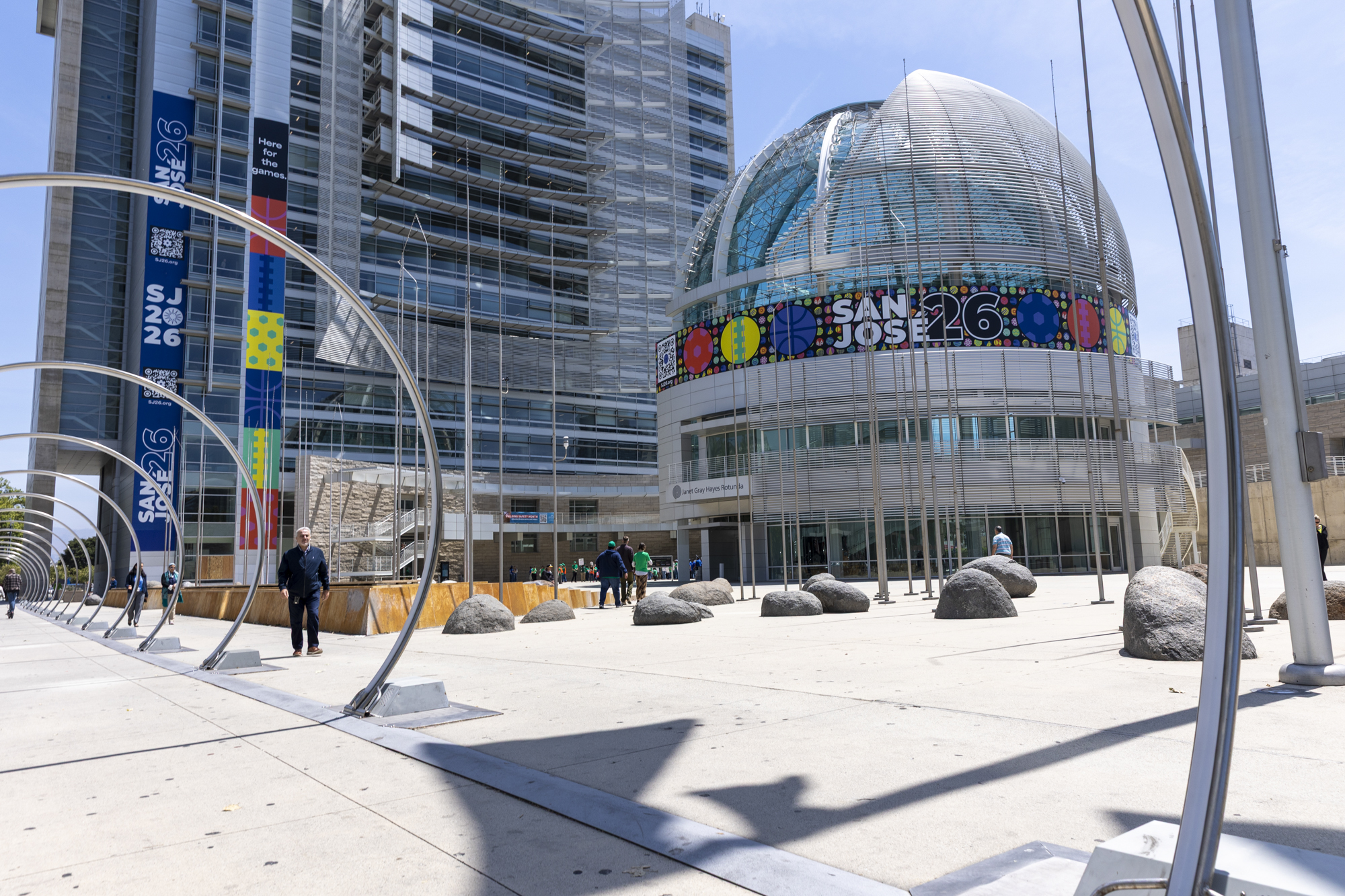
"title": "World Cup signage at San Jose City Hall in San Jose on May 12, 2026.",
"publishDate": 1778690544,
"status": "inherit",
"parent": 12089834,
"modified": 1783028559,
"caption": "World Cup signage at San José City Hall in San José on May 12, 2026.",
"credit": "Tâm Vũ/KQED",
"altTag": null,
"description": null,
"imgSizes": {
"thumbnail": {
"file": "https://cdn.kqed.org/wp-content/uploads/sites/10/2026/05/260512-WORLDCUPFLAG-TV-01750-KQED-160x107.jpg",
"width": 160,
"height": 107,
"mimeType": "image/jpeg"
},
"1536x1536": {
"file": "https://cdn.kqed.org/wp-content/uploads/sites/10/2026/05/260512-WORLDCUPFLAG-TV-01750-KQED-1536x1024.jpg",
"width": 1536,
"height": 1024,
"mimeType": "image/jpeg"
},
"post-thumbnail": {
"file": "https://cdn.kqed.org/wp-content/uploads/sites/10/2026/05/260512-WORLDCUPFLAG-TV-01750-KQED-672x372.jpg",
"width": 672,
"height": 372,
"mimeType": "image/jpeg"
},
"twentyfourteen-full-width": {
"file": "https://cdn.kqed.org/wp-content/uploads/sites/10/2026/05/260512-WORLDCUPFLAG-TV-01750-KQED-1038x576.jpg",
"width": 1038,
"height": 576,
"mimeType": "image/jpeg"
},
"npr-cds-wide": {
"file": "https://cdn.kqed.org/wp-content/uploads/sites/10/2026/05/260512-WORLDCUPFLAG-TV-01750-KQED-1200x675.jpg",
"width": 1200,
"height": 675,
"mimeType": "image/jpeg"
},
"npr-cds-square": {
"file": "https://cdn.kqed.org/wp-content/uploads/sites/10/2026/05/260512-WORLDCUPFLAG-TV-01750-KQED-600x600.jpg",
"width": 600,
"height": 600,
"mimeType": "image/jpeg"
},
"kqedFullSize": {
"file": "https://cdn.kqed.org/wp-content/uploads/sites/10/2026/05/260512-WORLDCUPFLAG-TV-01750-KQED.jpg",
"width": 2000,
"height": 1333
}
},
"isLoading": false,
"fetchFailed": false
},
"news_12089669": {
"type": "attachments",
"id": "news_12089669",
"meta": {
"index": "attachments_1716263798",
"site": "news",
"id": "12089669",
"found": true
},
"title": "260701-WORLDCUPUSALEVIS-07-BL-KQED",
"publishDate": 1782947579,
"status": "inherit",
"parent": 12089303,
"modified": 1782964388,
"caption": "Shannon Malone cheers before marching to the San Francisco Bay Area stadium for the FIFA World Cup game between the USA and Bosnia Herzegovina in Santa Clara, California, on July 1, 2026.",
"credit": "Beth LaBerge/KQED",
"altTag": null,
"description": null,
"imgSizes": {
"thumbnail": {
"file": "https://cdn.kqed.org/wp-content/uploads/sites/10/2026/07/260701-WORLDCUPUSALEVIS-07-BL-KQED-160x107.jpg",
"width": 160,
"height": 107,
"mimeType": "image/jpeg"
},
"1536x1536": {
"file": "https://cdn.kqed.org/wp-content/uploads/sites/10/2026/07/260701-WORLDCUPUSALEVIS-07-BL-KQED-1536x1024.jpg",
"width": 1536,
"height": 1024,
"mimeType": "image/jpeg"
},
"post-thumbnail": {
"file": "https://cdn.kqed.org/wp-content/uploads/sites/10/2026/07/260701-WORLDCUPUSALEVIS-07-BL-KQED-672x372.jpg",
"width": 672,
"height": 372,
"mimeType": "image/jpeg"
},
"twentyfourteen-full-width": {
"file": "https://cdn.kqed.org/wp-content/uploads/sites/10/2026/07/260701-WORLDCUPUSALEVIS-07-BL-KQED-1038x576.jpg",
"width": 1038,
"height": 576,
"mimeType": "image/jpeg"
},
"npr-cds-wide": {
"file": "https://cdn.kqed.org/wp-content/uploads/sites/10/2026/07/260701-WORLDCUPUSALEVIS-07-BL-KQED-1200x675.jpg",
"width": 1200,
"height": 675,
"mimeType": "image/jpeg"
},
"npr-cds-square": {
"file": "https://cdn.kqed.org/wp-content/uploads/sites/10/2026/07/260701-WORLDCUPUSALEVIS-07-BL-KQED-600x600.jpg",
"width": 600,
"height": 600,
"mimeType": "image/jpeg"
},
"kqedFullSize": {
"file": "https://cdn.kqed.org/wp-content/uploads/sites/10/2026/07/260701-WORLDCUPUSALEVIS-07-BL-KQED.jpg",
"width": 2000,
"height": 1333
}
},
"isLoading": false,
"fetchFailed": false
},
"news_11966602": {
"type": "attachments",
"id": "news_11966602",
"meta": {
"index": "attachments_1716263798",
"site": "news",
"id": "11966602",
"found": true
},
"title": "San Jose Police chief Anthony Mata",
"publishDate": 1699331894,
"status": "inherit",
"parent": 11966615,
"modified": 1782930424,
"caption": "A person wears a San José Police jacket during a press conference outside of the San José Police department in San José on March, 17, 2021.",
"credit": "Randy Vazquez/MediaNews Group/The Mercury News via Getty Images",
"altTag": "A person wears a black San Jose Police jacket in an outdoor setting.",
"description": null,
"imgSizes": {
"medium": {
"file": "https://cdn.kqed.org/wp-content/uploads/sites/10/2023/11/231106-SAN-JOSE-POLICE-GETTY-RV-KQED-800x534.jpg",
"width": 800,
"height": 534,
"mimeType": "image/jpeg"
},
"large": {
"file": "https://cdn.kqed.org/wp-content/uploads/sites/10/2023/11/231106-SAN-JOSE-POLICE-GETTY-RV-KQED-1020x680.jpg",
"width": 1020,
"height": 680,
"mimeType": "image/jpeg"
},
"thumbnail": {
"file": "https://cdn.kqed.org/wp-content/uploads/sites/10/2023/11/231106-SAN-JOSE-POLICE-GETTY-RV-KQED-160x107.jpg",
"width": 160,
"height": 107,
"mimeType": "image/jpeg"
},
"1536x1536": {
"file": "https://cdn.kqed.org/wp-content/uploads/sites/10/2023/11/231106-SAN-JOSE-POLICE-GETTY-RV-KQED-1536x1025.jpg",
"width": 1536,
"height": 1025,
"mimeType": "image/jpeg"
},
"post-thumbnail": {
"file": "https://cdn.kqed.org/wp-content/uploads/sites/10/2023/11/231106-SAN-JOSE-POLICE-GETTY-RV-KQED-672x372.jpg",
"width": 672,
"height": 372,
"mimeType": "image/jpeg"
},
"twentyfourteen-full-width": {
"file": "https://cdn.kqed.org/wp-content/uploads/sites/10/2023/11/231106-SAN-JOSE-POLICE-GETTY-RV-KQED-1038x576.jpg",
"width": 1038,
"height": 576,
"mimeType": "image/jpeg"
},
"full-width": {
"file": "https://cdn.kqed.org/wp-content/uploads/sites/10/2023/11/231106-SAN-JOSE-POLICE-GETTY-RV-KQED-1920x1281.jpg",
"width": 1920,
"height": 1281,
"mimeType": "image/jpeg"
},
"kqedFullSize": {
"file": "https://cdn.kqed.org/wp-content/uploads/sites/10/2023/11/231106-SAN-JOSE-POLICE-GETTY-RV-KQED.jpg",
"width": 2000,
"height": 1334
}
},
"isLoading": false,
"fetchFailed": false
},
"news_11839014": {
"type": "attachments",
"id": "news_11839014",
"meta": {
"index": "attachments_1716263798",
"site": "news",
"id": "11839014",
"found": true
},
"parent": 11838638,
"imgSizes": {
"apple_news_ca_landscape_5_5": {
"file": "https://ww2.kqed.org/app/uploads/sites/10/2020/09/IMG_8700-1044x783.jpg",
"width": 1044,
"mimeType": "image/jpeg",
"height": 783
},
"apple_news_ca_square_4_0": {
"file": "https://ww2.kqed.org/app/uploads/sites/10/2020/09/IMG_8700-470x470.jpg",
"width": 470,
"mimeType": "image/jpeg",
"height": 470
},
"twentyfourteen-full-width": {
"file": "https://ww2.kqed.org/app/uploads/sites/10/2020/09/IMG_8700-1038x576.jpg",
"width": 1038,
"mimeType": "image/jpeg",
"height": 576
},
"thumbnail": {
"file": "https://ww2.kqed.org/app/uploads/sites/10/2020/09/IMG_8700-160x120.jpg",
"width": 160,
"mimeType": "image/jpeg",
"height": 120
},
"post-thumbnail": {
"file": "https://ww2.kqed.org/app/uploads/sites/10/2020/09/IMG_8700-672x372.jpg",
"width": 672,
"mimeType": "image/jpeg",
"height": 372
},
"kqedFullSize": {
"file": "https://ww2.kqed.org/app/uploads/sites/10/2020/09/IMG_8700-scaled.jpg",
"width": 2560,
"height": 1920
},
"2048x2048": {
"file": "https://ww2.kqed.org/app/uploads/sites/10/2020/09/IMG_8700-2048x1536.jpg",
"width": 2048,
"mimeType": "image/jpeg",
"height": 1536
},
"apple_news_ca_landscape_4_7": {
"file": "https://ww2.kqed.org/app/uploads/sites/10/2020/09/IMG_8700-632x474.jpg",
"width": 632,
"mimeType": "image/jpeg",
"height": 474
},
"large": {
"file": "https://ww2.kqed.org/app/uploads/sites/10/2020/09/IMG_8700-1020x765.jpg",
"width": 1020,
"mimeType": "image/jpeg",
"height": 765
},
"apple_news_ca_landscape_4_0": {
"file": "https://ww2.kqed.org/app/uploads/sites/10/2020/09/IMG_8700-536x402.jpg",
"width": 536,
"mimeType": "image/jpeg",
"height": 402
},
"apple_news_ca_portrait_12_9": {
"file": "https://ww2.kqed.org/app/uploads/sites/10/2020/09/IMG_8700-1122x1496.jpg",
"width": 1122,
"mimeType": "image/jpeg",
"height": 1496
},
"medium": {
"file": "https://ww2.kqed.org/app/uploads/sites/10/2020/09/IMG_8700-800x600.jpg",
"width": 800,
"mimeType": "image/jpeg",
"height": 600
},
"apple_news_ca_portrait_4_0": {
"file": "https://ww2.kqed.org/app/uploads/sites/10/2020/09/IMG_8700-354x472.jpg",
"width": 354,
"mimeType": "image/jpeg",
"height": 472
},
"apple_news_ca_portrait_9_7": {
"file": "https://ww2.kqed.org/app/uploads/sites/10/2020/09/IMG_8700-840x1120.jpg",
"width": 840,
"mimeType": "image/jpeg",
"height": 1120
},
"apple_news_ca_landscape_12_9": {
"file": "https://ww2.kqed.org/app/uploads/sites/10/2020/09/IMG_8700-1832x1374.jpg",
"width": 1832,
"mimeType": "image/jpeg",
"height": 1374
},
"apple_news_ca_square_9_7": {
"file": "https://ww2.kqed.org/app/uploads/sites/10/2020/09/IMG_8700-1104x1104.jpg",
"width": 1104,
"mimeType": "image/jpeg",
"height": 1104
},
"1536x1536": {
"file": "https://ww2.kqed.org/app/uploads/sites/10/2020/09/IMG_8700-1536x1152.jpg",
"width": 1536,
"mimeType": "image/jpeg",
"height": 1152
},
"apple_news_ca_portrait_4_7": {
"file": "https://ww2.kqed.org/app/uploads/sites/10/2020/09/IMG_8700-414x552.jpg",
"width": 414,
"mimeType": "image/jpeg",
"height": 552
},
"apple_news_ca_square_12_9": {
"file": "https://ww2.kqed.org/app/uploads/sites/10/2020/09/IMG_8700-1472x1472.jpg",
"width": 1472,
"mimeType": "image/jpeg",
"height": 1472
},
"apple_news_ca_portrait_5_5": {
"file": "https://ww2.kqed.org/app/uploads/sites/10/2020/09/IMG_8700-687x916.jpg",
"width": 687,
"mimeType": "image/jpeg",
"height": 916
},
"full-width": {
"file": "https://ww2.kqed.org/app/uploads/sites/10/2020/09/IMG_8700-1920x1440.jpg",
"width": 1920,
"mimeType": "image/jpeg",
"height": 1440
},
"apple_news_ca_square_4_7": {
"file": "https://ww2.kqed.org/app/uploads/sites/10/2020/09/IMG_8700-550x550.jpg",
"width": 550,
"mimeType": "image/jpeg",
"height": 550
},
"apple_news_ca_landscape_9_7": {
"file": "https://ww2.kqed.org/app/uploads/sites/10/2020/09/IMG_8700-1376x1032.jpg",
"width": 1376,
"mimeType": "image/jpeg",
"height": 1032
},
"apple_news_ca_square_5_5": {
"file": "https://ww2.kqed.org/app/uploads/sites/10/2020/09/IMG_8700-912x912.jpg",
"width": 912,
"mimeType": "image/jpeg",
"height": 912
}
},
"publishDate": 1600722896,
"modified": 1600723077,
"caption": "San Pedro Square in Downtown San Jose was a center of activity before the COVID-19 pandemic hit. Now, there's a little bit of foot traffic on the weekends and small businesses and restaurants are trying to attract as many customers as they can.",
"description": "San Pedro Square in Downtown San Jose was a center of activity before the COVID-19 pandemic hit. Now, there's a little bit of foot traffic on the weekends and small businesses and restaurants are trying to attract as many customers as they can.",
"title": "San Pedro Square in Downtown San Jose was a center of activity before the COVID-19 pandemic hit. Now, there's a little bit of foot traffic on the weekends and small businesses and restaurants are trying to attract as many customers as they can.",
"credit": "Adhiti Bandlamudi/ KQED",
"status": "inherit",
"isLoading": false,
"fetchFailed": false
},
"news_12089041": {
"type": "attachments",
"id": "news_12089041",
"meta": {
"index": "attachments_1716263798",
"site": "news",
"id": "12089041",
"found": true
},
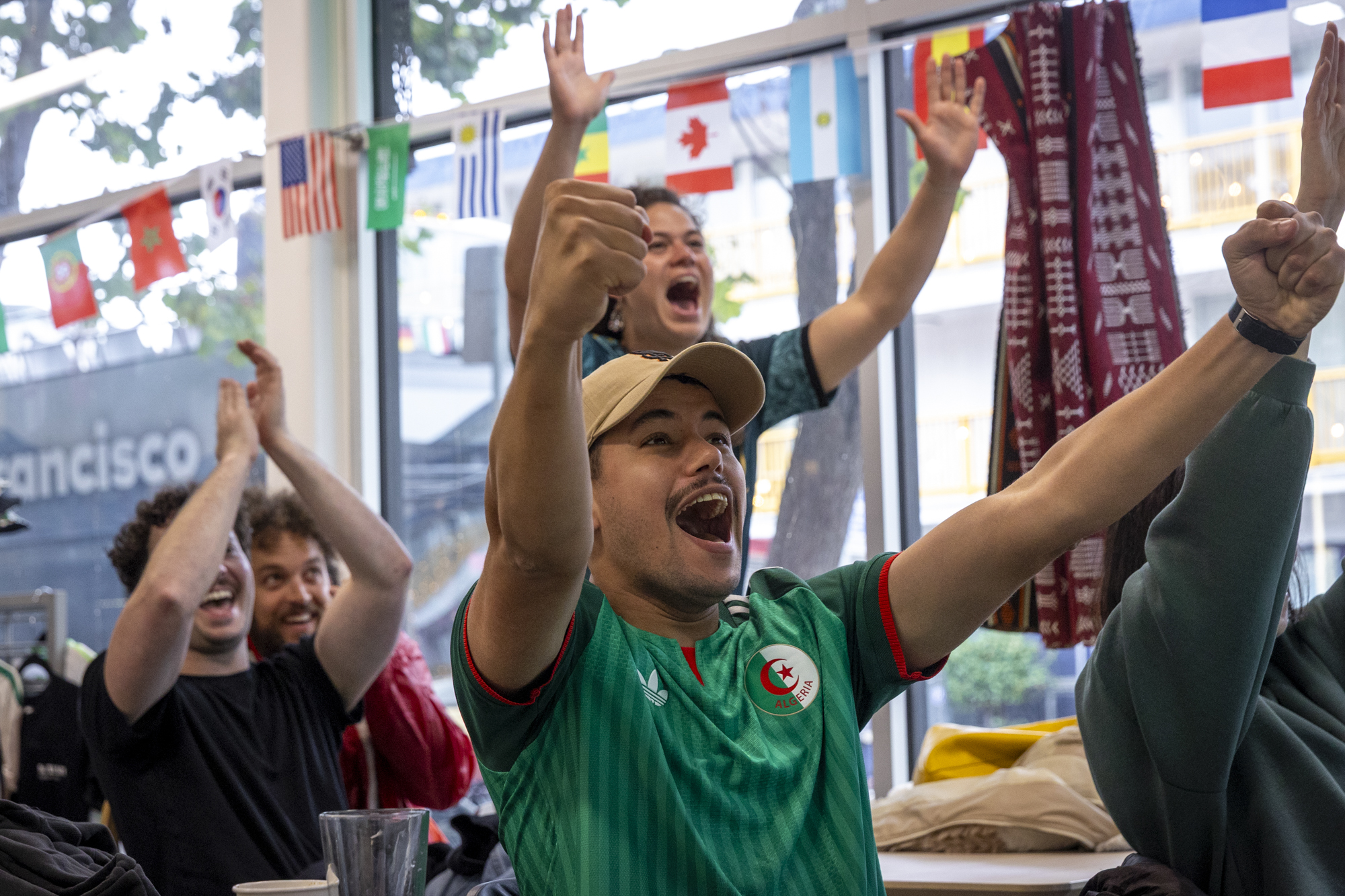
"title": "260617-WORLDCUPDIASPORA00995_TV-KQED",
"publishDate": 1782497525,
"status": "inherit",
"parent": 0,
"modified": 1782505210,
"caption": "Taha Bouhoun cheers at the Argentina vs. Algeria World Cup game at KAYMA Algerian Eatery in San Francisco on June 17, 2026.",
"credit": "Tâm Vũ/KQED",
"altTag": null,
"description": null,
"imgSizes": {
"thumbnail": {
"file": "https://cdn.kqed.org/wp-content/uploads/sites/10/2026/06/260617-WORLDCUPDIASPORA00995_TV-KQED-160x107.jpg",
"width": 160,
"height": 107,
"mimeType": "image/jpeg"
},
"1536x1536": {
"file": "https://cdn.kqed.org/wp-content/uploads/sites/10/2026/06/260617-WORLDCUPDIASPORA00995_TV-KQED-1536x1024.jpg",
"width": 1536,
"height": 1024,
"mimeType": "image/jpeg"
},
"post-thumbnail": {
"file": "https://cdn.kqed.org/wp-content/uploads/sites/10/2026/06/260617-WORLDCUPDIASPORA00995_TV-KQED-672x372.jpg",
"width": 672,
"height": 372,
"mimeType": "image/jpeg"
},
"twentyfourteen-full-width": {
"file": "https://cdn.kqed.org/wp-content/uploads/sites/10/2026/06/260617-WORLDCUPDIASPORA00995_TV-KQED-1038x576.jpg",
"width": 1038,
"height": 576,
"mimeType": "image/jpeg"
},
"npr-cds-wide": {
"file": "https://cdn.kqed.org/wp-content/uploads/sites/10/2026/06/260617-WORLDCUPDIASPORA00995_TV-KQED-1200x675.jpg",
"width": 1200,
"height": 675,
"mimeType": "image/jpeg"
},
"npr-cds-square": {
"file": "https://cdn.kqed.org/wp-content/uploads/sites/10/2026/06/260617-WORLDCUPDIASPORA00995_TV-KQED-600x600.jpg",
"width": 600,
"height": 600,
"mimeType": "image/jpeg"
},
"kqedFullSize": {
"file": "https://cdn.kqed.org/wp-content/uploads/sites/10/2026/06/260617-WORLDCUPDIASPORA00995_TV-KQED.jpg",
"width": 2000,
"height": 1333
}
},
"isLoading": false,
"fetchFailed": false
},
"news_12088922": {
"type": "attachments",
"id": "news_12088922",
"meta": {
"index": "attachments_1716263798",
"site": "news",
"id": "12088922",
"found": true
},
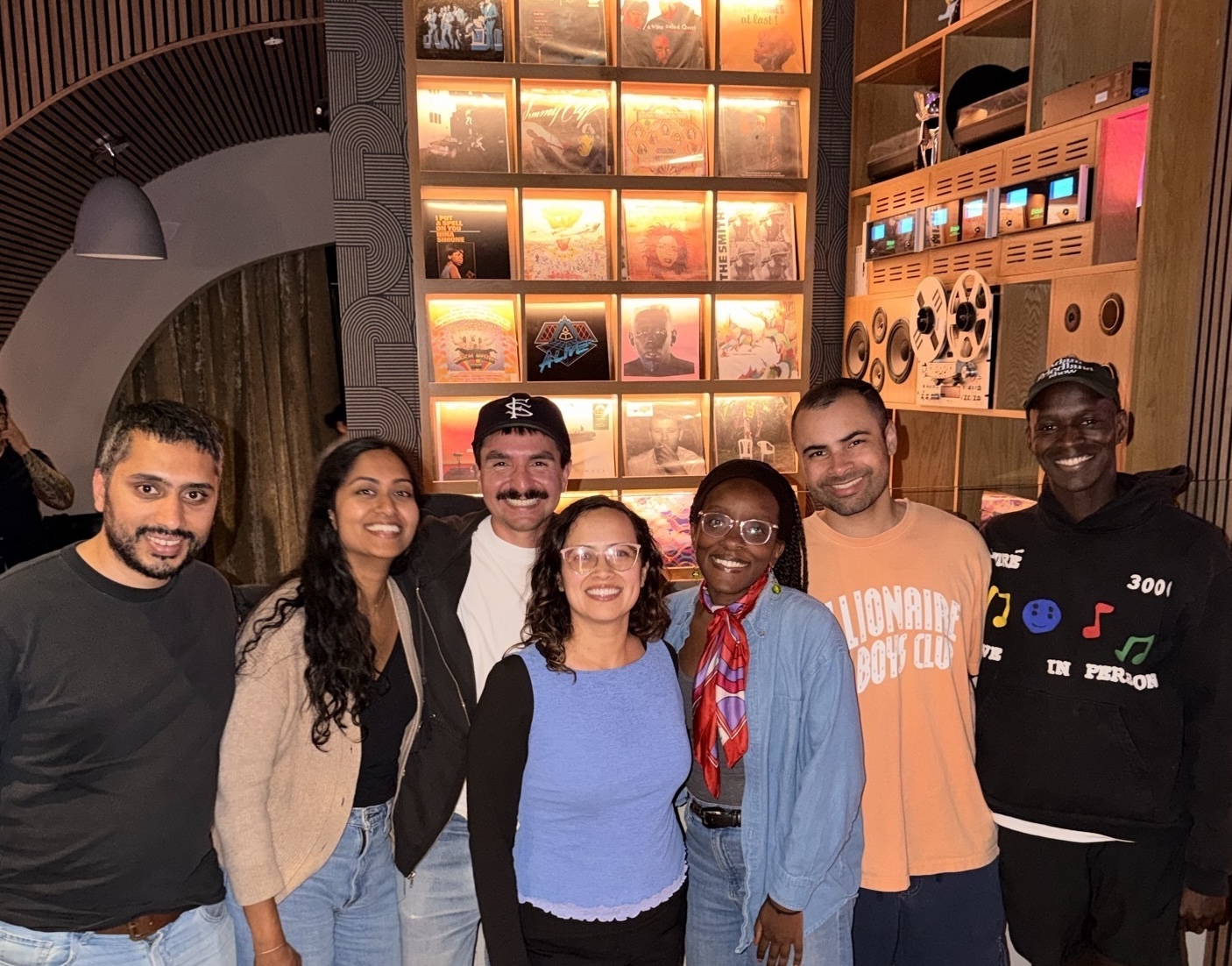
"title": "IMG_9924",
"publishDate": 1782416071,
"status": "inherit",
"parent": 12088920,
"modified": 1782416101,
"caption": "The Bay producer Jessica Kariisa found community in San Jose in many ways, including a vinyl club.",
"credit": "Jessica Kariisa",
"altTag": null,
"description": null,
"imgSizes": {
"thumbnail": {
"file": "https://cdn.kqed.org/wp-content/uploads/sites/10/2026/06/IMG_9924-160x125.jpg",
"width": 160,
"height": 125,
"mimeType": "image/jpeg"
},
"post-thumbnail": {
"file": "https://cdn.kqed.org/wp-content/uploads/sites/10/2026/06/IMG_9924-672x372.jpg",
"width": 672,
"height": 372,
"mimeType": "image/jpeg"
},
"twentyfourteen-full-width": {
"file": "https://cdn.kqed.org/wp-content/uploads/sites/10/2026/06/IMG_9924-1038x576.jpg",
"width": 1038,
"height": 576,
"mimeType": "image/jpeg"
},
"npr-cds-wide": {
"file": "https://cdn.kqed.org/wp-content/uploads/sites/10/2026/06/IMG_9924-1200x675.jpg",
"width": 1200,
"height": 675,
"mimeType": "image/jpeg"
},
"npr-cds-square": {
"file": "https://cdn.kqed.org/wp-content/uploads/sites/10/2026/06/IMG_9924-600x600.jpg",
"width": 600,
"height": 600,
"mimeType": "image/jpeg"
},
"kqedFullSize": {
"file": "https://cdn.kqed.org/wp-content/uploads/sites/10/2026/06/IMG_9924.jpg",
"width": 1406,
"height": 1102
}
},
"isLoading": false,
"fetchFailed": false
},
"news_12088568": {
"type": "attachments",
"id": "news_12088568",
"meta": {
"index": "attachments_1716263798",
"site": "news",
"id": "12088568",
"found": true
},
"title": "A parking meter in San José on June 23, 2026.",
"publishDate": 1782249351,
"status": "inherit",
"parent": 0,
"modified": 1782249395,
"caption": "A parking meter in San José on June 23, 2026.",
"credit": "Beth LaBerge/KQED",
"altTag": null,
"description": null,
"imgSizes": {
"thumbnail": {
"file": "https://cdn.kqed.org/wp-content/uploads/sites/10/2026/06/260623-SJParking-07-BL-KQED-160x107.jpg",
"width": 160,
"height": 107,
"mimeType": "image/jpeg"
},
"1536x1536": {
"file": "https://cdn.kqed.org/wp-content/uploads/sites/10/2026/06/260623-SJParking-07-BL-KQED-1536x1024.jpg",
"width": 1536,
"height": 1024,
"mimeType": "image/jpeg"
},
"post-thumbnail": {
"file": "https://cdn.kqed.org/wp-content/uploads/sites/10/2026/06/260623-SJParking-07-BL-KQED-672x372.jpg",
"width": 672,
"height": 372,
"mimeType": "image/jpeg"
},
"twentyfourteen-full-width": {
"file": "https://cdn.kqed.org/wp-content/uploads/sites/10/2026/06/260623-SJParking-07-BL-KQED-1038x576.jpg",
"width": 1038,
"height": 576,
"mimeType": "image/jpeg"
},
"npr-cds-wide": {
"file": "https://cdn.kqed.org/wp-content/uploads/sites/10/2026/06/260623-SJParking-07-BL-KQED-1200x675.jpg",
"width": 1200,
"height": 675,
"mimeType": "image/jpeg"
},
"npr-cds-square": {
"file": "https://cdn.kqed.org/wp-content/uploads/sites/10/2026/06/260623-SJParking-07-BL-KQED-600x600.jpg",
"width": 600,
"height": 600,
"mimeType": "image/jpeg"
},
"kqedFullSize": {
"file": "https://cdn.kqed.org/wp-content/uploads/sites/10/2026/06/260623-SJParking-07-BL-KQED.jpg",
"width": 2000,
"height": 1333
}
},
"isLoading": false,
"fetchFailed": false
}
},
"audioPlayerReducer": {
"postId": "stream_live",
"isPaused": true,
"isPlaying": false,
"pfsActive": false,
"pledgeModalIsOpen": true,
"playerDrawerIsOpen": false,
"liveAudioPlayStartedAt": 0,
"liveAudioPlayContext": ""
},
"authorsReducer": {
"gmarzorati": {
"type": "authors",
"id": "227",
"meta": {
"index": "authors_1716337520",
"id": "227",
"found": true
},
"name": "Guy Marzorati",
"firstName": "Guy",
"lastName": "Marzorati",
"slug": "gmarzorati",
"email": "gmarzorati@KQED.org",
"display_author_email": true,
"staff_mastheads": [
"news"
],
"title": "Correspondent",
"bio": "Guy Marzorati is a correspondent on KQED's California Politics and Government Desk, based in San Jose. A graduate of Santa Clara University, Guy joined KQED in 2013. He reports on state and local politics and produces KQED's digital voter guide.",
"avatar": "https://secure.gravatar.com/avatar/e7038b8dbfd55b104369b76b1cd0b9de?s=600&d=blank&r=g",
"twitter": "guymarzorati",
"facebook": null,
"instagram": null,
"linkedin": null,
"sites": [
{
"site": "",
"roles": [
"editor"
]
},
{
"site": "news",
"roles": [
"editor"
]
},
{
"site": "science",
"roles": [
"editor"
]
},
{
"site": "forum",
"roles": [
"editor"
]
},
{
"site": "elections",
"roles": [
"editor"
]
},
{
"site": "liveblog",
"roles": [
"editor"
]
}
],
"headData": {
"title": "Guy Marzorati | KQED",
"description": "Correspondent",
"ogImgSrc": "https://secure.gravatar.com/avatar/e7038b8dbfd55b104369b76b1cd0b9de?s=600&d=blank&r=g",
"twImgSrc": "https://secure.gravatar.com/avatar/e7038b8dbfd55b104369b76b1cd0b9de?s=600&d=blank&r=g"
},
"isLoading": false,
"link": "/author/gmarzorati"
},
"ecruzguevarra": {
"type": "authors",
"id": "8654",
"meta": {
"index": "authors_1716337520",
"id": "8654",
"found": true
},
"name": "Ericka Cruz Guevarra",
"firstName": "Ericka",
"lastName": "Cruz Guevarra",
"slug": "ecruzguevarra",
"email": "ecruzguevarra@kqed.org",
"display_author_email": true,
"staff_mastheads": [
"news"
],
"title": "Producer, The Bay Podcast",
"bio": "Ericka Cruz Guevarra is host of \u003ca href=\"https://www.kqed.org/podcasts/thebay\">\u003cem>The Bay\u003c/em>\u003c/a> podcast at KQED. Before host, she was the show’s producer. Her work in that capacity includes a three-part reported series on policing in Vallejo, which won a 2020 excellence in journalism award from the Society of Professional Journalists. Ericka has worked as a breaking news reporter at Oregon Public Broadcasting, helped produce the Code Switch podcast, and was KQED’s inaugural Raul Ramirez Diversity Fund intern. She’s also an alumna of NPR’s Next Generation Radio program. Send her an email if you have strong feelings about whether Fairfield and Suisun City are the Bay. Ericka is represented by SAG-AFTRA.",
"avatar": "https://secure.gravatar.com/avatar/accefc1de4bafc7e234b69bcb9b6f6536c130fd84709bc3069ef11a78787e1bb?s=600&d=blank&r=g",
"twitter": "NotoriousECG",
"bluesky": null,
"facebook": null,
"instagram": null,
"linkedin": null,
"sites": [
{
"site": "arts",
"roles": [
"subscriber"
]
},
{
"site": "news",
"roles": [
"editor",
"manage_categories"
]
},
{
"site": "futureofyou",
"roles": [
"subscriber"
]
},
{
"site": "stateofhealth",
"roles": [
"subscriber"
]
},
{
"site": "science",
"roles": [
"editor"
]
},
{
"site": "forum",
"roles": [
"subscriber"
]
}
],
"headData": {
"title": "Ericka Cruz Guevarra | KQED",
"description": "Producer, The Bay Podcast",
"ogImgSrc": "https://secure.gravatar.com/avatar/accefc1de4bafc7e234b69bcb9b6f6536c130fd84709bc3069ef11a78787e1bb?s=600&d=blank&r=g",
"twImgSrc": "https://secure.gravatar.com/avatar/accefc1de4bafc7e234b69bcb9b6f6536c130fd84709bc3069ef11a78787e1bb?s=600&d=blank&r=g"
},
"isLoading": false,
"link": "/author/ecruzguevarra"
},
"kmoghadam": {
"type": "authors",
"id": "11637",
"meta": {
"index": "authors_1716337520",
"id": "11637",
"found": true
},
"name": "Kyana Moghadam",
"firstName": "Kyana",
"lastName": "Moghadam",
"slug": "kmoghadam",
"email": "kmoghadam@kqed.org",
"display_author_email": false,
"staff_mastheads": [
"news"
],
"title": "Senior Producer ",
"bio": "Kyana Moghadam is a senior producer at KQED. Prior to joining KQED, she was an audio producer and editor with Al Jazeera, Jetty Studios, VOX Media, Democracy Now!, and Global Press.",
"avatar": "https://secure.gravatar.com/avatar/cdbd6cb0b9e99deaa9eb618abdba56f265d374a2c614710aebeb4e58decbc5f0?s=600&d=blank&r=g",
"twitter": null,
"bluesky": null,
"facebook": null,
"instagram": null,
"linkedin": "https://www.linkedin.com/in/kyanamoghadam/",
"sites": [
{
"site": "",
"roles": [
"editor"
]
},
{
"site": "arts",
"roles": [
"editor"
]
},
{
"site": "news",
"roles": [
"administrator"
]
},
{
"site": "pop",
"roles": [
"editor"
]
},
{
"site": "about",
"roles": [
"editor"
]
},
{
"site": "forum",
"roles": [
"editor"
]
},
{
"site": "perspectives",
"roles": [
"editor"
]
},
{
"site": "podcasts",
"roles": [
"administrator"
]
}
],
"headData": {
"title": "Kyana Moghadam | KQED",
"description": "Senior Producer ",
"ogImgSrc": "https://secure.gravatar.com/avatar/cdbd6cb0b9e99deaa9eb618abdba56f265d374a2c614710aebeb4e58decbc5f0?s=600&d=blank&r=g",
"twImgSrc": "https://secure.gravatar.com/avatar/cdbd6cb0b9e99deaa9eb618abdba56f265d374a2c614710aebeb4e58decbc5f0?s=600&d=blank&r=g"
},
"isLoading": false,
"link": "/author/kmoghadam"
},
"amontecillo": {
"type": "authors",
"id": "11649",
"meta": {
"index": "authors_1716337520",
"id": "11649",
"found": true
},
"name": "Alan Montecillo",
"firstName": "Alan",
"lastName": "Montecillo",
"slug": "amontecillo",
"email": "amontecillo@kqed.org",
"display_author_email": false,
"staff_mastheads": [
"news"
],
"title": "KQED Contributor",
"bio": "Alan Montecillo is the senior editor of \u003cem>\u003ca href=\"http://kqed.org/thebay\">The Bay\u003c/a>, \u003c/em> KQED's local news podcast. Before moving to the Bay Area, he worked as a senior talk show producer for WILL in Champaign-Urbana, Illinois and at Oregon Public Broadcasting in Portland, Oregon. He has won journalism awards from the Society of Professional Journalists Northern California, the Public Media Journalists Association, The Signal Awards, and has also received a regional Edward R. Murrow award. Alan is a Filipino American from Hong Kong and a graduate of Reed College.",
"avatar": "https://secure.gravatar.com/avatar/268f53a2066899ea9efdd8a5900218b17c822d9862cbc9326cccec53ef41d349?s=600&d=blank&r=g",
"twitter": "alanmontecillo",
"bluesky": null,
"facebook": null,
"instagram": null,
"linkedin": null,
"sites": [
{
"site": "",
"roles": [
"editor"
]
},
{
"site": "news",
"roles": [
"editor",
"manage_categories"
]
}
],
"headData": {
"title": "Alan Montecillo | KQED",
"description": "KQED Contributor",
"ogImgSrc": "https://secure.gravatar.com/avatar/268f53a2066899ea9efdd8a5900218b17c822d9862cbc9326cccec53ef41d349?s=600&d=blank&r=g",
"twImgSrc": "https://secure.gravatar.com/avatar/268f53a2066899ea9efdd8a5900218b17c822d9862cbc9326cccec53ef41d349?s=600&d=blank&r=g"
},
"isLoading": false,
"link": "/author/amontecillo"
},
"ccabreralomeli": {
"type": "authors",
"id": "11708",
"meta": {
"index": "authors_1716337520",
"id": "11708",
"found": true
},
"name": "Carlos Cabrera-Lomelí",
"firstName": "Carlos",
"lastName": "Cabrera-Lomelí",
"slug": "ccabreralomeli",
"email": "ccabreralomeli@KQED.org",
"display_author_email": true,
"staff_mastheads": [
"news"
],
"title": "Community Reporter",
"bio": "Carlos Cabrera-Lomelí is a community reporter with KQED's digital engagement team. He also reports and co-produces for KQED's bilingual news hub KQED en Español. He grew up in San Francisco's Mission District and has previously worked with Univision, 48 Hills and REFORMA in Mexico City.",
"avatar": "https://secure.gravatar.com/avatar/c309be9665e484f887b818c89e273ecc673004f426f36b24d00a4d813a2e0518?s=600&d=blank&r=g",
"twitter": "@LomeliCabrera",
"bluesky": null,
"facebook": null,
"instagram": null,
"linkedin": null,
"sites": [
{
"site": "arts",
"roles": [
"editor"
]
},
{
"site": "news",
"roles": [
"editor"
]
},
{
"site": "about",
"roles": [
"editor"
]
},
{
"site": "science",
"roles": [
"editor"
]
},
{
"site": "perspectives",
"roles": [
"editor"
]
},
{
"site": "elections",
"roles": [
"editor"
]
},
{
"site": "liveblog",
"roles": [
"contributor"
]
}
],
"headData": {
"title": "Carlos Cabrera-Lomelí | KQED",
"description": "Community Reporter",
"ogImgSrc": "https://secure.gravatar.com/avatar/c309be9665e484f887b818c89e273ecc673004f426f36b24d00a4d813a2e0518?s=600&d=blank&r=g",
"twImgSrc": "https://secure.gravatar.com/avatar/c309be9665e484f887b818c89e273ecc673004f426f36b24d00a4d813a2e0518?s=600&d=blank&r=g"
},
"isLoading": false,
"link": "/author/ccabreralomeli"
},
"adahlstromeckman": {
"type": "authors",
"id": "11785",
"meta": {
"index": "authors_1716337520",
"id": "11785",
"found": true
},
"name": "Azul Dahlstrom-Eckman",
"firstName": "Azul",
"lastName": "Dahlstrom-Eckman",
"slug": "adahlstromeckman",
"email": "adahlstrom-eckman@kqed.org",
"display_author_email": true,
"staff_mastheads": [],
"title": "Reporter",
"bio": "Azul is a reporter for KQED focusing on transportation and features. He joined KQED in 2021 as an alumna of KALW's Audio Academy radio journalism training program.",
"avatar": "https://secure.gravatar.com/avatar/9cb750298435add7815a777f55bf1f46845c1386bb8452555c60a7b820b5aba3?s=600&d=blank&r=g",
"twitter": "@zuliemann",
"bluesky": "@azul415.bsky.social",
"facebook": null,
"instagram": null,
"linkedin": null,
"sites": [
{
"site": "arts",
"roles": [
"editor"
]
},
{
"site": "news",
"roles": [
"editor"
]
},
{
"site": "science",
"roles": [
"editor"
]
},
{
"site": "liveblog",
"roles": [
"author"
]
}
],
"headData": {
"title": "Azul Dahlstrom-Eckman | KQED",
"description": "Reporter",
"ogImgSrc": "https://secure.gravatar.com/avatar/9cb750298435add7815a777f55bf1f46845c1386bb8452555c60a7b820b5aba3?s=600&d=blank&r=g",
"twImgSrc": "https://secure.gravatar.com/avatar/9cb750298435add7815a777f55bf1f46845c1386bb8452555c60a7b820b5aba3?s=600&d=blank&r=g"
},
"isLoading": false,
"link": "/author/adahlstromeckman"
},
"jessicakariisa": {
"type": "authors",
"id": "11831",
"meta": {
"index": "authors_1716337520",
"id": "11831",
"found": true
},
"name": "Jessica Kariisa",
"firstName": "Jessica",
"lastName": "Kariisa",
"slug": "jessicakariisa",
"email": "jkariisa@kqed.org",
"display_author_email": false,
"staff_mastheads": [],
"title": "Producer, The Bay",
"bio": "Jessica Kariisa is the producer of The Bay. She first joined KQED as an intern for The California Report Magazine, after which she became an on-call producer. She reported a Bay Curious episode on the use of rap lyrics in criminal trials which won a Society of Professional Journalists award in 2023 for Excellence in Features Journalism and the 2023 Signal Award for Best Conversation Starter. She’s worked on podcasts for Snap Judgment and American Public Media. Before embarking on her audio career, she was a music journalist.\r\n\r\nJessica Kariisa is represented by SAG-AFTRA.",
"avatar": "https://secure.gravatar.com/avatar/522e97b28ac0b3d411621c0fde8f3419c7b71ea2c5c262c57c4bb600963f328c?s=600&d=blank&r=g",
"twitter": null,
"bluesky": null,
"facebook": null,
"instagram": null,
"linkedin": null,
"sites": [
{
"site": "arts",
"roles": [
"author"
]
},
{
"site": "news",
"roles": [
"editor",
"manage_categories"
]
}
],
"headData": {
"title": "Jessica Kariisa | KQED",
"description": "Producer, The Bay",
"ogImgSrc": "https://secure.gravatar.com/avatar/522e97b28ac0b3d411621c0fde8f3419c7b71ea2c5c262c57c4bb600963f328c?s=600&d=blank&r=g",
"twImgSrc": "https://secure.gravatar.com/avatar/522e97b28ac0b3d411621c0fde8f3419c7b71ea2c5c262c57c4bb600963f328c?s=600&d=blank&r=g"
},
"isLoading": false,
"link": "/author/jessicakariisa"
},
"sjohnson": {
"type": "authors",
"id": "11840",
"meta": {
"index": "authors_1716337520",
"id": "11840",
"found": true
},
"name": "Sydney Johnson",
"firstName": "Sydney",
"lastName": "Johnson",
"slug": "sjohnson",
"email": "sjohnson@kqed.org",
"display_author_email": false,
"staff_mastheads": [
"news"
],
"title": "KQED Reporter",
"bio": "Sydney Johnson is a general assignment reporter at KQED. She previously reported on public health and city government at the San Francisco Examiner, and before that, she covered statewide education policy for EdSource. Her reporting has won multiple local, state and national awards. Sydney is a graduate of the University of California, Berkeley and lives in San Francisco.",
"avatar": "https://secure.gravatar.com/avatar/97855f2719b72ad6190b7c535fe642c8?s=600&d=blank&r=g",
"twitter": "sydneyfjohnson",
"facebook": null,
"instagram": null,
"linkedin": null,
"sites": [
{
"site": "news",
"roles": [
"editor"
]
}
],
"headData": {
"title": "Sydney Johnson | KQED",
"description": "KQED Reporter",
"ogImgSrc": "https://secure.gravatar.com/avatar/97855f2719b72ad6190b7c535fe642c8?s=600&d=blank&r=g",
"twImgSrc": "https://secure.gravatar.com/avatar/97855f2719b72ad6190b7c535fe642c8?s=600&d=blank&r=g"
},
"isLoading": false,
"link": "/author/sjohnson"
},
"jgeha": {
"type": "authors",
"id": "11906",
"meta": {
"index": "authors_1716337520",
"id": "11906",
"found": true
},
"name": "Joseph Geha",
"firstName": "Joseph",
"lastName": "Geha",
"slug": "jgeha",
"email": "jgeha@kqed.org",
"display_author_email": false,
"staff_mastheads": [
"news",
"science"
],
"title": "KQED Contributor",
"bio": null,
"avatar": "https://secure.gravatar.com/avatar/ea84d2b6dd93d6369d453edf19dd583f117cd1759d2d9c9c92f9de77017354fe?s=600&d=blank&r=g",
"twitter": null,
"bluesky": null,
"facebook": null,
"instagram": null,
"linkedin": null,
"sites": [
{
"site": "news",
"roles": [
"editor"
]
},
{
"site": "liveblog",
"roles": [
"author"
]
}
],
"headData": {
"title": "Joseph Geha | KQED",
"description": "KQED Contributor",
"ogImgSrc": "https://secure.gravatar.com/avatar/ea84d2b6dd93d6369d453edf19dd583f117cd1759d2d9c9c92f9de77017354fe?s=600&d=blank&r=g",
"twImgSrc": "https://secure.gravatar.com/avatar/ea84d2b6dd93d6369d453edf19dd583f117cd1759d2d9c9c92f9de77017354fe?s=600&d=blank&r=g"
},
"isLoading": false,
"link": "/author/jgeha"
},
"ffenzi": {
"type": "authors",
"id": "11926",
"meta": {
"index": "authors_1716337520",
"id": "11926",
"found": true
},
"name": "Francesca Fenzi",
"firstName": "Francesca",
"lastName": "Fenzi",
"slug": "ffenzi",
"email": "ffenzi@kqed.org",
"display_author_email": false,
"staff_mastheads": [
"news"
],
"title": "Producer, Forum",
"bio": "Francesca Fenzi is a journalist and audio producer focused on making news media as transparent, participatory, and community-driven as possible. Since joining KQED's \u003cem>Forum\u003c/em> team in 2022, she's produced both local and statewide hours of the live public affairs show, and has reported other radio, podcast, and digital content for KQED News. She previously managed \u003ca href=\"https://discord.gg/kqed\">KQED's digital community on Discord\u003c/a> – connecting listeners with journalists, subject matter experts, and each other online.",
"avatar": "https://secure.gravatar.com/avatar/fcda5bbce7779d32c08ad4ff83a25f7a?s=600&d=blank&r=g",
"twitter": null,
"bluesky": null,
"facebook": null,
"instagram": null,
"linkedin": null,
"sites": [
{
"site": "",
"roles": [
"editor"
]
},
{
"site": "news",
"roles": [
"editor"
]
},
{
"site": "about",
"roles": [
"editor"
]
},
{
"site": "forum",
"roles": [
"editor"
]
}
],
"headData": {
"title": "Francesca Fenzi | KQED",
"description": "Producer, Forum",
"ogImgSrc": "https://secure.gravatar.com/avatar/fcda5bbce7779d32c08ad4ff83a25f7a?s=600&d=blank&r=g",
"twImgSrc": "https://secure.gravatar.com/avatar/fcda5bbce7779d32c08ad4ff83a25f7a?s=600&d=blank&r=g"
},
"isLoading": false,
"link": "/author/ffenzi"
},
"gglueck": {
"type": "authors",
"id": "11946",
"meta": {
"index": "authors_1716337520",
"id": "11946",
"found": true
},
"name": "Gabriela Glueck",
"firstName": "Gabriela",
"lastName": "Glueck",
"slug": "gglueck",
"email": "gglueck@kqed.org",
"display_author_email": false,
"staff_mastheads": [
"news"
],
"title": "KQED Contributor",
"bio": null,
"avatar": "https://secure.gravatar.com/avatar/ec62b7e3f7727ce1070cc7046dde80271d1e63cf2178d6194f68bb8d1440f841?s=600&d=blank&r=g",
"twitter": null,
"bluesky": null,
"facebook": null,
"instagram": null,
"linkedin": null,
"sites": [
{
"site": "news",
"roles": [
"editor"
]
}
],
"headData": {
"title": "Gabriela Glueck | KQED",
"description": "KQED Contributor",
"ogImgSrc": "https://secure.gravatar.com/avatar/ec62b7e3f7727ce1070cc7046dde80271d1e63cf2178d6194f68bb8d1440f841?s=600&d=blank&r=g",
"twImgSrc": "https://secure.gravatar.com/avatar/ec62b7e3f7727ce1070cc7046dde80271d1e63cf2178d6194f68bb8d1440f841?s=600&d=blank&r=g"
},
"isLoading": false,
"link": "/author/gglueck"
},
"aaliahmad": {
"type": "authors",
"id": "11986",
"meta": {
"index": "authors_1716337520",
"id": "11986",
"found": true
},
"name": "Ayah Ali-Ahmad",
"firstName": "Ayah",
"lastName": "Ali-Ahmad",
"slug": "aaliahmad",
"email": "aaliahmad@KQED.org",
"display_author_email": false,
"staff_mastheads": [],
"title": "KQED Contributor",
"bio": null,
"avatar": "https://secure.gravatar.com/avatar/1cf54f187a5e1064b2cfef3f3d2f1e4f93e453395d56912aca6382a6071ec3ed?s=600&d=blank&r=g",
"twitter": "ayahaliahmad",
"bluesky": null,
"facebook": null,
"instagram": null,
"linkedin": null,
"sites": [
{
"site": "news",
"roles": [
"subscriber"
]
}
],
"headData": {
"title": "Ayah Ali-Ahmad | KQED",
"description": "KQED Contributor",
"ogImgSrc": "https://secure.gravatar.com/avatar/1cf54f187a5e1064b2cfef3f3d2f1e4f93e453395d56912aca6382a6071ec3ed?s=600&d=blank&r=g",
"twImgSrc": "https://secure.gravatar.com/avatar/1cf54f187a5e1064b2cfef3f3d2f1e4f93e453395d56912aca6382a6071ec3ed?s=600&d=blank&r=g"
},
"isLoading": false,
"link": "/author/aaliahmad"
}
},
"pagesReducer": {
"news_tag_san-jose": {
"type": "terms",
"id": "news_18541",
"meta": {
"index": "terms_1716263798",
"site": "news",
"id": "18541",
"score": 8.005292
},
"featImg": null,
"name": "San Jose",
"description": null,
"taxonomy": "tag",
"headData": {
"twImgId": null,
"twTitle": null,
"ogTitle": null,
"ogImgId": null,
"twDescription": null,
"description": null,
"title": "San Jose Archives | KQED News",
"ogDescription": null
},
"ttid": 91,
"slug": "san-jose",
"isLoading": false,
"title": "San Jose",
"pageMeta": {
"site": "news",
"WpPageTemplate": "page-topic-editorial",
"currentPage": 2
},
"blocks": [
{
"blockName": "kqed/post-list",
"attrs": {
"layout": "cardArticle2",
"query": "posts/news?tag=san-jose",
"seeMore": false,
"paginated": true,
"page": 2
}
},
{
"blockName": "kqed/ad"
}
]
}
},
"pfsSessionReducer": {},
"postsReducer": {
"stream_live": {
"type": "live",
"id": "stream_live",
"audioUrl": "https://streams.kqed.org/kqedradio",
"title": "Live Stream",
"excerpt": "Live Stream information currently unavailable.",
"link": "/radio",
"featImg": "",
"label": {
"name": "KQED Live",
"link": "/"
}
},
"stream_kqedNewscast": {
"type": "posts",
"id": "stream_kqedNewscast",
"audioUrl": "https://www.kqed.org/.stream/anon/radio/RDnews/newscast.mp3?_=1",
"title": "KQED Newscast",
"featImg": "",
"label": {
"name": "88.5 FM",
"link": "/"
}
},
"news_12094427": {
"type": "posts",
"id": "news_12094427",
"meta": {
"index": "posts_1716263798",
"site": "news",
"id": "12094427",
"score": null,
"sort": [
1786377600000
]
},
"guestAuthors": [],
"slug": "san-jose-strike-vote-this-week-could-set-up-a-major-work-stoppage",
"title": "San José Strike Vote This Week Could Set Up a Major Work Stoppage",
"publishDate": 1786377600,
"format": "standard",
"headTitle": "San José Strike Vote This Week Could Set Up a Major Work Stoppage | KQED",
"labelTerm": {
"site": "news"
},
"content": "\u003cp>Thousands of San José municipal workers will vote this week on whether to authorize a strike, hoping to \u003ca href=\"https://www.kqed.org/news/12089834/san-jose-at-a-stalemate-with-its-largest-city-employee-union\">break a monthslong stalemate\u003c/a> in contract talks with the city. \u003c/p>\n\n\n\n\u003cp>While a “yes” vote would not immediately launch a strike, it would give union leaders the go-ahead, moving the city closer to its largest work stoppage in 45 years. The two unions — the Municipal Employees’ Federation, AFSCME Local 101 (MEF) and the City Association of Management Personnel, IFPTE Local 21 — represent workers in city libraries, parks, housing and code enforcement. \u003c/p>\n\n\n\n\u003cp>Members will begin voting Tuesday, the same day the City Council returns from summer recess, and they will continue through Friday. The vote comes after a mediation process last month failed to yield a deal.\u003c/p>\n\n\n\n\u003cfigure class=\"wp-block-image size-full\">\u003cimg loading=\"lazy\" decoding=\"async\" width=\"2000\" height=\"1333\" src=\"https://cdn.kqed.org/wp-content/uploads/sites/10/2026/08/20260729_SJCITYWORKERS_GC-8-KQED.jpg\" alt=\"\" class=\"wp-image-12093645\" srcset=\"https://cdn.kqed.org/wp-content/uploads/sites/10/2026/08/20260729_SJCITYWORKERS_GC-8-KQED.jpg 2000w, https://cdn.kqed.org/wp-content/uploads/sites/10/2026/08/20260729_SJCITYWORKERS_GC-8-KQED-160x107.jpg 160w, https://cdn.kqed.org/wp-content/uploads/sites/10/2026/08/20260729_SJCITYWORKERS_GC-8-KQED-1536x1024.jpg 1536w\" sizes=\"auto, (max-width: 2000px) 100vw, 2000px\">\u003cfigcaption class=\"wp-element-caption\">A San José City employee holds a sign reading “ready to strike for our services” at Strike School in San José on July 29, 2026. (Gina Castro for KQED)\u003c/figcaption>\u003c/figure>\n\n\n\n\u003cp>The city has offered the two unions wage increases of 3% in each of the next three fiscal years. The unions are asking for a 4% raise in 2026-27, followed by a 4.5% increase in 2027-28 and a 5.5% hike in 2028-29.\u003c/p>\n\n\n\n\u003cp>“There’s a lot riding on this; we have a lot of members that are hurting and not being able to just sustain their livelihoods here within the city,” said Kyle Wong, a Department of Transportation worker and IFPTE member. “We want to be able to maintain our services at the level that they are and with the institutional knowledge that is so important to us.” \u003c/p>\n\n\n\n\u003cp>[ad fullwidth]\u003c/p>\n\u003cp>San José has long had one of the region’s most thinly staffed municipal workforces. \u003c/p>\n\n\n\n\u003cp>The unions have argued that without meaningful raises, workers will continue to leave for nearby cities. \u003c/p>\n\n\n\n\n\n\u003cp>“As a resident here, I really enjoy living near where I work,” Wong said. “But it is very hard to do so.” \u003c/p>\n\n\n\n\u003cp>City leaders contend that San José’s budget outlook constrains their ability to offer wage hikes. \u003c/p>\n\n\n\n\u003cp>Mayor Matt Mahan said the 3% annual raise offer is “as far as we can go at this moment in time without unacceptable cuts to city services.” \u003c/p>\n\n\n\n\u003cp>The council \u003ca href=\"https://www.kqed.org/news/12086842/san-jose-city-budget-new-immigrant-funding-cuts-reserve-spending\">voted in June\u003c/a> to close a $50.3 million shortfall in the 2026-27 spending plan, but city staffers have projected a $26.8 million deficit in the fiscal year beginning next July. \u003c/p>\n\n\n\n\u003cp>“I think we’d all agree it wouldn’t be right for us to further cut library hours or have to shut down a fire station or some other impact like that to give an unsustainable raise,” Mahan said. \u003c/p>\n\n\n\n\u003cp>The two sides are also apart on the use of artificial intelligence in city departments. \u003c/p>\n\n\n\n\u003cp>A strike by MEF and IFPTE, which collectively represent more than 3,000 workers, would be the largest municipal work stoppage in San José since 1981, when AFSCME workers struck for nine days to advocate for equal pay for female workers.\u003c/p>\n\n\n\n\u003cfigure class=\"wp-block-image size-full is-resized\">\u003cimg loading=\"lazy\" decoding=\"async\" width=\"2000\" height=\"1333\" src=\"https://cdn.kqed.org/wp-content/uploads/sites/10/2026/08/20260729_SJCITYWORKERS_GC-6-KQED.jpg\" alt=\"\" class=\"wp-image-12093643\" style=\"aspect-ratio:1.500418643594753;width:840px;height:auto\" srcset=\"https://cdn.kqed.org/wp-content/uploads/sites/10/2026/08/20260729_SJCITYWORKERS_GC-6-KQED.jpg 2000w, https://cdn.kqed.org/wp-content/uploads/sites/10/2026/08/20260729_SJCITYWORKERS_GC-6-KQED-160x107.jpg 160w, https://cdn.kqed.org/wp-content/uploads/sites/10/2026/08/20260729_SJCITYWORKERS_GC-6-KQED-1536x1024.jpg 1536w\" sizes=\"auto, (max-width: 2000px) 100vw, 2000px\">\u003cfigcaption class=\"wp-element-caption\">San José City employees attend Strike School in San José on July 29, 2026. (Gina Castro for KQED)\u003c/figcaption>\u003c/figure>\n\n\n\n\u003cp>In 2023, Mahan was the lone vote against a contract for the two unions. The wage agreement reached at the time \u003ca href=\"https://www.kqed.org/news/11958216/san-jose-city-worker-strike-on-hold-after-agreement\">narrowly avoided\u003c/a> a work stoppage that threatened to derail summer camps, permit processing and even flights at San José Mineta International Airport. \u003c/p>\n\n\n\n\u003cp>It remains to be seen whether the council members will ask the city manager to increase San José’s offer to the unions when they meet in a closed session on Tuesday morning. \u003c/p>\n\n\n\n\u003cp>The unions are holding the strike authorization votes at large worksites, including City Hall, the airport and the central service yard. Results are expected to be tallied Aug. 17, with a potential strike date announced afterward. \u003c/p>\n\n\n\n\u003cp>Last month, the unions held “strike schools” at San José First United Methodist Church, across the street from City Hall. Workers chanted, cheered and received a briefing from union leaders on what a work stoppage would entail. \u003c/p>\n\n\n\n\u003cp>\u003c/p>\n\u003cp>“We are doing this because we know, because of the way the city has behaved at the bargaining table, that we have to strike to get a deal,” said Charles Allen, union representative for MEF. “Painful, but we have to do it.”\u003c/p>\n\n",
"blocks": [
{
"blockName": "core/paragraph",
"attrs": [],
"innerHTML": "\n\u003cp>Thousands of San José municipal workers will vote this week on whether to authorize a strike, hoping to \u003ca href=\"https://www.kqed.org/news/12089834/san-jose-at-a-stalemate-with-its-largest-city-employee-union\">break a monthslong stalemate\u003c/a> in contract talks with the city. \u003c/p>\n",
"innerContent": [
"\n\u003cp>Thousands of San José municipal workers will vote this week on whether to authorize a strike, hoping to \u003ca href=\"https://www.kqed.org/news/12089834/san-jose-at-a-stalemate-with-its-largest-city-employee-union\">break a monthslong stalemate\u003c/a> in contract talks with the city. \u003c/p>\n"
],
"innerBlocks": []
},
{
"blockName": "core/paragraph",
"attrs": [],
"innerHTML": "\n\u003cp>While a “yes” vote would not immediately launch a strike, it would give union leaders the go-ahead, moving the city closer to its largest work stoppage in 45 years. The two unions — the Municipal Employees’ Federation, AFSCME Local 101 (MEF) and the City Association of Management Personnel, IFPTE Local 21 — represent workers in city libraries, parks, housing and code enforcement. \u003c/p>\n",
"innerContent": [
"\n\u003cp>While a “yes” vote would not immediately launch a strike, it would give union leaders the go-ahead, moving the city closer to its largest work stoppage in 45 years. The two unions — the Municipal Employees’ Federation, AFSCME Local 101 (MEF) and the City Association of Management Personnel, IFPTE Local 21 — represent workers in city libraries, parks, housing and code enforcement. \u003c/p>\n"
],
"innerBlocks": []
},
{
"blockName": "core/paragraph",
"attrs": [],
"innerHTML": "\n\u003cp>Members will begin voting Tuesday, the same day the City Council returns from summer recess, and they will continue through Friday. The vote comes after a mediation process last month failed to yield a deal.\u003c/p>\n",
"innerContent": [
"\n\u003cp>Members will begin voting Tuesday, the same day the City Council returns from summer recess, and they will continue through Friday. The vote comes after a mediation process last month failed to yield a deal.\u003c/p>\n"
],
"innerBlocks": []
},
{
"blockName": "core/image",
"attrs": {
"id": 12093645,
"sizeSlug": "full",
"linkDestination": "none",
"imageCredit": "Gina Castro for KQED",
"srcset": "https://cdn.kqed.org/wp-content/uploads/sites/10/2026/08/20260729_SJCITYWORKERS_GC-8-KQED.jpg 2000w, https://cdn.kqed.org/wp-content/uploads/sites/10/2026/08/20260729_SJCITYWORKERS_GC-8-KQED-160x107.jpg 160w, https://cdn.kqed.org/wp-content/uploads/sites/10/2026/08/20260729_SJCITYWORKERS_GC-8-KQED-1536x1024.jpg 1536w",
"sizes": "(min-width: 992px) min(100vw, 1536px), (min-width: 768px) min(100vw, 1280px), min(100vw, 1020px)"
},
"innerHTML": "\n\u003cfigure class=\"wp-block-image size-full\">\u003cimg src=\"https://cdn.kqed.org/wp-content/uploads/sites/10/2026/08/20260729_SJCITYWORKERS_GC-8-KQED.jpg\" alt=\"\" class=\"wp-image-12093645\" srcset=\"https://cdn.kqed.org/wp-content/uploads/sites/10/2026/08/20260729_SJCITYWORKERS_GC-8-KQED.jpg 2000w, https://cdn.kqed.org/wp-content/uploads/sites/10/2026/08/20260729_SJCITYWORKERS_GC-8-KQED-160x107.jpg 160w, https://cdn.kqed.org/wp-content/uploads/sites/10/2026/08/20260729_SJCITYWORKERS_GC-8-KQED-1536x1024.jpg 1536w\" sizes=\"(min-width: 992px) min(100vw, 1536px), (min-width: 768px) min(100vw, 1280px), min(100vw, 1020px)\" />\u003cfigcaption class=\"wp-element-caption\">A San José City employee holds a sign reading “ready to strike for our services” at Strike School in San José on July 29, 2026.\u003c/figcaption>\u003c/figure>\n",
"innerContent": [
"\n\u003cfigure class=\"wp-block-image size-full\">\u003cimg src=\"https://cdn.kqed.org/wp-content/uploads/sites/10/2026/08/20260729_SJCITYWORKERS_GC-8-KQED.jpg\" alt=\"\" class=\"wp-image-12093645\" />\u003cfigcaption class=\"wp-element-caption\">A San José City employee holds a sign reading “ready to strike for our services” at Strike School in San José on July 29, 2026.\u003c/figcaption>\u003c/figure>\n"
],
"innerBlocks": []
},
{
"blockName": "core/paragraph",
"attrs": [],
"innerHTML": "\n\u003cp>The city has offered the two unions wage increases of 3% in each of the next three fiscal years. The unions are asking for a 4% raise in 2026-27, followed by a 4.5% increase in 2027-28 and a 5.5% hike in 2028-29.\u003c/p>\n",
"innerContent": [
"\n\u003cp>The city has offered the two unions wage increases of 3% in each of the next three fiscal years. The unions are asking for a 4% raise in 2026-27, followed by a 4.5% increase in 2027-28 and a 5.5% hike in 2028-29.\u003c/p>\n"
],
"innerBlocks": []
},
{
"blockName": "core/paragraph",
"attrs": [],
"innerHTML": "\n\u003cp>“There’s a lot riding on this; we have a lot of members that are hurting and not being able to just sustain their livelihoods here within the city,” said Kyle Wong, a Department of Transportation worker and IFPTE member. “We want to be able to maintain our services at the level that they are and with the institutional knowledge that is so important to us.” \u003c/p>\n",
"innerContent": [
"\n\u003cp>“There’s a lot riding on this; we have a lot of members that are hurting and not being able to just sustain their livelihoods here within the city,” said Kyle Wong, a Department of Transportation worker and IFPTE member. “We want to be able to maintain our services at the level that they are and with the institutional knowledge that is so important to us.” \u003c/p>\n"
],
"innerBlocks": []
},
{
"blockName": "kqed/ad",
"attrs": {
"format": "fullwidth"
},
"innerBlocks": [],
"innerHTML": "",
"innerContent": []
},
{
"blockName": "core/paragraph",
"attrs": [],
"innerHTML": "\n\u003cp>San José has long had one of the region’s most thinly staffed municipal workforces. \u003c/p>\n",
"innerContent": [
"\n\u003cp>San José has long had one of the region’s most thinly staffed municipal workforces. \u003c/p>\n"
],
"innerBlocks": []
},
{
"blockName": "core/paragraph",
"attrs": [],
"innerHTML": "\n\u003cp>The unions have argued that without meaningful raises, workers will continue to leave for nearby cities. \u003c/p>\n",
"innerContent": [
"\n\u003cp>The unions have argued that without meaningful raises, workers will continue to leave for nearby cities. \u003c/p>\n"
],
"innerBlocks": []
},
{
"blockName": "kqed-v2/related-articles",
"attrs": {
"postIds": [
"news_12093947"
],
"label": "Related Articles",
"maxPosts": 1,
"showImages": false,
"heroImage": "https://cdn.kqed.org/wp-content/uploads/sites/10/2024/07/010_KQED_DomesticWorkerSocorroDiaz_01232023_scr.jpg"
},
"innerHTML": "",
"innerContent": [],
"innerBlocks": []
},
{
"blockName": "core/paragraph",
"attrs": [],
"innerHTML": "\n\u003cp>“As a resident here, I really enjoy living near where I work,” Wong said. “But it is very hard to do so.” \u003c/p>\n",
"innerContent": [
"\n\u003cp>“As a resident here, I really enjoy living near where I work,” Wong said. “But it is very hard to do so.” \u003c/p>\n"
],
"innerBlocks": []
},
{
"blockName": "core/paragraph",
"attrs": [],
"innerHTML": "\n\u003cp>City leaders contend that San José’s budget outlook constrains their ability to offer wage hikes. \u003c/p>\n",
"innerContent": [
"\n\u003cp>City leaders contend that San José’s budget outlook constrains their ability to offer wage hikes. \u003c/p>\n"
],
"innerBlocks": []
},
{
"blockName": "core/paragraph",
"attrs": [],
"innerHTML": "\n\u003cp>Mayor Matt Mahan said the 3% annual raise offer is “as far as we can go at this moment in time without unacceptable cuts to city services.” \u003c/p>\n",
"innerContent": [
"\n\u003cp>Mayor Matt Mahan said the 3% annual raise offer is “as far as we can go at this moment in time without unacceptable cuts to city services.” \u003c/p>\n"
],
"innerBlocks": []
},
{
"blockName": "core/paragraph",
"attrs": [],
"innerHTML": "\n\u003cp>The council \u003ca href=\"https://www.kqed.org/news/12086842/san-jose-city-budget-new-immigrant-funding-cuts-reserve-spending\">voted in June\u003c/a> to close a $50.3 million shortfall in the 2026-27 spending plan, but city staffers have projected a $26.8 million deficit in the fiscal year beginning next July. \u003c/p>\n",
"innerContent": [
"\n\u003cp>The council \u003ca href=\"https://www.kqed.org/news/12086842/san-jose-city-budget-new-immigrant-funding-cuts-reserve-spending\">voted in June\u003c/a> to close a $50.3 million shortfall in the 2026-27 spending plan, but city staffers have projected a $26.8 million deficit in the fiscal year beginning next July. \u003c/p>\n"
],
"innerBlocks": []
},
{
"blockName": "core/paragraph",
"attrs": [],
"innerHTML": "\n\u003cp>“I think we’d all agree it wouldn’t be right for us to further cut library hours or have to shut down a fire station or some other impact like that to give an unsustainable raise,” Mahan said. \u003c/p>\n",
"innerContent": [
"\n\u003cp>“I think we’d all agree it wouldn’t be right for us to further cut library hours or have to shut down a fire station or some other impact like that to give an unsustainable raise,” Mahan said. \u003c/p>\n"
],
"innerBlocks": []
},
{
"blockName": "core/paragraph",
"attrs": [],
"innerHTML": "\n\u003cp>The two sides are also apart on the use of artificial intelligence in city departments. \u003c/p>\n",
"innerContent": [
"\n\u003cp>The two sides are also apart on the use of artificial intelligence in city departments. \u003c/p>\n"
],
"innerBlocks": []
},
{
"blockName": "core/paragraph",
"attrs": [],
"innerHTML": "\n\u003cp>A strike by MEF and IFPTE, which collectively represent more than 3,000 workers, would be the largest municipal work stoppage in San José since 1981, when AFSCME workers struck for nine days to advocate for equal pay for female workers.\u003c/p>\n",
"innerContent": [
"\n\u003cp>A strike by MEF and IFPTE, which collectively represent more than 3,000 workers, would be the largest municipal work stoppage in San José since 1981, when AFSCME workers struck for nine days to advocate for equal pay for female workers.\u003c/p>\n"
],
"innerBlocks": []
},
{
"blockName": "core/image",
"attrs": {
"id": 12093643,
"width": "840px",
"height": "auto",
"aspectRatio": "1.500418643594753",
"sizeSlug": "full",
"linkDestination": "none",
"imageCredit": "Gina Castro for KQED",
"srcset": "https://cdn.kqed.org/wp-content/uploads/sites/10/2026/08/20260729_SJCITYWORKERS_GC-6-KQED.jpg 2000w, https://cdn.kqed.org/wp-content/uploads/sites/10/2026/08/20260729_SJCITYWORKERS_GC-6-KQED-160x107.jpg 160w, https://cdn.kqed.org/wp-content/uploads/sites/10/2026/08/20260729_SJCITYWORKERS_GC-6-KQED-1536x1024.jpg 1536w",
"sizes": "(min-width: 992px) min(100vw, 1536px), (min-width: 768px) min(100vw, 1280px), min(100vw, 1020px)"
},
"innerHTML": "\n\u003cfigure class=\"wp-block-image size-full is-resized\">\u003cimg src=\"https://cdn.kqed.org/wp-content/uploads/sites/10/2026/08/20260729_SJCITYWORKERS_GC-6-KQED.jpg\" alt=\"\" class=\"wp-image-12093643\" style=\"aspect-ratio:1.500418643594753;width:840px;height:auto\" srcset=\"https://cdn.kqed.org/wp-content/uploads/sites/10/2026/08/20260729_SJCITYWORKERS_GC-6-KQED.jpg 2000w, https://cdn.kqed.org/wp-content/uploads/sites/10/2026/08/20260729_SJCITYWORKERS_GC-6-KQED-160x107.jpg 160w, https://cdn.kqed.org/wp-content/uploads/sites/10/2026/08/20260729_SJCITYWORKERS_GC-6-KQED-1536x1024.jpg 1536w\" sizes=\"(min-width: 992px) min(100vw, 1536px), (min-width: 768px) min(100vw, 1280px), min(100vw, 1020px)\" />\u003cfigcaption class=\"wp-element-caption\">San José City employees attend Strike School in San José on July 29, 2026.\u003c/figcaption>\u003c/figure>\n",
"innerContent": [
"\n\u003cfigure class=\"wp-block-image size-full is-resized\">\u003cimg src=\"https://cdn.kqed.org/wp-content/uploads/sites/10/2026/08/20260729_SJCITYWORKERS_GC-6-KQED.jpg\" alt=\"\" class=\"wp-image-12093643\" style=\"aspect-ratio:1.500418643594753;width:840px;height:auto\" />\u003cfigcaption class=\"wp-element-caption\">San José City employees attend Strike School in San José on July 29, 2026.\u003c/figcaption>\u003c/figure>\n"
],
"innerBlocks": []
},
{
"blockName": "core/paragraph",
"attrs": [],
"innerHTML": "\n\u003cp>In 2023, Mahan was the lone vote against a contract for the two unions. The wage agreement reached at the time \u003ca href=\"https://www.kqed.org/news/11958216/san-jose-city-worker-strike-on-hold-after-agreement\">narrowly avoided\u003c/a> a work stoppage that threatened to derail summer camps, permit processing and even flights at San José Mineta International Airport. \u003c/p>\n",
"innerContent": [
"\n\u003cp>In 2023, Mahan was the lone vote against a contract for the two unions. The wage agreement reached at the time \u003ca href=\"https://www.kqed.org/news/11958216/san-jose-city-worker-strike-on-hold-after-agreement\">narrowly avoided\u003c/a> a work stoppage that threatened to derail summer camps, permit processing and even flights at San José Mineta International Airport. \u003c/p>\n"
],
"innerBlocks": []
},
{
"blockName": "core/paragraph",
"attrs": [],
"innerHTML": "\n\u003cp>It remains to be seen whether the council members will ask the city manager to increase San José’s offer to the unions when they meet in a closed session on Tuesday morning. \u003c/p>\n",
"innerContent": [
"\n\u003cp>It remains to be seen whether the council members will ask the city manager to increase San José’s offer to the unions when they meet in a closed session on Tuesday morning. \u003c/p>\n"
],
"innerBlocks": []
},
{
"blockName": "core/paragraph",
"attrs": [],
"innerHTML": "\n\u003cp>The unions are holding the strike authorization votes at large worksites, including City Hall, the airport and the central service yard. Results are expected to be tallied Aug. 17, with a potential strike date announced afterward. \u003c/p>\n",
"innerContent": [
"\n\u003cp>The unions are holding the strike authorization votes at large worksites, including City Hall, the airport and the central service yard. Results are expected to be tallied Aug. 17, with a potential strike date announced afterward. \u003c/p>\n"
],
"innerBlocks": []
},
{
"blockName": "core/paragraph",
"attrs": [],
"innerHTML": "\n\u003cp>Last month, the unions held “strike schools” at San José First United Methodist Church, across the street from City Hall. Workers chanted, cheered and received a briefing from union leaders on what a work stoppage would entail. \u003c/p>\n",
"innerContent": [
"\n\u003cp>Last month, the unions held “strike schools” at San José First United Methodist Church, across the street from City Hall. Workers chanted, cheered and received a briefing from union leaders on what a work stoppage would entail. \u003c/p>\n"
],
"innerBlocks": []
},
{
"blockName": "kqed/ad",
"attrs": {
"format": "floatright"
},
"innerBlocks": [],
"innerHTML": "",
"innerContent": []
},
{
"blockName": "core/paragraph",
"attrs": [],
"innerHTML": "\n\u003cp>“We are doing this because we know, because of the way the city has behaved at the bargaining table, that we have to strike to get a deal,” said Charles Allen, union representative for MEF. “Painful, but we have to do it.”\u003c/p>\n",
"innerContent": [
"\n\u003cp>“We are doing this because we know, because of the way the city has behaved at the bargaining table, that we have to strike to get a deal,” said Charles Allen, union representative for MEF. “Painful, but we have to do it.”\u003c/p>\n"
],
"innerBlocks": []
}
],
"excerpt": "Two city worker unions will hold a strike authorization vote as contract talks remain deadlocked. San José Mayor Matt Mahan has said the city has offered all it can afford. ",
"status": "publish",
"parent": 0,
"modified": 1786390344,
"stats": {
"hasAudio": false,
"hasVideo": false,
"hasChartOrMap": false,
"iframeSrcs": [],
"hasGoogleForm": false,
"hasGallery": false,
"hasHearkenModule": false,
"hasPolis": false,
"paragraphCount": 21,
"wordCount": 759
},
"headData": {
"title": "San José Strike Vote This Week Could Set Up a Major Work Stoppage | KQED",
"description": "Two city worker unions will hold a strike authorization vote as contract talks remain deadlocked. San José Mayor Matt Mahan has said the city has offered all it can afford. ",
"ogTitle": "",
"ogDescription": "",
"ogImgId": "",
"twTitle": "",
"twDescription": "",
"twImgId": "",
"schema": {
"@context": "https://schema.org",
"@type": "NewsArticle",
"headline": "San José Strike Vote This Week Could Set Up a Major Work Stoppage",
"datePublished": "2026-08-10T09:00:00-07:00",
"dateModified": "2026-08-10T12:32:24-07:00",
"image": "https://cdn.kqed.org/wp-content/uploads/2020/02/KQED-OG-Image@1x.png",
"isAccessibleForFree": "True",
"publisher": {
"@type": "NewsMediaOrganization",
"@id": "https://www.kqed.org/#organization",
"name": "KQED",
"logo": "https://cdn.kqed.org/wp-content/uploads/2020/02/KQED-OG-Image@1x.png",
"url": "https://www.kqed.org",
"sameAs": [
"https://www.facebook.com/KQED",
"https://twitter.com/KQED",
"https://www.instagram.com/kqed/",
"https://www.tiktok.com/@kqedofficial",
"https://www.linkedin.com/company/kqed",
"https://www.youtube.com/channel/UCeC0IOo7i1P_61zVUWbJ4nw"
]
}
}
},
"primaryCategory": {
"termId": 13,
"slug": "politics",
"name": "Politics"
},
"sticky": false,
"nprStoryId": "kqed-12094427",
"templateType": "standard",
"featuredImageType": "standard",
"excludeFromSiteSearch": "Include",
"articleAge": "0",
"path": "/news/12094427/san-jose-strike-vote-this-week-could-set-up-a-major-work-stoppage",
"audioTrackLength": null,
"parsedContent": [
{
"type": "contentString",
"content": "\u003cdiv class=\"post-body\">\u003cp>\u003cp>Thousands of San José municipal workers will vote this week on whether to authorize a strike, hoping to \u003ca href=\"https://www.kqed.org/news/12089834/san-jose-at-a-stalemate-with-its-largest-city-employee-union\">break a monthslong stalemate\u003c/a> in contract talks with the city. \u003c/p>\n\n\n\n\u003cp>While a “yes” vote would not immediately launch a strike, it would give union leaders the go-ahead, moving the city closer to its largest work stoppage in 45 years. The two unions — the Municipal Employees’ Federation, AFSCME Local 101 (MEF) and the City Association of Management Personnel, IFPTE Local 21 — represent workers in city libraries, parks, housing and code enforcement. \u003c/p>\n\n\n\n\u003cp>Members will begin voting Tuesday, the same day the City Council returns from summer recess, and they will continue through Friday. The vote comes after a mediation process last month failed to yield a deal.\u003c/p>\n\n\n\n\u003cfigure class=\"wp-block-image size-full\">\u003cimg loading=\"lazy\" decoding=\"async\" width=\"2000\" height=\"1333\" src=\"https://cdn.kqed.org/wp-content/uploads/sites/10/2026/08/20260729_SJCITYWORKERS_GC-8-KQED.jpg\" alt=\"\" class=\"wp-image-12093645\" srcset=\"https://cdn.kqed.org/wp-content/uploads/sites/10/2026/08/20260729_SJCITYWORKERS_GC-8-KQED.jpg 2000w, https://cdn.kqed.org/wp-content/uploads/sites/10/2026/08/20260729_SJCITYWORKERS_GC-8-KQED-160x107.jpg 160w, https://cdn.kqed.org/wp-content/uploads/sites/10/2026/08/20260729_SJCITYWORKERS_GC-8-KQED-1536x1024.jpg 1536w\" sizes=\"auto, (max-width: 2000px) 100vw, 2000px\">\u003cfigcaption class=\"wp-element-caption\">A San José City employee holds a sign reading “ready to strike for our services” at Strike School in San José on July 29, 2026. (Gina Castro for KQED)\u003c/figcaption>\u003c/figure>\n\n\n\n\u003cp>The city has offered the two unions wage increases of 3% in each of the next three fiscal years. The unions are asking for a 4% raise in 2026-27, followed by a 4.5% increase in 2027-28 and a 5.5% hike in 2028-29.\u003c/p>\n\n\n\n\u003cp>“There’s a lot riding on this; we have a lot of members that are hurting and not being able to just sustain their livelihoods here within the city,” said Kyle Wong, a Department of Transportation worker and IFPTE member. “We want to be able to maintain our services at the level that they are and with the institutional knowledge that is so important to us.” \u003c/p>\n\n\n\n\u003cp>\u003c/p>\u003c/div>",
"attributes": {
"named": {},
"numeric": []
}
},
{
"type": "component",
"content": "",
"name": "ad",
"attributes": {
"named": {
"label": "fullwidth"
},
"numeric": [
"fullwidth"
]
}
},
{
"type": "contentString",
"content": "\u003cdiv class=\"post-body\">\u003cp>\u003c/p>\n\u003cp>San José has long had one of the region’s most thinly staffed municipal workforces. \u003c/p>\n\n\n\n\u003cp>The unions have argued that without meaningful raises, workers will continue to leave for nearby cities. \u003c/p>\n\n\n\n\n\n\u003cp>“As a resident here, I really enjoy living near where I work,” Wong said. “But it is very hard to do so.” \u003c/p>\n\n\n\n\u003cp>City leaders contend that San José’s budget outlook constrains their ability to offer wage hikes. \u003c/p>\n\n\n\n\u003cp>Mayor Matt Mahan said the 3% annual raise offer is “as far as we can go at this moment in time without unacceptable cuts to city services.” \u003c/p>\n\n\n\n\u003cp>The council \u003ca href=\"https://www.kqed.org/news/12086842/san-jose-city-budget-new-immigrant-funding-cuts-reserve-spending\">voted in June\u003c/a> to close a $50.3 million shortfall in the 2026-27 spending plan, but city staffers have projected a $26.8 million deficit in the fiscal year beginning next July. \u003c/p>\n\n\n\n\u003cp>“I think we’d all agree it wouldn’t be right for us to further cut library hours or have to shut down a fire station or some other impact like that to give an unsustainable raise,” Mahan said. \u003c/p>\n\n\n\n\u003cp>The two sides are also apart on the use of artificial intelligence in city departments. \u003c/p>\n\n\n\n\u003cp>A strike by MEF and IFPTE, which collectively represent more than 3,000 workers, would be the largest municipal work stoppage in San José since 1981, when AFSCME workers struck for nine days to advocate for equal pay for female workers.\u003c/p>\n\n\n\n\u003cfigure class=\"wp-block-image size-full is-resized\">\u003cimg loading=\"lazy\" decoding=\"async\" width=\"2000\" height=\"1333\" src=\"https://cdn.kqed.org/wp-content/uploads/sites/10/2026/08/20260729_SJCITYWORKERS_GC-6-KQED.jpg\" alt=\"\" class=\"wp-image-12093643\" style=\"aspect-ratio:1.500418643594753;width:840px;height:auto\" srcset=\"https://cdn.kqed.org/wp-content/uploads/sites/10/2026/08/20260729_SJCITYWORKERS_GC-6-KQED.jpg 2000w, https://cdn.kqed.org/wp-content/uploads/sites/10/2026/08/20260729_SJCITYWORKERS_GC-6-KQED-160x107.jpg 160w, https://cdn.kqed.org/wp-content/uploads/sites/10/2026/08/20260729_SJCITYWORKERS_GC-6-KQED-1536x1024.jpg 1536w\" sizes=\"auto, (max-width: 2000px) 100vw, 2000px\">\u003cfigcaption class=\"wp-element-caption\">San José City employees attend Strike School in San José on July 29, 2026. (Gina Castro for KQED)\u003c/figcaption>\u003c/figure>\n\n\n\n\u003cp>In 2023, Mahan was the lone vote against a contract for the two unions. The wage agreement reached at the time \u003ca href=\"https://www.kqed.org/news/11958216/san-jose-city-worker-strike-on-hold-after-agreement\">narrowly avoided\u003c/a> a work stoppage that threatened to derail summer camps, permit processing and even flights at San José Mineta International Airport. \u003c/p>\n\n\n\n\u003cp>It remains to be seen whether the council members will ask the city manager to increase San José’s offer to the unions when they meet in a closed session on Tuesday morning. \u003c/p>\n\n\n\n\u003cp>The unions are holding the strike authorization votes at large worksites, including City Hall, the airport and the central service yard. Results are expected to be tallied Aug. 17, with a potential strike date announced afterward. \u003c/p>\n\n\n\n\u003cp>Last month, the unions held “strike schools” at San José First United Methodist Church, across the street from City Hall. Workers chanted, cheered and received a briefing from union leaders on what a work stoppage would entail. \u003c/p>\n\n\n\n\u003cp>\u003c/p>\n\u003cp>“We are doing this because we know, because of the way the city has behaved at the bargaining table, that we have to strike to get a deal,” said Charles Allen, union representative for MEF. “Painful, but we have to do it.”\u003c/p>\n\n\u003c/div>\u003c/p>",
"attributes": {
"named": {},
"numeric": []
}
}
],
"link": "/news/12094427/san-jose-strike-vote-this-week-could-set-up-a-major-work-stoppage",
"authors": [
"227"
],
"categories": [
"news_34551",
"news_8",
"news_13"
],
"tags": [
"news_34377",
"news_19904",
"news_17968",
"news_18541",
"news_32925",
"news_18188",
"news_35036",
"news_794",
"news_35322"
],
"featImg": "news_12093641",
"label": "news"
},
"news_12094439": {
"type": "posts",
"id": "news_12094439",
"meta": {
"index": "posts_1716263798",
"site": "news",
"id": "12094439",
"score": null,
"sort": [
1786356000000
]
},
"guestAuthors": [],
"slug": "were-not-fighting-this-alone-gilroy-and-beyond-pushes-back-against-planned-ice-facility",
"title": "‘We’re Not Fighting This Alone’: Gilroy and Beyond Pushes Back Against Planned ICE Facility",
"publishDate": 1786356000,
"format": "standard",
"headTitle": "‘We’re Not Fighting This Alone’: Gilroy and Beyond Pushes Back Against Planned ICE Facility | KQED",
"labelTerm": {},
"content": "\u003cp>State and local leaders are suing the federal government after alleging that Immigration and Customs Enforcement quietly broke ground on a proposal to build an ICE facility in Gilroy. Santa Clara County leaders and a number of other Bay Area cities, counties and community groups, have banded together to put a stop to the plan. At a recent press conference, members of San Jose’s Japanese American community also spoke out, drawing parallels to the incarceration of Japanese Americans during World War II.\u003c/p>\n\n\n\n\u003cfigure class=\"wp-block-embed is-type-wp-embed is-provider-megaphone wp-block-embed-megaphone\">\u003cdiv class=\"wp-block-embed__wrapper\">\nhttps://playlist.megaphone.fm?e=KQINC1862873733\n\u003c/div>\u003c/figure>\n\n\n\n\u003cp>\u003cem>Some members of the KQED podcast team are represented by The Screen Actors Guild, American Federation of Television and Radio Artists, San Francisco-Northern California Local.\u003c/em>\u003c/p>\n\n\n\n\u003cp>\u003cstrong>Episode transcript\u003c/strong>\u003c/p>\n\n\n\n\u003cp>\u003cem>This transcript is computer-generated. While our team has reviewed it, there may be errors.\u003c/em>\u003c/p>\n\n\n\n\u003cp>\u003cstrong>Ericka Cruz Guevarra: \u003c/strong>I’m Ericka Cruz Guevarra and welcome to The Bay, local news to keep you rooted. Back in April, Rebeca Armendariz got a message from someone in her community of Gilroy. Rumors were spreading of an immigration and customs enforcement facility coming to the city, where about 60% of the population identify as Hispanic or Latino, many of whom are also immigrants.\u003c/p>\n\n\n\n\u003cp>[ad fullwidth]\u003c/p>\n\u003cp>\u003cstrong>Rebeca Armendariz: \u003c/strong>We have lots of farm workers. We have farm workers that come documented, and we have farm work that migrate from Yuma and Texas and other parts of the Southwest.\u003c/p>\n\n\n\n\u003cp>\u003cstrong>Ericka Cruz Guevarra: \u003c/strong>Now it’s in this community where immigration and customs enforcement plans to build a 4,000 square foot facility that state and county leaders say will be an ICE detention center. And advocates warn that it could be used to hold immigrants not just from Gilroy, but from across the Bay Area.\u003c/p>\n\n\n\n\u003cp>\u003cstrong>Rebeca Armendariz: \u003c/strong>This is an issue that is impacting all of us, and that’s why all of us have to come together and fight against this deportation machine.\u003c/p>\n\n\n\n\u003cp>\u003cstrong>Ericka Cruz Guevarra: \u003c/strong>The state, along with dozens of cities, counties, and multi-ethnic community groups are now fighting to stop the ICE facility from being built. And long-time Gilroy residents like Armendariz say they’re ready for this fight.\u003c/p>\n\n\n\n\u003cp>\u003cstrong>Rebeca Armendariz: \u003c/strong>We’ve been organizing for decades, for generations, in my community, like my parents before me and others before them. I feel like we are in a place that we’re not fighting this alone, where I have, you know, dozens and dozens of other activists and community members who will also put themselves on the line and to fight back with all we have, right, with all we’ve got.\u003c/p>\n\n\n\n\u003cp>\u003cstrong>Ericka Cruz Guevarra: \u003c/strong>Today, the Bay Area’s fight against an ICE facility in Gilroy. So, Joseph, just to start, what do we know so far and at this point about the federal government’s plans for a potential detention center in the city of Gilroy?\u003c/p>\n\n\n\n\u003cp>\u003cstrong>Joseph Geha: \u003c/strong>Most of what we know is from documents that are filed as part of a lawsuit against ICE and against the federal government. That’s been brought by Santa Clara County and the state attorney general’s office.\u003c/p>\n\n\n\n\u003cp>\u003cstrong>Ericka Cruz Guevarra: \u003c/strong>Joseph Geha covers the South Bay for KQED.\u003c/p>\n\n\n\n\u003cp>\u003cstrong>Joseph Geha: \u003c/strong>And basically what the, what the lawsuit shows is that the federal government, ICE essentially wants to redevelop this 25 acre property on Holsclaw road. It’s a essentially a piece of farmland to, you know, make it an office for ICE operations and it would include concrete reinforced holding rooms for detainees. Santa Clara County and the state are basically alleging that this office would hold about 60 employees and possibly up to 150 detainees.\u003c/p>\n\n\n\n\u003cp>\u003cstrong>Ericka Cruz Guevarra: \u003c/strong>That’s interesting. So it sounds like the details that we know so far are not necessarily coming from the federal government or the Trump administration itself, but from this lawsuit from Santa Clara County and the state attorney general, essentially suing ICE and the federal government to try and stop this detention center from being built, right?\u003c/p>\n\n\n\n\u003cp>\u003cstrong>Joseph Geha: \u003c/strong>That’s correct. The county and the state say they had county investigators kind of taking a look at the property and watching it closely. And it was in late April that they started seeing fences go up. There was demolition taking place. So like, they’re very clear in their lawsuit that the government has started to develop this and started to do work on the site and then, you know, done a lease there and everything all in secret. At a high level, Santa Clara County and the state are arguing that, first of all, this property used to be used recently as an agricultural research facility where pesticides were often being tested. So there’s a lot of hazardous materials at the site and they are worried that that also makes it an inappropriate place for this facility. They’re also saying that the government is violating intergovernmental cooperation laws, essentially saying that federal government started developing this in secret and really told the county and the state nothing about this and that goes against laws where they are you know required to solicit the input of the communities that they’re intending to build or develop in and that this site is inappropriate and not allowed essentially to become a non-agricultural use without you know explicit permission from the county.\u003c/p>\n\n\n\n\u003cp>\u003cstrong>Ericka Cruz Guevarra: \u003c/strong>Or not an appropriate place to house more than 100 potential people for long periods of time.\u003c/p>\n\n\n\n\u003cp>\u003cstrong>Joseph Geha: \u003c/strong>That too, yeah. It’s been reported widely in media and other lawsuits that the Trump administration’s facilities for ICE and detention centers and temporary holding centers and offices have all kind of violated rights of people in their own right. That they’re not providing proper, you know, hygiene facilities, water, food, bathrooms, you know, sleeping sites. So that people are actually being held in very subpar, you cruel conditions. I think the concern from the county and the state is that it would indeed kind of bring that cruelty to their backyard.\u003c/p>\n\n\n\n\u003cp>\u003cstrong>Ericka Cruz Guevarra: \u003c/strong>And there’s some precedent for that concern, right? Because we have sort of seen the Trump administration in the last two years really beefing up detention centers across not just California, but the country, right.\u003c/p>\n\n\n\n\u003cp>\u003cstrong>Joseph Geha: \u003c/strong>That’s right. I mean, the government is and has kind of publicized the fact that it is rapidly expanding its deportation program. And as a part of that is purchasing all kinds of facilities. ICE as an agency has kind of touted from the top down that they are getting more funding and that this should not be a surprise that they’re going to continue to push these operations forward.\u003c/p>\n\n\n\n\u003cp>\u003cstrong>Ericka Cruz Guevarra: \u003c/strong>Do we know why they’re looking at building this facility in Gilroy specifically?\u003c/p>\n\n\n\n\u003cp>\u003cstrong>Joseph Geha: \u003c/strong>ICE itself and the federal government have not said very much about this site until recently. They told the Sacramento Bee in late July that this site is not for a detention center. A spokesperson for ICE said the South Bay facility would be for an ICE office that will support local operations and the enforcement of federal immigration laws. So even when they’re offering a statement, ICE has been pretty vague. But, if you listen to the concern from advocates, you know, they are saying that this is essentially a part of the Bay Area. It’s close to the central coast. It’s in South Santa Clara County, Gilroy within the county. These places are heavily immigrant rich communities, and this is something that has really concerned folks up and down the Bay Area here.\u003c/p>\n\n\n\n\u003cp>\u003cstrong>Rebeca Armendariz: \u003c/strong>Our local coalition has pulled together folks from Soledad to Stockton, Morgan Hill to Monterey because we know that if they build this gallery processing center and they open the Dublin Detention Center, they will fill it with our people from the Central Coast to the Bay Area.\u003c/p>\n\n\n\n\u003cp>\u003cstrong>Joseph Geha: \u003c/strong>But one of the most outspoken folks against this facility and a person who has really stood up for social justice issues in the South Bay is Rebeca Armendariz. She’s a former Gilroy council member and she currently is associated with Working Partnerships USA, which is a nonprofit in the south Bay.\u003c/p>\n\n\n\n\u003cp>\u003cstrong>Rebeca Armendariz: \u003c/strong>Leaders from Monterey, Santa Cruz, San Benito, and even Marin County have joined a dozen cities and others to sign on to an amicus brief in support of our lawsuit. They know that ICE will raid workplaces, schools, malls, neighborhoods, hospitals, and even places of worship. We see that our community will suffer together as they always have, but that’s why together we will gather, we will strategize, we’ll organize, and continue to fight together so that we will win back our country.\u003c/p>\n\n\n\n\u003cp>\u003cstrong>Ericka Cruz Guevarra: \u003c/strong>Coming up how the rest of the Bay Area is responding to the ICE facility in Gilroy. By the way, if you appreciate the local deep dives that we bring you here on The Bay, consider becoming a sustaining KQED member. KQED members are the backbone of our journalism here. Join the thousands of people who make it all happen. Just go to donate.kqed.org slash podcasts. We’ll be right back. You have specifically been reporting on the reaction from surrounding communities near and around Gilroy and their response to this potential detention center there. And it seems like the concern has really stretched beyond Gilroy itself.\u003c/p>\n\n\n\n\u003cp>\u003cstrong>Joseph Geha: \u003c/strong>The reaction was very strong. I mean, community members from Gilroy, uh, of course, but as well as San Jose and other Santa Clara County residents were coming together to call attention to this, I think a list of something like 25 or more cities and counties have signed onto this lawsuit to say that they, uh also oppose this and we’re talking about, yes, like the entire, you know, Monterey County board of supervisors, along with like small places like the city of Alameda in the Bay. Agricultural cities like Watsonville, but also Sunnyvale where Google and other major companies are based. Also yes, individually in local communities we’re seeing pockets of resistance. One community in particular that I think has really expressed a deep concern and connection to this issue is the Japanese American community in San Jose. So recently I went to a press conference and a rally in Japantown.\u003c/p>\n\n\n\n\u003cp>\u003cstrong>Press Conference: \u003c/strong>We will never be defeated!\u003c/p>\n\n\n\n\u003cp>\u003cstrong>Ericka Cruz Guevarra: \u003c/strong>What was the idea behind this press conference? Why were folks there to speak out?\u003c/p>\n\n\n\n\u003cp>\u003cstrong>Joseph Geha: \u003c/strong>It was like a whole coalition, like basically several different groups of people, but it was led by local Japanese American groups. One of them is called the San Jose Nikkei Resisters and the Neighbors Not Enemy Coalition of San Jose. And they’re drawing connections from the Japanese American community to the past, to the pretty recent past of, you know, the incarceration of Japanese Americans at concentration camps during World War II.\u003c/p>\n\n\n\n\u003cp>\u003cstrong>Susan Hayase \u003c/strong>You know, when we see people dragged away, we think of our grandparents and we think of our parents. We feel it deeply.\u003c/p>\n\n\n\n\u003cp>\u003cstrong>Joseph Geha: \u003c/strong>One of the main organizers of the San Jose Nikkei Resisters, the co-founder, is this person named Susan Hayase. And Susan is a person who’s been in the fight, I would say, for a long time. Decades ago, she helped participate in the effort to get reparations for Japanese Americans, the Japanese American redress effort, and an apology from the U.S., both in words, but in the form of these reparations for the incarceration of people during World War II.\u003c/p>\n\n\n\n\u003cp>\u003cstrong>Susan Hayase: \u003c/strong>We’ve had to stand up for ourselves and stand together with other communities in struggles for justice and equality. And so facing the demands of today with our neighbors being attacked by ICE, we’re not starting from scratch. We’re doing it again.\u003c/p>\n\n\n\n\u003cp>\u003cstrong>Joseph Geha: \u003c/strong>She told me, you know, this is this is very close to her because we’re talking about not some far away distant past We’re talking, about her parents generation.\u003c/p>\n\n\n\n\u003cp>\u003cstrong>Susan Hayase: \u003c/strong>We hoped that by illuminating our history, we could inspire people to make sure that it never happened again. But today, unfortunately, it’s too late to just say never again. The thing we feared is happening again now. In World War II, there were 75 confinement sites. Today, there are over 200, and there are reports of horrifying subhuman conditions. In World war II, over 125,000 were detained. Today, almost 400,000 have been arrested by ICE. Over 51 have died in ICE custody, and the number of those being shot in the street is growing.\u003c/p>\n\n\n\n\u003cp>\u003cstrong>Joseph Geha: \u003c/strong>It was not just Japanese Americans at this press conference. Certainly that was, I think, the focus of the day. But the point drawn by several speakers there is that this coalition, these various groups of people from around the community, were multiethnic, right? Different generations, different ages, different cultural backgrounds, different religions. And they’re all here to kind of say that this is not the right direction for this community.\u003c/p>\n\n\n\n\u003cp>\u003cstrong>Ericka Cruz Guevarra: \u003c/strong>What is the status of things now?\u003c/p>\n\n\n\n\u003cp>\u003cstrong>Joseph Geha: \u003c/strong>With the lawsuit, things right now are kind of in a holding pattern. So part of the ask of the lawsuit the big driving force of the lawsuits to stop this, right? But in the meantime, the county and the state have also filed a request with the courts for a preliminary injunction. Essentially meaning, can we put a court order to hold on everything until this litigation is done? And as part of kind of like a scheduling compromise with the federal government, they have agreed. To halt all operations there, like construction and demolition, until at least September 9th. And that right around then is going to be a court hearing on this request for preliminary injunction. So we may know more by early September about whether or not a court is going to have a favorable view of the lawsuit brought by Santa Clara County and the state.\u003c/p>\n\n\n\n\u003cp>\u003cstrong>Ericka Cruz Guevarra: \u003c/strong>I mean, one thing I’m thinking about is I feel like we’ve really seen the South Bay, Santa Clara County, really coming out against the Trump administration and ICE since the start of Trump’s second administration. I mean things like bans on masks for ICE in the county, for example. Is it safe to say that this is kind of just like another frontier in the South Bay’s pushback against the trump administration’s policies on immigration?\u003c/p>\n\n\n\n\u003cp>\u003cstrong>Joseph Geha: \u003c/strong>I think you hit the nail on the head. Santa Clara County, cities like San Jose and others here that represent a lot of people have, yes, taken steps to signal where their values are, to say that we’re in new territory here. We haven’t dealt with a federal administration like this that has gone after our people so aggressively and in ways that we believe violate myriad laws. So what we’re going to do is set up as many laws, protections, funding apparatus as possible. Within reason to make sure that our community members know that they are supported locally. That this immigrant rich community, city and county are not alone in this fight.\u003c/p>\n\n\n\n\u003cp>\u003cstrong>Ericka Cruz Guevarra: \u003c/strong>Well Joseph, thank you so much.\u003c/p>\n\n\n\n\u003cp>\u003cstrong>Joseph Geha: \u003c/strong>Thank you, Ericka. It’s always great talking to you.\u003c/p>\n\n\n\n\u003cp>\u003cstrong>Susan Hayase \u003c/strong>I think that sometimes people get used to bad news, you know, they become calloused. But I think in order to make this system work, everybody has to participate. In that same spirit, we can and should protest, object and resist today’s brutal, unlawful ICE, policies. Moi chiro. Let’s do it again.\u003c/p>\n\n\n\n\u003cp>\u003cstrong>Crowd: \u003c/strong>Woo!\u003c/p>\n\n\n\n\u003cp>[ad floatright]\u003c/p>\n\u003cp>\u003cstrong>Ericka Cruz Guevarra: \u003c/strong>That was Joseph Geha who covers the South Bay for KQED. This episode was cut down and edited by Kyana Moghadam and me. Gabriela Glueck is our producer. She scored this episode and added all the tape. She also conducted the interview that you heard with Rebeca Armendariz. Music courtesy of APM and Audio Network. If you ever want to get in touch with us here at the Bay. You could send us an email at thebay.kqed.org. The Bay is a production of listener-supported KQED public media. Support for The Bay is provided in part by the Osher Production Fund. Some members of the KQED podcast team are represented by the Screen Actors Guild, American Federation of Television and Radio Artists, San Francisco, Northern California Local. I’m Ericka Cruz Guevarra. Thank you so much for listening. Talk to you next time.\u003c/p>\n\n",
"blocks": [
{
"blockName": "core/paragraph",
"attrs": [],
"innerHTML": "\n\u003cp>State and local leaders are suing the federal government after alleging that Immigration and Customs Enforcement quietly broke ground on a proposal to build an ICE facility in Gilroy. Santa Clara County leaders and a number of other Bay Area cities, counties and community groups, have banded together to put a stop to the plan. At a recent press conference, members of San Jose’s Japanese American community also spoke out, drawing parallels to the incarceration of Japanese Americans during World War II.\u003c/p>\n",
"innerContent": [
"\n\u003cp>State and local leaders are suing the federal government after alleging that Immigration and Customs Enforcement quietly broke ground on a proposal to build an ICE facility in Gilroy. Santa Clara County leaders and a number of other Bay Area cities, counties and community groups, have banded together to put a stop to the plan. At a recent press conference, members of San Jose’s Japanese American community also spoke out, drawing parallels to the incarceration of Japanese Americans during World War II.\u003c/p>\n"
],
"innerBlocks": []
},
{
"blockName": "core/embed",
"attrs": {
"url": "https://playlist.megaphone.fm?e=KQINC1862873733",
"type": "wp-embed",
"providerNameSlug": "megaphone"
},
"innerHTML": "\n\u003cfigure class=\"wp-block-embed is-type-wp-embed is-provider-megaphone wp-block-embed-megaphone\">\u003cdiv class=\"wp-block-embed__wrapper\">\nhttps://playlist.megaphone.fm?e=KQINC1862873733\n\u003c/div>\u003c/figure>\n",
"innerContent": [
"\n\u003cfigure class=\"wp-block-embed is-type-wp-embed is-provider-megaphone wp-block-embed-megaphone\">\u003cdiv class=\"wp-block-embed__wrapper\">\nhttps://playlist.megaphone.fm?e=KQINC1862873733\n\u003c/div>\u003c/figure>\n"
],
"innerBlocks": []
},
{
"blockName": "core/paragraph",
"attrs": [],
"innerHTML": "\n\u003cp>\u003cem>Some members of the KQED podcast team are represented by The Screen Actors Guild, American Federation of Television and Radio Artists, San Francisco-Northern California Local.\u003c/em>\u003c/p>\n",
"innerContent": [
"\n\u003cp>\u003cem>Some members of the KQED podcast team are represented by The Screen Actors Guild, American Federation of Television and Radio Artists, San Francisco-Northern California Local.\u003c/em>\u003c/p>\n"
],
"innerBlocks": []
},
{
"blockName": "core/paragraph",
"attrs": [],
"innerHTML": "\n\u003cp>\u003cstrong>Episode transcript\u003c/strong>\u003c/p>\n",
"innerContent": [
"\n\u003cp>\u003cstrong>Episode transcript\u003c/strong>\u003c/p>\n"
],
"innerBlocks": []
},
{
"blockName": "core/paragraph",
"attrs": [],
"innerHTML": "\n\u003cp>\u003cem>This transcript is computer-generated. While our team has reviewed it, there may be errors.\u003c/em>\u003c/p>\n",
"innerContent": [
"\n\u003cp>\u003cem>This transcript is computer-generated. While our team has reviewed it, there may be errors.\u003c/em>\u003c/p>\n"
],
"innerBlocks": []
},
{
"blockName": "core/paragraph",
"attrs": [],
"innerHTML": "\n\u003cp>\u003cstrong>Ericka Cruz Guevarra: \u003c/strong>I’m Ericka Cruz Guevarra and welcome to The Bay, local news to keep you rooted. Back in April, Rebeca Armendariz got a message from someone in her community of Gilroy. Rumors were spreading of an immigration and customs enforcement facility coming to the city, where about 60% of the population identify as Hispanic or Latino, many of whom are also immigrants.\u003c/p>\n",
"innerContent": [
"\n\u003cp>\u003cstrong>Ericka Cruz Guevarra: \u003c/strong>I’m Ericka Cruz Guevarra and welcome to The Bay, local news to keep you rooted. Back in April, Rebeca Armendariz got a message from someone in her community of Gilroy. Rumors were spreading of an immigration and customs enforcement facility coming to the city, where about 60% of the population identify as Hispanic or Latino, many of whom are also immigrants.\u003c/p>\n"
],
"innerBlocks": []
},
{
"blockName": "kqed/ad",
"attrs": {
"format": "fullwidth"
},
"innerBlocks": [],
"innerHTML": "",
"innerContent": []
},
{
"blockName": "core/paragraph",
"attrs": [],
"innerHTML": "\n\u003cp>\u003cstrong>Rebeca Armendariz: \u003c/strong>We have lots of farm workers. We have farm workers that come documented, and we have farm work that migrate from Yuma and Texas and other parts of the Southwest.\u003c/p>\n",
"innerContent": [
"\n\u003cp>\u003cstrong>Rebeca Armendariz: \u003c/strong>We have lots of farm workers. We have farm workers that come documented, and we have farm work that migrate from Yuma and Texas and other parts of the Southwest.\u003c/p>\n"
],
"innerBlocks": []
},
{
"blockName": "core/paragraph",
"attrs": [],
"innerHTML": "\n\u003cp>\u003cstrong>Ericka Cruz Guevarra: \u003c/strong>Now it’s in this community where immigration and customs enforcement plans to build a 4,000 square foot facility that state and county leaders say will be an ICE detention center. And advocates warn that it could be used to hold immigrants not just from Gilroy, but from across the Bay Area.\u003c/p>\n",
"innerContent": [
"\n\u003cp>\u003cstrong>Ericka Cruz Guevarra: \u003c/strong>Now it’s in this community where immigration and customs enforcement plans to build a 4,000 square foot facility that state and county leaders say will be an ICE detention center. And advocates warn that it could be used to hold immigrants not just from Gilroy, but from across the Bay Area.\u003c/p>\n"
],
"innerBlocks": []
},
{
"blockName": "core/paragraph",
"attrs": [],
"innerHTML": "\n\u003cp>\u003cstrong>Rebeca Armendariz: \u003c/strong>This is an issue that is impacting all of us, and that’s why all of us have to come together and fight against this deportation machine.\u003c/p>\n",
"innerContent": [
"\n\u003cp>\u003cstrong>Rebeca Armendariz: \u003c/strong>This is an issue that is impacting all of us, and that’s why all of us have to come together and fight against this deportation machine.\u003c/p>\n"
],
"innerBlocks": []
},
{
"blockName": "core/paragraph",
"attrs": [],
"innerHTML": "\n\u003cp>\u003cstrong>Ericka Cruz Guevarra: \u003c/strong>The state, along with dozens of cities, counties, and multi-ethnic community groups are now fighting to stop the ICE facility from being built. And long-time Gilroy residents like Armendariz say they’re ready for this fight.\u003c/p>\n",
"innerContent": [
"\n\u003cp>\u003cstrong>Ericka Cruz Guevarra: \u003c/strong>The state, along with dozens of cities, counties, and multi-ethnic community groups are now fighting to stop the ICE facility from being built. And long-time Gilroy residents like Armendariz say they’re ready for this fight.\u003c/p>\n"
],
"innerBlocks": []
},
{
"blockName": "core/paragraph",
"attrs": [],
"innerHTML": "\n\u003cp>\u003cstrong>Rebeca Armendariz: \u003c/strong>We’ve been organizing for decades, for generations, in my community, like my parents before me and others before them. I feel like we are in a place that we’re not fighting this alone, where I have, you know, dozens and dozens of other activists and community members who will also put themselves on the line and to fight back with all we have, right, with all we’ve got.\u003c/p>\n",
"innerContent": [
"\n\u003cp>\u003cstrong>Rebeca Armendariz: \u003c/strong>We’ve been organizing for decades, for generations, in my community, like my parents before me and others before them. I feel like we are in a place that we’re not fighting this alone, where I have, you know, dozens and dozens of other activists and community members who will also put themselves on the line and to fight back with all we have, right, with all we’ve got.\u003c/p>\n"
],
"innerBlocks": []
},
{
"blockName": "core/paragraph",
"attrs": [],
"innerHTML": "\n\u003cp>\u003cstrong>Ericka Cruz Guevarra: \u003c/strong>Today, the Bay Area’s fight against an ICE facility in Gilroy. So, Joseph, just to start, what do we know so far and at this point about the federal government’s plans for a potential detention center in the city of Gilroy?\u003c/p>\n",
"innerContent": [
"\n\u003cp>\u003cstrong>Ericka Cruz Guevarra: \u003c/strong>Today, the Bay Area’s fight against an ICE facility in Gilroy. So, Joseph, just to start, what do we know so far and at this point about the federal government’s plans for a potential detention center in the city of Gilroy?\u003c/p>\n"
],
"innerBlocks": []
},
{
"blockName": "core/paragraph",
"attrs": [],
"innerHTML": "\n\u003cp>\u003cstrong>Joseph Geha: \u003c/strong>Most of what we know is from documents that are filed as part of a lawsuit against ICE and against the federal government. That’s been brought by Santa Clara County and the state attorney general’s office.\u003c/p>\n",
"innerContent": [
"\n\u003cp>\u003cstrong>Joseph Geha: \u003c/strong>Most of what we know is from documents that are filed as part of a lawsuit against ICE and against the federal government. That’s been brought by Santa Clara County and the state attorney general’s office.\u003c/p>\n"
],
"innerBlocks": []
},
{
"blockName": "core/paragraph",
"attrs": [],
"innerHTML": "\n\u003cp>\u003cstrong>Ericka Cruz Guevarra: \u003c/strong>Joseph Geha covers the South Bay for KQED.\u003c/p>\n",
"innerContent": [
"\n\u003cp>\u003cstrong>Ericka Cruz Guevarra: \u003c/strong>Joseph Geha covers the South Bay for KQED.\u003c/p>\n"
],
"innerBlocks": []
},
{
"blockName": "core/paragraph",
"attrs": [],
"innerHTML": "\n\u003cp>\u003cstrong>Joseph Geha: \u003c/strong>And basically what the, what the lawsuit shows is that the federal government, ICE essentially wants to redevelop this 25 acre property on Holsclaw road. It’s a essentially a piece of farmland to, you know, make it an office for ICE operations and it would include concrete reinforced holding rooms for detainees. Santa Clara County and the state are basically alleging that this office would hold about 60 employees and possibly up to 150 detainees.\u003c/p>\n",
"innerContent": [
"\n\u003cp>\u003cstrong>Joseph Geha: \u003c/strong>And basically what the, what the lawsuit shows is that the federal government, ICE essentially wants to redevelop this 25 acre property on Holsclaw road. It’s a essentially a piece of farmland to, you know, make it an office for ICE operations and it would include concrete reinforced holding rooms for detainees. Santa Clara County and the state are basically alleging that this office would hold about 60 employees and possibly up to 150 detainees.\u003c/p>\n"
],
"innerBlocks": []
},
{
"blockName": "core/paragraph",
"attrs": [],
"innerHTML": "\n\u003cp>\u003cstrong>Ericka Cruz Guevarra: \u003c/strong>That’s interesting. So it sounds like the details that we know so far are not necessarily coming from the federal government or the Trump administration itself, but from this lawsuit from Santa Clara County and the state attorney general, essentially suing ICE and the federal government to try and stop this detention center from being built, right?\u003c/p>\n",
"innerContent": [
"\n\u003cp>\u003cstrong>Ericka Cruz Guevarra: \u003c/strong>That’s interesting. So it sounds like the details that we know so far are not necessarily coming from the federal government or the Trump administration itself, but from this lawsuit from Santa Clara County and the state attorney general, essentially suing ICE and the federal government to try and stop this detention center from being built, right?\u003c/p>\n"
],
"innerBlocks": []
},
{
"blockName": "core/paragraph",
"attrs": [],
"innerHTML": "\n\u003cp>\u003cstrong>Joseph Geha: \u003c/strong>That’s correct. The county and the state say they had county investigators kind of taking a look at the property and watching it closely. And it was in late April that they started seeing fences go up. There was demolition taking place. So like, they’re very clear in their lawsuit that the government has started to develop this and started to do work on the site and then, you know, done a lease there and everything all in secret. At a high level, Santa Clara County and the state are arguing that, first of all, this property used to be used recently as an agricultural research facility where pesticides were often being tested. So there’s a lot of hazardous materials at the site and they are worried that that also makes it an inappropriate place for this facility. They’re also saying that the government is violating intergovernmental cooperation laws, essentially saying that federal government started developing this in secret and really told the county and the state nothing about this and that goes against laws where they are you know required to solicit the input of the communities that they’re intending to build or develop in and that this site is inappropriate and not allowed essentially to become a non-agricultural use without you know explicit permission from the county.\u003c/p>\n",
"innerContent": [
"\n\u003cp>\u003cstrong>Joseph Geha: \u003c/strong>That’s correct. The county and the state say they had county investigators kind of taking a look at the property and watching it closely. And it was in late April that they started seeing fences go up. There was demolition taking place. So like, they’re very clear in their lawsuit that the government has started to develop this and started to do work on the site and then, you know, done a lease there and everything all in secret. At a high level, Santa Clara County and the state are arguing that, first of all, this property used to be used recently as an agricultural research facility where pesticides were often being tested. So there’s a lot of hazardous materials at the site and they are worried that that also makes it an inappropriate place for this facility. They’re also saying that the government is violating intergovernmental cooperation laws, essentially saying that federal government started developing this in secret and really told the county and the state nothing about this and that goes against laws where they are you know required to solicit the input of the communities that they’re intending to build or develop in and that this site is inappropriate and not allowed essentially to become a non-agricultural use without you know explicit permission from the county.\u003c/p>\n"
],
"innerBlocks": []
},
{
"blockName": "core/paragraph",
"attrs": [],
"innerHTML": "\n\u003cp>\u003cstrong>Ericka Cruz Guevarra: \u003c/strong>Or not an appropriate place to house more than 100 potential people for long periods of time.\u003c/p>\n",
"innerContent": [
"\n\u003cp>\u003cstrong>Ericka Cruz Guevarra: \u003c/strong>Or not an appropriate place to house more than 100 potential people for long periods of time.\u003c/p>\n"
],
"innerBlocks": []
},
{
"blockName": "core/paragraph",
"attrs": [],
"innerHTML": "\n\u003cp>\u003cstrong>Joseph Geha: \u003c/strong>That too, yeah. It’s been reported widely in media and other lawsuits that the Trump administration’s facilities for ICE and detention centers and temporary holding centers and offices have all kind of violated rights of people in their own right. That they’re not providing proper, you know, hygiene facilities, water, food, bathrooms, you know, sleeping sites. So that people are actually being held in very subpar, you cruel conditions. I think the concern from the county and the state is that it would indeed kind of bring that cruelty to their backyard.\u003c/p>\n",
"innerContent": [
"\n\u003cp>\u003cstrong>Joseph Geha: \u003c/strong>That too, yeah. It’s been reported widely in media and other lawsuits that the Trump administration’s facilities for ICE and detention centers and temporary holding centers and offices have all kind of violated rights of people in their own right. That they’re not providing proper, you know, hygiene facilities, water, food, bathrooms, you know, sleeping sites. So that people are actually being held in very subpar, you cruel conditions. I think the concern from the county and the state is that it would indeed kind of bring that cruelty to their backyard.\u003c/p>\n"
],
"innerBlocks": []
},
{
"blockName": "core/paragraph",
"attrs": [],
"innerHTML": "\n\u003cp>\u003cstrong>Ericka Cruz Guevarra: \u003c/strong>And there’s some precedent for that concern, right? Because we have sort of seen the Trump administration in the last two years really beefing up detention centers across not just California, but the country, right.\u003c/p>\n",
"innerContent": [
"\n\u003cp>\u003cstrong>Ericka Cruz Guevarra: \u003c/strong>And there’s some precedent for that concern, right? Because we have sort of seen the Trump administration in the last two years really beefing up detention centers across not just California, but the country, right.\u003c/p>\n"
],
"innerBlocks": []
},
{
"blockName": "core/paragraph",
"attrs": [],
"innerHTML": "\n\u003cp>\u003cstrong>Joseph Geha: \u003c/strong>That’s right. I mean, the government is and has kind of publicized the fact that it is rapidly expanding its deportation program. And as a part of that is purchasing all kinds of facilities. ICE as an agency has kind of touted from the top down that they are getting more funding and that this should not be a surprise that they’re going to continue to push these operations forward.\u003c/p>\n",
"innerContent": [
"\n\u003cp>\u003cstrong>Joseph Geha: \u003c/strong>That’s right. I mean, the government is and has kind of publicized the fact that it is rapidly expanding its deportation program. And as a part of that is purchasing all kinds of facilities. ICE as an agency has kind of touted from the top down that they are getting more funding and that this should not be a surprise that they’re going to continue to push these operations forward.\u003c/p>\n"
],
"innerBlocks": []
},
{
"blockName": "core/paragraph",
"attrs": [],
"innerHTML": "\n\u003cp>\u003cstrong>Ericka Cruz Guevarra: \u003c/strong>Do we know why they’re looking at building this facility in Gilroy specifically?\u003c/p>\n",
"innerContent": [
"\n\u003cp>\u003cstrong>Ericka Cruz Guevarra: \u003c/strong>Do we know why they’re looking at building this facility in Gilroy specifically?\u003c/p>\n"
],
"innerBlocks": []
},
{
"blockName": "core/paragraph",
"attrs": [],
"innerHTML": "\n\u003cp>\u003cstrong>Joseph Geha: \u003c/strong>ICE itself and the federal government have not said very much about this site until recently. They told the Sacramento Bee in late July that this site is not for a detention center. A spokesperson for ICE said the South Bay facility would be for an ICE office that will support local operations and the enforcement of federal immigration laws. So even when they’re offering a statement, ICE has been pretty vague. But, if you listen to the concern from advocates, you know, they are saying that this is essentially a part of the Bay Area. It’s close to the central coast. It’s in South Santa Clara County, Gilroy within the county. These places are heavily immigrant rich communities, and this is something that has really concerned folks up and down the Bay Area here.\u003c/p>\n",
"innerContent": [
"\n\u003cp>\u003cstrong>Joseph Geha: \u003c/strong>ICE itself and the federal government have not said very much about this site until recently. They told the Sacramento Bee in late July that this site is not for a detention center. A spokesperson for ICE said the South Bay facility would be for an ICE office that will support local operations and the enforcement of federal immigration laws. So even when they’re offering a statement, ICE has been pretty vague. But, if you listen to the concern from advocates, you know, they are saying that this is essentially a part of the Bay Area. It’s close to the central coast. It’s in South Santa Clara County, Gilroy within the county. These places are heavily immigrant rich communities, and this is something that has really concerned folks up and down the Bay Area here.\u003c/p>\n"
],
"innerBlocks": []
},
{
"blockName": "core/paragraph",
"attrs": [],
"innerHTML": "\n\u003cp>\u003cstrong>Rebeca Armendariz: \u003c/strong>Our local coalition has pulled together folks from Soledad to Stockton, Morgan Hill to Monterey because we know that if they build this gallery processing center and they open the Dublin Detention Center, they will fill it with our people from the Central Coast to the Bay Area.\u003c/p>\n",
"innerContent": [
"\n\u003cp>\u003cstrong>Rebeca Armendariz: \u003c/strong>Our local coalition has pulled together folks from Soledad to Stockton, Morgan Hill to Monterey because we know that if they build this gallery processing center and they open the Dublin Detention Center, they will fill it with our people from the Central Coast to the Bay Area.\u003c/p>\n"
],
"innerBlocks": []
},
{
"blockName": "core/paragraph",
"attrs": [],
"innerHTML": "\n\u003cp>\u003cstrong>Joseph Geha: \u003c/strong>But one of the most outspoken folks against this facility and a person who has really stood up for social justice issues in the South Bay is Rebeca Armendariz. She’s a former Gilroy council member and she currently is associated with Working Partnerships USA, which is a nonprofit in the south Bay.\u003c/p>\n",
"innerContent": [
"\n\u003cp>\u003cstrong>Joseph Geha: \u003c/strong>But one of the most outspoken folks against this facility and a person who has really stood up for social justice issues in the South Bay is Rebeca Armendariz. She’s a former Gilroy council member and she currently is associated with Working Partnerships USA, which is a nonprofit in the south Bay.\u003c/p>\n"
],
"innerBlocks": []
},
{
"blockName": "core/paragraph",
"attrs": [],
"innerHTML": "\n\u003cp>\u003cstrong>Rebeca Armendariz: \u003c/strong>Leaders from Monterey, Santa Cruz, San Benito, and even Marin County have joined a dozen cities and others to sign on to an amicus brief in support of our lawsuit. They know that ICE will raid workplaces, schools, malls, neighborhoods, hospitals, and even places of worship. We see that our community will suffer together as they always have, but that’s why together we will gather, we will strategize, we’ll organize, and continue to fight together so that we will win back our country.\u003c/p>\n",
"innerContent": [
"\n\u003cp>\u003cstrong>Rebeca Armendariz: \u003c/strong>Leaders from Monterey, Santa Cruz, San Benito, and even Marin County have joined a dozen cities and others to sign on to an amicus brief in support of our lawsuit. They know that ICE will raid workplaces, schools, malls, neighborhoods, hospitals, and even places of worship. We see that our community will suffer together as they always have, but that’s why together we will gather, we will strategize, we’ll organize, and continue to fight together so that we will win back our country.\u003c/p>\n"
],
"innerBlocks": []
},
{
"blockName": "core/paragraph",
"attrs": [],
"innerHTML": "\n\u003cp>\u003cstrong>Ericka Cruz Guevarra: \u003c/strong>Coming up how the rest of the Bay Area is responding to the ICE facility in Gilroy. By the way, if you appreciate the local deep dives that we bring you here on The Bay, consider becoming a sustaining KQED member. KQED members are the backbone of our journalism here. Join the thousands of people who make it all happen. Just go to donate.kqed.org slash podcasts. We’ll be right back. You have specifically been reporting on the reaction from surrounding communities near and around Gilroy and their response to this potential detention center there. And it seems like the concern has really stretched beyond Gilroy itself.\u003c/p>\n",
"innerContent": [
"\n\u003cp>\u003cstrong>Ericka Cruz Guevarra: \u003c/strong>Coming up how the rest of the Bay Area is responding to the ICE facility in Gilroy. By the way, if you appreciate the local deep dives that we bring you here on The Bay, consider becoming a sustaining KQED member. KQED members are the backbone of our journalism here. Join the thousands of people who make it all happen. Just go to donate.kqed.org slash podcasts. We’ll be right back. You have specifically been reporting on the reaction from surrounding communities near and around Gilroy and their response to this potential detention center there. And it seems like the concern has really stretched beyond Gilroy itself.\u003c/p>\n"
],
"innerBlocks": []
},
{
"blockName": "core/paragraph",
"attrs": [],
"innerHTML": "\n\u003cp>\u003cstrong>Joseph Geha: \u003c/strong>The reaction was very strong. I mean, community members from Gilroy, uh, of course, but as well as San Jose and other Santa Clara County residents were coming together to call attention to this, I think a list of something like 25 or more cities and counties have signed onto this lawsuit to say that they, uh also oppose this and we’re talking about, yes, like the entire, you know, Monterey County board of supervisors, along with like small places like the city of Alameda in the Bay. Agricultural cities like Watsonville, but also Sunnyvale where Google and other major companies are based. Also yes, individually in local communities we’re seeing pockets of resistance. One community in particular that I think has really expressed a deep concern and connection to this issue is the Japanese American community in San Jose. So recently I went to a press conference and a rally in Japantown.\u003c/p>\n",
"innerContent": [
"\n\u003cp>\u003cstrong>Joseph Geha: \u003c/strong>The reaction was very strong. I mean, community members from Gilroy, uh, of course, but as well as San Jose and other Santa Clara County residents were coming together to call attention to this, I think a list of something like 25 or more cities and counties have signed onto this lawsuit to say that they, uh also oppose this and we’re talking about, yes, like the entire, you know, Monterey County board of supervisors, along with like small places like the city of Alameda in the Bay. Agricultural cities like Watsonville, but also Sunnyvale where Google and other major companies are based. Also yes, individually in local communities we’re seeing pockets of resistance. One community in particular that I think has really expressed a deep concern and connection to this issue is the Japanese American community in San Jose. So recently I went to a press conference and a rally in Japantown.\u003c/p>\n"
],
"innerBlocks": []
},
{
"blockName": "core/paragraph",
"attrs": [],
"innerHTML": "\n\u003cp>\u003cstrong>Press Conference: \u003c/strong>We will never be defeated!\u003c/p>\n",
"innerContent": [
"\n\u003cp>\u003cstrong>Press Conference: \u003c/strong>We will never be defeated!\u003c/p>\n"
],
"innerBlocks": []
},
{
"blockName": "core/paragraph",
"attrs": [],
"innerHTML": "\n\u003cp>\u003cstrong>Ericka Cruz Guevarra: \u003c/strong>What was the idea behind this press conference? Why were folks there to speak out?\u003c/p>\n",
"innerContent": [
"\n\u003cp>\u003cstrong>Ericka Cruz Guevarra: \u003c/strong>What was the idea behind this press conference? Why were folks there to speak out?\u003c/p>\n"
],
"innerBlocks": []
},
{
"blockName": "core/paragraph",
"attrs": [],
"innerHTML": "\n\u003cp>\u003cstrong>Joseph Geha: \u003c/strong>It was like a whole coalition, like basically several different groups of people, but it was led by local Japanese American groups. One of them is called the San Jose Nikkei Resisters and the Neighbors Not Enemy Coalition of San Jose. And they’re drawing connections from the Japanese American community to the past, to the pretty recent past of, you know, the incarceration of Japanese Americans at concentration camps during World War II.\u003c/p>\n",
"innerContent": [
"\n\u003cp>\u003cstrong>Joseph Geha: \u003c/strong>It was like a whole coalition, like basically several different groups of people, but it was led by local Japanese American groups. One of them is called the San Jose Nikkei Resisters and the Neighbors Not Enemy Coalition of San Jose. And they’re drawing connections from the Japanese American community to the past, to the pretty recent past of, you know, the incarceration of Japanese Americans at concentration camps during World War II.\u003c/p>\n"
],
"innerBlocks": []
},
{
"blockName": "core/paragraph",
"attrs": [],
"innerHTML": "\n\u003cp>\u003cstrong>Susan Hayase \u003c/strong>You know, when we see people dragged away, we think of our grandparents and we think of our parents. We feel it deeply.\u003c/p>\n",
"innerContent": [
"\n\u003cp>\u003cstrong>Susan Hayase \u003c/strong>You know, when we see people dragged away, we think of our grandparents and we think of our parents. We feel it deeply.\u003c/p>\n"
],
"innerBlocks": []
},
{
"blockName": "core/paragraph",
"attrs": [],
"innerHTML": "\n\u003cp>\u003cstrong>Joseph Geha: \u003c/strong>One of the main organizers of the San Jose Nikkei Resisters, the co-founder, is this person named Susan Hayase. And Susan is a person who’s been in the fight, I would say, for a long time. Decades ago, she helped participate in the effort to get reparations for Japanese Americans, the Japanese American redress effort, and an apology from the U.S., both in words, but in the form of these reparations for the incarceration of people during World War II.\u003c/p>\n",
"innerContent": [
"\n\u003cp>\u003cstrong>Joseph Geha: \u003c/strong>One of the main organizers of the San Jose Nikkei Resisters, the co-founder, is this person named Susan Hayase. And Susan is a person who’s been in the fight, I would say, for a long time. Decades ago, she helped participate in the effort to get reparations for Japanese Americans, the Japanese American redress effort, and an apology from the U.S., both in words, but in the form of these reparations for the incarceration of people during World War II.\u003c/p>\n"
],
"innerBlocks": []
},
{
"blockName": "core/paragraph",
"attrs": [],
"innerHTML": "\n\u003cp>\u003cstrong>Susan Hayase: \u003c/strong>We’ve had to stand up for ourselves and stand together with other communities in struggles for justice and equality. And so facing the demands of today with our neighbors being attacked by ICE, we’re not starting from scratch. We’re doing it again.\u003c/p>\n",
"innerContent": [
"\n\u003cp>\u003cstrong>Susan Hayase: \u003c/strong>We’ve had to stand up for ourselves and stand together with other communities in struggles for justice and equality. And so facing the demands of today with our neighbors being attacked by ICE, we’re not starting from scratch. We’re doing it again.\u003c/p>\n"
],
"innerBlocks": []
},
{
"blockName": "core/paragraph",
"attrs": [],
"innerHTML": "\n\u003cp>\u003cstrong>Joseph Geha: \u003c/strong>She told me, you know, this is this is very close to her because we’re talking about not some far away distant past We’re talking, about her parents generation.\u003c/p>\n",
"innerContent": [
"\n\u003cp>\u003cstrong>Joseph Geha: \u003c/strong>She told me, you know, this is this is very close to her because we’re talking about not some far away distant past We’re talking, about her parents generation.\u003c/p>\n"
],
"innerBlocks": []
},
{
"blockName": "core/paragraph",
"attrs": [],
"innerHTML": "\n\u003cp>\u003cstrong>Susan Hayase: \u003c/strong>We hoped that by illuminating our history, we could inspire people to make sure that it never happened again. But today, unfortunately, it’s too late to just say never again. The thing we feared is happening again now. In World War II, there were 75 confinement sites. Today, there are over 200, and there are reports of horrifying subhuman conditions. In World war II, over 125,000 were detained. Today, almost 400,000 have been arrested by ICE. Over 51 have died in ICE custody, and the number of those being shot in the street is growing.\u003c/p>\n",
"innerContent": [
"\n\u003cp>\u003cstrong>Susan Hayase: \u003c/strong>We hoped that by illuminating our history, we could inspire people to make sure that it never happened again. But today, unfortunately, it’s too late to just say never again. The thing we feared is happening again now. In World War II, there were 75 confinement sites. Today, there are over 200, and there are reports of horrifying subhuman conditions. In World war II, over 125,000 were detained. Today, almost 400,000 have been arrested by ICE. Over 51 have died in ICE custody, and the number of those being shot in the street is growing.\u003c/p>\n"
],
"innerBlocks": []
},
{
"blockName": "core/paragraph",
"attrs": [],
"innerHTML": "\n\u003cp>\u003cstrong>Joseph Geha: \u003c/strong>It was not just Japanese Americans at this press conference. Certainly that was, I think, the focus of the day. But the point drawn by several speakers there is that this coalition, these various groups of people from around the community, were multiethnic, right? Different generations, different ages, different cultural backgrounds, different religions. And they’re all here to kind of say that this is not the right direction for this community.\u003c/p>\n",
"innerContent": [
"\n\u003cp>\u003cstrong>Joseph Geha: \u003c/strong>It was not just Japanese Americans at this press conference. Certainly that was, I think, the focus of the day. But the point drawn by several speakers there is that this coalition, these various groups of people from around the community, were multiethnic, right? Different generations, different ages, different cultural backgrounds, different religions. And they’re all here to kind of say that this is not the right direction for this community.\u003c/p>\n"
],
"innerBlocks": []
},
{
"blockName": "core/paragraph",
"attrs": [],
"innerHTML": "\n\u003cp>\u003cstrong>Ericka Cruz Guevarra: \u003c/strong>What is the status of things now?\u003c/p>\n",
"innerContent": [
"\n\u003cp>\u003cstrong>Ericka Cruz Guevarra: \u003c/strong>What is the status of things now?\u003c/p>\n"
],
"innerBlocks": []
},
{
"blockName": "core/paragraph",
"attrs": [],
"innerHTML": "\n\u003cp>\u003cstrong>Joseph Geha: \u003c/strong>With the lawsuit, things right now are kind of in a holding pattern. So part of the ask of the lawsuit the big driving force of the lawsuits to stop this, right? But in the meantime, the county and the state have also filed a request with the courts for a preliminary injunction. Essentially meaning, can we put a court order to hold on everything until this litigation is done? And as part of kind of like a scheduling compromise with the federal government, they have agreed. To halt all operations there, like construction and demolition, until at least September 9th. And that right around then is going to be a court hearing on this request for preliminary injunction. So we may know more by early September about whether or not a court is going to have a favorable view of the lawsuit brought by Santa Clara County and the state.\u003c/p>\n",
"innerContent": [
"\n\u003cp>\u003cstrong>Joseph Geha: \u003c/strong>With the lawsuit, things right now are kind of in a holding pattern. So part of the ask of the lawsuit the big driving force of the lawsuits to stop this, right? But in the meantime, the county and the state have also filed a request with the courts for a preliminary injunction. Essentially meaning, can we put a court order to hold on everything until this litigation is done? And as part of kind of like a scheduling compromise with the federal government, they have agreed. To halt all operations there, like construction and demolition, until at least September 9th. And that right around then is going to be a court hearing on this request for preliminary injunction. So we may know more by early September about whether or not a court is going to have a favorable view of the lawsuit brought by Santa Clara County and the state.\u003c/p>\n"
],
"innerBlocks": []
},
{
"blockName": "core/paragraph",
"attrs": [],
"innerHTML": "\n\u003cp>\u003cstrong>Ericka Cruz Guevarra: \u003c/strong>I mean, one thing I’m thinking about is I feel like we’ve really seen the South Bay, Santa Clara County, really coming out against the Trump administration and ICE since the start of Trump’s second administration. I mean things like bans on masks for ICE in the county, for example. Is it safe to say that this is kind of just like another frontier in the South Bay’s pushback against the trump administration’s policies on immigration?\u003c/p>\n",
"innerContent": [
"\n\u003cp>\u003cstrong>Ericka Cruz Guevarra: \u003c/strong>I mean, one thing I’m thinking about is I feel like we’ve really seen the South Bay, Santa Clara County, really coming out against the Trump administration and ICE since the start of Trump’s second administration. I mean things like bans on masks for ICE in the county, for example. Is it safe to say that this is kind of just like another frontier in the South Bay’s pushback against the trump administration’s policies on immigration?\u003c/p>\n"
],
"innerBlocks": []
},
{
"blockName": "core/paragraph",
"attrs": [],
"innerHTML": "\n\u003cp>\u003cstrong>Joseph Geha: \u003c/strong>I think you hit the nail on the head. Santa Clara County, cities like San Jose and others here that represent a lot of people have, yes, taken steps to signal where their values are, to say that we’re in new territory here. We haven’t dealt with a federal administration like this that has gone after our people so aggressively and in ways that we believe violate myriad laws. So what we’re going to do is set up as many laws, protections, funding apparatus as possible. Within reason to make sure that our community members know that they are supported locally. That this immigrant rich community, city and county are not alone in this fight.\u003c/p>\n",
"innerContent": [
"\n\u003cp>\u003cstrong>Joseph Geha: \u003c/strong>I think you hit the nail on the head. Santa Clara County, cities like San Jose and others here that represent a lot of people have, yes, taken steps to signal where their values are, to say that we’re in new territory here. We haven’t dealt with a federal administration like this that has gone after our people so aggressively and in ways that we believe violate myriad laws. So what we’re going to do is set up as many laws, protections, funding apparatus as possible. Within reason to make sure that our community members know that they are supported locally. That this immigrant rich community, city and county are not alone in this fight.\u003c/p>\n"
],
"innerBlocks": []
},
{
"blockName": "core/paragraph",
"attrs": [],
"innerHTML": "\n\u003cp>\u003cstrong>Ericka Cruz Guevarra: \u003c/strong>Well Joseph, thank you so much.\u003c/p>\n",
"innerContent": [
"\n\u003cp>\u003cstrong>Ericka Cruz Guevarra: \u003c/strong>Well Joseph, thank you so much.\u003c/p>\n"
],
"innerBlocks": []
},
{
"blockName": "core/paragraph",
"attrs": [],
"innerHTML": "\n\u003cp>\u003cstrong>Joseph Geha: \u003c/strong>Thank you, Ericka. It’s always great talking to you.\u003c/p>\n",
"innerContent": [
"\n\u003cp>\u003cstrong>Joseph Geha: \u003c/strong>Thank you, Ericka. It’s always great talking to you.\u003c/p>\n"
],
"innerBlocks": []
},
{
"blockName": "core/paragraph",
"attrs": [],
"innerHTML": "\n\u003cp>\u003cstrong>Susan Hayase \u003c/strong>I think that sometimes people get used to bad news, you know, they become calloused. But I think in order to make this system work, everybody has to participate. In that same spirit, we can and should protest, object and resist today’s brutal, unlawful ICE, policies. Moi chiro. Let’s do it again.\u003c/p>\n",
"innerContent": [
"\n\u003cp>\u003cstrong>Susan Hayase \u003c/strong>I think that sometimes people get used to bad news, you know, they become calloused. But I think in order to make this system work, everybody has to participate. In that same spirit, we can and should protest, object and resist today’s brutal, unlawful ICE, policies. Moi chiro. Let’s do it again.\u003c/p>\n"
],
"innerBlocks": []
},
{
"blockName": "core/paragraph",
"attrs": [],
"innerHTML": "\n\u003cp>\u003cstrong>Crowd: \u003c/strong>Woo!\u003c/p>\n",
"innerContent": [
"\n\u003cp>\u003cstrong>Crowd: \u003c/strong>Woo!\u003c/p>\n"
],
"innerBlocks": []
},
{
"blockName": "kqed/ad",
"attrs": {
"format": "floatright"
},
"innerBlocks": [],
"innerHTML": "",
"innerContent": []
},
{
"blockName": "core/paragraph",
"attrs": [],
"innerHTML": "\n\u003cp>\u003cstrong>Ericka Cruz Guevarra: \u003c/strong>That was Joseph Geha who covers the South Bay for KQED. This episode was cut down and edited by Kyana Moghadam and me. Gabriela Glueck is our producer. She scored this episode and added all the tape. She also conducted the interview that you heard with Rebeca Armendariz. Music courtesy of APM and Audio Network. If you ever want to get in touch with us here at the Bay. You could send us an email at thebay.kqed.org. The Bay is a production of listener-supported KQED public media. Support for The Bay is provided in part by the Osher Production Fund. Some members of the KQED podcast team are represented by the Screen Actors Guild, American Federation of Television and Radio Artists, San Francisco, Northern California Local. I’m Ericka Cruz Guevarra. Thank you so much for listening. Talk to you next time.\u003c/p>\n",
"innerContent": [
"\n\u003cp>\u003cstrong>Ericka Cruz Guevarra: \u003c/strong>That was Joseph Geha who covers the South Bay for KQED. This episode was cut down and edited by Kyana Moghadam and me. Gabriela Glueck is our producer. She scored this episode and added all the tape. She also conducted the interview that you heard with Rebeca Armendariz. Music courtesy of APM and Audio Network. If you ever want to get in touch with us here at the Bay. You could send us an email at thebay.kqed.org. The Bay is a production of listener-supported KQED public media. Support for The Bay is provided in part by the Osher Production Fund. Some members of the KQED podcast team are represented by the Screen Actors Guild, American Federation of Television and Radio Artists, San Francisco, Northern California Local. I’m Ericka Cruz Guevarra. Thank you so much for listening. Talk to you next time.\u003c/p>\n"
],
"innerBlocks": []
}
],
"excerpt": "What’s going on with the planned ICE facility in Gilroy? Plus, how communities are fighting back.",
"status": "publish",
"parent": 0,
"modified": 1786552357,
"stats": {
"hasAudio": false,
"hasVideo": false,
"hasChartOrMap": false,
"iframeSrcs": [],
"hasGoogleForm": false,
"hasGallery": false,
"hasHearkenModule": false,
"hasPolis": false,
"paragraphCount": 47,
"wordCount": 2859
},
"headData": {
"title": "‘We’re Not Fighting This Alone’: Gilroy and Beyond Pushes Back Against Planned ICE Facility | KQED",
"description": "What’s going on with the planned ICE facility in Gilroy? Plus, how communities are fighting back.",
"ogTitle": "",
"ogDescription": "",
"ogImgId": "",
"twTitle": "",
"twDescription": "",
"twImgId": "",
"schema": {
"@context": "https://schema.org",
"@type": "NewsArticle",
"headline": "‘We’re Not Fighting This Alone’: Gilroy and Beyond Pushes Back Against Planned ICE Facility",
"datePublished": "2026-08-10T03:00:00-07:00",
"dateModified": "2026-08-12T09:32:37-07:00",
"image": "https://cdn.kqed.org/wp-content/uploads/2020/02/KQED-OG-Image@1x.png",
"isAccessibleForFree": "True",
"publisher": {
"@type": "NewsMediaOrganization",
"@id": "https://www.kqed.org/#organization",
"name": "KQED",
"logo": "https://cdn.kqed.org/wp-content/uploads/2020/02/KQED-OG-Image@1x.png",
"url": "https://www.kqed.org",
"sameAs": [
"https://www.facebook.com/KQED",
"https://twitter.com/KQED",
"https://www.instagram.com/kqed/",
"https://www.tiktok.com/@kqedofficial",
"https://www.linkedin.com/company/kqed",
"https://www.youtube.com/channel/UCeC0IOo7i1P_61zVUWbJ4nw"
]
}
}
},
"primaryCategory": {
"termId": 8,
"slug": "news",
"name": "News"
},
"source": "The Bay",
"sourceUrl": "https://www.kqed.org/podcasts/thebay",
"audioUrl": "https://www.podtrac.com/pts/redirect.mp3/traffic.megaphone.fm/KQINC1862873733.mp3",
"sticky": false,
"nprStoryId": "kqed-12094439",
"templateType": "standard",
"featuredImageType": "standard",
"excludeFromSiteSearch": "Include",
"articleAge": "0",
"path": "/news/12094439/were-not-fighting-this-alone-gilroy-and-beyond-pushes-back-against-planned-ice-facility",
"audioTrackLength": null,
"parsedContent": [
{
"type": "contentString",
"content": "\u003cdiv class=\"post-body\">\u003cp>\u003cp>State and local leaders are suing the federal government after alleging that Immigration and Customs Enforcement quietly broke ground on a proposal to build an ICE facility in Gilroy. Santa Clara County leaders and a number of other Bay Area cities, counties and community groups, have banded together to put a stop to the plan. At a recent press conference, members of San Jose’s Japanese American community also spoke out, drawing parallels to the incarceration of Japanese Americans during World War II.\u003c/p>\n\n\n\n\u003cfigure class=\"wp-block-embed is-type-wp-embed is-provider-megaphone wp-block-embed-megaphone\">\u003cdiv class=\"wp-block-embed__wrapper\">\nhttps://playlist.megaphone.fm?e=KQINC1862873733\n\u003c/div>\u003c/figure>\n\n\n\n\u003cp>\u003cem>Some members of the KQED podcast team are represented by The Screen Actors Guild, American Federation of Television and Radio Artists, San Francisco-Northern California Local.\u003c/em>\u003c/p>\n\n\n\n\u003cp>\u003cstrong>Episode transcript\u003c/strong>\u003c/p>\n\n\n\n\u003cp>\u003cem>This transcript is computer-generated. While our team has reviewed it, there may be errors.\u003c/em>\u003c/p>\n\n\n\n\u003cp>\u003cstrong>Ericka Cruz Guevarra: \u003c/strong>I’m Ericka Cruz Guevarra and welcome to The Bay, local news to keep you rooted. Back in April, Rebeca Armendariz got a message from someone in her community of Gilroy. Rumors were spreading of an immigration and customs enforcement facility coming to the city, where about 60% of the population identify as Hispanic or Latino, many of whom are also immigrants.\u003c/p>\n\n\n\n\u003cp>\u003c/p>\u003c/div>",
"attributes": {
"named": {},
"numeric": []
}
},
{
"type": "component",
"content": "",
"name": "ad",
"attributes": {
"named": {
"label": "fullwidth"
},
"numeric": [
"fullwidth"
]
}
},
{
"type": "contentString",
"content": "\u003cdiv class=\"post-body\">\u003cp>\u003c/p>\n\u003cp>\u003cstrong>Rebeca Armendariz: \u003c/strong>We have lots of farm workers. We have farm workers that come documented, and we have farm work that migrate from Yuma and Texas and other parts of the Southwest.\u003c/p>\n\n\n\n\u003cp>\u003cstrong>Ericka Cruz Guevarra: \u003c/strong>Now it’s in this community where immigration and customs enforcement plans to build a 4,000 square foot facility that state and county leaders say will be an ICE detention center. And advocates warn that it could be used to hold immigrants not just from Gilroy, but from across the Bay Area.\u003c/p>\n\n\n\n\u003cp>\u003cstrong>Rebeca Armendariz: \u003c/strong>This is an issue that is impacting all of us, and that’s why all of us have to come together and fight against this deportation machine.\u003c/p>\n\n\n\n\u003cp>\u003cstrong>Ericka Cruz Guevarra: \u003c/strong>The state, along with dozens of cities, counties, and multi-ethnic community groups are now fighting to stop the ICE facility from being built. And long-time Gilroy residents like Armendariz say they’re ready for this fight.\u003c/p>\n\n\n\n\u003cp>\u003cstrong>Rebeca Armendariz: \u003c/strong>We’ve been organizing for decades, for generations, in my community, like my parents before me and others before them. I feel like we are in a place that we’re not fighting this alone, where I have, you know, dozens and dozens of other activists and community members who will also put themselves on the line and to fight back with all we have, right, with all we’ve got.\u003c/p>\n\n\n\n\u003cp>\u003cstrong>Ericka Cruz Guevarra: \u003c/strong>Today, the Bay Area’s fight against an ICE facility in Gilroy. So, Joseph, just to start, what do we know so far and at this point about the federal government’s plans for a potential detention center in the city of Gilroy?\u003c/p>\n\n\n\n\u003cp>\u003cstrong>Joseph Geha: \u003c/strong>Most of what we know is from documents that are filed as part of a lawsuit against ICE and against the federal government. That’s been brought by Santa Clara County and the state attorney general’s office.\u003c/p>\n\n\n\n\u003cp>\u003cstrong>Ericka Cruz Guevarra: \u003c/strong>Joseph Geha covers the South Bay for KQED.\u003c/p>\n\n\n\n\u003cp>\u003cstrong>Joseph Geha: \u003c/strong>And basically what the, what the lawsuit shows is that the federal government, ICE essentially wants to redevelop this 25 acre property on Holsclaw road. It’s a essentially a piece of farmland to, you know, make it an office for ICE operations and it would include concrete reinforced holding rooms for detainees. Santa Clara County and the state are basically alleging that this office would hold about 60 employees and possibly up to 150 detainees.\u003c/p>\n\n\n\n\u003cp>\u003cstrong>Ericka Cruz Guevarra: \u003c/strong>That’s interesting. So it sounds like the details that we know so far are not necessarily coming from the federal government or the Trump administration itself, but from this lawsuit from Santa Clara County and the state attorney general, essentially suing ICE and the federal government to try and stop this detention center from being built, right?\u003c/p>\n\n\n\n\u003cp>\u003cstrong>Joseph Geha: \u003c/strong>That’s correct. The county and the state say they had county investigators kind of taking a look at the property and watching it closely. And it was in late April that they started seeing fences go up. There was demolition taking place. So like, they’re very clear in their lawsuit that the government has started to develop this and started to do work on the site and then, you know, done a lease there and everything all in secret. At a high level, Santa Clara County and the state are arguing that, first of all, this property used to be used recently as an agricultural research facility where pesticides were often being tested. So there’s a lot of hazardous materials at the site and they are worried that that also makes it an inappropriate place for this facility. They’re also saying that the government is violating intergovernmental cooperation laws, essentially saying that federal government started developing this in secret and really told the county and the state nothing about this and that goes against laws where they are you know required to solicit the input of the communities that they’re intending to build or develop in and that this site is inappropriate and not allowed essentially to become a non-agricultural use without you know explicit permission from the county.\u003c/p>\n\n\n\n\u003cp>\u003cstrong>Ericka Cruz Guevarra: \u003c/strong>Or not an appropriate place to house more than 100 potential people for long periods of time.\u003c/p>\n\n\n\n\u003cp>\u003cstrong>Joseph Geha: \u003c/strong>That too, yeah. It’s been reported widely in media and other lawsuits that the Trump administration’s facilities for ICE and detention centers and temporary holding centers and offices have all kind of violated rights of people in their own right. That they’re not providing proper, you know, hygiene facilities, water, food, bathrooms, you know, sleeping sites. So that people are actually being held in very subpar, you cruel conditions. I think the concern from the county and the state is that it would indeed kind of bring that cruelty to their backyard.\u003c/p>\n\n\n\n\u003cp>\u003cstrong>Ericka Cruz Guevarra: \u003c/strong>And there’s some precedent for that concern, right? Because we have sort of seen the Trump administration in the last two years really beefing up detention centers across not just California, but the country, right.\u003c/p>\n\n\n\n\u003cp>\u003cstrong>Joseph Geha: \u003c/strong>That’s right. I mean, the government is and has kind of publicized the fact that it is rapidly expanding its deportation program. And as a part of that is purchasing all kinds of facilities. ICE as an agency has kind of touted from the top down that they are getting more funding and that this should not be a surprise that they’re going to continue to push these operations forward.\u003c/p>\n\n\n\n\u003cp>\u003cstrong>Ericka Cruz Guevarra: \u003c/strong>Do we know why they’re looking at building this facility in Gilroy specifically?\u003c/p>\n\n\n\n\u003cp>\u003cstrong>Joseph Geha: \u003c/strong>ICE itself and the federal government have not said very much about this site until recently. They told the Sacramento Bee in late July that this site is not for a detention center. A spokesperson for ICE said the South Bay facility would be for an ICE office that will support local operations and the enforcement of federal immigration laws. So even when they’re offering a statement, ICE has been pretty vague. But, if you listen to the concern from advocates, you know, they are saying that this is essentially a part of the Bay Area. It’s close to the central coast. It’s in South Santa Clara County, Gilroy within the county. These places are heavily immigrant rich communities, and this is something that has really concerned folks up and down the Bay Area here.\u003c/p>\n\n\n\n\u003cp>\u003cstrong>Rebeca Armendariz: \u003c/strong>Our local coalition has pulled together folks from Soledad to Stockton, Morgan Hill to Monterey because we know that if they build this gallery processing center and they open the Dublin Detention Center, they will fill it with our people from the Central Coast to the Bay Area.\u003c/p>\n\n\n\n\u003cp>\u003cstrong>Joseph Geha: \u003c/strong>But one of the most outspoken folks against this facility and a person who has really stood up for social justice issues in the South Bay is Rebeca Armendariz. She’s a former Gilroy council member and she currently is associated with Working Partnerships USA, which is a nonprofit in the south Bay.\u003c/p>\n\n\n\n\u003cp>\u003cstrong>Rebeca Armendariz: \u003c/strong>Leaders from Monterey, Santa Cruz, San Benito, and even Marin County have joined a dozen cities and others to sign on to an amicus brief in support of our lawsuit. They know that ICE will raid workplaces, schools, malls, neighborhoods, hospitals, and even places of worship. We see that our community will suffer together as they always have, but that’s why together we will gather, we will strategize, we’ll organize, and continue to fight together so that we will win back our country.\u003c/p>\n\n\n\n\u003cp>\u003cstrong>Ericka Cruz Guevarra: \u003c/strong>Coming up how the rest of the Bay Area is responding to the ICE facility in Gilroy. By the way, if you appreciate the local deep dives that we bring you here on The Bay, consider becoming a sustaining KQED member. KQED members are the backbone of our journalism here. Join the thousands of people who make it all happen. Just go to donate.kqed.org slash podcasts. We’ll be right back. You have specifically been reporting on the reaction from surrounding communities near and around Gilroy and their response to this potential detention center there. And it seems like the concern has really stretched beyond Gilroy itself.\u003c/p>\n\n\n\n\u003cp>\u003cstrong>Joseph Geha: \u003c/strong>The reaction was very strong. I mean, community members from Gilroy, uh, of course, but as well as San Jose and other Santa Clara County residents were coming together to call attention to this, I think a list of something like 25 or more cities and counties have signed onto this lawsuit to say that they, uh also oppose this and we’re talking about, yes, like the entire, you know, Monterey County board of supervisors, along with like small places like the city of Alameda in the Bay. Agricultural cities like Watsonville, but also Sunnyvale where Google and other major companies are based. Also yes, individually in local communities we’re seeing pockets of resistance. One community in particular that I think has really expressed a deep concern and connection to this issue is the Japanese American community in San Jose. So recently I went to a press conference and a rally in Japantown.\u003c/p>\n\n\n\n\u003cp>\u003cstrong>Press Conference: \u003c/strong>We will never be defeated!\u003c/p>\n\n\n\n\u003cp>\u003cstrong>Ericka Cruz Guevarra: \u003c/strong>What was the idea behind this press conference? Why were folks there to speak out?\u003c/p>\n\n\n\n\u003cp>\u003cstrong>Joseph Geha: \u003c/strong>It was like a whole coalition, like basically several different groups of people, but it was led by local Japanese American groups. One of them is called the San Jose Nikkei Resisters and the Neighbors Not Enemy Coalition of San Jose. And they’re drawing connections from the Japanese American community to the past, to the pretty recent past of, you know, the incarceration of Japanese Americans at concentration camps during World War II.\u003c/p>\n\n\n\n\u003cp>\u003cstrong>Susan Hayase \u003c/strong>You know, when we see people dragged away, we think of our grandparents and we think of our parents. We feel it deeply.\u003c/p>\n\n\n\n\u003cp>\u003cstrong>Joseph Geha: \u003c/strong>One of the main organizers of the San Jose Nikkei Resisters, the co-founder, is this person named Susan Hayase. And Susan is a person who’s been in the fight, I would say, for a long time. Decades ago, she helped participate in the effort to get reparations for Japanese Americans, the Japanese American redress effort, and an apology from the U.S., both in words, but in the form of these reparations for the incarceration of people during World War II.\u003c/p>\n\n\n\n\u003cp>\u003cstrong>Susan Hayase: \u003c/strong>We’ve had to stand up for ourselves and stand together with other communities in struggles for justice and equality. And so facing the demands of today with our neighbors being attacked by ICE, we’re not starting from scratch. We’re doing it again.\u003c/p>\n\n\n\n\u003cp>\u003cstrong>Joseph Geha: \u003c/strong>She told me, you know, this is this is very close to her because we’re talking about not some far away distant past We’re talking, about her parents generation.\u003c/p>\n\n\n\n\u003cp>\u003cstrong>Susan Hayase: \u003c/strong>We hoped that by illuminating our history, we could inspire people to make sure that it never happened again. But today, unfortunately, it’s too late to just say never again. The thing we feared is happening again now. In World War II, there were 75 confinement sites. Today, there are over 200, and there are reports of horrifying subhuman conditions. In World war II, over 125,000 were detained. Today, almost 400,000 have been arrested by ICE. Over 51 have died in ICE custody, and the number of those being shot in the street is growing.\u003c/p>\n\n\n\n\u003cp>\u003cstrong>Joseph Geha: \u003c/strong>It was not just Japanese Americans at this press conference. Certainly that was, I think, the focus of the day. But the point drawn by several speakers there is that this coalition, these various groups of people from around the community, were multiethnic, right? Different generations, different ages, different cultural backgrounds, different religions. And they’re all here to kind of say that this is not the right direction for this community.\u003c/p>\n\n\n\n\u003cp>\u003cstrong>Ericka Cruz Guevarra: \u003c/strong>What is the status of things now?\u003c/p>\n\n\n\n\u003cp>\u003cstrong>Joseph Geha: \u003c/strong>With the lawsuit, things right now are kind of in a holding pattern. So part of the ask of the lawsuit the big driving force of the lawsuits to stop this, right? But in the meantime, the county and the state have also filed a request with the courts for a preliminary injunction. Essentially meaning, can we put a court order to hold on everything until this litigation is done? And as part of kind of like a scheduling compromise with the federal government, they have agreed. To halt all operations there, like construction and demolition, until at least September 9th. And that right around then is going to be a court hearing on this request for preliminary injunction. So we may know more by early September about whether or not a court is going to have a favorable view of the lawsuit brought by Santa Clara County and the state.\u003c/p>\n\n\n\n\u003cp>\u003cstrong>Ericka Cruz Guevarra: \u003c/strong>I mean, one thing I’m thinking about is I feel like we’ve really seen the South Bay, Santa Clara County, really coming out against the Trump administration and ICE since the start of Trump’s second administration. I mean things like bans on masks for ICE in the county, for example. Is it safe to say that this is kind of just like another frontier in the South Bay’s pushback against the trump administration’s policies on immigration?\u003c/p>\n\n\n\n\u003cp>\u003cstrong>Joseph Geha: \u003c/strong>I think you hit the nail on the head. Santa Clara County, cities like San Jose and others here that represent a lot of people have, yes, taken steps to signal where their values are, to say that we’re in new territory here. We haven’t dealt with a federal administration like this that has gone after our people so aggressively and in ways that we believe violate myriad laws. So what we’re going to do is set up as many laws, protections, funding apparatus as possible. Within reason to make sure that our community members know that they are supported locally. That this immigrant rich community, city and county are not alone in this fight.\u003c/p>\n\n\n\n\u003cp>\u003cstrong>Ericka Cruz Guevarra: \u003c/strong>Well Joseph, thank you so much.\u003c/p>\n\n\n\n\u003cp>\u003cstrong>Joseph Geha: \u003c/strong>Thank you, Ericka. It’s always great talking to you.\u003c/p>\n\n\n\n\u003cp>\u003cstrong>Susan Hayase \u003c/strong>I think that sometimes people get used to bad news, you know, they become calloused. But I think in order to make this system work, everybody has to participate. In that same spirit, we can and should protest, object and resist today’s brutal, unlawful ICE, policies. Moi chiro. Let’s do it again.\u003c/p>\n\n\n\n\u003cp>\u003cstrong>Crowd: \u003c/strong>Woo!\u003c/p>\n\n\n\n\u003cp>\u003c/p>\u003c/div>",
"attributes": {
"named": {},
"numeric": []
}
},
{
"type": "component",
"content": "",
"name": "ad",
"attributes": {
"named": {
"label": "floatright"
},
"numeric": [
"floatright"
]
}
},
{
"type": "contentString",
"content": "\u003cdiv class=\"post-body\">\u003cp>\u003c/p>\n\u003cp>\u003cstrong>Ericka Cruz Guevarra: \u003c/strong>That was Joseph Geha who covers the South Bay for KQED. This episode was cut down and edited by Kyana Moghadam and me. Gabriela Glueck is our producer. She scored this episode and added all the tape. She also conducted the interview that you heard with Rebeca Armendariz. Music courtesy of APM and Audio Network. If you ever want to get in touch with us here at the Bay. You could send us an email at thebay.kqed.org. The Bay is a production of listener-supported KQED public media. Support for The Bay is provided in part by the Osher Production Fund. Some members of the KQED podcast team are represented by the Screen Actors Guild, American Federation of Television and Radio Artists, San Francisco, Northern California Local. I’m Ericka Cruz Guevarra. Thank you so much for listening. Talk to you next time.\u003c/p>\n\n\u003c/div>\u003c/p>",
"attributes": {
"named": {},
"numeric": []
}
}
],
"link": "/news/12094439/were-not-fighting-this-alone-gilroy-and-beyond-pushes-back-against-planned-ice-facility",
"authors": [
"8654",
"11946",
"11637",
"11649",
"11906"
],
"categories": [
"news_8"
],
"tags": [
"news_1386",
"news_18538",
"news_20202",
"news_33812",
"news_17968",
"news_18541",
"news_22598"
],
"featImg": "news_12083771",
"label": "source_news_12094439"
},
"news_12092702": {
"type": "posts",
"id": "news_12092702",
"meta": {
"index": "posts_1716263798",
"site": "news",
"id": "12092702",
"score": null,
"sort": [
1785247200000
]
},
"guestAuthors": [],
"slug": "san-jose-asks-for-help-renaming-plaza-de-cesar-chavez",
"title": "San José Asks for Help Renaming Plaza de Cesar Chavez",
"publishDate": 1785247200,
"format": "standard",
"headTitle": "San José Asks for Help Renaming Plaza de Cesar Chavez | KQED",
"labelTerm": {
"site": "news"
},
"content": "\u003cp>San José has opened a new ranked-choice survey so residents can help decide what to rename \u003ca href=\"https://www.kqed.org/news/12019573/in-downtown-san-jose-two-christmas-trees-make-space-for-community-grief\">the downtown park and plaza\u003c/a> that has long been named for Cesar Chavez. \u003c/p>\n\n\n\n\u003cp>The survey, available \u003ca href=\"https://www.surveymonkey.com/r/29TD923\">here\u003c/a>, is one of the last few steps in the city’s monthslong process to find a new name for the roughly 2-acre plaza at 194 South Market St., where many events, rallies and annual traditions like Christmas in the Park are held.\u003cbr>\u003cbr>Efforts to engage the community and solicit new naming suggestions began earlier this year, shortly after \u003ca href=\"https://www.kqed.org/news/12077159/east-san-jose-leaders-call-for-supporting-survivors-after-cesar-chavez-allegations\">allegations\u003c/a> broke that Chavez, a once revered labor rights figure, sexually abused women and girls, including Dolores Huerta, with whom he co-founded what would become the United Farm Workers union.\u003c/p>\n\n\n\n\u003cfigure class=\"wp-block-image size-full\">\u003cimg loading=\"lazy\" decoding=\"async\" width=\"2000\" height=\"1333\" src=\"https://cdn.kqed.org/wp-content/uploads/sites/10/2026/07/260727-PLAZACESAR-JG-01-KQED.jpg\" alt=\"\" class=\"wp-image-12092777\" srcset=\"https://cdn.kqed.org/wp-content/uploads/sites/10/2026/07/260727-PLAZACESAR-JG-01-KQED.jpg 2000w, https://cdn.kqed.org/wp-content/uploads/sites/10/2026/07/260727-PLAZACESAR-JG-01-KQED-160x107.jpg 160w, https://cdn.kqed.org/wp-content/uploads/sites/10/2026/07/260727-PLAZACESAR-JG-01-KQED-1536x1024.jpg 1536w\" sizes=\"auto, (max-width: 2000px) 100vw, 2000px\">\u003cfigcaption class=\"wp-element-caption\">The “Plumed Serpent” statue depicting Quetzalcóatl is seen in Plaza de Cesar Chavez in downtown San José on July 27, 2026. (Joseph Geha/KQED)\u003c/figcaption>\u003c/figure>\n\n\n\n\u003cp>In their initial call for input through community listening sessions and an open period for submissions, city officials said they received more than 600 suggestions from residents and organizations. \u003c/p>\n\n\n\n\u003cp>“The extraordinary response from our community reflects how deeply San Joséans care about this historic gathering place,” Mayor Matt Mahan said in a statement. “Residents shared an inspiring range of names and ideas, and now we’re inviting them to rank the finalists so we can move closer to a name that honors the plaza’s history, reflects our shared values and represents the community it serves.”\u003c/p>\n\n\n\n\u003cp>After tossing out naming suggestions that didn’t meet the city’s previously established \u003ca href=\"https://www.sanjoseca.gov/home/showpublisheddocument/12757/636669904910330000\">criteria\u003c/a> for park names, and combing through the most popular choices, parks officials have whittled the list down to five options:\u003c/p>\n\n\n\n\u003cul class=\"wp-block-list\">\n\u003cli>Farmworkers Plaza\u003c/li>\n\n\n\n\u003cli>Plaza de Quetzalcoatl\u003c/li>\n\n\n\n\u003cli>Plaza de San José \u003c/li>\n\n\n\n\u003cli>Plaza del Pueblo\u003c/li>\n\n\n\n\u003cli>Plaza Park\u003c/li>\n\u003c/ul>\n\n\n\n\u003cp>The city’s survey allows participants to move the naming choices around to rank them in order from their first preference to last preference. \u003c/p>\n\n\n\n\u003cp>[ad fullwidth]\u003c/p>\n\u003cp>The survey opened on July 24 and will be open through Aug. 3, according to the city. \u003c/p>\n\n\n\n\n\n\u003cp>Ed Bautista, a spokesperson for the city’s Parks, Recreation and Neighborhood Services department, said the city will promote the survey through social media posts, mailing lists and signs at the park featuring a QR code directing people to the survey.\u003c/p>\n\n\n\n\u003cp>“We’re going to be counting on the community, and we know they’re going to jump in and be part of this process,” Bautista said in an interview. “And so we’re really excited by making sure that the community is involved and that we’ll get to a new name sometime in the fall.” \u003c/p>\n\n\n\n\u003cp>Gabby Chavez-Lopez, executive director of the Latina Coalition of Silicon Valley, a South Bay nonprofit, said she appreciates the city’s immediate response to the allegations. \u003c/p>\n\n\n\n\u003cp>“Government isn’t always known to move super quick, but I think in this instance, they responded very quickly to the community’s calls to really acknowledge the harms that have transpired, but also that the legacy of the farmworker movement and the legacy and the history in this area, in particular in San José, also be considered,” she said in an interview. \u003c/p>\n\n\n\n\u003cp>“It’s been a place of celebration, of community joy, of music, and really just celebrating the diversity that is San José,” Chavez-Lopez said about the park and plaza. \u003c/p>\n\n\n\n\u003cfigure class=\"wp-block-image size-full\">\u003cimg loading=\"lazy\" decoding=\"async\" width=\"2000\" height=\"1333\" src=\"https://cdn.kqed.org/wp-content/uploads/sites/10/2026/07/260727-PLAZACESAR-JG-03-KQED.jpg\" alt=\"\" class=\"wp-image-12092778\" srcset=\"https://cdn.kqed.org/wp-content/uploads/sites/10/2026/07/260727-PLAZACESAR-JG-03-KQED.jpg 2000w, https://cdn.kqed.org/wp-content/uploads/sites/10/2026/07/260727-PLAZACESAR-JG-03-KQED-160x107.jpg 160w, https://cdn.kqed.org/wp-content/uploads/sites/10/2026/07/260727-PLAZACESAR-JG-03-KQED-1536x1024.jpg 1536w\" sizes=\"auto, (max-width: 2000px) 100vw, 2000px\">\u003cfigcaption class=\"wp-element-caption\">A person rides an electric single-wheel board through a shady walkway at Plaza de Cesar Chavez in downtown San José on July 27, 2026. (Joseph Geha/KQED)\u003c/figcaption>\u003c/figure>\n\n\n\n\u003cp>She expects the legacy of the park as a valuable shared space in the city’s downtown to continue, now and after the renaming. \u003c/p>\n\n\n\n\u003cp>“A name is a name, but at the end of the day, it’s about the memories and the community connections that are made in that place,” she said. \u003c/p>\n\n\n\n\u003cp>After the close of the survey, city staff will review the results and present recommendations to the Parks and Recreation Commission at its Sept. 2 meeting, according to the city. \u003c/p>\n\n\n\n\u003cp>The commission is expected to make a recommendation to the City Council, which will make the final decision on the park’s new name.\u003c/p>\n\n\n\n\u003cp>Jamie Ortizen, of San José, was visiting the park on Monday with her family and a friend from out of town. \u003c/p>\n\n\n\n\u003cp>After reviewing the five naming options, Ortizen said she likes Farmworkers Plaza. \u003c/p>\n\n\n\n\u003cp>“It still has the spirit of what Cesar Chavez was fighting for. And they’re a huge part of the economy in California, and it’s important to honor them,” she said. \u003c/p>\n\n\n\n\u003cfigure class=\"wp-block-image size-full\">\u003cimg loading=\"lazy\" decoding=\"async\" width=\"2000\" height=\"1333\" src=\"https://cdn.kqed.org/wp-content/uploads/sites/10/2026/07/260727-PLAZACESAR-JG-11-KQED.jpg\" alt=\"\" class=\"wp-image-12092783\" srcset=\"https://cdn.kqed.org/wp-content/uploads/sites/10/2026/07/260727-PLAZACESAR-JG-11-KQED.jpg 2000w, https://cdn.kqed.org/wp-content/uploads/sites/10/2026/07/260727-PLAZACESAR-JG-11-KQED-160x107.jpg 160w, https://cdn.kqed.org/wp-content/uploads/sites/10/2026/07/260727-PLAZACESAR-JG-11-KQED-1536x1024.jpg 1536w\" sizes=\"auto, (max-width: 2000px) 100vw, 2000px\">\u003cfigcaption class=\"wp-element-caption\">A stone stage platform at one end of Plaza de Cesar Chavez is seen in downtown San José on July 27, 2026. The platform’s engraved lettering bearing Chavez’s name has been removed. (Joseph Geha/KQED)\u003c/figcaption>\u003c/figure>\n\n\n\n\u003cp>“It’s always the effort of many people, of building a union or winning rights, and so actually honoring all of the farmworkers rather than just one person I think makes sense,” Oritzen said. \u003c/p>\n\n\n\n\u003cp>The park and plaza are one of the most prominent places in the city named for Chavez, who at one time lived in East San José. \u003c/p>\n\n\n\n\u003cp>But it is far from the only place in San José, with schools, libraries, and physical installations like the Arch of Dignity, Equality, and Justice at San José State University honoring his name or likeness. \u003c/p>\n\n\n\n\u003cp>\u003c/p>\n\u003cp>Community leaders and politicians have either renamed or begun work to rename dozens of parks, libraries, schools, monuments and streets \u003ca href=\"https://www.kqed.org/news/12077014/california-weighs-renaming-parks-streets-after-cesar-chavez-amid-abuse-allegations\">named for Chavez\u003c/a> around the state. \u003c/p>\n\n",
"blocks": [
{
"blockName": "core/paragraph",
"attrs": [],
"innerHTML": "\n\u003cp>San José has opened a new ranked-choice survey so residents can help decide what to rename \u003ca href=\"https://www.kqed.org/news/12019573/in-downtown-san-jose-two-christmas-trees-make-space-for-community-grief\">the downtown park and plaza\u003c/a> that has long been named for Cesar Chavez. \u003c/p>\n",
"innerContent": [
"\n\u003cp>San José has opened a new ranked-choice survey so residents can help decide what to rename \u003ca href=\"https://www.kqed.org/news/12019573/in-downtown-san-jose-two-christmas-trees-make-space-for-community-grief\">the downtown park and plaza\u003c/a> that has long been named for Cesar Chavez. \u003c/p>\n"
],
"innerBlocks": []
},
{
"blockName": "core/paragraph",
"attrs": [],
"innerHTML": "\n\u003cp>The survey, available \u003ca href=\"https://www.surveymonkey.com/r/29TD923\">here\u003c/a>, is one of the last few steps in the city’s monthslong process to find a new name for the roughly 2-acre plaza at 194 South Market St., where many events, rallies and annual traditions like Christmas in the Park are held.\u003cbr>\u003cbr>Efforts to engage the community and solicit new naming suggestions began earlier this year, shortly after \u003ca href=\"https://www.kqed.org/news/12077159/east-san-jose-leaders-call-for-supporting-survivors-after-cesar-chavez-allegations\">allegations\u003c/a> broke that Chavez, a once revered labor rights figure, sexually abused women and girls, including Dolores Huerta, with whom he co-founded what would become the United Farm Workers union.\u003c/p>\n",
"innerContent": [
"\n\u003cp>The survey, available \u003ca href=\"https://www.surveymonkey.com/r/29TD923\">here\u003c/a>, is one of the last few steps in the city’s monthslong process to find a new name for the roughly 2-acre plaza at 194 South Market St., where many events, rallies and annual traditions like Christmas in the Park are held.\u003cbr>\u003cbr>Efforts to engage the community and solicit new naming suggestions began earlier this year, shortly after \u003ca href=\"https://www.kqed.org/news/12077159/east-san-jose-leaders-call-for-supporting-survivors-after-cesar-chavez-allegations\">allegations\u003c/a> broke that Chavez, a once revered labor rights figure, sexually abused women and girls, including Dolores Huerta, with whom he co-founded what would become the United Farm Workers union.\u003c/p>\n"
],
"innerBlocks": []
},
{
"blockName": "core/image",
"attrs": {
"id": 12092777,
"sizeSlug": "full",
"linkDestination": "none",
"imageCredit": "Joseph Geha/KQED",
"srcset": "https://cdn.kqed.org/wp-content/uploads/sites/10/2026/07/260727-PLAZACESAR-JG-01-KQED.jpg 2000w, https://cdn.kqed.org/wp-content/uploads/sites/10/2026/07/260727-PLAZACESAR-JG-01-KQED-160x107.jpg 160w, https://cdn.kqed.org/wp-content/uploads/sites/10/2026/07/260727-PLAZACESAR-JG-01-KQED-1536x1024.jpg 1536w",
"sizes": "(min-width: 992px) min(100vw, 1536px), (min-width: 768px) min(100vw, 1280px), min(100vw, 1020px)"
},
"innerHTML": "\n\u003cfigure class=\"wp-block-image size-full\">\u003cimg src=\"https://cdn.kqed.org/wp-content/uploads/sites/10/2026/07/260727-PLAZACESAR-JG-01-KQED.jpg\" alt=\"\" class=\"wp-image-12092777\" srcset=\"https://cdn.kqed.org/wp-content/uploads/sites/10/2026/07/260727-PLAZACESAR-JG-01-KQED.jpg 2000w, https://cdn.kqed.org/wp-content/uploads/sites/10/2026/07/260727-PLAZACESAR-JG-01-KQED-160x107.jpg 160w, https://cdn.kqed.org/wp-content/uploads/sites/10/2026/07/260727-PLAZACESAR-JG-01-KQED-1536x1024.jpg 1536w\" sizes=\"(min-width: 992px) min(100vw, 1536px), (min-width: 768px) min(100vw, 1280px), min(100vw, 1020px)\" />\u003cfigcaption class=\"wp-element-caption\">The “Plumed Serpent” statue depicting Quetzalcóatl is seen in Plaza de Cesar Chavez in downtown San José on July 27, 2026.\u003c/figcaption>\u003c/figure>\n",
"innerContent": [
"\n\u003cfigure class=\"wp-block-image size-full\">\u003cimg src=\"https://cdn.kqed.org/wp-content/uploads/sites/10/2026/07/260727-PLAZACESAR-JG-01-KQED.jpg\" alt=\"\" class=\"wp-image-12092777\" />\u003cfigcaption class=\"wp-element-caption\">The “Plumed Serpent” statue depicting Quetzalcóatl is seen in Plaza de Cesar Chavez in downtown San José on July 27, 2026.\u003c/figcaption>\u003c/figure>\n"
],
"innerBlocks": []
},
{
"blockName": "core/paragraph",
"attrs": [],
"innerHTML": "\n\u003cp>In their initial call for input through community listening sessions and an open period for submissions, city officials said they received more than 600 suggestions from residents and organizations. \u003c/p>\n",
"innerContent": [
"\n\u003cp>In their initial call for input through community listening sessions and an open period for submissions, city officials said they received more than 600 suggestions from residents and organizations. \u003c/p>\n"
],
"innerBlocks": []
},
{
"blockName": "core/paragraph",
"attrs": [],
"innerHTML": "\n\u003cp>“The extraordinary response from our community reflects how deeply San Joséans care about this historic gathering place,” Mayor Matt Mahan said in a statement. “Residents shared an inspiring range of names and ideas, and now we’re inviting them to rank the finalists so we can move closer to a name that honors the plaza’s history, reflects our shared values and represents the community it serves.”\u003c/p>\n",
"innerContent": [
"\n\u003cp>“The extraordinary response from our community reflects how deeply San Joséans care about this historic gathering place,” Mayor Matt Mahan said in a statement. “Residents shared an inspiring range of names and ideas, and now we’re inviting them to rank the finalists so we can move closer to a name that honors the plaza’s history, reflects our shared values and represents the community it serves.”\u003c/p>\n"
],
"innerBlocks": []
},
{
"blockName": "core/paragraph",
"attrs": [],
"innerHTML": "\n\u003cp>After tossing out naming suggestions that didn’t meet the city’s previously established \u003ca href=\"https://www.sanjoseca.gov/home/showpublisheddocument/12757/636669904910330000\">criteria\u003c/a> for park names, and combing through the most popular choices, parks officials have whittled the list down to five options:\u003c/p>\n",
"innerContent": [
"\n\u003cp>After tossing out naming suggestions that didn’t meet the city’s previously established \u003ca href=\"https://www.sanjoseca.gov/home/showpublisheddocument/12757/636669904910330000\">criteria\u003c/a> for park names, and combing through the most popular choices, parks officials have whittled the list down to five options:\u003c/p>\n"
],
"innerBlocks": []
},
{
"blockName": "core/list",
"attrs": {
"items": [
"Farmworkers Plaza",
"Plaza de Quetzalcoatl",
"Plaza de San José ",
"Plaza del Pueblo",
"Plaza Park"
]
},
"innerHTML": "\n\u003cul class=\"wp-block-list\">\n\n\n\n\n\n\n\n\u003c/ul>\n",
"innerContent": [
"\n\u003cul class=\"wp-block-list\">",
null,
"\n\n",
null,
"\n\n",
null,
"\n\n",
null,
"\n\n",
null,
"\u003c/ul>\n"
],
"innerBlocks": [
{
"blockName": "core/list-item",
"attrs": [],
"innerBlocks": [],
"innerHTML": "\n\u003cli>Farmworkers Plaza\u003c/li>\n",
"innerContent": [
"\n\u003cli>Farmworkers Plaza\u003c/li>\n"
]
},
{
"blockName": "core/list-item",
"attrs": [],
"innerBlocks": [],
"innerHTML": "\n\u003cli>Plaza de Quetzalcoatl\u003c/li>\n",
"innerContent": [
"\n\u003cli>Plaza de Quetzalcoatl\u003c/li>\n"
]
},
{
"blockName": "core/list-item",
"attrs": [],
"innerBlocks": [],
"innerHTML": "\n\u003cli>Plaza de San José \u003c/li>\n",
"innerContent": [
"\n\u003cli>Plaza de San José \u003c/li>\n"
]
},
{
"blockName": "core/list-item",
"attrs": [],
"innerBlocks": [],
"innerHTML": "\n\u003cli>Plaza del Pueblo\u003c/li>\n",
"innerContent": [
"\n\u003cli>Plaza del Pueblo\u003c/li>\n"
]
},
{
"blockName": "core/list-item",
"attrs": [],
"innerBlocks": [],
"innerHTML": "\n\u003cli>Plaza Park\u003c/li>\n",
"innerContent": [
"\n\u003cli>Plaza Park\u003c/li>\n"
]
}
]
},
{
"blockName": "core/paragraph",
"attrs": [],
"innerHTML": "\n\u003cp>The city’s survey allows participants to move the naming choices around to rank them in order from their first preference to last preference. \u003c/p>\n",
"innerContent": [
"\n\u003cp>The city’s survey allows participants to move the naming choices around to rank them in order from their first preference to last preference. \u003c/p>\n"
],
"innerBlocks": []
},
{
"blockName": "kqed/ad",
"attrs": {
"format": "fullwidth"
},
"innerBlocks": [],
"innerHTML": "",
"innerContent": []
},
{
"blockName": "core/paragraph",
"attrs": [],
"innerHTML": "\n\u003cp>The survey opened on July 24 and will be open through Aug. 3, according to the city. \u003c/p>\n",
"innerContent": [
"\n\u003cp>The survey opened on July 24 and will be open through Aug. 3, according to the city. \u003c/p>\n"
],
"innerBlocks": []
},
{
"blockName": "kqed-v2/related-articles",
"attrs": {
"postIds": [
"news_12091408"
],
"label": "Related Articles",
"maxPosts": 1,
"showImages": false,
"heroImage": "https://cdn.kqed.org/wp-content/uploads/sites/10/2026/07/260718-MaledaYouthSoccer-JY-16-KQED.jpg"
},
"innerHTML": "",
"innerContent": [],
"innerBlocks": []
},
{
"blockName": "core/paragraph",
"attrs": [],
"innerHTML": "\n\u003cp>Ed Bautista, a spokesperson for the city’s Parks, Recreation and Neighborhood Services department, said the city will promote the survey through social media posts, mailing lists and signs at the park featuring a QR code directing people to the survey.\u003c/p>\n",
"innerContent": [
"\n\u003cp>Ed Bautista, a spokesperson for the city’s Parks, Recreation and Neighborhood Services department, said the city will promote the survey through social media posts, mailing lists and signs at the park featuring a QR code directing people to the survey.\u003c/p>\n"
],
"innerBlocks": []
},
{
"blockName": "core/paragraph",
"attrs": [],
"innerHTML": "\n\u003cp>“We’re going to be counting on the community, and we know they’re going to jump in and be part of this process,” Bautista said in an interview. “And so we’re really excited by making sure that the community is involved and that we’ll get to a new name sometime in the fall.” \u003c/p>\n",
"innerContent": [
"\n\u003cp>“We’re going to be counting on the community, and we know they’re going to jump in and be part of this process,” Bautista said in an interview. “And so we’re really excited by making sure that the community is involved and that we’ll get to a new name sometime in the fall.” \u003c/p>\n"
],
"innerBlocks": []
},
{
"blockName": "core/paragraph",
"attrs": [],
"innerHTML": "\n\u003cp>Gabby Chavez-Lopez, executive director of the Latina Coalition of Silicon Valley, a South Bay nonprofit, said she appreciates the city’s immediate response to the allegations. \u003c/p>\n",
"innerContent": [
"\n\u003cp>Gabby Chavez-Lopez, executive director of the Latina Coalition of Silicon Valley, a South Bay nonprofit, said she appreciates the city’s immediate response to the allegations. \u003c/p>\n"
],
"innerBlocks": []
},
{
"blockName": "core/paragraph",
"attrs": [],
"innerHTML": "\n\u003cp>“Government isn’t always known to move super quick, but I think in this instance, they responded very quickly to the community’s calls to really acknowledge the harms that have transpired, but also that the legacy of the farmworker movement and the legacy and the history in this area, in particular in San José, also be considered,” she said in an interview. \u003c/p>\n",
"innerContent": [
"\n\u003cp>“Government isn’t always known to move super quick, but I think in this instance, they responded very quickly to the community’s calls to really acknowledge the harms that have transpired, but also that the legacy of the farmworker movement and the legacy and the history in this area, in particular in San José, also be considered,” she said in an interview. \u003c/p>\n"
],
"innerBlocks": []
},
{
"blockName": "core/paragraph",
"attrs": [],
"innerHTML": "\n\u003cp>“It’s been a place of celebration, of community joy, of music, and really just celebrating the diversity that is San José,” Chavez-Lopez said about the park and plaza. \u003c/p>\n",
"innerContent": [
"\n\u003cp>“It’s been a place of celebration, of community joy, of music, and really just celebrating the diversity that is San José,” Chavez-Lopez said about the park and plaza. \u003c/p>\n"
],
"innerBlocks": []
},
{
"blockName": "core/image",
"attrs": {
"id": 12092778,
"sizeSlug": "full",
"linkDestination": "none",
"imageCredit": "Joseph Geha/KQED",
"srcset": "https://cdn.kqed.org/wp-content/uploads/sites/10/2026/07/260727-PLAZACESAR-JG-03-KQED.jpg 2000w, https://cdn.kqed.org/wp-content/uploads/sites/10/2026/07/260727-PLAZACESAR-JG-03-KQED-160x107.jpg 160w, https://cdn.kqed.org/wp-content/uploads/sites/10/2026/07/260727-PLAZACESAR-JG-03-KQED-1536x1024.jpg 1536w",
"sizes": "(min-width: 992px) min(100vw, 1536px), (min-width: 768px) min(100vw, 1280px), min(100vw, 1020px)"
},
"innerHTML": "\n\u003cfigure class=\"wp-block-image size-full\">\u003cimg src=\"https://cdn.kqed.org/wp-content/uploads/sites/10/2026/07/260727-PLAZACESAR-JG-03-KQED.jpg\" alt=\"\" class=\"wp-image-12092778\" srcset=\"https://cdn.kqed.org/wp-content/uploads/sites/10/2026/07/260727-PLAZACESAR-JG-03-KQED.jpg 2000w, https://cdn.kqed.org/wp-content/uploads/sites/10/2026/07/260727-PLAZACESAR-JG-03-KQED-160x107.jpg 160w, https://cdn.kqed.org/wp-content/uploads/sites/10/2026/07/260727-PLAZACESAR-JG-03-KQED-1536x1024.jpg 1536w\" sizes=\"(min-width: 992px) min(100vw, 1536px), (min-width: 768px) min(100vw, 1280px), min(100vw, 1020px)\" />\u003cfigcaption class=\"wp-element-caption\">A person rides an electric single-wheel board through a shady walkway at Plaza de Cesar Chavez in downtown San José on July 27, 2026.\u003c/figcaption>\u003c/figure>\n",
"innerContent": [
"\n\u003cfigure class=\"wp-block-image size-full\">\u003cimg src=\"https://cdn.kqed.org/wp-content/uploads/sites/10/2026/07/260727-PLAZACESAR-JG-03-KQED.jpg\" alt=\"\" class=\"wp-image-12092778\" />\u003cfigcaption class=\"wp-element-caption\">A person rides an electric single-wheel board through a shady walkway at Plaza de Cesar Chavez in downtown San José on July 27, 2026.\u003c/figcaption>\u003c/figure>\n"
],
"innerBlocks": []
},
{
"blockName": "core/paragraph",
"attrs": [],
"innerHTML": "\n\u003cp>She expects the legacy of the park as a valuable shared space in the city’s downtown to continue, now and after the renaming. \u003c/p>\n",
"innerContent": [
"\n\u003cp>She expects the legacy of the park as a valuable shared space in the city’s downtown to continue, now and after the renaming. \u003c/p>\n"
],
"innerBlocks": []
},
{
"blockName": "core/paragraph",
"attrs": [],
"innerHTML": "\n\u003cp>“A name is a name, but at the end of the day, it’s about the memories and the community connections that are made in that place,” she said. \u003c/p>\n",
"innerContent": [
"\n\u003cp>“A name is a name, but at the end of the day, it’s about the memories and the community connections that are made in that place,” she said. \u003c/p>\n"
],
"innerBlocks": []
},
{
"blockName": "core/paragraph",
"attrs": [],
"innerHTML": "\n\u003cp>After the close of the survey, city staff will review the results and present recommendations to the Parks and Recreation Commission at its Sept. 2 meeting, according to the city. \u003c/p>\n",
"innerContent": [
"\n\u003cp>After the close of the survey, city staff will review the results and present recommendations to the Parks and Recreation Commission at its Sept. 2 meeting, according to the city. \u003c/p>\n"
],
"innerBlocks": []
},
{
"blockName": "core/paragraph",
"attrs": [],
"innerHTML": "\n\u003cp>The commission is expected to make a recommendation to the City Council, which will make the final decision on the park’s new name.\u003c/p>\n",
"innerContent": [
"\n\u003cp>The commission is expected to make a recommendation to the City Council, which will make the final decision on the park’s new name.\u003c/p>\n"
],
"innerBlocks": []
},
{
"blockName": "core/paragraph",
"attrs": [],
"innerHTML": "\n\u003cp>Jamie Ortizen, of San José, was visiting the park on Monday with her family and a friend from out of town. \u003c/p>\n",
"innerContent": [
"\n\u003cp>Jamie Ortizen, of San José, was visiting the park on Monday with her family and a friend from out of town. \u003c/p>\n"
],
"innerBlocks": []
},
{
"blockName": "core/paragraph",
"attrs": [],
"innerHTML": "\n\u003cp>After reviewing the five naming options, Ortizen said she likes Farmworkers Plaza. \u003c/p>\n",
"innerContent": [
"\n\u003cp>After reviewing the five naming options, Ortizen said she likes Farmworkers Plaza. \u003c/p>\n"
],
"innerBlocks": []
},
{
"blockName": "core/paragraph",
"attrs": [],
"innerHTML": "\n\u003cp>“It still has the spirit of what Cesar Chavez was fighting for. And they’re a huge part of the economy in California, and it’s important to honor them,” she said. \u003c/p>\n",
"innerContent": [
"\n\u003cp>“It still has the spirit of what Cesar Chavez was fighting for. And they’re a huge part of the economy in California, and it’s important to honor them,” she said. \u003c/p>\n"
],
"innerBlocks": []
},
{
"blockName": "core/image",
"attrs": {
"id": 12092783,
"sizeSlug": "full",
"linkDestination": "none",
"imageCredit": "Joseph Geha/KQED",
"srcset": "https://cdn.kqed.org/wp-content/uploads/sites/10/2026/07/260727-PLAZACESAR-JG-11-KQED.jpg 2000w, https://cdn.kqed.org/wp-content/uploads/sites/10/2026/07/260727-PLAZACESAR-JG-11-KQED-160x107.jpg 160w, https://cdn.kqed.org/wp-content/uploads/sites/10/2026/07/260727-PLAZACESAR-JG-11-KQED-1536x1024.jpg 1536w",
"sizes": "(min-width: 992px) min(100vw, 1536px), (min-width: 768px) min(100vw, 1280px), min(100vw, 1020px)"
},
"innerHTML": "\n\u003cfigure class=\"wp-block-image size-full\">\u003cimg src=\"https://cdn.kqed.org/wp-content/uploads/sites/10/2026/07/260727-PLAZACESAR-JG-11-KQED.jpg\" alt=\"\" class=\"wp-image-12092783\" srcset=\"https://cdn.kqed.org/wp-content/uploads/sites/10/2026/07/260727-PLAZACESAR-JG-11-KQED.jpg 2000w, https://cdn.kqed.org/wp-content/uploads/sites/10/2026/07/260727-PLAZACESAR-JG-11-KQED-160x107.jpg 160w, https://cdn.kqed.org/wp-content/uploads/sites/10/2026/07/260727-PLAZACESAR-JG-11-KQED-1536x1024.jpg 1536w\" sizes=\"(min-width: 992px) min(100vw, 1536px), (min-width: 768px) min(100vw, 1280px), min(100vw, 1020px)\" />\u003cfigcaption class=\"wp-element-caption\">A stone stage platform at one end of Plaza de Cesar Chavez is seen in downtown San José on July 27, 2026. The platform’s engraved lettering bearing Chavez’s name has been removed.\u003c/figcaption>\u003c/figure>\n",
"innerContent": [
"\n\u003cfigure class=\"wp-block-image size-full\">\u003cimg src=\"https://cdn.kqed.org/wp-content/uploads/sites/10/2026/07/260727-PLAZACESAR-JG-11-KQED.jpg\" alt=\"\" class=\"wp-image-12092783\" />\u003cfigcaption class=\"wp-element-caption\">A stone stage platform at one end of Plaza de Cesar Chavez is seen in downtown San José on July 27, 2026. The platform’s engraved lettering bearing Chavez’s name has been removed.\u003c/figcaption>\u003c/figure>\n"
],
"innerBlocks": []
},
{
"blockName": "core/paragraph",
"attrs": [],
"innerHTML": "\n\u003cp>“It’s always the effort of many people, of building a union or winning rights, and so actually honoring all of the farmworkers rather than just one person I think makes sense,” Oritzen said. \u003c/p>\n",
"innerContent": [
"\n\u003cp>“It’s always the effort of many people, of building a union or winning rights, and so actually honoring all of the farmworkers rather than just one person I think makes sense,” Oritzen said. \u003c/p>\n"
],
"innerBlocks": []
},
{
"blockName": "core/paragraph",
"attrs": [],
"innerHTML": "\n\u003cp>The park and plaza are one of the most prominent places in the city named for Chavez, who at one time lived in East San José. \u003c/p>\n",
"innerContent": [
"\n\u003cp>The park and plaza are one of the most prominent places in the city named for Chavez, who at one time lived in East San José. \u003c/p>\n"
],
"innerBlocks": []
},
{
"blockName": "core/paragraph",
"attrs": [],
"innerHTML": "\n\u003cp>But it is far from the only place in San José, with schools, libraries, and physical installations like the Arch of Dignity, Equality, and Justice at San José State University honoring his name or likeness. \u003c/p>\n",
"innerContent": [
"\n\u003cp>But it is far from the only place in San José, with schools, libraries, and physical installations like the Arch of Dignity, Equality, and Justice at San José State University honoring his name or likeness. \u003c/p>\n"
],
"innerBlocks": []
},
{
"blockName": "kqed/ad",
"attrs": {
"format": "floatright"
},
"innerBlocks": [],
"innerHTML": "",
"innerContent": []
},
{
"blockName": "core/paragraph",
"attrs": [],
"innerHTML": "\n\u003cp>Community leaders and politicians have either renamed or begun work to rename dozens of parks, libraries, schools, monuments and streets \u003ca href=\"https://www.kqed.org/news/12077014/california-weighs-renaming-parks-streets-after-cesar-chavez-amid-abuse-allegations\">named for Chavez\u003c/a> around the state. \u003c/p>\n",
"innerContent": [
"\n\u003cp>Community leaders and politicians have either renamed or begun work to rename dozens of parks, libraries, schools, monuments and streets \u003ca href=\"https://www.kqed.org/news/12077014/california-weighs-renaming-parks-streets-after-cesar-chavez-amid-abuse-allegations\">named for Chavez\u003c/a> around the state. \u003c/p>\n"
],
"innerBlocks": []
}
],
"excerpt": "San José is asking residents to complete a ranked-choice survey to help rename a park and plaza long named for disgraced labor leader Cesar Chavez.",
"status": "publish",
"parent": 0,
"modified": 1785521809,
"stats": {
"hasAudio": false,
"hasVideo": false,
"hasChartOrMap": false,
"iframeSrcs": [],
"hasGoogleForm": false,
"hasGallery": false,
"hasHearkenModule": false,
"hasPolis": false,
"paragraphCount": 25,
"wordCount": 987
},
"headData": {
"title": "San José Asks for Help Renaming Plaza de Cesar Chavez | KQED",
"description": "San José is asking residents to complete a ranked-choice survey to help rename a park and plaza long named for disgraced labor leader Cesar Chavez.",
"ogTitle": "",
"ogDescription": "",
"ogImgId": "",
"twTitle": "",
"twDescription": "",
"twImgId": "",
"schema": {
"@context": "https://schema.org",
"@type": "NewsArticle",
"headline": "San José Asks for Help Renaming Plaza de Cesar Chavez",
"datePublished": "2026-07-28T07:00:00-07:00",
"dateModified": "2026-07-31T11:16:49-07:00",
"image": "https://cdn.kqed.org/wp-content/uploads/2020/02/KQED-OG-Image@1x.png",
"isAccessibleForFree": "True",
"publisher": {
"@type": "NewsMediaOrganization",
"@id": "https://www.kqed.org/#organization",
"name": "KQED",
"logo": "https://cdn.kqed.org/wp-content/uploads/2020/02/KQED-OG-Image@1x.png",
"url": "https://www.kqed.org",
"sameAs": [
"https://www.facebook.com/KQED",
"https://twitter.com/KQED",
"https://www.instagram.com/kqed/",
"https://www.tiktok.com/@kqedofficial",
"https://www.linkedin.com/company/kqed",
"https://www.youtube.com/channel/UCeC0IOo7i1P_61zVUWbJ4nw"
]
}
}
},
"primaryCategory": {
"termId": 28250,
"slug": "local",
"name": "Local"
},
"audioUrl": "https://traffic.omny.fm/d/clips/0af137ef-751e-4b19-a055-aaef00d2d578/ffca7e9f-6831-41c5-bcaf-aaef00f5a073/91d4d619-611f-4809-bcfa-b4980126ddd5/audio.mp3",
"sticky": false,
"nprStoryId": "kqed-12092702",
"templateType": "standard",
"featuredImageType": "standard",
"excludeFromSiteSearch": "Include",
"articleAge": "0",
"path": "/news/12092702/san-jose-asks-for-help-renaming-plaza-de-cesar-chavez",
"audioTrackLength": null,
"parsedContent": [
{
"type": "contentString",
"content": "\u003cdiv class=\"post-body\">\u003cp>\u003cp>San José has opened a new ranked-choice survey so residents can help decide what to rename \u003ca href=\"https://www.kqed.org/news/12019573/in-downtown-san-jose-two-christmas-trees-make-space-for-community-grief\">the downtown park and plaza\u003c/a> that has long been named for Cesar Chavez. \u003c/p>\n\n\n\n\u003cp>The survey, available \u003ca href=\"https://www.surveymonkey.com/r/29TD923\">here\u003c/a>, is one of the last few steps in the city’s monthslong process to find a new name for the roughly 2-acre plaza at 194 South Market St., where many events, rallies and annual traditions like Christmas in the Park are held.\u003cbr>\u003cbr>Efforts to engage the community and solicit new naming suggestions began earlier this year, shortly after \u003ca href=\"https://www.kqed.org/news/12077159/east-san-jose-leaders-call-for-supporting-survivors-after-cesar-chavez-allegations\">allegations\u003c/a> broke that Chavez, a once revered labor rights figure, sexually abused women and girls, including Dolores Huerta, with whom he co-founded what would become the United Farm Workers union.\u003c/p>\n\n\n\n\u003cfigure class=\"wp-block-image size-full\">\u003cimg loading=\"lazy\" decoding=\"async\" width=\"2000\" height=\"1333\" src=\"https://cdn.kqed.org/wp-content/uploads/sites/10/2026/07/260727-PLAZACESAR-JG-01-KQED.jpg\" alt=\"\" class=\"wp-image-12092777\" srcset=\"https://cdn.kqed.org/wp-content/uploads/sites/10/2026/07/260727-PLAZACESAR-JG-01-KQED.jpg 2000w, https://cdn.kqed.org/wp-content/uploads/sites/10/2026/07/260727-PLAZACESAR-JG-01-KQED-160x107.jpg 160w, https://cdn.kqed.org/wp-content/uploads/sites/10/2026/07/260727-PLAZACESAR-JG-01-KQED-1536x1024.jpg 1536w\" sizes=\"auto, (max-width: 2000px) 100vw, 2000px\">\u003cfigcaption class=\"wp-element-caption\">The “Plumed Serpent” statue depicting Quetzalcóatl is seen in Plaza de Cesar Chavez in downtown San José on July 27, 2026. (Joseph Geha/KQED)\u003c/figcaption>\u003c/figure>\n\n\n\n\u003cp>In their initial call for input through community listening sessions and an open period for submissions, city officials said they received more than 600 suggestions from residents and organizations. \u003c/p>\n\n\n\n\u003cp>“The extraordinary response from our community reflects how deeply San Joséans care about this historic gathering place,” Mayor Matt Mahan said in a statement. “Residents shared an inspiring range of names and ideas, and now we’re inviting them to rank the finalists so we can move closer to a name that honors the plaza’s history, reflects our shared values and represents the community it serves.”\u003c/p>\n\n\n\n\u003cp>After tossing out naming suggestions that didn’t meet the city’s previously established \u003ca href=\"https://www.sanjoseca.gov/home/showpublisheddocument/12757/636669904910330000\">criteria\u003c/a> for park names, and combing through the most popular choices, parks officials have whittled the list down to five options:\u003c/p>\n\n\n\n\u003cul class=\"wp-block-list\">\n\u003cli>Farmworkers Plaza\u003c/li>\n\n\n\n\u003cli>Plaza de Quetzalcoatl\u003c/li>\n\n\n\n\u003cli>Plaza de San José \u003c/li>\n\n\n\n\u003cli>Plaza del Pueblo\u003c/li>\n\n\n\n\u003cli>Plaza Park\u003c/li>\n\u003c/ul>\n\n\n\n\u003cp>The city’s survey allows participants to move the naming choices around to rank them in order from their first preference to last preference. \u003c/p>\n\n\n\n\u003cp>\u003c/p>\u003c/div>",
"attributes": {
"named": {},
"numeric": []
}
},
{
"type": "component",
"content": "",
"name": "ad",
"attributes": {
"named": {
"label": "fullwidth"
},
"numeric": [
"fullwidth"
]
}
},
{
"type": "contentString",
"content": "\u003cdiv class=\"post-body\">\u003cp>\u003c/p>\n\u003cp>The survey opened on July 24 and will be open through Aug. 3, according to the city. \u003c/p>\n\n\n\n\n\n\u003cp>Ed Bautista, a spokesperson for the city’s Parks, Recreation and Neighborhood Services department, said the city will promote the survey through social media posts, mailing lists and signs at the park featuring a QR code directing people to the survey.\u003c/p>\n\n\n\n\u003cp>“We’re going to be counting on the community, and we know they’re going to jump in and be part of this process,” Bautista said in an interview. “And so we’re really excited by making sure that the community is involved and that we’ll get to a new name sometime in the fall.” \u003c/p>\n\n\n\n\u003cp>Gabby Chavez-Lopez, executive director of the Latina Coalition of Silicon Valley, a South Bay nonprofit, said she appreciates the city’s immediate response to the allegations. \u003c/p>\n\n\n\n\u003cp>“Government isn’t always known to move super quick, but I think in this instance, they responded very quickly to the community’s calls to really acknowledge the harms that have transpired, but also that the legacy of the farmworker movement and the legacy and the history in this area, in particular in San José, also be considered,” she said in an interview. \u003c/p>\n\n\n\n\u003cp>“It’s been a place of celebration, of community joy, of music, and really just celebrating the diversity that is San José,” Chavez-Lopez said about the park and plaza. \u003c/p>\n\n\n\n\u003cfigure class=\"wp-block-image size-full\">\u003cimg loading=\"lazy\" decoding=\"async\" width=\"2000\" height=\"1333\" src=\"https://cdn.kqed.org/wp-content/uploads/sites/10/2026/07/260727-PLAZACESAR-JG-03-KQED.jpg\" alt=\"\" class=\"wp-image-12092778\" srcset=\"https://cdn.kqed.org/wp-content/uploads/sites/10/2026/07/260727-PLAZACESAR-JG-03-KQED.jpg 2000w, https://cdn.kqed.org/wp-content/uploads/sites/10/2026/07/260727-PLAZACESAR-JG-03-KQED-160x107.jpg 160w, https://cdn.kqed.org/wp-content/uploads/sites/10/2026/07/260727-PLAZACESAR-JG-03-KQED-1536x1024.jpg 1536w\" sizes=\"auto, (max-width: 2000px) 100vw, 2000px\">\u003cfigcaption class=\"wp-element-caption\">A person rides an electric single-wheel board through a shady walkway at Plaza de Cesar Chavez in downtown San José on July 27, 2026. (Joseph Geha/KQED)\u003c/figcaption>\u003c/figure>\n\n\n\n\u003cp>She expects the legacy of the park as a valuable shared space in the city’s downtown to continue, now and after the renaming. \u003c/p>\n\n\n\n\u003cp>“A name is a name, but at the end of the day, it’s about the memories and the community connections that are made in that place,” she said. \u003c/p>\n\n\n\n\u003cp>After the close of the survey, city staff will review the results and present recommendations to the Parks and Recreation Commission at its Sept. 2 meeting, according to the city. \u003c/p>\n\n\n\n\u003cp>The commission is expected to make a recommendation to the City Council, which will make the final decision on the park’s new name.\u003c/p>\n\n\n\n\u003cp>Jamie Ortizen, of San José, was visiting the park on Monday with her family and a friend from out of town. \u003c/p>\n\n\n\n\u003cp>After reviewing the five naming options, Ortizen said she likes Farmworkers Plaza. \u003c/p>\n\n\n\n\u003cp>“It still has the spirit of what Cesar Chavez was fighting for. And they’re a huge part of the economy in California, and it’s important to honor them,” she said. \u003c/p>\n\n\n\n\u003cfigure class=\"wp-block-image size-full\">\u003cimg loading=\"lazy\" decoding=\"async\" width=\"2000\" height=\"1333\" src=\"https://cdn.kqed.org/wp-content/uploads/sites/10/2026/07/260727-PLAZACESAR-JG-11-KQED.jpg\" alt=\"\" class=\"wp-image-12092783\" srcset=\"https://cdn.kqed.org/wp-content/uploads/sites/10/2026/07/260727-PLAZACESAR-JG-11-KQED.jpg 2000w, https://cdn.kqed.org/wp-content/uploads/sites/10/2026/07/260727-PLAZACESAR-JG-11-KQED-160x107.jpg 160w, https://cdn.kqed.org/wp-content/uploads/sites/10/2026/07/260727-PLAZACESAR-JG-11-KQED-1536x1024.jpg 1536w\" sizes=\"auto, (max-width: 2000px) 100vw, 2000px\">\u003cfigcaption class=\"wp-element-caption\">A stone stage platform at one end of Plaza de Cesar Chavez is seen in downtown San José on July 27, 2026. The platform’s engraved lettering bearing Chavez’s name has been removed. (Joseph Geha/KQED)\u003c/figcaption>\u003c/figure>\n\n\n\n\u003cp>“It’s always the effort of many people, of building a union or winning rights, and so actually honoring all of the farmworkers rather than just one person I think makes sense,” Oritzen said. \u003c/p>\n\n\n\n\u003cp>The park and plaza are one of the most prominent places in the city named for Chavez, who at one time lived in East San José. \u003c/p>\n\n\n\n\u003cp>But it is far from the only place in San José, with schools, libraries, and physical installations like the Arch of Dignity, Equality, and Justice at San José State University honoring his name or likeness. \u003c/p>\n\n\n\n\u003cp>\u003c/p>\n\u003cp>Community leaders and politicians have either renamed or begun work to rename dozens of parks, libraries, schools, monuments and streets \u003ca href=\"https://www.kqed.org/news/12077014/california-weighs-renaming-parks-streets-after-cesar-chavez-amid-abuse-allegations\">named for Chavez\u003c/a> around the state. \u003c/p>\n\n\u003c/div>\u003c/p>",
"attributes": {
"named": {},
"numeric": []
}
}
],
"link": "/news/12092702/san-jose-asks-for-help-renaming-plaza-de-cesar-chavez",
"authors": [
"11906"
],
"categories": [
"news_31795",
"news_28250",
"news_8"
],
"tags": [
"news_885",
"news_32847",
"news_27626",
"news_18541",
"news_18188",
"news_21285"
],
"featImg": "news_12092781",
"label": "news"
},
"news_12091408": {
"type": "posts",
"id": "news_12091408",
"meta": {
"index": "posts_1716263798",
"site": "news",
"id": "12091408",
"score": null,
"sort": [
1784815200000
]
},
"guestAuthors": [],
"slug": "maleda-where-san-joses-brightest-soccer-stars-get-started",
"title": "Maleda — Where San José’s Brightest Soccer Stars Get Started",
"publishDate": 1784815200,
"format": "standard",
"headTitle": "Maleda — Where San José’s Brightest Soccer Stars Get Started | KQED",
"labelTerm": {
"site": "news"
},
"content": "\u003cp>Cristiano Ronaldo takes the ball and pushes toward the opponent’s goal. He keeps it close and weaves past Lionel Messi. A few steps later, Messi again — in fact, there are quite a few Messis on this field. And even \u003ca href=\"https://www.kqed.org/news/12091779/bay-area-soccer-fans-celebrate-spains-world-cup-win\">a couple of Lamine Yamals\u003c/a> running around, too.\u003c/p>\n\n\n\n\u003cp>It’s Saturday morning at Del Monte Park in San José, and hundreds of kids have come out for practice with Maleda Youth Soccer Club. Inspired by this summer’s \u003ca href=\"https://www.kqed.org/news/tag/world-cup\">World Cup\u003c/a>, many wear the jerseys of their favorite players.\u003c/p>\n\n\n\n\u003cp>“Siuuu!” Christian Brook, 10, shouted after practice, emulating Ronaldo’s \u003ca href=\"https://www.premierleague.com/en/news/4677663/explained-cristiano-ronaldos-siuuu-celebration\">iconic celebration\u003c/a>. His team may have lost its scrimmage, but that doesn’t dim his smile.\u003c/p>\n\n\n\n\u003cp>Brook usually plays right wing and said that’s one of the reasons he likes Ronaldo, who excels in attacking positions. But when he plays defense, Brook thinks of another player — Naomi Girma, currently center back for England’s Women’s Super League club Chelsea FC and one of the \u003ca href=\"https://www.espn.com/olympics/story/_/id/40751304/uswnt-hayes-girma-best-defender-ever-seen\">most talented defenders\u003c/a> for the U.S. Women’s National Soccer Team.\u003c/p>\n\n\n\n\u003cfigure class=\"wp-block-image size-large\">\u003cimg loading=\"lazy\" decoding=\"async\" width=\"2000\" height=\"933\" src=\"https://cdn.kqed.org/wp-content/uploads/sites/10/2026/07/NaomiGirma-diptych-2000x933.jpg\" alt=\"\" class=\"wp-image-12092276\" srcset=\"https://cdn.kqed.org/wp-content/uploads/sites/10/2026/07/NaomiGirma-diptych-2000x933.jpg 2000w, https://cdn.kqed.org/wp-content/uploads/sites/10/2026/07/NaomiGirma-diptych-160x75.jpg 160w, https://cdn.kqed.org/wp-content/uploads/sites/10/2026/07/NaomiGirma-diptych-1536x716.jpg 1536w, https://cdn.kqed.org/wp-content/uploads/sites/10/2026/07/NaomiGirma-diptych-2048x955.jpg 2048w\" sizes=\"auto, (max-width: 2000px) 100vw, 2000px\">\u003cfigcaption class=\"wp-element-caption\">(L-R) Naomi Girma, #4 for the United States, celebrates after her team’s 1-0 victory against Colombia during a SheBelieves Cup match at Sports Illustrated Stadium on March 7, 2026, in Harrison, New Jersey. (Brad Smith/ISI Photos/USSF via Getty Images) A young Naomi Girma, who has played soccer competitively since she was a child growing up in San José. (U.S. Soccer via Getty Images)\u003c/figcaption>\u003c/figure>\n\n\n\n\u003cp>“She played here, just like us,” he said, adding that her family is Ethiopian, just like his. Dozens of other kids at practice immediately recognized Girma’s name and shouted with pride that the soccer superstar also hails from San José.\u003c/p>\n\n\n\n\u003cp>[ad fullwidth]\u003c/p>\n\u003cp>“I started playing with Maleda,” Girma — who was unavailable for an interview for this story — \u003ca href=\"https://www.kqed.org/arts/13988410/naomi-girma-us-womens-soccer-star-returns-san-jose\">told KQED\u003c/a> a few months ago. \u003c/p>\n\n\n\n\u003cp>Girma’s father was one of the handful of South Bay immigrant parents who came together in 2004 to help start the club. “It was just for Ethiopian families to come together,” Girma said. “But I also had a lot of fun.”\u003c/p>\n\n\n\n\u003cp>As the 2026 Men’s World Cup takes its place in history, soccer fans now prepare for next year’s Women’s World Cup in Brazil. The U.S. has won the tournament four times — the most of any nation — and Girma is a strong contender for the squad after a stellar performance in the last World Cup. In Maleda, families that saw her score her first goals are excited to cheer her on. And for some, Girma’s journey affirms one of the missions of the club: to help kids build a stronger sense of self through playing soccer and at the same time, learn more about their Ethiopian heritage.\u003c/p>\n\n\n\n\u003cp>“When our kids go to school, they are surrounded by many different cultures,” said Selome Alemayehu, the mother of two boys playing in Maleda. “But when they come here, they get the taste of Ethiopia. It’s important for them to also know where they came from, what their culture is, because they don’t see all these people Monday through Friday.”\u003c/p>\n\n\n\n\u003cfigure class=\"wp-block-image size-full\">\u003cimg loading=\"lazy\" decoding=\"async\" width=\"2000\" height=\"1333\" src=\"https://cdn.kqed.org/wp-content/uploads/sites/10/2026/07/260718-MaledaYouthSoccer-JY-09-KQED.jpg\" alt=\"\" class=\"wp-image-12092222\" srcset=\"https://cdn.kqed.org/wp-content/uploads/sites/10/2026/07/260718-MaledaYouthSoccer-JY-09-KQED.jpg 2000w, https://cdn.kqed.org/wp-content/uploads/sites/10/2026/07/260718-MaledaYouthSoccer-JY-09-KQED-160x107.jpg 160w, https://cdn.kqed.org/wp-content/uploads/sites/10/2026/07/260718-MaledaYouthSoccer-JY-09-KQED-1536x1024.jpg 1536w\" sizes=\"auto, (max-width: 2000px) 100vw, 2000px\">\u003cfigcaption class=\"wp-element-caption\">Goalkeeper Andreas Demke, 12, catches a ball as Imani Moten, 10, watches nearby during Maleda Youth Soccer practice together at Del Monte Park in San José, California, on Saturday, July 18, 2026. (Juliana Yamada/KQED)\u003c/figcaption>\u003c/figure>\n\n\n\n\u003cp>Powered by the volunteer efforts of dozens of parents like Alemayehu, Maleda — which translates to “early morning” in Amharic — also provides an affordable entry to soccer, something experts say is necessary to help both women’s and men’s soccer in the U.S. grow stronger and develop the next generation of the sport’s superstars.\u003c/p>\n\n\n\n\u003cp>According to research from the Sports and Fitness Industry Association, soccer is more popular than ever, with more than 25 million Americans playing the sport this year. But data from the U.S. Soccer Federation shows that among kids, participation drops dramatically by the time they become teenagers. Around 70% of children quit by age 14. \u003c/p>\n\n\n\n\u003cp>“Even though it’s hard for my kids to wake up for school, they’re the first ones waking up on Saturday morning,” Alemayehu said. “They rush me, instead of me rushing them.\u003c/p>\n\n\n\n\u003cp>“Especially my little one. He’s only 7, but he’s always saying he will be the next Maleda soccer player that’s going to be just like Naomi.”\u003c/p>\n\n\n\n\u003ch2 class=\"wp-block-heading\">‘Being one’\u003c/h2>\n\n\n\n\u003cp>It’s been more than 20 years since Maleda head coach Solomon Wolday came to California from Ethiopia, where he first fell in love with soccer as a boy, playing with other kids on his street.\u003c/p>\n\n\n\n\u003cp>“It doesn’t take too much to get kids to get out and play,” he said. Like many of the other coaches on the field Saturday, Wolday is a volunteer and also a parent. All three of his daughters honed their soccer skills at Maleda.\u003c/p>\n\n\n\n\u003cfigure class=\"wp-block-image size-full\">\u003cimg loading=\"lazy\" decoding=\"async\" width=\"2000\" height=\"1333\" src=\"https://cdn.kqed.org/wp-content/uploads/sites/10/2026/07/260718-MaledaYouthSoccer-JY-13-KQED.jpg\" alt=\"\" class=\"wp-image-12092224\" srcset=\"https://cdn.kqed.org/wp-content/uploads/sites/10/2026/07/260718-MaledaYouthSoccer-JY-13-KQED.jpg 2000w, https://cdn.kqed.org/wp-content/uploads/sites/10/2026/07/260718-MaledaYouthSoccer-JY-13-KQED-160x107.jpg 160w, https://cdn.kqed.org/wp-content/uploads/sites/10/2026/07/260718-MaledaYouthSoccer-JY-13-KQED-1536x1024.jpg 1536w\" sizes=\"auto, (max-width: 2000px) 100vw, 2000px\">\u003cfigcaption class=\"wp-element-caption\">Maleda Youth Soccer Head Coach Solomon Wolday checks in with his players after practice at Del Monte Park in San José, California, on Saturday, July 18, 2026. (Juliana Yamada/KQED)\u003c/figcaption>\u003c/figure>\n\n\n\n\u003cp>Children can join the club as soon as they turn 5 and learn the basics — dribbling, passes, different formations. “It’s not very competitive at that level,” Wolday said, adding that the main objective is to help kids learn about the values that come with soccer. \u003c/p>\n\n\n\n\u003cp>“They learn the value of hard work and teamwork,” he said. “It also shows them how to cope with losing.”\u003c/p>\n\n\n\n\u003cp>Maleda only practices on Saturdays from March to August and charges families a $200 registration fee per season, regardless of how many kids a family has playing in the club. \u003c/p>\n\n\n\n\u003cp>Travel and academy clubs in the Bay Area, which usually have a more rigorous practice schedule and travel across the state to play in different tournaments, often charge thousands of dollars per player each season.\u003c/p>\n\n\n\n\u003cfigure class=\"wp-block-gallery has-nested-images columns-default is-cropped wp-block-gallery-3 is-layout-flex wp-block-gallery-is-layout-flex\">\n\u003cfigure class=\"wp-block-image size-large\">\u003cimg loading=\"lazy\" decoding=\"async\" width=\"2000\" height=\"1333\" data-id=\"12092225\" src=\"https://cdn.kqed.org/wp-content/uploads/sites/10/2026/07/260718-MaledaYouthSoccer-JY-15-KQED.jpg\" alt=\"\" class=\"wp-image-12092225\" srcset=\"https://cdn.kqed.org/wp-content/uploads/sites/10/2026/07/260718-MaledaYouthSoccer-JY-15-KQED.jpg 2000w, https://cdn.kqed.org/wp-content/uploads/sites/10/2026/07/260718-MaledaYouthSoccer-JY-15-KQED-160x107.jpg 160w, https://cdn.kqed.org/wp-content/uploads/sites/10/2026/07/260718-MaledaYouthSoccer-JY-15-KQED-1536x1024.jpg 1536w\" sizes=\"auto, (max-width: 2000px) 100vw, 2000px\">\u003cfigcaption class=\"wp-element-caption\">Maleda Youth Soccer players put their hands together after practice at Del Monte Park in San José, California, on Saturday, July 18, 2026. (Juliana Yamada/KQED)\u003c/figcaption>\u003c/figure>\n\n\n\n\u003cfigure class=\"wp-block-image size-large\">\u003cimg loading=\"lazy\" decoding=\"async\" width=\"2000\" height=\"1333\" data-id=\"12092223\" src=\"https://cdn.kqed.org/wp-content/uploads/sites/10/2026/07/260718-MaledaYouthSoccer-JY-12-KQED.jpg\" alt=\"\" class=\"wp-image-12092223\" srcset=\"https://cdn.kqed.org/wp-content/uploads/sites/10/2026/07/260718-MaledaYouthSoccer-JY-12-KQED.jpg 2000w, https://cdn.kqed.org/wp-content/uploads/sites/10/2026/07/260718-MaledaYouthSoccer-JY-12-KQED-160x107.jpg 160w, https://cdn.kqed.org/wp-content/uploads/sites/10/2026/07/260718-MaledaYouthSoccer-JY-12-KQED-1536x1024.jpg 1536w\" sizes=\"auto, (max-width: 2000px) 100vw, 2000px\">\u003cfigcaption class=\"wp-element-caption\">Maleda Youth Soccer players sit in a circle after practice at Del Monte Park in San José, California, on Saturday, July 18, 2026. Maleda Youth Soccer Club is primarily comprised of Ethiopian families. (Juliana Yamada/KQED)\u003c/figcaption>\u003c/figure>\n\u003c/figure>\n\n\n\n\u003cp>The club’s accessibility helps families get and stay involved, said Meseret Gualle, who forms part of Maleda’s leadership team and first joined when her daughter started playing four years ago. \u003c/p>\n\n\n\n\u003cp>Anyone can join the team, but most families trace their roots to Ethiopia. “We Ethiopians have a lot of different ethnicities, languages, tribes,” she said. “This program brings all of that together.”\u003c/p>\n\n\n\n\u003cp>The Bay Area has been home to a thriving Ethiopian community for more than 40 years. Many families who first moved to the region in the ’80s and ’90s were fleeing Ethiopia’s civil war and \u003ca href=\"https://www.kqed.org/arts/13905230/zeni-ethiopian-restaurant-san-jose\">found economic opportunities\u003c/a> in Silicon Valley building the electronic components for personal computers during the first dot-com boom. Thousands of Ethiopian families now help shape the identity of cities like San José and Oakland. And Meseret pointed out that it’s here in the Bay Area where Ethiopia’s vast cultural diversity meets in one place.\u003c/p>\n\n\n\n\u003cfigure class=\"wp-block-image size-full\">\u003cimg loading=\"lazy\" decoding=\"async\" width=\"2000\" height=\"1333\" src=\"https://cdn.kqed.org/wp-content/uploads/sites/10/2026/07/260718-MaledaYouthSoccer-JY-07-KQED.jpg\" alt=\"\" class=\"wp-image-12092221\" srcset=\"https://cdn.kqed.org/wp-content/uploads/sites/10/2026/07/260718-MaledaYouthSoccer-JY-07-KQED.jpg 2000w, https://cdn.kqed.org/wp-content/uploads/sites/10/2026/07/260718-MaledaYouthSoccer-JY-07-KQED-160x107.jpg 160w, https://cdn.kqed.org/wp-content/uploads/sites/10/2026/07/260718-MaledaYouthSoccer-JY-07-KQED-1536x1024.jpg 1536w\" sizes=\"auto, (max-width: 2000px) 100vw, 2000px\">\u003cfigcaption class=\"wp-element-caption\">Abigail Kume, 10, puts her arm around Imani Moten, 10, during Maleda Youth Soccer practice at Del Monte Park in San José, California, on Saturday, July 18, 2026. (Juliana Yamada/KQED)\u003c/figcaption>\u003c/figure>\n\n\n\n\u003cp>“Outside of what region you’re from, your religion or what language you speak, Maleda focuses on our kids,” she said. \u003c/p>\n\n\n\n\u003cp>There are coaches who can talk to families in the language they’re most comfortable in, including Amharic, Oromo and Tigrinya. “We’re here for our heritage, culture, history and just being one,” Meseret said.\u003c/p>\n\n\n\n\u003cp>What began as a community effort to provide a safe space for kids to play soccer and learn more about Ethiopian culture has become part of a bigger, cross-cultural push in the Bay Area to make soccer more accessible. \u003c/p>\n\n\n\n\u003cp>The region’s first National Women’s Soccer League team was founded in 2023 by four legends of the sport — Brandi Chastain, Leslie Osborne, Danielle Slaton and Aly Wagner — who were either born in San José or played in the South Bay.\u003c/p>\n\n\n\n\u003cp>And as the U.S. prepares to both host and compete in the 2028 Summer Olympics and the \u003ca href=\"https://www.politico.com/news/2026/07/16/united-states-womens-world-cup-2031-01002399\">2031 Women’s World Cup\u003c/a>, the country is looking for new ways to boost talent that’s historically been forced out of the sport because it’s too expensive. \u003c/p>\n\n\n\n\u003ch2 class=\"wp-block-heading\">Getting everybody on the field\u003c/h2>\n\n\n\n\u003cp>After the U.S. men’s national team was eliminated from the World Cup with a 4-1 loss against Belgium, fans began debating what’s holding American soccer back from its full potential. Some \u003ca href=\"https://www.nytimes.com/athletic/7435754/2026/07/10/pay-to-play-us-youth-soccer-usmnt-world-cup/\">pointed\u003c/a> to the very high cost of joining youth teams — called “pay-to-play.”\u003c/p>\n\n\n\n\u003cp>Young talented players whose families cannot pay thousands of dollars a year are left out of competitive clubs. The price of developing young soccer talent in many Latin American and European countries is a fraction of what it costs in the U.S.\u003c/p>\n\n\n\n\u003cfigure class=\"wp-block-image size-full\">\u003cimg loading=\"lazy\" decoding=\"async\" width=\"2000\" height=\"1333\" src=\"https://cdn.kqed.org/wp-content/uploads/sites/10/2026/07/260718-MaledaYouthSoccer-JY-04-KQED.jpg\" alt=\"\" class=\"wp-image-12092220\" srcset=\"https://cdn.kqed.org/wp-content/uploads/sites/10/2026/07/260718-MaledaYouthSoccer-JY-04-KQED.jpg 2000w, https://cdn.kqed.org/wp-content/uploads/sites/10/2026/07/260718-MaledaYouthSoccer-JY-04-KQED-160x107.jpg 160w, https://cdn.kqed.org/wp-content/uploads/sites/10/2026/07/260718-MaledaYouthSoccer-JY-04-KQED-1536x1024.jpg 1536w\" sizes=\"auto, (max-width: 2000px) 100vw, 2000px\">\u003cfigcaption class=\"wp-element-caption\">6- and 7-year-old Maleda Youth Soccer players practice together at Del Monte Park in San José, California, on Saturday, July 18, 2026. (Juliana Yamada/KQED)\u003c/figcaption>\u003c/figure>\n\n\n\n\u003cp>Pay-to-play is part of the problem — but not the full picture, said Simon Tobin, head coach of men’s soccer at San José State University. “How can we make a sport that doesn’t cost a lot to play more cost-effective?” he said. “You shouldn’t have under 10s and under 11s traveling a couple hundred miles to go play a game.”\u003c/p>\n\n\n\n\u003cp>But spaces to play soccer at a competitive level in the Bay Area are limited.\u003c/p>\n\n\n\n\u003cp>In San Francisco, when officials announced that the city’s historic Kezar Stadium will be the home field next season for the new Major League Soccer Next Pro team Golden City FC, that got \u003ca href=\"https://next.kqed.org/news/12084932/as-the-bay-area-prepares-for-world-cup-a-san-francisco-team-looks-for-a-way-forward\">pushback from San Francisco City FC\u003c/a> — the oldest supporter-owned soccer club in the country. \u003c/p>\n\n\n\n\u003cp>San Francisco City FC fans argued their team was being pushed out from where they’ve hosted games for the past decade. Tensions over who gets access to soccer fields \u003ca href=\"https://www.npr.org/sections/codeswitch/2014/12/27/373284989/icymi-2014-soccer-field-standoff-highlights-gentrification-tension\">come up\u003c/a> decade after decade and are likely to become even more fraught as interest in the sport grows.\u003c/p>\n\n\n\n\n\n\u003cp>Ahead of the Women’s World Cup in Brazil next year, the U.S. can maintain its historic dominance of the sport by ensuring female players from low-income backgrounds have access to the sport, Tobis said, adding that if more facilities become available, there will be more opportunities for women and co-ed teams to develop across all competition levels.\u003c/p>\n\n\n\n\u003cp>The U.S. Soccer Federation has also unveiled its own plan to prevent young players from leaving the sport, which includes millions of dollars \u003ca href=\"https://www.ussoccer.com/stories/2024/02/us-soccer-awards-3-million-to-benefit-member-organizations-through-2024-innovate-to-grow-initiative\">in grants\u003c/a> to youth leagues nationwide, training more referees and promoting the game beyond the competitive club environment.\u003c/p>\n\n\n\n\u003cp>“The next stage for soccer is to embrace everybody that can play. Get to those that have been put off in the past by the sheer cost of it,” Tobis said.\u003c/p>\n\n\n\n\u003cp>At Del Monte Park in San José, Maleda only has two hours available on Saturdays for youth practice. Coach Semert Haile knows time is limited and keeps her players, kids ages 7 and 8, moving. She said she started playing at the same age when she was living in Ethiopia. \u003c/p>\n\n\n\n\u003cfigure class=\"wp-block-image size-full\">\u003cimg loading=\"lazy\" decoding=\"async\" width=\"2000\" height=\"1333\" src=\"https://cdn.kqed.org/wp-content/uploads/sites/10/2026/07/260718-MaledaYouthSoccer-JY-01-KQED.jpg\" alt=\"\" class=\"wp-image-12092219\" srcset=\"https://cdn.kqed.org/wp-content/uploads/sites/10/2026/07/260718-MaledaYouthSoccer-JY-01-KQED.jpg 2000w, https://cdn.kqed.org/wp-content/uploads/sites/10/2026/07/260718-MaledaYouthSoccer-JY-01-KQED-160x107.jpg 160w, https://cdn.kqed.org/wp-content/uploads/sites/10/2026/07/260718-MaledaYouthSoccer-JY-01-KQED-1536x1024.jpg 1536w\" sizes=\"auto, (max-width: 2000px) 100vw, 2000px\">\u003cfigcaption class=\"wp-element-caption\">Maleda Youth Soccer Club Coach Semert Haile throws a soccer ball into the air for her 6- and 7-year-old players during weekly practice at Del Monte Park in San José, California, on Saturday, July 18, 2026. Maleda Youth Soccer Club is primarily comprised of Ethiopian families. (Juliana Yamada/KQED)\u003c/figcaption>\u003c/figure>\n\n\n\n\u003cp>And now as an adult living in San José, she’s always bringing new families into Maleda, so their kids can play soccer without blowing the budget.\u003c/p>\n\n\n\n\u003cp>“It’s fun to play and learn with them. They have a pure heart,” she said between drills. \u003c/p>\n\n\n\n\u003cp>The blazing San José sun doesn’t slow her down. She’s been coaching for more than a decade with Maleda and remembers when Girma and her family would come to practice. \u003c/p>\n\n\n\n\u003cp>“Look where Naomi is now,” she said. “I have a vision that many of these girls and boys will be even better than Naomi. That’s my hope. That’s my dream.”\u003c/p>\n\n\n\n\u003cp>[ad floatright]\u003c/p>\n\u003cp>\u003cem>This story includes reporting from KQED’s \u003ca href=\"https://www.kqed.org/author/ogpenn\">Pendarvis Harshaw\u003c/a>.\u003c/em>\u003c/p>\n\n",
"blocks": [
{
"blockName": "core/paragraph",
"attrs": [],
"innerHTML": "\n\u003cp>Cristiano Ronaldo takes the ball and pushes toward the opponent’s goal. He keeps it close and weaves past Lionel Messi. A few steps later, Messi again — in fact, there are quite a few Messis on this field. And even \u003ca href=\"https://www.kqed.org/news/12091779/bay-area-soccer-fans-celebrate-spains-world-cup-win\">a couple of Lamine Yamals\u003c/a> running around, too.\u003c/p>\n",
"innerContent": [
"\n\u003cp>Cristiano Ronaldo takes the ball and pushes toward the opponent’s goal. He keeps it close and weaves past Lionel Messi. A few steps later, Messi again — in fact, there are quite a few Messis on this field. And even \u003ca href=\"https://www.kqed.org/news/12091779/bay-area-soccer-fans-celebrate-spains-world-cup-win\">a couple of Lamine Yamals\u003c/a> running around, too.\u003c/p>\n"
],
"innerBlocks": []
},
{
"blockName": "core/paragraph",
"attrs": [],
"innerHTML": "\n\u003cp>It’s Saturday morning at Del Monte Park in San José, and hundreds of kids have come out for practice with Maleda Youth Soccer Club. Inspired by this summer’s \u003ca href=\"https://www.kqed.org/news/tag/world-cup\">World Cup\u003c/a>, many wear the jerseys of their favorite players.\u003c/p>\n",
"innerContent": [
"\n\u003cp>It’s Saturday morning at Del Monte Park in San José, and hundreds of kids have come out for practice with Maleda Youth Soccer Club. Inspired by this summer’s \u003ca href=\"https://www.kqed.org/news/tag/world-cup\">World Cup\u003c/a>, many wear the jerseys of their favorite players.\u003c/p>\n"
],
"innerBlocks": []
},
{
"blockName": "core/paragraph",
"attrs": [],
"innerHTML": "\n\u003cp>“Siuuu!” Christian Brook, 10, shouted after practice, emulating Ronaldo’s \u003ca href=\"https://www.premierleague.com/en/news/4677663/explained-cristiano-ronaldos-siuuu-celebration\">iconic celebration\u003c/a>. His team may have lost its scrimmage, but that doesn’t dim his smile.\u003c/p>\n",
"innerContent": [
"\n\u003cp>“Siuuu!” Christian Brook, 10, shouted after practice, emulating Ronaldo’s \u003ca href=\"https://www.premierleague.com/en/news/4677663/explained-cristiano-ronaldos-siuuu-celebration\">iconic celebration\u003c/a>. His team may have lost its scrimmage, but that doesn’t dim his smile.\u003c/p>\n"
],
"innerBlocks": []
},
{
"blockName": "core/paragraph",
"attrs": [],
"innerHTML": "\n\u003cp>Brook usually plays right wing and said that’s one of the reasons he likes Ronaldo, who excels in attacking positions. But when he plays defense, Brook thinks of another player — Naomi Girma, currently center back for England’s Women’s Super League club Chelsea FC and one of the \u003ca href=\"https://www.espn.com/olympics/story/_/id/40751304/uswnt-hayes-girma-best-defender-ever-seen\">most talented defenders\u003c/a> for the U.S. Women’s National Soccer Team.\u003c/p>\n",
"innerContent": [
"\n\u003cp>Brook usually plays right wing and said that’s one of the reasons he likes Ronaldo, who excels in attacking positions. But when he plays defense, Brook thinks of another player — Naomi Girma, currently center back for England’s Women’s Super League club Chelsea FC and one of the \u003ca href=\"https://www.espn.com/olympics/story/_/id/40751304/uswnt-hayes-girma-best-defender-ever-seen\">most talented defenders\u003c/a> for the U.S. Women’s National Soccer Team.\u003c/p>\n"
],
"innerBlocks": []
},
{
"blockName": "core/image",
"attrs": {
"id": 12092276,
"sizeSlug": "large",
"linkDestination": "none",
"srcset": "https://cdn.kqed.org/wp-content/uploads/sites/10/2026/07/NaomiGirma-diptych-2000x933.jpg 2000w, https://cdn.kqed.org/wp-content/uploads/sites/10/2026/07/NaomiGirma-diptych-160x75.jpg 160w, https://cdn.kqed.org/wp-content/uploads/sites/10/2026/07/NaomiGirma-diptych-1536x716.jpg 1536w, https://cdn.kqed.org/wp-content/uploads/sites/10/2026/07/NaomiGirma-diptych-2048x955.jpg 2048w",
"sizes": "(min-width: 992px) min(100vw, 1536px), (min-width: 768px) min(100vw, 1280px), min(100vw, 1020px)"
},
"innerHTML": "\n\u003cfigure class=\"wp-block-image size-large\">\u003cimg src=\"https://cdn.kqed.org/wp-content/uploads/sites/10/2026/07/NaomiGirma-diptych-2000x933.jpg\" alt=\"\" class=\"wp-image-12092276\" srcset=\"https://cdn.kqed.org/wp-content/uploads/sites/10/2026/07/NaomiGirma-diptych-2000x933.jpg 2000w, https://cdn.kqed.org/wp-content/uploads/sites/10/2026/07/NaomiGirma-diptych-160x75.jpg 160w, https://cdn.kqed.org/wp-content/uploads/sites/10/2026/07/NaomiGirma-diptych-1536x716.jpg 1536w, https://cdn.kqed.org/wp-content/uploads/sites/10/2026/07/NaomiGirma-diptych-2048x955.jpg 2048w\" sizes=\"(min-width: 992px) min(100vw, 1536px), (min-width: 768px) min(100vw, 1280px), min(100vw, 1020px)\" />\u003cfigcaption class=\"wp-element-caption\">(L-R) Naomi Girma, #4 for the United States, celebrates after her team’s 1-0 victory against Colombia during a SheBelieves Cup match at Sports Illustrated Stadium on March 7, 2026, in Harrison, New Jersey. (Brad Smith/ISI Photos/USSF via Getty Images) A young Naomi Girma, who has played soccer competitively since she was a child growing up in San José. (U.S. Soccer via Getty Images)\u003c/figcaption>\u003c/figure>\n",
"innerContent": [
"\n\u003cfigure class=\"wp-block-image size-large\">\u003cimg src=\"https://cdn.kqed.org/wp-content/uploads/sites/10/2026/07/NaomiGirma-diptych-2000x933.jpg\" alt=\"\" class=\"wp-image-12092276\" />\u003cfigcaption class=\"wp-element-caption\">(L-R) Naomi Girma, #4 for the United States, celebrates after her team’s 1-0 victory against Colombia during a SheBelieves Cup match at Sports Illustrated Stadium on March 7, 2026, in Harrison, New Jersey. (Brad Smith/ISI Photos/USSF via Getty Images) A young Naomi Girma, who has played soccer competitively since she was a child growing up in San José. (U.S. Soccer via Getty Images)\u003c/figcaption>\u003c/figure>\n"
],
"innerBlocks": []
},
{
"blockName": "core/paragraph",
"attrs": [],
"innerHTML": "\n\u003cp>“She played here, just like us,” he said, adding that her family is Ethiopian, just like his. Dozens of other kids at practice immediately recognized Girma’s name and shouted with pride that the soccer superstar also hails from San José.\u003c/p>\n",
"innerContent": [
"\n\u003cp>“She played here, just like us,” he said, adding that her family is Ethiopian, just like his. Dozens of other kids at practice immediately recognized Girma’s name and shouted with pride that the soccer superstar also hails from San José.\u003c/p>\n"
],
"innerBlocks": []
},
{
"blockName": "kqed/ad",
"attrs": {
"format": "fullwidth"
},
"innerBlocks": [],
"innerHTML": "",
"innerContent": []
},
{
"blockName": "core/paragraph",
"attrs": [],
"innerHTML": "\n\u003cp>“I started playing with Maleda,” Girma — who was unavailable for an interview for this story — \u003ca href=\"https://www.kqed.org/arts/13988410/naomi-girma-us-womens-soccer-star-returns-san-jose\">told KQED\u003c/a> a few months ago. \u003c/p>\n",
"innerContent": [
"\n\u003cp>“I started playing with Maleda,” Girma — who was unavailable for an interview for this story — \u003ca href=\"https://www.kqed.org/arts/13988410/naomi-girma-us-womens-soccer-star-returns-san-jose\">told KQED\u003c/a> a few months ago. \u003c/p>\n"
],
"innerBlocks": []
},
{
"blockName": "core/paragraph",
"attrs": [],
"innerHTML": "\n\u003cp>Girma’s father was one of the handful of South Bay immigrant parents who came together in 2004 to help start the club. “It was just for Ethiopian families to come together,” Girma said. “But I also had a lot of fun.”\u003c/p>\n",
"innerContent": [
"\n\u003cp>Girma’s father was one of the handful of South Bay immigrant parents who came together in 2004 to help start the club. “It was just for Ethiopian families to come together,” Girma said. “But I also had a lot of fun.”\u003c/p>\n"
],
"innerBlocks": []
},
{
"blockName": "core/paragraph",
"attrs": [],
"innerHTML": "\n\u003cp>As the 2026 Men’s World Cup takes its place in history, soccer fans now prepare for next year’s Women’s World Cup in Brazil. The U.S. has won the tournament four times — the most of any nation — and Girma is a strong contender for the squad after a stellar performance in the last World Cup. In Maleda, families that saw her score her first goals are excited to cheer her on. And for some, Girma’s journey affirms one of the missions of the club: to help kids build a stronger sense of self through playing soccer and at the same time, learn more about their Ethiopian heritage.\u003c/p>\n",
"innerContent": [
"\n\u003cp>As the 2026 Men’s World Cup takes its place in history, soccer fans now prepare for next year’s Women’s World Cup in Brazil. The U.S. has won the tournament four times — the most of any nation — and Girma is a strong contender for the squad after a stellar performance in the last World Cup. In Maleda, families that saw her score her first goals are excited to cheer her on. And for some, Girma’s journey affirms one of the missions of the club: to help kids build a stronger sense of self through playing soccer and at the same time, learn more about their Ethiopian heritage.\u003c/p>\n"
],
"innerBlocks": []
},
{
"blockName": "core/paragraph",
"attrs": [],
"innerHTML": "\n\u003cp>“When our kids go to school, they are surrounded by many different cultures,” said Selome Alemayehu, the mother of two boys playing in Maleda. “But when they come here, they get the taste of Ethiopia. It’s important for them to also know where they came from, what their culture is, because they don’t see all these people Monday through Friday.”\u003c/p>\n",
"innerContent": [
"\n\u003cp>“When our kids go to school, they are surrounded by many different cultures,” said Selome Alemayehu, the mother of two boys playing in Maleda. “But when they come here, they get the taste of Ethiopia. It’s important for them to also know where they came from, what their culture is, because they don’t see all these people Monday through Friday.”\u003c/p>\n"
],
"innerBlocks": []
},
{
"blockName": "core/image",
"attrs": {
"id": 12092222,
"sizeSlug": "full",
"linkDestination": "none",
"imageCredit": "Juliana Yamada/KQED",
"srcset": "https://cdn.kqed.org/wp-content/uploads/sites/10/2026/07/260718-MaledaYouthSoccer-JY-09-KQED.jpg 2000w, https://cdn.kqed.org/wp-content/uploads/sites/10/2026/07/260718-MaledaYouthSoccer-JY-09-KQED-160x107.jpg 160w, https://cdn.kqed.org/wp-content/uploads/sites/10/2026/07/260718-MaledaYouthSoccer-JY-09-KQED-1536x1024.jpg 1536w",
"sizes": "(min-width: 992px) min(100vw, 1536px), (min-width: 768px) min(100vw, 1280px), min(100vw, 1020px)"
},
"innerHTML": "\n\u003cfigure class=\"wp-block-image size-full\">\u003cimg src=\"https://cdn.kqed.org/wp-content/uploads/sites/10/2026/07/260718-MaledaYouthSoccer-JY-09-KQED.jpg\" alt=\"\" class=\"wp-image-12092222\" srcset=\"https://cdn.kqed.org/wp-content/uploads/sites/10/2026/07/260718-MaledaYouthSoccer-JY-09-KQED.jpg 2000w, https://cdn.kqed.org/wp-content/uploads/sites/10/2026/07/260718-MaledaYouthSoccer-JY-09-KQED-160x107.jpg 160w, https://cdn.kqed.org/wp-content/uploads/sites/10/2026/07/260718-MaledaYouthSoccer-JY-09-KQED-1536x1024.jpg 1536w\" sizes=\"(min-width: 992px) min(100vw, 1536px), (min-width: 768px) min(100vw, 1280px), min(100vw, 1020px)\" />\u003cfigcaption class=\"wp-element-caption\">Goalkeeper Andreas Demke, 12, catches a ball as Imani Moten, 10, watches nearby during Maleda Youth Soccer practice together at Del Monte Park in San José, California, on Saturday, July 18, 2026.\u003c/figcaption>\u003c/figure>\n",
"innerContent": [
"\n\u003cfigure class=\"wp-block-image size-full\">\u003cimg src=\"https://cdn.kqed.org/wp-content/uploads/sites/10/2026/07/260718-MaledaYouthSoccer-JY-09-KQED.jpg\" alt=\"\" class=\"wp-image-12092222\" />\u003cfigcaption class=\"wp-element-caption\">Goalkeeper Andreas Demke, 12, catches a ball as Imani Moten, 10, watches nearby during Maleda Youth Soccer practice together at Del Monte Park in San José, California, on Saturday, July 18, 2026.\u003c/figcaption>\u003c/figure>\n"
],
"innerBlocks": []
},
{
"blockName": "core/paragraph",
"attrs": [],
"innerHTML": "\n\u003cp>Powered by the volunteer efforts of dozens of parents like Alemayehu, Maleda — which translates to “early morning” in Amharic — also provides an affordable entry to soccer, something experts say is necessary to help both women’s and men’s soccer in the U.S. grow stronger and develop the next generation of the sport’s superstars.\u003c/p>\n",
"innerContent": [
"\n\u003cp>Powered by the volunteer efforts of dozens of parents like Alemayehu, Maleda — which translates to “early morning” in Amharic — also provides an affordable entry to soccer, something experts say is necessary to help both women’s and men’s soccer in the U.S. grow stronger and develop the next generation of the sport’s superstars.\u003c/p>\n"
],
"innerBlocks": []
},
{
"blockName": "core/paragraph",
"attrs": [],
"innerHTML": "\n\u003cp>According to research from the Sports and Fitness Industry Association, soccer is more popular than ever, with more than 25 million Americans playing the sport this year. But data from the U.S. Soccer Federation shows that among kids, participation drops dramatically by the time they become teenagers. Around 70% of children quit by age 14. \u003c/p>\n",
"innerContent": [
"\n\u003cp>According to research from the Sports and Fitness Industry Association, soccer is more popular than ever, with more than 25 million Americans playing the sport this year. But data from the U.S. Soccer Federation shows that among kids, participation drops dramatically by the time they become teenagers. Around 70% of children quit by age 14. \u003c/p>\n"
],
"innerBlocks": []
},
{
"blockName": "core/paragraph",
"attrs": [],
"innerHTML": "\n\u003cp>“Even though it’s hard for my kids to wake up for school, they’re the first ones waking up on Saturday morning,” Alemayehu said. “They rush me, instead of me rushing them.\u003c/p>\n",
"innerContent": [
"\n\u003cp>“Even though it’s hard for my kids to wake up for school, they’re the first ones waking up on Saturday morning,” Alemayehu said. “They rush me, instead of me rushing them.\u003c/p>\n"
],
"innerBlocks": []
},
{
"blockName": "core/paragraph",
"attrs": [],
"innerHTML": "\n\u003cp>“Especially my little one. He’s only 7, but he’s always saying he will be the next Maleda soccer player that’s going to be just like Naomi.”\u003c/p>\n",
"innerContent": [
"\n\u003cp>“Especially my little one. He’s only 7, but he’s always saying he will be the next Maleda soccer player that’s going to be just like Naomi.”\u003c/p>\n"
],
"innerBlocks": []
},
{
"blockName": "core/heading",
"attrs": {
"text": "‘Being one’",
"level": 2
},
"innerHTML": "\n\u003ch2 class=\"wp-block-heading\">‘Being one’\u003c/h2>\n",
"innerContent": [
"\n\u003ch2 class=\"wp-block-heading\">‘Being one’\u003c/h2>\n"
],
"innerBlocks": []
},
{
"blockName": "core/paragraph",
"attrs": [],
"innerHTML": "\n\u003cp>It’s been more than 20 years since Maleda head coach Solomon Wolday came to California from Ethiopia, where he first fell in love with soccer as a boy, playing with other kids on his street.\u003c/p>\n",
"innerContent": [
"\n\u003cp>It’s been more than 20 years since Maleda head coach Solomon Wolday came to California from Ethiopia, where he first fell in love with soccer as a boy, playing with other kids on his street.\u003c/p>\n"
],
"innerBlocks": []
},
{
"blockName": "core/paragraph",
"attrs": [],
"innerHTML": "\n\u003cp>“It doesn’t take too much to get kids to get out and play,” he said. Like many of the other coaches on the field Saturday, Wolday is a volunteer and also a parent. All three of his daughters honed their soccer skills at Maleda.\u003c/p>\n",
"innerContent": [
"\n\u003cp>“It doesn’t take too much to get kids to get out and play,” he said. Like many of the other coaches on the field Saturday, Wolday is a volunteer and also a parent. All three of his daughters honed their soccer skills at Maleda.\u003c/p>\n"
],
"innerBlocks": []
},
{
"blockName": "core/image",
"attrs": {
"id": 12092224,
"sizeSlug": "full",
"linkDestination": "none",
"imageCredit": "Juliana Yamada/KQED",
"srcset": "https://cdn.kqed.org/wp-content/uploads/sites/10/2026/07/260718-MaledaYouthSoccer-JY-13-KQED.jpg 2000w, https://cdn.kqed.org/wp-content/uploads/sites/10/2026/07/260718-MaledaYouthSoccer-JY-13-KQED-160x107.jpg 160w, https://cdn.kqed.org/wp-content/uploads/sites/10/2026/07/260718-MaledaYouthSoccer-JY-13-KQED-1536x1024.jpg 1536w",
"sizes": "(min-width: 992px) min(100vw, 1536px), (min-width: 768px) min(100vw, 1280px), min(100vw, 1020px)"
},
"innerHTML": "\n\u003cfigure class=\"wp-block-image size-full\">\u003cimg src=\"https://cdn.kqed.org/wp-content/uploads/sites/10/2026/07/260718-MaledaYouthSoccer-JY-13-KQED.jpg\" alt=\"\" class=\"wp-image-12092224\" srcset=\"https://cdn.kqed.org/wp-content/uploads/sites/10/2026/07/260718-MaledaYouthSoccer-JY-13-KQED.jpg 2000w, https://cdn.kqed.org/wp-content/uploads/sites/10/2026/07/260718-MaledaYouthSoccer-JY-13-KQED-160x107.jpg 160w, https://cdn.kqed.org/wp-content/uploads/sites/10/2026/07/260718-MaledaYouthSoccer-JY-13-KQED-1536x1024.jpg 1536w\" sizes=\"(min-width: 992px) min(100vw, 1536px), (min-width: 768px) min(100vw, 1280px), min(100vw, 1020px)\" />\u003cfigcaption class=\"wp-element-caption\">Maleda Youth Soccer Head Coach Solomon Wolday checks in with his players after practice at Del Monte Park in San José, California, on Saturday, July 18, 2026.\u003c/figcaption>\u003c/figure>\n",
"innerContent": [
"\n\u003cfigure class=\"wp-block-image size-full\">\u003cimg src=\"https://cdn.kqed.org/wp-content/uploads/sites/10/2026/07/260718-MaledaYouthSoccer-JY-13-KQED.jpg\" alt=\"\" class=\"wp-image-12092224\" />\u003cfigcaption class=\"wp-element-caption\">Maleda Youth Soccer Head Coach Solomon Wolday checks in with his players after practice at Del Monte Park in San José, California, on Saturday, July 18, 2026.\u003c/figcaption>\u003c/figure>\n"
],
"innerBlocks": []
},
{
"blockName": "core/paragraph",
"attrs": [],
"innerHTML": "\n\u003cp>Children can join the club as soon as they turn 5 and learn the basics — dribbling, passes, different formations. “It’s not very competitive at that level,” Wolday said, adding that the main objective is to help kids learn about the values that come with soccer. \u003c/p>\n",
"innerContent": [
"\n\u003cp>Children can join the club as soon as they turn 5 and learn the basics — dribbling, passes, different formations. “It’s not very competitive at that level,” Wolday said, adding that the main objective is to help kids learn about the values that come with soccer. \u003c/p>\n"
],
"innerBlocks": []
},
{
"blockName": "core/paragraph",
"attrs": [],
"innerHTML": "\n\u003cp>“They learn the value of hard work and teamwork,” he said. “It also shows them how to cope with losing.”\u003c/p>\n",
"innerContent": [
"\n\u003cp>“They learn the value of hard work and teamwork,” he said. “It also shows them how to cope with losing.”\u003c/p>\n"
],
"innerBlocks": []
},
{
"blockName": "core/paragraph",
"attrs": [],
"innerHTML": "\n\u003cp>Maleda only practices on Saturdays from March to August and charges families a $200 registration fee per season, regardless of how many kids a family has playing in the club. \u003c/p>\n",
"innerContent": [
"\n\u003cp>Maleda only practices on Saturdays from March to August and charges families a $200 registration fee per season, regardless of how many kids a family has playing in the club. \u003c/p>\n"
],
"innerBlocks": []
},
{
"blockName": "core/paragraph",
"attrs": [],
"innerHTML": "\n\u003cp>Travel and academy clubs in the Bay Area, which usually have a more rigorous practice schedule and travel across the state to play in different tournaments, often charge thousands of dollars per player each season.\u003c/p>\n",
"innerContent": [
"\n\u003cp>Travel and academy clubs in the Bay Area, which usually have a more rigorous practice schedule and travel across the state to play in different tournaments, often charge thousands of dollars per player each season.\u003c/p>\n"
],
"innerBlocks": []
},
{
"blockName": "core/gallery",
"attrs": {
"linkTo": "none"
},
"innerHTML": "\n\u003cfigure class=\"wp-block-gallery has-nested-images columns-default is-cropped\">\n\n\u003c/figure>\n",
"innerContent": [
"\n\u003cfigure class=\"wp-block-gallery has-nested-images columns-default is-cropped\">",
null,
"\n\n",
null,
"\u003c/figure>\n"
],
"innerBlocks": [
{
"blockName": "core/image",
"attrs": {
"id": 12092225,
"sizeSlug": "large",
"linkDestination": "none"
},
"innerBlocks": [],
"innerHTML": "\n\u003cfigure class=\"wp-block-image size-large\">\u003cimg src=\"https://cdn.kqed.org/wp-content/uploads/sites/10/2026/07/260718-MaledaYouthSoccer-JY-15-KQED.jpg\" alt=\"\" class=\"wp-image-12092225\" />\u003cfigcaption class=\"wp-element-caption\">Maleda Youth Soccer players put their hands together after practice at Del Monte Park in San José, California, on Saturday, July 18, 2026.\u003c/figcaption>\u003c/figure>\n",
"innerContent": [
"\n\u003cfigure class=\"wp-block-image size-large\">\u003cimg src=\"https://cdn.kqed.org/wp-content/uploads/sites/10/2026/07/260718-MaledaYouthSoccer-JY-15-KQED.jpg\" alt=\"\" class=\"wp-image-12092225\" />\u003cfigcaption class=\"wp-element-caption\">Maleda Youth Soccer players put their hands together after practice at Del Monte Park in San José, California, on Saturday, July 18, 2026.\u003c/figcaption>\u003c/figure>\n"
]
},
{
"blockName": "core/image",
"attrs": {
"id": 12092223,
"sizeSlug": "large",
"linkDestination": "none"
},
"innerBlocks": [],
"innerHTML": "\n\u003cfigure class=\"wp-block-image size-large\">\u003cimg src=\"https://cdn.kqed.org/wp-content/uploads/sites/10/2026/07/260718-MaledaYouthSoccer-JY-12-KQED.jpg\" alt=\"\" class=\"wp-image-12092223\" />\u003cfigcaption class=\"wp-element-caption\">Maleda Youth Soccer players sit in a circle after practice at Del Monte Park in San José, California, on Saturday, July 18, 2026. Maleda Youth Soccer Club is primarily comprised of Ethiopian families.\u003c/figcaption>\u003c/figure>\n",
"innerContent": [
"\n\u003cfigure class=\"wp-block-image size-large\">\u003cimg src=\"https://cdn.kqed.org/wp-content/uploads/sites/10/2026/07/260718-MaledaYouthSoccer-JY-12-KQED.jpg\" alt=\"\" class=\"wp-image-12092223\" />\u003cfigcaption class=\"wp-element-caption\">Maleda Youth Soccer players sit in a circle after practice at Del Monte Park in San José, California, on Saturday, July 18, 2026. Maleda Youth Soccer Club is primarily comprised of Ethiopian families.\u003c/figcaption>\u003c/figure>\n"
]
}
]
},
{
"blockName": "core/paragraph",
"attrs": [],
"innerHTML": "\n\u003cp>The club’s accessibility helps families get and stay involved, said Meseret Gualle, who forms part of Maleda’s leadership team and first joined when her daughter started playing four years ago. \u003c/p>\n",
"innerContent": [
"\n\u003cp>The club’s accessibility helps families get and stay involved, said Meseret Gualle, who forms part of Maleda’s leadership team and first joined when her daughter started playing four years ago. \u003c/p>\n"
],
"innerBlocks": []
},
{
"blockName": "core/paragraph",
"attrs": [],
"innerHTML": "\n\u003cp>Anyone can join the team, but most families trace their roots to Ethiopia. “We Ethiopians have a lot of different ethnicities, languages, tribes,” she said. “This program brings all of that together.”\u003c/p>\n",
"innerContent": [
"\n\u003cp>Anyone can join the team, but most families trace their roots to Ethiopia. “We Ethiopians have a lot of different ethnicities, languages, tribes,” she said. “This program brings all of that together.”\u003c/p>\n"
],
"innerBlocks": []
},
{
"blockName": "core/paragraph",
"attrs": [],
"innerHTML": "\n\u003cp>The Bay Area has been home to a thriving Ethiopian community for more than 40 years. Many families who first moved to the region in the ’80s and ’90s were fleeing Ethiopia’s civil war and \u003ca href=\"https://www.kqed.org/arts/13905230/zeni-ethiopian-restaurant-san-jose\">found economic opportunities\u003c/a> in Silicon Valley building the electronic components for personal computers during the first dot-com boom. Thousands of Ethiopian families now help shape the identity of cities like San José and Oakland. And Meseret pointed out that it’s here in the Bay Area where Ethiopia’s vast cultural diversity meets in one place.\u003c/p>\n",
"innerContent": [
"\n\u003cp>The Bay Area has been home to a thriving Ethiopian community for more than 40 years. Many families who first moved to the region in the ’80s and ’90s were fleeing Ethiopia’s civil war and \u003ca href=\"https://www.kqed.org/arts/13905230/zeni-ethiopian-restaurant-san-jose\">found economic opportunities\u003c/a> in Silicon Valley building the electronic components for personal computers during the first dot-com boom. Thousands of Ethiopian families now help shape the identity of cities like San José and Oakland. And Meseret pointed out that it’s here in the Bay Area where Ethiopia’s vast cultural diversity meets in one place.\u003c/p>\n"
],
"innerBlocks": []
},
{
"blockName": "core/image",
"attrs": {
"id": 12092221,
"sizeSlug": "full",
"linkDestination": "none",
"imageCredit": "Juliana Yamada/KQED",
"srcset": "https://cdn.kqed.org/wp-content/uploads/sites/10/2026/07/260718-MaledaYouthSoccer-JY-07-KQED.jpg 2000w, https://cdn.kqed.org/wp-content/uploads/sites/10/2026/07/260718-MaledaYouthSoccer-JY-07-KQED-160x107.jpg 160w, https://cdn.kqed.org/wp-content/uploads/sites/10/2026/07/260718-MaledaYouthSoccer-JY-07-KQED-1536x1024.jpg 1536w",
"sizes": "(min-width: 992px) min(100vw, 1536px), (min-width: 768px) min(100vw, 1280px), min(100vw, 1020px)"
},
"innerHTML": "\n\u003cfigure class=\"wp-block-image size-full\">\u003cimg src=\"https://cdn.kqed.org/wp-content/uploads/sites/10/2026/07/260718-MaledaYouthSoccer-JY-07-KQED.jpg\" alt=\"\" class=\"wp-image-12092221\" srcset=\"https://cdn.kqed.org/wp-content/uploads/sites/10/2026/07/260718-MaledaYouthSoccer-JY-07-KQED.jpg 2000w, https://cdn.kqed.org/wp-content/uploads/sites/10/2026/07/260718-MaledaYouthSoccer-JY-07-KQED-160x107.jpg 160w, https://cdn.kqed.org/wp-content/uploads/sites/10/2026/07/260718-MaledaYouthSoccer-JY-07-KQED-1536x1024.jpg 1536w\" sizes=\"(min-width: 992px) min(100vw, 1536px), (min-width: 768px) min(100vw, 1280px), min(100vw, 1020px)\" />\u003cfigcaption class=\"wp-element-caption\">Abigail Kume, 10, puts her arm around Imani Moten, 10, during Maleda Youth Soccer practice at Del Monte Park in San José, California, on Saturday, July 18, 2026.\u003c/figcaption>\u003c/figure>\n",
"innerContent": [
"\n\u003cfigure class=\"wp-block-image size-full\">\u003cimg src=\"https://cdn.kqed.org/wp-content/uploads/sites/10/2026/07/260718-MaledaYouthSoccer-JY-07-KQED.jpg\" alt=\"\" class=\"wp-image-12092221\" />\u003cfigcaption class=\"wp-element-caption\">Abigail Kume, 10, puts her arm around Imani Moten, 10, during Maleda Youth Soccer practice at Del Monte Park in San José, California, on Saturday, July 18, 2026.\u003c/figcaption>\u003c/figure>\n"
],
"innerBlocks": []
},
{
"blockName": "core/paragraph",
"attrs": [],
"innerHTML": "\n\u003cp>“Outside of what region you’re from, your religion or what language you speak, Maleda focuses on our kids,” she said. \u003c/p>\n",
"innerContent": [
"\n\u003cp>“Outside of what region you’re from, your religion or what language you speak, Maleda focuses on our kids,” she said. \u003c/p>\n"
],
"innerBlocks": []
},
{
"blockName": "core/paragraph",
"attrs": [],
"innerHTML": "\n\u003cp>There are coaches who can talk to families in the language they’re most comfortable in, including Amharic, Oromo and Tigrinya. “We’re here for our heritage, culture, history and just being one,” Meseret said.\u003c/p>\n",
"innerContent": [
"\n\u003cp>There are coaches who can talk to families in the language they’re most comfortable in, including Amharic, Oromo and Tigrinya. “We’re here for our heritage, culture, history and just being one,” Meseret said.\u003c/p>\n"
],
"innerBlocks": []
},
{
"blockName": "core/paragraph",
"attrs": [],
"innerHTML": "\n\u003cp>What began as a community effort to provide a safe space for kids to play soccer and learn more about Ethiopian culture has become part of a bigger, cross-cultural push in the Bay Area to make soccer more accessible. \u003c/p>\n",
"innerContent": [
"\n\u003cp>What began as a community effort to provide a safe space for kids to play soccer and learn more about Ethiopian culture has become part of a bigger, cross-cultural push in the Bay Area to make soccer more accessible. \u003c/p>\n"
],
"innerBlocks": []
},
{
"blockName": "core/paragraph",
"attrs": [],
"innerHTML": "\n\u003cp>The region’s first National Women’s Soccer League team was founded in 2023 by four legends of the sport — Brandi Chastain, Leslie Osborne, Danielle Slaton and Aly Wagner — who were either born in San José or played in the South Bay.\u003c/p>\n",
"innerContent": [
"\n\u003cp>The region’s first National Women’s Soccer League team was founded in 2023 by four legends of the sport — Brandi Chastain, Leslie Osborne, Danielle Slaton and Aly Wagner — who were either born in San José or played in the South Bay.\u003c/p>\n"
],
"innerBlocks": []
},
{
"blockName": "core/paragraph",
"attrs": [],
"innerHTML": "\n\u003cp>And as the U.S. prepares to both host and compete in the 2028 Summer Olympics and the \u003ca href=\"https://www.politico.com/news/2026/07/16/united-states-womens-world-cup-2031-01002399\">2031 Women’s World Cup\u003c/a>, the country is looking for new ways to boost talent that’s historically been forced out of the sport because it’s too expensive. \u003c/p>\n",
"innerContent": [
"\n\u003cp>And as the U.S. prepares to both host and compete in the 2028 Summer Olympics and the \u003ca href=\"https://www.politico.com/news/2026/07/16/united-states-womens-world-cup-2031-01002399\">2031 Women’s World Cup\u003c/a>, the country is looking for new ways to boost talent that’s historically been forced out of the sport because it’s too expensive. \u003c/p>\n"
],
"innerBlocks": []
},
{
"blockName": "core/heading",
"attrs": {
"text": "Getting everybody on the field",
"level": 2
},
"innerHTML": "\n\u003ch2 class=\"wp-block-heading\">Getting everybody on the field\u003c/h2>\n",
"innerContent": [
"\n\u003ch2 class=\"wp-block-heading\">Getting everybody on the field\u003c/h2>\n"
],
"innerBlocks": []
},
{
"blockName": "core/paragraph",
"attrs": [],
"innerHTML": "\n\u003cp>After the U.S. men’s national team was eliminated from the World Cup with a 4-1 loss against Belgium, fans began debating what’s holding American soccer back from its full potential. Some \u003ca href=\"https://www.nytimes.com/athletic/7435754/2026/07/10/pay-to-play-us-youth-soccer-usmnt-world-cup/\">pointed\u003c/a> to the very high cost of joining youth teams — called “pay-to-play.”\u003c/p>\n",
"innerContent": [
"\n\u003cp>After the U.S. men’s national team was eliminated from the World Cup with a 4-1 loss against Belgium, fans began debating what’s holding American soccer back from its full potential. Some \u003ca href=\"https://www.nytimes.com/athletic/7435754/2026/07/10/pay-to-play-us-youth-soccer-usmnt-world-cup/\">pointed\u003c/a> to the very high cost of joining youth teams — called “pay-to-play.”\u003c/p>\n"
],
"innerBlocks": []
},
{
"blockName": "core/paragraph",
"attrs": [],
"innerHTML": "\n\u003cp>Young talented players whose families cannot pay thousands of dollars a year are left out of competitive clubs. The price of developing young soccer talent in many Latin American and European countries is a fraction of what it costs in the U.S.\u003c/p>\n",
"innerContent": [
"\n\u003cp>Young talented players whose families cannot pay thousands of dollars a year are left out of competitive clubs. The price of developing young soccer talent in many Latin American and European countries is a fraction of what it costs in the U.S.\u003c/p>\n"
],
"innerBlocks": []
},
{
"blockName": "core/image",
"attrs": {
"id": 12092220,
"sizeSlug": "full",
"linkDestination": "none",
"imageCredit": "Juliana Yamada/KQED",
"srcset": "https://cdn.kqed.org/wp-content/uploads/sites/10/2026/07/260718-MaledaYouthSoccer-JY-04-KQED.jpg 2000w, https://cdn.kqed.org/wp-content/uploads/sites/10/2026/07/260718-MaledaYouthSoccer-JY-04-KQED-160x107.jpg 160w, https://cdn.kqed.org/wp-content/uploads/sites/10/2026/07/260718-MaledaYouthSoccer-JY-04-KQED-1536x1024.jpg 1536w",
"sizes": "(min-width: 992px) min(100vw, 1536px), (min-width: 768px) min(100vw, 1280px), min(100vw, 1020px)"
},
"innerHTML": "\n\u003cfigure class=\"wp-block-image size-full\">\u003cimg src=\"https://cdn.kqed.org/wp-content/uploads/sites/10/2026/07/260718-MaledaYouthSoccer-JY-04-KQED.jpg\" alt=\"\" class=\"wp-image-12092220\" srcset=\"https://cdn.kqed.org/wp-content/uploads/sites/10/2026/07/260718-MaledaYouthSoccer-JY-04-KQED.jpg 2000w, https://cdn.kqed.org/wp-content/uploads/sites/10/2026/07/260718-MaledaYouthSoccer-JY-04-KQED-160x107.jpg 160w, https://cdn.kqed.org/wp-content/uploads/sites/10/2026/07/260718-MaledaYouthSoccer-JY-04-KQED-1536x1024.jpg 1536w\" sizes=\"(min-width: 992px) min(100vw, 1536px), (min-width: 768px) min(100vw, 1280px), min(100vw, 1020px)\" />\u003cfigcaption class=\"wp-element-caption\">6- and 7-year-old Maleda Youth Soccer players practice together at Del Monte Park in San José, California, on Saturday, July 18, 2026.\u003c/figcaption>\u003c/figure>\n",
"innerContent": [
"\n\u003cfigure class=\"wp-block-image size-full\">\u003cimg src=\"https://cdn.kqed.org/wp-content/uploads/sites/10/2026/07/260718-MaledaYouthSoccer-JY-04-KQED.jpg\" alt=\"\" class=\"wp-image-12092220\" />\u003cfigcaption class=\"wp-element-caption\">6- and 7-year-old Maleda Youth Soccer players practice together at Del Monte Park in San José, California, on Saturday, July 18, 2026.\u003c/figcaption>\u003c/figure>\n"
],
"innerBlocks": []
},
{
"blockName": "core/paragraph",
"attrs": [],
"innerHTML": "\n\u003cp>Pay-to-play is part of the problem — but not the full picture, said Simon Tobin, head coach of men’s soccer at San José State University. “How can we make a sport that doesn’t cost a lot to play more cost-effective?” he said. “You shouldn’t have under 10s and under 11s traveling a couple hundred miles to go play a game.”\u003c/p>\n",
"innerContent": [
"\n\u003cp>Pay-to-play is part of the problem — but not the full picture, said Simon Tobin, head coach of men’s soccer at San José State University. “How can we make a sport that doesn’t cost a lot to play more cost-effective?” he said. “You shouldn’t have under 10s and under 11s traveling a couple hundred miles to go play a game.”\u003c/p>\n"
],
"innerBlocks": []
},
{
"blockName": "core/paragraph",
"attrs": [],
"innerHTML": "\n\u003cp>But spaces to play soccer at a competitive level in the Bay Area are limited.\u003c/p>\n",
"innerContent": [
"\n\u003cp>But spaces to play soccer at a competitive level in the Bay Area are limited.\u003c/p>\n"
],
"innerBlocks": []
},
{
"blockName": "core/paragraph",
"attrs": [],
"innerHTML": "\n\u003cp>In San Francisco, when officials announced that the city’s historic Kezar Stadium will be the home field next season for the new Major League Soccer Next Pro team Golden City FC, that got \u003ca href=\"https://next.kqed.org/news/12084932/as-the-bay-area-prepares-for-world-cup-a-san-francisco-team-looks-for-a-way-forward\">pushback from San Francisco City FC\u003c/a> — the oldest supporter-owned soccer club in the country. \u003c/p>\n",
"innerContent": [
"\n\u003cp>In San Francisco, when officials announced that the city’s historic Kezar Stadium will be the home field next season for the new Major League Soccer Next Pro team Golden City FC, that got \u003ca href=\"https://next.kqed.org/news/12084932/as-the-bay-area-prepares-for-world-cup-a-san-francisco-team-looks-for-a-way-forward\">pushback from San Francisco City FC\u003c/a> — the oldest supporter-owned soccer club in the country. \u003c/p>\n"
],
"innerBlocks": []
},
{
"blockName": "core/paragraph",
"attrs": [],
"innerHTML": "\n\u003cp>San Francisco City FC fans argued their team was being pushed out from where they’ve hosted games for the past decade. Tensions over who gets access to soccer fields \u003ca href=\"https://www.npr.org/sections/codeswitch/2014/12/27/373284989/icymi-2014-soccer-field-standoff-highlights-gentrification-tension\">come up\u003c/a> decade after decade and are likely to become even more fraught as interest in the sport grows.\u003c/p>\n",
"innerContent": [
"\n\u003cp>San Francisco City FC fans argued their team was being pushed out from where they’ve hosted games for the past decade. Tensions over who gets access to soccer fields \u003ca href=\"https://www.npr.org/sections/codeswitch/2014/12/27/373284989/icymi-2014-soccer-field-standoff-highlights-gentrification-tension\">come up\u003c/a> decade after decade and are likely to become even more fraught as interest in the sport grows.\u003c/p>\n"
],
"innerBlocks": []
},
{
"blockName": "kqed-v2/related-articles",
"attrs": {
"postIds": [
"news_12091748"
],
"label": "Related Articles",
"maxPosts": 1,
"showImages": false,
"heroImage": "https://cdn.kqed.org/wp-content/uploads/sites/10/2026/07/260701-WORLDCUPUSALEVIS-45-BL-KQED.jpg",
"heroImageLink": "https://cdn.kqed.org/wp-content/uploads/sites/2/2026/04/0-1.jpg"
},
"innerHTML": "",
"innerContent": [],
"innerBlocks": []
},
{
"blockName": "core/paragraph",
"attrs": [],
"innerHTML": "\n\u003cp>Ahead of the Women’s World Cup in Brazil next year, the U.S. can maintain its historic dominance of the sport by ensuring female players from low-income backgrounds have access to the sport, Tobis said, adding that if more facilities become available, there will be more opportunities for women and co-ed teams to develop across all competition levels.\u003c/p>\n",
"innerContent": [
"\n\u003cp>Ahead of the Women’s World Cup in Brazil next year, the U.S. can maintain its historic dominance of the sport by ensuring female players from low-income backgrounds have access to the sport, Tobis said, adding that if more facilities become available, there will be more opportunities for women and co-ed teams to develop across all competition levels.\u003c/p>\n"
],
"innerBlocks": []
},
{
"blockName": "core/paragraph",
"attrs": [],
"innerHTML": "\n\u003cp>The U.S. Soccer Federation has also unveiled its own plan to prevent young players from leaving the sport, which includes millions of dollars \u003ca href=\"https://www.ussoccer.com/stories/2024/02/us-soccer-awards-3-million-to-benefit-member-organizations-through-2024-innovate-to-grow-initiative\">in grants\u003c/a> to youth leagues nationwide, training more referees and promoting the game beyond the competitive club environment.\u003c/p>\n",
"innerContent": [
"\n\u003cp>The U.S. Soccer Federation has also unveiled its own plan to prevent young players from leaving the sport, which includes millions of dollars \u003ca href=\"https://www.ussoccer.com/stories/2024/02/us-soccer-awards-3-million-to-benefit-member-organizations-through-2024-innovate-to-grow-initiative\">in grants\u003c/a> to youth leagues nationwide, training more referees and promoting the game beyond the competitive club environment.\u003c/p>\n"
],
"innerBlocks": []
},
{
"blockName": "core/paragraph",
"attrs": [],
"innerHTML": "\n\u003cp>“The next stage for soccer is to embrace everybody that can play. Get to those that have been put off in the past by the sheer cost of it,” Tobis said.\u003c/p>\n",
"innerContent": [
"\n\u003cp>“The next stage for soccer is to embrace everybody that can play. Get to those that have been put off in the past by the sheer cost of it,” Tobis said.\u003c/p>\n"
],
"innerBlocks": []
},
{
"blockName": "core/paragraph",
"attrs": [],
"innerHTML": "\n\u003cp>At Del Monte Park in San José, Maleda only has two hours available on Saturdays for youth practice. Coach Semert Haile knows time is limited and keeps her players, kids ages 7 and 8, moving. She said she started playing at the same age when she was living in Ethiopia. \u003c/p>\n",
"innerContent": [
"\n\u003cp>At Del Monte Park in San José, Maleda only has two hours available on Saturdays for youth practice. Coach Semert Haile knows time is limited and keeps her players, kids ages 7 and 8, moving. She said she started playing at the same age when she was living in Ethiopia. \u003c/p>\n"
],
"innerBlocks": []
},
{
"blockName": "core/image",
"attrs": {
"id": 12092219,
"sizeSlug": "full",
"linkDestination": "none",
"imageCredit": "Juliana Yamada/KQED",
"srcset": "https://cdn.kqed.org/wp-content/uploads/sites/10/2026/07/260718-MaledaYouthSoccer-JY-01-KQED.jpg 2000w, https://cdn.kqed.org/wp-content/uploads/sites/10/2026/07/260718-MaledaYouthSoccer-JY-01-KQED-160x107.jpg 160w, https://cdn.kqed.org/wp-content/uploads/sites/10/2026/07/260718-MaledaYouthSoccer-JY-01-KQED-1536x1024.jpg 1536w",
"sizes": "(min-width: 992px) min(100vw, 1536px), (min-width: 768px) min(100vw, 1280px), min(100vw, 1020px)"
},
"innerHTML": "\n\u003cfigure class=\"wp-block-image size-full\">\u003cimg src=\"https://cdn.kqed.org/wp-content/uploads/sites/10/2026/07/260718-MaledaYouthSoccer-JY-01-KQED.jpg\" alt=\"\" class=\"wp-image-12092219\" srcset=\"https://cdn.kqed.org/wp-content/uploads/sites/10/2026/07/260718-MaledaYouthSoccer-JY-01-KQED.jpg 2000w, https://cdn.kqed.org/wp-content/uploads/sites/10/2026/07/260718-MaledaYouthSoccer-JY-01-KQED-160x107.jpg 160w, https://cdn.kqed.org/wp-content/uploads/sites/10/2026/07/260718-MaledaYouthSoccer-JY-01-KQED-1536x1024.jpg 1536w\" sizes=\"(min-width: 992px) min(100vw, 1536px), (min-width: 768px) min(100vw, 1280px), min(100vw, 1020px)\" />\u003cfigcaption class=\"wp-element-caption\">Maleda Youth Soccer Club Coach Semert Haile throws a soccer ball into the air for her 6- and 7-year-old players during weekly practice at Del Monte Park in San José, California, on Saturday, July 18, 2026. Maleda Youth Soccer Club is primarily comprised of Ethiopian families.\u003c/figcaption>\u003c/figure>\n",
"innerContent": [
"\n\u003cfigure class=\"wp-block-image size-full\">\u003cimg src=\"https://cdn.kqed.org/wp-content/uploads/sites/10/2026/07/260718-MaledaYouthSoccer-JY-01-KQED.jpg\" alt=\"\" class=\"wp-image-12092219\" />\u003cfigcaption class=\"wp-element-caption\">Maleda Youth Soccer Club Coach Semert Haile throws a soccer ball into the air for her 6- and 7-year-old players during weekly practice at Del Monte Park in San José, California, on Saturday, July 18, 2026. Maleda Youth Soccer Club is primarily comprised of Ethiopian families.\u003c/figcaption>\u003c/figure>\n"
],
"innerBlocks": []
},
{
"blockName": "core/paragraph",
"attrs": [],
"innerHTML": "\n\u003cp>And now as an adult living in San José, she’s always bringing new families into Maleda, so their kids can play soccer without blowing the budget.\u003c/p>\n",
"innerContent": [
"\n\u003cp>And now as an adult living in San José, she’s always bringing new families into Maleda, so their kids can play soccer without blowing the budget.\u003c/p>\n"
],
"innerBlocks": []
},
{
"blockName": "core/paragraph",
"attrs": [],
"innerHTML": "\n\u003cp>“It’s fun to play and learn with them. They have a pure heart,” she said between drills. \u003c/p>\n",
"innerContent": [
"\n\u003cp>“It’s fun to play and learn with them. They have a pure heart,” she said between drills. \u003c/p>\n"
],
"innerBlocks": []
},
{
"blockName": "core/paragraph",
"attrs": [],
"innerHTML": "\n\u003cp>The blazing San José sun doesn’t slow her down. She’s been coaching for more than a decade with Maleda and remembers when Girma and her family would come to practice. \u003c/p>\n",
"innerContent": [
"\n\u003cp>The blazing San José sun doesn’t slow her down. She’s been coaching for more than a decade with Maleda and remembers when Girma and her family would come to practice. \u003c/p>\n"
],
"innerBlocks": []
},
{
"blockName": "core/paragraph",
"attrs": [],
"innerHTML": "\n\u003cp>“Look where Naomi is now,” she said. “I have a vision that many of these girls and boys will be even better than Naomi. That’s my hope. That’s my dream.”\u003c/p>\n",
"innerContent": [
"\n\u003cp>“Look where Naomi is now,” she said. “I have a vision that many of these girls and boys will be even better than Naomi. That’s my hope. That’s my dream.”\u003c/p>\n"
],
"innerBlocks": []
},
{
"blockName": "kqed/ad",
"attrs": {
"format": "floatright"
},
"innerBlocks": [],
"innerHTML": "",
"innerContent": []
},
{
"blockName": "core/paragraph",
"attrs": [],
"innerHTML": "\n\u003cp>\u003cem>This story includes reporting from KQED’s \u003ca href=\"https://www.kqed.org/author/ogpenn\">Pendarvis Harshaw\u003c/a>.\u003c/em>\u003c/p>\n",
"innerContent": [
"\n\u003cp>\u003cem>This story includes reporting from KQED’s \u003ca href=\"https://www.kqed.org/author/ogpenn\">Pendarvis Harshaw\u003c/a>.\u003c/em>\u003c/p>\n"
],
"innerBlocks": []
}
],
"excerpt": "San José’s Ethiopian community prepares to root for local hero Naomi Girma ahead of the Women’s World Cup next year. The same club that saw her start continues making soccer affordable to families who also want a place to bring their kids closer to their heritage.",
"status": "publish",
"parent": 0,
"modified": 1784832778,
"stats": {
"hasAudio": false,
"hasVideo": false,
"hasChartOrMap": false,
"iframeSrcs": [],
"hasGoogleForm": false,
"hasGallery": false,
"hasHearkenModule": false,
"hasPolis": false,
"paragraphCount": 44,
"wordCount": 2213
},
"headData": {
"title": "Maleda — Where San José’s Brightest Soccer Stars Get Started | KQED",
"description": "San José’s Ethiopian community prepares to root for local hero Naomi Girma ahead of the Women’s World Cup next year. The same club that saw her start continues making soccer affordable to families who also want a place to bring their kids closer to their heritage.",
"ogTitle": "",
"ogDescription": "",
"ogImgId": "",
"twTitle": "",
"twDescription": "",
"twImgId": "",
"schema": {
"@context": "https://schema.org",
"@type": "NewsArticle",
"headline": "Maleda — Where San José’s Brightest Soccer Stars Get Started",
"datePublished": "2026-07-23T07:00:00-07:00",
"dateModified": "2026-07-23T11:52:58-07:00",
"image": "https://cdn.kqed.org/wp-content/uploads/2020/02/KQED-OG-Image@1x.png",
"isAccessibleForFree": "True",
"publisher": {
"@type": "NewsMediaOrganization",
"@id": "https://www.kqed.org/#organization",
"name": "KQED",
"logo": "https://cdn.kqed.org/wp-content/uploads/2020/02/KQED-OG-Image@1x.png",
"url": "https://www.kqed.org",
"sameAs": [
"https://www.facebook.com/KQED",
"https://twitter.com/KQED",
"https://www.instagram.com/kqed/",
"https://www.tiktok.com/@kqedofficial",
"https://www.linkedin.com/company/kqed",
"https://www.youtube.com/channel/UCeC0IOo7i1P_61zVUWbJ4nw"
]
}
}
},
"primaryCategory": {
"termId": 10,
"slug": "sports",
"name": "Sports"
},
"sticky": false,
"nprStoryId": "kqed-12091408",
"templateType": "standard",
"featuredImageType": "standard",
"excludeFromSiteSearch": "Include",
"articleAge": "0",
"path": "/news/12091408/maleda-where-san-joses-brightest-soccer-stars-get-started",
"audioTrackLength": null,
"parsedContent": [
{
"type": "contentString",
"content": "\u003cdiv class=\"post-body\">\u003cp>\u003cp>Cristiano Ronaldo takes the ball and pushes toward the opponent’s goal. He keeps it close and weaves past Lionel Messi. A few steps later, Messi again — in fact, there are quite a few Messis on this field. And even \u003ca href=\"https://www.kqed.org/news/12091779/bay-area-soccer-fans-celebrate-spains-world-cup-win\">a couple of Lamine Yamals\u003c/a> running around, too.\u003c/p>\n\n\n\n\u003cp>It’s Saturday morning at Del Monte Park in San José, and hundreds of kids have come out for practice with Maleda Youth Soccer Club. Inspired by this summer’s \u003ca href=\"https://www.kqed.org/news/tag/world-cup\">World Cup\u003c/a>, many wear the jerseys of their favorite players.\u003c/p>\n\n\n\n\u003cp>“Siuuu!” Christian Brook, 10, shouted after practice, emulating Ronaldo’s \u003ca href=\"https://www.premierleague.com/en/news/4677663/explained-cristiano-ronaldos-siuuu-celebration\">iconic celebration\u003c/a>. His team may have lost its scrimmage, but that doesn’t dim his smile.\u003c/p>\n\n\n\n\u003cp>Brook usually plays right wing and said that’s one of the reasons he likes Ronaldo, who excels in attacking positions. But when he plays defense, Brook thinks of another player — Naomi Girma, currently center back for England’s Women’s Super League club Chelsea FC and one of the \u003ca href=\"https://www.espn.com/olympics/story/_/id/40751304/uswnt-hayes-girma-best-defender-ever-seen\">most talented defenders\u003c/a> for the U.S. Women’s National Soccer Team.\u003c/p>\n\n\n\n\u003cfigure class=\"wp-block-image size-large\">\u003cimg loading=\"lazy\" decoding=\"async\" width=\"2000\" height=\"933\" src=\"https://cdn.kqed.org/wp-content/uploads/sites/10/2026/07/NaomiGirma-diptych-2000x933.jpg\" alt=\"\" class=\"wp-image-12092276\" srcset=\"https://cdn.kqed.org/wp-content/uploads/sites/10/2026/07/NaomiGirma-diptych-2000x933.jpg 2000w, https://cdn.kqed.org/wp-content/uploads/sites/10/2026/07/NaomiGirma-diptych-160x75.jpg 160w, https://cdn.kqed.org/wp-content/uploads/sites/10/2026/07/NaomiGirma-diptych-1536x716.jpg 1536w, https://cdn.kqed.org/wp-content/uploads/sites/10/2026/07/NaomiGirma-diptych-2048x955.jpg 2048w\" sizes=\"auto, (max-width: 2000px) 100vw, 2000px\">\u003cfigcaption class=\"wp-element-caption\">(L-R) Naomi Girma, #4 for the United States, celebrates after her team’s 1-0 victory against Colombia during a SheBelieves Cup match at Sports Illustrated Stadium on March 7, 2026, in Harrison, New Jersey. (Brad Smith/ISI Photos/USSF via Getty Images) A young Naomi Girma, who has played soccer competitively since she was a child growing up in San José. (U.S. Soccer via Getty Images)\u003c/figcaption>\u003c/figure>\n\n\n\n\u003cp>“She played here, just like us,” he said, adding that her family is Ethiopian, just like his. Dozens of other kids at practice immediately recognized Girma’s name and shouted with pride that the soccer superstar also hails from San José.\u003c/p>\n\n\n\n\u003cp>\u003c/p>\u003c/div>",
"attributes": {
"named": {},
"numeric": []
}
},
{
"type": "component",
"content": "",
"name": "ad",
"attributes": {
"named": {
"label": "fullwidth"
},
"numeric": [
"fullwidth"
]
}
},
{
"type": "contentString",
"content": "\u003cdiv class=\"post-body\">\u003cp>\u003c/p>\n\u003cp>“I started playing with Maleda,” Girma — who was unavailable for an interview for this story — \u003ca href=\"https://www.kqed.org/arts/13988410/naomi-girma-us-womens-soccer-star-returns-san-jose\">told KQED\u003c/a> a few months ago. \u003c/p>\n\n\n\n\u003cp>Girma’s father was one of the handful of South Bay immigrant parents who came together in 2004 to help start the club. “It was just for Ethiopian families to come together,” Girma said. “But I also had a lot of fun.”\u003c/p>\n\n\n\n\u003cp>As the 2026 Men’s World Cup takes its place in history, soccer fans now prepare for next year’s Women’s World Cup in Brazil. The U.S. has won the tournament four times — the most of any nation — and Girma is a strong contender for the squad after a stellar performance in the last World Cup. In Maleda, families that saw her score her first goals are excited to cheer her on. And for some, Girma’s journey affirms one of the missions of the club: to help kids build a stronger sense of self through playing soccer and at the same time, learn more about their Ethiopian heritage.\u003c/p>\n\n\n\n\u003cp>“When our kids go to school, they are surrounded by many different cultures,” said Selome Alemayehu, the mother of two boys playing in Maleda. “But when they come here, they get the taste of Ethiopia. It’s important for them to also know where they came from, what their culture is, because they don’t see all these people Monday through Friday.”\u003c/p>\n\n\n\n\u003cfigure class=\"wp-block-image size-full\">\u003cimg loading=\"lazy\" decoding=\"async\" width=\"2000\" height=\"1333\" src=\"https://cdn.kqed.org/wp-content/uploads/sites/10/2026/07/260718-MaledaYouthSoccer-JY-09-KQED.jpg\" alt=\"\" class=\"wp-image-12092222\" srcset=\"https://cdn.kqed.org/wp-content/uploads/sites/10/2026/07/260718-MaledaYouthSoccer-JY-09-KQED.jpg 2000w, https://cdn.kqed.org/wp-content/uploads/sites/10/2026/07/260718-MaledaYouthSoccer-JY-09-KQED-160x107.jpg 160w, https://cdn.kqed.org/wp-content/uploads/sites/10/2026/07/260718-MaledaYouthSoccer-JY-09-KQED-1536x1024.jpg 1536w\" sizes=\"auto, (max-width: 2000px) 100vw, 2000px\">\u003cfigcaption class=\"wp-element-caption\">Goalkeeper Andreas Demke, 12, catches a ball as Imani Moten, 10, watches nearby during Maleda Youth Soccer practice together at Del Monte Park in San José, California, on Saturday, July 18, 2026. (Juliana Yamada/KQED)\u003c/figcaption>\u003c/figure>\n\n\n\n\u003cp>Powered by the volunteer efforts of dozens of parents like Alemayehu, Maleda — which translates to “early morning” in Amharic — also provides an affordable entry to soccer, something experts say is necessary to help both women’s and men’s soccer in the U.S. grow stronger and develop the next generation of the sport’s superstars.\u003c/p>\n\n\n\n\u003cp>According to research from the Sports and Fitness Industry Association, soccer is more popular than ever, with more than 25 million Americans playing the sport this year. But data from the U.S. Soccer Federation shows that among kids, participation drops dramatically by the time they become teenagers. Around 70% of children quit by age 14. \u003c/p>\n\n\n\n\u003cp>“Even though it’s hard for my kids to wake up for school, they’re the first ones waking up on Saturday morning,” Alemayehu said. “They rush me, instead of me rushing them.\u003c/p>\n\n\n\n\u003cp>“Especially my little one. He’s only 7, but he’s always saying he will be the next Maleda soccer player that’s going to be just like Naomi.”\u003c/p>\n\n\n\n\u003ch2 class=\"wp-block-heading\">‘Being one’\u003c/h2>\n\n\n\n\u003cp>It’s been more than 20 years since Maleda head coach Solomon Wolday came to California from Ethiopia, where he first fell in love with soccer as a boy, playing with other kids on his street.\u003c/p>\n\n\n\n\u003cp>“It doesn’t take too much to get kids to get out and play,” he said. Like many of the other coaches on the field Saturday, Wolday is a volunteer and also a parent. All three of his daughters honed their soccer skills at Maleda.\u003c/p>\n\n\n\n\u003cfigure class=\"wp-block-image size-full\">\u003cimg loading=\"lazy\" decoding=\"async\" width=\"2000\" height=\"1333\" src=\"https://cdn.kqed.org/wp-content/uploads/sites/10/2026/07/260718-MaledaYouthSoccer-JY-13-KQED.jpg\" alt=\"\" class=\"wp-image-12092224\" srcset=\"https://cdn.kqed.org/wp-content/uploads/sites/10/2026/07/260718-MaledaYouthSoccer-JY-13-KQED.jpg 2000w, https://cdn.kqed.org/wp-content/uploads/sites/10/2026/07/260718-MaledaYouthSoccer-JY-13-KQED-160x107.jpg 160w, https://cdn.kqed.org/wp-content/uploads/sites/10/2026/07/260718-MaledaYouthSoccer-JY-13-KQED-1536x1024.jpg 1536w\" sizes=\"auto, (max-width: 2000px) 100vw, 2000px\">\u003cfigcaption class=\"wp-element-caption\">Maleda Youth Soccer Head Coach Solomon Wolday checks in with his players after practice at Del Monte Park in San José, California, on Saturday, July 18, 2026. (Juliana Yamada/KQED)\u003c/figcaption>\u003c/figure>\n\n\n\n\u003cp>Children can join the club as soon as they turn 5 and learn the basics — dribbling, passes, different formations. “It’s not very competitive at that level,” Wolday said, adding that the main objective is to help kids learn about the values that come with soccer. \u003c/p>\n\n\n\n\u003cp>“They learn the value of hard work and teamwork,” he said. “It also shows them how to cope with losing.”\u003c/p>\n\n\n\n\u003cp>Maleda only practices on Saturdays from March to August and charges families a $200 registration fee per season, regardless of how many kids a family has playing in the club. \u003c/p>\n\n\n\n\u003cp>Travel and academy clubs in the Bay Area, which usually have a more rigorous practice schedule and travel across the state to play in different tournaments, often charge thousands of dollars per player each season.\u003c/p>\n\n\n\n\u003cfigure class=\"wp-block-gallery has-nested-images columns-default is-cropped wp-block-gallery-3 is-layout-flex wp-block-gallery-is-layout-flex\">\n\u003cfigure class=\"wp-block-image size-large\">\u003cimg loading=\"lazy\" decoding=\"async\" width=\"2000\" height=\"1333\" data-id=\"12092225\" src=\"https://cdn.kqed.org/wp-content/uploads/sites/10/2026/07/260718-MaledaYouthSoccer-JY-15-KQED.jpg\" alt=\"\" class=\"wp-image-12092225\" srcset=\"https://cdn.kqed.org/wp-content/uploads/sites/10/2026/07/260718-MaledaYouthSoccer-JY-15-KQED.jpg 2000w, https://cdn.kqed.org/wp-content/uploads/sites/10/2026/07/260718-MaledaYouthSoccer-JY-15-KQED-160x107.jpg 160w, https://cdn.kqed.org/wp-content/uploads/sites/10/2026/07/260718-MaledaYouthSoccer-JY-15-KQED-1536x1024.jpg 1536w\" sizes=\"auto, (max-width: 2000px) 100vw, 2000px\">\u003cfigcaption class=\"wp-element-caption\">Maleda Youth Soccer players put their hands together after practice at Del Monte Park in San José, California, on Saturday, July 18, 2026. (Juliana Yamada/KQED)\u003c/figcaption>\u003c/figure>\n\n\n\n\u003cfigure class=\"wp-block-image size-large\">\u003cimg loading=\"lazy\" decoding=\"async\" width=\"2000\" height=\"1333\" data-id=\"12092223\" src=\"https://cdn.kqed.org/wp-content/uploads/sites/10/2026/07/260718-MaledaYouthSoccer-JY-12-KQED.jpg\" alt=\"\" class=\"wp-image-12092223\" srcset=\"https://cdn.kqed.org/wp-content/uploads/sites/10/2026/07/260718-MaledaYouthSoccer-JY-12-KQED.jpg 2000w, https://cdn.kqed.org/wp-content/uploads/sites/10/2026/07/260718-MaledaYouthSoccer-JY-12-KQED-160x107.jpg 160w, https://cdn.kqed.org/wp-content/uploads/sites/10/2026/07/260718-MaledaYouthSoccer-JY-12-KQED-1536x1024.jpg 1536w\" sizes=\"auto, (max-width: 2000px) 100vw, 2000px\">\u003cfigcaption class=\"wp-element-caption\">Maleda Youth Soccer players sit in a circle after practice at Del Monte Park in San José, California, on Saturday, July 18, 2026. Maleda Youth Soccer Club is primarily comprised of Ethiopian families. (Juliana Yamada/KQED)\u003c/figcaption>\u003c/figure>\n\u003c/figure>\n\n\n\n\u003cp>The club’s accessibility helps families get and stay involved, said Meseret Gualle, who forms part of Maleda’s leadership team and first joined when her daughter started playing four years ago. \u003c/p>\n\n\n\n\u003cp>Anyone can join the team, but most families trace their roots to Ethiopia. “We Ethiopians have a lot of different ethnicities, languages, tribes,” she said. “This program brings all of that together.”\u003c/p>\n\n\n\n\u003cp>The Bay Area has been home to a thriving Ethiopian community for more than 40 years. Many families who first moved to the region in the ’80s and ’90s were fleeing Ethiopia’s civil war and \u003ca href=\"https://www.kqed.org/arts/13905230/zeni-ethiopian-restaurant-san-jose\">found economic opportunities\u003c/a> in Silicon Valley building the electronic components for personal computers during the first dot-com boom. Thousands of Ethiopian families now help shape the identity of cities like San José and Oakland. And Meseret pointed out that it’s here in the Bay Area where Ethiopia’s vast cultural diversity meets in one place.\u003c/p>\n\n\n\n\u003cfigure class=\"wp-block-image size-full\">\u003cimg loading=\"lazy\" decoding=\"async\" width=\"2000\" height=\"1333\" src=\"https://cdn.kqed.org/wp-content/uploads/sites/10/2026/07/260718-MaledaYouthSoccer-JY-07-KQED.jpg\" alt=\"\" class=\"wp-image-12092221\" srcset=\"https://cdn.kqed.org/wp-content/uploads/sites/10/2026/07/260718-MaledaYouthSoccer-JY-07-KQED.jpg 2000w, https://cdn.kqed.org/wp-content/uploads/sites/10/2026/07/260718-MaledaYouthSoccer-JY-07-KQED-160x107.jpg 160w, https://cdn.kqed.org/wp-content/uploads/sites/10/2026/07/260718-MaledaYouthSoccer-JY-07-KQED-1536x1024.jpg 1536w\" sizes=\"auto, (max-width: 2000px) 100vw, 2000px\">\u003cfigcaption class=\"wp-element-caption\">Abigail Kume, 10, puts her arm around Imani Moten, 10, during Maleda Youth Soccer practice at Del Monte Park in San José, California, on Saturday, July 18, 2026. (Juliana Yamada/KQED)\u003c/figcaption>\u003c/figure>\n\n\n\n\u003cp>“Outside of what region you’re from, your religion or what language you speak, Maleda focuses on our kids,” she said. \u003c/p>\n\n\n\n\u003cp>There are coaches who can talk to families in the language they’re most comfortable in, including Amharic, Oromo and Tigrinya. “We’re here for our heritage, culture, history and just being one,” Meseret said.\u003c/p>\n\n\n\n\u003cp>What began as a community effort to provide a safe space for kids to play soccer and learn more about Ethiopian culture has become part of a bigger, cross-cultural push in the Bay Area to make soccer more accessible. \u003c/p>\n\n\n\n\u003cp>The region’s first National Women’s Soccer League team was founded in 2023 by four legends of the sport — Brandi Chastain, Leslie Osborne, Danielle Slaton and Aly Wagner — who were either born in San José or played in the South Bay.\u003c/p>\n\n\n\n\u003cp>And as the U.S. prepares to both host and compete in the 2028 Summer Olympics and the \u003ca href=\"https://www.politico.com/news/2026/07/16/united-states-womens-world-cup-2031-01002399\">2031 Women’s World Cup\u003c/a>, the country is looking for new ways to boost talent that’s historically been forced out of the sport because it’s too expensive. \u003c/p>\n\n\n\n\u003ch2 class=\"wp-block-heading\">Getting everybody on the field\u003c/h2>\n\n\n\n\u003cp>After the U.S. men’s national team was eliminated from the World Cup with a 4-1 loss against Belgium, fans began debating what’s holding American soccer back from its full potential. Some \u003ca href=\"https://www.nytimes.com/athletic/7435754/2026/07/10/pay-to-play-us-youth-soccer-usmnt-world-cup/\">pointed\u003c/a> to the very high cost of joining youth teams — called “pay-to-play.”\u003c/p>\n\n\n\n\u003cp>Young talented players whose families cannot pay thousands of dollars a year are left out of competitive clubs. The price of developing young soccer talent in many Latin American and European countries is a fraction of what it costs in the U.S.\u003c/p>\n\n\n\n\u003cfigure class=\"wp-block-image size-full\">\u003cimg loading=\"lazy\" decoding=\"async\" width=\"2000\" height=\"1333\" src=\"https://cdn.kqed.org/wp-content/uploads/sites/10/2026/07/260718-MaledaYouthSoccer-JY-04-KQED.jpg\" alt=\"\" class=\"wp-image-12092220\" srcset=\"https://cdn.kqed.org/wp-content/uploads/sites/10/2026/07/260718-MaledaYouthSoccer-JY-04-KQED.jpg 2000w, https://cdn.kqed.org/wp-content/uploads/sites/10/2026/07/260718-MaledaYouthSoccer-JY-04-KQED-160x107.jpg 160w, https://cdn.kqed.org/wp-content/uploads/sites/10/2026/07/260718-MaledaYouthSoccer-JY-04-KQED-1536x1024.jpg 1536w\" sizes=\"auto, (max-width: 2000px) 100vw, 2000px\">\u003cfigcaption class=\"wp-element-caption\">6- and 7-year-old Maleda Youth Soccer players practice together at Del Monte Park in San José, California, on Saturday, July 18, 2026. (Juliana Yamada/KQED)\u003c/figcaption>\u003c/figure>\n\n\n\n\u003cp>Pay-to-play is part of the problem — but not the full picture, said Simon Tobin, head coach of men’s soccer at San José State University. “How can we make a sport that doesn’t cost a lot to play more cost-effective?” he said. “You shouldn’t have under 10s and under 11s traveling a couple hundred miles to go play a game.”\u003c/p>\n\n\n\n\u003cp>But spaces to play soccer at a competitive level in the Bay Area are limited.\u003c/p>\n\n\n\n\u003cp>In San Francisco, when officials announced that the city’s historic Kezar Stadium will be the home field next season for the new Major League Soccer Next Pro team Golden City FC, that got \u003ca href=\"https://next.kqed.org/news/12084932/as-the-bay-area-prepares-for-world-cup-a-san-francisco-team-looks-for-a-way-forward\">pushback from San Francisco City FC\u003c/a> — the oldest supporter-owned soccer club in the country. \u003c/p>\n\n\n\n\u003cp>San Francisco City FC fans argued their team was being pushed out from where they’ve hosted games for the past decade. Tensions over who gets access to soccer fields \u003ca href=\"https://www.npr.org/sections/codeswitch/2014/12/27/373284989/icymi-2014-soccer-field-standoff-highlights-gentrification-tension\">come up\u003c/a> decade after decade and are likely to become even more fraught as interest in the sport grows.\u003c/p>\n\n\n\n\n\n\u003cp>Ahead of the Women’s World Cup in Brazil next year, the U.S. can maintain its historic dominance of the sport by ensuring female players from low-income backgrounds have access to the sport, Tobis said, adding that if more facilities become available, there will be more opportunities for women and co-ed teams to develop across all competition levels.\u003c/p>\n\n\n\n\u003cp>The U.S. Soccer Federation has also unveiled its own plan to prevent young players from leaving the sport, which includes millions of dollars \u003ca href=\"https://www.ussoccer.com/stories/2024/02/us-soccer-awards-3-million-to-benefit-member-organizations-through-2024-innovate-to-grow-initiative\">in grants\u003c/a> to youth leagues nationwide, training more referees and promoting the game beyond the competitive club environment.\u003c/p>\n\n\n\n\u003cp>“The next stage for soccer is to embrace everybody that can play. Get to those that have been put off in the past by the sheer cost of it,” Tobis said.\u003c/p>\n\n\n\n\u003cp>At Del Monte Park in San José, Maleda only has two hours available on Saturdays for youth practice. Coach Semert Haile knows time is limited and keeps her players, kids ages 7 and 8, moving. She said she started playing at the same age when she was living in Ethiopia. \u003c/p>\n\n\n\n\u003cfigure class=\"wp-block-image size-full\">\u003cimg loading=\"lazy\" decoding=\"async\" width=\"2000\" height=\"1333\" src=\"https://cdn.kqed.org/wp-content/uploads/sites/10/2026/07/260718-MaledaYouthSoccer-JY-01-KQED.jpg\" alt=\"\" class=\"wp-image-12092219\" srcset=\"https://cdn.kqed.org/wp-content/uploads/sites/10/2026/07/260718-MaledaYouthSoccer-JY-01-KQED.jpg 2000w, https://cdn.kqed.org/wp-content/uploads/sites/10/2026/07/260718-MaledaYouthSoccer-JY-01-KQED-160x107.jpg 160w, https://cdn.kqed.org/wp-content/uploads/sites/10/2026/07/260718-MaledaYouthSoccer-JY-01-KQED-1536x1024.jpg 1536w\" sizes=\"auto, (max-width: 2000px) 100vw, 2000px\">\u003cfigcaption class=\"wp-element-caption\">Maleda Youth Soccer Club Coach Semert Haile throws a soccer ball into the air for her 6- and 7-year-old players during weekly practice at Del Monte Park in San José, California, on Saturday, July 18, 2026. Maleda Youth Soccer Club is primarily comprised of Ethiopian families. (Juliana Yamada/KQED)\u003c/figcaption>\u003c/figure>\n\n\n\n\u003cp>And now as an adult living in San José, she’s always bringing new families into Maleda, so their kids can play soccer without blowing the budget.\u003c/p>\n\n\n\n\u003cp>“It’s fun to play and learn with them. They have a pure heart,” she said between drills. \u003c/p>\n\n\n\n\u003cp>The blazing San José sun doesn’t slow her down. She’s been coaching for more than a decade with Maleda and remembers when Girma and her family would come to practice. \u003c/p>\n\n\n\n\u003cp>“Look where Naomi is now,” she said. “I have a vision that many of these girls and boys will be even better than Naomi. That’s my hope. That’s my dream.”\u003c/p>\n\n\n\n\u003cp>\u003c/p>\u003c/div>",
"attributes": {
"named": {},
"numeric": []
}
},
{
"type": "component",
"content": "",
"name": "ad",
"attributes": {
"named": {
"label": "floatright"
},
"numeric": [
"floatright"
]
}
},
{
"type": "contentString",
"content": "\u003cdiv class=\"post-body\">\u003cp>\u003c/p>\n\u003cp>\u003cem>This story includes reporting from KQED’s \u003ca href=\"https://www.kqed.org/author/ogpenn\">Pendarvis Harshaw\u003c/a>.\u003c/em>\u003c/p>\n\n\u003c/div>\u003c/p>",
"attributes": {
"named": {},
"numeric": []
}
}
],
"link": "/news/12091408/maleda-where-san-joses-brightest-soccer-stars-get-started",
"authors": [
"11708"
],
"categories": [
"news_28250",
"news_10"
],
"tags": [
"news_32707",
"news_1386",
"news_27626",
"news_18541",
"news_1489",
"news_21285",
"news_34078",
"news_28623",
"news_25293",
"news_26093"
],
"featImg": "news_12092226",
"label": "news"
},
"news_12090911": {
"type": "posts",
"id": "news_12090911",
"meta": {
"index": "posts_1716263798",
"site": "news",
"id": "12090911",
"score": null,
"sort": [
1784059501000
]
},
"guestAuthors": [],
"slug": "san-jose-state-grad-student-charged-for-hateful-and-threatening-message",
"title": "San José State Grad Student Charged for ‘Hateful and Threatening’ Message",
"publishDate": 1784059501,
"format": "standard",
"headTitle": "San José State Grad Student Charged for ‘Hateful and Threatening’ Message | KQED",
"labelTerm": {
"site": "news"
},
"content": "\u003cp>Federal prosecutors have charged a San José State University graduate student for allegedly posting a “hateful and threatening” message in a school bathroom last fall, and have linked him to a string of other similar postings and graffiti scrawls at the campus.\u003c/p>\n\n\n\n\u003cp>Authorities say Ziheng “Tony” Fang, 30, of San José, wrote on a piece of paper “!Warning! Mass Bomb Next Week,” as well as “Kill all Muslims and [Chinese people],” while using a slur to describe Chinese people. \u003c/p>\n\n\n\n\u003cp>The page was placed in a plastic cover sheet and taped to the bathroom wall of a men’s restroom on the campus before it was discovered on Nov. 5, 2025. \u003c/p>\n\n\n\n\u003cp>The page also had swastikas drawn on it, “MAGA 2028,” and “Kill Zohran,” in an apparent reference to then-New York City Mayor-Elect Zohran Mamdani, along with the sentence, “This is a white nation.” \u003c/p>\n\n\n\n\u003cp>Another message on the wall of the bathroom was found at the same time, also calling for the killing of Muslims and Chinese people, as well as Jewish and Mexican people, and added possible dates of violence with the words, “Mass bombing 11/11 and 11/12 guess.”\u003c/p>\n\n\n\n\u003cfigure class=\"wp-block-image size-full\">\u003cimg loading=\"lazy\" decoding=\"async\" width=\"2000\" height=\"1124\" src=\"https://cdn.kqed.org/wp-content/uploads/sites/10/2024/10/SanJoseStateUniversityGetty1.jpg\" alt=\"\" class=\"wp-image-12007557\" srcset=\"https://cdn.kqed.org/wp-content/uploads/sites/10/2024/10/SanJoseStateUniversityGetty1.jpg 2000w, https://cdn.kqed.org/wp-content/uploads/sites/10/2024/10/SanJoseStateUniversityGetty1-800x450.jpg 800w, https://cdn.kqed.org/wp-content/uploads/sites/10/2024/10/SanJoseStateUniversityGetty1-1020x573.jpg 1020w, https://cdn.kqed.org/wp-content/uploads/sites/10/2024/10/SanJoseStateUniversityGetty1-160x90.jpg 160w, https://cdn.kqed.org/wp-content/uploads/sites/10/2024/10/SanJoseStateUniversityGetty1-1536x863.jpg 1536w, https://cdn.kqed.org/wp-content/uploads/sites/10/2024/10/SanJoseStateUniversityGetty1-1920x1079.jpg 1920w\" sizes=\"auto, (max-width: 2000px) 100vw, 2000px\">\u003cfigcaption class=\"wp-element-caption\">San José State University’s Washington Square Hall located in downtown San José. (Sundry Photography/Getty Images)\u003c/figcaption>\u003c/figure>\n\n\n\n\u003cp>The U.S. Attorney’s Office for the Northern District of California alleged Fang’s fingerprint was found on the paper, which serves as the basis for one charge of spreading false information and hoaxes that indicated a bombing would take place. If convicted, he could face up to five years in prison, along with a fine of up to $250,000, authorities said. \u003c/p>\n\n\n\n\u003cp>[ad fullwidth]\u003c/p>\n\u003cp>“The incidents of graffiti containing threats of violence, along with antisemitic, Islamophobic, racial and other discriminatory slurs against members of our campus community, caused real fear and harmed every member of the San José State Spartan community,” Michelle Smith McDonald, a spokesperson for the school, said in an emailed statement. \u003c/p>\n\n\n\n\u003cp>“Our Jewish and Muslim students, faculty and staff experienced these hateful acts in deeply personal ways,” she said. \u003c/p>\n\n\n\n\u003cp>Fang was a graduate student at SJSU, pursuing a master’s degree in data science. Smith McDonald said Fang is currently banned from campus, but could not share information about his academic status due to student privacy laws. \u003c/p>\n\n\n\n\u003cp>He was arrested last week and is being held in federal custody. He appeared in federal court in San José on July 10 and July 13, and is scheduled for a detention hearing on Thursday. His attorney did not immediately respond to a request for comment on Tuesday. \u003c/p>\n\n\n\n\u003cp>In an affidavit supporting the criminal complaint, an FBI special agent said the school’s police department has recorded more than twenty “similar hateful and threatening messages written in men’s and gender-neutral restrooms around the SJSU campus” from Oct. 24, 2024 through May 14 of this year. \u003c/p>\n\n\n\n\n\n\u003cp>“In many instances, these messages included threats specifying a particular date that an attack was allegedly intended to take place and/or weapons and methods that would be used such as bombs, knives and shooting,” the affidavit said. \u003c/p>\n\n\n\n\u003cp>On several occasions after the discovery of these messages, the SJSU President’s Office “put out alerts to notify students and staff before dates that attacks were allegedly set to take place,” and “SJSU professors independently decided whether to cancel class or hold it virtually,” the affidavit said. \u003c/p>\n\n\n\n\u003cp>While Fang is currently only charged for one of these instances, investigations from the FBI and campus police appear to be closely tying Fang to many of the other messages. \u003c/p>\n\n\n\n\u003cp>Fang, authorities said, was logged through his campus key card as being in buildings days before threatening messages were found in them on 16 different occasions, out of 18 times such messages were found in places requiring key card access. \u003c/p>\n\n\n\n\u003cp>He also reported a graffiti incident to campus police on Oct. 30, 2024. \u003c/p>\n\n\n\n\u003cp>The FBI and SJSU IT department also installed surveillance cameras outside of some campus restrooms in March. Following the installation of the cameras, four more threatening or hateful messages were discovered on campus. \u003c/p>\n\n\n\n\u003cp>In three of those instances, Fang was seen “entering and exiting the restrooms or restroom areas where the messages were written up to a day before their discovery,” the affidavit said. \u003c/p>\n\n\n\n\u003cp>\u003c/p>\n\u003cp>In an interview with campus police on May 20, Fang agreed he was in the buildings where these incidents took place, but told officers “he did not know anything about how the graffiti got there or who was doing it,” the affidavit said.\u003c/p>\n\n",
"blocks": [
{
"blockName": "core/paragraph",
"attrs": [],
"innerHTML": "\n\u003cp>Federal prosecutors have charged a San José State University graduate student for allegedly posting a “hateful and threatening” message in a school bathroom last fall, and have linked him to a string of other similar postings and graffiti scrawls at the campus.\u003c/p>\n",
"innerContent": [
"\n\u003cp>Federal prosecutors have charged a San José State University graduate student for allegedly posting a “hateful and threatening” message in a school bathroom last fall, and have linked him to a string of other similar postings and graffiti scrawls at the campus.\u003c/p>\n"
],
"innerBlocks": []
},
{
"blockName": "core/paragraph",
"attrs": [],
"innerHTML": "\n\u003cp>Authorities say Ziheng “Tony” Fang, 30, of San José, wrote on a piece of paper “!Warning! Mass Bomb Next Week,” as well as “Kill all Muslims and [Chinese people],” while using a slur to describe Chinese people. \u003c/p>\n",
"innerContent": [
"\n\u003cp>Authorities say Ziheng “Tony” Fang, 30, of San José, wrote on a piece of paper “!Warning! Mass Bomb Next Week,” as well as “Kill all Muslims and [Chinese people],” while using a slur to describe Chinese people. \u003c/p>\n"
],
"innerBlocks": []
},
{
"blockName": "core/paragraph",
"attrs": [],
"innerHTML": "\n\u003cp>The page was placed in a plastic cover sheet and taped to the bathroom wall of a men’s restroom on the campus before it was discovered on Nov. 5, 2025. \u003c/p>\n",
"innerContent": [
"\n\u003cp>The page was placed in a plastic cover sheet and taped to the bathroom wall of a men’s restroom on the campus before it was discovered on Nov. 5, 2025. \u003c/p>\n"
],
"innerBlocks": []
},
{
"blockName": "core/paragraph",
"attrs": [],
"innerHTML": "\n\u003cp>The page also had swastikas drawn on it, “MAGA 2028,” and “Kill Zohran,” in an apparent reference to then-New York City Mayor-Elect Zohran Mamdani, along with the sentence, “This is a white nation.” \u003c/p>\n",
"innerContent": [
"\n\u003cp>The page also had swastikas drawn on it, “MAGA 2028,” and “Kill Zohran,” in an apparent reference to then-New York City Mayor-Elect Zohran Mamdani, along with the sentence, “This is a white nation.” \u003c/p>\n"
],
"innerBlocks": []
},
{
"blockName": "core/paragraph",
"attrs": [],
"innerHTML": "\n\u003cp>Another message on the wall of the bathroom was found at the same time, also calling for the killing of Muslims and Chinese people, as well as Jewish and Mexican people, and added possible dates of violence with the words, “Mass bombing 11/11 and 11/12 guess.”\u003c/p>\n",
"innerContent": [
"\n\u003cp>Another message on the wall of the bathroom was found at the same time, also calling for the killing of Muslims and Chinese people, as well as Jewish and Mexican people, and added possible dates of violence with the words, “Mass bombing 11/11 and 11/12 guess.”\u003c/p>\n"
],
"innerBlocks": []
},
{
"blockName": "core/image",
"attrs": {
"id": 12007557,
"sizeSlug": "full",
"linkDestination": "none",
"imageCredit": "Sundry Photography/Getty Images",
"srcset": "https://cdn.kqed.org/wp-content/uploads/sites/10/2024/10/SanJoseStateUniversityGetty1.jpg 2000w, https://cdn.kqed.org/wp-content/uploads/sites/10/2024/10/SanJoseStateUniversityGetty1-800x450.jpg 800w, https://cdn.kqed.org/wp-content/uploads/sites/10/2024/10/SanJoseStateUniversityGetty1-1020x573.jpg 1020w, https://cdn.kqed.org/wp-content/uploads/sites/10/2024/10/SanJoseStateUniversityGetty1-160x90.jpg 160w, https://cdn.kqed.org/wp-content/uploads/sites/10/2024/10/SanJoseStateUniversityGetty1-1536x863.jpg 1536w, https://cdn.kqed.org/wp-content/uploads/sites/10/2024/10/SanJoseStateUniversityGetty1-1920x1079.jpg 1920w",
"sizes": "(min-width: 992px) min(100vw, 1536px), (min-width: 768px) min(100vw, 1280px), min(100vw, 1020px)"
},
"innerHTML": "\n\u003cfigure class=\"wp-block-image size-full\">\u003cimg src=\"https://cdn.kqed.org/wp-content/uploads/sites/10/2024/10/SanJoseStateUniversityGetty1.jpg\" alt=\"\" class=\"wp-image-12007557\" srcset=\"https://cdn.kqed.org/wp-content/uploads/sites/10/2024/10/SanJoseStateUniversityGetty1.jpg 2000w, https://cdn.kqed.org/wp-content/uploads/sites/10/2024/10/SanJoseStateUniversityGetty1-800x450.jpg 800w, https://cdn.kqed.org/wp-content/uploads/sites/10/2024/10/SanJoseStateUniversityGetty1-1020x573.jpg 1020w, https://cdn.kqed.org/wp-content/uploads/sites/10/2024/10/SanJoseStateUniversityGetty1-160x90.jpg 160w, https://cdn.kqed.org/wp-content/uploads/sites/10/2024/10/SanJoseStateUniversityGetty1-1536x863.jpg 1536w, https://cdn.kqed.org/wp-content/uploads/sites/10/2024/10/SanJoseStateUniversityGetty1-1920x1079.jpg 1920w\" sizes=\"(min-width: 992px) min(100vw, 1536px), (min-width: 768px) min(100vw, 1280px), min(100vw, 1020px)\" />\u003cfigcaption class=\"wp-element-caption\">San José State University’s Washington Square Hall located in downtown San José. \u003c/figcaption>\u003c/figure>\n",
"innerContent": [
"\n\u003cfigure class=\"wp-block-image size-full\">\u003cimg src=\"https://cdn.kqed.org/wp-content/uploads/sites/10/2024/10/SanJoseStateUniversityGetty1.jpg\" alt=\"\" class=\"wp-image-12007557\" />\u003cfigcaption class=\"wp-element-caption\">San José State University’s Washington Square Hall located in downtown San José. \u003c/figcaption>\u003c/figure>\n"
],
"innerBlocks": []
},
{
"blockName": "core/paragraph",
"attrs": [],
"innerHTML": "\n\u003cp>The U.S. Attorney’s Office for the Northern District of California alleged Fang’s fingerprint was found on the paper, which serves as the basis for one charge of spreading false information and hoaxes that indicated a bombing would take place. If convicted, he could face up to five years in prison, along with a fine of up to $250,000, authorities said. \u003c/p>\n",
"innerContent": [
"\n\u003cp>The U.S. Attorney’s Office for the Northern District of California alleged Fang’s fingerprint was found on the paper, which serves as the basis for one charge of spreading false information and hoaxes that indicated a bombing would take place. If convicted, he could face up to five years in prison, along with a fine of up to $250,000, authorities said. \u003c/p>\n"
],
"innerBlocks": []
},
{
"blockName": "kqed/ad",
"attrs": {
"format": "fullwidth"
},
"innerBlocks": [],
"innerHTML": "",
"innerContent": []
},
{
"blockName": "core/paragraph",
"attrs": [],
"innerHTML": "\n\u003cp>“The incidents of graffiti containing threats of violence, along with antisemitic, Islamophobic, racial and other discriminatory slurs against members of our campus community, caused real fear and harmed every member of the San José State Spartan community,” Michelle Smith McDonald, a spokesperson for the school, said in an emailed statement. \u003c/p>\n",
"innerContent": [
"\n\u003cp>“The incidents of graffiti containing threats of violence, along with antisemitic, Islamophobic, racial and other discriminatory slurs against members of our campus community, caused real fear and harmed every member of the San José State Spartan community,” Michelle Smith McDonald, a spokesperson for the school, said in an emailed statement. \u003c/p>\n"
],
"innerBlocks": []
},
{
"blockName": "core/paragraph",
"attrs": [],
"innerHTML": "\n\u003cp>“Our Jewish and Muslim students, faculty and staff experienced these hateful acts in deeply personal ways,” she said. \u003c/p>\n",
"innerContent": [
"\n\u003cp>“Our Jewish and Muslim students, faculty and staff experienced these hateful acts in deeply personal ways,” she said. \u003c/p>\n"
],
"innerBlocks": []
},
{
"blockName": "core/paragraph",
"attrs": [],
"innerHTML": "\n\u003cp>Fang was a graduate student at SJSU, pursuing a master’s degree in data science. Smith McDonald said Fang is currently banned from campus, but could not share information about his academic status due to student privacy laws. \u003c/p>\n",
"innerContent": [
"\n\u003cp>Fang was a graduate student at SJSU, pursuing a master’s degree in data science. Smith McDonald said Fang is currently banned from campus, but could not share information about his academic status due to student privacy laws. \u003c/p>\n"
],
"innerBlocks": []
},
{
"blockName": "core/paragraph",
"attrs": [],
"innerHTML": "\n\u003cp>He was arrested last week and is being held in federal custody. He appeared in federal court in San José on July 10 and July 13, and is scheduled for a detention hearing on Thursday. His attorney did not immediately respond to a request for comment on Tuesday. \u003c/p>\n",
"innerContent": [
"\n\u003cp>He was arrested last week and is being held in federal custody. He appeared in federal court in San José on July 10 and July 13, and is scheduled for a detention hearing on Thursday. His attorney did not immediately respond to a request for comment on Tuesday. \u003c/p>\n"
],
"innerBlocks": []
},
{
"blockName": "core/paragraph",
"attrs": [],
"innerHTML": "\n\u003cp>In an affidavit supporting the criminal complaint, an FBI special agent said the school’s police department has recorded more than twenty “similar hateful and threatening messages written in men’s and gender-neutral restrooms around the SJSU campus” from Oct. 24, 2024 through May 14 of this year. \u003c/p>\n",
"innerContent": [
"\n\u003cp>In an affidavit supporting the criminal complaint, an FBI special agent said the school’s police department has recorded more than twenty “similar hateful and threatening messages written in men’s and gender-neutral restrooms around the SJSU campus” from Oct. 24, 2024 through May 14 of this year. \u003c/p>\n"
],
"innerBlocks": []
},
{
"blockName": "kqed-v2/related-articles",
"attrs": {
"postIds": [
"news_12088425"
],
"label": "Related Articles",
"maxPosts": 1,
"showImages": false,
"heroImage": "https://cdn.kqed.org/wp-content/uploads/sites/10/2024/05/240125-SFSUStrike-08-BL_qut.jpg"
},
"innerHTML": "",
"innerContent": [],
"innerBlocks": []
},
{
"blockName": "core/paragraph",
"attrs": [],
"innerHTML": "\n\u003cp>“In many instances, these messages included threats specifying a particular date that an attack was allegedly intended to take place and/or weapons and methods that would be used such as bombs, knives and shooting,” the affidavit said. \u003c/p>\n",
"innerContent": [
"\n\u003cp>“In many instances, these messages included threats specifying a particular date that an attack was allegedly intended to take place and/or weapons and methods that would be used such as bombs, knives and shooting,” the affidavit said. \u003c/p>\n"
],
"innerBlocks": []
},
{
"blockName": "core/paragraph",
"attrs": [],
"innerHTML": "\n\u003cp>On several occasions after the discovery of these messages, the SJSU President’s Office “put out alerts to notify students and staff before dates that attacks were allegedly set to take place,” and “SJSU professors independently decided whether to cancel class or hold it virtually,” the affidavit said. \u003c/p>\n",
"innerContent": [
"\n\u003cp>On several occasions after the discovery of these messages, the SJSU President’s Office “put out alerts to notify students and staff before dates that attacks were allegedly set to take place,” and “SJSU professors independently decided whether to cancel class or hold it virtually,” the affidavit said. \u003c/p>\n"
],
"innerBlocks": []
},
{
"blockName": "core/paragraph",
"attrs": [],
"innerHTML": "\n\u003cp>While Fang is currently only charged for one of these instances, investigations from the FBI and campus police appear to be closely tying Fang to many of the other messages. \u003c/p>\n",
"innerContent": [
"\n\u003cp>While Fang is currently only charged for one of these instances, investigations from the FBI and campus police appear to be closely tying Fang to many of the other messages. \u003c/p>\n"
],
"innerBlocks": []
},
{
"blockName": "core/paragraph",
"attrs": [],
"innerHTML": "\n\u003cp>Fang, authorities said, was logged through his campus key card as being in buildings days before threatening messages were found in them on 16 different occasions, out of 18 times such messages were found in places requiring key card access. \u003c/p>\n",
"innerContent": [
"\n\u003cp>Fang, authorities said, was logged through his campus key card as being in buildings days before threatening messages were found in them on 16 different occasions, out of 18 times such messages were found in places requiring key card access. \u003c/p>\n"
],
"innerBlocks": []
},
{
"blockName": "core/paragraph",
"attrs": [],
"innerHTML": "\n\u003cp>He also reported a graffiti incident to campus police on Oct. 30, 2024. \u003c/p>\n",
"innerContent": [
"\n\u003cp>He also reported a graffiti incident to campus police on Oct. 30, 2024. \u003c/p>\n"
],
"innerBlocks": []
},
{
"blockName": "core/paragraph",
"attrs": [],
"innerHTML": "\n\u003cp>The FBI and SJSU IT department also installed surveillance cameras outside of some campus restrooms in March. Following the installation of the cameras, four more threatening or hateful messages were discovered on campus. \u003c/p>\n",
"innerContent": [
"\n\u003cp>The FBI and SJSU IT department also installed surveillance cameras outside of some campus restrooms in March. Following the installation of the cameras, four more threatening or hateful messages were discovered on campus. \u003c/p>\n"
],
"innerBlocks": []
},
{
"blockName": "core/paragraph",
"attrs": [],
"innerHTML": "\n\u003cp>In three of those instances, Fang was seen “entering and exiting the restrooms or restroom areas where the messages were written up to a day before their discovery,” the affidavit said. \u003c/p>\n",
"innerContent": [
"\n\u003cp>In three of those instances, Fang was seen “entering and exiting the restrooms or restroom areas where the messages were written up to a day before their discovery,” the affidavit said. \u003c/p>\n"
],
"innerBlocks": []
},
{
"blockName": "kqed/ad",
"attrs": {
"format": "floatright"
},
"innerBlocks": [],
"innerHTML": "",
"innerContent": []
},
{
"blockName": "core/paragraph",
"attrs": [],
"innerHTML": "\n\u003cp>In an interview with campus police on May 20, Fang agreed he was in the buildings where these incidents took place, but told officers “he did not know anything about how the graffiti got there or who was doing it,” the affidavit said.\u003c/p>\n",
"innerContent": [
"\n\u003cp>In an interview with campus police on May 20, Fang agreed he was in the buildings where these incidents took place, but told officers “he did not know anything about how the graffiti got there or who was doing it,” the affidavit said.\u003c/p>\n"
],
"innerBlocks": []
}
],
"excerpt": "Authorities have charged a San José State graduate student for allegedly posting a hateful and threatening message in a campus bathroom. ",
"status": "publish",
"parent": 0,
"modified": 1784060401,
"stats": {
"hasAudio": false,
"hasVideo": false,
"hasChartOrMap": false,
"iframeSrcs": [],
"hasGoogleForm": false,
"hasGallery": false,
"hasHearkenModule": false,
"hasPolis": false,
"paragraphCount": 21,
"wordCount": 817
},
"headData": {
"title": "San José State Grad Student Charged for ‘Hateful and Threatening’ Message | KQED",
"description": "Authorities have charged a San José State graduate student for allegedly posting a hateful and threatening message in a campus bathroom. ",
"ogTitle": "",
"ogDescription": "",
"ogImgId": "",
"twTitle": "",
"twDescription": "",
"twImgId": "",
"schema": {
"@context": "https://schema.org",
"@type": "NewsArticle",
"headline": "San José State Grad Student Charged for ‘Hateful and Threatening’ Message",
"datePublished": "2026-07-14T13:05:01-07:00",
"dateModified": "2026-07-14T13:20:01-07:00",
"image": "https://cdn.kqed.org/wp-content/uploads/2020/02/KQED-OG-Image@1x.png",
"isAccessibleForFree": "True",
"publisher": {
"@type": "NewsMediaOrganization",
"@id": "https://www.kqed.org/#organization",
"name": "KQED",
"logo": "https://cdn.kqed.org/wp-content/uploads/2020/02/KQED-OG-Image@1x.png",
"url": "https://www.kqed.org",
"sameAs": [
"https://www.facebook.com/KQED",
"https://twitter.com/KQED",
"https://www.instagram.com/kqed/",
"https://www.tiktok.com/@kqedofficial",
"https://www.linkedin.com/company/kqed",
"https://www.youtube.com/channel/UCeC0IOo7i1P_61zVUWbJ4nw"
]
}
}
},
"primaryCategory": {
"termId": 34167,
"slug": "criminal-justice",
"name": "Criminal Justice"
},
"sticky": false,
"nprStoryId": "kqed-12090911",
"templateType": "standard",
"featuredImageType": "standard",
"excludeFromSiteSearch": "Include",
"articleAge": "0",
"path": "/news/12090911/san-jose-state-grad-student-charged-for-hateful-and-threatening-message",
"audioTrackLength": null,
"parsedContent": [
{
"type": "contentString",
"content": "\u003cdiv class=\"post-body\">\u003cp>\u003cp>Federal prosecutors have charged a San José State University graduate student for allegedly posting a “hateful and threatening” message in a school bathroom last fall, and have linked him to a string of other similar postings and graffiti scrawls at the campus.\u003c/p>\n\n\n\n\u003cp>Authorities say Ziheng “Tony” Fang, 30, of San José, wrote on a piece of paper “!Warning! Mass Bomb Next Week,” as well as “Kill all Muslims and [Chinese people],” while using a slur to describe Chinese people. \u003c/p>\n\n\n\n\u003cp>The page was placed in a plastic cover sheet and taped to the bathroom wall of a men’s restroom on the campus before it was discovered on Nov. 5, 2025. \u003c/p>\n\n\n\n\u003cp>The page also had swastikas drawn on it, “MAGA 2028,” and “Kill Zohran,” in an apparent reference to then-New York City Mayor-Elect Zohran Mamdani, along with the sentence, “This is a white nation.” \u003c/p>\n\n\n\n\u003cp>Another message on the wall of the bathroom was found at the same time, also calling for the killing of Muslims and Chinese people, as well as Jewish and Mexican people, and added possible dates of violence with the words, “Mass bombing 11/11 and 11/12 guess.”\u003c/p>\n\n\n\n\u003cfigure class=\"wp-block-image size-full\">\u003cimg loading=\"lazy\" decoding=\"async\" width=\"2000\" height=\"1124\" src=\"https://cdn.kqed.org/wp-content/uploads/sites/10/2024/10/SanJoseStateUniversityGetty1.jpg\" alt=\"\" class=\"wp-image-12007557\" srcset=\"https://cdn.kqed.org/wp-content/uploads/sites/10/2024/10/SanJoseStateUniversityGetty1.jpg 2000w, https://cdn.kqed.org/wp-content/uploads/sites/10/2024/10/SanJoseStateUniversityGetty1-800x450.jpg 800w, https://cdn.kqed.org/wp-content/uploads/sites/10/2024/10/SanJoseStateUniversityGetty1-1020x573.jpg 1020w, https://cdn.kqed.org/wp-content/uploads/sites/10/2024/10/SanJoseStateUniversityGetty1-160x90.jpg 160w, https://cdn.kqed.org/wp-content/uploads/sites/10/2024/10/SanJoseStateUniversityGetty1-1536x863.jpg 1536w, https://cdn.kqed.org/wp-content/uploads/sites/10/2024/10/SanJoseStateUniversityGetty1-1920x1079.jpg 1920w\" sizes=\"auto, (max-width: 2000px) 100vw, 2000px\">\u003cfigcaption class=\"wp-element-caption\">San José State University’s Washington Square Hall located in downtown San José. (Sundry Photography/Getty Images)\u003c/figcaption>\u003c/figure>\n\n\n\n\u003cp>The U.S. Attorney’s Office for the Northern District of California alleged Fang’s fingerprint was found on the paper, which serves as the basis for one charge of spreading false information and hoaxes that indicated a bombing would take place. If convicted, he could face up to five years in prison, along with a fine of up to $250,000, authorities said. \u003c/p>\n\n\n\n\u003cp>\u003c/p>\u003c/div>",
"attributes": {
"named": {},
"numeric": []
}
},
{
"type": "component",
"content": "",
"name": "ad",
"attributes": {
"named": {
"label": "fullwidth"
},
"numeric": [
"fullwidth"
]
}
},
{
"type": "contentString",
"content": "\u003cdiv class=\"post-body\">\u003cp>\u003c/p>\n\u003cp>“The incidents of graffiti containing threats of violence, along with antisemitic, Islamophobic, racial and other discriminatory slurs against members of our campus community, caused real fear and harmed every member of the San José State Spartan community,” Michelle Smith McDonald, a spokesperson for the school, said in an emailed statement. \u003c/p>\n\n\n\n\u003cp>“Our Jewish and Muslim students, faculty and staff experienced these hateful acts in deeply personal ways,” she said. \u003c/p>\n\n\n\n\u003cp>Fang was a graduate student at SJSU, pursuing a master’s degree in data science. Smith McDonald said Fang is currently banned from campus, but could not share information about his academic status due to student privacy laws. \u003c/p>\n\n\n\n\u003cp>He was arrested last week and is being held in federal custody. He appeared in federal court in San José on July 10 and July 13, and is scheduled for a detention hearing on Thursday. His attorney did not immediately respond to a request for comment on Tuesday. \u003c/p>\n\n\n\n\u003cp>In an affidavit supporting the criminal complaint, an FBI special agent said the school’s police department has recorded more than twenty “similar hateful and threatening messages written in men’s and gender-neutral restrooms around the SJSU campus” from Oct. 24, 2024 through May 14 of this year. \u003c/p>\n\n\n\n\n\n\u003cp>“In many instances, these messages included threats specifying a particular date that an attack was allegedly intended to take place and/or weapons and methods that would be used such as bombs, knives and shooting,” the affidavit said. \u003c/p>\n\n\n\n\u003cp>On several occasions after the discovery of these messages, the SJSU President’s Office “put out alerts to notify students and staff before dates that attacks were allegedly set to take place,” and “SJSU professors independently decided whether to cancel class or hold it virtually,” the affidavit said. \u003c/p>\n\n\n\n\u003cp>While Fang is currently only charged for one of these instances, investigations from the FBI and campus police appear to be closely tying Fang to many of the other messages. \u003c/p>\n\n\n\n\u003cp>Fang, authorities said, was logged through his campus key card as being in buildings days before threatening messages were found in them on 16 different occasions, out of 18 times such messages were found in places requiring key card access. \u003c/p>\n\n\n\n\u003cp>He also reported a graffiti incident to campus police on Oct. 30, 2024. \u003c/p>\n\n\n\n\u003cp>The FBI and SJSU IT department also installed surveillance cameras outside of some campus restrooms in March. Following the installation of the cameras, four more threatening or hateful messages were discovered on campus. \u003c/p>\n\n\n\n\u003cp>In three of those instances, Fang was seen “entering and exiting the restrooms or restroom areas where the messages were written up to a day before their discovery,” the affidavit said. \u003c/p>\n\n\n\n\u003cp>\u003c/p>\n\u003cp>In an interview with campus police on May 20, Fang agreed he was in the buildings where these incidents took place, but told officers “he did not know anything about how the graffiti got there or who was doing it,” the affidavit said.\u003c/p>\n\n\u003c/div>\u003c/p>",
"attributes": {
"named": {},
"numeric": []
}
}
],
"link": "/news/12090911/san-jose-state-grad-student-charged-for-hateful-and-threatening-message",
"authors": [
"11906"
],
"categories": [
"news_34167",
"news_6188",
"news_28250",
"news_8"
],
"tags": [
"news_4082",
"news_21479",
"news_18541",
"news_1405",
"news_5711",
"news_1394",
"news_21285"
],
"featImg": "news_12037916",
"label": "news"
},
"news_12089834": {
"type": "posts",
"id": "news_12089834",
"meta": {
"index": "posts_1716263798",
"site": "news",
"id": "12089834",
"score": null,
"sort": [
1783353627000
]
},
"guestAuthors": [],
"slug": "san-jose-at-a-stalemate-with-its-largest-city-employee-union",
"title": "San José at a Stalemate With Its Largest City Employee Union",
"publishDate": 1783353627,
"format": "standard",
"headTitle": "San José at a Stalemate With Its Largest City Employee Union | KQED",
"labelTerm": {
"site": "news"
},
"content": "\u003cp>\u003ca href=\"https://www.kqed.org/news/tag/san-jose\">San José\u003c/a>’s largest public employee union is heading into mediation with the city this week after a bargaining stalemate over pay raises that could push workers toward a strike vote if it’s not resolved.\u003c/p>\n\u003cp>The Municipal Employees’ Federation, AFSCME Local 101 (MEF), whose members include librarians, code inspectors and city planners, is scheduled to meet with the city and a state mediator from the Public Employment Relations Board on Friday.\u003c/p>\n\u003cp>A separate union representing engineers, architects and other supervisors — the City Association of Management Personnel, IFPTE, Local 21 — will begin mediation with the city on Monday.\u003c/p>\n\u003cp>[ad fullwidth]\u003c/p>\n\u003cp>Just three years after disagreements over pay \u003ca href=\"https://www.kqed.org/news/11958216/san-jose-city-worker-strike-on-hold-after-agreement\">nearly led\u003c/a> to a historic work stoppage, contracts with the unions representing more than 3,000 city workers expired on June 30.\u003c/p>\n\u003cp>City officials contend that with ongoing budget deficits, they are unable to offer more than a 3% annual raise in each of the next three fiscal years — an increase union leaders argue would leave workers unable to keep pace with the rising cost of living.\u003c/p>\n\u003cp>“We tried to put across proposals that were reasonable but also recognized that it’s an expensive place to live in the Bay Area,” said Charles Allen, union representative for MEF. “The costs that city employees incur — increased gas prices, increased food prices, just generally increases all around — were not really addressed by the city’s proposal.”\u003c/p>\n\u003cfigure id=\"attachment_12070856\" class=\"wp-caption aligncenter\" style=\"max-width: 2000px\">\u003cimg loading=\"lazy\" decoding=\"async\" class=\"size-full wp-image-12070856\" src=\"https://cdn.kqed.org/wp-content/uploads/sites/10/2026/01/260122-SJPDSHOOT-JG-5_qed.jpg\" alt=\"\" width=\"2000\" height=\"1333\" srcset=\"https://cdn.kqed.org/wp-content/uploads/sites/10/2026/01/260122-SJPDSHOOT-JG-5_qed.jpg 2000w, https://cdn.kqed.org/wp-content/uploads/sites/10/2026/01/260122-SJPDSHOOT-JG-5_qed-160x107.jpg 160w, https://cdn.kqed.org/wp-content/uploads/sites/10/2026/01/260122-SJPDSHOOT-JG-5_qed-1536x1024.jpg 1536w\" sizes=\"auto, (max-width: 2000px) 100vw, 2000px\">\u003cfigcaption class=\"wp-caption-text\">The intersection of Julian Street and Notre Dame Avenue in downtown San José was still blocked off on the afternoon of Thursday, Jan. 22, 2026. \u003ccite>(Joseph Geha/KQED)\u003c/cite>\u003c/figcaption>\u003c/figure>\n\u003cp>MEF and IFPTE countered the city’s offer with a proposed wage hike of 4% in the current fiscal year, followed by 4.5% in 2027-28 and 5.5% in 2028-29.\u003c/p>\n\u003cp>Allen said his union’s members have not yet taken a vote to authorize a potential strike, but are discussing the possibility.\u003c/p>\n\u003cp>“We obviously remain optimistic that mediation might be able to get us to where we need to be, but at this point we’re out of contract,” he said. “Once we’ve gone through the process, then the membership does have the ability to take a strike vote and in fact go on strike.”[aside postID=news_12087836 hero='https://cdn.kqed.org/wp-content/uploads/sites/10/2026/06/061626CSU-Labor_GH_003-KQED.jpg']A work stoppage could limit library services, summer activities and permit processing in a city that is already one of the most thinly staffed in California. A \u003ca href=\"https://www.mercurynews.com/2024/08/23/5-charts-that-show-how-california-cities-spent-37-billion-on-public-employees-last-year/\">\u003cem>Mercury News\u003c/em> analysis\u003c/a> in 2024 found San José has 112 residents per city employee; among California’s 10 largest cities, only Bakersfield has a lower staffing ratio.\u003c/p>\n\u003cp>San José Mayor Matt Mahan said the city has little flexibility to offer higher wages after recently \u003ca href=\"https://www.kqed.org/news/12086842/san-jose-city-budget-new-immigrant-funding-cuts-reserve-spending\">approving a budget\u003c/a> that closed a $50.3 million shortfall by tapping reserves and cutting more than a dozen positions.\u003c/p>\n\u003cp>City budget analysts are projecting an ongoing shortfall of $26.8 million in 2027-28 and $11.8 million in 2028-29.\u003c/p>\n\u003cp>“The city is offering a fair deal,” Mahan said. “To go any higher than a 3% raise over the next three years, we would have to make significant service cuts.”\u003c/p>\n\u003cp>While negotiations are being led by the Office of Employee Relations, which reports to the city manager, any tentative agreement will need to be approved by the City Council.\u003c/p>\n\u003cp>In 2023, Mahan was the lone vote on the council against new contracts for MEF and IFPTE — arguing that the \u003ca href=\"https://www.kqed.org/news/11958290/san-jose-city-council-approves-agreements-with-unions-to-avoid-strike\">wage hikes\u003c/a> of 14.5% over three years \u003ca href=\"https://www.kqed.org/news/11960949/san-jose-city-council-approves-budget-trims-to-fund-worker-raises\">were beyond\u003c/a> what the city could afford.\u003c/p>\n\u003cfigure id=\"attachment_12049894\" class=\"wp-caption aligncenter\" style=\"max-width: 1999px\">\u003cimg loading=\"lazy\" decoding=\"async\" class=\"size-full wp-image-12049894\" src=\"https://cdn.kqed.org/wp-content/uploads/sites/10/2025/07/250725-SJPOWER-JG-8_qed.jpg\" alt=\"\" width=\"1999\" height=\"1333\" srcset=\"https://cdn.kqed.org/wp-content/uploads/sites/10/2025/07/250725-SJPOWER-JG-8_qed.jpg 1999w, https://cdn.kqed.org/wp-content/uploads/sites/10/2025/07/250725-SJPOWER-JG-8_qed-160x107.jpg 160w, https://cdn.kqed.org/wp-content/uploads/sites/10/2025/07/250725-SJPOWER-JG-8_qed-1536x1024.jpg 1536w\" sizes=\"auto, (max-width: 1999px) 100vw, 1999px\">\u003cfigcaption class=\"wp-caption-text\">San José Mayor Matt Mahan speaks during a July 25, 2025 press conference in North San José about a partnership with PG&E intended to attract more data center development to the city. \u003ccite>(Joseph Geha/KQED)\u003c/cite>\u003c/figcaption>\u003c/figure>\n\u003cp>“I think the council has just been through a difficult budget cycle where some of the members of the council were expressing a little bit of regret in private over deals that I pointed out three years ago were likely to set us up for service cuts,” Mahan said. “To do that again in this moment would be a mistake.”\u003c/p>\n\u003cp>Beyond wages, the unions and city remain apart on the use of artificial intelligence.\u003c/p>\n\u003cp>Under an MEF proposal submitted in March, the city would be barred from using technological systems “for the purpose of eliminating bargaining unit work” and from using AI “for new programs, positions or functions that could replace future new bargaining unit positions.”\u003c/p>\n\u003cp>The city’s counterproposal offered the consideration of training and reassignment prior to layoffs, in cases “where artificial intelligence will result in workforce reductions.”\u003c/p>\n\u003cp>\u003c/p>\n",
"blocks": [],
"excerpt": "The city will enter mediation with unions representing librarians, code inspectors and architects after two labor contracts expired. Without a deal, the unions could take a strike vote.",
"status": "publish",
"parent": 0,
"modified": 1783531863,
"stats": {
"hasAudio": false,
"hasVideo": false,
"hasChartOrMap": false,
"iframeSrcs": [],
"hasGoogleForm": false,
"hasGallery": false,
"hasHearkenModule": false,
"hasPolis": false,
"paragraphCount": 20,
"wordCount": 816
},
"headData": {
"title": "San José at a Stalemate With Its Largest City Employee Union | KQED",
"description": "The city will enter mediation with unions representing librarians, code inspectors and architects after two labor contracts expired. Without a deal, the unions could take a strike vote.",
"ogTitle": "",
"ogDescription": "",
"ogImgId": "",
"twTitle": "",
"twDescription": "",
"twImgId": "",
"schema": {
"@context": "https://schema.org",
"@type": "NewsArticle",
"headline": "San José at a Stalemate With Its Largest City Employee Union",
"datePublished": "2026-07-06T09:00:27-07:00",
"dateModified": "2026-07-08T10:31:03-07:00",
"image": "https://cdn.kqed.org/wp-content/uploads/2020/02/KQED-OG-Image@1x.png",
"isAccessibleForFree": "True",
"publisher": {
"@type": "NewsMediaOrganization",
"@id": "https://www.kqed.org/#organization",
"name": "KQED",
"logo": "https://cdn.kqed.org/wp-content/uploads/2020/02/KQED-OG-Image@1x.png",
"url": "https://www.kqed.org",
"sameAs": [
"https://www.facebook.com/KQED",
"https://twitter.com/KQED",
"https://www.instagram.com/kqed/",
"https://www.tiktok.com/@kqedofficial",
"https://www.linkedin.com/company/kqed",
"https://www.youtube.com/channel/UCeC0IOo7i1P_61zVUWbJ4nw"
]
}
}
},
"primaryCategory": {
"termId": 13,
"slug": "politics",
"name": "Politics"
},
"audioUrl": "https://traffic.omny.fm/d/clips/0af137ef-751e-4b19-a055-aaef00d2d578/ffca7e9f-6831-41c5-bcaf-aaef00f5a073/c1e77494-316e-4df1-bb3f-b48101106481/audio.mp3",
"sticky": false,
"nprStoryId": "kqed-12089834",
"templateType": "standard",
"featuredImageType": "standard",
"excludeFromSiteSearch": "Include",
"articleAge": "0",
"path": "/news/12089834/san-jose-at-a-stalemate-with-its-largest-city-employee-union",
"audioTrackLength": null,
"parsedContent": [
{
"type": "contentString",
"content": "\u003cdiv class=\"post-body\">\u003cp>\u003cp>\u003ca href=\"https://www.kqed.org/news/tag/san-jose\">San José\u003c/a>’s largest public employee union is heading into mediation with the city this week after a bargaining stalemate over pay raises that could push workers toward a strike vote if it’s not resolved.\u003c/p>\n\u003cp>The Municipal Employees’ Federation, AFSCME Local 101 (MEF), whose members include librarians, code inspectors and city planners, is scheduled to meet with the city and a state mediator from the Public Employment Relations Board on Friday.\u003c/p>\n\u003cp>A separate union representing engineers, architects and other supervisors — the City Association of Management Personnel, IFPTE, Local 21 — will begin mediation with the city on Monday.\u003c/p>\n\u003cp>\u003c/p>\u003c/div>",
"attributes": {
"named": {},
"numeric": []
}
},
{
"type": "component",
"content": "",
"name": "ad",
"attributes": {
"named": {
"label": "fullwidth"
},
"numeric": [
"fullwidth"
]
}
},
{
"type": "contentString",
"content": "\u003cdiv class=\"post-body\">\u003cp>\u003c/p>\n\u003cp>Just three years after disagreements over pay \u003ca href=\"https://www.kqed.org/news/11958216/san-jose-city-worker-strike-on-hold-after-agreement\">nearly led\u003c/a> to a historic work stoppage, contracts with the unions representing more than 3,000 city workers expired on June 30.\u003c/p>\n\u003cp>City officials contend that with ongoing budget deficits, they are unable to offer more than a 3% annual raise in each of the next three fiscal years — an increase union leaders argue would leave workers unable to keep pace with the rising cost of living.\u003c/p>\n\u003cp>“We tried to put across proposals that were reasonable but also recognized that it’s an expensive place to live in the Bay Area,” said Charles Allen, union representative for MEF. “The costs that city employees incur — increased gas prices, increased food prices, just generally increases all around — were not really addressed by the city’s proposal.”\u003c/p>\n\u003cfigure id=\"attachment_12070856\" class=\"wp-caption aligncenter\" style=\"max-width: 2000px\">\u003cimg loading=\"lazy\" decoding=\"async\" class=\"size-full wp-image-12070856\" src=\"https://cdn.kqed.org/wp-content/uploads/sites/10/2026/01/260122-SJPDSHOOT-JG-5_qed.jpg\" alt=\"\" width=\"2000\" height=\"1333\" srcset=\"https://cdn.kqed.org/wp-content/uploads/sites/10/2026/01/260122-SJPDSHOOT-JG-5_qed.jpg 2000w, https://cdn.kqed.org/wp-content/uploads/sites/10/2026/01/260122-SJPDSHOOT-JG-5_qed-160x107.jpg 160w, https://cdn.kqed.org/wp-content/uploads/sites/10/2026/01/260122-SJPDSHOOT-JG-5_qed-1536x1024.jpg 1536w\" sizes=\"auto, (max-width: 2000px) 100vw, 2000px\">\u003cfigcaption class=\"wp-caption-text\">The intersection of Julian Street and Notre Dame Avenue in downtown San José was still blocked off on the afternoon of Thursday, Jan. 22, 2026. \u003ccite>(Joseph Geha/KQED)\u003c/cite>\u003c/figcaption>\u003c/figure>\n\u003cp>MEF and IFPTE countered the city’s offer with a proposed wage hike of 4% in the current fiscal year, followed by 4.5% in 2027-28 and 5.5% in 2028-29.\u003c/p>\n\u003cp>Allen said his union’s members have not yet taken a vote to authorize a potential strike, but are discussing the possibility.\u003c/p>\n\u003cp>“We obviously remain optimistic that mediation might be able to get us to where we need to be, but at this point we’re out of contract,” he said. “Once we’ve gone through the process, then the membership does have the ability to take a strike vote and in fact go on strike.”\u003c/p>\u003c/div>",
"attributes": {
"named": {},
"numeric": []
}
},
{
"type": "component",
"content": "",
"name": "aside",
"attributes": {
"named": {
"postid": "news_12087836",
"hero": "https://cdn.kqed.org/wp-content/uploads/sites/10/2026/06/061626CSU-Labor_GH_003-KQED.jpg",
"label": ""
},
"numeric": []
}
},
{
"type": "contentString",
"content": "\u003cdiv class=\"post-body\">\u003cp>A work stoppage could limit library services, summer activities and permit processing in a city that is already one of the most thinly staffed in California. A \u003ca href=\"https://www.mercurynews.com/2024/08/23/5-charts-that-show-how-california-cities-spent-37-billion-on-public-employees-last-year/\">\u003cem>Mercury News\u003c/em> analysis\u003c/a> in 2024 found San José has 112 residents per city employee; among California’s 10 largest cities, only Bakersfield has a lower staffing ratio.\u003c/p>\n\u003cp>San José Mayor Matt Mahan said the city has little flexibility to offer higher wages after recently \u003ca href=\"https://www.kqed.org/news/12086842/san-jose-city-budget-new-immigrant-funding-cuts-reserve-spending\">approving a budget\u003c/a> that closed a $50.3 million shortfall by tapping reserves and cutting more than a dozen positions.\u003c/p>\n\u003cp>City budget analysts are projecting an ongoing shortfall of $26.8 million in 2027-28 and $11.8 million in 2028-29.\u003c/p>\n\u003cp>“The city is offering a fair deal,” Mahan said. “To go any higher than a 3% raise over the next three years, we would have to make significant service cuts.”\u003c/p>\n\u003cp>While negotiations are being led by the Office of Employee Relations, which reports to the city manager, any tentative agreement will need to be approved by the City Council.\u003c/p>\n\u003cp>In 2023, Mahan was the lone vote on the council against new contracts for MEF and IFPTE — arguing that the \u003ca href=\"https://www.kqed.org/news/11958290/san-jose-city-council-approves-agreements-with-unions-to-avoid-strike\">wage hikes\u003c/a> of 14.5% over three years \u003ca href=\"https://www.kqed.org/news/11960949/san-jose-city-council-approves-budget-trims-to-fund-worker-raises\">were beyond\u003c/a> what the city could afford.\u003c/p>\n\u003cfigure id=\"attachment_12049894\" class=\"wp-caption aligncenter\" style=\"max-width: 1999px\">\u003cimg loading=\"lazy\" decoding=\"async\" class=\"size-full wp-image-12049894\" src=\"https://cdn.kqed.org/wp-content/uploads/sites/10/2025/07/250725-SJPOWER-JG-8_qed.jpg\" alt=\"\" width=\"1999\" height=\"1333\" srcset=\"https://cdn.kqed.org/wp-content/uploads/sites/10/2025/07/250725-SJPOWER-JG-8_qed.jpg 1999w, https://cdn.kqed.org/wp-content/uploads/sites/10/2025/07/250725-SJPOWER-JG-8_qed-160x107.jpg 160w, https://cdn.kqed.org/wp-content/uploads/sites/10/2025/07/250725-SJPOWER-JG-8_qed-1536x1024.jpg 1536w\" sizes=\"auto, (max-width: 1999px) 100vw, 1999px\">\u003cfigcaption class=\"wp-caption-text\">San José Mayor Matt Mahan speaks during a July 25, 2025 press conference in North San José about a partnership with PG&E intended to attract more data center development to the city. \u003ccite>(Joseph Geha/KQED)\u003c/cite>\u003c/figcaption>\u003c/figure>\n\u003cp>“I think the council has just been through a difficult budget cycle where some of the members of the council were expressing a little bit of regret in private over deals that I pointed out three years ago were likely to set us up for service cuts,” Mahan said. “To do that again in this moment would be a mistake.”\u003c/p>\n\u003cp>Beyond wages, the unions and city remain apart on the use of artificial intelligence.\u003c/p>\n\u003cp>Under an MEF proposal submitted in March, the city would be barred from using technological systems “for the purpose of eliminating bargaining unit work” and from using AI “for new programs, positions or functions that could replace future new bargaining unit positions.”\u003c/p>\n\u003cp>The city’s counterproposal offered the consideration of training and reassignment prior to layoffs, in cases “where artificial intelligence will result in workforce reductions.”\u003c/p>\n\u003cp>\u003c/p>\n\u003c/div>\u003c/p>",
"attributes": {
"named": {},
"numeric": []
}
}
],
"link": "/news/12089834/san-jose-at-a-stalemate-with-its-largest-city-employee-union",
"authors": [
"227"
],
"categories": [
"news_34551",
"news_8",
"news_13"
],
"tags": [
"news_34186",
"news_34377",
"news_19904",
"news_24590",
"news_20482",
"news_31197",
"news_17968",
"news_18541"
],
"featImg": "news_12083443",
"label": "news"
},
"news_12089303": {
"type": "posts",
"id": "news_12089303",
"meta": {
"index": "posts_1716263798",
"site": "news",
"id": "12089303",
"score": null,
"sort": [
1782948655000
]
},
"guestAuthors": [],
"slug": "us-fans-geared-up-for-teams-bay-area-world-cup-match-against-bosnia",
"title": "US Fans Rejoice as Team Beats Bosnia in Bay Area World Cup Match",
"publishDate": 1782948655,
"format": "standard",
"headTitle": "US Fans Rejoice as Team Beats Bosnia in Bay Area World Cup Match | KQED",
"labelTerm": {
"site": "news"
},
"content": "\u003cp>Thousands of soccer fans, young and old, seasoned and new, flooded the streets of Santa Clara on Wednesday in their red, white and blue finest as the U.S. Men’s National Team won an elimination match at \u003ca href=\"https://www.kqed.org/news/tag/levis-stadium\">Levi’s Stadium\u003c/a> against Bosnia-Herzegovina’s squad.\u003c/p>\n\u003cp>The knockout game marked the first time the men’s team, which trounced Bosnia 2-0, has played a \u003ca href=\"https://www.kqed.org/news/12083101/world-cup-2026-bay-area-games-where-is-fifa-world-cup-santa-clara-levis-stadium-tickets-fan-zone-watch-parties\">World Cup match in the Bay Area\u003c/a> in 32 years and added a layer of drama and excitement to what was the last of this tournament’s games hosted locally.\u003c/p>\n\u003cp>Naseem Farooqi, decked out in an American flag t-shirt, a cowboy hat and boots, smoked a celebratory cigar outside the stadium after the game.\u003c/p>\n\u003cp>[ad fullwidth]\u003c/p>\n\u003cp>“We were able to pull through and execute when we needed to,” the Rancho Cucamonga resident said. “It’s a freaking good time, man.”\u003c/p>\n\u003cp>Casandra Rojas agreed. The 26-year-old Redwood City resident came to the game with her dad, Rudy.\u003c/p>\n\u003cp>“We’re a Latino family, so soccer truly means everything to us,” she said. “It’s part of our culture, part of who we are. It runs in our family.”\u003c/p>\n\u003cfigure id=\"attachment_12089716\" class=\"wp-caption aligncenter\" style=\"max-width: 2000px\">\u003cimg loading=\"lazy\" decoding=\"async\" class=\"size-full wp-image-12089716\" src=\"https://cdn.kqed.org/wp-content/uploads/sites/10/2026/07/260701-WORLDCUPUSALEVIS-43-BL-KQED.jpg\" alt=\"\" width=\"2000\" height=\"1333\" srcset=\"https://cdn.kqed.org/wp-content/uploads/sites/10/2026/07/260701-WORLDCUPUSALEVIS-43-BL-KQED.jpg 2000w, https://cdn.kqed.org/wp-content/uploads/sites/10/2026/07/260701-WORLDCUPUSALEVIS-43-BL-KQED-160x107.jpg 160w, https://cdn.kqed.org/wp-content/uploads/sites/10/2026/07/260701-WORLDCUPUSALEVIS-43-BL-KQED-1536x1024.jpg 1536w\" sizes=\"auto, (max-width: 2000px) 100vw, 2000px\">\u003cfigcaption class=\"wp-caption-text\">Casandra Rojas and her father Rudy Rojas leave the FIFA World Cup game between the USA and Bosnia Herzegovina at the San Francisco Bay Area Stadium in Santa Clara, California, on July 1, 2026. \u003ccite>(Beth LaBerge/KQED)\u003c/cite>\u003c/figcaption>\u003c/figure>\n\u003cp>Even the tournament’s youngest attendees recognized they were witnessing something special.\u003c/p>\n\u003cp>“This is like a golden age of players,” said Sammy Oltmans, an 11-year-old San Francisco resident and self-described big soccer fan. “It’s very fun to watch … every fan is cheering their loudest.”\u003c/p>\n\u003cp>Levi’s, which was temporarily\u003ca href=\"https://www.kqed.org/news/12086949/levis-stadium-is-no-more-san-francisco-bay-area-stadium-hosts-world-cup\"> renamed the San Francisco Bay Area Stadium\u003c/a> for the World Cup, previously hosted group stage matches, largely between teams that don’t garner as much attention on the world stage.\u003c/p>\n\u003cfigure id=\"attachment_12089674\" class=\"wp-caption aligncenter\" style=\"max-width: 2000px\">\u003cimg loading=\"lazy\" decoding=\"async\" class=\"wp-image-12089674 size-full\" src=\"https://cdn.kqed.org/wp-content/uploads/sites/10/2026/07/260701-WORLDCUPUSALEVIS-18-BL-KQED.jpg\" alt=\"\" width=\"2000\" height=\"1333\" srcset=\"https://cdn.kqed.org/wp-content/uploads/sites/10/2026/07/260701-WORLDCUPUSALEVIS-18-BL-KQED.jpg 2000w, https://cdn.kqed.org/wp-content/uploads/sites/10/2026/07/260701-WORLDCUPUSALEVIS-18-BL-KQED-160x107.jpg 160w, https://cdn.kqed.org/wp-content/uploads/sites/10/2026/07/260701-WORLDCUPUSALEVIS-18-BL-KQED-1536x1024.jpg 1536w\" sizes=\"auto, (max-width: 2000px) 100vw, 2000px\">\u003cfigcaption class=\"wp-caption-text\">U.S. national men’s team soccer fans march toward the San Francisco Bay Area stadium for the FIFA World Cup game between the USA and Bosnia-Herzegovina in Santa Clara, California, on July 1, 2026. \u003ccite>(Beth LaBerge/KQED)\u003c/cite>\u003c/figcaption>\u003c/figure>\n\u003cp>Fans of the U.S. team were thrilled the Stars and Stripes earned a chance to play at Levi’s and will play Belgium next week in a Round of 16 elimination game.\u003c/p>\n\u003cp>In a parking lot near Levi’s ahead of the match, thousands of American Outlaws, an unofficial support group of the team, celebrated, ate burritos, chanted, “USA, USA,” and sang anthems like John Denver’s “Take Me Home, Country Roads” and Woody Guthrie’s “When The Yanks Go Marching In.” The group’s drummers and horn players kept spirits high before much of the crowd headed out for a drumline-led march to the stadium.\u003c/p>\n\u003cp>Jacob Wong, a 29-year-old San Francisco resident, took the day off to attend the game.[aside postID=news_12089314 hero='https://cdn.kqed.org/wp-content/uploads/sites/10/2026/06/Dubioza-Kolektiv-Getty-1.jpg']“It’s kind of a once-in-a-lifetime opportunity,” said Wong, who was certain the U.S. would win “by 100.”\u003c/p>\n\u003cp>“You can feel the energy,” he said. “Everyone is excited.”\u003c/p>\n\u003cp>“It feels like Christmas morning,” said Joe Duffy, who, along with two friends, each paid $3,000 to sit in nosebleed seats.\u003c/p>\n\u003cp>While they were smaller in number, Bosnia fans were equally as excited to see their team take the pitch.\u003c/p>\n\u003cp>“It’s a homeland versus a motherland,” said Lejla Kuhinja, who was born and raised in Bosnia before moving to the U.S. in 1995 at age 16.\u003c/p>\n\u003cp>The Gilroy resident had hoped Bosnia would come out ahead. “It’s definitely amazing to see our little country make it here,” she said.\u003c/p>\n\u003cp>Armina Husic said the “love and happiness” of Bosnia’s local appearance in the World Cup was a welcome change of pace. “For many years, our country was recognized for war and suffering,” she said, referring to the civil war that gripped the country in the early 1990s.\u003c/p>\n\u003cp>The women tried to snag last-minute tickets to the game but had backup plans to go to a nearby bar.\u003c/p>\n\u003cfigure id=\"attachment_12089712\" class=\"wp-caption aligncenter\" style=\"max-width: 2000px\">\u003cimg loading=\"lazy\" decoding=\"async\" class=\"wp-image-12089712 size-full\" src=\"https://cdn.kqed.org/wp-content/uploads/sites/10/2026/07/260701-WORLDCUPUSALEVIS-31-BL-KQED.jpg\" alt=\"\" width=\"2000\" height=\"1333\" srcset=\"https://cdn.kqed.org/wp-content/uploads/sites/10/2026/07/260701-WORLDCUPUSALEVIS-31-BL-KQED.jpg 2000w, https://cdn.kqed.org/wp-content/uploads/sites/10/2026/07/260701-WORLDCUPUSALEVIS-31-BL-KQED-160x107.jpg 160w, https://cdn.kqed.org/wp-content/uploads/sites/10/2026/07/260701-WORLDCUPUSALEVIS-31-BL-KQED-1536x1024.jpg 1536w\" sizes=\"auto, (max-width: 2000px) 100vw, 2000px\">\u003cfigcaption class=\"wp-caption-text\">Bosnia fans watch the FIFA World Cup game between the USA and Bosnia and Herzegovina at Clara’s Junction, near the San Francisco Bay Area stadium, in Santa Clara, California, on July 1, 2026. \u003ccite>(Beth LaBerge/KQED)\u003c/cite>\u003c/figcaption>\u003c/figure>\n\u003cp>To the north, bars in San Francisco were packed with soccer fans. Revelers at Standard Deviant Brewing in the Mission District cheered after the U.S. clinched its spot in the Round of 16.\u003c/p>\n\u003cp>“Exciting!” Quinn Reilly said. “We had a good time!”\u003c/p>\n\u003cp>Many attendees making the trek to Santa Clara, heeding warnings about road closures and traffic, took public transportation to the game and local transit authorities said they were prepared for \u003ca href=\"https://www.kqed.org/news/12084960/world-cup-tickets-levis-stadium-santa-clara-parking-bart-vta-capitol-corridor\">an influx of riders\u003c/a>.\u003c/p>\n\u003cfigure id=\"attachment_12089671\" class=\"wp-caption aligncenter\" style=\"max-width: 2000px\">\u003cimg loading=\"lazy\" decoding=\"async\" class=\"size-full wp-image-12089671\" src=\"https://cdn.kqed.org/wp-content/uploads/sites/10/2026/07/260701-WORLDCUPUSALEVIS-12-BL-KQED.jpg\" alt=\"\" width=\"2000\" height=\"1333\" srcset=\"https://cdn.kqed.org/wp-content/uploads/sites/10/2026/07/260701-WORLDCUPUSALEVIS-12-BL-KQED.jpg 2000w, https://cdn.kqed.org/wp-content/uploads/sites/10/2026/07/260701-WORLDCUPUSALEVIS-12-BL-KQED-160x107.jpg 160w, https://cdn.kqed.org/wp-content/uploads/sites/10/2026/07/260701-WORLDCUPUSALEVIS-12-BL-KQED-1536x1024.jpg 1536w\" sizes=\"auto, (max-width: 2000px) 100vw, 2000px\">\u003cfigcaption class=\"wp-caption-text\">U.S. national men’s team soccer fans march toward the San Francisco Bay Area stadium for the FIFA World Cup game between the USA and Bosnia-Herzegovina in Santa Clara, California, on July 1, 2026. \u003ccite>(Beth LaBerge/KQED)\u003c/cite>\u003c/figcaption>\u003c/figure>\n\u003cp>Caltrain said it saw a 20% increase in ridership on game days and expected even larger crowds for the U.S. match. The agency was running two additional trains before the game and said it was keeping additional trains on standby to accommodate post-game crowds.\u003c/p>\n\u003cp>Raj Patel flew into town from Atlanta and rode the train from San Francisco with his college roommate, Sid Balireddy. The pair were luckier than Duffy’s crew. They scored tickets for $800.\u003c/p>\n\u003cp>“We don’t get this kind of thing in Atlanta,” Patel said of Caltrain. “A lot of other places could do with something like this.”\u003c/p>\n\u003cfigure id=\"attachment_12089709\" class=\"wp-caption aligncenter\" style=\"max-width: 2000px\">\u003cimg loading=\"lazy\" decoding=\"async\" class=\"wp-image-12089709 size-full\" src=\"https://cdn.kqed.org/wp-content/uploads/sites/10/2026/07/260701-WORLDCUPUSALEVIS-27-BL-KQED.jpg\" alt=\"\" width=\"2000\" height=\"1333\" srcset=\"https://cdn.kqed.org/wp-content/uploads/sites/10/2026/07/260701-WORLDCUPUSALEVIS-27-BL-KQED.jpg 2000w, https://cdn.kqed.org/wp-content/uploads/sites/10/2026/07/260701-WORLDCUPUSALEVIS-27-BL-KQED-160x107.jpg 160w, https://cdn.kqed.org/wp-content/uploads/sites/10/2026/07/260701-WORLDCUPUSALEVIS-27-BL-KQED-1536x1024.jpg 1536w\" sizes=\"auto, (max-width: 2000px) 100vw, 2000px\">\u003cfigcaption class=\"wp-caption-text\">A robot dances in front of the San Francisco Bay Area stadium before the FIFA World Cup game between the USA and Bosnia and Herzegovina in Santa Clara, California, on July 1, 2026. \u003ccite>(Beth LaBerge/KQED)\u003c/cite>\u003c/figcaption>\u003c/figure>\n\u003cp>Their train, full of boisterous fans, some of them sharing beers with new friends, experienced a brief delay in Menlo Park for what a conductor said was a quick “reset,” but continued on its way after a few minutes.\u003c/p>\n\u003cp>The Santa Clara Valley Transportation Authority, which has a light rail stop near the stadium, said it was expecting a record ridership day and was running supplemental bus service ahead of the game because trains were full.\u003c/p>\n\u003cp>VTA said it had about 80 train cars available after the game and planned to run them one behind the other to move people as quickly as possible. Trains were crowded after the game, but the platform was orderly.\u003c/p>\n\u003cfigure id=\"attachment_12089705\" class=\"wp-caption aligncenter\" style=\"max-width: 2000px\">\u003cimg loading=\"lazy\" decoding=\"async\" class=\"wp-image-12089705 size-full\" src=\"https://cdn.kqed.org/wp-content/uploads/sites/10/2026/07/20260701_WORLDCUPUSA_GC-32-KQED.jpg\" alt=\"\" width=\"2000\" height=\"1333\" srcset=\"https://cdn.kqed.org/wp-content/uploads/sites/10/2026/07/20260701_WORLDCUPUSA_GC-32-KQED.jpg 2000w, https://cdn.kqed.org/wp-content/uploads/sites/10/2026/07/20260701_WORLDCUPUSA_GC-32-KQED-160x107.jpg 160w, https://cdn.kqed.org/wp-content/uploads/sites/10/2026/07/20260701_WORLDCUPUSA_GC-32-KQED-1536x1024.jpg 1536w\" sizes=\"auto, (max-width: 2000px) 100vw, 2000px\">\u003cfigcaption class=\"wp-caption-text\">Brian Zander, a USA men’s national soccer team fan, wears a bald eagle costume during the FIFA World Cup knockout game between USA and Bosnia-Herzegovina at a watch party at Thrive City in San Francisco on July 1, 2026. \u003ccite>(Gina Castro for KQED)\u003c/cite>\u003c/figcaption>\u003c/figure>\n\u003cp>Outside the stadium wasn’t the only place bursting with fans in the South Bay. Interest in soccer appears to be \u003ca href=\"https://www.kqed.org/news/12084932/as-the-bay-area-prepares-for-world-cup-a-san-francisco-team-looks-for-a-way-forward\">growing in the Bay Area\u003c/a>, if the huge crowds gathering for watch parties in places like San Pedro Square in downtown San José are any indication, much to the delight of local boosters and businesses.\u003c/p>\n\u003cp>Closed streets, massive TV screens and special permission from the city to allow outdoor drinking have drawn in several thousand to tens of thousands of people per match, with some of the most popular games, including Wednesday’s U.S. match, bringing people to the area hours ahead of kickoff to nab spots.\u003c/p>\n\u003cp>Brian Kurtz, CEO of the San José Downtown Association, said watch parties exceeded expectations. He chalked up much of the success to the increasing popularity of soccer and the diversity of the city.\u003c/p>\n\u003cfigure id=\"attachment_12089703\" class=\"wp-caption aligncenter\" style=\"max-width: 2000px\">\u003cimg loading=\"lazy\" decoding=\"async\" class=\"size-full wp-image-12089703\" src=\"https://cdn.kqed.org/wp-content/uploads/sites/10/2026/07/20260701_WORLDCUPUSA_GC-16-KQED.jpg\" alt=\"\" width=\"2000\" height=\"1333\" srcset=\"https://cdn.kqed.org/wp-content/uploads/sites/10/2026/07/20260701_WORLDCUPUSA_GC-16-KQED.jpg 2000w, https://cdn.kqed.org/wp-content/uploads/sites/10/2026/07/20260701_WORLDCUPUSA_GC-16-KQED-160x107.jpg 160w, https://cdn.kqed.org/wp-content/uploads/sites/10/2026/07/20260701_WORLDCUPUSA_GC-16-KQED-1536x1024.jpg 1536w\" sizes=\"auto, (max-width: 2000px) 100vw, 2000px\">\u003cfigcaption class=\"wp-caption-text\">A USA men’s national soccer team fan watches the FIFA World Cup Round of 32 match between the United States and Bosnia and Herzegovina during a watch party at Thrive City in San Francisco on July 1, 2026. \u003ccite>(Gina Castro for KQED)\u003c/cite>\u003c/figcaption>\u003c/figure>\n\u003cp>“The World Cup celebrates culture, it celebrates countries, diversity and heritage. And what we’re seeing in downtown, in a city where more than 40% of our population is foreign-born, is that coming to real life,” Kurtz said. “And I see this as something that’s only going to grow and grow as the years go on.”\u003c/p>\n\u003cp>There have been some tense moments near watch parties, however. One man was killed, and another was critically wounded on Sunday in\u003ca href=\"https://www.kqed.org/news/12089204/1-dead-1-critically-hurt-in-downtown-san-jose-shooting\"> a shooting\u003c/a> just blocks from San Pedro Square.\u003c/p>\n\u003cp>In San Francisco, SPARK Social on Wednesday abruptly canceled all of its remaining watch parties “in the interest of protecting the safety of our guests, staff, vendors, and community” after two people were wounded in a \u003ca href=\"https://www.sfchronicle.com/sf/article/mission-bay-shooting-two-injured-22328065.php\">shooting in the area\u003c/a>.\u003c/p>\n\u003cfigure id=\"attachment_12089702\" class=\"wp-caption aligncenter\" style=\"max-width: 2000px\">\u003cimg loading=\"lazy\" decoding=\"async\" class=\"wp-image-12089702 size-full\" src=\"https://cdn.kqed.org/wp-content/uploads/sites/10/2026/07/20260701_WORLDCUPUSA_GC-11-KQED.jpg\" alt=\"\" width=\"2000\" height=\"1333\" srcset=\"https://cdn.kqed.org/wp-content/uploads/sites/10/2026/07/20260701_WORLDCUPUSA_GC-11-KQED.jpg 2000w, https://cdn.kqed.org/wp-content/uploads/sites/10/2026/07/20260701_WORLDCUPUSA_GC-11-KQED-160x107.jpg 160w, https://cdn.kqed.org/wp-content/uploads/sites/10/2026/07/20260701_WORLDCUPUSA_GC-11-KQED-1536x1024.jpg 1536w\" sizes=\"auto, (max-width: 2000px) 100vw, 2000px\">\u003cfigcaption class=\"wp-caption-text\">Irma Aguirre shows off her Croatia and Bosnia-Herzegovina nails ahead of the World Cup knockout game between USA and Bosnia-Herzegovina at a watch party at Thrive City in San Francisco on July 1, 2026. \u003ccite>(Gina Castro for KQED)\u003c/cite>\u003c/figcaption>\u003c/figure>\n\u003cp>San Francisco Mayor Daniel Lurie acknowledged the incident but said police responded quickly.\u003c/p>\n\u003cp>“We feel like our city is incredibly safe and people should feel welcome to come out to our watch parties,” he said during a halftime interview with KQED.\u003c/p>\n\u003cp>Lurie, who was attending the game, called the U.S.’s goal in the first half “electric.”\u003c/p>\n\u003cfigure id=\"attachment_12089704\" class=\"wp-caption aligncenter\" style=\"max-width: 2000px\">\u003cimg loading=\"lazy\" decoding=\"async\" class=\"size-full wp-image-12089704\" src=\"https://cdn.kqed.org/wp-content/uploads/sites/10/2026/07/20260701_WORLDCUPUSA_GC-31-KQED.jpg\" alt=\"\" width=\"2000\" height=\"1333\" srcset=\"https://cdn.kqed.org/wp-content/uploads/sites/10/2026/07/20260701_WORLDCUPUSA_GC-31-KQED.jpg 2000w, https://cdn.kqed.org/wp-content/uploads/sites/10/2026/07/20260701_WORLDCUPUSA_GC-31-KQED-160x107.jpg 160w, https://cdn.kqed.org/wp-content/uploads/sites/10/2026/07/20260701_WORLDCUPUSA_GC-31-KQED-1536x1024.jpg 1536w\" sizes=\"auto, (max-width: 2000px) 100vw, 2000px\">\u003cfigcaption class=\"wp-caption-text\">USA men’s national soccer team fan Patty Lewis, 69, cheers after the United States scored its second goal in the second half of the FIFA World Cup Round of 32 match against Bosnia and Herzegovina during a watch party at Thrive City in San Francisco on July 1, 2026. \u003ccite>(Gina Castro for KQED)\u003c/cite>\u003c/figcaption>\u003c/figure>\n\u003cp>“It’s just epic,” he said. “This is a culmination of a great first three weeks of the World Cup and to have the U.S. here, we couldn’t have asked for a better wrap-up in terms of hosting.”\u003c/p>\n\u003cp>Overall, the atmosphere surrounding the game near the stadium and at watch parties across the region has been upbeat and friendly.\u003c/p>\n\u003cp>A sea of red, white and blue jerseys took over the Chase Center courtyard in the Mission Bay neighborhood of San Francisco on Wednesday.\u003c/p>\n\u003cfigure id=\"attachment_12089713\" class=\"wp-caption aligncenter\" style=\"max-width: 2000px\">\u003cimg loading=\"lazy\" decoding=\"async\" class=\"size-full wp-image-12089713\" src=\"https://cdn.kqed.org/wp-content/uploads/sites/10/2026/07/260701-WORLDCUPUSALEVIS-33-BL-KQED.jpg\" alt=\"\" width=\"2000\" height=\"1333\" srcset=\"https://cdn.kqed.org/wp-content/uploads/sites/10/2026/07/260701-WORLDCUPUSALEVIS-33-BL-KQED.jpg 2000w, https://cdn.kqed.org/wp-content/uploads/sites/10/2026/07/260701-WORLDCUPUSALEVIS-33-BL-KQED-160x107.jpg 160w, https://cdn.kqed.org/wp-content/uploads/sites/10/2026/07/260701-WORLDCUPUSALEVIS-33-BL-KQED-1536x1024.jpg 1536w\" sizes=\"auto, (max-width: 2000px) 100vw, 2000px\">\u003cfigcaption class=\"wp-caption-text\">Jose Martinez, known as Mr. Cheez, prepares food down the street from the FIFA World Cup game between the USA and Bosnia Herzegovina at the San Francisco Bay Area Stadium in Santa Clara, California, on July 1, 2026. \u003ccite>(Beth LaBerge/KQED)\u003c/cite>\u003c/figcaption>\u003c/figure>\n\u003cp>Visitors hoping to experience some of the excitement happening in the South Bay found what they were looking for, with fans donning face paint, downing beers and, in some cases, dressing as founding fathers.\u003c/p>\n\u003cp>Carissa Umanzor traveled across the bay from Martinez to join the party dressed as George Washington and cheered with a drum in hand. She’s been following the tournament closely and went to two earlier matches at Levi’s.\u003c/p>\n\u003cp>“This is once in a lifetime,” Umanzor said. “I’ve been watching all the videos of people who are coming from other countries and then seeing another perspective of people’s experience in America, and I love that.”\u003c/p>\n\u003cfigure id=\"attachment_12089663\" class=\"wp-caption aligncenter\" style=\"max-width: 2000px\">\u003cimg loading=\"lazy\" decoding=\"async\" class=\"wp-image-12089663 size-full\" src=\"https://cdn.kqed.org/wp-content/uploads/sites/10/2026/07/20260701_WORLDCUPUSA_GC-4-KQED.jpg\" alt=\"\" width=\"2000\" height=\"1333\" srcset=\"https://cdn.kqed.org/wp-content/uploads/sites/10/2026/07/20260701_WORLDCUPUSA_GC-4-KQED.jpg 2000w, https://cdn.kqed.org/wp-content/uploads/sites/10/2026/07/20260701_WORLDCUPUSA_GC-4-KQED-160x107.jpg 160w, https://cdn.kqed.org/wp-content/uploads/sites/10/2026/07/20260701_WORLDCUPUSA_GC-4-KQED-1536x1024.jpg 1536w\" sizes=\"auto, (max-width: 2000px) 100vw, 2000px\">\u003cfigcaption class=\"wp-caption-text\">From left: Tenzin Nima, Tenzin Samten, Deckyi Dolma and Jigme Rapgyal, rooting for Team USA pose for a photo ahead of the World Cup knockout game between USA and Bosnia-Herzegovina at Thrive City in San Francisco on July 1, 2026. \u003ccite>(Gina Castro for KQED)\u003c/cite>\u003c/figcaption>\u003c/figure>\n\u003cp>\u003cspan style=\"font-weight: 400\">Tenzin Samten, 23, arrived more than two hours early to get a seat in front of the mega screen broadcasting World Cup games at Thrive City outside Chase Center. After picking up food nearby, Samten, who was watching with his parents and sister, eagerly waited for the U.S. kickoff as the Senegal versus Belgium game played. \u003c/span>\u003c/p>\n\u003cp>“It feels more fun to come out and support the team when they’re close by,” the Richmond resident said.\u003c/p>\n\u003cp>Dolores LeDesma, 69, sat in a folding chair alongside her son Jarmar, 41, at Chase. The two are major fans of Arsenal FC and have been enjoying seeing the tournament so close to home.\u003c/p>\n\u003cfigure id=\"attachment_12089661\" class=\"wp-caption aligncenter\" style=\"max-width: 2000px\">\u003cimg loading=\"lazy\" decoding=\"async\" class=\"size-full wp-image-12089661\" src=\"https://cdn.kqed.org/wp-content/uploads/sites/10/2026/07/20260701_WORLDCUPUSA_GC-2-KQED.jpg\" alt=\"\" width=\"2000\" height=\"1333\" srcset=\"https://cdn.kqed.org/wp-content/uploads/sites/10/2026/07/20260701_WORLDCUPUSA_GC-2-KQED.jpg 2000w, https://cdn.kqed.org/wp-content/uploads/sites/10/2026/07/20260701_WORLDCUPUSA_GC-2-KQED-160x107.jpg 160w, https://cdn.kqed.org/wp-content/uploads/sites/10/2026/07/20260701_WORLDCUPUSA_GC-2-KQED-1536x1024.jpg 1536w\" sizes=\"auto, (max-width: 2000px) 100vw, 2000px\">\u003cfigcaption class=\"wp-caption-text\">James Talcott, 69, rooting for Team USA, poses for a photo at Thrive City, ahead of the World Cup knockout game between USA and Bosnia and Herzegovina, in San Francisco on July 1, Stanford Stadium 2026. Talcott also attended a few games held at Stanford Stadium during the 1994 World Cup. \u003ccite>(Gina Castro for KQED)\u003c/cite>\u003c/figcaption>\u003c/figure>\n\u003cp>“I’m a proud Native American Indian of the Navajo tribe, and I can’t believe that there’s so many diverse people and different cultures that are coming together for the World Cup,” LeDesma said.\u003c/p>\n\u003cp>James Talcott, 69, also strolled through the Thrive City watch party early on Wednesday to get some food and find a seat before the 5 p.m. kickoff.\u003c/p>\n\u003cp>The Tenderloin resident was thrilled to watch the U.S. play and see the Bay Area hosting games. He recalled attending World Cup matches when the tournament took place at \u003ca href=\"https://www.kqed.org/news/12088203/how-the-1994-world-cup-helped-spark-soccers-rise-in-the-bay-area\">Stanford University in 1994\u003c/a>.\u003c/p>\n\u003cfigure id=\"attachment_12089715\" class=\"wp-caption aligncenter\" style=\"max-width: 2000px\">\u003cimg loading=\"lazy\" decoding=\"async\" class=\"size-full wp-image-12089715\" src=\"https://cdn.kqed.org/wp-content/uploads/sites/10/2026/07/260701-WORLDCUPUSALEVIS-41-BL-KQED.jpg\" alt=\"\" width=\"2000\" height=\"1333\" srcset=\"https://cdn.kqed.org/wp-content/uploads/sites/10/2026/07/260701-WORLDCUPUSALEVIS-41-BL-KQED.jpg 2000w, https://cdn.kqed.org/wp-content/uploads/sites/10/2026/07/260701-WORLDCUPUSALEVIS-41-BL-KQED-160x107.jpg 160w, https://cdn.kqed.org/wp-content/uploads/sites/10/2026/07/260701-WORLDCUPUSALEVIS-41-BL-KQED-1536x1024.jpg 1536w\" sizes=\"auto, (max-width: 2000px) 100vw, 2000px\">\u003cfigcaption class=\"wp-caption-text\">Fans leave the FIFA World Cup Round of 32 match between the United States and Bosnia and Herzegovina at San Francisco Bay Area Stadium in Santa Clara, Calif., on July 1, 2026. \u003ccite>(Beth LaBerge/KQED)\u003c/cite>\u003c/figcaption>\u003c/figure>\n\u003cp>“It’s been great, but I’ll tell you what, I went to the one they had 30 years ago here, at Stanford. And I remember the tickets were free. Now they’re talking about tickets like $3,000,” he said. “I mean, come on.”\u003c/p>\n\u003cp>\u003ca href=\"https://www.kqed.org/news/12088896/world-cup-tickets-us-mens-national-soccer-team-bay-area-july-1-bosnia-herzegovina-levis-stadium\">Ticket prices\u003c/a> weren’t the only thing spiking. Just a five-minute walk from Levi’s is the Hilton Santa Clara, which recently completed a renovation and hosts a “TailG8 Zone” for the public to gather, eat and drink before and after major events at the stadium.\u003c/p>\n\u003cp>Sales and marketing director Kunal Khandwala said it had been difficult to predict what bookings would be like for FIFA World Cup matches because so many factors, including inflation, war, politics and travel restrictions, could influence how many fans were attending various games.\u003c/p>\n\u003cfigure id=\"attachment_12089717\" class=\"wp-caption aligncenter\" style=\"max-width: 2000px\">\u003cimg loading=\"lazy\" decoding=\"async\" class=\"size-full wp-image-12089717\" src=\"https://cdn.kqed.org/wp-content/uploads/sites/10/2026/07/260701-WORLDCUPUSALEVIS-45-BL-KQED.jpg\" alt=\"\" width=\"2000\" height=\"1333\" srcset=\"https://cdn.kqed.org/wp-content/uploads/sites/10/2026/07/260701-WORLDCUPUSALEVIS-45-BL-KQED.jpg 2000w, https://cdn.kqed.org/wp-content/uploads/sites/10/2026/07/260701-WORLDCUPUSALEVIS-45-BL-KQED-160x107.jpg 160w, https://cdn.kqed.org/wp-content/uploads/sites/10/2026/07/260701-WORLDCUPUSALEVIS-45-BL-KQED-1536x1024.jpg 1536w\" sizes=\"auto, (max-width: 2000px) 100vw, 2000px\">\u003cfigcaption class=\"wp-caption-text\">Naseem Farooqi leaves the FIFA World Cup game between the USA and Bosnia Herzegovina at the San Francisco Bay Area Stadium in Santa Clara, Calif., on July 1, 2026. \u003ccite>(Beth LaBerge/KQED)\u003c/cite>\u003c/figcaption>\u003c/figure>\n\u003cp>But Khandwala said he saw a lot of demand with the U.S. team playing a match locally.\u003c/p>\n\u003cp>“We just picked up a lot more rooms over this past weekend. Once, I guess, the final teams were announced, people got more excited, and they started picking up hotel rooms and last-minute ticket sales at the stadium as well,” he said.\u003c/p>\n\u003cp>Rooms for Wednesday night at the hotel appeared sold out this week. Rates for a standard room on Tuesday night began around $500 and increased to more than $1,000 for a suite, according to the website.\u003c/p>\n\u003cp>[ad floatright]\u003c/p>\n",
"blocks": [],
"excerpt": "Fans gathered outside the stadium in Santa Clara and at watch parties in San Francisco to watch the game.\r\n",
"status": "publish",
"parent": 0,
"modified": 1783027045,
"stats": {
"hasAudio": false,
"hasVideo": false,
"hasChartOrMap": false,
"iframeSrcs": [],
"hasGoogleForm": false,
"hasGallery": false,
"hasHearkenModule": false,
"hasPolis": false,
"paragraphCount": 57,
"wordCount": 2587
},
"headData": {
"title": "US Fans Rejoice as Team Beats Bosnia in Bay Area World Cup Match | KQED",
"description": "Fans gathered outside the stadium in Santa Clara and at watch parties in San Francisco to watch the game.\r\n",
"ogTitle": "",
"ogDescription": "",
"ogImgId": "",
"twTitle": "",
"twDescription": "",
"twImgId": "",
"schema": {
"@context": "https://schema.org",
"@type": "NewsArticle",
"headline": "US Fans Rejoice as Team Beats Bosnia in Bay Area World Cup Match",
"datePublished": "2026-07-01T16:30:55-07:00",
"dateModified": "2026-07-02T14:17:25-07:00",
"image": "https://cdn.kqed.org/wp-content/uploads/2020/02/KQED-OG-Image@1x.png",
"isAccessibleForFree": "True",
"publisher": {
"@type": "NewsMediaOrganization",
"@id": "https://www.kqed.org/#organization",
"name": "KQED",
"logo": "https://cdn.kqed.org/wp-content/uploads/2020/02/KQED-OG-Image@1x.png",
"url": "https://www.kqed.org",
"sameAs": [
"https://www.facebook.com/KQED",
"https://twitter.com/KQED",
"https://www.instagram.com/kqed/",
"https://www.tiktok.com/@kqedofficial",
"https://www.linkedin.com/company/kqed",
"https://www.youtube.com/channel/UCeC0IOo7i1P_61zVUWbJ4nw"
]
}
}
},
"primaryCategory": {
"termId": 10,
"slug": "sports",
"name": "Sports"
},
"audioUrl": "https://traffic.omny.fm/d/clips/0af137ef-751e-4b19-a055-aaef00d2d578/ffca7e9f-6831-41c5-bcaf-aaef00f5a073/1211ea2d-37cb-41a2-8625-b47b00f04d6b/audio.mp3?download=true",
"sticky": false,
"nprStoryId": "kqed-12089303",
"templateType": "standard",
"featuredImageType": "standard",
"excludeFromSiteSearch": "Include",
"articleAge": "0",
"path": "/news/12089303/us-fans-geared-up-for-teams-bay-area-world-cup-match-against-bosnia",
"audioTrackLength": null,
"parsedContent": [
{
"type": "contentString",
"content": "\u003cdiv class=\"post-body\">\u003cp>\u003cp>Thousands of soccer fans, young and old, seasoned and new, flooded the streets of Santa Clara on Wednesday in their red, white and blue finest as the U.S. Men’s National Team won an elimination match at \u003ca href=\"https://www.kqed.org/news/tag/levis-stadium\">Levi’s Stadium\u003c/a> against Bosnia-Herzegovina’s squad.\u003c/p>\n\u003cp>The knockout game marked the first time the men’s team, which trounced Bosnia 2-0, has played a \u003ca href=\"https://www.kqed.org/news/12083101/world-cup-2026-bay-area-games-where-is-fifa-world-cup-santa-clara-levis-stadium-tickets-fan-zone-watch-parties\">World Cup match in the Bay Area\u003c/a> in 32 years and added a layer of drama and excitement to what was the last of this tournament’s games hosted locally.\u003c/p>\n\u003cp>Naseem Farooqi, decked out in an American flag t-shirt, a cowboy hat and boots, smoked a celebratory cigar outside the stadium after the game.\u003c/p>\n\u003cp>\u003c/p>\u003c/div>",
"attributes": {
"named": {},
"numeric": []
}
},
{
"type": "component",
"content": "",
"name": "ad",
"attributes": {
"named": {
"label": "fullwidth"
},
"numeric": [
"fullwidth"
]
}
},
{
"type": "contentString",
"content": "\u003cdiv class=\"post-body\">\u003cp>\u003c/p>\n\u003cp>“We were able to pull through and execute when we needed to,” the Rancho Cucamonga resident said. “It’s a freaking good time, man.”\u003c/p>\n\u003cp>Casandra Rojas agreed. The 26-year-old Redwood City resident came to the game with her dad, Rudy.\u003c/p>\n\u003cp>“We’re a Latino family, so soccer truly means everything to us,” she said. “It’s part of our culture, part of who we are. It runs in our family.”\u003c/p>\n\u003cfigure id=\"attachment_12089716\" class=\"wp-caption aligncenter\" style=\"max-width: 2000px\">\u003cimg loading=\"lazy\" decoding=\"async\" class=\"size-full wp-image-12089716\" src=\"https://cdn.kqed.org/wp-content/uploads/sites/10/2026/07/260701-WORLDCUPUSALEVIS-43-BL-KQED.jpg\" alt=\"\" width=\"2000\" height=\"1333\" srcset=\"https://cdn.kqed.org/wp-content/uploads/sites/10/2026/07/260701-WORLDCUPUSALEVIS-43-BL-KQED.jpg 2000w, https://cdn.kqed.org/wp-content/uploads/sites/10/2026/07/260701-WORLDCUPUSALEVIS-43-BL-KQED-160x107.jpg 160w, https://cdn.kqed.org/wp-content/uploads/sites/10/2026/07/260701-WORLDCUPUSALEVIS-43-BL-KQED-1536x1024.jpg 1536w\" sizes=\"auto, (max-width: 2000px) 100vw, 2000px\">\u003cfigcaption class=\"wp-caption-text\">Casandra Rojas and her father Rudy Rojas leave the FIFA World Cup game between the USA and Bosnia Herzegovina at the San Francisco Bay Area Stadium in Santa Clara, California, on July 1, 2026. \u003ccite>(Beth LaBerge/KQED)\u003c/cite>\u003c/figcaption>\u003c/figure>\n\u003cp>Even the tournament’s youngest attendees recognized they were witnessing something special.\u003c/p>\n\u003cp>“This is like a golden age of players,” said Sammy Oltmans, an 11-year-old San Francisco resident and self-described big soccer fan. “It’s very fun to watch … every fan is cheering their loudest.”\u003c/p>\n\u003cp>Levi’s, which was temporarily\u003ca href=\"https://www.kqed.org/news/12086949/levis-stadium-is-no-more-san-francisco-bay-area-stadium-hosts-world-cup\"> renamed the San Francisco Bay Area Stadium\u003c/a> for the World Cup, previously hosted group stage matches, largely between teams that don’t garner as much attention on the world stage.\u003c/p>\n\u003cfigure id=\"attachment_12089674\" class=\"wp-caption aligncenter\" style=\"max-width: 2000px\">\u003cimg loading=\"lazy\" decoding=\"async\" class=\"wp-image-12089674 size-full\" src=\"https://cdn.kqed.org/wp-content/uploads/sites/10/2026/07/260701-WORLDCUPUSALEVIS-18-BL-KQED.jpg\" alt=\"\" width=\"2000\" height=\"1333\" srcset=\"https://cdn.kqed.org/wp-content/uploads/sites/10/2026/07/260701-WORLDCUPUSALEVIS-18-BL-KQED.jpg 2000w, https://cdn.kqed.org/wp-content/uploads/sites/10/2026/07/260701-WORLDCUPUSALEVIS-18-BL-KQED-160x107.jpg 160w, https://cdn.kqed.org/wp-content/uploads/sites/10/2026/07/260701-WORLDCUPUSALEVIS-18-BL-KQED-1536x1024.jpg 1536w\" sizes=\"auto, (max-width: 2000px) 100vw, 2000px\">\u003cfigcaption class=\"wp-caption-text\">U.S. national men’s team soccer fans march toward the San Francisco Bay Area stadium for the FIFA World Cup game between the USA and Bosnia-Herzegovina in Santa Clara, California, on July 1, 2026. \u003ccite>(Beth LaBerge/KQED)\u003c/cite>\u003c/figcaption>\u003c/figure>\n\u003cp>Fans of the U.S. team were thrilled the Stars and Stripes earned a chance to play at Levi’s and will play Belgium next week in a Round of 16 elimination game.\u003c/p>\n\u003cp>In a parking lot near Levi’s ahead of the match, thousands of American Outlaws, an unofficial support group of the team, celebrated, ate burritos, chanted, “USA, USA,” and sang anthems like John Denver’s “Take Me Home, Country Roads” and Woody Guthrie’s “When The Yanks Go Marching In.” The group’s drummers and horn players kept spirits high before much of the crowd headed out for a drumline-led march to the stadium.\u003c/p>\n\u003cp>Jacob Wong, a 29-year-old San Francisco resident, took the day off to attend the game.\u003c/p>\u003c/div>",
"attributes": {
"named": {},
"numeric": []
}
},
{
"type": "component",
"content": "",
"name": "aside",
"attributes": {
"named": {
"postid": "news_12089314",
"hero": "https://cdn.kqed.org/wp-content/uploads/sites/10/2026/06/Dubioza-Kolektiv-Getty-1.jpg",
"label": ""
},
"numeric": []
}
},
{
"type": "contentString",
"content": "\u003cdiv class=\"post-body\">\u003cp>“It’s kind of a once-in-a-lifetime opportunity,” said Wong, who was certain the U.S. would win “by 100.”\u003c/p>\n\u003cp>“You can feel the energy,” he said. “Everyone is excited.”\u003c/p>\n\u003cp>“It feels like Christmas morning,” said Joe Duffy, who, along with two friends, each paid $3,000 to sit in nosebleed seats.\u003c/p>\n\u003cp>While they were smaller in number, Bosnia fans were equally as excited to see their team take the pitch.\u003c/p>\n\u003cp>“It’s a homeland versus a motherland,” said Lejla Kuhinja, who was born and raised in Bosnia before moving to the U.S. in 1995 at age 16.\u003c/p>\n\u003cp>The Gilroy resident had hoped Bosnia would come out ahead. “It’s definitely amazing to see our little country make it here,” she said.\u003c/p>\n\u003cp>Armina Husic said the “love and happiness” of Bosnia’s local appearance in the World Cup was a welcome change of pace. “For many years, our country was recognized for war and suffering,” she said, referring to the civil war that gripped the country in the early 1990s.\u003c/p>\n\u003cp>The women tried to snag last-minute tickets to the game but had backup plans to go to a nearby bar.\u003c/p>\n\u003cfigure id=\"attachment_12089712\" class=\"wp-caption aligncenter\" style=\"max-width: 2000px\">\u003cimg loading=\"lazy\" decoding=\"async\" class=\"wp-image-12089712 size-full\" src=\"https://cdn.kqed.org/wp-content/uploads/sites/10/2026/07/260701-WORLDCUPUSALEVIS-31-BL-KQED.jpg\" alt=\"\" width=\"2000\" height=\"1333\" srcset=\"https://cdn.kqed.org/wp-content/uploads/sites/10/2026/07/260701-WORLDCUPUSALEVIS-31-BL-KQED.jpg 2000w, https://cdn.kqed.org/wp-content/uploads/sites/10/2026/07/260701-WORLDCUPUSALEVIS-31-BL-KQED-160x107.jpg 160w, https://cdn.kqed.org/wp-content/uploads/sites/10/2026/07/260701-WORLDCUPUSALEVIS-31-BL-KQED-1536x1024.jpg 1536w\" sizes=\"auto, (max-width: 2000px) 100vw, 2000px\">\u003cfigcaption class=\"wp-caption-text\">Bosnia fans watch the FIFA World Cup game between the USA and Bosnia and Herzegovina at Clara’s Junction, near the San Francisco Bay Area stadium, in Santa Clara, California, on July 1, 2026. \u003ccite>(Beth LaBerge/KQED)\u003c/cite>\u003c/figcaption>\u003c/figure>\n\u003cp>To the north, bars in San Francisco were packed with soccer fans. Revelers at Standard Deviant Brewing in the Mission District cheered after the U.S. clinched its spot in the Round of 16.\u003c/p>\n\u003cp>“Exciting!” Quinn Reilly said. “We had a good time!”\u003c/p>\n\u003cp>Many attendees making the trek to Santa Clara, heeding warnings about road closures and traffic, took public transportation to the game and local transit authorities said they were prepared for \u003ca href=\"https://www.kqed.org/news/12084960/world-cup-tickets-levis-stadium-santa-clara-parking-bart-vta-capitol-corridor\">an influx of riders\u003c/a>.\u003c/p>\n\u003cfigure id=\"attachment_12089671\" class=\"wp-caption aligncenter\" style=\"max-width: 2000px\">\u003cimg loading=\"lazy\" decoding=\"async\" class=\"size-full wp-image-12089671\" src=\"https://cdn.kqed.org/wp-content/uploads/sites/10/2026/07/260701-WORLDCUPUSALEVIS-12-BL-KQED.jpg\" alt=\"\" width=\"2000\" height=\"1333\" srcset=\"https://cdn.kqed.org/wp-content/uploads/sites/10/2026/07/260701-WORLDCUPUSALEVIS-12-BL-KQED.jpg 2000w, https://cdn.kqed.org/wp-content/uploads/sites/10/2026/07/260701-WORLDCUPUSALEVIS-12-BL-KQED-160x107.jpg 160w, https://cdn.kqed.org/wp-content/uploads/sites/10/2026/07/260701-WORLDCUPUSALEVIS-12-BL-KQED-1536x1024.jpg 1536w\" sizes=\"auto, (max-width: 2000px) 100vw, 2000px\">\u003cfigcaption class=\"wp-caption-text\">U.S. national men’s team soccer fans march toward the San Francisco Bay Area stadium for the FIFA World Cup game between the USA and Bosnia-Herzegovina in Santa Clara, California, on July 1, 2026. \u003ccite>(Beth LaBerge/KQED)\u003c/cite>\u003c/figcaption>\u003c/figure>\n\u003cp>Caltrain said it saw a 20% increase in ridership on game days and expected even larger crowds for the U.S. match. The agency was running two additional trains before the game and said it was keeping additional trains on standby to accommodate post-game crowds.\u003c/p>\n\u003cp>Raj Patel flew into town from Atlanta and rode the train from San Francisco with his college roommate, Sid Balireddy. The pair were luckier than Duffy’s crew. They scored tickets for $800.\u003c/p>\n\u003cp>“We don’t get this kind of thing in Atlanta,” Patel said of Caltrain. “A lot of other places could do with something like this.”\u003c/p>\n\u003cfigure id=\"attachment_12089709\" class=\"wp-caption aligncenter\" style=\"max-width: 2000px\">\u003cimg loading=\"lazy\" decoding=\"async\" class=\"wp-image-12089709 size-full\" src=\"https://cdn.kqed.org/wp-content/uploads/sites/10/2026/07/260701-WORLDCUPUSALEVIS-27-BL-KQED.jpg\" alt=\"\" width=\"2000\" height=\"1333\" srcset=\"https://cdn.kqed.org/wp-content/uploads/sites/10/2026/07/260701-WORLDCUPUSALEVIS-27-BL-KQED.jpg 2000w, https://cdn.kqed.org/wp-content/uploads/sites/10/2026/07/260701-WORLDCUPUSALEVIS-27-BL-KQED-160x107.jpg 160w, https://cdn.kqed.org/wp-content/uploads/sites/10/2026/07/260701-WORLDCUPUSALEVIS-27-BL-KQED-1536x1024.jpg 1536w\" sizes=\"auto, (max-width: 2000px) 100vw, 2000px\">\u003cfigcaption class=\"wp-caption-text\">A robot dances in front of the San Francisco Bay Area stadium before the FIFA World Cup game between the USA and Bosnia and Herzegovina in Santa Clara, California, on July 1, 2026. \u003ccite>(Beth LaBerge/KQED)\u003c/cite>\u003c/figcaption>\u003c/figure>\n\u003cp>Their train, full of boisterous fans, some of them sharing beers with new friends, experienced a brief delay in Menlo Park for what a conductor said was a quick “reset,” but continued on its way after a few minutes.\u003c/p>\n\u003cp>The Santa Clara Valley Transportation Authority, which has a light rail stop near the stadium, said it was expecting a record ridership day and was running supplemental bus service ahead of the game because trains were full.\u003c/p>\n\u003cp>VTA said it had about 80 train cars available after the game and planned to run them one behind the other to move people as quickly as possible. Trains were crowded after the game, but the platform was orderly.\u003c/p>\n\u003cfigure id=\"attachment_12089705\" class=\"wp-caption aligncenter\" style=\"max-width: 2000px\">\u003cimg loading=\"lazy\" decoding=\"async\" class=\"wp-image-12089705 size-full\" src=\"https://cdn.kqed.org/wp-content/uploads/sites/10/2026/07/20260701_WORLDCUPUSA_GC-32-KQED.jpg\" alt=\"\" width=\"2000\" height=\"1333\" srcset=\"https://cdn.kqed.org/wp-content/uploads/sites/10/2026/07/20260701_WORLDCUPUSA_GC-32-KQED.jpg 2000w, https://cdn.kqed.org/wp-content/uploads/sites/10/2026/07/20260701_WORLDCUPUSA_GC-32-KQED-160x107.jpg 160w, https://cdn.kqed.org/wp-content/uploads/sites/10/2026/07/20260701_WORLDCUPUSA_GC-32-KQED-1536x1024.jpg 1536w\" sizes=\"auto, (max-width: 2000px) 100vw, 2000px\">\u003cfigcaption class=\"wp-caption-text\">Brian Zander, a USA men’s national soccer team fan, wears a bald eagle costume during the FIFA World Cup knockout game between USA and Bosnia-Herzegovina at a watch party at Thrive City in San Francisco on July 1, 2026. \u003ccite>(Gina Castro for KQED)\u003c/cite>\u003c/figcaption>\u003c/figure>\n\u003cp>Outside the stadium wasn’t the only place bursting with fans in the South Bay. Interest in soccer appears to be \u003ca href=\"https://www.kqed.org/news/12084932/as-the-bay-area-prepares-for-world-cup-a-san-francisco-team-looks-for-a-way-forward\">growing in the Bay Area\u003c/a>, if the huge crowds gathering for watch parties in places like San Pedro Square in downtown San José are any indication, much to the delight of local boosters and businesses.\u003c/p>\n\u003cp>Closed streets, massive TV screens and special permission from the city to allow outdoor drinking have drawn in several thousand to tens of thousands of people per match, with some of the most popular games, including Wednesday’s U.S. match, bringing people to the area hours ahead of kickoff to nab spots.\u003c/p>\n\u003cp>Brian Kurtz, CEO of the San José Downtown Association, said watch parties exceeded expectations. He chalked up much of the success to the increasing popularity of soccer and the diversity of the city.\u003c/p>\n\u003cfigure id=\"attachment_12089703\" class=\"wp-caption aligncenter\" style=\"max-width: 2000px\">\u003cimg loading=\"lazy\" decoding=\"async\" class=\"size-full wp-image-12089703\" src=\"https://cdn.kqed.org/wp-content/uploads/sites/10/2026/07/20260701_WORLDCUPUSA_GC-16-KQED.jpg\" alt=\"\" width=\"2000\" height=\"1333\" srcset=\"https://cdn.kqed.org/wp-content/uploads/sites/10/2026/07/20260701_WORLDCUPUSA_GC-16-KQED.jpg 2000w, https://cdn.kqed.org/wp-content/uploads/sites/10/2026/07/20260701_WORLDCUPUSA_GC-16-KQED-160x107.jpg 160w, https://cdn.kqed.org/wp-content/uploads/sites/10/2026/07/20260701_WORLDCUPUSA_GC-16-KQED-1536x1024.jpg 1536w\" sizes=\"auto, (max-width: 2000px) 100vw, 2000px\">\u003cfigcaption class=\"wp-caption-text\">A USA men’s national soccer team fan watches the FIFA World Cup Round of 32 match between the United States and Bosnia and Herzegovina during a watch party at Thrive City in San Francisco on July 1, 2026. \u003ccite>(Gina Castro for KQED)\u003c/cite>\u003c/figcaption>\u003c/figure>\n\u003cp>“The World Cup celebrates culture, it celebrates countries, diversity and heritage. And what we’re seeing in downtown, in a city where more than 40% of our population is foreign-born, is that coming to real life,” Kurtz said. “And I see this as something that’s only going to grow and grow as the years go on.”\u003c/p>\n\u003cp>There have been some tense moments near watch parties, however. One man was killed, and another was critically wounded on Sunday in\u003ca href=\"https://www.kqed.org/news/12089204/1-dead-1-critically-hurt-in-downtown-san-jose-shooting\"> a shooting\u003c/a> just blocks from San Pedro Square.\u003c/p>\n\u003cp>In San Francisco, SPARK Social on Wednesday abruptly canceled all of its remaining watch parties “in the interest of protecting the safety of our guests, staff, vendors, and community” after two people were wounded in a \u003ca href=\"https://www.sfchronicle.com/sf/article/mission-bay-shooting-two-injured-22328065.php\">shooting in the area\u003c/a>.\u003c/p>\n\u003cfigure id=\"attachment_12089702\" class=\"wp-caption aligncenter\" style=\"max-width: 2000px\">\u003cimg loading=\"lazy\" decoding=\"async\" class=\"wp-image-12089702 size-full\" src=\"https://cdn.kqed.org/wp-content/uploads/sites/10/2026/07/20260701_WORLDCUPUSA_GC-11-KQED.jpg\" alt=\"\" width=\"2000\" height=\"1333\" srcset=\"https://cdn.kqed.org/wp-content/uploads/sites/10/2026/07/20260701_WORLDCUPUSA_GC-11-KQED.jpg 2000w, https://cdn.kqed.org/wp-content/uploads/sites/10/2026/07/20260701_WORLDCUPUSA_GC-11-KQED-160x107.jpg 160w, https://cdn.kqed.org/wp-content/uploads/sites/10/2026/07/20260701_WORLDCUPUSA_GC-11-KQED-1536x1024.jpg 1536w\" sizes=\"auto, (max-width: 2000px) 100vw, 2000px\">\u003cfigcaption class=\"wp-caption-text\">Irma Aguirre shows off her Croatia and Bosnia-Herzegovina nails ahead of the World Cup knockout game between USA and Bosnia-Herzegovina at a watch party at Thrive City in San Francisco on July 1, 2026. \u003ccite>(Gina Castro for KQED)\u003c/cite>\u003c/figcaption>\u003c/figure>\n\u003cp>San Francisco Mayor Daniel Lurie acknowledged the incident but said police responded quickly.\u003c/p>\n\u003cp>“We feel like our city is incredibly safe and people should feel welcome to come out to our watch parties,” he said during a halftime interview with KQED.\u003c/p>\n\u003cp>Lurie, who was attending the game, called the U.S.’s goal in the first half “electric.”\u003c/p>\n\u003cfigure id=\"attachment_12089704\" class=\"wp-caption aligncenter\" style=\"max-width: 2000px\">\u003cimg loading=\"lazy\" decoding=\"async\" class=\"size-full wp-image-12089704\" src=\"https://cdn.kqed.org/wp-content/uploads/sites/10/2026/07/20260701_WORLDCUPUSA_GC-31-KQED.jpg\" alt=\"\" width=\"2000\" height=\"1333\" srcset=\"https://cdn.kqed.org/wp-content/uploads/sites/10/2026/07/20260701_WORLDCUPUSA_GC-31-KQED.jpg 2000w, https://cdn.kqed.org/wp-content/uploads/sites/10/2026/07/20260701_WORLDCUPUSA_GC-31-KQED-160x107.jpg 160w, https://cdn.kqed.org/wp-content/uploads/sites/10/2026/07/20260701_WORLDCUPUSA_GC-31-KQED-1536x1024.jpg 1536w\" sizes=\"auto, (max-width: 2000px) 100vw, 2000px\">\u003cfigcaption class=\"wp-caption-text\">USA men’s national soccer team fan Patty Lewis, 69, cheers after the United States scored its second goal in the second half of the FIFA World Cup Round of 32 match against Bosnia and Herzegovina during a watch party at Thrive City in San Francisco on July 1, 2026. \u003ccite>(Gina Castro for KQED)\u003c/cite>\u003c/figcaption>\u003c/figure>\n\u003cp>“It’s just epic,” he said. “This is a culmination of a great first three weeks of the World Cup and to have the U.S. here, we couldn’t have asked for a better wrap-up in terms of hosting.”\u003c/p>\n\u003cp>Overall, the atmosphere surrounding the game near the stadium and at watch parties across the region has been upbeat and friendly.\u003c/p>\n\u003cp>A sea of red, white and blue jerseys took over the Chase Center courtyard in the Mission Bay neighborhood of San Francisco on Wednesday.\u003c/p>\n\u003cfigure id=\"attachment_12089713\" class=\"wp-caption aligncenter\" style=\"max-width: 2000px\">\u003cimg loading=\"lazy\" decoding=\"async\" class=\"size-full wp-image-12089713\" src=\"https://cdn.kqed.org/wp-content/uploads/sites/10/2026/07/260701-WORLDCUPUSALEVIS-33-BL-KQED.jpg\" alt=\"\" width=\"2000\" height=\"1333\" srcset=\"https://cdn.kqed.org/wp-content/uploads/sites/10/2026/07/260701-WORLDCUPUSALEVIS-33-BL-KQED.jpg 2000w, https://cdn.kqed.org/wp-content/uploads/sites/10/2026/07/260701-WORLDCUPUSALEVIS-33-BL-KQED-160x107.jpg 160w, https://cdn.kqed.org/wp-content/uploads/sites/10/2026/07/260701-WORLDCUPUSALEVIS-33-BL-KQED-1536x1024.jpg 1536w\" sizes=\"auto, (max-width: 2000px) 100vw, 2000px\">\u003cfigcaption class=\"wp-caption-text\">Jose Martinez, known as Mr. Cheez, prepares food down the street from the FIFA World Cup game between the USA and Bosnia Herzegovina at the San Francisco Bay Area Stadium in Santa Clara, California, on July 1, 2026. \u003ccite>(Beth LaBerge/KQED)\u003c/cite>\u003c/figcaption>\u003c/figure>\n\u003cp>Visitors hoping to experience some of the excitement happening in the South Bay found what they were looking for, with fans donning face paint, downing beers and, in some cases, dressing as founding fathers.\u003c/p>\n\u003cp>Carissa Umanzor traveled across the bay from Martinez to join the party dressed as George Washington and cheered with a drum in hand. She’s been following the tournament closely and went to two earlier matches at Levi’s.\u003c/p>\n\u003cp>“This is once in a lifetime,” Umanzor said. “I’ve been watching all the videos of people who are coming from other countries and then seeing another perspective of people’s experience in America, and I love that.”\u003c/p>\n\u003cfigure id=\"attachment_12089663\" class=\"wp-caption aligncenter\" style=\"max-width: 2000px\">\u003cimg loading=\"lazy\" decoding=\"async\" class=\"wp-image-12089663 size-full\" src=\"https://cdn.kqed.org/wp-content/uploads/sites/10/2026/07/20260701_WORLDCUPUSA_GC-4-KQED.jpg\" alt=\"\" width=\"2000\" height=\"1333\" srcset=\"https://cdn.kqed.org/wp-content/uploads/sites/10/2026/07/20260701_WORLDCUPUSA_GC-4-KQED.jpg 2000w, https://cdn.kqed.org/wp-content/uploads/sites/10/2026/07/20260701_WORLDCUPUSA_GC-4-KQED-160x107.jpg 160w, https://cdn.kqed.org/wp-content/uploads/sites/10/2026/07/20260701_WORLDCUPUSA_GC-4-KQED-1536x1024.jpg 1536w\" sizes=\"auto, (max-width: 2000px) 100vw, 2000px\">\u003cfigcaption class=\"wp-caption-text\">From left: Tenzin Nima, Tenzin Samten, Deckyi Dolma and Jigme Rapgyal, rooting for Team USA pose for a photo ahead of the World Cup knockout game between USA and Bosnia-Herzegovina at Thrive City in San Francisco on July 1, 2026. \u003ccite>(Gina Castro for KQED)\u003c/cite>\u003c/figcaption>\u003c/figure>\n\u003cp>\u003cspan style=\"font-weight: 400\">Tenzin Samten, 23, arrived more than two hours early to get a seat in front of the mega screen broadcasting World Cup games at Thrive City outside Chase Center. After picking up food nearby, Samten, who was watching with his parents and sister, eagerly waited for the U.S. kickoff as the Senegal versus Belgium game played. \u003c/span>\u003c/p>\n\u003cp>“It feels more fun to come out and support the team when they’re close by,” the Richmond resident said.\u003c/p>\n\u003cp>Dolores LeDesma, 69, sat in a folding chair alongside her son Jarmar, 41, at Chase. The two are major fans of Arsenal FC and have been enjoying seeing the tournament so close to home.\u003c/p>\n\u003cfigure id=\"attachment_12089661\" class=\"wp-caption aligncenter\" style=\"max-width: 2000px\">\u003cimg loading=\"lazy\" decoding=\"async\" class=\"size-full wp-image-12089661\" src=\"https://cdn.kqed.org/wp-content/uploads/sites/10/2026/07/20260701_WORLDCUPUSA_GC-2-KQED.jpg\" alt=\"\" width=\"2000\" height=\"1333\" srcset=\"https://cdn.kqed.org/wp-content/uploads/sites/10/2026/07/20260701_WORLDCUPUSA_GC-2-KQED.jpg 2000w, https://cdn.kqed.org/wp-content/uploads/sites/10/2026/07/20260701_WORLDCUPUSA_GC-2-KQED-160x107.jpg 160w, https://cdn.kqed.org/wp-content/uploads/sites/10/2026/07/20260701_WORLDCUPUSA_GC-2-KQED-1536x1024.jpg 1536w\" sizes=\"auto, (max-width: 2000px) 100vw, 2000px\">\u003cfigcaption class=\"wp-caption-text\">James Talcott, 69, rooting for Team USA, poses for a photo at Thrive City, ahead of the World Cup knockout game between USA and Bosnia and Herzegovina, in San Francisco on July 1, Stanford Stadium 2026. Talcott also attended a few games held at Stanford Stadium during the 1994 World Cup. \u003ccite>(Gina Castro for KQED)\u003c/cite>\u003c/figcaption>\u003c/figure>\n\u003cp>“I’m a proud Native American Indian of the Navajo tribe, and I can’t believe that there’s so many diverse people and different cultures that are coming together for the World Cup,” LeDesma said.\u003c/p>\n\u003cp>James Talcott, 69, also strolled through the Thrive City watch party early on Wednesday to get some food and find a seat before the 5 p.m. kickoff.\u003c/p>\n\u003cp>The Tenderloin resident was thrilled to watch the U.S. play and see the Bay Area hosting games. He recalled attending World Cup matches when the tournament took place at \u003ca href=\"https://www.kqed.org/news/12088203/how-the-1994-world-cup-helped-spark-soccers-rise-in-the-bay-area\">Stanford University in 1994\u003c/a>.\u003c/p>\n\u003cfigure id=\"attachment_12089715\" class=\"wp-caption aligncenter\" style=\"max-width: 2000px\">\u003cimg loading=\"lazy\" decoding=\"async\" class=\"size-full wp-image-12089715\" src=\"https://cdn.kqed.org/wp-content/uploads/sites/10/2026/07/260701-WORLDCUPUSALEVIS-41-BL-KQED.jpg\" alt=\"\" width=\"2000\" height=\"1333\" srcset=\"https://cdn.kqed.org/wp-content/uploads/sites/10/2026/07/260701-WORLDCUPUSALEVIS-41-BL-KQED.jpg 2000w, https://cdn.kqed.org/wp-content/uploads/sites/10/2026/07/260701-WORLDCUPUSALEVIS-41-BL-KQED-160x107.jpg 160w, https://cdn.kqed.org/wp-content/uploads/sites/10/2026/07/260701-WORLDCUPUSALEVIS-41-BL-KQED-1536x1024.jpg 1536w\" sizes=\"auto, (max-width: 2000px) 100vw, 2000px\">\u003cfigcaption class=\"wp-caption-text\">Fans leave the FIFA World Cup Round of 32 match between the United States and Bosnia and Herzegovina at San Francisco Bay Area Stadium in Santa Clara, Calif., on July 1, 2026. \u003ccite>(Beth LaBerge/KQED)\u003c/cite>\u003c/figcaption>\u003c/figure>\n\u003cp>“It’s been great, but I’ll tell you what, I went to the one they had 30 years ago here, at Stanford. And I remember the tickets were free. Now they’re talking about tickets like $3,000,” he said. “I mean, come on.”\u003c/p>\n\u003cp>\u003ca href=\"https://www.kqed.org/news/12088896/world-cup-tickets-us-mens-national-soccer-team-bay-area-july-1-bosnia-herzegovina-levis-stadium\">Ticket prices\u003c/a> weren’t the only thing spiking. Just a five-minute walk from Levi’s is the Hilton Santa Clara, which recently completed a renovation and hosts a “TailG8 Zone” for the public to gather, eat and drink before and after major events at the stadium.\u003c/p>\n\u003cp>Sales and marketing director Kunal Khandwala said it had been difficult to predict what bookings would be like for FIFA World Cup matches because so many factors, including inflation, war, politics and travel restrictions, could influence how many fans were attending various games.\u003c/p>\n\u003cfigure id=\"attachment_12089717\" class=\"wp-caption aligncenter\" style=\"max-width: 2000px\">\u003cimg loading=\"lazy\" decoding=\"async\" class=\"size-full wp-image-12089717\" src=\"https://cdn.kqed.org/wp-content/uploads/sites/10/2026/07/260701-WORLDCUPUSALEVIS-45-BL-KQED.jpg\" alt=\"\" width=\"2000\" height=\"1333\" srcset=\"https://cdn.kqed.org/wp-content/uploads/sites/10/2026/07/260701-WORLDCUPUSALEVIS-45-BL-KQED.jpg 2000w, https://cdn.kqed.org/wp-content/uploads/sites/10/2026/07/260701-WORLDCUPUSALEVIS-45-BL-KQED-160x107.jpg 160w, https://cdn.kqed.org/wp-content/uploads/sites/10/2026/07/260701-WORLDCUPUSALEVIS-45-BL-KQED-1536x1024.jpg 1536w\" sizes=\"auto, (max-width: 2000px) 100vw, 2000px\">\u003cfigcaption class=\"wp-caption-text\">Naseem Farooqi leaves the FIFA World Cup game between the USA and Bosnia Herzegovina at the San Francisco Bay Area Stadium in Santa Clara, Calif., on July 1, 2026. \u003ccite>(Beth LaBerge/KQED)\u003c/cite>\u003c/figcaption>\u003c/figure>\n\u003cp>But Khandwala said he saw a lot of demand with the U.S. team playing a match locally.\u003c/p>\n\u003cp>“We just picked up a lot more rooms over this past weekend. Once, I guess, the final teams were announced, people got more excited, and they started picking up hotel rooms and last-minute ticket sales at the stadium as well,” he said.\u003c/p>\n\u003cp>Rooms for Wednesday night at the hotel appeared sold out this week. Rates for a standard room on Tuesday night began around $500 and increased to more than $1,000 for a suite, according to the website.\u003c/p>\n\u003cp>\u003c/p>\u003c/div>",
"attributes": {
"named": {},
"numeric": []
}
},
{
"type": "component",
"content": "",
"name": "ad",
"attributes": {
"named": {
"label": "floatright"
},
"numeric": [
"floatright"
]
}
},
{
"type": "contentString",
"content": "\u003cdiv class=\"post-body\">\u003cp>\u003c/p>\n\u003c/div>\u003c/p>",
"attributes": {
"named": {},
"numeric": []
}
}
],
"link": "/news/12089303/us-fans-geared-up-for-teams-bay-area-world-cup-match-against-bosnia",
"authors": [
"11906",
"11785",
"11840"
],
"categories": [
"news_28250",
"news_10"
],
"tags": [
"news_1386",
"news_27626",
"news_5379",
"news_2672",
"news_38",
"news_18541",
"news_1749",
"news_1489",
"news_36802",
"news_21285",
"news_34078",
"news_20517",
"news_6464"
],
"featImg": "news_12089669",
"label": "news"
},
"news_12089502": {
"type": "posts",
"id": "news_12089502",
"meta": {
"index": "posts_1716263798",
"site": "news",
"id": "12089502",
"score": null,
"sort": [
1782931781000
]
},
"guestAuthors": [],
"slug": "world-cup-commotion-in-san-jose-2-stabbed-several-arrests-after-mexico-win",
"title": "Bay Area World Cup Commotion: Stabbings in San José, Shootings in SF After Mexico Win",
"publishDate": 1782931781,
"format": "standard",
"headTitle": "Bay Area World Cup Commotion: Stabbings in San José, Shootings in SF After Mexico Win | KQED",
"labelTerm": {
"site": "news"
},
"content": "\u003cp>Although the celebrations were mostly peaceful, FIFA World Cup watch parties across the Bay Area ended in violence late Tuesday, with two people stabbed and several arrests in downtown \u003ca href=\"https://www.kqed.org/news/tag/san-jose\">San José\u003c/a> and two nonfatal shootings in San Francisco.\u003c/p>\n\u003cp>In San José, a huge crowd had packed into San Pedro Square near the intersection of Santa Clara Street and Almaden Avenue to watch Mexico beat Ecuador 2-0 and advance in the tournament.\u003c/p>\n\u003cp>It was the team’s first World Cup knockout-stage win in four decades, and tens of thousands turned out to celebrate.\u003c/p>\n\u003cp>[ad fullwidth]\u003c/p>\n\u003cp>Two people were stabbed in separate altercations later that evening. Police said both are expected to survive.\u003c/p>\n\u003cp>In a statement to Bay City News, the San José Police Department said most people “came to celebrate responsibly,” but that others “engaged in disorderly and unruly conduct that overshadowed what should have been a positive community celebration.”\u003c/p>\n\u003cp>SJPD described a chaotic scene in which people surrounded and climbed onto an ambulance, interfering with paramedics, and threw bottles at officers trying to regain control, according to Bay City News. Just after 11:30 p.m., police declared an unlawful assembly and moved to clear the area near Santa Clara Street and Almaden Avenue.\u003c/p>\n\u003cfigure id=\"attachment_12075966\" class=\"wp-caption aligncenter\" style=\"max-width: 2000px\">\u003cimg loading=\"lazy\" decoding=\"async\" class=\"size-full wp-image-12075966\" src=\"https://cdn.kqed.org/wp-content/uploads/sites/10/2026/03/260202-SuperBowlOpeningNight-08-BL_qed.jpg\" alt=\"\" width=\"2000\" height=\"1333\" srcset=\"https://cdn.kqed.org/wp-content/uploads/sites/10/2026/03/260202-SuperBowlOpeningNight-08-BL_qed.jpg 2000w, https://cdn.kqed.org/wp-content/uploads/sites/10/2026/03/260202-SuperBowlOpeningNight-08-BL_qed-160x107.jpg 160w, https://cdn.kqed.org/wp-content/uploads/sites/10/2026/03/260202-SuperBowlOpeningNight-08-BL_qed-1536x1024.jpg 1536w\" sizes=\"auto, (max-width: 2000px) 100vw, 2000px\">\u003cfigcaption class=\"wp-caption-text\">Mayor Matt Mahan gives remarks during Super Bowl Opening Night at the San José Convention Center in San José on Feb. 2, 2026. As part of Super Bowl Week festivities, the event invites fans to celebrate the arrival of the Seattle Seahawks and New England Patriots ahead of Super Bowl LX. \u003ccite>(Beth LaBerge/KQED)\u003c/cite>\u003c/figcaption>\u003c/figure>\n\u003cp>In a dispersal warning posted on social media, officers told the crowd to leave or risk arrest and the use of force — including “an acoustic hailing device, projectile impact weapons, and chemical agents.”\u003c/p>\n\u003cp>A second order to disperse near Post and First streets followed. Those arrested were booked into Santa Clara County Main Jail on suspicion of various crimes, police said.\u003c/p>\n\u003cp>“We’ve welcomed hundreds of thousands of fans and families to San Pedro Square and downtown at large, and our watch parties have overwhelmingly been safe, welcoming community events,” said Mayor Matt Mahan. “A few people choosing violence can undermine the sense of safety we’ve worked hard to create, but our police department is working overtime to ensure bad actors are held accountable, and our public spaces are open and accessible.”\u003c/p>\n\u003cp>SJPD said it’s reviewing Tuesday night’s events and “evaluating appropriate adjustments based on what occurred,” and warned that if a gathering “becomes violent or poses a threat to public safety, officers will again take the appropriate action to restore order and protect the community.”\u003c/p>\n\u003cp>Two nights earlier, a man was \u003ca href=\"http://v\">fatally shot and another critically wounded\u003c/a> near a World Cup fan zone around North Market and West Santa Clara streets, in what became the city’s 13th homicide of the year.[aside postID=news_12089204 hero='https://ww2.kqed.org/app/uploads/sites/10/2020/09/IMG_8700-scaled.jpg']Police said the shooting was an isolated incident and not linked to the World Cup festivities. More big crowds are expected downtown Wednesday evening, when the \u003ca href=\"https://www.kqed.org/news/12088896/world-cup-tickets-us-mens-national-soccer-team-bay-area-july-1-bosnia-herzegovina-levis-stadium\">United States team takes on Bosnia-Herzegovina\u003c/a> at Levi’s Stadium — renamed \u003ca href=\"https://www.kqed.org/news/12086949/levis-stadium-is-no-more-san-francisco-bay-area-stadium-hosts-world-cup\">San Francisco Bay Area Stadium\u003c/a> per FIFA regulations — in a knockout match.\u003c/p>\n\u003cp>San José police have said officers will keep a visible presence at World Cup events so fans feel safe.\u003c/p>\n\u003cp>In San Francisco, two people were shot Tuesday night in the Mission Bay neighborhood near Chase Center after a World Cup watch party earlier that evening.\u003c/p>\n\u003cp>Police said an argument led to the shooting around 9 p.m.; both victims were hospitalized and are expected to survive, and the suspected shooter fled, according to San Francisco police.\u003c/p>\n\u003cp>Spark Social, an outdoor food truck park at 601 Mission Bay Blvd., announced Wednesday it was canceling its remaining World Cup watch parties for the rest of the tournaments, saying in a social media post that it was prioritizing “the safety and well-being of our community.”\u003c/p>\n\u003cp>\u003c/p>\n",
"blocks": [],
"excerpt": "An evening of celebration after Mexico’s FIFA World Cup victory last night turned violent with shootings in San Francisco and arrests after stabbings and a police dispersal order in San José. ",
"status": "publish",
"parent": 0,
"modified": 1782947945,
"stats": {
"hasAudio": false,
"hasVideo": false,
"hasChartOrMap": false,
"iframeSrcs": [],
"hasGoogleForm": false,
"hasGallery": false,
"hasHearkenModule": false,
"hasPolis": false,
"paragraphCount": 17,
"wordCount": 698
},
"headData": {
"title": "Bay Area World Cup Commotion: Stabbings in San José, Shootings in SF After Mexico Win | KQED",
"description": "An evening of celebration after Mexico’s FIFA World Cup victory last night turned violent with shootings in San Francisco and arrests after stabbings and a police dispersal order in San José. ",
"ogTitle": "",
"ogDescription": "",
"ogImgId": "",
"twTitle": "",
"twDescription": "",
"twImgId": "",
"schema": {
"@context": "https://schema.org",
"@type": "NewsArticle",
"headline": "Bay Area World Cup Commotion: Stabbings in San José, Shootings in SF After Mexico Win",
"datePublished": "2026-07-01T11:49:41-07:00",
"dateModified": "2026-07-01T16:19:05-07:00",
"image": "https://cdn.kqed.org/wp-content/uploads/2020/02/KQED-OG-Image@1x.png",
"isAccessibleForFree": "True",
"publisher": {
"@type": "NewsMediaOrganization",
"@id": "https://www.kqed.org/#organization",
"name": "KQED",
"logo": "https://cdn.kqed.org/wp-content/uploads/2020/02/KQED-OG-Image@1x.png",
"url": "https://www.kqed.org",
"sameAs": [
"https://www.facebook.com/KQED",
"https://twitter.com/KQED",
"https://www.instagram.com/kqed/",
"https://www.tiktok.com/@kqedofficial",
"https://www.linkedin.com/company/kqed",
"https://www.youtube.com/channel/UCeC0IOo7i1P_61zVUWbJ4nw"
]
}
}
},
"primaryCategory": {
"termId": 34167,
"slug": "criminal-justice",
"name": "Criminal Justice"
},
"sticky": false,
"nprStoryId": "kqed-12089502",
"templateType": "standard",
"featuredImageType": "standard",
"excludeFromSiteSearch": "Include",
"articleAge": "0",
"path": "/news/12089502/world-cup-commotion-in-san-jose-2-stabbed-several-arrests-after-mexico-win",
"audioTrackLength": null,
"parsedContent": [
{
"type": "contentString",
"content": "\u003cdiv class=\"post-body\">\u003cp>\u003cp>Although the celebrations were mostly peaceful, FIFA World Cup watch parties across the Bay Area ended in violence late Tuesday, with two people stabbed and several arrests in downtown \u003ca href=\"https://www.kqed.org/news/tag/san-jose\">San José\u003c/a> and two nonfatal shootings in San Francisco.\u003c/p>\n\u003cp>In San José, a huge crowd had packed into San Pedro Square near the intersection of Santa Clara Street and Almaden Avenue to watch Mexico beat Ecuador 2-0 and advance in the tournament.\u003c/p>\n\u003cp>It was the team’s first World Cup knockout-stage win in four decades, and tens of thousands turned out to celebrate.\u003c/p>\n\u003cp>\u003c/p>\u003c/div>",
"attributes": {
"named": {},
"numeric": []
}
},
{
"type": "component",
"content": "",
"name": "ad",
"attributes": {
"named": {
"label": "fullwidth"
},
"numeric": [
"fullwidth"
]
}
},
{
"type": "contentString",
"content": "\u003cdiv class=\"post-body\">\u003cp>\u003c/p>\n\u003cp>Two people were stabbed in separate altercations later that evening. Police said both are expected to survive.\u003c/p>\n\u003cp>In a statement to Bay City News, the San José Police Department said most people “came to celebrate responsibly,” but that others “engaged in disorderly and unruly conduct that overshadowed what should have been a positive community celebration.”\u003c/p>\n\u003cp>SJPD described a chaotic scene in which people surrounded and climbed onto an ambulance, interfering with paramedics, and threw bottles at officers trying to regain control, according to Bay City News. Just after 11:30 p.m., police declared an unlawful assembly and moved to clear the area near Santa Clara Street and Almaden Avenue.\u003c/p>\n\u003cfigure id=\"attachment_12075966\" class=\"wp-caption aligncenter\" style=\"max-width: 2000px\">\u003cimg loading=\"lazy\" decoding=\"async\" class=\"size-full wp-image-12075966\" src=\"https://cdn.kqed.org/wp-content/uploads/sites/10/2026/03/260202-SuperBowlOpeningNight-08-BL_qed.jpg\" alt=\"\" width=\"2000\" height=\"1333\" srcset=\"https://cdn.kqed.org/wp-content/uploads/sites/10/2026/03/260202-SuperBowlOpeningNight-08-BL_qed.jpg 2000w, https://cdn.kqed.org/wp-content/uploads/sites/10/2026/03/260202-SuperBowlOpeningNight-08-BL_qed-160x107.jpg 160w, https://cdn.kqed.org/wp-content/uploads/sites/10/2026/03/260202-SuperBowlOpeningNight-08-BL_qed-1536x1024.jpg 1536w\" sizes=\"auto, (max-width: 2000px) 100vw, 2000px\">\u003cfigcaption class=\"wp-caption-text\">Mayor Matt Mahan gives remarks during Super Bowl Opening Night at the San José Convention Center in San José on Feb. 2, 2026. As part of Super Bowl Week festivities, the event invites fans to celebrate the arrival of the Seattle Seahawks and New England Patriots ahead of Super Bowl LX. \u003ccite>(Beth LaBerge/KQED)\u003c/cite>\u003c/figcaption>\u003c/figure>\n\u003cp>In a dispersal warning posted on social media, officers told the crowd to leave or risk arrest and the use of force — including “an acoustic hailing device, projectile impact weapons, and chemical agents.”\u003c/p>\n\u003cp>A second order to disperse near Post and First streets followed. Those arrested were booked into Santa Clara County Main Jail on suspicion of various crimes, police said.\u003c/p>\n\u003cp>“We’ve welcomed hundreds of thousands of fans and families to San Pedro Square and downtown at large, and our watch parties have overwhelmingly been safe, welcoming community events,” said Mayor Matt Mahan. “A few people choosing violence can undermine the sense of safety we’ve worked hard to create, but our police department is working overtime to ensure bad actors are held accountable, and our public spaces are open and accessible.”\u003c/p>\n\u003cp>SJPD said it’s reviewing Tuesday night’s events and “evaluating appropriate adjustments based on what occurred,” and warned that if a gathering “becomes violent or poses a threat to public safety, officers will again take the appropriate action to restore order and protect the community.”\u003c/p>\n\u003cp>Two nights earlier, a man was \u003ca href=\"http://v\">fatally shot and another critically wounded\u003c/a> near a World Cup fan zone around North Market and West Santa Clara streets, in what became the city’s 13th homicide of the year.\u003c/p>\u003c/div>",
"attributes": {
"named": {},
"numeric": []
}
},
{
"type": "component",
"content": "",
"name": "aside",
"attributes": {
"named": {
"postid": "news_12089204",
"hero": "https://ww2.kqed.org/app/uploads/sites/10/2020/09/IMG_8700-scaled.jpg",
"label": ""
},
"numeric": []
}
},
{
"type": "contentString",
"content": "\u003cdiv class=\"post-body\">\u003cp>Police said the shooting was an isolated incident and not linked to the World Cup festivities. More big crowds are expected downtown Wednesday evening, when the \u003ca href=\"https://www.kqed.org/news/12088896/world-cup-tickets-us-mens-national-soccer-team-bay-area-july-1-bosnia-herzegovina-levis-stadium\">United States team takes on Bosnia-Herzegovina\u003c/a> at Levi’s Stadium — renamed \u003ca href=\"https://www.kqed.org/news/12086949/levis-stadium-is-no-more-san-francisco-bay-area-stadium-hosts-world-cup\">San Francisco Bay Area Stadium\u003c/a> per FIFA regulations — in a knockout match.\u003c/p>\n\u003cp>San José police have said officers will keep a visible presence at World Cup events so fans feel safe.\u003c/p>\n\u003cp>In San Francisco, two people were shot Tuesday night in the Mission Bay neighborhood near Chase Center after a World Cup watch party earlier that evening.\u003c/p>\n\u003cp>Police said an argument led to the shooting around 9 p.m.; both victims were hospitalized and are expected to survive, and the suspected shooter fled, according to San Francisco police.\u003c/p>\n\u003cp>Spark Social, an outdoor food truck park at 601 Mission Bay Blvd., announced Wednesday it was canceling its remaining World Cup watch parties for the rest of the tournaments, saying in a social media post that it was prioritizing “the safety and well-being of our community.”\u003c/p>\n\u003cp>\u003c/p>\n\u003c/div>\u003c/p>",
"attributes": {
"named": {},
"numeric": []
}
}
],
"link": "/news/12089502/world-cup-commotion-in-san-jose-2-stabbed-several-arrests-after-mexico-win",
"authors": [
"11986"
],
"categories": [
"news_34167",
"news_28250",
"news_8"
],
"tags": [
"news_17626",
"news_17725",
"news_22434",
"news_35784",
"news_18541",
"news_667",
"news_21285",
"news_6464"
],
"featImg": "news_11966602",
"label": "news"
},
"news_12089204": {
"type": "posts",
"id": "news_12089204",
"meta": {
"index": "posts_1716263798",
"site": "news",
"id": "12089204",
"score": null,
"sort": [
1782752835000
]
},
"guestAuthors": [],
"slug": "1-dead-1-critically-hurt-in-downtown-san-jose-shooting",
"title": "1 Dead, 1 Critically Hurt in Downtown San José Shooting",
"publishDate": 1782752835,
"format": "standard",
"headTitle": "1 Dead, 1 Critically Hurt in Downtown San José Shooting | KQED",
"labelTerm": {
"site": "news"
},
"content": "\u003cp>One man was killed and another critically wounded in a shooting in downtown \u003ca href=\"https://www.kqed.org/news/tag/san-jose\">San José\u003c/a> on Sunday night, just blocks from the San Pedro Square area where thousands of fans gathered for World Cup watch parties.\u003c/p>\n\u003cp>San José police said that around 9:12 p.m., officers responded to a report of a shooting near North Market and West Santa Clara streets and found an unconscious man on the sidewalk with at least one gunshot wound.\u003c/p>\n\u003cp>Officers began life-saving measures, but he was pronounced dead at the scene, according to a department news release.\u003c/p>\n\u003cp>[ad fullwidth]\u003c/p>\n\u003cp>A second man was found several yards away with life-threatening injuries. He was taken to a hospital, where he has since been stabilized and is expected to survive.\u003c/p>\n\u003cp>Police said the motive and circumstances remain under investigation, but described the shooting as an isolated incident. Authorities said it was not connected to the nearby World Cup festivities. No matches were being screened at the time — that day’s only tournament game had ended hours earlier.\u003c/p>\n\u003cp>It is the city’s 13th homicide of 2026. The shooting comes weeks after one in San José — on June 8, a shooting outside a Kaiser Permanente medical complex on Cottle Road left a man dead and a woman critically injured.\u003c/p>\n\u003cp>With the South Bay this week set to host a World Cup Round of 32 match, drawing thousands of visitors, San José police said officers will maintain a visible presence at events to ensure that fans feel safe.\u003c/p>\n\u003cp>The incident is still under investigation by the SJPD Homicide Unit.\u003c/p>\n\u003cp>\u003c/p>\n",
"blocks": [],
"excerpt": "One man was killed and another was critically injured Sunday night near San Pedro Square, in what police are calling the city’s 13th homicide of the year.",
"status": "publish",
"parent": 0,
"modified": 1782754798,
"stats": {
"hasAudio": false,
"hasVideo": false,
"hasChartOrMap": false,
"iframeSrcs": [],
"hasGoogleForm": false,
"hasGallery": false,
"hasHearkenModule": false,
"hasPolis": false,
"paragraphCount": 10,
"wordCount": 271
},
"headData": {
"title": "1 Dead, 1 Critically Hurt in Downtown San José Shooting | KQED",
"description": "One man was killed and another was critically injured Sunday night near San Pedro Square, in what police are calling the city’s 13th homicide of the year.",
"ogTitle": "",
"ogDescription": "",
"ogImgId": "",
"twTitle": "",
"twDescription": "",
"twImgId": "",
"schema": {
"@context": "https://schema.org",
"@type": "NewsArticle",
"headline": "1 Dead, 1 Critically Hurt in Downtown San José Shooting",
"datePublished": "2026-06-29T10:07:15-07:00",
"dateModified": "2026-06-29T10:39:58-07:00",
"image": "https://cdn.kqed.org/wp-content/uploads/2020/02/KQED-OG-Image@1x.png",
"isAccessibleForFree": "True",
"publisher": {
"@type": "NewsMediaOrganization",
"@id": "https://www.kqed.org/#organization",
"name": "KQED",
"logo": "https://cdn.kqed.org/wp-content/uploads/2020/02/KQED-OG-Image@1x.png",
"url": "https://www.kqed.org",
"sameAs": [
"https://www.facebook.com/KQED",
"https://twitter.com/KQED",
"https://www.instagram.com/kqed/",
"https://www.tiktok.com/@kqedofficial",
"https://www.linkedin.com/company/kqed",
"https://www.youtube.com/channel/UCeC0IOo7i1P_61zVUWbJ4nw"
]
}
}
},
"primaryCategory": {
"termId": 34167,
"slug": "criminal-justice",
"name": "Criminal Justice"
},
"sticky": false,
"nprStoryId": "kqed-12089204",
"templateType": "standard",
"featuredImageType": "standard",
"excludeFromSiteSearch": "Include",
"articleAge": "0",
"path": "/news/12089204/1-dead-1-critically-hurt-in-downtown-san-jose-shooting",
"audioTrackLength": null,
"parsedContent": [
{
"type": "contentString",
"content": "\u003cdiv class=\"post-body\">\u003cp>\u003cp>One man was killed and another critically wounded in a shooting in downtown \u003ca href=\"https://www.kqed.org/news/tag/san-jose\">San José\u003c/a> on Sunday night, just blocks from the San Pedro Square area where thousands of fans gathered for World Cup watch parties.\u003c/p>\n\u003cp>San José police said that around 9:12 p.m., officers responded to a report of a shooting near North Market and West Santa Clara streets and found an unconscious man on the sidewalk with at least one gunshot wound.\u003c/p>\n\u003cp>Officers began life-saving measures, but he was pronounced dead at the scene, according to a department news release.\u003c/p>\n\u003cp>\u003c/p>\u003c/div>",
"attributes": {
"named": {},
"numeric": []
}
},
{
"type": "component",
"content": "",
"name": "ad",
"attributes": {
"named": {
"label": "fullwidth"
},
"numeric": [
"fullwidth"
]
}
},
{
"type": "contentString",
"content": "\u003cdiv class=\"post-body\">\u003cp>\u003c/p>\n\u003cp>A second man was found several yards away with life-threatening injuries. He was taken to a hospital, where he has since been stabilized and is expected to survive.\u003c/p>\n\u003cp>Police said the motive and circumstances remain under investigation, but described the shooting as an isolated incident. Authorities said it was not connected to the nearby World Cup festivities. No matches were being screened at the time — that day’s only tournament game had ended hours earlier.\u003c/p>\n\u003cp>It is the city’s 13th homicide of 2026. The shooting comes weeks after one in San José — on June 8, a shooting outside a Kaiser Permanente medical complex on Cottle Road left a man dead and a woman critically injured.\u003c/p>\n\u003cp>With the South Bay this week set to host a World Cup Round of 32 match, drawing thousands of visitors, San José police said officers will maintain a visible presence at events to ensure that fans feel safe.\u003c/p>\n\u003cp>The incident is still under investigation by the SJPD Homicide Unit.\u003c/p>\n\u003cp>\u003c/p>\n\u003c/div>\u003c/p>",
"attributes": {
"named": {},
"numeric": []
}
}
],
"link": "/news/12089204/1-dead-1-critically-hurt-in-downtown-san-jose-shooting",
"authors": [
"11986"
],
"categories": [
"news_34167",
"news_28250",
"news_8"
],
"tags": [
"news_17626",
"news_17725",
"news_22434",
"news_35784",
"news_22456",
"news_18541",
"news_21285"
],
"featImg": "news_11839014",
"label": "news"
},
"news_12088892": {
"type": "posts",
"id": "news_12088892",
"meta": {
"index": "posts_1716263798",
"site": "news",
"id": "12088892",
"score": null,
"sort": [
1782501791000
]
},
"guestAuthors": [],
"slug": "world-cup-brings-celebrations-mixed-emotions-for-bay-area-immigrant-communities",
"title": "World Cup Brings Celebrations, Mixed Emotions for Bay Area Immigrant Communities",
"publishDate": 1782501791,
"format": "standard",
"headTitle": "World Cup Brings Celebrations, Mixed Emotions for Bay Area Immigrant Communities | KQED",
"labelTerm": {
"site": "news"
},
"content": "\u003cp>Tucked in a side street near Fisherman’s Wharf, soccer fans like Nesrine Williams have gathered at a local Algerian restaurant, KAYMA, to watch their team compete in this year’s FIFA \u003ca href=\"https://www.kqed.org/news/tag/world-cup\">World Cup\u003c/a> tournament.\u003c/p>\n\u003cp>“It’s a really big deal, and I feel so proud to be Algerian,” said Williams, who brought her family here to watch the Algeria versus Argentina match. “A lot of people don’t know about Algeria, and oftentimes, the best players for teams like France are actually Algerian.”\u003c/p>\n\u003cp>Plus, she said, “It’s so nice to share this experience with my daughter.”\u003c/p>\n\u003cp>[ad fullwidth]\u003c/p>\n\u003cp>From watch parties like that at KAYMA to protests outside stadiums, diaspora communities across the Bay Area are coming together \u003ca href=\"https://www.kqed.org/news/12088838/2026-world-cup-is-putting-fifas-rules-on-political-neutrality-to-the-test\">around the World Cup\u003c/a>.\u003c/p>\n\u003cp>This year’s tournament is bigger than ever before, with 48 national teams — up from 32 in the 2022 tournament — and 104 games spread out across the U.S., Canada and Mexico.\u003c/p>\n\u003cfigure id=\"attachment_12089043\" class=\"wp-caption aligncenter\" style=\"max-width: 2000px\">\u003cimg loading=\"lazy\" decoding=\"async\" class=\"wp-image-12089043 size-full\" src=\"https://cdn.kqed.org/wp-content/uploads/sites/10/2026/06/260617-WORLDCUPDIASPORA01140_TV-KQED.jpg\" alt=\"\" width=\"2000\" height=\"1333\" srcset=\"https://cdn.kqed.org/wp-content/uploads/sites/10/2026/06/260617-WORLDCUPDIASPORA01140_TV-KQED.jpg 2000w, https://cdn.kqed.org/wp-content/uploads/sites/10/2026/06/260617-WORLDCUPDIASPORA01140_TV-KQED-160x107.jpg 160w, https://cdn.kqed.org/wp-content/uploads/sites/10/2026/06/260617-WORLDCUPDIASPORA01140_TV-KQED-1536x1024.jpg 1536w\" sizes=\"auto, (max-width: 2000px) 100vw, 2000px\">\u003cfigcaption class=\"wp-caption-text\">Fans watch the Argentina vs. Algeria World Cup game at KAYMA Algerian Eatery in San Francisco on June 17, 2026. \u003ccite>(Tâm Vũ/KQED)\u003c/cite>\u003c/figcaption>\u003c/figure>\n\u003cp>While ticket sales and hotel bookings have fallen short of expectations for \u003ca href=\"https://www.kqed.org/news/12086953/the-world-cup-has-arrived-in-the-san-francisco-bay-area-is-anyone-else-coming\">international travelers\u003c/a> coming for the games, it’s been a moment of celebration for many people from immigrant backgrounds watching their favorite teams play so close to their homes in the Bay Area.\u003c/p>\n\u003cp>“My whole family is in Algeria on my dad’s side. Their players are always more raw and talented than you expect,” said Ben Imadali, who was also watching the game over a bowl of lentil soup at KAYMA. “I’m just stoked for my family; they’re all sitting out there watching this game. I’m not even the biggest soccer fan, but for me it’s a familial connection, you know?”\u003c/p>\n\u003ch2>‘Just be fans and just belong’\u003c/h2>\n\u003cp>For others who were forced to leave their home countries, like \u003ca href=\"https://www.kqed.org/news/12088756/in-a-rainbow-trimmed-robe-at-the-world-cup-a-gay-qatari-doctor-advocates-for-equal-rights\">physician Nasser Mohamed\u003c/a>, the World Cup has also renewed concerns and tensions over global politics and safety.\u003c/p>\n\u003cp>At 24, Mohamed fled Qatar, where it is illegal to be openly gay, and landed in San Francisco. With the World Cup putting Qatar on the national stage, Mohamed, one of the very few Qatari people who is publicly out, is using the moment to draw attention to LGBTQ+ rights in his home country, but this comes with real risks.\u003c/p>\n\u003cfigure id=\"attachment_12087523\" class=\"wp-caption aligncenter\" style=\"max-width: 2000px\">\u003cimg loading=\"lazy\" decoding=\"async\" class=\"size-full wp-image-12087523\" src=\"https://cdn.kqed.org/wp-content/uploads/sites/10/2026/06/20260613_WorldCup_EG_046.jpg\" alt=\"\" width=\"2000\" height=\"1333\" srcset=\"https://cdn.kqed.org/wp-content/uploads/sites/10/2026/06/20260613_WorldCup_EG_046.jpg 2000w, https://cdn.kqed.org/wp-content/uploads/sites/10/2026/06/20260613_WorldCup_EG_046-160x107.jpg 160w, https://cdn.kqed.org/wp-content/uploads/sites/10/2026/06/20260613_WorldCup_EG_046-1536x1024.jpg 1536w\" sizes=\"auto, (max-width: 2000px) 100vw, 2000px\">\u003cfigcaption class=\"wp-caption-text\">Hundreds of people exit Levi’s Stadium in Santa Clara during the Qatar versus Switzerland World Cup match on Saturday, June 13, 2026. \u003ccite>(Estefany Gonzalez for KQED)\u003c/cite>\u003c/figcaption>\u003c/figure>\n\u003cp>Mohamed attended the World Cup match between Qatar and Switzerland at Levi’s Stadium, dressed in a ceremonial Arab cloak with rainbows. Even with security and a seat next to Sen. Scott Wiener, Mohamed said the attention felt dangerous.\u003c/p>\n\u003cp>“I was numb. I felt like I had to leave my body to stand there and be visible, because I know they want to hurt me. I have death threats against me right now,” Mohamed told KQED. “A lot of us in the United States have fled political persecution, and now they are all coming to us here where we have sought refuge.”[aside postID=news_12088198 hero='https://cdn.kqed.org/wp-content/uploads/sites/10/2026/06/260622-WCJORALG-KQED-05-KQED.jpg']The head-turning at the soccer stadium hasn’t slowed him down. Mohamed has been organizing Pride events around the World Cup all month to help more residents feel safe and supported around the tournament and beyond.\u003c/p>\n\u003cp>“Some people react violently to the fact that we just sit in the stands,” he said. “And that’s where we need some advocacy, to just be fans and just belong.”\u003c/p>\n\u003cp>Experts say ongoing international issues like the U.S. war in Iran and President Donald Trump’s aggressive \u003ca href=\"https://www.kqed.org/news/12086777/a-warm-world-cup-welcome-us-immigration-policies-have-chilling-effect\">immigration enforcement campaign\u003c/a> have contributed to the lower-than-expected World Cup turnout from international travelers.\u003c/p>\n\u003cp>“Ticket prices, inflation fears and the so-called ‘Trump slump’ are putting fans off, with hotel rates down by a third in host cities from Atlanta to San Francisco,” a \u003ca href=\"https://www.weforum.org/stories/2026/04/fifa-world-cup-sports-economy-growth/\">post\u003c/a> from the World Economic Forum read.\u003c/p>\n\u003cp>While travel from abroad has dipped, the matches have nonetheless drawn local demonstrators out to protest the political backdrop to the World Cup.\u003c/p>\n\u003cp>\u003ca href=\"https://www.kqed.org/news/12087615/protests-and-celebrations-iranians-in-los-angeles-have-mixed-feelings-on-world-cup\">Hundreds of Iranian Americans demonstrated\u003c/a> outside the first Iran match in Los Angeles earlier this month. While thousands of fans cheered inside SoFi Stadium, those on the outside challenged the team for supporting the Iranian government in Tehran.\u003c/p>\n\u003cfigure id=\"attachment_12089050\" class=\"wp-caption aligncenter\" style=\"max-width: 2000px\">\u003cimg loading=\"lazy\" decoding=\"async\" class=\"size-full wp-image-12089050\" src=\"https://cdn.kqed.org/wp-content/uploads/sites/10/2026/06/260625-WORLDCUPDIASPORA-07-BL-KQED.jpg\" alt=\"\" width=\"2000\" height=\"1333\" srcset=\"https://cdn.kqed.org/wp-content/uploads/sites/10/2026/06/260625-WORLDCUPDIASPORA-07-BL-KQED.jpg 2000w, https://cdn.kqed.org/wp-content/uploads/sites/10/2026/06/260625-WORLDCUPDIASPORA-07-BL-KQED-160x107.jpg 160w, https://cdn.kqed.org/wp-content/uploads/sites/10/2026/06/260625-WORLDCUPDIASPORA-07-BL-KQED-1536x1024.jpg 1536w\" sizes=\"auto, (max-width: 2000px) 100vw, 2000px\">\u003cfigcaption class=\"wp-caption-text\">Fans react to a goal during a FIFA World Cup match between the United States and Turkey at Mad Dog in the Fog in San Francisco on June 25, 2026. \u003ccite>(Beth LaBerge/KQED)\u003c/cite>\u003c/figcaption>\u003c/figure>\n\u003cp>But inside the homes, bars and restaurants where fans are gathering to watch the tournament, they’re also contending with their mixed feelings of celebration and conflict.\u003c/p>\n\u003cp>Milka Pineda is of Mexican descent and hopes the team will win this year. She attended a watch party at Mad Dog in the Fog, a bar in San Francisco’s Haight-Ashbury neighborhood, on a recent Thursday night to watch Australia versus Paraguay.\u003c/p>\n\u003cp>“It’s cool, but it would be nicer if, you know, there weren’t all of these political issues going on,” she said.\u003c/p>\n\u003ch2>‘This beautiful moment’\u003c/h2>\n\u003cp>Down the bar at Mad Dog in the Fog, Guatemala-born Kevin Ocha kept an eye on Paraguay, whose team had knocked out Guatemala to qualify for the World Cup.\u003c/p>\n\u003cp>“My country has never made it into the World Cup. This year they came very close,” he said — and if his team were to make it in the future, he said he would be thrilled. “Soccer originated out of the Mayan culture, and Guatemala is Mayan, so it’s a very big deal for us.”\u003c/p>\n\u003cfigure id=\"attachment_12089040\" class=\"wp-caption aligncenter\" style=\"max-width: 2000px\">\u003cimg loading=\"lazy\" decoding=\"async\" class=\"size-full wp-image-12089040\" src=\"https://cdn.kqed.org/wp-content/uploads/sites/10/2026/06/260617-WORLDCUPDIASPORA-TV-00451-KQED.jpg\" alt=\"\" width=\"2000\" height=\"1333\" srcset=\"https://cdn.kqed.org/wp-content/uploads/sites/10/2026/06/260617-WORLDCUPDIASPORA-TV-00451-KQED.jpg 2000w, https://cdn.kqed.org/wp-content/uploads/sites/10/2026/06/260617-WORLDCUPDIASPORA-TV-00451-KQED-160x107.jpg 160w, https://cdn.kqed.org/wp-content/uploads/sites/10/2026/06/260617-WORLDCUPDIASPORA-TV-00451-KQED-1536x1024.jpg 1536w\" sizes=\"auto, (max-width: 2000px) 100vw, 2000px\">\u003cfigcaption class=\"wp-caption-text\">Fans cheer for Mexico as they watch the team score a goal at a Mexico vs. Korea World Cup game at a watch party at Mad Dog in the Fog in San Francisco on June 18, 2026. \u003ccite>(Tâm Vũ/KQED)\u003c/cite>\u003c/figcaption>\u003c/figure>\n\u003cp>Back at KAYMA, the restaurant’s owner and head chef, Wafa Bahloul, said that the World Cup has been a chance to showcase the Algerian food and culture she loves with anyone who wants a place to sit and watch some soccer.\u003c/p>\n\u003cp>Even if they ultimately watched Algeria lose 3-0 to Argentina that night.\u003c/p>\n\u003cfigure id=\"attachment_12089045\" class=\"wp-caption aligncenter\" style=\"max-width: 2000px\">\u003cimg loading=\"lazy\" decoding=\"async\" class=\"wp-image-12089045 size-full\" src=\"https://cdn.kqed.org/wp-content/uploads/sites/10/2026/06/260617-WORLDCUPDIASPORA01364_TV-KQED.jpg\" alt=\"\" width=\"2000\" height=\"1333\" srcset=\"https://cdn.kqed.org/wp-content/uploads/sites/10/2026/06/260617-WORLDCUPDIASPORA01364_TV-KQED.jpg 2000w, https://cdn.kqed.org/wp-content/uploads/sites/10/2026/06/260617-WORLDCUPDIASPORA01364_TV-KQED-160x107.jpg 160w, https://cdn.kqed.org/wp-content/uploads/sites/10/2026/06/260617-WORLDCUPDIASPORA01364_TV-KQED-1536x1024.jpg 1536w\" sizes=\"auto, (max-width: 2000px) 100vw, 2000px\">\u003cfigcaption class=\"wp-caption-text\">Mounir Bahloul (left) and Wafa Bahloul (right) pose for a portrait at a watch party for the Argentina vs. Algeria World Cup game at KAYMA Algerian Eatery in San Francisco on June 17, 2026. \u003ccite>(Tâm Vũ/KQED)\u003c/cite>\u003c/figcaption>\u003c/figure>\n\u003cp>“This is so special for us. It reminds me of the kind of events we do in Algeria; we gather all together around the food, laughing and telling stories,” Bahloul said in between rushing out plates to customers.\u003c/p>\n\u003cp>“This is really a unique thing and doesn’t happen every day,” she said. “We really want to take advantage, as much as we can, of this beautiful moment.”\u003c/p>\n\u003cp>[ad floatright]\u003c/p>\n",
"blocks": [],
"excerpt": "From watch parties to protests, diaspora communities across the Bay Area are coming together for the World Cup. ",
"status": "publish",
"parent": 0,
"modified": 1782508552,
"stats": {
"hasAudio": false,
"hasVideo": false,
"hasChartOrMap": false,
"iframeSrcs": [],
"hasGoogleForm": false,
"hasGallery": false,
"hasHearkenModule": false,
"hasPolis": false,
"paragraphCount": 27,
"wordCount": 1230
},
"headData": {
"title": "World Cup Brings Celebrations, Mixed Emotions for Bay Area Immigrant Communities | KQED",
"description": "From watch parties to protests, diaspora communities across the Bay Area are coming together for the World Cup. ",
"ogTitle": "",
"ogDescription": "",
"ogImgId": "",
"twTitle": "",
"twDescription": "",
"twImgId": "",
"schema": {
"@context": "https://schema.org",
"@type": "NewsArticle",
"headline": "World Cup Brings Celebrations, Mixed Emotions for Bay Area Immigrant Communities",
"datePublished": "2026-06-26T12:23:11-07:00",
"dateModified": "2026-06-26T14:15:52-07:00",
"image": "https://cdn.kqed.org/wp-content/uploads/2020/02/KQED-OG-Image@1x.png",
"isAccessibleForFree": "True",
"publisher": {
"@type": "NewsMediaOrganization",
"@id": "https://www.kqed.org/#organization",
"name": "KQED",
"logo": "https://cdn.kqed.org/wp-content/uploads/2020/02/KQED-OG-Image@1x.png",
"url": "https://www.kqed.org",
"sameAs": [
"https://www.facebook.com/KQED",
"https://twitter.com/KQED",
"https://www.instagram.com/kqed/",
"https://www.tiktok.com/@kqedofficial",
"https://www.linkedin.com/company/kqed",
"https://www.youtube.com/channel/UCeC0IOo7i1P_61zVUWbJ4nw"
]
}
}
},
"primaryCategory": {
"termId": 10,
"slug": "sports",
"name": "Sports"
},
"sticky": false,
"nprStoryId": "kqed-12088892",
"templateType": "standard",
"featuredImageType": "standard",
"excludeFromSiteSearch": "Include",
"articleAge": "0",
"path": "/news/12088892/world-cup-brings-celebrations-mixed-emotions-for-bay-area-immigrant-communities",
"audioTrackLength": null,
"parsedContent": [
{
"type": "contentString",
"content": "\u003cdiv class=\"post-body\">\u003cp>\u003cp>Tucked in a side street near Fisherman’s Wharf, soccer fans like Nesrine Williams have gathered at a local Algerian restaurant, KAYMA, to watch their team compete in this year’s FIFA \u003ca href=\"https://www.kqed.org/news/tag/world-cup\">World Cup\u003c/a> tournament.\u003c/p>\n\u003cp>“It’s a really big deal, and I feel so proud to be Algerian,” said Williams, who brought her family here to watch the Algeria versus Argentina match. “A lot of people don’t know about Algeria, and oftentimes, the best players for teams like France are actually Algerian.”\u003c/p>\n\u003cp>Plus, she said, “It’s so nice to share this experience with my daughter.”\u003c/p>\n\u003cp>\u003c/p>\u003c/div>",
"attributes": {
"named": {},
"numeric": []
}
},
{
"type": "component",
"content": "",
"name": "ad",
"attributes": {
"named": {
"label": "fullwidth"
},
"numeric": [
"fullwidth"
]
}
},
{
"type": "contentString",
"content": "\u003cdiv class=\"post-body\">\u003cp>\u003c/p>\n\u003cp>From watch parties like that at KAYMA to protests outside stadiums, diaspora communities across the Bay Area are coming together \u003ca href=\"https://www.kqed.org/news/12088838/2026-world-cup-is-putting-fifas-rules-on-political-neutrality-to-the-test\">around the World Cup\u003c/a>.\u003c/p>\n\u003cp>This year’s tournament is bigger than ever before, with 48 national teams — up from 32 in the 2022 tournament — and 104 games spread out across the U.S., Canada and Mexico.\u003c/p>\n\u003cfigure id=\"attachment_12089043\" class=\"wp-caption aligncenter\" style=\"max-width: 2000px\">\u003cimg loading=\"lazy\" decoding=\"async\" class=\"wp-image-12089043 size-full\" src=\"https://cdn.kqed.org/wp-content/uploads/sites/10/2026/06/260617-WORLDCUPDIASPORA01140_TV-KQED.jpg\" alt=\"\" width=\"2000\" height=\"1333\" srcset=\"https://cdn.kqed.org/wp-content/uploads/sites/10/2026/06/260617-WORLDCUPDIASPORA01140_TV-KQED.jpg 2000w, https://cdn.kqed.org/wp-content/uploads/sites/10/2026/06/260617-WORLDCUPDIASPORA01140_TV-KQED-160x107.jpg 160w, https://cdn.kqed.org/wp-content/uploads/sites/10/2026/06/260617-WORLDCUPDIASPORA01140_TV-KQED-1536x1024.jpg 1536w\" sizes=\"auto, (max-width: 2000px) 100vw, 2000px\">\u003cfigcaption class=\"wp-caption-text\">Fans watch the Argentina vs. Algeria World Cup game at KAYMA Algerian Eatery in San Francisco on June 17, 2026. \u003ccite>(Tâm Vũ/KQED)\u003c/cite>\u003c/figcaption>\u003c/figure>\n\u003cp>While ticket sales and hotel bookings have fallen short of expectations for \u003ca href=\"https://www.kqed.org/news/12086953/the-world-cup-has-arrived-in-the-san-francisco-bay-area-is-anyone-else-coming\">international travelers\u003c/a> coming for the games, it’s been a moment of celebration for many people from immigrant backgrounds watching their favorite teams play so close to their homes in the Bay Area.\u003c/p>\n\u003cp>“My whole family is in Algeria on my dad’s side. Their players are always more raw and talented than you expect,” said Ben Imadali, who was also watching the game over a bowl of lentil soup at KAYMA. “I’m just stoked for my family; they’re all sitting out there watching this game. I’m not even the biggest soccer fan, but for me it’s a familial connection, you know?”\u003c/p>\n\u003ch2>‘Just be fans and just belong’\u003c/h2>\n\u003cp>For others who were forced to leave their home countries, like \u003ca href=\"https://www.kqed.org/news/12088756/in-a-rainbow-trimmed-robe-at-the-world-cup-a-gay-qatari-doctor-advocates-for-equal-rights\">physician Nasser Mohamed\u003c/a>, the World Cup has also renewed concerns and tensions over global politics and safety.\u003c/p>\n\u003cp>At 24, Mohamed fled Qatar, where it is illegal to be openly gay, and landed in San Francisco. With the World Cup putting Qatar on the national stage, Mohamed, one of the very few Qatari people who is publicly out, is using the moment to draw attention to LGBTQ+ rights in his home country, but this comes with real risks.\u003c/p>\n\u003cfigure id=\"attachment_12087523\" class=\"wp-caption aligncenter\" style=\"max-width: 2000px\">\u003cimg loading=\"lazy\" decoding=\"async\" class=\"size-full wp-image-12087523\" src=\"https://cdn.kqed.org/wp-content/uploads/sites/10/2026/06/20260613_WorldCup_EG_046.jpg\" alt=\"\" width=\"2000\" height=\"1333\" srcset=\"https://cdn.kqed.org/wp-content/uploads/sites/10/2026/06/20260613_WorldCup_EG_046.jpg 2000w, https://cdn.kqed.org/wp-content/uploads/sites/10/2026/06/20260613_WorldCup_EG_046-160x107.jpg 160w, https://cdn.kqed.org/wp-content/uploads/sites/10/2026/06/20260613_WorldCup_EG_046-1536x1024.jpg 1536w\" sizes=\"auto, (max-width: 2000px) 100vw, 2000px\">\u003cfigcaption class=\"wp-caption-text\">Hundreds of people exit Levi’s Stadium in Santa Clara during the Qatar versus Switzerland World Cup match on Saturday, June 13, 2026. \u003ccite>(Estefany Gonzalez for KQED)\u003c/cite>\u003c/figcaption>\u003c/figure>\n\u003cp>Mohamed attended the World Cup match between Qatar and Switzerland at Levi’s Stadium, dressed in a ceremonial Arab cloak with rainbows. Even with security and a seat next to Sen. Scott Wiener, Mohamed said the attention felt dangerous.\u003c/p>\n\u003cp>“I was numb. I felt like I had to leave my body to stand there and be visible, because I know they want to hurt me. I have death threats against me right now,” Mohamed told KQED. “A lot of us in the United States have fled political persecution, and now they are all coming to us here where we have sought refuge.”\u003c/p>\u003c/div>",
"attributes": {
"named": {},
"numeric": []
}
},
{
"type": "component",
"content": "",
"name": "aside",
"attributes": {
"named": {
"postid": "news_12088198",
"hero": "https://cdn.kqed.org/wp-content/uploads/sites/10/2026/06/260622-WCJORALG-KQED-05-KQED.jpg",
"label": ""
},
"numeric": []
}
},
{
"type": "contentString",
"content": "\u003cdiv class=\"post-body\">\u003cp>The head-turning at the soccer stadium hasn’t slowed him down. Mohamed has been organizing Pride events around the World Cup all month to help more residents feel safe and supported around the tournament and beyond.\u003c/p>\n\u003cp>“Some people react violently to the fact that we just sit in the stands,” he said. “And that’s where we need some advocacy, to just be fans and just belong.”\u003c/p>\n\u003cp>Experts say ongoing international issues like the U.S. war in Iran and President Donald Trump’s aggressive \u003ca href=\"https://www.kqed.org/news/12086777/a-warm-world-cup-welcome-us-immigration-policies-have-chilling-effect\">immigration enforcement campaign\u003c/a> have contributed to the lower-than-expected World Cup turnout from international travelers.\u003c/p>\n\u003cp>“Ticket prices, inflation fears and the so-called ‘Trump slump’ are putting fans off, with hotel rates down by a third in host cities from Atlanta to San Francisco,” a \u003ca href=\"https://www.weforum.org/stories/2026/04/fifa-world-cup-sports-economy-growth/\">post\u003c/a> from the World Economic Forum read.\u003c/p>\n\u003cp>While travel from abroad has dipped, the matches have nonetheless drawn local demonstrators out to protest the political backdrop to the World Cup.\u003c/p>\n\u003cp>\u003ca href=\"https://www.kqed.org/news/12087615/protests-and-celebrations-iranians-in-los-angeles-have-mixed-feelings-on-world-cup\">Hundreds of Iranian Americans demonstrated\u003c/a> outside the first Iran match in Los Angeles earlier this month. While thousands of fans cheered inside SoFi Stadium, those on the outside challenged the team for supporting the Iranian government in Tehran.\u003c/p>\n\u003cfigure id=\"attachment_12089050\" class=\"wp-caption aligncenter\" style=\"max-width: 2000px\">\u003cimg loading=\"lazy\" decoding=\"async\" class=\"size-full wp-image-12089050\" src=\"https://cdn.kqed.org/wp-content/uploads/sites/10/2026/06/260625-WORLDCUPDIASPORA-07-BL-KQED.jpg\" alt=\"\" width=\"2000\" height=\"1333\" srcset=\"https://cdn.kqed.org/wp-content/uploads/sites/10/2026/06/260625-WORLDCUPDIASPORA-07-BL-KQED.jpg 2000w, https://cdn.kqed.org/wp-content/uploads/sites/10/2026/06/260625-WORLDCUPDIASPORA-07-BL-KQED-160x107.jpg 160w, https://cdn.kqed.org/wp-content/uploads/sites/10/2026/06/260625-WORLDCUPDIASPORA-07-BL-KQED-1536x1024.jpg 1536w\" sizes=\"auto, (max-width: 2000px) 100vw, 2000px\">\u003cfigcaption class=\"wp-caption-text\">Fans react to a goal during a FIFA World Cup match between the United States and Turkey at Mad Dog in the Fog in San Francisco on June 25, 2026. \u003ccite>(Beth LaBerge/KQED)\u003c/cite>\u003c/figcaption>\u003c/figure>\n\u003cp>But inside the homes, bars and restaurants where fans are gathering to watch the tournament, they’re also contending with their mixed feelings of celebration and conflict.\u003c/p>\n\u003cp>Milka Pineda is of Mexican descent and hopes the team will win this year. She attended a watch party at Mad Dog in the Fog, a bar in San Francisco’s Haight-Ashbury neighborhood, on a recent Thursday night to watch Australia versus Paraguay.\u003c/p>\n\u003cp>“It’s cool, but it would be nicer if, you know, there weren’t all of these political issues going on,” she said.\u003c/p>\n\u003ch2>‘This beautiful moment’\u003c/h2>\n\u003cp>Down the bar at Mad Dog in the Fog, Guatemala-born Kevin Ocha kept an eye on Paraguay, whose team had knocked out Guatemala to qualify for the World Cup.\u003c/p>\n\u003cp>“My country has never made it into the World Cup. This year they came very close,” he said — and if his team were to make it in the future, he said he would be thrilled. “Soccer originated out of the Mayan culture, and Guatemala is Mayan, so it’s a very big deal for us.”\u003c/p>\n\u003cfigure id=\"attachment_12089040\" class=\"wp-caption aligncenter\" style=\"max-width: 2000px\">\u003cimg loading=\"lazy\" decoding=\"async\" class=\"size-full wp-image-12089040\" src=\"https://cdn.kqed.org/wp-content/uploads/sites/10/2026/06/260617-WORLDCUPDIASPORA-TV-00451-KQED.jpg\" alt=\"\" width=\"2000\" height=\"1333\" srcset=\"https://cdn.kqed.org/wp-content/uploads/sites/10/2026/06/260617-WORLDCUPDIASPORA-TV-00451-KQED.jpg 2000w, https://cdn.kqed.org/wp-content/uploads/sites/10/2026/06/260617-WORLDCUPDIASPORA-TV-00451-KQED-160x107.jpg 160w, https://cdn.kqed.org/wp-content/uploads/sites/10/2026/06/260617-WORLDCUPDIASPORA-TV-00451-KQED-1536x1024.jpg 1536w\" sizes=\"auto, (max-width: 2000px) 100vw, 2000px\">\u003cfigcaption class=\"wp-caption-text\">Fans cheer for Mexico as they watch the team score a goal at a Mexico vs. Korea World Cup game at a watch party at Mad Dog in the Fog in San Francisco on June 18, 2026. \u003ccite>(Tâm Vũ/KQED)\u003c/cite>\u003c/figcaption>\u003c/figure>\n\u003cp>Back at KAYMA, the restaurant’s owner and head chef, Wafa Bahloul, said that the World Cup has been a chance to showcase the Algerian food and culture she loves with anyone who wants a place to sit and watch some soccer.\u003c/p>\n\u003cp>Even if they ultimately watched Algeria lose 3-0 to Argentina that night.\u003c/p>\n\u003cfigure id=\"attachment_12089045\" class=\"wp-caption aligncenter\" style=\"max-width: 2000px\">\u003cimg loading=\"lazy\" decoding=\"async\" class=\"wp-image-12089045 size-full\" src=\"https://cdn.kqed.org/wp-content/uploads/sites/10/2026/06/260617-WORLDCUPDIASPORA01364_TV-KQED.jpg\" alt=\"\" width=\"2000\" height=\"1333\" srcset=\"https://cdn.kqed.org/wp-content/uploads/sites/10/2026/06/260617-WORLDCUPDIASPORA01364_TV-KQED.jpg 2000w, https://cdn.kqed.org/wp-content/uploads/sites/10/2026/06/260617-WORLDCUPDIASPORA01364_TV-KQED-160x107.jpg 160w, https://cdn.kqed.org/wp-content/uploads/sites/10/2026/06/260617-WORLDCUPDIASPORA01364_TV-KQED-1536x1024.jpg 1536w\" sizes=\"auto, (max-width: 2000px) 100vw, 2000px\">\u003cfigcaption class=\"wp-caption-text\">Mounir Bahloul (left) and Wafa Bahloul (right) pose for a portrait at a watch party for the Argentina vs. Algeria World Cup game at KAYMA Algerian Eatery in San Francisco on June 17, 2026. \u003ccite>(Tâm Vũ/KQED)\u003c/cite>\u003c/figcaption>\u003c/figure>\n\u003cp>“This is so special for us. It reminds me of the kind of events we do in Algeria; we gather all together around the food, laughing and telling stories,” Bahloul said in between rushing out plates to customers.\u003c/p>\n\u003cp>“This is really a unique thing and doesn’t happen every day,” she said. “We really want to take advantage, as much as we can, of this beautiful moment.”\u003c/p>\n\u003cp>\u003c/p>\u003c/div>",
"attributes": {
"named": {},
"numeric": []
}
},
{
"type": "component",
"content": "",
"name": "ad",
"attributes": {
"named": {
"label": "floatright"
},
"numeric": [
"floatright"
]
}
},
{
"type": "contentString",
"content": "\u003cdiv class=\"post-body\">\u003cp>\u003c/p>\n\u003c/div>\u003c/p>",
"attributes": {
"named": {},
"numeric": []
}
}
],
"link": "/news/12088892/world-cup-brings-celebrations-mixed-emotions-for-bay-area-immigrant-communities",
"authors": [
"11840"
],
"categories": [
"news_28250",
"news_8",
"news_10"
],
"tags": [
"news_27626",
"news_36837",
"news_5379",
"news_18541",
"news_18188",
"news_1489",
"news_21285",
"news_34078",
"news_6464"
],
"featImg": "news_12089041",
"label": "news"
},
"news_12088920": {
"type": "posts",
"id": "news_12088920",
"meta": {
"index": "posts_1716263798",
"site": "news",
"id": "12088920",
"score": null,
"sort": [
1782468025000
]
},
"guestAuthors": [],
"slug": "producer-jessica-kariisa-says-goodbye-to-the-bay",
"title": "Producer Jessica Kariisa Says Goodbye to The Bay",
"publishDate": 1782468025,
"format": "audio",
"headTitle": "Producer Jessica Kariisa Says Goodbye to The Bay | KQED",
"labelTerm": {},
"content": "\u003cp>In today’s episode, we bid farewell to The Bay’s producer, Jessica Kariisa, and discuss her deep love for San Jose.\u003c/p>\n\u003cp>\u003c!-- iframe plugin v.4.3 wordpress.org/plugins/iframe/ -->\u003cbr>\n\u003ciframe loading=\"lazy\" frameborder=\"0\" height=\"200\" scrolling=\"no\" src=\"https://playlist.megaphone.fm?e=KQINC3120940286&light=true\" width=\"100%\" class=\"iframe-class\">\u003c/iframe>\u003c/p>\n\u003ch3>Episode transcript\u003c/h3>\n\u003cp>\u003cem>This transcript is computer-generated. While our team has reviewed it, there may be errors.\u003c/em>\u003c/p>\n\u003cp>\u003cb>Ericka Cruz Guevarra: \u003c/b>\u003cem>[00:00:50] \u003c/em>I’m Ericka Cruz Guevara and welcome to The Bay, local news to keep you rooted. And I’m here in the studio with The Bay’s producer, Jessica Kariisa. Hey, Jessica.\u003c/p>\n\u003cp>\u003cb>Jessica Kariisa: \u003c/b>\u003cem>[00:01:00] \u003c/em>Hey, Ericka.\u003c/p>\n\u003cp>[ad fullwidth]\u003c/p>\n\u003cp>\u003cb>Ericka Cruz Guevarra: \u003c/b>\u003cem>[00:01:03] \u003c/em>I’ve really been looking forward to having this conversation with you because you are leaving! You’re leaving the show and you’re also leaving the Bay Area very soon. Very briefly, tell us why you’re leaving and also how does it feel to be leaving the Bay?\u003c/p>\n\u003cp>\u003cb>Jessica Kariisa: \u003c/b>\u003cem>[00:01:19] \u003c/em>Yes, so in my interview for this job, I think you asked me why I moved to the Bay Area and I said I moved for love because I moved in with my partner and he was in grad school. So we always kind of knew this time would come. There was always a chance we could stay but we knew eventually he would graduate and he graduated this year and so we’re moving to Boston so that he can start new position. Yeah, it’s just crazy. I mean, I’ve been here so long. I feel like I’ve become Californian in a way, you know? I just feel like I’ve adopted so much of California and the Bay Area. And along the way, I think I fell in love with San Jose as well. And like, that’s the love story that I’ll also take with me when I leave here. And so it’s really crazy. I don’t think I’ve actually fully processed leaving.\u003c/p>\n\u003cp>\u003cb>Ericka Cruz Guevarra: \u003c/b>\u003cem>[00:02:13] \u003c/em>I mean, I think that’s one of the reasons why I wanted to talk with you, because as a California native and a Bay Area native, I feel like you really have adopted this place in a way that honestly I’ve really come to admire for someone who is a transplant. I also just really have been like touched specifically by how much love you have for San Jose.\u003c/p>\n\u003cp>\u003cb>Jessica Kariisa: \u003c/b>\u003cem>[00:02:43] \u003c/em>It’s a huge part of my experience here. I, it was pretty much the first place that we like moved to. And we’ve been in the same apartment for four years in Japan town in San Jose. We just love it there. We, you know, have felt really rooted in the community. Even today, driving to work. I was just like, man, I really love my neighborhood. You know, it’s just like. It was not the easiest place to initially move to. And it wasn’t also the place that people suggested that we moved to when we first moved to the Bay area. Everyone told us to go to San Francisco or Oakland, but then we just spent a day in San Jose. My partner had lived there 10 years back almost, and we just walked all over downtown San Jose I think somebody could have done that walk and seen a lot of negative things, you know, seen people struggling on the street, vacant shops, vacant buildings. But I don’t know, I just saw like interesting shops and interesting looking people and you know it was a Saturday afternoon and this hole in the wall vegetarian Vietnamese restaurant run by a brother and sister. And the food was cheap and it was great, and by the time we had lunch, I was like, this is great. I can do this, you know? Everyone’s different, right? You know, some people, they go to New York or San Francisco or wherever, and they feel something there. But I think there’s just something about San Jose that just really tapped into like my internal clock and the pace at which I wanna live my life. And I just think that like that allowed me to be open to seeing so much more in the city. And it’s just like, it honestly hasn’t ever really let me down.\u003c/p>\n\u003cp>\u003cb>Ani Shankar: \u003c/b>\u003cem>[00:04:40] \u003c/em>Places in San Jose, it’s like, they don’t generate as much buzz as, you know, places in Oakland and stuff that everyone knows about it, right?\u003c/p>\n\u003cp>\u003cb>Jessica Kariisa: \u003c/b>\u003cem>[00:04:50] \u003c/em>So my partner’s name is Ani.\u003c/p>\n\u003cp>\u003cb>Ani Shankar: \u003c/b>\u003cem>[00:04:53] \u003c/em>I’m Anirudh Shankar, I’m Jessica Kariisa’s boyfriend, partner, serious boyfriend.\u003c/p>\n\u003cp>\u003cb>Jessica Kariisa: \u003c/b>\u003cem>[00:05:02] \u003c/em>Serious partner.\u003c/p>\n\u003cp>\u003cb>Ani Shankar: \u003c/b>\u003cem>[00:05:03] \u003c/em>Serious partner.\u003c/p>\n\u003cp>\u003cb>Jessica Kariisa: \u003c/b>\u003cem>[00:05:04] \u003c/em>And yeah, he’s been also like a huge part of this journey as well. He introduced me to San Jose, like I mentioned before, he used to live there briefly. And he has some family down there as well, which was also a really big push for us. And yeah we just, you know, we set out on this adventure together and he’s always been there right alongside me. How would you describe my San Jose era in one word?\u003c/p>\n\u003cp>\u003cb>Ani Shankar: \u003c/b>\u003cem>[00:05:35] \u003c/em>I’m trying to figure out a word which is like the joy in like small under the radar places. Maybe there’s some fancy German words that is\u003cem> \u003c/em>\u003c/p>\n\u003cp>\u003cb>Ani Shankar: \u003c/b>\u003cem>[00:05:50] \u003c/em>So whatever the German word for that is, or the Japanese word for it, it’s that word.\u003c/p>\n\u003cp>\u003cb>Jessica Kariisa: \u003c/b>\u003cem>[00:05:55] \u003c/em>Joyinsmallplacesverten.\u003c/p>\n\u003cp>\u003cb>Ani Shankar: \u003c/b>\u003cem>[00:05:55] \u003c/em>*Laughs* yeah\u003cem> \u003c/em>\u003c/p>\n\u003cp>\u003cb>Ericka Cruz Guevarra: \u003c/b>\u003cem>[00:06:02] \u003c/em>We’ll have more with The Bay’s producer, Jessica Kariisa, right after this break. Stay with us.\u003c/p>\n\u003cp>\u003cb>Ericka Cruz Guevarra: \u003c/b>\u003cem>[00:07:04] \u003c/em>I have also just been very impressed by how much you’ve been able to find community in a place that you, like, haven’t been connected to historically, this place that you just, like moved to. How did you find community in San Jose?\u003c/p>\n\u003cp>\u003cb>Jessica Kariisa: \u003c/b>\u003cem>[00:07:23] \u003c/em>The first summer I moved to San Jose, I walked to Roy’s coffee shop every single morning and ordered the same thing at the same exact time. And, you know, by like day 60, the barista at the time was like, ‘hey, Jessica,’ and I was like yes!\u003cem> \u003c/em>\u003c/p>\n\u003cp>\u003cb>Ericka Cruz Guevarra: \u003c/b>\u003cem>[00:07:44] \u003c/em>Ha ha ha!\u003c/p>\n\u003cp>\u003cb>Jessica Kariisa: \u003c/b>\u003cem>[00:07:47] \u003c/em>But I think that’s really like describes what I did, which is I just kept showing up. What’s it been like watching me build community here and root myself in this place?\u003c/p>\n\u003cp>\u003cb>Ani Shankar: \u003c/b>\u003cem>[00:08:01] \u003c/em>Oh, it’s been really interesting because for a while, I mean, it is vulnerable making friends with kind of just like standard day strangers. And you really set out to do that.\u003c/p>\n\u003cp>\u003cb>Jessica Kariisa: \u003c/b>\u003cem>[00:08:13] \u003c/em>And it wasn’t easy in the beginning. You know, I talked about this with Ani.\u003c/p>\n\u003cp>\u003cb>Ani Shankar: \u003c/b>\u003cem>[00:08:17] \u003c/em>You know, you have to grapple with like, kind of like unreciprocated friendship interest and that can be tough.\u003c/p>\n\u003cp>\u003cb>Jessica Kariisa: \u003c/b>\u003cem>[00:08:25] \u003c/em>I didn’t really let it get me down. I just kept showing up because I knew that, okay, maybe this person or this thing isn’t working out, but something will.\u003c/p>\n\u003cp>\u003cb>MUSIC: \u003c/b>\u003cem>[00:08:38] \u003c/em>You give me bits and pieces You try to blame me when I don’t even\u003c/p>\n\u003cp>\u003cb>Jessica Kariisa: \u003c/b>\u003cem>[00:08:42] \u003c/em>The biggest really community building space for me in San Jose has been this recurring night, this bring your own vinyl night at a bar called Still OG in downtown San Jose. And I remember when that bar opened, we invited a friend to come with us.\u003c/p>\n\u003cp>\u003cb>Nick Meyerson: \u003c/b>\u003cem>[00:09:01] \u003c/em>My name is Nick Meyerson, I’m Jessica’s friend.\u003c/p>\n\u003cp>\u003cb>Jessica Kariisa: \u003c/b>\u003cem>[00:09:03] \u003c/em>And then over time, you know, our friend invited a friend and then he became our really good friend.\u003c/p>\n\u003cp>\u003cb>Nick Meyerson: \u003c/b>\u003cem>[00:09:08] \u003c/em>I’m Jessica’s favorite friend, sorry, let’s keep that on the record.\u003c/p>\n\u003cp>\u003cb>Jessica Kariisa: \u003c/b>\u003cem>[00:09:12] \u003c/em>And so we just created this little crew of people who just show up to vinyl night every Tuesday. It’s been like, I think like a major turning point in terms of like, oh, I’m good, you know, like I don’t have to keep sort of doing things, you know, to collect more people into my life. Like, I feel like I’m in a really good space with the people that I have.\u003c/p>\n\u003cp>\u003cb>Ericka Cruz Guevarra: \u003c/b>\u003cem>[00:09:34] \u003c/em>That is so huge when you move to a new place. Like, it’s really hard to get there.\u003c/p>\n\u003cp>\u003cb>Jessica Kariisa: \u003c/b>\u003cem>[00:09:39] \u003c/em>It’s super hard to I mean I’ve lived in places where I never got there. Yeah. You know it’s just like the people I already knew or people through work or whatever. Yeah it’s like these are really people that I met here and that are really part of this place and it’s my community and that’s meant the world to me. I think San Jose is really whatever you want it to be. I think that there’s some cities where they have such a strong identity.\u003c/p>\n\u003cp>\u003cb>Ericka Cruz Guevarra: \u003c/b>\u003cem>[00:10:08] \u003c/em>Mm-hmm.\u003c/p>\n\u003cp>\u003cb>Jessica Kariisa: \u003c/b>\u003cem>[00:10:09] \u003c/em>And it feels like only a certain kind of person or personality or career type might really thrive in this place, right? I don’t feel that way about San Jose. I feel like San Jose has all kinds of people. There’s also for sure a cost of living problem in across the Bay Area, especially in San Jose, but I think despite all the difficulties of people being able to stay here and local community being able to thrive, there’s just always something else popping up, you know? And I think that’s why I’ve never lost faith in San Jose or the Bay Area. Like, despite all the setbacks and all the challenges, people keep showing up. They keep pouring into their communities one way or another, however small it has to be, however resource strapped it has to be they keep doing stuff. And I see that so much in San José.\u003c/p>\n\u003cp>\u003cb>Ericka Cruz Guevarra: \u003c/b>\u003cem>[00:11:05] \u003c/em>Would you say that you claim San Jose?\u003c/p>\n\u003cp>\u003cb>Jessica Kariisa: \u003c/b>\u003cem>[00:11:10] \u003c/em>Oh yeah, totally. Totally, I have a tattoo.\u003c/p>\n\u003cp>\u003cb>Ani Shankar: \u003c/b>\u003cem>[00:11:13] \u003c/em>That was a flash tattoo day, right?\u003c/p>\n\u003cp>\u003cb>Jessica Kariisa: \u003c/b>\u003cem>[00:11:15] \u003c/em>It was a flash tattoo specifically for San Jose Day.\u003c/p>\n\u003cp>\u003cb>Ani Shankar: \u003c/b>\u003cem>[00:11:19] \u003c/em>Die hards. Sounds like die hards Yeah. Yeah, we really wrap it, so we’ll miss it.\u003c/p>\n\u003cp>\u003cb>Jessica Kariisa: \u003c/b>\u003cem>[00:11:26] \u003c/em>I’ll miss it, yeah, for sure.\u003c/p>\n\u003cp>\u003cb>Jessica Kariisa: \u003c/b>\u003cem>[00:11:28] \u003c/em>I got a shark on my right arm.\u003c/p>\n\u003cp>\u003cb>Ericka Cruz Guevarra: \u003c/b>\u003cem>[00:11:32] \u003c/em>Wow. Look at that, right on the muscle.\u003c/p>\n\u003cp>\u003cb>Jessica Kariisa: \u003c/b>\u003cem>[00:11:34] \u003c/em>Right on the muscle, this very intimidating-looking shark.\u003c/p>\n\u003cp>\u003cb>Ericka Cruz Guevarra: \u003c/b>\u003cem>[00:11:38] \u003c/em>You, I feel like, are now sworn to be a defender of the Bay and San Jose. Do you hereby swear wherever you go next?\u003c/p>\n\u003cp>\u003cb>Jessica Kariisa: \u003c/b>\u003cem>[00:11:49] \u003c/em>A hundred percent. I actually already have. We went to a wedding recently and somebody was talking crap about San Jose. She was like, oh, you know, I don’t really like the Bay Area, you know, definitely not the South Bay, nothing to do, blah, blah blah. And we just came out, we didn’t even coordinate, we just came out guns and blazing. Have you been to San Jose Jazz? Have you been at this? Have you been at that? Have you been at this restaurant? We have the best, you know,.\u003c/p>\n\u003cp>\u003cb>Ericka Cruz Guevarra: \u003c/b>\u003cem>[00:12:15] \u003c/em>Just double teaming it, back to back.\u003c/p>\n\u003cp>\u003cb>Ericka Cruz Guevarra: \u003c/b>\u003cem>[00:12:22] \u003c/em>Well, Jessica Kariisa, we’re gonna miss you so much. Thank you for everything.\u003c/p>\n\u003cp>\u003cb>Jessica Kariisa: \u003c/b>\u003cem>[00:12:26] \u003c/em>Thank you, I’m gonna miss you guys too. Thank you so much.\u003c/p>\n\u003cp>[ad floatright]\u003c/p>\n\u003cp>\u003ci>Some members of the KQED podcast team are represented by The Screen Actors Guild, American Federation of Television and Radio Artists, San Francisco-Northern California Local.\u003c/i>\u003c/p>\n\n",
"blocks": [],
"excerpt": "In today’s episode, we bid farewell to The Bay’s producer, Jessica Kariisa, and discuss her deep love for San Jose. ",
"status": "publish",
"parent": 0,
"modified": 1783015031,
"stats": {
"hasAudio": true,
"hasVideo": false,
"hasChartOrMap": false,
"iframeSrcs": [],
"hasGoogleForm": false,
"hasGallery": false,
"hasHearkenModule": false,
"hasPolis": false,
"paragraphCount": 55,
"wordCount": 2189
},
"headData": {
"title": "Producer Jessica Kariisa Says Goodbye to The Bay | KQED",
"description": "In today’s episode, we bid farewell to The Bay’s producer, Jessica Kariisa, and discuss her deep love for San Jose. ",
"ogTitle": "",
"ogDescription": "",
"ogImgId": "",
"twTitle": "",
"twDescription": "",
"twImgId": "",
"socialDescription": "In today’s episode, we bid farewell to The Bay’s producer, Jessica Kariisa, and discuss her deep love for San Jose. ",
"schema": {
"@context": "https://schema.org",
"@type": "NewsArticle",
"headline": "Producer Jessica Kariisa Says Goodbye to The Bay",
"datePublished": "2026-06-26T03:00:25-07:00",
"dateModified": "2026-07-02T10:57:11-07:00",
"image": "https://cdn.kqed.org/wp-content/uploads/2020/02/KQED-OG-Image@1x.png",
"isAccessibleForFree": "True",
"publisher": {
"@type": "NewsMediaOrganization",
"@id": "https://www.kqed.org/#organization",
"name": "KQED",
"logo": "https://cdn.kqed.org/wp-content/uploads/2020/02/KQED-OG-Image@1x.png",
"url": "https://www.kqed.org",
"sameAs": [
"https://www.facebook.com/KQED",
"https://twitter.com/KQED",
"https://www.instagram.com/kqed/",
"https://www.tiktok.com/@kqedofficial",
"https://www.linkedin.com/company/kqed",
"https://www.youtube.com/channel/UCeC0IOo7i1P_61zVUWbJ4nw"
]
}
}
},
"primaryCategory": {
"termId": 33520,
"slug": "podcast",
"name": "Podcast"
},
"source": "The Bay",
"sourceUrl": "https://www.kqed.org/podcasts/thebay",
"audioUrl": "https://www.podtrac.com/pts/redirect.mp3/traffic.megaphone.fm/KQINC3120940286.mp3",
"sticky": false,
"nprStoryId": "kqed-12088920",
"templateType": "standard",
"featuredImageType": "standard",
"excludeFromSiteSearch": "Include",
"articleAge": "0",
"path": "/news/12088920/producer-jessica-kariisa-says-goodbye-to-the-bay",
"audioTrackLength": null,
"parsedContent": [
{
"type": "contentString",
"content": "\u003cdiv class=\"post-body\">\u003cp>\u003cp>In today’s episode, we bid farewell to The Bay’s producer, Jessica Kariisa, and discuss her deep love for San Jose.\u003c/p>\n\u003cp>\u003c!-- iframe plugin v.4.3 wordpress.org/plugins/iframe/ -->\u003cbr>\n\u003ciframe loading=\"lazy\" frameborder=\"0\" height=\"200\" scrolling=\"no\" src=\"https://playlist.megaphone.fm?e=KQINC3120940286&light=true\" width=\"100%\" class=\"iframe-class\">\u003c/iframe>\u003c/p>\n\u003ch3>Episode transcript\u003c/h3>\n\u003cp>\u003cem>This transcript is computer-generated. While our team has reviewed it, there may be errors.\u003c/em>\u003c/p>\n\u003cp>\u003cb>Ericka Cruz Guevarra: \u003c/b>\u003cem>[00:00:50] \u003c/em>I’m Ericka Cruz Guevara and welcome to The Bay, local news to keep you rooted. And I’m here in the studio with The Bay’s producer, Jessica Kariisa. Hey, Jessica.\u003c/p>\n\u003cp>\u003cb>Jessica Kariisa: \u003c/b>\u003cem>[00:01:00] \u003c/em>Hey, Ericka.\u003c/p>\n\u003cp>\u003c/p>\u003c/div>",
"attributes": {
"named": {},
"numeric": []
}
},
{
"type": "component",
"content": "",
"name": "ad",
"attributes": {
"named": {
"label": "fullwidth"
},
"numeric": [
"fullwidth"
]
}
},
{
"type": "contentString",
"content": "\u003cdiv class=\"post-body\">\u003cp>\u003c/p>\n\u003cp>\u003cb>Ericka Cruz Guevarra: \u003c/b>\u003cem>[00:01:03] \u003c/em>I’ve really been looking forward to having this conversation with you because you are leaving! You’re leaving the show and you’re also leaving the Bay Area very soon. Very briefly, tell us why you’re leaving and also how does it feel to be leaving the Bay?\u003c/p>\n\u003cp>\u003cb>Jessica Kariisa: \u003c/b>\u003cem>[00:01:19] \u003c/em>Yes, so in my interview for this job, I think you asked me why I moved to the Bay Area and I said I moved for love because I moved in with my partner and he was in grad school. So we always kind of knew this time would come. There was always a chance we could stay but we knew eventually he would graduate and he graduated this year and so we’re moving to Boston so that he can start new position. Yeah, it’s just crazy. I mean, I’ve been here so long. I feel like I’ve become Californian in a way, you know? I just feel like I’ve adopted so much of California and the Bay Area. And along the way, I think I fell in love with San Jose as well. And like, that’s the love story that I’ll also take with me when I leave here. And so it’s really crazy. I don’t think I’ve actually fully processed leaving.\u003c/p>\n\u003cp>\u003cb>Ericka Cruz Guevarra: \u003c/b>\u003cem>[00:02:13] \u003c/em>I mean, I think that’s one of the reasons why I wanted to talk with you, because as a California native and a Bay Area native, I feel like you really have adopted this place in a way that honestly I’ve really come to admire for someone who is a transplant. I also just really have been like touched specifically by how much love you have for San Jose.\u003c/p>\n\u003cp>\u003cb>Jessica Kariisa: \u003c/b>\u003cem>[00:02:43] \u003c/em>It’s a huge part of my experience here. I, it was pretty much the first place that we like moved to. And we’ve been in the same apartment for four years in Japan town in San Jose. We just love it there. We, you know, have felt really rooted in the community. Even today, driving to work. I was just like, man, I really love my neighborhood. You know, it’s just like. It was not the easiest place to initially move to. And it wasn’t also the place that people suggested that we moved to when we first moved to the Bay area. Everyone told us to go to San Francisco or Oakland, but then we just spent a day in San Jose. My partner had lived there 10 years back almost, and we just walked all over downtown San Jose I think somebody could have done that walk and seen a lot of negative things, you know, seen people struggling on the street, vacant shops, vacant buildings. But I don’t know, I just saw like interesting shops and interesting looking people and you know it was a Saturday afternoon and this hole in the wall vegetarian Vietnamese restaurant run by a brother and sister. And the food was cheap and it was great, and by the time we had lunch, I was like, this is great. I can do this, you know? Everyone’s different, right? You know, some people, they go to New York or San Francisco or wherever, and they feel something there. But I think there’s just something about San Jose that just really tapped into like my internal clock and the pace at which I wanna live my life. And I just think that like that allowed me to be open to seeing so much more in the city. And it’s just like, it honestly hasn’t ever really let me down.\u003c/p>\n\u003cp>\u003cb>Ani Shankar: \u003c/b>\u003cem>[00:04:40] \u003c/em>Places in San Jose, it’s like, they don’t generate as much buzz as, you know, places in Oakland and stuff that everyone knows about it, right?\u003c/p>\n\u003cp>\u003cb>Jessica Kariisa: \u003c/b>\u003cem>[00:04:50] \u003c/em>So my partner’s name is Ani.\u003c/p>\n\u003cp>\u003cb>Ani Shankar: \u003c/b>\u003cem>[00:04:53] \u003c/em>I’m Anirudh Shankar, I’m Jessica Kariisa’s boyfriend, partner, serious boyfriend.\u003c/p>\n\u003cp>\u003cb>Jessica Kariisa: \u003c/b>\u003cem>[00:05:02] \u003c/em>Serious partner.\u003c/p>\n\u003cp>\u003cb>Ani Shankar: \u003c/b>\u003cem>[00:05:03] \u003c/em>Serious partner.\u003c/p>\n\u003cp>\u003cb>Jessica Kariisa: \u003c/b>\u003cem>[00:05:04] \u003c/em>And yeah, he’s been also like a huge part of this journey as well. He introduced me to San Jose, like I mentioned before, he used to live there briefly. And he has some family down there as well, which was also a really big push for us. And yeah we just, you know, we set out on this adventure together and he’s always been there right alongside me. How would you describe my San Jose era in one word?\u003c/p>\n\u003cp>\u003cb>Ani Shankar: \u003c/b>\u003cem>[00:05:35] \u003c/em>I’m trying to figure out a word which is like the joy in like small under the radar places. Maybe there’s some fancy German words that is\u003cem> \u003c/em>\u003c/p>\n\u003cp>\u003cb>Ani Shankar: \u003c/b>\u003cem>[00:05:50] \u003c/em>So whatever the German word for that is, or the Japanese word for it, it’s that word.\u003c/p>\n\u003cp>\u003cb>Jessica Kariisa: \u003c/b>\u003cem>[00:05:55] \u003c/em>Joyinsmallplacesverten.\u003c/p>\n\u003cp>\u003cb>Ani Shankar: \u003c/b>\u003cem>[00:05:55] \u003c/em>*Laughs* yeah\u003cem> \u003c/em>\u003c/p>\n\u003cp>\u003cb>Ericka Cruz Guevarra: \u003c/b>\u003cem>[00:06:02] \u003c/em>We’ll have more with The Bay’s producer, Jessica Kariisa, right after this break. Stay with us.\u003c/p>\n\u003cp>\u003cb>Ericka Cruz Guevarra: \u003c/b>\u003cem>[00:07:04] \u003c/em>I have also just been very impressed by how much you’ve been able to find community in a place that you, like, haven’t been connected to historically, this place that you just, like moved to. How did you find community in San Jose?\u003c/p>\n\u003cp>\u003cb>Jessica Kariisa: \u003c/b>\u003cem>[00:07:23] \u003c/em>The first summer I moved to San Jose, I walked to Roy’s coffee shop every single morning and ordered the same thing at the same exact time. And, you know, by like day 60, the barista at the time was like, ‘hey, Jessica,’ and I was like yes!\u003cem> \u003c/em>\u003c/p>\n\u003cp>\u003cb>Ericka Cruz Guevarra: \u003c/b>\u003cem>[00:07:44] \u003c/em>Ha ha ha!\u003c/p>\n\u003cp>\u003cb>Jessica Kariisa: \u003c/b>\u003cem>[00:07:47] \u003c/em>But I think that’s really like describes what I did, which is I just kept showing up. What’s it been like watching me build community here and root myself in this place?\u003c/p>\n\u003cp>\u003cb>Ani Shankar: \u003c/b>\u003cem>[00:08:01] \u003c/em>Oh, it’s been really interesting because for a while, I mean, it is vulnerable making friends with kind of just like standard day strangers. And you really set out to do that.\u003c/p>\n\u003cp>\u003cb>Jessica Kariisa: \u003c/b>\u003cem>[00:08:13] \u003c/em>And it wasn’t easy in the beginning. You know, I talked about this with Ani.\u003c/p>\n\u003cp>\u003cb>Ani Shankar: \u003c/b>\u003cem>[00:08:17] \u003c/em>You know, you have to grapple with like, kind of like unreciprocated friendship interest and that can be tough.\u003c/p>\n\u003cp>\u003cb>Jessica Kariisa: \u003c/b>\u003cem>[00:08:25] \u003c/em>I didn’t really let it get me down. I just kept showing up because I knew that, okay, maybe this person or this thing isn’t working out, but something will.\u003c/p>\n\u003cp>\u003cb>MUSIC: \u003c/b>\u003cem>[00:08:38] \u003c/em>You give me bits and pieces You try to blame me when I don’t even\u003c/p>\n\u003cp>\u003cb>Jessica Kariisa: \u003c/b>\u003cem>[00:08:42] \u003c/em>The biggest really community building space for me in San Jose has been this recurring night, this bring your own vinyl night at a bar called Still OG in downtown San Jose. And I remember when that bar opened, we invited a friend to come with us.\u003c/p>\n\u003cp>\u003cb>Nick Meyerson: \u003c/b>\u003cem>[00:09:01] \u003c/em>My name is Nick Meyerson, I’m Jessica’s friend.\u003c/p>\n\u003cp>\u003cb>Jessica Kariisa: \u003c/b>\u003cem>[00:09:03] \u003c/em>And then over time, you know, our friend invited a friend and then he became our really good friend.\u003c/p>\n\u003cp>\u003cb>Nick Meyerson: \u003c/b>\u003cem>[00:09:08] \u003c/em>I’m Jessica’s favorite friend, sorry, let’s keep that on the record.\u003c/p>\n\u003cp>\u003cb>Jessica Kariisa: \u003c/b>\u003cem>[00:09:12] \u003c/em>And so we just created this little crew of people who just show up to vinyl night every Tuesday. It’s been like, I think like a major turning point in terms of like, oh, I’m good, you know, like I don’t have to keep sort of doing things, you know, to collect more people into my life. Like, I feel like I’m in a really good space with the people that I have.\u003c/p>\n\u003cp>\u003cb>Ericka Cruz Guevarra: \u003c/b>\u003cem>[00:09:34] \u003c/em>That is so huge when you move to a new place. Like, it’s really hard to get there.\u003c/p>\n\u003cp>\u003cb>Jessica Kariisa: \u003c/b>\u003cem>[00:09:39] \u003c/em>It’s super hard to I mean I’ve lived in places where I never got there. Yeah. You know it’s just like the people I already knew or people through work or whatever. Yeah it’s like these are really people that I met here and that are really part of this place and it’s my community and that’s meant the world to me. I think San Jose is really whatever you want it to be. I think that there’s some cities where they have such a strong identity.\u003c/p>\n\u003cp>\u003cb>Ericka Cruz Guevarra: \u003c/b>\u003cem>[00:10:08] \u003c/em>Mm-hmm.\u003c/p>\n\u003cp>\u003cb>Jessica Kariisa: \u003c/b>\u003cem>[00:10:09] \u003c/em>And it feels like only a certain kind of person or personality or career type might really thrive in this place, right? I don’t feel that way about San Jose. I feel like San Jose has all kinds of people. There’s also for sure a cost of living problem in across the Bay Area, especially in San Jose, but I think despite all the difficulties of people being able to stay here and local community being able to thrive, there’s just always something else popping up, you know? And I think that’s why I’ve never lost faith in San Jose or the Bay Area. Like, despite all the setbacks and all the challenges, people keep showing up. They keep pouring into their communities one way or another, however small it has to be, however resource strapped it has to be they keep doing stuff. And I see that so much in San José.\u003c/p>\n\u003cp>\u003cb>Ericka Cruz Guevarra: \u003c/b>\u003cem>[00:11:05] \u003c/em>Would you say that you claim San Jose?\u003c/p>\n\u003cp>\u003cb>Jessica Kariisa: \u003c/b>\u003cem>[00:11:10] \u003c/em>Oh yeah, totally. Totally, I have a tattoo.\u003c/p>\n\u003cp>\u003cb>Ani Shankar: \u003c/b>\u003cem>[00:11:13] \u003c/em>That was a flash tattoo day, right?\u003c/p>\n\u003cp>\u003cb>Jessica Kariisa: \u003c/b>\u003cem>[00:11:15] \u003c/em>It was a flash tattoo specifically for San Jose Day.\u003c/p>\n\u003cp>\u003cb>Ani Shankar: \u003c/b>\u003cem>[00:11:19] \u003c/em>Die hards. Sounds like die hards Yeah. Yeah, we really wrap it, so we’ll miss it.\u003c/p>\n\u003cp>\u003cb>Jessica Kariisa: \u003c/b>\u003cem>[00:11:26] \u003c/em>I’ll miss it, yeah, for sure.\u003c/p>\n\u003cp>\u003cb>Jessica Kariisa: \u003c/b>\u003cem>[00:11:28] \u003c/em>I got a shark on my right arm.\u003c/p>\n\u003cp>\u003cb>Ericka Cruz Guevarra: \u003c/b>\u003cem>[00:11:32] \u003c/em>Wow. Look at that, right on the muscle.\u003c/p>\n\u003cp>\u003cb>Jessica Kariisa: \u003c/b>\u003cem>[00:11:34] \u003c/em>Right on the muscle, this very intimidating-looking shark.\u003c/p>\n\u003cp>\u003cb>Ericka Cruz Guevarra: \u003c/b>\u003cem>[00:11:38] \u003c/em>You, I feel like, are now sworn to be a defender of the Bay and San Jose. Do you hereby swear wherever you go next?\u003c/p>\n\u003cp>\u003cb>Jessica Kariisa: \u003c/b>\u003cem>[00:11:49] \u003c/em>A hundred percent. I actually already have. We went to a wedding recently and somebody was talking crap about San Jose. She was like, oh, you know, I don’t really like the Bay Area, you know, definitely not the South Bay, nothing to do, blah, blah blah. And we just came out, we didn’t even coordinate, we just came out guns and blazing. Have you been to San Jose Jazz? Have you been at this? Have you been at that? Have you been at this restaurant? We have the best, you know,.\u003c/p>\n\u003cp>\u003cb>Ericka Cruz Guevarra: \u003c/b>\u003cem>[00:12:15] \u003c/em>Just double teaming it, back to back.\u003c/p>\n\u003cp>\u003cb>Ericka Cruz Guevarra: \u003c/b>\u003cem>[00:12:22] \u003c/em>Well, Jessica Kariisa, we’re gonna miss you so much. Thank you for everything.\u003c/p>\n\u003cp>\u003cb>Jessica Kariisa: \u003c/b>\u003cem>[00:12:26] \u003c/em>Thank you, I’m gonna miss you guys too. Thank you so much.\u003c/p>\n\u003cp>\u003c/p>\u003c/div>",
"attributes": {
"named": {},
"numeric": []
}
},
{
"type": "component",
"content": "",
"name": "ad",
"attributes": {
"named": {
"label": "floatright"
},
"numeric": [
"floatright"
]
}
},
{
"type": "contentString",
"content": "\u003cdiv class=\"post-body\">\u003cp>\u003c/p>\n\u003cp>\u003ci>Some members of the KQED podcast team are represented by The Screen Actors Guild, American Federation of Television and Radio Artists, San Francisco-Northern California Local.\u003c/i>\u003c/p>\n\n\u003c/div>\u003c/p>",
"attributes": {
"named": {},
"numeric": []
}
}
],
"link": "/news/12088920/producer-jessica-kariisa-says-goodbye-to-the-bay",
"authors": [
"8654",
"11831",
"11926",
"11649"
],
"categories": [
"news_8",
"news_33520"
],
"tags": [
"news_33812",
"news_18541",
"news_22598"
],
"featImg": "news_12088922",
"label": "source_news_12088920"
},
"news_12088496": {
"type": "posts",
"id": "news_12088496",
"meta": {
"index": "posts_1716263798",
"site": "news",
"id": "12088496",
"score": null,
"sort": [
1782327735000
]
},
"guestAuthors": [],
"slug": "san-jose-postpones-plan-to-double-downtown-parking-rates-after-business-owner-uproar",
"title": "San José Postpones Plan to Double Downtown Parking Rates After Business Owner Uproar",
"publishDate": 1782327735,
"format": "standard",
"headTitle": "San José Postpones Plan to Double Downtown Parking Rates After Business Owner Uproar | KQED",
"labelTerm": {
"site": "news"
},
"content": "\u003cp>\u003ca href=\"https://www.kqed.org/news/tag/san-jose\">San José\u003c/a> has postponed its plan to double parking meter rates and extend paid hours in the heart of downtown, after small business owners and service workers said the city never consulted them.\u003c/p>\n\u003cp>The council voted unanimously on Tuesday to defer the proposal until August, giving the city time to do community outreach that several officials acknowledged should have happened months ago.\u003c/p>\n\u003cp>The plan would raise the hourly meter rate from $2 to $4 for roughly 900 parking spaces located within two blocks of a city parking garage, and extend paid parking hours in the urban core from 6 p.m. to 9 p.m. at about 1,600 parking spaces. According to a city memo, the changes were expected to generate roughly $1.2 million in annual revenue, plus an estimated $70,000 in additional citation revenue.\u003c/p>\n\u003cp>[ad fullwidth]\u003c/p>\n\u003cp>The increase had already been built into the 2026-2027 budget adopted earlier this year, which is part of why it arrived for what was supposed to be routine approval on the consent calendar, rather than as a standalone item with dedicated public input.\u003c/p>\n\u003cp>“I had a number of small businesses, ground-floor retail businesses, reach out and express their concern over the lack of public engagement on this item,” said Councilmember George Casey, who made the motion to defer. “Somewhere along the line, the ball got dropped.”\u003c/p>\n\u003cp>The plan to capitalize on increased nightlife downtown, most recently due to a surge of traffic from the \u003ca href=\"https://www.kqed.org/news/12088198/what-it-was-like-inside-levis-for-the-algeria-vs-jordan-world-cup-match\">FIFA World Cup\u003c/a>, ran afoul of downtown restaurant and bar owners, workers and residents, who said during the meeting the increase would hit the service industry hardest and at exactly the wrong hours.\u003c/p>\n\u003cfigure id=\"attachment_12088567\" class=\"wp-caption aligncenter\" style=\"max-width: 2000px\">\u003cimg loading=\"lazy\" decoding=\"async\" class=\"size-full wp-image-12088567\" src=\"https://cdn.kqed.org/wp-content/uploads/sites/10/2026/06/260623-SJParking-05-BL-KQED.jpg\" alt=\"\" width=\"2000\" height=\"1333\" srcset=\"https://cdn.kqed.org/wp-content/uploads/sites/10/2026/06/260623-SJParking-05-BL-KQED.jpg 2000w, https://cdn.kqed.org/wp-content/uploads/sites/10/2026/06/260623-SJParking-05-BL-KQED-160x107.jpg 160w, https://cdn.kqed.org/wp-content/uploads/sites/10/2026/06/260623-SJParking-05-BL-KQED-1536x1024.jpg 1536w\" sizes=\"auto, (max-width: 2000px) 100vw, 2000px\">\u003cfigcaption class=\"wp-caption-text\">A parking compliance vehicle in San José on June 23, 2026. \u003ccite>(Beth LaBerge/KQED)\u003c/cite>\u003c/figcaption>\u003c/figure>\n\u003cp>George Lahlouh, an owner of M.O. Hospitality, which operates five bars and restaurants downtown and employs 200 people, told the council the timing of the extended hours was the main issue.\u003c/p>\n\u003cp>“Extending paid meter hours until 9 p.m. and raising key downtown meters to $4 an hour affects the exact hours when restaurants, bars, cafes, venues and events are working to bring people back to downtown,” Lahlouh said. He noted that 90 minutes of free garage parking “does not always cover dinner, drinks, shows, or a full downtown experience. For employees, it does not cover a normal shift by far.”\u003c/p>\n\u003cp>In response to questions from KQED, the city’s Department of Transportation defended the increase as long overdue. Spokesperson Colin Heyne said meter rates had not been raised since 2014, and that the operating hours for most meters had gone unchanged for more than two decades.\u003c/p>\n\u003cp>He said San José’s $2 rate sits below peer cities — Oakland charges up to $4 an hour, Sacramento up to $6, and San Francisco up to $13 — and that even after the increase, San José would remain tied for the lowest meter rates in the region while continuing to offer free parking on Sundays.[aside postID=news_12088143 hero='https://cdn.kqed.org/wp-content/uploads/sites/10/2025/12/251208-BART-SILICON-VALLEY-TOUR-MD-09-KQED.jpg']Low rates and free on-street parking after 6 p.m. appear to allow some cars to park for long stretches, limiting availability for other customers, Heyne said. San José operates \u003ca href=\"https://parksj.org/\">seven\u003c/a> public garages with more than 6,000 spaces, including roughly 3,600 downtown spaces that offer 90 minutes of free parking, with monthly passes starting at $100. The city also offers a discounted \u003ca href=\"https://parksj.org/info-for-businesses/\">permit\u003c/a> for downtown employees earning less than 30% above minimum wage, though there is no special meter rate for workers, students or commuters.\u003c/p>\n\u003cp>Jason Greer, a longtime restaurant manager who said he spoke on behalf of his back-of-house staff, said the rate hike would eat into already-thin wages.\u003c/p>\n\u003cp>“Most of the employees are not making over $20 an hour,” Greer said. “Taking $4 is taking a huge portion of their pay, and it’s inappropriate.”\u003c/p>\n\u003cp>David Faria, a small business owner and chair of the SoFA District Committee, a group advocating for downtown businesses, argued the plan assumed the city could pull $1.2 million out of the local economy without changing how people behave — that customers and workers would simply absorb the higher cost rather than spend less or stay away.\u003c/p>\n\u003cp>“That money has to come from somewhere, and it ultimately comes from the pockets of working people and customers who are already stretched,” Faria said. “If we want a stronger downtown, we should be reducing friction, not adding to it.”\u003c/p>\n\u003cp>Heather Hoshii, deputy director of the Department of Transportation, told the council most outreach had been done internally, through the budget study sessions, and that an email to the Downtown Association in early May offering a meeting had been missed. The department’s full communications push — reaching businesses, updating websites — wasn’t scheduled until July, the month before the change would take effect.\u003c/p>\n\u003cp>Vice Mayor Pam Foley called that sequence backward.\u003c/p>\n\u003cfigure id=\"attachment_12088566\" class=\"wp-caption aligncenter\" style=\"max-width: 2000px\">\u003cimg loading=\"lazy\" decoding=\"async\" class=\"size-full wp-image-12088566\" src=\"https://cdn.kqed.org/wp-content/uploads/sites/10/2026/06/260623-SJParking-04-BL-KQED.jpg\" alt=\"\" width=\"2000\" height=\"1333\" srcset=\"https://cdn.kqed.org/wp-content/uploads/sites/10/2026/06/260623-SJParking-04-BL-KQED.jpg 2000w, https://cdn.kqed.org/wp-content/uploads/sites/10/2026/06/260623-SJParking-04-BL-KQED-160x107.jpg 160w, https://cdn.kqed.org/wp-content/uploads/sites/10/2026/06/260623-SJParking-04-BL-KQED-1536x1024.jpg 1536w\" sizes=\"auto, (max-width: 2000px) 100vw, 2000px\">\u003cfigcaption class=\"wp-caption-text\">Parking meters in San José on June 23, 2026. \u003ccite>(Beth LaBerge/KQED)\u003c/cite>\u003c/figcaption>\u003c/figure>\n\u003cp>“It’s clear the community at large did not know about this increase,” Foley said. “Whether the downtown business association knew or not or attended the meetings, that’s really irrelevant. What is relevant is that the small business owners here didn’t know about it. And really, I think we need to take ownership of that outreach.”\u003c/p>\n\u003cp>Because the revenue was already counted in the budget, the deferral carries a cost. Budget Director Jim Shannon said the delay would reduce revenue by roughly $150,000 to $200,000. But he said he did not expect any impact on city services.\u003c/p>\n\u003cp>Councilmember Anthony Tordillos, who represents downtown, floated the idea of spreading a smaller increase across the whole city rather than doubling the cost for the downtown spaces. Foley raised concerns that a citywide change would require far broader outreach than could be done by August. The council also asked staff to study possible parking discounts or set-asides for downtown employees.\u003c/p>\n\u003cp>Nate LeBlanc, economic development director at the San José Downtown Association, had asked for the deferral on similar grounds and noted the proposal skipped a key step by never going before the city’s downtown parking board. He said it’s “probably inevitable that some new revenue needs to be raised,” but argued the city could find a way “without negatively impacting our service industry and our visitors.”\u003c/p>\n\u003cp>[ad floatright]\u003c/p>\n",
"blocks": [],
"excerpt": "Advocates for downtown businesses said the increase would hit the service industry hardest.",
"status": "publish",
"parent": 0,
"modified": 1782329884,
"stats": {
"hasAudio": false,
"hasVideo": false,
"hasChartOrMap": false,
"iframeSrcs": [],
"hasGoogleForm": false,
"hasGallery": false,
"hasHearkenModule": false,
"hasPolis": false,
"paragraphCount": 22,
"wordCount": 1121
},
"headData": {
"title": "San José Postpones Plan to Double Downtown Parking Rates After Business Owner Uproar | KQED",
"description": "Advocates for downtown businesses said the increase would hit the service industry hardest.",
"ogTitle": "",
"ogDescription": "",
"ogImgId": "",
"twTitle": "",
"twDescription": "",
"twImgId": "",
"schema": {
"@context": "https://schema.org",
"@type": "NewsArticle",
"headline": "San José Postpones Plan to Double Downtown Parking Rates After Business Owner Uproar",
"datePublished": "2026-06-24T12:02:15-07:00",
"dateModified": "2026-06-24T12:38:04-07:00",
"image": "https://cdn.kqed.org/wp-content/uploads/2020/02/KQED-OG-Image@1x.png",
"isAccessibleForFree": "True",
"publisher": {
"@type": "NewsMediaOrganization",
"@id": "https://www.kqed.org/#organization",
"name": "KQED",
"logo": "https://cdn.kqed.org/wp-content/uploads/2020/02/KQED-OG-Image@1x.png",
"url": "https://www.kqed.org",
"sameAs": [
"https://www.facebook.com/KQED",
"https://twitter.com/KQED",
"https://www.instagram.com/kqed/",
"https://www.tiktok.com/@kqedofficial",
"https://www.linkedin.com/company/kqed",
"https://www.youtube.com/channel/UCeC0IOo7i1P_61zVUWbJ4nw"
]
}
}
},
"primaryCategory": {
"termId": 1397,
"slug": "transportation",
"name": "Transportation"
},
"sticky": false,
"nprStoryId": "kqed-12088496",
"templateType": "standard",
"featuredImageType": "standard",
"excludeFromSiteSearch": "Include",
"articleAge": "0",
"path": "/news/12088496/san-jose-postpones-plan-to-double-downtown-parking-rates-after-business-owner-uproar",
"audioTrackLength": null,
"parsedContent": [
{
"type": "contentString",
"content": "\u003cdiv class=\"post-body\">\u003cp>\u003cp>\u003ca href=\"https://www.kqed.org/news/tag/san-jose\">San José\u003c/a> has postponed its plan to double parking meter rates and extend paid hours in the heart of downtown, after small business owners and service workers said the city never consulted them.\u003c/p>\n\u003cp>The council voted unanimously on Tuesday to defer the proposal until August, giving the city time to do community outreach that several officials acknowledged should have happened months ago.\u003c/p>\n\u003cp>The plan would raise the hourly meter rate from $2 to $4 for roughly 900 parking spaces located within two blocks of a city parking garage, and extend paid parking hours in the urban core from 6 p.m. to 9 p.m. at about 1,600 parking spaces. According to a city memo, the changes were expected to generate roughly $1.2 million in annual revenue, plus an estimated $70,000 in additional citation revenue.\u003c/p>\n\u003cp>\u003c/p>\u003c/div>",
"attributes": {
"named": {},
"numeric": []
}
},
{
"type": "component",
"content": "",
"name": "ad",
"attributes": {
"named": {
"label": "fullwidth"
},
"numeric": [
"fullwidth"
]
}
},
{
"type": "contentString",
"content": "\u003cdiv class=\"post-body\">\u003cp>\u003c/p>\n\u003cp>The increase had already been built into the 2026-2027 budget adopted earlier this year, which is part of why it arrived for what was supposed to be routine approval on the consent calendar, rather than as a standalone item with dedicated public input.\u003c/p>\n\u003cp>“I had a number of small businesses, ground-floor retail businesses, reach out and express their concern over the lack of public engagement on this item,” said Councilmember George Casey, who made the motion to defer. “Somewhere along the line, the ball got dropped.”\u003c/p>\n\u003cp>The plan to capitalize on increased nightlife downtown, most recently due to a surge of traffic from the \u003ca href=\"https://www.kqed.org/news/12088198/what-it-was-like-inside-levis-for-the-algeria-vs-jordan-world-cup-match\">FIFA World Cup\u003c/a>, ran afoul of downtown restaurant and bar owners, workers and residents, who said during the meeting the increase would hit the service industry hardest and at exactly the wrong hours.\u003c/p>\n\u003cfigure id=\"attachment_12088567\" class=\"wp-caption aligncenter\" style=\"max-width: 2000px\">\u003cimg loading=\"lazy\" decoding=\"async\" class=\"size-full wp-image-12088567\" src=\"https://cdn.kqed.org/wp-content/uploads/sites/10/2026/06/260623-SJParking-05-BL-KQED.jpg\" alt=\"\" width=\"2000\" height=\"1333\" srcset=\"https://cdn.kqed.org/wp-content/uploads/sites/10/2026/06/260623-SJParking-05-BL-KQED.jpg 2000w, https://cdn.kqed.org/wp-content/uploads/sites/10/2026/06/260623-SJParking-05-BL-KQED-160x107.jpg 160w, https://cdn.kqed.org/wp-content/uploads/sites/10/2026/06/260623-SJParking-05-BL-KQED-1536x1024.jpg 1536w\" sizes=\"auto, (max-width: 2000px) 100vw, 2000px\">\u003cfigcaption class=\"wp-caption-text\">A parking compliance vehicle in San José on June 23, 2026. \u003ccite>(Beth LaBerge/KQED)\u003c/cite>\u003c/figcaption>\u003c/figure>\n\u003cp>George Lahlouh, an owner of M.O. Hospitality, which operates five bars and restaurants downtown and employs 200 people, told the council the timing of the extended hours was the main issue.\u003c/p>\n\u003cp>“Extending paid meter hours until 9 p.m. and raising key downtown meters to $4 an hour affects the exact hours when restaurants, bars, cafes, venues and events are working to bring people back to downtown,” Lahlouh said. He noted that 90 minutes of free garage parking “does not always cover dinner, drinks, shows, or a full downtown experience. For employees, it does not cover a normal shift by far.”\u003c/p>\n\u003cp>In response to questions from KQED, the city’s Department of Transportation defended the increase as long overdue. Spokesperson Colin Heyne said meter rates had not been raised since 2014, and that the operating hours for most meters had gone unchanged for more than two decades.\u003c/p>\n\u003cp>He said San José’s $2 rate sits below peer cities — Oakland charges up to $4 an hour, Sacramento up to $6, and San Francisco up to $13 — and that even after the increase, San José would remain tied for the lowest meter rates in the region while continuing to offer free parking on Sundays.\u003c/p>\u003c/div>",
"attributes": {
"named": {},
"numeric": []
}
},
{
"type": "component",
"content": "",
"name": "aside",
"attributes": {
"named": {
"postid": "news_12088143",
"hero": "https://cdn.kqed.org/wp-content/uploads/sites/10/2025/12/251208-BART-SILICON-VALLEY-TOUR-MD-09-KQED.jpg",
"label": ""
},
"numeric": []
}
},
{
"type": "contentString",
"content": "\u003cdiv class=\"post-body\">\u003cp>Low rates and free on-street parking after 6 p.m. appear to allow some cars to park for long stretches, limiting availability for other customers, Heyne said. San José operates \u003ca href=\"https://parksj.org/\">seven\u003c/a> public garages with more than 6,000 spaces, including roughly 3,600 downtown spaces that offer 90 minutes of free parking, with monthly passes starting at $100. The city also offers a discounted \u003ca href=\"https://parksj.org/info-for-businesses/\">permit\u003c/a> for downtown employees earning less than 30% above minimum wage, though there is no special meter rate for workers, students or commuters.\u003c/p>\n\u003cp>Jason Greer, a longtime restaurant manager who said he spoke on behalf of his back-of-house staff, said the rate hike would eat into already-thin wages.\u003c/p>\n\u003cp>“Most of the employees are not making over $20 an hour,” Greer said. “Taking $4 is taking a huge portion of their pay, and it’s inappropriate.”\u003c/p>\n\u003cp>David Faria, a small business owner and chair of the SoFA District Committee, a group advocating for downtown businesses, argued the plan assumed the city could pull $1.2 million out of the local economy without changing how people behave — that customers and workers would simply absorb the higher cost rather than spend less or stay away.\u003c/p>\n\u003cp>“That money has to come from somewhere, and it ultimately comes from the pockets of working people and customers who are already stretched,” Faria said. “If we want a stronger downtown, we should be reducing friction, not adding to it.”\u003c/p>\n\u003cp>Heather Hoshii, deputy director of the Department of Transportation, told the council most outreach had been done internally, through the budget study sessions, and that an email to the Downtown Association in early May offering a meeting had been missed. The department’s full communications push — reaching businesses, updating websites — wasn’t scheduled until July, the month before the change would take effect.\u003c/p>\n\u003cp>Vice Mayor Pam Foley called that sequence backward.\u003c/p>\n\u003cfigure id=\"attachment_12088566\" class=\"wp-caption aligncenter\" style=\"max-width: 2000px\">\u003cimg loading=\"lazy\" decoding=\"async\" class=\"size-full wp-image-12088566\" src=\"https://cdn.kqed.org/wp-content/uploads/sites/10/2026/06/260623-SJParking-04-BL-KQED.jpg\" alt=\"\" width=\"2000\" height=\"1333\" srcset=\"https://cdn.kqed.org/wp-content/uploads/sites/10/2026/06/260623-SJParking-04-BL-KQED.jpg 2000w, https://cdn.kqed.org/wp-content/uploads/sites/10/2026/06/260623-SJParking-04-BL-KQED-160x107.jpg 160w, https://cdn.kqed.org/wp-content/uploads/sites/10/2026/06/260623-SJParking-04-BL-KQED-1536x1024.jpg 1536w\" sizes=\"auto, (max-width: 2000px) 100vw, 2000px\">\u003cfigcaption class=\"wp-caption-text\">Parking meters in San José on June 23, 2026. \u003ccite>(Beth LaBerge/KQED)\u003c/cite>\u003c/figcaption>\u003c/figure>\n\u003cp>“It’s clear the community at large did not know about this increase,” Foley said. “Whether the downtown business association knew or not or attended the meetings, that’s really irrelevant. What is relevant is that the small business owners here didn’t know about it. And really, I think we need to take ownership of that outreach.”\u003c/p>\n\u003cp>Because the revenue was already counted in the budget, the deferral carries a cost. Budget Director Jim Shannon said the delay would reduce revenue by roughly $150,000 to $200,000. But he said he did not expect any impact on city services.\u003c/p>\n\u003cp>Councilmember Anthony Tordillos, who represents downtown, floated the idea of spreading a smaller increase across the whole city rather than doubling the cost for the downtown spaces. Foley raised concerns that a citywide change would require far broader outreach than could be done by August. The council also asked staff to study possible parking discounts or set-asides for downtown employees.\u003c/p>\n\u003cp>Nate LeBlanc, economic development director at the San José Downtown Association, had asked for the deferral on similar grounds and noted the proposal skipped a key step by never going before the city’s downtown parking board. He said it’s “probably inevitable that some new revenue needs to be raised,” but argued the city could find a way “without negatively impacting our service industry and our visitors.”\u003c/p>\n\u003cp>\u003c/p>\u003c/div>",
"attributes": {
"named": {},
"numeric": []
}
},
{
"type": "component",
"content": "",
"name": "ad",
"attributes": {
"named": {
"label": "floatright"
},
"numeric": [
"floatright"
]
}
},
{
"type": "contentString",
"content": "\u003cdiv class=\"post-body\">\u003cp>\u003c/p>\n\u003c/div>\u003c/p>",
"attributes": {
"named": {},
"numeric": []
}
}
],
"link": "/news/12088496/san-jose-postpones-plan-to-double-downtown-parking-rates-after-business-owner-uproar",
"authors": [
"11986"
],
"categories": [
"news_28250",
"news_8",
"news_13",
"news_1397"
],
"tags": [
"news_1386",
"news_1159",
"news_17968",
"news_18541",
"news_21285",
"news_20517"
],
"featImg": "news_12088568",
"label": "news"
}
},
"podcastsReducer": {
"isFetching": false,
"fetchFailed": false,
"hasFetched": false,
"podcasts": {}
},
"radioProgramsReducer": {
"isFetching": false,
"fetchFailed": false,
"hasFetched": false,
"radioPrograms": {}
},
"radioSearchSegmentsReducer": {},
"programsReducer": {
"all-things-considered": {
"id": "all-things-considered",
"title": "All Things Considered",
"info": "Every weekday, \u003cem>All Things Considered\u003c/em> hosts Robert Siegel, Audie Cornish, Ari Shapiro, and Kelly McEvers present the program's trademark mix of news, interviews, commentaries, reviews, and offbeat features. Michel Martin hosts on the weekends.",
"airtime": "MON-FRI 1pm-2pm, 4:30pm-6:30pm\u003cbr />SAT-SUN 5pm-6pm",
"imageSrc": "https://cdn.kqed.org/wp-content/uploads/2024/04/All-Things-Considered-Podcast-Tile-360x360-1.jpg",
"officialWebsiteLink": "https://www.npr.org/programs/all-things-considered/",
"meta": {
"site": "news",
"source": "npr"
},
"link": "/radio/program/all-things-considered"
},
"american-suburb-podcast": {
"id": "american-suburb-podcast",
"title": "American Suburb: The Podcast",
"tagline": "The flip side of gentrification, told through one town",
"info": "Gentrification is changing cities across America, forcing people from neighborhoods they have long called home. Call them the displaced. Now those priced out of the Bay Area are looking for a better life in an unlikely place. American Suburb follows this migration to one California town along the Delta, 45 miles from San Francisco. But is this once sleepy suburb ready for them?",
"imageSrc": "https://cdn.kqed.org/wp-content/uploads/2024/04/American-Suburb-Podcast-Tile-703x703-1.jpg",
"officialWebsiteLink": "/news/series/american-suburb-podcast",
"meta": {
"site": "news",
"source": "kqed",
"order": 19
},
"link": "/news/series/american-suburb-podcast/",
"subscribe": {
"npr": "https://rpb3r.app.goo.gl/RBrW",
"apple": "https://itunes.apple.com/WebObjects/MZStore.woa/wa/viewPodcast?mt=2&id=1287748328",
"tuneIn": "https://tunein.com/radio/American-Suburb-p1086805/",
"rss": "https://ww2.kqed.org/news/series/american-suburb-podcast/feed/podcast",
"google": "https://podcasts.google.com/feed/aHR0cHM6Ly9mZWVkcy5tZWdhcGhvbmUuZm0vS1FJTkMzMDExODgxNjA5"
}
},
"baycurious": {
"id": "baycurious",
"title": "Bay Curious",
"tagline": "Exploring the Bay Area, one question at a time",
"info": "KQED’s new podcast, Bay Curious, gets to the bottom of the mysteries — both profound and peculiar — that give the Bay Area its unique identity. And we’ll do it with your help! You ask the questions. You decide what Bay Curious investigates. And you join us on the journey to find the answers.",
"imageSrc": "https://cdn.kqed.org/wp-content/uploads/2024/04/Bay-Curious-Podcast-Tile-703x703-1.jpg",
"imageAlt": "KQED Bay Curious",
"officialWebsiteLink": "/news/series/baycurious",
"meta": {
"site": "news",
"source": "kqed",
"order": 3
},
"link": "/podcasts/baycurious",
"subscribe": {
"apple": "https://podcasts.apple.com/us/podcast/bay-curious/id1172473406",
"npr": "https://www.npr.org/podcasts/500557090/bay-curious",
"rss": "https://ww2.kqed.org/news/category/bay-curious-podcast/feed/podcast",
"amazon": "https://music.amazon.com/podcasts/9a90d476-aa04-455d-9a4c-0871ed6216d4/bay-curious",
"stitcher": "https://www.stitcher.com/podcast/kqed/bay-curious",
"spotify": "https://open.spotify.com/show/6O76IdmhixfijmhTZLIJ8k"
}
},
"bbc-world-service": {
"id": "bbc-world-service",
"title": "BBC World Service",
"info": "The day's top stories from BBC News compiled twice daily in the week, once at weekends.",
"airtime": "MON-FRI 9pm-10pm, TUE-FRI 1am-2am",
"imageSrc": "https://cdn.kqed.org/wp-content/uploads/2024/04/BBC-World-Service-Podcast-Tile-360x360-1.jpg",
"officialWebsiteLink": "https://www.bbc.co.uk/sounds/play/live:bbc_world_service",
"meta": {
"site": "news",
"source": "BBC World Service"
},
"link": "/radio/program/bbc-world-service",
"subscribe": {
"apple": "https://itunes.apple.com/us/podcast/global-news-podcast/id135067274?mt=2",
"tuneIn": "https://tunein.com/radio/BBC-World-Service-p455581/",
"rss": "https://podcasts.files.bbci.co.uk/p02nq0gn.rss"
}
},
"californiareport": {
"id": "californiareport",
"title": "The California Report",
"tagline": "California, day by day",
"info": "KQED’s statewide radio news program providing daily coverage of issues, trends and public policy decisions.",
"imageSrc": "https://cdn.kqed.org/wp-content/uploads/2024/04/The-California-Report-Podcast-Tile-703x703-1.jpg",
"imageAlt": "KQED The California Report",
"officialWebsiteLink": "/californiareport",
"meta": {
"site": "news",
"source": "kqed",
"order": 8
},
"link": "/californiareport",
"subscribe": {
"apple": "https://podcasts.apple.com/us/podcast/kqeds-the-california-report/id79681292",
"amazon": "https://music.amazon.com/podcasts/26099305-72af-4542-9dde-ac1807fe36d5/kqed-s-the-california-report",
"npr": "https://www.npr.org/podcasts/432285393/the-california-report",
"stitcher": "https://www.stitcher.com/podcast/kqedfm-kqeds-the-california-report-podcast-8838",
"rss": "https://ww2.kqed.org/news/tag/tcram/feed/podcast"
}
},
"californiareportmagazine": {
"id": "californiareportmagazine",
"title": "The California Report Magazine",
"tagline": "Your state, your stories",
"info": "Every week, The California Report Magazine takes you on a road trip for the ears: to visit the places and meet the people who make California unique. The in-depth storytelling podcast from the California Report.",
"airtime": "FRI 4:30pm-5pm, 6:30pm-7pm, 11pm-11:30pm",
"imageSrc": "https://cdn.kqed.org/wp-content/uploads/2024/04/The-California-Report-Magazine-Podcast-Tile-703x703-1.jpg",
"imageAlt": "KQED The California Report Magazine",
"officialWebsiteLink": "/californiareportmagazine",
"meta": {
"site": "news",
"source": "kqed",
"order": 10
},
"link": "/californiareportmagazine",
"subscribe": {
"apple": "https://podcasts.apple.com/us/podcast/the-california-report-magazine/id1314750545",
"google": "https://podcasts.google.com/feed/aHR0cHM6Ly9mZWVkcy5tZWdhcGhvbmUuZm0vS1FJTkM3NjkwNjk1OTAz",
"npr": "https://www.npr.org/podcasts/564733126/the-california-report-magazine",
"stitcher": "https://www.stitcher.com/podcast/kqed/the-california-report-magazine",
"rss": "https://ww2.kqed.org/news/tag/tcrmag/feed/podcast"
}
},
"city-arts": {
"id": "city-arts",
"title": "City Arts & Lectures",
"info": "A one-hour radio program to hear celebrated writers, artists and thinkers address contemporary ideas and values, often discussing the creative process. Please note: tapes or transcripts are not available",
"imageSrc": "https://ww2.kqed.org/radio/wp-content/uploads/sites/50/2018/05/cityartsandlecture-300x300.jpg",
"officialWebsiteLink": "https://www.cityarts.net/",
"airtime": "SUN 1pm-2pm, TUE 10pm, WED 1am",
"meta": {
"site": "news",
"source": "City Arts & Lectures"
},
"link": "https://www.cityarts.net",
"subscribe": {
"tuneIn": "https://tunein.com/radio/City-Arts-and-Lectures-p692/",
"rss": "https://www.cityarts.net/feed/"
}
},
"closealltabs": {
"id": "closealltabs",
"title": "Close All Tabs",
"tagline": "Your irreverent guide to the trends redefining our world",
"info": "Close All Tabs breaks down how digital culture shapes our world through thoughtful insights and irreverent humor.",
"imageSrc": "https://cdn.kqed.org/wp-content/uploads/2025/02/CAT_2_Tile-scaled.jpg",
"imageAlt": "KQED Close All Tabs",
"officialWebsiteLink": "/podcasts/closealltabs",
"meta": {
"site": "news",
"source": "kqed",
"order": 1
},
"link": "/podcasts/closealltabs",
"subscribe": {
"apple": "https://podcasts.apple.com/us/podcast/close-all-tabs/id214663465",
"rss": "https://feeds.megaphone.fm/KQINC6993880386",
"amazon": "https://music.amazon.com/podcasts/92d9d4ac-67a3-4eed-b10a-fb45d45b1ef2/close-all-tabs",
"spotify": "https://open.spotify.com/show/6LAJFHnGK1pYXYzv6SIol6?si=deb0cae19813417c"
}
},
"code-switch-life-kit": {
"id": "code-switch-life-kit",
"title": "Code Switch / Life Kit",
"info": "\u003cem>Code Switch\u003c/em>, which listeners will hear in the first part of the hour, has fearless and much-needed conversations about race. Hosted by journalists of color, the show tackles the subject of race head-on, exploring how it impacts every part of society — from politics and pop culture to history, sports and more.\u003cbr />\u003cbr />\u003cem>Life Kit\u003c/em>, which will be in the second part of the hour, guides you through spaces and feelings no one prepares you for — from finances to mental health, from workplace microaggressions to imposter syndrome, from relationships to parenting. The show features experts with real world experience and shares their knowledge. Because everyone needs a little help being human.\u003cbr />\u003cbr />\u003ca href=\"https://www.npr.org/podcasts/510312/codeswitch\">\u003cem>Code Switch\u003c/em> offical site and podcast\u003c/a>\u003cbr />\u003ca href=\"https://www.npr.org/lifekit\">\u003cem>Life Kit\u003c/em> offical site and podcast\u003c/a>\u003cbr />",
"airtime": "SUN 9pm-10pm",
"imageSrc": "https://cdn.kqed.org/wp-content/uploads/2024/04/Code-Switch-Life-Kit-Podcast-Tile-360x360-1.jpg",
"meta": {
"site": "radio",
"source": "npr"
},
"link": "/radio/program/code-switch-life-kit",
"subscribe": {
"apple": "https://podcasts.apple.com/podcast/1112190608?mt=2&at=11l79Y&ct=nprdirectory",
"google": "https://podcasts.google.com/feed/aHR0cHM6Ly93d3cubnByLm9yZy9yc3MvcG9kY2FzdC5waHA_aWQ9NTEwMzEy",
"spotify": "https://open.spotify.com/show/3bExJ9JQpkwNhoHvaIIuyV",
"rss": "https://feeds.npr.org/510312/podcast.xml"
}
},
"commonwealth-club": {
"id": "commonwealth-club",
"title": "Commonwealth Club of California Podcast",
"info": "The Commonwealth Club of California is the nation's oldest and largest public affairs forum. As a non-partisan forum, The Club brings to the public airwaves diverse viewpoints on important topics. The Club's weekly radio broadcast - the oldest in the U.S., dating back to 1924 - is carried across the nation on public radio stations and is now podcasting. Our website archive features audio of our recent programs, as well as selected speeches from our long and distinguished history. This podcast feed is usually updated twice a week and is always un-edited.",
"airtime": "THU 10pm, FRI 1am",
"imageSrc": "https://cdn.kqed.org/wp-content/uploads/2024/04/Commonwealth-Club-Podcast-Tile-360x360-1.jpg",
"officialWebsiteLink": "https://www.commonwealthclub.org/podcasts",
"meta": {
"site": "news",
"source": "Commonwealth Club of California"
},
"link": "/radio/program/commonwealth-club",
"subscribe": {
"apple": "https://itunes.apple.com/us/podcast/commonwealth-club-of-california-podcast/id976334034?mt=2",
"google": "https://podcasts.google.com/feed/aHR0cDovL3d3dy5jb21tb253ZWFsdGhjbHViLm9yZy9hdWRpby9wb2RjYXN0L3dlZWtseS54bWw",
"tuneIn": "https://tunein.com/radio/Commonwealth-Club-of-California-p1060/"
}
},
"forum": {
"id": "forum",
"title": "Forum",
"tagline": "The conversation starts here",
"info": "KQED’s live call-in program discussing local, state, national and international issues, as well as in-depth interviews.",
"airtime": "MON-FRI 9am-11am, 10pm-11pm",
"imageSrc": "https://cdn.kqed.org/wp-content/uploads/2024/04/Forum-Podcast-Tile-703x703-1.jpg",
"imageAlt": "KQED Forum with Mina Kim and Alexis Madrigal",
"officialWebsiteLink": "/forum",
"meta": {
"site": "news",
"source": "kqed",
"order": 9
},
"link": "/forum",
"subscribe": {
"apple": "https://podcasts.apple.com/us/podcast/kqeds-forum/id73329719",
"google": "https://podcasts.google.com/feed/aHR0cHM6Ly9mZWVkcy5tZWdhcGhvbmUuZm0vS1FJTkM5NTU3MzgxNjMz",
"npr": "https://www.npr.org/podcasts/432307980/forum",
"stitcher": "https://www.stitcher.com/podcast/kqedfm-kqeds-forum-podcast",
"rss": "https://feeds.megaphone.fm/KQINC9557381633"
}
},
"freakonomics-radio": {
"id": "freakonomics-radio",
"title": "Freakonomics Radio",
"info": "Freakonomics Radio is a one-hour award-winning podcast and public-radio project hosted by Stephen Dubner, with co-author Steve Levitt as a regular guest. It is produced in partnership with WNYC.",
"imageSrc": "https://ww2.kqed.org/news/wp-content/uploads/sites/10/2018/05/freakonomicsRadio.png",
"officialWebsiteLink": "http://freakonomics.com/",
"airtime": "SUN 1am-2am, SAT 3pm-4pm",
"meta": {
"site": "radio",
"source": "WNYC"
},
"link": "/radio/program/freakonomics-radio",
"subscribe": {
"npr": "https://rpb3r.app.goo.gl/4s8b",
"apple": "https://itunes.apple.com/us/podcast/freakonomics-radio/id354668519",
"tuneIn": "https://tunein.com/podcasts/WNYC-Podcasts/Freakonomics-Radio-p272293/",
"rss": "https://feeds.feedburner.com/freakonomicsradio"
}
},
"fresh-air": {
"id": "fresh-air",
"title": "Fresh Air",
"info": "Hosted by Terry Gross, \u003cem>Fresh Air from WHYY\u003c/em> is the Peabody Award-winning weekday magazine of contemporary arts and issues. One of public radio's most popular programs, Fresh Air features intimate conversations with today's biggest luminaries.",
"airtime": "MON-FRI 7pm-8pm",
"imageSrc": "https://cdn.kqed.org/wp-content/uploads/2024/04/Fresh-Air-Podcast-Tile-360x360-1.jpg",
"officialWebsiteLink": "https://www.npr.org/programs/fresh-air/",
"meta": {
"site": "radio",
"source": "npr"
},
"link": "/radio/program/fresh-air",
"subscribe": {
"npr": "https://rpb3r.app.goo.gl/4s8b",
"apple": "https://itunes.apple.com/WebObjects/MZStore.woa/wa/viewPodcast?s=143441&mt=2&id=214089682&at=11l79Y&ct=nprdirectory",
"tuneIn": "https://tunein.com/radio/Fresh-Air-p17/",
"rss": "https://feeds.npr.org/381444908/podcast.xml"
}
},
"here-and-now": {
"id": "here-and-now",
"title": "Here & Now",
"info": "A live production of NPR and WBUR Boston, in collaboration with stations across the country, Here & Now reflects the fluid world of news as it's happening in the middle of the day, with timely, in-depth news, interviews and conversation. Hosted by Robin Young, Jeremy Hobson and Tonya Mosley.",
"airtime": "MON-THU 11am-12pm",
"imageSrc": "https://cdn.kqed.org/wp-content/uploads/2024/04/Here-And-Now-Podcast-Tile-360x360-1.jpg",
"officialWebsiteLink": "http://www.wbur.org/hereandnow",
"meta": {
"site": "news",
"source": "npr"
},
"link": "/radio/program/here-and-now",
"subsdcribe": {
"apple": "https://itunes.apple.com/WebObjects/MZStore.woa/wa/viewPodcast?mt=2&id=426698661",
"tuneIn": "https://tunein.com/radio/Here--Now-p211/",
"rss": "https://feeds.npr.org/510051/podcast.xml"
}
},
"hidden-brain": {
"id": "hidden-brain",
"title": "Hidden Brain",
"info": "Shankar Vedantam uses science and storytelling to reveal the unconscious patterns that drive human behavior, shape our choices and direct our relationships.",
"imageSrc": "https://ww2.kqed.org/radio/wp-content/uploads/sites/50/2018/05/hiddenbrain.jpg",
"officialWebsiteLink": "https://www.npr.org/series/423302056/hidden-brain",
"airtime": "SUN 7pm-8pm",
"meta": {
"site": "news",
"source": "NPR"
},
"link": "/radio/program/hidden-brain",
"subscribe": {
"apple": "https://itunes.apple.com/us/podcast/hidden-brain/id1028908750?mt=2",
"tuneIn": "https://tunein.com/podcasts/Science-Podcasts/Hidden-Brain-p787503/",
"rss": "https://feeds.npr.org/510308/podcast.xml"
}
},
"how-i-built-this": {
"id": "how-i-built-this",
"title": "How I Built This with Guy Raz",
"info": "Guy Raz dives into the stories behind some of the world's best known companies. How I Built This weaves a narrative journey about innovators, entrepreneurs and idealists—and the movements they built.",
"imageSrc": "https://ww2.kqed.org/news/wp-content/uploads/sites/10/2018/05/howIBuiltThis.png",
"officialWebsiteLink": "https://www.npr.org/podcasts/510313/how-i-built-this",
"airtime": "SUN 7:30pm-8pm",
"meta": {
"site": "news",
"source": "npr"
},
"link": "/radio/program/how-i-built-this",
"subscribe": {
"npr": "https://rpb3r.app.goo.gl/3zxy",
"apple": "https://itunes.apple.com/us/podcast/how-i-built-this-with-guy-raz/id1150510297?mt=2",
"tuneIn": "https://tunein.com/podcasts/Arts--Culture-Podcasts/How-I-Built-This-p910896/",
"rss": "https://feeds.npr.org/510313/podcast.xml"
}
},
"hyphenacion": {
"id": "hyphenacion",
"title": "Hyphenación",
"tagline": "Where conversation and cultura meet",
"info": "What kind of no sabo word is Hyphenación? For us, it’s about living within a hyphenation. Like being a third-gen Mexican-American from the Texas border now living that Bay Area Chicano life. Like Xorje! Each week we bring together a couple of hyphenated Latinos to talk all about personal life choices: family, careers, relationships, belonging … everything is on the table. ",
"imageSrc": "https://cdn.kqed.org/wp-content/uploads/2025/03/Hyphenacion_FinalAssets_PodcastTile.png",
"imageAlt": "KQED Hyphenación",
"officialWebsiteLink": "/podcasts/hyphenacion",
"meta": {
"site": "news",
"source": "kqed",
"order": 15
},
"link": "/podcasts/hyphenacion",
"subscribe": {
"apple": "https://podcasts.apple.com/us/podcast/hyphenaci%C3%B3n/id1191591838",
"spotify": "https://open.spotify.com/show/2p3Fifq96nw9BPcmFdIq0o?si=39209f7b25774f38",
"youtube": "https://www.youtube.com/c/kqedarts",
"amazon": "https://music.amazon.com/podcasts/6c3dd23c-93fb-4aab-97ba-1725fa6315f1/hyphenaci%C3%B3n",
"rss": "https://feeds.megaphone.fm/KQINC2275451163"
}
},
"jerrybrown": {
"id": "jerrybrown",
"title": "The Political Mind of Jerry Brown",
"tagline": "Lessons from a lifetime in politics",
"info": "The Political Mind of Jerry Brown brings listeners the wisdom of the former Governor, Mayor, and presidential candidate. Scott Shafer interviewed Brown for more than 40 hours, covering the former governor's life and half-century in the political game – and Brown has some lessons he'd like to share. ",
"imageSrc": "https://cdn.kqed.org/wp-content/uploads/2024/04/The-Political-Mind-of-Jerry-Brown-Podcast-Tile-703x703-1.jpg",
"imageAlt": "KQED The Political Mind of Jerry Brown",
"officialWebsiteLink": "/podcasts/jerrybrown",
"meta": {
"site": "news",
"source": "kqed",
"order": 18
},
"link": "/podcasts/jerrybrown",
"subscribe": {
"npr": "https://www.npr.org/podcasts/790253322/the-political-mind-of-jerry-brown",
"apple": "https://itunes.apple.com/us/podcast/id1492194549",
"rss": "https://ww2.kqed.org/news/series/jerrybrown/feed/podcast/",
"tuneIn": "http://tun.in/pjGcK",
"stitcher": "https://www.stitcher.com/podcast/kqed/the-political-mind-of-jerry-brown",
"spotify": "https://open.spotify.com/show/54C1dmuyFyKMFttY6X2j6r?si=K8SgRCoISNK6ZbjpXrX5-w",
"amazon": "https://music.amazon.com/podcasts/44420f75-3b0e-4301-ab3b-16da6b09e543/the-political-mind-of-jerry-brown"
}
},
"latino-usa": {
"id": "latino-usa",
"title": "Latino USA",
"airtime": "MON 1am-2am, SUN 6pm-7pm",
"info": "Latino USA, the radio journal of news and culture, is the only national, English-language radio program produced from a Latino perspective.",
"imageSrc": "https://ww2.kqed.org/radio/wp-content/uploads/sites/50/2018/04/latinoUsa.jpg",
"officialWebsiteLink": "http://latinousa.org/",
"meta": {
"site": "news",
"source": "npr"
},
"link": "/radio/program/latino-usa",
"subscribe": {
"npr": "https://rpb3r.app.goo.gl/xtTd",
"apple": "https://itunes.apple.com/WebObjects/MZStore.woa/wa/viewPodcast?s=143441&mt=2&id=79681317&at=11l79Y&ct=nprdirectory",
"tuneIn": "https://tunein.com/radio/Latino-USA-p621/",
"rss": "https://feeds.npr.org/510016/podcast.xml"
}
},
"marketplace": {
"id": "marketplace",
"title": "Marketplace",
"info": "Our flagship program, helmed by Kai Ryssdal, examines what the day in money delivered, through stories, conversations, newsworthy numbers and more. Updated Monday through Friday at about 3:30 p.m. PT.",
"airtime": "MON-FRI 4pm-4:30pm, MON-WED 6:30pm-7pm",
"imageSrc": "https://cdn.kqed.org/wp-content/uploads/2024/04/Marketplace-Podcast-Tile-360x360-1.jpg",
"officialWebsiteLink": "https://www.marketplace.org/",
"meta": {
"site": "news",
"source": "American Public Media"
},
"link": "/radio/program/marketplace",
"subscribe": {
"apple": "https://itunes.apple.com/WebObjects/MZStore.woa/wa/viewPodcast?s=143441&mt=2&id=201853034&at=11l79Y&ct=nprdirectory",
"tuneIn": "https://tunein.com/radio/APM-Marketplace-p88/",
"rss": "https://feeds.publicradio.org/public_feeds/marketplace-pm/rss/rss"
}
},
"masters-of-scale": {
"id": "masters-of-scale",
"title": "Masters of Scale",
"info": "Masters of Scale is an original podcast in which LinkedIn co-founder and Greylock Partner Reid Hoffman sets out to describe and prove theories that explain how great entrepreneurs take their companies from zero to a gazillion in ingenious fashion.",
"airtime": "Every other Wednesday June 12 through October 16 at 8pm (repeats Thursdays at 2am)",
"imageSrc": "https://cdn.kqed.org/wp-content/uploads/2024/04/Masters-of-Scale-Podcast-Tile-360x360-1.jpg",
"officialWebsiteLink": "https://mastersofscale.com/",
"meta": {
"site": "radio",
"source": "WaitWhat"
},
"link": "/radio/program/masters-of-scale",
"subscribe": {
"apple": "http://mastersofscale.app.link/",
"rss": "https://rss.art19.com/masters-of-scale"
}
},
"mindshift": {
"id": "mindshift",
"title": "MindShift",
"tagline": "A podcast about the future of learning and how we raise our kids",
"info": "The MindShift podcast explores the innovations in education that are shaping how kids learn. Hosts Ki Sung and Katrina Schwartz introduce listeners to educators, researchers, parents and students who are developing effective ways to improve how kids learn. We cover topics like how fed-up administrators are developing surprising tactics to deal with classroom disruptions; how listening to podcasts are helping kids develop reading skills; the consequences of overparenting; and why interdisciplinary learning can engage students on all ends of the traditional achievement spectrum. This podcast is part of the MindShift education site, a division of KQED News. KQED is an NPR/PBS member station based in San Francisco. You can also visit the MindShift website for episodes and supplemental blog posts or tweet us \u003ca href=\"https://twitter.com/MindShiftKQED\">@MindShiftKQED\u003c/a> or visit us at \u003ca href=\"/mindshift\">MindShift.KQED.org\u003c/a>",
"imageSrc": "https://cdn.kqed.org/wp-content/uploads/2024/04/Mindshift-Podcast-Tile-703x703-1.jpg",
"imageAlt": "KQED MindShift: How We Will Learn",
"officialWebsiteLink": "/mindshift/",
"meta": {
"site": "news",
"source": "kqed",
"order": 12
},
"link": "/podcasts/mindshift",
"subscribe": {
"apple": "https://podcasts.apple.com/us/podcast/mindshift-podcast/id1078765985",
"google": "https://podcasts.google.com/feed/aHR0cHM6Ly9mZWVkcy5tZWdhcGhvbmUuZm0vS1FJTkM1NzY0NjAwNDI5",
"npr": "https://www.npr.org/podcasts/464615685/mind-shift-podcast",
"stitcher": "https://www.stitcher.com/podcast/kqed/stories-teachers-share",
"spotify": "https://open.spotify.com/show/0MxSpNYZKNprFLCl7eEtyx"
}
},
"morning-edition": {
"id": "morning-edition",
"title": "Morning Edition",
"info": "\u003cem>Morning Edition\u003c/em> takes listeners around the country and the world with multi-faceted stories and commentaries every weekday. Hosts Steve Inskeep, David Greene and Rachel Martin bring you the latest breaking news and features to prepare you for the day.",
"airtime": "MON-FRI 3am-9am",
"imageSrc": "https://cdn.kqed.org/wp-content/uploads/2024/04/Morning-Edition-Podcast-Tile-360x360-1.jpg",
"officialWebsiteLink": "https://www.npr.org/programs/morning-edition/",
"meta": {
"site": "news",
"source": "npr"
},
"link": "/radio/program/morning-edition"
},
"onourwatch": {
"id": "onourwatch",
"title": "On Our Watch",
"tagline": "Deeply-reported investigative journalism",
"info": "For decades, the process for how police police themselves has been inconsistent – if not opaque. In some states, like California, these proceedings were completely hidden. After a new police transparency law unsealed scores of internal affairs files, our reporters set out to examine these cases and the shadow world of police discipline. On Our Watch brings listeners into the rooms where officers are questioned and witnesses are interrogated to find out who this system is really protecting. Is it the officers, or the public they've sworn to serve?",
"imageSrc": "https://cdn.kqed.org/wp-content/uploads/2024/04/On-Our-Watch-Podcast-Tile-703x703-1.jpg",
"imageAlt": "On Our Watch from NPR and KQED",
"officialWebsiteLink": "/podcasts/onourwatch",
"meta": {
"site": "news",
"source": "kqed",
"order": 11
},
"link": "/podcasts/onourwatch",
"subscribe": {
"apple": "https://podcasts.apple.com/podcast/id1567098962",
"google": "https://podcasts.google.com/feed/aHR0cHM6Ly9mZWVkcy5ucHIub3JnLzUxMDM2MC9wb2RjYXN0LnhtbD9zYz1nb29nbGVwb2RjYXN0cw",
"npr": "https://rpb3r.app.goo.gl/onourwatch",
"spotify": "https://open.spotify.com/show/0OLWoyizopu6tY1XiuX70x",
"tuneIn": "https://tunein.com/radio/On-Our-Watch-p1436229/",
"stitcher": "https://www.stitcher.com/show/on-our-watch",
"rss": "https://feeds.npr.org/510360/podcast.xml"
}
},
"on-the-media": {
"id": "on-the-media",
"title": "On The Media",
"info": "Our weekly podcast explores how the media 'sausage' is made, casts an incisive eye on fluctuations in the marketplace of ideas, and examines threats to the freedom of information and expression in America and abroad. For one hour a week, the show tries to lift the veil from the process of \"making media,\" especially news media, because it's through that lens that we see the world and the world sees us",
"airtime": "SUN 2pm-3pm, MON 12am-1am",
"imageSrc": "https://ww2.kqed.org/radio/wp-content/uploads/sites/50/2018/04/onTheMedia.png",
"officialWebsiteLink": "https://www.wnycstudios.org/shows/otm",
"meta": {
"site": "news",
"source": "wnyc"
},
"link": "/radio/program/on-the-media",
"subscribe": {
"apple": "https://itunes.apple.com/us/podcast/on-the-media/id73330715?mt=2",
"tuneIn": "https://tunein.com/radio/On-the-Media-p69/",
"rss": "http://feeds.wnyc.org/onthemedia"
}
},
"pbs-newshour": {
"id": "pbs-newshour",
"title": "PBS NewsHour",
"info": "Analysis, background reports and updates from the PBS NewsHour putting today's news in context.",
"airtime": "MON-FRI 3pm-4pm",
"imageSrc": "https://cdn.kqed.org/wp-content/uploads/2024/04/PBS-News-Hour-Podcast-Tile-360x360-1.jpg",
"officialWebsiteLink": "https://www.pbs.org/newshour/",
"meta": {
"site": "news",
"source": "pbs"
},
"link": "/radio/program/pbs-newshour",
"subscribe": {
"apple": "https://itunes.apple.com/us/podcast/pbs-newshour-full-show/id394432287?mt=2",
"tuneIn": "https://tunein.com/radio/PBS-NewsHour---Full-Show-p425698/",
"rss": "https://www.pbs.org/newshour/feeds/rss/podcasts/show"
}
},
"perspectives": {
"id": "perspectives",
"title": "Perspectives",
"tagline": "KQED's series of daily listener commentaries since 1991",
"info": "KQED's series of daily listener commentaries since 1991.",
"imageSrc": "https://cdn.kqed.org/wp-content/uploads/2025/01/Perspectives_Tile_Final.jpg",
"imageAlt": "KQED Perspectives",
"officialWebsiteLink": "/perspectives/",
"meta": {
"site": "radio",
"source": "kqed",
"order": 14
},
"link": "/perspectives",
"subscribe": {
"apple": "https://podcasts.apple.com/us/podcast/id73801135",
"npr": "https://www.npr.org/podcasts/432309616/perspectives",
"rss": "https://ww2.kqed.org/perspectives/category/perspectives/feed/",
"google": "https://podcasts.google.com/feed/aHR0cHM6Ly93dzIua3FlZC5vcmcvcGVyc3BlY3RpdmVzL2NhdGVnb3J5L3BlcnNwZWN0aXZlcy9mZWVkLw"
}
},
"planet-money": {
"id": "planet-money",
"title": "Planet Money",
"info": "The economy explained. Imagine you could call up a friend and say, Meet me at the bar and tell me what's going on with the economy. Now imagine that's actually a fun evening.",
"airtime": "SUN 3pm-4pm",
"imageSrc": "https://ww2.kqed.org/radio/wp-content/uploads/sites/50/2018/04/planetmoney.jpg",
"officialWebsiteLink": "https://www.npr.org/sections/money/",
"meta": {
"site": "news",
"source": "npr"
},
"link": "/radio/program/planet-money",
"subscribe": {
"npr": "https://rpb3r.app.goo.gl/M4f5",
"apple": "https://itunes.apple.com/us/podcast/planet-money/id290783428?mt=2",
"tuneIn": "https://tunein.com/podcasts/Business--Economics-Podcasts/Planet-Money-p164680/",
"rss": "https://feeds.npr.org/510289/podcast.xml"
}
},
"politicalbreakdown": {
"id": "politicalbreakdown",
"title": "Political Breakdown",
"tagline": "Politics from a personal perspective",
"info": "Political Breakdown is a new series that explores the political intersection of California and the nation. Each week hosts Scott Shafer and Marisa Lagos are joined with a new special guest to unpack politics -- with personality — and offer an insider’s glimpse at how politics happens.",
"airtime": "THU 6:30pm-7pm",
"imageSrc": "https://cdn.kqed.org/wp-content/uploads/2024/04/Political-Breakdown-2024-Podcast-Tile-703x703-1.jpg",
"imageAlt": "KQED Political Breakdown",
"officialWebsiteLink": "/podcasts/politicalbreakdown",
"meta": {
"site": "radio",
"source": "kqed",
"order": 5
},
"link": "/podcasts/politicalbreakdown",
"subscribe": {
"apple": "https://podcasts.apple.com/us/podcast/political-breakdown/id1327641087",
"amazon": "https://music.amazon.com/podcasts/e0c2d153-ad36-4c8d-901d-f1da6a724824/political-breakdown",
"npr": "https://www.npr.org/podcasts/572155894/political-breakdown",
"stitcher": "https://www.stitcher.com/podcast/kqed/political-breakdown",
"spotify": "https://open.spotify.com/show/07RVyIjIdk2WDuVehvBMoN",
"rss": "https://ww2.kqed.org/news/tag/political-breakdown/feed/podcast"
}
},
"possible": {
"id": "possible",
"title": "Possible",
"info": "Possible is hosted by entrepreneur Reid Hoffman and writer Aria Finger. Together in Possible, Hoffman and Finger lead enlightening discussions about building a brighter collective future. The show features interviews with visionary guests like Trevor Noah, Sam Altman and Janette Sadik-Khan. Possible paints an optimistic portrait of the world we can create through science, policy, business, art and our shared humanity. It asks: What if everything goes right for once? How can we get there? Each episode also includes a short fiction story generated by advanced AI GPT-4, serving as a thought-provoking springboard to speculate how humanity could leverage technology for good.",
"airtime": "SUN 2pm",
"imageSrc": "https://cdn.kqed.org/wp-content/uploads/2024/04/Possible-Podcast-Tile-360x360-1.jpg",
"officialWebsiteLink": "https://www.possible.fm/",
"meta": {
"site": "news",
"source": "Possible"
},
"link": "/radio/program/possible",
"subscribe": {
"apple": "https://podcasts.apple.com/us/podcast/possible/id1677184070",
"spotify": "https://open.spotify.com/show/730YpdUSNlMyPQwNnyjp4k"
}
},
"pri-the-world": {
"id": "pri-the-world",
"title": "PRI's The World: Latest Edition",
"info": "Each weekday, host Marco Werman and his team of producers bring you the world's most interesting stories in an hour of radio that reminds us just how small our planet really is.",
"airtime": "MON-FRI 2pm-3pm",
"imageSrc": "https://cdn.kqed.org/wp-content/uploads/2024/04/The-World-Podcast-Tile-360x360-1.jpg",
"officialWebsiteLink": "https://www.pri.org/programs/the-world",
"meta": {
"site": "news",
"source": "PRI"
},
"link": "/radio/program/pri-the-world",
"subscribe": {
"apple": "https://itunes.apple.com/us/podcast/pris-the-world-latest-edition/id278196007?mt=2",
"tuneIn": "https://tunein.com/podcasts/News--Politics-Podcasts/PRIs-The-World-p24/",
"rss": "http://feeds.feedburner.com/pri/theworld"
}
},
"radiolab": {
"id": "radiolab",
"title": "Radiolab",
"info": "A two-time Peabody Award-winner, Radiolab is an investigation told through sounds and stories, and centered around one big idea. In the Radiolab world, information sounds like music and science and culture collide. Hosted by Jad Abumrad and Robert Krulwich, the show is designed for listeners who demand skepticism, but appreciate wonder. WNYC Studios is the producer of other leading podcasts including Freakonomics Radio, Death, Sex & Money, On the Media and many more.",
"airtime": "SUN 12am-1am, SAT 2pm-3pm",
"imageSrc": "https://ww2.kqed.org/radio/wp-content/uploads/sites/50/2018/04/radiolab1400.png",
"officialWebsiteLink": "https://www.wnycstudios.org/shows/radiolab/",
"meta": {
"site": "science",
"source": "WNYC"
},
"link": "/radio/program/radiolab",
"subscribe": {
"apple": "https://itunes.apple.com/us/podcast/radiolab/id152249110?mt=2",
"tuneIn": "https://tunein.com/radio/RadioLab-p68032/",
"rss": "https://feeds.wnyc.org/radiolab"
}
},
"reveal": {
"id": "reveal",
"title": "Reveal",
"info": "Created by The Center for Investigative Reporting and PRX, Reveal is public radios first one-hour weekly radio show and podcast dedicated to investigative reporting. Credible, fact based and without a partisan agenda, Reveal combines the power and artistry of driveway moment storytelling with data-rich reporting on critically important issues. The result is stories that inform and inspire, arming our listeners with information to right injustices, hold the powerful accountable and improve lives.Reveal is hosted by Al Letson and showcases the award-winning work of CIR and newsrooms large and small across the nation. In a radio and podcast market crowded with choices, Reveal focuses on important and often surprising stories that illuminate the world for our listeners.",
"airtime": "SAT 4pm-5pm",
"imageSrc": "https://ww2.kqed.org/radio/wp-content/uploads/sites/50/2018/04/reveal300px.png",
"officialWebsiteLink": "https://www.revealnews.org/episodes/",
"meta": {
"site": "news",
"source": "npr"
},
"link": "/radio/program/reveal",
"subscribe": {
"apple": "https://itunes.apple.com/us/podcast/reveal/id886009669",
"tuneIn": "https://tunein.com/radio/Reveal-p679597/",
"rss": "http://feeds.revealradio.org/revealpodcast"
}
},
"rightnowish": {
"id": "rightnowish",
"title": "Rightnowish",
"tagline": "Art is where you find it",
"info": "Rightnowish digs into life in the Bay Area right now… ish. Journalist Pendarvis Harshaw takes us to galleries painted on the sides of liquor stores in West Oakland. We'll dance in warehouses in the Bayview, make smoothies with kids in South Berkeley, and listen to classical music in a 1984 Cutlass Supreme in Richmond. Every week, Pen talks to movers and shakers about how the Bay Area shapes what they create, and how they shape the place we call home.",
"imageSrc": "https://cdn.kqed.org/wp-content/uploads/2024/04/Rightnowish-Podcast-Tile-500x500-1.jpg",
"imageAlt": "KQED Rightnowish with Pendarvis Harshaw",
"officialWebsiteLink": "/podcasts/rightnowish",
"meta": {
"site": "arts",
"source": "kqed",
"order": 16
},
"link": "/podcasts/rightnowish",
"subscribe": {
"npr": "https://www.npr.org/podcasts/721590300/rightnowish",
"rss": "https://ww2.kqed.org/arts/programs/rightnowish/feed/podcast",
"apple": "https://podcasts.apple.com/us/podcast/rightnowish/id1482187648",
"stitcher": "https://www.stitcher.com/podcast/kqed/rightnowish",
"google": "https://podcasts.google.com/feed/aHR0cHM6Ly9mZWVkcy5tZWdhcGhvbmUuZm0vS1FJTkMxMjU5MTY3NDc4",
"spotify": "https://open.spotify.com/show/7kEJuafTzTVan7B78ttz1I"
}
},
"science-friday": {
"id": "science-friday",
"title": "Science Friday",
"info": "Science Friday is a weekly science talk show, broadcast live over public radio stations nationwide. Each week, the show focuses on science topics that are in the news and tries to bring an educated, balanced discussion to bear on the scientific issues at hand. Panels of expert guests join host Ira Flatow, a veteran science journalist, to discuss science and to take questions from listeners during the call-in portion of the program.",
"airtime": "FRI 11am-1pm",
"imageSrc": "https://cdn.kqed.org/wp-content/uploads/2024/04/Science-Friday-Podcast-Tile-360x360-1.jpg",
"officialWebsiteLink": "https://www.wnycstudios.org/shows/science-friday",
"meta": {
"site": "news",
"source": "npr"
},
"link": "/radio/program/science-friday",
"subscribe": {
"apple": "https://itunes.apple.com/WebObjects/MZStore.woa/wa/viewPodcast?s=143441&mt=2&id=73329284&at=11l79Y&ct=nprdirectory",
"tuneIn": "https://tunein.com/radio/Science-Friday-p394/",
"rss": "http://feeds.wnyc.org/science-friday"
}
},
"snap-judgment": {
"id": "snap-judgment",
"title": "Snap Judgment",
"tagline": "Real stories with killer beats",
"info": "The Snap Judgment radio show and podcast mixes real stories with killer beats to produce cinematic, dramatic radio. Snap's musical brand of storytelling dares listeners to see the world through the eyes of another. This is storytelling... with a BEAT!! Snap first aired on public radio stations nationwide in July 2010. Today, Snap Judgment airs on over 450 public radio stations and is brought to the airwaves by KQED & PRX.",
"airtime": "SAT 1pm-2pm, 9pm-10pm",
"imageSrc": "https://cdn.kqed.org/wp-content/uploads/2024/05/Snap-Judgment-Podcast-Tile-703x703-1.jpg",
"imageAlt": "KQED Snap Judgment",
"officialWebsiteLink": "https://snapjudgment.org",
"meta": {
"site": "arts",
"source": "kqed",
"order": 4
},
"link": "https://snapjudgment.org",
"subscribe": {
"apple": "https://podcasts.apple.com/us/podcast/snap-judgment/id283657561",
"npr": "https://www.npr.org/podcasts/449018144/snap-judgment",
"stitcher": "https://www.pandora.com/podcast/snap-judgment/PC:241?source=stitcher-sunset",
"spotify": "https://open.spotify.com/show/3Cct7ZWmxHNAtLgBTqjC5v",
"rss": "https://snap.feed.snapjudgment.org/"
}
},
"soldout": {
"id": "soldout",
"title": "SOLD OUT: Rethinking Housing in America",
"tagline": "A new future for housing",
"info": "Sold Out: Rethinking Housing in America",
"imageSrc": "https://cdn.kqed.org/wp-content/uploads/2024/04/Sold-Out-Podcast-Tile-703x703-1.jpg",
"imageAlt": "KQED Sold Out: Rethinking Housing in America",
"officialWebsiteLink": "/podcasts/soldout",
"meta": {
"site": "news",
"source": "kqed",
"order": 13
},
"link": "/podcasts/soldout",
"subscribe": {
"npr": "https://www.npr.org/podcasts/911586047/s-o-l-d-o-u-t-a-new-future-for-housing",
"apple": "https://podcasts.apple.com/us/podcast/introducing-sold-out-rethinking-housing-in-america/id1531354937",
"rss": "https://feeds.megaphone.fm/soldout",
"spotify": "https://open.spotify.com/show/38dTBSk2ISFoPiyYNoKn1X",
"stitcher": "https://www.stitcher.com/podcast/kqed/sold-out-rethinking-housing-in-america",
"tunein": "https://tunein.com/radio/SOLD-OUT-Rethinking-Housing-in-America-p1365871/"
}
},
"spooked": {
"id": "spooked",
"title": "Spooked",
"tagline": "True-life supernatural stories",
"info": "",
"imageSrc": "https://cdn.kqed.org/wp-content/uploads/2024/10/Spooked-Podcast-Tile-703x703-1.jpg",
"imageAlt": "KQED Spooked",
"officialWebsiteLink": "https://spookedpodcast.org/",
"meta": {
"site": "news",
"source": "kqed",
"order": 7
},
"link": "https://spookedpodcast.org/",
"subscribe": {
"apple": "https://podcasts.apple.com/us/podcast/spooked/id1279361017",
"npr": "https://www.npr.org/podcasts/549547848/snap-judgment-presents-spooked",
"spotify": "https://open.spotify.com/show/76571Rfl3m7PLJQZKQIGCT",
"rss": "https://feeds.simplecast.com/TBotaapn"
}
},
"tech-nation": {
"id": "tech-nation",
"title": "Tech Nation Radio Podcast",
"info": "Tech Nation is a weekly public radio program, hosted by Dr. Moira Gunn. Founded in 1993, it has grown from a simple interview show to a multi-faceted production, featuring conversations with noted technology and science leaders, and a weekly science and technology-related commentary.",
"airtime": "FRI 10pm",
"imageSrc": "https://cdn.kqed.org/wp-content/uploads/2024/04/Tech-Nation-Radio-Podcast-Tile-360x360-1.jpg",
"officialWebsiteLink": "http://technation.podomatic.com/",
"meta": {
"site": "science",
"source": "Tech Nation Media"
},
"link": "/radio/program/tech-nation",
"subscribe": {
"rss": "https://technation.podomatic.com/rss2.xml"
}
},
"ted-radio-hour": {
"id": "ted-radio-hour",
"title": "TED Radio Hour",
"info": "The TED Radio Hour is a journey through fascinating ideas, astonishing inventions, fresh approaches to old problems, and new ways to think and create.",
"airtime": "SUN 3pm-4pm, SAT 10pm-11pm",
"imageSrc": "https://ww2.kqed.org/radio/wp-content/uploads/sites/50/2018/04/tedRadioHour.jpg",
"officialWebsiteLink": "https://www.npr.org/programs/ted-radio-hour/?showDate=2018-06-22",
"meta": {
"site": "news",
"source": "npr"
},
"link": "/radio/program/ted-radio-hour",
"subscribe": {
"npr": "https://rpb3r.app.goo.gl/8vsS",
"apple": "https://itunes.apple.com/WebObjects/MZStore.woa/wa/viewPodcast?s=143441&mt=2&id=523121474&at=11l79Y&ct=nprdirectory",
"tuneIn": "https://tunein.com/radio/TED-Radio-Hour-p418021/",
"rss": "https://feeds.npr.org/510298/podcast.xml"
}
},
"thebay": {
"id": "thebay",
"title": "The Bay",
"tagline": "Local news to keep you rooted",
"info": "Host Devin Katayama walks you through the biggest story of the day with reporters and newsmakers.",
"imageSrc": "https://cdn.kqed.org/wp-content/uploads/2024/04/The-Bay-Podcast-Tile-703x703-1.jpg",
"imageAlt": "KQED The Bay",
"officialWebsiteLink": "/podcasts/thebay",
"meta": {
"site": "radio",
"source": "kqed",
"order": 2
},
"link": "/podcasts/thebay",
"subscribe": {
"apple": "https://podcasts.apple.com/us/podcast/the-bay/id1350043452",
"amazon": "https://music.amazon.com/podcasts/d800ea4c-7a2c-42f2-b861-edaf78a5db0b/the-bay",
"npr": "https://www.npr.org/podcasts/586725995/the-bay",
"stitcher": "https://www.stitcher.com/podcast/kqed/the-bay",
"spotify": "https://open.spotify.com/show/4BIKBKIujizLHlIlBNaAqQ",
"rss": "https://feeds.megaphone.fm/KQINC8259786327"
}
},
"thelatest": {
"id": "thelatest",
"title": "The Latest",
"tagline": "Trusted local news in real time",
"info": "",
"imageSrc": "https://cdn.kqed.org/wp-content/uploads/2025/05/The-Latest-2025-Podcast-Tile-703x703-1.jpg",
"imageAlt": "KQED The Latest",
"officialWebsiteLink": "/thelatest",
"meta": {
"site": "news",
"source": "kqed",
"order": 6
},
"link": "/thelatest",
"subscribe": {
"apple": "https://podcasts.apple.com/us/podcast/the-latest-from-kqed/id1197721799",
"npr": "https://www.npr.org/podcasts/1257949365/the-latest-from-k-q-e-d",
"spotify": "https://open.spotify.com/show/5KIIXMgM9GTi5AepwOYvIZ?si=bd3053fec7244dba",
"rss": "https://feeds.megaphone.fm/KQINC9137121918"
}
},
"theleap": {
"id": "theleap",
"title": "The Leap",
"tagline": "What if you closed your eyes, and jumped?",
"info": "Stories about people making dramatic, risky changes, told by award-winning public radio reporter Judy Campbell.",
"imageSrc": "https://cdn.kqed.org/wp-content/uploads/2024/04/The-Leap-Podcast-Tile-703x703-1.jpg",
"imageAlt": "KQED The Leap",
"officialWebsiteLink": "/podcasts/theleap",
"meta": {
"site": "news",
"source": "kqed",
"order": 17
},
"link": "/podcasts/theleap",
"subscribe": {
"apple": "https://podcasts.apple.com/us/podcast/the-leap/id1046668171",
"npr": "https://www.npr.org/podcasts/447248267/the-leap",
"stitcher": "https://www.stitcher.com/podcast/kqed/the-leap",
"spotify": "https://open.spotify.com/show/3sSlVHHzU0ytLwuGs1SD1U",
"rss": "https://ww2.kqed.org/news/programs/the-leap/feed/podcast"
}
},
"the-moth-radio-hour": {
"id": "the-moth-radio-hour",
"title": "The Moth Radio Hour",
"info": "Since its launch in 1997, The Moth has presented thousands of true stories, told live and without notes, to standing-room-only crowds worldwide. Moth storytellers stand alone, under a spotlight, with only a microphone and a roomful of strangers. The storyteller and the audience embark on a high-wire act of shared experience which is both terrifying and exhilarating. Since 2008, The Moth podcast has featured many of our favorite stories told live on Moth stages around the country. For information on all of our programs and live events, visit themoth.org.",
"airtime": "SAT 8pm-9pm and SUN 11am-12pm",
"imageSrc": "https://ww2.kqed.org/radio/wp-content/uploads/sites/50/2018/04/theMoth.jpg",
"officialWebsiteLink": "https://themoth.org/",
"meta": {
"site": "arts",
"source": "prx"
},
"link": "/radio/program/the-moth-radio-hour",
"subscribe": {
"apple": "https://itunes.apple.com/us/podcast/the-moth-podcast/id275699983?mt=2",
"tuneIn": "https://tunein.com/radio/The-Moth-p273888/",
"rss": "http://feeds.themoth.org/themothpodcast"
}
},
"the-new-yorker-radio-hour": {
"id": "the-new-yorker-radio-hour",
"title": "The New Yorker Radio Hour",
"info": "The New Yorker Radio Hour is a weekly program presented by the magazine's editor, David Remnick, and produced by WNYC Studios and The New Yorker. Each episode features a diverse mix of interviews, profiles, storytelling, and an occasional burst of humor inspired by the magazine, and shaped by its writers, artists, and editors. This isn't a radio version of a magazine, but something all its own, reflecting the rich possibilities of audio storytelling and conversation. Theme music for the show was composed and performed by Merrill Garbus of tUnE-YArDs.",
"airtime": "SAT 10am-11am",
"imageSrc": "https://cdn.kqed.org/wp-content/uploads/2024/04/The-New-Yorker-Podcast-Tile-360x360-1.jpg",
"officialWebsiteLink": "https://www.wnycstudios.org/shows/tnyradiohour",
"meta": {
"site": "arts",
"source": "WNYC"
},
"link": "/radio/program/the-new-yorker-radio-hour",
"subscribe": {
"apple": "https://itunes.apple.com/us/podcast/id1050430296",
"tuneIn": "https://tunein.com/podcasts/WNYC-Podcasts/New-Yorker-Radio-Hour-p803804/",
"rss": "https://feeds.feedburner.com/newyorkerradiohour"
}
},
"the-sam-sanders-show": {
"id": "the-sam-sanders-show",
"title": "The Sam Sanders Show",
"info": "One of public radio's most dynamic voices, Sam Sanders helped launch The NPR Politics Podcast and hosted NPR's hit show It's Been A Minute. Now, the award-winning host returns with something brand new, The Sam Sanders Show. Every week, Sam Sanders and friends dig into the culture that shapes our lives: what's driving the biggest trends, how artists really think, and even the memes you can't stop scrolling past. Sam is beloved for his way of unpacking the world and bringing you up close to fresh currents and engaging conversations. The Sam Sanders Show is smart, funny and always a good time.",
"airtime": "FRI 12-1pm AND SAT 11am-12pm",
"imageSrc": "https://cdn.kqed.org/wp-content/uploads/2025/11/The-Sam-Sanders-Show-Podcast-Tile-400x400-1.jpg",
"officialWebsiteLink": "https://www.kcrw.com/shows/the-sam-sanders-show/latest",
"meta": {
"site": "arts",
"source": "KCRW"
},
"link": "https://www.kcrw.com/shows/the-sam-sanders-show/latest",
"subscribe": {
"rss": "https://feed.cdnstream1.com/zjb/feed/download/ac/28/59/ac28594c-e1d0-4231-8728-61865cdc80e8.xml"
}
},
"the-splendid-table": {
"id": "the-splendid-table",
"title": "The Splendid Table",
"info": "\u003cem>The Splendid Table\u003c/em> hosts our nation's conversations about cooking, sustainability and food culture.",
"imageSrc": "https://cdn.kqed.org/wp-content/uploads/2024/04/The-Splendid-Table-Podcast-Tile-360x360-1.jpg",
"officialWebsiteLink": "https://www.splendidtable.org/",
"airtime": "SUN 10-11 pm",
"meta": {
"site": "radio",
"source": "npr"
},
"link": "/radio/program/the-splendid-table"
},
"this-american-life": {
"id": "this-american-life",
"title": "This American Life",
"info": "This American Life is a weekly public radio show, heard by 2.2 million people on more than 500 stations. Another 2.5 million people download the weekly podcast. It is hosted by Ira Glass, produced in collaboration with Chicago Public Media, delivered to stations by PRX The Public Radio Exchange, and has won all of the major broadcasting awards.",
"airtime": "SAT 12pm-1pm, 7pm-8pm",
"imageSrc": "https://ww2.kqed.org/radio/wp-content/uploads/sites/50/2018/04/thisAmericanLife.png",
"officialWebsiteLink": "https://www.thisamericanlife.org/",
"meta": {
"site": "news",
"source": "wbez"
},
"link": "/radio/program/this-american-life",
"subscribe": {
"apple": "https://itunes.apple.com/WebObjects/MZStore.woa/wa/viewPodcast?s=143441&mt=2&id=201671138&at=11l79Y&ct=nprdirectory",
"rss": "https://www.thisamericanlife.org/podcast/rss.xml"
}
},
"tinydeskradio": {
"id": "tinydeskradio",
"title": "Tiny Desk Radio",
"info": "We're bringing the best of Tiny Desk to the airwaves, only on public radio.",
"airtime": "SUN 8pm and SAT 9pm",
"imageSrc": "https://cdn.kqed.org/wp-content/uploads/2025/04/300x300-For-Member-Station-Logo-Tiny-Desk-Radio-@2x.png",
"officialWebsiteLink": "https://www.npr.org/series/g-s1-52030/tiny-desk-radio",
"meta": {
"site": "news",
"source": "npr"
},
"link": "/radio/program/tinydeskradio",
"subscribe": {
"rss": "https://feeds.npr.org/g-s1-52030/rss.xml"
}
},
"wait-wait-dont-tell-me": {
"id": "wait-wait-dont-tell-me",
"title": "Wait Wait... Don't Tell Me!",
"info": "Peter Sagal and Bill Kurtis host the weekly NPR News quiz show alongside some of the best and brightest news and entertainment personalities.",
"airtime": "SUN 10am-11am, SAT 11am-12pm, SAT 6pm-7pm",
"imageSrc": "https://cdn.kqed.org/wp-content/uploads/2024/04/Wait-Wait-Podcast-Tile-300x300-1.jpg",
"officialWebsiteLink": "https://www.npr.org/programs/wait-wait-dont-tell-me/",
"meta": {
"site": "news",
"source": "npr"
},
"link": "/radio/program/wait-wait-dont-tell-me",
"subscribe": {
"npr": "https://rpb3r.app.goo.gl/Xogv",
"apple": "https://itunes.apple.com/WebObjects/MZStore.woa/wa/viewPodcast?s=143441&mt=2&id=121493804&at=11l79Y&ct=nprdirectory",
"tuneIn": "https://tunein.com/radio/Wait-Wait-Dont-Tell-Me-p46/",
"rss": "https://feeds.npr.org/344098539/podcast.xml"
}
},
"weekend-edition-saturday": {
"id": "weekend-edition-saturday",
"title": "Weekend Edition Saturday",
"info": "Weekend Edition Saturday wraps up the week's news and offers a mix of analysis and features on a wide range of topics, including arts, sports, entertainment, and human interest stories. The two-hour program is hosted by NPR's Peabody Award-winning Scott Simon.",
"airtime": "SAT 5am-10am",
"imageSrc": "https://cdn.kqed.org/wp-content/uploads/2024/04/Weekend-Edition-Podcast-Tile-360x360-1.jpg",
"officialWebsiteLink": "https://www.npr.org/programs/weekend-edition-saturday/",
"meta": {
"site": "news",
"source": "npr"
},
"link": "/radio/program/weekend-edition-saturday"
},
"weekend-edition-sunday": {
"id": "weekend-edition-sunday",
"title": "Weekend Edition Sunday",
"info": "Weekend Edition Sunday features interviews with newsmakers, artists, scientists, politicians, musicians, writers, theologians and historians. The program has covered news events from Nelson Mandela's 1990 release from a South African prison to the capture of Saddam Hussein.",
"airtime": "SUN 5am-10am",
"imageSrc": "https://cdn.kqed.org/wp-content/uploads/2024/04/Weekend-Edition-Podcast-Tile-360x360-1.jpg",
"officialWebsiteLink": "https://www.npr.org/programs/weekend-edition-sunday/",
"meta": {
"site": "news",
"source": "npr"
},
"link": "/radio/program/weekend-edition-sunday"
}
},
"racesReducer": {},
"racesGenElectionReducer": {},
"racesGenElection2026Reducer": {},
"radioSchedulesReducer": {},
"listsReducer": {
"posts/news?tag=san-jose": {
"isFetching": false,
"latestQuery": {
"from": 12,
"size": 12
},
"vitalsOnly": false,
"totalRequested": 12,
"isLoading": false,
"isLoadingMore": true,
"total": {
"value": 687,
"relation": "eq"
},
"items": [
"news_12094427",
"news_12094439",
"news_12092702",
"news_12091408",
"news_12090911",
"news_12089834",
"news_12089303",
"news_12089502",
"news_12089204",
"news_12088892",
"news_12088920",
"news_12088496"
],
"complete": true
}
},
"recallGuideReducer": {
"intros": {},
"policy": {},
"candidates": {}
},
"savedArticleReducer": {
"articles": [],
"status": {}
},
"newslettersReducer": {
"isFetching": false,
"fetchFailed": false,
"hasFetched": false,
"newsletters": {},
"isSubscribing": false,
"isUnsubscribing": false,
"subscribedNewsletters": {}
},
"termsReducer": {
"about": {
"name": "About",
"type": "terms",
"id": "about",
"slug": "about",
"link": "/about",
"taxonomy": "site"
},
"arts": {
"name": "Arts & Culture",
"grouping": [
"arts",
"pop",
"trulyca"
],
"description": "KQED Arts provides daily in-depth coverage of the Bay Area's music, art, film, performing arts, literature and arts news, as well as cultural commentary and criticism.",
"type": "terms",
"id": "arts",
"slug": "arts",
"link": "/arts",
"taxonomy": "site"
},
"artschool": {
"name": "Art School",
"parent": "arts",
"type": "terms",
"id": "artschool",
"slug": "artschool",
"link": "/artschool",
"taxonomy": "site"
},
"bayareabites": {
"name": "KQED food",
"grouping": [
"food",
"bayareabites",
"checkplease"
],
"parent": "food",
"type": "terms",
"id": "bayareabites",
"slug": "bayareabites",
"link": "/food",
"taxonomy": "site"
},
"bayareahiphop": {
"name": "Bay Area Hiphop",
"type": "terms",
"id": "bayareahiphop",
"slug": "bayareahiphop",
"link": "/bayareahiphop",
"taxonomy": "site"
},
"campaign21": {
"name": "Campaign 21",
"type": "terms",
"id": "campaign21",
"slug": "campaign21",
"link": "/campaign21",
"taxonomy": "site"
},
"careers": {
"name": "Careers",
"type": "terms",
"id": "careers",
"slug": "careers",
"link": "/careers",
"taxonomy": "site"
},
"checkplease": {
"name": "KQED food",
"grouping": [
"food",
"bayareabites",
"checkplease"
],
"parent": "food",
"type": "terms",
"id": "checkplease",
"slug": "checkplease",
"link": "/food",
"taxonomy": "site"
},
"education": {
"name": "Education",
"grouping": [
"education"
],
"type": "terms",
"id": "education",
"slug": "education",
"link": "/education",
"taxonomy": "site"
},
"elections": {
"name": "Elections",
"type": "terms",
"id": "elections",
"slug": "elections",
"link": "/elections",
"taxonomy": "site"
},
"events": {
"name": "Events",
"type": "terms",
"id": "events",
"slug": "events",
"link": "/events",
"taxonomy": "site"
},
"event": {
"name": "Event",
"alias": "events",
"type": "terms",
"id": "event",
"slug": "event",
"link": "/event",
"taxonomy": "site"
},
"filmschoolshorts": {
"name": "Film School Shorts",
"type": "terms",
"id": "filmschoolshorts",
"slug": "filmschoolshorts",
"link": "/filmschoolshorts",
"taxonomy": "site"
},
"food": {
"name": "KQED food",
"grouping": [
"food",
"bayareabites",
"checkplease"
],
"type": "terms",
"id": "food",
"slug": "food",
"link": "/food",
"taxonomy": "site"
},
"forum": {
"name": "Forum",
"relatedContentQuery": "posts/forum?",
"parent": "news",
"type": "terms",
"id": "forum",
"slug": "forum",
"link": "/forum",
"taxonomy": "site"
},
"futureofyou": {
"name": "Future of You",
"grouping": [
"science",
"futureofyou"
],
"parent": "science",
"type": "terms",
"id": "futureofyou",
"slug": "futureofyou",
"link": "/futureofyou",
"taxonomy": "site"
},
"jpepinheart": {
"name": "KQED food",
"relatedContentQuery": "posts/food,bayareabites,checkplease",
"parent": "food",
"type": "terms",
"id": "jpepinheart",
"slug": "jpepinheart",
"link": "/food",
"taxonomy": "site"
},
"liveblog": {
"name": "Live Blog",
"type": "terms",
"id": "liveblog",
"slug": "liveblog",
"link": "/liveblog",
"taxonomy": "site"
},
"livetv": {
"name": "Live TV",
"parent": "tv",
"type": "terms",
"id": "livetv",
"slug": "livetv",
"link": "/livetv",
"taxonomy": "site"
},
"lowdown": {
"name": "The Lowdown",
"relatedContentQuery": "posts/lowdown?",
"parent": "news",
"type": "terms",
"id": "lowdown",
"slug": "lowdown",
"link": "/lowdown",
"taxonomy": "site"
},
"mindshift": {
"name": "Mindshift",
"parent": "news",
"description": "MindShift explores the future of education by highlighting the innovative – and sometimes counterintuitive – ways educators and parents are helping all children succeed.",
"type": "terms",
"id": "mindshift",
"slug": "mindshift",
"link": "/mindshift",
"taxonomy": "site"
},
"news": {
"name": "News",
"grouping": [
"news",
"forum"
],
"type": "terms",
"id": "news",
"slug": "news",
"link": "/news",
"taxonomy": "site"
},
"newsletters": {
"name": "newsletters",
"type": "terms",
"id": "newsletters",
"slug": "newsletters",
"link": "/newsletters",
"taxonomy": "site"
},
"perspectives": {
"name": "Perspectives",
"parent": "radio",
"type": "terms",
"id": "perspectives",
"slug": "perspectives",
"link": "/perspectives",
"taxonomy": "site"
},
"podcasts": {
"name": "Podcasts",
"type": "terms",
"id": "podcasts",
"slug": "podcasts",
"link": "/podcasts",
"taxonomy": "site"
},
"pop": {
"name": "Pop",
"parent": "arts",
"type": "terms",
"id": "pop",
"slug": "pop",
"link": "/pop",
"taxonomy": "site"
},
"pressroom": {
"name": "Pressroom",
"type": "terms",
"id": "pressroom",
"slug": "pressroom",
"link": "/pressroom",
"taxonomy": "site"
},
"quest": {
"name": "Quest",
"parent": "science",
"type": "terms",
"id": "quest",
"slug": "quest",
"link": "/quest",
"taxonomy": "site"
},
"radio": {
"name": "Radio",
"grouping": [
"forum",
"perspectives"
],
"description": "Listen to KQED Public Radio – home of Forum and The California Report – on 88.5 FM in San Francisco, 89.3 FM in Sacramento, 88.3 FM in Santa Rosa and 88.1 FM in Martinez.",
"type": "terms",
"id": "radio",
"slug": "radio",
"link": "/radio",
"taxonomy": "site"
},
"root": {
"name": "KQED",
"image": "https://ww2.kqed.org/app/uploads/2020/02/KQED-OG-Image@1x.png",
"imageWidth": 1200,
"imageHeight": 630,
"headData": {
"title": "KQED | News, Radio, Podcasts, TV | Public Media for Northern California",
"description": "KQED provides public radio, television, and independent reporting on issues that matter to the Bay Area. We’re the NPR and PBS member station for Northern California."
},
"type": "terms",
"id": "root",
"slug": "root",
"link": "/root",
"taxonomy": "site"
},
"science": {
"name": "Science",
"grouping": [
"science",
"futureofyou"
],
"description": "KQED Science brings you award-winning science and environment coverage from the Bay Area and beyond.",
"type": "terms",
"id": "science",
"slug": "science",
"link": "/science",
"taxonomy": "site"
},
"stateofhealth": {
"name": "State of Health",
"parent": "science",
"type": "terms",
"id": "stateofhealth",
"slug": "stateofhealth",
"link": "/stateofhealth",
"taxonomy": "site"
},
"support": {
"name": "Support",
"type": "terms",
"id": "support",
"slug": "support",
"link": "/support",
"taxonomy": "site"
},
"thedolist": {
"name": "The Do List",
"parent": "arts",
"type": "terms",
"id": "thedolist",
"slug": "thedolist",
"link": "/thedolist",
"taxonomy": "site"
},
"trulyca": {
"name": "Truly CA",
"grouping": [
"arts",
"pop",
"trulyca"
],
"parent": "arts",
"type": "terms",
"id": "trulyca",
"slug": "trulyca",
"link": "/trulyca",
"taxonomy": "site"
},
"tv": {
"name": "TV",
"type": "terms",
"id": "tv",
"slug": "tv",
"link": "/tv",
"taxonomy": "site"
},
"voterguide": {
"name": "Voter Guide",
"parent": "elections",
"alias": "elections",
"type": "terms",
"id": "voterguide",
"slug": "voterguide",
"link": "/voterguide",
"taxonomy": "site"
},
"guiaelectoral": {
"name": "Guia Electoral",
"parent": "elections",
"alias": "elections",
"type": "terms",
"id": "guiaelectoral",
"slug": "guiaelectoral",
"link": "/guiaelectoral",
"taxonomy": "site"
},
"news_tag_san-jose": {
"isLoading": true
},
"news_18541": {
"type": "terms",
"id": "news_18541",
"meta": {
"index": "terms_1716263798",
"site": "news",
"id": "18541",
"found": true
},
"relationships": {},
"featImg": null,
"name": "San Jose",
"description": null,
"taxonomy": "tag",
"headData": {
"twImgId": null,
"twTitle": null,
"ogTitle": null,
"ogImgId": null,
"twDescription": null,
"description": null,
"title": "San Jose Archives | KQED News",
"ogDescription": null
},
"ttid": 91,
"slug": "san-jose",
"isLoading": false,
"link": "/news/tag/san-jose"
},
"source_news_12094439": {
"type": "terms",
"id": "source_news_12094439",
"meta": {
"override": true
},
"name": "The Bay",
"link": "https://www.kqed.org/podcasts/thebay",
"isLoading": false
},
"source_news_12088920": {
"type": "terms",
"id": "source_news_12088920",
"meta": {
"override": true
},
"name": "The Bay",
"link": "https://www.kqed.org/podcasts/thebay",
"isLoading": false
},
"news_34551": {
"type": "terms",
"id": "news_34551",
"meta": {
"index": "terms_1716263798",
"site": "news",
"id": "34551",
"found": true
},
"relationships": {},
"name": "Labor",
"slug": "labor",
"taxonomy": "category",
"description": "We examine worker safety, workplace regulation, employment trends and union organizing.",
"featImg": null,
"headData": {
"title": "Labor | KQED News",
"description": "We examine worker safety, workplace regulation, employment trends and union organizing.",
"ogTitle": null,
"ogDescription": null,
"ogImgId": null,
"twTitle": null,
"twDescription": null,
"twImgId": null
},
"ttid": 34568,
"isLoading": false,
"link": "/news/category/labor"
},
"news_8": {
"type": "terms",
"id": "news_8",
"meta": {
"index": "terms_1716263798",
"site": "news",
"id": "8",
"found": true
},
"relationships": {},
"featImg": null,
"name": "News",
"description": null,
"taxonomy": "category",
"headData": {
"twImgId": null,
"twTitle": null,
"ogTitle": null,
"ogImgId": null,
"twDescription": null,
"description": null,
"title": "News Archives | KQED News",
"ogDescription": null
},
"ttid": 8,
"slug": "news",
"isLoading": false,
"link": "/news/category/news"
},
"news_13": {
"type": "terms",
"id": "news_13",
"meta": {
"index": "terms_1716263798",
"site": "news",
"id": "13",
"found": true
},
"relationships": {},
"name": "Politics",
"slug": "politics",
"taxonomy": "category",
"description": null,
"featImg": null,
"headData": {
"title": "Politics | KQED News",
"description": null,
"ogTitle": null,
"ogDescription": null,
"ogImgId": null,
"twTitle": null,
"twDescription": null,
"twImgId": null
},
"ttid": 13,
"isLoading": false,
"link": "/news/category/politics"
},
"news_34377": {
"type": "terms",
"id": "news_34377",
"meta": {
"index": "terms_1716263798",
"site": "news",
"id": "34377",
"found": true
},
"relationships": {},
"name": "featured-politics",
"slug": "featured-politics",
"taxonomy": "tag",
"description": null,
"featImg": null,
"headData": {
"title": "featured-politics Archives | KQED News",
"description": null,
"ogTitle": null,
"ogDescription": null,
"ogImgId": null,
"twTitle": null,
"twDescription": null,
"twImgId": null
},
"ttid": 34394,
"isLoading": false,
"link": "/news/tag/featured-politics"
},
"news_19904": {
"type": "terms",
"id": "news_19904",
"meta": {
"index": "terms_1716263798",
"site": "news",
"id": "19904",
"found": true
},
"relationships": {},
"name": "Labor",
"slug": "labor",
"taxonomy": "tag",
"description": null,
"featImg": null,
"headData": {
"title": "Labor | KQED News",
"description": null,
"ogTitle": null,
"ogDescription": null,
"ogImgId": null,
"twTitle": null,
"twDescription": null,
"twImgId": null
},
"ttid": 19921,
"isLoading": false,
"link": "/news/tag/labor"
},
"news_17968": {
"type": "terms",
"id": "news_17968",
"meta": {
"index": "terms_1716263798",
"site": "news",
"id": "17968",
"found": true
},
"relationships": {},
"name": "Politics",
"slug": "politics",
"taxonomy": "tag",
"description": null,
"featImg": null,
"headData": {
"title": "Politics | KQED News",
"description": null,
"ogTitle": null,
"ogDescription": null,
"ogImgId": null,
"twTitle": null,
"twDescription": null,
"twImgId": null
},
"ttid": 18002,
"isLoading": false,
"link": "/news/tag/politics"
},
"news_32925": {
"type": "terms",
"id": "news_32925",
"meta": {
"index": "terms_1716263798",
"site": "news",
"id": "32925",
"found": true
},
"relationships": {},
"featImg": null,
"name": "san jose city workers",
"description": null,
"taxonomy": "tag",
"headData": {
"twImgId": null,
"twTitle": null,
"ogTitle": null,
"ogImgId": null,
"twDescription": null,
"description": null,
"title": "san jose city workers Archives | KQED News",
"ogDescription": null
},
"ttid": 32942,
"slug": "san-jose-city-workers",
"isLoading": false,
"link": "/news/tag/san-jose-city-workers"
},
"news_18188": {
"type": "terms",
"id": "news_18188",
"meta": {
"index": "terms_1716263798",
"site": "news",
"id": "18188",
"found": true
},
"relationships": {},
"featImg": null,
"name": "Santa Clara County",
"description": null,
"taxonomy": "tag",
"headData": {
"twImgId": null,
"twTitle": null,
"ogTitle": null,
"ogImgId": null,
"twDescription": null,
"description": null,
"title": "Santa Clara County Archives | KQED News",
"ogDescription": null
},
"ttid": 18222,
"slug": "santa-clara-county",
"isLoading": false,
"link": "/news/tag/santa-clara-county"
},
"news_35036": {
"type": "terms",
"id": "news_35036",
"meta": {
"index": "terms_1716263798",
"site": "news",
"id": "35036",
"found": true
},
"relationships": {},
"name": "strike vote",
"slug": "strike-vote",
"taxonomy": "tag",
"description": null,
"featImg": null,
"headData": {
"title": "strike vote | KQED News",
"description": null,
"ogTitle": null,
"ogDescription": null,
"ogImgId": null,
"twTitle": null,
"twDescription": null,
"twImgId": null
},
"ttid": 35053,
"isLoading": false,
"link": "/news/tag/strike-vote"
},
"news_794": {
"type": "terms",
"id": "news_794",
"meta": {
"index": "terms_1716263798",
"site": "news",
"id": "794",
"found": true
},
"relationships": {},
"name": "Unions",
"slug": "unions",
"taxonomy": "tag",
"description": null,
"featImg": null,
"headData": {
"title": "Unions | KQED News",
"description": null,
"ogTitle": null,
"ogDescription": null,
"ogImgId": null,
"twTitle": null,
"twDescription": null,
"twImgId": null
},
"ttid": 804,
"isLoading": false,
"link": "/news/tag/unions"
},
"news_35322": {
"type": "terms",
"id": "news_35322",
"meta": {
"index": "terms_1716263798",
"site": "news",
"id": "35322",
"found": true
},
"relationships": {},
"name": "workers strike",
"slug": "workers-strike",
"taxonomy": "tag",
"description": null,
"featImg": null,
"headData": {
"title": "workers strike | KQED News",
"description": null,
"ogTitle": null,
"ogDescription": null,
"ogImgId": null,
"twTitle": null,
"twDescription": null,
"twImgId": null
},
"ttid": 35339,
"isLoading": false,
"link": "/news/tag/workers-strike"
},
"news_33734": {
"type": "terms",
"id": "news_33734",
"meta": {
"index": "terms_1716263798",
"site": "news",
"id": "33734",
"found": true
},
"relationships": {},
"featImg": null,
"name": "Local Politics",
"description": null,
"taxonomy": "interest",
"headData": {
"twImgId": null,
"twTitle": null,
"ogTitle": null,
"ogImgId": null,
"twDescription": null,
"description": null,
"title": "Local Politics Archives | KQED News",
"ogDescription": null
},
"ttid": 33751,
"slug": "local-politics",
"isLoading": false,
"link": "/news/interest/local-politics"
},
"news_33731": {
"type": "terms",
"id": "news_33731",
"meta": {
"index": "terms_1716263798",
"site": "news",
"id": "33731",
"found": true
},
"relationships": {},
"featImg": null,
"name": "South Bay",
"description": null,
"taxonomy": "interest",
"headData": {
"twImgId": null,
"twTitle": null,
"ogTitle": null,
"ogImgId": null,
"twDescription": null,
"description": null,
"title": "South Bay Archives | KQED News",
"ogDescription": null
},
"ttid": 33748,
"slug": "south-bay",
"isLoading": false,
"link": "/news/interest/south-bay"
},
"news_1386": {
"type": "terms",
"id": "news_1386",
"meta": {
"index": "terms_1716263798",
"site": "news",
"id": "1386",
"found": true
},
"relationships": {},
"featImg": null,
"name": "Bay Area",
"description": null,
"taxonomy": "tag",
"headData": {
"twImgId": null,
"twTitle": null,
"ogTitle": null,
"ogImgId": null,
"twDescription": null,
"description": null,
"title": "Bay Area Archives | KQED News",
"ogDescription": null
},
"ttid": 1398,
"slug": "bay-area",
"isLoading": false,
"link": "/news/tag/bay-area"
},
"news_18538": {
"type": "terms",
"id": "news_18538",
"meta": {
"index": "terms_1716263798",
"site": "news",
"id": "18538",
"found": true
},
"relationships": {},
"featImg": null,
"name": "California",
"description": null,
"taxonomy": "tag",
"headData": {
"twImgId": null,
"twTitle": null,
"ogTitle": null,
"ogImgId": null,
"twDescription": null,
"description": null,
"title": "California Archives | KQED News",
"ogDescription": null
},
"ttid": 31,
"slug": "california",
"isLoading": false,
"link": "/news/tag/california"
},
"news_20202": {
"type": "terms",
"id": "news_20202",
"meta": {
"index": "terms_1716263798",
"site": "news",
"id": "20202",
"found": true
},
"relationships": {},
"featImg": null,
"name": "immigration",
"description": null,
"taxonomy": "tag",
"headData": {
"twImgId": null,
"twTitle": null,
"ogTitle": null,
"ogImgId": null,
"twDescription": null,
"description": null,
"title": "immigration Archives | KQED News",
"ogDescription": null
},
"ttid": 20219,
"slug": "immigration",
"isLoading": false,
"link": "/news/tag/immigration"
},
"news_33812": {
"type": "terms",
"id": "news_33812",
"meta": {
"index": "terms_1716263798",
"site": "news",
"id": "33812",
"found": true
},
"relationships": {},
"featImg": null,
"name": "Interests",
"description": null,
"taxonomy": "tag",
"headData": {
"twImgId": null,
"twTitle": null,
"ogTitle": null,
"ogImgId": null,
"twDescription": null,
"description": null,
"title": "Interests Archives | KQED News",
"ogDescription": null
},
"ttid": 33829,
"slug": "interests",
"isLoading": false,
"link": "/news/tag/interests"
},
"news_22598": {
"type": "terms",
"id": "news_22598",
"meta": {
"index": "terms_1716263798",
"site": "news",
"id": "22598",
"found": true
},
"relationships": {},
"featImg": null,
"name": "The Bay",
"description": "\u003cimg class=\"alignnone size-medium wp-image-11638190\" src=\"https://ww2.kqed.org/news/wp-content/uploads/sites/10/2018/02/TheBay_1200x6301.png\" alt=\"\" />\r\n\u003cbr/>\r\n\r\nEvery good story starts local. So that’s where we start. \u003ci>The Bay\u003c/i> is storytelling for daily news. KQED host Devin Katayama talks with reporters to help us make sense of what’s happening in the Bay Area. One story. One conversation. One idea.\r\n\r\n\u003cstrong>Subscribe to The Bay:\u003c/strong>\r\n\r\n\u003ca href=\"https://itunes.apple.com/us/podcast/the-bay/id1350043452?mt=2\">\u003cimg src=\"https://ww2.kqed.org/news/wp-content/uploads/sites/10/2018/01/Listen_on_Apple_Podcasts_sRGB_US-e1515635079510.png\" />\u003c/a>",
"taxonomy": "tag",
"headData": {
"twImgId": null,
"twTitle": null,
"ogTitle": null,
"ogImgId": null,
"twDescription": null,
"description": "Every good story starts local. So that’s where we start. The Bay is storytelling for daily news. KQED host Devin Katayama talks with reporters to help us make sense of what’s happening in the Bay Area. One story. One conversation. One idea. Subscribe to The Bay:",
"title": "The Bay Archives | KQED News",
"ogDescription": null
},
"ttid": 22615,
"slug": "the-bay",
"isLoading": false,
"link": "/news/tag/the-bay"
},
"news_31795": {
"type": "terms",
"id": "news_31795",
"meta": {
"index": "terms_1716263798",
"site": "news",
"id": "31795",
"found": true
},
"relationships": {},
"featImg": null,
"name": "California",
"description": null,
"taxonomy": "category",
"headData": {
"twImgId": null,
"twTitle": null,
"ogTitle": null,
"ogImgId": null,
"twDescription": null,
"description": null,
"title": "California Archives | KQED News",
"ogDescription": null
},
"ttid": 31812,
"slug": "california",
"isLoading": false,
"link": "/news/category/california"
},
"news_28250": {
"type": "terms",
"id": "news_28250",
"meta": {
"index": "terms_1716263798",
"site": "news",
"id": "28250",
"found": true
},
"relationships": {},
"featImg": null,
"name": "Local",
"description": null,
"taxonomy": "category",
"headData": {
"twImgId": null,
"twTitle": null,
"ogTitle": null,
"ogImgId": null,
"twDescription": null,
"description": null,
"title": "Local Archives | KQED News",
"ogDescription": null
},
"ttid": 28267,
"slug": "local",
"isLoading": false,
"link": "/news/category/local"
},
"news_885": {
"type": "terms",
"id": "news_885",
"meta": {
"index": "terms_1716263798",
"site": "news",
"id": "885",
"found": true
},
"relationships": {},
"featImg": null,
"name": "Cesar Chavez",
"description": null,
"taxonomy": "tag",
"headData": {
"twImgId": null,
"twTitle": null,
"ogTitle": null,
"ogImgId": null,
"twDescription": null,
"description": null,
"title": "Cesar Chavez Archives | KQED News",
"ogDescription": null
},
"ttid": 895,
"slug": "cesar-chavez",
"isLoading": false,
"link": "/news/tag/cesar-chavez"
},
"news_32847": {
"type": "terms",
"id": "news_32847",
"meta": {
"index": "terms_1716263798",
"site": "news",
"id": "32847",
"found": true
},
"relationships": {},
"featImg": null,
"name": "downtown",
"description": null,
"taxonomy": "tag",
"headData": {
"twImgId": null,
"twTitle": null,
"ogTitle": null,
"ogImgId": null,
"twDescription": null,
"description": null,
"title": "downtown Archives | KQED News",
"ogDescription": null
},
"ttid": 32864,
"slug": "downtown",
"isLoading": false,
"link": "/news/tag/downtown"
},
"news_27626": {
"type": "terms",
"id": "news_27626",
"meta": {
"index": "terms_1716263798",
"site": "news",
"id": "27626",
"found": true
},
"relationships": {},
"featImg": null,
"name": "featured-news",
"description": null,
"taxonomy": "tag",
"headData": {
"twImgId": null,
"twTitle": null,
"ogTitle": null,
"ogImgId": null,
"twDescription": null,
"description": null,
"title": "featured-news Archives | KQED News",
"ogDescription": null
},
"ttid": 27643,
"slug": "featured-news",
"isLoading": false,
"link": "/news/tag/featured-news"
},
"news_21285": {
"type": "terms",
"id": "news_21285",
"meta": {
"index": "terms_1716263798",
"site": "news",
"id": "21285",
"found": true
},
"relationships": {},
"featImg": null,
"name": "South Bay",
"description": null,
"taxonomy": "tag",
"headData": {
"twImgId": null,
"twTitle": null,
"ogTitle": null,
"ogImgId": null,
"twDescription": null,
"description": null,
"title": "South Bay Archives | KQED News",
"ogDescription": null
},
"ttid": 21302,
"slug": "south-bay",
"isLoading": false,
"link": "/news/tag/south-bay"
},
"news_33733": {
"type": "terms",
"id": "news_33733",
"meta": {
"index": "terms_1716263798",
"site": "news",
"id": "33733",
"found": true
},
"relationships": {},
"featImg": null,
"name": "News",
"description": null,
"taxonomy": "interest",
"headData": {
"twImgId": null,
"twTitle": null,
"ogTitle": null,
"ogImgId": null,
"twDescription": null,
"description": null,
"title": "News Archives | KQED News",
"ogDescription": null
},
"ttid": 33750,
"slug": "news",
"isLoading": false,
"link": "/news/interest/news"
},
"news_10": {
"type": "terms",
"id": "news_10",
"meta": {
"index": "terms_1716263798",
"site": "news",
"id": "10",
"found": true
},
"relationships": {},
"featImg": null,
"name": "Sports",
"description": null,
"taxonomy": "category",
"headData": {
"twImgId": null,
"twTitle": null,
"ogTitle": null,
"ogImgId": null,
"twDescription": null,
"description": null,
"title": "Sports Archives | KQED News",
"ogDescription": null
},
"ttid": 10,
"slug": "sports",
"isLoading": false,
"link": "/news/category/sports"
},
"news_32707": {
"type": "terms",
"id": "news_32707",
"meta": {
"index": "terms_1716263798",
"site": "news",
"id": "32707",
"found": true
},
"relationships": {},
"featImg": null,
"name": "audience-news",
"description": null,
"taxonomy": "tag",
"headData": {
"twImgId": null,
"twTitle": null,
"ogTitle": null,
"ogImgId": null,
"twDescription": null,
"description": null,
"title": "audience-news Archives | KQED News",
"ogDescription": null
},
"ttid": 32724,
"slug": "audience-news",
"isLoading": false,
"link": "/news/tag/audience-news"
},
"news_1489": {
"type": "terms",
"id": "news_1489",
"meta": {
"index": "terms_1716263798",
"site": "news",
"id": "1489",
"found": true
},
"relationships": {},
"featImg": null,
"name": "soccer",
"description": null,
"taxonomy": "tag",
"headData": {
"twImgId": null,
"twTitle": null,
"ogTitle": null,
"ogImgId": null,
"twDescription": null,
"description": null,
"title": "soccer Archives | KQED News",
"ogDescription": null
},
"ttid": 1501,
"slug": "soccer",
"isLoading": false,
"link": "/news/tag/soccer"
},
"news_34078": {
"type": "terms",
"id": "news_34078",
"meta": {
"index": "terms_1716263798",
"site": "news",
"id": "34078",
"found": true
},
"relationships": {},
"featImg": null,
"name": "sports",
"description": null,
"taxonomy": "tag",
"headData": {
"twImgId": null,
"twTitle": null,
"ogTitle": null,
"ogImgId": null,
"twDescription": null,
"description": null,
"title": "sports Archives | KQED News",
"ogDescription": null
},
"ttid": 34095,
"slug": "sports",
"isLoading": false,
"link": "/news/tag/sports"
},
"news_28623": {
"type": "terms",
"id": "news_28623",
"meta": {
"index": "terms_1716263798",
"site": "news",
"id": "28623",
"found": true
},
"relationships": {},
"featImg": null,
"name": "women's soccer",
"description": null,
"taxonomy": "tag",
"headData": {
"twImgId": null,
"twTitle": null,
"ogTitle": null,
"ogImgId": null,
"twDescription": null,
"description": null,
"title": "women's soccer Archives | KQED News",
"ogDescription": null
},
"ttid": 28640,
"slug": "womens-soccer",
"isLoading": false,
"link": "/news/tag/womens-soccer"
},
"news_25293": {
"type": "terms",
"id": "news_25293",
"meta": {
"index": "terms_1716263798",
"site": "news",
"id": "25293",
"found": true
},
"relationships": {},
"featImg": null,
"name": "women's sports",
"description": null,
"taxonomy": "tag",
"headData": {
"twImgId": null,
"twTitle": null,
"ogTitle": null,
"ogImgId": null,
"twDescription": null,
"description": null,
"title": "women's sports Archives | KQED News",
"ogDescription": null
},
"ttid": 25310,
"slug": "womens-sports",
"isLoading": false,
"link": "/news/tag/womens-sports"
},
"news_26093": {
"type": "terms",
"id": "news_26093",
"meta": {
"index": "terms_1716263798",
"site": "news",
"id": "26093",
"found": true
},
"relationships": {},
"name": "women's world cup",
"slug": "womens-world-cup",
"taxonomy": "tag",
"description": null,
"featImg": null,
"headData": {
"title": "women's world cup | KQED News",
"description": null,
"ogTitle": null,
"ogDescription": null,
"ogImgId": null,
"twTitle": null,
"twDescription": null,
"twImgId": null,
"metaRobotsNoIndex": "noindex"
},
"ttid": 26110,
"isLoading": false,
"link": "/news/tag/womens-world-cup"
},
"news_33738": {
"type": "terms",
"id": "news_33738",
"meta": {
"index": "terms_1716263798",
"site": "news",
"id": "33738",
"found": true
},
"relationships": {},
"featImg": null,
"name": "California",
"description": null,
"taxonomy": "interest",
"headData": {
"twImgId": null,
"twTitle": null,
"ogTitle": null,
"ogImgId": null,
"twDescription": null,
"description": null,
"title": "California Archives | KQED News",
"ogDescription": null
},
"ttid": 33755,
"slug": "california",
"isLoading": false,
"link": "/news/interest/california"
},
"news_34167": {
"type": "terms",
"id": "news_34167",
"meta": {
"index": "terms_1716263798",
"site": "news",
"id": "34167",
"found": true
},
"relationships": {},
"name": "Criminal Justice",
"slug": "criminal-justice",
"taxonomy": "category",
"description": null,
"featImg": null,
"headData": {
"title": "Criminal Justice Archives | KQED News",
"description": null,
"ogTitle": null,
"ogDescription": null,
"ogImgId": null,
"twTitle": null,
"twDescription": null,
"twImgId": null
},
"ttid": 34184,
"isLoading": false,
"link": "/news/category/criminal-justice"
},
"news_6188": {
"type": "terms",
"id": "news_6188",
"meta": {
"index": "terms_1716263798",
"site": "news",
"id": "6188",
"found": true
},
"relationships": {},
"featImg": null,
"name": "Law and Justice",
"description": null,
"taxonomy": "category",
"headData": {
"twImgId": null,
"twTitle": null,
"ogTitle": null,
"ogImgId": null,
"twDescription": null,
"description": null,
"title": "Law and Justice Archives | KQED News",
"ogDescription": null
},
"ttid": 6212,
"slug": "law-and-justice",
"isLoading": false,
"link": "/news/category/law-and-justice"
},
"news_4082": {
"type": "terms",
"id": "news_4082",
"meta": {
"index": "terms_1716263798",
"site": "news",
"id": "4082",
"found": true
},
"relationships": {},
"name": "bomb threat",
"slug": "bomb-threat",
"taxonomy": "tag",
"description": null,
"featImg": null,
"headData": {
"title": "bomb threat | KQED News",
"description": null,
"ogTitle": null,
"ogDescription": null,
"ogImgId": null,
"twTitle": null,
"twDescription": null,
"twImgId": null
},
"ttid": 4101,
"isLoading": false,
"link": "/news/tag/bomb-threat"
},
"news_21479": {
"type": "terms",
"id": "news_21479",
"meta": {
"index": "terms_1716263798",
"site": "news",
"id": "21479",
"found": true
},
"relationships": {},
"featImg": null,
"name": "District Attorney",
"description": null,
"taxonomy": "tag",
"headData": {
"twImgId": null,
"twTitle": null,
"ogTitle": null,
"ogImgId": null,
"twDescription": null,
"description": null,
"title": "District Attorney Archives | KQED News",
"ogDescription": null
},
"ttid": 21496,
"slug": "district-attorney",
"isLoading": false,
"link": "/news/tag/district-attorney"
},
"news_1405": {
"type": "terms",
"id": "news_1405",
"meta": {
"index": "terms_1716263798",
"site": "news",
"id": "1405",
"found": true
},
"relationships": {},
"featImg": null,
"name": "San Jose State",
"description": null,
"taxonomy": "tag",
"headData": {
"twImgId": null,
"twTitle": null,
"ogTitle": null,
"ogImgId": null,
"twDescription": null,
"description": null,
"title": "San Jose State Archives | KQED News",
"ogDescription": null
},
"ttid": 1417,
"slug": "san-jose-state",
"isLoading": false,
"link": "/news/tag/san-jose-state"
},
"news_5711": {
"type": "terms",
"id": "news_5711",
"meta": {
"index": "terms_1716263798",
"site": "news",
"id": "5711",
"found": true
},
"relationships": {},
"featImg": null,
"name": "San Jose State University",
"description": null,
"taxonomy": "tag",
"headData": {
"twImgId": null,
"twTitle": null,
"ogTitle": null,
"ogImgId": null,
"twDescription": null,
"description": null,
"title": "San Jose State University Archives | KQED News",
"ogDescription": null
},
"ttid": 5735,
"slug": "san-jose-state-university",
"isLoading": false,
"link": "/news/tag/san-jose-state-university"
},
"news_1394": {
"type": "terms",
"id": "news_1394",
"meta": {
"index": "terms_1716263798",
"site": "news",
"id": "1394",
"found": true
},
"relationships": {},
"featImg": null,
"name": "SJSU",
"description": null,
"taxonomy": "tag",
"headData": {
"twImgId": null,
"twTitle": null,
"ogTitle": null,
"ogImgId": null,
"twDescription": null,
"description": null,
"title": "SJSU Archives | KQED News",
"ogDescription": null
},
"ttid": 1406,
"slug": "sjsu",
"isLoading": false,
"link": "/news/tag/sjsu"
},
"news_33745": {
"type": "terms",
"id": "news_33745",
"meta": {
"index": "terms_1716263798",
"site": "news",
"id": "33745",
"found": true
},
"relationships": {},
"featImg": null,
"name": "Criminal Justice",
"description": null,
"taxonomy": "interest",
"headData": {
"twImgId": null,
"twTitle": null,
"ogTitle": null,
"ogImgId": null,
"twDescription": null,
"description": null,
"title": "Criminal Justice Archives | KQED News",
"ogDescription": null
},
"ttid": 33762,
"slug": "criminal-justice",
"isLoading": false,
"link": "/news/interest/criminal-justice"
},
"news_34186": {
"type": "terms",
"id": "news_34186",
"meta": {
"index": "terms_1716263798",
"site": "news",
"id": "34186",
"found": true
},
"relationships": {},
"name": "budget deficit",
"slug": "budget-deficit",
"taxonomy": "tag",
"description": null,
"featImg": null,
"headData": {
"title": "budget deficit Archives | KQED News",
"description": null,
"ogTitle": null,
"ogDescription": null,
"ogImgId": null,
"twTitle": null,
"twDescription": null,
"twImgId": null
},
"ttid": 34203,
"isLoading": false,
"link": "/news/tag/budget-deficit"
},
"news_24590": {
"type": "terms",
"id": "news_24590",
"meta": {
"index": "terms_1716263798",
"site": "news",
"id": "24590",
"found": true
},
"relationships": {},
"featImg": null,
"name": "labor strikes",
"description": null,
"taxonomy": "tag",
"headData": {
"twImgId": null,
"twTitle": null,
"ogTitle": null,
"ogImgId": null,
"twDescription": null,
"description": null,
"title": "labor strikes Archives | KQED News",
"ogDescription": null
},
"ttid": 24607,
"slug": "labor-strikes",
"isLoading": false,
"link": "/news/tag/labor-strikes"
},
"news_20482": {
"type": "terms",
"id": "news_20482",
"meta": {
"index": "terms_1716263798",
"site": "news",
"id": "20482",
"found": true
},
"relationships": {},
"featImg": null,
"name": "labor unions",
"description": null,
"taxonomy": "tag",
"headData": {
"twImgId": null,
"twTitle": null,
"ogTitle": null,
"ogImgId": null,
"twDescription": null,
"description": null,
"title": "labor unions Archives | KQED News",
"ogDescription": null
},
"ttid": 20499,
"slug": "labor-unions",
"isLoading": false,
"link": "/news/tag/labor-unions"
},
"news_31197": {
"type": "terms",
"id": "news_31197",
"meta": {
"index": "terms_1716263798",
"site": "news",
"id": "31197",
"found": true
},
"relationships": {},
"name": "Matt Mahan",
"slug": "matt-mahan",
"taxonomy": "tag",
"description": null,
"featImg": null,
"headData": {
"title": "Matt Mahan | KQED News",
"description": null,
"ogTitle": null,
"ogDescription": null,
"ogImgId": null,
"twTitle": null,
"twDescription": null,
"twImgId": null
},
"ttid": 31214,
"isLoading": false,
"link": "/news/tag/matt-mahan"
},
"news_5379": {
"type": "terms",
"id": "news_5379",
"meta": {
"index": "terms_1716263798",
"site": "news",
"id": "5379",
"found": true
},
"relationships": {},
"featImg": null,
"name": "Levi's Stadium",
"description": null,
"taxonomy": "tag",
"headData": {
"twImgId": null,
"twTitle": null,
"ogTitle": null,
"ogImgId": null,
"twDescription": null,
"description": null,
"title": "Levi's Stadium Archives | KQED News",
"ogDescription": null
},
"ttid": 5402,
"slug": "levis-stadium",
"isLoading": false,
"link": "/news/tag/levis-stadium"
},
"news_2672": {
"type": "terms",
"id": "news_2672",
"meta": {
"index": "terms_1716263798",
"site": "news",
"id": "2672",
"found": true
},
"relationships": {},
"featImg": null,
"name": "Photography",
"description": "Witness the Bay Area through captivating images and compelling narratives. Explore the latest visually-driven storytelling by KQED and immerse yourself in the heart of our community.",
"taxonomy": "tag",
"headData": {
"twImgId": null,
"twTitle": null,
"ogTitle": null,
"ogImgId": null,
"twDescription": null,
"description": "Witness the Bay Area through captivating images and compelling narratives. Explore the latest visually-driven storytelling by KQED and immerse yourself in the heart of our community.",
"title": "Photography Archives | KQED News",
"ogDescription": null
},
"ttid": 2689,
"slug": "photography",
"isLoading": false,
"link": "/news/tag/photography"
},
"news_38": {
"type": "terms",
"id": "news_38",
"meta": {
"index": "terms_1716263798",
"site": "news",
"id": "38",
"found": true
},
"relationships": {},
"featImg": null,
"name": "San Francisco",
"description": null,
"taxonomy": "tag",
"headData": {
"twImgId": null,
"twTitle": null,
"ogTitle": null,
"ogImgId": null,
"twDescription": null,
"description": null,
"title": "San Francisco Archives | KQED News",
"ogDescription": null
},
"ttid": 58,
"slug": "san-francisco",
"isLoading": false,
"link": "/news/tag/san-francisco"
},
"news_1749": {
"type": "terms",
"id": "news_1749",
"meta": {
"index": "terms_1716263798",
"site": "news",
"id": "1749",
"found": true
},
"relationships": {},
"featImg": null,
"name": "Santa Clara",
"description": null,
"taxonomy": "tag",
"headData": {
"twImgId": null,
"twTitle": null,
"ogTitle": null,
"ogImgId": null,
"twDescription": null,
"description": null,
"title": "Santa Clara Archives | KQED News",
"ogDescription": null
},
"ttid": 1761,
"slug": "santa-clara",
"isLoading": false,
"link": "/news/tag/santa-clara"
},
"news_36802": {
"type": "terms",
"id": "news_36802",
"meta": {
"index": "terms_1716263798",
"site": "news",
"id": "36802",
"found": true
},
"relationships": {},
"name": "SoFi Stadium",
"slug": "sofi-stadium",
"taxonomy": "tag",
"description": null,
"featImg": null,
"headData": {
"title": "SoFi Stadium | KQED News",
"description": null,
"ogTitle": null,
"ogDescription": null,
"ogImgId": null,
"twTitle": null,
"twDescription": null,
"twImgId": null
},
"ttid": 36819,
"isLoading": false,
"link": "/news/tag/sofi-stadium"
},
"news_20517": {
"type": "terms",
"id": "news_20517",
"meta": {
"index": "terms_1716263798",
"site": "news",
"id": "20517",
"found": true
},
"relationships": {},
"featImg": null,
"name": "transportation",
"description": null,
"taxonomy": "tag",
"headData": {
"twImgId": null,
"twTitle": null,
"ogTitle": null,
"ogImgId": null,
"twDescription": null,
"description": null,
"title": "transportation Archives | KQED News",
"ogDescription": null
},
"ttid": 20534,
"slug": "transportation",
"isLoading": false,
"link": "/news/tag/transportation"
},
"news_6464": {
"type": "terms",
"id": "news_6464",
"meta": {
"index": "terms_1716263798",
"site": "news",
"id": "6464",
"found": true
},
"relationships": {},
"featImg": null,
"name": "World Cup",
"description": null,
"taxonomy": "tag",
"headData": {
"twImgId": null,
"twTitle": null,
"ogTitle": null,
"ogImgId": null,
"twDescription": null,
"description": null,
"title": "World Cup Archives | KQED News",
"ogDescription": null
},
"ttid": 6488,
"slug": "world-cup",
"isLoading": false,
"link": "/news/tag/world-cup"
},
"news_33740": {
"type": "terms",
"id": "news_33740",
"meta": {
"index": "terms_1716263798",
"site": "news",
"id": "33740",
"found": true
},
"relationships": {},
"featImg": null,
"name": "Events",
"description": null,
"taxonomy": "interest",
"headData": {
"twImgId": null,
"twTitle": null,
"ogTitle": null,
"ogImgId": null,
"twDescription": null,
"description": null,
"title": "Events Archives | KQED News",
"ogDescription": null
},
"ttid": 33757,
"slug": "events",
"isLoading": false,
"link": "/news/interest/events"
},
"news_17626": {
"type": "terms",
"id": "news_17626",
"meta": {
"index": "terms_1716263798",
"site": "news",
"id": "17626",
"found": true
},
"relationships": {},
"featImg": null,
"name": "crime",
"description": null,
"taxonomy": "tag",
"headData": {
"twImgId": null,
"twTitle": null,
"ogTitle": null,
"ogImgId": null,
"twDescription": null,
"description": null,
"title": "crime Archives | KQED News",
"ogDescription": null
},
"ttid": 17660,
"slug": "crime",
"isLoading": false,
"link": "/news/tag/crime"
},
"news_17725": {
"type": "terms",
"id": "news_17725",
"meta": {
"index": "terms_1716263798",
"site": "news",
"id": "17725",
"found": true
},
"relationships": {},
"featImg": null,
"name": "criminal justice",
"description": null,
"taxonomy": "tag",
"headData": {
"twImgId": null,
"twTitle": null,
"ogTitle": null,
"ogImgId": null,
"twDescription": null,
"description": null,
"title": "criminal justice Archives | KQED News",
"ogDescription": null
},
"ttid": 17759,
"slug": "criminal-justice",
"isLoading": false,
"link": "/news/tag/criminal-justice"
},
"news_22434": {
"type": "terms",
"id": "news_22434",
"meta": {
"index": "terms_1716263798",
"site": "news",
"id": "22434",
"found": true
},
"relationships": {},
"featImg": null,
"name": "death",
"description": null,
"taxonomy": "tag",
"headData": {
"twImgId": null,
"twTitle": null,
"ogTitle": null,
"ogImgId": null,
"twDescription": null,
"description": null,
"title": "death Archives | KQED News",
"ogDescription": null
},
"ttid": 22451,
"slug": "death",
"isLoading": false,
"link": "/news/tag/death"
},
"news_35784": {
"type": "terms",
"id": "news_35784",
"meta": {
"index": "terms_1716263798",
"site": "news",
"id": "35784",
"found": true
},
"relationships": {},
"name": "gun violence",
"slug": "gun-violence",
"taxonomy": "tag",
"description": null,
"featImg": null,
"headData": {
"title": "gun violence | KQED News",
"description": null,
"ogTitle": null,
"ogDescription": null,
"ogImgId": null,
"twTitle": null,
"twDescription": null,
"twImgId": null
},
"ttid": 35801,
"isLoading": false,
"link": "/news/tag/gun-violence"
},
"news_667": {
"type": "terms",
"id": "news_667",
"meta": {
"index": "terms_1716263798",
"site": "news",
"id": "667",
"found": true
},
"relationships": {},
"featImg": null,
"name": "San Jose police",
"description": null,
"taxonomy": "tag",
"headData": {
"twImgId": null,
"twTitle": null,
"ogTitle": null,
"ogImgId": null,
"twDescription": null,
"description": null,
"title": "San Jose police Archives | KQED News",
"ogDescription": null
},
"ttid": 676,
"slug": "san-jose-police",
"isLoading": false,
"link": "/news/tag/san-jose-police"
},
"news_22456": {
"type": "terms",
"id": "news_22456",
"meta": {
"index": "terms_1716263798",
"site": "news",
"id": "22456",
"found": true
},
"relationships": {},
"featImg": null,
"name": "public safety",
"description": null,
"taxonomy": "tag",
"headData": {
"twImgId": null,
"twTitle": null,
"ogTitle": null,
"ogImgId": null,
"twDescription": null,
"description": null,
"title": "public safety Archives | KQED News",
"ogDescription": null
},
"ttid": 22473,
"slug": "public-safety",
"isLoading": false,
"link": "/news/tag/public-safety"
},
"news_36837": {
"type": "terms",
"id": "news_36837",
"meta": {
"index": "terms_1716263798",
"site": "news",
"id": "36837",
"found": true
},
"relationships": {},
"name": "FIFA",
"slug": "fifa",
"taxonomy": "tag",
"description": null,
"featImg": null,
"headData": {
"title": "FIFA | KQED News",
"description": null,
"ogTitle": null,
"ogDescription": null,
"ogImgId": null,
"twTitle": null,
"twDescription": null,
"twImgId": null
},
"ttid": 36854,
"isLoading": false,
"link": "/news/tag/fifa"
},
"news_33520": {
"type": "terms",
"id": "news_33520",
"meta": {
"index": "terms_1716263798",
"site": "news",
"id": "33520",
"found": true
},
"relationships": {},
"featImg": null,
"name": "Podcast",
"description": null,
"taxonomy": "category",
"headData": {
"twImgId": null,
"twTitle": null,
"ogTitle": null,
"ogImgId": null,
"twDescription": null,
"description": null,
"title": "Podcast Archives | KQED News",
"ogDescription": null
},
"ttid": 33537,
"slug": "podcast",
"isLoading": false,
"link": "/news/category/podcast"
},
"news_1397": {
"type": "terms",
"id": "news_1397",
"meta": {
"index": "terms_1716263798",
"site": "news",
"id": "1397",
"found": true
},
"relationships": {},
"featImg": null,
"name": "Transportation",
"description": null,
"taxonomy": "category",
"headData": {
"twImgId": null,
"twTitle": null,
"ogTitle": null,
"ogImgId": null,
"twDescription": null,
"description": null,
"title": "Transportation Archives | KQED News",
"ogDescription": null
},
"ttid": 1409,
"slug": "transportation",
"isLoading": false,
"link": "/news/category/transportation"
},
"news_1159": {
"type": "terms",
"id": "news_1159",
"meta": {
"index": "terms_1716263798",
"site": "news",
"id": "1159",
"found": true
},
"relationships": {},
"featImg": null,
"name": "Parking",
"description": null,
"taxonomy": "tag",
"headData": {
"twImgId": null,
"twTitle": null,
"ogTitle": null,
"ogImgId": null,
"twDescription": null,
"description": null,
"title": "Parking Archives | KQED News",
"ogDescription": null
},
"ttid": 1170,
"slug": "parking",
"isLoading": false,
"link": "/news/tag/parking"
}
},
"userPermissionsReducer": {
"wpLoggedIn": false
},
"eventsReducer": {},
"fssReducer": {},
"tvDailyScheduleReducer": {},
"tvWeeklyScheduleReducer": {},
"tvPrimetimeScheduleReducer": {},
"tvMonthlyScheduleReducer": {},
"userAccountReducer": {
"user": {
"email": null,
"emailStatus": "EMAIL_UNVALIDATED",
"loggedStatus": "LOGGED_OUT",
"loggingChecked": false,
"articles": [],
"firstName": null,
"lastName": null,
"phoneNumber": null,
"fetchingMembership": false,
"membershipError": false,
"memberships": [
{
"id": null,
"startDate": null,
"firstName": null,
"lastName": null,
"familyNumber": null,
"memberNumber": null,
"memberSince": null,
"expirationDate": null,
"pfsEligible": false,
"isSustaining": false,
"membershipLevel": "Prospect",
"membershipStatus": "Non Member",
"lastGiftDate": null,
"renewalDate": null,
"lastDonationAmount": null
}
]
},
"authModal": {
"isOpen": false,
"view": "LANDING_VIEW"
},
"error": null
},
"youthMediaReducer": {},
"checkPleaseReducer": {
"filterData": {
"region": {
"key": "Restaurant Region",
"filters": [
"Any Region"
]
},
"cuisine": {
"key": "Restaurant Cuisine",
"filters": [
"Any Cuisine"
]
}
},
"restaurantDataById": {},
"restaurantIdsSorted": [],
"error": null
},
"userAgentReducer": {
"userAgent": "Mozilla/5.0 AppleWebKit/537.36 (KHTML, like Gecko; compatible; ClaudeBot/1.0; +claudebot@anthropic.com)",
"isBot": true
},
"requestOutcomesReducer": {
"notFound": []
}
}