‘Melkam Enkutatash!’ San José Welcomes the Ethiopian New Year
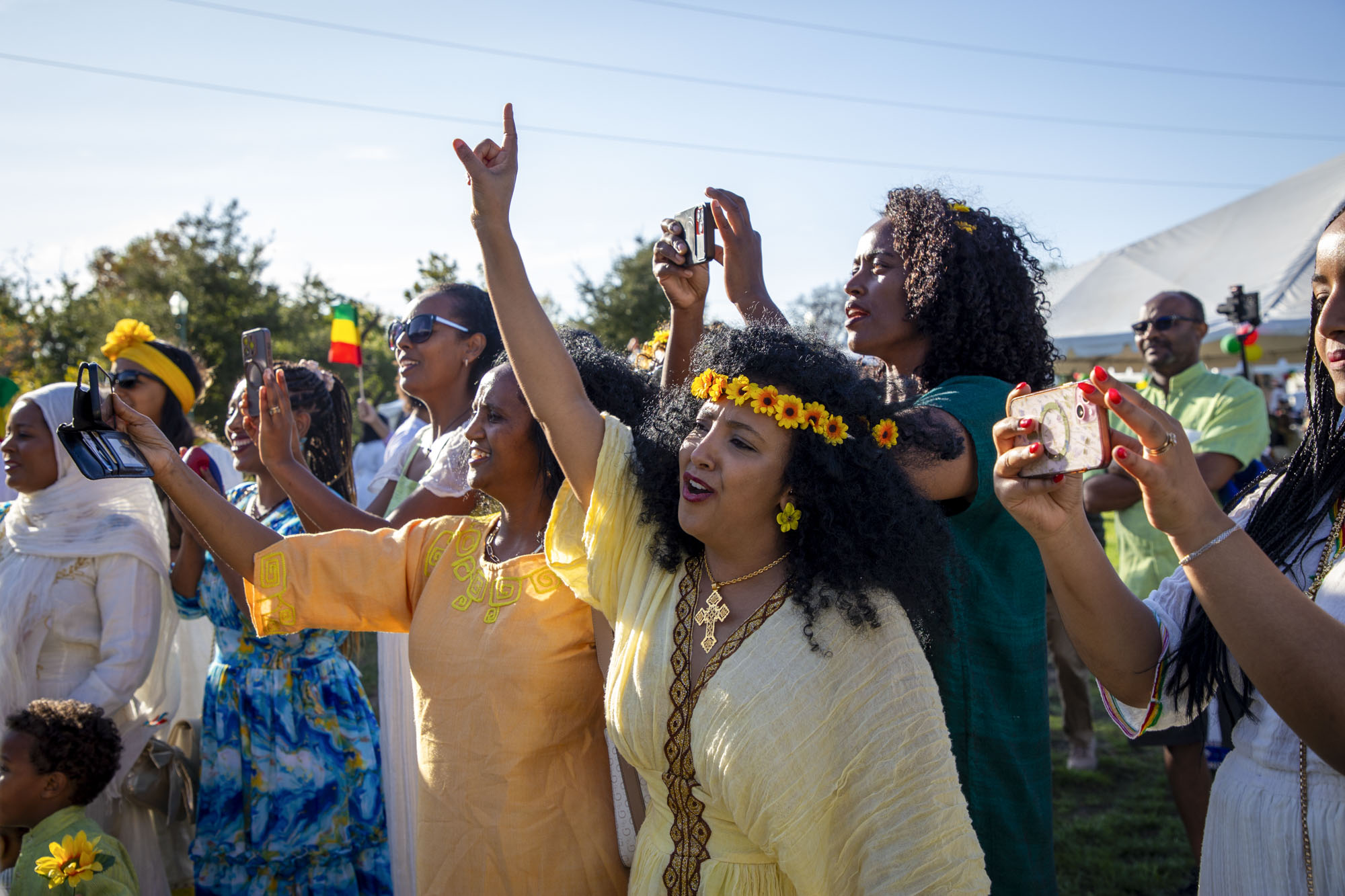
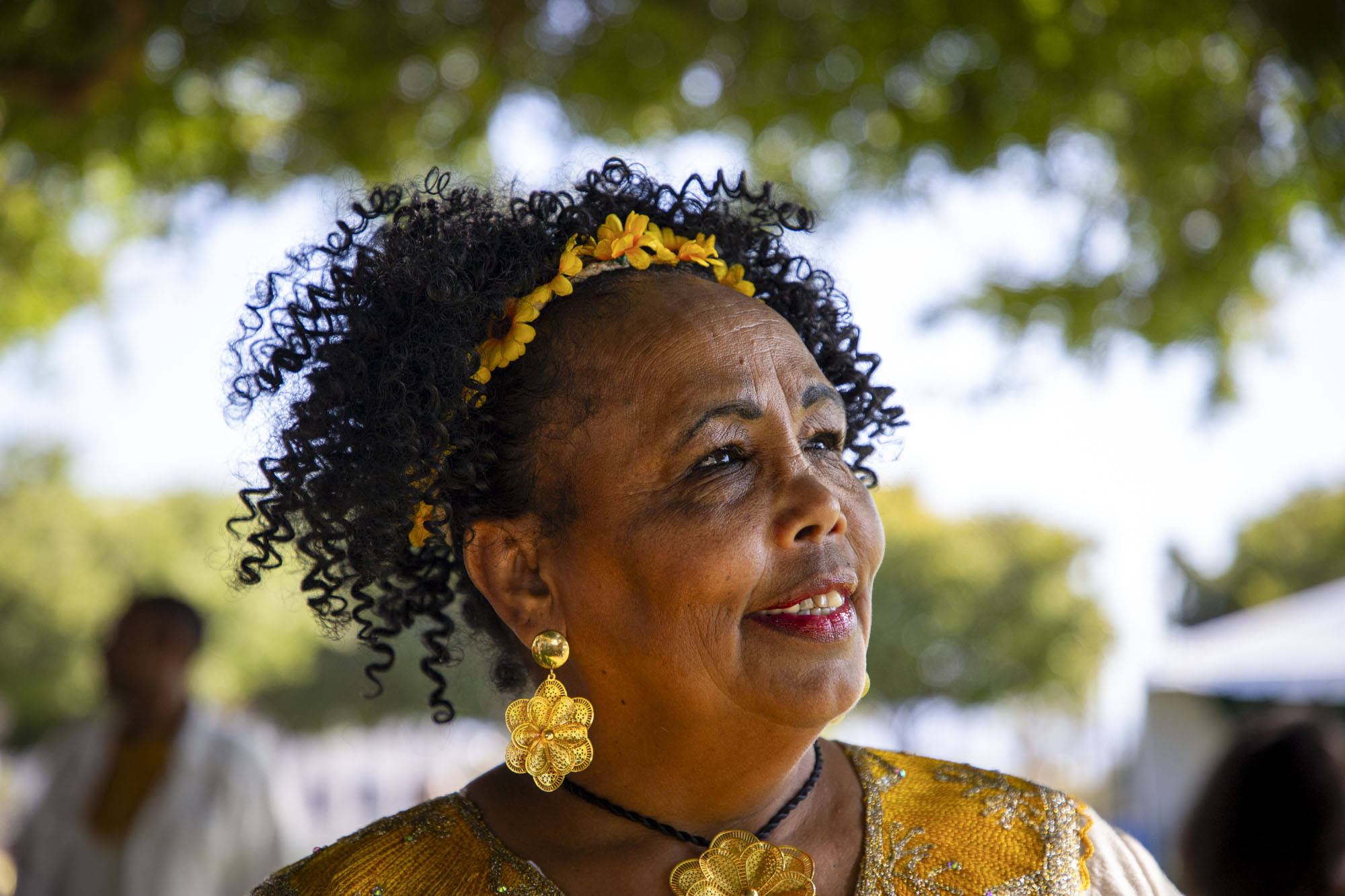
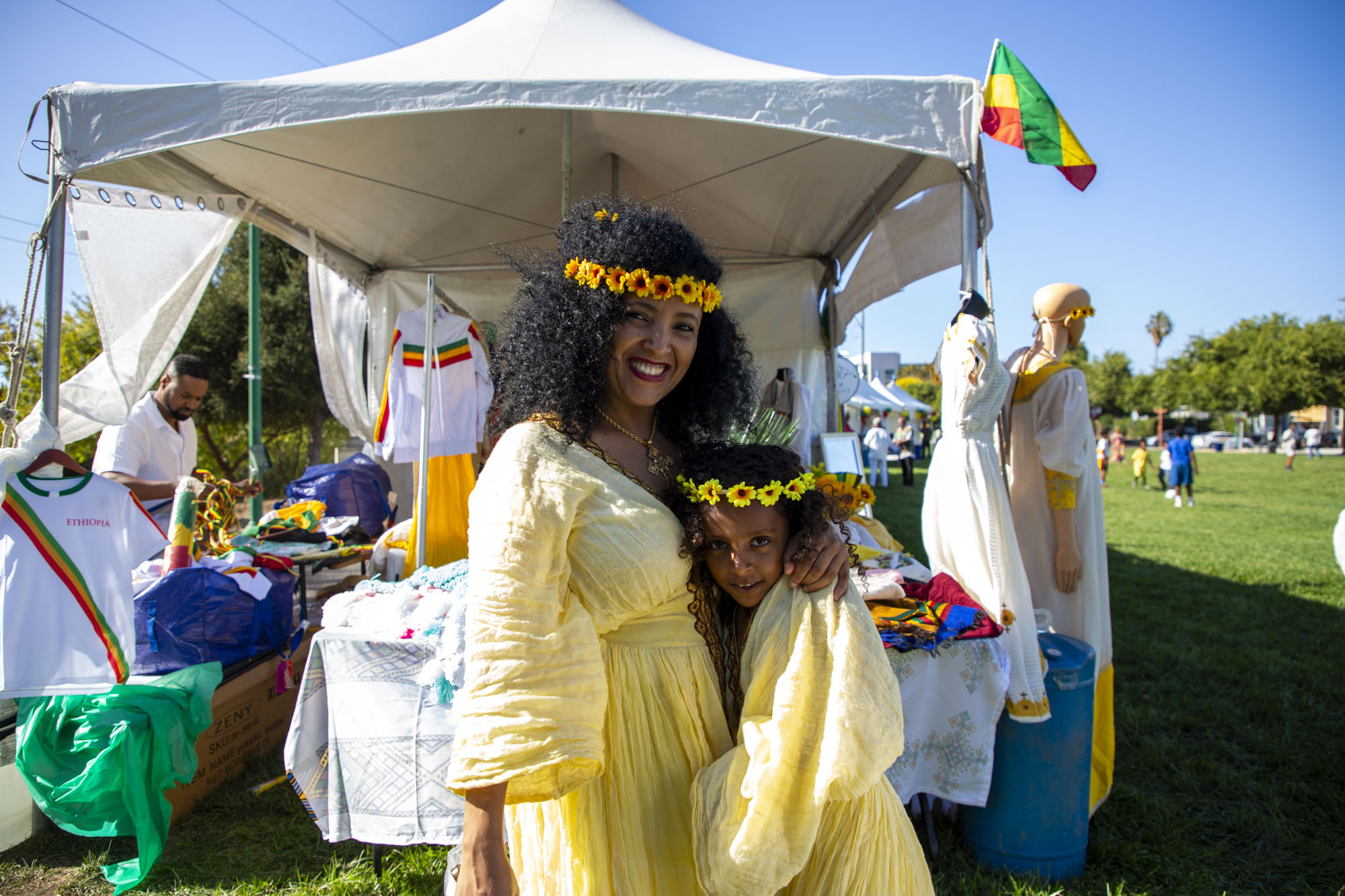
Dressed from head to toe in resplendent yellow, Semert Haile passed out flowers as she walked through San José’s Arena Green East Park. “Melkam Enkutatash!” she greeted everyone. “Happy Ethiopian New Year!”
And not even the roaring of airplanes taking off from San José Mineta International Airport nearby was enough to drown out the sound of music and children’s laughter at this Ethiopian New Year celebration. This Enkutatash event was first held in the South Bay in 1991.
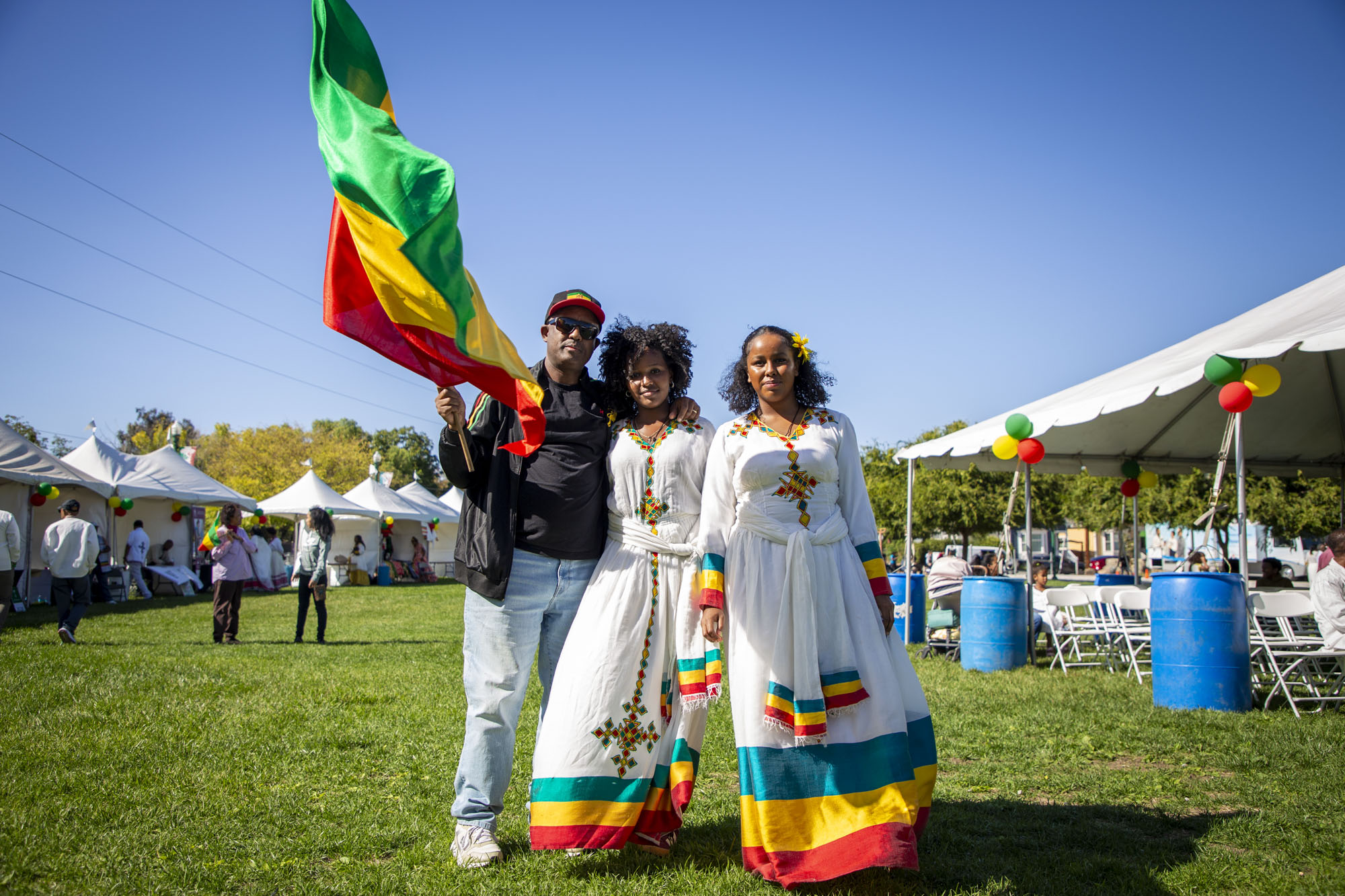
Organized by the nonprofit Ethiopian Community Services, Sunday’s celebration drew thousands — both Ethiopian residents and supporters — in a testament to the growing strength of the Ethiopian diaspora in the Bay Area’s biggest city.
Just like the Western Gregorian calendar, the Ethiopian Ge’ez calendar is based on the year of Jesus Christ’s birth.
Because the Gregorian and Ge’ez calendars differ on Christ’s exact birth year, however, this Enkutatash marks the beginning of the year 2019.
“We are seven years behind in Ethiopia,” Haile joked.
‘Shout out to our community’
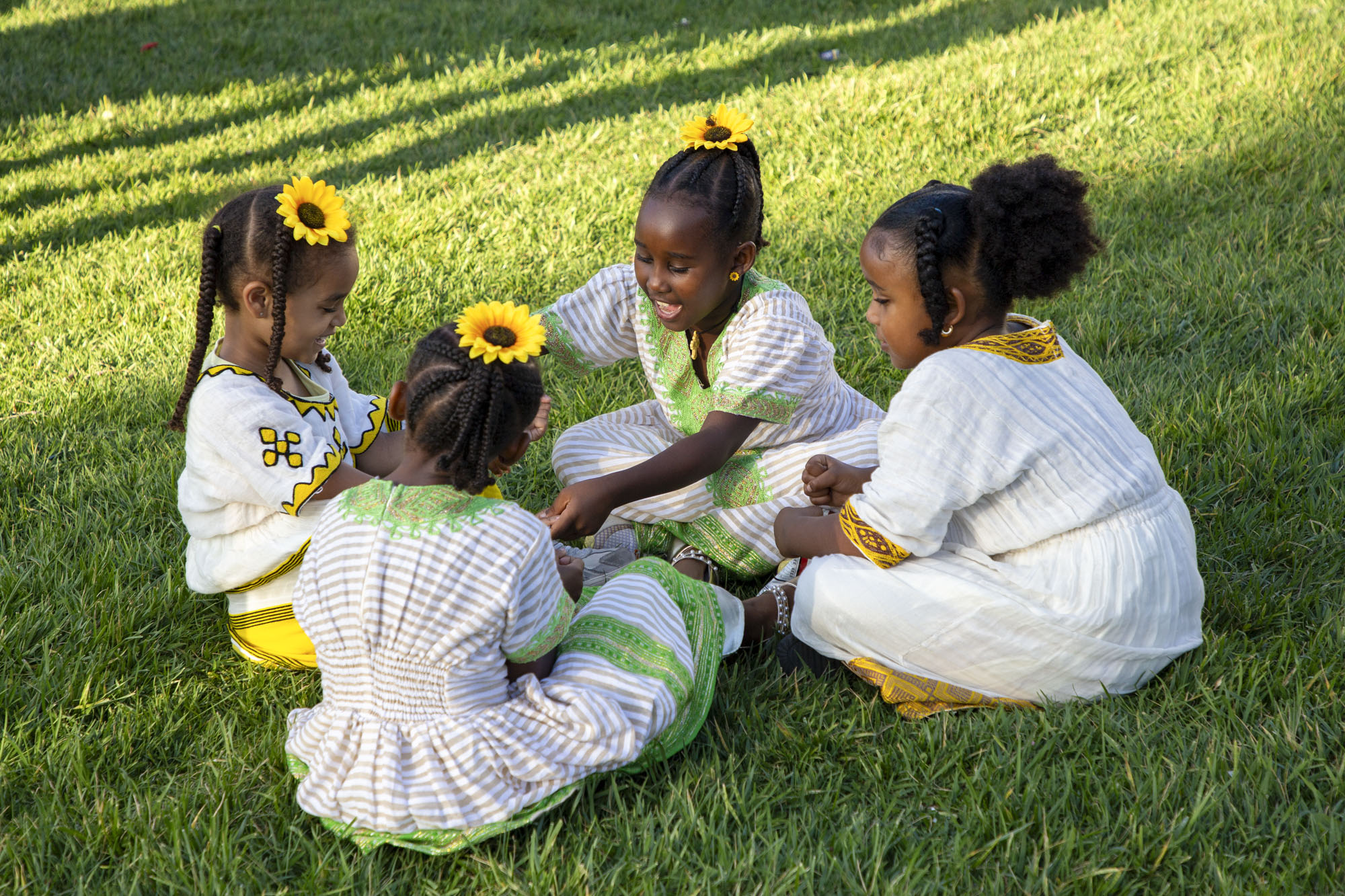
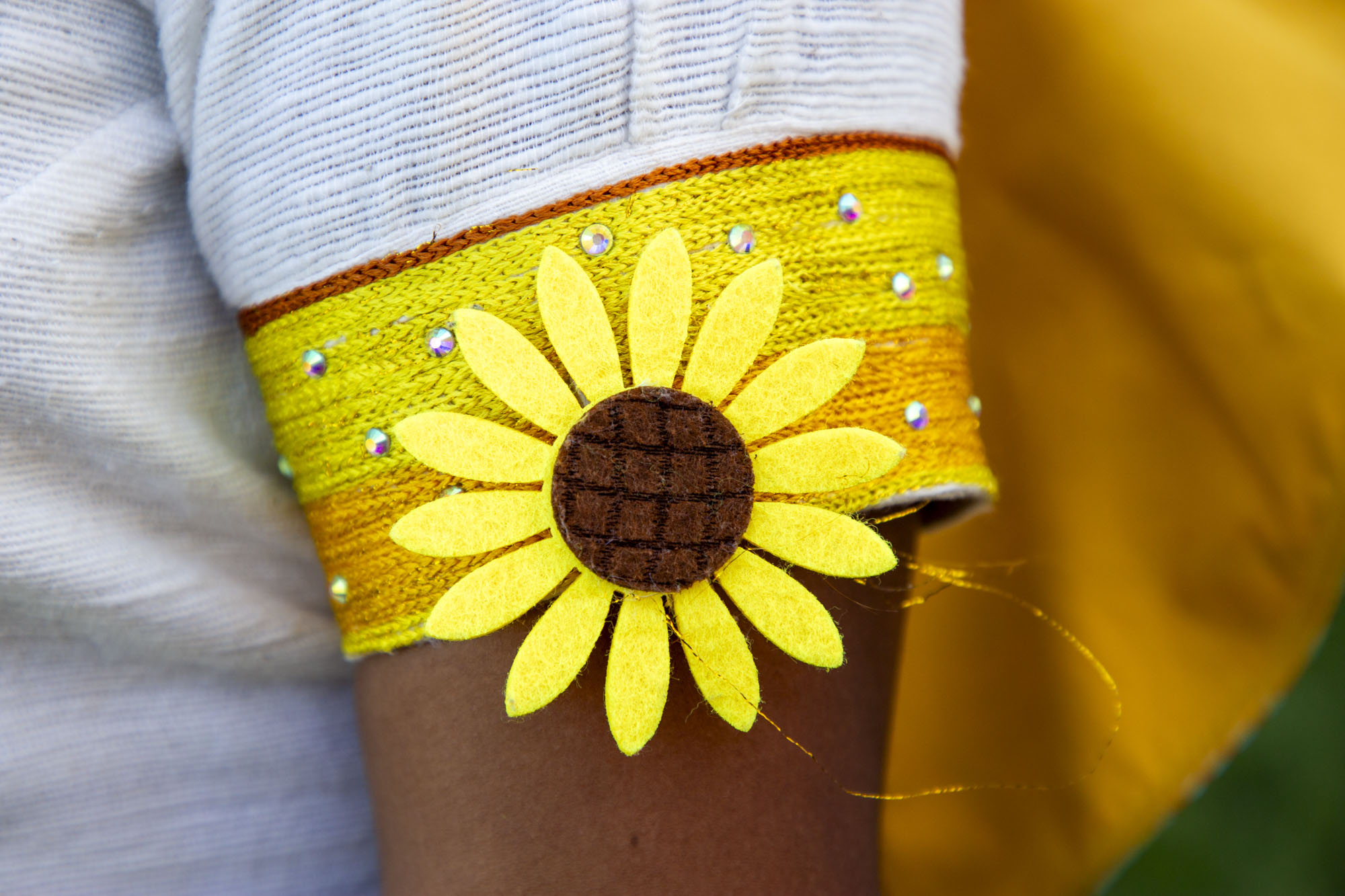
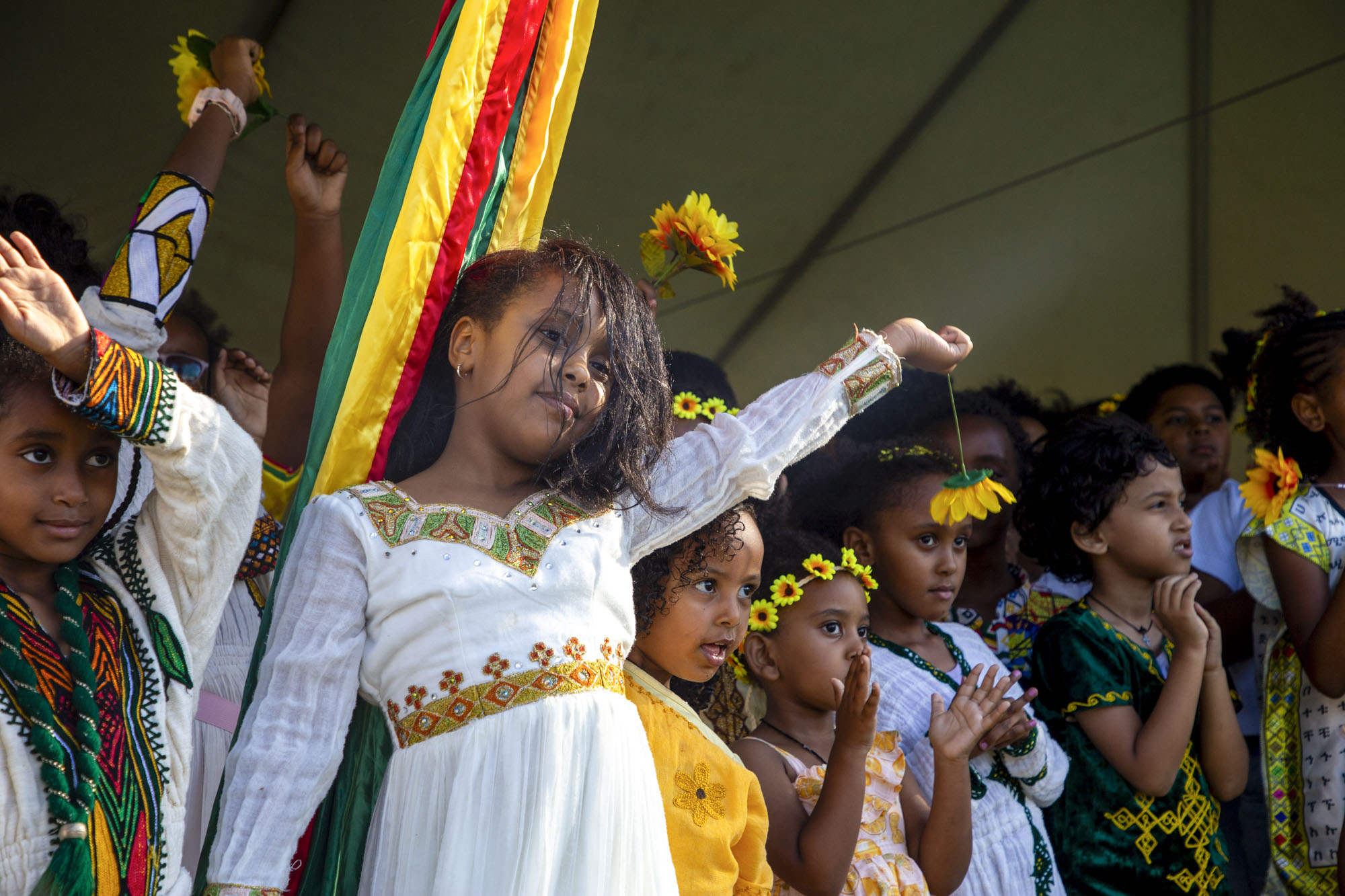
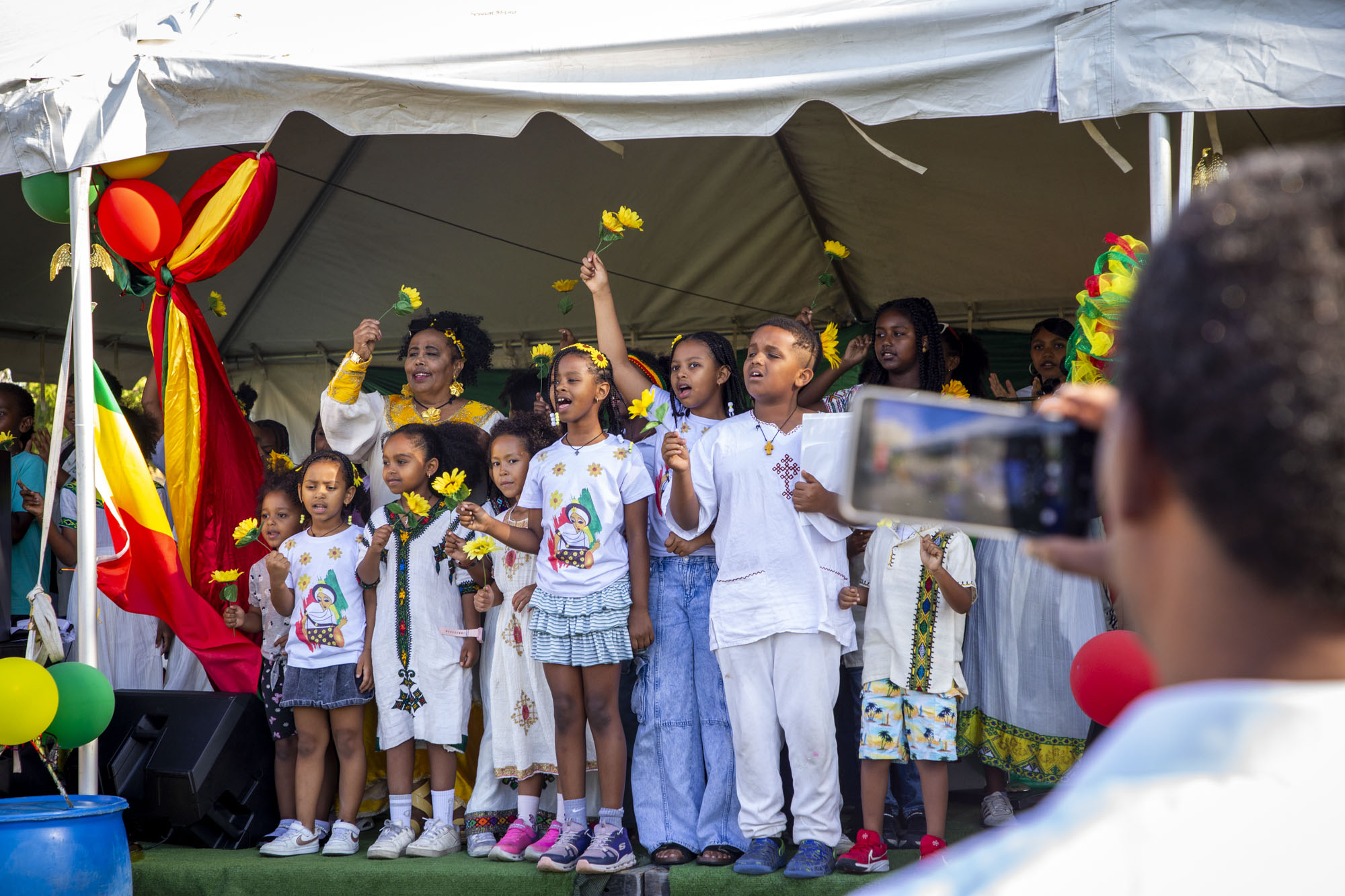
Haile was not the only one dressed in yellow on Sunday. Hundreds of families from all over the South Bay showed up wearing shirts, headbands and traditional habesha dresses embellished with intricate gold patterns. Many designs feature a yellow flower, similar to those that Haile gave away.
While it may resemble a sunflower, this is adey abeba — a flower native to Ethiopia that blooms at the end of the rainy summer season, marking both the start of September and the new year.
“Back in Ethiopia, the children go door to door giving these flowers as a gift,” Haile reminisced.
It’s been more than 20 years since she left her home in the capital city of Addis Ababa. Coming to California was a great opportunity, she said — but also somewhat of an isolating experience.
“When it’s the New Year, everybody’s together each day. Everyone eats together. The house is warm,” she said. “Here, you have to be invited by other people [to celebrate the New Year].”
That’s why Haile and other leaders of the nonprofit Ethiopian Community Services started a public Enkutatash celebration in San José decades ago. It’s an opportunity for Ethiopians who have recently arrived to meet new people and not experience the same isolation she once felt, Haile said.
“When they come to the U.S., they maybe get lost. They miss all their support groups,” she said. “You don’t know what others are going through while they’re trying to adjust to Western culture.”
Haile quickly gathered hundreds of children to the stage to sing “Abebayehosh,” a traditional song celebrating the new year in Amharic — one of the many languages spoken in Ethiopia.
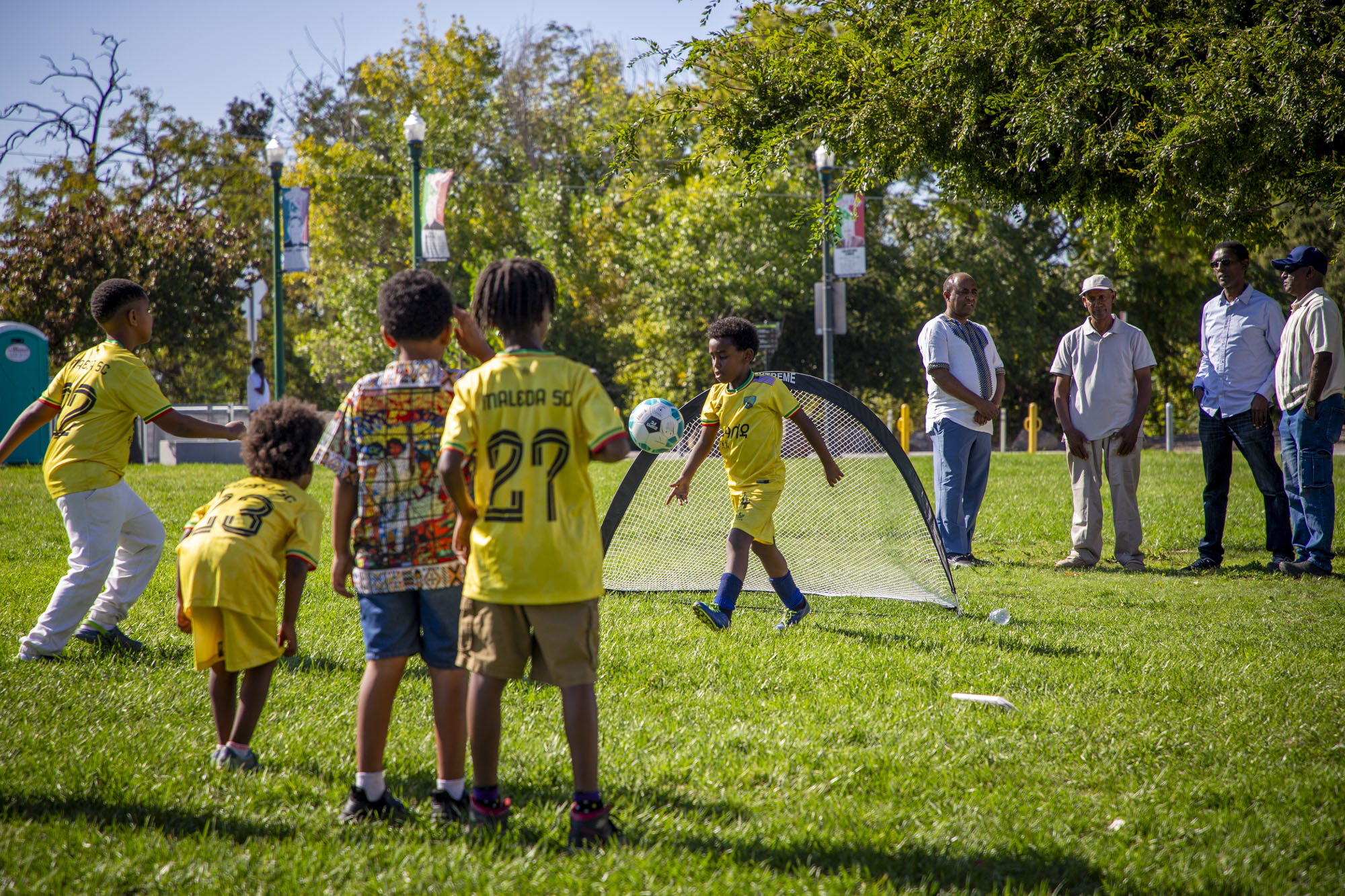
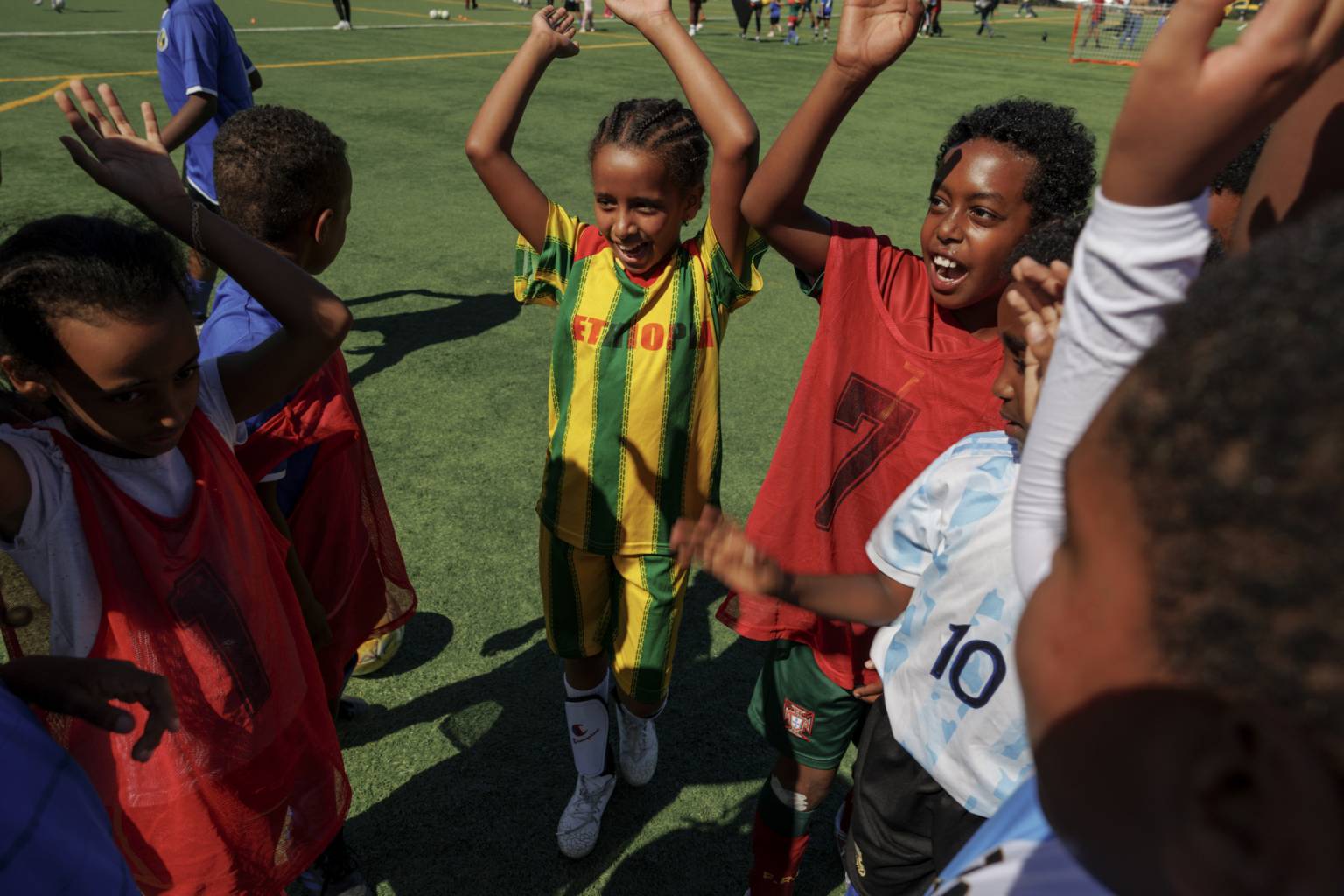
The kids who were not on stage were playing soccer nearby in the park. Many are part of Maleda Youth Soccer Club, created in 2004 by Ethiopian families in the South Bay who wanted a safe place for their kids to both play and learn more about their heritage.
Among the club’s alumni is professional soccer player Naomi Girma — currently center back for England’s Women’s Super League club Chelsea FC and a strong contender for the U.S. Women’s National Soccer Team. Girma grew up in San José and credits Maleda for helping kick-start her passion for soccer.
The community works hard to make sure younger generations know their heritage, Hawi Desda said. Growing up in East Palo Alto, she would travel across the Bay Area to different religious and athletic events led by other Ethiopian families. Now, Desda lives in San José and was attending the Enkutatash celebration with friends she met at church.
“There’s so many events for folks growing up within the diaspora that don’t have access to what’s happening back in Ethiopia,” she said. “Shout out to our community for creating such spaces for young people to be in community with each other.”
‘Like home away from home’
For more than 40 years, the Bay Area has been home to this thriving Ethiopian community that reflects the country’s immense cultural, ethnic and linguistic diversity.
Many families who first moved to the region in the ’80s and ’90s were fleeing Ethiopia’s civil war and found economic opportunities in Silicon Valley, building the electronic components for personal computers during the first dot-com boom. Other families brought with them cherished family recipes and opened restaurants, helping to make the Bay Area one of the country’s top hubs for Ethiopian cuisine.
Even folks visiting from far away were impressed by Sunday’s celebrations. “It’s like home away from home,” said Samry Derje, who was visiting San José from northern Virginia, part of the greater Washington, D.C., metropolitan area — another major Ethiopian enclave.
According to city officials, there are more than 25,000 people of Ethiopian origin living in San José. Across Santa Clara County, that number is estimated to rise to over 30,000.
“What I love about the community is how tight-knit it is,” said San José Mayor Matt Mahan, who also spoke at the celebration.
“Many of us in America live much more isolated lives, and the sense of community and the way that people care for each other is really beautiful,” he added. “There’s a lot to learn here.”
As the sun started to set over the celebrations, Arena Green East and the Guadalupe River flowing nearby shone with a yellow that rivaled the adey abeba flower.
And as families said their goodbyes and began to leave for home, Haile made sure to remind them: “See you next year!”