Why Are There So Many Public Golf Courses in the Bay Area?
View the full episode transcript.
During the height of the COVID-19 pandemic, Oakland resident Mary Newson would hike regularly in the parks up in the Oakland and Berkeley hills. It was a pleasant way to get outside, and there was no one around — even on a usually busy golf course near Anthony Chabot Regional Park.
“There were deer and bunnies and geese and ducks and turkeys and all these animals that had just converged onto the golf course because nobody was using it,” she said. “That was really a beautiful thing to see.”
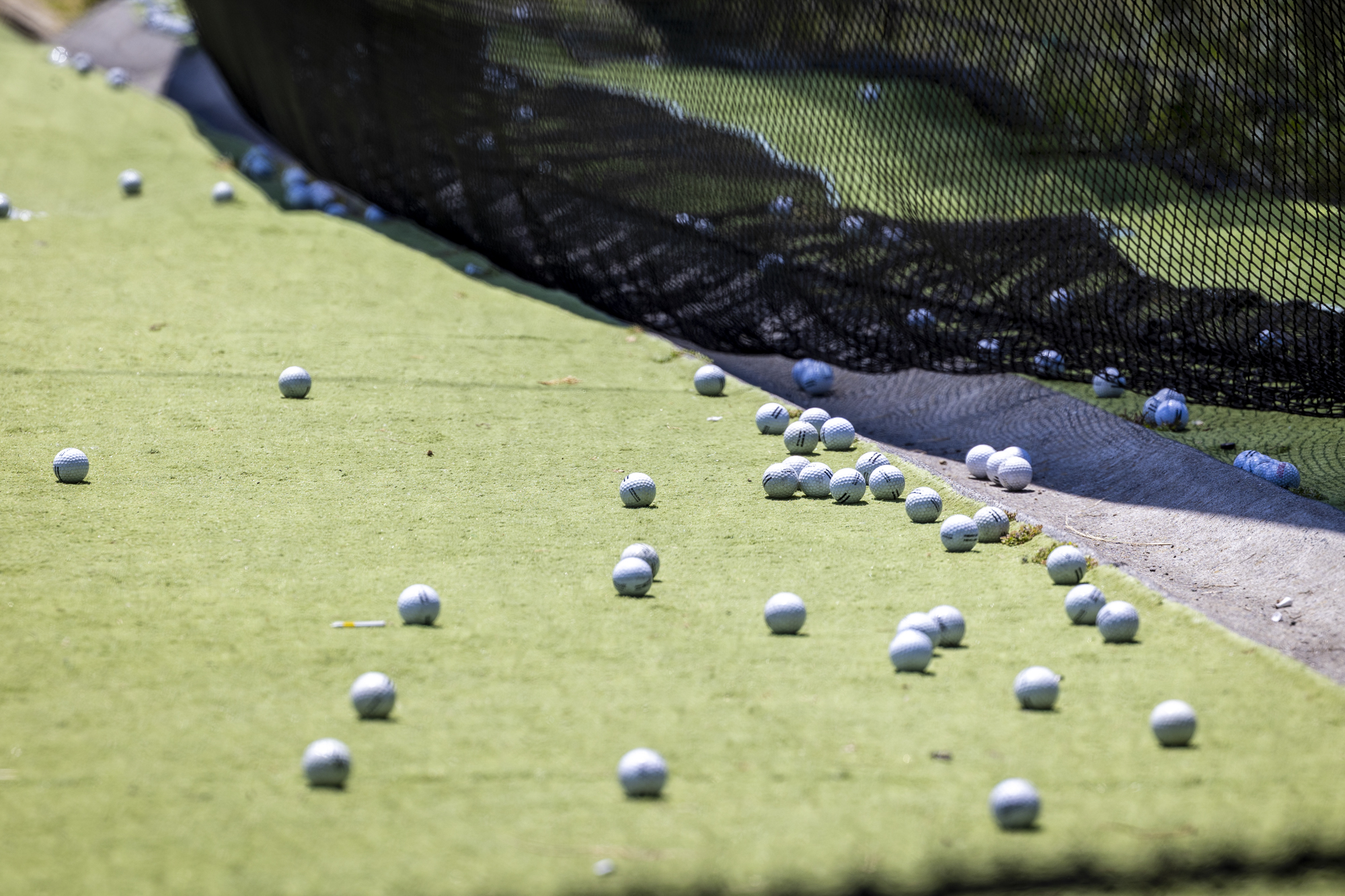
But then, the restrictions started to let up, things started to reopen, and Mary would start to find dozens of golf balls on her walks. It made her wonder: Why are there so many golf courses in public parks around the Bay Area? Can and should she visit as a non-golfer? And what is their financial relationship to the park?
“I wasn’t sure how they worked, and if there was any sort of financial relationship, administrative relationship between the larger park and the golf course that sort of made them work together,” she said.
As it turns out, golf — and public golf, in particular — has a storied history in the Bay Area. And apart from a few conversions, mostly of private golf courses, these public greens are unlikely to be going anywhere soon.
Jump straight to:
- The difference between public and private golf courses
- How public courses do or don’t make money for local parks
- Golf course conversions underway in the Bay Area
- What to know if you’re visiting a public golf course for the first time
What is the history of golf courses in the Bay Area?
The sport of golf made its way to the Bay Area with the arrival of Scottish immigrants in the 1890s and early 20th century, explained Richard Harris, who advocates for accessible golf with the San Francisco Public Golf Alliance.
That included influential city leaders like John McLaren, the “father of Golden Gate Park,” who was a Scot.
McLaren, Harris said, was influential in creating Lincoln Park and Harding Park in San Francisco, as well as Pacifica’s Sharp Park, designed by famous golf architect Alister MacKenzie. These are all public, not private golf courses, and are considered to be world-class, he said.
“Golf has been an important part of the Bay Area for a long time,” Harris said. “It’s one of the major golf areas in the country, and, for that matter, in the world.”
What makes a public golf course different from a private one?
Public golf courses are those owned by local governments or parks districts. In the Bay Area, they tend to be inside or next to public parks you may know or frequent.
Municipal golf courses help lower barriers to the sport by being accessible and relatively cheap, said Lily Achatz, president of the Harding Park Women’s Golf Club and a member of the San Francisco Public Golf Alliance.
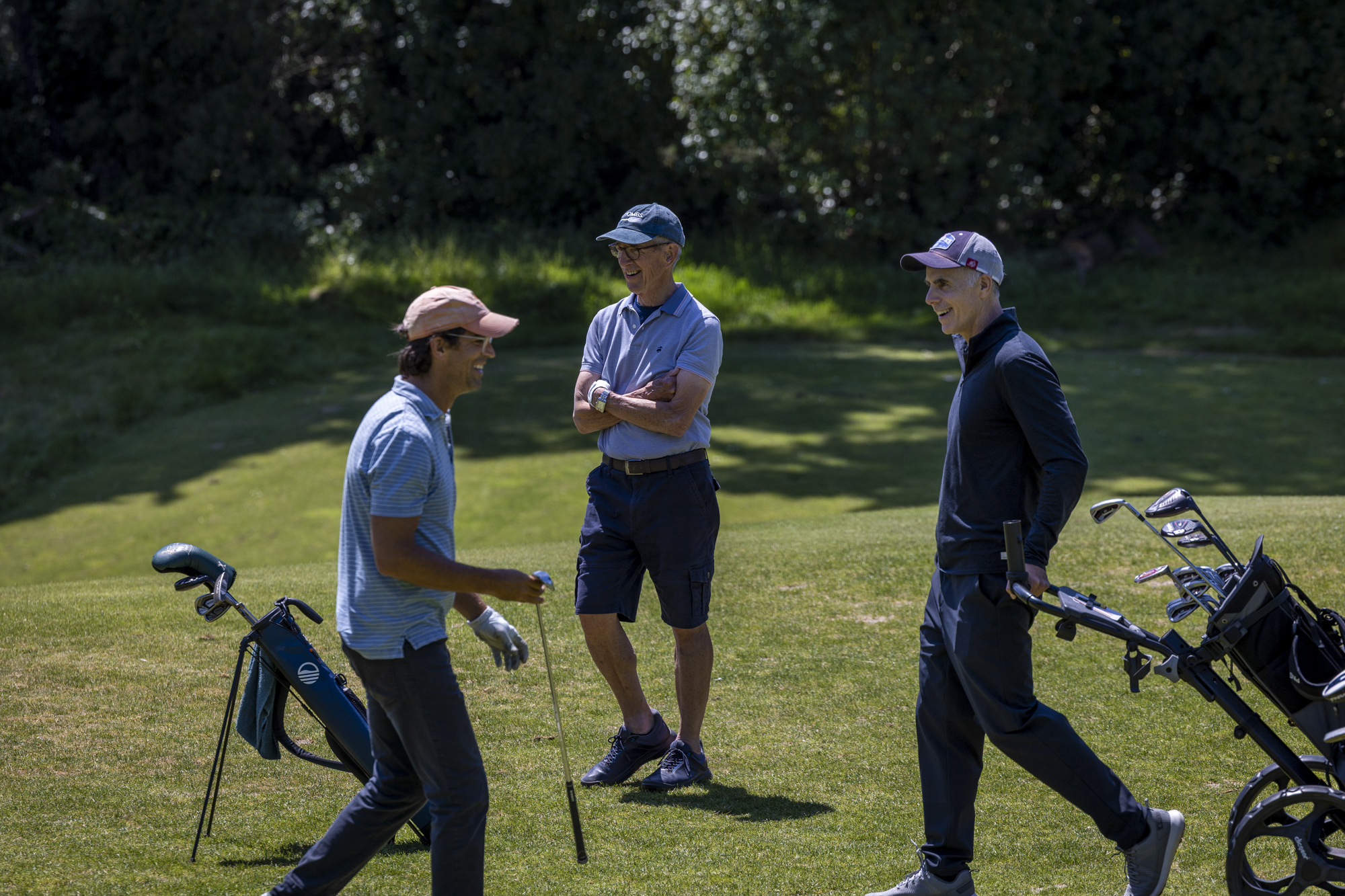
A private golf club could run you thousands of dollars in initiation fees, monthly dues and food and beverage minimums. A round at a public golf course, meanwhile, ranges from $30 to $100, with discounts for residents.
“It’s stunning and what makes it so wonderful is that there’s all different generations here,” Achatz said. “The municipal courses are so important because it’s hard to get access to a country club or even be accepted.”
Do golf courses make money for public parks?
Depending on the city or parks district, public golf courses can be real money-makers. Max Korten, acting general manager of the East Bay Regional Parks District, said Tilden Golf Course made the district $800,000 last year. It was the most profitable concession in the entire parks district last year, according to district documents.
That’s not the case with every city or district. In San Francisco, the city is subsidizing the courses’ expected $6 million deficit and has begun raising rates at some public courses to help close the gap.
In the East Bay, course fees are limited by a public board to keep fees low-cost for residents, Korten said.
Have there been any talks of converting golf courses to other uses?
There’s no widespread movement to convert golf courses in the Bay Area into other uses. But there are two notable examples of private golf courses undergoing their own transformations.
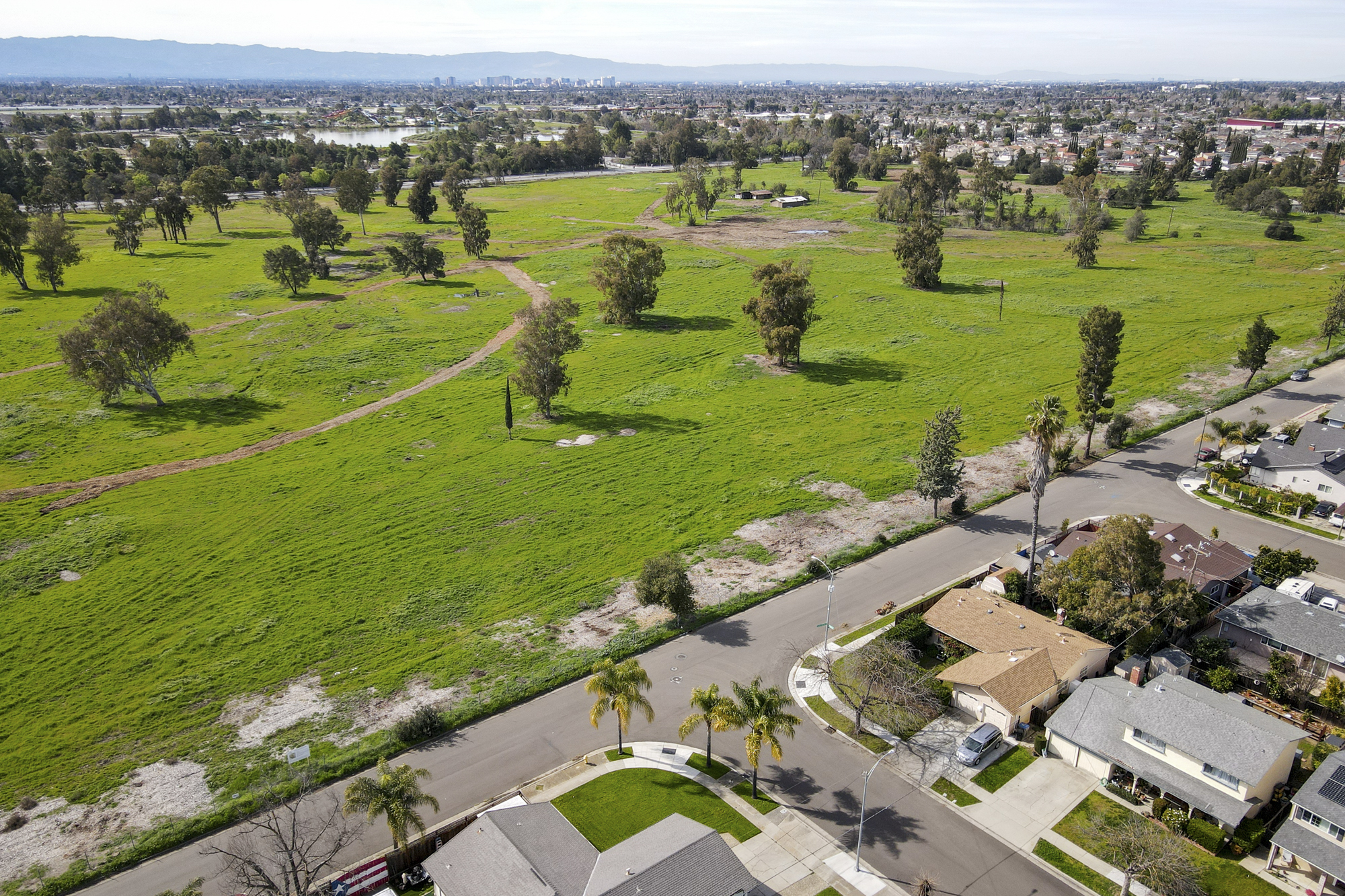
The most controversial right now is Pleasant Hills in San José. It’s a former private 115-acre golf course that may become 2,000 new homes with some commercial and open space. It’s currently in environmental review as the community goes back and forth on what to do with it. What to do has become a fight, said Manira Sandhir, deputy director of planning for the city of San José.
“On one hand we have the community who’s directly affected by this project and has expressed concerns about the traffic that it would generate,” she said. It’s located in a highly car-dependent area, and there’s not a lot of transit or freeway access there either. “But then on the other hand, we have housing advocates who want to see more housing at the site, and they feel that putting 2,000 units at the site would be underutilization of this really large acreage that’s available for development.”
The course, Sandhir said, was established in the 1960s but closed in 2004, likely for financial reasons — so not explicitly for this conversion. Sandhir said it’s likely to be years before the dust settles and a coherent plan for the site emerges.
Farther to the north, in Marin County’s San Geronimo Valley, another golf course has seen the end of its days. The Trust for Public Land, a land conservation organization, converted what was once a private 18-hole golf course into San Geronimo Commons, a public park that fills a missing connection to surrounding open spaces, restores water rights to the Larson Creek and returns the land to its former function as a wetland. A county firehouse has even taken over the old golf clubhouse.
“I do think cities, park systems across the country, certainly in California, are rethinking their inventory and what can happen,” he said.
“The car paths became walking paths, the sand traps became sandboxes for the kids,” said Guillermo Rodriguez, Trust for Public Land’s California director. He said this is one of four golf course conversions they have helped lead in the state, part of what he sees as a growing trend in California.
The San Geronimo conversion wasn’t without its own controversy. After purchasing the property in 2018, Trust for Public Land launched a two-year process to narrow down what the community wanted from the property – and not everyone agreed.
“We had a lot of passionate golfers who had lots of memories tied to that facility,” he said. “And while, yes, there were other facilities they could go play golf in, they had history there, and so we had to work through that.”
Senior manager on the project Erica Williams said in some ways, the COVID-19 pandemic set the stage for the transition of the property — opening people’s imaginations to how their community spaces could look.
“With the pandemic, I think that really allowed people to connect with the landscape, to reconnect with the land and to imagine a future,” she said. “It became a sanctuary.”
Can I visit a golf course as a non-golfer?
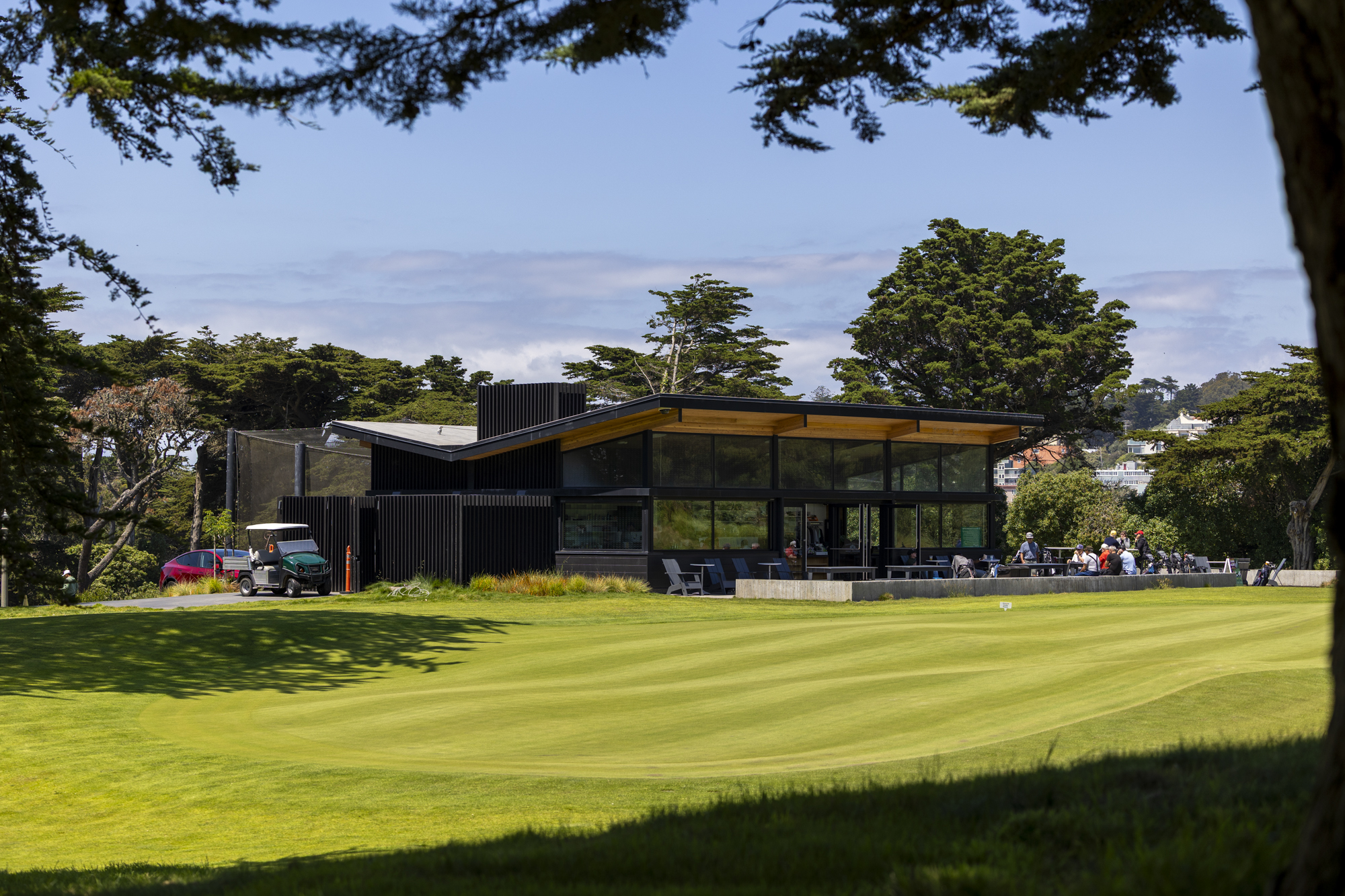
Municipal golf courses are open to everyone, whether you want to reserve a tee time to try your hand at playing, practice your swing at the driving range, or just hang out at the cafes and restaurants onsite. Unlike private courses, there is no dress code at public golf courses. Dogs are not allowed.
While walking along the course if you’re not playing generally isn’t allowed (getting hit by a ball is a real risk), many courses like Tilden have walking trails nearby that are open to anyone.
If you want to play a round of golf, you should plan to book a tee time in advance. Public courses also offer golf club rentals if you don’t have any of your own.
Episode transcript
Olivia Allen-Price: It’s the middle of the COVID-19 pandemic, and everything is shut down – even the gym. So Bay Curious listener Mary Newsom decided to go for a walk.
Music starts
Mary Newsom: I live in Oakland. And so I would usually sort of go up to the ridgeline and start hiking and all the regional parks that are up on the ridgeline.
Olivia Allen-Price: Eventually, Mary made her way up to Anthony Chabot Regional Park. Given the pandemic, there was no one around.
Mary Newsom: And so one of the golf courses that’s right alongside Chabot was completely empty. There were, like, deer and bunnies and geese and ducks and turkeys and like all these animals. That it just converged onto the golf course because nobody was using it.
Olivia Allen-Price: But then, the restrictions started to let up, and things started to reopen, and Mary would start to find dozens of golf balls on her walks.
Mary Newsom: It sort of made me wonder about the relationship between the park and the golf course that’s right up against it.
Olivia Allen-Price: Mary looked into what other municipal golf courses are located inside public parks, and the list is really quite long…
Mary Newsom: Golden Gate Park, Presidio, Lincoln Park, Gleneagles, Tilden Park, Lake Chabot, Redwood Canyon, Sequoia…
Olivia Allen-Price: And that’s just a partial list. This all got Mary wondering about the relationship between public parks and the golf courses within them.
Mary Newsom: Why are there so many golf courses in the Bay Area right next to, or inside public parks? Do they subsidize the parks?
Olivia Allen-Price: We sent KQED’s outdoors reporter, Sarah Wright, to take a swing at finding some answers. She started, as you might expect, at Hole 1.
Birds chirping, golf balls getting whacked
Sarah Wright: The Golden Gate Park Golf Course is set up on a hill, right by San Francisco’s Ocean Beach. The breeze is strong, and a hawk has been circling overhead as a new set of golfers sets up at the first hole every 15 minutes. Here, I run into Lizzie Yurchak. She lives in the Pacific Heights neighborhood, and she came out to play the course today with a coworker who is from out of town.
Lizzie Yurchak: He lives in Texas, so we were like, what’s something fun we can do while he’s visiting the Bay.
Sarah Wright: It’s her first time out to this course — actually, her first time golfing in the Bay Area since she moved here from Philadelphia.
Lizzie Yurchak: I don’t have my clubs out here, so maybe I’ll feel inspired today.
Sarah Wright: And what are your goals for today on the golf course?
Lizzie Yurchak: Um, don’t shank it. And don’t lose foul balls. I think that’s about it.
Sarah Wright: She does not, in fact, shank it. I watch as she lines up for a stroke.
Sound of Lizzie hitting the golf ball
Man: There we go!
Sarah Wright: Besides meeting golfers like Lizzie, I’m actually here to meet Richard Harris and Lily Achatz. They’re with the San Francisco Public Golf Alliance, which advocates for affordable golf in the Bay Area.
Lily Achatz: Hi, Sarah.
Sarah Wright: Lily, great to meet you. Thanks for having me.
Lily Achatz: Of course!
Sarah Wright: I am here to ask them Mary’s question. Why are there so many golf courses in public parks in the Bay Area?
To answer that, Richard says, we have to dig into history.
Richard Harris: Golf has been an important part of the Bay Area for a long time. And it’s one of the major golf areas in the country, and for that matter, in the world.
Sarah Wright: Golf traces its origins to Scotland — Richard explains.
Scottish music plays
Richard Harris: Originated in what they called the Links Land, which is the land between the cities and the coast, which was not much use for anything.
Sarah Wright: Richard says that in the 1890s and early 20th century, immigrants, including Scots, came here and brought golf with them. Among them was a man who had a huge impact on recreation in our region. The father of Golden Gate Park – John McLaren.
Richard Harris: John McLaren was a Scot. John McLaren liked golf.
Sarah Wright: He first built Lincoln Park, a golf course by the Legion of Honor.
Richard Harris: And then quickly, he found another Scot to design Harding Park…
Sarah Wright: … A legendary course near Lake Merced.
Richard Harris: And then another Scot to design Sharp Park…
Sarah Wright: … Just steps from the ocean in Pacifica.
Richard Harris: That Scot being Alistair McKenzie.
Sarah Wright: McKenzie is most famous for having designed Augusta, in Georgia, where the Masters is played.
Those iconic early courses built in the Bay Area were — and still are — all public, not private, golf courses. And today they’re known as some of the most premium municipal courses in the nation.
In California, Richard said, publicly owned courses make up about a third of all courses statewide. And they’re at the forefront of welcoming new players into the sport and combating golf’s reputation for being overly white, male and exclusive.
Lily Achatz, president of the Harding Park Women’s Golf Club, knows that firsthand.
Lily Achatz: I didn’t grow up playing golf. I got into golf much later, about like six years ago. I don’t know how many sports there are that you can get into, you know, get into it so late.
Sarah Wright: She says municipal golf courses, with their relatively cheap fees and open access, are critical to help lower barriers to the sport. A private golf club could run you thousands of dollars in initiation fees, monthly dues and food and beverage minimums. A round at a public golf course, meanwhile, ranges from about $30 to $100, with discounts for residents.
Lily Achatz: What makes it so wonderful is that there’s all different generations here. There’s friends, all different backgrounds. The municipal courses are so important because it’s hard to get access to a country club or even be accepted.
Sarah Wright: In fact, golf wasn’t even racially integrated until the 1950s. And Bay Area municipal courses had a role in that, too. Richard shows me a photo of a plaque that hangs at Pacifica’s Sharp Park course. At the time, the course was known for denying tee times to Black players. But in 1955, that changed when Sharp Park became the site of the inaugural championship tournament of the Western States Golf Association, one of the country’s oldest and largest African American golfing organizations.
Richard Harris: It was swimming pools in the south. In San Francisco, it was golf courses.
Sarah Wright: Still, even today, municipal courses can feel exclusive. When Mary asked her question originally, she actually pointed out this bias she feels.
Mary Newsom: If I’m walking through a city park and I pass by tennis courts, I don’t really blink an eye, or basketball courts. But it’s funny that to me, like a golf course strikes me differently, you know that I sort of wonder, oh, wait, why is this here? And who actually uses this? You know?
Olivia Allen-Price: When we return, we explore who these golf courses are for. And get into the finances. Stay with us.
Music starts
Olivia Allen-Price: KQED’s Outdoors reporter Sarah Wright is very familiar with the condemnation golf courses sometimes face.
Sarah Wright: Any type of golf course will inevitably draw criticism from those worried about its environmental impact. They are, after all, enormous, frequently watered, heavily manicured lawns. Many golf courses are working to become more sustainable, but that could be its own story for another day.
To keep things focused on Mary’s question, I spoke with Max Korten, acting general manager of the East Bay Regional Parks District.
He says the public has just as much a right to nice turf on a golf course as any other park amenity.
Max Korten: I think it’s one of the really cool things about some of our parks is like, in Tilden, there’s like the merry-go-round, the steam trains, the golf course, like some of these things that… You kind of feel like you’re visiting another era.
Sarah Wright: East Bay Regional Parks has two golf courses, Tilden and Redwood Canyon, and Max says they take up just a combined 240 acres of the 120,000 the district manages. And the golf courses aren’t just for golfers.
Max Korten: The driving range is something that like anybody could do. I’ve taken my son there, my dad and step-mom, like who haven’t really ever played golf, and go just try to hit balls. And it’s really fun and fairly inexpensive.
Sarah Wright: Max explained that golf courses in East Bay parks are operated as concessions. So a private company, in this case, called Touchstone, operates the courses and then a percentage of their profits, around 10 percent, goes to the parks district.
They can also be a major money maker for the parks. Last year, Max said, Tilden brought in over $800,000 in revenue — it’s the most profitable concession in the entire parks district.
In the East Bay, fees are limited by the public parks district board to keep things affordable for the golfers themselves, Max said.
Max Korten: Keeping these public courses around to provide low-cost ways for community members to access golf is really important because I think they’re sort of an equity opportunity to make sure that this sport is available to everyone.
Sarah Wright: Now, not every city can say public golf is a money maker. In San Francisco, for example, the city is subsidizing the courses’ expected $6 million deficit for the 2026-27 fiscal year, and the city has begun raising rates at some public courses to help close the gap.
So, to answer Mary’s question, there often is a symbiotic relationship between the parks departments and the courses – but not always.
I went and told Mary what I found — about how the golf courses she was walking by during the pandemic — do help fund the park.
Mary: I’m glad to hear that they’re actually making money for East Bay Regional Parks. I feel like, you know, parks are always underfunded, you know, they’re always sort of like the first to be cut. So, to hear that they’re actually supporting the park, I think, is great.
Sarah Wright: I admit — I was surprised to learn that too.
Mary Newsom: Yeah, it’s definitely sort of changed my mind and sort of given me more of a positive perspective on them than I had before.
Sarah Wright: So much so that she was even willing to give it a try herself. Olivia and I asked Mary and Lily Achatz, from the San Francisco Public Golf Alliance, to join us at Corica Park in Alameda. It’s hot and sunny, and for a Thursday afternoon, the golf course is bustling.
Lily Achatz: You guys brought the good weather.
Sarah Wright: Corica Park actually has several golf courses, and even a foot golf course where you can kick soccer balls into giant holes in the green. We convened at the smaller Par 3 course, which is a great option for kids, beginners or anyone looking for a lower-key experience — which was perfect for our group of just one expert and three complete amateurs.
Mary Newsom: I have never played golf before ever in my life. Not even miniature golf, actually, neither one.
Olivia Allen-Price: So how do you predict this is going to go?
Mary Newsom: I honestly don’t know, but I do see some water over here and I imagine one of my balls would go in there.
Sarah Wright: Well, as it turns out, Mary is an athlete – she grew up playing basketball, volleyball, soccer, tennis, rowing — you name it. So she got the hang of it quick.
Mary Newsom: Here, I’m just going to do a gentle putt.
Sound of Mary hitting the golf ball
Sarah Wright: Nice, woohoo!
Mary Newsom: My first ever!
Sarah Wright: Olivia and I, we did our best…
Olivia Allen-Price: Okay, it only took three swings to make contact.
Sarah Wright: And you did it. And you were lined up perfectly.
Sarah Wright: And, no surprise, Lily crushed us all.
Sound of Lily hitting the golf ball
Sarah Wright: That was incredible, I don’t even know where it went!
Lily Achatz: It sliced to the right.
Sarah Wright: After around an hour, we called it quits. I asked Mary how she thought it went.
Mary Newsom: It felt a little funny, but I think if I did it more, I would definitely get used to it, you know, and it would be something, like, I would be at home, right? You know before bed or something like that, practicing my swing, like, okay, you know.
Sarah Wright: So, Olivia, what do you think? Is there more golfing in our future?
Olivia Allen-Price: I think I’m going to stick to podcasting, for now. But I don’t know, Mary seemed to be getting into it. Maybe we’ll have to check in with her in a year and see how things are coming along.
Sarah Wright: I know that I’ll be practicing my swing.
Olivia Allen-Price: Sarah Wright, outdoors reporter for KQED. Thank you!
Sarah Wright: Thank you so much.
Olivia Allen-Price: Bay Curious is made in San Francisco at member-supported KQED. Our show is produced by Katrina Schwartz, Christopher Beale, Anna Casalme, and me, Olivia Allen-Price. We get extra support from Maha Sanad, Katie Sprenger, Jen Chien, Ethan Toven-Lindsey and everyone on team KQED.
Some members of the KQED podcast team are represented by the Screen Actors Guild American Federation of Television and Radio Artists San Francisco Northern California Local.
I’m Olivia Allen-Price. Have a great week.