window.__IS_SSR__=true
window.__INITIAL_STATE__={
"attachmentsReducer": {
"audio_0": {
"type": "attachments",
"id": "audio_0",
"imgSizes": {
"kqedFullSize": {
"file": "https://ww2.kqed.org/news/wp-content/themes/KQED-unified/img/audio_bgs/background0.jpg"
}
}
},
"audio_1": {
"type": "attachments",
"id": "audio_1",
"imgSizes": {
"kqedFullSize": {
"file": "https://ww2.kqed.org/news/wp-content/themes/KQED-unified/img/audio_bgs/background1.jpg"
}
}
},
"audio_2": {
"type": "attachments",
"id": "audio_2",
"imgSizes": {
"kqedFullSize": {
"file": "https://ww2.kqed.org/news/wp-content/themes/KQED-unified/img/audio_bgs/background2.jpg"
}
}
},
"audio_3": {
"type": "attachments",
"id": "audio_3",
"imgSizes": {
"kqedFullSize": {
"file": "https://ww2.kqed.org/news/wp-content/themes/KQED-unified/img/audio_bgs/background3.jpg"
}
}
},
"audio_4": {
"type": "attachments",
"id": "audio_4",
"imgSizes": {
"kqedFullSize": {
"file": "https://ww2.kqed.org/news/wp-content/themes/KQED-unified/img/audio_bgs/background4.jpg"
}
}
},
"placeholder": {
"type": "attachments",
"id": "placeholder",
"imgSizes": {
"thumbnail": {
"file": "https://cdn.kqed.org/wp-content/uploads/2024/12/KQED-Default-Image-816638274-2000x1333-1-160x107.jpg",
"width": 160,
"height": 107,
"mimeType": "image/jpeg"
},
"medium": {
"file": "https://cdn.kqed.org/wp-content/uploads/2024/12/KQED-Default-Image-816638274-2000x1333-1-800x533.jpg",
"width": 800,
"height": 533,
"mimeType": "image/jpeg"
},
"medium_large": {
"file": "https://cdn.kqed.org/wp-content/uploads/2024/12/KQED-Default-Image-816638274-2000x1333-1-768x512.jpg",
"width": 768,
"height": 512,
"mimeType": "image/jpeg"
},
"large": {
"file": "https://cdn.kqed.org/wp-content/uploads/2024/12/KQED-Default-Image-816638274-2000x1333-1-1020x680.jpg",
"width": 1020,
"height": 680,
"mimeType": "image/jpeg"
},
"1536x1536": {
"file": "https://cdn.kqed.org/wp-content/uploads/2024/12/KQED-Default-Image-816638274-2000x1333-1-1536x1024.jpg",
"width": 1536,
"height": 1024,
"mimeType": "image/jpeg"
},
"fd-lrg": {
"file": "https://cdn.kqed.org/wp-content/uploads/2024/12/KQED-Default-Image-816638274-2000x1333-1-1536x1024.jpg",
"width": 1536,
"height": 1024,
"mimeType": "image/jpeg"
},
"fd-med": {
"file": "https://cdn.kqed.org/wp-content/uploads/2024/12/KQED-Default-Image-816638274-2000x1333-1-1020x680.jpg",
"width": 1020,
"height": 680,
"mimeType": "image/jpeg"
},
"fd-sm": {
"file": "https://cdn.kqed.org/wp-content/uploads/2024/12/KQED-Default-Image-816638274-2000x1333-1-800x533.jpg",
"width": 800,
"height": 533,
"mimeType": "image/jpeg"
},
"post-thumbnail": {
"file": "https://cdn.kqed.org/wp-content/uploads/2024/12/KQED-Default-Image-816638274-2000x1333-1-672x372.jpg",
"width": 672,
"height": 372,
"mimeType": "image/jpeg"
},
"twentyfourteen-full-width": {
"file": "https://cdn.kqed.org/wp-content/uploads/2024/12/KQED-Default-Image-816638274-2000x1333-1-1038x576.jpg",
"width": 1038,
"height": 576,
"mimeType": "image/jpeg"
},
"xxsmall": {
"file": "https://cdn.kqed.org/wp-content/uploads/2024/12/KQED-Default-Image-816638274-2000x1333-1-160x107.jpg",
"width": 160,
"height": 107,
"mimeType": "image/jpeg"
},
"xsmall": {
"file": "https://cdn.kqed.org/wp-content/uploads/2024/12/KQED-Default-Image-816638274-2000x1333-1-672x372.jpg",
"width": 672,
"height": 372,
"mimeType": "image/jpeg"
},
"small": {
"file": "https://cdn.kqed.org/wp-content/uploads/2024/12/KQED-Default-Image-816638274-2000x1333-1-672x372.jpg",
"width": 672,
"height": 372,
"mimeType": "image/jpeg"
},
"xlarge": {
"file": "https://cdn.kqed.org/wp-content/uploads/2024/12/KQED-Default-Image-816638274-2000x1333-1-1020x680.jpg",
"width": 1020,
"height": 680,
"mimeType": "image/jpeg"
},
"full-width": {
"file": "https://cdn.kqed.org/wp-content/uploads/2024/12/KQED-Default-Image-816638274-2000x1333-1-1920x1280.jpg",
"width": 1920,
"height": 1280,
"mimeType": "image/jpeg"
},
"guest-author-32": {
"file": "https://cdn.kqed.org/wp-content/uploads/2025/01/KQED-Default-Image-816638274-1333x1333-1-160x160.jpg",
"width": 32,
"height": 32,
"mimeType": "image/jpeg"
},
"guest-author-50": {
"file": "https://cdn.kqed.org/wp-content/uploads/2025/01/KQED-Default-Image-816638274-1333x1333-1-160x160.jpg",
"width": 50,
"height": 50,
"mimeType": "image/jpeg"
},
"guest-author-64": {
"file": "https://cdn.kqed.org/wp-content/uploads/2025/01/KQED-Default-Image-816638274-1333x1333-1-160x160.jpg",
"width": 64,
"height": 64,
"mimeType": "image/jpeg"
},
"guest-author-96": {
"file": "https://cdn.kqed.org/wp-content/uploads/2025/01/KQED-Default-Image-816638274-1333x1333-1-160x160.jpg",
"width": 96,
"height": 96,
"mimeType": "image/jpeg"
},
"guest-author-128": {
"file": "https://cdn.kqed.org/wp-content/uploads/2025/01/KQED-Default-Image-816638274-1333x1333-1-160x160.jpg",
"width": 128,
"height": 128,
"mimeType": "image/jpeg"
},
"detail": {
"file": "https://cdn.kqed.org/wp-content/uploads/2025/01/KQED-Default-Image-816638274-1333x1333-1-160x160.jpg",
"width": 160,
"height": 160,
"mimeType": "image/jpeg"
},
"kqedFullSize": {
"file": "https://cdn.kqed.org/wp-content/uploads/2024/12/KQED-Default-Image-816638274-2000x1333-1.jpg",
"width": 2000,
"height": 1333
}
}
},
"news_12064027": {
"type": "attachments",
"id": "news_12064027",
"meta": {
"index": "attachments_1716263798",
"site": "news",
"id": "12064027",
"found": true
},
"title": "Immigration Commentator Detained",
"publishDate": 1763070004,
"status": "inherit",
"parent": 12063851,
"modified": 1763070053,
"caption": "British political commentator Sami Hamdi speaks to the media in London on Thursday, Nov. 13, 2025, upon his return to the U.K. after he was arrested by Immigration and Customs Enforcement on Oct. 26, while on a speaking tour in the U.S.",
"credit": "Thomas Krych/AP Photo",
"altTag": null,
"description": null,
"imgSizes": {
"thumbnail": {
"file": "https://cdn.kqed.org/wp-content/uploads/sites/10/2025/11/SamiHamdiLondonAP-160x107.jpg",
"width": 160,
"height": 107,
"mimeType": "image/jpeg"
},
"1536x1536": {
"file": "https://cdn.kqed.org/wp-content/uploads/sites/10/2025/11/SamiHamdiLondonAP-1536x1024.jpg",
"width": 1536,
"height": 1024,
"mimeType": "image/jpeg"
},
"post-thumbnail": {
"file": "https://cdn.kqed.org/wp-content/uploads/sites/10/2025/11/SamiHamdiLondonAP-672x372.jpg",
"width": 672,
"height": 372,
"mimeType": "image/jpeg"
},
"twentyfourteen-full-width": {
"file": "https://cdn.kqed.org/wp-content/uploads/sites/10/2025/11/SamiHamdiLondonAP-1038x576.jpg",
"width": 1038,
"height": 576,
"mimeType": "image/jpeg"
},
"npr-cds-wide": {
"file": "https://cdn.kqed.org/wp-content/uploads/sites/10/2025/11/SamiHamdiLondonAP-1200x675.jpg",
"width": 1200,
"height": 675,
"mimeType": "image/jpeg"
},
"kqedFullSize": {
"file": "https://cdn.kqed.org/wp-content/uploads/sites/10/2025/11/SamiHamdiLondonAP.jpg",
"width": 2000,
"height": 1333
}
},
"isLoading": false,
"fetchFailed": false
},
"news_12062954": {
"type": "attachments",
"id": "news_12062954",
"meta": {
"index": "attachments_1716263798",
"site": "news",
"id": "12062954",
"found": true
},
"title": "251008-GirlintheFishbowl-01-BL",
"publishDate": 1762303194,
"status": "inherit",
"parent": 0,
"modified": 1762813797,
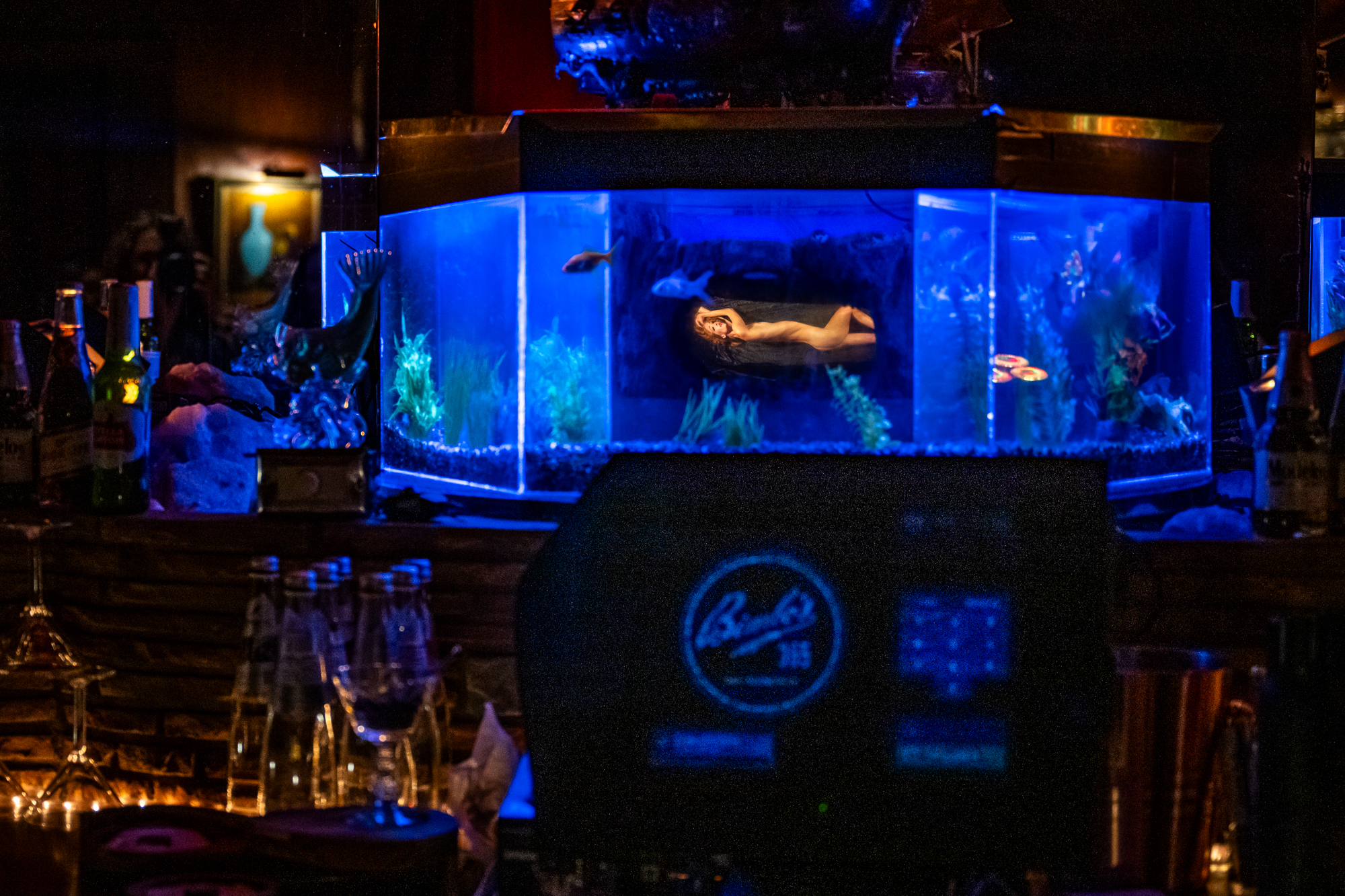
"caption": "Hanna Longwell performs as the 'Girl in the Fishbowl' at Bimbo’s 365 Club on Oct. 8, 2025. The act has been part of the venue since it opened in 1931.",
"credit": "Beth LaBerge/KQED",
"altTag": null,
"description": null,
"imgSizes": {
"thumbnail": {
"file": "https://cdn.kqed.org/wp-content/uploads/sites/10/2025/11/251008-GirlintheFishbowl-01-BL-160x107.jpg",
"width": 160,
"height": 107,
"mimeType": "image/jpeg"
},
"1536x1536": {
"file": "https://cdn.kqed.org/wp-content/uploads/sites/10/2025/11/251008-GirlintheFishbowl-01-BL-1536x1024.jpg",
"width": 1536,
"height": 1024,
"mimeType": "image/jpeg"
},
"post-thumbnail": {
"file": "https://cdn.kqed.org/wp-content/uploads/sites/10/2025/11/251008-GirlintheFishbowl-01-BL-672x372.jpg",
"width": 672,
"height": 372,
"mimeType": "image/jpeg"
},
"twentyfourteen-full-width": {
"file": "https://cdn.kqed.org/wp-content/uploads/sites/10/2025/11/251008-GirlintheFishbowl-01-BL-1038x576.jpg",
"width": 1038,
"height": 576,
"mimeType": "image/jpeg"
},
"npr-cds-wide": {
"file": "https://cdn.kqed.org/wp-content/uploads/sites/10/2025/11/251008-GirlintheFishbowl-01-BL-1200x675.jpg",
"width": 1200,
"height": 675,
"mimeType": "image/jpeg"
},
"kqedFullSize": {
"file": "https://cdn.kqed.org/wp-content/uploads/sites/10/2025/11/251008-GirlintheFishbowl-01-BL.jpg",
"width": 2000,
"height": 1333
}
},
"isLoading": false,
"fetchFailed": false
},
"news_12058500": {
"type": "attachments",
"id": "news_12058500",
"meta": {
"index": "attachments_1716263798",
"site": "news",
"id": "12058500",
"found": true
},
"title": "251001_BAYAREASHELTER_-17-KQED",
"publishDate": 1759447814,
"status": "inherit",
"parent": 0,
"modified": 1759447933,
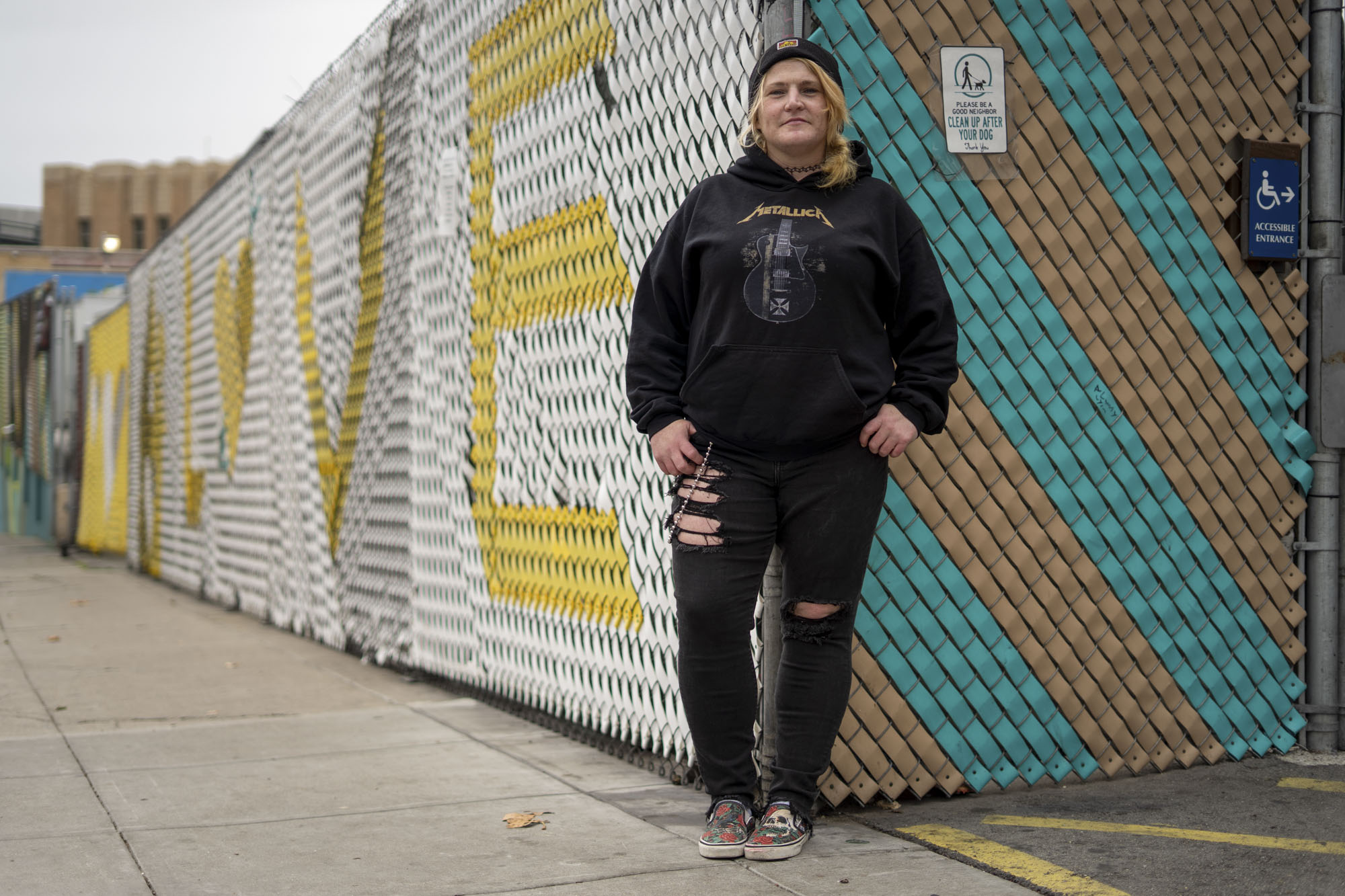
"caption": "Sarah Spillane, a resident of the DignityMoves tiny home cabins, outside the entrance in SoMa in San Francisco on Oct. 1, 2025.",
"credit": "Gustavo Hernandez/KQED",
"altTag": null,
"description": null,
"imgSizes": {
"thumbnail": {
"file": "https://cdn.kqed.org/wp-content/uploads/sites/10/2025/10/251001_BAYAREASHELTER_-17-KQED-160x107.jpg",
"width": 160,
"height": 107,
"mimeType": "image/jpeg"
},
"1536x1536": {
"file": "https://cdn.kqed.org/wp-content/uploads/sites/10/2025/10/251001_BAYAREASHELTER_-17-KQED-1536x1024.jpg",
"width": 1536,
"height": 1024,
"mimeType": "image/jpeg"
},
"post-thumbnail": {
"file": "https://cdn.kqed.org/wp-content/uploads/sites/10/2025/10/251001_BAYAREASHELTER_-17-KQED-672x372.jpg",
"width": 672,
"height": 372,
"mimeType": "image/jpeg"
},
"twentyfourteen-full-width": {
"file": "https://cdn.kqed.org/wp-content/uploads/sites/10/2025/10/251001_BAYAREASHELTER_-17-KQED-1038x576.jpg",
"width": 1038,
"height": 576,
"mimeType": "image/jpeg"
},
"kqedFullSize": {
"file": "https://cdn.kqed.org/wp-content/uploads/sites/10/2025/10/251001_BAYAREASHELTER_-17-KQED.jpg",
"width": 2000,
"height": 1333
}
},
"isLoading": false,
"fetchFailed": false
},
"news_12063708": {
"type": "attachments",
"id": "news_12063708",
"meta": {
"index": "attachments_1716263798",
"site": "news",
"id": "12063708",
"found": true
},
"title": "240111-TransitFile-06-BL_qed",
"publishDate": 1762818697,
"status": "inherit",
"parent": 12063703,
"modified": 1762818706,
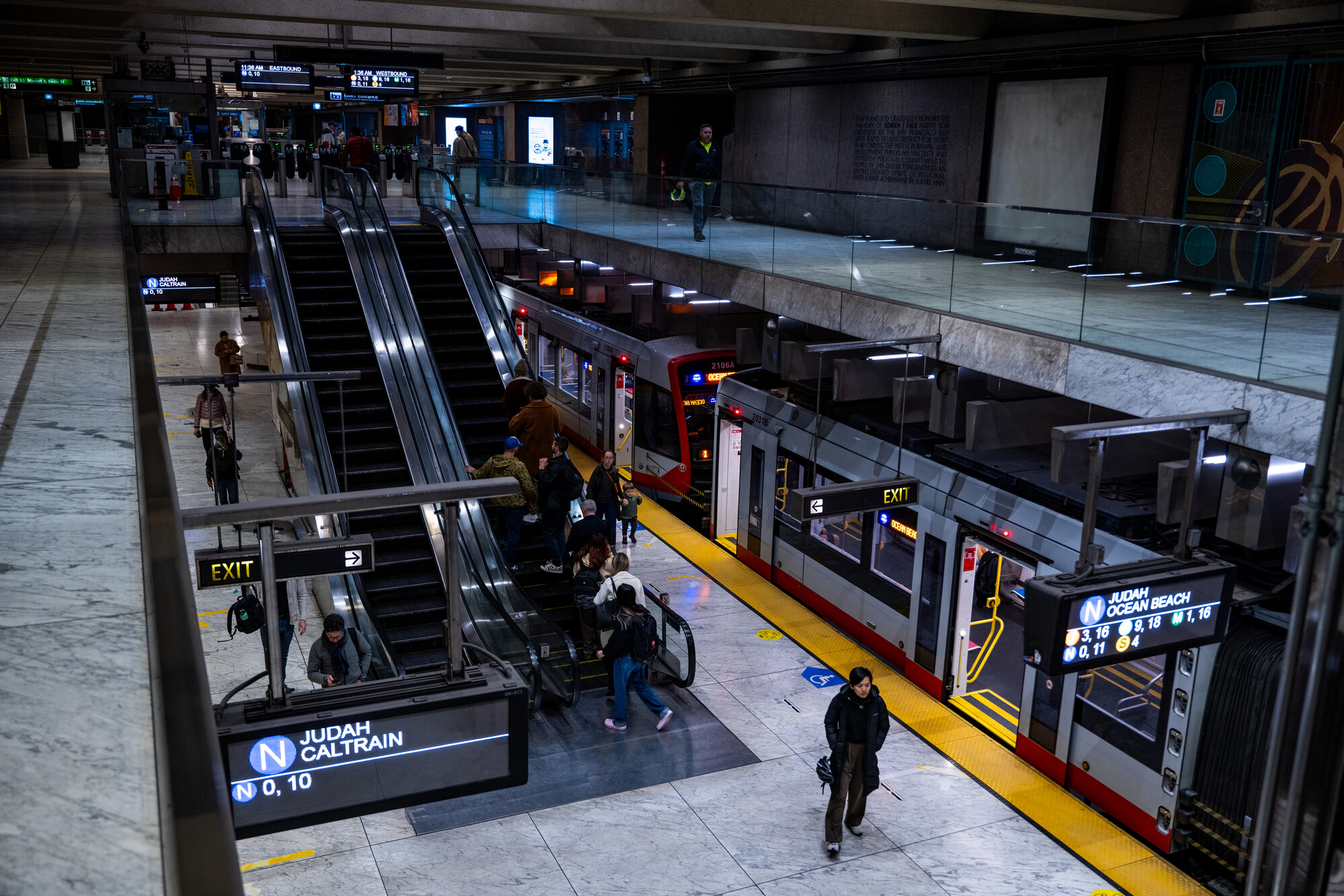
"caption": "A MUNI train stops at the Embarcadero Station in San Francisco on Jan. 11, 2024.",
"credit": "Beth LaBerge/KQED",
"altTag": null,
"description": null,
"imgSizes": {
"thumbnail": {
"file": "https://cdn.kqed.org/wp-content/uploads/sites/10/2025/11/240111-TransitFile-06-BL_qed-160x107.jpg",
"width": 160,
"height": 107,
"mimeType": "image/jpeg"
},
"1536x1536": {
"file": "https://cdn.kqed.org/wp-content/uploads/sites/10/2025/11/240111-TransitFile-06-BL_qed-1536x1024.jpg",
"width": 1536,
"height": 1024,
"mimeType": "image/jpeg"
},
"post-thumbnail": {
"file": "https://cdn.kqed.org/wp-content/uploads/sites/10/2025/11/240111-TransitFile-06-BL_qed-672x372.jpg",
"width": 672,
"height": 372,
"mimeType": "image/jpeg"
},
"twentyfourteen-full-width": {
"file": "https://cdn.kqed.org/wp-content/uploads/sites/10/2025/11/240111-TransitFile-06-BL_qed-1038x576.jpg",
"width": 1038,
"height": 576,
"mimeType": "image/jpeg"
},
"npr-cds-wide": {
"file": "https://cdn.kqed.org/wp-content/uploads/sites/10/2025/11/240111-TransitFile-06-BL_qed-1200x675.jpg",
"width": 1200,
"height": 675,
"mimeType": "image/jpeg"
},
"kqedFullSize": {
"file": "https://cdn.kqed.org/wp-content/uploads/sites/10/2025/11/240111-TransitFile-06-BL_qed.jpg",
"width": 1999,
"height": 1333
}
},
"isLoading": false,
"fetchFailed": false
},
"news_12063685": {
"type": "attachments",
"id": "news_12063685",
"meta": {
"index": "attachments_1716263798",
"site": "news",
"id": "12063685",
"found": true
},
"title": "20251106_ICE Vigil_GH-15_qed",
"publishDate": 1762811431,
"status": "inherit",
"parent": 12063676,
"modified": 1762811465,
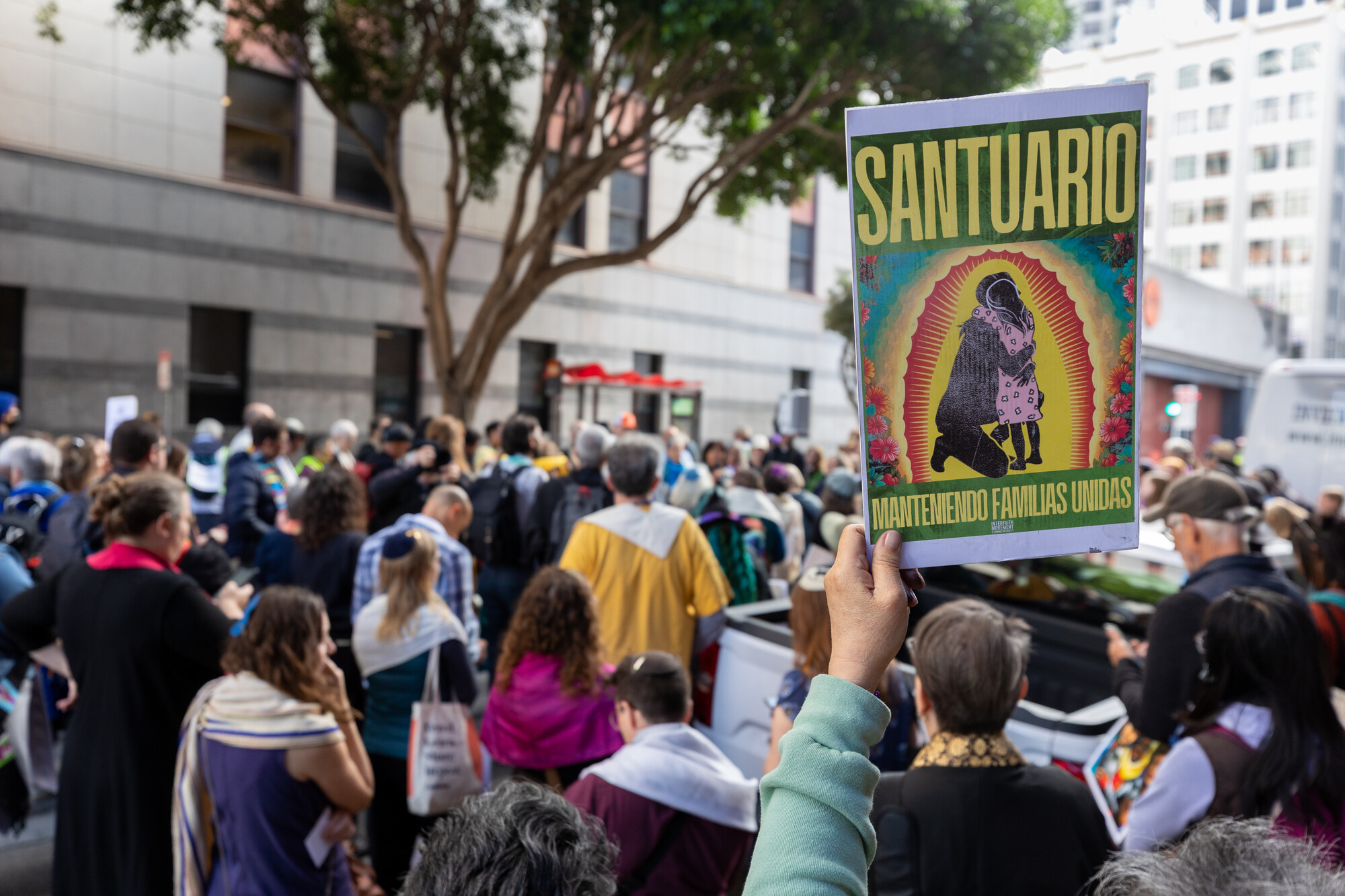
"caption": "A demonstrator holds a sign reading “Santuario: Manteniendo Familias Unidas” (“Sanctuary: Keeping Families United”) during the Faith in Action “Walking Our Faith” vigil outside the San Francisco Immigration Court on Nov. 6, 2025. The multi-faith gathering called for compassion and protection for immigrant families.",
"credit": "Gustavo Hernandez/KQED",
"altTag": null,
"description": null,
"imgSizes": {
"thumbnail": {
"file": "https://cdn.kqed.org/wp-content/uploads/sites/10/2025/11/20251106_ICE-Vigil_GH-15_qed-160x107.jpg",
"width": 160,
"height": 107,
"mimeType": "image/jpeg"
},
"1536x1536": {
"file": "https://cdn.kqed.org/wp-content/uploads/sites/10/2025/11/20251106_ICE-Vigil_GH-15_qed-1536x1024.jpg",
"width": 1536,
"height": 1024,
"mimeType": "image/jpeg"
},
"post-thumbnail": {
"file": "https://cdn.kqed.org/wp-content/uploads/sites/10/2025/11/20251106_ICE-Vigil_GH-15_qed-672x372.jpg",
"width": 672,
"height": 372,
"mimeType": "image/jpeg"
},
"twentyfourteen-full-width": {
"file": "https://cdn.kqed.org/wp-content/uploads/sites/10/2025/11/20251106_ICE-Vigil_GH-15_qed-1038x576.jpg",
"width": 1038,
"height": 576,
"mimeType": "image/jpeg"
},
"npr-cds-wide": {
"file": "https://cdn.kqed.org/wp-content/uploads/sites/10/2025/11/20251106_ICE-Vigil_GH-15_qed-1200x675.jpg",
"width": 1200,
"height": 675,
"mimeType": "image/jpeg"
},
"kqedFullSize": {
"file": "https://cdn.kqed.org/wp-content/uploads/sites/10/2025/11/20251106_ICE-Vigil_GH-15_qed.jpg",
"width": 2000,
"height": 1333
}
},
"isLoading": false,
"fetchFailed": false
},
"news_12063500": {
"type": "attachments",
"id": "news_12063500",
"meta": {
"index": "attachments_1716263798",
"site": "news",
"id": "12063500",
"found": true
},
"title": "Story about Prop 50 where Gavin Newsom speaks during a press event.",
"publishDate": 1762554790,
"status": "inherit",
"parent": 12063498,
"modified": 1762812043,
"caption": "Rep. Nancy Pelosi, speaks during a campaign event in support of Proposition 50 in San Francisco, Monday, Nov. 3, 2025.",
"credit": "Gabrielle Lurie/San Francisco Chronicle via Getty Images",
"altTag": null,
"description": null,
"imgSizes": {
"medium": {
"file": "https://cdn.kqed.org/wp-content/uploads/sites/10/2025/11/GettyImages-2244433247-2000x1334.jpg",
"width": 2000,
"height": 1334,
"mimeType": "image/jpeg"
},
"large": {
"file": "https://cdn.kqed.org/wp-content/uploads/sites/10/2025/11/GettyImages-2244433247-2000x1334.jpg",
"width": 2000,
"height": 1334,
"mimeType": "image/jpeg"
},
"thumbnail": {
"file": "https://cdn.kqed.org/wp-content/uploads/sites/10/2025/11/GettyImages-2244433247-160x107.jpg",
"width": 160,
"height": 107,
"mimeType": "image/jpeg"
},
"1536x1536": {
"file": "https://cdn.kqed.org/wp-content/uploads/sites/10/2025/11/GettyImages-2244433247-1536x1024.jpg",
"width": 1536,
"height": 1024,
"mimeType": "image/jpeg"
},
"2048x2048": {
"file": "https://cdn.kqed.org/wp-content/uploads/sites/10/2025/11/GettyImages-2244433247-2048x1366.jpg",
"width": 2048,
"height": 1366,
"mimeType": "image/jpeg"
},
"post-thumbnail": {
"file": "https://cdn.kqed.org/wp-content/uploads/sites/10/2025/11/GettyImages-2244433247-672x372.jpg",
"width": 672,
"height": 372,
"mimeType": "image/jpeg"
},
"twentyfourteen-full-width": {
"file": "https://cdn.kqed.org/wp-content/uploads/sites/10/2025/11/GettyImages-2244433247-1038x576.jpg",
"width": 1038,
"height": 576,
"mimeType": "image/jpeg"
},
"full-width": {
"file": "https://cdn.kqed.org/wp-content/uploads/sites/10/2025/11/GettyImages-2244433247-2000x1334.jpg",
"width": 2000,
"height": 1334,
"mimeType": "image/jpeg"
},
"npr-cds-wide": {
"file": "https://cdn.kqed.org/wp-content/uploads/sites/10/2025/11/GettyImages-2244433247-1200x675.jpg",
"width": 1200,
"height": 675,
"mimeType": "image/jpeg"
},
"kqedFullSize": {
"file": "https://cdn.kqed.org/wp-content/uploads/sites/10/2025/11/GettyImages-2244433247-scaled-e1762811972609.jpg",
"width": 2000,
"height": 1334
}
},
"isLoading": false,
"fetchFailed": false
},
"news_12063590": {
"type": "attachments",
"id": "news_12063590",
"meta": {
"index": "attachments_1716263798",
"site": "news",
"id": "12063590",
"found": true
},
"title": "California Democratic Party convention",
"publishDate": 1762788547,
"status": "inherit",
"parent": 12063589,
"modified": 1762810967,
"caption": "Christine Pelosi, former chair of the Women's Caucus, DNC member and daughter of Nancy Pelosi, speaks at the Women's Caucus at the California Democratic Party convention at the Anaheim Hilton and Convention Center in Anaheim on Friday, May 30, 2025.",
"credit": "Allen J. Schaben/Los Angeles Times via Getty Images",
"altTag": null,
"description": null,
"imgSizes": {
"thumbnail": {
"file": "https://cdn.kqed.org/wp-content/uploads/sites/10/2025/11/GettyImages-2217247312_qed-160x107.jpg",
"width": 160,
"height": 107,
"mimeType": "image/jpeg"
},
"1536x1536": {
"file": "https://cdn.kqed.org/wp-content/uploads/sites/10/2025/11/GettyImages-2217247312_qed-1536x1024.jpg",
"width": 1536,
"height": 1024,
"mimeType": "image/jpeg"
},
"post-thumbnail": {
"file": "https://cdn.kqed.org/wp-content/uploads/sites/10/2025/11/GettyImages-2217247312_qed-672x372.jpg",
"width": 672,
"height": 372,
"mimeType": "image/jpeg"
},
"twentyfourteen-full-width": {
"file": "https://cdn.kqed.org/wp-content/uploads/sites/10/2025/11/GettyImages-2217247312_qed-1038x576.jpg",
"width": 1038,
"height": 576,
"mimeType": "image/jpeg"
},
"npr-cds-wide": {
"file": "https://cdn.kqed.org/wp-content/uploads/sites/10/2025/11/GettyImages-2217247312_qed-1200x675.jpg",
"width": 1200,
"height": 675,
"mimeType": "image/jpeg"
},
"kqedFullSize": {
"file": "https://cdn.kqed.org/wp-content/uploads/sites/10/2025/11/GettyImages-2217247312_qed.jpg",
"width": 2000,
"height": 1333
}
},
"isLoading": false,
"fetchFailed": false
},
"news_11975873": {
"type": "attachments",
"id": "news_11975873",
"meta": {
"index": "attachments_1716263798",
"site": "news",
"id": "11975873",
"found": true
},
"parent": 11984807,
"imgSizes": {
"twentyfourteen-full-width": {
"file": "https://cdn.kqed.org/wp-content/uploads/sites/10/2024/02/240214-GOLDEN-GATE-BRIDGE-PROTEST-JCL-02-KQED-1038x576.jpg",
"width": 1038,
"mimeType": "image/jpeg",
"height": 576
},
"thumbnail": {
"file": "https://cdn.kqed.org/wp-content/uploads/sites/10/2024/02/240214-GOLDEN-GATE-BRIDGE-PROTEST-JCL-02-KQED-160x107.jpg",
"width": 160,
"mimeType": "image/jpeg",
"height": 107
},
"post-thumbnail": {
"file": "https://cdn.kqed.org/wp-content/uploads/sites/10/2024/02/240214-GOLDEN-GATE-BRIDGE-PROTEST-JCL-02-KQED-672x372.jpg",
"width": 672,
"mimeType": "image/jpeg",
"height": 372
},
"kqedFullSize": {
"file": "https://cdn.kqed.org/wp-content/uploads/sites/10/2024/02/240214-GOLDEN-GATE-BRIDGE-PROTEST-JCL-02-KQED.jpg",
"width": 2000,
"height": 1333
},
"large": {
"file": "https://cdn.kqed.org/wp-content/uploads/sites/10/2024/02/240214-GOLDEN-GATE-BRIDGE-PROTEST-JCL-02-KQED-1020x680.jpg",
"width": 1020,
"mimeType": "image/jpeg",
"height": 680
},
"1536x1536": {
"file": "https://cdn.kqed.org/wp-content/uploads/sites/10/2024/02/240214-GOLDEN-GATE-BRIDGE-PROTEST-JCL-02-KQED-1536x1024.jpg",
"width": 1536,
"mimeType": "image/jpeg",
"height": 1024
},
"full-width": {
"file": "https://cdn.kqed.org/wp-content/uploads/sites/10/2024/02/240214-GOLDEN-GATE-BRIDGE-PROTEST-JCL-02-KQED-1920x1280.jpg",
"width": 1920,
"mimeType": "image/jpeg",
"height": 1280
},
"medium": {
"file": "https://cdn.kqed.org/wp-content/uploads/sites/10/2024/02/240214-GOLDEN-GATE-BRIDGE-PROTEST-JCL-02-KQED-800x533.jpg",
"width": 800,
"mimeType": "image/jpeg",
"height": 533
}
},
"publishDate": 1707932164,
"modified": 1714680829,
"caption": "Protestors block traffic on the Golden Gate Bridge on Feb. 14, 2024.",
"description": null,
"title": "240214-GOLDEN GATE BRIDGE PROTEST-JCL-02-KQED",
"credit": "Juan Carlos Lara/KQED",
"status": "inherit",
"altTag": null,
"isLoading": false,
"fetchFailed": false
},
"news_12012770": {
"type": "attachments",
"id": "news_12012770",
"meta": {
"index": "attachments_1716263798",
"site": "news",
"id": "12012770",
"found": true
},
"title": "241105-ELECTIONDAY-86-BL-KQED",
"publishDate": 1730843940,
"status": "inherit",
"parent": 0,
"modified": 1730843982,
"caption": "San Francisco mayor London Breed walks out of the Democratic headquarters in San Francisco on Nov. 5, 2024.",
"credit": "Beth LaBerge/KQED",
"altTag": null,
"description": null,
"imgSizes": {
"medium": {
"file": "https://cdn.kqed.org/wp-content/uploads/sites/10/2024/11/241105-ELECTIONDAY-86-BL-KQED-800x533.jpg",
"width": 800,
"height": 533,
"mimeType": "image/jpeg"
},
"large": {
"file": "https://cdn.kqed.org/wp-content/uploads/sites/10/2024/11/241105-ELECTIONDAY-86-BL-KQED-1020x680.jpg",
"width": 1020,
"height": 680,
"mimeType": "image/jpeg"
},
"thumbnail": {
"file": "https://cdn.kqed.org/wp-content/uploads/sites/10/2024/11/241105-ELECTIONDAY-86-BL-KQED-160x107.jpg",
"width": 160,
"height": 107,
"mimeType": "image/jpeg"
},
"1536x1536": {
"file": "https://cdn.kqed.org/wp-content/uploads/sites/10/2024/11/241105-ELECTIONDAY-86-BL-KQED-1536x1024.jpg",
"width": 1536,
"height": 1024,
"mimeType": "image/jpeg"
},
"post-thumbnail": {
"file": "https://cdn.kqed.org/wp-content/uploads/sites/10/2024/11/241105-ELECTIONDAY-86-BL-KQED-672x372.jpg",
"width": 672,
"height": 372,
"mimeType": "image/jpeg"
},
"twentyfourteen-full-width": {
"file": "https://cdn.kqed.org/wp-content/uploads/sites/10/2024/11/241105-ELECTIONDAY-86-BL-KQED-1038x576.jpg",
"width": 1038,
"height": 576,
"mimeType": "image/jpeg"
},
"full-width": {
"file": "https://cdn.kqed.org/wp-content/uploads/sites/10/2024/11/241105-ELECTIONDAY-86-BL-KQED-1920x1280.jpg",
"width": 1920,
"height": 1280,
"mimeType": "image/jpeg"
},
"kqedFullSize": {
"file": "https://cdn.kqed.org/wp-content/uploads/sites/10/2024/11/241105-ELECTIONDAY-86-BL-KQED.jpg",
"width": 2000,
"height": 1333
}
},
"isLoading": false,
"fetchFailed": false
},
"news_12063216": {
"type": "attachments",
"id": "news_12063216",
"meta": {
"index": "attachments_1716263798",
"site": "news",
"id": "12063216",
"found": true
},
"title": "Pelosi",
"publishDate": 1762452990,
"status": "inherit",
"parent": 12063207,
"modified": 1762479073,
"caption": "House Speaker Nancy Pelosi of California on Capitol Hill in Washington, D.C., on March 13, 2020. ",
"credit": "Scott Applewhite/AP Photo",
"altTag": null,
"description": null,
"imgSizes": {
"thumbnail": {
"file": "https://cdn.kqed.org/wp-content/uploads/sites/10/2025/11/NancyPelosiAP-160x107.jpg",
"width": 160,
"height": 107,
"mimeType": "image/jpeg"
},
"1536x1536": {
"file": "https://cdn.kqed.org/wp-content/uploads/sites/10/2025/11/NancyPelosiAP-1536x1024.jpg",
"width": 1536,
"height": 1024,
"mimeType": "image/jpeg"
},
"post-thumbnail": {
"file": "https://cdn.kqed.org/wp-content/uploads/sites/10/2025/11/NancyPelosiAP-672x372.jpg",
"width": 672,
"height": 372,
"mimeType": "image/jpeg"
},
"twentyfourteen-full-width": {
"file": "https://cdn.kqed.org/wp-content/uploads/sites/10/2025/11/NancyPelosiAP-1038x576.jpg",
"width": 1038,
"height": 576,
"mimeType": "image/jpeg"
},
"npr-cds-wide": {
"file": "https://cdn.kqed.org/wp-content/uploads/sites/10/2025/11/NancyPelosiAP-1200x675.jpg",
"width": 1200,
"height": 675,
"mimeType": "image/jpeg"
},
"kqedFullSize": {
"file": "https://cdn.kqed.org/wp-content/uploads/sites/10/2025/11/NancyPelosiAP.jpg",
"width": 2000,
"height": 1333
}
},
"isLoading": false,
"fetchFailed": false
},
"news_12063322": {
"type": "attachments",
"id": "news_12063322",
"meta": {
"index": "attachments_1716263798",
"site": "news",
"id": "12063322",
"found": true
},
"title": "20251106_ICE VIGIL_GH-3-KQED",
"publishDate": 1762470168,
"status": "inherit",
"parent": 0,
"modified": 1762470299,
"caption": "Faith in Action organizers march north on Montgomery Street during the “Walking Our Faith” vigil for prayer and caring in San Francisco on Nov. 6, 2025.",
"credit": "Gustavo Hernandez/KQED",
"altTag": null,
"description": null,
"imgSizes": {
"thumbnail": {
"file": "https://cdn.kqed.org/wp-content/uploads/sites/10/2025/11/20251106_ICE-VIGIL_GH-3-KQED-160x107.jpg",
"width": 160,
"height": 107,
"mimeType": "image/jpeg"
},
"1536x1536": {
"file": "https://cdn.kqed.org/wp-content/uploads/sites/10/2025/11/20251106_ICE-VIGIL_GH-3-KQED-1536x1024.jpg",
"width": 1536,
"height": 1024,
"mimeType": "image/jpeg"
},
"post-thumbnail": {
"file": "https://cdn.kqed.org/wp-content/uploads/sites/10/2025/11/20251106_ICE-VIGIL_GH-3-KQED-672x372.jpg",
"width": 672,
"height": 372,
"mimeType": "image/jpeg"
},
"twentyfourteen-full-width": {
"file": "https://cdn.kqed.org/wp-content/uploads/sites/10/2025/11/20251106_ICE-VIGIL_GH-3-KQED-1038x576.jpg",
"width": 1038,
"height": 576,
"mimeType": "image/jpeg"
},
"npr-cds-wide": {
"file": "https://cdn.kqed.org/wp-content/uploads/sites/10/2025/11/20251106_ICE-VIGIL_GH-3-KQED-1200x675.jpg",
"width": 1200,
"height": 675,
"mimeType": "image/jpeg"
},
"kqedFullSize": {
"file": "https://cdn.kqed.org/wp-content/uploads/sites/10/2025/11/20251106_ICE-VIGIL_GH-3-KQED.jpg",
"width": 2000,
"height": 1333
}
},
"isLoading": false,
"fetchFailed": false
},
"news_12058872": {
"type": "attachments",
"id": "news_12058872",
"meta": {
"index": "attachments_1716263798",
"site": "news",
"id": "12058872",
"found": true
},
"title": "230808-SanFranciscoCityHall-23-BL_qed",
"publishDate": 1759795710,
"status": "inherit",
"parent": 12058853,
"modified": 1759796817,
"caption": "City Hall is reflected in the Veterans Building in San Francisco on Aug. 8, 2023.",
"credit": "Beth LaBerge/KQED",
"altTag": null,
"description": null,
"imgSizes": {
"thumbnail": {
"file": "https://cdn.kqed.org/wp-content/uploads/sites/10/2025/10/230808-SanFranciscoCityHall-23-BL_qed-160x107.jpg",
"width": 160,
"height": 107,
"mimeType": "image/jpeg"
},
"1536x1536": {
"file": "https://cdn.kqed.org/wp-content/uploads/sites/10/2025/10/230808-SanFranciscoCityHall-23-BL_qed-1536x1024.jpg",
"width": 1536,
"height": 1024,
"mimeType": "image/jpeg"
},
"post-thumbnail": {
"file": "https://cdn.kqed.org/wp-content/uploads/sites/10/2025/10/230808-SanFranciscoCityHall-23-BL_qed-672x372.jpg",
"width": 672,
"height": 372,
"mimeType": "image/jpeg"
},
"twentyfourteen-full-width": {
"file": "https://cdn.kqed.org/wp-content/uploads/sites/10/2025/10/230808-SanFranciscoCityHall-23-BL_qed-1038x576.jpg",
"width": 1038,
"height": 576,
"mimeType": "image/jpeg"
},
"kqedFullSize": {
"file": "https://cdn.kqed.org/wp-content/uploads/sites/10/2025/10/230808-SanFranciscoCityHall-23-BL_qed.jpg",
"width": 1999,
"height": 1333
}
},
"isLoading": false,
"fetchFailed": false
}
},
"audioPlayerReducer": {
"postId": "stream_live",
"isPaused": true,
"isPlaying": false,
"pfsActive": false,
"pledgeModalIsOpen": true,
"playerDrawerIsOpen": false,
"liveAudioPlayStartedAt": 0,
"liveAudioPlayContext": ""
},
"authorsReducer": {
"gmarzorati": {
"type": "authors",
"id": "227",
"meta": {
"index": "authors_1716337520",
"id": "227",
"found": true
},
"name": "Guy Marzorati",
"firstName": "Guy",
"lastName": "Marzorati",
"slug": "gmarzorati",
"email": "gmarzorati@KQED.org",
"display_author_email": true,
"staff_mastheads": [
"news"
],
"title": "Correspondent",
"bio": "Guy Marzorati is a correspondent on KQED's California Politics and Government Desk, based in San Jose. A graduate of Santa Clara University, Guy joined KQED in 2013. He reports on state and local politics and produces KQED's digital voter guide.",
"avatar": "https://secure.gravatar.com/avatar/e7038b8dbfd55b104369b76b1cd0b9de?s=600&d=blank&r=g",
"twitter": "guymarzorati",
"facebook": null,
"instagram": null,
"linkedin": null,
"sites": [
{
"site": "",
"roles": [
"editor"
]
},
{
"site": "news",
"roles": [
"editor"
]
},
{
"site": "science",
"roles": [
"editor"
]
},
{
"site": "forum",
"roles": [
"editor"
]
},
{
"site": "elections",
"roles": [
"editor"
]
},
{
"site": "liveblog",
"roles": [
"editor"
]
}
],
"headData": {
"title": "Guy Marzorati | KQED",
"description": "Correspondent",
"ogImgSrc": "https://secure.gravatar.com/avatar/e7038b8dbfd55b104369b76b1cd0b9de?s=600&d=blank&r=g",
"twImgSrc": "https://secure.gravatar.com/avatar/e7038b8dbfd55b104369b76b1cd0b9de?s=600&d=blank&r=g"
},
"isLoading": false,
"link": "/author/gmarzorati"
},
"scottshafer": {
"type": "authors",
"id": "255",
"meta": {
"index": "authors_1716337520",
"id": "255",
"found": true
},
"name": "Scott Shafer",
"firstName": "Scott",
"lastName": "Shafer",
"slug": "scottshafer",
"email": "sshafer@kqed.org",
"display_author_email": false,
"staff_mastheads": [
"news"
],
"title": "KQED Contributor",
"bio": "Scott Shafer is a senior editor with the KQED Politics and Government desk. He is co-host of Political Breakdown, the award-winning radio show and podcast with a personal take on the world of politics. Scott came to KQED in 1998 to host the statewide\u003cem> California Report\u003c/em>. Prior to that he had extended stints in politics and government\u003cem>.\u003c/em> He uses that inside experience at KQED in his, reporting, hosting and analysis for the politics desk. Scott collaborated \u003cem>Political Breakdown a\u003c/em>nd on \u003cem>The Political Mind of Jerry Brown, \u003c/em>an eight-part series about the life and extraordinary political career of the former governor. For fun, he plays water polo with the San Francisco Tsunami.",
"avatar": "https://secure.gravatar.com/avatar/a62ebae45b79d7aed1a39a0e3bf68104?s=600&d=blank&r=g",
"twitter": "scottshafer",
"bluesky": null,
"facebook": null,
"instagram": null,
"linkedin": null,
"sites": [
{
"site": "news",
"roles": [
"editor"
]
},
{
"site": "stateofhealth",
"roles": [
"author"
]
},
{
"site": "science",
"roles": [
"author"
]
},
{
"site": "forum",
"roles": [
"subscriber"
]
},
{
"site": "liveblog",
"roles": [
"author"
]
}
],
"headData": {
"title": "Scott Shafer | KQED",
"description": "KQED Contributor",
"ogImgSrc": "https://secure.gravatar.com/avatar/a62ebae45b79d7aed1a39a0e3bf68104?s=600&d=blank&r=g",
"twImgSrc": "https://secure.gravatar.com/avatar/a62ebae45b79d7aed1a39a0e3bf68104?s=600&d=blank&r=g"
},
"isLoading": false,
"link": "/author/scottshafer"
},
"mlagos": {
"type": "authors",
"id": "3239",
"meta": {
"index": "authors_1716337520",
"id": "3239",
"found": true
},
"name": "Marisa Lagos",
"firstName": "Marisa",
"lastName": "Lagos",
"slug": "mlagos",
"email": "mlagos@kqed.org",
"display_author_email": false,
"staff_mastheads": [
"news"
],
"title": "KQED Contributor",
"bio": "Marisa Lagos is a correspondent for KQED’s California Politics and Government Desk and co-hosts the award-winning show and podcast, Political Breakdown. At KQED, Lagos also conducts reporting, analysis and investigations into state, local and national politics for radio, TV, online and onstage. In 2022, she and co-host, Scott Shafer, moderated the only gubernatorial debate in California. In 2020, the \u003ci>Washington Post\u003c/i> named her one of the top political journalists in California; she was nominated for a Peabody and won several other awards for her work investigating the 2017 California wildfires. She has worked at the \u003ci>San Francisco Chronicle\u003c/i>, \u003ci>San Francisco Examiner\u003c/i> and \u003ci>Los Angeles Times\u003c/i>. A UC Santa Barbara graduate, she lives in San Francisco with her two sons and husband.",
"avatar": "https://secure.gravatar.com/avatar/a261a0d3696fc066871ef96b85b5e7d2?s=600&d=blank&r=g",
"twitter": "@mlagos",
"facebook": null,
"instagram": null,
"linkedin": null,
"sites": [
{
"site": "arts",
"roles": [
"author"
]
},
{
"site": "news",
"roles": [
"editor"
]
},
{
"site": "science",
"roles": [
"editor"
]
},
{
"site": "forum",
"roles": [
"author"
]
},
{
"site": "liveblog",
"roles": [
"author"
]
}
],
"headData": {
"title": "Marisa Lagos | KQED",
"description": "KQED Contributor",
"ogImgSrc": "https://secure.gravatar.com/avatar/a261a0d3696fc066871ef96b85b5e7d2?s=600&d=blank&r=g",
"twImgSrc": "https://secure.gravatar.com/avatar/a261a0d3696fc066871ef96b85b5e7d2?s=600&d=blank&r=g"
},
"isLoading": false,
"link": "/author/mlagos"
},
"btaylor": {
"type": "authors",
"id": "11365",
"meta": {
"index": "authors_1716337520",
"id": "11365",
"found": true
},
"name": "Bianca Taylor",
"firstName": "Bianca",
"lastName": "Taylor",
"slug": "btaylor",
"email": "btaylor@KQED.org",
"display_author_email": false,
"staff_mastheads": [
"news"
],
"title": "Host and Producer ",
"bio": "Bianca Taylor is a news producer and host of KQED's The Latest podcast.\r\n\r\nHer work with KQED has been honored by the Society of Professional Journalists NorCal, the Webby's, the Regional Murrow Awards, and ONA. She has also worked with NPR, the BBC World Service, and the Washington Post Creative Group.\r\n\r\nBianca is represented by SAG-AFTRA.",
"avatar": "https://secure.gravatar.com/avatar/6b9d3f6552dd10470c5d1c2e58cfe717?s=600&d=blank&r=g",
"twitter": "SoundsLkeBianca",
"facebook": null,
"instagram": null,
"linkedin": null,
"sites": [
{
"site": "arts",
"roles": [
"editor"
]
},
{
"site": "news",
"roles": [
"edit_others_posts",
"editor"
]
},
{
"site": "pop",
"roles": [
"editor"
]
},
{
"site": "bayareabites",
"roles": [
"author"
]
},
{
"site": "science",
"roles": [
"editor"
]
},
{
"site": "forum",
"roles": [
"editor"
]
},
{
"site": "radio",
"roles": [
"editor"
]
},
{
"site": "podcasts",
"roles": [
"editor"
]
}
],
"headData": {
"title": "Bianca Taylor | KQED",
"description": "Host and Producer ",
"ogImgSrc": "https://secure.gravatar.com/avatar/6b9d3f6552dd10470c5d1c2e58cfe717?s=600&d=blank&r=g",
"twImgSrc": "https://secure.gravatar.com/avatar/6b9d3f6552dd10470c5d1c2e58cfe717?s=600&d=blank&r=g"
},
"isLoading": false,
"link": "/author/btaylor"
},
"blaberge": {
"type": "authors",
"id": "11667",
"meta": {
"index": "authors_1716337520",
"id": "11667",
"found": true
},
"name": "Beth LaBerge",
"firstName": "Beth",
"lastName": "LaBerge",
"slug": "blaberge",
"email": "blaberge@KQED.org",
"display_author_email": true,
"staff_mastheads": [
"news"
],
"title": "Photographer, News",
"bio": "Beth LaBerge is a visual journalist for \u003ca href=\"https://www.kqed.org/news\">KQED News\u003c/a>.",
"avatar": "https://secure.gravatar.com/avatar/ce49ecd7a1306685637b45a1f6f5dedfc4ae9481966eb596fea5160466dd6319?s=600&d=blank&r=g",
"twitter": null,
"bluesky": null,
"facebook": null,
"instagram": "https://www.instagram.com/bethlaberge/",
"linkedin": null,
"sites": [
{
"site": "arts",
"roles": [
"editor",
"manage_categories"
]
},
{
"site": "news",
"roles": [
"editor",
"edit_plugins",
"manage_categories"
]
},
{
"site": "science",
"roles": [
"editor",
"contributor",
"author",
"manage_categories"
]
},
{
"site": "perspectives",
"roles": [
"editor"
]
},
{
"site": "liveblog",
"roles": [
"editor"
]
}
],
"headData": {
"title": "Beth LaBerge | KQED",
"description": "Photographer, News",
"ogImgSrc": "https://secure.gravatar.com/avatar/ce49ecd7a1306685637b45a1f6f5dedfc4ae9481966eb596fea5160466dd6319?s=600&d=blank&r=g",
"twImgSrc": "https://secure.gravatar.com/avatar/ce49ecd7a1306685637b45a1f6f5dedfc4ae9481966eb596fea5160466dd6319?s=600&d=blank&r=g"
},
"isLoading": false,
"link": "/author/blaberge"
},
"ccabreralomeli": {
"type": "authors",
"id": "11708",
"meta": {
"index": "authors_1716337520",
"id": "11708",
"found": true
},
"name": "Carlos Cabrera-Lomelí",
"firstName": "Carlos",
"lastName": "Cabrera-Lomelí",
"slug": "ccabreralomeli",
"email": "ccabreralomeli@KQED.org",
"display_author_email": true,
"staff_mastheads": [
"news"
],
"title": "Community Reporter",
"bio": "Carlos Cabrera-Lomelí is a community reporter with KQED's digital engagement team. He also reports and co-produces for KQED's bilingual news hub KQED en Español. He grew up in San Francisco's Mission District and has previously worked with Univision, 48 Hills and REFORMA in Mexico City.",
"avatar": "https://secure.gravatar.com/avatar/c309be9665e484f887b818c89e273ecc673004f426f36b24d00a4d813a2e0518?s=600&d=blank&r=g",
"twitter": "@LomeliCabrera",
"bluesky": null,
"facebook": null,
"instagram": null,
"linkedin": null,
"sites": [
{
"site": "arts",
"roles": [
"editor"
]
},
{
"site": "news",
"roles": [
"editor"
]
},
{
"site": "about",
"roles": [
"editor"
]
},
{
"site": "science",
"roles": [
"editor"
]
},
{
"site": "perspectives",
"roles": [
"editor"
]
},
{
"site": "elections",
"roles": [
"editor"
]
},
{
"site": "liveblog",
"roles": [
"contributor"
]
}
],
"headData": {
"title": "Carlos Cabrera-Lomelí | KQED",
"description": "Community Reporter",
"ogImgSrc": "https://secure.gravatar.com/avatar/c309be9665e484f887b818c89e273ecc673004f426f36b24d00a4d813a2e0518?s=600&d=blank&r=g",
"twImgSrc": "https://secure.gravatar.com/avatar/c309be9665e484f887b818c89e273ecc673004f426f36b24d00a4d813a2e0518?s=600&d=blank&r=g"
},
"isLoading": false,
"link": "/author/ccabreralomeli"
},
"jlara": {
"type": "authors",
"id": "11761",
"meta": {
"index": "authors_1716337520",
"id": "11761",
"found": true
},
"name": "Juan Carlos Lara",
"firstName": "Juan Carlos",
"lastName": "Lara",
"slug": "jlara",
"email": "jlara@kqed.org",
"display_author_email": false,
"staff_mastheads": [],
"title": "KQED Contributor",
"bio": null,
"avatar": "https://secure.gravatar.com/avatar/19e2052b9b05657c5ff2af2121846e9c?s=600&d=blank&r=g",
"twitter": null,
"facebook": null,
"instagram": null,
"linkedin": null,
"sites": [
{
"site": "arts",
"roles": [
"editor"
]
},
{
"site": "news",
"roles": [
"editor"
]
},
{
"site": "forum",
"roles": [
"editor"
]
},
{
"site": "liveblog",
"roles": [
"contributor"
]
}
],
"headData": {
"title": "Juan Carlos Lara | KQED",
"description": "KQED Contributor",
"ogImgSrc": "https://secure.gravatar.com/avatar/19e2052b9b05657c5ff2af2121846e9c?s=600&d=blank&r=g",
"twImgSrc": "https://secure.gravatar.com/avatar/19e2052b9b05657c5ff2af2121846e9c?s=600&d=blank&r=g"
},
"isLoading": false,
"link": "/author/jlara"
},
"sjohnson": {
"type": "authors",
"id": "11840",
"meta": {
"index": "authors_1716337520",
"id": "11840",
"found": true
},
"name": "Sydney Johnson",
"firstName": "Sydney",
"lastName": "Johnson",
"slug": "sjohnson",
"email": "sjohnson@kqed.org",
"display_author_email": false,
"staff_mastheads": [
"news"
],
"title": "KQED Reporter",
"bio": "Sydney Johnson is a general assignment reporter at KQED. She previously reported on public health and city government at the San Francisco Examiner, and before that, she covered statewide education policy for EdSource. Her reporting has won multiple local, state and national awards. Sydney is a graduate of the University of California, Berkeley and lives in San Francisco.",
"avatar": "https://secure.gravatar.com/avatar/97855f2719b72ad6190b7c535fe642c8?s=600&d=blank&r=g",
"twitter": "sydneyfjohnson",
"facebook": null,
"instagram": null,
"linkedin": null,
"sites": [
{
"site": "news",
"roles": [
"editor"
]
}
],
"headData": {
"title": "Sydney Johnson | KQED",
"description": "KQED Reporter",
"ogImgSrc": "https://secure.gravatar.com/avatar/97855f2719b72ad6190b7c535fe642c8?s=600&d=blank&r=g",
"twImgSrc": "https://secure.gravatar.com/avatar/97855f2719b72ad6190b7c535fe642c8?s=600&d=blank&r=g"
},
"isLoading": false,
"link": "/author/sjohnson"
},
"kdebenedetti": {
"type": "authors",
"id": "11913",
"meta": {
"index": "authors_1716337520",
"id": "11913",
"found": true
},
"name": "Katie DeBenedetti",
"firstName": "Katie",
"lastName": "DeBenedetti",
"slug": "kdebenedetti",
"email": "kdebenedetti@kqed.org",
"display_author_email": false,
"staff_mastheads": [
"news",
"science"
],
"title": "KQED Contributor",
"bio": "Katie DeBenedetti is a digital reporter covering daily news for the Express Desk. Prior to joining KQED as a culture reporting intern in January 2024, she covered education and city government for the Napa Valley Register.",
"avatar": "https://secure.gravatar.com/avatar/6e31073cb8f7e4214ab03f42771d0f45?s=600&d=blank&r=g",
"twitter": null,
"facebook": null,
"instagram": null,
"linkedin": null,
"sites": [
{
"site": "news",
"roles": [
"author"
]
},
{
"site": "science",
"roles": [
"author"
]
},
{
"site": "liveblog",
"roles": [
"author"
]
}
],
"headData": {
"title": "Katie DeBenedetti | KQED",
"description": "KQED Contributor",
"ogImgSrc": "https://secure.gravatar.com/avatar/6e31073cb8f7e4214ab03f42771d0f45?s=600&d=blank&r=g",
"twImgSrc": "https://secure.gravatar.com/avatar/6e31073cb8f7e4214ab03f42771d0f45?s=600&d=blank&r=g"
},
"isLoading": false,
"link": "/author/kdebenedetti"
}
},
"pagesReducer": {
"news_tag_san-francisco": {
"type": "terms",
"id": "news_38",
"meta": {
"index": "terms_1716263798",
"site": "news",
"id": "38",
"score": 6.7229023
},
"featImg": null,
"name": "San Francisco",
"description": null,
"taxonomy": "tag",
"headData": {
"twImgId": null,
"twTitle": null,
"ogTitle": null,
"ogImgId": null,
"twDescription": null,
"description": null,
"title": "San Francisco Archives | KQED News",
"ogDescription": null
},
"ttid": 58,
"slug": "san-francisco",
"isLoading": false,
"title": "San Francisco",
"pageMeta": {
"site": "news",
"WpPageTemplate": "page-topic-editorial",
"currentPage": 41
},
"blocks": [
{
"blockName": "kqed/post-list",
"attrs": {
"layout": "cardArticle2",
"query": "posts/news?tag=san-francisco",
"seeMore": false,
"paginated": true,
"page": 41
}
},
{
"blockName": "kqed/ad"
}
]
}
},
"pfsSessionReducer": {},
"postsReducer": {
"stream_live": {
"type": "live",
"id": "stream_live",
"audioUrl": "https://streams.kqed.org/kqedradio",
"title": "Live Stream",
"excerpt": "Live Stream information currently unavailable.",
"link": "/radio",
"featImg": "",
"label": {
"name": "KQED Live",
"link": "/"
}
},
"stream_kqedNewscast": {
"type": "posts",
"id": "stream_kqedNewscast",
"audioUrl": "https://www.kqed.org/.stream/anon/radio/RDnews/newscast.mp3?_=1",
"title": "KQED Newscast",
"featImg": "",
"label": {
"name": "88.5 FM",
"link": "/"
}
},
"news_12063851": {
"type": "posts",
"id": "news_12063851",
"meta": {
"index": "posts_1716263798",
"site": "news",
"id": "12063851",
"score": null,
"sort": [
1763074674000
]
},
"guestAuthors": [],
"slug": "weeks-after-sfo-arrest-political-commentator-sami-hamdi-is-released-and-leaves-us",
"title": "Weeks After SFO Arrest, Political Commentator Sami Hamdi Is Released and Leaves US",
"publishDate": 1763074674,
"format": "standard",
"headTitle": "Weeks After SFO Arrest, Political Commentator Sami Hamdi Is Released and Leaves US | KQED",
"labelTerm": {
"site": "news"
},
"content": "\u003cp>British political commentator Sami Hamdi voluntarily left the U.S. on Wednesday after more than two weeks in federal immigration detention following his arrest \u003ca href=\"https://www.kqed.org/news/12061703/british-commentator-sami-hamdis-detention-at-sfo-raises-alarms-over-free-speech\">at San Francisco International Airport\u003c/a>.\u003c/p>\n\u003cp>Hamdi, who is Muslim and a vocal critic of the Israeli government, was on a national speaking tour at the time of his detainment. The Department of Homeland Security accused him of being a supporter of terrorism and cheering on Hamas after its attack on Israel on Oct. 7, 2023.\u003c/p>\n\u003cp>Hamdi’s detention is part of a larger effort by the Trump administration to crack down on adversarial speech by noncitizens, particularly surrounding Israel and the war in Gaza, raising concerns about the erosion of First Amendment rights.\u003c/p>\n\u003cp>[ad fullwidth]\u003c/p>\n\u003cp>“This administration has made it clear that if you are critical of Israel and its policies in Gaza, you’re subject to efforts at removal of you from the United States,” UC Davis law professor Kevin Johnson said.\u003c/p>\n\u003cp>Immigration and Customs Enforcement officers detained Hamdi at SFO on Oct. 26, just a day after he spoke at the annual gala of the Council on American-Islamic Relations’ Sacramento chapter. He was headed to Florida, where he was scheduled to appear at another CAIR event later that evening.\u003c/p>\n\u003cp>Hamdi, who was taken to the Golden State Annex detention facility in McFarland after his arrest, said he was transported in shackles at least twice during his detention without notice, crowded into rooms with dozens of men and forced to wait hours for medical attention.[aside postID=news_12061703 hero='https://cdn.kqed.org/wp-content/uploads/sites/10/2025/10/SamiHamdiGetty.jpg']Following Hamdi’s arrest, Department of Homeland Security Assistant Secretary Tricia McLaughlin \u003ca href=\"https://x.com/TriciaOhio/status/1982514569307197749\">announced on social media platform X \u003c/a>that his visa had been revoked and that he was in ICE custody pending removal from the U.S., but his departure this week was voluntary rather than a deportation.\u003c/p>\n\u003cp>“Under President Trump, those who support terrorism and undermine American national security will not be allowed to work or visit this country,” McLaughlin said.\u003c/p>\n\u003cp>But according to CAIR’s California chapter, the government did not file criminal charges against Hamdi or allege in court that he posed any security threat. The organization said that the government brought only a claim that he had overstayed his visa, which was possible because DHS revoked his visa during his visit.\u003c/p>\n\u003cp>Hamdi’s attorneys said the detention was a show of political retaliation and a violation of his First Amendment rights that sought to suppress his future speech.\u003c/p>\n\u003cp>In a statement, the California chapter of CAIR said Hamdi was detained “at the urging of well-known anti-Muslim, anti-Palestinian extremists,” and added that his arrest occurred after a set of public appearances where Hamdi was vocal on Palestinian human rights.\u003c/p>\n\u003cp>“Hamdi’s case is part of a broader pattern of authorities targeting journalists and advocates who speak out for Palestinian human rights and criticize Israeli government policies,” it continued.\u003c/p>\n\u003cfigure id=\"attachment_12041614\" class=\"wp-caption aligncenter\" style=\"max-width: 1800px\">\u003cimg loading=\"lazy\" decoding=\"async\" class=\"size-full wp-image-12041614\" src=\"https://cdn.kqed.org/wp-content/uploads/sites/10/2025/05/npr.brightspotcdn-copy-15.jpg\" alt=\"\" width=\"1800\" height=\"1200\" srcset=\"https://cdn.kqed.org/wp-content/uploads/sites/10/2025/05/npr.brightspotcdn-copy-15.jpg 1800w, https://cdn.kqed.org/wp-content/uploads/sites/10/2025/05/npr.brightspotcdn-copy-15-800x533.jpg 800w, https://cdn.kqed.org/wp-content/uploads/sites/10/2025/05/npr.brightspotcdn-copy-15-1020x680.jpg 1020w, https://cdn.kqed.org/wp-content/uploads/sites/10/2025/05/npr.brightspotcdn-copy-15-160x107.jpg 160w, https://cdn.kqed.org/wp-content/uploads/sites/10/2025/05/npr.brightspotcdn-copy-15-1536x1024.jpg 1536w\" sizes=\"auto, (max-width: 1800px) 100vw, 1800px\">\u003cfigcaption class=\"wp-caption-text\">Mahmoud Khalil has asked an immigration judge to grant him asylum, saying he feared being targeted by Israel if he’s deported to Syria or Algeria. \u003ccite>(Spencer Platt/Getty Images)\u003c/cite>\u003c/figcaption>\u003c/figure>\n\u003cp>In March, ICE officers arrested Columbia University student \u003ca href=\"https://www.kqed.org/news/12040160/sf-immigration-attorney-says-first-amendment-should-protect-mahmoud-khalil-from-deportation\">Mahmoud Khalil\u003c/a>, an Algerian American legal permanent resident. Khalil was one of the most vocal spokespeople and negotiators at Columbia’s high-profile Gaza solidarity encampment in spring 2024.\u003c/p>\n\u003cp>The same month, Tufts student Rümeysa Öztürk was detained, though she was released after a federal judge found her arrest was likely in retaliation for a student newspaper op-ed she wrote that was critical of the campus’ response to the war in Gaza.\u003c/p>\n\u003cp>The State Department detained and initiated deportation hearings against another Columbia student activist, Mohsen Mahdawi, a lawful permanent resident, based on claims that his actions were harmful to foreign policy.[aside postID=news_12038872 hero='https://cdn.kqed.org/wp-content/uploads/sites/10/2025/04/gettyimages-2210243092-1020x680.jpeg']Johnson, the UC Davis law professor, said the Trump administration is unlike any other modern presidency in “using the immigration laws to target political dissenters, to target Muslims, to target Latinos, and using immigration laws in ways that are really extraordinary.”\u003c/p>\n\u003cp>The laws surrounding free speech for immigrants and noncitizens are not firmly established and have been much more restricted in the past, he said.\u003c/p>\n\u003cp>During the McCarthy-era rise of anti-communism fear and paranoia, the Supreme Court ruled in a number of cases that immigrants could be deported for expressing views sympathetic toward the Communist Party or its figures.\u003c/p>\n\u003cp>The Trump administration has also invoked the Alien Enemies Act of 1798, a wartime law that allows the president to remove people from the country without a hearing. The move came in an attempt to \u003ca href=\"https://www.kqed.org/news/12033527/trump-asks-supreme-court-to-allow-deportations-under-alien-enemies-act\">deport Venezuelan nationals\u003c/a> who Trump alleged were part of Tren de Aragua, a criminal organization on the administration’s foreign terrorist list.\u003c/p>\n\u003cp>Such a measure has only been taken three times in U.S. history — during the War of 1812 and the first and second World Wars — and can only be employed by a president if they determine that a foreign government is conducting an “invasion” outside of wartime, \u003ca href=\"https://www.congress.gov/crs-product/LSB11269\">according to Congress\u003c/a>.\u003c/p>\n\u003cp>“It appears that this administration is returning to an effort to regulate ideology among non-civilians in this country,” Johnson said.\u003c/p>\n\u003cfigure id=\"attachment_12040480\" class=\"wp-caption aligncenter\" style=\"max-width: 1600px\">\u003cimg loading=\"lazy\" decoding=\"async\" class=\"size-full wp-image-12040480\" src=\"https://cdn.kqed.org/wp-content/uploads/sites/10/2025/05/npr.brightspotcdn-copy-5.jpg\" alt=\"\" width=\"1600\" height=\"1067\" srcset=\"https://cdn.kqed.org/wp-content/uploads/sites/10/2025/05/npr.brightspotcdn-copy-5.jpg 1600w, https://cdn.kqed.org/wp-content/uploads/sites/10/2025/05/npr.brightspotcdn-copy-5-800x534.jpg 800w, https://cdn.kqed.org/wp-content/uploads/sites/10/2025/05/npr.brightspotcdn-copy-5-1020x680.jpg 1020w, https://cdn.kqed.org/wp-content/uploads/sites/10/2025/05/npr.brightspotcdn-copy-5-160x107.jpg 160w, https://cdn.kqed.org/wp-content/uploads/sites/10/2025/05/npr.brightspotcdn-copy-5-1536x1024.jpg 1536w\" sizes=\"auto, (max-width: 1600px) 100vw, 1600px\">\u003cfigcaption class=\"wp-caption-text\">The U.S. Supreme Court heard arguments on May 15, 2025, in a case challenging the Trump administration’s effort to limit who gets birthright citizenship. \u003ccite>(Andrew Harnik/Getty Images)\u003c/cite>\u003c/figcaption>\u003c/figure>\n\u003cp>An immigration judge in September ordered that Khalil should be deported for withholding information in his green card application, but his case is still undergoing an appeal. While federal judges have ordered that Öztürk and Mahdawi be freed from detention, the Trump administration is still pursuing deportation.\u003c/p>\n\u003cp>Trump’s invocation of the Alien Enemies Act has faced a slew of legal challenges from the Supreme Court and federal appeals courts, but the high court hasn’t yet ruled directly on whether his use of the law to deport Venezuelan nationals is legal.\u003c/p>\n\u003cp>Soon, Johnson said, it’s likely that the Supreme Court will revisit the question of how protected noncitizen speech in the country is.\u003c/p>\n\u003cp>“We’ll have to see what the Supreme Court decides,” he said.\u003c/p>\n\u003cp>\u003cem>KQED’s \u003c/em>\u003ca href=\"https://www.kqed.org/author/shossaini\">\u003cem>Sara Hossaini\u003c/em>\u003c/a>\u003cem> contributed to this report.\u003c/em>\u003c/p>\n\u003cp>[ad floatright]\u003c/p>\n",
"blocks": [],
"excerpt": "British commentator Sami Hamdi, who is Muslim and a vocal critic of the Israeli government, was on a U.S. speaking tour when ICE officers detained him at San Francisco International Airport last month.",
"status": "publish",
"parent": 0,
"modified": 1763077164,
"stats": {
"hasAudio": false,
"hasVideo": false,
"hasChartOrMap": false,
"iframeSrcs": [],
"hasGoogleForm": false,
"hasGallery": false,
"hasHearkenModule": false,
"hasPolis": false,
"paragraphCount": 26,
"wordCount": 1091
},
"headData": {
"title": "Weeks After SFO Arrest, Political Commentator Sami Hamdi Is Released and Leaves US | KQED",
"description": "British commentator Sami Hamdi, who is Muslim and a vocal critic of the Israeli government, was on a U.S. speaking tour when ICE officers detained him at San Francisco International Airport last month.",
"ogTitle": "",
"ogDescription": "",
"ogImgId": "",
"twTitle": "",
"twDescription": "",
"twImgId": "",
"schema": {
"@context": "https://schema.org",
"@type": "NewsArticle",
"headline": "Weeks After SFO Arrest, Political Commentator Sami Hamdi Is Released and Leaves US",
"datePublished": "2025-11-13T14:57:54-08:00",
"dateModified": "2025-11-13T15:39:24-08:00",
"image": "https://cdn.kqed.org/wp-content/uploads/2020/02/KQED-OG-Image@1x.png",
"isAccessibleForFree": "True",
"publisher": {
"@type": "NewsMediaOrganization",
"@id": "https://www.kqed.org/#organization",
"name": "KQED",
"logo": "https://cdn.kqed.org/wp-content/uploads/2020/02/KQED-OG-Image@1x.png",
"url": "https://www.kqed.org",
"sameAs": [
"https://www.facebook.com/KQED",
"https://twitter.com/KQED",
"https://www.instagram.com/kqed/",
"https://www.tiktok.com/@kqedofficial",
"https://www.linkedin.com/company/kqed",
"https://www.youtube.com/channel/UCeC0IOo7i1P_61zVUWbJ4nw"
]
}
}
},
"primaryCategory": {
"termId": 1169,
"slug": "immigration",
"name": "Immigration"
},
"sticky": false,
"nprStoryId": "kqed-12063851",
"templateType": "standard",
"featuredImageType": "standard",
"excludeFromSiteSearch": "Include",
"articleAge": "0",
"path": "/news/12063851/weeks-after-sfo-arrest-political-commentator-sami-hamdi-is-released-and-leaves-us",
"audioTrackLength": null,
"parsedContent": [
{
"type": "contentString",
"content": "\u003cdiv class=\"post-body\">\u003cp>\u003cp>British political commentator Sami Hamdi voluntarily left the U.S. on Wednesday after more than two weeks in federal immigration detention following his arrest \u003ca href=\"https://www.kqed.org/news/12061703/british-commentator-sami-hamdis-detention-at-sfo-raises-alarms-over-free-speech\">at San Francisco International Airport\u003c/a>.\u003c/p>\n\u003cp>Hamdi, who is Muslim and a vocal critic of the Israeli government, was on a national speaking tour at the time of his detainment. The Department of Homeland Security accused him of being a supporter of terrorism and cheering on Hamas after its attack on Israel on Oct. 7, 2023.\u003c/p>\n\u003cp>Hamdi’s detention is part of a larger effort by the Trump administration to crack down on adversarial speech by noncitizens, particularly surrounding Israel and the war in Gaza, raising concerns about the erosion of First Amendment rights.\u003c/p>\n\u003cp>\u003c/p>\u003c/div>",
"attributes": {
"named": {},
"numeric": []
}
},
{
"type": "component",
"content": "",
"name": "ad",
"attributes": {
"named": {
"label": "fullwidth"
},
"numeric": [
"fullwidth"
]
}
},
{
"type": "contentString",
"content": "\u003cdiv class=\"post-body\">\u003cp>\u003c/p>\n\u003cp>“This administration has made it clear that if you are critical of Israel and its policies in Gaza, you’re subject to efforts at removal of you from the United States,” UC Davis law professor Kevin Johnson said.\u003c/p>\n\u003cp>Immigration and Customs Enforcement officers detained Hamdi at SFO on Oct. 26, just a day after he spoke at the annual gala of the Council on American-Islamic Relations’ Sacramento chapter. He was headed to Florida, where he was scheduled to appear at another CAIR event later that evening.\u003c/p>\n\u003cp>Hamdi, who was taken to the Golden State Annex detention facility in McFarland after his arrest, said he was transported in shackles at least twice during his detention without notice, crowded into rooms with dozens of men and forced to wait hours for medical attention.\u003c/p>\u003c/div>",
"attributes": {
"named": {},
"numeric": []
}
},
{
"type": "component",
"content": "",
"name": "aside",
"attributes": {
"named": {
"postid": "news_12061703",
"hero": "https://cdn.kqed.org/wp-content/uploads/sites/10/2025/10/SamiHamdiGetty.jpg",
"label": ""
},
"numeric": []
}
},
{
"type": "contentString",
"content": "\u003cdiv class=\"post-body\">\u003cp>Following Hamdi’s arrest, Department of Homeland Security Assistant Secretary Tricia McLaughlin \u003ca href=\"https://x.com/TriciaOhio/status/1982514569307197749\">announced on social media platform X \u003c/a>that his visa had been revoked and that he was in ICE custody pending removal from the U.S., but his departure this week was voluntary rather than a deportation.\u003c/p>\n\u003cp>“Under President Trump, those who support terrorism and undermine American national security will not be allowed to work or visit this country,” McLaughlin said.\u003c/p>\n\u003cp>But according to CAIR’s California chapter, the government did not file criminal charges against Hamdi or allege in court that he posed any security threat. The organization said that the government brought only a claim that he had overstayed his visa, which was possible because DHS revoked his visa during his visit.\u003c/p>\n\u003cp>Hamdi’s attorneys said the detention was a show of political retaliation and a violation of his First Amendment rights that sought to suppress his future speech.\u003c/p>\n\u003cp>In a statement, the California chapter of CAIR said Hamdi was detained “at the urging of well-known anti-Muslim, anti-Palestinian extremists,” and added that his arrest occurred after a set of public appearances where Hamdi was vocal on Palestinian human rights.\u003c/p>\n\u003cp>“Hamdi’s case is part of a broader pattern of authorities targeting journalists and advocates who speak out for Palestinian human rights and criticize Israeli government policies,” it continued.\u003c/p>\n\u003cfigure id=\"attachment_12041614\" class=\"wp-caption aligncenter\" style=\"max-width: 1800px\">\u003cimg loading=\"lazy\" decoding=\"async\" class=\"size-full wp-image-12041614\" src=\"https://cdn.kqed.org/wp-content/uploads/sites/10/2025/05/npr.brightspotcdn-copy-15.jpg\" alt=\"\" width=\"1800\" height=\"1200\" srcset=\"https://cdn.kqed.org/wp-content/uploads/sites/10/2025/05/npr.brightspotcdn-copy-15.jpg 1800w, https://cdn.kqed.org/wp-content/uploads/sites/10/2025/05/npr.brightspotcdn-copy-15-800x533.jpg 800w, https://cdn.kqed.org/wp-content/uploads/sites/10/2025/05/npr.brightspotcdn-copy-15-1020x680.jpg 1020w, https://cdn.kqed.org/wp-content/uploads/sites/10/2025/05/npr.brightspotcdn-copy-15-160x107.jpg 160w, https://cdn.kqed.org/wp-content/uploads/sites/10/2025/05/npr.brightspotcdn-copy-15-1536x1024.jpg 1536w\" sizes=\"auto, (max-width: 1800px) 100vw, 1800px\">\u003cfigcaption class=\"wp-caption-text\">Mahmoud Khalil has asked an immigration judge to grant him asylum, saying he feared being targeted by Israel if he’s deported to Syria or Algeria. \u003ccite>(Spencer Platt/Getty Images)\u003c/cite>\u003c/figcaption>\u003c/figure>\n\u003cp>In March, ICE officers arrested Columbia University student \u003ca href=\"https://www.kqed.org/news/12040160/sf-immigration-attorney-says-first-amendment-should-protect-mahmoud-khalil-from-deportation\">Mahmoud Khalil\u003c/a>, an Algerian American legal permanent resident. Khalil was one of the most vocal spokespeople and negotiators at Columbia’s high-profile Gaza solidarity encampment in spring 2024.\u003c/p>\n\u003cp>The same month, Tufts student Rümeysa Öztürk was detained, though she was released after a federal judge found her arrest was likely in retaliation for a student newspaper op-ed she wrote that was critical of the campus’ response to the war in Gaza.\u003c/p>\n\u003cp>The State Department detained and initiated deportation hearings against another Columbia student activist, Mohsen Mahdawi, a lawful permanent resident, based on claims that his actions were harmful to foreign policy.\u003c/p>\u003c/div>",
"attributes": {
"named": {},
"numeric": []
}
},
{
"type": "component",
"content": "",
"name": "aside",
"attributes": {
"named": {
"postid": "news_12038872",
"hero": "https://cdn.kqed.org/wp-content/uploads/sites/10/2025/04/gettyimages-2210243092-1020x680.jpeg",
"label": ""
},
"numeric": []
}
},
{
"type": "contentString",
"content": "\u003cdiv class=\"post-body\">\u003cp>Johnson, the UC Davis law professor, said the Trump administration is unlike any other modern presidency in “using the immigration laws to target political dissenters, to target Muslims, to target Latinos, and using immigration laws in ways that are really extraordinary.”\u003c/p>\n\u003cp>The laws surrounding free speech for immigrants and noncitizens are not firmly established and have been much more restricted in the past, he said.\u003c/p>\n\u003cp>During the McCarthy-era rise of anti-communism fear and paranoia, the Supreme Court ruled in a number of cases that immigrants could be deported for expressing views sympathetic toward the Communist Party or its figures.\u003c/p>\n\u003cp>The Trump administration has also invoked the Alien Enemies Act of 1798, a wartime law that allows the president to remove people from the country without a hearing. The move came in an attempt to \u003ca href=\"https://www.kqed.org/news/12033527/trump-asks-supreme-court-to-allow-deportations-under-alien-enemies-act\">deport Venezuelan nationals\u003c/a> who Trump alleged were part of Tren de Aragua, a criminal organization on the administration’s foreign terrorist list.\u003c/p>\n\u003cp>Such a measure has only been taken three times in U.S. history — during the War of 1812 and the first and second World Wars — and can only be employed by a president if they determine that a foreign government is conducting an “invasion” outside of wartime, \u003ca href=\"https://www.congress.gov/crs-product/LSB11269\">according to Congress\u003c/a>.\u003c/p>\n\u003cp>“It appears that this administration is returning to an effort to regulate ideology among non-civilians in this country,” Johnson said.\u003c/p>\n\u003cfigure id=\"attachment_12040480\" class=\"wp-caption aligncenter\" style=\"max-width: 1600px\">\u003cimg loading=\"lazy\" decoding=\"async\" class=\"size-full wp-image-12040480\" src=\"https://cdn.kqed.org/wp-content/uploads/sites/10/2025/05/npr.brightspotcdn-copy-5.jpg\" alt=\"\" width=\"1600\" height=\"1067\" srcset=\"https://cdn.kqed.org/wp-content/uploads/sites/10/2025/05/npr.brightspotcdn-copy-5.jpg 1600w, https://cdn.kqed.org/wp-content/uploads/sites/10/2025/05/npr.brightspotcdn-copy-5-800x534.jpg 800w, https://cdn.kqed.org/wp-content/uploads/sites/10/2025/05/npr.brightspotcdn-copy-5-1020x680.jpg 1020w, https://cdn.kqed.org/wp-content/uploads/sites/10/2025/05/npr.brightspotcdn-copy-5-160x107.jpg 160w, https://cdn.kqed.org/wp-content/uploads/sites/10/2025/05/npr.brightspotcdn-copy-5-1536x1024.jpg 1536w\" sizes=\"auto, (max-width: 1600px) 100vw, 1600px\">\u003cfigcaption class=\"wp-caption-text\">The U.S. Supreme Court heard arguments on May 15, 2025, in a case challenging the Trump administration’s effort to limit who gets birthright citizenship. \u003ccite>(Andrew Harnik/Getty Images)\u003c/cite>\u003c/figcaption>\u003c/figure>\n\u003cp>An immigration judge in September ordered that Khalil should be deported for withholding information in his green card application, but his case is still undergoing an appeal. While federal judges have ordered that Öztürk and Mahdawi be freed from detention, the Trump administration is still pursuing deportation.\u003c/p>\n\u003cp>Trump’s invocation of the Alien Enemies Act has faced a slew of legal challenges from the Supreme Court and federal appeals courts, but the high court hasn’t yet ruled directly on whether his use of the law to deport Venezuelan nationals is legal.\u003c/p>\n\u003cp>Soon, Johnson said, it’s likely that the Supreme Court will revisit the question of how protected noncitizen speech in the country is.\u003c/p>\n\u003cp>“We’ll have to see what the Supreme Court decides,” he said.\u003c/p>\n\u003cp>\u003cem>KQED’s \u003c/em>\u003ca href=\"https://www.kqed.org/author/shossaini\">\u003cem>Sara Hossaini\u003c/em>\u003c/a>\u003cem> contributed to this report.\u003c/em>\u003c/p>\n\u003cp>\u003c/p>\u003c/div>",
"attributes": {
"named": {},
"numeric": []
}
},
{
"type": "component",
"content": "",
"name": "ad",
"attributes": {
"named": {
"label": "floatright"
},
"numeric": [
"floatright"
]
}
},
{
"type": "contentString",
"content": "\u003cdiv class=\"post-body\">\u003cp>\u003c/p>\n\u003c/div>\u003c/p>",
"attributes": {
"named": {},
"numeric": []
}
}
],
"link": "/news/12063851/weeks-after-sfo-arrest-political-commentator-sami-hamdi-is-released-and-leaves-us",
"authors": [
"11913"
],
"categories": [
"news_31795",
"news_1169",
"news_6188",
"news_28250",
"news_8",
"news_13"
],
"tags": [
"news_21200",
"news_1323",
"news_6631",
"news_20202",
"news_20584",
"news_33333",
"news_17968",
"news_38",
"news_2767",
"news_20529"
],
"featImg": "news_12064027",
"label": "news"
},
"news_12063643": {
"type": "posts",
"id": "news_12063643",
"meta": {
"index": "posts_1716263798",
"site": "news",
"id": "12063643",
"score": null,
"sort": [
1763031628000
]
},
"guestAuthors": [],
"slug": "the-girl-in-the-fishbowl-the-secret-behind-san-franciscos-quirkiest-nightclub-act",
"title": "The Girl in the Fishbowl: The Secret Behind San Francisco's Quirkiest Nightclub Act",
"publishDate": 1763031628,
"format": "standard",
"headTitle": "The Girl in the Fishbowl: The Secret Behind San Francisco’s Quirkiest Nightclub Act | KQED",
"labelTerm": {},
"content": "\u003cp>\u003ca href=\"#episode-transcript\">\u003ci>View the full episode transcript.\u003c/i>\u003c/a>\u003c/p>\n\u003cp>Rita Hayworth, Robin Williams, Adele — these are just a few of the huge stars that have graced the stage of \u003ca href=\"https://www.kqed.org/news/tag/san-francisco\">Bimbo’s 365 Club\u003c/a> over its 94 years.\u003c/p>\n\u003cp>But the act the club is most famous for is Dolphina — or the “Girl in the Fishbowl.” Artistic interpretations of her riding a fish are everywhere in the club: etched into the glass on the front doors, painted on murals on the walls, even immortalized in an Italian marble sculpture.\u003c/p>\n\u003cp>Dolphina isn’t a person, though; she’s a character who’s been played by many different women since 1931. When Dolphina performs, it looks like there is a real, live woman, shrunk down to 6 inches, swimming in a fish tank at the bar — hence the moniker, “The Girl in the Fishbowl.”\u003c/p>\n\u003cp>[ad fullwidth]\u003c/p>\n\u003cp>How did this quirky act come to be?\u003c/p>\n\u003cp>“My understanding is that a magician came up with this idea and presented it to my grandfather,” said Michael Cerchiai, the club’s current owner and general manager. “And he thought it was fantastic, so the two of them collaborated on the whole thing.”\u003c/p>\n\u003cfigure id=\"attachment_12062972\" class=\"wp-caption aligncenter\" style=\"max-width: 2000px\">\u003ca href=\"https://cdn.kqed.org/wp-content/uploads/sites/10/2025/11/Patrons-of-Bimbos-365-Club-watching-_the-girl-in-the-fishbowl_-1940-1980-San-Francisco-Historical-Photograph-Collection-SAN-FRANCISCO-PUBLIC-LIBRARY.jpg\">\u003cimg loading=\"lazy\" decoding=\"async\" class=\"size-full wp-image-12062972\" src=\"https://cdn.kqed.org/wp-content/uploads/sites/10/2025/11/Patrons-of-Bimbos-365-Club-watching-_the-girl-in-the-fishbowl_-1940-1980-San-Francisco-Historical-Photograph-Collection-SAN-FRANCISCO-PUBLIC-LIBRARY.jpg\" alt=\"\" width=\"2000\" height=\"1504\" srcset=\"https://cdn.kqed.org/wp-content/uploads/sites/10/2025/11/Patrons-of-Bimbos-365-Club-watching-_the-girl-in-the-fishbowl_-1940-1980-San-Francisco-Historical-Photograph-Collection-SAN-FRANCISCO-PUBLIC-LIBRARY.jpg 2000w, https://cdn.kqed.org/wp-content/uploads/sites/10/2025/11/Patrons-of-Bimbos-365-Club-watching-_the-girl-in-the-fishbowl_-1940-1980-San-Francisco-Historical-Photograph-Collection-SAN-FRANCISCO-PUBLIC-LIBRARY-160x120.jpg 160w, https://cdn.kqed.org/wp-content/uploads/sites/10/2025/11/Patrons-of-Bimbos-365-Club-watching-_the-girl-in-the-fishbowl_-1940-1980-San-Francisco-Historical-Photograph-Collection-SAN-FRANCISCO-PUBLIC-LIBRARY-1536x1155.jpg 1536w\" sizes=\"auto, (max-width: 2000px) 100vw, 2000px\">\u003c/a>\u003cfigcaption class=\"wp-caption-text\">Patrons watch the ‘Girl in the Fishbowl’ at Bimbo’s 365 Club in the late 1940s or 1950s. \u003ccite>(San Francisco History Center, San Francisco Public Library)\u003c/cite>\u003c/figcaption>\u003c/figure>\n\u003cp>Cerchiai practically grew up at Bimbo’s because his grandfather was the original owner and founder: Agostino “Bimbo” Giuntoli.\u003c/p>\n\u003cp>Giuntoli immigrated to the United States from Tuscany, Italy, in 1922. He got the nickname “Bimbo” (Italian slang for ‘boy’) from a man named Arthur Monk Young while working at a restaurant in San Francisco. In 1930, Bimbo and Young decided to strike out on their own and opened up the 365 Club, located at 365 Market Street.\u003c/p>\n\u003cfigure id=\"attachment_12062956\" class=\"wp-caption aligncenter\" style=\"max-width: 2225px\">\u003ca href=\"https://cdn.kqed.org/wp-content/uploads/sites/10/2025/11/Bimbos365Club-Diptych.jpg\">\u003cimg loading=\"lazy\" decoding=\"async\" class=\"size-full wp-image-12062956\" src=\"https://cdn.kqed.org/wp-content/uploads/sites/10/2025/11/Bimbos365Club-Diptych.jpg\" alt=\"\" width=\"2225\" height=\"1143\" srcset=\"https://cdn.kqed.org/wp-content/uploads/sites/10/2025/11/Bimbos365Club-Diptych.jpg 2225w, https://cdn.kqed.org/wp-content/uploads/sites/10/2025/11/Bimbos365Club-Diptych-2000x1027.jpg 2000w, https://cdn.kqed.org/wp-content/uploads/sites/10/2025/11/Bimbos365Club-Diptych-160x82.jpg 160w, https://cdn.kqed.org/wp-content/uploads/sites/10/2025/11/Bimbos365Club-Diptych-1536x789.jpg 1536w, https://cdn.kqed.org/wp-content/uploads/sites/10/2025/11/Bimbos365Club-Diptych-2048x1052.jpg 2048w\" sizes=\"auto, (max-width: 2225px) 100vw, 2225px\">\u003c/a>\u003cfigcaption class=\"wp-caption-text\">Left: Agostino “Bimbo” Giuntoli. Right: A stage show at Bimbo’s 365 Club around 1950. \u003ccite>(Left: Courtesy of Michael Cerchiai Right: San Francisco History Center, San Francisco Public Library)\u003c/cite>\u003c/figcaption>\u003c/figure>\n\u003cp>Even though it was technically Prohibition, guests drank gin out of coffee mugs while they enjoyed decadent chorus lines and $3.65 dinners. Eventually, Bimbo bought out his partner, renamed the joint to “Bimbo’s 365 Club,” and relocated to a bigger spot on Columbus Avenue, where it still stands today.\u003c/p>\n\u003cp>As Prohibition came to an end in 1933, the San Francisco nightlife scene exploded. \u003ca href=\"https://www.kqed.org/arts/13914487/the-chinatown-nightclub-dancer-who-helped-squash-asian-stereotypes\">Forbidden City\u003c/a> on Sutter Street broke barriers as the first Chinese nightclub in the U.S. \u003ca href=\"https://www.kqed.org/arts/13929998/historic-lesbian-bars-san-francisco-mauds-pegs-front-anns-monas-440-tommy-vasu\">Mona’s 440 Club\u003c/a> had drag kings on staff and advertised itself as a place where “girls could be boys.” Bimbo knew he needed something special to set Bimbo’s 365 Club apart from the rest of the scene. The Girl in the Fishbowl Act fit the bill perfectly.\u003c/p>\n\u003cfigure id=\"attachment_12063185\" class=\"wp-caption aligncenter\" style=\"max-width: 2000px\">\u003ca href=\"https://cdn.kqed.org/wp-content/uploads/sites/10/2025/11/Bimbos365Club-Diptych-04.jpg\">\u003cimg loading=\"lazy\" decoding=\"async\" class=\"size-full wp-image-12063185\" src=\"https://cdn.kqed.org/wp-content/uploads/sites/10/2025/11/Bimbos365Club-Diptych-04.jpg\" alt=\"\" width=\"2000\" height=\"884\" srcset=\"https://cdn.kqed.org/wp-content/uploads/sites/10/2025/11/Bimbos365Club-Diptych-04.jpg 2000w, https://cdn.kqed.org/wp-content/uploads/sites/10/2025/11/Bimbos365Club-Diptych-04-160x71.jpg 160w, https://cdn.kqed.org/wp-content/uploads/sites/10/2025/11/Bimbos365Club-Diptych-04-1536x679.jpg 1536w\" sizes=\"auto, (max-width: 2000px) 100vw, 2000px\">\u003c/a>\u003cfigcaption class=\"wp-caption-text\">Left: Owner Michael Cerchiai looks through a book featuring the club’s art at his office at Bimbo’s 365 Club on Oct. 22, 2025. Right: Cerchiai holds a patch made of the ‘Girl in the Fishbowl.’ \u003ccite>(Beth LaBerge/KQED)\u003c/cite>\u003c/figcaption>\u003c/figure>\n\u003cfigure id=\"attachment_12062966\" class=\"wp-caption aligncenter\" style=\"max-width: 1999px\">\u003ca href=\"https://cdn.kqed.org/wp-content/uploads/sites/10/2025/11/250718-BimbosGirlintheFishbowl-02_qed.jpg\">\u003cimg loading=\"lazy\" decoding=\"async\" class=\"size-full wp-image-12062966\" src=\"https://cdn.kqed.org/wp-content/uploads/sites/10/2025/11/250718-BimbosGirlintheFishbowl-02_qed.jpg\" alt=\"\" width=\"1999\" height=\"1333\" srcset=\"https://cdn.kqed.org/wp-content/uploads/sites/10/2025/11/250718-BimbosGirlintheFishbowl-02_qed.jpg 1999w, https://cdn.kqed.org/wp-content/uploads/sites/10/2025/11/250718-BimbosGirlintheFishbowl-02_qed-160x107.jpg 160w, https://cdn.kqed.org/wp-content/uploads/sites/10/2025/11/250718-BimbosGirlintheFishbowl-02_qed-1536x1024.jpg 1536w\" sizes=\"auto, (max-width: 1999px) 100vw, 1999px\">\u003c/a>\u003cfigcaption class=\"wp-caption-text\">Bimbo’s 365 Club in San Francisco’s North Beach neighborhood on July 18, 2025. \u003ccite>(Beth LaBerge/KQED)\u003c/cite>\u003c/figcaption>\u003c/figure>\n\u003cp>“[The Girl in the Fishbowl] was all about building the brand,” Cerchiai said. In between floor shows and comedy acts, the emcee would announce that Dolphina would be appearing in the fishtank. “People would get up and go to the bar, and want to see her, and of course, while they’re there, they were more likely to buy a cocktail. So it was just a gimmick to get people to go to the bar and spend some money.”\u003c/p>\n\u003cp>The illusion behind the Girl in the Fishbowl is remarkably low-tech and hasn’t changed since the 1930s. Down in the club’s basement, a motor powers a turntable topped with a black mattress. As Dolphina lies on the turntable, her image is projected up into the fishtank at the bar via a chute with curved mirrors that line the side of the tank. When the turntable rotates, her image ripples into the tank in such a way that it looks like she is swimming.\u003c/p>\n\u003cfigure id=\"attachment_12063618\" class=\"wp-caption aligncenter\" style=\"max-width: 2000px\">\u003ca href=\"https://cdn.kqed.org/wp-content/uploads/sites/10/2025/11/BimbosDiptych_04.jpg\">\u003cimg loading=\"lazy\" decoding=\"async\" class=\"size-full wp-image-12063618\" src=\"https://cdn.kqed.org/wp-content/uploads/sites/10/2025/11/BimbosDiptych_04.jpg\" alt=\"\" width=\"2000\" height=\"1033\" srcset=\"https://cdn.kqed.org/wp-content/uploads/sites/10/2025/11/BimbosDiptych_04.jpg 2000w, https://cdn.kqed.org/wp-content/uploads/sites/10/2025/11/BimbosDiptych_04-160x83.jpg 160w, https://cdn.kqed.org/wp-content/uploads/sites/10/2025/11/BimbosDiptych_04-1536x793.jpg 1536w\" sizes=\"auto, (max-width: 2000px) 100vw, 2000px\">\u003c/a>\u003cfigcaption class=\"wp-caption-text\">Left: Burlesque star Tempest Storm in 1965. Right: Stage performers relax in the dressing room at Bimbo’s 365 Club in 1943. \u003ccite>(San Francisco History Center, San Francisco Public Library)\u003c/cite>\u003c/figcaption>\u003c/figure>\n\u003cp>One of the earliest Dolphina performers was iconic burlesque star Tempest Storm. With her flaming red hair and infamous bust, “the Queen of Exotic Dancers,” as she was known, owned the stage in the ’50s and ’60s. With performers like her, it didn’t take long for Bimbo’s to become famous as the “Home of the Girl in the Fishbowl.” A 1939 travel guide called “How to Sin in San Francisco” described it like this:\u003c/p>\n\u003cp>“You’ll like the food, which is superb, because it was cooked by Bimbo. You’ll like your drinks because they’re good. You’ll like the Girl in the Fishbowl because she’s very naked.”\u003c/p>\n\u003cfigure id=\"attachment_12062967\" class=\"wp-caption aligncenter\" style=\"max-width: 2000px\">\u003ca href=\"https://cdn.kqed.org/wp-content/uploads/sites/10/2025/11/251008-GirlInTheFishbowl-01-BL_qed.jpg\">\u003cimg loading=\"lazy\" decoding=\"async\" class=\"size-full wp-image-12062967\" src=\"https://cdn.kqed.org/wp-content/uploads/sites/10/2025/11/251008-GirlInTheFishbowl-01-BL_qed.jpg\" alt=\"\" width=\"2000\" height=\"1333\" srcset=\"https://cdn.kqed.org/wp-content/uploads/sites/10/2025/11/251008-GirlInTheFishbowl-01-BL_qed.jpg 2000w, https://cdn.kqed.org/wp-content/uploads/sites/10/2025/11/251008-GirlInTheFishbowl-01-BL_qed-160x107.jpg 160w, https://cdn.kqed.org/wp-content/uploads/sites/10/2025/11/251008-GirlInTheFishbowl-01-BL_qed-1536x1024.jpg 1536w\" sizes=\"auto, (max-width: 2000px) 100vw, 2000px\">\u003c/a>\u003cfigcaption class=\"wp-caption-text\">Hanna Longwell sits in the vanity room at Bimbo’s 365 Club on Oct. 8, 2025. She performs as the club’s current ‘Girl in the Fishbowl,’ and is among many women who, over decades, have stepped into the role. \u003ccite>(Beth LaBerge/KQED)\u003c/cite>\u003c/figcaption>\u003c/figure>\n\u003cfigure id=\"attachment_12062970\" class=\"wp-caption aligncenter\" style=\"max-width: 2000px\">\u003ca href=\"https://cdn.kqed.org/wp-content/uploads/sites/10/2025/11/Bimbos365Club-Diptych-03.jpg\">\u003cimg loading=\"lazy\" decoding=\"async\" class=\"size-full wp-image-12062970\" src=\"https://cdn.kqed.org/wp-content/uploads/sites/10/2025/11/Bimbos365Club-Diptych-03.jpg\" alt=\"\" width=\"2000\" height=\"829\" srcset=\"https://cdn.kqed.org/wp-content/uploads/sites/10/2025/11/Bimbos365Club-Diptych-03.jpg 2000w, https://cdn.kqed.org/wp-content/uploads/sites/10/2025/11/Bimbos365Club-Diptych-03-160x66.jpg 160w, https://cdn.kqed.org/wp-content/uploads/sites/10/2025/11/Bimbos365Club-Diptych-03-1536x637.jpg 1536w\" sizes=\"auto, (max-width: 2000px) 100vw, 2000px\">\u003c/a>\u003cfigcaption class=\"wp-caption-text\">Left: A note from a former ‘Girl in the Fishbowl’ hangs in the vanity room at Bimbo’s 365 Club on Oct. 8, 2025. The note says, “Darla says bye after almost 3 years as Dolphina. Kisses!” Right: Items left by former performers sit by the mirror in the vanity room. \u003ccite>(Beth LaBerge/KQED)\u003c/cite>\u003c/figcaption>\u003c/figure>\n\u003cp>Dolphina may be naked, but Cerchiai insisted Bimbo never meant for the act to be lewd.\u003c/p>\n\u003cp>“It was all done with taste and class,” he said. “[Bimbo] used to always say, ‘There’s no substitute for class.’”\u003c/p>\n\u003cp>Plus, Cerchiai said it had to pass the approval of his grandmother, Bimbo’s wife, Emelia.\u003c/p>\n\u003cp>“Nothing happened [at Bimbo’s] without it going through her,” Cerchiai said. “He used to call her ‘the General.’ If you had a question for him that he didn’t want to answer, ‘You better go talk to the General.’”\u003c/p>\n\u003cfigure id=\"attachment_12062961\" class=\"wp-caption aligncenter\" style=\"max-width: 2000px\">\u003ca href=\"https://cdn.kqed.org/wp-content/uploads/sites/10/2025/11/251022-GirlInTheFishbowl-01-BL_qed.jpg\">\u003cimg loading=\"lazy\" decoding=\"async\" class=\"size-full wp-image-12062961\" src=\"https://cdn.kqed.org/wp-content/uploads/sites/10/2025/11/251022-GirlInTheFishbowl-01-BL_qed.jpg\" alt=\"\" width=\"2000\" height=\"1333\" srcset=\"https://cdn.kqed.org/wp-content/uploads/sites/10/2025/11/251022-GirlInTheFishbowl-01-BL_qed.jpg 2000w, https://cdn.kqed.org/wp-content/uploads/sites/10/2025/11/251022-GirlInTheFishbowl-01-BL_qed-160x107.jpg 160w, https://cdn.kqed.org/wp-content/uploads/sites/10/2025/11/251022-GirlInTheFishbowl-01-BL_qed-1536x1024.jpg 1536w\" sizes=\"auto, (max-width: 2000px) 100vw, 2000px\">\u003c/a>\u003cfigcaption class=\"wp-caption-text\">Owner Michael Cerchiai holds a photo of himself as a child surrounded by family at the club in his office at Bimbo’s 365 Club on Oct. 22, 2025. Cerchiai’s grandfather, Agostino “Bimbo” Giuntoli, founded the club in 1931, and Michael continues his family’s longtime management of the venue. \u003ccite>(Beth LaBerge/KQED)\u003c/cite>\u003c/figcaption>\u003c/figure>\n\u003cp>For nearly 4 decades, Dolphina performed every night of the week. She even made the cover of LIFE Magazine. But as the saying goes, all good things must come to an end, and the last nightly Dolphina show happened on New Year’s Eve, 1969. In an era when television was becoming more popular and people weren’t going out as much, Bimbo decided to shut down the club’s expensive nightly shows and rent out the venue for events instead.\u003c/p>\n\u003cp>Even though she no longer performs nightly, you \u003cem>can \u003c/em>hire Dolphina to perform at your Bimbo’s event.\u003c/p>\n\u003cfigure id=\"attachment_12062955\" class=\"wp-caption aligncenter\" style=\"max-width: 2000px\">\u003ca href=\"https://cdn.kqed.org/wp-content/uploads/sites/10/2025/11/251008-GirlintheFishbowl-06-BL.jpg\">\u003cimg loading=\"lazy\" decoding=\"async\" class=\"size-full wp-image-12062955\" src=\"https://cdn.kqed.org/wp-content/uploads/sites/10/2025/11/251008-GirlintheFishbowl-06-BL.jpg\" alt=\"\" width=\"2000\" height=\"1333\" srcset=\"https://cdn.kqed.org/wp-content/uploads/sites/10/2025/11/251008-GirlintheFishbowl-06-BL.jpg 2000w, https://cdn.kqed.org/wp-content/uploads/sites/10/2025/11/251008-GirlintheFishbowl-06-BL-160x107.jpg 160w, https://cdn.kqed.org/wp-content/uploads/sites/10/2025/11/251008-GirlintheFishbowl-06-BL-1536x1024.jpg 1536w\" sizes=\"auto, (max-width: 2000px) 100vw, 2000px\">\u003c/a>\u003cfigcaption class=\"wp-caption-text\">Hanna Longwell poses for a portrait in front of the fishbowl at Bimbo’s 365 Club on Oct. 8, 2025. She performs as the club’s current ‘Girl in the Fishbowl,’ and she is now developing a documentary about the role’s legacy and its place in San Francisco’s nightlife. \u003ccite>(Beth LaBerge/KQED)\u003c/cite>\u003c/figcaption>\u003c/figure>\n\u003cp>If you do, you will see Hanna Longwell, Bimbo’s current Dolphina. Longwell has been performing at Bimbo’s since April 2024 and is producing a documentary on Dolphina and all the women who have been a part of her history.\u003c/p>\n\u003cp>She said so far she’s found 35 former Girls in the Fishbowl.\u003c/p>\n\u003cp>“I am honored to be in the same role as them,” Longwell said. “They’re all really brave and powerful and creative.”\u003c/p>\n\u003cp>Outside of their gig at Bimbo’s, the women have held jobs ranging from contortionist to tattoo artist, wedding dress designer to Mexican masked wrestler. One of them, Donna Powers, was even a Richmond City Councilmember.\u003c/p>\n\u003cblockquote id=\"newscom-article-:r0:\" data-embed-url=\"https://www.newspapers.com/embed/183940268/\">\n\u003cp dir=\"ltr\" lang=\"en\">\u003ca href=\"https://www.newspapers.com/article/san-francisco-chronicle-donna-powers-as/183940268/\">Donna Powers as Dolphina\u003c/a>\u003c/p>\n\u003cp>Article from Mar 13, 1992 San Francisco Chronicle (San Francisco, California) <!— \u003cimg decoding=\"async\" src=\"https://img.newspapers.com/img/img?clippingId=183940268&width=700&height=511\"> –>\u003c/p>\u003c/blockquote>\n\u003cp>Powers started working as the Girl in the Fishbowl in 1969, when she was a 19-year-old art student. She performed as Dolphina for 25 years, a fact which surfaced when she ran for Richmond City Council in 1991. When people found out she “was swimming naked in the fishbowl,” there were calls for her to step down, but Powers refused. In 1992, she told the San Francisco Chronicle:\u003c/p>\n\u003cp>“A lot of people get to be politicians, but how many people get to be a mermaid? I love being the girl in the fishbowl, the whole mystique, it’s very glamorous and charming.”\u003c/p>\n\u003cfigure id=\"attachment_12062960\" class=\"wp-caption aligncenter\" style=\"max-width: 2000px\">\u003ca href=\"https://cdn.kqed.org/wp-content/uploads/sites/10/2025/11/250718-BimbosGirlintheFishbowl-04_qed.jpg\">\u003cimg loading=\"lazy\" decoding=\"async\" class=\"size-full wp-image-12062960\" src=\"https://cdn.kqed.org/wp-content/uploads/sites/10/2025/11/250718-BimbosGirlintheFishbowl-04_qed.jpg\" alt=\"\" width=\"2000\" height=\"1333\" srcset=\"https://cdn.kqed.org/wp-content/uploads/sites/10/2025/11/250718-BimbosGirlintheFishbowl-04_qed.jpg 2000w, https://cdn.kqed.org/wp-content/uploads/sites/10/2025/11/250718-BimbosGirlintheFishbowl-04_qed-160x107.jpg 160w, https://cdn.kqed.org/wp-content/uploads/sites/10/2025/11/250718-BimbosGirlintheFishbowl-04_qed-1536x1024.jpg 1536w\" sizes=\"auto, (max-width: 2000px) 100vw, 2000px\">\u003c/a>\u003cfigcaption class=\"wp-caption-text\">Celeste Knickerbocker, a former ‘Girl in the Fishbowl,’ at Bimbo’s 365 Club on July 18, 2025. \u003ccite>(Beth LaBerge/KQED)\u003c/cite>\u003c/figcaption>\u003c/figure>\n\u003cp>Pilates instructor Celeste Knickerbocker performed as Dolphina from 2011 to 2015. She said the experience was empowering, similar to her work as a burlesque performer.\u003c/p>\n\u003cp>“I’m very proud of having done it,” she said. “I got to be this iconic, San Francisco, elegant, classy homage to the days when women’s bodies were still somewhat mysterious and a lot was left to the imagination. Because a lot really is left to the imagination as the Girl in the Fishbowl.”\u003c/p>\n\u003cp>She’s got a point. Compared to what we see today on TV or online, the Girl in the Fishbowl seems almost demure. Dolphina is a reflection, just 6 inches long, seen for only seconds at a time as her watery image spins in and out of view. She’s a reminder of a time when there were no cell phones, martinis cost 85 cents, and San Francisco was a place where the weird and wonderful could truly shine.\u003c/p>\n\u003cp>[baycuriousquestion]\u003c/p>\n\u003ch2 id=\"episode-transcript\">Episode Transcript\u003c/h2>\n\u003cp>\u003cstrong>Katrina Schwartz: \u003c/strong>The inside of Bimbo’s 365 Club” in San Francisco’s North Beach is lush with red velvet, moody lighting, and dark wood paneling, you half expect the Rat Pack to step out from the coat room.\u003c/p>\n\u003cp>And almost everywhere you look, there are images of a naked woman on a fish. She’s etched into the glass on the front doors, painted on murals on the walls, even immortalized as an Italian marble statue in the lobby.\u003c/p>\n\u003cp>She’s Dolphina – the star of Bimbo’s Girl in the Fishbowl act who’s been luring customers in since 1931. What — and who — was this Girl in the Fish Bowl. And can you still see her?\u003c/p>\n\u003cp>Today on Bay Curious, we’re diving into the mysterious waters of the famous nightclub’s past. I’m Katrina Schwartz, stay with us.\u003c/p>\n\u003cp>\u003cem>Sponsor message\u003c/em>\u003c/p>\n\u003cp>\u003cstrong>Katrina Schwartz: \u003c/strong>Bimbo’s 365 Club has been entertaining San Franciscans for 94 years. Huge stars have graced its stage from a young Adele to Robin Williams… but the act it’s MOST famous for is Dolphina, the Girl in the Fishbowl. KQED’s Bianca Taylor visited Bimbo’s to find out more.\u003c/p>\n\u003cp>\u003cstrong>Bianca Taylor:\u003c/strong> The story of Dolphina actually starts with the story of Agostino Giuntoli.\u003c/p>\n\u003cp>19-year-old Agostino immigrated to the United States from Tuscany, Italy, in 1922. When he arrived in San Francisco, he started working in hospitality … first as a janitor, then a cook, where his boss, Arthur Monk Young, gave him the nickname “Bimbo” – Italian slang for “boy”.\u003c/p>\n\u003cp>\u003cstrong>Michael Cerchiai:\u003c/strong> You know, old school Italian, he had a hot temper, he let him have it, but once he got his point across, water under the bridge and you know he’d put his arm around you and move on.\u003c/p>\n\u003cp>\u003cstrong>Bianca Taylor: \u003c/strong>That’s Michael Cerchiai, the current owner of Bimbos’ 365 Club and Bimbo’s grandson.\u003c/p>\n\u003cp>In 1931, Bimbo and Arthur opened their own nightclub on Market Street called the 365 Club. There, A young Rita Hayworth danced in the chorus line and guests ate steaks and sipped gin out of coffee mugs. Even though it was technically Prohibition, San Francisco openly flouted the law. Over the next few decades, Bimbo would buy out his partner, rename the joint to Bimbo’s 365 Club, and move the venue to a bigger spot on Columbus Avenue, where it still stands today.\u003c/p>\n\u003cp>Like his namesake club, Bimbo the man was larger than life.\u003c/p>\n\u003cp>\u003cstrong>Michael Cerchiai:\u003c/strong> My grandfather was like a celebrity. He had a lot of personality. He was very jovial. He was a showman.\u003c/p>\n\u003cp>\u003cstrong>Bianca Taylor: \u003c/strong>Michael took over the family business from HIS dad, Graziano Cerchiai, who was Bimbo’s son-in-law. Michael’s earliest memories of being at the nightclub are running around with his cousins, drinking Shirley Temples, and meeting quite a few famous people.\u003c/p>\n\u003cp>\u003cstrong>Michael Cerchiai: \u003c/strong>I’ve got a picture sitting on Frank Sinatra, Jr.’s lap. Went up to meet Smokey Robinson.\u003c/p>\n\u003cp>\u003cstrong>Bianca Taylor: \u003c/strong>Here he is at 9 years old, on stage at Bimbo’s for a banquet honoring his grandfather in 1969.\u003c/p>\n\u003cp>\u003cstrong>Young Michael Cerchiai: \u003c/strong>Dear Nonna, I’m here tonight to thank you for all the things you have done. Like when you actually take me someplace or actually to help me or do something for me, you always say yes. And everyone says I look like you, and I’m glad I do because next to my dad, you’re the next man I love best.\u003c/p>\n\u003cp>\u003cstrong>Bianca Taylor: \u003c/strong>Michael may have grown up in the club, but his grandfather, Bimbo, was the club. He would do anything to drum up publicity and promote the Bimbo brand, including paging his own name at the airport so people would hear it.\u003c/p>\n\u003cp>\u003cstrong>Michael Cerchiai:\u003c/strong> You know, Mr. Bimbo, white courtesy telephone, Mr Bimbo, white, courtesy telephone, you know, and it was all about building the brand and all his publicity stunts. And the girl in the fishbowl was part of it.\u003c/p>\n\u003cp>\u003cstrong>Bianca Taylor: \u003c/strong>The Girl in the Fishbowl, aka Dolphina.\u003c/p>\n\u003cp>In post-prohibition San Francisco, every night club was competing for customers: Forbidden City on Sutter Street broke barriers as the first Chinese nightclub in the US… Mona’s 440 Club had drag kings on staff and advertised itself as a place where “girls could be boys.”\u003c/p>\n\u003cp>So, in addition to the good food and floor shows that the SF Chronicle called “miniature Broadway revues,” the Girl in the Fishbowl Act was yet another way to set Bimbo’s 365 Club apart from the crowd.\u003c/p>\n\u003cp>The Girl in the Fishbowl is both exactly what it sounds like and not.\u003c/p>\n\u003cp>\u003cstrong>Michael Cerchiai:\u003c/strong> Well, most people, to be honest, when they come in, they think that there’s a big fish tank, a huge fish tank with a life-size naked woman swimming in that tank. But that’s not the case.\u003c/p>\n\u003cp>\u003cstrong>Bianca Taylor: \u003c/strong>In the main bar of Bimbo’s sits a standard fishtank. When Dolphina is performing, it looks like there’s a real, live woman, but shrunk down to about 6 inches, swimming in the tank with fish.\u003c/p>\n\u003cp>\u003cstrong>Michael Cerchiai:\u003c/strong> From my understanding, is that a magician came up with this idea and presented it to my grandfather, and he thought it was fantastic, so the two of them collaborated on the whole thing.\u003c/p>\n\u003cp>\u003cstrong>Bianca Taylor: \u003c/strong>The illusion behind the Girl in the Fishbowl is remarkably low-tech. In the basement of the club, there’s a mattress on a motor-powered turntable. When Dolphina lies down on the turntable, her image is projected up into the fishtank at the bar via curved mirrors that line the side of the tank. When the turntable rotates, her image ripples into the tank in such a way that it looks like she is “swimming.”\u003c/p>\n\u003cp>In between floor shows and comedy acts, the emcee at Bimbo’s would announce that Dolphina would be appearing in the fishtank.\u003c/p>\n\u003cp>\u003cstrong>Michael Cerchiai:\u003c/strong> And so people would get up and go to the bar, and want to see her, and of course, while they’re there, they were more likely to buy a cocktail. So it was just like, you know, it was a gimmick just to get people to go to the bar and spend some money.\u003c/p>\n\u003cp>\u003cstrong>Bianca Taylor: \u003c/strong>One of the earliest Dolphina performers was iconic burlesque star, Tempest Storm. With her flaming red hair and infamous bust, “the Queen of Exotic Dancers,” as she was known, owned the stage in the 50’s and 60’s. With performers like her, it didn’t take long for Bimbo’s to become known as the Home of the Girl in the Fishbowl. A 1939 travel guide called “How to Sin in San Francisco” described it like this:\u003c/p>\n\u003cp>\u003cstrong>\u003cem>Voice over reading: \u003c/em>\u003c/strong>You’ll like the food, because it was cooked by Bimbo. You’ll like your drinks because they’re good. You’ll like the Girl in the Fish Bowl because she’s very naked.\u003c/p>\n\u003cp>\u003cstrong>Bianca Taylor: \u003c/strong>Yes, Dolphina was naked. But Michael says Bimbo never meant for the act to be be lewd:\u003c/p>\n\u003cp>\u003cstrong>Michael Cerchiai: \u003c/strong>Even though a naked woman and a club called Bimbo’s, you would think that it’s a strip joint, but it’s never ever not even close to something like that. But it was all done with taste and class. He used to always say, there’s no substitute for class.\u003c/p>\n\u003cp>\u003cstrong>Bianca Taylor: \u003c/strong>Bimbo himself was a conservative Italian Catholic family man, plus he had a tough critic who had to sign off on Dolphina: his wife Emelia.\u003c/p>\n\u003cp>\u003cstrong>Michael Cerchiai:\u003c/strong> It obviously got my grandmother’s approval because, really, nothing happened here without it going through her. And he used to call her the general, and if you had a question for him and you didn’t want to answer, you better go talk to the general.\u003c/p>\n\u003cp>\u003cstrong>Bianca Taylor: \u003c/strong>For nearly 4 decades, Dolphina performed every night of the week. She even made the cover of \u003cem>LIFE Magazine\u003c/em>.\u003c/p>\n\u003cp>\u003cstrong>Michael Cerchiai: I\u003c/strong>n the day, Life Magazine was, excuse my French, it was the s***, right? I mean, it was very prestigious. It was highly regarded. And to make it into \u003cem>LIFE Magazine\u003c/em> in 1947 was a big deal.\u003c/p>\n\u003cp>\u003cstrong>Bianca Taylor: \u003c/strong>The era of nightly Dolphina shows came to an end on New Year’s Eve, 1969. Bimbo had made the decision to shut down the club’s expensive nightly shows and rent out the venue for events instead.\u003c/p>\n\u003cp>\u003cstrong>Michael Cerchiai: \u003c/strong>My grandfather was competing with, TV was becoming popular, people weren’t going out as much. So times were changing, and he just said, you know, it’s time for me to call it quits.\u003c/p>\n\u003cp>\u003cstrong>Bianca Taylor: \u003c/strong>You can still see lots of music and comedy shows at Bimbo’s these days, but Dolphina only performs on rare occasions. And for those who heed her siren call, the chance to perform in the fishtank is an alluring opportunity.\u003c/p>\n\u003cp>\u003cstrong>Celeste Knickerbocker: \u003c/strong>I mean, who doesn’t want to be a mermaid?\u003c/p>\n\u003cp>\u003cstrong>Bianca Taylor: \u003c/strong>Celeste Knickerbocker performed as Dolphina for 5 years. At the time, she was doing burlesque and studying to become a pilates instructor. One night, a friend called her and asked if she wouldn’t mind filling in for her shift at Bimbo’s. Celeste barely hesitated:\u003c/p>\n\u003cp>\u003cstrong>Celeste Knickerbocker: \u003c/strong>So, I really felt excited about being an iconic sort of legendary San Francisco creature, for lack of a better term.\u003c/p>\n\u003cp>\u003cstrong>Bianca Taylor: \u003c/strong>For a three-hour shift, Celeste made $150. On New Year’s Eve, she made $200. She credits being Dolphina as one of the things that helped launch her pilates career: It was good money and she could study for her exams in the basement in between shifts.\u003c/p>\n\u003cp>Working at the old club, though, did have its eerie moments … like the time she says she saw a ghost in the coatroom. For the record, Michael Cerchiai agrees — there is just too much history here for it not to be haunted.\u003c/p>\n\u003cp>\u003cstrong>Michael Cerchiai:\u003c/strong> You know, you walk through the room, and if it’s dark before the lights are on or it’s late at night, we’re closing up, you might hear a laugh or two. But like I said, they’re happy ghosts.\u003c/p>\n\u003cp>\u003cstrong>Bianca Taylor: \u003c/strong>There was also the fact that down in the basement, lying underneath the tunnel of mirrors projecting her image, Celeste could hear everything the people at the bar were saying about her, even though they couldn’t see her.\u003c/p>\n\u003cp>\u003cstrong>Celeste Knickerbocker: \u003c/strong>You know I would hear bar patrons standing at the bar and noticing that, you know, she was performing and, they, you know, like. I don’t really remember specifics other than I do remember one gentleman was analyzing which one of my breasts he thought was bigger than the other, you know, which of course just could have been the water. Changing the visual or whatever.\u003c/p>\n\u003cp>\u003cstrong>Bianca Taylor: \u003c/strong>For the most part, though, Celeste says the performance of Dolphina was, like burlesque, a way to reclaim her body and sexuality.\u003c/p>\n\u003cp>\u003cstrong>Celeste Knickerbocker: \u003c/strong>It was never even a question of, you know, is this something taboo or is this something that I’m gonna regret doing one day?\u003c/p>\n\u003cp>\u003cstrong>Bianca Taylor: \u003c/strong>Another Dolphina from the past is former Richmond city councilmember Donna Powers.\u003c/p>\n\u003cp>Donna started working as the Girl in the Fishbowl in 1969, when she was a 19-year-old art student. She performed as Dolphina for 25 years … a fact which surfaced when she ran for Richmond City Council in 1991. When people found out she “was swimming naked in the fishbowl”, there were calls for her to step down…but Donna refused.\u003c/p>\n\u003cp>In a 1992 story for the SF Chronicle, she said:\u003c/p>\n\u003cp>\u003cstrong>\u003cem>Voice-over reading: \u003c/em>\u003c/strong>A lot of people get to be politicians, but how many people get to be a mermaid? I love being the girl in the fishbowl, the whole mystique, it’s very glamorous and charming.\u003c/p>\n\u003cp>\u003cstrong>Bianca Taylor: \u003c/strong>Like Donna, Celeste is PROUD of her time as Girl in the Fishbowl.\u003c/p>\n\u003cp>\u003cstrong>Celeste Knickerbocker: \u003c/strong>Plus, I got to be this iconic San Francisco, you know, to me, elegant, and classy kind of homage to the days when women’s bodies were still somewhat mysterious and you know, a lot was left to the imagination because a lot really is left to the imagination as the girl in the fishbowl.\u003c/p>\n\u003cp>\u003cstrong>Bianca Taylor: \u003c/strong>Yes, the Girl in the Fishbowl is a naked woman, but compared to advertisements and entertainment we see today, she seems almost demure. A reflection, just 6 inches long, seen for only seconds at a time as her watery image spins in and out of view. Dolphina is a reminder of a time when there were no cell phones, martinis cost 85 cents, and San Francisco was a place where the weird and wonderful could truly shine.\u003c/p>\n\u003cp>\u003cstrong>Katrina Schwartz: \u003c/strong>That was KQED’s Bianca Taylor.\u003c/p>\n\u003cp>Bay Curious is a production of member-supported KQED in San Francisco.\u003c/p>\n\u003cp>Our show is produced by Gabriela Glueck, Christopher Beale and me, Katrina Schwartz.\u003c/p>\n\u003cp>With extra support from Maha Sanad, Katie Sprenger, Jen Chien, Ethan Toven-Lindsey and everyone on team KQED.\u003c/p>\n\u003cp>Some members of the KQED podcast team are represented by the Screen Actors Guild American Federation of Television and Radio Artists, San Francisco, Northern California local.\u003c/p>\n\u003cp>I’m Katrina Schwartz. Have a great week.\u003c/p>\n\u003cp>[ad floatright]\u003c/p>\n",
"blocks": [],
"excerpt": "Since 1931, audiences at Bimbo’s 365 Club in North Beach have been shocked and delighted by Dolphina, the Girl in the Fishbowl. The act, which simulates a nude woman swimming in a fishtank, hasn’t changed since the club’s opening.",
"status": "publish",
"parent": 0,
"modified": 1763072762,
"stats": {
"hasAudio": false,
"hasVideo": false,
"hasChartOrMap": false,
"iframeSrcs": [],
"hasGoogleForm": false,
"hasGallery": false,
"hasHearkenModule": true,
"hasPolis": false,
"paragraphCount": 96,
"wordCount": 4098
},
"headData": {
"title": "The Girl in the Fishbowl: The Secret Behind San Francisco's Quirkiest Nightclub Act | KQED",
"description": "Since 1931, audiences at Bimbo’s 365 Club in North Beach have been shocked and delighted by Dolphina, the Girl in the Fishbowl. The act, which simulates a nude woman swimming in a fishtank, hasn’t changed since the club’s opening.",
"ogTitle": "",
"ogDescription": "",
"ogImgId": "",
"twTitle": "",
"twDescription": "",
"twImgId": "",
"schema": {
"@context": "https://schema.org",
"@type": "NewsArticle",
"headline": "The Girl in the Fishbowl: The Secret Behind San Francisco's Quirkiest Nightclub Act",
"datePublished": "2025-11-13T03:00:28-08:00",
"dateModified": "2025-11-13T14:26:02-08:00",
"image": "https://cdn.kqed.org/wp-content/uploads/2020/02/KQED-OG-Image@1x.png",
"isAccessibleForFree": "True",
"publisher": {
"@type": "NewsMediaOrganization",
"@id": "https://www.kqed.org/#organization",
"name": "KQED",
"logo": "https://cdn.kqed.org/wp-content/uploads/2020/02/KQED-OG-Image@1x.png",
"url": "https://www.kqed.org",
"sameAs": [
"https://www.facebook.com/KQED",
"https://twitter.com/KQED",
"https://www.instagram.com/kqed/",
"https://www.tiktok.com/@kqedofficial",
"https://www.linkedin.com/company/kqed",
"https://www.youtube.com/channel/UCeC0IOo7i1P_61zVUWbJ4nw"
]
}
}
},
"primaryCategory": {
"termId": 33520,
"slug": "podcast",
"name": "Podcast"
},
"source": "Bay Curious",
"sourceUrl": "https://www.kqed.org/podcasts/baycurious",
"audioUrl": "https://dcs-spotify.megaphone.fm/KQINC3929781169.mp3?key=e74ed33cf0064891bb2a664c3515665d&request_event_id=ac9d6d83-422d-48b0-af4d-bff22bd234f2&session_id=ac9d6d83-422d-48b0-af4d-bff22bd234f2&timetoken=1762984520_8638174A4A3B043283AEE73813A77905",
"sticky": false,
"templateType": "standard",
"featuredImageType": "standard",
"excludeFromSiteSearch": "Include",
"articleAge": "0",
"path": "/news/12063643/the-girl-in-the-fishbowl-the-secret-behind-san-franciscos-quirkiest-nightclub-act",
"audioTrackLength": null,
"parsedContent": [
{
"type": "contentString",
"content": "\u003cdiv class=\"post-body\">\u003cp>\u003cp>\u003ca href=\"#episode-transcript\">\u003ci>View the full episode transcript.\u003c/i>\u003c/a>\u003c/p>\n\u003cp>Rita Hayworth, Robin Williams, Adele — these are just a few of the huge stars that have graced the stage of \u003ca href=\"https://www.kqed.org/news/tag/san-francisco\">Bimbo’s 365 Club\u003c/a> over its 94 years.\u003c/p>\n\u003cp>But the act the club is most famous for is Dolphina — or the “Girl in the Fishbowl.” Artistic interpretations of her riding a fish are everywhere in the club: etched into the glass on the front doors, painted on murals on the walls, even immortalized in an Italian marble sculpture.\u003c/p>\n\u003cp>Dolphina isn’t a person, though; she’s a character who’s been played by many different women since 1931. When Dolphina performs, it looks like there is a real, live woman, shrunk down to 6 inches, swimming in a fish tank at the bar — hence the moniker, “The Girl in the Fishbowl.”\u003c/p>\n\u003cp>\u003c/p>\u003c/div>",
"attributes": {
"named": {},
"numeric": []
}
},
{
"type": "component",
"content": "",
"name": "ad",
"attributes": {
"named": {
"label": "fullwidth"
},
"numeric": [
"fullwidth"
]
}
},
{
"type": "contentString",
"content": "\u003cdiv class=\"post-body\">\u003cp>\u003c/p>\n\u003cp>How did this quirky act come to be?\u003c/p>\n\u003cp>“My understanding is that a magician came up with this idea and presented it to my grandfather,” said Michael Cerchiai, the club’s current owner and general manager. “And he thought it was fantastic, so the two of them collaborated on the whole thing.”\u003c/p>\n\u003cfigure id=\"attachment_12062972\" class=\"wp-caption aligncenter\" style=\"max-width: 2000px\">\u003ca href=\"https://cdn.kqed.org/wp-content/uploads/sites/10/2025/11/Patrons-of-Bimbos-365-Club-watching-_the-girl-in-the-fishbowl_-1940-1980-San-Francisco-Historical-Photograph-Collection-SAN-FRANCISCO-PUBLIC-LIBRARY.jpg\">\u003cimg loading=\"lazy\" decoding=\"async\" class=\"size-full wp-image-12062972\" src=\"https://cdn.kqed.org/wp-content/uploads/sites/10/2025/11/Patrons-of-Bimbos-365-Club-watching-_the-girl-in-the-fishbowl_-1940-1980-San-Francisco-Historical-Photograph-Collection-SAN-FRANCISCO-PUBLIC-LIBRARY.jpg\" alt=\"\" width=\"2000\" height=\"1504\" srcset=\"https://cdn.kqed.org/wp-content/uploads/sites/10/2025/11/Patrons-of-Bimbos-365-Club-watching-_the-girl-in-the-fishbowl_-1940-1980-San-Francisco-Historical-Photograph-Collection-SAN-FRANCISCO-PUBLIC-LIBRARY.jpg 2000w, https://cdn.kqed.org/wp-content/uploads/sites/10/2025/11/Patrons-of-Bimbos-365-Club-watching-_the-girl-in-the-fishbowl_-1940-1980-San-Francisco-Historical-Photograph-Collection-SAN-FRANCISCO-PUBLIC-LIBRARY-160x120.jpg 160w, https://cdn.kqed.org/wp-content/uploads/sites/10/2025/11/Patrons-of-Bimbos-365-Club-watching-_the-girl-in-the-fishbowl_-1940-1980-San-Francisco-Historical-Photograph-Collection-SAN-FRANCISCO-PUBLIC-LIBRARY-1536x1155.jpg 1536w\" sizes=\"auto, (max-width: 2000px) 100vw, 2000px\">\u003c/a>\u003cfigcaption class=\"wp-caption-text\">Patrons watch the ‘Girl in the Fishbowl’ at Bimbo’s 365 Club in the late 1940s or 1950s. \u003ccite>(San Francisco History Center, San Francisco Public Library)\u003c/cite>\u003c/figcaption>\u003c/figure>\n\u003cp>Cerchiai practically grew up at Bimbo’s because his grandfather was the original owner and founder: Agostino “Bimbo” Giuntoli.\u003c/p>\n\u003cp>Giuntoli immigrated to the United States from Tuscany, Italy, in 1922. He got the nickname “Bimbo” (Italian slang for ‘boy’) from a man named Arthur Monk Young while working at a restaurant in San Francisco. In 1930, Bimbo and Young decided to strike out on their own and opened up the 365 Club, located at 365 Market Street.\u003c/p>\n\u003cfigure id=\"attachment_12062956\" class=\"wp-caption aligncenter\" style=\"max-width: 2225px\">\u003ca href=\"https://cdn.kqed.org/wp-content/uploads/sites/10/2025/11/Bimbos365Club-Diptych.jpg\">\u003cimg loading=\"lazy\" decoding=\"async\" class=\"size-full wp-image-12062956\" src=\"https://cdn.kqed.org/wp-content/uploads/sites/10/2025/11/Bimbos365Club-Diptych.jpg\" alt=\"\" width=\"2225\" height=\"1143\" srcset=\"https://cdn.kqed.org/wp-content/uploads/sites/10/2025/11/Bimbos365Club-Diptych.jpg 2225w, https://cdn.kqed.org/wp-content/uploads/sites/10/2025/11/Bimbos365Club-Diptych-2000x1027.jpg 2000w, https://cdn.kqed.org/wp-content/uploads/sites/10/2025/11/Bimbos365Club-Diptych-160x82.jpg 160w, https://cdn.kqed.org/wp-content/uploads/sites/10/2025/11/Bimbos365Club-Diptych-1536x789.jpg 1536w, https://cdn.kqed.org/wp-content/uploads/sites/10/2025/11/Bimbos365Club-Diptych-2048x1052.jpg 2048w\" sizes=\"auto, (max-width: 2225px) 100vw, 2225px\">\u003c/a>\u003cfigcaption class=\"wp-caption-text\">Left: Agostino “Bimbo” Giuntoli. Right: A stage show at Bimbo’s 365 Club around 1950. \u003ccite>(Left: Courtesy of Michael Cerchiai Right: San Francisco History Center, San Francisco Public Library)\u003c/cite>\u003c/figcaption>\u003c/figure>\n\u003cp>Even though it was technically Prohibition, guests drank gin out of coffee mugs while they enjoyed decadent chorus lines and $3.65 dinners. Eventually, Bimbo bought out his partner, renamed the joint to “Bimbo’s 365 Club,” and relocated to a bigger spot on Columbus Avenue, where it still stands today.\u003c/p>\n\u003cp>As Prohibition came to an end in 1933, the San Francisco nightlife scene exploded. \u003ca href=\"https://www.kqed.org/arts/13914487/the-chinatown-nightclub-dancer-who-helped-squash-asian-stereotypes\">Forbidden City\u003c/a> on Sutter Street broke barriers as the first Chinese nightclub in the U.S. \u003ca href=\"https://www.kqed.org/arts/13929998/historic-lesbian-bars-san-francisco-mauds-pegs-front-anns-monas-440-tommy-vasu\">Mona’s 440 Club\u003c/a> had drag kings on staff and advertised itself as a place where “girls could be boys.” Bimbo knew he needed something special to set Bimbo’s 365 Club apart from the rest of the scene. The Girl in the Fishbowl Act fit the bill perfectly.\u003c/p>\n\u003cfigure id=\"attachment_12063185\" class=\"wp-caption aligncenter\" style=\"max-width: 2000px\">\u003ca href=\"https://cdn.kqed.org/wp-content/uploads/sites/10/2025/11/Bimbos365Club-Diptych-04.jpg\">\u003cimg loading=\"lazy\" decoding=\"async\" class=\"size-full wp-image-12063185\" src=\"https://cdn.kqed.org/wp-content/uploads/sites/10/2025/11/Bimbos365Club-Diptych-04.jpg\" alt=\"\" width=\"2000\" height=\"884\" srcset=\"https://cdn.kqed.org/wp-content/uploads/sites/10/2025/11/Bimbos365Club-Diptych-04.jpg 2000w, https://cdn.kqed.org/wp-content/uploads/sites/10/2025/11/Bimbos365Club-Diptych-04-160x71.jpg 160w, https://cdn.kqed.org/wp-content/uploads/sites/10/2025/11/Bimbos365Club-Diptych-04-1536x679.jpg 1536w\" sizes=\"auto, (max-width: 2000px) 100vw, 2000px\">\u003c/a>\u003cfigcaption class=\"wp-caption-text\">Left: Owner Michael Cerchiai looks through a book featuring the club’s art at his office at Bimbo’s 365 Club on Oct. 22, 2025. Right: Cerchiai holds a patch made of the ‘Girl in the Fishbowl.’ \u003ccite>(Beth LaBerge/KQED)\u003c/cite>\u003c/figcaption>\u003c/figure>\n\u003cfigure id=\"attachment_12062966\" class=\"wp-caption aligncenter\" style=\"max-width: 1999px\">\u003ca href=\"https://cdn.kqed.org/wp-content/uploads/sites/10/2025/11/250718-BimbosGirlintheFishbowl-02_qed.jpg\">\u003cimg loading=\"lazy\" decoding=\"async\" class=\"size-full wp-image-12062966\" src=\"https://cdn.kqed.org/wp-content/uploads/sites/10/2025/11/250718-BimbosGirlintheFishbowl-02_qed.jpg\" alt=\"\" width=\"1999\" height=\"1333\" srcset=\"https://cdn.kqed.org/wp-content/uploads/sites/10/2025/11/250718-BimbosGirlintheFishbowl-02_qed.jpg 1999w, https://cdn.kqed.org/wp-content/uploads/sites/10/2025/11/250718-BimbosGirlintheFishbowl-02_qed-160x107.jpg 160w, https://cdn.kqed.org/wp-content/uploads/sites/10/2025/11/250718-BimbosGirlintheFishbowl-02_qed-1536x1024.jpg 1536w\" sizes=\"auto, (max-width: 1999px) 100vw, 1999px\">\u003c/a>\u003cfigcaption class=\"wp-caption-text\">Bimbo’s 365 Club in San Francisco’s North Beach neighborhood on July 18, 2025. \u003ccite>(Beth LaBerge/KQED)\u003c/cite>\u003c/figcaption>\u003c/figure>\n\u003cp>“[The Girl in the Fishbowl] was all about building the brand,” Cerchiai said. In between floor shows and comedy acts, the emcee would announce that Dolphina would be appearing in the fishtank. “People would get up and go to the bar, and want to see her, and of course, while they’re there, they were more likely to buy a cocktail. So it was just a gimmick to get people to go to the bar and spend some money.”\u003c/p>\n\u003cp>The illusion behind the Girl in the Fishbowl is remarkably low-tech and hasn’t changed since the 1930s. Down in the club’s basement, a motor powers a turntable topped with a black mattress. As Dolphina lies on the turntable, her image is projected up into the fishtank at the bar via a chute with curved mirrors that line the side of the tank. When the turntable rotates, her image ripples into the tank in such a way that it looks like she is swimming.\u003c/p>\n\u003cfigure id=\"attachment_12063618\" class=\"wp-caption aligncenter\" style=\"max-width: 2000px\">\u003ca href=\"https://cdn.kqed.org/wp-content/uploads/sites/10/2025/11/BimbosDiptych_04.jpg\">\u003cimg loading=\"lazy\" decoding=\"async\" class=\"size-full wp-image-12063618\" src=\"https://cdn.kqed.org/wp-content/uploads/sites/10/2025/11/BimbosDiptych_04.jpg\" alt=\"\" width=\"2000\" height=\"1033\" srcset=\"https://cdn.kqed.org/wp-content/uploads/sites/10/2025/11/BimbosDiptych_04.jpg 2000w, https://cdn.kqed.org/wp-content/uploads/sites/10/2025/11/BimbosDiptych_04-160x83.jpg 160w, https://cdn.kqed.org/wp-content/uploads/sites/10/2025/11/BimbosDiptych_04-1536x793.jpg 1536w\" sizes=\"auto, (max-width: 2000px) 100vw, 2000px\">\u003c/a>\u003cfigcaption class=\"wp-caption-text\">Left: Burlesque star Tempest Storm in 1965. Right: Stage performers relax in the dressing room at Bimbo’s 365 Club in 1943. \u003ccite>(San Francisco History Center, San Francisco Public Library)\u003c/cite>\u003c/figcaption>\u003c/figure>\n\u003cp>One of the earliest Dolphina performers was iconic burlesque star Tempest Storm. With her flaming red hair and infamous bust, “the Queen of Exotic Dancers,” as she was known, owned the stage in the ’50s and ’60s. With performers like her, it didn’t take long for Bimbo’s to become famous as the “Home of the Girl in the Fishbowl.” A 1939 travel guide called “How to Sin in San Francisco” described it like this:\u003c/p>\n\u003cp>“You’ll like the food, which is superb, because it was cooked by Bimbo. You’ll like your drinks because they’re good. You’ll like the Girl in the Fishbowl because she’s very naked.”\u003c/p>\n\u003cfigure id=\"attachment_12062967\" class=\"wp-caption aligncenter\" style=\"max-width: 2000px\">\u003ca href=\"https://cdn.kqed.org/wp-content/uploads/sites/10/2025/11/251008-GirlInTheFishbowl-01-BL_qed.jpg\">\u003cimg loading=\"lazy\" decoding=\"async\" class=\"size-full wp-image-12062967\" src=\"https://cdn.kqed.org/wp-content/uploads/sites/10/2025/11/251008-GirlInTheFishbowl-01-BL_qed.jpg\" alt=\"\" width=\"2000\" height=\"1333\" srcset=\"https://cdn.kqed.org/wp-content/uploads/sites/10/2025/11/251008-GirlInTheFishbowl-01-BL_qed.jpg 2000w, https://cdn.kqed.org/wp-content/uploads/sites/10/2025/11/251008-GirlInTheFishbowl-01-BL_qed-160x107.jpg 160w, https://cdn.kqed.org/wp-content/uploads/sites/10/2025/11/251008-GirlInTheFishbowl-01-BL_qed-1536x1024.jpg 1536w\" sizes=\"auto, (max-width: 2000px) 100vw, 2000px\">\u003c/a>\u003cfigcaption class=\"wp-caption-text\">Hanna Longwell sits in the vanity room at Bimbo’s 365 Club on Oct. 8, 2025. She performs as the club’s current ‘Girl in the Fishbowl,’ and is among many women who, over decades, have stepped into the role. \u003ccite>(Beth LaBerge/KQED)\u003c/cite>\u003c/figcaption>\u003c/figure>\n\u003cfigure id=\"attachment_12062970\" class=\"wp-caption aligncenter\" style=\"max-width: 2000px\">\u003ca href=\"https://cdn.kqed.org/wp-content/uploads/sites/10/2025/11/Bimbos365Club-Diptych-03.jpg\">\u003cimg loading=\"lazy\" decoding=\"async\" class=\"size-full wp-image-12062970\" src=\"https://cdn.kqed.org/wp-content/uploads/sites/10/2025/11/Bimbos365Club-Diptych-03.jpg\" alt=\"\" width=\"2000\" height=\"829\" srcset=\"https://cdn.kqed.org/wp-content/uploads/sites/10/2025/11/Bimbos365Club-Diptych-03.jpg 2000w, https://cdn.kqed.org/wp-content/uploads/sites/10/2025/11/Bimbos365Club-Diptych-03-160x66.jpg 160w, https://cdn.kqed.org/wp-content/uploads/sites/10/2025/11/Bimbos365Club-Diptych-03-1536x637.jpg 1536w\" sizes=\"auto, (max-width: 2000px) 100vw, 2000px\">\u003c/a>\u003cfigcaption class=\"wp-caption-text\">Left: A note from a former ‘Girl in the Fishbowl’ hangs in the vanity room at Bimbo’s 365 Club on Oct. 8, 2025. The note says, “Darla says bye after almost 3 years as Dolphina. Kisses!” Right: Items left by former performers sit by the mirror in the vanity room. \u003ccite>(Beth LaBerge/KQED)\u003c/cite>\u003c/figcaption>\u003c/figure>\n\u003cp>Dolphina may be naked, but Cerchiai insisted Bimbo never meant for the act to be lewd.\u003c/p>\n\u003cp>“It was all done with taste and class,” he said. “[Bimbo] used to always say, ‘There’s no substitute for class.’”\u003c/p>\n\u003cp>Plus, Cerchiai said it had to pass the approval of his grandmother, Bimbo’s wife, Emelia.\u003c/p>\n\u003cp>“Nothing happened [at Bimbo’s] without it going through her,” Cerchiai said. “He used to call her ‘the General.’ If you had a question for him that he didn’t want to answer, ‘You better go talk to the General.’”\u003c/p>\n\u003cfigure id=\"attachment_12062961\" class=\"wp-caption aligncenter\" style=\"max-width: 2000px\">\u003ca href=\"https://cdn.kqed.org/wp-content/uploads/sites/10/2025/11/251022-GirlInTheFishbowl-01-BL_qed.jpg\">\u003cimg loading=\"lazy\" decoding=\"async\" class=\"size-full wp-image-12062961\" src=\"https://cdn.kqed.org/wp-content/uploads/sites/10/2025/11/251022-GirlInTheFishbowl-01-BL_qed.jpg\" alt=\"\" width=\"2000\" height=\"1333\" srcset=\"https://cdn.kqed.org/wp-content/uploads/sites/10/2025/11/251022-GirlInTheFishbowl-01-BL_qed.jpg 2000w, https://cdn.kqed.org/wp-content/uploads/sites/10/2025/11/251022-GirlInTheFishbowl-01-BL_qed-160x107.jpg 160w, https://cdn.kqed.org/wp-content/uploads/sites/10/2025/11/251022-GirlInTheFishbowl-01-BL_qed-1536x1024.jpg 1536w\" sizes=\"auto, (max-width: 2000px) 100vw, 2000px\">\u003c/a>\u003cfigcaption class=\"wp-caption-text\">Owner Michael Cerchiai holds a photo of himself as a child surrounded by family at the club in his office at Bimbo’s 365 Club on Oct. 22, 2025. Cerchiai’s grandfather, Agostino “Bimbo” Giuntoli, founded the club in 1931, and Michael continues his family’s longtime management of the venue. \u003ccite>(Beth LaBerge/KQED)\u003c/cite>\u003c/figcaption>\u003c/figure>\n\u003cp>For nearly 4 decades, Dolphina performed every night of the week. She even made the cover of LIFE Magazine. But as the saying goes, all good things must come to an end, and the last nightly Dolphina show happened on New Year’s Eve, 1969. In an era when television was becoming more popular and people weren’t going out as much, Bimbo decided to shut down the club’s expensive nightly shows and rent out the venue for events instead.\u003c/p>\n\u003cp>Even though she no longer performs nightly, you \u003cem>can \u003c/em>hire Dolphina to perform at your Bimbo’s event.\u003c/p>\n\u003cfigure id=\"attachment_12062955\" class=\"wp-caption aligncenter\" style=\"max-width: 2000px\">\u003ca href=\"https://cdn.kqed.org/wp-content/uploads/sites/10/2025/11/251008-GirlintheFishbowl-06-BL.jpg\">\u003cimg loading=\"lazy\" decoding=\"async\" class=\"size-full wp-image-12062955\" src=\"https://cdn.kqed.org/wp-content/uploads/sites/10/2025/11/251008-GirlintheFishbowl-06-BL.jpg\" alt=\"\" width=\"2000\" height=\"1333\" srcset=\"https://cdn.kqed.org/wp-content/uploads/sites/10/2025/11/251008-GirlintheFishbowl-06-BL.jpg 2000w, https://cdn.kqed.org/wp-content/uploads/sites/10/2025/11/251008-GirlintheFishbowl-06-BL-160x107.jpg 160w, https://cdn.kqed.org/wp-content/uploads/sites/10/2025/11/251008-GirlintheFishbowl-06-BL-1536x1024.jpg 1536w\" sizes=\"auto, (max-width: 2000px) 100vw, 2000px\">\u003c/a>\u003cfigcaption class=\"wp-caption-text\">Hanna Longwell poses for a portrait in front of the fishbowl at Bimbo’s 365 Club on Oct. 8, 2025. She performs as the club’s current ‘Girl in the Fishbowl,’ and she is now developing a documentary about the role’s legacy and its place in San Francisco’s nightlife. \u003ccite>(Beth LaBerge/KQED)\u003c/cite>\u003c/figcaption>\u003c/figure>\n\u003cp>If you do, you will see Hanna Longwell, Bimbo’s current Dolphina. Longwell has been performing at Bimbo’s since April 2024 and is producing a documentary on Dolphina and all the women who have been a part of her history.\u003c/p>\n\u003cp>She said so far she’s found 35 former Girls in the Fishbowl.\u003c/p>\n\u003cp>“I am honored to be in the same role as them,” Longwell said. “They’re all really brave and powerful and creative.”\u003c/p>\n\u003cp>Outside of their gig at Bimbo’s, the women have held jobs ranging from contortionist to tattoo artist, wedding dress designer to Mexican masked wrestler. One of them, Donna Powers, was even a Richmond City Councilmember.\u003c/p>\n\u003cblockquote id=\"newscom-article-:r0:\" data-embed-url=\"https://www.newspapers.com/embed/183940268/\">\n\u003cp dir=\"ltr\" lang=\"en\">\u003ca href=\"https://www.newspapers.com/article/san-francisco-chronicle-donna-powers-as/183940268/\">Donna Powers as Dolphina\u003c/a>\u003c/p>\n\u003cp>Article from Mar 13, 1992 San Francisco Chronicle (San Francisco, California) <!— \u003cimg decoding=\"async\" src=\"https://img.newspapers.com/img/img?clippingId=183940268&width=700&height=511\"> –>\u003c/p>\u003c/blockquote>\n\u003cp>Powers started working as the Girl in the Fishbowl in 1969, when she was a 19-year-old art student. She performed as Dolphina for 25 years, a fact which surfaced when she ran for Richmond City Council in 1991. When people found out she “was swimming naked in the fishbowl,” there were calls for her to step down, but Powers refused. In 1992, she told the San Francisco Chronicle:\u003c/p>\n\u003cp>“A lot of people get to be politicians, but how many people get to be a mermaid? I love being the girl in the fishbowl, the whole mystique, it’s very glamorous and charming.”\u003c/p>\n\u003cfigure id=\"attachment_12062960\" class=\"wp-caption aligncenter\" style=\"max-width: 2000px\">\u003ca href=\"https://cdn.kqed.org/wp-content/uploads/sites/10/2025/11/250718-BimbosGirlintheFishbowl-04_qed.jpg\">\u003cimg loading=\"lazy\" decoding=\"async\" class=\"size-full wp-image-12062960\" src=\"https://cdn.kqed.org/wp-content/uploads/sites/10/2025/11/250718-BimbosGirlintheFishbowl-04_qed.jpg\" alt=\"\" width=\"2000\" height=\"1333\" srcset=\"https://cdn.kqed.org/wp-content/uploads/sites/10/2025/11/250718-BimbosGirlintheFishbowl-04_qed.jpg 2000w, https://cdn.kqed.org/wp-content/uploads/sites/10/2025/11/250718-BimbosGirlintheFishbowl-04_qed-160x107.jpg 160w, https://cdn.kqed.org/wp-content/uploads/sites/10/2025/11/250718-BimbosGirlintheFishbowl-04_qed-1536x1024.jpg 1536w\" sizes=\"auto, (max-width: 2000px) 100vw, 2000px\">\u003c/a>\u003cfigcaption class=\"wp-caption-text\">Celeste Knickerbocker, a former ‘Girl in the Fishbowl,’ at Bimbo’s 365 Club on July 18, 2025. \u003ccite>(Beth LaBerge/KQED)\u003c/cite>\u003c/figcaption>\u003c/figure>\n\u003cp>Pilates instructor Celeste Knickerbocker performed as Dolphina from 2011 to 2015. She said the experience was empowering, similar to her work as a burlesque performer.\u003c/p>\n\u003cp>“I’m very proud of having done it,” she said. “I got to be this iconic, San Francisco, elegant, classy homage to the days when women’s bodies were still somewhat mysterious and a lot was left to the imagination. Because a lot really is left to the imagination as the Girl in the Fishbowl.”\u003c/p>\n\u003cp>She’s got a point. Compared to what we see today on TV or online, the Girl in the Fishbowl seems almost demure. Dolphina is a reflection, just 6 inches long, seen for only seconds at a time as her watery image spins in and out of view. She’s a reminder of a time when there were no cell phones, martinis cost 85 cents, and San Francisco was a place where the weird and wonderful could truly shine.\u003c/p>\n\u003cp>\u003c/p>\u003c/div>",
"attributes": {
"named": {},
"numeric": []
}
},
{
"type": "component",
"content": "",
"name": "baycuriousquestion",
"attributes": {
"named": {
"label": ""
},
"numeric": []
}
},
{
"type": "contentString",
"content": "\u003cdiv class=\"post-body\">\u003c/div>",
"attributes": {
"named": {},
"numeric": []
}
},
{
"type": "contentString",
"content": "\u003cdiv class=\"post-content post-body\">\u003ch2 id=\"episode-transcript\">Episode Transcript\u003c/h2>\n\u003cp>\u003cstrong>Katrina Schwartz: \u003c/strong>The inside of Bimbo’s 365 Club” in San Francisco’s North Beach is lush with red velvet, moody lighting, and dark wood paneling, you half expect the Rat Pack to step out from the coat room.\u003c/p>\n\u003cp>And almost everywhere you look, there are images of a naked woman on a fish. She’s etched into the glass on the front doors, painted on murals on the walls, even immortalized as an Italian marble statue in the lobby.\u003c/p>\n\u003cp>She’s Dolphina – the star of Bimbo’s Girl in the Fishbowl act who’s been luring customers in since 1931. What — and who — was this Girl in the Fish Bowl. And can you still see her?\u003c/p>\n\u003cp>Today on Bay Curious, we’re diving into the mysterious waters of the famous nightclub’s past. I’m Katrina Schwartz, stay with us.\u003c/p>\n\u003cp>\u003cem>Sponsor message\u003c/em>\u003c/p>\n\u003cp>\u003cstrong>Katrina Schwartz: \u003c/strong>Bimbo’s 365 Club has been entertaining San Franciscans for 94 years. Huge stars have graced its stage from a young Adele to Robin Williams… but the act it’s MOST famous for is Dolphina, the Girl in the Fishbowl. KQED’s Bianca Taylor visited Bimbo’s to find out more.\u003c/p>\n\u003cp>\u003cstrong>Bianca Taylor:\u003c/strong> The story of Dolphina actually starts with the story of Agostino Giuntoli.\u003c/p>\n\u003cp>19-year-old Agostino immigrated to the United States from Tuscany, Italy, in 1922. When he arrived in San Francisco, he started working in hospitality … first as a janitor, then a cook, where his boss, Arthur Monk Young, gave him the nickname “Bimbo” – Italian slang for “boy”.\u003c/p>\n\u003cp>\u003cstrong>Michael Cerchiai:\u003c/strong> You know, old school Italian, he had a hot temper, he let him have it, but once he got his point across, water under the bridge and you know he’d put his arm around you and move on.\u003c/p>\n\u003cp>\u003cstrong>Bianca Taylor: \u003c/strong>That’s Michael Cerchiai, the current owner of Bimbos’ 365 Club and Bimbo’s grandson.\u003c/p>\n\u003cp>In 1931, Bimbo and Arthur opened their own nightclub on Market Street called the 365 Club. There, A young Rita Hayworth danced in the chorus line and guests ate steaks and sipped gin out of coffee mugs. Even though it was technically Prohibition, San Francisco openly flouted the law. Over the next few decades, Bimbo would buy out his partner, rename the joint to Bimbo’s 365 Club, and move the venue to a bigger spot on Columbus Avenue, where it still stands today.\u003c/p>\n\u003cp>Like his namesake club, Bimbo the man was larger than life.\u003c/p>\n\u003cp>\u003cstrong>Michael Cerchiai:\u003c/strong> My grandfather was like a celebrity. He had a lot of personality. He was very jovial. He was a showman.\u003c/p>\n\u003cp>\u003cstrong>Bianca Taylor: \u003c/strong>Michael took over the family business from HIS dad, Graziano Cerchiai, who was Bimbo’s son-in-law. Michael’s earliest memories of being at the nightclub are running around with his cousins, drinking Shirley Temples, and meeting quite a few famous people.\u003c/p>\n\u003cp>\u003cstrong>Michael Cerchiai: \u003c/strong>I’ve got a picture sitting on Frank Sinatra, Jr.’s lap. Went up to meet Smokey Robinson.\u003c/p>\n\u003cp>\u003cstrong>Bianca Taylor: \u003c/strong>Here he is at 9 years old, on stage at Bimbo’s for a banquet honoring his grandfather in 1969.\u003c/p>\n\u003cp>\u003cstrong>Young Michael Cerchiai: \u003c/strong>Dear Nonna, I’m here tonight to thank you for all the things you have done. Like when you actually take me someplace or actually to help me or do something for me, you always say yes. And everyone says I look like you, and I’m glad I do because next to my dad, you’re the next man I love best.\u003c/p>\n\u003cp>\u003cstrong>Bianca Taylor: \u003c/strong>Michael may have grown up in the club, but his grandfather, Bimbo, was the club. He would do anything to drum up publicity and promote the Bimbo brand, including paging his own name at the airport so people would hear it.\u003c/p>\n\u003cp>\u003cstrong>Michael Cerchiai:\u003c/strong> You know, Mr. Bimbo, white courtesy telephone, Mr Bimbo, white, courtesy telephone, you know, and it was all about building the brand and all his publicity stunts. And the girl in the fishbowl was part of it.\u003c/p>\n\u003cp>\u003cstrong>Bianca Taylor: \u003c/strong>The Girl in the Fishbowl, aka Dolphina.\u003c/p>\n\u003cp>In post-prohibition San Francisco, every night club was competing for customers: Forbidden City on Sutter Street broke barriers as the first Chinese nightclub in the US… Mona’s 440 Club had drag kings on staff and advertised itself as a place where “girls could be boys.”\u003c/p>\n\u003cp>So, in addition to the good food and floor shows that the SF Chronicle called “miniature Broadway revues,” the Girl in the Fishbowl Act was yet another way to set Bimbo’s 365 Club apart from the crowd.\u003c/p>\n\u003cp>The Girl in the Fishbowl is both exactly what it sounds like and not.\u003c/p>\n\u003cp>\u003cstrong>Michael Cerchiai:\u003c/strong> Well, most people, to be honest, when they come in, they think that there’s a big fish tank, a huge fish tank with a life-size naked woman swimming in that tank. But that’s not the case.\u003c/p>\n\u003cp>\u003cstrong>Bianca Taylor: \u003c/strong>In the main bar of Bimbo’s sits a standard fishtank. When Dolphina is performing, it looks like there’s a real, live woman, but shrunk down to about 6 inches, swimming in the tank with fish.\u003c/p>\n\u003cp>\u003cstrong>Michael Cerchiai:\u003c/strong> From my understanding, is that a magician came up with this idea and presented it to my grandfather, and he thought it was fantastic, so the two of them collaborated on the whole thing.\u003c/p>\n\u003cp>\u003cstrong>Bianca Taylor: \u003c/strong>The illusion behind the Girl in the Fishbowl is remarkably low-tech. In the basement of the club, there’s a mattress on a motor-powered turntable. When Dolphina lies down on the turntable, her image is projected up into the fishtank at the bar via curved mirrors that line the side of the tank. When the turntable rotates, her image ripples into the tank in such a way that it looks like she is “swimming.”\u003c/p>\n\u003cp>In between floor shows and comedy acts, the emcee at Bimbo’s would announce that Dolphina would be appearing in the fishtank.\u003c/p>\n\u003cp>\u003cstrong>Michael Cerchiai:\u003c/strong> And so people would get up and go to the bar, and want to see her, and of course, while they’re there, they were more likely to buy a cocktail. So it was just like, you know, it was a gimmick just to get people to go to the bar and spend some money.\u003c/p>\n\u003cp>\u003cstrong>Bianca Taylor: \u003c/strong>One of the earliest Dolphina performers was iconic burlesque star, Tempest Storm. With her flaming red hair and infamous bust, “the Queen of Exotic Dancers,” as she was known, owned the stage in the 50’s and 60’s. With performers like her, it didn’t take long for Bimbo’s to become known as the Home of the Girl in the Fishbowl. A 1939 travel guide called “How to Sin in San Francisco” described it like this:\u003c/p>\n\u003cp>\u003cstrong>\u003cem>Voice over reading: \u003c/em>\u003c/strong>You’ll like the food, because it was cooked by Bimbo. You’ll like your drinks because they’re good. You’ll like the Girl in the Fish Bowl because she’s very naked.\u003c/p>\n\u003cp>\u003cstrong>Bianca Taylor: \u003c/strong>Yes, Dolphina was naked. But Michael says Bimbo never meant for the act to be be lewd:\u003c/p>\n\u003cp>\u003cstrong>Michael Cerchiai: \u003c/strong>Even though a naked woman and a club called Bimbo’s, you would think that it’s a strip joint, but it’s never ever not even close to something like that. But it was all done with taste and class. He used to always say, there’s no substitute for class.\u003c/p>\n\u003cp>\u003cstrong>Bianca Taylor: \u003c/strong>Bimbo himself was a conservative Italian Catholic family man, plus he had a tough critic who had to sign off on Dolphina: his wife Emelia.\u003c/p>\n\u003cp>\u003cstrong>Michael Cerchiai:\u003c/strong> It obviously got my grandmother’s approval because, really, nothing happened here without it going through her. And he used to call her the general, and if you had a question for him and you didn’t want to answer, you better go talk to the general.\u003c/p>\n\u003cp>\u003cstrong>Bianca Taylor: \u003c/strong>For nearly 4 decades, Dolphina performed every night of the week. She even made the cover of \u003cem>LIFE Magazine\u003c/em>.\u003c/p>\n\u003cp>\u003cstrong>Michael Cerchiai: I\u003c/strong>n the day, Life Magazine was, excuse my French, it was the s***, right? I mean, it was very prestigious. It was highly regarded. And to make it into \u003cem>LIFE Magazine\u003c/em> in 1947 was a big deal.\u003c/p>\n\u003cp>\u003cstrong>Bianca Taylor: \u003c/strong>The era of nightly Dolphina shows came to an end on New Year’s Eve, 1969. Bimbo had made the decision to shut down the club’s expensive nightly shows and rent out the venue for events instead.\u003c/p>\n\u003cp>\u003cstrong>Michael Cerchiai: \u003c/strong>My grandfather was competing with, TV was becoming popular, people weren’t going out as much. So times were changing, and he just said, you know, it’s time for me to call it quits.\u003c/p>\n\u003cp>\u003cstrong>Bianca Taylor: \u003c/strong>You can still see lots of music and comedy shows at Bimbo’s these days, but Dolphina only performs on rare occasions. And for those who heed her siren call, the chance to perform in the fishtank is an alluring opportunity.\u003c/p>\n\u003cp>\u003cstrong>Celeste Knickerbocker: \u003c/strong>I mean, who doesn’t want to be a mermaid?\u003c/p>\n\u003cp>\u003cstrong>Bianca Taylor: \u003c/strong>Celeste Knickerbocker performed as Dolphina for 5 years. At the time, she was doing burlesque and studying to become a pilates instructor. One night, a friend called her and asked if she wouldn’t mind filling in for her shift at Bimbo’s. Celeste barely hesitated:\u003c/p>\n\u003cp>\u003cstrong>Celeste Knickerbocker: \u003c/strong>So, I really felt excited about being an iconic sort of legendary San Francisco creature, for lack of a better term.\u003c/p>\n\u003cp>\u003cstrong>Bianca Taylor: \u003c/strong>For a three-hour shift, Celeste made $150. On New Year’s Eve, she made $200. She credits being Dolphina as one of the things that helped launch her pilates career: It was good money and she could study for her exams in the basement in between shifts.\u003c/p>\n\u003cp>Working at the old club, though, did have its eerie moments … like the time she says she saw a ghost in the coatroom. For the record, Michael Cerchiai agrees — there is just too much history here for it not to be haunted.\u003c/p>\n\u003cp>\u003cstrong>Michael Cerchiai:\u003c/strong> You know, you walk through the room, and if it’s dark before the lights are on or it’s late at night, we’re closing up, you might hear a laugh or two. But like I said, they’re happy ghosts.\u003c/p>\n\u003cp>\u003cstrong>Bianca Taylor: \u003c/strong>There was also the fact that down in the basement, lying underneath the tunnel of mirrors projecting her image, Celeste could hear everything the people at the bar were saying about her, even though they couldn’t see her.\u003c/p>\n\u003cp>\u003cstrong>Celeste Knickerbocker: \u003c/strong>You know I would hear bar patrons standing at the bar and noticing that, you know, she was performing and, they, you know, like. I don’t really remember specifics other than I do remember one gentleman was analyzing which one of my breasts he thought was bigger than the other, you know, which of course just could have been the water. Changing the visual or whatever.\u003c/p>\n\u003cp>\u003cstrong>Bianca Taylor: \u003c/strong>For the most part, though, Celeste says the performance of Dolphina was, like burlesque, a way to reclaim her body and sexuality.\u003c/p>\n\u003cp>\u003cstrong>Celeste Knickerbocker: \u003c/strong>It was never even a question of, you know, is this something taboo or is this something that I’m gonna regret doing one day?\u003c/p>\n\u003cp>\u003cstrong>Bianca Taylor: \u003c/strong>Another Dolphina from the past is former Richmond city councilmember Donna Powers.\u003c/p>\n\u003cp>Donna started working as the Girl in the Fishbowl in 1969, when she was a 19-year-old art student. She performed as Dolphina for 25 years … a fact which surfaced when she ran for Richmond City Council in 1991. When people found out she “was swimming naked in the fishbowl”, there were calls for her to step down…but Donna refused.\u003c/p>\n\u003cp>In a 1992 story for the SF Chronicle, she said:\u003c/p>\n\u003cp>\u003cstrong>\u003cem>Voice-over reading: \u003c/em>\u003c/strong>A lot of people get to be politicians, but how many people get to be a mermaid? I love being the girl in the fishbowl, the whole mystique, it’s very glamorous and charming.\u003c/p>\n\u003cp>\u003cstrong>Bianca Taylor: \u003c/strong>Like Donna, Celeste is PROUD of her time as Girl in the Fishbowl.\u003c/p>\n\u003cp>\u003cstrong>Celeste Knickerbocker: \u003c/strong>Plus, I got to be this iconic San Francisco, you know, to me, elegant, and classy kind of homage to the days when women’s bodies were still somewhat mysterious and you know, a lot was left to the imagination because a lot really is left to the imagination as the girl in the fishbowl.\u003c/p>\n\u003cp>\u003cstrong>Bianca Taylor: \u003c/strong>Yes, the Girl in the Fishbowl is a naked woman, but compared to advertisements and entertainment we see today, she seems almost demure. A reflection, just 6 inches long, seen for only seconds at a time as her watery image spins in and out of view. Dolphina is a reminder of a time when there were no cell phones, martinis cost 85 cents, and San Francisco was a place where the weird and wonderful could truly shine.\u003c/p>\n\u003cp>\u003cstrong>Katrina Schwartz: \u003c/strong>That was KQED’s Bianca Taylor.\u003c/p>\n\u003cp>Bay Curious is a production of member-supported KQED in San Francisco.\u003c/p>\n\u003cp>Our show is produced by Gabriela Glueck, Christopher Beale and me, Katrina Schwartz.\u003c/p>\n\u003cp>With extra support from Maha Sanad, Katie Sprenger, Jen Chien, Ethan Toven-Lindsey and everyone on team KQED.\u003c/p>\n\u003cp>Some members of the KQED podcast team are represented by the Screen Actors Guild American Federation of Television and Radio Artists, San Francisco, Northern California local.\u003c/p>\n\u003cp>I’m Katrina Schwartz. Have a great week.\u003c/p>\n\u003cp>\u003c/p>\n\u003c/div>"
}
],
"link": "/news/12063643/the-girl-in-the-fishbowl-the-secret-behind-san-franciscos-quirkiest-nightclub-act",
"authors": [
"11365",
"11667"
],
"programs": [
"news_33523",
"news_34552"
],
"series": [
"news_17986"
],
"categories": [
"news_28250",
"news_8",
"news_33520"
],
"tags": [
"news_3631",
"news_18426",
"news_18538",
"news_59",
"news_1198",
"news_2672",
"news_28426",
"news_38"
],
"featImg": "news_12062954",
"label": "source_news_12063643"
},
"news_12059460": {
"type": "posts",
"id": "news_12059460",
"meta": {
"index": "posts_1716263798",
"site": "news",
"id": "12059460",
"score": null,
"sort": [
1762862459000
]
},
"guestAuthors": [],
"slug": "bay-area-cities-expand-homeless-shelters-winning-over-neighbors-is-the-hard-part",
"title": "Bay Area Cities Expand Homeless Shelters. Winning Over Neighbors Is the Hard Part",
"publishDate": 1762862459,
"format": "standard",
"headTitle": "Bay Area Cities Expand Homeless Shelters. Winning Over Neighbors Is the Hard Part | KQED",
"labelTerm": {
"site": "news"
},
"content": "\u003cp>Sarah Spillane is a proud native of \u003ca href=\"https://www.kqed.org/news/tag/san-francisco\">San Francisco\u003c/a>’s Sunset District. “Born and raised, Sunset,” she said while standing outside of her current residence, a modest, tiny cabin near Mid-Market, several miles from the foggy avenues where she grew up.\u003c/p>\n\u003cp>Spillane has lived in this homeless shelter with 70 private cabins for nearly two years, since being picked up by the city’s Homeless Outreach Team nearly a decade after she lost her housing on the westside.\u003c/p>\n\u003cp>Before that, “I did primarily stay in the Sunset when I was homeless,” Spillane said.\u003c/p>\n\u003cp>[ad fullwidth]\u003c/p>\n\u003cp>While her tiny home offers some privacy in the form of her own unit with a lock and key, her goal is to move closer to the Sunset, where her son, who is about to enter high school, still lives. But Spillane can’t afford to live in the neighborhood and the city’s homeless services are primarily concentrated downtown.\u003c/p>\n\u003cp>“Even though I’m from the city, it can get really ugly down here,” she said.\u003c/p>\n\u003cp>As Bay Area cities like San Francisco, San José and Oakland look to curb homelessness, many are turning their focus to expanding transitional housing like this tiny home site, in order to move people off the street quicker.\u003c/p>\n\u003cfigure id=\"attachment_12058494\" class=\"wp-caption aligncenter\" style=\"max-width: 2000px\">\u003cimg loading=\"lazy\" decoding=\"async\" class=\"size-full wp-image-12058494\" src=\"https://cdn.kqed.org/wp-content/uploads/sites/10/2025/10/251001_BAYAREASHELTER_-2-KQED.jpg\" alt=\"\" width=\"2000\" height=\"1333\" srcset=\"https://cdn.kqed.org/wp-content/uploads/sites/10/2025/10/251001_BAYAREASHELTER_-2-KQED.jpg 2000w, https://cdn.kqed.org/wp-content/uploads/sites/10/2025/10/251001_BAYAREASHELTER_-2-KQED-160x107.jpg 160w, https://cdn.kqed.org/wp-content/uploads/sites/10/2025/10/251001_BAYAREASHELTER_-2-KQED-1536x1024.jpg 1536w\" sizes=\"auto, (max-width: 2000px) 100vw, 2000px\">\u003cfigcaption class=\"wp-caption-text\">RVs and trailers parked on Lake Merced Boulevard and State Drive near San Francisco State University in San Francisco on Oct. 1, 2025. \u003ccite>(Gustavo Hernandez/KQED)\u003c/cite>\u003c/figcaption>\u003c/figure>\n\u003cp>But as community and government leaders push to add shelter space in neighborhoods where it’s traditionally been absent, they are grappling with fresh resistance from residents concerned that placing services for homeless people nearby will upend their community.\u003c/p>\n\u003cp>The debate comes on the heels of a Supreme Court ruling in 2024, the \u003cem>City of Grants Pass v. Johnson\u003c/em>, that now allows cities to force unhoused people to move off sidewalks, regardless of whether shelter is available.\u003c/p>\n\u003cp>Cities can cite or arrest individuals who refuse offers of shelter, and instances of both have ramped up across the Bay Area since the ruling, particularly in \u003ca href=\"https://www.kqed.org/news/12051236/an-unhoused-san-francisco-resident-navigates-a-new-era-of-street-enforcement\">major cities like San Francisco\u003c/a> and \u003ca href=\"https://sanjosespotlight.com/san-jose-homeless-housing-wont-be-ready-ahead-of-big-sweep/\">San José\u003c/a>.\u003c/p>\n\u003ch2>San Francisco, San José look to put shelters in new neighborhoods\u003c/h2>\n\u003cp>In San Francisco, as elsewhere, political opposition and constraints on land and transportation have long kept shelters out of many neighborhoods, including single-family home communities like the Sunset. But that dynamic has angered many residents who live in areas like the Tenderloin, Bayview and Mission District, which have a higher concentration of shelters than other parts of the city.\u003c/p>\n\u003cp>The issue recently spurred some local elected leaders to \u003ca href=\"https://www.kqed.org/news/12059519/empty-tiny-homes-headed-to-the-bayview-ruffle-feathers-in-city-hall\">push for greater geographic equity\u003c/a> as more temporary housing is built.\u003c/p>\n\u003cfigure id=\"attachment_12051931\" class=\"wp-caption aligncenter\" style=\"max-width: 2000px\">\u003cimg loading=\"lazy\" decoding=\"async\" class=\"size-full wp-image-12051931\" src=\"https://cdn.kqed.org/wp-content/uploads/sites/10/2025/08/250812-TNDC-UNION-MD-07-KQED.jpg\" alt=\"\" width=\"2000\" height=\"1334\" srcset=\"https://cdn.kqed.org/wp-content/uploads/sites/10/2025/08/250812-TNDC-UNION-MD-07-KQED.jpg 2000w, https://cdn.kqed.org/wp-content/uploads/sites/10/2025/08/250812-TNDC-UNION-MD-07-KQED-160x107.jpg 160w, https://cdn.kqed.org/wp-content/uploads/sites/10/2025/08/250812-TNDC-UNION-MD-07-KQED-1536x1025.jpg 1536w\" sizes=\"auto, (max-width: 2000px) 100vw, 2000px\">\u003cfigcaption class=\"wp-caption-text\">Supervisor Bilal Mahmood speaks at an event celebrating the creation of a union by the workers at the Tenderloin Neighborhood Development Corporation at Boeddeker Park in San Francisco on Aug. 12, 2025. \u003ccite>(Martin do Nascimento/KQED)\u003c/cite>\u003c/figcaption>\u003c/figure>\n\u003cp>“Neighborhoods like the Tenderloin have more resources than unsheltered residents. Other parts of the city are unable to provide life-saving services to those that need it most,” said San Francisco Supervisor Bilal Mahmood, who represents the Tenderloin and recently sponsored an ordinance that requires the city to build shelter in areas where they are lacking.\u003c/p>\n\u003cp>A Budget and Legislative Office analysis shows which parts of the city have the greatest discrepancy between services and people who need them. The Sunset, for example, accounted for 3.8% of the total unhoused population according to 2024 federal data, but provides 0% of year-round shelter. That’s compared to the Tenderloin, which has 19.4% of the unsheltered population and 33.8% of the city’s shelters.\u003c/p>\n\u003cp>San Francisco Mayor Daniel Lurie signed Mahmood’s legislation this fall. Beginning in January, the city will be prohibited from opening new shelters or transitional housing facilities in neighborhoods where the number of existing beds and services exceeds the number of unhoused residents.[aside postID=news_12059519 hero='https://ww2.kqed.org/app/uploads/sites/10/2022/10/RS50006_047_SanFrancisco_JuneteenthKickoffRally_06172021-qut-1020x679.jpg']“Why should someone have to move across the city to access help?” said Edie Irons, director of communications at All Home, a nonprofit that works on regional approaches to solving homelessness. “They might turn down shelter for many reasons. One could be they are far away from where they became homeless.”\u003c/p>\n\u003cp>In San Francisco, proponents of the ordinance hope the legislation will help win over reluctant homeowners, which hasn’t proven easy.\u003c/p>\n\u003cp>Vera Genkin lives in the Sunset and said she “has a big heart for all these people,” but she worries unhoused people from other places will come to her quiet neighborhood looking for services, despite \u003ca href=\"https://www.sf.gov/reports--september-2024--2024-point-time-count\">evidence\u003c/a> showing people often live in the neighborhoods and cities where they became homeless.\u003c/p>\n\u003cp>“Why are we being expected to pick up problems of homelessness that did not start here?” she said. “Why is this county supposed to pay with city municipal funds for some other county’s homelessness? I don’t understand that either, so the same equation applies to me between districts.”\u003c/p>\n\u003cp>Efforts to expand shelters to new neighborhoods have been fraught across the Bay Area.\u003c/p>\n\u003cp>At a town hall meeting earlier this summer, San José’s housing director Erik Soliván presented a plan to open the first temporary housing site in the city’s sleepy Cambrian neighborhood: a converted motel that would provide shelter for senior women and mothers with children.\u003c/p>\n\u003cfigure id=\"attachment_12058493\" class=\"wp-caption aligncenter\" style=\"max-width: 2000px\">\u003cimg loading=\"lazy\" decoding=\"async\" class=\"size-full wp-image-12058493\" src=\"https://cdn.kqed.org/wp-content/uploads/sites/10/2025/10/251001_BAYAREASHELTER_-1-KQED.jpg\" alt=\"\" width=\"2000\" height=\"1333\" srcset=\"https://cdn.kqed.org/wp-content/uploads/sites/10/2025/10/251001_BAYAREASHELTER_-1-KQED.jpg 2000w, https://cdn.kqed.org/wp-content/uploads/sites/10/2025/10/251001_BAYAREASHELTER_-1-KQED-160x107.jpg 160w, https://cdn.kqed.org/wp-content/uploads/sites/10/2025/10/251001_BAYAREASHELTER_-1-KQED-1536x1024.jpg 1536w\" sizes=\"auto, (max-width: 2000px) 100vw, 2000px\">\u003cfigcaption class=\"wp-caption-text\">An RV trailer parked on Lake Merced Boulevard and State Drive near San Francisco State University in San Francisco on Oct. 1, 2025. \u003ccite>(Gustavo Hernandez/KQED)\u003c/cite>\u003c/figcaption>\u003c/figure>\n\u003cp>He was met with jeers.\u003c/p>\n\u003cp>“Put it in your backyard!” one man yelled, in a video \u003ca href=\"https://www.tiktok.com/@sanjosespotlight/video/7515232924657143082\">recorded by the San Jose Spotlight\u003c/a>.\u003c/p>\n\u003cp>“I live in downtown, and I have three of them,” Soliván replied.\u003c/p>\n\u003cp>San José Mayor Matt Mahan and the city council have embarked on an \u003ca href=\"https://www.kqed.org/news/12042688/mahan-unveils-final-san-jose-budget-plan\">aggressive expansion \u003c/a>of short-term shelter in recent years — building out a system of tiny home villages, RV parking lots and sanctioned encampments that have amounted to nearly 1,900 placements across 22 locations as of June.\u003c/p>\n\u003cp>As in San Francisco, most of them remain clustered in the city’s downtown core, or in South San José near Monterey Road. Meanwhile, more upscale neighborhoods such as West San José and Evergreen have no shelter sites.\u003c/p>\n\u003cfigure id=\"attachment_12063652\" class=\"wp-caption aligncenter\" style=\"max-width: 1999px\">\u003cimg loading=\"lazy\" decoding=\"async\" class=\"size-full wp-image-12063652\" src=\"https://cdn.kqed.org/wp-content/uploads/sites/10/2025/11/250512-DAY-WITHOUT-CHILDCARE-MD-06_qed.jpg\" alt=\"\" width=\"1999\" height=\"1333\" srcset=\"https://cdn.kqed.org/wp-content/uploads/sites/10/2025/11/250512-DAY-WITHOUT-CHILDCARE-MD-06_qed.jpg 1999w, https://cdn.kqed.org/wp-content/uploads/sites/10/2025/11/250512-DAY-WITHOUT-CHILDCARE-MD-06_qed-160x107.jpg 160w, https://cdn.kqed.org/wp-content/uploads/sites/10/2025/11/250512-DAY-WITHOUT-CHILDCARE-MD-06_qed-1536x1024.jpg 1536w\" sizes=\"auto, (max-width: 1999px) 100vw, 1999px\">\u003cfigcaption class=\"wp-caption-text\">San José City Councilmember Pamela Campos speaks the Day Without Childcare rally in front of the Federal Building in San José on May 12, 2025. \u003ccite>(Martin do Nascimento/KQED)\u003c/cite>\u003c/figcaption>\u003c/figure>\n\u003cp>“These emergency interim housing sites are one part of what is needed in the continuum of housing, and so we need to make sure that we are distributing them equitably throughout the city,” said Councilmember Pamela Campos, whose District 2 seat includes much of South San José. “Every district in San José is affected by homelessness; therefore, every district should be playing their part in addressing our homelessness crisis.”\u003c/p>\n\u003cp>Earlier this month, the Rue Ferrari interim housing site, in Campos’ district, was expanded from 122 to 266 beds, making it the largest tiny home community in the city. Campos celebrated the move but worried that her sprawling district lacks public transit for residents of Rue Ferrari to easily access jobs and services.\u003c/p>\n\u003cp>“If there’s a way to ensure that we are not putting more than the fair share of emergency interim housing in one district than others, that’s definitely a policy that is worth exploring,” she said. “It cannot continue to be the same neighborhoods and the same places, especially when we’re going into neighborhoods that are severely lacking in the resources and amenities that are needed to support people who are working hard to stabilize their lives and move forward in an upward trajectory.”\u003c/p>\n\u003ch2>Resistance isn’t the only barrier\u003c/h2>\n\u003cp>Mahan has said he would like to see shelters expand into every council district in the city. But he pointed to barriers beyond community pushback. In District 1, for example, which borders Sunnyvale and Cupertino, Mahan said available land is simply too scarce.\u003c/p>\n\u003cp>“That is one of the most densely built-out and expensive places in the city, where it is very hard to secure land. We just don’t have a good parcel that is city-owned to build a solution there,” he said. “And it can’t be a tiny parcel because we need enough scale to make it worth taxpayers’ investment in providing services. So there are just many factors.”\u003c/p>\n\u003cfigure id=\"attachment_12050503\" class=\"wp-caption aligncenter\" style=\"max-width: 2000px\">\u003cimg loading=\"lazy\" decoding=\"async\" class=\"wp-image-12050503 size-full\" src=\"https://cdn.kqed.org/wp-content/uploads/sites/10/2025/07/250731-DEPORTBILL-JG-3_qed.jpg\" alt=\"\" width=\"2000\" height=\"1333\" srcset=\"https://cdn.kqed.org/wp-content/uploads/sites/10/2025/07/250731-DEPORTBILL-JG-3_qed.jpg 2000w, https://cdn.kqed.org/wp-content/uploads/sites/10/2025/07/250731-DEPORTBILL-JG-3_qed-160x107.jpg 160w, https://cdn.kqed.org/wp-content/uploads/sites/10/2025/07/250731-DEPORTBILL-JG-3_qed-1536x1024.jpg 1536w\" sizes=\"auto, (max-width: 2000px) 100vw, 2000px\">\u003cfigcaption class=\"wp-caption-text\">San José Mayor Matt Mahan speaks during a press conference outside City Hall on July 31, 2025. \u003ccite>(Joseph Geha/KQED)\u003c/cite>\u003c/figcaption>\u003c/figure>\n\u003cp>And he said any ordinance governing shelter placement, such as the one passed in San Francisco, could limit opportunities to quickly move people off the street. Mahan pointed to another South San José tiny home site that opened earlier this year, on private land owned by developer John Sobrato, who leased it to the city at virtually no cost.\u003c/p>\n\u003cp>“If we had had a restriction on having a second site within half a mile, we would not have been able to move forward [with] that site,” Mahan said. “So if you create a straitjacket through policy, you start missing opportunities.”\u003c/p>\n\u003cp>Mahan and the council have instead sought to placate the concerns of residents living near existing shelters by instituting a no-encampment zone around each site, granting first preference for beds to people living in the immediate area, and starting community advisory groups to solicit feedback after a shelter opens.[aside postID=news_12058952 hero='https://cdn.kqed.org/wp-content/uploads/sites/10/2025/06/20250616_UNHOUSEDCREEKRESTORATION_GC-37-KQED.jpg']Still, there’s a danger to this approach of trying to convince residents to “share the burden” of homelessness, said Marlene Bennett, an adjunct professor of health law at Santa Clara University.\u003c/p>\n\u003cp>“That unfortunately just propels these negative stereotypes and misinformation about the housing crisis and folks who are experiencing homelessness or maybe living with mental illness or using substances or all three,” Bennett said.\u003c/p>\n\u003cp>There’s also the issue of funding. In San Francisco, Lurie shifted some of the city’s funding for permanent housing toward interim housing in the latest budget cycle, a move that was met with pushback from housing advocates and experts, pointing out that homelessness doesn’t end with shelter.\u003c/p>\n\u003cp>But supporters say the funding is needed to build out temporary options where people can move off the street.\u003c/p>\n\u003cp>“The reality is that they both have the same problem, which is there is not enough funding for shelter,” said Elizabeth Funk, CEO of Dignity Moves, which contracts with both San José and San Francisco to build tiny home shelters. “From HUD all the way down, they’ve decided shelter doesn’t work. We’re trying to change that form of shelter, what you think of as a big warehouse of bunk beds, and focus on interim housing. There needs to be funding for that.”\u003c/p>\n\u003cp>Oakland has not expanded shelter as aggressively because of funding challenges, even as Alameda County is increasing resources for homelessness services.\u003c/p>\n\u003cfigure id=\"attachment_11986458\" class=\"wp-caption aligncenter\" style=\"max-width: 2000px\">\u003cimg loading=\"lazy\" decoding=\"async\" class=\"size-full wp-image-11986458\" src=\"https://cdn.kqed.org/wp-content/uploads/sites/10/2024/05/GettyImages-1247572601-scaled-e1760372488675.jpg\" alt=\"Tents line a city street.\" width=\"2000\" height=\"1334\">\u003cfigcaption class=\"wp-caption-text\">A large tent encampment where people live in West Oakland in February 2023. \u003ccite>(Tayfun CoÅkun/Anadolu Agency via Getty Images)\u003c/cite>\u003c/figcaption>\u003c/figure>\n\u003cp>“We have observed that siting is often the most challenging part of the process of standing up new shelter, due to community pushback,” Irons, with All Home, said, pointing out that many smaller cities are not yet trying to build shelters in neighborhoods where they have historically been absent.\u003c/p>\n\u003cp>In Alameda County, millions of dollars from Measure W, a 2020 ballot measure that authorized a 10-year sales tax, will soon go to a variety of homeless resources across the county, including for transitional housing and shelter.\u003c/p>\n\u003cp>“We are really trying to have a county-wide approach and distribute these resources,” Supervisor Nikki Fortunato Bas said. As a councilmember in Oakland, Fortunato Bas oversaw a tiny home project in her district, which has since transformed into an affordable housing project. “We know that it’s largely African-American residents and more and more seniors.”\u003c/p>\n\u003cp>Oakland is facing cuts to shelter services in the short term before those Measure W funds become available, however.\u003c/p>\n\u003cfigure id=\"attachment_12024498\" class=\"wp-caption aligncenter\" style=\"max-width: 2000px\">\u003cimg loading=\"lazy\" decoding=\"async\" class=\"size-full wp-image-12024498\" src=\"https://cdn.kqed.org/wp-content/uploads/sites/10/2025/01/027_KQED_WoodStreetEncampment_07192022_qed.jpg\" alt=\"\" width=\"2000\" height=\"1333\" srcset=\"https://cdn.kqed.org/wp-content/uploads/sites/10/2025/01/027_KQED_WoodStreetEncampment_07192022_qed.jpg 2000w, https://cdn.kqed.org/wp-content/uploads/sites/10/2025/01/027_KQED_WoodStreetEncampment_07192022_qed-800x533.jpg 800w, https://cdn.kqed.org/wp-content/uploads/sites/10/2025/01/027_KQED_WoodStreetEncampment_07192022_qed-1020x680.jpg 1020w, https://cdn.kqed.org/wp-content/uploads/sites/10/2025/01/027_KQED_WoodStreetEncampment_07192022_qed-160x107.jpg 160w, https://cdn.kqed.org/wp-content/uploads/sites/10/2025/01/027_KQED_WoodStreetEncampment_07192022_qed-1536x1024.jpg 1536w, https://cdn.kqed.org/wp-content/uploads/sites/10/2025/01/027_KQED_WoodStreetEncampment_07192022_qed-1920x1280.jpg 1920w\" sizes=\"auto, (max-width: 2000px) 100vw, 2000px\">\u003cfigcaption class=\"wp-caption-text\">A sign says, “Housing is a Human Right” at the Cob on Wood Project at the Wood Street encampment in West Oakland on July 19, 2022. \u003ccite>(Beth LaBerge/KQED)\u003c/cite>\u003c/figcaption>\u003c/figure>\n\u003cp>Homelessness experts there say that the increased policing that stems from the Grants Pass ruling has not significantly decreased the unhoused population.\u003c/p>\n\u003cp>“We are seeing more and more of an attempt to solve homelessness through the enforcement-forward approach, and a belief that [unhoused] people who are in our community are not from here,” said Sasha Hauswald, interim chief homelessness solutions officer for Oakland. “Those two things actually are positively reinforcing of one another, because the more you have enforcement without real housing options for people to move into, the more people have to move.”\u003c/p>\n\u003cp>In Oakland, just as in San Francisco and Santa Clara counties, most unhoused residents became homeless in the city where they were living.\u003c/p>\n\u003cfigure id=\"attachment_12063655\" class=\"wp-caption aligncenter\" style=\"max-width: 2000px\">\u003cimg loading=\"lazy\" decoding=\"async\" class=\"size-full wp-image-12063655\" src=\"https://cdn.kqed.org/wp-content/uploads/sites/10/2025/11/251001_BayAreaShelter_-16_qed.jpg\" alt=\"\" width=\"2000\" height=\"1333\" srcset=\"https://cdn.kqed.org/wp-content/uploads/sites/10/2025/11/251001_BayAreaShelter_-16_qed.jpg 2000w, https://cdn.kqed.org/wp-content/uploads/sites/10/2025/11/251001_BayAreaShelter_-16_qed-160x107.jpg 160w, https://cdn.kqed.org/wp-content/uploads/sites/10/2025/11/251001_BayAreaShelter_-16_qed-1536x1024.jpg 1536w\" sizes=\"auto, (max-width: 2000px) 100vw, 2000px\">\u003cfigcaption class=\"wp-caption-text\">Sarah Spillane, a resident of the DignityMoves tiny home cabins, outside the entrance in SoMa on Oct. 1, 2025. \u003ccite>(Gustavo Hernandez/KQED)\u003c/cite>\u003c/figcaption>\u003c/figure>\n\u003cp>“Each person is someone’s child, sister, brother — often whole families who have nowhere to go and could use a helping hand,” Mahmood, the San Francisco supervisor, said.\u003c/p>\n\u003cp>Spillane, the Sunset native, hopes that as San Francisco expands shelter options across the city, she’ll be able to move to the neighborhood she considers home.\u003c/p>\n\u003cp>She said having a space like where she’s living now, but closer to her family in the Sunset, “would be an answer to my prayers, big time.”\u003c/p>\n\u003cp>She goes back to the neighborhood as often as she can. “That’s where my heart is.”\u003c/p>\n\u003cp>[ad floatright]\u003c/p>\n",
"blocks": [],
"excerpt": "San Francisco and San José are looking to expand shelters and transitional housing in new neighborhoods to move people off the street quicker, but resistance remains high. ",
"status": "publish",
"parent": 0,
"modified": 1764709520,
"stats": {
"hasAudio": false,
"hasVideo": false,
"hasChartOrMap": false,
"iframeSrcs": [],
"hasGoogleForm": false,
"hasGallery": false,
"hasHearkenModule": false,
"hasPolis": false,
"paragraphCount": 50,
"wordCount": 2401
},
"headData": {
"title": "Bay Area Cities Expand Homeless Shelters. Winning Over Neighbors Is the Hard Part | KQED",
"description": "San Francisco and San José are looking to expand shelters and transitional housing in new neighborhoods to move people off the street quicker, but resistance remains high. ",
"ogTitle": "",
"ogDescription": "",
"ogImgId": "",
"twTitle": "",
"twDescription": "",
"twImgId": "",
"schema": {
"@context": "https://schema.org",
"@type": "NewsArticle",
"headline": "Bay Area Cities Expand Homeless Shelters. Winning Over Neighbors Is the Hard Part",
"datePublished": "2025-11-11T04:00:59-08:00",
"dateModified": "2025-12-02T13:05:20-08:00",
"image": "https://cdn.kqed.org/wp-content/uploads/2020/02/KQED-OG-Image@1x.png",
"isAccessibleForFree": "True",
"publisher": {
"@type": "NewsMediaOrganization",
"@id": "https://www.kqed.org/#organization",
"name": "KQED",
"logo": "https://cdn.kqed.org/wp-content/uploads/2020/02/KQED-OG-Image@1x.png",
"url": "https://www.kqed.org",
"sameAs": [
"https://www.facebook.com/KQED",
"https://twitter.com/KQED",
"https://www.instagram.com/kqed/",
"https://www.tiktok.com/@kqedofficial",
"https://www.linkedin.com/company/kqed",
"https://www.youtube.com/channel/UCeC0IOo7i1P_61zVUWbJ4nw"
]
}
}
},
"primaryCategory": {
"termId": 6266,
"slug": "housing",
"name": "Housing"
},
"audioUrl": "https://traffic.omny.fm/d/clips/0af137ef-751e-4b19-a055-aaef00d2d578/ffca7e9f-6831-41c5-bcaf-aaef00f5a073/30aa3e27-b2da-4d99-beb4-b3a7011d3019/audio.mp3",
"sticky": false,
"nprStoryId": "kqed-12059460",
"templateType": "standard",
"featuredImageType": "standard",
"excludeFromSiteSearch": "Include",
"articleAge": "0",
"path": "/news/12059460/bay-area-cities-expand-homeless-shelters-winning-over-neighbors-is-the-hard-part",
"audioTrackLength": null,
"parsedContent": [
{
"type": "contentString",
"content": "\u003cdiv class=\"post-body\">\u003cp>\u003cp>Sarah Spillane is a proud native of \u003ca href=\"https://www.kqed.org/news/tag/san-francisco\">San Francisco\u003c/a>’s Sunset District. “Born and raised, Sunset,” she said while standing outside of her current residence, a modest, tiny cabin near Mid-Market, several miles from the foggy avenues where she grew up.\u003c/p>\n\u003cp>Spillane has lived in this homeless shelter with 70 private cabins for nearly two years, since being picked up by the city’s Homeless Outreach Team nearly a decade after she lost her housing on the westside.\u003c/p>\n\u003cp>Before that, “I did primarily stay in the Sunset when I was homeless,” Spillane said.\u003c/p>\n\u003cp>\u003c/p>\u003c/div>",
"attributes": {
"named": {},
"numeric": []
}
},
{
"type": "component",
"content": "",
"name": "ad",
"attributes": {
"named": {
"label": "fullwidth"
},
"numeric": [
"fullwidth"
]
}
},
{
"type": "contentString",
"content": "\u003cdiv class=\"post-body\">\u003cp>\u003c/p>\n\u003cp>While her tiny home offers some privacy in the form of her own unit with a lock and key, her goal is to move closer to the Sunset, where her son, who is about to enter high school, still lives. But Spillane can’t afford to live in the neighborhood and the city’s homeless services are primarily concentrated downtown.\u003c/p>\n\u003cp>“Even though I’m from the city, it can get really ugly down here,” she said.\u003c/p>\n\u003cp>As Bay Area cities like San Francisco, San José and Oakland look to curb homelessness, many are turning their focus to expanding transitional housing like this tiny home site, in order to move people off the street quicker.\u003c/p>\n\u003cfigure id=\"attachment_12058494\" class=\"wp-caption aligncenter\" style=\"max-width: 2000px\">\u003cimg loading=\"lazy\" decoding=\"async\" class=\"size-full wp-image-12058494\" src=\"https://cdn.kqed.org/wp-content/uploads/sites/10/2025/10/251001_BAYAREASHELTER_-2-KQED.jpg\" alt=\"\" width=\"2000\" height=\"1333\" srcset=\"https://cdn.kqed.org/wp-content/uploads/sites/10/2025/10/251001_BAYAREASHELTER_-2-KQED.jpg 2000w, https://cdn.kqed.org/wp-content/uploads/sites/10/2025/10/251001_BAYAREASHELTER_-2-KQED-160x107.jpg 160w, https://cdn.kqed.org/wp-content/uploads/sites/10/2025/10/251001_BAYAREASHELTER_-2-KQED-1536x1024.jpg 1536w\" sizes=\"auto, (max-width: 2000px) 100vw, 2000px\">\u003cfigcaption class=\"wp-caption-text\">RVs and trailers parked on Lake Merced Boulevard and State Drive near San Francisco State University in San Francisco on Oct. 1, 2025. \u003ccite>(Gustavo Hernandez/KQED)\u003c/cite>\u003c/figcaption>\u003c/figure>\n\u003cp>But as community and government leaders push to add shelter space in neighborhoods where it’s traditionally been absent, they are grappling with fresh resistance from residents concerned that placing services for homeless people nearby will upend their community.\u003c/p>\n\u003cp>The debate comes on the heels of a Supreme Court ruling in 2024, the \u003cem>City of Grants Pass v. Johnson\u003c/em>, that now allows cities to force unhoused people to move off sidewalks, regardless of whether shelter is available.\u003c/p>\n\u003cp>Cities can cite or arrest individuals who refuse offers of shelter, and instances of both have ramped up across the Bay Area since the ruling, particularly in \u003ca href=\"https://www.kqed.org/news/12051236/an-unhoused-san-francisco-resident-navigates-a-new-era-of-street-enforcement\">major cities like San Francisco\u003c/a> and \u003ca href=\"https://sanjosespotlight.com/san-jose-homeless-housing-wont-be-ready-ahead-of-big-sweep/\">San José\u003c/a>.\u003c/p>\n\u003ch2>San Francisco, San José look to put shelters in new neighborhoods\u003c/h2>\n\u003cp>In San Francisco, as elsewhere, political opposition and constraints on land and transportation have long kept shelters out of many neighborhoods, including single-family home communities like the Sunset. But that dynamic has angered many residents who live in areas like the Tenderloin, Bayview and Mission District, which have a higher concentration of shelters than other parts of the city.\u003c/p>\n\u003cp>The issue recently spurred some local elected leaders to \u003ca href=\"https://www.kqed.org/news/12059519/empty-tiny-homes-headed-to-the-bayview-ruffle-feathers-in-city-hall\">push for greater geographic equity\u003c/a> as more temporary housing is built.\u003c/p>\n\u003cfigure id=\"attachment_12051931\" class=\"wp-caption aligncenter\" style=\"max-width: 2000px\">\u003cimg loading=\"lazy\" decoding=\"async\" class=\"size-full wp-image-12051931\" src=\"https://cdn.kqed.org/wp-content/uploads/sites/10/2025/08/250812-TNDC-UNION-MD-07-KQED.jpg\" alt=\"\" width=\"2000\" height=\"1334\" srcset=\"https://cdn.kqed.org/wp-content/uploads/sites/10/2025/08/250812-TNDC-UNION-MD-07-KQED.jpg 2000w, https://cdn.kqed.org/wp-content/uploads/sites/10/2025/08/250812-TNDC-UNION-MD-07-KQED-160x107.jpg 160w, https://cdn.kqed.org/wp-content/uploads/sites/10/2025/08/250812-TNDC-UNION-MD-07-KQED-1536x1025.jpg 1536w\" sizes=\"auto, (max-width: 2000px) 100vw, 2000px\">\u003cfigcaption class=\"wp-caption-text\">Supervisor Bilal Mahmood speaks at an event celebrating the creation of a union by the workers at the Tenderloin Neighborhood Development Corporation at Boeddeker Park in San Francisco on Aug. 12, 2025. \u003ccite>(Martin do Nascimento/KQED)\u003c/cite>\u003c/figcaption>\u003c/figure>\n\u003cp>“Neighborhoods like the Tenderloin have more resources than unsheltered residents. Other parts of the city are unable to provide life-saving services to those that need it most,” said San Francisco Supervisor Bilal Mahmood, who represents the Tenderloin and recently sponsored an ordinance that requires the city to build shelter in areas where they are lacking.\u003c/p>\n\u003cp>A Budget and Legislative Office analysis shows which parts of the city have the greatest discrepancy between services and people who need them. The Sunset, for example, accounted for 3.8% of the total unhoused population according to 2024 federal data, but provides 0% of year-round shelter. That’s compared to the Tenderloin, which has 19.4% of the unsheltered population and 33.8% of the city’s shelters.\u003c/p>\n\u003cp>San Francisco Mayor Daniel Lurie signed Mahmood’s legislation this fall. Beginning in January, the city will be prohibited from opening new shelters or transitional housing facilities in neighborhoods where the number of existing beds and services exceeds the number of unhoused residents.\u003c/p>\u003c/div>",
"attributes": {
"named": {},
"numeric": []
}
},
{
"type": "component",
"content": "",
"name": "aside",
"attributes": {
"named": {
"postid": "news_12059519",
"hero": "https://ww2.kqed.org/app/uploads/sites/10/2022/10/RS50006_047_SanFrancisco_JuneteenthKickoffRally_06172021-qut-1020x679.jpg",
"label": ""
},
"numeric": []
}
},
{
"type": "contentString",
"content": "\u003cdiv class=\"post-body\">\u003cp>“Why should someone have to move across the city to access help?” said Edie Irons, director of communications at All Home, a nonprofit that works on regional approaches to solving homelessness. “They might turn down shelter for many reasons. One could be they are far away from where they became homeless.”\u003c/p>\n\u003cp>In San Francisco, proponents of the ordinance hope the legislation will help win over reluctant homeowners, which hasn’t proven easy.\u003c/p>\n\u003cp>Vera Genkin lives in the Sunset and said she “has a big heart for all these people,” but she worries unhoused people from other places will come to her quiet neighborhood looking for services, despite \u003ca href=\"https://www.sf.gov/reports--september-2024--2024-point-time-count\">evidence\u003c/a> showing people often live in the neighborhoods and cities where they became homeless.\u003c/p>\n\u003cp>“Why are we being expected to pick up problems of homelessness that did not start here?” she said. “Why is this county supposed to pay with city municipal funds for some other county’s homelessness? I don’t understand that either, so the same equation applies to me between districts.”\u003c/p>\n\u003cp>Efforts to expand shelters to new neighborhoods have been fraught across the Bay Area.\u003c/p>\n\u003cp>At a town hall meeting earlier this summer, San José’s housing director Erik Soliván presented a plan to open the first temporary housing site in the city’s sleepy Cambrian neighborhood: a converted motel that would provide shelter for senior women and mothers with children.\u003c/p>\n\u003cfigure id=\"attachment_12058493\" class=\"wp-caption aligncenter\" style=\"max-width: 2000px\">\u003cimg loading=\"lazy\" decoding=\"async\" class=\"size-full wp-image-12058493\" src=\"https://cdn.kqed.org/wp-content/uploads/sites/10/2025/10/251001_BAYAREASHELTER_-1-KQED.jpg\" alt=\"\" width=\"2000\" height=\"1333\" srcset=\"https://cdn.kqed.org/wp-content/uploads/sites/10/2025/10/251001_BAYAREASHELTER_-1-KQED.jpg 2000w, https://cdn.kqed.org/wp-content/uploads/sites/10/2025/10/251001_BAYAREASHELTER_-1-KQED-160x107.jpg 160w, https://cdn.kqed.org/wp-content/uploads/sites/10/2025/10/251001_BAYAREASHELTER_-1-KQED-1536x1024.jpg 1536w\" sizes=\"auto, (max-width: 2000px) 100vw, 2000px\">\u003cfigcaption class=\"wp-caption-text\">An RV trailer parked on Lake Merced Boulevard and State Drive near San Francisco State University in San Francisco on Oct. 1, 2025. \u003ccite>(Gustavo Hernandez/KQED)\u003c/cite>\u003c/figcaption>\u003c/figure>\n\u003cp>He was met with jeers.\u003c/p>\n\u003cp>“Put it in your backyard!” one man yelled, in a video \u003ca href=\"https://www.tiktok.com/@sanjosespotlight/video/7515232924657143082\">recorded by the San Jose Spotlight\u003c/a>.\u003c/p>\n\u003cp>“I live in downtown, and I have three of them,” Soliván replied.\u003c/p>\n\u003cp>San José Mayor Matt Mahan and the city council have embarked on an \u003ca href=\"https://www.kqed.org/news/12042688/mahan-unveils-final-san-jose-budget-plan\">aggressive expansion \u003c/a>of short-term shelter in recent years — building out a system of tiny home villages, RV parking lots and sanctioned encampments that have amounted to nearly 1,900 placements across 22 locations as of June.\u003c/p>\n\u003cp>As in San Francisco, most of them remain clustered in the city’s downtown core, or in South San José near Monterey Road. Meanwhile, more upscale neighborhoods such as West San José and Evergreen have no shelter sites.\u003c/p>\n\u003cfigure id=\"attachment_12063652\" class=\"wp-caption aligncenter\" style=\"max-width: 1999px\">\u003cimg loading=\"lazy\" decoding=\"async\" class=\"size-full wp-image-12063652\" src=\"https://cdn.kqed.org/wp-content/uploads/sites/10/2025/11/250512-DAY-WITHOUT-CHILDCARE-MD-06_qed.jpg\" alt=\"\" width=\"1999\" height=\"1333\" srcset=\"https://cdn.kqed.org/wp-content/uploads/sites/10/2025/11/250512-DAY-WITHOUT-CHILDCARE-MD-06_qed.jpg 1999w, https://cdn.kqed.org/wp-content/uploads/sites/10/2025/11/250512-DAY-WITHOUT-CHILDCARE-MD-06_qed-160x107.jpg 160w, https://cdn.kqed.org/wp-content/uploads/sites/10/2025/11/250512-DAY-WITHOUT-CHILDCARE-MD-06_qed-1536x1024.jpg 1536w\" sizes=\"auto, (max-width: 1999px) 100vw, 1999px\">\u003cfigcaption class=\"wp-caption-text\">San José City Councilmember Pamela Campos speaks the Day Without Childcare rally in front of the Federal Building in San José on May 12, 2025. \u003ccite>(Martin do Nascimento/KQED)\u003c/cite>\u003c/figcaption>\u003c/figure>\n\u003cp>“These emergency interim housing sites are one part of what is needed in the continuum of housing, and so we need to make sure that we are distributing them equitably throughout the city,” said Councilmember Pamela Campos, whose District 2 seat includes much of South San José. “Every district in San José is affected by homelessness; therefore, every district should be playing their part in addressing our homelessness crisis.”\u003c/p>\n\u003cp>Earlier this month, the Rue Ferrari interim housing site, in Campos’ district, was expanded from 122 to 266 beds, making it the largest tiny home community in the city. Campos celebrated the move but worried that her sprawling district lacks public transit for residents of Rue Ferrari to easily access jobs and services.\u003c/p>\n\u003cp>“If there’s a way to ensure that we are not putting more than the fair share of emergency interim housing in one district than others, that’s definitely a policy that is worth exploring,” she said. “It cannot continue to be the same neighborhoods and the same places, especially when we’re going into neighborhoods that are severely lacking in the resources and amenities that are needed to support people who are working hard to stabilize their lives and move forward in an upward trajectory.”\u003c/p>\n\u003ch2>Resistance isn’t the only barrier\u003c/h2>\n\u003cp>Mahan has said he would like to see shelters expand into every council district in the city. But he pointed to barriers beyond community pushback. In District 1, for example, which borders Sunnyvale and Cupertino, Mahan said available land is simply too scarce.\u003c/p>\n\u003cp>“That is one of the most densely built-out and expensive places in the city, where it is very hard to secure land. We just don’t have a good parcel that is city-owned to build a solution there,” he said. “And it can’t be a tiny parcel because we need enough scale to make it worth taxpayers’ investment in providing services. So there are just many factors.”\u003c/p>\n\u003cfigure id=\"attachment_12050503\" class=\"wp-caption aligncenter\" style=\"max-width: 2000px\">\u003cimg loading=\"lazy\" decoding=\"async\" class=\"wp-image-12050503 size-full\" src=\"https://cdn.kqed.org/wp-content/uploads/sites/10/2025/07/250731-DEPORTBILL-JG-3_qed.jpg\" alt=\"\" width=\"2000\" height=\"1333\" srcset=\"https://cdn.kqed.org/wp-content/uploads/sites/10/2025/07/250731-DEPORTBILL-JG-3_qed.jpg 2000w, https://cdn.kqed.org/wp-content/uploads/sites/10/2025/07/250731-DEPORTBILL-JG-3_qed-160x107.jpg 160w, https://cdn.kqed.org/wp-content/uploads/sites/10/2025/07/250731-DEPORTBILL-JG-3_qed-1536x1024.jpg 1536w\" sizes=\"auto, (max-width: 2000px) 100vw, 2000px\">\u003cfigcaption class=\"wp-caption-text\">San José Mayor Matt Mahan speaks during a press conference outside City Hall on July 31, 2025. \u003ccite>(Joseph Geha/KQED)\u003c/cite>\u003c/figcaption>\u003c/figure>\n\u003cp>And he said any ordinance governing shelter placement, such as the one passed in San Francisco, could limit opportunities to quickly move people off the street. Mahan pointed to another South San José tiny home site that opened earlier this year, on private land owned by developer John Sobrato, who leased it to the city at virtually no cost.\u003c/p>\n\u003cp>“If we had had a restriction on having a second site within half a mile, we would not have been able to move forward [with] that site,” Mahan said. “So if you create a straitjacket through policy, you start missing opportunities.”\u003c/p>\n\u003cp>Mahan and the council have instead sought to placate the concerns of residents living near existing shelters by instituting a no-encampment zone around each site, granting first preference for beds to people living in the immediate area, and starting community advisory groups to solicit feedback after a shelter opens.\u003c/p>\u003c/div>",
"attributes": {
"named": {},
"numeric": []
}
},
{
"type": "component",
"content": "",
"name": "aside",
"attributes": {
"named": {
"postid": "news_12058952",
"hero": "https://cdn.kqed.org/wp-content/uploads/sites/10/2025/06/20250616_UNHOUSEDCREEKRESTORATION_GC-37-KQED.jpg",
"label": ""
},
"numeric": []
}
},
{
"type": "contentString",
"content": "\u003cdiv class=\"post-body\">\u003cp>Still, there’s a danger to this approach of trying to convince residents to “share the burden” of homelessness, said Marlene Bennett, an adjunct professor of health law at Santa Clara University.\u003c/p>\n\u003cp>“That unfortunately just propels these negative stereotypes and misinformation about the housing crisis and folks who are experiencing homelessness or maybe living with mental illness or using substances or all three,” Bennett said.\u003c/p>\n\u003cp>There’s also the issue of funding. In San Francisco, Lurie shifted some of the city’s funding for permanent housing toward interim housing in the latest budget cycle, a move that was met with pushback from housing advocates and experts, pointing out that homelessness doesn’t end with shelter.\u003c/p>\n\u003cp>But supporters say the funding is needed to build out temporary options where people can move off the street.\u003c/p>\n\u003cp>“The reality is that they both have the same problem, which is there is not enough funding for shelter,” said Elizabeth Funk, CEO of Dignity Moves, which contracts with both San José and San Francisco to build tiny home shelters. “From HUD all the way down, they’ve decided shelter doesn’t work. We’re trying to change that form of shelter, what you think of as a big warehouse of bunk beds, and focus on interim housing. There needs to be funding for that.”\u003c/p>\n\u003cp>Oakland has not expanded shelter as aggressively because of funding challenges, even as Alameda County is increasing resources for homelessness services.\u003c/p>\n\u003cfigure id=\"attachment_11986458\" class=\"wp-caption aligncenter\" style=\"max-width: 2000px\">\u003cimg loading=\"lazy\" decoding=\"async\" class=\"size-full wp-image-11986458\" src=\"https://cdn.kqed.org/wp-content/uploads/sites/10/2024/05/GettyImages-1247572601-scaled-e1760372488675.jpg\" alt=\"Tents line a city street.\" width=\"2000\" height=\"1334\">\u003cfigcaption class=\"wp-caption-text\">A large tent encampment where people live in West Oakland in February 2023. \u003ccite>(Tayfun CoÅkun/Anadolu Agency via Getty Images)\u003c/cite>\u003c/figcaption>\u003c/figure>\n\u003cp>“We have observed that siting is often the most challenging part of the process of standing up new shelter, due to community pushback,” Irons, with All Home, said, pointing out that many smaller cities are not yet trying to build shelters in neighborhoods where they have historically been absent.\u003c/p>\n\u003cp>In Alameda County, millions of dollars from Measure W, a 2020 ballot measure that authorized a 10-year sales tax, will soon go to a variety of homeless resources across the county, including for transitional housing and shelter.\u003c/p>\n\u003cp>“We are really trying to have a county-wide approach and distribute these resources,” Supervisor Nikki Fortunato Bas said. As a councilmember in Oakland, Fortunato Bas oversaw a tiny home project in her district, which has since transformed into an affordable housing project. “We know that it’s largely African-American residents and more and more seniors.”\u003c/p>\n\u003cp>Oakland is facing cuts to shelter services in the short term before those Measure W funds become available, however.\u003c/p>\n\u003cfigure id=\"attachment_12024498\" class=\"wp-caption aligncenter\" style=\"max-width: 2000px\">\u003cimg loading=\"lazy\" decoding=\"async\" class=\"size-full wp-image-12024498\" src=\"https://cdn.kqed.org/wp-content/uploads/sites/10/2025/01/027_KQED_WoodStreetEncampment_07192022_qed.jpg\" alt=\"\" width=\"2000\" height=\"1333\" srcset=\"https://cdn.kqed.org/wp-content/uploads/sites/10/2025/01/027_KQED_WoodStreetEncampment_07192022_qed.jpg 2000w, https://cdn.kqed.org/wp-content/uploads/sites/10/2025/01/027_KQED_WoodStreetEncampment_07192022_qed-800x533.jpg 800w, https://cdn.kqed.org/wp-content/uploads/sites/10/2025/01/027_KQED_WoodStreetEncampment_07192022_qed-1020x680.jpg 1020w, https://cdn.kqed.org/wp-content/uploads/sites/10/2025/01/027_KQED_WoodStreetEncampment_07192022_qed-160x107.jpg 160w, https://cdn.kqed.org/wp-content/uploads/sites/10/2025/01/027_KQED_WoodStreetEncampment_07192022_qed-1536x1024.jpg 1536w, https://cdn.kqed.org/wp-content/uploads/sites/10/2025/01/027_KQED_WoodStreetEncampment_07192022_qed-1920x1280.jpg 1920w\" sizes=\"auto, (max-width: 2000px) 100vw, 2000px\">\u003cfigcaption class=\"wp-caption-text\">A sign says, “Housing is a Human Right” at the Cob on Wood Project at the Wood Street encampment in West Oakland on July 19, 2022. \u003ccite>(Beth LaBerge/KQED)\u003c/cite>\u003c/figcaption>\u003c/figure>\n\u003cp>Homelessness experts there say that the increased policing that stems from the Grants Pass ruling has not significantly decreased the unhoused population.\u003c/p>\n\u003cp>“We are seeing more and more of an attempt to solve homelessness through the enforcement-forward approach, and a belief that [unhoused] people who are in our community are not from here,” said Sasha Hauswald, interim chief homelessness solutions officer for Oakland. “Those two things actually are positively reinforcing of one another, because the more you have enforcement without real housing options for people to move into, the more people have to move.”\u003c/p>\n\u003cp>In Oakland, just as in San Francisco and Santa Clara counties, most unhoused residents became homeless in the city where they were living.\u003c/p>\n\u003cfigure id=\"attachment_12063655\" class=\"wp-caption aligncenter\" style=\"max-width: 2000px\">\u003cimg loading=\"lazy\" decoding=\"async\" class=\"size-full wp-image-12063655\" src=\"https://cdn.kqed.org/wp-content/uploads/sites/10/2025/11/251001_BayAreaShelter_-16_qed.jpg\" alt=\"\" width=\"2000\" height=\"1333\" srcset=\"https://cdn.kqed.org/wp-content/uploads/sites/10/2025/11/251001_BayAreaShelter_-16_qed.jpg 2000w, https://cdn.kqed.org/wp-content/uploads/sites/10/2025/11/251001_BayAreaShelter_-16_qed-160x107.jpg 160w, https://cdn.kqed.org/wp-content/uploads/sites/10/2025/11/251001_BayAreaShelter_-16_qed-1536x1024.jpg 1536w\" sizes=\"auto, (max-width: 2000px) 100vw, 2000px\">\u003cfigcaption class=\"wp-caption-text\">Sarah Spillane, a resident of the DignityMoves tiny home cabins, outside the entrance in SoMa on Oct. 1, 2025. \u003ccite>(Gustavo Hernandez/KQED)\u003c/cite>\u003c/figcaption>\u003c/figure>\n\u003cp>“Each person is someone’s child, sister, brother — often whole families who have nowhere to go and could use a helping hand,” Mahmood, the San Francisco supervisor, said.\u003c/p>\n\u003cp>Spillane, the Sunset native, hopes that as San Francisco expands shelter options across the city, she’ll be able to move to the neighborhood she considers home.\u003c/p>\n\u003cp>She said having a space like where she’s living now, but closer to her family in the Sunset, “would be an answer to my prayers, big time.”\u003c/p>\n\u003cp>She goes back to the neighborhood as often as she can. “That’s where my heart is.”\u003c/p>\n\u003cp>\u003c/p>\u003c/div>",
"attributes": {
"named": {},
"numeric": []
}
},
{
"type": "component",
"content": "",
"name": "ad",
"attributes": {
"named": {
"label": "floatright"
},
"numeric": [
"floatright"
]
}
},
{
"type": "contentString",
"content": "\u003cdiv class=\"post-body\">\u003cp>\u003c/p>\n\u003c/div>\u003c/p>",
"attributes": {
"named": {},
"numeric": []
}
}
],
"link": "/news/12059460/bay-area-cities-expand-homeless-shelters-winning-over-neighbors-is-the-hard-part",
"authors": [
"11840",
"227"
],
"categories": [
"news_31795",
"news_6266",
"news_28250",
"news_8",
"news_13"
],
"tags": [
"news_3921",
"news_1386",
"news_34055",
"news_18352",
"news_27626",
"news_34377",
"news_35213",
"news_4020",
"news_1775",
"news_31197",
"news_34054",
"news_17968",
"news_38",
"news_18541",
"news_21285",
"news_31584"
],
"featImg": "news_12058500",
"label": "news"
},
"news_12063703": {
"type": "posts",
"id": "news_12063703",
"meta": {
"index": "posts_1716263798",
"site": "news",
"id": "12063703",
"score": null,
"sort": [
1762821137000
]
},
"guestAuthors": [],
"slug": "video-appears-to-show-muni-driver-asleep-at-controls-during-frightening-september-incident",
"title": "Video Appears to Show MUNI Driver Asleep at Controls During ‘Frightening’ September Incident",
"publishDate": 1762821137,
"format": "standard",
"headTitle": "Video Appears to Show MUNI Driver Asleep at Controls During ‘Frightening’ September Incident | KQED",
"labelTerm": {
"site": "news"
},
"content": "\u003cp>Minutes before the \u003ca href=\"https://www.kqed.org/news/12057465/sf-muni-riders-say-morning-train-barreled-through-stop-felt-like-it-could-derail\">N Judah train barrelled through a stop\u003c/a> in September, rattling passengers and prompting \u003ca href=\"https://www.kqed.org/news/12058145/frightening-incident-on-sf-muni-train-is-under-investigation-by-state-regulators\">a state investigation\u003c/a>, the driver was leaned back in the operator’s booth with her head down, snapping to attention after the train jolted passengers at top speed.\u003c/p>\n\u003cp>Seconds before the train began to take a series of curves at high speeds, causing commotion and knocking over riders, \u003ca href=\"https://www.youtube.com/watch?v=edOHnZFP1yU&t=92s\">video footage\u003c/a> obtained by KQED shows the operator appearing to drift off, her head falling forward. Minutes earlier, at a stop, she appeared leaned over, with her head resting on the control board.\u003c/p>\n\u003cp>The San Francisco Municipal Transit Agency said in a statement that it had confirmed that the error was a result of “operator fatigue.” It said it was “addressing the matter in accordance with internal protocols and the relevant contract, which included placing the operator on nondriving status.”\u003c/p>\n\u003cp>[ad fullwidth]\u003c/p>\n\u003cp>“Safety is always our top priority,” SFMTA Director Julie Kirschbaum said in a statement. “We are committed to accountability in response to this specific unacceptable incident and we are taking all necessary steps to keep Muni safe and reliable for all riders and the public.”\u003c/p>\n\u003cp>On Sept. 24, riders aboard the N Judah headed east had their usual morning commute upended after the train sped through its Duboce Ave. and Noe Street stop at the east end of the Sunset Tunnel, instead picking up speed and merging onto Duboce Avenue before halting abruptly about a half block later.\u003c/p>\n\u003cp>https://www.youtube.com/watch?v=edOHnZFP1yU&t=92s\u003c/p>\n\u003cp>Riders told KQED at the time that they were prepared to crash or derail as seconds seemed to pass without any effort to slow the vehicle down.\u003c/p>\n\u003cp>The video shows the train picking up significant speed in the tunnel, reaching 50 miles per hour just before it emerged. As its track veers right, passengers were jolted to the left. Some yelled out as the conductor appeared to come to attention and repeatedly press a button on the control board. Over the next few seconds, the train speed slows, dropping to about 25 miles per hour before it reaches the road and cuts off a car driving west.\u003c/p>\n\u003cp>Muni’s average speed is between \u003ca href=\"https://web.archive.org/web/20090205230220/http:/www.sfmta.com/cms/cmta/documents/MuniUniqueCostOpenEnv.pdf\">eight and 10 miles per hour\u003c/a>.[aside postID=news_12057465 hero='https://cdn.kqed.org/wp-content/uploads/sites/10/2025/09/250325-ApartmentsonWestside-21-BL_qed.jpg']“I had people fall on me as we were going around the first curve. There were a couple loud yells, but then the train didn’t really stop immediately,” Jack Logar, who was on his way to work downtown, told KQED at the time. “It definitely seemed like for at least five seconds, maybe longer, the train was just flying.”\u003c/p>\n\u003cp>Once the vehicle comes to a stop in front of Duboce Park Cafe, video footage shows the operator enter the front car, saying repeatedly that the vehicle “wouldn’t stop” and that the “emergency brake wouldn’t even hit.”\u003c/p>\n\u003cp>“I’m sorry. Relax, relax, relax,” she says in the footage. Later, speaking to another Muni employee, she says she was trying to slow down the train as it was emerging from the tunnel, but that it continued to pick up speed.\u003c/p>\n\u003cp>Muni said shortly after the incident that its preliminary investigation found no issues with the train, first raising questions of human error. The agency confirmed Monday that the braking system performed as designed.\u003c/p>\n\u003cp>It also said it has reinforced existing training on watching for signs of fatigue, and was beginning to work with manufacturers or software that could limit speeds in specific locations.\u003c/p>\n\u003cp>“It’s really, really concerning,” Kenny Sandon, who was on board, said Monday. “I really hope this is like a smoking gun for Muni to take action and make sure this doesn’t happen again.”\u003c/p>\n\u003cp>\u003c/p>\n",
"blocks": [],
"excerpt": "Downtown San Francisco-bound passengers aboard the N Judah had their usual morning commute upended when the train sped through a stop.",
"status": "publish",
"parent": 0,
"modified": 1762823044,
"stats": {
"hasAudio": false,
"hasVideo": true,
"hasChartOrMap": false,
"iframeSrcs": [],
"hasGoogleForm": false,
"hasGallery": false,
"hasHearkenModule": false,
"hasPolis": false,
"paragraphCount": 15,
"wordCount": 664
},
"headData": {
"title": "Video Appears to Show MUNI Driver Asleep at Controls During ‘Frightening’ September Incident | KQED",
"description": "Downtown San Francisco-bound passengers aboard the N Judah had their usual morning commute upended when the train sped through a stop.",
"ogTitle": "",
"ogDescription": "",
"ogImgId": "",
"twTitle": "",
"twDescription": "",
"twImgId": "",
"schema": {
"@context": "https://schema.org",
"@type": "NewsArticle",
"headline": "Video Appears to Show MUNI Driver Asleep at Controls During ‘Frightening’ September Incident",
"datePublished": "2025-11-10T16:32:17-08:00",
"dateModified": "2025-11-10T17:04:04-08:00",
"image": "https://cdn.kqed.org/wp-content/uploads/2020/02/KQED-OG-Image@1x.png",
"isAccessibleForFree": "True",
"publisher": {
"@type": "NewsMediaOrganization",
"@id": "https://www.kqed.org/#organization",
"name": "KQED",
"logo": "https://cdn.kqed.org/wp-content/uploads/2020/02/KQED-OG-Image@1x.png",
"url": "https://www.kqed.org",
"sameAs": [
"https://www.facebook.com/KQED",
"https://twitter.com/KQED",
"https://www.instagram.com/kqed/",
"https://www.tiktok.com/@kqedofficial",
"https://www.linkedin.com/company/kqed",
"https://www.youtube.com/channel/UCeC0IOo7i1P_61zVUWbJ4nw"
]
}
}
},
"primaryCategory": {
"termId": 1397,
"slug": "transportation",
"name": "Transportation"
},
"sticky": false,
"nprStoryId": "kqed-12063703",
"templateType": "standard",
"featuredImageType": "standard",
"excludeFromSiteSearch": "Include",
"articleAge": "0",
"path": "/news/12063703/video-appears-to-show-muni-driver-asleep-at-controls-during-frightening-september-incident",
"audioTrackLength": null,
"parsedContent": [
{
"type": "contentString",
"content": "\u003cdiv class=\"post-body\">\u003cp>\u003cp>Minutes before the \u003ca href=\"https://www.kqed.org/news/12057465/sf-muni-riders-say-morning-train-barreled-through-stop-felt-like-it-could-derail\">N Judah train barrelled through a stop\u003c/a> in September, rattling passengers and prompting \u003ca href=\"https://www.kqed.org/news/12058145/frightening-incident-on-sf-muni-train-is-under-investigation-by-state-regulators\">a state investigation\u003c/a>, the driver was leaned back in the operator’s booth with her head down, snapping to attention after the train jolted passengers at top speed.\u003c/p>\n\u003cp>Seconds before the train began to take a series of curves at high speeds, causing commotion and knocking over riders, \u003ca href=\"https://www.youtube.com/watch?v=edOHnZFP1yU&t=92s\">video footage\u003c/a> obtained by KQED shows the operator appearing to drift off, her head falling forward. Minutes earlier, at a stop, she appeared leaned over, with her head resting on the control board.\u003c/p>\n\u003cp>The San Francisco Municipal Transit Agency said in a statement that it had confirmed that the error was a result of “operator fatigue.” It said it was “addressing the matter in accordance with internal protocols and the relevant contract, which included placing the operator on nondriving status.”\u003c/p>\n\u003cp>\u003c/p>\u003c/div>",
"attributes": {
"named": {},
"numeric": []
}
},
{
"type": "component",
"content": "",
"name": "ad",
"attributes": {
"named": {
"label": "fullwidth"
},
"numeric": [
"fullwidth"
]
}
},
{
"type": "contentString",
"content": "\u003cdiv class=\"post-body\">\u003cp>\u003c/p>\n\u003cp>“Safety is always our top priority,” SFMTA Director Julie Kirschbaum said in a statement. “We are committed to accountability in response to this specific unacceptable incident and we are taking all necessary steps to keep Muni safe and reliable for all riders and the public.”\u003c/p>\n\u003cp>On Sept. 24, riders aboard the N Judah headed east had their usual morning commute upended after the train sped through its Duboce Ave. and Noe Street stop at the east end of the Sunset Tunnel, instead picking up speed and merging onto Duboce Avenue before halting abruptly about a half block later.\u003c/p>\u003c/p>\u003cp>\u003cspan class='utils-parseShortcode-shortcodes-__youtubeShortcode__embedYoutube'>\n \u003cspan class='utils-parseShortcode-shortcodes-__youtubeShortcode__embedYoutubeInside'>\n \u003ciframe\n loading='lazy'\n class='utils-parseShortcode-shortcodes-__youtubeShortcode__youtubePlayer'\n type='text/html'\n src='//www.youtube.com/embed/edOHnZFP1yU'\n title='//www.youtube.com/embed/edOHnZFP1yU'\n allowfullscreen='true'\n style='border:0;'>\u003c/iframe>\n \u003c/span>\n \u003c/span>\u003c/p>\u003cp>\u003cp>Riders told KQED at the time that they were prepared to crash or derail as seconds seemed to pass without any effort to slow the vehicle down.\u003c/p>\n\u003cp>The video shows the train picking up significant speed in the tunnel, reaching 50 miles per hour just before it emerged. As its track veers right, passengers were jolted to the left. Some yelled out as the conductor appeared to come to attention and repeatedly press a button on the control board. Over the next few seconds, the train speed slows, dropping to about 25 miles per hour before it reaches the road and cuts off a car driving west.\u003c/p>\n\u003cp>Muni’s average speed is between \u003ca href=\"https://web.archive.org/web/20090205230220/http:/www.sfmta.com/cms/cmta/documents/MuniUniqueCostOpenEnv.pdf\">eight and 10 miles per hour\u003c/a>.\u003c/p>\u003c/div>",
"attributes": {
"named": {},
"numeric": []
}
},
{
"type": "component",
"content": "",
"name": "aside",
"attributes": {
"named": {
"postid": "news_12057465",
"hero": "https://cdn.kqed.org/wp-content/uploads/sites/10/2025/09/250325-ApartmentsonWestside-21-BL_qed.jpg",
"label": ""
},
"numeric": []
}
},
{
"type": "contentString",
"content": "\u003cdiv class=\"post-body\">\u003cp>“I had people fall on me as we were going around the first curve. There were a couple loud yells, but then the train didn’t really stop immediately,” Jack Logar, who was on his way to work downtown, told KQED at the time. “It definitely seemed like for at least five seconds, maybe longer, the train was just flying.”\u003c/p>\n\u003cp>Once the vehicle comes to a stop in front of Duboce Park Cafe, video footage shows the operator enter the front car, saying repeatedly that the vehicle “wouldn’t stop” and that the “emergency brake wouldn’t even hit.”\u003c/p>\n\u003cp>“I’m sorry. Relax, relax, relax,” she says in the footage. Later, speaking to another Muni employee, she says she was trying to slow down the train as it was emerging from the tunnel, but that it continued to pick up speed.\u003c/p>\n\u003cp>Muni said shortly after the incident that its preliminary investigation found no issues with the train, first raising questions of human error. The agency confirmed Monday that the braking system performed as designed.\u003c/p>\n\u003cp>It also said it has reinforced existing training on watching for signs of fatigue, and was beginning to work with manufacturers or software that could limit speeds in specific locations.\u003c/p>\n\u003cp>“It’s really, really concerning,” Kenny Sandon, who was on board, said Monday. “I really hope this is like a smoking gun for Muni to take action and make sure this doesn’t happen again.”\u003c/p>\n\u003cp>\u003c/p>\n\u003c/div>\u003c/p>",
"attributes": {
"named": {},
"numeric": []
}
}
],
"link": "/news/12063703/video-appears-to-show-muni-driver-asleep-at-controls-during-frightening-september-incident",
"authors": [
"11913"
],
"categories": [
"news_28250",
"news_8",
"news_1397"
],
"tags": [
"news_320",
"news_22456",
"news_1764",
"news_1533",
"news_38",
"news_1334",
"news_20517"
],
"featImg": "news_12063708",
"label": "news"
},
"news_12063676": {
"type": "posts",
"id": "news_12063676",
"meta": {
"index": "posts_1716263798",
"site": "news",
"id": "12063676",
"score": null,
"sort": [
1762818234000
]
},
"guestAuthors": [],
"slug": "bay-area-lawyers-ask-court-to-stop-ice-from-keeping-immigrants-in-holding-rooms-for-days",
"title": "Bay Area Lawyers Ask Court to Stop ICE From Keeping Immigrants in Holding Rooms for Days",
"publishDate": 1762818234,
"format": "standard",
"headTitle": "Bay Area Lawyers Ask Court to Stop ICE From Keeping Immigrants in Holding Rooms for Days | KQED",
"labelTerm": {
"site": "news"
},
"content": "\u003cp>Civil rights advocates argued in federal court on Monday that immigrants are being \u003ca href=\"https://www.kqed.org/news/12060821/bay-area-advocates-head-to-court-to-halt-trump-administrations-immigration-policies\">detained in unacceptable conditions\u003c/a> in the U.S. Immigration and Customs Enforcement field office in downtown San Francisco.\u003c/p>\n\u003cp>Asylum seekers and others detained \u003ca href=\"https://www.kqed.org/news/12056762/bay-area-immigrant-advocates-sue-the-trump-administration-to-end-courthouse-arrests\">while showing up for their immigration court date\u003c/a> have been kept for days at a time in rooms meant to hold people for less than 12 hours, according to advocates.\u003c/p>\n\u003cp>The Lawyers’ Committee for Civil Rights of the San Francisco Bay Area — one of the groups that has sued the federal government — said that this practice violates both federal law and the Constitution, and it is asking the court to provide immediate relief to detained immigrants.\u003c/p>\n\u003cp>[ad fullwidth]\u003c/p>\n\u003cp>The lawsuit alleges that ICE has kept immigrants detained at the 630 Sansome St. holding site in “a state of sleep deprivation.” Plaintiffs say they were forced to sleep on either the floor or metal benches, with only a sheet of plastic for cover in cold rooms where the lights were kept on 24 hours a day.\u003c/p>\n\u003cp>“These spaces cannot hold people safely for more than 12 hours, fundamentally, as a matter of operations and a matter of physical layout,” LCCRSF attorney Marissa Hatton declared at federal court in San José.\u003c/p>\n\u003cfigure id=\"attachment_12063700\" class=\"wp-caption aligncenter\" style=\"max-width: 1999px\">\u003cimg loading=\"lazy\" decoding=\"async\" class=\"size-full wp-image-12063700\" src=\"https://cdn.kqed.org/wp-content/uploads/sites/10/2025/11/251014-AntifaRoundtableFolo-19-BL_qed.jpg\" alt=\"\" width=\"1999\" height=\"1333\" srcset=\"https://cdn.kqed.org/wp-content/uploads/sites/10/2025/11/251014-AntifaRoundtableFolo-19-BL_qed.jpg 1999w, https://cdn.kqed.org/wp-content/uploads/sites/10/2025/11/251014-AntifaRoundtableFolo-19-BL_qed-160x107.jpg 160w, https://cdn.kqed.org/wp-content/uploads/sites/10/2025/11/251014-AntifaRoundtableFolo-19-BL_qed-1536x1024.jpg 1536w\" sizes=\"auto, (max-width: 1999px) 100vw, 1999px\">\u003cfigcaption class=\"wp-caption-text\">People line up outside the ICE Field Office in downtown San Francisco on Oct. 14, 2025, for scheduled check-ins and immigration-related appointments. \u003ccite>(Beth LaBerge/KQED)\u003c/cite>\u003c/figcaption>\u003c/figure>\n\u003cp>One plaintiff, Martin Hernandez Torres, told lawyers that federal agents deprived him of his blood pressure medication while he was detained overnight, resulting in a hypertensive crisis that may have left him with permanent brain damage.\u003c/p>\n\u003cp>For years, ICE has kept individuals awaiting deportation or a hearing in hold rooms like the one in downtown San Francisco for up to 12 hours at a time — as required by the agency’s own standards.\u003c/p>\n\u003cp>But as it ramped up operations under the Trump administration in recent months, ICE leadership issued a waiver in June for its own rule and allowed for detentions of up to several days.[aside postID=news_12063228 hero='https://cdn.kqed.org/wp-content/uploads/sites/10/2025/11/20251106_ICE-VIGIL_GH-3-KQED.jpg']LCCRSF and other civil groups argue that the federal government made this change without making changes to its procedures and practices “necessary for longer-term incarceration,” like making bedding, medication or hygiene products available to detainees.\u003c/p>\n\u003cp>Officials with ICE said their agencies do not comment on pending litigation, but the attorney representing the federal government, Douglas Earl Johns, told Biden-appointed Judge P. Casey Pitts that the waiver to the 12-hour rule “is applied operationally on an individual basis.”\u003c/p>\n\u003cp>Earlier this year, several members of Congress and immigrant justice groups in New York \u003ca href=\"https://gothamist.com/news/theyre-killing-us-immigrants-complain-of-inhumane-conditions-inside-nyc-holding-site\">similarly accused ICE\u003c/a> of keeping immigrants \u003ca href=\"https://www.nyic.org/2025/07/new-video-shows-inhumane-conditions-inside-ice-detention-center-at-26-federal-plaza-ice-breaking-oversight-law/\">detained in “inhumane conditions”\u003c/a> after detaining them at their court hearings.\u003c/p>\n\u003cp>Civil rights groups are asking the court to freeze ICE’s waiver of its 12-hour rule and require federal agents to provide detained individuals with basic medical screenings, prescribed medication and improve overall conditions in the holding rooms.\u003c/p>\n\u003cp>The court did not make a decision on Monday, but the next scheduled hearing is set for Dec. 9.\u003c/p>\n\u003cp>\u003cem>KQED’s \u003c/em>\u003ca href=\"https://www.kqed.org/author/tychehendricks\">\u003cem>Tyche Hendricks\u003c/em>\u003c/a>\u003cem> contributed to this report.\u003c/em>\u003c/p>\n\u003cp>\u003c/p>\n",
"blocks": [],
"excerpt": "Civil rights advocates argued in federal court on Monday that immigrants are being detained in unacceptable conditions in the downtown San Francisco ICE field office.",
"status": "publish",
"parent": 0,
"modified": 1762819294,
"stats": {
"hasAudio": false,
"hasVideo": false,
"hasChartOrMap": false,
"iframeSrcs": [],
"hasGoogleForm": false,
"hasGallery": false,
"hasHearkenModule": false,
"hasPolis": false,
"paragraphCount": 15,
"wordCount": 553
},
"headData": {
"title": "Bay Area Lawyers Ask Court to Stop ICE From Keeping Immigrants in Holding Rooms for Days | KQED",
"description": "Civil rights advocates argued in federal court on Monday that immigrants are being detained in unacceptable conditions in the downtown San Francisco ICE field office.",
"ogTitle": "",
"ogDescription": "",
"ogImgId": "",
"twTitle": "",
"twDescription": "",
"twImgId": "",
"schema": {
"@context": "https://schema.org",
"@type": "NewsArticle",
"headline": "Bay Area Lawyers Ask Court to Stop ICE From Keeping Immigrants in Holding Rooms for Days",
"datePublished": "2025-11-10T15:43:54-08:00",
"dateModified": "2025-11-10T16:01:34-08:00",
"image": "https://cdn.kqed.org/wp-content/uploads/2020/02/KQED-OG-Image@1x.png",
"isAccessibleForFree": "True",
"publisher": {
"@type": "NewsMediaOrganization",
"@id": "https://www.kqed.org/#organization",
"name": "KQED",
"logo": "https://cdn.kqed.org/wp-content/uploads/2020/02/KQED-OG-Image@1x.png",
"url": "https://www.kqed.org",
"sameAs": [
"https://www.facebook.com/KQED",
"https://twitter.com/KQED",
"https://www.instagram.com/kqed/",
"https://www.tiktok.com/@kqedofficial",
"https://www.linkedin.com/company/kqed",
"https://www.youtube.com/channel/UCeC0IOo7i1P_61zVUWbJ4nw"
]
}
}
},
"primaryCategory": {
"termId": 1169,
"slug": "immigration",
"name": "Immigration"
},
"sticky": false,
"nprStoryId": "kqed-12063676",
"templateType": "standard",
"featuredImageType": "standard",
"excludeFromSiteSearch": "Include",
"articleAge": "0",
"path": "/news/12063676/bay-area-lawyers-ask-court-to-stop-ice-from-keeping-immigrants-in-holding-rooms-for-days",
"audioTrackLength": null,
"parsedContent": [
{
"type": "contentString",
"content": "\u003cdiv class=\"post-body\">\u003cp>\u003cp>Civil rights advocates argued in federal court on Monday that immigrants are being \u003ca href=\"https://www.kqed.org/news/12060821/bay-area-advocates-head-to-court-to-halt-trump-administrations-immigration-policies\">detained in unacceptable conditions\u003c/a> in the U.S. Immigration and Customs Enforcement field office in downtown San Francisco.\u003c/p>\n\u003cp>Asylum seekers and others detained \u003ca href=\"https://www.kqed.org/news/12056762/bay-area-immigrant-advocates-sue-the-trump-administration-to-end-courthouse-arrests\">while showing up for their immigration court date\u003c/a> have been kept for days at a time in rooms meant to hold people for less than 12 hours, according to advocates.\u003c/p>\n\u003cp>The Lawyers’ Committee for Civil Rights of the San Francisco Bay Area — one of the groups that has sued the federal government — said that this practice violates both federal law and the Constitution, and it is asking the court to provide immediate relief to detained immigrants.\u003c/p>\n\u003cp>\u003c/p>\u003c/div>",
"attributes": {
"named": {},
"numeric": []
}
},
{
"type": "component",
"content": "",
"name": "ad",
"attributes": {
"named": {
"label": "fullwidth"
},
"numeric": [
"fullwidth"
]
}
},
{
"type": "contentString",
"content": "\u003cdiv class=\"post-body\">\u003cp>\u003c/p>\n\u003cp>The lawsuit alleges that ICE has kept immigrants detained at the 630 Sansome St. holding site in “a state of sleep deprivation.” Plaintiffs say they were forced to sleep on either the floor or metal benches, with only a sheet of plastic for cover in cold rooms where the lights were kept on 24 hours a day.\u003c/p>\n\u003cp>“These spaces cannot hold people safely for more than 12 hours, fundamentally, as a matter of operations and a matter of physical layout,” LCCRSF attorney Marissa Hatton declared at federal court in San José.\u003c/p>\n\u003cfigure id=\"attachment_12063700\" class=\"wp-caption aligncenter\" style=\"max-width: 1999px\">\u003cimg loading=\"lazy\" decoding=\"async\" class=\"size-full wp-image-12063700\" src=\"https://cdn.kqed.org/wp-content/uploads/sites/10/2025/11/251014-AntifaRoundtableFolo-19-BL_qed.jpg\" alt=\"\" width=\"1999\" height=\"1333\" srcset=\"https://cdn.kqed.org/wp-content/uploads/sites/10/2025/11/251014-AntifaRoundtableFolo-19-BL_qed.jpg 1999w, https://cdn.kqed.org/wp-content/uploads/sites/10/2025/11/251014-AntifaRoundtableFolo-19-BL_qed-160x107.jpg 160w, https://cdn.kqed.org/wp-content/uploads/sites/10/2025/11/251014-AntifaRoundtableFolo-19-BL_qed-1536x1024.jpg 1536w\" sizes=\"auto, (max-width: 1999px) 100vw, 1999px\">\u003cfigcaption class=\"wp-caption-text\">People line up outside the ICE Field Office in downtown San Francisco on Oct. 14, 2025, for scheduled check-ins and immigration-related appointments. \u003ccite>(Beth LaBerge/KQED)\u003c/cite>\u003c/figcaption>\u003c/figure>\n\u003cp>One plaintiff, Martin Hernandez Torres, told lawyers that federal agents deprived him of his blood pressure medication while he was detained overnight, resulting in a hypertensive crisis that may have left him with permanent brain damage.\u003c/p>\n\u003cp>For years, ICE has kept individuals awaiting deportation or a hearing in hold rooms like the one in downtown San Francisco for up to 12 hours at a time — as required by the agency’s own standards.\u003c/p>\n\u003cp>But as it ramped up operations under the Trump administration in recent months, ICE leadership issued a waiver in June for its own rule and allowed for detentions of up to several days.\u003c/p>\u003c/div>",
"attributes": {
"named": {},
"numeric": []
}
},
{
"type": "component",
"content": "",
"name": "aside",
"attributes": {
"named": {
"postid": "news_12063228",
"hero": "https://cdn.kqed.org/wp-content/uploads/sites/10/2025/11/20251106_ICE-VIGIL_GH-3-KQED.jpg",
"label": ""
},
"numeric": []
}
},
{
"type": "contentString",
"content": "\u003cdiv class=\"post-body\">\u003cp>LCCRSF and other civil groups argue that the federal government made this change without making changes to its procedures and practices “necessary for longer-term incarceration,” like making bedding, medication or hygiene products available to detainees.\u003c/p>\n\u003cp>Officials with ICE said their agencies do not comment on pending litigation, but the attorney representing the federal government, Douglas Earl Johns, told Biden-appointed Judge P. Casey Pitts that the waiver to the 12-hour rule “is applied operationally on an individual basis.”\u003c/p>\n\u003cp>Earlier this year, several members of Congress and immigrant justice groups in New York \u003ca href=\"https://gothamist.com/news/theyre-killing-us-immigrants-complain-of-inhumane-conditions-inside-nyc-holding-site\">similarly accused ICE\u003c/a> of keeping immigrants \u003ca href=\"https://www.nyic.org/2025/07/new-video-shows-inhumane-conditions-inside-ice-detention-center-at-26-federal-plaza-ice-breaking-oversight-law/\">detained in “inhumane conditions”\u003c/a> after detaining them at their court hearings.\u003c/p>\n\u003cp>Civil rights groups are asking the court to freeze ICE’s waiver of its 12-hour rule and require federal agents to provide detained individuals with basic medical screenings, prescribed medication and improve overall conditions in the holding rooms.\u003c/p>\n\u003cp>The court did not make a decision on Monday, but the next scheduled hearing is set for Dec. 9.\u003c/p>\n\u003cp>\u003cem>KQED’s \u003c/em>\u003ca href=\"https://www.kqed.org/author/tychehendricks\">\u003cem>Tyche Hendricks\u003c/em>\u003c/a>\u003cem> contributed to this report.\u003c/em>\u003c/p>\n\u003cp>\u003c/p>\n\u003c/div>\u003c/p>",
"attributes": {
"named": {},
"numeric": []
}
}
],
"link": "/news/12063676/bay-area-lawyers-ask-court-to-stop-ice-from-keeping-immigrants-in-holding-rooms-for-days",
"authors": [
"11708"
],
"categories": [
"news_1169",
"news_28250",
"news_8",
"news_13"
],
"tags": [
"news_4750",
"news_35606",
"news_20579",
"news_17708",
"news_20202",
"news_17968",
"news_38",
"news_20529",
"news_244"
],
"featImg": "news_12063685",
"label": "news"
},
"news_12063498": {
"type": "posts",
"id": "news_12063498",
"meta": {
"index": "posts_1716263798",
"site": "news",
"id": "12063498",
"score": null,
"sort": [
1762812286000
]
},
"guestAuthors": [],
"slug": "pelosis-remarkable-career-and-the-race-to-replace-her",
"title": "Pelosi’s Remarkable Career and the Race to Replace Her",
"publishDate": 1762812286,
"format": "audio",
"headTitle": "Pelosi’s Remarkable Career and the Race to Replace Her | KQED",
"labelTerm": {},
"content": "\u003cp>Representative Nancy Pelosi \u003ca class=\"c-link c-link--underline\" href=\"https://www.kqed.org/news/12062796/nancy-pelosi-leaves-congress-after-38-years-defining-generations-of-democratic-power\" target=\"_blank\" rel=\"noopener noreferrer\" data-stringify-link=\"https://www.kqed.org/news/12062796/nancy-pelosi-leaves-congress-after-38-years-defining-generations-of-democratic-power\" data-sk=\"tooltip_parent\">announced Thursday\u003c/a> that she plans to retire after her term ends in 2027. Her announcement comes after spending nearly four decades representing San Francisco in Congress. Pelosi, the first and only woman elected House speaker, will leave her imprint in California politics as a tough yet honorable adversary for Republicans. “When you go on the floor, you welcome the vitality of differences of opinion and debate, and hopefully you can find your common ground,” Pelosi told KQED’s \u003ci data-stringify-type=\"italic\">\u003ca class=\"c-link c-link--underline\" href=\"https://www.kqed.org/news/11964329/nancy-pelosi-on-israel-and-the-house-speaker-fight\" target=\"_blank\" rel=\"noopener noreferrer\" data-stringify-link=\"https://www.kqed.org/news/11964329/nancy-pelosi-on-israel-and-the-house-speaker-fight\" data-sk=\"tooltip_parent\">Political Breakdown\u003c/a>\u003c/i> in 2023.\u003c/p>\n\u003cp>Marisa, Scott and Guy reflect on Pelosi’s legacy, the race to fill her seat and what her retirement means for California Democrats heading into the 2026 gubernatorial race and midterm elections.\u003c/p>\n\u003cp>Watch Political Breakdown’s previous \u003ca class=\"c-link c-link--underline\" href=\"https://www.youtube.com/watch?v=N5g3kS53RZc\" target=\"_blank\" rel=\"noopener noreferrer\" data-stringify-link=\"https://www.youtube.com/watch?v=N5g3kS53RZc\" data-sk=\"tooltip_parent\">live interview\u003c/a> with Nancy Pelosi.\u003c/p>\n\u003cp>Check out \u003ca class=\"c-link c-link--underline\" href=\"https://www.kqed.org/newsletters/political-breakdown\" target=\"_blank\" rel=\"noopener noreferrer\" data-stringify-link=\"https://www.kqed.org/newsletters/political-breakdown\" data-sk=\"tooltip_parent\">Political Breakdown’s weekly newsletter\u003c/a>, delivered straight to your inbox.\u003c/p>\n\u003cp>[ad fullwidth]\u003c/p>\n\u003cp>\u003c/p>\n",
"blocks": [],
"excerpt": "After 38 years representing San Francisco in Congress, former House Speaker Nancy Pelosi announced her retirement on Thursday. But can anyone replicate her extraordinary legacy?",
"status": "publish",
"parent": 0,
"modified": 1762812437,
"stats": {
"hasAudio": false,
"hasVideo": false,
"hasChartOrMap": false,
"iframeSrcs": [],
"hasGoogleForm": false,
"hasGallery": false,
"hasHearkenModule": false,
"hasPolis": false,
"paragraphCount": 6,
"wordCount": 153
},
"headData": {
"title": "Pelosi’s Remarkable Career and the Race to Replace Her | KQED",
"description": "After 38 years representing San Francisco in Congress, former House Speaker Nancy Pelosi announced her retirement on Thursday. But can anyone replicate her extraordinary legacy?",
"ogTitle": "",
"ogDescription": "",
"ogImgId": "",
"twTitle": "",
"twDescription": "",
"twImgId": "",
"schema": {
"@context": "https://schema.org",
"@type": "NewsArticle",
"headline": "Pelosi’s Remarkable Career and the Race to Replace Her",
"datePublished": "2025-11-10T14:04:46-08:00",
"dateModified": "2025-11-10T14:07:17-08:00",
"image": "https://cdn.kqed.org/wp-content/uploads/2020/02/KQED-OG-Image@1x.png",
"isAccessibleForFree": "True",
"publisher": {
"@type": "NewsMediaOrganization",
"@id": "https://www.kqed.org/#organization",
"name": "KQED",
"logo": "https://cdn.kqed.org/wp-content/uploads/2020/02/KQED-OG-Image@1x.png",
"url": "https://www.kqed.org",
"sameAs": [
"https://www.facebook.com/KQED",
"https://twitter.com/KQED",
"https://www.instagram.com/kqed/",
"https://www.tiktok.com/@kqedofficial",
"https://www.linkedin.com/company/kqed",
"https://www.youtube.com/channel/UCeC0IOo7i1P_61zVUWbJ4nw"
]
}
}
},
"primaryCategory": {
"termId": 13,
"slug": "politics",
"name": "Politics"
},
"source": "Political Breakdown",
"audioUrl": "https://www.podtrac.com/pts/redirect.mp3/chrt.fm/track/G6C7C3/traffic.megaphone.fm/KQINC6075861001.mp3?updated=1762557379",
"sticky": false,
"nprStoryId": "kqed-12063498",
"templateType": "standard",
"featuredImageType": "standard",
"excludeFromSiteSearch": "Include",
"articleAge": "0",
"path": "/news/12063498/pelosis-remarkable-career-and-the-race-to-replace-her",
"audioTrackLength": null,
"parsedContent": [
{
"type": "contentString",
"content": "\u003cdiv class=\"post-body\">\u003cp>\u003cp>Representative Nancy Pelosi \u003ca class=\"c-link c-link--underline\" href=\"https://www.kqed.org/news/12062796/nancy-pelosi-leaves-congress-after-38-years-defining-generations-of-democratic-power\" target=\"_blank\" rel=\"noopener noreferrer\" data-stringify-link=\"https://www.kqed.org/news/12062796/nancy-pelosi-leaves-congress-after-38-years-defining-generations-of-democratic-power\" data-sk=\"tooltip_parent\">announced Thursday\u003c/a> that she plans to retire after her term ends in 2027. Her announcement comes after spending nearly four decades representing San Francisco in Congress. Pelosi, the first and only woman elected House speaker, will leave her imprint in California politics as a tough yet honorable adversary for Republicans. “When you go on the floor, you welcome the vitality of differences of opinion and debate, and hopefully you can find your common ground,” Pelosi told KQED’s \u003ci data-stringify-type=\"italic\">\u003ca class=\"c-link c-link--underline\" href=\"https://www.kqed.org/news/11964329/nancy-pelosi-on-israel-and-the-house-speaker-fight\" target=\"_blank\" rel=\"noopener noreferrer\" data-stringify-link=\"https://www.kqed.org/news/11964329/nancy-pelosi-on-israel-and-the-house-speaker-fight\" data-sk=\"tooltip_parent\">Political Breakdown\u003c/a>\u003c/i> in 2023.\u003c/p>\n\u003cp>Marisa, Scott and Guy reflect on Pelosi’s legacy, the race to fill her seat and what her retirement means for California Democrats heading into the 2026 gubernatorial race and midterm elections.\u003c/p>\n\u003cp>Watch Political Breakdown’s previous \u003ca class=\"c-link c-link--underline\" href=\"https://www.youtube.com/watch?v=N5g3kS53RZc\" target=\"_blank\" rel=\"noopener noreferrer\" data-stringify-link=\"https://www.youtube.com/watch?v=N5g3kS53RZc\" data-sk=\"tooltip_parent\">live interview\u003c/a> with Nancy Pelosi.\u003c/p>\n\u003cp>Check out \u003ca class=\"c-link c-link--underline\" href=\"https://www.kqed.org/newsletters/political-breakdown\" target=\"_blank\" rel=\"noopener noreferrer\" data-stringify-link=\"https://www.kqed.org/newsletters/political-breakdown\" data-sk=\"tooltip_parent\">Political Breakdown’s weekly newsletter\u003c/a>, delivered straight to your inbox.\u003c/p>\n\u003cp>\u003c/p>\u003c/div>",
"attributes": {
"named": {},
"numeric": []
}
},
{
"type": "component",
"content": "",
"name": "ad",
"attributes": {
"named": {
"label": "fullwidth"
},
"numeric": [
"fullwidth"
]
}
},
{
"type": "contentString",
"content": "\u003cdiv class=\"post-body\">\u003cp>\u003c/p>\n\u003cp>\u003c/p>\n\u003c/div>\u003c/p>",
"attributes": {
"named": {},
"numeric": []
}
}
],
"link": "/news/12063498/pelosis-remarkable-career-and-the-race-to-replace-her",
"authors": [
"3239",
"255",
"227"
],
"programs": [
"news_33544"
],
"categories": [
"news_31795",
"news_8",
"news_33520",
"news_13",
"news_17793"
],
"tags": [
"news_18538",
"news_20251",
"news_176",
"news_34377",
"news_177",
"news_22235",
"news_17968",
"news_38"
],
"featImg": "news_12063500",
"label": "source_news_12063498"
},
"news_12063589": {
"type": "posts",
"id": "news_12063589",
"meta": {
"index": "posts_1716263798",
"site": "news",
"id": "12063589",
"score": null,
"sort": [
1762789247000
]
},
"guestAuthors": [],
"slug": "christine-pelosi-eyes-sacramento-not-congress-in-2028-state-senate-run",
"title": "Christine Pelosi Eyes Sacramento, Not Congress, in 2028 State Senate Run",
"publishDate": 1762789247,
"format": "standard",
"headTitle": "Christine Pelosi Eyes Sacramento, Not Congress, in 2028 State Senate Run | KQED",
"labelTerm": {
"site": "news"
},
"content": "\u003cp>Christine Pelosi, a lawyer and Democratic Party activist, is\u003ca href=\"https://www.pelosiforsenate.com/\"> running for San Francisco’s state Senate seat\u003c/a>.\u003c/p>\n\u003cp>Pelosi announced her 2028 run for the seat on Monday morning, she told KQED. After California voters last week passed\u003ca href=\"https://www.kqed.org/proposition-50\"> Proposition 50\u003c/a>, which she helped campaign for, Pelosi said she’s motivated to continue organizing and campaigning now.\u003c/p>\n\u003cp>“Because our rights are under attack, because having just come out [of] Prop. 50, organizing around the state with working families and swing voters and swing districts and reaching out across every corner of San Francisco, I know how excited and enthused people are to participate — and at the same time, how concerned they are,” she said. “And I believe that my experience as an attorney, author, advocate, wife and mom prepares me to be a representative for our community.”\u003c/p>\n\u003cp>[ad fullwidth]\u003c/p>\n\u003cp>The Senate seat is not technically open until 2028, but it could be vacant sooner: Sen. Scott Wiener is \u003ca href=\"https://www.kqed.org/news/12060826/state-sen-scott-wiener-is-running-for-pelosis-house-seat-saying-it-was-time\">running for former House Speaker Nancy Pelosi’s congressional seat\u003c/a> next year, and would step down if he wins.\u003c/p>\n\u003cp>If that happens, San Francisco Assemblyman Matt Haney and San Francisco Supervisor Rafael Mandelman are interested in running in a special election to replace Wiener.\u003c/p>\n\u003cp>The daughter of Nancy Pelosi, Christine Pelosi, was thought to be eyeing her mother’s congressional seat. Last week, Nancy Pelosi \u003ca href=\"https://www.kqed.org/news/12062796/nancy-pelosi-leaves-congress-after-38-years-defining-generations-of-democratic-power\">announced she will not seek reelection\u003c/a> next fall, capping a three-decade career in Congress.[aside postID=news_12063507 hero='https://cdn.kqed.org/wp-content/uploads/sites/10/2024/11/241105-ELECTIONDAY-86-BL-KQED-1020x680.jpg']Christine Pelosi was often seen at her mother’s side as the congresswoman campaigned and conducted district work in San Francisco. But the younger Pelosi, who has worked as a San Francisco prosecutor and women’s rights attorney, said she believes she can do the most impactful work in the state Legislature.\u003c/p>\n\u003cp>She praised her mother as the “greatest speaker” and “most powerful representative” San Francisco has ever had.\u003c/p>\n\u003cp>“Those are amazing stilettos that no one can fill. And I wish everybody luck in that race for Congress,” she said, adding that it’s time for a new generation of leaders in Washington, D.C. — and that her path runs through Sacramento.\u003c/p>\n\u003cp>“I’ve been elected to statewide party office and built up relationships around the state that I think will be helpful to San Francisco,” she said.\u003c/p>\n\u003cp>Pelosi cited the future of work, women’s rights and building California’s power ahead of the 2030 census as her top priorities.\u003c/p>\n\u003cp>“My theme is power for the people, an homage to the late John Burton,” she said, noting that with the artificial intelligence industry booming in San Francisco, she wants to help make the city more affordable for all workers.\u003c/p>\n\u003cp>“AI is going to be a force for good or a force for ill. … We have to make sure that our workers can afford to stay here, that our school teachers, that our firefighters, that our hospital workers, that our tech workers can afford to be part of the community that is also making such rapid change internationally,” Pelosi said.\u003c/p>\n\u003cp>\u003c/p>\n",
"blocks": [],
"excerpt": "Christine Pelosi, attorney and daughter of former Speaker Nancy Pelosi, told KQED she’s running for San Francisco’s state Senate seat, focusing on women’s rights, AI and affordability.",
"status": "publish",
"parent": 0,
"modified": 1762811231,
"stats": {
"hasAudio": false,
"hasVideo": false,
"hasChartOrMap": false,
"iframeSrcs": [],
"hasGoogleForm": false,
"hasGallery": false,
"hasHearkenModule": false,
"hasPolis": false,
"paragraphCount": 14,
"wordCount": 547
},
"headData": {
"title": "Christine Pelosi Eyes Sacramento, Not Congress, in 2028 State Senate Run | KQED",
"description": "Christine Pelosi, attorney and daughter of former Speaker Nancy Pelosi, told KQED she’s running for San Francisco’s state Senate seat, focusing on women’s rights, AI and affordability.",
"ogTitle": "",
"ogDescription": "",
"ogImgId": "",
"twTitle": "",
"twDescription": "",
"twImgId": "",
"schema": {
"@context": "https://schema.org",
"@type": "NewsArticle",
"headline": "Christine Pelosi Eyes Sacramento, Not Congress, in 2028 State Senate Run",
"datePublished": "2025-11-10T07:40:47-08:00",
"dateModified": "2025-11-10T13:47:11-08:00",
"image": "https://cdn.kqed.org/wp-content/uploads/2020/02/KQED-OG-Image@1x.png",
"isAccessibleForFree": "True",
"publisher": {
"@type": "NewsMediaOrganization",
"@id": "https://www.kqed.org/#organization",
"name": "KQED",
"logo": "https://cdn.kqed.org/wp-content/uploads/2020/02/KQED-OG-Image@1x.png",
"url": "https://www.kqed.org",
"sameAs": [
"https://www.facebook.com/KQED",
"https://twitter.com/KQED",
"https://www.instagram.com/kqed/",
"https://www.tiktok.com/@kqedofficial",
"https://www.linkedin.com/company/kqed",
"https://www.youtube.com/channel/UCeC0IOo7i1P_61zVUWbJ4nw"
]
}
}
},
"primaryCategory": {
"termId": 13,
"slug": "politics",
"name": "Politics"
},
"sticky": false,
"nprStoryId": "kqed-12063589",
"templateType": "standard",
"featuredImageType": "standard",
"excludeFromSiteSearch": "Include",
"articleAge": "0",
"path": "/news/12063589/christine-pelosi-eyes-sacramento-not-congress-in-2028-state-senate-run",
"audioTrackLength": null,
"parsedContent": [
{
"type": "contentString",
"content": "\u003cdiv class=\"post-body\">\u003cp>\u003cp>Christine Pelosi, a lawyer and Democratic Party activist, is\u003ca href=\"https://www.pelosiforsenate.com/\"> running for San Francisco’s state Senate seat\u003c/a>.\u003c/p>\n\u003cp>Pelosi announced her 2028 run for the seat on Monday morning, she told KQED. After California voters last week passed\u003ca href=\"https://www.kqed.org/proposition-50\"> Proposition 50\u003c/a>, which she helped campaign for, Pelosi said she’s motivated to continue organizing and campaigning now.\u003c/p>\n\u003cp>“Because our rights are under attack, because having just come out [of] Prop. 50, organizing around the state with working families and swing voters and swing districts and reaching out across every corner of San Francisco, I know how excited and enthused people are to participate — and at the same time, how concerned they are,” she said. “And I believe that my experience as an attorney, author, advocate, wife and mom prepares me to be a representative for our community.”\u003c/p>\n\u003cp>\u003c/p>\u003c/div>",
"attributes": {
"named": {},
"numeric": []
}
},
{
"type": "component",
"content": "",
"name": "ad",
"attributes": {
"named": {
"label": "fullwidth"
},
"numeric": [
"fullwidth"
]
}
},
{
"type": "contentString",
"content": "\u003cdiv class=\"post-body\">\u003cp>\u003c/p>\n\u003cp>The Senate seat is not technically open until 2028, but it could be vacant sooner: Sen. Scott Wiener is \u003ca href=\"https://www.kqed.org/news/12060826/state-sen-scott-wiener-is-running-for-pelosis-house-seat-saying-it-was-time\">running for former House Speaker Nancy Pelosi’s congressional seat\u003c/a> next year, and would step down if he wins.\u003c/p>\n\u003cp>If that happens, San Francisco Assemblyman Matt Haney and San Francisco Supervisor Rafael Mandelman are interested in running in a special election to replace Wiener.\u003c/p>\n\u003cp>The daughter of Nancy Pelosi, Christine Pelosi, was thought to be eyeing her mother’s congressional seat. Last week, Nancy Pelosi \u003ca href=\"https://www.kqed.org/news/12062796/nancy-pelosi-leaves-congress-after-38-years-defining-generations-of-democratic-power\">announced she will not seek reelection\u003c/a> next fall, capping a three-decade career in Congress.\u003c/p>\u003c/div>",
"attributes": {
"named": {},
"numeric": []
}
},
{
"type": "component",
"content": "",
"name": "aside",
"attributes": {
"named": {
"postid": "news_12063507",
"hero": "https://cdn.kqed.org/wp-content/uploads/sites/10/2024/11/241105-ELECTIONDAY-86-BL-KQED-1020x680.jpg",
"label": ""
},
"numeric": []
}
},
{
"type": "contentString",
"content": "\u003cdiv class=\"post-body\">\u003cp>Christine Pelosi was often seen at her mother’s side as the congresswoman campaigned and conducted district work in San Francisco. But the younger Pelosi, who has worked as a San Francisco prosecutor and women’s rights attorney, said she believes she can do the most impactful work in the state Legislature.\u003c/p>\n\u003cp>She praised her mother as the “greatest speaker” and “most powerful representative” San Francisco has ever had.\u003c/p>\n\u003cp>“Those are amazing stilettos that no one can fill. And I wish everybody luck in that race for Congress,” she said, adding that it’s time for a new generation of leaders in Washington, D.C. — and that her path runs through Sacramento.\u003c/p>\n\u003cp>“I’ve been elected to statewide party office and built up relationships around the state that I think will be helpful to San Francisco,” she said.\u003c/p>\n\u003cp>Pelosi cited the future of work, women’s rights and building California’s power ahead of the 2030 census as her top priorities.\u003c/p>\n\u003cp>“My theme is power for the people, an homage to the late John Burton,” she said, noting that with the artificial intelligence industry booming in San Francisco, she wants to help make the city more affordable for all workers.\u003c/p>\n\u003cp>“AI is going to be a force for good or a force for ill. … We have to make sure that our workers can afford to stay here, that our school teachers, that our firefighters, that our hospital workers, that our tech workers can afford to be part of the community that is also making such rapid change internationally,” Pelosi said.\u003c/p>\n\u003cp>\u003c/p>\n\u003c/div>\u003c/p>",
"attributes": {
"named": {},
"numeric": []
}
}
],
"link": "/news/12063589/christine-pelosi-eyes-sacramento-not-congress-in-2028-state-senate-run",
"authors": [
"3239"
],
"categories": [
"news_31795",
"news_8",
"news_13"
],
"tags": [
"news_1386",
"news_18538",
"news_177",
"news_17968",
"news_38",
"news_1217"
],
"featImg": "news_12063590",
"label": "news"
},
"news_12063531": {
"type": "posts",
"id": "news_12063531",
"meta": {
"index": "posts_1716263798",
"site": "news",
"id": "12063531",
"score": null,
"sort": [
1762617624000
]
},
"guestAuthors": [],
"slug": "golden-gate-bridge-agency-drops-163k-restitution-claim-against-pro-palestinian-protesters",
"title": "Golden Gate Bridge Agency Drops $163K Restitution Claim Against Pro-Palestinian Protesters",
"publishDate": 1762617624,
"format": "standard",
"headTitle": "Golden Gate Bridge Agency Drops $163K Restitution Claim Against Pro-Palestinian Protesters | KQED",
"labelTerm": {
"site": "news"
},
"content": "\u003cp>The agency that operates the Golden Gate Bridge has withdrawn its nearly $163,000 restitution claim against \u003ca href=\"https://www.kqed.org/news/11982940/protesters-shut-down-880-freeway-in-oakland-as-part-of-economic-blockade-for-gaza\">activists who blocked the bridge\u003c/a> for hours in April last year as part of a pro-Palestinian protest.\u003c/p>\n\u003cp>The Golden Gate Bridge, Highway and Transportation District filed the claim to cover the estimated loss of toll revenue after protesters shut down the bridge for roughly four hours on April 15, 2024.\u003c/p>\n\u003cp>The claim appeared to mark the first time that bridge operators sought financial compensation for a traffic disruption, sparking accusations that the protesters were being retaliated against for their support of Palestinians and their criticism of the United States military support for Israel.\u003c/p>\n\u003cp>[ad fullwidth]\u003c/p>\n\u003cp>A spokesperson for the bridge district confirmed that the claim had been withdrawn but declined to comment.\u003c/p>\n\u003cp>On Friday morning, lawyers representing the activists announced the withdrawal in San Francisco Superior Court and said they had reached agreements with six of the nine individuals who filed restitution claims, mostly for the wages lost due to being stuck on the bridge.\u003c/p>\n\u003cp>Judge Brian J. Stretch ultimately found that protesters would have to collectively pay just under $5,300 to the nine people for the losses they incurred. Divided among the 16 defendants who had agreed to a diversion program, which includes paying restitution, Stretch said the total would come out to $331.16 per person.\u003c/p>\n\u003cfigure id=\"attachment_11975875\" class=\"wp-caption aligncenter\" style=\"max-width: 2000px\">\u003cimg loading=\"lazy\" decoding=\"async\" class=\"size-full wp-image-11975875\" src=\"https://cdn.kqed.org/wp-content/uploads/sites/10/2024/02/240214-GOLDEN-GATE-BRIDGE-PROTEST-JCL-04-KQED.jpg\" alt=\"\" width=\"2000\" height=\"1333\" srcset=\"https://cdn.kqed.org/wp-content/uploads/sites/10/2024/02/240214-GOLDEN-GATE-BRIDGE-PROTEST-JCL-04-KQED.jpg 2000w, https://cdn.kqed.org/wp-content/uploads/sites/10/2024/02/240214-GOLDEN-GATE-BRIDGE-PROTEST-JCL-04-KQED-800x533.jpg 800w, https://cdn.kqed.org/wp-content/uploads/sites/10/2024/02/240214-GOLDEN-GATE-BRIDGE-PROTEST-JCL-04-KQED-1020x680.jpg 1020w, https://cdn.kqed.org/wp-content/uploads/sites/10/2024/02/240214-GOLDEN-GATE-BRIDGE-PROTEST-JCL-04-KQED-160x107.jpg 160w, https://cdn.kqed.org/wp-content/uploads/sites/10/2024/02/240214-GOLDEN-GATE-BRIDGE-PROTEST-JCL-04-KQED-1536x1024.jpg 1536w, https://cdn.kqed.org/wp-content/uploads/sites/10/2024/02/240214-GOLDEN-GATE-BRIDGE-PROTEST-JCL-04-KQED-1920x1280.jpg 1920w\" sizes=\"auto, (max-width: 2000px) 100vw, 2000px\">\u003cfigcaption class=\"wp-caption-text\">Protesters block traffic on the Golden Gate Bridge on Feb. 14, 2024. \u003ccite>(Juan Carlos Lara/KQED)\u003c/cite>\u003c/figcaption>\u003c/figure>\n\u003cp>“Individually and as a group, it’s a win for people to get cases dismissed, but it’s not a win in terms of what’s going on in the world,” said Bobbie Stein, a lawyer representing one of the protesters. “This district attorney’s office has aggressively prosecuted these cases where people were exercising their First Amendment rights, their dissent and their outrage over the genocide that’s taking place in Gaza.”\u003c/p>\n\u003cp>In the days immediately following the protest, San Francisco District Attorney Brooke Jenkins \u003ca href=\"https://x.com/BrookeJenkinsSF/status/1780616603954204930\">posted to social media\u003c/a>, encouraging people affected by the shutdown to seek potential compensation.\u003c/p>\n\u003cp>Activists and their supporters accused the district attorney of targeting the protesters for their support of Palestinians and using the restitution process against them. They also compared their case to \u003ca href=\"https://www.kqed.org/news/12058280/stanford-pro-palestine-protestors-indicted-for-barricading-presidents-office\">Stanford pro-Palestinian protesters also facing restitution\u003c/a> claims for barricading themselves inside the university president’s office in June last year.\u003c/p>\n\u003cp>“I think it is a calculated tactic to weaponize restitution, to chill people’s First Amendment rights, to chill people’s actions, to make them think, ‘No, I better not do that because I’m going to be liable for so much money. I can’t afford to exercise my rights,’” Stein said.[aside postID=news_12062192 hero='https://cdn.kqed.org/wp-content/uploads/sites/10/2025/03/uc-berkeley-malak-afaneh-handout_qed-1020x680.jpg']EmilyRose Johns, another defense attorney in the case, said the outreach from Jenkins encouraged people to be more “imaginative.”\u003c/p>\n\u003cp>“What happened as a result of the overzealous solicitation for individuals who have claims for restitution is that people became very creative in how they evaluated their losses and their harm,” Johns said. “What we endeavored to do in this hearing is to understand the actual economic loss that people suffered.”\u003c/p>\n\u003cp>The district attorney’s office declined to comment.\u003c/p>\n\u003cp>With the restitution claims settled, the defendants who accepted the court’s diversion offers have one less barrier left to closing their cases.\u003c/p>\n\u003cp>Of the 10 remaining activists who were arrested, two declined the option of diversion and opted to take their cases to trial. The remaining eight face more serious charges, including felony conspiracy, and lawyers said the closure of the restitution issue could help them as well.\u003c/p>\n\u003cp>Nearly a year ago, lawyers for the activists sought to reduce the felony charges to misdemeanors.\u003c/p>\n\u003cp>Judge Brendan P. Conroy said at the time that he might have considered downgrading the charges, but didn’t because of the restitution amount.\u003c/p>\n\u003cp>“I’m hoping that with the settlement of restitution claims that there won’t be a barrier to reducing the felony cases to misdemeanors,” Stein said.\u003c/p>\n\u003cp>\u003c/p>\n",
"blocks": [],
"excerpt": "The Golden Gate Bridge District’s decision to drop its restitution claim ends a dispute that had drawn criticism from activists who said San Francisco officials were punishing protesters for their pro-Palestinian stance and attempting to deter future demonstrations.",
"status": "publish",
"parent": 0,
"modified": 1762567380,
"stats": {
"hasAudio": false,
"hasVideo": false,
"hasChartOrMap": false,
"iframeSrcs": [],
"hasGoogleForm": false,
"hasGallery": false,
"hasHearkenModule": false,
"hasPolis": false,
"paragraphCount": 19,
"wordCount": 713
},
"headData": {
"title": "Golden Gate Bridge Agency Drops $163K Restitution Claim Against Pro-Palestinian Protesters | KQED",
"description": "The Golden Gate Bridge District’s decision to drop its restitution claim ends a dispute that had drawn criticism from activists who said San Francisco officials were punishing protesters for their pro-Palestinian stance and attempting to deter future demonstrations.",
"ogTitle": "",
"ogDescription": "",
"ogImgId": "",
"twTitle": "",
"twDescription": "",
"twImgId": "",
"schema": {
"@context": "https://schema.org",
"@type": "NewsArticle",
"headline": "Golden Gate Bridge Agency Drops $163K Restitution Claim Against Pro-Palestinian Protesters",
"datePublished": "2025-11-08T08:00:24-08:00",
"dateModified": "2025-11-07T18:03:00-08:00",
"image": "https://cdn.kqed.org/wp-content/uploads/2020/02/KQED-OG-Image@1x.png",
"isAccessibleForFree": "True",
"publisher": {
"@type": "NewsMediaOrganization",
"@id": "https://www.kqed.org/#organization",
"name": "KQED",
"logo": "https://cdn.kqed.org/wp-content/uploads/2020/02/KQED-OG-Image@1x.png",
"url": "https://www.kqed.org",
"sameAs": [
"https://www.facebook.com/KQED",
"https://twitter.com/KQED",
"https://www.instagram.com/kqed/",
"https://www.tiktok.com/@kqedofficial",
"https://www.linkedin.com/company/kqed",
"https://www.youtube.com/channel/UCeC0IOo7i1P_61zVUWbJ4nw"
]
}
}
},
"primaryCategory": {
"termId": 8,
"slug": "news",
"name": "News"
},
"sticky": false,
"templateType": "standard",
"featuredImageType": "standard",
"excludeFromSiteSearch": "Include",
"articleAge": "0",
"path": "/news/12063531/golden-gate-bridge-agency-drops-163k-restitution-claim-against-pro-palestinian-protesters",
"audioTrackLength": null,
"parsedContent": [
{
"type": "contentString",
"content": "\u003cdiv class=\"post-body\">\u003cp>\u003cp>The agency that operates the Golden Gate Bridge has withdrawn its nearly $163,000 restitution claim against \u003ca href=\"https://www.kqed.org/news/11982940/protesters-shut-down-880-freeway-in-oakland-as-part-of-economic-blockade-for-gaza\">activists who blocked the bridge\u003c/a> for hours in April last year as part of a pro-Palestinian protest.\u003c/p>\n\u003cp>The Golden Gate Bridge, Highway and Transportation District filed the claim to cover the estimated loss of toll revenue after protesters shut down the bridge for roughly four hours on April 15, 2024.\u003c/p>\n\u003cp>The claim appeared to mark the first time that bridge operators sought financial compensation for a traffic disruption, sparking accusations that the protesters were being retaliated against for their support of Palestinians and their criticism of the United States military support for Israel.\u003c/p>\n\u003cp>\u003c/p>\u003c/div>",
"attributes": {
"named": {},
"numeric": []
}
},
{
"type": "component",
"content": "",
"name": "ad",
"attributes": {
"named": {
"label": "fullwidth"
},
"numeric": [
"fullwidth"
]
}
},
{
"type": "contentString",
"content": "\u003cdiv class=\"post-body\">\u003cp>\u003c/p>\n\u003cp>A spokesperson for the bridge district confirmed that the claim had been withdrawn but declined to comment.\u003c/p>\n\u003cp>On Friday morning, lawyers representing the activists announced the withdrawal in San Francisco Superior Court and said they had reached agreements with six of the nine individuals who filed restitution claims, mostly for the wages lost due to being stuck on the bridge.\u003c/p>\n\u003cp>Judge Brian J. Stretch ultimately found that protesters would have to collectively pay just under $5,300 to the nine people for the losses they incurred. Divided among the 16 defendants who had agreed to a diversion program, which includes paying restitution, Stretch said the total would come out to $331.16 per person.\u003c/p>\n\u003cfigure id=\"attachment_11975875\" class=\"wp-caption aligncenter\" style=\"max-width: 2000px\">\u003cimg loading=\"lazy\" decoding=\"async\" class=\"size-full wp-image-11975875\" src=\"https://cdn.kqed.org/wp-content/uploads/sites/10/2024/02/240214-GOLDEN-GATE-BRIDGE-PROTEST-JCL-04-KQED.jpg\" alt=\"\" width=\"2000\" height=\"1333\" srcset=\"https://cdn.kqed.org/wp-content/uploads/sites/10/2024/02/240214-GOLDEN-GATE-BRIDGE-PROTEST-JCL-04-KQED.jpg 2000w, https://cdn.kqed.org/wp-content/uploads/sites/10/2024/02/240214-GOLDEN-GATE-BRIDGE-PROTEST-JCL-04-KQED-800x533.jpg 800w, https://cdn.kqed.org/wp-content/uploads/sites/10/2024/02/240214-GOLDEN-GATE-BRIDGE-PROTEST-JCL-04-KQED-1020x680.jpg 1020w, https://cdn.kqed.org/wp-content/uploads/sites/10/2024/02/240214-GOLDEN-GATE-BRIDGE-PROTEST-JCL-04-KQED-160x107.jpg 160w, https://cdn.kqed.org/wp-content/uploads/sites/10/2024/02/240214-GOLDEN-GATE-BRIDGE-PROTEST-JCL-04-KQED-1536x1024.jpg 1536w, https://cdn.kqed.org/wp-content/uploads/sites/10/2024/02/240214-GOLDEN-GATE-BRIDGE-PROTEST-JCL-04-KQED-1920x1280.jpg 1920w\" sizes=\"auto, (max-width: 2000px) 100vw, 2000px\">\u003cfigcaption class=\"wp-caption-text\">Protesters block traffic on the Golden Gate Bridge on Feb. 14, 2024. \u003ccite>(Juan Carlos Lara/KQED)\u003c/cite>\u003c/figcaption>\u003c/figure>\n\u003cp>“Individually and as a group, it’s a win for people to get cases dismissed, but it’s not a win in terms of what’s going on in the world,” said Bobbie Stein, a lawyer representing one of the protesters. “This district attorney’s office has aggressively prosecuted these cases where people were exercising their First Amendment rights, their dissent and their outrage over the genocide that’s taking place in Gaza.”\u003c/p>\n\u003cp>In the days immediately following the protest, San Francisco District Attorney Brooke Jenkins \u003ca href=\"https://x.com/BrookeJenkinsSF/status/1780616603954204930\">posted to social media\u003c/a>, encouraging people affected by the shutdown to seek potential compensation.\u003c/p>\n\u003cp>Activists and their supporters accused the district attorney of targeting the protesters for their support of Palestinians and using the restitution process against them. They also compared their case to \u003ca href=\"https://www.kqed.org/news/12058280/stanford-pro-palestine-protestors-indicted-for-barricading-presidents-office\">Stanford pro-Palestinian protesters also facing restitution\u003c/a> claims for barricading themselves inside the university president’s office in June last year.\u003c/p>\n\u003cp>“I think it is a calculated tactic to weaponize restitution, to chill people’s First Amendment rights, to chill people’s actions, to make them think, ‘No, I better not do that because I’m going to be liable for so much money. I can’t afford to exercise my rights,’” Stein said.\u003c/p>\u003c/div>",
"attributes": {
"named": {},
"numeric": []
}
},
{
"type": "component",
"content": "",
"name": "aside",
"attributes": {
"named": {
"postid": "news_12062192",
"hero": "https://cdn.kqed.org/wp-content/uploads/sites/10/2025/03/uc-berkeley-malak-afaneh-handout_qed-1020x680.jpg",
"label": ""
},
"numeric": []
}
},
{
"type": "contentString",
"content": "\u003cdiv class=\"post-body\">\u003cp>EmilyRose Johns, another defense attorney in the case, said the outreach from Jenkins encouraged people to be more “imaginative.”\u003c/p>\n\u003cp>“What happened as a result of the overzealous solicitation for individuals who have claims for restitution is that people became very creative in how they evaluated their losses and their harm,” Johns said. “What we endeavored to do in this hearing is to understand the actual economic loss that people suffered.”\u003c/p>\n\u003cp>The district attorney’s office declined to comment.\u003c/p>\n\u003cp>With the restitution claims settled, the defendants who accepted the court’s diversion offers have one less barrier left to closing their cases.\u003c/p>\n\u003cp>Of the 10 remaining activists who were arrested, two declined the option of diversion and opted to take their cases to trial. The remaining eight face more serious charges, including felony conspiracy, and lawyers said the closure of the restitution issue could help them as well.\u003c/p>\n\u003cp>Nearly a year ago, lawyers for the activists sought to reduce the felony charges to misdemeanors.\u003c/p>\n\u003cp>Judge Brendan P. Conroy said at the time that he might have considered downgrading the charges, but didn’t because of the restitution amount.\u003c/p>\n\u003cp>“I’m hoping that with the settlement of restitution claims that there won’t be a barrier to reducing the felony cases to misdemeanors,” Stein said.\u003c/p>\n\u003cp>\u003c/p>\n\u003c/div>\u003c/p>",
"attributes": {
"named": {},
"numeric": []
}
}
],
"link": "/news/12063531/golden-gate-bridge-agency-drops-163k-restitution-claim-against-pro-palestinian-protesters",
"authors": [
"11761"
],
"categories": [
"news_6188",
"news_8",
"news_13"
],
"tags": [
"news_27626",
"news_6631",
"news_1276",
"news_33333",
"news_19954",
"news_17968",
"news_33647",
"news_745",
"news_38"
],
"featImg": "news_11975873",
"label": "news"
},
"news_12063507": {
"type": "posts",
"id": "news_12063507",
"meta": {
"index": "posts_1716263798",
"site": "news",
"id": "12063507",
"score": null,
"sort": [
1762560747000
]
},
"guestAuthors": [],
"slug": "former-san-francisco-mayor-london-breed-considers-run-for-pelosi-seat",
"title": "Former San Francisco Mayor London Breed Considers Run for Pelosi Seat",
"publishDate": 1762560747,
"format": "standard",
"headTitle": "Former San Francisco Mayor London Breed Considers Run for Pelosi Seat | KQED",
"labelTerm": {
"site": "news"
},
"content": "\u003cp>\u003ca href=\"https://www.kqed.org/news/tag/san-francisco\">San Francisco\u003c/a>’s former mayor, \u003ca href=\"https://www.kqed.org/news/tag/london-breed\">London Breed\u003c/a>, is considering putting her hat in the ring for the congressional seat that will soon be vacant when Speaker Emerita Nancy Pelosi, who announced her retirement on Thursday, leaves office after nearly four decades.\u003c/p>\n\u003cp>Breed has been quiet in the months since she was ousted from City Hall, working as an adviser at the nonprofit Aspen Policy Academy, a Bay Area branch of the Washington, D.C.-based Aspen Institute.\u003c/p>\n\u003cp>But she told KQED on Friday that she has received several calls encouraging her to run for California’s 11th Congressional District, the San Francisco-based seat Pelosi currently holds.\u003c/p>\n\u003cp>[ad fullwidth]\u003c/p>\n\u003cp>“I was taken aback and really humbled by the kinds of people who reached out to me and surprised me,” Breed said. “I asked them a lot of questions about why, and why me, and I’ve had those conversations nonstop since yesterday.”\u003c/p>\n\u003cp>Moderate Democrat state Sen. Scott Wiener and progressive Saikat Chakrabarti, a wealthy former tech worker who served on New York Rep. Alexandria Ocasio-Cortez’s campaign in 2018, have already announced they will run. San Francisco Supervisor Connie Chan, a progressive Democrat, has also been rumored to have interest in running.\u003c/p>\n\u003cfigure id=\"attachment_12060884\" class=\"wp-caption aligncenter\" style=\"max-width: 2000px\">\u003cimg loading=\"lazy\" decoding=\"async\" class=\"size-full wp-image-12060884\" src=\"https://cdn.kqed.org/wp-content/uploads/sites/10/2025/10/251021-SCOTTWIENER-03-BL-KQED.jpg\" alt=\"\" width=\"2000\" height=\"1333\" srcset=\"https://cdn.kqed.org/wp-content/uploads/sites/10/2025/10/251021-SCOTTWIENER-03-BL-KQED.jpg 2000w, https://cdn.kqed.org/wp-content/uploads/sites/10/2025/10/251021-SCOTTWIENER-03-BL-KQED-160x107.jpg 160w, https://cdn.kqed.org/wp-content/uploads/sites/10/2025/10/251021-SCOTTWIENER-03-BL-KQED-1536x1024.jpg 1536w\" sizes=\"auto, (max-width: 2000px) 100vw, 2000px\">\u003cfigcaption class=\"wp-caption-text\">Sen. Scott Wiener talks with political reporter Scott Shafer at the KQED offices in San Francisco on Oct. 21, 2025. \u003ccite>(Beth LaBerge/KQED)\u003c/cite>\u003c/figcaption>\u003c/figure>\n\u003cp>As of Friday, a total of six Democratic candidates and two Republicans have registered for the June 2026 primary, according to filings with the Federal Election Commission.\u003c/p>\n\u003cp>Breed did not attend Wiener’s campaign kickoff party, although the two have long been allies, and she said she’s refrained from coming out in support of any candidate too soon out of respect for Pelosi, now 85 and one of the most powerful lawmakers in recent memory.[aside postID=news_12062796 hero='https://cdn.kqed.org/wp-content/uploads/sites/10/2025/11/251103-NewsomProp50Rally-65-BL.jpg']“We need to pause and really reflect on Nancy Pelosi and her legacy and what she did for San Francisco and for our democracy,” Breed said. “She has been an extraordinary fighter, and she’s been courageous in these battles and very aggressive in trying to combat some of the most challenging times we have faced. And in addition to that, she would always make sure San Francisco is taken care of.”\u003c/p>\n\u003cp>Mayor Daniel Lurie unseated Breed in last November’s election, after the former mayor steered the city through a tumultuous pandemic marked by high office and retail vacancy rates that hollowed out parts of downtown.\u003c/p>\n\u003cp>Born in San Francisco and raised in public housing, Breed was elected after an interim mayoral appointment following former mayor Ed Lee’s death. She served as the city’s first Black woman mayor for nearly seven years.\u003c/p>\n\u003cp>Breed didn’t say for sure whether she will pull papers to run. She said she plans to have many more conversations in the coming days and weeks to get a sense of how San Francisco voters feel. But she said working in public service is something she still feels pulled toward. Her stint at the Aspen Institute will run until the end of the year.\u003c/p>\n\u003cp>“Policy has to be about people, and it’s one of the reasons why I love being in the arena for public service,” Breed said. “There is nothing in the world like it.”\u003c/p>\n\u003cp>\u003c/p>\n",
"blocks": [],
"excerpt": "Breed would face off against state Sen. Scott Wiener, Saikat Chakrabarti and others in the June 2026 primary election. ",
"status": "publish",
"parent": 0,
"modified": 1762561931,
"stats": {
"hasAudio": false,
"hasVideo": false,
"hasChartOrMap": false,
"iframeSrcs": [],
"hasGoogleForm": false,
"hasGallery": false,
"hasHearkenModule": false,
"hasPolis": false,
"paragraphCount": 13,
"wordCount": 590
},
"headData": {
"title": "Former San Francisco Mayor London Breed Considers Run for Pelosi Seat | KQED",
"description": "Breed would face off against state Sen. Scott Wiener, Saikat Chakrabarti and others in the June 2026 primary election. ",
"ogTitle": "",
"ogDescription": "",
"ogImgId": "",
"twTitle": "",
"twDescription": "",
"twImgId": "",
"schema": {
"@context": "https://schema.org",
"@type": "NewsArticle",
"headline": "Former San Francisco Mayor London Breed Considers Run for Pelosi Seat",
"datePublished": "2025-11-07T16:12:27-08:00",
"dateModified": "2025-11-07T16:32:11-08:00",
"image": "https://cdn.kqed.org/wp-content/uploads/2020/02/KQED-OG-Image@1x.png",
"isAccessibleForFree": "True",
"publisher": {
"@type": "NewsMediaOrganization",
"@id": "https://www.kqed.org/#organization",
"name": "KQED",
"logo": "https://cdn.kqed.org/wp-content/uploads/2020/02/KQED-OG-Image@1x.png",
"url": "https://www.kqed.org",
"sameAs": [
"https://www.facebook.com/KQED",
"https://twitter.com/KQED",
"https://www.instagram.com/kqed/",
"https://www.tiktok.com/@kqedofficial",
"https://www.linkedin.com/company/kqed",
"https://www.youtube.com/channel/UCeC0IOo7i1P_61zVUWbJ4nw"
]
}
}
},
"primaryCategory": {
"termId": 13,
"slug": "politics",
"name": "Politics"
},
"sticky": false,
"nprStoryId": "kqed-12063507",
"templateType": "standard",
"featuredImageType": "standard",
"excludeFromSiteSearch": "Include",
"articleAge": "0",
"path": "/news/12063507/former-san-francisco-mayor-london-breed-considers-run-for-pelosi-seat",
"audioTrackLength": null,
"parsedContent": [
{
"type": "contentString",
"content": "\u003cdiv class=\"post-body\">\u003cp>\u003cp>\u003ca href=\"https://www.kqed.org/news/tag/san-francisco\">San Francisco\u003c/a>’s former mayor, \u003ca href=\"https://www.kqed.org/news/tag/london-breed\">London Breed\u003c/a>, is considering putting her hat in the ring for the congressional seat that will soon be vacant when Speaker Emerita Nancy Pelosi, who announced her retirement on Thursday, leaves office after nearly four decades.\u003c/p>\n\u003cp>Breed has been quiet in the months since she was ousted from City Hall, working as an adviser at the nonprofit Aspen Policy Academy, a Bay Area branch of the Washington, D.C.-based Aspen Institute.\u003c/p>\n\u003cp>But she told KQED on Friday that she has received several calls encouraging her to run for California’s 11th Congressional District, the San Francisco-based seat Pelosi currently holds.\u003c/p>\n\u003cp>\u003c/p>\u003c/div>",
"attributes": {
"named": {},
"numeric": []
}
},
{
"type": "component",
"content": "",
"name": "ad",
"attributes": {
"named": {
"label": "fullwidth"
},
"numeric": [
"fullwidth"
]
}
},
{
"type": "contentString",
"content": "\u003cdiv class=\"post-body\">\u003cp>\u003c/p>\n\u003cp>“I was taken aback and really humbled by the kinds of people who reached out to me and surprised me,” Breed said. “I asked them a lot of questions about why, and why me, and I’ve had those conversations nonstop since yesterday.”\u003c/p>\n\u003cp>Moderate Democrat state Sen. Scott Wiener and progressive Saikat Chakrabarti, a wealthy former tech worker who served on New York Rep. Alexandria Ocasio-Cortez’s campaign in 2018, have already announced they will run. San Francisco Supervisor Connie Chan, a progressive Democrat, has also been rumored to have interest in running.\u003c/p>\n\u003cfigure id=\"attachment_12060884\" class=\"wp-caption aligncenter\" style=\"max-width: 2000px\">\u003cimg loading=\"lazy\" decoding=\"async\" class=\"size-full wp-image-12060884\" src=\"https://cdn.kqed.org/wp-content/uploads/sites/10/2025/10/251021-SCOTTWIENER-03-BL-KQED.jpg\" alt=\"\" width=\"2000\" height=\"1333\" srcset=\"https://cdn.kqed.org/wp-content/uploads/sites/10/2025/10/251021-SCOTTWIENER-03-BL-KQED.jpg 2000w, https://cdn.kqed.org/wp-content/uploads/sites/10/2025/10/251021-SCOTTWIENER-03-BL-KQED-160x107.jpg 160w, https://cdn.kqed.org/wp-content/uploads/sites/10/2025/10/251021-SCOTTWIENER-03-BL-KQED-1536x1024.jpg 1536w\" sizes=\"auto, (max-width: 2000px) 100vw, 2000px\">\u003cfigcaption class=\"wp-caption-text\">Sen. Scott Wiener talks with political reporter Scott Shafer at the KQED offices in San Francisco on Oct. 21, 2025. \u003ccite>(Beth LaBerge/KQED)\u003c/cite>\u003c/figcaption>\u003c/figure>\n\u003cp>As of Friday, a total of six Democratic candidates and two Republicans have registered for the June 2026 primary, according to filings with the Federal Election Commission.\u003c/p>\n\u003cp>Breed did not attend Wiener’s campaign kickoff party, although the two have long been allies, and she said she’s refrained from coming out in support of any candidate too soon out of respect for Pelosi, now 85 and one of the most powerful lawmakers in recent memory.\u003c/p>\u003c/div>",
"attributes": {
"named": {},
"numeric": []
}
},
{
"type": "component",
"content": "",
"name": "aside",
"attributes": {
"named": {
"postid": "news_12062796",
"hero": "https://cdn.kqed.org/wp-content/uploads/sites/10/2025/11/251103-NewsomProp50Rally-65-BL.jpg",
"label": ""
},
"numeric": []
}
},
{
"type": "contentString",
"content": "\u003cdiv class=\"post-body\">\u003cp>“We need to pause and really reflect on Nancy Pelosi and her legacy and what she did for San Francisco and for our democracy,” Breed said. “She has been an extraordinary fighter, and she’s been courageous in these battles and very aggressive in trying to combat some of the most challenging times we have faced. And in addition to that, she would always make sure San Francisco is taken care of.”\u003c/p>\n\u003cp>Mayor Daniel Lurie unseated Breed in last November’s election, after the former mayor steered the city through a tumultuous pandemic marked by high office and retail vacancy rates that hollowed out parts of downtown.\u003c/p>\n\u003cp>Born in San Francisco and raised in public housing, Breed was elected after an interim mayoral appointment following former mayor Ed Lee’s death. She served as the city’s first Black woman mayor for nearly seven years.\u003c/p>\n\u003cp>Breed didn’t say for sure whether she will pull papers to run. She said she plans to have many more conversations in the coming days and weeks to get a sense of how San Francisco voters feel. But she said working in public service is something she still feels pulled toward. Her stint at the Aspen Institute will run until the end of the year.\u003c/p>\n\u003cp>“Policy has to be about people, and it’s one of the reasons why I love being in the arena for public service,” Breed said. “There is nothing in the world like it.”\u003c/p>\n\u003cp>\u003c/p>\n\u003c/div>\u003c/p>",
"attributes": {
"named": {},
"numeric": []
}
}
],
"link": "/news/12063507/former-san-francisco-mayor-london-breed-considers-run-for-pelosi-seat",
"authors": [
"11840"
],
"categories": [
"news_31795",
"news_28250",
"news_8",
"news_13"
],
"tags": [
"news_18538",
"news_20251",
"news_27626",
"news_34377",
"news_6931",
"news_177",
"news_17968",
"news_38"
],
"featImg": "news_12012770",
"label": "news"
},
"news_12063207": {
"type": "posts",
"id": "news_12063207",
"meta": {
"index": "posts_1716263798",
"site": "news",
"id": "12063207",
"score": null,
"sort": [
1762477820000
]
},
"guestAuthors": [],
"slug": "san-franciscans-bid-farewell-to-pelosi-never-a-stranger-to-her-city",
"title": "San Franciscans Bid Farewell to Pelosi, Never a Stranger to Her City",
"publishDate": 1762477820,
"format": "standard",
"headTitle": "San Franciscans Bid Farewell to Pelosi, Never a Stranger to Her City | KQED",
"labelTerm": {
"site": "news"
},
"content": "\u003cp>Former House Speaker \u003ca href=\"https://www.kqed.org/news/tag/nancy-pelosi\">Nancy Pelosi\u003c/a>’s love for San Francisco was evident in the iconic images of streetcars, the Golden Gate Bridge and the city’s vibrant neighborhoods that made up her retirement video on Thursday morning — a kind of love letter to her district.\u003c/p>\n\u003cp>Unlike some members of Congress, Pelosi came back from Washington regularly, often appearing at San Francisco ribbon cuttings, town hall meetings and rallies. She was never a stranger to those she represented.\u003c/p>\n\u003cp>Mayor Daniel Lurie called Pelosi “one of the city’s great leaders” as he spoke at an event in the Sunset District on Thursday.\u003c/p>\n\u003cp>[ad fullwidth]\u003c/p>\n\u003cp>“In college, I had the opportunity to intern for Speaker Emerita Pelosi,” Lurie said. “I’ve been fortunate to benefit from her mentorship and guidance, and she has played a similar role for generations of leaders in our city.”\u003c/p>\n\u003cp>Outside a coffee shop on Castro Street, Twin Peaks resident Peter Sichel reflected on \u003ca href=\"https://www.kqed.org/news/12062796/nancy-pelosi-leaves-congress-after-38-years-defining-generations-of-democratic-power\">Pelosi’s legacy\u003c/a>.\u003c/p>\n\u003cp>“I know that she’s not 20,” he said. “She’s had a very successful career.”\u003c/p>\n\u003cfigure id=\"attachment_12027565\" class=\"wp-caption aligncenter\" style=\"max-width: 2000px\">\u003cimg loading=\"lazy\" decoding=\"async\" class=\"size-full wp-image-12027565\" src=\"https://cdn.kqed.org/wp-content/uploads/sites/10/2025/02/250218-SFDowntown-10-BL.jpg\" alt=\"\" width=\"2000\" height=\"1333\" srcset=\"https://cdn.kqed.org/wp-content/uploads/sites/10/2025/02/250218-SFDowntown-10-BL.jpg 2000w, https://cdn.kqed.org/wp-content/uploads/sites/10/2025/02/250218-SFDowntown-10-BL-800x533.jpg 800w, https://cdn.kqed.org/wp-content/uploads/sites/10/2025/02/250218-SFDowntown-10-BL-1020x680.jpg 1020w, https://cdn.kqed.org/wp-content/uploads/sites/10/2025/02/250218-SFDowntown-10-BL-160x107.jpg 160w, https://cdn.kqed.org/wp-content/uploads/sites/10/2025/02/250218-SFDowntown-10-BL-1536x1024.jpg 1536w, https://cdn.kqed.org/wp-content/uploads/sites/10/2025/02/250218-SFDowntown-10-BL-1920x1280.jpg 1920w\" sizes=\"auto, (max-width: 2000px) 100vw, 2000px\">\u003cfigcaption class=\"wp-caption-text\">Mayor Daniel Lurie speaks during a press conference announcing legislation to increase nightlife in Downtown San Francisco to help the recovery of the neighborhood, in Union Square, San Francisco, on Tuesday, Feb. 18, 2025. \u003ccite>(Beth LaBerge/KQED)\u003c/cite>\u003c/figcaption>\u003c/figure>\n\u003cp>Sichel said he got to know Pelosi personally during his four decades living in San Francisco and described her as confident and approachable.\u003c/p>\n\u003cp>“It’s another story when you interact with someone on a personal level, and I think she has great integrity and I felt I was treated with a great deal of respect,” he said.\u003c/p>\n\u003cp>In the Mission District, Norma Sanchez was still in shock over the news of Pelosi’s retirement as she took her dog on a morning walk through Franklin Square.[aside postID=news_12063196 hero='https://cdn.kqed.org/wp-content/uploads/sites/10/2025/11/SFODelaysGetty.jpg']“I was so sad. I don’t know why she’s retiring,” Sanchez said. “She is still working like she’s young; she can still do it.”\u003c/p>\n\u003cp>Others said retirement was the right move for Pelosi, who at 85 is among the oldest members of Congress.\u003c/p>\n\u003cp>“I think in general we’re seeing a theme of a new guard coming in for the Democratic Party,” said Aneil Marathi, a resident of the Mission who moved to the city a year ago. “I think this is one of the better things that she’s done — recognizing where the tide is going.”\u003c/p>\n\u003cp>When Pelosi was elected in 1987, her district was being ravaged by \u003ca href=\"https://www.kqed.org/news/11808367/coronavirus-lessons-from-veterans-of-the-aids-epidemic\">the HIV/AIDS epidemic\u003c/a>. Her first speech on the House floor called on Congress to do more, and she set about increasing federal funding to fight the disease.\u003c/p>\n\u003cp>“She promoted legislation, funding, and programs for prevention, research, cure, and medical interventions to save lives,” the San Francisco AIDS Foundation wrote in a statement. “No single member has been more relentless or more fearless in the face of HIV.”\u003c/p>\n\u003cp>In a conversation \u003ca href=\"https://www.kqed.org/news/12061434/newsom-trump-sending-troops-to-monitor-californias-election-is-a-2026-preview\">with KQED’s Political Breakdow\u003c/a>n last month, Gov. Gavin Newsom, San Francisco’s former mayor, said Pelosi’s impact cannot be overstated and will not easily be replaced.\u003c/p>\n\u003cfigure id=\"attachment_12061523\" class=\"wp-caption aligncenter\" style=\"max-width: 2000px\">\u003cimg loading=\"lazy\" decoding=\"async\" class=\"size-full wp-image-12061523\" src=\"https://cdn.kqed.org/wp-content/uploads/sites/10/2025/10/251024-NEWSOM-ON-PB-MD-08-KQED.jpg\" alt=\"\" width=\"2000\" height=\"1334\" srcset=\"https://cdn.kqed.org/wp-content/uploads/sites/10/2025/10/251024-NEWSOM-ON-PB-MD-08-KQED.jpg 2000w, https://cdn.kqed.org/wp-content/uploads/sites/10/2025/10/251024-NEWSOM-ON-PB-MD-08-KQED-160x107.jpg 160w, https://cdn.kqed.org/wp-content/uploads/sites/10/2025/10/251024-NEWSOM-ON-PB-MD-08-KQED-1536x1025.jpg 1536w\" sizes=\"auto, (max-width: 2000px) 100vw, 2000px\">\u003cfigcaption class=\"wp-caption-text\">Gov. Gavin Newsom at KQED in San Francisco on Oct. 24, 2025. \u003ccite>(Martin do Nascimento/KQED)\u003c/cite>\u003c/figcaption>\u003c/figure>\n\u003cp>“You can never take that for granted,” Newsom said, adding, “it will take 40, 50 years for someone to build the kind of credibility that she’s built and the influence and the capacity to deliver that.”\u003c/p>\n\u003cp>But some will try.\u003c/p>\n\u003cp>Open congressional seats are highly prized and don’t come up very often, so when they do, they often attract a large field of ambitious politicians. In fact, when Pelosi ran in 1987, she was one of 14 candidates.\u003c/p>\n\u003cfigure id=\"attachment_12033173\" class=\"wp-caption aligncenter\" style=\"max-width: 2000px\">\u003cimg loading=\"lazy\" decoding=\"async\" class=\"size-full wp-image-12033173\" src=\"https://cdn.kqed.org/wp-content/uploads/sites/10/2025/03/250326-SAIKAT-CHAKRABARTI-ON-PB-MD-01-KQED-1.jpg\" alt=\"\" width=\"2000\" height=\"1333\" srcset=\"https://cdn.kqed.org/wp-content/uploads/sites/10/2025/03/250326-SAIKAT-CHAKRABARTI-ON-PB-MD-01-KQED-1.jpg 2000w, https://cdn.kqed.org/wp-content/uploads/sites/10/2025/03/250326-SAIKAT-CHAKRABARTI-ON-PB-MD-01-KQED-1-800x533.jpg 800w, https://cdn.kqed.org/wp-content/uploads/sites/10/2025/03/250326-SAIKAT-CHAKRABARTI-ON-PB-MD-01-KQED-1-1020x680.jpg 1020w, https://cdn.kqed.org/wp-content/uploads/sites/10/2025/03/250326-SAIKAT-CHAKRABARTI-ON-PB-MD-01-KQED-1-160x107.jpg 160w, https://cdn.kqed.org/wp-content/uploads/sites/10/2025/03/250326-SAIKAT-CHAKRABARTI-ON-PB-MD-01-KQED-1-1536x1024.jpg 1536w, https://cdn.kqed.org/wp-content/uploads/sites/10/2025/03/250326-SAIKAT-CHAKRABARTI-ON-PB-MD-01-KQED-1-1920x1280.jpg 1920w\" sizes=\"auto, (max-width: 2000px) 100vw, 2000px\">\u003cfigcaption class=\"wp-caption-text\">Saikat Chakrabarti in the KQED offices in San Francisco on March 26, 2025. \u003ccite>(Martin do Nascimento/KQED)\u003c/cite>\u003c/figcaption>\u003c/figure>\n\u003cp>Even before Pelosi announced her retirement, two serious candidates had jumped into the race for her seat. One is former software engineer \u003ca href=\"https://www.kqed.org/news/12033097/hes-challenging-nancy-pelosi-and-the-democratic-party\">Saikat Chakrabarti\u003c/a>, a progressive who left Silicon Valley to work for Sen. Bernie Sanders’ 2016 presidential campaign, and later as chief of staff to Rep. Alexandria Ocasio-Cortez. Chakrabarti, 39, said he was running to offer a new generation of leadership.\u003c/p>\n\u003cp>San Francisco state Sen. \u003ca href=\"https://www.kqed.org/news/12060826/state-sen-scott-wiener-is-running-for-pelosis-house-seat-saying-it-was-time\">Scott Wiener\u003c/a>, one of the leading \u003ca href=\"https://www.kqed.org/news/12061112/wieners-run-for-pelosis-seat-marks-a-new-phase-for-californias-housing-politics\">advocates for increasing housing development\u003c/a>, jumped in last month after initially saying he would wait until Pelosi announced her retirement.\u003c/p>\n\u003cp>Others could join the fray, including San Francisco Supervisor Connie Chan, a labor ally whose opposition to market-rate housing development and support for closing the Great Highway could appeal to the west side of the district.\u003c/p>\n\u003cp>\u003c/p>\n",
"blocks": [],
"excerpt": "Here’s what San Francisco residents had to say about former House Speaker Nancy Pelosi’s announcement that she will not seek reelection in 2026. ",
"status": "publish",
"parent": 0,
"modified": 1762549701,
"stats": {
"hasAudio": false,
"hasVideo": false,
"hasChartOrMap": false,
"iframeSrcs": [],
"hasGoogleForm": false,
"hasGallery": false,
"hasHearkenModule": false,
"hasPolis": false,
"paragraphCount": 22,
"wordCount": 819
},
"headData": {
"title": "San Franciscans Bid Farewell to Pelosi, Never a Stranger to Her City | KQED",
"description": "Here’s what San Francisco residents had to say about former House Speaker Nancy Pelosi’s announcement that she will not seek reelection in 2026. ",
"ogTitle": "",
"ogDescription": "",
"ogImgId": "",
"twTitle": "",
"twDescription": "",
"twImgId": "",
"schema": {
"@context": "https://schema.org",
"@type": "NewsArticle",
"headline": "San Franciscans Bid Farewell to Pelosi, Never a Stranger to Her City",
"datePublished": "2025-11-06T17:10:20-08:00",
"dateModified": "2025-11-07T13:08:21-08:00",
"image": "https://cdn.kqed.org/wp-content/uploads/2020/02/KQED-OG-Image@1x.png",
"isAccessibleForFree": "True",
"publisher": {
"@type": "NewsMediaOrganization",
"@id": "https://www.kqed.org/#organization",
"name": "KQED",
"logo": "https://cdn.kqed.org/wp-content/uploads/2020/02/KQED-OG-Image@1x.png",
"url": "https://www.kqed.org",
"sameAs": [
"https://www.facebook.com/KQED",
"https://twitter.com/KQED",
"https://www.instagram.com/kqed/",
"https://www.tiktok.com/@kqedofficial",
"https://www.linkedin.com/company/kqed",
"https://www.youtube.com/channel/UCeC0IOo7i1P_61zVUWbJ4nw"
]
}
}
},
"primaryCategory": {
"termId": 13,
"slug": "politics",
"name": "Politics"
},
"audioUrl": "https://traffic.omny.fm/d/clips/0af137ef-751e-4b19-a055-aaef00d2d578/ffca7e9f-6831-41c5-bcaf-aaef00f5a073/8dd3e46c-fd8a-4df7-9dca-b38d010dbb3a/audio.mp3",
"sticky": false,
"nprStoryId": "kqed-12063207",
"templateType": "standard",
"featuredImageType": "standard",
"excludeFromSiteSearch": "Include",
"articleAge": "0",
"path": "/news/12063207/san-franciscans-bid-farewell-to-pelosi-never-a-stranger-to-her-city",
"audioTrackLength": null,
"parsedContent": [
{
"type": "contentString",
"content": "\u003cdiv class=\"post-body\">\u003cp>\u003cp>Former House Speaker \u003ca href=\"https://www.kqed.org/news/tag/nancy-pelosi\">Nancy Pelosi\u003c/a>’s love for San Francisco was evident in the iconic images of streetcars, the Golden Gate Bridge and the city’s vibrant neighborhoods that made up her retirement video on Thursday morning — a kind of love letter to her district.\u003c/p>\n\u003cp>Unlike some members of Congress, Pelosi came back from Washington regularly, often appearing at San Francisco ribbon cuttings, town hall meetings and rallies. She was never a stranger to those she represented.\u003c/p>\n\u003cp>Mayor Daniel Lurie called Pelosi “one of the city’s great leaders” as he spoke at an event in the Sunset District on Thursday.\u003c/p>\n\u003cp>\u003c/p>\u003c/div>",
"attributes": {
"named": {},
"numeric": []
}
},
{
"type": "component",
"content": "",
"name": "ad",
"attributes": {
"named": {
"label": "fullwidth"
},
"numeric": [
"fullwidth"
]
}
},
{
"type": "contentString",
"content": "\u003cdiv class=\"post-body\">\u003cp>\u003c/p>\n\u003cp>“In college, I had the opportunity to intern for Speaker Emerita Pelosi,” Lurie said. “I’ve been fortunate to benefit from her mentorship and guidance, and she has played a similar role for generations of leaders in our city.”\u003c/p>\n\u003cp>Outside a coffee shop on Castro Street, Twin Peaks resident Peter Sichel reflected on \u003ca href=\"https://www.kqed.org/news/12062796/nancy-pelosi-leaves-congress-after-38-years-defining-generations-of-democratic-power\">Pelosi’s legacy\u003c/a>.\u003c/p>\n\u003cp>“I know that she’s not 20,” he said. “She’s had a very successful career.”\u003c/p>\n\u003cfigure id=\"attachment_12027565\" class=\"wp-caption aligncenter\" style=\"max-width: 2000px\">\u003cimg loading=\"lazy\" decoding=\"async\" class=\"size-full wp-image-12027565\" src=\"https://cdn.kqed.org/wp-content/uploads/sites/10/2025/02/250218-SFDowntown-10-BL.jpg\" alt=\"\" width=\"2000\" height=\"1333\" srcset=\"https://cdn.kqed.org/wp-content/uploads/sites/10/2025/02/250218-SFDowntown-10-BL.jpg 2000w, https://cdn.kqed.org/wp-content/uploads/sites/10/2025/02/250218-SFDowntown-10-BL-800x533.jpg 800w, https://cdn.kqed.org/wp-content/uploads/sites/10/2025/02/250218-SFDowntown-10-BL-1020x680.jpg 1020w, https://cdn.kqed.org/wp-content/uploads/sites/10/2025/02/250218-SFDowntown-10-BL-160x107.jpg 160w, https://cdn.kqed.org/wp-content/uploads/sites/10/2025/02/250218-SFDowntown-10-BL-1536x1024.jpg 1536w, https://cdn.kqed.org/wp-content/uploads/sites/10/2025/02/250218-SFDowntown-10-BL-1920x1280.jpg 1920w\" sizes=\"auto, (max-width: 2000px) 100vw, 2000px\">\u003cfigcaption class=\"wp-caption-text\">Mayor Daniel Lurie speaks during a press conference announcing legislation to increase nightlife in Downtown San Francisco to help the recovery of the neighborhood, in Union Square, San Francisco, on Tuesday, Feb. 18, 2025. \u003ccite>(Beth LaBerge/KQED)\u003c/cite>\u003c/figcaption>\u003c/figure>\n\u003cp>Sichel said he got to know Pelosi personally during his four decades living in San Francisco and described her as confident and approachable.\u003c/p>\n\u003cp>“It’s another story when you interact with someone on a personal level, and I think she has great integrity and I felt I was treated with a great deal of respect,” he said.\u003c/p>\n\u003cp>In the Mission District, Norma Sanchez was still in shock over the news of Pelosi’s retirement as she took her dog on a morning walk through Franklin Square.\u003c/p>\u003c/div>",
"attributes": {
"named": {},
"numeric": []
}
},
{
"type": "component",
"content": "",
"name": "aside",
"attributes": {
"named": {
"postid": "news_12063196",
"hero": "https://cdn.kqed.org/wp-content/uploads/sites/10/2025/11/SFODelaysGetty.jpg",
"label": ""
},
"numeric": []
}
},
{
"type": "contentString",
"content": "\u003cdiv class=\"post-body\">\u003cp>“I was so sad. I don’t know why she’s retiring,” Sanchez said. “She is still working like she’s young; she can still do it.”\u003c/p>\n\u003cp>Others said retirement was the right move for Pelosi, who at 85 is among the oldest members of Congress.\u003c/p>\n\u003cp>“I think in general we’re seeing a theme of a new guard coming in for the Democratic Party,” said Aneil Marathi, a resident of the Mission who moved to the city a year ago. “I think this is one of the better things that she’s done — recognizing where the tide is going.”\u003c/p>\n\u003cp>When Pelosi was elected in 1987, her district was being ravaged by \u003ca href=\"https://www.kqed.org/news/11808367/coronavirus-lessons-from-veterans-of-the-aids-epidemic\">the HIV/AIDS epidemic\u003c/a>. Her first speech on the House floor called on Congress to do more, and she set about increasing federal funding to fight the disease.\u003c/p>\n\u003cp>“She promoted legislation, funding, and programs for prevention, research, cure, and medical interventions to save lives,” the San Francisco AIDS Foundation wrote in a statement. “No single member has been more relentless or more fearless in the face of HIV.”\u003c/p>\n\u003cp>In a conversation \u003ca href=\"https://www.kqed.org/news/12061434/newsom-trump-sending-troops-to-monitor-californias-election-is-a-2026-preview\">with KQED’s Political Breakdow\u003c/a>n last month, Gov. Gavin Newsom, San Francisco’s former mayor, said Pelosi’s impact cannot be overstated and will not easily be replaced.\u003c/p>\n\u003cfigure id=\"attachment_12061523\" class=\"wp-caption aligncenter\" style=\"max-width: 2000px\">\u003cimg loading=\"lazy\" decoding=\"async\" class=\"size-full wp-image-12061523\" src=\"https://cdn.kqed.org/wp-content/uploads/sites/10/2025/10/251024-NEWSOM-ON-PB-MD-08-KQED.jpg\" alt=\"\" width=\"2000\" height=\"1334\" srcset=\"https://cdn.kqed.org/wp-content/uploads/sites/10/2025/10/251024-NEWSOM-ON-PB-MD-08-KQED.jpg 2000w, https://cdn.kqed.org/wp-content/uploads/sites/10/2025/10/251024-NEWSOM-ON-PB-MD-08-KQED-160x107.jpg 160w, https://cdn.kqed.org/wp-content/uploads/sites/10/2025/10/251024-NEWSOM-ON-PB-MD-08-KQED-1536x1025.jpg 1536w\" sizes=\"auto, (max-width: 2000px) 100vw, 2000px\">\u003cfigcaption class=\"wp-caption-text\">Gov. Gavin Newsom at KQED in San Francisco on Oct. 24, 2025. \u003ccite>(Martin do Nascimento/KQED)\u003c/cite>\u003c/figcaption>\u003c/figure>\n\u003cp>“You can never take that for granted,” Newsom said, adding, “it will take 40, 50 years for someone to build the kind of credibility that she’s built and the influence and the capacity to deliver that.”\u003c/p>\n\u003cp>But some will try.\u003c/p>\n\u003cp>Open congressional seats are highly prized and don’t come up very often, so when they do, they often attract a large field of ambitious politicians. In fact, when Pelosi ran in 1987, she was one of 14 candidates.\u003c/p>\n\u003cfigure id=\"attachment_12033173\" class=\"wp-caption aligncenter\" style=\"max-width: 2000px\">\u003cimg loading=\"lazy\" decoding=\"async\" class=\"size-full wp-image-12033173\" src=\"https://cdn.kqed.org/wp-content/uploads/sites/10/2025/03/250326-SAIKAT-CHAKRABARTI-ON-PB-MD-01-KQED-1.jpg\" alt=\"\" width=\"2000\" height=\"1333\" srcset=\"https://cdn.kqed.org/wp-content/uploads/sites/10/2025/03/250326-SAIKAT-CHAKRABARTI-ON-PB-MD-01-KQED-1.jpg 2000w, https://cdn.kqed.org/wp-content/uploads/sites/10/2025/03/250326-SAIKAT-CHAKRABARTI-ON-PB-MD-01-KQED-1-800x533.jpg 800w, https://cdn.kqed.org/wp-content/uploads/sites/10/2025/03/250326-SAIKAT-CHAKRABARTI-ON-PB-MD-01-KQED-1-1020x680.jpg 1020w, https://cdn.kqed.org/wp-content/uploads/sites/10/2025/03/250326-SAIKAT-CHAKRABARTI-ON-PB-MD-01-KQED-1-160x107.jpg 160w, https://cdn.kqed.org/wp-content/uploads/sites/10/2025/03/250326-SAIKAT-CHAKRABARTI-ON-PB-MD-01-KQED-1-1536x1024.jpg 1536w, https://cdn.kqed.org/wp-content/uploads/sites/10/2025/03/250326-SAIKAT-CHAKRABARTI-ON-PB-MD-01-KQED-1-1920x1280.jpg 1920w\" sizes=\"auto, (max-width: 2000px) 100vw, 2000px\">\u003cfigcaption class=\"wp-caption-text\">Saikat Chakrabarti in the KQED offices in San Francisco on March 26, 2025. \u003ccite>(Martin do Nascimento/KQED)\u003c/cite>\u003c/figcaption>\u003c/figure>\n\u003cp>Even before Pelosi announced her retirement, two serious candidates had jumped into the race for her seat. One is former software engineer \u003ca href=\"https://www.kqed.org/news/12033097/hes-challenging-nancy-pelosi-and-the-democratic-party\">Saikat Chakrabarti\u003c/a>, a progressive who left Silicon Valley to work for Sen. Bernie Sanders’ 2016 presidential campaign, and later as chief of staff to Rep. Alexandria Ocasio-Cortez. Chakrabarti, 39, said he was running to offer a new generation of leadership.\u003c/p>\n\u003cp>San Francisco state Sen. \u003ca href=\"https://www.kqed.org/news/12060826/state-sen-scott-wiener-is-running-for-pelosis-house-seat-saying-it-was-time\">Scott Wiener\u003c/a>, one of the leading \u003ca href=\"https://www.kqed.org/news/12061112/wieners-run-for-pelosis-seat-marks-a-new-phase-for-californias-housing-politics\">advocates for increasing housing development\u003c/a>, jumped in last month after initially saying he would wait until Pelosi announced her retirement.\u003c/p>\n\u003cp>Others could join the fray, including San Francisco Supervisor Connie Chan, a labor ally whose opposition to market-rate housing development and support for closing the Great Highway could appeal to the west side of the district.\u003c/p>\n\u003cp>\u003c/p>\n\u003c/div>\u003c/p>",
"attributes": {
"named": {},
"numeric": []
}
}
],
"link": "/news/12063207/san-franciscans-bid-farewell-to-pelosi-never-a-stranger-to-her-city",
"authors": [
"255",
"227"
],
"categories": [
"news_31795",
"news_28250",
"news_8",
"news_13"
],
"tags": [
"news_20156",
"news_20251",
"news_27626",
"news_34377",
"news_177",
"news_17968",
"news_38"
],
"featImg": "news_12063216",
"label": "news"
},
"news_12063228": {
"type": "posts",
"id": "news_12063228",
"meta": {
"index": "posts_1716263798",
"site": "news",
"id": "12063228",
"score": null,
"sort": [
1762475646000
]
},
"guestAuthors": [],
"slug": "bay-area-religious-leaders-hold-interfaith-vigil-outside-of-ice-office-in-san-francisco",
"title": "Bay Area Religious Leaders Hold Interfaith Vigil Outside of ICE Office in San Francisco",
"publishDate": 1762475646,
"format": "standard",
"headTitle": "Bay Area Religious Leaders Hold Interfaith Vigil Outside of ICE Office in San Francisco | KQED",
"labelTerm": {
"site": "news"
},
"content": "\u003cp>Scores of \u003ca href=\"https://www.kqed.org/news/tag/bay-area\">Bay Area\u003c/a> faith leaders marched and prayed as part of a vigil outside of Immigration and Customs Enforcement’s San Francisco field office on Thursday.\u003c/p>\n\u003cp>The group — some of whom donned colorful robes, stoles and yarmulkes — marched roughly half a mile from an immigration courthouse on Montgomery Street to ICE’s office at 630 Sansome St.\u003c/p>\n\u003cp>Organizers said religious leaders have historically played important roles in leading or supporting social movements and that they hope to provide moral guidance and support at a time when they feel so many vulnerable communities are under attack.\u003c/p>\n\u003cp>[ad fullwidth]\u003c/p>\n\u003cp>“There are many, many groups being targeted, but immigrants are being targeted uniquely by our government,” said Rabbi Allan Berkowitz, an organizer of the event. “Camps being built by ICE to concentrate immigrants, brutal raids by ICE officers who are acting unconstitutionally … So, we feel that immigrants are at this moment particularly in need of our support and rehumanization as the government attempts to dehumanize them.”\u003c/p>\n\u003cp>“Many of us have been deeply distressed to see so many of our immigrant neighbors treated in such brutal ways,” said Marjorie Matthews, senior pastor of Plymouth Church in Oakland. “We believe that we should do unto others as we would have them do unto us. That’s a calling of so many faith traditions.”\u003c/p>\n\u003cfigure id=\"attachment_12063324\" class=\"wp-caption aligncenter\" style=\"max-width: 2000px\">\u003cimg loading=\"lazy\" decoding=\"async\" class=\"size-full wp-image-12063324\" src=\"https://cdn.kqed.org/wp-content/uploads/sites/10/2025/11/20251106_ICE-VIGIL_GH-13-KQED.jpg\" alt=\"\" width=\"2000\" height=\"1333\" srcset=\"https://cdn.kqed.org/wp-content/uploads/sites/10/2025/11/20251106_ICE-VIGIL_GH-13-KQED.jpg 2000w, https://cdn.kqed.org/wp-content/uploads/sites/10/2025/11/20251106_ICE-VIGIL_GH-13-KQED-160x107.jpg 160w, https://cdn.kqed.org/wp-content/uploads/sites/10/2025/11/20251106_ICE-VIGIL_GH-13-KQED-1536x1024.jpg 1536w\" sizes=\"auto, (max-width: 2000px) 100vw, 2000px\">\u003cfigcaption class=\"wp-caption-text\">Marjorie Mathews, senior pastor at Plymouth Jazz & Justice Church in Oakland, speaks to participants during the Faith in Action vigil outside 630 Sansome St. in San Francisco on Nov. 6, 2025. \u003ccite>(Gustavo Hernandez/KQED)\u003c/cite>\u003c/figcaption>\u003c/figure>\n\u003cp>Rev. Penny Nixon with the Peninsula Solidarity Cohort said she is painfully aware of “the atrocities being committed against so many of our neighbors.”\u003c/p>\n\u003cp>Two weeks ago, Nixon and her colleague went to a \u003ca href=\"https://www.kqed.org/news/12061191/activists-federal-agents-clash-at-coast-guard-base-during-immigration-crackdown\">protest outside of Alameda’s Coast Guard station\u003c/a>, where residents had gathered to oppose a reported influx of federal immigration officials.[aside postID=news_12062774 hero='https://cdn.kqed.org/wp-content/uploads/sites/10/2025/06/CORECIVICCALCITY1-KQED.jpg']“My colleague, who I went with, Rev. Jorge Bautista, he was shot in the face with a pepper ball about six feet away,” Nixon said. “They’re targeting faith leaders in a way to try to scare us and send a message that nothing is sacred.”\u003c/p>\n\u003cp>The group drew the attention of onlookers on foot and in their cars.\u003c/p>\n\u003cp>Kelly Gilliam said she was driving on her way to work when she saw four or five ministers and wondered what was happening. When she rounded the corner and saw the full group, which she estimated to number about 150, she parked her car.\u003c/p>\n\u003cp>“How can you pass this up, right? Gilliam said. “I have never in my life seen all different congregations coming together.”\u003c/p>\n\u003cp>Organizers took time to recount stories of residents who had been detained and deported in recent months and the hardship those detentions had created for family members.\u003c/p>\n\u003cp>Nearby, on a bus stop bench, onlooker Janice Benjio was brought to tears.\u003c/p>\n\u003cfigure id=\"attachment_12063326\" class=\"wp-caption aligncenter\" style=\"max-width: 2000px\">\u003cimg loading=\"lazy\" decoding=\"async\" class=\"size-full wp-image-12063326\" src=\"https://cdn.kqed.org/wp-content/uploads/sites/10/2025/11/20251106_ICE-VIGIL_GH-15-KQED.jpg\" alt=\"\" width=\"2000\" height=\"1333\" srcset=\"https://cdn.kqed.org/wp-content/uploads/sites/10/2025/11/20251106_ICE-VIGIL_GH-15-KQED.jpg 2000w, https://cdn.kqed.org/wp-content/uploads/sites/10/2025/11/20251106_ICE-VIGIL_GH-15-KQED-160x107.jpg 160w, https://cdn.kqed.org/wp-content/uploads/sites/10/2025/11/20251106_ICE-VIGIL_GH-15-KQED-1536x1024.jpg 1536w\" sizes=\"auto, (max-width: 2000px) 100vw, 2000px\">\u003cfigcaption class=\"wp-caption-text\">A demonstrator holds a sign reading “Santuario: Manteniendo Familias Unidas” (“Sanctuary: Keeping Families United”) during the Faith in Action “Walking Our Faith” vigil outside the San Francisco Immigration Court in San Francisco on Nov. 6, 2025. \u003ccite>(Gustavo Hernandez/KQED)\u003c/cite>\u003c/figcaption>\u003c/figure>\n\u003cp>Benjio explained that she was waiting for her friend and ex-boyfriend, an immigrant from Turkey who was inside the ICE office for an annual check-in. She said she flew in from Florida to be there for him as they were both concerned about the possibility of officials detaining him.\u003c/p>\n\u003cp>“When I stand here, it’s like a helpless, hopeless feeling. I have no idea what will happen,” Benjio said. “I’m very moved by the people that are here to support everyone who is in a situation of immigration.”\u003c/p>\n\u003cp>When her friend finally exited the building, Benjio jumped with excitement, and the pair embraced.\u003c/p>\n\u003cp>\u003c/p>\n",
"blocks": [],
"excerpt": "Organizers called for “moral courage” in the face of the Trump administration’s increased immigration enforcement in recent months. ",
"status": "publish",
"parent": 0,
"modified": 1762479018,
"stats": {
"hasAudio": false,
"hasVideo": false,
"hasChartOrMap": false,
"iframeSrcs": [],
"hasGoogleForm": false,
"hasGallery": false,
"hasHearkenModule": false,
"hasPolis": false,
"paragraphCount": 17,
"wordCount": 673
},
"headData": {
"title": "Bay Area Religious Leaders Hold Interfaith Vigil Outside of ICE Office in San Francisco | KQED",
"description": "Organizers called for “moral courage” in the face of the Trump administration’s increased immigration enforcement in recent months. ",
"ogTitle": "",
"ogDescription": "",
"ogImgId": "",
"twTitle": "",
"twDescription": "",
"twImgId": "",
"schema": {
"@context": "https://schema.org",
"@type": "NewsArticle",
"headline": "Bay Area Religious Leaders Hold Interfaith Vigil Outside of ICE Office in San Francisco",
"datePublished": "2025-11-06T16:34:06-08:00",
"dateModified": "2025-11-06T17:30:18-08:00",
"image": "https://cdn.kqed.org/wp-content/uploads/2020/02/KQED-OG-Image@1x.png",
"isAccessibleForFree": "True",
"publisher": {
"@type": "NewsMediaOrganization",
"@id": "https://www.kqed.org/#organization",
"name": "KQED",
"logo": "https://cdn.kqed.org/wp-content/uploads/2020/02/KQED-OG-Image@1x.png",
"url": "https://www.kqed.org",
"sameAs": [
"https://www.facebook.com/KQED",
"https://twitter.com/KQED",
"https://www.instagram.com/kqed/",
"https://www.tiktok.com/@kqedofficial",
"https://www.linkedin.com/company/kqed",
"https://www.youtube.com/channel/UCeC0IOo7i1P_61zVUWbJ4nw"
]
}
}
},
"primaryCategory": {
"termId": 1169,
"slug": "immigration",
"name": "Immigration"
},
"sticky": false,
"nprStoryId": "kqed-12063228",
"templateType": "standard",
"featuredImageType": "standard",
"excludeFromSiteSearch": "Include",
"articleAge": "0",
"path": "/news/12063228/bay-area-religious-leaders-hold-interfaith-vigil-outside-of-ice-office-in-san-francisco",
"audioTrackLength": null,
"parsedContent": [
{
"type": "contentString",
"content": "\u003cdiv class=\"post-body\">\u003cp>\u003cp>Scores of \u003ca href=\"https://www.kqed.org/news/tag/bay-area\">Bay Area\u003c/a> faith leaders marched and prayed as part of a vigil outside of Immigration and Customs Enforcement’s San Francisco field office on Thursday.\u003c/p>\n\u003cp>The group — some of whom donned colorful robes, stoles and yarmulkes — marched roughly half a mile from an immigration courthouse on Montgomery Street to ICE’s office at 630 Sansome St.\u003c/p>\n\u003cp>Organizers said religious leaders have historically played important roles in leading or supporting social movements and that they hope to provide moral guidance and support at a time when they feel so many vulnerable communities are under attack.\u003c/p>\n\u003cp>\u003c/p>\u003c/div>",
"attributes": {
"named": {},
"numeric": []
}
},
{
"type": "component",
"content": "",
"name": "ad",
"attributes": {
"named": {
"label": "fullwidth"
},
"numeric": [
"fullwidth"
]
}
},
{
"type": "contentString",
"content": "\u003cdiv class=\"post-body\">\u003cp>\u003c/p>\n\u003cp>“There are many, many groups being targeted, but immigrants are being targeted uniquely by our government,” said Rabbi Allan Berkowitz, an organizer of the event. “Camps being built by ICE to concentrate immigrants, brutal raids by ICE officers who are acting unconstitutionally … So, we feel that immigrants are at this moment particularly in need of our support and rehumanization as the government attempts to dehumanize them.”\u003c/p>\n\u003cp>“Many of us have been deeply distressed to see so many of our immigrant neighbors treated in such brutal ways,” said Marjorie Matthews, senior pastor of Plymouth Church in Oakland. “We believe that we should do unto others as we would have them do unto us. That’s a calling of so many faith traditions.”\u003c/p>\n\u003cfigure id=\"attachment_12063324\" class=\"wp-caption aligncenter\" style=\"max-width: 2000px\">\u003cimg loading=\"lazy\" decoding=\"async\" class=\"size-full wp-image-12063324\" src=\"https://cdn.kqed.org/wp-content/uploads/sites/10/2025/11/20251106_ICE-VIGIL_GH-13-KQED.jpg\" alt=\"\" width=\"2000\" height=\"1333\" srcset=\"https://cdn.kqed.org/wp-content/uploads/sites/10/2025/11/20251106_ICE-VIGIL_GH-13-KQED.jpg 2000w, https://cdn.kqed.org/wp-content/uploads/sites/10/2025/11/20251106_ICE-VIGIL_GH-13-KQED-160x107.jpg 160w, https://cdn.kqed.org/wp-content/uploads/sites/10/2025/11/20251106_ICE-VIGIL_GH-13-KQED-1536x1024.jpg 1536w\" sizes=\"auto, (max-width: 2000px) 100vw, 2000px\">\u003cfigcaption class=\"wp-caption-text\">Marjorie Mathews, senior pastor at Plymouth Jazz & Justice Church in Oakland, speaks to participants during the Faith in Action vigil outside 630 Sansome St. in San Francisco on Nov. 6, 2025. \u003ccite>(Gustavo Hernandez/KQED)\u003c/cite>\u003c/figcaption>\u003c/figure>\n\u003cp>Rev. Penny Nixon with the Peninsula Solidarity Cohort said she is painfully aware of “the atrocities being committed against so many of our neighbors.”\u003c/p>\n\u003cp>Two weeks ago, Nixon and her colleague went to a \u003ca href=\"https://www.kqed.org/news/12061191/activists-federal-agents-clash-at-coast-guard-base-during-immigration-crackdown\">protest outside of Alameda’s Coast Guard station\u003c/a>, where residents had gathered to oppose a reported influx of federal immigration officials.\u003c/p>\u003c/div>",
"attributes": {
"named": {},
"numeric": []
}
},
{
"type": "component",
"content": "",
"name": "aside",
"attributes": {
"named": {
"postid": "news_12062774",
"hero": "https://cdn.kqed.org/wp-content/uploads/sites/10/2025/06/CORECIVICCALCITY1-KQED.jpg",
"label": ""
},
"numeric": []
}
},
{
"type": "contentString",
"content": "\u003cdiv class=\"post-body\">\u003cp>“My colleague, who I went with, Rev. Jorge Bautista, he was shot in the face with a pepper ball about six feet away,” Nixon said. “They’re targeting faith leaders in a way to try to scare us and send a message that nothing is sacred.”\u003c/p>\n\u003cp>The group drew the attention of onlookers on foot and in their cars.\u003c/p>\n\u003cp>Kelly Gilliam said she was driving on her way to work when she saw four or five ministers and wondered what was happening. When she rounded the corner and saw the full group, which she estimated to number about 150, she parked her car.\u003c/p>\n\u003cp>“How can you pass this up, right? Gilliam said. “I have never in my life seen all different congregations coming together.”\u003c/p>\n\u003cp>Organizers took time to recount stories of residents who had been detained and deported in recent months and the hardship those detentions had created for family members.\u003c/p>\n\u003cp>Nearby, on a bus stop bench, onlooker Janice Benjio was brought to tears.\u003c/p>\n\u003cfigure id=\"attachment_12063326\" class=\"wp-caption aligncenter\" style=\"max-width: 2000px\">\u003cimg loading=\"lazy\" decoding=\"async\" class=\"size-full wp-image-12063326\" src=\"https://cdn.kqed.org/wp-content/uploads/sites/10/2025/11/20251106_ICE-VIGIL_GH-15-KQED.jpg\" alt=\"\" width=\"2000\" height=\"1333\" srcset=\"https://cdn.kqed.org/wp-content/uploads/sites/10/2025/11/20251106_ICE-VIGIL_GH-15-KQED.jpg 2000w, https://cdn.kqed.org/wp-content/uploads/sites/10/2025/11/20251106_ICE-VIGIL_GH-15-KQED-160x107.jpg 160w, https://cdn.kqed.org/wp-content/uploads/sites/10/2025/11/20251106_ICE-VIGIL_GH-15-KQED-1536x1024.jpg 1536w\" sizes=\"auto, (max-width: 2000px) 100vw, 2000px\">\u003cfigcaption class=\"wp-caption-text\">A demonstrator holds a sign reading “Santuario: Manteniendo Familias Unidas” (“Sanctuary: Keeping Families United”) during the Faith in Action “Walking Our Faith” vigil outside the San Francisco Immigration Court in San Francisco on Nov. 6, 2025. \u003ccite>(Gustavo Hernandez/KQED)\u003c/cite>\u003c/figcaption>\u003c/figure>\n\u003cp>Benjio explained that she was waiting for her friend and ex-boyfriend, an immigrant from Turkey who was inside the ICE office for an annual check-in. She said she flew in from Florida to be there for him as they were both concerned about the possibility of officials detaining him.\u003c/p>\n\u003cp>“When I stand here, it’s like a helpless, hopeless feeling. I have no idea what will happen,” Benjio said. “I’m very moved by the people that are here to support everyone who is in a situation of immigration.”\u003c/p>\n\u003cp>When her friend finally exited the building, Benjio jumped with excitement, and the pair embraced.\u003c/p>\n\u003cp>\u003c/p>\n\u003c/div>\u003c/p>",
"attributes": {
"named": {},
"numeric": []
}
}
],
"link": "/news/12063228/bay-area-religious-leaders-hold-interfaith-vigil-outside-of-ice-office-in-san-francisco",
"authors": [
"11761"
],
"categories": [
"news_1169",
"news_28250",
"news_8",
"news_13"
],
"tags": [
"news_35599",
"news_34944",
"news_35606",
"news_20202",
"news_38",
"news_20529"
],
"featImg": "news_12063322",
"label": "news"
},
"news_12063332": {
"type": "posts",
"id": "news_12063332",
"meta": {
"index": "posts_1716263798",
"site": "news",
"id": "12063332",
"score": null,
"sort": [
1762474450000
]
},
"guestAuthors": [],
"slug": "former-sf-human-rights-leader-faces-31-ethics-violations-including-gifts-for-contracts",
"title": "Former SF Human Rights Leader Faces 31 Ethics Violations, Including Gifts for Contracts",
"publishDate": 1762474450,
"format": "standard",
"headTitle": "Former SF Human Rights Leader Faces 31 Ethics Violations, Including Gifts for Contracts | KQED",
"labelTerm": {
"site": "news"
},
"content": "\u003cp>San Francisco’s Public Ethics Commission laid out dozens of corruption charges against \u003ca href=\"https://www.kqed.org/news/12004687/mayor-breed-taps-new-sf-human-rights-director-as-misspending-scrutiny-intensifies\">Sheryl Davis, the city’s former Human Rights Commission head,\u003c/a> on Thursday, as part of an ongoing investigation into her alleged violation of city and state ethics laws.\u003c/p>\n\u003cp>Davis, who resigned from her role as the agency’s executive director amid a major City Hall corruption scandal last fall, accepted flight upgrades, vacation rentals, support for personal business ventures and a portrait of herself and other gifts totalling nearly $40,000 from nonprofits which received large contracts and payments from the HRC, according to a probable cause determination from Ethics Commission Executive Director Patrick Ford.\u003c/p>\n\u003cp>Many of the payments were linked to the nonprofit \u003ca href=\"https://www.kqed.org/news/12059346/embroiled-san-francisco-nonprofit-gets-green-light-to-continue-work-with-city\">Collective Impact\u003c/a>, whose former chief, James Spingola, shared a home and car with Davis at the time.\u003c/p>\n\u003cp>[ad fullwidth]\u003c/p>\n\u003cp>The allegations led to a \u003ca href=\"https://media.api.sf.gov/documents/HRC_Prop_Q_Audit_Report_09.16.25.pdf\">larger city investigation and audit\u003c/a> by the Controller’s Office and City Attorney, which revealed in September that the agency had misspent at least $4 million under her leadership, and sunk confidence in the Dream Keeper Initiative, an HRC-led equity program founded by former Mayor London Breed to reinvest in the city’s Black community.\u003c/p>\n\u003cp>Many of the charges in the probable cause determination aren’t new, but the document warns that Davis could owe “monetary fines and penalties” for her violations, per HRC policy, and clear the way for a formal hearing into the allegations by government ethics investigators.\u003c/p>\n\u003cfigure id=\"attachment_12004694\" class=\"wp-caption aligncenter\" style=\"max-width: 2000px\">\u003cimg loading=\"lazy\" decoding=\"async\" class=\"size-full wp-image-12004694\" src=\"https://cdn.kqed.org/wp-content/uploads/sites/10/2024/09/025_SanFrancisco_JuneteenthKickoffRally_06172021_qed.jpg\" alt=\"\" width=\"2000\" height=\"1331\" srcset=\"https://cdn.kqed.org/wp-content/uploads/sites/10/2024/09/025_SanFrancisco_JuneteenthKickoffRally_06172021_qed.jpg 2000w, https://cdn.kqed.org/wp-content/uploads/sites/10/2024/09/025_SanFrancisco_JuneteenthKickoffRally_06172021_qed-800x532.jpg 800w, https://cdn.kqed.org/wp-content/uploads/sites/10/2024/09/025_SanFrancisco_JuneteenthKickoffRally_06172021_qed-1020x679.jpg 1020w, https://cdn.kqed.org/wp-content/uploads/sites/10/2024/09/025_SanFrancisco_JuneteenthKickoffRally_06172021_qed-160x106.jpg 160w, https://cdn.kqed.org/wp-content/uploads/sites/10/2024/09/025_SanFrancisco_JuneteenthKickoffRally_06172021_qed-1536x1022.jpg 1536w, https://cdn.kqed.org/wp-content/uploads/sites/10/2024/09/025_SanFrancisco_JuneteenthKickoffRally_06172021_qed-1920x1278.jpg 1920w\" sizes=\"auto, (max-width: 2000px) 100vw, 2000px\">\u003cfigcaption class=\"wp-caption-text\">Sheryl Davis, former head of the San Francisco Human Rights Commission, speaks during a Juneteenth kickoff rally on the steps of San Francisco City Hall on June 17, 2021. Davis, who resigned on Friday, is being investigated by San Francisco’s city attorney for spending more than $1.5 million. \u003ccite>(Beth LaBerge/KQED)\u003c/cite>\u003c/figcaption>\u003c/figure>\n\u003cp>The report states that beginning in 2021, Davis signed agreements that HRC would pay tens of thousands for a personal podcast. While marketed as a “limited series hosted by the executive director of the San Francisco Human Rights Commission,” PEC investigators said she did not mention the department or any city work, which HRC staff characterized as Davis’ “personal endeavor.”\u003c/p>\n\u003cp>Collective Impact later paid for at least $12,000 of those costs, and emails show Davis instructed one of the vendors to bill the organization another $10,500, though it’s unclear if that was ever paid.\u003c/p>\n\u003cp>Around the same time, Davis approved an agreement to grant Collective Impact more than half a million dollars in city funding in a series of grants.[aside postID=news_12052010 hero='https://cdn.kqed.org/wp-content/uploads/sites/10/2025/08/026_SanFrancisco_JuneteenthKickoffRally_06172021_qed.jpg']“This agreement was executed one day after Collective Impact made its first $10,000 payment to GPS for the provision of services for [Davis’] podcast,” the probable cause statement reads.\u003c/p>\n\u003cp>In the following months and years, the document alleges Davis engaged in a similar pattern: soliciting payment for flight upgrades, keynote speaker slots, promotion of her personal book and the Martha’s Vineyard stay from Collective Impact, and granting the nonprofit major sums of HRC funding.\u003c/p>\n\u003cp>Over the two-year period, Davis received and solicited $39,100 from Collective Impact and granted them more than $1 million, according to investigators. The majority of that grant money came from the Dream Keeper Initiative.\u003c/p>\n\u003cp>Davis is also accused of violating conflict of interest rules when she approved just over a quarter million dollars for Urban Ed Academy, an organization that trains Black men to teach in public schools, after receiving a portrait of herself from the organization’s executive director, which she did not disclose, in 2023.\u003c/p>\n\u003cp>In 2022 and 2023, she approved a series of voucher payments to the University of San Francisco while employed by the school as an adjunct professor.\u003c/p>\n\u003cp>The determination said that Davis did not respond to a Probable Cause Report from the commission in September, and unless the parties reach a settlement, the commission can move forward with a formal hearing on the charges.\u003c/p>\n\u003cp>\u003c/p>\n",
"blocks": [],
"excerpt": "San Francisco ethics investigators accused Sheryl Davis of improperly accepting gifts in violation of city and state ethics laws. ",
"status": "publish",
"parent": 0,
"modified": 1762477451,
"stats": {
"hasAudio": false,
"hasVideo": false,
"hasChartOrMap": false,
"iframeSrcs": [],
"hasGoogleForm": false,
"hasGallery": false,
"hasHearkenModule": false,
"hasPolis": false,
"paragraphCount": 15,
"wordCount": 683
},
"headData": {
"title": "Former SF Human Rights Leader Faces 31 Ethics Violations, Including Gifts for Contracts | KQED",
"description": "San Francisco ethics investigators accused Sheryl Davis of improperly accepting gifts in violation of city and state ethics laws. ",
"ogTitle": "",
"ogDescription": "",
"ogImgId": "",
"twTitle": "",
"twDescription": "",
"twImgId": "",
"schema": {
"@context": "https://schema.org",
"@type": "NewsArticle",
"headline": "Former SF Human Rights Leader Faces 31 Ethics Violations, Including Gifts for Contracts",
"datePublished": "2025-11-06T16:14:10-08:00",
"dateModified": "2025-11-06T17:04:11-08:00",
"image": "https://cdn.kqed.org/wp-content/uploads/2020/02/KQED-OG-Image@1x.png",
"isAccessibleForFree": "True",
"publisher": {
"@type": "NewsMediaOrganization",
"@id": "https://www.kqed.org/#organization",
"name": "KQED",
"logo": "https://cdn.kqed.org/wp-content/uploads/2020/02/KQED-OG-Image@1x.png",
"url": "https://www.kqed.org",
"sameAs": [
"https://www.facebook.com/KQED",
"https://twitter.com/KQED",
"https://www.instagram.com/kqed/",
"https://www.tiktok.com/@kqedofficial",
"https://www.linkedin.com/company/kqed",
"https://www.youtube.com/channel/UCeC0IOo7i1P_61zVUWbJ4nw"
]
}
}
},
"primaryCategory": {
"termId": 8,
"slug": "news",
"name": "News"
},
"sticky": false,
"nprStoryId": "kqed-12063332",
"templateType": "standard",
"featuredImageType": "standard",
"excludeFromSiteSearch": "Include",
"articleAge": "0",
"path": "/news/12063332/former-sf-human-rights-leader-faces-31-ethics-violations-including-gifts-for-contracts",
"audioTrackLength": null,
"parsedContent": [
{
"type": "contentString",
"content": "\u003cdiv class=\"post-body\">\u003cp>\u003cp>San Francisco’s Public Ethics Commission laid out dozens of corruption charges against \u003ca href=\"https://www.kqed.org/news/12004687/mayor-breed-taps-new-sf-human-rights-director-as-misspending-scrutiny-intensifies\">Sheryl Davis, the city’s former Human Rights Commission head,\u003c/a> on Thursday, as part of an ongoing investigation into her alleged violation of city and state ethics laws.\u003c/p>\n\u003cp>Davis, who resigned from her role as the agency’s executive director amid a major City Hall corruption scandal last fall, accepted flight upgrades, vacation rentals, support for personal business ventures and a portrait of herself and other gifts totalling nearly $40,000 from nonprofits which received large contracts and payments from the HRC, according to a probable cause determination from Ethics Commission Executive Director Patrick Ford.\u003c/p>\n\u003cp>Many of the payments were linked to the nonprofit \u003ca href=\"https://www.kqed.org/news/12059346/embroiled-san-francisco-nonprofit-gets-green-light-to-continue-work-with-city\">Collective Impact\u003c/a>, whose former chief, James Spingola, shared a home and car with Davis at the time.\u003c/p>\n\u003cp>\u003c/p>\u003c/div>",
"attributes": {
"named": {},
"numeric": []
}
},
{
"type": "component",
"content": "",
"name": "ad",
"attributes": {
"named": {
"label": "fullwidth"
},
"numeric": [
"fullwidth"
]
}
},
{
"type": "contentString",
"content": "\u003cdiv class=\"post-body\">\u003cp>\u003c/p>\n\u003cp>The allegations led to a \u003ca href=\"https://media.api.sf.gov/documents/HRC_Prop_Q_Audit_Report_09.16.25.pdf\">larger city investigation and audit\u003c/a> by the Controller’s Office and City Attorney, which revealed in September that the agency had misspent at least $4 million under her leadership, and sunk confidence in the Dream Keeper Initiative, an HRC-led equity program founded by former Mayor London Breed to reinvest in the city’s Black community.\u003c/p>\n\u003cp>Many of the charges in the probable cause determination aren’t new, but the document warns that Davis could owe “monetary fines and penalties” for her violations, per HRC policy, and clear the way for a formal hearing into the allegations by government ethics investigators.\u003c/p>\n\u003cfigure id=\"attachment_12004694\" class=\"wp-caption aligncenter\" style=\"max-width: 2000px\">\u003cimg loading=\"lazy\" decoding=\"async\" class=\"size-full wp-image-12004694\" src=\"https://cdn.kqed.org/wp-content/uploads/sites/10/2024/09/025_SanFrancisco_JuneteenthKickoffRally_06172021_qed.jpg\" alt=\"\" width=\"2000\" height=\"1331\" srcset=\"https://cdn.kqed.org/wp-content/uploads/sites/10/2024/09/025_SanFrancisco_JuneteenthKickoffRally_06172021_qed.jpg 2000w, https://cdn.kqed.org/wp-content/uploads/sites/10/2024/09/025_SanFrancisco_JuneteenthKickoffRally_06172021_qed-800x532.jpg 800w, https://cdn.kqed.org/wp-content/uploads/sites/10/2024/09/025_SanFrancisco_JuneteenthKickoffRally_06172021_qed-1020x679.jpg 1020w, https://cdn.kqed.org/wp-content/uploads/sites/10/2024/09/025_SanFrancisco_JuneteenthKickoffRally_06172021_qed-160x106.jpg 160w, https://cdn.kqed.org/wp-content/uploads/sites/10/2024/09/025_SanFrancisco_JuneteenthKickoffRally_06172021_qed-1536x1022.jpg 1536w, https://cdn.kqed.org/wp-content/uploads/sites/10/2024/09/025_SanFrancisco_JuneteenthKickoffRally_06172021_qed-1920x1278.jpg 1920w\" sizes=\"auto, (max-width: 2000px) 100vw, 2000px\">\u003cfigcaption class=\"wp-caption-text\">Sheryl Davis, former head of the San Francisco Human Rights Commission, speaks during a Juneteenth kickoff rally on the steps of San Francisco City Hall on June 17, 2021. Davis, who resigned on Friday, is being investigated by San Francisco’s city attorney for spending more than $1.5 million. \u003ccite>(Beth LaBerge/KQED)\u003c/cite>\u003c/figcaption>\u003c/figure>\n\u003cp>The report states that beginning in 2021, Davis signed agreements that HRC would pay tens of thousands for a personal podcast. While marketed as a “limited series hosted by the executive director of the San Francisco Human Rights Commission,” PEC investigators said she did not mention the department or any city work, which HRC staff characterized as Davis’ “personal endeavor.”\u003c/p>\n\u003cp>Collective Impact later paid for at least $12,000 of those costs, and emails show Davis instructed one of the vendors to bill the organization another $10,500, though it’s unclear if that was ever paid.\u003c/p>\n\u003cp>Around the same time, Davis approved an agreement to grant Collective Impact more than half a million dollars in city funding in a series of grants.\u003c/p>\u003c/div>",
"attributes": {
"named": {},
"numeric": []
}
},
{
"type": "component",
"content": "",
"name": "aside",
"attributes": {
"named": {
"postid": "news_12052010",
"hero": "https://cdn.kqed.org/wp-content/uploads/sites/10/2025/08/026_SanFrancisco_JuneteenthKickoffRally_06172021_qed.jpg",
"label": ""
},
"numeric": []
}
},
{
"type": "contentString",
"content": "\u003cdiv class=\"post-body\">\u003cp>“This agreement was executed one day after Collective Impact made its first $10,000 payment to GPS for the provision of services for [Davis’] podcast,” the probable cause statement reads.\u003c/p>\n\u003cp>In the following months and years, the document alleges Davis engaged in a similar pattern: soliciting payment for flight upgrades, keynote speaker slots, promotion of her personal book and the Martha’s Vineyard stay from Collective Impact, and granting the nonprofit major sums of HRC funding.\u003c/p>\n\u003cp>Over the two-year period, Davis received and solicited $39,100 from Collective Impact and granted them more than $1 million, according to investigators. The majority of that grant money came from the Dream Keeper Initiative.\u003c/p>\n\u003cp>Davis is also accused of violating conflict of interest rules when she approved just over a quarter million dollars for Urban Ed Academy, an organization that trains Black men to teach in public schools, after receiving a portrait of herself from the organization’s executive director, which she did not disclose, in 2023.\u003c/p>\n\u003cp>In 2022 and 2023, she approved a series of voucher payments to the University of San Francisco while employed by the school as an adjunct professor.\u003c/p>\n\u003cp>The determination said that Davis did not respond to a Probable Cause Report from the commission in September, and unless the parties reach a settlement, the commission can move forward with a formal hearing on the charges.\u003c/p>\n\u003cp>\u003c/p>\n\u003c/div>\u003c/p>",
"attributes": {
"named": {},
"numeric": []
}
}
],
"link": "/news/12063332/former-sf-human-rights-leader-faces-31-ethics-violations-including-gifts-for-contracts",
"authors": [
"11913"
],
"categories": [
"news_28250",
"news_8",
"news_13"
],
"tags": [
"news_32006",
"news_19522",
"news_17626",
"news_3424",
"news_17968",
"news_38",
"news_28545"
],
"featImg": "news_12058872",
"label": "news"
}
},
"podcastsReducer": {
"isFetching": false,
"fetchFailed": false,
"hasFetched": false,
"podcasts": {}
},
"radioProgramsReducer": {
"isFetching": false,
"fetchFailed": false,
"hasFetched": false,
"radioPrograms": {}
},
"radioSearchSegmentsReducer": {},
"programsReducer": {
"all-things-considered": {
"id": "all-things-considered",
"title": "All Things Considered",
"info": "Every weekday, \u003cem>All Things Considered\u003c/em> hosts Robert Siegel, Audie Cornish, Ari Shapiro, and Kelly McEvers present the program's trademark mix of news, interviews, commentaries, reviews, and offbeat features. Michel Martin hosts on the weekends.",
"airtime": "MON-FRI 1pm-2pm, 4:30pm-6:30pm\u003cbr />SAT-SUN 5pm-6pm",
"imageSrc": "https://cdn.kqed.org/wp-content/uploads/2024/04/All-Things-Considered-Podcast-Tile-360x360-1.jpg",
"officialWebsiteLink": "https://www.npr.org/programs/all-things-considered/",
"meta": {
"site": "news",
"source": "npr"
},
"link": "/radio/program/all-things-considered"
},
"american-suburb-podcast": {
"id": "american-suburb-podcast",
"title": "American Suburb: The Podcast",
"tagline": "The flip side of gentrification, told through one town",
"info": "Gentrification is changing cities across America, forcing people from neighborhoods they have long called home. Call them the displaced. Now those priced out of the Bay Area are looking for a better life in an unlikely place. American Suburb follows this migration to one California town along the Delta, 45 miles from San Francisco. But is this once sleepy suburb ready for them?",
"imageSrc": "https://cdn.kqed.org/wp-content/uploads/2024/04/American-Suburb-Podcast-Tile-703x703-1.jpg",
"officialWebsiteLink": "/news/series/american-suburb-podcast",
"meta": {
"site": "news",
"source": "kqed",
"order": 19
},
"link": "/news/series/american-suburb-podcast/",
"subscribe": {
"npr": "https://rpb3r.app.goo.gl/RBrW",
"apple": "https://itunes.apple.com/WebObjects/MZStore.woa/wa/viewPodcast?mt=2&id=1287748328",
"tuneIn": "https://tunein.com/radio/American-Suburb-p1086805/",
"rss": "https://ww2.kqed.org/news/series/american-suburb-podcast/feed/podcast",
"google": "https://podcasts.google.com/feed/aHR0cHM6Ly9mZWVkcy5tZWdhcGhvbmUuZm0vS1FJTkMzMDExODgxNjA5"
}
},
"baycurious": {
"id": "baycurious",
"title": "Bay Curious",
"tagline": "Exploring the Bay Area, one question at a time",
"info": "KQED’s new podcast, Bay Curious, gets to the bottom of the mysteries — both profound and peculiar — that give the Bay Area its unique identity. And we’ll do it with your help! You ask the questions. You decide what Bay Curious investigates. And you join us on the journey to find the answers.",
"imageSrc": "https://cdn.kqed.org/wp-content/uploads/2024/04/Bay-Curious-Podcast-Tile-703x703-1.jpg",
"imageAlt": "KQED Bay Curious",
"officialWebsiteLink": "/news/series/baycurious",
"meta": {
"site": "news",
"source": "kqed",
"order": 3
},
"link": "/podcasts/baycurious",
"subscribe": {
"apple": "https://podcasts.apple.com/us/podcast/bay-curious/id1172473406",
"npr": "https://www.npr.org/podcasts/500557090/bay-curious",
"rss": "https://ww2.kqed.org/news/category/bay-curious-podcast/feed/podcast",
"amazon": "https://music.amazon.com/podcasts/9a90d476-aa04-455d-9a4c-0871ed6216d4/bay-curious",
"stitcher": "https://www.stitcher.com/podcast/kqed/bay-curious",
"spotify": "https://open.spotify.com/show/6O76IdmhixfijmhTZLIJ8k"
}
},
"bbc-world-service": {
"id": "bbc-world-service",
"title": "BBC World Service",
"info": "The day's top stories from BBC News compiled twice daily in the week, once at weekends.",
"airtime": "MON-FRI 9pm-10pm, TUE-FRI 1am-2am",
"imageSrc": "https://cdn.kqed.org/wp-content/uploads/2024/04/BBC-World-Service-Podcast-Tile-360x360-1.jpg",
"officialWebsiteLink": "https://www.bbc.co.uk/sounds/play/live:bbc_world_service",
"meta": {
"site": "news",
"source": "BBC World Service"
},
"link": "/radio/program/bbc-world-service",
"subscribe": {
"apple": "https://itunes.apple.com/us/podcast/global-news-podcast/id135067274?mt=2",
"tuneIn": "https://tunein.com/radio/BBC-World-Service-p455581/",
"rss": "https://podcasts.files.bbci.co.uk/p02nq0gn.rss"
}
},
"californiareport": {
"id": "californiareport",
"title": "The California Report",
"tagline": "California, day by day",
"info": "KQED’s statewide radio news program providing daily coverage of issues, trends and public policy decisions.",
"imageSrc": "https://cdn.kqed.org/wp-content/uploads/2024/04/The-California-Report-Podcast-Tile-703x703-1.jpg",
"imageAlt": "KQED The California Report",
"officialWebsiteLink": "/californiareport",
"meta": {
"site": "news",
"source": "kqed",
"order": 8
},
"link": "/californiareport",
"subscribe": {
"apple": "https://podcasts.apple.com/us/podcast/kqeds-the-california-report/id79681292",
"amazon": "https://music.amazon.com/podcasts/26099305-72af-4542-9dde-ac1807fe36d5/kqed-s-the-california-report",
"npr": "https://www.npr.org/podcasts/432285393/the-california-report",
"stitcher": "https://www.stitcher.com/podcast/kqedfm-kqeds-the-california-report-podcast-8838",
"rss": "https://ww2.kqed.org/news/tag/tcram/feed/podcast"
}
},
"californiareportmagazine": {
"id": "californiareportmagazine",
"title": "The California Report Magazine",
"tagline": "Your state, your stories",
"info": "Every week, The California Report Magazine takes you on a road trip for the ears: to visit the places and meet the people who make California unique. The in-depth storytelling podcast from the California Report.",
"airtime": "FRI 4:30pm-5pm, 6:30pm-7pm, 11pm-11:30pm",
"imageSrc": "https://cdn.kqed.org/wp-content/uploads/2024/04/The-California-Report-Magazine-Podcast-Tile-703x703-1.jpg",
"imageAlt": "KQED The California Report Magazine",
"officialWebsiteLink": "/californiareportmagazine",
"meta": {
"site": "news",
"source": "kqed",
"order": 10
},
"link": "/californiareportmagazine",
"subscribe": {
"apple": "https://podcasts.apple.com/us/podcast/the-california-report-magazine/id1314750545",
"google": "https://podcasts.google.com/feed/aHR0cHM6Ly9mZWVkcy5tZWdhcGhvbmUuZm0vS1FJTkM3NjkwNjk1OTAz",
"npr": "https://www.npr.org/podcasts/564733126/the-california-report-magazine",
"stitcher": "https://www.stitcher.com/podcast/kqed/the-california-report-magazine",
"rss": "https://ww2.kqed.org/news/tag/tcrmag/feed/podcast"
}
},
"city-arts": {
"id": "city-arts",
"title": "City Arts & Lectures",
"info": "A one-hour radio program to hear celebrated writers, artists and thinkers address contemporary ideas and values, often discussing the creative process. Please note: tapes or transcripts are not available",
"imageSrc": "https://ww2.kqed.org/radio/wp-content/uploads/sites/50/2018/05/cityartsandlecture-300x300.jpg",
"officialWebsiteLink": "https://www.cityarts.net/",
"airtime": "SUN 1pm-2pm, TUE 10pm, WED 1am",
"meta": {
"site": "news",
"source": "City Arts & Lectures"
},
"link": "https://www.cityarts.net",
"subscribe": {
"tuneIn": "https://tunein.com/radio/City-Arts-and-Lectures-p692/",
"rss": "https://www.cityarts.net/feed/"
}
},
"closealltabs": {
"id": "closealltabs",
"title": "Close All Tabs",
"tagline": "Your irreverent guide to the trends redefining our world",
"info": "Close All Tabs breaks down how digital culture shapes our world through thoughtful insights and irreverent humor.",
"imageSrc": "https://cdn.kqed.org/wp-content/uploads/2025/02/CAT_2_Tile-scaled.jpg",
"imageAlt": "KQED Close All Tabs",
"officialWebsiteLink": "/podcasts/closealltabs",
"meta": {
"site": "news",
"source": "kqed",
"order": 1
},
"link": "/podcasts/closealltabs",
"subscribe": {
"apple": "https://podcasts.apple.com/us/podcast/close-all-tabs/id214663465",
"rss": "https://feeds.megaphone.fm/KQINC6993880386",
"amazon": "https://music.amazon.com/podcasts/92d9d4ac-67a3-4eed-b10a-fb45d45b1ef2/close-all-tabs",
"spotify": "https://open.spotify.com/show/6LAJFHnGK1pYXYzv6SIol6?si=deb0cae19813417c"
}
},
"code-switch-life-kit": {
"id": "code-switch-life-kit",
"title": "Code Switch / Life Kit",
"info": "\u003cem>Code Switch\u003c/em>, which listeners will hear in the first part of the hour, has fearless and much-needed conversations about race. Hosted by journalists of color, the show tackles the subject of race head-on, exploring how it impacts every part of society — from politics and pop culture to history, sports and more.\u003cbr />\u003cbr />\u003cem>Life Kit\u003c/em>, which will be in the second part of the hour, guides you through spaces and feelings no one prepares you for — from finances to mental health, from workplace microaggressions to imposter syndrome, from relationships to parenting. The show features experts with real world experience and shares their knowledge. Because everyone needs a little help being human.\u003cbr />\u003cbr />\u003ca href=\"https://www.npr.org/podcasts/510312/codeswitch\">\u003cem>Code Switch\u003c/em> offical site and podcast\u003c/a>\u003cbr />\u003ca href=\"https://www.npr.org/lifekit\">\u003cem>Life Kit\u003c/em> offical site and podcast\u003c/a>\u003cbr />",
"airtime": "SUN 9pm-10pm",
"imageSrc": "https://cdn.kqed.org/wp-content/uploads/2024/04/Code-Switch-Life-Kit-Podcast-Tile-360x360-1.jpg",
"meta": {
"site": "radio",
"source": "npr"
},
"link": "/radio/program/code-switch-life-kit",
"subscribe": {
"apple": "https://podcasts.apple.com/podcast/1112190608?mt=2&at=11l79Y&ct=nprdirectory",
"google": "https://podcasts.google.com/feed/aHR0cHM6Ly93d3cubnByLm9yZy9yc3MvcG9kY2FzdC5waHA_aWQ9NTEwMzEy",
"spotify": "https://open.spotify.com/show/3bExJ9JQpkwNhoHvaIIuyV",
"rss": "https://feeds.npr.org/510312/podcast.xml"
}
},
"commonwealth-club": {
"id": "commonwealth-club",
"title": "Commonwealth Club of California Podcast",
"info": "The Commonwealth Club of California is the nation's oldest and largest public affairs forum. As a non-partisan forum, The Club brings to the public airwaves diverse viewpoints on important topics. The Club's weekly radio broadcast - the oldest in the U.S., dating back to 1924 - is carried across the nation on public radio stations and is now podcasting. Our website archive features audio of our recent programs, as well as selected speeches from our long and distinguished history. This podcast feed is usually updated twice a week and is always un-edited.",
"airtime": "THU 10pm, FRI 1am",
"imageSrc": "https://cdn.kqed.org/wp-content/uploads/2024/04/Commonwealth-Club-Podcast-Tile-360x360-1.jpg",
"officialWebsiteLink": "https://www.commonwealthclub.org/podcasts",
"meta": {
"site": "news",
"source": "Commonwealth Club of California"
},
"link": "/radio/program/commonwealth-club",
"subscribe": {
"apple": "https://itunes.apple.com/us/podcast/commonwealth-club-of-california-podcast/id976334034?mt=2",
"google": "https://podcasts.google.com/feed/aHR0cDovL3d3dy5jb21tb253ZWFsdGhjbHViLm9yZy9hdWRpby9wb2RjYXN0L3dlZWtseS54bWw",
"tuneIn": "https://tunein.com/radio/Commonwealth-Club-of-California-p1060/"
}
},
"forum": {
"id": "forum",
"title": "Forum",
"tagline": "The conversation starts here",
"info": "KQED’s live call-in program discussing local, state, national and international issues, as well as in-depth interviews.",
"airtime": "MON-FRI 9am-11am, 10pm-11pm",
"imageSrc": "https://cdn.kqed.org/wp-content/uploads/2024/04/Forum-Podcast-Tile-703x703-1.jpg",
"imageAlt": "KQED Forum with Mina Kim and Alexis Madrigal",
"officialWebsiteLink": "/forum",
"meta": {
"site": "news",
"source": "kqed",
"order": 9
},
"link": "/forum",
"subscribe": {
"apple": "https://podcasts.apple.com/us/podcast/kqeds-forum/id73329719",
"google": "https://podcasts.google.com/feed/aHR0cHM6Ly9mZWVkcy5tZWdhcGhvbmUuZm0vS1FJTkM5NTU3MzgxNjMz",
"npr": "https://www.npr.org/podcasts/432307980/forum",
"stitcher": "https://www.stitcher.com/podcast/kqedfm-kqeds-forum-podcast",
"rss": "https://feeds.megaphone.fm/KQINC9557381633"
}
},
"freakonomics-radio": {
"id": "freakonomics-radio",
"title": "Freakonomics Radio",
"info": "Freakonomics Radio is a one-hour award-winning podcast and public-radio project hosted by Stephen Dubner, with co-author Steve Levitt as a regular guest. It is produced in partnership with WNYC.",
"imageSrc": "https://ww2.kqed.org/news/wp-content/uploads/sites/10/2018/05/freakonomicsRadio.png",
"officialWebsiteLink": "http://freakonomics.com/",
"airtime": "SUN 1am-2am, SAT 3pm-4pm",
"meta": {
"site": "radio",
"source": "WNYC"
},
"link": "/radio/program/freakonomics-radio",
"subscribe": {
"npr": "https://rpb3r.app.goo.gl/4s8b",
"apple": "https://itunes.apple.com/us/podcast/freakonomics-radio/id354668519",
"tuneIn": "https://tunein.com/podcasts/WNYC-Podcasts/Freakonomics-Radio-p272293/",
"rss": "https://feeds.feedburner.com/freakonomicsradio"
}
},
"fresh-air": {
"id": "fresh-air",
"title": "Fresh Air",
"info": "Hosted by Terry Gross, \u003cem>Fresh Air from WHYY\u003c/em> is the Peabody Award-winning weekday magazine of contemporary arts and issues. One of public radio's most popular programs, Fresh Air features intimate conversations with today's biggest luminaries.",
"airtime": "MON-FRI 7pm-8pm",
"imageSrc": "https://cdn.kqed.org/wp-content/uploads/2024/04/Fresh-Air-Podcast-Tile-360x360-1.jpg",
"officialWebsiteLink": "https://www.npr.org/programs/fresh-air/",
"meta": {
"site": "radio",
"source": "npr"
},
"link": "/radio/program/fresh-air",
"subscribe": {
"npr": "https://rpb3r.app.goo.gl/4s8b",
"apple": "https://itunes.apple.com/WebObjects/MZStore.woa/wa/viewPodcast?s=143441&mt=2&id=214089682&at=11l79Y&ct=nprdirectory",
"tuneIn": "https://tunein.com/radio/Fresh-Air-p17/",
"rss": "https://feeds.npr.org/381444908/podcast.xml"
}
},
"here-and-now": {
"id": "here-and-now",
"title": "Here & Now",
"info": "A live production of NPR and WBUR Boston, in collaboration with stations across the country, Here & Now reflects the fluid world of news as it's happening in the middle of the day, with timely, in-depth news, interviews and conversation. Hosted by Robin Young, Jeremy Hobson and Tonya Mosley.",
"airtime": "MON-THU 11am-12pm",
"imageSrc": "https://cdn.kqed.org/wp-content/uploads/2024/04/Here-And-Now-Podcast-Tile-360x360-1.jpg",
"officialWebsiteLink": "http://www.wbur.org/hereandnow",
"meta": {
"site": "news",
"source": "npr"
},
"link": "/radio/program/here-and-now",
"subsdcribe": {
"apple": "https://itunes.apple.com/WebObjects/MZStore.woa/wa/viewPodcast?mt=2&id=426698661",
"tuneIn": "https://tunein.com/radio/Here--Now-p211/",
"rss": "https://feeds.npr.org/510051/podcast.xml"
}
},
"hidden-brain": {
"id": "hidden-brain",
"title": "Hidden Brain",
"info": "Shankar Vedantam uses science and storytelling to reveal the unconscious patterns that drive human behavior, shape our choices and direct our relationships.",
"imageSrc": "https://ww2.kqed.org/radio/wp-content/uploads/sites/50/2018/05/hiddenbrain.jpg",
"officialWebsiteLink": "https://www.npr.org/series/423302056/hidden-brain",
"airtime": "SUN 7pm-8pm",
"meta": {
"site": "news",
"source": "NPR"
},
"link": "/radio/program/hidden-brain",
"subscribe": {
"apple": "https://itunes.apple.com/us/podcast/hidden-brain/id1028908750?mt=2",
"tuneIn": "https://tunein.com/podcasts/Science-Podcasts/Hidden-Brain-p787503/",
"rss": "https://feeds.npr.org/510308/podcast.xml"
}
},
"how-i-built-this": {
"id": "how-i-built-this",
"title": "How I Built This with Guy Raz",
"info": "Guy Raz dives into the stories behind some of the world's best known companies. How I Built This weaves a narrative journey about innovators, entrepreneurs and idealists—and the movements they built.",
"imageSrc": "https://ww2.kqed.org/news/wp-content/uploads/sites/10/2018/05/howIBuiltThis.png",
"officialWebsiteLink": "https://www.npr.org/podcasts/510313/how-i-built-this",
"airtime": "SUN 7:30pm-8pm",
"meta": {
"site": "news",
"source": "npr"
},
"link": "/radio/program/how-i-built-this",
"subscribe": {
"npr": "https://rpb3r.app.goo.gl/3zxy",
"apple": "https://itunes.apple.com/us/podcast/how-i-built-this-with-guy-raz/id1150510297?mt=2",
"tuneIn": "https://tunein.com/podcasts/Arts--Culture-Podcasts/How-I-Built-This-p910896/",
"rss": "https://feeds.npr.org/510313/podcast.xml"
}
},
"hyphenacion": {
"id": "hyphenacion",
"title": "Hyphenación",
"tagline": "Where conversation and cultura meet",
"info": "What kind of no sabo word is Hyphenación? For us, it’s about living within a hyphenation. Like being a third-gen Mexican-American from the Texas border now living that Bay Area Chicano life. Like Xorje! Each week we bring together a couple of hyphenated Latinos to talk all about personal life choices: family, careers, relationships, belonging … everything is on the table. ",
"imageSrc": "https://cdn.kqed.org/wp-content/uploads/2025/03/Hyphenacion_FinalAssets_PodcastTile.png",
"imageAlt": "KQED Hyphenación",
"officialWebsiteLink": "/podcasts/hyphenacion",
"meta": {
"site": "news",
"source": "kqed",
"order": 15
},
"link": "/podcasts/hyphenacion",
"subscribe": {
"apple": "https://podcasts.apple.com/us/podcast/hyphenaci%C3%B3n/id1191591838",
"spotify": "https://open.spotify.com/show/2p3Fifq96nw9BPcmFdIq0o?si=39209f7b25774f38",
"youtube": "https://www.youtube.com/c/kqedarts",
"amazon": "https://music.amazon.com/podcasts/6c3dd23c-93fb-4aab-97ba-1725fa6315f1/hyphenaci%C3%B3n",
"rss": "https://feeds.megaphone.fm/KQINC2275451163"
}
},
"jerrybrown": {
"id": "jerrybrown",
"title": "The Political Mind of Jerry Brown",
"tagline": "Lessons from a lifetime in politics",
"info": "The Political Mind of Jerry Brown brings listeners the wisdom of the former Governor, Mayor, and presidential candidate. Scott Shafer interviewed Brown for more than 40 hours, covering the former governor's life and half-century in the political game – and Brown has some lessons he'd like to share. ",
"imageSrc": "https://cdn.kqed.org/wp-content/uploads/2024/04/The-Political-Mind-of-Jerry-Brown-Podcast-Tile-703x703-1.jpg",
"imageAlt": "KQED The Political Mind of Jerry Brown",
"officialWebsiteLink": "/podcasts/jerrybrown",
"meta": {
"site": "news",
"source": "kqed",
"order": 18
},
"link": "/podcasts/jerrybrown",
"subscribe": {
"npr": "https://www.npr.org/podcasts/790253322/the-political-mind-of-jerry-brown",
"apple": "https://itunes.apple.com/us/podcast/id1492194549",
"rss": "https://ww2.kqed.org/news/series/jerrybrown/feed/podcast/",
"tuneIn": "http://tun.in/pjGcK",
"stitcher": "https://www.stitcher.com/podcast/kqed/the-political-mind-of-jerry-brown",
"spotify": "https://open.spotify.com/show/54C1dmuyFyKMFttY6X2j6r?si=K8SgRCoISNK6ZbjpXrX5-w",
"amazon": "https://music.amazon.com/podcasts/44420f75-3b0e-4301-ab3b-16da6b09e543/the-political-mind-of-jerry-brown"
}
},
"latino-usa": {
"id": "latino-usa",
"title": "Latino USA",
"airtime": "MON 1am-2am, SUN 6pm-7pm",
"info": "Latino USA, the radio journal of news and culture, is the only national, English-language radio program produced from a Latino perspective.",
"imageSrc": "https://ww2.kqed.org/radio/wp-content/uploads/sites/50/2018/04/latinoUsa.jpg",
"officialWebsiteLink": "http://latinousa.org/",
"meta": {
"site": "news",
"source": "npr"
},
"link": "/radio/program/latino-usa",
"subscribe": {
"npr": "https://rpb3r.app.goo.gl/xtTd",
"apple": "https://itunes.apple.com/WebObjects/MZStore.woa/wa/viewPodcast?s=143441&mt=2&id=79681317&at=11l79Y&ct=nprdirectory",
"tuneIn": "https://tunein.com/radio/Latino-USA-p621/",
"rss": "https://feeds.npr.org/510016/podcast.xml"
}
},
"marketplace": {
"id": "marketplace",
"title": "Marketplace",
"info": "Our flagship program, helmed by Kai Ryssdal, examines what the day in money delivered, through stories, conversations, newsworthy numbers and more. Updated Monday through Friday at about 3:30 p.m. PT.",
"airtime": "MON-FRI 4pm-4:30pm, MON-WED 6:30pm-7pm",
"imageSrc": "https://cdn.kqed.org/wp-content/uploads/2024/04/Marketplace-Podcast-Tile-360x360-1.jpg",
"officialWebsiteLink": "https://www.marketplace.org/",
"meta": {
"site": "news",
"source": "American Public Media"
},
"link": "/radio/program/marketplace",
"subscribe": {
"apple": "https://itunes.apple.com/WebObjects/MZStore.woa/wa/viewPodcast?s=143441&mt=2&id=201853034&at=11l79Y&ct=nprdirectory",
"tuneIn": "https://tunein.com/radio/APM-Marketplace-p88/",
"rss": "https://feeds.publicradio.org/public_feeds/marketplace-pm/rss/rss"
}
},
"masters-of-scale": {
"id": "masters-of-scale",
"title": "Masters of Scale",
"info": "Masters of Scale is an original podcast in which LinkedIn co-founder and Greylock Partner Reid Hoffman sets out to describe and prove theories that explain how great entrepreneurs take their companies from zero to a gazillion in ingenious fashion.",
"airtime": "Every other Wednesday June 12 through October 16 at 8pm (repeats Thursdays at 2am)",
"imageSrc": "https://cdn.kqed.org/wp-content/uploads/2024/04/Masters-of-Scale-Podcast-Tile-360x360-1.jpg",
"officialWebsiteLink": "https://mastersofscale.com/",
"meta": {
"site": "radio",
"source": "WaitWhat"
},
"link": "/radio/program/masters-of-scale",
"subscribe": {
"apple": "http://mastersofscale.app.link/",
"rss": "https://rss.art19.com/masters-of-scale"
}
},
"mindshift": {
"id": "mindshift",
"title": "MindShift",
"tagline": "A podcast about the future of learning and how we raise our kids",
"info": "The MindShift podcast explores the innovations in education that are shaping how kids learn. Hosts Ki Sung and Katrina Schwartz introduce listeners to educators, researchers, parents and students who are developing effective ways to improve how kids learn. We cover topics like how fed-up administrators are developing surprising tactics to deal with classroom disruptions; how listening to podcasts are helping kids develop reading skills; the consequences of overparenting; and why interdisciplinary learning can engage students on all ends of the traditional achievement spectrum. This podcast is part of the MindShift education site, a division of KQED News. KQED is an NPR/PBS member station based in San Francisco. You can also visit the MindShift website for episodes and supplemental blog posts or tweet us \u003ca href=\"https://twitter.com/MindShiftKQED\">@MindShiftKQED\u003c/a> or visit us at \u003ca href=\"/mindshift\">MindShift.KQED.org\u003c/a>",
"imageSrc": "https://cdn.kqed.org/wp-content/uploads/2024/04/Mindshift-Podcast-Tile-703x703-1.jpg",
"imageAlt": "KQED MindShift: How We Will Learn",
"officialWebsiteLink": "/mindshift/",
"meta": {
"site": "news",
"source": "kqed",
"order": 12
},
"link": "/podcasts/mindshift",
"subscribe": {
"apple": "https://podcasts.apple.com/us/podcast/mindshift-podcast/id1078765985",
"google": "https://podcasts.google.com/feed/aHR0cHM6Ly9mZWVkcy5tZWdhcGhvbmUuZm0vS1FJTkM1NzY0NjAwNDI5",
"npr": "https://www.npr.org/podcasts/464615685/mind-shift-podcast",
"stitcher": "https://www.stitcher.com/podcast/kqed/stories-teachers-share",
"spotify": "https://open.spotify.com/show/0MxSpNYZKNprFLCl7eEtyx"
}
},
"morning-edition": {
"id": "morning-edition",
"title": "Morning Edition",
"info": "\u003cem>Morning Edition\u003c/em> takes listeners around the country and the world with multi-faceted stories and commentaries every weekday. Hosts Steve Inskeep, David Greene and Rachel Martin bring you the latest breaking news and features to prepare you for the day.",
"airtime": "MON-FRI 3am-9am",
"imageSrc": "https://cdn.kqed.org/wp-content/uploads/2024/04/Morning-Edition-Podcast-Tile-360x360-1.jpg",
"officialWebsiteLink": "https://www.npr.org/programs/morning-edition/",
"meta": {
"site": "news",
"source": "npr"
},
"link": "/radio/program/morning-edition"
},
"onourwatch": {
"id": "onourwatch",
"title": "On Our Watch",
"tagline": "Deeply-reported investigative journalism",
"info": "For decades, the process for how police police themselves has been inconsistent – if not opaque. In some states, like California, these proceedings were completely hidden. After a new police transparency law unsealed scores of internal affairs files, our reporters set out to examine these cases and the shadow world of police discipline. On Our Watch brings listeners into the rooms where officers are questioned and witnesses are interrogated to find out who this system is really protecting. Is it the officers, or the public they've sworn to serve?",
"imageSrc": "https://cdn.kqed.org/wp-content/uploads/2024/04/On-Our-Watch-Podcast-Tile-703x703-1.jpg",
"imageAlt": "On Our Watch from NPR and KQED",
"officialWebsiteLink": "/podcasts/onourwatch",
"meta": {
"site": "news",
"source": "kqed",
"order": 11
},
"link": "/podcasts/onourwatch",
"subscribe": {
"apple": "https://podcasts.apple.com/podcast/id1567098962",
"google": "https://podcasts.google.com/feed/aHR0cHM6Ly9mZWVkcy5ucHIub3JnLzUxMDM2MC9wb2RjYXN0LnhtbD9zYz1nb29nbGVwb2RjYXN0cw",
"npr": "https://rpb3r.app.goo.gl/onourwatch",
"spotify": "https://open.spotify.com/show/0OLWoyizopu6tY1XiuX70x",
"tuneIn": "https://tunein.com/radio/On-Our-Watch-p1436229/",
"stitcher": "https://www.stitcher.com/show/on-our-watch",
"rss": "https://feeds.npr.org/510360/podcast.xml"
}
},
"on-the-media": {
"id": "on-the-media",
"title": "On The Media",
"info": "Our weekly podcast explores how the media 'sausage' is made, casts an incisive eye on fluctuations in the marketplace of ideas, and examines threats to the freedom of information and expression in America and abroad. For one hour a week, the show tries to lift the veil from the process of \"making media,\" especially news media, because it's through that lens that we see the world and the world sees us",
"airtime": "SUN 2pm-3pm, MON 12am-1am",
"imageSrc": "https://ww2.kqed.org/radio/wp-content/uploads/sites/50/2018/04/onTheMedia.png",
"officialWebsiteLink": "https://www.wnycstudios.org/shows/otm",
"meta": {
"site": "news",
"source": "wnyc"
},
"link": "/radio/program/on-the-media",
"subscribe": {
"apple": "https://itunes.apple.com/us/podcast/on-the-media/id73330715?mt=2",
"tuneIn": "https://tunein.com/radio/On-the-Media-p69/",
"rss": "http://feeds.wnyc.org/onthemedia"
}
},
"pbs-newshour": {
"id": "pbs-newshour",
"title": "PBS NewsHour",
"info": "Analysis, background reports and updates from the PBS NewsHour putting today's news in context.",
"airtime": "MON-FRI 3pm-4pm",
"imageSrc": "https://cdn.kqed.org/wp-content/uploads/2024/04/PBS-News-Hour-Podcast-Tile-360x360-1.jpg",
"officialWebsiteLink": "https://www.pbs.org/newshour/",
"meta": {
"site": "news",
"source": "pbs"
},
"link": "/radio/program/pbs-newshour",
"subscribe": {
"apple": "https://itunes.apple.com/us/podcast/pbs-newshour-full-show/id394432287?mt=2",
"tuneIn": "https://tunein.com/radio/PBS-NewsHour---Full-Show-p425698/",
"rss": "https://www.pbs.org/newshour/feeds/rss/podcasts/show"
}
},
"perspectives": {
"id": "perspectives",
"title": "Perspectives",
"tagline": "KQED's series of daily listener commentaries since 1991",
"info": "KQED's series of daily listener commentaries since 1991.",
"imageSrc": "https://cdn.kqed.org/wp-content/uploads/2025/01/Perspectives_Tile_Final.jpg",
"imageAlt": "KQED Perspectives",
"officialWebsiteLink": "/perspectives/",
"meta": {
"site": "radio",
"source": "kqed",
"order": 14
},
"link": "/perspectives",
"subscribe": {
"apple": "https://podcasts.apple.com/us/podcast/id73801135",
"npr": "https://www.npr.org/podcasts/432309616/perspectives",
"rss": "https://ww2.kqed.org/perspectives/category/perspectives/feed/",
"google": "https://podcasts.google.com/feed/aHR0cHM6Ly93dzIua3FlZC5vcmcvcGVyc3BlY3RpdmVzL2NhdGVnb3J5L3BlcnNwZWN0aXZlcy9mZWVkLw"
}
},
"planet-money": {
"id": "planet-money",
"title": "Planet Money",
"info": "The economy explained. Imagine you could call up a friend and say, Meet me at the bar and tell me what's going on with the economy. Now imagine that's actually a fun evening.",
"airtime": "SUN 3pm-4pm",
"imageSrc": "https://ww2.kqed.org/radio/wp-content/uploads/sites/50/2018/04/planetmoney.jpg",
"officialWebsiteLink": "https://www.npr.org/sections/money/",
"meta": {
"site": "news",
"source": "npr"
},
"link": "/radio/program/planet-money",
"subscribe": {
"npr": "https://rpb3r.app.goo.gl/M4f5",
"apple": "https://itunes.apple.com/us/podcast/planet-money/id290783428?mt=2",
"tuneIn": "https://tunein.com/podcasts/Business--Economics-Podcasts/Planet-Money-p164680/",
"rss": "https://feeds.npr.org/510289/podcast.xml"
}
},
"politicalbreakdown": {
"id": "politicalbreakdown",
"title": "Political Breakdown",
"tagline": "Politics from a personal perspective",
"info": "Political Breakdown is a new series that explores the political intersection of California and the nation. Each week hosts Scott Shafer and Marisa Lagos are joined with a new special guest to unpack politics -- with personality — and offer an insider’s glimpse at how politics happens.",
"airtime": "THU 6:30pm-7pm",
"imageSrc": "https://cdn.kqed.org/wp-content/uploads/2024/04/Political-Breakdown-2024-Podcast-Tile-703x703-1.jpg",
"imageAlt": "KQED Political Breakdown",
"officialWebsiteLink": "/podcasts/politicalbreakdown",
"meta": {
"site": "radio",
"source": "kqed",
"order": 5
},
"link": "/podcasts/politicalbreakdown",
"subscribe": {
"apple": "https://podcasts.apple.com/us/podcast/political-breakdown/id1327641087",
"amazon": "https://music.amazon.com/podcasts/e0c2d153-ad36-4c8d-901d-f1da6a724824/political-breakdown",
"npr": "https://www.npr.org/podcasts/572155894/political-breakdown",
"stitcher": "https://www.stitcher.com/podcast/kqed/political-breakdown",
"spotify": "https://open.spotify.com/show/07RVyIjIdk2WDuVehvBMoN",
"rss": "https://ww2.kqed.org/news/tag/political-breakdown/feed/podcast"
}
},
"possible": {
"id": "possible",
"title": "Possible",
"info": "Possible is hosted by entrepreneur Reid Hoffman and writer Aria Finger. Together in Possible, Hoffman and Finger lead enlightening discussions about building a brighter collective future. The show features interviews with visionary guests like Trevor Noah, Sam Altman and Janette Sadik-Khan. Possible paints an optimistic portrait of the world we can create through science, policy, business, art and our shared humanity. It asks: What if everything goes right for once? How can we get there? Each episode also includes a short fiction story generated by advanced AI GPT-4, serving as a thought-provoking springboard to speculate how humanity could leverage technology for good.",
"airtime": "SUN 2pm",
"imageSrc": "https://cdn.kqed.org/wp-content/uploads/2024/04/Possible-Podcast-Tile-360x360-1.jpg",
"officialWebsiteLink": "https://www.possible.fm/",
"meta": {
"site": "news",
"source": "Possible"
},
"link": "/radio/program/possible",
"subscribe": {
"apple": "https://podcasts.apple.com/us/podcast/possible/id1677184070",
"spotify": "https://open.spotify.com/show/730YpdUSNlMyPQwNnyjp4k"
}
},
"pri-the-world": {
"id": "pri-the-world",
"title": "PRI's The World: Latest Edition",
"info": "Each weekday, host Marco Werman and his team of producers bring you the world's most interesting stories in an hour of radio that reminds us just how small our planet really is.",
"airtime": "MON-FRI 2pm-3pm",
"imageSrc": "https://cdn.kqed.org/wp-content/uploads/2024/04/The-World-Podcast-Tile-360x360-1.jpg",
"officialWebsiteLink": "https://www.pri.org/programs/the-world",
"meta": {
"site": "news",
"source": "PRI"
},
"link": "/radio/program/pri-the-world",
"subscribe": {
"apple": "https://itunes.apple.com/us/podcast/pris-the-world-latest-edition/id278196007?mt=2",
"tuneIn": "https://tunein.com/podcasts/News--Politics-Podcasts/PRIs-The-World-p24/",
"rss": "http://feeds.feedburner.com/pri/theworld"
}
},
"radiolab": {
"id": "radiolab",
"title": "Radiolab",
"info": "A two-time Peabody Award-winner, Radiolab is an investigation told through sounds and stories, and centered around one big idea. In the Radiolab world, information sounds like music and science and culture collide. Hosted by Jad Abumrad and Robert Krulwich, the show is designed for listeners who demand skepticism, but appreciate wonder. WNYC Studios is the producer of other leading podcasts including Freakonomics Radio, Death, Sex & Money, On the Media and many more.",
"airtime": "SUN 12am-1am, SAT 2pm-3pm",
"imageSrc": "https://ww2.kqed.org/radio/wp-content/uploads/sites/50/2018/04/radiolab1400.png",
"officialWebsiteLink": "https://www.wnycstudios.org/shows/radiolab/",
"meta": {
"site": "science",
"source": "WNYC"
},
"link": "/radio/program/radiolab",
"subscribe": {
"apple": "https://itunes.apple.com/us/podcast/radiolab/id152249110?mt=2",
"tuneIn": "https://tunein.com/radio/RadioLab-p68032/",
"rss": "https://feeds.wnyc.org/radiolab"
}
},
"reveal": {
"id": "reveal",
"title": "Reveal",
"info": "Created by The Center for Investigative Reporting and PRX, Reveal is public radios first one-hour weekly radio show and podcast dedicated to investigative reporting. Credible, fact based and without a partisan agenda, Reveal combines the power and artistry of driveway moment storytelling with data-rich reporting on critically important issues. The result is stories that inform and inspire, arming our listeners with information to right injustices, hold the powerful accountable and improve lives.Reveal is hosted by Al Letson and showcases the award-winning work of CIR and newsrooms large and small across the nation. In a radio and podcast market crowded with choices, Reveal focuses on important and often surprising stories that illuminate the world for our listeners.",
"airtime": "SAT 4pm-5pm",
"imageSrc": "https://ww2.kqed.org/radio/wp-content/uploads/sites/50/2018/04/reveal300px.png",
"officialWebsiteLink": "https://www.revealnews.org/episodes/",
"meta": {
"site": "news",
"source": "npr"
},
"link": "/radio/program/reveal",
"subscribe": {
"apple": "https://itunes.apple.com/us/podcast/reveal/id886009669",
"tuneIn": "https://tunein.com/radio/Reveal-p679597/",
"rss": "http://feeds.revealradio.org/revealpodcast"
}
},
"rightnowish": {
"id": "rightnowish",
"title": "Rightnowish",
"tagline": "Art is where you find it",
"info": "Rightnowish digs into life in the Bay Area right now… ish. Journalist Pendarvis Harshaw takes us to galleries painted on the sides of liquor stores in West Oakland. We'll dance in warehouses in the Bayview, make smoothies with kids in South Berkeley, and listen to classical music in a 1984 Cutlass Supreme in Richmond. Every week, Pen talks to movers and shakers about how the Bay Area shapes what they create, and how they shape the place we call home.",
"imageSrc": "https://cdn.kqed.org/wp-content/uploads/2024/04/Rightnowish-Podcast-Tile-500x500-1.jpg",
"imageAlt": "KQED Rightnowish with Pendarvis Harshaw",
"officialWebsiteLink": "/podcasts/rightnowish",
"meta": {
"site": "arts",
"source": "kqed",
"order": 16
},
"link": "/podcasts/rightnowish",
"subscribe": {
"npr": "https://www.npr.org/podcasts/721590300/rightnowish",
"rss": "https://ww2.kqed.org/arts/programs/rightnowish/feed/podcast",
"apple": "https://podcasts.apple.com/us/podcast/rightnowish/id1482187648",
"stitcher": "https://www.stitcher.com/podcast/kqed/rightnowish",
"google": "https://podcasts.google.com/feed/aHR0cHM6Ly9mZWVkcy5tZWdhcGhvbmUuZm0vS1FJTkMxMjU5MTY3NDc4",
"spotify": "https://open.spotify.com/show/7kEJuafTzTVan7B78ttz1I"
}
},
"science-friday": {
"id": "science-friday",
"title": "Science Friday",
"info": "Science Friday is a weekly science talk show, broadcast live over public radio stations nationwide. Each week, the show focuses on science topics that are in the news and tries to bring an educated, balanced discussion to bear on the scientific issues at hand. Panels of expert guests join host Ira Flatow, a veteran science journalist, to discuss science and to take questions from listeners during the call-in portion of the program.",
"airtime": "FRI 11am-1pm",
"imageSrc": "https://cdn.kqed.org/wp-content/uploads/2024/04/Science-Friday-Podcast-Tile-360x360-1.jpg",
"officialWebsiteLink": "https://www.wnycstudios.org/shows/science-friday",
"meta": {
"site": "news",
"source": "npr"
},
"link": "/radio/program/science-friday",
"subscribe": {
"apple": "https://itunes.apple.com/WebObjects/MZStore.woa/wa/viewPodcast?s=143441&mt=2&id=73329284&at=11l79Y&ct=nprdirectory",
"tuneIn": "https://tunein.com/radio/Science-Friday-p394/",
"rss": "http://feeds.wnyc.org/science-friday"
}
},
"snap-judgment": {
"id": "snap-judgment",
"title": "Snap Judgment",
"tagline": "Real stories with killer beats",
"info": "The Snap Judgment radio show and podcast mixes real stories with killer beats to produce cinematic, dramatic radio. Snap's musical brand of storytelling dares listeners to see the world through the eyes of another. This is storytelling... with a BEAT!! Snap first aired on public radio stations nationwide in July 2010. Today, Snap Judgment airs on over 450 public radio stations and is brought to the airwaves by KQED & PRX.",
"airtime": "SAT 1pm-2pm, 9pm-10pm",
"imageSrc": "https://cdn.kqed.org/wp-content/uploads/2024/05/Snap-Judgment-Podcast-Tile-703x703-1.jpg",
"imageAlt": "KQED Snap Judgment",
"officialWebsiteLink": "https://snapjudgment.org",
"meta": {
"site": "arts",
"source": "kqed",
"order": 4
},
"link": "https://snapjudgment.org",
"subscribe": {
"apple": "https://podcasts.apple.com/us/podcast/snap-judgment/id283657561",
"npr": "https://www.npr.org/podcasts/449018144/snap-judgment",
"stitcher": "https://www.pandora.com/podcast/snap-judgment/PC:241?source=stitcher-sunset",
"spotify": "https://open.spotify.com/show/3Cct7ZWmxHNAtLgBTqjC5v",
"rss": "https://snap.feed.snapjudgment.org/"
}
},
"soldout": {
"id": "soldout",
"title": "SOLD OUT: Rethinking Housing in America",
"tagline": "A new future for housing",
"info": "Sold Out: Rethinking Housing in America",
"imageSrc": "https://cdn.kqed.org/wp-content/uploads/2024/04/Sold-Out-Podcast-Tile-703x703-1.jpg",
"imageAlt": "KQED Sold Out: Rethinking Housing in America",
"officialWebsiteLink": "/podcasts/soldout",
"meta": {
"site": "news",
"source": "kqed",
"order": 13
},
"link": "/podcasts/soldout",
"subscribe": {
"npr": "https://www.npr.org/podcasts/911586047/s-o-l-d-o-u-t-a-new-future-for-housing",
"apple": "https://podcasts.apple.com/us/podcast/introducing-sold-out-rethinking-housing-in-america/id1531354937",
"rss": "https://feeds.megaphone.fm/soldout",
"spotify": "https://open.spotify.com/show/38dTBSk2ISFoPiyYNoKn1X",
"stitcher": "https://www.stitcher.com/podcast/kqed/sold-out-rethinking-housing-in-america",
"tunein": "https://tunein.com/radio/SOLD-OUT-Rethinking-Housing-in-America-p1365871/"
}
},
"spooked": {
"id": "spooked",
"title": "Spooked",
"tagline": "True-life supernatural stories",
"info": "",
"imageSrc": "https://cdn.kqed.org/wp-content/uploads/2024/10/Spooked-Podcast-Tile-703x703-1.jpg",
"imageAlt": "KQED Spooked",
"officialWebsiteLink": "https://spookedpodcast.org/",
"meta": {
"site": "news",
"source": "kqed",
"order": 7
},
"link": "https://spookedpodcast.org/",
"subscribe": {
"apple": "https://podcasts.apple.com/us/podcast/spooked/id1279361017",
"npr": "https://www.npr.org/podcasts/549547848/snap-judgment-presents-spooked",
"spotify": "https://open.spotify.com/show/76571Rfl3m7PLJQZKQIGCT",
"rss": "https://feeds.simplecast.com/TBotaapn"
}
},
"tech-nation": {
"id": "tech-nation",
"title": "Tech Nation Radio Podcast",
"info": "Tech Nation is a weekly public radio program, hosted by Dr. Moira Gunn. Founded in 1993, it has grown from a simple interview show to a multi-faceted production, featuring conversations with noted technology and science leaders, and a weekly science and technology-related commentary.",
"airtime": "FRI 10pm",
"imageSrc": "https://cdn.kqed.org/wp-content/uploads/2024/04/Tech-Nation-Radio-Podcast-Tile-360x360-1.jpg",
"officialWebsiteLink": "http://technation.podomatic.com/",
"meta": {
"site": "science",
"source": "Tech Nation Media"
},
"link": "/radio/program/tech-nation",
"subscribe": {
"rss": "https://technation.podomatic.com/rss2.xml"
}
},
"ted-radio-hour": {
"id": "ted-radio-hour",
"title": "TED Radio Hour",
"info": "The TED Radio Hour is a journey through fascinating ideas, astonishing inventions, fresh approaches to old problems, and new ways to think and create.",
"airtime": "SUN 3pm-4pm, SAT 10pm-11pm",
"imageSrc": "https://ww2.kqed.org/radio/wp-content/uploads/sites/50/2018/04/tedRadioHour.jpg",
"officialWebsiteLink": "https://www.npr.org/programs/ted-radio-hour/?showDate=2018-06-22",
"meta": {
"site": "news",
"source": "npr"
},
"link": "/radio/program/ted-radio-hour",
"subscribe": {
"npr": "https://rpb3r.app.goo.gl/8vsS",
"apple": "https://itunes.apple.com/WebObjects/MZStore.woa/wa/viewPodcast?s=143441&mt=2&id=523121474&at=11l79Y&ct=nprdirectory",
"tuneIn": "https://tunein.com/radio/TED-Radio-Hour-p418021/",
"rss": "https://feeds.npr.org/510298/podcast.xml"
}
},
"thebay": {
"id": "thebay",
"title": "The Bay",
"tagline": "Local news to keep you rooted",
"info": "Host Devin Katayama walks you through the biggest story of the day with reporters and newsmakers.",
"imageSrc": "https://cdn.kqed.org/wp-content/uploads/2024/04/The-Bay-Podcast-Tile-703x703-1.jpg",
"imageAlt": "KQED The Bay",
"officialWebsiteLink": "/podcasts/thebay",
"meta": {
"site": "radio",
"source": "kqed",
"order": 2
},
"link": "/podcasts/thebay",
"subscribe": {
"apple": "https://podcasts.apple.com/us/podcast/the-bay/id1350043452",
"amazon": "https://music.amazon.com/podcasts/d800ea4c-7a2c-42f2-b861-edaf78a5db0b/the-bay",
"npr": "https://www.npr.org/podcasts/586725995/the-bay",
"stitcher": "https://www.stitcher.com/podcast/kqed/the-bay",
"spotify": "https://open.spotify.com/show/4BIKBKIujizLHlIlBNaAqQ",
"rss": "https://feeds.megaphone.fm/KQINC8259786327"
}
},
"thelatest": {
"id": "thelatest",
"title": "The Latest",
"tagline": "Trusted local news in real time",
"info": "",
"imageSrc": "https://cdn.kqed.org/wp-content/uploads/2025/05/The-Latest-2025-Podcast-Tile-703x703-1.jpg",
"imageAlt": "KQED The Latest",
"officialWebsiteLink": "/thelatest",
"meta": {
"site": "news",
"source": "kqed",
"order": 6
},
"link": "/thelatest",
"subscribe": {
"apple": "https://podcasts.apple.com/us/podcast/the-latest-from-kqed/id1197721799",
"npr": "https://www.npr.org/podcasts/1257949365/the-latest-from-k-q-e-d",
"spotify": "https://open.spotify.com/show/5KIIXMgM9GTi5AepwOYvIZ?si=bd3053fec7244dba",
"rss": "https://feeds.megaphone.fm/KQINC9137121918"
}
},
"theleap": {
"id": "theleap",
"title": "The Leap",
"tagline": "What if you closed your eyes, and jumped?",
"info": "Stories about people making dramatic, risky changes, told by award-winning public radio reporter Judy Campbell.",
"imageSrc": "https://cdn.kqed.org/wp-content/uploads/2024/04/The-Leap-Podcast-Tile-703x703-1.jpg",
"imageAlt": "KQED The Leap",
"officialWebsiteLink": "/podcasts/theleap",
"meta": {
"site": "news",
"source": "kqed",
"order": 17
},
"link": "/podcasts/theleap",
"subscribe": {
"apple": "https://podcasts.apple.com/us/podcast/the-leap/id1046668171",
"npr": "https://www.npr.org/podcasts/447248267/the-leap",
"stitcher": "https://www.stitcher.com/podcast/kqed/the-leap",
"spotify": "https://open.spotify.com/show/3sSlVHHzU0ytLwuGs1SD1U",
"rss": "https://ww2.kqed.org/news/programs/the-leap/feed/podcast"
}
},
"the-moth-radio-hour": {
"id": "the-moth-radio-hour",
"title": "The Moth Radio Hour",
"info": "Since its launch in 1997, The Moth has presented thousands of true stories, told live and without notes, to standing-room-only crowds worldwide. Moth storytellers stand alone, under a spotlight, with only a microphone and a roomful of strangers. The storyteller and the audience embark on a high-wire act of shared experience which is both terrifying and exhilarating. Since 2008, The Moth podcast has featured many of our favorite stories told live on Moth stages around the country. For information on all of our programs and live events, visit themoth.org.",
"airtime": "SAT 8pm-9pm and SUN 11am-12pm",
"imageSrc": "https://ww2.kqed.org/radio/wp-content/uploads/sites/50/2018/04/theMoth.jpg",
"officialWebsiteLink": "https://themoth.org/",
"meta": {
"site": "arts",
"source": "prx"
},
"link": "/radio/program/the-moth-radio-hour",
"subscribe": {
"apple": "https://itunes.apple.com/us/podcast/the-moth-podcast/id275699983?mt=2",
"tuneIn": "https://tunein.com/radio/The-Moth-p273888/",
"rss": "http://feeds.themoth.org/themothpodcast"
}
},
"the-new-yorker-radio-hour": {
"id": "the-new-yorker-radio-hour",
"title": "The New Yorker Radio Hour",
"info": "The New Yorker Radio Hour is a weekly program presented by the magazine's editor, David Remnick, and produced by WNYC Studios and The New Yorker. Each episode features a diverse mix of interviews, profiles, storytelling, and an occasional burst of humor inspired by the magazine, and shaped by its writers, artists, and editors. This isn't a radio version of a magazine, but something all its own, reflecting the rich possibilities of audio storytelling and conversation. Theme music for the show was composed and performed by Merrill Garbus of tUnE-YArDs.",
"airtime": "SAT 10am-11am",
"imageSrc": "https://cdn.kqed.org/wp-content/uploads/2024/04/The-New-Yorker-Podcast-Tile-360x360-1.jpg",
"officialWebsiteLink": "https://www.wnycstudios.org/shows/tnyradiohour",
"meta": {
"site": "arts",
"source": "WNYC"
},
"link": "/radio/program/the-new-yorker-radio-hour",
"subscribe": {
"apple": "https://itunes.apple.com/us/podcast/id1050430296",
"tuneIn": "https://tunein.com/podcasts/WNYC-Podcasts/New-Yorker-Radio-Hour-p803804/",
"rss": "https://feeds.feedburner.com/newyorkerradiohour"
}
},
"the-sam-sanders-show": {
"id": "the-sam-sanders-show",
"title": "The Sam Sanders Show",
"info": "One of public radio's most dynamic voices, Sam Sanders helped launch The NPR Politics Podcast and hosted NPR's hit show It's Been A Minute. Now, the award-winning host returns with something brand new, The Sam Sanders Show. Every week, Sam Sanders and friends dig into the culture that shapes our lives: what's driving the biggest trends, how artists really think, and even the memes you can't stop scrolling past. Sam is beloved for his way of unpacking the world and bringing you up close to fresh currents and engaging conversations. The Sam Sanders Show is smart, funny and always a good time.",
"airtime": "FRI 12-1pm AND SAT 11am-12pm",
"imageSrc": "https://cdn.kqed.org/wp-content/uploads/2025/11/The-Sam-Sanders-Show-Podcast-Tile-400x400-1.jpg",
"officialWebsiteLink": "https://www.kcrw.com/shows/the-sam-sanders-show/latest",
"meta": {
"site": "arts",
"source": "KCRW"
},
"link": "https://www.kcrw.com/shows/the-sam-sanders-show/latest",
"subscribe": {
"rss": "https://feed.cdnstream1.com/zjb/feed/download/ac/28/59/ac28594c-e1d0-4231-8728-61865cdc80e8.xml"
}
},
"the-splendid-table": {
"id": "the-splendid-table",
"title": "The Splendid Table",
"info": "\u003cem>The Splendid Table\u003c/em> hosts our nation's conversations about cooking, sustainability and food culture.",
"imageSrc": "https://cdn.kqed.org/wp-content/uploads/2024/04/The-Splendid-Table-Podcast-Tile-360x360-1.jpg",
"officialWebsiteLink": "https://www.splendidtable.org/",
"airtime": "SUN 10-11 pm",
"meta": {
"site": "radio",
"source": "npr"
},
"link": "/radio/program/the-splendid-table"
},
"this-american-life": {
"id": "this-american-life",
"title": "This American Life",
"info": "This American Life is a weekly public radio show, heard by 2.2 million people on more than 500 stations. Another 2.5 million people download the weekly podcast. It is hosted by Ira Glass, produced in collaboration with Chicago Public Media, delivered to stations by PRX The Public Radio Exchange, and has won all of the major broadcasting awards.",
"airtime": "SAT 12pm-1pm, 7pm-8pm",
"imageSrc": "https://ww2.kqed.org/radio/wp-content/uploads/sites/50/2018/04/thisAmericanLife.png",
"officialWebsiteLink": "https://www.thisamericanlife.org/",
"meta": {
"site": "news",
"source": "wbez"
},
"link": "/radio/program/this-american-life",
"subscribe": {
"apple": "https://itunes.apple.com/WebObjects/MZStore.woa/wa/viewPodcast?s=143441&mt=2&id=201671138&at=11l79Y&ct=nprdirectory",
"rss": "https://www.thisamericanlife.org/podcast/rss.xml"
}
},
"tinydeskradio": {
"id": "tinydeskradio",
"title": "Tiny Desk Radio",
"info": "We're bringing the best of Tiny Desk to the airwaves, only on public radio.",
"airtime": "SUN 8pm and SAT 9pm",
"imageSrc": "https://cdn.kqed.org/wp-content/uploads/2025/04/300x300-For-Member-Station-Logo-Tiny-Desk-Radio-@2x.png",
"officialWebsiteLink": "https://www.npr.org/series/g-s1-52030/tiny-desk-radio",
"meta": {
"site": "news",
"source": "npr"
},
"link": "/radio/program/tinydeskradio",
"subscribe": {
"rss": "https://feeds.npr.org/g-s1-52030/rss.xml"
}
},
"wait-wait-dont-tell-me": {
"id": "wait-wait-dont-tell-me",
"title": "Wait Wait... Don't Tell Me!",
"info": "Peter Sagal and Bill Kurtis host the weekly NPR News quiz show alongside some of the best and brightest news and entertainment personalities.",
"airtime": "SUN 10am-11am, SAT 11am-12pm, SAT 6pm-7pm",
"imageSrc": "https://cdn.kqed.org/wp-content/uploads/2024/04/Wait-Wait-Podcast-Tile-300x300-1.jpg",
"officialWebsiteLink": "https://www.npr.org/programs/wait-wait-dont-tell-me/",
"meta": {
"site": "news",
"source": "npr"
},
"link": "/radio/program/wait-wait-dont-tell-me",
"subscribe": {
"npr": "https://rpb3r.app.goo.gl/Xogv",
"apple": "https://itunes.apple.com/WebObjects/MZStore.woa/wa/viewPodcast?s=143441&mt=2&id=121493804&at=11l79Y&ct=nprdirectory",
"tuneIn": "https://tunein.com/radio/Wait-Wait-Dont-Tell-Me-p46/",
"rss": "https://feeds.npr.org/344098539/podcast.xml"
}
},
"weekend-edition-saturday": {
"id": "weekend-edition-saturday",
"title": "Weekend Edition Saturday",
"info": "Weekend Edition Saturday wraps up the week's news and offers a mix of analysis and features on a wide range of topics, including arts, sports, entertainment, and human interest stories. The two-hour program is hosted by NPR's Peabody Award-winning Scott Simon.",
"airtime": "SAT 5am-10am",
"imageSrc": "https://cdn.kqed.org/wp-content/uploads/2024/04/Weekend-Edition-Podcast-Tile-360x360-1.jpg",
"officialWebsiteLink": "https://www.npr.org/programs/weekend-edition-saturday/",
"meta": {
"site": "news",
"source": "npr"
},
"link": "/radio/program/weekend-edition-saturday"
},
"weekend-edition-sunday": {
"id": "weekend-edition-sunday",
"title": "Weekend Edition Sunday",
"info": "Weekend Edition Sunday features interviews with newsmakers, artists, scientists, politicians, musicians, writers, theologians and historians. The program has covered news events from Nelson Mandela's 1990 release from a South African prison to the capture of Saddam Hussein.",
"airtime": "SUN 5am-10am",
"imageSrc": "https://cdn.kqed.org/wp-content/uploads/2024/04/Weekend-Edition-Podcast-Tile-360x360-1.jpg",
"officialWebsiteLink": "https://www.npr.org/programs/weekend-edition-sunday/",
"meta": {
"site": "news",
"source": "npr"
},
"link": "/radio/program/weekend-edition-sunday"
}
},
"racesReducer": {},
"racesGenElectionReducer": {},
"racesGenElection2026Reducer": {},
"radioSchedulesReducer": {},
"listsReducer": {
"posts/news?tag=san-francisco": {
"isFetching": false,
"latestQuery": {
"from": 480,
"size": 12
},
"vitalsOnly": false,
"totalRequested": 12,
"isLoading": false,
"isLoadingMore": true,
"total": {
"value": 3221,
"relation": "eq"
},
"items": [
"news_12063851",
"news_12063643",
"news_12059460",
"news_12063703",
"news_12063676",
"news_12063498",
"news_12063589",
"news_12063531",
"news_12063507",
"news_12063207",
"news_12063228",
"news_12063332"
],
"complete": true
}
},
"recallGuideReducer": {
"intros": {},
"policy": {},
"candidates": {}
},
"savedArticleReducer": {
"articles": [],
"status": {}
},
"newslettersReducer": {
"isFetching": false,
"fetchFailed": false,
"hasFetched": false,
"newsletters": {},
"isSubscribing": false,
"isUnsubscribing": false,
"subscribedNewsletters": {}
},
"termsReducer": {
"about": {
"name": "About",
"type": "terms",
"id": "about",
"slug": "about",
"link": "/about",
"taxonomy": "site"
},
"arts": {
"name": "Arts & Culture",
"grouping": [
"arts",
"pop",
"trulyca"
],
"description": "KQED Arts provides daily in-depth coverage of the Bay Area's music, art, film, performing arts, literature and arts news, as well as cultural commentary and criticism.",
"type": "terms",
"id": "arts",
"slug": "arts",
"link": "/arts",
"taxonomy": "site"
},
"artschool": {
"name": "Art School",
"parent": "arts",
"type": "terms",
"id": "artschool",
"slug": "artschool",
"link": "/artschool",
"taxonomy": "site"
},
"bayareabites": {
"name": "KQED food",
"grouping": [
"food",
"bayareabites",
"checkplease"
],
"parent": "food",
"type": "terms",
"id": "bayareabites",
"slug": "bayareabites",
"link": "/food",
"taxonomy": "site"
},
"bayareahiphop": {
"name": "Bay Area Hiphop",
"type": "terms",
"id": "bayareahiphop",
"slug": "bayareahiphop",
"link": "/bayareahiphop",
"taxonomy": "site"
},
"campaign21": {
"name": "Campaign 21",
"type": "terms",
"id": "campaign21",
"slug": "campaign21",
"link": "/campaign21",
"taxonomy": "site"
},
"careers": {
"name": "Careers",
"type": "terms",
"id": "careers",
"slug": "careers",
"link": "/careers",
"taxonomy": "site"
},
"checkplease": {
"name": "KQED food",
"grouping": [
"food",
"bayareabites",
"checkplease"
],
"parent": "food",
"type": "terms",
"id": "checkplease",
"slug": "checkplease",
"link": "/food",
"taxonomy": "site"
},
"education": {
"name": "Education",
"grouping": [
"education"
],
"type": "terms",
"id": "education",
"slug": "education",
"link": "/education",
"taxonomy": "site"
},
"elections": {
"name": "Elections",
"type": "terms",
"id": "elections",
"slug": "elections",
"link": "/elections",
"taxonomy": "site"
},
"events": {
"name": "Events",
"type": "terms",
"id": "events",
"slug": "events",
"link": "/events",
"taxonomy": "site"
},
"event": {
"name": "Event",
"alias": "events",
"type": "terms",
"id": "event",
"slug": "event",
"link": "/event",
"taxonomy": "site"
},
"filmschoolshorts": {
"name": "Film School Shorts",
"type": "terms",
"id": "filmschoolshorts",
"slug": "filmschoolshorts",
"link": "/filmschoolshorts",
"taxonomy": "site"
},
"food": {
"name": "KQED food",
"grouping": [
"food",
"bayareabites",
"checkplease"
],
"type": "terms",
"id": "food",
"slug": "food",
"link": "/food",
"taxonomy": "site"
},
"forum": {
"name": "Forum",
"relatedContentQuery": "posts/forum?",
"parent": "news",
"type": "terms",
"id": "forum",
"slug": "forum",
"link": "/forum",
"taxonomy": "site"
},
"futureofyou": {
"name": "Future of You",
"grouping": [
"science",
"futureofyou"
],
"parent": "science",
"type": "terms",
"id": "futureofyou",
"slug": "futureofyou",
"link": "/futureofyou",
"taxonomy": "site"
},
"jpepinheart": {
"name": "KQED food",
"relatedContentQuery": "posts/food,bayareabites,checkplease",
"parent": "food",
"type": "terms",
"id": "jpepinheart",
"slug": "jpepinheart",
"link": "/food",
"taxonomy": "site"
},
"liveblog": {
"name": "Live Blog",
"type": "terms",
"id": "liveblog",
"slug": "liveblog",
"link": "/liveblog",
"taxonomy": "site"
},
"livetv": {
"name": "Live TV",
"parent": "tv",
"type": "terms",
"id": "livetv",
"slug": "livetv",
"link": "/livetv",
"taxonomy": "site"
},
"lowdown": {
"name": "The Lowdown",
"relatedContentQuery": "posts/lowdown?",
"parent": "news",
"type": "terms",
"id": "lowdown",
"slug": "lowdown",
"link": "/lowdown",
"taxonomy": "site"
},
"mindshift": {
"name": "Mindshift",
"parent": "news",
"description": "MindShift explores the future of education by highlighting the innovative – and sometimes counterintuitive – ways educators and parents are helping all children succeed.",
"type": "terms",
"id": "mindshift",
"slug": "mindshift",
"link": "/mindshift",
"taxonomy": "site"
},
"news": {
"name": "News",
"grouping": [
"news",
"forum"
],
"type": "terms",
"id": "news",
"slug": "news",
"link": "/news",
"taxonomy": "site"
},
"newsletters": {
"name": "newsletters",
"type": "terms",
"id": "newsletters",
"slug": "newsletters",
"link": "/newsletters",
"taxonomy": "site"
},
"perspectives": {
"name": "Perspectives",
"parent": "radio",
"type": "terms",
"id": "perspectives",
"slug": "perspectives",
"link": "/perspectives",
"taxonomy": "site"
},
"podcasts": {
"name": "Podcasts",
"type": "terms",
"id": "podcasts",
"slug": "podcasts",
"link": "/podcasts",
"taxonomy": "site"
},
"pop": {
"name": "Pop",
"parent": "arts",
"type": "terms",
"id": "pop",
"slug": "pop",
"link": "/pop",
"taxonomy": "site"
},
"pressroom": {
"name": "Pressroom",
"type": "terms",
"id": "pressroom",
"slug": "pressroom",
"link": "/pressroom",
"taxonomy": "site"
},
"quest": {
"name": "Quest",
"parent": "science",
"type": "terms",
"id": "quest",
"slug": "quest",
"link": "/quest",
"taxonomy": "site"
},
"radio": {
"name": "Radio",
"grouping": [
"forum",
"perspectives"
],
"description": "Listen to KQED Public Radio – home of Forum and The California Report – on 88.5 FM in San Francisco, 89.3 FM in Sacramento, 88.3 FM in Santa Rosa and 88.1 FM in Martinez.",
"type": "terms",
"id": "radio",
"slug": "radio",
"link": "/radio",
"taxonomy": "site"
},
"root": {
"name": "KQED",
"image": "https://ww2.kqed.org/app/uploads/2020/02/KQED-OG-Image@1x.png",
"imageWidth": 1200,
"imageHeight": 630,
"headData": {
"title": "KQED | News, Radio, Podcasts, TV | Public Media for Northern California",
"description": "KQED provides public radio, television, and independent reporting on issues that matter to the Bay Area. We’re the NPR and PBS member station for Northern California."
},
"type": "terms",
"id": "root",
"slug": "root",
"link": "/root",
"taxonomy": "site"
},
"science": {
"name": "Science",
"grouping": [
"science",
"futureofyou"
],
"description": "KQED Science brings you award-winning science and environment coverage from the Bay Area and beyond.",
"type": "terms",
"id": "science",
"slug": "science",
"link": "/science",
"taxonomy": "site"
},
"stateofhealth": {
"name": "State of Health",
"parent": "science",
"type": "terms",
"id": "stateofhealth",
"slug": "stateofhealth",
"link": "/stateofhealth",
"taxonomy": "site"
},
"support": {
"name": "Support",
"type": "terms",
"id": "support",
"slug": "support",
"link": "/support",
"taxonomy": "site"
},
"thedolist": {
"name": "The Do List",
"parent": "arts",
"type": "terms",
"id": "thedolist",
"slug": "thedolist",
"link": "/thedolist",
"taxonomy": "site"
},
"trulyca": {
"name": "Truly CA",
"grouping": [
"arts",
"pop",
"trulyca"
],
"parent": "arts",
"type": "terms",
"id": "trulyca",
"slug": "trulyca",
"link": "/trulyca",
"taxonomy": "site"
},
"tv": {
"name": "TV",
"type": "terms",
"id": "tv",
"slug": "tv",
"link": "/tv",
"taxonomy": "site"
},
"voterguide": {
"name": "Voter Guide",
"parent": "elections",
"alias": "elections",
"type": "terms",
"id": "voterguide",
"slug": "voterguide",
"link": "/voterguide",
"taxonomy": "site"
},
"guiaelectoral": {
"name": "Guia Electoral",
"parent": "elections",
"alias": "elections",
"type": "terms",
"id": "guiaelectoral",
"slug": "guiaelectoral",
"link": "/guiaelectoral",
"taxonomy": "site"
},
"news_tag_san-francisco": {
"isLoading": true
},
"news_38": {
"type": "terms",
"id": "news_38",
"meta": {
"index": "terms_1716263798",
"site": "news",
"id": "38",
"found": true
},
"relationships": {},
"featImg": null,
"name": "San Francisco",
"description": null,
"taxonomy": "tag",
"headData": {
"twImgId": null,
"twTitle": null,
"ogTitle": null,
"ogImgId": null,
"twDescription": null,
"description": null,
"title": "San Francisco Archives | KQED News",
"ogDescription": null
},
"ttid": 58,
"slug": "san-francisco",
"isLoading": false,
"link": "/news/tag/san-francisco"
},
"source_news_12063643": {
"type": "terms",
"id": "source_news_12063643",
"meta": {
"override": true
},
"name": "Bay Curious",
"link": "https://www.kqed.org/podcasts/baycurious",
"isLoading": false
},
"source_news_12063498": {
"type": "terms",
"id": "source_news_12063498",
"meta": {
"override": true
},
"name": "Political Breakdown",
"isLoading": false
},
"news_31795": {
"type": "terms",
"id": "news_31795",
"meta": {
"index": "terms_1716263798",
"site": "news",
"id": "31795",
"found": true
},
"relationships": {},
"featImg": null,
"name": "California",
"description": null,
"taxonomy": "category",
"headData": {
"twImgId": null,
"twTitle": null,
"ogTitle": null,
"ogImgId": null,
"twDescription": null,
"description": null,
"title": "California Archives | KQED News",
"ogDescription": null
},
"ttid": 31812,
"slug": "california",
"isLoading": false,
"link": "/news/category/california"
},
"news_1169": {
"type": "terms",
"id": "news_1169",
"meta": {
"index": "terms_1716263798",
"site": "news",
"id": "1169",
"found": true
},
"relationships": {},
"featImg": null,
"name": "Immigration",
"description": null,
"taxonomy": "category",
"headData": {
"twImgId": null,
"twTitle": null,
"ogTitle": null,
"ogImgId": null,
"twDescription": null,
"description": null,
"title": "Immigration Archives | KQED News",
"ogDescription": null
},
"ttid": 1180,
"slug": "immigration",
"isLoading": false,
"link": "/news/category/immigration"
},
"news_6188": {
"type": "terms",
"id": "news_6188",
"meta": {
"index": "terms_1716263798",
"site": "news",
"id": "6188",
"found": true
},
"relationships": {},
"featImg": null,
"name": "Law and Justice",
"description": null,
"taxonomy": "category",
"headData": {
"twImgId": null,
"twTitle": null,
"ogTitle": null,
"ogImgId": null,
"twDescription": null,
"description": null,
"title": "Law and Justice Archives | KQED News",
"ogDescription": null
},
"ttid": 6212,
"slug": "law-and-justice",
"isLoading": false,
"link": "/news/category/law-and-justice"
},
"news_28250": {
"type": "terms",
"id": "news_28250",
"meta": {
"index": "terms_1716263798",
"site": "news",
"id": "28250",
"found": true
},
"relationships": {},
"featImg": null,
"name": "Local",
"description": null,
"taxonomy": "category",
"headData": {
"twImgId": null,
"twTitle": null,
"ogTitle": null,
"ogImgId": null,
"twDescription": null,
"description": null,
"title": "Local Archives | KQED News",
"ogDescription": null
},
"ttid": 28267,
"slug": "local",
"isLoading": false,
"link": "/news/category/local"
},
"news_8": {
"type": "terms",
"id": "news_8",
"meta": {
"index": "terms_1716263798",
"site": "news",
"id": "8",
"found": true
},
"relationships": {},
"featImg": null,
"name": "News",
"description": null,
"taxonomy": "category",
"headData": {
"twImgId": null,
"twTitle": null,
"ogTitle": null,
"ogImgId": null,
"twDescription": null,
"description": null,
"title": "News Archives | KQED News",
"ogDescription": null
},
"ttid": 8,
"slug": "news",
"isLoading": false,
"link": "/news/category/news"
},
"news_13": {
"type": "terms",
"id": "news_13",
"meta": {
"index": "terms_1716263798",
"site": "news",
"id": "13",
"found": true
},
"relationships": {},
"name": "Politics",
"slug": "politics",
"taxonomy": "category",
"description": null,
"featImg": null,
"headData": {
"title": "Politics | KQED News",
"description": null,
"ogTitle": null,
"ogDescription": null,
"ogImgId": null,
"twTitle": null,
"twDescription": null,
"twImgId": null
},
"ttid": 13,
"isLoading": false,
"link": "/news/category/politics"
},
"news_21200": {
"type": "terms",
"id": "news_21200",
"meta": {
"index": "terms_1716263798",
"site": "news",
"id": "21200",
"found": true
},
"relationships": {},
"featImg": null,
"name": "Customs and Border Protection",
"description": null,
"taxonomy": "tag",
"headData": {
"twImgId": null,
"twTitle": null,
"ogTitle": null,
"ogImgId": null,
"twDescription": null,
"description": null,
"title": "Customs and Border Protection Archives | KQED News",
"ogDescription": null
},
"ttid": 21217,
"slug": "customs-and-border-protection",
"isLoading": false,
"link": "/news/tag/customs-and-border-protection"
},
"news_1323": {
"type": "terms",
"id": "news_1323",
"meta": {
"index": "terms_1716263798",
"site": "news",
"id": "1323",
"found": true
},
"relationships": {},
"featImg": null,
"name": "Donald Trump",
"description": null,
"taxonomy": "tag",
"headData": {
"twImgId": null,
"twTitle": null,
"ogTitle": null,
"ogImgId": null,
"twDescription": null,
"description": null,
"title": "Donald Trump Archives | KQED News",
"ogDescription": null
},
"ttid": 1335,
"slug": "donald-trump",
"isLoading": false,
"link": "/news/tag/donald-trump"
},
"news_6631": {
"type": "terms",
"id": "news_6631",
"meta": {
"index": "terms_1716263798",
"site": "news",
"id": "6631",
"found": true
},
"relationships": {},
"featImg": null,
"name": "Gaza",
"description": null,
"taxonomy": "tag",
"headData": {
"twImgId": null,
"twTitle": null,
"ogTitle": null,
"ogImgId": null,
"twDescription": null,
"description": null,
"title": "Gaza Archives | KQED News",
"ogDescription": null
},
"ttid": 6655,
"slug": "gaza",
"isLoading": false,
"link": "/news/tag/gaza"
},
"news_20202": {
"type": "terms",
"id": "news_20202",
"meta": {
"index": "terms_1716263798",
"site": "news",
"id": "20202",
"found": true
},
"relationships": {},
"featImg": null,
"name": "immigration",
"description": null,
"taxonomy": "tag",
"headData": {
"twImgId": null,
"twTitle": null,
"ogTitle": null,
"ogImgId": null,
"twDescription": null,
"description": null,
"title": "immigration Archives | KQED News",
"ogDescription": null
},
"ttid": 20219,
"slug": "immigration",
"isLoading": false,
"link": "/news/tag/immigration"
},
"news_20584": {
"type": "terms",
"id": "news_20584",
"meta": {
"index": "terms_1716263798",
"site": "news",
"id": "20584",
"found": true
},
"relationships": {},
"featImg": null,
"name": "immigration detention",
"description": null,
"taxonomy": "tag",
"headData": {
"twImgId": null,
"twTitle": null,
"ogTitle": null,
"ogImgId": null,
"twDescription": null,
"description": null,
"title": "immigration detention Archives | KQED News",
"ogDescription": null
},
"ttid": 20601,
"slug": "immigration-detention",
"isLoading": false,
"link": "/news/tag/immigration-detention"
},
"news_33333": {
"type": "terms",
"id": "news_33333",
"meta": {
"index": "terms_1716263798",
"site": "news",
"id": "33333",
"found": true
},
"relationships": {},
"featImg": null,
"name": "Israel-Hamas War",
"description": null,
"taxonomy": "tag",
"headData": {
"twImgId": null,
"twTitle": null,
"ogTitle": null,
"ogImgId": null,
"twDescription": null,
"description": null,
"title": "Israel-Hamas War Archives | KQED News",
"ogDescription": null
},
"ttid": 33350,
"slug": "israel-hamas-war",
"isLoading": false,
"link": "/news/tag/israel-hamas-war"
},
"news_17968": {
"type": "terms",
"id": "news_17968",
"meta": {
"index": "terms_1716263798",
"site": "news",
"id": "17968",
"found": true
},
"relationships": {},
"name": "Politics",
"slug": "politics",
"taxonomy": "tag",
"description": null,
"featImg": null,
"headData": {
"title": "Politics | KQED News",
"description": null,
"ogTitle": null,
"ogDescription": null,
"ogImgId": null,
"twTitle": null,
"twDescription": null,
"twImgId": null
},
"ttid": 18002,
"isLoading": false,
"link": "/news/tag/politics"
},
"news_2767": {
"type": "terms",
"id": "news_2767",
"meta": {
"index": "terms_1716263798",
"site": "news",
"id": "2767",
"found": true
},
"relationships": {},
"featImg": null,
"name": "San Francisco international Airport",
"description": null,
"taxonomy": "tag",
"headData": {
"twImgId": null,
"twTitle": null,
"ogTitle": null,
"ogImgId": null,
"twDescription": null,
"description": null,
"title": "San Francisco international Airport Archives | KQED News",
"ogDescription": null
},
"ttid": 2785,
"slug": "san-francisco-international-airport",
"isLoading": false,
"link": "/news/tag/san-francisco-international-airport"
},
"news_20529": {
"type": "terms",
"id": "news_20529",
"meta": {
"index": "terms_1716263798",
"site": "news",
"id": "20529",
"found": true
},
"relationships": {},
"featImg": null,
"name": "U.S. Immigration and Customs Enforcement",
"description": null,
"taxonomy": "tag",
"headData": {
"twImgId": null,
"twTitle": null,
"ogTitle": null,
"ogImgId": null,
"twDescription": null,
"description": null,
"title": "U.S. Immigration and Customs Enforcement Archives | KQED News",
"ogDescription": null
},
"ttid": 20546,
"slug": "u-s-immigration-and-customs-enforcement",
"isLoading": false,
"link": "/news/tag/u-s-immigration-and-customs-enforcement"
},
"news_33748": {
"type": "terms",
"id": "news_33748",
"meta": {
"index": "terms_1716263798",
"site": "news",
"id": "33748",
"found": true
},
"relationships": {},
"featImg": null,
"name": "Immigration",
"description": null,
"taxonomy": "interest",
"headData": {
"twImgId": null,
"twTitle": null,
"ogTitle": null,
"ogImgId": null,
"twDescription": null,
"description": null,
"title": "Immigration Archives | KQED News",
"ogDescription": null
},
"ttid": 33765,
"slug": "immigration",
"isLoading": false,
"link": "/news/interest/immigration"
},
"news_33734": {
"type": "terms",
"id": "news_33734",
"meta": {
"index": "terms_1716263798",
"site": "news",
"id": "33734",
"found": true
},
"relationships": {},
"featImg": null,
"name": "Local Politics",
"description": null,
"taxonomy": "interest",
"headData": {
"twImgId": null,
"twTitle": null,
"ogTitle": null,
"ogImgId": null,
"twDescription": null,
"description": null,
"title": "Local Politics Archives | KQED News",
"ogDescription": null
},
"ttid": 33751,
"slug": "local-politics",
"isLoading": false,
"link": "/news/interest/local-politics"
},
"news_33733": {
"type": "terms",
"id": "news_33733",
"meta": {
"index": "terms_1716263798",
"site": "news",
"id": "33733",
"found": true
},
"relationships": {},
"featImg": null,
"name": "News",
"description": null,
"taxonomy": "interest",
"headData": {
"twImgId": null,
"twTitle": null,
"ogTitle": null,
"ogImgId": null,
"twDescription": null,
"description": null,
"title": "News Archives | KQED News",
"ogDescription": null
},
"ttid": 33750,
"slug": "news",
"isLoading": false,
"link": "/news/interest/news"
},
"news_33523": {
"type": "terms",
"id": "news_33523",
"meta": {
"index": "terms_1716263798",
"site": "news",
"id": "33523",
"found": true
},
"relationships": {},
"featImg": null,
"name": "Bay Curious",
"description": null,
"taxonomy": "program",
"headData": {
"twImgId": null,
"twTitle": null,
"ogTitle": null,
"ogImgId": null,
"twDescription": null,
"description": null,
"title": "Bay Curious Archives | KQED News",
"ogDescription": null
},
"ttid": 33540,
"slug": "bay-curious",
"isLoading": false,
"link": "/news/program/bay-curious"
},
"news_34552": {
"type": "terms",
"id": "news_34552",
"meta": {
"index": "terms_1716263798",
"site": "news",
"id": "34552",
"found": true
},
"relationships": {},
"name": "baycurious",
"slug": "baycurious",
"taxonomy": "program",
"description": null,
"featImg": null,
"headData": {
"title": "baycurious | KQED News",
"description": null,
"ogTitle": null,
"ogDescription": null,
"ogImgId": null,
"twTitle": null,
"twDescription": null,
"twImgId": null
},
"ttid": 34569,
"isLoading": false,
"link": "/news/program/baycurious"
},
"news_17986": {
"type": "terms",
"id": "news_17986",
"meta": {
"index": "terms_1716263798",
"site": "news",
"id": "17986",
"found": true
},
"relationships": {},
"featImg": "https://ww2.kqed.org/app/uploads/sites/10/2016/11/BayCuriousLogoFinal01-e1493662037229.png",
"name": "Bay Curious",
"description": "\u003ch2>A podcast exploring the Bay Area one question at a time\u003c/h2>\r\n\r\n\u003caside>\r\n\u003cdiv style=\"width: 100%; padding-right: 20px;\">\r\n\r\nKQED’s \u003cstrong>Bay Curious\u003c/strong> gets to the bottom of the mysteries — both profound and peculiar — that give the Bay Area its unique identity. And we’ll do it with your help! You ask the questions. You decide what Bay Curious investigates. And you join us on the journey to find the answers.\r\n\u003cbr />\r\n\u003cspan class=\"alignleft\">\u003ca href=\"https://itunes.apple.com/us/podcast/id1172473406\">\u003cimg width=\"75px\" src=\"https://ww2.kqed.org/news/wp-content/uploads/sites/10/2016/11/DownloadOniTunes_100x100.png\">\u003c/a> \u003ca href=\"https://goo.gl/app/playmusic?ibi=com.google.PlayMusic&isi=691797987&ius=googleplaymusic&link=https://play.google.com/music/m/Ipi2mc5aqfen4nr2daayiziiyuy?t%3DBay_Curious\">\u003cimg width=\"75px\" src=\"https://ww2.kqed.org/news/wp-content/uploads/sites/10/2016/11/Google_Play_100x100.png\">\u003c/a>\u003c/span>\u003c/div>\r\n\u003c/aside> \r\n\u003ch2>What's your question?\u003c/h2>\r\n\u003cdiv id=\"huxq6\" class=\"curiosity-module\" data-pym-src=\"//modules.wearehearken.com/kqed/curiosity_modules/133\">\u003c/div>\r\n\u003cscript src=\"//assets.wearehearken.com/production/thirdparty/p.m.js\">\u003c/script>\r\n\u003ch2>Bay Curious monthly newsletter\u003c/h2>\r\nWe're launching it soon! \u003ca href=\"https://docs.google.com/forms/d/e/1FAIpQLSdEtzbyNbSQkRHCCAkKhoGiAl3Bd0zWxhk0ZseJ1KH_o_ZDjQ/viewform\" target=\"_blank\">Sign up\u003c/a> so you don't miss it when it drops.\r\n",
"taxonomy": "series",
"headData": {
"twImgId": null,
"twTitle": null,
"ogTitle": null,
"ogImgId": null,
"twDescription": null,
"description": "A podcast exploring the Bay Area one question at a time KQED’s Bay Curious gets to the bottom of the mysteries — both profound and peculiar — that give the Bay Area its unique identity. And we’ll do it with your help! You ask the questions. You decide what Bay Curious investigates. And you join us on the journey to find the answers. What's your question? Bay Curious monthly newsletter We're launching it soon! Sign up so you don't miss it when it drops.",
"title": "Bay Curious Archives | KQED News",
"ogDescription": null
},
"ttid": 18020,
"slug": "baycurious",
"isLoading": false,
"link": "/news/series/baycurious"
},
"news_33520": {
"type": "terms",
"id": "news_33520",
"meta": {
"index": "terms_1716263798",
"site": "news",
"id": "33520",
"found": true
},
"relationships": {},
"featImg": null,
"name": "Podcast",
"description": null,
"taxonomy": "category",
"headData": {
"twImgId": null,
"twTitle": null,
"ogTitle": null,
"ogImgId": null,
"twDescription": null,
"description": null,
"title": "Podcast Archives | KQED News",
"ogDescription": null
},
"ttid": 33537,
"slug": "podcast",
"isLoading": false,
"link": "/news/category/podcast"
},
"news_3631": {
"type": "terms",
"id": "news_3631",
"meta": {
"index": "terms_1716263798",
"site": "news",
"id": "3631",
"found": true
},
"relationships": {},
"featImg": null,
"name": "Bay Area History",
"description": null,
"taxonomy": "tag",
"headData": {
"twImgId": null,
"twTitle": null,
"ogTitle": null,
"ogImgId": null,
"twDescription": null,
"description": null,
"title": "Bay Area History Archives | KQED News",
"ogDescription": null
},
"ttid": 3649,
"slug": "bay-area-history",
"isLoading": false,
"link": "/news/tag/bay-area-history"
},
"news_18426": {
"type": "terms",
"id": "news_18426",
"meta": {
"index": "terms_1716263798",
"site": "news",
"id": "18426",
"found": true
},
"relationships": {},
"featImg": null,
"name": "Bay Curious",
"description": null,
"taxonomy": "tag",
"headData": {
"twImgId": null,
"twTitle": null,
"ogTitle": null,
"ogImgId": null,
"twDescription": null,
"description": null,
"title": "Bay Curious Archives | KQED News",
"ogDescription": null
},
"ttid": 18460,
"slug": "bay-curious",
"isLoading": false,
"link": "/news/tag/bay-curious"
},
"news_18538": {
"type": "terms",
"id": "news_18538",
"meta": {
"index": "terms_1716263798",
"site": "news",
"id": "18538",
"found": true
},
"relationships": {},
"featImg": null,
"name": "California",
"description": null,
"taxonomy": "tag",
"headData": {
"twImgId": null,
"twTitle": null,
"ogTitle": null,
"ogImgId": null,
"twDescription": null,
"description": null,
"title": "California Archives | KQED News",
"ogDescription": null
},
"ttid": 31,
"slug": "california",
"isLoading": false,
"link": "/news/tag/california"
},
"news_59": {
"type": "terms",
"id": "news_59",
"meta": {
"index": "terms_1716263798",
"site": "news",
"id": "59",
"found": true
},
"relationships": {},
"featImg": null,
"name": "night life",
"description": null,
"taxonomy": "tag",
"headData": {
"twImgId": null,
"twTitle": null,
"ogTitle": null,
"ogImgId": null,
"twDescription": null,
"description": null,
"title": "night life Archives | KQED News",
"ogDescription": null
},
"ttid": 60,
"slug": "night-life",
"isLoading": false,
"link": "/news/tag/night-life"
},
"news_1198": {
"type": "terms",
"id": "news_1198",
"meta": {
"index": "terms_1716263798",
"site": "news",
"id": "1198",
"found": true
},
"relationships": {},
"featImg": null,
"name": "North Beach",
"description": null,
"taxonomy": "tag",
"headData": {
"twImgId": null,
"twTitle": null,
"ogTitle": null,
"ogImgId": null,
"twDescription": null,
"description": null,
"title": "North Beach Archives | KQED News",
"ogDescription": null
},
"ttid": 1210,
"slug": "north-beach",
"isLoading": false,
"link": "/news/tag/north-beach"
},
"news_2672": {
"type": "terms",
"id": "news_2672",
"meta": {
"index": "terms_1716263798",
"site": "news",
"id": "2672",
"found": true
},
"relationships": {},
"featImg": null,
"name": "Photography",
"description": "Witness the Bay Area through captivating images and compelling narratives. Explore the latest visually-driven storytelling by KQED and immerse yourself in the heart of our community.",
"taxonomy": "tag",
"headData": {
"twImgId": null,
"twTitle": null,
"ogTitle": null,
"ogImgId": null,
"twDescription": null,
"description": "Witness the Bay Area through captivating images and compelling narratives. Explore the latest visually-driven storytelling by KQED and immerse yourself in the heart of our community.",
"title": "Photography Archives | KQED News",
"ogDescription": null
},
"ttid": 2689,
"slug": "photography",
"isLoading": false,
"link": "/news/tag/photography"
},
"news_28426": {
"type": "terms",
"id": "news_28426",
"meta": {
"index": "terms_1716263798",
"site": "news",
"id": "28426",
"found": true
},
"relationships": {},
"featImg": null,
"name": "podcast",
"description": null,
"taxonomy": "tag",
"headData": {
"twImgId": null,
"twTitle": null,
"ogTitle": null,
"ogImgId": null,
"twDescription": null,
"description": null,
"title": "podcast Archives | KQED News",
"ogDescription": null
},
"ttid": 28443,
"slug": "podcast",
"isLoading": false,
"link": "/news/tag/podcast"
},
"news_33736": {
"type": "terms",
"id": "news_33736",
"meta": {
"index": "terms_1716263798",
"site": "news",
"id": "33736",
"found": true
},
"relationships": {},
"featImg": null,
"name": "Arts and Culture",
"description": null,
"taxonomy": "interest",
"headData": {
"twImgId": null,
"twTitle": null,
"ogTitle": null,
"ogImgId": null,
"twDescription": null,
"description": null,
"title": "Arts and Culture Archives | KQED News",
"ogDescription": null
},
"ttid": 33753,
"slug": "arts-and-culture",
"isLoading": false,
"link": "/news/interest/arts-and-culture"
},
"news_33738": {
"type": "terms",
"id": "news_33738",
"meta": {
"index": "terms_1716263798",
"site": "news",
"id": "33738",
"found": true
},
"relationships": {},
"featImg": null,
"name": "California",
"description": null,
"taxonomy": "interest",
"headData": {
"twImgId": null,
"twTitle": null,
"ogTitle": null,
"ogImgId": null,
"twDescription": null,
"description": null,
"title": "California Archives | KQED News",
"ogDescription": null
},
"ttid": 33755,
"slug": "california",
"isLoading": false,
"link": "/news/interest/california"
},
"news_33729": {
"type": "terms",
"id": "news_33729",
"meta": {
"index": "terms_1716263798",
"site": "news",
"id": "33729",
"found": true
},
"relationships": {},
"featImg": null,
"name": "San Francisco",
"description": null,
"taxonomy": "interest",
"headData": {
"twImgId": null,
"twTitle": null,
"ogTitle": null,
"ogImgId": null,
"twDescription": null,
"description": null,
"title": "San Francisco Archives | KQED News",
"ogDescription": null
},
"ttid": 33746,
"slug": "san-francisco",
"isLoading": false,
"link": "/news/interest/san-francisco"
},
"news_6266": {
"type": "terms",
"id": "news_6266",
"meta": {
"index": "terms_1716263798",
"site": "news",
"id": "6266",
"found": true
},
"relationships": {},
"featImg": null,
"name": "Housing",
"description": null,
"taxonomy": "category",
"headData": {
"twImgId": null,
"twTitle": null,
"ogTitle": null,
"ogImgId": null,
"twDescription": null,
"description": null,
"title": "Housing Archives | KQED News",
"ogDescription": null
},
"ttid": 6290,
"slug": "housing",
"isLoading": false,
"link": "/news/category/housing"
},
"news_3921": {
"type": "terms",
"id": "news_3921",
"meta": {
"index": "terms_1716263798",
"site": "news",
"id": "3921",
"found": true
},
"relationships": {},
"featImg": null,
"name": "affordable housing",
"description": null,
"taxonomy": "tag",
"headData": {
"twImgId": null,
"twTitle": null,
"ogTitle": null,
"ogImgId": null,
"twDescription": null,
"description": null,
"title": "affordable housing Archives | KQED News",
"ogDescription": null
},
"ttid": 3940,
"slug": "affordable-housing",
"isLoading": false,
"link": "/news/tag/affordable-housing"
},
"news_1386": {
"type": "terms",
"id": "news_1386",
"meta": {
"index": "terms_1716263798",
"site": "news",
"id": "1386",
"found": true
},
"relationships": {},
"featImg": null,
"name": "Bay Area",
"description": null,
"taxonomy": "tag",
"headData": {
"twImgId": null,
"twTitle": null,
"ogTitle": null,
"ogImgId": null,
"twDescription": null,
"description": null,
"title": "Bay Area Archives | KQED News",
"ogDescription": null
},
"ttid": 1398,
"slug": "bay-area",
"isLoading": false,
"link": "/news/tag/bay-area"
},
"news_34055": {
"type": "terms",
"id": "news_34055",
"meta": {
"index": "terms_1716263798",
"site": "news",
"id": "34055",
"found": true
},
"relationships": {},
"name": "Daniel Lurie",
"slug": "daniel-lurie",
"taxonomy": "tag",
"description": null,
"featImg": null,
"headData": {
"title": "Daniel Lurie | KQED News",
"description": null,
"ogTitle": null,
"ogDescription": null,
"ogImgId": null,
"twTitle": null,
"twDescription": null,
"twImgId": null
},
"ttid": 34072,
"isLoading": false,
"link": "/news/tag/daniel-lurie"
},
"news_18352": {
"type": "terms",
"id": "news_18352",
"meta": {
"index": "terms_1716263798",
"site": "news",
"id": "18352",
"found": true
},
"relationships": {},
"featImg": null,
"name": "East Bay",
"description": null,
"taxonomy": "tag",
"headData": {
"twImgId": null,
"twTitle": null,
"ogTitle": null,
"ogImgId": null,
"twDescription": null,
"description": null,
"title": "East Bay Archives | KQED News",
"ogDescription": null
},
"ttid": 18386,
"slug": "east-bay",
"isLoading": false,
"link": "/news/tag/east-bay"
},
"news_27626": {
"type": "terms",
"id": "news_27626",
"meta": {
"index": "terms_1716263798",
"site": "news",
"id": "27626",
"found": true
},
"relationships": {},
"featImg": null,
"name": "featured-news",
"description": null,
"taxonomy": "tag",
"headData": {
"twImgId": null,
"twTitle": null,
"ogTitle": null,
"ogImgId": null,
"twDescription": null,
"description": null,
"title": "featured-news Archives | KQED News",
"ogDescription": null
},
"ttid": 27643,
"slug": "featured-news",
"isLoading": false,
"link": "/news/tag/featured-news"
},
"news_34377": {
"type": "terms",
"id": "news_34377",
"meta": {
"index": "terms_1716263798",
"site": "news",
"id": "34377",
"found": true
},
"relationships": {},
"name": "featured-politics",
"slug": "featured-politics",
"taxonomy": "tag",
"description": null,
"featImg": null,
"headData": {
"title": "featured-politics Archives | KQED News",
"description": null,
"ogTitle": null,
"ogDescription": null,
"ogImgId": null,
"twTitle": null,
"twDescription": null,
"twImgId": null
},
"ttid": 34394,
"isLoading": false,
"link": "/news/tag/featured-politics"
},
"news_35213": {
"type": "terms",
"id": "news_35213",
"meta": {
"index": "terms_1716263798",
"site": "news",
"id": "35213",
"found": true
},
"relationships": {},
"name": "homeless shelters",
"slug": "homeless-shelters",
"taxonomy": "tag",
"description": null,
"featImg": null,
"headData": {
"title": "homeless shelters | KQED News",
"description": null,
"ogTitle": null,
"ogDescription": null,
"ogImgId": null,
"twTitle": null,
"twDescription": null,
"twImgId": null
},
"ttid": 35230,
"isLoading": false,
"link": "/news/tag/homeless-shelters"
},
"news_4020": {
"type": "terms",
"id": "news_4020",
"meta": {
"index": "terms_1716263798",
"site": "news",
"id": "4020",
"found": true
},
"relationships": {},
"name": "Homelessness",
"slug": "homelessness",
"taxonomy": "tag",
"description": null,
"featImg": null,
"headData": {
"title": "Homelessness | KQED News",
"description": null,
"ogTitle": null,
"ogDescription": null,
"ogImgId": null,
"twTitle": null,
"twDescription": null,
"twImgId": null,
"metaRobotsNoIndex": "index"
},
"ttid": 4039,
"isLoading": false,
"link": "/news/tag/homelessness"
},
"news_1775": {
"type": "terms",
"id": "news_1775",
"meta": {
"index": "terms_1716263798",
"site": "news",
"id": "1775",
"found": true
},
"relationships": {},
"featImg": null,
"name": "housing",
"description": null,
"taxonomy": "tag",
"headData": {
"twImgId": null,
"twTitle": null,
"ogTitle": null,
"ogImgId": null,
"twDescription": null,
"description": null,
"title": "housing Archives | KQED News",
"ogDescription": null
},
"ttid": 1790,
"slug": "housing",
"isLoading": false,
"link": "/news/tag/housing"
},
"news_31197": {
"type": "terms",
"id": "news_31197",
"meta": {
"index": "terms_1716263798",
"site": "news",
"id": "31197",
"found": true
},
"relationships": {},
"name": "Matt Mahan",
"slug": "matt-mahan",
"taxonomy": "tag",
"description": null,
"featImg": null,
"headData": {
"title": "Matt Mahan | KQED News",
"description": null,
"ogTitle": null,
"ogDescription": null,
"ogImgId": null,
"twTitle": null,
"twDescription": null,
"twImgId": null
},
"ttid": 31214,
"isLoading": false,
"link": "/news/tag/matt-mahan"
},
"news_34054": {
"type": "terms",
"id": "news_34054",
"meta": {
"index": "terms_1716263798",
"site": "news",
"id": "34054",
"found": true
},
"relationships": {},
"featImg": null,
"name": "oakland",
"description": null,
"taxonomy": "tag",
"headData": {
"twImgId": null,
"twTitle": null,
"ogTitle": null,
"ogImgId": null,
"twDescription": null,
"description": null,
"title": "oakland Archives | KQED News",
"ogDescription": null
},
"ttid": 34071,
"slug": "oakland",
"isLoading": false,
"link": "/news/tag/oakland"
},
"news_18541": {
"type": "terms",
"id": "news_18541",
"meta": {
"index": "terms_1716263798",
"site": "news",
"id": "18541",
"found": true
},
"relationships": {},
"featImg": null,
"name": "San Jose",
"description": null,
"taxonomy": "tag",
"headData": {
"twImgId": null,
"twTitle": null,
"ogTitle": null,
"ogImgId": null,
"twDescription": null,
"description": null,
"title": "San Jose Archives | KQED News",
"ogDescription": null
},
"ttid": 91,
"slug": "san-jose",
"isLoading": false,
"link": "/news/tag/san-jose"
},
"news_21285": {
"type": "terms",
"id": "news_21285",
"meta": {
"index": "terms_1716263798",
"site": "news",
"id": "21285",
"found": true
},
"relationships": {},
"featImg": null,
"name": "South Bay",
"description": null,
"taxonomy": "tag",
"headData": {
"twImgId": null,
"twTitle": null,
"ogTitle": null,
"ogImgId": null,
"twDescription": null,
"description": null,
"title": "South Bay Archives | KQED News",
"ogDescription": null
},
"ttid": 21302,
"slug": "south-bay",
"isLoading": false,
"link": "/news/tag/south-bay"
},
"news_31584": {
"type": "terms",
"id": "news_31584",
"meta": {
"index": "terms_1716263798",
"site": "news",
"id": "31584",
"found": true
},
"relationships": {},
"featImg": null,
"name": "sunset district",
"description": null,
"taxonomy": "tag",
"headData": {
"twImgId": null,
"twTitle": null,
"ogTitle": null,
"ogImgId": null,
"twDescription": null,
"description": null,
"title": "sunset district Archives | KQED News",
"ogDescription": null
},
"ttid": 31601,
"slug": "sunset-district",
"isLoading": false,
"link": "/news/tag/sunset-district"
},
"news_33739": {
"type": "terms",
"id": "news_33739",
"meta": {
"index": "terms_1716263798",
"site": "news",
"id": "33739",
"found": true
},
"relationships": {},
"featImg": null,
"name": "Housing",
"description": null,
"taxonomy": "interest",
"headData": {
"twImgId": null,
"twTitle": null,
"ogTitle": null,
"ogImgId": null,
"twDescription": null,
"description": null,
"title": "Housing Archives | KQED News",
"ogDescription": null
},
"ttid": 33756,
"slug": "housing",
"isLoading": false,
"link": "/news/interest/housing"
},
"news_1397": {
"type": "terms",
"id": "news_1397",
"meta": {
"index": "terms_1716263798",
"site": "news",
"id": "1397",
"found": true
},
"relationships": {},
"featImg": null,
"name": "Transportation",
"description": null,
"taxonomy": "category",
"headData": {
"twImgId": null,
"twTitle": null,
"ogTitle": null,
"ogImgId": null,
"twDescription": null,
"description": null,
"title": "Transportation Archives | KQED News",
"ogDescription": null
},
"ttid": 1409,
"slug": "transportation",
"isLoading": false,
"link": "/news/category/transportation"
},
"news_320": {
"type": "terms",
"id": "news_320",
"meta": {
"index": "terms_1716263798",
"site": "news",
"id": "320",
"found": true
},
"relationships": {},
"featImg": null,
"name": "Muni",
"description": null,
"taxonomy": "tag",
"headData": {
"twImgId": null,
"twTitle": null,
"ogTitle": null,
"ogImgId": null,
"twDescription": null,
"description": null,
"title": "Muni Archives | KQED News",
"ogDescription": null
},
"ttid": 328,
"slug": "muni",
"isLoading": false,
"link": "/news/tag/muni"
},
"news_22456": {
"type": "terms",
"id": "news_22456",
"meta": {
"index": "terms_1716263798",
"site": "news",
"id": "22456",
"found": true
},
"relationships": {},
"featImg": null,
"name": "public safety",
"description": null,
"taxonomy": "tag",
"headData": {
"twImgId": null,
"twTitle": null,
"ogTitle": null,
"ogImgId": null,
"twDescription": null,
"description": null,
"title": "public safety Archives | KQED News",
"ogDescription": null
},
"ttid": 22473,
"slug": "public-safety",
"isLoading": false,
"link": "/news/tag/public-safety"
},
"news_1764": {
"type": "terms",
"id": "news_1764",
"meta": {
"index": "terms_1716263798",
"site": "news",
"id": "1764",
"found": true
},
"relationships": {},
"featImg": null,
"name": "public transit",
"description": null,
"taxonomy": "tag",
"headData": {
"twImgId": null,
"twTitle": null,
"ogTitle": null,
"ogImgId": null,
"twDescription": null,
"description": null,
"title": "public transit Archives | KQED News",
"ogDescription": null
},
"ttid": 1777,
"slug": "public-transit",
"isLoading": false,
"link": "/news/tag/public-transit"
},
"news_1533": {
"type": "terms",
"id": "news_1533",
"meta": {
"index": "terms_1716263798",
"site": "news",
"id": "1533",
"found": true
},
"relationships": {},
"featImg": null,
"name": "public transportation",
"description": null,
"taxonomy": "tag",
"headData": {
"twImgId": null,
"twTitle": null,
"ogTitle": null,
"ogImgId": null,
"twDescription": null,
"description": null,
"title": "public transportation Archives | KQED News",
"ogDescription": null
},
"ttid": 1545,
"slug": "public-transportation",
"isLoading": false,
"link": "/news/tag/public-transportation"
},
"news_1334": {
"type": "terms",
"id": "news_1334",
"meta": {
"index": "terms_1716263798",
"site": "news",
"id": "1334",
"found": true
},
"relationships": {},
"featImg": null,
"name": "SFMTA",
"description": null,
"taxonomy": "tag",
"headData": {
"twImgId": null,
"twTitle": null,
"ogTitle": null,
"ogImgId": null,
"twDescription": null,
"description": null,
"title": "SFMTA Archives | KQED News",
"ogDescription": null
},
"ttid": 1346,
"slug": "sfmta",
"isLoading": false,
"link": "/news/tag/sfmta"
},
"news_20517": {
"type": "terms",
"id": "news_20517",
"meta": {
"index": "terms_1716263798",
"site": "news",
"id": "20517",
"found": true
},
"relationships": {},
"featImg": null,
"name": "transportation",
"description": null,
"taxonomy": "tag",
"headData": {
"twImgId": null,
"twTitle": null,
"ogTitle": null,
"ogImgId": null,
"twDescription": null,
"description": null,
"title": "transportation Archives | KQED News",
"ogDescription": null
},
"ttid": 20534,
"slug": "transportation",
"isLoading": false,
"link": "/news/tag/transportation"
},
"news_4750": {
"type": "terms",
"id": "news_4750",
"meta": {
"index": "terms_1716263798",
"site": "news",
"id": "4750",
"found": true
},
"relationships": {},
"featImg": null,
"name": "civil rights",
"description": null,
"taxonomy": "tag",
"headData": {
"twImgId": null,
"twTitle": null,
"ogTitle": null,
"ogImgId": null,
"twDescription": null,
"description": null,
"title": "civil rights Archives | KQED News",
"ogDescription": null
},
"ttid": 4769,
"slug": "civil-rights",
"isLoading": false,
"link": "/news/tag/civil-rights"
},
"news_35606": {
"type": "terms",
"id": "news_35606",
"meta": {
"index": "terms_1716263798",
"site": "news",
"id": "35606",
"found": true
},
"relationships": {},
"name": "ICE raids",
"slug": "ice-raids",
"taxonomy": "tag",
"description": null,
"featImg": null,
"headData": {
"title": "ICE raids | KQED News",
"description": null,
"ogTitle": null,
"ogDescription": null,
"ogImgId": null,
"twTitle": null,
"twDescription": null,
"twImgId": null
},
"ttid": 35623,
"isLoading": false,
"link": "/news/tag/ice-raids"
},
"news_20579": {
"type": "terms",
"id": "news_20579",
"meta": {
"index": "terms_1716263798",
"site": "news",
"id": "20579",
"found": true
},
"relationships": {},
"featImg": null,
"name": "immigrant rights",
"description": null,
"taxonomy": "tag",
"headData": {
"twImgId": null,
"twTitle": null,
"ogTitle": null,
"ogImgId": null,
"twDescription": null,
"description": null,
"title": "immigrant rights Archives | KQED News",
"ogDescription": null
},
"ttid": 20596,
"slug": "immigrant-rights",
"isLoading": false,
"link": "/news/tag/immigrant-rights"
},
"news_17708": {
"type": "terms",
"id": "news_17708",
"meta": {
"index": "terms_1716263798",
"site": "news",
"id": "17708",
"found": true
},
"relationships": {},
"featImg": null,
"name": "immigrants",
"description": null,
"taxonomy": "tag",
"headData": {
"twImgId": null,
"twTitle": null,
"ogTitle": null,
"ogImgId": null,
"twDescription": null,
"description": null,
"title": "immigrants Archives | KQED News",
"ogDescription": null
},
"ttid": 17742,
"slug": "immigrants",
"isLoading": false,
"link": "/news/tag/immigrants"
},
"news_244": {
"type": "terms",
"id": "news_244",
"meta": {
"index": "terms_1716263798",
"site": "news",
"id": "244",
"found": true
},
"relationships": {},
"featImg": null,
"name": "undocumented immigrants",
"description": null,
"taxonomy": "tag",
"headData": {
"twImgId": null,
"twTitle": null,
"ogTitle": null,
"ogImgId": null,
"twDescription": null,
"description": null,
"title": "undocumented immigrants Archives | KQED News",
"ogDescription": null
},
"ttid": 252,
"slug": "undocumented-immigrants",
"isLoading": false,
"link": "/news/tag/undocumented-immigrants"
},
"news_33544": {
"type": "terms",
"id": "news_33544",
"meta": {
"index": "terms_1716263798",
"site": "news",
"id": "33544",
"found": true
},
"relationships": {},
"featImg": null,
"name": "Political Breakdown",
"description": null,
"taxonomy": "program",
"headData": {
"twImgId": null,
"twTitle": null,
"ogTitle": null,
"ogImgId": null,
"twDescription": null,
"description": null,
"title": "Political Breakdown Archives | KQED News",
"ogDescription": null
},
"ttid": 33561,
"slug": "political-breakdown",
"isLoading": false,
"link": "/news/program/political-breakdown"
},
"news_17793": {
"type": "terms",
"id": "news_17793",
"meta": {
"index": "terms_1716263798",
"site": "news",
"id": "17793",
"found": true
},
"relationships": {},
"featImg": null,
"name": "Politics Podcast",
"description": null,
"taxonomy": "category",
"headData": {
"twImgId": null,
"twTitle": null,
"ogTitle": null,
"ogImgId": null,
"twDescription": null,
"description": null,
"title": "Politics Podcast Archives | KQED News",
"ogDescription": null
},
"ttid": 17827,
"slug": "politics-podcast",
"isLoading": false,
"link": "/news/category/politics-podcast"
},
"news_20251": {
"type": "terms",
"id": "news_20251",
"meta": {
"index": "terms_1716263798",
"site": "news",
"id": "20251",
"found": true
},
"relationships": {},
"featImg": null,
"name": "California Democrats",
"description": null,
"taxonomy": "tag",
"headData": {
"twImgId": null,
"twTitle": null,
"ogTitle": null,
"ogImgId": null,
"twDescription": null,
"description": null,
"title": "California Democrats Archives | KQED News",
"ogDescription": null
},
"ttid": 20268,
"slug": "california-democrats",
"isLoading": false,
"link": "/news/tag/california-democrats"
},
"news_176": {
"type": "terms",
"id": "news_176",
"meta": {
"index": "terms_1716263798",
"site": "news",
"id": "176",
"found": true
},
"relationships": {},
"featImg": null,
"name": "Democrats",
"description": null,
"taxonomy": "tag",
"headData": {
"twImgId": null,
"twTitle": null,
"ogTitle": null,
"ogImgId": null,
"twDescription": null,
"description": null,
"title": "Democrats Archives | KQED News",
"ogDescription": null
},
"ttid": 183,
"slug": "democrats",
"isLoading": false,
"link": "/news/tag/democrats"
},
"news_177": {
"type": "terms",
"id": "news_177",
"meta": {
"index": "terms_1716263798",
"site": "news",
"id": "177",
"found": true
},
"relationships": {},
"featImg": null,
"name": "Nancy Pelosi",
"description": null,
"taxonomy": "tag",
"headData": {
"twImgId": null,
"twTitle": null,
"ogTitle": null,
"ogImgId": null,
"twDescription": null,
"description": null,
"title": "Nancy Pelosi Archives | KQED News",
"ogDescription": null
},
"ttid": 184,
"slug": "nancy-pelosi",
"isLoading": false,
"link": "/news/tag/nancy-pelosi"
},
"news_22235": {
"type": "terms",
"id": "news_22235",
"meta": {
"index": "terms_1716263798",
"site": "news",
"id": "22235",
"found": true
},
"relationships": {},
"featImg": null,
"name": "Political Breakdown",
"description": "\u003cimg class=\"alignnone size-medium wp-image-11638190\" src=\"https://ww2.kqed.org/news/wp-content/uploads/sites/10/2018/01/PB-for-FB-links.png\" alt=\"\" />\r\n\r\nJoin hosts\u003cstrong> Scott Shafer\u003c/strong> and \u003cstrong>Marisa Lagos\u003c/strong> as they unpack the week in politics with a California perspective. Featuring interviews with reporters and other insiders involved in the craft of politics—including elected officials, candidates, pollsters, campaign managers, fundraisers, and other political players—\u003ci>Political Breakdown \u003c/i>pulls back the curtain to offer an insider’s glimpse at how politics works today.\r\n\r\n\u003ca href=\"https://itunes.apple.com/us/podcast/political-breakdown/id1327641087?mt=2\">\u003cimg src=\"https://ww2.kqed.org/news/wp-content/uploads/sites/10/2018/01/Listen_on_Apple_Podcasts_sRGB_US-e1515635079510.png\" />\u003c/a>",
"taxonomy": "tag",
"headData": {
"twImgId": null,
"twTitle": null,
"ogTitle": null,
"ogImgId": null,
"twDescription": null,
"description": "Join hosts Scott Shafer and Marisa Lagos as they unpack the week in politics with a California perspective. Featuring interviews with reporters and other insiders involved in the craft of politics—including elected officials, candidates, pollsters, campaign managers, fundraisers, and other political players—Political Breakdown pulls back the curtain to offer an insider’s glimpse at how politics works today.",
"title": "Political Breakdown Archives | KQED News",
"ogDescription": null
},
"ttid": 22252,
"slug": "political-breakdown",
"isLoading": false,
"link": "/news/tag/political-breakdown"
},
"news_1217": {
"type": "terms",
"id": "news_1217",
"meta": {
"index": "terms_1716263798",
"site": "news",
"id": "1217",
"found": true
},
"relationships": {},
"featImg": null,
"name": "Scott Wiener",
"description": null,
"taxonomy": "tag",
"headData": {
"twImgId": null,
"twTitle": null,
"ogTitle": null,
"ogImgId": null,
"twDescription": null,
"description": null,
"title": "Scott Wiener Archives | KQED News",
"ogDescription": null
},
"ttid": 1229,
"slug": "scott-wiener",
"isLoading": false,
"link": "/news/tag/scott-wiener"
},
"news_1276": {
"type": "terms",
"id": "news_1276",
"meta": {
"index": "terms_1716263798",
"site": "news",
"id": "1276",
"found": true
},
"relationships": {},
"featImg": null,
"name": "Golden Gate Bridge",
"description": null,
"taxonomy": "tag",
"headData": {
"twImgId": null,
"twTitle": null,
"ogTitle": null,
"ogImgId": null,
"twDescription": null,
"description": null,
"title": "Golden Gate Bridge Archives | KQED News",
"ogDescription": null
},
"ttid": 1288,
"slug": "golden-gate-bridge",
"isLoading": false,
"link": "/news/tag/golden-gate-bridge"
},
"news_19954": {
"type": "terms",
"id": "news_19954",
"meta": {
"index": "terms_1716263798",
"site": "news",
"id": "19954",
"found": true
},
"relationships": {},
"featImg": null,
"name": "Law and Justice",
"description": null,
"taxonomy": "tag",
"headData": {
"twImgId": null,
"twTitle": null,
"ogTitle": null,
"ogImgId": null,
"twDescription": null,
"description": null,
"title": "Law and Justice Archives | KQED News",
"ogDescription": null
},
"ttid": 19971,
"slug": "law-and-justice",
"isLoading": false,
"link": "/news/tag/law-and-justice"
},
"news_33647": {
"type": "terms",
"id": "news_33647",
"meta": {
"index": "terms_1716263798",
"site": "news",
"id": "33647",
"found": true
},
"relationships": {},
"featImg": null,
"name": "pro-palestinian protest",
"description": null,
"taxonomy": "tag",
"headData": {
"twImgId": null,
"twTitle": null,
"ogTitle": null,
"ogImgId": null,
"twDescription": null,
"description": null,
"title": "pro-palestinian protest Archives | KQED News",
"ogDescription": null
},
"ttid": 33664,
"slug": "pro-palestinian-protest",
"isLoading": false,
"link": "/news/tag/pro-palestinian-protest"
},
"news_745": {
"type": "terms",
"id": "news_745",
"meta": {
"index": "terms_1716263798",
"site": "news",
"id": "745",
"found": true
},
"relationships": {},
"featImg": null,
"name": "protests",
"description": null,
"taxonomy": "tag",
"headData": {
"twImgId": null,
"twTitle": null,
"ogTitle": null,
"ogImgId": null,
"twDescription": null,
"description": null,
"title": "protests Archives | KQED News",
"ogDescription": null
},
"ttid": 754,
"slug": "protests",
"isLoading": false,
"link": "/news/tag/protests"
},
"news_6931": {
"type": "terms",
"id": "news_6931",
"meta": {
"index": "terms_1716263798",
"site": "news",
"id": "6931",
"found": true
},
"relationships": {},
"featImg": null,
"name": "London Breed",
"description": null,
"taxonomy": "tag",
"headData": {
"twImgId": null,
"twTitle": null,
"ogTitle": null,
"ogImgId": null,
"twDescription": null,
"description": null,
"title": "London Breed Archives | KQED News",
"ogDescription": null
},
"ttid": 6955,
"slug": "london-breed",
"isLoading": false,
"link": "/news/tag/london-breed"
},
"news_20156": {
"type": "terms",
"id": "news_20156",
"meta": {
"index": "terms_1716263798",
"site": "news",
"id": "20156",
"found": true
},
"relationships": {},
"featImg": null,
"name": "California Democratic Party",
"description": null,
"taxonomy": "tag",
"headData": {
"twImgId": null,
"twTitle": null,
"ogTitle": null,
"ogImgId": null,
"twDescription": null,
"description": null,
"title": "California Democratic Party Archives | KQED News",
"ogDescription": null
},
"ttid": 20173,
"slug": "california-democratic-party",
"isLoading": false,
"link": "/news/tag/california-democratic-party"
},
"news_35599": {
"type": "terms",
"id": "news_35599",
"meta": {
"index": "terms_1716263798",
"site": "news",
"id": "35599",
"found": true
},
"relationships": {},
"name": "detention center",
"slug": "detention-center",
"taxonomy": "tag",
"description": null,
"featImg": null,
"headData": {
"title": "detention center | KQED News",
"description": null,
"ogTitle": null,
"ogDescription": null,
"ogImgId": null,
"twTitle": null,
"twDescription": null,
"twImgId": null
},
"ttid": 35616,
"isLoading": false,
"link": "/news/tag/detention-center"
},
"news_34944": {
"type": "terms",
"id": "news_34944",
"meta": {
"index": "terms_1716263798",
"site": "news",
"id": "34944",
"found": true
},
"relationships": {},
"name": "ICE detention facility",
"slug": "ice-detention-facility",
"taxonomy": "tag",
"description": null,
"featImg": null,
"headData": {
"title": "ICE detention facility | KQED News",
"description": null,
"ogTitle": null,
"ogDescription": null,
"ogImgId": null,
"twTitle": null,
"twDescription": null,
"twImgId": null
},
"ttid": 34961,
"isLoading": false,
"link": "/news/tag/ice-detention-facility"
},
"news_32006": {
"type": "terms",
"id": "news_32006",
"meta": {
"index": "terms_1716263798",
"site": "news",
"id": "32006",
"found": true
},
"relationships": {},
"featImg": null,
"name": "City Hall",
"description": null,
"taxonomy": "tag",
"headData": {
"twImgId": null,
"twTitle": null,
"ogTitle": null,
"ogImgId": null,
"twDescription": null,
"description": null,
"title": "City Hall Archives | KQED News",
"ogDescription": null
},
"ttid": 32023,
"slug": "city-hall",
"isLoading": false,
"link": "/news/tag/city-hall"
},
"news_19522": {
"type": "terms",
"id": "news_19522",
"meta": {
"index": "terms_1716263798",
"site": "news",
"id": "19522",
"found": true
},
"relationships": {},
"featImg": null,
"name": "corruption",
"description": null,
"taxonomy": "tag",
"headData": {
"twImgId": null,
"twTitle": null,
"ogTitle": null,
"ogImgId": null,
"twDescription": null,
"description": null,
"title": "corruption Archives | KQED News",
"ogDescription": null
},
"ttid": 19539,
"slug": "corruption",
"isLoading": false,
"link": "/news/tag/corruption"
},
"news_17626": {
"type": "terms",
"id": "news_17626",
"meta": {
"index": "terms_1716263798",
"site": "news",
"id": "17626",
"found": true
},
"relationships": {},
"featImg": null,
"name": "crime",
"description": null,
"taxonomy": "tag",
"headData": {
"twImgId": null,
"twTitle": null,
"ogTitle": null,
"ogImgId": null,
"twDescription": null,
"description": null,
"title": "crime Archives | KQED News",
"ogDescription": null
},
"ttid": 17660,
"slug": "crime",
"isLoading": false,
"link": "/news/tag/crime"
},
"news_3424": {
"type": "terms",
"id": "news_3424",
"meta": {
"index": "terms_1716263798",
"site": "news",
"id": "3424",
"found": true
},
"relationships": {},
"featImg": null,
"name": "nonprofits",
"description": null,
"taxonomy": "tag",
"headData": {
"twImgId": null,
"twTitle": null,
"ogTitle": null,
"ogImgId": null,
"twDescription": null,
"description": null,
"title": "nonprofits Archives | KQED News",
"ogDescription": null
},
"ttid": 3442,
"slug": "nonprofits",
"isLoading": false,
"link": "/news/tag/nonprofits"
},
"news_28545": {
"type": "terms",
"id": "news_28545",
"meta": {
"index": "terms_1716263798",
"site": "news",
"id": "28545",
"found": true
},
"relationships": {},
"featImg": null,
"name": "San Francisco corruption",
"description": null,
"taxonomy": "tag",
"headData": {
"twImgId": null,
"twTitle": null,
"ogTitle": null,
"ogImgId": null,
"twDescription": null,
"description": null,
"title": "San Francisco corruption Archives | KQED News",
"ogDescription": null
},
"ttid": 28562,
"slug": "san-francisco-corruption",
"isLoading": false,
"link": "/news/tag/san-francisco-corruption"
}
},
"userPermissionsReducer": {
"wpLoggedIn": false
},
"eventsReducer": {},
"fssReducer": {},
"tvDailyScheduleReducer": {},
"tvWeeklyScheduleReducer": {},
"tvPrimetimeScheduleReducer": {},
"tvMonthlyScheduleReducer": {},
"userAccountReducer": {
"user": {
"email": null,
"emailStatus": "EMAIL_UNVALIDATED",
"loggedStatus": "LOGGED_OUT",
"loggingChecked": false,
"articles": [],
"firstName": null,
"lastName": null,
"phoneNumber": null,
"fetchingMembership": false,
"membershipError": false,
"memberships": [
{
"id": null,
"startDate": null,
"firstName": null,
"lastName": null,
"familyNumber": null,
"memberNumber": null,
"memberSince": null,
"expirationDate": null,
"pfsEligible": false,
"isSustaining": false,
"membershipLevel": "Prospect",
"membershipStatus": "Non Member",
"lastGiftDate": null,
"renewalDate": null,
"lastDonationAmount": null
}
]
},
"authModal": {
"isOpen": false,
"view": "LANDING_VIEW"
},
"error": null
},
"youthMediaReducer": {},
"checkPleaseReducer": {
"filterData": {
"region": {
"key": "Restaurant Region",
"filters": [
"Any Region"
]
},
"cuisine": {
"key": "Restaurant Cuisine",
"filters": [
"Any Cuisine"
]
}
},
"restaurantDataById": {},
"restaurantIdsSorted": [],
"error": null
},
"userAgentReducer": {
"userAgent": "Mozilla/5.0 AppleWebKit/537.36 (KHTML, like Gecko; compatible; ClaudeBot/1.0; +claudebot@anthropic.com)",
"isBot": true
},
"requestOutcomesReducer": {
"notFound": []
}
}