window.__IS_SSR__=true
window.__INITIAL_STATE__={
"attachmentsReducer": {
"audio_0": {
"type": "attachments",
"id": "audio_0",
"imgSizes": {
"kqedFullSize": {
"file": "https://ww2.kqed.org/news/wp-content/themes/KQED-unified/img/audio_bgs/background0.jpg"
}
}
},
"audio_1": {
"type": "attachments",
"id": "audio_1",
"imgSizes": {
"kqedFullSize": {
"file": "https://ww2.kqed.org/news/wp-content/themes/KQED-unified/img/audio_bgs/background1.jpg"
}
}
},
"audio_2": {
"type": "attachments",
"id": "audio_2",
"imgSizes": {
"kqedFullSize": {
"file": "https://ww2.kqed.org/news/wp-content/themes/KQED-unified/img/audio_bgs/background2.jpg"
}
}
},
"audio_3": {
"type": "attachments",
"id": "audio_3",
"imgSizes": {
"kqedFullSize": {
"file": "https://ww2.kqed.org/news/wp-content/themes/KQED-unified/img/audio_bgs/background3.jpg"
}
}
},
"audio_4": {
"type": "attachments",
"id": "audio_4",
"imgSizes": {
"kqedFullSize": {
"file": "https://ww2.kqed.org/news/wp-content/themes/KQED-unified/img/audio_bgs/background4.jpg"
}
}
},
"placeholder": {
"type": "attachments",
"id": "placeholder",
"imgSizes": {
"thumbnail": {
"file": "https://cdn.kqed.org/wp-content/uploads/2024/12/KQED-Default-Image-816638274-2000x1333-1-160x107.jpg",
"width": 160,
"height": 107,
"mimeType": "image/jpeg"
},
"medium": {
"file": "https://cdn.kqed.org/wp-content/uploads/2024/12/KQED-Default-Image-816638274-2000x1333-1-800x533.jpg",
"width": 800,
"height": 533,
"mimeType": "image/jpeg"
},
"medium_large": {
"file": "https://cdn.kqed.org/wp-content/uploads/2024/12/KQED-Default-Image-816638274-2000x1333-1-768x512.jpg",
"width": 768,
"height": 512,
"mimeType": "image/jpeg"
},
"large": {
"file": "https://cdn.kqed.org/wp-content/uploads/2024/12/KQED-Default-Image-816638274-2000x1333-1-1020x680.jpg",
"width": 1020,
"height": 680,
"mimeType": "image/jpeg"
},
"1536x1536": {
"file": "https://cdn.kqed.org/wp-content/uploads/2024/12/KQED-Default-Image-816638274-2000x1333-1-1536x1024.jpg",
"width": 1536,
"height": 1024,
"mimeType": "image/jpeg"
},
"fd-lrg": {
"file": "https://cdn.kqed.org/wp-content/uploads/2024/12/KQED-Default-Image-816638274-2000x1333-1-1536x1024.jpg",
"width": 1536,
"height": 1024,
"mimeType": "image/jpeg"
},
"fd-med": {
"file": "https://cdn.kqed.org/wp-content/uploads/2024/12/KQED-Default-Image-816638274-2000x1333-1-1020x680.jpg",
"width": 1020,
"height": 680,
"mimeType": "image/jpeg"
},
"fd-sm": {
"file": "https://cdn.kqed.org/wp-content/uploads/2024/12/KQED-Default-Image-816638274-2000x1333-1-800x533.jpg",
"width": 800,
"height": 533,
"mimeType": "image/jpeg"
},
"post-thumbnail": {
"file": "https://cdn.kqed.org/wp-content/uploads/2024/12/KQED-Default-Image-816638274-2000x1333-1-672x372.jpg",
"width": 672,
"height": 372,
"mimeType": "image/jpeg"
},
"twentyfourteen-full-width": {
"file": "https://cdn.kqed.org/wp-content/uploads/2024/12/KQED-Default-Image-816638274-2000x1333-1-1038x576.jpg",
"width": 1038,
"height": 576,
"mimeType": "image/jpeg"
},
"xxsmall": {
"file": "https://cdn.kqed.org/wp-content/uploads/2024/12/KQED-Default-Image-816638274-2000x1333-1-160x107.jpg",
"width": 160,
"height": 107,
"mimeType": "image/jpeg"
},
"xsmall": {
"file": "https://cdn.kqed.org/wp-content/uploads/2024/12/KQED-Default-Image-816638274-2000x1333-1-672x372.jpg",
"width": 672,
"height": 372,
"mimeType": "image/jpeg"
},
"small": {
"file": "https://cdn.kqed.org/wp-content/uploads/2024/12/KQED-Default-Image-816638274-2000x1333-1-672x372.jpg",
"width": 672,
"height": 372,
"mimeType": "image/jpeg"
},
"xlarge": {
"file": "https://cdn.kqed.org/wp-content/uploads/2024/12/KQED-Default-Image-816638274-2000x1333-1-1020x680.jpg",
"width": 1020,
"height": 680,
"mimeType": "image/jpeg"
},
"full-width": {
"file": "https://cdn.kqed.org/wp-content/uploads/2024/12/KQED-Default-Image-816638274-2000x1333-1-1920x1280.jpg",
"width": 1920,
"height": 1280,
"mimeType": "image/jpeg"
},
"guest-author-32": {
"file": "https://cdn.kqed.org/wp-content/uploads/2025/01/KQED-Default-Image-816638274-1333x1333-1-160x160.jpg",
"width": 32,
"height": 32,
"mimeType": "image/jpeg"
},
"guest-author-50": {
"file": "https://cdn.kqed.org/wp-content/uploads/2025/01/KQED-Default-Image-816638274-1333x1333-1-160x160.jpg",
"width": 50,
"height": 50,
"mimeType": "image/jpeg"
},
"guest-author-64": {
"file": "https://cdn.kqed.org/wp-content/uploads/2025/01/KQED-Default-Image-816638274-1333x1333-1-160x160.jpg",
"width": 64,
"height": 64,
"mimeType": "image/jpeg"
},
"guest-author-96": {
"file": "https://cdn.kqed.org/wp-content/uploads/2025/01/KQED-Default-Image-816638274-1333x1333-1-160x160.jpg",
"width": 96,
"height": 96,
"mimeType": "image/jpeg"
},
"guest-author-128": {
"file": "https://cdn.kqed.org/wp-content/uploads/2025/01/KQED-Default-Image-816638274-1333x1333-1-160x160.jpg",
"width": 128,
"height": 128,
"mimeType": "image/jpeg"
},
"detail": {
"file": "https://cdn.kqed.org/wp-content/uploads/2025/01/KQED-Default-Image-816638274-1333x1333-1-160x160.jpg",
"width": 160,
"height": 160,
"mimeType": "image/jpeg"
},
"kqedFullSize": {
"file": "https://cdn.kqed.org/wp-content/uploads/2024/12/KQED-Default-Image-816638274-2000x1333-1.jpg",
"width": 2000,
"height": 1333
}
}
},
"news_12063515": {
"type": "attachments",
"id": "news_12063515",
"meta": {
"index": "attachments_1716263798",
"site": "news",
"id": "12063515",
"found": true
},
"title": "revAmos_Brown-5_qed",
"publishDate": 1762557381,
"status": "inherit",
"parent": 12063507,
"modified": 1763673404,
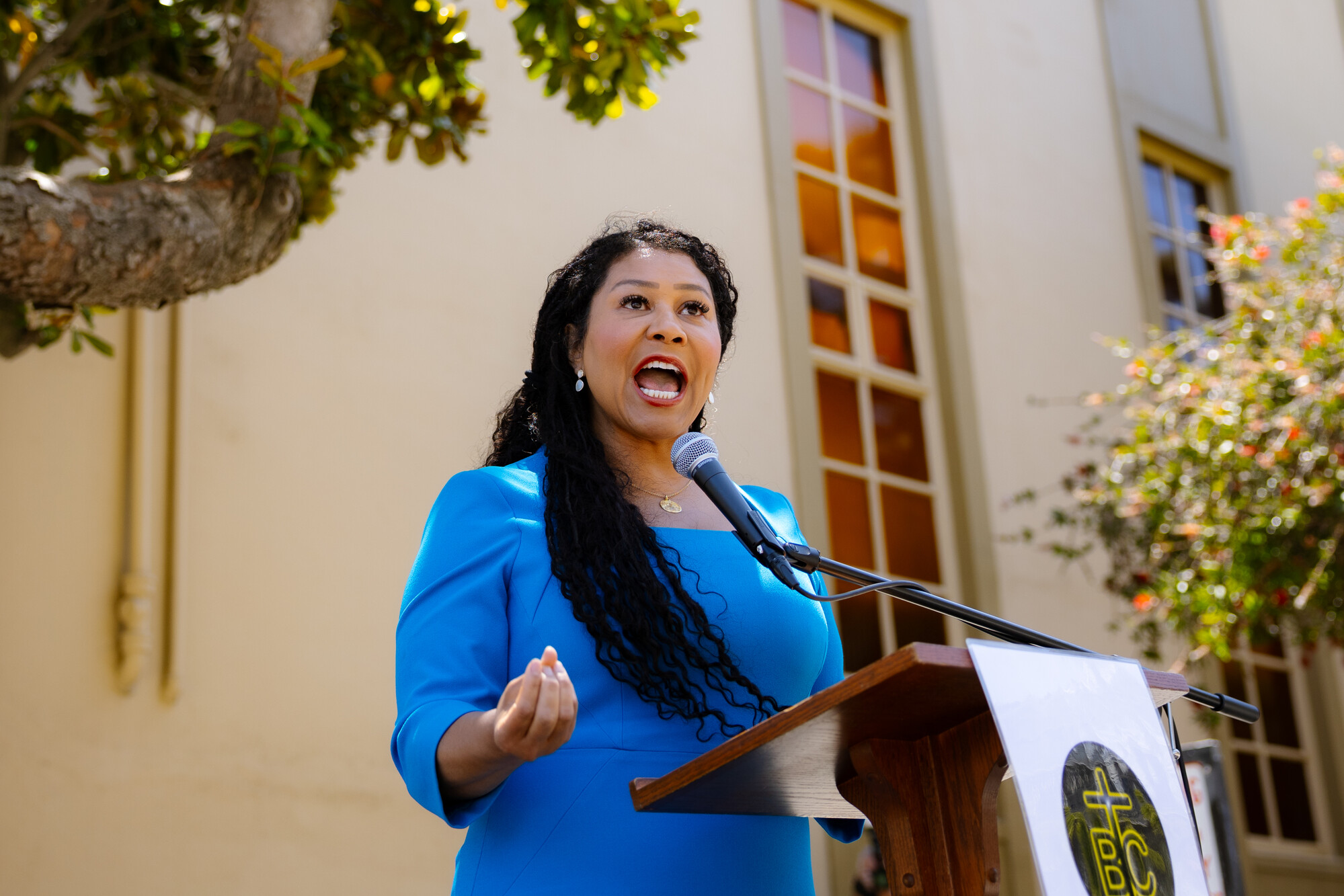
"caption": "Former mayor London Breed speaks at a street renaming ceremony in honor of Civil Rights activist and Pastor Rev. Amos Brown outside of the Third Baptist church in San Francisco, on June 21, 2025. Breed’s decision not to run for the congressional seat that will soon be vacant after Speaker Emerita Nancy Pelosi retires, comes about a week after telling reporters that she was considering running. ",
"credit": "Manuel Orbegozo for KQED",
"altTag": null,
"description": null,
"imgSizes": {
"thumbnail": {
"file": "https://cdn.kqed.org/wp-content/uploads/sites/10/2025/11/revAmos_Brown-5_qed-160x107.jpg",
"width": 160,
"height": 107,
"mimeType": "image/jpeg"
},
"1536x1536": {
"file": "https://cdn.kqed.org/wp-content/uploads/sites/10/2025/11/revAmos_Brown-5_qed-1536x1024.jpg",
"width": 1536,
"height": 1024,
"mimeType": "image/jpeg"
},
"post-thumbnail": {
"file": "https://cdn.kqed.org/wp-content/uploads/sites/10/2025/11/revAmos_Brown-5_qed-672x372.jpg",
"width": 672,
"height": 372,
"mimeType": "image/jpeg"
},
"twentyfourteen-full-width": {
"file": "https://cdn.kqed.org/wp-content/uploads/sites/10/2025/11/revAmos_Brown-5_qed-1038x576.jpg",
"width": 1038,
"height": 576,
"mimeType": "image/jpeg"
},
"npr-cds-wide": {
"file": "https://cdn.kqed.org/wp-content/uploads/sites/10/2025/11/revAmos_Brown-5_qed-1200x675.jpg",
"width": 1200,
"height": 675,
"mimeType": "image/jpeg"
},
"kqedFullSize": {
"file": "https://cdn.kqed.org/wp-content/uploads/sites/10/2025/11/revAmos_Brown-5_qed.jpg",
"width": 1999,
"height": 1333
}
},
"isLoading": false,
"fetchFailed": false
},
"news_12064775": {
"type": "attachments",
"id": "news_12064775",
"meta": {
"index": "attachments_1716263798",
"site": "news",
"id": "12064775",
"found": true
},
"title": "20251113_RainFolo_GH-7_qed",
"publishDate": 1763589581,
"status": "inherit",
"parent": 12064764,
"modified": 1763589600,
"caption": "The dome of San Francisco City Hall is reflected in a puddle during afternoon rain on Nov. 13, 2025.",
"credit": "Gustavo Hernandez/KQED",
"altTag": null,
"description": null,
"imgSizes": {
"thumbnail": {
"file": "https://cdn.kqed.org/wp-content/uploads/sites/10/2025/11/20251113_RainFolo_GH-7_qed-160x107.jpg",
"width": 160,
"height": 107,
"mimeType": "image/jpeg"
},
"1536x1536": {
"file": "https://cdn.kqed.org/wp-content/uploads/sites/10/2025/11/20251113_RainFolo_GH-7_qed-1536x1024.jpg",
"width": 1536,
"height": 1024,
"mimeType": "image/jpeg"
},
"post-thumbnail": {
"file": "https://cdn.kqed.org/wp-content/uploads/sites/10/2025/11/20251113_RainFolo_GH-7_qed-672x372.jpg",
"width": 672,
"height": 372,
"mimeType": "image/jpeg"
},
"twentyfourteen-full-width": {
"file": "https://cdn.kqed.org/wp-content/uploads/sites/10/2025/11/20251113_RainFolo_GH-7_qed-1038x576.jpg",
"width": 1038,
"height": 576,
"mimeType": "image/jpeg"
},
"npr-cds-wide": {
"file": "https://cdn.kqed.org/wp-content/uploads/sites/10/2025/11/20251113_RainFolo_GH-7_qed-1200x675.jpg",
"width": 1200,
"height": 675,
"mimeType": "image/jpeg"
},
"kqedFullSize": {
"file": "https://cdn.kqed.org/wp-content/uploads/sites/10/2025/11/20251113_RainFolo_GH-7_qed.jpg",
"width": 2000,
"height": 1333
}
},
"isLoading": false,
"fetchFailed": false
},
"news_12062094": {
"type": "attachments",
"id": "news_12062094",
"meta": {
"index": "attachments_1716263798",
"site": "news",
"id": "12062094",
"found": true
},
"title": "251029-SNAP PRESSER-MD-06-KQED",
"publishDate": 1761771194,
"status": "inherit",
"parent": 12067880,
"modified": 1766102986,
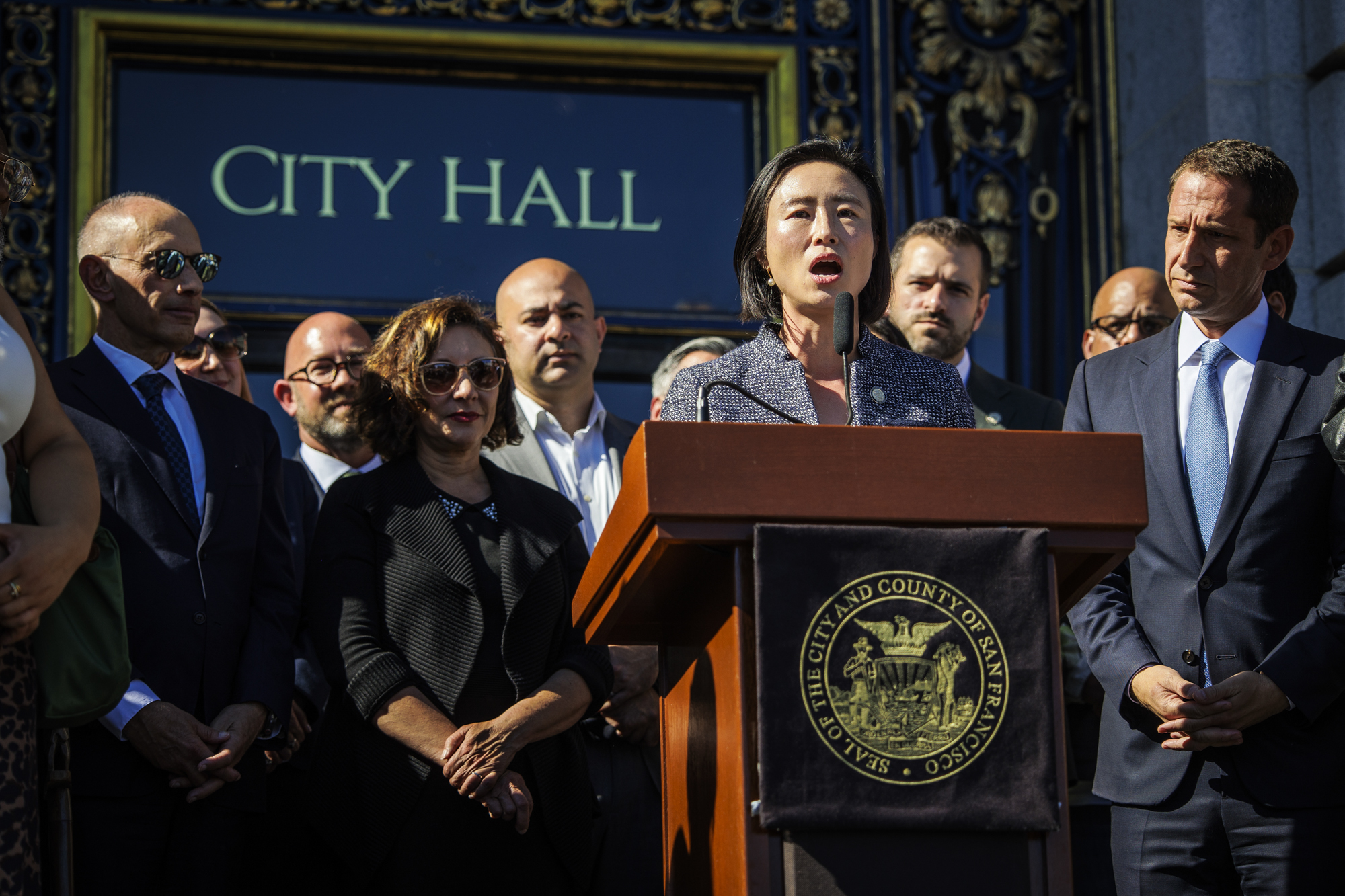
"caption": "San Francisco Supervisor Connie Chan speaks at a press event in front of San Francisco City Hall on Oct. 29, 2025.",
"credit": "Martin do Nascimento/KQED",
"altTag": null,
"description": null,
"imgSizes": {
"thumbnail": {
"file": "https://cdn.kqed.org/wp-content/uploads/sites/10/2025/10/251029-SNAP-PRESSER-MD-06-KQED-160x107.jpg",
"width": 160,
"height": 107,
"mimeType": "image/jpeg"
},
"1536x1536": {
"file": "https://cdn.kqed.org/wp-content/uploads/sites/10/2025/10/251029-SNAP-PRESSER-MD-06-KQED-1536x1024.jpg",
"width": 1536,
"height": 1024,
"mimeType": "image/jpeg"
},
"post-thumbnail": {
"file": "https://cdn.kqed.org/wp-content/uploads/sites/10/2025/10/251029-SNAP-PRESSER-MD-06-KQED-672x372.jpg",
"width": 672,
"height": 372,
"mimeType": "image/jpeg"
},
"twentyfourteen-full-width": {
"file": "https://cdn.kqed.org/wp-content/uploads/sites/10/2025/10/251029-SNAP-PRESSER-MD-06-KQED-1038x576.jpg",
"width": 1038,
"height": 576,
"mimeType": "image/jpeg"
},
"npr-cds-wide": {
"file": "https://cdn.kqed.org/wp-content/uploads/sites/10/2025/10/251029-SNAP-PRESSER-MD-06-KQED-1600x900.jpg",
"width": 1600,
"height": 900,
"mimeType": "image/jpeg"
},
"kqedFullSize": {
"file": "https://cdn.kqed.org/wp-content/uploads/sites/10/2025/10/251029-SNAP-PRESSER-MD-06-KQED.jpg",
"width": 2000,
"height": 1333
}
},
"isLoading": false,
"fetchFailed": false
},
"news_12064772": {
"type": "attachments",
"id": "news_12064772",
"meta": {
"index": "attachments_1716263798",
"site": "news",
"id": "12064772",
"found": true
},
"title": "008_KQED_LagunaHondaHospital_01312023_qed",
"publishDate": 1763586407,
"status": "inherit",
"parent": 12064768,
"modified": 1763586423,
"caption": "The Laguna Honda Hospital administration building in San Francisco on Jan. 31, 2023.",
"credit": "Beth LaBerge/KQED",
"altTag": null,
"description": null,
"imgSizes": {
"thumbnail": {
"file": "https://cdn.kqed.org/wp-content/uploads/sites/10/2025/11/008_KQED_LagunaHondaHospital_01312023_qed-160x107.jpg",
"width": 160,
"height": 107,
"mimeType": "image/jpeg"
},
"1536x1536": {
"file": "https://cdn.kqed.org/wp-content/uploads/sites/10/2025/11/008_KQED_LagunaHondaHospital_01312023_qed-1536x1024.jpg",
"width": 1536,
"height": 1024,
"mimeType": "image/jpeg"
},
"post-thumbnail": {
"file": "https://cdn.kqed.org/wp-content/uploads/sites/10/2025/11/008_KQED_LagunaHondaHospital_01312023_qed-672x372.jpg",
"width": 672,
"height": 372,
"mimeType": "image/jpeg"
},
"twentyfourteen-full-width": {
"file": "https://cdn.kqed.org/wp-content/uploads/sites/10/2025/11/008_KQED_LagunaHondaHospital_01312023_qed-1038x576.jpg",
"width": 1038,
"height": 576,
"mimeType": "image/jpeg"
},
"npr-cds-wide": {
"file": "https://cdn.kqed.org/wp-content/uploads/sites/10/2025/11/008_KQED_LagunaHondaHospital_01312023_qed-1200x675.jpg",
"width": 1200,
"height": 675,
"mimeType": "image/jpeg"
},
"kqedFullSize": {
"file": "https://cdn.kqed.org/wp-content/uploads/sites/10/2025/11/008_KQED_LagunaHondaHospital_01312023_qed.jpg",
"width": 1999,
"height": 1333
}
},
"isLoading": false,
"fetchFailed": false
},
"news_12064705": {
"type": "attachments",
"id": "news_12064705",
"meta": {
"index": "attachments_1716263798",
"site": "news",
"id": "12064705",
"found": true
},
"title": "251118-BIGBOXSTORES-05-BL-KQED",
"publishDate": 1763576897,
"status": "inherit",
"parent": 0,
"modified": 1763577207,
"caption": "Former San Francisco Board of Supervisors President Aaron Peskin sits with friends at Caffe Trieste in the city’s North Beach neighborhood on Nov. 18, 2025.",
"credit": "Beth LaBerge/KQED",
"altTag": null,
"description": null,
"imgSizes": {
"thumbnail": {
"file": "https://cdn.kqed.org/wp-content/uploads/sites/10/2025/11/251118-BIGBOXSTORES-05-BL-KQED-160x107.jpg",
"width": 160,
"height": 107,
"mimeType": "image/jpeg"
},
"1536x1536": {
"file": "https://cdn.kqed.org/wp-content/uploads/sites/10/2025/11/251118-BIGBOXSTORES-05-BL-KQED-1536x1024.jpg",
"width": 1536,
"height": 1024,
"mimeType": "image/jpeg"
},
"post-thumbnail": {
"file": "https://cdn.kqed.org/wp-content/uploads/sites/10/2025/11/251118-BIGBOXSTORES-05-BL-KQED-672x372.jpg",
"width": 672,
"height": 372,
"mimeType": "image/jpeg"
},
"twentyfourteen-full-width": {
"file": "https://cdn.kqed.org/wp-content/uploads/sites/10/2025/11/251118-BIGBOXSTORES-05-BL-KQED-1038x576.jpg",
"width": 1038,
"height": 576,
"mimeType": "image/jpeg"
},
"npr-cds-wide": {
"file": "https://cdn.kqed.org/wp-content/uploads/sites/10/2025/11/251118-BIGBOXSTORES-05-BL-KQED-1200x675.jpg",
"width": 1200,
"height": 675,
"mimeType": "image/jpeg"
},
"kqedFullSize": {
"file": "https://cdn.kqed.org/wp-content/uploads/sites/10/2025/11/251118-BIGBOXSTORES-05-BL-KQED.jpg",
"width": 2000,
"height": 1333
}
},
"isLoading": false,
"fetchFailed": false
},
"news_12064541": {
"type": "attachments",
"id": "news_12064541",
"meta": {
"index": "attachments_1716263798",
"site": "news",
"id": "12064541",
"found": true
},
"title": "Bar-Tipping_2",
"publishDate": 1763486635,
"status": "inherit",
"parent": 12064432,
"modified": 1763491305,
"caption": "We talked to bartenders — and looked at the data — to understand how a standard drink tip has shifted. ",
"credit": "Darren Tu/KQED",
"altTag": "An illustration of a bartender mixing a drink inside a martini glass. Below the glass are lots of different people enjoying each other's company.",
"description": null,
"imgSizes": {
"thumbnail": {
"file": "https://cdn.kqed.org/wp-content/uploads/sites/10/2025/11/Bar-Tipping_2-160x103.jpg",
"width": 160,
"height": 103,
"mimeType": "image/jpeg"
},
"1536x1536": {
"file": "https://cdn.kqed.org/wp-content/uploads/sites/10/2025/11/Bar-Tipping_2-1536x992.jpg",
"width": 1536,
"height": 992,
"mimeType": "image/jpeg"
},
"post-thumbnail": {
"file": "https://cdn.kqed.org/wp-content/uploads/sites/10/2025/11/Bar-Tipping_2-672x372.jpg",
"width": 672,
"height": 372,
"mimeType": "image/jpeg"
},
"twentyfourteen-full-width": {
"file": "https://cdn.kqed.org/wp-content/uploads/sites/10/2025/11/Bar-Tipping_2-1038x576.jpg",
"width": 1038,
"height": 576,
"mimeType": "image/jpeg"
},
"npr-cds-wide": {
"file": "https://cdn.kqed.org/wp-content/uploads/sites/10/2025/11/Bar-Tipping_2-1200x675.jpg",
"width": 1200,
"height": 675,
"mimeType": "image/jpeg"
},
"kqedFullSize": {
"file": "https://cdn.kqed.org/wp-content/uploads/sites/10/2025/11/Bar-Tipping_2.jpg",
"width": 1920,
"height": 1240
}
},
"isLoading": false,
"fetchFailed": false
},
"news_12064639": {
"type": "attachments",
"id": "news_12064639",
"meta": {
"index": "attachments_1716263798",
"site": "news",
"id": "12064639",
"found": true
},
"title": "251119-MICROSOFT GAZA PROTEST-MD-08-KQED",
"publishDate": 1763510975,
"status": "inherit",
"parent": 0,
"modified": 1763579037,
"caption": "Karla F. (right) and other pro-Palestinian protesters rally outside of the Microsoft Ignite conference in San Francisco to call on the company to cut ties with the Israeli military and government on Nov. 18, 2025.",
"credit": "Martin do Nascimento/KQED",
"altTag": null,
"description": null,
"imgSizes": {
"thumbnail": {
"file": "https://cdn.kqed.org/wp-content/uploads/sites/10/2025/11/251119-MICROSOFT-GAZA-PROTEST-MD-08-KQED-160x107.jpg",
"width": 160,
"height": 107,
"mimeType": "image/jpeg"
},
"1536x1536": {
"file": "https://cdn.kqed.org/wp-content/uploads/sites/10/2025/11/251119-MICROSOFT-GAZA-PROTEST-MD-08-KQED-1536x1025.jpg",
"width": 1536,
"height": 1025,
"mimeType": "image/jpeg"
},
"post-thumbnail": {
"file": "https://cdn.kqed.org/wp-content/uploads/sites/10/2025/11/251119-MICROSOFT-GAZA-PROTEST-MD-08-KQED-672x372.jpg",
"width": 672,
"height": 372,
"mimeType": "image/jpeg"
},
"twentyfourteen-full-width": {
"file": "https://cdn.kqed.org/wp-content/uploads/sites/10/2025/11/251119-MICROSOFT-GAZA-PROTEST-MD-08-KQED-1038x576.jpg",
"width": 1038,
"height": 576,
"mimeType": "image/jpeg"
},
"npr-cds-wide": {
"file": "https://cdn.kqed.org/wp-content/uploads/sites/10/2025/11/251119-MICROSOFT-GAZA-PROTEST-MD-08-KQED-1200x675.jpg",
"width": 1200,
"height": 675,
"mimeType": "image/jpeg"
},
"kqedFullSize": {
"file": "https://cdn.kqed.org/wp-content/uploads/sites/10/2025/11/251119-MICROSOFT-GAZA-PROTEST-MD-08-KQED.jpg",
"width": 2000,
"height": 1334
}
},
"isLoading": false,
"fetchFailed": false
},
"news_12064576": {
"type": "attachments",
"id": "news_12064576",
"meta": {
"index": "attachments_1716263798",
"site": "news",
"id": "12064576",
"found": true
},
"title": "240404-District5BOSRedistricting-003-BL_qed",
"publishDate": 1763490564,
"status": "inherit",
"parent": 12064570,
"modified": 1763490578,
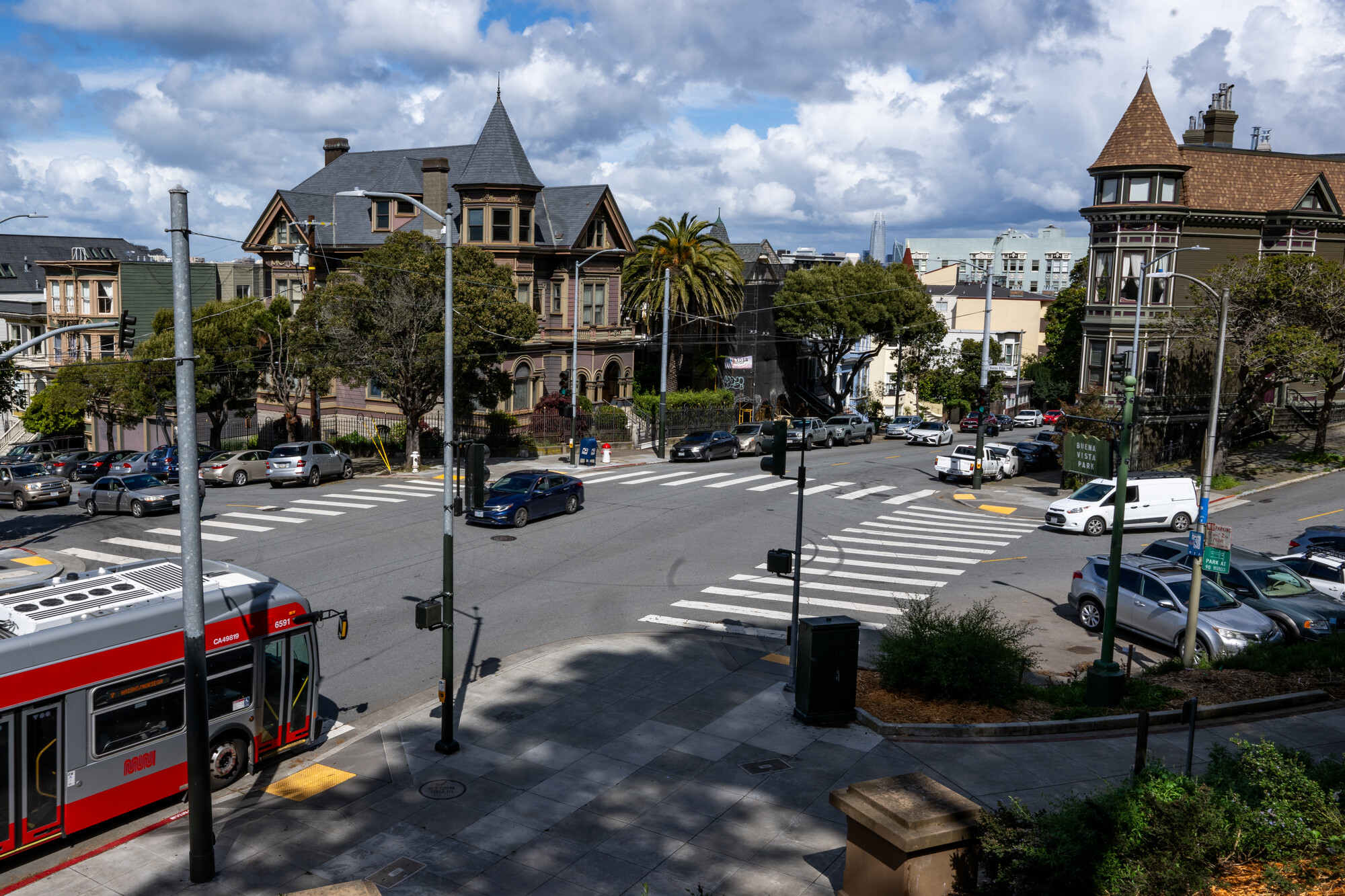
"caption": "A MUNI bus drives along Haight Street in the 5th Supervisorial District in San Francisco on April 4, 2024.",
"credit": "Beth LaBerge/KQED",
"altTag": null,
"description": null,
"imgSizes": {
"thumbnail": {
"file": "https://cdn.kqed.org/wp-content/uploads/sites/10/2025/11/240404-District5BOSRedistricting-003-BL_qed-160x107.jpg",
"width": 160,
"height": 107,
"mimeType": "image/jpeg"
},
"1536x1536": {
"file": "https://cdn.kqed.org/wp-content/uploads/sites/10/2025/11/240404-District5BOSRedistricting-003-BL_qed-1536x1024.jpg",
"width": 1536,
"height": 1024,
"mimeType": "image/jpeg"
},
"post-thumbnail": {
"file": "https://cdn.kqed.org/wp-content/uploads/sites/10/2025/11/240404-District5BOSRedistricting-003-BL_qed-672x372.jpg",
"width": 672,
"height": 372,
"mimeType": "image/jpeg"
},
"twentyfourteen-full-width": {
"file": "https://cdn.kqed.org/wp-content/uploads/sites/10/2025/11/240404-District5BOSRedistricting-003-BL_qed-1038x576.jpg",
"width": 1038,
"height": 576,
"mimeType": "image/jpeg"
},
"npr-cds-wide": {
"file": "https://cdn.kqed.org/wp-content/uploads/sites/10/2025/11/240404-District5BOSRedistricting-003-BL_qed-1200x675.jpg",
"width": 1200,
"height": 675,
"mimeType": "image/jpeg"
},
"kqedFullSize": {
"file": "https://cdn.kqed.org/wp-content/uploads/sites/10/2025/11/240404-District5BOSRedistricting-003-BL_qed.jpg",
"width": 2000,
"height": 1333
}
},
"isLoading": false,
"fetchFailed": false
},
"news_12064345": {
"type": "attachments",
"id": "news_12064345",
"meta": {
"index": "attachments_1716263798",
"site": "news",
"id": "12064345",
"found": true
},
"title": "20251106_SFD4Supervisor_GC-3_qed",
"publishDate": 1763406959,
"status": "inherit",
"parent": 12064341,
"modified": 1763493540,
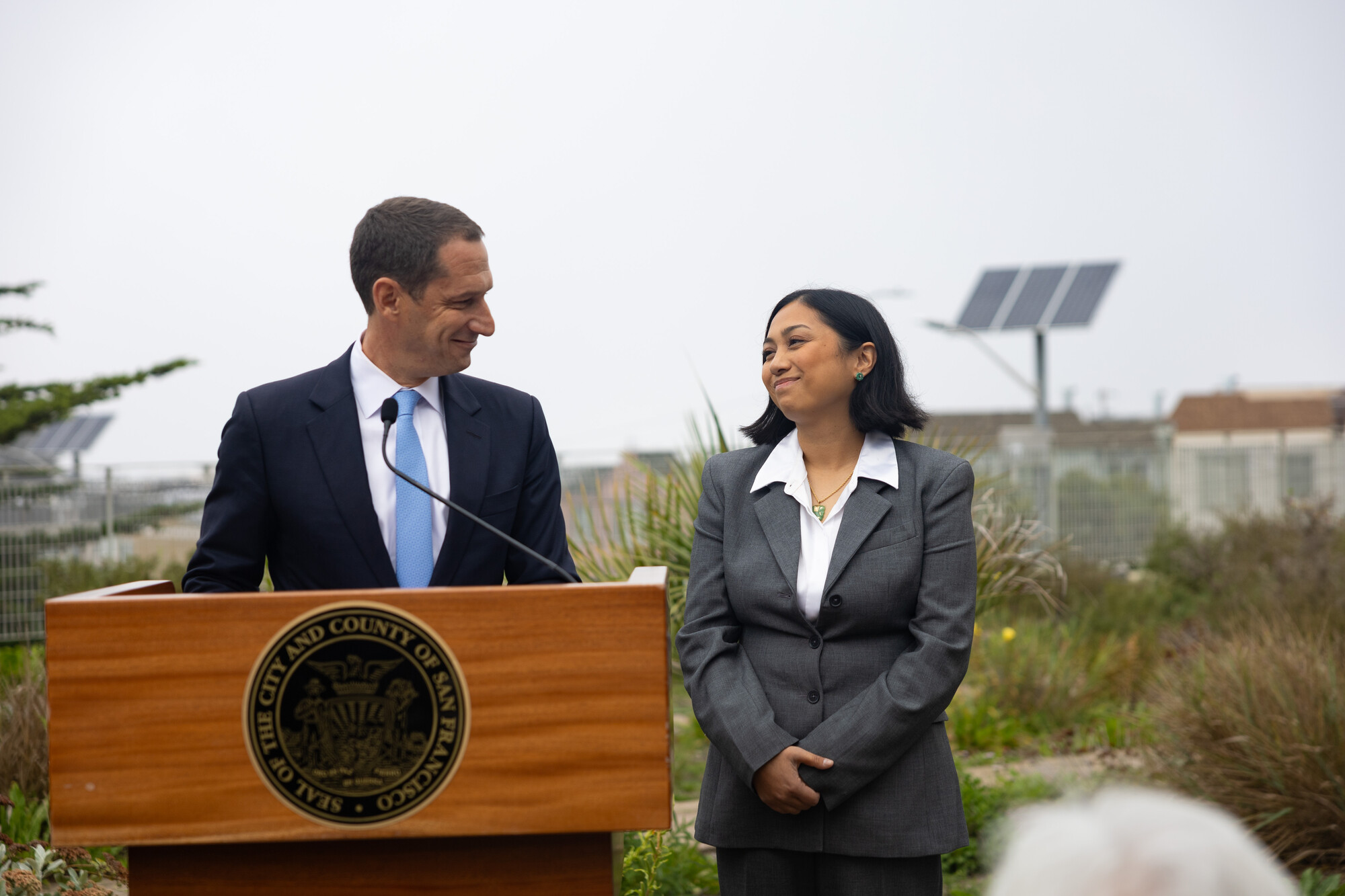
"caption": "Mayor Daniel Lurie, left, speaks during a press conference announcing Isabella “Beya” Alcaraz, right, as the next District 4 supervisor, representing the Sunset district, at Ortega Branch Library on Nov. 6, 2025. Alcaraz is the first Filipina American to serve on the Board of Supervisors.",
"credit": "Gina Castro/KQED",
"altTag": null,
"description": null,
"imgSizes": {
"thumbnail": {
"file": "https://cdn.kqed.org/wp-content/uploads/sites/10/2025/11/20251106_SFD4Supervisor_GC-3_qed-160x107.jpg",
"width": 160,
"height": 107,
"mimeType": "image/jpeg"
},
"1536x1536": {
"file": "https://cdn.kqed.org/wp-content/uploads/sites/10/2025/11/20251106_SFD4Supervisor_GC-3_qed-1536x1024.jpg",
"width": 1536,
"height": 1024,
"mimeType": "image/jpeg"
},
"post-thumbnail": {
"file": "https://cdn.kqed.org/wp-content/uploads/sites/10/2025/11/20251106_SFD4Supervisor_GC-3_qed-672x372.jpg",
"width": 672,
"height": 372,
"mimeType": "image/jpeg"
},
"twentyfourteen-full-width": {
"file": "https://cdn.kqed.org/wp-content/uploads/sites/10/2025/11/20251106_SFD4Supervisor_GC-3_qed-1038x576.jpg",
"width": 1038,
"height": 576,
"mimeType": "image/jpeg"
},
"npr-cds-wide": {
"file": "https://cdn.kqed.org/wp-content/uploads/sites/10/2025/11/20251106_SFD4Supervisor_GC-3_qed-1200x675.jpg",
"width": 1200,
"height": 675,
"mimeType": "image/jpeg"
},
"kqedFullSize": {
"file": "https://cdn.kqed.org/wp-content/uploads/sites/10/2025/11/20251106_SFD4Supervisor_GC-3_qed.jpg",
"width": 2000,
"height": 1333
}
},
"isLoading": false,
"fetchFailed": false
},
"news_12052663": {
"type": "attachments",
"id": "news_12052663",
"meta": {
"index": "attachments_1716263798",
"site": "news",
"id": "12052663",
"found": true
},
"title": "250818-SFUSDFIRSTDAY-04-KQED",
"publishDate": 1755549114,
"status": "inherit",
"parent": 12052638,
"modified": 1755549467,
"caption": "Superintendent Maria Su speaks to students at Sanchez Elementary School on the first day of classes for the new school year in San Francisco on Aug. 18, 2025.",
"credit": "Beth LaBerge/KQED",
"altTag": null,
"description": null,
"imgSizes": {
"thumbnail": {
"file": "https://cdn.kqed.org/wp-content/uploads/sites/10/2025/08/250818-SFUSDFIRSTDAY-04-KQED-160x107.jpg",
"width": 160,
"height": 107,
"mimeType": "image/jpeg"
},
"1536x1536": {
"file": "https://cdn.kqed.org/wp-content/uploads/sites/10/2025/08/250818-SFUSDFIRSTDAY-04-KQED-1536x1024.jpg",
"width": 1536,
"height": 1024,
"mimeType": "image/jpeg"
},
"post-thumbnail": {
"file": "https://cdn.kqed.org/wp-content/uploads/sites/10/2025/08/250818-SFUSDFIRSTDAY-04-KQED-672x372.jpg",
"width": 672,
"height": 372,
"mimeType": "image/jpeg"
},
"twentyfourteen-full-width": {
"file": "https://cdn.kqed.org/wp-content/uploads/sites/10/2025/08/250818-SFUSDFIRSTDAY-04-KQED-1038x576.jpg",
"width": 1038,
"height": 576,
"mimeType": "image/jpeg"
},
"kqedFullSize": {
"file": "https://cdn.kqed.org/wp-content/uploads/sites/10/2025/08/250818-SFUSDFIRSTDAY-04-KQED.jpg",
"width": 2000,
"height": 1333
}
},
"isLoading": false,
"fetchFailed": false
},
"news_12063244": {
"type": "attachments",
"id": "news_12063244",
"meta": {
"index": "attachments_1716263798",
"site": "news",
"id": "12063244",
"found": true
},
"title": "20251106_SFD4SUPERVISOR_GC-6-KQED",
"publishDate": 1762459895,
"status": "inherit",
"parent": 12063157,
"modified": 1762466502,
"caption": "Isabella “Beya” Alcaraz, right, takes the oath of office as the next District 4 supervisor, representing the Sunset district, at Ortega Branch Library on Nov. 6, 2025. Alcaraz is the first Filipina-American to serve on the Board of Supervisors.",
"credit": "Gina Castro for KQED",
"altTag": null,
"description": null,
"imgSizes": {
"thumbnail": {
"file": "https://cdn.kqed.org/wp-content/uploads/sites/10/2025/11/20251106_SFD4SUPERVISOR_GC-6-KQED-160x107.jpg",
"width": 160,
"height": 107,
"mimeType": "image/jpeg"
},
"1536x1536": {
"file": "https://cdn.kqed.org/wp-content/uploads/sites/10/2025/11/20251106_SFD4SUPERVISOR_GC-6-KQED-1536x1024.jpg",
"width": 1536,
"height": 1024,
"mimeType": "image/jpeg"
},
"post-thumbnail": {
"file": "https://cdn.kqed.org/wp-content/uploads/sites/10/2025/11/20251106_SFD4SUPERVISOR_GC-6-KQED-672x372.jpg",
"width": 672,
"height": 372,
"mimeType": "image/jpeg"
},
"twentyfourteen-full-width": {
"file": "https://cdn.kqed.org/wp-content/uploads/sites/10/2025/11/20251106_SFD4SUPERVISOR_GC-6-KQED-1038x576.jpg",
"width": 1038,
"height": 576,
"mimeType": "image/jpeg"
},
"npr-cds-wide": {
"file": "https://cdn.kqed.org/wp-content/uploads/sites/10/2025/11/20251106_SFD4SUPERVISOR_GC-6-KQED-1200x675.jpg",
"width": 1200,
"height": 675,
"mimeType": "image/jpeg"
},
"kqedFullSize": {
"file": "https://cdn.kqed.org/wp-content/uploads/sites/10/2025/11/20251106_SFD4SUPERVISOR_GC-6-KQED.jpg",
"width": 2000,
"height": 1333
}
},
"isLoading": false,
"fetchFailed": false
},
"news_12059034": {
"type": "attachments",
"id": "news_12059034",
"meta": {
"index": "attachments_1716263798",
"site": "news",
"id": "12059034",
"found": true
},
"title": "251007_Urban Alchemy Rally_-13_qed",
"publishDate": 1759877330,
"status": "inherit",
"parent": 0,
"modified": 1759877755,
"caption": "Rudy Corpuz, executive director of United Playaz, speaks during a rally outside San Francisco City Hall on Oct. 7, 2025.",
"credit": "Gustavo Hernandez/KQED",
"altTag": null,
"description": null,
"imgSizes": {
"thumbnail": {
"file": "https://cdn.kqed.org/wp-content/uploads/sites/10/2025/10/251007_Urban-Alchemy-Rally_-13_qed-160x107.jpg",
"width": 160,
"height": 107,
"mimeType": "image/jpeg"
},
"1536x1536": {
"file": "https://cdn.kqed.org/wp-content/uploads/sites/10/2025/10/251007_Urban-Alchemy-Rally_-13_qed-1536x1024.jpg",
"width": 1536,
"height": 1024,
"mimeType": "image/jpeg"
},
"post-thumbnail": {
"file": "https://cdn.kqed.org/wp-content/uploads/sites/10/2025/10/251007_Urban-Alchemy-Rally_-13_qed-672x372.jpg",
"width": 672,
"height": 372,
"mimeType": "image/jpeg"
},
"twentyfourteen-full-width": {
"file": "https://cdn.kqed.org/wp-content/uploads/sites/10/2025/10/251007_Urban-Alchemy-Rally_-13_qed-1038x576.jpg",
"width": 1038,
"height": 576,
"mimeType": "image/jpeg"
},
"kqedFullSize": {
"file": "https://cdn.kqed.org/wp-content/uploads/sites/10/2025/10/251007_Urban-Alchemy-Rally_-13_qed.jpg",
"width": 1999,
"height": 1333
}
},
"isLoading": false,
"fetchFailed": false
}
},
"audioPlayerReducer": {
"postId": "stream_live",
"isPaused": true,
"isPlaying": false,
"pfsActive": false,
"pledgeModalIsOpen": true,
"playerDrawerIsOpen": false,
"liveAudioPlayStartedAt": 0,
"liveAudioPlayContext": ""
},
"authorsReducer": {
"scottshafer": {
"type": "authors",
"id": "255",
"meta": {
"index": "authors_1716337520",
"id": "255",
"found": true
},
"name": "Scott Shafer",
"firstName": "Scott",
"lastName": "Shafer",
"slug": "scottshafer",
"email": "sshafer@kqed.org",
"display_author_email": false,
"staff_mastheads": [
"news"
],
"title": "KQED Contributor",
"bio": "Scott Shafer is a senior editor with the KQED Politics and Government desk. He is co-host of Political Breakdown, the award-winning radio show and podcast with a personal take on the world of politics. Scott came to KQED in 1998 to host the statewide\u003cem> California Report\u003c/em>. Prior to that he had extended stints in politics and government\u003cem>.\u003c/em> He uses that inside experience at KQED in his, reporting, hosting and analysis for the politics desk. Scott collaborated \u003cem>Political Breakdown a\u003c/em>nd on \u003cem>The Political Mind of Jerry Brown, \u003c/em>an eight-part series about the life and extraordinary political career of the former governor. For fun, he plays water polo with the San Francisco Tsunami.",
"avatar": "https://secure.gravatar.com/avatar/a62ebae45b79d7aed1a39a0e3bf68104?s=600&d=blank&r=g",
"twitter": "scottshafer",
"bluesky": null,
"facebook": null,
"instagram": null,
"linkedin": null,
"sites": [
{
"site": "news",
"roles": [
"editor"
]
},
{
"site": "stateofhealth",
"roles": [
"author"
]
},
{
"site": "science",
"roles": [
"author"
]
},
{
"site": "forum",
"roles": [
"subscriber"
]
},
{
"site": "liveblog",
"roles": [
"author"
]
}
],
"headData": {
"title": "Scott Shafer | KQED",
"description": "KQED Contributor",
"ogImgSrc": "https://secure.gravatar.com/avatar/a62ebae45b79d7aed1a39a0e3bf68104?s=600&d=blank&r=g",
"twImgSrc": "https://secure.gravatar.com/avatar/a62ebae45b79d7aed1a39a0e3bf68104?s=600&d=blank&r=g"
},
"isLoading": false,
"link": "/author/scottshafer"
},
"ccabreralomeli": {
"type": "authors",
"id": "11708",
"meta": {
"index": "authors_1716337520",
"id": "11708",
"found": true
},
"name": "Carlos Cabrera-Lomelí",
"firstName": "Carlos",
"lastName": "Cabrera-Lomelí",
"slug": "ccabreralomeli",
"email": "ccabreralomeli@KQED.org",
"display_author_email": true,
"staff_mastheads": [
"news"
],
"title": "Community Reporter",
"bio": "Carlos Cabrera-Lomelí is a community reporter with KQED's digital engagement team. He also reports and co-produces for KQED's bilingual news hub KQED en Español. He grew up in San Francisco's Mission District and has previously worked with Univision, 48 Hills and REFORMA in Mexico City.",
"avatar": "https://secure.gravatar.com/avatar/c309be9665e484f887b818c89e273ecc673004f426f36b24d00a4d813a2e0518?s=600&d=blank&r=g",
"twitter": "@LomeliCabrera",
"bluesky": null,
"facebook": null,
"instagram": null,
"linkedin": null,
"sites": [
{
"site": "arts",
"roles": [
"editor"
]
},
{
"site": "news",
"roles": [
"editor"
]
},
{
"site": "about",
"roles": [
"editor"
]
},
{
"site": "science",
"roles": [
"editor"
]
},
{
"site": "perspectives",
"roles": [
"editor"
]
},
{
"site": "elections",
"roles": [
"editor"
]
},
{
"site": "liveblog",
"roles": [
"contributor"
]
}
],
"headData": {
"title": "Carlos Cabrera-Lomelí | KQED",
"description": "Community Reporter",
"ogImgSrc": "https://secure.gravatar.com/avatar/c309be9665e484f887b818c89e273ecc673004f426f36b24d00a4d813a2e0518?s=600&d=blank&r=g",
"twImgSrc": "https://secure.gravatar.com/avatar/c309be9665e484f887b818c89e273ecc673004f426f36b24d00a4d813a2e0518?s=600&d=blank&r=g"
},
"isLoading": false,
"link": "/author/ccabreralomeli"
},
"adahlstromeckman": {
"type": "authors",
"id": "11785",
"meta": {
"index": "authors_1716337520",
"id": "11785",
"found": true
},
"name": "Azul Dahlstrom-Eckman",
"firstName": "Azul",
"lastName": "Dahlstrom-Eckman",
"slug": "adahlstromeckman",
"email": "adahlstrom-eckman@kqed.org",
"display_author_email": true,
"staff_mastheads": [],
"title": "Reporter",
"bio": "Azul is a reporter for KQED focusing on transportation and features. He joined KQED in 2021 as an alumna of KALW's Audio Academy radio journalism training program.",
"avatar": "https://secure.gravatar.com/avatar/9cb750298435add7815a777f55bf1f46845c1386bb8452555c60a7b820b5aba3?s=600&d=blank&r=g",
"twitter": "@zuliemann",
"bluesky": "@azul415.bsky.social",
"facebook": null,
"instagram": null,
"linkedin": null,
"sites": [
{
"site": "arts",
"roles": [
"editor"
]
},
{
"site": "news",
"roles": [
"editor"
]
},
{
"site": "science",
"roles": [
"editor"
]
},
{
"site": "liveblog",
"roles": [
"author"
]
}
],
"headData": {
"title": "Azul Dahlstrom-Eckman | KQED",
"description": "Reporter",
"ogImgSrc": "https://secure.gravatar.com/avatar/9cb750298435add7815a777f55bf1f46845c1386bb8452555c60a7b820b5aba3?s=600&d=blank&r=g",
"twImgSrc": "https://secure.gravatar.com/avatar/9cb750298435add7815a777f55bf1f46845c1386bb8452555c60a7b820b5aba3?s=600&d=blank&r=g"
},
"isLoading": false,
"link": "/author/adahlstromeckman"
},
"sjohnson": {
"type": "authors",
"id": "11840",
"meta": {
"index": "authors_1716337520",
"id": "11840",
"found": true
},
"name": "Sydney Johnson",
"firstName": "Sydney",
"lastName": "Johnson",
"slug": "sjohnson",
"email": "sjohnson@kqed.org",
"display_author_email": false,
"staff_mastheads": [
"news"
],
"title": "KQED Reporter",
"bio": "Sydney Johnson is a general assignment reporter at KQED. She previously reported on public health and city government at the San Francisco Examiner, and before that, she covered statewide education policy for EdSource. Her reporting has won multiple local, state and national awards. Sydney is a graduate of the University of California, Berkeley and lives in San Francisco.",
"avatar": "https://secure.gravatar.com/avatar/97855f2719b72ad6190b7c535fe642c8?s=600&d=blank&r=g",
"twitter": "sydneyfjohnson",
"facebook": null,
"instagram": null,
"linkedin": null,
"sites": [
{
"site": "news",
"roles": [
"editor"
]
}
],
"headData": {
"title": "Sydney Johnson | KQED",
"description": "KQED Reporter",
"ogImgSrc": "https://secure.gravatar.com/avatar/97855f2719b72ad6190b7c535fe642c8?s=600&d=blank&r=g",
"twImgSrc": "https://secure.gravatar.com/avatar/97855f2719b72ad6190b7c535fe642c8?s=600&d=blank&r=g"
},
"isLoading": false,
"link": "/author/sjohnson"
},
"nkhan": {
"type": "authors",
"id": "11867",
"meta": {
"index": "authors_1716337520",
"id": "11867",
"found": true
},
"name": "Nisa Khan",
"firstName": "Nisa",
"lastName": "Khan",
"slug": "nkhan",
"email": "nkhan@kqed.org",
"display_author_email": false,
"staff_mastheads": [],
"title": "KQED Contributor",
"bio": "Nisa Khan is a reporter for KQED's Audience News Desk. She was formerly a data reporter at Michigan Radio. She earned a Bachelor of Science in Information from the University of Michigan and a Master of Arts in Communication from Stanford University.",
"avatar": "https://secure.gravatar.com/avatar/8720459eef081ff64582b3506b124d58523e80e120704a0cbd9892533c914991?s=600&d=blank&r=g",
"twitter": "mnisakhan",
"bluesky": null,
"facebook": null,
"instagram": null,
"linkedin": null,
"sites": [
{
"site": "arts",
"roles": [
"editor"
]
},
{
"site": "news",
"roles": [
"editor"
]
},
{
"site": "science",
"roles": [
"editor",
"author"
]
},
{
"site": "forum",
"roles": [
"editor"
]
},
{
"site": "liveblog",
"roles": [
"contributor"
]
}
],
"headData": {
"title": "Nisa Khan | KQED",
"description": "KQED Contributor",
"ogImgSrc": "https://secure.gravatar.com/avatar/8720459eef081ff64582b3506b124d58523e80e120704a0cbd9892533c914991?s=600&d=blank&r=g",
"twImgSrc": "https://secure.gravatar.com/avatar/8720459eef081ff64582b3506b124d58523e80e120704a0cbd9892533c914991?s=600&d=blank&r=g"
},
"isLoading": false,
"link": "/author/nkhan"
},
"kdebenedetti": {
"type": "authors",
"id": "11913",
"meta": {
"index": "authors_1716337520",
"id": "11913",
"found": true
},
"name": "Katie DeBenedetti",
"firstName": "Katie",
"lastName": "DeBenedetti",
"slug": "kdebenedetti",
"email": "kdebenedetti@kqed.org",
"display_author_email": false,
"staff_mastheads": [
"news",
"science"
],
"title": "KQED Contributor",
"bio": "Katie DeBenedetti is a digital reporter covering daily news for the Express Desk. Prior to joining KQED as a culture reporting intern in January 2024, she covered education and city government for the Napa Valley Register.",
"avatar": "https://secure.gravatar.com/avatar/6e31073cb8f7e4214ab03f42771d0f45?s=600&d=blank&r=g",
"twitter": null,
"facebook": null,
"instagram": null,
"linkedin": null,
"sites": [
{
"site": "news",
"roles": [
"author"
]
},
{
"site": "science",
"roles": [
"author"
]
},
{
"site": "liveblog",
"roles": [
"author"
]
}
],
"headData": {
"title": "Katie DeBenedetti | KQED",
"description": "KQED Contributor",
"ogImgSrc": "https://secure.gravatar.com/avatar/6e31073cb8f7e4214ab03f42771d0f45?s=600&d=blank&r=g",
"twImgSrc": "https://secure.gravatar.com/avatar/6e31073cb8f7e4214ab03f42771d0f45?s=600&d=blank&r=g"
},
"isLoading": false,
"link": "/author/kdebenedetti"
},
"aaliahmad": {
"type": "authors",
"id": "11986",
"meta": {
"index": "authors_1716337520",
"id": "11986",
"found": true
},
"name": "Ayah Ali-Ahmad",
"firstName": "Ayah",
"lastName": "Ali-Ahmad",
"slug": "aaliahmad",
"email": "aaliahmad@KQED.org",
"display_author_email": false,
"staff_mastheads": [],
"title": "KQED Contributor",
"bio": null,
"avatar": "https://secure.gravatar.com/avatar/1cf54f187a5e1064b2cfef3f3d2f1e4f93e453395d56912aca6382a6071ec3ed?s=600&d=blank&r=g",
"twitter": "ayahaliahmad",
"bluesky": null,
"facebook": null,
"instagram": null,
"linkedin": null,
"sites": [
{
"site": "news",
"roles": [
"subscriber"
]
}
],
"headData": {
"title": "Ayah Ali-Ahmad | KQED",
"description": "KQED Contributor",
"ogImgSrc": "https://secure.gravatar.com/avatar/1cf54f187a5e1064b2cfef3f3d2f1e4f93e453395d56912aca6382a6071ec3ed?s=600&d=blank&r=g",
"twImgSrc": "https://secure.gravatar.com/avatar/1cf54f187a5e1064b2cfef3f3d2f1e4f93e453395d56912aca6382a6071ec3ed?s=600&d=blank&r=g"
},
"isLoading": false,
"link": "/author/aaliahmad"
}
},
"pagesReducer": {
"news_tag_san-francisco": {
"type": "terms",
"id": "news_38",
"meta": {
"index": "terms_1716263798",
"site": "news",
"id": "38",
"score": 6.7228813
},
"featImg": null,
"name": "San Francisco",
"description": null,
"taxonomy": "tag",
"headData": {
"twImgId": null,
"twTitle": null,
"ogTitle": null,
"ogImgId": null,
"twDescription": null,
"description": null,
"title": "San Francisco Archives | KQED News",
"ogDescription": null
},
"ttid": 58,
"slug": "san-francisco",
"isLoading": false,
"title": "San Francisco",
"pageMeta": {
"site": "news",
"WpPageTemplate": "page-topic-editorial",
"currentPage": 40
},
"blocks": [
{
"blockName": "kqed/post-list",
"attrs": {
"layout": "cardArticle2",
"query": "posts/news?tag=san-francisco",
"seeMore": false,
"paginated": true,
"page": 40
}
},
{
"blockName": "kqed/ad"
}
]
}
},
"pfsSessionReducer": {},
"postsReducer": {
"stream_live": {
"type": "live",
"id": "stream_live",
"audioUrl": "https://streams.kqed.org/kqedradio",
"title": "Live Stream",
"excerpt": "Live Stream information currently unavailable.",
"link": "/radio",
"featImg": "",
"label": {
"name": "KQED Live",
"link": "/"
}
},
"stream_kqedNewscast": {
"type": "posts",
"id": "stream_kqedNewscast",
"audioUrl": "https://www.kqed.org/.stream/anon/radio/RDnews/newscast.mp3?_=1",
"title": "KQED Newscast",
"featImg": "",
"label": {
"name": "88.5 FM",
"link": "/"
}
},
"news_12064904": {
"type": "posts",
"id": "news_12064904",
"meta": {
"index": "posts_1716263798",
"site": "news",
"id": "12064904",
"score": null,
"sort": [
1763664872000
]
},
"guestAuthors": [],
"slug": "former-san-francisco-mayor-london-breed-will-not-run-for-congress",
"title": "Former San Francisco Mayor London Breed Will Not Run for Congress",
"publishDate": 1763664872,
"format": "standard",
"headTitle": "Former San Francisco Mayor London Breed Will Not Run for Congress | KQED",
"labelTerm": {
"site": "news"
},
"content": "\u003cp>Former San Francisco Mayor London Breed said she will not run for the congressional seat that will soon be vacant \u003ca href=\"https://www.kqed.org/news/12062796/nancy-pelosi-leaves-congress-after-38-years-defining-generations-of-democratic-power\">after Speaker Emerita Nancy Pelosi retires\u003c/a>.\u003c/p>\n\u003cp>Breed, who is currently working as a policy adviser at the nonprofit Aspen Policy Academy, confirmed her decision to KQED on Wednesday, about two weeks after telling reporters she was \u003ca href=\"https://www.kqed.org/news/12063507/former-san-francisco-mayor-london-breed-considers-run-for-pelosi-seat\">mulling a possible run\u003c/a>.\u003c/p>\n\u003cp>“After thoughtful consideration, I have decided not to pursue a run for Congress. This moment calls for unity, strength, and a commitment to lifting each other up, not creating more division,” Breed said in a statement. “I will continue fighting for the people of San Francisco and for the values that define us as Democrats: fairness, dignity, and a future where every community can thrive. That work has always been bigger than any one campaign or any one office, and I remain fully committed to it.”\u003c/p>\n\u003cp>[ad fullwidth]\u003c/p>\n\u003cp>Mayor Daniel Lurie unseated Breed in the November 2024 election. She was the city’s first Black woman mayor, who served for nearly seven years after initially stepping in as interim mayor following the late former Mayor Ed Lee’s death.\u003c/p>\n\u003cp>Breed stood to join what’s already shaking out to be a crowded race, with six candidates already vying to represent California’s 11th Congressional District. \u003ca href=\"https://www.kqed.org/news/12060826/state-sen-scott-wiener-is-running-for-pelosis-house-seat-saying-it-was-time\">State Sen. Scott Wiener\u003c/a>, a moderate Democrat with whom Breed has been an ally on many issues, already announced he is running.[aside postID=news_12064891 hero='https://cdn.kqed.org/wp-content/uploads/sites/10/2025/10/251029-SNAP-PRESSER-MD-06-KQED.jpg']\u003ca href=\"https://www.kqed.org/news/12033097/hes-challenging-nancy-pelosi-and-the-democratic-party\">Progressive Saikat Chakrabarti\u003c/a>, a wealthy former tech worker who served on New York Rep. Alexandria Ocasio-Cortez’s campaign in 2018, and \u003ca href=\"https://www.kqed.org/news/12064891/san-francisco-supervisor-connie-chan-runs-for-nancy-pelosis-congressional-seat\">San Francisco Supervisor Connie Chan\u003c/a>, who represents the Richmond District, are also running.\u003c/p>\n\u003cp>Breed has not yet shared which candidate she is supporting.\u003c/p>\n\u003cp>“I stand on the shoulders of those who came before me and fought for the same values,” Chan said in a statement on Thursday, when she confirmed her candidacy. “Now I need to stand up to fight for other families who are under attack, who are worried about paying the bills and who need an advocate in Congress.”\u003c/p>\n\u003cp>Breed’s role at the Aspen Policy Academy, a Bay Area branch of the Washington, D.C.-based Aspen Institute, runs through the end of the year.\u003c/p>\n\u003cp>“I believe deeply in public service, and I also believe deeply in this Democratic Party and the progress we have fought so hard to make,” Breed said. “At a time when our democracy is under real threat, we cannot afford to turn our energy inward or tear one another down.”\u003c/p>\n\u003cp>\u003c/p>\n",
"blocks": [],
"excerpt": "Breed’s decision comes about a week after telling reporters that she was considering running for Speaker Emerita Nancy Pelosi’s congressional seat. ",
"status": "publish",
"parent": 0,
"modified": 1763675474,
"stats": {
"hasAudio": false,
"hasVideo": false,
"hasChartOrMap": false,
"iframeSrcs": [],
"hasGoogleForm": false,
"hasGallery": false,
"hasHearkenModule": false,
"hasPolis": false,
"paragraphCount": 11,
"wordCount": 457
},
"headData": {
"title": "Former San Francisco Mayor London Breed Will Not Run for Congress | KQED",
"description": "Breed’s decision comes about a week after telling reporters that she was considering running for Speaker Emerita Nancy Pelosi’s congressional seat. ",
"ogTitle": "",
"ogDescription": "",
"ogImgId": "",
"twTitle": "",
"twDescription": "",
"twImgId": "",
"schema": {
"@context": "https://schema.org",
"@type": "NewsArticle",
"headline": "Former San Francisco Mayor London Breed Will Not Run for Congress",
"datePublished": "2025-11-20T10:54:32-08:00",
"dateModified": "2025-11-20T13:51:14-08:00",
"image": "https://cdn.kqed.org/wp-content/uploads/2020/02/KQED-OG-Image@1x.png",
"isAccessibleForFree": "True",
"publisher": {
"@type": "NewsMediaOrganization",
"@id": "https://www.kqed.org/#organization",
"name": "KQED",
"logo": "https://cdn.kqed.org/wp-content/uploads/2020/02/KQED-OG-Image@1x.png",
"url": "https://www.kqed.org",
"sameAs": [
"https://www.facebook.com/KQED",
"https://twitter.com/KQED",
"https://www.instagram.com/kqed/",
"https://www.tiktok.com/@kqedofficial",
"https://www.linkedin.com/company/kqed",
"https://www.youtube.com/channel/UCeC0IOo7i1P_61zVUWbJ4nw"
]
}
}
},
"primaryCategory": {
"termId": 13,
"slug": "politics",
"name": "Politics"
},
"sticky": false,
"nprStoryId": "kqed-12064904",
"templateType": "standard",
"featuredImageType": "standard",
"excludeFromSiteSearch": "Include",
"articleAge": "0",
"path": "/news/12064904/former-san-francisco-mayor-london-breed-will-not-run-for-congress",
"audioTrackLength": null,
"parsedContent": [
{
"type": "contentString",
"content": "\u003cdiv class=\"post-body\">\u003cp>\u003cp>Former San Francisco Mayor London Breed said she will not run for the congressional seat that will soon be vacant \u003ca href=\"https://www.kqed.org/news/12062796/nancy-pelosi-leaves-congress-after-38-years-defining-generations-of-democratic-power\">after Speaker Emerita Nancy Pelosi retires\u003c/a>.\u003c/p>\n\u003cp>Breed, who is currently working as a policy adviser at the nonprofit Aspen Policy Academy, confirmed her decision to KQED on Wednesday, about two weeks after telling reporters she was \u003ca href=\"https://www.kqed.org/news/12063507/former-san-francisco-mayor-london-breed-considers-run-for-pelosi-seat\">mulling a possible run\u003c/a>.\u003c/p>\n\u003cp>“After thoughtful consideration, I have decided not to pursue a run for Congress. This moment calls for unity, strength, and a commitment to lifting each other up, not creating more division,” Breed said in a statement. “I will continue fighting for the people of San Francisco and for the values that define us as Democrats: fairness, dignity, and a future where every community can thrive. That work has always been bigger than any one campaign or any one office, and I remain fully committed to it.”\u003c/p>\n\u003cp>\u003c/p>\u003c/div>",
"attributes": {
"named": {},
"numeric": []
}
},
{
"type": "component",
"content": "",
"name": "ad",
"attributes": {
"named": {
"label": "fullwidth"
},
"numeric": [
"fullwidth"
]
}
},
{
"type": "contentString",
"content": "\u003cdiv class=\"post-body\">\u003cp>\u003c/p>\n\u003cp>Mayor Daniel Lurie unseated Breed in the November 2024 election. She was the city’s first Black woman mayor, who served for nearly seven years after initially stepping in as interim mayor following the late former Mayor Ed Lee’s death.\u003c/p>\n\u003cp>Breed stood to join what’s already shaking out to be a crowded race, with six candidates already vying to represent California’s 11th Congressional District. \u003ca href=\"https://www.kqed.org/news/12060826/state-sen-scott-wiener-is-running-for-pelosis-house-seat-saying-it-was-time\">State Sen. Scott Wiener\u003c/a>, a moderate Democrat with whom Breed has been an ally on many issues, already announced he is running.\u003c/p>\u003c/div>",
"attributes": {
"named": {},
"numeric": []
}
},
{
"type": "component",
"content": "",
"name": "aside",
"attributes": {
"named": {
"postid": "news_12064891",
"hero": "https://cdn.kqed.org/wp-content/uploads/sites/10/2025/10/251029-SNAP-PRESSER-MD-06-KQED.jpg",
"label": ""
},
"numeric": []
}
},
{
"type": "contentString",
"content": "\u003cdiv class=\"post-body\">\u003cp>\u003ca href=\"https://www.kqed.org/news/12033097/hes-challenging-nancy-pelosi-and-the-democratic-party\">Progressive Saikat Chakrabarti\u003c/a>, a wealthy former tech worker who served on New York Rep. Alexandria Ocasio-Cortez’s campaign in 2018, and \u003ca href=\"https://www.kqed.org/news/12064891/san-francisco-supervisor-connie-chan-runs-for-nancy-pelosis-congressional-seat\">San Francisco Supervisor Connie Chan\u003c/a>, who represents the Richmond District, are also running.\u003c/p>\n\u003cp>Breed has not yet shared which candidate she is supporting.\u003c/p>\n\u003cp>“I stand on the shoulders of those who came before me and fought for the same values,” Chan said in a statement on Thursday, when she confirmed her candidacy. “Now I need to stand up to fight for other families who are under attack, who are worried about paying the bills and who need an advocate in Congress.”\u003c/p>\n\u003cp>Breed’s role at the Aspen Policy Academy, a Bay Area branch of the Washington, D.C.-based Aspen Institute, runs through the end of the year.\u003c/p>\n\u003cp>“I believe deeply in public service, and I also believe deeply in this Democratic Party and the progress we have fought so hard to make,” Breed said. “At a time when our democracy is under real threat, we cannot afford to turn our energy inward or tear one another down.”\u003c/p>\n\u003cp>\u003c/p>\n\u003c/div>\u003c/p>",
"attributes": {
"named": {},
"numeric": []
}
}
],
"link": "/news/12064904/former-san-francisco-mayor-london-breed-will-not-run-for-congress",
"authors": [
"11840"
],
"categories": [
"news_31795",
"news_28250",
"news_8",
"news_13"
],
"tags": [
"news_18538",
"news_20156",
"news_20251",
"news_20149",
"news_36067",
"news_6931",
"news_177",
"news_17968",
"news_38"
],
"featImg": "news_12063515",
"label": "news"
},
"news_12064764": {
"type": "posts",
"id": "news_12064764",
"meta": {
"index": "posts_1716263798",
"site": "news",
"id": "12064764",
"score": null,
"sort": [
1763663455000
]
},
"guestAuthors": [],
"slug": "how-a-surge-in-bay-area-poverty-wiped-out-a-decade-of-progress",
"title": "How a Surge in Bay Area Poverty Wiped Out a Decade of Progress",
"publishDate": 1763663455,
"format": "standard",
"headTitle": "How a Surge in Bay Area Poverty Wiped Out a Decade of Progress | KQED",
"labelTerm": {
"site": "news"
},
"content": "\u003cp>A decade of \u003ca href=\"https://www.kqed.org/news/12043582/he-says-legal-aid-fights-poverty-in-sf-now-hes-starting-a-hunger-strike\">economic progress\u003c/a> in the Bay Area has been erased in less than a year, according to a \u003ca href=\"https://tippingpoint.org/research/poverty-solutions/analysis-bay-area-poverty-is-rising/\">new report\u003c/a> released Wednesday by Tipping Point Community, a San Francisco-based anti-poverty nonprofit.\u003c/p>\n\u003cp>According to the data, analyzed in partnership with the Public Policy Institute of California, 2023 saw the Bay Area’s poverty rate climb over 4 percentage points from 12.2% in early 2023 to 16.3% by the end of the year. In just nine months, an additional 245,000 Bay Area residents fell into poverty.\u003c/p>\n\u003cp>“This is one of the fastest regional increases in recent history,” said Sam Cobbs, CEO of Tipping Point, during a media briefing on Tuesday. “That is the size of Boise, Idaho.”\u003c/p>\n\u003cp>[ad fullwidth]\u003c/p>\n\u003cp>For much of the past decade, poverty in the Bay Area had steadily declined. From 2011 to 2021, the region’s rate fell from 18.7% to 10.8%.\u003c/p>\n\u003cp>But the expiration of pandemic-era safety net programs (such as the expanded Child Tax Credit and stimulus payments), historic inflation and rising housing costs reversed those gains.\u003c/p>\n\u003cp>The report paints a stark picture of a region where the cost of living has vastly outpaced wage growth. Between 2016 and 2023, household incomes in the Bay Area rose by 34%, but the cost of living surged by 46%. In total, more than 1.8 million residents — or nearly 3 in 10 people in the region — are now struggling to cover basic needs.\u003c/p>\n\u003cfigure id=\"attachment_11953003\" class=\"wp-caption aligncenter\" style=\"max-width: 2000px\">\u003cimg loading=\"lazy\" decoding=\"async\" class=\"size-full wp-image-11953003\" src=\"https://cdn.kqed.org/wp-content/uploads/sites/10/2023/06/RS66308_230613-SFMarinFoodPantry-22-BL-KQED.jpg\" alt=\"A pair of hands in knit gloves holds the handle of a shopping stroller while a pair of hands in clear plastic gloves places produce into the stroller.\" width=\"2000\" height=\"1333\" srcset=\"https://cdn.kqed.org/wp-content/uploads/sites/10/2023/06/RS66308_230613-SFMarinFoodPantry-22-BL-KQED.jpg 2000w, https://cdn.kqed.org/wp-content/uploads/sites/10/2023/06/RS66308_230613-SFMarinFoodPantry-22-BL-KQED-800x533.jpg 800w, https://cdn.kqed.org/wp-content/uploads/sites/10/2023/06/RS66308_230613-SFMarinFoodPantry-22-BL-KQED-1020x680.jpg 1020w, https://cdn.kqed.org/wp-content/uploads/sites/10/2023/06/RS66308_230613-SFMarinFoodPantry-22-BL-KQED-160x107.jpg 160w, https://cdn.kqed.org/wp-content/uploads/sites/10/2023/06/RS66308_230613-SFMarinFoodPantry-22-BL-KQED-1536x1024.jpg 1536w, https://cdn.kqed.org/wp-content/uploads/sites/10/2023/06/RS66308_230613-SFMarinFoodPantry-22-BL-KQED-1920x1280.jpg 1920w\" sizes=\"auto, (max-width: 2000px) 100vw, 2000px\">\u003cfigcaption class=\"wp-caption-text\">Volunteers distribute food items at a San Francisco-Marin Food Bank pop-up pantry in the Richmond District of San Francisco on June 13, 2023. \u003ccite>(Beth LaBerge/KQED)\u003c/cite>\u003c/figcaption>\u003c/figure>\n\u003cp>One of the report’s most critical findings challenges the assumption that full-time employment guarantees economic security, Cobbs said. Half of all Bay Area residents living in poverty belong to families with at least one full-time, year-round worker.\u003c/p>\n\u003cp>“Working full time is no longer the remedy for poverty in the Bay Area,” Cobbs said. “Over 1 million residents in or near poverty live in families where there’s at least one full-time working adult.”\u003c/p>\n\u003cp>While poverty increased across nearly every county and across all demographics, the Bay’s Black and Asian communities were hit hardest.\u003c/p>\n\u003cp>San Francisco County, which also saw the largest increases, now holds the highest poverty rate in the region at 17.5%, followed closely by Alameda County. Only Marin County’s poverty rate — at 14.4% — remained unchanged.\u003c/p>\n\u003cp>The report noted that while safety net programs kept more than 176,000 people out of poverty in 2023, their impact is diminishing.\u003c/p>\n\u003cp>[aside postID=news_12064324 hero='https://cdn.kqed.org/wp-content/uploads/sites/10/2025/11/240522-ERPressure-09-BL_qed.jpg']Ali Sutton, Tipping Point’s chief program officer, warned that the situation could deteriorate further depending on federal policy changes after the passage of the One Big Beautiful Bill Act, formally known as HR 1.\u003c/p>\n\u003cp>“We are expecting some of the deepest cuts to our social safety net in our history,” Sutton said. “Given those substantial cuts, we anticipate these numbers will only worsen over the next few years.”\u003c/p>\n\u003cp>To address the current crisis, Tipping Point pledged in \u003ca href=\"https://tippingpoint.org/press/bay-area-poverty-fundraising/tipping-point-to-accelerate-bay-area-giving-to-1-billion-following-seismic-cuts-to-direct-assistance/#:~:text=SAN%20FRANCISCO%2C%20July%207%2C%202025,and%20grants%20by%20%24185%20million.\">July\u003c/a> to double its investment in the community, committing $1 billion over the next 10 years. Cobbs said the organization, which was founded by Daniel Lurie in 2005, decades before he became San Francisco’s mayor, \u003ca href=\"https://tippingpoint.org/bay-area-impact/impact-reports/impact-report-2024/#policy-change\">plans to focus on systemic changes\u003c/a> rather than just direct services.\u003c/p>\n\u003cp>“The data makes clear that progress is possible, but only if we continue to invest in what works,” Cobbs said. “When strong policies and proven programs are in place, like access to affordable childcare, career pathways and safety net benefits, poverty declines. When those supports are rolled back, poverty rises.”\u003c/p>\n\u003cp>The group specifically called for reforms focused on stabilizing the cost of living and broadest access to benefits. Cobbs urged officials to unlock public funds to preserve and build affordable housing and to expand subsidized child care, arguing that lowering these costs is essential for parents to remain in the workforce.\u003c/p>\n\u003cp>“This region has the resources, the innovation and the will to solve big problems,” Cobbs said. “Today’s report underscores the urgency, but it also reminds us that solutions are within reach.”\u003c/p>\n\u003cp>\u003c/p>\n",
"blocks": [],
"excerpt": "A new report from a San Francisco anti-poverty nonprofit showed that 3 out of 10 Bay Area residents struggle to cover basic needs. ",
"status": "publish",
"parent": 0,
"modified": 1763667557,
"stats": {
"hasAudio": false,
"hasVideo": false,
"hasChartOrMap": false,
"iframeSrcs": [],
"hasGoogleForm": false,
"hasGallery": false,
"hasHearkenModule": false,
"hasPolis": false,
"paragraphCount": 19,
"wordCount": 743
},
"headData": {
"title": "How a Surge in Bay Area Poverty Wiped Out a Decade of Progress | KQED",
"description": "A new report from a San Francisco anti-poverty nonprofit showed that 3 out of 10 Bay Area residents struggle to cover basic needs. ",
"ogTitle": "",
"ogDescription": "",
"ogImgId": "",
"twTitle": "",
"twDescription": "",
"twImgId": "",
"schema": {
"@context": "https://schema.org",
"@type": "NewsArticle",
"headline": "How a Surge in Bay Area Poverty Wiped Out a Decade of Progress",
"datePublished": "2025-11-20T10:30:55-08:00",
"dateModified": "2025-11-20T11:39:17-08:00",
"image": "https://cdn.kqed.org/wp-content/uploads/2020/02/KQED-OG-Image@1x.png",
"isAccessibleForFree": "True",
"publisher": {
"@type": "NewsMediaOrganization",
"@id": "https://www.kqed.org/#organization",
"name": "KQED",
"logo": "https://cdn.kqed.org/wp-content/uploads/2020/02/KQED-OG-Image@1x.png",
"url": "https://www.kqed.org",
"sameAs": [
"https://www.facebook.com/KQED",
"https://twitter.com/KQED",
"https://www.instagram.com/kqed/",
"https://www.tiktok.com/@kqedofficial",
"https://www.linkedin.com/company/kqed",
"https://www.youtube.com/channel/UCeC0IOo7i1P_61zVUWbJ4nw"
]
}
}
},
"primaryCategory": {
"termId": 8,
"slug": "news",
"name": "News"
},
"sticky": false,
"nprStoryId": "kqed-12064764",
"templateType": "standard",
"featuredImageType": "standard",
"excludeFromSiteSearch": "Include",
"articleAge": "0",
"path": "/news/12064764/how-a-surge-in-bay-area-poverty-wiped-out-a-decade-of-progress",
"audioTrackLength": null,
"parsedContent": [
{
"type": "contentString",
"content": "\u003cdiv class=\"post-body\">\u003cp>\u003cp>A decade of \u003ca href=\"https://www.kqed.org/news/12043582/he-says-legal-aid-fights-poverty-in-sf-now-hes-starting-a-hunger-strike\">economic progress\u003c/a> in the Bay Area has been erased in less than a year, according to a \u003ca href=\"https://tippingpoint.org/research/poverty-solutions/analysis-bay-area-poverty-is-rising/\">new report\u003c/a> released Wednesday by Tipping Point Community, a San Francisco-based anti-poverty nonprofit.\u003c/p>\n\u003cp>According to the data, analyzed in partnership with the Public Policy Institute of California, 2023 saw the Bay Area’s poverty rate climb over 4 percentage points from 12.2% in early 2023 to 16.3% by the end of the year. In just nine months, an additional 245,000 Bay Area residents fell into poverty.\u003c/p>\n\u003cp>“This is one of the fastest regional increases in recent history,” said Sam Cobbs, CEO of Tipping Point, during a media briefing on Tuesday. “That is the size of Boise, Idaho.”\u003c/p>\n\u003cp>\u003c/p>\u003c/div>",
"attributes": {
"named": {},
"numeric": []
}
},
{
"type": "component",
"content": "",
"name": "ad",
"attributes": {
"named": {
"label": "fullwidth"
},
"numeric": [
"fullwidth"
]
}
},
{
"type": "contentString",
"content": "\u003cdiv class=\"post-body\">\u003cp>\u003c/p>\n\u003cp>For much of the past decade, poverty in the Bay Area had steadily declined. From 2011 to 2021, the region’s rate fell from 18.7% to 10.8%.\u003c/p>\n\u003cp>But the expiration of pandemic-era safety net programs (such as the expanded Child Tax Credit and stimulus payments), historic inflation and rising housing costs reversed those gains.\u003c/p>\n\u003cp>The report paints a stark picture of a region where the cost of living has vastly outpaced wage growth. Between 2016 and 2023, household incomes in the Bay Area rose by 34%, but the cost of living surged by 46%. In total, more than 1.8 million residents — or nearly 3 in 10 people in the region — are now struggling to cover basic needs.\u003c/p>\n\u003cfigure id=\"attachment_11953003\" class=\"wp-caption aligncenter\" style=\"max-width: 2000px\">\u003cimg loading=\"lazy\" decoding=\"async\" class=\"size-full wp-image-11953003\" src=\"https://cdn.kqed.org/wp-content/uploads/sites/10/2023/06/RS66308_230613-SFMarinFoodPantry-22-BL-KQED.jpg\" alt=\"A pair of hands in knit gloves holds the handle of a shopping stroller while a pair of hands in clear plastic gloves places produce into the stroller.\" width=\"2000\" height=\"1333\" srcset=\"https://cdn.kqed.org/wp-content/uploads/sites/10/2023/06/RS66308_230613-SFMarinFoodPantry-22-BL-KQED.jpg 2000w, https://cdn.kqed.org/wp-content/uploads/sites/10/2023/06/RS66308_230613-SFMarinFoodPantry-22-BL-KQED-800x533.jpg 800w, https://cdn.kqed.org/wp-content/uploads/sites/10/2023/06/RS66308_230613-SFMarinFoodPantry-22-BL-KQED-1020x680.jpg 1020w, https://cdn.kqed.org/wp-content/uploads/sites/10/2023/06/RS66308_230613-SFMarinFoodPantry-22-BL-KQED-160x107.jpg 160w, https://cdn.kqed.org/wp-content/uploads/sites/10/2023/06/RS66308_230613-SFMarinFoodPantry-22-BL-KQED-1536x1024.jpg 1536w, https://cdn.kqed.org/wp-content/uploads/sites/10/2023/06/RS66308_230613-SFMarinFoodPantry-22-BL-KQED-1920x1280.jpg 1920w\" sizes=\"auto, (max-width: 2000px) 100vw, 2000px\">\u003cfigcaption class=\"wp-caption-text\">Volunteers distribute food items at a San Francisco-Marin Food Bank pop-up pantry in the Richmond District of San Francisco on June 13, 2023. \u003ccite>(Beth LaBerge/KQED)\u003c/cite>\u003c/figcaption>\u003c/figure>\n\u003cp>One of the report’s most critical findings challenges the assumption that full-time employment guarantees economic security, Cobbs said. Half of all Bay Area residents living in poverty belong to families with at least one full-time, year-round worker.\u003c/p>\n\u003cp>“Working full time is no longer the remedy for poverty in the Bay Area,” Cobbs said. “Over 1 million residents in or near poverty live in families where there’s at least one full-time working adult.”\u003c/p>\n\u003cp>While poverty increased across nearly every county and across all demographics, the Bay’s Black and Asian communities were hit hardest.\u003c/p>\n\u003cp>San Francisco County, which also saw the largest increases, now holds the highest poverty rate in the region at 17.5%, followed closely by Alameda County. Only Marin County’s poverty rate — at 14.4% — remained unchanged.\u003c/p>\n\u003cp>The report noted that while safety net programs kept more than 176,000 people out of poverty in 2023, their impact is diminishing.\u003c/p>\n\u003cp>\u003c/p>\u003c/div>",
"attributes": {
"named": {},
"numeric": []
}
},
{
"type": "component",
"content": "",
"name": "aside",
"attributes": {
"named": {
"postid": "news_12064324",
"hero": "https://cdn.kqed.org/wp-content/uploads/sites/10/2025/11/240522-ERPressure-09-BL_qed.jpg",
"label": ""
},
"numeric": []
}
},
{
"type": "contentString",
"content": "\u003cdiv class=\"post-body\">\u003cp>Ali Sutton, Tipping Point’s chief program officer, warned that the situation could deteriorate further depending on federal policy changes after the passage of the One Big Beautiful Bill Act, formally known as HR 1.\u003c/p>\n\u003cp>“We are expecting some of the deepest cuts to our social safety net in our history,” Sutton said. “Given those substantial cuts, we anticipate these numbers will only worsen over the next few years.”\u003c/p>\n\u003cp>To address the current crisis, Tipping Point pledged in \u003ca href=\"https://tippingpoint.org/press/bay-area-poverty-fundraising/tipping-point-to-accelerate-bay-area-giving-to-1-billion-following-seismic-cuts-to-direct-assistance/#:~:text=SAN%20FRANCISCO%2C%20July%207%2C%202025,and%20grants%20by%20%24185%20million.\">July\u003c/a> to double its investment in the community, committing $1 billion over the next 10 years. Cobbs said the organization, which was founded by Daniel Lurie in 2005, decades before he became San Francisco’s mayor, \u003ca href=\"https://tippingpoint.org/bay-area-impact/impact-reports/impact-report-2024/#policy-change\">plans to focus on systemic changes\u003c/a> rather than just direct services.\u003c/p>\n\u003cp>“The data makes clear that progress is possible, but only if we continue to invest in what works,” Cobbs said. “When strong policies and proven programs are in place, like access to affordable childcare, career pathways and safety net benefits, poverty declines. When those supports are rolled back, poverty rises.”\u003c/p>\n\u003cp>The group specifically called for reforms focused on stabilizing the cost of living and broadest access to benefits. Cobbs urged officials to unlock public funds to preserve and build affordable housing and to expand subsidized child care, arguing that lowering these costs is essential for parents to remain in the workforce.\u003c/p>\n\u003cp>“This region has the resources, the innovation and the will to solve big problems,” Cobbs said. “Today’s report underscores the urgency, but it also reminds us that solutions are within reach.”\u003c/p>\n\u003cp>\u003c/p>\n\u003c/div>\u003c/p>",
"attributes": {
"named": {},
"numeric": []
}
}
],
"link": "/news/12064764/how-a-surge-in-bay-area-poverty-wiped-out-a-decade-of-progress",
"authors": [
"11986"
],
"categories": [
"news_1758",
"news_6266",
"news_28250",
"news_8",
"news_13"
],
"tags": [
"news_3921",
"news_1386",
"news_34055",
"news_23333",
"news_1775",
"news_21308",
"news_17968",
"news_1585",
"news_5703",
"news_38"
],
"featImg": "news_12064775",
"label": "news"
},
"news_12064891": {
"type": "posts",
"id": "news_12064891",
"meta": {
"index": "posts_1716263798",
"site": "news",
"id": "12064891",
"score": null,
"sort": [
1763662125000
]
},
"guestAuthors": [],
"slug": "san-francisco-supervisor-connie-chan-runs-for-nancy-pelosis-congressional-seat",
"title": "San Francisco Supervisor Connie Chan Runs for Nancy Pelosi’s Congressional Seat",
"publishDate": 1763662125,
"format": "standard",
"headTitle": "San Francisco Supervisor Connie Chan Runs for Nancy Pelosi’s Congressional Seat | KQED",
"labelTerm": {
"site": "news"
},
"content": "\u003cp>\u003ca href=\"https://www.kqed.org/news/tag/san-francisco\">San Francisco\u003c/a> Supervisor Connie Chan will run to fill Speaker Emerita Nancy Pelosi’s seat in the U.S. House of Representatives after she retires in January 2027.\u003c/p>\n\u003cp>Chan, a progressive Democrat who represents the Richmond District, was rumored to have an interest in running and confirmed her candidacy on Thursday, about two weeks after Pelosi announced her retirement.\u003c/p>\n\u003cp>“San Francisco has always belonged to the people – not the powerful. And people in our city are struggling. Families are hurt by high costs, communities are devastated by Trump policies,” Chan said in a statement. “I’ve spent my career advocating for the everyday people who are the backbone of San Francisco. We don’t need a representative who talks and refuses to listen. I’m running for Congress to build coalitions, build up our communities and bring our voices to Washington.”\u003c/p>\n\u003cp>[ad fullwidth]\u003c/p>\n\u003cp>The San Francisco supervisor joins state Sen. Scott Wiener and Saikat Chakrabarti, a wealthy former tech worker who served on New York Rep. Alexandria Ocasio-Cortez’s campaign in 2018, who have both have already announced they will run for California’s 11th Congressional District seat.\u003c/p>\n\u003cp>San Francisco’s former mayor, London Breed, was also considering a run for Pelosi’s seat, but announced on Thursday that she will not run.\u003c/p>\n\u003cp>So far, six Democratic candidates and two Republicans have registered for the June 2026 primary, according to filings with the Federal Election Commission.[aside postID=news_12063507 hero='https://cdn.kqed.org/wp-content/uploads/sites/10/2024/11/241105-ELECTIONDAY-86-BL-KQED-1020x680.jpg']Chan was born in Hong Kong and immigrated to the United States with her mother and younger brother at the age of 13, eventually moving to a rent-controlled apartment in San Francisco’s Chinatown. She would become the first Asian American to represent San Francisco in Congress if elected.\u003c/p>\n\u003cp>She attended the city’s Galileo High School and completed her undergraduate degree at the University of California, Davis. She later served as a legislative aide to former Supervisor Sophie Maxwell and former Supervisor Aaron Peskin, and also served as a communications aide focused on the Asian American community for former District Attorney Kamala Harris.\u003c/p>\n\u003cp>Chan was first elected in 2020 as District 1 supervisor, where she represents a diverse community, from working-class residential neighborhoods in the Richmond to the uber-welthy Sea Cliff mansions, where Pelosi lives. She also served as Chair of the Board of Supervisors Budget Committee and is a member of the San Francisco County Transportation Authority, the San Francisco Local Agency Formation Commission and the Free City College Oversight Committee.\u003c/p>\n\u003cp>As supervisor, Chan has largely aligned herself with the progressive members of the city’s powerful Board of Supervisors, supporting legislation aiming to protect tenants and immigrants. While she’s struck legislative deals with moderate Democrats like Mayor Daniel Lurie, Chan is considered more progressive than Pelosi and will also represent a more progressive candidate than Wiener in the race.\u003c/p>\n\u003cp>“I stand on the shoulders of those who came before me and fought for the same values,” Chan said. “Their work made it possible for an immigrant family like mine to come to America, work hard and succeed. Now I need to stand up to fight for other families who are under attack, who are worried about paying the bills and who need an advocate in Congress.”\u003c/p>\n\u003cp>\u003c/p>\n",
"blocks": [],
"excerpt": "The race to represent the former House speaker’s congressional district is getting more crowded. ",
"status": "publish",
"parent": 0,
"modified": 1763669056,
"stats": {
"hasAudio": false,
"hasVideo": false,
"hasChartOrMap": false,
"iframeSrcs": [],
"hasGoogleForm": false,
"hasGallery": false,
"hasHearkenModule": false,
"hasPolis": false,
"paragraphCount": 12,
"wordCount": 585
},
"headData": {
"title": "San Francisco Supervisor Connie Chan Runs for Nancy Pelosi’s Congressional Seat | KQED",
"description": "The race to represent the former House speaker’s congressional district is getting more crowded. ",
"ogTitle": "",
"ogDescription": "",
"ogImgId": "",
"twTitle": "",
"twDescription": "",
"twImgId": "",
"schema": {
"@context": "https://schema.org",
"@type": "NewsArticle",
"headline": "San Francisco Supervisor Connie Chan Runs for Nancy Pelosi’s Congressional Seat",
"datePublished": "2025-11-20T10:08:45-08:00",
"dateModified": "2025-11-20T12:04:16-08:00",
"image": "https://cdn.kqed.org/wp-content/uploads/2020/02/KQED-OG-Image@1x.png",
"isAccessibleForFree": "True",
"publisher": {
"@type": "NewsMediaOrganization",
"@id": "https://www.kqed.org/#organization",
"name": "KQED",
"logo": "https://cdn.kqed.org/wp-content/uploads/2020/02/KQED-OG-Image@1x.png",
"url": "https://www.kqed.org",
"sameAs": [
"https://www.facebook.com/KQED",
"https://twitter.com/KQED",
"https://www.instagram.com/kqed/",
"https://www.tiktok.com/@kqedofficial",
"https://www.linkedin.com/company/kqed",
"https://www.youtube.com/channel/UCeC0IOo7i1P_61zVUWbJ4nw"
]
}
}
},
"primaryCategory": {
"termId": 13,
"slug": "politics",
"name": "Politics"
},
"sticky": false,
"nprStoryId": "kqed-12064891",
"templateType": "standard",
"featuredImageType": "standard",
"excludeFromSiteSearch": "Include",
"articleAge": "0",
"path": "/news/12064891/san-francisco-supervisor-connie-chan-runs-for-nancy-pelosis-congressional-seat",
"audioTrackLength": null,
"parsedContent": [
{
"type": "contentString",
"content": "\u003cdiv class=\"post-body\">\u003cp>\u003cp>\u003ca href=\"https://www.kqed.org/news/tag/san-francisco\">San Francisco\u003c/a> Supervisor Connie Chan will run to fill Speaker Emerita Nancy Pelosi’s seat in the U.S. House of Representatives after she retires in January 2027.\u003c/p>\n\u003cp>Chan, a progressive Democrat who represents the Richmond District, was rumored to have an interest in running and confirmed her candidacy on Thursday, about two weeks after Pelosi announced her retirement.\u003c/p>\n\u003cp>“San Francisco has always belonged to the people – not the powerful. And people in our city are struggling. Families are hurt by high costs, communities are devastated by Trump policies,” Chan said in a statement. “I’ve spent my career advocating for the everyday people who are the backbone of San Francisco. We don’t need a representative who talks and refuses to listen. I’m running for Congress to build coalitions, build up our communities and bring our voices to Washington.”\u003c/p>\n\u003cp>\u003c/p>\u003c/div>",
"attributes": {
"named": {},
"numeric": []
}
},
{
"type": "component",
"content": "",
"name": "ad",
"attributes": {
"named": {
"label": "fullwidth"
},
"numeric": [
"fullwidth"
]
}
},
{
"type": "contentString",
"content": "\u003cdiv class=\"post-body\">\u003cp>\u003c/p>\n\u003cp>The San Francisco supervisor joins state Sen. Scott Wiener and Saikat Chakrabarti, a wealthy former tech worker who served on New York Rep. Alexandria Ocasio-Cortez’s campaign in 2018, who have both have already announced they will run for California’s 11th Congressional District seat.\u003c/p>\n\u003cp>San Francisco’s former mayor, London Breed, was also considering a run for Pelosi’s seat, but announced on Thursday that she will not run.\u003c/p>\n\u003cp>So far, six Democratic candidates and two Republicans have registered for the June 2026 primary, according to filings with the Federal Election Commission.\u003c/p>\u003c/div>",
"attributes": {
"named": {},
"numeric": []
}
},
{
"type": "component",
"content": "",
"name": "aside",
"attributes": {
"named": {
"postid": "news_12063507",
"hero": "https://cdn.kqed.org/wp-content/uploads/sites/10/2024/11/241105-ELECTIONDAY-86-BL-KQED-1020x680.jpg",
"label": ""
},
"numeric": []
}
},
{
"type": "contentString",
"content": "\u003cdiv class=\"post-body\">\u003cp>Chan was born in Hong Kong and immigrated to the United States with her mother and younger brother at the age of 13, eventually moving to a rent-controlled apartment in San Francisco’s Chinatown. She would become the first Asian American to represent San Francisco in Congress if elected.\u003c/p>\n\u003cp>She attended the city’s Galileo High School and completed her undergraduate degree at the University of California, Davis. She later served as a legislative aide to former Supervisor Sophie Maxwell and former Supervisor Aaron Peskin, and also served as a communications aide focused on the Asian American community for former District Attorney Kamala Harris.\u003c/p>\n\u003cp>Chan was first elected in 2020 as District 1 supervisor, where she represents a diverse community, from working-class residential neighborhoods in the Richmond to the uber-welthy Sea Cliff mansions, where Pelosi lives. She also served as Chair of the Board of Supervisors Budget Committee and is a member of the San Francisco County Transportation Authority, the San Francisco Local Agency Formation Commission and the Free City College Oversight Committee.\u003c/p>\n\u003cp>As supervisor, Chan has largely aligned herself with the progressive members of the city’s powerful Board of Supervisors, supporting legislation aiming to protect tenants and immigrants. While she’s struck legislative deals with moderate Democrats like Mayor Daniel Lurie, Chan is considered more progressive than Pelosi and will also represent a more progressive candidate than Wiener in the race.\u003c/p>\n\u003cp>“I stand on the shoulders of those who came before me and fought for the same values,” Chan said. “Their work made it possible for an immigrant family like mine to come to America, work hard and succeed. Now I need to stand up to fight for other families who are under attack, who are worried about paying the bills and who need an advocate in Congress.”\u003c/p>\n\u003cp>\u003c/p>\n\u003c/div>\u003c/p>",
"attributes": {
"named": {},
"numeric": []
}
}
],
"link": "/news/12064891/san-francisco-supervisor-connie-chan-runs-for-nancy-pelosis-congressional-seat",
"authors": [
"11840"
],
"categories": [
"news_28250",
"news_8",
"news_13"
],
"tags": [
"news_20156",
"news_20251",
"news_34377",
"news_177",
"news_17968",
"news_38"
],
"featImg": "news_12062094",
"label": "news"
},
"news_12064768": {
"type": "posts",
"id": "news_12064768",
"meta": {
"index": "posts_1716263798",
"site": "news",
"id": "12064768",
"score": null,
"sort": [
1763650807000
]
},
"guestAuthors": [],
"slug": "sf-to-pay-5-8-million-in-class-action-settlement-over-elder-abuse-at-laguna-honda",
"title": "SF to Pay $5.8 Million in Class Action Settlement Over Elder Abuse at Laguna Honda",
"publishDate": 1763650807,
"format": "standard",
"headTitle": "SF to Pay $5.8 Million in Class Action Settlement Over Elder Abuse at Laguna Honda | KQED",
"labelTerm": {
"site": "news"
},
"content": "\u003cp>\u003ca href=\"https://www.kqed.org/news/tag/san-francisco\">San Francisco\u003c/a> is poised to pay out $5.8 million after reaching a settlement in a lawsuit claiming staff at \u003ca href=\"https://www.kqed.org/news/tag/laguna-honda-hospital\">Laguna Honda Hospital\u003c/a> and Rehabilitation Center took explicit photos of patients and disseminated them for non-medical purposes, along with other abuse and privacy violations.\u003c/p>\n\u003cp>The settlement is the latest rectification and first class action for the patient abuse scandal at Laguna Honda Hospital, one of the nation’s largest public nursing homes, following reports between 2016 and 2019 that thrust the facility into turmoil. Both parties have agreed to the payment, which will go before the city’s Government Audit and Oversight Committee on Thursday for approval.\u003c/p>\n\u003cp>The $5.8 million settlement will be distributed among 735 current and former Laguna Honda patients.\u003c/p>\n\u003cp>[ad fullwidth]\u003c/p>\n\u003cp>“This on its face says, ‘Look, you had a systemic problem. This was going on and this was hurting everybody,’” said Kathryn Stebner, who represented plaintiffs in the case. “We bring class actions to make a political statement, to try to make social change. And I think this does send that message.”\u003c/p>\n\u003cp>The 159-year-old hospital has long served as a safety net for some of the city’s poorest and most vulnerable residents, with some living at Laguna Honda for years.\u003c/p>\n\u003cp>The lawsuit was initially filed in 2020 on behalf of a Laguna Honda resident, claiming staff took photos of his genital area during an enema procedure and that staff circulated the image for non-medical purposes. Another named plaintiff, Tommy O. Johnson, alleged his health information was also wrongly used.\u003c/p>\n\u003cfigure id=\"attachment_11958178\" class=\"wp-caption aligncenter\" style=\"max-width: 1920px\">\u003cimg loading=\"lazy\" decoding=\"async\" class=\"size-full wp-image-11958178\" src=\"https://cdn.kqed.org/wp-content/uploads/sites/10/2023/08/RS62466_012_KQED_LagunaHondaHospital_01312023-qut.jpg\" alt='The entryway to a hospital driveway with a sign that reads, \"Main Hospital Entrance and Residences.\"' width=\"1920\" height=\"1280\" srcset=\"https://cdn.kqed.org/wp-content/uploads/sites/10/2023/08/RS62466_012_KQED_LagunaHondaHospital_01312023-qut.jpg 1920w, https://cdn.kqed.org/wp-content/uploads/sites/10/2023/08/RS62466_012_KQED_LagunaHondaHospital_01312023-qut-800x533.jpg 800w, https://cdn.kqed.org/wp-content/uploads/sites/10/2023/08/RS62466_012_KQED_LagunaHondaHospital_01312023-qut-1020x680.jpg 1020w, https://cdn.kqed.org/wp-content/uploads/sites/10/2023/08/RS62466_012_KQED_LagunaHondaHospital_01312023-qut-160x107.jpg 160w, https://cdn.kqed.org/wp-content/uploads/sites/10/2023/08/RS62466_012_KQED_LagunaHondaHospital_01312023-qut-1536x1024.jpg 1536w\" sizes=\"auto, (max-width: 1920px) 100vw, 1920px\">\u003cfigcaption class=\"wp-caption-text\">A sign points to the main entrance to the Laguna Honda Hospital in San Francisco on Jan. 31, 2023. \u003ccite>(Beth LaBerge/KQED)\u003c/cite>\u003c/figcaption>\u003c/figure>\n\u003cp>Attorneys later filed a class action motion in 2024 alleging that all patients at the hospital between 2022 and 2023 were subject to compromised care. The period of time was while the hospital was uncertified and undergoing major changes, after regulators with the Centers for Medicare & Medicaid Services found several health and safety issues across multiple inspection surveys.\u003c/p>\n\u003cp>“Laguna Honda is unwavering in our commitment to resident safety and wellbeing,” a spokesperson for the city’s Department of Public Health, which oversees the massive facility, said in an email. “The 2019 patient mistreatment incidents were antithetical to what Laguna Honda stands for as the safety-net healthcare facility caring for San Franciscans most in need.”\u003c/p>\n\u003cp>The class action is one of three recent lawsuits over the abuse scandal that broke out just before the pandemic. Another lawsuit was filed on behalf of individual residents who had fallen and suffered injuries such as broken hips, Stebner said. The third lawsuit, \u003ca href=\"https://www.kqed.org/news/11952012/san-francisco-to-pay-2-2-million-settlement-to-victims-in-laguna-honda-patient-abuse-scandal\">settled in 2023 for $2.2 million\u003c/a>, focused on 11 individual patients at Laguna Honda after a group of nurses were found to have taken nude photos of some patients and drugged and abused others.[aside postID=news_12026662 hero='https://cdn.kqed.org/wp-content/uploads/sites/10/2025/02/014_KQED_LagunaHondaHospital_01312023_qed-1020x680.jpg']Nursing home reform supporters with the Gray Panthers, a group of advocates focused on long-term care and other issues facing older San Franciscans, estimate that the city has had to pay nearly $12 million in fines and lawsuit settlements relating to the sexual abuse scandal.\u003c/p>\n\u003cp>A spokesperson for the San Francisco City Attorney said the class action settlement is an “appropriate response.”\u003c/p>\n\u003cp>The facility took several steps after uncovering evidence of patient mistreatment and privacy violations between 2016 and 2019, including firing staff who took part in abuse and reorganizing the hospital’s leadership.\u003c/p>\n\u003cp>But problems for Laguna Honda didn’t end there.\u003c/p>\n\u003cp>In 2021, two non-fatal overdoses occurred on-site involving methamphetamine and fentanyl, triggering a series of inspections. Federal regulators then decertified Laguna Honda in April 2022 after finding issues with staff hygiene and other problems, such as smoking and drug use on site.\u003c/p>\n\u003cp>The hospital was forced to pause admissions while it worked to regain certification with Medicare and Medi-Cal, which covers the vast majority of the elderly and low-income residents at Laguna Honda.\u003c/p>\n\u003cp>Meanwhile, federal regulators had the hospital begin discharging patients in anticipation of a possible shutdown. More than 50 people were discharged or transferred to other skilled nursing facilities, and some ended up in homeless shelters. Twelve frail and elderly patients died shortly after their transfer out of the facility to other nursing homes.”State and federal regulators agreed to pause the mandated discharges in 2022, after an outcry from San Francisco officials and advocates.\u003c/p>\n\u003cp>The facility achieved recertification again in 2024 after undergoing rigorous inspections and retraining for staff.\u003c/p>\n\u003cfigure id=\"attachment_11757927\" class=\"wp-caption aligncenter\" style=\"max-width: 1920px\">\u003cimg loading=\"lazy\" decoding=\"async\" class=\"size-full wp-image-11757927\" src=\"https://cdn.kqed.org/wp-content/uploads/sites/10/2019/06/Laguna_Honda_Hospital_and_Rehabilitation_Center_-_San_Francisco_CA_-_DSC03931-e1561745657127.jpg\" alt=\"Laguna Honda Hospital and Rehabilitation Center in San Francisco, where a group of former staff members allegedly abused nearly two dozen patients for years.\" width=\"1920\" height=\"1324\">\u003cfigcaption class=\"wp-caption-text\">Laguna Honda Hospital and Rehabilitation Center in San Francisco, where a group of former staff members allegedly abused nearly two dozen patients for years. \u003ccite>(\u003ca href=\"https://commons.wikimedia.org/wiki/File:Laguna_Honda_Hospital_and_Rehabilitation_Center_-_San_Francisco,_CA_-_DSC03931.jpg#/media/File:Laguna_Honda_Hospital_and_Rehabilitation_Center_-_San_Francisco,_CA_-_DSC03931.jpg\">Daderot/Wikipedia\u003c/a>)\u003c/cite>\u003c/figcaption>\u003c/figure>\n\u003cp>“Laguna Honda has undergone significant restructuring and has been the focus of extensive improvements facility-wide, including new policies, enhanced quality management protocols, and new programs that align with national best practices,” the Public Health Department spokesperson said. “This is all with the goal of creating a lasting culture of safety, transparency, and continuous improvement.”\u003c/p>\n\u003cp>The population at Laguna Honda has dropped from more than 700 residents in November 2020 to 541 as of September 2025, according to city data.\u003c/p>\n\u003cp>Teresa Palmer, a physician who worked at Laguna Honda for nearly three decades, said the class action settlement underscores the need for more staffing at the facility.\u003c/p>\n\u003cp>“All kinds of abuse and neglect are expressions of understaffing of both supervisory staff and direct care staff,” Palmer said. “People are so overworked and fear retaliation, and things are covered up because staff are just trying to get through the day.”\u003c/p>\n\u003cp>\u003c/p>\n",
"blocks": [],
"excerpt": "The settlement is the latest rectification for patient complaints at Laguna Honda Hospital, one of the nation’s largest public nursing homes.",
"status": "publish",
"parent": 0,
"modified": 1763675997,
"stats": {
"hasAudio": false,
"hasVideo": false,
"hasChartOrMap": false,
"iframeSrcs": [],
"hasGoogleForm": false,
"hasGallery": false,
"hasHearkenModule": false,
"hasPolis": false,
"paragraphCount": 22,
"wordCount": 966
},
"headData": {
"title": "SF to Pay $5.8 Million in Class Action Settlement Over Elder Abuse at Laguna Honda | KQED",
"description": "The settlement is the latest rectification for patient complaints at Laguna Honda Hospital, one of the nation’s largest public nursing homes.",
"ogTitle": "",
"ogDescription": "",
"ogImgId": "",
"twTitle": "",
"twDescription": "",
"twImgId": "",
"schema": {
"@context": "https://schema.org",
"@type": "NewsArticle",
"headline": "SF to Pay $5.8 Million in Class Action Settlement Over Elder Abuse at Laguna Honda",
"datePublished": "2025-11-20T07:00:07-08:00",
"dateModified": "2025-11-20T13:59:57-08:00",
"image": "https://cdn.kqed.org/wp-content/uploads/2020/02/KQED-OG-Image@1x.png",
"isAccessibleForFree": "True",
"publisher": {
"@type": "NewsMediaOrganization",
"@id": "https://www.kqed.org/#organization",
"name": "KQED",
"logo": "https://cdn.kqed.org/wp-content/uploads/2020/02/KQED-OG-Image@1x.png",
"url": "https://www.kqed.org",
"sameAs": [
"https://www.facebook.com/KQED",
"https://twitter.com/KQED",
"https://www.instagram.com/kqed/",
"https://www.tiktok.com/@kqedofficial",
"https://www.linkedin.com/company/kqed",
"https://www.youtube.com/channel/UCeC0IOo7i1P_61zVUWbJ4nw"
]
}
}
},
"primaryCategory": {
"termId": 457,
"slug": "health",
"name": "Health"
},
"sticky": false,
"nprStoryId": "kqed-12064768",
"templateType": "standard",
"featuredImageType": "standard",
"excludeFromSiteSearch": "Include",
"articleAge": "0",
"path": "/news/12064768/sf-to-pay-5-8-million-in-class-action-settlement-over-elder-abuse-at-laguna-honda",
"audioTrackLength": null,
"parsedContent": [
{
"type": "contentString",
"content": "\u003cdiv class=\"post-body\">\u003cp>\u003cp>\u003ca href=\"https://www.kqed.org/news/tag/san-francisco\">San Francisco\u003c/a> is poised to pay out $5.8 million after reaching a settlement in a lawsuit claiming staff at \u003ca href=\"https://www.kqed.org/news/tag/laguna-honda-hospital\">Laguna Honda Hospital\u003c/a> and Rehabilitation Center took explicit photos of patients and disseminated them for non-medical purposes, along with other abuse and privacy violations.\u003c/p>\n\u003cp>The settlement is the latest rectification and first class action for the patient abuse scandal at Laguna Honda Hospital, one of the nation’s largest public nursing homes, following reports between 2016 and 2019 that thrust the facility into turmoil. Both parties have agreed to the payment, which will go before the city’s Government Audit and Oversight Committee on Thursday for approval.\u003c/p>\n\u003cp>The $5.8 million settlement will be distributed among 735 current and former Laguna Honda patients.\u003c/p>\n\u003cp>\u003c/p>\u003c/div>",
"attributes": {
"named": {},
"numeric": []
}
},
{
"type": "component",
"content": "",
"name": "ad",
"attributes": {
"named": {
"label": "fullwidth"
},
"numeric": [
"fullwidth"
]
}
},
{
"type": "contentString",
"content": "\u003cdiv class=\"post-body\">\u003cp>\u003c/p>\n\u003cp>“This on its face says, ‘Look, you had a systemic problem. This was going on and this was hurting everybody,’” said Kathryn Stebner, who represented plaintiffs in the case. “We bring class actions to make a political statement, to try to make social change. And I think this does send that message.”\u003c/p>\n\u003cp>The 159-year-old hospital has long served as a safety net for some of the city’s poorest and most vulnerable residents, with some living at Laguna Honda for years.\u003c/p>\n\u003cp>The lawsuit was initially filed in 2020 on behalf of a Laguna Honda resident, claiming staff took photos of his genital area during an enema procedure and that staff circulated the image for non-medical purposes. Another named plaintiff, Tommy O. Johnson, alleged his health information was also wrongly used.\u003c/p>\n\u003cfigure id=\"attachment_11958178\" class=\"wp-caption aligncenter\" style=\"max-width: 1920px\">\u003cimg loading=\"lazy\" decoding=\"async\" class=\"size-full wp-image-11958178\" src=\"https://cdn.kqed.org/wp-content/uploads/sites/10/2023/08/RS62466_012_KQED_LagunaHondaHospital_01312023-qut.jpg\" alt='The entryway to a hospital driveway with a sign that reads, \"Main Hospital Entrance and Residences.\"' width=\"1920\" height=\"1280\" srcset=\"https://cdn.kqed.org/wp-content/uploads/sites/10/2023/08/RS62466_012_KQED_LagunaHondaHospital_01312023-qut.jpg 1920w, https://cdn.kqed.org/wp-content/uploads/sites/10/2023/08/RS62466_012_KQED_LagunaHondaHospital_01312023-qut-800x533.jpg 800w, https://cdn.kqed.org/wp-content/uploads/sites/10/2023/08/RS62466_012_KQED_LagunaHondaHospital_01312023-qut-1020x680.jpg 1020w, https://cdn.kqed.org/wp-content/uploads/sites/10/2023/08/RS62466_012_KQED_LagunaHondaHospital_01312023-qut-160x107.jpg 160w, https://cdn.kqed.org/wp-content/uploads/sites/10/2023/08/RS62466_012_KQED_LagunaHondaHospital_01312023-qut-1536x1024.jpg 1536w\" sizes=\"auto, (max-width: 1920px) 100vw, 1920px\">\u003cfigcaption class=\"wp-caption-text\">A sign points to the main entrance to the Laguna Honda Hospital in San Francisco on Jan. 31, 2023. \u003ccite>(Beth LaBerge/KQED)\u003c/cite>\u003c/figcaption>\u003c/figure>\n\u003cp>Attorneys later filed a class action motion in 2024 alleging that all patients at the hospital between 2022 and 2023 were subject to compromised care. The period of time was while the hospital was uncertified and undergoing major changes, after regulators with the Centers for Medicare & Medicaid Services found several health and safety issues across multiple inspection surveys.\u003c/p>\n\u003cp>“Laguna Honda is unwavering in our commitment to resident safety and wellbeing,” a spokesperson for the city’s Department of Public Health, which oversees the massive facility, said in an email. “The 2019 patient mistreatment incidents were antithetical to what Laguna Honda stands for as the safety-net healthcare facility caring for San Franciscans most in need.”\u003c/p>\n\u003cp>The class action is one of three recent lawsuits over the abuse scandal that broke out just before the pandemic. Another lawsuit was filed on behalf of individual residents who had fallen and suffered injuries such as broken hips, Stebner said. The third lawsuit, \u003ca href=\"https://www.kqed.org/news/11952012/san-francisco-to-pay-2-2-million-settlement-to-victims-in-laguna-honda-patient-abuse-scandal\">settled in 2023 for $2.2 million\u003c/a>, focused on 11 individual patients at Laguna Honda after a group of nurses were found to have taken nude photos of some patients and drugged and abused others.\u003c/p>\u003c/div>",
"attributes": {
"named": {},
"numeric": []
}
},
{
"type": "component",
"content": "",
"name": "aside",
"attributes": {
"named": {
"postid": "news_12026662",
"hero": "https://cdn.kqed.org/wp-content/uploads/sites/10/2025/02/014_KQED_LagunaHondaHospital_01312023_qed-1020x680.jpg",
"label": ""
},
"numeric": []
}
},
{
"type": "contentString",
"content": "\u003cdiv class=\"post-body\">\u003cp>Nursing home reform supporters with the Gray Panthers, a group of advocates focused on long-term care and other issues facing older San Franciscans, estimate that the city has had to pay nearly $12 million in fines and lawsuit settlements relating to the sexual abuse scandal.\u003c/p>\n\u003cp>A spokesperson for the San Francisco City Attorney said the class action settlement is an “appropriate response.”\u003c/p>\n\u003cp>The facility took several steps after uncovering evidence of patient mistreatment and privacy violations between 2016 and 2019, including firing staff who took part in abuse and reorganizing the hospital’s leadership.\u003c/p>\n\u003cp>But problems for Laguna Honda didn’t end there.\u003c/p>\n\u003cp>In 2021, two non-fatal overdoses occurred on-site involving methamphetamine and fentanyl, triggering a series of inspections. Federal regulators then decertified Laguna Honda in April 2022 after finding issues with staff hygiene and other problems, such as smoking and drug use on site.\u003c/p>\n\u003cp>The hospital was forced to pause admissions while it worked to regain certification with Medicare and Medi-Cal, which covers the vast majority of the elderly and low-income residents at Laguna Honda.\u003c/p>\n\u003cp>Meanwhile, federal regulators had the hospital begin discharging patients in anticipation of a possible shutdown. More than 50 people were discharged or transferred to other skilled nursing facilities, and some ended up in homeless shelters. Twelve frail and elderly patients died shortly after their transfer out of the facility to other nursing homes.”State and federal regulators agreed to pause the mandated discharges in 2022, after an outcry from San Francisco officials and advocates.\u003c/p>\n\u003cp>The facility achieved recertification again in 2024 after undergoing rigorous inspections and retraining for staff.\u003c/p>\n\u003cfigure id=\"attachment_11757927\" class=\"wp-caption aligncenter\" style=\"max-width: 1920px\">\u003cimg loading=\"lazy\" decoding=\"async\" class=\"size-full wp-image-11757927\" src=\"https://cdn.kqed.org/wp-content/uploads/sites/10/2019/06/Laguna_Honda_Hospital_and_Rehabilitation_Center_-_San_Francisco_CA_-_DSC03931-e1561745657127.jpg\" alt=\"Laguna Honda Hospital and Rehabilitation Center in San Francisco, where a group of former staff members allegedly abused nearly two dozen patients for years.\" width=\"1920\" height=\"1324\">\u003cfigcaption class=\"wp-caption-text\">Laguna Honda Hospital and Rehabilitation Center in San Francisco, where a group of former staff members allegedly abused nearly two dozen patients for years. \u003ccite>(\u003ca href=\"https://commons.wikimedia.org/wiki/File:Laguna_Honda_Hospital_and_Rehabilitation_Center_-_San_Francisco,_CA_-_DSC03931.jpg#/media/File:Laguna_Honda_Hospital_and_Rehabilitation_Center_-_San_Francisco,_CA_-_DSC03931.jpg\">Daderot/Wikipedia\u003c/a>)\u003c/cite>\u003c/figcaption>\u003c/figure>\n\u003cp>“Laguna Honda has undergone significant restructuring and has been the focus of extensive improvements facility-wide, including new policies, enhanced quality management protocols, and new programs that align with national best practices,” the Public Health Department spokesperson said. “This is all with the goal of creating a lasting culture of safety, transparency, and continuous improvement.”\u003c/p>\n\u003cp>The population at Laguna Honda has dropped from more than 700 residents in November 2020 to 541 as of September 2025, according to city data.\u003c/p>\n\u003cp>Teresa Palmer, a physician who worked at Laguna Honda for nearly three decades, said the class action settlement underscores the need for more staffing at the facility.\u003c/p>\n\u003cp>“All kinds of abuse and neglect are expressions of understaffing of both supervisory staff and direct care staff,” Palmer said. “People are so overworked and fear retaliation, and things are covered up because staff are just trying to get through the day.”\u003c/p>\n\u003cp>\u003c/p>\n\u003c/div>\u003c/p>",
"attributes": {
"named": {},
"numeric": []
}
}
],
"link": "/news/12064768/sf-to-pay-5-8-million-in-class-action-settlement-over-elder-abuse-at-laguna-honda",
"authors": [
"11840"
],
"categories": [
"news_457",
"news_28250",
"news_8"
],
"tags": [
"news_18543",
"news_26092",
"news_21891",
"news_38",
"news_3064"
],
"featImg": "news_12064772",
"label": "news"
},
"news_12064789": {
"type": "posts",
"id": "news_12064789",
"meta": {
"index": "posts_1716263798",
"site": "news",
"id": "12064789",
"score": null,
"sort": [
1763636432000
]
},
"guestAuthors": [],
"slug": "san-franciscos-love-hate-relationship-with-big-box-stores",
"title": "San Francisco’s Love-Hate Relationship with Big Box Stores",
"publishDate": 1763636432,
"format": "standard",
"headTitle": "San Francisco’s Love-Hate Relationship with Big Box Stores | KQED",
"labelTerm": {},
"content": "\u003cp>\u003ca href=\"#episode-transcript\">\u003ci>View the full episode transcript.\u003c/i>\u003c/a>\u003c/p>\n\u003cp>When I arrived in \u003ca href=\"https://www.kqed.org/news/tag/san-francisco\">San Francisco\u003c/a> in 1981, I rented a room for $400 in a Victorian condo on Masonic Avenue near Waller Street —the heart of the world-famous Haight-Ashbury. Whenever I walked down Haight Street, I was struck by how many stores seemed to be remnants of the hippie era and the 1967 Summer of Love.\u003c/p>\n\u003cp>There were stores selling tie-dye clothes, incense, smoke shops, art supplies, a bowling alley, bars and coffee houses where people lingered talking or writing in their journals. One thing that did not exist: chain stores.\u003c/p>\n\u003cp>That was probably the result of the neighborhood’s “alternative” vibe, which included resistance to corporatizing the commercial district of an iconic neighborhood famous for being the center of the hippie movement and culture.\u003c/p>\n\u003cp>[ad fullwidth]\u003c/p>\n\u003cp>I vividly remember one day in 1988, when a construction site for a new Thrifty Drug Store at Haight and Cole Street exploded in flames in the middle of the night — a fire determined to have been caused by arson. The drug store had been vehemently opposed by some in the neighborhood. The fire destroyed it — and Thrifty never returned.\u003c/p>\n\u003cp>Back then, there was no real way for residents to stop the arrival of a chain store. And look around today, there are plenty of chain stores — Starbucks, Safeway and Walgreens, to name a few. But there have also been big fights against chain stores moving into the city.\u003c/p>\n\u003cfigure id=\"attachment_12064707\" class=\"wp-caption aligncenter\" style=\"max-width: 2000px\">\u003ca href=\"https://cdn.kqed.org/wp-content/uploads/sites/10/2025/11/251118-BIGBOXSTORES-13-BL-KQED.jpg\">\u003cimg loading=\"lazy\" decoding=\"async\" class=\"size-full wp-image-12064707\" src=\"https://cdn.kqed.org/wp-content/uploads/sites/10/2025/11/251118-BIGBOXSTORES-13-BL-KQED.jpg\" alt=\"\" width=\"2000\" height=\"1333\" srcset=\"https://cdn.kqed.org/wp-content/uploads/sites/10/2025/11/251118-BIGBOXSTORES-13-BL-KQED.jpg 2000w, https://cdn.kqed.org/wp-content/uploads/sites/10/2025/11/251118-BIGBOXSTORES-13-BL-KQED-160x107.jpg 160w, https://cdn.kqed.org/wp-content/uploads/sites/10/2025/11/251118-BIGBOXSTORES-13-BL-KQED-1536x1024.jpg 1536w\" sizes=\"auto, (max-width: 2000px) 100vw, 2000px\">\u003c/a>\u003cfigcaption class=\"wp-caption-text\">People walk past the Target store on 4th and Mission Streets in San Francisco on Nov. 18, 2025. \u003ccite>(Beth LaBerge/KQED)\u003c/cite>\u003c/figcaption>\u003c/figure>\n\u003cp>Bay Curious listener, Sarah Soule, remembers some of the controversy over stores like Costco opening. And she wants to gut check something she heard as a kid growing up here: “Did San Francisco really use to prevent big box stores from opening in the city? And when did that change and what effects has that change had on the city?”\u003cstrong>\u003cem> \u003c/em>\u003c/strong>\u003c/p>\n\u003cp>Like most big controversies in San Francisco, this one revolved around land use and zoning — what you can build where.\u003c/p>\n\u003cp>So, I turned to someone who knows the city’s planning codes and zoning restraints better than anyone — former Supervisor Aaron Peskin, who was a county supervisor for more than 20 years. His district included North Beach, which is notoriously hostile to chain stores.\u003c/p>\n\u003cp>As we walked up Columbus Avenue, Peskin described the neighborhood’s retail environment. “The neighborhood is thriving; it actually led the way in post-pandemic recovery,” he explained. “It has an extremely low vacancy rate.”\u003c/p>\n\u003cp>North Beach is perhaps best known for its coffeehouse culture. Over the decades, it’s attracted members of \u003ca href=\"https://www.kqed.org/forum/201205071000/one-and-only-the-untold-story-of-on-the-road\">the Beat Generation\u003c/a> — writers like Allen Ginsberg and Lawrence Ferlinghetti — and others looking for that smell of fresh ground espresso in an atmospheric setting. Long-time establishments like \u003ca href=\"https://caffetrieste.com/\">Caffe Trieste\u003c/a> and the Savoy Tivoli are part of what makes North Beach, North Beach.[aside postID=news_12063643 hero='https://cdn.kqed.org/wp-content/uploads/sites/10/2025/11/251008-GirlintheFishbowl-01-BL.jpg']Inside Caffe Trieste, the walls are full of black and white photos of the many famous people who’ve stopped by, many of them Italian.\u003c/p>\n\u003cp>“There’s Francis Ford Coppola sitting at the back table writing the screenplay for \u003cem>The Godfather\u003c/em> right there. There’s Luciano Pavarotti singing in here,” Peskin said. This cafe serves as a kind of satellite office for him.\u003c/p>\n\u003cp>Peskin — who termed out of the Board of Supervisors last year and has a long history as a local preservationist — remembers a day decades ago that made him sit up and pay attention.\u003c/p>\n\u003cp>“There was a petition on the counter. This is in maybe the early 1990s, asking people to sign to object to a Starbucks on the corner of Columbus and Broadway. I remember it vividly,” Peskin recalled.\u003c/p>\n\u003cp>That petition, all those years ago, was an early example of San Franciscans \u003ca href=\"https://www.latimes.com/archives/la-xpm-2003-aug-06-me-starbucks6-story.html\">pushing \u003c/a>back against a chain moving in. And they succeeded in keeping Starbucks out.\u003c/p>\n\u003cp>Meanwhile, other neighborhoods were waging similar battles.\u003c/p>\n\u003cp>“There was outcry from various parts of the city,” Peskin said. The problem for regulating chain stores was that there was no official definition of them.\u003c/p>\n\u003ch2>What makes something a chain store?\u003c/h2>\n\u003cp>So, in 2004, San Francisco defined what a chain store — more formally known as “formula retail” — was exactly: A business having 11 or more stores nationwide.\u003c/p>\n\u003cp>“That definition never existed in the San Francisco Planning Code, [and] it did not prohibit anything at all,” Peskin noted. “It defined what a chain store was and then left it to the future to determine where they were green light, where they were red light, and where they were yellow light, needing a conditional use.”\u003c/p>\n\u003cfigure id=\"attachment_12064706\" class=\"wp-caption aligncenter\" style=\"max-width: 2000px\">\u003ca href=\"https://cdn.kqed.org/wp-content/uploads/sites/10/2025/11/251118-BIGBOXSTORES-07-BL-KQED.jpg\">\u003cimg loading=\"lazy\" decoding=\"async\" class=\"size-full wp-image-12064706\" src=\"https://cdn.kqed.org/wp-content/uploads/sites/10/2025/11/251118-BIGBOXSTORES-07-BL-KQED.jpg\" alt=\"\" width=\"2000\" height=\"1333\" srcset=\"https://cdn.kqed.org/wp-content/uploads/sites/10/2025/11/251118-BIGBOXSTORES-07-BL-KQED.jpg 2000w, https://cdn.kqed.org/wp-content/uploads/sites/10/2025/11/251118-BIGBOXSTORES-07-BL-KQED-160x107.jpg 160w, https://cdn.kqed.org/wp-content/uploads/sites/10/2025/11/251118-BIGBOXSTORES-07-BL-KQED-1536x1024.jpg 1536w\" sizes=\"auto, (max-width: 2000px) 100vw, 2000px\">\u003c/a>\u003cfigcaption class=\"wp-caption-text\">Former San Francisco Board of Supervisors President Aaron Peskin leaves Caffe Trieste in the city’s North Beach neighborhood on Nov. 18, 2025. \u003ccite>(Beth LaBerge/KQED)\u003c/cite>\u003c/figcaption>\u003c/figure>\n\u003cp>With that 2004 definition in place, neighborhoods began adopting different levels of control.\u003c/p>\n\u003cp>A “red light” meant a total ban on chains — that’s what Hayes Valley did.\u003c/p>\n\u003cp>Now, some of you might say, “Hey, wait a minute. There \u003cem>are\u003c/em> chain stores in Hayes Valley — like All Birds shoes and Warby Parker eyeglasses.” Yep, that’s true. But when they opened, they were relatively small companies and had fewer than the 11 locations nationwide that triggered those limitations.\u003c/p>\n\u003cp>A “yellow light” applied to neighborhoods — like Cole Valley and parts of the Haight Ashbury — where chains were allowed, but only after neighbors could weigh in. It required what’s called “a conditional use permit.”\u003c/p>\n\u003cp>And finally, “green light” areas — South of Market, Union Square and the rest of downtown — where chain stores like Macy’s, Nordstrom and Old Navy are allowed without any additional permits.\u003c/p>\n\u003cp>The regulations grew piecemeal, neighborhood by neighborhood, without any citywide coordination. So, in 2006, voters approved Proposition G, dubbed the “Small Business Protection Act,” mandating conditional use permits for new chain stores in \u003cem>all\u003c/em> neighborhood commercial districts where small businesses dominate.\u003c/p>\n\u003ch2>San Franciscans continue to fight chain stores\u003c/h2>\n\u003cp>But having clearer regulations didn’t end the fights over big box stores. That became clear in a battle over whether to allow Lowe’s, a major hardware chain, to open on Bayshore Boulevard.[aside postID=news_12062909 hero='https://cdn.kqed.org/wp-content/uploads/sites/10/2025/11/Ocean-Spray_3.jpg']The site where Lowe’s wanted to open — Bayshore Avenue near Cortland — bordered on two very different supervisorial districts — the thriving Bernal Heights and the economically depressed Bayview.\u003c/p>\n\u003cp>\u003cstrong>“\u003c/strong>It was a huge fight,” Peskin recalled. Lowe’s sweetened the pot by promising to hire hundreds of local workers.\u003c/p>\n\u003cp>“Ultimately, the Board of Supervisors on a 6-to-5 vote voted to approve Lowe’s. I was the swing vote,” Peskin said.\u003c/p>\n\u003cp>The store opened in 2010 — and remains there today.\u003c/p>\n\u003ch2>What the research says about chain store impacts\u003c/h2>\n\u003cp>This seems like a good time to lay out some of the research on chains and how they affect local communities.\u003c/p>\n\u003cp>“There was \u003ca href=\"https://sfplanning.org/project/policy-basis-formula-retail-chain-stores#economic-analysis\">a lot of analysis\u003c/a> about how local businesses kept money in the local economy and the multiplier effect of keeping money in the local economy rather than it being sucked out to a corporate headquarters in Atlanta or New York City,” Peskin said. “There was also the fact that local businesses hired people at better living wages. So there’s a lot of data that supported the legislation beyond just the fact that people wanted to maintain the unique character of their neighborhoods.”\u003c/p>\n\u003cp>Another argument against chains — they \u003ca href=\"https://ilsr.org/article/independent-business/affordable-space/#:~:text=As%20the%20cost%20of%20space,locally%20owned%20businesses%20can%20thrive.\">put upward pressure on rents\u003c/a>. Because they have more access to revenue than a small retail operation, chains can sign longer leases and pay higher rents if they really want the location. It can leave small businesses priced out.\u003c/p>\n\u003cp>On the upside, counties get a lot of sales tax revenue from chains, customers like them, and they do provide some jobs. For example, Costco on 11th Street is always packed with customers. And the sales tax from that business stays in San Francisco, as opposed to, say, Home Depot, which only has Bay Area locations outside the city.\u003c/p>\n\u003ch2>A post-COVID shift towards more chain stores\u003c/h2>\n\u003cp>Earlier this year, Supervisor Danny Sauter, whose district includes North Beach, co-sponsored legislation making it \u003ca href=\"https://www.sfchronicle.com/sf/article/s-f-to-make-easier-to-open-chain-stores-van-ness-20288462.php\">easier \u003c/a>for chain stores to open on a relatively desolate stretch of Van Ness Avenue.\u003c/p>\n\u003cp>“It’s a reflection of the current state of things, where it’s rows and rows of empty storefronts — we have to try something,” Sauter said.\u003c/p>\n\u003cfigure id=\"attachment_12064711\" class=\"wp-caption aligncenter\" style=\"max-width: 2000px\">\u003ca href=\"https://cdn.kqed.org/wp-content/uploads/sites/10/2025/11/251118-BIGBOXSTORES-26-BL-KQED.jpg\">\u003cimg loading=\"lazy\" decoding=\"async\" class=\"size-full wp-image-12064711\" src=\"https://cdn.kqed.org/wp-content/uploads/sites/10/2025/11/251118-BIGBOXSTORES-26-BL-KQED.jpg\" alt=\"\" width=\"2000\" height=\"1333\" srcset=\"https://cdn.kqed.org/wp-content/uploads/sites/10/2025/11/251118-BIGBOXSTORES-26-BL-KQED.jpg 2000w, https://cdn.kqed.org/wp-content/uploads/sites/10/2025/11/251118-BIGBOXSTORES-26-BL-KQED-160x107.jpg 160w, https://cdn.kqed.org/wp-content/uploads/sites/10/2025/11/251118-BIGBOXSTORES-26-BL-KQED-1536x1024.jpg 1536w\" sizes=\"auto, (max-width: 2000px) 100vw, 2000px\">\u003c/a>\u003cfigcaption class=\"wp-caption-text\">Lowe’s home improvement store on Bayshore Boulevard in San Francisco on Nov. 18, 2025. \u003ccite>(Beth LaBerge/KQED)\u003c/cite>\u003c/figcaption>\u003c/figure>\n\u003cp>He said there are already a few sprouts of interest, and even glimmers of success, including a new Apple Cinemas movie theatre to \u003ca href=\"https://www.sfchronicle.com/entertainment/article/apple-cinemas-san-francisco-opening-20762805.php\">replace \u003c/a>one that closed years ago. That opened pretty quickly at 1000 Van Ness Ave.\u003c/p>\n\u003cp>Now Sauter is going even further. He authored an ordinance titled “\u003ca href=\"https://www.sfchronicle.com/sf/article/zoning-north-beach-21122722.php\">District 3 Thrives\u003c/a>,” which weakens long-time restrictions on what businesses can do in parts of the district, including North Beach.\u003c/p>\n\u003cp>It will expand the kinds of commercial enterprises allowed to operate, and allow adjacent storefronts to merge to make a larger space so existing businesses can expand, or new ones can move into it, assuming they get a permit.\u003c/p>\n\u003cfigure id=\"attachment_12064713\" class=\"wp-caption aligncenter\" style=\"max-width: 2000px\">\u003ca href=\"https://cdn.kqed.org/wp-content/uploads/sites/10/2025/11/251118-BIGBOXSTORES-30-BL-KQED.jpg\">\u003cimg loading=\"lazy\" decoding=\"async\" class=\"size-full wp-image-12064713\" src=\"https://cdn.kqed.org/wp-content/uploads/sites/10/2025/11/251118-BIGBOXSTORES-30-BL-KQED.jpg\" alt=\"\" width=\"2000\" height=\"1333\" srcset=\"https://cdn.kqed.org/wp-content/uploads/sites/10/2025/11/251118-BIGBOXSTORES-30-BL-KQED.jpg 2000w, https://cdn.kqed.org/wp-content/uploads/sites/10/2025/11/251118-BIGBOXSTORES-30-BL-KQED-160x107.jpg 160w, https://cdn.kqed.org/wp-content/uploads/sites/10/2025/11/251118-BIGBOXSTORES-30-BL-KQED-1536x1024.jpg 1536w\" sizes=\"auto, (max-width: 2000px) 100vw, 2000px\">\u003c/a>\u003cfigcaption class=\"wp-caption-text\">The now closed Silver Crest donut shop on Bayshore Boulevard in San Francisco on Nov. 18, 2025. \u003ccite>(Beth LaBerge/KQED)\u003c/cite>\u003c/figcaption>\u003c/figure>\n\u003cp>Sauter’s ordinance passed 8–2 last month and has prompted a spirited neighborhood debate.\u003c/p>\n\u003cp>All this shows that the city —for all its crazy building codes, permitting and chain store regulations — has a fair amount of flexibility.\u003c/p>\n\u003cp>“San Francisco’s land use laws were built on the notion that different neighborhoods had different destinies and were trying to do different things to be economically successful,” Peskin said. “The whole notion was that it wasn’t a one-size-fits-all solution.”\u003c/p>\n\u003cp>Will other neighborhoods also loosen restrictions on chain stores? Stay tuned.\u003c/p>\n\u003cp>[baycuriousquestion]\u003c/p>\n\u003ch2 id=\"episode-transcript\">Episode Transcript\u003c/h2>\n\u003cp>\u003cstrong>Katrina Schwartz:\u003c/strong> Growing up in San Francisco, I’ve always loved how each neighborhood is distinct…like little villages. Each with their own shopping streets\u003c/p>\n\u003cp>\u003cem>Sounds of cars passing and people walking by\u003c/em>\u003c/p>\n\u003cp>\u003cstrong>Katrina Schwartz: \u003c/strong>My family lived in the Richmond District, so we did our shopping on Clement. On it, you can find everything from fresh-caught fish.\u003c/p>\n\u003cp>\u003cem>Fishmonger: So right now we have rock cod and we have calamari… \u003c/em>\u003c/p>\n\u003cp>\u003cstrong>Katrina Schwartz:\u003c/strong> To produce, hair salons, pastry shops…\u003c/p>\n\u003cp>\u003cem>Bakery worker: You pay with cash or card?\u003c/em>\u003c/p>\n\u003cp>\u003cstrong>Katrina Schwartz:\u003c/strong> Ice cream, restaurants, a bookstore — you name it. By and large, local businesses, one of a kind in the neighborhood.\u003c/p>\n\u003cp>\u003cem>Bookstore worker: Welcome to Green Apple\u003c/em>\u003c/p>\n\u003cp>\u003cstrong>Katrina Schwartz: \u003c/strong>And most neighborhoods in San Francisco have a street like this…it’s part of what makes San Francisco feel unique.\u003c/p>\n\u003cp>\u003cstrong>Sarah Soule: \u003c/strong>My name is Sarah Soule. I live in San Francisco. And I’ve grown up here my whole life.\u003c/p>\n\u003cp>\u003cstrong>Katrina Schwartz: \u003c/strong>Sarah remembers shopping mostly at local businesses growing up. She even remembers hearing that San Francisco didn’t allow big box stores, like Walmart or Home Depot, at all.\u003c/p>\n\u003cp>\u003cstrong>Sarah: \u003c/strong>In order to protect local businesses.\u003c/p>\n\u003cp>\u003cstrong>Katrina Schwartz: \u003c/strong>But recently, she’s noticed more chain stores in the city.\u003c/p>\n\u003cp>\u003cstrong>Sarah Soule: \u003c/strong>We didn’t use to have Costco. Um, and I kind of remember Costco opening here for the first time.\u003c/p>\n\u003cp>\u003cstrong>Katrina Schwartz: \u003c/strong>That was in the early 90s. Sarah remembers the fight around it.\u003c/p>\n\u003cp>\u003cstrong>Sarah Soule: \u003c/strong>Like, it was controversial. Some people were upset about it, and I was wondering, you know, why that happened? Why did it get to open here?\u003c/p>\n\u003cp>\u003cstrong>Katrina Schwartz: \u003c/strong>She’s trying to understand what’s changed in the city since she was a kid.\u003c/p>\n\u003cp>\u003cstrong>Sarah Soule: \u003c/strong>And my question is: Did San Francisco really used to prevent big box stores from opening in the city? And when did that change, and what effects have that change had on the city?\u003c/p>\n\u003cp>\u003cstrong>Katrina Schwartz: \u003c/strong>Today on Bay Curious, we’re going shopping for some answers to Sarah’s question and learning a little retail history, San Francisco style. I’m Katrina Schwartz. Stay with us.\u003c/p>\n\u003cp>\u003cem>Sponsor message\u003c/em>\u003c/p>\n\u003cp>\u003cstrong>Katrina Schwartz:\u003c/strong> San Francisco today definitely has chain stores. Think Safeway, Starbucks and Target, to name just a few. But there are hundreds of pages of planning codes and regulations for them. And that means politics. So we asked Scott Shafer, KQED’s senior politics correspondent and co-host of the Political Breakdown podcast, to walk us through how those regulations have changed over the last several decades.\u003c/p>\n\u003cp>\u003cstrong>Scott Shafer:\u003c/strong> Land use in San Francisco is guided by the city’s Byzantine Planning Code, which is kind of like the twisty, curvy part of Lombard Street. And few understand it better than this guy.\u003c/p>\n\u003cp>\u003cstrong>Aaron Peskin: \u003c/strong>My name is Aaron Peskin. I live and work in North Beach, and we are in the heart of North Beach on the 400 block of Columbus Avenue.\u003c/p>\n\u003cp>\u003cstrong>Scott Shafer: \u003c/strong>Aaron Peskin served on the San Francisco Board of Supervisors for more than 20 years, and his district included this neighborhood, which has been famously anti-chain store for a long time..\u003c/p>\n\u003cp>\u003cstrong>Aaron Peskin:\u003c/strong> North Beach has always been a dining and entertainment destination zone, but it’s also a place where people live and shop and maintaining the balance of neighborhood-serving businesses is also important and also adds to making it a real neighborhood.\u003c/p>\n\u003cp>\u003cstrong>Scott Shafer in scene:\u003c/strong> So this neighborhood, obviously, as you said, it’s a historic neighborhood. How are the businesses doing here, and how the cafe scene doing?\u003c/p>\n\u003cp>\u003cstrong>Aaron Peskin:\u003c/strong> So the neighborhood is thriving; it actually led the way in post-pandemic recovery. It has an extremely low vacancy rate. The cafes, as we can see, here is Stella Pastry and Cafe is booming with a bunch of the old Italians who are hanging out. What’s going on, Frankie How are you gentlemen?\u003c/p>\n\u003cp>\u003cstrong>Frankie: \u003c/strong>Buon giorno!\u003c/p>\n\u003cp>\u003cstrong>Aaron Peskin:\u003c/strong> KQED wants to know if you guys are alive and well.\u003c/p>\n\u003cp>\u003cstrong>Frankie:\u003c/strong> We’re okay. It’s a little bit hot. Yeah, but yeah. When we check his blood pressure, he’s all right. Yeah.\u003c/p>\n\u003cp>\u003cstrong>Scott Shafer: \u003c/strong>Among the things North Beach is most famous for are its small, independent coffee houses…like Cafe Trieste.\u003c/p>\n\u003cp>\u003cstrong>Aaron Peskin: \u003c/strong>Cafe Trieste is 70 years old. It was the first place on the western seaboard of the United States that started to serve espresso. It is still in the same family.\u003c/p>\n\u003cp>\u003cem>Sounds of espresso maker. Barista says: This is a coffee latte. The next one is a cappuccino. \u003c/em>\u003c/p>\n\u003cp>\u003cstrong>Aaron Peskin: \u003c/strong>It’s kind of North Beach’s living room.\u003c/p>\n\u003cp>\u003cstrong>Scott Shafer: \u003c/strong>The walls are covered in old photos showing the many famous people who’ve been through.\u003c/p>\n\u003cp>\u003cstrong>Aaron Peskin: \u003c/strong>Here’s Francis Ford Coppola sitting at the back table writing the screenplay for The Godfather right there. There’s Luciano Pavarotti singing in here.\u003c/p>\n\u003cp>\u003cstrong>Scott Shafer: \u003c/strong>People come to North Beach for businesses like this. That’s why Peskin remembers one day at Cafe Trieste so clearly.\u003c/p>\n\u003cp>\u003cstrong>Aaron Peskin: \u003c/strong>And there was a petition on the counter. This is in maybe the early 1990s; this was a long time ago, asking people to sign to object to a Starbucks on the corner of Columbus and Broadway. I remember it vividly.\u003c/p>\n\u003cp>\u003cstrong>Scott Shafer: \u003c/strong>This petition, all those years ago, was one of the first instances of a neighborhood pushing back against a chain moving in. They succeeded in keeping the Starbucks out, by the way.\u003c/p>\n\u003cp>Back at his office, Peskin tells me that fight against Starbucks was just the beginning. Other neighborhoods were waging similar battles.\u003c/p>\n\u003cp>\u003cstrong>Aaron Peskin: \u003c/strong>There was outcry from various parts of the city.\u003c/p>\n\u003cp>\u003cstrong>Scott Shafer: \u003c/strong>In 2004, San Francisco defined what a chain store, more formally known as “formula retail”, was exactly — having 11 or more stores nationwide.\u003c/p>\n\u003cp>\u003cstrong>Aaron Peskin: \u003c/strong>That definition never existed in the San Francisco Planning Code; it did not prohibit anything at all. It defined what a chain store was and then left it to the future to determine where they were green light, where they where red light, and where they are yellow light needing a conditional use.\u003c/p>\n\u003cp>\u003cstrong>Scott Shafer:\u003c/strong> With that 2004 definition in place, neighborhoods began adopting different levels of control.\u003c/p>\n\u003cp>A red light meant a total ban on chains — that’s what Hayes Valley did.\u003c/p>\n\u003cp>Now, some of you might say, “Hey, wait a minute. There \u003cem>are\u003c/em> chain stores in Hayes Valley — like \u003cem>All Birds\u003c/em> shoes and \u003cem>Warby Parker \u003c/em>eyeglasses. Yep, that’s true. \u003cu>But\u003c/u> when they opened, they were relatively small companies … and had fewer than the 11 locations nationwide that triggered those limitations.\u003c/p>\n\u003cp>A yellow light applied to neighborhoods — like Cole Valley and parts of the Haight Ashbury — where chains were allowed, but only after neighbors could weigh in before any final decisions.\u003c/p>\n\u003cp>And finally green light areas — South of Market, Union Square and the rest of downtown — where chain stores like Macy’s, Nordstrom and Old Navy are allowed without any additional permits.\u003c/p>\n\u003cp>Gradually, more neighborhoods adopted limitations.\u003c/p>\n\u003cp>As the regulations grew piecemeal, in 2006, voters approved Proposition G, dubbed the “Small Business Protection Act,” mandating those conditional use permits for new chain stores in all neighborhood commercial districts where small businesses dominate.\u003c/p>\n\u003cp>But having clearer regulations didn’t end the fights over big box stores. That became clear in a battle over whether to allow a major hardware chain to open on Bayshore Boulevard.\u003c/p>\n\u003cp>\u003cstrong>Lowe’s commercial:\u003c/strong> Go to Lowe’s home improvement warehouse because Lowe’s knows (fades out)\u003c/p>\n\u003cp>\u003cstrong>Scott Shafer: \u003c/strong>The site where Lowe’s wanted to open bordered on two very different supervisorial districts — the thriving Bernal Heights and the economically depressed Bayview.\u003c/p>\n\u003cp>\u003cstrong>Aaron Peskin: \u003c/strong>It was a huge fight.\u003c/p>\n\u003cp>\u003cstrong>Scott Shafer: \u003c/strong>Lowe’s sweetened the pot by promising to hire hundreds of local workers..\u003c/p>\n\u003cp>\u003cstrong>Aaron Peskin:\u003c/strong> Ultimately, the Board of Supervisors, on a 6 to 5 vote, voted to approve Lowe’s. I was the swing vote.\u003c/p>\n\u003cp>\u003cstrong>Scott Shafer: \u003c/strong>The store opened — and remains there today.\u003c/p>\n\u003cp>This seems like a good time to lay out some of the research on chains and how they affect local communities.\u003c/p>\n\u003cp>\u003cstrong>Aaron Peskin: \u003c/strong>There was a lot of analysis about how local businesses kept money in the local economy and the multiplier effect of keeping money in the local economy rather than it being sucked out to a corporate headquarters in Atlanta or New York City. The fact that local businesses hired people at better living wages. So there’s a lot of data that supported the legislation beyond just the fact that people wanted to maintain the unique character of their neighborhoods.\u003c/p>\n\u003cp>\u003cstrong>Scott Shafer: \u003c/strong>Another argument against chains — they put upward pressure on rents.\u003c/p>\n\u003cp>\u003cstrong>Aaron Peskin: \u003c/strong>There is no question that multinational chain stores can command higher rents, and the impact of that has been to raise commercial rents for small businesses and neighborhood commercial districts, which has been very deleterious to the health of small businesses.\u003c/p>\n\u003cp>\u003cstrong>Scott Shafer: \u003c/strong>On the pro side, counties get a lot of tax revenue from chains, customers like them, and they do provide some jobs.\u003c/p>\n\u003cp>\u003cstrong>Aaron Peskin: \u003c/strong>There are plenty of places in San Francisco where they are allowed as of right or where they’re allowed conditionally.\u003c/p>\n\u003cp>\u003cstrong>Scott Shafer:\u003c/strong> In fact, despite the hurdles, the regulations and the NIMBY politics, San Francisco still has plenty of chain stores.\u003c/p>\n\u003cp>\u003cstrong>Aaron Peskin:\u003c/strong> So this whole notion that San Francisco isn’t allowing businesses to grow is kind of nonsense.\u003c/p>\n\u003cp>\u003cstrong>Scott Shafer: \u003c/strong>And when chains close, people complain. That happened along Van Ness Avenue as KGO reported earlier this year.\u003c/p>\n\u003cp>\u003cstrong>KGO clip: \u003c/strong>Van Ness Avenue was once San Francisco’s auto row. Rambler, Dodge, Cadillac, Buick all had a stake in the city. The majority are gone, leaving behind large, empty commercial spaces.\u003c/p>\n\u003cp>\u003cstrong>Scott Shafer: \u003c/strong>Supervisor Danny Sauter … co-sponsored legislation making it easier for chain stores to open on Van Ness.\u003c/p>\n\u003cp>\u003cstrong>Danny Sauter: \u003c/strong>It’s a reflection of the current state of things. Where it’s rows and rows of empty storefronts, we have to try something.\u003c/p>\n\u003cp>\u003cstrong>Scott Shafer: \u003c/strong>Sauter says there’s already a few sprouts of interest … and even glimmers of success … including a new Apple Cinemas movie theatre to replace one that closed years ago. That opened pretty quickly at 1000 Van Ness.\u003c/p>\n\u003cp>All this shows that the city — for all its crazy building codes, permitting and chain store regulations, as Peskin noted, has a fair amount of flexibility.\u003c/p>\n\u003cp>\u003cstrong>Aaron Peskin:\u003c/strong> San Francisco’s land use laws were built on the notion that different neighborhoods had different destinies and were trying to do different things to be economically successful. The whole notion was that it wasn’t a one-size-fits-all solution.\u003c/p>\n\u003cp>\u003cstrong>Scott Shafer: \u003c/strong>In thriving neighborhoods like Hayes Valley…where sidewalks are filled with shoppers, it’s still hard to open a chain store. But in others, like Van Ness Ave, where huge storefronts sit empty, the calculus is changing. A big box store doesn’t look so bad anymore.\u003c/p>\n\u003cp>I took all this back to our question asker, Sarah, to see what she makes of it.\u003c/p>\n\u003cp>\u003cstrong>Sarah Soule: \u003c/strong>I actually spent some time as a small child in those North Beach cafes. And I learned to play Pac-Man in one of those. So it’s interesting to hear that it started in that neighborhood.\u003c/p>\n\u003cp>\u003cstrong>Scott Shafer: \u003c/strong>She’s been thinking a lot about where she chooses to spend her money and wants to invest more in local businesses.\u003c/p>\n\u003cp>\u003cstrong>Sarah Soule:\u003c/strong> One of the things that makes any city so special is those small local businesses that exist there and no place else\u003c/p>\n\u003cp>\u003cstrong>Scott Shafer: \u003c/strong>No doubt the city will keep tweaking its rules for chain stores … trying to find that elusive balance between protecting the unique character of its neighborhoods and allowing chains to open where they make sense.\u003c/p>\n\u003cp>\u003cstrong>Katrina Schwartz:\u003c/strong> That story was brought to you by KQED’s senior politics correspondent and co-host of Political Breakdown, Scott Shafer.\u003c/p>\n\u003cp>Next week, the Bay Curious team will be taking a break for the Thanksgiving holiday. But we’re back with you the following week …Dec. 4 … with a new episode. And…drumroll please…Olivia Allen-Price is back from maternity leave and will be back in the host seat! We’re super excited to have her back and want to say a special thank you to producer Gabriela Glueck, who has been an amazing partner on the show during Olivia’s leave. Much of the beautiful scoring and sound design you’ve enjoyed over the last many months is her magic. Thank you, Gabi.\u003c/p>\n\u003cp>It has been very fun to host the show over these past couple months, but I’m not going anywhere, and I’m excited to do more reporting and to get out into the field a bit more to answer your questions!\u003c/p>\n\u003cp>Bay Curious is produced at member-supported KQED in San Francisco.\u003c/p>\n\u003cp>Our show is made by Olivia Allen-Price, Gabriela Glueck, Christopher Beale and me, Katrina Schwartz.\u003c/p>\n\u003cp>With extra support from Maha Sanad, Katie Sprenger, Jen Chien, Ethan Toven-Lindsey and everyone on team KQED.\u003c/p>\n\u003cp>Some members of the KQED podcast team are represented by the Screen Actors Guild American Federation of Television and Radio Artists, San Francisco, Northern California local.\u003c/p>\n\u003cp>Thanks for listening. Have a holiday and we’ll see you back here in a couple weeks.\u003c/p>\n\u003cp>[ad floatright]\u003c/p>\n",
"blocks": [],
"excerpt": "San Francisco has long tried to protect local businesses from competing against bigger chain stores, but those regulations are loosening.\r\n",
"status": "publish",
"parent": 0,
"modified": 1763596347,
"stats": {
"hasAudio": false,
"hasVideo": false,
"hasChartOrMap": false,
"iframeSrcs": [],
"hasGoogleForm": false,
"hasGallery": false,
"hasHearkenModule": true,
"hasPolis": false,
"paragraphCount": 131,
"wordCount": 4098
},
"headData": {
"title": "San Francisco’s Love-Hate Relationship with Big Box Stores | KQED",
"description": "San Francisco has long tried to protect local businesses from competing against bigger chain stores, but those regulations are loosening.\r\n",
"ogTitle": "",
"ogDescription": "",
"ogImgId": "",
"twTitle": "",
"twDescription": "",
"twImgId": "",
"schema": {
"@context": "https://schema.org",
"@type": "NewsArticle",
"headline": "San Francisco’s Love-Hate Relationship with Big Box Stores",
"datePublished": "2025-11-20T03:00:32-08:00",
"dateModified": "2025-11-19T15:52:27-08:00",
"image": "https://cdn.kqed.org/wp-content/uploads/2020/02/KQED-OG-Image@1x.png",
"isAccessibleForFree": "True",
"publisher": {
"@type": "NewsMediaOrganization",
"@id": "https://www.kqed.org/#organization",
"name": "KQED",
"logo": "https://cdn.kqed.org/wp-content/uploads/2020/02/KQED-OG-Image@1x.png",
"url": "https://www.kqed.org",
"sameAs": [
"https://www.facebook.com/KQED",
"https://twitter.com/KQED",
"https://www.instagram.com/kqed/",
"https://www.tiktok.com/@kqedofficial",
"https://www.linkedin.com/company/kqed",
"https://www.youtube.com/channel/UCeC0IOo7i1P_61zVUWbJ4nw"
]
}
}
},
"primaryCategory": {
"termId": 33520,
"slug": "podcast",
"name": "Podcast"
},
"source": "Bay Curious",
"sourceUrl": "https://www.kqed.org/podcasts/baycurious",
"audioUrl": "https://dcs-spotify.megaphone.fm/KQINC3694992153.mp3?key=920320f7180f1cc8795b938ac5f348b8&request_event_id=68db8f6e-dc53-47ae-b13b-b3a0c41618da&session_id=68db8f6e-dc53-47ae-b13b-b3a0c41618da&timetoken=1763583314_7434A9051B5D896C574AB87B5583A167",
"sticky": false,
"templateType": "standard",
"featuredImageType": "standard",
"excludeFromSiteSearch": "Include",
"articleAge": "0",
"path": "/news/12064789/san-franciscos-love-hate-relationship-with-big-box-stores",
"audioTrackLength": null,
"parsedContent": [
{
"type": "contentString",
"content": "\u003cdiv class=\"post-body\">\u003cp>\u003cp>\u003ca href=\"#episode-transcript\">\u003ci>View the full episode transcript.\u003c/i>\u003c/a>\u003c/p>\n\u003cp>When I arrived in \u003ca href=\"https://www.kqed.org/news/tag/san-francisco\">San Francisco\u003c/a> in 1981, I rented a room for $400 in a Victorian condo on Masonic Avenue near Waller Street —the heart of the world-famous Haight-Ashbury. Whenever I walked down Haight Street, I was struck by how many stores seemed to be remnants of the hippie era and the 1967 Summer of Love.\u003c/p>\n\u003cp>There were stores selling tie-dye clothes, incense, smoke shops, art supplies, a bowling alley, bars and coffee houses where people lingered talking or writing in their journals. One thing that did not exist: chain stores.\u003c/p>\n\u003cp>That was probably the result of the neighborhood’s “alternative” vibe, which included resistance to corporatizing the commercial district of an iconic neighborhood famous for being the center of the hippie movement and culture.\u003c/p>\n\u003cp>\u003c/p>\u003c/div>",
"attributes": {
"named": {},
"numeric": []
}
},
{
"type": "component",
"content": "",
"name": "ad",
"attributes": {
"named": {
"label": "fullwidth"
},
"numeric": [
"fullwidth"
]
}
},
{
"type": "contentString",
"content": "\u003cdiv class=\"post-body\">\u003cp>\u003c/p>\n\u003cp>I vividly remember one day in 1988, when a construction site for a new Thrifty Drug Store at Haight and Cole Street exploded in flames in the middle of the night — a fire determined to have been caused by arson. The drug store had been vehemently opposed by some in the neighborhood. The fire destroyed it — and Thrifty never returned.\u003c/p>\n\u003cp>Back then, there was no real way for residents to stop the arrival of a chain store. And look around today, there are plenty of chain stores — Starbucks, Safeway and Walgreens, to name a few. But there have also been big fights against chain stores moving into the city.\u003c/p>\n\u003cfigure id=\"attachment_12064707\" class=\"wp-caption aligncenter\" style=\"max-width: 2000px\">\u003ca href=\"https://cdn.kqed.org/wp-content/uploads/sites/10/2025/11/251118-BIGBOXSTORES-13-BL-KQED.jpg\">\u003cimg loading=\"lazy\" decoding=\"async\" class=\"size-full wp-image-12064707\" src=\"https://cdn.kqed.org/wp-content/uploads/sites/10/2025/11/251118-BIGBOXSTORES-13-BL-KQED.jpg\" alt=\"\" width=\"2000\" height=\"1333\" srcset=\"https://cdn.kqed.org/wp-content/uploads/sites/10/2025/11/251118-BIGBOXSTORES-13-BL-KQED.jpg 2000w, https://cdn.kqed.org/wp-content/uploads/sites/10/2025/11/251118-BIGBOXSTORES-13-BL-KQED-160x107.jpg 160w, https://cdn.kqed.org/wp-content/uploads/sites/10/2025/11/251118-BIGBOXSTORES-13-BL-KQED-1536x1024.jpg 1536w\" sizes=\"auto, (max-width: 2000px) 100vw, 2000px\">\u003c/a>\u003cfigcaption class=\"wp-caption-text\">People walk past the Target store on 4th and Mission Streets in San Francisco on Nov. 18, 2025. \u003ccite>(Beth LaBerge/KQED)\u003c/cite>\u003c/figcaption>\u003c/figure>\n\u003cp>Bay Curious listener, Sarah Soule, remembers some of the controversy over stores like Costco opening. And she wants to gut check something she heard as a kid growing up here: “Did San Francisco really use to prevent big box stores from opening in the city? And when did that change and what effects has that change had on the city?”\u003cstrong>\u003cem> \u003c/em>\u003c/strong>\u003c/p>\n\u003cp>Like most big controversies in San Francisco, this one revolved around land use and zoning — what you can build where.\u003c/p>\n\u003cp>So, I turned to someone who knows the city’s planning codes and zoning restraints better than anyone — former Supervisor Aaron Peskin, who was a county supervisor for more than 20 years. His district included North Beach, which is notoriously hostile to chain stores.\u003c/p>\n\u003cp>As we walked up Columbus Avenue, Peskin described the neighborhood’s retail environment. “The neighborhood is thriving; it actually led the way in post-pandemic recovery,” he explained. “It has an extremely low vacancy rate.”\u003c/p>\n\u003cp>North Beach is perhaps best known for its coffeehouse culture. Over the decades, it’s attracted members of \u003ca href=\"https://www.kqed.org/forum/201205071000/one-and-only-the-untold-story-of-on-the-road\">the Beat Generation\u003c/a> — writers like Allen Ginsberg and Lawrence Ferlinghetti — and others looking for that smell of fresh ground espresso in an atmospheric setting. Long-time establishments like \u003ca href=\"https://caffetrieste.com/\">Caffe Trieste\u003c/a> and the Savoy Tivoli are part of what makes North Beach, North Beach.\u003c/p>\u003c/div>",
"attributes": {
"named": {},
"numeric": []
}
},
{
"type": "component",
"content": "",
"name": "aside",
"attributes": {
"named": {
"postid": "news_12063643",
"hero": "https://cdn.kqed.org/wp-content/uploads/sites/10/2025/11/251008-GirlintheFishbowl-01-BL.jpg",
"label": ""
},
"numeric": []
}
},
{
"type": "contentString",
"content": "\u003cdiv class=\"post-body\">\u003cp>Inside Caffe Trieste, the walls are full of black and white photos of the many famous people who’ve stopped by, many of them Italian.\u003c/p>\n\u003cp>“There’s Francis Ford Coppola sitting at the back table writing the screenplay for \u003cem>The Godfather\u003c/em> right there. There’s Luciano Pavarotti singing in here,” Peskin said. This cafe serves as a kind of satellite office for him.\u003c/p>\n\u003cp>Peskin — who termed out of the Board of Supervisors last year and has a long history as a local preservationist — remembers a day decades ago that made him sit up and pay attention.\u003c/p>\n\u003cp>“There was a petition on the counter. This is in maybe the early 1990s, asking people to sign to object to a Starbucks on the corner of Columbus and Broadway. I remember it vividly,” Peskin recalled.\u003c/p>\n\u003cp>That petition, all those years ago, was an early example of San Franciscans \u003ca href=\"https://www.latimes.com/archives/la-xpm-2003-aug-06-me-starbucks6-story.html\">pushing \u003c/a>back against a chain moving in. And they succeeded in keeping Starbucks out.\u003c/p>\n\u003cp>Meanwhile, other neighborhoods were waging similar battles.\u003c/p>\n\u003cp>“There was outcry from various parts of the city,” Peskin said. The problem for regulating chain stores was that there was no official definition of them.\u003c/p>\n\u003ch2>What makes something a chain store?\u003c/h2>\n\u003cp>So, in 2004, San Francisco defined what a chain store — more formally known as “formula retail” — was exactly: A business having 11 or more stores nationwide.\u003c/p>\n\u003cp>“That definition never existed in the San Francisco Planning Code, [and] it did not prohibit anything at all,” Peskin noted. “It defined what a chain store was and then left it to the future to determine where they were green light, where they were red light, and where they were yellow light, needing a conditional use.”\u003c/p>\n\u003cfigure id=\"attachment_12064706\" class=\"wp-caption aligncenter\" style=\"max-width: 2000px\">\u003ca href=\"https://cdn.kqed.org/wp-content/uploads/sites/10/2025/11/251118-BIGBOXSTORES-07-BL-KQED.jpg\">\u003cimg loading=\"lazy\" decoding=\"async\" class=\"size-full wp-image-12064706\" src=\"https://cdn.kqed.org/wp-content/uploads/sites/10/2025/11/251118-BIGBOXSTORES-07-BL-KQED.jpg\" alt=\"\" width=\"2000\" height=\"1333\" srcset=\"https://cdn.kqed.org/wp-content/uploads/sites/10/2025/11/251118-BIGBOXSTORES-07-BL-KQED.jpg 2000w, https://cdn.kqed.org/wp-content/uploads/sites/10/2025/11/251118-BIGBOXSTORES-07-BL-KQED-160x107.jpg 160w, https://cdn.kqed.org/wp-content/uploads/sites/10/2025/11/251118-BIGBOXSTORES-07-BL-KQED-1536x1024.jpg 1536w\" sizes=\"auto, (max-width: 2000px) 100vw, 2000px\">\u003c/a>\u003cfigcaption class=\"wp-caption-text\">Former San Francisco Board of Supervisors President Aaron Peskin leaves Caffe Trieste in the city’s North Beach neighborhood on Nov. 18, 2025. \u003ccite>(Beth LaBerge/KQED)\u003c/cite>\u003c/figcaption>\u003c/figure>\n\u003cp>With that 2004 definition in place, neighborhoods began adopting different levels of control.\u003c/p>\n\u003cp>A “red light” meant a total ban on chains — that’s what Hayes Valley did.\u003c/p>\n\u003cp>Now, some of you might say, “Hey, wait a minute. There \u003cem>are\u003c/em> chain stores in Hayes Valley — like All Birds shoes and Warby Parker eyeglasses.” Yep, that’s true. But when they opened, they were relatively small companies and had fewer than the 11 locations nationwide that triggered those limitations.\u003c/p>\n\u003cp>A “yellow light” applied to neighborhoods — like Cole Valley and parts of the Haight Ashbury — where chains were allowed, but only after neighbors could weigh in. It required what’s called “a conditional use permit.”\u003c/p>\n\u003cp>And finally, “green light” areas — South of Market, Union Square and the rest of downtown — where chain stores like Macy’s, Nordstrom and Old Navy are allowed without any additional permits.\u003c/p>\n\u003cp>The regulations grew piecemeal, neighborhood by neighborhood, without any citywide coordination. So, in 2006, voters approved Proposition G, dubbed the “Small Business Protection Act,” mandating conditional use permits for new chain stores in \u003cem>all\u003c/em> neighborhood commercial districts where small businesses dominate.\u003c/p>\n\u003ch2>San Franciscans continue to fight chain stores\u003c/h2>\n\u003cp>But having clearer regulations didn’t end the fights over big box stores. That became clear in a battle over whether to allow Lowe’s, a major hardware chain, to open on Bayshore Boulevard.\u003c/p>\u003c/div>",
"attributes": {
"named": {},
"numeric": []
}
},
{
"type": "component",
"content": "",
"name": "aside",
"attributes": {
"named": {
"postid": "news_12062909",
"hero": "https://cdn.kqed.org/wp-content/uploads/sites/10/2025/11/Ocean-Spray_3.jpg",
"label": ""
},
"numeric": []
}
},
{
"type": "contentString",
"content": "\u003cdiv class=\"post-body\">\u003cp>The site where Lowe’s wanted to open — Bayshore Avenue near Cortland — bordered on two very different supervisorial districts — the thriving Bernal Heights and the economically depressed Bayview.\u003c/p>\n\u003cp>\u003cstrong>“\u003c/strong>It was a huge fight,” Peskin recalled. Lowe’s sweetened the pot by promising to hire hundreds of local workers.\u003c/p>\n\u003cp>“Ultimately, the Board of Supervisors on a 6-to-5 vote voted to approve Lowe’s. I was the swing vote,” Peskin said.\u003c/p>\n\u003cp>The store opened in 2010 — and remains there today.\u003c/p>\n\u003ch2>What the research says about chain store impacts\u003c/h2>\n\u003cp>This seems like a good time to lay out some of the research on chains and how they affect local communities.\u003c/p>\n\u003cp>“There was \u003ca href=\"https://sfplanning.org/project/policy-basis-formula-retail-chain-stores#economic-analysis\">a lot of analysis\u003c/a> about how local businesses kept money in the local economy and the multiplier effect of keeping money in the local economy rather than it being sucked out to a corporate headquarters in Atlanta or New York City,” Peskin said. “There was also the fact that local businesses hired people at better living wages. So there’s a lot of data that supported the legislation beyond just the fact that people wanted to maintain the unique character of their neighborhoods.”\u003c/p>\n\u003cp>Another argument against chains — they \u003ca href=\"https://ilsr.org/article/independent-business/affordable-space/#:~:text=As%20the%20cost%20of%20space,locally%20owned%20businesses%20can%20thrive.\">put upward pressure on rents\u003c/a>. Because they have more access to revenue than a small retail operation, chains can sign longer leases and pay higher rents if they really want the location. It can leave small businesses priced out.\u003c/p>\n\u003cp>On the upside, counties get a lot of sales tax revenue from chains, customers like them, and they do provide some jobs. For example, Costco on 11th Street is always packed with customers. And the sales tax from that business stays in San Francisco, as opposed to, say, Home Depot, which only has Bay Area locations outside the city.\u003c/p>\n\u003ch2>A post-COVID shift towards more chain stores\u003c/h2>\n\u003cp>Earlier this year, Supervisor Danny Sauter, whose district includes North Beach, co-sponsored legislation making it \u003ca href=\"https://www.sfchronicle.com/sf/article/s-f-to-make-easier-to-open-chain-stores-van-ness-20288462.php\">easier \u003c/a>for chain stores to open on a relatively desolate stretch of Van Ness Avenue.\u003c/p>\n\u003cp>“It’s a reflection of the current state of things, where it’s rows and rows of empty storefronts — we have to try something,” Sauter said.\u003c/p>\n\u003cfigure id=\"attachment_12064711\" class=\"wp-caption aligncenter\" style=\"max-width: 2000px\">\u003ca href=\"https://cdn.kqed.org/wp-content/uploads/sites/10/2025/11/251118-BIGBOXSTORES-26-BL-KQED.jpg\">\u003cimg loading=\"lazy\" decoding=\"async\" class=\"size-full wp-image-12064711\" src=\"https://cdn.kqed.org/wp-content/uploads/sites/10/2025/11/251118-BIGBOXSTORES-26-BL-KQED.jpg\" alt=\"\" width=\"2000\" height=\"1333\" srcset=\"https://cdn.kqed.org/wp-content/uploads/sites/10/2025/11/251118-BIGBOXSTORES-26-BL-KQED.jpg 2000w, https://cdn.kqed.org/wp-content/uploads/sites/10/2025/11/251118-BIGBOXSTORES-26-BL-KQED-160x107.jpg 160w, https://cdn.kqed.org/wp-content/uploads/sites/10/2025/11/251118-BIGBOXSTORES-26-BL-KQED-1536x1024.jpg 1536w\" sizes=\"auto, (max-width: 2000px) 100vw, 2000px\">\u003c/a>\u003cfigcaption class=\"wp-caption-text\">Lowe’s home improvement store on Bayshore Boulevard in San Francisco on Nov. 18, 2025. \u003ccite>(Beth LaBerge/KQED)\u003c/cite>\u003c/figcaption>\u003c/figure>\n\u003cp>He said there are already a few sprouts of interest, and even glimmers of success, including a new Apple Cinemas movie theatre to \u003ca href=\"https://www.sfchronicle.com/entertainment/article/apple-cinemas-san-francisco-opening-20762805.php\">replace \u003c/a>one that closed years ago. That opened pretty quickly at 1000 Van Ness Ave.\u003c/p>\n\u003cp>Now Sauter is going even further. He authored an ordinance titled “\u003ca href=\"https://www.sfchronicle.com/sf/article/zoning-north-beach-21122722.php\">District 3 Thrives\u003c/a>,” which weakens long-time restrictions on what businesses can do in parts of the district, including North Beach.\u003c/p>\n\u003cp>It will expand the kinds of commercial enterprises allowed to operate, and allow adjacent storefronts to merge to make a larger space so existing businesses can expand, or new ones can move into it, assuming they get a permit.\u003c/p>\n\u003cfigure id=\"attachment_12064713\" class=\"wp-caption aligncenter\" style=\"max-width: 2000px\">\u003ca href=\"https://cdn.kqed.org/wp-content/uploads/sites/10/2025/11/251118-BIGBOXSTORES-30-BL-KQED.jpg\">\u003cimg loading=\"lazy\" decoding=\"async\" class=\"size-full wp-image-12064713\" src=\"https://cdn.kqed.org/wp-content/uploads/sites/10/2025/11/251118-BIGBOXSTORES-30-BL-KQED.jpg\" alt=\"\" width=\"2000\" height=\"1333\" srcset=\"https://cdn.kqed.org/wp-content/uploads/sites/10/2025/11/251118-BIGBOXSTORES-30-BL-KQED.jpg 2000w, https://cdn.kqed.org/wp-content/uploads/sites/10/2025/11/251118-BIGBOXSTORES-30-BL-KQED-160x107.jpg 160w, https://cdn.kqed.org/wp-content/uploads/sites/10/2025/11/251118-BIGBOXSTORES-30-BL-KQED-1536x1024.jpg 1536w\" sizes=\"auto, (max-width: 2000px) 100vw, 2000px\">\u003c/a>\u003cfigcaption class=\"wp-caption-text\">The now closed Silver Crest donut shop on Bayshore Boulevard in San Francisco on Nov. 18, 2025. \u003ccite>(Beth LaBerge/KQED)\u003c/cite>\u003c/figcaption>\u003c/figure>\n\u003cp>Sauter’s ordinance passed 8–2 last month and has prompted a spirited neighborhood debate.\u003c/p>\n\u003cp>All this shows that the city —for all its crazy building codes, permitting and chain store regulations — has a fair amount of flexibility.\u003c/p>\n\u003cp>“San Francisco’s land use laws were built on the notion that different neighborhoods had different destinies and were trying to do different things to be economically successful,” Peskin said. “The whole notion was that it wasn’t a one-size-fits-all solution.”\u003c/p>\n\u003cp>Will other neighborhoods also loosen restrictions on chain stores? Stay tuned.\u003c/p>\n\u003cp>\u003c/p>\u003c/div>",
"attributes": {
"named": {},
"numeric": []
}
},
{
"type": "component",
"content": "",
"name": "baycuriousquestion",
"attributes": {
"named": {
"label": ""
},
"numeric": []
}
},
{
"type": "contentString",
"content": "\u003cdiv class=\"post-body\">\u003c/div>",
"attributes": {
"named": {},
"numeric": []
}
},
{
"type": "contentString",
"content": "\u003cdiv class=\"post-content post-body\">\u003ch2 id=\"episode-transcript\">Episode Transcript\u003c/h2>\n\u003cp>\u003cstrong>Katrina Schwartz:\u003c/strong> Growing up in San Francisco, I’ve always loved how each neighborhood is distinct…like little villages. Each with their own shopping streets\u003c/p>\n\u003cp>\u003cem>Sounds of cars passing and people walking by\u003c/em>\u003c/p>\n\u003cp>\u003cstrong>Katrina Schwartz: \u003c/strong>My family lived in the Richmond District, so we did our shopping on Clement. On it, you can find everything from fresh-caught fish.\u003c/p>\n\u003cp>\u003cem>Fishmonger: So right now we have rock cod and we have calamari… \u003c/em>\u003c/p>\n\u003cp>\u003cstrong>Katrina Schwartz:\u003c/strong> To produce, hair salons, pastry shops…\u003c/p>\n\u003cp>\u003cem>Bakery worker: You pay with cash or card?\u003c/em>\u003c/p>\n\u003cp>\u003cstrong>Katrina Schwartz:\u003c/strong> Ice cream, restaurants, a bookstore — you name it. By and large, local businesses, one of a kind in the neighborhood.\u003c/p>\n\u003cp>\u003cem>Bookstore worker: Welcome to Green Apple\u003c/em>\u003c/p>\n\u003cp>\u003cstrong>Katrina Schwartz: \u003c/strong>And most neighborhoods in San Francisco have a street like this…it’s part of what makes San Francisco feel unique.\u003c/p>\n\u003cp>\u003cstrong>Sarah Soule: \u003c/strong>My name is Sarah Soule. I live in San Francisco. And I’ve grown up here my whole life.\u003c/p>\n\u003cp>\u003cstrong>Katrina Schwartz: \u003c/strong>Sarah remembers shopping mostly at local businesses growing up. She even remembers hearing that San Francisco didn’t allow big box stores, like Walmart or Home Depot, at all.\u003c/p>\n\u003cp>\u003cstrong>Sarah: \u003c/strong>In order to protect local businesses.\u003c/p>\n\u003cp>\u003cstrong>Katrina Schwartz: \u003c/strong>But recently, she’s noticed more chain stores in the city.\u003c/p>\n\u003cp>\u003cstrong>Sarah Soule: \u003c/strong>We didn’t use to have Costco. Um, and I kind of remember Costco opening here for the first time.\u003c/p>\n\u003cp>\u003cstrong>Katrina Schwartz: \u003c/strong>That was in the early 90s. Sarah remembers the fight around it.\u003c/p>\n\u003cp>\u003cstrong>Sarah Soule: \u003c/strong>Like, it was controversial. Some people were upset about it, and I was wondering, you know, why that happened? Why did it get to open here?\u003c/p>\n\u003cp>\u003cstrong>Katrina Schwartz: \u003c/strong>She’s trying to understand what’s changed in the city since she was a kid.\u003c/p>\n\u003cp>\u003cstrong>Sarah Soule: \u003c/strong>And my question is: Did San Francisco really used to prevent big box stores from opening in the city? And when did that change, and what effects have that change had on the city?\u003c/p>\n\u003cp>\u003cstrong>Katrina Schwartz: \u003c/strong>Today on Bay Curious, we’re going shopping for some answers to Sarah’s question and learning a little retail history, San Francisco style. I’m Katrina Schwartz. Stay with us.\u003c/p>\n\u003cp>\u003cem>Sponsor message\u003c/em>\u003c/p>\n\u003cp>\u003cstrong>Katrina Schwartz:\u003c/strong> San Francisco today definitely has chain stores. Think Safeway, Starbucks and Target, to name just a few. But there are hundreds of pages of planning codes and regulations for them. And that means politics. So we asked Scott Shafer, KQED’s senior politics correspondent and co-host of the Political Breakdown podcast, to walk us through how those regulations have changed over the last several decades.\u003c/p>\n\u003cp>\u003cstrong>Scott Shafer:\u003c/strong> Land use in San Francisco is guided by the city’s Byzantine Planning Code, which is kind of like the twisty, curvy part of Lombard Street. And few understand it better than this guy.\u003c/p>\n\u003cp>\u003cstrong>Aaron Peskin: \u003c/strong>My name is Aaron Peskin. I live and work in North Beach, and we are in the heart of North Beach on the 400 block of Columbus Avenue.\u003c/p>\n\u003cp>\u003cstrong>Scott Shafer: \u003c/strong>Aaron Peskin served on the San Francisco Board of Supervisors for more than 20 years, and his district included this neighborhood, which has been famously anti-chain store for a long time..\u003c/p>\n\u003cp>\u003cstrong>Aaron Peskin:\u003c/strong> North Beach has always been a dining and entertainment destination zone, but it’s also a place where people live and shop and maintaining the balance of neighborhood-serving businesses is also important and also adds to making it a real neighborhood.\u003c/p>\n\u003cp>\u003cstrong>Scott Shafer in scene:\u003c/strong> So this neighborhood, obviously, as you said, it’s a historic neighborhood. How are the businesses doing here, and how the cafe scene doing?\u003c/p>\n\u003cp>\u003cstrong>Aaron Peskin:\u003c/strong> So the neighborhood is thriving; it actually led the way in post-pandemic recovery. It has an extremely low vacancy rate. The cafes, as we can see, here is Stella Pastry and Cafe is booming with a bunch of the old Italians who are hanging out. What’s going on, Frankie How are you gentlemen?\u003c/p>\n\u003cp>\u003cstrong>Frankie: \u003c/strong>Buon giorno!\u003c/p>\n\u003cp>\u003cstrong>Aaron Peskin:\u003c/strong> KQED wants to know if you guys are alive and well.\u003c/p>\n\u003cp>\u003cstrong>Frankie:\u003c/strong> We’re okay. It’s a little bit hot. Yeah, but yeah. When we check his blood pressure, he’s all right. Yeah.\u003c/p>\n\u003cp>\u003cstrong>Scott Shafer: \u003c/strong>Among the things North Beach is most famous for are its small, independent coffee houses…like Cafe Trieste.\u003c/p>\n\u003cp>\u003cstrong>Aaron Peskin: \u003c/strong>Cafe Trieste is 70 years old. It was the first place on the western seaboard of the United States that started to serve espresso. It is still in the same family.\u003c/p>\n\u003cp>\u003cem>Sounds of espresso maker. Barista says: This is a coffee latte. The next one is a cappuccino. \u003c/em>\u003c/p>\n\u003cp>\u003cstrong>Aaron Peskin: \u003c/strong>It’s kind of North Beach’s living room.\u003c/p>\n\u003cp>\u003cstrong>Scott Shafer: \u003c/strong>The walls are covered in old photos showing the many famous people who’ve been through.\u003c/p>\n\u003cp>\u003cstrong>Aaron Peskin: \u003c/strong>Here’s Francis Ford Coppola sitting at the back table writing the screenplay for The Godfather right there. There’s Luciano Pavarotti singing in here.\u003c/p>\n\u003cp>\u003cstrong>Scott Shafer: \u003c/strong>People come to North Beach for businesses like this. That’s why Peskin remembers one day at Cafe Trieste so clearly.\u003c/p>\n\u003cp>\u003cstrong>Aaron Peskin: \u003c/strong>And there was a petition on the counter. This is in maybe the early 1990s; this was a long time ago, asking people to sign to object to a Starbucks on the corner of Columbus and Broadway. I remember it vividly.\u003c/p>\n\u003cp>\u003cstrong>Scott Shafer: \u003c/strong>This petition, all those years ago, was one of the first instances of a neighborhood pushing back against a chain moving in. They succeeded in keeping the Starbucks out, by the way.\u003c/p>\n\u003cp>Back at his office, Peskin tells me that fight against Starbucks was just the beginning. Other neighborhoods were waging similar battles.\u003c/p>\n\u003cp>\u003cstrong>Aaron Peskin: \u003c/strong>There was outcry from various parts of the city.\u003c/p>\n\u003cp>\u003cstrong>Scott Shafer: \u003c/strong>In 2004, San Francisco defined what a chain store, more formally known as “formula retail”, was exactly — having 11 or more stores nationwide.\u003c/p>\n\u003cp>\u003cstrong>Aaron Peskin: \u003c/strong>That definition never existed in the San Francisco Planning Code; it did not prohibit anything at all. It defined what a chain store was and then left it to the future to determine where they were green light, where they where red light, and where they are yellow light needing a conditional use.\u003c/p>\n\u003cp>\u003cstrong>Scott Shafer:\u003c/strong> With that 2004 definition in place, neighborhoods began adopting different levels of control.\u003c/p>\n\u003cp>A red light meant a total ban on chains — that’s what Hayes Valley did.\u003c/p>\n\u003cp>Now, some of you might say, “Hey, wait a minute. There \u003cem>are\u003c/em> chain stores in Hayes Valley — like \u003cem>All Birds\u003c/em> shoes and \u003cem>Warby Parker \u003c/em>eyeglasses. Yep, that’s true. \u003cu>But\u003c/u> when they opened, they were relatively small companies … and had fewer than the 11 locations nationwide that triggered those limitations.\u003c/p>\n\u003cp>A yellow light applied to neighborhoods — like Cole Valley and parts of the Haight Ashbury — where chains were allowed, but only after neighbors could weigh in before any final decisions.\u003c/p>\n\u003cp>And finally green light areas — South of Market, Union Square and the rest of downtown — where chain stores like Macy’s, Nordstrom and Old Navy are allowed without any additional permits.\u003c/p>\n\u003cp>Gradually, more neighborhoods adopted limitations.\u003c/p>\n\u003cp>As the regulations grew piecemeal, in 2006, voters approved Proposition G, dubbed the “Small Business Protection Act,” mandating those conditional use permits for new chain stores in all neighborhood commercial districts where small businesses dominate.\u003c/p>\n\u003cp>But having clearer regulations didn’t end the fights over big box stores. That became clear in a battle over whether to allow a major hardware chain to open on Bayshore Boulevard.\u003c/p>\n\u003cp>\u003cstrong>Lowe’s commercial:\u003c/strong> Go to Lowe’s home improvement warehouse because Lowe’s knows (fades out)\u003c/p>\n\u003cp>\u003cstrong>Scott Shafer: \u003c/strong>The site where Lowe’s wanted to open bordered on two very different supervisorial districts — the thriving Bernal Heights and the economically depressed Bayview.\u003c/p>\n\u003cp>\u003cstrong>Aaron Peskin: \u003c/strong>It was a huge fight.\u003c/p>\n\u003cp>\u003cstrong>Scott Shafer: \u003c/strong>Lowe’s sweetened the pot by promising to hire hundreds of local workers..\u003c/p>\n\u003cp>\u003cstrong>Aaron Peskin:\u003c/strong> Ultimately, the Board of Supervisors, on a 6 to 5 vote, voted to approve Lowe’s. I was the swing vote.\u003c/p>\n\u003cp>\u003cstrong>Scott Shafer: \u003c/strong>The store opened — and remains there today.\u003c/p>\n\u003cp>This seems like a good time to lay out some of the research on chains and how they affect local communities.\u003c/p>\n\u003cp>\u003cstrong>Aaron Peskin: \u003c/strong>There was a lot of analysis about how local businesses kept money in the local economy and the multiplier effect of keeping money in the local economy rather than it being sucked out to a corporate headquarters in Atlanta or New York City. The fact that local businesses hired people at better living wages. So there’s a lot of data that supported the legislation beyond just the fact that people wanted to maintain the unique character of their neighborhoods.\u003c/p>\n\u003cp>\u003cstrong>Scott Shafer: \u003c/strong>Another argument against chains — they put upward pressure on rents.\u003c/p>\n\u003cp>\u003cstrong>Aaron Peskin: \u003c/strong>There is no question that multinational chain stores can command higher rents, and the impact of that has been to raise commercial rents for small businesses and neighborhood commercial districts, which has been very deleterious to the health of small businesses.\u003c/p>\n\u003cp>\u003cstrong>Scott Shafer: \u003c/strong>On the pro side, counties get a lot of tax revenue from chains, customers like them, and they do provide some jobs.\u003c/p>\n\u003cp>\u003cstrong>Aaron Peskin: \u003c/strong>There are plenty of places in San Francisco where they are allowed as of right or where they’re allowed conditionally.\u003c/p>\n\u003cp>\u003cstrong>Scott Shafer:\u003c/strong> In fact, despite the hurdles, the regulations and the NIMBY politics, San Francisco still has plenty of chain stores.\u003c/p>\n\u003cp>\u003cstrong>Aaron Peskin:\u003c/strong> So this whole notion that San Francisco isn’t allowing businesses to grow is kind of nonsense.\u003c/p>\n\u003cp>\u003cstrong>Scott Shafer: \u003c/strong>And when chains close, people complain. That happened along Van Ness Avenue as KGO reported earlier this year.\u003c/p>\n\u003cp>\u003cstrong>KGO clip: \u003c/strong>Van Ness Avenue was once San Francisco’s auto row. Rambler, Dodge, Cadillac, Buick all had a stake in the city. The majority are gone, leaving behind large, empty commercial spaces.\u003c/p>\n\u003cp>\u003cstrong>Scott Shafer: \u003c/strong>Supervisor Danny Sauter … co-sponsored legislation making it easier for chain stores to open on Van Ness.\u003c/p>\n\u003cp>\u003cstrong>Danny Sauter: \u003c/strong>It’s a reflection of the current state of things. Where it’s rows and rows of empty storefronts, we have to try something.\u003c/p>\n\u003cp>\u003cstrong>Scott Shafer: \u003c/strong>Sauter says there’s already a few sprouts of interest … and even glimmers of success … including a new Apple Cinemas movie theatre to replace one that closed years ago. That opened pretty quickly at 1000 Van Ness.\u003c/p>\n\u003cp>All this shows that the city — for all its crazy building codes, permitting and chain store regulations, as Peskin noted, has a fair amount of flexibility.\u003c/p>\n\u003cp>\u003cstrong>Aaron Peskin:\u003c/strong> San Francisco’s land use laws were built on the notion that different neighborhoods had different destinies and were trying to do different things to be economically successful. The whole notion was that it wasn’t a one-size-fits-all solution.\u003c/p>\n\u003cp>\u003cstrong>Scott Shafer: \u003c/strong>In thriving neighborhoods like Hayes Valley…where sidewalks are filled with shoppers, it’s still hard to open a chain store. But in others, like Van Ness Ave, where huge storefronts sit empty, the calculus is changing. A big box store doesn’t look so bad anymore.\u003c/p>\n\u003cp>I took all this back to our question asker, Sarah, to see what she makes of it.\u003c/p>\n\u003cp>\u003cstrong>Sarah Soule: \u003c/strong>I actually spent some time as a small child in those North Beach cafes. And I learned to play Pac-Man in one of those. So it’s interesting to hear that it started in that neighborhood.\u003c/p>\n\u003cp>\u003cstrong>Scott Shafer: \u003c/strong>She’s been thinking a lot about where she chooses to spend her money and wants to invest more in local businesses.\u003c/p>\n\u003cp>\u003cstrong>Sarah Soule:\u003c/strong> One of the things that makes any city so special is those small local businesses that exist there and no place else\u003c/p>\n\u003cp>\u003cstrong>Scott Shafer: \u003c/strong>No doubt the city will keep tweaking its rules for chain stores … trying to find that elusive balance between protecting the unique character of its neighborhoods and allowing chains to open where they make sense.\u003c/p>\n\u003cp>\u003cstrong>Katrina Schwartz:\u003c/strong> That story was brought to you by KQED’s senior politics correspondent and co-host of Political Breakdown, Scott Shafer.\u003c/p>\n\u003cp>Next week, the Bay Curious team will be taking a break for the Thanksgiving holiday. But we’re back with you the following week …Dec. 4 … with a new episode. And…drumroll please…Olivia Allen-Price is back from maternity leave and will be back in the host seat! We’re super excited to have her back and want to say a special thank you to producer Gabriela Glueck, who has been an amazing partner on the show during Olivia’s leave. Much of the beautiful scoring and sound design you’ve enjoyed over the last many months is her magic. Thank you, Gabi.\u003c/p>\n\u003cp>It has been very fun to host the show over these past couple months, but I’m not going anywhere, and I’m excited to do more reporting and to get out into the field a bit more to answer your questions!\u003c/p>\n\u003cp>Bay Curious is produced at member-supported KQED in San Francisco.\u003c/p>\n\u003cp>Our show is made by Olivia Allen-Price, Gabriela Glueck, Christopher Beale and me, Katrina Schwartz.\u003c/p>\n\u003cp>With extra support from Maha Sanad, Katie Sprenger, Jen Chien, Ethan Toven-Lindsey and everyone on team KQED.\u003c/p>\n\u003cp>Some members of the KQED podcast team are represented by the Screen Actors Guild American Federation of Television and Radio Artists, San Francisco, Northern California local.\u003c/p>\n\u003cp>Thanks for listening. Have a holiday and we’ll see you back here in a couple weeks.\u003c/p>\n\u003cp>\u003c/p>\n\u003c/div>"
}
],
"link": "/news/12064789/san-franciscos-love-hate-relationship-with-big-box-stores",
"authors": [
"255"
],
"programs": [
"news_33523",
"news_34552"
],
"series": [
"news_17986"
],
"categories": [
"news_28250",
"news_8",
"news_33520"
],
"tags": [
"news_3631",
"news_18426",
"news_17611",
"news_18538",
"news_1198",
"news_28426",
"news_38",
"news_25372"
],
"featImg": "news_12064705",
"label": "source_news_12064789"
},
"news_12064432": {
"type": "posts",
"id": "news_12064432",
"meta": {
"index": "posts_1716263798",
"site": "news",
"id": "12064432",
"score": null,
"sort": [
1763578813000
]
},
"guestAuthors": [],
"slug": "how-much-should-you-tip-for-a-drink-at-a-bar-in-the-bay-area",
"title": "How Much Should You Tip for a Drink at a Bar in the Bay Area?",
"publishDate": 1763578813,
"format": "standard",
"headTitle": "How Much Should You Tip for a Drink at a Bar in the Bay Area? | KQED",
"labelTerm": {
"site": "news"
},
"content": "\u003cp>You had dinner at a \u003ca href=\"https://www.kqed.org/food\">restaurant\u003c/a> and the check has just landed on your table. How much you’ll tip probably seems intuitive: between \u003ca href=\"https://www.foodandwine.com/the-only-tipping-guide-you-will-ever-need-6825830\">18% to 25% \u003c/a>of your final bill, depending on the quality of service you received.\u003c/p>\n\u003cp>But when it comes to a night out at a bar, how much should you tip for drinks in 2025?\u003c/p>\n\u003cp>Putting a dollar down for each drink you ordered probably sounds familiar to folks who’ve been going out for a while.\u003c/p>\n\u003cp>[ad fullwidth]\u003c/p>\n\u003cp>And yes, “usually at a dive bar, it’s normal to leave a dollar or two if you order a beer or a well shot,” said Marissa Maldonado, a bartender in San Francisco’s Castro District who’s worked in the service industry for decades.\u003c/p>\n\u003cp>But in most other situations, Maldonado said, what’s considered a baseline tip at bars has changed since the outbreak of the COVID-19 pandemic. And the bar professionals across the Bay Area that KQED spoke to — with experience across dive, cocktail and sports bars — confirmed that 20% of the total bill has become the standard bar tip in the region.\u003c/p>\n\u003cfigure id=\"attachment_12064542\" class=\"wp-caption aligncenter\" style=\"max-width: 1920px\">\u003ca href=\"https://cdn.kqed.org/wp-content/uploads/sites/10/2025/11/Bart-Tipping_Body_2.jpg\">\u003cimg loading=\"lazy\" decoding=\"async\" class=\"size-full wp-image-12064542\" src=\"https://cdn.kqed.org/wp-content/uploads/sites/10/2025/11/Bart-Tipping_Body_2.jpg\" alt=\"\" width=\"1920\" height=\"1240\" srcset=\"https://cdn.kqed.org/wp-content/uploads/sites/10/2025/11/Bart-Tipping_Body_2.jpg 1920w, https://cdn.kqed.org/wp-content/uploads/sites/10/2025/11/Bart-Tipping_Body_2-160x103.jpg 160w, https://cdn.kqed.org/wp-content/uploads/sites/10/2025/11/Bart-Tipping_Body_2-1536x992.jpg 1536w\" sizes=\"auto, (max-width: 1920px) 100vw, 1920px\">\u003c/a>\u003cfigcaption class=\"wp-caption-text\">Even if there’s still some debate among customers about what kind of tips should be expected at the bar, there are a few core principles bartenders say you can apply to determine what kind of tip is expected. \u003ccite>(Darren Tu/KQED)\u003c/cite>\u003c/figcaption>\u003c/figure>\n\u003cp>The transition from “a dollar or two per drink” to a percentage tip has gained momentum in the last five years. More businesses have \u003ca href=\"https://www.bbc.com/worklife/article/20231016-the-dark-side-of-touch-screen-tipping\">adopted point of sale technology\u003c/a> that lets patrons pay a percentage on their card before heading out, leaving behind the days when you \u003cem>needed\u003c/em> to have a cash tip ready.\u003c/p>\n\u003cp>How we tip has changed, but for folks on the other side of the bar, the value of tipping has not. We looked at the history and data of tipping in the Bay Area — along with the experiences of bartenders — to better understand what’s changed in how and why we compensate service when going out for drinks.\u003c/p>\n\u003ch2>How tipping habits have shifted\u003c/h2>\n\u003cp>The online consumer discourse around \u003ca href=\"https://www.cnbc.com/2023/04/01/how-tipping-in-the-united-states-got-out-of-control.html\">“tipflation”\u003c/a> — the idea that customers feel more pressure to tip higher and more often — often points the finger at the widespread adoption of POS technology. But data shows that tipping has actually \u003cem>slumped \u003c/em>in recent years.\u003c/p>\n\u003cp>Before the pandemic, the monthly average tip at food and beverage establishments — known in the industry as F&B — across the region hovered slightly above 14%, at Bay Area businesses that use POS technology from the company Square (data below). This average also includes restaurant workers, who usually receive \u003ca href=\"https://squareup.com/us/en/press/summer-restaurant-report-2025\">fewer tips than bartenders\u003c/a>, according to Square’s own data.\u003c/p>\n\u003cp>\u003ca href=\"https://cdn.kqed.org/wp-content/uploads/sites/10/2025/11/tippingsquare20192025-1.png\">\u003cimg loading=\"lazy\" decoding=\"async\" class=\"aligncenter size-full wp-image-12065041\" src=\"https://cdn.kqed.org/wp-content/uploads/sites/10/2025/11/tippingsquare20192025-1.png\" alt=\"\" width=\"1130\" height=\"636\" srcset=\"https://cdn.kqed.org/wp-content/uploads/sites/10/2025/11/tippingsquare20192025-1.png 1130w, https://cdn.kqed.org/wp-content/uploads/sites/10/2025/11/tippingsquare20192025-1-160x90.png 160w\" sizes=\"auto, (max-width: 1130px) 100vw, 1130px\">\u003c/a>\u003c/p>\n\u003cp>When COVID-19 restrictions forced bars and restaurants to limit operations in 2020, patrons started tipping more. By April 2020, the average tip at F&B businesses in San Francisco had increased to roughly 16.5%: up more than two percentage points from the previous year.\u003c/p>\n\u003cp>But after that peak, F&B tipping has slowly decreased. Data from Square shows that the monthly average for the Bay Area in June 2025 was 14.22% — lower than it was at any time in 2019. Nationally, tipping across all F&B establishments has not grown in the past year.\u003c/p>\n\u003cp>This trend coincides with \u003ca href=\"https://www.kqed.org/news/12036654/2025-recession-indicator-meme-us-economy\">a decline in consumer confidence\u003c/a> — how individual consumers feel about the overall direction of the economy. Tips make about a quarter of what F&B workers make in income, a Square spokesperson said, so lower tips “can signal deeper labor market challenges.” And as tips have declined since the pandemic, grocery prices have gone up \u003ca href=\"https://www.kqed.org/news/12056768/grocery-prices-have-jumped-up-and-theres-no-relief-in-sight\">by almost 30%\u003c/a> and Bay Area rent prices \u003ca href=\"https://www.sfchronicle.com/realestate/article/rent-cost-burden-bay-area-21067582.php\">have rebounded\u003c/a>.\u003c/p>\n\u003cp>“Once people felt things were going back to normal [after the height of the pandemic]l, tips started to go down across the board,” said Erika Carig, a bar professional in Santa Clara County for the last decade. “But we are still doing this work.”\u003c/p>\n\u003cp>“The quality of our service has not gone down,” she said.\u003c/p>\n\u003ch2>A brief history of tipping\u003c/h2>\n\u003cp>For over a century, service industry workers in the United States have depended on voluntary tips from customers to make a living.\u003c/p>\n\u003cp>After the Civil War, formerly enslaved Black Americans \u003ca href=\"https://time.com/5404475/history-tipping-american-restaurants-civil-war/\">sought jobs across different industries\u003c/a>, including restaurants and the growing railroad network. But many employers, knowing that they could easily exploit Black workers, \u003ca href=\"https://www.cnbc.com/2023/11/30/how-tipping-came-to-the-us.html\">offered a cruel bargain\u003c/a>: a job, but with little to no pay. Some businesses even formally built tips \u003ca href=\"https://www.history.com/articles/pullman-porters\">into their payment structure\u003c/a>.[aside postID=news_12060700 hero='https://cdn.kqed.org/wp-content/uploads/sites/10/2025/10/251016-DUBAICHOCOLATES-09-BL-KQED.jpg']“Tipping is rooted in a lot of racism,” said Aleka Ross, a San Francisco-based bar professional with service experience on both the West and East Coasts. “Employers didn’t want to pay Black Americans what they were owed … how they got around that was tipping.”\u003c/p>\n\u003cp>By 1966, it became \u003ca href=\"https://www.congress.gov/committee-report/116th-congress/house-report/150/1\">federal policy\u003c/a> to pay service workers less than the minimum wage, as long as tips made up the difference. Businesses could now pay their employees less and customers, in turn, would now be partly responsible for ensuring fair compensation.\u003c/p>\n\u003cp>And like any other form of income, Uncle Sam wanted his share. For decades, the Internal Revenue Service has expected service workers to report tips in their annual tax returns — and \u003ca href=\"https://www.irs.gov/pub/irs-prior/f4070--2005.pdf\">submit extra paperwork\u003c/a>.\u003c/p>\n\u003cp>But big changes could be coming: after Congress passed the One Big Beautiful Bill Act earlier this year, the IRS \u003ca href=\"https://www.irs.gov/newsroom/treasury-irs-issue-guidance-listing-occupations-where-workers-customarily-and-regularly-receive-tips-under-the-one-big-beautiful-bill\">is now considering\u003c/a> allowing workers making less than $150,000 to deduct up to $25,000 in tips per year on federal taxes.\u003c/p>\n\u003ch2>Making a living at the bar\u003c/h2>\n\u003cp>In most of the country, the federal minimum wage for tipped workers is \u003ca href=\"https://www.dol.gov/agencies/whd/state/minimum-wage/tipped\">$2.13 an hour\u003c/a>, compared to $7.25 an hour in almost all other industries — and employers can even deduct meals and lodging from that amount.\u003c/p>\n\u003cp>California, however, has its own state-mandated minimum wage of \u003ca href=\"https://www.dir.ca.gov/dlse/minimum_wage.htm\">$16.50 an hour\u003c/a>. Individual cities like San Francisco — which mandates an hourly rate of $19.18 — go even higher.\u003c/p>\n\u003cfigure id=\"attachment_12064544\" class=\"wp-caption aligncenter\" style=\"max-width: 1920px\">\u003ca href=\"https://cdn.kqed.org/wp-content/uploads/sites/10/2025/11/Bar-Tipping_Body_3.jpg\">\u003cimg loading=\"lazy\" decoding=\"async\" class=\"size-full wp-image-12064544\" src=\"https://cdn.kqed.org/wp-content/uploads/sites/10/2025/11/Bar-Tipping_Body_3.jpg\" alt=\"\" width=\"1920\" height=\"1240\" srcset=\"https://cdn.kqed.org/wp-content/uploads/sites/10/2025/11/Bar-Tipping_Body_3.jpg 1920w, https://cdn.kqed.org/wp-content/uploads/sites/10/2025/11/Bar-Tipping_Body_3-160x103.jpg 160w, https://cdn.kqed.org/wp-content/uploads/sites/10/2025/11/Bar-Tipping_Body_3-1536x992.jpg 1536w\" sizes=\"auto, (max-width: 1920px) 100vw, 1920px\">\u003c/a>\u003cfigcaption class=\"wp-caption-text\">For over a century, service industry workers in the United States have depended on voluntary tips from customers to make a living. \u003ccite>(Darren Tu/KQED)\u003c/cite>\u003c/figcaption>\u003c/figure>\n\u003cp>“But we still rely on tips to make a livable wage,” said Ila Sangupta, an independent bar professional living in San Francisco. Without tips, Sangupta said, she would not be able to afford to live in the city where she works.\u003c/p>\n\u003cp>Other bartenders KQED spoke with shared that despite qualifying for minimum-wage rates, they still have to work multiple jobs to cover essential needs, like healthcare coverage or child care. San Francisco requires employers with at least 20 employees to spend \u003ca href=\"https://www.sf.gov/information--health-care-security-ordinance\">a certain amount on workers’ healthcare\u003c/a>, but almost everywhere else in California, businesses are only required to provide health insurance benefits \u003ca href=\"https://legalaidatwork.org/factsheet/health-insurance-employment/\">when they have 50 or more full-time employees\u003c/a>.\u003c/p>\n\u003cp>And \u003ca href=\"https://www.cbpp.org/research/food-assistance/snap-helps-millions-of-workers-in-low-paying-jobs\">recent data\u003c/a> shows that 27.6% of workers nationwide receiving SNAP benefits (also known as food stamps) are employed in the service industry — by far the largest group with this support. And when the recent federal government shutdown \u003ca href=\"https://www.kqed.org/news/12060770/snap-calfresh-food-stamps-government-shutdown-november-payments-ebt\">affected SNAP funds\u003c/a> at the start of November, that also impacted thousands of bar and restaurant workers.\u003c/p>\n\u003cp>“It’s hard to work in this industry,” said Carig from Santa Clara County, “and not get paid a livable wage.”\u003c/p>\n\u003ch2>What bartenders want you to know about tipping\u003c/h2>\n\u003cp>Even if there’s still some debate among customers about what kind of tips should be expected at the bar, there are a few core principles bartenders say you can apply to determine what kind of tip is expected — and is fairest.\u003c/p>\n\u003cp>\u003cstrong>How fancy are your drinks?\u003c/strong>\u003c/p>\n\u003cp>Bartenders KQED spoke with suggested you could first consider how elaborate your drinks were, as this usually tracks with how much time and attention your bartender gave you.\u003c/p>\n\u003cp>“Does the drink have at least two or more touches? Does it have a garnish? Am I cooling a glass?” Ross said. “I hope the client can understand the service and time I’m dedicating to making a great cocktail.”\u003c/p>\n\u003cp>\u003cstrong>How big — and demanding — is your party?\u003c/strong>\u003c/p>\n\u003cp>Serving bigger parties also requires more of the bartender’s service.\u003c/p>\n\u003cp>“A bigger tip sounds great in a situation where you see that we’re taking extra care of you or you have a larger party that has a bunch of different requests,” Sangupta said. “If you’re making 15 espresso martinis, it’s a lot of work for a bartender to do versus 15 vodka sodas.”\u003c/p>\n\u003cp>If you or your friends were a bit \u003cem>too \u003c/em>rowdy, it’s also a good idea to take that into account, say professionals — especially if your bartender had to work extra to accommodate you.\u003c/p>\n\u003cfigure id=\"attachment_12064546\" class=\"wp-caption aligncenter\" style=\"max-width: 1920px\">\u003ca href=\"https://cdn.kqed.org/wp-content/uploads/sites/10/2025/11/Bar-Tipping_Body_1.jpg\">\u003cimg loading=\"lazy\" decoding=\"async\" class=\"size-full wp-image-12064546\" src=\"https://cdn.kqed.org/wp-content/uploads/sites/10/2025/11/Bar-Tipping_Body_1.jpg\" alt=\"\" width=\"1920\" height=\"1240\" srcset=\"https://cdn.kqed.org/wp-content/uploads/sites/10/2025/11/Bar-Tipping_Body_1.jpg 1920w, https://cdn.kqed.org/wp-content/uploads/sites/10/2025/11/Bar-Tipping_Body_1-160x103.jpg 160w, https://cdn.kqed.org/wp-content/uploads/sites/10/2025/11/Bar-Tipping_Body_1-1536x992.jpg 1536w\" sizes=\"auto, (max-width: 1920px) 100vw, 1920px\">\u003c/a>\u003cfigcaption class=\"wp-caption-text\">The transition from “a dollar or two per drink” to a percentage tip has gained momentum in the last five years. \u003ccite>(Darren Tu/KQED)\u003c/cite>\u003c/figcaption>\u003c/figure>\n\u003cp>“If you come in drunk with your friends during last call, I don’t mind making you a drink,” said Carig from Santa Clara County. “But people need to be mindful about the way that they’re treating workers and the energy they’re giving to workers.”\u003c/p>\n\u003cp>“And that shows all the way through to when you sign off on your check,” she said.\u003c/p>\n\u003cp>\u003cstrong>What kind of service did you receive?\u003c/strong>\u003c/p>\n\u003cp>“Tipping doesn’t go from your pocket to the owner of the establishment,” Maldonado said. “It’s thanking that person who has a smile on their face and giving great service and doing it quickly.”\u003c/p>\n\u003cp>In this vein, it’s still helpful to think about bar tipping as you do in restaurants — and also factoring in that, like servers, bartenders still deal with unique situations. If you’re at a busy dive bar and your drink is taking a while, keep in mind there may only be one bartender working that night.\u003c/p>\n\u003cp>\u003cstrong>… and cash is king.\u003c/strong>\u003c/p>\n\u003cp>And while they acknowledged that it’s not always available, most bartenders KQED spoke with mentioned that cash is more convenient for tipping because tips on a card usually are passed on by employers later in the pay period.\u003c/p>\n\u003cp>[ad floatright]\u003c/p>\n",
"blocks": [],
"excerpt": "We talked to bartenders — and looked at the data — to understand how a standard drink tip has shifted. \r\n",
"status": "publish",
"parent": 0,
"modified": 1767830377,
"stats": {
"hasAudio": false,
"hasVideo": false,
"hasChartOrMap": false,
"iframeSrcs": [],
"hasGoogleForm": false,
"hasGallery": false,
"hasHearkenModule": false,
"hasPolis": false,
"paragraphCount": 43,
"wordCount": 1787
},
"headData": {
"title": "How Much Should You Tip for a Drink at a Bar in the Bay Area? | KQED",
"description": "We talked to bartenders — and looked at the data — to understand how a standard drink tip has shifted. \r\n",
"ogTitle": "",
"ogDescription": "",
"ogImgId": "",
"twTitle": "",
"twDescription": "",
"twImgId": "",
"schema": {
"@context": "https://schema.org",
"@type": "NewsArticle",
"headline": "How Much Should You Tip for a Drink at a Bar in the Bay Area?",
"datePublished": "2025-11-19T11:00:13-08:00",
"dateModified": "2026-01-07T15:59:37-08:00",
"image": "https://cdn.kqed.org/wp-content/uploads/2020/02/KQED-OG-Image@1x.png",
"isAccessibleForFree": "True",
"publisher": {
"@type": "NewsMediaOrganization",
"@id": "https://www.kqed.org/#organization",
"name": "KQED",
"logo": "https://cdn.kqed.org/wp-content/uploads/2020/02/KQED-OG-Image@1x.png",
"url": "https://www.kqed.org",
"sameAs": [
"https://www.facebook.com/KQED",
"https://twitter.com/KQED",
"https://www.instagram.com/kqed/",
"https://www.tiktok.com/@kqedofficial",
"https://www.linkedin.com/company/kqed",
"https://www.youtube.com/channel/UCeC0IOo7i1P_61zVUWbJ4nw"
]
}
}
},
"primaryCategory": {
"termId": 24114,
"slug": "food",
"name": "Food"
},
"sticky": false,
"nprStoryId": "kqed-12064432",
"templateType": "standard",
"featuredImageType": "standard",
"excludeFromSiteSearch": "Include",
"articleAge": "0",
"path": "/news/12064432/how-much-should-you-tip-for-a-drink-at-a-bar-in-the-bay-area",
"audioTrackLength": null,
"parsedContent": [
{
"type": "contentString",
"content": "\u003cdiv class=\"post-body\">\u003cp>\u003cp>You had dinner at a \u003ca href=\"https://www.kqed.org/food\">restaurant\u003c/a> and the check has just landed on your table. How much you’ll tip probably seems intuitive: between \u003ca href=\"https://www.foodandwine.com/the-only-tipping-guide-you-will-ever-need-6825830\">18% to 25% \u003c/a>of your final bill, depending on the quality of service you received.\u003c/p>\n\u003cp>But when it comes to a night out at a bar, how much should you tip for drinks in 2025?\u003c/p>\n\u003cp>Putting a dollar down for each drink you ordered probably sounds familiar to folks who’ve been going out for a while.\u003c/p>\n\u003cp>\u003c/p>\u003c/div>",
"attributes": {
"named": {},
"numeric": []
}
},
{
"type": "component",
"content": "",
"name": "ad",
"attributes": {
"named": {
"label": "fullwidth"
},
"numeric": [
"fullwidth"
]
}
},
{
"type": "contentString",
"content": "\u003cdiv class=\"post-body\">\u003cp>\u003c/p>\n\u003cp>And yes, “usually at a dive bar, it’s normal to leave a dollar or two if you order a beer or a well shot,” said Marissa Maldonado, a bartender in San Francisco’s Castro District who’s worked in the service industry for decades.\u003c/p>\n\u003cp>But in most other situations, Maldonado said, what’s considered a baseline tip at bars has changed since the outbreak of the COVID-19 pandemic. And the bar professionals across the Bay Area that KQED spoke to — with experience across dive, cocktail and sports bars — confirmed that 20% of the total bill has become the standard bar tip in the region.\u003c/p>\n\u003cfigure id=\"attachment_12064542\" class=\"wp-caption aligncenter\" style=\"max-width: 1920px\">\u003ca href=\"https://cdn.kqed.org/wp-content/uploads/sites/10/2025/11/Bart-Tipping_Body_2.jpg\">\u003cimg loading=\"lazy\" decoding=\"async\" class=\"size-full wp-image-12064542\" src=\"https://cdn.kqed.org/wp-content/uploads/sites/10/2025/11/Bart-Tipping_Body_2.jpg\" alt=\"\" width=\"1920\" height=\"1240\" srcset=\"https://cdn.kqed.org/wp-content/uploads/sites/10/2025/11/Bart-Tipping_Body_2.jpg 1920w, https://cdn.kqed.org/wp-content/uploads/sites/10/2025/11/Bart-Tipping_Body_2-160x103.jpg 160w, https://cdn.kqed.org/wp-content/uploads/sites/10/2025/11/Bart-Tipping_Body_2-1536x992.jpg 1536w\" sizes=\"auto, (max-width: 1920px) 100vw, 1920px\">\u003c/a>\u003cfigcaption class=\"wp-caption-text\">Even if there’s still some debate among customers about what kind of tips should be expected at the bar, there are a few core principles bartenders say you can apply to determine what kind of tip is expected. \u003ccite>(Darren Tu/KQED)\u003c/cite>\u003c/figcaption>\u003c/figure>\n\u003cp>The transition from “a dollar or two per drink” to a percentage tip has gained momentum in the last five years. More businesses have \u003ca href=\"https://www.bbc.com/worklife/article/20231016-the-dark-side-of-touch-screen-tipping\">adopted point of sale technology\u003c/a> that lets patrons pay a percentage on their card before heading out, leaving behind the days when you \u003cem>needed\u003c/em> to have a cash tip ready.\u003c/p>\n\u003cp>How we tip has changed, but for folks on the other side of the bar, the value of tipping has not. We looked at the history and data of tipping in the Bay Area — along with the experiences of bartenders — to better understand what’s changed in how and why we compensate service when going out for drinks.\u003c/p>\n\u003ch2>How tipping habits have shifted\u003c/h2>\n\u003cp>The online consumer discourse around \u003ca href=\"https://www.cnbc.com/2023/04/01/how-tipping-in-the-united-states-got-out-of-control.html\">“tipflation”\u003c/a> — the idea that customers feel more pressure to tip higher and more often — often points the finger at the widespread adoption of POS technology. But data shows that tipping has actually \u003cem>slumped \u003c/em>in recent years.\u003c/p>\n\u003cp>Before the pandemic, the monthly average tip at food and beverage establishments — known in the industry as F&B — across the region hovered slightly above 14%, at Bay Area businesses that use POS technology from the company Square (data below). This average also includes restaurant workers, who usually receive \u003ca href=\"https://squareup.com/us/en/press/summer-restaurant-report-2025\">fewer tips than bartenders\u003c/a>, according to Square’s own data.\u003c/p>\n\u003cp>\u003ca href=\"https://cdn.kqed.org/wp-content/uploads/sites/10/2025/11/tippingsquare20192025-1.png\">\u003cimg loading=\"lazy\" decoding=\"async\" class=\"aligncenter size-full wp-image-12065041\" src=\"https://cdn.kqed.org/wp-content/uploads/sites/10/2025/11/tippingsquare20192025-1.png\" alt=\"\" width=\"1130\" height=\"636\" srcset=\"https://cdn.kqed.org/wp-content/uploads/sites/10/2025/11/tippingsquare20192025-1.png 1130w, https://cdn.kqed.org/wp-content/uploads/sites/10/2025/11/tippingsquare20192025-1-160x90.png 160w\" sizes=\"auto, (max-width: 1130px) 100vw, 1130px\">\u003c/a>\u003c/p>\n\u003cp>When COVID-19 restrictions forced bars and restaurants to limit operations in 2020, patrons started tipping more. By April 2020, the average tip at F&B businesses in San Francisco had increased to roughly 16.5%: up more than two percentage points from the previous year.\u003c/p>\n\u003cp>But after that peak, F&B tipping has slowly decreased. Data from Square shows that the monthly average for the Bay Area in June 2025 was 14.22% — lower than it was at any time in 2019. Nationally, tipping across all F&B establishments has not grown in the past year.\u003c/p>\n\u003cp>This trend coincides with \u003ca href=\"https://www.kqed.org/news/12036654/2025-recession-indicator-meme-us-economy\">a decline in consumer confidence\u003c/a> — how individual consumers feel about the overall direction of the economy. Tips make about a quarter of what F&B workers make in income, a Square spokesperson said, so lower tips “can signal deeper labor market challenges.” And as tips have declined since the pandemic, grocery prices have gone up \u003ca href=\"https://www.kqed.org/news/12056768/grocery-prices-have-jumped-up-and-theres-no-relief-in-sight\">by almost 30%\u003c/a> and Bay Area rent prices \u003ca href=\"https://www.sfchronicle.com/realestate/article/rent-cost-burden-bay-area-21067582.php\">have rebounded\u003c/a>.\u003c/p>\n\u003cp>“Once people felt things were going back to normal [after the height of the pandemic]l, tips started to go down across the board,” said Erika Carig, a bar professional in Santa Clara County for the last decade. “But we are still doing this work.”\u003c/p>\n\u003cp>“The quality of our service has not gone down,” she said.\u003c/p>\n\u003ch2>A brief history of tipping\u003c/h2>\n\u003cp>For over a century, service industry workers in the United States have depended on voluntary tips from customers to make a living.\u003c/p>\n\u003cp>After the Civil War, formerly enslaved Black Americans \u003ca href=\"https://time.com/5404475/history-tipping-american-restaurants-civil-war/\">sought jobs across different industries\u003c/a>, including restaurants and the growing railroad network. But many employers, knowing that they could easily exploit Black workers, \u003ca href=\"https://www.cnbc.com/2023/11/30/how-tipping-came-to-the-us.html\">offered a cruel bargain\u003c/a>: a job, but with little to no pay. Some businesses even formally built tips \u003ca href=\"https://www.history.com/articles/pullman-porters\">into their payment structure\u003c/a>.\u003c/p>\u003c/div>",
"attributes": {
"named": {},
"numeric": []
}
},
{
"type": "component",
"content": "",
"name": "aside",
"attributes": {
"named": {
"postid": "news_12060700",
"hero": "https://cdn.kqed.org/wp-content/uploads/sites/10/2025/10/251016-DUBAICHOCOLATES-09-BL-KQED.jpg",
"label": ""
},
"numeric": []
}
},
{
"type": "contentString",
"content": "\u003cdiv class=\"post-body\">\u003cp>“Tipping is rooted in a lot of racism,” said Aleka Ross, a San Francisco-based bar professional with service experience on both the West and East Coasts. “Employers didn’t want to pay Black Americans what they were owed … how they got around that was tipping.”\u003c/p>\n\u003cp>By 1966, it became \u003ca href=\"https://www.congress.gov/committee-report/116th-congress/house-report/150/1\">federal policy\u003c/a> to pay service workers less than the minimum wage, as long as tips made up the difference. Businesses could now pay their employees less and customers, in turn, would now be partly responsible for ensuring fair compensation.\u003c/p>\n\u003cp>And like any other form of income, Uncle Sam wanted his share. For decades, the Internal Revenue Service has expected service workers to report tips in their annual tax returns — and \u003ca href=\"https://www.irs.gov/pub/irs-prior/f4070--2005.pdf\">submit extra paperwork\u003c/a>.\u003c/p>\n\u003cp>But big changes could be coming: after Congress passed the One Big Beautiful Bill Act earlier this year, the IRS \u003ca href=\"https://www.irs.gov/newsroom/treasury-irs-issue-guidance-listing-occupations-where-workers-customarily-and-regularly-receive-tips-under-the-one-big-beautiful-bill\">is now considering\u003c/a> allowing workers making less than $150,000 to deduct up to $25,000 in tips per year on federal taxes.\u003c/p>\n\u003ch2>Making a living at the bar\u003c/h2>\n\u003cp>In most of the country, the federal minimum wage for tipped workers is \u003ca href=\"https://www.dol.gov/agencies/whd/state/minimum-wage/tipped\">$2.13 an hour\u003c/a>, compared to $7.25 an hour in almost all other industries — and employers can even deduct meals and lodging from that amount.\u003c/p>\n\u003cp>California, however, has its own state-mandated minimum wage of \u003ca href=\"https://www.dir.ca.gov/dlse/minimum_wage.htm\">$16.50 an hour\u003c/a>. Individual cities like San Francisco — which mandates an hourly rate of $19.18 — go even higher.\u003c/p>\n\u003cfigure id=\"attachment_12064544\" class=\"wp-caption aligncenter\" style=\"max-width: 1920px\">\u003ca href=\"https://cdn.kqed.org/wp-content/uploads/sites/10/2025/11/Bar-Tipping_Body_3.jpg\">\u003cimg loading=\"lazy\" decoding=\"async\" class=\"size-full wp-image-12064544\" src=\"https://cdn.kqed.org/wp-content/uploads/sites/10/2025/11/Bar-Tipping_Body_3.jpg\" alt=\"\" width=\"1920\" height=\"1240\" srcset=\"https://cdn.kqed.org/wp-content/uploads/sites/10/2025/11/Bar-Tipping_Body_3.jpg 1920w, https://cdn.kqed.org/wp-content/uploads/sites/10/2025/11/Bar-Tipping_Body_3-160x103.jpg 160w, https://cdn.kqed.org/wp-content/uploads/sites/10/2025/11/Bar-Tipping_Body_3-1536x992.jpg 1536w\" sizes=\"auto, (max-width: 1920px) 100vw, 1920px\">\u003c/a>\u003cfigcaption class=\"wp-caption-text\">For over a century, service industry workers in the United States have depended on voluntary tips from customers to make a living. \u003ccite>(Darren Tu/KQED)\u003c/cite>\u003c/figcaption>\u003c/figure>\n\u003cp>“But we still rely on tips to make a livable wage,” said Ila Sangupta, an independent bar professional living in San Francisco. Without tips, Sangupta said, she would not be able to afford to live in the city where she works.\u003c/p>\n\u003cp>Other bartenders KQED spoke with shared that despite qualifying for minimum-wage rates, they still have to work multiple jobs to cover essential needs, like healthcare coverage or child care. San Francisco requires employers with at least 20 employees to spend \u003ca href=\"https://www.sf.gov/information--health-care-security-ordinance\">a certain amount on workers’ healthcare\u003c/a>, but almost everywhere else in California, businesses are only required to provide health insurance benefits \u003ca href=\"https://legalaidatwork.org/factsheet/health-insurance-employment/\">when they have 50 or more full-time employees\u003c/a>.\u003c/p>\n\u003cp>And \u003ca href=\"https://www.cbpp.org/research/food-assistance/snap-helps-millions-of-workers-in-low-paying-jobs\">recent data\u003c/a> shows that 27.6% of workers nationwide receiving SNAP benefits (also known as food stamps) are employed in the service industry — by far the largest group with this support. And when the recent federal government shutdown \u003ca href=\"https://www.kqed.org/news/12060770/snap-calfresh-food-stamps-government-shutdown-november-payments-ebt\">affected SNAP funds\u003c/a> at the start of November, that also impacted thousands of bar and restaurant workers.\u003c/p>\n\u003cp>“It’s hard to work in this industry,” said Carig from Santa Clara County, “and not get paid a livable wage.”\u003c/p>\n\u003ch2>What bartenders want you to know about tipping\u003c/h2>\n\u003cp>Even if there’s still some debate among customers about what kind of tips should be expected at the bar, there are a few core principles bartenders say you can apply to determine what kind of tip is expected — and is fairest.\u003c/p>\n\u003cp>\u003cstrong>How fancy are your drinks?\u003c/strong>\u003c/p>\n\u003cp>Bartenders KQED spoke with suggested you could first consider how elaborate your drinks were, as this usually tracks with how much time and attention your bartender gave you.\u003c/p>\n\u003cp>“Does the drink have at least two or more touches? Does it have a garnish? Am I cooling a glass?” Ross said. “I hope the client can understand the service and time I’m dedicating to making a great cocktail.”\u003c/p>\n\u003cp>\u003cstrong>How big — and demanding — is your party?\u003c/strong>\u003c/p>\n\u003cp>Serving bigger parties also requires more of the bartender’s service.\u003c/p>\n\u003cp>“A bigger tip sounds great in a situation where you see that we’re taking extra care of you or you have a larger party that has a bunch of different requests,” Sangupta said. “If you’re making 15 espresso martinis, it’s a lot of work for a bartender to do versus 15 vodka sodas.”\u003c/p>\n\u003cp>If you or your friends were a bit \u003cem>too \u003c/em>rowdy, it’s also a good idea to take that into account, say professionals — especially if your bartender had to work extra to accommodate you.\u003c/p>\n\u003cfigure id=\"attachment_12064546\" class=\"wp-caption aligncenter\" style=\"max-width: 1920px\">\u003ca href=\"https://cdn.kqed.org/wp-content/uploads/sites/10/2025/11/Bar-Tipping_Body_1.jpg\">\u003cimg loading=\"lazy\" decoding=\"async\" class=\"size-full wp-image-12064546\" src=\"https://cdn.kqed.org/wp-content/uploads/sites/10/2025/11/Bar-Tipping_Body_1.jpg\" alt=\"\" width=\"1920\" height=\"1240\" srcset=\"https://cdn.kqed.org/wp-content/uploads/sites/10/2025/11/Bar-Tipping_Body_1.jpg 1920w, https://cdn.kqed.org/wp-content/uploads/sites/10/2025/11/Bar-Tipping_Body_1-160x103.jpg 160w, https://cdn.kqed.org/wp-content/uploads/sites/10/2025/11/Bar-Tipping_Body_1-1536x992.jpg 1536w\" sizes=\"auto, (max-width: 1920px) 100vw, 1920px\">\u003c/a>\u003cfigcaption class=\"wp-caption-text\">The transition from “a dollar or two per drink” to a percentage tip has gained momentum in the last five years. \u003ccite>(Darren Tu/KQED)\u003c/cite>\u003c/figcaption>\u003c/figure>\n\u003cp>“If you come in drunk with your friends during last call, I don’t mind making you a drink,” said Carig from Santa Clara County. “But people need to be mindful about the way that they’re treating workers and the energy they’re giving to workers.”\u003c/p>\n\u003cp>“And that shows all the way through to when you sign off on your check,” she said.\u003c/p>\n\u003cp>\u003cstrong>What kind of service did you receive?\u003c/strong>\u003c/p>\n\u003cp>“Tipping doesn’t go from your pocket to the owner of the establishment,” Maldonado said. “It’s thanking that person who has a smile on their face and giving great service and doing it quickly.”\u003c/p>\n\u003cp>In this vein, it’s still helpful to think about bar tipping as you do in restaurants — and also factoring in that, like servers, bartenders still deal with unique situations. If you’re at a busy dive bar and your drink is taking a while, keep in mind there may only be one bartender working that night.\u003c/p>\n\u003cp>\u003cstrong>… and cash is king.\u003c/strong>\u003c/p>\n\u003cp>And while they acknowledged that it’s not always available, most bartenders KQED spoke with mentioned that cash is more convenient for tipping because tips on a card usually are passed on by employers later in the pay period.\u003c/p>\n\u003cp>\u003c/p>\u003c/div>",
"attributes": {
"named": {},
"numeric": []
}
},
{
"type": "component",
"content": "",
"name": "ad",
"attributes": {
"named": {
"label": "floatright"
},
"numeric": [
"floatright"
]
}
},
{
"type": "contentString",
"content": "\u003cdiv class=\"post-body\">\u003cp>\u003c/p>\n\u003c/div>\u003c/p>",
"attributes": {
"named": {},
"numeric": []
}
}
],
"link": "/news/12064432/how-much-should-you-tip-for-a-drink-at-a-bar-in-the-bay-area",
"authors": [
"11708"
],
"categories": [
"news_223",
"news_1758",
"news_24114",
"news_34168",
"news_28250",
"news_8"
],
"tags": [
"news_26598",
"news_20353",
"news_24312",
"news_34283",
"news_59",
"news_38"
],
"featImg": "news_12064541",
"label": "news"
},
"news_12064555": {
"type": "posts",
"id": "news_12064555",
"meta": {
"index": "posts_1716263798",
"site": "news",
"id": "12064555",
"score": null,
"sort": [
1763577014000
]
},
"guestAuthors": [],
"slug": "protests-at-microsoft-conference-target-tech-giants-ties-with-israeli-military",
"title": "Protests at Microsoft Conference Target Tech Giant’s Ties With Israeli Military",
"publishDate": 1763577014,
"format": "standard",
"headTitle": "Protests at Microsoft Conference Target Tech Giant’s Ties With Israeli Military | KQED",
"labelTerm": {
"site": "news"
},
"content": "\u003cp>Protestors gathered outside \u003ca href=\"https://www.kqed.org/news/tag/san-francisco\">San Francisco\u003c/a>’s George Moscone Center on Tuesday at \u003ca href=\"https://www.kqed.org/news/tag/microsoft\">Microsoft\u003c/a>’s largest annual conference to demand that the tech giant cut all remaining ties with the Israeli military.\u003c/p>\n\u003cp>The group of former and current Microsoft workers descended on Microsoft Ignite, which had attracted over 15,000 attendees to showcase the company’s latest cloud and Artificial Intelligence innovations.\u003c/p>\n\u003cp>Organized by the group No Azure for Apartheid, the demonstrators claim that despite recent policy changes, Microsoft continues to provide essential cloud computing services supporting Israel’s military operations in Gaza and the West Bank.\u003c/p>\n\u003cp>[ad fullwidth]\u003c/p>\n\u003cp>“Microsoft thinks that they can pacify us with these half measures,” said Joe Lopez, a former engineer who disrupted CEO Satya Nadella’s keynote speech in May. “We are here until Microsoft cuts all ties with Israel.”\u003c/p>\n\u003cp>After reports surfaced that the company’s technology was being used for mass surveillance of Palestinians, Microsoft reportedly cut off access to some of its services for Unit 8200, an Israeli military intelligence unit. It also introduced a new internal reporting mechanism for employees to flag practices that they believe may violate company policies.\u003c/p>\n\u003cfigure id=\"attachment_12064638\" class=\"wp-caption aligncenter\" style=\"max-width: 2000px\">\u003cimg loading=\"lazy\" decoding=\"async\" class=\"size-full wp-image-12064638\" src=\"https://cdn.kqed.org/wp-content/uploads/sites/10/2025/11/251119-MICROSOFT-GAZA-PROTEST-MD-07-KQED.jpg\" alt=\"\" width=\"2000\" height=\"1334\" srcset=\"https://cdn.kqed.org/wp-content/uploads/sites/10/2025/11/251119-MICROSOFT-GAZA-PROTEST-MD-07-KQED.jpg 2000w, https://cdn.kqed.org/wp-content/uploads/sites/10/2025/11/251119-MICROSOFT-GAZA-PROTEST-MD-07-KQED-160x107.jpg 160w, https://cdn.kqed.org/wp-content/uploads/sites/10/2025/11/251119-MICROSOFT-GAZA-PROTEST-MD-07-KQED-1536x1025.jpg 1536w\" sizes=\"auto, (max-width: 2000px) 100vw, 2000px\">\u003cfigcaption class=\"wp-caption-text\">Former Microsoft employee Hossam Nasr leads pro-Palestinian protesters rallying outside of the Microsoft Ignite conference in San Francisco in chants and calling on the company to cut ties with the Israeli military and government on Nov. 18, 2025. \u003ccite>(Martin do Nascimento/KQED)\u003c/cite>\u003c/figcaption>\u003c/figure>\n\u003cp>But the protesters argued that this step was insufficient, claiming the company still maintains contracts with other branches of the Israeli military and government.\u003c/p>\n\u003cp>They also called attention to Microsoft Azure, a cloud computing platform that allows clients to rent powerful computing and storage capacity over the internet.\u003c/p>\n\u003cp>Organizer and former Microsoft worker Hossam Nasr explained that modern military operations require massive data processing for surveillance and AI targeting systems, capabilities that the Israeli government cannot maintain without external support from major tech firms.[aside postID=news_12064351 hero='https://cdn.kqed.org/wp-content/uploads/sites/10/2025/11/251117-STANFORDTRIAL-JG-7_qed.jpg']He referred to cloud and AI services as “the bombs and bullets of the 21st century.”\u003c/p>\n\u003cp>“The Israeli military would not have been able to be as destructive, as deadly, as brutal in its genocide in Gaza, if it were not for the technology provided by Microsoft,” Nasr said.\u003c/p>\n\u003cp>Before the rally unfolded outside the conference center, there was a disruption inside — Microsoft employee Patrick Fort interrupted CEO Judson Althoff’s opening keynote speech and resigned in protest.\u003c/p>\n\u003cp>Fort, a senior software engineer who had been at Microsoft for seven years, worked on systems supporting the Azure platform. He said he sent a mass resignation email to his colleagues before standing up in the bleachers to shout at Althoff. He was then escorted out by personnel.\u003c/p>\n\u003cp>“I recognize that my work at Microsoft, my labor, is enabling the genocide in some small way,” Fort told KQED shortly after leaving the venue. “The only way I saw to effectively stop that was to leave.”\u003c/p>\n\u003cfigure id=\"attachment_12064642\" class=\"wp-caption aligncenter\" style=\"max-width: 2000px\">\u003cimg loading=\"lazy\" decoding=\"async\" class=\"size-full wp-image-12064642\" src=\"https://cdn.kqed.org/wp-content/uploads/sites/10/2025/11/251119-MICROSOFT-GAZA-PROTEST-MD-09-KQED.jpg\" alt=\"\" width=\"2000\" height=\"1334\" srcset=\"https://cdn.kqed.org/wp-content/uploads/sites/10/2025/11/251119-MICROSOFT-GAZA-PROTEST-MD-09-KQED.jpg 2000w, https://cdn.kqed.org/wp-content/uploads/sites/10/2025/11/251119-MICROSOFT-GAZA-PROTEST-MD-09-KQED-160x107.jpg 160w, https://cdn.kqed.org/wp-content/uploads/sites/10/2025/11/251119-MICROSOFT-GAZA-PROTEST-MD-09-KQED-1536x1025.jpg 1536w\" sizes=\"auto, (max-width: 2000px) 100vw, 2000px\">\u003cfigcaption class=\"wp-caption-text\">Patrick Fort and other pro-Palestinian protesters rally outside of the Microsoft Ignite conference in San Francisco to call on the company to cut ties with the Israel military and government on Nov. 18, 2025. \u003ccite>(Martin do Nascimento/KQED)\u003c/cite>\u003c/figcaption>\u003c/figure>\n\u003cp>In a statement responding to Monday’s protest, a Microsoft spokesperson said that “appropriate teams are engaged to help minimize these disruptions.”\u003c/p>\n\u003cp>“We respect the right to peaceful assembly and ask that it be done in a way that does not cause business disruption,” the statement read.\u003c/p>\n\u003cp>Fort acknowledged that for many tech workers, the conflict can feel distant, but he urged his former colleagues to consider the downstream effects of the software they build.\u003c/p>\n\u003cp>“We all have to draw a line for what our work enables,” Fort said. “Ultimately, I believe that we, as individuals, have to think more than just [about] our own self-interest.”\u003c/p>\n\u003cp>\u003c/p>\n",
"blocks": [],
"excerpt": "The former and current workers claim Microsoft continues to provide essential cloud computing services supporting Israel’s military operations in Gaza and the West Bank.",
"status": "publish",
"parent": 0,
"modified": 1763581685,
"stats": {
"hasAudio": false,
"hasVideo": false,
"hasChartOrMap": false,
"iframeSrcs": [],
"hasGoogleForm": false,
"hasGallery": false,
"hasHearkenModule": false,
"hasPolis": false,
"paragraphCount": 18,
"wordCount": 674
},
"headData": {
"title": "Protests at Microsoft Conference Target Tech Giant’s Ties With Israeli Military | KQED",
"description": "The former and current workers claim Microsoft continues to provide essential cloud computing services supporting Israel’s military operations in Gaza and the West Bank.",
"ogTitle": "",
"ogDescription": "",
"ogImgId": "",
"twTitle": "",
"twDescription": "",
"twImgId": "",
"schema": {
"@context": "https://schema.org",
"@type": "NewsArticle",
"headline": "Protests at Microsoft Conference Target Tech Giant’s Ties With Israeli Military",
"datePublished": "2025-11-19T10:30:14-08:00",
"dateModified": "2025-11-19T11:48:05-08:00",
"image": "https://cdn.kqed.org/wp-content/uploads/2020/02/KQED-OG-Image@1x.png",
"isAccessibleForFree": "True",
"publisher": {
"@type": "NewsMediaOrganization",
"@id": "https://www.kqed.org/#organization",
"name": "KQED",
"logo": "https://cdn.kqed.org/wp-content/uploads/2020/02/KQED-OG-Image@1x.png",
"url": "https://www.kqed.org",
"sameAs": [
"https://www.facebook.com/KQED",
"https://twitter.com/KQED",
"https://www.instagram.com/kqed/",
"https://www.tiktok.com/@kqedofficial",
"https://www.linkedin.com/company/kqed",
"https://www.youtube.com/channel/UCeC0IOo7i1P_61zVUWbJ4nw"
]
}
}
},
"primaryCategory": {
"termId": 8,
"slug": "news",
"name": "News"
},
"sticky": false,
"nprStoryId": "kqed-12064555",
"templateType": "standard",
"featuredImageType": "standard",
"excludeFromSiteSearch": "Include",
"showOnAuthorArchivePages": "No",
"articleAge": "0",
"path": "/news/12064555/protests-at-microsoft-conference-target-tech-giants-ties-with-israeli-military",
"audioTrackLength": null,
"parsedContent": [
{
"type": "contentString",
"content": "\u003cdiv class=\"post-body\">\u003cp>\u003cp>Protestors gathered outside \u003ca href=\"https://www.kqed.org/news/tag/san-francisco\">San Francisco\u003c/a>’s George Moscone Center on Tuesday at \u003ca href=\"https://www.kqed.org/news/tag/microsoft\">Microsoft\u003c/a>’s largest annual conference to demand that the tech giant cut all remaining ties with the Israeli military.\u003c/p>\n\u003cp>The group of former and current Microsoft workers descended on Microsoft Ignite, which had attracted over 15,000 attendees to showcase the company’s latest cloud and Artificial Intelligence innovations.\u003c/p>\n\u003cp>Organized by the group No Azure for Apartheid, the demonstrators claim that despite recent policy changes, Microsoft continues to provide essential cloud computing services supporting Israel’s military operations in Gaza and the West Bank.\u003c/p>\n\u003cp>\u003c/p>\u003c/div>",
"attributes": {
"named": {},
"numeric": []
}
},
{
"type": "component",
"content": "",
"name": "ad",
"attributes": {
"named": {
"label": "fullwidth"
},
"numeric": [
"fullwidth"
]
}
},
{
"type": "contentString",
"content": "\u003cdiv class=\"post-body\">\u003cp>\u003c/p>\n\u003cp>“Microsoft thinks that they can pacify us with these half measures,” said Joe Lopez, a former engineer who disrupted CEO Satya Nadella’s keynote speech in May. “We are here until Microsoft cuts all ties with Israel.”\u003c/p>\n\u003cp>After reports surfaced that the company’s technology was being used for mass surveillance of Palestinians, Microsoft reportedly cut off access to some of its services for Unit 8200, an Israeli military intelligence unit. It also introduced a new internal reporting mechanism for employees to flag practices that they believe may violate company policies.\u003c/p>\n\u003cfigure id=\"attachment_12064638\" class=\"wp-caption aligncenter\" style=\"max-width: 2000px\">\u003cimg loading=\"lazy\" decoding=\"async\" class=\"size-full wp-image-12064638\" src=\"https://cdn.kqed.org/wp-content/uploads/sites/10/2025/11/251119-MICROSOFT-GAZA-PROTEST-MD-07-KQED.jpg\" alt=\"\" width=\"2000\" height=\"1334\" srcset=\"https://cdn.kqed.org/wp-content/uploads/sites/10/2025/11/251119-MICROSOFT-GAZA-PROTEST-MD-07-KQED.jpg 2000w, https://cdn.kqed.org/wp-content/uploads/sites/10/2025/11/251119-MICROSOFT-GAZA-PROTEST-MD-07-KQED-160x107.jpg 160w, https://cdn.kqed.org/wp-content/uploads/sites/10/2025/11/251119-MICROSOFT-GAZA-PROTEST-MD-07-KQED-1536x1025.jpg 1536w\" sizes=\"auto, (max-width: 2000px) 100vw, 2000px\">\u003cfigcaption class=\"wp-caption-text\">Former Microsoft employee Hossam Nasr leads pro-Palestinian protesters rallying outside of the Microsoft Ignite conference in San Francisco in chants and calling on the company to cut ties with the Israeli military and government on Nov. 18, 2025. \u003ccite>(Martin do Nascimento/KQED)\u003c/cite>\u003c/figcaption>\u003c/figure>\n\u003cp>But the protesters argued that this step was insufficient, claiming the company still maintains contracts with other branches of the Israeli military and government.\u003c/p>\n\u003cp>They also called attention to Microsoft Azure, a cloud computing platform that allows clients to rent powerful computing and storage capacity over the internet.\u003c/p>\n\u003cp>Organizer and former Microsoft worker Hossam Nasr explained that modern military operations require massive data processing for surveillance and AI targeting systems, capabilities that the Israeli government cannot maintain without external support from major tech firms.\u003c/p>\u003c/div>",
"attributes": {
"named": {},
"numeric": []
}
},
{
"type": "component",
"content": "",
"name": "aside",
"attributes": {
"named": {
"postid": "news_12064351",
"hero": "https://cdn.kqed.org/wp-content/uploads/sites/10/2025/11/251117-STANFORDTRIAL-JG-7_qed.jpg",
"label": ""
},
"numeric": []
}
},
{
"type": "contentString",
"content": "\u003cdiv class=\"post-body\">\u003cp>He referred to cloud and AI services as “the bombs and bullets of the 21st century.”\u003c/p>\n\u003cp>“The Israeli military would not have been able to be as destructive, as deadly, as brutal in its genocide in Gaza, if it were not for the technology provided by Microsoft,” Nasr said.\u003c/p>\n\u003cp>Before the rally unfolded outside the conference center, there was a disruption inside — Microsoft employee Patrick Fort interrupted CEO Judson Althoff’s opening keynote speech and resigned in protest.\u003c/p>\n\u003cp>Fort, a senior software engineer who had been at Microsoft for seven years, worked on systems supporting the Azure platform. He said he sent a mass resignation email to his colleagues before standing up in the bleachers to shout at Althoff. He was then escorted out by personnel.\u003c/p>\n\u003cp>“I recognize that my work at Microsoft, my labor, is enabling the genocide in some small way,” Fort told KQED shortly after leaving the venue. “The only way I saw to effectively stop that was to leave.”\u003c/p>\n\u003cfigure id=\"attachment_12064642\" class=\"wp-caption aligncenter\" style=\"max-width: 2000px\">\u003cimg loading=\"lazy\" decoding=\"async\" class=\"size-full wp-image-12064642\" src=\"https://cdn.kqed.org/wp-content/uploads/sites/10/2025/11/251119-MICROSOFT-GAZA-PROTEST-MD-09-KQED.jpg\" alt=\"\" width=\"2000\" height=\"1334\" srcset=\"https://cdn.kqed.org/wp-content/uploads/sites/10/2025/11/251119-MICROSOFT-GAZA-PROTEST-MD-09-KQED.jpg 2000w, https://cdn.kqed.org/wp-content/uploads/sites/10/2025/11/251119-MICROSOFT-GAZA-PROTEST-MD-09-KQED-160x107.jpg 160w, https://cdn.kqed.org/wp-content/uploads/sites/10/2025/11/251119-MICROSOFT-GAZA-PROTEST-MD-09-KQED-1536x1025.jpg 1536w\" sizes=\"auto, (max-width: 2000px) 100vw, 2000px\">\u003cfigcaption class=\"wp-caption-text\">Patrick Fort and other pro-Palestinian protesters rally outside of the Microsoft Ignite conference in San Francisco to call on the company to cut ties with the Israel military and government on Nov. 18, 2025. \u003ccite>(Martin do Nascimento/KQED)\u003c/cite>\u003c/figcaption>\u003c/figure>\n\u003cp>In a statement responding to Monday’s protest, a Microsoft spokesperson said that “appropriate teams are engaged to help minimize these disruptions.”\u003c/p>\n\u003cp>“We respect the right to peaceful assembly and ask that it be done in a way that does not cause business disruption,” the statement read.\u003c/p>\n\u003cp>Fort acknowledged that for many tech workers, the conflict can feel distant, but he urged his former colleagues to consider the downstream effects of the software they build.\u003c/p>\n\u003cp>“We all have to draw a line for what our work enables,” Fort said. “Ultimately, I believe that we, as individuals, have to think more than just [about] our own self-interest.”\u003c/p>\n\u003cp>\u003c/p>\n\u003c/div>\u003c/p>",
"attributes": {
"named": {},
"numeric": []
}
}
],
"link": "/news/12064555/protests-at-microsoft-conference-target-tech-giants-ties-with-israeli-military",
"authors": [
"11986"
],
"categories": [
"news_31795",
"news_28250",
"news_8",
"news_13",
"news_248"
],
"tags": [
"news_1386",
"news_6631",
"news_33333",
"news_3952",
"news_17968",
"news_33647",
"news_38"
],
"featImg": "news_12064639",
"label": "news"
},
"news_12064570": {
"type": "posts",
"id": "news_12064570",
"meta": {
"index": "posts_1716263798",
"site": "news",
"id": "12064570",
"score": null,
"sort": [
1763571628000
]
},
"guestAuthors": [],
"slug": "after-years-of-parking-violations-sf-is-stepping-up-enforcement-in-transit-only-lanes",
"title": "After Years of Parking Violations, SF is Stepping Up Enforcement in Transit-Only Lanes",
"publishDate": 1763571628,
"format": "standard",
"headTitle": "After Years of Parking Violations, SF is Stepping Up Enforcement in Transit-Only Lanes | KQED",
"labelTerm": {
"site": "news"
},
"content": "\u003cp>Transit officials in\u003ca href=\"https://www.kqed.org/news/tag/san-francisco\"> San Francisco\u003c/a> on Tuesday moved forward with a plan that would dramatically increase the number of citations the agency can issue to drivers who park in transit-only lanes and bus stops.\u003c/p>\n\u003cp>The \u003ca href=\"https://www.kqed.org/news/tag/sfmta\">San Francisco Municipal Transportation Agency\u003c/a> will now issue a request for proposals for a “Next Generation Transit Lane and Bus Stop Enforcement System,” which is expected to increase by at least fivefold the number of citations parking control officers are able to issue for transit lane violations. Unauthorized parking in a transit lane carries a fine of $108.\u003c/p>\n\u003cp>The SFMTA launched the Transit-Only Lane Enforcement program in 2008. The program installed forward-facing cameras on buses to document drivers parked in transit-only lanes or bus stops.\u003c/p>\n\u003cp>[ad fullwidth]\u003c/p>\n\u003cp>But the agency says limited staffing and out-of-date equipment have hamstrung the ability of parking control officers to review and issue citations. The two parking control officers who work on the TOLE program must manually review thousands of hours of video footage a year, according to an SFMTA staff report. Because of this, the agency says those officers can only issue about 20 citations per day.\u003c/p>\n\u003cp>The new system will build on the existing TOLE program with upgrades like real-time data transmission, automated license plate readers and violation detection, as well as GPS mounted on buses to automatically generate evidence packages, which the agency says will allow it to process more citations with existing staffing levels.\u003c/p>\n\u003cfigure id=\"attachment_12031474\" class=\"wp-caption aligncenter\" style=\"max-width: 2000px\">\u003ca href=\"https://cdn.kqed.org/wp-content/uploads/sites/10/2025/03/20250313_MUNI-OPERATOR-DAY_DMB_00072-KQED.jpg\">\u003cimg loading=\"lazy\" decoding=\"async\" class=\"size-full wp-image-12031474\" src=\"https://cdn.kqed.org/wp-content/uploads/sites/10/2025/03/20250313_MUNI-OPERATOR-DAY_DMB_00072-KQED.jpg\" alt=\"\" width=\"2000\" height=\"1333\" srcset=\"https://cdn.kqed.org/wp-content/uploads/sites/10/2025/03/20250313_MUNI-OPERATOR-DAY_DMB_00072-KQED.jpg 2000w, https://cdn.kqed.org/wp-content/uploads/sites/10/2025/03/20250313_MUNI-OPERATOR-DAY_DMB_00072-KQED-800x533.jpg 800w, https://cdn.kqed.org/wp-content/uploads/sites/10/2025/03/20250313_MUNI-OPERATOR-DAY_DMB_00072-KQED-1020x680.jpg 1020w, https://cdn.kqed.org/wp-content/uploads/sites/10/2025/03/20250313_MUNI-OPERATOR-DAY_DMB_00072-KQED-160x107.jpg 160w, https://cdn.kqed.org/wp-content/uploads/sites/10/2025/03/20250313_MUNI-OPERATOR-DAY_DMB_00072-KQED-1536x1024.jpg 1536w, https://cdn.kqed.org/wp-content/uploads/sites/10/2025/03/20250313_MUNI-OPERATOR-DAY_DMB_00072-KQED-1920x1280.jpg 1920w\" sizes=\"auto, (max-width: 2000px) 100vw, 2000px\">\u003c/a>\u003cfigcaption class=\"wp-caption-text\">A painted bus stop sign along the 44 O’Shaughnessy line in San Francisco, March 13, 2025. Transit-only lanes are generally reserved for Muni, taxis and emergency vehicles. \u003ccite>(David M. Barreda/KQED)\u003c/cite>\u003c/figcaption>\u003c/figure>\n\u003cp>“Transit lanes are an essential tool to keep Muni moving on San Francisco’s busy streets as traffic congestion increases. Parking in bus lanes is both a safety issue and impedes Muni’s reliability,” says Erica Kato, Chief Spokesperson for SFMTA.\u003c/p>\n\u003cp>San Francisco introduced transit lanes over 40 years ago, and the city’s network of them has since swelled to over\u003ca href=\"https://www.sfmta.com/blog/decade-change-how-muni-forward-transforming-san-francisco\"> 75 miles\u003c/a>.\u003c/p>\n\u003cp>\u003ca href=\"https://www.sfmta.com/blog/rules-when-you-can-enter-transit-only-lane\">Transit-only lanes\u003c/a>, many of which can be identified by solid red paint, are generally reserved only for Muni, taxis and emergency vehicles. People in other vehicles are allowed to use transit lanes only to make a turn or to reach a parking space or a curb.\u003c/p>\n\u003cp>SFMTA expects to award a contract by April 2026. The system will initially be deployed on two buses as a pilot, with deployment expanding to an additional 210 buses, pending SFMTA approval of the pilot.[aside postID=news_12063703 hero='https://cdn.kqed.org/wp-content/uploads/sites/10/2025/11/240111-TransitFile-06-BL_qed.jpg']The agency is also reserving the option to expand the system into its remaining 600-plus New Flyer buses, subject to city approval processes. The total estimated cost of the project is $15,639,776 for an initial three-year term, with an option for three additional one-year terms. $2.5 million in installation costs will be covered by a Caltrans grant, and citations generated by the program will pay for the remainder.\u003c/p>\n\u003cp>SFMTA says improvements to the city’s transportation network over the past decade, including transit-only lanes, have led to faster travel times and reduced traffic-related injuries. The agency also claims that transit-lane enforcement is effective in reducing violations, citing a statistic that 93% of vehicles cited for transit lane violations do not receive a second citation.\u003c/p>\n\u003cp>The program allows for warnings for first-time violations.\u003c/p>\n\u003cp>“While an initial increase in citations is expected, the long-term goal is a reduction in violations as awareness and compliance improve,” the report says.\u003c/p>\n\u003cp>The contract will require approval by the SFMTA Board and the city’s Board of Supervisors.\u003c/p>\n\u003cp>\u003c/p>\n",
"blocks": [],
"excerpt": "SFMTA officials say automated systems like bus-mounted license plate readers will help them issue more citations to drivers violating transit-only lane rules.",
"status": "publish",
"parent": 0,
"modified": 1763517384,
"stats": {
"hasAudio": false,
"hasVideo": false,
"hasChartOrMap": false,
"iframeSrcs": [],
"hasGoogleForm": false,
"hasGallery": false,
"hasHearkenModule": false,
"hasPolis": false,
"paragraphCount": 15,
"wordCount": 639
},
"headData": {
"title": "After Years of Parking Violations, SF is Stepping Up Enforcement in Transit-Only Lanes | KQED",
"description": "SFMTA officials say automated systems like bus-mounted license plate readers will help them issue more citations to drivers violating transit-only lane rules.",
"ogTitle": "",
"ogDescription": "",
"ogImgId": "",
"twTitle": "",
"twDescription": "",
"twImgId": "",
"schema": {
"@context": "https://schema.org",
"@type": "NewsArticle",
"headline": "After Years of Parking Violations, SF is Stepping Up Enforcement in Transit-Only Lanes",
"datePublished": "2025-11-19T09:00:28-08:00",
"dateModified": "2025-11-18T17:56:24-08:00",
"image": "https://cdn.kqed.org/wp-content/uploads/2020/02/KQED-OG-Image@1x.png",
"isAccessibleForFree": "True",
"publisher": {
"@type": "NewsMediaOrganization",
"@id": "https://www.kqed.org/#organization",
"name": "KQED",
"logo": "https://cdn.kqed.org/wp-content/uploads/2020/02/KQED-OG-Image@1x.png",
"url": "https://www.kqed.org",
"sameAs": [
"https://www.facebook.com/KQED",
"https://twitter.com/KQED",
"https://www.instagram.com/kqed/",
"https://www.tiktok.com/@kqedofficial",
"https://www.linkedin.com/company/kqed",
"https://www.youtube.com/channel/UCeC0IOo7i1P_61zVUWbJ4nw"
]
}
}
},
"primaryCategory": {
"termId": 1397,
"slug": "transportation",
"name": "Transportation"
},
"sticky": false,
"templateType": "standard",
"featuredImageType": "standard",
"excludeFromSiteSearch": "Include",
"articleAge": "0",
"path": "/news/12064570/after-years-of-parking-violations-sf-is-stepping-up-enforcement-in-transit-only-lanes",
"audioTrackLength": null,
"parsedContent": [
{
"type": "contentString",
"content": "\u003cdiv class=\"post-body\">\u003cp>\u003cp>Transit officials in\u003ca href=\"https://www.kqed.org/news/tag/san-francisco\"> San Francisco\u003c/a> on Tuesday moved forward with a plan that would dramatically increase the number of citations the agency can issue to drivers who park in transit-only lanes and bus stops.\u003c/p>\n\u003cp>The \u003ca href=\"https://www.kqed.org/news/tag/sfmta\">San Francisco Municipal Transportation Agency\u003c/a> will now issue a request for proposals for a “Next Generation Transit Lane and Bus Stop Enforcement System,” which is expected to increase by at least fivefold the number of citations parking control officers are able to issue for transit lane violations. Unauthorized parking in a transit lane carries a fine of $108.\u003c/p>\n\u003cp>The SFMTA launched the Transit-Only Lane Enforcement program in 2008. The program installed forward-facing cameras on buses to document drivers parked in transit-only lanes or bus stops.\u003c/p>\n\u003cp>\u003c/p>\u003c/div>",
"attributes": {
"named": {},
"numeric": []
}
},
{
"type": "component",
"content": "",
"name": "ad",
"attributes": {
"named": {
"label": "fullwidth"
},
"numeric": [
"fullwidth"
]
}
},
{
"type": "contentString",
"content": "\u003cdiv class=\"post-body\">\u003cp>\u003c/p>\n\u003cp>But the agency says limited staffing and out-of-date equipment have hamstrung the ability of parking control officers to review and issue citations. The two parking control officers who work on the TOLE program must manually review thousands of hours of video footage a year, according to an SFMTA staff report. Because of this, the agency says those officers can only issue about 20 citations per day.\u003c/p>\n\u003cp>The new system will build on the existing TOLE program with upgrades like real-time data transmission, automated license plate readers and violation detection, as well as GPS mounted on buses to automatically generate evidence packages, which the agency says will allow it to process more citations with existing staffing levels.\u003c/p>\n\u003cfigure id=\"attachment_12031474\" class=\"wp-caption aligncenter\" style=\"max-width: 2000px\">\u003ca href=\"https://cdn.kqed.org/wp-content/uploads/sites/10/2025/03/20250313_MUNI-OPERATOR-DAY_DMB_00072-KQED.jpg\">\u003cimg loading=\"lazy\" decoding=\"async\" class=\"size-full wp-image-12031474\" src=\"https://cdn.kqed.org/wp-content/uploads/sites/10/2025/03/20250313_MUNI-OPERATOR-DAY_DMB_00072-KQED.jpg\" alt=\"\" width=\"2000\" height=\"1333\" srcset=\"https://cdn.kqed.org/wp-content/uploads/sites/10/2025/03/20250313_MUNI-OPERATOR-DAY_DMB_00072-KQED.jpg 2000w, https://cdn.kqed.org/wp-content/uploads/sites/10/2025/03/20250313_MUNI-OPERATOR-DAY_DMB_00072-KQED-800x533.jpg 800w, https://cdn.kqed.org/wp-content/uploads/sites/10/2025/03/20250313_MUNI-OPERATOR-DAY_DMB_00072-KQED-1020x680.jpg 1020w, https://cdn.kqed.org/wp-content/uploads/sites/10/2025/03/20250313_MUNI-OPERATOR-DAY_DMB_00072-KQED-160x107.jpg 160w, https://cdn.kqed.org/wp-content/uploads/sites/10/2025/03/20250313_MUNI-OPERATOR-DAY_DMB_00072-KQED-1536x1024.jpg 1536w, https://cdn.kqed.org/wp-content/uploads/sites/10/2025/03/20250313_MUNI-OPERATOR-DAY_DMB_00072-KQED-1920x1280.jpg 1920w\" sizes=\"auto, (max-width: 2000px) 100vw, 2000px\">\u003c/a>\u003cfigcaption class=\"wp-caption-text\">A painted bus stop sign along the 44 O’Shaughnessy line in San Francisco, March 13, 2025. Transit-only lanes are generally reserved for Muni, taxis and emergency vehicles. \u003ccite>(David M. Barreda/KQED)\u003c/cite>\u003c/figcaption>\u003c/figure>\n\u003cp>“Transit lanes are an essential tool to keep Muni moving on San Francisco’s busy streets as traffic congestion increases. Parking in bus lanes is both a safety issue and impedes Muni’s reliability,” says Erica Kato, Chief Spokesperson for SFMTA.\u003c/p>\n\u003cp>San Francisco introduced transit lanes over 40 years ago, and the city’s network of them has since swelled to over\u003ca href=\"https://www.sfmta.com/blog/decade-change-how-muni-forward-transforming-san-francisco\"> 75 miles\u003c/a>.\u003c/p>\n\u003cp>\u003ca href=\"https://www.sfmta.com/blog/rules-when-you-can-enter-transit-only-lane\">Transit-only lanes\u003c/a>, many of which can be identified by solid red paint, are generally reserved only for Muni, taxis and emergency vehicles. People in other vehicles are allowed to use transit lanes only to make a turn or to reach a parking space or a curb.\u003c/p>\n\u003cp>SFMTA expects to award a contract by April 2026. The system will initially be deployed on two buses as a pilot, with deployment expanding to an additional 210 buses, pending SFMTA approval of the pilot.\u003c/p>\u003c/div>",
"attributes": {
"named": {},
"numeric": []
}
},
{
"type": "component",
"content": "",
"name": "aside",
"attributes": {
"named": {
"postid": "news_12063703",
"hero": "https://cdn.kqed.org/wp-content/uploads/sites/10/2025/11/240111-TransitFile-06-BL_qed.jpg",
"label": ""
},
"numeric": []
}
},
{
"type": "contentString",
"content": "\u003cdiv class=\"post-body\">\u003cp>The agency is also reserving the option to expand the system into its remaining 600-plus New Flyer buses, subject to city approval processes. The total estimated cost of the project is $15,639,776 for an initial three-year term, with an option for three additional one-year terms. $2.5 million in installation costs will be covered by a Caltrans grant, and citations generated by the program will pay for the remainder.\u003c/p>\n\u003cp>SFMTA says improvements to the city’s transportation network over the past decade, including transit-only lanes, have led to faster travel times and reduced traffic-related injuries. The agency also claims that transit-lane enforcement is effective in reducing violations, citing a statistic that 93% of vehicles cited for transit lane violations do not receive a second citation.\u003c/p>\n\u003cp>The program allows for warnings for first-time violations.\u003c/p>\n\u003cp>“While an initial increase in citations is expected, the long-term goal is a reduction in violations as awareness and compliance improve,” the report says.\u003c/p>\n\u003cp>The contract will require approval by the SFMTA Board and the city’s Board of Supervisors.\u003c/p>\n\u003cp>\u003c/p>\n\u003c/div>\u003c/p>",
"attributes": {
"named": {},
"numeric": []
}
}
],
"link": "/news/12064570/after-years-of-parking-violations-sf-is-stepping-up-enforcement-in-transit-only-lanes",
"authors": [
"11785"
],
"categories": [
"news_28250",
"news_8",
"news_1397"
],
"tags": [
"news_320",
"news_22456",
"news_1764",
"news_1533",
"news_38",
"news_1334",
"news_20517"
],
"featImg": "news_12064576",
"label": "news"
},
"news_12064341": {
"type": "posts",
"id": "news_12064341",
"meta": {
"index": "posts_1716263798",
"site": "news",
"id": "12064341",
"score": null,
"sort": [
1763488068000
]
},
"guestAuthors": [],
"slug": "after-appointment-fail-whats-next-for-mayor-daniel-lurie-and-the-sunset-district",
"title": "After Appointment Fail, What’s Next for Mayor Daniel Lurie and the Sunset District?",
"publishDate": 1763488068,
"format": "standard",
"headTitle": "After Appointment Fail, What’s Next for Mayor Daniel Lurie and the Sunset District? | KQED",
"labelTerm": {
"site": "news"
},
"content": "\u003cp>As an outsider with no political experience, \u003ca href=\"https://www.kqed.org/news/tag/san-francisco\">San Francisco\u003c/a> Mayor Daniel Lurie promised voters a fresh perspective on local governance and has enjoyed a relatively smooth first year in office. But the honeymoon period appears to have ended with \u003ca href=\"https://www.kqed.org/news/12064108/mayor-daniel-luries-pick-for-sunset-supervisor-resigns-after-1-week\">the abrupt resignation of the supervisor\u003c/a> he appointed — a shift that could complicate his relationship with residents on the city’s westside and his own political agenda.\u003c/p>\n\u003cp>“The sophomore slump has officially started,” David Ho, a political consultant, said. “He’s entering this period where he’s going to struggle to maintain the confidence of the voters.”\u003c/p>\n\u003cp>Lurie carried the westside and did well among Sunset District voters in his own 2024 election. And he has weathered several challenges as mayor so far, including passing a controversial budget earlier this year and, more recently, successfully averting a federal immigration crackdown in the city.\u003c/p>\n\u003cp>[ad fullwidth]\u003c/p>\n\u003cp>But the fallout over his recent District 4 appointment to the Board of Supervisors, Beya Alcaraz, marked a major misstep. The 29-year-old with no prior experience in government was not active in community organizing and was relatively unknown in the neighborhood and City Hall when the mayor picked her to replace recalled supervisor Joel Engardio.\u003c/p>\n\u003cp>Lurie said he chose Alcaraz because of her grit and small business background, plus her connection to the neighborhood. He knew she lacked the chops of a career politician, but she also didn’t come with political baggage — and had stated she would support his controversial family zoning plan, one of his chief agenda items. She was also a choice that initially appeased pro-recall voters when she agreed to revisit whether cars could be allowed back on the Great Highway — a flashpoint in the recall campaign.\u003c/p>\n\u003cfigure id=\"attachment_12063247\" class=\"wp-caption aligncenter\" style=\"max-width: 2000px\">\u003cimg loading=\"lazy\" decoding=\"async\" class=\"size-full wp-image-12063247\" src=\"https://cdn.kqed.org/wp-content/uploads/sites/10/2025/11/20251106_SFD4SUPERVISOR_GC-21-KQED.jpg\" alt=\"\" width=\"2000\" height=\"1333\" srcset=\"https://cdn.kqed.org/wp-content/uploads/sites/10/2025/11/20251106_SFD4SUPERVISOR_GC-21-KQED.jpg 2000w, https://cdn.kqed.org/wp-content/uploads/sites/10/2025/11/20251106_SFD4SUPERVISOR_GC-21-KQED-160x107.jpg 160w, https://cdn.kqed.org/wp-content/uploads/sites/10/2025/11/20251106_SFD4SUPERVISOR_GC-21-KQED-1536x1024.jpg 1536w\" sizes=\"auto, (max-width: 2000px) 100vw, 2000px\">\u003cfigcaption class=\"wp-caption-text\">Isabella “Beya” Alcaraz, left, shakes a supporter’s hand, following the announcement of her as the next District 4 supervisor, representing the Sunset district, at Ortega Branch Library on Nov. 6, 2025. \u003ccite>(Gina Castro for KQED)\u003c/cite>\u003c/figcaption>\u003c/figure>\n\u003cp>What Lurie’s team failed to get ahead of, however, was that Alcaraz also apparently misrepresented her business background. Shortly after her appointment, numerous news outlets reported her former pet shop was left in unsanitary conditions after she passed it over to a new owner in 2025, and \u003cem>Mission Local\u003c/em> first reported that she admitted to paying workers under the table to skirt taxes.\u003c/p>\n\u003cp>In choosing Alcaraz, Lurie “made a decision to do something which he hasn’t done yet in his tenure, which was to go off script,” said Patrick Murphy, a professor of public affairs at the University of San Francisco.\u003c/p>\n\u003cp>Lurie has taken full credit for the botched pick.\u003c/p>\n\u003cp>“This is not the first time that I have gotten something wrong. It won’t be the last. But what I commit to all of you and to the people of San Francisco is that I’m going to learn from this and I’m going to grow,” he said the day after Alcaraz resigned.[aside postID=news_12064108 hero='https://cdn.kqed.org/wp-content/uploads/sites/10/2025/11/20251106_SFD4SUPERVISOR_GC-6-KQED.jpg']But political analysts who spoke to KQED said that the brouhaha revealed gaps in the mayor’s own resume when it comes to political maneuvering. Lurie, an heir to the Levi Strauss fortune, comes from a well-connected family and has experience running a major nonprofit, Tipping Point.\u003c/p>\n\u003cp>He showed serious political chops after steering President Donald Trump clear of sending the National Guard to San Francisco, leveraging close ties to powerful tech billionaires to sway the commander in chief.\u003c/p>\n\u003cp>He’s largely stayed out of political tiffs. Lurie did not endorse Engardio in the recall, for example, and has avoided ever mentioning Trump’s name publicly. Polling on Lurie’s tenure has largely been positive.\u003c/p>\n\u003cp>So this bluster surprised some residents and analysts.\u003c/p>\n\u003cp>“It was actually a kind of rookie mistake to avoid the more foreseeable pitfalls,” said Keally McBride, professor of politics at the University of San Francisco. “They chose an untested candidate who ended up being quite an embarrassment.”\u003c/p>\n\u003cp>Alcaraz was the first Filipina woman to serve on the Board of Supervisors. But Ho said it was shocking to him that the mayor didn’t pick someone with closer ties to the powerful Chinese American community, which drove the recall election.\u003c/p>\n\u003cfigure id=\"attachment_12021089\" class=\"wp-caption aligncenter\" style=\"max-width: 2000px\">\u003cimg loading=\"lazy\" decoding=\"async\" class=\"size-full wp-image-12021089\" src=\"https://cdn.kqed.org/wp-content/uploads/sites/10/2025/01/20250108_LurieChinatownMarket_DMB_00098.jpg\" alt=\"\" width=\"2000\" height=\"1333\" srcset=\"https://cdn.kqed.org/wp-content/uploads/sites/10/2025/01/20250108_LurieChinatownMarket_DMB_00098.jpg 2000w, https://cdn.kqed.org/wp-content/uploads/sites/10/2025/01/20250108_LurieChinatownMarket_DMB_00098-800x533.jpg 800w, https://cdn.kqed.org/wp-content/uploads/sites/10/2025/01/20250108_LurieChinatownMarket_DMB_00098-1020x680.jpg 1020w, https://cdn.kqed.org/wp-content/uploads/sites/10/2025/01/20250108_LurieChinatownMarket_DMB_00098-160x107.jpg 160w, https://cdn.kqed.org/wp-content/uploads/sites/10/2025/01/20250108_LurieChinatownMarket_DMB_00098-1536x1024.jpg 1536w, https://cdn.kqed.org/wp-content/uploads/sites/10/2025/01/20250108_LurieChinatownMarket_DMB_00098-1920x1280.jpg 1920w\" sizes=\"auto, (max-width: 2000px) 100vw, 2000px\">\u003cfigcaption class=\"wp-caption-text\">Mayor Daniel Lurie, center, lights fireworks during the Chinatown Night Market on Grant Avenue on his Inauguration Day in San Francisco on Jan. 8, 2025. \u003ccite>(David M. Barreda/KQED)\u003c/cite>\u003c/figcaption>\u003c/figure>\n\u003cp>“People were surprised he didn’t pick a much more seasoned candidate that was ready to step into the role of supervisor,” Ho said. “I was also surprised that it wasn’t someone with deeper involvement in the Chinese American community or someone with a deep connection to that segment of the district.”\u003c/p>\n\u003cp>Groups on both sides of the Engardio recall have expressed concern about the fallout from the resignation, after only a week, of Lurie’s initial supervisor pick.\u003c/p>\n\u003cp>“The Sunset is once again left without representation, especially during a critical period when major policy decisions like the Family Zoning Plan are moving forward without a D4 voice at the table,” said Julia Kwon, a Sunset resident who advocates for the Chinese American Democratic Club. “The outcome shows that the initial vetting process did not meet the level of rigor that District 4 deserves.”\u003c/p>\n\u003cp>Lucas Lux, who backed Engardio and is a vocal advocate for Sunset Dunes, the park that has replaced a stretch of the Great Highway, said Lurie is stuck trying to straddle two very different kinds of voters in the neighborhood: those who support the park and his zoning plan, which would allow denser housing on the westside, versus those who want cars back on the Great Highway and oppose bringing thousands of new homes in the district.\u003c/p>\n\u003cfigure id=\"attachment_12040913\" class=\"wp-caption aligncenter\" style=\"max-width: 2000px\">\u003cimg loading=\"lazy\" decoding=\"async\" class=\"size-full wp-image-12040913\" src=\"https://cdn.kqed.org/wp-content/uploads/sites/10/2025/05/SunsetDunesGetty.jpg\" alt=\"\" width=\"2000\" height=\"1333\" srcset=\"https://cdn.kqed.org/wp-content/uploads/sites/10/2025/05/SunsetDunesGetty.jpg 2000w, https://cdn.kqed.org/wp-content/uploads/sites/10/2025/05/SunsetDunesGetty-800x533.jpg 800w, https://cdn.kqed.org/wp-content/uploads/sites/10/2025/05/SunsetDunesGetty-1020x680.jpg 1020w, https://cdn.kqed.org/wp-content/uploads/sites/10/2025/05/SunsetDunesGetty-160x107.jpg 160w, https://cdn.kqed.org/wp-content/uploads/sites/10/2025/05/SunsetDunesGetty-1536x1024.jpg 1536w, https://cdn.kqed.org/wp-content/uploads/sites/10/2025/05/SunsetDunesGetty-1920x1280.jpg 1920w\" sizes=\"auto, (max-width: 2000px) 100vw, 2000px\">\u003cfigcaption class=\"wp-caption-text\">Visitors are seen during the grand opening of the Sunset Dunes Park along the former Upper Great Highway, in San Francisco, on April 12, 2025. \u003ccite>(Stephen Lam/San Francisco Chronicle via Getty Images)\u003c/cite>\u003c/figcaption>\u003c/figure>\n\u003cp>“The mayor signaled to us very clearly that he’s willing to move against the will of the voters on Sunset Dunes in order to placate a small voter base on the westside,” Lux said. “The Lurie Administration has not decided who their voters are on the westside. Lurie got elected with more conservative votes on the westside, and his family zoning plan is going to challenge that.”\u003c/p>\n\u003cp>The challenge is even greater in the wake of the Alcaraz situation because some everyday residents have started to feel disillusioned.\u003c/p>\n\u003cp>“There’s been a revolving door of politicians … and hopefully there’ll be someone soon that doesn’t turn out to have been corrupt in some way or shady in some way,” Sunset resident Sandra Krista said while on a recent stroll at Sunset Dunes. “But until then, I’m happy that the Great Highway is open as a park. So at least we got something out of it.”\u003c/p>\n\u003cp>Still, others aren’t holding it all against the mayor.\u003c/p>\n\u003cfigure id=\"attachment_12031306\" class=\"wp-caption aligncenter\" style=\"max-width: 2000px\">\u003cimg loading=\"lazy\" decoding=\"async\" class=\"size-full wp-image-12031306\" src=\"https://cdn.kqed.org/wp-content/uploads/sites/10/2025/03/240214-CoastalCommission-33-BL_qed.jpg\" alt=\"\" width=\"2000\" height=\"1333\" srcset=\"https://cdn.kqed.org/wp-content/uploads/sites/10/2025/03/240214-CoastalCommission-33-BL_qed.jpg 2000w, https://cdn.kqed.org/wp-content/uploads/sites/10/2025/03/240214-CoastalCommission-33-BL_qed-800x533.jpg 800w, https://cdn.kqed.org/wp-content/uploads/sites/10/2025/03/240214-CoastalCommission-33-BL_qed-1020x680.jpg 1020w, https://cdn.kqed.org/wp-content/uploads/sites/10/2025/03/240214-CoastalCommission-33-BL_qed-160x107.jpg 160w, https://cdn.kqed.org/wp-content/uploads/sites/10/2025/03/240214-CoastalCommission-33-BL_qed-1536x1024.jpg 1536w, https://cdn.kqed.org/wp-content/uploads/sites/10/2025/03/240214-CoastalCommission-33-BL_qed-1920x1280.jpg 1920w\" sizes=\"auto, (max-width: 2000px) 100vw, 2000px\">\u003cfigcaption class=\"wp-caption-text\">People walk along the Great Highway in San Francisco on Feb. 14, 2024. \u003ccite>(Beth LaBerge/KQED)\u003c/cite>\u003c/figcaption>\u003c/figure>\n\u003cp>“I don’t think it’s a reflection on him,” Stelios Vafiadis, a Sunset resident who voted for Lurie, said while sipping coffee outside Java Beach Cafe on La Playa. “Maybe [Alcaraz] just couldn’t deal with all the obligations.”\u003c/p>\n\u003cp>Lurie said his office will be vetting potential supervisors more thoroughly and is already reviewing candidates to fill the seat as quickly as possible.\u003c/p>\n\u003cp>He’ll be looking, again, for a unicorn: someone willing to jump into the lion’s den, who has the qualifications to navigate a district in turmoil, and who supports his family zoning plan but also promises to at least look into putting cars back on the Great Highway.\u003c/p>\n\u003cp>It’s unclear if he’ll pick a caretaker to help get his zoning plan approved, which must be done by January, or if he’ll risk adding a new leader whom he doesn’t align with as closely ideologically but who could be popular in the Sunset.\u003c/p>\n\u003cp>The appointment is not Lurie’s only test ahead. The next budget cycle is just around the corner.\u003c/p>\n\u003cp>“Will folks be looking for his next mistake? Absolutely,” Murphy said. “But let’s be honest, the honeymoon was going to end in January, regardless, because he’s got to put forward a budget.”\u003c/p>\n\u003cp>[ad floatright]\u003c/p>\n",
"blocks": [],
"excerpt": "Lurie had strong westside support in his November election. Sunset residents and experts say that’s now teetering after his supervisor appointee abruptly resigned after one week.",
"status": "publish",
"parent": 0,
"modified": 1763665643,
"stats": {
"hasAudio": false,
"hasVideo": false,
"hasChartOrMap": false,
"iframeSrcs": [],
"hasGoogleForm": false,
"hasGallery": false,
"hasHearkenModule": false,
"hasPolis": false,
"paragraphCount": 30,
"wordCount": 1475
},
"headData": {
"title": "After Appointment Fail, What’s Next for Mayor Daniel Lurie and the Sunset District? | KQED",
"description": "Lurie had strong westside support in his November election. Sunset residents and experts say that’s now teetering after his supervisor appointee abruptly resigned after one week.",
"ogTitle": "",
"ogDescription": "",
"ogImgId": "",
"twTitle": "",
"twDescription": "",
"twImgId": "",
"schema": {
"@context": "https://schema.org",
"@type": "NewsArticle",
"headline": "After Appointment Fail, What’s Next for Mayor Daniel Lurie and the Sunset District?",
"datePublished": "2025-11-18T09:47:48-08:00",
"dateModified": "2025-11-20T11:07:23-08:00",
"image": "https://cdn.kqed.org/wp-content/uploads/2020/02/KQED-OG-Image@1x.png",
"isAccessibleForFree": "True",
"publisher": {
"@type": "NewsMediaOrganization",
"@id": "https://www.kqed.org/#organization",
"name": "KQED",
"logo": "https://cdn.kqed.org/wp-content/uploads/2020/02/KQED-OG-Image@1x.png",
"url": "https://www.kqed.org",
"sameAs": [
"https://www.facebook.com/KQED",
"https://twitter.com/KQED",
"https://www.instagram.com/kqed/",
"https://www.tiktok.com/@kqedofficial",
"https://www.linkedin.com/company/kqed",
"https://www.youtube.com/channel/UCeC0IOo7i1P_61zVUWbJ4nw"
]
}
}
},
"primaryCategory": {
"termId": 13,
"slug": "politics",
"name": "Politics"
},
"audioUrl": "https://traffic.omny.fm/d/clips/0af137ef-751e-4b19-a055-aaef00d2d578/ffca7e9f-6831-41c5-bcaf-aaef00f5a073/6a8ecf2c-d229-4939-a8f3-b39b011c1372/audio.mp3",
"sticky": false,
"nprStoryId": "kqed-12064341",
"templateType": "standard",
"featuredImageType": "standard",
"excludeFromSiteSearch": "Include",
"articleAge": "0",
"path": "/news/12064341/after-appointment-fail-whats-next-for-mayor-daniel-lurie-and-the-sunset-district",
"audioTrackLength": null,
"parsedContent": [
{
"type": "contentString",
"content": "\u003cdiv class=\"post-body\">\u003cp>\u003cp>As an outsider with no political experience, \u003ca href=\"https://www.kqed.org/news/tag/san-francisco\">San Francisco\u003c/a> Mayor Daniel Lurie promised voters a fresh perspective on local governance and has enjoyed a relatively smooth first year in office. But the honeymoon period appears to have ended with \u003ca href=\"https://www.kqed.org/news/12064108/mayor-daniel-luries-pick-for-sunset-supervisor-resigns-after-1-week\">the abrupt resignation of the supervisor\u003c/a> he appointed — a shift that could complicate his relationship with residents on the city’s westside and his own political agenda.\u003c/p>\n\u003cp>“The sophomore slump has officially started,” David Ho, a political consultant, said. “He’s entering this period where he’s going to struggle to maintain the confidence of the voters.”\u003c/p>\n\u003cp>Lurie carried the westside and did well among Sunset District voters in his own 2024 election. And he has weathered several challenges as mayor so far, including passing a controversial budget earlier this year and, more recently, successfully averting a federal immigration crackdown in the city.\u003c/p>\n\u003cp>\u003c/p>\u003c/div>",
"attributes": {
"named": {},
"numeric": []
}
},
{
"type": "component",
"content": "",
"name": "ad",
"attributes": {
"named": {
"label": "fullwidth"
},
"numeric": [
"fullwidth"
]
}
},
{
"type": "contentString",
"content": "\u003cdiv class=\"post-body\">\u003cp>\u003c/p>\n\u003cp>But the fallout over his recent District 4 appointment to the Board of Supervisors, Beya Alcaraz, marked a major misstep. The 29-year-old with no prior experience in government was not active in community organizing and was relatively unknown in the neighborhood and City Hall when the mayor picked her to replace recalled supervisor Joel Engardio.\u003c/p>\n\u003cp>Lurie said he chose Alcaraz because of her grit and small business background, plus her connection to the neighborhood. He knew she lacked the chops of a career politician, but she also didn’t come with political baggage — and had stated she would support his controversial family zoning plan, one of his chief agenda items. She was also a choice that initially appeased pro-recall voters when she agreed to revisit whether cars could be allowed back on the Great Highway — a flashpoint in the recall campaign.\u003c/p>\n\u003cfigure id=\"attachment_12063247\" class=\"wp-caption aligncenter\" style=\"max-width: 2000px\">\u003cimg loading=\"lazy\" decoding=\"async\" class=\"size-full wp-image-12063247\" src=\"https://cdn.kqed.org/wp-content/uploads/sites/10/2025/11/20251106_SFD4SUPERVISOR_GC-21-KQED.jpg\" alt=\"\" width=\"2000\" height=\"1333\" srcset=\"https://cdn.kqed.org/wp-content/uploads/sites/10/2025/11/20251106_SFD4SUPERVISOR_GC-21-KQED.jpg 2000w, https://cdn.kqed.org/wp-content/uploads/sites/10/2025/11/20251106_SFD4SUPERVISOR_GC-21-KQED-160x107.jpg 160w, https://cdn.kqed.org/wp-content/uploads/sites/10/2025/11/20251106_SFD4SUPERVISOR_GC-21-KQED-1536x1024.jpg 1536w\" sizes=\"auto, (max-width: 2000px) 100vw, 2000px\">\u003cfigcaption class=\"wp-caption-text\">Isabella “Beya” Alcaraz, left, shakes a supporter’s hand, following the announcement of her as the next District 4 supervisor, representing the Sunset district, at Ortega Branch Library on Nov. 6, 2025. \u003ccite>(Gina Castro for KQED)\u003c/cite>\u003c/figcaption>\u003c/figure>\n\u003cp>What Lurie’s team failed to get ahead of, however, was that Alcaraz also apparently misrepresented her business background. Shortly after her appointment, numerous news outlets reported her former pet shop was left in unsanitary conditions after she passed it over to a new owner in 2025, and \u003cem>Mission Local\u003c/em> first reported that she admitted to paying workers under the table to skirt taxes.\u003c/p>\n\u003cp>In choosing Alcaraz, Lurie “made a decision to do something which he hasn’t done yet in his tenure, which was to go off script,” said Patrick Murphy, a professor of public affairs at the University of San Francisco.\u003c/p>\n\u003cp>Lurie has taken full credit for the botched pick.\u003c/p>\n\u003cp>“This is not the first time that I have gotten something wrong. It won’t be the last. But what I commit to all of you and to the people of San Francisco is that I’m going to learn from this and I’m going to grow,” he said the day after Alcaraz resigned.\u003c/p>\u003c/div>",
"attributes": {
"named": {},
"numeric": []
}
},
{
"type": "component",
"content": "",
"name": "aside",
"attributes": {
"named": {
"postid": "news_12064108",
"hero": "https://cdn.kqed.org/wp-content/uploads/sites/10/2025/11/20251106_SFD4SUPERVISOR_GC-6-KQED.jpg",
"label": ""
},
"numeric": []
}
},
{
"type": "contentString",
"content": "\u003cdiv class=\"post-body\">\u003cp>But political analysts who spoke to KQED said that the brouhaha revealed gaps in the mayor’s own resume when it comes to political maneuvering. Lurie, an heir to the Levi Strauss fortune, comes from a well-connected family and has experience running a major nonprofit, Tipping Point.\u003c/p>\n\u003cp>He showed serious political chops after steering President Donald Trump clear of sending the National Guard to San Francisco, leveraging close ties to powerful tech billionaires to sway the commander in chief.\u003c/p>\n\u003cp>He’s largely stayed out of political tiffs. Lurie did not endorse Engardio in the recall, for example, and has avoided ever mentioning Trump’s name publicly. Polling on Lurie’s tenure has largely been positive.\u003c/p>\n\u003cp>So this bluster surprised some residents and analysts.\u003c/p>\n\u003cp>“It was actually a kind of rookie mistake to avoid the more foreseeable pitfalls,” said Keally McBride, professor of politics at the University of San Francisco. “They chose an untested candidate who ended up being quite an embarrassment.”\u003c/p>\n\u003cp>Alcaraz was the first Filipina woman to serve on the Board of Supervisors. But Ho said it was shocking to him that the mayor didn’t pick someone with closer ties to the powerful Chinese American community, which drove the recall election.\u003c/p>\n\u003cfigure id=\"attachment_12021089\" class=\"wp-caption aligncenter\" style=\"max-width: 2000px\">\u003cimg loading=\"lazy\" decoding=\"async\" class=\"size-full wp-image-12021089\" src=\"https://cdn.kqed.org/wp-content/uploads/sites/10/2025/01/20250108_LurieChinatownMarket_DMB_00098.jpg\" alt=\"\" width=\"2000\" height=\"1333\" srcset=\"https://cdn.kqed.org/wp-content/uploads/sites/10/2025/01/20250108_LurieChinatownMarket_DMB_00098.jpg 2000w, https://cdn.kqed.org/wp-content/uploads/sites/10/2025/01/20250108_LurieChinatownMarket_DMB_00098-800x533.jpg 800w, https://cdn.kqed.org/wp-content/uploads/sites/10/2025/01/20250108_LurieChinatownMarket_DMB_00098-1020x680.jpg 1020w, https://cdn.kqed.org/wp-content/uploads/sites/10/2025/01/20250108_LurieChinatownMarket_DMB_00098-160x107.jpg 160w, https://cdn.kqed.org/wp-content/uploads/sites/10/2025/01/20250108_LurieChinatownMarket_DMB_00098-1536x1024.jpg 1536w, https://cdn.kqed.org/wp-content/uploads/sites/10/2025/01/20250108_LurieChinatownMarket_DMB_00098-1920x1280.jpg 1920w\" sizes=\"auto, (max-width: 2000px) 100vw, 2000px\">\u003cfigcaption class=\"wp-caption-text\">Mayor Daniel Lurie, center, lights fireworks during the Chinatown Night Market on Grant Avenue on his Inauguration Day in San Francisco on Jan. 8, 2025. \u003ccite>(David M. Barreda/KQED)\u003c/cite>\u003c/figcaption>\u003c/figure>\n\u003cp>“People were surprised he didn’t pick a much more seasoned candidate that was ready to step into the role of supervisor,” Ho said. “I was also surprised that it wasn’t someone with deeper involvement in the Chinese American community or someone with a deep connection to that segment of the district.”\u003c/p>\n\u003cp>Groups on both sides of the Engardio recall have expressed concern about the fallout from the resignation, after only a week, of Lurie’s initial supervisor pick.\u003c/p>\n\u003cp>“The Sunset is once again left without representation, especially during a critical period when major policy decisions like the Family Zoning Plan are moving forward without a D4 voice at the table,” said Julia Kwon, a Sunset resident who advocates for the Chinese American Democratic Club. “The outcome shows that the initial vetting process did not meet the level of rigor that District 4 deserves.”\u003c/p>\n\u003cp>Lucas Lux, who backed Engardio and is a vocal advocate for Sunset Dunes, the park that has replaced a stretch of the Great Highway, said Lurie is stuck trying to straddle two very different kinds of voters in the neighborhood: those who support the park and his zoning plan, which would allow denser housing on the westside, versus those who want cars back on the Great Highway and oppose bringing thousands of new homes in the district.\u003c/p>\n\u003cfigure id=\"attachment_12040913\" class=\"wp-caption aligncenter\" style=\"max-width: 2000px\">\u003cimg loading=\"lazy\" decoding=\"async\" class=\"size-full wp-image-12040913\" src=\"https://cdn.kqed.org/wp-content/uploads/sites/10/2025/05/SunsetDunesGetty.jpg\" alt=\"\" width=\"2000\" height=\"1333\" srcset=\"https://cdn.kqed.org/wp-content/uploads/sites/10/2025/05/SunsetDunesGetty.jpg 2000w, https://cdn.kqed.org/wp-content/uploads/sites/10/2025/05/SunsetDunesGetty-800x533.jpg 800w, https://cdn.kqed.org/wp-content/uploads/sites/10/2025/05/SunsetDunesGetty-1020x680.jpg 1020w, https://cdn.kqed.org/wp-content/uploads/sites/10/2025/05/SunsetDunesGetty-160x107.jpg 160w, https://cdn.kqed.org/wp-content/uploads/sites/10/2025/05/SunsetDunesGetty-1536x1024.jpg 1536w, https://cdn.kqed.org/wp-content/uploads/sites/10/2025/05/SunsetDunesGetty-1920x1280.jpg 1920w\" sizes=\"auto, (max-width: 2000px) 100vw, 2000px\">\u003cfigcaption class=\"wp-caption-text\">Visitors are seen during the grand opening of the Sunset Dunes Park along the former Upper Great Highway, in San Francisco, on April 12, 2025. \u003ccite>(Stephen Lam/San Francisco Chronicle via Getty Images)\u003c/cite>\u003c/figcaption>\u003c/figure>\n\u003cp>“The mayor signaled to us very clearly that he’s willing to move against the will of the voters on Sunset Dunes in order to placate a small voter base on the westside,” Lux said. “The Lurie Administration has not decided who their voters are on the westside. Lurie got elected with more conservative votes on the westside, and his family zoning plan is going to challenge that.”\u003c/p>\n\u003cp>The challenge is even greater in the wake of the Alcaraz situation because some everyday residents have started to feel disillusioned.\u003c/p>\n\u003cp>“There’s been a revolving door of politicians … and hopefully there’ll be someone soon that doesn’t turn out to have been corrupt in some way or shady in some way,” Sunset resident Sandra Krista said while on a recent stroll at Sunset Dunes. “But until then, I’m happy that the Great Highway is open as a park. So at least we got something out of it.”\u003c/p>\n\u003cp>Still, others aren’t holding it all against the mayor.\u003c/p>\n\u003cfigure id=\"attachment_12031306\" class=\"wp-caption aligncenter\" style=\"max-width: 2000px\">\u003cimg loading=\"lazy\" decoding=\"async\" class=\"size-full wp-image-12031306\" src=\"https://cdn.kqed.org/wp-content/uploads/sites/10/2025/03/240214-CoastalCommission-33-BL_qed.jpg\" alt=\"\" width=\"2000\" height=\"1333\" srcset=\"https://cdn.kqed.org/wp-content/uploads/sites/10/2025/03/240214-CoastalCommission-33-BL_qed.jpg 2000w, https://cdn.kqed.org/wp-content/uploads/sites/10/2025/03/240214-CoastalCommission-33-BL_qed-800x533.jpg 800w, https://cdn.kqed.org/wp-content/uploads/sites/10/2025/03/240214-CoastalCommission-33-BL_qed-1020x680.jpg 1020w, https://cdn.kqed.org/wp-content/uploads/sites/10/2025/03/240214-CoastalCommission-33-BL_qed-160x107.jpg 160w, https://cdn.kqed.org/wp-content/uploads/sites/10/2025/03/240214-CoastalCommission-33-BL_qed-1536x1024.jpg 1536w, https://cdn.kqed.org/wp-content/uploads/sites/10/2025/03/240214-CoastalCommission-33-BL_qed-1920x1280.jpg 1920w\" sizes=\"auto, (max-width: 2000px) 100vw, 2000px\">\u003cfigcaption class=\"wp-caption-text\">People walk along the Great Highway in San Francisco on Feb. 14, 2024. \u003ccite>(Beth LaBerge/KQED)\u003c/cite>\u003c/figcaption>\u003c/figure>\n\u003cp>“I don’t think it’s a reflection on him,” Stelios Vafiadis, a Sunset resident who voted for Lurie, said while sipping coffee outside Java Beach Cafe on La Playa. “Maybe [Alcaraz] just couldn’t deal with all the obligations.”\u003c/p>\n\u003cp>Lurie said his office will be vetting potential supervisors more thoroughly and is already reviewing candidates to fill the seat as quickly as possible.\u003c/p>\n\u003cp>He’ll be looking, again, for a unicorn: someone willing to jump into the lion’s den, who has the qualifications to navigate a district in turmoil, and who supports his family zoning plan but also promises to at least look into putting cars back on the Great Highway.\u003c/p>\n\u003cp>It’s unclear if he’ll pick a caretaker to help get his zoning plan approved, which must be done by January, or if he’ll risk adding a new leader whom he doesn’t align with as closely ideologically but who could be popular in the Sunset.\u003c/p>\n\u003cp>The appointment is not Lurie’s only test ahead. The next budget cycle is just around the corner.\u003c/p>\n\u003cp>“Will folks be looking for his next mistake? Absolutely,” Murphy said. “But let’s be honest, the honeymoon was going to end in January, regardless, because he’s got to put forward a budget.”\u003c/p>\n\u003cp>\u003c/p>\u003c/div>",
"attributes": {
"named": {},
"numeric": []
}
},
{
"type": "component",
"content": "",
"name": "ad",
"attributes": {
"named": {
"label": "floatright"
},
"numeric": [
"floatright"
]
}
},
{
"type": "contentString",
"content": "\u003cdiv class=\"post-body\">\u003cp>\u003c/p>\n\u003c/div>\u003c/p>",
"attributes": {
"named": {},
"numeric": []
}
}
],
"link": "/news/12064341/after-appointment-fail-whats-next-for-mayor-daniel-lurie-and-the-sunset-district",
"authors": [
"11840"
],
"categories": [
"news_28250",
"news_8",
"news_13"
],
"tags": [
"news_34055",
"news_34377",
"news_17968",
"news_38",
"news_196",
"news_31584"
],
"featImg": "news_12064345",
"label": "news"
},
"news_12064366": {
"type": "posts",
"id": "news_12064366",
"meta": {
"index": "posts_1716263798",
"site": "news",
"id": "12064366",
"score": null,
"sort": [
1763478040000
]
},
"guestAuthors": [],
"slug": "sf-school-board-set-to-make-maria-su-the-permanent-superintendent-for-city-schools",
"title": "SF School Board Set to Make Maria Su the Permanent Superintendent for City Schools",
"publishDate": 1763478040,
"format": "standard",
"headTitle": "SF School Board Set to Make Maria Su the Permanent Superintendent for City Schools | KQED",
"labelTerm": {
"site": "news"
},
"content": "\u003cp>\u003ca href=\"https://www.kqed.org/news/12010687/sfs-new-school-superintendent-is-on-the-job-little-about-it-is-business-as-usual\">San Francisco’s interim superintendent of schools,\u003c/a> Maria Su, is set to become a permanent district employee on Tuesday, more than a year after she took the reins amid a \u003ca href=\"https://www.kqed.org/news/12010008/sf-schools-crisis-is-spiraling-with-top-official-to-resign-heres-all-thats-happened\">leadership and budgetary crisis\u003c/a> last fall.\u003c/p>\n\u003cp>Su will be selected as the permanent Superintendent of San Francisco Unified School District, and have her contract term extended through the 2027-2028 academic year, under the agreement expected to be passed by school board members on Tuesday.\u003c/p>\n\u003cp>Su said her hope is to build on the trust she’s earned with families during her tenure, while continuing to stabilize the district financially — a goal that means more budget cuts, and potentially school closures, in the coming years.\u003c/p>\n\u003cp>[ad fullwidth]\u003c/p>\n\u003cp>“I’m excited that the board and I are going to continue to commit to ensure that we stay focused on stability, stay focused on our students [and] stay focused on the basics of what SFUSD and school districts should be all about,” she said. “We actually did some really, really hard things last year … where we took very bold steps to reduce our budget by $114 million to help stabilize us. We now need another year of cuts so that we can finally get full control of our budget, so that we can stand on our own two feet.”\u003c/p>\n\u003cp>Su was tapped last October \u003ca href=\"https://www.kqed.org/news/12010687/sfs-new-school-superintendent-is-on-the-job-little-about-it-is-business-as-usual\">to head S\u003c/a>\u003cu>FUSD\u003c/u> after the exit of embattled Superintendent Matt Wayne during a botched rollout of a plan to close and merge schools.\u003c/p>\n\u003cfigure id=\"attachment_12046361\" class=\"wp-caption aligncenter\" style=\"max-width: 1999px\">\u003ca href=\"https://cdn.kqed.org/wp-content/uploads/sites/10/2025/06/250421-SFUSDCentralCuts-06-BL_qed-1.jpg\">\u003cimg loading=\"lazy\" decoding=\"async\" class=\"size-full wp-image-12046361\" src=\"https://cdn.kqed.org/wp-content/uploads/sites/10/2025/06/250421-SFUSDCentralCuts-06-BL_qed-1.jpg\" alt=\"\" width=\"1999\" height=\"1333\" srcset=\"https://cdn.kqed.org/wp-content/uploads/sites/10/2025/06/250421-SFUSDCentralCuts-06-BL_qed-1.jpg 1999w, https://cdn.kqed.org/wp-content/uploads/sites/10/2025/06/250421-SFUSDCentralCuts-06-BL_qed-1-160x107.jpg 160w, https://cdn.kqed.org/wp-content/uploads/sites/10/2025/06/250421-SFUSDCentralCuts-06-BL_qed-1-1536x1024.jpg 1536w\" sizes=\"auto, (max-width: 1999px) 100vw, 1999px\">\u003c/a>\u003cfigcaption class=\"wp-caption-text\">San Francisco Unified School District Superintendent Dr. Maria Su speaks during a press conference at the school district offices in San Francisco on April 21, 2025. \u003ccite>(Beth LaBerge/KQED)\u003c/cite>\u003c/figcaption>\u003c/figure>\n\u003cp>Then-Mayor London Breed released her from her position as head of the city’s Department of Children, Youth and Their Families and loaned her to the school district under a temporary agreement that maintained her status as a city employee.\u003c/p>\n\u003cp>When she stepped into the role, Su shelved the school closure plan and turned to the district’s \u003ca href=\"https://www.kqed.org/news/12044768/sf-school-district-unveils-balanced-budget-after-cutting-over-110-million-in-spending\">massive budget deficit\u003c/a>. The district was able to make $114 million in cuts without laying off teachers, instead relying on hundreds of \u003ca href=\"https://www.kqed.org/news/12017631/embattled-sf-school-district-offer-hundreds-buyouts-potential-layoffs\">early retirement buy-outs\u003c/a>, a strict staffing model and \u003ca href=\"https://www.kqed.org/news/12036914/more-sfusd-layoffs-to-target-central-office-bringing-budget-gap-closer-to-zero\">administrative cuts\u003c/a>.\u003c/p>\n\u003cp>Meredith Dodson, who runs the nonprofit parent organization San Francisco Parent Coalition, said it feels like the district has moved away from chaos under Su’s leadership.\u003c/p>\n\u003cp>“We’re not out of the woods yet with the budget and it sounds like the district is starting to talk about potential closures again, but regardless, what this new superintendent has been able to do over the last 12 months … she did start to make some significant decisions that put the district back on track and we’ve started to see some progress and some stabilization,” she told KQED.\u003c/p>\n\u003cp>School Board President Phil Kim said the district’s work over the last year has ensured greater fiscal and operational health for SFUSD.\u003c/p>\n\u003cp>“The board looks forward to working with Superintendent Su to continue on these efforts to bring greater stability and continuity to SFUSD,” he said.[aside postID=news_12059537 hero='https://cdn.kqed.org/wp-content/uploads/sites/10/2025/10/20240827_SFUSDProtest_GC-5_qed.jpg']This year, the district will need to identify another roughly $48 million in ongoing expenses to cut from its annual budget, which Su said will be harder with all of last year’s cuts already in place. The district is currently holding a series of town hall meetings at schools to decide where best to direct the funding cuts.\u003c/p>\n\u003cp>The board has also warned that the district needs to resume its conversation around school closures — a proposal bound to be widely unpopular regardless of the process.\u003c/p>\n\u003cp>At an Oct. 28 meeting, board members said they would likely direct Su to present plans that address the enrollment decline and budget constraints that sparked talk of school closures in 2024. That plan proposed \u003ca href=\"https://www.kqed.org/news/12008405/these-san-francisco-schools-could-close-list-isnt-final\">closing 11 schools\u003c/a>, merging many of them with other campuses.\u003c/p>\n\u003cp>“Conditions have not changed: Declining enrollment, increased costs, empty seats in our school buildings, these are things that we continue to struggle with that we absolutely need to address in order to ensure long-term sustainability,” he told KQED. “We believe that that work is critical.”\u003c/p>\n\u003cp>Su said there are some schools in the district that have less than 50% of seats filled.\u003c/p>\n\u003cp>The district is closing one small high school, \u003ca href=\"https://www.sfusd.edu/school/academy-san-francisco-mcateer/announcements/2025-10-01-important-update-academy-2026-27\">The Academy\u003c/a>, this spring, and moving its dual enrollment program with City College to Wallenberg High School, but Su has said the decision wasn’t indicative of a wider school closure conversation.\u003c/p>\n\u003cp>Thus far, she’s strayed away from the topic, instead floating a repurposing of existing school sites as dedicated early learning centers, expanded special education services or specialized schools, like a forthcoming K-8 Mandarin immersion program.\u003c/p>\n\u003cp>That process, though, could mean current school operations would have to change.\u003c/p>\n\u003cp>“We need to make sure that we look at all of our schools and ensure that we have a balanced school portfolio that meets those needs,” she told KQED. “And yes, we might have schools that we will have to close and that will be part of the reorganization.”\u003c/p>\n\u003cp>While the board and some parents seem pleased with Su’s first year, others have expressed concerns with the district’s \u003ca href=\"https://www.kqed.org/news/12061790/as-sf-expands-transitional-kindergarten-some-classes-still-lack-permanent-teachers\">expansion of transitional kindergarten\u003c/a> and certain \u003ca href=\"https://www.kqed.org/news/12046580/sf-school-district-wont-cancel-ethnic-studies-but-pauses-its-homegrown-curriculum\">ethnic studies\u003c/a> course materials.\u003c/p>\n\u003cfigure id=\"attachment_12008939\" class=\"wp-caption aligncenter\" style=\"max-width: 2000px\">\u003ca href=\"https://cdn.kqed.org/wp-content/uploads/sites/10/2024/10/241010-SFUSDClosures-11-BL_qed.jpg\">\u003cimg loading=\"lazy\" decoding=\"async\" class=\"size-full wp-image-12008939\" src=\"https://cdn.kqed.org/wp-content/uploads/sites/10/2024/10/241010-SFUSDClosures-11-BL_qed.jpg\" alt=\"\" width=\"2000\" height=\"1333\" srcset=\"https://cdn.kqed.org/wp-content/uploads/sites/10/2024/10/241010-SFUSDClosures-11-BL_qed.jpg 2000w, https://cdn.kqed.org/wp-content/uploads/sites/10/2024/10/241010-SFUSDClosures-11-BL_qed-800x533.jpg 800w, https://cdn.kqed.org/wp-content/uploads/sites/10/2024/10/241010-SFUSDClosures-11-BL_qed-1020x680.jpg 1020w, https://cdn.kqed.org/wp-content/uploads/sites/10/2024/10/241010-SFUSDClosures-11-BL_qed-160x107.jpg 160w, https://cdn.kqed.org/wp-content/uploads/sites/10/2024/10/241010-SFUSDClosures-11-BL_qed-1536x1024.jpg 1536w, https://cdn.kqed.org/wp-content/uploads/sites/10/2024/10/241010-SFUSDClosures-11-BL_qed-1920x1280.jpg 1920w\" sizes=\"auto, (max-width: 2000px) 100vw, 2000px\">\u003c/a>\u003cfigcaption class=\"wp-caption-text\">Signs cover the fence in front of Spring Valley Science Elementary School in San Francisco during a press conference on Oct. 10, 2024, to push for city intervention in SFUSD’s school closure plans. \u003ccite>(Beth LaBerge/KQED)\u003c/cite>\u003c/figcaption>\u003c/figure>\n\u003cp>And the city’s teachers union said it believes someone with more of a background in education should be at the helm.\u003c/p>\n\u003cp>“Maria Su is not an educator,” United Educators of San Francisco President Cassondra Curiel said. “We feel that it is irresponsible of the board to continue to a contract for this for multiple years.”\u003c/p>\n\u003cp>“We do think it’s critical that the highest decision-maker in our district has a perspective of how schools run,” she continued.\u003c/p>\n\u003cp>But Su said she brings other experience, including 20 years running a city department, and is hiring a deputy superintendent of educational services to oversee instruction and student services.\u003c/p>\n\u003cp>“I bring lots of other things and a lot of other skills to the table,” she said. “And I look forward to bringing that here within SFUSD, and I look forward to continue to work with our educators and our administrators.”\u003c/p>\n\u003cp>Board members will vote on the new contract during Tuesday night’s school board meeting. If passed, it will maintain her salary of $385,000 for the first year and add a potential 2% raise in her second year, based on a performance evaluation. Kim said the change in status from a city to district employee won’t impact the cost of her employment to the district.\u003c/p>\n\u003cp>\u003cem>KQED’s \u003c/em>\u003ca href=\"https://www.kqed.org/author/wcruz\">\u003cem>Billy Cruz\u003c/em>\u003c/a>\u003cem> contributed to this report.\u003c/em>\u003c/p>\n\u003cp>[ad floatright]\u003c/p>\n",
"blocks": [],
"excerpt": "Su took the reins of San Francisco schools last year during tumult over school closures, and has faced pushback from unions over her lack of classroom experience. ",
"status": "publish",
"parent": 0,
"modified": 1763491150,
"stats": {
"hasAudio": false,
"hasVideo": false,
"hasChartOrMap": false,
"iframeSrcs": [],
"hasGoogleForm": false,
"hasGallery": false,
"hasHearkenModule": false,
"hasPolis": false,
"paragraphCount": 29,
"wordCount": 1204
},
"headData": {
"title": "SF School Board Set to Make Maria Su the Permanent Superintendent for City Schools | KQED",
"description": "Su took the reins of San Francisco schools last year during tumult over school closures, and has faced pushback from unions over her lack of classroom experience. ",
"ogTitle": "",
"ogDescription": "",
"ogImgId": "",
"twTitle": "",
"twDescription": "",
"twImgId": "",
"schema": {
"@context": "https://schema.org",
"@type": "NewsArticle",
"headline": "SF School Board Set to Make Maria Su the Permanent Superintendent for City Schools",
"datePublished": "2025-11-18T07:00:40-08:00",
"dateModified": "2025-11-18T10:39:10-08:00",
"image": "https://cdn.kqed.org/wp-content/uploads/2020/02/KQED-OG-Image@1x.png",
"isAccessibleForFree": "True",
"publisher": {
"@type": "NewsMediaOrganization",
"@id": "https://www.kqed.org/#organization",
"name": "KQED",
"logo": "https://cdn.kqed.org/wp-content/uploads/2020/02/KQED-OG-Image@1x.png",
"url": "https://www.kqed.org",
"sameAs": [
"https://www.facebook.com/KQED",
"https://twitter.com/KQED",
"https://www.instagram.com/kqed/",
"https://www.tiktok.com/@kqedofficial",
"https://www.linkedin.com/company/kqed",
"https://www.youtube.com/channel/UCeC0IOo7i1P_61zVUWbJ4nw"
]
}
}
},
"primaryCategory": {
"termId": 18540,
"slug": "education",
"name": "Education"
},
"sticky": false,
"nprStoryId": "kqed-12064366",
"templateType": "standard",
"featuredImageType": "standard",
"excludeFromSiteSearch": "Include",
"articleAge": "0",
"path": "/news/12064366/sf-school-board-set-to-make-maria-su-the-permanent-superintendent-for-city-schools",
"audioTrackLength": null,
"parsedContent": [
{
"type": "contentString",
"content": "\u003cdiv class=\"post-body\">\u003cp>\u003cp>\u003ca href=\"https://www.kqed.org/news/12010687/sfs-new-school-superintendent-is-on-the-job-little-about-it-is-business-as-usual\">San Francisco’s interim superintendent of schools,\u003c/a> Maria Su, is set to become a permanent district employee on Tuesday, more than a year after she took the reins amid a \u003ca href=\"https://www.kqed.org/news/12010008/sf-schools-crisis-is-spiraling-with-top-official-to-resign-heres-all-thats-happened\">leadership and budgetary crisis\u003c/a> last fall.\u003c/p>\n\u003cp>Su will be selected as the permanent Superintendent of San Francisco Unified School District, and have her contract term extended through the 2027-2028 academic year, under the agreement expected to be passed by school board members on Tuesday.\u003c/p>\n\u003cp>Su said her hope is to build on the trust she’s earned with families during her tenure, while continuing to stabilize the district financially — a goal that means more budget cuts, and potentially school closures, in the coming years.\u003c/p>\n\u003cp>\u003c/p>\u003c/div>",
"attributes": {
"named": {},
"numeric": []
}
},
{
"type": "component",
"content": "",
"name": "ad",
"attributes": {
"named": {
"label": "fullwidth"
},
"numeric": [
"fullwidth"
]
}
},
{
"type": "contentString",
"content": "\u003cdiv class=\"post-body\">\u003cp>\u003c/p>\n\u003cp>“I’m excited that the board and I are going to continue to commit to ensure that we stay focused on stability, stay focused on our students [and] stay focused on the basics of what SFUSD and school districts should be all about,” she said. “We actually did some really, really hard things last year … where we took very bold steps to reduce our budget by $114 million to help stabilize us. We now need another year of cuts so that we can finally get full control of our budget, so that we can stand on our own two feet.”\u003c/p>\n\u003cp>Su was tapped last October \u003ca href=\"https://www.kqed.org/news/12010687/sfs-new-school-superintendent-is-on-the-job-little-about-it-is-business-as-usual\">to head S\u003c/a>\u003cu>FUSD\u003c/u> after the exit of embattled Superintendent Matt Wayne during a botched rollout of a plan to close and merge schools.\u003c/p>\n\u003cfigure id=\"attachment_12046361\" class=\"wp-caption aligncenter\" style=\"max-width: 1999px\">\u003ca href=\"https://cdn.kqed.org/wp-content/uploads/sites/10/2025/06/250421-SFUSDCentralCuts-06-BL_qed-1.jpg\">\u003cimg loading=\"lazy\" decoding=\"async\" class=\"size-full wp-image-12046361\" src=\"https://cdn.kqed.org/wp-content/uploads/sites/10/2025/06/250421-SFUSDCentralCuts-06-BL_qed-1.jpg\" alt=\"\" width=\"1999\" height=\"1333\" srcset=\"https://cdn.kqed.org/wp-content/uploads/sites/10/2025/06/250421-SFUSDCentralCuts-06-BL_qed-1.jpg 1999w, https://cdn.kqed.org/wp-content/uploads/sites/10/2025/06/250421-SFUSDCentralCuts-06-BL_qed-1-160x107.jpg 160w, https://cdn.kqed.org/wp-content/uploads/sites/10/2025/06/250421-SFUSDCentralCuts-06-BL_qed-1-1536x1024.jpg 1536w\" sizes=\"auto, (max-width: 1999px) 100vw, 1999px\">\u003c/a>\u003cfigcaption class=\"wp-caption-text\">San Francisco Unified School District Superintendent Dr. Maria Su speaks during a press conference at the school district offices in San Francisco on April 21, 2025. \u003ccite>(Beth LaBerge/KQED)\u003c/cite>\u003c/figcaption>\u003c/figure>\n\u003cp>Then-Mayor London Breed released her from her position as head of the city’s Department of Children, Youth and Their Families and loaned her to the school district under a temporary agreement that maintained her status as a city employee.\u003c/p>\n\u003cp>When she stepped into the role, Su shelved the school closure plan and turned to the district’s \u003ca href=\"https://www.kqed.org/news/12044768/sf-school-district-unveils-balanced-budget-after-cutting-over-110-million-in-spending\">massive budget deficit\u003c/a>. The district was able to make $114 million in cuts without laying off teachers, instead relying on hundreds of \u003ca href=\"https://www.kqed.org/news/12017631/embattled-sf-school-district-offer-hundreds-buyouts-potential-layoffs\">early retirement buy-outs\u003c/a>, a strict staffing model and \u003ca href=\"https://www.kqed.org/news/12036914/more-sfusd-layoffs-to-target-central-office-bringing-budget-gap-closer-to-zero\">administrative cuts\u003c/a>.\u003c/p>\n\u003cp>Meredith Dodson, who runs the nonprofit parent organization San Francisco Parent Coalition, said it feels like the district has moved away from chaos under Su’s leadership.\u003c/p>\n\u003cp>“We’re not out of the woods yet with the budget and it sounds like the district is starting to talk about potential closures again, but regardless, what this new superintendent has been able to do over the last 12 months … she did start to make some significant decisions that put the district back on track and we’ve started to see some progress and some stabilization,” she told KQED.\u003c/p>\n\u003cp>School Board President Phil Kim said the district’s work over the last year has ensured greater fiscal and operational health for SFUSD.\u003c/p>\n\u003cp>“The board looks forward to working with Superintendent Su to continue on these efforts to bring greater stability and continuity to SFUSD,” he said.\u003c/p>\u003c/div>",
"attributes": {
"named": {},
"numeric": []
}
},
{
"type": "component",
"content": "",
"name": "aside",
"attributes": {
"named": {
"postid": "news_12059537",
"hero": "https://cdn.kqed.org/wp-content/uploads/sites/10/2025/10/20240827_SFUSDProtest_GC-5_qed.jpg",
"label": ""
},
"numeric": []
}
},
{
"type": "contentString",
"content": "\u003cdiv class=\"post-body\">\u003cp>This year, the district will need to identify another roughly $48 million in ongoing expenses to cut from its annual budget, which Su said will be harder with all of last year’s cuts already in place. The district is currently holding a series of town hall meetings at schools to decide where best to direct the funding cuts.\u003c/p>\n\u003cp>The board has also warned that the district needs to resume its conversation around school closures — a proposal bound to be widely unpopular regardless of the process.\u003c/p>\n\u003cp>At an Oct. 28 meeting, board members said they would likely direct Su to present plans that address the enrollment decline and budget constraints that sparked talk of school closures in 2024. That plan proposed \u003ca href=\"https://www.kqed.org/news/12008405/these-san-francisco-schools-could-close-list-isnt-final\">closing 11 schools\u003c/a>, merging many of them with other campuses.\u003c/p>\n\u003cp>“Conditions have not changed: Declining enrollment, increased costs, empty seats in our school buildings, these are things that we continue to struggle with that we absolutely need to address in order to ensure long-term sustainability,” he told KQED. “We believe that that work is critical.”\u003c/p>\n\u003cp>Su said there are some schools in the district that have less than 50% of seats filled.\u003c/p>\n\u003cp>The district is closing one small high school, \u003ca href=\"https://www.sfusd.edu/school/academy-san-francisco-mcateer/announcements/2025-10-01-important-update-academy-2026-27\">The Academy\u003c/a>, this spring, and moving its dual enrollment program with City College to Wallenberg High School, but Su has said the decision wasn’t indicative of a wider school closure conversation.\u003c/p>\n\u003cp>Thus far, she’s strayed away from the topic, instead floating a repurposing of existing school sites as dedicated early learning centers, expanded special education services or specialized schools, like a forthcoming K-8 Mandarin immersion program.\u003c/p>\n\u003cp>That process, though, could mean current school operations would have to change.\u003c/p>\n\u003cp>“We need to make sure that we look at all of our schools and ensure that we have a balanced school portfolio that meets those needs,” she told KQED. “And yes, we might have schools that we will have to close and that will be part of the reorganization.”\u003c/p>\n\u003cp>While the board and some parents seem pleased with Su’s first year, others have expressed concerns with the district’s \u003ca href=\"https://www.kqed.org/news/12061790/as-sf-expands-transitional-kindergarten-some-classes-still-lack-permanent-teachers\">expansion of transitional kindergarten\u003c/a> and certain \u003ca href=\"https://www.kqed.org/news/12046580/sf-school-district-wont-cancel-ethnic-studies-but-pauses-its-homegrown-curriculum\">ethnic studies\u003c/a> course materials.\u003c/p>\n\u003cfigure id=\"attachment_12008939\" class=\"wp-caption aligncenter\" style=\"max-width: 2000px\">\u003ca href=\"https://cdn.kqed.org/wp-content/uploads/sites/10/2024/10/241010-SFUSDClosures-11-BL_qed.jpg\">\u003cimg loading=\"lazy\" decoding=\"async\" class=\"size-full wp-image-12008939\" src=\"https://cdn.kqed.org/wp-content/uploads/sites/10/2024/10/241010-SFUSDClosures-11-BL_qed.jpg\" alt=\"\" width=\"2000\" height=\"1333\" srcset=\"https://cdn.kqed.org/wp-content/uploads/sites/10/2024/10/241010-SFUSDClosures-11-BL_qed.jpg 2000w, https://cdn.kqed.org/wp-content/uploads/sites/10/2024/10/241010-SFUSDClosures-11-BL_qed-800x533.jpg 800w, https://cdn.kqed.org/wp-content/uploads/sites/10/2024/10/241010-SFUSDClosures-11-BL_qed-1020x680.jpg 1020w, https://cdn.kqed.org/wp-content/uploads/sites/10/2024/10/241010-SFUSDClosures-11-BL_qed-160x107.jpg 160w, https://cdn.kqed.org/wp-content/uploads/sites/10/2024/10/241010-SFUSDClosures-11-BL_qed-1536x1024.jpg 1536w, https://cdn.kqed.org/wp-content/uploads/sites/10/2024/10/241010-SFUSDClosures-11-BL_qed-1920x1280.jpg 1920w\" sizes=\"auto, (max-width: 2000px) 100vw, 2000px\">\u003c/a>\u003cfigcaption class=\"wp-caption-text\">Signs cover the fence in front of Spring Valley Science Elementary School in San Francisco during a press conference on Oct. 10, 2024, to push for city intervention in SFUSD’s school closure plans. \u003ccite>(Beth LaBerge/KQED)\u003c/cite>\u003c/figcaption>\u003c/figure>\n\u003cp>And the city’s teachers union said it believes someone with more of a background in education should be at the helm.\u003c/p>\n\u003cp>“Maria Su is not an educator,” United Educators of San Francisco President Cassondra Curiel said. “We feel that it is irresponsible of the board to continue to a contract for this for multiple years.”\u003c/p>\n\u003cp>“We do think it’s critical that the highest decision-maker in our district has a perspective of how schools run,” she continued.\u003c/p>\n\u003cp>But Su said she brings other experience, including 20 years running a city department, and is hiring a deputy superintendent of educational services to oversee instruction and student services.\u003c/p>\n\u003cp>“I bring lots of other things and a lot of other skills to the table,” she said. “And I look forward to bringing that here within SFUSD, and I look forward to continue to work with our educators and our administrators.”\u003c/p>\n\u003cp>Board members will vote on the new contract during Tuesday night’s school board meeting. If passed, it will maintain her salary of $385,000 for the first year and add a potential 2% raise in her second year, based on a performance evaluation. Kim said the change in status from a city to district employee won’t impact the cost of her employment to the district.\u003c/p>\n\u003cp>\u003cem>KQED’s \u003c/em>\u003ca href=\"https://www.kqed.org/author/wcruz\">\u003cem>Billy Cruz\u003c/em>\u003c/a>\u003cem> contributed to this report.\u003c/em>\u003c/p>\n\u003cp>\u003c/p>\u003c/div>",
"attributes": {
"named": {},
"numeric": []
}
},
{
"type": "component",
"content": "",
"name": "ad",
"attributes": {
"named": {
"label": "floatright"
},
"numeric": [
"floatright"
]
}
},
{
"type": "contentString",
"content": "\u003cdiv class=\"post-body\">\u003cp>\u003c/p>\n\u003c/div>\u003c/p>",
"attributes": {
"named": {},
"numeric": []
}
}
],
"link": "/news/12064366/sf-school-board-set-to-make-maria-su-the-permanent-superintendent-for-city-schools",
"authors": [
"11913"
],
"categories": [
"news_18540",
"news_28250",
"news_8",
"news_13"
],
"tags": [
"news_20013",
"news_38",
"news_3946",
"news_1290"
],
"featImg": "news_12052663",
"label": "news"
},
"news_12064108": {
"type": "posts",
"id": "news_12064108",
"meta": {
"index": "posts_1716263798",
"site": "news",
"id": "12064108",
"score": null,
"sort": [
1763143670000
]
},
"guestAuthors": [],
"slug": "mayor-daniel-luries-pick-for-sunset-supervisor-resigns-after-1-week",
"title": "Mayor Daniel Lurie’s Pick for Sunset Supervisor Resigns After 1 Week",
"publishDate": 1763143670,
"format": "standard",
"headTitle": "Mayor Daniel Lurie’s Pick for Sunset Supervisor Resigns After 1 Week | KQED",
"labelTerm": {
"site": "news"
},
"content": "\u003cp>Isabella “Beya” Alcaraz, \u003ca href=\"https://www.kqed.org/news/tag/san-francisco\">San Francisco\u003c/a> Mayor Daniel Lurie’s surprising choice for supervisor, resigned as District 4’s representative on the powerful board after just a week of representing the Sunset District and following a rapid flurry of media reports citing mice infestations and dubious financial moves at her former business.\u003c/p>\n\u003cp>The resignation marks a major blow for Lurie, a political novice who has been mayor for less than a year but who has earned praise for his leadership of the city and ability to avert a federal immigration crackdown by the Trump administration.\u003c/p>\n\u003cp>Alcaraz’s selection came as a surprise to many and arrived after Sunset voters recalled their former supervisor, Joel Engardio. The 29-year-old was not known to be active in community organizing circles and had never had a role in government before. Instead, she formerly owned a pet shop called the Animal Connection in the Sunset and most recently taught music and art classes to young children.\u003c/p>\n\u003cp>[ad fullwidth]\u003c/p>\n\u003cp>Just days after Lurie announced she was his pick, multiple news outlets reported that the pet store had issues with mice and unsanitary conditions. On Thursday night, Mission Local reported screenshots of text messages from Alacaraz where she said she paid workers under the table, kept tens of thousands of dollars in cash on top of reported revenue and misrepresented expenditures on taxes.\u003c/p>\n\u003cp>Within hours of the report, Lurie announced that Alacaraz had resigned and canceled a planned public appearance slated to happen on Friday.\u003c/p>\n\u003cp>“I spoke to Supervisor Alcaraz tonight. She and I agreed, as we always have, that the Sunset deserves a supervisor who is fully focused on serving the community. We also agreed that the new information about her conduct while running her small business, which I learned today, would be a significant distraction from that work. In our conversation, she told me she intends to resign as supervisor,” Lurie said in a statement. “My team and I will get back to work finding that person right away.”\u003c/p>\n\u003cfigure id=\"attachment_12044183\" class=\"wp-caption aligncenter\" style=\"max-width: 1937px\">\u003cimg loading=\"lazy\" decoding=\"async\" class=\"size-full wp-image-12044183\" src=\"https://cdn.kqed.org/wp-content/uploads/sites/10/2025/06/20250428_WarrantlessSearches_GC-29_qed.jpg\" alt=\"\" width=\"1937\" height=\"1333\" srcset=\"https://cdn.kqed.org/wp-content/uploads/sites/10/2025/06/20250428_WarrantlessSearches_GC-29_qed.jpg 1937w, https://cdn.kqed.org/wp-content/uploads/sites/10/2025/06/20250428_WarrantlessSearches_GC-29_qed-160x110.jpg 160w, https://cdn.kqed.org/wp-content/uploads/sites/10/2025/06/20250428_WarrantlessSearches_GC-29_qed-1536x1057.jpg 1536w\" sizes=\"auto, (max-width: 1937px) 100vw, 1937px\">\u003cfigcaption class=\"wp-caption-text\">Mayor Daniel Lurie attends a press conference outside of San Francisco City Hall on April 28, 2025. \u003ccite>(Gina Castro/KQED)\u003c/cite>\u003c/figcaption>\u003c/figure>\n\u003cp>Alcaraz spoke to KQED Forum on Tuesday, two days before stepping down, and defended her business after reports emerged about filthy conditions at the Animal Connection, which she sold earlier this year.\u003c/p>\n\u003cp>“I know what it’s like to keep the lights on and fight to pay my employees and keep my animals well-fed during a pandemic. And I’ve served this community as a business owner for the last six years, and it’s because of my business experience,” she said. “That is what positions me to do the best job as supervisor, and that’s why I’m gonna fight for every single business owner in the Sunset.”\u003c/p>\n\u003cp>The supervisor’s abrupt resignation marks another ripple in the Sunset’s recent political turmoil.\u003c/p>\n\u003cp>Engardio’s recall election stemmed from local residents’ frustration over Engardio’s support for closing the Upper Great Highway to open a park, but ultimately touched on everything from housing policy to racial dynamics on the westside.[aside postID=news_12063157 hero='https://cdn.kqed.org/wp-content/uploads/sites/10/2025/11/20251106_SFD4SUPERVISOR_GC-23-KQED.jpg']Alacaraz was the first Filipina to serve on the Board of Supervisors, and among the youngest. But her brief time in office and the allegations that led to her departure have led to questions about the vetting process behind her appointment.\u003c/p>\n\u003cp>“I think [Lurie] needs to realize in this new position that he’s no longer the head of a nonprofit where people can’t challenge him, and the people of the Sunset are demanding real representation from someone with serious credentials,” said Sunset resident Lisa Arjes, who supported Engardio’s recall. “He’s made a serious mismove here and he’s starting to lose westside support.”\u003c/p>\n\u003cp>Lurie, who carried the Sunset in the mayoral election, defended his selection after initial reports about the pet shop came out, but shifted his tune after more serious allegations of illegal expenditure reporting came forward.\u003c/p>\n\u003cp>“When I took office, I promised San Franciscans leadership, accountability, and a government that would work every day to make their lives better,” Lurie said. “If that’s not happening, it’s my job as mayor to be accountable and to fix it.”\u003c/p>\n\u003cp>In 2008, San Francisco Supervisor Ed Jew gave up his post and subsequently served time behind bars for bribery, extortion and perjury. Carmen Chu, another 29-year-old political novice, was selected by then-Mayor Gavin Newsom to fill the seat. She was then elected to the board.\u003c/p>\n\u003cp>Now, Lurie will need to appoint another supervisor to serve until at least June 2026, when residents will elect a supervisor. The turmoil comes as he tries to shore up support for his controversial Family Zoning Plan, which would allow taller, denser construction in some neighborhoods, including on the west side.\u003c/p>\n\u003cfigure id=\"attachment_12055055\" class=\"wp-caption aligncenter\" style=\"max-width: 2000px\">\u003cimg loading=\"lazy\" decoding=\"async\" class=\"size-full wp-image-12055055\" src=\"https://cdn.kqed.org/wp-content/uploads/sites/10/2025/09/250903-SUNSETCHINESERECALL00096_TV-KQED.jpg\" alt=\"\" width=\"2000\" height=\"1333\" srcset=\"https://cdn.kqed.org/wp-content/uploads/sites/10/2025/09/250903-SUNSETCHINESERECALL00096_TV-KQED.jpg 2000w, https://cdn.kqed.org/wp-content/uploads/sites/10/2025/09/250903-SUNSETCHINESERECALL00096_TV-KQED-160x107.jpg 160w, https://cdn.kqed.org/wp-content/uploads/sites/10/2025/09/250903-SUNSETCHINESERECALL00096_TV-KQED-1536x1024.jpg 1536w\" sizes=\"auto, (max-width: 2000px) 100vw, 2000px\">\u003cfigcaption class=\"wp-caption-text\">Albert Chow, a business owner of Great Wall in the Sunset District, walks through Taraval Street in San Francisco on Sept. 3, 2025. \u003ccite>(Tâm Vũ/KQED)\u003c/cite>\u003c/figcaption>\u003c/figure>\n\u003cp>Albert Chow, a small business owner in the Sunset who vocally backed the Engardio recall and was interviewed for the District 4 appointment, said he is still open to the role but that this week has given him pause. He has concerns about the Family Zoning Plan, and Lurie is likely to select someone who backs the proposal for the seat.\u003c/p>\n\u003cp>“If [Lurie] does call me, I would certainly listen, but I won’t be pigeon-holed into a corner. Now the vote is coming for family zoning. I would definitely have to talk about that,” Chow said. “So I’m just sitting around to wait and see.”\u003c/p>\n\u003cp>At a press conference on Friday, Lurie did not share whether he would be looking for more experience in his next appointment. However, he said he would make sure his staff completes a more thorough vetting process.\u003c/p>\n\u003cp>Revelations about Alcaraz’s business came to light after reporters spoke with the current owner of Animal Connection. Lurie did not answer whether his team spoke to her before they made the selection, but they did contact her afterward.\u003c/p>\n\u003cp>“We are reviewing our vetting process,” Lurie said Friday, taking credit for the failed appointment. “We’ll get better and, already, I have meetings later today. We have names being submitted. And we have a list, and we’ll continue the search starting right now.”\u003c/p>\n\u003cp>[ad floatright]\u003c/p>\n",
"blocks": [],
"excerpt": "Isabella “Beya” Alcaraz resigned as District 4 supervisor after a flood of media reports citing mice infestations and questionable financial decisions at her former business.",
"status": "publish",
"parent": 0,
"modified": 1763160328,
"stats": {
"hasAudio": false,
"hasVideo": false,
"hasChartOrMap": false,
"iframeSrcs": [],
"hasGoogleForm": false,
"hasGallery": false,
"hasHearkenModule": false,
"hasPolis": false,
"paragraphCount": 22,
"wordCount": 1132
},
"headData": {
"title": "Mayor Daniel Lurie’s Pick for Sunset Supervisor Resigns After 1 Week | KQED",
"description": "Isabella “Beya” Alcaraz resigned as District 4 supervisor after a flood of media reports citing mice infestations and questionable financial decisions at her former business.",
"ogTitle": "",
"ogDescription": "",
"ogImgId": "",
"twTitle": "",
"twDescription": "",
"twImgId": "",
"schema": {
"@context": "https://schema.org",
"@type": "NewsArticle",
"headline": "Mayor Daniel Lurie’s Pick for Sunset Supervisor Resigns After 1 Week",
"datePublished": "2025-11-14T10:07:50-08:00",
"dateModified": "2025-11-14T14:45:28-08:00",
"image": "https://cdn.kqed.org/wp-content/uploads/2020/02/KQED-OG-Image@1x.png",
"isAccessibleForFree": "True",
"publisher": {
"@type": "NewsMediaOrganization",
"@id": "https://www.kqed.org/#organization",
"name": "KQED",
"logo": "https://cdn.kqed.org/wp-content/uploads/2020/02/KQED-OG-Image@1x.png",
"url": "https://www.kqed.org",
"sameAs": [
"https://www.facebook.com/KQED",
"https://twitter.com/KQED",
"https://www.instagram.com/kqed/",
"https://www.tiktok.com/@kqedofficial",
"https://www.linkedin.com/company/kqed",
"https://www.youtube.com/channel/UCeC0IOo7i1P_61zVUWbJ4nw"
]
}
}
},
"primaryCategory": {
"termId": 13,
"slug": "politics",
"name": "Politics"
},
"sticky": false,
"nprStoryId": "kqed-12064108",
"templateType": "standard",
"featuredImageType": "standard",
"excludeFromSiteSearch": "Include",
"articleAge": "0",
"path": "/news/12064108/mayor-daniel-luries-pick-for-sunset-supervisor-resigns-after-1-week",
"audioTrackLength": null,
"parsedContent": [
{
"type": "contentString",
"content": "\u003cdiv class=\"post-body\">\u003cp>\u003cp>Isabella “Beya” Alcaraz, \u003ca href=\"https://www.kqed.org/news/tag/san-francisco\">San Francisco\u003c/a> Mayor Daniel Lurie’s surprising choice for supervisor, resigned as District 4’s representative on the powerful board after just a week of representing the Sunset District and following a rapid flurry of media reports citing mice infestations and dubious financial moves at her former business.\u003c/p>\n\u003cp>The resignation marks a major blow for Lurie, a political novice who has been mayor for less than a year but who has earned praise for his leadership of the city and ability to avert a federal immigration crackdown by the Trump administration.\u003c/p>\n\u003cp>Alcaraz’s selection came as a surprise to many and arrived after Sunset voters recalled their former supervisor, Joel Engardio. The 29-year-old was not known to be active in community organizing circles and had never had a role in government before. Instead, she formerly owned a pet shop called the Animal Connection in the Sunset and most recently taught music and art classes to young children.\u003c/p>\n\u003cp>\u003c/p>\u003c/div>",
"attributes": {
"named": {},
"numeric": []
}
},
{
"type": "component",
"content": "",
"name": "ad",
"attributes": {
"named": {
"label": "fullwidth"
},
"numeric": [
"fullwidth"
]
}
},
{
"type": "contentString",
"content": "\u003cdiv class=\"post-body\">\u003cp>\u003c/p>\n\u003cp>Just days after Lurie announced she was his pick, multiple news outlets reported that the pet store had issues with mice and unsanitary conditions. On Thursday night, Mission Local reported screenshots of text messages from Alacaraz where she said she paid workers under the table, kept tens of thousands of dollars in cash on top of reported revenue and misrepresented expenditures on taxes.\u003c/p>\n\u003cp>Within hours of the report, Lurie announced that Alacaraz had resigned and canceled a planned public appearance slated to happen on Friday.\u003c/p>\n\u003cp>“I spoke to Supervisor Alcaraz tonight. She and I agreed, as we always have, that the Sunset deserves a supervisor who is fully focused on serving the community. We also agreed that the new information about her conduct while running her small business, which I learned today, would be a significant distraction from that work. In our conversation, she told me she intends to resign as supervisor,” Lurie said in a statement. “My team and I will get back to work finding that person right away.”\u003c/p>\n\u003cfigure id=\"attachment_12044183\" class=\"wp-caption aligncenter\" style=\"max-width: 1937px\">\u003cimg loading=\"lazy\" decoding=\"async\" class=\"size-full wp-image-12044183\" src=\"https://cdn.kqed.org/wp-content/uploads/sites/10/2025/06/20250428_WarrantlessSearches_GC-29_qed.jpg\" alt=\"\" width=\"1937\" height=\"1333\" srcset=\"https://cdn.kqed.org/wp-content/uploads/sites/10/2025/06/20250428_WarrantlessSearches_GC-29_qed.jpg 1937w, https://cdn.kqed.org/wp-content/uploads/sites/10/2025/06/20250428_WarrantlessSearches_GC-29_qed-160x110.jpg 160w, https://cdn.kqed.org/wp-content/uploads/sites/10/2025/06/20250428_WarrantlessSearches_GC-29_qed-1536x1057.jpg 1536w\" sizes=\"auto, (max-width: 1937px) 100vw, 1937px\">\u003cfigcaption class=\"wp-caption-text\">Mayor Daniel Lurie attends a press conference outside of San Francisco City Hall on April 28, 2025. \u003ccite>(Gina Castro/KQED)\u003c/cite>\u003c/figcaption>\u003c/figure>\n\u003cp>Alcaraz spoke to KQED Forum on Tuesday, two days before stepping down, and defended her business after reports emerged about filthy conditions at the Animal Connection, which she sold earlier this year.\u003c/p>\n\u003cp>“I know what it’s like to keep the lights on and fight to pay my employees and keep my animals well-fed during a pandemic. And I’ve served this community as a business owner for the last six years, and it’s because of my business experience,” she said. “That is what positions me to do the best job as supervisor, and that’s why I’m gonna fight for every single business owner in the Sunset.”\u003c/p>\n\u003cp>The supervisor’s abrupt resignation marks another ripple in the Sunset’s recent political turmoil.\u003c/p>\n\u003cp>Engardio’s recall election stemmed from local residents’ frustration over Engardio’s support for closing the Upper Great Highway to open a park, but ultimately touched on everything from housing policy to racial dynamics on the westside.\u003c/p>\u003c/div>",
"attributes": {
"named": {},
"numeric": []
}
},
{
"type": "component",
"content": "",
"name": "aside",
"attributes": {
"named": {
"postid": "news_12063157",
"hero": "https://cdn.kqed.org/wp-content/uploads/sites/10/2025/11/20251106_SFD4SUPERVISOR_GC-23-KQED.jpg",
"label": ""
},
"numeric": []
}
},
{
"type": "contentString",
"content": "\u003cdiv class=\"post-body\">\u003cp>Alacaraz was the first Filipina to serve on the Board of Supervisors, and among the youngest. But her brief time in office and the allegations that led to her departure have led to questions about the vetting process behind her appointment.\u003c/p>\n\u003cp>“I think [Lurie] needs to realize in this new position that he’s no longer the head of a nonprofit where people can’t challenge him, and the people of the Sunset are demanding real representation from someone with serious credentials,” said Sunset resident Lisa Arjes, who supported Engardio’s recall. “He’s made a serious mismove here and he’s starting to lose westside support.”\u003c/p>\n\u003cp>Lurie, who carried the Sunset in the mayoral election, defended his selection after initial reports about the pet shop came out, but shifted his tune after more serious allegations of illegal expenditure reporting came forward.\u003c/p>\n\u003cp>“When I took office, I promised San Franciscans leadership, accountability, and a government that would work every day to make their lives better,” Lurie said. “If that’s not happening, it’s my job as mayor to be accountable and to fix it.”\u003c/p>\n\u003cp>In 2008, San Francisco Supervisor Ed Jew gave up his post and subsequently served time behind bars for bribery, extortion and perjury. Carmen Chu, another 29-year-old political novice, was selected by then-Mayor Gavin Newsom to fill the seat. She was then elected to the board.\u003c/p>\n\u003cp>Now, Lurie will need to appoint another supervisor to serve until at least June 2026, when residents will elect a supervisor. The turmoil comes as he tries to shore up support for his controversial Family Zoning Plan, which would allow taller, denser construction in some neighborhoods, including on the west side.\u003c/p>\n\u003cfigure id=\"attachment_12055055\" class=\"wp-caption aligncenter\" style=\"max-width: 2000px\">\u003cimg loading=\"lazy\" decoding=\"async\" class=\"size-full wp-image-12055055\" src=\"https://cdn.kqed.org/wp-content/uploads/sites/10/2025/09/250903-SUNSETCHINESERECALL00096_TV-KQED.jpg\" alt=\"\" width=\"2000\" height=\"1333\" srcset=\"https://cdn.kqed.org/wp-content/uploads/sites/10/2025/09/250903-SUNSETCHINESERECALL00096_TV-KQED.jpg 2000w, https://cdn.kqed.org/wp-content/uploads/sites/10/2025/09/250903-SUNSETCHINESERECALL00096_TV-KQED-160x107.jpg 160w, https://cdn.kqed.org/wp-content/uploads/sites/10/2025/09/250903-SUNSETCHINESERECALL00096_TV-KQED-1536x1024.jpg 1536w\" sizes=\"auto, (max-width: 2000px) 100vw, 2000px\">\u003cfigcaption class=\"wp-caption-text\">Albert Chow, a business owner of Great Wall in the Sunset District, walks through Taraval Street in San Francisco on Sept. 3, 2025. \u003ccite>(Tâm Vũ/KQED)\u003c/cite>\u003c/figcaption>\u003c/figure>\n\u003cp>Albert Chow, a small business owner in the Sunset who vocally backed the Engardio recall and was interviewed for the District 4 appointment, said he is still open to the role but that this week has given him pause. He has concerns about the Family Zoning Plan, and Lurie is likely to select someone who backs the proposal for the seat.\u003c/p>\n\u003cp>“If [Lurie] does call me, I would certainly listen, but I won’t be pigeon-holed into a corner. Now the vote is coming for family zoning. I would definitely have to talk about that,” Chow said. “So I’m just sitting around to wait and see.”\u003c/p>\n\u003cp>At a press conference on Friday, Lurie did not share whether he would be looking for more experience in his next appointment. However, he said he would make sure his staff completes a more thorough vetting process.\u003c/p>\n\u003cp>Revelations about Alcaraz’s business came to light after reporters spoke with the current owner of Animal Connection. Lurie did not answer whether his team spoke to her before they made the selection, but they did contact her afterward.\u003c/p>\n\u003cp>“We are reviewing our vetting process,” Lurie said Friday, taking credit for the failed appointment. “We’ll get better and, already, I have meetings later today. We have names being submitted. And we have a list, and we’ll continue the search starting right now.”\u003c/p>\n\u003cp>\u003c/p>\u003c/div>",
"attributes": {
"named": {},
"numeric": []
}
},
{
"type": "component",
"content": "",
"name": "ad",
"attributes": {
"named": {
"label": "floatright"
},
"numeric": [
"floatright"
]
}
},
{
"type": "contentString",
"content": "\u003cdiv class=\"post-body\">\u003cp>\u003c/p>\n\u003c/div>\u003c/p>",
"attributes": {
"named": {},
"numeric": []
}
}
],
"link": "/news/12064108/mayor-daniel-luries-pick-for-sunset-supervisor-resigns-after-1-week",
"authors": [
"11840"
],
"categories": [
"news_28250",
"news_8",
"news_13"
],
"tags": [
"news_34055",
"news_34377",
"news_3841",
"news_31578",
"news_17968",
"news_38",
"news_31584"
],
"featImg": "news_12063244",
"label": "news"
},
"news_12064023": {
"type": "posts",
"id": "news_12064023",
"meta": {
"index": "posts_1716263798",
"site": "news",
"id": "12064023",
"score": null,
"sort": [
1763079855000
]
},
"guestAuthors": [],
"slug": "san-francisco-launches-tenderloin-pilot-to-prevent-youth-violence-expand-safe-spaces",
"title": "San Francisco Launches Tenderloin Pilot to Prevent Youth Violence, Expand Safe Spaces",
"publishDate": 1763079855,
"format": "standard",
"headTitle": "San Francisco Launches Tenderloin Pilot to Prevent Youth Violence, Expand Safe Spaces | KQED",
"labelTerm": {
"site": "news"
},
"content": "\u003cp>A new program targeting youth violence prevention is coming to the \u003ca href=\"https://www.kqed.org/news/tag/tenderloin\">Tenderloin\u003c/a>, San Francisco city officials announced on Wednesday.\u003c/p>\n\u003cp>The Tenderloin Youth Violence Prevention Pilot Program, developed in partnership with local organization \u003ca href=\"https://unitedplayaz.org/about-us/\">United Playaz\u003c/a> and \u003ca href=\"https://tlcbd.org/\">Tenderloin Community Benefit District\u003c/a>, will launch early next year, according to the district’s Supervisor Bilal Mahmood.\u003c/p>\n\u003cp>The program will employ community staff members with \u003ca href=\"https://sanfrancisco.granicus.com/player/clip/51126?view_id=192&redirect=true\">ties to the Tenderloin\u003c/a> to provide mentorship, violence intervention and programming for up to 20 young people ages 12 to 24. It follows a string of Tenderloin initiatives focused on protecting children and teens from \u003ca href=\"https://www.kqed.org/news/11997174/sfs-top-district-5-candidates-outline-bold-plans-to-tackle-drug-crisis-in-tenderloin\">drug trade and violent crime\u003c/a> in the district.\u003c/p>\n\u003cp>[ad fullwidth]\u003c/p>\n\u003cp>Mahmood told KQED that he felt compelled to pursue the program after attending several funerals for born-and-raised Tenderloin locals. He said one of those young people died due to an overdose, and another from gun violence.\u003c/p>\n\u003cp>“It was a difficult time,” Mahmood recalled. He said that “kids who look like me — that could have had a better opportunity — were failed.”\u003c/p>\n\u003cp>Despite the Tenderloin having the highest concentration of children in San Francisco, according to a \u003ca href=\"https://sfplanning.org/sites/default/files/documents/citywide/tenderloin-community-action-plan/tcap-youth-gap-analysis-report.pdf\">2024 report\u003c/a> by the city’s planning department, Mahmood said the district did not have a city-funded violence prevention program until now.\u003c/p>\n\u003cfigure id=\"attachment_12056781\" class=\"wp-caption aligncenter\" style=\"max-width: 2000px\">\u003cimg loading=\"lazy\" decoding=\"async\" class=\"size-full wp-image-12056781\" src=\"https://cdn.kqed.org/wp-content/uploads/sites/10/2025/09/250918-TLICECREAM-03-BL-KQED.jpg\" alt=\"\" width=\"2000\" height=\"1333\" srcset=\"https://cdn.kqed.org/wp-content/uploads/sites/10/2025/09/250918-TLICECREAM-03-BL-KQED.jpg 2000w, https://cdn.kqed.org/wp-content/uploads/sites/10/2025/09/250918-TLICECREAM-03-BL-KQED-160x107.jpg 160w, https://cdn.kqed.org/wp-content/uploads/sites/10/2025/09/250918-TLICECREAM-03-BL-KQED-1536x1024.jpg 1536w\" sizes=\"auto, (max-width: 2000px) 100vw, 2000px\">\u003cfigcaption class=\"wp-caption-text\">Supervisor Bilal Mahmood gives away ice cream at the inaugural children’s ice cream social in the Tenderloin in San Francisco on Sept. 18, 2025. \u003ccite>(Beth LaBerge/KQED)\u003c/cite>\u003c/figcaption>\u003c/figure>\n\u003cp>The city report states that in 2023, 18% of San Francisco’s more than 800 accidental overdose deaths occurred in the Tenderloin. It also noted that nearly half of the city’s drug-offense incident reports that year were filed in the district.\u003c/p>\n\u003cp>San Francisco Mayor Daniel Lurie, who joined Mahmood to announce the launch, acknowledged this gap during a Wednesday press conference.\u003c/p>\n\u003cp>“While the city supports several organizations that focus on violence prevention, there has never been a dedicated community-based program centered right here in the Tenderloin,” Lurie said. “That changes today.”[aside postID=news_12054193 hero='https://cdn.kqed.org/wp-content/uploads/sites/10/2025/06/250620-TENDERLOIN-INSTANT-CAMERAS-50-KQED.jpg']Tenderloin Community Benefit District Executive Director Kate Robinson said children are exposed daily to an “open 24/7 drug market on the streets.”\u003c/p>\n\u003cp>“We have failed to protect all of the children in this neighborhood from seeing the opportunity there, because we haven’t provided them with other opportunities in its place,” Robinson said.\u003c/p>\n\u003cp>Since August 2023, at least 57 teens have been arrested in San Francisco for drug dealing — many from the Tenderloin — Mahmood said at the press conference. He added that two men were \u003ca href=\"https://www.sfchronicle.com/crime/article/sf-arrest-drugs-tenderloin-child-20111262.php\">charged earlier this year\u003c/a> with using a minor to distribute narcotics in the neighborhood.\u003c/p>\n\u003cp>“That tells us young people are being targeted, young people being recruited into the drug trade,” he said.\u003c/p>\n\u003cp>Private donations totaling $200,000 will fund the pilot for up to a year, according to Mahmood, who hopes it becomes a “permanent component of the city budget.”\u003c/p>\n\u003cp>In a neighborhood without places like \u003ca href=\"https://www.kqed.org/news/12056592/neighbors-host-ice-cream-social-for-kids-in-sfs-tenderloin-where-there-is-no-ice-cream-shop\">an ice cream shop\u003c/a>, the pilot program also aims to create more spaces for young people to hang out safely.\u003c/p>\n\u003cfigure id=\"attachment_11866841\" class=\"wp-caption aligncenter\" style=\"max-width: 1920px\">\u003cimg loading=\"lazy\" decoding=\"async\" class=\"size-full wp-image-11866841\" src=\"https://cdn.kqed.org/wp-content/uploads/sites/10/2021/03/RS48167_048_SanFrancisco_RiseUpRally_03262021-qut.jpg\" alt=\"\" width=\"1920\" height=\"1280\" srcset=\"https://cdn.kqed.org/wp-content/uploads/sites/10/2021/03/RS48167_048_SanFrancisco_RiseUpRally_03262021-qut.jpg 1920w, https://cdn.kqed.org/wp-content/uploads/sites/10/2021/03/RS48167_048_SanFrancisco_RiseUpRally_03262021-qut-800x533.jpg 800w, https://cdn.kqed.org/wp-content/uploads/sites/10/2021/03/RS48167_048_SanFrancisco_RiseUpRally_03262021-qut-1020x680.jpg 1020w, https://cdn.kqed.org/wp-content/uploads/sites/10/2021/03/RS48167_048_SanFrancisco_RiseUpRally_03262021-qut-160x107.jpg 160w, https://cdn.kqed.org/wp-content/uploads/sites/10/2021/03/RS48167_048_SanFrancisco_RiseUpRally_03262021-qut-1536x1024.jpg 1536w\" sizes=\"auto, (max-width: 1920px) 100vw, 1920px\">\u003cfigcaption class=\"wp-caption-text\">Members of the United Playaz speak during a student-led rally to show solidarity with Asian Americans at the Embarcadero Plaza in San Francisco on March 26, 2021. \u003ccite>(Beth LaBerge/KQED)\u003c/cite>\u003c/figcaption>\u003c/figure>\n\u003cp>“We have to fundamentally change the environment,” Mahmood said. “But we also have to fundamentally provide the opportunities for these kids to see that there is a path to better lives.”\u003c/p>\n\u003cp>The Tenderloin Community Benefit District and United Playaz, which Mahmood described as “natural” partners in the pilot, will support the initiative by conducting youth outreach and helping with the violence prevention programming.\u003c/p>\n\u003cp>United Playaz’s Executive Director, Rudy Corpuz, said there are Tenderloin residents who have worked toward this effort for years, calling them “our frontline soldiers that’s willing to put their life on the line for the kids and the people here.”\u003c/p>\n\u003cp>They are the most equipped to help their neighborhood, Corpuz said.\u003c/p>\n\u003cp>“The Tenderloin people — who’s been going through all this, walking through this madness — they are the fix to the violence that’s going on here,” he added.\u003c/p>\n\u003cp>\u003c/p>\n",
"blocks": [],
"excerpt": "San Francisco officials unveiled a new Tenderloin youth violence prevention program to curb drug trade recruitment and expand safe spaces for teens. ",
"status": "publish",
"parent": 0,
"modified": 1763081029,
"stats": {
"hasAudio": false,
"hasVideo": false,
"hasChartOrMap": false,
"iframeSrcs": [],
"hasGoogleForm": false,
"hasGallery": false,
"hasHearkenModule": false,
"hasPolis": false,
"paragraphCount": 21,
"wordCount": 738
},
"headData": {
"title": "San Francisco Launches Tenderloin Pilot to Prevent Youth Violence, Expand Safe Spaces | KQED",
"description": "San Francisco officials unveiled a new Tenderloin youth violence prevention program to curb drug trade recruitment and expand safe spaces for teens. ",
"ogTitle": "",
"ogDescription": "",
"ogImgId": "",
"twTitle": "",
"twDescription": "",
"twImgId": "",
"schema": {
"@context": "https://schema.org",
"@type": "NewsArticle",
"headline": "San Francisco Launches Tenderloin Pilot to Prevent Youth Violence, Expand Safe Spaces",
"datePublished": "2025-11-13T16:24:15-08:00",
"dateModified": "2025-11-13T16:43:49-08:00",
"image": "https://cdn.kqed.org/wp-content/uploads/2020/02/KQED-OG-Image@1x.png",
"isAccessibleForFree": "True",
"publisher": {
"@type": "NewsMediaOrganization",
"@id": "https://www.kqed.org/#organization",
"name": "KQED",
"logo": "https://cdn.kqed.org/wp-content/uploads/2020/02/KQED-OG-Image@1x.png",
"url": "https://www.kqed.org",
"sameAs": [
"https://www.facebook.com/KQED",
"https://twitter.com/KQED",
"https://www.instagram.com/kqed/",
"https://www.tiktok.com/@kqedofficial",
"https://www.linkedin.com/company/kqed",
"https://www.youtube.com/channel/UCeC0IOo7i1P_61zVUWbJ4nw"
]
}
}
},
"primaryCategory": {
"termId": 28250,
"slug": "local",
"name": "Local"
},
"sticky": false,
"nprStoryId": "kqed-12064023",
"templateType": "standard",
"featuredImageType": "standard",
"excludeFromSiteSearch": "Include",
"articleAge": "0",
"path": "/news/12064023/san-francisco-launches-tenderloin-pilot-to-prevent-youth-violence-expand-safe-spaces",
"audioTrackLength": null,
"parsedContent": [
{
"type": "contentString",
"content": "\u003cdiv class=\"post-body\">\u003cp>\u003cp>A new program targeting youth violence prevention is coming to the \u003ca href=\"https://www.kqed.org/news/tag/tenderloin\">Tenderloin\u003c/a>, San Francisco city officials announced on Wednesday.\u003c/p>\n\u003cp>The Tenderloin Youth Violence Prevention Pilot Program, developed in partnership with local organization \u003ca href=\"https://unitedplayaz.org/about-us/\">United Playaz\u003c/a> and \u003ca href=\"https://tlcbd.org/\">Tenderloin Community Benefit District\u003c/a>, will launch early next year, according to the district’s Supervisor Bilal Mahmood.\u003c/p>\n\u003cp>The program will employ community staff members with \u003ca href=\"https://sanfrancisco.granicus.com/player/clip/51126?view_id=192&redirect=true\">ties to the Tenderloin\u003c/a> to provide mentorship, violence intervention and programming for up to 20 young people ages 12 to 24. It follows a string of Tenderloin initiatives focused on protecting children and teens from \u003ca href=\"https://www.kqed.org/news/11997174/sfs-top-district-5-candidates-outline-bold-plans-to-tackle-drug-crisis-in-tenderloin\">drug trade and violent crime\u003c/a> in the district.\u003c/p>\n\u003cp>\u003c/p>\u003c/div>",
"attributes": {
"named": {},
"numeric": []
}
},
{
"type": "component",
"content": "",
"name": "ad",
"attributes": {
"named": {
"label": "fullwidth"
},
"numeric": [
"fullwidth"
]
}
},
{
"type": "contentString",
"content": "\u003cdiv class=\"post-body\">\u003cp>\u003c/p>\n\u003cp>Mahmood told KQED that he felt compelled to pursue the program after attending several funerals for born-and-raised Tenderloin locals. He said one of those young people died due to an overdose, and another from gun violence.\u003c/p>\n\u003cp>“It was a difficult time,” Mahmood recalled. He said that “kids who look like me — that could have had a better opportunity — were failed.”\u003c/p>\n\u003cp>Despite the Tenderloin having the highest concentration of children in San Francisco, according to a \u003ca href=\"https://sfplanning.org/sites/default/files/documents/citywide/tenderloin-community-action-plan/tcap-youth-gap-analysis-report.pdf\">2024 report\u003c/a> by the city’s planning department, Mahmood said the district did not have a city-funded violence prevention program until now.\u003c/p>\n\u003cfigure id=\"attachment_12056781\" class=\"wp-caption aligncenter\" style=\"max-width: 2000px\">\u003cimg loading=\"lazy\" decoding=\"async\" class=\"size-full wp-image-12056781\" src=\"https://cdn.kqed.org/wp-content/uploads/sites/10/2025/09/250918-TLICECREAM-03-BL-KQED.jpg\" alt=\"\" width=\"2000\" height=\"1333\" srcset=\"https://cdn.kqed.org/wp-content/uploads/sites/10/2025/09/250918-TLICECREAM-03-BL-KQED.jpg 2000w, https://cdn.kqed.org/wp-content/uploads/sites/10/2025/09/250918-TLICECREAM-03-BL-KQED-160x107.jpg 160w, https://cdn.kqed.org/wp-content/uploads/sites/10/2025/09/250918-TLICECREAM-03-BL-KQED-1536x1024.jpg 1536w\" sizes=\"auto, (max-width: 2000px) 100vw, 2000px\">\u003cfigcaption class=\"wp-caption-text\">Supervisor Bilal Mahmood gives away ice cream at the inaugural children’s ice cream social in the Tenderloin in San Francisco on Sept. 18, 2025. \u003ccite>(Beth LaBerge/KQED)\u003c/cite>\u003c/figcaption>\u003c/figure>\n\u003cp>The city report states that in 2023, 18% of San Francisco’s more than 800 accidental overdose deaths occurred in the Tenderloin. It also noted that nearly half of the city’s drug-offense incident reports that year were filed in the district.\u003c/p>\n\u003cp>San Francisco Mayor Daniel Lurie, who joined Mahmood to announce the launch, acknowledged this gap during a Wednesday press conference.\u003c/p>\n\u003cp>“While the city supports several organizations that focus on violence prevention, there has never been a dedicated community-based program centered right here in the Tenderloin,” Lurie said. “That changes today.”\u003c/p>\u003c/div>",
"attributes": {
"named": {},
"numeric": []
}
},
{
"type": "component",
"content": "",
"name": "aside",
"attributes": {
"named": {
"postid": "news_12054193",
"hero": "https://cdn.kqed.org/wp-content/uploads/sites/10/2025/06/250620-TENDERLOIN-INSTANT-CAMERAS-50-KQED.jpg",
"label": ""
},
"numeric": []
}
},
{
"type": "contentString",
"content": "\u003cdiv class=\"post-body\">\u003cp>Tenderloin Community Benefit District Executive Director Kate Robinson said children are exposed daily to an “open 24/7 drug market on the streets.”\u003c/p>\n\u003cp>“We have failed to protect all of the children in this neighborhood from seeing the opportunity there, because we haven’t provided them with other opportunities in its place,” Robinson said.\u003c/p>\n\u003cp>Since August 2023, at least 57 teens have been arrested in San Francisco for drug dealing — many from the Tenderloin — Mahmood said at the press conference. He added that two men were \u003ca href=\"https://www.sfchronicle.com/crime/article/sf-arrest-drugs-tenderloin-child-20111262.php\">charged earlier this year\u003c/a> with using a minor to distribute narcotics in the neighborhood.\u003c/p>\n\u003cp>“That tells us young people are being targeted, young people being recruited into the drug trade,” he said.\u003c/p>\n\u003cp>Private donations totaling $200,000 will fund the pilot for up to a year, according to Mahmood, who hopes it becomes a “permanent component of the city budget.”\u003c/p>\n\u003cp>In a neighborhood without places like \u003ca href=\"https://www.kqed.org/news/12056592/neighbors-host-ice-cream-social-for-kids-in-sfs-tenderloin-where-there-is-no-ice-cream-shop\">an ice cream shop\u003c/a>, the pilot program also aims to create more spaces for young people to hang out safely.\u003c/p>\n\u003cfigure id=\"attachment_11866841\" class=\"wp-caption aligncenter\" style=\"max-width: 1920px\">\u003cimg loading=\"lazy\" decoding=\"async\" class=\"size-full wp-image-11866841\" src=\"https://cdn.kqed.org/wp-content/uploads/sites/10/2021/03/RS48167_048_SanFrancisco_RiseUpRally_03262021-qut.jpg\" alt=\"\" width=\"1920\" height=\"1280\" srcset=\"https://cdn.kqed.org/wp-content/uploads/sites/10/2021/03/RS48167_048_SanFrancisco_RiseUpRally_03262021-qut.jpg 1920w, https://cdn.kqed.org/wp-content/uploads/sites/10/2021/03/RS48167_048_SanFrancisco_RiseUpRally_03262021-qut-800x533.jpg 800w, https://cdn.kqed.org/wp-content/uploads/sites/10/2021/03/RS48167_048_SanFrancisco_RiseUpRally_03262021-qut-1020x680.jpg 1020w, https://cdn.kqed.org/wp-content/uploads/sites/10/2021/03/RS48167_048_SanFrancisco_RiseUpRally_03262021-qut-160x107.jpg 160w, https://cdn.kqed.org/wp-content/uploads/sites/10/2021/03/RS48167_048_SanFrancisco_RiseUpRally_03262021-qut-1536x1024.jpg 1536w\" sizes=\"auto, (max-width: 1920px) 100vw, 1920px\">\u003cfigcaption class=\"wp-caption-text\">Members of the United Playaz speak during a student-led rally to show solidarity with Asian Americans at the Embarcadero Plaza in San Francisco on March 26, 2021. \u003ccite>(Beth LaBerge/KQED)\u003c/cite>\u003c/figcaption>\u003c/figure>\n\u003cp>“We have to fundamentally change the environment,” Mahmood said. “But we also have to fundamentally provide the opportunities for these kids to see that there is a path to better lives.”\u003c/p>\n\u003cp>The Tenderloin Community Benefit District and United Playaz, which Mahmood described as “natural” partners in the pilot, will support the initiative by conducting youth outreach and helping with the violence prevention programming.\u003c/p>\n\u003cp>United Playaz’s Executive Director, Rudy Corpuz, said there are Tenderloin residents who have worked toward this effort for years, calling them “our frontline soldiers that’s willing to put their life on the line for the kids and the people here.”\u003c/p>\n\u003cp>They are the most equipped to help their neighborhood, Corpuz said.\u003c/p>\n\u003cp>“The Tenderloin people — who’s been going through all this, walking through this madness — they are the fix to the violence that’s going on here,” he added.\u003c/p>\n\u003cp>\u003c/p>\n\u003c/div>\u003c/p>",
"attributes": {
"named": {},
"numeric": []
}
}
],
"link": "/news/12064023/san-francisco-launches-tenderloin-pilot-to-prevent-youth-violence-expand-safe-spaces",
"authors": [
"11867"
],
"categories": [
"news_28250",
"news_8",
"news_13"
],
"tags": [
"news_35666",
"news_2043",
"news_34055",
"news_23333",
"news_38",
"news_21121",
"news_20385",
"news_3181",
"news_98"
],
"featImg": "news_12059034",
"label": "news"
}
},
"podcastsReducer": {
"isFetching": false,
"fetchFailed": false,
"hasFetched": false,
"podcasts": {}
},
"radioProgramsReducer": {
"isFetching": false,
"fetchFailed": false,
"hasFetched": false,
"radioPrograms": {}
},
"radioSearchSegmentsReducer": {},
"programsReducer": {
"all-things-considered": {
"id": "all-things-considered",
"title": "All Things Considered",
"info": "Every weekday, \u003cem>All Things Considered\u003c/em> hosts Robert Siegel, Audie Cornish, Ari Shapiro, and Kelly McEvers present the program's trademark mix of news, interviews, commentaries, reviews, and offbeat features. Michel Martin hosts on the weekends.",
"airtime": "MON-FRI 1pm-2pm, 4:30pm-6:30pm\u003cbr />SAT-SUN 5pm-6pm",
"imageSrc": "https://cdn.kqed.org/wp-content/uploads/2024/04/All-Things-Considered-Podcast-Tile-360x360-1.jpg",
"officialWebsiteLink": "https://www.npr.org/programs/all-things-considered/",
"meta": {
"site": "news",
"source": "npr"
},
"link": "/radio/program/all-things-considered"
},
"american-suburb-podcast": {
"id": "american-suburb-podcast",
"title": "American Suburb: The Podcast",
"tagline": "The flip side of gentrification, told through one town",
"info": "Gentrification is changing cities across America, forcing people from neighborhoods they have long called home. Call them the displaced. Now those priced out of the Bay Area are looking for a better life in an unlikely place. American Suburb follows this migration to one California town along the Delta, 45 miles from San Francisco. But is this once sleepy suburb ready for them?",
"imageSrc": "https://cdn.kqed.org/wp-content/uploads/2024/04/American-Suburb-Podcast-Tile-703x703-1.jpg",
"officialWebsiteLink": "/news/series/american-suburb-podcast",
"meta": {
"site": "news",
"source": "kqed",
"order": 19
},
"link": "/news/series/american-suburb-podcast/",
"subscribe": {
"npr": "https://rpb3r.app.goo.gl/RBrW",
"apple": "https://itunes.apple.com/WebObjects/MZStore.woa/wa/viewPodcast?mt=2&id=1287748328",
"tuneIn": "https://tunein.com/radio/American-Suburb-p1086805/",
"rss": "https://ww2.kqed.org/news/series/american-suburb-podcast/feed/podcast",
"google": "https://podcasts.google.com/feed/aHR0cHM6Ly9mZWVkcy5tZWdhcGhvbmUuZm0vS1FJTkMzMDExODgxNjA5"
}
},
"baycurious": {
"id": "baycurious",
"title": "Bay Curious",
"tagline": "Exploring the Bay Area, one question at a time",
"info": "KQED’s new podcast, Bay Curious, gets to the bottom of the mysteries — both profound and peculiar — that give the Bay Area its unique identity. And we’ll do it with your help! You ask the questions. You decide what Bay Curious investigates. And you join us on the journey to find the answers.",
"imageSrc": "https://cdn.kqed.org/wp-content/uploads/2024/04/Bay-Curious-Podcast-Tile-703x703-1.jpg",
"imageAlt": "KQED Bay Curious",
"officialWebsiteLink": "/news/series/baycurious",
"meta": {
"site": "news",
"source": "kqed",
"order": 3
},
"link": "/podcasts/baycurious",
"subscribe": {
"apple": "https://podcasts.apple.com/us/podcast/bay-curious/id1172473406",
"npr": "https://www.npr.org/podcasts/500557090/bay-curious",
"rss": "https://ww2.kqed.org/news/category/bay-curious-podcast/feed/podcast",
"amazon": "https://music.amazon.com/podcasts/9a90d476-aa04-455d-9a4c-0871ed6216d4/bay-curious",
"stitcher": "https://www.stitcher.com/podcast/kqed/bay-curious",
"spotify": "https://open.spotify.com/show/6O76IdmhixfijmhTZLIJ8k"
}
},
"bbc-world-service": {
"id": "bbc-world-service",
"title": "BBC World Service",
"info": "The day's top stories from BBC News compiled twice daily in the week, once at weekends.",
"airtime": "MON-FRI 9pm-10pm, TUE-FRI 1am-2am",
"imageSrc": "https://cdn.kqed.org/wp-content/uploads/2024/04/BBC-World-Service-Podcast-Tile-360x360-1.jpg",
"officialWebsiteLink": "https://www.bbc.co.uk/sounds/play/live:bbc_world_service",
"meta": {
"site": "news",
"source": "BBC World Service"
},
"link": "/radio/program/bbc-world-service",
"subscribe": {
"apple": "https://itunes.apple.com/us/podcast/global-news-podcast/id135067274?mt=2",
"tuneIn": "https://tunein.com/radio/BBC-World-Service-p455581/",
"rss": "https://podcasts.files.bbci.co.uk/p02nq0gn.rss"
}
},
"californiareport": {
"id": "californiareport",
"title": "The California Report",
"tagline": "California, day by day",
"info": "KQED’s statewide radio news program providing daily coverage of issues, trends and public policy decisions.",
"imageSrc": "https://cdn.kqed.org/wp-content/uploads/2024/04/The-California-Report-Podcast-Tile-703x703-1.jpg",
"imageAlt": "KQED The California Report",
"officialWebsiteLink": "/californiareport",
"meta": {
"site": "news",
"source": "kqed",
"order": 8
},
"link": "/californiareport",
"subscribe": {
"apple": "https://podcasts.apple.com/us/podcast/kqeds-the-california-report/id79681292",
"amazon": "https://music.amazon.com/podcasts/26099305-72af-4542-9dde-ac1807fe36d5/kqed-s-the-california-report",
"npr": "https://www.npr.org/podcasts/432285393/the-california-report",
"stitcher": "https://www.stitcher.com/podcast/kqedfm-kqeds-the-california-report-podcast-8838",
"rss": "https://ww2.kqed.org/news/tag/tcram/feed/podcast"
}
},
"californiareportmagazine": {
"id": "californiareportmagazine",
"title": "The California Report Magazine",
"tagline": "Your state, your stories",
"info": "Every week, The California Report Magazine takes you on a road trip for the ears: to visit the places and meet the people who make California unique. The in-depth storytelling podcast from the California Report.",
"airtime": "FRI 4:30pm-5pm, 6:30pm-7pm, 11pm-11:30pm",
"imageSrc": "https://cdn.kqed.org/wp-content/uploads/2024/04/The-California-Report-Magazine-Podcast-Tile-703x703-1.jpg",
"imageAlt": "KQED The California Report Magazine",
"officialWebsiteLink": "/californiareportmagazine",
"meta": {
"site": "news",
"source": "kqed",
"order": 10
},
"link": "/californiareportmagazine",
"subscribe": {
"apple": "https://podcasts.apple.com/us/podcast/the-california-report-magazine/id1314750545",
"google": "https://podcasts.google.com/feed/aHR0cHM6Ly9mZWVkcy5tZWdhcGhvbmUuZm0vS1FJTkM3NjkwNjk1OTAz",
"npr": "https://www.npr.org/podcasts/564733126/the-california-report-magazine",
"stitcher": "https://www.stitcher.com/podcast/kqed/the-california-report-magazine",
"rss": "https://ww2.kqed.org/news/tag/tcrmag/feed/podcast"
}
},
"city-arts": {
"id": "city-arts",
"title": "City Arts & Lectures",
"info": "A one-hour radio program to hear celebrated writers, artists and thinkers address contemporary ideas and values, often discussing the creative process. Please note: tapes or transcripts are not available",
"imageSrc": "https://ww2.kqed.org/radio/wp-content/uploads/sites/50/2018/05/cityartsandlecture-300x300.jpg",
"officialWebsiteLink": "https://www.cityarts.net/",
"airtime": "SUN 1pm-2pm, TUE 10pm, WED 1am",
"meta": {
"site": "news",
"source": "City Arts & Lectures"
},
"link": "https://www.cityarts.net",
"subscribe": {
"tuneIn": "https://tunein.com/radio/City-Arts-and-Lectures-p692/",
"rss": "https://www.cityarts.net/feed/"
}
},
"closealltabs": {
"id": "closealltabs",
"title": "Close All Tabs",
"tagline": "Your irreverent guide to the trends redefining our world",
"info": "Close All Tabs breaks down how digital culture shapes our world through thoughtful insights and irreverent humor.",
"imageSrc": "https://cdn.kqed.org/wp-content/uploads/2025/02/CAT_2_Tile-scaled.jpg",
"imageAlt": "KQED Close All Tabs",
"officialWebsiteLink": "/podcasts/closealltabs",
"meta": {
"site": "news",
"source": "kqed",
"order": 1
},
"link": "/podcasts/closealltabs",
"subscribe": {
"apple": "https://podcasts.apple.com/us/podcast/close-all-tabs/id214663465",
"rss": "https://feeds.megaphone.fm/KQINC6993880386",
"amazon": "https://music.amazon.com/podcasts/92d9d4ac-67a3-4eed-b10a-fb45d45b1ef2/close-all-tabs",
"spotify": "https://open.spotify.com/show/6LAJFHnGK1pYXYzv6SIol6?si=deb0cae19813417c"
}
},
"code-switch-life-kit": {
"id": "code-switch-life-kit",
"title": "Code Switch / Life Kit",
"info": "\u003cem>Code Switch\u003c/em>, which listeners will hear in the first part of the hour, has fearless and much-needed conversations about race. Hosted by journalists of color, the show tackles the subject of race head-on, exploring how it impacts every part of society — from politics and pop culture to history, sports and more.\u003cbr />\u003cbr />\u003cem>Life Kit\u003c/em>, which will be in the second part of the hour, guides you through spaces and feelings no one prepares you for — from finances to mental health, from workplace microaggressions to imposter syndrome, from relationships to parenting. The show features experts with real world experience and shares their knowledge. Because everyone needs a little help being human.\u003cbr />\u003cbr />\u003ca href=\"https://www.npr.org/podcasts/510312/codeswitch\">\u003cem>Code Switch\u003c/em> offical site and podcast\u003c/a>\u003cbr />\u003ca href=\"https://www.npr.org/lifekit\">\u003cem>Life Kit\u003c/em> offical site and podcast\u003c/a>\u003cbr />",
"airtime": "SUN 9pm-10pm",
"imageSrc": "https://cdn.kqed.org/wp-content/uploads/2024/04/Code-Switch-Life-Kit-Podcast-Tile-360x360-1.jpg",
"meta": {
"site": "radio",
"source": "npr"
},
"link": "/radio/program/code-switch-life-kit",
"subscribe": {
"apple": "https://podcasts.apple.com/podcast/1112190608?mt=2&at=11l79Y&ct=nprdirectory",
"google": "https://podcasts.google.com/feed/aHR0cHM6Ly93d3cubnByLm9yZy9yc3MvcG9kY2FzdC5waHA_aWQ9NTEwMzEy",
"spotify": "https://open.spotify.com/show/3bExJ9JQpkwNhoHvaIIuyV",
"rss": "https://feeds.npr.org/510312/podcast.xml"
}
},
"commonwealth-club": {
"id": "commonwealth-club",
"title": "Commonwealth Club of California Podcast",
"info": "The Commonwealth Club of California is the nation's oldest and largest public affairs forum. As a non-partisan forum, The Club brings to the public airwaves diverse viewpoints on important topics. The Club's weekly radio broadcast - the oldest in the U.S., dating back to 1924 - is carried across the nation on public radio stations and is now podcasting. Our website archive features audio of our recent programs, as well as selected speeches from our long and distinguished history. This podcast feed is usually updated twice a week and is always un-edited.",
"airtime": "THU 10pm, FRI 1am",
"imageSrc": "https://cdn.kqed.org/wp-content/uploads/2024/04/Commonwealth-Club-Podcast-Tile-360x360-1.jpg",
"officialWebsiteLink": "https://www.commonwealthclub.org/podcasts",
"meta": {
"site": "news",
"source": "Commonwealth Club of California"
},
"link": "/radio/program/commonwealth-club",
"subscribe": {
"apple": "https://itunes.apple.com/us/podcast/commonwealth-club-of-california-podcast/id976334034?mt=2",
"google": "https://podcasts.google.com/feed/aHR0cDovL3d3dy5jb21tb253ZWFsdGhjbHViLm9yZy9hdWRpby9wb2RjYXN0L3dlZWtseS54bWw",
"tuneIn": "https://tunein.com/radio/Commonwealth-Club-of-California-p1060/"
}
},
"forum": {
"id": "forum",
"title": "Forum",
"tagline": "The conversation starts here",
"info": "KQED’s live call-in program discussing local, state, national and international issues, as well as in-depth interviews.",
"airtime": "MON-FRI 9am-11am, 10pm-11pm",
"imageSrc": "https://cdn.kqed.org/wp-content/uploads/2024/04/Forum-Podcast-Tile-703x703-1.jpg",
"imageAlt": "KQED Forum with Mina Kim and Alexis Madrigal",
"officialWebsiteLink": "/forum",
"meta": {
"site": "news",
"source": "kqed",
"order": 9
},
"link": "/forum",
"subscribe": {
"apple": "https://podcasts.apple.com/us/podcast/kqeds-forum/id73329719",
"google": "https://podcasts.google.com/feed/aHR0cHM6Ly9mZWVkcy5tZWdhcGhvbmUuZm0vS1FJTkM5NTU3MzgxNjMz",
"npr": "https://www.npr.org/podcasts/432307980/forum",
"stitcher": "https://www.stitcher.com/podcast/kqedfm-kqeds-forum-podcast",
"rss": "https://feeds.megaphone.fm/KQINC9557381633"
}
},
"freakonomics-radio": {
"id": "freakonomics-radio",
"title": "Freakonomics Radio",
"info": "Freakonomics Radio is a one-hour award-winning podcast and public-radio project hosted by Stephen Dubner, with co-author Steve Levitt as a regular guest. It is produced in partnership with WNYC.",
"imageSrc": "https://ww2.kqed.org/news/wp-content/uploads/sites/10/2018/05/freakonomicsRadio.png",
"officialWebsiteLink": "http://freakonomics.com/",
"airtime": "SUN 1am-2am, SAT 3pm-4pm",
"meta": {
"site": "radio",
"source": "WNYC"
},
"link": "/radio/program/freakonomics-radio",
"subscribe": {
"npr": "https://rpb3r.app.goo.gl/4s8b",
"apple": "https://itunes.apple.com/us/podcast/freakonomics-radio/id354668519",
"tuneIn": "https://tunein.com/podcasts/WNYC-Podcasts/Freakonomics-Radio-p272293/",
"rss": "https://feeds.feedburner.com/freakonomicsradio"
}
},
"fresh-air": {
"id": "fresh-air",
"title": "Fresh Air",
"info": "Hosted by Terry Gross, \u003cem>Fresh Air from WHYY\u003c/em> is the Peabody Award-winning weekday magazine of contemporary arts and issues. One of public radio's most popular programs, Fresh Air features intimate conversations with today's biggest luminaries.",
"airtime": "MON-FRI 7pm-8pm",
"imageSrc": "https://cdn.kqed.org/wp-content/uploads/2024/04/Fresh-Air-Podcast-Tile-360x360-1.jpg",
"officialWebsiteLink": "https://www.npr.org/programs/fresh-air/",
"meta": {
"site": "radio",
"source": "npr"
},
"link": "/radio/program/fresh-air",
"subscribe": {
"npr": "https://rpb3r.app.goo.gl/4s8b",
"apple": "https://itunes.apple.com/WebObjects/MZStore.woa/wa/viewPodcast?s=143441&mt=2&id=214089682&at=11l79Y&ct=nprdirectory",
"tuneIn": "https://tunein.com/radio/Fresh-Air-p17/",
"rss": "https://feeds.npr.org/381444908/podcast.xml"
}
},
"here-and-now": {
"id": "here-and-now",
"title": "Here & Now",
"info": "A live production of NPR and WBUR Boston, in collaboration with stations across the country, Here & Now reflects the fluid world of news as it's happening in the middle of the day, with timely, in-depth news, interviews and conversation. Hosted by Robin Young, Jeremy Hobson and Tonya Mosley.",
"airtime": "MON-THU 11am-12pm",
"imageSrc": "https://cdn.kqed.org/wp-content/uploads/2024/04/Here-And-Now-Podcast-Tile-360x360-1.jpg",
"officialWebsiteLink": "http://www.wbur.org/hereandnow",
"meta": {
"site": "news",
"source": "npr"
},
"link": "/radio/program/here-and-now",
"subsdcribe": {
"apple": "https://itunes.apple.com/WebObjects/MZStore.woa/wa/viewPodcast?mt=2&id=426698661",
"tuneIn": "https://tunein.com/radio/Here--Now-p211/",
"rss": "https://feeds.npr.org/510051/podcast.xml"
}
},
"hidden-brain": {
"id": "hidden-brain",
"title": "Hidden Brain",
"info": "Shankar Vedantam uses science and storytelling to reveal the unconscious patterns that drive human behavior, shape our choices and direct our relationships.",
"imageSrc": "https://ww2.kqed.org/radio/wp-content/uploads/sites/50/2018/05/hiddenbrain.jpg",
"officialWebsiteLink": "https://www.npr.org/series/423302056/hidden-brain",
"airtime": "SUN 7pm-8pm",
"meta": {
"site": "news",
"source": "NPR"
},
"link": "/radio/program/hidden-brain",
"subscribe": {
"apple": "https://itunes.apple.com/us/podcast/hidden-brain/id1028908750?mt=2",
"tuneIn": "https://tunein.com/podcasts/Science-Podcasts/Hidden-Brain-p787503/",
"rss": "https://feeds.npr.org/510308/podcast.xml"
}
},
"how-i-built-this": {
"id": "how-i-built-this",
"title": "How I Built This with Guy Raz",
"info": "Guy Raz dives into the stories behind some of the world's best known companies. How I Built This weaves a narrative journey about innovators, entrepreneurs and idealists—and the movements they built.",
"imageSrc": "https://ww2.kqed.org/news/wp-content/uploads/sites/10/2018/05/howIBuiltThis.png",
"officialWebsiteLink": "https://www.npr.org/podcasts/510313/how-i-built-this",
"airtime": "SUN 7:30pm-8pm",
"meta": {
"site": "news",
"source": "npr"
},
"link": "/radio/program/how-i-built-this",
"subscribe": {
"npr": "https://rpb3r.app.goo.gl/3zxy",
"apple": "https://itunes.apple.com/us/podcast/how-i-built-this-with-guy-raz/id1150510297?mt=2",
"tuneIn": "https://tunein.com/podcasts/Arts--Culture-Podcasts/How-I-Built-This-p910896/",
"rss": "https://feeds.npr.org/510313/podcast.xml"
}
},
"hyphenacion": {
"id": "hyphenacion",
"title": "Hyphenación",
"tagline": "Where conversation and cultura meet",
"info": "What kind of no sabo word is Hyphenación? For us, it’s about living within a hyphenation. Like being a third-gen Mexican-American from the Texas border now living that Bay Area Chicano life. Like Xorje! Each week we bring together a couple of hyphenated Latinos to talk all about personal life choices: family, careers, relationships, belonging … everything is on the table. ",
"imageSrc": "https://cdn.kqed.org/wp-content/uploads/2025/03/Hyphenacion_FinalAssets_PodcastTile.png",
"imageAlt": "KQED Hyphenación",
"officialWebsiteLink": "/podcasts/hyphenacion",
"meta": {
"site": "news",
"source": "kqed",
"order": 15
},
"link": "/podcasts/hyphenacion",
"subscribe": {
"apple": "https://podcasts.apple.com/us/podcast/hyphenaci%C3%B3n/id1191591838",
"spotify": "https://open.spotify.com/show/2p3Fifq96nw9BPcmFdIq0o?si=39209f7b25774f38",
"youtube": "https://www.youtube.com/c/kqedarts",
"amazon": "https://music.amazon.com/podcasts/6c3dd23c-93fb-4aab-97ba-1725fa6315f1/hyphenaci%C3%B3n",
"rss": "https://feeds.megaphone.fm/KQINC2275451163"
}
},
"jerrybrown": {
"id": "jerrybrown",
"title": "The Political Mind of Jerry Brown",
"tagline": "Lessons from a lifetime in politics",
"info": "The Political Mind of Jerry Brown brings listeners the wisdom of the former Governor, Mayor, and presidential candidate. Scott Shafer interviewed Brown for more than 40 hours, covering the former governor's life and half-century in the political game – and Brown has some lessons he'd like to share. ",
"imageSrc": "https://cdn.kqed.org/wp-content/uploads/2024/04/The-Political-Mind-of-Jerry-Brown-Podcast-Tile-703x703-1.jpg",
"imageAlt": "KQED The Political Mind of Jerry Brown",
"officialWebsiteLink": "/podcasts/jerrybrown",
"meta": {
"site": "news",
"source": "kqed",
"order": 18
},
"link": "/podcasts/jerrybrown",
"subscribe": {
"npr": "https://www.npr.org/podcasts/790253322/the-political-mind-of-jerry-brown",
"apple": "https://itunes.apple.com/us/podcast/id1492194549",
"rss": "https://ww2.kqed.org/news/series/jerrybrown/feed/podcast/",
"tuneIn": "http://tun.in/pjGcK",
"stitcher": "https://www.stitcher.com/podcast/kqed/the-political-mind-of-jerry-brown",
"spotify": "https://open.spotify.com/show/54C1dmuyFyKMFttY6X2j6r?si=K8SgRCoISNK6ZbjpXrX5-w",
"amazon": "https://music.amazon.com/podcasts/44420f75-3b0e-4301-ab3b-16da6b09e543/the-political-mind-of-jerry-brown"
}
},
"latino-usa": {
"id": "latino-usa",
"title": "Latino USA",
"airtime": "MON 1am-2am, SUN 6pm-7pm",
"info": "Latino USA, the radio journal of news and culture, is the only national, English-language radio program produced from a Latino perspective.",
"imageSrc": "https://ww2.kqed.org/radio/wp-content/uploads/sites/50/2018/04/latinoUsa.jpg",
"officialWebsiteLink": "http://latinousa.org/",
"meta": {
"site": "news",
"source": "npr"
},
"link": "/radio/program/latino-usa",
"subscribe": {
"npr": "https://rpb3r.app.goo.gl/xtTd",
"apple": "https://itunes.apple.com/WebObjects/MZStore.woa/wa/viewPodcast?s=143441&mt=2&id=79681317&at=11l79Y&ct=nprdirectory",
"tuneIn": "https://tunein.com/radio/Latino-USA-p621/",
"rss": "https://feeds.npr.org/510016/podcast.xml"
}
},
"marketplace": {
"id": "marketplace",
"title": "Marketplace",
"info": "Our flagship program, helmed by Kai Ryssdal, examines what the day in money delivered, through stories, conversations, newsworthy numbers and more. Updated Monday through Friday at about 3:30 p.m. PT.",
"airtime": "MON-FRI 4pm-4:30pm, MON-WED 6:30pm-7pm",
"imageSrc": "https://cdn.kqed.org/wp-content/uploads/2024/04/Marketplace-Podcast-Tile-360x360-1.jpg",
"officialWebsiteLink": "https://www.marketplace.org/",
"meta": {
"site": "news",
"source": "American Public Media"
},
"link": "/radio/program/marketplace",
"subscribe": {
"apple": "https://itunes.apple.com/WebObjects/MZStore.woa/wa/viewPodcast?s=143441&mt=2&id=201853034&at=11l79Y&ct=nprdirectory",
"tuneIn": "https://tunein.com/radio/APM-Marketplace-p88/",
"rss": "https://feeds.publicradio.org/public_feeds/marketplace-pm/rss/rss"
}
},
"masters-of-scale": {
"id": "masters-of-scale",
"title": "Masters of Scale",
"info": "Masters of Scale is an original podcast in which LinkedIn co-founder and Greylock Partner Reid Hoffman sets out to describe and prove theories that explain how great entrepreneurs take their companies from zero to a gazillion in ingenious fashion.",
"airtime": "Every other Wednesday June 12 through October 16 at 8pm (repeats Thursdays at 2am)",
"imageSrc": "https://cdn.kqed.org/wp-content/uploads/2024/04/Masters-of-Scale-Podcast-Tile-360x360-1.jpg",
"officialWebsiteLink": "https://mastersofscale.com/",
"meta": {
"site": "radio",
"source": "WaitWhat"
},
"link": "/radio/program/masters-of-scale",
"subscribe": {
"apple": "http://mastersofscale.app.link/",
"rss": "https://rss.art19.com/masters-of-scale"
}
},
"mindshift": {
"id": "mindshift",
"title": "MindShift",
"tagline": "A podcast about the future of learning and how we raise our kids",
"info": "The MindShift podcast explores the innovations in education that are shaping how kids learn. Hosts Ki Sung and Katrina Schwartz introduce listeners to educators, researchers, parents and students who are developing effective ways to improve how kids learn. We cover topics like how fed-up administrators are developing surprising tactics to deal with classroom disruptions; how listening to podcasts are helping kids develop reading skills; the consequences of overparenting; and why interdisciplinary learning can engage students on all ends of the traditional achievement spectrum. This podcast is part of the MindShift education site, a division of KQED News. KQED is an NPR/PBS member station based in San Francisco. You can also visit the MindShift website for episodes and supplemental blog posts or tweet us \u003ca href=\"https://twitter.com/MindShiftKQED\">@MindShiftKQED\u003c/a> or visit us at \u003ca href=\"/mindshift\">MindShift.KQED.org\u003c/a>",
"imageSrc": "https://cdn.kqed.org/wp-content/uploads/2024/04/Mindshift-Podcast-Tile-703x703-1.jpg",
"imageAlt": "KQED MindShift: How We Will Learn",
"officialWebsiteLink": "/mindshift/",
"meta": {
"site": "news",
"source": "kqed",
"order": 12
},
"link": "/podcasts/mindshift",
"subscribe": {
"apple": "https://podcasts.apple.com/us/podcast/mindshift-podcast/id1078765985",
"google": "https://podcasts.google.com/feed/aHR0cHM6Ly9mZWVkcy5tZWdhcGhvbmUuZm0vS1FJTkM1NzY0NjAwNDI5",
"npr": "https://www.npr.org/podcasts/464615685/mind-shift-podcast",
"stitcher": "https://www.stitcher.com/podcast/kqed/stories-teachers-share",
"spotify": "https://open.spotify.com/show/0MxSpNYZKNprFLCl7eEtyx"
}
},
"morning-edition": {
"id": "morning-edition",
"title": "Morning Edition",
"info": "\u003cem>Morning Edition\u003c/em> takes listeners around the country and the world with multi-faceted stories and commentaries every weekday. Hosts Steve Inskeep, David Greene and Rachel Martin bring you the latest breaking news and features to prepare you for the day.",
"airtime": "MON-FRI 3am-9am",
"imageSrc": "https://cdn.kqed.org/wp-content/uploads/2024/04/Morning-Edition-Podcast-Tile-360x360-1.jpg",
"officialWebsiteLink": "https://www.npr.org/programs/morning-edition/",
"meta": {
"site": "news",
"source": "npr"
},
"link": "/radio/program/morning-edition"
},
"onourwatch": {
"id": "onourwatch",
"title": "On Our Watch",
"tagline": "Deeply-reported investigative journalism",
"info": "For decades, the process for how police police themselves has been inconsistent – if not opaque. In some states, like California, these proceedings were completely hidden. After a new police transparency law unsealed scores of internal affairs files, our reporters set out to examine these cases and the shadow world of police discipline. On Our Watch brings listeners into the rooms where officers are questioned and witnesses are interrogated to find out who this system is really protecting. Is it the officers, or the public they've sworn to serve?",
"imageSrc": "https://cdn.kqed.org/wp-content/uploads/2024/04/On-Our-Watch-Podcast-Tile-703x703-1.jpg",
"imageAlt": "On Our Watch from NPR and KQED",
"officialWebsiteLink": "/podcasts/onourwatch",
"meta": {
"site": "news",
"source": "kqed",
"order": 11
},
"link": "/podcasts/onourwatch",
"subscribe": {
"apple": "https://podcasts.apple.com/podcast/id1567098962",
"google": "https://podcasts.google.com/feed/aHR0cHM6Ly9mZWVkcy5ucHIub3JnLzUxMDM2MC9wb2RjYXN0LnhtbD9zYz1nb29nbGVwb2RjYXN0cw",
"npr": "https://rpb3r.app.goo.gl/onourwatch",
"spotify": "https://open.spotify.com/show/0OLWoyizopu6tY1XiuX70x",
"tuneIn": "https://tunein.com/radio/On-Our-Watch-p1436229/",
"stitcher": "https://www.stitcher.com/show/on-our-watch",
"rss": "https://feeds.npr.org/510360/podcast.xml"
}
},
"on-the-media": {
"id": "on-the-media",
"title": "On The Media",
"info": "Our weekly podcast explores how the media 'sausage' is made, casts an incisive eye on fluctuations in the marketplace of ideas, and examines threats to the freedom of information and expression in America and abroad. For one hour a week, the show tries to lift the veil from the process of \"making media,\" especially news media, because it's through that lens that we see the world and the world sees us",
"airtime": "SUN 2pm-3pm, MON 12am-1am",
"imageSrc": "https://ww2.kqed.org/radio/wp-content/uploads/sites/50/2018/04/onTheMedia.png",
"officialWebsiteLink": "https://www.wnycstudios.org/shows/otm",
"meta": {
"site": "news",
"source": "wnyc"
},
"link": "/radio/program/on-the-media",
"subscribe": {
"apple": "https://itunes.apple.com/us/podcast/on-the-media/id73330715?mt=2",
"tuneIn": "https://tunein.com/radio/On-the-Media-p69/",
"rss": "http://feeds.wnyc.org/onthemedia"
}
},
"pbs-newshour": {
"id": "pbs-newshour",
"title": "PBS NewsHour",
"info": "Analysis, background reports and updates from the PBS NewsHour putting today's news in context.",
"airtime": "MON-FRI 3pm-4pm",
"imageSrc": "https://cdn.kqed.org/wp-content/uploads/2024/04/PBS-News-Hour-Podcast-Tile-360x360-1.jpg",
"officialWebsiteLink": "https://www.pbs.org/newshour/",
"meta": {
"site": "news",
"source": "pbs"
},
"link": "/radio/program/pbs-newshour",
"subscribe": {
"apple": "https://itunes.apple.com/us/podcast/pbs-newshour-full-show/id394432287?mt=2",
"tuneIn": "https://tunein.com/radio/PBS-NewsHour---Full-Show-p425698/",
"rss": "https://www.pbs.org/newshour/feeds/rss/podcasts/show"
}
},
"perspectives": {
"id": "perspectives",
"title": "Perspectives",
"tagline": "KQED's series of daily listener commentaries since 1991",
"info": "KQED's series of daily listener commentaries since 1991.",
"imageSrc": "https://cdn.kqed.org/wp-content/uploads/2025/01/Perspectives_Tile_Final.jpg",
"imageAlt": "KQED Perspectives",
"officialWebsiteLink": "/perspectives/",
"meta": {
"site": "radio",
"source": "kqed",
"order": 14
},
"link": "/perspectives",
"subscribe": {
"apple": "https://podcasts.apple.com/us/podcast/id73801135",
"npr": "https://www.npr.org/podcasts/432309616/perspectives",
"rss": "https://ww2.kqed.org/perspectives/category/perspectives/feed/",
"google": "https://podcasts.google.com/feed/aHR0cHM6Ly93dzIua3FlZC5vcmcvcGVyc3BlY3RpdmVzL2NhdGVnb3J5L3BlcnNwZWN0aXZlcy9mZWVkLw"
}
},
"planet-money": {
"id": "planet-money",
"title": "Planet Money",
"info": "The economy explained. Imagine you could call up a friend and say, Meet me at the bar and tell me what's going on with the economy. Now imagine that's actually a fun evening.",
"airtime": "SUN 3pm-4pm",
"imageSrc": "https://ww2.kqed.org/radio/wp-content/uploads/sites/50/2018/04/planetmoney.jpg",
"officialWebsiteLink": "https://www.npr.org/sections/money/",
"meta": {
"site": "news",
"source": "npr"
},
"link": "/radio/program/planet-money",
"subscribe": {
"npr": "https://rpb3r.app.goo.gl/M4f5",
"apple": "https://itunes.apple.com/us/podcast/planet-money/id290783428?mt=2",
"tuneIn": "https://tunein.com/podcasts/Business--Economics-Podcasts/Planet-Money-p164680/",
"rss": "https://feeds.npr.org/510289/podcast.xml"
}
},
"politicalbreakdown": {
"id": "politicalbreakdown",
"title": "Political Breakdown",
"tagline": "Politics from a personal perspective",
"info": "Political Breakdown is a new series that explores the political intersection of California and the nation. Each week hosts Scott Shafer and Marisa Lagos are joined with a new special guest to unpack politics -- with personality — and offer an insider’s glimpse at how politics happens.",
"airtime": "THU 6:30pm-7pm",
"imageSrc": "https://cdn.kqed.org/wp-content/uploads/2024/04/Political-Breakdown-2024-Podcast-Tile-703x703-1.jpg",
"imageAlt": "KQED Political Breakdown",
"officialWebsiteLink": "/podcasts/politicalbreakdown",
"meta": {
"site": "radio",
"source": "kqed",
"order": 5
},
"link": "/podcasts/politicalbreakdown",
"subscribe": {
"apple": "https://podcasts.apple.com/us/podcast/political-breakdown/id1327641087",
"amazon": "https://music.amazon.com/podcasts/e0c2d153-ad36-4c8d-901d-f1da6a724824/political-breakdown",
"npr": "https://www.npr.org/podcasts/572155894/political-breakdown",
"stitcher": "https://www.stitcher.com/podcast/kqed/political-breakdown",
"spotify": "https://open.spotify.com/show/07RVyIjIdk2WDuVehvBMoN",
"rss": "https://ww2.kqed.org/news/tag/political-breakdown/feed/podcast"
}
},
"possible": {
"id": "possible",
"title": "Possible",
"info": "Possible is hosted by entrepreneur Reid Hoffman and writer Aria Finger. Together in Possible, Hoffman and Finger lead enlightening discussions about building a brighter collective future. The show features interviews with visionary guests like Trevor Noah, Sam Altman and Janette Sadik-Khan. Possible paints an optimistic portrait of the world we can create through science, policy, business, art and our shared humanity. It asks: What if everything goes right for once? How can we get there? Each episode also includes a short fiction story generated by advanced AI GPT-4, serving as a thought-provoking springboard to speculate how humanity could leverage technology for good.",
"airtime": "SUN 2pm",
"imageSrc": "https://cdn.kqed.org/wp-content/uploads/2024/04/Possible-Podcast-Tile-360x360-1.jpg",
"officialWebsiteLink": "https://www.possible.fm/",
"meta": {
"site": "news",
"source": "Possible"
},
"link": "/radio/program/possible",
"subscribe": {
"apple": "https://podcasts.apple.com/us/podcast/possible/id1677184070",
"spotify": "https://open.spotify.com/show/730YpdUSNlMyPQwNnyjp4k"
}
},
"pri-the-world": {
"id": "pri-the-world",
"title": "PRI's The World: Latest Edition",
"info": "Each weekday, host Marco Werman and his team of producers bring you the world's most interesting stories in an hour of radio that reminds us just how small our planet really is.",
"airtime": "MON-FRI 2pm-3pm",
"imageSrc": "https://cdn.kqed.org/wp-content/uploads/2024/04/The-World-Podcast-Tile-360x360-1.jpg",
"officialWebsiteLink": "https://www.pri.org/programs/the-world",
"meta": {
"site": "news",
"source": "PRI"
},
"link": "/radio/program/pri-the-world",
"subscribe": {
"apple": "https://itunes.apple.com/us/podcast/pris-the-world-latest-edition/id278196007?mt=2",
"tuneIn": "https://tunein.com/podcasts/News--Politics-Podcasts/PRIs-The-World-p24/",
"rss": "http://feeds.feedburner.com/pri/theworld"
}
},
"radiolab": {
"id": "radiolab",
"title": "Radiolab",
"info": "A two-time Peabody Award-winner, Radiolab is an investigation told through sounds and stories, and centered around one big idea. In the Radiolab world, information sounds like music and science and culture collide. Hosted by Jad Abumrad and Robert Krulwich, the show is designed for listeners who demand skepticism, but appreciate wonder. WNYC Studios is the producer of other leading podcasts including Freakonomics Radio, Death, Sex & Money, On the Media and many more.",
"airtime": "SUN 12am-1am, SAT 2pm-3pm",
"imageSrc": "https://ww2.kqed.org/radio/wp-content/uploads/sites/50/2018/04/radiolab1400.png",
"officialWebsiteLink": "https://www.wnycstudios.org/shows/radiolab/",
"meta": {
"site": "science",
"source": "WNYC"
},
"link": "/radio/program/radiolab",
"subscribe": {
"apple": "https://itunes.apple.com/us/podcast/radiolab/id152249110?mt=2",
"tuneIn": "https://tunein.com/radio/RadioLab-p68032/",
"rss": "https://feeds.wnyc.org/radiolab"
}
},
"reveal": {
"id": "reveal",
"title": "Reveal",
"info": "Created by The Center for Investigative Reporting and PRX, Reveal is public radios first one-hour weekly radio show and podcast dedicated to investigative reporting. Credible, fact based and without a partisan agenda, Reveal combines the power and artistry of driveway moment storytelling with data-rich reporting on critically important issues. The result is stories that inform and inspire, arming our listeners with information to right injustices, hold the powerful accountable and improve lives.Reveal is hosted by Al Letson and showcases the award-winning work of CIR and newsrooms large and small across the nation. In a radio and podcast market crowded with choices, Reveal focuses on important and often surprising stories that illuminate the world for our listeners.",
"airtime": "SAT 4pm-5pm",
"imageSrc": "https://ww2.kqed.org/radio/wp-content/uploads/sites/50/2018/04/reveal300px.png",
"officialWebsiteLink": "https://www.revealnews.org/episodes/",
"meta": {
"site": "news",
"source": "npr"
},
"link": "/radio/program/reveal",
"subscribe": {
"apple": "https://itunes.apple.com/us/podcast/reveal/id886009669",
"tuneIn": "https://tunein.com/radio/Reveal-p679597/",
"rss": "http://feeds.revealradio.org/revealpodcast"
}
},
"rightnowish": {
"id": "rightnowish",
"title": "Rightnowish",
"tagline": "Art is where you find it",
"info": "Rightnowish digs into life in the Bay Area right now… ish. Journalist Pendarvis Harshaw takes us to galleries painted on the sides of liquor stores in West Oakland. We'll dance in warehouses in the Bayview, make smoothies with kids in South Berkeley, and listen to classical music in a 1984 Cutlass Supreme in Richmond. Every week, Pen talks to movers and shakers about how the Bay Area shapes what they create, and how they shape the place we call home.",
"imageSrc": "https://cdn.kqed.org/wp-content/uploads/2024/04/Rightnowish-Podcast-Tile-500x500-1.jpg",
"imageAlt": "KQED Rightnowish with Pendarvis Harshaw",
"officialWebsiteLink": "/podcasts/rightnowish",
"meta": {
"site": "arts",
"source": "kqed",
"order": 16
},
"link": "/podcasts/rightnowish",
"subscribe": {
"npr": "https://www.npr.org/podcasts/721590300/rightnowish",
"rss": "https://ww2.kqed.org/arts/programs/rightnowish/feed/podcast",
"apple": "https://podcasts.apple.com/us/podcast/rightnowish/id1482187648",
"stitcher": "https://www.stitcher.com/podcast/kqed/rightnowish",
"google": "https://podcasts.google.com/feed/aHR0cHM6Ly9mZWVkcy5tZWdhcGhvbmUuZm0vS1FJTkMxMjU5MTY3NDc4",
"spotify": "https://open.spotify.com/show/7kEJuafTzTVan7B78ttz1I"
}
},
"science-friday": {
"id": "science-friday",
"title": "Science Friday",
"info": "Science Friday is a weekly science talk show, broadcast live over public radio stations nationwide. Each week, the show focuses on science topics that are in the news and tries to bring an educated, balanced discussion to bear on the scientific issues at hand. Panels of expert guests join host Ira Flatow, a veteran science journalist, to discuss science and to take questions from listeners during the call-in portion of the program.",
"airtime": "FRI 11am-1pm",
"imageSrc": "https://cdn.kqed.org/wp-content/uploads/2024/04/Science-Friday-Podcast-Tile-360x360-1.jpg",
"officialWebsiteLink": "https://www.wnycstudios.org/shows/science-friday",
"meta": {
"site": "news",
"source": "npr"
},
"link": "/radio/program/science-friday",
"subscribe": {
"apple": "https://itunes.apple.com/WebObjects/MZStore.woa/wa/viewPodcast?s=143441&mt=2&id=73329284&at=11l79Y&ct=nprdirectory",
"tuneIn": "https://tunein.com/radio/Science-Friday-p394/",
"rss": "http://feeds.wnyc.org/science-friday"
}
},
"snap-judgment": {
"id": "snap-judgment",
"title": "Snap Judgment",
"tagline": "Real stories with killer beats",
"info": "The Snap Judgment radio show and podcast mixes real stories with killer beats to produce cinematic, dramatic radio. Snap's musical brand of storytelling dares listeners to see the world through the eyes of another. This is storytelling... with a BEAT!! Snap first aired on public radio stations nationwide in July 2010. Today, Snap Judgment airs on over 450 public radio stations and is brought to the airwaves by KQED & PRX.",
"airtime": "SAT 1pm-2pm, 9pm-10pm",
"imageSrc": "https://cdn.kqed.org/wp-content/uploads/2024/05/Snap-Judgment-Podcast-Tile-703x703-1.jpg",
"imageAlt": "KQED Snap Judgment",
"officialWebsiteLink": "https://snapjudgment.org",
"meta": {
"site": "arts",
"source": "kqed",
"order": 4
},
"link": "https://snapjudgment.org",
"subscribe": {
"apple": "https://podcasts.apple.com/us/podcast/snap-judgment/id283657561",
"npr": "https://www.npr.org/podcasts/449018144/snap-judgment",
"stitcher": "https://www.pandora.com/podcast/snap-judgment/PC:241?source=stitcher-sunset",
"spotify": "https://open.spotify.com/show/3Cct7ZWmxHNAtLgBTqjC5v",
"rss": "https://snap.feed.snapjudgment.org/"
}
},
"soldout": {
"id": "soldout",
"title": "SOLD OUT: Rethinking Housing in America",
"tagline": "A new future for housing",
"info": "Sold Out: Rethinking Housing in America",
"imageSrc": "https://cdn.kqed.org/wp-content/uploads/2024/04/Sold-Out-Podcast-Tile-703x703-1.jpg",
"imageAlt": "KQED Sold Out: Rethinking Housing in America",
"officialWebsiteLink": "/podcasts/soldout",
"meta": {
"site": "news",
"source": "kqed",
"order": 13
},
"link": "/podcasts/soldout",
"subscribe": {
"npr": "https://www.npr.org/podcasts/911586047/s-o-l-d-o-u-t-a-new-future-for-housing",
"apple": "https://podcasts.apple.com/us/podcast/introducing-sold-out-rethinking-housing-in-america/id1531354937",
"rss": "https://feeds.megaphone.fm/soldout",
"spotify": "https://open.spotify.com/show/38dTBSk2ISFoPiyYNoKn1X",
"stitcher": "https://www.stitcher.com/podcast/kqed/sold-out-rethinking-housing-in-america",
"tunein": "https://tunein.com/radio/SOLD-OUT-Rethinking-Housing-in-America-p1365871/"
}
},
"spooked": {
"id": "spooked",
"title": "Spooked",
"tagline": "True-life supernatural stories",
"info": "",
"imageSrc": "https://cdn.kqed.org/wp-content/uploads/2024/10/Spooked-Podcast-Tile-703x703-1.jpg",
"imageAlt": "KQED Spooked",
"officialWebsiteLink": "https://spookedpodcast.org/",
"meta": {
"site": "news",
"source": "kqed",
"order": 7
},
"link": "https://spookedpodcast.org/",
"subscribe": {
"apple": "https://podcasts.apple.com/us/podcast/spooked/id1279361017",
"npr": "https://www.npr.org/podcasts/549547848/snap-judgment-presents-spooked",
"spotify": "https://open.spotify.com/show/76571Rfl3m7PLJQZKQIGCT",
"rss": "https://feeds.simplecast.com/TBotaapn"
}
},
"tech-nation": {
"id": "tech-nation",
"title": "Tech Nation Radio Podcast",
"info": "Tech Nation is a weekly public radio program, hosted by Dr. Moira Gunn. Founded in 1993, it has grown from a simple interview show to a multi-faceted production, featuring conversations with noted technology and science leaders, and a weekly science and technology-related commentary.",
"airtime": "FRI 10pm",
"imageSrc": "https://cdn.kqed.org/wp-content/uploads/2024/04/Tech-Nation-Radio-Podcast-Tile-360x360-1.jpg",
"officialWebsiteLink": "http://technation.podomatic.com/",
"meta": {
"site": "science",
"source": "Tech Nation Media"
},
"link": "/radio/program/tech-nation",
"subscribe": {
"rss": "https://technation.podomatic.com/rss2.xml"
}
},
"ted-radio-hour": {
"id": "ted-radio-hour",
"title": "TED Radio Hour",
"info": "The TED Radio Hour is a journey through fascinating ideas, astonishing inventions, fresh approaches to old problems, and new ways to think and create.",
"airtime": "SUN 3pm-4pm, SAT 10pm-11pm",
"imageSrc": "https://ww2.kqed.org/radio/wp-content/uploads/sites/50/2018/04/tedRadioHour.jpg",
"officialWebsiteLink": "https://www.npr.org/programs/ted-radio-hour/?showDate=2018-06-22",
"meta": {
"site": "news",
"source": "npr"
},
"link": "/radio/program/ted-radio-hour",
"subscribe": {
"npr": "https://rpb3r.app.goo.gl/8vsS",
"apple": "https://itunes.apple.com/WebObjects/MZStore.woa/wa/viewPodcast?s=143441&mt=2&id=523121474&at=11l79Y&ct=nprdirectory",
"tuneIn": "https://tunein.com/radio/TED-Radio-Hour-p418021/",
"rss": "https://feeds.npr.org/510298/podcast.xml"
}
},
"thebay": {
"id": "thebay",
"title": "The Bay",
"tagline": "Local news to keep you rooted",
"info": "Host Devin Katayama walks you through the biggest story of the day with reporters and newsmakers.",
"imageSrc": "https://cdn.kqed.org/wp-content/uploads/2024/04/The-Bay-Podcast-Tile-703x703-1.jpg",
"imageAlt": "KQED The Bay",
"officialWebsiteLink": "/podcasts/thebay",
"meta": {
"site": "radio",
"source": "kqed",
"order": 2
},
"link": "/podcasts/thebay",
"subscribe": {
"apple": "https://podcasts.apple.com/us/podcast/the-bay/id1350043452",
"amazon": "https://music.amazon.com/podcasts/d800ea4c-7a2c-42f2-b861-edaf78a5db0b/the-bay",
"npr": "https://www.npr.org/podcasts/586725995/the-bay",
"stitcher": "https://www.stitcher.com/podcast/kqed/the-bay",
"spotify": "https://open.spotify.com/show/4BIKBKIujizLHlIlBNaAqQ",
"rss": "https://feeds.megaphone.fm/KQINC8259786327"
}
},
"thelatest": {
"id": "thelatest",
"title": "The Latest",
"tagline": "Trusted local news in real time",
"info": "",
"imageSrc": "https://cdn.kqed.org/wp-content/uploads/2025/05/The-Latest-2025-Podcast-Tile-703x703-1.jpg",
"imageAlt": "KQED The Latest",
"officialWebsiteLink": "/thelatest",
"meta": {
"site": "news",
"source": "kqed",
"order": 6
},
"link": "/thelatest",
"subscribe": {
"apple": "https://podcasts.apple.com/us/podcast/the-latest-from-kqed/id1197721799",
"npr": "https://www.npr.org/podcasts/1257949365/the-latest-from-k-q-e-d",
"spotify": "https://open.spotify.com/show/5KIIXMgM9GTi5AepwOYvIZ?si=bd3053fec7244dba",
"rss": "https://feeds.megaphone.fm/KQINC9137121918"
}
},
"theleap": {
"id": "theleap",
"title": "The Leap",
"tagline": "What if you closed your eyes, and jumped?",
"info": "Stories about people making dramatic, risky changes, told by award-winning public radio reporter Judy Campbell.",
"imageSrc": "https://cdn.kqed.org/wp-content/uploads/2024/04/The-Leap-Podcast-Tile-703x703-1.jpg",
"imageAlt": "KQED The Leap",
"officialWebsiteLink": "/podcasts/theleap",
"meta": {
"site": "news",
"source": "kqed",
"order": 17
},
"link": "/podcasts/theleap",
"subscribe": {
"apple": "https://podcasts.apple.com/us/podcast/the-leap/id1046668171",
"npr": "https://www.npr.org/podcasts/447248267/the-leap",
"stitcher": "https://www.stitcher.com/podcast/kqed/the-leap",
"spotify": "https://open.spotify.com/show/3sSlVHHzU0ytLwuGs1SD1U",
"rss": "https://ww2.kqed.org/news/programs/the-leap/feed/podcast"
}
},
"the-moth-radio-hour": {
"id": "the-moth-radio-hour",
"title": "The Moth Radio Hour",
"info": "Since its launch in 1997, The Moth has presented thousands of true stories, told live and without notes, to standing-room-only crowds worldwide. Moth storytellers stand alone, under a spotlight, with only a microphone and a roomful of strangers. The storyteller and the audience embark on a high-wire act of shared experience which is both terrifying and exhilarating. Since 2008, The Moth podcast has featured many of our favorite stories told live on Moth stages around the country. For information on all of our programs and live events, visit themoth.org.",
"airtime": "SAT 8pm-9pm and SUN 11am-12pm",
"imageSrc": "https://ww2.kqed.org/radio/wp-content/uploads/sites/50/2018/04/theMoth.jpg",
"officialWebsiteLink": "https://themoth.org/",
"meta": {
"site": "arts",
"source": "prx"
},
"link": "/radio/program/the-moth-radio-hour",
"subscribe": {
"apple": "https://itunes.apple.com/us/podcast/the-moth-podcast/id275699983?mt=2",
"tuneIn": "https://tunein.com/radio/The-Moth-p273888/",
"rss": "http://feeds.themoth.org/themothpodcast"
}
},
"the-new-yorker-radio-hour": {
"id": "the-new-yorker-radio-hour",
"title": "The New Yorker Radio Hour",
"info": "The New Yorker Radio Hour is a weekly program presented by the magazine's editor, David Remnick, and produced by WNYC Studios and The New Yorker. Each episode features a diverse mix of interviews, profiles, storytelling, and an occasional burst of humor inspired by the magazine, and shaped by its writers, artists, and editors. This isn't a radio version of a magazine, but something all its own, reflecting the rich possibilities of audio storytelling and conversation. Theme music for the show was composed and performed by Merrill Garbus of tUnE-YArDs.",
"airtime": "SAT 10am-11am",
"imageSrc": "https://cdn.kqed.org/wp-content/uploads/2024/04/The-New-Yorker-Podcast-Tile-360x360-1.jpg",
"officialWebsiteLink": "https://www.wnycstudios.org/shows/tnyradiohour",
"meta": {
"site": "arts",
"source": "WNYC"
},
"link": "/radio/program/the-new-yorker-radio-hour",
"subscribe": {
"apple": "https://itunes.apple.com/us/podcast/id1050430296",
"tuneIn": "https://tunein.com/podcasts/WNYC-Podcasts/New-Yorker-Radio-Hour-p803804/",
"rss": "https://feeds.feedburner.com/newyorkerradiohour"
}
},
"the-sam-sanders-show": {
"id": "the-sam-sanders-show",
"title": "The Sam Sanders Show",
"info": "One of public radio's most dynamic voices, Sam Sanders helped launch The NPR Politics Podcast and hosted NPR's hit show It's Been A Minute. Now, the award-winning host returns with something brand new, The Sam Sanders Show. Every week, Sam Sanders and friends dig into the culture that shapes our lives: what's driving the biggest trends, how artists really think, and even the memes you can't stop scrolling past. Sam is beloved for his way of unpacking the world and bringing you up close to fresh currents and engaging conversations. The Sam Sanders Show is smart, funny and always a good time.",
"airtime": "FRI 12-1pm AND SAT 11am-12pm",
"imageSrc": "https://cdn.kqed.org/wp-content/uploads/2025/11/The-Sam-Sanders-Show-Podcast-Tile-400x400-1.jpg",
"officialWebsiteLink": "https://www.kcrw.com/shows/the-sam-sanders-show/latest",
"meta": {
"site": "arts",
"source": "KCRW"
},
"link": "https://www.kcrw.com/shows/the-sam-sanders-show/latest",
"subscribe": {
"rss": "https://feed.cdnstream1.com/zjb/feed/download/ac/28/59/ac28594c-e1d0-4231-8728-61865cdc80e8.xml"
}
},
"the-splendid-table": {
"id": "the-splendid-table",
"title": "The Splendid Table",
"info": "\u003cem>The Splendid Table\u003c/em> hosts our nation's conversations about cooking, sustainability and food culture.",
"imageSrc": "https://cdn.kqed.org/wp-content/uploads/2024/04/The-Splendid-Table-Podcast-Tile-360x360-1.jpg",
"officialWebsiteLink": "https://www.splendidtable.org/",
"airtime": "SUN 10-11 pm",
"meta": {
"site": "radio",
"source": "npr"
},
"link": "/radio/program/the-splendid-table"
},
"this-american-life": {
"id": "this-american-life",
"title": "This American Life",
"info": "This American Life is a weekly public radio show, heard by 2.2 million people on more than 500 stations. Another 2.5 million people download the weekly podcast. It is hosted by Ira Glass, produced in collaboration with Chicago Public Media, delivered to stations by PRX The Public Radio Exchange, and has won all of the major broadcasting awards.",
"airtime": "SAT 12pm-1pm, 7pm-8pm",
"imageSrc": "https://ww2.kqed.org/radio/wp-content/uploads/sites/50/2018/04/thisAmericanLife.png",
"officialWebsiteLink": "https://www.thisamericanlife.org/",
"meta": {
"site": "news",
"source": "wbez"
},
"link": "/radio/program/this-american-life",
"subscribe": {
"apple": "https://itunes.apple.com/WebObjects/MZStore.woa/wa/viewPodcast?s=143441&mt=2&id=201671138&at=11l79Y&ct=nprdirectory",
"rss": "https://www.thisamericanlife.org/podcast/rss.xml"
}
},
"tinydeskradio": {
"id": "tinydeskradio",
"title": "Tiny Desk Radio",
"info": "We're bringing the best of Tiny Desk to the airwaves, only on public radio.",
"airtime": "SUN 8pm and SAT 9pm",
"imageSrc": "https://cdn.kqed.org/wp-content/uploads/2025/04/300x300-For-Member-Station-Logo-Tiny-Desk-Radio-@2x.png",
"officialWebsiteLink": "https://www.npr.org/series/g-s1-52030/tiny-desk-radio",
"meta": {
"site": "news",
"source": "npr"
},
"link": "/radio/program/tinydeskradio",
"subscribe": {
"rss": "https://feeds.npr.org/g-s1-52030/rss.xml"
}
},
"wait-wait-dont-tell-me": {
"id": "wait-wait-dont-tell-me",
"title": "Wait Wait... Don't Tell Me!",
"info": "Peter Sagal and Bill Kurtis host the weekly NPR News quiz show alongside some of the best and brightest news and entertainment personalities.",
"airtime": "SUN 10am-11am, SAT 11am-12pm, SAT 6pm-7pm",
"imageSrc": "https://cdn.kqed.org/wp-content/uploads/2024/04/Wait-Wait-Podcast-Tile-300x300-1.jpg",
"officialWebsiteLink": "https://www.npr.org/programs/wait-wait-dont-tell-me/",
"meta": {
"site": "news",
"source": "npr"
},
"link": "/radio/program/wait-wait-dont-tell-me",
"subscribe": {
"npr": "https://rpb3r.app.goo.gl/Xogv",
"apple": "https://itunes.apple.com/WebObjects/MZStore.woa/wa/viewPodcast?s=143441&mt=2&id=121493804&at=11l79Y&ct=nprdirectory",
"tuneIn": "https://tunein.com/radio/Wait-Wait-Dont-Tell-Me-p46/",
"rss": "https://feeds.npr.org/344098539/podcast.xml"
}
},
"weekend-edition-saturday": {
"id": "weekend-edition-saturday",
"title": "Weekend Edition Saturday",
"info": "Weekend Edition Saturday wraps up the week's news and offers a mix of analysis and features on a wide range of topics, including arts, sports, entertainment, and human interest stories. The two-hour program is hosted by NPR's Peabody Award-winning Scott Simon.",
"airtime": "SAT 5am-10am",
"imageSrc": "https://cdn.kqed.org/wp-content/uploads/2024/04/Weekend-Edition-Podcast-Tile-360x360-1.jpg",
"officialWebsiteLink": "https://www.npr.org/programs/weekend-edition-saturday/",
"meta": {
"site": "news",
"source": "npr"
},
"link": "/radio/program/weekend-edition-saturday"
},
"weekend-edition-sunday": {
"id": "weekend-edition-sunday",
"title": "Weekend Edition Sunday",
"info": "Weekend Edition Sunday features interviews with newsmakers, artists, scientists, politicians, musicians, writers, theologians and historians. The program has covered news events from Nelson Mandela's 1990 release from a South African prison to the capture of Saddam Hussein.",
"airtime": "SUN 5am-10am",
"imageSrc": "https://cdn.kqed.org/wp-content/uploads/2024/04/Weekend-Edition-Podcast-Tile-360x360-1.jpg",
"officialWebsiteLink": "https://www.npr.org/programs/weekend-edition-sunday/",
"meta": {
"site": "news",
"source": "npr"
},
"link": "/radio/program/weekend-edition-sunday"
}
},
"racesReducer": {},
"racesGenElectionReducer": {},
"racesGenElection2026Reducer": {},
"radioSchedulesReducer": {},
"listsReducer": {
"posts/news?tag=san-francisco": {
"isFetching": false,
"latestQuery": {
"from": 468,
"size": 12
},
"vitalsOnly": false,
"totalRequested": 12,
"isLoading": false,
"isLoadingMore": true,
"total": {
"value": 3221,
"relation": "eq"
},
"items": [
"news_12064904",
"news_12064764",
"news_12064891",
"news_12064768",
"news_12064789",
"news_12064432",
"news_12064555",
"news_12064570",
"news_12064341",
"news_12064366",
"news_12064108",
"news_12064023"
],
"complete": true
}
},
"recallGuideReducer": {
"intros": {},
"policy": {},
"candidates": {}
},
"savedArticleReducer": {
"articles": [],
"status": {}
},
"newslettersReducer": {
"isFetching": false,
"fetchFailed": false,
"hasFetched": false,
"newsletters": {},
"isSubscribing": false,
"isUnsubscribing": false,
"subscribedNewsletters": {}
},
"termsReducer": {
"about": {
"name": "About",
"type": "terms",
"id": "about",
"slug": "about",
"link": "/about",
"taxonomy": "site"
},
"arts": {
"name": "Arts & Culture",
"grouping": [
"arts",
"pop",
"trulyca"
],
"description": "KQED Arts provides daily in-depth coverage of the Bay Area's music, art, film, performing arts, literature and arts news, as well as cultural commentary and criticism.",
"type": "terms",
"id": "arts",
"slug": "arts",
"link": "/arts",
"taxonomy": "site"
},
"artschool": {
"name": "Art School",
"parent": "arts",
"type": "terms",
"id": "artschool",
"slug": "artschool",
"link": "/artschool",
"taxonomy": "site"
},
"bayareabites": {
"name": "KQED food",
"grouping": [
"food",
"bayareabites",
"checkplease"
],
"parent": "food",
"type": "terms",
"id": "bayareabites",
"slug": "bayareabites",
"link": "/food",
"taxonomy": "site"
},
"bayareahiphop": {
"name": "Bay Area Hiphop",
"type": "terms",
"id": "bayareahiphop",
"slug": "bayareahiphop",
"link": "/bayareahiphop",
"taxonomy": "site"
},
"campaign21": {
"name": "Campaign 21",
"type": "terms",
"id": "campaign21",
"slug": "campaign21",
"link": "/campaign21",
"taxonomy": "site"
},
"careers": {
"name": "Careers",
"type": "terms",
"id": "careers",
"slug": "careers",
"link": "/careers",
"taxonomy": "site"
},
"checkplease": {
"name": "KQED food",
"grouping": [
"food",
"bayareabites",
"checkplease"
],
"parent": "food",
"type": "terms",
"id": "checkplease",
"slug": "checkplease",
"link": "/food",
"taxonomy": "site"
},
"education": {
"name": "Education",
"grouping": [
"education"
],
"type": "terms",
"id": "education",
"slug": "education",
"link": "/education",
"taxonomy": "site"
},
"elections": {
"name": "Elections",
"type": "terms",
"id": "elections",
"slug": "elections",
"link": "/elections",
"taxonomy": "site"
},
"events": {
"name": "Events",
"type": "terms",
"id": "events",
"slug": "events",
"link": "/events",
"taxonomy": "site"
},
"event": {
"name": "Event",
"alias": "events",
"type": "terms",
"id": "event",
"slug": "event",
"link": "/event",
"taxonomy": "site"
},
"filmschoolshorts": {
"name": "Film School Shorts",
"type": "terms",
"id": "filmschoolshorts",
"slug": "filmschoolshorts",
"link": "/filmschoolshorts",
"taxonomy": "site"
},
"food": {
"name": "KQED food",
"grouping": [
"food",
"bayareabites",
"checkplease"
],
"type": "terms",
"id": "food",
"slug": "food",
"link": "/food",
"taxonomy": "site"
},
"forum": {
"name": "Forum",
"relatedContentQuery": "posts/forum?",
"parent": "news",
"type": "terms",
"id": "forum",
"slug": "forum",
"link": "/forum",
"taxonomy": "site"
},
"futureofyou": {
"name": "Future of You",
"grouping": [
"science",
"futureofyou"
],
"parent": "science",
"type": "terms",
"id": "futureofyou",
"slug": "futureofyou",
"link": "/futureofyou",
"taxonomy": "site"
},
"jpepinheart": {
"name": "KQED food",
"relatedContentQuery": "posts/food,bayareabites,checkplease",
"parent": "food",
"type": "terms",
"id": "jpepinheart",
"slug": "jpepinheart",
"link": "/food",
"taxonomy": "site"
},
"liveblog": {
"name": "Live Blog",
"type": "terms",
"id": "liveblog",
"slug": "liveblog",
"link": "/liveblog",
"taxonomy": "site"
},
"livetv": {
"name": "Live TV",
"parent": "tv",
"type": "terms",
"id": "livetv",
"slug": "livetv",
"link": "/livetv",
"taxonomy": "site"
},
"lowdown": {
"name": "The Lowdown",
"relatedContentQuery": "posts/lowdown?",
"parent": "news",
"type": "terms",
"id": "lowdown",
"slug": "lowdown",
"link": "/lowdown",
"taxonomy": "site"
},
"mindshift": {
"name": "Mindshift",
"parent": "news",
"description": "MindShift explores the future of education by highlighting the innovative – and sometimes counterintuitive – ways educators and parents are helping all children succeed.",
"type": "terms",
"id": "mindshift",
"slug": "mindshift",
"link": "/mindshift",
"taxonomy": "site"
},
"news": {
"name": "News",
"grouping": [
"news",
"forum"
],
"type": "terms",
"id": "news",
"slug": "news",
"link": "/news",
"taxonomy": "site"
},
"newsletters": {
"name": "newsletters",
"type": "terms",
"id": "newsletters",
"slug": "newsletters",
"link": "/newsletters",
"taxonomy": "site"
},
"perspectives": {
"name": "Perspectives",
"parent": "radio",
"type": "terms",
"id": "perspectives",
"slug": "perspectives",
"link": "/perspectives",
"taxonomy": "site"
},
"podcasts": {
"name": "Podcasts",
"type": "terms",
"id": "podcasts",
"slug": "podcasts",
"link": "/podcasts",
"taxonomy": "site"
},
"pop": {
"name": "Pop",
"parent": "arts",
"type": "terms",
"id": "pop",
"slug": "pop",
"link": "/pop",
"taxonomy": "site"
},
"pressroom": {
"name": "Pressroom",
"type": "terms",
"id": "pressroom",
"slug": "pressroom",
"link": "/pressroom",
"taxonomy": "site"
},
"quest": {
"name": "Quest",
"parent": "science",
"type": "terms",
"id": "quest",
"slug": "quest",
"link": "/quest",
"taxonomy": "site"
},
"radio": {
"name": "Radio",
"grouping": [
"forum",
"perspectives"
],
"description": "Listen to KQED Public Radio – home of Forum and The California Report – on 88.5 FM in San Francisco, 89.3 FM in Sacramento, 88.3 FM in Santa Rosa and 88.1 FM in Martinez.",
"type": "terms",
"id": "radio",
"slug": "radio",
"link": "/radio",
"taxonomy": "site"
},
"root": {
"name": "KQED",
"image": "https://ww2.kqed.org/app/uploads/2020/02/KQED-OG-Image@1x.png",
"imageWidth": 1200,
"imageHeight": 630,
"headData": {
"title": "KQED | News, Radio, Podcasts, TV | Public Media for Northern California",
"description": "KQED provides public radio, television, and independent reporting on issues that matter to the Bay Area. We’re the NPR and PBS member station for Northern California."
},
"type": "terms",
"id": "root",
"slug": "root",
"link": "/root",
"taxonomy": "site"
},
"science": {
"name": "Science",
"grouping": [
"science",
"futureofyou"
],
"description": "KQED Science brings you award-winning science and environment coverage from the Bay Area and beyond.",
"type": "terms",
"id": "science",
"slug": "science",
"link": "/science",
"taxonomy": "site"
},
"stateofhealth": {
"name": "State of Health",
"parent": "science",
"type": "terms",
"id": "stateofhealth",
"slug": "stateofhealth",
"link": "/stateofhealth",
"taxonomy": "site"
},
"support": {
"name": "Support",
"type": "terms",
"id": "support",
"slug": "support",
"link": "/support",
"taxonomy": "site"
},
"thedolist": {
"name": "The Do List",
"parent": "arts",
"type": "terms",
"id": "thedolist",
"slug": "thedolist",
"link": "/thedolist",
"taxonomy": "site"
},
"trulyca": {
"name": "Truly CA",
"grouping": [
"arts",
"pop",
"trulyca"
],
"parent": "arts",
"type": "terms",
"id": "trulyca",
"slug": "trulyca",
"link": "/trulyca",
"taxonomy": "site"
},
"tv": {
"name": "TV",
"type": "terms",
"id": "tv",
"slug": "tv",
"link": "/tv",
"taxonomy": "site"
},
"voterguide": {
"name": "Voter Guide",
"parent": "elections",
"alias": "elections",
"type": "terms",
"id": "voterguide",
"slug": "voterguide",
"link": "/voterguide",
"taxonomy": "site"
},
"guiaelectoral": {
"name": "Guia Electoral",
"parent": "elections",
"alias": "elections",
"type": "terms",
"id": "guiaelectoral",
"slug": "guiaelectoral",
"link": "/guiaelectoral",
"taxonomy": "site"
},
"news_tag_san-francisco": {
"isLoading": true
},
"news_38": {
"type": "terms",
"id": "news_38",
"meta": {
"index": "terms_1716263798",
"site": "news",
"id": "38",
"found": true
},
"relationships": {},
"featImg": null,
"name": "San Francisco",
"description": null,
"taxonomy": "tag",
"headData": {
"twImgId": null,
"twTitle": null,
"ogTitle": null,
"ogImgId": null,
"twDescription": null,
"description": null,
"title": "San Francisco Archives | KQED News",
"ogDescription": null
},
"ttid": 58,
"slug": "san-francisco",
"isLoading": false,
"link": "/news/tag/san-francisco"
},
"source_news_12064789": {
"type": "terms",
"id": "source_news_12064789",
"meta": {
"override": true
},
"name": "Bay Curious",
"link": "https://www.kqed.org/podcasts/baycurious",
"isLoading": false
},
"news_31795": {
"type": "terms",
"id": "news_31795",
"meta": {
"index": "terms_1716263798",
"site": "news",
"id": "31795",
"found": true
},
"relationships": {},
"featImg": null,
"name": "California",
"description": null,
"taxonomy": "category",
"headData": {
"twImgId": null,
"twTitle": null,
"ogTitle": null,
"ogImgId": null,
"twDescription": null,
"description": null,
"title": "California Archives | KQED News",
"ogDescription": null
},
"ttid": 31812,
"slug": "california",
"isLoading": false,
"link": "/news/category/california"
},
"news_28250": {
"type": "terms",
"id": "news_28250",
"meta": {
"index": "terms_1716263798",
"site": "news",
"id": "28250",
"found": true
},
"relationships": {},
"featImg": null,
"name": "Local",
"description": null,
"taxonomy": "category",
"headData": {
"twImgId": null,
"twTitle": null,
"ogTitle": null,
"ogImgId": null,
"twDescription": null,
"description": null,
"title": "Local Archives | KQED News",
"ogDescription": null
},
"ttid": 28267,
"slug": "local",
"isLoading": false,
"link": "/news/category/local"
},
"news_8": {
"type": "terms",
"id": "news_8",
"meta": {
"index": "terms_1716263798",
"site": "news",
"id": "8",
"found": true
},
"relationships": {},
"featImg": null,
"name": "News",
"description": null,
"taxonomy": "category",
"headData": {
"twImgId": null,
"twTitle": null,
"ogTitle": null,
"ogImgId": null,
"twDescription": null,
"description": null,
"title": "News Archives | KQED News",
"ogDescription": null
},
"ttid": 8,
"slug": "news",
"isLoading": false,
"link": "/news/category/news"
},
"news_13": {
"type": "terms",
"id": "news_13",
"meta": {
"index": "terms_1716263798",
"site": "news",
"id": "13",
"found": true
},
"relationships": {},
"name": "Politics",
"slug": "politics",
"taxonomy": "category",
"description": null,
"featImg": null,
"headData": {
"title": "Politics | KQED News",
"description": null,
"ogTitle": null,
"ogDescription": null,
"ogImgId": null,
"twTitle": null,
"twDescription": null,
"twImgId": null
},
"ttid": 13,
"isLoading": false,
"link": "/news/category/politics"
},
"news_18538": {
"type": "terms",
"id": "news_18538",
"meta": {
"index": "terms_1716263798",
"site": "news",
"id": "18538",
"found": true
},
"relationships": {},
"featImg": null,
"name": "California",
"description": null,
"taxonomy": "tag",
"headData": {
"twImgId": null,
"twTitle": null,
"ogTitle": null,
"ogImgId": null,
"twDescription": null,
"description": null,
"title": "California Archives | KQED News",
"ogDescription": null
},
"ttid": 31,
"slug": "california",
"isLoading": false,
"link": "/news/tag/california"
},
"news_20156": {
"type": "terms",
"id": "news_20156",
"meta": {
"index": "terms_1716263798",
"site": "news",
"id": "20156",
"found": true
},
"relationships": {},
"featImg": null,
"name": "California Democratic Party",
"description": null,
"taxonomy": "tag",
"headData": {
"twImgId": null,
"twTitle": null,
"ogTitle": null,
"ogImgId": null,
"twDescription": null,
"description": null,
"title": "California Democratic Party Archives | KQED News",
"ogDescription": null
},
"ttid": 20173,
"slug": "california-democratic-party",
"isLoading": false,
"link": "/news/tag/california-democratic-party"
},
"news_20251": {
"type": "terms",
"id": "news_20251",
"meta": {
"index": "terms_1716263798",
"site": "news",
"id": "20251",
"found": true
},
"relationships": {},
"featImg": null,
"name": "California Democrats",
"description": null,
"taxonomy": "tag",
"headData": {
"twImgId": null,
"twTitle": null,
"ogTitle": null,
"ogImgId": null,
"twDescription": null,
"description": null,
"title": "California Democrats Archives | KQED News",
"ogDescription": null
},
"ttid": 20268,
"slug": "california-democrats",
"isLoading": false,
"link": "/news/tag/california-democrats"
},
"news_20149": {
"type": "terms",
"id": "news_20149",
"meta": {
"index": "terms_1716263798",
"site": "news",
"id": "20149",
"found": true
},
"relationships": {},
"featImg": null,
"name": "Congress",
"description": null,
"taxonomy": "tag",
"headData": {
"twImgId": null,
"twTitle": null,
"ogTitle": null,
"ogImgId": null,
"twDescription": null,
"description": null,
"title": "Congress Archives | KQED News",
"ogDescription": null
},
"ttid": 20166,
"slug": "congress",
"isLoading": false,
"link": "/news/tag/congress"
},
"news_36067": {
"type": "terms",
"id": "news_36067",
"meta": {
"index": "terms_1716263798",
"site": "news",
"id": "36067",
"found": true
},
"relationships": {},
"name": "House of Representatives",
"slug": "house-of-representatives",
"taxonomy": "tag",
"description": null,
"featImg": null,
"headData": {
"title": "House of Representatives | KQED News",
"description": null,
"ogTitle": null,
"ogDescription": null,
"ogImgId": null,
"twTitle": null,
"twDescription": null,
"twImgId": null
},
"ttid": 36084,
"isLoading": false,
"link": "/news/tag/house-of-representatives"
},
"news_6931": {
"type": "terms",
"id": "news_6931",
"meta": {
"index": "terms_1716263798",
"site": "news",
"id": "6931",
"found": true
},
"relationships": {},
"featImg": null,
"name": "London Breed",
"description": null,
"taxonomy": "tag",
"headData": {
"twImgId": null,
"twTitle": null,
"ogTitle": null,
"ogImgId": null,
"twDescription": null,
"description": null,
"title": "London Breed Archives | KQED News",
"ogDescription": null
},
"ttid": 6955,
"slug": "london-breed",
"isLoading": false,
"link": "/news/tag/london-breed"
},
"news_177": {
"type": "terms",
"id": "news_177",
"meta": {
"index": "terms_1716263798",
"site": "news",
"id": "177",
"found": true
},
"relationships": {},
"featImg": null,
"name": "Nancy Pelosi",
"description": null,
"taxonomy": "tag",
"headData": {
"twImgId": null,
"twTitle": null,
"ogTitle": null,
"ogImgId": null,
"twDescription": null,
"description": null,
"title": "Nancy Pelosi Archives | KQED News",
"ogDescription": null
},
"ttid": 184,
"slug": "nancy-pelosi",
"isLoading": false,
"link": "/news/tag/nancy-pelosi"
},
"news_17968": {
"type": "terms",
"id": "news_17968",
"meta": {
"index": "terms_1716263798",
"site": "news",
"id": "17968",
"found": true
},
"relationships": {},
"name": "Politics",
"slug": "politics",
"taxonomy": "tag",
"description": null,
"featImg": null,
"headData": {
"title": "Politics | KQED News",
"description": null,
"ogTitle": null,
"ogDescription": null,
"ogImgId": null,
"twTitle": null,
"twDescription": null,
"twImgId": null
},
"ttid": 18002,
"isLoading": false,
"link": "/news/tag/politics"
},
"news_33734": {
"type": "terms",
"id": "news_33734",
"meta": {
"index": "terms_1716263798",
"site": "news",
"id": "33734",
"found": true
},
"relationships": {},
"featImg": null,
"name": "Local Politics",
"description": null,
"taxonomy": "interest",
"headData": {
"twImgId": null,
"twTitle": null,
"ogTitle": null,
"ogImgId": null,
"twDescription": null,
"description": null,
"title": "Local Politics Archives | KQED News",
"ogDescription": null
},
"ttid": 33751,
"slug": "local-politics",
"isLoading": false,
"link": "/news/interest/local-politics"
},
"news_33733": {
"type": "terms",
"id": "news_33733",
"meta": {
"index": "terms_1716263798",
"site": "news",
"id": "33733",
"found": true
},
"relationships": {},
"featImg": null,
"name": "News",
"description": null,
"taxonomy": "interest",
"headData": {
"twImgId": null,
"twTitle": null,
"ogTitle": null,
"ogImgId": null,
"twDescription": null,
"description": null,
"title": "News Archives | KQED News",
"ogDescription": null
},
"ttid": 33750,
"slug": "news",
"isLoading": false,
"link": "/news/interest/news"
},
"news_33729": {
"type": "terms",
"id": "news_33729",
"meta": {
"index": "terms_1716263798",
"site": "news",
"id": "33729",
"found": true
},
"relationships": {},
"featImg": null,
"name": "San Francisco",
"description": null,
"taxonomy": "interest",
"headData": {
"twImgId": null,
"twTitle": null,
"ogTitle": null,
"ogImgId": null,
"twDescription": null,
"description": null,
"title": "San Francisco Archives | KQED News",
"ogDescription": null
},
"ttid": 33746,
"slug": "san-francisco",
"isLoading": false,
"link": "/news/interest/san-francisco"
},
"news_1758": {
"type": "terms",
"id": "news_1758",
"meta": {
"index": "terms_1716263798",
"site": "news",
"id": "1758",
"found": true
},
"relationships": {},
"featImg": null,
"name": "Economy",
"description": null,
"taxonomy": "category",
"headData": {
"twImgId": null,
"twTitle": null,
"ogTitle": null,
"ogImgId": null,
"twDescription": null,
"description": "Full coverage of the economy",
"title": "Economy Archives | KQED News",
"ogDescription": null
},
"ttid": 2648,
"slug": "economy",
"isLoading": false,
"link": "/news/category/economy"
},
"news_6266": {
"type": "terms",
"id": "news_6266",
"meta": {
"index": "terms_1716263798",
"site": "news",
"id": "6266",
"found": true
},
"relationships": {},
"featImg": null,
"name": "Housing",
"description": null,
"taxonomy": "category",
"headData": {
"twImgId": null,
"twTitle": null,
"ogTitle": null,
"ogImgId": null,
"twDescription": null,
"description": null,
"title": "Housing Archives | KQED News",
"ogDescription": null
},
"ttid": 6290,
"slug": "housing",
"isLoading": false,
"link": "/news/category/housing"
},
"news_3921": {
"type": "terms",
"id": "news_3921",
"meta": {
"index": "terms_1716263798",
"site": "news",
"id": "3921",
"found": true
},
"relationships": {},
"featImg": null,
"name": "affordable housing",
"description": null,
"taxonomy": "tag",
"headData": {
"twImgId": null,
"twTitle": null,
"ogTitle": null,
"ogImgId": null,
"twDescription": null,
"description": null,
"title": "affordable housing Archives | KQED News",
"ogDescription": null
},
"ttid": 3940,
"slug": "affordable-housing",
"isLoading": false,
"link": "/news/tag/affordable-housing"
},
"news_1386": {
"type": "terms",
"id": "news_1386",
"meta": {
"index": "terms_1716263798",
"site": "news",
"id": "1386",
"found": true
},
"relationships": {},
"featImg": null,
"name": "Bay Area",
"description": null,
"taxonomy": "tag",
"headData": {
"twImgId": null,
"twTitle": null,
"ogTitle": null,
"ogImgId": null,
"twDescription": null,
"description": null,
"title": "Bay Area Archives | KQED News",
"ogDescription": null
},
"ttid": 1398,
"slug": "bay-area",
"isLoading": false,
"link": "/news/tag/bay-area"
},
"news_34055": {
"type": "terms",
"id": "news_34055",
"meta": {
"index": "terms_1716263798",
"site": "news",
"id": "34055",
"found": true
},
"relationships": {},
"name": "Daniel Lurie",
"slug": "daniel-lurie",
"taxonomy": "tag",
"description": null,
"featImg": null,
"headData": {
"title": "Daniel Lurie | KQED News",
"description": null,
"ogTitle": null,
"ogDescription": null,
"ogImgId": null,
"twTitle": null,
"twDescription": null,
"twImgId": null
},
"ttid": 34072,
"isLoading": false,
"link": "/news/tag/daniel-lurie"
},
"news_23333": {
"type": "terms",
"id": "news_23333",
"meta": {
"index": "terms_1716263798",
"site": "news",
"id": "23333",
"found": true
},
"relationships": {},
"featImg": null,
"name": "families",
"description": null,
"taxonomy": "tag",
"headData": {
"twImgId": null,
"twTitle": null,
"ogTitle": null,
"ogImgId": null,
"twDescription": null,
"description": null,
"title": "families Archives | KQED News",
"ogDescription": null
},
"ttid": 23350,
"slug": "families",
"isLoading": false,
"link": "/news/tag/families"
},
"news_1775": {
"type": "terms",
"id": "news_1775",
"meta": {
"index": "terms_1716263798",
"site": "news",
"id": "1775",
"found": true
},
"relationships": {},
"featImg": null,
"name": "housing",
"description": null,
"taxonomy": "tag",
"headData": {
"twImgId": null,
"twTitle": null,
"ogTitle": null,
"ogImgId": null,
"twDescription": null,
"description": null,
"title": "housing Archives | KQED News",
"ogDescription": null
},
"ttid": 1790,
"slug": "housing",
"isLoading": false,
"link": "/news/tag/housing"
},
"news_21308": {
"type": "terms",
"id": "news_21308",
"meta": {
"index": "terms_1716263798",
"site": "news",
"id": "21308",
"found": true
},
"relationships": {},
"featImg": null,
"name": "low-income",
"description": null,
"taxonomy": "tag",
"headData": {
"twImgId": null,
"twTitle": null,
"ogTitle": null,
"ogImgId": null,
"twDescription": null,
"description": null,
"title": "low-income Archives | KQED News",
"ogDescription": null
},
"ttid": 21325,
"slug": "low-income",
"isLoading": false,
"link": "/news/tag/low-income"
},
"news_1585": {
"type": "terms",
"id": "news_1585",
"meta": {
"index": "terms_1716263798",
"site": "news",
"id": "1585",
"found": true
},
"relationships": {},
"featImg": null,
"name": "poverty",
"description": null,
"taxonomy": "tag",
"headData": {
"twImgId": null,
"twTitle": null,
"ogTitle": null,
"ogImgId": null,
"twDescription": null,
"description": null,
"title": "poverty Archives | KQED News",
"ogDescription": null
},
"ttid": 1597,
"slug": "poverty",
"isLoading": false,
"link": "/news/tag/poverty"
},
"news_5703": {
"type": "terms",
"id": "news_5703",
"meta": {
"index": "terms_1716263798",
"site": "news",
"id": "5703",
"found": true
},
"relationships": {},
"featImg": null,
"name": "poverty issues",
"description": null,
"taxonomy": "tag",
"headData": {
"twImgId": null,
"twTitle": null,
"ogTitle": null,
"ogImgId": null,
"twDescription": null,
"description": null,
"title": "poverty issues Archives | KQED News",
"ogDescription": null
},
"ttid": 5727,
"slug": "poverty-issues-2",
"isLoading": false,
"link": "/news/tag/poverty-issues-2"
},
"news_33739": {
"type": "terms",
"id": "news_33739",
"meta": {
"index": "terms_1716263798",
"site": "news",
"id": "33739",
"found": true
},
"relationships": {},
"featImg": null,
"name": "Housing",
"description": null,
"taxonomy": "interest",
"headData": {
"twImgId": null,
"twTitle": null,
"ogTitle": null,
"ogImgId": null,
"twDescription": null,
"description": null,
"title": "Housing Archives | KQED News",
"ogDescription": null
},
"ttid": 33756,
"slug": "housing",
"isLoading": false,
"link": "/news/interest/housing"
},
"news_34377": {
"type": "terms",
"id": "news_34377",
"meta": {
"index": "terms_1716263798",
"site": "news",
"id": "34377",
"found": true
},
"relationships": {},
"name": "featured-politics",
"slug": "featured-politics",
"taxonomy": "tag",
"description": null,
"featImg": null,
"headData": {
"title": "featured-politics Archives | KQED News",
"description": null,
"ogTitle": null,
"ogDescription": null,
"ogImgId": null,
"twTitle": null,
"twDescription": null,
"twImgId": null
},
"ttid": 34394,
"isLoading": false,
"link": "/news/tag/featured-politics"
},
"news_457": {
"type": "terms",
"id": "news_457",
"meta": {
"index": "terms_1716263798",
"site": "news",
"id": "457",
"found": true
},
"relationships": {},
"featImg": null,
"name": "Health",
"description": null,
"taxonomy": "category",
"headData": {
"twImgId": null,
"twTitle": null,
"ogTitle": null,
"ogImgId": null,
"twDescription": null,
"description": null,
"title": "Health Archives | KQED News",
"ogDescription": null
},
"ttid": 16998,
"slug": "health",
"isLoading": false,
"link": "/news/category/health"
},
"news_18543": {
"type": "terms",
"id": "news_18543",
"meta": {
"index": "terms_1716263798",
"site": "news",
"id": "18543",
"found": true
},
"relationships": {},
"featImg": null,
"name": "Health",
"description": null,
"taxonomy": "tag",
"headData": {
"twImgId": null,
"twTitle": null,
"ogTitle": null,
"ogImgId": null,
"twDescription": null,
"description": null,
"title": "Health Archives | KQED News",
"ogDescription": null
},
"ttid": 466,
"slug": "health",
"isLoading": false,
"link": "/news/tag/health"
},
"news_26092": {
"type": "terms",
"id": "news_26092",
"meta": {
"index": "terms_1716263798",
"site": "news",
"id": "26092",
"found": true
},
"relationships": {},
"featImg": null,
"name": "laguna honda hospital",
"description": null,
"taxonomy": "tag",
"headData": {
"twImgId": null,
"twTitle": null,
"ogTitle": null,
"ogImgId": null,
"twDescription": null,
"description": null,
"title": "laguna honda hospital Archives | KQED News",
"ogDescription": null
},
"ttid": 26109,
"slug": "laguna-honda-hospital",
"isLoading": false,
"link": "/news/tag/laguna-honda-hospital"
},
"news_21891": {
"type": "terms",
"id": "news_21891",
"meta": {
"index": "terms_1716263798",
"site": "news",
"id": "21891",
"found": true
},
"relationships": {},
"featImg": null,
"name": "lawsuits",
"description": null,
"taxonomy": "tag",
"headData": {
"twImgId": null,
"twTitle": null,
"ogTitle": null,
"ogImgId": null,
"twDescription": null,
"description": null,
"title": "lawsuits Archives | KQED News",
"ogDescription": null
},
"ttid": 21908,
"slug": "lawsuits",
"isLoading": false,
"link": "/news/tag/lawsuits"
},
"news_3064": {
"type": "terms",
"id": "news_3064",
"meta": {
"index": "terms_1716263798",
"site": "news",
"id": "3064",
"found": true
},
"relationships": {},
"featImg": null,
"name": "settlement",
"description": null,
"taxonomy": "tag",
"headData": {
"twImgId": null,
"twTitle": null,
"ogTitle": null,
"ogImgId": null,
"twDescription": null,
"description": null,
"title": "settlement Archives | KQED News",
"ogDescription": null
},
"ttid": 3082,
"slug": "settlement",
"isLoading": false,
"link": "/news/tag/settlement"
},
"news_33747": {
"type": "terms",
"id": "news_33747",
"meta": {
"index": "terms_1716263798",
"site": "news",
"id": "33747",
"found": true
},
"relationships": {},
"featImg": null,
"name": "Health",
"description": null,
"taxonomy": "interest",
"headData": {
"twImgId": null,
"twTitle": null,
"ogTitle": null,
"ogImgId": null,
"twDescription": null,
"description": null,
"title": "Health Archives | KQED News",
"ogDescription": null
},
"ttid": 33764,
"slug": "health",
"isLoading": false,
"link": "/news/interest/health"
},
"news_33523": {
"type": "terms",
"id": "news_33523",
"meta": {
"index": "terms_1716263798",
"site": "news",
"id": "33523",
"found": true
},
"relationships": {},
"featImg": null,
"name": "Bay Curious",
"description": null,
"taxonomy": "program",
"headData": {
"twImgId": null,
"twTitle": null,
"ogTitle": null,
"ogImgId": null,
"twDescription": null,
"description": null,
"title": "Bay Curious Archives | KQED News",
"ogDescription": null
},
"ttid": 33540,
"slug": "bay-curious",
"isLoading": false,
"link": "/news/program/bay-curious"
},
"news_34552": {
"type": "terms",
"id": "news_34552",
"meta": {
"index": "terms_1716263798",
"site": "news",
"id": "34552",
"found": true
},
"relationships": {},
"name": "baycurious",
"slug": "baycurious",
"taxonomy": "program",
"description": null,
"featImg": null,
"headData": {
"title": "baycurious | KQED News",
"description": null,
"ogTitle": null,
"ogDescription": null,
"ogImgId": null,
"twTitle": null,
"twDescription": null,
"twImgId": null
},
"ttid": 34569,
"isLoading": false,
"link": "/news/program/baycurious"
},
"news_17986": {
"type": "terms",
"id": "news_17986",
"meta": {
"index": "terms_1716263798",
"site": "news",
"id": "17986",
"found": true
},
"relationships": {},
"featImg": "https://ww2.kqed.org/app/uploads/sites/10/2016/11/BayCuriousLogoFinal01-e1493662037229.png",
"name": "Bay Curious",
"description": "\u003ch2>A podcast exploring the Bay Area one question at a time\u003c/h2>\r\n\r\n\u003caside>\r\n\u003cdiv style=\"width: 100%; padding-right: 20px;\">\r\n\r\nKQED’s \u003cstrong>Bay Curious\u003c/strong> gets to the bottom of the mysteries — both profound and peculiar — that give the Bay Area its unique identity. And we’ll do it with your help! You ask the questions. You decide what Bay Curious investigates. And you join us on the journey to find the answers.\r\n\u003cbr />\r\n\u003cspan class=\"alignleft\">\u003ca href=\"https://itunes.apple.com/us/podcast/id1172473406\">\u003cimg width=\"75px\" src=\"https://ww2.kqed.org/news/wp-content/uploads/sites/10/2016/11/DownloadOniTunes_100x100.png\">\u003c/a> \u003ca href=\"https://goo.gl/app/playmusic?ibi=com.google.PlayMusic&isi=691797987&ius=googleplaymusic&link=https://play.google.com/music/m/Ipi2mc5aqfen4nr2daayiziiyuy?t%3DBay_Curious\">\u003cimg width=\"75px\" src=\"https://ww2.kqed.org/news/wp-content/uploads/sites/10/2016/11/Google_Play_100x100.png\">\u003c/a>\u003c/span>\u003c/div>\r\n\u003c/aside> \r\n\u003ch2>What's your question?\u003c/h2>\r\n\u003cdiv id=\"huxq6\" class=\"curiosity-module\" data-pym-src=\"//modules.wearehearken.com/kqed/curiosity_modules/133\">\u003c/div>\r\n\u003cscript src=\"//assets.wearehearken.com/production/thirdparty/p.m.js\">\u003c/script>\r\n\u003ch2>Bay Curious monthly newsletter\u003c/h2>\r\nWe're launching it soon! \u003ca href=\"https://docs.google.com/forms/d/e/1FAIpQLSdEtzbyNbSQkRHCCAkKhoGiAl3Bd0zWxhk0ZseJ1KH_o_ZDjQ/viewform\" target=\"_blank\">Sign up\u003c/a> so you don't miss it when it drops.\r\n",
"taxonomy": "series",
"headData": {
"twImgId": null,
"twTitle": null,
"ogTitle": null,
"ogImgId": null,
"twDescription": null,
"description": "A podcast exploring the Bay Area one question at a time KQED’s Bay Curious gets to the bottom of the mysteries — both profound and peculiar — that give the Bay Area its unique identity. And we’ll do it with your help! You ask the questions. You decide what Bay Curious investigates. And you join us on the journey to find the answers. What's your question? Bay Curious monthly newsletter We're launching it soon! Sign up so you don't miss it when it drops.",
"title": "Bay Curious Archives | KQED News",
"ogDescription": null
},
"ttid": 18020,
"slug": "baycurious",
"isLoading": false,
"link": "/news/series/baycurious"
},
"news_33520": {
"type": "terms",
"id": "news_33520",
"meta": {
"index": "terms_1716263798",
"site": "news",
"id": "33520",
"found": true
},
"relationships": {},
"featImg": null,
"name": "Podcast",
"description": null,
"taxonomy": "category",
"headData": {
"twImgId": null,
"twTitle": null,
"ogTitle": null,
"ogImgId": null,
"twDescription": null,
"description": null,
"title": "Podcast Archives | KQED News",
"ogDescription": null
},
"ttid": 33537,
"slug": "podcast",
"isLoading": false,
"link": "/news/category/podcast"
},
"news_3631": {
"type": "terms",
"id": "news_3631",
"meta": {
"index": "terms_1716263798",
"site": "news",
"id": "3631",
"found": true
},
"relationships": {},
"featImg": null,
"name": "Bay Area History",
"description": null,
"taxonomy": "tag",
"headData": {
"twImgId": null,
"twTitle": null,
"ogTitle": null,
"ogImgId": null,
"twDescription": null,
"description": null,
"title": "Bay Area History Archives | KQED News",
"ogDescription": null
},
"ttid": 3649,
"slug": "bay-area-history",
"isLoading": false,
"link": "/news/tag/bay-area-history"
},
"news_18426": {
"type": "terms",
"id": "news_18426",
"meta": {
"index": "terms_1716263798",
"site": "news",
"id": "18426",
"found": true
},
"relationships": {},
"featImg": null,
"name": "Bay Curious",
"description": null,
"taxonomy": "tag",
"headData": {
"twImgId": null,
"twTitle": null,
"ogTitle": null,
"ogImgId": null,
"twDescription": null,
"description": null,
"title": "Bay Curious Archives | KQED News",
"ogDescription": null
},
"ttid": 18460,
"slug": "bay-curious",
"isLoading": false,
"link": "/news/tag/bay-curious"
},
"news_17611": {
"type": "terms",
"id": "news_17611",
"meta": {
"index": "terms_1716263798",
"site": "news",
"id": "17611",
"found": true
},
"relationships": {},
"featImg": null,
"name": "business",
"description": null,
"taxonomy": "tag",
"headData": {
"twImgId": null,
"twTitle": null,
"ogTitle": null,
"ogImgId": null,
"twDescription": null,
"description": null,
"title": "business Archives | KQED News",
"ogDescription": null
},
"ttid": 17645,
"slug": "business",
"isLoading": false,
"link": "/news/tag/business"
},
"news_1198": {
"type": "terms",
"id": "news_1198",
"meta": {
"index": "terms_1716263798",
"site": "news",
"id": "1198",
"found": true
},
"relationships": {},
"featImg": null,
"name": "North Beach",
"description": null,
"taxonomy": "tag",
"headData": {
"twImgId": null,
"twTitle": null,
"ogTitle": null,
"ogImgId": null,
"twDescription": null,
"description": null,
"title": "North Beach Archives | KQED News",
"ogDescription": null
},
"ttid": 1210,
"slug": "north-beach",
"isLoading": false,
"link": "/news/tag/north-beach"
},
"news_28426": {
"type": "terms",
"id": "news_28426",
"meta": {
"index": "terms_1716263798",
"site": "news",
"id": "28426",
"found": true
},
"relationships": {},
"featImg": null,
"name": "podcast",
"description": null,
"taxonomy": "tag",
"headData": {
"twImgId": null,
"twTitle": null,
"ogTitle": null,
"ogImgId": null,
"twDescription": null,
"description": null,
"title": "podcast Archives | KQED News",
"ogDescription": null
},
"ttid": 28443,
"slug": "podcast",
"isLoading": false,
"link": "/news/tag/podcast"
},
"news_25372": {
"type": "terms",
"id": "news_25372",
"meta": {
"index": "terms_1716263798",
"site": "news",
"id": "25372",
"found": true
},
"relationships": {},
"featImg": null,
"name": "zoning",
"description": null,
"taxonomy": "tag",
"headData": {
"twImgId": null,
"twTitle": null,
"ogTitle": null,
"ogImgId": null,
"twDescription": null,
"description": null,
"title": "zoning Archives | KQED News",
"ogDescription": null
},
"ttid": 25389,
"slug": "zoning",
"isLoading": false,
"link": "/news/tag/zoning"
},
"news_33736": {
"type": "terms",
"id": "news_33736",
"meta": {
"index": "terms_1716263798",
"site": "news",
"id": "33736",
"found": true
},
"relationships": {},
"featImg": null,
"name": "Arts and Culture",
"description": null,
"taxonomy": "interest",
"headData": {
"twImgId": null,
"twTitle": null,
"ogTitle": null,
"ogImgId": null,
"twDescription": null,
"description": null,
"title": "Arts and Culture Archives | KQED News",
"ogDescription": null
},
"ttid": 33753,
"slug": "arts-and-culture",
"isLoading": false,
"link": "/news/interest/arts-and-culture"
},
"news_33738": {
"type": "terms",
"id": "news_33738",
"meta": {
"index": "terms_1716263798",
"site": "news",
"id": "33738",
"found": true
},
"relationships": {},
"featImg": null,
"name": "California",
"description": null,
"taxonomy": "interest",
"headData": {
"twImgId": null,
"twTitle": null,
"ogTitle": null,
"ogImgId": null,
"twDescription": null,
"description": null,
"title": "California Archives | KQED News",
"ogDescription": null
},
"ttid": 33755,
"slug": "california",
"isLoading": false,
"link": "/news/interest/california"
},
"news_223": {
"type": "terms",
"id": "news_223",
"meta": {
"index": "terms_1716263798",
"site": "news",
"id": "223",
"found": true
},
"relationships": {},
"featImg": null,
"name": "Arts and Culture",
"description": null,
"taxonomy": "category",
"headData": {
"twImgId": null,
"twTitle": null,
"ogTitle": null,
"ogImgId": null,
"twDescription": null,
"description": null,
"title": "Arts and Culture Archives | KQED News",
"ogDescription": null
},
"ttid": 231,
"slug": "arts-and-culture",
"isLoading": false,
"link": "/news/category/arts-and-culture"
},
"news_24114": {
"type": "terms",
"id": "news_24114",
"meta": {
"index": "terms_1716263798",
"site": "news",
"id": "24114",
"found": true
},
"relationships": {},
"featImg": null,
"name": "Food",
"description": null,
"taxonomy": "category",
"headData": {
"twImgId": null,
"twTitle": null,
"ogTitle": null,
"ogImgId": null,
"twDescription": null,
"description": null,
"title": "Food Archives | KQED News",
"ogDescription": null
},
"ttid": 24131,
"slug": "food",
"isLoading": false,
"link": "/news/category/food"
},
"news_34168": {
"type": "terms",
"id": "news_34168",
"meta": {
"index": "terms_1716263798",
"site": "news",
"id": "34168",
"found": true
},
"relationships": {},
"name": "Guides and Explainers",
"slug": "guides-and-explainers",
"taxonomy": "category",
"description": null,
"featImg": null,
"headData": {
"title": "Guides and Explainers Archives | KQED News",
"description": null,
"ogTitle": null,
"ogDescription": null,
"ogImgId": null,
"twTitle": null,
"twDescription": null,
"twImgId": null
},
"ttid": 34185,
"isLoading": false,
"link": "/news/category/guides-and-explainers"
},
"news_26598": {
"type": "terms",
"id": "news_26598",
"meta": {
"index": "terms_1716263798",
"site": "news",
"id": "26598",
"found": true
},
"relationships": {},
"name": "affordability",
"slug": "affordability",
"taxonomy": "tag",
"description": null,
"featImg": null,
"headData": {
"title": "affordability | KQED News",
"description": null,
"ogTitle": null,
"ogDescription": null,
"ogImgId": null,
"twTitle": null,
"twDescription": null,
"twImgId": null,
"metaRobotsNoIndex": "noindex"
},
"ttid": 26615,
"isLoading": false,
"link": "/news/tag/affordability"
},
"news_20353": {
"type": "terms",
"id": "news_20353",
"meta": {
"index": "terms_1716263798",
"site": "news",
"id": "20353",
"found": true
},
"relationships": {},
"name": "alcohol",
"slug": "alcohol",
"taxonomy": "tag",
"description": null,
"featImg": null,
"headData": {
"title": "alcohol | KQED News",
"description": null,
"ogTitle": null,
"ogDescription": null,
"ogImgId": null,
"twTitle": null,
"twDescription": null,
"twImgId": null,
"metaRobotsNoIndex": "noindex"
},
"ttid": 20370,
"isLoading": false,
"link": "/news/tag/alcohol"
},
"news_24312": {
"type": "terms",
"id": "news_24312",
"meta": {
"index": "terms_1716263798",
"site": "news",
"id": "24312",
"found": true
},
"relationships": {},
"featImg": null,
"name": "Bay Area Food",
"description": null,
"taxonomy": "tag",
"headData": {
"twImgId": null,
"twTitle": null,
"ogTitle": null,
"ogImgId": null,
"twDescription": null,
"description": null,
"title": "Bay Area Food Archives | KQED News",
"ogDescription": null
},
"ttid": 24329,
"slug": "bay-area-food",
"isLoading": false,
"link": "/news/tag/bay-area-food"
},
"news_34283": {
"type": "terms",
"id": "news_34283",
"meta": {
"index": "terms_1716263798",
"site": "news",
"id": "34283",
"found": true
},
"relationships": {},
"name": "food prices",
"slug": "food-prices",
"taxonomy": "tag",
"description": null,
"featImg": null,
"headData": {
"title": "food prices Archives | KQED News",
"description": null,
"ogTitle": null,
"ogDescription": null,
"ogImgId": null,
"twTitle": null,
"twDescription": null,
"twImgId": null
},
"ttid": 34300,
"isLoading": false,
"link": "/news/tag/food-prices"
},
"news_59": {
"type": "terms",
"id": "news_59",
"meta": {
"index": "terms_1716263798",
"site": "news",
"id": "59",
"found": true
},
"relationships": {},
"featImg": null,
"name": "night life",
"description": null,
"taxonomy": "tag",
"headData": {
"twImgId": null,
"twTitle": null,
"ogTitle": null,
"ogImgId": null,
"twDescription": null,
"description": null,
"title": "night life Archives | KQED News",
"ogDescription": null
},
"ttid": 60,
"slug": "night-life",
"isLoading": false,
"link": "/news/tag/night-life"
},
"news_248": {
"type": "terms",
"id": "news_248",
"meta": {
"index": "terms_1716263798",
"site": "news",
"id": "248",
"found": true
},
"relationships": {},
"featImg": null,
"name": "Technology",
"description": null,
"taxonomy": "category",
"headData": {
"twImgId": null,
"twTitle": null,
"ogTitle": null,
"ogImgId": null,
"twDescription": null,
"description": null,
"title": "Technology Archives | KQED News",
"ogDescription": null
},
"ttid": 256,
"slug": "technology",
"isLoading": false,
"link": "/news/category/technology"
},
"news_6631": {
"type": "terms",
"id": "news_6631",
"meta": {
"index": "terms_1716263798",
"site": "news",
"id": "6631",
"found": true
},
"relationships": {},
"featImg": null,
"name": "Gaza",
"description": null,
"taxonomy": "tag",
"headData": {
"twImgId": null,
"twTitle": null,
"ogTitle": null,
"ogImgId": null,
"twDescription": null,
"description": null,
"title": "Gaza Archives | KQED News",
"ogDescription": null
},
"ttid": 6655,
"slug": "gaza",
"isLoading": false,
"link": "/news/tag/gaza"
},
"news_33333": {
"type": "terms",
"id": "news_33333",
"meta": {
"index": "terms_1716263798",
"site": "news",
"id": "33333",
"found": true
},
"relationships": {},
"featImg": null,
"name": "Israel-Hamas War",
"description": null,
"taxonomy": "tag",
"headData": {
"twImgId": null,
"twTitle": null,
"ogTitle": null,
"ogImgId": null,
"twDescription": null,
"description": null,
"title": "Israel-Hamas War Archives | KQED News",
"ogDescription": null
},
"ttid": 33350,
"slug": "israel-hamas-war",
"isLoading": false,
"link": "/news/tag/israel-hamas-war"
},
"news_3952": {
"type": "terms",
"id": "news_3952",
"meta": {
"index": "terms_1716263798",
"site": "news",
"id": "3952",
"found": true
},
"relationships": {},
"featImg": null,
"name": "Microsoft",
"description": null,
"taxonomy": "tag",
"headData": {
"twImgId": null,
"twTitle": null,
"ogTitle": null,
"ogImgId": null,
"twDescription": null,
"description": null,
"title": "Microsoft Archives | KQED News",
"ogDescription": null
},
"ttid": 3971,
"slug": "microsoft",
"isLoading": false,
"link": "/news/tag/microsoft"
},
"news_33647": {
"type": "terms",
"id": "news_33647",
"meta": {
"index": "terms_1716263798",
"site": "news",
"id": "33647",
"found": true
},
"relationships": {},
"featImg": null,
"name": "pro-palestinian protest",
"description": null,
"taxonomy": "tag",
"headData": {
"twImgId": null,
"twTitle": null,
"ogTitle": null,
"ogImgId": null,
"twDescription": null,
"description": null,
"title": "pro-palestinian protest Archives | KQED News",
"ogDescription": null
},
"ttid": 33664,
"slug": "pro-palestinian-protest",
"isLoading": false,
"link": "/news/tag/pro-palestinian-protest"
},
"news_1397": {
"type": "terms",
"id": "news_1397",
"meta": {
"index": "terms_1716263798",
"site": "news",
"id": "1397",
"found": true
},
"relationships": {},
"featImg": null,
"name": "Transportation",
"description": null,
"taxonomy": "category",
"headData": {
"twImgId": null,
"twTitle": null,
"ogTitle": null,
"ogImgId": null,
"twDescription": null,
"description": null,
"title": "Transportation Archives | KQED News",
"ogDescription": null
},
"ttid": 1409,
"slug": "transportation",
"isLoading": false,
"link": "/news/category/transportation"
},
"news_320": {
"type": "terms",
"id": "news_320",
"meta": {
"index": "terms_1716263798",
"site": "news",
"id": "320",
"found": true
},
"relationships": {},
"featImg": null,
"name": "Muni",
"description": null,
"taxonomy": "tag",
"headData": {
"twImgId": null,
"twTitle": null,
"ogTitle": null,
"ogImgId": null,
"twDescription": null,
"description": null,
"title": "Muni Archives | KQED News",
"ogDescription": null
},
"ttid": 328,
"slug": "muni",
"isLoading": false,
"link": "/news/tag/muni"
},
"news_22456": {
"type": "terms",
"id": "news_22456",
"meta": {
"index": "terms_1716263798",
"site": "news",
"id": "22456",
"found": true
},
"relationships": {},
"featImg": null,
"name": "public safety",
"description": null,
"taxonomy": "tag",
"headData": {
"twImgId": null,
"twTitle": null,
"ogTitle": null,
"ogImgId": null,
"twDescription": null,
"description": null,
"title": "public safety Archives | KQED News",
"ogDescription": null
},
"ttid": 22473,
"slug": "public-safety",
"isLoading": false,
"link": "/news/tag/public-safety"
},
"news_1764": {
"type": "terms",
"id": "news_1764",
"meta": {
"index": "terms_1716263798",
"site": "news",
"id": "1764",
"found": true
},
"relationships": {},
"featImg": null,
"name": "public transit",
"description": null,
"taxonomy": "tag",
"headData": {
"twImgId": null,
"twTitle": null,
"ogTitle": null,
"ogImgId": null,
"twDescription": null,
"description": null,
"title": "public transit Archives | KQED News",
"ogDescription": null
},
"ttid": 1777,
"slug": "public-transit",
"isLoading": false,
"link": "/news/tag/public-transit"
},
"news_1533": {
"type": "terms",
"id": "news_1533",
"meta": {
"index": "terms_1716263798",
"site": "news",
"id": "1533",
"found": true
},
"relationships": {},
"featImg": null,
"name": "public transportation",
"description": null,
"taxonomy": "tag",
"headData": {
"twImgId": null,
"twTitle": null,
"ogTitle": null,
"ogImgId": null,
"twDescription": null,
"description": null,
"title": "public transportation Archives | KQED News",
"ogDescription": null
},
"ttid": 1545,
"slug": "public-transportation",
"isLoading": false,
"link": "/news/tag/public-transportation"
},
"news_1334": {
"type": "terms",
"id": "news_1334",
"meta": {
"index": "terms_1716263798",
"site": "news",
"id": "1334",
"found": true
},
"relationships": {},
"featImg": null,
"name": "SFMTA",
"description": null,
"taxonomy": "tag",
"headData": {
"twImgId": null,
"twTitle": null,
"ogTitle": null,
"ogImgId": null,
"twDescription": null,
"description": null,
"title": "SFMTA Archives | KQED News",
"ogDescription": null
},
"ttid": 1346,
"slug": "sfmta",
"isLoading": false,
"link": "/news/tag/sfmta"
},
"news_20517": {
"type": "terms",
"id": "news_20517",
"meta": {
"index": "terms_1716263798",
"site": "news",
"id": "20517",
"found": true
},
"relationships": {},
"featImg": null,
"name": "transportation",
"description": null,
"taxonomy": "tag",
"headData": {
"twImgId": null,
"twTitle": null,
"ogTitle": null,
"ogImgId": null,
"twDescription": null,
"description": null,
"title": "transportation Archives | KQED News",
"ogDescription": null
},
"ttid": 20534,
"slug": "transportation",
"isLoading": false,
"link": "/news/tag/transportation"
},
"news_196": {
"type": "terms",
"id": "news_196",
"meta": {
"index": "terms_1716263798",
"site": "news",
"id": "196",
"found": true
},
"relationships": {},
"featImg": null,
"name": "San Francisco Board of Supervisors",
"description": null,
"taxonomy": "tag",
"headData": {
"twImgId": null,
"twTitle": null,
"ogTitle": null,
"ogImgId": null,
"twDescription": null,
"description": null,
"title": "San Francisco Board of Supervisors Archives | KQED News",
"ogDescription": null
},
"ttid": 204,
"slug": "san-francisco-board-of-supervisors",
"isLoading": false,
"link": "/news/tag/san-francisco-board-of-supervisors"
},
"news_31584": {
"type": "terms",
"id": "news_31584",
"meta": {
"index": "terms_1716263798",
"site": "news",
"id": "31584",
"found": true
},
"relationships": {},
"featImg": null,
"name": "sunset district",
"description": null,
"taxonomy": "tag",
"headData": {
"twImgId": null,
"twTitle": null,
"ogTitle": null,
"ogImgId": null,
"twDescription": null,
"description": null,
"title": "sunset district Archives | KQED News",
"ogDescription": null
},
"ttid": 31601,
"slug": "sunset-district",
"isLoading": false,
"link": "/news/tag/sunset-district"
},
"news_18540": {
"type": "terms",
"id": "news_18540",
"meta": {
"index": "terms_1716263798",
"site": "news",
"id": "18540",
"found": true
},
"relationships": {},
"featImg": null,
"name": "Education",
"description": null,
"taxonomy": "category",
"headData": {
"twImgId": null,
"twTitle": null,
"ogTitle": null,
"ogImgId": null,
"twDescription": null,
"description": null,
"title": "Education Archives | KQED News",
"ogDescription": null
},
"ttid": 2595,
"slug": "education",
"isLoading": false,
"link": "/news/category/education"
},
"news_20013": {
"type": "terms",
"id": "news_20013",
"meta": {
"index": "terms_1716263798",
"site": "news",
"id": "20013",
"found": true
},
"relationships": {},
"featImg": null,
"name": "education",
"description": null,
"taxonomy": "tag",
"headData": {
"twImgId": null,
"twTitle": null,
"ogTitle": null,
"ogImgId": null,
"twDescription": null,
"description": null,
"title": "education Archives | KQED News",
"ogDescription": null
},
"ttid": 20030,
"slug": "education",
"isLoading": false,
"link": "/news/tag/education"
},
"news_3946": {
"type": "terms",
"id": "news_3946",
"meta": {
"index": "terms_1716263798",
"site": "news",
"id": "3946",
"found": true
},
"relationships": {},
"featImg": null,
"name": "San Francisco Unified School District",
"description": null,
"taxonomy": "tag",
"headData": {
"twImgId": null,
"twTitle": null,
"ogTitle": null,
"ogImgId": null,
"twDescription": null,
"description": null,
"title": "San Francisco Unified School District Archives | KQED News",
"ogDescription": null
},
"ttid": 3965,
"slug": "san-francisco-unified-school-district",
"isLoading": false,
"link": "/news/tag/san-francisco-unified-school-district"
},
"news_1290": {
"type": "terms",
"id": "news_1290",
"meta": {
"index": "terms_1716263798",
"site": "news",
"id": "1290",
"found": true
},
"relationships": {},
"featImg": null,
"name": "SFUSD",
"description": null,
"taxonomy": "tag",
"headData": {
"twImgId": null,
"twTitle": null,
"ogTitle": null,
"ogImgId": null,
"twDescription": null,
"description": null,
"title": "SFUSD Archives | KQED News",
"ogDescription": null
},
"ttid": 1302,
"slug": "sfusd",
"isLoading": false,
"link": "/news/tag/sfusd"
},
"news_33746": {
"type": "terms",
"id": "news_33746",
"meta": {
"index": "terms_1716263798",
"site": "news",
"id": "33746",
"found": true
},
"relationships": {},
"featImg": null,
"name": "Education",
"description": null,
"taxonomy": "interest",
"headData": {
"twImgId": null,
"twTitle": null,
"ogTitle": null,
"ogImgId": null,
"twDescription": null,
"description": null,
"title": "Education Archives | KQED News",
"ogDescription": null
},
"ttid": 33763,
"slug": "education",
"isLoading": false,
"link": "/news/interest/education"
},
"news_3841": {
"type": "terms",
"id": "news_3841",
"meta": {
"index": "terms_1716263798",
"site": "news",
"id": "3841",
"found": true
},
"relationships": {},
"featImg": null,
"name": "Great Highway",
"description": null,
"taxonomy": "tag",
"headData": {
"twImgId": null,
"twTitle": null,
"ogTitle": null,
"ogImgId": null,
"twDescription": null,
"description": null,
"title": "Great Highway Archives | KQED News",
"ogDescription": null
},
"ttid": 3860,
"slug": "great-highway",
"isLoading": false,
"link": "/news/tag/great-highway"
},
"news_31578": {
"type": "terms",
"id": "news_31578",
"meta": {
"index": "terms_1716263798",
"site": "news",
"id": "31578",
"found": true
},
"relationships": {},
"featImg": null,
"name": "Joel Engardio",
"description": null,
"taxonomy": "tag",
"headData": {
"twImgId": null,
"twTitle": null,
"ogTitle": null,
"ogImgId": null,
"twDescription": null,
"description": null,
"title": "Joel Engardio Archives | KQED News",
"ogDescription": null
},
"ttid": 31595,
"slug": "joel-engardio",
"isLoading": false,
"link": "/news/tag/joel-engardio"
},
"news_35666": {
"type": "terms",
"id": "news_35666",
"meta": {
"index": "terms_1716263798",
"site": "news",
"id": "35666",
"found": true
},
"relationships": {},
"name": "bilal mahmood",
"slug": "bilal-mahmood",
"taxonomy": "tag",
"description": null,
"featImg": null,
"headData": {
"title": "bilal mahmood | KQED News",
"description": null,
"ogTitle": null,
"ogDescription": null,
"ogImgId": null,
"twTitle": null,
"twDescription": null,
"twImgId": null
},
"ttid": 35683,
"isLoading": false,
"link": "/news/tag/bilal-mahmood"
},
"news_2043": {
"type": "terms",
"id": "news_2043",
"meta": {
"index": "terms_1716263798",
"site": "news",
"id": "2043",
"found": true
},
"relationships": {},
"featImg": null,
"name": "children",
"description": null,
"taxonomy": "tag",
"headData": {
"twImgId": null,
"twTitle": null,
"ogTitle": null,
"ogImgId": null,
"twDescription": null,
"description": null,
"title": "children Archives | KQED News",
"ogDescription": null
},
"ttid": 2058,
"slug": "children",
"isLoading": false,
"link": "/news/tag/children"
},
"news_21121": {
"type": "terms",
"id": "news_21121",
"meta": {
"index": "terms_1716263798",
"site": "news",
"id": "21121",
"found": true
},
"relationships": {},
"featImg": null,
"name": "Teenagers",
"description": null,
"taxonomy": "tag",
"headData": {
"twImgId": null,
"twTitle": null,
"ogTitle": null,
"ogImgId": null,
"twDescription": null,
"description": null,
"title": "Teenagers Archives | KQED News",
"ogDescription": null
},
"ttid": 21138,
"slug": "teenagers",
"isLoading": false,
"link": "/news/tag/teenagers"
},
"news_20385": {
"type": "terms",
"id": "news_20385",
"meta": {
"index": "terms_1716263798",
"site": "news",
"id": "20385",
"found": true
},
"relationships": {},
"featImg": null,
"name": "teens",
"description": null,
"taxonomy": "tag",
"headData": {
"twImgId": null,
"twTitle": null,
"ogTitle": null,
"ogImgId": null,
"twDescription": null,
"description": null,
"title": "teens Archives | KQED News",
"ogDescription": null
},
"ttid": 20402,
"slug": "teens",
"isLoading": false,
"link": "/news/tag/teens"
},
"news_3181": {
"type": "terms",
"id": "news_3181",
"meta": {
"index": "terms_1716263798",
"site": "news",
"id": "3181",
"found": true
},
"relationships": {},
"featImg": null,
"name": "Tenderloin",
"description": null,
"taxonomy": "tag",
"headData": {
"twImgId": null,
"twTitle": null,
"ogTitle": null,
"ogImgId": null,
"twDescription": null,
"description": null,
"title": "Tenderloin Archives | KQED News",
"ogDescription": null
},
"ttid": 3199,
"slug": "tenderloin",
"isLoading": false,
"link": "/news/tag/tenderloin"
},
"news_98": {
"type": "terms",
"id": "news_98",
"meta": {
"index": "terms_1716263798",
"site": "news",
"id": "98",
"found": true
},
"relationships": {},
"featImg": null,
"name": "Youth",
"description": null,
"taxonomy": "tag",
"headData": {
"twImgId": null,
"twTitle": null,
"ogTitle": null,
"ogImgId": null,
"twDescription": null,
"description": null,
"title": "Youth Archives | KQED News",
"ogDescription": null
},
"ttid": 101,
"slug": "youth",
"isLoading": false,
"link": "/news/tag/youth"
}
},
"userPermissionsReducer": {
"wpLoggedIn": false
},
"eventsReducer": {},
"fssReducer": {},
"tvDailyScheduleReducer": {},
"tvWeeklyScheduleReducer": {},
"tvPrimetimeScheduleReducer": {},
"tvMonthlyScheduleReducer": {},
"userAccountReducer": {
"user": {
"email": null,
"emailStatus": "EMAIL_UNVALIDATED",
"loggedStatus": "LOGGED_OUT",
"loggingChecked": false,
"articles": [],
"firstName": null,
"lastName": null,
"phoneNumber": null,
"fetchingMembership": false,
"membershipError": false,
"memberships": [
{
"id": null,
"startDate": null,
"firstName": null,
"lastName": null,
"familyNumber": null,
"memberNumber": null,
"memberSince": null,
"expirationDate": null,
"pfsEligible": false,
"isSustaining": false,
"membershipLevel": "Prospect",
"membershipStatus": "Non Member",
"lastGiftDate": null,
"renewalDate": null,
"lastDonationAmount": null
}
]
},
"authModal": {
"isOpen": false,
"view": "LANDING_VIEW"
},
"error": null
},
"youthMediaReducer": {},
"checkPleaseReducer": {
"filterData": {
"region": {
"key": "Restaurant Region",
"filters": [
"Any Region"
]
},
"cuisine": {
"key": "Restaurant Cuisine",
"filters": [
"Any Cuisine"
]
}
},
"restaurantDataById": {},
"restaurantIdsSorted": [],
"error": null
},
"userAgentReducer": {
"userAgent": "Mozilla/5.0 AppleWebKit/537.36 (KHTML, like Gecko; compatible; ClaudeBot/1.0; +claudebot@anthropic.com)",
"isBot": true
},
"requestOutcomesReducer": {
"notFound": []
}
}