window.__IS_SSR__=true
window.__INITIAL_STATE__={
"attachmentsReducer": {
"audio_0": {
"type": "attachments",
"id": "audio_0",
"imgSizes": {
"kqedFullSize": {
"file": "https://ww2.kqed.org/news/wp-content/themes/KQED-unified/img/audio_bgs/background0.jpg"
}
}
},
"audio_1": {
"type": "attachments",
"id": "audio_1",
"imgSizes": {
"kqedFullSize": {
"file": "https://ww2.kqed.org/news/wp-content/themes/KQED-unified/img/audio_bgs/background1.jpg"
}
}
},
"audio_2": {
"type": "attachments",
"id": "audio_2",
"imgSizes": {
"kqedFullSize": {
"file": "https://ww2.kqed.org/news/wp-content/themes/KQED-unified/img/audio_bgs/background2.jpg"
}
}
},
"audio_3": {
"type": "attachments",
"id": "audio_3",
"imgSizes": {
"kqedFullSize": {
"file": "https://ww2.kqed.org/news/wp-content/themes/KQED-unified/img/audio_bgs/background3.jpg"
}
}
},
"audio_4": {
"type": "attachments",
"id": "audio_4",
"imgSizes": {
"kqedFullSize": {
"file": "https://ww2.kqed.org/news/wp-content/themes/KQED-unified/img/audio_bgs/background4.jpg"
}
}
},
"placeholder": {
"type": "attachments",
"id": "placeholder",
"imgSizes": {
"thumbnail": {
"file": "https://cdn.kqed.org/wp-content/uploads/2024/12/KQED-Default-Image-816638274-2000x1333-1-160x107.jpg",
"width": 160,
"height": 107,
"mimeType": "image/jpeg"
},
"medium": {
"file": "https://cdn.kqed.org/wp-content/uploads/2024/12/KQED-Default-Image-816638274-2000x1333-1-800x533.jpg",
"width": 800,
"height": 533,
"mimeType": "image/jpeg"
},
"medium_large": {
"file": "https://cdn.kqed.org/wp-content/uploads/2024/12/KQED-Default-Image-816638274-2000x1333-1-768x512.jpg",
"width": 768,
"height": 512,
"mimeType": "image/jpeg"
},
"large": {
"file": "https://cdn.kqed.org/wp-content/uploads/2024/12/KQED-Default-Image-816638274-2000x1333-1-1020x680.jpg",
"width": 1020,
"height": 680,
"mimeType": "image/jpeg"
},
"1536x1536": {
"file": "https://cdn.kqed.org/wp-content/uploads/2024/12/KQED-Default-Image-816638274-2000x1333-1-1536x1024.jpg",
"width": 1536,
"height": 1024,
"mimeType": "image/jpeg"
},
"fd-lrg": {
"file": "https://cdn.kqed.org/wp-content/uploads/2024/12/KQED-Default-Image-816638274-2000x1333-1-1536x1024.jpg",
"width": 1536,
"height": 1024,
"mimeType": "image/jpeg"
},
"fd-med": {
"file": "https://cdn.kqed.org/wp-content/uploads/2024/12/KQED-Default-Image-816638274-2000x1333-1-1020x680.jpg",
"width": 1020,
"height": 680,
"mimeType": "image/jpeg"
},
"fd-sm": {
"file": "https://cdn.kqed.org/wp-content/uploads/2024/12/KQED-Default-Image-816638274-2000x1333-1-800x533.jpg",
"width": 800,
"height": 533,
"mimeType": "image/jpeg"
},
"post-thumbnail": {
"file": "https://cdn.kqed.org/wp-content/uploads/2024/12/KQED-Default-Image-816638274-2000x1333-1-672x372.jpg",
"width": 672,
"height": 372,
"mimeType": "image/jpeg"
},
"twentyfourteen-full-width": {
"file": "https://cdn.kqed.org/wp-content/uploads/2024/12/KQED-Default-Image-816638274-2000x1333-1-1038x576.jpg",
"width": 1038,
"height": 576,
"mimeType": "image/jpeg"
},
"xxsmall": {
"file": "https://cdn.kqed.org/wp-content/uploads/2024/12/KQED-Default-Image-816638274-2000x1333-1-160x107.jpg",
"width": 160,
"height": 107,
"mimeType": "image/jpeg"
},
"xsmall": {
"file": "https://cdn.kqed.org/wp-content/uploads/2024/12/KQED-Default-Image-816638274-2000x1333-1-672x372.jpg",
"width": 672,
"height": 372,
"mimeType": "image/jpeg"
},
"small": {
"file": "https://cdn.kqed.org/wp-content/uploads/2024/12/KQED-Default-Image-816638274-2000x1333-1-672x372.jpg",
"width": 672,
"height": 372,
"mimeType": "image/jpeg"
},
"xlarge": {
"file": "https://cdn.kqed.org/wp-content/uploads/2024/12/KQED-Default-Image-816638274-2000x1333-1-1020x680.jpg",
"width": 1020,
"height": 680,
"mimeType": "image/jpeg"
},
"full-width": {
"file": "https://cdn.kqed.org/wp-content/uploads/2024/12/KQED-Default-Image-816638274-2000x1333-1-1920x1280.jpg",
"width": 1920,
"height": 1280,
"mimeType": "image/jpeg"
},
"guest-author-32": {
"file": "https://cdn.kqed.org/wp-content/uploads/2025/01/KQED-Default-Image-816638274-1333x1333-1-160x160.jpg",
"width": 32,
"height": 32,
"mimeType": "image/jpeg"
},
"guest-author-50": {
"file": "https://cdn.kqed.org/wp-content/uploads/2025/01/KQED-Default-Image-816638274-1333x1333-1-160x160.jpg",
"width": 50,
"height": 50,
"mimeType": "image/jpeg"
},
"guest-author-64": {
"file": "https://cdn.kqed.org/wp-content/uploads/2025/01/KQED-Default-Image-816638274-1333x1333-1-160x160.jpg",
"width": 64,
"height": 64,
"mimeType": "image/jpeg"
},
"guest-author-96": {
"file": "https://cdn.kqed.org/wp-content/uploads/2025/01/KQED-Default-Image-816638274-1333x1333-1-160x160.jpg",
"width": 96,
"height": 96,
"mimeType": "image/jpeg"
},
"guest-author-128": {
"file": "https://cdn.kqed.org/wp-content/uploads/2025/01/KQED-Default-Image-816638274-1333x1333-1-160x160.jpg",
"width": 128,
"height": 128,
"mimeType": "image/jpeg"
},
"detail": {
"file": "https://cdn.kqed.org/wp-content/uploads/2025/01/KQED-Default-Image-816638274-1333x1333-1-160x160.jpg",
"width": 160,
"height": 160,
"mimeType": "image/jpeg"
},
"kqedFullSize": {
"file": "https://cdn.kqed.org/wp-content/uploads/2024/12/KQED-Default-Image-816638274-2000x1333-1.jpg",
"width": 2000,
"height": 1333
}
}
},
"news_12062563": {
"type": "attachments",
"id": "news_12062563",
"meta": {
"index": "attachments_1716263798",
"site": "news",
"id": "12062563",
"found": true
},
"title": "251031-SFMARINFOODBANK-03-BL-KQED",
"publishDate": 1761943576,
"status": "inherit",
"parent": 12062685,
"modified": 1762280668,
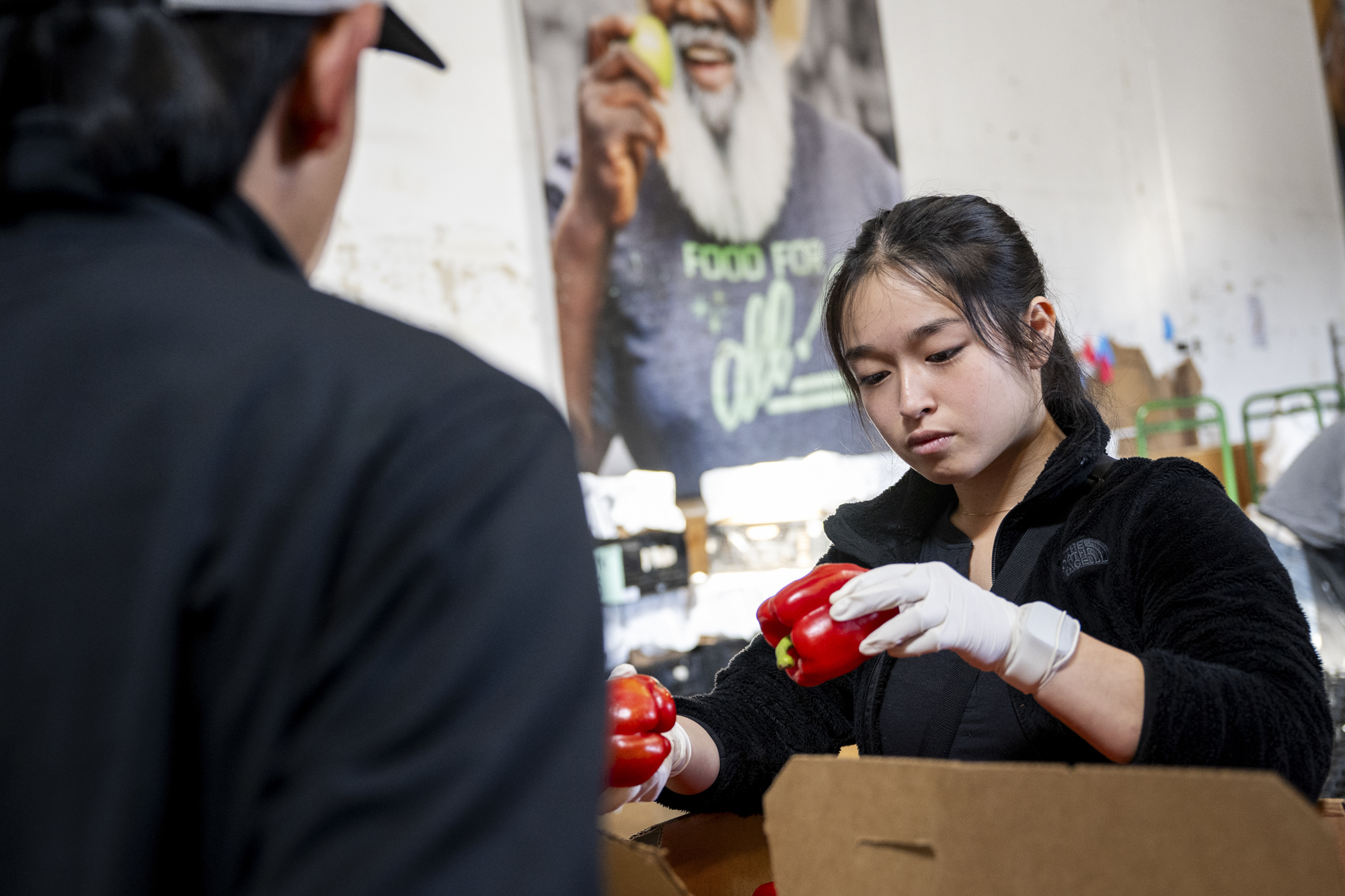
"caption": "Filmark Bernante (left) and Megan Feria inspect produce while sorting it into boxes at the San Francisco‑Marin Food Bank warehouse in San Francisco on Oct. 31, 2025. With November’s SNAP payments delayed, San Francisco will cover the missing funds for CalFresh users in the city. Here’s how to redeem your grocery card.",
"credit": "Beth LaBerge/KQED",
"altTag": null,
"description": null,
"imgSizes": {
"thumbnail": {
"file": "https://cdn.kqed.org/wp-content/uploads/sites/10/2025/10/251031-SFMARINFOODBANK-03-BL-KQED-160x107.jpg",
"width": 160,
"height": 107,
"mimeType": "image/jpeg"
},
"1536x1536": {
"file": "https://cdn.kqed.org/wp-content/uploads/sites/10/2025/10/251031-SFMARINFOODBANK-03-BL-KQED-1536x1024.jpg",
"width": 1536,
"height": 1024,
"mimeType": "image/jpeg"
},
"post-thumbnail": {
"file": "https://cdn.kqed.org/wp-content/uploads/sites/10/2025/10/251031-SFMARINFOODBANK-03-BL-KQED-672x372.jpg",
"width": 672,
"height": 372,
"mimeType": "image/jpeg"
},
"twentyfourteen-full-width": {
"file": "https://cdn.kqed.org/wp-content/uploads/sites/10/2025/10/251031-SFMARINFOODBANK-03-BL-KQED-1038x576.jpg",
"width": 1038,
"height": 576,
"mimeType": "image/jpeg"
},
"npr-cds-wide": {
"file": "https://cdn.kqed.org/wp-content/uploads/sites/10/2025/10/251031-SFMARINFOODBANK-03-BL-KQED-1200x675.jpg",
"width": 1200,
"height": 675,
"mimeType": "image/jpeg"
},
"kqedFullSize": {
"file": "https://cdn.kqed.org/wp-content/uploads/sites/10/2025/10/251031-SFMARINFOODBANK-03-BL-KQED.jpg",
"width": 2000,
"height": 1333
}
},
"isLoading": false,
"fetchFailed": false
},
"news_12063252": {
"type": "attachments",
"id": "news_12063252",
"meta": {
"index": "attachments_1716263798",
"site": "news",
"id": "12063252",
"found": true
},
"title": "Delays And Cancellations Continue To Plague Airline Industry Heading Into Holiday Weekend",
"publishDate": 1762461535,
"status": "inherit",
"parent": 12063192,
"modified": 1762461575,
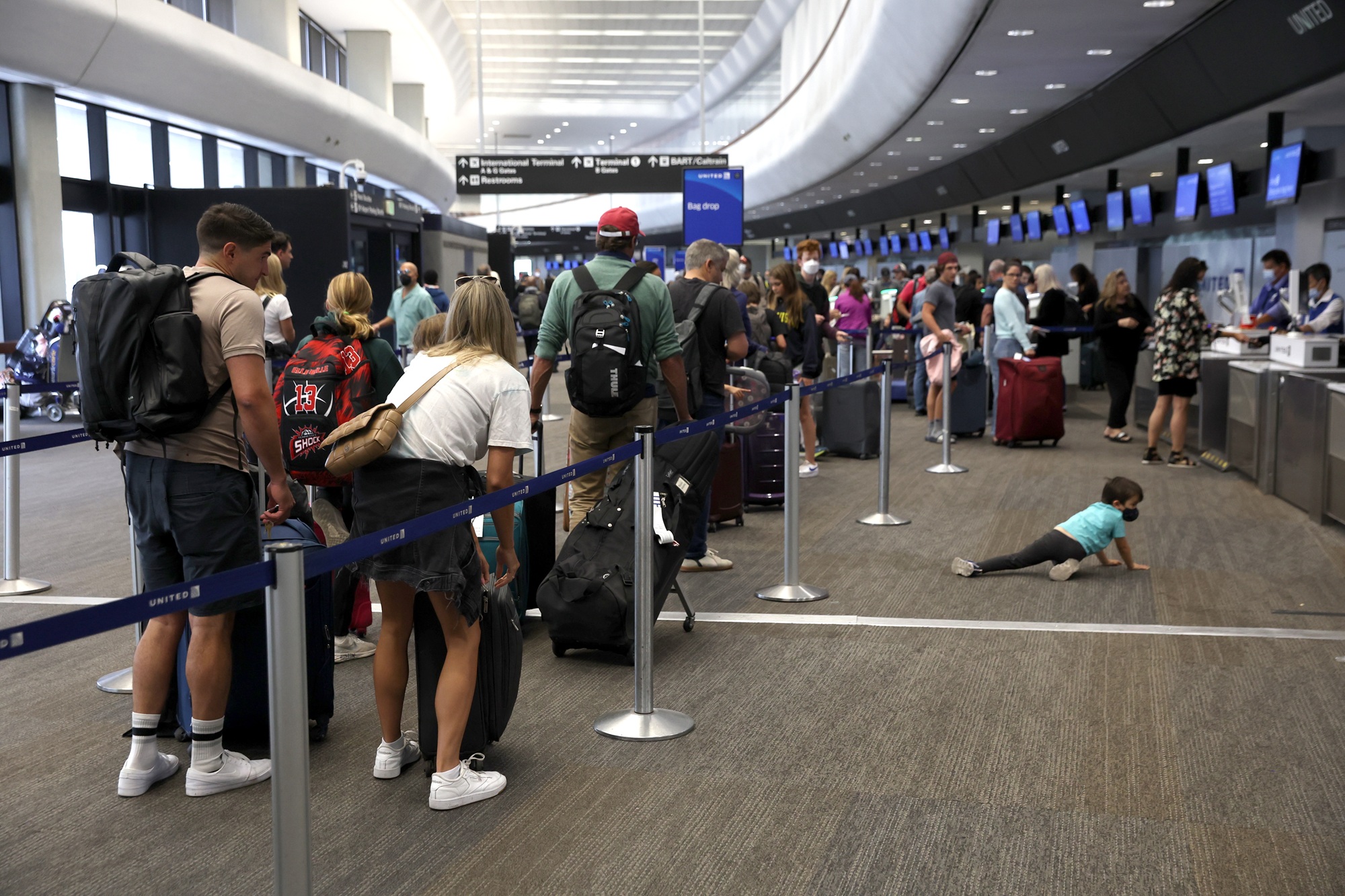
"caption": "Travelers line up to check in for United Airlines flights at San Francisco International Airport on July 1, 2022 ,in San Francisco, California. ",
"credit": "Justin Sullivan/Getty Images",
"altTag": null,
"description": null,
"imgSizes": {
"thumbnail": {
"file": "https://cdn.kqed.org/wp-content/uploads/sites/10/2025/11/SFODelaysGetty3-160x107.jpg",
"width": 160,
"height": 107,
"mimeType": "image/jpeg"
},
"1536x1536": {
"file": "https://cdn.kqed.org/wp-content/uploads/sites/10/2025/11/SFODelaysGetty3-1536x1024.jpg",
"width": 1536,
"height": 1024,
"mimeType": "image/jpeg"
},
"post-thumbnail": {
"file": "https://cdn.kqed.org/wp-content/uploads/sites/10/2025/11/SFODelaysGetty3-672x372.jpg",
"width": 672,
"height": 372,
"mimeType": "image/jpeg"
},
"twentyfourteen-full-width": {
"file": "https://cdn.kqed.org/wp-content/uploads/sites/10/2025/11/SFODelaysGetty3-1038x576.jpg",
"width": 1038,
"height": 576,
"mimeType": "image/jpeg"
},
"npr-cds-wide": {
"file": "https://cdn.kqed.org/wp-content/uploads/sites/10/2025/11/SFODelaysGetty3-1200x675.jpg",
"width": 1200,
"height": 675,
"mimeType": "image/jpeg"
},
"kqedFullSize": {
"file": "https://cdn.kqed.org/wp-content/uploads/sites/10/2025/11/SFODelaysGetty3.jpg",
"width": 2000,
"height": 1333
}
},
"isLoading": false,
"fetchFailed": false
},
"news_12062675": {
"type": "attachments",
"id": "news_12062675",
"meta": {
"index": "attachments_1716263798",
"site": "news",
"id": "12062675",
"found": true
},
"title": "251103-NewsomProp50Rally-65-BL",
"publishDate": 1762210643,
"status": "inherit",
"parent": 0,
"modified": 1762294209,
"caption": "Speaker Emerita Nancy Pelosi speaks during a press conference after a rally in support of Proposition 50 at IBEW Local 6 in San Francisco on Nov. 3, 2025.",
"credit": "Beth LaBerge/KQED",
"altTag": null,
"description": null,
"imgSizes": {
"thumbnail": {
"file": "https://cdn.kqed.org/wp-content/uploads/sites/10/2025/11/251103-NewsomProp50Rally-65-BL-160x107.jpg",
"width": 160,
"height": 107,
"mimeType": "image/jpeg"
},
"1536x1536": {
"file": "https://cdn.kqed.org/wp-content/uploads/sites/10/2025/11/251103-NewsomProp50Rally-65-BL-1536x1024.jpg",
"width": 1536,
"height": 1024,
"mimeType": "image/jpeg"
},
"post-thumbnail": {
"file": "https://cdn.kqed.org/wp-content/uploads/sites/10/2025/11/251103-NewsomProp50Rally-65-BL-672x372.jpg",
"width": 672,
"height": 372,
"mimeType": "image/jpeg"
},
"twentyfourteen-full-width": {
"file": "https://cdn.kqed.org/wp-content/uploads/sites/10/2025/11/251103-NewsomProp50Rally-65-BL-1038x576.jpg",
"width": 1038,
"height": 576,
"mimeType": "image/jpeg"
},
"npr-cds-wide": {
"file": "https://cdn.kqed.org/wp-content/uploads/sites/10/2025/11/251103-NewsomProp50Rally-65-BL-1200x675.jpg",
"width": 1200,
"height": 675,
"mimeType": "image/jpeg"
},
"kqedFullSize": {
"file": "https://cdn.kqed.org/wp-content/uploads/sites/10/2025/11/251103-NewsomProp50Rally-65-BL.jpg",
"width": 2000,
"height": 1333
}
},
"isLoading": false,
"fetchFailed": false
},
"news_12063248": {
"type": "attachments",
"id": "news_12063248",
"meta": {
"index": "attachments_1716263798",
"site": "news",
"id": "12063248",
"found": true
},
"title": "20251106_SFD4SUPERVISOR_GC-23-KQED",
"publishDate": 1762459911,
"status": "inherit",
"parent": 12063157,
"modified": 1762466330,
"caption": "Isabella “Beya” Alcaraz, the next District 4 supervisor, representing the Sunset district, at Ortega Branch Library on Nov. 6, 2025. Alcaraz is the first Filipina-American to serve on the Board of Supervisors.",
"credit": "Gina Castro for KQED",
"altTag": null,
"description": null,
"imgSizes": {
"thumbnail": {
"file": "https://cdn.kqed.org/wp-content/uploads/sites/10/2025/11/20251106_SFD4SUPERVISOR_GC-23-KQED-160x107.jpg",
"width": 160,
"height": 107,
"mimeType": "image/jpeg"
},
"1536x1536": {
"file": "https://cdn.kqed.org/wp-content/uploads/sites/10/2025/11/20251106_SFD4SUPERVISOR_GC-23-KQED-1536x1024.jpg",
"width": 1536,
"height": 1024,
"mimeType": "image/jpeg"
},
"post-thumbnail": {
"file": "https://cdn.kqed.org/wp-content/uploads/sites/10/2025/11/20251106_SFD4SUPERVISOR_GC-23-KQED-672x372.jpg",
"width": 672,
"height": 372,
"mimeType": "image/jpeg"
},
"twentyfourteen-full-width": {
"file": "https://cdn.kqed.org/wp-content/uploads/sites/10/2025/11/20251106_SFD4SUPERVISOR_GC-23-KQED-1038x576.jpg",
"width": 1038,
"height": 576,
"mimeType": "image/jpeg"
},
"npr-cds-wide": {
"file": "https://cdn.kqed.org/wp-content/uploads/sites/10/2025/11/20251106_SFD4SUPERVISOR_GC-23-KQED-1200x675.jpg",
"width": 1200,
"height": 675,
"mimeType": "image/jpeg"
},
"kqedFullSize": {
"file": "https://cdn.kqed.org/wp-content/uploads/sites/10/2025/11/20251106_SFD4SUPERVISOR_GC-23-KQED.jpg",
"width": 2000,
"height": 1333
}
},
"isLoading": false,
"fetchFailed": false
},
"news_12063107": {
"type": "attachments",
"id": "news_12063107",
"meta": {
"index": "attachments_1716263798",
"site": "news",
"id": "12063107",
"found": true
},
"title": "Ocean-Spray_3",
"publishDate": 1762383143,
"status": "inherit",
"parent": 12062909,
"modified": 1762386663,
"caption": "Unbeknownst to San Francisco citizens, in 1950, the U.S. military tested how bacteria would disperse if sprayed from a boat offshore, simulating a biological weapons attack. The experiment is now known as Operation Seaspray.",
"credit": "Illustration by Darren Tu/Getty Images",
"altTag": null,
"description": null,
"imgSizes": {
"thumbnail": {
"file": "https://cdn.kqed.org/wp-content/uploads/sites/10/2025/11/Ocean-Spray_3-160x103.jpg",
"width": 160,
"height": 103,
"mimeType": "image/jpeg"
},
"1536x1536": {
"file": "https://cdn.kqed.org/wp-content/uploads/sites/10/2025/11/Ocean-Spray_3-1536x992.jpg",
"width": 1536,
"height": 992,
"mimeType": "image/jpeg"
},
"post-thumbnail": {
"file": "https://cdn.kqed.org/wp-content/uploads/sites/10/2025/11/Ocean-Spray_3-672x372.jpg",
"width": 672,
"height": 372,
"mimeType": "image/jpeg"
},
"twentyfourteen-full-width": {
"file": "https://cdn.kqed.org/wp-content/uploads/sites/10/2025/11/Ocean-Spray_3-1038x576.jpg",
"width": 1038,
"height": 576,
"mimeType": "image/jpeg"
},
"npr-cds-wide": {
"file": "https://cdn.kqed.org/wp-content/uploads/sites/10/2025/11/Ocean-Spray_3-1200x675.jpg",
"width": 1200,
"height": 675,
"mimeType": "image/jpeg"
},
"kqedFullSize": {
"file": "https://cdn.kqed.org/wp-content/uploads/sites/10/2025/11/Ocean-Spray_3.jpg",
"width": 1920,
"height": 1240
}
},
"isLoading": false,
"fetchFailed": false
},
"news_12062913": {
"type": "attachments",
"id": "news_12062913",
"meta": {
"index": "attachments_1716263798",
"site": "news",
"id": "12062913",
"found": true
},
"title": "20251104_SF Waymo resolution_GH-2_qed",
"publishDate": 1762298020,
"status": "inherit",
"parent": 12062777,
"modified": 1762298044,
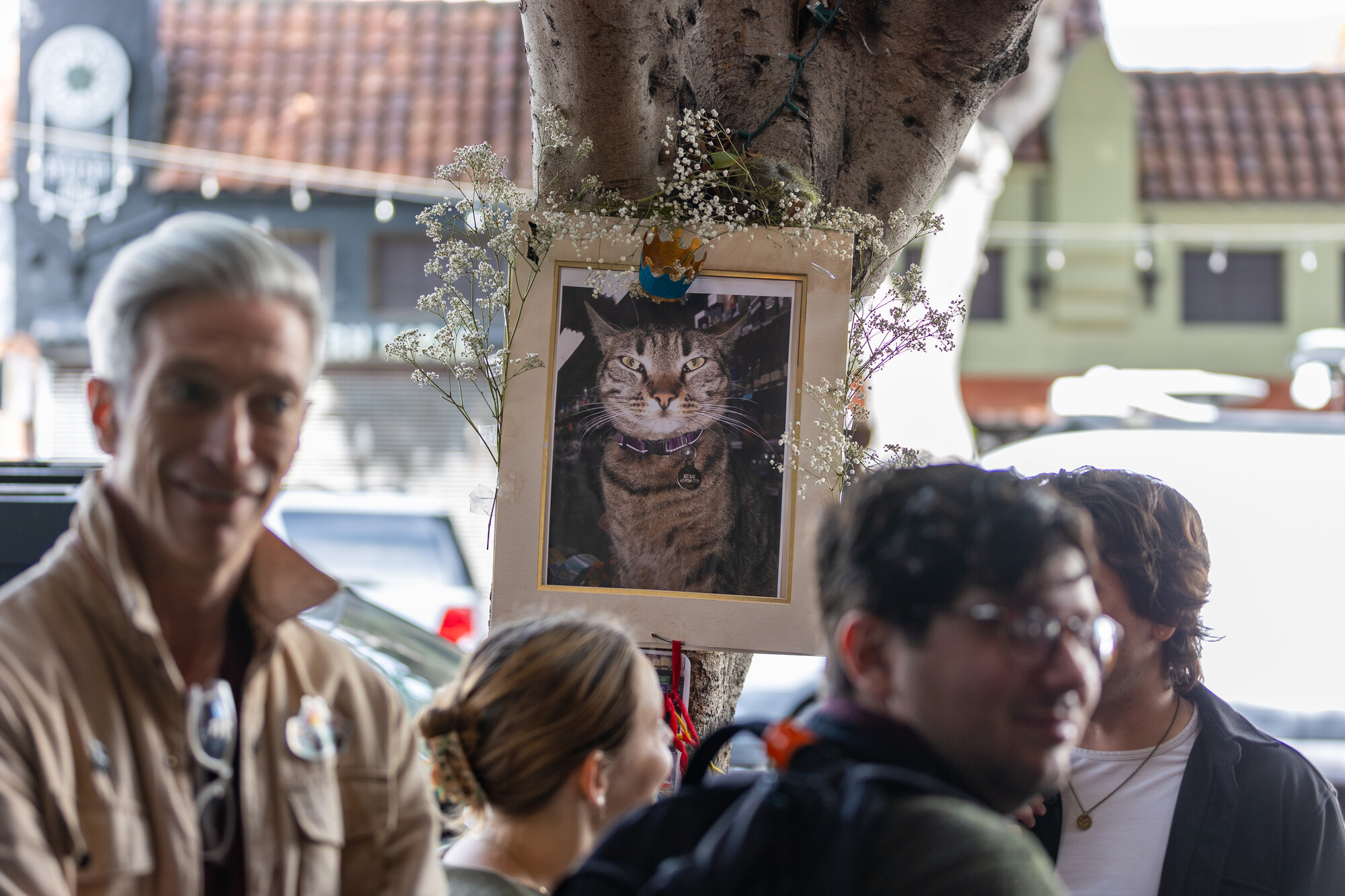
"caption": "A memorial for KitKat, a well-known neighborhood cat, is displayed outside Randa’s Market on Nov. 4, 2025, in San Francisco’s Mission District. Flowers and photos were placed at the base of a tree near the spot where a Waymo autonomous vehicle struck and killed the cat.",
"credit": "Gustavo Hernandez/KQED",
"altTag": null,
"description": null,
"imgSizes": {
"thumbnail": {
"file": "https://cdn.kqed.org/wp-content/uploads/sites/10/2025/11/20251104_SF-Waymo-resolution_GH-2_qed-160x107.jpg",
"width": 160,
"height": 107,
"mimeType": "image/jpeg"
},
"1536x1536": {
"file": "https://cdn.kqed.org/wp-content/uploads/sites/10/2025/11/20251104_SF-Waymo-resolution_GH-2_qed-1536x1024.jpg",
"width": 1536,
"height": 1024,
"mimeType": "image/jpeg"
},
"post-thumbnail": {
"file": "https://cdn.kqed.org/wp-content/uploads/sites/10/2025/11/20251104_SF-Waymo-resolution_GH-2_qed-672x372.jpg",
"width": 672,
"height": 372,
"mimeType": "image/jpeg"
},
"twentyfourteen-full-width": {
"file": "https://cdn.kqed.org/wp-content/uploads/sites/10/2025/11/20251104_SF-Waymo-resolution_GH-2_qed-1038x576.jpg",
"width": 1038,
"height": 576,
"mimeType": "image/jpeg"
},
"npr-cds-wide": {
"file": "https://cdn.kqed.org/wp-content/uploads/sites/10/2025/11/20251104_SF-Waymo-resolution_GH-2_qed-1200x675.jpg",
"width": 1200,
"height": 675,
"mimeType": "image/jpeg"
},
"kqedFullSize": {
"file": "https://cdn.kqed.org/wp-content/uploads/sites/10/2025/11/20251104_SF-Waymo-resolution_GH-2_qed.jpg",
"width": 2000,
"height": 1333
}
},
"isLoading": false,
"fetchFailed": false
},
"news_11897350": {
"type": "attachments",
"id": "news_11897350",
"meta": {
"index": "attachments_1716263798",
"site": "news",
"id": "11897350",
"found": true
},
"title": "RS47905_004_SanFrancisco_StopAAPIHateRally_0320201-qut",
"publishDate": 1637794725,
"status": "inherit",
"parent": 11897316,
"modified": 1762299326,
"caption": "Hundreds gather at Portsmouth Square in San Francisco’s Chinatown on March 20, 2021, for a Stop AAPI Hate rally, which made space for people to grieve, make art and honor the lives lost to recent anti-Asian violence.",
"credit": "Beth LaBerge/KQED",
"altTag": "Two people wearing black masks in a crowd hold signs that say \"stop Asian hate\" and \"stop racism.\"",
"description": null,
"imgSizes": {
"medium": {
"file": "https://cdn.kqed.org/wp-content/uploads/sites/10/2021/11/RS47905_004_SanFrancisco_StopAAPIHateRally_0320201-qut-800x533.jpg",
"width": 800,
"height": 533,
"mimeType": "image/jpeg"
},
"large": {
"file": "https://cdn.kqed.org/wp-content/uploads/sites/10/2021/11/RS47905_004_SanFrancisco_StopAAPIHateRally_0320201-qut-1020x680.jpg",
"width": 1020,
"height": 680,
"mimeType": "image/jpeg"
},
"thumbnail": {
"file": "https://cdn.kqed.org/wp-content/uploads/sites/10/2021/11/RS47905_004_SanFrancisco_StopAAPIHateRally_0320201-qut-160x107.jpg",
"width": 160,
"height": 107,
"mimeType": "image/jpeg"
},
"1536x1536": {
"file": "https://cdn.kqed.org/wp-content/uploads/sites/10/2021/11/RS47905_004_SanFrancisco_StopAAPIHateRally_0320201-qut-1536x1024.jpg",
"width": 1536,
"height": 1024,
"mimeType": "image/jpeg"
},
"post-thumbnail": {
"file": "https://cdn.kqed.org/wp-content/uploads/sites/10/2021/11/RS47905_004_SanFrancisco_StopAAPIHateRally_0320201-qut-672x372.jpg",
"width": 672,
"height": 372,
"mimeType": "image/jpeg"
},
"twentyfourteen-full-width": {
"file": "https://cdn.kqed.org/wp-content/uploads/sites/10/2021/11/RS47905_004_SanFrancisco_StopAAPIHateRally_0320201-qut-1038x576.jpg",
"width": 1038,
"height": 576,
"mimeType": "image/jpeg"
},
"kqedFullSize": {
"file": "https://cdn.kqed.org/wp-content/uploads/sites/10/2021/11/RS47905_004_SanFrancisco_StopAAPIHateRally_0320201-qut.jpg",
"width": 1920,
"height": 1280
}
},
"isLoading": false,
"fetchFailed": false
},
"news_12062569": {
"type": "attachments",
"id": "news_12062569",
"meta": {
"index": "attachments_1716263798",
"site": "news",
"id": "12062569",
"found": true
},
"title": "251031-SFMARINFOODBANK-28-BL-KQED",
"publishDate": 1761943600,
"status": "inherit",
"parent": 12062743,
"modified": 1762278950,
"caption": "Maria Gudmundsdottir sorts fresh produce into boxes at the San Francisco‑Marin Food Bank warehouse in San Francisco on Oct. 31, 2025.",
"credit": "Beth LaBerge/KQED",
"altTag": null,
"description": null,
"imgSizes": {
"thumbnail": {
"file": "https://cdn.kqed.org/wp-content/uploads/sites/10/2025/10/251031-SFMARINFOODBANK-28-BL-KQED-160x107.jpg",
"width": 160,
"height": 107,
"mimeType": "image/jpeg"
},
"1536x1536": {
"file": "https://cdn.kqed.org/wp-content/uploads/sites/10/2025/10/251031-SFMARINFOODBANK-28-BL-KQED-1536x1024.jpg",
"width": 1536,
"height": 1024,
"mimeType": "image/jpeg"
},
"post-thumbnail": {
"file": "https://cdn.kqed.org/wp-content/uploads/sites/10/2025/10/251031-SFMARINFOODBANK-28-BL-KQED-672x372.jpg",
"width": 672,
"height": 372,
"mimeType": "image/jpeg"
},
"twentyfourteen-full-width": {
"file": "https://cdn.kqed.org/wp-content/uploads/sites/10/2025/10/251031-SFMARINFOODBANK-28-BL-KQED-1038x576.jpg",
"width": 1038,
"height": 576,
"mimeType": "image/jpeg"
},
"npr-cds-wide": {
"file": "https://cdn.kqed.org/wp-content/uploads/sites/10/2025/10/251031-SFMARINFOODBANK-28-BL-KQED-1200x675.jpg",
"width": 1200,
"height": 675,
"mimeType": "image/jpeg"
},
"kqedFullSize": {
"file": "https://cdn.kqed.org/wp-content/uploads/sites/10/2025/10/251031-SFMARINFOODBANK-28-BL-KQED.jpg",
"width": 2000,
"height": 1333
}
},
"isLoading": false,
"fetchFailed": false
},
"news_12062404": {
"type": "attachments",
"id": "news_12062404",
"meta": {
"index": "attachments_1716263798",
"site": "news",
"id": "12062404",
"found": true
},
"title": "011_KQED_SanFrancisco_RVsMercedBlvd_07272020_qed",
"publishDate": 1761867512,
"status": "inherit",
"parent": 12062394,
"modified": 1761867520,
"caption": "An RV is parked on Merced Boulevard across from the Olympic Club golf course in San Francisco on July 27, 2020.",
"credit": "Beth LaBerge/KQED",
"altTag": null,
"description": null,
"imgSizes": {
"thumbnail": {
"file": "https://cdn.kqed.org/wp-content/uploads/sites/10/2025/10/011_KQED_SanFrancisco_RVsMercedBlvd_07272020_qed-160x107.jpg",
"width": 160,
"height": 107,
"mimeType": "image/jpeg"
},
"1536x1536": {
"file": "https://cdn.kqed.org/wp-content/uploads/sites/10/2025/10/011_KQED_SanFrancisco_RVsMercedBlvd_07272020_qed-1536x1024.jpg",
"width": 1536,
"height": 1024,
"mimeType": "image/jpeg"
},
"post-thumbnail": {
"file": "https://cdn.kqed.org/wp-content/uploads/sites/10/2025/10/011_KQED_SanFrancisco_RVsMercedBlvd_07272020_qed-672x372.jpg",
"width": 672,
"height": 372,
"mimeType": "image/jpeg"
},
"twentyfourteen-full-width": {
"file": "https://cdn.kqed.org/wp-content/uploads/sites/10/2025/10/011_KQED_SanFrancisco_RVsMercedBlvd_07272020_qed-1038x576.jpg",
"width": 1038,
"height": 576,
"mimeType": "image/jpeg"
},
"npr-cds-wide": {
"file": "https://cdn.kqed.org/wp-content/uploads/sites/10/2025/10/011_KQED_SanFrancisco_RVsMercedBlvd_07272020_qed-1200x675.jpg",
"width": 1200,
"height": 675,
"mimeType": "image/jpeg"
},
"kqedFullSize": {
"file": "https://cdn.kqed.org/wp-content/uploads/sites/10/2025/10/011_KQED_SanFrancisco_RVsMercedBlvd_07272020_qed.jpg",
"width": 2000,
"height": 1333
}
},
"isLoading": false,
"fetchFailed": false
},
"news_12062170": {
"type": "attachments",
"id": "news_12062170",
"meta": {
"index": "attachments_1716263798",
"site": "news",
"id": "12062170",
"found": true
},
"title": "251029-PUMPKIN PATCH CITY HALL-MD-01-KQED",
"publishDate": 1761778895,
"status": "inherit",
"parent": 0,
"modified": 1761779064,
"caption": "Ethan Huaynate picks out a pumpkin at the pumpkin patch festival at Civic Center in San Francisco on Oct. 29, 2025.",
"credit": "Martin do Nascimento/KQED",
"altTag": null,
"description": null,
"imgSizes": {
"thumbnail": {
"file": "https://cdn.kqed.org/wp-content/uploads/sites/10/2025/10/251029-PUMPKIN-PATCH-CITY-HALL-MD-01-KQED-160x107.jpg",
"width": 160,
"height": 107,
"mimeType": "image/jpeg"
},
"1536x1536": {
"file": "https://cdn.kqed.org/wp-content/uploads/sites/10/2025/10/251029-PUMPKIN-PATCH-CITY-HALL-MD-01-KQED-1536x1025.jpg",
"width": 1536,
"height": 1025,
"mimeType": "image/jpeg"
},
"post-thumbnail": {
"file": "https://cdn.kqed.org/wp-content/uploads/sites/10/2025/10/251029-PUMPKIN-PATCH-CITY-HALL-MD-01-KQED-672x372.jpg",
"width": 672,
"height": 372,
"mimeType": "image/jpeg"
},
"twentyfourteen-full-width": {
"file": "https://cdn.kqed.org/wp-content/uploads/sites/10/2025/10/251029-PUMPKIN-PATCH-CITY-HALL-MD-01-KQED-1038x576.jpg",
"width": 1038,
"height": 576,
"mimeType": "image/jpeg"
},
"npr-cds-wide": {
"file": "https://cdn.kqed.org/wp-content/uploads/sites/10/2025/10/251029-PUMPKIN-PATCH-CITY-HALL-MD-01-KQED-1600x900.jpg",
"width": 1600,
"height": 900,
"mimeType": "image/jpeg"
},
"kqedFullSize": {
"file": "https://cdn.kqed.org/wp-content/uploads/sites/10/2025/10/251029-PUMPKIN-PATCH-CITY-HALL-MD-01-KQED.jpg",
"width": 2000,
"height": 1334
}
},
"isLoading": false,
"fetchFailed": false
},
"news_12052480": {
"type": "attachments",
"id": "news_12052480",
"meta": {
"index": "attachments_1716263798",
"site": "news",
"id": "12052480",
"found": true
},
"title": "250815-SF TK-DN-01-KQED",
"publishDate": 1755299194,
"status": "inherit",
"parent": 12052609,
"modified": 1755539932,
"caption": "Joselyn Manigque's transitional kindergarten classroom at Dr. William Cobb Elementary School in San Francisco on Aug. 15, 2025.",
"credit": "Daisy Nguyen/KQED",
"altTag": null,
"description": null,
"imgSizes": {
"thumbnail": {
"file": "https://cdn.kqed.org/wp-content/uploads/sites/10/2025/08/250815-SF-TK-DN-01-KQED-160x120.jpg",
"width": 160,
"height": 120,
"mimeType": "image/jpeg"
},
"1536x1536": {
"file": "https://cdn.kqed.org/wp-content/uploads/sites/10/2025/08/250815-SF-TK-DN-01-KQED-1536x1152.jpg",
"width": 1536,
"height": 1152,
"mimeType": "image/jpeg"
},
"post-thumbnail": {
"file": "https://cdn.kqed.org/wp-content/uploads/sites/10/2025/08/250815-SF-TK-DN-01-KQED-672x372.jpg",
"width": 672,
"height": 372,
"mimeType": "image/jpeg"
},
"twentyfourteen-full-width": {
"file": "https://cdn.kqed.org/wp-content/uploads/sites/10/2025/08/250815-SF-TK-DN-01-KQED-1038x576.jpg",
"width": 1038,
"height": 576,
"mimeType": "image/jpeg"
},
"kqedFullSize": {
"file": "https://cdn.kqed.org/wp-content/uploads/sites/10/2025/08/250815-SF-TK-DN-01-KQED.jpg",
"width": 2000,
"height": 1500
}
},
"isLoading": false,
"fetchFailed": false
},
"news_12062249": {
"type": "attachments",
"id": "news_12062249",
"meta": {
"index": "attachments_1716263798",
"site": "news",
"id": "12062249",
"found": true
},
"title": "RV1",
"publishDate": 1761844485,
"status": "inherit",
"parent": 12062202,
"modified": 1761844565,
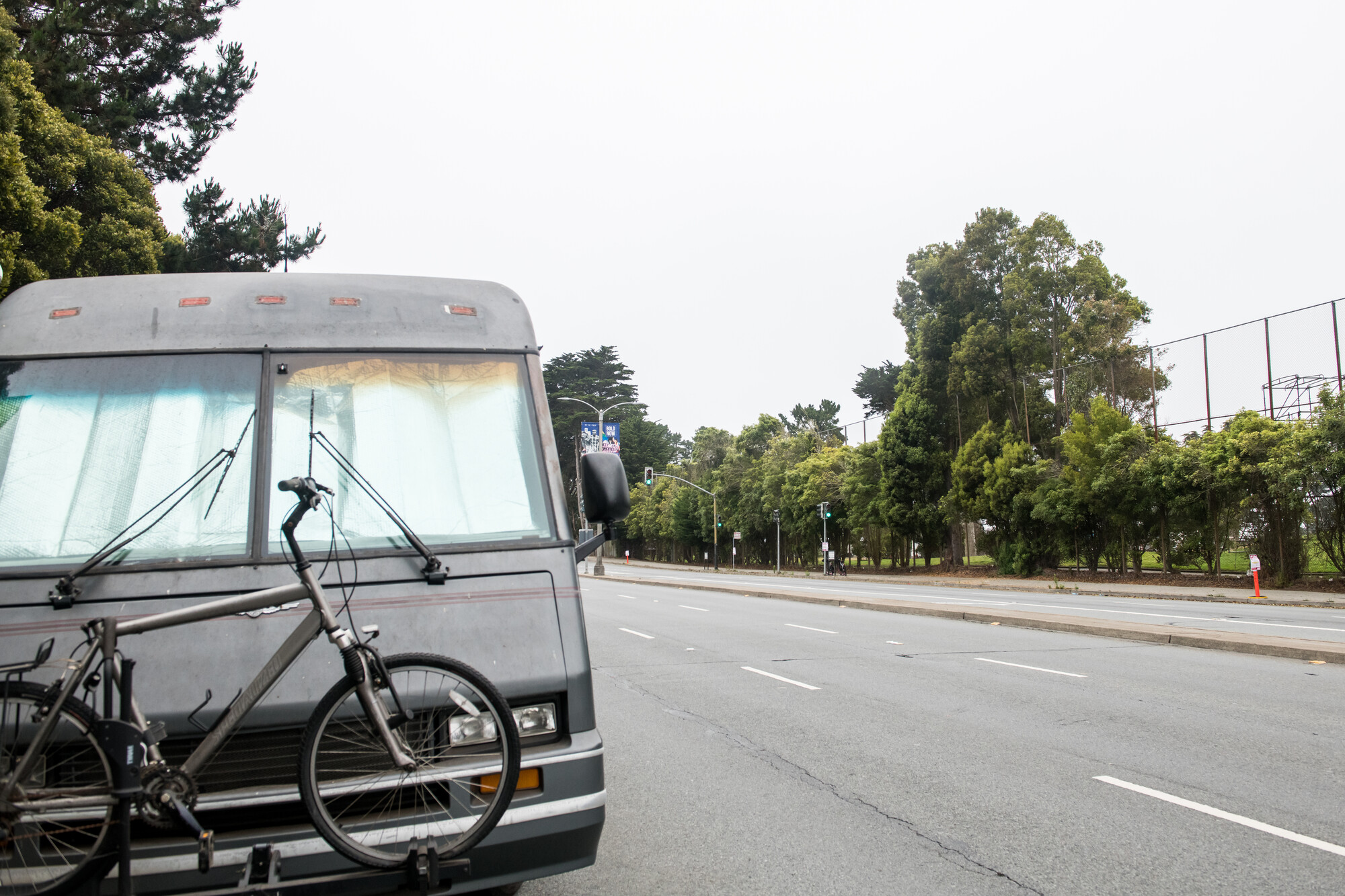
"caption": "A collage that show the entrances of RVs that have begun to appear more and more on the street near Lake Merced in San Francisco, California, on April 9, 2025. After a uniquely working immigrant RV community was displaced in the nearby street of Winston, some families opted for Lake Merced or the Bayview.",
"credit": "Pablo Unzueta for El Tecolote/CatchLight Local",
"altTag": null,
"description": null,
"imgSizes": {
"thumbnail": {
"file": "https://cdn.kqed.org/wp-content/uploads/sites/10/2025/10/RV1-160x207.jpg",
"width": 160,
"height": 207,
"mimeType": "image/jpeg"
},
"1536x1536": {
"file": "https://cdn.kqed.org/wp-content/uploads/sites/10/2025/10/RV1-1187x1536.jpg",
"width": 1187,
"height": 1536,
"mimeType": "image/jpeg"
},
"2048x2048": {
"file": "https://cdn.kqed.org/wp-content/uploads/sites/10/2025/10/RV1-1583x2048.jpg",
"width": 1583,
"height": 2048,
"mimeType": "image/jpeg"
},
"post-thumbnail": {
"file": "https://cdn.kqed.org/wp-content/uploads/sites/10/2025/10/RV1-672x372.jpg",
"width": 672,
"height": 372,
"mimeType": "image/jpeg"
},
"twentyfourteen-full-width": {
"file": "https://cdn.kqed.org/wp-content/uploads/sites/10/2025/10/RV1-1038x576.jpg",
"width": 1038,
"height": 576,
"mimeType": "image/jpeg"
},
"npr-cds-wide": {
"file": "https://cdn.kqed.org/wp-content/uploads/sites/10/2025/10/RV1-1600x900.jpg",
"width": 1600,
"height": 900,
"mimeType": "image/jpeg"
},
"kqedFullSize": {
"file": "https://cdn.kqed.org/wp-content/uploads/sites/10/2025/10/RV1-scaled.jpg",
"width": 1978,
"height": 2560
}
},
"isLoading": false,
"fetchFailed": false
}
},
"audioPlayerReducer": {
"postId": "stream_live",
"isPaused": true,
"isPlaying": false,
"pfsActive": false,
"pledgeModalIsOpen": true,
"playerDrawerIsOpen": false,
"liveAudioPlayStartedAt": 0,
"liveAudioPlayContext": ""
},
"authorsReducer": {
"byline_news_12062202": {
"type": "authors",
"id": "byline_news_12062202",
"meta": {
"override": true
},
"slug": "byline_news_12062202",
"name": "Mariana Duran, Pablo Unzueta, Yesica Prado, El Tecolote",
"isLoading": false
},
"scottshafer": {
"type": "authors",
"id": "255",
"meta": {
"index": "authors_1716337520",
"id": "255",
"found": true
},
"name": "Scott Shafer",
"firstName": "Scott",
"lastName": "Shafer",
"slug": "scottshafer",
"email": "sshafer@kqed.org",
"display_author_email": false,
"staff_mastheads": [
"news"
],
"title": "KQED Contributor",
"bio": "Scott Shafer is a senior editor with the KQED Politics and Government desk. He is co-host of Political Breakdown, the award-winning radio show and podcast with a personal take on the world of politics. Scott came to KQED in 1998 to host the statewide\u003cem> California Report\u003c/em>. Prior to that he had extended stints in politics and government\u003cem>.\u003c/em> He uses that inside experience at KQED in his, reporting, hosting and analysis for the politics desk. Scott collaborated \u003cem>Political Breakdown a\u003c/em>nd on \u003cem>The Political Mind of Jerry Brown, \u003c/em>an eight-part series about the life and extraordinary political career of the former governor. For fun, he plays water polo with the San Francisco Tsunami.",
"avatar": "https://secure.gravatar.com/avatar/a62ebae45b79d7aed1a39a0e3bf68104?s=600&d=blank&r=g",
"twitter": "scottshafer",
"bluesky": null,
"facebook": null,
"instagram": null,
"linkedin": null,
"sites": [
{
"site": "news",
"roles": [
"editor"
]
},
{
"site": "stateofhealth",
"roles": [
"author"
]
},
{
"site": "science",
"roles": [
"author"
]
},
{
"site": "forum",
"roles": [
"subscriber"
]
},
{
"site": "liveblog",
"roles": [
"author"
]
}
],
"headData": {
"title": "Scott Shafer | KQED",
"description": "KQED Contributor",
"ogImgSrc": "https://secure.gravatar.com/avatar/a62ebae45b79d7aed1a39a0e3bf68104?s=600&d=blank&r=g",
"twImgSrc": "https://secure.gravatar.com/avatar/a62ebae45b79d7aed1a39a0e3bf68104?s=600&d=blank&r=g"
},
"isLoading": false,
"link": "/author/scottshafer"
},
"carlysevern": {
"type": "authors",
"id": "3243",
"meta": {
"index": "authors_1716337520",
"id": "3243",
"found": true
},
"name": "Carly Severn",
"firstName": "Carly",
"lastName": "Severn",
"slug": "carlysevern",
"email": "csevern@kqed.org",
"display_author_email": false,
"staff_mastheads": [
"news"
],
"title": "Senior Editor, Audience News ",
"bio": "Carly is KQED's Senior Editor of Audience News on the Digital News team, and has reported for the California Report Magazine, Bay Curious and KQED Arts. She's formerly the host of \u003ca href=\"http://ww2.kqed.org/pop/category/the-cooler/\" rel=\"noopener noreferrer\">The Cooler\u003c/a> podcast.",
"avatar": "https://secure.gravatar.com/avatar/54037bf5c128fe678f0ef26cec97a93f2e7f220a22d7285703328f12c42c1b1d?s=600&d=blank&r=g",
"twitter": "teacupinthebay",
"bluesky": null,
"facebook": null,
"instagram": null,
"linkedin": null,
"sites": [
{
"site": "",
"roles": [
"editor"
]
},
{
"site": "arts",
"roles": [
"editor"
]
},
{
"site": "news",
"roles": [
"administrator"
]
},
{
"site": "pop",
"roles": [
"editor"
]
},
{
"site": "futureofyou",
"roles": [
"editor"
]
},
{
"site": "about",
"roles": [
"administrator"
]
},
{
"site": "mindshift",
"roles": [
"editor"
]
},
{
"site": "bayareabites",
"roles": [
"editor"
]
},
{
"site": "stateofhealth",
"roles": [
"editor"
]
},
{
"site": "science",
"roles": [
"editor"
]
},
{
"site": "food",
"roles": [
"contributor"
]
},
{
"site": "forum",
"roles": [
"editor"
]
},
{
"site": "perspectives",
"roles": [
"administrator"
]
},
{
"site": "liveblog",
"roles": [
"editor"
]
}
],
"headData": {
"title": "Carly Severn | KQED",
"description": "Senior Editor, Audience News ",
"ogImgSrc": "https://secure.gravatar.com/avatar/54037bf5c128fe678f0ef26cec97a93f2e7f220a22d7285703328f12c42c1b1d?s=600&d=blank&r=g",
"twImgSrc": "https://secure.gravatar.com/avatar/54037bf5c128fe678f0ef26cec97a93f2e7f220a22d7285703328f12c42c1b1d?s=600&d=blank&r=g"
},
"isLoading": false,
"link": "/author/carlysevern"
},
"daisynguyen": {
"type": "authors",
"id": "11829",
"meta": {
"index": "authors_1716337520",
"id": "11829",
"found": true
},
"name": "Daisy Nguyen",
"firstName": "Daisy",
"lastName": "Nguyen",
"slug": "daisynguyen",
"email": "daisynguyen@kqed.org",
"display_author_email": true,
"staff_mastheads": [
"news"
],
"title": "KQED Contributor",
"bio": "I have covered early childhood education and child care for KQED since 2022. I focus on policies aimed at increasing access to early care and education and how they shape individual lives. I've been a journalist for more than two decades, with most of that time devoted to covering breaking news throughout California for The Associated Press. I grew up in San Francisco and studied at UC Davis and Columbia University's Graduate School of Journalism. I live in Oakland with my husband and two kids.",
"avatar": "https://secure.gravatar.com/avatar/2da2127c27f7143b53ebd419800fd55f?s=600&d=blank&r=g",
"twitter": null,
"facebook": null,
"instagram": null,
"linkedin": "https://www.linkedin.com/in/daisynguyen/",
"sites": [
{
"site": "news",
"roles": [
"author"
]
},
{
"site": "liveblog",
"roles": [
"author"
]
}
],
"headData": {
"title": "Daisy Nguyen | KQED",
"description": "KQED Contributor",
"ogImgSrc": "https://secure.gravatar.com/avatar/2da2127c27f7143b53ebd419800fd55f?s=600&d=blank&r=g",
"twImgSrc": "https://secure.gravatar.com/avatar/2da2127c27f7143b53ebd419800fd55f?s=600&d=blank&r=g"
},
"isLoading": false,
"link": "/author/daisynguyen"
},
"sjohnson": {
"type": "authors",
"id": "11840",
"meta": {
"index": "authors_1716337520",
"id": "11840",
"found": true
},
"name": "Sydney Johnson",
"firstName": "Sydney",
"lastName": "Johnson",
"slug": "sjohnson",
"email": "sjohnson@kqed.org",
"display_author_email": false,
"staff_mastheads": [
"news"
],
"title": "KQED Reporter",
"bio": "Sydney Johnson is a general assignment reporter at KQED. She previously reported on public health and city government at the San Francisco Examiner, and before that, she covered statewide education policy for EdSource. Her reporting has won multiple local, state and national awards. Sydney is a graduate of the University of California, Berkeley and lives in San Francisco.",
"avatar": "https://secure.gravatar.com/avatar/97855f2719b72ad6190b7c535fe642c8?s=600&d=blank&r=g",
"twitter": "sydneyfjohnson",
"facebook": null,
"instagram": null,
"linkedin": null,
"sites": [
{
"site": "news",
"roles": [
"editor"
]
}
],
"headData": {
"title": "Sydney Johnson | KQED",
"description": "KQED Reporter",
"ogImgSrc": "https://secure.gravatar.com/avatar/97855f2719b72ad6190b7c535fe642c8?s=600&d=blank&r=g",
"twImgSrc": "https://secure.gravatar.com/avatar/97855f2719b72ad6190b7c535fe642c8?s=600&d=blank&r=g"
},
"isLoading": false,
"link": "/author/sjohnson"
},
"kmonahan": {
"type": "authors",
"id": "11842",
"meta": {
"index": "authors_1716337520",
"id": "11842",
"found": true
},
"name": "Katherine Monahan",
"firstName": "Katherine",
"lastName": "Monahan",
"slug": "kmonahan",
"email": "kmonahan@kqed.org",
"display_author_email": true,
"staff_mastheads": [],
"title": "Reporter / Sound Engineer",
"bio": "I cover state and local news. I’m also a sound engineer at the station, mixing stories and running live broadcasts. I link to source materials so that readers can draw their own conclusions, and seek comment from a range of perspectives, including from people directly affected by events. Awards received include from the Society of Professional Journalists, Northern California chapter and the Alaska Press Club. I speak multiple languages and have reported and engineered in the Bay Area, Alaska, West Africa and Latin America.",
"avatar": "https://secure.gravatar.com/avatar/ff257b3a5da88893781a3d3266904b2d2f91c7f0e1bbf728f61f5fb81b74a669?s=600&d=blank&r=g",
"twitter": null,
"bluesky": null,
"facebook": null,
"instagram": null,
"linkedin": null,
"sites": [
{
"site": "news",
"roles": [
"editor"
]
},
{
"site": "science",
"roles": [
"contributor"
]
}
],
"headData": {
"title": "Katherine Monahan | KQED",
"description": "Reporter / Sound Engineer",
"ogImgSrc": "https://secure.gravatar.com/avatar/ff257b3a5da88893781a3d3266904b2d2f91c7f0e1bbf728f61f5fb81b74a669?s=600&d=blank&r=g",
"twImgSrc": "https://secure.gravatar.com/avatar/ff257b3a5da88893781a3d3266904b2d2f91c7f0e1bbf728f61f5fb81b74a669?s=600&d=blank&r=g"
},
"isLoading": false,
"link": "/author/kmonahan"
},
"kdebenedetti": {
"type": "authors",
"id": "11913",
"meta": {
"index": "authors_1716337520",
"id": "11913",
"found": true
},
"name": "Katie DeBenedetti",
"firstName": "Katie",
"lastName": "DeBenedetti",
"slug": "kdebenedetti",
"email": "kdebenedetti@kqed.org",
"display_author_email": false,
"staff_mastheads": [
"news",
"science"
],
"title": "KQED Contributor",
"bio": "Katie DeBenedetti is a digital reporter covering daily news for the Express Desk. Prior to joining KQED as a culture reporting intern in January 2024, she covered education and city government for the Napa Valley Register.",
"avatar": "https://secure.gravatar.com/avatar/6e31073cb8f7e4214ab03f42771d0f45?s=600&d=blank&r=g",
"twitter": null,
"facebook": null,
"instagram": null,
"linkedin": null,
"sites": [
{
"site": "news",
"roles": [
"author"
]
},
{
"site": "science",
"roles": [
"author"
]
},
{
"site": "liveblog",
"roles": [
"author"
]
}
],
"headData": {
"title": "Katie DeBenedetti | KQED",
"description": "KQED Contributor",
"ogImgSrc": "https://secure.gravatar.com/avatar/6e31073cb8f7e4214ab03f42771d0f45?s=600&d=blank&r=g",
"twImgSrc": "https://secure.gravatar.com/avatar/6e31073cb8f7e4214ab03f42771d0f45?s=600&d=blank&r=g"
},
"isLoading": false,
"link": "/author/kdebenedetti"
}
},
"pagesReducer": {
"news_tag_san-francisco": {
"type": "terms",
"id": "news_38",
"meta": {
"index": "terms_1716263798",
"site": "news",
"id": "38",
"score": 6.7229023
},
"featImg": null,
"name": "San Francisco",
"description": null,
"taxonomy": "tag",
"headData": {
"twImgId": null,
"twTitle": null,
"ogTitle": null,
"ogImgId": null,
"twDescription": null,
"description": null,
"title": "San Francisco Archives | KQED News",
"ogDescription": null
},
"ttid": 58,
"slug": "san-francisco",
"isLoading": false,
"title": "San Francisco",
"pageMeta": {
"site": "news",
"WpPageTemplate": "page-topic-editorial",
"currentPage": 42
},
"blocks": [
{
"blockName": "kqed/post-list",
"attrs": {
"layout": "cardArticle2",
"query": "posts/news?tag=san-francisco",
"seeMore": false,
"paginated": true,
"page": 42
}
},
{
"blockName": "kqed/ad"
}
]
}
},
"pfsSessionReducer": {},
"postsReducer": {
"stream_live": {
"type": "live",
"id": "stream_live",
"audioUrl": "https://streams.kqed.org/kqedradio",
"title": "Live Stream",
"excerpt": "Live Stream information currently unavailable.",
"link": "/radio",
"featImg": "",
"label": {
"name": "KQED Live",
"link": "/"
}
},
"stream_kqedNewscast": {
"type": "posts",
"id": "stream_kqedNewscast",
"audioUrl": "https://www.kqed.org/.stream/anon/radio/RDnews/newscast.mp3?_=1",
"title": "KQED Newscast",
"featImg": "",
"label": {
"name": "88.5 FM",
"link": "/"
}
},
"news_12062743": {
"type": "posts",
"id": "news_12062743",
"meta": {
"index": "posts_1716263798",
"site": "news",
"id": "12062743",
"score": null,
"sort": [
1762473918000
]
},
"guestAuthors": [],
"slug": "shutdown-san-francisco-sf-cal-fresh-snap-november-grocery-card-ebt-meals-prepaid-debit-contra-costa",
"title": "How San Francisco and Contra Costa SNAP Users Can Find Prepaid Grocery Cards",
"publishDate": 1762473918,
"format": "standard",
"headTitle": "How San Francisco and Contra Costa SNAP Users Can Find Prepaid Grocery Cards | KQED",
"labelTerm": {
"site": "news"
},
"content": "\u003cp>More than 644,000 Bay Area residents who use CalFresh — the state’s version of the Supplemental Nutrition Assistance Program, sometimes referred to as food stamps — have been \u003ca href=\"https://www.kqed.org/news/12061440/calfresh-snap-ebt-shutdown-find-food-banks-near-me-san-francisco-bay-area-alameda-oakland-contra-costa-newsom-national-guard\">hit by a delay in November SNAP payments\u003c/a> due to the \u003ca href=\"https://www.kqed.org/news/tag/government-shutdown\">ongoing federal government shutdown.\u003c/a>\u003c/p>\n\u003cp>But in \u003ca href=\"https://www.kqed.org/news/12062034/san-francisco-will-cover-full-snap-benefits-for-november-amid-federal-shutdown\">San Francisco \u003c/a>and Contra Costa County, residents will be receiving prepaid cards this month to cover at least some of their missing food funds.\u003c/p>\n\u003cp>The money will come at a time when it’s still unclear how soon SNAP payments will be distributed this month. On Thursday, Gov. Gavin Newsom’s office confirmed that \u003ca href=\"https://www.gov.ca.gov/2025/11/06/californians-are-beginning-to-see-cash-on-their-snap-cards-following-major-win-against-the-trump-administration/\">some CalFresh recipients have begun to see benefits payments\u003c/a> arrive in full onto their EBT cards, after a judge \u003ca href=\"https://apnews.com/live/donald-trump-news-updates-11-6-2025#0000019a-5af9-d003-addb-deffec620000\">ruled a second time that the White House must pay these benefits\u003c/a> in full by Friday. \u003ca href=\"https://www.fns.usda.gov/snap/updated-supplemental-nutrition-assistance-program-snap-november-benefit-issuance\">The U.S. Department of Agriculture also announced\u003c/a> Friday it will comply with the court order and start sending out full November SNAP benefits.\u003c/p>\n\u003cp>[ad fullwidth]\u003c/p>\n\u003cp>But it’s still not known exactly how these funds will continue to roll out, especially since \u003ca href=\"https://apnews.com/article/snap-food-government-shutdown-trump-a807e9f0c0a7213e203c074553dc1f9b\">the Trump administration asked a federal appeals court on Friday to block the judge’s order\u003c/a>, and has \u003ca href=\"https://www.nytimes.com/live/2025/11/07/us/trump-news-shutdown?smid=nytcore-ios-share&referringSource=articleShare\">now appealed to the Supreme Court\u003c/a> after that request was denied.\u003c/p>\n\u003cp>Amid all this uncertainty, if you’re on CalFresh and you live in San Francisco or Contra Costa County, here’s what to know about getting your prepaid card — from how to activate it to how much money the card will contain.\u003c/p>\n\u003cul>\n\u003cli>\u003cstrong>Jump straight to: \u003ca href=\"#HowContraCostaresidentsonCalFreshcanaccesstheirdebitcard\">How Contra Costa residents on CalFresh can access their debit card\u003c/a>\u003c/strong>\u003c/li>\n\u003c/ul>\n\u003ch2>I’m a San Francisco resident using CalFresh. When will my prepaid grocery card arrive?\u003c/h2>\n\u003cp>Roughly 112,000 people in San Francisco receive benefits through CalFresh.\u003c/p>\n\u003cp>According to the San Francisco Human Services Agency, all SNAP recipients in San Francisco will receive a letter in the mail this week — the first week of November — with instructions on how to receive their grocery card.\u003c/p>\n\u003cfigure id=\"attachment_12062567\" class=\"wp-caption aligncenter\" style=\"max-width: 2000px\">\u003cimg loading=\"lazy\" decoding=\"async\" class=\"size-full wp-image-12062567\" src=\"https://cdn.kqed.org/wp-content/uploads/sites/10/2025/10/251031-SFMARINFOODBANK-24-BL-KQED.jpg\" alt=\"\" width=\"2000\" height=\"1333\" srcset=\"https://cdn.kqed.org/wp-content/uploads/sites/10/2025/10/251031-SFMARINFOODBANK-24-BL-KQED.jpg 2000w, https://cdn.kqed.org/wp-content/uploads/sites/10/2025/10/251031-SFMARINFOODBANK-24-BL-KQED-160x107.jpg 160w, https://cdn.kqed.org/wp-content/uploads/sites/10/2025/10/251031-SFMARINFOODBANK-24-BL-KQED-1536x1024.jpg 1536w\" sizes=\"auto, (max-width: 2000px) 100vw, 2000px\">\u003cfigcaption class=\"wp-caption-text\">Workers sort fresh produce into boxes at the San Francisco‑Marin Food Bank warehouse in San Francisco on Oct. 31, 2025. \u003ccite>(Beth LaBerge/KQED)\u003c/cite>\u003c/figcaption>\u003c/figure>\n\u003cp>Trent Rhorer, executive director of the SFHSA, said that if you’re a CalFresh user living in San Francisco, your letter will most likely arrive on Wednesday.\u003c/p>\n\u003cp>You don’t need to contact the city to request your card — it’ll be mailed out automatically to you,\u003ca href=\"https://www.sfhsa.org/calfresh-emergency-grocery-card-program/calfresh-emergency-grocery-card-program-frequently-asked-questions\"> as long as you were signed up for CalFresh by the end of October.\u003c/a>\u003c/p>\n\u003cp>A SFHSA spokesperson told KQED that the agency isn’t publicizing the details of the instructions contained in the letter, “to help prevent fraud.”\u003c/p>\n\u003ch2>What if I don’t have a fixed address within San Francisco?\u003c/h2>\n\u003cp>An estimated 5,000–6,000 people experiencing homelessness in San Francisco use CalFresh, Rhorer said.\u003c/p>\n\u003cp>If you’re unhoused or currently living in a shelter, and if you have your mail delivered via general delivery to the Hyde St. post office, your letter about the grocery card will be delivered to that location, Rhorer said.\u003c/p>\n\u003cfigure id=\"attachment_12062568\" class=\"wp-caption aligncenter\" style=\"max-width: 2000px\">\u003cimg loading=\"lazy\" decoding=\"async\" class=\"size-full wp-image-12062568\" src=\"https://cdn.kqed.org/wp-content/uploads/sites/10/2025/10/251031-SFMARINFOODBANK-26-BL-KQED.jpg\" alt=\"\" width=\"2000\" height=\"1333\" srcset=\"https://cdn.kqed.org/wp-content/uploads/sites/10/2025/10/251031-SFMARINFOODBANK-26-BL-KQED.jpg 2000w, https://cdn.kqed.org/wp-content/uploads/sites/10/2025/10/251031-SFMARINFOODBANK-26-BL-KQED-160x107.jpg 160w, https://cdn.kqed.org/wp-content/uploads/sites/10/2025/10/251031-SFMARINFOODBANK-26-BL-KQED-1536x1024.jpg 1536w\" sizes=\"auto, (max-width: 2000px) 100vw, 2000px\">\u003cfigcaption class=\"wp-caption-text\">Workers sort fresh produce into boxes at the San Francisco‑Marin Food Bank warehouse in San Francisco on Oct. 31, 2025. \u003ccite>(Beth LaBerge/KQED)\u003c/cite>\u003c/figcaption>\u003c/figure>\n\u003cp>Alternatively, he said, you can speak to staff at the San Francisco community support agency, homeless shelter or Navigation Center you use, and they’ll be able to help you activate the card too.\u003c/p>\n\u003cp>“You don’t need to receive the letter to activate the card,” Rhorer said, since “you can actually call the call center with your personal identifying information, and they can activate the digital card right there.” Support staff at these agencies and shelters will provide the correct phone number for you to call.\u003c/p>\n\u003ch2>How can I access my grocery card?\u003c/h2>\n\u003cp>You won’t receive the actual grocery card itself in the mail. Instead, the letter will contain an activation code, which will be unique to you and which will allow you to access a digital gift card either online or by phone, Rhorer said.\u003c/p>\n\u003cp>You’ll then be able to load your card funds onto your phone through Apple Wallet or Google Play, he said. If you prefer, you can request a physical card in the mail, but this will take 5–7 business days to arrive, SFHSA said.\u003c/p>\n\u003cp>Only one card will be sent to San Francisco CalFresh users, and you’ll have to \u003ca href=\"https://www.sfhsa.org/calfresh-emergency-grocery-card-program/calfresh-emergency-grocery-card-program-frequently-asked-questions\">activate your card by Dec. 31 \u003c/a>for it to remain valid.\u003c/p>\n\u003ch2>What kind of information will I have to provide to access my card?\u003c/h2>\n\u003cp>You should follow the instructions in the letter to activate your card either online or through a call center, when you’ll be prompted to “enter personal identifying information,” Rhorer said.\u003c/p>\n\u003cfigure id=\"attachment_12062569\" class=\"wp-caption aligncenter\" style=\"max-width: 2000px\">\u003cimg loading=\"lazy\" decoding=\"async\" class=\"size-full wp-image-12062569\" src=\"https://cdn.kqed.org/wp-content/uploads/sites/10/2025/10/251031-SFMARINFOODBANK-28-BL-KQED.jpg\" alt=\"\" width=\"2000\" height=\"1333\" srcset=\"https://cdn.kqed.org/wp-content/uploads/sites/10/2025/10/251031-SFMARINFOODBANK-28-BL-KQED.jpg 2000w, https://cdn.kqed.org/wp-content/uploads/sites/10/2025/10/251031-SFMARINFOODBANK-28-BL-KQED-160x107.jpg 160w, https://cdn.kqed.org/wp-content/uploads/sites/10/2025/10/251031-SFMARINFOODBANK-28-BL-KQED-1536x1024.jpg 1536w\" sizes=\"auto, (max-width: 2000px) 100vw, 2000px\">\u003cfigcaption class=\"wp-caption-text\">Maria Gudmundsdottir sorts fresh produce into boxes at the San Francisco‑Marin Food Bank warehouse in San Francisco on Oct. 31, 2025. \u003ccite>(Beth LaBerge/KQED)\u003c/cite>\u003c/figcaption>\u003c/figure>\n\u003cp>This means that if your letter was stolen by someone else who attempted to use your activation code to access your gift card, they still won’t know your personal information to be able to complete the process, he said.\u003c/p>\n\u003cp>You’ll never be asked for your bank account details or Social Security information to redeem the grocery card, SFHSA said.\u003c/p>\n\u003ch2>Once I have my virtual or physical card, how do I spend the funds?\u003c/h2>\n\u003cp>SFHSA said that you’ll be able to use the prepaid grocery card at grocery stores and “most markets that accept EBT.”\u003c/p>\n\u003cp>“The replacement card will\u003ca href=\"https://www.sfhsa.org/services/food/calfresh/using-calfresh\"> work exactly as their CalFresh EBT card would have worked\u003c/a>,” Rhorer said.\u003c/p>\n\u003cp>Like EBT, your card’s funds “cannot be used to purchase sugary or alcoholic beverages or tobacco products,” SFHSA said.\u003c/p>\n\u003cp>[aside postID=arts_13982957 hero='https://cdn.kqed.org/wp-content/uploads/sites/2/2024/11/monster-pho-free-event-1020x947.jpg']\u003c/p>\n\u003ch2>How much money will I get through my prepaid grocery card?\u003c/h2>\n\u003cp>One thing to note: the amount on your grocery card might not match the amount you’d have normally received in November through your CalFresh benefits.\u003c/p>\n\u003cp>That’s because how much each household receives on their card has been calculated “based on the average CalFresh benefit amount for households of a similar size to yours,” SFHSA said.\u003c/p>\n\u003cp>\u003cstrong>The amount you’ll see on your card:\u003c/strong>\u003c/p>\n\u003cul>\n\u003cli> For a 1–2 person household: $200\u003c/li>\n\u003cli> For a 3–4 person household: $350\u003c/li>\n\u003cli> For a household with 5 or more people: $500\u003c/li>\n\u003c/ul>\n\u003cp>“Some households might get a little bit more in the gift card” than their regular EBT funds, Rhorer said — but “some households might get a little less.”\u003c/p>\n\u003ch2>Can I still use my card if the government shutdown ends or partial SNAP benefits are paid this month?\u003c/h2>\n\u003cp>Yes. The grocery card program is intended to “help offset the impact of federal actions that have delayed the reloading of EBT cards for CalFresh recipients,” SFHSA said, and \u003ca href=\"https://www.sfhsa.org/calfresh-emergency-grocery-card-program/calfresh-emergency-grocery-card-program-frequently-asked-questions\">will move ahead regardless \u003c/a>of what happens this month at the federal level.\u003c/p>\n\u003cp>Rhorer said that even if the federal government releases partial SNAP funds this month, he suspects that this might happen “maybe in mid-November or late November” — which would still be some time after CalFresh payments were meant to arrive, in the first 10 days of the month, and after San Francisco CalFresh households have accessed their prepaid gift cards.\u003c/p>\n\u003cfigure id=\"attachment_12060772\" class=\"wp-caption aligncenter\" style=\"max-width: 2000px\">\u003cimg loading=\"lazy\" decoding=\"async\" class=\"size-full wp-image-12060772\" src=\"https://cdn.kqed.org/wp-content/uploads/sites/10/2025/10/SNAPGetty.jpg\" alt=\"\" width=\"2000\" height=\"1333\" srcset=\"https://cdn.kqed.org/wp-content/uploads/sites/10/2025/10/SNAPGetty.jpg 2000w, https://cdn.kqed.org/wp-content/uploads/sites/10/2025/10/SNAPGetty-160x107.jpg 160w, https://cdn.kqed.org/wp-content/uploads/sites/10/2025/10/SNAPGetty-1536x1024.jpg 1536w\" sizes=\"auto, (max-width: 2000px) 100vw, 2000px\">\u003cfigcaption class=\"wp-caption-text\">SNAP and EBT Accepted here sign. SNAP and Food Stamps provide nutrition benefits to supplement the budgets of disadvantaged families. \u003ccite>(Jet City Image/iStock Editorial via Getty Images Plus)\u003c/cite>\u003c/figcaption>\u003c/figure>\n\u003cp>“So, hopefully, at the end of the day, the households are certainly made whole for their benefits in November,” Rhorer said. “And perhaps many households will receive a little bit more than they otherwise would have received.”\u003c/p>\n\u003cp>Even if the federal government announces the imminent release of SNAP dollars, “It’s going to be a 7–10 day delay,” he said. “We want people to be able to put food on the table.”\u003c/p>\n\u003ch2>What should I do if my card doesn’t arrive?\u003c/h2>\n\u003cp>A SFHSA spokesperson told KQED by email that if you’re a San Francisco resident receiving CalFresh and you don’t receive your letter by Monday, Nov. 10, reach out to the agency’s CalFresh call center at 855-355-5757.\u003c/p>\n\u003cp>You can \u003ca href=\"https://www.sfhsa.org/contact-us\">contact SFHSA directly by phone or email\u003c/a>, or \u003ca href=\"https://www.sfhsa.org/contact-us/locations\">visit an SFHSA office in person\u003c/a>.\u003c/p>\n\u003cp>For general questions about the grocery cards, San Francisco CalFresh users can call 3-1-1, according to SFHSA.\u003c/p>\n\u003ch2>\u003ca id=\"HowContraCostaresidentsonCalFreshcanaccesstheirdebitcard\">\u003c/a>I’m a Contra Costa County resident using CalFresh. When can I access my debit card?\u003c/h2>\n\u003cp>More than 65,000 households in Contra Costa County rely on CalFresh.\u003c/p>\n\u003cp>Starting Monday, Nov. 10, Contra Costa residents on SNAP can \u003ca href=\"https://ehsd.org/2025/11/05/county-declares-emergency-over-calfresh-funding-disruption-due-to-federal-shutdown/\">pick up a debit card in person from one of the county’s Employment and Human Services Department buildings\u003c/a>, located at:\u003c/p>\n\u003cul>\n\u003cli>1305 Macdonald Ave., Richmond\u003c/li>\n\u003cli>151 Linus Pauling Drive, Hercules\u003c/li>\n\u003cli>400 Ellinwood Way, Pleasant Hill\u003c/li>\n\u003cli>4545 Delta Fair Blvd., Antioch\u003c/li>\n\u003c/ul>\n\u003cfigure id=\"attachment_11953001\" class=\"wp-caption aligncenter\" style=\"max-width: 2000px\">\u003cimg loading=\"lazy\" decoding=\"async\" class=\"size-full wp-image-11953001\" src=\"https://cdn.kqed.org/wp-content/uploads/sites/10/2023/06/RS66299_230613-SFMarinFoodPantry-09-BL-KQED.jpg\" alt=\"Stacked brown cardboard boxes of cauliflower and sweet potatoes in a paved outdoor area.\" width=\"2000\" height=\"1333\" srcset=\"https://cdn.kqed.org/wp-content/uploads/sites/10/2023/06/RS66299_230613-SFMarinFoodPantry-09-BL-KQED.jpg 2000w, https://cdn.kqed.org/wp-content/uploads/sites/10/2023/06/RS66299_230613-SFMarinFoodPantry-09-BL-KQED-800x533.jpg 800w, https://cdn.kqed.org/wp-content/uploads/sites/10/2023/06/RS66299_230613-SFMarinFoodPantry-09-BL-KQED-1020x680.jpg 1020w, https://cdn.kqed.org/wp-content/uploads/sites/10/2023/06/RS66299_230613-SFMarinFoodPantry-09-BL-KQED-160x107.jpg 160w, https://cdn.kqed.org/wp-content/uploads/sites/10/2023/06/RS66299_230613-SFMarinFoodPantry-09-BL-KQED-1536x1024.jpg 1536w, https://cdn.kqed.org/wp-content/uploads/sites/10/2023/06/RS66299_230613-SFMarinFoodPantry-09-BL-KQED-1920x1280.jpg 1920w\" sizes=\"auto, (max-width: 2000px) 100vw, 2000px\">\u003cfigcaption class=\"wp-caption-text\">Boxes of vegetables await distribution at a San Francisco-Marin Food Bank pop-up pantry in the Richmond District of San Francisco on June 13, 2023. Volunteers at food pantries often help set up, build grocery bags, distribute food, check in participants, manage the line, and help with other tasks as needed. \u003ccite>(Beth LaBerge/KQED)\u003c/cite>\u003c/figcaption>\u003c/figure>\n\u003cp>Cards can be picked up every day starting Monday, between 7 a.m. and 7 p.m. The last day to pick up a debit card is Saturday, Nov. 15.\u003c/p>\n\u003cp>Angela Bullock-Hayes, director of the Workforce Services Bureau for the Contra Costa County Employment and Human Services Department, said that county residents will first receive a text message inviting them to an appointment at one of these locations — “to address shorter wait times, we hope.”\u003c/p>\n\u003cp>But if an appointment time isn’t convenient, “people are welcome to come whenever they need to, because we want to make sure that people have access to food,” she said.\u003c/p>\n\u003ch2>What if I can’t pick up my Contra Costa debit card in person that week?\u003c/h2>\n\u003cp>If circumstances mean you can’t come to one of those four offices to collect your card, you should \u003ca href=\"https://ehsd.org/overview/contact/\">contact the Contra Costa County Employment and Human Services Department\u003c/a> to arrange an alternative.\u003c/p>\n\u003cp>“We will provide support,” Bullock-Hayes said.\u003c/p>\n\u003ch2>What kind of information will I have to provide to access my debit card?\u003c/h2>\n\u003cp>You should bring your EBT card and a form of ID to pick up your Contra Costa debit card, Bullock-Hayes said.\u003c/p>\n\u003cp>Unlike San Francisco, which is only providing prepaid cards to residents who were already using CalFresh by October, Contra Costa County will also provide cards to residents who are eligible for CalFresh but who aren’t already signed up — after helping them apply for SNAP.\u003c/p>\n\u003ch2>Once I have my virtual or physical card, how do I spend the funds?\u003c/h2>\n\u003cp>After a Contra Costa County resident has picked up their physical grocery card, they should be able to “go to the grocery stores or [other] resources to purchase foods right away,” Bullock-Hayes said.\u003c/p>\n\u003cp>You’ll be able to use your debit card like you would have used your EBT card, and “it can be used at any retailer that sells food, and those retailers that usually carry and accept EBT cards,” she said.\u003c/p>\n\u003cp>As for which foods and items you can purchase using the debit card, Bullock-Hayes said you’ll be informed about those stipulations when you first access your debit card, which “will outline how the card should be used.”\u003c/p>\n\u003cp>[aside postID=news_12062018 hero='https://cdn.kqed.org/wp-content/uploads/sites/10/2025/10/FoodPantryGetty1.jpg']\u003c/p>\n\u003ch2>How much money will I get through my debit card?\u003c/h2>\n\u003cp>The dollar amount on your debit card will likely not match the amount you’d have normally received in November through your CalFresh benefits in Contra Costa, and will be based on household size.\u003c/p>\n\u003cp>Previously, \u003ca href=\"https://www.kqed.org/news/12062817/more-bay-area-counties-join-push-to-send-prepaid-grocery-cards-amid-federal-snap-lapse\">the county had planned to initially load the debit cards with 50% of the available funds\u003c/a> and reload the cards every week. But now, Contra Costa CalFresh recipients will have the full benefit amount available on their debit card when they pick it up, which is intended to last two weeks, Bullock-Hayes said.\u003c/p>\n\u003cp>But don’t throw your debit card away once you’ve used up the funds, she said. “After the two weeks, we will need to evaluate the status of the federal shutdown and what information we receive,” Bullock-Hayes said. “If additional benefits are available, then we will be able to add those to the cards.”\u003c/p>\n\u003ch2>Can I still use my card if the government shutdown ends or partial SNAP benefits are paid this month?\u003c/h2>\n\u003cp>Yes. “We are planning to move forward with issuing the cards and giving the money to residents to use,” said Bullock-Hayes, and the county has no plans to stop card usage if there are further developments at the federal level.\u003c/p>\n\u003cp>“We want people to go out and use the … benefits for the food that they need,” she said.\u003c/p>\n\u003cp>\u003cem>KQED’s \u003c/em>\u003ca href=\"https://www.kqed.org/author/aemslie\">\u003cem>Alex Emslie\u003c/em>\u003c/a>\u003cem> and \u003c/em>\u003ca href=\"https://www.kqed.org/author/kdebenedetti\">\u003cem>Katie DeBenedetti\u003c/em>\u003c/a>\u003cem> contributed to this report.\u003c/em>\u003c/p>\n\u003cp>[ad floatright]\u003c/p>\n",
"blocks": [],
"excerpt": "With November’s SNAP payments delayed, San Francisco — and now Contra Costa County — will cover the missing funds for CalFresh users in the city. Here’s how to redeem your grocery card.",
"status": "publish",
"parent": 0,
"modified": 1767830505,
"stats": {
"hasAudio": false,
"hasVideo": false,
"hasChartOrMap": false,
"iframeSrcs": [],
"hasGoogleForm": false,
"hasGallery": false,
"hasHearkenModule": false,
"hasPolis": false,
"paragraphCount": 56,
"wordCount": 2279
},
"headData": {
"title": "How San Francisco and Contra Costa SNAP Users Can Find Prepaid Grocery Cards | KQED",
"description": "With November’s SNAP payments delayed, San Francisco — and now Contra Costa County — will cover the missing funds for CalFresh users in the city. Here’s how to redeem your grocery card.",
"ogTitle": "",
"ogDescription": "",
"ogImgId": "",
"twTitle": "",
"twDescription": "",
"twImgId": "",
"schema": {
"@context": "https://schema.org",
"@type": "NewsArticle",
"headline": "How San Francisco and Contra Costa SNAP Users Can Find Prepaid Grocery Cards",
"datePublished": "2025-11-06T16:05:18-08:00",
"dateModified": "2026-01-07T16:01:45-08:00",
"image": "https://cdn.kqed.org/wp-content/uploads/2020/02/KQED-OG-Image@1x.png",
"isAccessibleForFree": "True",
"publisher": {
"@type": "NewsMediaOrganization",
"@id": "https://www.kqed.org/#organization",
"name": "KQED",
"logo": "https://cdn.kqed.org/wp-content/uploads/2020/02/KQED-OG-Image@1x.png",
"url": "https://www.kqed.org",
"sameAs": [
"https://www.facebook.com/KQED",
"https://twitter.com/KQED",
"https://www.instagram.com/kqed/",
"https://www.tiktok.com/@kqedofficial",
"https://www.linkedin.com/company/kqed",
"https://www.youtube.com/channel/UCeC0IOo7i1P_61zVUWbJ4nw"
]
}
}
},
"primaryCategory": {
"termId": 34168,
"slug": "guides-and-explainers",
"name": "Guides and Explainers"
},
"sticky": false,
"nprStoryId": "kqed-12062743",
"templateType": "standard",
"featuredImageType": "standard",
"excludeFromSiteSearch": "Include",
"articleAge": "0",
"path": "/news/12062743/shutdown-san-francisco-sf-cal-fresh-snap-november-grocery-card-ebt-meals-prepaid-debit-contra-costa",
"audioTrackLength": null,
"parsedContent": [
{
"type": "contentString",
"content": "\u003cdiv class=\"post-body\">\u003cp>\u003cp>More than 644,000 Bay Area residents who use CalFresh — the state’s version of the Supplemental Nutrition Assistance Program, sometimes referred to as food stamps — have been \u003ca href=\"https://www.kqed.org/news/12061440/calfresh-snap-ebt-shutdown-find-food-banks-near-me-san-francisco-bay-area-alameda-oakland-contra-costa-newsom-national-guard\">hit by a delay in November SNAP payments\u003c/a> due to the \u003ca href=\"https://www.kqed.org/news/tag/government-shutdown\">ongoing federal government shutdown.\u003c/a>\u003c/p>\n\u003cp>But in \u003ca href=\"https://www.kqed.org/news/12062034/san-francisco-will-cover-full-snap-benefits-for-november-amid-federal-shutdown\">San Francisco \u003c/a>and Contra Costa County, residents will be receiving prepaid cards this month to cover at least some of their missing food funds.\u003c/p>\n\u003cp>The money will come at a time when it’s still unclear how soon SNAP payments will be distributed this month. On Thursday, Gov. Gavin Newsom’s office confirmed that \u003ca href=\"https://www.gov.ca.gov/2025/11/06/californians-are-beginning-to-see-cash-on-their-snap-cards-following-major-win-against-the-trump-administration/\">some CalFresh recipients have begun to see benefits payments\u003c/a> arrive in full onto their EBT cards, after a judge \u003ca href=\"https://apnews.com/live/donald-trump-news-updates-11-6-2025#0000019a-5af9-d003-addb-deffec620000\">ruled a second time that the White House must pay these benefits\u003c/a> in full by Friday. \u003ca href=\"https://www.fns.usda.gov/snap/updated-supplemental-nutrition-assistance-program-snap-november-benefit-issuance\">The U.S. Department of Agriculture also announced\u003c/a> Friday it will comply with the court order and start sending out full November SNAP benefits.\u003c/p>\n\u003cp>\u003c/p>\u003c/div>",
"attributes": {
"named": {},
"numeric": []
}
},
{
"type": "component",
"content": "",
"name": "ad",
"attributes": {
"named": {
"label": "fullwidth"
},
"numeric": [
"fullwidth"
]
}
},
{
"type": "contentString",
"content": "\u003cdiv class=\"post-body\">\u003cp>\u003c/p>\n\u003cp>But it’s still not known exactly how these funds will continue to roll out, especially since \u003ca href=\"https://apnews.com/article/snap-food-government-shutdown-trump-a807e9f0c0a7213e203c074553dc1f9b\">the Trump administration asked a federal appeals court on Friday to block the judge’s order\u003c/a>, and has \u003ca href=\"https://www.nytimes.com/live/2025/11/07/us/trump-news-shutdown?smid=nytcore-ios-share&referringSource=articleShare\">now appealed to the Supreme Court\u003c/a> after that request was denied.\u003c/p>\n\u003cp>Amid all this uncertainty, if you’re on CalFresh and you live in San Francisco or Contra Costa County, here’s what to know about getting your prepaid card — from how to activate it to how much money the card will contain.\u003c/p>\n\u003cul>\n\u003cli>\u003cstrong>Jump straight to: \u003ca href=\"#HowContraCostaresidentsonCalFreshcanaccesstheirdebitcard\">How Contra Costa residents on CalFresh can access their debit card\u003c/a>\u003c/strong>\u003c/li>\n\u003c/ul>\n\u003ch2>I’m a San Francisco resident using CalFresh. When will my prepaid grocery card arrive?\u003c/h2>\n\u003cp>Roughly 112,000 people in San Francisco receive benefits through CalFresh.\u003c/p>\n\u003cp>According to the San Francisco Human Services Agency, all SNAP recipients in San Francisco will receive a letter in the mail this week — the first week of November — with instructions on how to receive their grocery card.\u003c/p>\n\u003cfigure id=\"attachment_12062567\" class=\"wp-caption aligncenter\" style=\"max-width: 2000px\">\u003cimg loading=\"lazy\" decoding=\"async\" class=\"size-full wp-image-12062567\" src=\"https://cdn.kqed.org/wp-content/uploads/sites/10/2025/10/251031-SFMARINFOODBANK-24-BL-KQED.jpg\" alt=\"\" width=\"2000\" height=\"1333\" srcset=\"https://cdn.kqed.org/wp-content/uploads/sites/10/2025/10/251031-SFMARINFOODBANK-24-BL-KQED.jpg 2000w, https://cdn.kqed.org/wp-content/uploads/sites/10/2025/10/251031-SFMARINFOODBANK-24-BL-KQED-160x107.jpg 160w, https://cdn.kqed.org/wp-content/uploads/sites/10/2025/10/251031-SFMARINFOODBANK-24-BL-KQED-1536x1024.jpg 1536w\" sizes=\"auto, (max-width: 2000px) 100vw, 2000px\">\u003cfigcaption class=\"wp-caption-text\">Workers sort fresh produce into boxes at the San Francisco‑Marin Food Bank warehouse in San Francisco on Oct. 31, 2025. \u003ccite>(Beth LaBerge/KQED)\u003c/cite>\u003c/figcaption>\u003c/figure>\n\u003cp>Trent Rhorer, executive director of the SFHSA, said that if you’re a CalFresh user living in San Francisco, your letter will most likely arrive on Wednesday.\u003c/p>\n\u003cp>You don’t need to contact the city to request your card — it’ll be mailed out automatically to you,\u003ca href=\"https://www.sfhsa.org/calfresh-emergency-grocery-card-program/calfresh-emergency-grocery-card-program-frequently-asked-questions\"> as long as you were signed up for CalFresh by the end of October.\u003c/a>\u003c/p>\n\u003cp>A SFHSA spokesperson told KQED that the agency isn’t publicizing the details of the instructions contained in the letter, “to help prevent fraud.”\u003c/p>\n\u003ch2>What if I don’t have a fixed address within San Francisco?\u003c/h2>\n\u003cp>An estimated 5,000–6,000 people experiencing homelessness in San Francisco use CalFresh, Rhorer said.\u003c/p>\n\u003cp>If you’re unhoused or currently living in a shelter, and if you have your mail delivered via general delivery to the Hyde St. post office, your letter about the grocery card will be delivered to that location, Rhorer said.\u003c/p>\n\u003cfigure id=\"attachment_12062568\" class=\"wp-caption aligncenter\" style=\"max-width: 2000px\">\u003cimg loading=\"lazy\" decoding=\"async\" class=\"size-full wp-image-12062568\" src=\"https://cdn.kqed.org/wp-content/uploads/sites/10/2025/10/251031-SFMARINFOODBANK-26-BL-KQED.jpg\" alt=\"\" width=\"2000\" height=\"1333\" srcset=\"https://cdn.kqed.org/wp-content/uploads/sites/10/2025/10/251031-SFMARINFOODBANK-26-BL-KQED.jpg 2000w, https://cdn.kqed.org/wp-content/uploads/sites/10/2025/10/251031-SFMARINFOODBANK-26-BL-KQED-160x107.jpg 160w, https://cdn.kqed.org/wp-content/uploads/sites/10/2025/10/251031-SFMARINFOODBANK-26-BL-KQED-1536x1024.jpg 1536w\" sizes=\"auto, (max-width: 2000px) 100vw, 2000px\">\u003cfigcaption class=\"wp-caption-text\">Workers sort fresh produce into boxes at the San Francisco‑Marin Food Bank warehouse in San Francisco on Oct. 31, 2025. \u003ccite>(Beth LaBerge/KQED)\u003c/cite>\u003c/figcaption>\u003c/figure>\n\u003cp>Alternatively, he said, you can speak to staff at the San Francisco community support agency, homeless shelter or Navigation Center you use, and they’ll be able to help you activate the card too.\u003c/p>\n\u003cp>“You don’t need to receive the letter to activate the card,” Rhorer said, since “you can actually call the call center with your personal identifying information, and they can activate the digital card right there.” Support staff at these agencies and shelters will provide the correct phone number for you to call.\u003c/p>\n\u003ch2>How can I access my grocery card?\u003c/h2>\n\u003cp>You won’t receive the actual grocery card itself in the mail. Instead, the letter will contain an activation code, which will be unique to you and which will allow you to access a digital gift card either online or by phone, Rhorer said.\u003c/p>\n\u003cp>You’ll then be able to load your card funds onto your phone through Apple Wallet or Google Play, he said. If you prefer, you can request a physical card in the mail, but this will take 5–7 business days to arrive, SFHSA said.\u003c/p>\n\u003cp>Only one card will be sent to San Francisco CalFresh users, and you’ll have to \u003ca href=\"https://www.sfhsa.org/calfresh-emergency-grocery-card-program/calfresh-emergency-grocery-card-program-frequently-asked-questions\">activate your card by Dec. 31 \u003c/a>for it to remain valid.\u003c/p>\n\u003ch2>What kind of information will I have to provide to access my card?\u003c/h2>\n\u003cp>You should follow the instructions in the letter to activate your card either online or through a call center, when you’ll be prompted to “enter personal identifying information,” Rhorer said.\u003c/p>\n\u003cfigure id=\"attachment_12062569\" class=\"wp-caption aligncenter\" style=\"max-width: 2000px\">\u003cimg loading=\"lazy\" decoding=\"async\" class=\"size-full wp-image-12062569\" src=\"https://cdn.kqed.org/wp-content/uploads/sites/10/2025/10/251031-SFMARINFOODBANK-28-BL-KQED.jpg\" alt=\"\" width=\"2000\" height=\"1333\" srcset=\"https://cdn.kqed.org/wp-content/uploads/sites/10/2025/10/251031-SFMARINFOODBANK-28-BL-KQED.jpg 2000w, https://cdn.kqed.org/wp-content/uploads/sites/10/2025/10/251031-SFMARINFOODBANK-28-BL-KQED-160x107.jpg 160w, https://cdn.kqed.org/wp-content/uploads/sites/10/2025/10/251031-SFMARINFOODBANK-28-BL-KQED-1536x1024.jpg 1536w\" sizes=\"auto, (max-width: 2000px) 100vw, 2000px\">\u003cfigcaption class=\"wp-caption-text\">Maria Gudmundsdottir sorts fresh produce into boxes at the San Francisco‑Marin Food Bank warehouse in San Francisco on Oct. 31, 2025. \u003ccite>(Beth LaBerge/KQED)\u003c/cite>\u003c/figcaption>\u003c/figure>\n\u003cp>This means that if your letter was stolen by someone else who attempted to use your activation code to access your gift card, they still won’t know your personal information to be able to complete the process, he said.\u003c/p>\n\u003cp>You’ll never be asked for your bank account details or Social Security information to redeem the grocery card, SFHSA said.\u003c/p>\n\u003ch2>Once I have my virtual or physical card, how do I spend the funds?\u003c/h2>\n\u003cp>SFHSA said that you’ll be able to use the prepaid grocery card at grocery stores and “most markets that accept EBT.”\u003c/p>\n\u003cp>“The replacement card will\u003ca href=\"https://www.sfhsa.org/services/food/calfresh/using-calfresh\"> work exactly as their CalFresh EBT card would have worked\u003c/a>,” Rhorer said.\u003c/p>\n\u003cp>Like EBT, your card’s funds “cannot be used to purchase sugary or alcoholic beverages or tobacco products,” SFHSA said.\u003c/p>\n\u003cp>\u003c/p>\u003c/div>",
"attributes": {
"named": {},
"numeric": []
}
},
{
"type": "component",
"content": "",
"name": "aside",
"attributes": {
"named": {
"postid": "arts_13982957",
"hero": "https://cdn.kqed.org/wp-content/uploads/sites/2/2024/11/monster-pho-free-event-1020x947.jpg",
"label": ""
},
"numeric": []
}
},
{
"type": "contentString",
"content": "\u003cdiv class=\"post-body\">\u003cp>\u003c/p>\n\u003ch2>How much money will I get through my prepaid grocery card?\u003c/h2>\n\u003cp>One thing to note: the amount on your grocery card might not match the amount you’d have normally received in November through your CalFresh benefits.\u003c/p>\n\u003cp>That’s because how much each household receives on their card has been calculated “based on the average CalFresh benefit amount for households of a similar size to yours,” SFHSA said.\u003c/p>\n\u003cp>\u003cstrong>The amount you’ll see on your card:\u003c/strong>\u003c/p>\n\u003cul>\n\u003cli> For a 1–2 person household: $200\u003c/li>\n\u003cli> For a 3–4 person household: $350\u003c/li>\n\u003cli> For a household with 5 or more people: $500\u003c/li>\n\u003c/ul>\n\u003cp>“Some households might get a little bit more in the gift card” than their regular EBT funds, Rhorer said — but “some households might get a little less.”\u003c/p>\n\u003ch2>Can I still use my card if the government shutdown ends or partial SNAP benefits are paid this month?\u003c/h2>\n\u003cp>Yes. The grocery card program is intended to “help offset the impact of federal actions that have delayed the reloading of EBT cards for CalFresh recipients,” SFHSA said, and \u003ca href=\"https://www.sfhsa.org/calfresh-emergency-grocery-card-program/calfresh-emergency-grocery-card-program-frequently-asked-questions\">will move ahead regardless \u003c/a>of what happens this month at the federal level.\u003c/p>\n\u003cp>Rhorer said that even if the federal government releases partial SNAP funds this month, he suspects that this might happen “maybe in mid-November or late November” — which would still be some time after CalFresh payments were meant to arrive, in the first 10 days of the month, and after San Francisco CalFresh households have accessed their prepaid gift cards.\u003c/p>\n\u003cfigure id=\"attachment_12060772\" class=\"wp-caption aligncenter\" style=\"max-width: 2000px\">\u003cimg loading=\"lazy\" decoding=\"async\" class=\"size-full wp-image-12060772\" src=\"https://cdn.kqed.org/wp-content/uploads/sites/10/2025/10/SNAPGetty.jpg\" alt=\"\" width=\"2000\" height=\"1333\" srcset=\"https://cdn.kqed.org/wp-content/uploads/sites/10/2025/10/SNAPGetty.jpg 2000w, https://cdn.kqed.org/wp-content/uploads/sites/10/2025/10/SNAPGetty-160x107.jpg 160w, https://cdn.kqed.org/wp-content/uploads/sites/10/2025/10/SNAPGetty-1536x1024.jpg 1536w\" sizes=\"auto, (max-width: 2000px) 100vw, 2000px\">\u003cfigcaption class=\"wp-caption-text\">SNAP and EBT Accepted here sign. SNAP and Food Stamps provide nutrition benefits to supplement the budgets of disadvantaged families. \u003ccite>(Jet City Image/iStock Editorial via Getty Images Plus)\u003c/cite>\u003c/figcaption>\u003c/figure>\n\u003cp>“So, hopefully, at the end of the day, the households are certainly made whole for their benefits in November,” Rhorer said. “And perhaps many households will receive a little bit more than they otherwise would have received.”\u003c/p>\n\u003cp>Even if the federal government announces the imminent release of SNAP dollars, “It’s going to be a 7–10 day delay,” he said. “We want people to be able to put food on the table.”\u003c/p>\n\u003ch2>What should I do if my card doesn’t arrive?\u003c/h2>\n\u003cp>A SFHSA spokesperson told KQED by email that if you’re a San Francisco resident receiving CalFresh and you don’t receive your letter by Monday, Nov. 10, reach out to the agency’s CalFresh call center at 855-355-5757.\u003c/p>\n\u003cp>You can \u003ca href=\"https://www.sfhsa.org/contact-us\">contact SFHSA directly by phone or email\u003c/a>, or \u003ca href=\"https://www.sfhsa.org/contact-us/locations\">visit an SFHSA office in person\u003c/a>.\u003c/p>\n\u003cp>For general questions about the grocery cards, San Francisco CalFresh users can call 3-1-1, according to SFHSA.\u003c/p>\n\u003ch2>\u003ca id=\"HowContraCostaresidentsonCalFreshcanaccesstheirdebitcard\">\u003c/a>I’m a Contra Costa County resident using CalFresh. When can I access my debit card?\u003c/h2>\n\u003cp>More than 65,000 households in Contra Costa County rely on CalFresh.\u003c/p>\n\u003cp>Starting Monday, Nov. 10, Contra Costa residents on SNAP can \u003ca href=\"https://ehsd.org/2025/11/05/county-declares-emergency-over-calfresh-funding-disruption-due-to-federal-shutdown/\">pick up a debit card in person from one of the county’s Employment and Human Services Department buildings\u003c/a>, located at:\u003c/p>\n\u003cul>\n\u003cli>1305 Macdonald Ave., Richmond\u003c/li>\n\u003cli>151 Linus Pauling Drive, Hercules\u003c/li>\n\u003cli>400 Ellinwood Way, Pleasant Hill\u003c/li>\n\u003cli>4545 Delta Fair Blvd., Antioch\u003c/li>\n\u003c/ul>\n\u003cfigure id=\"attachment_11953001\" class=\"wp-caption aligncenter\" style=\"max-width: 2000px\">\u003cimg loading=\"lazy\" decoding=\"async\" class=\"size-full wp-image-11953001\" src=\"https://cdn.kqed.org/wp-content/uploads/sites/10/2023/06/RS66299_230613-SFMarinFoodPantry-09-BL-KQED.jpg\" alt=\"Stacked brown cardboard boxes of cauliflower and sweet potatoes in a paved outdoor area.\" width=\"2000\" height=\"1333\" srcset=\"https://cdn.kqed.org/wp-content/uploads/sites/10/2023/06/RS66299_230613-SFMarinFoodPantry-09-BL-KQED.jpg 2000w, https://cdn.kqed.org/wp-content/uploads/sites/10/2023/06/RS66299_230613-SFMarinFoodPantry-09-BL-KQED-800x533.jpg 800w, https://cdn.kqed.org/wp-content/uploads/sites/10/2023/06/RS66299_230613-SFMarinFoodPantry-09-BL-KQED-1020x680.jpg 1020w, https://cdn.kqed.org/wp-content/uploads/sites/10/2023/06/RS66299_230613-SFMarinFoodPantry-09-BL-KQED-160x107.jpg 160w, https://cdn.kqed.org/wp-content/uploads/sites/10/2023/06/RS66299_230613-SFMarinFoodPantry-09-BL-KQED-1536x1024.jpg 1536w, https://cdn.kqed.org/wp-content/uploads/sites/10/2023/06/RS66299_230613-SFMarinFoodPantry-09-BL-KQED-1920x1280.jpg 1920w\" sizes=\"auto, (max-width: 2000px) 100vw, 2000px\">\u003cfigcaption class=\"wp-caption-text\">Boxes of vegetables await distribution at a San Francisco-Marin Food Bank pop-up pantry in the Richmond District of San Francisco on June 13, 2023. Volunteers at food pantries often help set up, build grocery bags, distribute food, check in participants, manage the line, and help with other tasks as needed. \u003ccite>(Beth LaBerge/KQED)\u003c/cite>\u003c/figcaption>\u003c/figure>\n\u003cp>Cards can be picked up every day starting Monday, between 7 a.m. and 7 p.m. The last day to pick up a debit card is Saturday, Nov. 15.\u003c/p>\n\u003cp>Angela Bullock-Hayes, director of the Workforce Services Bureau for the Contra Costa County Employment and Human Services Department, said that county residents will first receive a text message inviting them to an appointment at one of these locations — “to address shorter wait times, we hope.”\u003c/p>\n\u003cp>But if an appointment time isn’t convenient, “people are welcome to come whenever they need to, because we want to make sure that people have access to food,” she said.\u003c/p>\n\u003ch2>What if I can’t pick up my Contra Costa debit card in person that week?\u003c/h2>\n\u003cp>If circumstances mean you can’t come to one of those four offices to collect your card, you should \u003ca href=\"https://ehsd.org/overview/contact/\">contact the Contra Costa County Employment and Human Services Department\u003c/a> to arrange an alternative.\u003c/p>\n\u003cp>“We will provide support,” Bullock-Hayes said.\u003c/p>\n\u003ch2>What kind of information will I have to provide to access my debit card?\u003c/h2>\n\u003cp>You should bring your EBT card and a form of ID to pick up your Contra Costa debit card, Bullock-Hayes said.\u003c/p>\n\u003cp>Unlike San Francisco, which is only providing prepaid cards to residents who were already using CalFresh by October, Contra Costa County will also provide cards to residents who are eligible for CalFresh but who aren’t already signed up — after helping them apply for SNAP.\u003c/p>\n\u003ch2>Once I have my virtual or physical card, how do I spend the funds?\u003c/h2>\n\u003cp>After a Contra Costa County resident has picked up their physical grocery card, they should be able to “go to the grocery stores or [other] resources to purchase foods right away,” Bullock-Hayes said.\u003c/p>\n\u003cp>You’ll be able to use your debit card like you would have used your EBT card, and “it can be used at any retailer that sells food, and those retailers that usually carry and accept EBT cards,” she said.\u003c/p>\n\u003cp>As for which foods and items you can purchase using the debit card, Bullock-Hayes said you’ll be informed about those stipulations when you first access your debit card, which “will outline how the card should be used.”\u003c/p>\n\u003cp>\u003c/p>\u003c/div>",
"attributes": {
"named": {},
"numeric": []
}
},
{
"type": "component",
"content": "",
"name": "aside",
"attributes": {
"named": {
"postid": "news_12062018",
"hero": "https://cdn.kqed.org/wp-content/uploads/sites/10/2025/10/FoodPantryGetty1.jpg",
"label": ""
},
"numeric": []
}
},
{
"type": "contentString",
"content": "\u003cdiv class=\"post-body\">\u003cp>\u003c/p>\n\u003ch2>How much money will I get through my debit card?\u003c/h2>\n\u003cp>The dollar amount on your debit card will likely not match the amount you’d have normally received in November through your CalFresh benefits in Contra Costa, and will be based on household size.\u003c/p>\n\u003cp>Previously, \u003ca href=\"https://www.kqed.org/news/12062817/more-bay-area-counties-join-push-to-send-prepaid-grocery-cards-amid-federal-snap-lapse\">the county had planned to initially load the debit cards with 50% of the available funds\u003c/a> and reload the cards every week. But now, Contra Costa CalFresh recipients will have the full benefit amount available on their debit card when they pick it up, which is intended to last two weeks, Bullock-Hayes said.\u003c/p>\n\u003cp>But don’t throw your debit card away once you’ve used up the funds, she said. “After the two weeks, we will need to evaluate the status of the federal shutdown and what information we receive,” Bullock-Hayes said. “If additional benefits are available, then we will be able to add those to the cards.”\u003c/p>\n\u003ch2>Can I still use my card if the government shutdown ends or partial SNAP benefits are paid this month?\u003c/h2>\n\u003cp>Yes. “We are planning to move forward with issuing the cards and giving the money to residents to use,” said Bullock-Hayes, and the county has no plans to stop card usage if there are further developments at the federal level.\u003c/p>\n\u003cp>“We want people to go out and use the … benefits for the food that they need,” she said.\u003c/p>\n\u003cp>\u003cem>KQED’s \u003c/em>\u003ca href=\"https://www.kqed.org/author/aemslie\">\u003cem>Alex Emslie\u003c/em>\u003c/a>\u003cem> and \u003c/em>\u003ca href=\"https://www.kqed.org/author/kdebenedetti\">\u003cem>Katie DeBenedetti\u003c/em>\u003c/a>\u003cem> contributed to this report.\u003c/em>\u003c/p>\n\u003cp>\u003c/p>\u003c/div>",
"attributes": {
"named": {},
"numeric": []
}
},
{
"type": "component",
"content": "",
"name": "ad",
"attributes": {
"named": {
"label": "floatright"
},
"numeric": [
"floatright"
]
}
},
{
"type": "contentString",
"content": "\u003cdiv class=\"post-body\">\u003cp>\u003c/p>\n\u003c/div>\u003c/p>",
"attributes": {
"named": {},
"numeric": []
}
}
],
"link": "/news/12062743/shutdown-san-francisco-sf-cal-fresh-snap-november-grocery-card-ebt-meals-prepaid-debit-contra-costa",
"authors": [
"3243"
],
"categories": [
"news_31795",
"news_1758",
"news_24114",
"news_34168",
"news_457",
"news_28250",
"news_8"
],
"tags": [
"news_26598",
"news_32707",
"news_36020",
"news_1386",
"news_22578",
"news_18538",
"news_1467",
"news_29806",
"news_18545",
"news_23333",
"news_35888",
"news_333",
"news_23122",
"news_20337",
"news_21602",
"news_1204",
"news_17968",
"news_38",
"news_22992"
],
"featImg": "news_12062563",
"label": "news"
},
"news_12063192": {
"type": "posts",
"id": "news_12063192",
"meta": {
"index": "posts_1716263798",
"site": "news",
"id": "12063192",
"score": null,
"sort": [
1762464174000
]
},
"guestAuthors": [],
"slug": "faa-reducing-cutting-flights-cancellations-sfo-oak-delays-government-shutdown-refund-check-flight-status",
"title": "Flying Soon? What to Know About Shutdown Flight Cancellations",
"publishDate": 1762464174,
"format": "standard",
"headTitle": "Flying Soon? What to Know About Shutdown Flight Cancellations | KQED",
"labelTerm": {
"site": "news"
},
"content": "\u003cp>\u003ca href=\"https://www.kqed.org/news/12063196/sfo-delays-could-worsen-under-trump-plans-to-cut-air-traffic-in-us-by-10\">President Donald Trump’s plan to reduce air traffic by 10%\u003c/a> across the country starting Friday is already impacting Bay Area airports — and a total of 40 major airports nationwide.\u003c/p>\n\u003cp>Flight cancellations have already begun after the Federal Aviation Administration announced on Wednesday its intention to cut flights across “high-volume” markets to relieve pressure on air traffic controllers who are working without pay during \u003ca href=\"https://www.kqed.org/news/tag/government-shutdown\">the government shutdown\u003c/a>, and who’ve been increasingly calling off work. The move also comes as the Trump administration is ramping up pressure on Democrats in Congress to end the shutdown.\u003c/p>\n\u003cp>Ahead of the Veterans Day holiday weekend, dozens of flights out of both San Francisco International and Oakland San Francisco Bay International have already been canceled, according to the airports, and those numbers are likely to grow.\u003c/p>\n\u003cp>[ad fullwidth]\u003c/p>\n\u003cp>So if you’re planning to fly soon out of the Bay Area, what should you know — especially as the busy Thanksgiving travel period approaches?\u003c/p>\n\u003cp>Keep reading for what we know right now about flight cancellations during the federal government shutdown.\u003c/p>\n\u003cp>\u003cstrong>Jump straight to: \u003c/strong>\u003c/p>\n\u003cul>\n\u003cli>\u003cstrong>\u003ca href=\"#HowcanIfindoutifmyflightisaffected\">How can I find out if my flight is affected?\u003c/a>\u003cbr>\n\u003c/strong>\u003c/li>\n\u003cli>\u003cstrong>\u003ca href=\"#ShouldIbeworriedaboutThanksgivingtravelatthisstage\">Should I be worried about Thanksgiving travel at this stage?\u003c/a>\u003c/strong>\u003c/li>\n\u003c/ul>\n\u003ch2>Which airports will be affected?\u003c/h2>\n\u003cp>\u003ca href=\"https://apnews.com/article/faa-government-shutdown-flight-cuts-airports-list-a11237fe6d6e14bed0935930dffed72e\">According to a list distributed to airlines\u003c/a> by the FAA and seen by the Associated Press, 40 of the busiest airports around the U.S. would be subject to flight cancellations.\u003c/p>\n\u003cp>In the Bay Area, this would include San Francisco International Airport (SFO) and Oakland San Francisco Bay Airport (OAK).\u003c/p>\n\u003cfigure id=\"attachment_11985763\" class=\"wp-caption aligncenter\" style=\"max-width: 1920px\">\u003cimg loading=\"lazy\" decoding=\"async\" class=\"size-full wp-image-11985763\" src=\"https://cdn.kqed.org/wp-content/uploads/sites/10/2024/05/240412-OAKAirport-011-BL_qut.jpg\" alt=\"\" width=\"1920\" height=\"1280\" srcset=\"https://cdn.kqed.org/wp-content/uploads/sites/10/2024/05/240412-OAKAirport-011-BL_qut.jpg 1920w, https://cdn.kqed.org/wp-content/uploads/sites/10/2024/05/240412-OAKAirport-011-BL_qut-800x533.jpg 800w, https://cdn.kqed.org/wp-content/uploads/sites/10/2024/05/240412-OAKAirport-011-BL_qut-1020x680.jpg 1020w, https://cdn.kqed.org/wp-content/uploads/sites/10/2024/05/240412-OAKAirport-011-BL_qut-160x107.jpg 160w, https://cdn.kqed.org/wp-content/uploads/sites/10/2024/05/240412-OAKAirport-011-BL_qut-1536x1024.jpg 1536w\" sizes=\"auto, (max-width: 1920px) 100vw, 1920px\">\u003cfigcaption class=\"wp-caption-text\">Passengers walk into Oakland International Airport in Oakland on April 12, 2024. \u003ccite>(Beth LaBerge/KQED)\u003c/cite>\u003c/figcaption>\u003c/figure>\n\u003cp>The other California airports affected would be:\u003c/p>\n\u003cul>\n\u003cli>Los Angeles International Airport (LAX)\u003c/li>\n\u003cli>Ontario International Airport (ONT)\u003c/li>\n\u003cli>San Diego International Airport (SAN)\u003c/li>\n\u003c/ul>\n\u003ch2>Which kinds of flights will be canceled?\u003c/h2>\n\u003cp>\u003ca href=\"https://abcnews.go.com/US/flight-capacity-reduced-10-40-major-airports-faa/story?id=127235525\">According to an anonymous source who spoke to ABC News\u003c/a>, only domestic flights will be subject to cancellations, and international routes will be unaffected.\u003c/p>\n\u003cp>Airlines may handle the reduction in flights differently. On Wednesday, \u003ca href=\"https://www.united.com/en/us/newsroom/announcements/cision-125419\">United CEO Scott Kirby confirmed the airline would maintain international flights\u003c/a>, as well as \u003ca href=\"https://www.oag.com/blog/what-are-airport-hubs-and-what-is-their-significance-in-the-travel-industry-today\">“hub-to-hub” routes\u003c/a> between high-volume major airports, and\u003ca href=\"https://apnews.com/article/government-shutdown-travel-delays-canceled-flights-38bd3f9d066b064b5f2aa248864fe13b\"> focus the cuts on smaller regional routes \u003c/a>that use smaller planes like 737s.\u003c/p>\n\u003cp>“\u003ca href=\"https://news.delta.com/delta-cares-customers-reduces-flights-beginning-nov-7-compliance-faa-directive\">Delta expects to operate the vast majority of our flights as scheduled\u003c/a>, including all long-haul international service, and will work to minimize customer impact while keeping safety our top priority,” according to a statement by the airline.\u003c/p>\n\u003ch2>\u003ca id=\"HowcanIfindoutifmyflightisaffected\">\u003c/a>How can I find out if my flight is affected?\u003c/h2>\n\u003cp>Passengers should start to be notified about cancellations on Thursday. Airlines said they would try to minimize the impact on customers, some of whom will see weekend travel plans disrupted with little notice.[aside postID=news_12063196 hero='https://cdn.kqed.org/wp-content/uploads/sites/10/2025/11/SFODelaysGetty.jpg']SFO spokesperson Doug Yakel said that airlines would be handling the administration’s order to reduce flight traffic individually, and suggested passengers reach out directly to their airlines for information.\u003c/p>\n\u003cp>In its statement,\u003ca href=\"https://news.delta.com/delta-cares-customers-reduces-flights-beginning-nov-7-compliance-faa-directive\"> Delta said the airline would provide additional flexibility \u003c/a>for travelers to cancel or refund their flights when flying through impacted airports.\u003c/p>\n\u003cp>Make sure you’re signed up for email and text alerts from your airline if you’re traveling soon, so you can stay up-to-date with any cancellations — and be sure to check your flight status long before you leave for the airport.\u003c/p>\n\u003cp>You can also use tools like \u003ca href=\"https://www.flightaware.com/\">FlightAware.com\u003c/a> to track cancelations, as well as the FAA’s \u003ca href=\"https://nasstatus.faa.gov/\">National Airspace System Status\u003c/a> site which allows passengers to see “active airport events” that might affect their flight — including staffing issues and weather.\u003c/p>\n\u003ch2>What should I do if my flight is canceled?\u003c/h2>\n\u003cp>If you are already at the airport, it is time to find another flight.\u003c/p>\n\u003cp>Airlines will rebook you on a later flight for no additional charge. You can ask to be booked on another airline, but airlines aren’t required to put you on another carrier’s flight.\u003c/p>\n\u003cp>This process is, unfortunately, often hit or miss — but you might consider also asking if there are any alternative flight options at different, nearby airports.\u003c/p>\n\u003ch2>Will I be refunded or get compensation?\u003c/h2>\n\u003cp>If your flight is canceled and you no longer want to take the trip, or have found another way of getting to your destination, the airline is legally required to refund your money, even if you bought a nonrefundable ticket.\u003c/p>\n\u003cfigure id=\"attachment_12063251\" class=\"wp-caption aligncenter\" style=\"max-width: 2000px\">\u003cimg loading=\"lazy\" decoding=\"async\" class=\"size-full wp-image-12063251\" src=\"https://cdn.kqed.org/wp-content/uploads/sites/10/2025/11/SFODelaysGetty2.jpg\" alt=\"\" width=\"2000\" height=\"1419\" srcset=\"https://cdn.kqed.org/wp-content/uploads/sites/10/2025/11/SFODelaysGetty2.jpg 2000w, https://cdn.kqed.org/wp-content/uploads/sites/10/2025/11/SFODelaysGetty2-160x114.jpg 160w, https://cdn.kqed.org/wp-content/uploads/sites/10/2025/11/SFODelaysGetty2-1536x1090.jpg 1536w\" sizes=\"auto, (max-width: 2000px) 100vw, 2000px\">\u003cfigcaption class=\"wp-caption-text\">Passengers sleep while waiting for their flight at Terminal 3 of San Francisco International Airport on July 20, 2017, in San Francisco, California. \u003ccite>(Liz Hafalia/The San Francisco Chronicle via Getty Images)\u003c/cite>\u003c/figcaption>\u003c/figure>\n\u003cp>United, Delta Air Lines and American Airlines have said they will offer refunds to passengers who opt not to fly — even if they purchased tickets that aren’t normally refundable.\u003c/p>\n\u003cp>U.S. airlines are not required to pay additional cash compensation and cover lodging and meals for passengers who are stranded, even if a flight cancellation or a severe delay is the airline’s fault.\u003c/p>\n\u003ch2>Even if my flight isn’t canceled, what should I know about flying right now?\u003c/h2>\n\u003cp>Over the last month, the government shutdown has caused delays due to staffing issues at airports across the country.\u003c/p>\n\u003cfigure id=\"attachment_12050041\" class=\"wp-caption aligncenter\" style=\"max-width: 2000px\">\u003cimg loading=\"lazy\" decoding=\"async\" class=\"size-full wp-image-12050041\" src=\"https://cdn.kqed.org/wp-content/uploads/sites/10/2025/07/DeltaSFOGetty.jpg\" alt=\"\" width=\"2000\" height=\"1332\" srcset=\"https://cdn.kqed.org/wp-content/uploads/sites/10/2025/07/DeltaSFOGetty.jpg 2000w, https://cdn.kqed.org/wp-content/uploads/sites/10/2025/07/DeltaSFOGetty-160x107.jpg 160w, https://cdn.kqed.org/wp-content/uploads/sites/10/2025/07/DeltaSFOGetty-1536x1023.jpg 1536w\" sizes=\"auto, (max-width: 2000px) 100vw, 2000px\">\u003cfigcaption class=\"wp-caption-text\">A Delta Airlines plane lands at San Francisco International Airport (SFO) in San Francisco, California, on July 24, 2025. \u003ccite>(Tayfun Coskun/Anadolu via Getty Images)\u003c/cite>\u003c/figcaption>\u003c/figure>\n\u003cp>Transportation Security Administration staff are federal workers — except at SFO, where they’re private contractors working for TSA, who are still being paid during the shutdown — so you should plan for potentially long security lines and give yourself extra time to make your flight, as a rule.\u003c/p>\n\u003cp>Read our guide on\u003ca href=\"https://www.kqed.org/news/12058887/flight-delays-government-shutdown-air-traffic-controllers-sfo-oak-sjc\"> how to check for staffing-related flight delays during the shutdown.\u003c/a>\u003c/p>\n\u003ch2>How long could this go on? \u003ca id=\"ShouldIbeworriedaboutThanksgivingtravelatthisstage\">\u003c/a>Should I be worried about Thanksgiving travel?\u003c/h2>\n\u003cp>\u003ca href=\"https://www.npr.org/2025/11/06/nx-s1-5599582/government-shutdown-airport-thanksgiving-travel\">Aviation and travel experts told \u003cem>NPR\u003c/em>\u003c/a> that travelers can expect more delays and cancellations — as well as longer TSA lines — if the shutdown does not end before Thanksgiving.[aside postID=news_12058887 hero='https://cdn.kqed.org/wp-content/uploads/sites/10/2019/09/GettyImages-1173446702-1-1020x685.jpg']“During one of the busiest times of the year, an awful lot of folks are gonna get stranded,” said William J. McGee, a senior fellow for aviation and travel at anti-monopoly group the American Economic Liberties Project.\u003c/p>\n\u003cp>The days around Thanksgiving are some of the busiest times to travel, with the Sunday after Thanksgiving 2024 setting \u003ca href=\"https://www.facebook.com/watch/?v=942921390529380\">a record of nearly 3.09 million passengers screened by TSA.\u003c/a>\u003c/p>\n\u003cp>Katy Nastro, a representative of flight deals app Going, told NPR that anyone who hasn’t yet purchased their Thanksgiving flights should \u003ca href=\"https://www.npr.org/2025/11/06/nx-s1-5599582/government-shutdown-airport-thanksgiving-travel\">choose tickets that offer flight credits.\u003c/a>\u003c/p>\n\u003cp>Travelers should also consider opting for nonstop flights and early departures to minimize possible disruption, she said.\u003c/p>\n\u003ch2>Has something like this ever happened before?\u003c/h2>\n\u003cp>“I’m not aware in my 35-year history in the aviation market where we’ve had a situation where we’re taking these kinds of measures,” FAA administrator Bryan Bedford said Wednesday. “We’re in new territory in terms of government shutdowns.”\u003c/p>\n\u003cp>Until this week, the 2018–19 government shutdown was the longest in history. Disruptions to air travel have been widely credited as the impetus to finally end that shutdown, with Trump backing a stopgap spending bill to end that shutdown after \u003ca href=\"https://www.cnn.com/2019/02/06/politics/ten-air-traffic-controllers-shutdown\">air traffic controllers coordinated a sickout \u003c/a>that paused travel through LaGuardia Airport in New York and impacted several major airports.\u003c/p>\n\u003cp>\u003cem>This story contains reporting from KQED’s \u003ca href=\"https://www.kqed.org/author/kdebenedetti\">Katie DeBenedetti\u003c/a> and \u003ca href=\"https://apnews.com/\">The Associated Press\u003c/a>. \u003c/em>\u003c/p>\n\u003cp>\u003cem>Nov. 7: A previous version of this story said more than 700 flights were canceled at the San Francisco and Oakland airports Friday. That figure represents the total number of cancellations across the country. So far on Friday, San Francisco and Oakland have seen about 50 canceled flights.\u003c/em>\u003c/p>\n\u003cp>[ad floatright]\u003c/p>\n",
"blocks": [],
"excerpt": "As airlines plan to cancel flights to reduce air traffic across the country, here’s what to find out if your flight is canceled — and what to do about it.",
"status": "publish",
"parent": 0,
"modified": 1762541572,
"stats": {
"hasAudio": false,
"hasVideo": false,
"hasChartOrMap": false,
"iframeSrcs": [],
"hasGoogleForm": false,
"hasGallery": false,
"hasHearkenModule": false,
"hasPolis": false,
"paragraphCount": 35,
"wordCount": 1345
},
"headData": {
"title": "Flying Soon? What to Know About Shutdown Flight Cancellations | KQED",
"description": "As airlines plan to cancel flights to reduce air traffic across the country, here’s what to find out if your flight is canceled — and what to do about it.",
"ogTitle": "",
"ogDescription": "",
"ogImgId": "",
"twTitle": "",
"twDescription": "",
"twImgId": "",
"schema": {
"@context": "https://schema.org",
"@type": "NewsArticle",
"headline": "Flying Soon? What to Know About Shutdown Flight Cancellations",
"datePublished": "2025-11-06T13:22:54-08:00",
"dateModified": "2025-11-07T10:52:52-08:00",
"image": "https://cdn.kqed.org/wp-content/uploads/2020/02/KQED-OG-Image@1x.png",
"isAccessibleForFree": "True",
"publisher": {
"@type": "NewsMediaOrganization",
"@id": "https://www.kqed.org/#organization",
"name": "KQED",
"logo": "https://cdn.kqed.org/wp-content/uploads/2020/02/KQED-OG-Image@1x.png",
"url": "https://www.kqed.org",
"sameAs": [
"https://www.facebook.com/KQED",
"https://twitter.com/KQED",
"https://www.instagram.com/kqed/",
"https://www.tiktok.com/@kqedofficial",
"https://www.linkedin.com/company/kqed",
"https://www.youtube.com/channel/UCeC0IOo7i1P_61zVUWbJ4nw"
]
}
}
},
"primaryCategory": {
"termId": 34168,
"slug": "guides-and-explainers",
"name": "Guides and Explainers"
},
"sticky": false,
"nprStoryId": "kqed-12063192",
"templateType": "standard",
"featuredImageType": "standard",
"excludeFromSiteSearch": "Include",
"articleAge": "0",
"path": "/news/12063192/faa-reducing-cutting-flights-cancellations-sfo-oak-delays-government-shutdown-refund-check-flight-status",
"audioTrackLength": null,
"parsedContent": [
{
"type": "contentString",
"content": "\u003cdiv class=\"post-body\">\u003cp>\u003cp>\u003ca href=\"https://www.kqed.org/news/12063196/sfo-delays-could-worsen-under-trump-plans-to-cut-air-traffic-in-us-by-10\">President Donald Trump’s plan to reduce air traffic by 10%\u003c/a> across the country starting Friday is already impacting Bay Area airports — and a total of 40 major airports nationwide.\u003c/p>\n\u003cp>Flight cancellations have already begun after the Federal Aviation Administration announced on Wednesday its intention to cut flights across “high-volume” markets to relieve pressure on air traffic controllers who are working without pay during \u003ca href=\"https://www.kqed.org/news/tag/government-shutdown\">the government shutdown\u003c/a>, and who’ve been increasingly calling off work. The move also comes as the Trump administration is ramping up pressure on Democrats in Congress to end the shutdown.\u003c/p>\n\u003cp>Ahead of the Veterans Day holiday weekend, dozens of flights out of both San Francisco International and Oakland San Francisco Bay International have already been canceled, according to the airports, and those numbers are likely to grow.\u003c/p>\n\u003cp>\u003c/p>\u003c/div>",
"attributes": {
"named": {},
"numeric": []
}
},
{
"type": "component",
"content": "",
"name": "ad",
"attributes": {
"named": {
"label": "fullwidth"
},
"numeric": [
"fullwidth"
]
}
},
{
"type": "contentString",
"content": "\u003cdiv class=\"post-body\">\u003cp>\u003c/p>\n\u003cp>So if you’re planning to fly soon out of the Bay Area, what should you know — especially as the busy Thanksgiving travel period approaches?\u003c/p>\n\u003cp>Keep reading for what we know right now about flight cancellations during the federal government shutdown.\u003c/p>\n\u003cp>\u003cstrong>Jump straight to: \u003c/strong>\u003c/p>\n\u003cul>\n\u003cli>\u003cstrong>\u003ca href=\"#HowcanIfindoutifmyflightisaffected\">How can I find out if my flight is affected?\u003c/a>\u003cbr>\n\u003c/strong>\u003c/li>\n\u003cli>\u003cstrong>\u003ca href=\"#ShouldIbeworriedaboutThanksgivingtravelatthisstage\">Should I be worried about Thanksgiving travel at this stage?\u003c/a>\u003c/strong>\u003c/li>\n\u003c/ul>\n\u003ch2>Which airports will be affected?\u003c/h2>\n\u003cp>\u003ca href=\"https://apnews.com/article/faa-government-shutdown-flight-cuts-airports-list-a11237fe6d6e14bed0935930dffed72e\">According to a list distributed to airlines\u003c/a> by the FAA and seen by the Associated Press, 40 of the busiest airports around the U.S. would be subject to flight cancellations.\u003c/p>\n\u003cp>In the Bay Area, this would include San Francisco International Airport (SFO) and Oakland San Francisco Bay Airport (OAK).\u003c/p>\n\u003cfigure id=\"attachment_11985763\" class=\"wp-caption aligncenter\" style=\"max-width: 1920px\">\u003cimg loading=\"lazy\" decoding=\"async\" class=\"size-full wp-image-11985763\" src=\"https://cdn.kqed.org/wp-content/uploads/sites/10/2024/05/240412-OAKAirport-011-BL_qut.jpg\" alt=\"\" width=\"1920\" height=\"1280\" srcset=\"https://cdn.kqed.org/wp-content/uploads/sites/10/2024/05/240412-OAKAirport-011-BL_qut.jpg 1920w, https://cdn.kqed.org/wp-content/uploads/sites/10/2024/05/240412-OAKAirport-011-BL_qut-800x533.jpg 800w, https://cdn.kqed.org/wp-content/uploads/sites/10/2024/05/240412-OAKAirport-011-BL_qut-1020x680.jpg 1020w, https://cdn.kqed.org/wp-content/uploads/sites/10/2024/05/240412-OAKAirport-011-BL_qut-160x107.jpg 160w, https://cdn.kqed.org/wp-content/uploads/sites/10/2024/05/240412-OAKAirport-011-BL_qut-1536x1024.jpg 1536w\" sizes=\"auto, (max-width: 1920px) 100vw, 1920px\">\u003cfigcaption class=\"wp-caption-text\">Passengers walk into Oakland International Airport in Oakland on April 12, 2024. \u003ccite>(Beth LaBerge/KQED)\u003c/cite>\u003c/figcaption>\u003c/figure>\n\u003cp>The other California airports affected would be:\u003c/p>\n\u003cul>\n\u003cli>Los Angeles International Airport (LAX)\u003c/li>\n\u003cli>Ontario International Airport (ONT)\u003c/li>\n\u003cli>San Diego International Airport (SAN)\u003c/li>\n\u003c/ul>\n\u003ch2>Which kinds of flights will be canceled?\u003c/h2>\n\u003cp>\u003ca href=\"https://abcnews.go.com/US/flight-capacity-reduced-10-40-major-airports-faa/story?id=127235525\">According to an anonymous source who spoke to ABC News\u003c/a>, only domestic flights will be subject to cancellations, and international routes will be unaffected.\u003c/p>\n\u003cp>Airlines may handle the reduction in flights differently. On Wednesday, \u003ca href=\"https://www.united.com/en/us/newsroom/announcements/cision-125419\">United CEO Scott Kirby confirmed the airline would maintain international flights\u003c/a>, as well as \u003ca href=\"https://www.oag.com/blog/what-are-airport-hubs-and-what-is-their-significance-in-the-travel-industry-today\">“hub-to-hub” routes\u003c/a> between high-volume major airports, and\u003ca href=\"https://apnews.com/article/government-shutdown-travel-delays-canceled-flights-38bd3f9d066b064b5f2aa248864fe13b\"> focus the cuts on smaller regional routes \u003c/a>that use smaller planes like 737s.\u003c/p>\n\u003cp>“\u003ca href=\"https://news.delta.com/delta-cares-customers-reduces-flights-beginning-nov-7-compliance-faa-directive\">Delta expects to operate the vast majority of our flights as scheduled\u003c/a>, including all long-haul international service, and will work to minimize customer impact while keeping safety our top priority,” according to a statement by the airline.\u003c/p>\n\u003ch2>\u003ca id=\"HowcanIfindoutifmyflightisaffected\">\u003c/a>How can I find out if my flight is affected?\u003c/h2>\n\u003cp>Passengers should start to be notified about cancellations on Thursday. Airlines said they would try to minimize the impact on customers, some of whom will see weekend travel plans disrupted with little notice.\u003c/p>\u003c/div>",
"attributes": {
"named": {},
"numeric": []
}
},
{
"type": "component",
"content": "",
"name": "aside",
"attributes": {
"named": {
"postid": "news_12063196",
"hero": "https://cdn.kqed.org/wp-content/uploads/sites/10/2025/11/SFODelaysGetty.jpg",
"label": ""
},
"numeric": []
}
},
{
"type": "contentString",
"content": "\u003cdiv class=\"post-body\">\u003cp>SFO spokesperson Doug Yakel said that airlines would be handling the administration’s order to reduce flight traffic individually, and suggested passengers reach out directly to their airlines for information.\u003c/p>\n\u003cp>In its statement,\u003ca href=\"https://news.delta.com/delta-cares-customers-reduces-flights-beginning-nov-7-compliance-faa-directive\"> Delta said the airline would provide additional flexibility \u003c/a>for travelers to cancel or refund their flights when flying through impacted airports.\u003c/p>\n\u003cp>Make sure you’re signed up for email and text alerts from your airline if you’re traveling soon, so you can stay up-to-date with any cancellations — and be sure to check your flight status long before you leave for the airport.\u003c/p>\n\u003cp>You can also use tools like \u003ca href=\"https://www.flightaware.com/\">FlightAware.com\u003c/a> to track cancelations, as well as the FAA’s \u003ca href=\"https://nasstatus.faa.gov/\">National Airspace System Status\u003c/a> site which allows passengers to see “active airport events” that might affect their flight — including staffing issues and weather.\u003c/p>\n\u003ch2>What should I do if my flight is canceled?\u003c/h2>\n\u003cp>If you are already at the airport, it is time to find another flight.\u003c/p>\n\u003cp>Airlines will rebook you on a later flight for no additional charge. You can ask to be booked on another airline, but airlines aren’t required to put you on another carrier’s flight.\u003c/p>\n\u003cp>This process is, unfortunately, often hit or miss — but you might consider also asking if there are any alternative flight options at different, nearby airports.\u003c/p>\n\u003ch2>Will I be refunded or get compensation?\u003c/h2>\n\u003cp>If your flight is canceled and you no longer want to take the trip, or have found another way of getting to your destination, the airline is legally required to refund your money, even if you bought a nonrefundable ticket.\u003c/p>\n\u003cfigure id=\"attachment_12063251\" class=\"wp-caption aligncenter\" style=\"max-width: 2000px\">\u003cimg loading=\"lazy\" decoding=\"async\" class=\"size-full wp-image-12063251\" src=\"https://cdn.kqed.org/wp-content/uploads/sites/10/2025/11/SFODelaysGetty2.jpg\" alt=\"\" width=\"2000\" height=\"1419\" srcset=\"https://cdn.kqed.org/wp-content/uploads/sites/10/2025/11/SFODelaysGetty2.jpg 2000w, https://cdn.kqed.org/wp-content/uploads/sites/10/2025/11/SFODelaysGetty2-160x114.jpg 160w, https://cdn.kqed.org/wp-content/uploads/sites/10/2025/11/SFODelaysGetty2-1536x1090.jpg 1536w\" sizes=\"auto, (max-width: 2000px) 100vw, 2000px\">\u003cfigcaption class=\"wp-caption-text\">Passengers sleep while waiting for their flight at Terminal 3 of San Francisco International Airport on July 20, 2017, in San Francisco, California. \u003ccite>(Liz Hafalia/The San Francisco Chronicle via Getty Images)\u003c/cite>\u003c/figcaption>\u003c/figure>\n\u003cp>United, Delta Air Lines and American Airlines have said they will offer refunds to passengers who opt not to fly — even if they purchased tickets that aren’t normally refundable.\u003c/p>\n\u003cp>U.S. airlines are not required to pay additional cash compensation and cover lodging and meals for passengers who are stranded, even if a flight cancellation or a severe delay is the airline’s fault.\u003c/p>\n\u003ch2>Even if my flight isn’t canceled, what should I know about flying right now?\u003c/h2>\n\u003cp>Over the last month, the government shutdown has caused delays due to staffing issues at airports across the country.\u003c/p>\n\u003cfigure id=\"attachment_12050041\" class=\"wp-caption aligncenter\" style=\"max-width: 2000px\">\u003cimg loading=\"lazy\" decoding=\"async\" class=\"size-full wp-image-12050041\" src=\"https://cdn.kqed.org/wp-content/uploads/sites/10/2025/07/DeltaSFOGetty.jpg\" alt=\"\" width=\"2000\" height=\"1332\" srcset=\"https://cdn.kqed.org/wp-content/uploads/sites/10/2025/07/DeltaSFOGetty.jpg 2000w, https://cdn.kqed.org/wp-content/uploads/sites/10/2025/07/DeltaSFOGetty-160x107.jpg 160w, https://cdn.kqed.org/wp-content/uploads/sites/10/2025/07/DeltaSFOGetty-1536x1023.jpg 1536w\" sizes=\"auto, (max-width: 2000px) 100vw, 2000px\">\u003cfigcaption class=\"wp-caption-text\">A Delta Airlines plane lands at San Francisco International Airport (SFO) in San Francisco, California, on July 24, 2025. \u003ccite>(Tayfun Coskun/Anadolu via Getty Images)\u003c/cite>\u003c/figcaption>\u003c/figure>\n\u003cp>Transportation Security Administration staff are federal workers — except at SFO, where they’re private contractors working for TSA, who are still being paid during the shutdown — so you should plan for potentially long security lines and give yourself extra time to make your flight, as a rule.\u003c/p>\n\u003cp>Read our guide on\u003ca href=\"https://www.kqed.org/news/12058887/flight-delays-government-shutdown-air-traffic-controllers-sfo-oak-sjc\"> how to check for staffing-related flight delays during the shutdown.\u003c/a>\u003c/p>\n\u003ch2>How long could this go on? \u003ca id=\"ShouldIbeworriedaboutThanksgivingtravelatthisstage\">\u003c/a>Should I be worried about Thanksgiving travel?\u003c/h2>\n\u003cp>\u003ca href=\"https://www.npr.org/2025/11/06/nx-s1-5599582/government-shutdown-airport-thanksgiving-travel\">Aviation and travel experts told \u003cem>NPR\u003c/em>\u003c/a> that travelers can expect more delays and cancellations — as well as longer TSA lines — if the shutdown does not end before Thanksgiving.\u003c/p>\u003c/div>",
"attributes": {
"named": {},
"numeric": []
}
},
{
"type": "component",
"content": "",
"name": "aside",
"attributes": {
"named": {
"postid": "news_12058887",
"hero": "https://cdn.kqed.org/wp-content/uploads/sites/10/2019/09/GettyImages-1173446702-1-1020x685.jpg",
"label": ""
},
"numeric": []
}
},
{
"type": "contentString",
"content": "\u003cdiv class=\"post-body\">\u003cp>“During one of the busiest times of the year, an awful lot of folks are gonna get stranded,” said William J. McGee, a senior fellow for aviation and travel at anti-monopoly group the American Economic Liberties Project.\u003c/p>\n\u003cp>The days around Thanksgiving are some of the busiest times to travel, with the Sunday after Thanksgiving 2024 setting \u003ca href=\"https://www.facebook.com/watch/?v=942921390529380\">a record of nearly 3.09 million passengers screened by TSA.\u003c/a>\u003c/p>\n\u003cp>Katy Nastro, a representative of flight deals app Going, told NPR that anyone who hasn’t yet purchased their Thanksgiving flights should \u003ca href=\"https://www.npr.org/2025/11/06/nx-s1-5599582/government-shutdown-airport-thanksgiving-travel\">choose tickets that offer flight credits.\u003c/a>\u003c/p>\n\u003cp>Travelers should also consider opting for nonstop flights and early departures to minimize possible disruption, she said.\u003c/p>\n\u003ch2>Has something like this ever happened before?\u003c/h2>\n\u003cp>“I’m not aware in my 35-year history in the aviation market where we’ve had a situation where we’re taking these kinds of measures,” FAA administrator Bryan Bedford said Wednesday. “We’re in new territory in terms of government shutdowns.”\u003c/p>\n\u003cp>Until this week, the 2018–19 government shutdown was the longest in history. Disruptions to air travel have been widely credited as the impetus to finally end that shutdown, with Trump backing a stopgap spending bill to end that shutdown after \u003ca href=\"https://www.cnn.com/2019/02/06/politics/ten-air-traffic-controllers-shutdown\">air traffic controllers coordinated a sickout \u003c/a>that paused travel through LaGuardia Airport in New York and impacted several major airports.\u003c/p>\n\u003cp>\u003cem>This story contains reporting from KQED’s \u003ca href=\"https://www.kqed.org/author/kdebenedetti\">Katie DeBenedetti\u003c/a> and \u003ca href=\"https://apnews.com/\">The Associated Press\u003c/a>. \u003c/em>\u003c/p>\n\u003cp>\u003cem>Nov. 7: A previous version of this story said more than 700 flights were canceled at the San Francisco and Oakland airports Friday. That figure represents the total number of cancellations across the country. So far on Friday, San Francisco and Oakland have seen about 50 canceled flights.\u003c/em>\u003c/p>\n\u003cp>\u003c/p>\u003c/div>",
"attributes": {
"named": {},
"numeric": []
}
},
{
"type": "component",
"content": "",
"name": "ad",
"attributes": {
"named": {
"label": "floatright"
},
"numeric": [
"floatright"
]
}
},
{
"type": "contentString",
"content": "\u003cdiv class=\"post-body\">\u003cp>\u003c/p>\n\u003c/div>\u003c/p>",
"attributes": {
"named": {},
"numeric": []
}
}
],
"link": "/news/12063192/faa-reducing-cutting-flights-cancellations-sfo-oak-delays-government-shutdown-refund-check-flight-status",
"authors": [
"3243"
],
"categories": [
"news_31795",
"news_34168",
"news_28250",
"news_8",
"news_13",
"news_1397"
],
"tags": [
"news_20281",
"news_32707",
"news_36020",
"news_1386",
"news_18538",
"news_1323",
"news_35888",
"news_1204",
"news_17968",
"news_22456",
"news_38",
"news_2767",
"news_451",
"news_20517",
"news_1855"
],
"featImg": "news_12063252",
"label": "news"
},
"news_12062796": {
"type": "posts",
"id": "news_12062796",
"meta": {
"index": "posts_1716263798",
"site": "news",
"id": "12062796",
"score": null,
"sort": [
1762437631000
]
},
"guestAuthors": [],
"slug": "nancy-pelosi-leaves-congress-after-38-years-defining-generations-of-democratic-power",
"title": "Nancy Pelosi Retiring After 38 Years Representing San Francisco in Congress",
"publishDate": 1762437631,
"format": "standard",
"headTitle": "Nancy Pelosi Retiring After 38 Years Representing San Francisco in Congress | KQED",
"labelTerm": {
"site": "news"
},
"content": "\u003cp>Former House Speaker \u003ca href=\"https://www.kqed.org/news/tag/nancy-pelosi\">Nancy Pelosi\u003c/a>, who has represented San Francisco in Congress for 38 years, announced Thursday morning that she will not seek reelection. Pelosi delivered the news in a video message framed as a “Dear San Francisco” letter, reflecting on the city’s progress and challenges.\u003c/p>\n\u003cp>“San Francisco — know your power,” she said. “We have made history. We have always led the way. And now we must continue to do so. By remaining full participants in our democracy and fighting for the American ideals we hold dear.”\u003c/p>\n\u003cp>First elected in 1987 to fill a seat left vacant by the death of Rep. Sala Burton, Pelosi, 85, leaves a \u003ca href=\"https://www.kqed.org/news/11892317/nancy-pelosi-on-threats-to-democracy-and-tough-legislative-choices-at-kqed-live\">voluminous legacy of accomplishment\u003c/a> highlighted by the 2010 passage of the Affordable Care Act, which continues to provide health care to tens of millions of Americans who otherwise could not afford it.\u003c/p>\n\u003cp>[ad fullwidth]\u003c/p>\n\u003cp>In Washington, Pelosi successfully fought for vastly more federal funding for HIV/AIDS and oversaw the bipartisan \u003ca href=\"https://www.kqed.org/news/12029839/san-franciscos-presidio-trust-defends-existence-response-trump-order\">transformation of the shuttered Presidio Army base\u003c/a> into a vibrant public park with housing, restaurants and nonprofit organizations — a financially self-sufficient operation managed by the Presidio Trust in partnership with the National Park Service.\u003c/p>\n\u003cp>“No one — period, full stop — delivered more for San Francisco and the state of California than Nancy Pelosi, by factors of almost infinity in terms of actually delivering real results for real people,” said Gov. Gavin Newsom recently on KQED’s \u003ca href=\"https://www.kqed.org/news/12061434/newsom-trump-sending-troops-to-monitor-californias-election-is-a-2026-preview\">Political Breakdown\u003c/a>.\u003c/p>\n\u003cfigure id=\"attachment_12062673\" class=\"wp-caption aligncenter\" style=\"max-width: 2000px\">\u003cimg loading=\"lazy\" decoding=\"async\" class=\"size-full wp-image-12062673\" src=\"https://cdn.kqed.org/wp-content/uploads/sites/10/2025/11/251103-NewsomProp50Rally-48-BL.jpg\" alt=\"\" width=\"2000\" height=\"1333\" srcset=\"https://cdn.kqed.org/wp-content/uploads/sites/10/2025/11/251103-NewsomProp50Rally-48-BL.jpg 2000w, https://cdn.kqed.org/wp-content/uploads/sites/10/2025/11/251103-NewsomProp50Rally-48-BL-160x107.jpg 160w, https://cdn.kqed.org/wp-content/uploads/sites/10/2025/11/251103-NewsomProp50Rally-48-BL-1536x1024.jpg 1536w\" sizes=\"auto, (max-width: 2000px) 100vw, 2000px\">\u003cfigcaption class=\"wp-caption-text\">Gov. Gavin Newsom speaks at a rally in support of Proposition 50 at IBEW Local 6 in San Francisco on Nov. 3, 2025. \u003ccite>(Beth LaBerge/KQED)\u003c/cite>\u003c/figcaption>\u003c/figure>\n\u003cp>In her first campaign, Pelosi was known mostly to political insiders, heavyweights like Phil Burton, who, along with his brother, John, masterminded a campaign operation that helped push Pelosi to victory. Fourteen candidates entered the race, including four San Francisco supervisors.\u003c/p>\n\u003cp>Some disparaged Pelosi as a political dilettante, a white, wealthy woman who could not possibly relate to the average person.\u003c/p>\n\u003cp>“She’s never met a payroll. She’s never had to worry about child care,” Supervisor Carol Ruth Silver said during a heated debate televised by KQED in 1987. “She’s never worried about the things that worry most of the people in San Francisco.”\u003c/p>\n\u003cfigure id=\"attachment_12054908\" class=\"wp-caption aligncenter\" style=\"max-width: 2000px\">\u003cimg loading=\"lazy\" decoding=\"async\" class=\"size-full wp-image-12054908\" src=\"https://cdn.kqed.org/wp-content/uploads/sites/10/2025/09/JohnBurtonGetty2.jpg\" alt=\"\" width=\"2000\" height=\"1749\" srcset=\"https://cdn.kqed.org/wp-content/uploads/sites/10/2025/09/JohnBurtonGetty2.jpg 2000w, https://cdn.kqed.org/wp-content/uploads/sites/10/2025/09/JohnBurtonGetty2-160x140.jpg 160w, https://cdn.kqed.org/wp-content/uploads/sites/10/2025/09/JohnBurtonGetty2-1536x1343.jpg 1536w\" sizes=\"auto, (max-width: 2000px) 100vw, 2000px\">\u003cfigcaption class=\"wp-caption-text\">Nancy Pelosi and John Burton, right, and her husband Paul Pelosi, in the middle, at election headquarters on election night on June 2, 1987. \u003ccite>(Eric Luse/San Francisco Chronicle via Getty Images)\u003c/cite>\u003c/figcaption>\u003c/figure>\n\u003cp>Pelosi held her ground and dismissed the criticism as a bump along the way.\u003c/p>\n\u003cp>“My attitude is, they’ll take the low road, and I’ll take the high road, and I will get the Congress before them,” Pelosi said at the time.\u003c/p>\n\u003cp>And she did. Years later, her reputation as a street fighter in designer clothing and heels was well established.\u003c/p>\n\u003cp>“You have to know how to take a punch and throw a punch,” she said on KQED’s Political Breakdown in 2018.[aside postID=news_12027864 hero='https://cdn.kqed.org/wp-content/uploads/sites/10/2025/02/DSC_1576_qed-1-1020x676.jpg']Pelosi’s career in Washington began in the depths of despair for San Francisco — the early years of the AIDS epidemic, when HIV infection was essentially a death sentence. She made increased AIDS funding and improving the social safety net a top priority. And she delivered.\u003c/p>\n\u003cp>Ernest Hopkins of the San Francisco AIDS Foundation said Pelosi’s fingerprints are on all of the major federal initiatives helping to fight the epidemic, including “being one of the principle supporters of the \u003ca href=\"https://ryanwhite.hrsa.gov/about/legislation\">Ryan White Care Act\u003c/a>, initiation of \u003ca href=\"https://www.hudexchange.info/programs/hopwa/\">Housing Opportunities for People with AIDS\u003c/a>, the \u003ca href=\"https://www.ada.gov/\">Americans with Disabilities Act \u003c/a>— I mean critical components of what we would call the health safety net that have been used over the years to support probably millions of people living with HIV,” Hopkins said, adding that her advocacy went far beyond her own district.\u003c/p>\n\u003cp>“She understood that we could not end the HIV epidemic without addressing the epidemic in Black and Latino communities. And so she was all in,” Hopkins said.\u003c/p>\n\u003cp>Pelosi’s rise to power within the Democratic Party did not come easily.\u003c/p>\n\u003cp>“Other people came to me and said, ‘You must run for leadership.’ And when I did run for a high office and leadership, some of the men said, ‘Who said she could run?’ Well, that just lit my fire, really. Who said she can run? We don’t need permission,” she recalled in 2018.\u003c/p>\n\u003cfigure id=\"attachment_11932575\" class=\"wp-caption aligncenter\" style=\"max-width: 1920px\">\u003cimg loading=\"lazy\" decoding=\"async\" class=\"size-full wp-image-11932575\" src=\"https://cdn.kqed.org/wp-content/uploads/sites/10/2022/11/GettyImages-1442267994-1-1.jpg\" alt=\"Nancy Pelosi stands on the floor of the House dressed in white, in a long shot showing her colleagues applauding her around her.\" width=\"1920\" height=\"1293\" srcset=\"https://cdn.kqed.org/wp-content/uploads/sites/10/2022/11/GettyImages-1442267994-1-1.jpg 1920w, https://cdn.kqed.org/wp-content/uploads/sites/10/2022/11/GettyImages-1442267994-1-1-800x539.jpg 800w, https://cdn.kqed.org/wp-content/uploads/sites/10/2022/11/GettyImages-1442267994-1-1-1020x687.jpg 1020w, https://cdn.kqed.org/wp-content/uploads/sites/10/2022/11/GettyImages-1442267994-1-1-160x108.jpg 160w, https://cdn.kqed.org/wp-content/uploads/sites/10/2022/11/GettyImages-1442267994-1-1-1536x1034.jpg 1536w\" sizes=\"auto, (max-width: 1920px) 100vw, 1920px\">\u003cfigcaption class=\"wp-caption-text\">U.S. Speaker of the House Nancy Pelosi, D-California, delivers remarks from the House Chambers of the U.S. Capitol Building on November 17, 2022, in Washington, D.C. Pelosi spoke on the future of her leadership plans in the House of Representatives and said she will not seek a leadership role in the upcoming Congress. \u003ccite>(Anna Moneymaker/Getty Images)\u003c/cite>\u003c/figcaption>\u003c/figure>\n\u003cp>Pelosi disrupted the traditional pecking order of power in Washington.\u003c/p>\n\u003cp>After the 2006 midterm elections, when Pelosi led her caucus to a resounding victory — reclaiming a majority in the House for the first time in 12 years — her selection as the next speaker was sealed.\u003c/p>\n\u003cp>“She didn’t do that by being shy or deferential,” said journalist Susan Page, author of \u003ca href=\"https://www.amazon.com/Madam-Speaker-Nancy-Pelosi-Lessons/dp/1538750694\">\u003cem>Madam Speaker: Nancy Pelosi and the Lessons of Power\u003c/em>\u003c/a>. “She did that by being tough and direct and fearless. And those are characteristics she brought to the job.”\u003c/p>\n\u003cp>Despite her image as a partisan warrior, Pelosi often set aside party affiliation to do what she thought was right.\u003c/p>\n\u003cp>She derailed efforts in her caucus to impeach President George W. Bush over the Iraq War. And in 2008, when the economy was cratering due to the subprime mortgage crisis, she rounded up enough Democratic votes to pass the \u003ca href=\"https://en.wikipedia.org/wiki/Emergency_Economic_Stabilization_Act_of_2008\">Troubled Asset Relief Program\u003c/a>, which Democratic critics described as a Wall Street bailout, to help shore up financial institutions crippled by “toxic assets.”[aside postID=news_12061112 hero='https://cdn.kqed.org/wp-content/uploads/sites/10/2025/10/251021-SCOTTWIENER-03-BL-KQED.jpg']That willingness to set aside party differences was noted by former Republican Speaker John Boehner at the unveiling of Pelosi’s official portrait in 2022.\u003c/p>\n\u003cp>“You’ve been a fierce warrior for your party, but when the stakes were highest, you were willing to put the interests of the nation first and take the heat for it. Now that’s leadership,” Boehner said, adding, “No other speaker of the House in the modern era, Republican or Democrat, has wielded the gavel with such authority or with such consistent results.”\u003c/p>\n\u003cp>In some ways, the things Pelosi did worst — like media interviews — were the things most people saw, while her strengths were seen by few: cultivating relationships and understanding how to win enough votes to pass legislation. It’s what made her, in her own words, a “master legislator.”\u003c/p>\n\u003cp>“You have to understand people’s motivation, their district, their priorities,” Pelosi said.\u003c/p>\n\u003cp>After Democrats retook the House in 2018, Pelosi was again elected speaker. She guided investigations into President Donald Trump, including \u003ca href=\"https://www.kqed.org/news/11855099/watch-live-house-is-expected-to-impeach-trump-a-second-time-heres-how-it-will-work\">two successful impeachments\u003c/a> in the House that ultimately failed in the Senate.\u003c/p>\n\u003cp>During Joe Biden’s administration, Pelosi again wielded enormous power, helping the House pass landmark legislation, including COVID-19 funding, climate change initiatives and the CHIPS Act, which provided incentives for domestic research and manufacturing of semiconductors — essential computer components made mostly overseas.\u003c/p>\n\u003cfigure id=\"attachment_11997229\" class=\"wp-caption aligncenter\" style=\"max-width: 2000px\">\u003cimg loading=\"lazy\" decoding=\"async\" class=\"wp-image-11997229 size-full\" src=\"https://cdn.kqed.org/wp-content/uploads/sites/10/2024/07/GettyImages-1239105918-scaled-e1762294977631.jpg\" alt=\"\" width=\"2000\" height=\"1334\">\u003cfigcaption class=\"wp-caption-text\">Speaker of the House Nancy Pelosi, D-California, introduces President Joe Biden before he addresses the House Democratic Caucus Issues Conference in Philadelphia, Pennsylvania, on March 11, 2022. \u003ccite>(Tom Williams/CQ-Roll Call, Inc via Getty Images)\u003c/cite>\u003c/figcaption>\u003c/figure>\n\u003cp>Pelosi and Biden were close political allies for decades. But in 2024, after the president’s disastrous debate performance against Trump, it was Pelosi who \u003ca href=\"https://www.kqed.org/news/11993449/pelosi-suggests-time-is-running-short-for-biden-to-reconsider-campaign\">opened the door to Biden dropping out\u003c/a> during an interview on MSNBC’s “Morning Joe,” saying “time is running short” for the president to decide whether he would run again — even though he had already said he would. Pelosi’s subtle yet unmistakable nudge for Biden to step aside succeeded.\u003c/p>\n\u003cp>“She tried to get others to go raise this issue with President Biden, saying that he shouldn’t run again, and no one would make it as directly as she would,” Page said. “So she finally did it herself, not just in private, but in public.”\u003c/p>\n\u003cp>To this day, Biden is reportedly angry with Pelosi over her role in pushing him aside. “In retrospect, turns out she was right. He shouldn’t have run again,” Page said.\u003c/p>\n\u003cp>In 2022, the speaker’s family paid the price of rising political violence when David DePape broke into the Pelosi home in San Francisco and attacked her husband, Paul, with a hammer, fracturing his skull. DePape said he was looking for Nancy Pelosi, who was out of town at the time, and wanted to “break her kneecaps.” DePape was \u003ca href=\"https://www.kqed.org/news/11987892/paul-pelosis-attacker-apologizes-at-resentencing-but-prison-term-is-unchanged\">sentenced to 30 years\u003c/a> in federal prison and \u003ca href=\"https://www.kqed.org/news/12002363/callousness-of-paul-pelosi-attack-justifies-potential-life-sentence-judge-says\">life in state prison\u003c/a> without the possibility of parole.\u003c/p>\n\u003cp>Ultimately, Pelosi made history as the first woman and the first Californian to become Speaker of the House. But it’s what she did with that power — for her district, her state and her nation — that mattered most.\u003c/p>\n\u003cp>“You can never take that for granted,” Newsom said in assessing Pelosi’s impact. “It will take 40, 50 years for someone to build the kind of credibility that she’s built and the influence and the capacity to deliver that as Nancy Pelosi.”\u003c/p>\n\u003cp>[ad floatright]\u003c/p>\n",
"blocks": [],
"excerpt": "Nancy Pelosi’s 38-year congressional career transformed San Francisco, steered historic laws and cemented her place as one of the most influential leaders in U.S. history.",
"status": "publish",
"parent": 0,
"modified": 1762549789,
"stats": {
"hasAudio": false,
"hasVideo": false,
"hasChartOrMap": false,
"iframeSrcs": [],
"hasGoogleForm": false,
"hasGallery": false,
"hasHearkenModule": false,
"hasPolis": false,
"paragraphCount": 34,
"wordCount": 1662
},
"headData": {
"title": "Nancy Pelosi Retiring After 38 Years Representing San Francisco in Congress | KQED",
"description": "Nancy Pelosi’s 38-year congressional career transformed San Francisco, steered historic laws and cemented her place as one of the most influential leaders in U.S. history.",
"ogTitle": "",
"ogDescription": "",
"ogImgId": "",
"twTitle": "",
"twDescription": "",
"twImgId": "",
"schema": {
"@context": "https://schema.org",
"@type": "NewsArticle",
"headline": "Nancy Pelosi Retiring After 38 Years Representing San Francisco in Congress",
"datePublished": "2025-11-06T06:00:31-08:00",
"dateModified": "2025-11-07T13:09:49-08:00",
"image": "https://cdn.kqed.org/wp-content/uploads/2020/02/KQED-OG-Image@1x.png",
"isAccessibleForFree": "True",
"publisher": {
"@type": "NewsMediaOrganization",
"@id": "https://www.kqed.org/#organization",
"name": "KQED",
"logo": "https://cdn.kqed.org/wp-content/uploads/2020/02/KQED-OG-Image@1x.png",
"url": "https://www.kqed.org",
"sameAs": [
"https://www.facebook.com/KQED",
"https://twitter.com/KQED",
"https://www.instagram.com/kqed/",
"https://www.tiktok.com/@kqedofficial",
"https://www.linkedin.com/company/kqed",
"https://www.youtube.com/channel/UCeC0IOo7i1P_61zVUWbJ4nw"
]
}
}
},
"primaryCategory": {
"termId": 13,
"slug": "politics",
"name": "Politics"
},
"audioUrl": "https://traffic.omny.fm/d/clips/0af137ef-751e-4b19-a055-aaef00d2d578/ffca7e9f-6831-41c5-bcaf-aaef00f5a073/c9d344de-1843-46e7-9b84-b38e011fae6e/audio.mp3",
"sticky": false,
"nprStoryId": "kqed-12062796",
"templateType": "standard",
"featuredImageType": "standard",
"excludeFromSiteSearch": "Include",
"articleAge": "0",
"path": "/news/12062796/nancy-pelosi-leaves-congress-after-38-years-defining-generations-of-democratic-power",
"audioTrackLength": null,
"parsedContent": [
{
"type": "contentString",
"content": "\u003cdiv class=\"post-body\">\u003cp>\u003cp>Former House Speaker \u003ca href=\"https://www.kqed.org/news/tag/nancy-pelosi\">Nancy Pelosi\u003c/a>, who has represented San Francisco in Congress for 38 years, announced Thursday morning that she will not seek reelection. Pelosi delivered the news in a video message framed as a “Dear San Francisco” letter, reflecting on the city’s progress and challenges.\u003c/p>\n\u003cp>“San Francisco — know your power,” she said. “We have made history. We have always led the way. And now we must continue to do so. By remaining full participants in our democracy and fighting for the American ideals we hold dear.”\u003c/p>\n\u003cp>First elected in 1987 to fill a seat left vacant by the death of Rep. Sala Burton, Pelosi, 85, leaves a \u003ca href=\"https://www.kqed.org/news/11892317/nancy-pelosi-on-threats-to-democracy-and-tough-legislative-choices-at-kqed-live\">voluminous legacy of accomplishment\u003c/a> highlighted by the 2010 passage of the Affordable Care Act, which continues to provide health care to tens of millions of Americans who otherwise could not afford it.\u003c/p>\n\u003cp>\u003c/p>\u003c/div>",
"attributes": {
"named": {},
"numeric": []
}
},
{
"type": "component",
"content": "",
"name": "ad",
"attributes": {
"named": {
"label": "fullwidth"
},
"numeric": [
"fullwidth"
]
}
},
{
"type": "contentString",
"content": "\u003cdiv class=\"post-body\">\u003cp>\u003c/p>\n\u003cp>In Washington, Pelosi successfully fought for vastly more federal funding for HIV/AIDS and oversaw the bipartisan \u003ca href=\"https://www.kqed.org/news/12029839/san-franciscos-presidio-trust-defends-existence-response-trump-order\">transformation of the shuttered Presidio Army base\u003c/a> into a vibrant public park with housing, restaurants and nonprofit organizations — a financially self-sufficient operation managed by the Presidio Trust in partnership with the National Park Service.\u003c/p>\n\u003cp>“No one — period, full stop — delivered more for San Francisco and the state of California than Nancy Pelosi, by factors of almost infinity in terms of actually delivering real results for real people,” said Gov. Gavin Newsom recently on KQED’s \u003ca href=\"https://www.kqed.org/news/12061434/newsom-trump-sending-troops-to-monitor-californias-election-is-a-2026-preview\">Political Breakdown\u003c/a>.\u003c/p>\n\u003cfigure id=\"attachment_12062673\" class=\"wp-caption aligncenter\" style=\"max-width: 2000px\">\u003cimg loading=\"lazy\" decoding=\"async\" class=\"size-full wp-image-12062673\" src=\"https://cdn.kqed.org/wp-content/uploads/sites/10/2025/11/251103-NewsomProp50Rally-48-BL.jpg\" alt=\"\" width=\"2000\" height=\"1333\" srcset=\"https://cdn.kqed.org/wp-content/uploads/sites/10/2025/11/251103-NewsomProp50Rally-48-BL.jpg 2000w, https://cdn.kqed.org/wp-content/uploads/sites/10/2025/11/251103-NewsomProp50Rally-48-BL-160x107.jpg 160w, https://cdn.kqed.org/wp-content/uploads/sites/10/2025/11/251103-NewsomProp50Rally-48-BL-1536x1024.jpg 1536w\" sizes=\"auto, (max-width: 2000px) 100vw, 2000px\">\u003cfigcaption class=\"wp-caption-text\">Gov. Gavin Newsom speaks at a rally in support of Proposition 50 at IBEW Local 6 in San Francisco on Nov. 3, 2025. \u003ccite>(Beth LaBerge/KQED)\u003c/cite>\u003c/figcaption>\u003c/figure>\n\u003cp>In her first campaign, Pelosi was known mostly to political insiders, heavyweights like Phil Burton, who, along with his brother, John, masterminded a campaign operation that helped push Pelosi to victory. Fourteen candidates entered the race, including four San Francisco supervisors.\u003c/p>\n\u003cp>Some disparaged Pelosi as a political dilettante, a white, wealthy woman who could not possibly relate to the average person.\u003c/p>\n\u003cp>“She’s never met a payroll. She’s never had to worry about child care,” Supervisor Carol Ruth Silver said during a heated debate televised by KQED in 1987. “She’s never worried about the things that worry most of the people in San Francisco.”\u003c/p>\n\u003cfigure id=\"attachment_12054908\" class=\"wp-caption aligncenter\" style=\"max-width: 2000px\">\u003cimg loading=\"lazy\" decoding=\"async\" class=\"size-full wp-image-12054908\" src=\"https://cdn.kqed.org/wp-content/uploads/sites/10/2025/09/JohnBurtonGetty2.jpg\" alt=\"\" width=\"2000\" height=\"1749\" srcset=\"https://cdn.kqed.org/wp-content/uploads/sites/10/2025/09/JohnBurtonGetty2.jpg 2000w, https://cdn.kqed.org/wp-content/uploads/sites/10/2025/09/JohnBurtonGetty2-160x140.jpg 160w, https://cdn.kqed.org/wp-content/uploads/sites/10/2025/09/JohnBurtonGetty2-1536x1343.jpg 1536w\" sizes=\"auto, (max-width: 2000px) 100vw, 2000px\">\u003cfigcaption class=\"wp-caption-text\">Nancy Pelosi and John Burton, right, and her husband Paul Pelosi, in the middle, at election headquarters on election night on June 2, 1987. \u003ccite>(Eric Luse/San Francisco Chronicle via Getty Images)\u003c/cite>\u003c/figcaption>\u003c/figure>\n\u003cp>Pelosi held her ground and dismissed the criticism as a bump along the way.\u003c/p>\n\u003cp>“My attitude is, they’ll take the low road, and I’ll take the high road, and I will get the Congress before them,” Pelosi said at the time.\u003c/p>\n\u003cp>And she did. Years later, her reputation as a street fighter in designer clothing and heels was well established.\u003c/p>\n\u003cp>“You have to know how to take a punch and throw a punch,” she said on KQED’s Political Breakdown in 2018.\u003c/p>\u003c/div>",
"attributes": {
"named": {},
"numeric": []
}
},
{
"type": "component",
"content": "",
"name": "aside",
"attributes": {
"named": {
"postid": "news_12027864",
"hero": "https://cdn.kqed.org/wp-content/uploads/sites/10/2025/02/DSC_1576_qed-1-1020x676.jpg",
"label": ""
},
"numeric": []
}
},
{
"type": "contentString",
"content": "\u003cdiv class=\"post-body\">\u003cp>Pelosi’s career in Washington began in the depths of despair for San Francisco — the early years of the AIDS epidemic, when HIV infection was essentially a death sentence. She made increased AIDS funding and improving the social safety net a top priority. And she delivered.\u003c/p>\n\u003cp>Ernest Hopkins of the San Francisco AIDS Foundation said Pelosi’s fingerprints are on all of the major federal initiatives helping to fight the epidemic, including “being one of the principle supporters of the \u003ca href=\"https://ryanwhite.hrsa.gov/about/legislation\">Ryan White Care Act\u003c/a>, initiation of \u003ca href=\"https://www.hudexchange.info/programs/hopwa/\">Housing Opportunities for People with AIDS\u003c/a>, the \u003ca href=\"https://www.ada.gov/\">Americans with Disabilities Act \u003c/a>— I mean critical components of what we would call the health safety net that have been used over the years to support probably millions of people living with HIV,” Hopkins said, adding that her advocacy went far beyond her own district.\u003c/p>\n\u003cp>“She understood that we could not end the HIV epidemic without addressing the epidemic in Black and Latino communities. And so she was all in,” Hopkins said.\u003c/p>\n\u003cp>Pelosi’s rise to power within the Democratic Party did not come easily.\u003c/p>\n\u003cp>“Other people came to me and said, ‘You must run for leadership.’ And when I did run for a high office and leadership, some of the men said, ‘Who said she could run?’ Well, that just lit my fire, really. Who said she can run? We don’t need permission,” she recalled in 2018.\u003c/p>\n\u003cfigure id=\"attachment_11932575\" class=\"wp-caption aligncenter\" style=\"max-width: 1920px\">\u003cimg loading=\"lazy\" decoding=\"async\" class=\"size-full wp-image-11932575\" src=\"https://cdn.kqed.org/wp-content/uploads/sites/10/2022/11/GettyImages-1442267994-1-1.jpg\" alt=\"Nancy Pelosi stands on the floor of the House dressed in white, in a long shot showing her colleagues applauding her around her.\" width=\"1920\" height=\"1293\" srcset=\"https://cdn.kqed.org/wp-content/uploads/sites/10/2022/11/GettyImages-1442267994-1-1.jpg 1920w, https://cdn.kqed.org/wp-content/uploads/sites/10/2022/11/GettyImages-1442267994-1-1-800x539.jpg 800w, https://cdn.kqed.org/wp-content/uploads/sites/10/2022/11/GettyImages-1442267994-1-1-1020x687.jpg 1020w, https://cdn.kqed.org/wp-content/uploads/sites/10/2022/11/GettyImages-1442267994-1-1-160x108.jpg 160w, https://cdn.kqed.org/wp-content/uploads/sites/10/2022/11/GettyImages-1442267994-1-1-1536x1034.jpg 1536w\" sizes=\"auto, (max-width: 1920px) 100vw, 1920px\">\u003cfigcaption class=\"wp-caption-text\">U.S. Speaker of the House Nancy Pelosi, D-California, delivers remarks from the House Chambers of the U.S. Capitol Building on November 17, 2022, in Washington, D.C. Pelosi spoke on the future of her leadership plans in the House of Representatives and said she will not seek a leadership role in the upcoming Congress. \u003ccite>(Anna Moneymaker/Getty Images)\u003c/cite>\u003c/figcaption>\u003c/figure>\n\u003cp>Pelosi disrupted the traditional pecking order of power in Washington.\u003c/p>\n\u003cp>After the 2006 midterm elections, when Pelosi led her caucus to a resounding victory — reclaiming a majority in the House for the first time in 12 years — her selection as the next speaker was sealed.\u003c/p>\n\u003cp>“She didn’t do that by being shy or deferential,” said journalist Susan Page, author of \u003ca href=\"https://www.amazon.com/Madam-Speaker-Nancy-Pelosi-Lessons/dp/1538750694\">\u003cem>Madam Speaker: Nancy Pelosi and the Lessons of Power\u003c/em>\u003c/a>. “She did that by being tough and direct and fearless. And those are characteristics she brought to the job.”\u003c/p>\n\u003cp>Despite her image as a partisan warrior, Pelosi often set aside party affiliation to do what she thought was right.\u003c/p>\n\u003cp>She derailed efforts in her caucus to impeach President George W. Bush over the Iraq War. And in 2008, when the economy was cratering due to the subprime mortgage crisis, she rounded up enough Democratic votes to pass the \u003ca href=\"https://en.wikipedia.org/wiki/Emergency_Economic_Stabilization_Act_of_2008\">Troubled Asset Relief Program\u003c/a>, which Democratic critics described as a Wall Street bailout, to help shore up financial institutions crippled by “toxic assets.”\u003c/p>\u003c/div>",
"attributes": {
"named": {},
"numeric": []
}
},
{
"type": "component",
"content": "",
"name": "aside",
"attributes": {
"named": {
"postid": "news_12061112",
"hero": "https://cdn.kqed.org/wp-content/uploads/sites/10/2025/10/251021-SCOTTWIENER-03-BL-KQED.jpg",
"label": ""
},
"numeric": []
}
},
{
"type": "contentString",
"content": "\u003cdiv class=\"post-body\">\u003cp>That willingness to set aside party differences was noted by former Republican Speaker John Boehner at the unveiling of Pelosi’s official portrait in 2022.\u003c/p>\n\u003cp>“You’ve been a fierce warrior for your party, but when the stakes were highest, you were willing to put the interests of the nation first and take the heat for it. Now that’s leadership,” Boehner said, adding, “No other speaker of the House in the modern era, Republican or Democrat, has wielded the gavel with such authority or with such consistent results.”\u003c/p>\n\u003cp>In some ways, the things Pelosi did worst — like media interviews — were the things most people saw, while her strengths were seen by few: cultivating relationships and understanding how to win enough votes to pass legislation. It’s what made her, in her own words, a “master legislator.”\u003c/p>\n\u003cp>“You have to understand people’s motivation, their district, their priorities,” Pelosi said.\u003c/p>\n\u003cp>After Democrats retook the House in 2018, Pelosi was again elected speaker. She guided investigations into President Donald Trump, including \u003ca href=\"https://www.kqed.org/news/11855099/watch-live-house-is-expected-to-impeach-trump-a-second-time-heres-how-it-will-work\">two successful impeachments\u003c/a> in the House that ultimately failed in the Senate.\u003c/p>\n\u003cp>During Joe Biden’s administration, Pelosi again wielded enormous power, helping the House pass landmark legislation, including COVID-19 funding, climate change initiatives and the CHIPS Act, which provided incentives for domestic research and manufacturing of semiconductors — essential computer components made mostly overseas.\u003c/p>\n\u003cfigure id=\"attachment_11997229\" class=\"wp-caption aligncenter\" style=\"max-width: 2000px\">\u003cimg loading=\"lazy\" decoding=\"async\" class=\"wp-image-11997229 size-full\" src=\"https://cdn.kqed.org/wp-content/uploads/sites/10/2024/07/GettyImages-1239105918-scaled-e1762294977631.jpg\" alt=\"\" width=\"2000\" height=\"1334\">\u003cfigcaption class=\"wp-caption-text\">Speaker of the House Nancy Pelosi, D-California, introduces President Joe Biden before he addresses the House Democratic Caucus Issues Conference in Philadelphia, Pennsylvania, on March 11, 2022. \u003ccite>(Tom Williams/CQ-Roll Call, Inc via Getty Images)\u003c/cite>\u003c/figcaption>\u003c/figure>\n\u003cp>Pelosi and Biden were close political allies for decades. But in 2024, after the president’s disastrous debate performance against Trump, it was Pelosi who \u003ca href=\"https://www.kqed.org/news/11993449/pelosi-suggests-time-is-running-short-for-biden-to-reconsider-campaign\">opened the door to Biden dropping out\u003c/a> during an interview on MSNBC’s “Morning Joe,” saying “time is running short” for the president to decide whether he would run again — even though he had already said he would. Pelosi’s subtle yet unmistakable nudge for Biden to step aside succeeded.\u003c/p>\n\u003cp>“She tried to get others to go raise this issue with President Biden, saying that he shouldn’t run again, and no one would make it as directly as she would,” Page said. “So she finally did it herself, not just in private, but in public.”\u003c/p>\n\u003cp>To this day, Biden is reportedly angry with Pelosi over her role in pushing him aside. “In retrospect, turns out she was right. He shouldn’t have run again,” Page said.\u003c/p>\n\u003cp>In 2022, the speaker’s family paid the price of rising political violence when David DePape broke into the Pelosi home in San Francisco and attacked her husband, Paul, with a hammer, fracturing his skull. DePape said he was looking for Nancy Pelosi, who was out of town at the time, and wanted to “break her kneecaps.” DePape was \u003ca href=\"https://www.kqed.org/news/11987892/paul-pelosis-attacker-apologizes-at-resentencing-but-prison-term-is-unchanged\">sentenced to 30 years\u003c/a> in federal prison and \u003ca href=\"https://www.kqed.org/news/12002363/callousness-of-paul-pelosi-attack-justifies-potential-life-sentence-judge-says\">life in state prison\u003c/a> without the possibility of parole.\u003c/p>\n\u003cp>Ultimately, Pelosi made history as the first woman and the first Californian to become Speaker of the House. But it’s what she did with that power — for her district, her state and her nation — that mattered most.\u003c/p>\n\u003cp>“You can never take that for granted,” Newsom said in assessing Pelosi’s impact. “It will take 40, 50 years for someone to build the kind of credibility that she’s built and the influence and the capacity to deliver that as Nancy Pelosi.”\u003c/p>\n\u003cp>\u003c/p>\u003c/div>",
"attributes": {
"named": {},
"numeric": []
}
},
{
"type": "component",
"content": "",
"name": "ad",
"attributes": {
"named": {
"label": "floatright"
},
"numeric": [
"floatright"
]
}
},
{
"type": "contentString",
"content": "\u003cdiv class=\"post-body\">\u003cp>\u003c/p>\n\u003c/div>\u003c/p>",
"attributes": {
"named": {},
"numeric": []
}
}
],
"link": "/news/12062796/nancy-pelosi-leaves-congress-after-38-years-defining-generations-of-democratic-power",
"authors": [
"255"
],
"categories": [
"news_31795",
"news_28250",
"news_8",
"news_13"
],
"tags": [
"news_18538",
"news_20156",
"news_20251",
"news_27626",
"news_34377",
"news_717",
"news_177",
"news_17968",
"news_38"
],
"featImg": "news_12062675",
"label": "news"
},
"news_12063157": {
"type": "posts",
"id": "news_12063157",
"meta": {
"index": "posts_1716263798",
"site": "news",
"id": "12063157",
"score": null,
"sort": [
1762430440000
]
},
"guestAuthors": [],
"slug": "lurie-names-29-year-old-isabella-beya-alcaraz-as-san-francisco-supervisor",
"title": "Lurie Names 29-Year-Old Isabella 'Beya' Alcaraz as San Francisco Supervisor",
"publishDate": 1762430440,
"format": "standard",
"headTitle": "Lurie Names 29-Year-Old Isabella ‘Beya’ Alcaraz as San Francisco Supervisor | KQED",
"labelTerm": {
"site": "news"
},
"content": "\u003cp>In a much-anticipated decision, Mayor \u003ca href=\"https://www.kqed.org/news/tag/daniel-lurie\">Daniel Lurie\u003c/a> announced Thursday that he has appointed Isabella “Beya” Alcaraz as the next District 4 supervisor to represent the Sunset District.\u003c/p>\n\u003cp>The selection of a relatively unknown 29-year-old comes after a decisive recall election in September, when District 4 \u003ca href=\"https://www.kqed.org/news/12055340/san-francisco-supervisor-joel-engardio-braces-for-tuesday-recall-vote\">residents voted to remove Supervisor Joel Engardio\u003c/a>, leaving a seat open on the powerful Board of Supervisors.\u003c/p>\n\u003cp>The recall election stemmed from local residents’ \u003ca href=\"https://www.kqed.org/news/12041124/sunset-residents-weigh-recall-of-supervisor-engardio-over-great-highway-closure\">frustration over Engardio’s support\u003c/a> for closing the Upper Great Highway to \u003ca href=\"https://www.kqed.org/news/12036078/san-francisco-opens-controversial-new-park\">open a park\u003c/a>, but ultimately touched on everything from housing policy to racial dynamics on the westside.\u003c/p>\n\u003cp>[ad fullwidth]\u003c/p>\n\u003cp>“We have to ensure that people can still drive to work and get to the doctor. That affordable housing exists for the next generation. Too many of these decisions have been made without us from the top down,” Alcaraz said at a press conference on Thursday. “I want to hear your concerns and design community-informed solutions.”\u003c/p>\n\u003cp>Lurie swore in the new supervisor at the press conference outside the Ortega library branch on Thursday morning.\u003c/p>\n\u003cp>“Beya will be a bridge between generations, between the long-time residents like her family, who helped build this community, and the young people who will carry it forward,” Lurie said. “She’s a bridge between small business owners, working families, and our city government. She is a bridge to the future of the Sunset.”\u003c/p>\n\u003cfigure id=\"attachment_12063244\" class=\"wp-caption aligncenter\" style=\"max-width: 2000px\">\u003cimg loading=\"lazy\" decoding=\"async\" class=\"size-full wp-image-12063244\" src=\"https://cdn.kqed.org/wp-content/uploads/sites/10/2025/11/20251106_SFD4SUPERVISOR_GC-6-KQED.jpg\" alt=\"\" width=\"2000\" height=\"1333\" srcset=\"https://cdn.kqed.org/wp-content/uploads/sites/10/2025/11/20251106_SFD4SUPERVISOR_GC-6-KQED.jpg 2000w, https://cdn.kqed.org/wp-content/uploads/sites/10/2025/11/20251106_SFD4SUPERVISOR_GC-6-KQED-160x107.jpg 160w, https://cdn.kqed.org/wp-content/uploads/sites/10/2025/11/20251106_SFD4SUPERVISOR_GC-6-KQED-1536x1024.jpg 1536w\" sizes=\"auto, (max-width: 2000px) 100vw, 2000px\">\u003cfigcaption class=\"wp-caption-text\">Isabella “Beya” Alcaraz, right, takes the oath of office as the next District 4 supervisor, representing the Sunset district, at Ortega Branch Library on Nov. 6, 2025. Alcaraz is the first Filipina-American to serve on the Board of Supervisors. \u003ccite>(Gina Castro for KQED)\u003c/cite>\u003c/figcaption>\u003c/figure>\n\u003cp>Alcaraz, a lifelong Sunset resident, is the first Filipina-American to serve on the Board of Supervisors and one of the youngest. (Former Sunset supervisors Carmen Chiu and Katy Tang were also 29 when they joined the board. In 2000, Chris Daly was the youngest person elected to the Board of Supervisors, at age 28.)\u003c/p>\n\u003cp>“Today’s announcement marks an important milestone for the Sunset District’s diverse communities to come together to advance shared goals,” Tang said. “Beya’s steadfast commitment to public service, prioritization of residents’ voices, and collaborative approach will drive meaningful progress and long-term improvement across District 4.”\u003c/p>\n\u003cp>Prior to her appointment, Alcaraz owned and operated a pet supply store called the Animal Connection in her neighborhood. She sold the business in 2025 and, more recently, taught art and music lessons for children. She was not a major public voice in the recall election.[aside postID=news_12062042 hero='https://cdn.kqed.org/wp-content/uploads/sites/10/2025/06/250519-AffordableHousingFile-24-BL_qed.jpg']Following the successful recall, many speculated over who the mayor might pick to steer the Sunset forward. Lurie could use another vote on the Board of Supervisors to help pass his \u003ca href=\"https://www.kqed.org/news/12062042/report-projects-weak-housing-production-under-san-francisco-zoning-plan-over-next-20-years\">Family Zoning Plan\u003c/a>, which would increase height and density regulations to make way for thousands of new homes on the westside. Some recall supporters and Sunset residents have challenged the plan, saying it poses threats to the community, and were eager to see someone appointed who would oppose it.\u003c/p>\n\u003cp>A source familiar with Alcaraz said she supports bringing more housing to the Sunset, but could introduce amendments to the current plan that’s under deliberation.\u003c/p>\n\u003cp>While Alcaraz comes to the position with relatively little experience in governance or campaigning, she also brings little political baggage. Some recall supporters, such as local business owner Albert Chow, had also put their names out for Lurie’s consideration, but could have been controversial due to their direct ties to the campaign.\u003c/p>\n\u003cp>She’s received early support from some of the neighborhood’s Chinese Americans, who played a pivotal role in the recall election, and business leaders like Ed Siu, chairman of the Chinatown Merchants United Association of San Francisco.\u003c/p>\n\u003cfigure id=\"attachment_11961411\" class=\"wp-caption aligncenter\" style=\"max-width: 2000px\">\u003cimg loading=\"lazy\" decoding=\"async\" class=\"wp-image-11961411 size-full\" src=\"https://cdn.kqed.org/wp-content/uploads/sites/10/2023/09/230913-SFPDStaff-011-BL-KQED.jpg\" alt=\"A person with glasses is photographed as other people pass on a busy city sidewalk.\" width=\"2000\" height=\"1333\" srcset=\"https://cdn.kqed.org/wp-content/uploads/sites/10/2023/09/230913-SFPDStaff-011-BL-KQED.jpg 2000w, https://cdn.kqed.org/wp-content/uploads/sites/10/2023/09/230913-SFPDStaff-011-BL-KQED-800x533.jpg 800w, https://cdn.kqed.org/wp-content/uploads/sites/10/2023/09/230913-SFPDStaff-011-BL-KQED-1020x680.jpg 1020w, https://cdn.kqed.org/wp-content/uploads/sites/10/2023/09/230913-SFPDStaff-011-BL-KQED-160x107.jpg 160w, https://cdn.kqed.org/wp-content/uploads/sites/10/2023/09/230913-SFPDStaff-011-BL-KQED-1536x1024.jpg 1536w, https://cdn.kqed.org/wp-content/uploads/sites/10/2023/09/230913-SFPDStaff-011-BL-KQED-1920x1280.jpg 1920w\" sizes=\"auto, (max-width: 2000px) 100vw, 2000px\">\u003cfigcaption class=\"wp-caption-text\">Edward Siu, president of the Chinatown Merchants United Association, stands on a busy corner of Stockton Street in San Francisco’s Chinatown neighborhood on Sept. 13, 2023. \u003ccite>(Beth LaBerge/KQED)\u003c/cite>\u003c/figcaption>\u003c/figure>\n\u003cp>“As a former small business owner, Beya knows firsthand the challenges local merchants face and the vital role they play in keeping our neighborhoods strong and vibrant,” Siu said in a statement. “Beya also has deep respect and understanding for the needs and values of our Chinese community here in the Sunset.”\u003c/p>\n\u003cp>Alcaraz has not shared how she voted in the recall election. But at a night market shortly after, she directly approached the mayor and said she wanted to be his pick.\u003c/p>\n\u003cp>“This neighborhood deserves to be represented by one of its own. Someone grounded in people, not politics. Someone who can bring a fresh perspective to City Hall and who’s ready to put in the work,” Lurie said.\u003c/p>\n\u003cp>Alcaraz will serve as supervisor until the next local election in June 2026, when voters will decide if she or someone else will permanently hold the District 4 seat.\u003c/p>\n\u003cp>The new supervisor will have to guide the divided community through an ongoing battle over the Great Highway, which led to Engardio’s fallout.\u003c/p>\n\u003cfigure id=\"attachment_12040913\" class=\"wp-caption aligncenter\" style=\"max-width: 2000px\">\u003cimg loading=\"lazy\" decoding=\"async\" class=\"size-full wp-image-12040913\" src=\"https://cdn.kqed.org/wp-content/uploads/sites/10/2025/05/SunsetDunesGetty.jpg\" alt=\"\" width=\"2000\" height=\"1333\" srcset=\"https://cdn.kqed.org/wp-content/uploads/sites/10/2025/05/SunsetDunesGetty.jpg 2000w, https://cdn.kqed.org/wp-content/uploads/sites/10/2025/05/SunsetDunesGetty-800x533.jpg 800w, https://cdn.kqed.org/wp-content/uploads/sites/10/2025/05/SunsetDunesGetty-1020x680.jpg 1020w, https://cdn.kqed.org/wp-content/uploads/sites/10/2025/05/SunsetDunesGetty-160x107.jpg 160w, https://cdn.kqed.org/wp-content/uploads/sites/10/2025/05/SunsetDunesGetty-1536x1024.jpg 1536w, https://cdn.kqed.org/wp-content/uploads/sites/10/2025/05/SunsetDunesGetty-1920x1280.jpg 1920w\" sizes=\"auto, (max-width: 2000px) 100vw, 2000px\">\u003cfigcaption class=\"wp-caption-text\">Visitors are seen during the grand opening of the Sunset Dunes Park along the former Upper Great Highway, in San Francisco, on April 12, 2025. \u003ccite>(Stephen Lam/San Francisco Chronicle via Getty Images)\u003c/cite>\u003c/figcaption>\u003c/figure>\n\u003cp>In 2024, voters across the city approved a ballot measure that closed off the Upper Great Highway to make way for a beachside park now known as Sunset Dunes. But the majority of voters in the Sunset, who live closest to the park, voted against it.\u003c/p>\n\u003cp>Many who supported the recall said that the change has affected their commute times — even though a San Francisco Municipal Transportation Agency study shows traffic has not significantly changed since the road closure — and that they felt their voices were not represented by their supervisor.\u003c/p>\n\u003cp>A source familiar with Alcaraz said she believed the city’s former compromise to allow cars on the Great Highway on weekdays, but close it off for recreation on the weekends, worked well and would be open to revisiting the issue to bring cars back to the thoroughfare.\u003c/p>\n\u003cp>Many residents are already nervously anticipating the new supervisor’s plans for the Great Highway, but welcoming her with cautious optimism.\u003c/p>\n\u003cp>“We’re encouraged that she wants to engage directly with her constituents rather than prescribing top-down solutions from City Hall,” Lucas Lux, president of Friends of Sunset Dunes, said in a statement. “We want to be crystal clear: Allowing cars on the park in any way is not a ‘compromise.’ It’s a park closure … Our community deserves better: a permanent coastal park that San Francisco can be proud of, not a return to a halfway measure that left our neighborhood embroiled in argument for five years.”\u003c/p>\n\u003cfigure id=\"attachment_12035824\" class=\"wp-caption aligncenter\" style=\"max-width: 2000px\">\u003cimg loading=\"lazy\" decoding=\"async\" class=\"size-full wp-image-12035824\" src=\"https://cdn.kqed.org/wp-content/uploads/sites/10/2025/04/20250412_SunsetDunesGrandOpening_GC-18_qed.jpg\" alt=\"\" width=\"2000\" height=\"1333\" srcset=\"https://cdn.kqed.org/wp-content/uploads/sites/10/2025/04/20250412_SunsetDunesGrandOpening_GC-18_qed.jpg 2000w, https://cdn.kqed.org/wp-content/uploads/sites/10/2025/04/20250412_SunsetDunesGrandOpening_GC-18_qed-800x533.jpg 800w, https://cdn.kqed.org/wp-content/uploads/sites/10/2025/04/20250412_SunsetDunesGrandOpening_GC-18_qed-1020x680.jpg 1020w, https://cdn.kqed.org/wp-content/uploads/sites/10/2025/04/20250412_SunsetDunesGrandOpening_GC-18_qed-160x107.jpg 160w, https://cdn.kqed.org/wp-content/uploads/sites/10/2025/04/20250412_SunsetDunesGrandOpening_GC-18_qed-1536x1024.jpg 1536w, https://cdn.kqed.org/wp-content/uploads/sites/10/2025/04/20250412_SunsetDunesGrandOpening_GC-18_qed-1920x1280.jpg 1920w\" sizes=\"auto, (max-width: 2000px) 100vw, 2000px\">\u003cfigcaption class=\"wp-caption-text\">Children play on a tree branch at the Sunset Dunes Park grand opening on the Upper Great Highway in San Francisco on April 12, 2025. \u003ccite>(Gina Castro/KQED)\u003c/cite>\u003c/figcaption>\u003c/figure>\n\u003cp>Matt Lopez, a lifetime Sunset resident who runs two bars in the neighborhood, said he was initially against the park and closing off the Great Highway. But since it’s open, he said he frequently visits with his baby and enjoys the open space. Still, he’s sympathetic to the drivers who have had their commutes to work affected by the change.\u003c/p>\n\u003cp>He likes the idea of having a local resident and small business owner step into City Hall to represent the neighborhood.\u003c/p>\n\u003cp>“Everything she said in her speech really resonated with me,” said Lopez, who attended the press conference on Thursday. “The Sunset was a forgotten neighborhood for a really long time.”\u003c/p>\n\u003cp>One of Alcaraz’s top priorities, and toughest tests, will be uniting the Sunset after the tense election season.\u003c/p>\n\u003cp>“The Sunset has shown that we are ready to rally from the ground up. In the spirit of healing and moving forward, I will work to bring all the residents of this district together to secure the future of the Sunset,” she said. “This is our chance to have a seat at the table.”\u003c/p>\n\u003cp>[ad floatright]\u003c/p>\n",
"blocks": [],
"excerpt": "Alcaraz, the first Filipina-American on the San Francisco Board of Supervisors, fills the District 4 seat after Joel Engardio’s recall.",
"status": "publish",
"parent": 0,
"modified": 1762466902,
"stats": {
"hasAudio": false,
"hasVideo": false,
"hasChartOrMap": false,
"iframeSrcs": [],
"hasGoogleForm": false,
"hasGallery": false,
"hasHearkenModule": false,
"hasPolis": false,
"paragraphCount": 29,
"wordCount": 1404
},
"headData": {
"title": "Lurie Names 29-Year-Old Isabella 'Beya' Alcaraz as San Francisco Supervisor | KQED",
"description": "Alcaraz, the first Filipina-American on the San Francisco Board of Supervisors, fills the District 4 seat after Joel Engardio’s recall.",
"ogTitle": "",
"ogDescription": "",
"ogImgId": "",
"twTitle": "",
"twDescription": "",
"twImgId": "",
"schema": {
"@context": "https://schema.org",
"@type": "NewsArticle",
"headline": "Lurie Names 29-Year-Old Isabella 'Beya' Alcaraz as San Francisco Supervisor",
"datePublished": "2025-11-06T04:00:40-08:00",
"dateModified": "2025-11-06T14:08:22-08:00",
"image": "https://cdn.kqed.org/wp-content/uploads/2020/02/KQED-OG-Image@1x.png",
"isAccessibleForFree": "True",
"publisher": {
"@type": "NewsMediaOrganization",
"@id": "https://www.kqed.org/#organization",
"name": "KQED",
"logo": "https://cdn.kqed.org/wp-content/uploads/2020/02/KQED-OG-Image@1x.png",
"url": "https://www.kqed.org",
"sameAs": [
"https://www.facebook.com/KQED",
"https://twitter.com/KQED",
"https://www.instagram.com/kqed/",
"https://www.tiktok.com/@kqedofficial",
"https://www.linkedin.com/company/kqed",
"https://www.youtube.com/channel/UCeC0IOo7i1P_61zVUWbJ4nw"
]
}
}
},
"primaryCategory": {
"termId": 13,
"slug": "politics",
"name": "Politics"
},
"sticky": false,
"nprStoryId": "kqed-12063157",
"templateType": "standard",
"featuredImageType": "standard",
"excludeFromSiteSearch": "Include",
"articleAge": "0",
"path": "/news/12063157/lurie-names-29-year-old-isabella-beya-alcaraz-as-san-francisco-supervisor",
"audioTrackLength": null,
"parsedContent": [
{
"type": "contentString",
"content": "\u003cdiv class=\"post-body\">\u003cp>\u003cp>In a much-anticipated decision, Mayor \u003ca href=\"https://www.kqed.org/news/tag/daniel-lurie\">Daniel Lurie\u003c/a> announced Thursday that he has appointed Isabella “Beya” Alcaraz as the next District 4 supervisor to represent the Sunset District.\u003c/p>\n\u003cp>The selection of a relatively unknown 29-year-old comes after a decisive recall election in September, when District 4 \u003ca href=\"https://www.kqed.org/news/12055340/san-francisco-supervisor-joel-engardio-braces-for-tuesday-recall-vote\">residents voted to remove Supervisor Joel Engardio\u003c/a>, leaving a seat open on the powerful Board of Supervisors.\u003c/p>\n\u003cp>The recall election stemmed from local residents’ \u003ca href=\"https://www.kqed.org/news/12041124/sunset-residents-weigh-recall-of-supervisor-engardio-over-great-highway-closure\">frustration over Engardio’s support\u003c/a> for closing the Upper Great Highway to \u003ca href=\"https://www.kqed.org/news/12036078/san-francisco-opens-controversial-new-park\">open a park\u003c/a>, but ultimately touched on everything from housing policy to racial dynamics on the westside.\u003c/p>\n\u003cp>\u003c/p>\u003c/div>",
"attributes": {
"named": {},
"numeric": []
}
},
{
"type": "component",
"content": "",
"name": "ad",
"attributes": {
"named": {
"label": "fullwidth"
},
"numeric": [
"fullwidth"
]
}
},
{
"type": "contentString",
"content": "\u003cdiv class=\"post-body\">\u003cp>\u003c/p>\n\u003cp>“We have to ensure that people can still drive to work and get to the doctor. That affordable housing exists for the next generation. Too many of these decisions have been made without us from the top down,” Alcaraz said at a press conference on Thursday. “I want to hear your concerns and design community-informed solutions.”\u003c/p>\n\u003cp>Lurie swore in the new supervisor at the press conference outside the Ortega library branch on Thursday morning.\u003c/p>\n\u003cp>“Beya will be a bridge between generations, between the long-time residents like her family, who helped build this community, and the young people who will carry it forward,” Lurie said. “She’s a bridge between small business owners, working families, and our city government. She is a bridge to the future of the Sunset.”\u003c/p>\n\u003cfigure id=\"attachment_12063244\" class=\"wp-caption aligncenter\" style=\"max-width: 2000px\">\u003cimg loading=\"lazy\" decoding=\"async\" class=\"size-full wp-image-12063244\" src=\"https://cdn.kqed.org/wp-content/uploads/sites/10/2025/11/20251106_SFD4SUPERVISOR_GC-6-KQED.jpg\" alt=\"\" width=\"2000\" height=\"1333\" srcset=\"https://cdn.kqed.org/wp-content/uploads/sites/10/2025/11/20251106_SFD4SUPERVISOR_GC-6-KQED.jpg 2000w, https://cdn.kqed.org/wp-content/uploads/sites/10/2025/11/20251106_SFD4SUPERVISOR_GC-6-KQED-160x107.jpg 160w, https://cdn.kqed.org/wp-content/uploads/sites/10/2025/11/20251106_SFD4SUPERVISOR_GC-6-KQED-1536x1024.jpg 1536w\" sizes=\"auto, (max-width: 2000px) 100vw, 2000px\">\u003cfigcaption class=\"wp-caption-text\">Isabella “Beya” Alcaraz, right, takes the oath of office as the next District 4 supervisor, representing the Sunset district, at Ortega Branch Library on Nov. 6, 2025. Alcaraz is the first Filipina-American to serve on the Board of Supervisors. \u003ccite>(Gina Castro for KQED)\u003c/cite>\u003c/figcaption>\u003c/figure>\n\u003cp>Alcaraz, a lifelong Sunset resident, is the first Filipina-American to serve on the Board of Supervisors and one of the youngest. (Former Sunset supervisors Carmen Chiu and Katy Tang were also 29 when they joined the board. In 2000, Chris Daly was the youngest person elected to the Board of Supervisors, at age 28.)\u003c/p>\n\u003cp>“Today’s announcement marks an important milestone for the Sunset District’s diverse communities to come together to advance shared goals,” Tang said. “Beya’s steadfast commitment to public service, prioritization of residents’ voices, and collaborative approach will drive meaningful progress and long-term improvement across District 4.”\u003c/p>\n\u003cp>Prior to her appointment, Alcaraz owned and operated a pet supply store called the Animal Connection in her neighborhood. She sold the business in 2025 and, more recently, taught art and music lessons for children. She was not a major public voice in the recall election.\u003c/p>\u003c/div>",
"attributes": {
"named": {},
"numeric": []
}
},
{
"type": "component",
"content": "",
"name": "aside",
"attributes": {
"named": {
"postid": "news_12062042",
"hero": "https://cdn.kqed.org/wp-content/uploads/sites/10/2025/06/250519-AffordableHousingFile-24-BL_qed.jpg",
"label": ""
},
"numeric": []
}
},
{
"type": "contentString",
"content": "\u003cdiv class=\"post-body\">\u003cp>Following the successful recall, many speculated over who the mayor might pick to steer the Sunset forward. Lurie could use another vote on the Board of Supervisors to help pass his \u003ca href=\"https://www.kqed.org/news/12062042/report-projects-weak-housing-production-under-san-francisco-zoning-plan-over-next-20-years\">Family Zoning Plan\u003c/a>, which would increase height and density regulations to make way for thousands of new homes on the westside. Some recall supporters and Sunset residents have challenged the plan, saying it poses threats to the community, and were eager to see someone appointed who would oppose it.\u003c/p>\n\u003cp>A source familiar with Alcaraz said she supports bringing more housing to the Sunset, but could introduce amendments to the current plan that’s under deliberation.\u003c/p>\n\u003cp>While Alcaraz comes to the position with relatively little experience in governance or campaigning, she also brings little political baggage. Some recall supporters, such as local business owner Albert Chow, had also put their names out for Lurie’s consideration, but could have been controversial due to their direct ties to the campaign.\u003c/p>\n\u003cp>She’s received early support from some of the neighborhood’s Chinese Americans, who played a pivotal role in the recall election, and business leaders like Ed Siu, chairman of the Chinatown Merchants United Association of San Francisco.\u003c/p>\n\u003cfigure id=\"attachment_11961411\" class=\"wp-caption aligncenter\" style=\"max-width: 2000px\">\u003cimg loading=\"lazy\" decoding=\"async\" class=\"wp-image-11961411 size-full\" src=\"https://cdn.kqed.org/wp-content/uploads/sites/10/2023/09/230913-SFPDStaff-011-BL-KQED.jpg\" alt=\"A person with glasses is photographed as other people pass on a busy city sidewalk.\" width=\"2000\" height=\"1333\" srcset=\"https://cdn.kqed.org/wp-content/uploads/sites/10/2023/09/230913-SFPDStaff-011-BL-KQED.jpg 2000w, https://cdn.kqed.org/wp-content/uploads/sites/10/2023/09/230913-SFPDStaff-011-BL-KQED-800x533.jpg 800w, https://cdn.kqed.org/wp-content/uploads/sites/10/2023/09/230913-SFPDStaff-011-BL-KQED-1020x680.jpg 1020w, https://cdn.kqed.org/wp-content/uploads/sites/10/2023/09/230913-SFPDStaff-011-BL-KQED-160x107.jpg 160w, https://cdn.kqed.org/wp-content/uploads/sites/10/2023/09/230913-SFPDStaff-011-BL-KQED-1536x1024.jpg 1536w, https://cdn.kqed.org/wp-content/uploads/sites/10/2023/09/230913-SFPDStaff-011-BL-KQED-1920x1280.jpg 1920w\" sizes=\"auto, (max-width: 2000px) 100vw, 2000px\">\u003cfigcaption class=\"wp-caption-text\">Edward Siu, president of the Chinatown Merchants United Association, stands on a busy corner of Stockton Street in San Francisco’s Chinatown neighborhood on Sept. 13, 2023. \u003ccite>(Beth LaBerge/KQED)\u003c/cite>\u003c/figcaption>\u003c/figure>\n\u003cp>“As a former small business owner, Beya knows firsthand the challenges local merchants face and the vital role they play in keeping our neighborhoods strong and vibrant,” Siu said in a statement. “Beya also has deep respect and understanding for the needs and values of our Chinese community here in the Sunset.”\u003c/p>\n\u003cp>Alcaraz has not shared how she voted in the recall election. But at a night market shortly after, she directly approached the mayor and said she wanted to be his pick.\u003c/p>\n\u003cp>“This neighborhood deserves to be represented by one of its own. Someone grounded in people, not politics. Someone who can bring a fresh perspective to City Hall and who’s ready to put in the work,” Lurie said.\u003c/p>\n\u003cp>Alcaraz will serve as supervisor until the next local election in June 2026, when voters will decide if she or someone else will permanently hold the District 4 seat.\u003c/p>\n\u003cp>The new supervisor will have to guide the divided community through an ongoing battle over the Great Highway, which led to Engardio’s fallout.\u003c/p>\n\u003cfigure id=\"attachment_12040913\" class=\"wp-caption aligncenter\" style=\"max-width: 2000px\">\u003cimg loading=\"lazy\" decoding=\"async\" class=\"size-full wp-image-12040913\" src=\"https://cdn.kqed.org/wp-content/uploads/sites/10/2025/05/SunsetDunesGetty.jpg\" alt=\"\" width=\"2000\" height=\"1333\" srcset=\"https://cdn.kqed.org/wp-content/uploads/sites/10/2025/05/SunsetDunesGetty.jpg 2000w, https://cdn.kqed.org/wp-content/uploads/sites/10/2025/05/SunsetDunesGetty-800x533.jpg 800w, https://cdn.kqed.org/wp-content/uploads/sites/10/2025/05/SunsetDunesGetty-1020x680.jpg 1020w, https://cdn.kqed.org/wp-content/uploads/sites/10/2025/05/SunsetDunesGetty-160x107.jpg 160w, https://cdn.kqed.org/wp-content/uploads/sites/10/2025/05/SunsetDunesGetty-1536x1024.jpg 1536w, https://cdn.kqed.org/wp-content/uploads/sites/10/2025/05/SunsetDunesGetty-1920x1280.jpg 1920w\" sizes=\"auto, (max-width: 2000px) 100vw, 2000px\">\u003cfigcaption class=\"wp-caption-text\">Visitors are seen during the grand opening of the Sunset Dunes Park along the former Upper Great Highway, in San Francisco, on April 12, 2025. \u003ccite>(Stephen Lam/San Francisco Chronicle via Getty Images)\u003c/cite>\u003c/figcaption>\u003c/figure>\n\u003cp>In 2024, voters across the city approved a ballot measure that closed off the Upper Great Highway to make way for a beachside park now known as Sunset Dunes. But the majority of voters in the Sunset, who live closest to the park, voted against it.\u003c/p>\n\u003cp>Many who supported the recall said that the change has affected their commute times — even though a San Francisco Municipal Transportation Agency study shows traffic has not significantly changed since the road closure — and that they felt their voices were not represented by their supervisor.\u003c/p>\n\u003cp>A source familiar with Alcaraz said she believed the city’s former compromise to allow cars on the Great Highway on weekdays, but close it off for recreation on the weekends, worked well and would be open to revisiting the issue to bring cars back to the thoroughfare.\u003c/p>\n\u003cp>Many residents are already nervously anticipating the new supervisor’s plans for the Great Highway, but welcoming her with cautious optimism.\u003c/p>\n\u003cp>“We’re encouraged that she wants to engage directly with her constituents rather than prescribing top-down solutions from City Hall,” Lucas Lux, president of Friends of Sunset Dunes, said in a statement. “We want to be crystal clear: Allowing cars on the park in any way is not a ‘compromise.’ It’s a park closure … Our community deserves better: a permanent coastal park that San Francisco can be proud of, not a return to a halfway measure that left our neighborhood embroiled in argument for five years.”\u003c/p>\n\u003cfigure id=\"attachment_12035824\" class=\"wp-caption aligncenter\" style=\"max-width: 2000px\">\u003cimg loading=\"lazy\" decoding=\"async\" class=\"size-full wp-image-12035824\" src=\"https://cdn.kqed.org/wp-content/uploads/sites/10/2025/04/20250412_SunsetDunesGrandOpening_GC-18_qed.jpg\" alt=\"\" width=\"2000\" height=\"1333\" srcset=\"https://cdn.kqed.org/wp-content/uploads/sites/10/2025/04/20250412_SunsetDunesGrandOpening_GC-18_qed.jpg 2000w, https://cdn.kqed.org/wp-content/uploads/sites/10/2025/04/20250412_SunsetDunesGrandOpening_GC-18_qed-800x533.jpg 800w, https://cdn.kqed.org/wp-content/uploads/sites/10/2025/04/20250412_SunsetDunesGrandOpening_GC-18_qed-1020x680.jpg 1020w, https://cdn.kqed.org/wp-content/uploads/sites/10/2025/04/20250412_SunsetDunesGrandOpening_GC-18_qed-160x107.jpg 160w, https://cdn.kqed.org/wp-content/uploads/sites/10/2025/04/20250412_SunsetDunesGrandOpening_GC-18_qed-1536x1024.jpg 1536w, https://cdn.kqed.org/wp-content/uploads/sites/10/2025/04/20250412_SunsetDunesGrandOpening_GC-18_qed-1920x1280.jpg 1920w\" sizes=\"auto, (max-width: 2000px) 100vw, 2000px\">\u003cfigcaption class=\"wp-caption-text\">Children play on a tree branch at the Sunset Dunes Park grand opening on the Upper Great Highway in San Francisco on April 12, 2025. \u003ccite>(Gina Castro/KQED)\u003c/cite>\u003c/figcaption>\u003c/figure>\n\u003cp>Matt Lopez, a lifetime Sunset resident who runs two bars in the neighborhood, said he was initially against the park and closing off the Great Highway. But since it’s open, he said he frequently visits with his baby and enjoys the open space. Still, he’s sympathetic to the drivers who have had their commutes to work affected by the change.\u003c/p>\n\u003cp>He likes the idea of having a local resident and small business owner step into City Hall to represent the neighborhood.\u003c/p>\n\u003cp>“Everything she said in her speech really resonated with me,” said Lopez, who attended the press conference on Thursday. “The Sunset was a forgotten neighborhood for a really long time.”\u003c/p>\n\u003cp>One of Alcaraz’s top priorities, and toughest tests, will be uniting the Sunset after the tense election season.\u003c/p>\n\u003cp>“The Sunset has shown that we are ready to rally from the ground up. In the spirit of healing and moving forward, I will work to bring all the residents of this district together to secure the future of the Sunset,” she said. “This is our chance to have a seat at the table.”\u003c/p>\n\u003cp>\u003c/p>\u003c/div>",
"attributes": {
"named": {},
"numeric": []
}
},
{
"type": "component",
"content": "",
"name": "ad",
"attributes": {
"named": {
"label": "floatright"
},
"numeric": [
"floatright"
]
}
},
{
"type": "contentString",
"content": "\u003cdiv class=\"post-body\">\u003cp>\u003c/p>\n\u003c/div>\u003c/p>",
"attributes": {
"named": {},
"numeric": []
}
}
],
"link": "/news/12063157/lurie-names-29-year-old-isabella-beya-alcaraz-as-san-francisco-supervisor",
"authors": [
"11840"
],
"categories": [
"news_31795",
"news_8",
"news_13"
],
"tags": [
"news_34055",
"news_3841",
"news_1775",
"news_38",
"news_196"
],
"featImg": "news_12063248",
"label": "news"
},
"news_12062909": {
"type": "posts",
"id": "news_12062909",
"meta": {
"index": "posts_1716263798",
"site": "news",
"id": "12062909",
"score": null,
"sort": [
1762426859000
]
},
"guestAuthors": [],
"slug": "the-true-story-of-the-militarys-secret-1950-san-francisco-biological-weapons-test",
"title": "The True Story of the Military's Secret 1950 San Francisco Biological Weapons Test",
"publishDate": 1762426859,
"format": "standard",
"headTitle": "The True Story of the Military’s Secret 1950 San Francisco Biological Weapons Test | KQED",
"labelTerm": {},
"content": "\u003cp>\u003ca href=\"#episode-transcript\">\u003ci>View the full episode transcript.\u003c/i>\u003c/a>\u003c/p>\n\u003cp>On a foggy September day in 1950, most Bay Area residents were going about their daily lives, headed to work or school. The newspapers were full of headlines about the Korean War — no one suspected that the U.S military might be testing weapons just outside the Golden Gate.[baycuriouspodcastinfo]\u003c/p>\n\u003cp>But they were. Now known as Operation Seaspray, it sounds like a conspiracy theory, but it’s real. For eight days in September 1950, the U.S. military sprayed bacteria over an unsuspecting Bay Area from a Navy ship offshore.\u003c/p>\n\u003cp>It was a biological warfare experiment; \u003ca href=\"https://books.google.com/books?hl=en&lr=&id=CLCTL4woX_4C&oi=fnd&pg=PR7&ots=1gbJq0C-cL&sig=mIFxFGJC_-htAI4iwTLuljzbpKI#v=onepage&q=san%20francisco&f=false\">just one of over 200 secret tests carried out nationwide from the 1940s through the 1960s\u003c/a>. The bacteria were supposed to be harmless, so the military had no medical monitoring plan in place for the experiment. That would become a point of contention in the years that followed.\u003c/p>\n\u003cp>[ad fullwidth]\u003c/p>\n\u003ch2>Why this seemed like a reasonable idea back then\u003c/h2>\n\u003cp>In 1950, the Cold War was in full swing, and the Korean War had just begun. Army spokesmen warned of a communist takeover of the world, arguing that the only intelligent move was to prepare for another global war.\u003c/p>\n\u003cp>During WWII, the U.S. government had created a \u003ca href=\"https://pmc.ncbi.nlm.nih.gov/articles/PMC1200679/\">chemical weapons research division\u003c/a> within the military. And by the late 1940s, it had begun testing on human subjects.\u003c/p>\n\u003cfigure id=\"attachment_12062950\" class=\"wp-caption aligncenter\" style=\"max-width: 2000px\">\u003ca href=\"https://cdn.kqed.org/wp-content/uploads/sites/10/2025/11/251104-OPERATIONSEASPRAY-01-BL-KQED.jpg\">\u003cimg loading=\"lazy\" decoding=\"async\" class=\"size-full wp-image-12062950\" src=\"https://cdn.kqed.org/wp-content/uploads/sites/10/2025/11/251104-OPERATIONSEASPRAY-01-BL-KQED.jpg\" alt=\"\" width=\"2000\" height=\"1333\" srcset=\"https://cdn.kqed.org/wp-content/uploads/sites/10/2025/11/251104-OPERATIONSEASPRAY-01-BL-KQED.jpg 2000w, https://cdn.kqed.org/wp-content/uploads/sites/10/2025/11/251104-OPERATIONSEASPRAY-01-BL-KQED-160x107.jpg 160w, https://cdn.kqed.org/wp-content/uploads/sites/10/2025/11/251104-OPERATIONSEASPRAY-01-BL-KQED-1536x1024.jpg 1536w\" sizes=\"auto, (max-width: 2000px) 100vw, 2000px\">\u003c/a>\u003cfigcaption class=\"wp-caption-text\">Edward Nevin III stands in his home in Petaluma on Nov. 4, 2025. His grandfather, Edward J. Nevin, is tied to the 1950 Operation Seaspray experiment in San Francisco, in which the U.S. military released bacteria over the city. This secret test later led to legal action by the Nevin family. \u003ccite>(Beth LaBerge/KQED)\u003c/cite>\u003c/figcaption>\u003c/figure>\n\u003cp>“Research on weapons goes on all the time,” Matthew Meselson, a Harvard emeritus molecular biologist and geneticist, said. “Otherwise, you’d be caught with your pants down, so to speak, if a war broke out.”\u003c/p>\n\u003cp>\u003ca href=\"https://www.youtube.com/watch?v=JGAXfKP1JLg\">The program was centered at Fort Detrick in Maryland\u003c/a>, where the Army produced, tested, and stockpiled pathogens like anthrax and botulism, as well as defoliants like Agent Orange. The military wanted to know how these substances could be used to attack different populated areas. For example, whether a small boat offshore could spray a biological weapon to cover a coastal city like San Francisco.\u003c/p>\n\u003cp>“They needed something that was, first of all, thought to be harmless,” Meselson said, “because they certainly didn’t want to kill everybody in San Francisco or Oakland. And [something] that could easily be detected by simple methods.”\u003c/p>\n\u003cp>For the San Francisco experiment, the military chose two bacteria: bacillus globigii and serratia marcescens. \u003ca href=\"https://pubmed.ncbi.nlm.nih.gov/21976608/\">Serratia marcescens\u003c/a> is found naturally in water and soil, and it’s not normally dangerous to healthy people. But it’s not normally sprayed into the air in large quantities either.\u003c/p>\n\u003cp>While sailors \u003ca href=\"https://babel.hathitrust.org/cgi/pt?id=mdp.39015005321081&seq=1\">sprayed this biological aerosol along the coast\u003c/a>, monitors at 43 sampling stations around the Bay Area held up little cones to collect it. They found that it had traveled as far as 23 miles, reaching into communities in the East Bay as well.\u003c/p>\n\u003cp>The winds carried it directly over Stanford hospital, which at that time was still in San Francisco. Eleven patients developed serratia marcescens infections. And one of them — a 75-year-old Irish American named Edward Nevin — died when the bacteria made its way into his heart.\u003cem> \u003c/em>\u003c/p>\n\u003cp>At the time, Stanford doctors were baffled as to how their patients had encountered the serratia marcescens because they’d never seen an outbreak before. They even published \u003ca href=\"https://jamanetwork.com/journals/jamainternalmedicine/article-abstract/555999#google_vignette\">an academic paper\u003c/a> about the serratia outbreak.\u003c/p>\n\u003cp>The Pentagon declined to interview for this story, but said in a statement that it is “committed to safeguarding our nation and our citizens.”\u003c/p>\n\u003ch2>Biological weapons tests come to light\u003c/h2>\n\u003cp>In 1969, \u003ca href=\"https://www.presidency.ucsb.edu/documents/remarks-announcing-decisions-chemical-and-biological-defense-policies-and-programs\">Nixon ended U.S. research into biological weapons\u003c/a> and ordered all offensive toxins destroyed. And in 1972, the U.S. signed onto the international \u003ca href=\"https://www.armscontrol.org/factsheets/biological-weapons-convention-bwc-glance-0\">Biological Weapons Convention\u003c/a> — still in effect today — in which almost all nations agree not to develop or stockpile biochemical weapons.\u003c/p>\n\u003cp>Around this time, the public started to find out about the \u003ca href=\"https://archive.org/details/biologicaltestin00unit/page/n1/mode/2up\">more than 200 tests\u003c/a> that had been done on them: in the New York City subway, at Greyhound bus stations in Alaska and Hawaii, in the national airport in Washington, D.C., on the Pennsylvania Turnpike, in Texas and the Florida Keys and of course in San Francisco.[aside postID=news_12062097 hero='https://cdn.kqed.org/wp-content/uploads/sites/10/2025/10/251027-JANE-STANFORD-ARCHIVAL-03-KQED.jpg']Edward Nevin III was riding the BART train to work when he read his grandfather’s name in the Dec. 22, 1976, edition of \u003cem>the San Francisco Chronicle\u003c/em>. His grandfather was the man who died in Stanford hospital due to complications from a serratia marcescens infection. Nevin III, or Eddie III as his grandfather called him, had been nine years old when his grandpa went into the hospital for a simple surgery, with a full recovery expected. His family had been stunned and puzzled by the death.\u003c/p>\n\u003cp>“I remember sitting in a ‘41 Chevy, my family’s car, outside, waiting for my parents who went in to see him,” Eddie III said. “They didn’t want the children in there.”\u003c/p>\n\u003cp>By the time Eddie III learned that a secret biochemical weapons test in the 50s might have killed his beloved grandfather, he was a trial lawyer in his early 30s. He decided to sue the United States government.\u003c/p>\n\u003cp>His huge Irish American family was reluctant at first. They didn’t want the publicity. And they knew Eddie’s grandfather, a proud immigrant who loved America, would not have wanted to sue his country.\u003c/p>\n\u003cp>“He had his citizenship papers on the wall of the living room in the home,” Eddie III said. “I truly believe he would’ve told me not to do it if he were alive.”\u003c/p>\n\u003cp>But the family came to see it as the only way to find out what had truly happened to their loved one. So in 1981, the trial of the Nevin family — all 67 of them — vs. the United States began.\u003c/p>\n\u003cp>\u003ca href=\"https://www.cambridge.org/core/journals/politics-and-the-life-sciences/article/abs/clouds-of-secrecy-the-armys-germ-warfare-tests-over-populated-areasleonard-a-cole-totowa-new-jersey-rowman-and-littlefield-1988/9F78E0487B7B3A3FB24AE5C612A6F141\">It was action-packed\u003c/a>. At one point, an army general challenged Eddie III to a fistfight outside the courtroom.\u003c/p>\n\u003cp>“People were really mad at me,” Eddie III said. “They felt like they were heroes themselves for doing this hard work, you know? And so they were upset that I would even imagine bringing a case like that.”\u003c/p>\n\u003cp>The military maintained that the test was safe and the death was a coincidence. Its lawyers argued that the government had \u003ca href=\"https://www.plainsite.org/opinions/4y32hvk8/mabel-nevin-v-united-states/\">legal immunity\u003c/a> from being sued by a citizen for a high-level planning decision.\u003c/p>\n\u003cp>For the family’s side, Dr. Meselson and other scientists argued that the serratia found in Edward Nevin’s blood was likely the same serratia the military had sprayed over the city. They said the military should have considered that there was potential for the test to cause disease.\u003c/p>\n\u003cp>“The judge did one fine thing,” Eddie III said. “He said, ‘There’s no jury in this case. I will give the jury box to the press.’ And so they filled the jury box every day.”\u003c/p>\n\u003cfigure id=\"attachment_12062951\" class=\"wp-caption aligncenter\" style=\"max-width: 2000px\">\u003ca href=\"https://cdn.kqed.org/wp-content/uploads/sites/10/2025/11/251104-OPERATIONSEASPRAY-03-BL-KQED.jpg\">\u003cimg loading=\"lazy\" decoding=\"async\" class=\"size-full wp-image-12062951\" src=\"https://cdn.kqed.org/wp-content/uploads/sites/10/2025/11/251104-OPERATIONSEASPRAY-03-BL-KQED.jpg\" alt=\"\" width=\"2000\" height=\"1333\" srcset=\"https://cdn.kqed.org/wp-content/uploads/sites/10/2025/11/251104-OPERATIONSEASPRAY-03-BL-KQED.jpg 2000w, https://cdn.kqed.org/wp-content/uploads/sites/10/2025/11/251104-OPERATIONSEASPRAY-03-BL-KQED-160x107.jpg 160w, https://cdn.kqed.org/wp-content/uploads/sites/10/2025/11/251104-OPERATIONSEASPRAY-03-BL-KQED-1536x1024.jpg 1536w\" sizes=\"auto, (max-width: 2000px) 100vw, 2000px\">\u003c/a>\u003cfigcaption class=\"wp-caption-text\">Edward Nevin III looks at a New York Times article from 1981 about the lawsuit at his home in Petaluma on Nov. 4, 2025. His grandfather, Edward J. Nevin, is tied to the 1950 Operation Seaspray experiment in San Francisco, in which the U.S. military released bacteria over the city. \u003ccite>(Beth LaBerge/KQED)\u003c/cite>\u003c/figcaption>\u003c/figure>\n\u003cp>\u003ca href=\"https://law.justia.com/cases/federal/appellate-courts/F2/696/1229/328999/\">The Nevins lost their case\u003c/a>. They appealed, lost again at the 9th Circuit, and appealed again to the U.S. Supreme Court, which declined to hear it. Nevin said he never thought that they would win.\u003c/p>\n\u003cp>“But we still had to tell the story,” he said.” To have a citizen submitted to that kind of risk is awful.”\u003c/p>\n\u003cp>Looking back on it all, Dr. Meselson is relieved that the era of secret chemical warfare testing on the public is over. And that today, so far as we have evidence for, no country in the world is developing new biological weapons.\u003c/p>\n\u003cp>“This kind of weapon is really useful only if you want to kill civilians,” he said. “And who knows where it could lead? It’s turning our knowledge of life against life. It’s a bad idea.”\u003c/p>\n\u003cp>[baycuriousquestion]\u003c/p>\n\u003ch2 id=\"episode-transcript\">Episode Transcript\u003c/h2>\n\u003cp>\u003cstrong>Katrina Schwartz:\u003c/strong> It’s a foggy September day in 1950s San Francisco. For most Bay Area residents, it’s a normal day…people get up and head out to work or school…just like any other day. The San Francisco Examiner is full of news about the Korean War and a reminder that daylight savings ends soon.\u003c/p>\n\u003cp>On the ocean, just outside the Golden Gate, floats a Navy boat. On deck, men hold up what look like big metal hoses and point them at San Francisco. There’s a long, low cloud over them that could be mistaken for part of the area’s usual fog, but it’s not.\u003c/p>\n\u003cp>Two days later, Stanford hospital, which was located in San Francisco at the time, started noticing something odd. Doctors started seeing some patients complaining of serious chest pain, shortness of breath, chills and fever — symptoms of what’s called serratia marcescens infection. Doctors had never seen this bacteria at the hospital before, and certainly not in so many patients at one time. Eleven people got sick, and one would die.\u003c/p>\n\u003cp>Is it possible that the U.S. military was testing biological weapons on its own citizens? That’s what one Bay Curious listener wants to know. We’ll get into it right after this. I’m Katrina Schwartz, and you’re listening to Bay Curious.\u003c/p>\n\u003cp>\u003cem>Sponsor message\u003c/em>\u003c/p>\n\u003cp>\u003cstrong>Katrina Schwartz: \u003c/strong>The question we’re answering today is whether it’s possible the U.S. government was spraying bacteria over its own citizens to learn more about how to stage a biological attack on an enemy. And it’s true. In 1950, the military sprayed bacteria over an unsuspecting Bay Area for eight days, with no medical monitoring plan.\u003c/p>\n\u003cp>It was just one of hundreds of experiments that the military carried out in secret across the nation from the 1940s through the 1960s. These tests would affect people’s lives and help shape our country’s policy on biological weapons. Reporter Katherine Monahan takes us back to that time to help us understand how and why this happened.\u003c/p>\n\u003cp>\u003cem>Sounds of archival newsreel static\u003c/em>\u003c/p>\n\u003cp>\u003cstrong>Katherine Monahan: \u003c/strong>The U.S. was obsessed with the threat from the Soviet Union.\u003c/p>\n\u003cp>\u003cstrong>Archival newsreel:\u003c/strong> \u003cem>In 1950, men throughout the world learned to look at the brutal face of communism…\u003c/em>\u003c/p>\n\u003cp>\u003cstrong>Katherine Monahan: \u003c/strong>The Cold War was in full swing, and the Korean War had just begun. Only a few years out of World War II, people feared a World War III was on the horizon. And Army spokesmen said the only intelligent move was to prepare.\u003c/p>\n\u003cp>\u003cstrong>Clip 1: \u003c/strong>For many years, information has been needed about the effects of a biological warfare attack on man.\u003c/p>\n\u003cp>\u003cstrong>Clip 2: \u003c/strong>Because today the threat cannot be ignored.\u003c/p>\n\u003cp>\u003cstrong>Clip 3: \u003c/strong>If we adopt a pacifist attitude the end can only be a communist dictatorship of the world.\u003c/p>\n\u003cp>\u003cstrong>Katherine Monahan: \u003c/strong>During WWII, the U.S. government had created a chemical weapons research division within the military. And in the late 1940s, it began testing on human subjects.\u003c/p>\n\u003cp>\u003cstrong>Matthew Meselson: \u003c/strong>A very small circle of people knew anything about this. After all, it certainly wasn’t public knowledge.\u003c/p>\n\u003cp>\u003cstrong>Katherine Monahan: \u003c/strong>Matthew Meselson is a Harvard molecular biologist and geneticist who served as a government consultant on arms control. He was instrumental in changing our nation’s policy on biological weapons.\u003c/p>\n\u003cp>\u003cstrong>Matthew Meselson: \u003c/strong>Research on weapons goes on all the time. Otherwise, you’d be caught with your pants down, so to speak. If a war broke out.\u003c/p>\n\u003cp>\u003cstrong>Katherine Monahan: \u003c/strong>The program was centered at Fort Detrick in Maryland, where the Army produced, tested, and stockpiled pathogens like anthrax and botulism, as well as defoliants like Agent Orange.\u003c/p>\n\u003cp>The military wanted to know how these substances could be used to attack different populated areas. For example, whether a small boat offshore could spray a biological weapon to cover a coastal city like San Francisco.\u003c/p>\n\u003cp>\u003cstrong>Matthew Meselson: \u003c/strong>They needed something that was, first of all, thought to be harmless because they certainly didn’t wanna kill everybody in San Francisco or Oakland. And that could easily be detected by simple methods.\u003c/p>\n\u003cp>\u003cstrong>Katherine Monahan: \u003c/strong>So the Army used substances that would disperse like a biological weapon, but weren’t actually harmful, as far as they knew.\u003c/p>\n\u003cp>For the San Francisco experiment, they chose two bacteria: bacillus globigii and serratia marcescens. Serratia marcescens is found naturally in water and soil, and it’s not normally dangerous to healthy people, but then it’s not normally sprayed into the air in large quantities.\u003c/p>\n\u003cp>It has a unique property that makes it easy to track.\u003c/p>\n\u003cp>\u003cstrong>Matthew Meselson: \u003c/strong>It’s bright red, and that’s why the Navy decided to use it, because when you plate a sample from the air on a petri dish, there’s only one thing that makes nice red colonies and they’re very easy to see.\u003c/p>\n\u003cp>\u003cstrong>Katherine Monahan: \u003c/strong>While the testing team sprayed the bacteria along the coast, monitors at 43 sampling stations around the Bay Area held up little cones to collect it, and found that it had traveled as far as 23 miles, covering the East Bay as well. The Army summarized its findings in a report.\u003c/p>\n\u003cp>\u003cstrong>Voice over: \u003c/strong>Every one of the 800,000 people in San Francisco exposed to the cloud at normal breathing rate (10 liters per minute) inhaled 5,000 or more fluorescent particles.\u003c/p>\n\u003cp>\u003cstrong>Katherine Monahan: \u003c/strong>That’s per minute. The test, Meselson said, showed that it was indeed possible to attack a coastal city by spraying a biological weapon from a boat offshore.\u003c/p>\n\u003cp>\u003cstrong>Matthew Meselson: \u003c/strong>Presumably, of course, if it was a real war, you’d use something like anthrax that would kill people.\u003c/p>\n\u003cp>\u003cstrong>Katherine Monahan: \u003c/strong>But this supposedly harmless bacteria may have killed someone.\u003c/p>\n\u003cp>\u003cem>Music featuring chimes\u003c/em>\u003c/p>\n\u003cp>The winds carried the spray directly over Stanford hospital. Eleven patients developed serratia marcescens infections. And one of them — a 75-year-old Irish American named Edward Nevin — died, when the bacteria made its way into his heart.\u003c/p>\n\u003cp>Its source was a mystery.\u003c/p>\n\u003cp>Meselson would be one of the first members of the public to connect Edward Nevin’s death to the military’s experiment. But not until 15 years later, when a lab assistant shared a secret with him. Her boyfriend had worked at the Navy’s Biological Laboratory Facility in Oakland.\u003c/p>\n\u003cp>\u003cstrong>Matthew Meselson: \u003c/strong>Her boyfriend told her that one day the commander of this naval base called a meeting of everybody and told them that a recent test they had just done, probably was responsible for the death of a man, and if anyone ever talked about that publicly, that the Navy would make sure that that person could never find a job anywhere in the United States.\u003c/p>\n\u003cp>\u003cstrong>Katherine Monahan: \u003c/strong>The Pentagon declined to interview for this story, but said in a statement that it is “committed to safeguarding our nation and our citizens.”\u003c/p>\n\u003cp>Meselson was already gravely concerned about the U.S. biological weapons program because he’d worked for the United States Arms Control and Disarmament Agency in 1963. He had high security clearances and was given a tour of Fort Detrick in Maryland, where the biological weapons were developed.\u003c/p>\n\u003cp>\u003cstrong>Archival newsreel:\u003c/strong> At Camp Detrick, a National Guard airport near Fredrick, Maryland, requisitioned for this purpose, a new chapter in an uncharted adventure was to begin.\u003c/p>\n\u003cp>\u003cstrong>Matthew Meselson: \u003c/strong>We came to a seven-story building. So I asked the Colonel. What do you do in this building? And he said, we make anthrax spores there. So I said something like, well, why do we do that?\u003c/p>\n\u003cp>\u003cstrong>Archival newsreel: \u003c/strong>The aim: defensive and offensive protection against this new weapon.\u003c/p>\n\u003cp>\u003cstrong>Matthew Meselson: \u003c/strong>And he said, because anthrax could be a strategic weapon. Much cheaper than hydrogen bombs. Now, I don’t know if it occurred to me right away. But certainly on the taxi ride back to the State Department, it dawned on me that the last thing the United States would like is a cheap hydrogen bomb so that everybody could have one.\u003c/p>\n\u003cp>\u003cstrong>Katherine Monahan: \u003c/strong>Meselson began alerting members of the government that this was madness. He was friends with Secretary of State Henry Kissinger and was able to get the message through to President Richard Nixon.\u003c/p>\n\u003cp>\u003cstrong>Matthew Meselson: \u003c/strong>You don’t wanna make powerful weapons very, very cheap. This would create a world in which we would be the losers. It’s obvious. It’s a simple argument and that’s what made the United States decide to get out of it.\u003c/p>\n\u003cp>\u003cstrong>Katherine Monahan: \u003c/strong>In 1969, Nixon ended U.S. research into biological weapons and ordered all offensive toxins destroyed. And in 1972, the U.S. signed on to the international Biological Weapons Convention — still in effect today — in which almost all nations agree not to develop or stockpile biochemical weapons.\u003c/p>\n\u003cp>Around this time, the public started to find out about the more than 200 tests that had been done on them. And people were horrified. One of the first experiments people learned about was in the New York City subway system. Here’s a reenactment from a 1975 Senate hearing. Senator Gary Hart of Colorado is questioning Charles Senseney, a physicist at Fort Detrick.\u003c/p>\n\u003cp>\u003cstrong>Voice actor for Gary Hart: \u003c/strong>How was the study or experiment conducted?\u003c/p>\n\u003cp>\u003cstrong>Voice actor for Charles Senseney: \u003c/strong>Well, there was one person that was the operator — if you want to call it an operator — who rode a certain train, and walking between trains, dropped what looked like an ordinary light bulb, which contained biological simulant agent. And it went quite well through the entire subway system.\u003c/p>\n\u003cp>\u003cstrong>Voice actor for Gary Hart: \u003c/strong>Were the officials of the city of New York aware that this study was being conducted?\u003c/p>\n\u003cp>\u003cstrong>Voice actor for Charles Senseney:\u003c/strong> I do not believe so.\u003c/p>\n\u003cp>\u003cstrong>Voice actor for Gary Hart:\u003c/strong> And certainly the passengers weren’t?\u003c/p>\n\u003cp>\u003cstrong>Voice actor for Charles Senseney:\u003c/strong> That is correct.\u003c/p>\n\u003cp>\u003cstrong>Katherine Monahan: \u003c/strong>The public was appalled. Even more so when a subsequent hearing and report revealed more tests — in greyhound bus stations in Alaska and Hawaii, in the national airport in Washington D.C., on the Pennsylvania Turnpike, in Texas, and the Florida Keys.\u003c/p>\n\u003cp>Edward Nevin III remembers when he first learned about the San Francisco experiment, now known to the public as Operation Seaspray.\u003c/p>\n\u003cp>\u003cstrong>Edward Nevin III:\u003c/strong> I was on the BART train going into my office in San Francisco for Berkeley, where I lived.\u003c/p>\n\u003cp>\u003cstrong>Katherine Monahan: \u003c/strong>He was reading the San Francisco Chronicle, as he usually did on his way to work, and saw that his grandfather was the man who died in Stanford hospital.\u003c/p>\n\u003cp>\u003cstrong>Edward Nevin III: \u003c/strong>I was reading it with sort of an upset that the government would do something like that. And, uh, I turned to the back page and it says, ‘The only person who died was Edward Nevin.’ That’s how I learned it.\u003c/p>\n\u003cp>\u003cstrong>Katherine Monahan: \u003c/strong>Eddie III, as his grandfather used to call him, had been 9-years-old when his grandpa went into the hospital for a simple surgery, with a full recovery expected. His family had been stunned and puzzled by his death.\u003c/p>\n\u003cp>\u003cstrong>Edward Nevin III: \u003c/strong>I remember sitting in a ‘41 Chevy, my family’s car, uh, outside, waiting for my parents who went in to see him. They didn’t want the children in there. So I have absolute memory of that moment.\u003c/p>\n\u003cp>\u003cstrong>Katherine Monahan: \u003c/strong>Eddie III by 1976 was a trial lawyer in his early 30s. And he decided to sue the United States government.\u003c/p>\n\u003cp>He called his huge Irish American family together to discuss it.\u003c/p>\n\u003cp>\u003cstrong>Edward Nevin III: \u003c/strong>One aunt, God love her, said, uh, ‘Eddie, you’re pretty young, are you sure we shouldn’t get someone that’s been around a while, you know?’ I said, ‘I don’t think anyone will do it. There’s no real money in it.’\u003c/p>\n\u003cp>\u003cstrong>Katherine Monahan: \u003c/strong>The family was reluctant at first. They didn’t want the publicity. And they knew Eddie’s grandfather, a proud immigrant who loved America, would not have wanted to sue his country.\u003c/p>\n\u003cp>\u003cstrong>Edward Nevin III: \u003c/strong>He had his citizenship papers on the wall of the living room in the home. I truly believe he would’ve told me not to do it if he were alive. I’m sure he would’ve said no.\u003c/p>\n\u003cp>\u003cstrong>Katherine Monahan: \u003c/strong>But Eddie III was determined, and his family came to see it as the only way to find out what had truly happened to their loved one. So in 1981, the trial of the Nevin family — all 67 of them — vs. the United States began.\u003c/p>\n\u003cp>It was action-packed. At one point, an army general challenged Eddie III to a fistfight outside the courtroom.\u003c/p>\n\u003cp>\u003cstrong>Edward Nevin III: \u003c/strong>People were really mad at me. They, they were, they felt like they were quite a heroes themselves for doing this hard work, you know? And so they were upset that I would even imagine bringing a case like that.\u003c/p>\n\u003cp>\u003cstrong>Katherine Monahan: \u003c/strong>The military maintained that the test was safe, and the death was a coincidence. And that, anyway, the government had legal immunity from being sued by a citizen for a high-level planning decision like this one.\u003c/p>\n\u003cp>For the family’s side, Dr. Meselson and other scientists argued that the serratia found in Edward Nevin’s blood was likely the same serratia the military had sprayed over the city. And that they should have considered that there was potential for it to cause disease.\u003c/p>\n\u003cp>\u003cstrong>Edward Nevin III: \u003c/strong>The judge did one fine thing. He said, there’s no jury in this case. I will give the jury box to the press. And so they filled the jury box every day.\u003c/p>\n\u003cp>\u003cstrong>Katherine Monahan: \u003c/strong>That is where the real trial took place, Nevin figures, in the minds of the American people. He says every day he was interviewed outside the courthouse, and the story ran in newspapers across the country.\u003c/p>\n\u003cp>\u003cstrong>Katherine Monahan in scene: \u003c/strong>Did you ever think that you were gonna win?\u003c/p>\n\u003cp>\u003cstrong>Edward Nevin III: \u003c/strong>No. But we still had to tell the story. To have a citizen submitted to that kind of risk is awful.\u003c/p>\n\u003cp>\u003cstrong>Katherine Monahan: \u003c/strong>The Nevins lost their case. They appealed, lost again at the 9th Circuit, and appealed again to the U.S. Supreme Court, which declined to hear it.\u003c/p>\n\u003cp>Looking back on it all, Dr. Meselson, who campaigned to ban chemical weapons, is relieved that the era of secret chemical warfare testing on the public is over.\u003c/p>\n\u003cp>\u003cstrong>Matthew Meselson:\u003c/strong> This kind of weapon is really useful only if you want to kill civilians. And that’s not a very good thing to do in a war. Who knows where it could lead. It’s turning our knowledge of life against life. It’s a bad idea.\u003c/p>\n\u003cp>\u003cstrong>Katherine Monahan: \u003c/strong>Today, so far as we have evidence for, no country in the world is developing new biological weapons.\u003c/p>\n\u003cp>\u003cstrong>Katrina Schwartz:\u003c/strong> That story was brought to you by KQED reporter Katherine Monahan.\u003c/p>\n\u003cp>Bay Curious is produced at member-supported KQED in San Francisco.\u003c/p>\n\u003cp>Our show is produced by Gabriela Glueck, Christopher Beale and me, Katrina Schwartz. With extra support from Maha Sanad, Katie Sprenger, Jen Chien, Ethan Toven-Lindsey and everyone on Team KQED.\u003c/p>\n\u003cp>Thank you for listening and donating and being members. We appreciate it so much. Thank you, and have a great week.\u003c/p>\n\u003cp>[ad floatright]\u003c/p>\n",
"blocks": [],
"excerpt": "Operation Seaspray was a military experiment that tested biological weapons over San Francisco in the 1950s. While meant to be harmless, the bacteria used may have killed someone.",
"status": "publish",
"parent": 0,
"modified": 1762388692,
"stats": {
"hasAudio": false,
"hasVideo": false,
"hasChartOrMap": false,
"iframeSrcs": [],
"hasGoogleForm": false,
"hasGallery": false,
"hasHearkenModule": true,
"hasPolis": false,
"paragraphCount": 113,
"wordCount": 4091
},
"headData": {
"title": "The True Story of the Military's Secret 1950 San Francisco Biological Weapons Test | KQED",
"description": "Operation Seaspray was a military experiment that tested biological weapons over San Francisco in the 1950s. While meant to be harmless, the bacteria used may have killed someone.",
"ogTitle": "",
"ogDescription": "",
"ogImgId": "",
"twTitle": "",
"twDescription": "",
"twImgId": "",
"schema": {
"@context": "https://schema.org",
"@type": "NewsArticle",
"headline": "The True Story of the Military's Secret 1950 San Francisco Biological Weapons Test",
"datePublished": "2025-11-06T03:00:59-08:00",
"dateModified": "2025-11-05T16:24:52-08:00",
"image": "https://cdn.kqed.org/wp-content/uploads/2020/02/KQED-OG-Image@1x.png",
"isAccessibleForFree": "True",
"publisher": {
"@type": "NewsMediaOrganization",
"@id": "https://www.kqed.org/#organization",
"name": "KQED",
"logo": "https://cdn.kqed.org/wp-content/uploads/2020/02/KQED-OG-Image@1x.png",
"url": "https://www.kqed.org",
"sameAs": [
"https://www.facebook.com/KQED",
"https://twitter.com/KQED",
"https://www.instagram.com/kqed/",
"https://www.tiktok.com/@kqedofficial",
"https://www.linkedin.com/company/kqed",
"https://www.youtube.com/channel/UCeC0IOo7i1P_61zVUWbJ4nw"
]
}
}
},
"primaryCategory": {
"termId": 33520,
"slug": "podcast",
"name": "Podcast"
},
"source": "Bay Curious",
"sourceUrl": "https://www.kqed.org/podcasts/baycurious",
"audioUrl": "https://dcs-spotify.megaphone.fm/KQINC9853554415.mp3?key=7412ed426b360de7c1af853075fa4f7b[…]56&timetoken=1762384753_397F9185C5A2BE7B6B0B75F0EA628D27",
"sticky": false,
"templateType": "standard",
"featuredImageType": "standard",
"excludeFromSiteSearch": "Include",
"articleAge": "0",
"path": "/news/12062909/the-true-story-of-the-militarys-secret-1950-san-francisco-biological-weapons-test",
"audioTrackLength": null,
"parsedContent": [
{
"type": "contentString",
"content": "\u003cdiv class=\"post-body\">\u003cp>\u003cp>\u003ca href=\"#episode-transcript\">\u003ci>View the full episode transcript.\u003c/i>\u003c/a>\u003c/p>\n\u003cp>On a foggy September day in 1950, most Bay Area residents were going about their daily lives, headed to work or school. The newspapers were full of headlines about the Korean War — no one suspected that the U.S military might be testing weapons just outside the Golden Gate.\u003c/p>\u003cp>\u003caside class=\"alignleft utils-parseShortcode-shortcodes-__bayCuriousPodcastShortcode__bayCurious\">\u003cimg src=https://cdn.kqed.org/wp-content/uploads/2023/02/bayCuriousLogo.png alt=\"Bay Curious Podcast\" loading=\"lazy\" />\n \u003ca href=\"/news/series/baycurious\">Bay Curious\u003c/a> is a podcast that answers your questions about the Bay Area.\n Subscribe on \u003ca href=\"https://itunes.apple.com/us/podcast/bay-curious/id1172473406\" target=\"_blank\" rel=\"noopener noreferrer\">Apple Podcasts\u003c/a>,\n \u003ca href=\"http://www.npr.org/podcasts/500557090/bay-curious\" target=\"_blank\" rel=\"noopener noreferrer\">NPR One\u003c/a> or your favorite podcast platform.\u003c/aside>\u003c/p>\u003cp>\u003c/p>\n\u003cp>But they were. Now known as Operation Seaspray, it sounds like a conspiracy theory, but it’s real. For eight days in September 1950, the U.S. military sprayed bacteria over an unsuspecting Bay Area from a Navy ship offshore.\u003c/p>\n\u003cp>It was a biological warfare experiment; \u003ca href=\"https://books.google.com/books?hl=en&lr=&id=CLCTL4woX_4C&oi=fnd&pg=PR7&ots=1gbJq0C-cL&sig=mIFxFGJC_-htAI4iwTLuljzbpKI#v=onepage&q=san%20francisco&f=false\">just one of over 200 secret tests carried out nationwide from the 1940s through the 1960s\u003c/a>. The bacteria were supposed to be harmless, so the military had no medical monitoring plan in place for the experiment. That would become a point of contention in the years that followed.\u003c/p>\n\u003cp>\u003c/p>\u003c/div>",
"attributes": {
"named": {},
"numeric": []
}
},
{
"type": "component",
"content": "",
"name": "ad",
"attributes": {
"named": {
"label": "fullwidth"
},
"numeric": [
"fullwidth"
]
}
},
{
"type": "contentString",
"content": "\u003cdiv class=\"post-body\">\u003cp>\u003c/p>\n\u003ch2>Why this seemed like a reasonable idea back then\u003c/h2>\n\u003cp>In 1950, the Cold War was in full swing, and the Korean War had just begun. Army spokesmen warned of a communist takeover of the world, arguing that the only intelligent move was to prepare for another global war.\u003c/p>\n\u003cp>During WWII, the U.S. government had created a \u003ca href=\"https://pmc.ncbi.nlm.nih.gov/articles/PMC1200679/\">chemical weapons research division\u003c/a> within the military. And by the late 1940s, it had begun testing on human subjects.\u003c/p>\n\u003cfigure id=\"attachment_12062950\" class=\"wp-caption aligncenter\" style=\"max-width: 2000px\">\u003ca href=\"https://cdn.kqed.org/wp-content/uploads/sites/10/2025/11/251104-OPERATIONSEASPRAY-01-BL-KQED.jpg\">\u003cimg loading=\"lazy\" decoding=\"async\" class=\"size-full wp-image-12062950\" src=\"https://cdn.kqed.org/wp-content/uploads/sites/10/2025/11/251104-OPERATIONSEASPRAY-01-BL-KQED.jpg\" alt=\"\" width=\"2000\" height=\"1333\" srcset=\"https://cdn.kqed.org/wp-content/uploads/sites/10/2025/11/251104-OPERATIONSEASPRAY-01-BL-KQED.jpg 2000w, https://cdn.kqed.org/wp-content/uploads/sites/10/2025/11/251104-OPERATIONSEASPRAY-01-BL-KQED-160x107.jpg 160w, https://cdn.kqed.org/wp-content/uploads/sites/10/2025/11/251104-OPERATIONSEASPRAY-01-BL-KQED-1536x1024.jpg 1536w\" sizes=\"auto, (max-width: 2000px) 100vw, 2000px\">\u003c/a>\u003cfigcaption class=\"wp-caption-text\">Edward Nevin III stands in his home in Petaluma on Nov. 4, 2025. His grandfather, Edward J. Nevin, is tied to the 1950 Operation Seaspray experiment in San Francisco, in which the U.S. military released bacteria over the city. This secret test later led to legal action by the Nevin family. \u003ccite>(Beth LaBerge/KQED)\u003c/cite>\u003c/figcaption>\u003c/figure>\n\u003cp>“Research on weapons goes on all the time,” Matthew Meselson, a Harvard emeritus molecular biologist and geneticist, said. “Otherwise, you’d be caught with your pants down, so to speak, if a war broke out.”\u003c/p>\n\u003cp>\u003ca href=\"https://www.youtube.com/watch?v=JGAXfKP1JLg\">The program was centered at Fort Detrick in Maryland\u003c/a>, where the Army produced, tested, and stockpiled pathogens like anthrax and botulism, as well as defoliants like Agent Orange. The military wanted to know how these substances could be used to attack different populated areas. For example, whether a small boat offshore could spray a biological weapon to cover a coastal city like San Francisco.\u003c/p>\n\u003cp>“They needed something that was, first of all, thought to be harmless,” Meselson said, “because they certainly didn’t want to kill everybody in San Francisco or Oakland. And [something] that could easily be detected by simple methods.”\u003c/p>\n\u003cp>For the San Francisco experiment, the military chose two bacteria: bacillus globigii and serratia marcescens. \u003ca href=\"https://pubmed.ncbi.nlm.nih.gov/21976608/\">Serratia marcescens\u003c/a> is found naturally in water and soil, and it’s not normally dangerous to healthy people. But it’s not normally sprayed into the air in large quantities either.\u003c/p>\n\u003cp>While sailors \u003ca href=\"https://babel.hathitrust.org/cgi/pt?id=mdp.39015005321081&seq=1\">sprayed this biological aerosol along the coast\u003c/a>, monitors at 43 sampling stations around the Bay Area held up little cones to collect it. They found that it had traveled as far as 23 miles, reaching into communities in the East Bay as well.\u003c/p>\n\u003cp>The winds carried it directly over Stanford hospital, which at that time was still in San Francisco. Eleven patients developed serratia marcescens infections. And one of them — a 75-year-old Irish American named Edward Nevin — died when the bacteria made its way into his heart.\u003cem> \u003c/em>\u003c/p>\n\u003cp>At the time, Stanford doctors were baffled as to how their patients had encountered the serratia marcescens because they’d never seen an outbreak before. They even published \u003ca href=\"https://jamanetwork.com/journals/jamainternalmedicine/article-abstract/555999#google_vignette\">an academic paper\u003c/a> about the serratia outbreak.\u003c/p>\n\u003cp>The Pentagon declined to interview for this story, but said in a statement that it is “committed to safeguarding our nation and our citizens.”\u003c/p>\n\u003ch2>Biological weapons tests come to light\u003c/h2>\n\u003cp>In 1969, \u003ca href=\"https://www.presidency.ucsb.edu/documents/remarks-announcing-decisions-chemical-and-biological-defense-policies-and-programs\">Nixon ended U.S. research into biological weapons\u003c/a> and ordered all offensive toxins destroyed. And in 1972, the U.S. signed onto the international \u003ca href=\"https://www.armscontrol.org/factsheets/biological-weapons-convention-bwc-glance-0\">Biological Weapons Convention\u003c/a> — still in effect today — in which almost all nations agree not to develop or stockpile biochemical weapons.\u003c/p>\n\u003cp>Around this time, the public started to find out about the \u003ca href=\"https://archive.org/details/biologicaltestin00unit/page/n1/mode/2up\">more than 200 tests\u003c/a> that had been done on them: in the New York City subway, at Greyhound bus stations in Alaska and Hawaii, in the national airport in Washington, D.C., on the Pennsylvania Turnpike, in Texas and the Florida Keys and of course in San Francisco.\u003c/p>\u003c/div>",
"attributes": {
"named": {},
"numeric": []
}
},
{
"type": "component",
"content": "",
"name": "aside",
"attributes": {
"named": {
"postid": "news_12062097",
"hero": "https://cdn.kqed.org/wp-content/uploads/sites/10/2025/10/251027-JANE-STANFORD-ARCHIVAL-03-KQED.jpg",
"label": ""
},
"numeric": []
}
},
{
"type": "contentString",
"content": "\u003cdiv class=\"post-body\">\u003cp>Edward Nevin III was riding the BART train to work when he read his grandfather’s name in the Dec. 22, 1976, edition of \u003cem>the San Francisco Chronicle\u003c/em>. His grandfather was the man who died in Stanford hospital due to complications from a serratia marcescens infection. Nevin III, or Eddie III as his grandfather called him, had been nine years old when his grandpa went into the hospital for a simple surgery, with a full recovery expected. His family had been stunned and puzzled by the death.\u003c/p>\n\u003cp>“I remember sitting in a ‘41 Chevy, my family’s car, outside, waiting for my parents who went in to see him,” Eddie III said. “They didn’t want the children in there.”\u003c/p>\n\u003cp>By the time Eddie III learned that a secret biochemical weapons test in the 50s might have killed his beloved grandfather, he was a trial lawyer in his early 30s. He decided to sue the United States government.\u003c/p>\n\u003cp>His huge Irish American family was reluctant at first. They didn’t want the publicity. And they knew Eddie’s grandfather, a proud immigrant who loved America, would not have wanted to sue his country.\u003c/p>\n\u003cp>“He had his citizenship papers on the wall of the living room in the home,” Eddie III said. “I truly believe he would’ve told me not to do it if he were alive.”\u003c/p>\n\u003cp>But the family came to see it as the only way to find out what had truly happened to their loved one. So in 1981, the trial of the Nevin family — all 67 of them — vs. the United States began.\u003c/p>\n\u003cp>\u003ca href=\"https://www.cambridge.org/core/journals/politics-and-the-life-sciences/article/abs/clouds-of-secrecy-the-armys-germ-warfare-tests-over-populated-areasleonard-a-cole-totowa-new-jersey-rowman-and-littlefield-1988/9F78E0487B7B3A3FB24AE5C612A6F141\">It was action-packed\u003c/a>. At one point, an army general challenged Eddie III to a fistfight outside the courtroom.\u003c/p>\n\u003cp>“People were really mad at me,” Eddie III said. “They felt like they were heroes themselves for doing this hard work, you know? And so they were upset that I would even imagine bringing a case like that.”\u003c/p>\n\u003cp>The military maintained that the test was safe and the death was a coincidence. Its lawyers argued that the government had \u003ca href=\"https://www.plainsite.org/opinions/4y32hvk8/mabel-nevin-v-united-states/\">legal immunity\u003c/a> from being sued by a citizen for a high-level planning decision.\u003c/p>\n\u003cp>For the family’s side, Dr. Meselson and other scientists argued that the serratia found in Edward Nevin’s blood was likely the same serratia the military had sprayed over the city. They said the military should have considered that there was potential for the test to cause disease.\u003c/p>\n\u003cp>“The judge did one fine thing,” Eddie III said. “He said, ‘There’s no jury in this case. I will give the jury box to the press.’ And so they filled the jury box every day.”\u003c/p>\n\u003cfigure id=\"attachment_12062951\" class=\"wp-caption aligncenter\" style=\"max-width: 2000px\">\u003ca href=\"https://cdn.kqed.org/wp-content/uploads/sites/10/2025/11/251104-OPERATIONSEASPRAY-03-BL-KQED.jpg\">\u003cimg loading=\"lazy\" decoding=\"async\" class=\"size-full wp-image-12062951\" src=\"https://cdn.kqed.org/wp-content/uploads/sites/10/2025/11/251104-OPERATIONSEASPRAY-03-BL-KQED.jpg\" alt=\"\" width=\"2000\" height=\"1333\" srcset=\"https://cdn.kqed.org/wp-content/uploads/sites/10/2025/11/251104-OPERATIONSEASPRAY-03-BL-KQED.jpg 2000w, https://cdn.kqed.org/wp-content/uploads/sites/10/2025/11/251104-OPERATIONSEASPRAY-03-BL-KQED-160x107.jpg 160w, https://cdn.kqed.org/wp-content/uploads/sites/10/2025/11/251104-OPERATIONSEASPRAY-03-BL-KQED-1536x1024.jpg 1536w\" sizes=\"auto, (max-width: 2000px) 100vw, 2000px\">\u003c/a>\u003cfigcaption class=\"wp-caption-text\">Edward Nevin III looks at a New York Times article from 1981 about the lawsuit at his home in Petaluma on Nov. 4, 2025. His grandfather, Edward J. Nevin, is tied to the 1950 Operation Seaspray experiment in San Francisco, in which the U.S. military released bacteria over the city. \u003ccite>(Beth LaBerge/KQED)\u003c/cite>\u003c/figcaption>\u003c/figure>\n\u003cp>\u003ca href=\"https://law.justia.com/cases/federal/appellate-courts/F2/696/1229/328999/\">The Nevins lost their case\u003c/a>. They appealed, lost again at the 9th Circuit, and appealed again to the U.S. Supreme Court, which declined to hear it. Nevin said he never thought that they would win.\u003c/p>\n\u003cp>“But we still had to tell the story,” he said.” To have a citizen submitted to that kind of risk is awful.”\u003c/p>\n\u003cp>Looking back on it all, Dr. Meselson is relieved that the era of secret chemical warfare testing on the public is over. And that today, so far as we have evidence for, no country in the world is developing new biological weapons.\u003c/p>\n\u003cp>“This kind of weapon is really useful only if you want to kill civilians,” he said. “And who knows where it could lead? It’s turning our knowledge of life against life. It’s a bad idea.”\u003c/p>\n\u003cp>\u003c/p>\u003c/div>",
"attributes": {
"named": {},
"numeric": []
}
},
{
"type": "component",
"content": "",
"name": "baycuriousquestion",
"attributes": {
"named": {
"label": ""
},
"numeric": []
}
},
{
"type": "contentString",
"content": "\u003cdiv class=\"post-body\">\u003c/div>",
"attributes": {
"named": {},
"numeric": []
}
},
{
"type": "contentString",
"content": "\u003cdiv class=\"post-content post-body\">\u003ch2 id=\"episode-transcript\">Episode Transcript\u003c/h2>\n\u003cp>\u003cstrong>Katrina Schwartz:\u003c/strong> It’s a foggy September day in 1950s San Francisco. For most Bay Area residents, it’s a normal day…people get up and head out to work or school…just like any other day. The San Francisco Examiner is full of news about the Korean War and a reminder that daylight savings ends soon.\u003c/p>\n\u003cp>On the ocean, just outside the Golden Gate, floats a Navy boat. On deck, men hold up what look like big metal hoses and point them at San Francisco. There’s a long, low cloud over them that could be mistaken for part of the area’s usual fog, but it’s not.\u003c/p>\n\u003cp>Two days later, Stanford hospital, which was located in San Francisco at the time, started noticing something odd. Doctors started seeing some patients complaining of serious chest pain, shortness of breath, chills and fever — symptoms of what’s called serratia marcescens infection. Doctors had never seen this bacteria at the hospital before, and certainly not in so many patients at one time. Eleven people got sick, and one would die.\u003c/p>\n\u003cp>Is it possible that the U.S. military was testing biological weapons on its own citizens? That’s what one Bay Curious listener wants to know. We’ll get into it right after this. I’m Katrina Schwartz, and you’re listening to Bay Curious.\u003c/p>\n\u003cp>\u003cem>Sponsor message\u003c/em>\u003c/p>\n\u003cp>\u003cstrong>Katrina Schwartz: \u003c/strong>The question we’re answering today is whether it’s possible the U.S. government was spraying bacteria over its own citizens to learn more about how to stage a biological attack on an enemy. And it’s true. In 1950, the military sprayed bacteria over an unsuspecting Bay Area for eight days, with no medical monitoring plan.\u003c/p>\n\u003cp>It was just one of hundreds of experiments that the military carried out in secret across the nation from the 1940s through the 1960s. These tests would affect people’s lives and help shape our country’s policy on biological weapons. Reporter Katherine Monahan takes us back to that time to help us understand how and why this happened.\u003c/p>\n\u003cp>\u003cem>Sounds of archival newsreel static\u003c/em>\u003c/p>\n\u003cp>\u003cstrong>Katherine Monahan: \u003c/strong>The U.S. was obsessed with the threat from the Soviet Union.\u003c/p>\n\u003cp>\u003cstrong>Archival newsreel:\u003c/strong> \u003cem>In 1950, men throughout the world learned to look at the brutal face of communism…\u003c/em>\u003c/p>\n\u003cp>\u003cstrong>Katherine Monahan: \u003c/strong>The Cold War was in full swing, and the Korean War had just begun. Only a few years out of World War II, people feared a World War III was on the horizon. And Army spokesmen said the only intelligent move was to prepare.\u003c/p>\n\u003cp>\u003cstrong>Clip 1: \u003c/strong>For many years, information has been needed about the effects of a biological warfare attack on man.\u003c/p>\n\u003cp>\u003cstrong>Clip 2: \u003c/strong>Because today the threat cannot be ignored.\u003c/p>\n\u003cp>\u003cstrong>Clip 3: \u003c/strong>If we adopt a pacifist attitude the end can only be a communist dictatorship of the world.\u003c/p>\n\u003cp>\u003cstrong>Katherine Monahan: \u003c/strong>During WWII, the U.S. government had created a chemical weapons research division within the military. And in the late 1940s, it began testing on human subjects.\u003c/p>\n\u003cp>\u003cstrong>Matthew Meselson: \u003c/strong>A very small circle of people knew anything about this. After all, it certainly wasn’t public knowledge.\u003c/p>\n\u003cp>\u003cstrong>Katherine Monahan: \u003c/strong>Matthew Meselson is a Harvard molecular biologist and geneticist who served as a government consultant on arms control. He was instrumental in changing our nation’s policy on biological weapons.\u003c/p>\n\u003cp>\u003cstrong>Matthew Meselson: \u003c/strong>Research on weapons goes on all the time. Otherwise, you’d be caught with your pants down, so to speak. If a war broke out.\u003c/p>\n\u003cp>\u003cstrong>Katherine Monahan: \u003c/strong>The program was centered at Fort Detrick in Maryland, where the Army produced, tested, and stockpiled pathogens like anthrax and botulism, as well as defoliants like Agent Orange.\u003c/p>\n\u003cp>The military wanted to know how these substances could be used to attack different populated areas. For example, whether a small boat offshore could spray a biological weapon to cover a coastal city like San Francisco.\u003c/p>\n\u003cp>\u003cstrong>Matthew Meselson: \u003c/strong>They needed something that was, first of all, thought to be harmless because they certainly didn’t wanna kill everybody in San Francisco or Oakland. And that could easily be detected by simple methods.\u003c/p>\n\u003cp>\u003cstrong>Katherine Monahan: \u003c/strong>So the Army used substances that would disperse like a biological weapon, but weren’t actually harmful, as far as they knew.\u003c/p>\n\u003cp>For the San Francisco experiment, they chose two bacteria: bacillus globigii and serratia marcescens. Serratia marcescens is found naturally in water and soil, and it’s not normally dangerous to healthy people, but then it’s not normally sprayed into the air in large quantities.\u003c/p>\n\u003cp>It has a unique property that makes it easy to track.\u003c/p>\n\u003cp>\u003cstrong>Matthew Meselson: \u003c/strong>It’s bright red, and that’s why the Navy decided to use it, because when you plate a sample from the air on a petri dish, there’s only one thing that makes nice red colonies and they’re very easy to see.\u003c/p>\n\u003cp>\u003cstrong>Katherine Monahan: \u003c/strong>While the testing team sprayed the bacteria along the coast, monitors at 43 sampling stations around the Bay Area held up little cones to collect it, and found that it had traveled as far as 23 miles, covering the East Bay as well. The Army summarized its findings in a report.\u003c/p>\n\u003cp>\u003cstrong>Voice over: \u003c/strong>Every one of the 800,000 people in San Francisco exposed to the cloud at normal breathing rate (10 liters per minute) inhaled 5,000 or more fluorescent particles.\u003c/p>\n\u003cp>\u003cstrong>Katherine Monahan: \u003c/strong>That’s per minute. The test, Meselson said, showed that it was indeed possible to attack a coastal city by spraying a biological weapon from a boat offshore.\u003c/p>\n\u003cp>\u003cstrong>Matthew Meselson: \u003c/strong>Presumably, of course, if it was a real war, you’d use something like anthrax that would kill people.\u003c/p>\n\u003cp>\u003cstrong>Katherine Monahan: \u003c/strong>But this supposedly harmless bacteria may have killed someone.\u003c/p>\n\u003cp>\u003cem>Music featuring chimes\u003c/em>\u003c/p>\n\u003cp>The winds carried the spray directly over Stanford hospital. Eleven patients developed serratia marcescens infections. And one of them — a 75-year-old Irish American named Edward Nevin — died, when the bacteria made its way into his heart.\u003c/p>\n\u003cp>Its source was a mystery.\u003c/p>\n\u003cp>Meselson would be one of the first members of the public to connect Edward Nevin’s death to the military’s experiment. But not until 15 years later, when a lab assistant shared a secret with him. Her boyfriend had worked at the Navy’s Biological Laboratory Facility in Oakland.\u003c/p>\n\u003cp>\u003cstrong>Matthew Meselson: \u003c/strong>Her boyfriend told her that one day the commander of this naval base called a meeting of everybody and told them that a recent test they had just done, probably was responsible for the death of a man, and if anyone ever talked about that publicly, that the Navy would make sure that that person could never find a job anywhere in the United States.\u003c/p>\n\u003cp>\u003cstrong>Katherine Monahan: \u003c/strong>The Pentagon declined to interview for this story, but said in a statement that it is “committed to safeguarding our nation and our citizens.”\u003c/p>\n\u003cp>Meselson was already gravely concerned about the U.S. biological weapons program because he’d worked for the United States Arms Control and Disarmament Agency in 1963. He had high security clearances and was given a tour of Fort Detrick in Maryland, where the biological weapons were developed.\u003c/p>\n\u003cp>\u003cstrong>Archival newsreel:\u003c/strong> At Camp Detrick, a National Guard airport near Fredrick, Maryland, requisitioned for this purpose, a new chapter in an uncharted adventure was to begin.\u003c/p>\n\u003cp>\u003cstrong>Matthew Meselson: \u003c/strong>We came to a seven-story building. So I asked the Colonel. What do you do in this building? And he said, we make anthrax spores there. So I said something like, well, why do we do that?\u003c/p>\n\u003cp>\u003cstrong>Archival newsreel: \u003c/strong>The aim: defensive and offensive protection against this new weapon.\u003c/p>\n\u003cp>\u003cstrong>Matthew Meselson: \u003c/strong>And he said, because anthrax could be a strategic weapon. Much cheaper than hydrogen bombs. Now, I don’t know if it occurred to me right away. But certainly on the taxi ride back to the State Department, it dawned on me that the last thing the United States would like is a cheap hydrogen bomb so that everybody could have one.\u003c/p>\n\u003cp>\u003cstrong>Katherine Monahan: \u003c/strong>Meselson began alerting members of the government that this was madness. He was friends with Secretary of State Henry Kissinger and was able to get the message through to President Richard Nixon.\u003c/p>\n\u003cp>\u003cstrong>Matthew Meselson: \u003c/strong>You don’t wanna make powerful weapons very, very cheap. This would create a world in which we would be the losers. It’s obvious. It’s a simple argument and that’s what made the United States decide to get out of it.\u003c/p>\n\u003cp>\u003cstrong>Katherine Monahan: \u003c/strong>In 1969, Nixon ended U.S. research into biological weapons and ordered all offensive toxins destroyed. And in 1972, the U.S. signed on to the international Biological Weapons Convention — still in effect today — in which almost all nations agree not to develop or stockpile biochemical weapons.\u003c/p>\n\u003cp>Around this time, the public started to find out about the more than 200 tests that had been done on them. And people were horrified. One of the first experiments people learned about was in the New York City subway system. Here’s a reenactment from a 1975 Senate hearing. Senator Gary Hart of Colorado is questioning Charles Senseney, a physicist at Fort Detrick.\u003c/p>\n\u003cp>\u003cstrong>Voice actor for Gary Hart: \u003c/strong>How was the study or experiment conducted?\u003c/p>\n\u003cp>\u003cstrong>Voice actor for Charles Senseney: \u003c/strong>Well, there was one person that was the operator — if you want to call it an operator — who rode a certain train, and walking between trains, dropped what looked like an ordinary light bulb, which contained biological simulant agent. And it went quite well through the entire subway system.\u003c/p>\n\u003cp>\u003cstrong>Voice actor for Gary Hart: \u003c/strong>Were the officials of the city of New York aware that this study was being conducted?\u003c/p>\n\u003cp>\u003cstrong>Voice actor for Charles Senseney:\u003c/strong> I do not believe so.\u003c/p>\n\u003cp>\u003cstrong>Voice actor for Gary Hart:\u003c/strong> And certainly the passengers weren’t?\u003c/p>\n\u003cp>\u003cstrong>Voice actor for Charles Senseney:\u003c/strong> That is correct.\u003c/p>\n\u003cp>\u003cstrong>Katherine Monahan: \u003c/strong>The public was appalled. Even more so when a subsequent hearing and report revealed more tests — in greyhound bus stations in Alaska and Hawaii, in the national airport in Washington D.C., on the Pennsylvania Turnpike, in Texas, and the Florida Keys.\u003c/p>\n\u003cp>Edward Nevin III remembers when he first learned about the San Francisco experiment, now known to the public as Operation Seaspray.\u003c/p>\n\u003cp>\u003cstrong>Edward Nevin III:\u003c/strong> I was on the BART train going into my office in San Francisco for Berkeley, where I lived.\u003c/p>\n\u003cp>\u003cstrong>Katherine Monahan: \u003c/strong>He was reading the San Francisco Chronicle, as he usually did on his way to work, and saw that his grandfather was the man who died in Stanford hospital.\u003c/p>\n\u003cp>\u003cstrong>Edward Nevin III: \u003c/strong>I was reading it with sort of an upset that the government would do something like that. And, uh, I turned to the back page and it says, ‘The only person who died was Edward Nevin.’ That’s how I learned it.\u003c/p>\n\u003cp>\u003cstrong>Katherine Monahan: \u003c/strong>Eddie III, as his grandfather used to call him, had been 9-years-old when his grandpa went into the hospital for a simple surgery, with a full recovery expected. His family had been stunned and puzzled by his death.\u003c/p>\n\u003cp>\u003cstrong>Edward Nevin III: \u003c/strong>I remember sitting in a ‘41 Chevy, my family’s car, uh, outside, waiting for my parents who went in to see him. They didn’t want the children in there. So I have absolute memory of that moment.\u003c/p>\n\u003cp>\u003cstrong>Katherine Monahan: \u003c/strong>Eddie III by 1976 was a trial lawyer in his early 30s. And he decided to sue the United States government.\u003c/p>\n\u003cp>He called his huge Irish American family together to discuss it.\u003c/p>\n\u003cp>\u003cstrong>Edward Nevin III: \u003c/strong>One aunt, God love her, said, uh, ‘Eddie, you’re pretty young, are you sure we shouldn’t get someone that’s been around a while, you know?’ I said, ‘I don’t think anyone will do it. There’s no real money in it.’\u003c/p>\n\u003cp>\u003cstrong>Katherine Monahan: \u003c/strong>The family was reluctant at first. They didn’t want the publicity. And they knew Eddie’s grandfather, a proud immigrant who loved America, would not have wanted to sue his country.\u003c/p>\n\u003cp>\u003cstrong>Edward Nevin III: \u003c/strong>He had his citizenship papers on the wall of the living room in the home. I truly believe he would’ve told me not to do it if he were alive. I’m sure he would’ve said no.\u003c/p>\n\u003cp>\u003cstrong>Katherine Monahan: \u003c/strong>But Eddie III was determined, and his family came to see it as the only way to find out what had truly happened to their loved one. So in 1981, the trial of the Nevin family — all 67 of them — vs. the United States began.\u003c/p>\n\u003cp>It was action-packed. At one point, an army general challenged Eddie III to a fistfight outside the courtroom.\u003c/p>\n\u003cp>\u003cstrong>Edward Nevin III: \u003c/strong>People were really mad at me. They, they were, they felt like they were quite a heroes themselves for doing this hard work, you know? And so they were upset that I would even imagine bringing a case like that.\u003c/p>\n\u003cp>\u003cstrong>Katherine Monahan: \u003c/strong>The military maintained that the test was safe, and the death was a coincidence. And that, anyway, the government had legal immunity from being sued by a citizen for a high-level planning decision like this one.\u003c/p>\n\u003cp>For the family’s side, Dr. Meselson and other scientists argued that the serratia found in Edward Nevin’s blood was likely the same serratia the military had sprayed over the city. And that they should have considered that there was potential for it to cause disease.\u003c/p>\n\u003cp>\u003cstrong>Edward Nevin III: \u003c/strong>The judge did one fine thing. He said, there’s no jury in this case. I will give the jury box to the press. And so they filled the jury box every day.\u003c/p>\n\u003cp>\u003cstrong>Katherine Monahan: \u003c/strong>That is where the real trial took place, Nevin figures, in the minds of the American people. He says every day he was interviewed outside the courthouse, and the story ran in newspapers across the country.\u003c/p>\n\u003cp>\u003cstrong>Katherine Monahan in scene: \u003c/strong>Did you ever think that you were gonna win?\u003c/p>\n\u003cp>\u003cstrong>Edward Nevin III: \u003c/strong>No. But we still had to tell the story. To have a citizen submitted to that kind of risk is awful.\u003c/p>\n\u003cp>\u003cstrong>Katherine Monahan: \u003c/strong>The Nevins lost their case. They appealed, lost again at the 9th Circuit, and appealed again to the U.S. Supreme Court, which declined to hear it.\u003c/p>\n\u003cp>Looking back on it all, Dr. Meselson, who campaigned to ban chemical weapons, is relieved that the era of secret chemical warfare testing on the public is over.\u003c/p>\n\u003cp>\u003cstrong>Matthew Meselson:\u003c/strong> This kind of weapon is really useful only if you want to kill civilians. And that’s not a very good thing to do in a war. Who knows where it could lead. It’s turning our knowledge of life against life. It’s a bad idea.\u003c/p>\n\u003cp>\u003cstrong>Katherine Monahan: \u003c/strong>Today, so far as we have evidence for, no country in the world is developing new biological weapons.\u003c/p>\n\u003cp>\u003cstrong>Katrina Schwartz:\u003c/strong> That story was brought to you by KQED reporter Katherine Monahan.\u003c/p>\n\u003cp>Bay Curious is produced at member-supported KQED in San Francisco.\u003c/p>\n\u003cp>Our show is produced by Gabriela Glueck, Christopher Beale and me, Katrina Schwartz. With extra support from Maha Sanad, Katie Sprenger, Jen Chien, Ethan Toven-Lindsey and everyone on Team KQED.\u003c/p>\n\u003cp>Thank you for listening and donating and being members. We appreciate it so much. Thank you, and have a great week.\u003c/p>\n\u003cp>\u003c/p>\n\u003c/div>"
}
],
"link": "/news/12062909/the-true-story-of-the-militarys-secret-1950-san-francisco-biological-weapons-test",
"authors": [
"11842"
],
"programs": [
"news_33523",
"news_34552"
],
"series": [
"news_17986"
],
"categories": [
"news_28250",
"news_8",
"news_33520"
],
"tags": [
"news_3631",
"news_18426",
"news_18538",
"news_28426",
"news_38",
"news_21417"
],
"featImg": "news_12063107",
"label": "source_news_12062909"
},
"news_12062777": {
"type": "posts",
"id": "news_12062777",
"meta": {
"index": "posts_1716263798",
"site": "news",
"id": "12062777",
"score": null,
"sort": [
1762299950000
]
},
"guestAuthors": [],
"slug": "san-francisco-supervisor-calls-for-robotaxi-reform-after-waymo-kills-neighborhood-cat",
"title": "San Francisco Supervisor Calls for Robotaxi Reform After Waymo Kills Neighborhood Cat",
"publishDate": 1762299950,
"format": "standard",
"headTitle": "San Francisco Supervisor Calls for Robotaxi Reform After Waymo Kills Neighborhood Cat | KQED",
"labelTerm": {
"site": "news"
},
"content": "\u003cp>After a \u003ca href=\"https://www.kqed.org/news/tag/waymo\">Waymo\u003c/a> in \u003ca href=\"https://www.kqed.org/news/tag/san-francisco\">San Francisco\u003c/a>’s Mission District struck and killed a beloved local bodega cat called KitKat, a supervisor is calling for legislation to allow voters to decide whether robotaxis can operate locally. The move echoes concerns raised by other Bay Area officials about where and how autonomous vehicles drive.\u003c/p>\n\u003cp>State lawmakers put forward legislation in 2024 that would have let cities regulate autonomous vehicles like Waymo, which have proliferated in San Francisco in recent years and are now expanding to cities across the Bay Area and the country. But \u003ca href=\"https://www.mercurynews.com/2024/06/19/robotaxis-escape-legislative-move-to-let-cities-control-them/\">lawmakers pulled the bill, SB 915,\u003c/a> after the Assembly transportation committee attempted to gut and amend the proposal.\u003c/p>\n\u003cp>Supervisor Jackie Fielder is now urging the California State Legislature and Gov. Gavin Newsom to revive a similar type of legislation to give counties the ability to vote on robotaxi regulations.\u003c/p>\n\u003cp>[ad fullwidth]\u003c/p>\n\u003cp>“While Waymo and its parent company, Alphabet, also known as Google, may treat our communities as laboratories and human beings and our animals as data points, we in the Mission do not,” Fielder said at a press conference on Tuesday outside Randa’s Market, near where KitKat lived and was struck. “The fate of autonomous vehicles has been decided behind closed doors in Sacramento, largely by politicians in the pocket of big tech and tech billionaires.”\u003c/p>\n\u003cp>Currently, autonomous vehicle companies must obtain permits from the Department of Motor Vehicles and the California Public Utilities Commission before they can solicit passengers, but they do not need to get city or county approval.\u003c/p>\n\u003cfigure id=\"attachment_12062910\" class=\"wp-caption aligncenter\" style=\"max-width: 1999px\">\u003cimg loading=\"lazy\" decoding=\"async\" class=\"size-full wp-image-12062910\" src=\"https://cdn.kqed.org/wp-content/uploads/sites/10/2025/11/20251104_SF-Waymo-resolution_GH-9_qed.jpg\" alt=\"\" width=\"1999\" height=\"1333\" srcset=\"https://cdn.kqed.org/wp-content/uploads/sites/10/2025/11/20251104_SF-Waymo-resolution_GH-9_qed.jpg 1999w, https://cdn.kqed.org/wp-content/uploads/sites/10/2025/11/20251104_SF-Waymo-resolution_GH-9_qed-160x107.jpg 160w, https://cdn.kqed.org/wp-content/uploads/sites/10/2025/11/20251104_SF-Waymo-resolution_GH-9_qed-1536x1024.jpg 1536w\" sizes=\"auto, (max-width: 1999px) 100vw, 1999px\">\u003cfigcaption class=\"wp-caption-text\">Supervisor Jackie Fielder speaks alongside supporters and union representatives outside Randa’s Market on Nov. 4, 2025, in San Francisco’s Mission District. The press conference followed the death of KitKat, a neighborhood cat struck by a Waymo autonomous vehicle. \u003ccite>(Gustavo Hernandez/KQED)\u003c/cite>\u003c/figcaption>\u003c/figure>\n\u003cp>Fielder was set to introduce a resolution at the Board of Supervisors on Tuesday calling on state lawmakers to allow counties to decide whether autonomous vehicles should be allowed to operate on the road.\u003c/p>\n\u003cp>She acknowledged some of the challenges with SB 915, the brainchild of South Bay state Sen. Dave Cortese, which would have allowed cities to vote on robotaxi rules. Critics said the plan would create a patchwork of conflicting local regulations for robotaxi operators. Fielder said she hopes the state will come back to the table with a new proposal.\u003c/p>\n\u003cp>“California has hundreds of cities, but it only has dozens of counties, so the concerns are hopefully alleviated by that,” Fielder said.\u003c/p>\n\u003cp>Waymo declined to comment on the resolution. Last week, \u003ca href=\"https://missionlocal.org/2025/10/waymo-confirms-its-car-killed-kitkat-mission-bodega-cat/\">\u003cem>Mission Local\u003c/em> reported\u003c/a> that the company confirmed one of its vehicles struck and killed the cat.[aside postID=news_12060004 hero='https://cdn.kqed.org/wp-content/uploads/sites/10/2025/10/20231128-Muni-025-JY_qed.jpg']While autonomous vehicle companies have repeatedly insisted that they can operate safely, some have struggled. The DMV told Cruise, then a General Motors subsidiary, to \u003ca href=\"https://www.kqed.org/news/11965443/california-dmv-pumps-the-brakes-on-cruise-driverless-taxis-in-san-francisco\">stop operating in San Francisco\u003c/a> two years ago after its cars caused traffic jams, blocked emergency vehicles, and, in one incident, dragged a pedestrian along the street after a car accident, causing what the department said was a “risk to the public.” Cruise has since \u003ca href=\"https://www.kqed.org/news/11965752/cruise-suspends-driverless-robotaxi-service-nationwide\">suspended its driverless vehicles nationwide\u003c/a>.\u003c/p>\n\u003cp>Fielder said she hopes the resolution will put more attention and pressure on corporate control not only of traffic safety, but also vehicle dependency and diverting resources and riders away from public transportation.\u003c/p>\n\u003cp>The resolution comes as broader pushback to ride-hailing companies is mounting and amid funding challenges for public transit.\u003c/p>\n\u003cp>A 2018 study from the San Francisco County Transportation Authority found that transportation network companies, including Uber and Lyft, accounted for nearly 50% of the increase in traffic congestion between 2010 and 2016.\u003c/p>\n\u003cp>“I’m very heartened to see everyone out here today in solidarity, not just with those who loved KitKat, but for the people whose livelihood Waymo is trying to replace,” said Chris Arvin, vice chair of the SFMTA Citizens Advisory Council. “For all the people who ride the bus, and whose bus is delayed because of Waymos in front of it. And for people whose bus rides will be undermined by corporations trying to take people away from public transit.”\u003c/p>\n\u003cfigure id=\"attachment_12062929\" class=\"wp-caption aligncenter\" style=\"max-width: 2000px\">\u003cimg loading=\"lazy\" decoding=\"async\" class=\"size-full wp-image-12062929\" src=\"https://cdn.kqed.org/wp-content/uploads/sites/10/2025/11/20251104_SF-Waymo-resolution_GH-11_qed.jpg\" alt=\"\" width=\"2000\" height=\"1333\" srcset=\"https://cdn.kqed.org/wp-content/uploads/sites/10/2025/11/20251104_SF-Waymo-resolution_GH-11_qed.jpg 2000w, https://cdn.kqed.org/wp-content/uploads/sites/10/2025/11/20251104_SF-Waymo-resolution_GH-11_qed-160x107.jpg 160w, https://cdn.kqed.org/wp-content/uploads/sites/10/2025/11/20251104_SF-Waymo-resolution_GH-11_qed-1536x1024.jpg 1536w\" sizes=\"auto, (max-width: 2000px) 100vw, 2000px\">\u003cfigcaption class=\"wp-caption-text\">A person holds a sign on Nov. 4, 2025, in San Francisco’s Mission District. The sign references the recent death of KitKat, a neighborhood cat killed by a Waymo self-driving car, and draws attention to pedestrian safety goals under the city’s Vision Zero program. \u003ccite>(Gustavo Hernandez/KQED)\u003c/cite>\u003c/figcaption>\u003c/figure>\n\u003cp>SFMTA is currently facing a $300 million budget deficit. City leaders are already proposing ways to close the funding gap, with eyes on the November 2026 election.\u003c/p>\n\u003cp>Supervisor Connie Chan recently \u003ca href=\"https://www.kqed.org/news/12061967/sf-supervisors-propose-tax-on-wealthy-ceos-ride-hailing-companies-for-2026-ballot\">announced a ballot measure initiative\u003c/a> that would tax corporate executives in the city as well as ride-hailing companies like Uber, Lyft and Waymo, with funds going to a variety of city services that have suffered cuts under the Trump administration. Mayor Daniel Lurie is meanwhile pursuing a parcel tax measure to fund local transit.\u003c/p>\n\u003cp>The death of KitKat, who was affectionately known by locals as the “Mayor of 16th Street,” was a loss to many people in the Mission’s historic 16th Street corridor and has become a catalyzing force for some public transit advocates.\u003c/p>\n\u003cfigure id=\"attachment_12062907\" class=\"wp-caption aligncenter\" style=\"max-width: 2000px\">\u003cimg loading=\"lazy\" decoding=\"async\" class=\"size-full wp-image-12062907\" src=\"https://cdn.kqed.org/wp-content/uploads/sites/10/2025/11/20251104_SF-Waymo-resolution_GH-5_qed.jpg\" alt=\"\" width=\"2000\" height=\"1333\" srcset=\"https://cdn.kqed.org/wp-content/uploads/sites/10/2025/11/20251104_SF-Waymo-resolution_GH-5_qed.jpg 2000w, https://cdn.kqed.org/wp-content/uploads/sites/10/2025/11/20251104_SF-Waymo-resolution_GH-5_qed-160x107.jpg 160w, https://cdn.kqed.org/wp-content/uploads/sites/10/2025/11/20251104_SF-Waymo-resolution_GH-5_qed-1536x1024.jpg 1536w\" sizes=\"auto, (max-width: 2000px) 100vw, 2000px\">\u003cfigcaption class=\"wp-caption-text\">A Waymo autonomous vehicle passes Randa’s Market on 16th Street as supporters gather outside to mourn the death of KitKat, a well-known cat killed by one of the company’s cars, on Nov. 4, 2025, in San Francisco’s Mission District. \u003ccite>(Gustavo Hernandez/KQED)\u003c/cite>\u003c/figcaption>\u003c/figure>\n\u003cp>Margarita Lara lives around the corner from Randa’s Market and works at a nearby bar. She and other members of the community have erected a memorial altar with photos, candles and flowers outside the bodega.\u003c/p>\n\u003cp>“KitKat is irreplaceable to all of us,” she said. When asked if she would vote, if given the chance, to allow robotaxis to operate in the neighborhood, Lara said, “Absolutely not.”\u003c/p>\n\u003cp>Mike Zeidan, who owns Randa’s and took care of KitKat, said the community response was “remarkable and amazing.”\u003c/p>\n\u003cp>“I’m not a politician. I just hope they can make these cars safer for animals and for humans,” he said. “If I had to vote, I would vote for more censors underneath the car. That could have been a child in front.”\u003c/p>\n\u003cp>[ad floatright]\u003c/p>\n",
"blocks": [],
"excerpt": "State lawmakers pulled legislation in 2024 that would have allowed cities to vote on local autonomous vehicle regulations.",
"status": "publish",
"parent": 0,
"modified": 1763151813,
"stats": {
"hasAudio": false,
"hasVideo": false,
"hasChartOrMap": false,
"iframeSrcs": [],
"hasGoogleForm": false,
"hasGallery": false,
"hasHearkenModule": false,
"hasPolis": false,
"paragraphCount": 22,
"wordCount": 1089
},
"headData": {
"title": "San Francisco Supervisor Calls for Robotaxi Reform After Waymo Kills Neighborhood Cat | KQED",
"description": "State lawmakers pulled legislation in 2024 that would have allowed cities to vote on local autonomous vehicle regulations.",
"ogTitle": "",
"ogDescription": "",
"ogImgId": "",
"twTitle": "",
"twDescription": "",
"twImgId": "",
"schema": {
"@context": "https://schema.org",
"@type": "NewsArticle",
"headline": "San Francisco Supervisor Calls for Robotaxi Reform After Waymo Kills Neighborhood Cat",
"datePublished": "2025-11-04T15:45:50-08:00",
"dateModified": "2025-11-14T12:23:33-08:00",
"image": "https://cdn.kqed.org/wp-content/uploads/2020/02/KQED-OG-Image@1x.png",
"isAccessibleForFree": "True",
"publisher": {
"@type": "NewsMediaOrganization",
"@id": "https://www.kqed.org/#organization",
"name": "KQED",
"logo": "https://cdn.kqed.org/wp-content/uploads/2020/02/KQED-OG-Image@1x.png",
"url": "https://www.kqed.org",
"sameAs": [
"https://www.facebook.com/KQED",
"https://twitter.com/KQED",
"https://www.instagram.com/kqed/",
"https://www.tiktok.com/@kqedofficial",
"https://www.linkedin.com/company/kqed",
"https://www.youtube.com/channel/UCeC0IOo7i1P_61zVUWbJ4nw"
]
}
}
},
"primaryCategory": {
"termId": 1397,
"slug": "transportation",
"name": "Transportation"
},
"audioUrl": "https://traffic.omny.fm/d/clips/0af137ef-751e-4b19-a055-aaef00d2d578/ffca7e9f-6831-41c5-bcaf-aaef00f5a073/77884b5f-14f9-46c5-8350-b39501377fd1/audio.mp3",
"sticky": false,
"nprStoryId": "kqed-12062777",
"templateType": "standard",
"featuredImageType": "standard",
"excludeFromSiteSearch": "Include",
"articleAge": "0",
"path": "/news/12062777/san-francisco-supervisor-calls-for-robotaxi-reform-after-waymo-kills-neighborhood-cat",
"audioTrackLength": null,
"parsedContent": [
{
"type": "contentString",
"content": "\u003cdiv class=\"post-body\">\u003cp>\u003cp>After a \u003ca href=\"https://www.kqed.org/news/tag/waymo\">Waymo\u003c/a> in \u003ca href=\"https://www.kqed.org/news/tag/san-francisco\">San Francisco\u003c/a>’s Mission District struck and killed a beloved local bodega cat called KitKat, a supervisor is calling for legislation to allow voters to decide whether robotaxis can operate locally. The move echoes concerns raised by other Bay Area officials about where and how autonomous vehicles drive.\u003c/p>\n\u003cp>State lawmakers put forward legislation in 2024 that would have let cities regulate autonomous vehicles like Waymo, which have proliferated in San Francisco in recent years and are now expanding to cities across the Bay Area and the country. But \u003ca href=\"https://www.mercurynews.com/2024/06/19/robotaxis-escape-legislative-move-to-let-cities-control-them/\">lawmakers pulled the bill, SB 915,\u003c/a> after the Assembly transportation committee attempted to gut and amend the proposal.\u003c/p>\n\u003cp>Supervisor Jackie Fielder is now urging the California State Legislature and Gov. Gavin Newsom to revive a similar type of legislation to give counties the ability to vote on robotaxi regulations.\u003c/p>\n\u003cp>\u003c/p>\u003c/div>",
"attributes": {
"named": {},
"numeric": []
}
},
{
"type": "component",
"content": "",
"name": "ad",
"attributes": {
"named": {
"label": "fullwidth"
},
"numeric": [
"fullwidth"
]
}
},
{
"type": "contentString",
"content": "\u003cdiv class=\"post-body\">\u003cp>\u003c/p>\n\u003cp>“While Waymo and its parent company, Alphabet, also known as Google, may treat our communities as laboratories and human beings and our animals as data points, we in the Mission do not,” Fielder said at a press conference on Tuesday outside Randa’s Market, near where KitKat lived and was struck. “The fate of autonomous vehicles has been decided behind closed doors in Sacramento, largely by politicians in the pocket of big tech and tech billionaires.”\u003c/p>\n\u003cp>Currently, autonomous vehicle companies must obtain permits from the Department of Motor Vehicles and the California Public Utilities Commission before they can solicit passengers, but they do not need to get city or county approval.\u003c/p>\n\u003cfigure id=\"attachment_12062910\" class=\"wp-caption aligncenter\" style=\"max-width: 1999px\">\u003cimg loading=\"lazy\" decoding=\"async\" class=\"size-full wp-image-12062910\" src=\"https://cdn.kqed.org/wp-content/uploads/sites/10/2025/11/20251104_SF-Waymo-resolution_GH-9_qed.jpg\" alt=\"\" width=\"1999\" height=\"1333\" srcset=\"https://cdn.kqed.org/wp-content/uploads/sites/10/2025/11/20251104_SF-Waymo-resolution_GH-9_qed.jpg 1999w, https://cdn.kqed.org/wp-content/uploads/sites/10/2025/11/20251104_SF-Waymo-resolution_GH-9_qed-160x107.jpg 160w, https://cdn.kqed.org/wp-content/uploads/sites/10/2025/11/20251104_SF-Waymo-resolution_GH-9_qed-1536x1024.jpg 1536w\" sizes=\"auto, (max-width: 1999px) 100vw, 1999px\">\u003cfigcaption class=\"wp-caption-text\">Supervisor Jackie Fielder speaks alongside supporters and union representatives outside Randa’s Market on Nov. 4, 2025, in San Francisco’s Mission District. The press conference followed the death of KitKat, a neighborhood cat struck by a Waymo autonomous vehicle. \u003ccite>(Gustavo Hernandez/KQED)\u003c/cite>\u003c/figcaption>\u003c/figure>\n\u003cp>Fielder was set to introduce a resolution at the Board of Supervisors on Tuesday calling on state lawmakers to allow counties to decide whether autonomous vehicles should be allowed to operate on the road.\u003c/p>\n\u003cp>She acknowledged some of the challenges with SB 915, the brainchild of South Bay state Sen. Dave Cortese, which would have allowed cities to vote on robotaxi rules. Critics said the plan would create a patchwork of conflicting local regulations for robotaxi operators. Fielder said she hopes the state will come back to the table with a new proposal.\u003c/p>\n\u003cp>“California has hundreds of cities, but it only has dozens of counties, so the concerns are hopefully alleviated by that,” Fielder said.\u003c/p>\n\u003cp>Waymo declined to comment on the resolution. Last week, \u003ca href=\"https://missionlocal.org/2025/10/waymo-confirms-its-car-killed-kitkat-mission-bodega-cat/\">\u003cem>Mission Local\u003c/em> reported\u003c/a> that the company confirmed one of its vehicles struck and killed the cat.\u003c/p>\u003c/div>",
"attributes": {
"named": {},
"numeric": []
}
},
{
"type": "component",
"content": "",
"name": "aside",
"attributes": {
"named": {
"postid": "news_12060004",
"hero": "https://cdn.kqed.org/wp-content/uploads/sites/10/2025/10/20231128-Muni-025-JY_qed.jpg",
"label": ""
},
"numeric": []
}
},
{
"type": "contentString",
"content": "\u003cdiv class=\"post-body\">\u003cp>While autonomous vehicle companies have repeatedly insisted that they can operate safely, some have struggled. The DMV told Cruise, then a General Motors subsidiary, to \u003ca href=\"https://www.kqed.org/news/11965443/california-dmv-pumps-the-brakes-on-cruise-driverless-taxis-in-san-francisco\">stop operating in San Francisco\u003c/a> two years ago after its cars caused traffic jams, blocked emergency vehicles, and, in one incident, dragged a pedestrian along the street after a car accident, causing what the department said was a “risk to the public.” Cruise has since \u003ca href=\"https://www.kqed.org/news/11965752/cruise-suspends-driverless-robotaxi-service-nationwide\">suspended its driverless vehicles nationwide\u003c/a>.\u003c/p>\n\u003cp>Fielder said she hopes the resolution will put more attention and pressure on corporate control not only of traffic safety, but also vehicle dependency and diverting resources and riders away from public transportation.\u003c/p>\n\u003cp>The resolution comes as broader pushback to ride-hailing companies is mounting and amid funding challenges for public transit.\u003c/p>\n\u003cp>A 2018 study from the San Francisco County Transportation Authority found that transportation network companies, including Uber and Lyft, accounted for nearly 50% of the increase in traffic congestion between 2010 and 2016.\u003c/p>\n\u003cp>“I’m very heartened to see everyone out here today in solidarity, not just with those who loved KitKat, but for the people whose livelihood Waymo is trying to replace,” said Chris Arvin, vice chair of the SFMTA Citizens Advisory Council. “For all the people who ride the bus, and whose bus is delayed because of Waymos in front of it. And for people whose bus rides will be undermined by corporations trying to take people away from public transit.”\u003c/p>\n\u003cfigure id=\"attachment_12062929\" class=\"wp-caption aligncenter\" style=\"max-width: 2000px\">\u003cimg loading=\"lazy\" decoding=\"async\" class=\"size-full wp-image-12062929\" src=\"https://cdn.kqed.org/wp-content/uploads/sites/10/2025/11/20251104_SF-Waymo-resolution_GH-11_qed.jpg\" alt=\"\" width=\"2000\" height=\"1333\" srcset=\"https://cdn.kqed.org/wp-content/uploads/sites/10/2025/11/20251104_SF-Waymo-resolution_GH-11_qed.jpg 2000w, https://cdn.kqed.org/wp-content/uploads/sites/10/2025/11/20251104_SF-Waymo-resolution_GH-11_qed-160x107.jpg 160w, https://cdn.kqed.org/wp-content/uploads/sites/10/2025/11/20251104_SF-Waymo-resolution_GH-11_qed-1536x1024.jpg 1536w\" sizes=\"auto, (max-width: 2000px) 100vw, 2000px\">\u003cfigcaption class=\"wp-caption-text\">A person holds a sign on Nov. 4, 2025, in San Francisco’s Mission District. The sign references the recent death of KitKat, a neighborhood cat killed by a Waymo self-driving car, and draws attention to pedestrian safety goals under the city’s Vision Zero program. \u003ccite>(Gustavo Hernandez/KQED)\u003c/cite>\u003c/figcaption>\u003c/figure>\n\u003cp>SFMTA is currently facing a $300 million budget deficit. City leaders are already proposing ways to close the funding gap, with eyes on the November 2026 election.\u003c/p>\n\u003cp>Supervisor Connie Chan recently \u003ca href=\"https://www.kqed.org/news/12061967/sf-supervisors-propose-tax-on-wealthy-ceos-ride-hailing-companies-for-2026-ballot\">announced a ballot measure initiative\u003c/a> that would tax corporate executives in the city as well as ride-hailing companies like Uber, Lyft and Waymo, with funds going to a variety of city services that have suffered cuts under the Trump administration. Mayor Daniel Lurie is meanwhile pursuing a parcel tax measure to fund local transit.\u003c/p>\n\u003cp>The death of KitKat, who was affectionately known by locals as the “Mayor of 16th Street,” was a loss to many people in the Mission’s historic 16th Street corridor and has become a catalyzing force for some public transit advocates.\u003c/p>\n\u003cfigure id=\"attachment_12062907\" class=\"wp-caption aligncenter\" style=\"max-width: 2000px\">\u003cimg loading=\"lazy\" decoding=\"async\" class=\"size-full wp-image-12062907\" src=\"https://cdn.kqed.org/wp-content/uploads/sites/10/2025/11/20251104_SF-Waymo-resolution_GH-5_qed.jpg\" alt=\"\" width=\"2000\" height=\"1333\" srcset=\"https://cdn.kqed.org/wp-content/uploads/sites/10/2025/11/20251104_SF-Waymo-resolution_GH-5_qed.jpg 2000w, https://cdn.kqed.org/wp-content/uploads/sites/10/2025/11/20251104_SF-Waymo-resolution_GH-5_qed-160x107.jpg 160w, https://cdn.kqed.org/wp-content/uploads/sites/10/2025/11/20251104_SF-Waymo-resolution_GH-5_qed-1536x1024.jpg 1536w\" sizes=\"auto, (max-width: 2000px) 100vw, 2000px\">\u003cfigcaption class=\"wp-caption-text\">A Waymo autonomous vehicle passes Randa’s Market on 16th Street as supporters gather outside to mourn the death of KitKat, a well-known cat killed by one of the company’s cars, on Nov. 4, 2025, in San Francisco’s Mission District. \u003ccite>(Gustavo Hernandez/KQED)\u003c/cite>\u003c/figcaption>\u003c/figure>\n\u003cp>Margarita Lara lives around the corner from Randa’s Market and works at a nearby bar. She and other members of the community have erected a memorial altar with photos, candles and flowers outside the bodega.\u003c/p>\n\u003cp>“KitKat is irreplaceable to all of us,” she said. When asked if she would vote, if given the chance, to allow robotaxis to operate in the neighborhood, Lara said, “Absolutely not.”\u003c/p>\n\u003cp>Mike Zeidan, who owns Randa’s and took care of KitKat, said the community response was “remarkable and amazing.”\u003c/p>\n\u003cp>“I’m not a politician. I just hope they can make these cars safer for animals and for humans,” he said. “If I had to vote, I would vote for more censors underneath the car. That could have been a child in front.”\u003c/p>\n\u003cp>\u003c/p>\u003c/div>",
"attributes": {
"named": {},
"numeric": []
}
},
{
"type": "component",
"content": "",
"name": "ad",
"attributes": {
"named": {
"label": "floatright"
},
"numeric": [
"floatright"
]
}
},
{
"type": "contentString",
"content": "\u003cdiv class=\"post-body\">\u003cp>\u003c/p>\n\u003c/div>\u003c/p>",
"attributes": {
"named": {},
"numeric": []
}
}
],
"link": "/news/12062777/san-francisco-supervisor-calls-for-robotaxi-reform-after-waymo-kills-neighborhood-cat",
"authors": [
"11840"
],
"categories": [
"news_28250",
"news_8",
"news_13",
"news_1397"
],
"tags": [
"news_34043",
"news_1386",
"news_33010",
"news_17968",
"news_22456",
"news_1533",
"news_38",
"news_20517",
"news_20576"
],
"featImg": "news_12062913",
"label": "news"
},
"news_12062582": {
"type": "posts",
"id": "news_12062582",
"meta": {
"index": "posts_1716263798",
"site": "news",
"id": "12062582",
"score": null,
"sort": [
1762291728000
]
},
"guestAuthors": [],
"slug": "sf-man-convicted-of-string-of-attacks-against-asian-american-victims-in-2019",
"title": "SF Man Convicted of String of Attacks Against Asian American Victims in 2019",
"publishDate": 1762291728,
"format": "standard",
"headTitle": "SF Man Convicted of String of Attacks Against Asian American Victims in 2019 | KQED",
"labelTerm": {
"site": "news"
},
"content": "\u003cp>A San Francisco man was found guilty Tuesday of a string of violent crimes that appeared to target Asian Americans more than five years ago, \u003ca href=\"https://www.kqed.org/news/12057083/activists-say-suspect-in-grandma-huang-killing-shook-the-asian-community\">shaking the city’s immigrant community\u003c/a>.\u003c/p>\n\u003cp>Keonte Gathron, 25, who represented himself in the proceedings, was accused of seven carjackings, burglaries and armed robberies, including against multiple children, in January 2019. The most high-profile of the attacks was against Yik Oi Huang, whose brutal beating in a Visitacion Valley park put the largely Asian community on edge.\u003c/p>\n\u003cp>Gathron faced more than two dozen counts ranging from elder abuse and felony robbery to murder, which was upgraded from attempted murder after Huang died a year following the attack.\u003c/p>\n\u003cp>[ad fullwidth]\u003c/p>\n\u003cp>Sasanna Yee, Huang’s granddaughter, said after the jury read its verdict that her family could finally take a sigh of relief, nearly seven years after Huang’s beating.\u003c/p>\n\u003cp>She said repeated delays to the trial in recent years felt like they “constantly open[ed] the wound.”\u003c/p>\n\u003cp>“And so we feel a sense of closure, we can take a deep breath. And now we wait for sentencing,” she told reporters.\u003c/p>\n\u003cfigure id=\"attachment_11960635\" class=\"wp-caption aligncenter\" style=\"max-width: 2000px\">\u003cimg loading=\"lazy\" decoding=\"async\" class=\"size-full wp-image-11960635\" src=\"https://cdn.kqed.org/wp-content/uploads/sites/10/2023/09/20230907-YikOiHuang-03-JY-KQED.jpg\" alt=\"Several people walk up a sidewalk next to a grassy park.\" width=\"2000\" height=\"1333\" srcset=\"https://cdn.kqed.org/wp-content/uploads/sites/10/2023/09/20230907-YikOiHuang-03-JY-KQED.jpg 2000w, https://cdn.kqed.org/wp-content/uploads/sites/10/2023/09/20230907-YikOiHuang-03-JY-KQED-800x533.jpg 800w, https://cdn.kqed.org/wp-content/uploads/sites/10/2023/09/20230907-YikOiHuang-03-JY-KQED-1020x680.jpg 1020w, https://cdn.kqed.org/wp-content/uploads/sites/10/2023/09/20230907-YikOiHuang-03-JY-KQED-160x107.jpg 160w, https://cdn.kqed.org/wp-content/uploads/sites/10/2023/09/20230907-YikOiHuang-03-JY-KQED-1536x1024.jpg 1536w, https://cdn.kqed.org/wp-content/uploads/sites/10/2023/09/20230907-YikOiHuang-03-JY-KQED-1920x1280.jpg 1920w\" sizes=\"auto, (max-width: 2000px) 100vw, 2000px\">\u003cfigcaption class=\"wp-caption-text\">Older adults walk around Yik Oi Huang Peace and Friendship Park in San Francisco on Thursday, Sept. 7, 2023. Formerly Visitacion Valley Park, it was renamed in May 2022 in memory of Yik Oi Huang, an older person who was brutally beaten at the park and, a year later, died from her injuries. \u003ccite>(Juliana Yamada/KQED)\u003c/cite>\u003c/figcaption>\u003c/figure>\n\u003cp>After reading their verdict, the jury had to return to deliberation to clear up confusion related to one count regarding whether Gathron used a firearm during one of the attacks. That decision is expected to be finalized on Tuesday afternoon.\u003c/p>\n\u003cp>Gathron’s sentencing has not yet been set. He could face life in prison.\u003c/p>\n\u003cp>His attacks, including against Huang, were never officially charged as hate crimes, but Asian Justice Movement organizer Charles Jung said the pattern of \u003ca href=\"https://www.kqed.org/news/11961693/californias-anti-asian-hate-crimes-decline-but-long-term-pattern-persists\">attacking Asian victims\u003c/a> speaks for itself.\u003c/p>\n\u003cp>“When someone allegedly victimizes multiple people of the same ethnicity in rapid succession, as is alleged, the impact is the same, I would say,” he told KQED at the trial’s opening. “It has the impact of terrorizing a community and making people feel unsafe because of who they are.”[aside postID=news_12057083 hero='https://ww2.kqed.org/app/uploads/sites/10/2021/11/RS47911_011_SanFrancisco_StopAAPIHateRally_0320201-qut-1020x680.jpg']The first attack came Jan. 3, 2019, when Gathron hit Dhung My Chung from behind, stole his keys and drove off in his car, San Francisco Assistant District Attorney Nathan Quigley told the jury during the weekslong proceedings.\u003c/p>\n\u003cp>The following day, he robbed Guifeng Yu, prosecutors said.\u003c/p>\n\u003cp>Throughout the next few weeks, he also stole the car of a man dropping his wife off at a Sunset District bus stop and took two minors’ cellphones at gunpoint. Quigley said he let a third teenager — his only non-Asian victim — go with her phone after she told him she needed it for school.\u003c/p>\n\u003cp>The attack against Huang occurred on Jan. 8 of that year. Quigley told the court that Gathron attacked the 88-year-old known affectionately by Visitacion Valley neighbors as “Grandma Huang” as she practiced her usual qigong, a traditional Chinese exercise that combines movement, breathing and meditation, at a local park before sunrise.\u003c/p>\n\u003cp>Huang had walked to the Leland Avenue park across the street from her home as she did most mornings, where Gathron is said to have approached her, beaten her and stolen her keys. He left her lying in the sand under a slide, bloodied and hidden from street view by a recycling bin.\u003c/p>\n\u003cp>Huang was treated and placed in long-term care until she died almost a year later, on Jan. 3, 2020.\u003c/p>\n\u003cfigure id=\"attachment_11960634\" class=\"wp-caption aligncenter\" style=\"max-width: 2000px\">\u003cimg loading=\"lazy\" decoding=\"async\" class=\"size-full wp-image-11960634\" src=\"https://cdn.kqed.org/wp-content/uploads/sites/10/2023/09/20230907-YikOiHuang-01-JY-KQED.jpg\" alt=\"A play structure in a grassy park.\" width=\"2000\" height=\"1333\" srcset=\"https://cdn.kqed.org/wp-content/uploads/sites/10/2023/09/20230907-YikOiHuang-01-JY-KQED.jpg 2000w, https://cdn.kqed.org/wp-content/uploads/sites/10/2023/09/20230907-YikOiHuang-01-JY-KQED-800x533.jpg 800w, https://cdn.kqed.org/wp-content/uploads/sites/10/2023/09/20230907-YikOiHuang-01-JY-KQED-1020x680.jpg 1020w, https://cdn.kqed.org/wp-content/uploads/sites/10/2023/09/20230907-YikOiHuang-01-JY-KQED-160x107.jpg 160w, https://cdn.kqed.org/wp-content/uploads/sites/10/2023/09/20230907-YikOiHuang-01-JY-KQED-1536x1024.jpg 1536w, https://cdn.kqed.org/wp-content/uploads/sites/10/2023/09/20230907-YikOiHuang-01-JY-KQED-1920x1280.jpg 1920w\" sizes=\"auto, (max-width: 2000px) 100vw, 2000px\">\u003cfigcaption class=\"wp-caption-text\">The playground at Yik Oi Huang Peace and Friendship Park is seen in San Francisco on Thursday, Sept. 7, 2023. \u003ccite>(Juliana Yamada/KQED)\u003c/cite>\u003c/figcaption>\u003c/figure>\n\u003cp>Huang had been a fixture of the Visitacion Valley neighborhood for nearly two decades. She’d purchased the home about a decade after immigrating from Toisan, China, in 1986, settling first in a Chinatown SRO.\u003c/p>\n\u003cp>Over nearly 20 years, Huang became a community presence, her family said — often walking with friends around the park or leading the Visitacion Valley Friendship Club, an advocacy and senior group serving her Chinese immigrant neighbors.\u003c/p>\n\u003cp>After her death, the community renamed the park in her honor. The Yik Oi Peace & Friendship Park was dedicated in June 2024.\u003c/p>\n\u003cp>“The renaming effort is unifying us with the goals of ending cycles of violence and healing long-simmering cultural and racial divisions,” said Anne Seeman, co-founder of Visitacion Valley Greenway.\u003c/p>\n\u003cp>\u003c/p>\n",
"blocks": [],
"excerpt": "Keonte Gathron was accused of carjackings, burglaries, armed robberies and the fatal beating of Yik Oi Huang in a Visitacion Valley park. The attacks shook San Francisco’s Asian community.",
"status": "publish",
"parent": 0,
"modified": 1762710452,
"stats": {
"hasAudio": false,
"hasVideo": false,
"hasChartOrMap": false,
"iframeSrcs": [],
"hasGoogleForm": false,
"hasGallery": false,
"hasHearkenModule": false,
"hasPolis": false,
"paragraphCount": 21,
"wordCount": 790
},
"headData": {
"title": "SF Man Convicted of String of Attacks Against Asian American Victims in 2019 | KQED",
"description": "Keonte Gathron was accused of carjackings, burglaries, armed robberies and the fatal beating of Yik Oi Huang in a Visitacion Valley park. The attacks shook San Francisco’s Asian community.",
"ogTitle": "",
"ogDescription": "",
"ogImgId": "",
"twTitle": "",
"twDescription": "",
"twImgId": "",
"schema": {
"@context": "https://schema.org",
"@type": "NewsArticle",
"headline": "SF Man Convicted of String of Attacks Against Asian American Victims in 2019",
"datePublished": "2025-11-04T13:28:48-08:00",
"dateModified": "2025-11-09T09:47:32-08:00",
"image": "https://cdn.kqed.org/wp-content/uploads/2020/02/KQED-OG-Image@1x.png",
"isAccessibleForFree": "True",
"publisher": {
"@type": "NewsMediaOrganization",
"@id": "https://www.kqed.org/#organization",
"name": "KQED",
"logo": "https://cdn.kqed.org/wp-content/uploads/2020/02/KQED-OG-Image@1x.png",
"url": "https://www.kqed.org",
"sameAs": [
"https://www.facebook.com/KQED",
"https://twitter.com/KQED",
"https://www.instagram.com/kqed/",
"https://www.tiktok.com/@kqedofficial",
"https://www.linkedin.com/company/kqed",
"https://www.youtube.com/channel/UCeC0IOo7i1P_61zVUWbJ4nw"
]
}
}
},
"primaryCategory": {
"termId": 34167,
"slug": "criminal-justice",
"name": "Criminal Justice"
},
"sticky": false,
"nprStoryId": "kqed-12062582",
"templateType": "standard",
"featuredImageType": "standard",
"excludeFromSiteSearch": "Include",
"articleAge": "0",
"path": "/news/12062582/sf-man-convicted-of-string-of-attacks-against-asian-american-victims-in-2019",
"audioTrackLength": null,
"parsedContent": [
{
"type": "contentString",
"content": "\u003cdiv class=\"post-body\">\u003cp>\u003cp>A San Francisco man was found guilty Tuesday of a string of violent crimes that appeared to target Asian Americans more than five years ago, \u003ca href=\"https://www.kqed.org/news/12057083/activists-say-suspect-in-grandma-huang-killing-shook-the-asian-community\">shaking the city’s immigrant community\u003c/a>.\u003c/p>\n\u003cp>Keonte Gathron, 25, who represented himself in the proceedings, was accused of seven carjackings, burglaries and armed robberies, including against multiple children, in January 2019. The most high-profile of the attacks was against Yik Oi Huang, whose brutal beating in a Visitacion Valley park put the largely Asian community on edge.\u003c/p>\n\u003cp>Gathron faced more than two dozen counts ranging from elder abuse and felony robbery to murder, which was upgraded from attempted murder after Huang died a year following the attack.\u003c/p>\n\u003cp>\u003c/p>\u003c/div>",
"attributes": {
"named": {},
"numeric": []
}
},
{
"type": "component",
"content": "",
"name": "ad",
"attributes": {
"named": {
"label": "fullwidth"
},
"numeric": [
"fullwidth"
]
}
},
{
"type": "contentString",
"content": "\u003cdiv class=\"post-body\">\u003cp>\u003c/p>\n\u003cp>Sasanna Yee, Huang’s granddaughter, said after the jury read its verdict that her family could finally take a sigh of relief, nearly seven years after Huang’s beating.\u003c/p>\n\u003cp>She said repeated delays to the trial in recent years felt like they “constantly open[ed] the wound.”\u003c/p>\n\u003cp>“And so we feel a sense of closure, we can take a deep breath. And now we wait for sentencing,” she told reporters.\u003c/p>\n\u003cfigure id=\"attachment_11960635\" class=\"wp-caption aligncenter\" style=\"max-width: 2000px\">\u003cimg loading=\"lazy\" decoding=\"async\" class=\"size-full wp-image-11960635\" src=\"https://cdn.kqed.org/wp-content/uploads/sites/10/2023/09/20230907-YikOiHuang-03-JY-KQED.jpg\" alt=\"Several people walk up a sidewalk next to a grassy park.\" width=\"2000\" height=\"1333\" srcset=\"https://cdn.kqed.org/wp-content/uploads/sites/10/2023/09/20230907-YikOiHuang-03-JY-KQED.jpg 2000w, https://cdn.kqed.org/wp-content/uploads/sites/10/2023/09/20230907-YikOiHuang-03-JY-KQED-800x533.jpg 800w, https://cdn.kqed.org/wp-content/uploads/sites/10/2023/09/20230907-YikOiHuang-03-JY-KQED-1020x680.jpg 1020w, https://cdn.kqed.org/wp-content/uploads/sites/10/2023/09/20230907-YikOiHuang-03-JY-KQED-160x107.jpg 160w, https://cdn.kqed.org/wp-content/uploads/sites/10/2023/09/20230907-YikOiHuang-03-JY-KQED-1536x1024.jpg 1536w, https://cdn.kqed.org/wp-content/uploads/sites/10/2023/09/20230907-YikOiHuang-03-JY-KQED-1920x1280.jpg 1920w\" sizes=\"auto, (max-width: 2000px) 100vw, 2000px\">\u003cfigcaption class=\"wp-caption-text\">Older adults walk around Yik Oi Huang Peace and Friendship Park in San Francisco on Thursday, Sept. 7, 2023. Formerly Visitacion Valley Park, it was renamed in May 2022 in memory of Yik Oi Huang, an older person who was brutally beaten at the park and, a year later, died from her injuries. \u003ccite>(Juliana Yamada/KQED)\u003c/cite>\u003c/figcaption>\u003c/figure>\n\u003cp>After reading their verdict, the jury had to return to deliberation to clear up confusion related to one count regarding whether Gathron used a firearm during one of the attacks. That decision is expected to be finalized on Tuesday afternoon.\u003c/p>\n\u003cp>Gathron’s sentencing has not yet been set. He could face life in prison.\u003c/p>\n\u003cp>His attacks, including against Huang, were never officially charged as hate crimes, but Asian Justice Movement organizer Charles Jung said the pattern of \u003ca href=\"https://www.kqed.org/news/11961693/californias-anti-asian-hate-crimes-decline-but-long-term-pattern-persists\">attacking Asian victims\u003c/a> speaks for itself.\u003c/p>\n\u003cp>“When someone allegedly victimizes multiple people of the same ethnicity in rapid succession, as is alleged, the impact is the same, I would say,” he told KQED at the trial’s opening. “It has the impact of terrorizing a community and making people feel unsafe because of who they are.”\u003c/p>\u003c/div>",
"attributes": {
"named": {},
"numeric": []
}
},
{
"type": "component",
"content": "",
"name": "aside",
"attributes": {
"named": {
"postid": "news_12057083",
"hero": "https://ww2.kqed.org/app/uploads/sites/10/2021/11/RS47911_011_SanFrancisco_StopAAPIHateRally_0320201-qut-1020x680.jpg",
"label": ""
},
"numeric": []
}
},
{
"type": "contentString",
"content": "\u003cdiv class=\"post-body\">\u003cp>The first attack came Jan. 3, 2019, when Gathron hit Dhung My Chung from behind, stole his keys and drove off in his car, San Francisco Assistant District Attorney Nathan Quigley told the jury during the weekslong proceedings.\u003c/p>\n\u003cp>The following day, he robbed Guifeng Yu, prosecutors said.\u003c/p>\n\u003cp>Throughout the next few weeks, he also stole the car of a man dropping his wife off at a Sunset District bus stop and took two minors’ cellphones at gunpoint. Quigley said he let a third teenager — his only non-Asian victim — go with her phone after she told him she needed it for school.\u003c/p>\n\u003cp>The attack against Huang occurred on Jan. 8 of that year. Quigley told the court that Gathron attacked the 88-year-old known affectionately by Visitacion Valley neighbors as “Grandma Huang” as she practiced her usual qigong, a traditional Chinese exercise that combines movement, breathing and meditation, at a local park before sunrise.\u003c/p>\n\u003cp>Huang had walked to the Leland Avenue park across the street from her home as she did most mornings, where Gathron is said to have approached her, beaten her and stolen her keys. He left her lying in the sand under a slide, bloodied and hidden from street view by a recycling bin.\u003c/p>\n\u003cp>Huang was treated and placed in long-term care until she died almost a year later, on Jan. 3, 2020.\u003c/p>\n\u003cfigure id=\"attachment_11960634\" class=\"wp-caption aligncenter\" style=\"max-width: 2000px\">\u003cimg loading=\"lazy\" decoding=\"async\" class=\"size-full wp-image-11960634\" src=\"https://cdn.kqed.org/wp-content/uploads/sites/10/2023/09/20230907-YikOiHuang-01-JY-KQED.jpg\" alt=\"A play structure in a grassy park.\" width=\"2000\" height=\"1333\" srcset=\"https://cdn.kqed.org/wp-content/uploads/sites/10/2023/09/20230907-YikOiHuang-01-JY-KQED.jpg 2000w, https://cdn.kqed.org/wp-content/uploads/sites/10/2023/09/20230907-YikOiHuang-01-JY-KQED-800x533.jpg 800w, https://cdn.kqed.org/wp-content/uploads/sites/10/2023/09/20230907-YikOiHuang-01-JY-KQED-1020x680.jpg 1020w, https://cdn.kqed.org/wp-content/uploads/sites/10/2023/09/20230907-YikOiHuang-01-JY-KQED-160x107.jpg 160w, https://cdn.kqed.org/wp-content/uploads/sites/10/2023/09/20230907-YikOiHuang-01-JY-KQED-1536x1024.jpg 1536w, https://cdn.kqed.org/wp-content/uploads/sites/10/2023/09/20230907-YikOiHuang-01-JY-KQED-1920x1280.jpg 1920w\" sizes=\"auto, (max-width: 2000px) 100vw, 2000px\">\u003cfigcaption class=\"wp-caption-text\">The playground at Yik Oi Huang Peace and Friendship Park is seen in San Francisco on Thursday, Sept. 7, 2023. \u003ccite>(Juliana Yamada/KQED)\u003c/cite>\u003c/figcaption>\u003c/figure>\n\u003cp>Huang had been a fixture of the Visitacion Valley neighborhood for nearly two decades. She’d purchased the home about a decade after immigrating from Toisan, China, in 1986, settling first in a Chinatown SRO.\u003c/p>\n\u003cp>Over nearly 20 years, Huang became a community presence, her family said — often walking with friends around the park or leading the Visitacion Valley Friendship Club, an advocacy and senior group serving her Chinese immigrant neighbors.\u003c/p>\n\u003cp>After her death, the community renamed the park in her honor. The Yik Oi Peace & Friendship Park was dedicated in June 2024.\u003c/p>\n\u003cp>“The renaming effort is unifying us with the goals of ending cycles of violence and healing long-simmering cultural and racial divisions,” said Anne Seeman, co-founder of Visitacion Valley Greenway.\u003c/p>\n\u003cp>\u003c/p>\n\u003c/div>\u003c/p>",
"attributes": {
"named": {},
"numeric": []
}
}
],
"link": "/news/12062582/sf-man-convicted-of-string-of-attacks-against-asian-american-victims-in-2019",
"authors": [
"11913"
],
"categories": [
"news_31795",
"news_34167",
"news_6188",
"news_28250",
"news_8"
],
"tags": [
"news_18538",
"news_17725",
"news_4273",
"news_17996",
"news_38",
"news_20331",
"news_31168"
],
"featImg": "news_11897350",
"label": "news"
},
"news_12062577": {
"type": "posts",
"id": "news_12062577",
"meta": {
"index": "posts_1716263798",
"site": "news",
"id": "12062577",
"score": null,
"sort": [
1761949725000
]
},
"guestAuthors": [],
"slug": "bay-area-counties-pour-millions-into-food-aid-assistance-as-clock-runs-out-on-snap",
"title": "Bay Area Counties Pour Millions Into Food Aid Assistance as Clock Runs Out on SNAP",
"publishDate": 1761949725,
"format": "standard",
"headTitle": "Bay Area Counties Pour Millions Into Food Aid Assistance as Clock Runs Out on SNAP | KQED",
"labelTerm": {
"site": "news"
},
"content": "\u003cp>The Bay Area is bracing for federal food assistance to run out this weekend, even as federal judges rule that the Trump administration must continue to fund the Supplemental Nutrition Assistance Program during the ongoing federal shutdown.\u003c/p>\n\u003cp>Although \u003ca href=\"https://www.kqed.org/news/12062530/judges-order-the-trump-administration-to-use-contingency-funds-for-snap-payments-during-the-shutdown\">judges in Massachusetts and Rhode Island ordered\u003c/a> the U.S. Department of Agriculture on Friday to use contingency funding to continue paying for SNAP benefits in November, it’s unclear how quickly the department will respond.\u003c/p>\n\u003cp>The rulings, which offer the Trump administration leeway to only partially cover the program’s average $8 billion monthly cost, could also be met with legal challenges, local officials warned.\u003c/p>\n\u003cp>[ad fullwidth]\u003c/p>\n\u003cp>“We don’t know if [Trump] going to comply, we don’t if he is going to appeal, so what we can control in California is making sure that our food banks are strong and that no matter what the federal government does, that our food banks are able to provide food to folks in our community,” state Sen. Scott Wiener, D-San Francisco, said Friday. “That’s what we can do.”\u003c/p>\n\u003cp>Around the state, food banks are expecting demand to surge ahead of the looming deadline. To help meet need, counties across the Bay have directed additional resources to food banks and found funding alternatives to absorb at least part of the impending hit.\u003c/p>\n\u003cp>In San Francisco, Mayor Daniel Lurie announced Wednesday that the city plans to \u003ca href=\"https://www.kqed.org/news/12062034/san-francisco-will-cover-full-snap-benefits-for-november-amid-federal-shutdown\">cover $18 million in CalFresh benefits\u003c/a> in November, thanks to a public-private partnership with Crankstart, the family foundation of venture capitalist Michael Moritz and writer Harriet Heyman.\u003c/p>\n\u003cfigure id=\"attachment_12062564\" class=\"wp-caption aligncenter\" style=\"max-width: 2000px\">\u003cimg loading=\"lazy\" decoding=\"async\" class=\"size-full wp-image-12062564\" src=\"https://cdn.kqed.org/wp-content/uploads/sites/10/2025/10/251031-SFMARINFOODBANK-11-BL-KQED.jpg\" alt=\"\" width=\"2000\" height=\"1333\" srcset=\"https://cdn.kqed.org/wp-content/uploads/sites/10/2025/10/251031-SFMARINFOODBANK-11-BL-KQED.jpg 2000w, https://cdn.kqed.org/wp-content/uploads/sites/10/2025/10/251031-SFMARINFOODBANK-11-BL-KQED-160x107.jpg 160w, https://cdn.kqed.org/wp-content/uploads/sites/10/2025/10/251031-SFMARINFOODBANK-11-BL-KQED-1536x1024.jpg 1536w\" sizes=\"auto, (max-width: 2000px) 100vw, 2000px\">\u003cfigcaption class=\"wp-caption-text\">Filmark Bernante (left) and Megan Feria sort fresh produce into boxes at the San Francisco‑Marin Food Bank warehouse in San Francisco on Oct. 31, 2025. \u003ccite>(Beth LaBerge/KQED)\u003c/cite>\u003c/figcaption>\u003c/figure>\n\u003cp>While that funding will likely fall short of the full cost of covering the 112,000 city residents’ monthly allowances, other community organizations are also stepping up. The city’s \u003ca href=\"https://sffamilyservicesalliance.org/\">Family Services Alliance\u003c/a> and nonprofit Safe and Sound have announced a fund to help families losing access to SNAP and another federal supplemental nutrition program for women, infants and children, known as WIC.\u003c/p>\n\u003cp>It’s also significantly more robust than what counties elsewhere in the Bay Area have been able to provide.\u003c/p>\n\u003cp>“We are so grateful that here in San Francisco, 112,000 CalFresh recipients are going to have benefits,” said Tanis Crosby, executive director of San Francisco-Marin Food Bank.[aside postID=news_12062034 hero='https://cdn.kqed.org/wp-content/uploads/sites/10/2025/10/251029-SNAP-PRESSER-MD-02-KQED.jpg']“That’s not the same in every county in the Bay Area, and that’s certainly not the same across the country.”\u003c/p>\n\u003cp>Alameda County’s Board of Supervisors has approved about \u003ca href=\"https://simon.house.gov/media/in-the-news/berkeleyside-alameda-county-will-invest-10m-food-assistance-programs\">$10 million in emergency funding\u003c/a> for local food banks and food assistance programs, about $1.7 million of which will directly fund meals for seniors. More than $8 million will go to Alameda County Community Food Bank, which expects that an additional 13,000 to 19,000 people could begin seeking food assistance daily come November, on top of the 60,000 they usually serve, according to communications director Michael Altfest.\u003c/p>\n\u003cp>Supervisor Nikki Fortunato Bas announced Friday that the county had also raised an additional $1.5 million for an emergency food program to support food banks and smaller, community-based organizations. The funding was provided by Crankstart and Golden State Warriors star Steph Curry’s \u003ca href=\"https://www.eatlearnplay.org/\">Eat, Learn, Play\u003c/a> Foundation, along with contributions from Bas’s office and from the office of Alysse Castro, Alameda County’s Superintendent of Schools.\u003c/p>\n\u003cp>According to Oakland Mayor Barbara Lee, even with the contributions, the county isn’t able to cover the total benefits Alameda County residents receive each month.\u003c/p>\n\u003cp>“For every one meal the food bank provides, SNAP generally provides nine,” said Lee, who said she relied on CalFresh benefits while raising her two children.\u003c/p>\n\u003cfigure id=\"attachment_12062568\" class=\"wp-caption aligncenter\" style=\"max-width: 2000px\">\u003cimg loading=\"lazy\" decoding=\"async\" class=\"size-full wp-image-12062568\" src=\"https://cdn.kqed.org/wp-content/uploads/sites/10/2025/10/251031-SFMARINFOODBANK-26-BL-KQED.jpg\" alt=\"\" width=\"2000\" height=\"1333\" srcset=\"https://cdn.kqed.org/wp-content/uploads/sites/10/2025/10/251031-SFMARINFOODBANK-26-BL-KQED.jpg 2000w, https://cdn.kqed.org/wp-content/uploads/sites/10/2025/10/251031-SFMARINFOODBANK-26-BL-KQED-160x107.jpg 160w, https://cdn.kqed.org/wp-content/uploads/sites/10/2025/10/251031-SFMARINFOODBANK-26-BL-KQED-1536x1024.jpg 1536w\" sizes=\"auto, (max-width: 2000px) 100vw, 2000px\">\u003cfigcaption class=\"wp-caption-text\">Workers sort fresh produce into boxes at the San Francisco‑Marin Food Bank warehouse in San Francisco on Oct. 31, 2025. \u003ccite>(Beth LaBerge/KQED)\u003c/cite>\u003c/figcaption>\u003c/figure>\n\u003cp>“We usually think of food insecurity, famine in other countries. Here we are in this country, the wealthiest and most powerful country in the world, talking about how we mobilize to feed people,” she continued. “Shame and disgrace.”\u003c/p>\n\u003cp>\u003ca href=\"https://news.santaclaracounty.gov/county-santa-clara-takes-action-support-calfresh-beneficiaries-during-federal-government-shutdown\">Santa Clara County\u003c/a> announced Thursday that it would provide $4.5 million to support food aid programs in the county — offsetting just a fraction of the more than $25 million its 30,000 CalFresh recipients receive each month.\u003c/p>\n\u003cp>In Marin, county supervisors are expected to vote next week on a plan to allocate $800,000 in emergency funding to provide direct food assistance to their 15,500 CalFresh recipients.\u003c/p>\n\u003cp>Crosby said traffic on San Francisco-Marin Food Bank’s \u003ca href=\"https://www.sfmfoodbank.org/find-food/\">online food finder\u003c/a>, which helps people locate food pantries and assistance, has increased 250% in recent days. She expects the organization’s waitlist, which is already 8,000 people long, to grow.\u003c/p>\n\u003cfigure id=\"attachment_12062565\" class=\"wp-caption aligncenter\" style=\"max-width: 2000px\">\u003cimg loading=\"lazy\" decoding=\"async\" class=\"size-full wp-image-12062565\" src=\"https://cdn.kqed.org/wp-content/uploads/sites/10/2025/10/251031-SFMARINFOODBANK-12-BL-KQED.jpg\" alt=\"\" width=\"2000\" height=\"1333\" srcset=\"https://cdn.kqed.org/wp-content/uploads/sites/10/2025/10/251031-SFMARINFOODBANK-12-BL-KQED.jpg 2000w, https://cdn.kqed.org/wp-content/uploads/sites/10/2025/10/251031-SFMARINFOODBANK-12-BL-KQED-160x107.jpg 160w, https://cdn.kqed.org/wp-content/uploads/sites/10/2025/10/251031-SFMARINFOODBANK-12-BL-KQED-1536x1024.jpg 1536w\" sizes=\"auto, (max-width: 2000px) 100vw, 2000px\">\u003cfigcaption class=\"wp-caption-text\">Sen. Scott Wiener sorts fresh produce into boxes at the San Francisco‑Marin Food Bank warehouse in San Francisco on Oct. 31, 2025. \u003ccite>(Beth LaBerge/KQED)\u003c/cite>\u003c/figcaption>\u003c/figure>\n\u003cp>“Food insecurity is higher now than at the height of the pandemic,” she said. “That’s why it’s all hands on deck.\u003c/p>\n\u003cp>“We’re working so hard with our partners to boost capacity right now,” she continued. “We are activating and mobilizing and calling on our community to volunteer and join with us, because we want to double [our home delivered grocery] program in the days ahead.”\u003c/p>\n\u003cp>Restaurants across the Bay Area have announced that they will offer free and discounted meals to CalFresh recipients, and California is sending National Guard personnel to aid food banks throughout the state.\u003c/p>\n\u003cp>Gov. Gavin Newsom has also ordered that $80 million in emergency funding allocated for food assistance in this year’s state budget be expedited to reimburse organizations’ additional costs as they increase supply.\u003c/p>\n\u003cfigure id=\"attachment_12060772\" class=\"wp-caption aligncenter\" style=\"max-width: 2000px\">\u003cimg loading=\"lazy\" decoding=\"async\" class=\"size-full wp-image-12060772\" src=\"https://cdn.kqed.org/wp-content/uploads/sites/10/2025/10/SNAPGetty.jpg\" alt=\"\" width=\"2000\" height=\"1333\" srcset=\"https://cdn.kqed.org/wp-content/uploads/sites/10/2025/10/SNAPGetty.jpg 2000w, https://cdn.kqed.org/wp-content/uploads/sites/10/2025/10/SNAPGetty-160x107.jpg 160w, https://cdn.kqed.org/wp-content/uploads/sites/10/2025/10/SNAPGetty-1536x1024.jpg 1536w\" sizes=\"auto, (max-width: 2000px) 100vw, 2000px\">\u003cfigcaption class=\"wp-caption-text\">SNAP and EBT Accepted here sign. SNAP and Food Stamps provide nutrition benefits to supplement the budgets of disadvantaged families. \u003ccite>(Jet City Image/iStock Editorial via Getty Images Plus)\u003c/cite>\u003c/figcaption>\u003c/figure>\n\u003cp>Crosby said even when the federal shutdown comes to an end, the current scramble to keep food on hundreds of thousands of Bay Area residents’ tables will likely continue.\u003c/p>\n\u003cp>“There are cuts to SNAP that have already been approved,” she said, referring to\u003ca href=\"https://www.urban.org/urban-wire/snap-cuts-one-big-beautiful-bill-act-leave-almost-3-million-young-adults-vulnerable\"> changes in SNAP’s benefit levels\u003c/a> and work requirements included in Trump’s One Big Beautiful Bill this summer. Those changes are set to take effect in January.\u003c/p>\n\u003cp>“This program will be dismantled in the months and years ahead,” she continued. “What’s happening right now is a foreshadowing, a foreshadowing of the hurt that will happen without action.”\u003c/p>\n\u003cp>\u003cem>KQED’s \u003c/em>\u003ca href=\"https://www.kqed.org/author/jlara\">\u003cem>Juan Carlos Lara\u003c/em>\u003c/a>\u003cem> contributed to this report.\u003c/em>\u003c/p>\n\u003cp>[ad floatright]\u003c/p>\n",
"blocks": [],
"excerpt": "With the federal government shutdown, Bay Area officials and food banks are planning ahead of thousands losing CalFresh benefits, starting Saturday. ",
"status": "publish",
"parent": 0,
"modified": 1761951551,
"stats": {
"hasAudio": false,
"hasVideo": false,
"hasChartOrMap": false,
"iframeSrcs": [],
"hasGoogleForm": false,
"hasGallery": false,
"hasHearkenModule": false,
"hasPolis": false,
"paragraphCount": 27,
"wordCount": 1179
},
"headData": {
"title": "Bay Area Counties Pour Millions Into Food Aid Assistance as Clock Runs Out on SNAP | KQED",
"description": "With the federal government shutdown, Bay Area officials and food banks are planning ahead of thousands losing CalFresh benefits, starting Saturday. ",
"ogTitle": "",
"ogDescription": "",
"ogImgId": "",
"twTitle": "",
"twDescription": "",
"twImgId": "",
"schema": {
"@context": "https://schema.org",
"@type": "NewsArticle",
"headline": "Bay Area Counties Pour Millions Into Food Aid Assistance as Clock Runs Out on SNAP",
"datePublished": "2025-10-31T15:28:45-07:00",
"dateModified": "2025-10-31T15:59:11-07:00",
"image": "https://cdn.kqed.org/wp-content/uploads/2020/02/KQED-OG-Image@1x.png",
"isAccessibleForFree": "True",
"publisher": {
"@type": "NewsMediaOrganization",
"@id": "https://www.kqed.org/#organization",
"name": "KQED",
"logo": "https://cdn.kqed.org/wp-content/uploads/2020/02/KQED-OG-Image@1x.png",
"url": "https://www.kqed.org",
"sameAs": [
"https://www.facebook.com/KQED",
"https://twitter.com/KQED",
"https://www.instagram.com/kqed/",
"https://www.tiktok.com/@kqedofficial",
"https://www.linkedin.com/company/kqed",
"https://www.youtube.com/channel/UCeC0IOo7i1P_61zVUWbJ4nw"
]
}
}
},
"primaryCategory": {
"termId": 8,
"slug": "news",
"name": "News"
},
"sticky": false,
"nprStoryId": "kqed-12062577",
"templateType": "standard",
"featuredImageType": "standard",
"excludeFromSiteSearch": "Include",
"articleAge": "0",
"path": "/news/12062577/bay-area-counties-pour-millions-into-food-aid-assistance-as-clock-runs-out-on-snap",
"audioTrackLength": null,
"parsedContent": [
{
"type": "contentString",
"content": "\u003cdiv class=\"post-body\">\u003cp>\u003cp>The Bay Area is bracing for federal food assistance to run out this weekend, even as federal judges rule that the Trump administration must continue to fund the Supplemental Nutrition Assistance Program during the ongoing federal shutdown.\u003c/p>\n\u003cp>Although \u003ca href=\"https://www.kqed.org/news/12062530/judges-order-the-trump-administration-to-use-contingency-funds-for-snap-payments-during-the-shutdown\">judges in Massachusetts and Rhode Island ordered\u003c/a> the U.S. Department of Agriculture on Friday to use contingency funding to continue paying for SNAP benefits in November, it’s unclear how quickly the department will respond.\u003c/p>\n\u003cp>The rulings, which offer the Trump administration leeway to only partially cover the program’s average $8 billion monthly cost, could also be met with legal challenges, local officials warned.\u003c/p>\n\u003cp>\u003c/p>\u003c/div>",
"attributes": {
"named": {},
"numeric": []
}
},
{
"type": "component",
"content": "",
"name": "ad",
"attributes": {
"named": {
"label": "fullwidth"
},
"numeric": [
"fullwidth"
]
}
},
{
"type": "contentString",
"content": "\u003cdiv class=\"post-body\">\u003cp>\u003c/p>\n\u003cp>“We don’t know if [Trump] going to comply, we don’t if he is going to appeal, so what we can control in California is making sure that our food banks are strong and that no matter what the federal government does, that our food banks are able to provide food to folks in our community,” state Sen. Scott Wiener, D-San Francisco, said Friday. “That’s what we can do.”\u003c/p>\n\u003cp>Around the state, food banks are expecting demand to surge ahead of the looming deadline. To help meet need, counties across the Bay have directed additional resources to food banks and found funding alternatives to absorb at least part of the impending hit.\u003c/p>\n\u003cp>In San Francisco, Mayor Daniel Lurie announced Wednesday that the city plans to \u003ca href=\"https://www.kqed.org/news/12062034/san-francisco-will-cover-full-snap-benefits-for-november-amid-federal-shutdown\">cover $18 million in CalFresh benefits\u003c/a> in November, thanks to a public-private partnership with Crankstart, the family foundation of venture capitalist Michael Moritz and writer Harriet Heyman.\u003c/p>\n\u003cfigure id=\"attachment_12062564\" class=\"wp-caption aligncenter\" style=\"max-width: 2000px\">\u003cimg loading=\"lazy\" decoding=\"async\" class=\"size-full wp-image-12062564\" src=\"https://cdn.kqed.org/wp-content/uploads/sites/10/2025/10/251031-SFMARINFOODBANK-11-BL-KQED.jpg\" alt=\"\" width=\"2000\" height=\"1333\" srcset=\"https://cdn.kqed.org/wp-content/uploads/sites/10/2025/10/251031-SFMARINFOODBANK-11-BL-KQED.jpg 2000w, https://cdn.kqed.org/wp-content/uploads/sites/10/2025/10/251031-SFMARINFOODBANK-11-BL-KQED-160x107.jpg 160w, https://cdn.kqed.org/wp-content/uploads/sites/10/2025/10/251031-SFMARINFOODBANK-11-BL-KQED-1536x1024.jpg 1536w\" sizes=\"auto, (max-width: 2000px) 100vw, 2000px\">\u003cfigcaption class=\"wp-caption-text\">Filmark Bernante (left) and Megan Feria sort fresh produce into boxes at the San Francisco‑Marin Food Bank warehouse in San Francisco on Oct. 31, 2025. \u003ccite>(Beth LaBerge/KQED)\u003c/cite>\u003c/figcaption>\u003c/figure>\n\u003cp>While that funding will likely fall short of the full cost of covering the 112,000 city residents’ monthly allowances, other community organizations are also stepping up. The city’s \u003ca href=\"https://sffamilyservicesalliance.org/\">Family Services Alliance\u003c/a> and nonprofit Safe and Sound have announced a fund to help families losing access to SNAP and another federal supplemental nutrition program for women, infants and children, known as WIC.\u003c/p>\n\u003cp>It’s also significantly more robust than what counties elsewhere in the Bay Area have been able to provide.\u003c/p>\n\u003cp>“We are so grateful that here in San Francisco, 112,000 CalFresh recipients are going to have benefits,” said Tanis Crosby, executive director of San Francisco-Marin Food Bank.\u003c/p>\u003c/div>",
"attributes": {
"named": {},
"numeric": []
}
},
{
"type": "component",
"content": "",
"name": "aside",
"attributes": {
"named": {
"postid": "news_12062034",
"hero": "https://cdn.kqed.org/wp-content/uploads/sites/10/2025/10/251029-SNAP-PRESSER-MD-02-KQED.jpg",
"label": ""
},
"numeric": []
}
},
{
"type": "contentString",
"content": "\u003cdiv class=\"post-body\">\u003cp>“That’s not the same in every county in the Bay Area, and that’s certainly not the same across the country.”\u003c/p>\n\u003cp>Alameda County’s Board of Supervisors has approved about \u003ca href=\"https://simon.house.gov/media/in-the-news/berkeleyside-alameda-county-will-invest-10m-food-assistance-programs\">$10 million in emergency funding\u003c/a> for local food banks and food assistance programs, about $1.7 million of which will directly fund meals for seniors. More than $8 million will go to Alameda County Community Food Bank, which expects that an additional 13,000 to 19,000 people could begin seeking food assistance daily come November, on top of the 60,000 they usually serve, according to communications director Michael Altfest.\u003c/p>\n\u003cp>Supervisor Nikki Fortunato Bas announced Friday that the county had also raised an additional $1.5 million for an emergency food program to support food banks and smaller, community-based organizations. The funding was provided by Crankstart and Golden State Warriors star Steph Curry’s \u003ca href=\"https://www.eatlearnplay.org/\">Eat, Learn, Play\u003c/a> Foundation, along with contributions from Bas’s office and from the office of Alysse Castro, Alameda County’s Superintendent of Schools.\u003c/p>\n\u003cp>According to Oakland Mayor Barbara Lee, even with the contributions, the county isn’t able to cover the total benefits Alameda County residents receive each month.\u003c/p>\n\u003cp>“For every one meal the food bank provides, SNAP generally provides nine,” said Lee, who said she relied on CalFresh benefits while raising her two children.\u003c/p>\n\u003cfigure id=\"attachment_12062568\" class=\"wp-caption aligncenter\" style=\"max-width: 2000px\">\u003cimg loading=\"lazy\" decoding=\"async\" class=\"size-full wp-image-12062568\" src=\"https://cdn.kqed.org/wp-content/uploads/sites/10/2025/10/251031-SFMARINFOODBANK-26-BL-KQED.jpg\" alt=\"\" width=\"2000\" height=\"1333\" srcset=\"https://cdn.kqed.org/wp-content/uploads/sites/10/2025/10/251031-SFMARINFOODBANK-26-BL-KQED.jpg 2000w, https://cdn.kqed.org/wp-content/uploads/sites/10/2025/10/251031-SFMARINFOODBANK-26-BL-KQED-160x107.jpg 160w, https://cdn.kqed.org/wp-content/uploads/sites/10/2025/10/251031-SFMARINFOODBANK-26-BL-KQED-1536x1024.jpg 1536w\" sizes=\"auto, (max-width: 2000px) 100vw, 2000px\">\u003cfigcaption class=\"wp-caption-text\">Workers sort fresh produce into boxes at the San Francisco‑Marin Food Bank warehouse in San Francisco on Oct. 31, 2025. \u003ccite>(Beth LaBerge/KQED)\u003c/cite>\u003c/figcaption>\u003c/figure>\n\u003cp>“We usually think of food insecurity, famine in other countries. Here we are in this country, the wealthiest and most powerful country in the world, talking about how we mobilize to feed people,” she continued. “Shame and disgrace.”\u003c/p>\n\u003cp>\u003ca href=\"https://news.santaclaracounty.gov/county-santa-clara-takes-action-support-calfresh-beneficiaries-during-federal-government-shutdown\">Santa Clara County\u003c/a> announced Thursday that it would provide $4.5 million to support food aid programs in the county — offsetting just a fraction of the more than $25 million its 30,000 CalFresh recipients receive each month.\u003c/p>\n\u003cp>In Marin, county supervisors are expected to vote next week on a plan to allocate $800,000 in emergency funding to provide direct food assistance to their 15,500 CalFresh recipients.\u003c/p>\n\u003cp>Crosby said traffic on San Francisco-Marin Food Bank’s \u003ca href=\"https://www.sfmfoodbank.org/find-food/\">online food finder\u003c/a>, which helps people locate food pantries and assistance, has increased 250% in recent days. She expects the organization’s waitlist, which is already 8,000 people long, to grow.\u003c/p>\n\u003cfigure id=\"attachment_12062565\" class=\"wp-caption aligncenter\" style=\"max-width: 2000px\">\u003cimg loading=\"lazy\" decoding=\"async\" class=\"size-full wp-image-12062565\" src=\"https://cdn.kqed.org/wp-content/uploads/sites/10/2025/10/251031-SFMARINFOODBANK-12-BL-KQED.jpg\" alt=\"\" width=\"2000\" height=\"1333\" srcset=\"https://cdn.kqed.org/wp-content/uploads/sites/10/2025/10/251031-SFMARINFOODBANK-12-BL-KQED.jpg 2000w, https://cdn.kqed.org/wp-content/uploads/sites/10/2025/10/251031-SFMARINFOODBANK-12-BL-KQED-160x107.jpg 160w, https://cdn.kqed.org/wp-content/uploads/sites/10/2025/10/251031-SFMARINFOODBANK-12-BL-KQED-1536x1024.jpg 1536w\" sizes=\"auto, (max-width: 2000px) 100vw, 2000px\">\u003cfigcaption class=\"wp-caption-text\">Sen. Scott Wiener sorts fresh produce into boxes at the San Francisco‑Marin Food Bank warehouse in San Francisco on Oct. 31, 2025. \u003ccite>(Beth LaBerge/KQED)\u003c/cite>\u003c/figcaption>\u003c/figure>\n\u003cp>“Food insecurity is higher now than at the height of the pandemic,” she said. “That’s why it’s all hands on deck.\u003c/p>\n\u003cp>“We’re working so hard with our partners to boost capacity right now,” she continued. “We are activating and mobilizing and calling on our community to volunteer and join with us, because we want to double [our home delivered grocery] program in the days ahead.”\u003c/p>\n\u003cp>Restaurants across the Bay Area have announced that they will offer free and discounted meals to CalFresh recipients, and California is sending National Guard personnel to aid food banks throughout the state.\u003c/p>\n\u003cp>Gov. Gavin Newsom has also ordered that $80 million in emergency funding allocated for food assistance in this year’s state budget be expedited to reimburse organizations’ additional costs as they increase supply.\u003c/p>\n\u003cfigure id=\"attachment_12060772\" class=\"wp-caption aligncenter\" style=\"max-width: 2000px\">\u003cimg loading=\"lazy\" decoding=\"async\" class=\"size-full wp-image-12060772\" src=\"https://cdn.kqed.org/wp-content/uploads/sites/10/2025/10/SNAPGetty.jpg\" alt=\"\" width=\"2000\" height=\"1333\" srcset=\"https://cdn.kqed.org/wp-content/uploads/sites/10/2025/10/SNAPGetty.jpg 2000w, https://cdn.kqed.org/wp-content/uploads/sites/10/2025/10/SNAPGetty-160x107.jpg 160w, https://cdn.kqed.org/wp-content/uploads/sites/10/2025/10/SNAPGetty-1536x1024.jpg 1536w\" sizes=\"auto, (max-width: 2000px) 100vw, 2000px\">\u003cfigcaption class=\"wp-caption-text\">SNAP and EBT Accepted here sign. SNAP and Food Stamps provide nutrition benefits to supplement the budgets of disadvantaged families. \u003ccite>(Jet City Image/iStock Editorial via Getty Images Plus)\u003c/cite>\u003c/figcaption>\u003c/figure>\n\u003cp>Crosby said even when the federal shutdown comes to an end, the current scramble to keep food on hundreds of thousands of Bay Area residents’ tables will likely continue.\u003c/p>\n\u003cp>“There are cuts to SNAP that have already been approved,” she said, referring to\u003ca href=\"https://www.urban.org/urban-wire/snap-cuts-one-big-beautiful-bill-act-leave-almost-3-million-young-adults-vulnerable\"> changes in SNAP’s benefit levels\u003c/a> and work requirements included in Trump’s One Big Beautiful Bill this summer. Those changes are set to take effect in January.\u003c/p>\n\u003cp>“This program will be dismantled in the months and years ahead,” she continued. “What’s happening right now is a foreshadowing, a foreshadowing of the hurt that will happen without action.”\u003c/p>\n\u003cp>\u003cem>KQED’s \u003c/em>\u003ca href=\"https://www.kqed.org/author/jlara\">\u003cem>Juan Carlos Lara\u003c/em>\u003c/a>\u003cem> contributed to this report.\u003c/em>\u003c/p>\n\u003cp>\u003c/p>\u003c/div>",
"attributes": {
"named": {},
"numeric": []
}
},
{
"type": "component",
"content": "",
"name": "ad",
"attributes": {
"named": {
"label": "floatright"
},
"numeric": [
"floatright"
]
}
},
{
"type": "contentString",
"content": "\u003cdiv class=\"post-body\">\u003cp>\u003c/p>\n\u003c/div>\u003c/p>",
"attributes": {
"named": {},
"numeric": []
}
}
],
"link": "/news/12062577/bay-area-counties-pour-millions-into-food-aid-assistance-as-clock-runs-out-on-snap",
"authors": [
"11913"
],
"categories": [
"news_31795",
"news_24114",
"news_457",
"news_8",
"news_13"
],
"tags": [
"news_1386",
"news_20337",
"news_21602",
"news_19994",
"news_1204",
"news_18543",
"news_17996",
"news_38",
"news_22992"
],
"featImg": "news_12062569",
"label": "news"
},
"news_12062394": {
"type": "posts",
"id": "news_12062394",
"meta": {
"index": "posts_1716263798",
"site": "news",
"id": "12062394",
"score": null,
"sort": [
1761929451000
]
},
"guestAuthors": [],
"slug": "ready-or-not-san-francisco-to-begin-enforcement-of-latest-rv-ban",
"title": "Ready or Not, San Francisco to Begin Enforcement of Latest RV Ban",
"publishDate": 1761929451,
"format": "standard",
"headTitle": "Ready or Not, San Francisco to Begin Enforcement of Latest RV Ban | KQED",
"labelTerm": {
"site": "news"
},
"content": "\u003cp>Hundreds of RV dwellers across San Francisco could be ticketed or towed if they do not move their vehicles every two hours beginning Nov. 1, when the city’s new parking enforcement goes into effect.\u003c/p>\n\u003cp>Mayor Daniel Lurie \u003ca href=\"https://www.kqed.org/news/12048307/sf-just-voted-to-ban-long-term-rv-parking-what-happens-to-the-people-inside\">signed legislation\u003c/a> for the \u003ca href=\"https://www.kqed.org/news/12043568/san-francisco-mayor-proposes-to-ban-rvs-from-long-term-street-parking\">new parking restrictions\u003c/a> in July as part of a \u003ca href=\"https://www.sf.gov/news-mayor-lurie-signs-legislation-to-address-rv-and-vehicular-homelessness-restore-public-spaces-in-san-francisco\">wider effort\u003c/a> to clear streets of RVs, tents and homeless encampments. But many people living in vehicles and homeless advocates have tried to delay enforcement, saying it will put \u003ca href=\"https://www.kqed.org/news/12047562/please-just-let-us-be-san-francisco-rv-crackdown-advances-despite-families-pleas\">intense pressure and financial strain\u003c/a> on extremely low-income residents while dispersing RVs across the city. Right now, many are clustered in the Bayview neighborhood.\u003c/p>\n\u003cp>“They say they’re leading with compassion, but to me, they’re actually starting from a punitive standpoint to basically evict everybody in RVs and trailers from the city,” said Zach Bollinger, who lives in an RV near Lake Merced.\u003c/p>\n\u003cp>[ad fullwidth]\u003c/p>\n\u003cp>Leading up to the enforcement deadline, the city started a permitting process for people who live in RVs, allowing them to park without being subject to the two-hour parking limit. City officials said 270 permits have been issued so far.\u003c/p>\n\u003cp>To obtain the \u003ca href=\"https://www.sf.gov/large-vehicle-refuge-permit-program\">six-month permit\u003c/a>, which includes a blue sticker that must be affixed to the back of the vehicle, RV owners must agree to participate in case management and connect with housing services. To qualify for a permit, a person or family must have lived in their vehicle as of May 31, 2025. They can request another six-month extension for their permit if the city is unable to offer them housing before it expires.\u003c/p>\n\u003cfigure id=\"attachment_12058493\" class=\"wp-caption aligncenter\" style=\"max-width: 2000px\">\u003ca href=\"https://cdn.kqed.org/wp-content/uploads/sites/10/2025/10/251001_BAYAREASHELTER_-1-KQED.jpg\">\u003cimg loading=\"lazy\" decoding=\"async\" class=\"size-full wp-image-12058493\" src=\"https://cdn.kqed.org/wp-content/uploads/sites/10/2025/10/251001_BAYAREASHELTER_-1-KQED.jpg\" alt=\"\" width=\"2000\" height=\"1333\" srcset=\"https://cdn.kqed.org/wp-content/uploads/sites/10/2025/10/251001_BAYAREASHELTER_-1-KQED.jpg 2000w, https://cdn.kqed.org/wp-content/uploads/sites/10/2025/10/251001_BAYAREASHELTER_-1-KQED-160x107.jpg 160w, https://cdn.kqed.org/wp-content/uploads/sites/10/2025/10/251001_BAYAREASHELTER_-1-KQED-1536x1024.jpg 1536w\" sizes=\"auto, (max-width: 2000px) 100vw, 2000px\">\u003c/a>\u003cfigcaption class=\"wp-caption-text\">An RV trailer parked on Lake Merced Boulevard and State Drive near San Francisco State University in San Francisco on Oct. 1, 2025. \u003ccite>(Gustavo Hernandez/KQED)\u003c/cite>\u003c/figcaption>\u003c/figure>\n\u003cp>“The vast majority of people here are really interested in receiving an apartment or house,” said Bollinger, who has lived in his RV since 2017.\u003c/p>\n\u003cp>But some people living in RVs are now scrambling to obtain a permit, including those who say they weren’t part of the city’s tally of 451 inhabited vehicles earlier this year, \u003ca href=\"https://missionlocal.org/2025/10/they-were-missed-in-s-f-s-city-wide-rv-count-as-tow-trucks-prepare-to-deploy-some-have-struggled-to-prove-they-were-there/\">\u003cem>Mission Local\u003c/em>\u003c/a> reports.\u003c/p>\n\u003cp>“The baseline census was taken in May, but those living in an RV in San Francisco prior to that census can submit accepted forms of documentation in an appeal process through October 30 to be granted a permit,” Deborah Bouck, communications manager for the Department of Homelessness and Supportive Housing, said in an email on the 30th when asked about RV residents who were not counted in the city’s earlier survey.\u003c/p>\n\u003cp>The city does not have enough housing for all of the residents living in cars and RVs. In the latest budget cycle, the city allocated funding for 65 additional housing vouchers specifically for RV families looking to move out of their vehicles, and is now in the process of moving those families into their new homes.\u003c/p>\n\u003cp>As of Oct. 30, just one family had been moved out of an RV and into housing. Bouck said that should increase once the parking enforcement begins.[aside postID=news_12062042 hero='https://cdn.kqed.org/wp-content/uploads/sites/10/2025/10/250519-AffordableHousingFile-13-BL_qed-1.jpg']Meanwhile, the city said it will be offering single adults with RV permits housing vouchers, non-congregate shelter beds and permanent supportive housing units. So far, many have largely been offered temporary shelter, said Bollinger, who works as a rideshare driver and photographer.\u003c/p>\n\u003cp>For him, the RV offers more independence and privacy than a shelter.\u003c/p>\n\u003cp>“In order to receive our permits, we also have to sign up to receive services like shelter or housing,” he said. “The cost of living is really high. You know, moving for street sweeping, having to find places to fill and dump tanks, dispose of garbage, that kind of stuff sucks to do. But I have a lot less worries about having to make the bills.”\u003c/p>\n\u003cp>About 9% of the city’s unhoused population lives in vehicles, according to \u003ca href=\"https://media.api.sf.gov/documents/2024_PIT_Slide_Brief.pdf\">2024 federal data\u003c/a>. While a small portion of the homeless population overall, the number of people living in vehicles increased 37% from 2022 to 2024.\u003c/p>\n\u003cp>Families are disproportionately affected by the RV ban. The city’s \u003ca href=\"https://media.api.sf.gov/documents/2024_PIT_Slide_Brief.pdf\">2024 Point-in-Time count\u003c/a> found about 130 unsheltered families in the city, and 90% of those families lived in vehicles.\u003c/p>\n\u003cp>District 10, which includes the Bayview neighborhood, saw the largest increase in unsheltered homelessness between 2022 and 2024, largely due to an increase in people living in vehicles. There, local supervisor Shamann Walton and other community leaders have pushed for a safe parking site for families living in RVs. The city walked back a plan to keep a pandemic-era parking site open, sending many families to other streets with parking restrictions and often a lack of water hook-ups or sanitation services. Today, the city has no active safe parking programs.\u003c/p>\n\u003cp>Besides the Bayview, the city’s west side, where Bollinger frequently parks, had the second-highest portion of homeless residents living in vehicles.\u003c/p>\n\u003cp>City officials have gone back and forth over how to handle lines of RVs in residential areas, which increased after the coronavirus pandemic. In 2024, former Mayor London Breed similarly \u003ca href=\"https://www.kqed.org/news/12007425/san-francisco-bans-overnight-parking-for-rvs-on-most-city-streets\">attempted to impose an RV ban\u003c/a>, then \u003ca href=\"https://www.kqed.org/news/12017544/sf-supes-reverse-citys-controversial-rv-parking-ban\">reversed course\u003c/a> after \u003ca href=\"https://www.kqed.org/news/12014339/sfs-overnight-rv-parking-ban-has-yet-to-be-enforced-as-advocates-try-to-reverse-it\">RV dwellers and homeless advocates pushed back\u003c/a>.\u003c/p>\n\u003cp>“This comes down to being very aristocratic,” Bollinger said. “It’s not meeting the needs of the homeless population in general. It’s really just so that we can say, ‘look at our beautiful, wonderful city’ when it’s not solving any economic issues.”\u003c/p>\n\u003cp>\u003c/p>\n",
"blocks": [],
"excerpt": "Starting Nov. 1, unpermitted RVs and other large vehicles could be ticketed or towed if they park for more than two hours. ",
"status": "publish",
"parent": 0,
"modified": 1761934946,
"stats": {
"hasAudio": false,
"hasVideo": false,
"hasChartOrMap": false,
"iframeSrcs": [],
"hasGoogleForm": false,
"hasGallery": false,
"hasHearkenModule": false,
"hasPolis": false,
"paragraphCount": 20,
"wordCount": 953
},
"headData": {
"title": "Ready or Not, San Francisco to Begin Enforcement of Latest RV Ban | KQED",
"description": "Starting Nov. 1, unpermitted RVs and other large vehicles could be ticketed or towed if they park for more than two hours. ",
"ogTitle": "",
"ogDescription": "",
"ogImgId": "",
"twTitle": "",
"twDescription": "",
"twImgId": "",
"schema": {
"@context": "https://schema.org",
"@type": "NewsArticle",
"headline": "Ready or Not, San Francisco to Begin Enforcement of Latest RV Ban",
"datePublished": "2025-10-31T09:50:51-07:00",
"dateModified": "2025-10-31T11:22:26-07:00",
"image": "https://cdn.kqed.org/wp-content/uploads/2020/02/KQED-OG-Image@1x.png",
"isAccessibleForFree": "True",
"publisher": {
"@type": "NewsMediaOrganization",
"@id": "https://www.kqed.org/#organization",
"name": "KQED",
"logo": "https://cdn.kqed.org/wp-content/uploads/2020/02/KQED-OG-Image@1x.png",
"url": "https://www.kqed.org",
"sameAs": [
"https://www.facebook.com/KQED",
"https://twitter.com/KQED",
"https://www.instagram.com/kqed/",
"https://www.tiktok.com/@kqedofficial",
"https://www.linkedin.com/company/kqed",
"https://www.youtube.com/channel/UCeC0IOo7i1P_61zVUWbJ4nw"
]
}
}
},
"primaryCategory": {
"termId": 6266,
"slug": "housing",
"name": "Housing"
},
"sticky": false,
"nprStoryId": "kqed-12062394",
"templateType": "standard",
"featuredImageType": "standard",
"excludeFromSiteSearch": "Include",
"articleAge": "0",
"path": "/news/12062394/ready-or-not-san-francisco-to-begin-enforcement-of-latest-rv-ban",
"audioTrackLength": null,
"parsedContent": [
{
"type": "contentString",
"content": "\u003cdiv class=\"post-body\">\u003cp>\u003cp>Hundreds of RV dwellers across San Francisco could be ticketed or towed if they do not move their vehicles every two hours beginning Nov. 1, when the city’s new parking enforcement goes into effect.\u003c/p>\n\u003cp>Mayor Daniel Lurie \u003ca href=\"https://www.kqed.org/news/12048307/sf-just-voted-to-ban-long-term-rv-parking-what-happens-to-the-people-inside\">signed legislation\u003c/a> for the \u003ca href=\"https://www.kqed.org/news/12043568/san-francisco-mayor-proposes-to-ban-rvs-from-long-term-street-parking\">new parking restrictions\u003c/a> in July as part of a \u003ca href=\"https://www.sf.gov/news-mayor-lurie-signs-legislation-to-address-rv-and-vehicular-homelessness-restore-public-spaces-in-san-francisco\">wider effort\u003c/a> to clear streets of RVs, tents and homeless encampments. But many people living in vehicles and homeless advocates have tried to delay enforcement, saying it will put \u003ca href=\"https://www.kqed.org/news/12047562/please-just-let-us-be-san-francisco-rv-crackdown-advances-despite-families-pleas\">intense pressure and financial strain\u003c/a> on extremely low-income residents while dispersing RVs across the city. Right now, many are clustered in the Bayview neighborhood.\u003c/p>\n\u003cp>“They say they’re leading with compassion, but to me, they’re actually starting from a punitive standpoint to basically evict everybody in RVs and trailers from the city,” said Zach Bollinger, who lives in an RV near Lake Merced.\u003c/p>\n\u003cp>\u003c/p>\u003c/div>",
"attributes": {
"named": {},
"numeric": []
}
},
{
"type": "component",
"content": "",
"name": "ad",
"attributes": {
"named": {
"label": "fullwidth"
},
"numeric": [
"fullwidth"
]
}
},
{
"type": "contentString",
"content": "\u003cdiv class=\"post-body\">\u003cp>\u003c/p>\n\u003cp>Leading up to the enforcement deadline, the city started a permitting process for people who live in RVs, allowing them to park without being subject to the two-hour parking limit. City officials said 270 permits have been issued so far.\u003c/p>\n\u003cp>To obtain the \u003ca href=\"https://www.sf.gov/large-vehicle-refuge-permit-program\">six-month permit\u003c/a>, which includes a blue sticker that must be affixed to the back of the vehicle, RV owners must agree to participate in case management and connect with housing services. To qualify for a permit, a person or family must have lived in their vehicle as of May 31, 2025. They can request another six-month extension for their permit if the city is unable to offer them housing before it expires.\u003c/p>\n\u003cfigure id=\"attachment_12058493\" class=\"wp-caption aligncenter\" style=\"max-width: 2000px\">\u003ca href=\"https://cdn.kqed.org/wp-content/uploads/sites/10/2025/10/251001_BAYAREASHELTER_-1-KQED.jpg\">\u003cimg loading=\"lazy\" decoding=\"async\" class=\"size-full wp-image-12058493\" src=\"https://cdn.kqed.org/wp-content/uploads/sites/10/2025/10/251001_BAYAREASHELTER_-1-KQED.jpg\" alt=\"\" width=\"2000\" height=\"1333\" srcset=\"https://cdn.kqed.org/wp-content/uploads/sites/10/2025/10/251001_BAYAREASHELTER_-1-KQED.jpg 2000w, https://cdn.kqed.org/wp-content/uploads/sites/10/2025/10/251001_BAYAREASHELTER_-1-KQED-160x107.jpg 160w, https://cdn.kqed.org/wp-content/uploads/sites/10/2025/10/251001_BAYAREASHELTER_-1-KQED-1536x1024.jpg 1536w\" sizes=\"auto, (max-width: 2000px) 100vw, 2000px\">\u003c/a>\u003cfigcaption class=\"wp-caption-text\">An RV trailer parked on Lake Merced Boulevard and State Drive near San Francisco State University in San Francisco on Oct. 1, 2025. \u003ccite>(Gustavo Hernandez/KQED)\u003c/cite>\u003c/figcaption>\u003c/figure>\n\u003cp>“The vast majority of people here are really interested in receiving an apartment or house,” said Bollinger, who has lived in his RV since 2017.\u003c/p>\n\u003cp>But some people living in RVs are now scrambling to obtain a permit, including those who say they weren’t part of the city’s tally of 451 inhabited vehicles earlier this year, \u003ca href=\"https://missionlocal.org/2025/10/they-were-missed-in-s-f-s-city-wide-rv-count-as-tow-trucks-prepare-to-deploy-some-have-struggled-to-prove-they-were-there/\">\u003cem>Mission Local\u003c/em>\u003c/a> reports.\u003c/p>\n\u003cp>“The baseline census was taken in May, but those living in an RV in San Francisco prior to that census can submit accepted forms of documentation in an appeal process through October 30 to be granted a permit,” Deborah Bouck, communications manager for the Department of Homelessness and Supportive Housing, said in an email on the 30th when asked about RV residents who were not counted in the city’s earlier survey.\u003c/p>\n\u003cp>The city does not have enough housing for all of the residents living in cars and RVs. In the latest budget cycle, the city allocated funding for 65 additional housing vouchers specifically for RV families looking to move out of their vehicles, and is now in the process of moving those families into their new homes.\u003c/p>\n\u003cp>As of Oct. 30, just one family had been moved out of an RV and into housing. Bouck said that should increase once the parking enforcement begins.\u003c/p>\u003c/div>",
"attributes": {
"named": {},
"numeric": []
}
},
{
"type": "component",
"content": "",
"name": "aside",
"attributes": {
"named": {
"postid": "news_12062042",
"hero": "https://cdn.kqed.org/wp-content/uploads/sites/10/2025/10/250519-AffordableHousingFile-13-BL_qed-1.jpg",
"label": ""
},
"numeric": []
}
},
{
"type": "contentString",
"content": "\u003cdiv class=\"post-body\">\u003cp>Meanwhile, the city said it will be offering single adults with RV permits housing vouchers, non-congregate shelter beds and permanent supportive housing units. So far, many have largely been offered temporary shelter, said Bollinger, who works as a rideshare driver and photographer.\u003c/p>\n\u003cp>For him, the RV offers more independence and privacy than a shelter.\u003c/p>\n\u003cp>“In order to receive our permits, we also have to sign up to receive services like shelter or housing,” he said. “The cost of living is really high. You know, moving for street sweeping, having to find places to fill and dump tanks, dispose of garbage, that kind of stuff sucks to do. But I have a lot less worries about having to make the bills.”\u003c/p>\n\u003cp>About 9% of the city’s unhoused population lives in vehicles, according to \u003ca href=\"https://media.api.sf.gov/documents/2024_PIT_Slide_Brief.pdf\">2024 federal data\u003c/a>. While a small portion of the homeless population overall, the number of people living in vehicles increased 37% from 2022 to 2024.\u003c/p>\n\u003cp>Families are disproportionately affected by the RV ban. The city’s \u003ca href=\"https://media.api.sf.gov/documents/2024_PIT_Slide_Brief.pdf\">2024 Point-in-Time count\u003c/a> found about 130 unsheltered families in the city, and 90% of those families lived in vehicles.\u003c/p>\n\u003cp>District 10, which includes the Bayview neighborhood, saw the largest increase in unsheltered homelessness between 2022 and 2024, largely due to an increase in people living in vehicles. There, local supervisor Shamann Walton and other community leaders have pushed for a safe parking site for families living in RVs. The city walked back a plan to keep a pandemic-era parking site open, sending many families to other streets with parking restrictions and often a lack of water hook-ups or sanitation services. Today, the city has no active safe parking programs.\u003c/p>\n\u003cp>Besides the Bayview, the city’s west side, where Bollinger frequently parks, had the second-highest portion of homeless residents living in vehicles.\u003c/p>\n\u003cp>City officials have gone back and forth over how to handle lines of RVs in residential areas, which increased after the coronavirus pandemic. In 2024, former Mayor London Breed similarly \u003ca href=\"https://www.kqed.org/news/12007425/san-francisco-bans-overnight-parking-for-rvs-on-most-city-streets\">attempted to impose an RV ban\u003c/a>, then \u003ca href=\"https://www.kqed.org/news/12017544/sf-supes-reverse-citys-controversial-rv-parking-ban\">reversed course\u003c/a> after \u003ca href=\"https://www.kqed.org/news/12014339/sfs-overnight-rv-parking-ban-has-yet-to-be-enforced-as-advocates-try-to-reverse-it\">RV dwellers and homeless advocates pushed back\u003c/a>.\u003c/p>\n\u003cp>“This comes down to being very aristocratic,” Bollinger said. “It’s not meeting the needs of the homeless population in general. It’s really just so that we can say, ‘look at our beautiful, wonderful city’ when it’s not solving any economic issues.”\u003c/p>\n\u003cp>\u003c/p>\n\u003c/div>\u003c/p>",
"attributes": {
"named": {},
"numeric": []
}
}
],
"link": "/news/12062394/ready-or-not-san-francisco-to-begin-enforcement-of-latest-rv-ban",
"authors": [
"11840"
],
"categories": [
"news_31795",
"news_6266",
"news_8",
"news_13"
],
"tags": [
"news_3921",
"news_34055",
"news_27626",
"news_1775",
"news_38"
],
"featImg": "news_12062404",
"label": "news"
},
"news_12062406": {
"type": "posts",
"id": "news_12062406",
"meta": {
"index": "posts_1716263798",
"site": "news",
"id": "12062406",
"score": null,
"sort": [
1761928369000
]
},
"guestAuthors": [],
"slug": "a-pumpkin-patch-brings-joy-to-kids-in-san-franciscos-tenderloin-neighborhood",
"title": "A Pumpkin Patch Brings Joy to Kids in San Francisco’s Tenderloin Neighborhood",
"publishDate": 1761928369,
"format": "standard",
"headTitle": "A Pumpkin Patch Brings Joy to Kids in San Francisco’s Tenderloin Neighborhood | KQED",
"labelTerm": {
"site": "news"
},
"content": "\u003cp>The Tenderloin has the highest concentration of children in San Francisco.\u003c/p>\n\u003cp>It’s also a tough place for families because they have to navigate homeless encampments and open-air drug use on the sidewalks.\u003c/p>\n\u003cp>When October rolls around, child care centers in the neighborhood usually take young kids to a pumpkin patch miles away, to the Sunset District or Half Moon Bay.\u003c/p>\n\u003cp>[ad fullwidth]\u003c/p>\n\u003cp>This year, the staff at Compass Family Services considered chartering a bus for the annual autumn journey.\u003c/p>\n\u003cp>“But every time you rent a bus to go on a field trip, that’s a couple thousand dollars, even if it’s nearby,” said Erica Kisch, CEO of the nonprofit organization. “And then I started to think about it and was like, ‘Why do we have to go to the Sunset for a pumpkin patch?’ Let’s host a pumpkin patch here.”\u003c/p>\n\u003cp>When she asked a few organizations to sponsor an autumn festival for kids in the Tenderloin, they responded with gusto.\u003c/p>\n\u003cfigure id=\"attachment_12062173\" class=\"wp-caption aligncenter\" style=\"max-width: 2000px\">\u003cimg loading=\"lazy\" decoding=\"async\" class=\"size-full wp-image-12062173\" src=\"https://cdn.kqed.org/wp-content/uploads/sites/10/2025/10/251029-PUMPKIN-PATCH-CITY-HALL-MD-04-KQED.jpg\" alt=\"\" width=\"2000\" height=\"1334\" srcset=\"https://cdn.kqed.org/wp-content/uploads/sites/10/2025/10/251029-PUMPKIN-PATCH-CITY-HALL-MD-04-KQED.jpg 2000w, https://cdn.kqed.org/wp-content/uploads/sites/10/2025/10/251029-PUMPKIN-PATCH-CITY-HALL-MD-04-KQED-160x107.jpg 160w, https://cdn.kqed.org/wp-content/uploads/sites/10/2025/10/251029-PUMPKIN-PATCH-CITY-HALL-MD-04-KQED-1536x1025.jpg 1536w\" sizes=\"auto, (max-width: 2000px) 100vw, 2000px\">\u003cfigcaption class=\"wp-caption-text\">Children pick out pumpkins in front of Trick-or-Treat Lane at the pumpkin patch festival at Civic Center in San Francisco on Oct. 29, 2025. \u003ccite>(Martin do Nascimento/KQED)\u003c/cite>\u003c/figcaption>\u003c/figure>\n\u003cp>The city’s police department donated a bouncy house, the San Francisco Opera offered puppets and music, jugglers and magicians raised their hands, and a few players from the Golden State Valkyries women’s basketball team wanted to meet the kids.\u003c/p>\n\u003cp>“It was kind of incredible how much interest and enthusiasm and support we got,” Kisch said.\u003c/p>\n\u003cp>And so on Wednesday, about 800 children converged on Civic Center Plaza to pick their own decorative gourd, get their face painted, jump in a bouncy house, and get treats like beignets from Brenda’s French Soul Food.\u003c/p>\n\u003cfigure id=\"attachment_12062176\" class=\"wp-caption aligncenter\" style=\"max-width: 2000px\">\u003cimg loading=\"lazy\" decoding=\"async\" class=\"size-full wp-image-12062176\" src=\"https://cdn.kqed.org/wp-content/uploads/sites/10/2025/10/251029-PUMPKIN-PATCH-CITY-HALL-MD-07-KQED.jpg\" alt=\"\" width=\"2000\" height=\"1334\" srcset=\"https://cdn.kqed.org/wp-content/uploads/sites/10/2025/10/251029-PUMPKIN-PATCH-CITY-HALL-MD-07-KQED.jpg 2000w, https://cdn.kqed.org/wp-content/uploads/sites/10/2025/10/251029-PUMPKIN-PATCH-CITY-HALL-MD-07-KQED-160x107.jpg 160w, https://cdn.kqed.org/wp-content/uploads/sites/10/2025/10/251029-PUMPKIN-PATCH-CITY-HALL-MD-07-KQED-1536x1025.jpg 1536w\" sizes=\"auto, (max-width: 2000px) 100vw, 2000px\">\u003cfigcaption class=\"wp-caption-text\">Children play in a bounce house at the pumpkin patch festival at Civic Center in San Francisco on Oct. 29, 2025. \u003ccite>(Martin do Nascimento/KQED)\u003c/cite>\u003c/figcaption>\u003c/figure>\n\u003cp>“We donated about 150 beignets to this event. They are almost gone. Everyone is loving it,” Alicia Stamps, the restaurant’s general manager, said.\u003c/p>\n\u003cp>Stamps said the festival gave everyone a chance to come together during uncertain times.\u003c/p>\n\u003cp>As the federal shutdown drags on, the Trump administration will stop funding the Supplemental Nutrition Assistance Program, or SNAP, when funds run out Saturday.[aside postID=news_12056592 hero='https://cdn.kqed.org/wp-content/uploads/sites/10/2025/09/250918-TLICECREAM-04-BL-KQED.jpg']That will affect some 112,000 San Francisco residents’ access to food in November.\u003c/p>\n\u003cp>“I think it’s important for each of us to show up for one another, for the community, to let people know that they are not alone, that we see them and that we are with them,” Stamps said.\u003c/p>\n\u003cp>Kisch said she started planning the festival a month and half ago, and when the government shutdown began on Oct. 1 she worried whether moving forward with it was “tone deaf.”\u003c/p>\n\u003cp>“But I kind of keep going back to the importance of joy as a form of resilience, and we’re not going to sacrifice one for the other,” she said. “We’re going to feed our families, and we’re also going to have some fun.”\u003c/p>\n\u003cp>Saucy Fainga stumbled onto the pumpkin patch when she was on her way to the farmer’s market with her 1-year-old daughter, Reign.\u003c/p>\n\u003cfigure id=\"attachment_12062175\" class=\"wp-caption aligncenter\" style=\"max-width: 2000px\">\u003cimg loading=\"lazy\" decoding=\"async\" class=\"size-full wp-image-12062175\" src=\"https://cdn.kqed.org/wp-content/uploads/sites/10/2025/10/251029-PUMPKIN-PATCH-CITY-HALL-MD-06-KQED.jpg\" alt=\"\" width=\"2000\" height=\"1334\" srcset=\"https://cdn.kqed.org/wp-content/uploads/sites/10/2025/10/251029-PUMPKIN-PATCH-CITY-HALL-MD-06-KQED.jpg 2000w, https://cdn.kqed.org/wp-content/uploads/sites/10/2025/10/251029-PUMPKIN-PATCH-CITY-HALL-MD-06-KQED-160x107.jpg 160w, https://cdn.kqed.org/wp-content/uploads/sites/10/2025/10/251029-PUMPKIN-PATCH-CITY-HALL-MD-06-KQED-1536x1025.jpg 1536w\" sizes=\"auto, (max-width: 2000px) 100vw, 2000px\">\u003cfigcaption class=\"wp-caption-text\">Per Sia reads children’s books at the pumpkin patch festival at Civic Center in San Francisco on Oct. 29, 2025. \u003ccite>(Martin do Nascimento/KQED)\u003c/cite>\u003c/figcaption>\u003c/figure>\n\u003cp>“My husband and I were literally just talking about how far we have to go to visit a pumpkin patch,” Fainga said. “I’m so glad I found this.”\u003c/p>\n\u003cp>She said she planned to come back with the rest of her family to take photos on a haystack positioned in front of City Hall and the inflatable marshmallow man from the “Ghostbusters” movies.\u003c/p>\n\u003cp>Other parents walked through the Tenderloin with their kids and teachers from GLIDE’s Family, Youth and Childcare Center to get to the festival.\u003c/p>\n\u003cp>Patrice Clark, a supervisor at the center, said she was glad they got to feel safe walking in the neighborhood.\u003c/p>\n\u003cfigure id=\"attachment_12062174\" class=\"wp-caption aligncenter\" style=\"max-width: 2000px\">\u003cimg loading=\"lazy\" decoding=\"async\" class=\"size-full wp-image-12062174\" src=\"https://cdn.kqed.org/wp-content/uploads/sites/10/2025/10/251029-PUMPKIN-PATCH-CITY-HALL-MD-05-KQED.jpg\" alt=\"\" width=\"2000\" height=\"1334\" srcset=\"https://cdn.kqed.org/wp-content/uploads/sites/10/2025/10/251029-PUMPKIN-PATCH-CITY-HALL-MD-05-KQED.jpg 2000w, https://cdn.kqed.org/wp-content/uploads/sites/10/2025/10/251029-PUMPKIN-PATCH-CITY-HALL-MD-05-KQED-160x107.jpg 160w, https://cdn.kqed.org/wp-content/uploads/sites/10/2025/10/251029-PUMPKIN-PATCH-CITY-HALL-MD-05-KQED-1536x1025.jpg 1536w\" sizes=\"auto, (max-width: 2000px) 100vw, 2000px\">\u003cfigcaption class=\"wp-caption-text\">Sarah Abdulla (center) accompanies her child’s elementary school class through Trick-or-Treat Lane at the pumpkin patch festival at Civic Center in San Francisco on Oct. 29, 2025. \u003ccite>(Martin do Nascimento/KQED)\u003c/cite>\u003c/figcaption>\u003c/figure>\n\u003cp>“Parents rush through because they’re nervous about walking through their community,” she said.\u003c/p>\n\u003cp>Clark hopes the experience empowers parents to take back the streets and lets kids feel a greater sense of belonging.\u003c/p>\n\u003cp>“Because we live in the Tenderloin and it has a bad rap, they still have a right to feel proud about where they go to school and where they live,” she said.\u003c/p>\n\u003cp>\u003c/p>\n",
"blocks": [],
"excerpt": "When October rolls around, child care centers in the Tenderloin usually take young kids miles away to visit a pumpkin patch. This year, the pumpkin patch came to them. ",
"status": "publish",
"parent": 0,
"modified": 1761933310,
"stats": {
"hasAudio": false,
"hasVideo": false,
"hasChartOrMap": false,
"iframeSrcs": [],
"hasGoogleForm": false,
"hasGallery": false,
"hasHearkenModule": false,
"hasPolis": false,
"paragraphCount": 25,
"wordCount": 831
},
"headData": {
"title": "A Pumpkin Patch Brings Joy to Kids in San Francisco’s Tenderloin Neighborhood | KQED",
"description": "When October rolls around, child care centers in the Tenderloin usually take young kids miles away to visit a pumpkin patch. This year, the pumpkin patch came to them. ",
"ogTitle": "",
"ogDescription": "",
"ogImgId": "",
"twTitle": "",
"twDescription": "",
"twImgId": "",
"schema": {
"@context": "https://schema.org",
"@type": "NewsArticle",
"headline": "A Pumpkin Patch Brings Joy to Kids in San Francisco’s Tenderloin Neighborhood",
"datePublished": "2025-10-31T09:32:49-07:00",
"dateModified": "2025-10-31T10:55:10-07:00",
"image": "https://cdn.kqed.org/wp-content/uploads/2020/02/KQED-OG-Image@1x.png",
"isAccessibleForFree": "True",
"publisher": {
"@type": "NewsMediaOrganization",
"@id": "https://www.kqed.org/#organization",
"name": "KQED",
"logo": "https://cdn.kqed.org/wp-content/uploads/2020/02/KQED-OG-Image@1x.png",
"url": "https://www.kqed.org",
"sameAs": [
"https://www.facebook.com/KQED",
"https://twitter.com/KQED",
"https://www.instagram.com/kqed/",
"https://www.tiktok.com/@kqedofficial",
"https://www.linkedin.com/company/kqed",
"https://www.youtube.com/channel/UCeC0IOo7i1P_61zVUWbJ4nw"
]
}
}
},
"primaryCategory": {
"termId": 28250,
"slug": "local",
"name": "Local"
},
"audioUrl": "https://traffic.omny.fm/d/clips/0af137ef-751e-4b19-a055-aaef00d2d578/ffca7e9f-6831-41c5-bcaf-aaef00f5a073/e15a14ca-9b7e-4ad2-9d65-b387010a694e/audio.mp3",
"sticky": false,
"nprStoryId": "kqed-12062406",
"templateType": "standard",
"featuredImageType": "standard",
"excludeFromSiteSearch": "Include",
"articleAge": "0",
"path": "/news/12062406/a-pumpkin-patch-brings-joy-to-kids-in-san-franciscos-tenderloin-neighborhood",
"audioTrackLength": null,
"parsedContent": [
{
"type": "contentString",
"content": "\u003cdiv class=\"post-body\">\u003cp>\u003cp>The Tenderloin has the highest concentration of children in San Francisco.\u003c/p>\n\u003cp>It’s also a tough place for families because they have to navigate homeless encampments and open-air drug use on the sidewalks.\u003c/p>\n\u003cp>When October rolls around, child care centers in the neighborhood usually take young kids to a pumpkin patch miles away, to the Sunset District or Half Moon Bay.\u003c/p>\n\u003cp>\u003c/p>\u003c/div>",
"attributes": {
"named": {},
"numeric": []
}
},
{
"type": "component",
"content": "",
"name": "ad",
"attributes": {
"named": {
"label": "fullwidth"
},
"numeric": [
"fullwidth"
]
}
},
{
"type": "contentString",
"content": "\u003cdiv class=\"post-body\">\u003cp>\u003c/p>\n\u003cp>This year, the staff at Compass Family Services considered chartering a bus for the annual autumn journey.\u003c/p>\n\u003cp>“But every time you rent a bus to go on a field trip, that’s a couple thousand dollars, even if it’s nearby,” said Erica Kisch, CEO of the nonprofit organization. “And then I started to think about it and was like, ‘Why do we have to go to the Sunset for a pumpkin patch?’ Let’s host a pumpkin patch here.”\u003c/p>\n\u003cp>When she asked a few organizations to sponsor an autumn festival for kids in the Tenderloin, they responded with gusto.\u003c/p>\n\u003cfigure id=\"attachment_12062173\" class=\"wp-caption aligncenter\" style=\"max-width: 2000px\">\u003cimg loading=\"lazy\" decoding=\"async\" class=\"size-full wp-image-12062173\" src=\"https://cdn.kqed.org/wp-content/uploads/sites/10/2025/10/251029-PUMPKIN-PATCH-CITY-HALL-MD-04-KQED.jpg\" alt=\"\" width=\"2000\" height=\"1334\" srcset=\"https://cdn.kqed.org/wp-content/uploads/sites/10/2025/10/251029-PUMPKIN-PATCH-CITY-HALL-MD-04-KQED.jpg 2000w, https://cdn.kqed.org/wp-content/uploads/sites/10/2025/10/251029-PUMPKIN-PATCH-CITY-HALL-MD-04-KQED-160x107.jpg 160w, https://cdn.kqed.org/wp-content/uploads/sites/10/2025/10/251029-PUMPKIN-PATCH-CITY-HALL-MD-04-KQED-1536x1025.jpg 1536w\" sizes=\"auto, (max-width: 2000px) 100vw, 2000px\">\u003cfigcaption class=\"wp-caption-text\">Children pick out pumpkins in front of Trick-or-Treat Lane at the pumpkin patch festival at Civic Center in San Francisco on Oct. 29, 2025. \u003ccite>(Martin do Nascimento/KQED)\u003c/cite>\u003c/figcaption>\u003c/figure>\n\u003cp>The city’s police department donated a bouncy house, the San Francisco Opera offered puppets and music, jugglers and magicians raised their hands, and a few players from the Golden State Valkyries women’s basketball team wanted to meet the kids.\u003c/p>\n\u003cp>“It was kind of incredible how much interest and enthusiasm and support we got,” Kisch said.\u003c/p>\n\u003cp>And so on Wednesday, about 800 children converged on Civic Center Plaza to pick their own decorative gourd, get their face painted, jump in a bouncy house, and get treats like beignets from Brenda’s French Soul Food.\u003c/p>\n\u003cfigure id=\"attachment_12062176\" class=\"wp-caption aligncenter\" style=\"max-width: 2000px\">\u003cimg loading=\"lazy\" decoding=\"async\" class=\"size-full wp-image-12062176\" src=\"https://cdn.kqed.org/wp-content/uploads/sites/10/2025/10/251029-PUMPKIN-PATCH-CITY-HALL-MD-07-KQED.jpg\" alt=\"\" width=\"2000\" height=\"1334\" srcset=\"https://cdn.kqed.org/wp-content/uploads/sites/10/2025/10/251029-PUMPKIN-PATCH-CITY-HALL-MD-07-KQED.jpg 2000w, https://cdn.kqed.org/wp-content/uploads/sites/10/2025/10/251029-PUMPKIN-PATCH-CITY-HALL-MD-07-KQED-160x107.jpg 160w, https://cdn.kqed.org/wp-content/uploads/sites/10/2025/10/251029-PUMPKIN-PATCH-CITY-HALL-MD-07-KQED-1536x1025.jpg 1536w\" sizes=\"auto, (max-width: 2000px) 100vw, 2000px\">\u003cfigcaption class=\"wp-caption-text\">Children play in a bounce house at the pumpkin patch festival at Civic Center in San Francisco on Oct. 29, 2025. \u003ccite>(Martin do Nascimento/KQED)\u003c/cite>\u003c/figcaption>\u003c/figure>\n\u003cp>“We donated about 150 beignets to this event. They are almost gone. Everyone is loving it,” Alicia Stamps, the restaurant’s general manager, said.\u003c/p>\n\u003cp>Stamps said the festival gave everyone a chance to come together during uncertain times.\u003c/p>\n\u003cp>As the federal shutdown drags on, the Trump administration will stop funding the Supplemental Nutrition Assistance Program, or SNAP, when funds run out Saturday.\u003c/p>\u003c/div>",
"attributes": {
"named": {},
"numeric": []
}
},
{
"type": "component",
"content": "",
"name": "aside",
"attributes": {
"named": {
"postid": "news_12056592",
"hero": "https://cdn.kqed.org/wp-content/uploads/sites/10/2025/09/250918-TLICECREAM-04-BL-KQED.jpg",
"label": ""
},
"numeric": []
}
},
{
"type": "contentString",
"content": "\u003cdiv class=\"post-body\">\u003cp>That will affect some 112,000 San Francisco residents’ access to food in November.\u003c/p>\n\u003cp>“I think it’s important for each of us to show up for one another, for the community, to let people know that they are not alone, that we see them and that we are with them,” Stamps said.\u003c/p>\n\u003cp>Kisch said she started planning the festival a month and half ago, and when the government shutdown began on Oct. 1 she worried whether moving forward with it was “tone deaf.”\u003c/p>\n\u003cp>“But I kind of keep going back to the importance of joy as a form of resilience, and we’re not going to sacrifice one for the other,” she said. “We’re going to feed our families, and we’re also going to have some fun.”\u003c/p>\n\u003cp>Saucy Fainga stumbled onto the pumpkin patch when she was on her way to the farmer’s market with her 1-year-old daughter, Reign.\u003c/p>\n\u003cfigure id=\"attachment_12062175\" class=\"wp-caption aligncenter\" style=\"max-width: 2000px\">\u003cimg loading=\"lazy\" decoding=\"async\" class=\"size-full wp-image-12062175\" src=\"https://cdn.kqed.org/wp-content/uploads/sites/10/2025/10/251029-PUMPKIN-PATCH-CITY-HALL-MD-06-KQED.jpg\" alt=\"\" width=\"2000\" height=\"1334\" srcset=\"https://cdn.kqed.org/wp-content/uploads/sites/10/2025/10/251029-PUMPKIN-PATCH-CITY-HALL-MD-06-KQED.jpg 2000w, https://cdn.kqed.org/wp-content/uploads/sites/10/2025/10/251029-PUMPKIN-PATCH-CITY-HALL-MD-06-KQED-160x107.jpg 160w, https://cdn.kqed.org/wp-content/uploads/sites/10/2025/10/251029-PUMPKIN-PATCH-CITY-HALL-MD-06-KQED-1536x1025.jpg 1536w\" sizes=\"auto, (max-width: 2000px) 100vw, 2000px\">\u003cfigcaption class=\"wp-caption-text\">Per Sia reads children’s books at the pumpkin patch festival at Civic Center in San Francisco on Oct. 29, 2025. \u003ccite>(Martin do Nascimento/KQED)\u003c/cite>\u003c/figcaption>\u003c/figure>\n\u003cp>“My husband and I were literally just talking about how far we have to go to visit a pumpkin patch,” Fainga said. “I’m so glad I found this.”\u003c/p>\n\u003cp>She said she planned to come back with the rest of her family to take photos on a haystack positioned in front of City Hall and the inflatable marshmallow man from the “Ghostbusters” movies.\u003c/p>\n\u003cp>Other parents walked through the Tenderloin with their kids and teachers from GLIDE’s Family, Youth and Childcare Center to get to the festival.\u003c/p>\n\u003cp>Patrice Clark, a supervisor at the center, said she was glad they got to feel safe walking in the neighborhood.\u003c/p>\n\u003cfigure id=\"attachment_12062174\" class=\"wp-caption aligncenter\" style=\"max-width: 2000px\">\u003cimg loading=\"lazy\" decoding=\"async\" class=\"size-full wp-image-12062174\" src=\"https://cdn.kqed.org/wp-content/uploads/sites/10/2025/10/251029-PUMPKIN-PATCH-CITY-HALL-MD-05-KQED.jpg\" alt=\"\" width=\"2000\" height=\"1334\" srcset=\"https://cdn.kqed.org/wp-content/uploads/sites/10/2025/10/251029-PUMPKIN-PATCH-CITY-HALL-MD-05-KQED.jpg 2000w, https://cdn.kqed.org/wp-content/uploads/sites/10/2025/10/251029-PUMPKIN-PATCH-CITY-HALL-MD-05-KQED-160x107.jpg 160w, https://cdn.kqed.org/wp-content/uploads/sites/10/2025/10/251029-PUMPKIN-PATCH-CITY-HALL-MD-05-KQED-1536x1025.jpg 1536w\" sizes=\"auto, (max-width: 2000px) 100vw, 2000px\">\u003cfigcaption class=\"wp-caption-text\">Sarah Abdulla (center) accompanies her child’s elementary school class through Trick-or-Treat Lane at the pumpkin patch festival at Civic Center in San Francisco on Oct. 29, 2025. \u003ccite>(Martin do Nascimento/KQED)\u003c/cite>\u003c/figcaption>\u003c/figure>\n\u003cp>“Parents rush through because they’re nervous about walking through their community,” she said.\u003c/p>\n\u003cp>Clark hopes the experience empowers parents to take back the streets and lets kids feel a greater sense of belonging.\u003c/p>\n\u003cp>“Because we live in the Tenderloin and it has a bad rap, they still have a right to feel proud about where they go to school and where they live,” she said.\u003c/p>\n\u003cp>\u003c/p>\n\u003c/div>\u003c/p>",
"attributes": {
"named": {},
"numeric": []
}
}
],
"link": "/news/12062406/a-pumpkin-patch-brings-joy-to-kids-in-san-franciscos-tenderloin-neighborhood",
"authors": [
"11829"
],
"categories": [
"news_28250",
"news_8"
],
"tags": [
"news_35666",
"news_2043",
"news_32006",
"news_34055",
"news_32102",
"news_18816",
"news_38",
"news_3181"
],
"featImg": "news_12062170",
"label": "news"
},
"news_12061790": {
"type": "posts",
"id": "news_12061790",
"meta": {
"index": "posts_1716263798",
"site": "news",
"id": "12061790",
"score": null,
"sort": [
1761922859000
]
},
"guestAuthors": [],
"slug": "as-sf-expands-transitional-kindergarten-some-classes-still-lack-permanent-teachers",
"title": "As SF Expands Transitional Kindergarten, Some Classes Still Lack Permanent Teachers",
"publishDate": 1761922859,
"format": "standard",
"headTitle": "As SF Expands Transitional Kindergarten, Some Classes Still Lack Permanent Teachers | KQED",
"labelTerm": {
"site": "news"
},
"content": "\u003cp>On the calendar in Room 202 at \u003ca href=\"https://www.kqed.org/news/12053574/sf-school-serving-spanish-speaking-immigrants-is-severely-understaffed-parents-say\">Mission Education Center\u003c/a>, there’s a sad face scribbled across Oct. 31.\u003c/p>\n\u003cp>For the 4-year-olds in the Upper Noe school’s transitional kindergarten classroom, Halloween won’t just be a flurry of costumes and candy. It’ll also be their last day with Ms. Katrina, who’s been a familiar face amid a rotation of substitute teachers since August, when the school year began without a permanent teacher in place.\u003c/p>\n\u003cp>Maya Karwande’s daughter told her over the weekend that she’ll miss Ms. Katrina, who works out of the San Francisco Unified School District’s central office as an instructional coach supporting classroom teachers but has been stationed at MEC for about two months.\u003c/p>\n\u003cp>[ad fullwidth]\u003c/p>\n\u003cp>Though Karwande said the coaches have provided much-needed stability for the young students, parents were initially assured they would remain until their children’s classroom had a permanent teacher. But last week, the district told parents it “isn’t optimistic” it’ll be able to fill the role at all, according to Karwande. The instructional coaches’ last day is Friday, Karwande said.\u003c/p>\n\u003cp>“We are facing a situation where the kids have a new substitute teacher … every month for the rest of the year. Or even a series of substitutes that are less than 30 days at a time,” she said via email.\u003c/p>\n\u003cp>“As a parent, I’m so stressed out,” she told KQED last week.\u003c/p>\n\u003cfigure id=\"attachment_12053561\" class=\"wp-caption aligncenter\" style=\"max-width: 2000px\">\u003cimg loading=\"lazy\" decoding=\"async\" class=\"wp-image-12053561 size-full\" src=\"https://cdn.kqed.org/wp-content/uploads/sites/10/2025/08/250825-SFUSDMISSIONEDCENTER-08-BL-KQED.jpg\" alt=\"\" width=\"2000\" height=\"1333\" srcset=\"https://cdn.kqed.org/wp-content/uploads/sites/10/2025/08/250825-SFUSDMISSIONEDCENTER-08-BL-KQED.jpg 2000w, https://cdn.kqed.org/wp-content/uploads/sites/10/2025/08/250825-SFUSDMISSIONEDCENTER-08-BL-KQED-160x107.jpg 160w, https://cdn.kqed.org/wp-content/uploads/sites/10/2025/08/250825-SFUSDMISSIONEDCENTER-08-BL-KQED-1536x1024.jpg 1536w\" sizes=\"auto, (max-width: 2000px) 100vw, 2000px\">\u003cfigcaption class=\"wp-caption-text\">The Mission Education Center, a bilingual elementary school in the San Francisco Unified School District, in San Francisco’s Noe Valley neighborhood, on Aug. 25, 2025. \u003ccite>(Beth LaBerge/KQED)\u003c/cite>\u003c/figcaption>\u003c/figure>\n\u003cp>SFUSD \u003ca href=\"https://www.kqed.org/news/12052609/as-transitional-kindergarten-opens-to-all-4-year-olds-sf-parents-compete-for-seats\">expanded its transitional kindergarten program\u003c/a> this fall, adding more than a dozen new classrooms as part of California public schools’ gradual rollout of the early education grade level akin to preschool. Any child in the state who turns 4 by Sept. 1 is guaranteed a seat in a TK classroom.\u003c/p>\n\u003cp>The district has \u003ca href=\"https://www.kqed.org/news/12031802/san-francisco-public-schools-see-surge-applications-thanks-transitional-kindergarten-demand\">touted a boost in enrollment\u003c/a> thanks to growing TK interest, and it announced plans to open even more classrooms in the coming years to meet demand. But parents in at least five classrooms at four of the city’s early learning centers and elementary schools told KQED that their students still don’t have permanent teachers — and don’t seem likely to get one.\u003c/p>\n\u003cp>“If I had known in advance that my daughter’s classroom was not going to have a permanent lead teacher, or that they’re in limbo about a permanent teacher, I may have made other arrangements,” said Susan Zhang, whose daughter attends Frank McCoppin Elementary School in the Richmond District. She said her class has cycled through about 10 teachers since August.\u003c/p>\n\u003cp>“This is really not what we were expecting, and it’s not what our children need or deserve,” she continued.\u003c/p>\n\u003ch2>‘We have asked repeatedly, who’s accountable?’\u003c/h2>\n\u003cp>Substitute teachers with certain emergency permits can work in TK classrooms without meeting the same early education credential and experience requirements as permanent teachers — which are more extensive than those for other elementary school grades — but they can only teach the same group of students for 30 calendar days in an academic year, \u003ca href=\"https://www.ctc.ca.gov/credentials/leaflets/30-Day-Substitute-Teaching-Permit-(CL-505p)#:~:text=The%20Emergency%2030%2DDay%20Substitute,How%20to%20Apply\">according to California’s Commission on Teacher Credentialing\u003c/a>.\u003c/p>\n\u003cp>Zhang’s daughter’s classroom has had a long-term substitute since the beginning of October, but he is also leaving at the end of the month. While a new 30-day sub is interested in taking over the class in November, according to Zhang, parents haven’t gotten any confirmation.\u003c/p>\n\u003cp>“At the very least, we were just hoping for some communication and transparency from the district … and they just have not been giving us that,” Zhang said. “It’s been very frustrating for families.”\u003c/p>\n\u003cfigure id=\"attachment_11863671\" class=\"wp-caption aligncenter\" style=\"max-width: 2000px\">\u003cimg loading=\"lazy\" decoding=\"async\" class=\"wp-image-11863671 size-full\" src=\"https://cdn.kqed.org/wp-content/uploads/sites/10/2021/03/GettyImages-1213355350-scaled-e1761869574699.jpg\" alt=\"\" width=\"2000\" height=\"1334\">\u003cfigcaption class=\"wp-caption-text\">An aerial view of the schoolyard at Frank McCoppin Elementary School on March 18, 2020, in San Francisco. \u003ccite>(Justin Sullivan/Getty Images)\u003c/cite>\u003c/figcaption>\u003c/figure>\n\u003cp>Yaely Knebel, another TK parent at McCoppin, has been trying to gather information from district staff since the first week of school about when their children might get a permanent teacher, and why they started the year without one.\u003c/p>\n\u003cp>She’s been repeatedly bounced back and forth between administrators and school staff on a lengthy email chain, viewed by KQED.\u003c/p>\n\u003cp>District officials and McCoppin’s principal have sent some intermittent updates, but Knebel said parents have mostly been left to piece together what’s happening in their children’s classroom on their own.\u003c/p>\n\u003cp>According to Knebel, McCoppin’s original TK teacher resigned the position over the summer, leaving the school scrambling weeks before the first day. Parents were told that the principal interviewed and selected a replacement teacher, who was going to transfer to McCoppin from a different SFUSD school, but a “paperwork problem” held things up.[aside postID=news_12061802 hero='https://cdn.kqed.org/wp-content/uploads/sites/10/2025/10/251027-CHILD-CARE-PRICES-MD-05-1-KQED.jpg']In early September, the district told families that it instructed McCoppin’s principal to recruit a new candidate instead, since the teacher he selected couldn’t be released from their current school without a replacement being hired there, per the district and teachers union’s collective bargaining agreement. But parents say their principal told them there were no eligible TK teachers in the district’s hiring pool.\u003c/p>\n\u003cp>The district said via email that it is actively recruiting teachers for a small number of remaining TK vacancies.\u003c/p>\n\u003cp>“We have asked them repeatedly: Who’s accountable and what the plan is and how the pool will get bigger, and we just keep being redirected to, ‘The principal will recruit, the principal will recruit,’” Knebel told KQED.\u003c/p>\n\u003cp>“It’s very flippant and has gotten to a place of being super dismissed and frustrated with what’s happening,” she continued.\u003c/p>\n\u003cp>In September, McCoppin parents requested a meeting with district and school site staff, and the district’s executive director of schools supporting McCoppin said she, and potentially a human resources representative, would meet with them. But a date was never set, and once October’s long-term sub was in place, Knebel and Zhang said they were told that meeting was no longer necessary.\u003c/p>\n\u003cp>“We replied, ‘Actually, absolutely we would still like the meeting, that does not negate the need,’” Knebel said. “And then no response. It’s been completely pulled off the table now.”\u003c/p>\n\u003cp>Throughout October, Knebel has sent district and school staff multiple emails seeking a meeting and more answers, but she has gotten little information and no offer to talk face-to-face.\u003c/p>\n\u003cp>“I don’t want to send angry emails. I have a full-time job. This is exhausting,” Knebel said. “The goal is really to have a safe, happy learning environment for my kid.”\u003c/p>\n\u003ch2>A district-wide problem\u003c/h2>\n\u003cp>Junipero Serra Elementary and Junipero Serra Annex in Bernal Heights both have TK classes in similar situations, according to parents. Two classes at MEC don’t have permanent teachers.\u003c/p>\n\u003cp>Parents at MEC, which has also been operating without a principal since the start of the year, met with SFUSD human resources staff for the first time last week. According to Karwande, the district declined earlier meeting requests because they didn’t have any updates.\u003c/p>\n\u003cp>Parents wrote a letter to the district \u003ca href=\"https://www.kqed.org/news/12053574/sf-school-serving-spanish-speaking-immigrants-is-severely-understaffed-parents-say\">during the first week of school\u003c/a>, calling the conditions in their students’ classrooms “unsafe and unacceptable.” They said there was just one paraeducator bouncing between the school’s three TK classrooms, which required at least four based on student staffing ratios, and the interim principal had to step in to teach one class, while a parent said they led circle time in another.\u003c/p>\n\u003cfigure id=\"attachment_12046126\" class=\"wp-caption aligncenter\" style=\"max-width: 1999px\">\u003cimg loading=\"lazy\" decoding=\"async\" class=\"size-full wp-image-12046126\" src=\"https://cdn.kqed.org/wp-content/uploads/sites/10/2025/06/250418-SFUSD-01-BL_qed.jpg\" alt=\"\" width=\"1999\" height=\"1333\" srcset=\"https://cdn.kqed.org/wp-content/uploads/sites/10/2025/06/250418-SFUSD-01-BL_qed.jpg 1999w, https://cdn.kqed.org/wp-content/uploads/sites/10/2025/06/250418-SFUSD-01-BL_qed-160x107.jpg 160w, https://cdn.kqed.org/wp-content/uploads/sites/10/2025/06/250418-SFUSD-01-BL_qed-1536x1024.jpg 1536w\" sizes=\"auto, (max-width: 1999px) 100vw, 1999px\">\u003cfigcaption class=\"wp-caption-text\">The San Francisco Unified School District Administrative Offices in San Francisco on April 18, 2025. \u003ccite>(Beth LaBerge/KQED)\u003c/cite>\u003c/figcaption>\u003c/figure>\n\u003cp>By the end of week one, SFUSD said that it had offered a candidate the principal job and was “fully committed to providing the very best care and quality education to each of the 76 students enrolled at MEC.”\u003c/p>\n\u003cp>Karwande said most of the paraeducator vacancies have been filled, and the district sent Ms. Katrina and other instructional coaches to support the classrooms, but a permanent principal still hasn’t started. Now, it’s unlikely the remaining two TK vacancies will be filled, she said.\u003c/p>\n\u003cp>“What has been the most disappointing is feeling like the district is not meeting us where we’re at in the urgency of this situation,” Karwande told KQED.\u003c/p>\n\u003cp>District spokesperson Laura Dudnick said in a statement that the “positions have been challenging to fill due to statewide shortages of credentialed TK teachers.”[aside postID=news_12059537 hero='https://cdn.kqed.org/wp-content/uploads/sites/10/2025/10/20240827_SFUSDProtest_GC-5_qed.jpg']“In the meantime, we are ensuring that all classrooms have consistent coverage by qualified substitutes or long-term staff, with instructional coaches … provided to maintain continuity of instruction for students,” she said.\u003c/p>\n\u003cp>Specific early education qualifications that took effect this fall might be making it more difficult to permanently staff TK classrooms.\u003c/p>\n\u003cp>In addition to a multi-subject teaching credential, teachers have to meet a new early \u003ca href=\"https://law.justia.com/codes/california/2016/code-edc/title-2/division-4/part-27/chapter-1/article-1/section-48000\">education instruction requirement\u003c/a> this fall, either by completing 24 units of early childhood education or child development courses, obtaining a Child Development Teacher Permit or having an equivalent amount of work determined by their school district.\u003c/p>\n\u003cp>The state Legislature introduced the requirement about 10 years ago, but enforcement has been pushed back multiple times, according to Hanna Melnick, director of early learning policy at the Learning Policy Institute.\u003c/p>\n\u003cp>She said a survey of TK teachers conducted by the Learning Policy Institute last year found that more than 50% of respondents had the necessary course units or experience equivalent to meet the new requirement, while about a third reported having a Child Development Teacher Permit. It’s unclear how many met multiple requirements, though, or what the total portion of the workforce with the appropriate qualifications was.\u003c/p>\n\u003cp>In SFUSD, the requirement’s effective date aligned with the exodus of hundreds of educators through early retirement buy-outs as part of the district’s stabilization plan to close a major budget deficit last year, while also adding 16 new TK classrooms.\u003c/p>\n\u003cfigure id=\"attachment_12031806\" class=\"wp-caption aligncenter\" style=\"max-width: 2000px\">\u003cimg loading=\"lazy\" decoding=\"async\" class=\"wp-image-12031806 size-full\" src=\"https://cdn.kqed.org/wp-content/uploads/sites/10/2025/03/TKSF.jpg\" alt=\"\" width=\"2000\" height=\"1500\" srcset=\"https://cdn.kqed.org/wp-content/uploads/sites/10/2025/03/TKSF.jpg 2000w, https://cdn.kqed.org/wp-content/uploads/sites/10/2025/03/TKSF-800x600.jpg 800w, https://cdn.kqed.org/wp-content/uploads/sites/10/2025/03/TKSF-1020x765.jpg 1020w, https://cdn.kqed.org/wp-content/uploads/sites/10/2025/03/TKSF-160x120.jpg 160w, https://cdn.kqed.org/wp-content/uploads/sites/10/2025/03/TKSF-1536x1152.jpg 1536w, https://cdn.kqed.org/wp-content/uploads/sites/10/2025/03/TKSF-1920x1440.jpg 1920w\" sizes=\"auto, (max-width: 2000px) 100vw, 2000px\">\u003cfigcaption class=\"wp-caption-text\">Four-year-old students head back to their transitional kindergarten class at Tule Elk Park Early Educational School in San Francisco on Jan. 8, 2001. Tule Elk Park is not undergoing the same staffing issues. \u003ccite>(Ana Tintocalis/KQED)\u003c/cite>\u003c/figcaption>\u003c/figure>\n\u003cp>Still, Melnick said, “it has been known to districts for quite a while that that would eventually be the requirement.”\u003c/p>\n\u003cp>“It’s highly concerning to have any kind of instability, let alone someone who doesn’t know child development, in a [TK] classroom,” she continued. “Thirty-day subs are problematic for any grade level, but especially for 4-year-olds and especially for kids who are new to a school setting. That’s a really unfortunate way to start the school year.”\u003c/p>\n\u003cp>Parents are worried that as the district plans to continue increasing TK capacity, including at the \u003ca href=\"https://www.sfusd.edu/school/mission-bay-school#:~:text=SFUSD%20will%20open%20Mission%20Bay,the%20city's%20fastest%20growing%20areas.\">new Mission Bay Elementary Schoo\u003c/a>l set to open next fall, more students could be left behind.\u003c/p>\n\u003cp>Knebel and Zhang told KQED their kids have had little continuity of instruction. They said one of the substitutes in their children’s classroom put on movies.\u003c/p>\n\u003cp>At Junipero Serra, parents said some of the substitutes have not known how to properly discipline such young students or understand their developmental needs. And at MEC, which is a Spanish immersion campus, many of the instructors haven’t been Spanish-speaking.\u003c/p>\n\u003cp>“They can’t even get enough eligible teachers for the current class count,” Knebel said. “So they’re publicly stating ‘We’re going to have a spot for every eligible 4-year-old,’ but what does that spot mean? [If] it’s just like show up and watch TV with a sub, that’s not really a spot.”\u003c/p>\n\u003cp>[ad floatright]\u003c/p>\n",
"blocks": [],
"excerpt": "Parents in a handful of classes said they are operating with a rotation of substitute teachers and instructional coaches — and don’t seem likely to get a permanent teacher.",
"status": "publish",
"parent": 0,
"modified": 1763495288,
"stats": {
"hasAudio": false,
"hasVideo": false,
"hasChartOrMap": false,
"iframeSrcs": [],
"hasGoogleForm": false,
"hasGallery": false,
"hasHearkenModule": false,
"hasPolis": false,
"paragraphCount": 44,
"wordCount": 2095
},
"headData": {
"title": "As SF Expands Transitional Kindergarten, Some Classes Still Lack Permanent Teachers | KQED",
"description": "Parents in a handful of classes said they are operating with a rotation of substitute teachers and instructional coaches — and don’t seem likely to get a permanent teacher.",
"ogTitle": "",
"ogDescription": "",
"ogImgId": "",
"twTitle": "",
"twDescription": "",
"twImgId": "",
"schema": {
"@context": "https://schema.org",
"@type": "NewsArticle",
"headline": "As SF Expands Transitional Kindergarten, Some Classes Still Lack Permanent Teachers",
"datePublished": "2025-10-31T08:00:59-07:00",
"dateModified": "2025-11-18T11:48:08-08:00",
"image": "https://cdn.kqed.org/wp-content/uploads/2020/02/KQED-OG-Image@1x.png",
"isAccessibleForFree": "True",
"publisher": {
"@type": "NewsMediaOrganization",
"@id": "https://www.kqed.org/#organization",
"name": "KQED",
"logo": "https://cdn.kqed.org/wp-content/uploads/2020/02/KQED-OG-Image@1x.png",
"url": "https://www.kqed.org",
"sameAs": [
"https://www.facebook.com/KQED",
"https://twitter.com/KQED",
"https://www.instagram.com/kqed/",
"https://www.tiktok.com/@kqedofficial",
"https://www.linkedin.com/company/kqed",
"https://www.youtube.com/channel/UCeC0IOo7i1P_61zVUWbJ4nw"
]
}
}
},
"primaryCategory": {
"termId": 18540,
"slug": "education",
"name": "Education"
},
"audioUrl": "https://traffic.omny.fm/d/clips/0af137ef-751e-4b19-a055-aaef00d2d578/ffca7e9f-6831-41c5-bcaf-aaef00f5a073/076b3eb3-dc00-4533-b196-b399012c3dcc/audio.mp3",
"sticky": false,
"nprStoryId": "kqed-12061790",
"templateType": "standard",
"featuredImageType": "standard",
"excludeFromSiteSearch": "Include",
"articleAge": "0",
"path": "/news/12061790/as-sf-expands-transitional-kindergarten-some-classes-still-lack-permanent-teachers",
"audioTrackLength": null,
"parsedContent": [
{
"type": "contentString",
"content": "\u003cdiv class=\"post-body\">\u003cp>\u003cp>On the calendar in Room 202 at \u003ca href=\"https://www.kqed.org/news/12053574/sf-school-serving-spanish-speaking-immigrants-is-severely-understaffed-parents-say\">Mission Education Center\u003c/a>, there’s a sad face scribbled across Oct. 31.\u003c/p>\n\u003cp>For the 4-year-olds in the Upper Noe school’s transitional kindergarten classroom, Halloween won’t just be a flurry of costumes and candy. It’ll also be their last day with Ms. Katrina, who’s been a familiar face amid a rotation of substitute teachers since August, when the school year began without a permanent teacher in place.\u003c/p>\n\u003cp>Maya Karwande’s daughter told her over the weekend that she’ll miss Ms. Katrina, who works out of the San Francisco Unified School District’s central office as an instructional coach supporting classroom teachers but has been stationed at MEC for about two months.\u003c/p>\n\u003cp>\u003c/p>\u003c/div>",
"attributes": {
"named": {},
"numeric": []
}
},
{
"type": "component",
"content": "",
"name": "ad",
"attributes": {
"named": {
"label": "fullwidth"
},
"numeric": [
"fullwidth"
]
}
},
{
"type": "contentString",
"content": "\u003cdiv class=\"post-body\">\u003cp>\u003c/p>\n\u003cp>Though Karwande said the coaches have provided much-needed stability for the young students, parents were initially assured they would remain until their children’s classroom had a permanent teacher. But last week, the district told parents it “isn’t optimistic” it’ll be able to fill the role at all, according to Karwande. The instructional coaches’ last day is Friday, Karwande said.\u003c/p>\n\u003cp>“We are facing a situation where the kids have a new substitute teacher … every month for the rest of the year. Or even a series of substitutes that are less than 30 days at a time,” she said via email.\u003c/p>\n\u003cp>“As a parent, I’m so stressed out,” she told KQED last week.\u003c/p>\n\u003cfigure id=\"attachment_12053561\" class=\"wp-caption aligncenter\" style=\"max-width: 2000px\">\u003cimg loading=\"lazy\" decoding=\"async\" class=\"wp-image-12053561 size-full\" src=\"https://cdn.kqed.org/wp-content/uploads/sites/10/2025/08/250825-SFUSDMISSIONEDCENTER-08-BL-KQED.jpg\" alt=\"\" width=\"2000\" height=\"1333\" srcset=\"https://cdn.kqed.org/wp-content/uploads/sites/10/2025/08/250825-SFUSDMISSIONEDCENTER-08-BL-KQED.jpg 2000w, https://cdn.kqed.org/wp-content/uploads/sites/10/2025/08/250825-SFUSDMISSIONEDCENTER-08-BL-KQED-160x107.jpg 160w, https://cdn.kqed.org/wp-content/uploads/sites/10/2025/08/250825-SFUSDMISSIONEDCENTER-08-BL-KQED-1536x1024.jpg 1536w\" sizes=\"auto, (max-width: 2000px) 100vw, 2000px\">\u003cfigcaption class=\"wp-caption-text\">The Mission Education Center, a bilingual elementary school in the San Francisco Unified School District, in San Francisco’s Noe Valley neighborhood, on Aug. 25, 2025. \u003ccite>(Beth LaBerge/KQED)\u003c/cite>\u003c/figcaption>\u003c/figure>\n\u003cp>SFUSD \u003ca href=\"https://www.kqed.org/news/12052609/as-transitional-kindergarten-opens-to-all-4-year-olds-sf-parents-compete-for-seats\">expanded its transitional kindergarten program\u003c/a> this fall, adding more than a dozen new classrooms as part of California public schools’ gradual rollout of the early education grade level akin to preschool. Any child in the state who turns 4 by Sept. 1 is guaranteed a seat in a TK classroom.\u003c/p>\n\u003cp>The district has \u003ca href=\"https://www.kqed.org/news/12031802/san-francisco-public-schools-see-surge-applications-thanks-transitional-kindergarten-demand\">touted a boost in enrollment\u003c/a> thanks to growing TK interest, and it announced plans to open even more classrooms in the coming years to meet demand. But parents in at least five classrooms at four of the city’s early learning centers and elementary schools told KQED that their students still don’t have permanent teachers — and don’t seem likely to get one.\u003c/p>\n\u003cp>“If I had known in advance that my daughter’s classroom was not going to have a permanent lead teacher, or that they’re in limbo about a permanent teacher, I may have made other arrangements,” said Susan Zhang, whose daughter attends Frank McCoppin Elementary School in the Richmond District. She said her class has cycled through about 10 teachers since August.\u003c/p>\n\u003cp>“This is really not what we were expecting, and it’s not what our children need or deserve,” she continued.\u003c/p>\n\u003ch2>‘We have asked repeatedly, who’s accountable?’\u003c/h2>\n\u003cp>Substitute teachers with certain emergency permits can work in TK classrooms without meeting the same early education credential and experience requirements as permanent teachers — which are more extensive than those for other elementary school grades — but they can only teach the same group of students for 30 calendar days in an academic year, \u003ca href=\"https://www.ctc.ca.gov/credentials/leaflets/30-Day-Substitute-Teaching-Permit-(CL-505p)#:~:text=The%20Emergency%2030%2DDay%20Substitute,How%20to%20Apply\">according to California’s Commission on Teacher Credentialing\u003c/a>.\u003c/p>\n\u003cp>Zhang’s daughter’s classroom has had a long-term substitute since the beginning of October, but he is also leaving at the end of the month. While a new 30-day sub is interested in taking over the class in November, according to Zhang, parents haven’t gotten any confirmation.\u003c/p>\n\u003cp>“At the very least, we were just hoping for some communication and transparency from the district … and they just have not been giving us that,” Zhang said. “It’s been very frustrating for families.”\u003c/p>\n\u003cfigure id=\"attachment_11863671\" class=\"wp-caption aligncenter\" style=\"max-width: 2000px\">\u003cimg loading=\"lazy\" decoding=\"async\" class=\"wp-image-11863671 size-full\" src=\"https://cdn.kqed.org/wp-content/uploads/sites/10/2021/03/GettyImages-1213355350-scaled-e1761869574699.jpg\" alt=\"\" width=\"2000\" height=\"1334\">\u003cfigcaption class=\"wp-caption-text\">An aerial view of the schoolyard at Frank McCoppin Elementary School on March 18, 2020, in San Francisco. \u003ccite>(Justin Sullivan/Getty Images)\u003c/cite>\u003c/figcaption>\u003c/figure>\n\u003cp>Yaely Knebel, another TK parent at McCoppin, has been trying to gather information from district staff since the first week of school about when their children might get a permanent teacher, and why they started the year without one.\u003c/p>\n\u003cp>She’s been repeatedly bounced back and forth between administrators and school staff on a lengthy email chain, viewed by KQED.\u003c/p>\n\u003cp>District officials and McCoppin’s principal have sent some intermittent updates, but Knebel said parents have mostly been left to piece together what’s happening in their children’s classroom on their own.\u003c/p>\n\u003cp>According to Knebel, McCoppin’s original TK teacher resigned the position over the summer, leaving the school scrambling weeks before the first day. Parents were told that the principal interviewed and selected a replacement teacher, who was going to transfer to McCoppin from a different SFUSD school, but a “paperwork problem” held things up.\u003c/p>\u003c/div>",
"attributes": {
"named": {},
"numeric": []
}
},
{
"type": "component",
"content": "",
"name": "aside",
"attributes": {
"named": {
"postid": "news_12061802",
"hero": "https://cdn.kqed.org/wp-content/uploads/sites/10/2025/10/251027-CHILD-CARE-PRICES-MD-05-1-KQED.jpg",
"label": ""
},
"numeric": []
}
},
{
"type": "contentString",
"content": "\u003cdiv class=\"post-body\">\u003cp>In early September, the district told families that it instructed McCoppin’s principal to recruit a new candidate instead, since the teacher he selected couldn’t be released from their current school without a replacement being hired there, per the district and teachers union’s collective bargaining agreement. But parents say their principal told them there were no eligible TK teachers in the district’s hiring pool.\u003c/p>\n\u003cp>The district said via email that it is actively recruiting teachers for a small number of remaining TK vacancies.\u003c/p>\n\u003cp>“We have asked them repeatedly: Who’s accountable and what the plan is and how the pool will get bigger, and we just keep being redirected to, ‘The principal will recruit, the principal will recruit,’” Knebel told KQED.\u003c/p>\n\u003cp>“It’s very flippant and has gotten to a place of being super dismissed and frustrated with what’s happening,” she continued.\u003c/p>\n\u003cp>In September, McCoppin parents requested a meeting with district and school site staff, and the district’s executive director of schools supporting McCoppin said she, and potentially a human resources representative, would meet with them. But a date was never set, and once October’s long-term sub was in place, Knebel and Zhang said they were told that meeting was no longer necessary.\u003c/p>\n\u003cp>“We replied, ‘Actually, absolutely we would still like the meeting, that does not negate the need,’” Knebel said. “And then no response. It’s been completely pulled off the table now.”\u003c/p>\n\u003cp>Throughout October, Knebel has sent district and school staff multiple emails seeking a meeting and more answers, but she has gotten little information and no offer to talk face-to-face.\u003c/p>\n\u003cp>“I don’t want to send angry emails. I have a full-time job. This is exhausting,” Knebel said. “The goal is really to have a safe, happy learning environment for my kid.”\u003c/p>\n\u003ch2>A district-wide problem\u003c/h2>\n\u003cp>Junipero Serra Elementary and Junipero Serra Annex in Bernal Heights both have TK classes in similar situations, according to parents. Two classes at MEC don’t have permanent teachers.\u003c/p>\n\u003cp>Parents at MEC, which has also been operating without a principal since the start of the year, met with SFUSD human resources staff for the first time last week. According to Karwande, the district declined earlier meeting requests because they didn’t have any updates.\u003c/p>\n\u003cp>Parents wrote a letter to the district \u003ca href=\"https://www.kqed.org/news/12053574/sf-school-serving-spanish-speaking-immigrants-is-severely-understaffed-parents-say\">during the first week of school\u003c/a>, calling the conditions in their students’ classrooms “unsafe and unacceptable.” They said there was just one paraeducator bouncing between the school’s three TK classrooms, which required at least four based on student staffing ratios, and the interim principal had to step in to teach one class, while a parent said they led circle time in another.\u003c/p>\n\u003cfigure id=\"attachment_12046126\" class=\"wp-caption aligncenter\" style=\"max-width: 1999px\">\u003cimg loading=\"lazy\" decoding=\"async\" class=\"size-full wp-image-12046126\" src=\"https://cdn.kqed.org/wp-content/uploads/sites/10/2025/06/250418-SFUSD-01-BL_qed.jpg\" alt=\"\" width=\"1999\" height=\"1333\" srcset=\"https://cdn.kqed.org/wp-content/uploads/sites/10/2025/06/250418-SFUSD-01-BL_qed.jpg 1999w, https://cdn.kqed.org/wp-content/uploads/sites/10/2025/06/250418-SFUSD-01-BL_qed-160x107.jpg 160w, https://cdn.kqed.org/wp-content/uploads/sites/10/2025/06/250418-SFUSD-01-BL_qed-1536x1024.jpg 1536w\" sizes=\"auto, (max-width: 1999px) 100vw, 1999px\">\u003cfigcaption class=\"wp-caption-text\">The San Francisco Unified School District Administrative Offices in San Francisco on April 18, 2025. \u003ccite>(Beth LaBerge/KQED)\u003c/cite>\u003c/figcaption>\u003c/figure>\n\u003cp>By the end of week one, SFUSD said that it had offered a candidate the principal job and was “fully committed to providing the very best care and quality education to each of the 76 students enrolled at MEC.”\u003c/p>\n\u003cp>Karwande said most of the paraeducator vacancies have been filled, and the district sent Ms. Katrina and other instructional coaches to support the classrooms, but a permanent principal still hasn’t started. Now, it’s unlikely the remaining two TK vacancies will be filled, she said.\u003c/p>\n\u003cp>“What has been the most disappointing is feeling like the district is not meeting us where we’re at in the urgency of this situation,” Karwande told KQED.\u003c/p>\n\u003cp>District spokesperson Laura Dudnick said in a statement that the “positions have been challenging to fill due to statewide shortages of credentialed TK teachers.”\u003c/p>\u003c/div>",
"attributes": {
"named": {},
"numeric": []
}
},
{
"type": "component",
"content": "",
"name": "aside",
"attributes": {
"named": {
"postid": "news_12059537",
"hero": "https://cdn.kqed.org/wp-content/uploads/sites/10/2025/10/20240827_SFUSDProtest_GC-5_qed.jpg",
"label": ""
},
"numeric": []
}
},
{
"type": "contentString",
"content": "\u003cdiv class=\"post-body\">\u003cp>“In the meantime, we are ensuring that all classrooms have consistent coverage by qualified substitutes or long-term staff, with instructional coaches … provided to maintain continuity of instruction for students,” she said.\u003c/p>\n\u003cp>Specific early education qualifications that took effect this fall might be making it more difficult to permanently staff TK classrooms.\u003c/p>\n\u003cp>In addition to a multi-subject teaching credential, teachers have to meet a new early \u003ca href=\"https://law.justia.com/codes/california/2016/code-edc/title-2/division-4/part-27/chapter-1/article-1/section-48000\">education instruction requirement\u003c/a> this fall, either by completing 24 units of early childhood education or child development courses, obtaining a Child Development Teacher Permit or having an equivalent amount of work determined by their school district.\u003c/p>\n\u003cp>The state Legislature introduced the requirement about 10 years ago, but enforcement has been pushed back multiple times, according to Hanna Melnick, director of early learning policy at the Learning Policy Institute.\u003c/p>\n\u003cp>She said a survey of TK teachers conducted by the Learning Policy Institute last year found that more than 50% of respondents had the necessary course units or experience equivalent to meet the new requirement, while about a third reported having a Child Development Teacher Permit. It’s unclear how many met multiple requirements, though, or what the total portion of the workforce with the appropriate qualifications was.\u003c/p>\n\u003cp>In SFUSD, the requirement’s effective date aligned with the exodus of hundreds of educators through early retirement buy-outs as part of the district’s stabilization plan to close a major budget deficit last year, while also adding 16 new TK classrooms.\u003c/p>\n\u003cfigure id=\"attachment_12031806\" class=\"wp-caption aligncenter\" style=\"max-width: 2000px\">\u003cimg loading=\"lazy\" decoding=\"async\" class=\"wp-image-12031806 size-full\" src=\"https://cdn.kqed.org/wp-content/uploads/sites/10/2025/03/TKSF.jpg\" alt=\"\" width=\"2000\" height=\"1500\" srcset=\"https://cdn.kqed.org/wp-content/uploads/sites/10/2025/03/TKSF.jpg 2000w, https://cdn.kqed.org/wp-content/uploads/sites/10/2025/03/TKSF-800x600.jpg 800w, https://cdn.kqed.org/wp-content/uploads/sites/10/2025/03/TKSF-1020x765.jpg 1020w, https://cdn.kqed.org/wp-content/uploads/sites/10/2025/03/TKSF-160x120.jpg 160w, https://cdn.kqed.org/wp-content/uploads/sites/10/2025/03/TKSF-1536x1152.jpg 1536w, https://cdn.kqed.org/wp-content/uploads/sites/10/2025/03/TKSF-1920x1440.jpg 1920w\" sizes=\"auto, (max-width: 2000px) 100vw, 2000px\">\u003cfigcaption class=\"wp-caption-text\">Four-year-old students head back to their transitional kindergarten class at Tule Elk Park Early Educational School in San Francisco on Jan. 8, 2001. Tule Elk Park is not undergoing the same staffing issues. \u003ccite>(Ana Tintocalis/KQED)\u003c/cite>\u003c/figcaption>\u003c/figure>\n\u003cp>Still, Melnick said, “it has been known to districts for quite a while that that would eventually be the requirement.”\u003c/p>\n\u003cp>“It’s highly concerning to have any kind of instability, let alone someone who doesn’t know child development, in a [TK] classroom,” she continued. “Thirty-day subs are problematic for any grade level, but especially for 4-year-olds and especially for kids who are new to a school setting. That’s a really unfortunate way to start the school year.”\u003c/p>\n\u003cp>Parents are worried that as the district plans to continue increasing TK capacity, including at the \u003ca href=\"https://www.sfusd.edu/school/mission-bay-school#:~:text=SFUSD%20will%20open%20Mission%20Bay,the%20city's%20fastest%20growing%20areas.\">new Mission Bay Elementary Schoo\u003c/a>l set to open next fall, more students could be left behind.\u003c/p>\n\u003cp>Knebel and Zhang told KQED their kids have had little continuity of instruction. They said one of the substitutes in their children’s classroom put on movies.\u003c/p>\n\u003cp>At Junipero Serra, parents said some of the substitutes have not known how to properly discipline such young students or understand their developmental needs. And at MEC, which is a Spanish immersion campus, many of the instructors haven’t been Spanish-speaking.\u003c/p>\n\u003cp>“They can’t even get enough eligible teachers for the current class count,” Knebel said. “So they’re publicly stating ‘We’re going to have a spot for every eligible 4-year-old,’ but what does that spot mean? [If] it’s just like show up and watch TV with a sub, that’s not really a spot.”\u003c/p>\n\u003cp>\u003c/p>\u003c/div>",
"attributes": {
"named": {},
"numeric": []
}
},
{
"type": "component",
"content": "",
"name": "ad",
"attributes": {
"named": {
"label": "floatright"
},
"numeric": [
"floatright"
]
}
},
{
"type": "contentString",
"content": "\u003cdiv class=\"post-body\">\u003cp>\u003c/p>\n\u003c/div>\u003c/p>",
"attributes": {
"named": {},
"numeric": []
}
}
],
"link": "/news/12061790/as-sf-expands-transitional-kindergarten-some-classes-still-lack-permanent-teachers",
"authors": [
"11913"
],
"categories": [
"news_18540",
"news_28250",
"news_8"
],
"tags": [
"news_20013",
"news_27626",
"news_38",
"news_30812",
"news_3946",
"news_1290",
"news_34163"
],
"featImg": "news_12052480",
"label": "news"
},
"news_12062202": {
"type": "posts",
"id": "news_12062202",
"meta": {
"index": "posts_1716263798",
"site": "news",
"id": "12062202",
"score": null,
"sort": [
1761915602000
]
},
"guestAuthors": [],
"slug": "this-is-our-home-san-francisco-families-in-rvs-brace-for-new-city-crackdown",
"title": "‘This Is Our Home’: San Francisco Families in RVs Brace for New City Crackdown",
"publishDate": 1761915602,
"format": "standard",
"headTitle": "‘This Is Our Home’: San Francisco Families in RVs Brace for New City Crackdown | KQED",
"labelTerm": {
"term": 28184,
"site": "news"
},
"content": "\u003cp>\u003ca href=\"https://eltecolote.org/content/en/sf-rv-crackdown-fallout/\">\u003cem>El Tecolote originally published this story.\u003c/em>\u003c/a>\u003c/p>\n\u003cp>Along John Muir Drive, a winding road in \u003ca href=\"https://www.kqed.org/news/tag/san-francisco\">San Francisco\u003c/a>’s quiet Lake Merced neighborhood, more than a \u003ca href=\"https://www.kqed.org/news/12047562/please-just-let-us-be-san-francisco-rv-crackdown-advances-despite-families-pleas\">dozen RVs line the curb\u003c/a>. Inside one of them, Jessica Cuevas, 32, lives with her 8-year-old son.\u003c/p>\n\u003cp>After being evicted from her $3,800-a-month rental in late January, she bought an RV on Facebook Marketplace and parked near her son’s school in the Bayview. When parking tickets began piling up, she moved across the city to Lake Merced, joining other RV residents who, once again, may soon have to leave, this time having nowhere else to go.\u003c/p>\n\u003cp>As San Francisco steps up efforts to curb vehicular \u003ca href=\"https://www.kqed.org/news/tag/homelessness\">homelessness\u003c/a>, safe parking options for RV residents have dwindled. The crisis, which disproportionately impacts Latino\u003ca href=\"https://www.kqed.org/news/tag/immigrants\"> immigrants\u003c/a>, has pushed longtime residents hit hard by pandemic job loss and newcomers seeking sanctuary into two distinct neighborhoods: Lake Merced and the Bayview.\u003c/p>\n\u003cp>[ad fullwidth]\u003c/p>\n\u003cp>At the same time, more people are turning to oversized vehicles for shelter as San Francisco’s cost of living soars. Driven onto the same few streets, many RV residents have formed small communities of support.\u003c/p>\n\u003cp>Now, a new citywide policy could decide the future of hundreds of people and families who call RVs home. Starting Nov. 1, 2025, San Francisco will enforce a two-hour parking limit for large vehicles. Residents must obtain a \u003ca href=\"https://www.sf.gov/large-vehicle-refuge-permit-program\">Large Vehicle Refuge Permit\u003c/a> or face tickets and towing.\u003c/p>\n\u003cfigure id=\"attachment_12062252\" class=\"wp-caption aligncenter\" style=\"max-width: 2000px\">\u003cimg loading=\"lazy\" decoding=\"async\" class=\"wp-image-12062252 size-full\" src=\"https://cdn.kqed.org/wp-content/uploads/sites/10/2025/10/RV2.jpg\" alt=\"\" width=\"2000\" height=\"1330\" srcset=\"https://cdn.kqed.org/wp-content/uploads/sites/10/2025/10/RV2.jpg 2000w, https://cdn.kqed.org/wp-content/uploads/sites/10/2025/10/RV2-160x106.jpg 160w, https://cdn.kqed.org/wp-content/uploads/sites/10/2025/10/RV2-1536x1021.jpg 1536w\" sizes=\"auto, (max-width: 2000px) 100vw, 2000px\">\u003cfigcaption class=\"wp-caption-text\">The Lakewood Apartments serve as a backdrop to a row of RVs parked along the street near Lake Merced in San Francisco, California, on April 9, 2025. Some neighbors have voiced concerns about the RVs in online forums such as Reddit. \u003ccite>(Pablo Unzueta for El Tecolote/CatchLight Local)\u003c/cite>\u003c/figcaption>\u003c/figure>\n\u003cp>City officials say the program will connect eligible residents to housing assistance, but advocates warn it will uproot families and worsen conditions for working-class immigrants, seniors and people with disabilities already weathering the physical and mental health toll of displacement.\u003c/p>\n\u003cp>Over the past year, \u003cem>El Tecolote\u003c/em> has documented the informal support systems forged by RV residents in Lake Merced and the Bayview in the absence of city aid. Firsthand accounts and public records reveal that, despite the promised support, the city’s upcoming crackdown threatens to dismantle the fragile stability these households have found.\u003c/p>\n\u003ch2>This isn’t forever: Families find refuge in Lake Merced\u003c/h2>\n\u003cp>When Cuevas worked as a DoorDash delivery driver last year, she often drove past dozens of parked RVs around Lake Merced. The Mexican mother worked three jobs and shared a Visitacion Valley home with two roommates to cover $3,800 rent.\u003c/p>\n\u003cp>She had already been homeless once, when she first moved to the Bay Area in 2018 with a pending asylum application. After time in San Mateo County’s shelter system, a social worker helped her find housing in San Francisco.\u003c/p>\n\u003cfigure id=\"attachment_12062256\" class=\"wp-caption aligncenter\" style=\"max-width: 2000px\">\u003cimg loading=\"lazy\" decoding=\"async\" class=\"wp-image-12062256 size-full\" src=\"https://cdn.kqed.org/wp-content/uploads/sites/10/2025/10/RV3.jpg\" alt=\"\" width=\"2000\" height=\"1330\" srcset=\"https://cdn.kqed.org/wp-content/uploads/sites/10/2025/10/RV3.jpg 2000w, https://cdn.kqed.org/wp-content/uploads/sites/10/2025/10/RV3-160x106.jpg 160w, https://cdn.kqed.org/wp-content/uploads/sites/10/2025/10/RV3-1536x1021.jpg 1536w\" sizes=\"auto, (max-width: 2000px) 100vw, 2000px\">\u003cfigcaption class=\"wp-caption-text\">Jessica Cuevas, 32, stands outside her RV near Lake Merced holding her two guinea pigs in San Francisco, California, on April 9, 2025. “I like staying on this street because it feels safer than the Bayview, where we stayed for a short time,” she said. “It’s been really difficult to get any type of resources.” \u003ccite>(Pablo Unzueta for El Tecolote/CatchLight Local)\u003c/cite>\u003c/figcaption>\u003c/figure>\n\u003cp>By late January, an eviction over missed rent payments pushed her family back to the streets. Cuevas bought an RV and started parking near her 8-year-old son’s school in the Bayview, moving every 72 hours to avoid tickets. As the citations piled up, Cuevas remembered the motorhomes she’d seen in Lake Merced and headed west.\u003c/p>\n\u003cp>In March, Cuevas found a spot on John Muir Drive, a wide, quiet street facing the lake where dozens of other RVs were parked.\u003c/p>\n\u003cp>“We’re still here,” Cuevas said. “We’re trying to look for a better place. But we have to wait.”\u003c/p>\n\u003cfigure id=\"attachment_12062269\" class=\"wp-caption aligncenter\" style=\"max-width: 2000px\">\u003cimg loading=\"lazy\" decoding=\"async\" class=\"wp-image-12062269 size-full\" src=\"https://cdn.kqed.org/wp-content/uploads/sites/10/2025/10/RV4.jpg\" alt=\"\" width=\"2000\" height=\"1330\" srcset=\"https://cdn.kqed.org/wp-content/uploads/sites/10/2025/10/RV4.jpg 2000w, https://cdn.kqed.org/wp-content/uploads/sites/10/2025/10/RV4-160x106.jpg 160w, https://cdn.kqed.org/wp-content/uploads/sites/10/2025/10/RV4-1536x1021.jpg 1536w\" sizes=\"auto, (max-width: 2000px) 100vw, 2000px\">\u003cfigcaption class=\"wp-caption-text\">Nathan, 8, holds his guinea pig outside the RV he shares with his mother, Jessica Cuevas, near Lake Merced in San Francisco, California, on April 9, 2025. \u003ccite>(Pablo Unzueta for El Tecolote/CatchLight Local)\u003c/cite>\u003c/figcaption>\u003c/figure>\n\u003cp>Her RV is small and poorly insulated, and rain seeps through the roof. Inside, a single mattress fills most of the floor, and a plastic box holds her son’s two guinea pigs, Pepe and Greñas. Without electricity or plumbing, they rely on the park’s public restrooms and a propane stove.\u003c/p>\n\u003cp>This kind of unstable housing puts residents at greater risk of poor health outcomes, including respiratory and cardiac diseases, \u003ca href=\"https://pmc.ncbi.nlm.nih.gov/articles/PMC10203673/#Sec16\">public health experts warn\u003c/a>. It also makes it harder to manage chronic conditions.[aside postID=news_12062042 hero='https://cdn.kqed.org/wp-content/uploads/sites/10/2025/10/250519-AffordableHousingFile-13-BL_qed-1.jpg']San Francisco’s promise of housing support to RV residents is what Cuevas said she needs, though those options seem far from reach.\u003c/p>\n\u003cp>She’s been on the city’s backlogged family-shelter waitlist since January. In June, the Department of Homelessness and Supportive Housing \u003ca href=\"https://media.api.sf.gov/documents/Agenda_Item_8_Directors_Report_June_2025.pdf\">reported\u003c/a> that 295 families were waiting for shelter.\u003c/p>\n\u003cp>For now, Lake Merced feels more peaceful than anywhere else she’s parked.\u003c/p>\n\u003cp>The area is quiet, aside from chirping birds and the occasional car driving by. Between the line of RVs and the lake, residents take evening strolls along a walking path.\u003c/p>\n\u003cp>Many parked along the road have formed a sense of community. They look out for one another — Cuevas said she once drove a neighbor to the hospital after noticing she was limping — and work together to keep the area clean.\u003c/p>\n\u003cfigure id=\"attachment_12062280\" class=\"wp-caption aligncenter\" style=\"max-width: 2000px\">\u003cimg loading=\"lazy\" decoding=\"async\" class=\"wp-image-12062280 size-full\" src=\"https://cdn.kqed.org/wp-content/uploads/sites/10/2025/10/RV5.jpg\" alt=\"\" width=\"2000\" height=\"1330\" srcset=\"https://cdn.kqed.org/wp-content/uploads/sites/10/2025/10/RV5.jpg 2000w, https://cdn.kqed.org/wp-content/uploads/sites/10/2025/10/RV5-160x106.jpg 160w, https://cdn.kqed.org/wp-content/uploads/sites/10/2025/10/RV5-1536x1021.jpg 1536w\" sizes=\"auto, (max-width: 2000px) 100vw, 2000px\">\u003cfigcaption class=\"wp-caption-text\">The work boots of Rubén, 23, a Mexican immigrant who lives in an RV near Lake Merced, an area that has become a refuge for displaced working families in San Francisco, California, on April 9, 2025. \u003ccite>(Pablo Unzueta for El Tecolote/CatchLight Local)\u003c/cite>\u003c/figcaption>\u003c/figure>\n\u003cp>“This place is nice and we try to take care of it, because they’re letting us stay here,” said Rubén, a 23-year-old Mexican immigrant who lives a few RVs down. Unlike Cuevas, Rubén chose to move out of a shared apartment and invest in an RV, saving the wages he earns from a street-repavement company.\u003c/p>\n\u003cp>Residents are able to park on John Muir Drive for months largely due to sparse enforcement, moving their vehicles only for biweekly street sweeping.\u003c/p>\n\u003cp>Yet even that schedule brings stress, affecting their mental health.\u003c/p>\n\u003cfigure id=\"attachment_12062288\" class=\"wp-caption aligncenter\" style=\"max-width: 2000px\">\u003cimg loading=\"lazy\" decoding=\"async\" class=\"size-full wp-image-12062288\" src=\"https://cdn.kqed.org/wp-content/uploads/sites/10/2025/10/RV6.jpg\" alt=\"\" width=\"2000\" height=\"1330\" srcset=\"https://cdn.kqed.org/wp-content/uploads/sites/10/2025/10/RV6.jpg 2000w, https://cdn.kqed.org/wp-content/uploads/sites/10/2025/10/RV6-160x106.jpg 160w, https://cdn.kqed.org/wp-content/uploads/sites/10/2025/10/RV6-1536x1021.jpg 1536w\" sizes=\"auto, (max-width: 2000px) 100vw, 2000px\">\u003cfigcaption class=\"wp-caption-text\">Yuri S., 40, stands outside her RV near Lake Merced, an area that has become a parking refuge for working families in San Francisco, California, on April 9, 2025. \u003ccite>(Pablo Unzueta for El Tecolote/CatchLight Local)\u003c/cite>\u003c/figcaption>\u003c/figure>\n\u003cp>Yuri S., 40, watches her 1-year-old daughter during the day while her husband works, so she’s often in charge of moving the RV every other Monday, despite not knowing how to drive.\u003c/p>\n\u003cp>When spaces fill up after street sweeping, she sometimes has to park in other parts of Lake Merced that feel less safe, with heavier traffic and unfamiliar neighbors.\u003c/p>\n\u003cp>“Sometimes I just want to leave as fast as I can,” said Yuri, whose family was pushed out of a shared apartment in Daly City after having a baby last October. “I’m not used to this. Living here in the United States is completely different from anything I was used to.”\u003c/p>\n\u003ch2>Echoes of a displaced community\u003c/h2>\n\u003cp>Some residents now parked along John Muir Drive had previously spent years in even more established RV communities nearby, along Winston Drive and Lake Merced Boulevard. There, they had systems in place to discard water waste, organize trash pickups and coordinate child care.\u003c/p>\n\u003cp>But last summer, the tight-knit community of predominantly Latino families was dispersed to different parts of the city after one of San Francisco’s \u003ca href=\"https://eltecolote.org/content/en/sf-rv-crackdown-six-takeaways/\">most controversial crackdowns\u003c/a>. According to Lukas Illa, an organizer with the Coalition on Homelessness, the displacement placed them in even more precarious situations.\u003c/p>\n\u003cfigure id=\"attachment_12062289\" class=\"wp-caption aligncenter\" style=\"max-width: 2000px\">\u003cimg loading=\"lazy\" decoding=\"async\" class=\"size-full wp-image-12062289\" src=\"https://cdn.kqed.org/wp-content/uploads/sites/10/2025/10/RV8.jpg\" alt=\"\" width=\"2000\" height=\"1330\" srcset=\"https://cdn.kqed.org/wp-content/uploads/sites/10/2025/10/RV8.jpg 2000w, https://cdn.kqed.org/wp-content/uploads/sites/10/2025/10/RV8-160x106.jpg 160w, https://cdn.kqed.org/wp-content/uploads/sites/10/2025/10/RV8-1536x1021.jpg 1536w\" sizes=\"auto, (max-width: 2000px) 100vw, 2000px\">\u003cfigcaption class=\"wp-caption-text\">A row of RVs, where many working immigrant families live, lines a street near Lake Merced in San Francisco, California, on April 9, 2025. \u003ccite>(Pablo Unzueta for El Tecolote/CatchLight Local)\u003c/cite>\u003c/figcaption>\u003c/figure>\n\u003cp>“Sweeps are not only a means to displace people from a sidewalk, it is a means to break down communities and break down political power,” Illa told \u003cem>El Tecolote.\u003c/em> “It breaks down communication channels. It breaks down the community of trust and resource sharing.”\u003c/p>\n\u003cp>Illa said the mass eviction of a working-class community of families with children on Winston Drive exposed the limits of the city’s goodwill to find compassionate solutions. “We had the most humanizing population,” he said. “And still, nothing was done. It was seen as acceptable to displace them.”\u003c/p>\n\u003cp>District 7 Supervisor Myrna Melgar, who represents the neighborhood, has since become a leading voice in regulating and banning RVs citywide. Melgar has framed enforcement as a way to protect RV residents, who she said have faced harassment, vandalism and frequent calls to law enforcement, including Immigration and Customs Enforcement ICE.\u003c/p>\n\u003cfigure id=\"attachment_12062292\" class=\"wp-caption aligncenter\" style=\"max-width: 2000px\">\u003cimg loading=\"lazy\" decoding=\"async\" class=\"size-full wp-image-12062292\" src=\"https://cdn.kqed.org/wp-content/uploads/sites/10/2025/10/RV9.jpg\" alt=\"\" width=\"2000\" height=\"1330\" srcset=\"https://cdn.kqed.org/wp-content/uploads/sites/10/2025/10/RV9.jpg 2000w, https://cdn.kqed.org/wp-content/uploads/sites/10/2025/10/RV9-160x106.jpg 160w, https://cdn.kqed.org/wp-content/uploads/sites/10/2025/10/RV9-1536x1021.jpg 1536w\" sizes=\"auto, (max-width: 2000px) 100vw, 2000px\">\u003cfigcaption class=\"wp-caption-text\">Juan Sebastián, 25, a newcomer from Colombia, shows his neck tattoo in the Bayview neighborhood of San Francisco, California, on April 24, 2025. “I carried my two daughters in front of me with my suitcase on my back,” Sebastián said, recalling his migration through the Darién Gap from Colombia. He and his wife later saved enough money to apply for political asylum and obtain Social Security numbers. “It’s all been thanks to the RV,” he said. \u003ccite>(Pablo Unzueta for El Tecolote/CatchLight Local)\u003c/cite>\u003c/figcaption>\u003c/figure>\n\u003cp>“We do not have a system to not just regulate but also support these families in an adequate way,” Melgar said \u003ca href=\"https://sanfrancisco.granicus.com/player/clip/50412?view_id=10&redirect=true\">on July 15\u003c/a>, ahead of the vote to approve the new RV policy. “I think it’s on us to build the system to support people to success, and not pretend that by leaving them on the streets we are doing the progressive thing.”\u003c/p>\n\u003cp>Even in Lake Merced, where \u003ca href=\"https://journaliststudio.google.com/pinpoint/document-view?collection=d25e221763f99bd4&p=1&docid=2b28caa7a019a360_d25e221763f99bd4&page=1&capvm=2&dapvm=2\">complaints from neighbors\u003c/a> are driving an uptick in enforcement on certain streets, RV residents have continued to park and accrue tickets. Vidal Drive, for instance, limits parking to four hours without a permit but remains a refuge for residents like Beriuska Acosta.\u003c/p>\n\u003cp>“The tickets are piling up, but we have nowhere else to park,” Acosta said. Each one costs $102. “I get stressed out when I see the parking officers coming because you don’t know who you are going to get that day.”\u003c/p>\n\u003ch2>In the Bayview, RV residents are pushed to the brink\u003c/h2>\n\u003cp>While Lake Merced’s RVs sit near water and family housing, those in Bayview–Hunters Point make do in industrial corridors lined with warehouses and empty lots.\u003c/p>\n\u003cp>Along Jerrold and Barneveld avenues, rows of RVs sit wheel-to-wheel. Children’s bikes and barbecue grills rest outside. On Toland Street, a massive Amazon logo looms over the rows of vehicular homes.\u003c/p>\n\u003cp>For Laura C., 37, living in an RV is the only option for her family. She rents her vehicle for $1,000 a month from another resident and has been parking along the same Bayview Avenue for months.\u003c/p>\n\u003cfigure id=\"attachment_12062293\" class=\"wp-caption aligncenter\" style=\"max-width: 2000px\">\u003cimg loading=\"lazy\" decoding=\"async\" class=\"size-full wp-image-12062293\" src=\"https://cdn.kqed.org/wp-content/uploads/sites/10/2025/10/RV11.jpg\" alt=\"\" width=\"2000\" height=\"1333\" srcset=\"https://cdn.kqed.org/wp-content/uploads/sites/10/2025/10/RV11.jpg 2000w, https://cdn.kqed.org/wp-content/uploads/sites/10/2025/10/RV11-160x107.jpg 160w, https://cdn.kqed.org/wp-content/uploads/sites/10/2025/10/RV11-1536x1024.jpg 1536w\" sizes=\"auto, (max-width: 2000px) 100vw, 2000px\">\u003cfigcaption class=\"wp-caption-text\">RVs are parked in front of an Amazon warehouse in the industrial Bayview neighborhood, where a concentration of families are living inside their RVs, many who are working immigrants, in San Francisco, California, on Jan. 17, 2025. \u003ccite>(Pablo Unzueta for El Tecolote/CatchLight Local)\u003c/cite>\u003c/figcaption>\u003c/figure>\n\u003cp>“On one occasion, the city came to clear us out,” Laura said. “But to tell you the truth, we came back. There is nowhere else to park.”\u003c/p>\n\u003cp>District 10 Supervisor Shaman Walton, who oversees the Bayview, was one of two supervisors to vote against the new RV policy, arguing that an enforcement-first approach won’t solve the housing crisis that made RV living necessary.\u003c/p>\n\u003cp>“To say that someone living in a vehicle does not have a home is malicious when they have no other form of shelter,” Walton said during the board’s vote. “This legislation is alluding to supporting brick and mortar as the only possible home in the most expensive city on the planet.”\u003c/p>\n\u003cp>With 55% of the city’s RVs parked in the Bayview, Walton’s district is the epicenter of San Francisco’s RV crisis. In \u003ca href=\"https://journaliststudio.google.com/pinpoint/document-view?collection=d25e221763f99bd4&p=1&docid=7763a74df0eb275f_d25e221763f99bd4&page=1&capvm=2&dapvm=2\">emails obtained\u003c/a> by \u003cem>El Tecolote\u003c/em>, residents described RVs blocking hydrants and generating trash and noise, which they fear deters potential tenants.\u003c/p>\n\u003cfigure id=\"attachment_12062296\" class=\"wp-caption aligncenter\" style=\"max-width: 2000px\">\u003cimg loading=\"lazy\" decoding=\"async\" class=\"size-full wp-image-12062296\" src=\"https://cdn.kqed.org/wp-content/uploads/sites/10/2025/10/RV10.jpg\" alt=\"\" width=\"2000\" height=\"1330\" srcset=\"https://cdn.kqed.org/wp-content/uploads/sites/10/2025/10/RV10.jpg 2000w, https://cdn.kqed.org/wp-content/uploads/sites/10/2025/10/RV10-160x106.jpg 160w, https://cdn.kqed.org/wp-content/uploads/sites/10/2025/10/RV10-1536x1021.jpg 1536w\" sizes=\"auto, (max-width: 2000px) 100vw, 2000px\">\u003cfigcaption class=\"wp-caption-text\">Inside the RV the Clavejo family rents for $1,000 a month in the industrial Bayview neighborhood of San Francisco, California, on April 3, 2025. \u003ccite>(Pablo Unzueta for El Tecolote/CatchLight Local)\u003c/cite>\u003c/figcaption>\u003c/figure>\n\u003cp>Despite numerous 311 reports, many cases are quickly closed as “invalid” or “canceled,” fueling accusations of unequal enforcement compared with wealthier Lake Merced.\u003c/p>\n\u003cp>Meanwhile, along a number of streets in the Bayview, RV neighbors say they help each other find jobs, resources and care for each other’s pets. Some, like Laura, lend their shower or kitchen to neighbors living in cars.\u003c/p>\n\u003cp>In September, the SFMTA began taping notices on the windshields of the RVs, warning that vehicles longer than 22 feet or taller than seven feet will risk being towed. The flyers invited residents to informational events and permit workshops.\u003c/p>\n\u003cfigure id=\"attachment_12062298\" class=\"wp-caption aligncenter\" style=\"max-width: 2000px\">\u003cimg loading=\"lazy\" decoding=\"async\" class=\"size-full wp-image-12062298\" src=\"https://cdn.kqed.org/wp-content/uploads/sites/10/2025/10/RV12.jpg\" alt=\"\" width=\"2000\" height=\"1330\" srcset=\"https://cdn.kqed.org/wp-content/uploads/sites/10/2025/10/RV12.jpg 2000w, https://cdn.kqed.org/wp-content/uploads/sites/10/2025/10/RV12-160x106.jpg 160w, https://cdn.kqed.org/wp-content/uploads/sites/10/2025/10/RV12-1536x1021.jpg 1536w\" sizes=\"auto, (max-width: 2000px) 100vw, 2000px\">\u003cfigcaption class=\"wp-caption-text\">Sofía, 7, plays on a smartphone inside the RV her parents rent for $1,000 a month in the industrial Bayview neighborhood in San Francisco, California, on April 3, 2025. \u003ccite>(Pablo Unzueta for El Tecolote/CatchLight Local)\u003c/cite>\u003c/figcaption>\u003c/figure>\n\u003cp>The agency is offering six-month parking permits for people who were found parked in the city on May 31, as well as a limited number of housing subsidies.\u003c/p>\n\u003cp>Permits could be revoked if residents decline shelter services. The city will also have an optional buyback program, paying $175 per linear foot — $1,000 upfront, with the remainder after residents secure housing.\u003c/p>\n\u003cp>Laura and her husband said they feel reassured by the permit but are anxious that they might be required to give up their RV to qualify for housing, a rumor that has circled among RV communities.\u003c/p>\n\u003cfigure id=\"attachment_12062299\" class=\"wp-caption aligncenter\" style=\"max-width: 2000px\">\u003cimg loading=\"lazy\" decoding=\"async\" class=\"size-full wp-image-12062299\" src=\"https://cdn.kqed.org/wp-content/uploads/sites/10/2025/10/RV14.jpg\" alt=\"\" width=\"2000\" height=\"1330\" srcset=\"https://cdn.kqed.org/wp-content/uploads/sites/10/2025/10/RV14.jpg 2000w, https://cdn.kqed.org/wp-content/uploads/sites/10/2025/10/RV14-160x106.jpg 160w, https://cdn.kqed.org/wp-content/uploads/sites/10/2025/10/RV14-1536x1021.jpg 1536w\" sizes=\"auto, (max-width: 2000px) 100vw, 2000px\">\u003cfigcaption class=\"wp-caption-text\">Laura C., 37, checks her DoorDash app from her car in the Bayview neighborhood of San Francisco, California, on April 3, 2025. \u003ccite>(Pablo Unzueta for El Tecolote/CatchLight Local)\u003c/cite>\u003c/figcaption>\u003c/figure>\n\u003cp>A spokesperson with the Department of Emergency Management \u003ca href=\"https://drive.google.com/file/d/1v0axnUbwmWfMXKqYU3BFw7fvR6Dq_aaj/view?usp=drive_link\">clarified in an email\u003c/a> that residents can keep their RVs, though they must move them to storage or parking outside the city once the ban begins.\u003c/p>\n\u003cp>Still, Laura worries that housing subsidies won’t provide lasting relief. She and her husband have struggled to find steady work to cover a full month’s rent, and their rental assistance is \u003ca href=\"https://www.sf.gov/strategy-to-address-vehicular-homelessness-and-restore-public-spaces?\">temporary\u003c/a>.\u003c/p>\n\u003cp>“You adapt to a place,” Laura said. “We’ve already adapted to the calmness here. So going to a different place is difficult because you’re not sure if you can trust it, you can’t leave your children alone.”\u003c/p>\n\u003ch2>The toll of displacement on fragile communities\u003c/h2>\n\u003cp>As the ban looms closer, many RV residents feel mounting anxiety about their future. Lupe Velez, communications director at the Coalition on Homelessness, said some elderly immigrants she’s spoken with are so stressed they can’t sleep, unsure if they’ll qualify for permits.\u003c/p>\n\u003cp>“There’s really just so many barriers that they’re facing just to receive this information: cultural, language, generational,” she said. “It’s just really devastating.”\u003c/p>\n\u003cfigure id=\"attachment_12062302\" class=\"wp-caption aligncenter\" style=\"max-width: 2000px\">\u003cimg loading=\"lazy\" decoding=\"async\" class=\"size-full wp-image-12062302\" src=\"https://cdn.kqed.org/wp-content/uploads/sites/10/2025/10/RV15.jpg\" alt=\"\" width=\"2000\" height=\"1330\" srcset=\"https://cdn.kqed.org/wp-content/uploads/sites/10/2025/10/RV15.jpg 2000w, https://cdn.kqed.org/wp-content/uploads/sites/10/2025/10/RV15-160x106.jpg 160w, https://cdn.kqed.org/wp-content/uploads/sites/10/2025/10/RV15-1536x1021.jpg 1536w\" sizes=\"auto, (max-width: 2000px) 100vw, 2000px\">\u003cfigcaption class=\"wp-caption-text\">Laura C., 37, pours a spoonful of Gatorade into a cup while her two children eat lunch inside their RV in the Bayview neighborhood of San Francisco, California, on April 3, 2025. \u003ccite>(Pablo Unzueta for El Tecolote/CatchLight Local)\u003c/cite>\u003c/figcaption>\u003c/figure>\n\u003cp>For some residents, giving up their vehicle would mean surrendering their only source of stability. And frequent displacement can disrupt access to medication and healthcare visits, as well as take a steep mental toll.\u003c/p>\n\u003cp>A 2021 study on Oakland’s RV population, for instance, found that \u003ca href=\"https://homelessness.ucsf.edu/sites/default/files/resources/UCSF%20BHHI%20Oversized%20Vehicle%20Report.pdf\">RV residents were often reluctant\u003c/a> to seek healthcare or social services because they feared their vehicles might be towed while they were gone.\u003c/p>\n\u003cp>For Daniela, 37, who lost most of her belongings during a tent sweep five years ago, those fears are constant. She fears leaving her RV for too long, worried that it might get towed. She can’t fathom giving it up for a shelter bed, leaving her five pet dogs behind.\u003c/p>\n\u003cfigure id=\"attachment_12062315\" class=\"wp-caption aligncenter\" style=\"max-width: 2000px\">\u003cimg loading=\"lazy\" decoding=\"async\" class=\"size-full wp-image-12062315\" src=\"https://cdn.kqed.org/wp-content/uploads/sites/10/2025/10/RV16.jpg\" alt=\"\" width=\"2000\" height=\"1330\" srcset=\"https://cdn.kqed.org/wp-content/uploads/sites/10/2025/10/RV16.jpg 2000w, https://cdn.kqed.org/wp-content/uploads/sites/10/2025/10/RV16-160x106.jpg 160w, https://cdn.kqed.org/wp-content/uploads/sites/10/2025/10/RV16-1536x1021.jpg 1536w\" sizes=\"auto, (max-width: 2000px) 100vw, 2000px\">\u003cfigcaption class=\"wp-caption-text\">Samir, 8, walks past the RV where he lives with his family in the Bayview neighborhood of San Francisco, California, on April 24, 2025. He attends Buena Vista Horace Mann K–8 Community School, which operates an overnight shelter for students and families experiencing homelessness. \u003ccite>(Pablo Unzueta for El Tecolote/CatchLight Local)\u003c/cite>\u003c/figcaption>\u003c/figure>\n\u003cp>“Sometimes I have enough to eat, sometimes I don’t,” said Daniela, who parks her RV in the Bayview by an Amazon warehouse. “I’m always worried about the police coming and taking away my home because it’s the only thing I have.”\u003c/p>\n\u003cp>Others are cautiously optimistic. Asylum seeker Alexander, 33, and his wife live with their dog in an RV. Increased enforcement pushed them from Vidal Drive to John Muir Drive, and they’re now weighing the city’s permit program — or even its RV buyback offer.\u003c/p>\n\u003cp>“It’s nice that they’re giving us opportunities,” Alexander told \u003cem>El Tecolote\u003c/em>. “That they’re not just putting rules but that they’re giving us a way to move forward.”\u003c/p>\n\u003cfigure id=\"attachment_12062316\" class=\"wp-caption aligncenter\" style=\"max-width: 2000px\">\u003cimg loading=\"lazy\" decoding=\"async\" class=\"size-full wp-image-12062316\" src=\"https://cdn.kqed.org/wp-content/uploads/sites/10/2025/10/RV18.jpg\" alt=\"\" width=\"2000\" height=\"1330\" srcset=\"https://cdn.kqed.org/wp-content/uploads/sites/10/2025/10/RV18.jpg 2000w, https://cdn.kqed.org/wp-content/uploads/sites/10/2025/10/RV18-160x106.jpg 160w, https://cdn.kqed.org/wp-content/uploads/sites/10/2025/10/RV18-1536x1021.jpg 1536w\" sizes=\"auto, (max-width: 2000px) 100vw, 2000px\">\u003cfigcaption class=\"wp-caption-text\">Samir, 8, tries to juggle his soccer ball with his feet in the Bayview neighborhood in San Francisco, California, on April 24, 2025. \u003ccite>(Pablo Unzueta for El Tecolote/CatchLight Local)\u003c/cite>\u003c/figcaption>\u003c/figure>\n\u003cp>A few vehicles down, Mario and Nancy Guardin are more skeptical. They plan to apply for the permit but are wary of selling their RV, worried that once housing subsidies expire, they’ll face homelessness again.\u003c/p>\n\u003cp>“With a safe parking site, they would be able to solve all these problems,” Mario said. “But they don’t want that.”\u003c/p>\n\u003cp>With an enforcement deadline looming, the city is deciding where to place the new two-hour parking signs. Mayoral staffer Eufern Pan advised the SFMTA in \u003ca href=\"https://journaliststudio.google.com/pinpoint/document-view?collection=d25e221763f99bd4&p=1&docid=6a366498aa6e6557_d25e221763f99bd4&page=1&capvm=2&dapvm=2\">an email\u003c/a> to base the locations on four factors: where RVs are concentrated, where constituents complain most, 311 data, and input from police and parking officers who work on homelessness.\u003c/p>\n\u003cfigure id=\"attachment_12062324\" class=\"wp-caption aligncenter\" style=\"max-width: 2000px\">\u003cimg loading=\"lazy\" decoding=\"async\" class=\"size-full wp-image-12062324\" src=\"https://cdn.kqed.org/wp-content/uploads/sites/10/2025/10/RV19.jpg\" alt=\"\" width=\"2000\" height=\"1333\" srcset=\"https://cdn.kqed.org/wp-content/uploads/sites/10/2025/10/RV19.jpg 2000w, https://cdn.kqed.org/wp-content/uploads/sites/10/2025/10/RV19-160x107.jpg 160w, https://cdn.kqed.org/wp-content/uploads/sites/10/2025/10/RV19-1536x1024.jpg 1536w\" sizes=\"auto, (max-width: 2000px) 100vw, 2000px\">\u003cfigcaption class=\"wp-caption-text\">Pairs of shoes dangle above the Bayview neighborhood where a concentration of families are living inside their RVs, many who are working immigrants, in San Francisco, California, on Jan. 17, 2025. \u003ccite>(Pablo Unzueta for El Tecolote/CatchLight Local)\u003c/cite>\u003c/figcaption>\u003c/figure>\n\u003cp>For the dense communities of families living in RVs in Lake Merced and the Bayview, it’s unclear whether the new policy will stabilize their lives with more housing opportunities or uproot them entirely through constant tows.\u003c/p>\n\u003cp>“They have consolidated the RVs to two different spots. It’s the Bayview, it’s Lake Merced,” Illa said. “[It’ll make it easy] for cops to monitor every two hours.”\u003c/p>\n\u003cp>Illa said a ban on large RVs, a “visible sign of poverty,” will only encourage housed residents to report RVs in their neighborhoods and push families to seek refuge in cars and smaller vehicles.\u003c/p>\n\u003cfigure id=\"attachment_12062320\" class=\"wp-caption aligncenter\" style=\"max-width: 2000px\">\u003cimg loading=\"lazy\" decoding=\"async\" class=\"size-full wp-image-12062320\" src=\"https://cdn.kqed.org/wp-content/uploads/sites/10/2025/10/RV17.jpg\" alt=\"\" width=\"2000\" height=\"1330\" srcset=\"https://cdn.kqed.org/wp-content/uploads/sites/10/2025/10/RV17.jpg 2000w, https://cdn.kqed.org/wp-content/uploads/sites/10/2025/10/RV17-160x106.jpg 160w, https://cdn.kqed.org/wp-content/uploads/sites/10/2025/10/RV17-1536x1021.jpg 1536w\" sizes=\"auto, (max-width: 2000px) 100vw, 2000px\">\u003cfigcaption class=\"wp-caption-text\">Laura C., 37, looks out from the RV she rents for $1,000 a month in the Bayview neighborhood of San Francisco, California, on April 24, 2025. \u003ccite>(Pablo Unzueta for El Tecolote/CatchLight Local)\u003c/cite>\u003c/figcaption>\u003c/figure>\n\u003cp>“It’s a lot harder to stay vehicularly housed in an RV versus like a sedan because the image of an RV is so stigmatized, is so hyper policed, that it is reported the second that it is seen,” Illa said.\u003c/p>\n\u003cp>From the living room of her RV in the Bayview, Laura looks out over an industrial landscape. Her eyes widen when she thinks about a backup plan.\u003c/p>\n\u003cp>“This is our home. If they take our homes, we will end up in the street,” she said. “For me, this is my home.”\u003c/p>\n\u003cp>\u003cem>This project was supported by the USC Annenberg Center for Health Journalism, and is part of “Healing California,” a yearlong reporting Ethnic Media Collaborative venture with print, online and broadcast outlets across California.\u003c/em>\u003c/p>\n\u003cp>[ad floatright]\u003c/p>\n",
"blocks": [],
"excerpt": "Along Lake Merced and in the Bayview, families who turned to RVs for shelter face new city rules that could uproot the fragile communities they’ve built.",
"status": "publish",
"parent": 0,
"modified": 1761922410,
"stats": {
"hasAudio": false,
"hasVideo": false,
"hasChartOrMap": false,
"iframeSrcs": [],
"hasGoogleForm": false,
"hasGallery": false,
"hasHearkenModule": false,
"hasPolis": false,
"paragraphCount": 69,
"wordCount": 3450
},
"headData": {
"title": "‘This Is Our Home’: San Francisco Families in RVs Brace for New City Crackdown | KQED",
"description": "Along Lake Merced and in the Bayview, families who turned to RVs for shelter face new city rules that could uproot the fragile communities they’ve built.",
"ogTitle": "",
"ogDescription": "",
"ogImgId": "",
"twTitle": "",
"twDescription": "",
"twImgId": "",
"schema": {
"@context": "https://schema.org",
"@type": "NewsArticle",
"headline": "‘This Is Our Home’: San Francisco Families in RVs Brace for New City Crackdown",
"datePublished": "2025-10-31T06:00:02-07:00",
"dateModified": "2025-10-31T07:53:30-07:00",
"image": "https://cdn.kqed.org/wp-content/uploads/2020/02/KQED-OG-Image@1x.png",
"isAccessibleForFree": "True",
"publisher": {
"@type": "NewsMediaOrganization",
"@id": "https://www.kqed.org/#organization",
"name": "KQED",
"logo": "https://cdn.kqed.org/wp-content/uploads/2020/02/KQED-OG-Image@1x.png",
"url": "https://www.kqed.org",
"sameAs": [
"https://www.facebook.com/KQED",
"https://twitter.com/KQED",
"https://www.instagram.com/kqed/",
"https://www.tiktok.com/@kqedofficial",
"https://www.linkedin.com/company/kqed",
"https://www.youtube.com/channel/UCeC0IOo7i1P_61zVUWbJ4nw"
]
}
}
},
"primaryCategory": {
"termId": 6266,
"slug": "housing",
"name": "Housing"
},
"sticky": false,
"nprByline": "Mariana Duran, Pablo Unzueta, Yesica Prado, El Tecolote",
"nprStoryId": "kqed-12062202",
"templateType": "standard",
"featuredImageType": "standard",
"excludeFromSiteSearch": "Include",
"showOnAuthorArchivePages": "No",
"articleAge": "0",
"path": "/news/12062202/this-is-our-home-san-francisco-families-in-rvs-brace-for-new-city-crackdown",
"audioTrackLength": null,
"parsedContent": [
{
"type": "contentString",
"content": "\u003cdiv class=\"post-body\">\u003cp>\u003cp>\u003ca href=\"https://eltecolote.org/content/en/sf-rv-crackdown-fallout/\">\u003cem>El Tecolote originally published this story.\u003c/em>\u003c/a>\u003c/p>\n\u003cp>Along John Muir Drive, a winding road in \u003ca href=\"https://www.kqed.org/news/tag/san-francisco\">San Francisco\u003c/a>’s quiet Lake Merced neighborhood, more than a \u003ca href=\"https://www.kqed.org/news/12047562/please-just-let-us-be-san-francisco-rv-crackdown-advances-despite-families-pleas\">dozen RVs line the curb\u003c/a>. Inside one of them, Jessica Cuevas, 32, lives with her 8-year-old son.\u003c/p>\n\u003cp>After being evicted from her $3,800-a-month rental in late January, she bought an RV on Facebook Marketplace and parked near her son’s school in the Bayview. When parking tickets began piling up, she moved across the city to Lake Merced, joining other RV residents who, once again, may soon have to leave, this time having nowhere else to go.\u003c/p>\n\u003cp>As San Francisco steps up efforts to curb vehicular \u003ca href=\"https://www.kqed.org/news/tag/homelessness\">homelessness\u003c/a>, safe parking options for RV residents have dwindled. The crisis, which disproportionately impacts Latino\u003ca href=\"https://www.kqed.org/news/tag/immigrants\"> immigrants\u003c/a>, has pushed longtime residents hit hard by pandemic job loss and newcomers seeking sanctuary into two distinct neighborhoods: Lake Merced and the Bayview.\u003c/p>\n\u003cp>\u003c/p>\u003c/div>",
"attributes": {
"named": {},
"numeric": []
}
},
{
"type": "component",
"content": "",
"name": "ad",
"attributes": {
"named": {
"label": "fullwidth"
},
"numeric": [
"fullwidth"
]
}
},
{
"type": "contentString",
"content": "\u003cdiv class=\"post-body\">\u003cp>\u003c/p>\n\u003cp>At the same time, more people are turning to oversized vehicles for shelter as San Francisco’s cost of living soars. Driven onto the same few streets, many RV residents have formed small communities of support.\u003c/p>\n\u003cp>Now, a new citywide policy could decide the future of hundreds of people and families who call RVs home. Starting Nov. 1, 2025, San Francisco will enforce a two-hour parking limit for large vehicles. Residents must obtain a \u003ca href=\"https://www.sf.gov/large-vehicle-refuge-permit-program\">Large Vehicle Refuge Permit\u003c/a> or face tickets and towing.\u003c/p>\n\u003cfigure id=\"attachment_12062252\" class=\"wp-caption aligncenter\" style=\"max-width: 2000px\">\u003cimg loading=\"lazy\" decoding=\"async\" class=\"wp-image-12062252 size-full\" src=\"https://cdn.kqed.org/wp-content/uploads/sites/10/2025/10/RV2.jpg\" alt=\"\" width=\"2000\" height=\"1330\" srcset=\"https://cdn.kqed.org/wp-content/uploads/sites/10/2025/10/RV2.jpg 2000w, https://cdn.kqed.org/wp-content/uploads/sites/10/2025/10/RV2-160x106.jpg 160w, https://cdn.kqed.org/wp-content/uploads/sites/10/2025/10/RV2-1536x1021.jpg 1536w\" sizes=\"auto, (max-width: 2000px) 100vw, 2000px\">\u003cfigcaption class=\"wp-caption-text\">The Lakewood Apartments serve as a backdrop to a row of RVs parked along the street near Lake Merced in San Francisco, California, on April 9, 2025. Some neighbors have voiced concerns about the RVs in online forums such as Reddit. \u003ccite>(Pablo Unzueta for El Tecolote/CatchLight Local)\u003c/cite>\u003c/figcaption>\u003c/figure>\n\u003cp>City officials say the program will connect eligible residents to housing assistance, but advocates warn it will uproot families and worsen conditions for working-class immigrants, seniors and people with disabilities already weathering the physical and mental health toll of displacement.\u003c/p>\n\u003cp>Over the past year, \u003cem>El Tecolote\u003c/em> has documented the informal support systems forged by RV residents in Lake Merced and the Bayview in the absence of city aid. Firsthand accounts and public records reveal that, despite the promised support, the city’s upcoming crackdown threatens to dismantle the fragile stability these households have found.\u003c/p>\n\u003ch2>This isn’t forever: Families find refuge in Lake Merced\u003c/h2>\n\u003cp>When Cuevas worked as a DoorDash delivery driver last year, she often drove past dozens of parked RVs around Lake Merced. The Mexican mother worked three jobs and shared a Visitacion Valley home with two roommates to cover $3,800 rent.\u003c/p>\n\u003cp>She had already been homeless once, when she first moved to the Bay Area in 2018 with a pending asylum application. After time in San Mateo County’s shelter system, a social worker helped her find housing in San Francisco.\u003c/p>\n\u003cfigure id=\"attachment_12062256\" class=\"wp-caption aligncenter\" style=\"max-width: 2000px\">\u003cimg loading=\"lazy\" decoding=\"async\" class=\"wp-image-12062256 size-full\" src=\"https://cdn.kqed.org/wp-content/uploads/sites/10/2025/10/RV3.jpg\" alt=\"\" width=\"2000\" height=\"1330\" srcset=\"https://cdn.kqed.org/wp-content/uploads/sites/10/2025/10/RV3.jpg 2000w, https://cdn.kqed.org/wp-content/uploads/sites/10/2025/10/RV3-160x106.jpg 160w, https://cdn.kqed.org/wp-content/uploads/sites/10/2025/10/RV3-1536x1021.jpg 1536w\" sizes=\"auto, (max-width: 2000px) 100vw, 2000px\">\u003cfigcaption class=\"wp-caption-text\">Jessica Cuevas, 32, stands outside her RV near Lake Merced holding her two guinea pigs in San Francisco, California, on April 9, 2025. “I like staying on this street because it feels safer than the Bayview, where we stayed for a short time,” she said. “It’s been really difficult to get any type of resources.” \u003ccite>(Pablo Unzueta for El Tecolote/CatchLight Local)\u003c/cite>\u003c/figcaption>\u003c/figure>\n\u003cp>By late January, an eviction over missed rent payments pushed her family back to the streets. Cuevas bought an RV and started parking near her 8-year-old son’s school in the Bayview, moving every 72 hours to avoid tickets. As the citations piled up, Cuevas remembered the motorhomes she’d seen in Lake Merced and headed west.\u003c/p>\n\u003cp>In March, Cuevas found a spot on John Muir Drive, a wide, quiet street facing the lake where dozens of other RVs were parked.\u003c/p>\n\u003cp>“We’re still here,” Cuevas said. “We’re trying to look for a better place. But we have to wait.”\u003c/p>\n\u003cfigure id=\"attachment_12062269\" class=\"wp-caption aligncenter\" style=\"max-width: 2000px\">\u003cimg loading=\"lazy\" decoding=\"async\" class=\"wp-image-12062269 size-full\" src=\"https://cdn.kqed.org/wp-content/uploads/sites/10/2025/10/RV4.jpg\" alt=\"\" width=\"2000\" height=\"1330\" srcset=\"https://cdn.kqed.org/wp-content/uploads/sites/10/2025/10/RV4.jpg 2000w, https://cdn.kqed.org/wp-content/uploads/sites/10/2025/10/RV4-160x106.jpg 160w, https://cdn.kqed.org/wp-content/uploads/sites/10/2025/10/RV4-1536x1021.jpg 1536w\" sizes=\"auto, (max-width: 2000px) 100vw, 2000px\">\u003cfigcaption class=\"wp-caption-text\">Nathan, 8, holds his guinea pig outside the RV he shares with his mother, Jessica Cuevas, near Lake Merced in San Francisco, California, on April 9, 2025. \u003ccite>(Pablo Unzueta for El Tecolote/CatchLight Local)\u003c/cite>\u003c/figcaption>\u003c/figure>\n\u003cp>Her RV is small and poorly insulated, and rain seeps through the roof. Inside, a single mattress fills most of the floor, and a plastic box holds her son’s two guinea pigs, Pepe and Greñas. Without electricity or plumbing, they rely on the park’s public restrooms and a propane stove.\u003c/p>\n\u003cp>This kind of unstable housing puts residents at greater risk of poor health outcomes, including respiratory and cardiac diseases, \u003ca href=\"https://pmc.ncbi.nlm.nih.gov/articles/PMC10203673/#Sec16\">public health experts warn\u003c/a>. It also makes it harder to manage chronic conditions.\u003c/p>\u003c/div>",
"attributes": {
"named": {},
"numeric": []
}
},
{
"type": "component",
"content": "",
"name": "aside",
"attributes": {
"named": {
"postid": "news_12062042",
"hero": "https://cdn.kqed.org/wp-content/uploads/sites/10/2025/10/250519-AffordableHousingFile-13-BL_qed-1.jpg",
"label": ""
},
"numeric": []
}
},
{
"type": "contentString",
"content": "\u003cdiv class=\"post-body\">\u003cp>San Francisco’s promise of housing support to RV residents is what Cuevas said she needs, though those options seem far from reach.\u003c/p>\n\u003cp>She’s been on the city’s backlogged family-shelter waitlist since January. In June, the Department of Homelessness and Supportive Housing \u003ca href=\"https://media.api.sf.gov/documents/Agenda_Item_8_Directors_Report_June_2025.pdf\">reported\u003c/a> that 295 families were waiting for shelter.\u003c/p>\n\u003cp>For now, Lake Merced feels more peaceful than anywhere else she’s parked.\u003c/p>\n\u003cp>The area is quiet, aside from chirping birds and the occasional car driving by. Between the line of RVs and the lake, residents take evening strolls along a walking path.\u003c/p>\n\u003cp>Many parked along the road have formed a sense of community. They look out for one another — Cuevas said she once drove a neighbor to the hospital after noticing she was limping — and work together to keep the area clean.\u003c/p>\n\u003cfigure id=\"attachment_12062280\" class=\"wp-caption aligncenter\" style=\"max-width: 2000px\">\u003cimg loading=\"lazy\" decoding=\"async\" class=\"wp-image-12062280 size-full\" src=\"https://cdn.kqed.org/wp-content/uploads/sites/10/2025/10/RV5.jpg\" alt=\"\" width=\"2000\" height=\"1330\" srcset=\"https://cdn.kqed.org/wp-content/uploads/sites/10/2025/10/RV5.jpg 2000w, https://cdn.kqed.org/wp-content/uploads/sites/10/2025/10/RV5-160x106.jpg 160w, https://cdn.kqed.org/wp-content/uploads/sites/10/2025/10/RV5-1536x1021.jpg 1536w\" sizes=\"auto, (max-width: 2000px) 100vw, 2000px\">\u003cfigcaption class=\"wp-caption-text\">The work boots of Rubén, 23, a Mexican immigrant who lives in an RV near Lake Merced, an area that has become a refuge for displaced working families in San Francisco, California, on April 9, 2025. \u003ccite>(Pablo Unzueta for El Tecolote/CatchLight Local)\u003c/cite>\u003c/figcaption>\u003c/figure>\n\u003cp>“This place is nice and we try to take care of it, because they’re letting us stay here,” said Rubén, a 23-year-old Mexican immigrant who lives a few RVs down. Unlike Cuevas, Rubén chose to move out of a shared apartment and invest in an RV, saving the wages he earns from a street-repavement company.\u003c/p>\n\u003cp>Residents are able to park on John Muir Drive for months largely due to sparse enforcement, moving their vehicles only for biweekly street sweeping.\u003c/p>\n\u003cp>Yet even that schedule brings stress, affecting their mental health.\u003c/p>\n\u003cfigure id=\"attachment_12062288\" class=\"wp-caption aligncenter\" style=\"max-width: 2000px\">\u003cimg loading=\"lazy\" decoding=\"async\" class=\"size-full wp-image-12062288\" src=\"https://cdn.kqed.org/wp-content/uploads/sites/10/2025/10/RV6.jpg\" alt=\"\" width=\"2000\" height=\"1330\" srcset=\"https://cdn.kqed.org/wp-content/uploads/sites/10/2025/10/RV6.jpg 2000w, https://cdn.kqed.org/wp-content/uploads/sites/10/2025/10/RV6-160x106.jpg 160w, https://cdn.kqed.org/wp-content/uploads/sites/10/2025/10/RV6-1536x1021.jpg 1536w\" sizes=\"auto, (max-width: 2000px) 100vw, 2000px\">\u003cfigcaption class=\"wp-caption-text\">Yuri S., 40, stands outside her RV near Lake Merced, an area that has become a parking refuge for working families in San Francisco, California, on April 9, 2025. \u003ccite>(Pablo Unzueta for El Tecolote/CatchLight Local)\u003c/cite>\u003c/figcaption>\u003c/figure>\n\u003cp>Yuri S., 40, watches her 1-year-old daughter during the day while her husband works, so she’s often in charge of moving the RV every other Monday, despite not knowing how to drive.\u003c/p>\n\u003cp>When spaces fill up after street sweeping, she sometimes has to park in other parts of Lake Merced that feel less safe, with heavier traffic and unfamiliar neighbors.\u003c/p>\n\u003cp>“Sometimes I just want to leave as fast as I can,” said Yuri, whose family was pushed out of a shared apartment in Daly City after having a baby last October. “I’m not used to this. Living here in the United States is completely different from anything I was used to.”\u003c/p>\n\u003ch2>Echoes of a displaced community\u003c/h2>\n\u003cp>Some residents now parked along John Muir Drive had previously spent years in even more established RV communities nearby, along Winston Drive and Lake Merced Boulevard. There, they had systems in place to discard water waste, organize trash pickups and coordinate child care.\u003c/p>\n\u003cp>But last summer, the tight-knit community of predominantly Latino families was dispersed to different parts of the city after one of San Francisco’s \u003ca href=\"https://eltecolote.org/content/en/sf-rv-crackdown-six-takeaways/\">most controversial crackdowns\u003c/a>. According to Lukas Illa, an organizer with the Coalition on Homelessness, the displacement placed them in even more precarious situations.\u003c/p>\n\u003cfigure id=\"attachment_12062289\" class=\"wp-caption aligncenter\" style=\"max-width: 2000px\">\u003cimg loading=\"lazy\" decoding=\"async\" class=\"size-full wp-image-12062289\" src=\"https://cdn.kqed.org/wp-content/uploads/sites/10/2025/10/RV8.jpg\" alt=\"\" width=\"2000\" height=\"1330\" srcset=\"https://cdn.kqed.org/wp-content/uploads/sites/10/2025/10/RV8.jpg 2000w, https://cdn.kqed.org/wp-content/uploads/sites/10/2025/10/RV8-160x106.jpg 160w, https://cdn.kqed.org/wp-content/uploads/sites/10/2025/10/RV8-1536x1021.jpg 1536w\" sizes=\"auto, (max-width: 2000px) 100vw, 2000px\">\u003cfigcaption class=\"wp-caption-text\">A row of RVs, where many working immigrant families live, lines a street near Lake Merced in San Francisco, California, on April 9, 2025. \u003ccite>(Pablo Unzueta for El Tecolote/CatchLight Local)\u003c/cite>\u003c/figcaption>\u003c/figure>\n\u003cp>“Sweeps are not only a means to displace people from a sidewalk, it is a means to break down communities and break down political power,” Illa told \u003cem>El Tecolote.\u003c/em> “It breaks down communication channels. It breaks down the community of trust and resource sharing.”\u003c/p>\n\u003cp>Illa said the mass eviction of a working-class community of families with children on Winston Drive exposed the limits of the city’s goodwill to find compassionate solutions. “We had the most humanizing population,” he said. “And still, nothing was done. It was seen as acceptable to displace them.”\u003c/p>\n\u003cp>District 7 Supervisor Myrna Melgar, who represents the neighborhood, has since become a leading voice in regulating and banning RVs citywide. Melgar has framed enforcement as a way to protect RV residents, who she said have faced harassment, vandalism and frequent calls to law enforcement, including Immigration and Customs Enforcement ICE.\u003c/p>\n\u003cfigure id=\"attachment_12062292\" class=\"wp-caption aligncenter\" style=\"max-width: 2000px\">\u003cimg loading=\"lazy\" decoding=\"async\" class=\"size-full wp-image-12062292\" src=\"https://cdn.kqed.org/wp-content/uploads/sites/10/2025/10/RV9.jpg\" alt=\"\" width=\"2000\" height=\"1330\" srcset=\"https://cdn.kqed.org/wp-content/uploads/sites/10/2025/10/RV9.jpg 2000w, https://cdn.kqed.org/wp-content/uploads/sites/10/2025/10/RV9-160x106.jpg 160w, https://cdn.kqed.org/wp-content/uploads/sites/10/2025/10/RV9-1536x1021.jpg 1536w\" sizes=\"auto, (max-width: 2000px) 100vw, 2000px\">\u003cfigcaption class=\"wp-caption-text\">Juan Sebastián, 25, a newcomer from Colombia, shows his neck tattoo in the Bayview neighborhood of San Francisco, California, on April 24, 2025. “I carried my two daughters in front of me with my suitcase on my back,” Sebastián said, recalling his migration through the Darién Gap from Colombia. He and his wife later saved enough money to apply for political asylum and obtain Social Security numbers. “It’s all been thanks to the RV,” he said. \u003ccite>(Pablo Unzueta for El Tecolote/CatchLight Local)\u003c/cite>\u003c/figcaption>\u003c/figure>\n\u003cp>“We do not have a system to not just regulate but also support these families in an adequate way,” Melgar said \u003ca href=\"https://sanfrancisco.granicus.com/player/clip/50412?view_id=10&redirect=true\">on July 15\u003c/a>, ahead of the vote to approve the new RV policy. “I think it’s on us to build the system to support people to success, and not pretend that by leaving them on the streets we are doing the progressive thing.”\u003c/p>\n\u003cp>Even in Lake Merced, where \u003ca href=\"https://journaliststudio.google.com/pinpoint/document-view?collection=d25e221763f99bd4&p=1&docid=2b28caa7a019a360_d25e221763f99bd4&page=1&capvm=2&dapvm=2\">complaints from neighbors\u003c/a> are driving an uptick in enforcement on certain streets, RV residents have continued to park and accrue tickets. Vidal Drive, for instance, limits parking to four hours without a permit but remains a refuge for residents like Beriuska Acosta.\u003c/p>\n\u003cp>“The tickets are piling up, but we have nowhere else to park,” Acosta said. Each one costs $102. “I get stressed out when I see the parking officers coming because you don’t know who you are going to get that day.”\u003c/p>\n\u003ch2>In the Bayview, RV residents are pushed to the brink\u003c/h2>\n\u003cp>While Lake Merced’s RVs sit near water and family housing, those in Bayview–Hunters Point make do in industrial corridors lined with warehouses and empty lots.\u003c/p>\n\u003cp>Along Jerrold and Barneveld avenues, rows of RVs sit wheel-to-wheel. Children’s bikes and barbecue grills rest outside. On Toland Street, a massive Amazon logo looms over the rows of vehicular homes.\u003c/p>\n\u003cp>For Laura C., 37, living in an RV is the only option for her family. She rents her vehicle for $1,000 a month from another resident and has been parking along the same Bayview Avenue for months.\u003c/p>\n\u003cfigure id=\"attachment_12062293\" class=\"wp-caption aligncenter\" style=\"max-width: 2000px\">\u003cimg loading=\"lazy\" decoding=\"async\" class=\"size-full wp-image-12062293\" src=\"https://cdn.kqed.org/wp-content/uploads/sites/10/2025/10/RV11.jpg\" alt=\"\" width=\"2000\" height=\"1333\" srcset=\"https://cdn.kqed.org/wp-content/uploads/sites/10/2025/10/RV11.jpg 2000w, https://cdn.kqed.org/wp-content/uploads/sites/10/2025/10/RV11-160x107.jpg 160w, https://cdn.kqed.org/wp-content/uploads/sites/10/2025/10/RV11-1536x1024.jpg 1536w\" sizes=\"auto, (max-width: 2000px) 100vw, 2000px\">\u003cfigcaption class=\"wp-caption-text\">RVs are parked in front of an Amazon warehouse in the industrial Bayview neighborhood, where a concentration of families are living inside their RVs, many who are working immigrants, in San Francisco, California, on Jan. 17, 2025. \u003ccite>(Pablo Unzueta for El Tecolote/CatchLight Local)\u003c/cite>\u003c/figcaption>\u003c/figure>\n\u003cp>“On one occasion, the city came to clear us out,” Laura said. “But to tell you the truth, we came back. There is nowhere else to park.”\u003c/p>\n\u003cp>District 10 Supervisor Shaman Walton, who oversees the Bayview, was one of two supervisors to vote against the new RV policy, arguing that an enforcement-first approach won’t solve the housing crisis that made RV living necessary.\u003c/p>\n\u003cp>“To say that someone living in a vehicle does not have a home is malicious when they have no other form of shelter,” Walton said during the board’s vote. “This legislation is alluding to supporting brick and mortar as the only possible home in the most expensive city on the planet.”\u003c/p>\n\u003cp>With 55% of the city’s RVs parked in the Bayview, Walton’s district is the epicenter of San Francisco’s RV crisis. In \u003ca href=\"https://journaliststudio.google.com/pinpoint/document-view?collection=d25e221763f99bd4&p=1&docid=7763a74df0eb275f_d25e221763f99bd4&page=1&capvm=2&dapvm=2\">emails obtained\u003c/a> by \u003cem>El Tecolote\u003c/em>, residents described RVs blocking hydrants and generating trash and noise, which they fear deters potential tenants.\u003c/p>\n\u003cfigure id=\"attachment_12062296\" class=\"wp-caption aligncenter\" style=\"max-width: 2000px\">\u003cimg loading=\"lazy\" decoding=\"async\" class=\"size-full wp-image-12062296\" src=\"https://cdn.kqed.org/wp-content/uploads/sites/10/2025/10/RV10.jpg\" alt=\"\" width=\"2000\" height=\"1330\" srcset=\"https://cdn.kqed.org/wp-content/uploads/sites/10/2025/10/RV10.jpg 2000w, https://cdn.kqed.org/wp-content/uploads/sites/10/2025/10/RV10-160x106.jpg 160w, https://cdn.kqed.org/wp-content/uploads/sites/10/2025/10/RV10-1536x1021.jpg 1536w\" sizes=\"auto, (max-width: 2000px) 100vw, 2000px\">\u003cfigcaption class=\"wp-caption-text\">Inside the RV the Clavejo family rents for $1,000 a month in the industrial Bayview neighborhood of San Francisco, California, on April 3, 2025. \u003ccite>(Pablo Unzueta for El Tecolote/CatchLight Local)\u003c/cite>\u003c/figcaption>\u003c/figure>\n\u003cp>Despite numerous 311 reports, many cases are quickly closed as “invalid” or “canceled,” fueling accusations of unequal enforcement compared with wealthier Lake Merced.\u003c/p>\n\u003cp>Meanwhile, along a number of streets in the Bayview, RV neighbors say they help each other find jobs, resources and care for each other’s pets. Some, like Laura, lend their shower or kitchen to neighbors living in cars.\u003c/p>\n\u003cp>In September, the SFMTA began taping notices on the windshields of the RVs, warning that vehicles longer than 22 feet or taller than seven feet will risk being towed. The flyers invited residents to informational events and permit workshops.\u003c/p>\n\u003cfigure id=\"attachment_12062298\" class=\"wp-caption aligncenter\" style=\"max-width: 2000px\">\u003cimg loading=\"lazy\" decoding=\"async\" class=\"size-full wp-image-12062298\" src=\"https://cdn.kqed.org/wp-content/uploads/sites/10/2025/10/RV12.jpg\" alt=\"\" width=\"2000\" height=\"1330\" srcset=\"https://cdn.kqed.org/wp-content/uploads/sites/10/2025/10/RV12.jpg 2000w, https://cdn.kqed.org/wp-content/uploads/sites/10/2025/10/RV12-160x106.jpg 160w, https://cdn.kqed.org/wp-content/uploads/sites/10/2025/10/RV12-1536x1021.jpg 1536w\" sizes=\"auto, (max-width: 2000px) 100vw, 2000px\">\u003cfigcaption class=\"wp-caption-text\">Sofía, 7, plays on a smartphone inside the RV her parents rent for $1,000 a month in the industrial Bayview neighborhood in San Francisco, California, on April 3, 2025. \u003ccite>(Pablo Unzueta for El Tecolote/CatchLight Local)\u003c/cite>\u003c/figcaption>\u003c/figure>\n\u003cp>The agency is offering six-month parking permits for people who were found parked in the city on May 31, as well as a limited number of housing subsidies.\u003c/p>\n\u003cp>Permits could be revoked if residents decline shelter services. The city will also have an optional buyback program, paying $175 per linear foot — $1,000 upfront, with the remainder after residents secure housing.\u003c/p>\n\u003cp>Laura and her husband said they feel reassured by the permit but are anxious that they might be required to give up their RV to qualify for housing, a rumor that has circled among RV communities.\u003c/p>\n\u003cfigure id=\"attachment_12062299\" class=\"wp-caption aligncenter\" style=\"max-width: 2000px\">\u003cimg loading=\"lazy\" decoding=\"async\" class=\"size-full wp-image-12062299\" src=\"https://cdn.kqed.org/wp-content/uploads/sites/10/2025/10/RV14.jpg\" alt=\"\" width=\"2000\" height=\"1330\" srcset=\"https://cdn.kqed.org/wp-content/uploads/sites/10/2025/10/RV14.jpg 2000w, https://cdn.kqed.org/wp-content/uploads/sites/10/2025/10/RV14-160x106.jpg 160w, https://cdn.kqed.org/wp-content/uploads/sites/10/2025/10/RV14-1536x1021.jpg 1536w\" sizes=\"auto, (max-width: 2000px) 100vw, 2000px\">\u003cfigcaption class=\"wp-caption-text\">Laura C., 37, checks her DoorDash app from her car in the Bayview neighborhood of San Francisco, California, on April 3, 2025. \u003ccite>(Pablo Unzueta for El Tecolote/CatchLight Local)\u003c/cite>\u003c/figcaption>\u003c/figure>\n\u003cp>A spokesperson with the Department of Emergency Management \u003ca href=\"https://drive.google.com/file/d/1v0axnUbwmWfMXKqYU3BFw7fvR6Dq_aaj/view?usp=drive_link\">clarified in an email\u003c/a> that residents can keep their RVs, though they must move them to storage or parking outside the city once the ban begins.\u003c/p>\n\u003cp>Still, Laura worries that housing subsidies won’t provide lasting relief. She and her husband have struggled to find steady work to cover a full month’s rent, and their rental assistance is \u003ca href=\"https://www.sf.gov/strategy-to-address-vehicular-homelessness-and-restore-public-spaces?\">temporary\u003c/a>.\u003c/p>\n\u003cp>“You adapt to a place,” Laura said. “We’ve already adapted to the calmness here. So going to a different place is difficult because you’re not sure if you can trust it, you can’t leave your children alone.”\u003c/p>\n\u003ch2>The toll of displacement on fragile communities\u003c/h2>\n\u003cp>As the ban looms closer, many RV residents feel mounting anxiety about their future. Lupe Velez, communications director at the Coalition on Homelessness, said some elderly immigrants she’s spoken with are so stressed they can’t sleep, unsure if they’ll qualify for permits.\u003c/p>\n\u003cp>“There’s really just so many barriers that they’re facing just to receive this information: cultural, language, generational,” she said. “It’s just really devastating.”\u003c/p>\n\u003cfigure id=\"attachment_12062302\" class=\"wp-caption aligncenter\" style=\"max-width: 2000px\">\u003cimg loading=\"lazy\" decoding=\"async\" class=\"size-full wp-image-12062302\" src=\"https://cdn.kqed.org/wp-content/uploads/sites/10/2025/10/RV15.jpg\" alt=\"\" width=\"2000\" height=\"1330\" srcset=\"https://cdn.kqed.org/wp-content/uploads/sites/10/2025/10/RV15.jpg 2000w, https://cdn.kqed.org/wp-content/uploads/sites/10/2025/10/RV15-160x106.jpg 160w, https://cdn.kqed.org/wp-content/uploads/sites/10/2025/10/RV15-1536x1021.jpg 1536w\" sizes=\"auto, (max-width: 2000px) 100vw, 2000px\">\u003cfigcaption class=\"wp-caption-text\">Laura C., 37, pours a spoonful of Gatorade into a cup while her two children eat lunch inside their RV in the Bayview neighborhood of San Francisco, California, on April 3, 2025. \u003ccite>(Pablo Unzueta for El Tecolote/CatchLight Local)\u003c/cite>\u003c/figcaption>\u003c/figure>\n\u003cp>For some residents, giving up their vehicle would mean surrendering their only source of stability. And frequent displacement can disrupt access to medication and healthcare visits, as well as take a steep mental toll.\u003c/p>\n\u003cp>A 2021 study on Oakland’s RV population, for instance, found that \u003ca href=\"https://homelessness.ucsf.edu/sites/default/files/resources/UCSF%20BHHI%20Oversized%20Vehicle%20Report.pdf\">RV residents were often reluctant\u003c/a> to seek healthcare or social services because they feared their vehicles might be towed while they were gone.\u003c/p>\n\u003cp>For Daniela, 37, who lost most of her belongings during a tent sweep five years ago, those fears are constant. She fears leaving her RV for too long, worried that it might get towed. She can’t fathom giving it up for a shelter bed, leaving her five pet dogs behind.\u003c/p>\n\u003cfigure id=\"attachment_12062315\" class=\"wp-caption aligncenter\" style=\"max-width: 2000px\">\u003cimg loading=\"lazy\" decoding=\"async\" class=\"size-full wp-image-12062315\" src=\"https://cdn.kqed.org/wp-content/uploads/sites/10/2025/10/RV16.jpg\" alt=\"\" width=\"2000\" height=\"1330\" srcset=\"https://cdn.kqed.org/wp-content/uploads/sites/10/2025/10/RV16.jpg 2000w, https://cdn.kqed.org/wp-content/uploads/sites/10/2025/10/RV16-160x106.jpg 160w, https://cdn.kqed.org/wp-content/uploads/sites/10/2025/10/RV16-1536x1021.jpg 1536w\" sizes=\"auto, (max-width: 2000px) 100vw, 2000px\">\u003cfigcaption class=\"wp-caption-text\">Samir, 8, walks past the RV where he lives with his family in the Bayview neighborhood of San Francisco, California, on April 24, 2025. He attends Buena Vista Horace Mann K–8 Community School, which operates an overnight shelter for students and families experiencing homelessness. \u003ccite>(Pablo Unzueta for El Tecolote/CatchLight Local)\u003c/cite>\u003c/figcaption>\u003c/figure>\n\u003cp>“Sometimes I have enough to eat, sometimes I don’t,” said Daniela, who parks her RV in the Bayview by an Amazon warehouse. “I’m always worried about the police coming and taking away my home because it’s the only thing I have.”\u003c/p>\n\u003cp>Others are cautiously optimistic. Asylum seeker Alexander, 33, and his wife live with their dog in an RV. Increased enforcement pushed them from Vidal Drive to John Muir Drive, and they’re now weighing the city’s permit program — or even its RV buyback offer.\u003c/p>\n\u003cp>“It’s nice that they’re giving us opportunities,” Alexander told \u003cem>El Tecolote\u003c/em>. “That they’re not just putting rules but that they’re giving us a way to move forward.”\u003c/p>\n\u003cfigure id=\"attachment_12062316\" class=\"wp-caption aligncenter\" style=\"max-width: 2000px\">\u003cimg loading=\"lazy\" decoding=\"async\" class=\"size-full wp-image-12062316\" src=\"https://cdn.kqed.org/wp-content/uploads/sites/10/2025/10/RV18.jpg\" alt=\"\" width=\"2000\" height=\"1330\" srcset=\"https://cdn.kqed.org/wp-content/uploads/sites/10/2025/10/RV18.jpg 2000w, https://cdn.kqed.org/wp-content/uploads/sites/10/2025/10/RV18-160x106.jpg 160w, https://cdn.kqed.org/wp-content/uploads/sites/10/2025/10/RV18-1536x1021.jpg 1536w\" sizes=\"auto, (max-width: 2000px) 100vw, 2000px\">\u003cfigcaption class=\"wp-caption-text\">Samir, 8, tries to juggle his soccer ball with his feet in the Bayview neighborhood in San Francisco, California, on April 24, 2025. \u003ccite>(Pablo Unzueta for El Tecolote/CatchLight Local)\u003c/cite>\u003c/figcaption>\u003c/figure>\n\u003cp>A few vehicles down, Mario and Nancy Guardin are more skeptical. They plan to apply for the permit but are wary of selling their RV, worried that once housing subsidies expire, they’ll face homelessness again.\u003c/p>\n\u003cp>“With a safe parking site, they would be able to solve all these problems,” Mario said. “But they don’t want that.”\u003c/p>\n\u003cp>With an enforcement deadline looming, the city is deciding where to place the new two-hour parking signs. Mayoral staffer Eufern Pan advised the SFMTA in \u003ca href=\"https://journaliststudio.google.com/pinpoint/document-view?collection=d25e221763f99bd4&p=1&docid=6a366498aa6e6557_d25e221763f99bd4&page=1&capvm=2&dapvm=2\">an email\u003c/a> to base the locations on four factors: where RVs are concentrated, where constituents complain most, 311 data, and input from police and parking officers who work on homelessness.\u003c/p>\n\u003cfigure id=\"attachment_12062324\" class=\"wp-caption aligncenter\" style=\"max-width: 2000px\">\u003cimg loading=\"lazy\" decoding=\"async\" class=\"size-full wp-image-12062324\" src=\"https://cdn.kqed.org/wp-content/uploads/sites/10/2025/10/RV19.jpg\" alt=\"\" width=\"2000\" height=\"1333\" srcset=\"https://cdn.kqed.org/wp-content/uploads/sites/10/2025/10/RV19.jpg 2000w, https://cdn.kqed.org/wp-content/uploads/sites/10/2025/10/RV19-160x107.jpg 160w, https://cdn.kqed.org/wp-content/uploads/sites/10/2025/10/RV19-1536x1024.jpg 1536w\" sizes=\"auto, (max-width: 2000px) 100vw, 2000px\">\u003cfigcaption class=\"wp-caption-text\">Pairs of shoes dangle above the Bayview neighborhood where a concentration of families are living inside their RVs, many who are working immigrants, in San Francisco, California, on Jan. 17, 2025. \u003ccite>(Pablo Unzueta for El Tecolote/CatchLight Local)\u003c/cite>\u003c/figcaption>\u003c/figure>\n\u003cp>For the dense communities of families living in RVs in Lake Merced and the Bayview, it’s unclear whether the new policy will stabilize their lives with more housing opportunities or uproot them entirely through constant tows.\u003c/p>\n\u003cp>“They have consolidated the RVs to two different spots. It’s the Bayview, it’s Lake Merced,” Illa said. “[It’ll make it easy] for cops to monitor every two hours.”\u003c/p>\n\u003cp>Illa said a ban on large RVs, a “visible sign of poverty,” will only encourage housed residents to report RVs in their neighborhoods and push families to seek refuge in cars and smaller vehicles.\u003c/p>\n\u003cfigure id=\"attachment_12062320\" class=\"wp-caption aligncenter\" style=\"max-width: 2000px\">\u003cimg loading=\"lazy\" decoding=\"async\" class=\"size-full wp-image-12062320\" src=\"https://cdn.kqed.org/wp-content/uploads/sites/10/2025/10/RV17.jpg\" alt=\"\" width=\"2000\" height=\"1330\" srcset=\"https://cdn.kqed.org/wp-content/uploads/sites/10/2025/10/RV17.jpg 2000w, https://cdn.kqed.org/wp-content/uploads/sites/10/2025/10/RV17-160x106.jpg 160w, https://cdn.kqed.org/wp-content/uploads/sites/10/2025/10/RV17-1536x1021.jpg 1536w\" sizes=\"auto, (max-width: 2000px) 100vw, 2000px\">\u003cfigcaption class=\"wp-caption-text\">Laura C., 37, looks out from the RV she rents for $1,000 a month in the Bayview neighborhood of San Francisco, California, on April 24, 2025. \u003ccite>(Pablo Unzueta for El Tecolote/CatchLight Local)\u003c/cite>\u003c/figcaption>\u003c/figure>\n\u003cp>“It’s a lot harder to stay vehicularly housed in an RV versus like a sedan because the image of an RV is so stigmatized, is so hyper policed, that it is reported the second that it is seen,” Illa said.\u003c/p>\n\u003cp>From the living room of her RV in the Bayview, Laura looks out over an industrial landscape. Her eyes widen when she thinks about a backup plan.\u003c/p>\n\u003cp>“This is our home. If they take our homes, we will end up in the street,” she said. “For me, this is my home.”\u003c/p>\n\u003cp>\u003cem>This project was supported by the USC Annenberg Center for Health Journalism, and is part of “Healing California,” a yearlong reporting Ethnic Media Collaborative venture with print, online and broadcast outlets across California.\u003c/em>\u003c/p>\n\u003cp>\u003c/p>\u003c/div>",
"attributes": {
"named": {},
"numeric": []
}
},
{
"type": "component",
"content": "",
"name": "ad",
"attributes": {
"named": {
"label": "floatright"
},
"numeric": [
"floatright"
]
}
},
{
"type": "contentString",
"content": "\u003cdiv class=\"post-body\">\u003cp>\u003c/p>\n\u003c/div>\u003c/p>",
"attributes": {
"named": {},
"numeric": []
}
}
],
"link": "/news/12062202/this-is-our-home-san-francisco-families-in-rvs-brace-for-new-city-crackdown",
"authors": [
"byline_news_12062202"
],
"categories": [
"news_31795",
"news_6266",
"news_28250",
"news_8"
],
"tags": [
"news_3921",
"news_1386",
"news_5706",
"news_27626",
"news_4020",
"news_1775",
"news_35558",
"news_35825",
"news_28313",
"news_38"
],
"affiliates": [
"news_28184"
],
"featImg": "news_12062249",
"label": "news_28184"
}
},
"podcastsReducer": {
"isFetching": false,
"fetchFailed": false,
"hasFetched": false,
"podcasts": {}
},
"radioProgramsReducer": {
"isFetching": false,
"fetchFailed": false,
"hasFetched": false,
"radioPrograms": {}
},
"radioSearchSegmentsReducer": {},
"programsReducer": {
"all-things-considered": {
"id": "all-things-considered",
"title": "All Things Considered",
"info": "Every weekday, \u003cem>All Things Considered\u003c/em> hosts Robert Siegel, Audie Cornish, Ari Shapiro, and Kelly McEvers present the program's trademark mix of news, interviews, commentaries, reviews, and offbeat features. Michel Martin hosts on the weekends.",
"airtime": "MON-FRI 1pm-2pm, 4:30pm-6:30pm\u003cbr />SAT-SUN 5pm-6pm",
"imageSrc": "https://cdn.kqed.org/wp-content/uploads/2024/04/All-Things-Considered-Podcast-Tile-360x360-1.jpg",
"officialWebsiteLink": "https://www.npr.org/programs/all-things-considered/",
"meta": {
"site": "news",
"source": "npr"
},
"link": "/radio/program/all-things-considered"
},
"american-suburb-podcast": {
"id": "american-suburb-podcast",
"title": "American Suburb: The Podcast",
"tagline": "The flip side of gentrification, told through one town",
"info": "Gentrification is changing cities across America, forcing people from neighborhoods they have long called home. Call them the displaced. Now those priced out of the Bay Area are looking for a better life in an unlikely place. American Suburb follows this migration to one California town along the Delta, 45 miles from San Francisco. But is this once sleepy suburb ready for them?",
"imageSrc": "https://cdn.kqed.org/wp-content/uploads/2024/04/American-Suburb-Podcast-Tile-703x703-1.jpg",
"officialWebsiteLink": "/news/series/american-suburb-podcast",
"meta": {
"site": "news",
"source": "kqed",
"order": 19
},
"link": "/news/series/american-suburb-podcast/",
"subscribe": {
"npr": "https://rpb3r.app.goo.gl/RBrW",
"apple": "https://itunes.apple.com/WebObjects/MZStore.woa/wa/viewPodcast?mt=2&id=1287748328",
"tuneIn": "https://tunein.com/radio/American-Suburb-p1086805/",
"rss": "https://ww2.kqed.org/news/series/american-suburb-podcast/feed/podcast",
"google": "https://podcasts.google.com/feed/aHR0cHM6Ly9mZWVkcy5tZWdhcGhvbmUuZm0vS1FJTkMzMDExODgxNjA5"
}
},
"baycurious": {
"id": "baycurious",
"title": "Bay Curious",
"tagline": "Exploring the Bay Area, one question at a time",
"info": "KQED’s new podcast, Bay Curious, gets to the bottom of the mysteries — both profound and peculiar — that give the Bay Area its unique identity. And we’ll do it with your help! You ask the questions. You decide what Bay Curious investigates. And you join us on the journey to find the answers.",
"imageSrc": "https://cdn.kqed.org/wp-content/uploads/2024/04/Bay-Curious-Podcast-Tile-703x703-1.jpg",
"imageAlt": "KQED Bay Curious",
"officialWebsiteLink": "/news/series/baycurious",
"meta": {
"site": "news",
"source": "kqed",
"order": 3
},
"link": "/podcasts/baycurious",
"subscribe": {
"apple": "https://podcasts.apple.com/us/podcast/bay-curious/id1172473406",
"npr": "https://www.npr.org/podcasts/500557090/bay-curious",
"rss": "https://ww2.kqed.org/news/category/bay-curious-podcast/feed/podcast",
"amazon": "https://music.amazon.com/podcasts/9a90d476-aa04-455d-9a4c-0871ed6216d4/bay-curious",
"stitcher": "https://www.stitcher.com/podcast/kqed/bay-curious",
"spotify": "https://open.spotify.com/show/6O76IdmhixfijmhTZLIJ8k"
}
},
"bbc-world-service": {
"id": "bbc-world-service",
"title": "BBC World Service",
"info": "The day's top stories from BBC News compiled twice daily in the week, once at weekends.",
"airtime": "MON-FRI 9pm-10pm, TUE-FRI 1am-2am",
"imageSrc": "https://cdn.kqed.org/wp-content/uploads/2024/04/BBC-World-Service-Podcast-Tile-360x360-1.jpg",
"officialWebsiteLink": "https://www.bbc.co.uk/sounds/play/live:bbc_world_service",
"meta": {
"site": "news",
"source": "BBC World Service"
},
"link": "/radio/program/bbc-world-service",
"subscribe": {
"apple": "https://itunes.apple.com/us/podcast/global-news-podcast/id135067274?mt=2",
"tuneIn": "https://tunein.com/radio/BBC-World-Service-p455581/",
"rss": "https://podcasts.files.bbci.co.uk/p02nq0gn.rss"
}
},
"californiareport": {
"id": "californiareport",
"title": "The California Report",
"tagline": "California, day by day",
"info": "KQED’s statewide radio news program providing daily coverage of issues, trends and public policy decisions.",
"imageSrc": "https://cdn.kqed.org/wp-content/uploads/2024/04/The-California-Report-Podcast-Tile-703x703-1.jpg",
"imageAlt": "KQED The California Report",
"officialWebsiteLink": "/californiareport",
"meta": {
"site": "news",
"source": "kqed",
"order": 8
},
"link": "/californiareport",
"subscribe": {
"apple": "https://podcasts.apple.com/us/podcast/kqeds-the-california-report/id79681292",
"amazon": "https://music.amazon.com/podcasts/26099305-72af-4542-9dde-ac1807fe36d5/kqed-s-the-california-report",
"npr": "https://www.npr.org/podcasts/432285393/the-california-report",
"stitcher": "https://www.stitcher.com/podcast/kqedfm-kqeds-the-california-report-podcast-8838",
"rss": "https://ww2.kqed.org/news/tag/tcram/feed/podcast"
}
},
"californiareportmagazine": {
"id": "californiareportmagazine",
"title": "The California Report Magazine",
"tagline": "Your state, your stories",
"info": "Every week, The California Report Magazine takes you on a road trip for the ears: to visit the places and meet the people who make California unique. The in-depth storytelling podcast from the California Report.",
"airtime": "FRI 4:30pm-5pm, 6:30pm-7pm, 11pm-11:30pm",
"imageSrc": "https://cdn.kqed.org/wp-content/uploads/2024/04/The-California-Report-Magazine-Podcast-Tile-703x703-1.jpg",
"imageAlt": "KQED The California Report Magazine",
"officialWebsiteLink": "/californiareportmagazine",
"meta": {
"site": "news",
"source": "kqed",
"order": 10
},
"link": "/californiareportmagazine",
"subscribe": {
"apple": "https://podcasts.apple.com/us/podcast/the-california-report-magazine/id1314750545",
"google": "https://podcasts.google.com/feed/aHR0cHM6Ly9mZWVkcy5tZWdhcGhvbmUuZm0vS1FJTkM3NjkwNjk1OTAz",
"npr": "https://www.npr.org/podcasts/564733126/the-california-report-magazine",
"stitcher": "https://www.stitcher.com/podcast/kqed/the-california-report-magazine",
"rss": "https://ww2.kqed.org/news/tag/tcrmag/feed/podcast"
}
},
"city-arts": {
"id": "city-arts",
"title": "City Arts & Lectures",
"info": "A one-hour radio program to hear celebrated writers, artists and thinkers address contemporary ideas and values, often discussing the creative process. Please note: tapes or transcripts are not available",
"imageSrc": "https://ww2.kqed.org/radio/wp-content/uploads/sites/50/2018/05/cityartsandlecture-300x300.jpg",
"officialWebsiteLink": "https://www.cityarts.net/",
"airtime": "SUN 1pm-2pm, TUE 10pm, WED 1am",
"meta": {
"site": "news",
"source": "City Arts & Lectures"
},
"link": "https://www.cityarts.net",
"subscribe": {
"tuneIn": "https://tunein.com/radio/City-Arts-and-Lectures-p692/",
"rss": "https://www.cityarts.net/feed/"
}
},
"closealltabs": {
"id": "closealltabs",
"title": "Close All Tabs",
"tagline": "Your irreverent guide to the trends redefining our world",
"info": "Close All Tabs breaks down how digital culture shapes our world through thoughtful insights and irreverent humor.",
"imageSrc": "https://cdn.kqed.org/wp-content/uploads/2025/02/CAT_2_Tile-scaled.jpg",
"imageAlt": "KQED Close All Tabs",
"officialWebsiteLink": "/podcasts/closealltabs",
"meta": {
"site": "news",
"source": "kqed",
"order": 1
},
"link": "/podcasts/closealltabs",
"subscribe": {
"apple": "https://podcasts.apple.com/us/podcast/close-all-tabs/id214663465",
"rss": "https://feeds.megaphone.fm/KQINC6993880386",
"amazon": "https://music.amazon.com/podcasts/92d9d4ac-67a3-4eed-b10a-fb45d45b1ef2/close-all-tabs",
"spotify": "https://open.spotify.com/show/6LAJFHnGK1pYXYzv6SIol6?si=deb0cae19813417c"
}
},
"code-switch-life-kit": {
"id": "code-switch-life-kit",
"title": "Code Switch / Life Kit",
"info": "\u003cem>Code Switch\u003c/em>, which listeners will hear in the first part of the hour, has fearless and much-needed conversations about race. Hosted by journalists of color, the show tackles the subject of race head-on, exploring how it impacts every part of society — from politics and pop culture to history, sports and more.\u003cbr />\u003cbr />\u003cem>Life Kit\u003c/em>, which will be in the second part of the hour, guides you through spaces and feelings no one prepares you for — from finances to mental health, from workplace microaggressions to imposter syndrome, from relationships to parenting. The show features experts with real world experience and shares their knowledge. Because everyone needs a little help being human.\u003cbr />\u003cbr />\u003ca href=\"https://www.npr.org/podcasts/510312/codeswitch\">\u003cem>Code Switch\u003c/em> offical site and podcast\u003c/a>\u003cbr />\u003ca href=\"https://www.npr.org/lifekit\">\u003cem>Life Kit\u003c/em> offical site and podcast\u003c/a>\u003cbr />",
"airtime": "SUN 9pm-10pm",
"imageSrc": "https://cdn.kqed.org/wp-content/uploads/2024/04/Code-Switch-Life-Kit-Podcast-Tile-360x360-1.jpg",
"meta": {
"site": "radio",
"source": "npr"
},
"link": "/radio/program/code-switch-life-kit",
"subscribe": {
"apple": "https://podcasts.apple.com/podcast/1112190608?mt=2&at=11l79Y&ct=nprdirectory",
"google": "https://podcasts.google.com/feed/aHR0cHM6Ly93d3cubnByLm9yZy9yc3MvcG9kY2FzdC5waHA_aWQ9NTEwMzEy",
"spotify": "https://open.spotify.com/show/3bExJ9JQpkwNhoHvaIIuyV",
"rss": "https://feeds.npr.org/510312/podcast.xml"
}
},
"commonwealth-club": {
"id": "commonwealth-club",
"title": "Commonwealth Club of California Podcast",
"info": "The Commonwealth Club of California is the nation's oldest and largest public affairs forum. As a non-partisan forum, The Club brings to the public airwaves diverse viewpoints on important topics. The Club's weekly radio broadcast - the oldest in the U.S., dating back to 1924 - is carried across the nation on public radio stations and is now podcasting. Our website archive features audio of our recent programs, as well as selected speeches from our long and distinguished history. This podcast feed is usually updated twice a week and is always un-edited.",
"airtime": "THU 10pm, FRI 1am",
"imageSrc": "https://cdn.kqed.org/wp-content/uploads/2024/04/Commonwealth-Club-Podcast-Tile-360x360-1.jpg",
"officialWebsiteLink": "https://www.commonwealthclub.org/podcasts",
"meta": {
"site": "news",
"source": "Commonwealth Club of California"
},
"link": "/radio/program/commonwealth-club",
"subscribe": {
"apple": "https://itunes.apple.com/us/podcast/commonwealth-club-of-california-podcast/id976334034?mt=2",
"google": "https://podcasts.google.com/feed/aHR0cDovL3d3dy5jb21tb253ZWFsdGhjbHViLm9yZy9hdWRpby9wb2RjYXN0L3dlZWtseS54bWw",
"tuneIn": "https://tunein.com/radio/Commonwealth-Club-of-California-p1060/"
}
},
"forum": {
"id": "forum",
"title": "Forum",
"tagline": "The conversation starts here",
"info": "KQED’s live call-in program discussing local, state, national and international issues, as well as in-depth interviews.",
"airtime": "MON-FRI 9am-11am, 10pm-11pm",
"imageSrc": "https://cdn.kqed.org/wp-content/uploads/2024/04/Forum-Podcast-Tile-703x703-1.jpg",
"imageAlt": "KQED Forum with Mina Kim and Alexis Madrigal",
"officialWebsiteLink": "/forum",
"meta": {
"site": "news",
"source": "kqed",
"order": 9
},
"link": "/forum",
"subscribe": {
"apple": "https://podcasts.apple.com/us/podcast/kqeds-forum/id73329719",
"google": "https://podcasts.google.com/feed/aHR0cHM6Ly9mZWVkcy5tZWdhcGhvbmUuZm0vS1FJTkM5NTU3MzgxNjMz",
"npr": "https://www.npr.org/podcasts/432307980/forum",
"stitcher": "https://www.stitcher.com/podcast/kqedfm-kqeds-forum-podcast",
"rss": "https://feeds.megaphone.fm/KQINC9557381633"
}
},
"freakonomics-radio": {
"id": "freakonomics-radio",
"title": "Freakonomics Radio",
"info": "Freakonomics Radio is a one-hour award-winning podcast and public-radio project hosted by Stephen Dubner, with co-author Steve Levitt as a regular guest. It is produced in partnership with WNYC.",
"imageSrc": "https://ww2.kqed.org/news/wp-content/uploads/sites/10/2018/05/freakonomicsRadio.png",
"officialWebsiteLink": "http://freakonomics.com/",
"airtime": "SUN 1am-2am, SAT 3pm-4pm",
"meta": {
"site": "radio",
"source": "WNYC"
},
"link": "/radio/program/freakonomics-radio",
"subscribe": {
"npr": "https://rpb3r.app.goo.gl/4s8b",
"apple": "https://itunes.apple.com/us/podcast/freakonomics-radio/id354668519",
"tuneIn": "https://tunein.com/podcasts/WNYC-Podcasts/Freakonomics-Radio-p272293/",
"rss": "https://feeds.feedburner.com/freakonomicsradio"
}
},
"fresh-air": {
"id": "fresh-air",
"title": "Fresh Air",
"info": "Hosted by Terry Gross, \u003cem>Fresh Air from WHYY\u003c/em> is the Peabody Award-winning weekday magazine of contemporary arts and issues. One of public radio's most popular programs, Fresh Air features intimate conversations with today's biggest luminaries.",
"airtime": "MON-FRI 7pm-8pm",
"imageSrc": "https://cdn.kqed.org/wp-content/uploads/2024/04/Fresh-Air-Podcast-Tile-360x360-1.jpg",
"officialWebsiteLink": "https://www.npr.org/programs/fresh-air/",
"meta": {
"site": "radio",
"source": "npr"
},
"link": "/radio/program/fresh-air",
"subscribe": {
"npr": "https://rpb3r.app.goo.gl/4s8b",
"apple": "https://itunes.apple.com/WebObjects/MZStore.woa/wa/viewPodcast?s=143441&mt=2&id=214089682&at=11l79Y&ct=nprdirectory",
"tuneIn": "https://tunein.com/radio/Fresh-Air-p17/",
"rss": "https://feeds.npr.org/381444908/podcast.xml"
}
},
"here-and-now": {
"id": "here-and-now",
"title": "Here & Now",
"info": "A live production of NPR and WBUR Boston, in collaboration with stations across the country, Here & Now reflects the fluid world of news as it's happening in the middle of the day, with timely, in-depth news, interviews and conversation. Hosted by Robin Young, Jeremy Hobson and Tonya Mosley.",
"airtime": "MON-THU 11am-12pm",
"imageSrc": "https://cdn.kqed.org/wp-content/uploads/2024/04/Here-And-Now-Podcast-Tile-360x360-1.jpg",
"officialWebsiteLink": "http://www.wbur.org/hereandnow",
"meta": {
"site": "news",
"source": "npr"
},
"link": "/radio/program/here-and-now",
"subsdcribe": {
"apple": "https://itunes.apple.com/WebObjects/MZStore.woa/wa/viewPodcast?mt=2&id=426698661",
"tuneIn": "https://tunein.com/radio/Here--Now-p211/",
"rss": "https://feeds.npr.org/510051/podcast.xml"
}
},
"hidden-brain": {
"id": "hidden-brain",
"title": "Hidden Brain",
"info": "Shankar Vedantam uses science and storytelling to reveal the unconscious patterns that drive human behavior, shape our choices and direct our relationships.",
"imageSrc": "https://ww2.kqed.org/radio/wp-content/uploads/sites/50/2018/05/hiddenbrain.jpg",
"officialWebsiteLink": "https://www.npr.org/series/423302056/hidden-brain",
"airtime": "SUN 7pm-8pm",
"meta": {
"site": "news",
"source": "NPR"
},
"link": "/radio/program/hidden-brain",
"subscribe": {
"apple": "https://itunes.apple.com/us/podcast/hidden-brain/id1028908750?mt=2",
"tuneIn": "https://tunein.com/podcasts/Science-Podcasts/Hidden-Brain-p787503/",
"rss": "https://feeds.npr.org/510308/podcast.xml"
}
},
"how-i-built-this": {
"id": "how-i-built-this",
"title": "How I Built This with Guy Raz",
"info": "Guy Raz dives into the stories behind some of the world's best known companies. How I Built This weaves a narrative journey about innovators, entrepreneurs and idealists—and the movements they built.",
"imageSrc": "https://ww2.kqed.org/news/wp-content/uploads/sites/10/2018/05/howIBuiltThis.png",
"officialWebsiteLink": "https://www.npr.org/podcasts/510313/how-i-built-this",
"airtime": "SUN 7:30pm-8pm",
"meta": {
"site": "news",
"source": "npr"
},
"link": "/radio/program/how-i-built-this",
"subscribe": {
"npr": "https://rpb3r.app.goo.gl/3zxy",
"apple": "https://itunes.apple.com/us/podcast/how-i-built-this-with-guy-raz/id1150510297?mt=2",
"tuneIn": "https://tunein.com/podcasts/Arts--Culture-Podcasts/How-I-Built-This-p910896/",
"rss": "https://feeds.npr.org/510313/podcast.xml"
}
},
"hyphenacion": {
"id": "hyphenacion",
"title": "Hyphenación",
"tagline": "Where conversation and cultura meet",
"info": "What kind of no sabo word is Hyphenación? For us, it’s about living within a hyphenation. Like being a third-gen Mexican-American from the Texas border now living that Bay Area Chicano life. Like Xorje! Each week we bring together a couple of hyphenated Latinos to talk all about personal life choices: family, careers, relationships, belonging … everything is on the table. ",
"imageSrc": "https://cdn.kqed.org/wp-content/uploads/2025/03/Hyphenacion_FinalAssets_PodcastTile.png",
"imageAlt": "KQED Hyphenación",
"officialWebsiteLink": "/podcasts/hyphenacion",
"meta": {
"site": "news",
"source": "kqed",
"order": 15
},
"link": "/podcasts/hyphenacion",
"subscribe": {
"apple": "https://podcasts.apple.com/us/podcast/hyphenaci%C3%B3n/id1191591838",
"spotify": "https://open.spotify.com/show/2p3Fifq96nw9BPcmFdIq0o?si=39209f7b25774f38",
"youtube": "https://www.youtube.com/c/kqedarts",
"amazon": "https://music.amazon.com/podcasts/6c3dd23c-93fb-4aab-97ba-1725fa6315f1/hyphenaci%C3%B3n",
"rss": "https://feeds.megaphone.fm/KQINC2275451163"
}
},
"jerrybrown": {
"id": "jerrybrown",
"title": "The Political Mind of Jerry Brown",
"tagline": "Lessons from a lifetime in politics",
"info": "The Political Mind of Jerry Brown brings listeners the wisdom of the former Governor, Mayor, and presidential candidate. Scott Shafer interviewed Brown for more than 40 hours, covering the former governor's life and half-century in the political game – and Brown has some lessons he'd like to share. ",
"imageSrc": "https://cdn.kqed.org/wp-content/uploads/2024/04/The-Political-Mind-of-Jerry-Brown-Podcast-Tile-703x703-1.jpg",
"imageAlt": "KQED The Political Mind of Jerry Brown",
"officialWebsiteLink": "/podcasts/jerrybrown",
"meta": {
"site": "news",
"source": "kqed",
"order": 18
},
"link": "/podcasts/jerrybrown",
"subscribe": {
"npr": "https://www.npr.org/podcasts/790253322/the-political-mind-of-jerry-brown",
"apple": "https://itunes.apple.com/us/podcast/id1492194549",
"rss": "https://ww2.kqed.org/news/series/jerrybrown/feed/podcast/",
"tuneIn": "http://tun.in/pjGcK",
"stitcher": "https://www.stitcher.com/podcast/kqed/the-political-mind-of-jerry-brown",
"spotify": "https://open.spotify.com/show/54C1dmuyFyKMFttY6X2j6r?si=K8SgRCoISNK6ZbjpXrX5-w",
"amazon": "https://music.amazon.com/podcasts/44420f75-3b0e-4301-ab3b-16da6b09e543/the-political-mind-of-jerry-brown"
}
},
"latino-usa": {
"id": "latino-usa",
"title": "Latino USA",
"airtime": "MON 1am-2am, SUN 6pm-7pm",
"info": "Latino USA, the radio journal of news and culture, is the only national, English-language radio program produced from a Latino perspective.",
"imageSrc": "https://ww2.kqed.org/radio/wp-content/uploads/sites/50/2018/04/latinoUsa.jpg",
"officialWebsiteLink": "http://latinousa.org/",
"meta": {
"site": "news",
"source": "npr"
},
"link": "/radio/program/latino-usa",
"subscribe": {
"npr": "https://rpb3r.app.goo.gl/xtTd",
"apple": "https://itunes.apple.com/WebObjects/MZStore.woa/wa/viewPodcast?s=143441&mt=2&id=79681317&at=11l79Y&ct=nprdirectory",
"tuneIn": "https://tunein.com/radio/Latino-USA-p621/",
"rss": "https://feeds.npr.org/510016/podcast.xml"
}
},
"marketplace": {
"id": "marketplace",
"title": "Marketplace",
"info": "Our flagship program, helmed by Kai Ryssdal, examines what the day in money delivered, through stories, conversations, newsworthy numbers and more. Updated Monday through Friday at about 3:30 p.m. PT.",
"airtime": "MON-FRI 4pm-4:30pm, MON-WED 6:30pm-7pm",
"imageSrc": "https://cdn.kqed.org/wp-content/uploads/2024/04/Marketplace-Podcast-Tile-360x360-1.jpg",
"officialWebsiteLink": "https://www.marketplace.org/",
"meta": {
"site": "news",
"source": "American Public Media"
},
"link": "/radio/program/marketplace",
"subscribe": {
"apple": "https://itunes.apple.com/WebObjects/MZStore.woa/wa/viewPodcast?s=143441&mt=2&id=201853034&at=11l79Y&ct=nprdirectory",
"tuneIn": "https://tunein.com/radio/APM-Marketplace-p88/",
"rss": "https://feeds.publicradio.org/public_feeds/marketplace-pm/rss/rss"
}
},
"masters-of-scale": {
"id": "masters-of-scale",
"title": "Masters of Scale",
"info": "Masters of Scale is an original podcast in which LinkedIn co-founder and Greylock Partner Reid Hoffman sets out to describe and prove theories that explain how great entrepreneurs take their companies from zero to a gazillion in ingenious fashion.",
"airtime": "Every other Wednesday June 12 through October 16 at 8pm (repeats Thursdays at 2am)",
"imageSrc": "https://cdn.kqed.org/wp-content/uploads/2024/04/Masters-of-Scale-Podcast-Tile-360x360-1.jpg",
"officialWebsiteLink": "https://mastersofscale.com/",
"meta": {
"site": "radio",
"source": "WaitWhat"
},
"link": "/radio/program/masters-of-scale",
"subscribe": {
"apple": "http://mastersofscale.app.link/",
"rss": "https://rss.art19.com/masters-of-scale"
}
},
"mindshift": {
"id": "mindshift",
"title": "MindShift",
"tagline": "A podcast about the future of learning and how we raise our kids",
"info": "The MindShift podcast explores the innovations in education that are shaping how kids learn. Hosts Ki Sung and Katrina Schwartz introduce listeners to educators, researchers, parents and students who are developing effective ways to improve how kids learn. We cover topics like how fed-up administrators are developing surprising tactics to deal with classroom disruptions; how listening to podcasts are helping kids develop reading skills; the consequences of overparenting; and why interdisciplinary learning can engage students on all ends of the traditional achievement spectrum. This podcast is part of the MindShift education site, a division of KQED News. KQED is an NPR/PBS member station based in San Francisco. You can also visit the MindShift website for episodes and supplemental blog posts or tweet us \u003ca href=\"https://twitter.com/MindShiftKQED\">@MindShiftKQED\u003c/a> or visit us at \u003ca href=\"/mindshift\">MindShift.KQED.org\u003c/a>",
"imageSrc": "https://cdn.kqed.org/wp-content/uploads/2024/04/Mindshift-Podcast-Tile-703x703-1.jpg",
"imageAlt": "KQED MindShift: How We Will Learn",
"officialWebsiteLink": "/mindshift/",
"meta": {
"site": "news",
"source": "kqed",
"order": 12
},
"link": "/podcasts/mindshift",
"subscribe": {
"apple": "https://podcasts.apple.com/us/podcast/mindshift-podcast/id1078765985",
"google": "https://podcasts.google.com/feed/aHR0cHM6Ly9mZWVkcy5tZWdhcGhvbmUuZm0vS1FJTkM1NzY0NjAwNDI5",
"npr": "https://www.npr.org/podcasts/464615685/mind-shift-podcast",
"stitcher": "https://www.stitcher.com/podcast/kqed/stories-teachers-share",
"spotify": "https://open.spotify.com/show/0MxSpNYZKNprFLCl7eEtyx"
}
},
"morning-edition": {
"id": "morning-edition",
"title": "Morning Edition",
"info": "\u003cem>Morning Edition\u003c/em> takes listeners around the country and the world with multi-faceted stories and commentaries every weekday. Hosts Steve Inskeep, David Greene and Rachel Martin bring you the latest breaking news and features to prepare you for the day.",
"airtime": "MON-FRI 3am-9am",
"imageSrc": "https://cdn.kqed.org/wp-content/uploads/2024/04/Morning-Edition-Podcast-Tile-360x360-1.jpg",
"officialWebsiteLink": "https://www.npr.org/programs/morning-edition/",
"meta": {
"site": "news",
"source": "npr"
},
"link": "/radio/program/morning-edition"
},
"onourwatch": {
"id": "onourwatch",
"title": "On Our Watch",
"tagline": "Deeply-reported investigative journalism",
"info": "For decades, the process for how police police themselves has been inconsistent – if not opaque. In some states, like California, these proceedings were completely hidden. After a new police transparency law unsealed scores of internal affairs files, our reporters set out to examine these cases and the shadow world of police discipline. On Our Watch brings listeners into the rooms where officers are questioned and witnesses are interrogated to find out who this system is really protecting. Is it the officers, or the public they've sworn to serve?",
"imageSrc": "https://cdn.kqed.org/wp-content/uploads/2024/04/On-Our-Watch-Podcast-Tile-703x703-1.jpg",
"imageAlt": "On Our Watch from NPR and KQED",
"officialWebsiteLink": "/podcasts/onourwatch",
"meta": {
"site": "news",
"source": "kqed",
"order": 11
},
"link": "/podcasts/onourwatch",
"subscribe": {
"apple": "https://podcasts.apple.com/podcast/id1567098962",
"google": "https://podcasts.google.com/feed/aHR0cHM6Ly9mZWVkcy5ucHIub3JnLzUxMDM2MC9wb2RjYXN0LnhtbD9zYz1nb29nbGVwb2RjYXN0cw",
"npr": "https://rpb3r.app.goo.gl/onourwatch",
"spotify": "https://open.spotify.com/show/0OLWoyizopu6tY1XiuX70x",
"tuneIn": "https://tunein.com/radio/On-Our-Watch-p1436229/",
"stitcher": "https://www.stitcher.com/show/on-our-watch",
"rss": "https://feeds.npr.org/510360/podcast.xml"
}
},
"on-the-media": {
"id": "on-the-media",
"title": "On The Media",
"info": "Our weekly podcast explores how the media 'sausage' is made, casts an incisive eye on fluctuations in the marketplace of ideas, and examines threats to the freedom of information and expression in America and abroad. For one hour a week, the show tries to lift the veil from the process of \"making media,\" especially news media, because it's through that lens that we see the world and the world sees us",
"airtime": "SUN 2pm-3pm, MON 12am-1am",
"imageSrc": "https://ww2.kqed.org/radio/wp-content/uploads/sites/50/2018/04/onTheMedia.png",
"officialWebsiteLink": "https://www.wnycstudios.org/shows/otm",
"meta": {
"site": "news",
"source": "wnyc"
},
"link": "/radio/program/on-the-media",
"subscribe": {
"apple": "https://itunes.apple.com/us/podcast/on-the-media/id73330715?mt=2",
"tuneIn": "https://tunein.com/radio/On-the-Media-p69/",
"rss": "http://feeds.wnyc.org/onthemedia"
}
},
"pbs-newshour": {
"id": "pbs-newshour",
"title": "PBS NewsHour",
"info": "Analysis, background reports and updates from the PBS NewsHour putting today's news in context.",
"airtime": "MON-FRI 3pm-4pm",
"imageSrc": "https://cdn.kqed.org/wp-content/uploads/2024/04/PBS-News-Hour-Podcast-Tile-360x360-1.jpg",
"officialWebsiteLink": "https://www.pbs.org/newshour/",
"meta": {
"site": "news",
"source": "pbs"
},
"link": "/radio/program/pbs-newshour",
"subscribe": {
"apple": "https://itunes.apple.com/us/podcast/pbs-newshour-full-show/id394432287?mt=2",
"tuneIn": "https://tunein.com/radio/PBS-NewsHour---Full-Show-p425698/",
"rss": "https://www.pbs.org/newshour/feeds/rss/podcasts/show"
}
},
"perspectives": {
"id": "perspectives",
"title": "Perspectives",
"tagline": "KQED's series of daily listener commentaries since 1991",
"info": "KQED's series of daily listener commentaries since 1991.",
"imageSrc": "https://cdn.kqed.org/wp-content/uploads/2025/01/Perspectives_Tile_Final.jpg",
"imageAlt": "KQED Perspectives",
"officialWebsiteLink": "/perspectives/",
"meta": {
"site": "radio",
"source": "kqed",
"order": 14
},
"link": "/perspectives",
"subscribe": {
"apple": "https://podcasts.apple.com/us/podcast/id73801135",
"npr": "https://www.npr.org/podcasts/432309616/perspectives",
"rss": "https://ww2.kqed.org/perspectives/category/perspectives/feed/",
"google": "https://podcasts.google.com/feed/aHR0cHM6Ly93dzIua3FlZC5vcmcvcGVyc3BlY3RpdmVzL2NhdGVnb3J5L3BlcnNwZWN0aXZlcy9mZWVkLw"
}
},
"planet-money": {
"id": "planet-money",
"title": "Planet Money",
"info": "The economy explained. Imagine you could call up a friend and say, Meet me at the bar and tell me what's going on with the economy. Now imagine that's actually a fun evening.",
"airtime": "SUN 3pm-4pm",
"imageSrc": "https://ww2.kqed.org/radio/wp-content/uploads/sites/50/2018/04/planetmoney.jpg",
"officialWebsiteLink": "https://www.npr.org/sections/money/",
"meta": {
"site": "news",
"source": "npr"
},
"link": "/radio/program/planet-money",
"subscribe": {
"npr": "https://rpb3r.app.goo.gl/M4f5",
"apple": "https://itunes.apple.com/us/podcast/planet-money/id290783428?mt=2",
"tuneIn": "https://tunein.com/podcasts/Business--Economics-Podcasts/Planet-Money-p164680/",
"rss": "https://feeds.npr.org/510289/podcast.xml"
}
},
"politicalbreakdown": {
"id": "politicalbreakdown",
"title": "Political Breakdown",
"tagline": "Politics from a personal perspective",
"info": "Political Breakdown is a new series that explores the political intersection of California and the nation. Each week hosts Scott Shafer and Marisa Lagos are joined with a new special guest to unpack politics -- with personality — and offer an insider’s glimpse at how politics happens.",
"airtime": "THU 6:30pm-7pm",
"imageSrc": "https://cdn.kqed.org/wp-content/uploads/2024/04/Political-Breakdown-2024-Podcast-Tile-703x703-1.jpg",
"imageAlt": "KQED Political Breakdown",
"officialWebsiteLink": "/podcasts/politicalbreakdown",
"meta": {
"site": "radio",
"source": "kqed",
"order": 5
},
"link": "/podcasts/politicalbreakdown",
"subscribe": {
"apple": "https://podcasts.apple.com/us/podcast/political-breakdown/id1327641087",
"amazon": "https://music.amazon.com/podcasts/e0c2d153-ad36-4c8d-901d-f1da6a724824/political-breakdown",
"npr": "https://www.npr.org/podcasts/572155894/political-breakdown",
"stitcher": "https://www.stitcher.com/podcast/kqed/political-breakdown",
"spotify": "https://open.spotify.com/show/07RVyIjIdk2WDuVehvBMoN",
"rss": "https://ww2.kqed.org/news/tag/political-breakdown/feed/podcast"
}
},
"possible": {
"id": "possible",
"title": "Possible",
"info": "Possible is hosted by entrepreneur Reid Hoffman and writer Aria Finger. Together in Possible, Hoffman and Finger lead enlightening discussions about building a brighter collective future. The show features interviews with visionary guests like Trevor Noah, Sam Altman and Janette Sadik-Khan. Possible paints an optimistic portrait of the world we can create through science, policy, business, art and our shared humanity. It asks: What if everything goes right for once? How can we get there? Each episode also includes a short fiction story generated by advanced AI GPT-4, serving as a thought-provoking springboard to speculate how humanity could leverage technology for good.",
"airtime": "SUN 2pm",
"imageSrc": "https://cdn.kqed.org/wp-content/uploads/2024/04/Possible-Podcast-Tile-360x360-1.jpg",
"officialWebsiteLink": "https://www.possible.fm/",
"meta": {
"site": "news",
"source": "Possible"
},
"link": "/radio/program/possible",
"subscribe": {
"apple": "https://podcasts.apple.com/us/podcast/possible/id1677184070",
"spotify": "https://open.spotify.com/show/730YpdUSNlMyPQwNnyjp4k"
}
},
"pri-the-world": {
"id": "pri-the-world",
"title": "PRI's The World: Latest Edition",
"info": "Each weekday, host Marco Werman and his team of producers bring you the world's most interesting stories in an hour of radio that reminds us just how small our planet really is.",
"airtime": "MON-FRI 2pm-3pm",
"imageSrc": "https://cdn.kqed.org/wp-content/uploads/2024/04/The-World-Podcast-Tile-360x360-1.jpg",
"officialWebsiteLink": "https://www.pri.org/programs/the-world",
"meta": {
"site": "news",
"source": "PRI"
},
"link": "/radio/program/pri-the-world",
"subscribe": {
"apple": "https://itunes.apple.com/us/podcast/pris-the-world-latest-edition/id278196007?mt=2",
"tuneIn": "https://tunein.com/podcasts/News--Politics-Podcasts/PRIs-The-World-p24/",
"rss": "http://feeds.feedburner.com/pri/theworld"
}
},
"radiolab": {
"id": "radiolab",
"title": "Radiolab",
"info": "A two-time Peabody Award-winner, Radiolab is an investigation told through sounds and stories, and centered around one big idea. In the Radiolab world, information sounds like music and science and culture collide. Hosted by Jad Abumrad and Robert Krulwich, the show is designed for listeners who demand skepticism, but appreciate wonder. WNYC Studios is the producer of other leading podcasts including Freakonomics Radio, Death, Sex & Money, On the Media and many more.",
"airtime": "SUN 12am-1am, SAT 2pm-3pm",
"imageSrc": "https://ww2.kqed.org/radio/wp-content/uploads/sites/50/2018/04/radiolab1400.png",
"officialWebsiteLink": "https://www.wnycstudios.org/shows/radiolab/",
"meta": {
"site": "science",
"source": "WNYC"
},
"link": "/radio/program/radiolab",
"subscribe": {
"apple": "https://itunes.apple.com/us/podcast/radiolab/id152249110?mt=2",
"tuneIn": "https://tunein.com/radio/RadioLab-p68032/",
"rss": "https://feeds.wnyc.org/radiolab"
}
},
"reveal": {
"id": "reveal",
"title": "Reveal",
"info": "Created by The Center for Investigative Reporting and PRX, Reveal is public radios first one-hour weekly radio show and podcast dedicated to investigative reporting. Credible, fact based and without a partisan agenda, Reveal combines the power and artistry of driveway moment storytelling with data-rich reporting on critically important issues. The result is stories that inform and inspire, arming our listeners with information to right injustices, hold the powerful accountable and improve lives.Reveal is hosted by Al Letson and showcases the award-winning work of CIR and newsrooms large and small across the nation. In a radio and podcast market crowded with choices, Reveal focuses on important and often surprising stories that illuminate the world for our listeners.",
"airtime": "SAT 4pm-5pm",
"imageSrc": "https://ww2.kqed.org/radio/wp-content/uploads/sites/50/2018/04/reveal300px.png",
"officialWebsiteLink": "https://www.revealnews.org/episodes/",
"meta": {
"site": "news",
"source": "npr"
},
"link": "/radio/program/reveal",
"subscribe": {
"apple": "https://itunes.apple.com/us/podcast/reveal/id886009669",
"tuneIn": "https://tunein.com/radio/Reveal-p679597/",
"rss": "http://feeds.revealradio.org/revealpodcast"
}
},
"rightnowish": {
"id": "rightnowish",
"title": "Rightnowish",
"tagline": "Art is where you find it",
"info": "Rightnowish digs into life in the Bay Area right now… ish. Journalist Pendarvis Harshaw takes us to galleries painted on the sides of liquor stores in West Oakland. We'll dance in warehouses in the Bayview, make smoothies with kids in South Berkeley, and listen to classical music in a 1984 Cutlass Supreme in Richmond. Every week, Pen talks to movers and shakers about how the Bay Area shapes what they create, and how they shape the place we call home.",
"imageSrc": "https://cdn.kqed.org/wp-content/uploads/2024/04/Rightnowish-Podcast-Tile-500x500-1.jpg",
"imageAlt": "KQED Rightnowish with Pendarvis Harshaw",
"officialWebsiteLink": "/podcasts/rightnowish",
"meta": {
"site": "arts",
"source": "kqed",
"order": 16
},
"link": "/podcasts/rightnowish",
"subscribe": {
"npr": "https://www.npr.org/podcasts/721590300/rightnowish",
"rss": "https://ww2.kqed.org/arts/programs/rightnowish/feed/podcast",
"apple": "https://podcasts.apple.com/us/podcast/rightnowish/id1482187648",
"stitcher": "https://www.stitcher.com/podcast/kqed/rightnowish",
"google": "https://podcasts.google.com/feed/aHR0cHM6Ly9mZWVkcy5tZWdhcGhvbmUuZm0vS1FJTkMxMjU5MTY3NDc4",
"spotify": "https://open.spotify.com/show/7kEJuafTzTVan7B78ttz1I"
}
},
"science-friday": {
"id": "science-friday",
"title": "Science Friday",
"info": "Science Friday is a weekly science talk show, broadcast live over public radio stations nationwide. Each week, the show focuses on science topics that are in the news and tries to bring an educated, balanced discussion to bear on the scientific issues at hand. Panels of expert guests join host Ira Flatow, a veteran science journalist, to discuss science and to take questions from listeners during the call-in portion of the program.",
"airtime": "FRI 11am-1pm",
"imageSrc": "https://cdn.kqed.org/wp-content/uploads/2024/04/Science-Friday-Podcast-Tile-360x360-1.jpg",
"officialWebsiteLink": "https://www.wnycstudios.org/shows/science-friday",
"meta": {
"site": "news",
"source": "npr"
},
"link": "/radio/program/science-friday",
"subscribe": {
"apple": "https://itunes.apple.com/WebObjects/MZStore.woa/wa/viewPodcast?s=143441&mt=2&id=73329284&at=11l79Y&ct=nprdirectory",
"tuneIn": "https://tunein.com/radio/Science-Friday-p394/",
"rss": "http://feeds.wnyc.org/science-friday"
}
},
"snap-judgment": {
"id": "snap-judgment",
"title": "Snap Judgment",
"tagline": "Real stories with killer beats",
"info": "The Snap Judgment radio show and podcast mixes real stories with killer beats to produce cinematic, dramatic radio. Snap's musical brand of storytelling dares listeners to see the world through the eyes of another. This is storytelling... with a BEAT!! Snap first aired on public radio stations nationwide in July 2010. Today, Snap Judgment airs on over 450 public radio stations and is brought to the airwaves by KQED & PRX.",
"airtime": "SAT 1pm-2pm, 9pm-10pm",
"imageSrc": "https://cdn.kqed.org/wp-content/uploads/2024/05/Snap-Judgment-Podcast-Tile-703x703-1.jpg",
"imageAlt": "KQED Snap Judgment",
"officialWebsiteLink": "https://snapjudgment.org",
"meta": {
"site": "arts",
"source": "kqed",
"order": 4
},
"link": "https://snapjudgment.org",
"subscribe": {
"apple": "https://podcasts.apple.com/us/podcast/snap-judgment/id283657561",
"npr": "https://www.npr.org/podcasts/449018144/snap-judgment",
"stitcher": "https://www.pandora.com/podcast/snap-judgment/PC:241?source=stitcher-sunset",
"spotify": "https://open.spotify.com/show/3Cct7ZWmxHNAtLgBTqjC5v",
"rss": "https://snap.feed.snapjudgment.org/"
}
},
"soldout": {
"id": "soldout",
"title": "SOLD OUT: Rethinking Housing in America",
"tagline": "A new future for housing",
"info": "Sold Out: Rethinking Housing in America",
"imageSrc": "https://cdn.kqed.org/wp-content/uploads/2024/04/Sold-Out-Podcast-Tile-703x703-1.jpg",
"imageAlt": "KQED Sold Out: Rethinking Housing in America",
"officialWebsiteLink": "/podcasts/soldout",
"meta": {
"site": "news",
"source": "kqed",
"order": 13
},
"link": "/podcasts/soldout",
"subscribe": {
"npr": "https://www.npr.org/podcasts/911586047/s-o-l-d-o-u-t-a-new-future-for-housing",
"apple": "https://podcasts.apple.com/us/podcast/introducing-sold-out-rethinking-housing-in-america/id1531354937",
"rss": "https://feeds.megaphone.fm/soldout",
"spotify": "https://open.spotify.com/show/38dTBSk2ISFoPiyYNoKn1X",
"stitcher": "https://www.stitcher.com/podcast/kqed/sold-out-rethinking-housing-in-america",
"tunein": "https://tunein.com/radio/SOLD-OUT-Rethinking-Housing-in-America-p1365871/"
}
},
"spooked": {
"id": "spooked",
"title": "Spooked",
"tagline": "True-life supernatural stories",
"info": "",
"imageSrc": "https://cdn.kqed.org/wp-content/uploads/2024/10/Spooked-Podcast-Tile-703x703-1.jpg",
"imageAlt": "KQED Spooked",
"officialWebsiteLink": "https://spookedpodcast.org/",
"meta": {
"site": "news",
"source": "kqed",
"order": 7
},
"link": "https://spookedpodcast.org/",
"subscribe": {
"apple": "https://podcasts.apple.com/us/podcast/spooked/id1279361017",
"npr": "https://www.npr.org/podcasts/549547848/snap-judgment-presents-spooked",
"spotify": "https://open.spotify.com/show/76571Rfl3m7PLJQZKQIGCT",
"rss": "https://feeds.simplecast.com/TBotaapn"
}
},
"tech-nation": {
"id": "tech-nation",
"title": "Tech Nation Radio Podcast",
"info": "Tech Nation is a weekly public radio program, hosted by Dr. Moira Gunn. Founded in 1993, it has grown from a simple interview show to a multi-faceted production, featuring conversations with noted technology and science leaders, and a weekly science and technology-related commentary.",
"airtime": "FRI 10pm",
"imageSrc": "https://cdn.kqed.org/wp-content/uploads/2024/04/Tech-Nation-Radio-Podcast-Tile-360x360-1.jpg",
"officialWebsiteLink": "http://technation.podomatic.com/",
"meta": {
"site": "science",
"source": "Tech Nation Media"
},
"link": "/radio/program/tech-nation",
"subscribe": {
"rss": "https://technation.podomatic.com/rss2.xml"
}
},
"ted-radio-hour": {
"id": "ted-radio-hour",
"title": "TED Radio Hour",
"info": "The TED Radio Hour is a journey through fascinating ideas, astonishing inventions, fresh approaches to old problems, and new ways to think and create.",
"airtime": "SUN 3pm-4pm, SAT 10pm-11pm",
"imageSrc": "https://ww2.kqed.org/radio/wp-content/uploads/sites/50/2018/04/tedRadioHour.jpg",
"officialWebsiteLink": "https://www.npr.org/programs/ted-radio-hour/?showDate=2018-06-22",
"meta": {
"site": "news",
"source": "npr"
},
"link": "/radio/program/ted-radio-hour",
"subscribe": {
"npr": "https://rpb3r.app.goo.gl/8vsS",
"apple": "https://itunes.apple.com/WebObjects/MZStore.woa/wa/viewPodcast?s=143441&mt=2&id=523121474&at=11l79Y&ct=nprdirectory",
"tuneIn": "https://tunein.com/radio/TED-Radio-Hour-p418021/",
"rss": "https://feeds.npr.org/510298/podcast.xml"
}
},
"thebay": {
"id": "thebay",
"title": "The Bay",
"tagline": "Local news to keep you rooted",
"info": "Host Devin Katayama walks you through the biggest story of the day with reporters and newsmakers.",
"imageSrc": "https://cdn.kqed.org/wp-content/uploads/2024/04/The-Bay-Podcast-Tile-703x703-1.jpg",
"imageAlt": "KQED The Bay",
"officialWebsiteLink": "/podcasts/thebay",
"meta": {
"site": "radio",
"source": "kqed",
"order": 2
},
"link": "/podcasts/thebay",
"subscribe": {
"apple": "https://podcasts.apple.com/us/podcast/the-bay/id1350043452",
"amazon": "https://music.amazon.com/podcasts/d800ea4c-7a2c-42f2-b861-edaf78a5db0b/the-bay",
"npr": "https://www.npr.org/podcasts/586725995/the-bay",
"stitcher": "https://www.stitcher.com/podcast/kqed/the-bay",
"spotify": "https://open.spotify.com/show/4BIKBKIujizLHlIlBNaAqQ",
"rss": "https://feeds.megaphone.fm/KQINC8259786327"
}
},
"thelatest": {
"id": "thelatest",
"title": "The Latest",
"tagline": "Trusted local news in real time",
"info": "",
"imageSrc": "https://cdn.kqed.org/wp-content/uploads/2025/05/The-Latest-2025-Podcast-Tile-703x703-1.jpg",
"imageAlt": "KQED The Latest",
"officialWebsiteLink": "/thelatest",
"meta": {
"site": "news",
"source": "kqed",
"order": 6
},
"link": "/thelatest",
"subscribe": {
"apple": "https://podcasts.apple.com/us/podcast/the-latest-from-kqed/id1197721799",
"npr": "https://www.npr.org/podcasts/1257949365/the-latest-from-k-q-e-d",
"spotify": "https://open.spotify.com/show/5KIIXMgM9GTi5AepwOYvIZ?si=bd3053fec7244dba",
"rss": "https://feeds.megaphone.fm/KQINC9137121918"
}
},
"theleap": {
"id": "theleap",
"title": "The Leap",
"tagline": "What if you closed your eyes, and jumped?",
"info": "Stories about people making dramatic, risky changes, told by award-winning public radio reporter Judy Campbell.",
"imageSrc": "https://cdn.kqed.org/wp-content/uploads/2024/04/The-Leap-Podcast-Tile-703x703-1.jpg",
"imageAlt": "KQED The Leap",
"officialWebsiteLink": "/podcasts/theleap",
"meta": {
"site": "news",
"source": "kqed",
"order": 17
},
"link": "/podcasts/theleap",
"subscribe": {
"apple": "https://podcasts.apple.com/us/podcast/the-leap/id1046668171",
"npr": "https://www.npr.org/podcasts/447248267/the-leap",
"stitcher": "https://www.stitcher.com/podcast/kqed/the-leap",
"spotify": "https://open.spotify.com/show/3sSlVHHzU0ytLwuGs1SD1U",
"rss": "https://ww2.kqed.org/news/programs/the-leap/feed/podcast"
}
},
"the-moth-radio-hour": {
"id": "the-moth-radio-hour",
"title": "The Moth Radio Hour",
"info": "Since its launch in 1997, The Moth has presented thousands of true stories, told live and without notes, to standing-room-only crowds worldwide. Moth storytellers stand alone, under a spotlight, with only a microphone and a roomful of strangers. The storyteller and the audience embark on a high-wire act of shared experience which is both terrifying and exhilarating. Since 2008, The Moth podcast has featured many of our favorite stories told live on Moth stages around the country. For information on all of our programs and live events, visit themoth.org.",
"airtime": "SAT 8pm-9pm and SUN 11am-12pm",
"imageSrc": "https://ww2.kqed.org/radio/wp-content/uploads/sites/50/2018/04/theMoth.jpg",
"officialWebsiteLink": "https://themoth.org/",
"meta": {
"site": "arts",
"source": "prx"
},
"link": "/radio/program/the-moth-radio-hour",
"subscribe": {
"apple": "https://itunes.apple.com/us/podcast/the-moth-podcast/id275699983?mt=2",
"tuneIn": "https://tunein.com/radio/The-Moth-p273888/",
"rss": "http://feeds.themoth.org/themothpodcast"
}
},
"the-new-yorker-radio-hour": {
"id": "the-new-yorker-radio-hour",
"title": "The New Yorker Radio Hour",
"info": "The New Yorker Radio Hour is a weekly program presented by the magazine's editor, David Remnick, and produced by WNYC Studios and The New Yorker. Each episode features a diverse mix of interviews, profiles, storytelling, and an occasional burst of humor inspired by the magazine, and shaped by its writers, artists, and editors. This isn't a radio version of a magazine, but something all its own, reflecting the rich possibilities of audio storytelling and conversation. Theme music for the show was composed and performed by Merrill Garbus of tUnE-YArDs.",
"airtime": "SAT 10am-11am",
"imageSrc": "https://cdn.kqed.org/wp-content/uploads/2024/04/The-New-Yorker-Podcast-Tile-360x360-1.jpg",
"officialWebsiteLink": "https://www.wnycstudios.org/shows/tnyradiohour",
"meta": {
"site": "arts",
"source": "WNYC"
},
"link": "/radio/program/the-new-yorker-radio-hour",
"subscribe": {
"apple": "https://itunes.apple.com/us/podcast/id1050430296",
"tuneIn": "https://tunein.com/podcasts/WNYC-Podcasts/New-Yorker-Radio-Hour-p803804/",
"rss": "https://feeds.feedburner.com/newyorkerradiohour"
}
},
"the-sam-sanders-show": {
"id": "the-sam-sanders-show",
"title": "The Sam Sanders Show",
"info": "One of public radio's most dynamic voices, Sam Sanders helped launch The NPR Politics Podcast and hosted NPR's hit show It's Been A Minute. Now, the award-winning host returns with something brand new, The Sam Sanders Show. Every week, Sam Sanders and friends dig into the culture that shapes our lives: what's driving the biggest trends, how artists really think, and even the memes you can't stop scrolling past. Sam is beloved for his way of unpacking the world and bringing you up close to fresh currents and engaging conversations. The Sam Sanders Show is smart, funny and always a good time.",
"airtime": "FRI 12-1pm AND SAT 11am-12pm",
"imageSrc": "https://cdn.kqed.org/wp-content/uploads/2025/11/The-Sam-Sanders-Show-Podcast-Tile-400x400-1.jpg",
"officialWebsiteLink": "https://www.kcrw.com/shows/the-sam-sanders-show/latest",
"meta": {
"site": "arts",
"source": "KCRW"
},
"link": "https://www.kcrw.com/shows/the-sam-sanders-show/latest",
"subscribe": {
"rss": "https://feed.cdnstream1.com/zjb/feed/download/ac/28/59/ac28594c-e1d0-4231-8728-61865cdc80e8.xml"
}
},
"the-splendid-table": {
"id": "the-splendid-table",
"title": "The Splendid Table",
"info": "\u003cem>The Splendid Table\u003c/em> hosts our nation's conversations about cooking, sustainability and food culture.",
"imageSrc": "https://cdn.kqed.org/wp-content/uploads/2024/04/The-Splendid-Table-Podcast-Tile-360x360-1.jpg",
"officialWebsiteLink": "https://www.splendidtable.org/",
"airtime": "SUN 10-11 pm",
"meta": {
"site": "radio",
"source": "npr"
},
"link": "/radio/program/the-splendid-table"
},
"this-american-life": {
"id": "this-american-life",
"title": "This American Life",
"info": "This American Life is a weekly public radio show, heard by 2.2 million people on more than 500 stations. Another 2.5 million people download the weekly podcast. It is hosted by Ira Glass, produced in collaboration with Chicago Public Media, delivered to stations by PRX The Public Radio Exchange, and has won all of the major broadcasting awards.",
"airtime": "SAT 12pm-1pm, 7pm-8pm",
"imageSrc": "https://ww2.kqed.org/radio/wp-content/uploads/sites/50/2018/04/thisAmericanLife.png",
"officialWebsiteLink": "https://www.thisamericanlife.org/",
"meta": {
"site": "news",
"source": "wbez"
},
"link": "/radio/program/this-american-life",
"subscribe": {
"apple": "https://itunes.apple.com/WebObjects/MZStore.woa/wa/viewPodcast?s=143441&mt=2&id=201671138&at=11l79Y&ct=nprdirectory",
"rss": "https://www.thisamericanlife.org/podcast/rss.xml"
}
},
"tinydeskradio": {
"id": "tinydeskradio",
"title": "Tiny Desk Radio",
"info": "We're bringing the best of Tiny Desk to the airwaves, only on public radio.",
"airtime": "SUN 8pm and SAT 9pm",
"imageSrc": "https://cdn.kqed.org/wp-content/uploads/2025/04/300x300-For-Member-Station-Logo-Tiny-Desk-Radio-@2x.png",
"officialWebsiteLink": "https://www.npr.org/series/g-s1-52030/tiny-desk-radio",
"meta": {
"site": "news",
"source": "npr"
},
"link": "/radio/program/tinydeskradio",
"subscribe": {
"rss": "https://feeds.npr.org/g-s1-52030/rss.xml"
}
},
"wait-wait-dont-tell-me": {
"id": "wait-wait-dont-tell-me",
"title": "Wait Wait... Don't Tell Me!",
"info": "Peter Sagal and Bill Kurtis host the weekly NPR News quiz show alongside some of the best and brightest news and entertainment personalities.",
"airtime": "SUN 10am-11am, SAT 11am-12pm, SAT 6pm-7pm",
"imageSrc": "https://cdn.kqed.org/wp-content/uploads/2024/04/Wait-Wait-Podcast-Tile-300x300-1.jpg",
"officialWebsiteLink": "https://www.npr.org/programs/wait-wait-dont-tell-me/",
"meta": {
"site": "news",
"source": "npr"
},
"link": "/radio/program/wait-wait-dont-tell-me",
"subscribe": {
"npr": "https://rpb3r.app.goo.gl/Xogv",
"apple": "https://itunes.apple.com/WebObjects/MZStore.woa/wa/viewPodcast?s=143441&mt=2&id=121493804&at=11l79Y&ct=nprdirectory",
"tuneIn": "https://tunein.com/radio/Wait-Wait-Dont-Tell-Me-p46/",
"rss": "https://feeds.npr.org/344098539/podcast.xml"
}
},
"weekend-edition-saturday": {
"id": "weekend-edition-saturday",
"title": "Weekend Edition Saturday",
"info": "Weekend Edition Saturday wraps up the week's news and offers a mix of analysis and features on a wide range of topics, including arts, sports, entertainment, and human interest stories. The two-hour program is hosted by NPR's Peabody Award-winning Scott Simon.",
"airtime": "SAT 5am-10am",
"imageSrc": "https://cdn.kqed.org/wp-content/uploads/2024/04/Weekend-Edition-Podcast-Tile-360x360-1.jpg",
"officialWebsiteLink": "https://www.npr.org/programs/weekend-edition-saturday/",
"meta": {
"site": "news",
"source": "npr"
},
"link": "/radio/program/weekend-edition-saturday"
},
"weekend-edition-sunday": {
"id": "weekend-edition-sunday",
"title": "Weekend Edition Sunday",
"info": "Weekend Edition Sunday features interviews with newsmakers, artists, scientists, politicians, musicians, writers, theologians and historians. The program has covered news events from Nelson Mandela's 1990 release from a South African prison to the capture of Saddam Hussein.",
"airtime": "SUN 5am-10am",
"imageSrc": "https://cdn.kqed.org/wp-content/uploads/2024/04/Weekend-Edition-Podcast-Tile-360x360-1.jpg",
"officialWebsiteLink": "https://www.npr.org/programs/weekend-edition-sunday/",
"meta": {
"site": "news",
"source": "npr"
},
"link": "/radio/program/weekend-edition-sunday"
}
},
"racesReducer": {},
"racesGenElectionReducer": {},
"racesGenElection2026Reducer": {},
"radioSchedulesReducer": {},
"listsReducer": {
"posts/news?tag=san-francisco": {
"isFetching": false,
"latestQuery": {
"from": 492,
"size": 12
},
"vitalsOnly": false,
"totalRequested": 12,
"isLoading": false,
"isLoadingMore": true,
"total": {
"value": 3221,
"relation": "eq"
},
"items": [
"news_12062743",
"news_12063192",
"news_12062796",
"news_12063157",
"news_12062909",
"news_12062777",
"news_12062582",
"news_12062577",
"news_12062394",
"news_12062406",
"news_12061790",
"news_12062202"
],
"complete": true
}
},
"recallGuideReducer": {
"intros": {},
"policy": {},
"candidates": {}
},
"savedArticleReducer": {
"articles": [],
"status": {}
},
"newslettersReducer": {
"isFetching": false,
"fetchFailed": false,
"hasFetched": false,
"newsletters": {},
"isSubscribing": false,
"isUnsubscribing": false,
"subscribedNewsletters": {}
},
"termsReducer": {
"about": {
"name": "About",
"type": "terms",
"id": "about",
"slug": "about",
"link": "/about",
"taxonomy": "site"
},
"arts": {
"name": "Arts & Culture",
"grouping": [
"arts",
"pop",
"trulyca"
],
"description": "KQED Arts provides daily in-depth coverage of the Bay Area's music, art, film, performing arts, literature and arts news, as well as cultural commentary and criticism.",
"type": "terms",
"id": "arts",
"slug": "arts",
"link": "/arts",
"taxonomy": "site"
},
"artschool": {
"name": "Art School",
"parent": "arts",
"type": "terms",
"id": "artschool",
"slug": "artschool",
"link": "/artschool",
"taxonomy": "site"
},
"bayareabites": {
"name": "KQED food",
"grouping": [
"food",
"bayareabites",
"checkplease"
],
"parent": "food",
"type": "terms",
"id": "bayareabites",
"slug": "bayareabites",
"link": "/food",
"taxonomy": "site"
},
"bayareahiphop": {
"name": "Bay Area Hiphop",
"type": "terms",
"id": "bayareahiphop",
"slug": "bayareahiphop",
"link": "/bayareahiphop",
"taxonomy": "site"
},
"campaign21": {
"name": "Campaign 21",
"type": "terms",
"id": "campaign21",
"slug": "campaign21",
"link": "/campaign21",
"taxonomy": "site"
},
"careers": {
"name": "Careers",
"type": "terms",
"id": "careers",
"slug": "careers",
"link": "/careers",
"taxonomy": "site"
},
"checkplease": {
"name": "KQED food",
"grouping": [
"food",
"bayareabites",
"checkplease"
],
"parent": "food",
"type": "terms",
"id": "checkplease",
"slug": "checkplease",
"link": "/food",
"taxonomy": "site"
},
"education": {
"name": "Education",
"grouping": [
"education"
],
"type": "terms",
"id": "education",
"slug": "education",
"link": "/education",
"taxonomy": "site"
},
"elections": {
"name": "Elections",
"type": "terms",
"id": "elections",
"slug": "elections",
"link": "/elections",
"taxonomy": "site"
},
"events": {
"name": "Events",
"type": "terms",
"id": "events",
"slug": "events",
"link": "/events",
"taxonomy": "site"
},
"event": {
"name": "Event",
"alias": "events",
"type": "terms",
"id": "event",
"slug": "event",
"link": "/event",
"taxonomy": "site"
},
"filmschoolshorts": {
"name": "Film School Shorts",
"type": "terms",
"id": "filmschoolshorts",
"slug": "filmschoolshorts",
"link": "/filmschoolshorts",
"taxonomy": "site"
},
"food": {
"name": "KQED food",
"grouping": [
"food",
"bayareabites",
"checkplease"
],
"type": "terms",
"id": "food",
"slug": "food",
"link": "/food",
"taxonomy": "site"
},
"forum": {
"name": "Forum",
"relatedContentQuery": "posts/forum?",
"parent": "news",
"type": "terms",
"id": "forum",
"slug": "forum",
"link": "/forum",
"taxonomy": "site"
},
"futureofyou": {
"name": "Future of You",
"grouping": [
"science",
"futureofyou"
],
"parent": "science",
"type": "terms",
"id": "futureofyou",
"slug": "futureofyou",
"link": "/futureofyou",
"taxonomy": "site"
},
"jpepinheart": {
"name": "KQED food",
"relatedContentQuery": "posts/food,bayareabites,checkplease",
"parent": "food",
"type": "terms",
"id": "jpepinheart",
"slug": "jpepinheart",
"link": "/food",
"taxonomy": "site"
},
"liveblog": {
"name": "Live Blog",
"type": "terms",
"id": "liveblog",
"slug": "liveblog",
"link": "/liveblog",
"taxonomy": "site"
},
"livetv": {
"name": "Live TV",
"parent": "tv",
"type": "terms",
"id": "livetv",
"slug": "livetv",
"link": "/livetv",
"taxonomy": "site"
},
"lowdown": {
"name": "The Lowdown",
"relatedContentQuery": "posts/lowdown?",
"parent": "news",
"type": "terms",
"id": "lowdown",
"slug": "lowdown",
"link": "/lowdown",
"taxonomy": "site"
},
"mindshift": {
"name": "Mindshift",
"parent": "news",
"description": "MindShift explores the future of education by highlighting the innovative – and sometimes counterintuitive – ways educators and parents are helping all children succeed.",
"type": "terms",
"id": "mindshift",
"slug": "mindshift",
"link": "/mindshift",
"taxonomy": "site"
},
"news": {
"name": "News",
"grouping": [
"news",
"forum"
],
"type": "terms",
"id": "news",
"slug": "news",
"link": "/news",
"taxonomy": "site"
},
"newsletters": {
"name": "newsletters",
"type": "terms",
"id": "newsletters",
"slug": "newsletters",
"link": "/newsletters",
"taxonomy": "site"
},
"perspectives": {
"name": "Perspectives",
"parent": "radio",
"type": "terms",
"id": "perspectives",
"slug": "perspectives",
"link": "/perspectives",
"taxonomy": "site"
},
"podcasts": {
"name": "Podcasts",
"type": "terms",
"id": "podcasts",
"slug": "podcasts",
"link": "/podcasts",
"taxonomy": "site"
},
"pop": {
"name": "Pop",
"parent": "arts",
"type": "terms",
"id": "pop",
"slug": "pop",
"link": "/pop",
"taxonomy": "site"
},
"pressroom": {
"name": "Pressroom",
"type": "terms",
"id": "pressroom",
"slug": "pressroom",
"link": "/pressroom",
"taxonomy": "site"
},
"quest": {
"name": "Quest",
"parent": "science",
"type": "terms",
"id": "quest",
"slug": "quest",
"link": "/quest",
"taxonomy": "site"
},
"radio": {
"name": "Radio",
"grouping": [
"forum",
"perspectives"
],
"description": "Listen to KQED Public Radio – home of Forum and The California Report – on 88.5 FM in San Francisco, 89.3 FM in Sacramento, 88.3 FM in Santa Rosa and 88.1 FM in Martinez.",
"type": "terms",
"id": "radio",
"slug": "radio",
"link": "/radio",
"taxonomy": "site"
},
"root": {
"name": "KQED",
"image": "https://ww2.kqed.org/app/uploads/2020/02/KQED-OG-Image@1x.png",
"imageWidth": 1200,
"imageHeight": 630,
"headData": {
"title": "KQED | News, Radio, Podcasts, TV | Public Media for Northern California",
"description": "KQED provides public radio, television, and independent reporting on issues that matter to the Bay Area. We’re the NPR and PBS member station for Northern California."
},
"type": "terms",
"id": "root",
"slug": "root",
"link": "/root",
"taxonomy": "site"
},
"science": {
"name": "Science",
"grouping": [
"science",
"futureofyou"
],
"description": "KQED Science brings you award-winning science and environment coverage from the Bay Area and beyond.",
"type": "terms",
"id": "science",
"slug": "science",
"link": "/science",
"taxonomy": "site"
},
"stateofhealth": {
"name": "State of Health",
"parent": "science",
"type": "terms",
"id": "stateofhealth",
"slug": "stateofhealth",
"link": "/stateofhealth",
"taxonomy": "site"
},
"support": {
"name": "Support",
"type": "terms",
"id": "support",
"slug": "support",
"link": "/support",
"taxonomy": "site"
},
"thedolist": {
"name": "The Do List",
"parent": "arts",
"type": "terms",
"id": "thedolist",
"slug": "thedolist",
"link": "/thedolist",
"taxonomy": "site"
},
"trulyca": {
"name": "Truly CA",
"grouping": [
"arts",
"pop",
"trulyca"
],
"parent": "arts",
"type": "terms",
"id": "trulyca",
"slug": "trulyca",
"link": "/trulyca",
"taxonomy": "site"
},
"tv": {
"name": "TV",
"type": "terms",
"id": "tv",
"slug": "tv",
"link": "/tv",
"taxonomy": "site"
},
"voterguide": {
"name": "Voter Guide",
"parent": "elections",
"alias": "elections",
"type": "terms",
"id": "voterguide",
"slug": "voterguide",
"link": "/voterguide",
"taxonomy": "site"
},
"guiaelectoral": {
"name": "Guia Electoral",
"parent": "elections",
"alias": "elections",
"type": "terms",
"id": "guiaelectoral",
"slug": "guiaelectoral",
"link": "/guiaelectoral",
"taxonomy": "site"
},
"news_tag_san-francisco": {
"isLoading": true
},
"news_38": {
"type": "terms",
"id": "news_38",
"meta": {
"index": "terms_1716263798",
"site": "news",
"id": "38",
"found": true
},
"relationships": {},
"featImg": null,
"name": "San Francisco",
"description": null,
"taxonomy": "tag",
"headData": {
"twImgId": null,
"twTitle": null,
"ogTitle": null,
"ogImgId": null,
"twDescription": null,
"description": null,
"title": "San Francisco Archives | KQED News",
"ogDescription": null
},
"ttid": 58,
"slug": "san-francisco",
"isLoading": false,
"link": "/news/tag/san-francisco"
},
"source_news_12062909": {
"type": "terms",
"id": "source_news_12062909",
"meta": {
"override": true
},
"name": "Bay Curious",
"link": "https://www.kqed.org/podcasts/baycurious",
"isLoading": false
},
"news_31795": {
"type": "terms",
"id": "news_31795",
"meta": {
"index": "terms_1716263798",
"site": "news",
"id": "31795",
"found": true
},
"relationships": {},
"featImg": null,
"name": "California",
"description": null,
"taxonomy": "category",
"headData": {
"twImgId": null,
"twTitle": null,
"ogTitle": null,
"ogImgId": null,
"twDescription": null,
"description": null,
"title": "California Archives | KQED News",
"ogDescription": null
},
"ttid": 31812,
"slug": "california",
"isLoading": false,
"link": "/news/category/california"
},
"news_1758": {
"type": "terms",
"id": "news_1758",
"meta": {
"index": "terms_1716263798",
"site": "news",
"id": "1758",
"found": true
},
"relationships": {},
"featImg": null,
"name": "Economy",
"description": null,
"taxonomy": "category",
"headData": {
"twImgId": null,
"twTitle": null,
"ogTitle": null,
"ogImgId": null,
"twDescription": null,
"description": "Full coverage of the economy",
"title": "Economy Archives | KQED News",
"ogDescription": null
},
"ttid": 2648,
"slug": "economy",
"isLoading": false,
"link": "/news/category/economy"
},
"news_24114": {
"type": "terms",
"id": "news_24114",
"meta": {
"index": "terms_1716263798",
"site": "news",
"id": "24114",
"found": true
},
"relationships": {},
"featImg": null,
"name": "Food",
"description": null,
"taxonomy": "category",
"headData": {
"twImgId": null,
"twTitle": null,
"ogTitle": null,
"ogImgId": null,
"twDescription": null,
"description": null,
"title": "Food Archives | KQED News",
"ogDescription": null
},
"ttid": 24131,
"slug": "food",
"isLoading": false,
"link": "/news/category/food"
},
"news_34168": {
"type": "terms",
"id": "news_34168",
"meta": {
"index": "terms_1716263798",
"site": "news",
"id": "34168",
"found": true
},
"relationships": {},
"name": "Guides and Explainers",
"slug": "guides-and-explainers",
"taxonomy": "category",
"description": null,
"featImg": null,
"headData": {
"title": "Guides and Explainers Archives | KQED News",
"description": null,
"ogTitle": null,
"ogDescription": null,
"ogImgId": null,
"twTitle": null,
"twDescription": null,
"twImgId": null
},
"ttid": 34185,
"isLoading": false,
"link": "/news/category/guides-and-explainers"
},
"news_457": {
"type": "terms",
"id": "news_457",
"meta": {
"index": "terms_1716263798",
"site": "news",
"id": "457",
"found": true
},
"relationships": {},
"featImg": null,
"name": "Health",
"description": null,
"taxonomy": "category",
"headData": {
"twImgId": null,
"twTitle": null,
"ogTitle": null,
"ogImgId": null,
"twDescription": null,
"description": null,
"title": "Health Archives | KQED News",
"ogDescription": null
},
"ttid": 16998,
"slug": "health",
"isLoading": false,
"link": "/news/category/health"
},
"news_28250": {
"type": "terms",
"id": "news_28250",
"meta": {
"index": "terms_1716263798",
"site": "news",
"id": "28250",
"found": true
},
"relationships": {},
"featImg": null,
"name": "Local",
"description": null,
"taxonomy": "category",
"headData": {
"twImgId": null,
"twTitle": null,
"ogTitle": null,
"ogImgId": null,
"twDescription": null,
"description": null,
"title": "Local Archives | KQED News",
"ogDescription": null
},
"ttid": 28267,
"slug": "local",
"isLoading": false,
"link": "/news/category/local"
},
"news_8": {
"type": "terms",
"id": "news_8",
"meta": {
"index": "terms_1716263798",
"site": "news",
"id": "8",
"found": true
},
"relationships": {},
"featImg": null,
"name": "News",
"description": null,
"taxonomy": "category",
"headData": {
"twImgId": null,
"twTitle": null,
"ogTitle": null,
"ogImgId": null,
"twDescription": null,
"description": null,
"title": "News Archives | KQED News",
"ogDescription": null
},
"ttid": 8,
"slug": "news",
"isLoading": false,
"link": "/news/category/news"
},
"news_26598": {
"type": "terms",
"id": "news_26598",
"meta": {
"index": "terms_1716263798",
"site": "news",
"id": "26598",
"found": true
},
"relationships": {},
"name": "affordability",
"slug": "affordability",
"taxonomy": "tag",
"description": null,
"featImg": null,
"headData": {
"title": "affordability | KQED News",
"description": null,
"ogTitle": null,
"ogDescription": null,
"ogImgId": null,
"twTitle": null,
"twDescription": null,
"twImgId": null,
"metaRobotsNoIndex": "noindex"
},
"ttid": 26615,
"isLoading": false,
"link": "/news/tag/affordability"
},
"news_32707": {
"type": "terms",
"id": "news_32707",
"meta": {
"index": "terms_1716263798",
"site": "news",
"id": "32707",
"found": true
},
"relationships": {},
"featImg": null,
"name": "audience-news",
"description": null,
"taxonomy": "tag",
"headData": {
"twImgId": null,
"twTitle": null,
"ogTitle": null,
"ogImgId": null,
"twDescription": null,
"description": null,
"title": "audience-news Archives | KQED News",
"ogDescription": null
},
"ttid": 32724,
"slug": "audience-news",
"isLoading": false,
"link": "/news/tag/audience-news"
},
"news_36020": {
"type": "terms",
"id": "news_36020",
"meta": {
"index": "terms_1716263798",
"site": "news",
"id": "36020",
"found": true
},
"relationships": {},
"name": "audience-shutdown",
"slug": "audience-shutdown",
"taxonomy": "tag",
"description": null,
"featImg": null,
"headData": {
"title": "audience-shutdown | KQED News",
"description": null,
"ogTitle": null,
"ogDescription": null,
"ogImgId": null,
"twTitle": null,
"twDescription": null,
"twImgId": null
},
"ttid": 36037,
"isLoading": false,
"link": "/news/tag/audience-shutdown"
},
"news_1386": {
"type": "terms",
"id": "news_1386",
"meta": {
"index": "terms_1716263798",
"site": "news",
"id": "1386",
"found": true
},
"relationships": {},
"featImg": null,
"name": "Bay Area",
"description": null,
"taxonomy": "tag",
"headData": {
"twImgId": null,
"twTitle": null,
"ogTitle": null,
"ogImgId": null,
"twDescription": null,
"description": null,
"title": "Bay Area Archives | KQED News",
"ogDescription": null
},
"ttid": 1398,
"slug": "bay-area",
"isLoading": false,
"link": "/news/tag/bay-area"
},
"news_22578": {
"type": "terms",
"id": "news_22578",
"meta": {
"index": "terms_1716263798",
"site": "news",
"id": "22578",
"found": true
},
"relationships": {},
"featImg": null,
"name": "CalFresh",
"description": null,
"taxonomy": "tag",
"headData": {
"twImgId": null,
"twTitle": null,
"ogTitle": null,
"ogImgId": null,
"twDescription": null,
"description": null,
"title": "CalFresh Archives | KQED News",
"ogDescription": null
},
"ttid": 22595,
"slug": "calfresh",
"isLoading": false,
"link": "/news/tag/calfresh"
},
"news_18538": {
"type": "terms",
"id": "news_18538",
"meta": {
"index": "terms_1716263798",
"site": "news",
"id": "18538",
"found": true
},
"relationships": {},
"featImg": null,
"name": "California",
"description": null,
"taxonomy": "tag",
"headData": {
"twImgId": null,
"twTitle": null,
"ogTitle": null,
"ogImgId": null,
"twDescription": null,
"description": null,
"title": "California Archives | KQED News",
"ogDescription": null
},
"ttid": 31,
"slug": "california",
"isLoading": false,
"link": "/news/tag/california"
},
"news_1467": {
"type": "terms",
"id": "news_1467",
"meta": {
"index": "terms_1716263798",
"site": "news",
"id": "1467",
"found": true
},
"relationships": {},
"featImg": null,
"name": "Contra Costa County",
"description": null,
"taxonomy": "tag",
"headData": {
"twImgId": null,
"twTitle": null,
"ogTitle": null,
"ogImgId": null,
"twDescription": null,
"description": null,
"title": "Contra Costa County Archives | KQED News",
"ogDescription": null
},
"ttid": 1479,
"slug": "contra-costa-county",
"isLoading": false,
"link": "/news/tag/contra-costa-county"
},
"news_29806": {
"type": "terms",
"id": "news_29806",
"meta": {
"index": "terms_1716263798",
"site": "news",
"id": "29806",
"found": true
},
"relationships": {},
"name": "EBT",
"slug": "ebt",
"taxonomy": "tag",
"description": null,
"featImg": null,
"headData": {
"title": "EBT | KQED News",
"description": null,
"ogTitle": null,
"ogDescription": null,
"ogImgId": null,
"twTitle": null,
"twDescription": null,
"twImgId": null,
"metaRobotsNoIndex": "noindex"
},
"ttid": 29823,
"isLoading": false,
"link": "/news/tag/ebt"
},
"news_18545": {
"type": "terms",
"id": "news_18545",
"meta": {
"index": "terms_1716263798",
"site": "news",
"id": "18545",
"found": true
},
"relationships": {},
"featImg": null,
"name": "Economy",
"description": null,
"taxonomy": "tag",
"headData": {
"twImgId": null,
"twTitle": null,
"ogTitle": null,
"ogImgId": null,
"twDescription": null,
"description": null,
"title": "Economy Archives | KQED News",
"ogDescription": null
},
"ttid": 1771,
"slug": "economy",
"isLoading": false,
"link": "/news/tag/economy"
},
"news_23333": {
"type": "terms",
"id": "news_23333",
"meta": {
"index": "terms_1716263798",
"site": "news",
"id": "23333",
"found": true
},
"relationships": {},
"featImg": null,
"name": "families",
"description": null,
"taxonomy": "tag",
"headData": {
"twImgId": null,
"twTitle": null,
"ogTitle": null,
"ogImgId": null,
"twDescription": null,
"description": null,
"title": "families Archives | KQED News",
"ogDescription": null
},
"ttid": 23350,
"slug": "families",
"isLoading": false,
"link": "/news/tag/families"
},
"news_35888": {
"type": "terms",
"id": "news_35888",
"meta": {
"index": "terms_1716263798",
"site": "news",
"id": "35888",
"found": true
},
"relationships": {},
"name": "featured-audience-news",
"slug": "featured-audience-news",
"taxonomy": "tag",
"description": null,
"featImg": null,
"headData": {
"title": "featured-audience-news | KQED News",
"description": null,
"ogTitle": null,
"ogDescription": null,
"ogImgId": null,
"twTitle": null,
"twDescription": null,
"twImgId": null
},
"ttid": 35905,
"isLoading": false,
"link": "/news/tag/featured-audience-news"
},
"news_333": {
"type": "terms",
"id": "news_333",
"meta": {
"index": "terms_1716263798",
"site": "news",
"id": "333",
"found": true
},
"relationships": {},
"featImg": null,
"name": "Food",
"description": null,
"taxonomy": "tag",
"headData": {
"twImgId": null,
"twTitle": null,
"ogTitle": null,
"ogImgId": null,
"twDescription": null,
"description": null,
"title": "Food Archives | KQED News",
"ogDescription": null
},
"ttid": 341,
"slug": "food",
"isLoading": false,
"link": "/news/tag/food"
},
"news_23122": {
"type": "terms",
"id": "news_23122",
"meta": {
"index": "terms_1716263798",
"site": "news",
"id": "23122",
"found": true
},
"relationships": {},
"featImg": null,
"name": "food assistance",
"description": null,
"taxonomy": "tag",
"headData": {
"twImgId": null,
"twTitle": null,
"ogTitle": null,
"ogImgId": null,
"twDescription": null,
"description": null,
"title": "food assistance Archives | KQED News",
"ogDescription": null
},
"ttid": 23139,
"slug": "food-assistance",
"isLoading": false,
"link": "/news/tag/food-assistance"
},
"news_20337": {
"type": "terms",
"id": "news_20337",
"meta": {
"index": "terms_1716263798",
"site": "news",
"id": "20337",
"found": true
},
"relationships": {},
"featImg": null,
"name": "food banks",
"description": null,
"taxonomy": "tag",
"headData": {
"twImgId": null,
"twTitle": null,
"ogTitle": null,
"ogImgId": null,
"twDescription": null,
"description": null,
"title": "food banks Archives | KQED News",
"ogDescription": null
},
"ttid": 20354,
"slug": "food-banks",
"isLoading": false,
"link": "/news/tag/food-banks"
},
"news_21602": {
"type": "terms",
"id": "news_21602",
"meta": {
"index": "terms_1716263798",
"site": "news",
"id": "21602",
"found": true
},
"relationships": {},
"featImg": null,
"name": "food insecurity",
"description": null,
"taxonomy": "tag",
"headData": {
"twImgId": null,
"twTitle": null,
"ogTitle": null,
"ogImgId": null,
"twDescription": null,
"description": null,
"title": "food insecurity Archives | KQED News",
"ogDescription": null
},
"ttid": 21619,
"slug": "food-insecurity",
"isLoading": false,
"link": "/news/tag/food-insecurity"
},
"news_1204": {
"type": "terms",
"id": "news_1204",
"meta": {
"index": "terms_1716263798",
"site": "news",
"id": "1204",
"found": true
},
"relationships": {},
"featImg": null,
"name": "government shutdown",
"description": null,
"taxonomy": "tag",
"headData": {
"twImgId": null,
"twTitle": null,
"ogTitle": null,
"ogImgId": null,
"twDescription": null,
"description": null,
"title": "government shutdown Archives | KQED News",
"ogDescription": null
},
"ttid": 1216,
"slug": "government-shutdown",
"isLoading": false,
"link": "/news/tag/government-shutdown"
},
"news_17968": {
"type": "terms",
"id": "news_17968",
"meta": {
"index": "terms_1716263798",
"site": "news",
"id": "17968",
"found": true
},
"relationships": {},
"name": "Politics",
"slug": "politics",
"taxonomy": "tag",
"description": null,
"featImg": null,
"headData": {
"title": "Politics | KQED News",
"description": null,
"ogTitle": null,
"ogDescription": null,
"ogImgId": null,
"twTitle": null,
"twDescription": null,
"twImgId": null
},
"ttid": 18002,
"isLoading": false,
"link": "/news/tag/politics"
},
"news_22992": {
"type": "terms",
"id": "news_22992",
"meta": {
"index": "terms_1716263798",
"site": "news",
"id": "22992",
"found": true
},
"relationships": {},
"featImg": null,
"name": "snap",
"description": null,
"taxonomy": "tag",
"headData": {
"twImgId": null,
"twTitle": null,
"ogTitle": null,
"ogImgId": null,
"twDescription": null,
"description": null,
"title": "snap Archives | KQED News",
"ogDescription": null
},
"ttid": 23009,
"slug": "snap",
"isLoading": false,
"link": "/news/tag/snap"
},
"news_33747": {
"type": "terms",
"id": "news_33747",
"meta": {
"index": "terms_1716263798",
"site": "news",
"id": "33747",
"found": true
},
"relationships": {},
"featImg": null,
"name": "Health",
"description": null,
"taxonomy": "interest",
"headData": {
"twImgId": null,
"twTitle": null,
"ogTitle": null,
"ogImgId": null,
"twDescription": null,
"description": null,
"title": "Health Archives | KQED News",
"ogDescription": null
},
"ttid": 33764,
"slug": "health",
"isLoading": false,
"link": "/news/interest/health"
},
"news_33733": {
"type": "terms",
"id": "news_33733",
"meta": {
"index": "terms_1716263798",
"site": "news",
"id": "33733",
"found": true
},
"relationships": {},
"featImg": null,
"name": "News",
"description": null,
"taxonomy": "interest",
"headData": {
"twImgId": null,
"twTitle": null,
"ogTitle": null,
"ogImgId": null,
"twDescription": null,
"description": null,
"title": "News Archives | KQED News",
"ogDescription": null
},
"ttid": 33750,
"slug": "news",
"isLoading": false,
"link": "/news/interest/news"
},
"news_33729": {
"type": "terms",
"id": "news_33729",
"meta": {
"index": "terms_1716263798",
"site": "news",
"id": "33729",
"found": true
},
"relationships": {},
"featImg": null,
"name": "San Francisco",
"description": null,
"taxonomy": "interest",
"headData": {
"twImgId": null,
"twTitle": null,
"ogTitle": null,
"ogImgId": null,
"twDescription": null,
"description": null,
"title": "San Francisco Archives | KQED News",
"ogDescription": null
},
"ttid": 33746,
"slug": "san-francisco",
"isLoading": false,
"link": "/news/interest/san-francisco"
},
"news_13": {
"type": "terms",
"id": "news_13",
"meta": {
"index": "terms_1716263798",
"site": "news",
"id": "13",
"found": true
},
"relationships": {},
"name": "Politics",
"slug": "politics",
"taxonomy": "category",
"description": null,
"featImg": null,
"headData": {
"title": "Politics | KQED News",
"description": null,
"ogTitle": null,
"ogDescription": null,
"ogImgId": null,
"twTitle": null,
"twDescription": null,
"twImgId": null
},
"ttid": 13,
"isLoading": false,
"link": "/news/category/politics"
},
"news_1397": {
"type": "terms",
"id": "news_1397",
"meta": {
"index": "terms_1716263798",
"site": "news",
"id": "1397",
"found": true
},
"relationships": {},
"featImg": null,
"name": "Transportation",
"description": null,
"taxonomy": "category",
"headData": {
"twImgId": null,
"twTitle": null,
"ogTitle": null,
"ogImgId": null,
"twDescription": null,
"description": null,
"title": "Transportation Archives | KQED News",
"ogDescription": null
},
"ttid": 1409,
"slug": "transportation",
"isLoading": false,
"link": "/news/category/transportation"
},
"news_20281": {
"type": "terms",
"id": "news_20281",
"meta": {
"index": "terms_1716263798",
"site": "news",
"id": "20281",
"found": true
},
"relationships": {},
"featImg": null,
"name": "air travel",
"description": null,
"taxonomy": "tag",
"headData": {
"twImgId": null,
"twTitle": null,
"ogTitle": null,
"ogImgId": null,
"twDescription": null,
"description": null,
"title": "air travel Archives | KQED News",
"ogDescription": null
},
"ttid": 20298,
"slug": "air-travel",
"isLoading": false,
"link": "/news/tag/air-travel"
},
"news_1323": {
"type": "terms",
"id": "news_1323",
"meta": {
"index": "terms_1716263798",
"site": "news",
"id": "1323",
"found": true
},
"relationships": {},
"featImg": null,
"name": "Donald Trump",
"description": null,
"taxonomy": "tag",
"headData": {
"twImgId": null,
"twTitle": null,
"ogTitle": null,
"ogImgId": null,
"twDescription": null,
"description": null,
"title": "Donald Trump Archives | KQED News",
"ogDescription": null
},
"ttid": 1335,
"slug": "donald-trump",
"isLoading": false,
"link": "/news/tag/donald-trump"
},
"news_22456": {
"type": "terms",
"id": "news_22456",
"meta": {
"index": "terms_1716263798",
"site": "news",
"id": "22456",
"found": true
},
"relationships": {},
"featImg": null,
"name": "public safety",
"description": null,
"taxonomy": "tag",
"headData": {
"twImgId": null,
"twTitle": null,
"ogTitle": null,
"ogImgId": null,
"twDescription": null,
"description": null,
"title": "public safety Archives | KQED News",
"ogDescription": null
},
"ttid": 22473,
"slug": "public-safety",
"isLoading": false,
"link": "/news/tag/public-safety"
},
"news_2767": {
"type": "terms",
"id": "news_2767",
"meta": {
"index": "terms_1716263798",
"site": "news",
"id": "2767",
"found": true
},
"relationships": {},
"featImg": null,
"name": "San Francisco international Airport",
"description": null,
"taxonomy": "tag",
"headData": {
"twImgId": null,
"twTitle": null,
"ogTitle": null,
"ogImgId": null,
"twDescription": null,
"description": null,
"title": "San Francisco international Airport Archives | KQED News",
"ogDescription": null
},
"ttid": 2785,
"slug": "san-francisco-international-airport",
"isLoading": false,
"link": "/news/tag/san-francisco-international-airport"
},
"news_451": {
"type": "terms",
"id": "news_451",
"meta": {
"index": "terms_1716263798",
"site": "news",
"id": "451",
"found": true
},
"relationships": {},
"featImg": null,
"name": "SFO",
"description": null,
"taxonomy": "tag",
"headData": {
"twImgId": null,
"twTitle": null,
"ogTitle": null,
"ogImgId": null,
"twDescription": null,
"description": null,
"title": "SFO Archives | KQED News",
"ogDescription": null
},
"ttid": 460,
"slug": "sfo",
"isLoading": false,
"link": "/news/tag/sfo"
},
"news_20517": {
"type": "terms",
"id": "news_20517",
"meta": {
"index": "terms_1716263798",
"site": "news",
"id": "20517",
"found": true
},
"relationships": {},
"featImg": null,
"name": "transportation",
"description": null,
"taxonomy": "tag",
"headData": {
"twImgId": null,
"twTitle": null,
"ogTitle": null,
"ogImgId": null,
"twDescription": null,
"description": null,
"title": "transportation Archives | KQED News",
"ogDescription": null
},
"ttid": 20534,
"slug": "transportation",
"isLoading": false,
"link": "/news/tag/transportation"
},
"news_1855": {
"type": "terms",
"id": "news_1855",
"meta": {
"index": "terms_1716263798",
"site": "news",
"id": "1855",
"found": true
},
"relationships": {},
"featImg": null,
"name": "travel",
"description": null,
"taxonomy": "tag",
"headData": {
"twImgId": null,
"twTitle": null,
"ogTitle": null,
"ogImgId": null,
"twDescription": null,
"description": null,
"title": "travel Archives | KQED News",
"ogDescription": null
},
"ttid": 1870,
"slug": "travel",
"isLoading": false,
"link": "/news/tag/travel"
},
"news_33734": {
"type": "terms",
"id": "news_33734",
"meta": {
"index": "terms_1716263798",
"site": "news",
"id": "33734",
"found": true
},
"relationships": {},
"featImg": null,
"name": "Local Politics",
"description": null,
"taxonomy": "interest",
"headData": {
"twImgId": null,
"twTitle": null,
"ogTitle": null,
"ogImgId": null,
"twDescription": null,
"description": null,
"title": "Local Politics Archives | KQED News",
"ogDescription": null
},
"ttid": 33751,
"slug": "local-politics",
"isLoading": false,
"link": "/news/interest/local-politics"
},
"news_20156": {
"type": "terms",
"id": "news_20156",
"meta": {
"index": "terms_1716263798",
"site": "news",
"id": "20156",
"found": true
},
"relationships": {},
"featImg": null,
"name": "California Democratic Party",
"description": null,
"taxonomy": "tag",
"headData": {
"twImgId": null,
"twTitle": null,
"ogTitle": null,
"ogImgId": null,
"twDescription": null,
"description": null,
"title": "California Democratic Party Archives | KQED News",
"ogDescription": null
},
"ttid": 20173,
"slug": "california-democratic-party",
"isLoading": false,
"link": "/news/tag/california-democratic-party"
},
"news_20251": {
"type": "terms",
"id": "news_20251",
"meta": {
"index": "terms_1716263798",
"site": "news",
"id": "20251",
"found": true
},
"relationships": {},
"featImg": null,
"name": "California Democrats",
"description": null,
"taxonomy": "tag",
"headData": {
"twImgId": null,
"twTitle": null,
"ogTitle": null,
"ogImgId": null,
"twDescription": null,
"description": null,
"title": "California Democrats Archives | KQED News",
"ogDescription": null
},
"ttid": 20268,
"slug": "california-democrats",
"isLoading": false,
"link": "/news/tag/california-democrats"
},
"news_27626": {
"type": "terms",
"id": "news_27626",
"meta": {
"index": "terms_1716263798",
"site": "news",
"id": "27626",
"found": true
},
"relationships": {},
"featImg": null,
"name": "featured-news",
"description": null,
"taxonomy": "tag",
"headData": {
"twImgId": null,
"twTitle": null,
"ogTitle": null,
"ogImgId": null,
"twDescription": null,
"description": null,
"title": "featured-news Archives | KQED News",
"ogDescription": null
},
"ttid": 27643,
"slug": "featured-news",
"isLoading": false,
"link": "/news/tag/featured-news"
},
"news_34377": {
"type": "terms",
"id": "news_34377",
"meta": {
"index": "terms_1716263798",
"site": "news",
"id": "34377",
"found": true
},
"relationships": {},
"name": "featured-politics",
"slug": "featured-politics",
"taxonomy": "tag",
"description": null,
"featImg": null,
"headData": {
"title": "featured-politics Archives | KQED News",
"description": null,
"ogTitle": null,
"ogDescription": null,
"ogImgId": null,
"twTitle": null,
"twDescription": null,
"twImgId": null
},
"ttid": 34394,
"isLoading": false,
"link": "/news/tag/featured-politics"
},
"news_717": {
"type": "terms",
"id": "news_717",
"meta": {
"index": "terms_1716263798",
"site": "news",
"id": "717",
"found": true
},
"relationships": {},
"featImg": null,
"name": "Joe Biden",
"description": null,
"taxonomy": "tag",
"headData": {
"twImgId": null,
"twTitle": null,
"ogTitle": null,
"ogImgId": null,
"twDescription": null,
"description": null,
"title": "Joe Biden Archives | KQED News",
"ogDescription": null
},
"ttid": 726,
"slug": "joe-biden",
"isLoading": false,
"link": "/news/tag/joe-biden"
},
"news_177": {
"type": "terms",
"id": "news_177",
"meta": {
"index": "terms_1716263798",
"site": "news",
"id": "177",
"found": true
},
"relationships": {},
"featImg": null,
"name": "Nancy Pelosi",
"description": null,
"taxonomy": "tag",
"headData": {
"twImgId": null,
"twTitle": null,
"ogTitle": null,
"ogImgId": null,
"twDescription": null,
"description": null,
"title": "Nancy Pelosi Archives | KQED News",
"ogDescription": null
},
"ttid": 184,
"slug": "nancy-pelosi",
"isLoading": false,
"link": "/news/tag/nancy-pelosi"
},
"news_33738": {
"type": "terms",
"id": "news_33738",
"meta": {
"index": "terms_1716263798",
"site": "news",
"id": "33738",
"found": true
},
"relationships": {},
"featImg": null,
"name": "California",
"description": null,
"taxonomy": "interest",
"headData": {
"twImgId": null,
"twTitle": null,
"ogTitle": null,
"ogImgId": null,
"twDescription": null,
"description": null,
"title": "California Archives | KQED News",
"ogDescription": null
},
"ttid": 33755,
"slug": "california",
"isLoading": false,
"link": "/news/interest/california"
},
"news_34055": {
"type": "terms",
"id": "news_34055",
"meta": {
"index": "terms_1716263798",
"site": "news",
"id": "34055",
"found": true
},
"relationships": {},
"name": "Daniel Lurie",
"slug": "daniel-lurie",
"taxonomy": "tag",
"description": null,
"featImg": null,
"headData": {
"title": "Daniel Lurie | KQED News",
"description": null,
"ogTitle": null,
"ogDescription": null,
"ogImgId": null,
"twTitle": null,
"twDescription": null,
"twImgId": null
},
"ttid": 34072,
"isLoading": false,
"link": "/news/tag/daniel-lurie"
},
"news_3841": {
"type": "terms",
"id": "news_3841",
"meta": {
"index": "terms_1716263798",
"site": "news",
"id": "3841",
"found": true
},
"relationships": {},
"featImg": null,
"name": "Great Highway",
"description": null,
"taxonomy": "tag",
"headData": {
"twImgId": null,
"twTitle": null,
"ogTitle": null,
"ogImgId": null,
"twDescription": null,
"description": null,
"title": "Great Highway Archives | KQED News",
"ogDescription": null
},
"ttid": 3860,
"slug": "great-highway",
"isLoading": false,
"link": "/news/tag/great-highway"
},
"news_1775": {
"type": "terms",
"id": "news_1775",
"meta": {
"index": "terms_1716263798",
"site": "news",
"id": "1775",
"found": true
},
"relationships": {},
"featImg": null,
"name": "housing",
"description": null,
"taxonomy": "tag",
"headData": {
"twImgId": null,
"twTitle": null,
"ogTitle": null,
"ogImgId": null,
"twDescription": null,
"description": null,
"title": "housing Archives | KQED News",
"ogDescription": null
},
"ttid": 1790,
"slug": "housing",
"isLoading": false,
"link": "/news/tag/housing"
},
"news_196": {
"type": "terms",
"id": "news_196",
"meta": {
"index": "terms_1716263798",
"site": "news",
"id": "196",
"found": true
},
"relationships": {},
"featImg": null,
"name": "San Francisco Board of Supervisors",
"description": null,
"taxonomy": "tag",
"headData": {
"twImgId": null,
"twTitle": null,
"ogTitle": null,
"ogImgId": null,
"twDescription": null,
"description": null,
"title": "San Francisco Board of Supervisors Archives | KQED News",
"ogDescription": null
},
"ttid": 204,
"slug": "san-francisco-board-of-supervisors",
"isLoading": false,
"link": "/news/tag/san-francisco-board-of-supervisors"
},
"news_33523": {
"type": "terms",
"id": "news_33523",
"meta": {
"index": "terms_1716263798",
"site": "news",
"id": "33523",
"found": true
},
"relationships": {},
"featImg": null,
"name": "Bay Curious",
"description": null,
"taxonomy": "program",
"headData": {
"twImgId": null,
"twTitle": null,
"ogTitle": null,
"ogImgId": null,
"twDescription": null,
"description": null,
"title": "Bay Curious Archives | KQED News",
"ogDescription": null
},
"ttid": 33540,
"slug": "bay-curious",
"isLoading": false,
"link": "/news/program/bay-curious"
},
"news_34552": {
"type": "terms",
"id": "news_34552",
"meta": {
"index": "terms_1716263798",
"site": "news",
"id": "34552",
"found": true
},
"relationships": {},
"name": "baycurious",
"slug": "baycurious",
"taxonomy": "program",
"description": null,
"featImg": null,
"headData": {
"title": "baycurious | KQED News",
"description": null,
"ogTitle": null,
"ogDescription": null,
"ogImgId": null,
"twTitle": null,
"twDescription": null,
"twImgId": null
},
"ttid": 34569,
"isLoading": false,
"link": "/news/program/baycurious"
},
"news_17986": {
"type": "terms",
"id": "news_17986",
"meta": {
"index": "terms_1716263798",
"site": "news",
"id": "17986",
"found": true
},
"relationships": {},
"featImg": "https://ww2.kqed.org/app/uploads/sites/10/2016/11/BayCuriousLogoFinal01-e1493662037229.png",
"name": "Bay Curious",
"description": "\u003ch2>A podcast exploring the Bay Area one question at a time\u003c/h2>\r\n\r\n\u003caside>\r\n\u003cdiv style=\"width: 100%; padding-right: 20px;\">\r\n\r\nKQED’s \u003cstrong>Bay Curious\u003c/strong> gets to the bottom of the mysteries — both profound and peculiar — that give the Bay Area its unique identity. And we’ll do it with your help! You ask the questions. You decide what Bay Curious investigates. And you join us on the journey to find the answers.\r\n\u003cbr />\r\n\u003cspan class=\"alignleft\">\u003ca href=\"https://itunes.apple.com/us/podcast/id1172473406\">\u003cimg width=\"75px\" src=\"https://ww2.kqed.org/news/wp-content/uploads/sites/10/2016/11/DownloadOniTunes_100x100.png\">\u003c/a> \u003ca href=\"https://goo.gl/app/playmusic?ibi=com.google.PlayMusic&isi=691797987&ius=googleplaymusic&link=https://play.google.com/music/m/Ipi2mc5aqfen4nr2daayiziiyuy?t%3DBay_Curious\">\u003cimg width=\"75px\" src=\"https://ww2.kqed.org/news/wp-content/uploads/sites/10/2016/11/Google_Play_100x100.png\">\u003c/a>\u003c/span>\u003c/div>\r\n\u003c/aside> \r\n\u003ch2>What's your question?\u003c/h2>\r\n\u003cdiv id=\"huxq6\" class=\"curiosity-module\" data-pym-src=\"//modules.wearehearken.com/kqed/curiosity_modules/133\">\u003c/div>\r\n\u003cscript src=\"//assets.wearehearken.com/production/thirdparty/p.m.js\">\u003c/script>\r\n\u003ch2>Bay Curious monthly newsletter\u003c/h2>\r\nWe're launching it soon! \u003ca href=\"https://docs.google.com/forms/d/e/1FAIpQLSdEtzbyNbSQkRHCCAkKhoGiAl3Bd0zWxhk0ZseJ1KH_o_ZDjQ/viewform\" target=\"_blank\">Sign up\u003c/a> so you don't miss it when it drops.\r\n",
"taxonomy": "series",
"headData": {
"twImgId": null,
"twTitle": null,
"ogTitle": null,
"ogImgId": null,
"twDescription": null,
"description": "A podcast exploring the Bay Area one question at a time KQED’s Bay Curious gets to the bottom of the mysteries — both profound and peculiar — that give the Bay Area its unique identity. And we’ll do it with your help! You ask the questions. You decide what Bay Curious investigates. And you join us on the journey to find the answers. What's your question? Bay Curious monthly newsletter We're launching it soon! Sign up so you don't miss it when it drops.",
"title": "Bay Curious Archives | KQED News",
"ogDescription": null
},
"ttid": 18020,
"slug": "baycurious",
"isLoading": false,
"link": "/news/series/baycurious"
},
"news_33520": {
"type": "terms",
"id": "news_33520",
"meta": {
"index": "terms_1716263798",
"site": "news",
"id": "33520",
"found": true
},
"relationships": {},
"featImg": null,
"name": "Podcast",
"description": null,
"taxonomy": "category",
"headData": {
"twImgId": null,
"twTitle": null,
"ogTitle": null,
"ogImgId": null,
"twDescription": null,
"description": null,
"title": "Podcast Archives | KQED News",
"ogDescription": null
},
"ttid": 33537,
"slug": "podcast",
"isLoading": false,
"link": "/news/category/podcast"
},
"news_3631": {
"type": "terms",
"id": "news_3631",
"meta": {
"index": "terms_1716263798",
"site": "news",
"id": "3631",
"found": true
},
"relationships": {},
"featImg": null,
"name": "Bay Area History",
"description": null,
"taxonomy": "tag",
"headData": {
"twImgId": null,
"twTitle": null,
"ogTitle": null,
"ogImgId": null,
"twDescription": null,
"description": null,
"title": "Bay Area History Archives | KQED News",
"ogDescription": null
},
"ttid": 3649,
"slug": "bay-area-history",
"isLoading": false,
"link": "/news/tag/bay-area-history"
},
"news_18426": {
"type": "terms",
"id": "news_18426",
"meta": {
"index": "terms_1716263798",
"site": "news",
"id": "18426",
"found": true
},
"relationships": {},
"featImg": null,
"name": "Bay Curious",
"description": null,
"taxonomy": "tag",
"headData": {
"twImgId": null,
"twTitle": null,
"ogTitle": null,
"ogImgId": null,
"twDescription": null,
"description": null,
"title": "Bay Curious Archives | KQED News",
"ogDescription": null
},
"ttid": 18460,
"slug": "bay-curious",
"isLoading": false,
"link": "/news/tag/bay-curious"
},
"news_28426": {
"type": "terms",
"id": "news_28426",
"meta": {
"index": "terms_1716263798",
"site": "news",
"id": "28426",
"found": true
},
"relationships": {},
"featImg": null,
"name": "podcast",
"description": null,
"taxonomy": "tag",
"headData": {
"twImgId": null,
"twTitle": null,
"ogTitle": null,
"ogImgId": null,
"twDescription": null,
"description": null,
"title": "podcast Archives | KQED News",
"ogDescription": null
},
"ttid": 28443,
"slug": "podcast",
"isLoading": false,
"link": "/news/tag/podcast"
},
"news_21417": {
"type": "terms",
"id": "news_21417",
"meta": {
"index": "terms_1716263798",
"site": "news",
"id": "21417",
"found": true
},
"relationships": {},
"featImg": null,
"name": "U.S. Military",
"description": null,
"taxonomy": "tag",
"headData": {
"twImgId": null,
"twTitle": null,
"ogTitle": null,
"ogImgId": null,
"twDescription": null,
"description": null,
"title": "U.S. Military Archives | KQED News",
"ogDescription": null
},
"ttid": 21434,
"slug": "u-s-military",
"isLoading": false,
"link": "/news/tag/u-s-military"
},
"news_33736": {
"type": "terms",
"id": "news_33736",
"meta": {
"index": "terms_1716263798",
"site": "news",
"id": "33736",
"found": true
},
"relationships": {},
"featImg": null,
"name": "Arts and Culture",
"description": null,
"taxonomy": "interest",
"headData": {
"twImgId": null,
"twTitle": null,
"ogTitle": null,
"ogImgId": null,
"twDescription": null,
"description": null,
"title": "Arts and Culture Archives | KQED News",
"ogDescription": null
},
"ttid": 33753,
"slug": "arts-and-culture",
"isLoading": false,
"link": "/news/interest/arts-and-culture"
},
"news_34043": {
"type": "terms",
"id": "news_34043",
"meta": {
"index": "terms_1716263798",
"site": "news",
"id": "34043",
"found": true
},
"relationships": {},
"featImg": null,
"name": "autonomous vehicles",
"description": null,
"taxonomy": "tag",
"headData": {
"twImgId": null,
"twTitle": null,
"ogTitle": null,
"ogImgId": null,
"twDescription": null,
"description": null,
"title": "autonomous vehicles Archives | KQED News",
"ogDescription": null
},
"ttid": 34060,
"slug": "autonomous-vehicles",
"isLoading": false,
"link": "/news/tag/autonomous-vehicles"
},
"news_33010": {
"type": "terms",
"id": "news_33010",
"meta": {
"index": "terms_1716263798",
"site": "news",
"id": "33010",
"found": true
},
"relationships": {},
"featImg": null,
"name": "driverless taxis",
"description": null,
"taxonomy": "tag",
"headData": {
"twImgId": null,
"twTitle": null,
"ogTitle": null,
"ogImgId": null,
"twDescription": null,
"description": null,
"title": "driverless taxis Archives | KQED News",
"ogDescription": null
},
"ttid": 33027,
"slug": "driverless-taxis",
"isLoading": false,
"link": "/news/tag/driverless-taxis"
},
"news_1533": {
"type": "terms",
"id": "news_1533",
"meta": {
"index": "terms_1716263798",
"site": "news",
"id": "1533",
"found": true
},
"relationships": {},
"featImg": null,
"name": "public transportation",
"description": null,
"taxonomy": "tag",
"headData": {
"twImgId": null,
"twTitle": null,
"ogTitle": null,
"ogImgId": null,
"twDescription": null,
"description": null,
"title": "public transportation Archives | KQED News",
"ogDescription": null
},
"ttid": 1545,
"slug": "public-transportation",
"isLoading": false,
"link": "/news/tag/public-transportation"
},
"news_20576": {
"type": "terms",
"id": "news_20576",
"meta": {
"index": "terms_1716263798",
"site": "news",
"id": "20576",
"found": true
},
"relationships": {},
"featImg": null,
"name": "Waymo",
"description": null,
"taxonomy": "tag",
"headData": {
"twImgId": null,
"twTitle": null,
"ogTitle": null,
"ogImgId": null,
"twDescription": null,
"description": null,
"title": "Waymo Archives | KQED News",
"ogDescription": null
},
"ttid": 20593,
"slug": "waymo",
"isLoading": false,
"link": "/news/tag/waymo"
},
"news_34167": {
"type": "terms",
"id": "news_34167",
"meta": {
"index": "terms_1716263798",
"site": "news",
"id": "34167",
"found": true
},
"relationships": {},
"name": "Criminal Justice",
"slug": "criminal-justice",
"taxonomy": "category",
"description": null,
"featImg": null,
"headData": {
"title": "Criminal Justice Archives | KQED News",
"description": null,
"ogTitle": null,
"ogDescription": null,
"ogImgId": null,
"twTitle": null,
"twDescription": null,
"twImgId": null
},
"ttid": 34184,
"isLoading": false,
"link": "/news/category/criminal-justice"
},
"news_6188": {
"type": "terms",
"id": "news_6188",
"meta": {
"index": "terms_1716263798",
"site": "news",
"id": "6188",
"found": true
},
"relationships": {},
"featImg": null,
"name": "Law and Justice",
"description": null,
"taxonomy": "category",
"headData": {
"twImgId": null,
"twTitle": null,
"ogTitle": null,
"ogImgId": null,
"twDescription": null,
"description": null,
"title": "Law and Justice Archives | KQED News",
"ogDescription": null
},
"ttid": 6212,
"slug": "law-and-justice",
"isLoading": false,
"link": "/news/category/law-and-justice"
},
"news_17725": {
"type": "terms",
"id": "news_17725",
"meta": {
"index": "terms_1716263798",
"site": "news",
"id": "17725",
"found": true
},
"relationships": {},
"featImg": null,
"name": "criminal justice",
"description": null,
"taxonomy": "tag",
"headData": {
"twImgId": null,
"twTitle": null,
"ogTitle": null,
"ogImgId": null,
"twDescription": null,
"description": null,
"title": "criminal justice Archives | KQED News",
"ogDescription": null
},
"ttid": 17759,
"slug": "criminal-justice",
"isLoading": false,
"link": "/news/tag/criminal-justice"
},
"news_4273": {
"type": "terms",
"id": "news_4273",
"meta": {
"index": "terms_1716263798",
"site": "news",
"id": "4273",
"found": true
},
"relationships": {},
"featImg": null,
"name": "hate crimes",
"description": null,
"taxonomy": "tag",
"headData": {
"twImgId": null,
"twTitle": null,
"ogTitle": null,
"ogImgId": null,
"twDescription": null,
"description": null,
"title": "hate crimes Archives | KQED News",
"ogDescription": null
},
"ttid": 4292,
"slug": "hate-crimes",
"isLoading": false,
"link": "/news/tag/hate-crimes"
},
"news_17996": {
"type": "terms",
"id": "news_17996",
"meta": {
"index": "terms_1716263798",
"site": "news",
"id": "17996",
"found": true
},
"relationships": {},
"featImg": null,
"name": "News",
"description": null,
"taxonomy": "tag",
"headData": {
"twImgId": null,
"twTitle": null,
"ogTitle": null,
"ogImgId": null,
"twDescription": null,
"description": null,
"title": "News Archives | KQED News",
"ogDescription": null
},
"ttid": 18030,
"slug": "news",
"isLoading": false,
"link": "/news/tag/news"
},
"news_20331": {
"type": "terms",
"id": "news_20331",
"meta": {
"index": "terms_1716263798",
"site": "news",
"id": "20331",
"found": true
},
"relationships": {},
"featImg": null,
"name": "SFPD",
"description": null,
"taxonomy": "tag",
"headData": {
"twImgId": null,
"twTitle": null,
"ogTitle": null,
"ogImgId": null,
"twDescription": null,
"description": null,
"title": "SFPD Archives | KQED News",
"ogDescription": null
},
"ttid": 20348,
"slug": "sfpd",
"isLoading": false,
"link": "/news/tag/sfpd"
},
"news_31168": {
"type": "terms",
"id": "news_31168",
"meta": {
"index": "terms_1716263798",
"site": "news",
"id": "31168",
"found": true
},
"relationships": {},
"name": "Stop Asian Hate",
"slug": "stop-asian-hate",
"taxonomy": "tag",
"description": null,
"featImg": null,
"headData": {
"title": "Stop Asian Hate | KQED News",
"description": null,
"ogTitle": null,
"ogDescription": null,
"ogImgId": null,
"twTitle": null,
"twDescription": null,
"twImgId": null,
"metaRobotsNoIndex": "noindex"
},
"ttid": 31185,
"isLoading": false,
"link": "/news/tag/stop-asian-hate"
},
"news_33745": {
"type": "terms",
"id": "news_33745",
"meta": {
"index": "terms_1716263798",
"site": "news",
"id": "33745",
"found": true
},
"relationships": {},
"featImg": null,
"name": "Criminal Justice",
"description": null,
"taxonomy": "interest",
"headData": {
"twImgId": null,
"twTitle": null,
"ogTitle": null,
"ogImgId": null,
"twDescription": null,
"description": null,
"title": "Criminal Justice Archives | KQED News",
"ogDescription": null
},
"ttid": 33762,
"slug": "criminal-justice",
"isLoading": false,
"link": "/news/interest/criminal-justice"
},
"news_19994": {
"type": "terms",
"id": "news_19994",
"meta": {
"index": "terms_1716263798",
"site": "news",
"id": "19994",
"found": true
},
"relationships": {},
"featImg": null,
"name": "food stamps",
"description": null,
"taxonomy": "tag",
"headData": {
"twImgId": null,
"twTitle": null,
"ogTitle": null,
"ogImgId": null,
"twDescription": null,
"description": null,
"title": "food stamps Archives | KQED News",
"ogDescription": null
},
"ttid": 20011,
"slug": "food-stamps",
"isLoading": false,
"link": "/news/tag/food-stamps"
},
"news_18543": {
"type": "terms",
"id": "news_18543",
"meta": {
"index": "terms_1716263798",
"site": "news",
"id": "18543",
"found": true
},
"relationships": {},
"featImg": null,
"name": "Health",
"description": null,
"taxonomy": "tag",
"headData": {
"twImgId": null,
"twTitle": null,
"ogTitle": null,
"ogImgId": null,
"twDescription": null,
"description": null,
"title": "Health Archives | KQED News",
"ogDescription": null
},
"ttid": 466,
"slug": "health",
"isLoading": false,
"link": "/news/tag/health"
},
"news_6266": {
"type": "terms",
"id": "news_6266",
"meta": {
"index": "terms_1716263798",
"site": "news",
"id": "6266",
"found": true
},
"relationships": {},
"featImg": null,
"name": "Housing",
"description": null,
"taxonomy": "category",
"headData": {
"twImgId": null,
"twTitle": null,
"ogTitle": null,
"ogImgId": null,
"twDescription": null,
"description": null,
"title": "Housing Archives | KQED News",
"ogDescription": null
},
"ttid": 6290,
"slug": "housing",
"isLoading": false,
"link": "/news/category/housing"
},
"news_3921": {
"type": "terms",
"id": "news_3921",
"meta": {
"index": "terms_1716263798",
"site": "news",
"id": "3921",
"found": true
},
"relationships": {},
"featImg": null,
"name": "affordable housing",
"description": null,
"taxonomy": "tag",
"headData": {
"twImgId": null,
"twTitle": null,
"ogTitle": null,
"ogImgId": null,
"twDescription": null,
"description": null,
"title": "affordable housing Archives | KQED News",
"ogDescription": null
},
"ttid": 3940,
"slug": "affordable-housing",
"isLoading": false,
"link": "/news/tag/affordable-housing"
},
"news_35666": {
"type": "terms",
"id": "news_35666",
"meta": {
"index": "terms_1716263798",
"site": "news",
"id": "35666",
"found": true
},
"relationships": {},
"name": "bilal mahmood",
"slug": "bilal-mahmood",
"taxonomy": "tag",
"description": null,
"featImg": null,
"headData": {
"title": "bilal mahmood | KQED News",
"description": null,
"ogTitle": null,
"ogDescription": null,
"ogImgId": null,
"twTitle": null,
"twDescription": null,
"twImgId": null
},
"ttid": 35683,
"isLoading": false,
"link": "/news/tag/bilal-mahmood"
},
"news_2043": {
"type": "terms",
"id": "news_2043",
"meta": {
"index": "terms_1716263798",
"site": "news",
"id": "2043",
"found": true
},
"relationships": {},
"featImg": null,
"name": "children",
"description": null,
"taxonomy": "tag",
"headData": {
"twImgId": null,
"twTitle": null,
"ogTitle": null,
"ogImgId": null,
"twDescription": null,
"description": null,
"title": "children Archives | KQED News",
"ogDescription": null
},
"ttid": 2058,
"slug": "children",
"isLoading": false,
"link": "/news/tag/children"
},
"news_32006": {
"type": "terms",
"id": "news_32006",
"meta": {
"index": "terms_1716263798",
"site": "news",
"id": "32006",
"found": true
},
"relationships": {},
"featImg": null,
"name": "City Hall",
"description": null,
"taxonomy": "tag",
"headData": {
"twImgId": null,
"twTitle": null,
"ogTitle": null,
"ogImgId": null,
"twDescription": null,
"description": null,
"title": "City Hall Archives | KQED News",
"ogDescription": null
},
"ttid": 32023,
"slug": "city-hall",
"isLoading": false,
"link": "/news/tag/city-hall"
},
"news_32102": {
"type": "terms",
"id": "news_32102",
"meta": {
"index": "terms_1716263798",
"site": "news",
"id": "32102",
"found": true
},
"relationships": {},
"featImg": null,
"name": "early childhood education and care",
"description": null,
"taxonomy": "tag",
"headData": {
"twImgId": null,
"twTitle": null,
"ogTitle": null,
"ogImgId": null,
"twDescription": null,
"description": null,
"title": "early childhood education and care Archives | KQED News",
"ogDescription": null
},
"ttid": 32119,
"slug": "early-childhood-education-and-care",
"isLoading": false,
"link": "/news/tag/early-childhood-education-and-care"
},
"news_18816": {
"type": "terms",
"id": "news_18816",
"meta": {
"index": "terms_1716263798",
"site": "news",
"id": "18816",
"found": true
},
"relationships": {},
"featImg": null,
"name": "Halloween",
"description": null,
"taxonomy": "tag",
"headData": {
"twImgId": null,
"twTitle": null,
"ogTitle": null,
"ogImgId": null,
"twDescription": null,
"description": null,
"title": "Halloween Archives | KQED News",
"ogDescription": null
},
"ttid": 18833,
"slug": "halloween",
"isLoading": false,
"link": "/news/tag/halloween"
},
"news_3181": {
"type": "terms",
"id": "news_3181",
"meta": {
"index": "terms_1716263798",
"site": "news",
"id": "3181",
"found": true
},
"relationships": {},
"featImg": null,
"name": "Tenderloin",
"description": null,
"taxonomy": "tag",
"headData": {
"twImgId": null,
"twTitle": null,
"ogTitle": null,
"ogImgId": null,
"twDescription": null,
"description": null,
"title": "Tenderloin Archives | KQED News",
"ogDescription": null
},
"ttid": 3199,
"slug": "tenderloin",
"isLoading": false,
"link": "/news/tag/tenderloin"
},
"news_33749": {
"type": "terms",
"id": "news_33749",
"meta": {
"index": "terms_1716263798",
"site": "news",
"id": "33749",
"found": true
},
"relationships": {},
"featImg": null,
"name": "Entertainment",
"description": null,
"taxonomy": "interest",
"headData": {
"twImgId": null,
"twTitle": null,
"ogTitle": null,
"ogImgId": null,
"twDescription": null,
"description": null,
"title": "Entertainment Archives | KQED News",
"ogDescription": null
},
"ttid": 33766,
"slug": "entertainment",
"isLoading": false,
"link": "/news/interest/entertainment"
},
"news_18540": {
"type": "terms",
"id": "news_18540",
"meta": {
"index": "terms_1716263798",
"site": "news",
"id": "18540",
"found": true
},
"relationships": {},
"featImg": null,
"name": "Education",
"description": null,
"taxonomy": "category",
"headData": {
"twImgId": null,
"twTitle": null,
"ogTitle": null,
"ogImgId": null,
"twDescription": null,
"description": null,
"title": "Education Archives | KQED News",
"ogDescription": null
},
"ttid": 2595,
"slug": "education",
"isLoading": false,
"link": "/news/category/education"
},
"news_20013": {
"type": "terms",
"id": "news_20013",
"meta": {
"index": "terms_1716263798",
"site": "news",
"id": "20013",
"found": true
},
"relationships": {},
"featImg": null,
"name": "education",
"description": null,
"taxonomy": "tag",
"headData": {
"twImgId": null,
"twTitle": null,
"ogTitle": null,
"ogImgId": null,
"twDescription": null,
"description": null,
"title": "education Archives | KQED News",
"ogDescription": null
},
"ttid": 20030,
"slug": "education",
"isLoading": false,
"link": "/news/tag/education"
},
"news_30812": {
"type": "terms",
"id": "news_30812",
"meta": {
"index": "terms_1716263798",
"site": "news",
"id": "30812",
"found": true
},
"relationships": {},
"featImg": null,
"name": "san francisco teachers",
"description": null,
"taxonomy": "tag",
"headData": {
"twImgId": null,
"twTitle": null,
"ogTitle": null,
"ogImgId": null,
"twDescription": null,
"description": null,
"title": "san francisco teachers Archives | KQED News",
"ogDescription": null
},
"ttid": 30829,
"slug": "san-francisco-teachers",
"isLoading": false,
"link": "/news/tag/san-francisco-teachers"
},
"news_3946": {
"type": "terms",
"id": "news_3946",
"meta": {
"index": "terms_1716263798",
"site": "news",
"id": "3946",
"found": true
},
"relationships": {},
"featImg": null,
"name": "San Francisco Unified School District",
"description": null,
"taxonomy": "tag",
"headData": {
"twImgId": null,
"twTitle": null,
"ogTitle": null,
"ogImgId": null,
"twDescription": null,
"description": null,
"title": "San Francisco Unified School District Archives | KQED News",
"ogDescription": null
},
"ttid": 3965,
"slug": "san-francisco-unified-school-district",
"isLoading": false,
"link": "/news/tag/san-francisco-unified-school-district"
},
"news_1290": {
"type": "terms",
"id": "news_1290",
"meta": {
"index": "terms_1716263798",
"site": "news",
"id": "1290",
"found": true
},
"relationships": {},
"featImg": null,
"name": "SFUSD",
"description": null,
"taxonomy": "tag",
"headData": {
"twImgId": null,
"twTitle": null,
"ogTitle": null,
"ogImgId": null,
"twDescription": null,
"description": null,
"title": "SFUSD Archives | KQED News",
"ogDescription": null
},
"ttid": 1302,
"slug": "sfusd",
"isLoading": false,
"link": "/news/tag/sfusd"
},
"news_34163": {
"type": "terms",
"id": "news_34163",
"meta": {
"index": "terms_1716263798",
"site": "news",
"id": "34163",
"found": true
},
"relationships": {},
"name": "TK",
"slug": "tk",
"taxonomy": "tag",
"description": null,
"featImg": null,
"headData": {
"title": "TK Archives | KQED News",
"description": null,
"ogTitle": null,
"ogDescription": null,
"ogImgId": null,
"twTitle": null,
"twDescription": null,
"twImgId": null
},
"ttid": 34180,
"isLoading": false,
"link": "/news/tag/tk"
},
"news_33746": {
"type": "terms",
"id": "news_33746",
"meta": {
"index": "terms_1716263798",
"site": "news",
"id": "33746",
"found": true
},
"relationships": {},
"featImg": null,
"name": "Education",
"description": null,
"taxonomy": "interest",
"headData": {
"twImgId": null,
"twTitle": null,
"ogTitle": null,
"ogImgId": null,
"twDescription": null,
"description": null,
"title": "Education Archives | KQED News",
"ogDescription": null
},
"ttid": 33763,
"slug": "education",
"isLoading": false,
"link": "/news/interest/education"
},
"news_5706": {
"type": "terms",
"id": "news_5706",
"meta": {
"index": "terms_1716263798",
"site": "news",
"id": "5706",
"found": true
},
"relationships": {},
"featImg": null,
"name": "Bayview",
"description": null,
"taxonomy": "tag",
"headData": {
"twImgId": null,
"twTitle": null,
"ogTitle": null,
"ogImgId": null,
"twDescription": null,
"description": null,
"title": "Bayview Archives | KQED News",
"ogDescription": null
},
"ttid": 5730,
"slug": "bayview",
"isLoading": false,
"link": "/news/tag/bayview"
},
"news_4020": {
"type": "terms",
"id": "news_4020",
"meta": {
"index": "terms_1716263798",
"site": "news",
"id": "4020",
"found": true
},
"relationships": {},
"name": "Homelessness",
"slug": "homelessness",
"taxonomy": "tag",
"description": null,
"featImg": null,
"headData": {
"title": "Homelessness | KQED News",
"description": null,
"ogTitle": null,
"ogDescription": null,
"ogImgId": null,
"twTitle": null,
"twDescription": null,
"twImgId": null,
"metaRobotsNoIndex": "index"
},
"ttid": 4039,
"isLoading": false,
"link": "/news/tag/homelessness"
},
"news_35558": {
"type": "terms",
"id": "news_35558",
"meta": {
"index": "terms_1716263798",
"site": "news",
"id": "35558",
"found": true
},
"relationships": {},
"name": "immigrant families",
"slug": "immigrant-families",
"taxonomy": "tag",
"description": null,
"featImg": null,
"headData": {
"title": "immigrant families | KQED News",
"description": null,
"ogTitle": null,
"ogDescription": null,
"ogImgId": null,
"twTitle": null,
"twDescription": null,
"twImgId": null
},
"ttid": 35575,
"isLoading": false,
"link": "/news/tag/immigrant-families"
},
"news_35825": {
"type": "terms",
"id": "news_35825",
"meta": {
"index": "terms_1716263798",
"site": "news",
"id": "35825",
"found": true
},
"relationships": {},
"name": "immigrant workers",
"slug": "immigrant-workers",
"taxonomy": "tag",
"description": null,
"featImg": null,
"headData": {
"title": "immigrant workers | KQED News",
"description": null,
"ogTitle": null,
"ogDescription": null,
"ogImgId": null,
"twTitle": null,
"twDescription": null,
"twImgId": null
},
"ttid": 35842,
"isLoading": false,
"link": "/news/tag/immigrant-workers"
},
"news_28313": {
"type": "terms",
"id": "news_28313",
"meta": {
"index": "terms_1716263798",
"site": "news",
"id": "28313",
"found": true
},
"relationships": {},
"name": "Lake Merced",
"slug": "lake-merced",
"taxonomy": "tag",
"description": null,
"featImg": null,
"headData": {
"title": "Lake Merced | KQED News",
"description": null,
"ogTitle": null,
"ogDescription": null,
"ogImgId": null,
"twTitle": null,
"twDescription": null,
"twImgId": null,
"metaRobotsNoIndex": "noindex"
},
"ttid": 28330,
"isLoading": false,
"link": "/news/tag/lake-merced"
},
"news_28184": {
"type": "terms",
"id": "news_28184",
"meta": {
"index": "terms_1716263798",
"site": "news",
"id": "28184",
"found": true
},
"relationships": {},
"featImg": null,
"name": "El Tecolote",
"description": null,
"taxonomy": "affiliate",
"headData": {
"twImgId": null,
"twTitle": null,
"ogTitle": null,
"ogImgId": null,
"twDescription": null,
"description": null,
"title": "El Tecolote Archives | KQED Arts",
"ogDescription": null
},
"ttid": 28201,
"slug": "el-tecolote",
"isLoading": false,
"link": "/news/affiliate/el-tecolote"
},
"news_33739": {
"type": "terms",
"id": "news_33739",
"meta": {
"index": "terms_1716263798",
"site": "news",
"id": "33739",
"found": true
},
"relationships": {},
"featImg": null,
"name": "Housing",
"description": null,
"taxonomy": "interest",
"headData": {
"twImgId": null,
"twTitle": null,
"ogTitle": null,
"ogImgId": null,
"twDescription": null,
"description": null,
"title": "Housing Archives | KQED News",
"ogDescription": null
},
"ttid": 33756,
"slug": "housing",
"isLoading": false,
"link": "/news/interest/housing"
}
},
"userPermissionsReducer": {
"wpLoggedIn": false
},
"eventsReducer": {},
"fssReducer": {},
"tvDailyScheduleReducer": {},
"tvWeeklyScheduleReducer": {},
"tvPrimetimeScheduleReducer": {},
"tvMonthlyScheduleReducer": {},
"userAccountReducer": {
"user": {
"email": null,
"emailStatus": "EMAIL_UNVALIDATED",
"loggedStatus": "LOGGED_OUT",
"loggingChecked": false,
"articles": [],
"firstName": null,
"lastName": null,
"phoneNumber": null,
"fetchingMembership": false,
"membershipError": false,
"memberships": [
{
"id": null,
"startDate": null,
"firstName": null,
"lastName": null,
"familyNumber": null,
"memberNumber": null,
"memberSince": null,
"expirationDate": null,
"pfsEligible": false,
"isSustaining": false,
"membershipLevel": "Prospect",
"membershipStatus": "Non Member",
"lastGiftDate": null,
"renewalDate": null,
"lastDonationAmount": null
}
]
},
"authModal": {
"isOpen": false,
"view": "LANDING_VIEW"
},
"error": null
},
"youthMediaReducer": {},
"checkPleaseReducer": {
"filterData": {
"region": {
"key": "Restaurant Region",
"filters": [
"Any Region"
]
},
"cuisine": {
"key": "Restaurant Cuisine",
"filters": [
"Any Cuisine"
]
}
},
"restaurantDataById": {},
"restaurantIdsSorted": [],
"error": null
},
"userAgentReducer": {
"userAgent": "Mozilla/5.0 AppleWebKit/537.36 (KHTML, like Gecko; compatible; ClaudeBot/1.0; +claudebot@anthropic.com)",
"isBot": true
},
"requestOutcomesReducer": {
"notFound": []
}
}