window.__IS_SSR__=true
window.__INITIAL_STATE__={
"attachmentsReducer": {
"audio_0": {
"type": "attachments",
"id": "audio_0",
"imgSizes": {
"kqedFullSize": {
"file": "https://ww2.kqed.org/news/wp-content/themes/KQED-unified/img/audio_bgs/background0.jpg"
}
}
},
"audio_1": {
"type": "attachments",
"id": "audio_1",
"imgSizes": {
"kqedFullSize": {
"file": "https://ww2.kqed.org/news/wp-content/themes/KQED-unified/img/audio_bgs/background1.jpg"
}
}
},
"audio_2": {
"type": "attachments",
"id": "audio_2",
"imgSizes": {
"kqedFullSize": {
"file": "https://ww2.kqed.org/news/wp-content/themes/KQED-unified/img/audio_bgs/background2.jpg"
}
}
},
"audio_3": {
"type": "attachments",
"id": "audio_3",
"imgSizes": {
"kqedFullSize": {
"file": "https://ww2.kqed.org/news/wp-content/themes/KQED-unified/img/audio_bgs/background3.jpg"
}
}
},
"audio_4": {
"type": "attachments",
"id": "audio_4",
"imgSizes": {
"kqedFullSize": {
"file": "https://ww2.kqed.org/news/wp-content/themes/KQED-unified/img/audio_bgs/background4.jpg"
}
}
},
"placeholder": {
"type": "attachments",
"id": "placeholder",
"imgSizes": {
"thumbnail": {
"file": "https://cdn.kqed.org/wp-content/uploads/2024/12/KQED-Default-Image-816638274-2000x1333-1-160x107.jpg",
"width": 160,
"height": 107,
"mimeType": "image/jpeg"
},
"medium": {
"file": "https://cdn.kqed.org/wp-content/uploads/2024/12/KQED-Default-Image-816638274-2000x1333-1-800x533.jpg",
"width": 800,
"height": 533,
"mimeType": "image/jpeg"
},
"medium_large": {
"file": "https://cdn.kqed.org/wp-content/uploads/2024/12/KQED-Default-Image-816638274-2000x1333-1-768x512.jpg",
"width": 768,
"height": 512,
"mimeType": "image/jpeg"
},
"large": {
"file": "https://cdn.kqed.org/wp-content/uploads/2024/12/KQED-Default-Image-816638274-2000x1333-1-1020x680.jpg",
"width": 1020,
"height": 680,
"mimeType": "image/jpeg"
},
"1536x1536": {
"file": "https://cdn.kqed.org/wp-content/uploads/2024/12/KQED-Default-Image-816638274-2000x1333-1-1536x1024.jpg",
"width": 1536,
"height": 1024,
"mimeType": "image/jpeg"
},
"fd-lrg": {
"file": "https://cdn.kqed.org/wp-content/uploads/2024/12/KQED-Default-Image-816638274-2000x1333-1-1536x1024.jpg",
"width": 1536,
"height": 1024,
"mimeType": "image/jpeg"
},
"fd-med": {
"file": "https://cdn.kqed.org/wp-content/uploads/2024/12/KQED-Default-Image-816638274-2000x1333-1-1020x680.jpg",
"width": 1020,
"height": 680,
"mimeType": "image/jpeg"
},
"fd-sm": {
"file": "https://cdn.kqed.org/wp-content/uploads/2024/12/KQED-Default-Image-816638274-2000x1333-1-800x533.jpg",
"width": 800,
"height": 533,
"mimeType": "image/jpeg"
},
"post-thumbnail": {
"file": "https://cdn.kqed.org/wp-content/uploads/2024/12/KQED-Default-Image-816638274-2000x1333-1-672x372.jpg",
"width": 672,
"height": 372,
"mimeType": "image/jpeg"
},
"twentyfourteen-full-width": {
"file": "https://cdn.kqed.org/wp-content/uploads/2024/12/KQED-Default-Image-816638274-2000x1333-1-1038x576.jpg",
"width": 1038,
"height": 576,
"mimeType": "image/jpeg"
},
"xxsmall": {
"file": "https://cdn.kqed.org/wp-content/uploads/2024/12/KQED-Default-Image-816638274-2000x1333-1-160x107.jpg",
"width": 160,
"height": 107,
"mimeType": "image/jpeg"
},
"xsmall": {
"file": "https://cdn.kqed.org/wp-content/uploads/2024/12/KQED-Default-Image-816638274-2000x1333-1-672x372.jpg",
"width": 672,
"height": 372,
"mimeType": "image/jpeg"
},
"small": {
"file": "https://cdn.kqed.org/wp-content/uploads/2024/12/KQED-Default-Image-816638274-2000x1333-1-672x372.jpg",
"width": 672,
"height": 372,
"mimeType": "image/jpeg"
},
"xlarge": {
"file": "https://cdn.kqed.org/wp-content/uploads/2024/12/KQED-Default-Image-816638274-2000x1333-1-1020x680.jpg",
"width": 1020,
"height": 680,
"mimeType": "image/jpeg"
},
"full-width": {
"file": "https://cdn.kqed.org/wp-content/uploads/2024/12/KQED-Default-Image-816638274-2000x1333-1-1920x1280.jpg",
"width": 1920,
"height": 1280,
"mimeType": "image/jpeg"
},
"guest-author-32": {
"file": "https://cdn.kqed.org/wp-content/uploads/2025/01/KQED-Default-Image-816638274-1333x1333-1-160x160.jpg",
"width": 32,
"height": 32,
"mimeType": "image/jpeg"
},
"guest-author-50": {
"file": "https://cdn.kqed.org/wp-content/uploads/2025/01/KQED-Default-Image-816638274-1333x1333-1-160x160.jpg",
"width": 50,
"height": 50,
"mimeType": "image/jpeg"
},
"guest-author-64": {
"file": "https://cdn.kqed.org/wp-content/uploads/2025/01/KQED-Default-Image-816638274-1333x1333-1-160x160.jpg",
"width": 64,
"height": 64,
"mimeType": "image/jpeg"
},
"guest-author-96": {
"file": "https://cdn.kqed.org/wp-content/uploads/2025/01/KQED-Default-Image-816638274-1333x1333-1-160x160.jpg",
"width": 96,
"height": 96,
"mimeType": "image/jpeg"
},
"guest-author-128": {
"file": "https://cdn.kqed.org/wp-content/uploads/2025/01/KQED-Default-Image-816638274-1333x1333-1-160x160.jpg",
"width": 128,
"height": 128,
"mimeType": "image/jpeg"
},
"detail": {
"file": "https://cdn.kqed.org/wp-content/uploads/2025/01/KQED-Default-Image-816638274-1333x1333-1-160x160.jpg",
"width": 160,
"height": 160,
"mimeType": "image/jpeg"
},
"kqedFullSize": {
"file": "https://cdn.kqed.org/wp-content/uploads/2024/12/KQED-Default-Image-816638274-2000x1333-1.jpg",
"width": 2000,
"height": 1333
}
}
},
"news_11748458": {
"type": "attachments",
"id": "news_11748458",
"meta": {
"index": "attachments_1716263798",
"site": "news",
"id": "11748458",
"found": true
},
"parent": 11748384,
"imgSizes": {
"apple_news_ca_landscape_5_5": {
"file": "https://ww2.kqed.org/app/uploads/sites/10/2019/05/RS37188_392202939_11af35aee7_o-qut-1044x783.jpg",
"width": 1044,
"mimeType": "image/jpeg",
"height": 783
},
"apple_news_ca_square_4_0": {
"file": "https://ww2.kqed.org/app/uploads/sites/10/2019/05/RS37188_392202939_11af35aee7_o-qut-470x470.jpg",
"width": 470,
"mimeType": "image/jpeg",
"height": 470
},
"twentyfourteen-full-width": {
"file": "https://ww2.kqed.org/app/uploads/sites/10/2019/05/RS37188_392202939_11af35aee7_o-qut-1038x576.jpg",
"width": 1038,
"mimeType": "image/jpeg",
"height": 576
},
"thumbnail": {
"file": "https://ww2.kqed.org/app/uploads/sites/10/2019/05/RS37188_392202939_11af35aee7_o-qut-160x106.jpg",
"width": 160,
"mimeType": "image/jpeg",
"height": 106
},
"post-thumbnail": {
"file": "https://ww2.kqed.org/app/uploads/sites/10/2019/05/RS37188_392202939_11af35aee7_o-qut-672x372.jpg",
"width": 672,
"mimeType": "image/jpeg",
"height": 372
},
"kqedFullSize": {
"file": "https://ww2.kqed.org/app/uploads/sites/10/2019/05/RS37188_392202939_11af35aee7_o-qut.jpg",
"width": 1920,
"height": 1276
},
"apple_news_ca_landscape_4_7": {
"file": "https://ww2.kqed.org/app/uploads/sites/10/2019/05/RS37188_392202939_11af35aee7_o-qut-632x474.jpg",
"width": 632,
"mimeType": "image/jpeg",
"height": 474
},
"large": {
"file": "https://ww2.kqed.org/app/uploads/sites/10/2019/05/RS37188_392202939_11af35aee7_o-qut-1020x678.jpg",
"width": 1020,
"mimeType": "image/jpeg",
"height": 678
},
"complete_open_graph": {
"file": "https://ww2.kqed.org/app/uploads/sites/10/2019/05/RS37188_392202939_11af35aee7_o-qut-1200x798.jpg",
"width": 1200,
"mimeType": "image/jpeg",
"height": 798
},
"apple_news_ca_landscape_4_0": {
"file": "https://ww2.kqed.org/app/uploads/sites/10/2019/05/RS37188_392202939_11af35aee7_o-qut-536x402.jpg",
"width": 536,
"mimeType": "image/jpeg",
"height": 402
},
"apple_news_ca_portrait_12_9": {
"file": "https://ww2.kqed.org/app/uploads/sites/10/2019/05/RS37188_392202939_11af35aee7_o-qut-1122x1276.jpg",
"width": 1122,
"mimeType": "image/jpeg",
"height": 1276
},
"medium": {
"file": "https://ww2.kqed.org/app/uploads/sites/10/2019/05/RS37188_392202939_11af35aee7_o-qut-800x532.jpg",
"width": 800,
"mimeType": "image/jpeg",
"height": 532
},
"apple_news_ca_portrait_4_0": {
"file": "https://ww2.kqed.org/app/uploads/sites/10/2019/05/RS37188_392202939_11af35aee7_o-qut-354x472.jpg",
"width": 354,
"mimeType": "image/jpeg",
"height": 472
},
"apple_news_ca_portrait_9_7": {
"file": "https://ww2.kqed.org/app/uploads/sites/10/2019/05/RS37188_392202939_11af35aee7_o-qut-840x1120.jpg",
"width": 840,
"mimeType": "image/jpeg",
"height": 1120
},
"apple_news_ca_landscape_12_9": {
"file": "https://ww2.kqed.org/app/uploads/sites/10/2019/05/RS37188_392202939_11af35aee7_o-qut-1832x1276.jpg",
"width": 1832,
"mimeType": "image/jpeg",
"height": 1276
},
"apple_news_ca_square_9_7": {
"file": "https://ww2.kqed.org/app/uploads/sites/10/2019/05/RS37188_392202939_11af35aee7_o-qut-1104x1104.jpg",
"width": 1104,
"mimeType": "image/jpeg",
"height": 1104
},
"apple_news_ca_portrait_4_7": {
"file": "https://ww2.kqed.org/app/uploads/sites/10/2019/05/RS37188_392202939_11af35aee7_o-qut-414x552.jpg",
"width": 414,
"mimeType": "image/jpeg",
"height": 552
},
"apple_news_ca_square_12_9": {
"file": "https://ww2.kqed.org/app/uploads/sites/10/2019/05/RS37188_392202939_11af35aee7_o-qut-1472x1276.jpg",
"width": 1472,
"mimeType": "image/jpeg",
"height": 1276
},
"apple_news_ca_portrait_5_5": {
"file": "https://ww2.kqed.org/app/uploads/sites/10/2019/05/RS37188_392202939_11af35aee7_o-qut-687x916.jpg",
"width": 687,
"mimeType": "image/jpeg",
"height": 916
},
"full-width": {
"file": "https://ww2.kqed.org/app/uploads/sites/10/2019/05/RS37188_392202939_11af35aee7_o-qut-1920x1276.jpg",
"width": 1920,
"mimeType": "image/jpeg",
"height": 1276
},
"apple_news_ca_square_4_7": {
"file": "https://ww2.kqed.org/app/uploads/sites/10/2019/05/RS37188_392202939_11af35aee7_o-qut-550x550.jpg",
"width": 550,
"mimeType": "image/jpeg",
"height": 550
},
"apple_news_ca_landscape_9_7": {
"file": "https://ww2.kqed.org/app/uploads/sites/10/2019/05/RS37188_392202939_11af35aee7_o-qut-1376x1032.jpg",
"width": 1376,
"mimeType": "image/jpeg",
"height": 1032
},
"apple_news_ca_square_5_5": {
"file": "https://ww2.kqed.org/app/uploads/sites/10/2019/05/RS37188_392202939_11af35aee7_o-qut-912x912.jpg",
"width": 912,
"mimeType": "image/jpeg",
"height": 912
}
},
"publishDate": 1558313465,
"modified": 1558313543,
"caption": "The corner of Haight and Ashbury streets in San Francisco has been declared a 'national treasure' by the National Trust for Historic Preservation.",
"description": "The corner of Haight and Ashbury streets in San Francisco has been declared a 'national treasure' by the National Trust for Historic Preservation.",
"title": "RS37188_392202939_11af35aee7_o-qut",
"credit": "nickestamp/\u003ca href=\"https://www.flickr.com/photos/10588309@N00/392202939\">Flickr\u003c/a>",
"status": "inherit",
"isLoading": false,
"fetchFailed": false
},
"news_11746893": {
"type": "attachments",
"id": "news_11746893",
"meta": {
"index": "attachments_1716263798",
"site": "news",
"id": "11746893",
"found": true
},
"parent": 11746863,
"imgSizes": {
"apple_news_ca_square_4_0": {
"file": "https://ww2.kqed.org/app/uploads/sites/10/2019/05/RS37050_Dad-Mom-posing-smiling-color-50pct-qut-470x470.jpg",
"width": 470,
"mimeType": "image/jpeg",
"height": 470
},
"twentyfourteen-full-width": {
"file": "https://ww2.kqed.org/app/uploads/sites/10/2019/05/RS37050_Dad-Mom-posing-smiling-color-50pct-qut-937x576.jpg",
"width": 937,
"mimeType": "image/jpeg",
"height": 576
},
"thumbnail": {
"file": "https://ww2.kqed.org/app/uploads/sites/10/2019/05/RS37050_Dad-Mom-posing-smiling-color-50pct-qut-160x106.jpg",
"width": 160,
"mimeType": "image/jpeg",
"height": 106
},
"post-thumbnail": {
"file": "https://ww2.kqed.org/app/uploads/sites/10/2019/05/RS37050_Dad-Mom-posing-smiling-color-50pct-qut-672x372.jpg",
"width": 672,
"mimeType": "image/jpeg",
"height": 372
},
"kqedFullSize": {
"file": "https://ww2.kqed.org/app/uploads/sites/10/2019/05/RS37050_Dad-Mom-posing-smiling-color-50pct-qut.jpg",
"width": 937,
"height": 621
},
"apple_news_ca_landscape_4_7": {
"file": "https://ww2.kqed.org/app/uploads/sites/10/2019/05/RS37050_Dad-Mom-posing-smiling-color-50pct-qut-632x474.jpg",
"width": 632,
"mimeType": "image/jpeg",
"height": 474
},
"apple_news_ca_landscape_4_0": {
"file": "https://ww2.kqed.org/app/uploads/sites/10/2019/05/RS37050_Dad-Mom-posing-smiling-color-50pct-qut-536x402.jpg",
"width": 536,
"mimeType": "image/jpeg",
"height": 402
},
"medium": {
"file": "https://ww2.kqed.org/app/uploads/sites/10/2019/05/RS37050_Dad-Mom-posing-smiling-color-50pct-qut-800x530.jpg",
"width": 800,
"mimeType": "image/jpeg",
"height": 530
},
"apple_news_ca_portrait_4_0": {
"file": "https://ww2.kqed.org/app/uploads/sites/10/2019/05/RS37050_Dad-Mom-posing-smiling-color-50pct-qut-354x472.jpg",
"width": 354,
"mimeType": "image/jpeg",
"height": 472
},
"apple_news_ca_portrait_9_7": {
"file": "https://ww2.kqed.org/app/uploads/sites/10/2019/05/RS37050_Dad-Mom-posing-smiling-color-50pct-qut-840x621.jpg",
"width": 840,
"mimeType": "image/jpeg",
"height": 621
},
"apple_news_ca_portrait_4_7": {
"file": "https://ww2.kqed.org/app/uploads/sites/10/2019/05/RS37050_Dad-Mom-posing-smiling-color-50pct-qut-414x552.jpg",
"width": 414,
"mimeType": "image/jpeg",
"height": 552
},
"apple_news_ca_portrait_5_5": {
"file": "https://ww2.kqed.org/app/uploads/sites/10/2019/05/RS37050_Dad-Mom-posing-smiling-color-50pct-qut-687x621.jpg",
"width": 687,
"mimeType": "image/jpeg",
"height": 621
},
"apple_news_ca_square_4_7": {
"file": "https://ww2.kqed.org/app/uploads/sites/10/2019/05/RS37050_Dad-Mom-posing-smiling-color-50pct-qut-550x550.jpg",
"width": 550,
"mimeType": "image/jpeg",
"height": 550
},
"apple_news_ca_square_5_5": {
"file": "https://ww2.kqed.org/app/uploads/sites/10/2019/05/RS37050_Dad-Mom-posing-smiling-color-50pct-qut-912x621.jpg",
"width": 912,
"mimeType": "image/jpeg",
"height": 621
}
},
"publishDate": 1557787853,
"modified": 1558041546,
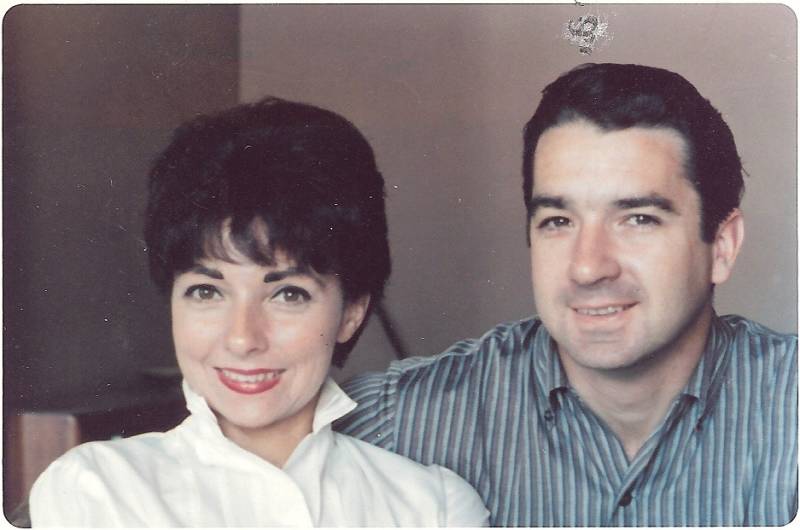
"caption": "Charlotte Schofield and John Anderson, San Francisco, ca. 1962.",
"description": null,
"title": "RS37050_Dad-Mom-posing-smiling-color-50pct-qut",
"credit": "Courtesy of Carolyn Gray Anderson",
"status": "inherit",
"isLoading": false,
"fetchFailed": false
},
"news_11669422": {
"type": "attachments",
"id": "news_11669422",
"meta": {
"index": "attachments_1716263798",
"site": "news",
"id": "11669422",
"found": true
},
"parent": 11669401,
"imgSizes": {
"small": {
"file": "https://ww2.kqed.org/app/uploads/sites/10/2018/05/GettyImages-87447734-520x361.jpg",
"width": 520,
"mimeType": "image/jpeg",
"height": 361
},
"twentyfourteen-full-width": {
"file": "https://ww2.kqed.org/app/uploads/sites/10/2018/05/GettyImages-87447734-1038x576.jpg",
"width": 1038,
"mimeType": "image/jpeg",
"height": 576
},
"thumbnail": {
"file": "https://ww2.kqed.org/app/uploads/sites/10/2018/05/GettyImages-87447734-160x111.jpg",
"width": 160,
"mimeType": "image/jpeg",
"height": 111
},
"fd-sm": {
"file": "https://ww2.kqed.org/app/uploads/sites/10/2018/05/GettyImages-87447734-960x667.jpg",
"width": 960,
"mimeType": "image/jpeg",
"height": 667
},
"post-thumbnail": {
"file": "https://ww2.kqed.org/app/uploads/sites/10/2018/05/GettyImages-87447734-672x372.jpg",
"width": 672,
"mimeType": "image/jpeg",
"height": 372
},
"xsmall": {
"file": "https://ww2.kqed.org/app/uploads/sites/10/2018/05/GettyImages-87447734-375x261.jpg",
"width": 375,
"mimeType": "image/jpeg",
"height": 261
},
"kqedFullSize": {
"file": "https://ww2.kqed.org/app/uploads/sites/10/2018/05/GettyImages-87447734-e1526766524965.jpg",
"width": 1920,
"height": 1334
},
"large": {
"file": "https://ww2.kqed.org/app/uploads/sites/10/2018/05/GettyImages-87447734-1020x709.jpg",
"width": 1020,
"mimeType": "image/jpeg",
"height": 709
},
"xlarge": {
"file": "https://ww2.kqed.org/app/uploads/sites/10/2018/05/GettyImages-87447734-1180x820.jpg",
"width": 1180,
"mimeType": "image/jpeg",
"height": 820
},
"complete_open_graph": {
"file": "https://ww2.kqed.org/app/uploads/sites/10/2018/05/GettyImages-87447734-1200x834.jpg",
"width": 1200,
"mimeType": "image/jpeg",
"height": 834
},
"guest-author-50": {
"file": "https://ww2.kqed.org/app/uploads/sites/10/2018/05/GettyImages-87447734-50x50.jpg",
"width": 50,
"mimeType": "image/jpeg",
"height": 50
},
"guest-author-96": {
"file": "https://ww2.kqed.org/app/uploads/sites/10/2018/05/GettyImages-87447734-96x96.jpg",
"width": 96,
"mimeType": "image/jpeg",
"height": 96
},
"medium": {
"file": "https://ww2.kqed.org/app/uploads/sites/10/2018/05/GettyImages-87447734-800x556.jpg",
"width": 800,
"mimeType": "image/jpeg",
"height": 556
},
"guest-author-64": {
"file": "https://ww2.kqed.org/app/uploads/sites/10/2018/05/GettyImages-87447734-64x64.jpg",
"width": 64,
"mimeType": "image/jpeg",
"height": 64
},
"guest-author-32": {
"file": "https://ww2.kqed.org/app/uploads/sites/10/2018/05/GettyImages-87447734-32x32.jpg",
"width": 32,
"mimeType": "image/jpeg",
"height": 32
},
"fd-lrg": {
"file": "https://ww2.kqed.org/app/uploads/sites/10/2018/05/GettyImages-87447734-1920x1334.jpg",
"width": 1920,
"mimeType": "image/jpeg",
"height": 1334
},
"fd-med": {
"file": "https://ww2.kqed.org/app/uploads/sites/10/2018/05/GettyImages-87447734-1180x820.jpg",
"width": 1180,
"mimeType": "image/jpeg",
"height": 820
},
"full-width": {
"file": "https://ww2.kqed.org/app/uploads/sites/10/2018/05/GettyImages-87447734-1920x1334.jpg",
"width": 1920,
"mimeType": "image/jpeg",
"height": 1334
},
"detail": {
"file": "https://ww2.kqed.org/app/uploads/sites/10/2018/05/GettyImages-87447734-150x150.jpg",
"width": 150,
"mimeType": "image/jpeg",
"height": 150
},
"guest-author-128": {
"file": "https://ww2.kqed.org/app/uploads/sites/10/2018/05/GettyImages-87447734-128x128.jpg",
"width": 128,
"mimeType": "image/jpeg",
"height": 128
},
"xxsmall": {
"file": "https://ww2.kqed.org/app/uploads/sites/10/2018/05/GettyImages-87447734-240x167.jpg",
"width": 240,
"mimeType": "image/jpeg",
"height": 167
}
},
"publishDate": 1526766499,
"modified": 1526766533,
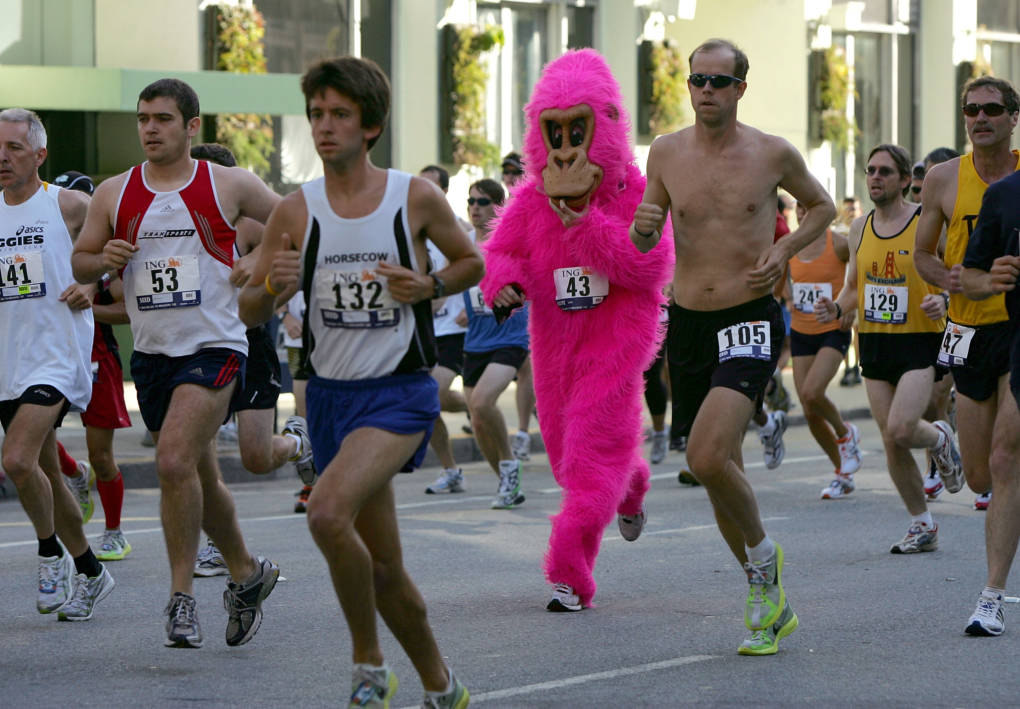
"caption": "Runners, some wearing costumes, take part in the ING Bay to Breakers race May 17, 2009.",
"description": "Runners, some wearing costumes, take part in the ING Bay to Breakers race May 17, 2009.",
"title": "ING Bay to Breakers",
"credit": "Ezra Shaw/Getty Images",
"status": "inherit",
"isLoading": false,
"fetchFailed": false
},
"news_11747681": {
"type": "attachments",
"id": "news_11747681",
"meta": {
"index": "attachments_1716263798",
"site": "news",
"id": "11747681",
"found": true
},
"parent": 11747563,
"imgSizes": {
"apple_news_ca_square_4_0": {
"file": "https://ww2.kqed.org/app/uploads/sites/10/2019/05/KevinEpps.MAIN_-470x450.jpg",
"width": 470,
"mimeType": "image/jpeg",
"height": 450
},
"thumbnail": {
"file": "https://ww2.kqed.org/app/uploads/sites/10/2019/05/KevinEpps.MAIN_-160x90.jpg",
"width": 160,
"mimeType": "image/jpeg",
"height": 90
},
"post-thumbnail": {
"file": "https://ww2.kqed.org/app/uploads/sites/10/2019/05/KevinEpps.MAIN_-672x372.jpg",
"width": 672,
"mimeType": "image/jpeg",
"height": 372
},
"kqedFullSize": {
"file": "https://ww2.kqed.org/app/uploads/sites/10/2019/05/KevinEpps.MAIN_.jpg",
"width": 800,
"height": 450
},
"apple_news_ca_landscape_4_7": {
"file": "https://ww2.kqed.org/app/uploads/sites/10/2019/05/KevinEpps.MAIN_-632x450.jpg",
"width": 632,
"mimeType": "image/jpeg",
"height": 450
},
"apple_news_ca_portrait_4_7": {
"file": "https://ww2.kqed.org/app/uploads/sites/10/2019/05/KevinEpps.MAIN_-414x450.jpg",
"width": 414,
"mimeType": "image/jpeg",
"height": 450
},
"apple_news_ca_portrait_5_5": {
"file": "https://ww2.kqed.org/app/uploads/sites/10/2019/05/KevinEpps.MAIN_-687x450.jpg",
"width": 687,
"mimeType": "image/jpeg",
"height": 450
},
"apple_news_ca_square_4_7": {
"file": "https://ww2.kqed.org/app/uploads/sites/10/2019/05/KevinEpps.MAIN_-550x450.jpg",
"width": 550,
"mimeType": "image/jpeg",
"height": 450
},
"apple_news_ca_landscape_4_0": {
"file": "https://ww2.kqed.org/app/uploads/sites/10/2019/05/KevinEpps.MAIN_-536x402.jpg",
"width": 536,
"mimeType": "image/jpeg",
"height": 402
},
"medium": {
"file": "https://ww2.kqed.org/app/uploads/sites/10/2019/05/KevinEpps.MAIN_-800x450.jpg",
"width": 800,
"mimeType": "image/jpeg",
"height": 450
},
"apple_news_ca_portrait_4_0": {
"file": "https://ww2.kqed.org/app/uploads/sites/10/2019/05/KevinEpps.MAIN_-354x450.jpg",
"width": 354,
"mimeType": "image/jpeg",
"height": 450
}
},
"publishDate": 1558029971,
"modified": 1558030005,
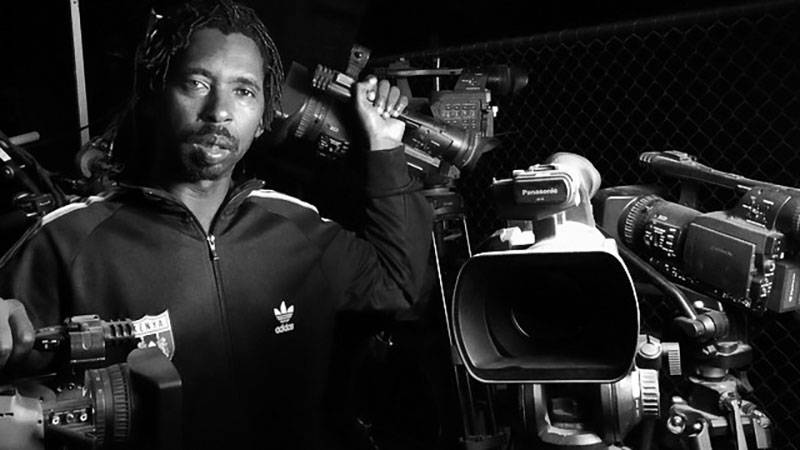
"caption": "San Francisco filmmaker Kevin Epps was arrested for a homicide in Glen Park but has since been released.",
"description": "San Francisco filmmaker Kevin Epps was arrested for a homicide in Glen Park but has since been released.",
"title": "KevinEpps.MAIN",
"credit": "Kevin Epps/Facebook",
"status": "inherit",
"isLoading": false,
"fetchFailed": false
},
"news_11747693": {
"type": "attachments",
"id": "news_11747693",
"meta": {
"index": "attachments_1716263798",
"site": "news",
"id": "11747693",
"found": true
},
"parent": 11747125,
"imgSizes": {
"apple_news_ca_landscape_5_5": {
"file": "https://ww2.kqed.org/app/uploads/sites/10/2019/05/CrystalSprings-2-1044x783.jpg",
"width": 1044,
"mimeType": "image/jpeg",
"height": 783
},
"apple_news_ca_square_4_0": {
"file": "https://ww2.kqed.org/app/uploads/sites/10/2019/05/CrystalSprings-2-470x470.jpg",
"width": 470,
"mimeType": "image/jpeg",
"height": 470
},
"twentyfourteen-full-width": {
"file": "https://ww2.kqed.org/app/uploads/sites/10/2019/05/CrystalSprings-2-1038x576.jpg",
"width": 1038,
"mimeType": "image/jpeg",
"height": 576
},
"thumbnail": {
"file": "https://ww2.kqed.org/app/uploads/sites/10/2019/05/CrystalSprings-2-160x93.jpg",
"width": 160,
"mimeType": "image/jpeg",
"height": 93
},
"post-thumbnail": {
"file": "https://ww2.kqed.org/app/uploads/sites/10/2019/05/CrystalSprings-2-672x372.jpg",
"width": 672,
"mimeType": "image/jpeg",
"height": 372
},
"kqedFullSize": {
"file": "https://ww2.kqed.org/app/uploads/sites/10/2019/05/CrystalSprings-2.jpg",
"width": 1920,
"height": 1114
},
"apple_news_ca_landscape_4_7": {
"file": "https://ww2.kqed.org/app/uploads/sites/10/2019/05/CrystalSprings-2-632x474.jpg",
"width": 632,
"mimeType": "image/jpeg",
"height": 474
},
"large": {
"file": "https://ww2.kqed.org/app/uploads/sites/10/2019/05/CrystalSprings-2-1020x592.jpg",
"width": 1020,
"mimeType": "image/jpeg",
"height": 592
},
"complete_open_graph": {
"file": "https://ww2.kqed.org/app/uploads/sites/10/2019/05/CrystalSprings-2-1200x696.jpg",
"width": 1200,
"mimeType": "image/jpeg",
"height": 696
},
"apple_news_ca_landscape_4_0": {
"file": "https://ww2.kqed.org/app/uploads/sites/10/2019/05/CrystalSprings-2-536x402.jpg",
"width": 536,
"mimeType": "image/jpeg",
"height": 402
},
"apple_news_ca_portrait_12_9": {
"file": "https://ww2.kqed.org/app/uploads/sites/10/2019/05/CrystalSprings-2-1122x1114.jpg",
"width": 1122,
"mimeType": "image/jpeg",
"height": 1114
},
"medium": {
"file": "https://ww2.kqed.org/app/uploads/sites/10/2019/05/CrystalSprings-2-800x464.jpg",
"width": 800,
"mimeType": "image/jpeg",
"height": 464
},
"apple_news_ca_portrait_4_0": {
"file": "https://ww2.kqed.org/app/uploads/sites/10/2019/05/CrystalSprings-2-354x472.jpg",
"width": 354,
"mimeType": "image/jpeg",
"height": 472
},
"apple_news_ca_portrait_9_7": {
"file": "https://ww2.kqed.org/app/uploads/sites/10/2019/05/CrystalSprings-2-840x1114.jpg",
"width": 840,
"mimeType": "image/jpeg",
"height": 1114
},
"apple_news_ca_landscape_12_9": {
"file": "https://ww2.kqed.org/app/uploads/sites/10/2019/05/CrystalSprings-2-1832x1114.jpg",
"width": 1832,
"mimeType": "image/jpeg",
"height": 1114
},
"apple_news_ca_square_9_7": {
"file": "https://ww2.kqed.org/app/uploads/sites/10/2019/05/CrystalSprings-2-1104x1104.jpg",
"width": 1104,
"mimeType": "image/jpeg",
"height": 1104
},
"apple_news_ca_portrait_4_7": {
"file": "https://ww2.kqed.org/app/uploads/sites/10/2019/05/CrystalSprings-2-414x552.jpg",
"width": 414,
"mimeType": "image/jpeg",
"height": 552
},
"apple_news_ca_square_12_9": {
"file": "https://ww2.kqed.org/app/uploads/sites/10/2019/05/CrystalSprings-2-1472x1114.jpg",
"width": 1472,
"mimeType": "image/jpeg",
"height": 1114
},
"apple_news_ca_portrait_5_5": {
"file": "https://ww2.kqed.org/app/uploads/sites/10/2019/05/CrystalSprings-2-687x916.jpg",
"width": 687,
"mimeType": "image/jpeg",
"height": 916
},
"full-width": {
"file": "https://ww2.kqed.org/app/uploads/sites/10/2019/05/CrystalSprings-2-1920x1114.jpg",
"width": 1920,
"mimeType": "image/jpeg",
"height": 1114
},
"apple_news_ca_square_4_7": {
"file": "https://ww2.kqed.org/app/uploads/sites/10/2019/05/CrystalSprings-2-550x550.jpg",
"width": 550,
"mimeType": "image/jpeg",
"height": 550
},
"apple_news_ca_landscape_9_7": {
"file": "https://ww2.kqed.org/app/uploads/sites/10/2019/05/CrystalSprings-2-1376x1032.jpg",
"width": 1376,
"mimeType": "image/jpeg",
"height": 1032
},
"apple_news_ca_square_5_5": {
"file": "https://ww2.kqed.org/app/uploads/sites/10/2019/05/CrystalSprings-2-912x912.jpg",
"width": 912,
"mimeType": "image/jpeg",
"height": 912
}
},
"publishDate": 1558031238,
"modified": 1558031265,
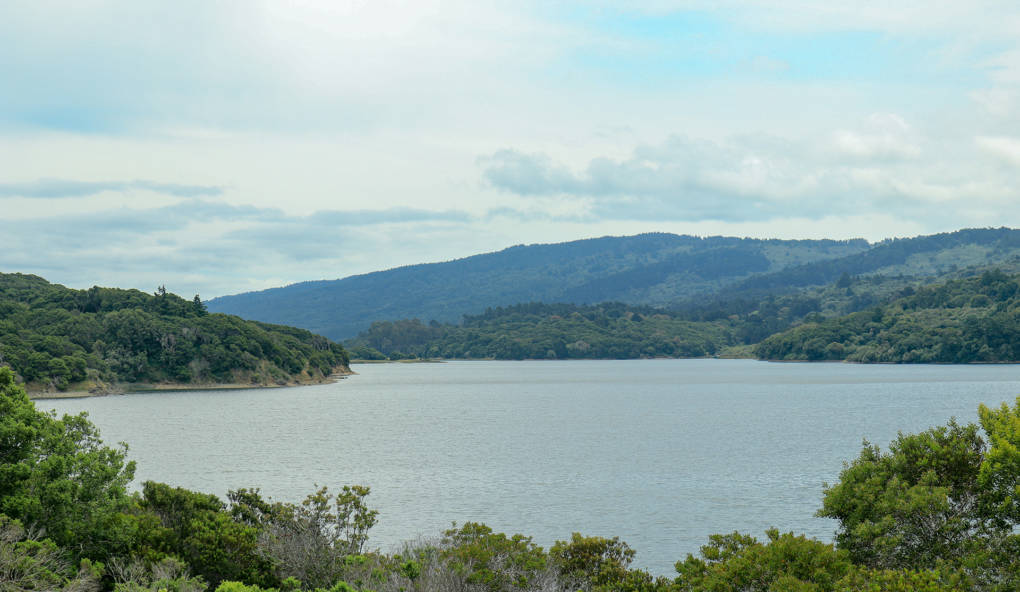
"caption": "A popular way to enjoy the views of the reservoir is by walking along the Sawyer Creek Trail. ",
"description": "A popular way to enjoy the views of the reservoir is by walking along the Sawyer Creek Trail. ",
"title": "CrystalSprings",
"credit": "Sruti Mamidanna/KQED",
"status": "inherit",
"isLoading": false,
"fetchFailed": false
},
"news_11747160": {
"type": "attachments",
"id": "news_11747160",
"meta": {
"index": "attachments_1716263798",
"site": "news",
"id": "11747160",
"found": true
},
"title": "San Francisco Board Of Supervisors To Vote On Banning Facial-Recognition Technology",
"publishDate": 1557871882,
"status": "inherit",
"parent": 11746658,
"modified": 1718134468,
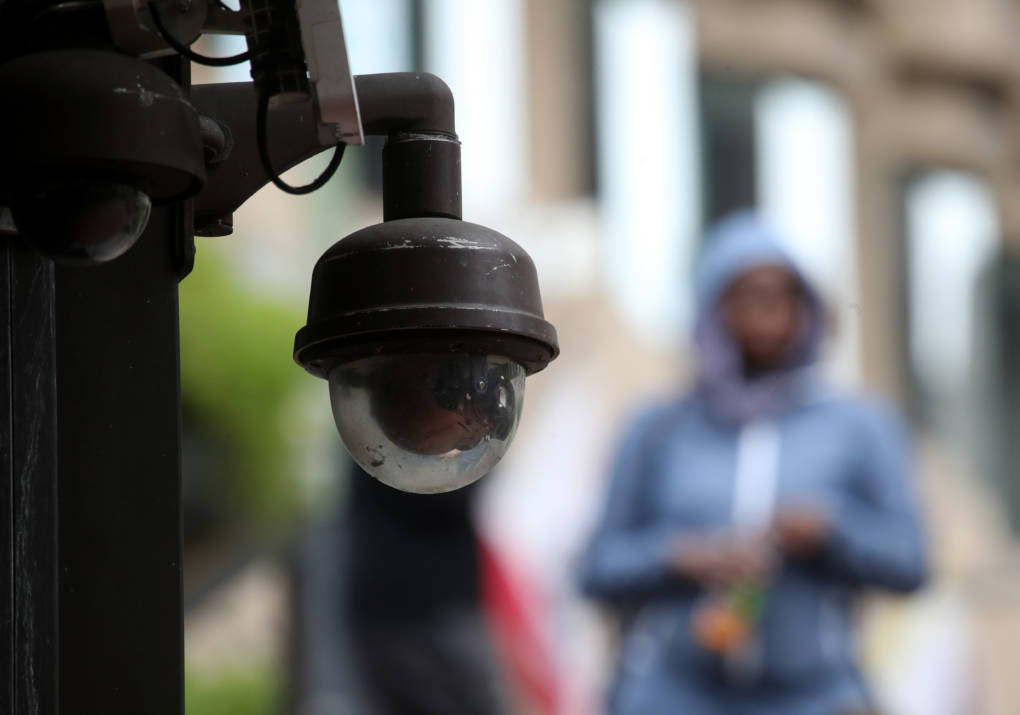
"caption": "A video surveillance camera hangs from the side of a building in San Francisco on May 14, 2019.",
"credit": "Justin Sullivan/Getty Images",
"altTag": "A video surveillance camera is seen hanging with a blurred person in the distance.",
"description": "A video surveillance camera hangs from the side of a building on May 14, 2019 in San Francisco. ",
"imgSizes": {
"thumbnail": {
"file": "https://cdn.kqed.org/wp-content/uploads/sites/10/2019/05/surveillance-camera-san-francisco-160x112.jpg",
"width": 160,
"height": 112,
"mimeType": "image/jpeg"
},
"medium": {
"file": "https://cdn.kqed.org/wp-content/uploads/sites/10/2019/05/surveillance-camera-san-francisco-800x561.jpg",
"width": 800,
"height": 561,
"mimeType": "image/jpeg"
},
"large": {
"file": "https://cdn.kqed.org/wp-content/uploads/sites/10/2019/05/surveillance-camera-san-francisco-1020x715.jpg",
"width": 1020,
"height": 715,
"mimeType": "image/jpeg"
},
"complete_open_graph": {
"file": "https://cdn.kqed.org/wp-content/uploads/sites/10/2019/05/surveillance-camera-san-francisco-1200x842.jpg",
"width": 1200,
"height": 842,
"mimeType": "image/jpeg"
},
"post-thumbnail": {
"file": "https://cdn.kqed.org/wp-content/uploads/sites/10/2019/05/surveillance-camera-san-francisco-672x372.jpg",
"width": 672,
"height": 372,
"mimeType": "image/jpeg"
},
"twentyfourteen-full-width": {
"file": "https://cdn.kqed.org/wp-content/uploads/sites/10/2019/05/surveillance-camera-san-francisco-1038x576.jpg",
"width": 1038,
"height": 576,
"mimeType": "image/jpeg"
},
"full-width": {
"file": "https://cdn.kqed.org/wp-content/uploads/sites/10/2019/05/surveillance-camera-san-francisco-1920x1347.jpg",
"width": 1920,
"height": 1347,
"mimeType": "image/jpeg"
},
"apple_news_ca_landscape_12_9": {
"file": "https://cdn.kqed.org/wp-content/uploads/sites/10/2019/05/surveillance-camera-san-francisco-1832x1374.jpg",
"width": 1832,
"height": 1374,
"mimeType": "image/jpeg"
},
"apple_news_ca_landscape_9_7": {
"file": "https://cdn.kqed.org/wp-content/uploads/sites/10/2019/05/surveillance-camera-san-francisco-1376x1032.jpg",
"width": 1376,
"height": 1032,
"mimeType": "image/jpeg"
},
"apple_news_ca_landscape_5_5": {
"file": "https://cdn.kqed.org/wp-content/uploads/sites/10/2019/05/surveillance-camera-san-francisco-1044x783.jpg",
"width": 1044,
"height": 783,
"mimeType": "image/jpeg"
},
"apple_news_ca_landscape_4_7": {
"file": "https://cdn.kqed.org/wp-content/uploads/sites/10/2019/05/surveillance-camera-san-francisco-632x474.jpg",
"width": 632,
"height": 474,
"mimeType": "image/jpeg"
},
"apple_news_ca_landscape_4_0": {
"file": "https://cdn.kqed.org/wp-content/uploads/sites/10/2019/05/surveillance-camera-san-francisco-536x402.jpg",
"width": 536,
"height": 402,
"mimeType": "image/jpeg"
},
"apple_news_ca_portrait_12_9": {
"file": "https://cdn.kqed.org/wp-content/uploads/sites/10/2019/05/surveillance-camera-san-francisco-1122x1496.jpg",
"width": 1122,
"height": 1496,
"mimeType": "image/jpeg"
},
"apple_news_ca_portrait_9_7": {
"file": "https://cdn.kqed.org/wp-content/uploads/sites/10/2019/05/surveillance-camera-san-francisco-840x1120.jpg",
"width": 840,
"height": 1120,
"mimeType": "image/jpeg"
},
"apple_news_ca_portrait_5_5": {
"file": "https://cdn.kqed.org/wp-content/uploads/sites/10/2019/05/surveillance-camera-san-francisco-687x916.jpg",
"width": 687,
"height": 916,
"mimeType": "image/jpeg"
},
"apple_news_ca_portrait_4_7": {
"file": "https://cdn.kqed.org/wp-content/uploads/sites/10/2019/05/surveillance-camera-san-francisco-414x552.jpg",
"width": 414,
"height": 552,
"mimeType": "image/jpeg"
},
"apple_news_ca_portrait_4_0": {
"file": "https://cdn.kqed.org/wp-content/uploads/sites/10/2019/05/surveillance-camera-san-francisco-354x472.jpg",
"width": 354,
"height": 472,
"mimeType": "image/jpeg"
},
"apple_news_ca_square_12_9": {
"file": "https://cdn.kqed.org/wp-content/uploads/sites/10/2019/05/surveillance-camera-san-francisco-1472x1472.jpg",
"width": 1472,
"height": 1472,
"mimeType": "image/jpeg"
},
"apple_news_ca_square_9_7": {
"file": "https://cdn.kqed.org/wp-content/uploads/sites/10/2019/05/surveillance-camera-san-francisco-1104x1104.jpg",
"width": 1104,
"height": 1104,
"mimeType": "image/jpeg"
},
"apple_news_ca_square_5_5": {
"file": "https://cdn.kqed.org/wp-content/uploads/sites/10/2019/05/surveillance-camera-san-francisco-912x912.jpg",
"width": 912,
"height": 912,
"mimeType": "image/jpeg"
},
"apple_news_ca_square_4_7": {
"file": "https://cdn.kqed.org/wp-content/uploads/sites/10/2019/05/surveillance-camera-san-francisco-550x550.jpg",
"width": 550,
"height": 550,
"mimeType": "image/jpeg"
},
"apple_news_ca_square_4_0": {
"file": "https://cdn.kqed.org/wp-content/uploads/sites/10/2019/05/surveillance-camera-san-francisco-470x470.jpg",
"width": 470,
"height": 470,
"mimeType": "image/jpeg"
},
"kqedFullSize": {
"file": "https://cdn.kqed.org/wp-content/uploads/sites/10/2019/05/surveillance-camera-san-francisco-e1557871943312.jpg",
"width": 1920,
"height": 1347
}
},
"isLoading": false,
"fetchFailed": false
},
"news_11746924": {
"type": "attachments",
"id": "news_11746924",
"meta": {
"index": "attachments_1716263798",
"site": "news",
"id": "11746924",
"found": true
},
"parent": 11746861,
"imgSizes": {
"apple_news_ca_landscape_5_5": {
"file": "https://ww2.kqed.org/app/uploads/sites/10/2019/05/RS35068_POWERLINES_01-qut-1044x783.jpg",
"width": 1044,
"mimeType": "image/jpeg",
"height": 783
},
"apple_news_ca_square_4_0": {
"file": "https://ww2.kqed.org/app/uploads/sites/10/2019/05/RS35068_POWERLINES_01-qut-470x470.jpg",
"width": 470,
"mimeType": "image/jpeg",
"height": 470
},
"twentyfourteen-full-width": {
"file": "https://ww2.kqed.org/app/uploads/sites/10/2019/05/RS35068_POWERLINES_01-qut-1038x576.jpg",
"width": 1038,
"mimeType": "image/jpeg",
"height": 576
},
"thumbnail": {
"file": "https://ww2.kqed.org/app/uploads/sites/10/2019/05/RS35068_POWERLINES_01-qut-160x104.jpg",
"width": 160,
"mimeType": "image/jpeg",
"height": 104
},
"post-thumbnail": {
"file": "https://ww2.kqed.org/app/uploads/sites/10/2019/05/RS35068_POWERLINES_01-qut-672x372.jpg",
"width": 672,
"mimeType": "image/jpeg",
"height": 372
},
"kqedFullSize": {
"file": "https://ww2.kqed.org/app/uploads/sites/10/2019/05/RS35068_POWERLINES_01-qut.jpg",
"width": 1920,
"height": 1252
},
"apple_news_ca_landscape_4_7": {
"file": "https://ww2.kqed.org/app/uploads/sites/10/2019/05/RS35068_POWERLINES_01-qut-632x474.jpg",
"width": 632,
"mimeType": "image/jpeg",
"height": 474
},
"large": {
"file": "https://ww2.kqed.org/app/uploads/sites/10/2019/05/RS35068_POWERLINES_01-qut-1020x665.jpg",
"width": 1020,
"mimeType": "image/jpeg",
"height": 665
},
"complete_open_graph": {
"file": "https://ww2.kqed.org/app/uploads/sites/10/2019/05/RS35068_POWERLINES_01-qut-1200x783.jpg",
"width": 1200,
"mimeType": "image/jpeg",
"height": 783
},
"apple_news_ca_landscape_4_0": {
"file": "https://ww2.kqed.org/app/uploads/sites/10/2019/05/RS35068_POWERLINES_01-qut-536x402.jpg",
"width": 536,
"mimeType": "image/jpeg",
"height": 402
},
"apple_news_ca_portrait_12_9": {
"file": "https://ww2.kqed.org/app/uploads/sites/10/2019/05/RS35068_POWERLINES_01-qut-1122x1252.jpg",
"width": 1122,
"mimeType": "image/jpeg",
"height": 1252
},
"medium": {
"file": "https://ww2.kqed.org/app/uploads/sites/10/2019/05/RS35068_POWERLINES_01-qut-800x522.jpg",
"width": 800,
"mimeType": "image/jpeg",
"height": 522
},
"apple_news_ca_portrait_4_0": {
"file": "https://ww2.kqed.org/app/uploads/sites/10/2019/05/RS35068_POWERLINES_01-qut-354x472.jpg",
"width": 354,
"mimeType": "image/jpeg",
"height": 472
},
"apple_news_ca_portrait_9_7": {
"file": "https://ww2.kqed.org/app/uploads/sites/10/2019/05/RS35068_POWERLINES_01-qut-840x1120.jpg",
"width": 840,
"mimeType": "image/jpeg",
"height": 1120
},
"apple_news_ca_landscape_12_9": {
"file": "https://ww2.kqed.org/app/uploads/sites/10/2019/05/RS35068_POWERLINES_01-qut-1832x1252.jpg",
"width": 1832,
"mimeType": "image/jpeg",
"height": 1252
},
"apple_news_ca_square_9_7": {
"file": "https://ww2.kqed.org/app/uploads/sites/10/2019/05/RS35068_POWERLINES_01-qut-1104x1104.jpg",
"width": 1104,
"mimeType": "image/jpeg",
"height": 1104
},
"apple_news_ca_portrait_4_7": {
"file": "https://ww2.kqed.org/app/uploads/sites/10/2019/05/RS35068_POWERLINES_01-qut-414x552.jpg",
"width": 414,
"mimeType": "image/jpeg",
"height": 552
},
"apple_news_ca_square_12_9": {
"file": "https://ww2.kqed.org/app/uploads/sites/10/2019/05/RS35068_POWERLINES_01-qut-1472x1252.jpg",
"width": 1472,
"mimeType": "image/jpeg",
"height": 1252
},
"apple_news_ca_portrait_5_5": {
"file": "https://ww2.kqed.org/app/uploads/sites/10/2019/05/RS35068_POWERLINES_01-qut-687x916.jpg",
"width": 687,
"mimeType": "image/jpeg",
"height": 916
},
"full-width": {
"file": "https://ww2.kqed.org/app/uploads/sites/10/2019/05/RS35068_POWERLINES_01-qut-1920x1252.jpg",
"width": 1920,
"mimeType": "image/jpeg",
"height": 1252
},
"apple_news_ca_square_4_7": {
"file": "https://ww2.kqed.org/app/uploads/sites/10/2019/05/RS35068_POWERLINES_01-qut-550x550.jpg",
"width": 550,
"mimeType": "image/jpeg",
"height": 550
},
"apple_news_ca_landscape_9_7": {
"file": "https://ww2.kqed.org/app/uploads/sites/10/2019/05/RS35068_POWERLINES_01-qut-1376x1032.jpg",
"width": 1376,
"mimeType": "image/jpeg",
"height": 1032
},
"apple_news_ca_square_5_5": {
"file": "https://ww2.kqed.org/app/uploads/sites/10/2019/05/RS35068_POWERLINES_01-qut-912x912.jpg",
"width": 912,
"mimeType": "image/jpeg",
"height": 912
}
},
"publishDate": 1557789780,
"modified": 1557789812,
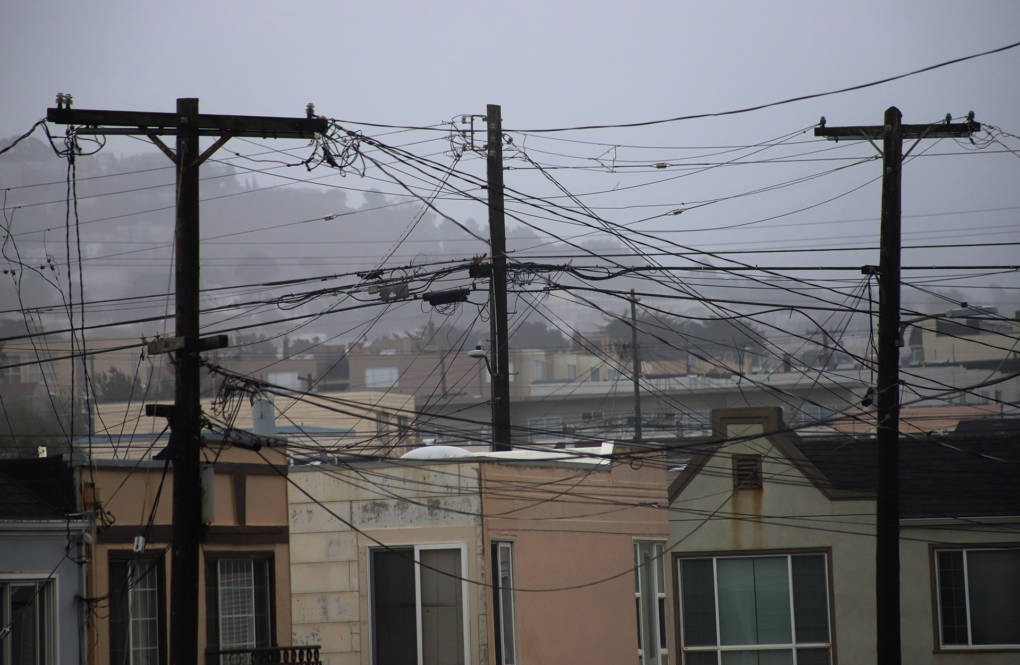
"caption": "Power lines over houses in the Sunset District in San Francisco on Jan. 17, 2019.",
"description": "Power lines over houses in the Sunset District in San Francisco on Jan. 17, 2019.",
"title": "RS35068_POWERLINES_01-qut",
"credit": "Lindsey Moore/KQED",
"status": "inherit",
"isLoading": false,
"fetchFailed": false
},
"news_11746524": {
"type": "attachments",
"id": "news_11746524",
"meta": {
"index": "attachments_1716263798",
"site": "news",
"id": "11746524",
"found": true
},
"parent": 11746494,
"imgSizes": {
"apple_news_ca_square_4_0": {
"file": "https://ww2.kqed.org/app/uploads/sites/10/2019/05/RS35614__M6A0589-qut-1020x680-470x470.jpg",
"width": 470,
"mimeType": "image/jpeg",
"height": 470
},
"twentyfourteen-full-width": {
"file": "https://ww2.kqed.org/app/uploads/sites/10/2019/05/RS35614__M6A0589-qut-1020x680-1020x576.jpg",
"width": 1020,
"mimeType": "image/jpeg",
"height": 576
},
"thumbnail": {
"file": "https://ww2.kqed.org/app/uploads/sites/10/2019/05/RS35614__M6A0589-qut-1020x680-160x107.jpg",
"width": 160,
"mimeType": "image/jpeg",
"height": 107
},
"post-thumbnail": {
"file": "https://ww2.kqed.org/app/uploads/sites/10/2019/05/RS35614__M6A0589-qut-1020x680-672x372.jpg",
"width": 672,
"mimeType": "image/jpeg",
"height": 372
},
"kqedFullSize": {
"file": "https://ww2.kqed.org/app/uploads/sites/10/2019/05/RS35614__M6A0589-qut-1020x680.jpg",
"width": 1020,
"height": 680
},
"apple_news_ca_landscape_4_7": {
"file": "https://ww2.kqed.org/app/uploads/sites/10/2019/05/RS35614__M6A0589-qut-1020x680-632x474.jpg",
"width": 632,
"mimeType": "image/jpeg",
"height": 474
},
"large": {
"file": "https://ww2.kqed.org/app/uploads/sites/10/2019/05/RS35614__M6A0589-qut-1020x680-1020x680.jpg",
"width": 1020,
"mimeType": "image/jpeg",
"height": 680
},
"apple_news_ca_landscape_4_0": {
"file": "https://ww2.kqed.org/app/uploads/sites/10/2019/05/RS35614__M6A0589-qut-1020x680-536x402.jpg",
"width": 536,
"mimeType": "image/jpeg",
"height": 402
},
"medium": {
"file": "https://ww2.kqed.org/app/uploads/sites/10/2019/05/RS35614__M6A0589-qut-1020x680-800x533.jpg",
"width": 800,
"mimeType": "image/jpeg",
"height": 533
},
"apple_news_ca_portrait_4_0": {
"file": "https://ww2.kqed.org/app/uploads/sites/10/2019/05/RS35614__M6A0589-qut-1020x680-354x472.jpg",
"width": 354,
"mimeType": "image/jpeg",
"height": 472
},
"apple_news_ca_portrait_9_7": {
"file": "https://ww2.kqed.org/app/uploads/sites/10/2019/05/RS35614__M6A0589-qut-1020x680-840x680.jpg",
"width": 840,
"mimeType": "image/jpeg",
"height": 680
},
"apple_news_ca_portrait_4_7": {
"file": "https://ww2.kqed.org/app/uploads/sites/10/2019/05/RS35614__M6A0589-qut-1020x680-414x552.jpg",
"width": 414,
"mimeType": "image/jpeg",
"height": 552
},
"apple_news_ca_portrait_5_5": {
"file": "https://ww2.kqed.org/app/uploads/sites/10/2019/05/RS35614__M6A0589-qut-1020x680-687x680.jpg",
"width": 687,
"mimeType": "image/jpeg",
"height": 680
},
"apple_news_ca_square_4_7": {
"file": "https://ww2.kqed.org/app/uploads/sites/10/2019/05/RS35614__M6A0589-qut-1020x680-550x550.jpg",
"width": 550,
"mimeType": "image/jpeg",
"height": 550
},
"apple_news_ca_square_5_5": {
"file": "https://ww2.kqed.org/app/uploads/sites/10/2019/05/RS35614__M6A0589-qut-1020x680-912x680.jpg",
"width": 912,
"mimeType": "image/jpeg",
"height": 680
}
},
"publishDate": 1557602745,
"modified": 1557602767,
"caption": "San Francisco Public Defender Jeff Adachi was memorialized at City Hall on March 4, 2019.",
"description": null,
"title": "RS35614__M6A0589-qut-1020x680",
"credit": "Stephanie Lister/KQED",
"status": "inherit",
"isLoading": false,
"fetchFailed": false
},
"news_11746188": {
"type": "attachments",
"id": "news_11746188",
"meta": {
"index": "attachments_1716263798",
"site": "news",
"id": "11746188",
"found": true
},
"parent": 11746183,
"imgSizes": {
"apple_news_ca_landscape_5_5": {
"file": "https://ww2.kqed.org/app/uploads/sites/10/2019/05/05092019_biketowork-qut-1044x783.jpg",
"width": 1044,
"mimeType": "image/jpeg",
"height": 783
},
"apple_news_ca_square_4_0": {
"file": "https://ww2.kqed.org/app/uploads/sites/10/2019/05/05092019_biketowork-qut-470x470.jpg",
"width": 470,
"mimeType": "image/jpeg",
"height": 470
},
"twentyfourteen-full-width": {
"file": "https://ww2.kqed.org/app/uploads/sites/10/2019/05/05092019_biketowork-qut-1038x576.jpg",
"width": 1038,
"mimeType": "image/jpeg",
"height": 576
},
"thumbnail": {
"file": "https://ww2.kqed.org/app/uploads/sites/10/2019/05/05092019_biketowork-qut-160x113.jpg",
"width": 160,
"mimeType": "image/jpeg",
"height": 113
},
"post-thumbnail": {
"file": "https://ww2.kqed.org/app/uploads/sites/10/2019/05/05092019_biketowork-qut-672x372.jpg",
"width": 672,
"mimeType": "image/jpeg",
"height": 372
},
"kqedFullSize": {
"file": "https://ww2.kqed.org/app/uploads/sites/10/2019/05/05092019_biketowork-qut.jpg",
"width": 1920,
"height": 1356
},
"apple_news_ca_landscape_4_7": {
"file": "https://ww2.kqed.org/app/uploads/sites/10/2019/05/05092019_biketowork-qut-632x474.jpg",
"width": 632,
"mimeType": "image/jpeg",
"height": 474
},
"large": {
"file": "https://ww2.kqed.org/app/uploads/sites/10/2019/05/05092019_biketowork-qut-1020x720.jpg",
"width": 1020,
"mimeType": "image/jpeg",
"height": 720
},
"complete_open_graph": {
"file": "https://ww2.kqed.org/app/uploads/sites/10/2019/05/05092019_biketowork-qut-1200x848.jpg",
"width": 1200,
"mimeType": "image/jpeg",
"height": 848
},
"apple_news_ca_landscape_4_0": {
"file": "https://ww2.kqed.org/app/uploads/sites/10/2019/05/05092019_biketowork-qut-536x402.jpg",
"width": 536,
"mimeType": "image/jpeg",
"height": 402
},
"apple_news_ca_portrait_12_9": {
"file": "https://ww2.kqed.org/app/uploads/sites/10/2019/05/05092019_biketowork-qut-1122x1356.jpg",
"width": 1122,
"mimeType": "image/jpeg",
"height": 1356
},
"medium": {
"file": "https://ww2.kqed.org/app/uploads/sites/10/2019/05/05092019_biketowork-qut-800x565.jpg",
"width": 800,
"mimeType": "image/jpeg",
"height": 565
},
"apple_news_ca_portrait_4_0": {
"file": "https://ww2.kqed.org/app/uploads/sites/10/2019/05/05092019_biketowork-qut-354x472.jpg",
"width": 354,
"mimeType": "image/jpeg",
"height": 472
},
"apple_news_ca_portrait_9_7": {
"file": "https://ww2.kqed.org/app/uploads/sites/10/2019/05/05092019_biketowork-qut-840x1120.jpg",
"width": 840,
"mimeType": "image/jpeg",
"height": 1120
},
"apple_news_ca_landscape_12_9": {
"file": "https://ww2.kqed.org/app/uploads/sites/10/2019/05/05092019_biketowork-qut-1832x1356.jpg",
"width": 1832,
"mimeType": "image/jpeg",
"height": 1356
},
"apple_news_ca_square_9_7": {
"file": "https://ww2.kqed.org/app/uploads/sites/10/2019/05/05092019_biketowork-qut-1104x1104.jpg",
"width": 1104,
"mimeType": "image/jpeg",
"height": 1104
},
"apple_news_ca_portrait_4_7": {
"file": "https://ww2.kqed.org/app/uploads/sites/10/2019/05/05092019_biketowork-qut-414x552.jpg",
"width": 414,
"mimeType": "image/jpeg",
"height": 552
},
"apple_news_ca_square_12_9": {
"file": "https://ww2.kqed.org/app/uploads/sites/10/2019/05/05092019_biketowork-qut-1472x1356.jpg",
"width": 1472,
"mimeType": "image/jpeg",
"height": 1356
},
"apple_news_ca_portrait_5_5": {
"file": "https://ww2.kqed.org/app/uploads/sites/10/2019/05/05092019_biketowork-qut-687x916.jpg",
"width": 687,
"mimeType": "image/jpeg",
"height": 916
},
"full-width": {
"file": "https://ww2.kqed.org/app/uploads/sites/10/2019/05/05092019_biketowork-qut-1920x1356.jpg",
"width": 1920,
"mimeType": "image/jpeg",
"height": 1356
},
"apple_news_ca_square_4_7": {
"file": "https://ww2.kqed.org/app/uploads/sites/10/2019/05/05092019_biketowork-qut-550x550.jpg",
"width": 550,
"mimeType": "image/jpeg",
"height": 550
},
"apple_news_ca_landscape_9_7": {
"file": "https://ww2.kqed.org/app/uploads/sites/10/2019/05/05092019_biketowork-qut-1376x1032.jpg",
"width": 1376,
"mimeType": "image/jpeg",
"height": 1032
},
"apple_news_ca_square_5_5": {
"file": "https://ww2.kqed.org/app/uploads/sites/10/2019/05/05092019_biketowork-qut-912x912.jpg",
"width": 912,
"mimeType": "image/jpeg",
"height": 912
}
},
"publishDate": 1557436388,
"modified": 1557436439,
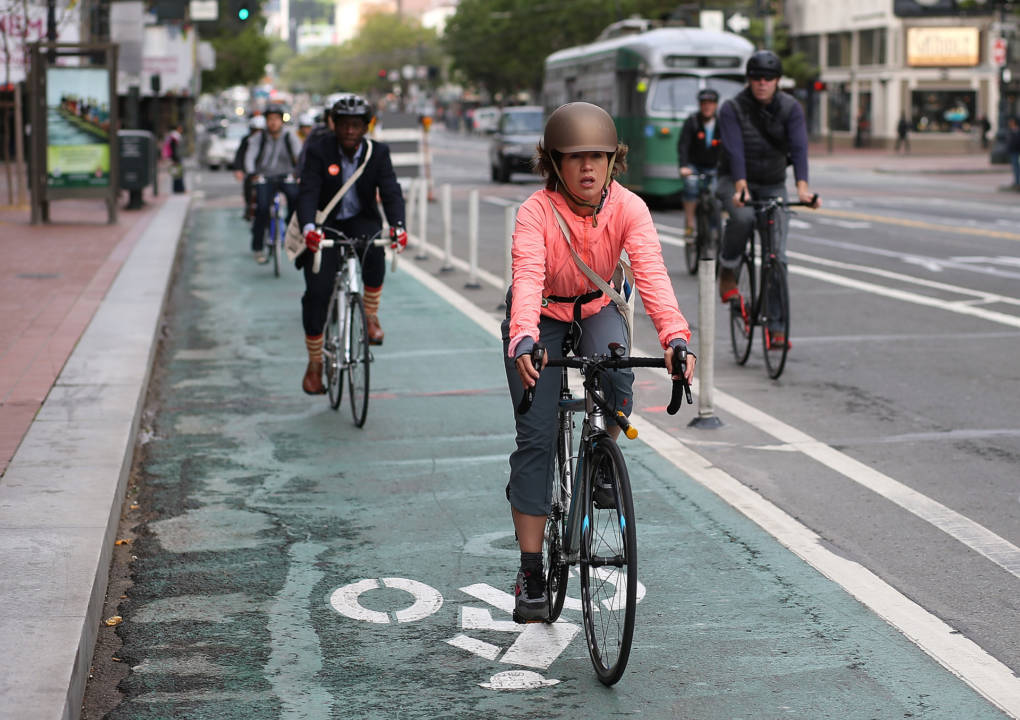
"caption": "Bicyclists ride along Market Street on May 9, 2013, in San Francisco.",
"description": "Bicyclists ride along Market Street on May 9, 2013, in San Francisco.",
"title": "San Francisco Bike Commuter Protected Lanes",
"credit": "Justin Sullivan/Getty Images",
"status": "inherit",
"isLoading": false,
"fetchFailed": false
},
"news_11746011": {
"type": "attachments",
"id": "news_11746011",
"meta": {
"index": "attachments_1716263798",
"site": "news",
"id": "11746011",
"found": true
},
"parent": 11745982,
"imgSizes": {
"apple_news_ca_landscape_5_5": {
"file": "https://ww2.kqed.org/app/uploads/sites/10/2019/05/RS37023_Jungle-gym-qut-1044x783.jpg",
"width": 1044,
"mimeType": "image/jpeg",
"height": 783
},
"apple_news_ca_square_4_0": {
"file": "https://ww2.kqed.org/app/uploads/sites/10/2019/05/RS37023_Jungle-gym-qut-470x470.jpg",
"width": 470,
"mimeType": "image/jpeg",
"height": 470
},
"twentyfourteen-full-width": {
"file": "https://ww2.kqed.org/app/uploads/sites/10/2019/05/RS37023_Jungle-gym-qut-1038x576.jpg",
"width": 1038,
"mimeType": "image/jpeg",
"height": 576
},
"thumbnail": {
"file": "https://ww2.kqed.org/app/uploads/sites/10/2019/05/RS37023_Jungle-gym-qut-160x120.jpg",
"width": 160,
"mimeType": "image/jpeg",
"height": 120
},
"post-thumbnail": {
"file": "https://ww2.kqed.org/app/uploads/sites/10/2019/05/RS37023_Jungle-gym-qut-672x372.jpg",
"width": 672,
"mimeType": "image/jpeg",
"height": 372
},
"kqedFullSize": {
"file": "https://ww2.kqed.org/app/uploads/sites/10/2019/05/RS37023_Jungle-gym-qut.jpg",
"width": 1920,
"height": 1440
},
"apple_news_ca_landscape_4_7": {
"file": "https://ww2.kqed.org/app/uploads/sites/10/2019/05/RS37023_Jungle-gym-qut-632x474.jpg",
"width": 632,
"mimeType": "image/jpeg",
"height": 474
},
"large": {
"file": "https://ww2.kqed.org/app/uploads/sites/10/2019/05/RS37023_Jungle-gym-qut-1020x765.jpg",
"width": 1020,
"mimeType": "image/jpeg",
"height": 765
},
"complete_open_graph": {
"file": "https://ww2.kqed.org/app/uploads/sites/10/2019/05/RS37023_Jungle-gym-qut-1200x900.jpg",
"width": 1200,
"mimeType": "image/jpeg",
"height": 900
},
"apple_news_ca_landscape_4_0": {
"file": "https://ww2.kqed.org/app/uploads/sites/10/2019/05/RS37023_Jungle-gym-qut-536x402.jpg",
"width": 536,
"mimeType": "image/jpeg",
"height": 402
},
"apple_news_ca_portrait_12_9": {
"file": "https://ww2.kqed.org/app/uploads/sites/10/2019/05/RS37023_Jungle-gym-qut-1122x1440.jpg",
"width": 1122,
"mimeType": "image/jpeg",
"height": 1440
},
"medium": {
"file": "https://ww2.kqed.org/app/uploads/sites/10/2019/05/RS37023_Jungle-gym-qut-800x600.jpg",
"width": 800,
"mimeType": "image/jpeg",
"height": 600
},
"apple_news_ca_portrait_4_0": {
"file": "https://ww2.kqed.org/app/uploads/sites/10/2019/05/RS37023_Jungle-gym-qut-354x472.jpg",
"width": 354,
"mimeType": "image/jpeg",
"height": 472
},
"apple_news_ca_portrait_9_7": {
"file": "https://ww2.kqed.org/app/uploads/sites/10/2019/05/RS37023_Jungle-gym-qut-840x1120.jpg",
"width": 840,
"mimeType": "image/jpeg",
"height": 1120
},
"apple_news_ca_landscape_12_9": {
"file": "https://ww2.kqed.org/app/uploads/sites/10/2019/05/RS37023_Jungle-gym-qut-1832x1374.jpg",
"width": 1832,
"mimeType": "image/jpeg",
"height": 1374
},
"apple_news_ca_square_9_7": {
"file": "https://ww2.kqed.org/app/uploads/sites/10/2019/05/RS37023_Jungle-gym-qut-1104x1104.jpg",
"width": 1104,
"mimeType": "image/jpeg",
"height": 1104
},
"apple_news_ca_portrait_4_7": {
"file": "https://ww2.kqed.org/app/uploads/sites/10/2019/05/RS37023_Jungle-gym-qut-414x552.jpg",
"width": 414,
"mimeType": "image/jpeg",
"height": 552
},
"apple_news_ca_square_12_9": {
"file": "https://ww2.kqed.org/app/uploads/sites/10/2019/05/RS37023_Jungle-gym-qut-1472x1440.jpg",
"width": 1472,
"mimeType": "image/jpeg",
"height": 1440
},
"apple_news_ca_portrait_5_5": {
"file": "https://ww2.kqed.org/app/uploads/sites/10/2019/05/RS37023_Jungle-gym-qut-687x916.jpg",
"width": 687,
"mimeType": "image/jpeg",
"height": 916
},
"full-width": {
"file": "https://ww2.kqed.org/app/uploads/sites/10/2019/05/RS37023_Jungle-gym-qut-1920x1440.jpg",
"width": 1920,
"mimeType": "image/jpeg",
"height": 1440
},
"apple_news_ca_square_4_7": {
"file": "https://ww2.kqed.org/app/uploads/sites/10/2019/05/RS37023_Jungle-gym-qut-550x550.jpg",
"width": 550,
"mimeType": "image/jpeg",
"height": 550
},
"apple_news_ca_landscape_9_7": {
"file": "https://ww2.kqed.org/app/uploads/sites/10/2019/05/RS37023_Jungle-gym-qut-1376x1032.jpg",
"width": 1376,
"mimeType": "image/jpeg",
"height": 1032
},
"apple_news_ca_square_5_5": {
"file": "https://ww2.kqed.org/app/uploads/sites/10/2019/05/RS37023_Jungle-gym-qut-912x912.jpg",
"width": 912,
"mimeType": "image/jpeg",
"height": 912
}
},
"publishDate": 1557354998,
"modified": 1557361727,
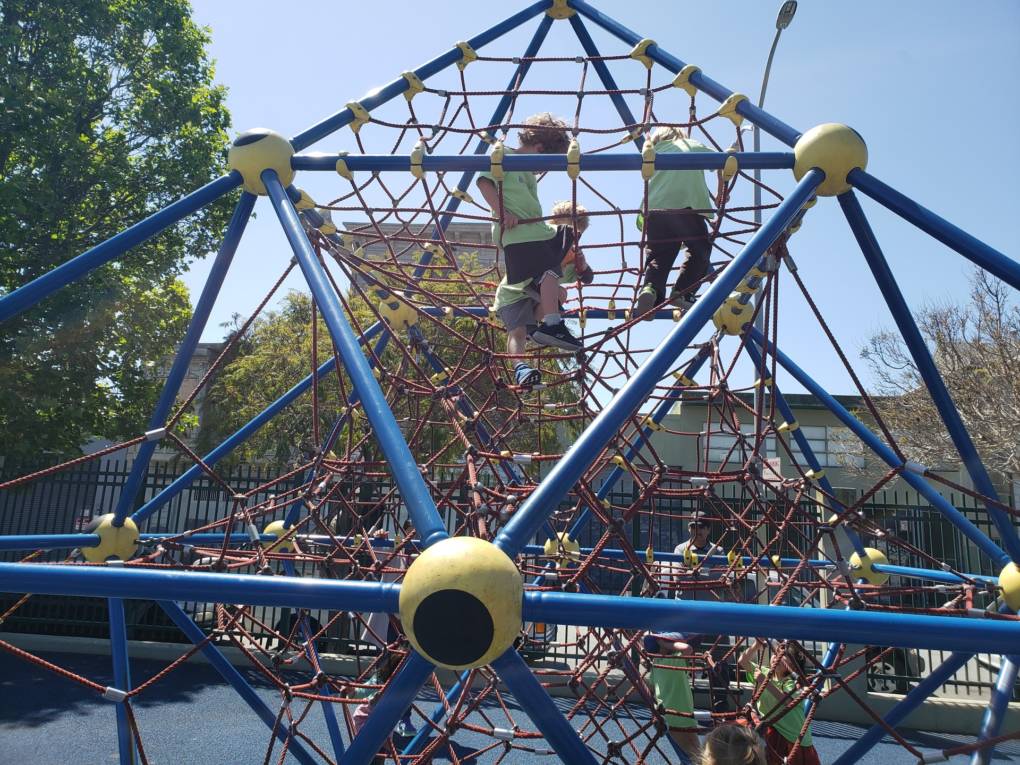
"caption": "Children from the Mission Kids Co-op play at a park near their child care center.",
"description": "Children from the Mission Kids Co-op play at a mark near their child care center.",
"title": "RS37023_Jungle gym-qut",
"credit": "Katie Orr/KQED",
"status": "inherit",
"isLoading": false,
"fetchFailed": false
},
"news_11745950": {
"type": "attachments",
"id": "news_11745950",
"meta": {
"index": "attachments_1716263798",
"site": "news",
"id": "11745950",
"found": true
},
"parent": 11745905,
"imgSizes": {
"apple_news_ca_landscape_5_5": {
"file": "https://ww2.kqed.org/app/uploads/sites/10/2019/05/05082019_cash-qut-1044x783.jpg",
"width": 1044,
"mimeType": "image/jpeg",
"height": 783
},
"apple_news_ca_square_4_0": {
"file": "https://ww2.kqed.org/app/uploads/sites/10/2019/05/05082019_cash-qut-470x470.jpg",
"width": 470,
"mimeType": "image/jpeg",
"height": 470
},
"twentyfourteen-full-width": {
"file": "https://ww2.kqed.org/app/uploads/sites/10/2019/05/05082019_cash-qut-1038x576.jpg",
"width": 1038,
"mimeType": "image/jpeg",
"height": 576
},
"thumbnail": {
"file": "https://ww2.kqed.org/app/uploads/sites/10/2019/05/05082019_cash-qut-160x106.jpg",
"width": 160,
"mimeType": "image/jpeg",
"height": 106
},
"post-thumbnail": {
"file": "https://ww2.kqed.org/app/uploads/sites/10/2019/05/05082019_cash-qut-672x372.jpg",
"width": 672,
"mimeType": "image/jpeg",
"height": 372
},
"kqedFullSize": {
"file": "https://ww2.kqed.org/app/uploads/sites/10/2019/05/05082019_cash-qut.jpg",
"width": 1920,
"height": 1268
},
"apple_news_ca_landscape_4_7": {
"file": "https://ww2.kqed.org/app/uploads/sites/10/2019/05/05082019_cash-qut-632x474.jpg",
"width": 632,
"mimeType": "image/jpeg",
"height": 474
},
"large": {
"file": "https://ww2.kqed.org/app/uploads/sites/10/2019/05/05082019_cash-qut-1020x674.jpg",
"width": 1020,
"mimeType": "image/jpeg",
"height": 674
},
"complete_open_graph": {
"file": "https://ww2.kqed.org/app/uploads/sites/10/2019/05/05082019_cash-qut-1200x793.jpg",
"width": 1200,
"mimeType": "image/jpeg",
"height": 793
},
"apple_news_ca_landscape_4_0": {
"file": "https://ww2.kqed.org/app/uploads/sites/10/2019/05/05082019_cash-qut-536x402.jpg",
"width": 536,
"mimeType": "image/jpeg",
"height": 402
},
"apple_news_ca_portrait_12_9": {
"file": "https://ww2.kqed.org/app/uploads/sites/10/2019/05/05082019_cash-qut-1122x1268.jpg",
"width": 1122,
"mimeType": "image/jpeg",
"height": 1268
},
"medium": {
"file": "https://ww2.kqed.org/app/uploads/sites/10/2019/05/05082019_cash-qut-800x528.jpg",
"width": 800,
"mimeType": "image/jpeg",
"height": 528
},
"apple_news_ca_portrait_4_0": {
"file": "https://ww2.kqed.org/app/uploads/sites/10/2019/05/05082019_cash-qut-354x472.jpg",
"width": 354,
"mimeType": "image/jpeg",
"height": 472
},
"apple_news_ca_portrait_9_7": {
"file": "https://ww2.kqed.org/app/uploads/sites/10/2019/05/05082019_cash-qut-840x1120.jpg",
"width": 840,
"mimeType": "image/jpeg",
"height": 1120
},
"apple_news_ca_landscape_12_9": {
"file": "https://ww2.kqed.org/app/uploads/sites/10/2019/05/05082019_cash-qut-1832x1268.jpg",
"width": 1832,
"mimeType": "image/jpeg",
"height": 1268
},
"apple_news_ca_square_9_7": {
"file": "https://ww2.kqed.org/app/uploads/sites/10/2019/05/05082019_cash-qut-1104x1104.jpg",
"width": 1104,
"mimeType": "image/jpeg",
"height": 1104
},
"apple_news_ca_portrait_4_7": {
"file": "https://ww2.kqed.org/app/uploads/sites/10/2019/05/05082019_cash-qut-414x552.jpg",
"width": 414,
"mimeType": "image/jpeg",
"height": 552
},
"apple_news_ca_square_12_9": {
"file": "https://ww2.kqed.org/app/uploads/sites/10/2019/05/05082019_cash-qut-1472x1268.jpg",
"width": 1472,
"mimeType": "image/jpeg",
"height": 1268
},
"apple_news_ca_portrait_5_5": {
"file": "https://ww2.kqed.org/app/uploads/sites/10/2019/05/05082019_cash-qut-687x916.jpg",
"width": 687,
"mimeType": "image/jpeg",
"height": 916
},
"full-width": {
"file": "https://ww2.kqed.org/app/uploads/sites/10/2019/05/05082019_cash-qut-1920x1268.jpg",
"width": 1920,
"mimeType": "image/jpeg",
"height": 1268
},
"apple_news_ca_square_4_7": {
"file": "https://ww2.kqed.org/app/uploads/sites/10/2019/05/05082019_cash-qut-550x550.jpg",
"width": 550,
"mimeType": "image/jpeg",
"height": 550
},
"apple_news_ca_landscape_9_7": {
"file": "https://ww2.kqed.org/app/uploads/sites/10/2019/05/05082019_cash-qut-1376x1032.jpg",
"width": 1376,
"mimeType": "image/jpeg",
"height": 1032
},
"apple_news_ca_square_5_5": {
"file": "https://ww2.kqed.org/app/uploads/sites/10/2019/05/05082019_cash-qut-912x912.jpg",
"width": 912,
"mimeType": "image/jpeg",
"height": 912
}
},
"publishDate": 1557349083,
"modified": 1557349150,
"caption": "Customers purchase hot dogs at a food cart on Aug. 29, 2016 in San Francisco.",
"description": "Customers purchase hot dogs at a food cart on Aug. 29, 2016 in San Francisco.",
"title": "cashless credit only San Francisco",
"credit": "Justin Sullivan/Getty Images",
"status": "inherit",
"isLoading": false,
"fetchFailed": false
},
"news_11744763": {
"type": "attachments",
"id": "news_11744763",
"meta": {
"index": "attachments_1716263798",
"site": "news",
"id": "11744763",
"found": true
},
"parent": 11744703,
"imgSizes": {
"twentyfourteen-full-width": {
"file": "https://ww2.kqed.org/app/uploads/sites/10/2019/05/Lombard-Street-San-Francisco-1038x576.jpg",
"width": 1038,
"mimeType": "image/jpeg",
"height": 576
},
"thumbnail": {
"file": "https://ww2.kqed.org/app/uploads/sites/10/2019/05/Lombard-Street-San-Francisco-160x101.jpg",
"width": 160,
"mimeType": "image/jpeg",
"height": 101
},
"post-thumbnail": {
"file": "https://ww2.kqed.org/app/uploads/sites/10/2019/05/Lombard-Street-San-Francisco-672x372.jpg",
"width": 672,
"mimeType": "image/jpeg",
"height": 372
},
"kqedFullSize": {
"file": "https://ww2.kqed.org/app/uploads/sites/10/2019/05/Lombard-Street-San-Francisco.jpg",
"width": 1920,
"height": 1208
},
"large": {
"file": "https://ww2.kqed.org/app/uploads/sites/10/2019/05/Lombard-Street-San-Francisco-1020x642.jpg",
"width": 1020,
"mimeType": "image/jpeg",
"height": 642
},
"complete_open_graph": {
"file": "https://ww2.kqed.org/app/uploads/sites/10/2019/05/Lombard-Street-San-Francisco-1200x755.jpg",
"width": 1200,
"mimeType": "image/jpeg",
"height": 755
},
"full-width": {
"file": "https://ww2.kqed.org/app/uploads/sites/10/2019/05/Lombard-Street-San-Francisco-1920x1208.jpg",
"width": 1920,
"mimeType": "image/jpeg",
"height": 1208
},
"medium": {
"file": "https://ww2.kqed.org/app/uploads/sites/10/2019/05/Lombard-Street-San-Francisco-800x503.jpg",
"width": 800,
"mimeType": "image/jpeg",
"height": 503
}
},
"publishDate": 1556842717,
"modified": 1556842735,
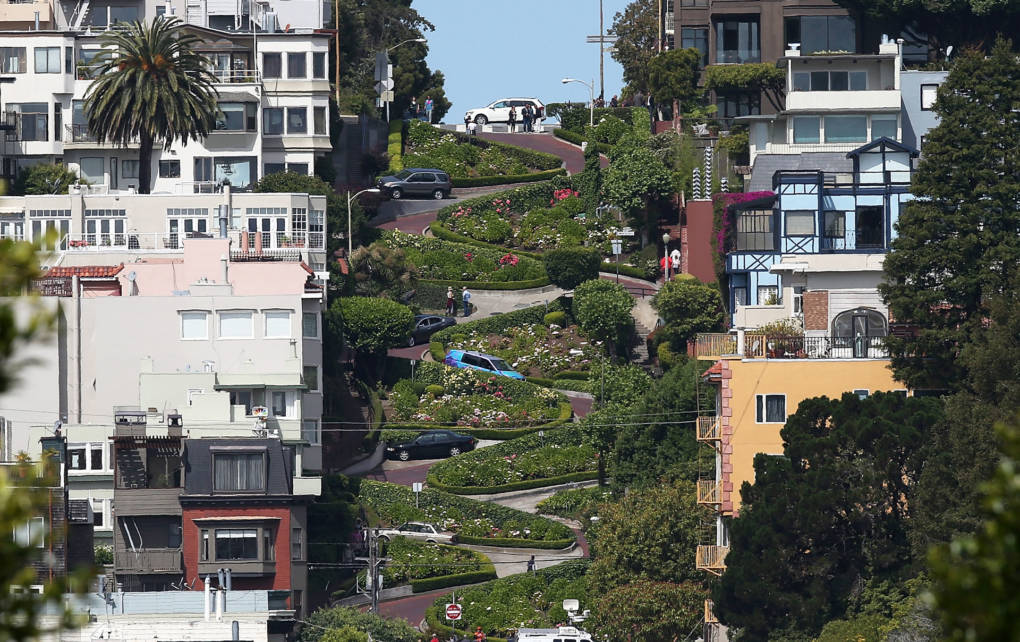
"caption": "A view of the famously crooked section of Lombard Street, on May 20, 2014, in San Francisco. ",
"description": "A view of the famously crooked section of Lombard Street, on May 20, 2014, in San Francisco. ",
"title": "Lombard-Street-San-Francisco",
"credit": "Justin Sullivan/Getty Images",
"status": "inherit",
"isLoading": false,
"fetchFailed": false
}
},
"audioPlayerReducer": {
"postId": "stream_live",
"isPaused": true,
"isPlaying": false,
"pfsActive": false,
"pledgeModalIsOpen": true,
"playerDrawerIsOpen": false,
"liveAudioPlayStartedAt": 0,
"liveAudioPlayContext": ""
},
"authorsReducer": {
"byline_news_11746863": {
"type": "authors",
"id": "byline_news_11746863",
"meta": {
"override": true
},
"slug": "byline_news_11746863",
"name": "Carolyn Gray Anderson",
"isLoading": false
},
"byline_news_11746658": {
"type": "authors",
"id": "byline_news_11746658",
"meta": {
"override": true
},
"slug": "byline_news_11746658",
"name": "\u003cstrong>Matt O'Brien and Janie Har\u003cbr />Associated Press\u003c/strong>",
"isLoading": false
},
"byline_news_11745905": {
"type": "authors",
"id": "byline_news_11745905",
"meta": {
"override": true
},
"slug": "byline_news_11745905",
"name": "\u003cstrong>Associated Press\u003c/strong>",
"isLoading": false
},
"byline_news_11744703": {
"type": "authors",
"id": "byline_news_11744703",
"meta": {
"override": true
},
"slug": "byline_news_11744703",
"name": "\u003cstrong>Associated Press\u003c/strong>",
"isLoading": false
},
"lisapickoffwhite-2": {
"type": "authors",
"id": "199",
"meta": {
"index": "authors_1716337520",
"id": "199",
"found": true
},
"name": "Lisa Pickoff-White",
"firstName": "Lisa",
"lastName": "Pickoff-White",
"slug": "lisapickoffwhite-2",
"email": "lpickoffwhite@kqed.org",
"display_author_email": false,
"staff_mastheads": [
"news"
],
"title": "Data Journalist, Senior Producer",
"bio": "Lisa Pickoff-White is KQED's data reporter. Lisa specializes in simplifying complex topics and bringing them to life through compelling visuals, including photography and data visualizations. She previously has worked at the Center for Investigative Reporting and other national outlets. Her work has been honored with awards from the Online News Association, Investigative Reporters and Editors, the Society of Professional Journalists and SXSW Interactive. \u003cstrong> \u003c/strong>",
"avatar": "https://secure.gravatar.com/avatar/5513c5f3967df792aa65bee2501e84d6?s=600&d=blank&r=g",
"twitter": "pickoffwhite",
"facebook": null,
"instagram": null,
"linkedin": null,
"sites": [
{
"site": "",
"roles": [
"editor"
]
},
{
"site": "arts",
"roles": []
},
{
"site": "news",
"roles": [
"administrator"
]
},
{
"site": "about",
"roles": [
"editor"
]
},
{
"site": "stateofhealth",
"roles": [
"administrator"
]
},
{
"site": "science",
"roles": [
"editor"
]
},
{
"site": "quest",
"roles": [
"editor"
]
},
{
"site": "forum",
"roles": [
"editor"
]
}
],
"headData": {
"title": "Lisa Pickoff-White | KQED",
"description": "Data Journalist, Senior Producer",
"ogImgSrc": "https://secure.gravatar.com/avatar/5513c5f3967df792aa65bee2501e84d6?s=600&d=blank&r=g",
"twImgSrc": "https://secure.gravatar.com/avatar/5513c5f3967df792aa65bee2501e84d6?s=600&d=blank&r=g"
},
"isLoading": false,
"link": "/author/lisapickoffwhite-2"
},
"rachael-myrow": {
"type": "authors",
"id": "251",
"meta": {
"index": "authors_1716337520",
"id": "251",
"found": true
},
"name": "Rachael Myrow",
"firstName": "Rachael",
"lastName": "Myrow",
"slug": "rachael-myrow",
"email": "rmyrow@kqed.org",
"display_author_email": true,
"staff_mastheads": [
"news"
],
"title": "Senior Editor of KQED's Silicon Valley News Desk",
"bio": "• I write and edit stories about how Silicon Valley power and policies shape everyday life in California. I’m also passionate about making Bay Area history and culture more accessible to a broad public. • I’ve been a journalist for most of my life, starting in high school with The Franklin Press in Los Angeles, where I grew up. While earning my first degree in English at UC Berkeley, I got my start in public radio at KALX-FM. After completing a second degree in journalism at Cal, I landed my first professional job at Marketplace, then moved on to KPCC (now LAist), and then KQED, where I hosted The California Report for more than seven years. • My reporting has appeared on NPR, The World, WBUR’s \u003ci>Here & Now\u003c/i>, and the BBC. I also guest host for KQED’s \u003ci>Forum\u003c/i>, as well as the Commonwealth Club in San Francisco. • I speak periodically on media, democracy and technology issues, and do voiceover work for documentaries and educational video projects. • Outside of the studio, you'll find me hiking Bay Area trails and whipping up Insta-ready meals in my kitchen. • I do not accept gifts, money, or favors from anyone connected to my reporting, I don't pay people for information, and I do not support or donate to political causes. • I strive to treat the people I report on with fairness, honesty, and respect. I also recognize there are often multiple sides to a story and work to verify information through multiple sources and documentation. If I get something wrong, I correct it.",
"avatar": "https://secure.gravatar.com/avatar/3ed8a3c5f26025e4a805ba634cda8cd764906b97438a6d9ce216b044e340da4e?s=600&d=blank&r=g",
"twitter": "rachaelmyrow",
"bluesky": null,
"facebook": null,
"instagram": null,
"linkedin": "https://www.linkedin.com/in/rachaelmyrow/",
"sites": [
{
"site": "arts",
"roles": [
"administrator"
]
},
{
"site": "news",
"roles": [
"edit_others_posts",
"editor"
]
},
{
"site": "futureofyou",
"roles": [
"editor"
]
},
{
"site": "bayareabites",
"roles": [
"editor"
]
},
{
"site": "stateofhealth",
"roles": [
"editor"
]
},
{
"site": "science",
"roles": [
"editor"
]
},
{
"site": "food",
"roles": [
"editor"
]
},
{
"site": "forum",
"roles": [
"editor"
]
},
{
"site": "liveblog",
"roles": [
"author"
]
}
],
"headData": {
"title": "Rachael Myrow | KQED",
"description": "Senior Editor of KQED's Silicon Valley News Desk",
"ogImgSrc": "https://secure.gravatar.com/avatar/3ed8a3c5f26025e4a805ba634cda8cd764906b97438a6d9ce216b044e340da4e?s=600&d=blank&r=g",
"twImgSrc": "https://secure.gravatar.com/avatar/3ed8a3c5f26025e4a805ba634cda8cd764906b97438a6d9ce216b044e340da4e?s=600&d=blank&r=g"
},
"isLoading": false,
"link": "/author/rachael-myrow"
},
"tarasiler": {
"type": "authors",
"id": "257",
"meta": {
"index": "authors_1716337520",
"id": "257",
"found": true
},
"name": "Tara Siler",
"firstName": "Tara",
"lastName": "Siler",
"slug": "tarasiler",
"email": "tsiler@kqed.org",
"display_author_email": false,
"staff_mastheads": [
"news"
],
"title": "KQED Contributor",
"bio": "Tara reports and anchors for KQED news. She covers a range of issues from community-police relations to local politics. Tara started out in community radio in the Bay Area, where she was raised. She eventually moved to Washington DC where she covered Congress for eight years for Pacifica and Monitor Radio. Her stories have also been heard on NPR's All Things Considered, Morning Edition and The World.\r\n\r\nTara lives with her husband in Oakland-- where they raised their two sons. She enjoys spending time with her family, gardening and hiking in the Oakland hills... and keeping up with the news.",
"avatar": "https://secure.gravatar.com/avatar/99802f9746fb80b65fd8ec6c57954450?s=600&d=blank&r=g",
"twitter": null,
"facebook": null,
"instagram": null,
"linkedin": null,
"sites": [
{
"site": "news",
"roles": [
"contributor",
"edit_others_posts"
]
},
{
"site": "stateofhealth",
"roles": [
"author"
]
}
],
"headData": {
"title": "Tara Siler | KQED",
"description": "KQED Contributor",
"ogImgSrc": "https://secure.gravatar.com/avatar/99802f9746fb80b65fd8ec6c57954450?s=600&d=blank&r=g",
"twImgSrc": "https://secure.gravatar.com/avatar/99802f9746fb80b65fd8ec6c57954450?s=600&d=blank&r=g"
},
"isLoading": false,
"link": "/author/tarasiler"
},
"tcamhi": {
"type": "authors",
"id": "3251",
"meta": {
"index": "authors_1716337520",
"id": "3251",
"found": true
},
"name": "Tiffany Camhi",
"firstName": "Tiffany",
"lastName": "Camhi",
"slug": "tcamhi",
"email": "tiffanycamhi@gmail.com",
"display_author_email": false,
"staff_mastheads": [],
"title": "KQED Contributor",
"bio": null,
"avatar": "https://secure.gravatar.com/avatar/f8204ce351139205d3b3dc1581016a5e30d7d8b38cb2c139348c151ec14b792e?s=600&d=blank&r=g",
"twitter": null,
"bluesky": null,
"facebook": null,
"instagram": null,
"linkedin": null,
"sites": [
{
"site": "arts",
"roles": [
"subscriber"
]
},
{
"site": "news",
"roles": [
"subscriber"
]
}
],
"headData": {
"title": "Tiffany Camhi | KQED",
"description": "KQED Contributor",
"ogImgSrc": "https://secure.gravatar.com/avatar/f8204ce351139205d3b3dc1581016a5e30d7d8b38cb2c139348c151ec14b792e?s=600&d=blank&r=g",
"twImgSrc": "https://secure.gravatar.com/avatar/f8204ce351139205d3b3dc1581016a5e30d7d8b38cb2c139348c151ec14b792e?s=600&d=blank&r=g"
},
"isLoading": false,
"link": "/author/tcamhi"
},
"korr": {
"type": "authors",
"id": "11200",
"meta": {
"index": "authors_1716337520",
"id": "11200",
"found": true
},
"name": "Katie Orr",
"firstName": "Katie",
"lastName": "Orr",
"slug": "korr",
"email": "korr@kqed.org",
"display_author_email": false,
"staff_mastheads": [],
"title": "KQED Contributor",
"bio": "Katie Orr was a Sacramento-based reporter for KQED's Politics and Government Desk, covering the state Capitol and a variety of issues including women in politics, voting and elections and legislation. Prior to joining KQED in 2016, Katie was state government reporter for Capital Public Radio in Sacramento. She's also worked for KPBS in San Diego, where she covered City Hall.\r\n\r\nKatie received her masters degree in political science from San Diego State University and holds a Bachelors degree in broadcast journalism from Arizona State University.\r\n\r\nIn 2015 Katie won a national Clarion Award for a series of stories she did on women in California politics. She's been honored by the Society for Professional Journalists and, in 2013, was named by \u003cem>The Washington Post\u003c/em> as one of the country's top state Capitol reporters. She's also reported for the award-winning documentary series \u003cem>The View from Here \u003c/em>and was part of the team that won national PRNDI and Gabriel Awards in 2015. She lives in Sacramento with her husband. Twitter: @1KatieOrr",
"avatar": "https://secure.gravatar.com/avatar/41a40b25845adc78f50808670860449e?s=600&d=blank&r=g",
"twitter": "1katieorr",
"facebook": null,
"instagram": null,
"linkedin": null,
"sites": [
{
"site": "news",
"roles": [
"subscriber"
]
},
{
"site": "stateofhealth",
"roles": [
"author"
]
},
{
"site": "forum",
"roles": [
"author"
]
}
],
"headData": {
"title": "Katie Orr | KQED",
"description": "KQED Contributor",
"ogImgSrc": "https://secure.gravatar.com/avatar/41a40b25845adc78f50808670860449e?s=600&d=blank&r=g",
"twImgSrc": "https://secure.gravatar.com/avatar/41a40b25845adc78f50808670860449e?s=600&d=blank&r=g"
},
"isLoading": false,
"link": "/author/korr"
},
"shutson": {
"type": "authors",
"id": "11216",
"meta": {
"index": "authors_1716337520",
"id": "11216",
"found": true
},
"name": "Sonja Hutson",
"firstName": "Sonja",
"lastName": "Hutson",
"slug": "shutson",
"email": "shutson@kqed.org",
"display_author_email": false,
"staff_mastheads": [],
"title": "KQED Contributor",
"bio": "Sonja Hutson is a former reporter for KQED's Silicon Valley desk and weekend newscasts. She primarily covers tech and housing. Sonja is a Bay Area native and now lives in San Francisco. When she's not working, you can find her camping, skiing, scuba diving, and struggling with the New York Times Crossword. Email: \u003ca href=\"mailto:shutson@kqed.org\">shutson@kqed.org. \u003c/a>Twitter: \u003ca href=\"https://twitter.com/SonjaHutson\">@SonjaHutson\u003c/a>",
"avatar": "https://secure.gravatar.com/avatar/7537c5e36818614e599b6c0f41d72b7a?s=600&d=blank&r=g",
"twitter": "SonjaHutson",
"facebook": null,
"instagram": null,
"linkedin": null,
"sites": [
{
"site": "arts",
"roles": [
"author"
]
},
{
"site": "news",
"roles": [
"subscriber"
]
}
],
"headData": {
"title": "Sonja Hutson | KQED",
"description": "KQED Contributor",
"ogImgSrc": "https://secure.gravatar.com/avatar/7537c5e36818614e599b6c0f41d72b7a?s=600&d=blank&r=g",
"twImgSrc": "https://secure.gravatar.com/avatar/7537c5e36818614e599b6c0f41d72b7a?s=600&d=blank&r=g"
},
"isLoading": false,
"link": "/author/shutson"
},
"mleitsinger": {
"type": "authors",
"id": "11310",
"meta": {
"index": "authors_1716337520",
"id": "11310",
"found": true
},
"name": "Miranda Leitsinger",
"firstName": "Miranda",
"lastName": "Leitsinger",
"slug": "mleitsinger",
"email": "mleitsinger@KQED.org",
"display_author_email": false,
"staff_mastheads": [
"news"
],
"title": "KQED Contributor",
"bio": "Miranda Leitsinger has worked in journalism as a reporter and editor since 2000, including seven years at The Associated Press in locales such as Cambodia and Puerto Rico, four years at NBC News Digital in New York and 2.5 years at CNN.com International in Hong Kong. Major stories she has covered included sexual abuse in the yoga community, the rise of women in local politics post-2016 election, the struggle over LGBTQ inclusion in the Boy Scouts, aftermath of the 2004 and 2011 tsunamis, the Aurora movie theater attack, the Newtown school shooting, Superstorm Sandy and the Boston Marathon bombing.",
"avatar": "https://secure.gravatar.com/avatar/cdd00de7be92aab3b7fd3d915e02033d?s=600&d=blank&r=g",
"twitter": "mimileitsinger",
"facebook": null,
"instagram": null,
"linkedin": null,
"sites": [
{
"site": "arts",
"roles": [
"author"
]
},
{
"site": "news",
"roles": [
"subscriber"
]
},
{
"site": "futureofyou",
"roles": [
"editor"
]
},
{
"site": "stateofhealth",
"roles": [
"editor"
]
}
],
"headData": {
"title": "Miranda Leitsinger | KQED",
"description": "KQED Contributor",
"ogImgSrc": "https://secure.gravatar.com/avatar/cdd00de7be92aab3b7fd3d915e02033d?s=600&d=blank&r=g",
"twImgSrc": "https://secure.gravatar.com/avatar/cdd00de7be92aab3b7fd3d915e02033d?s=600&d=blank&r=g"
},
"isLoading": false,
"link": "/author/mleitsinger"
},
"bhernandez": {
"type": "authors",
"id": "11359",
"meta": {
"index": "authors_1716337520",
"id": "11359",
"found": true
},
"name": "Bianca Hernandez",
"firstName": "Bianca",
"lastName": "Hernandez",
"slug": "bhernandez",
"email": "bhernandez@kqed.org",
"display_author_email": false,
"staff_mastheads": [],
"title": "KQED Contributor",
"bio": "Bianca Hernandez is a former Interactive Producer for KQED. She has produced at KGPE, KSEE24 and Sierra Magazine. In 2011 she received an undergraduate degree in Journalism and Anthropology from CSU, Chico . She earned a Master's from the University of Southern California in 2013, where she completed a documentary on teenage farmworkers. She is an avid Jane Austen fan and takes lightsaber combat class for fun.",
"avatar": "https://secure.gravatar.com/avatar/75b3424851e2f9fa131f2cb6a051aeac?s=600&d=blank&r=g",
"twitter": "bookhoarding",
"facebook": null,
"instagram": null,
"linkedin": null,
"sites": [
{
"site": "arts",
"roles": []
},
{
"site": "news",
"roles": []
},
{
"site": "science",
"roles": []
},
{
"site": "forum",
"roles": []
}
],
"headData": {
"title": "Bianca Hernandez | KQED",
"description": "KQED Contributor",
"ogImgSrc": "https://secure.gravatar.com/avatar/75b3424851e2f9fa131f2cb6a051aeac?s=600&d=blank&r=g",
"twImgSrc": "https://secure.gravatar.com/avatar/75b3424851e2f9fa131f2cb6a051aeac?s=600&d=blank&r=g"
},
"isLoading": false,
"link": "/author/bhernandez"
},
"parcuni": {
"type": "authors",
"id": "11368",
"meta": {
"index": "authors_1716337520",
"id": "11368",
"found": true
},
"name": "Peter Arcuni",
"firstName": "Peter",
"lastName": "Arcuni",
"slug": "parcuni",
"email": "parcuni@KQED.org",
"display_author_email": false,
"staff_mastheads": [
"science"
],
"title": "Reporter",
"bio": "Peter reports radio and online stories for \u003cem>KQED Science\u003c/em>. His work has also appeared on the \u003cem>The California Report\u003c/em> morning show and \u003cem>KQED News\u003c/em>. His production credits include \u003cem>The California Report, The California Report Magazine\u003c/em> and KQED's local news podcast \u003cem>The Bay\u003c/em>. Other credits include NPR's \u003cem>All Things Considered\u003c/em>, WNYC's \u003cem>Science Friday\u003c/em>, WBUR's \u003cem>Here & Now\u003c/em>, WIRED and SFGate. Peter graduated from Brown University and earned a master's degree in journalism from Stanford. He's covered everything from homelessness to wildfires, health, the environment, arts and Thanksgiving in San Quentin prison. In other lives, he played rock n roll music and studied neuroscience. You can email him at: parcuni@kqed.org",
"avatar": "https://secure.gravatar.com/avatar/d5032f6f27199d478af34ad2e1d98732?s=600&d=blank&r=g",
"twitter": "peterarcuni",
"facebook": null,
"instagram": null,
"linkedin": null,
"sites": [
{
"site": "news",
"roles": [
"editor"
]
},
{
"site": "science",
"roles": [
"editor"
]
}
],
"headData": {
"title": "Peter Arcuni | KQED",
"description": "Reporter",
"ogImgSrc": "https://secure.gravatar.com/avatar/d5032f6f27199d478af34ad2e1d98732?s=600&d=blank&r=g",
"twImgSrc": "https://secure.gravatar.com/avatar/d5032f6f27199d478af34ad2e1d98732?s=600&d=blank&r=g"
},
"isLoading": false,
"link": "/author/parcuni"
},
"valderete": {
"type": "authors",
"id": "11599",
"meta": {
"index": "authors_1716337520",
"id": "11599",
"found": true
},
"name": "Vianey Alderete Contreras",
"firstName": "Vianey",
"lastName": "Alderete Contreras",
"slug": "valderete",
"email": "valderete@kqed.org",
"display_author_email": false,
"staff_mastheads": [],
"title": "KQED Contributor",
"bio": null,
"avatar": "https://secure.gravatar.com/avatar/c3e988b2fce158f2ac7921cb004e618773aaaf263fd052fa76fc3675cb644f91?s=600&d=blank&r=g",
"twitter": null,
"bluesky": null,
"facebook": null,
"instagram": null,
"linkedin": null,
"sites": [
{
"site": "news",
"roles": [
"subscriber"
]
},
{
"site": "bayareabites",
"roles": [
"editor"
]
},
{
"site": "science",
"roles": [
"editor"
]
},
{
"site": "checkplease",
"roles": [
"editor"
]
},
{
"site": "forum",
"roles": [
"administrator"
]
},
{
"site": "perspectives",
"roles": [
"author"
]
}
],
"headData": {
"title": "Vianey Alderete Contreras | KQED",
"description": "KQED Contributor",
"ogImgSrc": "https://secure.gravatar.com/avatar/c3e988b2fce158f2ac7921cb004e618773aaaf263fd052fa76fc3675cb644f91?s=600&d=blank&r=g",
"twImgSrc": "https://secure.gravatar.com/avatar/c3e988b2fce158f2ac7921cb004e618773aaaf263fd052fa76fc3675cb644f91?s=600&d=blank&r=g"
},
"isLoading": false,
"link": "/author/valderete"
}
},
"pagesReducer": {
"news_tag_san-francisco": {
"type": "terms",
"id": "news_38",
"meta": {
"index": "terms_1716263798",
"site": "news",
"id": "38",
"score": 6.723227
},
"featImg": null,
"name": "San Francisco",
"description": null,
"taxonomy": "tag",
"headData": {
"twImgId": null,
"twTitle": null,
"ogTitle": null,
"ogImgId": null,
"twDescription": null,
"description": null,
"title": "San Francisco Archives | KQED News",
"ogDescription": null
},
"ttid": 58,
"slug": "san-francisco",
"isLoading": false,
"title": "San Francisco",
"pageMeta": {
"site": "news",
"WpPageTemplate": "page-topic-editorial",
"currentPage": 149
},
"blocks": [
{
"blockName": "kqed/post-list",
"attrs": {
"layout": "cardArticle2",
"query": "posts/news?tag=san-francisco",
"seeMore": false,
"paginated": true,
"page": 149
}
},
{
"blockName": "kqed/ad"
}
]
}
},
"pfsSessionReducer": {},
"postsReducer": {
"stream_live": {
"type": "live",
"id": "stream_live",
"audioUrl": "https://streams.kqed.org/kqedradio",
"title": "Live Stream",
"excerpt": "Live Stream information currently unavailable.",
"link": "/radio",
"featImg": "",
"label": {
"name": "KQED Live",
"link": "/"
}
},
"stream_kqedNewscast": {
"type": "posts",
"id": "stream_kqedNewscast",
"audioUrl": "https://www.kqed.org/.stream/anon/radio/RDnews/newscast.mp3?_=1",
"title": "KQED Newscast",
"featImg": "",
"label": {
"name": "88.5 FM",
"link": "/"
}
},
"news_11748384": {
"type": "posts",
"id": "news_11748384",
"meta": {
"index": "posts_1716263798",
"site": "news",
"id": "11748384",
"score": null,
"sort": [
1558314797000
]
},
"guestAuthors": [],
"slug": "corner-of-haight-and-ashbury-in-san-francisco-declared-national-treasure",
"title": "Corner of Haight and Ashbury in San Francisco Declared 'National Treasure'",
"publishDate": 1558314797,
"format": "standard",
"headTitle": "Corner of Haight and Ashbury in San Francisco Declared ‘National Treasure’ | KQED",
"labelTerm": {},
"content": "\u003cp>\u003cem>The National Trust for Historic Preservation declared the corner of Haight and Ashbury a \u003ca href=\"https://sf.curbed.com/2019/5/15/18624445/haight-ashbury-declared-national-treasure-landmark-intersection-sf\">“national treasure”\u003c/a> this past week, defined as “nationally significant historic places where the National Trust is taking direct action.” KQED’s Tiffany Camhi met up at the famous corner with Mike Buhler, the president of San Francisco Heritage. Their conversation has been edited for brevity and clarity.\u003c/em>\u003c/p>\n\u003cp>\u003cstrong>Is this street corner anything like it was back in the 1960s?\u003c/strong>\u003c/p>\n\u003cp>[aside postID=arts_13853019]\u003c/p>\n\u003cp>Absolutely. This corner is remarkably intact. The building that we’re standing next to, the Doolan-Larson building, is a city landmark. It’s on the National Register of Historic Places. It is exactly the same as it was in 1967. And the surrounding neighborhood is one of the most historic neighborhoods in San Francisco. We are literally at the crossroads of the counterculture movement that led to changes in environmental protection, health care, attitudes towards sexuality, rock and roll, the list goes on.\u003c/p>\n\u003cp>\u003cstrong>A lot of people know Haight-Ashbury because of the Grateful Dead, Janis Joplin, Jimi Hendrix all hung out over here. But I didn’t know that there was also a health care movement and an environmental movement going on too.\u003c/strong>\u003c/p>\n\u003cp>That’s right. Just at the other end of the block is the \u003ca href=\"https://www.kqed.org/news/11611303/how-a-hippie-clinic-in-the-haight-ashbury-started-a-medical-revolution\" rel=\"noopener\" target=\"_blank\">Haight Ashbury Free Clinic\u003c/a> opened in 1967 by young UCSF medical students led by Dr. David Smith who’s still in the community today. They coined the phrase “health care is a right not a privilege.” And of course that concern is still resonant today in American discourse.\u003c/p>\n\u003cfigure id=\"attachment_11748459\" class=\"wp-caption aligncenter\" style=\"max-width: 800px\">\u003cimg loading=\"lazy\" decoding=\"async\" class=\"wp-image-11748459 size-medium\" src=\"https://ww2.kqed.org/news/wp-content/uploads/sites/10/2019/05/37082-Greene-group-edit-12x12-800x797.jpg\" alt=\"Members of the Grateful Dead stand outside Mnasidika in the Haight-Ashbury neighborhood. Mnasidika was an influential hippie boutique and meeting place in the 1960s.\" width=\"800\" height=\"797\" srcset=\"https://cdn.kqed.org/wp-content/uploads/sites/10/2019/05/37082-Greene-group-edit-12x12-800x797.jpg 800w, https://cdn.kqed.org/wp-content/uploads/sites/10/2019/05/37082-Greene-group-edit-12x12-160x159.jpg 160w, https://cdn.kqed.org/wp-content/uploads/sites/10/2019/05/37082-Greene-group-edit-12x12-1020x1016.jpg 1020w, https://cdn.kqed.org/wp-content/uploads/sites/10/2019/05/37082-Greene-group-edit-12x12-1200x1195.jpg 1200w, https://cdn.kqed.org/wp-content/uploads/sites/10/2019/05/37082-Greene-group-edit-12x12-1920x1912.jpg 1920w, https://cdn.kqed.org/wp-content/uploads/sites/10/2019/05/37082-Greene-group-edit-12x12.jpg 2048w\" sizes=\"(max-width: 800px) 100vw, 800px\">\u003cfigcaption class=\"wp-caption-text\">Members of the Grateful Dead stand outside Mnasidika in the Haight-Ashbury neighborhood. Mnasidika was an influential hippie boutique and meeting place in the 1960s. \u003ccite>(Herb Greene/Courtesy of San Francisco Heritage)\u003c/cite>\u003c/figcaption>\u003c/figure>\n\u003cp>[ad fullwidth]\u003cbr>\n\u003cstrong>Why this specific corner?\u003c/strong>\u003c/p>\n\u003cp>Well in the mid-60s young people flocked to this neighborhood attracted by cheap rent. At this very building, at the Doolan-Larson building, the first hippie boutique on Haight Street opened, Mnasidika. Mnasidika closed in 1968, but the space as it was is virtually unchanged. The storefront here was owned by a young woman named Peggy Caserta. She was 24 years old when she opened it. The name refers to the first known lesbians in history and among her early friends and customers were members of an unknown band called The Grateful Dead, Jimi Hendrix, Janis Joplin — who would become her lover until Janice’s death in 1970. She is credited with convincing Levi Strauss to produce bell bottom jeans for the first time. She was selling homemade version of bell bottom jeans and then approached Levi’s and is credited for starting that trend.\u003c/p>\n\u003cfigure id=\"attachment_11748460\" class=\"wp-caption aligncenter\" style=\"max-width: 800px\">\u003cimg loading=\"lazy\" decoding=\"async\" class=\"size-medium wp-image-11748460\" src=\"https://ww2.kqed.org/news/wp-content/uploads/sites/10/2019/05/37286-Greene-fr4-flat-800x800.jpg\" alt=\"Peggy Caserta founded Mnasidika and is credited with convincing Levi Strauss to produce bell bottom jeans.\" width=\"800\" height=\"800\" srcset=\"https://cdn.kqed.org/wp-content/uploads/sites/10/2019/05/37286-Greene-fr4-flat-800x800.jpg 800w, https://cdn.kqed.org/wp-content/uploads/sites/10/2019/05/37286-Greene-fr4-flat-160x160.jpg 160w, https://cdn.kqed.org/wp-content/uploads/sites/10/2019/05/37286-Greene-fr4-flat-1020x1020.jpg 1020w, https://cdn.kqed.org/wp-content/uploads/sites/10/2019/05/37286-Greene-fr4-flat-1200x1200.jpg 1200w, https://cdn.kqed.org/wp-content/uploads/sites/10/2019/05/37286-Greene-fr4-flat-1920x1920.jpg 1920w, https://cdn.kqed.org/wp-content/uploads/sites/10/2019/05/37286-Greene-fr4-flat-1472x1472.jpg 1472w, https://cdn.kqed.org/wp-content/uploads/sites/10/2019/05/37286-Greene-fr4-flat-1104x1104.jpg 1104w, https://cdn.kqed.org/wp-content/uploads/sites/10/2019/05/37286-Greene-fr4-flat-912x912.jpg 912w, https://cdn.kqed.org/wp-content/uploads/sites/10/2019/05/37286-Greene-fr4-flat-550x550.jpg 550w, https://cdn.kqed.org/wp-content/uploads/sites/10/2019/05/37286-Greene-fr4-flat-470x470.jpg 470w, https://cdn.kqed.org/wp-content/uploads/sites/10/2019/05/37286-Greene-fr4-flat.jpg 2048w\" sizes=\"(max-width: 800px) 100vw, 800px\">\u003cfigcaption class=\"wp-caption-text\">Peggy Caserta founded Mnasidika and is credited with convincing Levi Strauss to produce bell bottom jeans. \u003ccite>(Herb Greene/Courtesy of San Francisco Heritage)\u003c/cite>\u003c/figcaption>\u003c/figure>\n\u003cp>\u003cstrong>Wow I feel like there should be a plaque right here so people can know which store was Mnasidika.\u003c/strong>\u003c/p>\n\u003cp>Over the next several months we’ll be working with the National Trust (for Historic Preservation) and the Haight Street Art Center for a future cultural destination at this site and Mnasidika will be a prominent part of that because it reflects so many of the values that the counterculture movement embodied whether it be fashion, music, attitudes towards sexuality. I think Mnasidika’s story is really reflective of those things.\u003c/p>\n\u003cp>\u003c/p>\n",
"blocks": [],
"excerpt": "The famous corner is one of the most well-known symbols of the counterculture and hippie movements of the 1960s.",
"status": "publish",
"parent": 0,
"modified": 1721111506,
"stats": {
"hasAudio": false,
"hasVideo": false,
"hasChartOrMap": false,
"iframeSrcs": [],
"hasGoogleForm": false,
"hasGallery": false,
"hasHearkenModule": false,
"hasPolis": false,
"paragraphCount": 11,
"wordCount": 576
},
"headData": {
"title": "Corner of Haight and Ashbury in San Francisco Declared 'National Treasure' | KQED",
"description": "The famous corner is one of the most well-known symbols of the counterculture and hippie movements of the 1960s.",
"ogTitle": "",
"ogDescription": "",
"ogImgId": "",
"twTitle": "",
"twDescription": "",
"twImgId": "",
"schema": {
"@context": "https://schema.org",
"@type": "NewsArticle",
"headline": "Corner of Haight and Ashbury in San Francisco Declared 'National Treasure'",
"datePublished": "2019-05-19T18:13:17-07:00",
"dateModified": "2024-07-15T23:31:46-07:00",
"image": "https://cdn.kqed.org/wp-content/uploads/2020/02/KQED-OG-Image@1x.png",
"isAccessibleForFree": "True",
"publisher": {
"@type": "NewsMediaOrganization",
"@id": "https://www.kqed.org/#organization",
"name": "KQED",
"logo": "https://cdn.kqed.org/wp-content/uploads/2020/02/KQED-OG-Image@1x.png",
"url": "https://www.kqed.org",
"sameAs": [
"https://www.facebook.com/KQED",
"https://twitter.com/KQED",
"https://www.instagram.com/kqed/",
"https://www.tiktok.com/@kqedofficial",
"https://www.linkedin.com/company/kqed",
"https://www.youtube.com/channel/UCeC0IOo7i1P_61zVUWbJ4nw"
]
}
}
},
"source": "News",
"sourceUrl": "https://www.kqed.org/news/",
"sticky": false,
"path": "/news/11748384/corner-of-haight-and-ashbury-in-san-francisco-declared-national-treasure",
"audioTrackLength": null,
"parsedContent": [
{
"type": "contentString",
"content": "\u003cdiv class=\"post-body\">\u003cp>\u003cp>\u003cem>The National Trust for Historic Preservation declared the corner of Haight and Ashbury a \u003ca href=\"https://sf.curbed.com/2019/5/15/18624445/haight-ashbury-declared-national-treasure-landmark-intersection-sf\">“national treasure”\u003c/a> this past week, defined as “nationally significant historic places where the National Trust is taking direct action.” KQED’s Tiffany Camhi met up at the famous corner with Mike Buhler, the president of San Francisco Heritage. Their conversation has been edited for brevity and clarity.\u003c/em>\u003c/p>\n\u003cp>\u003cstrong>Is this street corner anything like it was back in the 1960s?\u003c/strong>\u003c/p>\n\u003cp>\u003c/p>\u003c/div>",
"attributes": {
"named": {},
"numeric": []
}
},
{
"type": "component",
"content": "",
"name": "aside",
"attributes": {
"named": {
"postid": "arts_13853019",
"label": ""
},
"numeric": []
}
},
{
"type": "contentString",
"content": "\u003cdiv class=\"post-body\">\u003cp>\u003c/p>\n\u003cp>Absolutely. This corner is remarkably intact. The building that we’re standing next to, the Doolan-Larson building, is a city landmark. It’s on the National Register of Historic Places. It is exactly the same as it was in 1967. And the surrounding neighborhood is one of the most historic neighborhoods in San Francisco. We are literally at the crossroads of the counterculture movement that led to changes in environmental protection, health care, attitudes towards sexuality, rock and roll, the list goes on.\u003c/p>\n\u003cp>\u003cstrong>A lot of people know Haight-Ashbury because of the Grateful Dead, Janis Joplin, Jimi Hendrix all hung out over here. But I didn’t know that there was also a health care movement and an environmental movement going on too.\u003c/strong>\u003c/p>\n\u003cp>That’s right. Just at the other end of the block is the \u003ca href=\"https://www.kqed.org/news/11611303/how-a-hippie-clinic-in-the-haight-ashbury-started-a-medical-revolution\" rel=\"noopener\" target=\"_blank\">Haight Ashbury Free Clinic\u003c/a> opened in 1967 by young UCSF medical students led by Dr. David Smith who’s still in the community today. They coined the phrase “health care is a right not a privilege.” And of course that concern is still resonant today in American discourse.\u003c/p>\n\u003cfigure id=\"attachment_11748459\" class=\"wp-caption aligncenter\" style=\"max-width: 800px\">\u003cimg loading=\"lazy\" decoding=\"async\" class=\"wp-image-11748459 size-medium\" src=\"https://ww2.kqed.org/news/wp-content/uploads/sites/10/2019/05/37082-Greene-group-edit-12x12-800x797.jpg\" alt=\"Members of the Grateful Dead stand outside Mnasidika in the Haight-Ashbury neighborhood. Mnasidika was an influential hippie boutique and meeting place in the 1960s.\" width=\"800\" height=\"797\" srcset=\"https://cdn.kqed.org/wp-content/uploads/sites/10/2019/05/37082-Greene-group-edit-12x12-800x797.jpg 800w, https://cdn.kqed.org/wp-content/uploads/sites/10/2019/05/37082-Greene-group-edit-12x12-160x159.jpg 160w, https://cdn.kqed.org/wp-content/uploads/sites/10/2019/05/37082-Greene-group-edit-12x12-1020x1016.jpg 1020w, https://cdn.kqed.org/wp-content/uploads/sites/10/2019/05/37082-Greene-group-edit-12x12-1200x1195.jpg 1200w, https://cdn.kqed.org/wp-content/uploads/sites/10/2019/05/37082-Greene-group-edit-12x12-1920x1912.jpg 1920w, https://cdn.kqed.org/wp-content/uploads/sites/10/2019/05/37082-Greene-group-edit-12x12.jpg 2048w\" sizes=\"(max-width: 800px) 100vw, 800px\">\u003cfigcaption class=\"wp-caption-text\">Members of the Grateful Dead stand outside Mnasidika in the Haight-Ashbury neighborhood. Mnasidika was an influential hippie boutique and meeting place in the 1960s. \u003ccite>(Herb Greene/Courtesy of San Francisco Heritage)\u003c/cite>\u003c/figcaption>\u003c/figure>\n\u003cp>\u003c/p>\u003c/div>",
"attributes": {
"named": {},
"numeric": []
}
},
{
"type": "component",
"content": "",
"name": "ad",
"attributes": {
"named": {
"label": "fullwidth"
},
"numeric": [
"fullwidth"
]
}
},
{
"type": "contentString",
"content": "\u003cdiv class=\"post-body\">\u003cp>\u003cbr>\n\u003cstrong>Why this specific corner?\u003c/strong>\u003c/p>\n\u003cp>Well in the mid-60s young people flocked to this neighborhood attracted by cheap rent. At this very building, at the Doolan-Larson building, the first hippie boutique on Haight Street opened, Mnasidika. Mnasidika closed in 1968, but the space as it was is virtually unchanged. The storefront here was owned by a young woman named Peggy Caserta. She was 24 years old when she opened it. The name refers to the first known lesbians in history and among her early friends and customers were members of an unknown band called The Grateful Dead, Jimi Hendrix, Janis Joplin — who would become her lover until Janice’s death in 1970. She is credited with convincing Levi Strauss to produce bell bottom jeans for the first time. She was selling homemade version of bell bottom jeans and then approached Levi’s and is credited for starting that trend.\u003c/p>\n\u003cfigure id=\"attachment_11748460\" class=\"wp-caption aligncenter\" style=\"max-width: 800px\">\u003cimg loading=\"lazy\" decoding=\"async\" class=\"size-medium wp-image-11748460\" src=\"https://ww2.kqed.org/news/wp-content/uploads/sites/10/2019/05/37286-Greene-fr4-flat-800x800.jpg\" alt=\"Peggy Caserta founded Mnasidika and is credited with convincing Levi Strauss to produce bell bottom jeans.\" width=\"800\" height=\"800\" srcset=\"https://cdn.kqed.org/wp-content/uploads/sites/10/2019/05/37286-Greene-fr4-flat-800x800.jpg 800w, https://cdn.kqed.org/wp-content/uploads/sites/10/2019/05/37286-Greene-fr4-flat-160x160.jpg 160w, https://cdn.kqed.org/wp-content/uploads/sites/10/2019/05/37286-Greene-fr4-flat-1020x1020.jpg 1020w, https://cdn.kqed.org/wp-content/uploads/sites/10/2019/05/37286-Greene-fr4-flat-1200x1200.jpg 1200w, https://cdn.kqed.org/wp-content/uploads/sites/10/2019/05/37286-Greene-fr4-flat-1920x1920.jpg 1920w, https://cdn.kqed.org/wp-content/uploads/sites/10/2019/05/37286-Greene-fr4-flat-1472x1472.jpg 1472w, https://cdn.kqed.org/wp-content/uploads/sites/10/2019/05/37286-Greene-fr4-flat-1104x1104.jpg 1104w, https://cdn.kqed.org/wp-content/uploads/sites/10/2019/05/37286-Greene-fr4-flat-912x912.jpg 912w, https://cdn.kqed.org/wp-content/uploads/sites/10/2019/05/37286-Greene-fr4-flat-550x550.jpg 550w, https://cdn.kqed.org/wp-content/uploads/sites/10/2019/05/37286-Greene-fr4-flat-470x470.jpg 470w, https://cdn.kqed.org/wp-content/uploads/sites/10/2019/05/37286-Greene-fr4-flat.jpg 2048w\" sizes=\"(max-width: 800px) 100vw, 800px\">\u003cfigcaption class=\"wp-caption-text\">Peggy Caserta founded Mnasidika and is credited with convincing Levi Strauss to produce bell bottom jeans. \u003ccite>(Herb Greene/Courtesy of San Francisco Heritage)\u003c/cite>\u003c/figcaption>\u003c/figure>\n\u003cp>\u003cstrong>Wow I feel like there should be a plaque right here so people can know which store was Mnasidika.\u003c/strong>\u003c/p>\n\u003cp>Over the next several months we’ll be working with the National Trust (for Historic Preservation) and the Haight Street Art Center for a future cultural destination at this site and Mnasidika will be a prominent part of that because it reflects so many of the values that the counterculture movement embodied whether it be fashion, music, attitudes towards sexuality. I think Mnasidika’s story is really reflective of those things.\u003c/p>\n\u003cp>\u003c/p>\n\u003c/div>\u003c/p>",
"attributes": {
"named": {},
"numeric": []
}
}
],
"link": "/news/11748384/corner-of-haight-and-ashbury-in-san-francisco-declared-national-treasure",
"authors": [
"3251"
],
"programs": [
"news_72"
],
"categories": [
"news_223",
"news_8"
],
"tags": [
"news_357",
"news_38"
],
"featImg": "news_11748458",
"label": "source_news_11748384"
},
"news_11746863": {
"type": "posts",
"id": "news_11746863",
"meta": {
"index": "posts_1716263798",
"site": "news",
"id": "11746863",
"score": null,
"sort": [
1558138264000
]
},
"parent": 0,
"labelTerm": {
"site": "news",
"term": 72
},
"blocks": [],
"publishDate": 1558138264,
"format": "audio",
"disqusTitle": "Letter to My California Dreamer: ‘This Boom Town Boomed Best When You Boomed With It’",
"title": "Letter to My California Dreamer: ‘This Boom Town Boomed Best When You Boomed With It’",
"headTitle": "Letter to My CA Dreamer | The California Report | KQED News",
"content": "\u003cp>For our series “\u003ca href=\"https://www.kqed.org/news/tag/letters-to-my-california-dreamer\">Letter To My California Dreamer\u003c/a>,” we’re asking Californians from all walks of life to \u003ca href=\"https://docs.google.com/forms/d/e/1FAIpQLScVZ3sM0H_4keRP1D28mX4gSSd3IAYjzRgpMZ5xyQhF-5mxvA/viewform\">write a short letter\u003c/a> to one of the first people in their family who came to the Golden State. The letter should explain:\u003c/p>\n\u003cp>\u003cstrong>What was their California Dream?\u003c/strong>\u003cbr>\n\u003cstrong>What happened to it?\u003c/strong>\u003cbr>\n\u003cstrong>Is that California Dream still alive for you?\u003c/strong>\u003c/p>\n\u003cp>Here's a letter from Carolyn Gray Anderson to her parents:\u003c/p>\n\u003cp style=\"font-family: courier\">Dear Mom and Dad:\u003c/p>\n\u003cp style=\"font-family: courier\">Your marriage may not have lasted, but your romance with San Francisco did.\u003c/p>\n\u003cp style=\"font-family: courier\">You headed west with advanced degrees in city planning and met on the job in the early 1960s. The world: your oyster.\u003c/p>\n\u003cp style=\"font-family: courier\">I grew up already nostalgic for your San Francisco — your North Beach haunts, your episodes with glad-handing local politicians and literary notables, your fantastic rotation of flats, from Telegraph Hill to Nob Hill to Chinatown. Apartments that cost you a roughly a fifth of your entry level incomes.\u003c/p>\n\u003cfigure id=\"attachment_11746894\" class=\"wp-caption alignright\" style=\"max-width: 330px\">\u003cimg class=\"wp-image-11746894 \" src=\"https://ww2.kqed.org/news/wp-content/uploads/sites/10/2019/05/RS37052_Dad-Flight-Jacket-qut.jpg\" alt=\"\" width=\"330\" height=\"405\" srcset=\"https://ww2.kqed.org/app/uploads/sites/10/2019/05/RS37052_Dad-Flight-Jacket-qut.jpg 1667w, https://ww2.kqed.org/app/uploads/sites/10/2019/05/RS37052_Dad-Flight-Jacket-qut-160x197.jpg 160w, https://ww2.kqed.org/app/uploads/sites/10/2019/05/RS37052_Dad-Flight-Jacket-qut-800x983.jpg 800w, https://ww2.kqed.org/app/uploads/sites/10/2019/05/RS37052_Dad-Flight-Jacket-qut-1020x1253.jpg 1020w, https://ww2.kqed.org/app/uploads/sites/10/2019/05/RS37052_Dad-Flight-Jacket-qut-977x1200.jpg 977w, https://ww2.kqed.org/app/uploads/sites/10/2019/05/RS37052_Dad-Flight-Jacket-qut-1920x2359.jpg 1920w\" sizes=\"(max-width: 330px) 100vw, 330px\">\u003cfigcaption class=\"wp-caption-text\">John Anderson, an aviation enthusiast from a young age, served in the U.S. Air Force from 1952 to 1954. \u003ccite>(Courtesy of Carolyn Gray Anderson)\u003c/cite>\u003c/figcaption>\u003c/figure>\n\u003cp style=\"font-family: courier\">Dad, you left rural Arkansas for the Golden State when a college buddy promised you a summer gig in a Balboa Island restaurant that served up steaks to vacationers and celebrities. The sand was warm, the girls were suntanned, and you ate like a king. No wonder you decided to finish your degree on the Pacific Rim.\u003c/p>\n\u003cp style=\"font-family: courier\">You earned your master’s from UC Berkeley and worked under four San Francisco mayors in the heyday of redevelopment agencies. You and your fellow planners contributed to projects like BART and the Model Cities Program. And you played hard, too, forming a cadre that persuaded developers to admit you to the vacant top floors of newly-built skyscrapers for your impromptu cocktail hours.\u003c/p>\n\u003cp style=\"font-family: courier\">In 1969, you scraped together a down payment on a Potrero Hill Victorian. You bought it sight unseen and, for 50 years, there in the banana belt of the city with a sweeping view of the bay, still could not believe your good fortune.\u003c/p>\n\u003cfigure id=\"attachment_11746904\" class=\"wp-caption aligncenter\" style=\"max-width: 1280px\">\u003cimg class=\"wp-image-11746904 size-full\" src=\"https://ww2.kqed.org/news/wp-content/uploads/sites/10/2019/05/RS37056_ERudolph_JHA20140521-L2015818-qut.jpg\" alt=\"\" width=\"1280\" height=\"852\" srcset=\"https://ww2.kqed.org/app/uploads/sites/10/2019/05/RS37056_ERudolph_JHA20140521-L2015818-qut.jpg 1280w, https://ww2.kqed.org/app/uploads/sites/10/2019/05/RS37056_ERudolph_JHA20140521-L2015818-qut-160x107.jpg 160w, https://ww2.kqed.org/app/uploads/sites/10/2019/05/RS37056_ERudolph_JHA20140521-L2015818-qut-800x533.jpg 800w, https://ww2.kqed.org/app/uploads/sites/10/2019/05/RS37056_ERudolph_JHA20140521-L2015818-qut-1020x679.jpg 1020w, https://ww2.kqed.org/app/uploads/sites/10/2019/05/RS37056_ERudolph_JHA20140521-L2015818-qut-1200x799.jpg 1200w\" sizes=\"(max-width: 1280px) 100vw, 1280px\">\u003cfigcaption class=\"wp-caption-text\">John Anderson at home in San Francisco, 2014. He bought his 1897 Potrero Hill Victorian in 1969, sight unseen. \u003ccite>(Courtesy of Carolyn Gray Anderson)\u003c/cite>\u003c/figcaption>\u003c/figure>\n\u003cp style=\"font-family: courier\">Not everyone who knew you realized you spent many a Thanksgiving or Christmas morning walking through town, handing cash and food to people who live on the streets.\u003c/p>\n\u003cp style=\"font-family: courier\">Mom, Fort Worth-born with a little Madison Avenue under your belt, you spent your early career holding your own among the man-splainers of the day, a highly educated person who applied her creative ideas to urban systems.\u003c/p>\n\u003cfigure id=\"attachment_11746896\" class=\"wp-caption alignright\" style=\"max-width: 330px\">\u003cimg class=\"wp-image-11746896 \" src=\"https://ww2.kqed.org/news/wp-content/uploads/sites/10/2019/05/RS37051_Mom-umbrella-smiling-BW-50pct-qut.jpg\" alt=\"\" width=\"330\" height=\"485\" srcset=\"https://ww2.kqed.org/app/uploads/sites/10/2019/05/RS37051_Mom-umbrella-smiling-BW-50pct-qut.jpg 865w, https://ww2.kqed.org/app/uploads/sites/10/2019/05/RS37051_Mom-umbrella-smiling-BW-50pct-qut-160x235.jpg 160w, https://ww2.kqed.org/app/uploads/sites/10/2019/05/RS37051_Mom-umbrella-smiling-BW-50pct-qut-800x1175.jpg 800w, https://ww2.kqed.org/app/uploads/sites/10/2019/05/RS37051_Mom-umbrella-smiling-BW-50pct-qut-817x1200.jpg 817w\" sizes=\"(max-width: 330px) 100vw, 330px\">\u003cfigcaption class=\"wp-caption-text\">Charlotte Schofield, San Francisco, ca. 1962. \u003ccite>(Courtesy of Carolyn Gray Anderson)\u003c/cite>\u003c/figcaption>\u003c/figure>\n\u003cp style=\"font-family: courier\">You teetered on I. Magnin spike heels as you pushed your baby's pram up and down San Francisco hills. Literate and lipsticked, with a penchant for vintage Porsches, you were just as comfortable with the John Cheever set as you were with long-haired hippies.\u003c/p>\n\u003cp style=\"font-family: courier\">No one was surprised when you — the poster child for 1980s Dress for Success — retired from HUD to embark on a second career as a fashion designer and instructor.\u003c/p>\n\u003cp style=\"font-family: courier\">Mom, you now live far away, migrating between nests in Dallas and Northern New Mexico. You can be confident that this boom town boomed best when you boomed with it. The San Francisco of high tech, high rent, and $10 avocado toast will never know the splendid opportunities laid at your feet 60 years ago.\u003c/p>\n\u003cp style=\"font-family: courier\">Dad, you didn't live to hear me read you this tribute. You were happiest sitting by the water, whether the bay at sunrise or Point Reyes in the fog of summer. And you lived your last months near the Pacific Ocean, whose sirens had called you decades earlier.\u003c/p>\n\u003cp style=\"font-family: courier\">By your example, Mom and Dad, I traveled and lived far away. But when I returned, it was on purpose. Like you, I take great civic pride in the California city I chose, Los Angeles — this place where people think no one is actually born, though I, a native San Franciscan, meet native Angelenos all the time.\u003c/p>\n\u003cfigure id=\"attachment_11746900\" class=\"wp-caption aligncenter\" style=\"max-width: 920px\">\u003cimg class=\"wp-image-11746900 size-full\" src=\"https://ww2.kqed.org/news/wp-content/uploads/sites/10/2019/05/RS37055_aaron-gray-uncompleted-280-qut.jpg\" alt=\"\" width=\"920\" height=\"630\" srcset=\"https://ww2.kqed.org/app/uploads/sites/10/2019/05/RS37055_aaron-gray-uncompleted-280-qut.jpg 920w, https://ww2.kqed.org/app/uploads/sites/10/2019/05/RS37055_aaron-gray-uncompleted-280-qut-160x110.jpg 160w, https://ww2.kqed.org/app/uploads/sites/10/2019/05/RS37055_aaron-gray-uncompleted-280-qut-800x548.jpg 800w\" sizes=\"(max-width: 920px) 100vw, 920px\">\u003cfigcaption class=\"wp-caption-text\">Carolyn Gray Anderson and her brother Aaron, ca. 1970, on an unfinished stretch of the 280 freeway near Potrero Hill. In his old age, their father, John Anderson, confused people by pointing to it and saying, “I let my kids play on that freeway.” \u003ccite>(Courtesy of Carolyn Gray Anderson)\u003c/cite>\u003c/figcaption>\u003c/figure>\n\u003cp style=\"font-family: courier\">I inherited the true scrappiness of the West. I'm the product of two people who gravitated to San Francisco's legendary gateway to dreams, still a magnet for the hopeful and ambitious. It's a heartbreaking town without pity we all love.\u003c/p>\n\u003cp style=\"font-family: courier\">Your Daughter,\u003c/p>\n\u003cp style=\"font-family: courier\">Gray\u003c/p>\n\u003cp>\u003cem>Carolyn Gray Anderson Lives in Los Angeles. We’d love to see your letter to your family’s California Dreamer. Maybe it was a parent, a great-great grandparent or maybe even you were the first in your family to come to California with a dream. \u003ca href=\"https://docs.google.com/forms/d/e/1FAIpQLScVZ3sM0H_4keRP1D28mX4gSSd3IAYjzRgpMZ5xyQhF-5mxvA/viewform\">Fill out the form here\u003c/a> and share your story with us!\u003c/em>\u003c/p>\n\u003cp>[ad fullwidth]\u003c/p>\n\u003cp>\u003c/p>\n",
"disqusIdentifier": "11746863 https://ww2.kqed.org/news/?p=11746863",
"disqusUrl": "https://ww2.kqed.org/news/2019/05/17/letter-to-my-california-dreamer-this-boom-town-boomed-best-when-you-boomed-with-it/",
"stats": {
"hasVideo": false,
"hasChartOrMap": false,
"hasAudio": false,
"hasPolis": false,
"wordCount": 851,
"hasGoogleForm": false,
"hasGallery": false,
"hasHearkenModule": false,
"iframeSrcs": [],
"paragraphCount": 6
},
"modified": 1558138264,
"excerpt": "Carolyn Gray Anderson, a native San Franciscan, writes to her parents, \"two people who gravitated to San Francisco's legendary gateway to dreams, still a magnet for the hopeful and ambitious.\"",
"headData": {
"twImgId": "",
"twTitle": "",
"ogTitle": "",
"ogImgId": "",
"twDescription": "",
"description": "Carolyn Gray Anderson, a native San Franciscan, writes to her parents, "two people who gravitated to San Francisco's legendary gateway to dreams, still a magnet for the hopeful and ambitious."",
"title": "Letter to My California Dreamer: ‘This Boom Town Boomed Best When You Boomed With It’ | KQED",
"ogDescription": "",
"schema": {
"@context": "https://schema.org",
"@type": "NewsArticle",
"headline": "Letter to My California Dreamer: ‘This Boom Town Boomed Best When You Boomed With It’",
"datePublished": "2019-05-17T17:11:04-07:00",
"dateModified": "2019-05-17T17:11:04-07:00",
"image": "https://cdn.kqed.org/wp-content/uploads/2020/02/KQED-OG-Image@1x.png",
"isAccessibleForFree": "True",
"publisher": {
"@type": "NewsMediaOrganization",
"@id": "https://www.kqed.org/#organization",
"name": "KQED",
"logo": "https://cdn.kqed.org/wp-content/uploads/2020/02/KQED-OG-Image@1x.png",
"url": "https://www.kqed.org",
"sameAs": [
"https://www.facebook.com/KQED",
"https://twitter.com/KQED",
"https://www.instagram.com/kqed/",
"https://www.tiktok.com/@kqedofficial",
"https://www.linkedin.com/company/kqed",
"https://www.youtube.com/channel/UCeC0IOo7i1P_61zVUWbJ4nw"
]
}
}
},
"guestAuthors": [],
"slug": "letter-to-my-california-dreamer-this-boom-town-boomed-best-when-you-boomed-with-it",
"status": "publish",
"audioUrl": "https://www.kqed.org/.stream/anon/radio/tcrmag/2019/05/CADreamerCarolynGrayAnderson.mp3",
"nprByline": "Carolyn Gray Anderson",
"audioTrackLength": 273,
"path": "/news/11746863/letter-to-my-california-dreamer-this-boom-town-boomed-best-when-you-boomed-with-it",
"audioDuration": 273000,
"parsedContent": [
{
"type": "contentString",
"content": "\u003cdiv class=\"post-body\">\u003cp>\u003cp>For our series “\u003ca href=\"https://www.kqed.org/news/tag/letters-to-my-california-dreamer\">Letter To My California Dreamer\u003c/a>,” we’re asking Californians from all walks of life to \u003ca href=\"https://docs.google.com/forms/d/e/1FAIpQLScVZ3sM0H_4keRP1D28mX4gSSd3IAYjzRgpMZ5xyQhF-5mxvA/viewform\">write a short letter\u003c/a> to one of the first people in their family who came to the Golden State. The letter should explain:\u003c/p>\n\u003cp>\u003cstrong>What was their California Dream?\u003c/strong>\u003cbr>\n\u003cstrong>What happened to it?\u003c/strong>\u003cbr>\n\u003cstrong>Is that California Dream still alive for you?\u003c/strong>\u003c/p>\n\u003cp>Here's a letter from Carolyn Gray Anderson to her parents:\u003c/p>\n\u003cp style=\"font-family: courier\">Dear Mom and Dad:\u003c/p>\n\u003cp style=\"font-family: courier\">Your marriage may not have lasted, but your romance with San Francisco did.\u003c/p>\n\u003cp style=\"font-family: courier\">You headed west with advanced degrees in city planning and met on the job in the early 1960s. The world: your oyster.\u003c/p>\n\u003cp style=\"font-family: courier\">I grew up already nostalgic for your San Francisco — your North Beach haunts, your episodes with glad-handing local politicians and literary notables, your fantastic rotation of flats, from Telegraph Hill to Nob Hill to Chinatown. Apartments that cost you a roughly a fifth of your entry level incomes.\u003c/p>\n\u003cfigure id=\"attachment_11746894\" class=\"wp-caption alignright\" style=\"max-width: 330px\">\u003cimg class=\"wp-image-11746894 \" src=\"https://ww2.kqed.org/news/wp-content/uploads/sites/10/2019/05/RS37052_Dad-Flight-Jacket-qut.jpg\" alt=\"\" width=\"330\" height=\"405\" srcset=\"https://ww2.kqed.org/app/uploads/sites/10/2019/05/RS37052_Dad-Flight-Jacket-qut.jpg 1667w, https://ww2.kqed.org/app/uploads/sites/10/2019/05/RS37052_Dad-Flight-Jacket-qut-160x197.jpg 160w, https://ww2.kqed.org/app/uploads/sites/10/2019/05/RS37052_Dad-Flight-Jacket-qut-800x983.jpg 800w, https://ww2.kqed.org/app/uploads/sites/10/2019/05/RS37052_Dad-Flight-Jacket-qut-1020x1253.jpg 1020w, https://ww2.kqed.org/app/uploads/sites/10/2019/05/RS37052_Dad-Flight-Jacket-qut-977x1200.jpg 977w, https://ww2.kqed.org/app/uploads/sites/10/2019/05/RS37052_Dad-Flight-Jacket-qut-1920x2359.jpg 1920w\" sizes=\"(max-width: 330px) 100vw, 330px\">\u003cfigcaption class=\"wp-caption-text\">John Anderson, an aviation enthusiast from a young age, served in the U.S. Air Force from 1952 to 1954. \u003ccite>(Courtesy of Carolyn Gray Anderson)\u003c/cite>\u003c/figcaption>\u003c/figure>\n\u003cp style=\"font-family: courier\">Dad, you left rural Arkansas for the Golden State when a college buddy promised you a summer gig in a Balboa Island restaurant that served up steaks to vacationers and celebrities. The sand was warm, the girls were suntanned, and you ate like a king. No wonder you decided to finish your degree on the Pacific Rim.\u003c/p>\n\u003cp style=\"font-family: courier\">You earned your master’s from UC Berkeley and worked under four San Francisco mayors in the heyday of redevelopment agencies. You and your fellow planners contributed to projects like BART and the Model Cities Program. And you played hard, too, forming a cadre that persuaded developers to admit you to the vacant top floors of newly-built skyscrapers for your impromptu cocktail hours.\u003c/p>\n\u003cp style=\"font-family: courier\">In 1969, you scraped together a down payment on a Potrero Hill Victorian. You bought it sight unseen and, for 50 years, there in the banana belt of the city with a sweeping view of the bay, still could not believe your good fortune.\u003c/p>\n\u003cfigure id=\"attachment_11746904\" class=\"wp-caption aligncenter\" style=\"max-width: 1280px\">\u003cimg class=\"wp-image-11746904 size-full\" src=\"https://ww2.kqed.org/news/wp-content/uploads/sites/10/2019/05/RS37056_ERudolph_JHA20140521-L2015818-qut.jpg\" alt=\"\" width=\"1280\" height=\"852\" srcset=\"https://ww2.kqed.org/app/uploads/sites/10/2019/05/RS37056_ERudolph_JHA20140521-L2015818-qut.jpg 1280w, https://ww2.kqed.org/app/uploads/sites/10/2019/05/RS37056_ERudolph_JHA20140521-L2015818-qut-160x107.jpg 160w, https://ww2.kqed.org/app/uploads/sites/10/2019/05/RS37056_ERudolph_JHA20140521-L2015818-qut-800x533.jpg 800w, https://ww2.kqed.org/app/uploads/sites/10/2019/05/RS37056_ERudolph_JHA20140521-L2015818-qut-1020x679.jpg 1020w, https://ww2.kqed.org/app/uploads/sites/10/2019/05/RS37056_ERudolph_JHA20140521-L2015818-qut-1200x799.jpg 1200w\" sizes=\"(max-width: 1280px) 100vw, 1280px\">\u003cfigcaption class=\"wp-caption-text\">John Anderson at home in San Francisco, 2014. He bought his 1897 Potrero Hill Victorian in 1969, sight unseen. \u003ccite>(Courtesy of Carolyn Gray Anderson)\u003c/cite>\u003c/figcaption>\u003c/figure>\n\u003cp style=\"font-family: courier\">Not everyone who knew you realized you spent many a Thanksgiving or Christmas morning walking through town, handing cash and food to people who live on the streets.\u003c/p>\n\u003cp style=\"font-family: courier\">Mom, Fort Worth-born with a little Madison Avenue under your belt, you spent your early career holding your own among the man-splainers of the day, a highly educated person who applied her creative ideas to urban systems.\u003c/p>\n\u003cfigure id=\"attachment_11746896\" class=\"wp-caption alignright\" style=\"max-width: 330px\">\u003cimg class=\"wp-image-11746896 \" src=\"https://ww2.kqed.org/news/wp-content/uploads/sites/10/2019/05/RS37051_Mom-umbrella-smiling-BW-50pct-qut.jpg\" alt=\"\" width=\"330\" height=\"485\" srcset=\"https://ww2.kqed.org/app/uploads/sites/10/2019/05/RS37051_Mom-umbrella-smiling-BW-50pct-qut.jpg 865w, https://ww2.kqed.org/app/uploads/sites/10/2019/05/RS37051_Mom-umbrella-smiling-BW-50pct-qut-160x235.jpg 160w, https://ww2.kqed.org/app/uploads/sites/10/2019/05/RS37051_Mom-umbrella-smiling-BW-50pct-qut-800x1175.jpg 800w, https://ww2.kqed.org/app/uploads/sites/10/2019/05/RS37051_Mom-umbrella-smiling-BW-50pct-qut-817x1200.jpg 817w\" sizes=\"(max-width: 330px) 100vw, 330px\">\u003cfigcaption class=\"wp-caption-text\">Charlotte Schofield, San Francisco, ca. 1962. \u003ccite>(Courtesy of Carolyn Gray Anderson)\u003c/cite>\u003c/figcaption>\u003c/figure>\n\u003cp style=\"font-family: courier\">You teetered on I. Magnin spike heels as you pushed your baby's pram up and down San Francisco hills. Literate and lipsticked, with a penchant for vintage Porsches, you were just as comfortable with the John Cheever set as you were with long-haired hippies.\u003c/p>\n\u003cp style=\"font-family: courier\">No one was surprised when you — the poster child for 1980s Dress for Success — retired from HUD to embark on a second career as a fashion designer and instructor.\u003c/p>\n\u003cp style=\"font-family: courier\">Mom, you now live far away, migrating between nests in Dallas and Northern New Mexico. You can be confident that this boom town boomed best when you boomed with it. The San Francisco of high tech, high rent, and $10 avocado toast will never know the splendid opportunities laid at your feet 60 years ago.\u003c/p>\n\u003cp style=\"font-family: courier\">Dad, you didn't live to hear me read you this tribute. You were happiest sitting by the water, whether the bay at sunrise or Point Reyes in the fog of summer. And you lived your last months near the Pacific Ocean, whose sirens had called you decades earlier.\u003c/p>\n\u003cp style=\"font-family: courier\">By your example, Mom and Dad, I traveled and lived far away. But when I returned, it was on purpose. Like you, I take great civic pride in the California city I chose, Los Angeles — this place where people think no one is actually born, though I, a native San Franciscan, meet native Angelenos all the time.\u003c/p>\n\u003cfigure id=\"attachment_11746900\" class=\"wp-caption aligncenter\" style=\"max-width: 920px\">\u003cimg class=\"wp-image-11746900 size-full\" src=\"https://ww2.kqed.org/news/wp-content/uploads/sites/10/2019/05/RS37055_aaron-gray-uncompleted-280-qut.jpg\" alt=\"\" width=\"920\" height=\"630\" srcset=\"https://ww2.kqed.org/app/uploads/sites/10/2019/05/RS37055_aaron-gray-uncompleted-280-qut.jpg 920w, https://ww2.kqed.org/app/uploads/sites/10/2019/05/RS37055_aaron-gray-uncompleted-280-qut-160x110.jpg 160w, https://ww2.kqed.org/app/uploads/sites/10/2019/05/RS37055_aaron-gray-uncompleted-280-qut-800x548.jpg 800w\" sizes=\"(max-width: 920px) 100vw, 920px\">\u003cfigcaption class=\"wp-caption-text\">Carolyn Gray Anderson and her brother Aaron, ca. 1970, on an unfinished stretch of the 280 freeway near Potrero Hill. In his old age, their father, John Anderson, confused people by pointing to it and saying, “I let my kids play on that freeway.” \u003ccite>(Courtesy of Carolyn Gray Anderson)\u003c/cite>\u003c/figcaption>\u003c/figure>\n\u003cp style=\"font-family: courier\">I inherited the true scrappiness of the West. I'm the product of two people who gravitated to San Francisco's legendary gateway to dreams, still a magnet for the hopeful and ambitious. It's a heartbreaking town without pity we all love.\u003c/p>\n\u003cp style=\"font-family: courier\">Your Daughter,\u003c/p>\n\u003cp style=\"font-family: courier\">Gray\u003c/p>\n\u003cp>\u003cem>Carolyn Gray Anderson Lives in Los Angeles. We’d love to see your letter to your family’s California Dreamer. Maybe it was a parent, a great-great grandparent or maybe even you were the first in your family to come to California with a dream. \u003ca href=\"https://docs.google.com/forms/d/e/1FAIpQLScVZ3sM0H_4keRP1D28mX4gSSd3IAYjzRgpMZ5xyQhF-5mxvA/viewform\">Fill out the form here\u003c/a> and share your story with us!\u003c/em>\u003c/p>\n\u003cp>\u003c/p>\u003c/div>",
"attributes": {
"named": {},
"numeric": []
}
},
{
"type": "component",
"content": "",
"name": "ad",
"attributes": {
"named": {
"label": "fullwidth"
},
"numeric": [
"fullwidth"
]
}
},
{
"type": "contentString",
"content": "\u003cdiv class=\"post-body\">\u003cp>\u003c/p>\n\u003cp>\u003c/p>\n\u003c/div>\u003c/p>",
"attributes": {
"named": {},
"numeric": []
}
}
],
"link": "/news/11746863/letter-to-my-california-dreamer-this-boom-town-boomed-best-when-you-boomed-with-it",
"authors": [
"byline_news_11746863"
],
"programs": [
"news_72"
],
"series": [
"news_24148"
],
"categories": [
"news_8"
],
"tags": [
"news_20397",
"news_24389",
"news_23351",
"news_38"
],
"featImg": "news_11746893",
"label": "news_72"
},
"news_11669401": {
"type": "posts",
"id": "news_11669401",
"meta": {
"index": "posts_1716263798",
"site": "news",
"id": "11669401",
"score": null,
"sort": [
1558044040000
]
},
"guestAuthors": [],
"slug": "what-you-need-to-know-about-bay-to-breakers",
"title": "Bay to Breakers 2019: Know Before You Go",
"publishDate": 1558044040,
"format": "image",
"headTitle": "Bay to Breakers 2019: Know Before You Go | KQED",
"labelTerm": {
"site": "news"
},
"content": "\u003cp>\u003cem>Updated 3:00 p.m., May 16, 2019. \u003c/em>\u003c/p>\n\u003cp>In case you’ve been wrapped up in \u003ca href=\"https://www.kqed.org/science/1941625/rain-in-may-not-unheard-of-in-northern-california-but-an-unusual-amount-for-entire-month\" rel=\"noopener\" target=\"_blank\">storm hype\u003c/a> or maybe a little distracted thinking about \u003ca href=\"https://www.kqed.org/pop/111777/game-of-thrones-season-8-episode-5-recap-hells-bells\" rel=\"noopener\" target=\"_blank\">the last episode of “Game of Thrones,”\u003c/a> here’s your reminder that Bay to Breakers 2019 is this Sunday. \u003c/p>\n\u003cp>https://twitter.com/Baytobreakers/status/1127633518723338240\u003c/p>\n\u003cp>In case you’re new to the city, or maybe this is your first time participating in the race, here’s a quick and dirty guide for what to expect. \u003c/p>\n\u003cp>\u003cstrong>What is Bay to Breakers?\u003c/strong>\u003c/p>\n\u003cp>[ad fullwidth]\u003c/p>\n\u003cp>It’s an annual foot race across San Francisco. Most notable for the vivid costumes people wear (or lack of costume in some cases) and dividing the city in half (hence all the tweets about road closures and transit detours, but we’ll get to that), the race brings people to the city from far and wide. \u003c/p>\n\u003cp>https://twitter.com/AlaskaAir/status/994748269522706432\u003c/p>\n\u003cp>According to \u003ca href=\"https://www.baytobreakers.com/history\" rel=\"noopener\" target=\"_blank\">its website\u003c/a>, the first race was held in 1912, and the event has been going strong ever since. \u003c/p>\n\u003cp>Tens of thousands participate, but even if you aren’t running or watching, you’ll probably still stumble upon festivities related to the race if you’re in San Francisco, so plan accordingly.\u003c/p>\n\u003cp>https://twitter.com/SF_emergency/status/1128380083272421376\u003c/p>\n\u003cp>The race starts Sunday, May 19 at 8 a.m. with the finish line closing at 1 p.m., but unofficial celebrations can continue well after the route is broken down. \u003c/p>\n\u003cp>\u003cstrong>How many miles is Bay to Breakers? What’s the route?\u003c/strong>\u003c/p>\n\u003cp>https://twitter.com/AlaskaAir/status/997303292878249984\u003c/p>\n\u003cp>Starting on Howard Street, almost to Embarcadero, the race goes through SoMa, up the infamous Hayes Hill, along the Panhandle and ends on the western edge of Golden Gate Park. There are multiple water stations and first aid areas set up along the route. \u003c/p>\n\u003cp>The main route is 12 kilometers (about 7.45 miles), but there is an extra loop set up for people who want to do 15 kilometers (also known as 9.32 miles). \u003c/p>\n\u003cp>\u003cstrong>There will be closures\u003c/strong>\u003c/p>\n\u003cp>City transit agencies have been trying to remind people to prepare for this. Though the race is 8 a.m. to 1 p.m., some closures will start Saturday night. If you plan to drive around the city or take public transit, SFMTA has \u003ca href=\"https://www.sfmta.com/project-updates/bay-breakers-service-impacts\" rel=\"noopener\" target=\"_blank\">a handy page\u003c/a> with lots of links explaining reroutes, closures and more. \u003c/p>\n\u003cp>https://twitter.com/sfmta_muni/status/1129027516440686594\u003c/p>\n\u003cp>\u003cstrong>For people participating\u003c/strong>\u003c/p>\n\u003cp>If you haven’t trained yet, there’s no real advice to get you ready for the physical aspects of the race, but if you find yourself in need of assistance during the race there are plenty of emergency services in place to help. \u003c/p>\n\u003cp>Staying hydrated (with water, \u003ca href=\"https://www.baytobreakers.com/faqs\" rel=\"noopener\" target=\"_blank\">alcohol is banned from the race\u003c/a>) is also key, which is why there are many water stations along the route. The end of the race will feature a festival with food, drink and entertainment. \u003c/p>\n\u003cp>If you have a pet, San Francisco Animal Care and Control recommends you don’t bring it to the race since they aren’t allowed. \u003c/p>\n\u003cp>https://twitter.com/SFACC/status/996858172190031877\u003c/p>\n\u003cp>Lastly, if you haven’t already come up with a costume, you can check out \u003ca href=\"https://www.instagram.com/explore/tags/baytobreakers/\" rel=\"noopener\" target=\"_blank\">#BayToBreakers\u003c/a> on Instagram for inspiration (be prepared for nudity, \u003ca href=\"https://www.kqed.org/news/11613510/the-history-of-nudity-in-san-francisco-uncovered\" rel=\"noopener\" target=\"_blank\">another thing the race is known for\u003c/a>). \u003c/p>\n\u003cp>\u003cstrong>What if it rains?\u003c/strong>\u003c/p>\n\u003cp>No, \u003ca href=\"https://www.baytobreakers.com/faqs\" rel=\"noopener\" target=\"_blank\">you can’t get a refund\u003c/a>. \u003c/p>\n\u003cp>If you’re worried about the \u003ca href=\"https://www.kqed.org/science/1941625/rain-in-may-not-unheard-of-in-northern-california-but-an-unusual-amount-for-entire-month\" rel=\"noopener\" target=\"_blank\">wet weather\u003c/a>, keep tabs \u003ca href=\"https://www.weather.gov/sto/\" rel=\"noopener\" target=\"_blank\">on the forecast\u003c/a> and maybe invest in a water-proof outfit. \u003c/p>\n\u003cp>\u003cstrong>For people not taking part\u003c/strong>\u003c/p>\n\u003cp>If you want to cheer on participants (or just want to see the array of costumes) you’ll want to claim your spot along the route early. \u003c/p>\n\u003cp>https://twitter.com/BrokeAssStuart/status/1128040432192016386\u003c/p>\n\u003cp>Though the race is over midday, it can still throw a wrench in plans if you get stuck on the opposite side of the city that you need to be on. Pay attention to the closures listed above before setting out. \u003c/p>\n\u003cp>\u003c/p>\n\u003cp>https://twitter.com/bittergiantsfan/status/997624902965387264\u003c/p>\n\n",
"blocks": [],
"excerpt": "In case you've been busy, here's your reminder that Bay to Breakers is this weekend. ",
"status": "publish",
"parent": 0,
"modified": 1721154429,
"stats": {
"hasAudio": false,
"hasVideo": false,
"hasChartOrMap": false,
"iframeSrcs": [],
"hasGoogleForm": false,
"hasGallery": false,
"hasHearkenModule": false,
"hasPolis": false,
"paragraphCount": 26,
"wordCount": 683
},
"headData": {
"title": "Bay to Breakers 2019: Know Before You Go | KQED",
"description": "In case you've been busy, here's your reminder that Bay to Breakers is this weekend. ",
"ogTitle": "",
"ogDescription": "",
"ogImgId": "",
"twTitle": "",
"twDescription": "",
"twImgId": "",
"schema": {
"@context": "https://schema.org",
"@type": "NewsArticle",
"headline": "Bay to Breakers 2019: Know Before You Go",
"datePublished": "2019-05-16T15:00:40-07:00",
"dateModified": "2024-07-16T11:27:09-07:00",
"image": "https://cdn.kqed.org/wp-content/uploads/2020/02/KQED-OG-Image@1x.png",
"isAccessibleForFree": "True",
"publisher": {
"@type": "NewsMediaOrganization",
"@id": "https://www.kqed.org/#organization",
"name": "KQED",
"logo": "https://cdn.kqed.org/wp-content/uploads/2020/02/KQED-OG-Image@1x.png",
"url": "https://www.kqed.org",
"sameAs": [
"https://www.facebook.com/KQED",
"https://twitter.com/KQED",
"https://www.instagram.com/kqed/",
"https://www.tiktok.com/@kqedofficial",
"https://www.linkedin.com/company/kqed",
"https://www.youtube.com/channel/UCeC0IOo7i1P_61zVUWbJ4nw"
]
}
}
},
"sticky": false,
"path": "/news/11669401/what-you-need-to-know-about-bay-to-breakers",
"audioTrackLength": null,
"parsedContent": [
{
"type": "contentString",
"content": "\u003cdiv class=\"post-body\">\u003cp>\u003cp>\u003cem>Updated 3:00 p.m., May 16, 2019. \u003c/em>\u003c/p>\n\u003cp>In case you’ve been wrapped up in \u003ca href=\"https://www.kqed.org/science/1941625/rain-in-may-not-unheard-of-in-northern-california-but-an-unusual-amount-for-entire-month\" rel=\"noopener\" target=\"_blank\">storm hype\u003c/a> or maybe a little distracted thinking about \u003ca href=\"https://www.kqed.org/pop/111777/game-of-thrones-season-8-episode-5-recap-hells-bells\" rel=\"noopener\" target=\"_blank\">the last episode of “Game of Thrones,”\u003c/a> here’s your reminder that Bay to Breakers 2019 is this Sunday. \u003c/p>\u003c/p>\u003c/div>",
"attributes": {
"named": {},
"numeric": []
}
},
{
"type": "component",
"content": "",
"name": "singleTwitterStatus",
"attributes": {
"named": {
"id": "1127633518723338240"
},
"numeric": []
}
},
{
"type": "contentString",
"content": "\u003cdiv class=\"post-body\">\u003cp>\n\u003cp>In case you’re new to the city, or maybe this is your first time participating in the race, here’s a quick and dirty guide for what to expect. \u003c/p>\n\u003cp>\u003cstrong>What is Bay to Breakers?\u003c/strong>\u003c/p>\n\u003cp>\u003c/p>\u003c/div>",
"attributes": {
"named": {},
"numeric": []
}
},
{
"type": "component",
"content": "",
"name": "ad",
"attributes": {
"named": {
"label": "fullwidth"
},
"numeric": [
"fullwidth"
]
}
},
{
"type": "contentString",
"content": "\u003cdiv class=\"post-body\">\u003cp>\u003c/p>\n\u003cp>It’s an annual foot race across San Francisco. Most notable for the vivid costumes people wear (or lack of costume in some cases) and dividing the city in half (hence all the tweets about road closures and transit detours, but we’ll get to that), the race brings people to the city from far and wide. \u003c/p>\u003c/p>\u003c/div>",
"attributes": {
"named": {},
"numeric": []
}
},
{
"type": "component",
"content": "",
"name": "singleTwitterStatus",
"attributes": {
"named": {
"id": "994748269522706432"
},
"numeric": []
}
},
{
"type": "contentString",
"content": "\u003cdiv class=\"post-body\">\u003cp>\n\u003cp>According to \u003ca href=\"https://www.baytobreakers.com/history\" rel=\"noopener\" target=\"_blank\">its website\u003c/a>, the first race was held in 1912, and the event has been going strong ever since. \u003c/p>\n\u003cp>Tens of thousands participate, but even if you aren’t running or watching, you’ll probably still stumble upon festivities related to the race if you’re in San Francisco, so plan accordingly.\u003c/p>\u003c/p>\u003c/div>",
"attributes": {
"named": {},
"numeric": []
}
},
{
"type": "component",
"content": "",
"name": "singleTwitterStatus",
"attributes": {
"named": {
"id": "1128380083272421376"
},
"numeric": []
}
},
{
"type": "contentString",
"content": "\u003cdiv class=\"post-body\">\u003cp>\n\u003cp>The race starts Sunday, May 19 at 8 a.m. with the finish line closing at 1 p.m., but unofficial celebrations can continue well after the route is broken down. \u003c/p>\n\u003cp>\u003cstrong>How many miles is Bay to Breakers? What’s the route?\u003c/strong>\u003c/p>\u003c/p>\u003c/div>",
"attributes": {
"named": {},
"numeric": []
}
},
{
"type": "component",
"content": "",
"name": "singleTwitterStatus",
"attributes": {
"named": {
"id": "997303292878249984"
},
"numeric": []
}
},
{
"type": "contentString",
"content": "\u003cdiv class=\"post-body\">\u003cp>\n\u003cp>Starting on Howard Street, almost to Embarcadero, the race goes through SoMa, up the infamous Hayes Hill, along the Panhandle and ends on the western edge of Golden Gate Park. There are multiple water stations and first aid areas set up along the route. \u003c/p>\n\u003cp>The main route is 12 kilometers (about 7.45 miles), but there is an extra loop set up for people who want to do 15 kilometers (also known as 9.32 miles). \u003c/p>\n\u003cp>\u003cstrong>There will be closures\u003c/strong>\u003c/p>\n\u003cp>City transit agencies have been trying to remind people to prepare for this. Though the race is 8 a.m. to 1 p.m., some closures will start Saturday night. If you plan to drive around the city or take public transit, SFMTA has \u003ca href=\"https://www.sfmta.com/project-updates/bay-breakers-service-impacts\" rel=\"noopener\" target=\"_blank\">a handy page\u003c/a> with lots of links explaining reroutes, closures and more. \u003c/p>\u003c/p>\u003c/div>",
"attributes": {
"named": {},
"numeric": []
}
},
{
"type": "component",
"content": "",
"name": "singleTwitterStatus",
"attributes": {
"named": {
"id": "1129027516440686594"
},
"numeric": []
}
},
{
"type": "contentString",
"content": "\u003cdiv class=\"post-body\">\u003cp>\n\u003cp>\u003cstrong>For people participating\u003c/strong>\u003c/p>\n\u003cp>If you haven’t trained yet, there’s no real advice to get you ready for the physical aspects of the race, but if you find yourself in need of assistance during the race there are plenty of emergency services in place to help. \u003c/p>\n\u003cp>Staying hydrated (with water, \u003ca href=\"https://www.baytobreakers.com/faqs\" rel=\"noopener\" target=\"_blank\">alcohol is banned from the race\u003c/a>) is also key, which is why there are many water stations along the route. The end of the race will feature a festival with food, drink and entertainment. \u003c/p>\n\u003cp>If you have a pet, San Francisco Animal Care and Control recommends you don’t bring it to the race since they aren’t allowed. \u003c/p>\u003c/p>\u003c/div>",
"attributes": {
"named": {},
"numeric": []
}
},
{
"type": "component",
"content": "",
"name": "singleTwitterStatus",
"attributes": {
"named": {
"id": "996858172190031877"
},
"numeric": []
}
},
{
"type": "contentString",
"content": "\u003cdiv class=\"post-body\">\u003cp>\n\u003cp>Lastly, if you haven’t already come up with a costume, you can check out \u003ca href=\"https://www.instagram.com/explore/tags/baytobreakers/\" rel=\"noopener\" target=\"_blank\">#BayToBreakers\u003c/a> on Instagram for inspiration (be prepared for nudity, \u003ca href=\"https://www.kqed.org/news/11613510/the-history-of-nudity-in-san-francisco-uncovered\" rel=\"noopener\" target=\"_blank\">another thing the race is known for\u003c/a>). \u003c/p>\n\u003cp>\u003cstrong>What if it rains?\u003c/strong>\u003c/p>\n\u003cp>No, \u003ca href=\"https://www.baytobreakers.com/faqs\" rel=\"noopener\" target=\"_blank\">you can’t get a refund\u003c/a>. \u003c/p>\n\u003cp>If you’re worried about the \u003ca href=\"https://www.kqed.org/science/1941625/rain-in-may-not-unheard-of-in-northern-california-but-an-unusual-amount-for-entire-month\" rel=\"noopener\" target=\"_blank\">wet weather\u003c/a>, keep tabs \u003ca href=\"https://www.weather.gov/sto/\" rel=\"noopener\" target=\"_blank\">on the forecast\u003c/a> and maybe invest in a water-proof outfit. \u003c/p>\n\u003cp>\u003cstrong>For people not taking part\u003c/strong>\u003c/p>\n\u003cp>If you want to cheer on participants (or just want to see the array of costumes) you’ll want to claim your spot along the route early. \u003c/p>\u003c/p>\u003c/div>",
"attributes": {
"named": {},
"numeric": []
}
},
{
"type": "component",
"content": "",
"name": "singleTwitterStatus",
"attributes": {
"named": {
"id": "1128040432192016386"
},
"numeric": []
}
},
{
"type": "contentString",
"content": "\u003cdiv class=\"post-body\">\u003cp>\n\u003cp>Though the race is over midday, it can still throw a wrench in plans if you get stuck on the opposite side of the city that you need to be on. Pay attention to the closures listed above before setting out. \u003c/p>\n\u003cp>\u003c/p>\u003c/p>\u003c/div>",
"attributes": {
"named": {},
"numeric": []
}
},
{
"type": "component",
"content": "",
"name": "singleTwitterStatus",
"attributes": {
"named": {
"id": "997624902965387264"
},
"numeric": []
}
},
{
"type": "contentString",
"content": "\u003cdiv class=\"post-body\">\u003cp>\n\n\u003c/div>\u003c/p>",
"attributes": {
"named": {},
"numeric": []
}
}
],
"link": "/news/11669401/what-you-need-to-know-about-bay-to-breakers",
"authors": [
"11359"
],
"categories": [
"news_223",
"news_8"
],
"tags": [
"news_19133",
"news_1422",
"news_2672",
"news_38",
"news_3"
],
"featImg": "news_11669422",
"label": "news"
},
"news_11747563": {
"type": "posts",
"id": "news_11747563",
"meta": {
"index": "posts_1716263798",
"site": "news",
"id": "11747563",
"score": null,
"sort": [
1558037585000
]
},
"parent": 0,
"labelTerm": {
"site": "news"
},
"blocks": [],
"publishDate": 1558037585,
"format": "standard",
"disqusTitle": "Judge Says S.F. Public Defenders Can't Represent Filmmaker Kevin Epps",
"title": "Judge Says S.F. Public Defenders Can't Represent Filmmaker Kevin Epps",
"headTitle": "KQED News",
"content": "\u003cp>A judge on Wednesday disqualified the entire San Francisco Public Defender's Office from legally representing award-winning Bay Area filmmaker and activist Kevin Epps on murder charges due to a potential conflict of interest.\u003c/p>\n\u003cp>San Francisco Superior Court Judge Christine Van Aken agreed to stay her ruling until Monday while the Pubic Defender's Office appeals the decision. Until then Epps will continue to be represented by a public defense attorney.\u003c/p>\n\u003cp>Epps, 51, was jailed last week without bail on charges stemming from the fatal shooting death of 45-year-old Marcus Polk at Epps’ Glen Park home in 2016. At the time, Epps claimed self-defense, and the San Francisco District Attorney’s Office declined to charge the filmmaker, \u003ca href=\"https://www.kqed.org/arts/12255111/kevin-epps-documentary-filmmaker-arrested-in-glen-park-homicide\" target=\"_blank\" rel=\"noopener\">citing insufficient evidence\u003c/a>.\u003c/p>\n\u003cp>Epps has a previous felony on his record and was barred from possessing a firearm when he shot Polk.\u003c/p>\n\u003cp>It’s unclear what new evidence the D.A.’s office has to now charge Epps.\u003c/p>\n\u003cp>[ad fullwidth]\u003c/p>\n\u003cp>Judge Van Aken agreed with the prosecutor that because attorneys in the Public Defender’s Office had represented Polk in past cases, the office cannot now represent the man charged with his murder.\u003c/p>\n\u003cp>The judge said Polk’s previous public defenders could have confidential information about Polk that could be shared with the public defense attorney representing Epps in his self-defense case.\u003c/p>\n\u003cp>The judge said it’s possible some attorneys in the office could have “intimate, domestic” information relating to conflicts between the Epps and Polk households.\u003c/p>\n\u003cp>\u003ca href=\"https://sanfrancisco.cbslocal.com/2016/10/26/filmmaker-arrested-in-glen-park-shooting-death-speaks-out-after-release-from-jail/\" target=\"_blank\" rel=\"noopener\">CBS SF Bay Area has reported\u003c/a> Epps was married to Polk’s former wife.\u003c/p>\n\u003cp>Even if no information was shared, Van Aken said there could be a “significant public perception” of a conflict of interest, especially given the notoriety of the case.\u003c/p>\n\u003cp>Van Aken said the city’s new public defender, Manohar \"Mano\" Raju, \"heightened\" that notoriety by appearing with the defendant during his initial appearance before the court last week.\u003c/p>\n\u003cp>In an emailed statement, Danielle Harris with the Public Defender's Office, said:\u003c/p>\n\u003cblockquote>\u003cp>\"The state is obligated to provide Mr. Epps’ counsel with anything and everything that it has in its possession that speaks to any violent history or violent tendencies related to Marcus Polk. Those violent tendencies are the crux of Mr. Epps’ defense and that information needs to be provided by the state, if it honors its ethical obligations. The fact that Mano Raju — our new public defender — personally appeared for Mr. Epps is neither here nor there.\u003c/p>\n\u003cp>Mr. Epps deserves his day in court to show that the District Attorney was right over two-and-a-half years ago when they decided they couldn’t overcome the facts supporting his self-defense claim. Nothing has changed.\"\u003c/p>\u003c/blockquote>\n\u003cp>If the Public Defender's Office loses its appeal, the court will appoint a defense attorney to represent Epps.\u003c/p>\n\u003cp>\u003c/p>\n\u003cp>The courtroom was crowded with family and supporters of the acclaimed filmmaker, known for his documentaries, including \"Straight Outta Hunters Point\" and \"Rap Dreams.\" Epps’ mother ran from the courtroom in tears following the judge’s decision.\u003c/p>\n\n",
"disqusIdentifier": "11747563 https://ww2.kqed.org/news/?p=11747563",
"disqusUrl": "https://ww2.kqed.org/news/2019/05/16/judge-says-s-f-public-defenders-cant-represent-filmmaker-kevin-epps/",
"stats": {
"hasVideo": false,
"hasChartOrMap": false,
"hasAudio": false,
"hasPolis": false,
"wordCount": 525,
"hasGoogleForm": false,
"hasGallery": false,
"hasHearkenModule": false,
"iframeSrcs": [],
"paragraphCount": 18
},
"modified": 1558037585,
"excerpt": "If the Public Defender's Office loses its appeal, the court will appoint a defense attorney to represent Epps.",
"headData": {
"twImgId": "",
"twTitle": "",
"ogTitle": "",
"ogImgId": "",
"twDescription": "",
"description": "If the Public Defender's Office loses its appeal, the court will appoint a defense attorney to represent Epps.",
"title": "Judge Says S.F. Public Defenders Can't Represent Filmmaker Kevin Epps | KQED",
"ogDescription": "",
"schema": {
"@context": "https://schema.org",
"@type": "NewsArticle",
"headline": "Judge Says S.F. Public Defenders Can't Represent Filmmaker Kevin Epps",
"datePublished": "2019-05-16T13:13:05-07:00",
"dateModified": "2019-05-16T13:13:05-07:00",
"image": "https://cdn.kqed.org/wp-content/uploads/2020/02/KQED-OG-Image@1x.png",
"isAccessibleForFree": "True",
"publisher": {
"@type": "NewsMediaOrganization",
"@id": "https://www.kqed.org/#organization",
"name": "KQED",
"logo": "https://cdn.kqed.org/wp-content/uploads/2020/02/KQED-OG-Image@1x.png",
"url": "https://www.kqed.org",
"sameAs": [
"https://www.facebook.com/KQED",
"https://twitter.com/KQED",
"https://www.instagram.com/kqed/",
"https://www.tiktok.com/@kqedofficial",
"https://www.linkedin.com/company/kqed",
"https://www.youtube.com/channel/UCeC0IOo7i1P_61zVUWbJ4nw"
]
}
}
},
"guestAuthors": [],
"slug": "judge-says-s-f-public-defenders-cant-represent-filmmaker-kevin-epps",
"status": "publish",
"path": "/news/11747563/judge-says-s-f-public-defenders-cant-represent-filmmaker-kevin-epps",
"audioTrackLength": null,
"parsedContent": [
{
"type": "contentString",
"content": "\u003cdiv class=\"post-body\">\u003cp>\u003cp>A judge on Wednesday disqualified the entire San Francisco Public Defender's Office from legally representing award-winning Bay Area filmmaker and activist Kevin Epps on murder charges due to a potential conflict of interest.\u003c/p>\n\u003cp>San Francisco Superior Court Judge Christine Van Aken agreed to stay her ruling until Monday while the Pubic Defender's Office appeals the decision. Until then Epps will continue to be represented by a public defense attorney.\u003c/p>\n\u003cp>Epps, 51, was jailed last week without bail on charges stemming from the fatal shooting death of 45-year-old Marcus Polk at Epps’ Glen Park home in 2016. At the time, Epps claimed self-defense, and the San Francisco District Attorney’s Office declined to charge the filmmaker, \u003ca href=\"https://www.kqed.org/arts/12255111/kevin-epps-documentary-filmmaker-arrested-in-glen-park-homicide\" target=\"_blank\" rel=\"noopener\">citing insufficient evidence\u003c/a>.\u003c/p>\n\u003cp>Epps has a previous felony on his record and was barred from possessing a firearm when he shot Polk.\u003c/p>\n\u003cp>It’s unclear what new evidence the D.A.’s office has to now charge Epps.\u003c/p>\n\u003cp>\u003c/p>\u003c/div>",
"attributes": {
"named": {},
"numeric": []
}
},
{
"type": "component",
"content": "",
"name": "ad",
"attributes": {
"named": {
"label": "fullwidth"
},
"numeric": [
"fullwidth"
]
}
},
{
"type": "contentString",
"content": "\u003cdiv class=\"post-body\">\u003cp>\u003c/p>\n\u003cp>Judge Van Aken agreed with the prosecutor that because attorneys in the Public Defender’s Office had represented Polk in past cases, the office cannot now represent the man charged with his murder.\u003c/p>\n\u003cp>The judge said Polk’s previous public defenders could have confidential information about Polk that could be shared with the public defense attorney representing Epps in his self-defense case.\u003c/p>\n\u003cp>The judge said it’s possible some attorneys in the office could have “intimate, domestic” information relating to conflicts between the Epps and Polk households.\u003c/p>\n\u003cp>\u003ca href=\"https://sanfrancisco.cbslocal.com/2016/10/26/filmmaker-arrested-in-glen-park-shooting-death-speaks-out-after-release-from-jail/\" target=\"_blank\" rel=\"noopener\">CBS SF Bay Area has reported\u003c/a> Epps was married to Polk’s former wife.\u003c/p>\n\u003cp>Even if no information was shared, Van Aken said there could be a “significant public perception” of a conflict of interest, especially given the notoriety of the case.\u003c/p>\n\u003cp>Van Aken said the city’s new public defender, Manohar \"Mano\" Raju, \"heightened\" that notoriety by appearing with the defendant during his initial appearance before the court last week.\u003c/p>\n\u003cp>In an emailed statement, Danielle Harris with the Public Defender's Office, said:\u003c/p>\n\u003cblockquote>\u003cp>\"The state is obligated to provide Mr. Epps’ counsel with anything and everything that it has in its possession that speaks to any violent history or violent tendencies related to Marcus Polk. Those violent tendencies are the crux of Mr. Epps’ defense and that information needs to be provided by the state, if it honors its ethical obligations. The fact that Mano Raju — our new public defender — personally appeared for Mr. Epps is neither here nor there.\u003c/p>\n\u003cp>Mr. Epps deserves his day in court to show that the District Attorney was right over two-and-a-half years ago when they decided they couldn’t overcome the facts supporting his self-defense claim. Nothing has changed.\"\u003c/p>\u003c/blockquote>\n\u003cp>If the Public Defender's Office loses its appeal, the court will appoint a defense attorney to represent Epps.\u003c/p>\n\u003cp>\u003c/p>\n\u003cp>The courtroom was crowded with family and supporters of the acclaimed filmmaker, known for his documentaries, including \"Straight Outta Hunters Point\" and \"Rap Dreams.\" Epps’ mother ran from the courtroom in tears following the judge’s decision.\u003c/p>\n\n\u003c/div>\u003c/p>",
"attributes": {
"named": {},
"numeric": []
}
}
],
"link": "/news/11747563/judge-says-s-f-public-defenders-cant-represent-filmmaker-kevin-epps",
"authors": [
"257"
],
"categories": [
"news_223",
"news_6188",
"news_8"
],
"tags": [
"news_38",
"news_959"
],
"featImg": "news_11747681",
"label": "news"
},
"news_11747125": {
"type": "posts",
"id": "news_11747125",
"meta": {
"index": "posts_1716263798",
"site": "news",
"id": "11747125",
"score": null,
"sort": [
1558000854000
]
},
"guestAuthors": [],
"slug": "the-not-so-crystal-clean-history-of-san-franciscos-drinking-water-2",
"title": "The Not-So-Crystal Clean History of San Francisco's Drinking Water",
"publishDate": 1558000854,
"format": "standard",
"headTitle": "The Not-So-Crystal Clean History of San Francisco’s Drinking Water | KQED",
"labelTerm": {},
"content": "\u003cp>To the west of Interstate 280 along the Peninsula south of San Francisco, there’s a long stretch of beautiful greenery.\u003c/p>\n\u003cp>The hills are carpeted with trees, a thick bank of coastal fog hugs the ridge line, and nestled in the middle sit two crystal clear lakes. It all looks so pristine, untouched even.[baycuriouspodcastinfo]\u003c/p>\n\u003cp>But it’s entirely man made.\u003c/p>\n\u003cp>When Jackie Nuñez moved to San Mateo from Santa Barbara, she couldn’t help but notice the Crystal Springs reservoirs. Jackie studied environmental science in college, and she asked \u003ca href=\"https://www.kqed.org/news/series/baycurious\" target=\"_blank\" rel=\"noopener noreferrer\">Bay Curious\u003c/a>: “What’s the story behind Crystal Springs? There’s not that much information about it online, other than that it’s a man-made reservoir.”\u003c/p>\n\u003cp>It’s actually two reservoirs: The Upper and Lower Crystal Springs Reservoirs are two of four reservoirs in the Crystal Springs watershed that once belonged to a private monopoly built to serve San Francisco after the Gold Rush.\u003c/p>\n\u003cp>[ad fullwidth]\u003c/p>\n\u003cp>You may recall from history class that, after gold was found at Sutter’s Mill in early 1848, it took only a couple of years for San Francisco to \u003ca href=\"http://www.sfgenealogy.org/sf/history/hgpop.htm\" target=\"_blank\" rel=\"noopener noreferrer\">transform\u003c/a> from a sleepy dock town of a few hundred people into a city with more than 20,000 residents.\u003c/p>\n\u003cp>But this unlikely boomtown sat on a tiny spit of land surrounded by salt water on three sides, and the new denizens of San Francisco couldn’t survive on whiskey alone.\u003c/p>\n\u003cp>There were quite a few freshwater creeks amid the sand dunes of early San Francisco, but nowhere near enough to satisfy the needs of 21,000 people. Clever businessmen made personal fortunes bringing water in from Marin County by barge and then sending horses and donkeys around the city dragging water barrels.\u003c/p>\n\u003cfigure id=\"attachment_11747170\" class=\"wp-caption aligncenter\" style=\"max-width: 800px\">\u003cimg loading=\"lazy\" decoding=\"async\" class=\"size-medium wp-image-11747170\" src=\"https://ww2.kqed.org/news/wp-content/uploads/sites/10/2019/05/RS37099_Screen-Shot-2019-05-14-at-2.54.09-PM-qut-800x447.jpg\" alt=\"The San Francisquito Creek on the Stanford campus. Creeks like this were tempting to San Franciscans thirsty for San Mateo County's fresh water in the years after the Gold Rush.\" width=\"800\" height=\"447\" srcset=\"https://cdn.kqed.org/wp-content/uploads/sites/10/2019/05/RS37099_Screen-Shot-2019-05-14-at-2.54.09-PM-qut-800x447.jpg 800w, https://cdn.kqed.org/wp-content/uploads/sites/10/2019/05/RS37099_Screen-Shot-2019-05-14-at-2.54.09-PM-qut-160x89.jpg 160w, https://cdn.kqed.org/wp-content/uploads/sites/10/2019/05/RS37099_Screen-Shot-2019-05-14-at-2.54.09-PM-qut-1020x570.jpg 1020w, https://cdn.kqed.org/wp-content/uploads/sites/10/2019/05/RS37099_Screen-Shot-2019-05-14-at-2.54.09-PM-qut-1200x671.jpg 1200w, https://cdn.kqed.org/wp-content/uploads/sites/10/2019/05/RS37099_Screen-Shot-2019-05-14-at-2.54.09-PM-qut.jpg 1920w\" sizes=\"(max-width: 800px) 100vw, 800px\">\u003cfigcaption class=\"wp-caption-text\">The San Francisquito Creek on the Stanford campus. Creeks like this were tempting to San Franciscans thirsty for San Mateo County’s fresh water in the years after the Gold Rush. \u003ccite>(Rachael Myrow/KQED)\u003c/cite>\u003c/figcaption>\u003c/figure>\n\u003cp>That Marin water was expensive. During dry times, a mere bucket could cost you a gold dollar, which would be worth about $300 today.\u003c/p>\n\u003cp>“This was a big entrepreneurial opportunity,” said Mitch Postel, president of the \u003ca href=\"https://historysmc.org\" target=\"_blank\" rel=\"noopener noreferrer\">San Mateo County Historical Association\u003c/a>. He said it wasn’t long before a handful of speculators started looking to make money by bringing water in from south of the city.\u003c/p>\n\u003cp>At the time, the Peninsula was sparsely populated with a series of farms and a stagecoach road running through the middle.\u003c/p>\n\u003cp>“Really, the only outstanding thing that you would have found was the stagecoach stop, which became a pretty elaborate hotel for its day: the Crystal Springs Hotel,” Postel said.\u003c/p>\n\u003cfigure id=\"attachment_11747158\" class=\"wp-caption aligncenter\" style=\"max-width: 800px\">\u003cimg loading=\"lazy\" decoding=\"async\" class=\"size-medium wp-image-11747158\" src=\"https://ww2.kqed.org/news/wp-content/uploads/sites/10/2019/05/RS37105_1971-156B-001_2019mar03_010_P-qut-800x647.jpg\" alt=\"\" width=\"800\" height=\"647\" srcset=\"https://cdn.kqed.org/wp-content/uploads/sites/10/2019/05/RS37105_1971-156B-001_2019mar03_010_P-qut-800x647.jpg 800w, https://cdn.kqed.org/wp-content/uploads/sites/10/2019/05/RS37105_1971-156B-001_2019mar03_010_P-qut-160x129.jpg 160w, https://cdn.kqed.org/wp-content/uploads/sites/10/2019/05/RS37105_1971-156B-001_2019mar03_010_P-qut-1020x825.jpg 1020w, https://cdn.kqed.org/wp-content/uploads/sites/10/2019/05/RS37105_1971-156B-001_2019mar03_010_P-qut-1200x971.jpg 1200w, https://cdn.kqed.org/wp-content/uploads/sites/10/2019/05/RS37105_1971-156B-001_2019mar03_010_P-qut.jpg 1920w\" sizes=\"(max-width: 800px) 100vw, 800px\">\u003cfigcaption class=\"wp-caption-text\">The only known drawing of the Crystal Springs Hotel, from which historians believe the area around it was named. \u003ccite>(Courtesy of the San Mateo County Historical Association)\u003c/cite>\u003c/figcaption>\u003c/figure>\n\u003cp>A man by the name of George Ensign took in this picture postcard of a scene and realized it could become a vast watershed for San Francisco. Thus began a masterful plan to divert the region’s freshwater creeks and put much of this acreage under water.\u003c/p>\n\u003cp>In 1858, Ensign joined a group of like-minded investors who pushed for a change in state law that allowed for the formation of corporations to supply cities, counties and towns with water. These \u003cem>water\u003c/em> companies were empowered to acquire lands and waters by eminent domain.\u003c/p>\n\u003cp>Two years later, Ensign incorporated the Spring Valley Water Works (later changed to Company), which proceeded to buy up those farms and the hotel in San Mateo County.\u003c/p>\n\u003cfigure id=\"attachment_11747167\" class=\"wp-caption alignright\" style=\"max-width: 800px\">\u003cimg loading=\"lazy\" decoding=\"async\" class=\"size-medium wp-image-11747167\" src=\"https://ww2.kqed.org/news/wp-content/uploads/sites/10/2019/05/The_Wasp_1881-06-25_The_modern_alchemists-_turning_water_into_gold-800x1125.jpg\" alt='From the June 25, 1881 edition of \"The Wasp,\" a political cartoon with the caption \"The modern alchemists turning water into gold.\"' width=\"800\" height=\"1125\" srcset=\"https://cdn.kqed.org/wp-content/uploads/sites/10/2019/05/The_Wasp_1881-06-25_The_modern_alchemists-_turning_water_into_gold-800x1125.jpg 800w, https://cdn.kqed.org/wp-content/uploads/sites/10/2019/05/The_Wasp_1881-06-25_The_modern_alchemists-_turning_water_into_gold-160x225.jpg 160w, https://cdn.kqed.org/wp-content/uploads/sites/10/2019/05/The_Wasp_1881-06-25_The_modern_alchemists-_turning_water_into_gold-1020x1434.jpg 1020w, https://cdn.kqed.org/wp-content/uploads/sites/10/2019/05/The_Wasp_1881-06-25_The_modern_alchemists-_turning_water_into_gold-853x1200.jpg 853w, https://cdn.kqed.org/wp-content/uploads/sites/10/2019/05/The_Wasp_1881-06-25_The_modern_alchemists-_turning_water_into_gold-1920x2700.jpg 1920w, https://cdn.kqed.org/wp-content/uploads/sites/10/2019/05/The_Wasp_1881-06-25_The_modern_alchemists-_turning_water_into_gold.jpg 1456w\" sizes=\"(max-width: 800px) 100vw, 800px\">\u003cfigcaption class=\"wp-caption-text\">From the June 25, 1881, edition of ‘The Wasp,’ a political cartoon skewering the fortunes being made by a select few in selling water to San Francisco.\u003c/figcaption>\u003c/figure>\n\u003cp>“A lot of the times they would enlist the aid of the courts when people got wise to what they were doing, and might have the land condemned at 10 cents on a dollar,” Postel said. “They weren’t above any method in order to get the land that they needed.”\u003c/p>\n\u003cp>Today, the watershed has grown to 23,000 acres, a massive protected natural space in an age when much of the San Francisco Bay Area has been paved over for housing, office spaces and freeways.\u003c/p>\n\u003cp>Despite the enormity of the service provided to San Francisco, the company was hated by its customers. For one thing, there was the ever-present, fetid stench of political corruption and dubious land deals.\u003c/p>\n\u003cp>“It was a monopoly. It probably had even more latitude in what it could do than PG&E,” Postel said.\u003c/p>\n\u003cp>Also, the water quality and service in San Francisco were said to be \u003ca href=\"http://www.foundsf.org/index.php?title=WATER!_WATER!\" target=\"_blank\" rel=\"noopener noreferrer\">awful, and expensive\u003c/a>.\u003c/p>\n\u003cp>As time went on, the greater Bay Area’s appetite for water continued to grow with the population, and the reservoirs of the Crystal Springs watershed were not enough. So the Spring Valley Water Company expanded into the Alameda Creek watershed on the other side of the bay, making farmers there angry, too.\u003c/p>\n\u003cp>Politicians in San Francisco schemed for decades to take the company out of private hands, and they finally succeeded in 1930. That’s when the city started bringing \u003ca href=\"https://www.kqed.org/news/11674188/hetch-hetchy-waters-epic-journey-from-mountains-to-tap\" target=\"_blank\" rel=\"noopener noreferrer\">water from Yosemite\u003c/a> to the Bay Area, through what is known today as the \u003ca href=\"https://www.sfwater.org/index.aspx?page=554\" target=\"_blank\" rel=\"noopener noreferrer\">Hetch Hetchy Regional Water System.\u003c/a>\u003c/p>\n\u003cp>Today, the Crystal Springs reservoirs are part of this water system, but only a small percentage of the drinking water consumed by the Bay Area today comes from San Mateo.\u003c/p>\n\u003cfigure id=\"attachment_11747163\" class=\"wp-caption aligncenter\" style=\"max-width: 800px\">\u003cimg loading=\"lazy\" decoding=\"async\" class=\"size-medium wp-image-11747163\" src=\"https://ww2.kqed.org/news/wp-content/uploads/sites/10/2019/05/RS37102_springvalley-lg2-800x577.jpg\" alt=\"\" width=\"800\" height=\"577\" srcset=\"https://cdn.kqed.org/wp-content/uploads/sites/10/2019/05/RS37102_springvalley-lg2-800x577.jpg 800w, https://cdn.kqed.org/wp-content/uploads/sites/10/2019/05/RS37102_springvalley-lg2-160x115.jpg 160w, https://cdn.kqed.org/wp-content/uploads/sites/10/2019/05/RS37102_springvalley-lg2-1020x736.jpg 1020w, https://cdn.kqed.org/wp-content/uploads/sites/10/2019/05/RS37102_springvalley-lg2.jpg 1200w\" sizes=\"(max-width: 800px) 100vw, 800px\">\u003cfigcaption class=\"wp-caption-text\">A map from “San Francisco Water” Vol. II No. 1 published in January, 1923. \u003ccite>(Courtesy of the San Mateo County Historical Association)\u003c/cite>\u003c/figcaption>\u003c/figure>\n\u003ch2>More Crystal Springs Questions Answered\u003c/h2>\n\u003cp>Jackie Nuñez isn’t the only person who’s asked Bay Curious about Crystal Springs:\u003c/p>\n\u003cp>\u003cstrong>“There is a group of private homes on Upper Crystal Springs Reservoir. How was that allowed?”\u003c/strong> — Rupi Singh\u003c/p>\n\u003cp>These homes could easily be considered the greatest municipal perk in the Bay Area: residences for the families of \u003ca href=\"https://baynature.org/article/the-keeper-of-the-waters/\" target=\"_blank\" rel=\"noopener noreferrer\">watershed keepers and supervisors\u003c/a>. The rent is reportedly not market rate, but they’ll tell you somebody’s got to live on the land to watch and protect it from trespassers and the like.\u003c/p>\n\u003cfigure id=\"attachment_11747688\" class=\"wp-caption aligncenter\" style=\"max-width: 800px\">\u003cimg loading=\"lazy\" decoding=\"async\" class=\"size-medium wp-image-11747688\" src=\"https://ww2.kqed.org/news/wp-content/uploads/sites/10/2019/05/CrystalSprings2-800x533.jpg\" alt=\"\" width=\"800\" height=\"533\" srcset=\"https://cdn.kqed.org/wp-content/uploads/sites/10/2019/05/CrystalSprings2-800x533.jpg 800w, https://cdn.kqed.org/wp-content/uploads/sites/10/2019/05/CrystalSprings2-160x107.jpg 160w, https://cdn.kqed.org/wp-content/uploads/sites/10/2019/05/CrystalSprings2-1020x680.jpg 1020w, https://cdn.kqed.org/wp-content/uploads/sites/10/2019/05/CrystalSprings2-1200x800.jpg 1200w, https://cdn.kqed.org/wp-content/uploads/sites/10/2019/05/CrystalSprings2.jpg 1920w\" sizes=\"(max-width: 800px) 100vw, 800px\">\u003cfigcaption class=\"wp-caption-text\">The Lower Crystal Springs Reservoir Dam keeps the water from flowing to the city of San Mateo. \u003ccite>(Sruti Mamidanna/KQED)\u003c/cite>\u003c/figcaption>\u003c/figure>\n\u003cp>\u003cstrong>“With all the beautiful open space and hills around the west side of Crystal Springs Reservoir, why isn’t the area open to hiking and biking?”\u003c/strong> — Raoul Wertz\u003c/p>\n\u003cp>The public can enjoy the \u003ca href=\"https://parks.smcgov.org/crystal-springs-regional-trail\" target=\"_blank\" rel=\"noopener noreferrer\">Crystal Springs Regional Trail\u003c/a>, a 15.3-mile trail, which will eventually run 17.5 miles from San Bruno to Woodside when it’s finished. Currently, the trail serves more than 325,000 visitors annually.\u003c/p>\n\u003cp>[ad floatright]\u003c/p>\n\u003cp>That said, most of the watershed is not open to the public, especially that stretch on the western side of the water. A local group called \u003ca href=\"https://openthewatershed.org\" target=\"_blank\" rel=\"noopener noreferrer\">Open the SF Watershed\u003c/a> has been lobbying for years to expand public access, but they haven’t been able to \u003ca href=\"https://www.kqed.org/news/10472738/hikers-bikers-press-for-more-public-trails-in-peninsula-watershed\" target=\"_blank\" rel=\"noopener noreferrer\">crack the resistance\u003c/a>, which includes not just the San Francisco Public Utilities Commission, which runs the watershed, but also a number of local environmental groups who would rather keep human interference on the land to a bare minimum.\u003cbr>\n[baycuriousquestion]\u003c/p>\n\n",
"blocks": [],
"excerpt": "As San Francisco's population exploded in the 1850s, speculators looked to cash in by delivering fresh drinking water to the new boomtown.",
"status": "publish",
"parent": 0,
"modified": 1721157191,
"stats": {
"hasAudio": false,
"hasVideo": false,
"hasChartOrMap": false,
"iframeSrcs": [],
"hasGoogleForm": false,
"hasGallery": false,
"hasHearkenModule": true,
"hasPolis": false,
"paragraphCount": 31,
"wordCount": 1241
},
"headData": {
"title": "The Not-So-Crystal Clean History of San Francisco's Drinking Water | KQED",
"description": "As San Francisco's population exploded in the 1850s, speculators looked to cash in by delivering fresh drinking water to the new boomtown.",
"ogTitle": "",
"ogDescription": "",
"ogImgId": "",
"twTitle": "",
"twDescription": "",
"twImgId": "",
"schema": {
"@context": "https://schema.org",
"@type": "NewsArticle",
"headline": "The Not-So-Crystal Clean History of San Francisco's Drinking Water",
"datePublished": "2019-05-16T03:00:54-07:00",
"dateModified": "2024-07-16T12:13:11-07:00",
"image": "https://cdn.kqed.org/wp-content/uploads/2020/02/KQED-OG-Image@1x.png",
"isAccessibleForFree": "True",
"publisher": {
"@type": "NewsMediaOrganization",
"@id": "https://www.kqed.org/#organization",
"name": "KQED",
"logo": "https://cdn.kqed.org/wp-content/uploads/2020/02/KQED-OG-Image@1x.png",
"url": "https://www.kqed.org",
"sameAs": [
"https://www.facebook.com/KQED",
"https://twitter.com/KQED",
"https://www.instagram.com/kqed/",
"https://www.tiktok.com/@kqedofficial",
"https://www.linkedin.com/company/kqed",
"https://www.youtube.com/channel/UCeC0IOo7i1P_61zVUWbJ4nw"
]
}
}
},
"source": "Bay Curious",
"sourceUrl": "https://www.kqed.org/news/series/baycurious",
"audioUrl": "https://www.kqed.org/.stream/anon/radio/new-bay-curious/2019/05/CrystalSpringsReservoirs.mp3",
"sticky": false,
"audioTrackLength": 597,
"path": "/news/11747125/the-not-so-crystal-clean-history-of-san-franciscos-drinking-water-2",
"parsedContent": [
{
"type": "contentString",
"content": "\u003cdiv class=\"post-body\">\u003cp>\u003cp>To the west of Interstate 280 along the Peninsula south of San Francisco, there’s a long stretch of beautiful greenery.\u003c/p>\n\u003cp>The hills are carpeted with trees, a thick bank of coastal fog hugs the ridge line, and nestled in the middle sit two crystal clear lakes. It all looks so pristine, untouched even.\u003c/p>\u003cp>\u003caside class=\"alignleft utils-parseShortcode-shortcodes-__bayCuriousPodcastShortcode__bayCurious\">\u003cimg src=https://cdn.kqed.org/wp-content/uploads/2023/02/bayCuriousLogo.png alt=\"Bay Curious Podcast\" loading=\"lazy\" />\n \u003ca href=\"/news/series/baycurious\">Bay Curious\u003c/a> is a podcast that answers your questions about the Bay Area.\n Subscribe on \u003ca href=\"https://itunes.apple.com/us/podcast/bay-curious/id1172473406\" target=\"_blank\" rel=\"noopener noreferrer\">Apple Podcasts\u003c/a>,\n \u003ca href=\"http://www.npr.org/podcasts/500557090/bay-curious\" target=\"_blank\" rel=\"noopener noreferrer\">NPR One\u003c/a> or your favorite podcast platform.\u003c/aside>\u003c/p>\u003cp>\u003c/p>\n\u003cp>But it’s entirely man made.\u003c/p>\n\u003cp>When Jackie Nuñez moved to San Mateo from Santa Barbara, she couldn’t help but notice the Crystal Springs reservoirs. Jackie studied environmental science in college, and she asked \u003ca href=\"https://www.kqed.org/news/series/baycurious\" target=\"_blank\" rel=\"noopener noreferrer\">Bay Curious\u003c/a>: “What’s the story behind Crystal Springs? There’s not that much information about it online, other than that it’s a man-made reservoir.”\u003c/p>\n\u003cp>It’s actually two reservoirs: The Upper and Lower Crystal Springs Reservoirs are two of four reservoirs in the Crystal Springs watershed that once belonged to a private monopoly built to serve San Francisco after the Gold Rush.\u003c/p>\n\u003cp>\u003c/p>\u003c/div>",
"attributes": {
"named": {},
"numeric": []
}
},
{
"type": "component",
"content": "",
"name": "ad",
"attributes": {
"named": {
"label": "fullwidth"
},
"numeric": [
"fullwidth"
]
}
},
{
"type": "contentString",
"content": "\u003cdiv class=\"post-body\">\u003cp>\u003c/p>\n\u003cp>You may recall from history class that, after gold was found at Sutter’s Mill in early 1848, it took only a couple of years for San Francisco to \u003ca href=\"http://www.sfgenealogy.org/sf/history/hgpop.htm\" target=\"_blank\" rel=\"noopener noreferrer\">transform\u003c/a> from a sleepy dock town of a few hundred people into a city with more than 20,000 residents.\u003c/p>\n\u003cp>But this unlikely boomtown sat on a tiny spit of land surrounded by salt water on three sides, and the new denizens of San Francisco couldn’t survive on whiskey alone.\u003c/p>\n\u003cp>There were quite a few freshwater creeks amid the sand dunes of early San Francisco, but nowhere near enough to satisfy the needs of 21,000 people. Clever businessmen made personal fortunes bringing water in from Marin County by barge and then sending horses and donkeys around the city dragging water barrels.\u003c/p>\n\u003cfigure id=\"attachment_11747170\" class=\"wp-caption aligncenter\" style=\"max-width: 800px\">\u003cimg loading=\"lazy\" decoding=\"async\" class=\"size-medium wp-image-11747170\" src=\"https://ww2.kqed.org/news/wp-content/uploads/sites/10/2019/05/RS37099_Screen-Shot-2019-05-14-at-2.54.09-PM-qut-800x447.jpg\" alt=\"The San Francisquito Creek on the Stanford campus. Creeks like this were tempting to San Franciscans thirsty for San Mateo County's fresh water in the years after the Gold Rush.\" width=\"800\" height=\"447\" srcset=\"https://cdn.kqed.org/wp-content/uploads/sites/10/2019/05/RS37099_Screen-Shot-2019-05-14-at-2.54.09-PM-qut-800x447.jpg 800w, https://cdn.kqed.org/wp-content/uploads/sites/10/2019/05/RS37099_Screen-Shot-2019-05-14-at-2.54.09-PM-qut-160x89.jpg 160w, https://cdn.kqed.org/wp-content/uploads/sites/10/2019/05/RS37099_Screen-Shot-2019-05-14-at-2.54.09-PM-qut-1020x570.jpg 1020w, https://cdn.kqed.org/wp-content/uploads/sites/10/2019/05/RS37099_Screen-Shot-2019-05-14-at-2.54.09-PM-qut-1200x671.jpg 1200w, https://cdn.kqed.org/wp-content/uploads/sites/10/2019/05/RS37099_Screen-Shot-2019-05-14-at-2.54.09-PM-qut.jpg 1920w\" sizes=\"(max-width: 800px) 100vw, 800px\">\u003cfigcaption class=\"wp-caption-text\">The San Francisquito Creek on the Stanford campus. Creeks like this were tempting to San Franciscans thirsty for San Mateo County’s fresh water in the years after the Gold Rush. \u003ccite>(Rachael Myrow/KQED)\u003c/cite>\u003c/figcaption>\u003c/figure>\n\u003cp>That Marin water was expensive. During dry times, a mere bucket could cost you a gold dollar, which would be worth about $300 today.\u003c/p>\n\u003cp>“This was a big entrepreneurial opportunity,” said Mitch Postel, president of the \u003ca href=\"https://historysmc.org\" target=\"_blank\" rel=\"noopener noreferrer\">San Mateo County Historical Association\u003c/a>. He said it wasn’t long before a handful of speculators started looking to make money by bringing water in from south of the city.\u003c/p>\n\u003cp>At the time, the Peninsula was sparsely populated with a series of farms and a stagecoach road running through the middle.\u003c/p>\n\u003cp>“Really, the only outstanding thing that you would have found was the stagecoach stop, which became a pretty elaborate hotel for its day: the Crystal Springs Hotel,” Postel said.\u003c/p>\n\u003cfigure id=\"attachment_11747158\" class=\"wp-caption aligncenter\" style=\"max-width: 800px\">\u003cimg loading=\"lazy\" decoding=\"async\" class=\"size-medium wp-image-11747158\" src=\"https://ww2.kqed.org/news/wp-content/uploads/sites/10/2019/05/RS37105_1971-156B-001_2019mar03_010_P-qut-800x647.jpg\" alt=\"\" width=\"800\" height=\"647\" srcset=\"https://cdn.kqed.org/wp-content/uploads/sites/10/2019/05/RS37105_1971-156B-001_2019mar03_010_P-qut-800x647.jpg 800w, https://cdn.kqed.org/wp-content/uploads/sites/10/2019/05/RS37105_1971-156B-001_2019mar03_010_P-qut-160x129.jpg 160w, https://cdn.kqed.org/wp-content/uploads/sites/10/2019/05/RS37105_1971-156B-001_2019mar03_010_P-qut-1020x825.jpg 1020w, https://cdn.kqed.org/wp-content/uploads/sites/10/2019/05/RS37105_1971-156B-001_2019mar03_010_P-qut-1200x971.jpg 1200w, https://cdn.kqed.org/wp-content/uploads/sites/10/2019/05/RS37105_1971-156B-001_2019mar03_010_P-qut.jpg 1920w\" sizes=\"(max-width: 800px) 100vw, 800px\">\u003cfigcaption class=\"wp-caption-text\">The only known drawing of the Crystal Springs Hotel, from which historians believe the area around it was named. \u003ccite>(Courtesy of the San Mateo County Historical Association)\u003c/cite>\u003c/figcaption>\u003c/figure>\n\u003cp>A man by the name of George Ensign took in this picture postcard of a scene and realized it could become a vast watershed for San Francisco. Thus began a masterful plan to divert the region’s freshwater creeks and put much of this acreage under water.\u003c/p>\n\u003cp>In 1858, Ensign joined a group of like-minded investors who pushed for a change in state law that allowed for the formation of corporations to supply cities, counties and towns with water. These \u003cem>water\u003c/em> companies were empowered to acquire lands and waters by eminent domain.\u003c/p>\n\u003cp>Two years later, Ensign incorporated the Spring Valley Water Works (later changed to Company), which proceeded to buy up those farms and the hotel in San Mateo County.\u003c/p>\n\u003cfigure id=\"attachment_11747167\" class=\"wp-caption alignright\" style=\"max-width: 800px\">\u003cimg loading=\"lazy\" decoding=\"async\" class=\"size-medium wp-image-11747167\" src=\"https://ww2.kqed.org/news/wp-content/uploads/sites/10/2019/05/The_Wasp_1881-06-25_The_modern_alchemists-_turning_water_into_gold-800x1125.jpg\" alt='From the June 25, 1881 edition of \"The Wasp,\" a political cartoon with the caption \"The modern alchemists turning water into gold.\"' width=\"800\" height=\"1125\" srcset=\"https://cdn.kqed.org/wp-content/uploads/sites/10/2019/05/The_Wasp_1881-06-25_The_modern_alchemists-_turning_water_into_gold-800x1125.jpg 800w, https://cdn.kqed.org/wp-content/uploads/sites/10/2019/05/The_Wasp_1881-06-25_The_modern_alchemists-_turning_water_into_gold-160x225.jpg 160w, https://cdn.kqed.org/wp-content/uploads/sites/10/2019/05/The_Wasp_1881-06-25_The_modern_alchemists-_turning_water_into_gold-1020x1434.jpg 1020w, https://cdn.kqed.org/wp-content/uploads/sites/10/2019/05/The_Wasp_1881-06-25_The_modern_alchemists-_turning_water_into_gold-853x1200.jpg 853w, https://cdn.kqed.org/wp-content/uploads/sites/10/2019/05/The_Wasp_1881-06-25_The_modern_alchemists-_turning_water_into_gold-1920x2700.jpg 1920w, https://cdn.kqed.org/wp-content/uploads/sites/10/2019/05/The_Wasp_1881-06-25_The_modern_alchemists-_turning_water_into_gold.jpg 1456w\" sizes=\"(max-width: 800px) 100vw, 800px\">\u003cfigcaption class=\"wp-caption-text\">From the June 25, 1881, edition of ‘The Wasp,’ a political cartoon skewering the fortunes being made by a select few in selling water to San Francisco.\u003c/figcaption>\u003c/figure>\n\u003cp>“A lot of the times they would enlist the aid of the courts when people got wise to what they were doing, and might have the land condemned at 10 cents on a dollar,” Postel said. “They weren’t above any method in order to get the land that they needed.”\u003c/p>\n\u003cp>Today, the watershed has grown to 23,000 acres, a massive protected natural space in an age when much of the San Francisco Bay Area has been paved over for housing, office spaces and freeways.\u003c/p>\n\u003cp>Despite the enormity of the service provided to San Francisco, the company was hated by its customers. For one thing, there was the ever-present, fetid stench of political corruption and dubious land deals.\u003c/p>\n\u003cp>“It was a monopoly. It probably had even more latitude in what it could do than PG&E,” Postel said.\u003c/p>\n\u003cp>Also, the water quality and service in San Francisco were said to be \u003ca href=\"http://www.foundsf.org/index.php?title=WATER!_WATER!\" target=\"_blank\" rel=\"noopener noreferrer\">awful, and expensive\u003c/a>.\u003c/p>\n\u003cp>As time went on, the greater Bay Area’s appetite for water continued to grow with the population, and the reservoirs of the Crystal Springs watershed were not enough. So the Spring Valley Water Company expanded into the Alameda Creek watershed on the other side of the bay, making farmers there angry, too.\u003c/p>\n\u003cp>Politicians in San Francisco schemed for decades to take the company out of private hands, and they finally succeeded in 1930. That’s when the city started bringing \u003ca href=\"https://www.kqed.org/news/11674188/hetch-hetchy-waters-epic-journey-from-mountains-to-tap\" target=\"_blank\" rel=\"noopener noreferrer\">water from Yosemite\u003c/a> to the Bay Area, through what is known today as the \u003ca href=\"https://www.sfwater.org/index.aspx?page=554\" target=\"_blank\" rel=\"noopener noreferrer\">Hetch Hetchy Regional Water System.\u003c/a>\u003c/p>\n\u003cp>Today, the Crystal Springs reservoirs are part of this water system, but only a small percentage of the drinking water consumed by the Bay Area today comes from San Mateo.\u003c/p>\n\u003cfigure id=\"attachment_11747163\" class=\"wp-caption aligncenter\" style=\"max-width: 800px\">\u003cimg loading=\"lazy\" decoding=\"async\" class=\"size-medium wp-image-11747163\" src=\"https://ww2.kqed.org/news/wp-content/uploads/sites/10/2019/05/RS37102_springvalley-lg2-800x577.jpg\" alt=\"\" width=\"800\" height=\"577\" srcset=\"https://cdn.kqed.org/wp-content/uploads/sites/10/2019/05/RS37102_springvalley-lg2-800x577.jpg 800w, https://cdn.kqed.org/wp-content/uploads/sites/10/2019/05/RS37102_springvalley-lg2-160x115.jpg 160w, https://cdn.kqed.org/wp-content/uploads/sites/10/2019/05/RS37102_springvalley-lg2-1020x736.jpg 1020w, https://cdn.kqed.org/wp-content/uploads/sites/10/2019/05/RS37102_springvalley-lg2.jpg 1200w\" sizes=\"(max-width: 800px) 100vw, 800px\">\u003cfigcaption class=\"wp-caption-text\">A map from “San Francisco Water” Vol. II No. 1 published in January, 1923. \u003ccite>(Courtesy of the San Mateo County Historical Association)\u003c/cite>\u003c/figcaption>\u003c/figure>\n\u003ch2>More Crystal Springs Questions Answered\u003c/h2>\n\u003cp>Jackie Nuñez isn’t the only person who’s asked Bay Curious about Crystal Springs:\u003c/p>\n\u003cp>\u003cstrong>“There is a group of private homes on Upper Crystal Springs Reservoir. How was that allowed?”\u003c/strong> — Rupi Singh\u003c/p>\n\u003cp>These homes could easily be considered the greatest municipal perk in the Bay Area: residences for the families of \u003ca href=\"https://baynature.org/article/the-keeper-of-the-waters/\" target=\"_blank\" rel=\"noopener noreferrer\">watershed keepers and supervisors\u003c/a>. The rent is reportedly not market rate, but they’ll tell you somebody’s got to live on the land to watch and protect it from trespassers and the like.\u003c/p>\n\u003cfigure id=\"attachment_11747688\" class=\"wp-caption aligncenter\" style=\"max-width: 800px\">\u003cimg loading=\"lazy\" decoding=\"async\" class=\"size-medium wp-image-11747688\" src=\"https://ww2.kqed.org/news/wp-content/uploads/sites/10/2019/05/CrystalSprings2-800x533.jpg\" alt=\"\" width=\"800\" height=\"533\" srcset=\"https://cdn.kqed.org/wp-content/uploads/sites/10/2019/05/CrystalSprings2-800x533.jpg 800w, https://cdn.kqed.org/wp-content/uploads/sites/10/2019/05/CrystalSprings2-160x107.jpg 160w, https://cdn.kqed.org/wp-content/uploads/sites/10/2019/05/CrystalSprings2-1020x680.jpg 1020w, https://cdn.kqed.org/wp-content/uploads/sites/10/2019/05/CrystalSprings2-1200x800.jpg 1200w, https://cdn.kqed.org/wp-content/uploads/sites/10/2019/05/CrystalSprings2.jpg 1920w\" sizes=\"(max-width: 800px) 100vw, 800px\">\u003cfigcaption class=\"wp-caption-text\">The Lower Crystal Springs Reservoir Dam keeps the water from flowing to the city of San Mateo. \u003ccite>(Sruti Mamidanna/KQED)\u003c/cite>\u003c/figcaption>\u003c/figure>\n\u003cp>\u003cstrong>“With all the beautiful open space and hills around the west side of Crystal Springs Reservoir, why isn’t the area open to hiking and biking?”\u003c/strong> — Raoul Wertz\u003c/p>\n\u003cp>The public can enjoy the \u003ca href=\"https://parks.smcgov.org/crystal-springs-regional-trail\" target=\"_blank\" rel=\"noopener noreferrer\">Crystal Springs Regional Trail\u003c/a>, a 15.3-mile trail, which will eventually run 17.5 miles from San Bruno to Woodside when it’s finished. Currently, the trail serves more than 325,000 visitors annually.\u003c/p>\n\u003cp>\u003c/p>\u003c/div>",
"attributes": {
"named": {},
"numeric": []
}
},
{
"type": "component",
"content": "",
"name": "ad",
"attributes": {
"named": {
"label": "floatright"
},
"numeric": [
"floatright"
]
}
},
{
"type": "contentString",
"content": "\u003cdiv class=\"post-body\">\u003cp>\u003c/p>\n\u003cp>That said, most of the watershed is not open to the public, especially that stretch on the western side of the water. A local group called \u003ca href=\"https://openthewatershed.org\" target=\"_blank\" rel=\"noopener noreferrer\">Open the SF Watershed\u003c/a> has been lobbying for years to expand public access, but they haven’t been able to \u003ca href=\"https://www.kqed.org/news/10472738/hikers-bikers-press-for-more-public-trails-in-peninsula-watershed\" target=\"_blank\" rel=\"noopener noreferrer\">crack the resistance\u003c/a>, which includes not just the San Francisco Public Utilities Commission, which runs the watershed, but also a number of local environmental groups who would rather keep human interference on the land to a bare minimum.\u003cbr>\n\u003c/p>\u003c/div>",
"attributes": {
"named": {},
"numeric": []
}
},
{
"type": "component",
"content": "",
"name": "baycuriousquestion",
"attributes": {
"named": {
"label": ""
},
"numeric": []
}
},
{
"type": "contentString",
"content": "\u003cdiv class=\"post-body\">\u003cp>\u003c/p>\n\n\u003c/div>\u003c/p>",
"attributes": {
"named": {},
"numeric": []
}
}
],
"link": "/news/11747125/the-not-so-crystal-clean-history-of-san-franciscos-drinking-water-2",
"authors": [
"251"
],
"programs": [
"news_33523"
],
"series": [
"news_17986"
],
"categories": [
"news_8",
"news_33520"
],
"tags": [
"news_18426",
"news_24374",
"news_18607",
"news_3776",
"news_2011",
"news_38",
"news_551",
"news_3870",
"news_22761"
],
"featImg": "news_11747693",
"label": "source_news_11747125"
},
"news_11746658": {
"type": "posts",
"id": "news_11746658",
"meta": {
"index": "posts_1716263798",
"site": "news",
"id": "11746658",
"score": null,
"sort": [
1557872621000
]
},
"parent": 0,
"labelTerm": {
"site": "news"
},
"blocks": [],
"publishDate": 1557872621,
"format": "audio",
"disqusTitle": "San Francisco Bans Police, Municipal Use of Facial Recognition Technology",
"title": "San Francisco Bans Police, Municipal Use of Facial Recognition Technology",
"headTitle": "KQED News",
"content": "\u003cp>\u003cem>Updated May 14, 2019, 4:55 p.m.\u003c/em>\u003c/p>\n\u003cp>San Francisco supervisors voted 8 to 1 Tuesday to ban the use of facial recognition software by police and other city departments, becoming the first U.S. city to outlaw a rapidly developing technology that has alarmed privacy and civil liberties advocates.\u003c/p>\n\u003cp>The ban is part of broader legislation that requires city departments to establish use policies and obtain board approval for surveillance technology they want to purchase or are using at present. Several other local governments require departments to disclose and seek approval for surveillance technology.\u003c/p>\n\u003cp>\"This is really about saying: 'We can have security without being a security state. We can have good policing without being a police state.' And part of that is building trust with the community based on good community information, not on Big Brother technology,\" said Supervisor Aaron Peskin, who championed the legislation.\u003c/p>\n\u003cp>The ban applies to San Francisco police and other municipal departments. It does not affect use of the technology by the federal government at airports and ports, nor does it limit personal or business use.\u003c/p>\n\u003cp>The San Francisco board did not spend time Tuesday debating the outright ban on facial recognition technology, focusing instead on the possible burdens placed on police, the transit system and other city agencies that need to maintain public safety.\u003c/p>\n\u003cp>\"I worry about politicizing these decisions,\" said Supervisor Catherine Stefani, a former prosecutor who was the sole no vote.\u003c/p>\n\u003cp>The Information Technology and Innovation Foundation, a nonprofit think tank based in Washington, D.C., issued a statement chiding San Francisco for considering the facial recognition ban. It said advanced technology makes it cheaper and faster for police to find suspects and identify missing people.\u003c/p>\n\u003cp>Critics were silly to compare surveillance usage in the United States with China, given that one country has strong constitutional protections and the other does not, said Daniel Castro, the foundation's vice president.\u003c/p>\n\u003cp>\"In reality, San Francisco is more at risk of becoming Cuba than China_a ban on facial recognition will make it frozen in time with outdated technology,\" he said.\u003c/p>\n\u003cp>It's unclear how many San Francisco departments are using surveillance and for what purposes, said Peskin. There are valid reasons for license-plate readers, body cameras, and security cameras, he said, but the public should know how the tools are being used or if they are being abused.\u003c/p>\n\u003cp>San Francisco's police department stopped testing face ID technology in 2017. A representative at Tuesday's board meeting said the department would need two to four additional employees to comply with the legislation.\u003c/p>\n\u003cp>Privacy advocates have squared off with public safety proponents at several heated hearings in San Francisco, a city teeming with tech innovation and the home of Twitter, Airbnb and Uber.\u003c/p>\n\u003cp>Those who support the ban say the technology is flawed and a serious threat to civil liberties, especially in a city that cherishes public protest and privacy. They worry people will one day not be able to go to a mall, the park or a school without being identified and tracked.\u003c/p>\n\u003cp>But critics say police need all the help they can get, especially in a city with high-profile events and high rates of property crime. That people expect privacy in public space is unreasonable given the proliferation of cellphones and surveillance cameras, said Meredith Serra, a member of a resident public safety group Stop Crime SF.\u003c/p>\n\u003cp>\"To me, the ordinance seems to be a costly additional layer of bureaucracy that really does nothing to improve the safety of our citizens,\" she said at a hearing.\u003c/p>\n\u003cp>The city of Oakland is considering similar legislation.\u003c/p>\n\u003cp>\u003cstrong>Original Post\u003c/strong>\u003c/p>\n\u003cp>San Francisco is on track to become the first U.S. city to ban the use of facial recognition by police and other city agencies, reflecting a growing backlash against a technology that's creeping into airports, motor vehicle departments, stores, stadiums and home security cameras.\u003c/p>\n\u003cp>Government agencies around the U.S. have used the technology for more than a decade to scan databases for suspects and prevent identity fraud. But recent advances in artificial intelligence have created more sophisticated computer vision tools, making it easier for police to pinpoint a missing child or protester in a moving crowd or for retailers to analyze a shopper's facial expressions as they peruse store shelves.\u003c/p>\n\u003cp>Efforts to restrict its use are getting pushback from law enforcement groups and the tech industry, though it's far from a united front. Microsoft, while opposed to an outright ban, has urged lawmakers to set limits on the technology, warning that leaving it unchecked could enable an oppressive dystopia reminiscent of George Orwell's novel \"1984.\"\u003c/p>\n\u003cp>\"Face recognition is one of those technologies that people get how creepy it is,\" said Alvaro Bedoya, who directs Georgetown University's Center on Privacy and Technology. \"It's not like cookies on a browser. There's something about this technology that really sets the hairs on the back of people's heads up.\"\u003c/p>\n\u003cp>[pullquote size='medium' align='right' citation='Alvaro Bedoya, director of Georgetown University's Center on Privacy and Technology']'Face recognition is one of those technologies that people get how creepy it is. It's not like cookies on a browser. There's something about this technology that really sets the hairs on the back of people's heads up.'[/pullquote]\u003c/p>\n\u003cp>Without regulations barring law enforcement from accessing driver's license databases, people who have never been arrested could be part of virtual police line-ups without their knowledge, skeptics of the technology say.\u003c/p>\n\u003cp>They worry people will one day not be able to go to a park, store or school without being identified and tracked.\u003c/p>\n\u003cp>Already, a handful of big box stores across the U.S. are trying out cameras with facial recognition that can guess their customers' age, gender or mood as they walk by, with the goal of showing them targeted, real-time ads on in-store video screens.\u003c/p>\n\u003cp>If San Francisco adopts a ban, other cities, states or even Congress could follow, with lawmakers from both parties looking to curtail government surveillance and others hoping to restrict how businesses analyze the faces, emotions and gaits of an unsuspecting public.\u003c/p>\n\u003cp>The California Legislature is considering a proposal prohibiting the use of facial ID technology on body cameras. A bipartisan bill in the U.S. Senate would exempt police applications but set limits on businesses analyzing people's faces without their consent.\u003c/p>\n\u003cp>Legislation similar to San Francisco's is pending in Oakland, and on Thursday another proposed ban was introduced in Somerville, Massachusetts.\u003c/p>\n\u003cp>Bedoya said a ban in San Francisco, the \"most technologically advanced city in our country,\" would send a warning to other police departments thinking of trying out the imperfect technology. But Daniel Castro, vice president of the industry-backed Information Technology and Innovation Foundation, said the ordinance is too extreme to serve as a model.\u003c/p>\n\u003cp>[ad fullwidth]\u003c/p>\n\u003cp>\"It might find success in San Francisco, but I will be surprised if it finds success in a lot of other cities,\" he said.\u003c/p>\n\u003cp>San Francisco is home to tech innovators such as Uber, Airbnb and Twitter, but the city's relationship with the industry is testy. Some supervisors in City Hall are calling for a tax on stock-based compensation in response to a wave of San Francisco companies going public, including Lyft and Pinterest.\u003c/p>\n\u003cp>At the same time, San Francisco is big on protecting immigrants, civil liberties and privacy. In November, nearly 60% of voters approved a proposition to strengthen data privacy guidelines.\u003c/p>\n\u003cp>The city's proposed face-recognition ban is part of broader legislation aimed at regulating the use of surveillance by city departments. The legislation applies only to San Francisco government and would not affect companies or people who want to use the technology. It also would not affect the use of facial recognition at San Francisco International Airport, where security is mostly overseen by federal agencies.\u003c/p>\n\u003cp>The Board of Supervisors is scheduled to vote on the bill Tuesday.\u003c/p>\n\u003cfigure id=\"attachment_11746673\" class=\"wp-caption aligncenter\" style=\"max-width: 800px\">\u003cimg src=\"https://ww2.kqed.org/news/wp-content/uploads/sites/10/2019/05/body-camera-san-francisco-1920-800x533.jpg\" alt=\"A San Francisco police officer turns on his body camera during training at the Ingleside police station in San Francisco on Sept. 1, 2016.\" width=\"800\" height=\"533\" class=\"size-medium wp-image-11746673\" srcset=\"https://ww2.kqed.org/app/uploads/sites/10/2019/05/body-camera-san-francisco-1920-800x533.jpg 800w, https://ww2.kqed.org/app/uploads/sites/10/2019/05/body-camera-san-francisco-1920-160x107.jpg 160w, https://ww2.kqed.org/app/uploads/sites/10/2019/05/body-camera-san-francisco-1920-1020x680.jpg 1020w, https://ww2.kqed.org/app/uploads/sites/10/2019/05/body-camera-san-francisco-1920-1200x800.jpg 1200w, https://ww2.kqed.org/app/uploads/sites/10/2019/05/body-camera-san-francisco-1920.jpg 1920w\" sizes=\"(max-width: 800px) 100vw, 800px\">\u003cfigcaption class=\"wp-caption-text\">A San Francisco police officer turns on his body camera during training at the Ingleside police station in San Francisco on Sept. 1, 2016. \u003ccite>(Brittany Hosea-Small/KQED)\u003c/cite>\u003c/figcaption>\u003c/figure>\n\u003cp>San Francisco police say they stopped testing face recognition in 2017. Spokesman David Stevenson said in a statement the department looks forward to \"developing legislation that addresses the privacy concerns of technology while balancing the public safety concerns of our growing, international city.\"\u003c/p>\n\u003cp>Supervisor Aaron Peskin acknowledges his legislation, called the \"Stop Secret Surveillance Ordinance,\" isn't very tech-friendly. But public oversight is critical given the potential for abuse, he said.\u003c/p>\n\u003cp>The technology often misfires. Studies have shown error rates in facial-analysis systems built by Amazon, IBM and Microsoft were far higher for darker-skinned women than lighter-skinned men.\u003c/p>\n\u003cp>Even if facial recognition were perfectly accurate, its use would pose a severe threat to civil rights, especially in a city with a rich history of protest and expression, said Matt Cagle, attorney at the ACLU of Northern California.\u003c/p>\n\u003cp>\"If facial recognition were added to body cameras or public-facing surveillance feeds, it would threaten the ability of people to go to a protest or hang out in Dolores Park without having their identity tracked by the city,\" he said, referring to a popular park in San Francisco's Mission District.\u003c/p>\n\u003cp>[pullquote size='medium' align='right' citation='Matt Cagle, attorney at the ACLU of Northern California']'If facial recognition were added to body cameras or public-facing surveillance feeds, it would threaten the ability of people to go to a protest or hang out in Dolores Park without having their identity tracked by the city.'[/pullquote]\u003c/p>\n\u003cp>Local critics of San Francisco's legislation, however, worry about hampering police investigations in a city with a high number of vehicle break-ins and several high-profile annual parades. They want to make sure police can keep using merchants and residents' video surveillance in investigations without bureaucratic hassles.\u003c/p>\n\u003cp>Joel Engardio, vice president of grassroots group Stop Crime SF, wants the city to be flexible.\u003c/p>\n\u003cp>\"Our point of view is, rather than a blanket ban forever, why not a moratorium so we're not using problematic technology, but we open the door for when technology improves?\" he said.\u003c/p>\n\u003cp>Such a moratorium is under consideration in the Massachusetts Legislature, where it has the backing of Republican and Democratic senators.\u003c/p>\n\u003cp>Often, a government's facial recognition efforts happen in secret or go unnoticed. In Massachusetts, the motor vehicle registry has used the technology since 2006 to prevent driver's license fraud, and some police agencies have used it as a tool for detectives.\u003c/p>\n\u003cp>\"It is technology we use,\" said Massachusetts State Police Lt. Tom Ryan, adding that \"we tend not to get too involved in publicizing\" that fact. Ryan and the agency declined to answer further questions about how it's used.\u003c/p>\n\u003cp>[pullquote size='medium' align='right' citation='Joel Engardio, vice president of grassroots group Stop Crime SF']'Our point of view is, rather than a blanket ban forever, why not a moratorium so we're not using problematic technology, but we open the door for when technology improves?'[/pullquote]\u003c/p>\n\u003cp>Massachusetts Sen. Cynthia Creem, a Democrat and sponsor of the moratorium bill, said she worries about a lack of standards protecting the public from inaccurate or biased facial recognition technology. Until better guidelines exist, she said, \"it shouldn't be used\" by government.\u003c/p>\n\u003cp>The California Highway Patrol does not use face recognition technology, spokeswoman Fran Clader said.\u003c/p>\n\u003cp>California Department of Motor Vehicles spokesman Marty Greenstein says facial recognition technology \"is specifically not allowed on DMV photos.\" State Justice Department spokeswoman Jennifer Molina said her agency does not use face ID technology, and policy states \"DOJ and requesters shall not maintain DMV images for the purpose of creating a database\" unless authorized.\u003c/p>\n\u003cp>Legislators also sought a face recognition moratorium this year in Washington, the home state of Microsoft and Amazon, but it was gutted following industry and police opposition. Microsoft instead backed a lighter-touch proposal as part of a broader data privacy bill, but deliberations stalled before lawmakers adjourned late last month.\u003c/p>\n\u003cp>\u003cem>O'Brien reported from Providence, Rhode Island.\u003c/em>\u003c/p>\n\u003cp>[ad floatright]\u003c/p>\n",
"disqusIdentifier": "11746658 https://ww2.kqed.org/news/?p=11746658",
"disqusUrl": "https://ww2.kqed.org/news/2019/05/14/san-francisco-may-ban-police-city-use-of-facial-recognition-technology/",
"stats": {
"hasVideo": false,
"hasChartOrMap": false,
"hasAudio": false,
"hasPolis": false,
"wordCount": 2030,
"hasGoogleForm": false,
"hasGallery": false,
"hasHearkenModule": false,
"iframeSrcs": [],
"paragraphCount": 55
},
"modified": 1557878187,
"excerpt": "The legislation bans municipal use but not personal, business or federal government use of face ID technology.",
"headData": {
"twImgId": "",
"twTitle": "",
"ogTitle": "",
"ogImgId": "",
"twDescription": "",
"description": "The legislation bans municipal use but not personal, business or federal government use of face ID technology.",
"title": "San Francisco Bans Police, Municipal Use of Facial Recognition Technology | KQED",
"ogDescription": "",
"schema": {
"@context": "https://schema.org",
"@type": "NewsArticle",
"headline": "San Francisco Bans Police, Municipal Use of Facial Recognition Technology",
"datePublished": "2019-05-14T15:23:41-07:00",
"dateModified": "2019-05-14T16:56:27-07:00",
"image": "https://cdn.kqed.org/wp-content/uploads/2020/02/KQED-OG-Image@1x.png",
"isAccessibleForFree": "True",
"publisher": {
"@type": "NewsMediaOrganization",
"@id": "https://www.kqed.org/#organization",
"name": "KQED",
"logo": "https://cdn.kqed.org/wp-content/uploads/2020/02/KQED-OG-Image@1x.png",
"url": "https://www.kqed.org",
"sameAs": [
"https://www.facebook.com/KQED",
"https://twitter.com/KQED",
"https://www.instagram.com/kqed/",
"https://www.tiktok.com/@kqedofficial",
"https://www.linkedin.com/company/kqed",
"https://www.youtube.com/channel/UCeC0IOo7i1P_61zVUWbJ4nw"
]
}
}
},
"guestAuthors": [],
"slug": "san-francisco-may-ban-police-city-use-of-facial-recognition-technology",
"status": "publish",
"audioUrl": "https://www.kqed.org/.stream/anon/radio/tcr/2019/05/MyrowFacialRecognition.mp3",
"nprByline": "\u003cstrong>Matt O'Brien and Janie Har\u003cbr />Associated Press\u003c/strong>",
"audioTrackLength": 109,
"path": "/news/11746658/san-francisco-may-ban-police-city-use-of-facial-recognition-technology",
"audioDuration": 109000,
"parsedContent": [
{
"type": "contentString",
"content": "\u003cdiv class=\"post-body\">\u003cp>\u003cp>\u003cem>Updated May 14, 2019, 4:55 p.m.\u003c/em>\u003c/p>\n\u003cp>San Francisco supervisors voted 8 to 1 Tuesday to ban the use of facial recognition software by police and other city departments, becoming the first U.S. city to outlaw a rapidly developing technology that has alarmed privacy and civil liberties advocates.\u003c/p>\n\u003cp>The ban is part of broader legislation that requires city departments to establish use policies and obtain board approval for surveillance technology they want to purchase or are using at present. Several other local governments require departments to disclose and seek approval for surveillance technology.\u003c/p>\n\u003cp>\"This is really about saying: 'We can have security without being a security state. We can have good policing without being a police state.' And part of that is building trust with the community based on good community information, not on Big Brother technology,\" said Supervisor Aaron Peskin, who championed the legislation.\u003c/p>\n\u003cp>The ban applies to San Francisco police and other municipal departments. It does not affect use of the technology by the federal government at airports and ports, nor does it limit personal or business use.\u003c/p>\n\u003cp>The San Francisco board did not spend time Tuesday debating the outright ban on facial recognition technology, focusing instead on the possible burdens placed on police, the transit system and other city agencies that need to maintain public safety.\u003c/p>\n\u003cp>\"I worry about politicizing these decisions,\" said Supervisor Catherine Stefani, a former prosecutor who was the sole no vote.\u003c/p>\n\u003cp>The Information Technology and Innovation Foundation, a nonprofit think tank based in Washington, D.C., issued a statement chiding San Francisco for considering the facial recognition ban. It said advanced technology makes it cheaper and faster for police to find suspects and identify missing people.\u003c/p>\n\u003cp>Critics were silly to compare surveillance usage in the United States with China, given that one country has strong constitutional protections and the other does not, said Daniel Castro, the foundation's vice president.\u003c/p>\n\u003cp>\"In reality, San Francisco is more at risk of becoming Cuba than China_a ban on facial recognition will make it frozen in time with outdated technology,\" he said.\u003c/p>\n\u003cp>It's unclear how many San Francisco departments are using surveillance and for what purposes, said Peskin. There are valid reasons for license-plate readers, body cameras, and security cameras, he said, but the public should know how the tools are being used or if they are being abused.\u003c/p>\n\u003cp>San Francisco's police department stopped testing face ID technology in 2017. A representative at Tuesday's board meeting said the department would need two to four additional employees to comply with the legislation.\u003c/p>\n\u003cp>Privacy advocates have squared off with public safety proponents at several heated hearings in San Francisco, a city teeming with tech innovation and the home of Twitter, Airbnb and Uber.\u003c/p>\n\u003cp>Those who support the ban say the technology is flawed and a serious threat to civil liberties, especially in a city that cherishes public protest and privacy. They worry people will one day not be able to go to a mall, the park or a school without being identified and tracked.\u003c/p>\n\u003cp>But critics say police need all the help they can get, especially in a city with high-profile events and high rates of property crime. That people expect privacy in public space is unreasonable given the proliferation of cellphones and surveillance cameras, said Meredith Serra, a member of a resident public safety group Stop Crime SF.\u003c/p>\n\u003cp>\"To me, the ordinance seems to be a costly additional layer of bureaucracy that really does nothing to improve the safety of our citizens,\" she said at a hearing.\u003c/p>\n\u003cp>The city of Oakland is considering similar legislation.\u003c/p>\n\u003cp>\u003cstrong>Original Post\u003c/strong>\u003c/p>\n\u003cp>San Francisco is on track to become the first U.S. city to ban the use of facial recognition by police and other city agencies, reflecting a growing backlash against a technology that's creeping into airports, motor vehicle departments, stores, stadiums and home security cameras.\u003c/p>\n\u003cp>Government agencies around the U.S. have used the technology for more than a decade to scan databases for suspects and prevent identity fraud. But recent advances in artificial intelligence have created more sophisticated computer vision tools, making it easier for police to pinpoint a missing child or protester in a moving crowd or for retailers to analyze a shopper's facial expressions as they peruse store shelves.\u003c/p>\n\u003cp>Efforts to restrict its use are getting pushback from law enforcement groups and the tech industry, though it's far from a united front. Microsoft, while opposed to an outright ban, has urged lawmakers to set limits on the technology, warning that leaving it unchecked could enable an oppressive dystopia reminiscent of George Orwell's novel \"1984.\"\u003c/p>\n\u003cp>\"Face recognition is one of those technologies that people get how creepy it is,\" said Alvaro Bedoya, who directs Georgetown University's Center on Privacy and Technology. \"It's not like cookies on a browser. There's something about this technology that really sets the hairs on the back of people's heads up.\"\u003c/p>\n\u003cp>\u003c/p>\u003c/div>",
"attributes": {
"named": {},
"numeric": []
}
},
{
"type": "component",
"content": "'Face recognition is one of those technologies that people get how creepy it is. It's not like cookies on a browser. There's something about this technology that really sets the hairs on the back of people's heads up.'",
"name": "pullquote",
"attributes": {
"named": {
"size": "medium",
"align": "right",
"label": "citation='Alvaro Bedoya, director of Georgetown University's Center on Privacy and Technology'"
},
"numeric": [
"citation='Alvaro",
"Bedoya,",
"director",
"of",
"Georgetown",
"University's",
"Center",
"on",
"Privacy",
"and",
"Technology'"
]
}
},
{
"type": "contentString",
"content": "\u003cdiv class=\"post-body\">\u003cp>\u003c/p>\n\u003cp>Without regulations barring law enforcement from accessing driver's license databases, people who have never been arrested could be part of virtual police line-ups without their knowledge, skeptics of the technology say.\u003c/p>\n\u003cp>They worry people will one day not be able to go to a park, store or school without being identified and tracked.\u003c/p>\n\u003cp>Already, a handful of big box stores across the U.S. are trying out cameras with facial recognition that can guess their customers' age, gender or mood as they walk by, with the goal of showing them targeted, real-time ads on in-store video screens.\u003c/p>\n\u003cp>If San Francisco adopts a ban, other cities, states or even Congress could follow, with lawmakers from both parties looking to curtail government surveillance and others hoping to restrict how businesses analyze the faces, emotions and gaits of an unsuspecting public.\u003c/p>\n\u003cp>The California Legislature is considering a proposal prohibiting the use of facial ID technology on body cameras. A bipartisan bill in the U.S. Senate would exempt police applications but set limits on businesses analyzing people's faces without their consent.\u003c/p>\n\u003cp>Legislation similar to San Francisco's is pending in Oakland, and on Thursday another proposed ban was introduced in Somerville, Massachusetts.\u003c/p>\n\u003cp>Bedoya said a ban in San Francisco, the \"most technologically advanced city in our country,\" would send a warning to other police departments thinking of trying out the imperfect technology. But Daniel Castro, vice president of the industry-backed Information Technology and Innovation Foundation, said the ordinance is too extreme to serve as a model.\u003c/p>\n\u003cp>\u003c/p>\u003c/div>",
"attributes": {
"named": {},
"numeric": []
}
},
{
"type": "component",
"content": "",
"name": "ad",
"attributes": {
"named": {
"label": "fullwidth"
},
"numeric": [
"fullwidth"
]
}
},
{
"type": "contentString",
"content": "\u003cdiv class=\"post-body\">\u003cp>\u003c/p>\n\u003cp>\"It might find success in San Francisco, but I will be surprised if it finds success in a lot of other cities,\" he said.\u003c/p>\n\u003cp>San Francisco is home to tech innovators such as Uber, Airbnb and Twitter, but the city's relationship with the industry is testy. Some supervisors in City Hall are calling for a tax on stock-based compensation in response to a wave of San Francisco companies going public, including Lyft and Pinterest.\u003c/p>\n\u003cp>At the same time, San Francisco is big on protecting immigrants, civil liberties and privacy. In November, nearly 60% of voters approved a proposition to strengthen data privacy guidelines.\u003c/p>\n\u003cp>The city's proposed face-recognition ban is part of broader legislation aimed at regulating the use of surveillance by city departments. The legislation applies only to San Francisco government and would not affect companies or people who want to use the technology. It also would not affect the use of facial recognition at San Francisco International Airport, where security is mostly overseen by federal agencies.\u003c/p>\n\u003cp>The Board of Supervisors is scheduled to vote on the bill Tuesday.\u003c/p>\n\u003cfigure id=\"attachment_11746673\" class=\"wp-caption aligncenter\" style=\"max-width: 800px\">\u003cimg src=\"https://ww2.kqed.org/news/wp-content/uploads/sites/10/2019/05/body-camera-san-francisco-1920-800x533.jpg\" alt=\"A San Francisco police officer turns on his body camera during training at the Ingleside police station in San Francisco on Sept. 1, 2016.\" width=\"800\" height=\"533\" class=\"size-medium wp-image-11746673\" srcset=\"https://ww2.kqed.org/app/uploads/sites/10/2019/05/body-camera-san-francisco-1920-800x533.jpg 800w, https://ww2.kqed.org/app/uploads/sites/10/2019/05/body-camera-san-francisco-1920-160x107.jpg 160w, https://ww2.kqed.org/app/uploads/sites/10/2019/05/body-camera-san-francisco-1920-1020x680.jpg 1020w, https://ww2.kqed.org/app/uploads/sites/10/2019/05/body-camera-san-francisco-1920-1200x800.jpg 1200w, https://ww2.kqed.org/app/uploads/sites/10/2019/05/body-camera-san-francisco-1920.jpg 1920w\" sizes=\"(max-width: 800px) 100vw, 800px\">\u003cfigcaption class=\"wp-caption-text\">A San Francisco police officer turns on his body camera during training at the Ingleside police station in San Francisco on Sept. 1, 2016. \u003ccite>(Brittany Hosea-Small/KQED)\u003c/cite>\u003c/figcaption>\u003c/figure>\n\u003cp>San Francisco police say they stopped testing face recognition in 2017. Spokesman David Stevenson said in a statement the department looks forward to \"developing legislation that addresses the privacy concerns of technology while balancing the public safety concerns of our growing, international city.\"\u003c/p>\n\u003cp>Supervisor Aaron Peskin acknowledges his legislation, called the \"Stop Secret Surveillance Ordinance,\" isn't very tech-friendly. But public oversight is critical given the potential for abuse, he said.\u003c/p>\n\u003cp>The technology often misfires. Studies have shown error rates in facial-analysis systems built by Amazon, IBM and Microsoft were far higher for darker-skinned women than lighter-skinned men.\u003c/p>\n\u003cp>Even if facial recognition were perfectly accurate, its use would pose a severe threat to civil rights, especially in a city with a rich history of protest and expression, said Matt Cagle, attorney at the ACLU of Northern California.\u003c/p>\n\u003cp>\"If facial recognition were added to body cameras or public-facing surveillance feeds, it would threaten the ability of people to go to a protest or hang out in Dolores Park without having their identity tracked by the city,\" he said, referring to a popular park in San Francisco's Mission District.\u003c/p>\n\u003cp>\u003c/p>\u003c/div>",
"attributes": {
"named": {},
"numeric": []
}
},
{
"type": "component",
"content": "'If facial recognition were added to body cameras or public-facing surveillance feeds, it would threaten the ability of people to go to a protest or hang out in Dolores Park without having their identity tracked by the city.'",
"name": "pullquote",
"attributes": {
"named": {
"size": "medium",
"align": "right",
"citation": "Matt Cagle, attorney at the ACLU of Northern California",
"label": ""
},
"numeric": []
}
},
{
"type": "contentString",
"content": "\u003cdiv class=\"post-body\">\u003cp>\u003c/p>\n\u003cp>Local critics of San Francisco's legislation, however, worry about hampering police investigations in a city with a high number of vehicle break-ins and several high-profile annual parades. They want to make sure police can keep using merchants and residents' video surveillance in investigations without bureaucratic hassles.\u003c/p>\n\u003cp>Joel Engardio, vice president of grassroots group Stop Crime SF, wants the city to be flexible.\u003c/p>\n\u003cp>\"Our point of view is, rather than a blanket ban forever, why not a moratorium so we're not using problematic technology, but we open the door for when technology improves?\" he said.\u003c/p>\n\u003cp>Such a moratorium is under consideration in the Massachusetts Legislature, where it has the backing of Republican and Democratic senators.\u003c/p>\n\u003cp>Often, a government's facial recognition efforts happen in secret or go unnoticed. In Massachusetts, the motor vehicle registry has used the technology since 2006 to prevent driver's license fraud, and some police agencies have used it as a tool for detectives.\u003c/p>\n\u003cp>\"It is technology we use,\" said Massachusetts State Police Lt. Tom Ryan, adding that \"we tend not to get too involved in publicizing\" that fact. Ryan and the agency declined to answer further questions about how it's used.\u003c/p>\n\u003cp>\u003c/p>\u003c/div>",
"attributes": {
"named": {},
"numeric": []
}
},
{
"type": "component",
"content": "'Our point of view is, rather than a blanket ban forever, why not a moratorium so we're not using problematic technology, but we open the door for when technology improves?'",
"name": "pullquote",
"attributes": {
"named": {
"size": "medium",
"align": "right",
"citation": "Joel Engardio, vice president of grassroots group Stop Crime SF",
"label": ""
},
"numeric": []
}
},
{
"type": "contentString",
"content": "\u003cdiv class=\"post-body\">\u003cp>\u003c/p>\n\u003cp>Massachusetts Sen. Cynthia Creem, a Democrat and sponsor of the moratorium bill, said she worries about a lack of standards protecting the public from inaccurate or biased facial recognition technology. Until better guidelines exist, she said, \"it shouldn't be used\" by government.\u003c/p>\n\u003cp>The California Highway Patrol does not use face recognition technology, spokeswoman Fran Clader said.\u003c/p>\n\u003cp>California Department of Motor Vehicles spokesman Marty Greenstein says facial recognition technology \"is specifically not allowed on DMV photos.\" State Justice Department spokeswoman Jennifer Molina said her agency does not use face ID technology, and policy states \"DOJ and requesters shall not maintain DMV images for the purpose of creating a database\" unless authorized.\u003c/p>\n\u003cp>Legislators also sought a face recognition moratorium this year in Washington, the home state of Microsoft and Amazon, but it was gutted following industry and police opposition. Microsoft instead backed a lighter-touch proposal as part of a broader data privacy bill, but deliberations stalled before lawmakers adjourned late last month.\u003c/p>\n\u003cp>\u003cem>O'Brien reported from Providence, Rhode Island.\u003c/em>\u003c/p>\n\u003cp>\u003c/p>\u003c/div>",
"attributes": {
"named": {},
"numeric": []
}
},
{
"type": "component",
"content": "",
"name": "ad",
"attributes": {
"named": {
"label": "floatright"
},
"numeric": [
"floatright"
]
}
},
{
"type": "contentString",
"content": "\u003cdiv class=\"post-body\">\u003cp>\u003c/p>\n\u003c/div>\u003c/p>",
"attributes": {
"named": {},
"numeric": []
}
}
],
"link": "/news/11746658/san-francisco-may-ban-police-city-use-of-facial-recognition-technology",
"authors": [
"byline_news_11746658"
],
"categories": [
"news_6188",
"news_8",
"news_248"
],
"tags": [
"news_19542",
"news_38"
],
"featImg": "news_11747160",
"label": "news"
},
"news_11746861": {
"type": "posts",
"id": "news_11746861",
"meta": {
"index": "posts_1716263798",
"site": "news",
"id": "11746861",
"score": null,
"sort": [
1557795483000
]
},
"guestAuthors": [],
"slug": "could-s-f-deliver-your-power-instead-of-pge-citys-utility-commission-thinks-so",
"title": "Could S.F. Deliver Your Power Instead of PG&E? City's Utility Commission Thinks So",
"publishDate": 1557795483,
"format": "standard",
"headTitle": "Could S.F. Deliver Your Power Instead of PG&E? City’s Utility Commission Thinks So | KQED",
"labelTerm": {
"site": "news"
},
"content": "\u003cp>San Francisco’s Public Utility Commission is recommending that the city consider publicly owning and running its own electric grid in \u003ca href=\"https://sfwater.org/modules/showdocument.aspx?documentid=13736\">a report\u003c/a> released Monday.\u003c/p>\n\u003cp>[aside hero=\"https://ww2.kqed.org/news/wp-content/uploads/sites/10/2019/01/PGETrucksSF.jpg\" label=\"SF Weighs Public Power\" link1=\"https://www.kqed.org/news/11718123/s-f-considers-buying-some-of-pges-infrastructure-in-wake-of-bankruptcy-plans,S.F. Considers Buying Some of PG and E's Infrastructure in Wake of Bankruptcy Plans\" link2=\"https://www.kqed.org/news/11721965/should-s-f-buy-pge-infrastructure-supervisor-says-yes-but-union-wary,Should S.F. Buy PG and E Infrastructure? Supervisor Says Yes, But Union Wary\"]\u003c/p>\n\u003cp>As Pacific Gas and Electric Co. filed for bankruptcy last winter, San Francisco Mayor London Breed \u003ca href=\"https://www.kqed.org/news/11718123/s-f-considers-buying-some-of-pges-infrastructure-in-wake-of-bankruptcy-plans\">asked the SFPUC\u003c/a> to analyze whether PG&E’s woes would impact residents, and if so, to evaluate the city’s other options. At the same time, Supervisor Hillary Ronen \u003ca href=\"https://www.kqed.org/news/11721965/should-s-f-buy-pge-infrastructure-supervisor-says-yes-but-union-wary\">introduced legislation\u003c/a> to push for public power.\u003c/p>\n\u003cp>Residents and businesses can already get power through two city programs: CleanPowerSF, a community choice aggregation program that began in 2016; and Hetch Hetchy Power, which the city owns and operates and which mostly supplies city agencies and buildings.\u003c/p>\n\u003cp>But under both of those programs, PG&E still distributes electricity to most consumers. The real question is: Who should own the grid?\u003c/p>\n\u003cp>The SFPUC examined three main options:\u003c/p>\n\u003col>\n\u003cli>\u003cstrong>Limited Independence\u003c/strong>: The city would largely continue as is. The city would attempt to expand its Hetch Hetchy Power utility and CleanPowerSF Community Choice program. The city would still rely on PG&E for distribution.\u003c/li>\n\u003cli>\u003cstrong>Targeted Investments\u003c/strong>: In 2018 voters passed Proposition A, allowing the city to issue revenue bonds to build power facilities, as long as they don’t use fossil fuels or nuclear energy. San Francisco is already beginning new projects to upgrade or build new electric distribution systems for Hetch Hetchy Power. This proposal would expand those investments. However, PG&E would still largely control San Francisco’s electric grid. CleanPowerSF users would still receive their power through PG&E, and the city would rely on PG&E to distribute power to most of its Hetch Hetchy Power customers.\u003c/li>\n\u003cli>\u003cstrong>Full Grid Independence\u003c/strong>: The city would purchase PG&E’s electric grid and operate it as a public utility. Under this plan, the city would also try to continue to employ PG&E’s employees who currently maintain and operate the grid. CleanPowerSF customers would be integrated into Hetch Hetchy Power.\u003c/li>\n\u003c/ol>\n\u003cp>But acquiring PG&E’s distribution and upgrading it could cost billions of dollars, according to the report.\u003c/p>\n\u003cp>[ad fullwidth]\u003c/p>\n\u003cp>“Acquiring PG&E’s assets for full power independence requires the highest up‐front capital need and will be time, staff and resource intensive,” the reports’ authors wrote. However, in return the city would save money in the long run, more easily meet clean energy goals and improve reliability.\u003c/p>\n\u003cp>“This report shows that acquiring PG&E assets is feasible,” Mayor Breed wrote in a statement.\u003c/p>\n\u003cp>PG&E wrote in a statement that the company is still reviewing the report: “PG&E has been a part of San Francisco since the company’s founding more than a century ago, and we are committed to working with the City and will remain open to communication on this issue.”\u003c/p>\n\u003cp>\u003cem>KQED’s Peter Jon Shuler contributed to this report.\u003c/em>\u003c/p>\n\u003cp>\u003c/p>\n",
"blocks": [],
"excerpt": "San Francisco's Public Utility Commission is recommending that the city consider publicly owning and running its own electric grid in a new report.",
"status": "publish",
"parent": 0,
"modified": 1721115032,
"stats": {
"hasAudio": false,
"hasVideo": false,
"hasChartOrMap": false,
"iframeSrcs": [],
"hasGoogleForm": false,
"hasGallery": false,
"hasHearkenModule": false,
"hasPolis": false,
"paragraphCount": 13,
"wordCount": 596
},
"headData": {
"title": "Could S.F. Deliver Your Power Instead of PG&E? City's Utility Commission Thinks So | KQED",
"description": "San Francisco's Public Utility Commission is recommending that the city consider publicly owning and running its own electric grid in a new report.",
"ogTitle": "",
"ogDescription": "",
"ogImgId": "",
"twTitle": "",
"twDescription": "",
"twImgId": "",
"schema": {
"@context": "https://schema.org",
"@type": "NewsArticle",
"headline": "Could S.F. Deliver Your Power Instead of PG&E? City's Utility Commission Thinks So",
"datePublished": "2019-05-13T17:58:03-07:00",
"dateModified": "2024-07-16T00:30:32-07:00",
"image": "https://cdn.kqed.org/wp-content/uploads/2020/02/KQED-OG-Image@1x.png",
"isAccessibleForFree": "True",
"publisher": {
"@type": "NewsMediaOrganization",
"@id": "https://www.kqed.org/#organization",
"name": "KQED",
"logo": "https://cdn.kqed.org/wp-content/uploads/2020/02/KQED-OG-Image@1x.png",
"url": "https://www.kqed.org",
"sameAs": [
"https://www.facebook.com/KQED",
"https://twitter.com/KQED",
"https://www.instagram.com/kqed/",
"https://www.tiktok.com/@kqedofficial",
"https://www.linkedin.com/company/kqed",
"https://www.youtube.com/channel/UCeC0IOo7i1P_61zVUWbJ4nw"
]
}
}
},
"sticky": false,
"path": "/news/11746861/could-s-f-deliver-your-power-instead-of-pge-citys-utility-commission-thinks-so",
"audioTrackLength": null,
"parsedContent": [
{
"type": "contentString",
"content": "\u003cdiv class=\"post-body\">\u003cp>\u003cp>San Francisco’s Public Utility Commission is recommending that the city consider publicly owning and running its own electric grid in \u003ca href=\"https://sfwater.org/modules/showdocument.aspx?documentid=13736\">a report\u003c/a> released Monday.\u003c/p>\n\u003cp>\u003c/p>\u003c/div>",
"attributes": {
"named": {},
"numeric": []
}
},
{
"type": "component",
"content": "",
"name": "aside",
"attributes": {
"named": {
"hero": "https://ww2.kqed.org/news/wp-content/uploads/sites/10/2019/01/PGETrucksSF.jpg",
"label": "SF Weighs Public Power ",
"link1": "https://www.kqed.org/news/11718123/s-f-considers-buying-some-of-pges-infrastructure-in-wake-of-bankruptcy-plans,S.F. Considers Buying Some of PG and E's Infrastructure in Wake of Bankruptcy Plans",
"link2": "https://www.kqed.org/news/11721965/should-s-f-buy-pge-infrastructure-supervisor-says-yes-but-union-wary,Should S.F. Buy PG and E Infrastructure? Supervisor Says Yes, But Union Wary"
},
"numeric": []
}
},
{
"type": "contentString",
"content": "\u003cdiv class=\"post-body\">\u003cp>\u003c/p>\n\u003cp>As Pacific Gas and Electric Co. filed for bankruptcy last winter, San Francisco Mayor London Breed \u003ca href=\"https://www.kqed.org/news/11718123/s-f-considers-buying-some-of-pges-infrastructure-in-wake-of-bankruptcy-plans\">asked the SFPUC\u003c/a> to analyze whether PG&E’s woes would impact residents, and if so, to evaluate the city’s other options. At the same time, Supervisor Hillary Ronen \u003ca href=\"https://www.kqed.org/news/11721965/should-s-f-buy-pge-infrastructure-supervisor-says-yes-but-union-wary\">introduced legislation\u003c/a> to push for public power.\u003c/p>\n\u003cp>Residents and businesses can already get power through two city programs: CleanPowerSF, a community choice aggregation program that began in 2016; and Hetch Hetchy Power, which the city owns and operates and which mostly supplies city agencies and buildings.\u003c/p>\n\u003cp>But under both of those programs, PG&E still distributes electricity to most consumers. The real question is: Who should own the grid?\u003c/p>\n\u003cp>The SFPUC examined three main options:\u003c/p>\n\u003col>\n\u003cli>\u003cstrong>Limited Independence\u003c/strong>: The city would largely continue as is. The city would attempt to expand its Hetch Hetchy Power utility and CleanPowerSF Community Choice program. The city would still rely on PG&E for distribution.\u003c/li>\n\u003cli>\u003cstrong>Targeted Investments\u003c/strong>: In 2018 voters passed Proposition A, allowing the city to issue revenue bonds to build power facilities, as long as they don’t use fossil fuels or nuclear energy. San Francisco is already beginning new projects to upgrade or build new electric distribution systems for Hetch Hetchy Power. This proposal would expand those investments. However, PG&E would still largely control San Francisco’s electric grid. CleanPowerSF users would still receive their power through PG&E, and the city would rely on PG&E to distribute power to most of its Hetch Hetchy Power customers.\u003c/li>\n\u003cli>\u003cstrong>Full Grid Independence\u003c/strong>: The city would purchase PG&E’s electric grid and operate it as a public utility. Under this plan, the city would also try to continue to employ PG&E’s employees who currently maintain and operate the grid. CleanPowerSF customers would be integrated into Hetch Hetchy Power.\u003c/li>\n\u003c/ol>\n\u003cp>But acquiring PG&E’s distribution and upgrading it could cost billions of dollars, according to the report.\u003c/p>\n\u003cp>\u003c/p>\u003c/div>",
"attributes": {
"named": {},
"numeric": []
}
},
{
"type": "component",
"content": "",
"name": "ad",
"attributes": {
"named": {
"label": "fullwidth"
},
"numeric": [
"fullwidth"
]
}
},
{
"type": "contentString",
"content": "\u003cdiv class=\"post-body\">\u003cp>\u003c/p>\n\u003cp>“Acquiring PG&E’s assets for full power independence requires the highest up‐front capital need and will be time, staff and resource intensive,” the reports’ authors wrote. However, in return the city would save money in the long run, more easily meet clean energy goals and improve reliability.\u003c/p>\n\u003cp>“This report shows that acquiring PG&E assets is feasible,” Mayor Breed wrote in a statement.\u003c/p>\n\u003cp>PG&E wrote in a statement that the company is still reviewing the report: “PG&E has been a part of San Francisco since the company’s founding more than a century ago, and we are committed to working with the City and will remain open to communication on this issue.”\u003c/p>\n\u003cp>\u003cem>KQED’s Peter Jon Shuler contributed to this report.\u003c/em>\u003c/p>\n\u003cp>\u003c/p>\n\u003c/div>\u003c/p>",
"attributes": {
"named": {},
"numeric": []
}
}
],
"link": "/news/11746861/could-s-f-deliver-your-power-instead-of-pge-citys-utility-commission-thinks-so",
"authors": [
"199"
],
"categories": [
"news_19906",
"news_8",
"news_13",
"news_356"
],
"tags": [
"news_19542",
"news_6931",
"news_140",
"news_25701",
"news_38",
"news_3870"
],
"featImg": "news_11746924",
"label": "news"
},
"news_11746494": {
"type": "posts",
"id": "news_11746494",
"meta": {
"index": "posts_1716263798",
"site": "news",
"id": "11746494",
"score": null,
"sort": [
1557793821000
]
},
"guestAuthors": [],
"slug": "freedom-of-the-press-concerns-raised-after-police-fbi-raid-journalists-home-over-leaked-report",
"title": "Freedom of the Press Concerns Raised After SFPD Raid on Journalist's Home Over Leaked Report",
"publishDate": 1557793821,
"format": "audio",
"headTitle": "Freedom of the Press Concerns Raised After SFPD Raid on Journalist’s Home Over Leaked Report | KQED",
"labelTerm": {
"site": "news"
},
"content": "\u003cp>A San Francisco freelance journalist whose home and office were raided by police is threatening legal action against the San Francisco Police Department if his belongings are not returned.\u003c/p>\n\u003cp>Journalist Bryan Carmody’s lawyer Thomas Burke on Monday wrote in a letter to SFPD Chief William Scott that police illegally confiscated his client’s cameras and other equipment during a raid on Friday, even though they had search warrants. \u003c/p>\n\u003cp>Police were looking for information connected to what they say is the illegal release of a police report connected to public defender Jeff Adachi’s death in February.\u003c/p>\n\u003cp>The report contained salacious details about the hours leading up to \u003ca href=\"https://www.kqed.org/news/11734850/jeff-adachi-san-francisco-public-defender-cause-of-death-cocaine-alchohol\" target=\"_blank\" rel=\"noopener\">Adachi’s death\u003c/a>. Carmody obtained the police report from a confidential source and then sold the information to several news outlets.\u003c/p>\n\u003cp>Carmody said San Francisco police officers used a “sledgehammer” to attempt to break down the security gate in front of his door on Friday morning. The officers then searched his entire home with their guns pulled and put Carmody into handcuffs before transporting him to his office, which they also searched, he said. Carmody was detained for more than five hours before being released.\u003c/p>\n\u003cp>https://twitter.com/bryanccarmody/status/1127334380001619969\u003c/p>\n\u003cp>According to a statement from the SFPD, the search warrant was executed as part of an ongoing criminal investigation into the report’s release.\u003c/p>\n\u003cp>“The citizens and leaders of the city of San Francisco have demanded a complete and thorough investigation into this leak,” the SFPD said in a statement. “We are committed to maintaining the public’s trust, investigating any allegations of misconduct and holding those responsible for such acts accountable.”\u003c/p>\n\u003cp>Carmody, known as a “stringer” who takes photos of news events and alerts news outlets to those events, provided KQED with a copy of the search warrant and the receipt of a list of electronics that were taken from his property by the police.\u003c/p>\n\u003cp>The warrant was signed by San Francisco Superior Court Judge Victor Hwang, who was elected in 2016. He previously served as a public defender, a prosecutor and a member of the San Francisco Police Commission.\u003c/p>\n\u003cp>Records show police seized an SFPD police report, flash drives, computers, cellphones, cameras and checks from TV stations.\u003c/p>\n\u003cp>[aside postID=\"news_11730451,news_11734850,news_11732158\" label=\"Public Defender Jeff Adachi's Death\"]\u003c/p>\n\u003cp>The raid has raised concern over freedom of the press.\u003c/p>\n\u003cp>“It was unlawful and frankly pretty outrageous,” said David Snyder, executive director of the First Amendment Coalition.\u003c/p>\n\u003cp>According to Snyder, the raid violates the California Shield Law, which bars law enforcement from compelling journalists to give up confidential sources, even if the source gave the journalist information that was obtained illegally.\u003c/p>\n\u003cp>“Somewhere along the line the judge either was not made aware that Carmody is a journalist or he decided to disregard that,” Snyder said.\u003c/p>\n\u003cp>A statement issued Sunday by the Northern California chapter of the Society of Professional Journalists also condemned the raid.\u003c/p>\n\u003cp>“While there may be legitimate questions on the circumstances surrounding the reporting of Adachi’s death, the seizure of any journalist’s notes or other reporting materials sets a dangerous precedent,” the chapter’s Freedom of Information Committee said in a statement. The committee is seeking more information on the raid. \u003c/p>\n\u003cp>According to Carmody, he is well known to the SFPD as a journalist. He said he has a valid SFPD press credential and used to work with the department’s director of strategic communications, David Stevenson, when Stevenson worked at KTVU.\u003c/p>\n\u003cp>“This is not news to [the SFPD] that I am a journalist,” Carmody said.\u003c/p>\n\u003cp>He added that several weeks before the raid, he was contacted by San Francisco police officers and asked to give up his source voluntarily. He did not agree to do so.\u003c/p>\n\u003cp>According to Carmody, the officers then asked him what he would do if a federal grand jury subpoenaed him.\u003c/p>\n\u003cp>“All of our criminal justice and city hall leaders agree that the release of police reports in this fashion is wrong. I am pleased that Chief Scott and others are keeping their word and working to get to the bottom of it,” said Manohar “Mano” Raju, the appointed city public defender succeeding Adachi, in a statement.\u003c/p>\n\u003cp>Raju clarified that statement on Monday, adding “Nothing about this statement should be interpreted as condoning specific police tactics in this matter.”\u003c/p>\n\u003cp>[ad fullwidth]\u003c/p>\n\u003cp>San Francisco Supervisor Sandra Lee Fewer said on Monday that she believes the warrants were justified because, as a stringer, Carmody only sells video footage and information to news organizations.\u003c/p>\n\u003cp>“I don’t know if he met the threshold of a journalist because he doesn’t really write the report,” Fewer said.\u003c/p>\n\u003cp>Fewer added that, according to a conversation she had Monday afternoon with SFPD Chief Scott, the judges who granted the search warrants were made aware of Carmody’s occupation.\u003c/p>\n\u003cp>Adachi \u003ca href=\"https://www.kqed.org/news/11728381/san-francisco-public-defender-jeff-adachi-dies-at-age-59\" target=\"_blank\" rel=\"noopener\">died \u003c/a>unexpectedly on Feb. 22 at age 59 in a North Beach apartment. A police report soon surfaced detailing the investigation into Adachi’s death, complete with photos of the apartment.\u003c/p>\n\u003cp>According to the city’s medical examiner report, Adachi died due to a combination of cocaine, alcohol and pre-existing heart problems.\u003c/p>\n\u003cp>The official cause of death is “acute mixed drug toxicity with cocaine and ethanol, with hypertensive atherosclerotic cardiovascular disease as a contributing factor.”\u003c/p>\n\u003cp>According to the medical examiner’s report, Adachi’s blood contained small amounts of cocaine and alcohol at levels consistent with Adachi having taken them some time on the day of his death.\u003c/p>\n\u003cp>“The heart, with a significant amount of coronary artery disease and fibrosis already present, would have worked even harder with stimulant substances such as ethanol and cocaine in Mr. Adachi’s system,” the report says.\u003c/p>\n\u003cfigure id=\"attachment_11746538\" class=\"wp-caption aligncenter\" style=\"max-width: 800px\">\u003cimg loading=\"lazy\" decoding=\"async\" class=\"size-medium wp-image-11746538\" src=\"https://ww2.kqed.org/news/wp-content/uploads/sites/10/2019/05/RS35635__M6A0528c-qut-800x533.jpg\" alt=\"\" width=\"800\" height=\"533\" srcset=\"https://cdn.kqed.org/wp-content/uploads/sites/10/2019/05/RS35635__M6A0528c-qut-800x533.jpg 800w, https://cdn.kqed.org/wp-content/uploads/sites/10/2019/05/RS35635__M6A0528c-qut-160x107.jpg 160w, https://cdn.kqed.org/wp-content/uploads/sites/10/2019/05/RS35635__M6A0528c-qut-1020x680.jpg 1020w, https://cdn.kqed.org/wp-content/uploads/sites/10/2019/05/RS35635__M6A0528c-qut-1200x800.jpg 1200w, https://cdn.kqed.org/wp-content/uploads/sites/10/2019/05/RS35635__M6A0528c-qut.jpg 1920w\" sizes=\"(max-width: 800px) 100vw, 800px\">\u003cfigcaption class=\"wp-caption-text\">Mayor London Breed (Left) and Mutsuko Adachi (wife of Jeff Adachi, Right) mourn the loss of late Public Defender Jeff Adachi at City Hall in San Francisco on March 4, 2019. \u003ccite>(Stephanie Lister/KQED)\u003c/cite>\u003c/figcaption>\u003c/figure>\n\u003cp>The release of the information was painful for Adachi’s family.\u003c/p>\n\u003cp>During a hearing held in April to look into the leaking of the report, Adachi’s widow, Mutsuko Adachi, fighting back tears, said: “It was despicable what the police did to myself and my daughter … We had no privacy. It was an ongoing investigation, and I don’t believe that they should have released it.\u003c/p>\n\u003cp>To say that it doesn’t affect the family is an understatement. It’s incredibly painful to have the police department do this to you.”\u003c/p>\n\u003cp>Police Cmdr. Greg McEachern offered an apology to Adachi’s family and said the department was conducting its own investigation, adding that anyone found responsible would be held accountable.\u003c/p>\n\u003cp>Supervisor Fewer had called for the hearing to look into the policies the police department has in place for the release of private information.\u003c/p>\n\u003cp>Supervisor Hillary Ronen called the leaked report “disgusting.”\u003c/p>\n\u003cp>\u003cem>This story was originally published May 11 and has been updated.\u003c/em>\u003c/p>\n\u003cp>[ad floatright]\u003c/p>\n",
"blocks": [],
"excerpt": "An investigation into the leak of a police report on Public Defender Jeff Adachi's death has raised questions about the protection of journalists' sources.",
"status": "publish",
"parent": 0,
"modified": 1721154701,
"stats": {
"hasAudio": false,
"hasVideo": false,
"hasChartOrMap": false,
"iframeSrcs": [],
"hasGoogleForm": false,
"hasGallery": false,
"hasHearkenModule": false,
"hasPolis": false,
"paragraphCount": 40,
"wordCount": 1210
},
"headData": {
"title": "Freedom of the Press Concerns Raised After SFPD Raid on Journalist's Home Over Leaked Report | KQED",
"description": "An investigation into the leak of a police report on Public Defender Jeff Adachi's death has raised questions about the protection of journalists' sources.",
"ogTitle": "",
"ogDescription": "",
"ogImgId": "",
"twTitle": "",
"twDescription": "",
"twImgId": "",
"schema": {
"@context": "https://schema.org",
"@type": "NewsArticle",
"headline": "Freedom of the Press Concerns Raised After SFPD Raid on Journalist's Home Over Leaked Report",
"datePublished": "2019-05-13T17:30:21-07:00",
"dateModified": "2024-07-16T11:31:41-07:00",
"image": "https://cdn.kqed.org/wp-content/uploads/2020/02/KQED-OG-Image@1x.png",
"isAccessibleForFree": "True",
"publisher": {
"@type": "NewsMediaOrganization",
"@id": "https://www.kqed.org/#organization",
"name": "KQED",
"logo": "https://cdn.kqed.org/wp-content/uploads/2020/02/KQED-OG-Image@1x.png",
"url": "https://www.kqed.org",
"sameAs": [
"https://www.facebook.com/KQED",
"https://twitter.com/KQED",
"https://www.instagram.com/kqed/",
"https://www.tiktok.com/@kqedofficial",
"https://www.linkedin.com/company/kqed",
"https://www.youtube.com/channel/UCeC0IOo7i1P_61zVUWbJ4nw"
]
}
}
},
"audioUrl": "https://www.kqed.org/.stream/anon/radio/RDnews/2019/05/2wayPoliceRaidCarmody.mp3",
"sticky": false,
"audioTrackLength": 232,
"path": "/news/11746494/freedom-of-the-press-concerns-raised-after-police-fbi-raid-journalists-home-over-leaked-report",
"audioDuration": 232000,
"parsedContent": [
{
"type": "contentString",
"content": "\u003cdiv class=\"post-body\">\u003cp>\u003cp>A San Francisco freelance journalist whose home and office were raided by police is threatening legal action against the San Francisco Police Department if his belongings are not returned.\u003c/p>\n\u003cp>Journalist Bryan Carmody’s lawyer Thomas Burke on Monday wrote in a letter to SFPD Chief William Scott that police illegally confiscated his client’s cameras and other equipment during a raid on Friday, even though they had search warrants. \u003c/p>\n\u003cp>Police were looking for information connected to what they say is the illegal release of a police report connected to public defender Jeff Adachi’s death in February.\u003c/p>\n\u003cp>The report contained salacious details about the hours leading up to \u003ca href=\"https://www.kqed.org/news/11734850/jeff-adachi-san-francisco-public-defender-cause-of-death-cocaine-alchohol\" target=\"_blank\" rel=\"noopener\">Adachi’s death\u003c/a>. Carmody obtained the police report from a confidential source and then sold the information to several news outlets.\u003c/p>\n\u003cp>Carmody said San Francisco police officers used a “sledgehammer” to attempt to break down the security gate in front of his door on Friday morning. The officers then searched his entire home with their guns pulled and put Carmody into handcuffs before transporting him to his office, which they also searched, he said. Carmody was detained for more than five hours before being released.\u003c/p>\u003c/p>\u003c/div>",
"attributes": {
"named": {},
"numeric": []
}
},
{
"type": "component",
"content": "",
"name": "singleTwitterStatus",
"attributes": {
"named": {
"id": "1127334380001619969"
},
"numeric": []
}
},
{
"type": "contentString",
"content": "\u003cdiv class=\"post-body\">\u003cp>\n\u003cp>According to a statement from the SFPD, the search warrant was executed as part of an ongoing criminal investigation into the report’s release.\u003c/p>\n\u003cp>“The citizens and leaders of the city of San Francisco have demanded a complete and thorough investigation into this leak,” the SFPD said in a statement. “We are committed to maintaining the public’s trust, investigating any allegations of misconduct and holding those responsible for such acts accountable.”\u003c/p>\n\u003cp>Carmody, known as a “stringer” who takes photos of news events and alerts news outlets to those events, provided KQED with a copy of the search warrant and the receipt of a list of electronics that were taken from his property by the police.\u003c/p>\n\u003cp>The warrant was signed by San Francisco Superior Court Judge Victor Hwang, who was elected in 2016. He previously served as a public defender, a prosecutor and a member of the San Francisco Police Commission.\u003c/p>\n\u003cp>Records show police seized an SFPD police report, flash drives, computers, cellphones, cameras and checks from TV stations.\u003c/p>\n\u003cp>\u003c/p>\u003c/div>",
"attributes": {
"named": {},
"numeric": []
}
},
{
"type": "component",
"content": "",
"name": "aside",
"attributes": {
"named": {
"postid": "news_11730451,news_11734850,news_11732158",
"label": "Public Defender Jeff Adachi's Death "
},
"numeric": []
}
},
{
"type": "contentString",
"content": "\u003cdiv class=\"post-body\">\u003cp>\u003c/p>\n\u003cp>The raid has raised concern over freedom of the press.\u003c/p>\n\u003cp>“It was unlawful and frankly pretty outrageous,” said David Snyder, executive director of the First Amendment Coalition.\u003c/p>\n\u003cp>According to Snyder, the raid violates the California Shield Law, which bars law enforcement from compelling journalists to give up confidential sources, even if the source gave the journalist information that was obtained illegally.\u003c/p>\n\u003cp>“Somewhere along the line the judge either was not made aware that Carmody is a journalist or he decided to disregard that,” Snyder said.\u003c/p>\n\u003cp>A statement issued Sunday by the Northern California chapter of the Society of Professional Journalists also condemned the raid.\u003c/p>\n\u003cp>“While there may be legitimate questions on the circumstances surrounding the reporting of Adachi’s death, the seizure of any journalist’s notes or other reporting materials sets a dangerous precedent,” the chapter’s Freedom of Information Committee said in a statement. The committee is seeking more information on the raid. \u003c/p>\n\u003cp>According to Carmody, he is well known to the SFPD as a journalist. He said he has a valid SFPD press credential and used to work with the department’s director of strategic communications, David Stevenson, when Stevenson worked at KTVU.\u003c/p>\n\u003cp>“This is not news to [the SFPD] that I am a journalist,” Carmody said.\u003c/p>\n\u003cp>He added that several weeks before the raid, he was contacted by San Francisco police officers and asked to give up his source voluntarily. He did not agree to do so.\u003c/p>\n\u003cp>According to Carmody, the officers then asked him what he would do if a federal grand jury subpoenaed him.\u003c/p>\n\u003cp>“All of our criminal justice and city hall leaders agree that the release of police reports in this fashion is wrong. I am pleased that Chief Scott and others are keeping their word and working to get to the bottom of it,” said Manohar “Mano” Raju, the appointed city public defender succeeding Adachi, in a statement.\u003c/p>\n\u003cp>Raju clarified that statement on Monday, adding “Nothing about this statement should be interpreted as condoning specific police tactics in this matter.”\u003c/p>\n\u003cp>\u003c/p>\u003c/div>",
"attributes": {
"named": {},
"numeric": []
}
},
{
"type": "component",
"content": "",
"name": "ad",
"attributes": {
"named": {
"label": "fullwidth"
},
"numeric": [
"fullwidth"
]
}
},
{
"type": "contentString",
"content": "\u003cdiv class=\"post-body\">\u003cp>\u003c/p>\n\u003cp>San Francisco Supervisor Sandra Lee Fewer said on Monday that she believes the warrants were justified because, as a stringer, Carmody only sells video footage and information to news organizations.\u003c/p>\n\u003cp>“I don’t know if he met the threshold of a journalist because he doesn’t really write the report,” Fewer said.\u003c/p>\n\u003cp>Fewer added that, according to a conversation she had Monday afternoon with SFPD Chief Scott, the judges who granted the search warrants were made aware of Carmody’s occupation.\u003c/p>\n\u003cp>Adachi \u003ca href=\"https://www.kqed.org/news/11728381/san-francisco-public-defender-jeff-adachi-dies-at-age-59\" target=\"_blank\" rel=\"noopener\">died \u003c/a>unexpectedly on Feb. 22 at age 59 in a North Beach apartment. A police report soon surfaced detailing the investigation into Adachi’s death, complete with photos of the apartment.\u003c/p>\n\u003cp>According to the city’s medical examiner report, Adachi died due to a combination of cocaine, alcohol and pre-existing heart problems.\u003c/p>\n\u003cp>The official cause of death is “acute mixed drug toxicity with cocaine and ethanol, with hypertensive atherosclerotic cardiovascular disease as a contributing factor.”\u003c/p>\n\u003cp>According to the medical examiner’s report, Adachi’s blood contained small amounts of cocaine and alcohol at levels consistent with Adachi having taken them some time on the day of his death.\u003c/p>\n\u003cp>“The heart, with a significant amount of coronary artery disease and fibrosis already present, would have worked even harder with stimulant substances such as ethanol and cocaine in Mr. Adachi’s system,” the report says.\u003c/p>\n\u003cfigure id=\"attachment_11746538\" class=\"wp-caption aligncenter\" style=\"max-width: 800px\">\u003cimg loading=\"lazy\" decoding=\"async\" class=\"size-medium wp-image-11746538\" src=\"https://ww2.kqed.org/news/wp-content/uploads/sites/10/2019/05/RS35635__M6A0528c-qut-800x533.jpg\" alt=\"\" width=\"800\" height=\"533\" srcset=\"https://cdn.kqed.org/wp-content/uploads/sites/10/2019/05/RS35635__M6A0528c-qut-800x533.jpg 800w, https://cdn.kqed.org/wp-content/uploads/sites/10/2019/05/RS35635__M6A0528c-qut-160x107.jpg 160w, https://cdn.kqed.org/wp-content/uploads/sites/10/2019/05/RS35635__M6A0528c-qut-1020x680.jpg 1020w, https://cdn.kqed.org/wp-content/uploads/sites/10/2019/05/RS35635__M6A0528c-qut-1200x800.jpg 1200w, https://cdn.kqed.org/wp-content/uploads/sites/10/2019/05/RS35635__M6A0528c-qut.jpg 1920w\" sizes=\"(max-width: 800px) 100vw, 800px\">\u003cfigcaption class=\"wp-caption-text\">Mayor London Breed (Left) and Mutsuko Adachi (wife of Jeff Adachi, Right) mourn the loss of late Public Defender Jeff Adachi at City Hall in San Francisco on March 4, 2019. \u003ccite>(Stephanie Lister/KQED)\u003c/cite>\u003c/figcaption>\u003c/figure>\n\u003cp>The release of the information was painful for Adachi’s family.\u003c/p>\n\u003cp>During a hearing held in April to look into the leaking of the report, Adachi’s widow, Mutsuko Adachi, fighting back tears, said: “It was despicable what the police did to myself and my daughter … We had no privacy. It was an ongoing investigation, and I don’t believe that they should have released it.\u003c/p>\n\u003cp>To say that it doesn’t affect the family is an understatement. It’s incredibly painful to have the police department do this to you.”\u003c/p>\n\u003cp>Police Cmdr. Greg McEachern offered an apology to Adachi’s family and said the department was conducting its own investigation, adding that anyone found responsible would be held accountable.\u003c/p>\n\u003cp>Supervisor Fewer had called for the hearing to look into the policies the police department has in place for the release of private information.\u003c/p>\n\u003cp>Supervisor Hillary Ronen called the leaked report “disgusting.”\u003c/p>\n\u003cp>\u003cem>This story was originally published May 11 and has been updated.\u003c/em>\u003c/p>\n\u003cp>\u003c/p>\u003c/div>",
"attributes": {
"named": {},
"numeric": []
}
},
{
"type": "component",
"content": "",
"name": "ad",
"attributes": {
"named": {
"label": "floatright"
},
"numeric": [
"floatright"
]
}
},
{
"type": "contentString",
"content": "\u003cdiv class=\"post-body\">\u003cp>\u003c/p>\n\u003c/div>\u003c/p>",
"attributes": {
"named": {},
"numeric": []
}
}
],
"link": "/news/11746494/freedom-of-the-press-concerns-raised-after-police-fbi-raid-journalists-home-over-leaked-report",
"authors": [
"11599",
"11216"
],
"categories": [
"news_6188",
"news_8"
],
"tags": [
"news_25680",
"news_23959",
"news_122",
"news_38",
"news_20331"
],
"featImg": "news_11746524",
"label": "news"
},
"news_11746183": {
"type": "posts",
"id": "news_11746183",
"meta": {
"index": "posts_1716263798",
"site": "news",
"id": "11746183",
"score": null,
"sort": [
1557441936000
]
},
"guestAuthors": [],
"slug": "san-francisco-to-get-20-new-miles-of-protected-bike-lanes-mayor-says-on-bike-to-work-day",
"title": "San Francisco to Get 20 New Miles of Protected Bike Lanes, Mayor Says on Bike to Work Day",
"publishDate": 1557441936,
"format": "standard",
"headTitle": "San Francisco to Get 20 New Miles of Protected Bike Lanes, Mayor Says on Bike to Work Day | KQED",
"labelTerm": {
"site": "news"
},
"content": "\u003cp>As cyclists in the Bay Area celebrated Bike to Work Day on Thursday, San Francisco Mayor London Breed said the city would build 20 miles of new protected bike lanes and would step up traffic citations to help keep the roads safe for bicyclists.\u003c/p>\n\u003cp>[aside postID='news_11745321' label='Bike to Work Day: Tips for a Smoother Commute (From KQED's Experts)']\u003c/p>\n\u003cp>The city will create the new bike lanes over the next two years. In 2017-2018, the San Francisco Municipal Transportation Agency (SFMTA) built protected bike lanes at a pace of a little more than 5 miles a year; that pace would be doubled under Breed’s plan, her office said in a statement.\u003c/p>\n\u003cp>“Since 2006, bicycling in San Francisco has almost tripled. As our city continues to grow, we know we need more protected bike lanes, not only to keep people safe, but also to encourage more people to bike in the city and reduce congestion,” Breed said in a statement.\u003c/p>\n\u003cp>In 2017, 19,000 city residents commuted to work by bike, according to \u003ca href=\"https://www.sfmta.com/bicycle-ridership-data-1\" target=\"_blank\" rel=\"noopener\">SFMTA data\u003c/a>.\u003c/p>\n\u003cp>[ad fullwidth]\u003c/p>\n\u003cp>Cycling enthusiasts cheered Breed’s plan. “No better way to celebrate #btwd (bike to work day),” the San Francisco Bicycle Coalition wrote on Twitter.\u003c/p>\n\u003cp>https://twitter.com/sfbike/status/1126566687942201344\u003c/p>\n\u003cp>The coalition had been urging the city to speed up construction of protected lanes, which are barriers between where cars park and bikers ride. The barriers could be made of concrete or even be planters, said Brian Wiedenmeier, the coalition’s executive director.\u003c/p>\n\u003cp>“Paint and posts don’t cut it anymore. If somebody can park somewhere, they will,” he said Wednesday.\u003c/p>\n\u003cp>“What we’re focused on is physically protected and separated bike lanes throughout our city,” he added, noting that cyclist \u003ca href=\"http://www.sfweekly.com/news/family-and-friends-of-cyclist-tess-rothstein-speak-out/\" target=\"_blank\" rel=\"noopener\">Tess Rothstein\u003c/a> was fatally struck by a truck after dodging the open door of a parked car while traveling in an unprotected lane on Howard Street in March.\u003c/p>\n\u003cp>Breed also asked the SFMTA to increase traffic citations for blocked bike lanes by 10% over the next six months — starting immediately — to help keep them clear. In the last half of 2018, the agency said it issued 27,000 citations for infractions related to blocking bike lanes.\u003c/p>\n\u003cp>\u003c/p>\n\u003cp>“Mayor Breed had been absolutely clear with us: She’s expecting us to get safe streets built fast. We’re trying to rise to that challenge,” said Tom Maguire, SFMTA’s sustainable streets director.\u003c/p>\n\n",
"blocks": [],
"excerpt": "Breed also asked the SFMTA to increase traffic citations for blocked bike lanes by 10% over the next six months to help keep them clear and safe. ",
"status": "publish",
"parent": 0,
"modified": 1722986976,
"stats": {
"hasAudio": false,
"hasVideo": false,
"hasChartOrMap": false,
"iframeSrcs": [],
"hasGoogleForm": false,
"hasGallery": false,
"hasHearkenModule": false,
"hasPolis": false,
"paragraphCount": 13,
"wordCount": 421
},
"headData": {
"title": "San Francisco to Get 20 New Miles of Protected Bike Lanes, Mayor Says on Bike to Work Day | KQED",
"description": "Breed also asked the SFMTA to increase traffic citations for blocked bike lanes by 10% over the next six months to help keep them clear and safe. ",
"ogTitle": "",
"ogDescription": "",
"ogImgId": "",
"twTitle": "",
"twDescription": "",
"twImgId": "",
"schema": {
"@context": "https://schema.org",
"@type": "NewsArticle",
"headline": "San Francisco to Get 20 New Miles of Protected Bike Lanes, Mayor Says on Bike to Work Day",
"datePublished": "2019-05-09T15:45:36-07:00",
"dateModified": "2024-08-06T16:29:36-07:00",
"image": "https://cdn.kqed.org/wp-content/uploads/2020/02/KQED-OG-Image@1x.png",
"isAccessibleForFree": "True",
"publisher": {
"@type": "NewsMediaOrganization",
"@id": "https://www.kqed.org/#organization",
"name": "KQED",
"logo": "https://cdn.kqed.org/wp-content/uploads/2020/02/KQED-OG-Image@1x.png",
"url": "https://www.kqed.org",
"sameAs": [
"https://www.facebook.com/KQED",
"https://twitter.com/KQED",
"https://www.instagram.com/kqed/",
"https://www.tiktok.com/@kqedofficial",
"https://www.linkedin.com/company/kqed",
"https://www.youtube.com/channel/UCeC0IOo7i1P_61zVUWbJ4nw"
]
}
}
},
"sticky": false,
"audioTrackLength": 100,
"path": "/news/11746183/san-francisco-to-get-20-new-miles-of-protected-bike-lanes-mayor-says-on-bike-to-work-day",
"parsedContent": [
{
"type": "contentString",
"content": "\u003cdiv class=\"post-body\">\u003cp>\u003cp>As cyclists in the Bay Area celebrated Bike to Work Day on Thursday, San Francisco Mayor London Breed said the city would build 20 miles of new protected bike lanes and would step up traffic citations to help keep the roads safe for bicyclists.\u003c/p>\n\u003cp>\u003c/p>\u003c/div>",
"attributes": {
"named": {},
"numeric": []
}
},
{
"type": "component",
"content": "",
"name": "aside",
"attributes": {
"named": {
"postid": "news_11745321",
"label": "label='Bike to Work Day: Tips for a Smoother Commute (From KQED's Experts)'"
},
"numeric": [
"label='Bike",
"to",
"Work",
"Day:",
"Tips",
"for",
"a",
"Smoother",
"Commute",
"(From",
"KQED's",
"Experts)'"
]
}
},
{
"type": "contentString",
"content": "\u003cdiv class=\"post-body\">\u003cp>\u003c/p>\n\u003cp>The city will create the new bike lanes over the next two years. In 2017-2018, the San Francisco Municipal Transportation Agency (SFMTA) built protected bike lanes at a pace of a little more than 5 miles a year; that pace would be doubled under Breed’s plan, her office said in a statement.\u003c/p>\n\u003cp>“Since 2006, bicycling in San Francisco has almost tripled. As our city continues to grow, we know we need more protected bike lanes, not only to keep people safe, but also to encourage more people to bike in the city and reduce congestion,” Breed said in a statement.\u003c/p>\n\u003cp>In 2017, 19,000 city residents commuted to work by bike, according to \u003ca href=\"https://www.sfmta.com/bicycle-ridership-data-1\" target=\"_blank\" rel=\"noopener\">SFMTA data\u003c/a>.\u003c/p>\n\u003cp>\u003c/p>\u003c/div>",
"attributes": {
"named": {},
"numeric": []
}
},
{
"type": "component",
"content": "",
"name": "ad",
"attributes": {
"named": {
"label": "fullwidth"
},
"numeric": [
"fullwidth"
]
}
},
{
"type": "contentString",
"content": "\u003cdiv class=\"post-body\">\u003cp>\u003c/p>\n\u003cp>Cycling enthusiasts cheered Breed’s plan. “No better way to celebrate #btwd (bike to work day),” the San Francisco Bicycle Coalition wrote on Twitter.\u003c/p>\u003c/p>\u003c/div>",
"attributes": {
"named": {},
"numeric": []
}
},
{
"type": "component",
"content": "",
"name": "singleTwitterStatus",
"attributes": {
"named": {
"id": "1126566687942201344"
},
"numeric": []
}
},
{
"type": "contentString",
"content": "\u003cdiv class=\"post-body\">\u003cp>\n\u003cp>The coalition had been urging the city to speed up construction of protected lanes, which are barriers between where cars park and bikers ride. The barriers could be made of concrete or even be planters, said Brian Wiedenmeier, the coalition’s executive director.\u003c/p>\n\u003cp>“Paint and posts don’t cut it anymore. If somebody can park somewhere, they will,” he said Wednesday.\u003c/p>\n\u003cp>“What we’re focused on is physically protected and separated bike lanes throughout our city,” he added, noting that cyclist \u003ca href=\"http://www.sfweekly.com/news/family-and-friends-of-cyclist-tess-rothstein-speak-out/\" target=\"_blank\" rel=\"noopener\">Tess Rothstein\u003c/a> was fatally struck by a truck after dodging the open door of a parked car while traveling in an unprotected lane on Howard Street in March.\u003c/p>\n\u003cp>Breed also asked the SFMTA to increase traffic citations for blocked bike lanes by 10% over the next six months — starting immediately — to help keep them clear. In the last half of 2018, the agency said it issued 27,000 citations for infractions related to blocking bike lanes.\u003c/p>\n\u003cp>\u003c/p>\n\u003cp>“Mayor Breed had been absolutely clear with us: She’s expecting us to get safe streets built fast. We’re trying to rise to that challenge,” said Tom Maguire, SFMTA’s sustainable streets director.\u003c/p>\n\n\u003c/div>\u003c/p>",
"attributes": {
"named": {},
"numeric": []
}
}
],
"link": "/news/11746183/san-francisco-to-get-20-new-miles-of-protected-bike-lanes-mayor-says-on-bike-to-work-day",
"authors": [
"11310",
"11368"
],
"categories": [
"news_8",
"news_1397"
],
"tags": [
"news_2851",
"news_810",
"news_18555",
"news_6931",
"news_38",
"news_20517"
],
"featImg": "news_11746188",
"label": "news"
},
"news_11745982": {
"type": "posts",
"id": "news_11745982",
"meta": {
"index": "posts_1716263798",
"site": "news",
"id": "11745982",
"score": null,
"sort": [
1557385272000
]
},
"parent": 0,
"labelTerm": {
"site": "news",
"term": 25328
},
"blocks": [],
"publishDate": 1557385272,
"format": "standard",
"disqusTitle": "Why is Creating More Child Care Centers So Hard?",
"title": "Why is Creating More Child Care Centers So Hard?",
"headTitle": "Starting Blocks | KQED News",
"content": "\u003cp>In California, \u003ca href=\"https://rrnetwork.org/assets/general-files/2017-CA-Page-Updated-March-2019.pdf#%20asset:1878:url\">it’s estimated there are about 4 million kids\u003c/a> who need child care, but there are \u003ca href=\"https://www.kidsdata.org/topic/101/childcare-slots-facilities/table#fmt=261&loc=2,127,347,1763,331,348,336,171,321,345,357,332,324,369,358,362,360,337,327,364,356,217,353,328,354,323,352,320,339,334,365,343,330,367,344,355,366,368,265,349,361,4,273,59,370,326,333,322,341,338,350,342,329,325,359,351,363,340,335&tf=95&ch=222,223,224\">fewer than a million total licensed child care slots\u003c/a>. That leaves many parents depending on family or friends to watch their kids. The \u003ca href=\"https://www.kidsdata.org/topic/99/childcare-availability/pie#fmt=262&loc=2&tf=95&ch=1247,1248&pdist=171\">need for more capacity\u003c/a> is clear. But the challenges of building more facilities can be overwhelming.\u003c/p>\n\u003cp>A nonprofit child care center in San Francisco's Mission District has been facing the challenges head-on. The Mission Kids Co-op currently rents space from a local church. Co-director Christina Maluenda Marchiel said the space is pretty limited.\u003c/p>\n\u003cp>[aside label=\"More on affordable child care\" tag=\"child-care\"]\u003c/p>\n\u003cp>“And because it's a shared space we can't install permanent fixtures for children to play on,\" she said. \"You know, things that they need to climb and swing and slide.”\u003c/p>\n\u003cp>The students and teachers make daily trips to a nearby park to give the kids some space to run around and be active.\u003c/p>\n\u003cp>[ad fullwidth]\u003c/p>\n\u003cp>A couple of years ago Mission Kids learned the church didn’t want to renew its lease. What followed was an exhaustive process of trying to negotiate with their landlords, then looking into other rental spaces and, finally, looking for something to buy, which is not easy in San Francisco, said Maluenda Marchiel.\u003c/p>\n\u003cp>“We looked at many properties that we were like, oh, this would be a good fit for us,\" she said. \"And they would just be like snatched up like immediately. You know, maybe a 30-day escrow, for cash, or things that we could just not compete with.”\u003c/p>\n\u003cfigure id=\"attachment_11746012\" class=\"wp-caption alignnone\" style=\"max-width: 800px\">\u003cimg class=\"size-medium wp-image-11746012\" src=\"https://ww2.kqed.org/news/wp-content/uploads/sites/10/2019/05/RS37024_New-Facility-qut-800x600.jpg\" alt=\"Mission Kids Co-Director Christina Maluenda Marchiel stands on the site of the school's future location.\" width=\"800\" height=\"600\" srcset=\"https://ww2.kqed.org/app/uploads/sites/10/2019/05/RS37024_New-Facility-qut-800x600.jpg 800w, https://ww2.kqed.org/app/uploads/sites/10/2019/05/RS37024_New-Facility-qut-160x120.jpg 160w, https://ww2.kqed.org/app/uploads/sites/10/2019/05/RS37024_New-Facility-qut-1020x765.jpg 1020w, https://ww2.kqed.org/app/uploads/sites/10/2019/05/RS37024_New-Facility-qut-1200x900.jpg 1200w, https://ww2.kqed.org/app/uploads/sites/10/2019/05/RS37024_New-Facility-qut.jpg 1920w, https://ww2.kqed.org/app/uploads/sites/10/2019/05/RS37024_New-Facility-qut-1832x1374.jpg 1832w, https://ww2.kqed.org/app/uploads/sites/10/2019/05/RS37024_New-Facility-qut-1376x1032.jpg 1376w, https://ww2.kqed.org/app/uploads/sites/10/2019/05/RS37024_New-Facility-qut-1044x783.jpg 1044w, https://ww2.kqed.org/app/uploads/sites/10/2019/05/RS37024_New-Facility-qut-632x474.jpg 632w, https://ww2.kqed.org/app/uploads/sites/10/2019/05/RS37024_New-Facility-qut-536x402.jpg 536w\" sizes=\"(max-width: 800px) 100vw, 800px\">\u003cfigcaption class=\"wp-caption-text\">Mission Kids co-director Christina Maluenda Marchiel stands on the site of the school's future location. \u003ccite>(Katie Orr/KQED)\u003c/cite>\u003c/figcaption>\u003c/figure>\n\u003cp>Mission Kids was lucky in that it has a lot of financial support from the city and \u003ca href=\"http://www.liifund.org/\">other organizations\u003c/a> that \u003ca href=\"https://www.ncclf.org/\">support nonprofits\u003c/a>. They need all the help they can get. Between finally buying a plot of land and building a new center from scratch, the project is costing more than $9 million. Of that, Mission Kids will have to come up with about $1 million.\u003c/p>\n\u003cp>“It's a lot of money and, for us, we again primarily serve low- and moderate-income families. So it's a huge lift,\" Maluenda Marchiel said.\u003c/p>\n\u003cp>They expect to break ground this summer and open in the fall of 2020. When it’s all said and done, they’ll serve 100 families, double their current capacity.\u003c/p>\n\u003cp>Property is expensive in lots of places. It's more so in San Francisco. But it’s not just cost that holds people back from building more child care centers. The California Department of Education's Ristyn Woolley said providers must meet specific requirements.\u003c/p>\n\u003cp>“Not only are providers wrestling with all of the permits, and is the building in good shape and is the land-use proper,\" she said. \"You're also adding on the quality-of-care component, which is the mini-toilets, the specialized flooring, the quality of the carpet, the paint, is the lighting proper for high-quality care.”\u003c/p>\n\u003cp>All that adds to the budget and timeline. Woolley said there is also a lack of contractors and architects that specialize in these facilities.\u003c/p>\n\u003cp>And while it may be expensive to build new centers in urban areas, in some rural areas they're just not built at all.\u003c/p>\n\u003cp>Sarah Neville-Morgan is the state Department of Education’s early learning and care director.\u003c/p>\n\u003cp>\"In a community there might be nothing available to them, and they're putting their children on buses for multiple hours to get access to care.,\" she said.\u003c/p>\n\u003cp>Child care centers aren’t the only option for families. In fact, of the 38,394 licensed facilities in the state, nearly three-quarters are home-based providers. But licensed care in general has decreased over the last decade. Home-based programs have been hit particularly hard, and Neville-Morgan said that’s hard on parents.\u003c/p>\n\u003cp>“Family child care tends to be in somebody’s community or neighborhood,\" she said. \"They might offer more evening care, weekend care as the sort of that flexibility that a lot of our working families need.”\u003c/p>\n\u003cp>Bottom line, Neville-Morgan said, is that it’s difficult to make money providing child care. In addition to building challenges, wages are low and employee turnover is high.\u003c/p>\n\u003cp>\u003c/p>\n\u003cp>In the upcoming budget, Gov. Gavin Newsom is proposing $500 million to expand care facilities and train the child care workforce.\u003c/p>\n\n",
"disqusIdentifier": "11745982 https://ww2.kqed.org/news/?p=11745982",
"disqusUrl": "https://ww2.kqed.org/news/2019/05/09/why-is-creating-more-child-care-centers-so-hard/",
"stats": {
"hasVideo": false,
"hasChartOrMap": false,
"hasAudio": false,
"hasPolis": false,
"wordCount": 764,
"hasGoogleForm": false,
"hasGallery": false,
"hasHearkenModule": false,
"iframeSrcs": [],
"paragraphCount": 22
},
"modified": 1557423804,
"excerpt": "The need for more licensed child care slots in California is widely acknowledged. But creating more capacity is not easy. ",
"headData": {
"twImgId": "",
"twTitle": "",
"ogTitle": "",
"ogImgId": "",
"twDescription": "",
"description": "The need for more licensed child care slots in California is widely acknowledged. But creating more capacity is not easy. ",
"title": "Why is Creating More Child Care Centers So Hard? | KQED",
"ogDescription": "",
"schema": {
"@context": "https://schema.org",
"@type": "NewsArticle",
"headline": "Why is Creating More Child Care Centers So Hard?",
"datePublished": "2019-05-09T00:01:12-07:00",
"dateModified": "2019-05-09T10:43:24-07:00",
"image": "https://cdn.kqed.org/wp-content/uploads/2020/02/KQED-OG-Image@1x.png",
"isAccessibleForFree": "True",
"publisher": {
"@type": "NewsMediaOrganization",
"@id": "https://www.kqed.org/#organization",
"name": "KQED",
"logo": "https://cdn.kqed.org/wp-content/uploads/2020/02/KQED-OG-Image@1x.png",
"url": "https://www.kqed.org",
"sameAs": [
"https://www.facebook.com/KQED",
"https://twitter.com/KQED",
"https://www.instagram.com/kqed/",
"https://www.tiktok.com/@kqedofficial",
"https://www.linkedin.com/company/kqed",
"https://www.youtube.com/channel/UCeC0IOo7i1P_61zVUWbJ4nw"
]
}
}
},
"guestAuthors": [],
"slug": "why-is-creating-more-child-care-centers-so-hard",
"status": "publish",
"audioUrl": "https://www.kqed.org/.stream/anon/radio/RDnews/2019/05/OrrChildcareBSEG190509.mp3",
"audioTrackLength": 253,
"path": "/news/11745982/why-is-creating-more-child-care-centers-so-hard",
"audioDuration": 253000,
"parsedContent": [
{
"type": "contentString",
"content": "\u003cdiv class=\"post-body\">\u003cp>\u003cp>In California, \u003ca href=\"https://rrnetwork.org/assets/general-files/2017-CA-Page-Updated-March-2019.pdf#%20asset:1878:url\">it’s estimated there are about 4 million kids\u003c/a> who need child care, but there are \u003ca href=\"https://www.kidsdata.org/topic/101/childcare-slots-facilities/table#fmt=261&loc=2,127,347,1763,331,348,336,171,321,345,357,332,324,369,358,362,360,337,327,364,356,217,353,328,354,323,352,320,339,334,365,343,330,367,344,355,366,368,265,349,361,4,273,59,370,326,333,322,341,338,350,342,329,325,359,351,363,340,335&tf=95&ch=222,223,224\">fewer than a million total licensed child care slots\u003c/a>. That leaves many parents depending on family or friends to watch their kids. The \u003ca href=\"https://www.kidsdata.org/topic/99/childcare-availability/pie#fmt=262&loc=2&tf=95&ch=1247,1248&pdist=171\">need for more capacity\u003c/a> is clear. But the challenges of building more facilities can be overwhelming.\u003c/p>\n\u003cp>A nonprofit child care center in San Francisco's Mission District has been facing the challenges head-on. The Mission Kids Co-op currently rents space from a local church. Co-director Christina Maluenda Marchiel said the space is pretty limited.\u003c/p>\n\u003cp>\u003c/p>\u003c/div>",
"attributes": {
"named": {},
"numeric": []
}
},
{
"type": "component",
"content": "",
"name": "aside",
"attributes": {
"named": {
"label": "More on affordable child care ",
"tag": "child-care"
},
"numeric": []
}
},
{
"type": "contentString",
"content": "\u003cdiv class=\"post-body\">\u003cp>\u003c/p>\n\u003cp>“And because it's a shared space we can't install permanent fixtures for children to play on,\" she said. \"You know, things that they need to climb and swing and slide.”\u003c/p>\n\u003cp>The students and teachers make daily trips to a nearby park to give the kids some space to run around and be active.\u003c/p>\n\u003cp>\u003c/p>\u003c/div>",
"attributes": {
"named": {},
"numeric": []
}
},
{
"type": "component",
"content": "",
"name": "ad",
"attributes": {
"named": {
"label": "fullwidth"
},
"numeric": [
"fullwidth"
]
}
},
{
"type": "contentString",
"content": "\u003cdiv class=\"post-body\">\u003cp>\u003c/p>\n\u003cp>A couple of years ago Mission Kids learned the church didn’t want to renew its lease. What followed was an exhaustive process of trying to negotiate with their landlords, then looking into other rental spaces and, finally, looking for something to buy, which is not easy in San Francisco, said Maluenda Marchiel.\u003c/p>\n\u003cp>“We looked at many properties that we were like, oh, this would be a good fit for us,\" she said. \"And they would just be like snatched up like immediately. You know, maybe a 30-day escrow, for cash, or things that we could just not compete with.”\u003c/p>\n\u003cfigure id=\"attachment_11746012\" class=\"wp-caption alignnone\" style=\"max-width: 800px\">\u003cimg class=\"size-medium wp-image-11746012\" src=\"https://ww2.kqed.org/news/wp-content/uploads/sites/10/2019/05/RS37024_New-Facility-qut-800x600.jpg\" alt=\"Mission Kids Co-Director Christina Maluenda Marchiel stands on the site of the school's future location.\" width=\"800\" height=\"600\" srcset=\"https://ww2.kqed.org/app/uploads/sites/10/2019/05/RS37024_New-Facility-qut-800x600.jpg 800w, https://ww2.kqed.org/app/uploads/sites/10/2019/05/RS37024_New-Facility-qut-160x120.jpg 160w, https://ww2.kqed.org/app/uploads/sites/10/2019/05/RS37024_New-Facility-qut-1020x765.jpg 1020w, https://ww2.kqed.org/app/uploads/sites/10/2019/05/RS37024_New-Facility-qut-1200x900.jpg 1200w, https://ww2.kqed.org/app/uploads/sites/10/2019/05/RS37024_New-Facility-qut.jpg 1920w, https://ww2.kqed.org/app/uploads/sites/10/2019/05/RS37024_New-Facility-qut-1832x1374.jpg 1832w, https://ww2.kqed.org/app/uploads/sites/10/2019/05/RS37024_New-Facility-qut-1376x1032.jpg 1376w, https://ww2.kqed.org/app/uploads/sites/10/2019/05/RS37024_New-Facility-qut-1044x783.jpg 1044w, https://ww2.kqed.org/app/uploads/sites/10/2019/05/RS37024_New-Facility-qut-632x474.jpg 632w, https://ww2.kqed.org/app/uploads/sites/10/2019/05/RS37024_New-Facility-qut-536x402.jpg 536w\" sizes=\"(max-width: 800px) 100vw, 800px\">\u003cfigcaption class=\"wp-caption-text\">Mission Kids co-director Christina Maluenda Marchiel stands on the site of the school's future location. \u003ccite>(Katie Orr/KQED)\u003c/cite>\u003c/figcaption>\u003c/figure>\n\u003cp>Mission Kids was lucky in that it has a lot of financial support from the city and \u003ca href=\"http://www.liifund.org/\">other organizations\u003c/a> that \u003ca href=\"https://www.ncclf.org/\">support nonprofits\u003c/a>. They need all the help they can get. Between finally buying a plot of land and building a new center from scratch, the project is costing more than $9 million. Of that, Mission Kids will have to come up with about $1 million.\u003c/p>\n\u003cp>“It's a lot of money and, for us, we again primarily serve low- and moderate-income families. So it's a huge lift,\" Maluenda Marchiel said.\u003c/p>\n\u003cp>They expect to break ground this summer and open in the fall of 2020. When it’s all said and done, they’ll serve 100 families, double their current capacity.\u003c/p>\n\u003cp>Property is expensive in lots of places. It's more so in San Francisco. But it’s not just cost that holds people back from building more child care centers. The California Department of Education's Ristyn Woolley said providers must meet specific requirements.\u003c/p>\n\u003cp>“Not only are providers wrestling with all of the permits, and is the building in good shape and is the land-use proper,\" she said. \"You're also adding on the quality-of-care component, which is the mini-toilets, the specialized flooring, the quality of the carpet, the paint, is the lighting proper for high-quality care.”\u003c/p>\n\u003cp>All that adds to the budget and timeline. Woolley said there is also a lack of contractors and architects that specialize in these facilities.\u003c/p>\n\u003cp>And while it may be expensive to build new centers in urban areas, in some rural areas they're just not built at all.\u003c/p>\n\u003cp>Sarah Neville-Morgan is the state Department of Education’s early learning and care director.\u003c/p>\n\u003cp>\"In a community there might be nothing available to them, and they're putting their children on buses for multiple hours to get access to care.,\" she said.\u003c/p>\n\u003cp>Child care centers aren’t the only option for families. In fact, of the 38,394 licensed facilities in the state, nearly three-quarters are home-based providers. But licensed care in general has decreased over the last decade. Home-based programs have been hit particularly hard, and Neville-Morgan said that’s hard on parents.\u003c/p>\n\u003cp>“Family child care tends to be in somebody’s community or neighborhood,\" she said. \"They might offer more evening care, weekend care as the sort of that flexibility that a lot of our working families need.”\u003c/p>\n\u003cp>Bottom line, Neville-Morgan said, is that it’s difficult to make money providing child care. In addition to building challenges, wages are low and employee turnover is high.\u003c/p>\n\u003cp>\u003c/p>\n\u003cp>In the upcoming budget, Gov. Gavin Newsom is proposing $500 million to expand care facilities and train the child care workforce.\u003c/p>\n\n\u003c/div>\u003c/p>",
"attributes": {
"named": {},
"numeric": []
}
}
],
"link": "/news/11745982/why-is-creating-more-child-care-centers-so-hard",
"authors": [
"11200"
],
"series": [
"news_25328"
],
"categories": [
"news_8",
"news_13"
],
"tags": [
"news_25647",
"news_20754",
"news_5270",
"news_38",
"news_25327",
"news_70"
],
"featImg": "news_11746011",
"label": "news_25328"
},
"news_11745905": {
"type": "posts",
"id": "news_11745905",
"meta": {
"index": "posts_1716263798",
"site": "news",
"id": "11745905",
"score": null,
"sort": [
1557349961000
]
},
"guestAuthors": [],
"slug": "san-francisco-bans-cashless-stores-critics-says-credit-only-discriminates",
"title": "San Francisco Bans Cashless Stores; Critics Say Credit-Only Retailers Discriminate",
"publishDate": 1557349961,
"format": "standard",
"headTitle": "San Francisco Bans Cashless Stores; Critics Say Credit-Only Retailers Discriminate | KQED",
"labelTerm": {},
"content": "\u003cp>San Francisco’s Board of Supervisors has voted to require brick-and-mortar retailers to take cash as payment, joining Philadelphia and New Jersey in banning a growing paperless practice that critics say discriminates against low-income people who may not have access to credit cards.\u003c/p>\n\u003cp>The board vote Tuesday was unanimous.\u003c/p>\n\u003cp>Supervisor Vallie Brown, who introduced the legislation, said it “will go far in ensuring all San Franciscans have equitable access to the city’s economy.”\u003c/p>\n\u003cp>Brown said she thought it unfair that someone couldn’t buy a sandwich just because they had cash. She said young people, victims of ID theft, immigrants and homeless people, are among those who don’t have bank accounts or credit cards.\u003c/p>\n\u003cp>In many ways, the legislation was an easy call for San Francisco officials, who strive to make life more equitable in a city with an enormous wealth gap.\u003c/p>\n\u003cp>[ad fullwidth]\u003c/p>\n\u003cp>[pullquote]‘Philadelphia and New Jersey passed similar laws this year. Legislation requiring merchants to accept cash also has been introduced in New York City.’[/pullquote] High-paid tech workers who flocked to San Francisco to work for Facebook, Google, Uber and Airbnb may like the ease of paying by credit card, debit card or smartphone.\u003c/p>\n\u003cp>But many low-income people, including more than 4,000 who sleep on San Francisco’s streets every night, likely don’t have money to sustain bank accounts.\u003c/p>\n\u003cp>According to the Federal Deposit Insurance Corporation, 17% of African-American households and 15% of Latino households had no bank account.\u003c/p>\n\u003cp>Some people also prefer to use cash because they don’t want to leave a digital trail of where they have been and what they have bought.\u003c/p>\n\u003cp>San Francisco’s legislation requires brick-and-mortar businesses to accept cash for goods and some services. Temporary pop-up stores and internet-only businesses such as ride-hailing companies would be exempt, as would food trucks, which say they lack the resources to handle cash.\u003c/p>\n\u003cp>\u003ca href=\"https://www.npr.org/2019/03/08/701076862/protecting-the-unbanked-by-banning-cashless-businesses-in-philadelphia\" rel=\"noopener\" target=\"_blank\">Philadelphia\u003c/a> and New Jersey passed similar laws this year. Legislation requiring merchants to accept cash also has been introduced in New York City.\u003c/p>\n\u003cp>The efforts come after the rollout last year of cashless Amazon Go stores, which require customers to scan an app to enter. Whatever items customers take are automatically tallied in a virtual cart and charged to a credit card.\u003c/p>\n\u003cp>The retail giant bowed to pressure last month and agreed to accept cash at more than 30 cashless stores.\u003c/p>\n\u003cp>[pullquote]‘Temporary pop-up stores and internet-only businesses such as ride-hailing companies would be exempt, as would food trucks, which say they lack the resources to handle cash.’[/pullquote]Amazon opened its first cash-accepting store Tuesday in a high-end New York City shopping mall frequented by office workers. Anyone who wants to pay with cash will be swiped through the turnstile entrance by employees. After shoppers grab what they want, an employee will scan the items with a mobile device, take the cash and give customers their change.\u003c/p>\n\u003cp>Amazon didn’t say when its 11 other Go stores will start accepting cash.\u003c/p>\n\u003cp>Plenty of cheap dim sum spots, taquerias and dive bars take only cash in San Francisco, but some retailers argue that not taking cash is safer and more efficient.\u003c/p>\n\u003cp>Cashless restaurants are clustered in San Francisco’s Financial District and South of Market neighborhoods, where white-collar employees devour upscale salads and protein bowls.\u003c/p>\n\u003cp>Those now refusing paper money include Bluestone Lane, a New York-based coffee chain, and The Organic Coup, which sells organic fast-food chicken. At Freshroll Vietnamese Rolls & Bowls, which has several lunch spots downtown, signs remind customers of its no-cash policy.\u003c/p>\n\u003cp>Andy Stone, vice president of brand marketing at Bluestone Lane, said the company “will always comply with the laws of jurisdictions where we operate.”\u003c/p>\n\u003cp>The other companies did not respond to requests for comment from The Associated Press.\u003c/p>\n\u003cp>Some businesses appear to be getting on board as the backlash grows.\u003c/p>\n\u003cp>Salad chain Sweetgreen said in April that it will accept cash at all its restaurants by year’s end, saying going cashless “had the unintended consequence of excluding those who prefer to pay or can only pay with cash.”\u003c/p>\n\u003cp>\u003c/p>\n\u003cp>The San Francisco Chamber of Commerce did not take a position on the proposal.\u003c/p>\n\n",
"blocks": [],
"excerpt": "The city joins Philadelphia and New Jersey in banning a growing paperless practice that critics say discriminates against low-income people who may not have access to credit cards.",
"status": "publish",
"parent": 0,
"modified": 1721154677,
"stats": {
"hasAudio": false,
"hasVideo": false,
"hasChartOrMap": false,
"iframeSrcs": [],
"hasGoogleForm": false,
"hasGallery": false,
"hasHearkenModule": false,
"hasPolis": false,
"paragraphCount": 25,
"wordCount": 735
},
"headData": {
"title": "San Francisco Bans Cashless Stores; Critics Say Credit-Only Retailers Discriminate | KQED",
"description": "The city joins Philadelphia and New Jersey in banning a growing paperless practice that critics say discriminates against low-income people who may not have access to credit cards.",
"ogTitle": "",
"ogDescription": "",
"ogImgId": "",
"twTitle": "",
"twDescription": "",
"twImgId": "",
"schema": {
"@context": "https://schema.org",
"@type": "NewsArticle",
"headline": "San Francisco Bans Cashless Stores; Critics Say Credit-Only Retailers Discriminate",
"datePublished": "2019-05-08T14:12:41-07:00",
"dateModified": "2024-07-16T11:31:17-07:00",
"image": "https://cdn.kqed.org/wp-content/uploads/2020/02/KQED-OG-Image@1x.png",
"isAccessibleForFree": "True",
"publisher": {
"@type": "NewsMediaOrganization",
"@id": "https://www.kqed.org/#organization",
"name": "KQED",
"logo": "https://cdn.kqed.org/wp-content/uploads/2020/02/KQED-OG-Image@1x.png",
"url": "https://www.kqed.org",
"sameAs": [
"https://www.facebook.com/KQED",
"https://twitter.com/KQED",
"https://www.instagram.com/kqed/",
"https://www.tiktok.com/@kqedofficial",
"https://www.linkedin.com/company/kqed",
"https://www.youtube.com/channel/UCeC0IOo7i1P_61zVUWbJ4nw"
]
}
}
},
"sticky": false,
"nprByline": "\u003cstrong>Associated Press\u003c/strong>",
"path": "/news/11745905/san-francisco-bans-cashless-stores-critics-says-credit-only-discriminates",
"audioTrackLength": null,
"parsedContent": [
{
"type": "contentString",
"content": "\u003cdiv class=\"post-body\">\u003cp>\u003cp>San Francisco’s Board of Supervisors has voted to require brick-and-mortar retailers to take cash as payment, joining Philadelphia and New Jersey in banning a growing paperless practice that critics say discriminates against low-income people who may not have access to credit cards.\u003c/p>\n\u003cp>The board vote Tuesday was unanimous.\u003c/p>\n\u003cp>Supervisor Vallie Brown, who introduced the legislation, said it “will go far in ensuring all San Franciscans have equitable access to the city’s economy.”\u003c/p>\n\u003cp>Brown said she thought it unfair that someone couldn’t buy a sandwich just because they had cash. She said young people, victims of ID theft, immigrants and homeless people, are among those who don’t have bank accounts or credit cards.\u003c/p>\n\u003cp>In many ways, the legislation was an easy call for San Francisco officials, who strive to make life more equitable in a city with an enormous wealth gap.\u003c/p>\n\u003cp>\u003c/p>\u003c/div>",
"attributes": {
"named": {},
"numeric": []
}
},
{
"type": "component",
"content": "",
"name": "ad",
"attributes": {
"named": {
"label": "fullwidth"
},
"numeric": [
"fullwidth"
]
}
},
{
"type": "contentString",
"content": "\u003cdiv class=\"post-body\">\u003cp>\u003c/p>\n\u003cp>\u003c/p>\u003c/div>",
"attributes": {
"named": {},
"numeric": []
}
},
{
"type": "component",
"content": "‘Philadelphia and New Jersey passed similar laws this year. Legislation requiring merchants to accept cash also has been introduced in New York City.’",
"name": "pullquote",
"attributes": {
"named": {
"label": ""
},
"numeric": []
}
},
{
"type": "contentString",
"content": "\u003cdiv class=\"post-body\">\u003cp> High-paid tech workers who flocked to San Francisco to work for Facebook, Google, Uber and Airbnb may like the ease of paying by credit card, debit card or smartphone.\u003c/p>\n\u003cp>But many low-income people, including more than 4,000 who sleep on San Francisco’s streets every night, likely don’t have money to sustain bank accounts.\u003c/p>\n\u003cp>According to the Federal Deposit Insurance Corporation, 17% of African-American households and 15% of Latino households had no bank account.\u003c/p>\n\u003cp>Some people also prefer to use cash because they don’t want to leave a digital trail of where they have been and what they have bought.\u003c/p>\n\u003cp>San Francisco’s legislation requires brick-and-mortar businesses to accept cash for goods and some services. Temporary pop-up stores and internet-only businesses such as ride-hailing companies would be exempt, as would food trucks, which say they lack the resources to handle cash.\u003c/p>\n\u003cp>\u003ca href=\"https://www.npr.org/2019/03/08/701076862/protecting-the-unbanked-by-banning-cashless-businesses-in-philadelphia\" rel=\"noopener\" target=\"_blank\">Philadelphia\u003c/a> and New Jersey passed similar laws this year. Legislation requiring merchants to accept cash also has been introduced in New York City.\u003c/p>\n\u003cp>The efforts come after the rollout last year of cashless Amazon Go stores, which require customers to scan an app to enter. Whatever items customers take are automatically tallied in a virtual cart and charged to a credit card.\u003c/p>\n\u003cp>The retail giant bowed to pressure last month and agreed to accept cash at more than 30 cashless stores.\u003c/p>\n\u003cp>\u003c/p>\u003c/div>",
"attributes": {
"named": {},
"numeric": []
}
},
{
"type": "component",
"content": "‘Temporary pop-up stores and internet-only businesses such as ride-hailing companies would be exempt, as would food trucks, which say they lack the resources to handle cash.’",
"name": "pullquote",
"attributes": {
"named": {
"label": ""
},
"numeric": []
}
},
{
"type": "contentString",
"content": "\u003cdiv class=\"post-body\">\u003cp>Amazon opened its first cash-accepting store Tuesday in a high-end New York City shopping mall frequented by office workers. Anyone who wants to pay with cash will be swiped through the turnstile entrance by employees. After shoppers grab what they want, an employee will scan the items with a mobile device, take the cash and give customers their change.\u003c/p>\n\u003cp>Amazon didn’t say when its 11 other Go stores will start accepting cash.\u003c/p>\n\u003cp>Plenty of cheap dim sum spots, taquerias and dive bars take only cash in San Francisco, but some retailers argue that not taking cash is safer and more efficient.\u003c/p>\n\u003cp>Cashless restaurants are clustered in San Francisco’s Financial District and South of Market neighborhoods, where white-collar employees devour upscale salads and protein bowls.\u003c/p>\n\u003cp>Those now refusing paper money include Bluestone Lane, a New York-based coffee chain, and The Organic Coup, which sells organic fast-food chicken. At Freshroll Vietnamese Rolls & Bowls, which has several lunch spots downtown, signs remind customers of its no-cash policy.\u003c/p>\n\u003cp>Andy Stone, vice president of brand marketing at Bluestone Lane, said the company “will always comply with the laws of jurisdictions where we operate.”\u003c/p>\n\u003cp>The other companies did not respond to requests for comment from The Associated Press.\u003c/p>\n\u003cp>Some businesses appear to be getting on board as the backlash grows.\u003c/p>\n\u003cp>Salad chain Sweetgreen said in April that it will accept cash at all its restaurants by year’s end, saying going cashless “had the unintended consequence of excluding those who prefer to pay or can only pay with cash.”\u003c/p>\n\u003cp>\u003c/p>\n\u003cp>The San Francisco Chamber of Commerce did not take a position on the proposal.\u003c/p>\n\n\u003c/div>\u003c/p>",
"attributes": {
"named": {},
"numeric": []
}
}
],
"link": "/news/11745905/san-francisco-bans-cashless-stores-critics-says-credit-only-discriminates",
"authors": [
"byline_news_11745905"
],
"categories": [
"news_24114",
"news_8",
"news_13",
"news_248"
],
"tags": [
"news_38"
],
"featImg": "news_11745950",
"label": "news"
},
"news_11744703": {
"type": "posts",
"id": "news_11744703",
"meta": {
"index": "posts_1716263798",
"site": "news",
"id": "11744703",
"score": null,
"sort": [
1556843357000
]
},
"guestAuthors": [],
"slug": "a-toll-for-san-franciscos-tourist-choked-lombard-street-assembly-oks-pilot-program",
"title": "A Toll for San Francisco’s Tourist-Choked Lombard Street? Assembly OKs Pilot Program",
"publishDate": 1556843357,
"format": "image",
"headTitle": "A Toll for San Francisco’s Tourist-Choked Lombard Street? Assembly OKs Pilot Program | KQED",
"labelTerm": {
"site": "news"
},
"content": "\u003cp>The state Assembly on Thursday voted to approve a pilot toll and reservation program for the famously crooked section of San Francisco’s Lombard Street in a bid to reduce crowds and ease traffic on the world-renowned thoroughfare.\u003c/p>\n\u003cp>The 600-foot-long stretch of Lombard attracts more than 2 million visitors a year, creating lines of cars that stretch for blocks and clog the Russian Hill neighborhood, said Assemblymember Phil Ting, D-San Francisco, who sponsored the bill, \u003ca href=\"https://leginfo.legislature.ca.gov/faces/billTextClient.xhtml?bill_id=201920200AB1605\" rel=\"noopener\" target=\"_blank\">AB 1605\u003c/a>.\u003c/p>\n\u003cp>The new toll system is not expected to be in place before 2020, officials said, and it’s not clear how much the fee would be. San Francisco transportation officials have proposed requiring visitors to make a reservation online and pay $5 for each vehicle — another plan calls for online reservations and a $10 charge on weekends and holidays.\u003c/p>\n\u003cp>[pullquote size='small' align='right' citation='Greg Brundage, Lombard Hill Improvement Association']‘The cars really impact the neighborhood because they line up, they back up, they are sitting idling.’[/pullquote]\u003c/p>\n\u003cp>“It has become increasingly difficult to manage the crowds and traffic congestion at the crooked street,” Ting said in a statement. “Neither the presence of parking enforcement officers, nor the closure of the crooked segment has changed the current situation. AB 1605 offers a solution worth trying to improve public safety and the quality of life for residents.”\u003c/p>\n\u003cp>The Assembly vote 51-18 to pass the bill, which the state Senate will consider next. The legislation was necessary because existing law prohibits a local agency from imposing a tax, permit fee or other charge for the privilege of using its streets or highways, Ting said.\u003c/p>\n\u003cp>Residents say Lombard Street, with its unique hairpin turns, feels more like an overcrowded amusement park than a neighborhood street. For years, they’ve urged officials to deal with the traffic jams, trash and trespassing by visitors.\u003c/p>\n\u003cp>“The cars really impact the neighborhood because they line up, they back up, they are sitting idling,” said Greg Brundage, president of the Lombard Hill Improvement Association.\u003c/p>\n\u003cp>[ad fullwidth]\u003c/p>\n\u003cp>San Francisco Supervisor Catherine Stefani, who represents the district that includes the crooked part of Lombard Street, said the toll would help sustain the reservation system and help pay for more traffic control officers and police patrols in the area, as well as tourism ambassadors.\u003c/p>\n\u003cp>“It’s a pilot program but it’s something we must try to address the traffic congestion,” Stefani said.\u003c/p>\n\u003cp>The San Francisco County Transportation Authority \u003ca href=\"https://www.sfcta.org/projects/lombard-crooked-street-study\" rel=\"noopener\" target=\"_blank\">concluded in a 2017 study\u003c/a> that managing access to Lombard Street had become necessary and recommended a reservation and pricing system. The agency is conducting another study reviewing technology options for the system as well as hours of operation, price level and exemptions.\u003c/p>\n\u003cfigure id=\"attachment_11744765\" class=\"wp-caption aligncenter\" style=\"max-width: 800px\">\u003cimg loading=\"lazy\" decoding=\"async\" src=\"https://ww2.kqed.org/news/wp-content/uploads/sites/10/2019/05/Lombard-Street-Tourists-800x549.jpg\" alt=\"Tourists take photos while driving down Lombard Street on May 20, 2014 in San Francisco.\" width=\"800\" height=\"549\" class=\"size-medium wp-image-11744765\" srcset=\"https://cdn.kqed.org/wp-content/uploads/sites/10/2019/05/Lombard-Street-Tourists-800x549.jpg 800w, https://cdn.kqed.org/wp-content/uploads/sites/10/2019/05/Lombard-Street-Tourists-160x110.jpg 160w, https://cdn.kqed.org/wp-content/uploads/sites/10/2019/05/Lombard-Street-Tourists-1020x700.jpg 1020w, https://cdn.kqed.org/wp-content/uploads/sites/10/2019/05/Lombard-Street-Tourists-1200x824.jpg 1200w, https://cdn.kqed.org/wp-content/uploads/sites/10/2019/05/Lombard-Street-Tourists.jpg 1920w\" sizes=\"(max-width: 800px) 100vw, 800px\">\u003cfigcaption class=\"wp-caption-text\">Tourists take photos while driving down Lombard Street on May 20, 2014, in San Francisco. \u003ccite>(Justin Sullivan/Getty Images)\u003c/cite>\u003c/figcaption>\u003c/figure>\n\u003cp>Residents built the iconic turns on the red brick road in 1922 because its 27-degree grade was too steep for the era’s cars to climb. Neighbors added lush gardens filled with hydrangeas and roses 30 years later.\u003c/p>\n\u003cp>The sweeping views and the fact that a cable car stops at the top of the street contributed to its popularity. Its worldwide fame only grew after it was featured in movies and commercials.\u003c/p>\n\u003cp>Brundage, who has lived on the street for 22 years, said dealing with the traffic jams is half the problem. He also would like to see something done about the buses that drop off tourists, but is glad to see some progress on addressing the traffic situation.\u003c/p>\n\u003cp>\u003cem>KQED’s Miranda Leitsinger contributed to this report.\u003c/em>\u003c/p>\n\u003cp>\u003c/p>\n",
"blocks": [],
"excerpt": "The 600-foot-long section of red brick road attracts more than 2 million visitors a year, creating lines of cars that stretch for blocks, clogging San Francisco’s Russian Hill neighborhood.",
"status": "publish",
"parent": 0,
"modified": 1721113321,
"stats": {
"hasAudio": false,
"hasVideo": false,
"hasChartOrMap": false,
"iframeSrcs": [],
"hasGoogleForm": false,
"hasGallery": false,
"hasHearkenModule": false,
"hasPolis": false,
"paragraphCount": 17,
"wordCount": 619
},
"headData": {
"title": "A Toll for San Francisco’s Tourist-Choked Lombard Street? Assembly OKs Pilot Program | KQED",
"description": "The 600-foot-long section of red brick road attracts more than 2 million visitors a year, creating lines of cars that stretch for blocks, clogging San Francisco’s Russian Hill neighborhood.",
"ogTitle": "",
"ogDescription": "",
"ogImgId": "",
"twTitle": "",
"twDescription": "",
"twImgId": "",
"schema": {
"@context": "https://schema.org",
"@type": "NewsArticle",
"headline": "A Toll for San Francisco’s Tourist-Choked Lombard Street? Assembly OKs Pilot Program",
"datePublished": "2019-05-02T17:29:17-07:00",
"dateModified": "2024-07-16T00:02:01-07:00",
"image": "https://cdn.kqed.org/wp-content/uploads/2020/02/KQED-OG-Image@1x.png",
"isAccessibleForFree": "True",
"publisher": {
"@type": "NewsMediaOrganization",
"@id": "https://www.kqed.org/#organization",
"name": "KQED",
"logo": "https://cdn.kqed.org/wp-content/uploads/2020/02/KQED-OG-Image@1x.png",
"url": "https://www.kqed.org",
"sameAs": [
"https://www.facebook.com/KQED",
"https://twitter.com/KQED",
"https://www.instagram.com/kqed/",
"https://www.tiktok.com/@kqedofficial",
"https://www.linkedin.com/company/kqed",
"https://www.youtube.com/channel/UCeC0IOo7i1P_61zVUWbJ4nw"
]
}
}
},
"sticky": false,
"nprByline": "\u003cstrong>Associated Press\u003c/strong>",
"path": "/news/11744703/a-toll-for-san-franciscos-tourist-choked-lombard-street-assembly-oks-pilot-program",
"audioTrackLength": null,
"parsedContent": [
{
"type": "contentString",
"content": "\u003cdiv class=\"post-body\">\u003cp>\u003cp>The state Assembly on Thursday voted to approve a pilot toll and reservation program for the famously crooked section of San Francisco’s Lombard Street in a bid to reduce crowds and ease traffic on the world-renowned thoroughfare.\u003c/p>\n\u003cp>The 600-foot-long stretch of Lombard attracts more than 2 million visitors a year, creating lines of cars that stretch for blocks and clog the Russian Hill neighborhood, said Assemblymember Phil Ting, D-San Francisco, who sponsored the bill, \u003ca href=\"https://leginfo.legislature.ca.gov/faces/billTextClient.xhtml?bill_id=201920200AB1605\" rel=\"noopener\" target=\"_blank\">AB 1605\u003c/a>.\u003c/p>\n\u003cp>The new toll system is not expected to be in place before 2020, officials said, and it’s not clear how much the fee would be. San Francisco transportation officials have proposed requiring visitors to make a reservation online and pay $5 for each vehicle — another plan calls for online reservations and a $10 charge on weekends and holidays.\u003c/p>\n\u003cp>\u003c/p>\u003c/div>",
"attributes": {
"named": {},
"numeric": []
}
},
{
"type": "component",
"content": "‘The cars really impact the neighborhood because they line up, they back up, they are sitting idling.’",
"name": "pullquote",
"attributes": {
"named": {
"size": "small",
"align": "right",
"citation": "Greg Brundage, Lombard Hill Improvement Association",
"label": ""
},
"numeric": []
}
},
{
"type": "contentString",
"content": "\u003cdiv class=\"post-body\">\u003cp>\u003c/p>\n\u003cp>“It has become increasingly difficult to manage the crowds and traffic congestion at the crooked street,” Ting said in a statement. “Neither the presence of parking enforcement officers, nor the closure of the crooked segment has changed the current situation. AB 1605 offers a solution worth trying to improve public safety and the quality of life for residents.”\u003c/p>\n\u003cp>The Assembly vote 51-18 to pass the bill, which the state Senate will consider next. The legislation was necessary because existing law prohibits a local agency from imposing a tax, permit fee or other charge for the privilege of using its streets or highways, Ting said.\u003c/p>\n\u003cp>Residents say Lombard Street, with its unique hairpin turns, feels more like an overcrowded amusement park than a neighborhood street. For years, they’ve urged officials to deal with the traffic jams, trash and trespassing by visitors.\u003c/p>\n\u003cp>“The cars really impact the neighborhood because they line up, they back up, they are sitting idling,” said Greg Brundage, president of the Lombard Hill Improvement Association.\u003c/p>\n\u003cp>\u003c/p>\u003c/div>",
"attributes": {
"named": {},
"numeric": []
}
},
{
"type": "component",
"content": "",
"name": "ad",
"attributes": {
"named": {
"label": "fullwidth"
},
"numeric": [
"fullwidth"
]
}
},
{
"type": "contentString",
"content": "\u003cdiv class=\"post-body\">\u003cp>\u003c/p>\n\u003cp>San Francisco Supervisor Catherine Stefani, who represents the district that includes the crooked part of Lombard Street, said the toll would help sustain the reservation system and help pay for more traffic control officers and police patrols in the area, as well as tourism ambassadors.\u003c/p>\n\u003cp>“It’s a pilot program but it’s something we must try to address the traffic congestion,” Stefani said.\u003c/p>\n\u003cp>The San Francisco County Transportation Authority \u003ca href=\"https://www.sfcta.org/projects/lombard-crooked-street-study\" rel=\"noopener\" target=\"_blank\">concluded in a 2017 study\u003c/a> that managing access to Lombard Street had become necessary and recommended a reservation and pricing system. The agency is conducting another study reviewing technology options for the system as well as hours of operation, price level and exemptions.\u003c/p>\n\u003cfigure id=\"attachment_11744765\" class=\"wp-caption aligncenter\" style=\"max-width: 800px\">\u003cimg loading=\"lazy\" decoding=\"async\" src=\"https://ww2.kqed.org/news/wp-content/uploads/sites/10/2019/05/Lombard-Street-Tourists-800x549.jpg\" alt=\"Tourists take photos while driving down Lombard Street on May 20, 2014 in San Francisco.\" width=\"800\" height=\"549\" class=\"size-medium wp-image-11744765\" srcset=\"https://cdn.kqed.org/wp-content/uploads/sites/10/2019/05/Lombard-Street-Tourists-800x549.jpg 800w, https://cdn.kqed.org/wp-content/uploads/sites/10/2019/05/Lombard-Street-Tourists-160x110.jpg 160w, https://cdn.kqed.org/wp-content/uploads/sites/10/2019/05/Lombard-Street-Tourists-1020x700.jpg 1020w, https://cdn.kqed.org/wp-content/uploads/sites/10/2019/05/Lombard-Street-Tourists-1200x824.jpg 1200w, https://cdn.kqed.org/wp-content/uploads/sites/10/2019/05/Lombard-Street-Tourists.jpg 1920w\" sizes=\"(max-width: 800px) 100vw, 800px\">\u003cfigcaption class=\"wp-caption-text\">Tourists take photos while driving down Lombard Street on May 20, 2014, in San Francisco. \u003ccite>(Justin Sullivan/Getty Images)\u003c/cite>\u003c/figcaption>\u003c/figure>\n\u003cp>Residents built the iconic turns on the red brick road in 1922 because its 27-degree grade was too steep for the era’s cars to climb. Neighbors added lush gardens filled with hydrangeas and roses 30 years later.\u003c/p>\n\u003cp>The sweeping views and the fact that a cable car stops at the top of the street contributed to its popularity. Its worldwide fame only grew after it was featured in movies and commercials.\u003c/p>\n\u003cp>Brundage, who has lived on the street for 22 years, said dealing with the traffic jams is half the problem. He also would like to see something done about the buses that drop off tourists, but is glad to see some progress on addressing the traffic situation.\u003c/p>\n\u003cp>\u003cem>KQED’s Miranda Leitsinger contributed to this report.\u003c/em>\u003c/p>\n\u003cp>\u003c/p>\n\u003c/div>\u003c/p>",
"attributes": {
"named": {},
"numeric": []
}
}
],
"link": "/news/11744703/a-toll-for-san-franciscos-tourist-choked-lombard-street-assembly-oks-pilot-program",
"authors": [
"byline_news_11744703"
],
"categories": [
"news_8",
"news_13",
"news_1397"
],
"tags": [
"news_913",
"news_25624",
"news_20720",
"news_38",
"news_20517"
],
"featImg": "news_11744763",
"label": "news"
}
},
"podcastsReducer": {
"isFetching": false,
"fetchFailed": false,
"hasFetched": false,
"podcasts": {}
},
"radioProgramsReducer": {
"isFetching": false,
"fetchFailed": false,
"hasFetched": false,
"radioPrograms": {}
},
"radioSearchSegmentsReducer": {},
"programsReducer": {
"all-things-considered": {
"id": "all-things-considered",
"title": "All Things Considered",
"info": "Every weekday, \u003cem>All Things Considered\u003c/em> hosts Robert Siegel, Audie Cornish, Ari Shapiro, and Kelly McEvers present the program's trademark mix of news, interviews, commentaries, reviews, and offbeat features. Michel Martin hosts on the weekends.",
"airtime": "MON-FRI 1pm-2pm, 4:30pm-6:30pm\u003cbr />SAT-SUN 5pm-6pm",
"imageSrc": "https://cdn.kqed.org/wp-content/uploads/2024/04/All-Things-Considered-Podcast-Tile-360x360-1.jpg",
"officialWebsiteLink": "https://www.npr.org/programs/all-things-considered/",
"meta": {
"site": "news",
"source": "npr"
},
"link": "/radio/program/all-things-considered"
},
"american-suburb-podcast": {
"id": "american-suburb-podcast",
"title": "American Suburb: The Podcast",
"tagline": "The flip side of gentrification, told through one town",
"info": "Gentrification is changing cities across America, forcing people from neighborhoods they have long called home. Call them the displaced. Now those priced out of the Bay Area are looking for a better life in an unlikely place. American Suburb follows this migration to one California town along the Delta, 45 miles from San Francisco. But is this once sleepy suburb ready for them?",
"imageSrc": "https://cdn.kqed.org/wp-content/uploads/2024/04/American-Suburb-Podcast-Tile-703x703-1.jpg",
"officialWebsiteLink": "/news/series/american-suburb-podcast",
"meta": {
"site": "news",
"source": "kqed",
"order": 19
},
"link": "/news/series/american-suburb-podcast/",
"subscribe": {
"npr": "https://rpb3r.app.goo.gl/RBrW",
"apple": "https://itunes.apple.com/WebObjects/MZStore.woa/wa/viewPodcast?mt=2&id=1287748328",
"tuneIn": "https://tunein.com/radio/American-Suburb-p1086805/",
"rss": "https://ww2.kqed.org/news/series/american-suburb-podcast/feed/podcast",
"google": "https://podcasts.google.com/feed/aHR0cHM6Ly9mZWVkcy5tZWdhcGhvbmUuZm0vS1FJTkMzMDExODgxNjA5"
}
},
"baycurious": {
"id": "baycurious",
"title": "Bay Curious",
"tagline": "Exploring the Bay Area, one question at a time",
"info": "KQED’s new podcast, Bay Curious, gets to the bottom of the mysteries — both profound and peculiar — that give the Bay Area its unique identity. And we’ll do it with your help! You ask the questions. You decide what Bay Curious investigates. And you join us on the journey to find the answers.",
"imageSrc": "https://cdn.kqed.org/wp-content/uploads/2024/04/Bay-Curious-Podcast-Tile-703x703-1.jpg",
"imageAlt": "KQED Bay Curious",
"officialWebsiteLink": "/news/series/baycurious",
"meta": {
"site": "news",
"source": "kqed",
"order": 3
},
"link": "/podcasts/baycurious",
"subscribe": {
"apple": "https://podcasts.apple.com/us/podcast/bay-curious/id1172473406",
"npr": "https://www.npr.org/podcasts/500557090/bay-curious",
"rss": "https://ww2.kqed.org/news/category/bay-curious-podcast/feed/podcast",
"amazon": "https://music.amazon.com/podcasts/9a90d476-aa04-455d-9a4c-0871ed6216d4/bay-curious",
"stitcher": "https://www.stitcher.com/podcast/kqed/bay-curious",
"spotify": "https://open.spotify.com/show/6O76IdmhixfijmhTZLIJ8k"
}
},
"bbc-world-service": {
"id": "bbc-world-service",
"title": "BBC World Service",
"info": "The day's top stories from BBC News compiled twice daily in the week, once at weekends.",
"airtime": "MON-FRI 9pm-10pm, TUE-FRI 1am-2am",
"imageSrc": "https://cdn.kqed.org/wp-content/uploads/2024/04/BBC-World-Service-Podcast-Tile-360x360-1.jpg",
"officialWebsiteLink": "https://www.bbc.co.uk/sounds/play/live:bbc_world_service",
"meta": {
"site": "news",
"source": "BBC World Service"
},
"link": "/radio/program/bbc-world-service",
"subscribe": {
"apple": "https://itunes.apple.com/us/podcast/global-news-podcast/id135067274?mt=2",
"tuneIn": "https://tunein.com/radio/BBC-World-Service-p455581/",
"rss": "https://podcasts.files.bbci.co.uk/p02nq0gn.rss"
}
},
"californiareport": {
"id": "californiareport",
"title": "The California Report",
"tagline": "California, day by day",
"info": "KQED’s statewide radio news program providing daily coverage of issues, trends and public policy decisions.",
"imageSrc": "https://cdn.kqed.org/wp-content/uploads/2024/04/The-California-Report-Podcast-Tile-703x703-1.jpg",
"imageAlt": "KQED The California Report",
"officialWebsiteLink": "/californiareport",
"meta": {
"site": "news",
"source": "kqed",
"order": 8
},
"link": "/californiareport",
"subscribe": {
"apple": "https://podcasts.apple.com/us/podcast/kqeds-the-california-report/id79681292",
"amazon": "https://music.amazon.com/podcasts/26099305-72af-4542-9dde-ac1807fe36d5/kqed-s-the-california-report",
"npr": "https://www.npr.org/podcasts/432285393/the-california-report",
"stitcher": "https://www.stitcher.com/podcast/kqedfm-kqeds-the-california-report-podcast-8838",
"rss": "https://ww2.kqed.org/news/tag/tcram/feed/podcast"
}
},
"californiareportmagazine": {
"id": "californiareportmagazine",
"title": "The California Report Magazine",
"tagline": "Your state, your stories",
"info": "Every week, The California Report Magazine takes you on a road trip for the ears: to visit the places and meet the people who make California unique. The in-depth storytelling podcast from the California Report.",
"airtime": "FRI 4:30pm-5pm, 6:30pm-7pm, 11pm-11:30pm",
"imageSrc": "https://cdn.kqed.org/wp-content/uploads/2024/04/The-California-Report-Magazine-Podcast-Tile-703x703-1.jpg",
"imageAlt": "KQED The California Report Magazine",
"officialWebsiteLink": "/californiareportmagazine",
"meta": {
"site": "news",
"source": "kqed",
"order": 10
},
"link": "/californiareportmagazine",
"subscribe": {
"apple": "https://podcasts.apple.com/us/podcast/the-california-report-magazine/id1314750545",
"google": "https://podcasts.google.com/feed/aHR0cHM6Ly9mZWVkcy5tZWdhcGhvbmUuZm0vS1FJTkM3NjkwNjk1OTAz",
"npr": "https://www.npr.org/podcasts/564733126/the-california-report-magazine",
"stitcher": "https://www.stitcher.com/podcast/kqed/the-california-report-magazine",
"rss": "https://ww2.kqed.org/news/tag/tcrmag/feed/podcast"
}
},
"city-arts": {
"id": "city-arts",
"title": "City Arts & Lectures",
"info": "A one-hour radio program to hear celebrated writers, artists and thinkers address contemporary ideas and values, often discussing the creative process. Please note: tapes or transcripts are not available",
"imageSrc": "https://ww2.kqed.org/radio/wp-content/uploads/sites/50/2018/05/cityartsandlecture-300x300.jpg",
"officialWebsiteLink": "https://www.cityarts.net/",
"airtime": "SUN 1pm-2pm, TUE 10pm, WED 1am",
"meta": {
"site": "news",
"source": "City Arts & Lectures"
},
"link": "https://www.cityarts.net",
"subscribe": {
"tuneIn": "https://tunein.com/radio/City-Arts-and-Lectures-p692/",
"rss": "https://www.cityarts.net/feed/"
}
},
"closealltabs": {
"id": "closealltabs",
"title": "Close All Tabs",
"tagline": "Your irreverent guide to the trends redefining our world",
"info": "Close All Tabs breaks down how digital culture shapes our world through thoughtful insights and irreverent humor.",
"imageSrc": "https://cdn.kqed.org/wp-content/uploads/2025/02/CAT_2_Tile-scaled.jpg",
"imageAlt": "KQED Close All Tabs",
"officialWebsiteLink": "/podcasts/closealltabs",
"meta": {
"site": "news",
"source": "kqed",
"order": 1
},
"link": "/podcasts/closealltabs",
"subscribe": {
"apple": "https://podcasts.apple.com/us/podcast/close-all-tabs/id214663465",
"rss": "https://feeds.megaphone.fm/KQINC6993880386",
"amazon": "https://music.amazon.com/podcasts/92d9d4ac-67a3-4eed-b10a-fb45d45b1ef2/close-all-tabs",
"spotify": "https://open.spotify.com/show/6LAJFHnGK1pYXYzv6SIol6?si=deb0cae19813417c"
}
},
"code-switch-life-kit": {
"id": "code-switch-life-kit",
"title": "Code Switch / Life Kit",
"info": "\u003cem>Code Switch\u003c/em>, which listeners will hear in the first part of the hour, has fearless and much-needed conversations about race. Hosted by journalists of color, the show tackles the subject of race head-on, exploring how it impacts every part of society — from politics and pop culture to history, sports and more.\u003cbr />\u003cbr />\u003cem>Life Kit\u003c/em>, which will be in the second part of the hour, guides you through spaces and feelings no one prepares you for — from finances to mental health, from workplace microaggressions to imposter syndrome, from relationships to parenting. The show features experts with real world experience and shares their knowledge. Because everyone needs a little help being human.\u003cbr />\u003cbr />\u003ca href=\"https://www.npr.org/podcasts/510312/codeswitch\">\u003cem>Code Switch\u003c/em> offical site and podcast\u003c/a>\u003cbr />\u003ca href=\"https://www.npr.org/lifekit\">\u003cem>Life Kit\u003c/em> offical site and podcast\u003c/a>\u003cbr />",
"airtime": "SUN 9pm-10pm",
"imageSrc": "https://cdn.kqed.org/wp-content/uploads/2024/04/Code-Switch-Life-Kit-Podcast-Tile-360x360-1.jpg",
"meta": {
"site": "radio",
"source": "npr"
},
"link": "/radio/program/code-switch-life-kit",
"subscribe": {
"apple": "https://podcasts.apple.com/podcast/1112190608?mt=2&at=11l79Y&ct=nprdirectory",
"google": "https://podcasts.google.com/feed/aHR0cHM6Ly93d3cubnByLm9yZy9yc3MvcG9kY2FzdC5waHA_aWQ9NTEwMzEy",
"spotify": "https://open.spotify.com/show/3bExJ9JQpkwNhoHvaIIuyV",
"rss": "https://feeds.npr.org/510312/podcast.xml"
}
},
"commonwealth-club": {
"id": "commonwealth-club",
"title": "Commonwealth Club of California Podcast",
"info": "The Commonwealth Club of California is the nation's oldest and largest public affairs forum. As a non-partisan forum, The Club brings to the public airwaves diverse viewpoints on important topics. The Club's weekly radio broadcast - the oldest in the U.S., dating back to 1924 - is carried across the nation on public radio stations and is now podcasting. Our website archive features audio of our recent programs, as well as selected speeches from our long and distinguished history. This podcast feed is usually updated twice a week and is always un-edited.",
"airtime": "THU 10pm, FRI 1am",
"imageSrc": "https://cdn.kqed.org/wp-content/uploads/2024/04/Commonwealth-Club-Podcast-Tile-360x360-1.jpg",
"officialWebsiteLink": "https://www.commonwealthclub.org/podcasts",
"meta": {
"site": "news",
"source": "Commonwealth Club of California"
},
"link": "/radio/program/commonwealth-club",
"subscribe": {
"apple": "https://itunes.apple.com/us/podcast/commonwealth-club-of-california-podcast/id976334034?mt=2",
"google": "https://podcasts.google.com/feed/aHR0cDovL3d3dy5jb21tb253ZWFsdGhjbHViLm9yZy9hdWRpby9wb2RjYXN0L3dlZWtseS54bWw",
"tuneIn": "https://tunein.com/radio/Commonwealth-Club-of-California-p1060/"
}
},
"forum": {
"id": "forum",
"title": "Forum",
"tagline": "The conversation starts here",
"info": "KQED’s live call-in program discussing local, state, national and international issues, as well as in-depth interviews.",
"airtime": "MON-FRI 9am-11am, 10pm-11pm",
"imageSrc": "https://cdn.kqed.org/wp-content/uploads/2024/04/Forum-Podcast-Tile-703x703-1.jpg",
"imageAlt": "KQED Forum with Mina Kim and Alexis Madrigal",
"officialWebsiteLink": "/forum",
"meta": {
"site": "news",
"source": "kqed",
"order": 9
},
"link": "/forum",
"subscribe": {
"apple": "https://podcasts.apple.com/us/podcast/kqeds-forum/id73329719",
"google": "https://podcasts.google.com/feed/aHR0cHM6Ly9mZWVkcy5tZWdhcGhvbmUuZm0vS1FJTkM5NTU3MzgxNjMz",
"npr": "https://www.npr.org/podcasts/432307980/forum",
"stitcher": "https://www.stitcher.com/podcast/kqedfm-kqeds-forum-podcast",
"rss": "https://feeds.megaphone.fm/KQINC9557381633"
}
},
"freakonomics-radio": {
"id": "freakonomics-radio",
"title": "Freakonomics Radio",
"info": "Freakonomics Radio is a one-hour award-winning podcast and public-radio project hosted by Stephen Dubner, with co-author Steve Levitt as a regular guest. It is produced in partnership with WNYC.",
"imageSrc": "https://ww2.kqed.org/news/wp-content/uploads/sites/10/2018/05/freakonomicsRadio.png",
"officialWebsiteLink": "http://freakonomics.com/",
"airtime": "SUN 1am-2am, SAT 3pm-4pm",
"meta": {
"site": "radio",
"source": "WNYC"
},
"link": "/radio/program/freakonomics-radio",
"subscribe": {
"npr": "https://rpb3r.app.goo.gl/4s8b",
"apple": "https://itunes.apple.com/us/podcast/freakonomics-radio/id354668519",
"tuneIn": "https://tunein.com/podcasts/WNYC-Podcasts/Freakonomics-Radio-p272293/",
"rss": "https://feeds.feedburner.com/freakonomicsradio"
}
},
"fresh-air": {
"id": "fresh-air",
"title": "Fresh Air",
"info": "Hosted by Terry Gross, \u003cem>Fresh Air from WHYY\u003c/em> is the Peabody Award-winning weekday magazine of contemporary arts and issues. One of public radio's most popular programs, Fresh Air features intimate conversations with today's biggest luminaries.",
"airtime": "MON-FRI 7pm-8pm",
"imageSrc": "https://cdn.kqed.org/wp-content/uploads/2024/04/Fresh-Air-Podcast-Tile-360x360-1.jpg",
"officialWebsiteLink": "https://www.npr.org/programs/fresh-air/",
"meta": {
"site": "radio",
"source": "npr"
},
"link": "/radio/program/fresh-air",
"subscribe": {
"npr": "https://rpb3r.app.goo.gl/4s8b",
"apple": "https://itunes.apple.com/WebObjects/MZStore.woa/wa/viewPodcast?s=143441&mt=2&id=214089682&at=11l79Y&ct=nprdirectory",
"tuneIn": "https://tunein.com/radio/Fresh-Air-p17/",
"rss": "https://feeds.npr.org/381444908/podcast.xml"
}
},
"here-and-now": {
"id": "here-and-now",
"title": "Here & Now",
"info": "A live production of NPR and WBUR Boston, in collaboration with stations across the country, Here & Now reflects the fluid world of news as it's happening in the middle of the day, with timely, in-depth news, interviews and conversation. Hosted by Robin Young, Jeremy Hobson and Tonya Mosley.",
"airtime": "MON-THU 11am-12pm",
"imageSrc": "https://cdn.kqed.org/wp-content/uploads/2024/04/Here-And-Now-Podcast-Tile-360x360-1.jpg",
"officialWebsiteLink": "http://www.wbur.org/hereandnow",
"meta": {
"site": "news",
"source": "npr"
},
"link": "/radio/program/here-and-now",
"subsdcribe": {
"apple": "https://itunes.apple.com/WebObjects/MZStore.woa/wa/viewPodcast?mt=2&id=426698661",
"tuneIn": "https://tunein.com/radio/Here--Now-p211/",
"rss": "https://feeds.npr.org/510051/podcast.xml"
}
},
"hidden-brain": {
"id": "hidden-brain",
"title": "Hidden Brain",
"info": "Shankar Vedantam uses science and storytelling to reveal the unconscious patterns that drive human behavior, shape our choices and direct our relationships.",
"imageSrc": "https://ww2.kqed.org/radio/wp-content/uploads/sites/50/2018/05/hiddenbrain.jpg",
"officialWebsiteLink": "https://www.npr.org/series/423302056/hidden-brain",
"airtime": "SUN 7pm-8pm",
"meta": {
"site": "news",
"source": "NPR"
},
"link": "/radio/program/hidden-brain",
"subscribe": {
"apple": "https://itunes.apple.com/us/podcast/hidden-brain/id1028908750?mt=2",
"tuneIn": "https://tunein.com/podcasts/Science-Podcasts/Hidden-Brain-p787503/",
"rss": "https://feeds.npr.org/510308/podcast.xml"
}
},
"how-i-built-this": {
"id": "how-i-built-this",
"title": "How I Built This with Guy Raz",
"info": "Guy Raz dives into the stories behind some of the world's best known companies. How I Built This weaves a narrative journey about innovators, entrepreneurs and idealists—and the movements they built.",
"imageSrc": "https://ww2.kqed.org/news/wp-content/uploads/sites/10/2018/05/howIBuiltThis.png",
"officialWebsiteLink": "https://www.npr.org/podcasts/510313/how-i-built-this",
"airtime": "SUN 7:30pm-8pm",
"meta": {
"site": "news",
"source": "npr"
},
"link": "/radio/program/how-i-built-this",
"subscribe": {
"npr": "https://rpb3r.app.goo.gl/3zxy",
"apple": "https://itunes.apple.com/us/podcast/how-i-built-this-with-guy-raz/id1150510297?mt=2",
"tuneIn": "https://tunein.com/podcasts/Arts--Culture-Podcasts/How-I-Built-This-p910896/",
"rss": "https://feeds.npr.org/510313/podcast.xml"
}
},
"hyphenacion": {
"id": "hyphenacion",
"title": "Hyphenación",
"tagline": "Where conversation and cultura meet",
"info": "What kind of no sabo word is Hyphenación? For us, it’s about living within a hyphenation. Like being a third-gen Mexican-American from the Texas border now living that Bay Area Chicano life. Like Xorje! Each week we bring together a couple of hyphenated Latinos to talk all about personal life choices: family, careers, relationships, belonging … everything is on the table. ",
"imageSrc": "https://cdn.kqed.org/wp-content/uploads/2025/03/Hyphenacion_FinalAssets_PodcastTile.png",
"imageAlt": "KQED Hyphenación",
"officialWebsiteLink": "/podcasts/hyphenacion",
"meta": {
"site": "news",
"source": "kqed",
"order": 15
},
"link": "/podcasts/hyphenacion",
"subscribe": {
"apple": "https://podcasts.apple.com/us/podcast/hyphenaci%C3%B3n/id1191591838",
"spotify": "https://open.spotify.com/show/2p3Fifq96nw9BPcmFdIq0o?si=39209f7b25774f38",
"youtube": "https://www.youtube.com/c/kqedarts",
"amazon": "https://music.amazon.com/podcasts/6c3dd23c-93fb-4aab-97ba-1725fa6315f1/hyphenaci%C3%B3n",
"rss": "https://feeds.megaphone.fm/KQINC2275451163"
}
},
"jerrybrown": {
"id": "jerrybrown",
"title": "The Political Mind of Jerry Brown",
"tagline": "Lessons from a lifetime in politics",
"info": "The Political Mind of Jerry Brown brings listeners the wisdom of the former Governor, Mayor, and presidential candidate. Scott Shafer interviewed Brown for more than 40 hours, covering the former governor's life and half-century in the political game – and Brown has some lessons he'd like to share. ",
"imageSrc": "https://cdn.kqed.org/wp-content/uploads/2024/04/The-Political-Mind-of-Jerry-Brown-Podcast-Tile-703x703-1.jpg",
"imageAlt": "KQED The Political Mind of Jerry Brown",
"officialWebsiteLink": "/podcasts/jerrybrown",
"meta": {
"site": "news",
"source": "kqed",
"order": 18
},
"link": "/podcasts/jerrybrown",
"subscribe": {
"npr": "https://www.npr.org/podcasts/790253322/the-political-mind-of-jerry-brown",
"apple": "https://itunes.apple.com/us/podcast/id1492194549",
"rss": "https://ww2.kqed.org/news/series/jerrybrown/feed/podcast/",
"tuneIn": "http://tun.in/pjGcK",
"stitcher": "https://www.stitcher.com/podcast/kqed/the-political-mind-of-jerry-brown",
"spotify": "https://open.spotify.com/show/54C1dmuyFyKMFttY6X2j6r?si=K8SgRCoISNK6ZbjpXrX5-w",
"amazon": "https://music.amazon.com/podcasts/44420f75-3b0e-4301-ab3b-16da6b09e543/the-political-mind-of-jerry-brown"
}
},
"latino-usa": {
"id": "latino-usa",
"title": "Latino USA",
"airtime": "MON 1am-2am, SUN 6pm-7pm",
"info": "Latino USA, the radio journal of news and culture, is the only national, English-language radio program produced from a Latino perspective.",
"imageSrc": "https://ww2.kqed.org/radio/wp-content/uploads/sites/50/2018/04/latinoUsa.jpg",
"officialWebsiteLink": "http://latinousa.org/",
"meta": {
"site": "news",
"source": "npr"
},
"link": "/radio/program/latino-usa",
"subscribe": {
"npr": "https://rpb3r.app.goo.gl/xtTd",
"apple": "https://itunes.apple.com/WebObjects/MZStore.woa/wa/viewPodcast?s=143441&mt=2&id=79681317&at=11l79Y&ct=nprdirectory",
"tuneIn": "https://tunein.com/radio/Latino-USA-p621/",
"rss": "https://feeds.npr.org/510016/podcast.xml"
}
},
"marketplace": {
"id": "marketplace",
"title": "Marketplace",
"info": "Our flagship program, helmed by Kai Ryssdal, examines what the day in money delivered, through stories, conversations, newsworthy numbers and more. Updated Monday through Friday at about 3:30 p.m. PT.",
"airtime": "MON-FRI 4pm-4:30pm, MON-WED 6:30pm-7pm",
"imageSrc": "https://cdn.kqed.org/wp-content/uploads/2024/04/Marketplace-Podcast-Tile-360x360-1.jpg",
"officialWebsiteLink": "https://www.marketplace.org/",
"meta": {
"site": "news",
"source": "American Public Media"
},
"link": "/radio/program/marketplace",
"subscribe": {
"apple": "https://itunes.apple.com/WebObjects/MZStore.woa/wa/viewPodcast?s=143441&mt=2&id=201853034&at=11l79Y&ct=nprdirectory",
"tuneIn": "https://tunein.com/radio/APM-Marketplace-p88/",
"rss": "https://feeds.publicradio.org/public_feeds/marketplace-pm/rss/rss"
}
},
"masters-of-scale": {
"id": "masters-of-scale",
"title": "Masters of Scale",
"info": "Masters of Scale is an original podcast in which LinkedIn co-founder and Greylock Partner Reid Hoffman sets out to describe and prove theories that explain how great entrepreneurs take their companies from zero to a gazillion in ingenious fashion.",
"airtime": "Every other Wednesday June 12 through October 16 at 8pm (repeats Thursdays at 2am)",
"imageSrc": "https://cdn.kqed.org/wp-content/uploads/2024/04/Masters-of-Scale-Podcast-Tile-360x360-1.jpg",
"officialWebsiteLink": "https://mastersofscale.com/",
"meta": {
"site": "radio",
"source": "WaitWhat"
},
"link": "/radio/program/masters-of-scale",
"subscribe": {
"apple": "http://mastersofscale.app.link/",
"rss": "https://rss.art19.com/masters-of-scale"
}
},
"mindshift": {
"id": "mindshift",
"title": "MindShift",
"tagline": "A podcast about the future of learning and how we raise our kids",
"info": "The MindShift podcast explores the innovations in education that are shaping how kids learn. Hosts Ki Sung and Katrina Schwartz introduce listeners to educators, researchers, parents and students who are developing effective ways to improve how kids learn. We cover topics like how fed-up administrators are developing surprising tactics to deal with classroom disruptions; how listening to podcasts are helping kids develop reading skills; the consequences of overparenting; and why interdisciplinary learning can engage students on all ends of the traditional achievement spectrum. This podcast is part of the MindShift education site, a division of KQED News. KQED is an NPR/PBS member station based in San Francisco. You can also visit the MindShift website for episodes and supplemental blog posts or tweet us \u003ca href=\"https://twitter.com/MindShiftKQED\">@MindShiftKQED\u003c/a> or visit us at \u003ca href=\"/mindshift\">MindShift.KQED.org\u003c/a>",
"imageSrc": "https://cdn.kqed.org/wp-content/uploads/2024/04/Mindshift-Podcast-Tile-703x703-1.jpg",
"imageAlt": "KQED MindShift: How We Will Learn",
"officialWebsiteLink": "/mindshift/",
"meta": {
"site": "news",
"source": "kqed",
"order": 12
},
"link": "/podcasts/mindshift",
"subscribe": {
"apple": "https://podcasts.apple.com/us/podcast/mindshift-podcast/id1078765985",
"google": "https://podcasts.google.com/feed/aHR0cHM6Ly9mZWVkcy5tZWdhcGhvbmUuZm0vS1FJTkM1NzY0NjAwNDI5",
"npr": "https://www.npr.org/podcasts/464615685/mind-shift-podcast",
"stitcher": "https://www.stitcher.com/podcast/kqed/stories-teachers-share",
"spotify": "https://open.spotify.com/show/0MxSpNYZKNprFLCl7eEtyx"
}
},
"morning-edition": {
"id": "morning-edition",
"title": "Morning Edition",
"info": "\u003cem>Morning Edition\u003c/em> takes listeners around the country and the world with multi-faceted stories and commentaries every weekday. Hosts Steve Inskeep, David Greene and Rachel Martin bring you the latest breaking news and features to prepare you for the day.",
"airtime": "MON-FRI 3am-9am",
"imageSrc": "https://cdn.kqed.org/wp-content/uploads/2024/04/Morning-Edition-Podcast-Tile-360x360-1.jpg",
"officialWebsiteLink": "https://www.npr.org/programs/morning-edition/",
"meta": {
"site": "news",
"source": "npr"
},
"link": "/radio/program/morning-edition"
},
"onourwatch": {
"id": "onourwatch",
"title": "On Our Watch",
"tagline": "Deeply-reported investigative journalism",
"info": "For decades, the process for how police police themselves has been inconsistent – if not opaque. In some states, like California, these proceedings were completely hidden. After a new police transparency law unsealed scores of internal affairs files, our reporters set out to examine these cases and the shadow world of police discipline. On Our Watch brings listeners into the rooms where officers are questioned and witnesses are interrogated to find out who this system is really protecting. Is it the officers, or the public they've sworn to serve?",
"imageSrc": "https://cdn.kqed.org/wp-content/uploads/2024/04/On-Our-Watch-Podcast-Tile-703x703-1.jpg",
"imageAlt": "On Our Watch from NPR and KQED",
"officialWebsiteLink": "/podcasts/onourwatch",
"meta": {
"site": "news",
"source": "kqed",
"order": 11
},
"link": "/podcasts/onourwatch",
"subscribe": {
"apple": "https://podcasts.apple.com/podcast/id1567098962",
"google": "https://podcasts.google.com/feed/aHR0cHM6Ly9mZWVkcy5ucHIub3JnLzUxMDM2MC9wb2RjYXN0LnhtbD9zYz1nb29nbGVwb2RjYXN0cw",
"npr": "https://rpb3r.app.goo.gl/onourwatch",
"spotify": "https://open.spotify.com/show/0OLWoyizopu6tY1XiuX70x",
"tuneIn": "https://tunein.com/radio/On-Our-Watch-p1436229/",
"stitcher": "https://www.stitcher.com/show/on-our-watch",
"rss": "https://feeds.npr.org/510360/podcast.xml"
}
},
"on-the-media": {
"id": "on-the-media",
"title": "On The Media",
"info": "Our weekly podcast explores how the media 'sausage' is made, casts an incisive eye on fluctuations in the marketplace of ideas, and examines threats to the freedom of information and expression in America and abroad. For one hour a week, the show tries to lift the veil from the process of \"making media,\" especially news media, because it's through that lens that we see the world and the world sees us",
"airtime": "SUN 2pm-3pm, MON 12am-1am",
"imageSrc": "https://ww2.kqed.org/radio/wp-content/uploads/sites/50/2018/04/onTheMedia.png",
"officialWebsiteLink": "https://www.wnycstudios.org/shows/otm",
"meta": {
"site": "news",
"source": "wnyc"
},
"link": "/radio/program/on-the-media",
"subscribe": {
"apple": "https://itunes.apple.com/us/podcast/on-the-media/id73330715?mt=2",
"tuneIn": "https://tunein.com/radio/On-the-Media-p69/",
"rss": "http://feeds.wnyc.org/onthemedia"
}
},
"pbs-newshour": {
"id": "pbs-newshour",
"title": "PBS NewsHour",
"info": "Analysis, background reports and updates from the PBS NewsHour putting today's news in context.",
"airtime": "MON-FRI 3pm-4pm",
"imageSrc": "https://cdn.kqed.org/wp-content/uploads/2024/04/PBS-News-Hour-Podcast-Tile-360x360-1.jpg",
"officialWebsiteLink": "https://www.pbs.org/newshour/",
"meta": {
"site": "news",
"source": "pbs"
},
"link": "/radio/program/pbs-newshour",
"subscribe": {
"apple": "https://itunes.apple.com/us/podcast/pbs-newshour-full-show/id394432287?mt=2",
"tuneIn": "https://tunein.com/radio/PBS-NewsHour---Full-Show-p425698/",
"rss": "https://www.pbs.org/newshour/feeds/rss/podcasts/show"
}
},
"perspectives": {
"id": "perspectives",
"title": "Perspectives",
"tagline": "KQED's series of daily listener commentaries since 1991",
"info": "KQED's series of daily listener commentaries since 1991.",
"imageSrc": "https://cdn.kqed.org/wp-content/uploads/2025/01/Perspectives_Tile_Final.jpg",
"imageAlt": "KQED Perspectives",
"officialWebsiteLink": "/perspectives/",
"meta": {
"site": "radio",
"source": "kqed",
"order": 14
},
"link": "/perspectives",
"subscribe": {
"apple": "https://podcasts.apple.com/us/podcast/id73801135",
"npr": "https://www.npr.org/podcasts/432309616/perspectives",
"rss": "https://ww2.kqed.org/perspectives/category/perspectives/feed/",
"google": "https://podcasts.google.com/feed/aHR0cHM6Ly93dzIua3FlZC5vcmcvcGVyc3BlY3RpdmVzL2NhdGVnb3J5L3BlcnNwZWN0aXZlcy9mZWVkLw"
}
},
"planet-money": {
"id": "planet-money",
"title": "Planet Money",
"info": "The economy explained. Imagine you could call up a friend and say, Meet me at the bar and tell me what's going on with the economy. Now imagine that's actually a fun evening.",
"airtime": "SUN 3pm-4pm",
"imageSrc": "https://ww2.kqed.org/radio/wp-content/uploads/sites/50/2018/04/planetmoney.jpg",
"officialWebsiteLink": "https://www.npr.org/sections/money/",
"meta": {
"site": "news",
"source": "npr"
},
"link": "/radio/program/planet-money",
"subscribe": {
"npr": "https://rpb3r.app.goo.gl/M4f5",
"apple": "https://itunes.apple.com/us/podcast/planet-money/id290783428?mt=2",
"tuneIn": "https://tunein.com/podcasts/Business--Economics-Podcasts/Planet-Money-p164680/",
"rss": "https://feeds.npr.org/510289/podcast.xml"
}
},
"politicalbreakdown": {
"id": "politicalbreakdown",
"title": "Political Breakdown",
"tagline": "Politics from a personal perspective",
"info": "Political Breakdown is a new series that explores the political intersection of California and the nation. Each week hosts Scott Shafer and Marisa Lagos are joined with a new special guest to unpack politics -- with personality — and offer an insider’s glimpse at how politics happens.",
"airtime": "THU 6:30pm-7pm",
"imageSrc": "https://cdn.kqed.org/wp-content/uploads/2024/04/Political-Breakdown-2024-Podcast-Tile-703x703-1.jpg",
"imageAlt": "KQED Political Breakdown",
"officialWebsiteLink": "/podcasts/politicalbreakdown",
"meta": {
"site": "radio",
"source": "kqed",
"order": 5
},
"link": "/podcasts/politicalbreakdown",
"subscribe": {
"apple": "https://podcasts.apple.com/us/podcast/political-breakdown/id1327641087",
"amazon": "https://music.amazon.com/podcasts/e0c2d153-ad36-4c8d-901d-f1da6a724824/political-breakdown",
"npr": "https://www.npr.org/podcasts/572155894/political-breakdown",
"stitcher": "https://www.stitcher.com/podcast/kqed/political-breakdown",
"spotify": "https://open.spotify.com/show/07RVyIjIdk2WDuVehvBMoN",
"rss": "https://ww2.kqed.org/news/tag/political-breakdown/feed/podcast"
}
},
"possible": {
"id": "possible",
"title": "Possible",
"info": "Possible is hosted by entrepreneur Reid Hoffman and writer Aria Finger. Together in Possible, Hoffman and Finger lead enlightening discussions about building a brighter collective future. The show features interviews with visionary guests like Trevor Noah, Sam Altman and Janette Sadik-Khan. Possible paints an optimistic portrait of the world we can create through science, policy, business, art and our shared humanity. It asks: What if everything goes right for once? How can we get there? Each episode also includes a short fiction story generated by advanced AI GPT-4, serving as a thought-provoking springboard to speculate how humanity could leverage technology for good.",
"airtime": "SUN 2pm",
"imageSrc": "https://cdn.kqed.org/wp-content/uploads/2024/04/Possible-Podcast-Tile-360x360-1.jpg",
"officialWebsiteLink": "https://www.possible.fm/",
"meta": {
"site": "news",
"source": "Possible"
},
"link": "/radio/program/possible",
"subscribe": {
"apple": "https://podcasts.apple.com/us/podcast/possible/id1677184070",
"spotify": "https://open.spotify.com/show/730YpdUSNlMyPQwNnyjp4k"
}
},
"pri-the-world": {
"id": "pri-the-world",
"title": "PRI's The World: Latest Edition",
"info": "Each weekday, host Marco Werman and his team of producers bring you the world's most interesting stories in an hour of radio that reminds us just how small our planet really is.",
"airtime": "MON-FRI 2pm-3pm",
"imageSrc": "https://cdn.kqed.org/wp-content/uploads/2024/04/The-World-Podcast-Tile-360x360-1.jpg",
"officialWebsiteLink": "https://www.pri.org/programs/the-world",
"meta": {
"site": "news",
"source": "PRI"
},
"link": "/radio/program/pri-the-world",
"subscribe": {
"apple": "https://itunes.apple.com/us/podcast/pris-the-world-latest-edition/id278196007?mt=2",
"tuneIn": "https://tunein.com/podcasts/News--Politics-Podcasts/PRIs-The-World-p24/",
"rss": "http://feeds.feedburner.com/pri/theworld"
}
},
"radiolab": {
"id": "radiolab",
"title": "Radiolab",
"info": "A two-time Peabody Award-winner, Radiolab is an investigation told through sounds and stories, and centered around one big idea. In the Radiolab world, information sounds like music and science and culture collide. Hosted by Jad Abumrad and Robert Krulwich, the show is designed for listeners who demand skepticism, but appreciate wonder. WNYC Studios is the producer of other leading podcasts including Freakonomics Radio, Death, Sex & Money, On the Media and many more.",
"airtime": "SUN 12am-1am, SAT 2pm-3pm",
"imageSrc": "https://ww2.kqed.org/radio/wp-content/uploads/sites/50/2018/04/radiolab1400.png",
"officialWebsiteLink": "https://www.wnycstudios.org/shows/radiolab/",
"meta": {
"site": "science",
"source": "WNYC"
},
"link": "/radio/program/radiolab",
"subscribe": {
"apple": "https://itunes.apple.com/us/podcast/radiolab/id152249110?mt=2",
"tuneIn": "https://tunein.com/radio/RadioLab-p68032/",
"rss": "https://feeds.wnyc.org/radiolab"
}
},
"reveal": {
"id": "reveal",
"title": "Reveal",
"info": "Created by The Center for Investigative Reporting and PRX, Reveal is public radios first one-hour weekly radio show and podcast dedicated to investigative reporting. Credible, fact based and without a partisan agenda, Reveal combines the power and artistry of driveway moment storytelling with data-rich reporting on critically important issues. The result is stories that inform and inspire, arming our listeners with information to right injustices, hold the powerful accountable and improve lives.Reveal is hosted by Al Letson and showcases the award-winning work of CIR and newsrooms large and small across the nation. In a radio and podcast market crowded with choices, Reveal focuses on important and often surprising stories that illuminate the world for our listeners.",
"airtime": "SAT 4pm-5pm",
"imageSrc": "https://ww2.kqed.org/radio/wp-content/uploads/sites/50/2018/04/reveal300px.png",
"officialWebsiteLink": "https://www.revealnews.org/episodes/",
"meta": {
"site": "news",
"source": "npr"
},
"link": "/radio/program/reveal",
"subscribe": {
"apple": "https://itunes.apple.com/us/podcast/reveal/id886009669",
"tuneIn": "https://tunein.com/radio/Reveal-p679597/",
"rss": "http://feeds.revealradio.org/revealpodcast"
}
},
"rightnowish": {
"id": "rightnowish",
"title": "Rightnowish",
"tagline": "Art is where you find it",
"info": "Rightnowish digs into life in the Bay Area right now… ish. Journalist Pendarvis Harshaw takes us to galleries painted on the sides of liquor stores in West Oakland. We'll dance in warehouses in the Bayview, make smoothies with kids in South Berkeley, and listen to classical music in a 1984 Cutlass Supreme in Richmond. Every week, Pen talks to movers and shakers about how the Bay Area shapes what they create, and how they shape the place we call home.",
"imageSrc": "https://cdn.kqed.org/wp-content/uploads/2024/04/Rightnowish-Podcast-Tile-500x500-1.jpg",
"imageAlt": "KQED Rightnowish with Pendarvis Harshaw",
"officialWebsiteLink": "/podcasts/rightnowish",
"meta": {
"site": "arts",
"source": "kqed",
"order": 16
},
"link": "/podcasts/rightnowish",
"subscribe": {
"npr": "https://www.npr.org/podcasts/721590300/rightnowish",
"rss": "https://ww2.kqed.org/arts/programs/rightnowish/feed/podcast",
"apple": "https://podcasts.apple.com/us/podcast/rightnowish/id1482187648",
"stitcher": "https://www.stitcher.com/podcast/kqed/rightnowish",
"google": "https://podcasts.google.com/feed/aHR0cHM6Ly9mZWVkcy5tZWdhcGhvbmUuZm0vS1FJTkMxMjU5MTY3NDc4",
"spotify": "https://open.spotify.com/show/7kEJuafTzTVan7B78ttz1I"
}
},
"science-friday": {
"id": "science-friday",
"title": "Science Friday",
"info": "Science Friday is a weekly science talk show, broadcast live over public radio stations nationwide. Each week, the show focuses on science topics that are in the news and tries to bring an educated, balanced discussion to bear on the scientific issues at hand. Panels of expert guests join host Ira Flatow, a veteran science journalist, to discuss science and to take questions from listeners during the call-in portion of the program.",
"airtime": "FRI 11am-1pm",
"imageSrc": "https://cdn.kqed.org/wp-content/uploads/2024/04/Science-Friday-Podcast-Tile-360x360-1.jpg",
"officialWebsiteLink": "https://www.wnycstudios.org/shows/science-friday",
"meta": {
"site": "news",
"source": "npr"
},
"link": "/radio/program/science-friday",
"subscribe": {
"apple": "https://itunes.apple.com/WebObjects/MZStore.woa/wa/viewPodcast?s=143441&mt=2&id=73329284&at=11l79Y&ct=nprdirectory",
"tuneIn": "https://tunein.com/radio/Science-Friday-p394/",
"rss": "http://feeds.wnyc.org/science-friday"
}
},
"snap-judgment": {
"id": "snap-judgment",
"title": "Snap Judgment",
"tagline": "Real stories with killer beats",
"info": "The Snap Judgment radio show and podcast mixes real stories with killer beats to produce cinematic, dramatic radio. Snap's musical brand of storytelling dares listeners to see the world through the eyes of another. This is storytelling... with a BEAT!! Snap first aired on public radio stations nationwide in July 2010. Today, Snap Judgment airs on over 450 public radio stations and is brought to the airwaves by KQED & PRX.",
"airtime": "SAT 1pm-2pm, 9pm-10pm",
"imageSrc": "https://cdn.kqed.org/wp-content/uploads/2024/05/Snap-Judgment-Podcast-Tile-703x703-1.jpg",
"imageAlt": "KQED Snap Judgment",
"officialWebsiteLink": "https://snapjudgment.org",
"meta": {
"site": "arts",
"source": "kqed",
"order": 4
},
"link": "https://snapjudgment.org",
"subscribe": {
"apple": "https://podcasts.apple.com/us/podcast/snap-judgment/id283657561",
"npr": "https://www.npr.org/podcasts/449018144/snap-judgment",
"stitcher": "https://www.pandora.com/podcast/snap-judgment/PC:241?source=stitcher-sunset",
"spotify": "https://open.spotify.com/show/3Cct7ZWmxHNAtLgBTqjC5v",
"rss": "https://snap.feed.snapjudgment.org/"
}
},
"soldout": {
"id": "soldout",
"title": "SOLD OUT: Rethinking Housing in America",
"tagline": "A new future for housing",
"info": "Sold Out: Rethinking Housing in America",
"imageSrc": "https://cdn.kqed.org/wp-content/uploads/2024/04/Sold-Out-Podcast-Tile-703x703-1.jpg",
"imageAlt": "KQED Sold Out: Rethinking Housing in America",
"officialWebsiteLink": "/podcasts/soldout",
"meta": {
"site": "news",
"source": "kqed",
"order": 13
},
"link": "/podcasts/soldout",
"subscribe": {
"npr": "https://www.npr.org/podcasts/911586047/s-o-l-d-o-u-t-a-new-future-for-housing",
"apple": "https://podcasts.apple.com/us/podcast/introducing-sold-out-rethinking-housing-in-america/id1531354937",
"rss": "https://feeds.megaphone.fm/soldout",
"spotify": "https://open.spotify.com/show/38dTBSk2ISFoPiyYNoKn1X",
"stitcher": "https://www.stitcher.com/podcast/kqed/sold-out-rethinking-housing-in-america",
"tunein": "https://tunein.com/radio/SOLD-OUT-Rethinking-Housing-in-America-p1365871/"
}
},
"spooked": {
"id": "spooked",
"title": "Spooked",
"tagline": "True-life supernatural stories",
"info": "",
"imageSrc": "https://cdn.kqed.org/wp-content/uploads/2024/10/Spooked-Podcast-Tile-703x703-1.jpg",
"imageAlt": "KQED Spooked",
"officialWebsiteLink": "https://spookedpodcast.org/",
"meta": {
"site": "news",
"source": "kqed",
"order": 7
},
"link": "https://spookedpodcast.org/",
"subscribe": {
"apple": "https://podcasts.apple.com/us/podcast/spooked/id1279361017",
"npr": "https://www.npr.org/podcasts/549547848/snap-judgment-presents-spooked",
"spotify": "https://open.spotify.com/show/76571Rfl3m7PLJQZKQIGCT",
"rss": "https://feeds.simplecast.com/TBotaapn"
}
},
"tech-nation": {
"id": "tech-nation",
"title": "Tech Nation Radio Podcast",
"info": "Tech Nation is a weekly public radio program, hosted by Dr. Moira Gunn. Founded in 1993, it has grown from a simple interview show to a multi-faceted production, featuring conversations with noted technology and science leaders, and a weekly science and technology-related commentary.",
"airtime": "FRI 10pm",
"imageSrc": "https://cdn.kqed.org/wp-content/uploads/2024/04/Tech-Nation-Radio-Podcast-Tile-360x360-1.jpg",
"officialWebsiteLink": "http://technation.podomatic.com/",
"meta": {
"site": "science",
"source": "Tech Nation Media"
},
"link": "/radio/program/tech-nation",
"subscribe": {
"rss": "https://technation.podomatic.com/rss2.xml"
}
},
"ted-radio-hour": {
"id": "ted-radio-hour",
"title": "TED Radio Hour",
"info": "The TED Radio Hour is a journey through fascinating ideas, astonishing inventions, fresh approaches to old problems, and new ways to think and create.",
"airtime": "SUN 3pm-4pm, SAT 10pm-11pm",
"imageSrc": "https://ww2.kqed.org/radio/wp-content/uploads/sites/50/2018/04/tedRadioHour.jpg",
"officialWebsiteLink": "https://www.npr.org/programs/ted-radio-hour/?showDate=2018-06-22",
"meta": {
"site": "news",
"source": "npr"
},
"link": "/radio/program/ted-radio-hour",
"subscribe": {
"npr": "https://rpb3r.app.goo.gl/8vsS",
"apple": "https://itunes.apple.com/WebObjects/MZStore.woa/wa/viewPodcast?s=143441&mt=2&id=523121474&at=11l79Y&ct=nprdirectory",
"tuneIn": "https://tunein.com/radio/TED-Radio-Hour-p418021/",
"rss": "https://feeds.npr.org/510298/podcast.xml"
}
},
"thebay": {
"id": "thebay",
"title": "The Bay",
"tagline": "Local news to keep you rooted",
"info": "Host Devin Katayama walks you through the biggest story of the day with reporters and newsmakers.",
"imageSrc": "https://cdn.kqed.org/wp-content/uploads/2024/04/The-Bay-Podcast-Tile-703x703-1.jpg",
"imageAlt": "KQED The Bay",
"officialWebsiteLink": "/podcasts/thebay",
"meta": {
"site": "radio",
"source": "kqed",
"order": 2
},
"link": "/podcasts/thebay",
"subscribe": {
"apple": "https://podcasts.apple.com/us/podcast/the-bay/id1350043452",
"amazon": "https://music.amazon.com/podcasts/d800ea4c-7a2c-42f2-b861-edaf78a5db0b/the-bay",
"npr": "https://www.npr.org/podcasts/586725995/the-bay",
"stitcher": "https://www.stitcher.com/podcast/kqed/the-bay",
"spotify": "https://open.spotify.com/show/4BIKBKIujizLHlIlBNaAqQ",
"rss": "https://feeds.megaphone.fm/KQINC8259786327"
}
},
"thelatest": {
"id": "thelatest",
"title": "The Latest",
"tagline": "Trusted local news in real time",
"info": "",
"imageSrc": "https://cdn.kqed.org/wp-content/uploads/2025/05/The-Latest-2025-Podcast-Tile-703x703-1.jpg",
"imageAlt": "KQED The Latest",
"officialWebsiteLink": "/thelatest",
"meta": {
"site": "news",
"source": "kqed",
"order": 6
},
"link": "/thelatest",
"subscribe": {
"apple": "https://podcasts.apple.com/us/podcast/the-latest-from-kqed/id1197721799",
"npr": "https://www.npr.org/podcasts/1257949365/the-latest-from-k-q-e-d",
"spotify": "https://open.spotify.com/show/5KIIXMgM9GTi5AepwOYvIZ?si=bd3053fec7244dba",
"rss": "https://feeds.megaphone.fm/KQINC9137121918"
}
},
"theleap": {
"id": "theleap",
"title": "The Leap",
"tagline": "What if you closed your eyes, and jumped?",
"info": "Stories about people making dramatic, risky changes, told by award-winning public radio reporter Judy Campbell.",
"imageSrc": "https://cdn.kqed.org/wp-content/uploads/2024/04/The-Leap-Podcast-Tile-703x703-1.jpg",
"imageAlt": "KQED The Leap",
"officialWebsiteLink": "/podcasts/theleap",
"meta": {
"site": "news",
"source": "kqed",
"order": 17
},
"link": "/podcasts/theleap",
"subscribe": {
"apple": "https://podcasts.apple.com/us/podcast/the-leap/id1046668171",
"npr": "https://www.npr.org/podcasts/447248267/the-leap",
"stitcher": "https://www.stitcher.com/podcast/kqed/the-leap",
"spotify": "https://open.spotify.com/show/3sSlVHHzU0ytLwuGs1SD1U",
"rss": "https://ww2.kqed.org/news/programs/the-leap/feed/podcast"
}
},
"the-moth-radio-hour": {
"id": "the-moth-radio-hour",
"title": "The Moth Radio Hour",
"info": "Since its launch in 1997, The Moth has presented thousands of true stories, told live and without notes, to standing-room-only crowds worldwide. Moth storytellers stand alone, under a spotlight, with only a microphone and a roomful of strangers. The storyteller and the audience embark on a high-wire act of shared experience which is both terrifying and exhilarating. Since 2008, The Moth podcast has featured many of our favorite stories told live on Moth stages around the country. For information on all of our programs and live events, visit themoth.org.",
"airtime": "SAT 8pm-9pm and SUN 11am-12pm",
"imageSrc": "https://ww2.kqed.org/radio/wp-content/uploads/sites/50/2018/04/theMoth.jpg",
"officialWebsiteLink": "https://themoth.org/",
"meta": {
"site": "arts",
"source": "prx"
},
"link": "/radio/program/the-moth-radio-hour",
"subscribe": {
"apple": "https://itunes.apple.com/us/podcast/the-moth-podcast/id275699983?mt=2",
"tuneIn": "https://tunein.com/radio/The-Moth-p273888/",
"rss": "http://feeds.themoth.org/themothpodcast"
}
},
"the-new-yorker-radio-hour": {
"id": "the-new-yorker-radio-hour",
"title": "The New Yorker Radio Hour",
"info": "The New Yorker Radio Hour is a weekly program presented by the magazine's editor, David Remnick, and produced by WNYC Studios and The New Yorker. Each episode features a diverse mix of interviews, profiles, storytelling, and an occasional burst of humor inspired by the magazine, and shaped by its writers, artists, and editors. This isn't a radio version of a magazine, but something all its own, reflecting the rich possibilities of audio storytelling and conversation. Theme music for the show was composed and performed by Merrill Garbus of tUnE-YArDs.",
"airtime": "SAT 10am-11am",
"imageSrc": "https://cdn.kqed.org/wp-content/uploads/2024/04/The-New-Yorker-Podcast-Tile-360x360-1.jpg",
"officialWebsiteLink": "https://www.wnycstudios.org/shows/tnyradiohour",
"meta": {
"site": "arts",
"source": "WNYC"
},
"link": "/radio/program/the-new-yorker-radio-hour",
"subscribe": {
"apple": "https://itunes.apple.com/us/podcast/id1050430296",
"tuneIn": "https://tunein.com/podcasts/WNYC-Podcasts/New-Yorker-Radio-Hour-p803804/",
"rss": "https://feeds.feedburner.com/newyorkerradiohour"
}
},
"the-sam-sanders-show": {
"id": "the-sam-sanders-show",
"title": "The Sam Sanders Show",
"info": "One of public radio's most dynamic voices, Sam Sanders helped launch The NPR Politics Podcast and hosted NPR's hit show It's Been A Minute. Now, the award-winning host returns with something brand new, The Sam Sanders Show. Every week, Sam Sanders and friends dig into the culture that shapes our lives: what's driving the biggest trends, how artists really think, and even the memes you can't stop scrolling past. Sam is beloved for his way of unpacking the world and bringing you up close to fresh currents and engaging conversations. The Sam Sanders Show is smart, funny and always a good time.",
"airtime": "FRI 12-1pm AND SAT 11am-12pm",
"imageSrc": "https://cdn.kqed.org/wp-content/uploads/2025/11/The-Sam-Sanders-Show-Podcast-Tile-400x400-1.jpg",
"officialWebsiteLink": "https://www.kcrw.com/shows/the-sam-sanders-show/latest",
"meta": {
"site": "arts",
"source": "KCRW"
},
"link": "https://www.kcrw.com/shows/the-sam-sanders-show/latest",
"subscribe": {
"rss": "https://feed.cdnstream1.com/zjb/feed/download/ac/28/59/ac28594c-e1d0-4231-8728-61865cdc80e8.xml"
}
},
"the-splendid-table": {
"id": "the-splendid-table",
"title": "The Splendid Table",
"info": "\u003cem>The Splendid Table\u003c/em> hosts our nation's conversations about cooking, sustainability and food culture.",
"imageSrc": "https://cdn.kqed.org/wp-content/uploads/2024/04/The-Splendid-Table-Podcast-Tile-360x360-1.jpg",
"officialWebsiteLink": "https://www.splendidtable.org/",
"airtime": "SUN 10-11 pm",
"meta": {
"site": "radio",
"source": "npr"
},
"link": "/radio/program/the-splendid-table"
},
"this-american-life": {
"id": "this-american-life",
"title": "This American Life",
"info": "This American Life is a weekly public radio show, heard by 2.2 million people on more than 500 stations. Another 2.5 million people download the weekly podcast. It is hosted by Ira Glass, produced in collaboration with Chicago Public Media, delivered to stations by PRX The Public Radio Exchange, and has won all of the major broadcasting awards.",
"airtime": "SAT 12pm-1pm, 7pm-8pm",
"imageSrc": "https://ww2.kqed.org/radio/wp-content/uploads/sites/50/2018/04/thisAmericanLife.png",
"officialWebsiteLink": "https://www.thisamericanlife.org/",
"meta": {
"site": "news",
"source": "wbez"
},
"link": "/radio/program/this-american-life",
"subscribe": {
"apple": "https://itunes.apple.com/WebObjects/MZStore.woa/wa/viewPodcast?s=143441&mt=2&id=201671138&at=11l79Y&ct=nprdirectory",
"rss": "https://www.thisamericanlife.org/podcast/rss.xml"
}
},
"tinydeskradio": {
"id": "tinydeskradio",
"title": "Tiny Desk Radio",
"info": "We're bringing the best of Tiny Desk to the airwaves, only on public radio.",
"airtime": "SUN 8pm and SAT 9pm",
"imageSrc": "https://cdn.kqed.org/wp-content/uploads/2025/04/300x300-For-Member-Station-Logo-Tiny-Desk-Radio-@2x.png",
"officialWebsiteLink": "https://www.npr.org/series/g-s1-52030/tiny-desk-radio",
"meta": {
"site": "news",
"source": "npr"
},
"link": "/radio/program/tinydeskradio",
"subscribe": {
"rss": "https://feeds.npr.org/g-s1-52030/rss.xml"
}
},
"wait-wait-dont-tell-me": {
"id": "wait-wait-dont-tell-me",
"title": "Wait Wait... Don't Tell Me!",
"info": "Peter Sagal and Bill Kurtis host the weekly NPR News quiz show alongside some of the best and brightest news and entertainment personalities.",
"airtime": "SUN 10am-11am, SAT 11am-12pm, SAT 6pm-7pm",
"imageSrc": "https://cdn.kqed.org/wp-content/uploads/2024/04/Wait-Wait-Podcast-Tile-300x300-1.jpg",
"officialWebsiteLink": "https://www.npr.org/programs/wait-wait-dont-tell-me/",
"meta": {
"site": "news",
"source": "npr"
},
"link": "/radio/program/wait-wait-dont-tell-me",
"subscribe": {
"npr": "https://rpb3r.app.goo.gl/Xogv",
"apple": "https://itunes.apple.com/WebObjects/MZStore.woa/wa/viewPodcast?s=143441&mt=2&id=121493804&at=11l79Y&ct=nprdirectory",
"tuneIn": "https://tunein.com/radio/Wait-Wait-Dont-Tell-Me-p46/",
"rss": "https://feeds.npr.org/344098539/podcast.xml"
}
},
"weekend-edition-saturday": {
"id": "weekend-edition-saturday",
"title": "Weekend Edition Saturday",
"info": "Weekend Edition Saturday wraps up the week's news and offers a mix of analysis and features on a wide range of topics, including arts, sports, entertainment, and human interest stories. The two-hour program is hosted by NPR's Peabody Award-winning Scott Simon.",
"airtime": "SAT 5am-10am",
"imageSrc": "https://cdn.kqed.org/wp-content/uploads/2024/04/Weekend-Edition-Podcast-Tile-360x360-1.jpg",
"officialWebsiteLink": "https://www.npr.org/programs/weekend-edition-saturday/",
"meta": {
"site": "news",
"source": "npr"
},
"link": "/radio/program/weekend-edition-saturday"
},
"weekend-edition-sunday": {
"id": "weekend-edition-sunday",
"title": "Weekend Edition Sunday",
"info": "Weekend Edition Sunday features interviews with newsmakers, artists, scientists, politicians, musicians, writers, theologians and historians. The program has covered news events from Nelson Mandela's 1990 release from a South African prison to the capture of Saddam Hussein.",
"airtime": "SUN 5am-10am",
"imageSrc": "https://cdn.kqed.org/wp-content/uploads/2024/04/Weekend-Edition-Podcast-Tile-360x360-1.jpg",
"officialWebsiteLink": "https://www.npr.org/programs/weekend-edition-sunday/",
"meta": {
"site": "news",
"source": "npr"
},
"link": "/radio/program/weekend-edition-sunday"
}
},
"racesReducer": {},
"racesGenElectionReducer": {},
"racesGenElection2026Reducer": {},
"radioSchedulesReducer": {},
"listsReducer": {
"posts/news?tag=san-francisco": {
"isFetching": false,
"latestQuery": {
"from": 1776,
"size": 12
},
"vitalsOnly": false,
"totalRequested": 12,
"isLoading": false,
"isLoadingMore": true,
"total": {
"value": 3226,
"relation": "eq"
},
"items": [
"news_11748384",
"news_11746863",
"news_11669401",
"news_11747563",
"news_11747125",
"news_11746658",
"news_11746861",
"news_11746494",
"news_11746183",
"news_11745982",
"news_11745905",
"news_11744703"
],
"complete": true
}
},
"recallGuideReducer": {
"intros": {},
"policy": {},
"candidates": {}
},
"savedArticleReducer": {
"articles": [],
"status": {}
},
"newslettersReducer": {
"isFetching": false,
"fetchFailed": false,
"hasFetched": false,
"newsletters": {},
"isSubscribing": false,
"isUnsubscribing": false,
"subscribedNewsletters": {}
},
"termsReducer": {
"about": {
"name": "About",
"type": "terms",
"id": "about",
"slug": "about",
"link": "/about",
"taxonomy": "site"
},
"arts": {
"name": "Arts & Culture",
"grouping": [
"arts",
"pop",
"trulyca"
],
"description": "KQED Arts provides daily in-depth coverage of the Bay Area's music, art, film, performing arts, literature and arts news, as well as cultural commentary and criticism.",
"type": "terms",
"id": "arts",
"slug": "arts",
"link": "/arts",
"taxonomy": "site"
},
"artschool": {
"name": "Art School",
"parent": "arts",
"type": "terms",
"id": "artschool",
"slug": "artschool",
"link": "/artschool",
"taxonomy": "site"
},
"bayareabites": {
"name": "KQED food",
"grouping": [
"food",
"bayareabites",
"checkplease"
],
"parent": "food",
"type": "terms",
"id": "bayareabites",
"slug": "bayareabites",
"link": "/food",
"taxonomy": "site"
},
"bayareahiphop": {
"name": "Bay Area Hiphop",
"type": "terms",
"id": "bayareahiphop",
"slug": "bayareahiphop",
"link": "/bayareahiphop",
"taxonomy": "site"
},
"campaign21": {
"name": "Campaign 21",
"type": "terms",
"id": "campaign21",
"slug": "campaign21",
"link": "/campaign21",
"taxonomy": "site"
},
"careers": {
"name": "Careers",
"type": "terms",
"id": "careers",
"slug": "careers",
"link": "/careers",
"taxonomy": "site"
},
"checkplease": {
"name": "KQED food",
"grouping": [
"food",
"bayareabites",
"checkplease"
],
"parent": "food",
"type": "terms",
"id": "checkplease",
"slug": "checkplease",
"link": "/food",
"taxonomy": "site"
},
"education": {
"name": "Education",
"grouping": [
"education"
],
"type": "terms",
"id": "education",
"slug": "education",
"link": "/education",
"taxonomy": "site"
},
"elections": {
"name": "Elections",
"type": "terms",
"id": "elections",
"slug": "elections",
"link": "/elections",
"taxonomy": "site"
},
"events": {
"name": "Events",
"type": "terms",
"id": "events",
"slug": "events",
"link": "/events",
"taxonomy": "site"
},
"event": {
"name": "Event",
"alias": "events",
"type": "terms",
"id": "event",
"slug": "event",
"link": "/event",
"taxonomy": "site"
},
"filmschoolshorts": {
"name": "Film School Shorts",
"type": "terms",
"id": "filmschoolshorts",
"slug": "filmschoolshorts",
"link": "/filmschoolshorts",
"taxonomy": "site"
},
"food": {
"name": "KQED food",
"grouping": [
"food",
"bayareabites",
"checkplease"
],
"type": "terms",
"id": "food",
"slug": "food",
"link": "/food",
"taxonomy": "site"
},
"forum": {
"name": "Forum",
"relatedContentQuery": "posts/forum?",
"parent": "news",
"type": "terms",
"id": "forum",
"slug": "forum",
"link": "/forum",
"taxonomy": "site"
},
"futureofyou": {
"name": "Future of You",
"grouping": [
"science",
"futureofyou"
],
"parent": "science",
"type": "terms",
"id": "futureofyou",
"slug": "futureofyou",
"link": "/futureofyou",
"taxonomy": "site"
},
"jpepinheart": {
"name": "KQED food",
"relatedContentQuery": "posts/food,bayareabites,checkplease",
"parent": "food",
"type": "terms",
"id": "jpepinheart",
"slug": "jpepinheart",
"link": "/food",
"taxonomy": "site"
},
"liveblog": {
"name": "Live Blog",
"type": "terms",
"id": "liveblog",
"slug": "liveblog",
"link": "/liveblog",
"taxonomy": "site"
},
"livetv": {
"name": "Live TV",
"parent": "tv",
"type": "terms",
"id": "livetv",
"slug": "livetv",
"link": "/livetv",
"taxonomy": "site"
},
"lowdown": {
"name": "The Lowdown",
"relatedContentQuery": "posts/lowdown?",
"parent": "news",
"type": "terms",
"id": "lowdown",
"slug": "lowdown",
"link": "/lowdown",
"taxonomy": "site"
},
"mindshift": {
"name": "Mindshift",
"parent": "news",
"description": "MindShift explores the future of education by highlighting the innovative – and sometimes counterintuitive – ways educators and parents are helping all children succeed.",
"type": "terms",
"id": "mindshift",
"slug": "mindshift",
"link": "/mindshift",
"taxonomy": "site"
},
"news": {
"name": "News",
"grouping": [
"news",
"forum"
],
"type": "terms",
"id": "news",
"slug": "news",
"link": "/news",
"taxonomy": "site"
},
"newsletters": {
"name": "newsletters",
"type": "terms",
"id": "newsletters",
"slug": "newsletters",
"link": "/newsletters",
"taxonomy": "site"
},
"perspectives": {
"name": "Perspectives",
"parent": "radio",
"type": "terms",
"id": "perspectives",
"slug": "perspectives",
"link": "/perspectives",
"taxonomy": "site"
},
"podcasts": {
"name": "Podcasts",
"type": "terms",
"id": "podcasts",
"slug": "podcasts",
"link": "/podcasts",
"taxonomy": "site"
},
"pop": {
"name": "Pop",
"parent": "arts",
"type": "terms",
"id": "pop",
"slug": "pop",
"link": "/pop",
"taxonomy": "site"
},
"pressroom": {
"name": "Pressroom",
"type": "terms",
"id": "pressroom",
"slug": "pressroom",
"link": "/pressroom",
"taxonomy": "site"
},
"quest": {
"name": "Quest",
"parent": "science",
"type": "terms",
"id": "quest",
"slug": "quest",
"link": "/quest",
"taxonomy": "site"
},
"radio": {
"name": "Radio",
"grouping": [
"forum",
"perspectives"
],
"description": "Listen to KQED Public Radio – home of Forum and The California Report – on 88.5 FM in San Francisco, 89.3 FM in Sacramento, 88.3 FM in Santa Rosa and 88.1 FM in Martinez.",
"type": "terms",
"id": "radio",
"slug": "radio",
"link": "/radio",
"taxonomy": "site"
},
"root": {
"name": "KQED",
"image": "https://ww2.kqed.org/app/uploads/2020/02/KQED-OG-Image@1x.png",
"imageWidth": 1200,
"imageHeight": 630,
"headData": {
"title": "KQED | News, Radio, Podcasts, TV | Public Media for Northern California",
"description": "KQED provides public radio, television, and independent reporting on issues that matter to the Bay Area. We’re the NPR and PBS member station for Northern California."
},
"type": "terms",
"id": "root",
"slug": "root",
"link": "/root",
"taxonomy": "site"
},
"science": {
"name": "Science",
"grouping": [
"science",
"futureofyou"
],
"description": "KQED Science brings you award-winning science and environment coverage from the Bay Area and beyond.",
"type": "terms",
"id": "science",
"slug": "science",
"link": "/science",
"taxonomy": "site"
},
"stateofhealth": {
"name": "State of Health",
"parent": "science",
"type": "terms",
"id": "stateofhealth",
"slug": "stateofhealth",
"link": "/stateofhealth",
"taxonomy": "site"
},
"support": {
"name": "Support",
"type": "terms",
"id": "support",
"slug": "support",
"link": "/support",
"taxonomy": "site"
},
"thedolist": {
"name": "The Do List",
"parent": "arts",
"type": "terms",
"id": "thedolist",
"slug": "thedolist",
"link": "/thedolist",
"taxonomy": "site"
},
"trulyca": {
"name": "Truly CA",
"grouping": [
"arts",
"pop",
"trulyca"
],
"parent": "arts",
"type": "terms",
"id": "trulyca",
"slug": "trulyca",
"link": "/trulyca",
"taxonomy": "site"
},
"tv": {
"name": "TV",
"type": "terms",
"id": "tv",
"slug": "tv",
"link": "/tv",
"taxonomy": "site"
},
"voterguide": {
"name": "Voter Guide",
"parent": "elections",
"alias": "elections",
"type": "terms",
"id": "voterguide",
"slug": "voterguide",
"link": "/voterguide",
"taxonomy": "site"
},
"guiaelectoral": {
"name": "Guia Electoral",
"parent": "elections",
"alias": "elections",
"type": "terms",
"id": "guiaelectoral",
"slug": "guiaelectoral",
"link": "/guiaelectoral",
"taxonomy": "site"
},
"news_tag_san-francisco": {
"isLoading": true
},
"news_38": {
"type": "terms",
"id": "news_38",
"meta": {
"index": "terms_1716263798",
"site": "news",
"id": "38",
"found": true
},
"relationships": {},
"featImg": null,
"name": "San Francisco",
"description": null,
"taxonomy": "tag",
"headData": {
"twImgId": null,
"twTitle": null,
"ogTitle": null,
"ogImgId": null,
"twDescription": null,
"description": null,
"title": "San Francisco Archives | KQED News",
"ogDescription": null
},
"ttid": 58,
"slug": "san-francisco",
"isLoading": false,
"link": "/news/tag/san-francisco"
},
"source_news_11748384": {
"type": "terms",
"id": "source_news_11748384",
"meta": {
"override": true
},
"name": "News",
"link": "https://www.kqed.org/news/",
"isLoading": false
},
"source_news_11747125": {
"type": "terms",
"id": "source_news_11747125",
"meta": {
"override": true
},
"name": "Bay Curious",
"link": "https://www.kqed.org/news/series/baycurious",
"isLoading": false
},
"news_72": {
"type": "terms",
"id": "news_72",
"meta": {
"index": "terms_1716263798",
"site": "news",
"id": "72",
"found": true
},
"relationships": {},
"featImg": "https://ww2.kqed.org/app/uploads/sites/10/2014/10/TCR-2-Logo-Web-Banners-03.png",
"name": "The California Report",
"description": null,
"taxonomy": "program",
"headData": {
"twImgId": null,
"twTitle": null,
"ogTitle": null,
"ogImgId": null,
"twDescription": null,
"description": null,
"title": "The California Report Archives | KQED News",
"ogDescription": null
},
"ttid": 6969,
"slug": "the-california-report",
"isLoading": false,
"link": "/news/program/the-california-report"
},
"news_223": {
"type": "terms",
"id": "news_223",
"meta": {
"index": "terms_1716263798",
"site": "news",
"id": "223",
"found": true
},
"relationships": {},
"featImg": null,
"name": "Arts and Culture",
"description": null,
"taxonomy": "category",
"headData": {
"twImgId": null,
"twTitle": null,
"ogTitle": null,
"ogImgId": null,
"twDescription": null,
"description": null,
"title": "Arts and Culture Archives | KQED News",
"ogDescription": null
},
"ttid": 231,
"slug": "arts-and-culture",
"isLoading": false,
"link": "/news/category/arts-and-culture"
},
"news_8": {
"type": "terms",
"id": "news_8",
"meta": {
"index": "terms_1716263798",
"site": "news",
"id": "8",
"found": true
},
"relationships": {},
"featImg": null,
"name": "News",
"description": null,
"taxonomy": "category",
"headData": {
"twImgId": null,
"twTitle": null,
"ogTitle": null,
"ogImgId": null,
"twDescription": null,
"description": null,
"title": "News Archives | KQED News",
"ogDescription": null
},
"ttid": 8,
"slug": "news",
"isLoading": false,
"link": "/news/category/news"
},
"news_357": {
"type": "terms",
"id": "news_357",
"meta": {
"index": "terms_1716263798",
"site": "news",
"id": "357",
"found": true
},
"relationships": {},
"featImg": null,
"name": "Haight",
"description": null,
"taxonomy": "tag",
"headData": {
"twImgId": null,
"twTitle": null,
"ogTitle": null,
"ogImgId": null,
"twDescription": null,
"description": null,
"title": "Haight Archives | KQED News",
"ogDescription": null
},
"ttid": 365,
"slug": "haight",
"isLoading": false,
"link": "/news/tag/haight"
},
"news_24148": {
"type": "terms",
"id": "news_24148",
"meta": {
"index": "terms_1716263798",
"site": "news",
"id": "24148",
"found": true
},
"relationships": {},
"featImg": null,
"name": "Letter to My CA Dreamer",
"description": null,
"taxonomy": "series",
"headData": {
"twImgId": null,
"twTitle": null,
"ogTitle": null,
"ogImgId": null,
"twDescription": null,
"description": null,
"title": "Letter to My CA Dreamer Archives | KQED News",
"ogDescription": null
},
"ttid": 24165,
"slug": "letter-to-my-ca-dreamer",
"isLoading": false,
"link": "/news/series/letter-to-my-ca-dreamer"
},
"news_20397": {
"type": "terms",
"id": "news_20397",
"meta": {
"index": "terms_1716263798",
"site": "news",
"id": "20397",
"found": true
},
"relationships": {},
"featImg": null,
"name": "California history",
"description": null,
"taxonomy": "tag",
"headData": {
"twImgId": null,
"twTitle": null,
"ogTitle": null,
"ogImgId": null,
"twDescription": null,
"description": null,
"title": "California history Archives | KQED News",
"ogDescription": null
},
"ttid": 20414,
"slug": "california-history",
"isLoading": false,
"link": "/news/tag/california-history"
},
"news_24389": {
"type": "terms",
"id": "news_24389",
"meta": {
"index": "terms_1716263798",
"site": "news",
"id": "24389",
"found": true
},
"relationships": {},
"featImg": null,
"name": "Letter to My CA Dreamer",
"description": null,
"taxonomy": "tag",
"headData": {
"twImgId": null,
"twTitle": null,
"ogTitle": null,
"ogImgId": null,
"twDescription": null,
"description": null,
"title": "Letter to My CA Dreamer Archives | KQED News",
"ogDescription": null
},
"ttid": 24406,
"slug": "letter-to-my-ca-dreamer",
"isLoading": false,
"link": "/news/tag/letter-to-my-ca-dreamer"
},
"news_23351": {
"type": "terms",
"id": "news_23351",
"meta": {
"index": "terms_1716263798",
"site": "news",
"id": "23351",
"found": true
},
"relationships": {},
"featImg": null,
"name": "Letters to My California Dreamer",
"description": null,
"taxonomy": "tag",
"headData": {
"twImgId": null,
"twTitle": null,
"ogTitle": null,
"ogImgId": null,
"twDescription": null,
"description": null,
"title": "Letters to My California Dreamer Archives | KQED News",
"ogDescription": null
},
"ttid": 23368,
"slug": "letters-to-my-california-dreamer",
"isLoading": false,
"link": "/news/tag/letters-to-my-california-dreamer"
},
"news_19133": {
"type": "terms",
"id": "news_19133",
"meta": {
"index": "terms_1716263798",
"site": "news",
"id": "19133",
"found": true
},
"relationships": {},
"featImg": null,
"name": "Arts",
"description": null,
"taxonomy": "tag",
"headData": {
"twImgId": null,
"twTitle": null,
"ogTitle": null,
"ogImgId": null,
"twDescription": null,
"description": null,
"title": "Arts Archives | KQED News",
"ogDescription": null
},
"ttid": 19150,
"slug": "arts",
"isLoading": false,
"link": "/news/tag/arts"
},
"news_1422": {
"type": "terms",
"id": "news_1422",
"meta": {
"index": "terms_1716263798",
"site": "news",
"id": "1422",
"found": true
},
"relationships": {},
"featImg": null,
"name": "Bay to Breakers",
"description": null,
"taxonomy": "tag",
"headData": {
"twImgId": null,
"twTitle": null,
"ogTitle": null,
"ogImgId": null,
"twDescription": null,
"description": null,
"title": "Bay to Breakers Archives | KQED News",
"ogDescription": null
},
"ttid": 1434,
"slug": "bay-to-breakers",
"isLoading": false,
"link": "/news/tag/bay-to-breakers"
},
"news_2672": {
"type": "terms",
"id": "news_2672",
"meta": {
"index": "terms_1716263798",
"site": "news",
"id": "2672",
"found": true
},
"relationships": {},
"featImg": null,
"name": "Photography",
"description": "Witness the Bay Area through captivating images and compelling narratives. Explore the latest visually-driven storytelling by KQED and immerse yourself in the heart of our community.",
"taxonomy": "tag",
"headData": {
"twImgId": null,
"twTitle": null,
"ogTitle": null,
"ogImgId": null,
"twDescription": null,
"description": "Witness the Bay Area through captivating images and compelling narratives. Explore the latest visually-driven storytelling by KQED and immerse yourself in the heart of our community.",
"title": "Photography Archives | KQED News",
"ogDescription": null
},
"ttid": 2689,
"slug": "photography",
"isLoading": false,
"link": "/news/tag/photography"
},
"news_3": {
"type": "terms",
"id": "news_3",
"meta": {
"index": "terms_1716263798",
"site": "news",
"id": "3",
"found": true
},
"relationships": {},
"featImg": null,
"name": "weather",
"description": null,
"taxonomy": "tag",
"headData": {
"twImgId": null,
"twTitle": null,
"ogTitle": null,
"ogImgId": null,
"twDescription": null,
"description": null,
"title": "weather Archives | KQED News",
"ogDescription": null
},
"ttid": 3,
"slug": "weather",
"isLoading": false,
"link": "/news/tag/weather"
},
"news_6188": {
"type": "terms",
"id": "news_6188",
"meta": {
"index": "terms_1716263798",
"site": "news",
"id": "6188",
"found": true
},
"relationships": {},
"featImg": null,
"name": "Law and Justice",
"description": null,
"taxonomy": "category",
"headData": {
"twImgId": null,
"twTitle": null,
"ogTitle": null,
"ogImgId": null,
"twDescription": null,
"description": null,
"title": "Law and Justice Archives | KQED News",
"ogDescription": null
},
"ttid": 6212,
"slug": "law-and-justice",
"isLoading": false,
"link": "/news/category/law-and-justice"
},
"news_959": {
"type": "terms",
"id": "news_959",
"meta": {
"index": "terms_1716263798",
"site": "news",
"id": "959",
"found": true
},
"relationships": {},
"featImg": null,
"name": "San Francisco Public Defender",
"description": null,
"taxonomy": "tag",
"headData": {
"twImgId": null,
"twTitle": null,
"ogTitle": null,
"ogImgId": null,
"twDescription": null,
"description": null,
"title": "San Francisco Public Defender Archives | KQED News",
"ogDescription": null
},
"ttid": 969,
"slug": "san-francisco-public-defender",
"isLoading": false,
"link": "/news/tag/san-francisco-public-defender"
},
"news_33523": {
"type": "terms",
"id": "news_33523",
"meta": {
"index": "terms_1716263798",
"site": "news",
"id": "33523",
"found": true
},
"relationships": {},
"featImg": null,
"name": "Bay Curious",
"description": null,
"taxonomy": "program",
"headData": {
"twImgId": null,
"twTitle": null,
"ogTitle": null,
"ogImgId": null,
"twDescription": null,
"description": null,
"title": "Bay Curious Archives | KQED News",
"ogDescription": null
},
"ttid": 33540,
"slug": "bay-curious",
"isLoading": false,
"link": "/news/program/bay-curious"
},
"news_17986": {
"type": "terms",
"id": "news_17986",
"meta": {
"index": "terms_1716263798",
"site": "news",
"id": "17986",
"found": true
},
"relationships": {},
"featImg": "https://ww2.kqed.org/app/uploads/sites/10/2016/11/BayCuriousLogoFinal01-e1493662037229.png",
"name": "Bay Curious",
"description": "\u003ch2>A podcast exploring the Bay Area one question at a time\u003c/h2>\r\n\r\n\u003caside>\r\n\u003cdiv style=\"width: 100%; padding-right: 20px;\">\r\n\r\nKQED’s \u003cstrong>Bay Curious\u003c/strong> gets to the bottom of the mysteries — both profound and peculiar — that give the Bay Area its unique identity. And we’ll do it with your help! You ask the questions. You decide what Bay Curious investigates. And you join us on the journey to find the answers.\r\n\u003cbr />\r\n\u003cspan class=\"alignleft\">\u003ca href=\"https://itunes.apple.com/us/podcast/id1172473406\">\u003cimg width=\"75px\" src=\"https://ww2.kqed.org/news/wp-content/uploads/sites/10/2016/11/DownloadOniTunes_100x100.png\">\u003c/a> \u003ca href=\"https://goo.gl/app/playmusic?ibi=com.google.PlayMusic&isi=691797987&ius=googleplaymusic&link=https://play.google.com/music/m/Ipi2mc5aqfen4nr2daayiziiyuy?t%3DBay_Curious\">\u003cimg width=\"75px\" src=\"https://ww2.kqed.org/news/wp-content/uploads/sites/10/2016/11/Google_Play_100x100.png\">\u003c/a>\u003c/span>\u003c/div>\r\n\u003c/aside> \r\n\u003ch2>What's your question?\u003c/h2>\r\n\u003cdiv id=\"huxq6\" class=\"curiosity-module\" data-pym-src=\"//modules.wearehearken.com/kqed/curiosity_modules/133\">\u003c/div>\r\n\u003cscript src=\"//assets.wearehearken.com/production/thirdparty/p.m.js\">\u003c/script>\r\n\u003ch2>Bay Curious monthly newsletter\u003c/h2>\r\nWe're launching it soon! \u003ca href=\"https://docs.google.com/forms/d/e/1FAIpQLSdEtzbyNbSQkRHCCAkKhoGiAl3Bd0zWxhk0ZseJ1KH_o_ZDjQ/viewform\" target=\"_blank\">Sign up\u003c/a> so you don't miss it when it drops.\r\n",
"taxonomy": "series",
"headData": {
"twImgId": null,
"twTitle": null,
"ogTitle": null,
"ogImgId": null,
"twDescription": null,
"description": "A podcast exploring the Bay Area one question at a time KQED’s Bay Curious gets to the bottom of the mysteries — both profound and peculiar — that give the Bay Area its unique identity. And we’ll do it with your help! You ask the questions. You decide what Bay Curious investigates. And you join us on the journey to find the answers. What's your question? Bay Curious monthly newsletter We're launching it soon! Sign up so you don't miss it when it drops.",
"title": "Bay Curious Archives | KQED News",
"ogDescription": null
},
"ttid": 18020,
"slug": "baycurious",
"isLoading": false,
"link": "/news/series/baycurious"
},
"news_33520": {
"type": "terms",
"id": "news_33520",
"meta": {
"index": "terms_1716263798",
"site": "news",
"id": "33520",
"found": true
},
"relationships": {},
"featImg": null,
"name": "Podcast",
"description": null,
"taxonomy": "category",
"headData": {
"twImgId": null,
"twTitle": null,
"ogTitle": null,
"ogImgId": null,
"twDescription": null,
"description": null,
"title": "Podcast Archives | KQED News",
"ogDescription": null
},
"ttid": 33537,
"slug": "podcast",
"isLoading": false,
"link": "/news/category/podcast"
},
"news_18426": {
"type": "terms",
"id": "news_18426",
"meta": {
"index": "terms_1716263798",
"site": "news",
"id": "18426",
"found": true
},
"relationships": {},
"featImg": null,
"name": "Bay Curious",
"description": null,
"taxonomy": "tag",
"headData": {
"twImgId": null,
"twTitle": null,
"ogTitle": null,
"ogImgId": null,
"twDescription": null,
"description": null,
"title": "Bay Curious Archives | KQED News",
"ogDescription": null
},
"ttid": 18460,
"slug": "bay-curious",
"isLoading": false,
"link": "/news/tag/bay-curious"
},
"news_24374": {
"type": "terms",
"id": "news_24374",
"meta": {
"index": "terms_1716263798",
"site": "news",
"id": "24374",
"found": true
},
"relationships": {},
"featImg": null,
"name": "Bay Curious featured",
"description": null,
"taxonomy": "tag",
"headData": {
"twImgId": null,
"twTitle": null,
"ogTitle": null,
"ogImgId": null,
"twDescription": null,
"description": null,
"title": "Bay Curious featured Archives | KQED News",
"ogDescription": null
},
"ttid": 24391,
"slug": "bay-curious-featured",
"isLoading": false,
"link": "/news/tag/bay-curious-featured"
},
"news_18607": {
"type": "terms",
"id": "news_18607",
"meta": {
"index": "terms_1716263798",
"site": "news",
"id": "18607",
"found": true
},
"relationships": {},
"featImg": null,
"name": "Gold rush",
"description": null,
"taxonomy": "tag",
"headData": {
"twImgId": null,
"twTitle": null,
"ogTitle": null,
"ogImgId": null,
"twDescription": null,
"description": null,
"title": "Gold rush Archives | KQED News",
"ogDescription": null
},
"ttid": 18624,
"slug": "gold-rush",
"isLoading": false,
"link": "/news/tag/gold-rush"
},
"news_3776": {
"type": "terms",
"id": "news_3776",
"meta": {
"index": "terms_1716263798",
"site": "news",
"id": "3776",
"found": true
},
"relationships": {},
"featImg": null,
"name": "Hetch Hetchy",
"description": null,
"taxonomy": "tag",
"headData": {
"twImgId": null,
"twTitle": null,
"ogTitle": null,
"ogImgId": null,
"twDescription": null,
"description": null,
"title": "Hetch Hetchy Archives | KQED News",
"ogDescription": null
},
"ttid": 3794,
"slug": "hetch-hetchy",
"isLoading": false,
"link": "/news/tag/hetch-hetchy"
},
"news_2011": {
"type": "terms",
"id": "news_2011",
"meta": {
"index": "terms_1716263798",
"site": "news",
"id": "2011",
"found": true
},
"relationships": {},
"featImg": null,
"name": "Rachael Myrow",
"description": null,
"taxonomy": "tag",
"headData": {
"twImgId": null,
"twTitle": null,
"ogTitle": null,
"ogImgId": null,
"twDescription": null,
"description": null,
"title": "Rachael Myrow Archives | KQED News",
"ogDescription": null
},
"ttid": 2026,
"slug": "rachael-myrow-2",
"isLoading": false,
"link": "/news/tag/rachael-myrow-2"
},
"news_551": {
"type": "terms",
"id": "news_551",
"meta": {
"index": "terms_1716263798",
"site": "news",
"id": "551",
"found": true
},
"relationships": {},
"featImg": null,
"name": "San Mateo County",
"description": null,
"taxonomy": "tag",
"headData": {
"twImgId": null,
"twTitle": null,
"ogTitle": null,
"ogImgId": null,
"twDescription": null,
"description": null,
"title": "San Mateo County Archives | KQED News",
"ogDescription": null
},
"ttid": 560,
"slug": "san-mateo-county",
"isLoading": false,
"link": "/news/tag/san-mateo-county"
},
"news_3870": {
"type": "terms",
"id": "news_3870",
"meta": {
"index": "terms_1716263798",
"site": "news",
"id": "3870",
"found": true
},
"relationships": {},
"featImg": null,
"name": "SFPUC",
"description": null,
"taxonomy": "tag",
"headData": {
"twImgId": null,
"twTitle": null,
"ogTitle": null,
"ogImgId": null,
"twDescription": null,
"description": null,
"title": "SFPUC Archives | KQED News",
"ogDescription": null
},
"ttid": 3889,
"slug": "sfpuc",
"isLoading": false,
"link": "/news/tag/sfpuc"
},
"news_22761": {
"type": "terms",
"id": "news_22761",
"meta": {
"index": "terms_1716263798",
"site": "news",
"id": "22761",
"found": true
},
"relationships": {},
"featImg": null,
"name": "The Gold Rush",
"description": null,
"taxonomy": "tag",
"headData": {
"twImgId": null,
"twTitle": null,
"ogTitle": null,
"ogImgId": null,
"twDescription": null,
"description": null,
"title": "The Gold Rush Archives | KQED News",
"ogDescription": null
},
"ttid": 22778,
"slug": "the-gold-rush",
"isLoading": false,
"link": "/news/tag/the-gold-rush"
},
"news_248": {
"type": "terms",
"id": "news_248",
"meta": {
"index": "terms_1716263798",
"site": "news",
"id": "248",
"found": true
},
"relationships": {},
"featImg": null,
"name": "Technology",
"description": null,
"taxonomy": "category",
"headData": {
"twImgId": null,
"twTitle": null,
"ogTitle": null,
"ogImgId": null,
"twDescription": null,
"description": null,
"title": "Technology Archives | KQED News",
"ogDescription": null
},
"ttid": 256,
"slug": "technology",
"isLoading": false,
"link": "/news/category/technology"
},
"news_19542": {
"type": "terms",
"id": "news_19542",
"meta": {
"index": "terms_1716263798",
"site": "news",
"id": "19542",
"found": true
},
"relationships": {},
"featImg": null,
"name": "featured",
"description": null,
"taxonomy": "tag",
"headData": {
"twImgId": null,
"twTitle": null,
"ogTitle": null,
"ogImgId": null,
"twDescription": null,
"description": null,
"title": "featured Archives | KQED News",
"ogDescription": null
},
"ttid": 19559,
"slug": "featured",
"isLoading": false,
"link": "/news/tag/featured"
},
"news_19906": {
"type": "terms",
"id": "news_19906",
"meta": {
"index": "terms_1716263798",
"site": "news",
"id": "19906",
"found": true
},
"relationships": {},
"featImg": null,
"name": "Environment",
"description": null,
"taxonomy": "category",
"headData": {
"twImgId": null,
"twTitle": null,
"ogTitle": null,
"ogImgId": null,
"twDescription": null,
"description": null,
"title": "Environment Archives | KQED News",
"ogDescription": null
},
"ttid": 19923,
"slug": "environment",
"isLoading": false,
"link": "/news/category/environment"
},
"news_13": {
"type": "terms",
"id": "news_13",
"meta": {
"index": "terms_1716263798",
"site": "news",
"id": "13",
"found": true
},
"relationships": {},
"name": "Politics",
"slug": "politics",
"taxonomy": "category",
"description": null,
"featImg": null,
"headData": {
"title": "Politics | KQED News",
"description": null,
"ogTitle": null,
"ogDescription": null,
"ogImgId": null,
"twTitle": null,
"twDescription": null,
"twImgId": null
},
"ttid": 13,
"isLoading": false,
"link": "/news/category/politics"
},
"news_356": {
"type": "terms",
"id": "news_356",
"meta": {
"index": "terms_1716263798",
"site": "news",
"id": "356",
"found": true
},
"relationships": {},
"featImg": null,
"name": "Science",
"description": null,
"taxonomy": "category",
"headData": {
"twImgId": null,
"twTitle": null,
"ogTitle": null,
"ogImgId": null,
"twDescription": null,
"description": null,
"title": "Science Archives | KQED News",
"ogDescription": null
},
"ttid": 364,
"slug": "science",
"isLoading": false,
"link": "/news/category/science"
},
"news_6931": {
"type": "terms",
"id": "news_6931",
"meta": {
"index": "terms_1716263798",
"site": "news",
"id": "6931",
"found": true
},
"relationships": {},
"featImg": null,
"name": "London Breed",
"description": null,
"taxonomy": "tag",
"headData": {
"twImgId": null,
"twTitle": null,
"ogTitle": null,
"ogImgId": null,
"twDescription": null,
"description": null,
"title": "London Breed Archives | KQED News",
"ogDescription": null
},
"ttid": 6955,
"slug": "london-breed",
"isLoading": false,
"link": "/news/tag/london-breed"
},
"news_140": {
"type": "terms",
"id": "news_140",
"meta": {
"index": "terms_1716263798",
"site": "news",
"id": "140",
"found": true
},
"relationships": {},
"featImg": null,
"name": "PG&E",
"description": null,
"taxonomy": "tag",
"headData": {
"twImgId": null,
"twTitle": null,
"ogTitle": null,
"ogImgId": null,
"twDescription": null,
"description": null,
"title": "PG&E Archives | KQED News",
"ogDescription": null
},
"ttid": 144,
"slug": "pge",
"isLoading": false,
"link": "/news/tag/pge"
},
"news_25701": {
"type": "terms",
"id": "news_25701",
"meta": {
"index": "terms_1716263798",
"site": "news",
"id": "25701",
"found": true
},
"relationships": {},
"featImg": null,
"name": "public power",
"description": null,
"taxonomy": "tag",
"headData": {
"twImgId": null,
"twTitle": null,
"ogTitle": null,
"ogImgId": null,
"twDescription": null,
"description": null,
"title": "public power Archives | KQED News",
"ogDescription": null
},
"ttid": 25718,
"slug": "public-power",
"isLoading": false,
"link": "/news/tag/public-power"
},
"news_25680": {
"type": "terms",
"id": "news_25680",
"meta": {
"index": "terms_1716263798",
"site": "news",
"id": "25680",
"found": true
},
"relationships": {},
"featImg": null,
"name": "Bryan Carmody",
"description": null,
"taxonomy": "tag",
"headData": {
"twImgId": null,
"twTitle": null,
"ogTitle": null,
"ogImgId": null,
"twDescription": null,
"description": null,
"title": "Bryan Carmody Archives | KQED News",
"ogDescription": null
},
"ttid": 25697,
"slug": "bryan-carmody",
"isLoading": false,
"link": "/news/tag/bryan-carmody"
},
"news_23959": {
"type": "terms",
"id": "news_23959",
"meta": {
"index": "terms_1716263798",
"site": "news",
"id": "23959",
"found": true
},
"relationships": {},
"featImg": null,
"name": "freedom of the press",
"description": null,
"taxonomy": "tag",
"headData": {
"twImgId": null,
"twTitle": null,
"ogTitle": null,
"ogImgId": null,
"twDescription": null,
"description": null,
"title": "freedom of the press Archives | KQED News",
"ogDescription": null
},
"ttid": 23976,
"slug": "freedom-of-the-press",
"isLoading": false,
"link": "/news/tag/freedom-of-the-press"
},
"news_122": {
"type": "terms",
"id": "news_122",
"meta": {
"index": "terms_1716263798",
"site": "news",
"id": "122",
"found": true
},
"relationships": {},
"featImg": null,
"name": "Jeff Adachi",
"description": null,
"taxonomy": "tag",
"headData": {
"twImgId": null,
"twTitle": null,
"ogTitle": null,
"ogImgId": null,
"twDescription": null,
"description": null,
"title": "Jeff Adachi Archives | KQED News",
"ogDescription": null
},
"ttid": 126,
"slug": "jeff-adachi",
"isLoading": false,
"link": "/news/tag/jeff-adachi"
},
"news_20331": {
"type": "terms",
"id": "news_20331",
"meta": {
"index": "terms_1716263798",
"site": "news",
"id": "20331",
"found": true
},
"relationships": {},
"featImg": null,
"name": "SFPD",
"description": null,
"taxonomy": "tag",
"headData": {
"twImgId": null,
"twTitle": null,
"ogTitle": null,
"ogImgId": null,
"twDescription": null,
"description": null,
"title": "SFPD Archives | KQED News",
"ogDescription": null
},
"ttid": 20348,
"slug": "sfpd",
"isLoading": false,
"link": "/news/tag/sfpd"
},
"news_1397": {
"type": "terms",
"id": "news_1397",
"meta": {
"index": "terms_1716263798",
"site": "news",
"id": "1397",
"found": true
},
"relationships": {},
"featImg": null,
"name": "Transportation",
"description": null,
"taxonomy": "category",
"headData": {
"twImgId": null,
"twTitle": null,
"ogTitle": null,
"ogImgId": null,
"twDescription": null,
"description": null,
"title": "Transportation Archives | KQED News",
"ogDescription": null
},
"ttid": 1409,
"slug": "transportation",
"isLoading": false,
"link": "/news/category/transportation"
},
"news_2851": {
"type": "terms",
"id": "news_2851",
"meta": {
"index": "terms_1716263798",
"site": "news",
"id": "2851",
"found": true
},
"relationships": {},
"featImg": null,
"name": "bicycling",
"description": null,
"taxonomy": "tag",
"headData": {
"twImgId": null,
"twTitle": null,
"ogTitle": null,
"ogImgId": null,
"twDescription": null,
"description": null,
"title": "bicycling Archives | KQED News",
"ogDescription": null
},
"ttid": 2869,
"slug": "bicycling",
"isLoading": false,
"link": "/news/tag/bicycling"
},
"news_810": {
"type": "terms",
"id": "news_810",
"meta": {
"index": "terms_1716263798",
"site": "news",
"id": "810",
"found": true
},
"relationships": {},
"featImg": null,
"name": "biking",
"description": null,
"taxonomy": "tag",
"headData": {
"twImgId": null,
"twTitle": null,
"ogTitle": null,
"ogImgId": null,
"twDescription": null,
"description": null,
"title": "biking Archives | KQED News",
"ogDescription": null
},
"ttid": 820,
"slug": "biking",
"isLoading": false,
"link": "/news/tag/biking"
},
"news_18555": {
"type": "terms",
"id": "news_18555",
"meta": {
"index": "terms_1716263798",
"site": "news",
"id": "18555",
"found": true
},
"relationships": {},
"featImg": null,
"name": "cycling",
"description": null,
"taxonomy": "tag",
"headData": {
"twImgId": null,
"twTitle": null,
"ogTitle": null,
"ogImgId": null,
"twDescription": null,
"description": null,
"title": "cycling Archives | KQED News",
"ogDescription": null
},
"ttid": 18572,
"slug": "cycling",
"isLoading": false,
"link": "/news/tag/cycling"
},
"news_20517": {
"type": "terms",
"id": "news_20517",
"meta": {
"index": "terms_1716263798",
"site": "news",
"id": "20517",
"found": true
},
"relationships": {},
"featImg": null,
"name": "transportation",
"description": null,
"taxonomy": "tag",
"headData": {
"twImgId": null,
"twTitle": null,
"ogTitle": null,
"ogImgId": null,
"twDescription": null,
"description": null,
"title": "transportation Archives | KQED News",
"ogDescription": null
},
"ttid": 20534,
"slug": "transportation",
"isLoading": false,
"link": "/news/tag/transportation"
},
"news_25328": {
"type": "terms",
"id": "news_25328",
"meta": {
"index": "terms_1716263798",
"site": "news",
"id": "25328",
"found": true
},
"relationships": {},
"featImg": null,
"name": "Starting Blocks",
"description": "<img src=\"https://ww2.kqed.org/news/wp-content/uploads/sites/10/2019/03/startingblocks_v1-800x450.jpg\" alt=\"\" width=\"800\" height=\"450\" class=\"alignnone size-medium wp-image-11736117\" />",
"taxonomy": "series",
"headData": {
"twImgId": null,
"twTitle": null,
"ogTitle": null,
"ogImgId": null,
"twDescription": null,
"description": "<img src=\"https://ww2.kqed.org/news/wp-content/uploads/sites/10/2019/03/startingblocks_v1-800x450.jpg\" alt=\"\" width=\"800\" height=\"450\" class=\"alignnone size-medium wp-image-11736117\" />",
"title": "Starting Blocks Archives | KQED News",
"ogDescription": null
},
"ttid": 25345,
"slug": "starting-blocks",
"isLoading": false,
"link": "/news/series/starting-blocks"
},
"news_25647": {
"type": "terms",
"id": "news_25647",
"meta": {
"index": "terms_1716263798",
"site": "news",
"id": "25647",
"found": true
},
"relationships": {},
"name": "affordable child care",
"slug": "affordable-child-care",
"taxonomy": "tag",
"description": null,
"featImg": null,
"headData": {
"title": "affordable child care | KQED News",
"description": null,
"ogTitle": null,
"ogDescription": null,
"ogImgId": null,
"twTitle": null,
"twDescription": null,
"twImgId": null,
"metaRobotsNoIndex": "noindex"
},
"ttid": 25664,
"isLoading": false,
"link": "/news/tag/affordable-child-care"
},
"news_20754": {
"type": "terms",
"id": "news_20754",
"meta": {
"index": "terms_1716263798",
"site": "news",
"id": "20754",
"found": true
},
"relationships": {},
"featImg": null,
"name": "child care",
"description": null,
"taxonomy": "tag",
"headData": {
"twImgId": null,
"twTitle": null,
"ogTitle": null,
"ogImgId": null,
"twDescription": null,
"description": null,
"title": "child care Archives | KQED News",
"ogDescription": null
},
"ttid": 20771,
"slug": "child-care",
"isLoading": false,
"link": "/news/tag/child-care"
},
"news_5270": {
"type": "terms",
"id": "news_5270",
"meta": {
"index": "terms_1716263798",
"site": "news",
"id": "5270",
"found": true
},
"relationships": {},
"featImg": null,
"name": "Mission District",
"description": null,
"taxonomy": "tag",
"headData": {
"twImgId": null,
"twTitle": null,
"ogTitle": null,
"ogImgId": null,
"twDescription": null,
"description": null,
"title": "Mission District Archives | KQED News",
"ogDescription": null
},
"ttid": 5292,
"slug": "mission-district",
"isLoading": false,
"link": "/news/tag/mission-district"
},
"news_25327": {
"type": "terms",
"id": "news_25327",
"meta": {
"index": "terms_1716263798",
"site": "news",
"id": "25327",
"found": true
},
"relationships": {},
"featImg": null,
"name": "Starting Blocks",
"description": "\u003cimg class=\"alignnone size-medium wp-image-11736117\" src=\"https://ww2.kqed.org/news/wp-content/uploads/sites/10/2019/03/startingblocks_v1-800x450.jpg\" alt=\"\" width=\"800\" height=\"450\" />\r\n\r\nCalifornia likes to think of itself as “the nation’s coming attractions” or “the place where tomorrow is invented.” No question California does generate ideas, policies and technology that quickly spread across the country. But at the same time, for all California’s wealth, intellectual capital, energy and overall promise the state often fails at providing for the basic needs of its children.",
"taxonomy": "tag",
"headData": {
"twImgId": null,
"twTitle": null,
"ogTitle": null,
"ogImgId": null,
"twDescription": null,
"description": "California likes to think of itself as “the nation’s coming attractions” or “the place where tomorrow is invented.” No question California does generate ideas, policies and technology that quickly spread across the country. But at the same time, for all California’s wealth, intellectual capital, energy and overall promise the state often fails at providing for the basic needs of its children.",
"title": "Starting Blocks Archives | KQED News",
"ogDescription": null
},
"ttid": 25344,
"slug": "starting-blocks",
"isLoading": false,
"link": "/news/tag/starting-blocks"
},
"news_70": {
"type": "terms",
"id": "news_70",
"meta": {
"index": "terms_1716263798",
"site": "news",
"id": "70",
"found": true
},
"relationships": {},
"featImg": null,
"name": "state budget",
"description": null,
"taxonomy": "tag",
"headData": {
"twImgId": null,
"twTitle": null,
"ogTitle": null,
"ogImgId": null,
"twDescription": null,
"description": null,
"title": "state budget Archives | KQED News",
"ogDescription": null
},
"ttid": 71,
"slug": "state-budget",
"isLoading": false,
"link": "/news/tag/state-budget"
},
"news_24114": {
"type": "terms",
"id": "news_24114",
"meta": {
"index": "terms_1716263798",
"site": "news",
"id": "24114",
"found": true
},
"relationships": {},
"featImg": null,
"name": "Food",
"description": null,
"taxonomy": "category",
"headData": {
"twImgId": null,
"twTitle": null,
"ogTitle": null,
"ogImgId": null,
"twDescription": null,
"description": null,
"title": "Food Archives | KQED News",
"ogDescription": null
},
"ttid": 24131,
"slug": "food",
"isLoading": false,
"link": "/news/category/food"
},
"news_913": {
"type": "terms",
"id": "news_913",
"meta": {
"index": "terms_1716263798",
"site": "news",
"id": "913",
"found": true
},
"relationships": {},
"featImg": null,
"name": "California Assembly",
"description": null,
"taxonomy": "tag",
"headData": {
"twImgId": null,
"twTitle": null,
"ogTitle": null,
"ogImgId": null,
"twDescription": null,
"description": null,
"title": "California Assembly Archives | KQED News",
"ogDescription": null
},
"ttid": 923,
"slug": "california-assembly",
"isLoading": false,
"link": "/news/tag/california-assembly"
},
"news_25624": {
"type": "terms",
"id": "news_25624",
"meta": {
"index": "terms_1716263798",
"site": "news",
"id": "25624",
"found": true
},
"relationships": {},
"name": "Lombard Street",
"slug": "lombard-street",
"taxonomy": "tag",
"description": null,
"featImg": null,
"headData": {
"title": "Lombard Street | KQED News",
"description": null,
"ogTitle": null,
"ogDescription": null,
"ogImgId": null,
"twTitle": null,
"twDescription": null,
"twImgId": null,
"metaRobotsNoIndex": "noindex"
},
"ttid": 25641,
"isLoading": false,
"link": "/news/tag/lombard-street"
},
"news_20720": {
"type": "terms",
"id": "news_20720",
"meta": {
"index": "terms_1716263798",
"site": "news",
"id": "20720",
"found": true
},
"relationships": {},
"featImg": null,
"name": "Phil Ting",
"description": null,
"taxonomy": "tag",
"headData": {
"twImgId": null,
"twTitle": null,
"ogTitle": null,
"ogImgId": null,
"twDescription": null,
"description": null,
"title": "Phil Ting Archives | KQED News",
"ogDescription": null
},
"ttid": 20737,
"slug": "phil-ting",
"isLoading": false,
"link": "/news/tag/phil-ting"
}
},
"userPermissionsReducer": {
"wpLoggedIn": false
},
"eventsReducer": {},
"fssReducer": {},
"tvDailyScheduleReducer": {},
"tvWeeklyScheduleReducer": {},
"tvPrimetimeScheduleReducer": {},
"tvMonthlyScheduleReducer": {},
"userAccountReducer": {
"user": {
"email": null,
"emailStatus": "EMAIL_UNVALIDATED",
"loggedStatus": "LOGGED_OUT",
"loggingChecked": false,
"articles": [],
"firstName": null,
"lastName": null,
"phoneNumber": null,
"fetchingMembership": false,
"membershipError": false,
"memberships": [
{
"id": null,
"startDate": null,
"firstName": null,
"lastName": null,
"familyNumber": null,
"memberNumber": null,
"memberSince": null,
"expirationDate": null,
"pfsEligible": false,
"isSustaining": false,
"membershipLevel": "Prospect",
"membershipStatus": "Non Member",
"lastGiftDate": null,
"renewalDate": null,
"lastDonationAmount": null
}
]
},
"authModal": {
"isOpen": false,
"view": "LANDING_VIEW"
},
"error": null
},
"youthMediaReducer": {},
"checkPleaseReducer": {
"filterData": {
"region": {
"key": "Restaurant Region",
"filters": [
"Any Region"
]
},
"cuisine": {
"key": "Restaurant Cuisine",
"filters": [
"Any Cuisine"
]
}
},
"restaurantDataById": {},
"restaurantIdsSorted": [],
"error": null
},
"userAgentReducer": {
"userAgent": "Mozilla/5.0 AppleWebKit/537.36 (KHTML, like Gecko; compatible; ClaudeBot/1.0; +claudebot@anthropic.com)",
"isBot": true
},
"requestOutcomesReducer": {
"notFound": []
}
}