window.__IS_SSR__=true
window.__INITIAL_STATE__={
"attachmentsReducer": {
"audio_0": {
"type": "attachments",
"id": "audio_0",
"imgSizes": {
"kqedFullSize": {
"file": "https://ww2.kqed.org/news/wp-content/themes/KQED-unified/img/audio_bgs/background0.jpg"
}
}
},
"audio_1": {
"type": "attachments",
"id": "audio_1",
"imgSizes": {
"kqedFullSize": {
"file": "https://ww2.kqed.org/news/wp-content/themes/KQED-unified/img/audio_bgs/background1.jpg"
}
}
},
"audio_2": {
"type": "attachments",
"id": "audio_2",
"imgSizes": {
"kqedFullSize": {
"file": "https://ww2.kqed.org/news/wp-content/themes/KQED-unified/img/audio_bgs/background2.jpg"
}
}
},
"audio_3": {
"type": "attachments",
"id": "audio_3",
"imgSizes": {
"kqedFullSize": {
"file": "https://ww2.kqed.org/news/wp-content/themes/KQED-unified/img/audio_bgs/background3.jpg"
}
}
},
"audio_4": {
"type": "attachments",
"id": "audio_4",
"imgSizes": {
"kqedFullSize": {
"file": "https://ww2.kqed.org/news/wp-content/themes/KQED-unified/img/audio_bgs/background4.jpg"
}
}
},
"placeholder": {
"type": "attachments",
"id": "placeholder",
"imgSizes": {
"thumbnail": {
"file": "https://cdn.kqed.org/wp-content/uploads/2024/12/KQED-Default-Image-816638274-2000x1333-1-160x107.jpg",
"width": 160,
"height": 107,
"mimeType": "image/jpeg"
},
"medium": {
"file": "https://cdn.kqed.org/wp-content/uploads/2024/12/KQED-Default-Image-816638274-2000x1333-1-800x533.jpg",
"width": 800,
"height": 533,
"mimeType": "image/jpeg"
},
"medium_large": {
"file": "https://cdn.kqed.org/wp-content/uploads/2024/12/KQED-Default-Image-816638274-2000x1333-1-768x512.jpg",
"width": 768,
"height": 512,
"mimeType": "image/jpeg"
},
"large": {
"file": "https://cdn.kqed.org/wp-content/uploads/2024/12/KQED-Default-Image-816638274-2000x1333-1-1020x680.jpg",
"width": 1020,
"height": 680,
"mimeType": "image/jpeg"
},
"1536x1536": {
"file": "https://cdn.kqed.org/wp-content/uploads/2024/12/KQED-Default-Image-816638274-2000x1333-1-1536x1024.jpg",
"width": 1536,
"height": 1024,
"mimeType": "image/jpeg"
},
"fd-lrg": {
"file": "https://cdn.kqed.org/wp-content/uploads/2024/12/KQED-Default-Image-816638274-2000x1333-1-1536x1024.jpg",
"width": 1536,
"height": 1024,
"mimeType": "image/jpeg"
},
"fd-med": {
"file": "https://cdn.kqed.org/wp-content/uploads/2024/12/KQED-Default-Image-816638274-2000x1333-1-1020x680.jpg",
"width": 1020,
"height": 680,
"mimeType": "image/jpeg"
},
"fd-sm": {
"file": "https://cdn.kqed.org/wp-content/uploads/2024/12/KQED-Default-Image-816638274-2000x1333-1-800x533.jpg",
"width": 800,
"height": 533,
"mimeType": "image/jpeg"
},
"post-thumbnail": {
"file": "https://cdn.kqed.org/wp-content/uploads/2024/12/KQED-Default-Image-816638274-2000x1333-1-672x372.jpg",
"width": 672,
"height": 372,
"mimeType": "image/jpeg"
},
"twentyfourteen-full-width": {
"file": "https://cdn.kqed.org/wp-content/uploads/2024/12/KQED-Default-Image-816638274-2000x1333-1-1038x576.jpg",
"width": 1038,
"height": 576,
"mimeType": "image/jpeg"
},
"xxsmall": {
"file": "https://cdn.kqed.org/wp-content/uploads/2024/12/KQED-Default-Image-816638274-2000x1333-1-160x107.jpg",
"width": 160,
"height": 107,
"mimeType": "image/jpeg"
},
"xsmall": {
"file": "https://cdn.kqed.org/wp-content/uploads/2024/12/KQED-Default-Image-816638274-2000x1333-1-672x372.jpg",
"width": 672,
"height": 372,
"mimeType": "image/jpeg"
},
"small": {
"file": "https://cdn.kqed.org/wp-content/uploads/2024/12/KQED-Default-Image-816638274-2000x1333-1-672x372.jpg",
"width": 672,
"height": 372,
"mimeType": "image/jpeg"
},
"xlarge": {
"file": "https://cdn.kqed.org/wp-content/uploads/2024/12/KQED-Default-Image-816638274-2000x1333-1-1020x680.jpg",
"width": 1020,
"height": 680,
"mimeType": "image/jpeg"
},
"full-width": {
"file": "https://cdn.kqed.org/wp-content/uploads/2024/12/KQED-Default-Image-816638274-2000x1333-1-1920x1280.jpg",
"width": 1920,
"height": 1280,
"mimeType": "image/jpeg"
},
"guest-author-32": {
"file": "https://cdn.kqed.org/wp-content/uploads/2025/01/KQED-Default-Image-816638274-1333x1333-1-160x160.jpg",
"width": 32,
"height": 32,
"mimeType": "image/jpeg"
},
"guest-author-50": {
"file": "https://cdn.kqed.org/wp-content/uploads/2025/01/KQED-Default-Image-816638274-1333x1333-1-160x160.jpg",
"width": 50,
"height": 50,
"mimeType": "image/jpeg"
},
"guest-author-64": {
"file": "https://cdn.kqed.org/wp-content/uploads/2025/01/KQED-Default-Image-816638274-1333x1333-1-160x160.jpg",
"width": 64,
"height": 64,
"mimeType": "image/jpeg"
},
"guest-author-96": {
"file": "https://cdn.kqed.org/wp-content/uploads/2025/01/KQED-Default-Image-816638274-1333x1333-1-160x160.jpg",
"width": 96,
"height": 96,
"mimeType": "image/jpeg"
},
"guest-author-128": {
"file": "https://cdn.kqed.org/wp-content/uploads/2025/01/KQED-Default-Image-816638274-1333x1333-1-160x160.jpg",
"width": 128,
"height": 128,
"mimeType": "image/jpeg"
},
"detail": {
"file": "https://cdn.kqed.org/wp-content/uploads/2025/01/KQED-Default-Image-816638274-1333x1333-1-160x160.jpg",
"width": 160,
"height": 160,
"mimeType": "image/jpeg"
},
"kqedFullSize": {
"file": "https://cdn.kqed.org/wp-content/uploads/2024/12/KQED-Default-Image-816638274-2000x1333-1.jpg",
"width": 2000,
"height": 1333
}
}
},
"news_11919779": {
"type": "attachments",
"id": "news_11919779",
"meta": {
"index": "attachments_1716263798",
"site": "news",
"id": "11919779",
"found": true
},
"parent": 11919770,
"imgSizes": {
"twentyfourteen-full-width": {
"file": "https://ww2.kqed.org/app/uploads/sites/10/2022/07/PriyaBrookeScreenShot-1038x576.jpg",
"width": 1038,
"mimeType": "image/jpeg",
"height": 576
},
"thumbnail": {
"file": "https://ww2.kqed.org/app/uploads/sites/10/2022/07/PriyaBrookeScreenShot-160x80.jpg",
"width": 160,
"mimeType": "image/jpeg",
"height": 80
},
"post-thumbnail": {
"file": "https://ww2.kqed.org/app/uploads/sites/10/2022/07/PriyaBrookeScreenShot-672x372.jpg",
"width": 672,
"mimeType": "image/jpeg",
"height": 372
},
"kqedFullSize": {
"file": "https://ww2.kqed.org/app/uploads/sites/10/2022/07/PriyaBrookeScreenShot.jpg",
"width": 1904,
"height": 952
},
"large": {
"file": "https://ww2.kqed.org/app/uploads/sites/10/2022/07/PriyaBrookeScreenShot-1020x510.jpg",
"width": 1020,
"mimeType": "image/jpeg",
"height": 510
},
"1536x1536": {
"file": "https://ww2.kqed.org/app/uploads/sites/10/2022/07/PriyaBrookeScreenShot-1536x768.jpg",
"width": 1536,
"mimeType": "image/jpeg",
"height": 768
},
"medium": {
"file": "https://ww2.kqed.org/app/uploads/sites/10/2022/07/PriyaBrookeScreenShot-800x400.jpg",
"width": 800,
"mimeType": "image/jpeg",
"height": 400
}
},
"publishDate": 1658118406,
"modified": 1658178235,
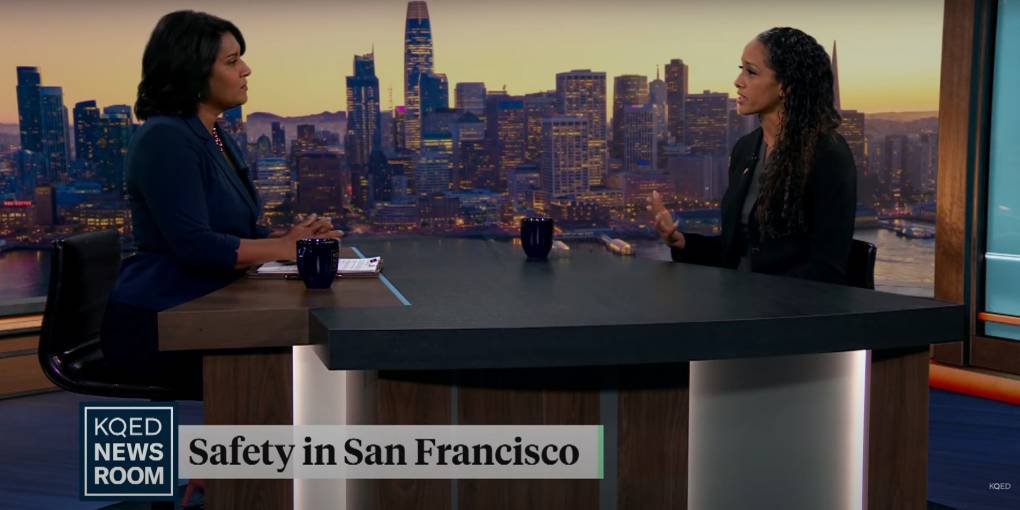
"caption": "Host Priya David Clemens talks safety in San Francisco with new District Attorney Brooke Jenkins on KQED Newsroom on Friday, July 15, 2022. ",
"description": null,
"title": "PriyaBrookeScreenShot",
"credit": null,
"status": "inherit",
"altTag": "Two women sit at either side of a table in a news studio, in suits, havin ga discussion.",
"isLoading": false,
"fetchFailed": false
},
"news_11917464": {
"type": "attachments",
"id": "news_11917464",
"meta": {
"index": "attachments_1716263798",
"site": "news",
"id": "11917464",
"found": true
},
"parent": 11917437,
"imgSizes": {
"twentyfourteen-full-width": {
"file": "https://ww2.kqed.org/app/uploads/sites/10/2022/06/Mabel4-1024x576.jpg",
"width": 1024,
"mimeType": "image/jpeg",
"height": 576
},
"thumbnail": {
"file": "https://ww2.kqed.org/app/uploads/sites/10/2022/06/Mabel4-160x108.jpg",
"width": 160,
"mimeType": "image/jpeg",
"height": 108
},
"post-thumbnail": {
"file": "https://ww2.kqed.org/app/uploads/sites/10/2022/06/Mabel4-672x372.jpg",
"width": 672,
"mimeType": "image/jpeg",
"height": 372
},
"kqedFullSize": {
"file": "https://ww2.kqed.org/app/uploads/sites/10/2022/06/Mabel4.jpg",
"width": 1024,
"height": 688
},
"large": {
"file": "https://ww2.kqed.org/app/uploads/sites/10/2022/06/Mabel4-1020x685.jpg",
"width": 1020,
"mimeType": "image/jpeg",
"height": 685
},
"medium": {
"file": "https://ww2.kqed.org/app/uploads/sites/10/2022/06/Mabel4-800x538.jpg",
"width": 800,
"mimeType": "image/jpeg",
"height": 538
}
},
"publishDate": 1655763819,
"modified": 1655923712,
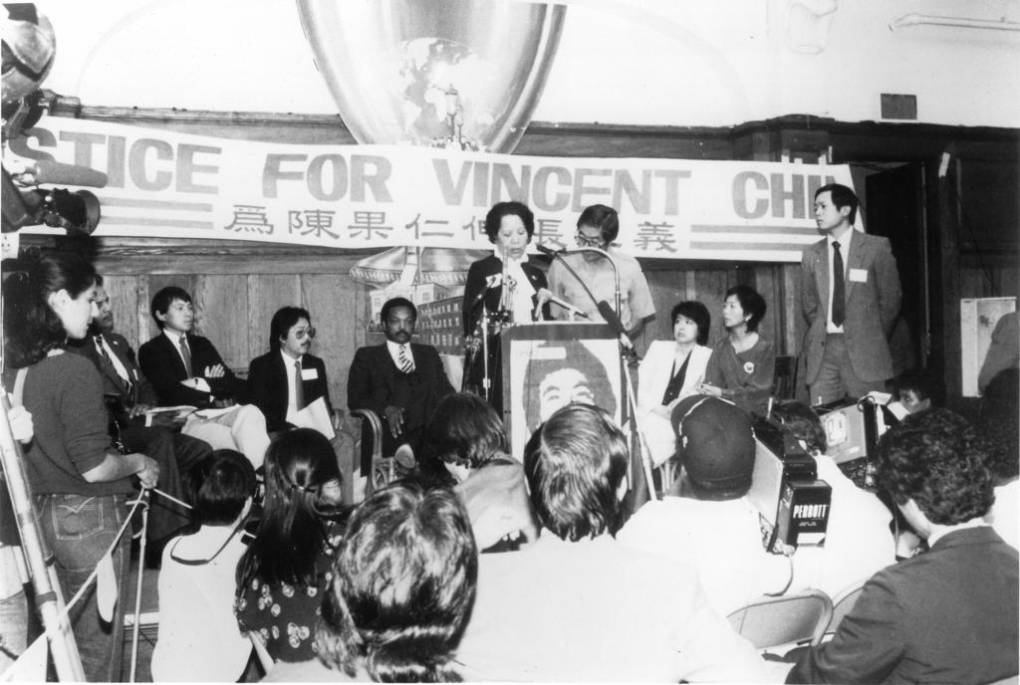
"caption": "Rev. Jesse Jackson comes to Cameron House, San Francisco, to call for justice after the death of Vincent Chin, flanked by San Francisco activists, including Mabel Teng (right) and the late Ed Lee, a former San Francisco mayor, then-civil rights attorney. At the podium is Lily Chin, mother of Vincent Chin.",
"description": null,
"title": "Mabel4",
"credit": "Photo Courtesy Mabel Teng",
"status": "inherit",
"altTag": "People are seated at a small stage in a black and white photo with \"Justice for Vincent Chin\" on a sign in English and Chinese in the background, a woman and man stand at a podium.",
"isLoading": false,
"fetchFailed": false
},
"news_11917358": {
"type": "attachments",
"id": "news_11917358",
"meta": {
"index": "attachments_1716263798",
"site": "news",
"id": "11917358",
"found": true
},
"parent": 11917356,
"imgSizes": {
"twentyfourteen-full-width": {
"file": "https://ww2.kqed.org/app/uploads/sites/10/2022/06/Warriors_GettyImages-1241364247-1024x576.jpg",
"width": 1024,
"mimeType": "image/jpeg",
"height": 576
},
"thumbnail": {
"file": "https://ww2.kqed.org/app/uploads/sites/10/2022/06/Warriors_GettyImages-1241364247-160x113.jpg",
"width": 160,
"mimeType": "image/jpeg",
"height": 113
},
"post-thumbnail": {
"file": "https://ww2.kqed.org/app/uploads/sites/10/2022/06/Warriors_GettyImages-1241364247-672x372.jpg",
"width": 672,
"mimeType": "image/jpeg",
"height": 372
},
"kqedFullSize": {
"file": "https://ww2.kqed.org/app/uploads/sites/10/2022/06/Warriors_GettyImages-1241364247.jpg",
"width": 1024,
"height": 724
},
"large": {
"file": "https://ww2.kqed.org/app/uploads/sites/10/2022/06/Warriors_GettyImages-1241364247-1020x721.jpg",
"width": 1020,
"mimeType": "image/jpeg",
"height": 721
},
"medium": {
"file": "https://ww2.kqed.org/app/uploads/sites/10/2022/06/Warriors_GettyImages-1241364247-800x566.jpg",
"width": 800,
"mimeType": "image/jpeg",
"height": 566
}
},
"publishDate": 1655507838,
"modified": 1655507866,
"caption": null,
"description": "Boston - June 16: Golden State Warriors guard Stephen Curry (30) lifting the Finals MVP trophy while teammate Klay Thompson holds the Championship Trophy after they defeated the Boston Celtics 103-90. The Boston Celtics hosted the Golden State Warriors for Game Six of the NBA Finals at the TD Garden in Boston on June 17, 2022. (Photo by Matthew J. Lee/The Boston Globe via Getty Images)",
"title": "Golden State Warriors Vs Boston Celtics At TD Garden",
"credit": "Matthew J. Lee/The Boston Globe via Getty Images",
"status": "inherit",
"altTag": null,
"isLoading": false,
"fetchFailed": false
},
"news_11916779": {
"type": "attachments",
"id": "news_11916779",
"meta": {
"index": "attachments_1716263798",
"site": "news",
"id": "11916779",
"found": true
},
"parent": 11916778,
"imgSizes": {
"thumbnail": {
"file": "https://ww2.kqed.org/app/uploads/sites/10/2022/06/image1-160x107.jpg",
"width": 160,
"mimeType": "image/jpeg",
"height": 107
},
"post-thumbnail": {
"file": "https://ww2.kqed.org/app/uploads/sites/10/2022/06/image1-672x372.jpg",
"width": 672,
"mimeType": "image/jpeg",
"height": 372
},
"kqedFullSize": {
"file": "https://ww2.kqed.org/app/uploads/sites/10/2022/06/image1.jpg",
"width": 860,
"height": 574
},
"medium": {
"file": "https://ww2.kqed.org/app/uploads/sites/10/2022/06/image1-800x534.jpg",
"width": 800,
"mimeType": "image/jpeg",
"height": 534
}
},
"publishDate": 1654894376,
"modified": 1654894376,
"caption": null,
"description": null,
"title": "image1",
"credit": null,
"status": "inherit",
"altTag": null,
"isLoading": false,
"fetchFailed": false
},
"news_11916670": {
"type": "attachments",
"id": "news_11916670",
"meta": {
"index": "attachments_1716263798",
"site": "news",
"id": "11916670",
"found": true
},
"parent": 11916667,
"imgSizes": {
"twentyfourteen-full-width": {
"file": "https://ww2.kqed.org/app/uploads/sites/10/2022/06/RS56493_019_KQED_NoOnRecallParty_06072022-qut-1-1038x576.jpg",
"width": 1038,
"mimeType": "image/jpeg",
"height": 576
},
"thumbnail": {
"file": "https://ww2.kqed.org/app/uploads/sites/10/2022/06/RS56493_019_KQED_NoOnRecallParty_06072022-qut-1-160x107.jpg",
"width": 160,
"mimeType": "image/jpeg",
"height": 107
},
"post-thumbnail": {
"file": "https://ww2.kqed.org/app/uploads/sites/10/2022/06/RS56493_019_KQED_NoOnRecallParty_06072022-qut-1-672x372.jpg",
"width": 672,
"mimeType": "image/jpeg",
"height": 372
},
"kqedFullSize": {
"file": "https://ww2.kqed.org/app/uploads/sites/10/2022/06/RS56493_019_KQED_NoOnRecallParty_06072022-qut-1.jpg",
"width": 1920,
"height": 1278
},
"large": {
"file": "https://ww2.kqed.org/app/uploads/sites/10/2022/06/RS56493_019_KQED_NoOnRecallParty_06072022-qut-1-1020x679.jpg",
"width": 1020,
"mimeType": "image/jpeg",
"height": 679
},
"1536x1536": {
"file": "https://ww2.kqed.org/app/uploads/sites/10/2022/06/RS56493_019_KQED_NoOnRecallParty_06072022-qut-1-1536x1022.jpg",
"width": 1536,
"mimeType": "image/jpeg",
"height": 1022
},
"medium": {
"file": "https://ww2.kqed.org/app/uploads/sites/10/2022/06/RS56493_019_KQED_NoOnRecallParty_06072022-qut-1-800x533.jpg",
"width": 800,
"mimeType": "image/jpeg",
"height": 533
}
},
"publishDate": 1654814452,
"modified": 1654814480,
"caption": "San Francisco District Attorney Chesa Boudin addresses supporters at The Ramp restaurant in San Francisco on June 7, 2022, shortly after learning voters had recalled him from office.",
"description": null,
"title": "RS56493_019_KQED_NoOnRecallParty_06072022-qut",
"credit": "Beth LaBerge/KQED",
"status": "inherit",
"altTag": null,
"isLoading": false,
"fetchFailed": false
},
"news_11916051": {
"type": "attachments",
"id": "news_11916051",
"meta": {
"index": "attachments_1716263798",
"site": "news",
"id": "11916051",
"found": true
},
"parent": 11916048,
"imgSizes": {
"twentyfourteen-full-width": {
"file": "https://ww2.kqed.org/app/uploads/sites/10/2022/06/SteveKerr-GettyImages-1400490248-1024x576.jpg",
"width": 1024,
"mimeType": "image/jpeg",
"height": 576
},
"thumbnail": {
"file": "https://ww2.kqed.org/app/uploads/sites/10/2022/06/SteveKerr-GettyImages-1400490248-160x107.jpg",
"width": 160,
"mimeType": "image/jpeg",
"height": 107
},
"post-thumbnail": {
"file": "https://ww2.kqed.org/app/uploads/sites/10/2022/06/SteveKerr-GettyImages-1400490248-672x372.jpg",
"width": 672,
"mimeType": "image/jpeg",
"height": 372
},
"kqedFullSize": {
"file": "https://ww2.kqed.org/app/uploads/sites/10/2022/06/SteveKerr-GettyImages-1400490248.jpg",
"width": 1024,
"height": 683
},
"large": {
"file": "https://ww2.kqed.org/app/uploads/sites/10/2022/06/SteveKerr-GettyImages-1400490248-1020x680.jpg",
"width": 1020,
"mimeType": "image/jpeg",
"height": 680
},
"medium": {
"file": "https://ww2.kqed.org/app/uploads/sites/10/2022/06/SteveKerr-GettyImages-1400490248-800x534.jpg",
"width": 800,
"mimeType": "image/jpeg",
"height": 534
}
},
"publishDate": 1654297356,
"modified": 1654297356,
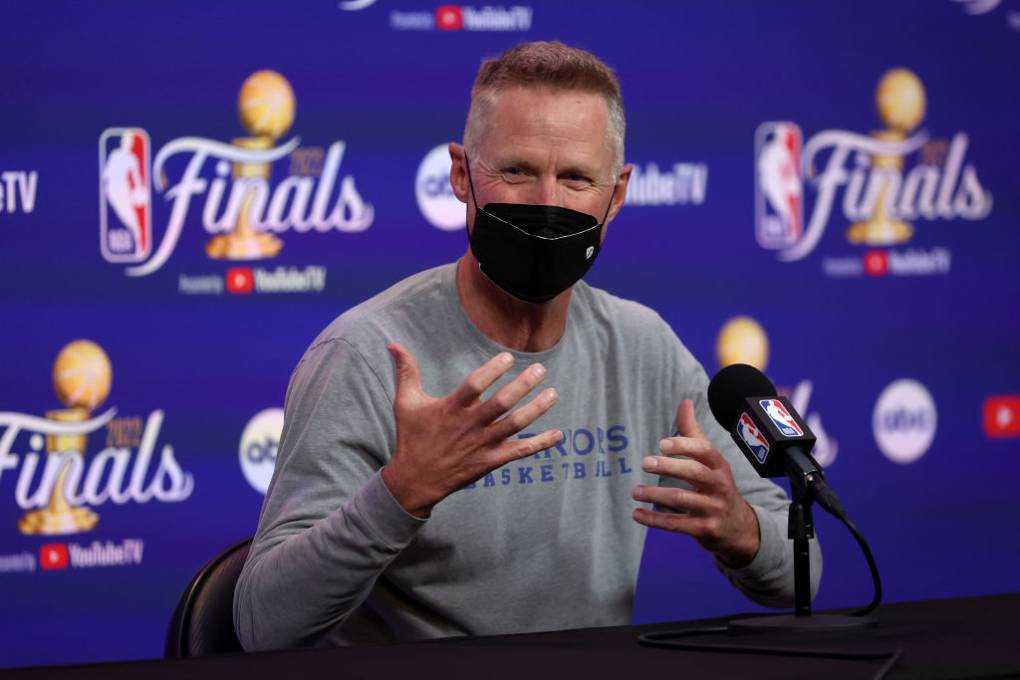
"caption": "SAN FRANCISCO, CALIFORNIA - JUNE 01: Head coach Steve Kerr of the Golden State Warriors speaks at a press conference during media day prior to the start of the NBA Finals at Chase Center on June 01, 2022 in San Francisco, California. The Golden State Warriors will play the Boston Celtics in Game 1 of the NBA Finals on June 2, 2022. NOTE TO USER: User expressly acknowledges and agrees that, by downloading and/or using this photograph, User is consenting to the terms and conditions of the Getty Images License Agreement. (Photo by Ezra Shaw/Getty Images)",
"description": null,
"title": "2022 NBA Finals - Media Day",
"credit": null,
"status": "inherit",
"altTag": null,
"isLoading": false,
"fetchFailed": false
},
"news_11916007": {
"type": "attachments",
"id": "news_11916007",
"meta": {
"index": "attachments_1716263798",
"site": "news",
"id": "11916007",
"found": true
},
"parent": 11915870,
"imgSizes": {
"twentyfourteen-full-width": {
"file": "https://ww2.kqed.org/app/uploads/sites/10/2022/06/IMG_1179-1020x765-1-942x576.jpg",
"width": 942,
"mimeType": "image/jpeg",
"height": 576
},
"thumbnail": {
"file": "https://ww2.kqed.org/app/uploads/sites/10/2022/06/IMG_1179-1020x765-1-160x114.jpg",
"width": 160,
"mimeType": "image/jpeg",
"height": 114
},
"post-thumbnail": {
"file": "https://ww2.kqed.org/app/uploads/sites/10/2022/06/IMG_1179-1020x765-1-672x372.jpg",
"width": 672,
"mimeType": "image/jpeg",
"height": 372
},
"kqedFullSize": {
"file": "https://ww2.kqed.org/app/uploads/sites/10/2022/06/IMG_1179-1020x765-1.jpg",
"width": 942,
"height": 673
},
"medium": {
"file": "https://ww2.kqed.org/app/uploads/sites/10/2022/06/IMG_1179-1020x765-1-800x572.jpg",
"width": 800,
"mimeType": "image/jpeg",
"height": 572
}
},
"publishDate": 1654290538,
"modified": 1654291346,
"caption": "Vitka Eisen, president and CEO of HealthRIGHT 360, a nonprofit health provider that offers harm-reduction services at the Tenderloin Center, speaks to reporters during a media tour on Thursday.",
"description": null,
"title": "IMG_1179-1020x765",
"credit": "Holly McDede/KQED",
"status": "inherit",
"altTag": "Person wearing mask and lanyard with outdoor tent and plastic chairs in background",
"isLoading": false,
"fetchFailed": false
},
"news_11915685": {
"type": "attachments",
"id": "news_11915685",
"meta": {
"index": "attachments_1716263798",
"site": "news",
"id": "11915685",
"found": true
},
"parent": 11915634,
"imgSizes": {
"twentyfourteen-full-width": {
"file": "https://ww2.kqed.org/app/uploads/sites/10/2022/05/Photo00_FEATURED-1-1038x576.jpg",
"width": 1038,
"mimeType": "image/jpeg",
"height": 576
},
"thumbnail": {
"file": "https://ww2.kqed.org/app/uploads/sites/10/2022/05/Photo00_FEATURED-1-160x107.jpg",
"width": 160,
"mimeType": "image/jpeg",
"height": 107
},
"post-thumbnail": {
"file": "https://ww2.kqed.org/app/uploads/sites/10/2022/05/Photo00_FEATURED-1-672x372.jpg",
"width": 672,
"mimeType": "image/jpeg",
"height": 372
},
"kqedFullSize": {
"file": "https://ww2.kqed.org/app/uploads/sites/10/2022/05/Photo00_FEATURED-1.jpg",
"width": 1920,
"height": 1280
},
"large": {
"file": "https://ww2.kqed.org/app/uploads/sites/10/2022/05/Photo00_FEATURED-1-1020x680.jpg",
"width": 1020,
"mimeType": "image/jpeg",
"height": 680
},
"1536x1536": {
"file": "https://ww2.kqed.org/app/uploads/sites/10/2022/05/Photo00_FEATURED-1-1536x1024.jpg",
"width": 1536,
"mimeType": "image/jpeg",
"height": 1024
},
"medium": {
"file": "https://ww2.kqed.org/app/uploads/sites/10/2022/05/Photo00_FEATURED-1-800x533.jpg",
"width": 800,
"mimeType": "image/jpeg",
"height": 533
}
},
"publishDate": 1654045425,
"modified": 1654135809,
"caption": "(From left) Robert Lowe, Michelle Wong, Forrest Chang and Allene Jue hold signs at a rally to recall San Francisco District Attorney Chesa Boudin at Portsmouth Square on Friday, May 28, 2021, in San Francisco.",
"description": null,
"title": "Photo00_FEATURED (1)",
"credit": "Courtesy Paul Kuroda/SF Standard",
"status": "inherit",
"altTag": "People with picket signs pushing for the recall of District Attorney Chesa Boudin fill the frame, some say \"YES ON H.\"",
"isLoading": false,
"fetchFailed": false
},
"news_11914774": {
"type": "attachments",
"id": "news_11914774",
"meta": {
"index": "attachments_1716263798",
"site": "news",
"id": "11914774",
"found": true
},
"parent": 11914773,
"imgSizes": {
"twentyfourteen-full-width": {
"file": "https://ww2.kqed.org/app/uploads/sites/10/2022/05/image1-1038x576.jpg",
"width": 1038,
"mimeType": "image/jpeg",
"height": 576
},
"thumbnail": {
"file": "https://ww2.kqed.org/app/uploads/sites/10/2022/05/image1-160x107.jpg",
"width": 160,
"mimeType": "image/jpeg",
"height": 107
},
"post-thumbnail": {
"file": "https://ww2.kqed.org/app/uploads/sites/10/2022/05/image1-672x372.jpg",
"width": 672,
"mimeType": "image/jpeg",
"height": 372
},
"kqedFullSize": {
"file": "https://ww2.kqed.org/app/uploads/sites/10/2022/05/image1.jpg",
"width": 1920,
"height": 1280
},
"large": {
"file": "https://ww2.kqed.org/app/uploads/sites/10/2022/05/image1-1020x680.jpg",
"width": 1020,
"mimeType": "image/jpeg",
"height": 680
},
"1536x1536": {
"file": "https://ww2.kqed.org/app/uploads/sites/10/2022/05/image1-1536x1024.jpg",
"width": 1536,
"mimeType": "image/jpeg",
"height": 1024
},
"medium": {
"file": "https://ww2.kqed.org/app/uploads/sites/10/2022/05/image1-800x533.jpg",
"width": 800,
"mimeType": "image/jpeg",
"height": 533
}
},
"publishDate": 1653078669,
"modified": 1653078669,
"caption": null,
"description": null,
"title": "image1",
"credit": null,
"status": "inherit",
"altTag": null,
"isLoading": false,
"fetchFailed": false
},
"news_11914179": {
"type": "attachments",
"id": "news_11914179",
"meta": {
"index": "attachments_1716263798",
"site": "news",
"id": "11914179",
"found": true
},
"parent": 11914175,
"imgSizes": {
"twentyfourteen-full-width": {
"file": "https://ww2.kqed.org/app/uploads/sites/10/2022/05/SFColumbariumMain-1038x576.jpg",
"width": 1038,
"mimeType": "image/jpeg",
"height": 576
},
"thumbnail": {
"file": "https://ww2.kqed.org/app/uploads/sites/10/2022/05/SFColumbariumMain-160x109.jpg",
"width": 160,
"mimeType": "image/jpeg",
"height": 109
},
"post-thumbnail": {
"file": "https://ww2.kqed.org/app/uploads/sites/10/2022/05/SFColumbariumMain-672x372.jpg",
"width": 672,
"mimeType": "image/jpeg",
"height": 372
},
"kqedFullSize": {
"file": "https://ww2.kqed.org/app/uploads/sites/10/2022/05/SFColumbariumMain.jpg",
"width": 1920,
"height": 1304
},
"large": {
"file": "https://ww2.kqed.org/app/uploads/sites/10/2022/05/SFColumbariumMain-1020x693.jpg",
"width": 1020,
"mimeType": "image/jpeg",
"height": 693
},
"1536x1536": {
"file": "https://ww2.kqed.org/app/uploads/sites/10/2022/05/SFColumbariumMain-1536x1043.jpg",
"width": 1536,
"mimeType": "image/jpeg",
"height": 1043
},
"medium": {
"file": "https://ww2.kqed.org/app/uploads/sites/10/2022/05/SFColumbariumMain-800x543.jpg",
"width": 800,
"mimeType": "image/jpeg",
"height": 543
}
},
"publishDate": 1652555475,
"modified": 1652555725,
"caption": "The exterior of the San Francisco Columbarium, a neoclassical building constructed in 1898 in the city's Inner Richmond district.",
"description": null,
"title": "SFColumbariumMain",
"credit": "Julie Zigoris/KQED",
"status": "inherit",
"altTag": null,
"isLoading": false,
"fetchFailed": false
},
"news_11913760": {
"type": "attachments",
"id": "news_11913760",
"meta": {
"index": "attachments_1716263798",
"site": "news",
"id": "11913760",
"found": true
},
"parent": 11913724,
"imgSizes": {
"twentyfourteen-full-width": {
"file": "https://ww2.kqed.org/app/uploads/sites/10/2022/05/IMG_0168-1038x576.jpg",
"width": 1038,
"mimeType": "image/jpeg",
"height": 576
},
"thumbnail": {
"file": "https://ww2.kqed.org/app/uploads/sites/10/2022/05/IMG_0168-160x120.jpg",
"width": 160,
"mimeType": "image/jpeg",
"height": 120
},
"post-thumbnail": {
"file": "https://ww2.kqed.org/app/uploads/sites/10/2022/05/IMG_0168-672x372.jpg",
"width": 672,
"mimeType": "image/jpeg",
"height": 372
},
"kqedFullSize": {
"file": "https://ww2.kqed.org/app/uploads/sites/10/2022/05/IMG_0168-scaled.jpg",
"width": 2560,
"height": 1920
},
"2048x2048": {
"file": "https://ww2.kqed.org/app/uploads/sites/10/2022/05/IMG_0168-2048x1536.jpg",
"width": 2048,
"mimeType": "image/jpeg",
"height": 1536
},
"large": {
"file": "https://ww2.kqed.org/app/uploads/sites/10/2022/05/IMG_0168-1020x765.jpg",
"width": 1020,
"mimeType": "image/jpeg",
"height": 765
},
"1536x1536": {
"file": "https://ww2.kqed.org/app/uploads/sites/10/2022/05/IMG_0168-1536x1152.jpg",
"width": 1536,
"mimeType": "image/jpeg",
"height": 1152
},
"full-width": {
"file": "https://ww2.kqed.org/app/uploads/sites/10/2022/05/IMG_0168-1920x1440.jpg",
"width": 1920,
"mimeType": "image/jpeg",
"height": 1440
},
"medium": {
"file": "https://ww2.kqed.org/app/uploads/sites/10/2022/05/IMG_0168-800x600.jpg",
"width": 800,
"mimeType": "image/jpeg",
"height": 600
}
},
"publishDate": 1652220923,
"modified": 1652221083,
"caption": "Matt Dorsey, San Francisco's new city supervisor, was sworn in at Delancey Street on the Embarcadero on May 9, 2022.",
"description": null,
"title": "IMG_0168",
"credit": "Scott Shafer/KQED",
"status": "inherit",
"altTag": "A man wearing a business suit stands outside a building",
"isLoading": false,
"fetchFailed": false
},
"news_11913651": {
"type": "attachments",
"id": "news_11913651",
"meta": {
"index": "attachments_1716263798",
"site": "news",
"id": "11913651",
"found": true
},
"parent": 11913549,
"imgSizes": {
"twentyfourteen-full-width": {
"file": "https://ww2.kqed.org/app/uploads/sites/10/2022/05/IMG_0218-1038x576.jpg",
"width": 1038,
"mimeType": "image/jpeg",
"height": 576
},
"thumbnail": {
"file": "https://ww2.kqed.org/app/uploads/sites/10/2022/05/IMG_0218-160x99.jpg",
"width": 160,
"mimeType": "image/jpeg",
"height": 99
},
"post-thumbnail": {
"file": "https://ww2.kqed.org/app/uploads/sites/10/2022/05/IMG_0218-672x372.jpg",
"width": 672,
"mimeType": "image/jpeg",
"height": 372
},
"kqedFullSize": {
"file": "https://ww2.kqed.org/app/uploads/sites/10/2022/05/IMG_0218-scaled-e1652134316884.jpg",
"width": 1920,
"height": 1183
},
"2048x2048": {
"file": "https://ww2.kqed.org/app/uploads/sites/10/2022/05/IMG_0218-2048x1262.jpg",
"width": 2048,
"mimeType": "image/jpeg",
"height": 1262
},
"large": {
"file": "https://ww2.kqed.org/app/uploads/sites/10/2022/05/IMG_0218-1020x628.jpg",
"width": 1020,
"mimeType": "image/jpeg",
"height": 628
},
"1536x1536": {
"file": "https://ww2.kqed.org/app/uploads/sites/10/2022/05/IMG_0218-1536x946.jpg",
"width": 1536,
"mimeType": "image/jpeg",
"height": 946
},
"full-width": {
"file": "https://ww2.kqed.org/app/uploads/sites/10/2022/05/IMG_0218-1920x1183.jpg",
"width": 1920,
"mimeType": "image/jpeg",
"height": 1183
},
"medium": {
"file": "https://ww2.kqed.org/app/uploads/sites/10/2022/05/IMG_0218-800x493.jpg",
"width": 800,
"mimeType": "image/jpeg",
"height": 493
}
},
"publishDate": 1652134250,
"modified": 1652136201,
"caption": "San Francisco Mayor London Breed swears in SF Police Department spokesperson Matt Dorsey as District 6 supervisor, during a May 9, 2022 ceremony at Delancey Street Foundation in San Francisco. Breed appointed Dorsey to fill the Board of Supervisors seat recently vacated by Matt Haney. ",
"description": null,
"title": "IMG_0218",
"credit": "Scott Shafer/KQED",
"status": "inherit",
"altTag": "Mayor London Breed, in a blue suit, smiles with her hand on the shoulder of a man.",
"isLoading": false,
"fetchFailed": false
}
},
"audioPlayerReducer": {
"postId": "stream_live",
"isPaused": true,
"isPlaying": false,
"pfsActive": false,
"pledgeModalIsOpen": true,
"playerDrawerIsOpen": false,
"liveAudioPlayStartedAt": 0,
"liveAudioPlayContext": ""
},
"authorsReducer": {
"byline_news_11915634": {
"type": "authors",
"id": "byline_news_11915634",
"meta": {
"override": true
},
"slug": "byline_news_11915634",
"name": "\u003ca href=\"https://www.kqed.org/author/jrodriguez\">Joe Fitzgerald Rodriguez, KQED\u003c/a> and \u003ca href=\"https://sfstandard.com/author/han-li/\">Han Li, SF Standard\u003c/a>",
"isLoading": false
},
"byline_news_11914175": {
"type": "authors",
"id": "byline_news_11914175",
"meta": {
"override": true
},
"slug": "byline_news_11914175",
"name": "\u003ca href=\"https://twitter.com/jzigoris\">Julie Zigoris\u003c/a>",
"isLoading": false
},
"kqed": {
"type": "authors",
"id": "236",
"meta": {
"index": "authors_1716337520",
"id": "236",
"found": true
},
"name": "KQED News Staff",
"firstName": "KQED News Staff",
"lastName": null,
"slug": "kqed",
"email": "faq@kqed.org",
"display_author_email": false,
"staff_mastheads": [],
"title": null,
"bio": null,
"avatar": "https://secure.gravatar.com/avatar/ef0e801a68c4c54afa9180db14084167?s=600&d=blank&r=g",
"twitter": null,
"facebook": null,
"instagram": null,
"linkedin": null,
"sites": [
{
"site": "arts",
"roles": [
"contributor"
]
},
{
"site": "news",
"roles": [
"editor"
]
},
{
"site": "futureofyou",
"roles": [
"author"
]
}
],
"headData": {
"title": "KQED News Staff | KQED",
"description": null,
"ogImgSrc": "https://secure.gravatar.com/avatar/ef0e801a68c4c54afa9180db14084167?s=600&d=blank&r=g",
"twImgSrc": "https://secure.gravatar.com/avatar/ef0e801a68c4c54afa9180db14084167?s=600&d=blank&r=g"
},
"isLoading": false,
"link": "/author/kqed"
},
"kqednewsstaffandwires": {
"type": "authors",
"id": "237",
"meta": {
"index": "authors_1716337520",
"id": "237",
"found": true
},
"name": "KQED News Staff and Wires",
"firstName": "KQED News Staff and Wires",
"lastName": null,
"slug": "kqednewsstaffandwires",
"email": "onlinenewsstaff@kqed.org",
"display_author_email": false,
"staff_mastheads": [],
"title": null,
"bio": null,
"avatar": "https://secure.gravatar.com/avatar/72295af8ebbfbd19a4948f5271285664?s=600&d=blank&r=g",
"twitter": null,
"facebook": null,
"instagram": null,
"linkedin": null,
"sites": [
{
"site": "arts",
"roles": [
"contributor"
]
},
{
"site": "news",
"roles": [
"contributor"
]
},
{
"site": "lowdown",
"roles": [
"author"
]
},
{
"site": "stateofhealth",
"roles": [
"contributor"
]
},
{
"site": "food",
"roles": [
"author"
]
}
],
"headData": {
"title": "KQED News Staff and Wires | KQED",
"description": null,
"ogImgSrc": "https://secure.gravatar.com/avatar/72295af8ebbfbd19a4948f5271285664?s=600&d=blank&r=g",
"twImgSrc": "https://secure.gravatar.com/avatar/72295af8ebbfbd19a4948f5271285664?s=600&d=blank&r=g"
},
"isLoading": false,
"link": "/author/kqednewsstaffandwires"
},
"scottshafer": {
"type": "authors",
"id": "255",
"meta": {
"index": "authors_1716337520",
"id": "255",
"found": true
},
"name": "Scott Shafer",
"firstName": "Scott",
"lastName": "Shafer",
"slug": "scottshafer",
"email": "sshafer@kqed.org",
"display_author_email": false,
"staff_mastheads": [
"news"
],
"title": "KQED Contributor",
"bio": "Scott Shafer is a senior editor with the KQED Politics and Government desk. He is co-host of Political Breakdown, the award-winning radio show and podcast with a personal take on the world of politics. Scott came to KQED in 1998 to host the statewide\u003cem> California Report\u003c/em>. Prior to that he had extended stints in politics and government\u003cem>.\u003c/em> He uses that inside experience at KQED in his, reporting, hosting and analysis for the politics desk. Scott collaborated \u003cem>Political Breakdown a\u003c/em>nd on \u003cem>The Political Mind of Jerry Brown, \u003c/em>an eight-part series about the life and extraordinary political career of the former governor. For fun, he plays water polo with the San Francisco Tsunami.",
"avatar": "https://secure.gravatar.com/avatar/a62ebae45b79d7aed1a39a0e3bf68104?s=600&d=blank&r=g",
"twitter": "scottshafer",
"bluesky": null,
"facebook": null,
"instagram": null,
"linkedin": null,
"sites": [
{
"site": "news",
"roles": [
"editor"
]
},
{
"site": "stateofhealth",
"roles": [
"author"
]
},
{
"site": "science",
"roles": [
"author"
]
},
{
"site": "forum",
"roles": [
"subscriber"
]
},
{
"site": "liveblog",
"roles": [
"author"
]
}
],
"headData": {
"title": "Scott Shafer | KQED",
"description": "KQED Contributor",
"ogImgSrc": "https://secure.gravatar.com/avatar/a62ebae45b79d7aed1a39a0e3bf68104?s=600&d=blank&r=g",
"twImgSrc": "https://secure.gravatar.com/avatar/a62ebae45b79d7aed1a39a0e3bf68104?s=600&d=blank&r=g"
},
"isLoading": false,
"link": "/author/scottshafer"
},
"mlagos": {
"type": "authors",
"id": "3239",
"meta": {
"index": "authors_1716337520",
"id": "3239",
"found": true
},
"name": "Marisa Lagos",
"firstName": "Marisa",
"lastName": "Lagos",
"slug": "mlagos",
"email": "mlagos@kqed.org",
"display_author_email": false,
"staff_mastheads": [
"news"
],
"title": "KQED Contributor",
"bio": "Marisa Lagos is a correspondent for KQED’s California Politics and Government Desk and co-hosts the award-winning show and podcast, Political Breakdown. At KQED, Lagos also conducts reporting, analysis and investigations into state, local and national politics for radio, TV, online and onstage. In 2022, she and co-host, Scott Shafer, moderated the only gubernatorial debate in California. In 2020, the \u003ci>Washington Post\u003c/i> named her one of the top political journalists in California; she was nominated for a Peabody and won several other awards for her work investigating the 2017 California wildfires. She has worked at the \u003ci>San Francisco Chronicle\u003c/i>, \u003ci>San Francisco Examiner\u003c/i> and \u003ci>Los Angeles Times\u003c/i>. A UC Santa Barbara graduate, she lives in San Francisco with her two sons and husband.",
"avatar": "https://secure.gravatar.com/avatar/a261a0d3696fc066871ef96b85b5e7d2?s=600&d=blank&r=g",
"twitter": "@mlagos",
"facebook": null,
"instagram": null,
"linkedin": null,
"sites": [
{
"site": "arts",
"roles": [
"author"
]
},
{
"site": "news",
"roles": [
"editor"
]
},
{
"site": "science",
"roles": [
"editor"
]
},
{
"site": "forum",
"roles": [
"author"
]
},
{
"site": "liveblog",
"roles": [
"author"
]
}
],
"headData": {
"title": "Marisa Lagos | KQED",
"description": "KQED Contributor",
"ogImgSrc": "https://secure.gravatar.com/avatar/a261a0d3696fc066871ef96b85b5e7d2?s=600&d=blank&r=g",
"twImgSrc": "https://secure.gravatar.com/avatar/a261a0d3696fc066871ef96b85b5e7d2?s=600&d=blank&r=g"
},
"isLoading": false,
"link": "/author/mlagos"
},
"ecruzguevarra": {
"type": "authors",
"id": "8654",
"meta": {
"index": "authors_1716337520",
"id": "8654",
"found": true
},
"name": "Ericka Cruz Guevarra",
"firstName": "Ericka",
"lastName": "Cruz Guevarra",
"slug": "ecruzguevarra",
"email": "ecruzguevarra@kqed.org",
"display_author_email": true,
"staff_mastheads": [
"news"
],
"title": "Producer, The Bay Podcast",
"bio": "Ericka Cruz Guevarra is host of \u003ca href=\"https://www.kqed.org/podcasts/thebay\">\u003cem>The Bay\u003c/em>\u003c/a> podcast at KQED. Before host, she was the show’s producer. Her work in that capacity includes a three-part reported series on policing in Vallejo, which won a 2020 excellence in journalism award from the Society of Professional Journalists. Ericka has worked as a breaking news reporter at Oregon Public Broadcasting, helped produce the Code Switch podcast, and was KQED’s inaugural Raul Ramirez Diversity Fund intern. She’s also an alumna of NPR’s Next Generation Radio program. Send her an email if you have strong feelings about whether Fairfield and Suisun City are the Bay. Ericka is represented by SAG-AFTRA.",
"avatar": "https://secure.gravatar.com/avatar/accefc1de4bafc7e234b69bcb9b6f6536c130fd84709bc3069ef11a78787e1bb?s=600&d=blank&r=g",
"twitter": "NotoriousECG",
"bluesky": null,
"facebook": null,
"instagram": null,
"linkedin": null,
"sites": [
{
"site": "arts",
"roles": [
"subscriber"
]
},
{
"site": "news",
"roles": [
"editor",
"manage_categories"
]
},
{
"site": "futureofyou",
"roles": [
"subscriber"
]
},
{
"site": "stateofhealth",
"roles": [
"subscriber"
]
},
{
"site": "science",
"roles": [
"editor"
]
},
{
"site": "forum",
"roles": [
"subscriber"
]
}
],
"headData": {
"title": "Ericka Cruz Guevarra | KQED",
"description": "Producer, The Bay Podcast",
"ogImgSrc": "https://secure.gravatar.com/avatar/accefc1de4bafc7e234b69bcb9b6f6536c130fd84709bc3069ef11a78787e1bb?s=600&d=blank&r=g",
"twImgSrc": "https://secure.gravatar.com/avatar/accefc1de4bafc7e234b69bcb9b6f6536c130fd84709bc3069ef11a78787e1bb?s=600&d=blank&r=g"
},
"isLoading": false,
"link": "/author/ecruzguevarra"
},
"hmcdede": {
"type": "authors",
"id": "11635",
"meta": {
"index": "authors_1716337520",
"id": "11635",
"found": true
},
"name": "Holly McDede",
"firstName": "Holly",
"lastName": "McDede",
"slug": "hmcdede",
"email": "hmcdede@KQED.org",
"display_author_email": false,
"staff_mastheads": [],
"title": "KQED Contributor",
"bio": null,
"avatar": "https://secure.gravatar.com/avatar/999d9bf31bb3a2f0511932d99526cb3e?s=600&d=blank&r=g",
"twitter": null,
"facebook": null,
"instagram": null,
"linkedin": null,
"sites": [
{
"site": "arts",
"roles": [
"editor"
]
},
{
"site": "news",
"roles": [
"edit_others_posts",
"editor"
]
},
{
"site": "science",
"roles": [
"editor"
]
},
{
"site": "forum",
"roles": [
"editor"
]
},
{
"site": "perspectives",
"roles": [
"administrator"
]
}
],
"headData": {
"title": "Holly McDede | KQED",
"description": "KQED Contributor",
"ogImgSrc": "https://secure.gravatar.com/avatar/999d9bf31bb3a2f0511932d99526cb3e?s=600&d=blank&r=g",
"twImgSrc": "https://secure.gravatar.com/avatar/999d9bf31bb3a2f0511932d99526cb3e?s=600&d=blank&r=g"
},
"isLoading": false,
"link": "/author/hmcdede"
},
"amontecillo": {
"type": "authors",
"id": "11649",
"meta": {
"index": "authors_1716337520",
"id": "11649",
"found": true
},
"name": "Alan Montecillo",
"firstName": "Alan",
"lastName": "Montecillo",
"slug": "amontecillo",
"email": "amontecillo@kqed.org",
"display_author_email": false,
"staff_mastheads": [
"news"
],
"title": "KQED Contributor",
"bio": "Alan Montecillo is the senior editor of \u003cem>\u003ca href=\"http://kqed.org/thebay\">The Bay\u003c/a>, \u003c/em> KQED's local news podcast. Before moving to the Bay Area, he worked as a senior talk show producer for WILL in Champaign-Urbana, Illinois and at Oregon Public Broadcasting in Portland, Oregon. He has won journalism awards from the Society of Professional Journalists Northern California, the Public Media Journalists Association, The Signal Awards, and has also received a regional Edward R. Murrow award. Alan is a Filipino American from Hong Kong and a graduate of Reed College.",
"avatar": "https://secure.gravatar.com/avatar/268f53a2066899ea9efdd8a5900218b17c822d9862cbc9326cccec53ef41d349?s=600&d=blank&r=g",
"twitter": "alanmontecillo",
"bluesky": null,
"facebook": null,
"instagram": null,
"linkedin": null,
"sites": [
{
"site": "",
"roles": [
"editor"
]
},
{
"site": "news",
"roles": [
"editor",
"manage_categories"
]
}
],
"headData": {
"title": "Alan Montecillo | KQED",
"description": "KQED Contributor",
"ogImgSrc": "https://secure.gravatar.com/avatar/268f53a2066899ea9efdd8a5900218b17c822d9862cbc9326cccec53ef41d349?s=600&d=blank&r=g",
"twImgSrc": "https://secure.gravatar.com/avatar/268f53a2066899ea9efdd8a5900218b17c822d9862cbc9326cccec53ef41d349?s=600&d=blank&r=g"
},
"isLoading": false,
"link": "/author/amontecillo"
},
"jrodriguez": {
"type": "authors",
"id": "11690",
"meta": {
"index": "authors_1716337520",
"id": "11690",
"found": true
},
"name": "Joe Fitzgerald Rodriguez",
"firstName": "Joe",
"lastName": "Fitzgerald Rodriguez",
"slug": "jrodriguez",
"email": "jrodriguez@kqed.org",
"display_author_email": true,
"staff_mastheads": [
"news"
],
"title": "Reporter and Producer",
"bio": "Joe Fitzgerald Rodriguez is a reporter and digital producer for KQED covering politics. Joe most recently wrote for the \u003cem>San Francisco Examiner\u003c/em> as a political columnist covering The City. He was raised in San Francisco and has spent his reporting career in his beloved, foggy, city by the bay. Joe was 12-years-old when he conducted his first interview in journalism, grilling former San Francisco Mayor Willie Brown for the Marina Middle School newspaper, \u003cem>The Penguin Press, \u003c/em>and he continues to report on the San Francisco Bay Area to this day.",
"avatar": "https://secure.gravatar.com/avatar/2247beb0564c1e9c62228d5649d2edac?s=600&d=blank&r=g",
"twitter": "FitztheReporter",
"facebook": null,
"instagram": "https://www.instagram.com/fitzthereporter/",
"linkedin": null,
"sites": [
{
"site": "",
"roles": [
"editor"
]
},
{
"site": "arts",
"roles": [
"editor"
]
},
{
"site": "news",
"roles": [
"editor"
]
},
{
"site": "science",
"roles": [
"editor"
]
},
{
"site": "elections",
"roles": [
"editor"
]
},
{
"site": "liveblog",
"roles": [
"editor"
]
}
],
"headData": {
"title": "Joe Fitzgerald Rodriguez | KQED",
"description": "Reporter and Producer",
"ogImgSrc": "https://secure.gravatar.com/avatar/2247beb0564c1e9c62228d5649d2edac?s=600&d=blank&r=g",
"twImgSrc": "https://secure.gravatar.com/avatar/2247beb0564c1e9c62228d5649d2edac?s=600&d=blank&r=g"
},
"isLoading": false,
"link": "/author/jrodriguez"
},
"nnavarro": {
"type": "authors",
"id": "11756",
"meta": {
"index": "authors_1716337520",
"id": "11756",
"found": true
},
"name": "Natalia Navarro",
"firstName": "Natalia",
"lastName": "Navarro",
"slug": "nnavarro",
"email": "nnavarro@kqed.org",
"display_author_email": true,
"staff_mastheads": [
"news"
],
"title": "Afternoon News Anchor",
"bio": "Natalia Navarro is KQED's afternoon radio news anchor. She came to KQED in 2021 from Colorado Public Radio, where she was a reporter and host. She has received several awards for her work covering daily and breaking news from professional organizations such as the San Francisco Press Club, Society of Professional Journalists and the Colorado Broadcasters Association. Natalia is originally from Tucson, Arizona, where she got her start in journalism writing for the Arizona Daily Star, Arizona Public Media and the Tucson Weekly. Natalia earned her bachelor's degree in journalism and economics, and her master's degree in journalism from the University of Arizona.",
"avatar": "https://secure.gravatar.com/avatar/a2bdb19fd9520bdea295a2d5f9b2ad65ec51cf0bf559fb1cc041d3a0a04d62ad?s=600&d=blank&r=g",
"twitter": "@NataliaVNavarro",
"bluesky": null,
"facebook": null,
"instagram": null,
"linkedin": null,
"sites": [
{
"site": "news",
"roles": [
"editor"
]
}
],
"headData": {
"title": "Natalia Navarro | KQED",
"description": "Afternoon News Anchor",
"ogImgSrc": "https://secure.gravatar.com/avatar/a2bdb19fd9520bdea295a2d5f9b2ad65ec51cf0bf559fb1cc041d3a0a04d62ad?s=600&d=blank&r=g",
"twImgSrc": "https://secure.gravatar.com/avatar/a2bdb19fd9520bdea295a2d5f9b2ad65ec51cf0bf559fb1cc041d3a0a04d62ad?s=600&d=blank&r=g"
},
"isLoading": false,
"link": "/author/nnavarro"
},
"kshok": {
"type": "authors",
"id": "11780",
"meta": {
"index": "authors_1716337520",
"id": "11780",
"found": true
},
"name": "kshok",
"firstName": "Katherine",
"lastName": "Shok",
"slug": "kshok",
"email": "kshok@kqed.org",
"display_author_email": false,
"staff_mastheads": [],
"title": "KQED Contributor",
"bio": null,
"avatar": "https://secure.gravatar.com/avatar/0fb8e2683a3c1aff18900bf1ca9b76a13b8f18d3ab519d3ee1c6f515e89b8fb7?s=600&d=blank&r=g",
"twitter": null,
"bluesky": null,
"facebook": null,
"instagram": null,
"linkedin": null,
"sites": [
{
"site": "news",
"roles": [
"subscriber"
]
}
],
"headData": {
"title": "kshok | KQED",
"description": "KQED Contributor",
"ogImgSrc": "https://secure.gravatar.com/avatar/0fb8e2683a3c1aff18900bf1ca9b76a13b8f18d3ab519d3ee1c6f515e89b8fb7?s=600&d=blank&r=g",
"twImgSrc": "https://secure.gravatar.com/avatar/0fb8e2683a3c1aff18900bf1ca9b76a13b8f18d3ab519d3ee1c6f515e89b8fb7?s=600&d=blank&r=g"
},
"isLoading": false,
"link": "/author/kshok"
},
"swhitney": {
"type": "authors",
"id": "11784",
"meta": {
"index": "authors_1716337520",
"id": "11784",
"found": true
},
"name": "Spencer Whitney",
"firstName": "Spencer",
"lastName": "Whitney",
"slug": "swhitney",
"email": "swhitney@kqed.org",
"display_author_email": false,
"staff_mastheads": [],
"title": "KQED Digital Editor",
"bio": "Spencer Whitney is currently a Digital Editor for KQED News. Prior to joining KQED News, Spencer worked as the Multimedia Editor at the Oakland Post and an Assistant Editor in the Editorial department at the San Francisco Chronicle. He attended Howard University as an undergraduate and interned with SiriusXM. He also attended UC Berkeley's Graduate School of Journalism and had the opportunity to write for the hyperlocal news sites Richmond Confidential and Oakland North.",
"avatar": "https://secure.gravatar.com/avatar/e33ff4fd8b8f0d2796f36472fb32607ca8fc46ef5e537dcfdbdee688d8ea5b80?s=600&d=mm&r=g",
"twitter": null,
"bluesky": null,
"facebook": null,
"instagram": null,
"linkedin": null,
"sites": [
{
"site": "arts",
"roles": [
"editor"
]
},
{
"site": "news",
"roles": [
"editor"
]
},
{
"site": "science",
"roles": [
"editor"
]
},
{
"site": "perspectives",
"roles": [
"editor"
]
}
],
"headData": {
"title": "Spencer Whitney | KQED",
"description": "KQED Digital Editor",
"ogImgSrc": "https://secure.gravatar.com/avatar/e33ff4fd8b8f0d2796f36472fb32607ca8fc46ef5e537dcfdbdee688d8ea5b80?s=600&d=mm&r=g",
"twImgSrc": "https://secure.gravatar.com/avatar/e33ff4fd8b8f0d2796f36472fb32607ca8fc46ef5e537dcfdbdee688d8ea5b80?s=600&d=mm&r=g"
},
"isLoading": false,
"link": "/author/swhitney"
},
"mesquinca": {
"type": "authors",
"id": "11802",
"meta": {
"index": "authors_1716337520",
"id": "11802",
"found": true
},
"name": "Maria Esquinca",
"firstName": "Maria",
"lastName": "Esquinca",
"slug": "mesquinca",
"email": "mesquinca@kqed.org",
"display_author_email": false,
"staff_mastheads": [],
"title": "Producer, The Bay",
"bio": "María Esquinca is a producer of The Bay. Before that, she was a New York Women’s Foundation IGNITE Fellow at Latino USA. She worked at Radio Bilingue where she covered the San Joaquin Valley. Maria has interned at WLRN, News 21, The New York Times Student Journalism Institute and at Crain’s Detroit Business as a Dow Jones News Fund Business Reporting Intern. She is an MFA graduate from the University of Miami. In 2017, she graduated from the Walter Cronkite School of Journalism and Mass Communication with a Master of Mass Communication. A fronteriza, she was born in Ciudad Juárez, Chihuahua, Mexico and grew up in El Paso, Texas.",
"avatar": "https://secure.gravatar.com/avatar/77cedba18aae91da775038ba06dcd8d0?s=600&d=blank&r=g",
"twitter": "@m_esquinca",
"facebook": null,
"instagram": null,
"linkedin": null,
"sites": [
{
"site": "news",
"roles": []
}
],
"headData": {
"title": "Maria Esquinca | KQED",
"description": "Producer, The Bay",
"ogImgSrc": "https://secure.gravatar.com/avatar/77cedba18aae91da775038ba06dcd8d0?s=600&d=blank&r=g",
"twImgSrc": "https://secure.gravatar.com/avatar/77cedba18aae91da775038ba06dcd8d0?s=600&d=blank&r=g"
},
"isLoading": false,
"link": "/author/mesquinca"
}
},
"pagesReducer": {
"news_tag_san-francisco": {
"type": "terms",
"id": "news_38",
"meta": {
"index": "terms_1716263798",
"site": "news",
"id": "38",
"score": 6.7230453
},
"featImg": null,
"name": "San Francisco",
"description": null,
"taxonomy": "tag",
"headData": {
"twImgId": null,
"twTitle": null,
"ogTitle": null,
"ogImgId": null,
"twDescription": null,
"description": null,
"title": "San Francisco Archives | KQED News",
"ogDescription": null
},
"ttid": 58,
"slug": "san-francisco",
"isLoading": false,
"title": "San Francisco",
"pageMeta": {
"site": "news",
"WpPageTemplate": "page-topic-editorial",
"currentPage": 121
},
"blocks": [
{
"blockName": "kqed/post-list",
"attrs": {
"layout": "cardArticle2",
"query": "posts/news?tag=san-francisco",
"seeMore": false,
"paginated": true,
"page": 121
}
},
{
"blockName": "kqed/ad"
}
]
}
},
"pfsSessionReducer": {},
"postsReducer": {
"stream_live": {
"type": "live",
"id": "stream_live",
"audioUrl": "https://streams.kqed.org/kqedradio",
"title": "Live Stream",
"excerpt": "Live Stream information currently unavailable.",
"link": "/radio",
"featImg": "",
"label": {
"name": "KQED Live",
"link": "/"
}
},
"stream_kqedNewscast": {
"type": "posts",
"id": "stream_kqedNewscast",
"audioUrl": "https://www.kqed.org/.stream/anon/radio/RDnews/newscast.mp3?_=1",
"title": "KQED Newscast",
"featImg": "",
"label": {
"name": "88.5 FM",
"link": "/"
}
},
"news_11919770": {
"type": "posts",
"id": "news_11919770",
"meta": {
"index": "posts_1716263798",
"site": "news",
"id": "11919770",
"score": null,
"sort": [
1658179023000
]
},
"parent": 0,
"labelTerm": {
"site": "news"
},
"blocks": [],
"publishDate": 1658179023,
"format": "standard",
"disqusTitle": "After Firing More Than a Dozen Staff, New SF DA Brooke Jenkins Says She Will Restore 'Law and Order to San Francisco'",
"title": "After Firing More Than a Dozen Staff, New SF DA Brooke Jenkins Says She Will Restore 'Law and Order to San Francisco'",
"headTitle": "KQED News",
"content": "\u003cp>Chesa Boudin is out, Brooke Jenkins is in. And though it's been less than two weeks since she took office, San Francisco's new district attorney has wasted no time in cleaning house.\u003c/p>\n\u003cp>On Friday, Jenkins fired at least 15 staffers from the district attorney's office, \u003ca href=\"https://www.sfgate.com/bayarea/article/SF-DA-Chesa-Boudin-fires-attorneys-14971336.php\">a similar sort of shake-up that Boudin made when he assumed office in 2020\u003c/a>. It isn't out of the norm for newly elected officials to bring in their own staff to help implement their visions. At the time, San Franciscans who favored a stronger prosecutorial hand cried foul when Boudin cleaned house. His loss of attorneys even became a case made against him by proponents of his recall.\u003c/p>\n\u003cp>Jenkins was quick to defend her firing of attorneys in an interview with KQED Newsroom's Priya David Clemens.\u003c/p>\n\u003cp>\"I want to bring in a new management team that is full of prosecution experience,\" Jenkins said.\u003c/p>\n\u003cp>Much hay has been made of the new direction Jenkins may take prosecutions in San Francisco. Will she begin prosecuting low-level drug dealers? Will she maintain Boudin's Innocence Commission to research wrongful convictions? Will she ease the gas on criminal justice reform efforts championed by Boudin? There also are questions around what will happen when attorneys who've been handling cases previously are suddenly replaced and the impact that may have on whether trials will be delayed.\u003c/p>\n\u003cp>In two interviews with KQED, Jenkins said she would \u003ca href=\"https://www.sfdistrictattorney.org/policy/innocence-commission/\">maintain the Innocence Commission\u003c/a>, but also said she wasn't ready to firmly state other policies. But her new hires may tip her hand, somewhat.\u003c/p>\n\u003cp>Jenkins also announced on Friday four new hires to her office, all women, including Nancy Tung, a strong opponent of Boudin in 2019 who ran to his right, favoring more traditional law-and-order policies, in contrast to Boudin's reformist positions. Before joining the office, Tung was considered a possible challenger to Jenkins in the November election.[pullquote size=\"medium\" align=\"right\" citation=\"District Attorney Brooke Jenkins\"]'If people start to see more action on the part of the police and more action within the DA's office to hold offenders accountable, I think they should hopefully start feeling different as they walk about the streets.'[/pullquote]\u003c/p>\n\u003cp>Jenkins hired Tung to be her chief of special prosecutions and community partnerships.\u003c/p>\n\u003cp>The new district attorney discussed this new hire \u003ca href=\"https://www.kqed.org/kqednewsroom\">with KQED Newsroom host Priya David Clemens Friday\u003c/a>, and on Thursday \u003ca href=\"https://www.kqed.org/news/11919634/meet-brooke-jenkins-san-franciscos-new-district-attorney\">spoke to her broader criminal justice philosophy with KQED's Political Breakdown hosts Scott Shafer and Marisa Lagos\u003c/a>. In her interview with Shafer and Lagos, Jenkins defended her critiques of Boudin and said voters should hold her to the same high standards.\u003c/p>\n\u003cp>Still, Jenkins added, \"I can't snap my fingers and make crime disappear.\"\u003c/p>\n\u003cp>\u003cem>The following interviews have been edited for brevity and clarity.\u003c/em>\u003c/p>\n\u003ch2>KQED NEWSROOM\u003c/h2>\n\u003cp>\u003cstrong>PRIYA DAVID CLEMENS: So you are one week to the day into the new job. And you have spent the day putting your house in order. You are in the process of bringing new people in, and you have fired more than a dozen people in the office as well. Tell us about what you're hoping to accomplish with these changes. \u003c/strong>\u003c/p>\n\u003cp>\u003cstrong>BROOKE JENKINS:\u003c/strong> Yes, I want to bring in a new management team that is full of prosecution experience. I announced three new members of the team who comprise about 50 years of prosecutorial experience, which I think is going to be critical to moving forward with my promise to the public that accountability will be restored to the justice system in San Francisco and that we will be the best type of advocate that we can for victims in the courtroom.\u003c/p>\n\u003cp>https://www.youtube.com/watch?v=Ps6vt6bv-n4&t=321s\u003c/p>\n\u003cp>\u003cstrong>One of those [new prosecutors you hired] is Nancy Tung, who had run against District Attorney Boudin in the past. Another worked alongside you in his office and also left under his time. So you are bringing in people who are opposed to that vision of what was. Tell me about the firings that you are in the process of putting forth.\u003c/strong>\u003c/p>\n\u003cp>Like I said, I just want to make sure that I have a very strong management team that is dedicated to balancing reform and public safety. And sometimes that takes some shifts, you know, as it does in any new administration\u003ci>. \u003c/i>\u003c/p>\n\u003cp>But I'm very optimistic about what is going to happen with the management team in the office, and how we're going to begin restoring some law and order to San Francisco.\u003c/p>\n\u003cp>\u003cstrong>So you're now in the hot seat, right? What are you going to do that's different? What is the No. 1 thing that you think to yourself, 'Man, if I do nothing else in my time in office, I am going to get this thing done'?\u003c/strong>[aside postID=\"news_11916212,news_11919634\" label=\"Related Posts\"]I think we have to go back to holding repeat offenders and repeat violent offenders accountable. I think that has been lost in this system and that cost us many lives over the past two years, having repeat offenders go out and reoffend in lethal ways. And so I am committed to making sure that those who decide to live a life of crime and chronically commit crime in this city [are held] accountable. As well as, as I said, balancing that need for reform.\u003c/p>\n\u003cp>\u003cstrong>So would it be fair then to say one metric by which the public should judge you would be to see if police arrest rates go up?\u003c/strong>\u003c/p>\n\u003cp>I wouldn't necessarily say that. I think a lot of it is how people feel. If people start to see more action on the part of the police and more action within the DA's office to hold offenders accountable, I think they should hopefully start feeling different as they walk about the streets. There will also be data, of course, they can look to.\u003c/p>\n\u003cp>\u003cstrong>How do you measure that feeling?\u003c/strong>\u003c/p>\n\u003cp>\u003ci>C\u003c/i>an you walk outside and not be robbed? Right. Repeatedly, because I think that's a part of what's happening. Can we get the number of hate crimes to decline in this city? Can we stop people from feeling that this is a place where you can come and walk out with bags of goods from our convenience stores with no consequence? And I'm hoping that we can see numbers of those situations decline.\u003c/p>\n\u003cp>\u003cstrong>By when? We've got a few months until November, when you're going to be up [for election]. Potentially, former DA Boudin would run against you. We don't know who else may. Do you expect that people should be able to see the effect of your work by November?\u003c/strong>\u003c/p>\n\u003cp>Myself and the attorneys in my office are going to work tirelessly to make sure that we start seeing those effects immediately, and we've already begun that work. And so I am hoping that each and every day people see slow progress in that respect.\u003cem> \u003c/em>\u003c/p>\n\u003ch2>Political Breakdown\u003c/h2>\n\u003cp>\u003cb>SCOTT SHAFER: \u003c/b>\u003cstrong>We were talking about what drew you into working in the DA's office. And you quit last year. You were a prosecutor in the homicide unit, and then you helped lead this recall of Boudin. Is it fair to say that as it became clear that he was going to lose, maybe post-June 7th, you lobbied for the job? Did you want it?\u003c/strong>\u003c/p>\n\u003cp>\u003cb>BROOKE JENKINS: \u003c/b>No, I wouldn't say that's fair at the time that the recall was going on.\u003c/p>\n\u003cp>\u003cb>SCOTT SHAFER: \u003c/b>\u003cstrong>What about after?\u003c/strong>\u003c/p>\n\u003cp>\u003cb>BROOKE JENKINS: \u003c/b>After it passed, I did express interest in the job, in part because I wanted to make sure that whoever took over was somebody who was truly passionate and dedicated to this work. Who didn't see it as a stepping stone to something else political, had experience doing the work. And so that meant a lot to me.\u003c/p>\n\u003cp>\u003cb>MARISA LAGOS:\u003c/b> \u003cstrong>What was the interview process like? My understanding is that the mayor made pretty specific demands of all the folks she talked to about what she wanted to see done. Did you make promises to the mayor and how did you present yourself?\u003c/strong>\u003c/p>\n\u003cp>\u003cb>BROOKE JENKINS: \u003c/b>It was a very intense process. I will say that. I think I had three interviews with her. I would not say she made demands of me during that interview, but she did have a laundry list of questions about certain topics, certain issues, I assume, based on conversations she had had with members of the public and what was significant to them. And so she wanted to make sure that whoever took over, it appeared to me, had a concrete understanding of the office and of what it was going to take to help get this city turned around.\u003cem> \u003c/em>\u003c/p>\n\u003cp>\u003cb>MARISA LAGOS:\u003c/b> \u003cstrong>I'm curious, though. You've talked about people needing to be patient. That one prosecutor, one DA, isn't going to change crime trends overnight. And yet the construct of the recall was very much putting the problems of the city on one person's back. Why should voters give you a different sort of opportunity to prove yourself? And how much time do you think we should give?\u003c/strong>\u003c/p>\n\u003cp>\u003cb>BROOKE JENKINS: \u003c/b>I think what I was saying was that I can't snap my fingers and make crime disappear. And I made that clear every time that I talked about the recall that I didn't think everything was Chesa's fault. I never could have put that through.\u003c/p>\n\u003cp>\u003cb>MARISA LAGOS: \u003c/b>\u003cstrong>A lot of the people who supported the recall did, though.\u003c/strong>\u003c/p>\n\u003cp>https://twitter.com/CAinsider/status/1548744347176165376\u003c/p>\n\u003cp>\u003cb>BROOKE JENKINS: \u003c/b>OK. Well, I can't speak for them, but I can only speak for what I said. And I always attempted to be fair to him that, no, he can't control natural trends in crime. But what we do serve as when we sit in this district attorney's position, is someone who's supposed to serve as a deterrent to crime and to do our best to curtail it, and to hold those who choose to commit crime accountable. And that's where I believed his policies were failing and his management was failing.\u003c/p>\n\u003cp>\u003cb>SCOTT SHAFER:\u003c/b> \u003cstrong>In terms of arrests, I mean, there was a lot of anecdotal evidence and some things caught on video that showed the police not really pursuing crimes in some cases that were underway, [like] shoplifting.\u003c/strong>\u003c/p>\n\u003cp>\u003cstrong>\u003cb>MARISA LAGOS\u003c/b>:\u003cem> \u003c/em>And I mean, we know from years of criminology research, somebody who's thinking they're going to get caught in the moment has way more to deal with than whether they face a long sentence.\u003c/strong>\u003c/p>\n\u003cp>\u003cb>BROOKE JENKINS: \u003c/b>Yeah, but again, it's twofold. And it comes back to, if I'm a police officer and I am going to put myself in harm's way, one, I'm going to then risk, if somebody resists, what I have to do to put them in handcuffs and maybe be falsely accused of use of force or whatever may happen. Knowing that the DA is going to simply let the person out within 24 hours, maybe give them no penalty at all, give them diversion for, you know, selling whatever, being in possession of a hundred grams of fentanyl because it doesn't matter, then they're less incentivized to do their jobs.\u003c/p>\n\u003cp>\u003cb>\u003cstrong>MARISA LAGOS\u003c/strong>: \u003c/b>\u003cstrong>Do you think they purposely undermine Boudin?\u003c/strong>\u003c/p>\n\u003cp>\u003cb>BROOKE JENKINS: \u003c/b>No. That's not my interpretation of what was going on.\u003c/p>\n\u003cp>\u003cb>\u003cstrong>MARISA LAGOS\u003c/strong>: \u003c/b>\u003cstrong>We've seen this also around Prop. 47, right? A lot of pushback by law enforcement, saying, \"If we don't think we don't like this policy and we're not going to enforce misdemeanors because it won't result in anything.\" Should that really be the job of the police?\u003c/strong>\u003c/p>\n\u003cp>\u003cb>BROOKE JENKINS: \u003c/b>I think all of us as players in this criminal justice system have a job to do, and we should do it regardless of whether or not we agree or disagree with certain laws. That was a part of my complaint about the previous administration, is the selectivity of which laws they chose to enforce. And so, no, as law enforcement agencies, we need to simply just do the function of our job, which is to enforce the laws of the state of California.\u003c/p>\n\u003cp>\u003cb>SCOTT SHAFER: \u003c/b>\u003cstrong>Obviously, you're going to look at different cases in different ways than your predecessor. But can you be specific? For example, what will you be seeking? Gang enhancements where Boudin might not have? Will you be taking into account previous strikes in an effort to get a longer sentence potentially?\u003c/strong>\u003c/p>\n\u003cp>\u003cb>BROOKE JENKINS: \u003c/b>I haven't made certain policy changes yet. I've tried to make it clear that I agree in large part with the spirit of many of Chesa Boudin's policies. That we should not be overusing gang charges or enhancements, that it's something that has historically been used against people of color and that we should be much more thoughtful about the occasions where that's appropriate.\u003c/p>\n\u003cp>But what I don't want to do — and what I've never believed in — is the removal completely of prosecutorial discretion. There are going to be certain circumstances where something may be called for and we have to use the laws available to us to bring justice in that case. But I always want to be thoughtful about the equity that goes on in this system. And so as I craft the policies going forward in the San Francisco district attorney's office, I'm going to try to make sure that we keep that spirit of fairness and equity in the way that we go forward.\u003c/p>\n\u003cp>[ad fullwidth]\u003c/p>\n\u003cp>[ad floatright]\u003c/p>\n",
"disqusIdentifier": "11919770 https://ww2.kqed.org/news/?p=11919770",
"disqusUrl": "https://ww2.kqed.org/news/2022/07/18/after-firing-more-than-a-dozen-staff-new-sf-da-brooke-jenkins-says-she-will-restore-law-and-order-to-san-francisco/",
"stats": {
"hasVideo": true,
"hasChartOrMap": false,
"hasAudio": false,
"hasPolis": false,
"wordCount": 2311,
"hasGoogleForm": false,
"hasGallery": false,
"hasHearkenModule": false,
"iframeSrcs": [],
"paragraphCount": 45
},
"modified": 1658187457,
"excerpt": "New San Francisco District Attorney Brooke Jenkins fired at least 15 staffers in her office as part of a shake-up of Chesa Boudin's direction for the office.",
"headData": {
"twImgId": "",
"twTitle": "",
"ogTitle": "",
"ogImgId": "",
"twDescription": "",
"description": "New San Francisco District Attorney Brooke Jenkins fired at least 15 staffers in her office as part of a shake-up of Chesa Boudin's direction for the office.",
"title": "After Firing More Than a Dozen Staff, New SF DA Brooke Jenkins Says She Will Restore 'Law and Order to San Francisco' | KQED",
"ogDescription": "",
"schema": {
"@context": "https://schema.org",
"@type": "NewsArticle",
"headline": "After Firing More Than a Dozen Staff, New SF DA Brooke Jenkins Says She Will Restore 'Law and Order to San Francisco'",
"datePublished": "2022-07-18T14:17:03-07:00",
"dateModified": "2022-07-18T16:37:37-07:00",
"image": "https://cdn.kqed.org/wp-content/uploads/2020/02/KQED-OG-Image@1x.png",
"isAccessibleForFree": "True",
"publisher": {
"@type": "NewsMediaOrganization",
"@id": "https://www.kqed.org/#organization",
"name": "KQED",
"logo": "https://cdn.kqed.org/wp-content/uploads/2020/02/KQED-OG-Image@1x.png",
"url": "https://www.kqed.org",
"sameAs": [
"https://www.facebook.com/KQED",
"https://twitter.com/KQED",
"https://www.instagram.com/kqed/",
"https://www.tiktok.com/@kqedofficial",
"https://www.linkedin.com/company/kqed",
"https://www.youtube.com/channel/UCeC0IOo7i1P_61zVUWbJ4nw"
]
}
}
},
"guestAuthors": [],
"slug": "after-firing-more-than-a-dozen-staff-new-sf-da-brooke-jenkins-says-she-will-restore-law-and-order-to-san-francisco",
"status": "publish",
"excludeFromSiteSearch": "Include",
"path": "/news/11919770/after-firing-more-than-a-dozen-staff-new-sf-da-brooke-jenkins-says-she-will-restore-law-and-order-to-san-francisco",
"audioTrackLength": null,
"parsedContent": [
{
"type": "contentString",
"content": "\u003cdiv class=\"post-body\">\u003cp>\u003cp>Chesa Boudin is out, Brooke Jenkins is in. And though it's been less than two weeks since she took office, San Francisco's new district attorney has wasted no time in cleaning house.\u003c/p>\n\u003cp>On Friday, Jenkins fired at least 15 staffers from the district attorney's office, \u003ca href=\"https://www.sfgate.com/bayarea/article/SF-DA-Chesa-Boudin-fires-attorneys-14971336.php\">a similar sort of shake-up that Boudin made when he assumed office in 2020\u003c/a>. It isn't out of the norm for newly elected officials to bring in their own staff to help implement their visions. At the time, San Franciscans who favored a stronger prosecutorial hand cried foul when Boudin cleaned house. His loss of attorneys even became a case made against him by proponents of his recall.\u003c/p>\n\u003cp>Jenkins was quick to defend her firing of attorneys in an interview with KQED Newsroom's Priya David Clemens.\u003c/p>\n\u003cp>\"I want to bring in a new management team that is full of prosecution experience,\" Jenkins said.\u003c/p>\n\u003cp>Much hay has been made of the new direction Jenkins may take prosecutions in San Francisco. Will she begin prosecuting low-level drug dealers? Will she maintain Boudin's Innocence Commission to research wrongful convictions? Will she ease the gas on criminal justice reform efforts championed by Boudin? There also are questions around what will happen when attorneys who've been handling cases previously are suddenly replaced and the impact that may have on whether trials will be delayed.\u003c/p>\n\u003cp>In two interviews with KQED, Jenkins said she would \u003ca href=\"https://www.sfdistrictattorney.org/policy/innocence-commission/\">maintain the Innocence Commission\u003c/a>, but also said she wasn't ready to firmly state other policies. But her new hires may tip her hand, somewhat.\u003c/p>\n\u003cp>Jenkins also announced on Friday four new hires to her office, all women, including Nancy Tung, a strong opponent of Boudin in 2019 who ran to his right, favoring more traditional law-and-order policies, in contrast to Boudin's reformist positions. Before joining the office, Tung was considered a possible challenger to Jenkins in the November election.\u003c/p>\u003c/div>",
"attributes": {
"named": {},
"numeric": []
}
},
{
"type": "component",
"content": "'If people start to see more action on the part of the police and more action within the DA's office to hold offenders accountable, I think they should hopefully start feeling different as they walk about the streets.'",
"name": "pullquote",
"attributes": {
"named": {
"size": "medium",
"align": "right",
"citation": "District Attorney Brooke Jenkins",
"label": ""
},
"numeric": []
}
},
{
"type": "contentString",
"content": "\u003cdiv class=\"post-body\">\u003cp>\u003c/p>\n\u003cp>Jenkins hired Tung to be her chief of special prosecutions and community partnerships.\u003c/p>\n\u003cp>The new district attorney discussed this new hire \u003ca href=\"https://www.kqed.org/kqednewsroom\">with KQED Newsroom host Priya David Clemens Friday\u003c/a>, and on Thursday \u003ca href=\"https://www.kqed.org/news/11919634/meet-brooke-jenkins-san-franciscos-new-district-attorney\">spoke to her broader criminal justice philosophy with KQED's Political Breakdown hosts Scott Shafer and Marisa Lagos\u003c/a>. In her interview with Shafer and Lagos, Jenkins defended her critiques of Boudin and said voters should hold her to the same high standards.\u003c/p>\n\u003cp>Still, Jenkins added, \"I can't snap my fingers and make crime disappear.\"\u003c/p>\n\u003cp>\u003cem>The following interviews have been edited for brevity and clarity.\u003c/em>\u003c/p>\n\u003ch2>KQED NEWSROOM\u003c/h2>\n\u003cp>\u003cstrong>PRIYA DAVID CLEMENS: So you are one week to the day into the new job. And you have spent the day putting your house in order. You are in the process of bringing new people in, and you have fired more than a dozen people in the office as well. Tell us about what you're hoping to accomplish with these changes. \u003c/strong>\u003c/p>\n\u003cp>\u003cstrong>BROOKE JENKINS:\u003c/strong> Yes, I want to bring in a new management team that is full of prosecution experience. I announced three new members of the team who comprise about 50 years of prosecutorial experience, which I think is going to be critical to moving forward with my promise to the public that accountability will be restored to the justice system in San Francisco and that we will be the best type of advocate that we can for victims in the courtroom.\u003c/p>\u003c/p>\u003cp>\u003cspan class='utils-parseShortcode-shortcodes-__youtubeShortcode__embedYoutube'>\n \u003cspan class='utils-parseShortcode-shortcodes-__youtubeShortcode__embedYoutubeInside'>\n \u003ciframe\n loading='lazy'\n class='utils-parseShortcode-shortcodes-__youtubeShortcode__youtubePlayer'\n type='text/html'\n src='//www.youtube.com/embed/Ps6vt6bv-n4'\n title='//www.youtube.com/embed/Ps6vt6bv-n4'\n allowfullscreen='true'\n style='border:0;'>\u003c/iframe>\n \u003c/span>\n \u003c/span>\u003c/p>\u003cp>\u003cp>\u003cstrong>One of those [new prosecutors you hired] is Nancy Tung, who had run against District Attorney Boudin in the past. Another worked alongside you in his office and also left under his time. So you are bringing in people who are opposed to that vision of what was. Tell me about the firings that you are in the process of putting forth.\u003c/strong>\u003c/p>\n\u003cp>Like I said, I just want to make sure that I have a very strong management team that is dedicated to balancing reform and public safety. And sometimes that takes some shifts, you know, as it does in any new administration\u003ci>. \u003c/i>\u003c/p>\n\u003cp>But I'm very optimistic about what is going to happen with the management team in the office, and how we're going to begin restoring some law and order to San Francisco.\u003c/p>\n\u003cp>\u003cstrong>So you're now in the hot seat, right? What are you going to do that's different? What is the No. 1 thing that you think to yourself, 'Man, if I do nothing else in my time in office, I am going to get this thing done'?\u003c/strong>\u003c/p>\u003c/div>",
"attributes": {
"named": {},
"numeric": []
}
},
{
"type": "component",
"content": "",
"name": "aside",
"attributes": {
"named": {
"postid": "news_11916212,news_11919634",
"label": "Related Posts "
},
"numeric": []
}
},
{
"type": "contentString",
"content": "\u003cdiv class=\"post-body\">\u003cp>I think we have to go back to holding repeat offenders and repeat violent offenders accountable. I think that has been lost in this system and that cost us many lives over the past two years, having repeat offenders go out and reoffend in lethal ways. And so I am committed to making sure that those who decide to live a life of crime and chronically commit crime in this city [are held] accountable. As well as, as I said, balancing that need for reform.\u003c/p>\n\u003cp>\u003cstrong>So would it be fair then to say one metric by which the public should judge you would be to see if police arrest rates go up?\u003c/strong>\u003c/p>\n\u003cp>I wouldn't necessarily say that. I think a lot of it is how people feel. If people start to see more action on the part of the police and more action within the DA's office to hold offenders accountable, I think they should hopefully start feeling different as they walk about the streets. There will also be data, of course, they can look to.\u003c/p>\n\u003cp>\u003cstrong>How do you measure that feeling?\u003c/strong>\u003c/p>\n\u003cp>\u003ci>C\u003c/i>an you walk outside and not be robbed? Right. Repeatedly, because I think that's a part of what's happening. Can we get the number of hate crimes to decline in this city? Can we stop people from feeling that this is a place where you can come and walk out with bags of goods from our convenience stores with no consequence? And I'm hoping that we can see numbers of those situations decline.\u003c/p>\n\u003cp>\u003cstrong>By when? We've got a few months until November, when you're going to be up [for election]. Potentially, former DA Boudin would run against you. We don't know who else may. Do you expect that people should be able to see the effect of your work by November?\u003c/strong>\u003c/p>\n\u003cp>Myself and the attorneys in my office are going to work tirelessly to make sure that we start seeing those effects immediately, and we've already begun that work. And so I am hoping that each and every day people see slow progress in that respect.\u003cem> \u003c/em>\u003c/p>\n\u003ch2>Political Breakdown\u003c/h2>\n\u003cp>\u003cb>SCOTT SHAFER: \u003c/b>\u003cstrong>We were talking about what drew you into working in the DA's office. And you quit last year. You were a prosecutor in the homicide unit, and then you helped lead this recall of Boudin. Is it fair to say that as it became clear that he was going to lose, maybe post-June 7th, you lobbied for the job? Did you want it?\u003c/strong>\u003c/p>\n\u003cp>\u003cb>BROOKE JENKINS: \u003c/b>No, I wouldn't say that's fair at the time that the recall was going on.\u003c/p>\n\u003cp>\u003cb>SCOTT SHAFER: \u003c/b>\u003cstrong>What about after?\u003c/strong>\u003c/p>\n\u003cp>\u003cb>BROOKE JENKINS: \u003c/b>After it passed, I did express interest in the job, in part because I wanted to make sure that whoever took over was somebody who was truly passionate and dedicated to this work. Who didn't see it as a stepping stone to something else political, had experience doing the work. And so that meant a lot to me.\u003c/p>\n\u003cp>\u003cb>MARISA LAGOS:\u003c/b> \u003cstrong>What was the interview process like? My understanding is that the mayor made pretty specific demands of all the folks she talked to about what she wanted to see done. Did you make promises to the mayor and how did you present yourself?\u003c/strong>\u003c/p>\n\u003cp>\u003cb>BROOKE JENKINS: \u003c/b>It was a very intense process. I will say that. I think I had three interviews with her. I would not say she made demands of me during that interview, but she did have a laundry list of questions about certain topics, certain issues, I assume, based on conversations she had had with members of the public and what was significant to them. And so she wanted to make sure that whoever took over, it appeared to me, had a concrete understanding of the office and of what it was going to take to help get this city turned around.\u003cem> \u003c/em>\u003c/p>\n\u003cp>\u003cb>MARISA LAGOS:\u003c/b> \u003cstrong>I'm curious, though. You've talked about people needing to be patient. That one prosecutor, one DA, isn't going to change crime trends overnight. And yet the construct of the recall was very much putting the problems of the city on one person's back. Why should voters give you a different sort of opportunity to prove yourself? And how much time do you think we should give?\u003c/strong>\u003c/p>\n\u003cp>\u003cb>BROOKE JENKINS: \u003c/b>I think what I was saying was that I can't snap my fingers and make crime disappear. And I made that clear every time that I talked about the recall that I didn't think everything was Chesa's fault. I never could have put that through.\u003c/p>\n\u003cp>\u003cb>MARISA LAGOS: \u003c/b>\u003cstrong>A lot of the people who supported the recall did, though.\u003c/strong>\u003c/p>\u003c/p>\u003c/div>",
"attributes": {
"named": {},
"numeric": []
}
},
{
"type": "component",
"content": "",
"name": "singleTwitterStatus",
"attributes": {
"named": {
"id": "1548744347176165376"
},
"numeric": []
}
},
{
"type": "contentString",
"content": "\u003cdiv class=\"post-body\">\u003cp>\n\u003cp>\u003cb>BROOKE JENKINS: \u003c/b>OK. Well, I can't speak for them, but I can only speak for what I said. And I always attempted to be fair to him that, no, he can't control natural trends in crime. But what we do serve as when we sit in this district attorney's position, is someone who's supposed to serve as a deterrent to crime and to do our best to curtail it, and to hold those who choose to commit crime accountable. And that's where I believed his policies were failing and his management was failing.\u003c/p>\n\u003cp>\u003cb>SCOTT SHAFER:\u003c/b> \u003cstrong>In terms of arrests, I mean, there was a lot of anecdotal evidence and some things caught on video that showed the police not really pursuing crimes in some cases that were underway, [like] shoplifting.\u003c/strong>\u003c/p>\n\u003cp>\u003cstrong>\u003cb>MARISA LAGOS\u003c/b>:\u003cem> \u003c/em>And I mean, we know from years of criminology research, somebody who's thinking they're going to get caught in the moment has way more to deal with than whether they face a long sentence.\u003c/strong>\u003c/p>\n\u003cp>\u003cb>BROOKE JENKINS: \u003c/b>Yeah, but again, it's twofold. And it comes back to, if I'm a police officer and I am going to put myself in harm's way, one, I'm going to then risk, if somebody resists, what I have to do to put them in handcuffs and maybe be falsely accused of use of force or whatever may happen. Knowing that the DA is going to simply let the person out within 24 hours, maybe give them no penalty at all, give them diversion for, you know, selling whatever, being in possession of a hundred grams of fentanyl because it doesn't matter, then they're less incentivized to do their jobs.\u003c/p>\n\u003cp>\u003cb>\u003cstrong>MARISA LAGOS\u003c/strong>: \u003c/b>\u003cstrong>Do you think they purposely undermine Boudin?\u003c/strong>\u003c/p>\n\u003cp>\u003cb>BROOKE JENKINS: \u003c/b>No. That's not my interpretation of what was going on.\u003c/p>\n\u003cp>\u003cb>\u003cstrong>MARISA LAGOS\u003c/strong>: \u003c/b>\u003cstrong>We've seen this also around Prop. 47, right? A lot of pushback by law enforcement, saying, \"If we don't think we don't like this policy and we're not going to enforce misdemeanors because it won't result in anything.\" Should that really be the job of the police?\u003c/strong>\u003c/p>\n\u003cp>\u003cb>BROOKE JENKINS: \u003c/b>I think all of us as players in this criminal justice system have a job to do, and we should do it regardless of whether or not we agree or disagree with certain laws. That was a part of my complaint about the previous administration, is the selectivity of which laws they chose to enforce. And so, no, as law enforcement agencies, we need to simply just do the function of our job, which is to enforce the laws of the state of California.\u003c/p>\n\u003cp>\u003cb>SCOTT SHAFER: \u003c/b>\u003cstrong>Obviously, you're going to look at different cases in different ways than your predecessor. But can you be specific? For example, what will you be seeking? Gang enhancements where Boudin might not have? Will you be taking into account previous strikes in an effort to get a longer sentence potentially?\u003c/strong>\u003c/p>\n\u003cp>\u003cb>BROOKE JENKINS: \u003c/b>I haven't made certain policy changes yet. I've tried to make it clear that I agree in large part with the spirit of many of Chesa Boudin's policies. That we should not be overusing gang charges or enhancements, that it's something that has historically been used against people of color and that we should be much more thoughtful about the occasions where that's appropriate.\u003c/p>\n\u003cp>But what I don't want to do — and what I've never believed in — is the removal completely of prosecutorial discretion. There are going to be certain circumstances where something may be called for and we have to use the laws available to us to bring justice in that case. But I always want to be thoughtful about the equity that goes on in this system. And so as I craft the policies going forward in the San Francisco district attorney's office, I'm going to try to make sure that we keep that spirit of fairness and equity in the way that we go forward.\u003c/p>\n\u003cp>\u003c/p>\u003c/div>",
"attributes": {
"named": {},
"numeric": []
}
},
{
"type": "component",
"content": "",
"name": "ad",
"attributes": {
"named": {
"label": "fullwidth"
},
"numeric": [
"fullwidth"
]
}
},
{
"type": "contentString",
"content": "\u003cdiv class=\"post-body\">\u003cp>\u003c/p>\n\u003cp>\u003c/p>\u003c/div>",
"attributes": {
"named": {},
"numeric": []
}
},
{
"type": "component",
"content": "",
"name": "ad",
"attributes": {
"named": {
"label": "floatright"
},
"numeric": [
"floatright"
]
}
},
{
"type": "contentString",
"content": "\u003cdiv class=\"post-body\">\u003cp>\u003c/p>\n\u003c/div>\u003c/p>",
"attributes": {
"named": {},
"numeric": []
}
}
],
"link": "/news/11919770/after-firing-more-than-a-dozen-staff-new-sf-da-brooke-jenkins-says-she-will-restore-law-and-order-to-san-francisco",
"authors": [
"11690"
],
"categories": [
"news_8",
"news_13"
],
"tags": [
"news_31298",
"news_24162",
"news_17725",
"news_21479",
"news_27626",
"news_6931",
"news_20562",
"news_30740",
"news_38"
],
"featImg": "news_11919779",
"label": "news"
},
"news_11917437": {
"type": "posts",
"id": "news_11917437",
"meta": {
"index": "posts_1716263798",
"site": "news",
"id": "11917437",
"score": null,
"sort": [
1655854516000
]
},
"guestAuthors": [],
"slug": "vincent-chins-death-40-years-later-advocate-mabel-teng-says-uniting-black-and-asian-communities-key-for-justice",
"title": "Vincent Chin's Death 40 Years Later: Advocate Mabel Teng Says Uniting Black and Asian Communities Key for Justice",
"publishDate": 1655854516,
"format": "standard",
"headTitle": "Vincent Chin’s Death 40 Years Later: Advocate Mabel Teng Says Uniting Black and Asian Communities Key for Justice | KQED",
"labelTerm": {
"site": "news"
},
"content": "\u003cp>This week marks the 40th anniversary of the death of Vincent Chin, a 27-year-old Detroit man \u003ca href=\"https://www.npr.org/2022/06/19/1106118117/vincent-chin-aapi-hate-incidents\">who was killed in an act of hate\u003c/a>, but whose killing sparked Asian American communities to rise up for justice.\u003c/p>\n\u003cp>He was beaten to death by two white men who worked in the auto industry and, according to witnesses, were angry over what they perceived as the loss of American jobs to Japanese imports. He was attacked on June 19, 1982, and died four days later from his injuries.\u003c/p>\n\u003cp>His killers were fined $3,000 and sentenced to three years of probation. \u003ca href=\"https://www.detroitnews.com/story/news/local/oakland-county/2017/06/24/vincent-chin-th-anniversary/103167672/\">They never served time in prison.\u003c/a>\u003c/p>\n\u003cp>The light sentencing galvanized not only Asian American communities, but solidarity from the Black community as well, particularly from Rev. Jesse Jackson, who came to San Francisco in the 1980s to join hands with coalitions advocating for Chin’s family.\u003c/p>\n\u003cfigure id=\"attachment_11917484\" class=\"wp-caption aligncenter\" style=\"max-width: 1920px\">\u003cimg loading=\"lazy\" decoding=\"async\" class=\"wp-image-11917484 size-full\" src=\"https://ww2.kqed.org/app/uploads/sites/10/2022/06/GettyImages-515138928-1.jpg\" alt=\"Three women, left, and one man, right, walk down a hallway in a black and white photo. A woman third form left is crying in anguish, as the woman amd man to her immediate sides carry her by the arms.\" width=\"1920\" height=\"1288\" srcset=\"https://cdn.kqed.org/wp-content/uploads/sites/10/2022/06/GettyImages-515138928-1.jpg 1920w, https://cdn.kqed.org/wp-content/uploads/sites/10/2022/06/GettyImages-515138928-1-800x537.jpg 800w, https://cdn.kqed.org/wp-content/uploads/sites/10/2022/06/GettyImages-515138928-1-1020x684.jpg 1020w, https://cdn.kqed.org/wp-content/uploads/sites/10/2022/06/GettyImages-515138928-1-160x107.jpg 160w, https://cdn.kqed.org/wp-content/uploads/sites/10/2022/06/GettyImages-515138928-1-1536x1030.jpg 1536w\" sizes=\"(max-width: 1920px) 100vw, 1920px\">\u003cfigcaption class=\"wp-caption-text\">Lily Chin, mother of Vincent chin who was clubbed to death by two white men in a scuffle in June 1982, breaks down as a relative (L), helps her walk while leaving Detroit’s City County Building. Mrs. Chin along with the American Citizens for Justice asked Judge Charles Kaufman, who heard the case and passed sentence, to resentence the two involved in the slayings. \u003ccite>(Photo by Bettmann Archive/Getty Images)\u003c/cite>\u003c/figcaption>\u003c/figure>\n\u003cp>Anti-Asian hate rose during the pandemic amid hateful rhetoric, including from former President Donald Trump, who stoked racist coronavirus fears of Asian Americans. At least 10,905 hate incidents against Asian Americans and Pacific Islanders were recorded from March 19, 2020, through Dec. 31, 2021, according to the coalition \u003ca href=\"https://stopaapihate.org/national-report-through-december-31-2021/\">Stop AAPI Hate.\u003c/a>\u003cbr>\n[aside label=\"More Stories\" tag=\"anti-asian\"]\u003c/p>\n\u003cp>That rising hate has also awakened Asian American voters in San Francisco, \u003ca href=\"https://www.kqed.org/news/11915634/why-high-profile-attacks-on-sfs-asian-communities-rarely-lead-to-hate-crime-charges\">who cited increasing violence against their communities\u003c/a> in the recall of District Attorney Chesa Boudin this month.\u003c/p>\n\u003cp>Mabel Teng has been there through it all — pushing for recognition for Asian American communities in the wake of Chin’s death, to the present day, where she recently called for solidarity between the Black and Asian communities \u003ca href=\"https://www.singtaousa.com/2022-06-18/%E9%99%B3%E6%9E%9C%E4%BB%81%E9%81%87%E5%AE%B340%E5%91%A8%E5%B9%B4-%E5%8F%8D%E6%80%9D%E6%97%8F%E8%A3%94%E5%92%8C%E8%AB%A7%E5%9C%98%E7%B5%90/4130733#page7\">in the Chinese-language Sing Tao Daily newspaper\u003c/a>.\u003c/p>\n\u003cp>In the 1980s, Teng served as co-chair of the Chinese Progressive Association, one of a bevy of Asian American organizations that rose up in the wake of the Civil Rights movement and played a pivotal advocacy role following Chin’s death.\u003c/p>\n\u003cp>Also in the 80s, Teng joined Jackson’s National Rainbow Coalition, which pushed nationally for more rights for ethnic groups who felt they were ignored by the policies of then-President Ronald Reagan.\u003c/p>\n\u003cp>Teng since had a storied San Francisco career, serving on the City College of San Francisco Board of Trustees in 1990, then later becoming the first Asian woman elected to the San Francisco Board of Supervisors in 1994. Later, as San Francisco assessor-recorder, her office processed the first marriages of same-sex couples in City Hall. She \u003ca href=\"https://www.c-c-c.org/menu-about/staff/staff-executive-director/\">now serves\u003c/a> as the interim executive director of the Chinatown Media & Arts Collaborative.\u003c/p>\n\u003cfigure id=\"attachment_11917481\" class=\"wp-caption alignnone\" style=\"max-width: 1920px\">\u003cimg loading=\"lazy\" decoding=\"async\" class=\"size-full wp-image-11917481\" src=\"https://ww2.kqed.org/app/uploads/sites/10/2022/06/GettyImages-51164227-1.jpg\" alt=\"A woman stands inbetween two men, who are all on the steps of City Hall shouting with smiles.\" width=\"1920\" height=\"1600\" srcset=\"https://cdn.kqed.org/wp-content/uploads/sites/10/2022/06/GettyImages-51164227-1.jpg 1920w, https://cdn.kqed.org/wp-content/uploads/sites/10/2022/06/GettyImages-51164227-1-800x667.jpg 800w, https://cdn.kqed.org/wp-content/uploads/sites/10/2022/06/GettyImages-51164227-1-1020x850.jpg 1020w, https://cdn.kqed.org/wp-content/uploads/sites/10/2022/06/GettyImages-51164227-1-160x133.jpg 160w, https://cdn.kqed.org/wp-content/uploads/sites/10/2022/06/GettyImages-51164227-1-1536x1280.jpg 1536w\" sizes=\"(max-width: 1920px) 100vw, 1920px\">\u003cfigcaption class=\"wp-caption-text\">San Francisco Country Court Recorder Mabel Teng (C) and California Assemblyman Mark Leno (R) attend a rally August 12, 2004 in San Francisco, California. \u003ccite>(Photo by David Paul Morris/Getty Images)\u003c/cite>\u003c/figcaption>\u003c/figure>\n\u003cp>In this wide-ranging interview with KQED’s Joe Fitzgerald Rodriguez, Teng describes her own social justice awakening, lessons learned from the coalitions built in the wake of Chin’s death, and how those lessons could heal divisions between the Asian American and Black communities today.\u003c/p>\n\u003cp>\u003cem>This conversation has been edited for length and clarity. \u003c/em>\u003c/p>\n\u003cp>\u003cstrong>Joe Fitzgerald Rodriguez: Where were you in your perception of activism and social justice before the Rainbow Coalition?\u003c/strong>\u003c/p>\n\u003cp>\u003cb>Mabel Teng:\u003c/b> I think where I was in the 1980s, I was becoming an activist. My eyes were opened. I saw injustice. I saw discrimination. I came from it. Since my family immigrated to America. It’s been a journey of discrimination and exploitation and being treated as a second-class citizen. So the 80s was my kind of awakening that maybe I can be part of changing that reality.\u003c/p>\n\u003cp>\u003cstrong>Tell me your earliest memory of discrimination.\u003c/strong>\u003c/p>\n\u003cp>So I came from Hong Kong in 1970, or ‘71. I came with my mom and my sister, the three of us. We immigrated here and I went to live with my older sister in Ann Arbor, Michigan. My high school in my memory was mostly white, even though it was it wasn’t all white.\u003c/p>\n\u003cp>But I was made to feel like an alien because I looked like an immigrant and I couldn’t speak English. And I remember the first day in school, I was so prepared to make friends. So I learned, ‘How are you?’ and ‘My name is Mabel.’ I was greeted with ‘Ching chong Chinaman, never eat your vitamin.’ I didn’t know what it meant. So I said ‘Thank you.’ That live[S?] in my memory vividly. And I remember going to high school, I had to take all these classes in English. And my teacher knew I couldn’t speak English. And she would pick on me and have me stand up in class and answer questions that I couldn’t answer. And I felt very humiliated. People laughed.\u003c/p>\n\u003cp>\u003cstrong>What was the perception of yourself when you were young and what was the perception others gave you and how did those eventually reconcile?\u003c/strong>\u003c/p>\n\u003cp>Such a tough question. Before I came to America, I always have this kind of like magazine picture that America is sunshine, flowers, everybody has a dog and you have a house and everybody is happy. But when I came, it wasn’t the same, right? It looks like everybody else had a dog. Everybody else had sunshine. They’re happy. But for immigrants, we don’t have a dog. We don’t have a house. And life is not so happy. So my perception is, clearly, there are two Americas. One America for the white people and one America for the rest of us who are not white. That was very, very clear in my mind.\u003c/p>\n\u003cp>[ad fullwidth]\u003c/p>\n\u003cp>\u003cstrong>Take us to the 1970s, to give us an idea of the activism in the Asian American community before Chin’s death. Would you say that some of the early efforts to organize in Asian American communities you were involved in, were any of them inspired by the social justice movements that were happening in the previous decade?\u003c/strong>\u003c/p>\n\u003cp>Oh, definitely. So people who introduced me to Chinatown, they were older, part of the social justice movement. They were part of the war against poverty. Back then, but I was kind of like the young ones being mentored and being taught by these older activists. So some of them already kind of have a consciousness of working with African Americans and the Black Power movement at that time. But I was just cutting my teeth.\u003c/p>\n\u003cfigure id=\"attachment_11917489\" class=\"wp-caption alignnone\" style=\"max-width: 1024px\">\u003cimg loading=\"lazy\" decoding=\"async\" class=\"size-full wp-image-11917489\" src=\"https://ww2.kqed.org/app/uploads/sites/10/2022/06/mabel8web.jpg\" alt=\"Two men hold signs at a rally in a black and white photo.\" width=\"1024\" height=\"630\" srcset=\"https://cdn.kqed.org/wp-content/uploads/sites/10/2022/06/mabel8web.jpg 1024w, https://cdn.kqed.org/wp-content/uploads/sites/10/2022/06/mabel8web-800x492.jpg 800w, https://cdn.kqed.org/wp-content/uploads/sites/10/2022/06/mabel8web-1020x628.jpg 1020w, https://cdn.kqed.org/wp-content/uploads/sites/10/2022/06/mabel8web-160x98.jpg 160w\" sizes=\"(max-width: 1024px) 100vw, 1024px\">\u003cfigcaption class=\"wp-caption-text\">Alex Hing and Rocky Chin hold signs supporting Jesse Jackson for president in New York City in 1988. They came to support him after the Rainbow Coalition showed up to support the Chin family and Asian American communities. \u003ccite>(Courtesy Mabel Teng)\u003c/cite>\u003c/figcaption>\u003c/figure>\n\u003cp>\u003cstrong>Do you remember where you were when you heard Vincent Chin was killed?\u003c/strong>\u003c/p>\n\u003cp>It was in a newspaper, and I was in San Francisco by then. I was the co-chair of the Chinese Progressive Association here and what I was working on the immigrant rights movement. President Ronald Reagan came into office, and working with him was so clearly in my mind, Congressman (Romano) Mazzoli and Senator (Alan) Simpson, they \u003ca href=\"https://www.nytimes.com/1983/05/31/opinion/l-immigration-law-shouldn-t-keep-families-apart-200796.html\">proposed to eliminate family immigration by cutting off brothers and sisters\u003c/a>. They said brothers and sisters are not a core part of the American family. And then if you look at the stats, it’s the Asians, the Chinese, the Filipinos, we’re using most “fifth preference” (nominating brothers or sisters) to bring their family over. So I became a champion to oppose the bill and I was in coalition with a whole bunch of people.\u003c/p>\n\u003cp>So when word came that Vincent Chin was killed, I think we were devastated. But a lot of Asians were going through this, like we want to live the “American dream,” right? So a lot of the parents were encouraging the kids to be professional, to be doctors, into accounting. ‘Don’t cause trouble, and don’t bring grief to the family and be like a model for the family.’ So a lot of Asians did not share our activism.\u003c/p>\n\u003cfigure id=\"attachment_11917483\" class=\"wp-caption alignright\" style=\"max-width: 800px\">\u003cimg loading=\"lazy\" decoding=\"async\" class=\"size-medium wp-image-11917483\" src=\"https://ww2.kqed.org/app/uploads/sites/10/2022/06/GettyImages-1312357982-1-800x1038.jpg\" alt=\"A portrait of a man with long hair, wearing a tie. The photo is in black and white. He is smiling.\" width=\"800\" height=\"1038\" srcset=\"https://cdn.kqed.org/wp-content/uploads/sites/10/2022/06/GettyImages-1312357982-1-800x1038.jpg 800w, https://cdn.kqed.org/wp-content/uploads/sites/10/2022/06/GettyImages-1312357982-1-1020x1323.jpg 1020w, https://cdn.kqed.org/wp-content/uploads/sites/10/2022/06/GettyImages-1312357982-1-160x208.jpg 160w, https://cdn.kqed.org/wp-content/uploads/sites/10/2022/06/GettyImages-1312357982-1-1184x1536.jpg 1184w, https://cdn.kqed.org/wp-content/uploads/sites/10/2022/06/GettyImages-1312357982-1-1579x2048.jpg 1579w, https://cdn.kqed.org/wp-content/uploads/sites/10/2022/06/GettyImages-1312357982-1.jpg 1920w\" sizes=\"(max-width: 800px) 100vw, 800px\">\u003cfigcaption class=\"wp-caption-text\">Vincent Chin. \u003ccite>(Photo by Bettmann Archive/Getty Images)\u003c/cite>\u003c/figcaption>\u003c/figure>\n\u003cp>So the immigration write-in campaign did not spread like wildfire even though it was in the self-interest of Asians to fight. But then when the Vincent Chen killing came, it really changed it.\u003c/p>\n\u003cp>\u003cstrong>Tell me more about the emotional and political fallout at the time.\u003c/strong>\u003c/p>\n\u003cp>When we heard the news that Vincent Chin was killed, a professional person, American born, I remember I was just lost. It wasn’t like he was a working-class, like immigrant who spoke with an accent, but he was accomplished. He was a well-liked Asian guy. And how could he be killed? I mean, if he could be killed, we could all be killed, right? So that was the first shell shock. I think the other shell shock was when we heard the killers went through a trial, a so-called speedy trial, and the judge gave a sentence of $3,000 fine and three years of probation to the two killers in the brutal killing. So I think that gross miscarriage of justice was what whipped the entire Asian-American community into action.\u003c/p>\n\u003cp>\u003cstrong>Why was it so important and how helpful was it to have the Rainbow Coalition come together to have different ethnic groups come and join with each other to push back against that injustice?\u003c/strong>\u003c/p>\n\u003cp>I think the Rainbow Coalition experience to me is a whole different realm. It’s like me getting a first-hand education from African American leaders, Civil Rights leaders and just people like me. If we turn off the light, we all look alike. We all feel alike. So Jesse Jackson took me to his hometown, took me to his church. It was a whole different experience. I already could feel his commitment to Vincent Chin and Mrs. Chin. For nine years of our struggle, he stayed with us. He worked with us. So when he took me and other Asians in the Rainbow, we learned so much from African-Americans, right? I mean, I would never have known the story about Emmett Till. Never. I think we actually influenced Jesse Jackson as much as he influenced us. And he always talked about it.\u003c/p>\n\u003cp>https://www.youtube.com/watch?v=5yqG7Y2nb_M\u003c/p>\n\u003cp>\u003cstrong>Taking it back to San Francisco, how do you think it shaped activism in San Francisco that moment, Vincent Chin and the coalitions that formed then?\u003c/strong>\u003c/p>\n\u003cp>I think it transformed San Francisco. It raised the bar of organizing to a whole new level in San Francisco. I remember after Reverend Jackson came to San Francisco to meet with us at Cameron House, organizations started to work together. We are not well known for working together for many years. At that time, you have the Chinese Progressive Association, the Asian Law Caucus, Cameron House and American Citizens for Justice. These organizations started working together.\u003c/p>\n\u003cp>\u003cstrong>Can you speak to how useful it has been to have those connections formed and to have them persist throughout San Francisco’s history?\u003c/strong>\u003c/p>\n\u003cp>People in Chinatown working with each other empowered the entire community. But when Chinatown worked in unison with other races and other ethnicities and other groups, it’s empowering for everyone. So I think our charge moving forward is to come out of our own silos.\u003c/p>\n\u003cfigure id=\"attachment_11917482\" class=\"wp-caption aligncenter\" style=\"max-width: 1920px\">\u003cimg loading=\"lazy\" decoding=\"async\" class=\"wp-image-11917482 size-full\" src=\"https://ww2.kqed.org/app/uploads/sites/10/2022/06/mabel6.jpg\" alt=\"A group of dozens of youth pose for a photo with Jesse Jackson inside a room.\" width=\"1920\" height=\"891\" srcset=\"https://cdn.kqed.org/wp-content/uploads/sites/10/2022/06/mabel6.jpg 1920w, https://cdn.kqed.org/wp-content/uploads/sites/10/2022/06/mabel6-800x371.jpg 800w, https://cdn.kqed.org/wp-content/uploads/sites/10/2022/06/mabel6-1020x473.jpg 1020w, https://cdn.kqed.org/wp-content/uploads/sites/10/2022/06/mabel6-160x74.jpg 160w, https://cdn.kqed.org/wp-content/uploads/sites/10/2022/06/mabel6-1536x713.jpg 1536w\" sizes=\"(max-width: 1920px) 100vw, 1920px\">\u003cfigcaption class=\"wp-caption-text\">Jesse Jackson in conversation with youth, sponsored by Rainbow Coalition. Event was held at the Chinese Culture Center of San Francisco. \u003ccite>(Courtesy Mabel Teng)\u003c/cite>\u003c/figcaption>\u003c/figure>\n\u003cp>I think in the last few years with that white supremacist in the White House, people were looking for ways to survive, looking for new ways to organize. But I think some of us realize we already got the way, it’s to work together and not in silos. But not everybody realized it yet because it’s just so hard.\u003c/p>\n\u003cp>\u003cstrong>We have these two social justice movies happening in silos. We have the Black Lives Matter protests, the protests that came out of George Floyd’s death, the call for less policing, the call for more reform in policing. But then we also have this movement against rising anti-Asian hate. And some of that comes up with a call from certain folks who wish for more policing in recognition of the need for more safety. Sometimes it can feel like those two ideas are in contest with each other. What do you think is the way forward for that common ground?\u003c/strong>\u003c/p>\n\u003cp>All the communities need to look at the costs of public safety, because public safety is not as simple as having more police. I mean, look at all the African Americans that were killed by the police. So every community and ethnicity has a different relationship with the police. I think the solution is for a different community, which may not look the same in terms of the color of our skins, but these communities to come together and to understand better each other’s aspiration. What are the solution to safety? You know, African American families aspire for safety. The Asian community also feels unsafe. So we face a common oppression, right? We face a common situation. What are the root cause? Let’s work together on those root cause. Because I don’t think more policing is the simple solution to public safety. I think that in fact is an oversimplification of the issue.\u003c/p>\n\u003cfigure id=\"attachment_11917465\" class=\"wp-caption aligncenter\" style=\"max-width: 787px\">\u003cimg loading=\"lazy\" decoding=\"async\" class=\"wp-image-11917465 size-full\" src=\"https://ww2.kqed.org/app/uploads/sites/10/2022/06/Mabel3.jpg\" alt=\"A black and white photo of people seated on a stage with a protest banner hanging behind them. \" width=\"787\" height=\"686\" srcset=\"https://cdn.kqed.org/wp-content/uploads/sites/10/2022/06/Mabel3.jpg 787w, https://cdn.kqed.org/wp-content/uploads/sites/10/2022/06/Mabel3-160x139.jpg 160w\" sizes=\"(max-width: 787px) 100vw, 787px\">\u003cfigcaption class=\"wp-caption-text\">Jesse Jackson speaks with Lily Chin, at a gathering for justice for Vincent Chin at Cameron House, SF, May 1983. \u003ccite>(Courtesy Mabel Teng)\u003c/cite>\u003c/figcaption>\u003c/figure>\n\u003cp>You cannot deal with safety without dealing with the social issue. It’s poverty that we need to deal with in San Francisco. The income gap. It’s widening. Are we really happy that San Francisco is so divided and so polarized? So what is our common aspiration solution? Because I think for a lot of the African American families, Asian families, we are in the “have nots,” right?\u003c/p>\n\u003cp>The lesson of the Rainbow Coalition, I think are many and they are meaningful. I think one is people coming together, working together and out of their own silos are powerful. We have seen it in the eighties. We have seen it in the nineties. We need to see it today. I think the second lesson is when people come together, we need to be patient and respectful of each other because our culture, our heritage may be different. We need to listen to each other without the lights on so that the color of our skin is not an issue, but how we feel. The common oppression is what drives us. I think the third lesson is we need to be open to each other’s heritage and culture. Learn them and make it part of yourself so that we have adopted from each other the best of our culture.\u003c/p>\n\u003cp>Coalition building takes time. I mean, it’s not like a one-month thing or a one-year thing. I think coalition building is measured maybe in ten years. It’s a decades thing. It’s really a commitment. So I think we have to be patient and give it time.\u003c/p>\n\u003cp>\u003cem>NPR’s Wynne Davis contributed to this report. \u003c/em>\u003cem>Correction: An earlier version of this story identified Teng as executive director of the Chinese Culture Center. She has since moved on to a new position at another organization. \u003c/em>\u003c/p>\n\u003cp>[ad floatright]\u003c/p>\n",
"blocks": [],
"excerpt": "San Francisco activist Mabel Teng talks with KQED about the lessons she's learned from coalitions built in the wake of Vincent Chin's death and how they can help heal divisions between the Asian American and Black communities today.\r\n",
"status": "publish",
"parent": 0,
"modified": 1721148301,
"stats": {
"hasAudio": false,
"hasVideo": true,
"hasChartOrMap": false,
"iframeSrcs": [],
"hasGoogleForm": false,
"hasGallery": false,
"hasHearkenModule": false,
"hasPolis": false,
"paragraphCount": 42,
"wordCount": 2697
},
"headData": {
"title": "Vincent Chin's Death 40 Years Later: Advocate Mabel Teng Says Uniting Black and Asian Communities Key for Justice | KQED",
"description": "San Francisco activist Mabel Teng talks with KQED about the lessons she's learned from coalitions built in the wake of Vincent Chin's death and how they can help heal divisions between the Asian American and Black communities today.\r\n",
"ogTitle": "",
"ogDescription": "",
"ogImgId": "",
"twTitle": "",
"twDescription": "",
"twImgId": "",
"schema": {
"@context": "https://schema.org",
"@type": "NewsArticle",
"headline": "Vincent Chin's Death 40 Years Later: Advocate Mabel Teng Says Uniting Black and Asian Communities Key for Justice",
"datePublished": "2022-06-21T16:35:16-07:00",
"dateModified": "2024-07-16T09:45:01-07:00",
"image": "https://cdn.kqed.org/wp-content/uploads/2020/02/KQED-OG-Image@1x.png",
"isAccessibleForFree": "True",
"publisher": {
"@type": "NewsMediaOrganization",
"@id": "https://www.kqed.org/#organization",
"name": "KQED",
"logo": "https://cdn.kqed.org/wp-content/uploads/2020/02/KQED-OG-Image@1x.png",
"url": "https://www.kqed.org",
"sameAs": [
"https://www.facebook.com/KQED",
"https://twitter.com/KQED",
"https://www.instagram.com/kqed/",
"https://www.tiktok.com/@kqedofficial",
"https://www.linkedin.com/company/kqed",
"https://www.youtube.com/channel/UCeC0IOo7i1P_61zVUWbJ4nw"
]
}
}
},
"audioUrl": "https://traffic.omny.fm/d/clips/0af137ef-751e-4b19-a055-aaef00d2d578/ffca7e9f-6831-41c5-bcaf-aaef00f5a073/fa492309-5a2a-4d32-afe3-aeb9013b29ea/audio.mp3",
"sticky": false,
"excludeFromSiteSearch": "Include",
"path": "/news/11917437/vincent-chins-death-40-years-later-advocate-mabel-teng-says-uniting-black-and-asian-communities-key-for-justice",
"audioTrackLength": null,
"parsedContent": [
{
"type": "contentString",
"content": "\u003cdiv class=\"post-body\">\u003cp>\u003cp>This week marks the 40th anniversary of the death of Vincent Chin, a 27-year-old Detroit man \u003ca href=\"https://www.npr.org/2022/06/19/1106118117/vincent-chin-aapi-hate-incidents\">who was killed in an act of hate\u003c/a>, but whose killing sparked Asian American communities to rise up for justice.\u003c/p>\n\u003cp>He was beaten to death by two white men who worked in the auto industry and, according to witnesses, were angry over what they perceived as the loss of American jobs to Japanese imports. He was attacked on June 19, 1982, and died four days later from his injuries.\u003c/p>\n\u003cp>His killers were fined $3,000 and sentenced to three years of probation. \u003ca href=\"https://www.detroitnews.com/story/news/local/oakland-county/2017/06/24/vincent-chin-th-anniversary/103167672/\">They never served time in prison.\u003c/a>\u003c/p>\n\u003cp>The light sentencing galvanized not only Asian American communities, but solidarity from the Black community as well, particularly from Rev. Jesse Jackson, who came to San Francisco in the 1980s to join hands with coalitions advocating for Chin’s family.\u003c/p>\n\u003cfigure id=\"attachment_11917484\" class=\"wp-caption aligncenter\" style=\"max-width: 1920px\">\u003cimg loading=\"lazy\" decoding=\"async\" class=\"wp-image-11917484 size-full\" src=\"https://ww2.kqed.org/app/uploads/sites/10/2022/06/GettyImages-515138928-1.jpg\" alt=\"Three women, left, and one man, right, walk down a hallway in a black and white photo. A woman third form left is crying in anguish, as the woman amd man to her immediate sides carry her by the arms.\" width=\"1920\" height=\"1288\" srcset=\"https://cdn.kqed.org/wp-content/uploads/sites/10/2022/06/GettyImages-515138928-1.jpg 1920w, https://cdn.kqed.org/wp-content/uploads/sites/10/2022/06/GettyImages-515138928-1-800x537.jpg 800w, https://cdn.kqed.org/wp-content/uploads/sites/10/2022/06/GettyImages-515138928-1-1020x684.jpg 1020w, https://cdn.kqed.org/wp-content/uploads/sites/10/2022/06/GettyImages-515138928-1-160x107.jpg 160w, https://cdn.kqed.org/wp-content/uploads/sites/10/2022/06/GettyImages-515138928-1-1536x1030.jpg 1536w\" sizes=\"(max-width: 1920px) 100vw, 1920px\">\u003cfigcaption class=\"wp-caption-text\">Lily Chin, mother of Vincent chin who was clubbed to death by two white men in a scuffle in June 1982, breaks down as a relative (L), helps her walk while leaving Detroit’s City County Building. Mrs. Chin along with the American Citizens for Justice asked Judge Charles Kaufman, who heard the case and passed sentence, to resentence the two involved in the slayings. \u003ccite>(Photo by Bettmann Archive/Getty Images)\u003c/cite>\u003c/figcaption>\u003c/figure>\n\u003cp>Anti-Asian hate rose during the pandemic amid hateful rhetoric, including from former President Donald Trump, who stoked racist coronavirus fears of Asian Americans. At least 10,905 hate incidents against Asian Americans and Pacific Islanders were recorded from March 19, 2020, through Dec. 31, 2021, according to the coalition \u003ca href=\"https://stopaapihate.org/national-report-through-december-31-2021/\">Stop AAPI Hate.\u003c/a>\u003cbr>\n\u003c/p>\u003c/div>",
"attributes": {
"named": {},
"numeric": []
}
},
{
"type": "component",
"content": "",
"name": "aside",
"attributes": {
"named": {
"label": "More Stories ",
"tag": "anti-asian"
},
"numeric": []
}
},
{
"type": "contentString",
"content": "\u003cdiv class=\"post-body\">\u003cp>\u003c/p>\n\u003cp>That rising hate has also awakened Asian American voters in San Francisco, \u003ca href=\"https://www.kqed.org/news/11915634/why-high-profile-attacks-on-sfs-asian-communities-rarely-lead-to-hate-crime-charges\">who cited increasing violence against their communities\u003c/a> in the recall of District Attorney Chesa Boudin this month.\u003c/p>\n\u003cp>Mabel Teng has been there through it all — pushing for recognition for Asian American communities in the wake of Chin’s death, to the present day, where she recently called for solidarity between the Black and Asian communities \u003ca href=\"https://www.singtaousa.com/2022-06-18/%E9%99%B3%E6%9E%9C%E4%BB%81%E9%81%87%E5%AE%B340%E5%91%A8%E5%B9%B4-%E5%8F%8D%E6%80%9D%E6%97%8F%E8%A3%94%E5%92%8C%E8%AB%A7%E5%9C%98%E7%B5%90/4130733#page7\">in the Chinese-language Sing Tao Daily newspaper\u003c/a>.\u003c/p>\n\u003cp>In the 1980s, Teng served as co-chair of the Chinese Progressive Association, one of a bevy of Asian American organizations that rose up in the wake of the Civil Rights movement and played a pivotal advocacy role following Chin’s death.\u003c/p>\n\u003cp>Also in the 80s, Teng joined Jackson’s National Rainbow Coalition, which pushed nationally for more rights for ethnic groups who felt they were ignored by the policies of then-President Ronald Reagan.\u003c/p>\n\u003cp>Teng since had a storied San Francisco career, serving on the City College of San Francisco Board of Trustees in 1990, then later becoming the first Asian woman elected to the San Francisco Board of Supervisors in 1994. Later, as San Francisco assessor-recorder, her office processed the first marriages of same-sex couples in City Hall. She \u003ca href=\"https://www.c-c-c.org/menu-about/staff/staff-executive-director/\">now serves\u003c/a> as the interim executive director of the Chinatown Media & Arts Collaborative.\u003c/p>\n\u003cfigure id=\"attachment_11917481\" class=\"wp-caption alignnone\" style=\"max-width: 1920px\">\u003cimg loading=\"lazy\" decoding=\"async\" class=\"size-full wp-image-11917481\" src=\"https://ww2.kqed.org/app/uploads/sites/10/2022/06/GettyImages-51164227-1.jpg\" alt=\"A woman stands inbetween two men, who are all on the steps of City Hall shouting with smiles.\" width=\"1920\" height=\"1600\" srcset=\"https://cdn.kqed.org/wp-content/uploads/sites/10/2022/06/GettyImages-51164227-1.jpg 1920w, https://cdn.kqed.org/wp-content/uploads/sites/10/2022/06/GettyImages-51164227-1-800x667.jpg 800w, https://cdn.kqed.org/wp-content/uploads/sites/10/2022/06/GettyImages-51164227-1-1020x850.jpg 1020w, https://cdn.kqed.org/wp-content/uploads/sites/10/2022/06/GettyImages-51164227-1-160x133.jpg 160w, https://cdn.kqed.org/wp-content/uploads/sites/10/2022/06/GettyImages-51164227-1-1536x1280.jpg 1536w\" sizes=\"(max-width: 1920px) 100vw, 1920px\">\u003cfigcaption class=\"wp-caption-text\">San Francisco Country Court Recorder Mabel Teng (C) and California Assemblyman Mark Leno (R) attend a rally August 12, 2004 in San Francisco, California. \u003ccite>(Photo by David Paul Morris/Getty Images)\u003c/cite>\u003c/figcaption>\u003c/figure>\n\u003cp>In this wide-ranging interview with KQED’s Joe Fitzgerald Rodriguez, Teng describes her own social justice awakening, lessons learned from the coalitions built in the wake of Chin’s death, and how those lessons could heal divisions between the Asian American and Black communities today.\u003c/p>\n\u003cp>\u003cem>This conversation has been edited for length and clarity. \u003c/em>\u003c/p>\n\u003cp>\u003cstrong>Joe Fitzgerald Rodriguez: Where were you in your perception of activism and social justice before the Rainbow Coalition?\u003c/strong>\u003c/p>\n\u003cp>\u003cb>Mabel Teng:\u003c/b> I think where I was in the 1980s, I was becoming an activist. My eyes were opened. I saw injustice. I saw discrimination. I came from it. Since my family immigrated to America. It’s been a journey of discrimination and exploitation and being treated as a second-class citizen. So the 80s was my kind of awakening that maybe I can be part of changing that reality.\u003c/p>\n\u003cp>\u003cstrong>Tell me your earliest memory of discrimination.\u003c/strong>\u003c/p>\n\u003cp>So I came from Hong Kong in 1970, or ‘71. I came with my mom and my sister, the three of us. We immigrated here and I went to live with my older sister in Ann Arbor, Michigan. My high school in my memory was mostly white, even though it was it wasn’t all white.\u003c/p>\n\u003cp>But I was made to feel like an alien because I looked like an immigrant and I couldn’t speak English. And I remember the first day in school, I was so prepared to make friends. So I learned, ‘How are you?’ and ‘My name is Mabel.’ I was greeted with ‘Ching chong Chinaman, never eat your vitamin.’ I didn’t know what it meant. So I said ‘Thank you.’ That live[S?] in my memory vividly. And I remember going to high school, I had to take all these classes in English. And my teacher knew I couldn’t speak English. And she would pick on me and have me stand up in class and answer questions that I couldn’t answer. And I felt very humiliated. People laughed.\u003c/p>\n\u003cp>\u003cstrong>What was the perception of yourself when you were young and what was the perception others gave you and how did those eventually reconcile?\u003c/strong>\u003c/p>\n\u003cp>Such a tough question. Before I came to America, I always have this kind of like magazine picture that America is sunshine, flowers, everybody has a dog and you have a house and everybody is happy. But when I came, it wasn’t the same, right? It looks like everybody else had a dog. Everybody else had sunshine. They’re happy. But for immigrants, we don’t have a dog. We don’t have a house. And life is not so happy. So my perception is, clearly, there are two Americas. One America for the white people and one America for the rest of us who are not white. That was very, very clear in my mind.\u003c/p>\n\u003cp>\u003c/p>\u003c/div>",
"attributes": {
"named": {},
"numeric": []
}
},
{
"type": "component",
"content": "",
"name": "ad",
"attributes": {
"named": {
"label": "fullwidth"
},
"numeric": [
"fullwidth"
]
}
},
{
"type": "contentString",
"content": "\u003cdiv class=\"post-body\">\u003cp>\u003c/p>\n\u003cp>\u003cstrong>Take us to the 1970s, to give us an idea of the activism in the Asian American community before Chin’s death. Would you say that some of the early efforts to organize in Asian American communities you were involved in, were any of them inspired by the social justice movements that were happening in the previous decade?\u003c/strong>\u003c/p>\n\u003cp>Oh, definitely. So people who introduced me to Chinatown, they were older, part of the social justice movement. They were part of the war against poverty. Back then, but I was kind of like the young ones being mentored and being taught by these older activists. So some of them already kind of have a consciousness of working with African Americans and the Black Power movement at that time. But I was just cutting my teeth.\u003c/p>\n\u003cfigure id=\"attachment_11917489\" class=\"wp-caption alignnone\" style=\"max-width: 1024px\">\u003cimg loading=\"lazy\" decoding=\"async\" class=\"size-full wp-image-11917489\" src=\"https://ww2.kqed.org/app/uploads/sites/10/2022/06/mabel8web.jpg\" alt=\"Two men hold signs at a rally in a black and white photo.\" width=\"1024\" height=\"630\" srcset=\"https://cdn.kqed.org/wp-content/uploads/sites/10/2022/06/mabel8web.jpg 1024w, https://cdn.kqed.org/wp-content/uploads/sites/10/2022/06/mabel8web-800x492.jpg 800w, https://cdn.kqed.org/wp-content/uploads/sites/10/2022/06/mabel8web-1020x628.jpg 1020w, https://cdn.kqed.org/wp-content/uploads/sites/10/2022/06/mabel8web-160x98.jpg 160w\" sizes=\"(max-width: 1024px) 100vw, 1024px\">\u003cfigcaption class=\"wp-caption-text\">Alex Hing and Rocky Chin hold signs supporting Jesse Jackson for president in New York City in 1988. They came to support him after the Rainbow Coalition showed up to support the Chin family and Asian American communities. \u003ccite>(Courtesy Mabel Teng)\u003c/cite>\u003c/figcaption>\u003c/figure>\n\u003cp>\u003cstrong>Do you remember where you were when you heard Vincent Chin was killed?\u003c/strong>\u003c/p>\n\u003cp>It was in a newspaper, and I was in San Francisco by then. I was the co-chair of the Chinese Progressive Association here and what I was working on the immigrant rights movement. President Ronald Reagan came into office, and working with him was so clearly in my mind, Congressman (Romano) Mazzoli and Senator (Alan) Simpson, they \u003ca href=\"https://www.nytimes.com/1983/05/31/opinion/l-immigration-law-shouldn-t-keep-families-apart-200796.html\">proposed to eliminate family immigration by cutting off brothers and sisters\u003c/a>. They said brothers and sisters are not a core part of the American family. And then if you look at the stats, it’s the Asians, the Chinese, the Filipinos, we’re using most “fifth preference” (nominating brothers or sisters) to bring their family over. So I became a champion to oppose the bill and I was in coalition with a whole bunch of people.\u003c/p>\n\u003cp>So when word came that Vincent Chin was killed, I think we were devastated. But a lot of Asians were going through this, like we want to live the “American dream,” right? So a lot of the parents were encouraging the kids to be professional, to be doctors, into accounting. ‘Don’t cause trouble, and don’t bring grief to the family and be like a model for the family.’ So a lot of Asians did not share our activism.\u003c/p>\n\u003cfigure id=\"attachment_11917483\" class=\"wp-caption alignright\" style=\"max-width: 800px\">\u003cimg loading=\"lazy\" decoding=\"async\" class=\"size-medium wp-image-11917483\" src=\"https://ww2.kqed.org/app/uploads/sites/10/2022/06/GettyImages-1312357982-1-800x1038.jpg\" alt=\"A portrait of a man with long hair, wearing a tie. The photo is in black and white. He is smiling.\" width=\"800\" height=\"1038\" srcset=\"https://cdn.kqed.org/wp-content/uploads/sites/10/2022/06/GettyImages-1312357982-1-800x1038.jpg 800w, https://cdn.kqed.org/wp-content/uploads/sites/10/2022/06/GettyImages-1312357982-1-1020x1323.jpg 1020w, https://cdn.kqed.org/wp-content/uploads/sites/10/2022/06/GettyImages-1312357982-1-160x208.jpg 160w, https://cdn.kqed.org/wp-content/uploads/sites/10/2022/06/GettyImages-1312357982-1-1184x1536.jpg 1184w, https://cdn.kqed.org/wp-content/uploads/sites/10/2022/06/GettyImages-1312357982-1-1579x2048.jpg 1579w, https://cdn.kqed.org/wp-content/uploads/sites/10/2022/06/GettyImages-1312357982-1.jpg 1920w\" sizes=\"(max-width: 800px) 100vw, 800px\">\u003cfigcaption class=\"wp-caption-text\">Vincent Chin. \u003ccite>(Photo by Bettmann Archive/Getty Images)\u003c/cite>\u003c/figcaption>\u003c/figure>\n\u003cp>So the immigration write-in campaign did not spread like wildfire even though it was in the self-interest of Asians to fight. But then when the Vincent Chen killing came, it really changed it.\u003c/p>\n\u003cp>\u003cstrong>Tell me more about the emotional and political fallout at the time.\u003c/strong>\u003c/p>\n\u003cp>When we heard the news that Vincent Chin was killed, a professional person, American born, I remember I was just lost. It wasn’t like he was a working-class, like immigrant who spoke with an accent, but he was accomplished. He was a well-liked Asian guy. And how could he be killed? I mean, if he could be killed, we could all be killed, right? So that was the first shell shock. I think the other shell shock was when we heard the killers went through a trial, a so-called speedy trial, and the judge gave a sentence of $3,000 fine and three years of probation to the two killers in the brutal killing. So I think that gross miscarriage of justice was what whipped the entire Asian-American community into action.\u003c/p>\n\u003cp>\u003cstrong>Why was it so important and how helpful was it to have the Rainbow Coalition come together to have different ethnic groups come and join with each other to push back against that injustice?\u003c/strong>\u003c/p>\n\u003cp>I think the Rainbow Coalition experience to me is a whole different realm. It’s like me getting a first-hand education from African American leaders, Civil Rights leaders and just people like me. If we turn off the light, we all look alike. We all feel alike. So Jesse Jackson took me to his hometown, took me to his church. It was a whole different experience. I already could feel his commitment to Vincent Chin and Mrs. Chin. For nine years of our struggle, he stayed with us. He worked with us. So when he took me and other Asians in the Rainbow, we learned so much from African-Americans, right? I mean, I would never have known the story about Emmett Till. Never. I think we actually influenced Jesse Jackson as much as he influenced us. And he always talked about it.\u003c/p>\u003c/p>\u003cp>\u003cspan class='utils-parseShortcode-shortcodes-__youtubeShortcode__embedYoutube'>\n \u003cspan class='utils-parseShortcode-shortcodes-__youtubeShortcode__embedYoutubeInside'>\n \u003ciframe\n loading='lazy'\n class='utils-parseShortcode-shortcodes-__youtubeShortcode__youtubePlayer'\n type='text/html'\n src='//www.youtube.com/embed/5yqG7Y2nb_M'\n title='//www.youtube.com/embed/5yqG7Y2nb_M'\n allowfullscreen='true'\n style='border:0;'>\u003c/iframe>\n \u003c/span>\n \u003c/span>\u003c/p>\u003cp>\u003cp>\u003cstrong>Taking it back to San Francisco, how do you think it shaped activism in San Francisco that moment, Vincent Chin and the coalitions that formed then?\u003c/strong>\u003c/p>\n\u003cp>I think it transformed San Francisco. It raised the bar of organizing to a whole new level in San Francisco. I remember after Reverend Jackson came to San Francisco to meet with us at Cameron House, organizations started to work together. We are not well known for working together for many years. At that time, you have the Chinese Progressive Association, the Asian Law Caucus, Cameron House and American Citizens for Justice. These organizations started working together.\u003c/p>\n\u003cp>\u003cstrong>Can you speak to how useful it has been to have those connections formed and to have them persist throughout San Francisco’s history?\u003c/strong>\u003c/p>\n\u003cp>People in Chinatown working with each other empowered the entire community. But when Chinatown worked in unison with other races and other ethnicities and other groups, it’s empowering for everyone. So I think our charge moving forward is to come out of our own silos.\u003c/p>\n\u003cfigure id=\"attachment_11917482\" class=\"wp-caption aligncenter\" style=\"max-width: 1920px\">\u003cimg loading=\"lazy\" decoding=\"async\" class=\"wp-image-11917482 size-full\" src=\"https://ww2.kqed.org/app/uploads/sites/10/2022/06/mabel6.jpg\" alt=\"A group of dozens of youth pose for a photo with Jesse Jackson inside a room.\" width=\"1920\" height=\"891\" srcset=\"https://cdn.kqed.org/wp-content/uploads/sites/10/2022/06/mabel6.jpg 1920w, https://cdn.kqed.org/wp-content/uploads/sites/10/2022/06/mabel6-800x371.jpg 800w, https://cdn.kqed.org/wp-content/uploads/sites/10/2022/06/mabel6-1020x473.jpg 1020w, https://cdn.kqed.org/wp-content/uploads/sites/10/2022/06/mabel6-160x74.jpg 160w, https://cdn.kqed.org/wp-content/uploads/sites/10/2022/06/mabel6-1536x713.jpg 1536w\" sizes=\"(max-width: 1920px) 100vw, 1920px\">\u003cfigcaption class=\"wp-caption-text\">Jesse Jackson in conversation with youth, sponsored by Rainbow Coalition. Event was held at the Chinese Culture Center of San Francisco. \u003ccite>(Courtesy Mabel Teng)\u003c/cite>\u003c/figcaption>\u003c/figure>\n\u003cp>I think in the last few years with that white supremacist in the White House, people were looking for ways to survive, looking for new ways to organize. But I think some of us realize we already got the way, it’s to work together and not in silos. But not everybody realized it yet because it’s just so hard.\u003c/p>\n\u003cp>\u003cstrong>We have these two social justice movies happening in silos. We have the Black Lives Matter protests, the protests that came out of George Floyd’s death, the call for less policing, the call for more reform in policing. But then we also have this movement against rising anti-Asian hate. And some of that comes up with a call from certain folks who wish for more policing in recognition of the need for more safety. Sometimes it can feel like those two ideas are in contest with each other. What do you think is the way forward for that common ground?\u003c/strong>\u003c/p>\n\u003cp>All the communities need to look at the costs of public safety, because public safety is not as simple as having more police. I mean, look at all the African Americans that were killed by the police. So every community and ethnicity has a different relationship with the police. I think the solution is for a different community, which may not look the same in terms of the color of our skins, but these communities to come together and to understand better each other’s aspiration. What are the solution to safety? You know, African American families aspire for safety. The Asian community also feels unsafe. So we face a common oppression, right? We face a common situation. What are the root cause? Let’s work together on those root cause. Because I don’t think more policing is the simple solution to public safety. I think that in fact is an oversimplification of the issue.\u003c/p>\n\u003cfigure id=\"attachment_11917465\" class=\"wp-caption aligncenter\" style=\"max-width: 787px\">\u003cimg loading=\"lazy\" decoding=\"async\" class=\"wp-image-11917465 size-full\" src=\"https://ww2.kqed.org/app/uploads/sites/10/2022/06/Mabel3.jpg\" alt=\"A black and white photo of people seated on a stage with a protest banner hanging behind them. \" width=\"787\" height=\"686\" srcset=\"https://cdn.kqed.org/wp-content/uploads/sites/10/2022/06/Mabel3.jpg 787w, https://cdn.kqed.org/wp-content/uploads/sites/10/2022/06/Mabel3-160x139.jpg 160w\" sizes=\"(max-width: 787px) 100vw, 787px\">\u003cfigcaption class=\"wp-caption-text\">Jesse Jackson speaks with Lily Chin, at a gathering for justice for Vincent Chin at Cameron House, SF, May 1983. \u003ccite>(Courtesy Mabel Teng)\u003c/cite>\u003c/figcaption>\u003c/figure>\n\u003cp>You cannot deal with safety without dealing with the social issue. It’s poverty that we need to deal with in San Francisco. The income gap. It’s widening. Are we really happy that San Francisco is so divided and so polarized? So what is our common aspiration solution? Because I think for a lot of the African American families, Asian families, we are in the “have nots,” right?\u003c/p>\n\u003cp>The lesson of the Rainbow Coalition, I think are many and they are meaningful. I think one is people coming together, working together and out of their own silos are powerful. We have seen it in the eighties. We have seen it in the nineties. We need to see it today. I think the second lesson is when people come together, we need to be patient and respectful of each other because our culture, our heritage may be different. We need to listen to each other without the lights on so that the color of our skin is not an issue, but how we feel. The common oppression is what drives us. I think the third lesson is we need to be open to each other’s heritage and culture. Learn them and make it part of yourself so that we have adopted from each other the best of our culture.\u003c/p>\n\u003cp>Coalition building takes time. I mean, it’s not like a one-month thing or a one-year thing. I think coalition building is measured maybe in ten years. It’s a decades thing. It’s really a commitment. So I think we have to be patient and give it time.\u003c/p>\n\u003cp>\u003cem>NPR’s Wynne Davis contributed to this report. \u003c/em>\u003cem>Correction: An earlier version of this story identified Teng as executive director of the Chinese Culture Center. She has since moved on to a new position at another organization. \u003c/em>\u003c/p>\n\u003cp>\u003c/p>\u003c/div>",
"attributes": {
"named": {},
"numeric": []
}
},
{
"type": "component",
"content": "",
"name": "ad",
"attributes": {
"named": {
"label": "floatright"
},
"numeric": [
"floatright"
]
}
},
{
"type": "contentString",
"content": "\u003cdiv class=\"post-body\">\u003cp>\u003c/p>\n\u003c/div>\u003c/p>",
"attributes": {
"named": {},
"numeric": []
}
}
],
"link": "/news/11917437/vincent-chins-death-40-years-later-advocate-mabel-teng-says-uniting-black-and-asian-communities-key-for-justice",
"authors": [
"11690"
],
"categories": [
"news_8"
],
"tags": [
"news_29173",
"news_29272",
"news_27626",
"news_38",
"news_29159",
"news_31168"
],
"featImg": "news_11917464",
"label": "news"
},
"news_11917356": {
"type": "posts",
"id": "news_11917356",
"meta": {
"index": "posts_1716263798",
"site": "news",
"id": "11917356",
"score": null,
"sort": [
1655509279000
]
},
"guestAuthors": [],
"slug": "golden-state-champions-this-week-in-ca-news",
"title": "Golden State Champions | This Week in CA News",
"publishDate": 1655509279,
"format": "video",
"headTitle": "Golden State Champions | This Week in CA News | KQED",
"labelTerm": {
"term": 7052,
"site": "news"
},
"content": "\u003cp>\u003cb>NBA Finals: Golden State Warriors vs. Boston Celtics\u003c/b>\u003c/p>\n\u003cp>\u003cspan style=\"font-weight: 400\">Last night the Golden State Warriors beat the Boston Celtics in the 2022 NBA Finals, giving the Warriors their fourth championship in eight years. We discuss the latest with 95.7 The Game host Mark Willard: Where do the Warriors go from here?\u003c/span>\u003c/p>\n\u003cp>\u003cb>This Week in California News and Politics\u003c/b>\u003c/p>\n\u003cp>\u003cspan style=\"font-weight: 400\">Last weekend, men believed to be members of the far-right group the Proud Boys interrupted the Drag Queen Story Hour at the San Lorenzo Library. The men shouted slurs at the host of the event, forcing librarians to call the police. \u003c/span>\u003cspan style=\"font-weight: 400\">Our news panel digs into this story as well as another recent threat of violence, this time against a local politician.\u003c/span>\u003c/p>\n\u003cp>\u003cspan style=\"font-weight: 400\">Guests: \u003c/span>\u003c/p>\n\u003cul>\n\u003cli style=\"font-weight: 400\">\u003cspan style=\"font-weight: 400\">Joe Fitzgerald Rodriguez, KQED producer and reporter\u003c/span>\u003c/li>\n\u003cli style=\"font-weight: 400\">\u003cspan style=\"font-weight: 400\">Otis R. Taylor Jr., KQED managing editor\u003c/span>\u003c/li>\n\u003c/ul>\n\u003cp>\u003cb>Something Beautiful: Clarion Alley\u003c/b>\u003c/p>\n\u003cp>[ad fullwidth]\u003c/p>\n\u003cp>\u003c/p>\n\u003cp>\u003cspan style=\"font-weight: 400\">We visit a beautiful alley hidden away in the Mission District of San Francisco, notable for its rich history with the Bay Area’s arts community and its colorful murals.\u003c/span>\u003c/p>\n\n",
"blocks": [],
"excerpt": null,
"status": "publish",
"parent": 0,
"modified": 1721156888,
"stats": {
"hasAudio": false,
"hasVideo": false,
"hasChartOrMap": false,
"iframeSrcs": [],
"hasGoogleForm": false,
"hasGallery": false,
"hasHearkenModule": false,
"hasPolis": false,
"paragraphCount": 9,
"wordCount": 174
},
"headData": {
"title": "Golden State Champions | This Week in CA News | KQED",
"description": "NBA Finals: Golden State Warriors vs. Boston Celtics Last night the Golden State Warriors beat the Boston Celtics in the 2022 NBA Finals, giving the Warriors their fourth championship in eight years. We discuss the latest with 95.7 The Game host Mark Willard: Where do the Warriors go from here? This Week in California News",
"ogTitle": "",
"ogDescription": "",
"ogImgId": "",
"twTitle": "",
"twDescription": "",
"twImgId": "",
"schema": {
"@context": "https://schema.org",
"@type": "NewsArticle",
"headline": "Golden State Champions | This Week in CA News",
"datePublished": "2022-06-17T16:41:19-07:00",
"dateModified": "2024-07-16T12:08:08-07:00",
"image": "https://cdn.kqed.org/wp-content/uploads/2020/02/KQED-OG-Image@1x.png",
"isAccessibleForFree": "True",
"publisher": {
"@type": "NewsMediaOrganization",
"@id": "https://www.kqed.org/#organization",
"name": "KQED",
"logo": "https://cdn.kqed.org/wp-content/uploads/2020/02/KQED-OG-Image@1x.png",
"url": "https://www.kqed.org",
"sameAs": [
"https://www.facebook.com/KQED",
"https://twitter.com/KQED",
"https://www.instagram.com/kqed/",
"https://www.tiktok.com/@kqedofficial",
"https://www.linkedin.com/company/kqed",
"https://www.youtube.com/channel/UCeC0IOo7i1P_61zVUWbJ4nw"
]
}
}
},
"videoEmbed": "https://youtu.be/dapitXn-f7M",
"sticky": false,
"excludeFromSiteSearch": "Include",
"path": "/news/11917356/golden-state-champions-this-week-in-ca-news",
"audioTrackLength": null,
"parsedContent": [
{
"type": "contentString",
"content": "\u003cdiv class=\"post-body\">\u003cp>\u003cp>\u003cb>NBA Finals: Golden State Warriors vs. Boston Celtics\u003c/b>\u003c/p>\n\u003cp>\u003cspan style=\"font-weight: 400\">Last night the Golden State Warriors beat the Boston Celtics in the 2022 NBA Finals, giving the Warriors their fourth championship in eight years. We discuss the latest with 95.7 The Game host Mark Willard: Where do the Warriors go from here?\u003c/span>\u003c/p>\n\u003cp>\u003cb>This Week in California News and Politics\u003c/b>\u003c/p>\n\u003cp>\u003cspan style=\"font-weight: 400\">Last weekend, men believed to be members of the far-right group the Proud Boys interrupted the Drag Queen Story Hour at the San Lorenzo Library. The men shouted slurs at the host of the event, forcing librarians to call the police. \u003c/span>\u003cspan style=\"font-weight: 400\">Our news panel digs into this story as well as another recent threat of violence, this time against a local politician.\u003c/span>\u003c/p>\n\u003cp>\u003cspan style=\"font-weight: 400\">Guests: \u003c/span>\u003c/p>\n\u003cul>\n\u003cli style=\"font-weight: 400\">\u003cspan style=\"font-weight: 400\">Joe Fitzgerald Rodriguez, KQED producer and reporter\u003c/span>\u003c/li>\n\u003cli style=\"font-weight: 400\">\u003cspan style=\"font-weight: 400\">Otis R. Taylor Jr., KQED managing editor\u003c/span>\u003c/li>\n\u003c/ul>\n\u003cp>\u003cb>Something Beautiful: Clarion Alley\u003c/b>\u003c/p>\n\u003cp>\u003c/p>\u003c/div>",
"attributes": {
"named": {},
"numeric": []
}
},
{
"type": "component",
"content": "",
"name": "ad",
"attributes": {
"named": {
"label": "fullwidth"
},
"numeric": [
"fullwidth"
]
}
},
{
"type": "contentString",
"content": "\u003cdiv class=\"post-body\">\u003cp>\u003c/p>\n\u003cp>\u003c/p>\n\u003cp>\u003cspan style=\"font-weight: 400\">We visit a beautiful alley hidden away in the Mission District of San Francisco, notable for its rich history with the Bay Area’s arts community and its colorful murals.\u003c/span>\u003c/p>\n\n\u003c/div>\u003c/p>",
"attributes": {
"named": {},
"numeric": []
}
}
],
"link": "/news/11917356/golden-state-champions-this-week-in-ca-news",
"authors": [
"237"
],
"programs": [
"news_7052"
],
"categories": [
"news_223",
"news_28250",
"news_8",
"news_10"
],
"tags": [
"news_30452",
"news_29204",
"news_935",
"news_5270",
"news_19539",
"news_38",
"news_163",
"news_34078"
],
"featImg": "news_11917358",
"label": "news_7052"
},
"news_11916778": {
"type": "posts",
"id": "news_11916778",
"meta": {
"index": "posts_1716263798",
"site": "news",
"id": "11916778",
"score": null,
"sort": [
1654908993000
]
},
"guestAuthors": [],
"slug": "state-sen-nancy-skinner-this-week-in-ca-news-and-politics",
"title": "State Sen. Nancy Skinner | This Week in CA News and Politics",
"publishDate": 1654908993,
"format": "video",
"headTitle": "State Sen. Nancy Skinner | This Week in CA News and Politics | KQED",
"labelTerm": {
"term": 7052,
"site": "news"
},
"content": "\u003cp>\u003cb>State Sen. Nancy Skinner\u003cbr>\n\u003c/b>\u003cspan style=\"font-weight: 400\">Over the past several weeks, Californians have been rallying to support abortion rights, as a leaked draft Supreme Court ruling signaled that the court intends to reverse Roe v Wade.\u003c/span>\u003c/p>\n\u003cp>\u003cspan style=\"font-weight: 400\">Another heavily debated topic is gun control, in the wake of the tragic mass shooting in Uvalde, Texas, that left 19 children and two adults dead at an elementary school. State Sen. Nancy Skinner, D-Berkeley, co-authored a proposed state constitutional amendment to protect access to abortion, and she’s been supporting other bills to fast track gun safety legislation this year.\u003c/span>\u003c/p>\n\u003cp>Guest:\u003c/p>\n\u003cul>\n\u003cli>\u003cspan style=\"font-weight: 400\">State Sen. Nancy Skinner, D-Berkeley\u003c/span>\u003c/li>\n\u003c/ul>\n\u003cp>\u003cb>This Week in California News and Politics\u003cbr>\n\u003c/b>\u003cspan style=\"font-weight: 400\">San Franciscans voted to oust District Attorney Chesa Boudin on Tuesday, in a recall election that drew national attention. On the state level, Gov. Gavin Newsom and Sen. Alex Padilla sailed to easy primary victories. We’ll break down Tuesday’s state and local primary results, including key Congressional races. We’ll also get the latest on the findings of the January 6 committee, which launched its hearings on Thursday. Plus: what new data tells us about the state of the economy. \u003c/span>\u003c/p>\n\u003cp>\u003cspan style=\"font-weight: 400\">Guests: \u003c/span>\u003c/p>\n\u003cul>\n\u003cli style=\"font-weight: 400\">\u003cspan style=\"font-weight: 400\">Tal Kopan, San Francisco Chronicle Washington correspondent \u003c/span>\u003c/li>\n\u003cli style=\"font-weight: 400\">\u003cspan style=\"font-weight: 400\">Jeremy Owens, MarketWatch San Francisco Bureau chief\u003c/span>\u003c/li>\n\u003c/ul>\n\u003cp>\u003cb>Something Beautiful: UC Gill Tract Community Farm\u003cbr>\n\u003c/b>\u003cspan style=\"font-weight: 400\">This week’s Something Beautiful is a bright and bustling community farm in Albany, the historical UC Gill Tract. Farmers work alongside students and families to produce healthy, locally-grown food to bolster the community’s food access. In collaboration with the University of California, the Tract provides education and conducts research on ecological farming and food justice, to nourish the body and mind of all participants.\u003c/span>\u003c/p>\n\u003cp>[ad fullwidth]\u003c/p>\u003cp>\u003c/p>\n",
"blocks": [],
"excerpt": null,
"status": "publish",
"parent": 0,
"modified": 1729712412,
"stats": {
"hasAudio": false,
"hasVideo": false,
"hasChartOrMap": false,
"iframeSrcs": [],
"hasGoogleForm": false,
"hasGallery": false,
"hasHearkenModule": false,
"hasPolis": false,
"paragraphCount": 8,
"wordCount": 293
},
"headData": {
"title": "State Sen. Nancy Skinner | This Week in CA News and Politics | KQED",
"description": "State Sen. Nancy Skinner Over the past several weeks, Californians have been rallying to support abortion rights, as a leaked draft Supreme Court ruling signaled that the court intends to reverse Roe v Wade. Another heavily debated topic is gun control, in the wake of the tragic mass shooting in Uvalde, Texas, that left 19 children and two adults dead at an elementary school. State Sen. Nancy Skinner, D-Berkeley, co-authored a proposed state constitutional amendment to protect access to abortion, and she’s been supporting other bills to fast track gun safety legislation this year. Guest: State Sen. Nancy Skinner, D-Berkeley",
"ogTitle": "",
"ogDescription": "",
"ogImgId": "",
"twTitle": "",
"twDescription": "",
"twImgId": "",
"schema": {
"@context": "https://schema.org",
"@type": "NewsArticle",
"headline": "State Sen. Nancy Skinner | This Week in CA News and Politics",
"datePublished": "2022-06-10T17:56:33-07:00",
"dateModified": "2024-10-23T12:40:12-07:00",
"image": "https://cdn.kqed.org/wp-content/uploads/2020/02/KQED-OG-Image@1x.png",
"isAccessibleForFree": "True",
"publisher": {
"@type": "NewsMediaOrganization",
"@id": "https://www.kqed.org/#organization",
"name": "KQED",
"logo": "https://cdn.kqed.org/wp-content/uploads/2020/02/KQED-OG-Image@1x.png",
"url": "https://www.kqed.org",
"sameAs": [
"https://www.facebook.com/KQED",
"https://twitter.com/KQED",
"https://www.instagram.com/kqed/",
"https://www.tiktok.com/@kqedofficial",
"https://www.linkedin.com/company/kqed",
"https://www.youtube.com/channel/UCeC0IOo7i1P_61zVUWbJ4nw"
]
}
}
},
"videoEmbed": "https://youtu.be/_U3DoVIIIss",
"sticky": false,
"excludeFromSiteSearch": "Include",
"path": "/news/11916778/state-sen-nancy-skinner-this-week-in-ca-news-and-politics",
"audioTrackLength": null,
"parsedContent": [
{
"type": "contentString",
"content": "\u003cdiv class=\"post-body\">\u003cp>\u003cp>\u003cb>State Sen. Nancy Skinner\u003cbr>\n\u003c/b>\u003cspan style=\"font-weight: 400\">Over the past several weeks, Californians have been rallying to support abortion rights, as a leaked draft Supreme Court ruling signaled that the court intends to reverse Roe v Wade.\u003c/span>\u003c/p>\n\u003cp>\u003cspan style=\"font-weight: 400\">Another heavily debated topic is gun control, in the wake of the tragic mass shooting in Uvalde, Texas, that left 19 children and two adults dead at an elementary school. State Sen. Nancy Skinner, D-Berkeley, co-authored a proposed state constitutional amendment to protect access to abortion, and she’s been supporting other bills to fast track gun safety legislation this year.\u003c/span>\u003c/p>\n\u003cp>Guest:\u003c/p>\n\u003cul>\n\u003cli>\u003cspan style=\"font-weight: 400\">State Sen. Nancy Skinner, D-Berkeley\u003c/span>\u003c/li>\n\u003c/ul>\n\u003cp>\u003cb>This Week in California News and Politics\u003cbr>\n\u003c/b>\u003cspan style=\"font-weight: 400\">San Franciscans voted to oust District Attorney Chesa Boudin on Tuesday, in a recall election that drew national attention. On the state level, Gov. Gavin Newsom and Sen. Alex Padilla sailed to easy primary victories. We’ll break down Tuesday’s state and local primary results, including key Congressional races. We’ll also get the latest on the findings of the January 6 committee, which launched its hearings on Thursday. Plus: what new data tells us about the state of the economy. \u003c/span>\u003c/p>\n\u003cp>\u003cspan style=\"font-weight: 400\">Guests: \u003c/span>\u003c/p>\n\u003cul>\n\u003cli style=\"font-weight: 400\">\u003cspan style=\"font-weight: 400\">Tal Kopan, San Francisco Chronicle Washington correspondent \u003c/span>\u003c/li>\n\u003cli style=\"font-weight: 400\">\u003cspan style=\"font-weight: 400\">Jeremy Owens, MarketWatch San Francisco Bureau chief\u003c/span>\u003c/li>\n\u003c/ul>\n\u003cp>\u003cb>Something Beautiful: UC Gill Tract Community Farm\u003cbr>\n\u003c/b>\u003cspan style=\"font-weight: 400\">This week’s Something Beautiful is a bright and bustling community farm in Albany, the historical UC Gill Tract. Farmers work alongside students and families to produce healthy, locally-grown food to bolster the community’s food access. In collaboration with the University of California, the Tract provides education and conducts research on ecological farming and food justice, to nourish the body and mind of all participants.\u003c/span>\u003c/p>\n\u003cp>\u003c/p>\u003c/div>",
"attributes": {
"named": {},
"numeric": []
}
},
{
"type": "component",
"content": "",
"name": "ad",
"attributes": {
"named": {
"label": "fullwidth"
},
"numeric": [
"fullwidth"
]
}
},
{
"type": "contentString",
"content": "\u003cdiv class=\"post-body\">\u003cp>\u003c/p>\u003cp>\u003c/p>\n\u003c/div>\u003c/p>",
"attributes": {
"named": {},
"numeric": []
}
}
],
"link": "/news/11916778/state-sen-nancy-skinner-this-week-in-ca-news-and-politics",
"authors": [
"236"
],
"programs": [
"news_7052"
],
"categories": [
"news_457",
"news_28250",
"news_13"
],
"tags": [
"news_20066",
"news_19112",
"news_18538",
"news_24162",
"news_16",
"news_30470",
"news_22831",
"news_20297",
"news_19177",
"news_31214",
"news_17968",
"news_30740",
"news_23688",
"news_38",
"news_1258",
"news_30632",
"news_932",
"news_25049",
"news_21540",
"news_206",
"news_31135"
],
"featImg": "news_11916779",
"label": "news_7052"
},
"news_11916701": {
"type": "posts",
"id": "news_11916701",
"meta": {
"index": "posts_1716263798",
"site": "news",
"id": "11916701",
"score": null,
"sort": [
1654855237000
]
},
"parent": 0,
"labelTerm": {},
"blocks": [],
"publishDate": 1654855237,
"format": "audio",
"title": "Chesa Boudin Has Been Recalled. So What Does it Mean?",
"headTitle": "Chesa Boudin Has Been Recalled. So What Does it Mean? | KQED",
"content": "\u003cp>\u003cspan style=\"font-weight: 400\">San Francisco District Attorney Chesa Boudin has been recalled. This race has gotten a ton of attention both inside and outside the Bay Area, which is uncommon for a local DA race. And shortly after election night, national outlets proclaimed that these results show an indictment of criminal justice reforms in California.\u003c/span>\u003c/p>\n\u003cp>\u003cspan style=\"font-weight: 400\">But the truth is a lot more complicated. Today, we’ll dig into the many different reasons why Boudin was voted out of office.\u003c/span>\u003c/p>\n\u003cp>\u003cstrong>Guest: \u003c/strong>\u003ca href=\"https://twitter.com/mlagos\">Marisa Lagos\u003c/a>, KQED political correspondent and co-host of the Political Breakdown podcast\u003c/p>\n\u003cp>\u003ca href=\"https://bit.ly/3xwWrHA\">\u003cem>Episode transcript\u003c/em>\u003c/a>\u003c/p>\n\u003cdiv class=\"card card--enclosed grey\">\n\u003cp id=\"embed-code\" class=\"inconsolata\">\n\u003c!-- iframe plugin v.4.3 wordpress.org/plugins/iframe/ -->\u003cbr>\n\u003ciframe loading=\"lazy\" frameborder=\"0\" height=\"200\" scrolling=\"no\" src=\"https://playlist.megaphone.fm?e=KQINC6418379266&light=true\" width=\"100%\" class=\"iframe-class\">\u003c/iframe>\n\u003c/p>\n\u003c/div>\n\u003cp>[ad fullwidth]\u003c/p>\u003cp>\u003c/p>\n",
"stats": {
"hasVideo": false,
"hasChartOrMap": false,
"hasAudio": true,
"hasPolis": false,
"wordCount": 96,
"hasGoogleForm": false,
"hasGallery": false,
"hasHearkenModule": false,
"iframeSrcs": [],
"paragraphCount": 6
},
"modified": 1700690506,
"excerpt": null,
"headData": {
"twImgId": "",
"twTitle": "",
"ogTitle": "",
"ogImgId": "",
"twDescription": "",
"description": "San Francisco District Attorney Chesa Boudin has been recalled. This race has gotten a ton of attention both inside and outside the Bay Area, which is uncommon for a local DA race. And shortly after election night, national outlets proclaimed that these results show an indictment of criminal justice reforms in California. But the truth",
"title": "Chesa Boudin Has Been Recalled. So What Does it Mean? | KQED",
"ogDescription": "",
"schema": {
"@context": "https://schema.org",
"@type": "NewsArticle",
"headline": "Chesa Boudin Has Been Recalled. So What Does it Mean?",
"datePublished": "2022-06-10T03:00:37-07:00",
"dateModified": "2023-11-22T14:01:46-08:00",
"image": "https://cdn.kqed.org/wp-content/uploads/2020/02/KQED-OG-Image@1x.png",
"isAccessibleForFree": "True",
"publisher": {
"@type": "NewsMediaOrganization",
"@id": "https://www.kqed.org/#organization",
"name": "KQED",
"logo": "https://cdn.kqed.org/wp-content/uploads/2020/02/KQED-OG-Image@1x.png",
"url": "https://www.kqed.org",
"sameAs": [
"https://www.facebook.com/KQED",
"https://twitter.com/KQED",
"https://www.instagram.com/kqed/",
"https://www.tiktok.com/@kqedofficial",
"https://www.linkedin.com/company/kqed",
"https://www.youtube.com/channel/UCeC0IOo7i1P_61zVUWbJ4nw"
]
}
}
},
"guestAuthors": [],
"slug": "chesa-boudin-has-been-recalled-so-what-does-it-mean",
"status": "publish",
"sourceUrl": "https://www.kqed.org/podcasts/thebay",
"audioUrl": "https://www.podtrac.com/pts/redirect.mp3/traffic.megaphone.fm/KQINC6418379266.mp3",
"excludeFromSiteSearch": "Include",
"source": "The Bay",
"path": "/news/11916701/chesa-boudin-has-been-recalled-so-what-does-it-mean",
"audioTrackLength": null,
"parsedContent": [
{
"type": "contentString",
"content": "\u003cdiv class=\"post-body\">\u003cp>\u003cp>\u003cspan style=\"font-weight: 400\">San Francisco District Attorney Chesa Boudin has been recalled. This race has gotten a ton of attention both inside and outside the Bay Area, which is uncommon for a local DA race. And shortly after election night, national outlets proclaimed that these results show an indictment of criminal justice reforms in California.\u003c/span>\u003c/p>\n\u003cp>\u003cspan style=\"font-weight: 400\">But the truth is a lot more complicated. Today, we’ll dig into the many different reasons why Boudin was voted out of office.\u003c/span>\u003c/p>\n\u003cp>\u003cstrong>Guest: \u003c/strong>\u003ca href=\"https://twitter.com/mlagos\">Marisa Lagos\u003c/a>, KQED political correspondent and co-host of the Political Breakdown podcast\u003c/p>\n\u003cp>\u003ca href=\"https://bit.ly/3xwWrHA\">\u003cem>Episode transcript\u003c/em>\u003c/a>\u003c/p>\n\u003cdiv class=\"card card--enclosed grey\">\n\u003cp id=\"embed-code\" class=\"inconsolata\">\n\u003c!-- iframe plugin v.4.3 wordpress.org/plugins/iframe/ -->\u003cbr>\n\u003ciframe loading=\"lazy\" frameborder=\"0\" height=\"200\" scrolling=\"no\" src=\"https://playlist.megaphone.fm?e=KQINC6418379266&light=true\" width=\"100%\" class=\"iframe-class\">\u003c/iframe>\n\u003c/p>\n\u003c/div>\n\u003cp>\u003c/p>\u003c/div>",
"attributes": {
"named": {},
"numeric": []
}
},
{
"type": "component",
"content": "",
"name": "ad",
"attributes": {
"named": {
"label": "fullwidth"
},
"numeric": [
"fullwidth"
]
}
},
{
"type": "contentString",
"content": "\u003cdiv class=\"post-body\">\u003cp>\u003c/p>\u003cp>\u003c/p>\n\u003c/div>\u003c/p>",
"attributes": {
"named": {},
"numeric": []
}
}
],
"link": "/news/11916701/chesa-boudin-has-been-recalled-so-what-does-it-mean",
"authors": [
"8654",
"3239",
"11802",
"11649"
],
"programs": [
"news_28779"
],
"categories": [
"news_8",
"news_33520"
],
"tags": [
"news_24162",
"news_30879",
"news_38",
"news_22598"
],
"featImg": "news_11916670",
"label": "source_news_11916701"
},
"news_11916048": {
"type": "posts",
"id": "news_11916048",
"meta": {
"index": "posts_1716263798",
"site": "news",
"id": "11916048",
"score": null,
"sort": [
1654303337000
]
},
"guestAuthors": [],
"slug": "activism-in-sports-california-2022-primary-election",
"title": "Activism in Sports | California 2022 Primary Election",
"publishDate": 1654303337,
"format": "video",
"headTitle": "Activism in Sports | California 2022 Primary Election | KQED",
"labelTerm": {
"term": 7052,
"site": "news"
},
"content": "\u003cp>\u003cb>Activism in Sports\u003cbr>\n\u003c/b>\u003cspan style=\"font-weight: 400\">Funerals began in Uvalde this week for the 19 children and two adults killed in the mass shooting at Robb Elementary School.\u003c/span> \u003cspan style=\"font-weight: 400\">As we mourn those painful deaths here in California, professional athletes and coaches have also weighed in to express anger and dismay about the state of gun control laws — including San Francisco Giants manager Gabe Kapler and Golden State Warriors coach Steve Kerr. \u003c/span>\u003c/p>\n\u003cp>\u003cspan style=\"font-weight: 400\">Guest: \u003c/span>\u003c/p>\n\u003cul>\n\u003cli style=\"font-weight: 400\">\u003cspan style=\"font-weight: 400\">Janie McCauley, Associated Press sports writer\u003c/span>\u003c/li>\n\u003c/ul>\n\u003cp>\u003cb>California Primary Election\u003cbr>\n\u003c/b>\u003cspan style=\"font-weight: 400\">As voting wraps up on Tuesday, June 7, what are the key races to watch? From San Francisco to Contra Costa County to Solano County, public safety concerns have made this cycle particularly interesting to track. Key issues have also included inflation and abortion rights. Our KQED politics and government team shares their insights.\u003c/span>\u003c/p>\n\u003cp>\u003cspan style=\"font-weight: 400\">Guests: \u003c/span>\u003c/p>\n\u003cul>\n\u003cli style=\"font-weight: 400\">\u003cspan style=\"font-weight: 400\">Scott Shafer, KQED politics and government senior editor\u003c/span>\u003c/li>\n\u003cli style=\"font-weight: 400\">\u003cspan style=\"font-weight: 400\">Marisa Lagos, KQED politics and government correspondent\u003c/span>\u003c/li>\n\u003cli style=\"font-weight: 400\">\u003cspan style=\"font-weight: 400\">Guy Marzorati, KQED politics and government reporter\u003c/span>\u003c/li>\n\u003c/ul>\n\u003cp>\u003cb>Something Beautiful: Voting\u003cbr>\n\u003c/b>\u003cspan style=\"font-weight: 400\">We bring back a previous Something Beautiful with this look at democracy in action. Scanners and other machines have automated aspects of our voting, while adding a whole new element of visual interest.\u003c/span>\u003c/p>\n\u003cp>[ad fullwidth]\u003c/p>\u003cp>\u003c/p>\n",
"blocks": [],
"excerpt": null,
"status": "publish",
"parent": 0,
"modified": 1727130492,
"stats": {
"hasAudio": false,
"hasVideo": false,
"hasChartOrMap": false,
"iframeSrcs": [],
"hasGoogleForm": false,
"hasGallery": false,
"hasHearkenModule": false,
"hasPolis": false,
"paragraphCount": 7,
"wordCount": 198
},
"headData": {
"title": "Activism in Sports | California 2022 Primary Election | KQED",
"description": "Activism in Sports Funerals began in Uvalde this week for the 19 children and two adults killed in the mass shooting at Robb Elementary School. As we mourn those painful deaths here in California, professional athletes and coaches have also weighed in to express anger and dismay about the state of gun control laws — including San Francisco Giants manager Gabe Kapler and Golden State Warriors coach Steve Kerr. Guest: Janie McCauley, Associated Press sports writer California Primary Election As voting wraps up on Tuesday, June 7, what are the key races to watch? From San Francisco to Contra Costa",
"ogTitle": "",
"ogDescription": "",
"ogImgId": "",
"twTitle": "",
"twDescription": "",
"twImgId": "",
"schema": {
"@context": "https://schema.org",
"@type": "NewsArticle",
"headline": "Activism in Sports | California 2022 Primary Election",
"datePublished": "2022-06-03T17:42:17-07:00",
"dateModified": "2024-09-23T15:28:12-07:00",
"image": "https://cdn.kqed.org/wp-content/uploads/2020/02/KQED-OG-Image@1x.png",
"isAccessibleForFree": "True",
"publisher": {
"@type": "NewsMediaOrganization",
"@id": "https://www.kqed.org/#organization",
"name": "KQED",
"logo": "https://cdn.kqed.org/wp-content/uploads/2020/02/KQED-OG-Image@1x.png",
"url": "https://www.kqed.org",
"sameAs": [
"https://www.facebook.com/KQED",
"https://twitter.com/KQED",
"https://www.instagram.com/kqed/",
"https://www.tiktok.com/@kqedofficial",
"https://www.linkedin.com/company/kqed",
"https://www.youtube.com/channel/UCeC0IOo7i1P_61zVUWbJ4nw"
]
}
}
},
"videoEmbed": "https://youtu.be/F3IA_wG-wDA",
"sticky": false,
"excludeFromSiteSearch": "Include",
"path": "/news/11916048/activism-in-sports-california-2022-primary-election",
"audioTrackLength": null,
"parsedContent": [
{
"type": "contentString",
"content": "\u003cdiv class=\"post-body\">\u003cp>\u003cp>\u003cb>Activism in Sports\u003cbr>\n\u003c/b>\u003cspan style=\"font-weight: 400\">Funerals began in Uvalde this week for the 19 children and two adults killed in the mass shooting at Robb Elementary School.\u003c/span> \u003cspan style=\"font-weight: 400\">As we mourn those painful deaths here in California, professional athletes and coaches have also weighed in to express anger and dismay about the state of gun control laws — including San Francisco Giants manager Gabe Kapler and Golden State Warriors coach Steve Kerr. \u003c/span>\u003c/p>\n\u003cp>\u003cspan style=\"font-weight: 400\">Guest: \u003c/span>\u003c/p>\n\u003cul>\n\u003cli style=\"font-weight: 400\">\u003cspan style=\"font-weight: 400\">Janie McCauley, Associated Press sports writer\u003c/span>\u003c/li>\n\u003c/ul>\n\u003cp>\u003cb>California Primary Election\u003cbr>\n\u003c/b>\u003cspan style=\"font-weight: 400\">As voting wraps up on Tuesday, June 7, what are the key races to watch? From San Francisco to Contra Costa County to Solano County, public safety concerns have made this cycle particularly interesting to track. Key issues have also included inflation and abortion rights. Our KQED politics and government team shares their insights.\u003c/span>\u003c/p>\n\u003cp>\u003cspan style=\"font-weight: 400\">Guests: \u003c/span>\u003c/p>\n\u003cul>\n\u003cli style=\"font-weight: 400\">\u003cspan style=\"font-weight: 400\">Scott Shafer, KQED politics and government senior editor\u003c/span>\u003c/li>\n\u003cli style=\"font-weight: 400\">\u003cspan style=\"font-weight: 400\">Marisa Lagos, KQED politics and government correspondent\u003c/span>\u003c/li>\n\u003cli style=\"font-weight: 400\">\u003cspan style=\"font-weight: 400\">Guy Marzorati, KQED politics and government reporter\u003c/span>\u003c/li>\n\u003c/ul>\n\u003cp>\u003cb>Something Beautiful: Voting\u003cbr>\n\u003c/b>\u003cspan style=\"font-weight: 400\">We bring back a previous Something Beautiful with this look at democracy in action. Scanners and other machines have automated aspects of our voting, while adding a whole new element of visual interest.\u003c/span>\u003c/p>\n\u003cp>\u003c/p>\u003c/div>",
"attributes": {
"named": {},
"numeric": []
}
},
{
"type": "component",
"content": "",
"name": "ad",
"attributes": {
"named": {
"label": "fullwidth"
},
"numeric": [
"fullwidth"
]
}
},
{
"type": "contentString",
"content": "\u003cdiv class=\"post-body\">\u003cp>\u003c/p>\u003cp>\u003c/p>\n\u003c/div>\u003c/p>",
"attributes": {
"named": {},
"numeric": []
}
}
],
"link": "/news/11916048/activism-in-sports-california-2022-primary-election",
"authors": [
"11780"
],
"programs": [
"news_7052"
],
"categories": [
"news_223",
"news_13"
],
"tags": [
"news_18538",
"news_1467",
"news_935",
"news_23289",
"news_9",
"news_20297",
"news_19177",
"news_20562",
"news_30740",
"news_38",
"news_17152",
"news_163",
"news_23938",
"news_30632",
"news_34078",
"news_6315",
"news_31135"
],
"featImg": "news_11916051",
"label": "news_7052"
},
"news_11915870": {
"type": "posts",
"id": "news_11915870",
"meta": {
"index": "posts_1716263798",
"site": "news",
"id": "11915870",
"score": null,
"sort": [
1654291981000
]
},
"guestAuthors": [],
"slug": "inside-san-franciscos-tenderloin-center-that-serves-hundreds-every-day",
"title": "Inside San Francisco's Tenderloin Center, Which Serves Hundreds Every Day",
"publishDate": 1654291981,
"format": "standard",
"headTitle": "Inside San Francisco’s Tenderloin Center, Which Serves Hundreds Every Day | KQED",
"labelTerm": {
"site": "news"
},
"content": "\u003cp>The Tenderloin Center, formerly known as the Tenderloin Linkage Center, opened in January as part of San Francisco Mayor London Breed’s \u003ca href=\"https://www.kqed.org/news/11899726/sf-mayor-breed-declares-state-of-emergency-in-tenderloin\">emergency declaration\u003c/a> to reduce overdose deaths in the neighborhood. Members of the media have not been allowed inside the Civic Center Plaza facility, which offers food and showers along with referrals for housing, jobs, drug treatment and a range of other services.\u003c/p>\n\u003cp>That changed on Thursday, with a morning press tour of the offices where housing referrals are made, the living room where guests come to relax and the outdoor area where people play games and do their laundry.\u003c/p>\n\u003cp>The tour wasn’t the full picture, because hundreds of people access the site’s services every day, and the space was closed to guests when the media tour occurred. But it offered a glimpse into how the city is tackling issues around poverty, homelessness and drug use in the Tenderloin.\u003c/p>\n\u003cp>[ad fullwidth]\u003c/p>\n\u003cp>Juliana McNeil greeted reporters in what’s known as the living room, a tranquil space with yellow walls where people use computers, read books and unwind.\u003c/p>\n\u003cp>She was there as a kind of ambassador for the visitors who come in regularly, and had glowing reviews of her experience at the Tenderloin Center.\u003c/p>\n\u003cp>McNeil said she had been sleeping on the streets in Oakland before she arrived at the site. She said staff helped her find housing, mental health support and mentors.\u003c/p>\n\u003cp>“Places like this need to exist in other counties because when you’re homeless, you feel like you have nothing,” she said. “They got me not only a hot meal, they gave me a hygiene kit, clothes. They basically linked me back up to where I’m building myself again, my trust with people.”\u003c/p>\n\u003cfigure id=\"attachment_11916009\" class=\"wp-caption aligncenter\" style=\"max-width: 978px\">\u003cimg loading=\"lazy\" decoding=\"async\" class=\"size-full wp-image-11916009\" src=\"https://ww2.kqed.org/app/uploads/sites/10/2022/06/IMG_1160-1020x765-1.jpg\" alt=\"\" width=\"978\" height=\"699\" srcset=\"https://cdn.kqed.org/wp-content/uploads/sites/10/2022/06/IMG_1160-1020x765-1.jpg 978w, https://cdn.kqed.org/wp-content/uploads/sites/10/2022/06/IMG_1160-1020x765-1-800x572.jpg 800w, https://cdn.kqed.org/wp-content/uploads/sites/10/2022/06/IMG_1160-1020x765-1-160x114.jpg 160w\" sizes=\"(max-width: 978px) 100vw, 978px\">\u003cfigcaption class=\"wp-caption-text\">Juliana McNeil told members of the media she lived on the streets of Oakland before finding support at the Tenderloin Center. \u003ccite>(Holly McDede/KQED)\u003c/cite>\u003c/figcaption>\u003c/figure>\n\u003cp>Donna Hilliard, executive director of Code Tenderloin, took reporters to the courtyard.\u003c/p>\n\u003cp>“What we tell people is, ‘Welcome to grandmother’s backyard,'” she said.\u003c/p>\n\u003cp>She pointed toward a mobile shower and laundry station.\u003c/p>\n\u003cp>“You can come in smelling like pee, but guess what, we have a shower, and we’re going to give it with care,” she said.\u003c/p>\n\u003cp>Hilliard nodded toward the game area and where guests can get coffee, and gray-and-blue reclining chairs arranged in a circle where people wait for services or nap.\u003c/p>\n\u003cp>Then reporters were escorted to what staff called “the overdose prevention area.”\u003c/p>\n\u003cp>The area is pretty basic. Plastic tables and chairs are set up for people to use drugs with relative privacy, while staff are nearby to reverse overdoses.\u003c/p>\n\u003cp>“There are people we don’t see in treatment, people who leave treatment and have reoccurrence of drug use. And for those people, we believe we have an obligation to care for them so they don’t die of a drug overdose,” said Vitka Eisen, president and CEO of HealthRIGHT 360, a nonprofit health provider that offers harm-reduction services at the Tenderloin Center.\u003c/p>\n\u003cfigure id=\"attachment_11916013\" class=\"wp-caption aligncenter\" style=\"max-width: 907px\">\u003cimg loading=\"lazy\" decoding=\"async\" class=\"size-full wp-image-11916013\" src=\"https://ww2.kqed.org/app/uploads/sites/10/2022/06/IMG_1178-1020x765-1.jpg\" alt=\"plastic chairs sit empty outside under a large tent awning\" width=\"907\" height=\"648\" srcset=\"https://cdn.kqed.org/wp-content/uploads/sites/10/2022/06/IMG_1178-1020x765-1.jpg 907w, https://cdn.kqed.org/wp-content/uploads/sites/10/2022/06/IMG_1178-1020x765-1-800x572.jpg 800w, https://cdn.kqed.org/wp-content/uploads/sites/10/2022/06/IMG_1178-1020x765-1-160x114.jpg 160w\" sizes=\"(max-width: 907px) 100vw, 907px\">\u003cfigcaption class=\"wp-caption-text\">On a typical day, in this outdoor lounge area at the Tenderloin Center, guests wait for services. Vitka Eisen with HealthRIGHT 360 said staff have reversed overdoses at this spot and that naloxone is readily available when needed. \u003ccite>(Holly McDede/KQED)\u003c/cite>\u003c/figcaption>\u003c/figure>\n\u003cp>Naloxone, the drug used to reverse overdoses, and clean needles are at the ready. No one has fatally overdosed at the Tenderloin Center, and staff have reversed over 90 overdoses since the site opened in January, according to data from the San Francisco Public Health Department.\u003c/p>\n\u003cp>Eisen disagreed that the site is a safe consumption site, however, and preferred to call it an overdose prevention site.\u003c/p>\n\u003cp>“The safe consumption sites are typically indoors. They have nursing staff, a medical model, and this is outdoors in a tent,” she said. “It’s rugged.”\u003c/p>\n\u003cp>[aside postID=news_11909484 hero='https://ww2.kqed.org/app/uploads/sites/10/2022/04/001_SanFranciscoTenderloinLinkageCenter_02082022-1020x680.jpg']Alex Kral, an epidemiologist with RTI International, said the distinction between safe consumption sites and overdose prevention sites is less important than what happens there.\u003c/p>\n\u003cp>“They’re providing services for people who use drugs,” he said of both kinds of site. “[Staff] are prepared to help them out in case there’s an overdose or other kind of medical emergency.”\u003c/p>\n\u003cp>But spaces where drug use is allowed and staff are reversing overdoses are still limited in the staff they can bring on until the state legalizes them, Kral said.\u003c/p>\n\u003cp>A bill from State Sen. Scott Wiener (D-San Francisco), \u003ca href=\"https://leginfo.legislature.ca.gov/faces/billTextClient.xhtml?bill_id=202120220SB57\">SB 57\u003c/a>, would set up a pilot program to allow certain cities, including San Francisco, to open supervised consumption sites. It passed a California Assembly committee this week, and now heads to the full Assembly.\u003c/p>\n\u003cp>But regardless of the bill’s fate, the Tenderloin Center will stay open until at least the end of the year. Hundreds of people continue to show up daily, and many use drugs.\u003c/p>\n\u003cp>So far the site has reported zero overdose deaths.\u003c/p>\n\u003cp>\u003c/p>\n",
"blocks": [],
"excerpt": "The site formerly known as the Tenderloin Linkage Center opened in January as part of Mayor London Breed's emergency declaration to reduce overdose deaths. It wasn't until Thursday, during a press tour, that reporters finally had the chance to go inside.",
"status": "publish",
"parent": 0,
"modified": 1726005712,
"stats": {
"hasAudio": false,
"hasVideo": false,
"hasChartOrMap": false,
"iframeSrcs": [],
"hasGoogleForm": false,
"hasGallery": false,
"hasHearkenModule": false,
"hasPolis": false,
"paragraphCount": 26,
"wordCount": 865
},
"headData": {
"title": "Inside San Francisco's Tenderloin Center, Which Serves Hundreds Every Day | KQED",
"description": "The site formerly known as the Tenderloin Linkage Center opened in January as part of Mayor London Breed's emergency declaration to reduce overdose deaths. It wasn't until Thursday, during a press tour, that reporters finally had the chance to go inside.",
"ogTitle": "",
"ogDescription": "",
"ogImgId": "",
"twTitle": "",
"twDescription": "",
"twImgId": "",
"schema": {
"@context": "https://schema.org",
"@type": "NewsArticle",
"headline": "Inside San Francisco's Tenderloin Center, Which Serves Hundreds Every Day",
"datePublished": "2022-06-03T14:33:01-07:00",
"dateModified": "2024-09-10T15:01:52-07:00",
"image": "https://cdn.kqed.org/wp-content/uploads/2020/02/KQED-OG-Image@1x.png",
"isAccessibleForFree": "True",
"publisher": {
"@type": "NewsMediaOrganization",
"@id": "https://www.kqed.org/#organization",
"name": "KQED",
"logo": "https://cdn.kqed.org/wp-content/uploads/2020/02/KQED-OG-Image@1x.png",
"url": "https://www.kqed.org",
"sameAs": [
"https://www.facebook.com/KQED",
"https://twitter.com/KQED",
"https://www.instagram.com/kqed/",
"https://www.tiktok.com/@kqedofficial",
"https://www.linkedin.com/company/kqed",
"https://www.youtube.com/channel/UCeC0IOo7i1P_61zVUWbJ4nw"
]
}
}
},
"audioUrl": "https://traffic.omny.fm/d/clips/0af137ef-751e-4b19-a055-aaef00d2d578/ffca7e9f-6831-41c5-bcaf-aaef00f5a073/86e9306f-202c-4a59-ac2c-aea9016f7c88/audio.mp3",
"sticky": false,
"excludeFromSiteSearch": "Include",
"path": "/news/11915870/inside-san-franciscos-tenderloin-center-that-serves-hundreds-every-day",
"audioTrackLength": null,
"parsedContent": [
{
"type": "contentString",
"content": "\u003cdiv class=\"post-body\">\u003cp>\u003cp>The Tenderloin Center, formerly known as the Tenderloin Linkage Center, opened in January as part of San Francisco Mayor London Breed’s \u003ca href=\"https://www.kqed.org/news/11899726/sf-mayor-breed-declares-state-of-emergency-in-tenderloin\">emergency declaration\u003c/a> to reduce overdose deaths in the neighborhood. Members of the media have not been allowed inside the Civic Center Plaza facility, which offers food and showers along with referrals for housing, jobs, drug treatment and a range of other services.\u003c/p>\n\u003cp>That changed on Thursday, with a morning press tour of the offices where housing referrals are made, the living room where guests come to relax and the outdoor area where people play games and do their laundry.\u003c/p>\n\u003cp>The tour wasn’t the full picture, because hundreds of people access the site’s services every day, and the space was closed to guests when the media tour occurred. But it offered a glimpse into how the city is tackling issues around poverty, homelessness and drug use in the Tenderloin.\u003c/p>\n\u003cp>\u003c/p>\u003c/div>",
"attributes": {
"named": {},
"numeric": []
}
},
{
"type": "component",
"content": "",
"name": "ad",
"attributes": {
"named": {
"label": "fullwidth"
},
"numeric": [
"fullwidth"
]
}
},
{
"type": "contentString",
"content": "\u003cdiv class=\"post-body\">\u003cp>\u003c/p>\n\u003cp>Juliana McNeil greeted reporters in what’s known as the living room, a tranquil space with yellow walls where people use computers, read books and unwind.\u003c/p>\n\u003cp>She was there as a kind of ambassador for the visitors who come in regularly, and had glowing reviews of her experience at the Tenderloin Center.\u003c/p>\n\u003cp>McNeil said she had been sleeping on the streets in Oakland before she arrived at the site. She said staff helped her find housing, mental health support and mentors.\u003c/p>\n\u003cp>“Places like this need to exist in other counties because when you’re homeless, you feel like you have nothing,” she said. “They got me not only a hot meal, they gave me a hygiene kit, clothes. They basically linked me back up to where I’m building myself again, my trust with people.”\u003c/p>\n\u003cfigure id=\"attachment_11916009\" class=\"wp-caption aligncenter\" style=\"max-width: 978px\">\u003cimg loading=\"lazy\" decoding=\"async\" class=\"size-full wp-image-11916009\" src=\"https://ww2.kqed.org/app/uploads/sites/10/2022/06/IMG_1160-1020x765-1.jpg\" alt=\"\" width=\"978\" height=\"699\" srcset=\"https://cdn.kqed.org/wp-content/uploads/sites/10/2022/06/IMG_1160-1020x765-1.jpg 978w, https://cdn.kqed.org/wp-content/uploads/sites/10/2022/06/IMG_1160-1020x765-1-800x572.jpg 800w, https://cdn.kqed.org/wp-content/uploads/sites/10/2022/06/IMG_1160-1020x765-1-160x114.jpg 160w\" sizes=\"(max-width: 978px) 100vw, 978px\">\u003cfigcaption class=\"wp-caption-text\">Juliana McNeil told members of the media she lived on the streets of Oakland before finding support at the Tenderloin Center. \u003ccite>(Holly McDede/KQED)\u003c/cite>\u003c/figcaption>\u003c/figure>\n\u003cp>Donna Hilliard, executive director of Code Tenderloin, took reporters to the courtyard.\u003c/p>\n\u003cp>“What we tell people is, ‘Welcome to grandmother’s backyard,'” she said.\u003c/p>\n\u003cp>She pointed toward a mobile shower and laundry station.\u003c/p>\n\u003cp>“You can come in smelling like pee, but guess what, we have a shower, and we’re going to give it with care,” she said.\u003c/p>\n\u003cp>Hilliard nodded toward the game area and where guests can get coffee, and gray-and-blue reclining chairs arranged in a circle where people wait for services or nap.\u003c/p>\n\u003cp>Then reporters were escorted to what staff called “the overdose prevention area.”\u003c/p>\n\u003cp>The area is pretty basic. Plastic tables and chairs are set up for people to use drugs with relative privacy, while staff are nearby to reverse overdoses.\u003c/p>\n\u003cp>“There are people we don’t see in treatment, people who leave treatment and have reoccurrence of drug use. And for those people, we believe we have an obligation to care for them so they don’t die of a drug overdose,” said Vitka Eisen, president and CEO of HealthRIGHT 360, a nonprofit health provider that offers harm-reduction services at the Tenderloin Center.\u003c/p>\n\u003cfigure id=\"attachment_11916013\" class=\"wp-caption aligncenter\" style=\"max-width: 907px\">\u003cimg loading=\"lazy\" decoding=\"async\" class=\"size-full wp-image-11916013\" src=\"https://ww2.kqed.org/app/uploads/sites/10/2022/06/IMG_1178-1020x765-1.jpg\" alt=\"plastic chairs sit empty outside under a large tent awning\" width=\"907\" height=\"648\" srcset=\"https://cdn.kqed.org/wp-content/uploads/sites/10/2022/06/IMG_1178-1020x765-1.jpg 907w, https://cdn.kqed.org/wp-content/uploads/sites/10/2022/06/IMG_1178-1020x765-1-800x572.jpg 800w, https://cdn.kqed.org/wp-content/uploads/sites/10/2022/06/IMG_1178-1020x765-1-160x114.jpg 160w\" sizes=\"(max-width: 907px) 100vw, 907px\">\u003cfigcaption class=\"wp-caption-text\">On a typical day, in this outdoor lounge area at the Tenderloin Center, guests wait for services. Vitka Eisen with HealthRIGHT 360 said staff have reversed overdoses at this spot and that naloxone is readily available when needed. \u003ccite>(Holly McDede/KQED)\u003c/cite>\u003c/figcaption>\u003c/figure>\n\u003cp>Naloxone, the drug used to reverse overdoses, and clean needles are at the ready. No one has fatally overdosed at the Tenderloin Center, and staff have reversed over 90 overdoses since the site opened in January, according to data from the San Francisco Public Health Department.\u003c/p>\n\u003cp>Eisen disagreed that the site is a safe consumption site, however, and preferred to call it an overdose prevention site.\u003c/p>\n\u003cp>“The safe consumption sites are typically indoors. They have nursing staff, a medical model, and this is outdoors in a tent,” she said. “It’s rugged.”\u003c/p>\n\u003cp>\u003c/p>\u003c/div>",
"attributes": {
"named": {},
"numeric": []
}
},
{
"type": "component",
"content": "",
"name": "aside",
"attributes": {
"named": {
"postid": "news_11909484",
"hero": "https://ww2.kqed.org/app/uploads/sites/10/2022/04/001_SanFranciscoTenderloinLinkageCenter_02082022-1020x680.jpg",
"label": ""
},
"numeric": []
}
},
{
"type": "contentString",
"content": "\u003cdiv class=\"post-body\">\u003cp>Alex Kral, an epidemiologist with RTI International, said the distinction between safe consumption sites and overdose prevention sites is less important than what happens there.\u003c/p>\n\u003cp>“They’re providing services for people who use drugs,” he said of both kinds of site. “[Staff] are prepared to help them out in case there’s an overdose or other kind of medical emergency.”\u003c/p>\n\u003cp>But spaces where drug use is allowed and staff are reversing overdoses are still limited in the staff they can bring on until the state legalizes them, Kral said.\u003c/p>\n\u003cp>A bill from State Sen. Scott Wiener (D-San Francisco), \u003ca href=\"https://leginfo.legislature.ca.gov/faces/billTextClient.xhtml?bill_id=202120220SB57\">SB 57\u003c/a>, would set up a pilot program to allow certain cities, including San Francisco, to open supervised consumption sites. It passed a California Assembly committee this week, and now heads to the full Assembly.\u003c/p>\n\u003cp>But regardless of the bill’s fate, the Tenderloin Center will stay open until at least the end of the year. Hundreds of people continue to show up daily, and many use drugs.\u003c/p>\n\u003cp>So far the site has reported zero overdose deaths.\u003c/p>\n\u003cp>\u003c/p>\n\u003c/div>\u003c/p>",
"attributes": {
"named": {},
"numeric": []
}
}
],
"link": "/news/11915870/inside-san-franciscos-tenderloin-center-that-serves-hundreds-every-day",
"authors": [
"11635"
],
"categories": [
"news_457",
"news_6266",
"news_8"
],
"tags": [
"news_26003",
"news_30249",
"news_18543",
"news_4020",
"news_6931",
"news_38"
],
"featImg": "news_11916007",
"label": "news"
},
"news_11915634": {
"type": "posts",
"id": "news_11915634",
"meta": {
"index": "posts_1716263798",
"site": "news",
"id": "11915634",
"score": null,
"sort": [
1654174836000
]
},
"parent": 0,
"labelTerm": {
"site": "news"
},
"blocks": [],
"publishDate": 1654174836,
"format": "standard",
"disqusTitle": "Why High-Profile Attacks on SF's Asian Communities Rarely Lead to Hate Crime Charges",
"title": "Why High-Profile Attacks on SF's Asian Communities Rarely Lead to Hate Crime Charges",
"headTitle": "KQED News",
"content": "\u003cp>\u003cem>This story is a partnership between \u003ca href=\"https://sfstandard.com/\">The San Francisco Standard\u003c/a> and \u003ca href=\"https://www.kqed.org/\">KQED\u003c/a>.\u003c/em>\u003c/p>\n\u003cp>\u003cem>Warning: This story contains photos, links to videos, embedded videos and textual descriptions depicting hateful violence against members of San Francisco's Asian communities.\u003c/em>\u003c/p>\n\u003cp>[dropcap]A[/dropcap] month before the pandemic hit California, \u003ca href=\"https://twitter.com/DionLimTV/status/1233158095515185152\">a video\u003c/a> went viral on social media showing an older Asian man crying. A crowd surrounded him to watch.\u003c/p>\n\u003cp>The man, identified in Chinese media as “Mr. Zhou” and in court documents as “Ximing Z.,” was walking his usual route through San Francisco’s Hunters Point neighborhood on Feb. 22, 2020, collecting recyclables to trade in for cash.\u003c/p>\n\u003cp>But on that particular Saturday, as Zhou, then 68, made his way to the small, one-block stretch of Osceola Lane, he was attacked and robbed.\u003c/p>\n\u003cp>A 20-year-old, Dwayne Grayson, stood nearby, capturing the incident on his cellphone in footage that later would be viewed by millions as it made the rounds online and on television.\u003c/p>\n\u003cp>Grayson can be heard\u003ca href=\"https://www.youtube.com/watch?v=CbufWls8QRM\"> on the video saying\u003c/a>, “I hate Asians, n— [N-word].”\u003c/p>\n\u003cp>It was a time of rising hate against Asian communities. Just two days before the attack on Zhou, 84-year-old Rong Xin Liao \u003ca href=\"https://abc7news.com/san-francisco-asian-attack-sf-stop-hate-aapi/10449226/\">was assaulted\u003c/a>. Liao still isn’t sure why someone knocked him to the concrete.\u003c/p>\n\u003cp>“I think it’s possible because I am Asian, or I am disabled, so I got picked on,” Liao told The San Francisco Standard in mid-May. He was waiting at a bus stop in the Tenderloin neighborhood, when 22-year-old Eric Ramos-Hernandez was recorded on camera jump-kicking Liao to the ground.\u003c/p>\n\u003cp>In early 2021, Thai immigrant Vicha Ratanapakdee, 84, was killed after being forcefully shoved to the ground during his morning walk in San Francisco. The violent incident was caught on video and \u003ca href=\"https://www.nytimes.com/2021/08/17/magazine/vicha-ratanapakdee.html\">shocked the world\u003c/a>. Ratanapakdee later became the public face of the movement demanding justice and safety for Asian Americans.\u003c/p>\n\u003cp>Ratanapakdee’s daughter, Monthanus Ratanapakdee, told The SF Standard that she believed the fatal violence was “racially motivated” because the pandemic has flared up the hate.\u003c/p>\n\u003cp>All these cases, which attracted a huge wave of media coverage, were among many across the country igniting the national Stop Asian Hate movement. But that hate is rarely reflected in criminal charges, in part because it can be hard to prove an attacker was motivated by race.\u003c/p>\n\u003cp>KQED and The SF Standard partnered to review a dozen high-profile criminal cases in San Francisco involving Asian and Asian American victims during 2020 and 2021 to unpack the essence of the fear from Asian communities — that the crimes are racially motivated — while shining a light on the aftermath of incidents that quickly enter the public consciousness and then fade.\u003c/p>\n\u003cp>[ad fullwidth]\u003c/p>\n\u003cp>Among the 12 cases, many were initially investigated as hate crimes, but only two were eventually charged as such.\u003c/p>\n\u003cp>And, importantly, five of the 12 defendants have entered mental health diversion programs, meaning the criminal prosecution may be suspended based on the treatment results.\u003c/p>\n\u003cp>All 12 are pending, languishing in a court system still reeling from the pandemic. In recent weeks, Black and Asian community leaders have called on law enforcement to push for hate crime enhancements to stem the tide of anti-Asian hate.\u003c/p>\n\u003cp>And in the dozen reviewed cases, even where alternatives to incarceration were pursued, the promises of that process were ultimately unfulfilled.\u003c/p>\n\u003cp>\u003cstrong>Skip to: \u003ca href=\"#12cases\">12 high-profile criminal cases reviewed by The SF Standard and KQED\u003c/a>\u003c/strong>\u003c/p>\n\u003cp>During 2020 and 2021, anger over these crimes helped fuel an effort to recall San Francisco District Attorney Chesa Boudin. According to a poll conducted by Embold Research for The SF Standard in May, a \u003ca href=\"https://sfstandard.com/community/asian-american-voters-support-recall-da-chesa-boudin/\">greater percentage of Asian American voters\u003c/a> support the recall against Boudin than any other ethnic group.\u003c/p>\n\u003cp>While community discussion between Black and Asian leaders has sometimes centered on increasing hate crime charges in San Francisco, other Black leaders say that locking people up only harms communities in the long run, perpetuating a cycle of mass incarceration.\u003c/p>\n\u003cp>Instead, more data collection about hate incidents may lead to better community protection. A new state bill may make that information gathering mandatory if it is ultimately signed by Gov. Gavin Newsom.\u003c/p>\n\u003ch2>A crime victim looks for healing instead of prosecution\u003c/h2>\n\u003cp>Zhou, the man assaulted while collecting recyclables, lives on the edge — like so many other Asian immigrants in San Francisco who can’t or won’t get government aid, whose limited English makes job-hunting difficult, and who lift blue lids in neighborhoods across the city to sustain themselves.\u003c/p>\n\u003cp>News reports said Zhou’s experience before the attack in the Hunters Point neighborhood was largely warm and welcoming. In a historically Black neighborhood all-too-familiar with living on the margins, residents would often go out of their way to ensure Zhou’s plastic garbage bag was filled to bursting with discarded cans.\u003c/p>\n\u003cp>But it’s also a neighborhood with a growing Asian population, leading to some animus between the communities. Those raw feelings have become all too public of late.\u003c/p>\n\u003cp>At a recent San Francisco redistricting meeting in City Hall, anger exploded between Asian and Black residents of southeast San Francisco, debating which communities should be granted more representation in a new map of voters.\u003c/p>\n\u003cp>“You say you have solidarity with us when you call us racists, and Nazis, and corporate shills?” \u003ca href=\"https://www.instagram.com/tv/CcbJeK9OVrA/?igshid=YmMyMTA2M2Y=\">said Drew Min, executive director at San Francisco Community Alliance for Unity, Safety, and Education, speaking to the Black community\u003c/a>. He was speaking at a lectern during public comment on the redistricting process, but called out what he saw as a lack of community solidarity.\u003c/p>\n\u003cp>“You don’t have the guts to speak up for our people, when your people say something,” he said.\u003c/p>\n\u003cp>People in the audience yelled in anger. “He says there’s going to be a new [District 10], that’s what he said. There’s going to be a new D10,” cried out one woman, speaking to the idea of one community being replaced by another.\u003c/p>\n\u003cp>Those sentiments have long simmered in San Francisco. For years, community institutions like the Cameron House in Chinatown and Third Baptist Church in the Western Addition have tried to bridge the gaps between Asian and Black people in their respective neighborhoods.\u003c/p>\n\u003cp>But with rising attacks against the AAPI community leading up to and during the pandemic, those tensions came to the fore again in public discussions of hateful incidents. That brings us back to 2020, as an Asian man is thrust into the spotlight as he collects cans in Hunters Point.\u003c/p>\n\u003cp>Zhou’s attacker, Jonathan Amerson, 56, was recorded standing by a pile of Zhou’s trash bags. He swung at Zhou with what on video looks like a garbage picker, as a crowd looked on. Amerson then allegedly took Zhou’s cart of recycling bags, according to court records.\u003c/p>\n\u003cp>San Francisco police later arrested both Amerson and Grayson.\u003c/p>\n\u003cp>But for Grayson — the young man who filmed the incident, mocked Zhou, and expressed his hatred in clear terms — the handling of prosecution was more complex since he wasn’t directly involved in the attack; he only recorded it.\u003c/p>\n\u003cp>When the DA’s office \u003ca href=\"https://www.sfgate.com/crime/article/Chesa-Boudin-crime-video-Bayview-Asian-attack-DA-15099780.php#taboola-1\">dropped charges against Grayson\u003c/a> to pursue a more rehabilitation-oriented alternative to traditional prosecution — at Zhou’s request — the media followed closely, framing the story in a way that suggested Boudin was letting Grayson off too easily, even though he was not one of the attackers. Some headlines were misleading, often claiming “charges dropped” against a suspect in the attack, leading many to think charges were dropped against Amerson, the attacker, not Grayson.\u003c/p>\n\u003cp>Speaking to KQED’s Political Breakdown hosts Scott Shafer and Marisa Lagos on stage at KQED in May, Boudin defended his decision on Grayson, saying recording the attack against Zhou without intervening was “not a good thing,” and his behavior was \"offensive, horrific, racist, disrespectful\" — but “not criminal.”\u003c/p>\n\u003cp>[aside postID=news_11913102 hero='https://ww2.kqed.org/app/uploads/sites/10/2022/05/Chesa2-1020x678.jpg']Brooke Jenkins, a former assistant district attorney who is now a spokesperson for the recall effort against Boudin, is also a former hate crimes prosecutor in the DA’s office. She said hate crime charges could have been pursued in Zhou’s case using the hateful slur captured on video.\u003c/p>\n\u003cp>“In my view, in that case, it did meet the bar,” Jenkins said. “There were statements that made the intentions very clear, and [made] the motivations very clear.”\u003c/p>\n\u003cp>Grayson and Zhou ultimately did not participate in a restorative justice process together, as they initially intended. That process would’ve seen the two men reconcile their differences, sitting together and talking out what happened. \u003ca href=\"https://www.sfdistrictattorney.org/policy/restorative-justice/\">In their description of the goal of the San Francisco Restorative Justice Collaborative\u003c/a>, the DA’s office specifically points to the method as a practice to encourage multiracial consensus, and global racial solidarity, particularly aiming to repair the relationship between Asian American and African American communities in San Francisco.\u003c/p>\n\u003cp>In short, it was a process designed to address moments of hate just like this one.\u003c/p>\n\u003cp>Instead, authorities steered Grayson into another restorative justice path: neighborhood courts. It’s known as a “diversion” program that focuses on rehabilitation and urges participants to take accountability.\u003c/p>\n\u003cp>Zhou and Grayson couldn’t be reached for comment for this story.\u003c/p>\n\u003cp>Amerson, who was charged with second-degree robbery and inflicting injury on an elder, was released on his own recognizance with a GPS-tracked ankle monitor. His case is ongoing.\u003c/p>\n\u003cp>Notably, Amerson lacked a permanent home when he was arrested for attacking Zhou. He was “mostly transient,” his attorney wrote in a 2020 declaration to the court. Only after his arrest was he able to secure housing, his lawyer wrote, and has been “doing well.”\u003c/p>\n\u003ch2>Boudin touts hate-crime charges, even when he's dropped them\u003c/h2>\n\u003cp>The question of when to charge hate crimes has become a source of contention in the recall election against Boudin. In his own defense, Boudin’s current \u003ca href=\"https://twitter.com/chesaboudin/status/1524906812952047617\">pinned Tweet\u003c/a> highlights a video quoting The San Francisco Chronicle, “ ... beating of Asian father was a hate crime, Boudin decides.”\u003c/p>\n\u003cfigure id=\"attachment_11915690\" class=\"wp-caption aligncenter\" style=\"max-width: 1920px\">\u003cimg class=\"size-full wp-image-11915690\" src=\"https://ww2.kqed.org/app/uploads/sites/10/2022/05/Screen-Shot-2022-05-30-at-3.05.25-PM.jpg\" alt='A screenshot from a No on H campaign ad features a San Francisco Chronicle article saying, \"beating of Asian Father as a hate crime, Boudin Decides.\"' width=\"1920\" height=\"1200\" srcset=\"https://ww2.kqed.org/app/uploads/sites/10/2022/05/Screen-Shot-2022-05-30-at-3.05.25-PM.jpg 1920w, https://ww2.kqed.org/app/uploads/sites/10/2022/05/Screen-Shot-2022-05-30-at-3.05.25-PM-800x500.jpg 800w, https://ww2.kqed.org/app/uploads/sites/10/2022/05/Screen-Shot-2022-05-30-at-3.05.25-PM-1020x638.jpg 1020w, https://ww2.kqed.org/app/uploads/sites/10/2022/05/Screen-Shot-2022-05-30-at-3.05.25-PM-160x100.jpg 160w, https://ww2.kqed.org/app/uploads/sites/10/2022/05/Screen-Shot-2022-05-30-at-3.05.25-PM-1536x960.jpg 1536w\" sizes=\"(max-width: 1920px) 100vw, 1920px\">\u003cfigcaption class=\"wp-caption-text\">A screenshot from a No on H campaign ad featuring a San Francisco Chronicle article. \u003ccite>(Courtesy Chesa No on H campaign)\u003c/cite>\u003c/figcaption>\u003c/figure>\n\u003cp>But a review of court records by The SF Standard and KQED shows the hate crime he charged against suspect Sidney Hammond, who allegedly assaulted an Asian American father with a baby stroller on April 30, 2021, were eventually dropped.\u003c/p>\n\u003cp>The DA’s office verified as much and explained that, after charging, they received additional evidence that did not support hate crime charges, including a San Francisco police officer stating in a report that the incidents were not hate motivated. As such, the office was “ethically obligated” to dismiss the hate crime enhancement.\u003c/p>\n\u003cp>And no hate-related charges were pursued against the suspect who kicked Liao out of his walker in the Tenderloin. According to the latest court documents, Ramos-Hernandez has been referred to mental health treatment and was released with a GPS tracking monitor.\u003c/p>\n\u003cp>The suspect pushing Ratanapakdee to death, Antoine Watson, remains in custody and is charged with murder. No hate crime-related charges were filed.\u003c/p>\n\u003cp>Jenkins, who is one of Boudin’s toughest critics, pointed out the importance of charging hate crimes but also acknowledged that hate crimes are notoriously difficult to charge because they hinge on proving intent.\u003c/p>\n\u003cp>“When you feel like you’re being targeted for that reason, they want to feel vindicated,” said Jenkins. She added that victims of the crime want to see charges that truly capture and reflect the “full scope of someone's conduct.”\u003c/p>\n\u003cp>But hate crimes are “one of the only charges that require the DA’s office to prove motive for the underlying crime,” she said. In other words, it requires that someone has made a verbal expression regarding the victim’s identity, or shows a clear pattern of targeting over time.\u003c/p>\n\u003cp>There are two cases with hate crime charges, among the dozen reviewed by KQED and The SF Standard, and both of them reflect those patterns.\u003c/p>\n\u003cp>A serial vandalism suspect, Derik Barreto, was charged by DA Boudin for nearly 30 counts of hate crimes as he allegedly targeted Asian-owned businesses, breaking their windows. Barreto provided a lengthy interview with the police explicitly saying he had some delusions “around the surveillance capabilities of Chinese,” court documents reveal. In this case, Barreto verbally admitted targeting Chinese-owned businesses.\u003c/p>\n\u003cp>But the judge in the case ordered Barreto to be released, even though the DA’s office opposed the decision. After missing his court date, he’s now facing a bench warrant arrest.\u003c/p>\n\u003cp>The other case where hate crime charges emerged involved a suspect robbing multiple Asian women. The suspect, O’Sean Garcia, allegedly showed a pattern of targeting victims with the same racial identity. Garcia was released, too, court records show.\u003c/p>\n\u003cp>Data from the DA’s office showed that a total of 20 cases included hate crime charges in 2021, both standalone misdemeanors and hate crime enhancements, which are tacked onto felonies.\u003c/p>\n\u003cp>It’s unclear how many of those 20 cases in 2021 are categorized as anti-Asian as opposed to hate directed toward other identities.\u003c/p>\n\u003cp>Of course, not every hateful incident is a crime, as the California Attorney General’s Office laid out in a memo explaining the difference between the two.\u003c/p>\n\u003cp>“The U.S. Constitution allows hate speech as long as it does not interfere with the civil rights of others,” the office\u003ca href=\"https://oag.ca.gov/hatecrimes\"> wrote in the advisory\u003c/a>. “While these acts are certainly hurtful, they do not rise to the level of criminal violations and thus may not be prosecuted.”\u003c/p>\n\u003ch2>Solving hate through community — and data\u003c/h2>\n\u003cp>In mid-May, leaders from San Francisco’s Asian and Black communities came together at a press conference at Third Baptist Church in the Western Addition to urge authorities to pursue more hate crime charges.\u003c/p>\n\u003cp>“Public safety is every human being’s birthright,” SFPD Capt. Yulanda Williams said. “Exploitation of our Asian-Pacific Islander community will no longer be tolerated.”\u003c/p>\n\u003cfigure id=\"attachment_11915696\" class=\"wp-caption alignnone\" style=\"max-width: 1920px\">\u003cimg class=\"size-full wp-image-11915696\" src=\"https://ww2.kqed.org/app/uploads/sites/10/2022/06/20220509_134548-1.jpg\" alt=\"Two Asian men and a Black woman sit at a long white table in a church's gymnasium, facing left, speaking to a crowd off-camera.\" width=\"1920\" height=\"1440\" srcset=\"https://ww2.kqed.org/app/uploads/sites/10/2022/06/20220509_134548-1.jpg 1920w, https://ww2.kqed.org/app/uploads/sites/10/2022/06/20220509_134548-1-800x600.jpg 800w, https://ww2.kqed.org/app/uploads/sites/10/2022/06/20220509_134548-1-1020x765.jpg 1020w, https://ww2.kqed.org/app/uploads/sites/10/2022/06/20220509_134548-1-160x120.jpg 160w, https://ww2.kqed.org/app/uploads/sites/10/2022/06/20220509_134548-1-1536x1152.jpg 1536w\" sizes=\"(max-width: 1920px) 100vw, 1920px\">\u003cfigcaption class=\"wp-caption-text\">SFPD Captain Yulanda Williams, speaking in her capacity as a civilian, addresses anti-AAPI hate crimes at a press conference at Third Baptist Church in San Francisco on May 9, 2022. \u003ccite>(Joe Fitzgerald Rodriguez/KQED)\u003c/cite>\u003c/figcaption>\u003c/figure>\n\u003cp>That joint press conference between Black and Asian leaders at Third Baptist Church was convened with the idea that the Black community needed to stand in solidarity with Asian people in calling for more hate crime enhancements, upping the charges suspects face. But Tinisch Hollins, head of Californians for Safety and Justice, said sometimes people react to crime with efforts that ultimately perpetuate racism, and racial injustice.\u003c/p>\n\u003cp>“There's a very real sentiment that there are populations of individuals who cause problems and make the city and community unsafe and less desirable,” Hollins said. “And Black people, specifically Black men and boys, are at the top of that list.”\u003c/p>\n\u003cp>Indeed, the high-profile cases reviewed by KQED and The SF Standard feature a mix of suspects, across ethnicities.\u003c/p>\n\u003cp>While public discussion around Asian communities frequently references the need for more safety — pushing that word, \"safety,\" in particular — Hollins said that can be a societally palatable code for pushing out Black people.\u003c/p>\n\u003cp>“‘Public safety’ right now, I feel like it’s a very covert way of naming it,” she said. It also focuses solutions on incarceration instead of giving mental health help, housing and education to people who may need it in order to reduce incentives for crime.\u003c/p>\n\u003cp>And, importantly, research shows that steeper charges — which hate crime enhancements would bring — and longer sentencing don’t reduce crime.\u003c/p>\n\u003cp>Magnus Lofstrom, senior fellow at the Public Policy Institute of California, said \u003ca href=\"https://www.ppic.org/wp-content/uploads/proposition-47s-impact-on-racial-disparity-in-criminal-justice-outcomes-june-2020.pdf\">his research on Proposition 47\u003c/a>, which reduced some felony thefts and drug offenses to misdemeanors, has shown that reducing prison populations doesn’t lead to a rise in violent crime.\u003c/p>\n\u003cp>Hollins was raised in the Bayview, near where Zhou was attacked, and said she wasn’t surprised that initial attempts to make peace between Zhou and Grayson bore no fruit.\u003c/p>\n\u003cp>“If we at all agreed that there are better ways to resolve the kind of social conflicts that come up in our communities, especially when racial tensions are involved,” she said, “you might have a lot more buy-in.”\u003c/p>\n\u003cp>Both hate crimes and hate incidents are significantly underreported, Lofstrom added. Asian and Pacific Islander immigrant communities face particular barriers to reporting due to insufficient language access.\u003c/p>\n\u003cp>Underreporting is a phenomenon state officials are trying to fix.\u003c/p>\n\u003cp>[aside label='Related Coverage' tag='stop-aapi-hate']Assemblymember Phil Ting, D-San Francisco, authored AB 1947, which would require California law enforcement agencies to standardize data collection on hate crimes.\u003c/p>\n\u003cp>Ting frequently touts San Bernardino as an example of lax data collection. In 2021 the Southern California county didn’t report a single hate crime. “And in a population so large, given everything that’s going on, it’s really hard to believe,” Ting said.\u003c/p>\n\u003cp>Collecting that data is especially important, Ting said, so communities can be level-headed about real threats.\u003c/p>\n\u003cp>“Too often with law enforcement, with public safety, we’re driven by fear,” Ting said, “and we’re driven by anecdotal stories and anecdotal incidents and not really by trends.”\u003c/p>\n\u003cp>Those sorts of incidents are top of mind for Rita Sinha, a 67-year-old South Asian immigrant living in the SoMa neighborhood for 10 years, who said she already feels less safe in San Francisco.\u003c/p>\n\u003cp>She used to visit churches like Glide Memorial, libraries, parks, grocery stores and medical facilities, she said, “without fear of being robbed or assaulted.”\u003c/p>\n\u003cp>Now, however, “It’s very scary when you walk outside,” she said.\u003c/p>\n\u003cp>Ting’s bill passed the Assembly at the end of May. While data may one day drive solutions, for now fear remains persuasive.\u003cbr>\n\u003ca id=\"12cases\">\u003c/a>\u003c/p>\n\u003ch3>High-profile assaults against the AAPI community, revisited\u003c/h3>\n\u003cp>KQED and The SF Standard revisited these 12 high-profile assaults against Asian people in San Francisco in 2020 and 2021, checking the status of those cases in court, following AAPI community concern over the prosecution of hate crimes.\u003c/p>\n\u003ch2>84-year-old man assaulted — suspect released after mental health program\u003c/h2>\n\u003cfigure id=\"attachment_11915735\" class=\"wp-caption alignnone\" style=\"max-width: 1920px\">\u003cimg class=\"size-full wp-image-11915735\" src=\"https://ww2.kqed.org/app/uploads/sites/10/2022/06/Photo01_Rong-Xin-Liao.jpg\" alt=\"An older man seen here in a black jacket and sunglasses, with a pond behind him.\" width=\"1920\" height=\"2264\" srcset=\"https://ww2.kqed.org/app/uploads/sites/10/2022/06/Photo01_Rong-Xin-Liao.jpg 1920w, https://ww2.kqed.org/app/uploads/sites/10/2022/06/Photo01_Rong-Xin-Liao-800x943.jpg 800w, https://ww2.kqed.org/app/uploads/sites/10/2022/06/Photo01_Rong-Xin-Liao-1020x1203.jpg 1020w, https://ww2.kqed.org/app/uploads/sites/10/2022/06/Photo01_Rong-Xin-Liao-160x189.jpg 160w, https://ww2.kqed.org/app/uploads/sites/10/2022/06/Photo01_Rong-Xin-Liao-1303x1536.jpg 1303w, https://ww2.kqed.org/app/uploads/sites/10/2022/06/Photo01_Rong-Xin-Liao-1737x2048.jpg 1737w\" sizes=\"(max-width: 1920px) 100vw, 1920px\">\u003cfigcaption class=\"wp-caption-text\">Rong Xin Liao was viciously kicked out of his seated walker onto the ground in San Francisco's Tenderloin. \u003ccite>(Courtesy San Franciscans for Public Safety Supporting the Recall of Chesa Boudin)\u003c/cite>\u003c/figcaption>\u003c/figure>\n\u003cp>On February 20, 2020, Rong Xin Liao, an immigrant and senior, was kicked to the ground while he was waiting at a bus stop, standing with his walker in San Francisco’s Tenderloin neighborhood.\u003c/p>\n\u003cp>The suspect, Eric Ramos-Hernandez, was arrested and charged with assault and inflicting injury on an elder. He was initially placed on mental health diversion and released, later switched to behavioral health court, and recently released, in early April 2022. His next court date is in mid-June.\u003c/p>\n\u003ch2>Senior collecting recycling robbed and assaulted — suspect released, pending trial\u003c/h2>\n\u003cp>https://twitter.com/DionLimTV/status/1233158095515185152\u003c/p>\n\u003cp>In February 2020, right before the pandemic, a 68-year-old Asian man was robbed and assaulted in Hunters Point while collecting recycling cans to resell. The incident was recorded and posted on social media.\u003c/p>\n\u003cp>Police arrested Dwayne Grayson, who recorded the video and made anti-Asian statements in the recording, and Jonathan Amerson, who swung what appeared to be a garbage picker at the victim.\u003c/p>\n\u003cp>Grayson’s charges were dropped at the request of the victim, who asked for a restorative justice approach. Amerson was charged with second-degree robbery and inflicting injury on an elder, both felonies. He’s been released.\u003c/p>\n\u003ch2>The killing of Kelvin Chew — pending trial\u003c/h2>\n\u003cfigure id=\"attachment_11915737\" class=\"wp-caption alignnone\" style=\"max-width: 1920px\">\u003cimg class=\"size-full wp-image-11915737\" src=\"https://ww2.kqed.org/app/uploads/sites/10/2022/06/Photo3_Kelvin-Chew.jpg\" alt=\"A closeup of a young man's face, his expression is neutral and he is wearing glasses.\" width=\"1920\" height=\"1090\" srcset=\"https://ww2.kqed.org/app/uploads/sites/10/2022/06/Photo3_Kelvin-Chew.jpg 1920w, https://ww2.kqed.org/app/uploads/sites/10/2022/06/Photo3_Kelvin-Chew-800x454.jpg 800w, https://ww2.kqed.org/app/uploads/sites/10/2022/06/Photo3_Kelvin-Chew-1020x579.jpg 1020w, https://ww2.kqed.org/app/uploads/sites/10/2022/06/Photo3_Kelvin-Chew-160x91.jpg 160w, https://ww2.kqed.org/app/uploads/sites/10/2022/06/Photo3_Kelvin-Chew-1536x872.jpg 1536w\" sizes=\"(max-width: 1920px) 100vw, 1920px\">\u003cfigcaption class=\"wp-caption-text\">Kelvin Chew, 19, was gunned down while having a walk outside his home on May 7, 2020, in a robbery-turned-fatal-shooting. The police arrested two suspects, Fagamalama Pasene and Zion Young; both are charged with murder. \u003ccite>(Courtesy Chew family)\u003c/cite>\u003c/figcaption>\u003c/figure>\n\u003cp>\u003ca href=\"https://www.gofundme.com/f/kelvin-chew-memorial-fundraiser\">Kelvin Chew\u003c/a>, 19, was gunned down while walking outside his home in the Portola District on May 7, 2020, in a robbery-turned-fatal-shooting. Police arrested two suspects, Fagamalama Pasene and Zion Young. Both are charged with murder.\u003c/p>\n\u003cp>The trial of the case is believed to start soon.\u003c/p>\n\u003ch2>The killing of Grandpa Vicha — suspect in custody, pending trial\u003c/h2>\n\u003cp>https://twitter.com/lihanlihan/status/1432081076080427012\u003c/p>\n\u003cp>On January 28, 2021, 84-year-old Thai man Vicha Ratanapakdee was knocked to the pavement and killed in San Francisco's Anza Vista neighborhood. The incident was caught on camera, galvanizing the national Stop Asian Hate movement.\u003c/p>\n\u003cp>The suspect, Antoine Watson, was arrested and charged with murder and is pending trial. The next court date is June 14, 2022.\u003c/p>\n\u003ch2>The grandma who fought back — suspect in mental health program\u003c/h2>\n\u003cfigure id=\"attachment_11915739\" class=\"wp-caption alignnone\" style=\"max-width: 1920px\">\u003cimg class=\"size-full wp-image-11915739\" src=\"https://ww2.kqed.org/app/uploads/sites/10/2022/06/Photo05_Xiao-Zhen-Xie.jpg\" alt=\"A senior woman, who is Asian, poses for a photo in a red and white striped shirt, she has an injured eye and face.\" width=\"1920\" height=\"2560\" srcset=\"https://ww2.kqed.org/app/uploads/sites/10/2022/06/Photo05_Xiao-Zhen-Xie.jpg 1920w, https://ww2.kqed.org/app/uploads/sites/10/2022/06/Photo05_Xiao-Zhen-Xie-800x1067.jpg 800w, https://ww2.kqed.org/app/uploads/sites/10/2022/06/Photo05_Xiao-Zhen-Xie-1020x1360.jpg 1020w, https://ww2.kqed.org/app/uploads/sites/10/2022/06/Photo05_Xiao-Zhen-Xie-160x213.jpg 160w, https://ww2.kqed.org/app/uploads/sites/10/2022/06/Photo05_Xiao-Zhen-Xie-1152x1536.jpg 1152w, https://ww2.kqed.org/app/uploads/sites/10/2022/06/Photo05_Xiao-Zhen-Xie-1536x2048.jpg 1536w\" sizes=\"(max-width: 1920px) 100vw, 1920px\">\u003cfigcaption class=\"wp-caption-text\">San Francisco 'Asian Grandma' Xiao Zhen Xie fought back her attacker, becoming an international news topic. \u003ccite>(Photo courtesy of Xie family)\u003c/cite>\u003c/figcaption>\u003c/figure>\n\u003cp>In March 2021, 74-year-old Xiao Zhen Xie's story became international news and raised more than $1 million after a video showed that she fought back against her alleged attacker, Steve Jenkins.\u003c/p>\n\u003cp>Jenkins remains in custody and was granted permission by a judge to enter a mental health diversion program.\u003c/p>\n\u003ch2>Dad with baby stroller assaulted — hate crime charges dropped\u003c/h2>\n\u003cfigure id=\"attachment_11915740\" class=\"wp-caption alignnone\" style=\"max-width: 1920px\">\u003cimg class=\"size-full wp-image-11915740\" src=\"https://ww2.kqed.org/app/uploads/sites/10/2022/06/Photo06_Father.jpg\" alt=\"Surveillance footage shows a man on the ground during as he is attacked.\" width=\"1920\" height=\"1281\" srcset=\"https://ww2.kqed.org/app/uploads/sites/10/2022/06/Photo06_Father.jpg 1920w, https://ww2.kqed.org/app/uploads/sites/10/2022/06/Photo06_Father-800x534.jpg 800w, https://ww2.kqed.org/app/uploads/sites/10/2022/06/Photo06_Father-1020x681.jpg 1020w, https://ww2.kqed.org/app/uploads/sites/10/2022/06/Photo06_Father-160x107.jpg 160w, https://ww2.kqed.org/app/uploads/sites/10/2022/06/Photo06_Father-1536x1025.jpg 1536w\" sizes=\"(max-width: 1920px) 100vw, 1920px\">\u003cfigcaption class=\"wp-caption-text\">Surveillance footage from an incident on April 30, 2021, when an Asian father with a baby stroller was assaulted in front of a grocery store. The suspect, Sidney Hammond, was initially charged with hate crimes. Later the charges were dropped.\u003c/figcaption>\u003c/figure>\n\u003cp>On April 30, 2021, an Asian father with a baby stroller \u003ca href=\"https://abc7news.com/san-francisco-asian-hate-crime-man-attacked-grocery-store-sf/10575684/\">was assaulted in front of a grocery store\u003c/a>. The suspect, Sidney Hammond, was initially charged with hate crimes, and later the charges were dropped.\u003c/p>\n\u003cp>Hammond remains in custody and was granted permission by a judge to enter a mental health diversion program.\u003c/p>\n\u003ch2>Two senior women stabbed — suspect in custody, pending trial\u003c/h2>\n\u003cfigure id=\"attachment_11915752\" class=\"wp-caption alignnone\" style=\"max-width: 799px\">\u003cimg class=\"size-full wp-image-11915752\" src=\"https://ww2.kqed.org/app/uploads/sites/10/2022/06/Chui-Fong-Eng.jpeg\" alt=\"\" width=\"799\" height=\"543\" srcset=\"https://ww2.kqed.org/app/uploads/sites/10/2022/06/Chui-Fong-Eng.jpeg 799w, https://ww2.kqed.org/app/uploads/sites/10/2022/06/Chui-Fong-Eng-160x109.jpeg 160w\" sizes=\"(max-width: 799px) 100vw, 799px\">\u003cfigcaption class=\"wp-caption-text\">Chui Fong Eng, 85 (left). \u003ccite>(Courtesy of Run Qin Xie)\u003c/cite>\u003c/figcaption>\u003c/figure>\n\u003cp>On May 5, 2021, two elder Asian women, including 85-year-old Chui Fong Eng, \u003ca href=\"https://www.gofundme.com/f/exvd5-help-my-grandma-with-medical-bills\">were stabbed in broad daylight in a downtown bus station\u003c/a>. The incident in the Tenderloin neighborhood was caught on video.\u003c/p>\n\u003cp>The suspect, Patrick Thompson, was arrested and charged with attempted murder. He remains in custody and the case is pending trial. Thompson has a history of mental health issues, according to news reports, and previously went through mental health diversion programs.\u003c/p>\n\u003ch2>Zuckerberg San Francisco General Hospital assaults\u003c/h2>\n\u003cfigure id=\"attachment_11915742\" class=\"wp-caption alignnone\" style=\"max-width: 1920px\">\u003cimg class=\"size-full wp-image-11915742\" src=\"https://ww2.kqed.org/app/uploads/sites/10/2022/06/Photo08_Hospital.jpg\" alt=\"A hospital walkway is seen at the top of the frame as people walk through the area in front of San Francisco General Hospital in the foreground.\" width=\"1920\" height=\"1280\" srcset=\"https://ww2.kqed.org/app/uploads/sites/10/2022/06/Photo08_Hospital.jpg 1920w, https://ww2.kqed.org/app/uploads/sites/10/2022/06/Photo08_Hospital-800x533.jpg 800w, https://ww2.kqed.org/app/uploads/sites/10/2022/06/Photo08_Hospital-1020x680.jpg 1020w, https://ww2.kqed.org/app/uploads/sites/10/2022/06/Photo08_Hospital-160x107.jpg 160w, https://ww2.kqed.org/app/uploads/sites/10/2022/06/Photo08_Hospital-1536x1024.jpg 1536w\" sizes=\"(max-width: 1920px) 100vw, 1920px\">\u003cfigcaption class=\"wp-caption-text\">People walk through San Francisco General Hospital on Tuesday, Dec. 15, 2020, in San Francisco. \u003ccite>(Gabrielle Lurie/The San Francisco Chronicle via Getty Images)\u003c/cite>\u003c/figcaption>\u003c/figure>\n\u003cp>On May 24, 2021, Angelina Balenzuela allegedly assaulted two Asian American women staff members at Zuckerberg San Francisco General Hospital. According to court documents, Balenzuela spat on one victim and called her a “bitch,” then pulled the hair of another victim.\u003c/p>\n\u003cp>Balenzuela was arrested and the case was initially investigated as a hate crime, but hate crime charges were not brought. Balenzuela was released later and failed to show up at court. The court has revoked the release decision and issued a bench warrant.\u003c/p>\n\u003ch2>Chinatown officer attacked — suspect in mental health treatment\u003c/h2>\n\u003cp>https://twitter.com/DionLimTV/status/1399209097946288128\u003c/p>\n\u003cp>On May 29, 2021, an SFPD officer was attacked on Kearny Street in Chinatown by the suspect she was trying to arrest, Gerardo Contreras. The incident was caught on video and went viral. It was initially investigated as a hate crime by police.\u003c/p>\n\u003cp>Contreras remains in custody since his arrest and was placed in a mental health treatment program.\u003c/p>\n\u003ch2>94-year-old woman stabbed — suspect in custody, pending trial\u003c/h2>\n\u003cfigure id=\"attachment_11915744\" class=\"wp-caption alignnone\" style=\"max-width: 1920px\">\u003cimg class=\"size-full wp-image-11915744\" src=\"https://ww2.kqed.org/app/uploads/sites/10/2022/06/Photo10_Anh.jpg\" alt=\"A split screen shot of an older woman, the left of her in a hospital bed, the right of her standing.\" width=\"1920\" height=\"1073\" srcset=\"https://ww2.kqed.org/app/uploads/sites/10/2022/06/Photo10_Anh.jpg 1920w, https://ww2.kqed.org/app/uploads/sites/10/2022/06/Photo10_Anh-800x447.jpg 800w, https://ww2.kqed.org/app/uploads/sites/10/2022/06/Photo10_Anh-1020x570.jpg 1020w, https://ww2.kqed.org/app/uploads/sites/10/2022/06/Photo10_Anh-160x89.jpg 160w, https://ww2.kqed.org/app/uploads/sites/10/2022/06/Photo10_Anh-1536x858.jpg 1536w\" sizes=\"(max-width: 1920px) 100vw, 1920px\">\u003cfigcaption class=\"wp-caption-text\">Anh Peng Taylor, the 94-year-old victim stabbed in San Francisco. \u003ccite>(Courtesy of the family of Anh Peng Taylor)\u003c/cite>\u003c/figcaption>\u003c/figure>\n\u003cp>On June 16, 2021, 94-year-old Asian immigrant woman Anh Peng Taylor was stabbed in broad daylight in San Francisco.\u003c/p>\n\u003cp>The suspect, Daniel Cauich, was on an ankle monitor and later arrested for the attempted murder charge. The case is pending trial.\u003c/p>\n\u003ch2>Man accused of half of San Francisco's hate crime surge\u003c/h2>\n\u003cfigure id=\"attachment_11915745\" class=\"wp-caption alignnone\" style=\"max-width: 1920px\">\u003cimg class=\"wp-image-11915745 size-full\" src=\"https://ww2.kqed.org/app/uploads/sites/10/2022/06/Photo11_Vandalism.jpg\" alt=\"Surveillance footage from outside a storefront shows a man pulling back a slingshot.\" width=\"1920\" height=\"1280\" srcset=\"https://ww2.kqed.org/app/uploads/sites/10/2022/06/Photo11_Vandalism.jpg 1920w, https://ww2.kqed.org/app/uploads/sites/10/2022/06/Photo11_Vandalism-800x533.jpg 800w, https://ww2.kqed.org/app/uploads/sites/10/2022/06/Photo11_Vandalism-1020x680.jpg 1020w, https://ww2.kqed.org/app/uploads/sites/10/2022/06/Photo11_Vandalism-160x107.jpg 160w, https://ww2.kqed.org/app/uploads/sites/10/2022/06/Photo11_Vandalism-1536x1024.jpg 1536w\" sizes=\"(max-width: 1920px) 100vw, 1920px\">\u003cfigcaption class=\"wp-caption-text\">Surveillance footage from June 15, 2021, of Derik Barreto, who has been accused of targeting dozens of Asian-owned businesses for vandalism and is considered responsible for half of the anti-Asian hate crime surge in San Francisco in 2021.\u003c/figcaption>\u003c/figure>\n\u003cp>Derik Barreto, who has been accused of targeting dozens of Asian-owned businesses for vandalism, is allegedly \u003ca href=\"https://sfstandard.com/criminal-justice/anti-asian-hate-crimes-spiked-in-sf-by-more-than-500-in-2021-but-just-1-man-accused-of-half-the-crimes/\">responsible for half of the anti-Asian hate crime surge in San Francisco in 2021\u003c/a>. He was granted mental health treatment and later released. The district attorney’s office argued to reject the motion to release him.\u003c/p>\n\u003cp>After release, Barreto failed to show up in court. His release was revoked in January last year. The court has now changed his status to “fugitive.\"\u003c/p>\n\u003ch2>Robberies targeting Asian women — suspect charged with hate crime, released while case is pending\u003c/h2>\n\u003cfigure id=\"attachment_11915746\" class=\"wp-caption alignnone\" style=\"max-width: 1920px\">\u003cimg class=\"size-full wp-image-11915746\" src=\"https://ww2.kqed.org/app/uploads/sites/10/2022/06/Photo12_Women.jpg\" alt='Women at a stop Asian hate rally hold a protest sign reading \"PROUD ASIAN AMERICAN.\"' width=\"1920\" height=\"1284\" srcset=\"https://ww2.kqed.org/app/uploads/sites/10/2022/06/Photo12_Women.jpg 1920w, https://ww2.kqed.org/app/uploads/sites/10/2022/06/Photo12_Women-800x535.jpg 800w, https://ww2.kqed.org/app/uploads/sites/10/2022/06/Photo12_Women-1020x682.jpg 1020w, https://ww2.kqed.org/app/uploads/sites/10/2022/06/Photo12_Women-160x107.jpg 160w, https://ww2.kqed.org/app/uploads/sites/10/2022/06/Photo12_Women-1536x1027.jpg 1536w\" sizes=\"(max-width: 1920px) 100vw, 1920px\">\u003cfigcaption class=\"wp-caption-text\">Protesters during a rally to show solidarity with Asian Americans at Embarcadero Plaza on March 26, 2021, in San Francisco. Hundreds of people marched through downtown San Francisco and held a rally at Embarcadero Plaza in solidarity with Asian Americans who had recently been the targets of hate crimes across the United States. \u003ccite>(Justin Sullivan/Getty Images)\u003c/cite>\u003c/figcaption>\u003c/figure>\n\u003cp>In September, District Attorney Chesa Boudin announced multiple charges of robbery with hate crime enhancement against O’Sean Garcia, who is accused of targeting Asian women. He was released and the case is pending.\u003c/p>\n\u003cp class=\"\">\u003cem>Note: This story is a partnership between \u003c/em>\u003ca href=\"https://sfstandard.com/\" target=\"_blank\" rel=\"noopener noreferrer\">\u003cem>The San Francisco Standard\u003c/em>\u003c/a>\u003cem> and \u003c/em>\u003ca href=\"https://www.kqed.org/\">\u003cem>KQED\u003c/em>\u003c/a>\u003cem> to cover the district attorney recall election.\u003c/em>\u003c/p>\n\u003cp class=\"\">\u003cem>Han Li can be reached at han@sfstandard.com or on Twitter \u003c/em>\u003ca href=\"https://twitter.com/lihanlihan\" target=\"_blank\" rel=\"noopener noreferrer\">\u003cem>@lihanlihan\u003c/em>\u003c/a>\u003cem>.\u003c/em>\u003c/p>\n\u003cp class=\"\">\u003cem>Joe Fitzgerald Rodriguez can be reached at jrodriguez@kqed.org or on Twitter \u003c/em>\u003ca href=\"https://www.twitter.com/FitztheReporter\" target=\"_blank\" rel=\"noopener noreferrer\">\u003cem>@FitztheReporter\u003c/em>\u003c/a>.\u003c/p>\n\u003cp>[ad floatright]\u003c/p>\n",
"disqusIdentifier": "11915634 https://ww2.kqed.org/news/?p=11915634",
"disqusUrl": "https://ww2.kqed.org/news/2022/06/02/why-high-profile-attacks-on-sfs-asian-communities-rarely-lead-to-hate-crime-charges/",
"stats": {
"hasVideo": false,
"hasChartOrMap": false,
"hasAudio": false,
"hasPolis": false,
"wordCount": 4425,
"hasGoogleForm": false,
"hasGallery": false,
"hasHearkenModule": false,
"iframeSrcs": [],
"paragraphCount": 107
},
"modified": 1654657069,
"excerpt": "KQED and The San Francisco Standard reviewed 12 high-profile criminal cases involving Asian victims during 2020 and 2021 to shine a light on the aftermath of incidents that quickly enter the public consciousness and then fade.",
"headData": {
"twImgId": "",
"twTitle": "",
"ogTitle": "",
"ogImgId": "",
"twDescription": "",
"description": "KQED and The San Francisco Standard reviewed 12 high-profile criminal cases involving Asian victims during 2020 and 2021 to shine a light on the aftermath of incidents that quickly enter the public consciousness and then fade.",
"title": "Why High-Profile Attacks on SF's Asian Communities Rarely Lead to Hate Crime Charges | KQED",
"ogDescription": "",
"schema": {
"@context": "https://schema.org",
"@type": "NewsArticle",
"headline": "Why High-Profile Attacks on SF's Asian Communities Rarely Lead to Hate Crime Charges",
"datePublished": "2022-06-02T06:00:36-07:00",
"dateModified": "2022-06-07T19:57:49-07:00",
"image": "https://cdn.kqed.org/wp-content/uploads/2020/02/KQED-OG-Image@1x.png",
"isAccessibleForFree": "True",
"publisher": {
"@type": "NewsMediaOrganization",
"@id": "https://www.kqed.org/#organization",
"name": "KQED",
"logo": "https://cdn.kqed.org/wp-content/uploads/2020/02/KQED-OG-Image@1x.png",
"url": "https://www.kqed.org",
"sameAs": [
"https://www.facebook.com/KQED",
"https://twitter.com/KQED",
"https://www.instagram.com/kqed/",
"https://www.tiktok.com/@kqedofficial",
"https://www.linkedin.com/company/kqed",
"https://www.youtube.com/channel/UCeC0IOo7i1P_61zVUWbJ4nw"
]
}
}
},
"guestAuthors": [],
"slug": "why-high-profile-attacks-on-sfs-asian-communities-rarely-lead-to-hate-crime-charges",
"status": "publish",
"audioUrl": "https://traffic.omny.fm/d/clips/0af137ef-751e-4b19-a055-aaef00d2d578/ffca7e9f-6831-41c5-bcaf-aaef00f5a073/ff83745c-70d1-4e48-a2be-aea7012d2894/audio.mp3",
"nprByline": "\u003ca href=\"https://www.kqed.org/author/jrodriguez\">Joe Fitzgerald Rodriguez, KQED\u003c/a> and \u003ca href=\"https://sfstandard.com/author/han-li/\">Han Li, SF Standard\u003c/a>",
"excludeFromSiteSearch": "Include",
"showOnAuthorArchivePages": "No",
"path": "/news/11915634/why-high-profile-attacks-on-sfs-asian-communities-rarely-lead-to-hate-crime-charges",
"audioTrackLength": null,
"parsedContent": [
{
"type": "contentString",
"content": "\u003cdiv class=\"post-body\">\u003cp>\u003cp>\u003cem>This story is a partnership between \u003ca href=\"https://sfstandard.com/\">The San Francisco Standard\u003c/a> and \u003ca href=\"https://www.kqed.org/\">KQED\u003c/a>.\u003c/em>\u003c/p>\n\u003cp>\u003cem>Warning: This story contains photos, links to videos, embedded videos and textual descriptions depicting hateful violence against members of San Francisco's Asian communities.\u003c/em>\u003c/p>\n\u003cp>\u003c/p>\u003cp>\u003cspan class=\"utils-parseShortcode-shortcodes-__dropcapShortcode__dropcap\">A\u003c/span>\u003c/p>\u003cp> month before the pandemic hit California, \u003ca href=\"https://twitter.com/DionLimTV/status/1233158095515185152\">a video\u003c/a> went viral on social media showing an older Asian man crying. A crowd surrounded him to watch.\u003c/p>\n\u003cp>The man, identified in Chinese media as “Mr. Zhou” and in court documents as “Ximing Z.,” was walking his usual route through San Francisco’s Hunters Point neighborhood on Feb. 22, 2020, collecting recyclables to trade in for cash.\u003c/p>\n\u003cp>But on that particular Saturday, as Zhou, then 68, made his way to the small, one-block stretch of Osceola Lane, he was attacked and robbed.\u003c/p>\n\u003cp>A 20-year-old, Dwayne Grayson, stood nearby, capturing the incident on his cellphone in footage that later would be viewed by millions as it made the rounds online and on television.\u003c/p>\n\u003cp>Grayson can be heard\u003ca href=\"https://www.youtube.com/watch?v=CbufWls8QRM\"> on the video saying\u003c/a>, “I hate Asians, n— [N-word].”\u003c/p>\n\u003cp>It was a time of rising hate against Asian communities. Just two days before the attack on Zhou, 84-year-old Rong Xin Liao \u003ca href=\"https://abc7news.com/san-francisco-asian-attack-sf-stop-hate-aapi/10449226/\">was assaulted\u003c/a>. Liao still isn’t sure why someone knocked him to the concrete.\u003c/p>\n\u003cp>“I think it’s possible because I am Asian, or I am disabled, so I got picked on,” Liao told The San Francisco Standard in mid-May. He was waiting at a bus stop in the Tenderloin neighborhood, when 22-year-old Eric Ramos-Hernandez was recorded on camera jump-kicking Liao to the ground.\u003c/p>\n\u003cp>In early 2021, Thai immigrant Vicha Ratanapakdee, 84, was killed after being forcefully shoved to the ground during his morning walk in San Francisco. The violent incident was caught on video and \u003ca href=\"https://www.nytimes.com/2021/08/17/magazine/vicha-ratanapakdee.html\">shocked the world\u003c/a>. Ratanapakdee later became the public face of the movement demanding justice and safety for Asian Americans.\u003c/p>\n\u003cp>Ratanapakdee’s daughter, Monthanus Ratanapakdee, told The SF Standard that she believed the fatal violence was “racially motivated” because the pandemic has flared up the hate.\u003c/p>\n\u003cp>All these cases, which attracted a huge wave of media coverage, were among many across the country igniting the national Stop Asian Hate movement. But that hate is rarely reflected in criminal charges, in part because it can be hard to prove an attacker was motivated by race.\u003c/p>\n\u003cp>KQED and The SF Standard partnered to review a dozen high-profile criminal cases in San Francisco involving Asian and Asian American victims during 2020 and 2021 to unpack the essence of the fear from Asian communities — that the crimes are racially motivated — while shining a light on the aftermath of incidents that quickly enter the public consciousness and then fade.\u003c/p>\n\u003cp>\u003c/p>\u003c/div>",
"attributes": {
"named": {},
"numeric": []
}
},
{
"type": "component",
"content": "",
"name": "ad",
"attributes": {
"named": {
"label": "fullwidth"
},
"numeric": [
"fullwidth"
]
}
},
{
"type": "contentString",
"content": "\u003cdiv class=\"post-body\">\u003cp>\u003c/p>\n\u003cp>Among the 12 cases, many were initially investigated as hate crimes, but only two were eventually charged as such.\u003c/p>\n\u003cp>And, importantly, five of the 12 defendants have entered mental health diversion programs, meaning the criminal prosecution may be suspended based on the treatment results.\u003c/p>\n\u003cp>All 12 are pending, languishing in a court system still reeling from the pandemic. In recent weeks, Black and Asian community leaders have called on law enforcement to push for hate crime enhancements to stem the tide of anti-Asian hate.\u003c/p>\n\u003cp>And in the dozen reviewed cases, even where alternatives to incarceration were pursued, the promises of that process were ultimately unfulfilled.\u003c/p>\n\u003cp>\u003cstrong>Skip to: \u003ca href=\"#12cases\">12 high-profile criminal cases reviewed by The SF Standard and KQED\u003c/a>\u003c/strong>\u003c/p>\n\u003cp>During 2020 and 2021, anger over these crimes helped fuel an effort to recall San Francisco District Attorney Chesa Boudin. According to a poll conducted by Embold Research for The SF Standard in May, a \u003ca href=\"https://sfstandard.com/community/asian-american-voters-support-recall-da-chesa-boudin/\">greater percentage of Asian American voters\u003c/a> support the recall against Boudin than any other ethnic group.\u003c/p>\n\u003cp>While community discussion between Black and Asian leaders has sometimes centered on increasing hate crime charges in San Francisco, other Black leaders say that locking people up only harms communities in the long run, perpetuating a cycle of mass incarceration.\u003c/p>\n\u003cp>Instead, more data collection about hate incidents may lead to better community protection. A new state bill may make that information gathering mandatory if it is ultimately signed by Gov. Gavin Newsom.\u003c/p>\n\u003ch2>A crime victim looks for healing instead of prosecution\u003c/h2>\n\u003cp>Zhou, the man assaulted while collecting recyclables, lives on the edge — like so many other Asian immigrants in San Francisco who can’t or won’t get government aid, whose limited English makes job-hunting difficult, and who lift blue lids in neighborhoods across the city to sustain themselves.\u003c/p>\n\u003cp>News reports said Zhou’s experience before the attack in the Hunters Point neighborhood was largely warm and welcoming. In a historically Black neighborhood all-too-familiar with living on the margins, residents would often go out of their way to ensure Zhou’s plastic garbage bag was filled to bursting with discarded cans.\u003c/p>\n\u003cp>But it’s also a neighborhood with a growing Asian population, leading to some animus between the communities. Those raw feelings have become all too public of late.\u003c/p>\n\u003cp>At a recent San Francisco redistricting meeting in City Hall, anger exploded between Asian and Black residents of southeast San Francisco, debating which communities should be granted more representation in a new map of voters.\u003c/p>\n\u003cp>“You say you have solidarity with us when you call us racists, and Nazis, and corporate shills?” \u003ca href=\"https://www.instagram.com/tv/CcbJeK9OVrA/?igshid=YmMyMTA2M2Y=\">said Drew Min, executive director at San Francisco Community Alliance for Unity, Safety, and Education, speaking to the Black community\u003c/a>. He was speaking at a lectern during public comment on the redistricting process, but called out what he saw as a lack of community solidarity.\u003c/p>\n\u003cp>“You don’t have the guts to speak up for our people, when your people say something,” he said.\u003c/p>\n\u003cp>People in the audience yelled in anger. “He says there’s going to be a new [District 10], that’s what he said. There’s going to be a new D10,” cried out one woman, speaking to the idea of one community being replaced by another.\u003c/p>\n\u003cp>Those sentiments have long simmered in San Francisco. For years, community institutions like the Cameron House in Chinatown and Third Baptist Church in the Western Addition have tried to bridge the gaps between Asian and Black people in their respective neighborhoods.\u003c/p>\n\u003cp>But with rising attacks against the AAPI community leading up to and during the pandemic, those tensions came to the fore again in public discussions of hateful incidents. That brings us back to 2020, as an Asian man is thrust into the spotlight as he collects cans in Hunters Point.\u003c/p>\n\u003cp>Zhou’s attacker, Jonathan Amerson, 56, was recorded standing by a pile of Zhou’s trash bags. He swung at Zhou with what on video looks like a garbage picker, as a crowd looked on. Amerson then allegedly took Zhou’s cart of recycling bags, according to court records.\u003c/p>\n\u003cp>San Francisco police later arrested both Amerson and Grayson.\u003c/p>\n\u003cp>But for Grayson — the young man who filmed the incident, mocked Zhou, and expressed his hatred in clear terms — the handling of prosecution was more complex since he wasn’t directly involved in the attack; he only recorded it.\u003c/p>\n\u003cp>When the DA’s office \u003ca href=\"https://www.sfgate.com/crime/article/Chesa-Boudin-crime-video-Bayview-Asian-attack-DA-15099780.php#taboola-1\">dropped charges against Grayson\u003c/a> to pursue a more rehabilitation-oriented alternative to traditional prosecution — at Zhou’s request — the media followed closely, framing the story in a way that suggested Boudin was letting Grayson off too easily, even though he was not one of the attackers. Some headlines were misleading, often claiming “charges dropped” against a suspect in the attack, leading many to think charges were dropped against Amerson, the attacker, not Grayson.\u003c/p>\n\u003cp>Speaking to KQED’s Political Breakdown hosts Scott Shafer and Marisa Lagos on stage at KQED in May, Boudin defended his decision on Grayson, saying recording the attack against Zhou without intervening was “not a good thing,” and his behavior was \"offensive, horrific, racist, disrespectful\" — but “not criminal.”\u003c/p>\n\u003cp>\u003c/p>\u003c/div>",
"attributes": {
"named": {},
"numeric": []
}
},
{
"type": "component",
"content": "",
"name": "aside",
"attributes": {
"named": {
"postid": "news_11913102",
"hero": "https://ww2.kqed.org/app/uploads/sites/10/2022/05/Chesa2-1020x678.jpg",
"label": ""
},
"numeric": []
}
},
{
"type": "contentString",
"content": "\u003cdiv class=\"post-body\">\u003cp>Brooke Jenkins, a former assistant district attorney who is now a spokesperson for the recall effort against Boudin, is also a former hate crimes prosecutor in the DA’s office. She said hate crime charges could have been pursued in Zhou’s case using the hateful slur captured on video.\u003c/p>\n\u003cp>“In my view, in that case, it did meet the bar,” Jenkins said. “There were statements that made the intentions very clear, and [made] the motivations very clear.”\u003c/p>\n\u003cp>Grayson and Zhou ultimately did not participate in a restorative justice process together, as they initially intended. That process would’ve seen the two men reconcile their differences, sitting together and talking out what happened. \u003ca href=\"https://www.sfdistrictattorney.org/policy/restorative-justice/\">In their description of the goal of the San Francisco Restorative Justice Collaborative\u003c/a>, the DA’s office specifically points to the method as a practice to encourage multiracial consensus, and global racial solidarity, particularly aiming to repair the relationship between Asian American and African American communities in San Francisco.\u003c/p>\n\u003cp>In short, it was a process designed to address moments of hate just like this one.\u003c/p>\n\u003cp>Instead, authorities steered Grayson into another restorative justice path: neighborhood courts. It’s known as a “diversion” program that focuses on rehabilitation and urges participants to take accountability.\u003c/p>\n\u003cp>Zhou and Grayson couldn’t be reached for comment for this story.\u003c/p>\n\u003cp>Amerson, who was charged with second-degree robbery and inflicting injury on an elder, was released on his own recognizance with a GPS-tracked ankle monitor. His case is ongoing.\u003c/p>\n\u003cp>Notably, Amerson lacked a permanent home when he was arrested for attacking Zhou. He was “mostly transient,” his attorney wrote in a 2020 declaration to the court. Only after his arrest was he able to secure housing, his lawyer wrote, and has been “doing well.”\u003c/p>\n\u003ch2>Boudin touts hate-crime charges, even when he's dropped them\u003c/h2>\n\u003cp>The question of when to charge hate crimes has become a source of contention in the recall election against Boudin. In his own defense, Boudin’s current \u003ca href=\"https://twitter.com/chesaboudin/status/1524906812952047617\">pinned Tweet\u003c/a> highlights a video quoting The San Francisco Chronicle, “ ... beating of Asian father was a hate crime, Boudin decides.”\u003c/p>\n\u003cfigure id=\"attachment_11915690\" class=\"wp-caption aligncenter\" style=\"max-width: 1920px\">\u003cimg class=\"size-full wp-image-11915690\" src=\"https://ww2.kqed.org/app/uploads/sites/10/2022/05/Screen-Shot-2022-05-30-at-3.05.25-PM.jpg\" alt='A screenshot from a No on H campaign ad features a San Francisco Chronicle article saying, \"beating of Asian Father as a hate crime, Boudin Decides.\"' width=\"1920\" height=\"1200\" srcset=\"https://ww2.kqed.org/app/uploads/sites/10/2022/05/Screen-Shot-2022-05-30-at-3.05.25-PM.jpg 1920w, https://ww2.kqed.org/app/uploads/sites/10/2022/05/Screen-Shot-2022-05-30-at-3.05.25-PM-800x500.jpg 800w, https://ww2.kqed.org/app/uploads/sites/10/2022/05/Screen-Shot-2022-05-30-at-3.05.25-PM-1020x638.jpg 1020w, https://ww2.kqed.org/app/uploads/sites/10/2022/05/Screen-Shot-2022-05-30-at-3.05.25-PM-160x100.jpg 160w, https://ww2.kqed.org/app/uploads/sites/10/2022/05/Screen-Shot-2022-05-30-at-3.05.25-PM-1536x960.jpg 1536w\" sizes=\"(max-width: 1920px) 100vw, 1920px\">\u003cfigcaption class=\"wp-caption-text\">A screenshot from a No on H campaign ad featuring a San Francisco Chronicle article. \u003ccite>(Courtesy Chesa No on H campaign)\u003c/cite>\u003c/figcaption>\u003c/figure>\n\u003cp>But a review of court records by The SF Standard and KQED shows the hate crime he charged against suspect Sidney Hammond, who allegedly assaulted an Asian American father with a baby stroller on April 30, 2021, were eventually dropped.\u003c/p>\n\u003cp>The DA’s office verified as much and explained that, after charging, they received additional evidence that did not support hate crime charges, including a San Francisco police officer stating in a report that the incidents were not hate motivated. As such, the office was “ethically obligated” to dismiss the hate crime enhancement.\u003c/p>\n\u003cp>And no hate-related charges were pursued against the suspect who kicked Liao out of his walker in the Tenderloin. According to the latest court documents, Ramos-Hernandez has been referred to mental health treatment and was released with a GPS tracking monitor.\u003c/p>\n\u003cp>The suspect pushing Ratanapakdee to death, Antoine Watson, remains in custody and is charged with murder. No hate crime-related charges were filed.\u003c/p>\n\u003cp>Jenkins, who is one of Boudin’s toughest critics, pointed out the importance of charging hate crimes but also acknowledged that hate crimes are notoriously difficult to charge because they hinge on proving intent.\u003c/p>\n\u003cp>“When you feel like you’re being targeted for that reason, they want to feel vindicated,” said Jenkins. She added that victims of the crime want to see charges that truly capture and reflect the “full scope of someone's conduct.”\u003c/p>\n\u003cp>But hate crimes are “one of the only charges that require the DA’s office to prove motive for the underlying crime,” she said. In other words, it requires that someone has made a verbal expression regarding the victim’s identity, or shows a clear pattern of targeting over time.\u003c/p>\n\u003cp>There are two cases with hate crime charges, among the dozen reviewed by KQED and The SF Standard, and both of them reflect those patterns.\u003c/p>\n\u003cp>A serial vandalism suspect, Derik Barreto, was charged by DA Boudin for nearly 30 counts of hate crimes as he allegedly targeted Asian-owned businesses, breaking their windows. Barreto provided a lengthy interview with the police explicitly saying he had some delusions “around the surveillance capabilities of Chinese,” court documents reveal. In this case, Barreto verbally admitted targeting Chinese-owned businesses.\u003c/p>\n\u003cp>But the judge in the case ordered Barreto to be released, even though the DA’s office opposed the decision. After missing his court date, he’s now facing a bench warrant arrest.\u003c/p>\n\u003cp>The other case where hate crime charges emerged involved a suspect robbing multiple Asian women. The suspect, O’Sean Garcia, allegedly showed a pattern of targeting victims with the same racial identity. Garcia was released, too, court records show.\u003c/p>\n\u003cp>Data from the DA’s office showed that a total of 20 cases included hate crime charges in 2021, both standalone misdemeanors and hate crime enhancements, which are tacked onto felonies.\u003c/p>\n\u003cp>It’s unclear how many of those 20 cases in 2021 are categorized as anti-Asian as opposed to hate directed toward other identities.\u003c/p>\n\u003cp>Of course, not every hateful incident is a crime, as the California Attorney General’s Office laid out in a memo explaining the difference between the two.\u003c/p>\n\u003cp>“The U.S. Constitution allows hate speech as long as it does not interfere with the civil rights of others,” the office\u003ca href=\"https://oag.ca.gov/hatecrimes\"> wrote in the advisory\u003c/a>. “While these acts are certainly hurtful, they do not rise to the level of criminal violations and thus may not be prosecuted.”\u003c/p>\n\u003ch2>Solving hate through community — and data\u003c/h2>\n\u003cp>In mid-May, leaders from San Francisco’s Asian and Black communities came together at a press conference at Third Baptist Church in the Western Addition to urge authorities to pursue more hate crime charges.\u003c/p>\n\u003cp>“Public safety is every human being’s birthright,” SFPD Capt. Yulanda Williams said. “Exploitation of our Asian-Pacific Islander community will no longer be tolerated.”\u003c/p>\n\u003cfigure id=\"attachment_11915696\" class=\"wp-caption alignnone\" style=\"max-width: 1920px\">\u003cimg class=\"size-full wp-image-11915696\" src=\"https://ww2.kqed.org/app/uploads/sites/10/2022/06/20220509_134548-1.jpg\" alt=\"Two Asian men and a Black woman sit at a long white table in a church's gymnasium, facing left, speaking to a crowd off-camera.\" width=\"1920\" height=\"1440\" srcset=\"https://ww2.kqed.org/app/uploads/sites/10/2022/06/20220509_134548-1.jpg 1920w, https://ww2.kqed.org/app/uploads/sites/10/2022/06/20220509_134548-1-800x600.jpg 800w, https://ww2.kqed.org/app/uploads/sites/10/2022/06/20220509_134548-1-1020x765.jpg 1020w, https://ww2.kqed.org/app/uploads/sites/10/2022/06/20220509_134548-1-160x120.jpg 160w, https://ww2.kqed.org/app/uploads/sites/10/2022/06/20220509_134548-1-1536x1152.jpg 1536w\" sizes=\"(max-width: 1920px) 100vw, 1920px\">\u003cfigcaption class=\"wp-caption-text\">SFPD Captain Yulanda Williams, speaking in her capacity as a civilian, addresses anti-AAPI hate crimes at a press conference at Third Baptist Church in San Francisco on May 9, 2022. \u003ccite>(Joe Fitzgerald Rodriguez/KQED)\u003c/cite>\u003c/figcaption>\u003c/figure>\n\u003cp>That joint press conference between Black and Asian leaders at Third Baptist Church was convened with the idea that the Black community needed to stand in solidarity with Asian people in calling for more hate crime enhancements, upping the charges suspects face. But Tinisch Hollins, head of Californians for Safety and Justice, said sometimes people react to crime with efforts that ultimately perpetuate racism, and racial injustice.\u003c/p>\n\u003cp>“There's a very real sentiment that there are populations of individuals who cause problems and make the city and community unsafe and less desirable,” Hollins said. “And Black people, specifically Black men and boys, are at the top of that list.”\u003c/p>\n\u003cp>Indeed, the high-profile cases reviewed by KQED and The SF Standard feature a mix of suspects, across ethnicities.\u003c/p>\n\u003cp>While public discussion around Asian communities frequently references the need for more safety — pushing that word, \"safety,\" in particular — Hollins said that can be a societally palatable code for pushing out Black people.\u003c/p>\n\u003cp>“‘Public safety’ right now, I feel like it’s a very covert way of naming it,” she said. It also focuses solutions on incarceration instead of giving mental health help, housing and education to people who may need it in order to reduce incentives for crime.\u003c/p>\n\u003cp>And, importantly, research shows that steeper charges — which hate crime enhancements would bring — and longer sentencing don’t reduce crime.\u003c/p>\n\u003cp>Magnus Lofstrom, senior fellow at the Public Policy Institute of California, said \u003ca href=\"https://www.ppic.org/wp-content/uploads/proposition-47s-impact-on-racial-disparity-in-criminal-justice-outcomes-june-2020.pdf\">his research on Proposition 47\u003c/a>, which reduced some felony thefts and drug offenses to misdemeanors, has shown that reducing prison populations doesn’t lead to a rise in violent crime.\u003c/p>\n\u003cp>Hollins was raised in the Bayview, near where Zhou was attacked, and said she wasn’t surprised that initial attempts to make peace between Zhou and Grayson bore no fruit.\u003c/p>\n\u003cp>“If we at all agreed that there are better ways to resolve the kind of social conflicts that come up in our communities, especially when racial tensions are involved,” she said, “you might have a lot more buy-in.”\u003c/p>\n\u003cp>Both hate crimes and hate incidents are significantly underreported, Lofstrom added. Asian and Pacific Islander immigrant communities face particular barriers to reporting due to insufficient language access.\u003c/p>\n\u003cp>Underreporting is a phenomenon state officials are trying to fix.\u003c/p>\n\u003cp>\u003c/p>\u003c/div>",
"attributes": {
"named": {},
"numeric": []
}
},
{
"type": "component",
"content": "",
"name": "aside",
"attributes": {
"named": {
"label": "Related Coverage ",
"tag": "stop-aapi-hate"
},
"numeric": []
}
},
{
"type": "contentString",
"content": "\u003cdiv class=\"post-body\">\u003cp>Assemblymember Phil Ting, D-San Francisco, authored AB 1947, which would require California law enforcement agencies to standardize data collection on hate crimes.\u003c/p>\n\u003cp>Ting frequently touts San Bernardino as an example of lax data collection. In 2021 the Southern California county didn’t report a single hate crime. “And in a population so large, given everything that’s going on, it’s really hard to believe,” Ting said.\u003c/p>\n\u003cp>Collecting that data is especially important, Ting said, so communities can be level-headed about real threats.\u003c/p>\n\u003cp>“Too often with law enforcement, with public safety, we’re driven by fear,” Ting said, “and we’re driven by anecdotal stories and anecdotal incidents and not really by trends.”\u003c/p>\n\u003cp>Those sorts of incidents are top of mind for Rita Sinha, a 67-year-old South Asian immigrant living in the SoMa neighborhood for 10 years, who said she already feels less safe in San Francisco.\u003c/p>\n\u003cp>She used to visit churches like Glide Memorial, libraries, parks, grocery stores and medical facilities, she said, “without fear of being robbed or assaulted.”\u003c/p>\n\u003cp>Now, however, “It’s very scary when you walk outside,” she said.\u003c/p>\n\u003cp>Ting’s bill passed the Assembly at the end of May. While data may one day drive solutions, for now fear remains persuasive.\u003cbr>\n\u003ca id=\"12cases\">\u003c/a>\u003c/p>\n\u003ch3>High-profile assaults against the AAPI community, revisited\u003c/h3>\n\u003cp>KQED and The SF Standard revisited these 12 high-profile assaults against Asian people in San Francisco in 2020 and 2021, checking the status of those cases in court, following AAPI community concern over the prosecution of hate crimes.\u003c/p>\n\u003ch2>84-year-old man assaulted — suspect released after mental health program\u003c/h2>\n\u003cfigure id=\"attachment_11915735\" class=\"wp-caption alignnone\" style=\"max-width: 1920px\">\u003cimg class=\"size-full wp-image-11915735\" src=\"https://ww2.kqed.org/app/uploads/sites/10/2022/06/Photo01_Rong-Xin-Liao.jpg\" alt=\"An older man seen here in a black jacket and sunglasses, with a pond behind him.\" width=\"1920\" height=\"2264\" srcset=\"https://ww2.kqed.org/app/uploads/sites/10/2022/06/Photo01_Rong-Xin-Liao.jpg 1920w, https://ww2.kqed.org/app/uploads/sites/10/2022/06/Photo01_Rong-Xin-Liao-800x943.jpg 800w, https://ww2.kqed.org/app/uploads/sites/10/2022/06/Photo01_Rong-Xin-Liao-1020x1203.jpg 1020w, https://ww2.kqed.org/app/uploads/sites/10/2022/06/Photo01_Rong-Xin-Liao-160x189.jpg 160w, https://ww2.kqed.org/app/uploads/sites/10/2022/06/Photo01_Rong-Xin-Liao-1303x1536.jpg 1303w, https://ww2.kqed.org/app/uploads/sites/10/2022/06/Photo01_Rong-Xin-Liao-1737x2048.jpg 1737w\" sizes=\"(max-width: 1920px) 100vw, 1920px\">\u003cfigcaption class=\"wp-caption-text\">Rong Xin Liao was viciously kicked out of his seated walker onto the ground in San Francisco's Tenderloin. \u003ccite>(Courtesy San Franciscans for Public Safety Supporting the Recall of Chesa Boudin)\u003c/cite>\u003c/figcaption>\u003c/figure>\n\u003cp>On February 20, 2020, Rong Xin Liao, an immigrant and senior, was kicked to the ground while he was waiting at a bus stop, standing with his walker in San Francisco’s Tenderloin neighborhood.\u003c/p>\n\u003cp>The suspect, Eric Ramos-Hernandez, was arrested and charged with assault and inflicting injury on an elder. He was initially placed on mental health diversion and released, later switched to behavioral health court, and recently released, in early April 2022. His next court date is in mid-June.\u003c/p>\n\u003ch2>Senior collecting recycling robbed and assaulted — suspect released, pending trial\u003c/h2>\u003c/p>\u003c/div>",
"attributes": {
"named": {},
"numeric": []
}
},
{
"type": "component",
"content": "",
"name": "singleTwitterStatus",
"attributes": {
"named": {
"id": "1233158095515185152"
},
"numeric": []
}
},
{
"type": "contentString",
"content": "\u003cdiv class=\"post-body\">\u003cp>\n\u003cp>In February 2020, right before the pandemic, a 68-year-old Asian man was robbed and assaulted in Hunters Point while collecting recycling cans to resell. The incident was recorded and posted on social media.\u003c/p>\n\u003cp>Police arrested Dwayne Grayson, who recorded the video and made anti-Asian statements in the recording, and Jonathan Amerson, who swung what appeared to be a garbage picker at the victim.\u003c/p>\n\u003cp>Grayson’s charges were dropped at the request of the victim, who asked for a restorative justice approach. Amerson was charged with second-degree robbery and inflicting injury on an elder, both felonies. He’s been released.\u003c/p>\n\u003ch2>The killing of Kelvin Chew — pending trial\u003c/h2>\n\u003cfigure id=\"attachment_11915737\" class=\"wp-caption alignnone\" style=\"max-width: 1920px\">\u003cimg class=\"size-full wp-image-11915737\" src=\"https://ww2.kqed.org/app/uploads/sites/10/2022/06/Photo3_Kelvin-Chew.jpg\" alt=\"A closeup of a young man's face, his expression is neutral and he is wearing glasses.\" width=\"1920\" height=\"1090\" srcset=\"https://ww2.kqed.org/app/uploads/sites/10/2022/06/Photo3_Kelvin-Chew.jpg 1920w, https://ww2.kqed.org/app/uploads/sites/10/2022/06/Photo3_Kelvin-Chew-800x454.jpg 800w, https://ww2.kqed.org/app/uploads/sites/10/2022/06/Photo3_Kelvin-Chew-1020x579.jpg 1020w, https://ww2.kqed.org/app/uploads/sites/10/2022/06/Photo3_Kelvin-Chew-160x91.jpg 160w, https://ww2.kqed.org/app/uploads/sites/10/2022/06/Photo3_Kelvin-Chew-1536x872.jpg 1536w\" sizes=\"(max-width: 1920px) 100vw, 1920px\">\u003cfigcaption class=\"wp-caption-text\">Kelvin Chew, 19, was gunned down while having a walk outside his home on May 7, 2020, in a robbery-turned-fatal-shooting. The police arrested two suspects, Fagamalama Pasene and Zion Young; both are charged with murder. \u003ccite>(Courtesy Chew family)\u003c/cite>\u003c/figcaption>\u003c/figure>\n\u003cp>\u003ca href=\"https://www.gofundme.com/f/kelvin-chew-memorial-fundraiser\">Kelvin Chew\u003c/a>, 19, was gunned down while walking outside his home in the Portola District on May 7, 2020, in a robbery-turned-fatal-shooting. Police arrested two suspects, Fagamalama Pasene and Zion Young. Both are charged with murder.\u003c/p>\n\u003cp>The trial of the case is believed to start soon.\u003c/p>\n\u003ch2>The killing of Grandpa Vicha — suspect in custody, pending trial\u003c/h2>\u003c/p>\u003c/div>",
"attributes": {
"named": {},
"numeric": []
}
},
{
"type": "component",
"content": "",
"name": "singleTwitterStatus",
"attributes": {
"named": {
"id": "1432081076080427012"
},
"numeric": []
}
},
{
"type": "contentString",
"content": "\u003cdiv class=\"post-body\">\u003cp>\n\u003cp>On January 28, 2021, 84-year-old Thai man Vicha Ratanapakdee was knocked to the pavement and killed in San Francisco's Anza Vista neighborhood. The incident was caught on camera, galvanizing the national Stop Asian Hate movement.\u003c/p>\n\u003cp>The suspect, Antoine Watson, was arrested and charged with murder and is pending trial. The next court date is June 14, 2022.\u003c/p>\n\u003ch2>The grandma who fought back — suspect in mental health program\u003c/h2>\n\u003cfigure id=\"attachment_11915739\" class=\"wp-caption alignnone\" style=\"max-width: 1920px\">\u003cimg class=\"size-full wp-image-11915739\" src=\"https://ww2.kqed.org/app/uploads/sites/10/2022/06/Photo05_Xiao-Zhen-Xie.jpg\" alt=\"A senior woman, who is Asian, poses for a photo in a red and white striped shirt, she has an injured eye and face.\" width=\"1920\" height=\"2560\" srcset=\"https://ww2.kqed.org/app/uploads/sites/10/2022/06/Photo05_Xiao-Zhen-Xie.jpg 1920w, https://ww2.kqed.org/app/uploads/sites/10/2022/06/Photo05_Xiao-Zhen-Xie-800x1067.jpg 800w, https://ww2.kqed.org/app/uploads/sites/10/2022/06/Photo05_Xiao-Zhen-Xie-1020x1360.jpg 1020w, https://ww2.kqed.org/app/uploads/sites/10/2022/06/Photo05_Xiao-Zhen-Xie-160x213.jpg 160w, https://ww2.kqed.org/app/uploads/sites/10/2022/06/Photo05_Xiao-Zhen-Xie-1152x1536.jpg 1152w, https://ww2.kqed.org/app/uploads/sites/10/2022/06/Photo05_Xiao-Zhen-Xie-1536x2048.jpg 1536w\" sizes=\"(max-width: 1920px) 100vw, 1920px\">\u003cfigcaption class=\"wp-caption-text\">San Francisco 'Asian Grandma' Xiao Zhen Xie fought back her attacker, becoming an international news topic. \u003ccite>(Photo courtesy of Xie family)\u003c/cite>\u003c/figcaption>\u003c/figure>\n\u003cp>In March 2021, 74-year-old Xiao Zhen Xie's story became international news and raised more than $1 million after a video showed that she fought back against her alleged attacker, Steve Jenkins.\u003c/p>\n\u003cp>Jenkins remains in custody and was granted permission by a judge to enter a mental health diversion program.\u003c/p>\n\u003ch2>Dad with baby stroller assaulted — hate crime charges dropped\u003c/h2>\n\u003cfigure id=\"attachment_11915740\" class=\"wp-caption alignnone\" style=\"max-width: 1920px\">\u003cimg class=\"size-full wp-image-11915740\" src=\"https://ww2.kqed.org/app/uploads/sites/10/2022/06/Photo06_Father.jpg\" alt=\"Surveillance footage shows a man on the ground during as he is attacked.\" width=\"1920\" height=\"1281\" srcset=\"https://ww2.kqed.org/app/uploads/sites/10/2022/06/Photo06_Father.jpg 1920w, https://ww2.kqed.org/app/uploads/sites/10/2022/06/Photo06_Father-800x534.jpg 800w, https://ww2.kqed.org/app/uploads/sites/10/2022/06/Photo06_Father-1020x681.jpg 1020w, https://ww2.kqed.org/app/uploads/sites/10/2022/06/Photo06_Father-160x107.jpg 160w, https://ww2.kqed.org/app/uploads/sites/10/2022/06/Photo06_Father-1536x1025.jpg 1536w\" sizes=\"(max-width: 1920px) 100vw, 1920px\">\u003cfigcaption class=\"wp-caption-text\">Surveillance footage from an incident on April 30, 2021, when an Asian father with a baby stroller was assaulted in front of a grocery store. The suspect, Sidney Hammond, was initially charged with hate crimes. Later the charges were dropped.\u003c/figcaption>\u003c/figure>\n\u003cp>On April 30, 2021, an Asian father with a baby stroller \u003ca href=\"https://abc7news.com/san-francisco-asian-hate-crime-man-attacked-grocery-store-sf/10575684/\">was assaulted in front of a grocery store\u003c/a>. The suspect, Sidney Hammond, was initially charged with hate crimes, and later the charges were dropped.\u003c/p>\n\u003cp>Hammond remains in custody and was granted permission by a judge to enter a mental health diversion program.\u003c/p>\n\u003ch2>Two senior women stabbed — suspect in custody, pending trial\u003c/h2>\n\u003cfigure id=\"attachment_11915752\" class=\"wp-caption alignnone\" style=\"max-width: 799px\">\u003cimg class=\"size-full wp-image-11915752\" src=\"https://ww2.kqed.org/app/uploads/sites/10/2022/06/Chui-Fong-Eng.jpeg\" alt=\"\" width=\"799\" height=\"543\" srcset=\"https://ww2.kqed.org/app/uploads/sites/10/2022/06/Chui-Fong-Eng.jpeg 799w, https://ww2.kqed.org/app/uploads/sites/10/2022/06/Chui-Fong-Eng-160x109.jpeg 160w\" sizes=\"(max-width: 799px) 100vw, 799px\">\u003cfigcaption class=\"wp-caption-text\">Chui Fong Eng, 85 (left). \u003ccite>(Courtesy of Run Qin Xie)\u003c/cite>\u003c/figcaption>\u003c/figure>\n\u003cp>On May 5, 2021, two elder Asian women, including 85-year-old Chui Fong Eng, \u003ca href=\"https://www.gofundme.com/f/exvd5-help-my-grandma-with-medical-bills\">were stabbed in broad daylight in a downtown bus station\u003c/a>. The incident in the Tenderloin neighborhood was caught on video.\u003c/p>\n\u003cp>The suspect, Patrick Thompson, was arrested and charged with attempted murder. He remains in custody and the case is pending trial. Thompson has a history of mental health issues, according to news reports, and previously went through mental health diversion programs.\u003c/p>\n\u003ch2>Zuckerberg San Francisco General Hospital assaults\u003c/h2>\n\u003cfigure id=\"attachment_11915742\" class=\"wp-caption alignnone\" style=\"max-width: 1920px\">\u003cimg class=\"size-full wp-image-11915742\" src=\"https://ww2.kqed.org/app/uploads/sites/10/2022/06/Photo08_Hospital.jpg\" alt=\"A hospital walkway is seen at the top of the frame as people walk through the area in front of San Francisco General Hospital in the foreground.\" width=\"1920\" height=\"1280\" srcset=\"https://ww2.kqed.org/app/uploads/sites/10/2022/06/Photo08_Hospital.jpg 1920w, https://ww2.kqed.org/app/uploads/sites/10/2022/06/Photo08_Hospital-800x533.jpg 800w, https://ww2.kqed.org/app/uploads/sites/10/2022/06/Photo08_Hospital-1020x680.jpg 1020w, https://ww2.kqed.org/app/uploads/sites/10/2022/06/Photo08_Hospital-160x107.jpg 160w, https://ww2.kqed.org/app/uploads/sites/10/2022/06/Photo08_Hospital-1536x1024.jpg 1536w\" sizes=\"(max-width: 1920px) 100vw, 1920px\">\u003cfigcaption class=\"wp-caption-text\">People walk through San Francisco General Hospital on Tuesday, Dec. 15, 2020, in San Francisco. \u003ccite>(Gabrielle Lurie/The San Francisco Chronicle via Getty Images)\u003c/cite>\u003c/figcaption>\u003c/figure>\n\u003cp>On May 24, 2021, Angelina Balenzuela allegedly assaulted two Asian American women staff members at Zuckerberg San Francisco General Hospital. According to court documents, Balenzuela spat on one victim and called her a “bitch,” then pulled the hair of another victim.\u003c/p>\n\u003cp>Balenzuela was arrested and the case was initially investigated as a hate crime, but hate crime charges were not brought. Balenzuela was released later and failed to show up at court. The court has revoked the release decision and issued a bench warrant.\u003c/p>\n\u003ch2>Chinatown officer attacked — suspect in mental health treatment\u003c/h2>\u003c/p>\u003c/div>",
"attributes": {
"named": {},
"numeric": []
}
},
{
"type": "component",
"content": "",
"name": "singleTwitterStatus",
"attributes": {
"named": {
"id": "1399209097946288128"
},
"numeric": []
}
},
{
"type": "contentString",
"content": "\u003cdiv class=\"post-body\">\u003cp>\n\u003cp>On May 29, 2021, an SFPD officer was attacked on Kearny Street in Chinatown by the suspect she was trying to arrest, Gerardo Contreras. The incident was caught on video and went viral. It was initially investigated as a hate crime by police.\u003c/p>\n\u003cp>Contreras remains in custody since his arrest and was placed in a mental health treatment program.\u003c/p>\n\u003ch2>94-year-old woman stabbed — suspect in custody, pending trial\u003c/h2>\n\u003cfigure id=\"attachment_11915744\" class=\"wp-caption alignnone\" style=\"max-width: 1920px\">\u003cimg class=\"size-full wp-image-11915744\" src=\"https://ww2.kqed.org/app/uploads/sites/10/2022/06/Photo10_Anh.jpg\" alt=\"A split screen shot of an older woman, the left of her in a hospital bed, the right of her standing.\" width=\"1920\" height=\"1073\" srcset=\"https://ww2.kqed.org/app/uploads/sites/10/2022/06/Photo10_Anh.jpg 1920w, https://ww2.kqed.org/app/uploads/sites/10/2022/06/Photo10_Anh-800x447.jpg 800w, https://ww2.kqed.org/app/uploads/sites/10/2022/06/Photo10_Anh-1020x570.jpg 1020w, https://ww2.kqed.org/app/uploads/sites/10/2022/06/Photo10_Anh-160x89.jpg 160w, https://ww2.kqed.org/app/uploads/sites/10/2022/06/Photo10_Anh-1536x858.jpg 1536w\" sizes=\"(max-width: 1920px) 100vw, 1920px\">\u003cfigcaption class=\"wp-caption-text\">Anh Peng Taylor, the 94-year-old victim stabbed in San Francisco. \u003ccite>(Courtesy of the family of Anh Peng Taylor)\u003c/cite>\u003c/figcaption>\u003c/figure>\n\u003cp>On June 16, 2021, 94-year-old Asian immigrant woman Anh Peng Taylor was stabbed in broad daylight in San Francisco.\u003c/p>\n\u003cp>The suspect, Daniel Cauich, was on an ankle monitor and later arrested for the attempted murder charge. The case is pending trial.\u003c/p>\n\u003ch2>Man accused of half of San Francisco's hate crime surge\u003c/h2>\n\u003cfigure id=\"attachment_11915745\" class=\"wp-caption alignnone\" style=\"max-width: 1920px\">\u003cimg class=\"wp-image-11915745 size-full\" src=\"https://ww2.kqed.org/app/uploads/sites/10/2022/06/Photo11_Vandalism.jpg\" alt=\"Surveillance footage from outside a storefront shows a man pulling back a slingshot.\" width=\"1920\" height=\"1280\" srcset=\"https://ww2.kqed.org/app/uploads/sites/10/2022/06/Photo11_Vandalism.jpg 1920w, https://ww2.kqed.org/app/uploads/sites/10/2022/06/Photo11_Vandalism-800x533.jpg 800w, https://ww2.kqed.org/app/uploads/sites/10/2022/06/Photo11_Vandalism-1020x680.jpg 1020w, https://ww2.kqed.org/app/uploads/sites/10/2022/06/Photo11_Vandalism-160x107.jpg 160w, https://ww2.kqed.org/app/uploads/sites/10/2022/06/Photo11_Vandalism-1536x1024.jpg 1536w\" sizes=\"(max-width: 1920px) 100vw, 1920px\">\u003cfigcaption class=\"wp-caption-text\">Surveillance footage from June 15, 2021, of Derik Barreto, who has been accused of targeting dozens of Asian-owned businesses for vandalism and is considered responsible for half of the anti-Asian hate crime surge in San Francisco in 2021.\u003c/figcaption>\u003c/figure>\n\u003cp>Derik Barreto, who has been accused of targeting dozens of Asian-owned businesses for vandalism, is allegedly \u003ca href=\"https://sfstandard.com/criminal-justice/anti-asian-hate-crimes-spiked-in-sf-by-more-than-500-in-2021-but-just-1-man-accused-of-half-the-crimes/\">responsible for half of the anti-Asian hate crime surge in San Francisco in 2021\u003c/a>. He was granted mental health treatment and later released. The district attorney’s office argued to reject the motion to release him.\u003c/p>\n\u003cp>After release, Barreto failed to show up in court. His release was revoked in January last year. The court has now changed his status to “fugitive.\"\u003c/p>\n\u003ch2>Robberies targeting Asian women — suspect charged with hate crime, released while case is pending\u003c/h2>\n\u003cfigure id=\"attachment_11915746\" class=\"wp-caption alignnone\" style=\"max-width: 1920px\">\u003cimg class=\"size-full wp-image-11915746\" src=\"https://ww2.kqed.org/app/uploads/sites/10/2022/06/Photo12_Women.jpg\" alt='Women at a stop Asian hate rally hold a protest sign reading \"PROUD ASIAN AMERICAN.\"' width=\"1920\" height=\"1284\" srcset=\"https://ww2.kqed.org/app/uploads/sites/10/2022/06/Photo12_Women.jpg 1920w, https://ww2.kqed.org/app/uploads/sites/10/2022/06/Photo12_Women-800x535.jpg 800w, https://ww2.kqed.org/app/uploads/sites/10/2022/06/Photo12_Women-1020x682.jpg 1020w, https://ww2.kqed.org/app/uploads/sites/10/2022/06/Photo12_Women-160x107.jpg 160w, https://ww2.kqed.org/app/uploads/sites/10/2022/06/Photo12_Women-1536x1027.jpg 1536w\" sizes=\"(max-width: 1920px) 100vw, 1920px\">\u003cfigcaption class=\"wp-caption-text\">Protesters during a rally to show solidarity with Asian Americans at Embarcadero Plaza on March 26, 2021, in San Francisco. Hundreds of people marched through downtown San Francisco and held a rally at Embarcadero Plaza in solidarity with Asian Americans who had recently been the targets of hate crimes across the United States. \u003ccite>(Justin Sullivan/Getty Images)\u003c/cite>\u003c/figcaption>\u003c/figure>\n\u003cp>In September, District Attorney Chesa Boudin announced multiple charges of robbery with hate crime enhancement against O’Sean Garcia, who is accused of targeting Asian women. He was released and the case is pending.\u003c/p>\n\u003cp class=\"\">\u003cem>Note: This story is a partnership between \u003c/em>\u003ca href=\"https://sfstandard.com/\" target=\"_blank\" rel=\"noopener noreferrer\">\u003cem>The San Francisco Standard\u003c/em>\u003c/a>\u003cem> and \u003c/em>\u003ca href=\"https://www.kqed.org/\">\u003cem>KQED\u003c/em>\u003c/a>\u003cem> to cover the district attorney recall election.\u003c/em>\u003c/p>\n\u003cp class=\"\">\u003cem>Han Li can be reached at han@sfstandard.com or on Twitter \u003c/em>\u003ca href=\"https://twitter.com/lihanlihan\" target=\"_blank\" rel=\"noopener noreferrer\">\u003cem>@lihanlihan\u003c/em>\u003c/a>\u003cem>.\u003c/em>\u003c/p>\n\u003cp class=\"\">\u003cem>Joe Fitzgerald Rodriguez can be reached at jrodriguez@kqed.org or on Twitter \u003c/em>\u003ca href=\"https://www.twitter.com/FitztheReporter\" target=\"_blank\" rel=\"noopener noreferrer\">\u003cem>@FitztheReporter\u003c/em>\u003c/a>.\u003c/p>\n\u003cp>\u003c/p>\u003c/div>",
"attributes": {
"named": {},
"numeric": []
}
},
{
"type": "component",
"content": "",
"name": "ad",
"attributes": {
"named": {
"label": "floatright"
},
"numeric": [
"floatright"
]
}
},
{
"type": "contentString",
"content": "\u003cdiv class=\"post-body\">\u003cp>\u003c/p>\n\u003c/div>\u003c/p>",
"attributes": {
"named": {},
"numeric": []
}
}
],
"link": "/news/11915634/why-high-profile-attacks-on-sfs-asian-communities-rarely-lead-to-hate-crime-charges",
"authors": [
"byline_news_11915634"
],
"categories": [
"news_8",
"news_13"
],
"tags": [
"news_29182",
"news_31040",
"news_24162",
"news_17725",
"news_30830",
"news_30879",
"news_31072",
"news_27626",
"news_4273",
"news_20720",
"news_17968",
"news_38",
"news_29159",
"news_31168"
],
"featImg": "news_11915685",
"label": "news"
},
"news_11914773": {
"type": "posts",
"id": "news_11914773",
"meta": {
"index": "posts_1716263798",
"site": "news",
"id": "11914773",
"score": null,
"sort": [
1653091029000
]
},
"guestAuthors": [],
"slug": "sf-da-chesa-boudin-ca-extremists",
"title": "SF DA Chesa Boudin | CA Extremists",
"publishDate": 1653091029,
"format": "video",
"headTitle": "SF DA Chesa Boudin | CA Extremists | KQED",
"labelTerm": {
"term": 7052,
"site": "news"
},
"content": "\u003cp>\u003cb>San Francisco District Attorney Chesa Boudin\u003cbr>\n\u003c/b>\u003cspan style=\"font-weight: 400\">On June 7, San Francisco voters will determine whether the city’s top prosecutor will keep his job or be recalled. Those who want to remove \u003c/span>\u003cb>District Attorney Chesa Boudin \u003c/b>\u003cspan style=\"font-weight: 400\">from office say his policies are too soft on crime and that San Francisco has become unsafe. But many who support Boudin say he is being unfairly blamed for car break-ins, thefts and overdoses, and that a recall won’t solve the city’s problems.\u003c/span>\u003c/p>\n\u003cp>\u003cb>California Extremists Allegedly Plotted to Blow Up Democratic Headquarters\u003cbr>\n\u003c/b>\u003cspan style=\"font-weight: 400\">A special KQED investigation dives into the story of two Northern California men who are currently in federal custody on charges of conspiracy to blow up Democratic headquarters in Sacramento. One was a successful Napa business owner, and the other was a friend of his. What fueled their plot? And are they alone in their extremist views?\u003c/span>\u003c/p>\n\u003cp>\u003cspan style=\"font-weight: 400\">Guests: \u003c/span>\u003c/p>\n\u003cul>\n\u003cli style=\"font-weight: 400\">\u003cspan style=\"font-weight: 400\">Alex Hall, KQED Central Valley reporter\u003c/span>\u003c/li>\n\u003cli style=\"font-weight: 400\">\u003cspan style=\"font-weight: 400\">Julie Small, KQED criminal justice reporter \u003c/span>\u003c/li>\n\u003c/ul>\n\u003cp>\u003cb>Something Beautiful: San Jos\u003c/b>\u003cb>é\u003c/b>\u003cb> Walls\u003cbr>\n\u003c/b>\u003cspan style=\"font-weight: 400\">This week’s Something Beautiful is a look at San Jos\u003c/span>\u003cspan style=\"font-weight: 400\">é\u003c/span>\u003cspan style=\"font-weight: 400\"> Walls, a public art corridor along the Guadalupe River Trail. This year, this outdoor studio features several new murals at different sites, featuring an array of local artists as diverse as San Jos\u003c/span>\u003cspan style=\"font-weight: 400\">é\u003c/span>\u003cspan style=\"font-weight: 400\"> itself. \u003c/span>\u003c/p>\n\u003cp>[ad fullwidth]\u003c/p>\u003cp>\u003c/p>\n",
"blocks": [],
"excerpt": null,
"status": "publish",
"parent": 0,
"modified": 1727130510,
"stats": {
"hasAudio": false,
"hasVideo": false,
"hasChartOrMap": false,
"iframeSrcs": [],
"hasGoogleForm": false,
"hasGallery": false,
"hasHearkenModule": false,
"hasPolis": false,
"paragraphCount": 6,
"wordCount": 222
},
"headData": {
"title": "SF DA Chesa Boudin | CA Extremists | KQED",
"description": "San Francisco District Attorney Chesa Boudin On June 7, San Francisco voters will determine whether the city's top prosecutor will keep his job or be recalled. Those who want to remove District Attorney Chesa Boudin from office say his policies are too soft on crime and that San Francisco has become unsafe. But many who support Boudin say he is being unfairly blamed for car break-ins, thefts and overdoses, and that a recall won't solve the city's problems. California Extremists Allegedly Plotted to Blow Up Democratic Headquarters A special KQED investigation dives into the story of two Northern California men",
"ogTitle": "",
"ogDescription": "",
"ogImgId": "",
"twTitle": "",
"twDescription": "",
"twImgId": "",
"schema": {
"@context": "https://schema.org",
"@type": "NewsArticle",
"headline": "SF DA Chesa Boudin | CA Extremists",
"datePublished": "2022-05-20T16:57:09-07:00",
"dateModified": "2024-09-23T15:28:30-07:00",
"image": "https://cdn.kqed.org/wp-content/uploads/2020/02/KQED-OG-Image@1x.png",
"isAccessibleForFree": "True",
"publisher": {
"@type": "NewsMediaOrganization",
"@id": "https://www.kqed.org/#organization",
"name": "KQED",
"logo": "https://cdn.kqed.org/wp-content/uploads/2020/02/KQED-OG-Image@1x.png",
"url": "https://www.kqed.org",
"sameAs": [
"https://www.facebook.com/KQED",
"https://twitter.com/KQED",
"https://www.instagram.com/kqed/",
"https://www.tiktok.com/@kqedofficial",
"https://www.linkedin.com/company/kqed",
"https://www.youtube.com/channel/UCeC0IOo7i1P_61zVUWbJ4nw"
]
}
}
},
"videoEmbed": "https://youtu.be/Oh2y4Rh-S94",
"sticky": false,
"excludeFromSiteSearch": "Include",
"path": "/news/11914773/sf-da-chesa-boudin-ca-extremists",
"audioTrackLength": null,
"parsedContent": [
{
"type": "contentString",
"content": "\u003cdiv class=\"post-body\">\u003cp>\u003cp>\u003cb>San Francisco District Attorney Chesa Boudin\u003cbr>\n\u003c/b>\u003cspan style=\"font-weight: 400\">On June 7, San Francisco voters will determine whether the city’s top prosecutor will keep his job or be recalled. Those who want to remove \u003c/span>\u003cb>District Attorney Chesa Boudin \u003c/b>\u003cspan style=\"font-weight: 400\">from office say his policies are too soft on crime and that San Francisco has become unsafe. But many who support Boudin say he is being unfairly blamed for car break-ins, thefts and overdoses, and that a recall won’t solve the city’s problems.\u003c/span>\u003c/p>\n\u003cp>\u003cb>California Extremists Allegedly Plotted to Blow Up Democratic Headquarters\u003cbr>\n\u003c/b>\u003cspan style=\"font-weight: 400\">A special KQED investigation dives into the story of two Northern California men who are currently in federal custody on charges of conspiracy to blow up Democratic headquarters in Sacramento. One was a successful Napa business owner, and the other was a friend of his. What fueled their plot? And are they alone in their extremist views?\u003c/span>\u003c/p>\n\u003cp>\u003cspan style=\"font-weight: 400\">Guests: \u003c/span>\u003c/p>\n\u003cul>\n\u003cli style=\"font-weight: 400\">\u003cspan style=\"font-weight: 400\">Alex Hall, KQED Central Valley reporter\u003c/span>\u003c/li>\n\u003cli style=\"font-weight: 400\">\u003cspan style=\"font-weight: 400\">Julie Small, KQED criminal justice reporter \u003c/span>\u003c/li>\n\u003c/ul>\n\u003cp>\u003cb>Something Beautiful: San Jos\u003c/b>\u003cb>é\u003c/b>\u003cb> Walls\u003cbr>\n\u003c/b>\u003cspan style=\"font-weight: 400\">This week’s Something Beautiful is a look at San Jos\u003c/span>\u003cspan style=\"font-weight: 400\">é\u003c/span>\u003cspan style=\"font-weight: 400\"> Walls, a public art corridor along the Guadalupe River Trail. This year, this outdoor studio features several new murals at different sites, featuring an array of local artists as diverse as San Jos\u003c/span>\u003cspan style=\"font-weight: 400\">é\u003c/span>\u003cspan style=\"font-weight: 400\"> itself. \u003c/span>\u003c/p>\n\u003cp>\u003c/p>\u003c/div>",
"attributes": {
"named": {},
"numeric": []
}
},
{
"type": "component",
"content": "",
"name": "ad",
"attributes": {
"named": {
"label": "fullwidth"
},
"numeric": [
"fullwidth"
]
}
},
{
"type": "contentString",
"content": "\u003cdiv class=\"post-body\">\u003cp>\u003c/p>\u003cp>\u003c/p>\n\u003c/div>\u003c/p>",
"attributes": {
"named": {},
"numeric": []
}
}
],
"link": "/news/11914773/sf-da-chesa-boudin-ca-extremists",
"authors": [
"236"
],
"programs": [
"news_7052"
],
"categories": [
"news_223",
"news_6188",
"news_13"
],
"tags": [
"news_311",
"news_24162",
"news_29026",
"news_9",
"news_20297",
"news_19177",
"news_30740",
"news_21509",
"news_95",
"news_38",
"news_18541",
"news_30632"
],
"featImg": "news_11914774",
"label": "news_7052"
},
"news_11914175": {
"type": "posts",
"id": "news_11914175",
"meta": {
"index": "posts_1716263798",
"site": "news",
"id": "11914175",
"score": null,
"sort": [
1652565937000
]
},
"parent": 0,
"labelTerm": {},
"blocks": [],
"publishDate": 1652565937,
"format": "image",
"disqusTitle": "The Only Place You Can Leave Your Heart Forever in San Francisco: The Inner Richmond's Palace of Ashes",
"title": "The Only Place You Can Leave Your Heart Forever in San Francisco: The Inner Richmond's Palace of Ashes",
"headTitle": "KQED News",
"content": "\u003cp>[dropcap]F[/dropcap]uneral director Brian Kestenblatt stepped up to the microphone last October with a glass of red wine in his hand and a top hat on his head. “Happy Halloween,” he said dryly to the audience, the four tiers of the San Francisco Columbarium rising up around him like a wizard’s tower. Beside him stood a table decorated with real pieces of tombstone – and copies of the book “Silent Cities: San Francisco,” ready to be signed by author Jessica Ferri. Urns full of candy stood like sentries by the entry at the Halloween-themed book event, one of many types of public gatherings that take place at the columbarium. The crowd, some dressed as skeletons and vampires, milled about with plates of cheese and fruit, their conversations drifting up the neoclassical rotunda where thousands of cremains rest.\u003c/p>\n\u003cp>The elegant columbarium — officially the San Francisco Columbarium and Funeral Home, owned and operated by Dignity Memorial — occupies its corner of San Francisco’s Richmond District with a stoic beauty, its verdigris dome poking out from graceful hedges, trickling fountains and rose-draped trellises. The building was constructed in 1898 as a centerpiece for the Odd Fellows Cemetery, one of the “Big Four” burial grounds that stretched across San Francisco.\u003c/p>\n\u003cp>It used to have a grand entrance with steps leading up to it from Geary Boulevard just east of Arguello Boulevard; now it's only accessible from Loraine Court. Tucked away in the pocket of a dead-end street, the columbarium is one of the most famous San Francisco places you’ve probably never heard of.\u003c/p>\n\u003cp>[pullquote size=\"medium\" align=\"right\" citation=\"Heather Cann, former columbarium office manager\"]'You feel San Francisco in these walls. The rich history of its beginnings, the eccentricity of its residents and the passion for this city that binds it all together.'[/pullquote]\"I hear it every day,\" Kestenblatt told KQED. \"Someone comes in and says they've lived in the city their whole life and never knew about this place.\"\u003c/p>\n\u003cp>The columbarium has rooms named after mythological winds and constellations, and an addition called “The Hall of Olympians” to continue with the classical theme. A 1899 Odd Fellows publication describes it as “without exception the most beautiful and elaborate building in the world, used exclusively as a repository for the ashes of the dead.”\u003c/p>\n\u003cp>[ad fullwidth]\u003c/p>\n\u003cp>In January 1914, the Board of Supervisors passed an ordinance to remove all human remains from the city. This led to a long and complicated process to relocate bodies to the necropolis of Colma, where the dead outnumber the living 999 to 1. The cemeteries were gone, but the columbarium and its ashes — now a designated historic landmark — remained.\u003c/p>\n\u003cp>[aside postID=news_10779164 hero='https://ww2.kqed.org/app/uploads/sites/10/2026/12/exhume-1440x1218.jpg']The columbarium, the only place where anyone can leave their heart forever in San Francisco, is a nesting doll of stories. There are the stories of the people whose ashes line the walls of the rotunda, people like \u003ca href=\"https://dante-the-magician.com/\">Dante the Magician\u003c/a> (1883-1955) who performed for kings, and \u003ca href=\"https://www.lindahall.org/dorothea-klumpke-roberts/\">Dorothea Klumpke Roberts\u003c/a> (1861-1942), a groundbreaking astronomer who has two asteroids named after her. There are also the stories of the stewards of this place — celebrants and caretakers, funeral directors and managers — characters who bring creativity and humor to conducting the business of death in a most unusual place.\u003c/p>\n\u003cp>The tales of the columbarium’s forever tenants don’t stay behind the glass-fronted doors of the niches that contain their cremains. They float through the four tiers of the golden rotunda, haunting the stewards charged with their care.\u003c/p>\n\u003cp>The stewards of the columbarium not only take care of the building and memorials; they protect its residents’ stories.\u003c/p>\n\u003cp>“I don’t do tours, I tell stories,” Crystal Hoffman said, her dark eyes flashing.\u003c/p>\n\u003cp>Hoffman moved from China to San Francisco in 2003 and has been working as a family service counselor at the columbarium for eight years, a job she can’t seem to quit. Hoffman organizes events where those who have purchased a niche can meet their future forever neighbors — people who have purchased adjoining or nearby niches. The event, usually held in the summer, was suspended for the past two years because of the pandemic.\u003c/p>\n\u003cfigure id=\"attachment_11914181\" class=\"wp-caption aligncenter\" style=\"max-width: 1920px\">\u003cimg class=\"size-full wp-image-11914181\" src=\"https://ww2.kqed.org/app/uploads/sites/10/2022/05/HoffmanColumbarium.jpg\" alt=\"\" width=\"1920\" height=\"1745\" srcset=\"https://ww2.kqed.org/app/uploads/sites/10/2022/05/HoffmanColumbarium.jpg 1920w, https://ww2.kqed.org/app/uploads/sites/10/2022/05/HoffmanColumbarium-800x727.jpg 800w, https://ww2.kqed.org/app/uploads/sites/10/2022/05/HoffmanColumbarium-1020x927.jpg 1020w, https://ww2.kqed.org/app/uploads/sites/10/2022/05/HoffmanColumbarium-160x145.jpg 160w, https://ww2.kqed.org/app/uploads/sites/10/2022/05/HoffmanColumbarium-1536x1396.jpg 1536w\" sizes=\"(max-width: 1920px) 100vw, 1920px\">\u003cfigcaption class=\"wp-caption-text\">Crystal Hoffman, family service counselor at the San Francisco Columbarium. \u003ccite>(Julie Zigoris/KQED)\u003c/cite>\u003c/figcaption>\u003c/figure>\n\u003cp>Hoffman acknowledged the difficulty of her line of work but also the great rewards. Tears sprang to her eyes when she told the story of a man who died one week before he was supposed to get married. “His wedding became a funeral,” she said, gesturing to his niche, which contained a bundle of letters tied with pink fluorescent yarn, photographs, miniature black-and-white Nikes, and a Casio watch. It was still ticking.\u003c/p>\n\u003cp>Celebrant Paul Harpring, who described his job at the columbarium as half emcee, half minister or rabbi, loves telling the stories of people who have died.\u003c/p>\n\u003cp>“It’s the little details that bring someone back, not the biographical facts of their life,” he said. When preparing for a service, he talks to as many people as possible to get the full spectrum of someone’s history. “Everyone has their own unique relationship to the person who passed. The same person can be a different person to kids, friends, colleagues,” he said. He likens his work at the columbarium to a weighted blanket — heavy, but also grounding.\u003c/p>\n\u003cp>The most haunting story for Hoffman is about a young woman from China, an immigrant who reminds her of herself, who worked night and day to take care of her family. The woman looked young in her photograph, but when Hoffman saw her body at an open-casket ceremony, she seemed old and shriveled. While the columbarium holds only ashes, many families choose to have an open casket funeral on-site and then do a smaller placement ceremony once the ashes return from an off-site crematorium.\u003c/p>\n\u003cp>Hoffman couldn’t get the image out of her mind. The night after the young woman’s funeral, Hoffman saw her ghost.\u003c/p>\n\u003cp>“She was sitting next to me with long hair, touching my head very gently, telling me not to work so hard,” she said.\u003c/p>\n\u003cfigure id=\"attachment_11914194\" class=\"wp-caption alignright\" style=\"max-width: 1920px\">\u003cimg class=\"size-full wp-image-11914194\" src=\"https://ww2.kqed.org/app/uploads/sites/10/2022/05/ColumbariumRotunda.jpg\" alt=\"\" width=\"1920\" height=\"2445\" srcset=\"https://ww2.kqed.org/app/uploads/sites/10/2022/05/ColumbariumRotunda.jpg 1920w, https://ww2.kqed.org/app/uploads/sites/10/2022/05/ColumbariumRotunda-800x1019.jpg 800w, https://ww2.kqed.org/app/uploads/sites/10/2022/05/ColumbariumRotunda-1020x1299.jpg 1020w, https://ww2.kqed.org/app/uploads/sites/10/2022/05/ColumbariumRotunda-160x204.jpg 160w, https://ww2.kqed.org/app/uploads/sites/10/2022/05/ColumbariumRotunda-1206x1536.jpg 1206w, https://ww2.kqed.org/app/uploads/sites/10/2022/05/ColumbariumRotunda-1608x2048.jpg 1608w\" sizes=\"(max-width: 1920px) 100vw, 1920px\">\u003cfigcaption class=\"wp-caption-text\">The interior rotunda of the San Francisco Columbarium. \u003ccite>(Julie Zigoris/KQED)\u003c/cite>\u003c/figcaption>\u003c/figure>\n\u003cp>The intense demands of the funerary profession — “people don’t die nine to five” and “there’s no holidays in this business” are sayings within the industry — lead many to see it as a service position akin to a firefighter, teacher or police officer. It’s a calling, not a career, and it’s one that often feels preordained.\u003c/p>\n\u003cp>A high school aptitude test suggested funeral director as a job for both Harpring and Kestenblatt. After shadowing a funeral director in his native Rochester, New York, Kestenblatt became so enamored with the work that he ran home and told his dad what he wanted to do with the rest of his life. “Couldn’t you pick something a little more lively?” his dad asked.\u003c/p>\n\u003cp>Those working in the funerary profession have been on the front lines of the pandemic, though they are often not recognized in the way that grocery clerks, mail carriers and doctors have been.\u003c/p>\n\u003cp>“We are essential workers,” Harpring said, “and we never stopped working during the pandemic.”\u003c/p>\n\u003cp>Jessica Ferri, author of “Silent Cities: San Francisco,” agreed.\u003c/p>\n\u003cp>“Funeral directors are the best people. They remind me of teachers — they wouldn’t do it if they didn’t love it,” she said.\u003c/p>\n\u003cp>Alongside the intense challenges come deep rewards. Kestenblatt, who has mentored numerous people for careers in the funerary profession, is always trying to find more people to work in the field.\u003c/p>\n\u003cp>“It’s so rewarding when you get a letter from a family saying, we couldn’t have gotten through this without you,” he said. “That’s more rewarding than any paycheck.”\u003c/p>\n\u003cp>Despite the rigorous demands of the job, funeral directors have learned how to imbue levity into their profession, in what is perhaps a necessary survival technique. “They take their work seriously but also have a great sense of humor,” Ferri said. Kestenblatt served coffee in a mug that said “Embalming Fluid (concentrated)” and Hoffman joked that her “neighbors” who have niches next to hers can’t die until they pay off their “forever apartment.” Hoffman, who bought her own niche years ago, proudly shows it off to other potential customers.\u003c/p>\n\u003cp>Harpring loves to make people laugh during services and tries to get stories from family members that will elicit giggles. “You get the full emotional spectrum at a service,” he said.\u003c/p>\n\u003cp>“I love the creativity and the freedom I have here,” said Kim Rifredi, caretaker of the columbarium. She organized the Halloween book signing and has photoshopped the landmark’s dome pink for Breast Cancer Awareness Month. The families who choose the columbarium tend to be creative as well, according to Rifredi. “I often find myself thinking, gee, I wish I knew that person,” she said.\u003c/p>\n\u003cfigure id=\"attachment_11914183\" class=\"wp-caption aligncenter\" style=\"max-width: 1920px\">\u003cimg class=\"size-full wp-image-11914183\" src=\"https://ww2.kqed.org/app/uploads/sites/10/2022/05/RefridiColumbarium.jpg\" alt=\"\" width=\"1920\" height=\"1750\" srcset=\"https://ww2.kqed.org/app/uploads/sites/10/2022/05/RefridiColumbarium.jpg 1920w, https://ww2.kqed.org/app/uploads/sites/10/2022/05/RefridiColumbarium-800x729.jpg 800w, https://ww2.kqed.org/app/uploads/sites/10/2022/05/RefridiColumbarium-1020x930.jpg 1020w, https://ww2.kqed.org/app/uploads/sites/10/2022/05/RefridiColumbarium-160x146.jpg 160w, https://ww2.kqed.org/app/uploads/sites/10/2022/05/RefridiColumbarium-1536x1400.jpg 1536w\" sizes=\"(max-width: 1920px) 100vw, 1920px\">\u003cfigcaption class=\"wp-caption-text\">Kim Rifredi, caretaker of the San Francisco Columbarium. \u003ccite>(Julie Zigoris/KQED)\u003c/cite>\u003c/figcaption>\u003c/figure>\n\u003cp>Creativity, perhaps, is baked into the funerary profession. During the training for his funeral director license, Harpring did an activity in which he and a partner pulled three characteristics of a death — who died, where and how — from a bowl full of options. They then had to use their imagination to devise a service appropriate to the person.\u003c/p>\n\u003cp>The columbarium is a crucible of creativity, “every niche a poem, every room a novel,” as Bob Yount from Green Street Mortuary said. Yet perhaps the biggest tale the historical landmark is trying to tell is one of San Francisco itself.\u003c/p>\n\u003cp>“The columbarium is a love letter to San Francisco,” said Serena Brockelman, a former family service counselor at the columbarium.\u003c/p>\n\u003cp>“It’s a beautiful piece of San Francisco history,” Harpring agreed.\u003c/p>\n\u003cfigure id=\"attachment_11914199\" class=\"wp-caption aligncenter\" style=\"max-width: 1920px\">\u003cimg class=\"size-full wp-image-11914199\" src=\"https://ww2.kqed.org/app/uploads/sites/10/2022/05/CoitTowerFountain.jpg\" alt=\"\" width=\"1920\" height=\"1558\" srcset=\"https://ww2.kqed.org/app/uploads/sites/10/2022/05/CoitTowerFountain.jpg 1920w, https://ww2.kqed.org/app/uploads/sites/10/2022/05/CoitTowerFountain-800x649.jpg 800w, https://ww2.kqed.org/app/uploads/sites/10/2022/05/CoitTowerFountain-1020x828.jpg 1020w, https://ww2.kqed.org/app/uploads/sites/10/2022/05/CoitTowerFountain-160x130.jpg 160w, https://ww2.kqed.org/app/uploads/sites/10/2022/05/CoitTowerFountain-1536x1246.jpg 1536w\" sizes=\"(max-width: 1920px) 100vw, 1920px\">\u003cfigcaption class=\"wp-caption-text\">A Coit Tower-shaped fountain adorns the grounds of the San Francisco Columbarium. \u003ccite>(Julie Zigoris/KQED)\u003c/cite>\u003c/figcaption>\u003c/figure>\n\u003cp>With a Coit Tower-shaped fountain on the grounds, urns in the form of the painted ladies of Alamo Square and a longstanding embrace of the queer community, the columbarium and its tenants embody the spirit of the city.\u003c/p>\n\u003cp>An array of characters inhabit its walls — people like Harry August Jansen, a Danish-born professional magician known as Dante the Magician, who traveled the world in the early 1900s and invented the famous catchphrase “Sim, Sala, Bim.” Dante the Magician and a grocery store owner are forever neighbors.\u003c/p>\n\u003cp>“It’s somewhat random, but it just feels right,” Harpring said.\u003c/p>\n\u003cfigure id=\"attachment_11914186\" class=\"wp-caption aligncenter\" style=\"max-width: 1920px\">\u003cimg class=\"size-full wp-image-11914186\" src=\"https://ww2.kqed.org/app/uploads/sites/10/2022/05/HarveyMilkNiche.jpg\" alt=\"\" width=\"1920\" height=\"1265\" srcset=\"https://ww2.kqed.org/app/uploads/sites/10/2022/05/HarveyMilkNiche.jpg 1920w, https://ww2.kqed.org/app/uploads/sites/10/2022/05/HarveyMilkNiche-800x527.jpg 800w, https://ww2.kqed.org/app/uploads/sites/10/2022/05/HarveyMilkNiche-1020x672.jpg 1020w, https://ww2.kqed.org/app/uploads/sites/10/2022/05/HarveyMilkNiche-160x105.jpg 160w, https://ww2.kqed.org/app/uploads/sites/10/2022/05/HarveyMilkNiche-1536x1012.jpg 1536w\" sizes=\"(max-width: 1920px) 100vw, 1920px\">\u003cfigcaption class=\"wp-caption-text\">A niche at the columbarium pays tribute to slain San Francisco supervisor Harvey Milk. Milk's ashes no longer reside in the building, but his family kept the niche in his honor. \u003ccite>(Julie Zigoris/KQED)\u003c/cite>\u003c/figcaption>\u003c/figure>\n\u003cp>There are also San Francisco celebrities: Harvey Milk, influential political powerbroker Rose Pak, and the father of Carlos Santana. Milk’s family has since decided to move his ashes elsewhere, but they kept the memorial niche in his honor.\u003c/p>\n\u003cp>Anchor Steam brewery founders Otto Schinkel and Ernst Baruth are side by side in the Notus room, Schinkel having died the most San Francisco of deaths — he was thrown from a streetcar that had slammed on its brakes — after making what would become the most San Francisco of beverages.\u003c/p>\n\u003cp>What do you have left when you die? The stories others tell about you. We spend our lives trying to accomplish and obtain, trying to live within the parameters of what looks good. But in the end it’s often the flaws and foibles, the anecdotes, that live on forever.\u003c/p>\n\u003cp>“You feel San Francisco in these walls,” said Heather Cann, a former office manager at the columbarium. “The rich history of its beginnings, the eccentricity of its residents and the passion for this city that binds it all together.”\u003c/p>\n\u003cp>[ad floatright]\u003c/p>\n",
"disqusIdentifier": "11914175 https://ww2.kqed.org/news/?p=11914175",
"disqusUrl": "https://ww2.kqed.org/news/2022/05/14/the-only-place-you-can-leave-your-heart-forever-in-san-francisco-the-inner-richmonds-palace-of-ashes/",
"stats": {
"hasVideo": false,
"hasChartOrMap": false,
"hasAudio": false,
"hasPolis": false,
"wordCount": 2084,
"hasGoogleForm": false,
"hasGallery": false,
"hasHearkenModule": false,
"iframeSrcs": [],
"paragraphCount": 41
},
"modified": 1652814243,
"excerpt": "'You feel San Francisco in these walls,' said a former manager at the SF Columbarium. Tucked away in the pocket of a dead-end street, it's one of the city's most famous places you've probably never heard of.",
"headData": {
"twImgId": "",
"twTitle": "",
"ogTitle": "",
"ogImgId": "",
"twDescription": "",
"description": "'You feel San Francisco in these walls,' said a former manager at the SF Columbarium. Tucked away in the pocket of a dead-end street, it's one of the city's most famous places you've probably never heard of.",
"title": "The Only Place You Can Leave Your Heart Forever in San Francisco: The Inner Richmond's Palace of Ashes | KQED",
"ogDescription": "",
"schema": {
"@context": "https://schema.org",
"@type": "NewsArticle",
"headline": "The Only Place You Can Leave Your Heart Forever in San Francisco: The Inner Richmond's Palace of Ashes",
"datePublished": "2022-05-14T15:05:37-07:00",
"dateModified": "2022-05-17T12:04:03-07:00",
"image": "https://cdn.kqed.org/wp-content/uploads/2020/02/KQED-OG-Image@1x.png",
"isAccessibleForFree": "True",
"publisher": {
"@type": "NewsMediaOrganization",
"@id": "https://www.kqed.org/#organization",
"name": "KQED",
"logo": "https://cdn.kqed.org/wp-content/uploads/2020/02/KQED-OG-Image@1x.png",
"url": "https://www.kqed.org",
"sameAs": [
"https://www.facebook.com/KQED",
"https://twitter.com/KQED",
"https://www.instagram.com/kqed/",
"https://www.tiktok.com/@kqedofficial",
"https://www.linkedin.com/company/kqed",
"https://www.youtube.com/channel/UCeC0IOo7i1P_61zVUWbJ4nw"
]
}
}
},
"guestAuthors": [],
"slug": "the-only-place-you-can-leave-your-heart-forever-in-san-francisco-the-inner-richmonds-palace-of-ashes",
"status": "publish",
"sourceUrl": "https://www.ccsf.edu/degrees-certificates/journalism",
"nprByline": "\u003ca href=\"https://twitter.com/jzigoris\">Julie Zigoris\u003c/a>",
"excludeFromSiteSearch": "Include",
"source": "City College of San Francisco Journalism Department",
"showOnAuthorArchivePages": "No",
"path": "/news/11914175/the-only-place-you-can-leave-your-heart-forever-in-san-francisco-the-inner-richmonds-palace-of-ashes",
"audioTrackLength": null,
"parsedContent": [
{
"type": "contentString",
"content": "\u003cdiv class=\"post-body\">\u003cp>\u003cp>\u003c/p>\u003cp>\u003cspan class=\"utils-parseShortcode-shortcodes-__dropcapShortcode__dropcap\">F\u003c/span>\u003c/p>\u003cp>uneral director Brian Kestenblatt stepped up to the microphone last October with a glass of red wine in his hand and a top hat on his head. “Happy Halloween,” he said dryly to the audience, the four tiers of the San Francisco Columbarium rising up around him like a wizard’s tower. Beside him stood a table decorated with real pieces of tombstone – and copies of the book “Silent Cities: San Francisco,” ready to be signed by author Jessica Ferri. Urns full of candy stood like sentries by the entry at the Halloween-themed book event, one of many types of public gatherings that take place at the columbarium. The crowd, some dressed as skeletons and vampires, milled about with plates of cheese and fruit, their conversations drifting up the neoclassical rotunda where thousands of cremains rest.\u003c/p>\n\u003cp>The elegant columbarium — officially the San Francisco Columbarium and Funeral Home, owned and operated by Dignity Memorial — occupies its corner of San Francisco’s Richmond District with a stoic beauty, its verdigris dome poking out from graceful hedges, trickling fountains and rose-draped trellises. The building was constructed in 1898 as a centerpiece for the Odd Fellows Cemetery, one of the “Big Four” burial grounds that stretched across San Francisco.\u003c/p>\n\u003cp>It used to have a grand entrance with steps leading up to it from Geary Boulevard just east of Arguello Boulevard; now it's only accessible from Loraine Court. Tucked away in the pocket of a dead-end street, the columbarium is one of the most famous San Francisco places you’ve probably never heard of.\u003c/p>\n\u003cp>\u003c/p>\u003c/div>",
"attributes": {
"named": {},
"numeric": []
}
},
{
"type": "component",
"content": "'You feel San Francisco in these walls. The rich history of its beginnings, the eccentricity of its residents and the passion for this city that binds it all together.'",
"name": "pullquote",
"attributes": {
"named": {
"size": "medium",
"align": "right",
"citation": "Heather Cann, former columbarium office manager",
"label": ""
},
"numeric": []
}
},
{
"type": "contentString",
"content": "\u003cdiv class=\"post-body\">\u003cp>\"I hear it every day,\" Kestenblatt told KQED. \"Someone comes in and says they've lived in the city their whole life and never knew about this place.\"\u003c/p>\n\u003cp>The columbarium has rooms named after mythological winds and constellations, and an addition called “The Hall of Olympians” to continue with the classical theme. A 1899 Odd Fellows publication describes it as “without exception the most beautiful and elaborate building in the world, used exclusively as a repository for the ashes of the dead.”\u003c/p>\n\u003cp>\u003c/p>\u003c/div>",
"attributes": {
"named": {},
"numeric": []
}
},
{
"type": "component",
"content": "",
"name": "ad",
"attributes": {
"named": {
"label": "fullwidth"
},
"numeric": [
"fullwidth"
]
}
},
{
"type": "contentString",
"content": "\u003cdiv class=\"post-body\">\u003cp>\u003c/p>\n\u003cp>In January 1914, the Board of Supervisors passed an ordinance to remove all human remains from the city. This led to a long and complicated process to relocate bodies to the necropolis of Colma, where the dead outnumber the living 999 to 1. The cemeteries were gone, but the columbarium and its ashes — now a designated historic landmark — remained.\u003c/p>\n\u003cp>\u003c/p>\u003c/div>",
"attributes": {
"named": {},
"numeric": []
}
},
{
"type": "component",
"content": "",
"name": "aside",
"attributes": {
"named": {
"postid": "news_10779164",
"hero": "https://ww2.kqed.org/app/uploads/sites/10/2026/12/exhume-1440x1218.jpg",
"label": ""
},
"numeric": []
}
},
{
"type": "contentString",
"content": "\u003cdiv class=\"post-body\">\u003cp>The columbarium, the only place where anyone can leave their heart forever in San Francisco, is a nesting doll of stories. There are the stories of the people whose ashes line the walls of the rotunda, people like \u003ca href=\"https://dante-the-magician.com/\">Dante the Magician\u003c/a> (1883-1955) who performed for kings, and \u003ca href=\"https://www.lindahall.org/dorothea-klumpke-roberts/\">Dorothea Klumpke Roberts\u003c/a> (1861-1942), a groundbreaking astronomer who has two asteroids named after her. There are also the stories of the stewards of this place — celebrants and caretakers, funeral directors and managers — characters who bring creativity and humor to conducting the business of death in a most unusual place.\u003c/p>\n\u003cp>The tales of the columbarium’s forever tenants don’t stay behind the glass-fronted doors of the niches that contain their cremains. They float through the four tiers of the golden rotunda, haunting the stewards charged with their care.\u003c/p>\n\u003cp>The stewards of the columbarium not only take care of the building and memorials; they protect its residents’ stories.\u003c/p>\n\u003cp>“I don’t do tours, I tell stories,” Crystal Hoffman said, her dark eyes flashing.\u003c/p>\n\u003cp>Hoffman moved from China to San Francisco in 2003 and has been working as a family service counselor at the columbarium for eight years, a job she can’t seem to quit. Hoffman organizes events where those who have purchased a niche can meet their future forever neighbors — people who have purchased adjoining or nearby niches. The event, usually held in the summer, was suspended for the past two years because of the pandemic.\u003c/p>\n\u003cfigure id=\"attachment_11914181\" class=\"wp-caption aligncenter\" style=\"max-width: 1920px\">\u003cimg class=\"size-full wp-image-11914181\" src=\"https://ww2.kqed.org/app/uploads/sites/10/2022/05/HoffmanColumbarium.jpg\" alt=\"\" width=\"1920\" height=\"1745\" srcset=\"https://ww2.kqed.org/app/uploads/sites/10/2022/05/HoffmanColumbarium.jpg 1920w, https://ww2.kqed.org/app/uploads/sites/10/2022/05/HoffmanColumbarium-800x727.jpg 800w, https://ww2.kqed.org/app/uploads/sites/10/2022/05/HoffmanColumbarium-1020x927.jpg 1020w, https://ww2.kqed.org/app/uploads/sites/10/2022/05/HoffmanColumbarium-160x145.jpg 160w, https://ww2.kqed.org/app/uploads/sites/10/2022/05/HoffmanColumbarium-1536x1396.jpg 1536w\" sizes=\"(max-width: 1920px) 100vw, 1920px\">\u003cfigcaption class=\"wp-caption-text\">Crystal Hoffman, family service counselor at the San Francisco Columbarium. \u003ccite>(Julie Zigoris/KQED)\u003c/cite>\u003c/figcaption>\u003c/figure>\n\u003cp>Hoffman acknowledged the difficulty of her line of work but also the great rewards. Tears sprang to her eyes when she told the story of a man who died one week before he was supposed to get married. “His wedding became a funeral,” she said, gesturing to his niche, which contained a bundle of letters tied with pink fluorescent yarn, photographs, miniature black-and-white Nikes, and a Casio watch. It was still ticking.\u003c/p>\n\u003cp>Celebrant Paul Harpring, who described his job at the columbarium as half emcee, half minister or rabbi, loves telling the stories of people who have died.\u003c/p>\n\u003cp>“It’s the little details that bring someone back, not the biographical facts of their life,” he said. When preparing for a service, he talks to as many people as possible to get the full spectrum of someone’s history. “Everyone has their own unique relationship to the person who passed. The same person can be a different person to kids, friends, colleagues,” he said. He likens his work at the columbarium to a weighted blanket — heavy, but also grounding.\u003c/p>\n\u003cp>The most haunting story for Hoffman is about a young woman from China, an immigrant who reminds her of herself, who worked night and day to take care of her family. The woman looked young in her photograph, but when Hoffman saw her body at an open-casket ceremony, she seemed old and shriveled. While the columbarium holds only ashes, many families choose to have an open casket funeral on-site and then do a smaller placement ceremony once the ashes return from an off-site crematorium.\u003c/p>\n\u003cp>Hoffman couldn’t get the image out of her mind. The night after the young woman’s funeral, Hoffman saw her ghost.\u003c/p>\n\u003cp>“She was sitting next to me with long hair, touching my head very gently, telling me not to work so hard,” she said.\u003c/p>\n\u003cfigure id=\"attachment_11914194\" class=\"wp-caption alignright\" style=\"max-width: 1920px\">\u003cimg class=\"size-full wp-image-11914194\" src=\"https://ww2.kqed.org/app/uploads/sites/10/2022/05/ColumbariumRotunda.jpg\" alt=\"\" width=\"1920\" height=\"2445\" srcset=\"https://ww2.kqed.org/app/uploads/sites/10/2022/05/ColumbariumRotunda.jpg 1920w, https://ww2.kqed.org/app/uploads/sites/10/2022/05/ColumbariumRotunda-800x1019.jpg 800w, https://ww2.kqed.org/app/uploads/sites/10/2022/05/ColumbariumRotunda-1020x1299.jpg 1020w, https://ww2.kqed.org/app/uploads/sites/10/2022/05/ColumbariumRotunda-160x204.jpg 160w, https://ww2.kqed.org/app/uploads/sites/10/2022/05/ColumbariumRotunda-1206x1536.jpg 1206w, https://ww2.kqed.org/app/uploads/sites/10/2022/05/ColumbariumRotunda-1608x2048.jpg 1608w\" sizes=\"(max-width: 1920px) 100vw, 1920px\">\u003cfigcaption class=\"wp-caption-text\">The interior rotunda of the San Francisco Columbarium. \u003ccite>(Julie Zigoris/KQED)\u003c/cite>\u003c/figcaption>\u003c/figure>\n\u003cp>The intense demands of the funerary profession — “people don’t die nine to five” and “there’s no holidays in this business” are sayings within the industry — lead many to see it as a service position akin to a firefighter, teacher or police officer. It’s a calling, not a career, and it’s one that often feels preordained.\u003c/p>\n\u003cp>A high school aptitude test suggested funeral director as a job for both Harpring and Kestenblatt. After shadowing a funeral director in his native Rochester, New York, Kestenblatt became so enamored with the work that he ran home and told his dad what he wanted to do with the rest of his life. “Couldn’t you pick something a little more lively?” his dad asked.\u003c/p>\n\u003cp>Those working in the funerary profession have been on the front lines of the pandemic, though they are often not recognized in the way that grocery clerks, mail carriers and doctors have been.\u003c/p>\n\u003cp>“We are essential workers,” Harpring said, “and we never stopped working during the pandemic.”\u003c/p>\n\u003cp>Jessica Ferri, author of “Silent Cities: San Francisco,” agreed.\u003c/p>\n\u003cp>“Funeral directors are the best people. They remind me of teachers — they wouldn’t do it if they didn’t love it,” she said.\u003c/p>\n\u003cp>Alongside the intense challenges come deep rewards. Kestenblatt, who has mentored numerous people for careers in the funerary profession, is always trying to find more people to work in the field.\u003c/p>\n\u003cp>“It’s so rewarding when you get a letter from a family saying, we couldn’t have gotten through this without you,” he said. “That’s more rewarding than any paycheck.”\u003c/p>\n\u003cp>Despite the rigorous demands of the job, funeral directors have learned how to imbue levity into their profession, in what is perhaps a necessary survival technique. “They take their work seriously but also have a great sense of humor,” Ferri said. Kestenblatt served coffee in a mug that said “Embalming Fluid (concentrated)” and Hoffman joked that her “neighbors” who have niches next to hers can’t die until they pay off their “forever apartment.” Hoffman, who bought her own niche years ago, proudly shows it off to other potential customers.\u003c/p>\n\u003cp>Harpring loves to make people laugh during services and tries to get stories from family members that will elicit giggles. “You get the full emotional spectrum at a service,” he said.\u003c/p>\n\u003cp>“I love the creativity and the freedom I have here,” said Kim Rifredi, caretaker of the columbarium. She organized the Halloween book signing and has photoshopped the landmark’s dome pink for Breast Cancer Awareness Month. The families who choose the columbarium tend to be creative as well, according to Rifredi. “I often find myself thinking, gee, I wish I knew that person,” she said.\u003c/p>\n\u003cfigure id=\"attachment_11914183\" class=\"wp-caption aligncenter\" style=\"max-width: 1920px\">\u003cimg class=\"size-full wp-image-11914183\" src=\"https://ww2.kqed.org/app/uploads/sites/10/2022/05/RefridiColumbarium.jpg\" alt=\"\" width=\"1920\" height=\"1750\" srcset=\"https://ww2.kqed.org/app/uploads/sites/10/2022/05/RefridiColumbarium.jpg 1920w, https://ww2.kqed.org/app/uploads/sites/10/2022/05/RefridiColumbarium-800x729.jpg 800w, https://ww2.kqed.org/app/uploads/sites/10/2022/05/RefridiColumbarium-1020x930.jpg 1020w, https://ww2.kqed.org/app/uploads/sites/10/2022/05/RefridiColumbarium-160x146.jpg 160w, https://ww2.kqed.org/app/uploads/sites/10/2022/05/RefridiColumbarium-1536x1400.jpg 1536w\" sizes=\"(max-width: 1920px) 100vw, 1920px\">\u003cfigcaption class=\"wp-caption-text\">Kim Rifredi, caretaker of the San Francisco Columbarium. \u003ccite>(Julie Zigoris/KQED)\u003c/cite>\u003c/figcaption>\u003c/figure>\n\u003cp>Creativity, perhaps, is baked into the funerary profession. During the training for his funeral director license, Harpring did an activity in which he and a partner pulled three characteristics of a death — who died, where and how — from a bowl full of options. They then had to use their imagination to devise a service appropriate to the person.\u003c/p>\n\u003cp>The columbarium is a crucible of creativity, “every niche a poem, every room a novel,” as Bob Yount from Green Street Mortuary said. Yet perhaps the biggest tale the historical landmark is trying to tell is one of San Francisco itself.\u003c/p>\n\u003cp>“The columbarium is a love letter to San Francisco,” said Serena Brockelman, a former family service counselor at the columbarium.\u003c/p>\n\u003cp>“It’s a beautiful piece of San Francisco history,” Harpring agreed.\u003c/p>\n\u003cfigure id=\"attachment_11914199\" class=\"wp-caption aligncenter\" style=\"max-width: 1920px\">\u003cimg class=\"size-full wp-image-11914199\" src=\"https://ww2.kqed.org/app/uploads/sites/10/2022/05/CoitTowerFountain.jpg\" alt=\"\" width=\"1920\" height=\"1558\" srcset=\"https://ww2.kqed.org/app/uploads/sites/10/2022/05/CoitTowerFountain.jpg 1920w, https://ww2.kqed.org/app/uploads/sites/10/2022/05/CoitTowerFountain-800x649.jpg 800w, https://ww2.kqed.org/app/uploads/sites/10/2022/05/CoitTowerFountain-1020x828.jpg 1020w, https://ww2.kqed.org/app/uploads/sites/10/2022/05/CoitTowerFountain-160x130.jpg 160w, https://ww2.kqed.org/app/uploads/sites/10/2022/05/CoitTowerFountain-1536x1246.jpg 1536w\" sizes=\"(max-width: 1920px) 100vw, 1920px\">\u003cfigcaption class=\"wp-caption-text\">A Coit Tower-shaped fountain adorns the grounds of the San Francisco Columbarium. \u003ccite>(Julie Zigoris/KQED)\u003c/cite>\u003c/figcaption>\u003c/figure>\n\u003cp>With a Coit Tower-shaped fountain on the grounds, urns in the form of the painted ladies of Alamo Square and a longstanding embrace of the queer community, the columbarium and its tenants embody the spirit of the city.\u003c/p>\n\u003cp>An array of characters inhabit its walls — people like Harry August Jansen, a Danish-born professional magician known as Dante the Magician, who traveled the world in the early 1900s and invented the famous catchphrase “Sim, Sala, Bim.” Dante the Magician and a grocery store owner are forever neighbors.\u003c/p>\n\u003cp>“It’s somewhat random, but it just feels right,” Harpring said.\u003c/p>\n\u003cfigure id=\"attachment_11914186\" class=\"wp-caption aligncenter\" style=\"max-width: 1920px\">\u003cimg class=\"size-full wp-image-11914186\" src=\"https://ww2.kqed.org/app/uploads/sites/10/2022/05/HarveyMilkNiche.jpg\" alt=\"\" width=\"1920\" height=\"1265\" srcset=\"https://ww2.kqed.org/app/uploads/sites/10/2022/05/HarveyMilkNiche.jpg 1920w, https://ww2.kqed.org/app/uploads/sites/10/2022/05/HarveyMilkNiche-800x527.jpg 800w, https://ww2.kqed.org/app/uploads/sites/10/2022/05/HarveyMilkNiche-1020x672.jpg 1020w, https://ww2.kqed.org/app/uploads/sites/10/2022/05/HarveyMilkNiche-160x105.jpg 160w, https://ww2.kqed.org/app/uploads/sites/10/2022/05/HarveyMilkNiche-1536x1012.jpg 1536w\" sizes=\"(max-width: 1920px) 100vw, 1920px\">\u003cfigcaption class=\"wp-caption-text\">A niche at the columbarium pays tribute to slain San Francisco supervisor Harvey Milk. Milk's ashes no longer reside in the building, but his family kept the niche in his honor. \u003ccite>(Julie Zigoris/KQED)\u003c/cite>\u003c/figcaption>\u003c/figure>\n\u003cp>There are also San Francisco celebrities: Harvey Milk, influential political powerbroker Rose Pak, and the father of Carlos Santana. Milk’s family has since decided to move his ashes elsewhere, but they kept the memorial niche in his honor.\u003c/p>\n\u003cp>Anchor Steam brewery founders Otto Schinkel and Ernst Baruth are side by side in the Notus room, Schinkel having died the most San Francisco of deaths — he was thrown from a streetcar that had slammed on its brakes — after making what would become the most San Francisco of beverages.\u003c/p>\n\u003cp>What do you have left when you die? The stories others tell about you. We spend our lives trying to accomplish and obtain, trying to live within the parameters of what looks good. But in the end it’s often the flaws and foibles, the anecdotes, that live on forever.\u003c/p>\n\u003cp>“You feel San Francisco in these walls,” said Heather Cann, a former office manager at the columbarium. “The rich history of its beginnings, the eccentricity of its residents and the passion for this city that binds it all together.”\u003c/p>\n\u003cp>\u003c/p>\u003c/div>",
"attributes": {
"named": {},
"numeric": []
}
},
{
"type": "component",
"content": "",
"name": "ad",
"attributes": {
"named": {
"label": "floatright"
},
"numeric": [
"floatright"
]
}
},
{
"type": "contentString",
"content": "\u003cdiv class=\"post-body\">\u003cp>\u003c/p>\n\u003c/div>\u003c/p>",
"attributes": {
"named": {},
"numeric": []
}
}
],
"link": "/news/11914175/the-only-place-you-can-leave-your-heart-forever-in-san-francisco-the-inner-richmonds-palace-of-ashes",
"authors": [
"byline_news_11914175"
],
"categories": [
"news_223",
"news_8"
],
"tags": [
"news_31105",
"news_22434",
"news_160",
"news_38",
"news_6627"
],
"featImg": "news_11914179",
"label": "source_news_11914175"
},
"news_11913724": {
"type": "posts",
"id": "news_11913724",
"meta": {
"index": "posts_1716263798",
"site": "news",
"id": "11913724",
"score": null,
"sort": [
1652230029000
]
},
"guestAuthors": [],
"slug": "what-does-matt-dorseys-appointment-to-the-board-of-supervisors-mean-for-district-6",
"title": "What Does Matt Dorsey's Appointment to the SF Board of Supervisors Mean for District 6?",
"publishDate": 1652230029,
"format": "standard",
"headTitle": "What Does Matt Dorsey’s Appointment to the SF Board of Supervisors Mean for District 6? | KQED",
"labelTerm": {
"site": "news"
},
"content": "\u003cp>San Francisco Mayor London Breed on Monday \u003ca href=\"https://www.kqed.org/news/11913549/mayor-breed-taps-sf-police-spokesperson-matt-dorsey-to-fill-vacant-board-of-supervisors-seat\">swore in Matt Dorsey\u003c/a> as the newest member of the city’s Board of Supervisors, filling the District 6 seat left vacant after Matt Haney was elected to the state Assembly last month.\u003c/p>\n\u003cp>Dorsey has worked for years as director of strategic communications for the San Francisco Police Department and, before that, served as press secretary for then-City Attorney Dennis Herrera.\u003c/p>\n\u003cp>In choosing Dorsey, who is considered a relative moderate, Breed will likely get a more reliable ally on the board than she had in Haney, who often criticized her management of the city. But she also risks alienating some of her constituents who are likely to consider Dorsey’s police affiliation a liability.\u003c/p>\n\u003cp>The location of the swearing-in ceremony — the \u003ca href=\"http://www.delanceystreetfoundation.org/\">Delancey Street Foundation\u003c/a>, a nonprofit that provides rehabilitation services and vocational training programs for formerly incarcerated people and those recovering from substance use disorder — was chosen to acknowledge Dorsey’s own recovery experience, and as a symbol of his intent to address the city’s overdose crisis.\u003c/p>\n\u003cp>Breed’s appointment of Dorsey also sets the stage for a battle over the seat in November, when Haney’s preferred choice, and his former chief of staff, Honey Mahogany, is expected to run for the seat.\u003c/p>\n\u003cp>KQED’s Natalia Navarro sat down with KQED Politics and Government Editor Scott Shafer, who attended Monday’s swearing-in ceremony, to discuss what Dorsey’s appointment means for San Francisco’s District 6.\u003c/p>\n\u003cp>\u003cem>This interview has been edited for brevity and clarity.\u003c/em>\u003c/p>\n\u003cp>\u003cstrong>NATALIA NAVARRO: \u003cspan data-pm-slice='1 1 [\"paragraph-wrapper\",null,\"paragraph\",{\"id\":\"p0-0\"}]'>Scott, the swearing-in took place at Delancey Street on the Embarcadero, which is well known as a substance abuse recovery program for people who leave prison. Why did Mayor London Breed choose that location? \u003c/span>\u003c/strong>\u003c/p>\n\u003cp>\u003cstrong>SCOTT SHAFER: \u003c/strong>\u003cspan data-pm-slice='1 1 [\"paragraph-wrapper\",null,\"paragraph\",{\"id\":\"p1-0\"}]'>Delancey Street has very strong ties to the Democratic establishment in the city. Nancy Pelosi, Kamala Harris, John Burton — you could go on and on about all the people who have held press conferences there on Election Night. And it’s also very symbolic. Matt Dorsey, who is the new supervisor, has struggled with addiction. He calls himself a three-time graduate of recovery programs, and he’s had lapses as recently as a couple of years ago. And he talked about that. One other thing about Dorsey is he’s openly gay, he’s HIV-positive. And I think those are kind of real-life experiences that may have appealed to the mayor.\u003c/span>\u003c/p>\n\u003cp>\u003cstrong>I mentioned that Dorsey is transitioning now from director of strategic communications for the Police Department to becoming a city supervisor, which is bringing a lot of criticism from progressives. Is that right?\u003c/strong>[aside postID=\"news_11913549\" label=\"Related Post\"]Yeah, just recently, Supervisor Dean Preston held an oversight hearing looking into the kind of miscommunications that the Police Department’s been putting out, some allegations that maybe it wasn’t always forthright or honest. You know, in fairness, that’s what PR departments do in agencies.\u003c/p>\n\u003cp>There are other aspects to Dorsey’s experience. He worked 14 years in the City Attorney’s Office as communications head. So I think he does know the city well. He’s an operative in government and politics and campaigns. But yeah, that Police Department role does rub some people the wrong way for sure.\u003c/p>\n\u003cp>\u003cstrong>Should we expect crime and policing to play a bigger role in the upcoming election for the seat?\u003c/strong>\u003c/p>\n\u003cp>\u003cspan data-pm-slice='1 1 [\"paragraph-wrapper\",null,\"paragraph\",{\"id\":\"p7-0\"}]'>Yeah, it is already a big issue everywhere in the city. We have the recall of the district attorney, Chesa Boudin, on the ballot in June. I talked to Mayor Breed about that and why she chose Matt Dorsey. And she said she had talked to a lot of people who live in District 6. Dorsey will be on the ballot in November, where he’ll face the voters for the first time.\u003c/span>\u003c/p>\n\u003cp>\u003cstrong>How does this appointment change the dynamics on the board and how it gets along with Mayor Breed?\u003c/strong>\u003c/p>\n\u003cp>It doesn’t much. He is replacing Matt Haney. Haney was a sometimes-ally of the mayor. Dorsey’s a little more conservative by San Francisco standards, but it really doesn’t change that. I mean, the mayor does not have a great relationship with the board. She does not have a majority of votes, and I don’t think that will change with this appointment.\u003c/p>\n\u003cp>\u003cstrong>Many people were hoping that Breed would appoint Honey Mahogany, a Black transgender woman who served as Matt Haney’s political aide. And she’s now expected to run against Dorsey in the next election. Why do you think Breed opted for Dorsey over Mahogany?\u003c/strong>\u003c/p>\n\u003cp>I think because Dorsey will be a more reliable ally on the board than Honey Mahogany will be. She’s, I think, much more independent. I talked to Mahogany earlier today. She was disappointed. But you can tell she’s already getting her campaign for the fall ready. She is going to run.\u003c/p>\n\u003cp>\u003cstrong>How do you expect that race between them to stack up?\u003c/strong>\u003c/p>\n\u003cp>Mahogany’s very charismatic. There will be a historic aspect to her candidacy, being Black and transgender. We also don’t know who’s going to jump in to the race, so it may not just be the two of them. And then, of course, it is also a ranked-choice election. So we don’t know yet what the dynamics are going to be, but it’ll be lively.\u003c/p>\n\u003cp>\u003cstrong>District 6 has changed as a result of recent redistricting, and it no longer includes the Tenderloin. How is that likely to change the district in one political direction or another?\u003c/strong>\u003c/p>\n\u003cp>The new district includes South of Market, South Beach, Rincon Hill, the mid-Market area, but no longer includes the Tenderloin. There are a lot of very young professionals living there, I would say a lot of small businesses, a lot of people who bought their first homes and condos in that neighborhood. So I think it’ll tilt a little more conservative than it did under Matt Haney, the old District 6. But like everywhere, people there are going to care about the streets, quality of life, crime, homelessness and so on.\u003c/p>\n\u003cp>[ad fullwidth]\u003c/p>\n\u003cp>[ad floatright]\u003c/p>\n",
"blocks": [],
"excerpt": "KQED's Natalia Navarro sat down with Politics and Government Editor Scott Shafer to discuss Matt Dorsey's appointment and what it means for San Francisco's District 6.",
"status": "publish",
"parent": 0,
"modified": 1721132874,
"stats": {
"hasAudio": false,
"hasVideo": false,
"hasChartOrMap": false,
"iframeSrcs": [],
"hasGoogleForm": false,
"hasGallery": false,
"hasHearkenModule": false,
"hasPolis": false,
"paragraphCount": 23,
"wordCount": 1071
},
"headData": {
"title": "What Does Matt Dorsey's Appointment to the SF Board of Supervisors Mean for District 6? | KQED",
"description": "KQED's Natalia Navarro sat down with Politics and Government Editor Scott Shafer to discuss Matt Dorsey's appointment and what it means for San Francisco's District 6.",
"ogTitle": "",
"ogDescription": "",
"ogImgId": "",
"twTitle": "",
"twDescription": "",
"twImgId": "",
"schema": {
"@context": "https://schema.org",
"@type": "NewsArticle",
"headline": "What Does Matt Dorsey's Appointment to the SF Board of Supervisors Mean for District 6?",
"datePublished": "2022-05-10T17:47:09-07:00",
"dateModified": "2024-07-16T05:27:54-07:00",
"image": "https://cdn.kqed.org/wp-content/uploads/2020/02/KQED-OG-Image@1x.png",
"isAccessibleForFree": "True",
"publisher": {
"@type": "NewsMediaOrganization",
"@id": "https://www.kqed.org/#organization",
"name": "KQED",
"logo": "https://cdn.kqed.org/wp-content/uploads/2020/02/KQED-OG-Image@1x.png",
"url": "https://www.kqed.org",
"sameAs": [
"https://www.facebook.com/KQED",
"https://twitter.com/KQED",
"https://www.instagram.com/kqed/",
"https://www.tiktok.com/@kqedofficial",
"https://www.linkedin.com/company/kqed",
"https://www.youtube.com/channel/UCeC0IOo7i1P_61zVUWbJ4nw"
]
}
}
},
"audioUrl": "https://omny.fm/shows/kqed-segmented-audio/matt-dorsey-appointed-to-replace-san-francisco-sup.mp3",
"sticky": false,
"excludeFromSiteSearch": "Include",
"path": "/news/11913724/what-does-matt-dorseys-appointment-to-the-board-of-supervisors-mean-for-district-6",
"audioTrackLength": null,
"parsedContent": [
{
"type": "contentString",
"content": "\u003cdiv class=\"post-body\">\u003cp>\u003cp>San Francisco Mayor London Breed on Monday \u003ca href=\"https://www.kqed.org/news/11913549/mayor-breed-taps-sf-police-spokesperson-matt-dorsey-to-fill-vacant-board-of-supervisors-seat\">swore in Matt Dorsey\u003c/a> as the newest member of the city’s Board of Supervisors, filling the District 6 seat left vacant after Matt Haney was elected to the state Assembly last month.\u003c/p>\n\u003cp>Dorsey has worked for years as director of strategic communications for the San Francisco Police Department and, before that, served as press secretary for then-City Attorney Dennis Herrera.\u003c/p>\n\u003cp>In choosing Dorsey, who is considered a relative moderate, Breed will likely get a more reliable ally on the board than she had in Haney, who often criticized her management of the city. But she also risks alienating some of her constituents who are likely to consider Dorsey’s police affiliation a liability.\u003c/p>\n\u003cp>The location of the swearing-in ceremony — the \u003ca href=\"http://www.delanceystreetfoundation.org/\">Delancey Street Foundation\u003c/a>, a nonprofit that provides rehabilitation services and vocational training programs for formerly incarcerated people and those recovering from substance use disorder — was chosen to acknowledge Dorsey’s own recovery experience, and as a symbol of his intent to address the city’s overdose crisis.\u003c/p>\n\u003cp>Breed’s appointment of Dorsey also sets the stage for a battle over the seat in November, when Haney’s preferred choice, and his former chief of staff, Honey Mahogany, is expected to run for the seat.\u003c/p>\n\u003cp>KQED’s Natalia Navarro sat down with KQED Politics and Government Editor Scott Shafer, who attended Monday’s swearing-in ceremony, to discuss what Dorsey’s appointment means for San Francisco’s District 6.\u003c/p>\n\u003cp>\u003cem>This interview has been edited for brevity and clarity.\u003c/em>\u003c/p>\n\u003cp>\u003cstrong>NATALIA NAVARRO: \u003cspan data-pm-slice='1 1 [\"paragraph-wrapper\",null,\"paragraph\",{\"id\":\"p0-0\"}]'>Scott, the swearing-in took place at Delancey Street on the Embarcadero, which is well known as a substance abuse recovery program for people who leave prison. Why did Mayor London Breed choose that location? \u003c/span>\u003c/strong>\u003c/p>\n\u003cp>\u003cstrong>SCOTT SHAFER: \u003c/strong>\u003cspan data-pm-slice='1 1 [\"paragraph-wrapper\",null,\"paragraph\",{\"id\":\"p1-0\"}]'>Delancey Street has very strong ties to the Democratic establishment in the city. Nancy Pelosi, Kamala Harris, John Burton — you could go on and on about all the people who have held press conferences there on Election Night. And it’s also very symbolic. Matt Dorsey, who is the new supervisor, has struggled with addiction. He calls himself a three-time graduate of recovery programs, and he’s had lapses as recently as a couple of years ago. And he talked about that. One other thing about Dorsey is he’s openly gay, he’s HIV-positive. And I think those are kind of real-life experiences that may have appealed to the mayor.\u003c/span>\u003c/p>\n\u003cp>\u003cstrong>I mentioned that Dorsey is transitioning now from director of strategic communications for the Police Department to becoming a city supervisor, which is bringing a lot of criticism from progressives. Is that right?\u003c/strong>\u003c/p>\u003c/div>",
"attributes": {
"named": {},
"numeric": []
}
},
{
"type": "component",
"content": "",
"name": "aside",
"attributes": {
"named": {
"postid": "news_11913549",
"label": "Related Post "
},
"numeric": []
}
},
{
"type": "contentString",
"content": "\u003cdiv class=\"post-body\">\u003cp>Yeah, just recently, Supervisor Dean Preston held an oversight hearing looking into the kind of miscommunications that the Police Department’s been putting out, some allegations that maybe it wasn’t always forthright or honest. You know, in fairness, that’s what PR departments do in agencies.\u003c/p>\n\u003cp>There are other aspects to Dorsey’s experience. He worked 14 years in the City Attorney’s Office as communications head. So I think he does know the city well. He’s an operative in government and politics and campaigns. But yeah, that Police Department role does rub some people the wrong way for sure.\u003c/p>\n\u003cp>\u003cstrong>Should we expect crime and policing to play a bigger role in the upcoming election for the seat?\u003c/strong>\u003c/p>\n\u003cp>\u003cspan data-pm-slice='1 1 [\"paragraph-wrapper\",null,\"paragraph\",{\"id\":\"p7-0\"}]'>Yeah, it is already a big issue everywhere in the city. We have the recall of the district attorney, Chesa Boudin, on the ballot in June. I talked to Mayor Breed about that and why she chose Matt Dorsey. And she said she had talked to a lot of people who live in District 6. Dorsey will be on the ballot in November, where he’ll face the voters for the first time.\u003c/span>\u003c/p>\n\u003cp>\u003cstrong>How does this appointment change the dynamics on the board and how it gets along with Mayor Breed?\u003c/strong>\u003c/p>\n\u003cp>It doesn’t much. He is replacing Matt Haney. Haney was a sometimes-ally of the mayor. Dorsey’s a little more conservative by San Francisco standards, but it really doesn’t change that. I mean, the mayor does not have a great relationship with the board. She does not have a majority of votes, and I don’t think that will change with this appointment.\u003c/p>\n\u003cp>\u003cstrong>Many people were hoping that Breed would appoint Honey Mahogany, a Black transgender woman who served as Matt Haney’s political aide. And she’s now expected to run against Dorsey in the next election. Why do you think Breed opted for Dorsey over Mahogany?\u003c/strong>\u003c/p>\n\u003cp>I think because Dorsey will be a more reliable ally on the board than Honey Mahogany will be. She’s, I think, much more independent. I talked to Mahogany earlier today. She was disappointed. But you can tell she’s already getting her campaign for the fall ready. She is going to run.\u003c/p>\n\u003cp>\u003cstrong>How do you expect that race between them to stack up?\u003c/strong>\u003c/p>\n\u003cp>Mahogany’s very charismatic. There will be a historic aspect to her candidacy, being Black and transgender. We also don’t know who’s going to jump in to the race, so it may not just be the two of them. And then, of course, it is also a ranked-choice election. So we don’t know yet what the dynamics are going to be, but it’ll be lively.\u003c/p>\n\u003cp>\u003cstrong>District 6 has changed as a result of recent redistricting, and it no longer includes the Tenderloin. How is that likely to change the district in one political direction or another?\u003c/strong>\u003c/p>\n\u003cp>The new district includes South of Market, South Beach, Rincon Hill, the mid-Market area, but no longer includes the Tenderloin. There are a lot of very young professionals living there, I would say a lot of small businesses, a lot of people who bought their first homes and condos in that neighborhood. So I think it’ll tilt a little more conservative than it did under Matt Haney, the old District 6. But like everywhere, people there are going to care about the streets, quality of life, crime, homelessness and so on.\u003c/p>\n\u003cp>\u003c/p>\u003c/div>",
"attributes": {
"named": {},
"numeric": []
}
},
{
"type": "component",
"content": "",
"name": "ad",
"attributes": {
"named": {
"label": "fullwidth"
},
"numeric": [
"fullwidth"
]
}
},
{
"type": "contentString",
"content": "\u003cdiv class=\"post-body\">\u003cp>\u003c/p>\n\u003cp>\u003c/p>\u003c/div>",
"attributes": {
"named": {},
"numeric": []
}
},
{
"type": "component",
"content": "",
"name": "ad",
"attributes": {
"named": {
"label": "floatright"
},
"numeric": [
"floatright"
]
}
},
{
"type": "contentString",
"content": "\u003cdiv class=\"post-body\">\u003cp>\u003c/p>\n\u003c/div>\u003c/p>",
"attributes": {
"named": {},
"numeric": []
}
}
],
"link": "/news/11913724/what-does-matt-dorseys-appointment-to-the-board-of-supervisors-mean-for-district-6",
"authors": [
"11784",
"11756"
],
"categories": [
"news_8"
],
"tags": [
"news_6553",
"news_25468",
"news_17968",
"news_38"
],
"featImg": "news_11913760",
"label": "news"
},
"news_11913549": {
"type": "posts",
"id": "news_11913549",
"meta": {
"index": "posts_1716263798",
"site": "news",
"id": "11913549",
"score": null,
"sort": [
1652107593000
]
},
"guestAuthors": [],
"slug": "mayor-breed-taps-sf-police-spokesperson-matt-dorsey-to-fill-vacant-board-of-supervisors-seat",
"title": "Mayor Breed Taps SF Police Spokesperson Matt Dorsey to Fill Vacant Board of Supervisors Seat",
"publishDate": 1652107593,
"format": "standard",
"headTitle": "Mayor Breed Taps SF Police Spokesperson Matt Dorsey to Fill Vacant Board of Supervisors Seat | KQED",
"labelTerm": {
"site": "news"
},
"content": "\u003cp>Mayor London Breed has tapped Matt Dorsey, the openly gay director of strategic communications for the San Francisco Police Department who has also struggled with addiction to drugs and alcohol, to fill the Board of Supervisors District 6 seat left vacant by the election of Matt Haney to the state Assembly.\u003c/p>\n\u003cp>“As a longtime public servant, Matt Dorsey knows how the city works, and as a member of the recovery community, he can bring new energy and commitment to the crisis of addiction that is fueling our overdose crisis and impacting neighborhoods throughout this city,” the mayor said in a written statement.\u003c/p>\n\u003cp>In choosing the relatively moderate Dorsey, the mayor will likely get a more reliable ally on the board than Haney, who often criticized Breed’s management of the city. But she also runs the risk of alienating constituents who will see Dorsey’s relationship with the SFPD as a liability.\u003c/p>\n\u003cp>Others, including Assemblymember Haney, were hoping Breed would appoint Honey Mahogany to lead District 6. Mahogany served as Haney’s chief of staff and would have been the first transgender member of the San Francisco Board of Supervisors.\u003c/p>\n\u003cp>\u003cb>“\u003c/b>I do understand why she would want to appoint someone maybe that was closer to her,” Mahogany told KQED. “But I think that the residents of District 6 actually need someone who knows what they’re doing, who has experience\u003ci>.” \u003c/i>She cited her work in Haney’s office on behalf of issues including public safety and homelessness.\u003c/p>\n\u003cp>The appointment of Dorsey sets up an electoral conflict for November with Mahogany. But as some have noted, \u003ca href=\"https://missionlocal.org/2022/05/sources-mayor-to-tap-matt-dorsey-for-d6-supervisor-triggering-high-stakes-political-brawl/\">it may also serve as a proxy battle\u003c/a> between Mayor Breed and the newly elected Haney, backing Dorsey and Mahogany, respectively, at a time when Breed is gearing up for her own election. Breed appears to be banking on the electorate’s mood shifting to favor a candidate with strong ties to the police, like Dorsey.\u003c/p>\n\u003cp>Dorsey, who has experienced decades of substance use disorder and recovery, hopes to use that experience in his new position.[pullquote size=\"medium\" align=\"right\" citation=\"Honey Mahogany, District 6 supervisor candidate\"]‘I think that the residents of District 6 actually need someone who knows what they’re doing, who has experience.’[/pullquote]“I’ve been open about being in recovery before, but I never thought to be this open about it,” Dorsey told KQED. “But at this moment with the public health crisis that we have, I hope I can make a difference,” he said, referring to the relentless numbers of overdose deaths on city streets.\u003c/p>\n\u003cp>San Francisco recorded 640 accidental overdose deaths in 2021, \u003ca href=\"https://sf.gov/sites/default/files/2021-05/2021%2005_OCME%20Overdose%20Report.pdf\">according to the Office of the Chief Medical Examiner\u003c/a>. Roughly 20% of those deaths were in the South of Market neighborhood, which Dorsey will now represent.\u003c/p>\n\u003cp>Dorsey sees a direct connection between rampant open-air drug dealing, addiction and overdose deaths in San Francisco and some of its other most vexing challenges.\u003c/p>\n\u003cp>[ad fullwidth]\u003c/p>\n\u003cp>“I think when you consider things like homelessness and street conditions and theft and recent auto burglaries, a lot of this stuff, if we can make progress on drug use, getting more people into recovery, I think we’ll see progress on a lot of things. I’m optimistic about what we can do,” Dorsey said.\u003c/p>\n\u003cp>While not well known to the general public, Dorsey has been a fixture in San Francisco politics, campaigns and government for decades. He spent four years on the San Francisco Democratic Party board. After 14 years as press secretary to City Attorney Dennis Herrera, Dorsey became a partner in a local communications company. He returned to the public sector in 2020 to head the SFPD’s strategic communications.\u003c/p>\n\u003cp>The appointment of a former SFPD staffer comes at a time of \u003ca href=\"https://www.kqed.org/news/11906253/violent-crime-soared-during-the-pandemic-but-does-the-political-debate-reflect-the-data\">rising fear of crime in San Francisco\u003c/a>, leading to contentious debates over whether increased policing is needed in the city. And from \u003ca href=\"https://www.kqed.org/news/11897148/rash-of-organized-weekend-robberies-target-luxury-stores-across-the-bay-area\">smash-and-grab robberies at luxury stores in Union Square\u003c/a> \u003ca href=\"https://www.cbsnews.com/sanfrancisco/news/elderly-asian-woman-beats-up-man-attacking-her-in-san-francisco/\">to high-profile attacks against members of the Asian American community\u003c/a>, that debate is taking place in neighborhoods Dorsey will represent, including downtown, South of Market and Mission Bay.[aside tag=\"politics\" label=\"Related Coverage\"]“There’s obviously some concern around Mr. Dorsey and some of his work for the police,” said former San Francisco Police Commissioner John Hamasaki. Hamasaki referred specifically to a public relations campaign to discredit District Attorney Chesa Boudin while Boudin’s office was prosecuting a police officer for excessive use of force. The SFPD alleged that Boudin’s office had violated a memorandum of understanding between the police and the DA.\u003c/p>\n\u003cp>Hamasaki, who is a critic of the SFPD, said “it created this aura that the district attorney was cheating in this case. But the facts that it was based on were misrepresented. It called into question, you know, what the police were doing with their taxpayer money and the resources in the media unit, and then also how that ultimately affected the trial.”\u003c/p>\n\u003cp>Among those who worked with Dorsey in the City Attorney’s office is state Sen. Scott Wiener, who called Dorsey “a rock-solid choice” for the job. Wiener, who like Dorsey went to the Board of Supervisors from the City Attorney’s office, said it’s useful experience for a supervisor to have.\u003c/p>\n\u003cp>“I can say that being in the City Attorney’s Office, you see how city government works and how it’s not working,” Wiener said. “You’re involved in every aspect of city government, and you truly see the good, the bad and the ugly. So Matt is not going to need a huge education in terms of how the different departments are functioning and what needs to be done better.”\u003c/p>\n\u003cp>\u003cspan style=\"font-weight: 400\">Dorsey, who said San Francisco must do more to address the lack of affordable housing in the city, said he’ll bring his own experiences as a resident to help prioritize the issues he’ll emphasize. “I choose not to own a car. I commute generally by Bikeshare. I am a renter, so I think transportation will be important,” he said.\u003c/span>\u003c/p>\n\u003cp>\u003cspan style=\"font-weight: 400\">Dorsey, who also is HIV-positive, sees a resemblance to the city’s drug problems with the AIDS epidemic in the 1980s and ’90s. “The stigma of who is dying is masking the horror of how many are dying,” Dorsey said. “And as somebody who remembers what those days were like, I just keep thinking that this is where a voice from this recovery community is needed.”\u003c/span>\u003c/p>\n\u003cp>As expected, Dorsey is a staunch defender of the SFPD, saying that under Chief Bill Scott the police department has made tremendous strides implementing reforms that have reduced unlawful use of force and policies and practices that landed the previous police chief in hot water.\u003c/p>\n\u003cp>“I\u003cspan style=\"font-weight: 400\">t is a better police department than people think it is,” Dorsey said, adding that the rank-and-file officers don’t get the credit other first responders have gotten during the pandemic. “They were making a lot of the same sacrifices that nurses and firefighters and EMTs and others were — just not being appreciated.”\u003c/span>\u003c/p>\n\u003cp>But just last week, Dorsey’s future colleagues, led by Supervisor Dean Preston, criticized the media relations job Dorsey’s office is doing, saying the SFPD was highlighting information that made the police look good with the goal of getting more city funding, while underplaying persistent problems.\u003c/p>\n\u003cp>“We need to understand to what extent taxpayer funds are being used to help shape media and public narrative on these controversial issues,” Preston said.\u003c/p>\n\u003cp>Preston’s comment came at a meeting of the Government Audit and Oversight Committee that he called to explore issues related to the SFPD’s communications operation.\u003c/p>\n\u003cp>Police Chief Bill Scott has often sparred with District Attorney Chesa Boudin, \u003ca href=\"https://www.kqed.org/news/11913102\">who is facing a recall election\u003c/a>. Asked whether he supports Proposition H, the June 7 measure to recall Boudin, Dorsey hedged, saying he is “authentically undecided,” adding that “\u003cspan style=\"font-weight: 400\">I have some complicated issues around my [SFPD] department’s relationship with the district attorney. And, we’ll see.”\u003c/span>\u003c/p>\n\u003cp>“I’m going to give some thought to it and pray on it and talk to the DA and talk to some others and hear from my residents,” he added.\u003c/p>\n\u003cp>In the meantime, Dorsey’s opponents are already gearing up to face him in his first election.\u003c/p>\n\u003cp>Haney, who said “I have nothing bad to say about Matt,” noted that Mahogany was better suited to represent the district given her experience dealing with issues like affordable housing, homelessness and public safety.\u003c/p>\n\u003cp>https://twitter.com/MattHaneySF/status/1523544352949039106\u003c/p>\n\u003cp>“He [Dorsey] writes press releases for the police and for a lobbying firm,” he said. “That’s very different than someone who has been in the trenches working to keep a community safe, to build housing. I think that’s the kind of person that we need in office.”\u003c/p>\n\u003cp>Mahogany, who is transgender, will run for the seat in November, setting up a lively debate over who can best represent the district. She seemed to take Breed’s decision in stride.\u003c/p>\n\u003cp>“I think that [the voters] are going to definitely see the depth of my experience. And you know, I think they’ll make the right decision in November,” she added.\u003c/p>\n\u003cp>[ad floatright]\u003c/p>\n",
"blocks": [],
"excerpt": "Breed appointed the relatively moderate Dorsey to the board seat previously held by Matt Haney.",
"status": "publish",
"parent": 0,
"modified": 1726005729,
"stats": {
"hasAudio": false,
"hasVideo": false,
"hasChartOrMap": false,
"iframeSrcs": [],
"hasGoogleForm": false,
"hasGallery": false,
"hasHearkenModule": false,
"hasPolis": false,
"paragraphCount": 31,
"wordCount": 1626
},
"headData": {
"title": "Mayor Breed Taps SF Police Spokesperson Matt Dorsey to Fill Vacant Board of Supervisors Seat | KQED",
"description": "Breed appointed the relatively moderate Dorsey to the board seat previously held by Matt Haney.",
"ogTitle": "",
"ogDescription": "",
"ogImgId": "",
"twTitle": "",
"twDescription": "",
"twImgId": "",
"schema": {
"@context": "https://schema.org",
"@type": "NewsArticle",
"headline": "Mayor Breed Taps SF Police Spokesperson Matt Dorsey to Fill Vacant Board of Supervisors Seat",
"datePublished": "2022-05-09T07:46:33-07:00",
"dateModified": "2024-09-10T15:02:09-07:00",
"image": "https://cdn.kqed.org/wp-content/uploads/2020/02/KQED-OG-Image@1x.png",
"isAccessibleForFree": "True",
"publisher": {
"@type": "NewsMediaOrganization",
"@id": "https://www.kqed.org/#organization",
"name": "KQED",
"logo": "https://cdn.kqed.org/wp-content/uploads/2020/02/KQED-OG-Image@1x.png",
"url": "https://www.kqed.org",
"sameAs": [
"https://www.facebook.com/KQED",
"https://twitter.com/KQED",
"https://www.instagram.com/kqed/",
"https://www.tiktok.com/@kqedofficial",
"https://www.linkedin.com/company/kqed",
"https://www.youtube.com/channel/UCeC0IOo7i1P_61zVUWbJ4nw"
]
}
}
},
"sticky": false,
"excludeFromSiteSearch": "Include",
"path": "/news/11913549/mayor-breed-taps-sf-police-spokesperson-matt-dorsey-to-fill-vacant-board-of-supervisors-seat",
"audioTrackLength": null,
"parsedContent": [
{
"type": "contentString",
"content": "\u003cdiv class=\"post-body\">\u003cp>\u003cp>Mayor London Breed has tapped Matt Dorsey, the openly gay director of strategic communications for the San Francisco Police Department who has also struggled with addiction to drugs and alcohol, to fill the Board of Supervisors District 6 seat left vacant by the election of Matt Haney to the state Assembly.\u003c/p>\n\u003cp>“As a longtime public servant, Matt Dorsey knows how the city works, and as a member of the recovery community, he can bring new energy and commitment to the crisis of addiction that is fueling our overdose crisis and impacting neighborhoods throughout this city,” the mayor said in a written statement.\u003c/p>\n\u003cp>In choosing the relatively moderate Dorsey, the mayor will likely get a more reliable ally on the board than Haney, who often criticized Breed’s management of the city. But she also runs the risk of alienating constituents who will see Dorsey’s relationship with the SFPD as a liability.\u003c/p>\n\u003cp>Others, including Assemblymember Haney, were hoping Breed would appoint Honey Mahogany to lead District 6. Mahogany served as Haney’s chief of staff and would have been the first transgender member of the San Francisco Board of Supervisors.\u003c/p>\n\u003cp>\u003cb>“\u003c/b>I do understand why she would want to appoint someone maybe that was closer to her,” Mahogany told KQED. “But I think that the residents of District 6 actually need someone who knows what they’re doing, who has experience\u003ci>.” \u003c/i>She cited her work in Haney’s office on behalf of issues including public safety and homelessness.\u003c/p>\n\u003cp>The appointment of Dorsey sets up an electoral conflict for November with Mahogany. But as some have noted, \u003ca href=\"https://missionlocal.org/2022/05/sources-mayor-to-tap-matt-dorsey-for-d6-supervisor-triggering-high-stakes-political-brawl/\">it may also serve as a proxy battle\u003c/a> between Mayor Breed and the newly elected Haney, backing Dorsey and Mahogany, respectively, at a time when Breed is gearing up for her own election. Breed appears to be banking on the electorate’s mood shifting to favor a candidate with strong ties to the police, like Dorsey.\u003c/p>\n\u003cp>Dorsey, who has experienced decades of substance use disorder and recovery, hopes to use that experience in his new position.\u003c/p>\u003c/div>",
"attributes": {
"named": {},
"numeric": []
}
},
{
"type": "component",
"content": "‘I think that the residents of District 6 actually need someone who knows what they’re doing, who has experience.’",
"name": "pullquote",
"attributes": {
"named": {
"size": "medium",
"align": "right",
"citation": "Honey Mahogany, District 6 supervisor candidate",
"label": ""
},
"numeric": []
}
},
{
"type": "contentString",
"content": "\u003cdiv class=\"post-body\">\u003cp>“I’ve been open about being in recovery before, but I never thought to be this open about it,” Dorsey told KQED. “But at this moment with the public health crisis that we have, I hope I can make a difference,” he said, referring to the relentless numbers of overdose deaths on city streets.\u003c/p>\n\u003cp>San Francisco recorded 640 accidental overdose deaths in 2021, \u003ca href=\"https://sf.gov/sites/default/files/2021-05/2021%2005_OCME%20Overdose%20Report.pdf\">according to the Office of the Chief Medical Examiner\u003c/a>. Roughly 20% of those deaths were in the South of Market neighborhood, which Dorsey will now represent.\u003c/p>\n\u003cp>Dorsey sees a direct connection between rampant open-air drug dealing, addiction and overdose deaths in San Francisco and some of its other most vexing challenges.\u003c/p>\n\u003cp>\u003c/p>\u003c/div>",
"attributes": {
"named": {},
"numeric": []
}
},
{
"type": "component",
"content": "",
"name": "ad",
"attributes": {
"named": {
"label": "fullwidth"
},
"numeric": [
"fullwidth"
]
}
},
{
"type": "contentString",
"content": "\u003cdiv class=\"post-body\">\u003cp>\u003c/p>\n\u003cp>“I think when you consider things like homelessness and street conditions and theft and recent auto burglaries, a lot of this stuff, if we can make progress on drug use, getting more people into recovery, I think we’ll see progress on a lot of things. I’m optimistic about what we can do,” Dorsey said.\u003c/p>\n\u003cp>While not well known to the general public, Dorsey has been a fixture in San Francisco politics, campaigns and government for decades. He spent four years on the San Francisco Democratic Party board. After 14 years as press secretary to City Attorney Dennis Herrera, Dorsey became a partner in a local communications company. He returned to the public sector in 2020 to head the SFPD’s strategic communications.\u003c/p>\n\u003cp>The appointment of a former SFPD staffer comes at a time of \u003ca href=\"https://www.kqed.org/news/11906253/violent-crime-soared-during-the-pandemic-but-does-the-political-debate-reflect-the-data\">rising fear of crime in San Francisco\u003c/a>, leading to contentious debates over whether increased policing is needed in the city. And from \u003ca href=\"https://www.kqed.org/news/11897148/rash-of-organized-weekend-robberies-target-luxury-stores-across-the-bay-area\">smash-and-grab robberies at luxury stores in Union Square\u003c/a> \u003ca href=\"https://www.cbsnews.com/sanfrancisco/news/elderly-asian-woman-beats-up-man-attacking-her-in-san-francisco/\">to high-profile attacks against members of the Asian American community\u003c/a>, that debate is taking place in neighborhoods Dorsey will represent, including downtown, South of Market and Mission Bay.\u003c/p>\u003c/div>",
"attributes": {
"named": {},
"numeric": []
}
},
{
"type": "component",
"content": "",
"name": "aside",
"attributes": {
"named": {
"tag": "politics",
"label": "Related Coverage "
},
"numeric": []
}
},
{
"type": "contentString",
"content": "\u003cdiv class=\"post-body\">\u003cp>“There’s obviously some concern around Mr. Dorsey and some of his work for the police,” said former San Francisco Police Commissioner John Hamasaki. Hamasaki referred specifically to a public relations campaign to discredit District Attorney Chesa Boudin while Boudin’s office was prosecuting a police officer for excessive use of force. The SFPD alleged that Boudin’s office had violated a memorandum of understanding between the police and the DA.\u003c/p>\n\u003cp>Hamasaki, who is a critic of the SFPD, said “it created this aura that the district attorney was cheating in this case. But the facts that it was based on were misrepresented. It called into question, you know, what the police were doing with their taxpayer money and the resources in the media unit, and then also how that ultimately affected the trial.”\u003c/p>\n\u003cp>Among those who worked with Dorsey in the City Attorney’s office is state Sen. Scott Wiener, who called Dorsey “a rock-solid choice” for the job. Wiener, who like Dorsey went to the Board of Supervisors from the City Attorney’s office, said it’s useful experience for a supervisor to have.\u003c/p>\n\u003cp>“I can say that being in the City Attorney’s Office, you see how city government works and how it’s not working,” Wiener said. “You’re involved in every aspect of city government, and you truly see the good, the bad and the ugly. So Matt is not going to need a huge education in terms of how the different departments are functioning and what needs to be done better.”\u003c/p>\n\u003cp>\u003cspan style=\"font-weight: 400\">Dorsey, who said San Francisco must do more to address the lack of affordable housing in the city, said he’ll bring his own experiences as a resident to help prioritize the issues he’ll emphasize. “I choose not to own a car. I commute generally by Bikeshare. I am a renter, so I think transportation will be important,” he said.\u003c/span>\u003c/p>\n\u003cp>\u003cspan style=\"font-weight: 400\">Dorsey, who also is HIV-positive, sees a resemblance to the city’s drug problems with the AIDS epidemic in the 1980s and ’90s. “The stigma of who is dying is masking the horror of how many are dying,” Dorsey said. “And as somebody who remembers what those days were like, I just keep thinking that this is where a voice from this recovery community is needed.”\u003c/span>\u003c/p>\n\u003cp>As expected, Dorsey is a staunch defender of the SFPD, saying that under Chief Bill Scott the police department has made tremendous strides implementing reforms that have reduced unlawful use of force and policies and practices that landed the previous police chief in hot water.\u003c/p>\n\u003cp>“I\u003cspan style=\"font-weight: 400\">t is a better police department than people think it is,” Dorsey said, adding that the rank-and-file officers don’t get the credit other first responders have gotten during the pandemic. “They were making a lot of the same sacrifices that nurses and firefighters and EMTs and others were — just not being appreciated.”\u003c/span>\u003c/p>\n\u003cp>But just last week, Dorsey’s future colleagues, led by Supervisor Dean Preston, criticized the media relations job Dorsey’s office is doing, saying the SFPD was highlighting information that made the police look good with the goal of getting more city funding, while underplaying persistent problems.\u003c/p>\n\u003cp>“We need to understand to what extent taxpayer funds are being used to help shape media and public narrative on these controversial issues,” Preston said.\u003c/p>\n\u003cp>Preston’s comment came at a meeting of the Government Audit and Oversight Committee that he called to explore issues related to the SFPD’s communications operation.\u003c/p>\n\u003cp>Police Chief Bill Scott has often sparred with District Attorney Chesa Boudin, \u003ca href=\"https://www.kqed.org/news/11913102\">who is facing a recall election\u003c/a>. Asked whether he supports Proposition H, the June 7 measure to recall Boudin, Dorsey hedged, saying he is “authentically undecided,” adding that “\u003cspan style=\"font-weight: 400\">I have some complicated issues around my [SFPD] department’s relationship with the district attorney. And, we’ll see.”\u003c/span>\u003c/p>\n\u003cp>“I’m going to give some thought to it and pray on it and talk to the DA and talk to some others and hear from my residents,” he added.\u003c/p>\n\u003cp>In the meantime, Dorsey’s opponents are already gearing up to face him in his first election.\u003c/p>\n\u003cp>Haney, who said “I have nothing bad to say about Matt,” noted that Mahogany was better suited to represent the district given her experience dealing with issues like affordable housing, homelessness and public safety.\u003c/p>\u003c/p>\u003c/div>",
"attributes": {
"named": {},
"numeric": []
}
},
{
"type": "component",
"content": "",
"name": "singleTwitterStatus",
"attributes": {
"named": {
"id": "1523544352949039106"
},
"numeric": []
}
},
{
"type": "contentString",
"content": "\u003cdiv class=\"post-body\">\u003cp>\n\u003cp>“He [Dorsey] writes press releases for the police and for a lobbying firm,” he said. “That’s very different than someone who has been in the trenches working to keep a community safe, to build housing. I think that’s the kind of person that we need in office.”\u003c/p>\n\u003cp>Mahogany, who is transgender, will run for the seat in November, setting up a lively debate over who can best represent the district. She seemed to take Breed’s decision in stride.\u003c/p>\n\u003cp>“I think that [the voters] are going to definitely see the depth of my experience. And you know, I think they’ll make the right decision in November,” she added.\u003c/p>\n\u003cp>\u003c/p>\u003c/div>",
"attributes": {
"named": {},
"numeric": []
}
},
{
"type": "component",
"content": "",
"name": "ad",
"attributes": {
"named": {
"label": "floatright"
},
"numeric": [
"floatright"
]
}
},
{
"type": "contentString",
"content": "\u003cdiv class=\"post-body\">\u003cp>\u003c/p>\n\u003c/div>\u003c/p>",
"attributes": {
"named": {},
"numeric": []
}
}
],
"link": "/news/11913549/mayor-breed-taps-sf-police-spokesperson-matt-dorsey-to-fill-vacant-board-of-supervisors-seat",
"authors": [
"255"
],
"categories": [
"news_457",
"news_8",
"news_13"
],
"tags": [
"news_20332",
"news_30879",
"news_29524",
"news_18543",
"news_28420",
"news_6553",
"news_25468",
"news_29747",
"news_17968",
"news_38",
"news_20331"
],
"featImg": "news_11913651",
"label": "news"
}
},
"podcastsReducer": {
"isFetching": false,
"fetchFailed": false,
"hasFetched": false,
"podcasts": {}
},
"radioProgramsReducer": {
"isFetching": false,
"fetchFailed": false,
"hasFetched": false,
"radioPrograms": {}
},
"radioSearchSegmentsReducer": {},
"programsReducer": {
"all-things-considered": {
"id": "all-things-considered",
"title": "All Things Considered",
"info": "Every weekday, \u003cem>All Things Considered\u003c/em> hosts Robert Siegel, Audie Cornish, Ari Shapiro, and Kelly McEvers present the program's trademark mix of news, interviews, commentaries, reviews, and offbeat features. Michel Martin hosts on the weekends.",
"airtime": "MON-FRI 1pm-2pm, 4:30pm-6:30pm\u003cbr />SAT-SUN 5pm-6pm",
"imageSrc": "https://cdn.kqed.org/wp-content/uploads/2024/04/All-Things-Considered-Podcast-Tile-360x360-1.jpg",
"officialWebsiteLink": "https://www.npr.org/programs/all-things-considered/",
"meta": {
"site": "news",
"source": "npr"
},
"link": "/radio/program/all-things-considered"
},
"american-suburb-podcast": {
"id": "american-suburb-podcast",
"title": "American Suburb: The Podcast",
"tagline": "The flip side of gentrification, told through one town",
"info": "Gentrification is changing cities across America, forcing people from neighborhoods they have long called home. Call them the displaced. Now those priced out of the Bay Area are looking for a better life in an unlikely place. American Suburb follows this migration to one California town along the Delta, 45 miles from San Francisco. But is this once sleepy suburb ready for them?",
"imageSrc": "https://cdn.kqed.org/wp-content/uploads/2024/04/American-Suburb-Podcast-Tile-703x703-1.jpg",
"officialWebsiteLink": "/news/series/american-suburb-podcast",
"meta": {
"site": "news",
"source": "kqed",
"order": 19
},
"link": "/news/series/american-suburb-podcast/",
"subscribe": {
"npr": "https://rpb3r.app.goo.gl/RBrW",
"apple": "https://itunes.apple.com/WebObjects/MZStore.woa/wa/viewPodcast?mt=2&id=1287748328",
"tuneIn": "https://tunein.com/radio/American-Suburb-p1086805/",
"rss": "https://ww2.kqed.org/news/series/american-suburb-podcast/feed/podcast",
"google": "https://podcasts.google.com/feed/aHR0cHM6Ly9mZWVkcy5tZWdhcGhvbmUuZm0vS1FJTkMzMDExODgxNjA5"
}
},
"baycurious": {
"id": "baycurious",
"title": "Bay Curious",
"tagline": "Exploring the Bay Area, one question at a time",
"info": "KQED’s new podcast, Bay Curious, gets to the bottom of the mysteries — both profound and peculiar — that give the Bay Area its unique identity. And we’ll do it with your help! You ask the questions. You decide what Bay Curious investigates. And you join us on the journey to find the answers.",
"imageSrc": "https://cdn.kqed.org/wp-content/uploads/2024/04/Bay-Curious-Podcast-Tile-703x703-1.jpg",
"imageAlt": "KQED Bay Curious",
"officialWebsiteLink": "/news/series/baycurious",
"meta": {
"site": "news",
"source": "kqed",
"order": 3
},
"link": "/podcasts/baycurious",
"subscribe": {
"apple": "https://podcasts.apple.com/us/podcast/bay-curious/id1172473406",
"npr": "https://www.npr.org/podcasts/500557090/bay-curious",
"rss": "https://ww2.kqed.org/news/category/bay-curious-podcast/feed/podcast",
"amazon": "https://music.amazon.com/podcasts/9a90d476-aa04-455d-9a4c-0871ed6216d4/bay-curious",
"stitcher": "https://www.stitcher.com/podcast/kqed/bay-curious",
"spotify": "https://open.spotify.com/show/6O76IdmhixfijmhTZLIJ8k"
}
},
"bbc-world-service": {
"id": "bbc-world-service",
"title": "BBC World Service",
"info": "The day's top stories from BBC News compiled twice daily in the week, once at weekends.",
"airtime": "MON-FRI 9pm-10pm, TUE-FRI 1am-2am",
"imageSrc": "https://cdn.kqed.org/wp-content/uploads/2024/04/BBC-World-Service-Podcast-Tile-360x360-1.jpg",
"officialWebsiteLink": "https://www.bbc.co.uk/sounds/play/live:bbc_world_service",
"meta": {
"site": "news",
"source": "BBC World Service"
},
"link": "/radio/program/bbc-world-service",
"subscribe": {
"apple": "https://itunes.apple.com/us/podcast/global-news-podcast/id135067274?mt=2",
"tuneIn": "https://tunein.com/radio/BBC-World-Service-p455581/",
"rss": "https://podcasts.files.bbci.co.uk/p02nq0gn.rss"
}
},
"californiareport": {
"id": "californiareport",
"title": "The California Report",
"tagline": "California, day by day",
"info": "KQED’s statewide radio news program providing daily coverage of issues, trends and public policy decisions.",
"imageSrc": "https://cdn.kqed.org/wp-content/uploads/2024/04/The-California-Report-Podcast-Tile-703x703-1.jpg",
"imageAlt": "KQED The California Report",
"officialWebsiteLink": "/californiareport",
"meta": {
"site": "news",
"source": "kqed",
"order": 8
},
"link": "/californiareport",
"subscribe": {
"apple": "https://podcasts.apple.com/us/podcast/kqeds-the-california-report/id79681292",
"amazon": "https://music.amazon.com/podcasts/26099305-72af-4542-9dde-ac1807fe36d5/kqed-s-the-california-report",
"npr": "https://www.npr.org/podcasts/432285393/the-california-report",
"stitcher": "https://www.stitcher.com/podcast/kqedfm-kqeds-the-california-report-podcast-8838",
"rss": "https://ww2.kqed.org/news/tag/tcram/feed/podcast"
}
},
"californiareportmagazine": {
"id": "californiareportmagazine",
"title": "The California Report Magazine",
"tagline": "Your state, your stories",
"info": "Every week, The California Report Magazine takes you on a road trip for the ears: to visit the places and meet the people who make California unique. The in-depth storytelling podcast from the California Report.",
"airtime": "FRI 4:30pm-5pm, 6:30pm-7pm, 11pm-11:30pm",
"imageSrc": "https://cdn.kqed.org/wp-content/uploads/2024/04/The-California-Report-Magazine-Podcast-Tile-703x703-1.jpg",
"imageAlt": "KQED The California Report Magazine",
"officialWebsiteLink": "/californiareportmagazine",
"meta": {
"site": "news",
"source": "kqed",
"order": 10
},
"link": "/californiareportmagazine",
"subscribe": {
"apple": "https://podcasts.apple.com/us/podcast/the-california-report-magazine/id1314750545",
"google": "https://podcasts.google.com/feed/aHR0cHM6Ly9mZWVkcy5tZWdhcGhvbmUuZm0vS1FJTkM3NjkwNjk1OTAz",
"npr": "https://www.npr.org/podcasts/564733126/the-california-report-magazine",
"stitcher": "https://www.stitcher.com/podcast/kqed/the-california-report-magazine",
"rss": "https://ww2.kqed.org/news/tag/tcrmag/feed/podcast"
}
},
"city-arts": {
"id": "city-arts",
"title": "City Arts & Lectures",
"info": "A one-hour radio program to hear celebrated writers, artists and thinkers address contemporary ideas and values, often discussing the creative process. Please note: tapes or transcripts are not available",
"imageSrc": "https://ww2.kqed.org/radio/wp-content/uploads/sites/50/2018/05/cityartsandlecture-300x300.jpg",
"officialWebsiteLink": "https://www.cityarts.net/",
"airtime": "SUN 1pm-2pm, TUE 10pm, WED 1am",
"meta": {
"site": "news",
"source": "City Arts & Lectures"
},
"link": "https://www.cityarts.net",
"subscribe": {
"tuneIn": "https://tunein.com/radio/City-Arts-and-Lectures-p692/",
"rss": "https://www.cityarts.net/feed/"
}
},
"closealltabs": {
"id": "closealltabs",
"title": "Close All Tabs",
"tagline": "Your irreverent guide to the trends redefining our world",
"info": "Close All Tabs breaks down how digital culture shapes our world through thoughtful insights and irreverent humor.",
"imageSrc": "https://cdn.kqed.org/wp-content/uploads/2025/02/CAT_2_Tile-scaled.jpg",
"imageAlt": "KQED Close All Tabs",
"officialWebsiteLink": "/podcasts/closealltabs",
"meta": {
"site": "news",
"source": "kqed",
"order": 1
},
"link": "/podcasts/closealltabs",
"subscribe": {
"apple": "https://podcasts.apple.com/us/podcast/close-all-tabs/id214663465",
"rss": "https://feeds.megaphone.fm/KQINC6993880386",
"amazon": "https://music.amazon.com/podcasts/92d9d4ac-67a3-4eed-b10a-fb45d45b1ef2/close-all-tabs",
"spotify": "https://open.spotify.com/show/6LAJFHnGK1pYXYzv6SIol6?si=deb0cae19813417c"
}
},
"code-switch-life-kit": {
"id": "code-switch-life-kit",
"title": "Code Switch / Life Kit",
"info": "\u003cem>Code Switch\u003c/em>, which listeners will hear in the first part of the hour, has fearless and much-needed conversations about race. Hosted by journalists of color, the show tackles the subject of race head-on, exploring how it impacts every part of society — from politics and pop culture to history, sports and more.\u003cbr />\u003cbr />\u003cem>Life Kit\u003c/em>, which will be in the second part of the hour, guides you through spaces and feelings no one prepares you for — from finances to mental health, from workplace microaggressions to imposter syndrome, from relationships to parenting. The show features experts with real world experience and shares their knowledge. Because everyone needs a little help being human.\u003cbr />\u003cbr />\u003ca href=\"https://www.npr.org/podcasts/510312/codeswitch\">\u003cem>Code Switch\u003c/em> offical site and podcast\u003c/a>\u003cbr />\u003ca href=\"https://www.npr.org/lifekit\">\u003cem>Life Kit\u003c/em> offical site and podcast\u003c/a>\u003cbr />",
"airtime": "SUN 9pm-10pm",
"imageSrc": "https://cdn.kqed.org/wp-content/uploads/2024/04/Code-Switch-Life-Kit-Podcast-Tile-360x360-1.jpg",
"meta": {
"site": "radio",
"source": "npr"
},
"link": "/radio/program/code-switch-life-kit",
"subscribe": {
"apple": "https://podcasts.apple.com/podcast/1112190608?mt=2&at=11l79Y&ct=nprdirectory",
"google": "https://podcasts.google.com/feed/aHR0cHM6Ly93d3cubnByLm9yZy9yc3MvcG9kY2FzdC5waHA_aWQ9NTEwMzEy",
"spotify": "https://open.spotify.com/show/3bExJ9JQpkwNhoHvaIIuyV",
"rss": "https://feeds.npr.org/510312/podcast.xml"
}
},
"commonwealth-club": {
"id": "commonwealth-club",
"title": "Commonwealth Club of California Podcast",
"info": "The Commonwealth Club of California is the nation's oldest and largest public affairs forum. As a non-partisan forum, The Club brings to the public airwaves diverse viewpoints on important topics. The Club's weekly radio broadcast - the oldest in the U.S., dating back to 1924 - is carried across the nation on public radio stations and is now podcasting. Our website archive features audio of our recent programs, as well as selected speeches from our long and distinguished history. This podcast feed is usually updated twice a week and is always un-edited.",
"airtime": "THU 10pm, FRI 1am",
"imageSrc": "https://cdn.kqed.org/wp-content/uploads/2024/04/Commonwealth-Club-Podcast-Tile-360x360-1.jpg",
"officialWebsiteLink": "https://www.commonwealthclub.org/podcasts",
"meta": {
"site": "news",
"source": "Commonwealth Club of California"
},
"link": "/radio/program/commonwealth-club",
"subscribe": {
"apple": "https://itunes.apple.com/us/podcast/commonwealth-club-of-california-podcast/id976334034?mt=2",
"google": "https://podcasts.google.com/feed/aHR0cDovL3d3dy5jb21tb253ZWFsdGhjbHViLm9yZy9hdWRpby9wb2RjYXN0L3dlZWtseS54bWw",
"tuneIn": "https://tunein.com/radio/Commonwealth-Club-of-California-p1060/"
}
},
"forum": {
"id": "forum",
"title": "Forum",
"tagline": "The conversation starts here",
"info": "KQED’s live call-in program discussing local, state, national and international issues, as well as in-depth interviews.",
"airtime": "MON-FRI 9am-11am, 10pm-11pm",
"imageSrc": "https://cdn.kqed.org/wp-content/uploads/2024/04/Forum-Podcast-Tile-703x703-1.jpg",
"imageAlt": "KQED Forum with Mina Kim and Alexis Madrigal",
"officialWebsiteLink": "/forum",
"meta": {
"site": "news",
"source": "kqed",
"order": 9
},
"link": "/forum",
"subscribe": {
"apple": "https://podcasts.apple.com/us/podcast/kqeds-forum/id73329719",
"google": "https://podcasts.google.com/feed/aHR0cHM6Ly9mZWVkcy5tZWdhcGhvbmUuZm0vS1FJTkM5NTU3MzgxNjMz",
"npr": "https://www.npr.org/podcasts/432307980/forum",
"stitcher": "https://www.stitcher.com/podcast/kqedfm-kqeds-forum-podcast",
"rss": "https://feeds.megaphone.fm/KQINC9557381633"
}
},
"freakonomics-radio": {
"id": "freakonomics-radio",
"title": "Freakonomics Radio",
"info": "Freakonomics Radio is a one-hour award-winning podcast and public-radio project hosted by Stephen Dubner, with co-author Steve Levitt as a regular guest. It is produced in partnership with WNYC.",
"imageSrc": "https://ww2.kqed.org/news/wp-content/uploads/sites/10/2018/05/freakonomicsRadio.png",
"officialWebsiteLink": "http://freakonomics.com/",
"airtime": "SUN 1am-2am, SAT 3pm-4pm",
"meta": {
"site": "radio",
"source": "WNYC"
},
"link": "/radio/program/freakonomics-radio",
"subscribe": {
"npr": "https://rpb3r.app.goo.gl/4s8b",
"apple": "https://itunes.apple.com/us/podcast/freakonomics-radio/id354668519",
"tuneIn": "https://tunein.com/podcasts/WNYC-Podcasts/Freakonomics-Radio-p272293/",
"rss": "https://feeds.feedburner.com/freakonomicsradio"
}
},
"fresh-air": {
"id": "fresh-air",
"title": "Fresh Air",
"info": "Hosted by Terry Gross, \u003cem>Fresh Air from WHYY\u003c/em> is the Peabody Award-winning weekday magazine of contemporary arts and issues. One of public radio's most popular programs, Fresh Air features intimate conversations with today's biggest luminaries.",
"airtime": "MON-FRI 7pm-8pm",
"imageSrc": "https://cdn.kqed.org/wp-content/uploads/2024/04/Fresh-Air-Podcast-Tile-360x360-1.jpg",
"officialWebsiteLink": "https://www.npr.org/programs/fresh-air/",
"meta": {
"site": "radio",
"source": "npr"
},
"link": "/radio/program/fresh-air",
"subscribe": {
"npr": "https://rpb3r.app.goo.gl/4s8b",
"apple": "https://itunes.apple.com/WebObjects/MZStore.woa/wa/viewPodcast?s=143441&mt=2&id=214089682&at=11l79Y&ct=nprdirectory",
"tuneIn": "https://tunein.com/radio/Fresh-Air-p17/",
"rss": "https://feeds.npr.org/381444908/podcast.xml"
}
},
"here-and-now": {
"id": "here-and-now",
"title": "Here & Now",
"info": "A live production of NPR and WBUR Boston, in collaboration with stations across the country, Here & Now reflects the fluid world of news as it's happening in the middle of the day, with timely, in-depth news, interviews and conversation. Hosted by Robin Young, Jeremy Hobson and Tonya Mosley.",
"airtime": "MON-THU 11am-12pm",
"imageSrc": "https://cdn.kqed.org/wp-content/uploads/2024/04/Here-And-Now-Podcast-Tile-360x360-1.jpg",
"officialWebsiteLink": "http://www.wbur.org/hereandnow",
"meta": {
"site": "news",
"source": "npr"
},
"link": "/radio/program/here-and-now",
"subsdcribe": {
"apple": "https://itunes.apple.com/WebObjects/MZStore.woa/wa/viewPodcast?mt=2&id=426698661",
"tuneIn": "https://tunein.com/radio/Here--Now-p211/",
"rss": "https://feeds.npr.org/510051/podcast.xml"
}
},
"hidden-brain": {
"id": "hidden-brain",
"title": "Hidden Brain",
"info": "Shankar Vedantam uses science and storytelling to reveal the unconscious patterns that drive human behavior, shape our choices and direct our relationships.",
"imageSrc": "https://ww2.kqed.org/radio/wp-content/uploads/sites/50/2018/05/hiddenbrain.jpg",
"officialWebsiteLink": "https://www.npr.org/series/423302056/hidden-brain",
"airtime": "SUN 7pm-8pm",
"meta": {
"site": "news",
"source": "NPR"
},
"link": "/radio/program/hidden-brain",
"subscribe": {
"apple": "https://itunes.apple.com/us/podcast/hidden-brain/id1028908750?mt=2",
"tuneIn": "https://tunein.com/podcasts/Science-Podcasts/Hidden-Brain-p787503/",
"rss": "https://feeds.npr.org/510308/podcast.xml"
}
},
"how-i-built-this": {
"id": "how-i-built-this",
"title": "How I Built This with Guy Raz",
"info": "Guy Raz dives into the stories behind some of the world's best known companies. How I Built This weaves a narrative journey about innovators, entrepreneurs and idealists—and the movements they built.",
"imageSrc": "https://ww2.kqed.org/news/wp-content/uploads/sites/10/2018/05/howIBuiltThis.png",
"officialWebsiteLink": "https://www.npr.org/podcasts/510313/how-i-built-this",
"airtime": "SUN 7:30pm-8pm",
"meta": {
"site": "news",
"source": "npr"
},
"link": "/radio/program/how-i-built-this",
"subscribe": {
"npr": "https://rpb3r.app.goo.gl/3zxy",
"apple": "https://itunes.apple.com/us/podcast/how-i-built-this-with-guy-raz/id1150510297?mt=2",
"tuneIn": "https://tunein.com/podcasts/Arts--Culture-Podcasts/How-I-Built-This-p910896/",
"rss": "https://feeds.npr.org/510313/podcast.xml"
}
},
"hyphenacion": {
"id": "hyphenacion",
"title": "Hyphenación",
"tagline": "Where conversation and cultura meet",
"info": "What kind of no sabo word is Hyphenación? For us, it’s about living within a hyphenation. Like being a third-gen Mexican-American from the Texas border now living that Bay Area Chicano life. Like Xorje! Each week we bring together a couple of hyphenated Latinos to talk all about personal life choices: family, careers, relationships, belonging … everything is on the table. ",
"imageSrc": "https://cdn.kqed.org/wp-content/uploads/2025/03/Hyphenacion_FinalAssets_PodcastTile.png",
"imageAlt": "KQED Hyphenación",
"officialWebsiteLink": "/podcasts/hyphenacion",
"meta": {
"site": "news",
"source": "kqed",
"order": 15
},
"link": "/podcasts/hyphenacion",
"subscribe": {
"apple": "https://podcasts.apple.com/us/podcast/hyphenaci%C3%B3n/id1191591838",
"spotify": "https://open.spotify.com/show/2p3Fifq96nw9BPcmFdIq0o?si=39209f7b25774f38",
"youtube": "https://www.youtube.com/c/kqedarts",
"amazon": "https://music.amazon.com/podcasts/6c3dd23c-93fb-4aab-97ba-1725fa6315f1/hyphenaci%C3%B3n",
"rss": "https://feeds.megaphone.fm/KQINC2275451163"
}
},
"jerrybrown": {
"id": "jerrybrown",
"title": "The Political Mind of Jerry Brown",
"tagline": "Lessons from a lifetime in politics",
"info": "The Political Mind of Jerry Brown brings listeners the wisdom of the former Governor, Mayor, and presidential candidate. Scott Shafer interviewed Brown for more than 40 hours, covering the former governor's life and half-century in the political game – and Brown has some lessons he'd like to share. ",
"imageSrc": "https://cdn.kqed.org/wp-content/uploads/2024/04/The-Political-Mind-of-Jerry-Brown-Podcast-Tile-703x703-1.jpg",
"imageAlt": "KQED The Political Mind of Jerry Brown",
"officialWebsiteLink": "/podcasts/jerrybrown",
"meta": {
"site": "news",
"source": "kqed",
"order": 18
},
"link": "/podcasts/jerrybrown",
"subscribe": {
"npr": "https://www.npr.org/podcasts/790253322/the-political-mind-of-jerry-brown",
"apple": "https://itunes.apple.com/us/podcast/id1492194549",
"rss": "https://ww2.kqed.org/news/series/jerrybrown/feed/podcast/",
"tuneIn": "http://tun.in/pjGcK",
"stitcher": "https://www.stitcher.com/podcast/kqed/the-political-mind-of-jerry-brown",
"spotify": "https://open.spotify.com/show/54C1dmuyFyKMFttY6X2j6r?si=K8SgRCoISNK6ZbjpXrX5-w",
"amazon": "https://music.amazon.com/podcasts/44420f75-3b0e-4301-ab3b-16da6b09e543/the-political-mind-of-jerry-brown"
}
},
"latino-usa": {
"id": "latino-usa",
"title": "Latino USA",
"airtime": "MON 1am-2am, SUN 6pm-7pm",
"info": "Latino USA, the radio journal of news and culture, is the only national, English-language radio program produced from a Latino perspective.",
"imageSrc": "https://ww2.kqed.org/radio/wp-content/uploads/sites/50/2018/04/latinoUsa.jpg",
"officialWebsiteLink": "http://latinousa.org/",
"meta": {
"site": "news",
"source": "npr"
},
"link": "/radio/program/latino-usa",
"subscribe": {
"npr": "https://rpb3r.app.goo.gl/xtTd",
"apple": "https://itunes.apple.com/WebObjects/MZStore.woa/wa/viewPodcast?s=143441&mt=2&id=79681317&at=11l79Y&ct=nprdirectory",
"tuneIn": "https://tunein.com/radio/Latino-USA-p621/",
"rss": "https://feeds.npr.org/510016/podcast.xml"
}
},
"marketplace": {
"id": "marketplace",
"title": "Marketplace",
"info": "Our flagship program, helmed by Kai Ryssdal, examines what the day in money delivered, through stories, conversations, newsworthy numbers and more. Updated Monday through Friday at about 3:30 p.m. PT.",
"airtime": "MON-FRI 4pm-4:30pm, MON-WED 6:30pm-7pm",
"imageSrc": "https://cdn.kqed.org/wp-content/uploads/2024/04/Marketplace-Podcast-Tile-360x360-1.jpg",
"officialWebsiteLink": "https://www.marketplace.org/",
"meta": {
"site": "news",
"source": "American Public Media"
},
"link": "/radio/program/marketplace",
"subscribe": {
"apple": "https://itunes.apple.com/WebObjects/MZStore.woa/wa/viewPodcast?s=143441&mt=2&id=201853034&at=11l79Y&ct=nprdirectory",
"tuneIn": "https://tunein.com/radio/APM-Marketplace-p88/",
"rss": "https://feeds.publicradio.org/public_feeds/marketplace-pm/rss/rss"
}
},
"masters-of-scale": {
"id": "masters-of-scale",
"title": "Masters of Scale",
"info": "Masters of Scale is an original podcast in which LinkedIn co-founder and Greylock Partner Reid Hoffman sets out to describe and prove theories that explain how great entrepreneurs take their companies from zero to a gazillion in ingenious fashion.",
"airtime": "Every other Wednesday June 12 through October 16 at 8pm (repeats Thursdays at 2am)",
"imageSrc": "https://cdn.kqed.org/wp-content/uploads/2024/04/Masters-of-Scale-Podcast-Tile-360x360-1.jpg",
"officialWebsiteLink": "https://mastersofscale.com/",
"meta": {
"site": "radio",
"source": "WaitWhat"
},
"link": "/radio/program/masters-of-scale",
"subscribe": {
"apple": "http://mastersofscale.app.link/",
"rss": "https://rss.art19.com/masters-of-scale"
}
},
"mindshift": {
"id": "mindshift",
"title": "MindShift",
"tagline": "A podcast about the future of learning and how we raise our kids",
"info": "The MindShift podcast explores the innovations in education that are shaping how kids learn. Hosts Ki Sung and Katrina Schwartz introduce listeners to educators, researchers, parents and students who are developing effective ways to improve how kids learn. We cover topics like how fed-up administrators are developing surprising tactics to deal with classroom disruptions; how listening to podcasts are helping kids develop reading skills; the consequences of overparenting; and why interdisciplinary learning can engage students on all ends of the traditional achievement spectrum. This podcast is part of the MindShift education site, a division of KQED News. KQED is an NPR/PBS member station based in San Francisco. You can also visit the MindShift website for episodes and supplemental blog posts or tweet us \u003ca href=\"https://twitter.com/MindShiftKQED\">@MindShiftKQED\u003c/a> or visit us at \u003ca href=\"/mindshift\">MindShift.KQED.org\u003c/a>",
"imageSrc": "https://cdn.kqed.org/wp-content/uploads/2024/04/Mindshift-Podcast-Tile-703x703-1.jpg",
"imageAlt": "KQED MindShift: How We Will Learn",
"officialWebsiteLink": "/mindshift/",
"meta": {
"site": "news",
"source": "kqed",
"order": 12
},
"link": "/podcasts/mindshift",
"subscribe": {
"apple": "https://podcasts.apple.com/us/podcast/mindshift-podcast/id1078765985",
"google": "https://podcasts.google.com/feed/aHR0cHM6Ly9mZWVkcy5tZWdhcGhvbmUuZm0vS1FJTkM1NzY0NjAwNDI5",
"npr": "https://www.npr.org/podcasts/464615685/mind-shift-podcast",
"stitcher": "https://www.stitcher.com/podcast/kqed/stories-teachers-share",
"spotify": "https://open.spotify.com/show/0MxSpNYZKNprFLCl7eEtyx"
}
},
"morning-edition": {
"id": "morning-edition",
"title": "Morning Edition",
"info": "\u003cem>Morning Edition\u003c/em> takes listeners around the country and the world with multi-faceted stories and commentaries every weekday. Hosts Steve Inskeep, David Greene and Rachel Martin bring you the latest breaking news and features to prepare you for the day.",
"airtime": "MON-FRI 3am-9am",
"imageSrc": "https://cdn.kqed.org/wp-content/uploads/2024/04/Morning-Edition-Podcast-Tile-360x360-1.jpg",
"officialWebsiteLink": "https://www.npr.org/programs/morning-edition/",
"meta": {
"site": "news",
"source": "npr"
},
"link": "/radio/program/morning-edition"
},
"onourwatch": {
"id": "onourwatch",
"title": "On Our Watch",
"tagline": "Deeply-reported investigative journalism",
"info": "For decades, the process for how police police themselves has been inconsistent – if not opaque. In some states, like California, these proceedings were completely hidden. After a new police transparency law unsealed scores of internal affairs files, our reporters set out to examine these cases and the shadow world of police discipline. On Our Watch brings listeners into the rooms where officers are questioned and witnesses are interrogated to find out who this system is really protecting. Is it the officers, or the public they've sworn to serve?",
"imageSrc": "https://cdn.kqed.org/wp-content/uploads/2024/04/On-Our-Watch-Podcast-Tile-703x703-1.jpg",
"imageAlt": "On Our Watch from NPR and KQED",
"officialWebsiteLink": "/podcasts/onourwatch",
"meta": {
"site": "news",
"source": "kqed",
"order": 11
},
"link": "/podcasts/onourwatch",
"subscribe": {
"apple": "https://podcasts.apple.com/podcast/id1567098962",
"google": "https://podcasts.google.com/feed/aHR0cHM6Ly9mZWVkcy5ucHIub3JnLzUxMDM2MC9wb2RjYXN0LnhtbD9zYz1nb29nbGVwb2RjYXN0cw",
"npr": "https://rpb3r.app.goo.gl/onourwatch",
"spotify": "https://open.spotify.com/show/0OLWoyizopu6tY1XiuX70x",
"tuneIn": "https://tunein.com/radio/On-Our-Watch-p1436229/",
"stitcher": "https://www.stitcher.com/show/on-our-watch",
"rss": "https://feeds.npr.org/510360/podcast.xml"
}
},
"on-the-media": {
"id": "on-the-media",
"title": "On The Media",
"info": "Our weekly podcast explores how the media 'sausage' is made, casts an incisive eye on fluctuations in the marketplace of ideas, and examines threats to the freedom of information and expression in America and abroad. For one hour a week, the show tries to lift the veil from the process of \"making media,\" especially news media, because it's through that lens that we see the world and the world sees us",
"airtime": "SUN 2pm-3pm, MON 12am-1am",
"imageSrc": "https://ww2.kqed.org/radio/wp-content/uploads/sites/50/2018/04/onTheMedia.png",
"officialWebsiteLink": "https://www.wnycstudios.org/shows/otm",
"meta": {
"site": "news",
"source": "wnyc"
},
"link": "/radio/program/on-the-media",
"subscribe": {
"apple": "https://itunes.apple.com/us/podcast/on-the-media/id73330715?mt=2",
"tuneIn": "https://tunein.com/radio/On-the-Media-p69/",
"rss": "http://feeds.wnyc.org/onthemedia"
}
},
"pbs-newshour": {
"id": "pbs-newshour",
"title": "PBS NewsHour",
"info": "Analysis, background reports and updates from the PBS NewsHour putting today's news in context.",
"airtime": "MON-FRI 3pm-4pm",
"imageSrc": "https://cdn.kqed.org/wp-content/uploads/2024/04/PBS-News-Hour-Podcast-Tile-360x360-1.jpg",
"officialWebsiteLink": "https://www.pbs.org/newshour/",
"meta": {
"site": "news",
"source": "pbs"
},
"link": "/radio/program/pbs-newshour",
"subscribe": {
"apple": "https://itunes.apple.com/us/podcast/pbs-newshour-full-show/id394432287?mt=2",
"tuneIn": "https://tunein.com/radio/PBS-NewsHour---Full-Show-p425698/",
"rss": "https://www.pbs.org/newshour/feeds/rss/podcasts/show"
}
},
"perspectives": {
"id": "perspectives",
"title": "Perspectives",
"tagline": "KQED's series of daily listener commentaries since 1991",
"info": "KQED's series of daily listener commentaries since 1991.",
"imageSrc": "https://cdn.kqed.org/wp-content/uploads/2025/01/Perspectives_Tile_Final.jpg",
"imageAlt": "KQED Perspectives",
"officialWebsiteLink": "/perspectives/",
"meta": {
"site": "radio",
"source": "kqed",
"order": 14
},
"link": "/perspectives",
"subscribe": {
"apple": "https://podcasts.apple.com/us/podcast/id73801135",
"npr": "https://www.npr.org/podcasts/432309616/perspectives",
"rss": "https://ww2.kqed.org/perspectives/category/perspectives/feed/",
"google": "https://podcasts.google.com/feed/aHR0cHM6Ly93dzIua3FlZC5vcmcvcGVyc3BlY3RpdmVzL2NhdGVnb3J5L3BlcnNwZWN0aXZlcy9mZWVkLw"
}
},
"planet-money": {
"id": "planet-money",
"title": "Planet Money",
"info": "The economy explained. Imagine you could call up a friend and say, Meet me at the bar and tell me what's going on with the economy. Now imagine that's actually a fun evening.",
"airtime": "SUN 3pm-4pm",
"imageSrc": "https://ww2.kqed.org/radio/wp-content/uploads/sites/50/2018/04/planetmoney.jpg",
"officialWebsiteLink": "https://www.npr.org/sections/money/",
"meta": {
"site": "news",
"source": "npr"
},
"link": "/radio/program/planet-money",
"subscribe": {
"npr": "https://rpb3r.app.goo.gl/M4f5",
"apple": "https://itunes.apple.com/us/podcast/planet-money/id290783428?mt=2",
"tuneIn": "https://tunein.com/podcasts/Business--Economics-Podcasts/Planet-Money-p164680/",
"rss": "https://feeds.npr.org/510289/podcast.xml"
}
},
"politicalbreakdown": {
"id": "politicalbreakdown",
"title": "Political Breakdown",
"tagline": "Politics from a personal perspective",
"info": "Political Breakdown is a new series that explores the political intersection of California and the nation. Each week hosts Scott Shafer and Marisa Lagos are joined with a new special guest to unpack politics -- with personality — and offer an insider’s glimpse at how politics happens.",
"airtime": "THU 6:30pm-7pm",
"imageSrc": "https://cdn.kqed.org/wp-content/uploads/2024/04/Political-Breakdown-2024-Podcast-Tile-703x703-1.jpg",
"imageAlt": "KQED Political Breakdown",
"officialWebsiteLink": "/podcasts/politicalbreakdown",
"meta": {
"site": "radio",
"source": "kqed",
"order": 5
},
"link": "/podcasts/politicalbreakdown",
"subscribe": {
"apple": "https://podcasts.apple.com/us/podcast/political-breakdown/id1327641087",
"amazon": "https://music.amazon.com/podcasts/e0c2d153-ad36-4c8d-901d-f1da6a724824/political-breakdown",
"npr": "https://www.npr.org/podcasts/572155894/political-breakdown",
"stitcher": "https://www.stitcher.com/podcast/kqed/political-breakdown",
"spotify": "https://open.spotify.com/show/07RVyIjIdk2WDuVehvBMoN",
"rss": "https://ww2.kqed.org/news/tag/political-breakdown/feed/podcast"
}
},
"possible": {
"id": "possible",
"title": "Possible",
"info": "Possible is hosted by entrepreneur Reid Hoffman and writer Aria Finger. Together in Possible, Hoffman and Finger lead enlightening discussions about building a brighter collective future. The show features interviews with visionary guests like Trevor Noah, Sam Altman and Janette Sadik-Khan. Possible paints an optimistic portrait of the world we can create through science, policy, business, art and our shared humanity. It asks: What if everything goes right for once? How can we get there? Each episode also includes a short fiction story generated by advanced AI GPT-4, serving as a thought-provoking springboard to speculate how humanity could leverage technology for good.",
"airtime": "SUN 2pm",
"imageSrc": "https://cdn.kqed.org/wp-content/uploads/2024/04/Possible-Podcast-Tile-360x360-1.jpg",
"officialWebsiteLink": "https://www.possible.fm/",
"meta": {
"site": "news",
"source": "Possible"
},
"link": "/radio/program/possible",
"subscribe": {
"apple": "https://podcasts.apple.com/us/podcast/possible/id1677184070",
"spotify": "https://open.spotify.com/show/730YpdUSNlMyPQwNnyjp4k"
}
},
"pri-the-world": {
"id": "pri-the-world",
"title": "PRI's The World: Latest Edition",
"info": "Each weekday, host Marco Werman and his team of producers bring you the world's most interesting stories in an hour of radio that reminds us just how small our planet really is.",
"airtime": "MON-FRI 2pm-3pm",
"imageSrc": "https://cdn.kqed.org/wp-content/uploads/2024/04/The-World-Podcast-Tile-360x360-1.jpg",
"officialWebsiteLink": "https://www.pri.org/programs/the-world",
"meta": {
"site": "news",
"source": "PRI"
},
"link": "/radio/program/pri-the-world",
"subscribe": {
"apple": "https://itunes.apple.com/us/podcast/pris-the-world-latest-edition/id278196007?mt=2",
"tuneIn": "https://tunein.com/podcasts/News--Politics-Podcasts/PRIs-The-World-p24/",
"rss": "http://feeds.feedburner.com/pri/theworld"
}
},
"radiolab": {
"id": "radiolab",
"title": "Radiolab",
"info": "A two-time Peabody Award-winner, Radiolab is an investigation told through sounds and stories, and centered around one big idea. In the Radiolab world, information sounds like music and science and culture collide. Hosted by Jad Abumrad and Robert Krulwich, the show is designed for listeners who demand skepticism, but appreciate wonder. WNYC Studios is the producer of other leading podcasts including Freakonomics Radio, Death, Sex & Money, On the Media and many more.",
"airtime": "SUN 12am-1am, SAT 2pm-3pm",
"imageSrc": "https://ww2.kqed.org/radio/wp-content/uploads/sites/50/2018/04/radiolab1400.png",
"officialWebsiteLink": "https://www.wnycstudios.org/shows/radiolab/",
"meta": {
"site": "science",
"source": "WNYC"
},
"link": "/radio/program/radiolab",
"subscribe": {
"apple": "https://itunes.apple.com/us/podcast/radiolab/id152249110?mt=2",
"tuneIn": "https://tunein.com/radio/RadioLab-p68032/",
"rss": "https://feeds.wnyc.org/radiolab"
}
},
"reveal": {
"id": "reveal",
"title": "Reveal",
"info": "Created by The Center for Investigative Reporting and PRX, Reveal is public radios first one-hour weekly radio show and podcast dedicated to investigative reporting. Credible, fact based and without a partisan agenda, Reveal combines the power and artistry of driveway moment storytelling with data-rich reporting on critically important issues. The result is stories that inform and inspire, arming our listeners with information to right injustices, hold the powerful accountable and improve lives.Reveal is hosted by Al Letson and showcases the award-winning work of CIR and newsrooms large and small across the nation. In a radio and podcast market crowded with choices, Reveal focuses on important and often surprising stories that illuminate the world for our listeners.",
"airtime": "SAT 4pm-5pm",
"imageSrc": "https://ww2.kqed.org/radio/wp-content/uploads/sites/50/2018/04/reveal300px.png",
"officialWebsiteLink": "https://www.revealnews.org/episodes/",
"meta": {
"site": "news",
"source": "npr"
},
"link": "/radio/program/reveal",
"subscribe": {
"apple": "https://itunes.apple.com/us/podcast/reveal/id886009669",
"tuneIn": "https://tunein.com/radio/Reveal-p679597/",
"rss": "http://feeds.revealradio.org/revealpodcast"
}
},
"rightnowish": {
"id": "rightnowish",
"title": "Rightnowish",
"tagline": "Art is where you find it",
"info": "Rightnowish digs into life in the Bay Area right now… ish. Journalist Pendarvis Harshaw takes us to galleries painted on the sides of liquor stores in West Oakland. We'll dance in warehouses in the Bayview, make smoothies with kids in South Berkeley, and listen to classical music in a 1984 Cutlass Supreme in Richmond. Every week, Pen talks to movers and shakers about how the Bay Area shapes what they create, and how they shape the place we call home.",
"imageSrc": "https://cdn.kqed.org/wp-content/uploads/2024/04/Rightnowish-Podcast-Tile-500x500-1.jpg",
"imageAlt": "KQED Rightnowish with Pendarvis Harshaw",
"officialWebsiteLink": "/podcasts/rightnowish",
"meta": {
"site": "arts",
"source": "kqed",
"order": 16
},
"link": "/podcasts/rightnowish",
"subscribe": {
"npr": "https://www.npr.org/podcasts/721590300/rightnowish",
"rss": "https://ww2.kqed.org/arts/programs/rightnowish/feed/podcast",
"apple": "https://podcasts.apple.com/us/podcast/rightnowish/id1482187648",
"stitcher": "https://www.stitcher.com/podcast/kqed/rightnowish",
"google": "https://podcasts.google.com/feed/aHR0cHM6Ly9mZWVkcy5tZWdhcGhvbmUuZm0vS1FJTkMxMjU5MTY3NDc4",
"spotify": "https://open.spotify.com/show/7kEJuafTzTVan7B78ttz1I"
}
},
"science-friday": {
"id": "science-friday",
"title": "Science Friday",
"info": "Science Friday is a weekly science talk show, broadcast live over public radio stations nationwide. Each week, the show focuses on science topics that are in the news and tries to bring an educated, balanced discussion to bear on the scientific issues at hand. Panels of expert guests join host Ira Flatow, a veteran science journalist, to discuss science and to take questions from listeners during the call-in portion of the program.",
"airtime": "FRI 11am-1pm",
"imageSrc": "https://cdn.kqed.org/wp-content/uploads/2024/04/Science-Friday-Podcast-Tile-360x360-1.jpg",
"officialWebsiteLink": "https://www.wnycstudios.org/shows/science-friday",
"meta": {
"site": "news",
"source": "npr"
},
"link": "/radio/program/science-friday",
"subscribe": {
"apple": "https://itunes.apple.com/WebObjects/MZStore.woa/wa/viewPodcast?s=143441&mt=2&id=73329284&at=11l79Y&ct=nprdirectory",
"tuneIn": "https://tunein.com/radio/Science-Friday-p394/",
"rss": "http://feeds.wnyc.org/science-friday"
}
},
"snap-judgment": {
"id": "snap-judgment",
"title": "Snap Judgment",
"tagline": "Real stories with killer beats",
"info": "The Snap Judgment radio show and podcast mixes real stories with killer beats to produce cinematic, dramatic radio. Snap's musical brand of storytelling dares listeners to see the world through the eyes of another. This is storytelling... with a BEAT!! Snap first aired on public radio stations nationwide in July 2010. Today, Snap Judgment airs on over 450 public radio stations and is brought to the airwaves by KQED & PRX.",
"airtime": "SAT 1pm-2pm, 9pm-10pm",
"imageSrc": "https://cdn.kqed.org/wp-content/uploads/2024/05/Snap-Judgment-Podcast-Tile-703x703-1.jpg",
"imageAlt": "KQED Snap Judgment",
"officialWebsiteLink": "https://snapjudgment.org",
"meta": {
"site": "arts",
"source": "kqed",
"order": 4
},
"link": "https://snapjudgment.org",
"subscribe": {
"apple": "https://podcasts.apple.com/us/podcast/snap-judgment/id283657561",
"npr": "https://www.npr.org/podcasts/449018144/snap-judgment",
"stitcher": "https://www.pandora.com/podcast/snap-judgment/PC:241?source=stitcher-sunset",
"spotify": "https://open.spotify.com/show/3Cct7ZWmxHNAtLgBTqjC5v",
"rss": "https://snap.feed.snapjudgment.org/"
}
},
"soldout": {
"id": "soldout",
"title": "SOLD OUT: Rethinking Housing in America",
"tagline": "A new future for housing",
"info": "Sold Out: Rethinking Housing in America",
"imageSrc": "https://cdn.kqed.org/wp-content/uploads/2024/04/Sold-Out-Podcast-Tile-703x703-1.jpg",
"imageAlt": "KQED Sold Out: Rethinking Housing in America",
"officialWebsiteLink": "/podcasts/soldout",
"meta": {
"site": "news",
"source": "kqed",
"order": 13
},
"link": "/podcasts/soldout",
"subscribe": {
"npr": "https://www.npr.org/podcasts/911586047/s-o-l-d-o-u-t-a-new-future-for-housing",
"apple": "https://podcasts.apple.com/us/podcast/introducing-sold-out-rethinking-housing-in-america/id1531354937",
"rss": "https://feeds.megaphone.fm/soldout",
"spotify": "https://open.spotify.com/show/38dTBSk2ISFoPiyYNoKn1X",
"stitcher": "https://www.stitcher.com/podcast/kqed/sold-out-rethinking-housing-in-america",
"tunein": "https://tunein.com/radio/SOLD-OUT-Rethinking-Housing-in-America-p1365871/"
}
},
"spooked": {
"id": "spooked",
"title": "Spooked",
"tagline": "True-life supernatural stories",
"info": "",
"imageSrc": "https://cdn.kqed.org/wp-content/uploads/2024/10/Spooked-Podcast-Tile-703x703-1.jpg",
"imageAlt": "KQED Spooked",
"officialWebsiteLink": "https://spookedpodcast.org/",
"meta": {
"site": "news",
"source": "kqed",
"order": 7
},
"link": "https://spookedpodcast.org/",
"subscribe": {
"apple": "https://podcasts.apple.com/us/podcast/spooked/id1279361017",
"npr": "https://www.npr.org/podcasts/549547848/snap-judgment-presents-spooked",
"spotify": "https://open.spotify.com/show/76571Rfl3m7PLJQZKQIGCT",
"rss": "https://feeds.simplecast.com/TBotaapn"
}
},
"tech-nation": {
"id": "tech-nation",
"title": "Tech Nation Radio Podcast",
"info": "Tech Nation is a weekly public radio program, hosted by Dr. Moira Gunn. Founded in 1993, it has grown from a simple interview show to a multi-faceted production, featuring conversations with noted technology and science leaders, and a weekly science and technology-related commentary.",
"airtime": "FRI 10pm",
"imageSrc": "https://cdn.kqed.org/wp-content/uploads/2024/04/Tech-Nation-Radio-Podcast-Tile-360x360-1.jpg",
"officialWebsiteLink": "http://technation.podomatic.com/",
"meta": {
"site": "science",
"source": "Tech Nation Media"
},
"link": "/radio/program/tech-nation",
"subscribe": {
"rss": "https://technation.podomatic.com/rss2.xml"
}
},
"ted-radio-hour": {
"id": "ted-radio-hour",
"title": "TED Radio Hour",
"info": "The TED Radio Hour is a journey through fascinating ideas, astonishing inventions, fresh approaches to old problems, and new ways to think and create.",
"airtime": "SUN 3pm-4pm, SAT 10pm-11pm",
"imageSrc": "https://ww2.kqed.org/radio/wp-content/uploads/sites/50/2018/04/tedRadioHour.jpg",
"officialWebsiteLink": "https://www.npr.org/programs/ted-radio-hour/?showDate=2018-06-22",
"meta": {
"site": "news",
"source": "npr"
},
"link": "/radio/program/ted-radio-hour",
"subscribe": {
"npr": "https://rpb3r.app.goo.gl/8vsS",
"apple": "https://itunes.apple.com/WebObjects/MZStore.woa/wa/viewPodcast?s=143441&mt=2&id=523121474&at=11l79Y&ct=nprdirectory",
"tuneIn": "https://tunein.com/radio/TED-Radio-Hour-p418021/",
"rss": "https://feeds.npr.org/510298/podcast.xml"
}
},
"thebay": {
"id": "thebay",
"title": "The Bay",
"tagline": "Local news to keep you rooted",
"info": "Host Devin Katayama walks you through the biggest story of the day with reporters and newsmakers.",
"imageSrc": "https://cdn.kqed.org/wp-content/uploads/2024/04/The-Bay-Podcast-Tile-703x703-1.jpg",
"imageAlt": "KQED The Bay",
"officialWebsiteLink": "/podcasts/thebay",
"meta": {
"site": "radio",
"source": "kqed",
"order": 2
},
"link": "/podcasts/thebay",
"subscribe": {
"apple": "https://podcasts.apple.com/us/podcast/the-bay/id1350043452",
"amazon": "https://music.amazon.com/podcasts/d800ea4c-7a2c-42f2-b861-edaf78a5db0b/the-bay",
"npr": "https://www.npr.org/podcasts/586725995/the-bay",
"stitcher": "https://www.stitcher.com/podcast/kqed/the-bay",
"spotify": "https://open.spotify.com/show/4BIKBKIujizLHlIlBNaAqQ",
"rss": "https://feeds.megaphone.fm/KQINC8259786327"
}
},
"thelatest": {
"id": "thelatest",
"title": "The Latest",
"tagline": "Trusted local news in real time",
"info": "",
"imageSrc": "https://cdn.kqed.org/wp-content/uploads/2025/05/The-Latest-2025-Podcast-Tile-703x703-1.jpg",
"imageAlt": "KQED The Latest",
"officialWebsiteLink": "/thelatest",
"meta": {
"site": "news",
"source": "kqed",
"order": 6
},
"link": "/thelatest",
"subscribe": {
"apple": "https://podcasts.apple.com/us/podcast/the-latest-from-kqed/id1197721799",
"npr": "https://www.npr.org/podcasts/1257949365/the-latest-from-k-q-e-d",
"spotify": "https://open.spotify.com/show/5KIIXMgM9GTi5AepwOYvIZ?si=bd3053fec7244dba",
"rss": "https://feeds.megaphone.fm/KQINC9137121918"
}
},
"theleap": {
"id": "theleap",
"title": "The Leap",
"tagline": "What if you closed your eyes, and jumped?",
"info": "Stories about people making dramatic, risky changes, told by award-winning public radio reporter Judy Campbell.",
"imageSrc": "https://cdn.kqed.org/wp-content/uploads/2024/04/The-Leap-Podcast-Tile-703x703-1.jpg",
"imageAlt": "KQED The Leap",
"officialWebsiteLink": "/podcasts/theleap",
"meta": {
"site": "news",
"source": "kqed",
"order": 17
},
"link": "/podcasts/theleap",
"subscribe": {
"apple": "https://podcasts.apple.com/us/podcast/the-leap/id1046668171",
"npr": "https://www.npr.org/podcasts/447248267/the-leap",
"stitcher": "https://www.stitcher.com/podcast/kqed/the-leap",
"spotify": "https://open.spotify.com/show/3sSlVHHzU0ytLwuGs1SD1U",
"rss": "https://ww2.kqed.org/news/programs/the-leap/feed/podcast"
}
},
"the-moth-radio-hour": {
"id": "the-moth-radio-hour",
"title": "The Moth Radio Hour",
"info": "Since its launch in 1997, The Moth has presented thousands of true stories, told live and without notes, to standing-room-only crowds worldwide. Moth storytellers stand alone, under a spotlight, with only a microphone and a roomful of strangers. The storyteller and the audience embark on a high-wire act of shared experience which is both terrifying and exhilarating. Since 2008, The Moth podcast has featured many of our favorite stories told live on Moth stages around the country. For information on all of our programs and live events, visit themoth.org.",
"airtime": "SAT 8pm-9pm and SUN 11am-12pm",
"imageSrc": "https://ww2.kqed.org/radio/wp-content/uploads/sites/50/2018/04/theMoth.jpg",
"officialWebsiteLink": "https://themoth.org/",
"meta": {
"site": "arts",
"source": "prx"
},
"link": "/radio/program/the-moth-radio-hour",
"subscribe": {
"apple": "https://itunes.apple.com/us/podcast/the-moth-podcast/id275699983?mt=2",
"tuneIn": "https://tunein.com/radio/The-Moth-p273888/",
"rss": "http://feeds.themoth.org/themothpodcast"
}
},
"the-new-yorker-radio-hour": {
"id": "the-new-yorker-radio-hour",
"title": "The New Yorker Radio Hour",
"info": "The New Yorker Radio Hour is a weekly program presented by the magazine's editor, David Remnick, and produced by WNYC Studios and The New Yorker. Each episode features a diverse mix of interviews, profiles, storytelling, and an occasional burst of humor inspired by the magazine, and shaped by its writers, artists, and editors. This isn't a radio version of a magazine, but something all its own, reflecting the rich possibilities of audio storytelling and conversation. Theme music for the show was composed and performed by Merrill Garbus of tUnE-YArDs.",
"airtime": "SAT 10am-11am",
"imageSrc": "https://cdn.kqed.org/wp-content/uploads/2024/04/The-New-Yorker-Podcast-Tile-360x360-1.jpg",
"officialWebsiteLink": "https://www.wnycstudios.org/shows/tnyradiohour",
"meta": {
"site": "arts",
"source": "WNYC"
},
"link": "/radio/program/the-new-yorker-radio-hour",
"subscribe": {
"apple": "https://itunes.apple.com/us/podcast/id1050430296",
"tuneIn": "https://tunein.com/podcasts/WNYC-Podcasts/New-Yorker-Radio-Hour-p803804/",
"rss": "https://feeds.feedburner.com/newyorkerradiohour"
}
},
"the-sam-sanders-show": {
"id": "the-sam-sanders-show",
"title": "The Sam Sanders Show",
"info": "One of public radio's most dynamic voices, Sam Sanders helped launch The NPR Politics Podcast and hosted NPR's hit show It's Been A Minute. Now, the award-winning host returns with something brand new, The Sam Sanders Show. Every week, Sam Sanders and friends dig into the culture that shapes our lives: what's driving the biggest trends, how artists really think, and even the memes you can't stop scrolling past. Sam is beloved for his way of unpacking the world and bringing you up close to fresh currents and engaging conversations. The Sam Sanders Show is smart, funny and always a good time.",
"airtime": "FRI 12-1pm AND SAT 11am-12pm",
"imageSrc": "https://cdn.kqed.org/wp-content/uploads/2025/11/The-Sam-Sanders-Show-Podcast-Tile-400x400-1.jpg",
"officialWebsiteLink": "https://www.kcrw.com/shows/the-sam-sanders-show/latest",
"meta": {
"site": "arts",
"source": "KCRW"
},
"link": "https://www.kcrw.com/shows/the-sam-sanders-show/latest",
"subscribe": {
"rss": "https://feed.cdnstream1.com/zjb/feed/download/ac/28/59/ac28594c-e1d0-4231-8728-61865cdc80e8.xml"
}
},
"the-splendid-table": {
"id": "the-splendid-table",
"title": "The Splendid Table",
"info": "\u003cem>The Splendid Table\u003c/em> hosts our nation's conversations about cooking, sustainability and food culture.",
"imageSrc": "https://cdn.kqed.org/wp-content/uploads/2024/04/The-Splendid-Table-Podcast-Tile-360x360-1.jpg",
"officialWebsiteLink": "https://www.splendidtable.org/",
"airtime": "SUN 10-11 pm",
"meta": {
"site": "radio",
"source": "npr"
},
"link": "/radio/program/the-splendid-table"
},
"this-american-life": {
"id": "this-american-life",
"title": "This American Life",
"info": "This American Life is a weekly public radio show, heard by 2.2 million people on more than 500 stations. Another 2.5 million people download the weekly podcast. It is hosted by Ira Glass, produced in collaboration with Chicago Public Media, delivered to stations by PRX The Public Radio Exchange, and has won all of the major broadcasting awards.",
"airtime": "SAT 12pm-1pm, 7pm-8pm",
"imageSrc": "https://ww2.kqed.org/radio/wp-content/uploads/sites/50/2018/04/thisAmericanLife.png",
"officialWebsiteLink": "https://www.thisamericanlife.org/",
"meta": {
"site": "news",
"source": "wbez"
},
"link": "/radio/program/this-american-life",
"subscribe": {
"apple": "https://itunes.apple.com/WebObjects/MZStore.woa/wa/viewPodcast?s=143441&mt=2&id=201671138&at=11l79Y&ct=nprdirectory",
"rss": "https://www.thisamericanlife.org/podcast/rss.xml"
}
},
"tinydeskradio": {
"id": "tinydeskradio",
"title": "Tiny Desk Radio",
"info": "We're bringing the best of Tiny Desk to the airwaves, only on public radio.",
"airtime": "SUN 8pm and SAT 9pm",
"imageSrc": "https://cdn.kqed.org/wp-content/uploads/2025/04/300x300-For-Member-Station-Logo-Tiny-Desk-Radio-@2x.png",
"officialWebsiteLink": "https://www.npr.org/series/g-s1-52030/tiny-desk-radio",
"meta": {
"site": "news",
"source": "npr"
},
"link": "/radio/program/tinydeskradio",
"subscribe": {
"rss": "https://feeds.npr.org/g-s1-52030/rss.xml"
}
},
"wait-wait-dont-tell-me": {
"id": "wait-wait-dont-tell-me",
"title": "Wait Wait... Don't Tell Me!",
"info": "Peter Sagal and Bill Kurtis host the weekly NPR News quiz show alongside some of the best and brightest news and entertainment personalities.",
"airtime": "SUN 10am-11am, SAT 11am-12pm, SAT 6pm-7pm",
"imageSrc": "https://cdn.kqed.org/wp-content/uploads/2024/04/Wait-Wait-Podcast-Tile-300x300-1.jpg",
"officialWebsiteLink": "https://www.npr.org/programs/wait-wait-dont-tell-me/",
"meta": {
"site": "news",
"source": "npr"
},
"link": "/radio/program/wait-wait-dont-tell-me",
"subscribe": {
"npr": "https://rpb3r.app.goo.gl/Xogv",
"apple": "https://itunes.apple.com/WebObjects/MZStore.woa/wa/viewPodcast?s=143441&mt=2&id=121493804&at=11l79Y&ct=nprdirectory",
"tuneIn": "https://tunein.com/radio/Wait-Wait-Dont-Tell-Me-p46/",
"rss": "https://feeds.npr.org/344098539/podcast.xml"
}
},
"weekend-edition-saturday": {
"id": "weekend-edition-saturday",
"title": "Weekend Edition Saturday",
"info": "Weekend Edition Saturday wraps up the week's news and offers a mix of analysis and features on a wide range of topics, including arts, sports, entertainment, and human interest stories. The two-hour program is hosted by NPR's Peabody Award-winning Scott Simon.",
"airtime": "SAT 5am-10am",
"imageSrc": "https://cdn.kqed.org/wp-content/uploads/2024/04/Weekend-Edition-Podcast-Tile-360x360-1.jpg",
"officialWebsiteLink": "https://www.npr.org/programs/weekend-edition-saturday/",
"meta": {
"site": "news",
"source": "npr"
},
"link": "/radio/program/weekend-edition-saturday"
},
"weekend-edition-sunday": {
"id": "weekend-edition-sunday",
"title": "Weekend Edition Sunday",
"info": "Weekend Edition Sunday features interviews with newsmakers, artists, scientists, politicians, musicians, writers, theologians and historians. The program has covered news events from Nelson Mandela's 1990 release from a South African prison to the capture of Saddam Hussein.",
"airtime": "SUN 5am-10am",
"imageSrc": "https://cdn.kqed.org/wp-content/uploads/2024/04/Weekend-Edition-Podcast-Tile-360x360-1.jpg",
"officialWebsiteLink": "https://www.npr.org/programs/weekend-edition-sunday/",
"meta": {
"site": "news",
"source": "npr"
},
"link": "/radio/program/weekend-edition-sunday"
}
},
"racesReducer": {},
"racesGenElectionReducer": {},
"racesGenElection2026Reducer": {},
"radioSchedulesReducer": {},
"listsReducer": {
"posts/news?tag=san-francisco": {
"isFetching": false,
"latestQuery": {
"from": 1440,
"size": 12
},
"vitalsOnly": false,
"totalRequested": 12,
"isLoading": false,
"isLoadingMore": true,
"total": {
"value": 3224,
"relation": "eq"
},
"items": [
"news_11919770",
"news_11917437",
"news_11917356",
"news_11916778",
"news_11916701",
"news_11916048",
"news_11915870",
"news_11915634",
"news_11914773",
"news_11914175",
"news_11913724",
"news_11913549"
],
"complete": true
}
},
"recallGuideReducer": {
"intros": {},
"policy": {},
"candidates": {}
},
"savedArticleReducer": {
"articles": [],
"status": {}
},
"newslettersReducer": {
"isFetching": false,
"fetchFailed": false,
"hasFetched": false,
"newsletters": {},
"isSubscribing": false,
"isUnsubscribing": false,
"subscribedNewsletters": {}
},
"termsReducer": {
"about": {
"name": "About",
"type": "terms",
"id": "about",
"slug": "about",
"link": "/about",
"taxonomy": "site"
},
"arts": {
"name": "Arts & Culture",
"grouping": [
"arts",
"pop",
"trulyca"
],
"description": "KQED Arts provides daily in-depth coverage of the Bay Area's music, art, film, performing arts, literature and arts news, as well as cultural commentary and criticism.",
"type": "terms",
"id": "arts",
"slug": "arts",
"link": "/arts",
"taxonomy": "site"
},
"artschool": {
"name": "Art School",
"parent": "arts",
"type": "terms",
"id": "artschool",
"slug": "artschool",
"link": "/artschool",
"taxonomy": "site"
},
"bayareabites": {
"name": "KQED food",
"grouping": [
"food",
"bayareabites",
"checkplease"
],
"parent": "food",
"type": "terms",
"id": "bayareabites",
"slug": "bayareabites",
"link": "/food",
"taxonomy": "site"
},
"bayareahiphop": {
"name": "Bay Area Hiphop",
"type": "terms",
"id": "bayareahiphop",
"slug": "bayareahiphop",
"link": "/bayareahiphop",
"taxonomy": "site"
},
"campaign21": {
"name": "Campaign 21",
"type": "terms",
"id": "campaign21",
"slug": "campaign21",
"link": "/campaign21",
"taxonomy": "site"
},
"careers": {
"name": "Careers",
"type": "terms",
"id": "careers",
"slug": "careers",
"link": "/careers",
"taxonomy": "site"
},
"checkplease": {
"name": "KQED food",
"grouping": [
"food",
"bayareabites",
"checkplease"
],
"parent": "food",
"type": "terms",
"id": "checkplease",
"slug": "checkplease",
"link": "/food",
"taxonomy": "site"
},
"education": {
"name": "Education",
"grouping": [
"education"
],
"type": "terms",
"id": "education",
"slug": "education",
"link": "/education",
"taxonomy": "site"
},
"elections": {
"name": "Elections",
"type": "terms",
"id": "elections",
"slug": "elections",
"link": "/elections",
"taxonomy": "site"
},
"events": {
"name": "Events",
"type": "terms",
"id": "events",
"slug": "events",
"link": "/events",
"taxonomy": "site"
},
"event": {
"name": "Event",
"alias": "events",
"type": "terms",
"id": "event",
"slug": "event",
"link": "/event",
"taxonomy": "site"
},
"filmschoolshorts": {
"name": "Film School Shorts",
"type": "terms",
"id": "filmschoolshorts",
"slug": "filmschoolshorts",
"link": "/filmschoolshorts",
"taxonomy": "site"
},
"food": {
"name": "KQED food",
"grouping": [
"food",
"bayareabites",
"checkplease"
],
"type": "terms",
"id": "food",
"slug": "food",
"link": "/food",
"taxonomy": "site"
},
"forum": {
"name": "Forum",
"relatedContentQuery": "posts/forum?",
"parent": "news",
"type": "terms",
"id": "forum",
"slug": "forum",
"link": "/forum",
"taxonomy": "site"
},
"futureofyou": {
"name": "Future of You",
"grouping": [
"science",
"futureofyou"
],
"parent": "science",
"type": "terms",
"id": "futureofyou",
"slug": "futureofyou",
"link": "/futureofyou",
"taxonomy": "site"
},
"jpepinheart": {
"name": "KQED food",
"relatedContentQuery": "posts/food,bayareabites,checkplease",
"parent": "food",
"type": "terms",
"id": "jpepinheart",
"slug": "jpepinheart",
"link": "/food",
"taxonomy": "site"
},
"liveblog": {
"name": "Live Blog",
"type": "terms",
"id": "liveblog",
"slug": "liveblog",
"link": "/liveblog",
"taxonomy": "site"
},
"livetv": {
"name": "Live TV",
"parent": "tv",
"type": "terms",
"id": "livetv",
"slug": "livetv",
"link": "/livetv",
"taxonomy": "site"
},
"lowdown": {
"name": "The Lowdown",
"relatedContentQuery": "posts/lowdown?",
"parent": "news",
"type": "terms",
"id": "lowdown",
"slug": "lowdown",
"link": "/lowdown",
"taxonomy": "site"
},
"mindshift": {
"name": "Mindshift",
"parent": "news",
"description": "MindShift explores the future of education by highlighting the innovative – and sometimes counterintuitive – ways educators and parents are helping all children succeed.",
"type": "terms",
"id": "mindshift",
"slug": "mindshift",
"link": "/mindshift",
"taxonomy": "site"
},
"news": {
"name": "News",
"grouping": [
"news",
"forum"
],
"type": "terms",
"id": "news",
"slug": "news",
"link": "/news",
"taxonomy": "site"
},
"newsletters": {
"name": "newsletters",
"type": "terms",
"id": "newsletters",
"slug": "newsletters",
"link": "/newsletters",
"taxonomy": "site"
},
"perspectives": {
"name": "Perspectives",
"parent": "radio",
"type": "terms",
"id": "perspectives",
"slug": "perspectives",
"link": "/perspectives",
"taxonomy": "site"
},
"podcasts": {
"name": "Podcasts",
"type": "terms",
"id": "podcasts",
"slug": "podcasts",
"link": "/podcasts",
"taxonomy": "site"
},
"pop": {
"name": "Pop",
"parent": "arts",
"type": "terms",
"id": "pop",
"slug": "pop",
"link": "/pop",
"taxonomy": "site"
},
"pressroom": {
"name": "Pressroom",
"type": "terms",
"id": "pressroom",
"slug": "pressroom",
"link": "/pressroom",
"taxonomy": "site"
},
"quest": {
"name": "Quest",
"parent": "science",
"type": "terms",
"id": "quest",
"slug": "quest",
"link": "/quest",
"taxonomy": "site"
},
"radio": {
"name": "Radio",
"grouping": [
"forum",
"perspectives"
],
"description": "Listen to KQED Public Radio – home of Forum and The California Report – on 88.5 FM in San Francisco, 89.3 FM in Sacramento, 88.3 FM in Santa Rosa and 88.1 FM in Martinez.",
"type": "terms",
"id": "radio",
"slug": "radio",
"link": "/radio",
"taxonomy": "site"
},
"root": {
"name": "KQED",
"image": "https://ww2.kqed.org/app/uploads/2020/02/KQED-OG-Image@1x.png",
"imageWidth": 1200,
"imageHeight": 630,
"headData": {
"title": "KQED | News, Radio, Podcasts, TV | Public Media for Northern California",
"description": "KQED provides public radio, television, and independent reporting on issues that matter to the Bay Area. We’re the NPR and PBS member station for Northern California."
},
"type": "terms",
"id": "root",
"slug": "root",
"link": "/root",
"taxonomy": "site"
},
"science": {
"name": "Science",
"grouping": [
"science",
"futureofyou"
],
"description": "KQED Science brings you award-winning science and environment coverage from the Bay Area and beyond.",
"type": "terms",
"id": "science",
"slug": "science",
"link": "/science",
"taxonomy": "site"
},
"stateofhealth": {
"name": "State of Health",
"parent": "science",
"type": "terms",
"id": "stateofhealth",
"slug": "stateofhealth",
"link": "/stateofhealth",
"taxonomy": "site"
},
"support": {
"name": "Support",
"type": "terms",
"id": "support",
"slug": "support",
"link": "/support",
"taxonomy": "site"
},
"thedolist": {
"name": "The Do List",
"parent": "arts",
"type": "terms",
"id": "thedolist",
"slug": "thedolist",
"link": "/thedolist",
"taxonomy": "site"
},
"trulyca": {
"name": "Truly CA",
"grouping": [
"arts",
"pop",
"trulyca"
],
"parent": "arts",
"type": "terms",
"id": "trulyca",
"slug": "trulyca",
"link": "/trulyca",
"taxonomy": "site"
},
"tv": {
"name": "TV",
"type": "terms",
"id": "tv",
"slug": "tv",
"link": "/tv",
"taxonomy": "site"
},
"voterguide": {
"name": "Voter Guide",
"parent": "elections",
"alias": "elections",
"type": "terms",
"id": "voterguide",
"slug": "voterguide",
"link": "/voterguide",
"taxonomy": "site"
},
"guiaelectoral": {
"name": "Guia Electoral",
"parent": "elections",
"alias": "elections",
"type": "terms",
"id": "guiaelectoral",
"slug": "guiaelectoral",
"link": "/guiaelectoral",
"taxonomy": "site"
},
"news_tag_san-francisco": {
"isLoading": true
},
"news_38": {
"type": "terms",
"id": "news_38",
"meta": {
"index": "terms_1716263798",
"site": "news",
"id": "38",
"found": true
},
"relationships": {},
"featImg": null,
"name": "San Francisco",
"description": null,
"taxonomy": "tag",
"headData": {
"twImgId": null,
"twTitle": null,
"ogTitle": null,
"ogImgId": null,
"twDescription": null,
"description": null,
"title": "San Francisco Archives | KQED News",
"ogDescription": null
},
"ttid": 58,
"slug": "san-francisco",
"isLoading": false,
"link": "/news/tag/san-francisco"
},
"source_news_11916701": {
"type": "terms",
"id": "source_news_11916701",
"meta": {
"override": true
},
"name": "The Bay",
"link": "https://www.kqed.org/podcasts/thebay",
"isLoading": false
},
"source_news_11914175": {
"type": "terms",
"id": "source_news_11914175",
"meta": {
"override": true
},
"name": "City College of San Francisco Journalism Department",
"link": "https://www.ccsf.edu/degrees-certificates/journalism",
"isLoading": false
},
"news_8": {
"type": "terms",
"id": "news_8",
"meta": {
"index": "terms_1716263798",
"site": "news",
"id": "8",
"found": true
},
"relationships": {},
"featImg": null,
"name": "News",
"description": null,
"taxonomy": "category",
"headData": {
"twImgId": null,
"twTitle": null,
"ogTitle": null,
"ogImgId": null,
"twDescription": null,
"description": null,
"title": "News Archives | KQED News",
"ogDescription": null
},
"ttid": 8,
"slug": "news",
"isLoading": false,
"link": "/news/category/news"
},
"news_13": {
"type": "terms",
"id": "news_13",
"meta": {
"index": "terms_1716263798",
"site": "news",
"id": "13",
"found": true
},
"relationships": {},
"name": "Politics",
"slug": "politics",
"taxonomy": "category",
"description": null,
"featImg": null,
"headData": {
"title": "Politics | KQED News",
"description": null,
"ogTitle": null,
"ogDescription": null,
"ogImgId": null,
"twTitle": null,
"twDescription": null,
"twImgId": null
},
"ttid": 13,
"isLoading": false,
"link": "/news/category/politics"
},
"news_31298": {
"type": "terms",
"id": "news_31298",
"meta": {
"index": "terms_1716263798",
"site": "news",
"id": "31298",
"found": true
},
"relationships": {},
"name": "Brooke Jenkins",
"slug": "brooke-jenkins",
"taxonomy": "tag",
"description": null,
"featImg": null,
"headData": {
"title": "Brooke Jenkins | KQED News",
"description": null,
"ogTitle": null,
"ogDescription": null,
"ogImgId": null,
"twTitle": null,
"twDescription": null,
"twImgId": null,
"metaRobotsNoIndex": "index"
},
"ttid": 31315,
"isLoading": false,
"link": "/news/tag/brooke-jenkins"
},
"news_24162": {
"type": "terms",
"id": "news_24162",
"meta": {
"index": "terms_1716263798",
"site": "news",
"id": "24162",
"found": true
},
"relationships": {},
"featImg": null,
"name": "Chesa Boudin",
"description": null,
"taxonomy": "tag",
"headData": {
"twImgId": null,
"twTitle": null,
"ogTitle": null,
"ogImgId": null,
"twDescription": null,
"description": null,
"title": "Chesa Boudin Archives | KQED News",
"ogDescription": null
},
"ttid": 24179,
"slug": "chesa-boudin",
"isLoading": false,
"link": "/news/tag/chesa-boudin"
},
"news_17725": {
"type": "terms",
"id": "news_17725",
"meta": {
"index": "terms_1716263798",
"site": "news",
"id": "17725",
"found": true
},
"relationships": {},
"featImg": null,
"name": "criminal justice",
"description": null,
"taxonomy": "tag",
"headData": {
"twImgId": null,
"twTitle": null,
"ogTitle": null,
"ogImgId": null,
"twDescription": null,
"description": null,
"title": "criminal justice Archives | KQED News",
"ogDescription": null
},
"ttid": 17759,
"slug": "criminal-justice",
"isLoading": false,
"link": "/news/tag/criminal-justice"
},
"news_21479": {
"type": "terms",
"id": "news_21479",
"meta": {
"index": "terms_1716263798",
"site": "news",
"id": "21479",
"found": true
},
"relationships": {},
"featImg": null,
"name": "District Attorney",
"description": null,
"taxonomy": "tag",
"headData": {
"twImgId": null,
"twTitle": null,
"ogTitle": null,
"ogImgId": null,
"twDescription": null,
"description": null,
"title": "District Attorney Archives | KQED News",
"ogDescription": null
},
"ttid": 21496,
"slug": "district-attorney",
"isLoading": false,
"link": "/news/tag/district-attorney"
},
"news_27626": {
"type": "terms",
"id": "news_27626",
"meta": {
"index": "terms_1716263798",
"site": "news",
"id": "27626",
"found": true
},
"relationships": {},
"featImg": null,
"name": "featured-news",
"description": null,
"taxonomy": "tag",
"headData": {
"twImgId": null,
"twTitle": null,
"ogTitle": null,
"ogImgId": null,
"twDescription": null,
"description": null,
"title": "featured-news Archives | KQED News",
"ogDescription": null
},
"ttid": 27643,
"slug": "featured-news",
"isLoading": false,
"link": "/news/tag/featured-news"
},
"news_6931": {
"type": "terms",
"id": "news_6931",
"meta": {
"index": "terms_1716263798",
"site": "news",
"id": "6931",
"found": true
},
"relationships": {},
"featImg": null,
"name": "London Breed",
"description": null,
"taxonomy": "tag",
"headData": {
"twImgId": null,
"twTitle": null,
"ogTitle": null,
"ogImgId": null,
"twDescription": null,
"description": null,
"title": "London Breed Archives | KQED News",
"ogDescription": null
},
"ttid": 6955,
"slug": "london-breed",
"isLoading": false,
"link": "/news/tag/london-breed"
},
"news_20562": {
"type": "terms",
"id": "news_20562",
"meta": {
"index": "terms_1716263798",
"site": "news",
"id": "20562",
"found": true
},
"relationships": {},
"featImg": null,
"name": "Marisa Lagos",
"description": null,
"taxonomy": "tag",
"headData": {
"twImgId": null,
"twTitle": null,
"ogTitle": null,
"ogImgId": null,
"twDescription": null,
"description": null,
"title": "Marisa Lagos Archives | KQED News",
"ogDescription": null
},
"ttid": 20579,
"slug": "marisa-lagos",
"isLoading": false,
"link": "/news/tag/marisa-lagos"
},
"news_30740": {
"type": "terms",
"id": "news_30740",
"meta": {
"index": "terms_1716263798",
"site": "news",
"id": "30740",
"found": true
},
"relationships": {},
"featImg": null,
"name": "Priya David Clemens",
"description": null,
"taxonomy": "tag",
"headData": {
"twImgId": null,
"twTitle": null,
"ogTitle": null,
"ogImgId": null,
"twDescription": null,
"description": null,
"title": "Priya David Clemens Archives | KQED News",
"ogDescription": null
},
"ttid": 30757,
"slug": "priya-david-clemens",
"isLoading": false,
"link": "/news/tag/priya-david-clemens"
},
"news_29173": {
"type": "terms",
"id": "news_29173",
"meta": {
"index": "terms_1716263798",
"site": "news",
"id": "29173",
"found": true
},
"relationships": {},
"featImg": null,
"name": "anti-Asian attacks",
"description": null,
"taxonomy": "tag",
"headData": {
"twImgId": null,
"twTitle": null,
"ogTitle": null,
"ogImgId": null,
"twDescription": null,
"description": null,
"title": "anti-Asian attacks Archives | KQED News",
"ogDescription": null
},
"ttid": 29190,
"slug": "anti-asian-attacks",
"isLoading": false,
"link": "/news/tag/anti-asian-attacks"
},
"news_29272": {
"type": "terms",
"id": "news_29272",
"meta": {
"index": "terms_1716263798",
"site": "news",
"id": "29272",
"found": true
},
"relationships": {},
"featImg": null,
"name": "anti-asian violence",
"description": null,
"taxonomy": "tag",
"headData": {
"twImgId": null,
"twTitle": null,
"ogTitle": null,
"ogImgId": null,
"twDescription": null,
"description": null,
"title": "anti-asian violence Archives | KQED News",
"ogDescription": null
},
"ttid": 29289,
"slug": "anti-asian-violence",
"isLoading": false,
"link": "/news/tag/anti-asian-violence"
},
"news_29159": {
"type": "terms",
"id": "news_29159",
"meta": {
"index": "terms_1716263798",
"site": "news",
"id": "29159",
"found": true
},
"relationships": {},
"featImg": null,
"name": "stop aapi hate",
"description": null,
"taxonomy": "tag",
"headData": {
"twImgId": null,
"twTitle": null,
"ogTitle": null,
"ogImgId": null,
"twDescription": null,
"description": null,
"title": "stop aapi hate Archives | KQED News",
"ogDescription": null
},
"ttid": 29176,
"slug": "stop-aapi-hate",
"isLoading": false,
"link": "/news/tag/stop-aapi-hate"
},
"news_31168": {
"type": "terms",
"id": "news_31168",
"meta": {
"index": "terms_1716263798",
"site": "news",
"id": "31168",
"found": true
},
"relationships": {},
"name": "Stop Asian Hate",
"slug": "stop-asian-hate",
"taxonomy": "tag",
"description": null,
"featImg": null,
"headData": {
"title": "Stop Asian Hate | KQED News",
"description": null,
"ogTitle": null,
"ogDescription": null,
"ogImgId": null,
"twTitle": null,
"twDescription": null,
"twImgId": null,
"metaRobotsNoIndex": "noindex"
},
"ttid": 31185,
"isLoading": false,
"link": "/news/tag/stop-asian-hate"
},
"news_7052": {
"type": "terms",
"id": "news_7052",
"meta": {
"index": "terms_1716263798",
"site": "news",
"id": "7052",
"found": true
},
"relationships": {
"ogImgId": {
"data": {
"type": "attachments",
"id": "news_117396"
}
}
},
"featImg": "https://ww2.kqed.org/app/uploads/sites/10/2014/10/KQED-Newsroom-Logo-Web-Banners-051.png",
"name": "KQED Newsroom",
"description": null,
"taxonomy": "program",
"headData": {
"twImgId": null,
"twTitle": null,
"ogTitle": "KQED Newsroom",
"ogImgId": "news_117396",
"twDescription": null,
"description": "KQED Newsroom airs every Friday on KQED-9",
"title": "KQED Newsroom | KQED Arts",
"ogDescription": "KQED Newsroom is our weekly show highlighting the issues that matter most to the people of Northern California."
},
"ttid": 7078,
"slug": "kqed-newsroom",
"isLoading": false,
"link": "/news/program/kqed-newsroom"
},
"news_223": {
"type": "terms",
"id": "news_223",
"meta": {
"index": "terms_1716263798",
"site": "news",
"id": "223",
"found": true
},
"relationships": {},
"featImg": null,
"name": "Arts and Culture",
"description": null,
"taxonomy": "category",
"headData": {
"twImgId": null,
"twTitle": null,
"ogTitle": null,
"ogImgId": null,
"twDescription": null,
"description": null,
"title": "Arts and Culture Archives | KQED News",
"ogDescription": null
},
"ttid": 231,
"slug": "arts-and-culture",
"isLoading": false,
"link": "/news/category/arts-and-culture"
},
"news_28250": {
"type": "terms",
"id": "news_28250",
"meta": {
"index": "terms_1716263798",
"site": "news",
"id": "28250",
"found": true
},
"relationships": {},
"featImg": null,
"name": "Local",
"description": null,
"taxonomy": "category",
"headData": {
"twImgId": null,
"twTitle": null,
"ogTitle": null,
"ogImgId": null,
"twDescription": null,
"description": null,
"title": "Local Archives | KQED News",
"ogDescription": null
},
"ttid": 28267,
"slug": "local",
"isLoading": false,
"link": "/news/category/local"
},
"news_10": {
"type": "terms",
"id": "news_10",
"meta": {
"index": "terms_1716263798",
"site": "news",
"id": "10",
"found": true
},
"relationships": {},
"featImg": null,
"name": "Sports",
"description": null,
"taxonomy": "category",
"headData": {
"twImgId": null,
"twTitle": null,
"ogTitle": null,
"ogImgId": null,
"twDescription": null,
"description": null,
"title": "Sports Archives | KQED News",
"ogDescription": null
},
"ttid": 10,
"slug": "sports",
"isLoading": false,
"link": "/news/category/sports"
},
"news_30452": {
"type": "terms",
"id": "news_30452",
"meta": {
"index": "terms_1716263798",
"site": "news",
"id": "30452",
"found": true
},
"relationships": {},
"name": "2022",
"slug": "2022",
"taxonomy": "tag",
"description": null,
"featImg": null,
"headData": {
"title": "2022 | KQED News",
"description": null,
"ogTitle": null,
"ogDescription": null,
"ogImgId": null,
"twTitle": null,
"twDescription": null,
"twImgId": null,
"metaRobotsNoIndex": "noindex"
},
"ttid": 30469,
"isLoading": false,
"link": "/news/tag/2022"
},
"news_29204": {
"type": "terms",
"id": "news_29204",
"meta": {
"index": "terms_1716263798",
"site": "news",
"id": "29204",
"found": true
},
"relationships": {},
"name": "Clarion Alley",
"slug": "clarion-alley",
"taxonomy": "tag",
"description": null,
"featImg": null,
"headData": {
"title": "Clarion Alley | KQED News",
"description": null,
"ogTitle": null,
"ogDescription": null,
"ogImgId": null,
"twTitle": null,
"twDescription": null,
"twImgId": null,
"metaRobotsNoIndex": "noindex"
},
"ttid": 29221,
"isLoading": false,
"link": "/news/tag/clarion-alley"
},
"news_935": {
"type": "terms",
"id": "news_935",
"meta": {
"index": "terms_1716263798",
"site": "news",
"id": "935",
"found": true
},
"relationships": {},
"featImg": null,
"name": "golden state warriors",
"description": null,
"taxonomy": "tag",
"headData": {
"twImgId": null,
"twTitle": null,
"ogTitle": null,
"ogImgId": null,
"twDescription": null,
"description": null,
"title": "golden state warriors Archives | KQED News",
"ogDescription": null
},
"ttid": 945,
"slug": "golden-state-warriors",
"isLoading": false,
"link": "/news/tag/golden-state-warriors"
},
"news_5270": {
"type": "terms",
"id": "news_5270",
"meta": {
"index": "terms_1716263798",
"site": "news",
"id": "5270",
"found": true
},
"relationships": {},
"featImg": null,
"name": "Mission District",
"description": null,
"taxonomy": "tag",
"headData": {
"twImgId": null,
"twTitle": null,
"ogTitle": null,
"ogImgId": null,
"twDescription": null,
"description": null,
"title": "Mission District Archives | KQED News",
"ogDescription": null
},
"ttid": 5292,
"slug": "mission-district",
"isLoading": false,
"link": "/news/tag/mission-district"
},
"news_19539": {
"type": "terms",
"id": "news_19539",
"meta": {
"index": "terms_1716263798",
"site": "news",
"id": "19539",
"found": true
},
"relationships": {},
"featImg": null,
"name": "NBA Finals",
"description": null,
"taxonomy": "tag",
"headData": {
"twImgId": null,
"twTitle": null,
"ogTitle": null,
"ogImgId": null,
"twDescription": null,
"description": null,
"title": "NBA Finals Archives | KQED News",
"ogDescription": null
},
"ttid": 19556,
"slug": "nba-finals",
"isLoading": false,
"link": "/news/tag/nba-finals"
},
"news_163": {
"type": "terms",
"id": "news_163",
"meta": {
"index": "terms_1716263798",
"site": "news",
"id": "163",
"found": true
},
"relationships": {},
"featImg": null,
"name": "Scott Shafer",
"description": null,
"taxonomy": "tag",
"headData": {
"twImgId": null,
"twTitle": null,
"ogTitle": null,
"ogImgId": null,
"twDescription": null,
"description": null,
"title": "Scott Shafer Archives | KQED News",
"ogDescription": null
},
"ttid": 170,
"slug": "scott-shafer",
"isLoading": false,
"link": "/news/tag/scott-shafer"
},
"news_34078": {
"type": "terms",
"id": "news_34078",
"meta": {
"index": "terms_1716263798",
"site": "news",
"id": "34078",
"found": true
},
"relationships": {},
"featImg": null,
"name": "sports",
"description": null,
"taxonomy": "tag",
"headData": {
"twImgId": null,
"twTitle": null,
"ogTitle": null,
"ogImgId": null,
"twDescription": null,
"description": null,
"title": "sports Archives | KQED News",
"ogDescription": null
},
"ttid": 34095,
"slug": "sports",
"isLoading": false,
"link": "/news/tag/sports"
},
"news_457": {
"type": "terms",
"id": "news_457",
"meta": {
"index": "terms_1716263798",
"site": "news",
"id": "457",
"found": true
},
"relationships": {},
"featImg": null,
"name": "Health",
"description": null,
"taxonomy": "category",
"headData": {
"twImgId": null,
"twTitle": null,
"ogTitle": null,
"ogImgId": null,
"twDescription": null,
"description": null,
"title": "Health Archives | KQED News",
"ogDescription": null
},
"ttid": 16998,
"slug": "health",
"isLoading": false,
"link": "/news/category/health"
},
"news_20066": {
"type": "terms",
"id": "news_20066",
"meta": {
"index": "terms_1716263798",
"site": "news",
"id": "20066",
"found": true
},
"relationships": {},
"name": "Albany",
"slug": "albany",
"taxonomy": "tag",
"description": null,
"featImg": null,
"headData": {
"title": "Albany | KQED News",
"description": null,
"ogTitle": null,
"ogDescription": null,
"ogImgId": null,
"twTitle": null,
"twDescription": null,
"twImgId": null,
"metaRobotsNoIndex": "noindex"
},
"ttid": 20083,
"isLoading": false,
"link": "/news/tag/albany"
},
"news_19112": {
"type": "terms",
"id": "news_19112",
"meta": {
"index": "terms_1716263798",
"site": "news",
"id": "19112",
"found": true
},
"relationships": {},
"featImg": null,
"name": "Alex Padilla",
"description": null,
"taxonomy": "tag",
"headData": {
"twImgId": null,
"twTitle": null,
"ogTitle": null,
"ogImgId": null,
"twDescription": null,
"description": null,
"title": "Alex Padilla Archives | KQED News",
"ogDescription": null
},
"ttid": 19129,
"slug": "alex-padilla",
"isLoading": false,
"link": "/news/tag/alex-padilla"
},
"news_18538": {
"type": "terms",
"id": "news_18538",
"meta": {
"index": "terms_1716263798",
"site": "news",
"id": "18538",
"found": true
},
"relationships": {},
"featImg": null,
"name": "California",
"description": null,
"taxonomy": "tag",
"headData": {
"twImgId": null,
"twTitle": null,
"ogTitle": null,
"ogImgId": null,
"twDescription": null,
"description": null,
"title": "California Archives | KQED News",
"ogDescription": null
},
"ttid": 31,
"slug": "california",
"isLoading": false,
"link": "/news/tag/california"
},
"news_16": {
"type": "terms",
"id": "news_16",
"meta": {
"index": "terms_1716263798",
"site": "news",
"id": "16",
"found": true
},
"relationships": {},
"featImg": null,
"name": "Gavin Newsom",
"description": null,
"taxonomy": "tag",
"headData": {
"twImgId": null,
"twTitle": null,
"ogTitle": null,
"ogImgId": null,
"twDescription": null,
"description": null,
"title": "Gavin Newsom Archives | KQED News",
"ogDescription": null
},
"ttid": 16,
"slug": "gavin-newsom",
"isLoading": false,
"link": "/news/tag/gavin-newsom"
},
"news_30470": {
"type": "terms",
"id": "news_30470",
"meta": {
"index": "terms_1716263798",
"site": "news",
"id": "30470",
"found": true
},
"relationships": {},
"featImg": null,
"name": "January 6",
"description": null,
"taxonomy": "tag",
"headData": {
"twImgId": null,
"twTitle": null,
"ogTitle": null,
"ogImgId": null,
"twDescription": null,
"description": null,
"title": "January 6 Archives | KQED News",
"ogDescription": null
},
"ttid": 30487,
"slug": "january-6",
"isLoading": false,
"link": "/news/tag/january-6"
},
"news_22831": {
"type": "terms",
"id": "news_22831",
"meta": {
"index": "terms_1716263798",
"site": "news",
"id": "22831",
"found": true
},
"relationships": {},
"featImg": null,
"name": "jeremy owens",
"description": null,
"taxonomy": "tag",
"headData": {
"twImgId": null,
"twTitle": null,
"ogTitle": null,
"ogImgId": null,
"twDescription": null,
"description": null,
"title": "jeremy owens Archives | KQED News",
"ogDescription": null
},
"ttid": 22848,
"slug": "jeremy-owens",
"isLoading": false,
"link": "/news/tag/jeremy-owens"
},
"news_20297": {
"type": "terms",
"id": "news_20297",
"meta": {
"index": "terms_1716263798",
"site": "news",
"id": "20297",
"found": true
},
"relationships": {},
"featImg": "https://ww2.kqed.org/app/uploads/sites/10/2014/10/KQED-Newsroom-Logo-Web-Banners-051.png",
"name": "KQED Newsroom Full Episodes",
"description": null,
"taxonomy": "tag",
"headData": {
"twImgId": null,
"twTitle": null,
"ogTitle": null,
"ogImgId": null,
"twDescription": null,
"description": null,
"title": "KQED Newsroom Full Episodes Archives | KQED News",
"ogDescription": null
},
"ttid": 20314,
"slug": "kqed-newsroom-episode",
"isLoading": false,
"link": "/news/tag/kqed-newsroom-episode"
},
"news_19177": {
"type": "terms",
"id": "news_19177",
"meta": {
"index": "terms_1716263798",
"site": "news",
"id": "19177",
"found": true
},
"relationships": {},
"featImg": null,
"name": "kqed-newsroom-featured",
"description": null,
"taxonomy": "tag",
"headData": {
"twImgId": null,
"twTitle": null,
"ogTitle": null,
"ogImgId": null,
"twDescription": null,
"description": null,
"title": "kqed-newsroom-featured Archives | KQED News",
"ogDescription": null
},
"ttid": 19194,
"slug": "kqed-newsroom-featured",
"isLoading": false,
"link": "/news/tag/kqed-newsroom-featured"
},
"news_31214": {
"type": "terms",
"id": "news_31214",
"meta": {
"index": "terms_1716263798",
"site": "news",
"id": "31214",
"found": true
},
"relationships": {},
"featImg": null,
"name": "MarketWatch",
"description": null,
"taxonomy": "tag",
"headData": {
"twImgId": null,
"twTitle": null,
"ogTitle": null,
"ogImgId": null,
"twDescription": null,
"description": null,
"title": "MarketWatch Archives | KQED News",
"ogDescription": null
},
"ttid": 31231,
"slug": "marketwatch",
"isLoading": false,
"link": "/news/tag/marketwatch"
},
"news_17968": {
"type": "terms",
"id": "news_17968",
"meta": {
"index": "terms_1716263798",
"site": "news",
"id": "17968",
"found": true
},
"relationships": {},
"name": "Politics",
"slug": "politics",
"taxonomy": "tag",
"description": null,
"featImg": null,
"headData": {
"title": "Politics | KQED News",
"description": null,
"ogTitle": null,
"ogDescription": null,
"ogImgId": null,
"twTitle": null,
"twDescription": null,
"twImgId": null
},
"ttid": 18002,
"isLoading": false,
"link": "/news/tag/politics"
},
"news_23688": {
"type": "terms",
"id": "news_23688",
"meta": {
"index": "terms_1716263798",
"site": "news",
"id": "23688",
"found": true
},
"relationships": {},
"featImg": null,
"name": "roe v. wade",
"description": null,
"taxonomy": "tag",
"headData": {
"twImgId": null,
"twTitle": null,
"ogTitle": null,
"ogImgId": null,
"twDescription": null,
"description": null,
"title": "roe v. wade Archives | KQED News",
"ogDescription": null
},
"ttid": 23705,
"slug": "roe-v-wade",
"isLoading": false,
"link": "/news/tag/roe-v-wade"
},
"news_1258": {
"type": "terms",
"id": "news_1258",
"meta": {
"index": "terms_1716263798",
"site": "news",
"id": "1258",
"found": true
},
"relationships": {},
"featImg": null,
"name": "San Francisco Chronicle",
"description": null,
"taxonomy": "tag",
"headData": {
"twImgId": null,
"twTitle": null,
"ogTitle": null,
"ogImgId": null,
"twDescription": null,
"description": null,
"title": "San Francisco Chronicle Archives | KQED News",
"ogDescription": null
},
"ttid": 1270,
"slug": "san-francisco-chronicle",
"isLoading": false,
"link": "/news/tag/san-francisco-chronicle"
},
"news_30632": {
"type": "terms",
"id": "news_30632",
"meta": {
"index": "terms_1716263798",
"site": "news",
"id": "30632",
"found": true
},
"relationships": {},
"featImg": null,
"name": "Something Beautiful",
"description": null,
"taxonomy": "tag",
"headData": {
"twImgId": null,
"twTitle": null,
"ogTitle": null,
"ogImgId": null,
"twDescription": null,
"description": null,
"title": "Something Beautiful Archives | KQED News",
"ogDescription": null
},
"ttid": 30649,
"slug": "something-beautiful",
"isLoading": false,
"link": "/news/tag/something-beautiful"
},
"news_932": {
"type": "terms",
"id": "news_932",
"meta": {
"index": "terms_1716263798",
"site": "news",
"id": "932",
"found": true
},
"relationships": {},
"featImg": null,
"name": "supreme court",
"description": null,
"taxonomy": "tag",
"headData": {
"twImgId": null,
"twTitle": null,
"ogTitle": null,
"ogImgId": null,
"twDescription": null,
"description": null,
"title": "supreme court Archives | KQED News",
"ogDescription": null
},
"ttid": 942,
"slug": "supreme-court",
"isLoading": false,
"link": "/news/tag/supreme-court"
},
"news_25049": {
"type": "terms",
"id": "news_25049",
"meta": {
"index": "terms_1716263798",
"site": "news",
"id": "25049",
"found": true
},
"relationships": {},
"featImg": null,
"name": "tal kopan",
"description": null,
"taxonomy": "tag",
"headData": {
"twImgId": null,
"twTitle": null,
"ogTitle": null,
"ogImgId": null,
"twDescription": null,
"description": null,
"title": "tal kopan Archives | KQED News",
"ogDescription": null
},
"ttid": 25066,
"slug": "tal-kopan",
"isLoading": false,
"link": "/news/tag/tal-kopan"
},
"news_21540": {
"type": "terms",
"id": "news_21540",
"meta": {
"index": "terms_1716263798",
"site": "news",
"id": "21540",
"found": true
},
"relationships": {},
"featImg": null,
"name": "Texas",
"description": null,
"taxonomy": "tag",
"headData": {
"twImgId": null,
"twTitle": null,
"ogTitle": null,
"ogImgId": null,
"twDescription": null,
"description": null,
"title": "Texas Archives | KQED News",
"ogDescription": null
},
"ttid": 21557,
"slug": "texas",
"isLoading": false,
"link": "/news/tag/texas"
},
"news_206": {
"type": "terms",
"id": "news_206",
"meta": {
"index": "terms_1716263798",
"site": "news",
"id": "206",
"found": true
},
"relationships": {},
"featImg": null,
"name": "University of California",
"description": null,
"taxonomy": "tag",
"headData": {
"twImgId": null,
"twTitle": null,
"ogTitle": null,
"ogImgId": null,
"twDescription": null,
"description": null,
"title": "University of California Archives | KQED News",
"ogDescription": null
},
"ttid": 214,
"slug": "university-of-california",
"isLoading": false,
"link": "/news/tag/university-of-california"
},
"news_31135": {
"type": "terms",
"id": "news_31135",
"meta": {
"index": "terms_1716263798",
"site": "news",
"id": "31135",
"found": true
},
"relationships": {},
"featImg": null,
"name": "uvalde",
"description": null,
"taxonomy": "tag",
"headData": {
"twImgId": null,
"twTitle": null,
"ogTitle": null,
"ogImgId": null,
"twDescription": null,
"description": null,
"title": "uvalde Archives | KQED News",
"ogDescription": null
},
"ttid": 31152,
"slug": "uvalde",
"isLoading": false,
"link": "/news/tag/uvalde"
},
"news_28779": {
"type": "terms",
"id": "news_28779",
"meta": {
"index": "terms_1716263798",
"site": "news",
"id": "28779",
"found": true
},
"relationships": {},
"featImg": null,
"name": "The Bay",
"description": null,
"taxonomy": "program",
"headData": {
"twImgId": null,
"twTitle": null,
"ogTitle": null,
"ogImgId": null,
"twDescription": null,
"description": "The Bay is a daily news and culture program from KQED that covers the latest headlines, trends, and stories that matter to the Bay Area.",
"title": "The Bay Area Archives | KQED",
"ogDescription": null
},
"ttid": 28796,
"slug": "the-bay",
"isLoading": false,
"link": "/news/program/the-bay"
},
"news_33520": {
"type": "terms",
"id": "news_33520",
"meta": {
"index": "terms_1716263798",
"site": "news",
"id": "33520",
"found": true
},
"relationships": {},
"featImg": null,
"name": "Podcast",
"description": null,
"taxonomy": "category",
"headData": {
"twImgId": null,
"twTitle": null,
"ogTitle": null,
"ogImgId": null,
"twDescription": null,
"description": null,
"title": "Podcast Archives | KQED News",
"ogDescription": null
},
"ttid": 33537,
"slug": "podcast",
"isLoading": false,
"link": "/news/category/podcast"
},
"news_30879": {
"type": "terms",
"id": "news_30879",
"meta": {
"index": "terms_1716263798",
"site": "news",
"id": "30879",
"found": true
},
"relationships": {},
"name": "Election 2022",
"slug": "election-2022",
"taxonomy": "tag",
"description": null,
"featImg": null,
"headData": {
"title": "Election 2022 | KQED News",
"description": null,
"ogTitle": null,
"ogDescription": null,
"ogImgId": null,
"twTitle": null,
"twDescription": null,
"twImgId": null
},
"ttid": 30896,
"isLoading": false,
"link": "/news/tag/election-2022"
},
"news_22598": {
"type": "terms",
"id": "news_22598",
"meta": {
"index": "terms_1716263798",
"site": "news",
"id": "22598",
"found": true
},
"relationships": {},
"featImg": null,
"name": "The Bay",
"description": "\u003cimg class=\"alignnone size-medium wp-image-11638190\" src=\"https://ww2.kqed.org/news/wp-content/uploads/sites/10/2018/02/TheBay_1200x6301.png\" alt=\"\" />\r\n\u003cbr/>\r\n\r\nEvery good story starts local. So that’s where we start. \u003ci>The Bay\u003c/i> is storytelling for daily news. KQED host Devin Katayama talks with reporters to help us make sense of what’s happening in the Bay Area. One story. One conversation. One idea.\r\n\r\n\u003cstrong>Subscribe to The Bay:\u003c/strong>\r\n\r\n\u003ca href=\"https://itunes.apple.com/us/podcast/the-bay/id1350043452?mt=2\">\u003cimg src=\"https://ww2.kqed.org/news/wp-content/uploads/sites/10/2018/01/Listen_on_Apple_Podcasts_sRGB_US-e1515635079510.png\" />\u003c/a>",
"taxonomy": "tag",
"headData": {
"twImgId": null,
"twTitle": null,
"ogTitle": null,
"ogImgId": null,
"twDescription": null,
"description": "Every good story starts local. So that’s where we start. The Bay is storytelling for daily news. KQED host Devin Katayama talks with reporters to help us make sense of what’s happening in the Bay Area. One story. One conversation. One idea. Subscribe to The Bay:",
"title": "The Bay Archives | KQED News",
"ogDescription": null
},
"ttid": 22615,
"slug": "the-bay",
"isLoading": false,
"link": "/news/tag/the-bay"
},
"news_1467": {
"type": "terms",
"id": "news_1467",
"meta": {
"index": "terms_1716263798",
"site": "news",
"id": "1467",
"found": true
},
"relationships": {},
"featImg": null,
"name": "Contra Costa County",
"description": null,
"taxonomy": "tag",
"headData": {
"twImgId": null,
"twTitle": null,
"ogTitle": null,
"ogImgId": null,
"twDescription": null,
"description": null,
"title": "Contra Costa County Archives | KQED News",
"ogDescription": null
},
"ttid": 1479,
"slug": "contra-costa-county",
"isLoading": false,
"link": "/news/tag/contra-costa-county"
},
"news_23289": {
"type": "terms",
"id": "news_23289",
"meta": {
"index": "terms_1716263798",
"site": "news",
"id": "23289",
"found": true
},
"relationships": {},
"featImg": null,
"name": "Guy Marzorati",
"description": null,
"taxonomy": "tag",
"headData": {
"twImgId": null,
"twTitle": null,
"ogTitle": null,
"ogImgId": null,
"twDescription": null,
"description": null,
"title": "Guy Marzorati Archives | KQED News",
"ogDescription": null
},
"ttid": 23306,
"slug": "guy-marzorati",
"isLoading": false,
"link": "/news/tag/guy-marzorati"
},
"news_9": {
"type": "terms",
"id": "news_9",
"meta": {
"index": "terms_1716263798",
"site": "news",
"id": "9",
"found": true
},
"relationships": {},
"featImg": null,
"name": "KQED",
"description": null,
"taxonomy": "tag",
"headData": {
"twImgId": null,
"twTitle": null,
"ogTitle": null,
"ogImgId": null,
"twDescription": null,
"description": null,
"title": "KQED Archives | KQED News",
"ogDescription": null
},
"ttid": 150,
"slug": "kqed",
"isLoading": false,
"link": "/news/tag/kqed"
},
"news_17152": {
"type": "terms",
"id": "news_17152",
"meta": {
"index": "terms_1716263798",
"site": "news",
"id": "17152",
"found": true
},
"relationships": {},
"featImg": null,
"name": "San Francisco Giants",
"description": null,
"taxonomy": "tag",
"headData": {
"twImgId": null,
"twTitle": null,
"ogTitle": null,
"ogImgId": null,
"twDescription": null,
"description": null,
"title": "San Francisco Giants Archives | KQED News",
"ogDescription": null
},
"ttid": 17182,
"slug": "san-francisco-giants",
"isLoading": false,
"link": "/news/tag/san-francisco-giants"
},
"news_23938": {
"type": "terms",
"id": "news_23938",
"meta": {
"index": "terms_1716263798",
"site": "news",
"id": "23938",
"found": true
},
"relationships": {},
"featImg": null,
"name": "Solano County",
"description": null,
"taxonomy": "tag",
"headData": {
"twImgId": null,
"twTitle": null,
"ogTitle": null,
"ogImgId": null,
"twDescription": null,
"description": null,
"title": "Solano County Archives | KQED News",
"ogDescription": null
},
"ttid": 23955,
"slug": "solano-county",
"isLoading": false,
"link": "/news/tag/solano-county"
},
"news_6315": {
"type": "terms",
"id": "news_6315",
"meta": {
"index": "terms_1716263798",
"site": "news",
"id": "6315",
"found": true
},
"relationships": {},
"featImg": null,
"name": "steve kerr",
"description": null,
"taxonomy": "tag",
"headData": {
"twImgId": null,
"twTitle": null,
"ogTitle": null,
"ogImgId": null,
"twDescription": null,
"description": null,
"title": "steve kerr Archives | KQED News",
"ogDescription": null
},
"ttid": 6339,
"slug": "steve-kerr",
"isLoading": false,
"link": "/news/tag/steve-kerr"
},
"news_6266": {
"type": "terms",
"id": "news_6266",
"meta": {
"index": "terms_1716263798",
"site": "news",
"id": "6266",
"found": true
},
"relationships": {},
"featImg": null,
"name": "Housing",
"description": null,
"taxonomy": "category",
"headData": {
"twImgId": null,
"twTitle": null,
"ogTitle": null,
"ogImgId": null,
"twDescription": null,
"description": null,
"title": "Housing Archives | KQED News",
"ogDescription": null
},
"ttid": 6290,
"slug": "housing",
"isLoading": false,
"link": "/news/category/housing"
},
"news_26003": {
"type": "terms",
"id": "news_26003",
"meta": {
"index": "terms_1716263798",
"site": "news",
"id": "26003",
"found": true
},
"relationships": {},
"featImg": null,
"name": "drug overdose",
"description": null,
"taxonomy": "tag",
"headData": {
"twImgId": null,
"twTitle": null,
"ogTitle": null,
"ogImgId": null,
"twDescription": null,
"description": null,
"title": "drug overdose Archives | KQED News",
"ogDescription": null
},
"ttid": 26020,
"slug": "drug-overdose",
"isLoading": false,
"link": "/news/tag/drug-overdose"
},
"news_30249": {
"type": "terms",
"id": "news_30249",
"meta": {
"index": "terms_1716263798",
"site": "news",
"id": "30249",
"found": true
},
"relationships": {},
"featImg": null,
"name": "drug overdoses",
"description": null,
"taxonomy": "tag",
"headData": {
"twImgId": null,
"twTitle": null,
"ogTitle": null,
"ogImgId": null,
"twDescription": null,
"description": null,
"title": "drug overdoses Archives | KQED News",
"ogDescription": null
},
"ttid": 30266,
"slug": "drug-overdoses",
"isLoading": false,
"link": "/news/tag/drug-overdoses"
},
"news_18543": {
"type": "terms",
"id": "news_18543",
"meta": {
"index": "terms_1716263798",
"site": "news",
"id": "18543",
"found": true
},
"relationships": {},
"featImg": null,
"name": "Health",
"description": null,
"taxonomy": "tag",
"headData": {
"twImgId": null,
"twTitle": null,
"ogTitle": null,
"ogImgId": null,
"twDescription": null,
"description": null,
"title": "Health Archives | KQED News",
"ogDescription": null
},
"ttid": 466,
"slug": "health",
"isLoading": false,
"link": "/news/tag/health"
},
"news_4020": {
"type": "terms",
"id": "news_4020",
"meta": {
"index": "terms_1716263798",
"site": "news",
"id": "4020",
"found": true
},
"relationships": {},
"name": "Homelessness",
"slug": "homelessness",
"taxonomy": "tag",
"description": null,
"featImg": null,
"headData": {
"title": "Homelessness | KQED News",
"description": null,
"ogTitle": null,
"ogDescription": null,
"ogImgId": null,
"twTitle": null,
"twDescription": null,
"twImgId": null,
"metaRobotsNoIndex": "index"
},
"ttid": 4039,
"isLoading": false,
"link": "/news/tag/homelessness"
},
"news_29182": {
"type": "terms",
"id": "news_29182",
"meta": {
"index": "terms_1716263798",
"site": "news",
"id": "29182",
"found": true
},
"relationships": {},
"featImg": null,
"name": "AAPI",
"description": null,
"taxonomy": "tag",
"headData": {
"twImgId": null,
"twTitle": null,
"ogTitle": null,
"ogImgId": null,
"twDescription": null,
"description": null,
"title": "AAPI Archives | KQED News",
"ogDescription": null
},
"ttid": 29199,
"slug": "aapi",
"isLoading": false,
"link": "/news/tag/aapi"
},
"news_31040": {
"type": "terms",
"id": "news_31040",
"meta": {
"index": "terms_1716263798",
"site": "news",
"id": "31040",
"found": true
},
"relationships": {},
"featImg": null,
"name": "AAPI hate",
"description": null,
"taxonomy": "tag",
"headData": {
"twImgId": null,
"twTitle": null,
"ogTitle": null,
"ogImgId": null,
"twDescription": null,
"description": null,
"title": "AAPI hate Archives | KQED News",
"ogDescription": null
},
"ttid": 31057,
"slug": "aapi-hate",
"isLoading": false,
"link": "/news/tag/aapi-hate"
},
"news_30830": {
"type": "terms",
"id": "news_30830",
"meta": {
"index": "terms_1716263798",
"site": "news",
"id": "30830",
"found": true
},
"relationships": {},
"featImg": null,
"name": "District Attorney recall",
"description": null,
"taxonomy": "tag",
"headData": {
"twImgId": null,
"twTitle": null,
"ogTitle": null,
"ogImgId": null,
"twDescription": null,
"description": null,
"title": "District Attorney recall Archives | KQED News",
"ogDescription": null
},
"ttid": 30847,
"slug": "district-attorney-recall",
"isLoading": false,
"link": "/news/tag/district-attorney-recall"
},
"news_31072": {
"type": "terms",
"id": "news_31072",
"meta": {
"index": "terms_1716263798",
"site": "news",
"id": "31072",
"found": true
},
"relationships": {},
"featImg": null,
"name": "election 2022 featured",
"description": null,
"taxonomy": "tag",
"headData": {
"twImgId": null,
"twTitle": null,
"ogTitle": null,
"ogImgId": null,
"twDescription": null,
"description": null,
"title": "election 2022 featured Archives | KQED News",
"ogDescription": null
},
"ttid": 31089,
"slug": "election-2022-featured",
"isLoading": false,
"link": "/news/tag/election-2022-featured"
},
"news_4273": {
"type": "terms",
"id": "news_4273",
"meta": {
"index": "terms_1716263798",
"site": "news",
"id": "4273",
"found": true
},
"relationships": {},
"featImg": null,
"name": "hate crimes",
"description": null,
"taxonomy": "tag",
"headData": {
"twImgId": null,
"twTitle": null,
"ogTitle": null,
"ogImgId": null,
"twDescription": null,
"description": null,
"title": "hate crimes Archives | KQED News",
"ogDescription": null
},
"ttid": 4292,
"slug": "hate-crimes",
"isLoading": false,
"link": "/news/tag/hate-crimes"
},
"news_20720": {
"type": "terms",
"id": "news_20720",
"meta": {
"index": "terms_1716263798",
"site": "news",
"id": "20720",
"found": true
},
"relationships": {},
"featImg": null,
"name": "Phil Ting",
"description": null,
"taxonomy": "tag",
"headData": {
"twImgId": null,
"twTitle": null,
"ogTitle": null,
"ogImgId": null,
"twDescription": null,
"description": null,
"title": "Phil Ting Archives | KQED News",
"ogDescription": null
},
"ttid": 20737,
"slug": "phil-ting",
"isLoading": false,
"link": "/news/tag/phil-ting"
},
"news_6188": {
"type": "terms",
"id": "news_6188",
"meta": {
"index": "terms_1716263798",
"site": "news",
"id": "6188",
"found": true
},
"relationships": {},
"featImg": null,
"name": "Law and Justice",
"description": null,
"taxonomy": "category",
"headData": {
"twImgId": null,
"twTitle": null,
"ogTitle": null,
"ogImgId": null,
"twDescription": null,
"description": null,
"title": "Law and Justice Archives | KQED News",
"ogDescription": null
},
"ttid": 6212,
"slug": "law-and-justice",
"isLoading": false,
"link": "/news/category/law-and-justice"
},
"news_311": {
"type": "terms",
"id": "news_311",
"meta": {
"index": "terms_1716263798",
"site": "news",
"id": "311",
"found": true
},
"relationships": {},
"featImg": null,
"name": "Central Valley",
"description": null,
"taxonomy": "tag",
"headData": {
"twImgId": null,
"twTitle": null,
"ogTitle": null,
"ogImgId": null,
"twDescription": null,
"description": null,
"title": "Central Valley Archives | KQED News",
"ogDescription": null
},
"ttid": 319,
"slug": "central-valley",
"isLoading": false,
"link": "/news/tag/central-valley"
},
"news_29026": {
"type": "terms",
"id": "news_29026",
"meta": {
"index": "terms_1716263798",
"site": "news",
"id": "29026",
"found": true
},
"relationships": {},
"featImg": null,
"name": "extremism",
"description": null,
"taxonomy": "tag",
"headData": {
"twImgId": null,
"twTitle": null,
"ogTitle": null,
"ogImgId": null,
"twDescription": null,
"description": null,
"title": "extremism Archives | KQED News",
"ogDescription": null
},
"ttid": 29043,
"slug": "extremism",
"isLoading": false,
"link": "/news/tag/extremism"
},
"news_21509": {
"type": "terms",
"id": "news_21509",
"meta": {
"index": "terms_1716263798",
"site": "news",
"id": "21509",
"found": true
},
"relationships": {},
"featImg": null,
"name": "recall",
"description": null,
"taxonomy": "tag",
"headData": {
"twImgId": null,
"twTitle": null,
"ogTitle": null,
"ogImgId": null,
"twDescription": null,
"description": null,
"title": "recall Archives | KQED News",
"ogDescription": null
},
"ttid": 21526,
"slug": "recall",
"isLoading": false,
"link": "/news/tag/recall"
},
"news_95": {
"type": "terms",
"id": "news_95",
"meta": {
"index": "terms_1716263798",
"site": "news",
"id": "95",
"found": true
},
"relationships": {},
"featImg": null,
"name": "Sacramento",
"description": null,
"taxonomy": "tag",
"headData": {
"twImgId": null,
"twTitle": null,
"ogTitle": null,
"ogImgId": null,
"twDescription": null,
"description": null,
"title": "Sacramento Archives | KQED News",
"ogDescription": null
},
"ttid": 411,
"slug": "sacramento",
"isLoading": false,
"link": "/news/tag/sacramento"
},
"news_18541": {
"type": "terms",
"id": "news_18541",
"meta": {
"index": "terms_1716263798",
"site": "news",
"id": "18541",
"found": true
},
"relationships": {},
"featImg": null,
"name": "San Jose",
"description": null,
"taxonomy": "tag",
"headData": {
"twImgId": null,
"twTitle": null,
"ogTitle": null,
"ogImgId": null,
"twDescription": null,
"description": null,
"title": "San Jose Archives | KQED News",
"ogDescription": null
},
"ttid": 91,
"slug": "san-jose",
"isLoading": false,
"link": "/news/tag/san-jose"
},
"news_22434": {
"type": "terms",
"id": "news_22434",
"meta": {
"index": "terms_1716263798",
"site": "news",
"id": "22434",
"found": true
},
"relationships": {},
"featImg": null,
"name": "death",
"description": null,
"taxonomy": "tag",
"headData": {
"twImgId": null,
"twTitle": null,
"ogTitle": null,
"ogImgId": null,
"twDescription": null,
"description": null,
"title": "death Archives | KQED News",
"ogDescription": null
},
"ttid": 22451,
"slug": "death",
"isLoading": false,
"link": "/news/tag/death"
},
"news_160": {
"type": "terms",
"id": "news_160",
"meta": {
"index": "terms_1716263798",
"site": "news",
"id": "160",
"found": true
},
"relationships": {},
"featImg": null,
"name": "history",
"description": null,
"taxonomy": "tag",
"headData": {
"twImgId": null,
"twTitle": null,
"ogTitle": null,
"ogImgId": null,
"twDescription": null,
"description": null,
"title": "history Archives | KQED News",
"ogDescription": null
},
"ttid": 167,
"slug": "history",
"isLoading": false,
"link": "/news/tag/history"
},
"news_6627": {
"type": "terms",
"id": "news_6627",
"meta": {
"index": "terms_1716263798",
"site": "news",
"id": "6627",
"found": true
},
"relationships": {},
"featImg": null,
"name": "San Francisco history",
"description": null,
"taxonomy": "tag",
"headData": {
"twImgId": null,
"twTitle": null,
"ogTitle": null,
"ogImgId": null,
"twDescription": null,
"description": null,
"title": "San Francisco history Archives | KQED News",
"ogDescription": null
},
"ttid": 6651,
"slug": "san-francisco-history",
"isLoading": false,
"link": "/news/tag/san-francisco-history"
},
"news_6553": {
"type": "terms",
"id": "news_6553",
"meta": {
"index": "terms_1716263798",
"site": "news",
"id": "6553",
"found": true
},
"relationships": {},
"featImg": null,
"name": "Matt Dorsey",
"description": null,
"taxonomy": "tag",
"headData": {
"twImgId": null,
"twTitle": null,
"ogTitle": null,
"ogImgId": null,
"twDescription": null,
"description": null,
"title": "Matt Dorsey Archives | KQED News",
"ogDescription": null
},
"ttid": 6577,
"slug": "matt-dorsey",
"isLoading": false,
"link": "/news/tag/matt-dorsey"
},
"news_25468": {
"type": "terms",
"id": "news_25468",
"meta": {
"index": "terms_1716263798",
"site": "news",
"id": "25468",
"found": true
},
"relationships": {},
"featImg": null,
"name": "Matt Haney",
"description": null,
"taxonomy": "tag",
"headData": {
"twImgId": null,
"twTitle": null,
"ogTitle": null,
"ogImgId": null,
"twDescription": null,
"description": null,
"title": "Matt Haney Archives | KQED News",
"ogDescription": null
},
"ttid": 25485,
"slug": "matt-haney",
"isLoading": false,
"link": "/news/tag/matt-haney"
},
"news_20332": {
"type": "terms",
"id": "news_20332",
"meta": {
"index": "terms_1716263798",
"site": "news",
"id": "20332",
"found": true
},
"relationships": {},
"featImg": null,
"name": "Board of Supervisors",
"description": null,
"taxonomy": "tag",
"headData": {
"twImgId": null,
"twTitle": null,
"ogTitle": null,
"ogImgId": null,
"twDescription": null,
"description": null,
"title": "Board of Supervisors Archives | KQED News",
"ogDescription": null
},
"ttid": 20349,
"slug": "board-of-supervisors",
"isLoading": false,
"link": "/news/tag/board-of-supervisors"
},
"news_29524": {
"type": "terms",
"id": "news_29524",
"meta": {
"index": "terms_1716263798",
"site": "news",
"id": "29524",
"found": true
},
"relationships": {},
"featImg": null,
"name": "Fentanyl overdoses",
"description": null,
"taxonomy": "tag",
"headData": {
"twImgId": null,
"twTitle": null,
"ogTitle": null,
"ogImgId": null,
"twDescription": null,
"description": null,
"title": "Fentanyl overdoses Archives | KQED News",
"ogDescription": null
},
"ttid": 29541,
"slug": "fentanyl-overdoses",
"isLoading": false,
"link": "/news/tag/fentanyl-overdoses"
},
"news_28420": {
"type": "terms",
"id": "news_28420",
"meta": {
"index": "terms_1716263798",
"site": "news",
"id": "28420",
"found": true
},
"relationships": {},
"featImg": null,
"name": "honey mahogany",
"description": null,
"taxonomy": "tag",
"headData": {
"twImgId": null,
"twTitle": null,
"ogTitle": null,
"ogImgId": null,
"twDescription": null,
"description": null,
"title": "honey mahogany Archives | KQED News",
"ogDescription": null
},
"ttid": 28437,
"slug": "honey-mahogany",
"isLoading": false,
"link": "/news/tag/honey-mahogany"
},
"news_29747": {
"type": "terms",
"id": "news_29747",
"meta": {
"index": "terms_1716263798",
"site": "news",
"id": "29747",
"found": true
},
"relationships": {},
"featImg": null,
"name": "overdose deaths",
"description": null,
"taxonomy": "tag",
"headData": {
"twImgId": null,
"twTitle": null,
"ogTitle": null,
"ogImgId": null,
"twDescription": null,
"description": null,
"title": "overdose deaths Archives | KQED News",
"ogDescription": null
},
"ttid": 29764,
"slug": "overdose-deaths",
"isLoading": false,
"link": "/news/tag/overdose-deaths"
},
"news_20331": {
"type": "terms",
"id": "news_20331",
"meta": {
"index": "terms_1716263798",
"site": "news",
"id": "20331",
"found": true
},
"relationships": {},
"featImg": null,
"name": "SFPD",
"description": null,
"taxonomy": "tag",
"headData": {
"twImgId": null,
"twTitle": null,
"ogTitle": null,
"ogImgId": null,
"twDescription": null,
"description": null,
"title": "SFPD Archives | KQED News",
"ogDescription": null
},
"ttid": 20348,
"slug": "sfpd",
"isLoading": false,
"link": "/news/tag/sfpd"
}
},
"userPermissionsReducer": {
"wpLoggedIn": false
},
"eventsReducer": {},
"fssReducer": {},
"tvDailyScheduleReducer": {},
"tvWeeklyScheduleReducer": {},
"tvPrimetimeScheduleReducer": {},
"tvMonthlyScheduleReducer": {},
"userAccountReducer": {
"user": {
"email": null,
"emailStatus": "EMAIL_UNVALIDATED",
"loggedStatus": "LOGGED_OUT",
"loggingChecked": false,
"articles": [],
"firstName": null,
"lastName": null,
"phoneNumber": null,
"fetchingMembership": false,
"membershipError": false,
"memberships": [
{
"id": null,
"startDate": null,
"firstName": null,
"lastName": null,
"familyNumber": null,
"memberNumber": null,
"memberSince": null,
"expirationDate": null,
"pfsEligible": false,
"isSustaining": false,
"membershipLevel": "Prospect",
"membershipStatus": "Non Member",
"lastGiftDate": null,
"renewalDate": null,
"lastDonationAmount": null
}
]
},
"authModal": {
"isOpen": false,
"view": "LANDING_VIEW"
},
"error": null
},
"youthMediaReducer": {},
"checkPleaseReducer": {
"filterData": {
"region": {
"key": "Restaurant Region",
"filters": [
"Any Region"
]
},
"cuisine": {
"key": "Restaurant Cuisine",
"filters": [
"Any Cuisine"
]
}
},
"restaurantDataById": {},
"restaurantIdsSorted": [],
"error": null
},
"userAgentReducer": {
"userAgent": "Mozilla/5.0 AppleWebKit/537.36 (KHTML, like Gecko; compatible; ClaudeBot/1.0; +claudebot@anthropic.com)",
"isBot": true
},
"requestOutcomesReducer": {
"notFound": []
}
}